JULY 2025
VOLUME 8 ISSUE 6
JULY 2025
VOLUME 8 ISSUE 6
Bauer™ Gear Motor
CENTA™
Falk™
Link-Belt™
Perceptiv™
Rex™
Rexnord™
Stieber™
Stromag™
Svendborg Brakes™
TB Wood’s™
Wichita Clutch™
As you tackle the toughest mining challenges, you need a partner you can trust.
Incorporating robust power transmission solutions boosts safety, efficiency, and profitability across your operations. From reliable gearboxes, couplings, and brakes to smart IIoT systems, Regal Rexnord solutions are built to conquer extreme conditions and keep you ahead of the curve. Harness decades of experience and unparalleled support with on-site custom designs and dedicated maintenance services.
Explore Regal Rexnord’s ONE source for mining solutions.

Learn more at mining.regalrexnord.com
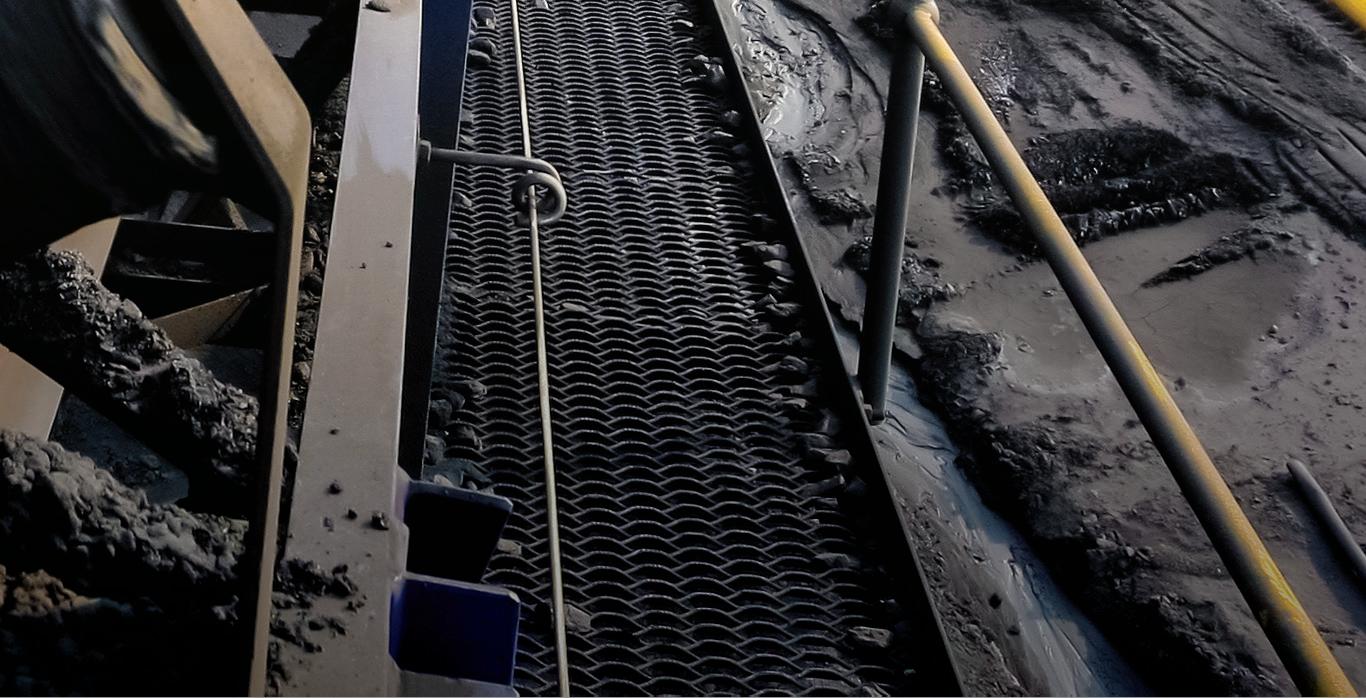
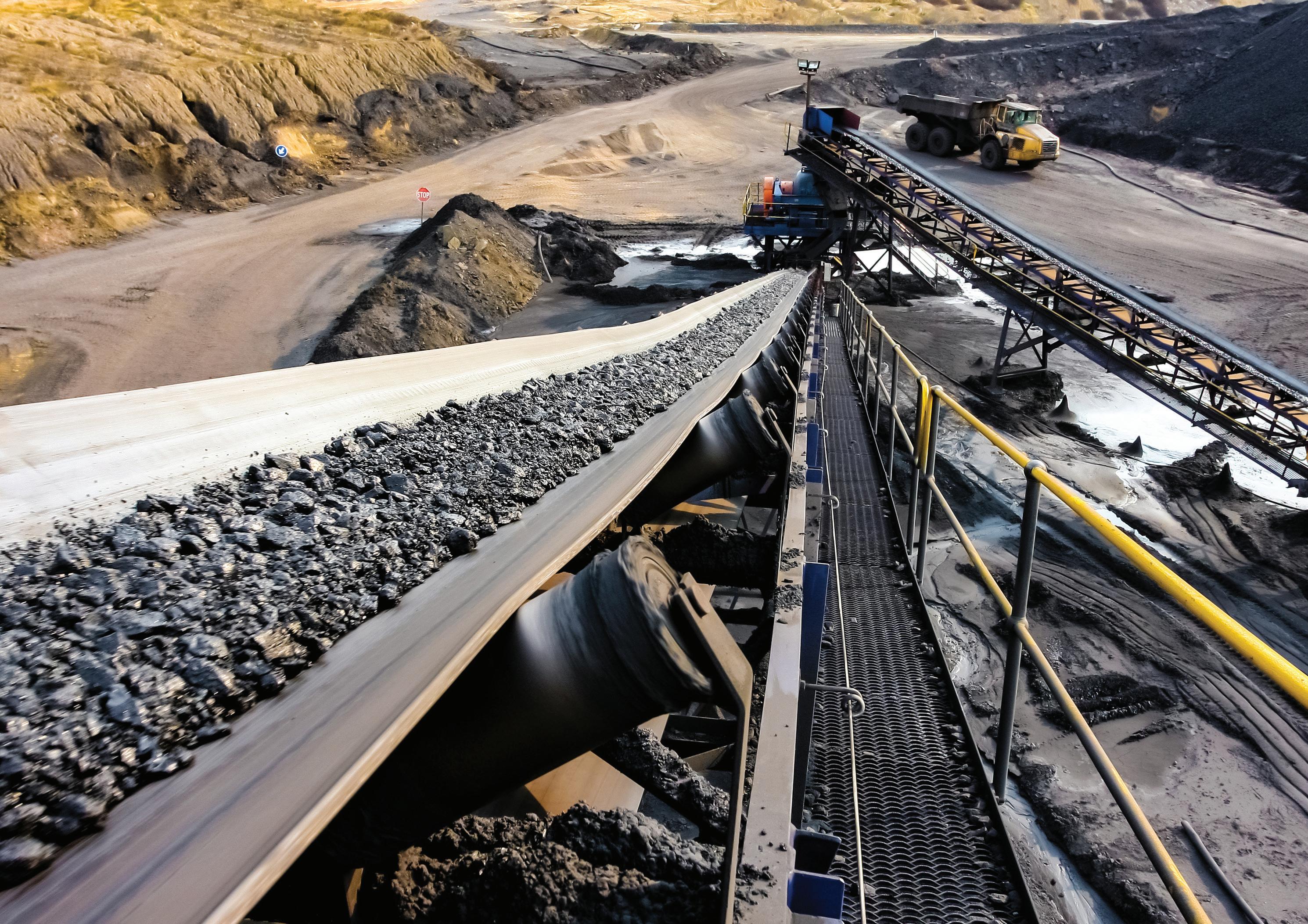
23 Belt To Last
Marco Dorigo and Stefan Hutzenlaub, Voith Turbo, Germany, discuss the integral role of belt conveyors in modern mining operations.
Naphtal Haya and Priya Sreenivasan, DNV, USA, shed light on the volatility, ethics, and circularity in the cobalt market.
Setting The Standard
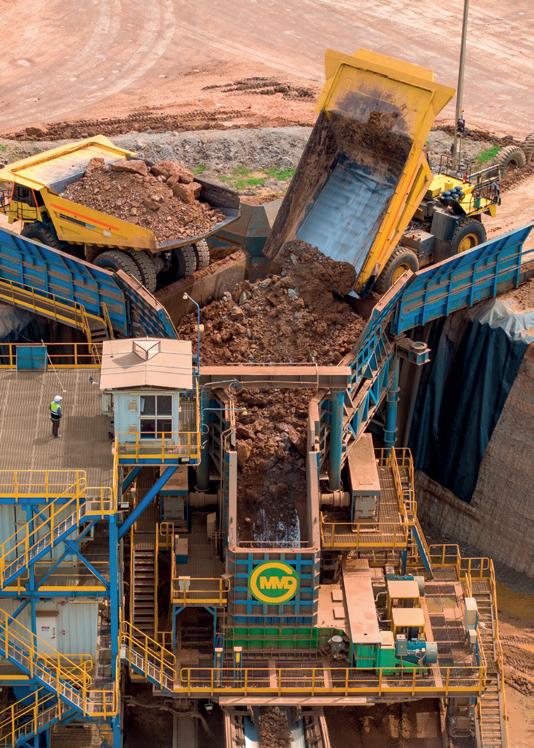
Montree Pichayathana, MMD Group, Thailand, studies how MMD Thailand is driving long-term success in Lao People’s Democratic Republic.
19 Technological Adaptation In Mining
Aidan Mitchell, TAKRAF Group, Canada, analyses how evolving technologies and engineering practices align with the shifting priorities of the modern mining sector.


27 Driving The Future
Wilson Monteiro, ABB Process Industries, Brazil, investigates how gearless mill drives are reshaping the future of mining efficiency.
31 Enhancing Ground Support In Mining
Uwe Wyink, James Wallis, and Hugo Brás, Master Builders Solutions, provide a technical overview of rock mass classification and the effect of polyurea silicate resin systems.
35 Determining Dewatering Decisions
Mario Gerards and Michael Panholzer, ANDRITZ, take a deep dive into filter press operation, the differences between makes and models, and explain how past experiences inspire R&D innovations.
38 Vehicle Intervention Control
Eric Pohlmann, Nerospec, Germany, ponders the importance of enabling collision avoidance across diverse mining fleets.
43 Data In Action
Fabio Mielli, Rockwell Automation, USA, qualifies a best-in-class operations management platform for unparalleled efficiency.
47 Innovations In Engineering Simulation
Kanchan Garg and Dr. Naghman Khan, SimScale GmbH, explore how recent technological advancements in engineering solutions are improving the mining industry.
51 Built For The Grind
William Nicholls, Movex Innovation, Canada, explains why electric mini-loaders are reshaping mining cleanup by cutting downtime, boosting safety, and eliminating emissions in the toughest environments.
54 Productivity Is Not Enough
Patrick Lahaie and Michel Van Hoey, McKinsey & Company, examine how the mining industry can create superior value.
MMD Group delivers market-leading in-pit solutions tailored for mining operations worldwide. Backed by decades of reliable performance, its Sizer and Apron Feeder technologies form the backbone of its In-Pit Sizing and Conveying (IPSC) systems, Ore Sorting solutions, and the Fully Mobile Surge Loader (FMSL). These robust solutions help mines to operate more sustainably by reducing emissions, improving efficiency, and enhancing safety.

full torque from zero speed. But you also gain exceptional control – paired with built-in protection for your machines and uptime. Whether you’re looking to extract more, to refine your processing or simply to keep it all moving, we have what you need. We drive what drives you.
Hägglunds is a brand of Rexroth. www.hagglunds.com


MANAGING EDITOR
James Little james.little@globalminingreview.com
SENIOR EDITOR
Callum O’Reilly callum.oreilly@globalminingreview.com
EDITOR
Will Owen will.owen@globalminingreview.com
SALES DIRECTOR
Rod Hardy rod.hardy@globalminingreview.com
SALES MANAGER
Ryan Freeman ryan.freeman@globalminingreview.com
PRODUCTION MANAGER
Kyla Waller kyla.waller@globalminingreview.com
ADMINISTRATION MANAGER
Laura White laura.white@globalminingreview.com
DIGITAL ADMINISTRATOR
Nicole Harman-Smith nicole.harman-smith@globalminingreview.com
DIGITAL CONTENT ASSISTANT
Kristian Ilasko kristian.ilasko@globalminingreview.com
JUNIOR VIDEO ASSISTANT
Amélie Meury-Cashman amelie.meury-cashman@globalminingreview.com
HEAD OF EVENTS
Louise Cameron louise.cameron@globalminingreview.com
DIGITAL EVENTS COORDINATOR
Merili Jurivete merili.jurivete@globalminingreview.com
EVENT COORDINATOR
Chloe Lelliott chloe.lelliott@globalminingreview.com
In the race to secure critical mineral supply chains, one capability is emerging as the driving force of long-term resilience: domestic refining.
Across the US, policymakers and industry leaders are rethinking the role of critical mineral processing as a strategy for national security, industrial competitiveness, and technological progress. Recent policy shifts have underscored the fact that without the infrastructure to refine, industry in the US is vulnerable to supply chain disruptions.
Global demand for metals like nickel, cobalt, copper, and others continues to surge, fuelled by growth in transportation, consumer electronics, clean energy, and defence. Meanwhile, refining capacity for minerals is still heavily concentrated overseas. According to the 2024 Digital Economy Report from UN Trade and Development (UNCTD), China currently controls roughly two-thirds of global refining capacity for critical minerals, leaving the world to rely on a singular source for most of the necessary materials.1
It also creates significant bottlenecks. As industries compete for access to limited processing resources, delays in refining can bring entire value chains to a screeching halt. The solution is not only in expanding capacity, it is rethinking how we handle end-of-life materials.
One of the biggest barriers to building refining capacity in the US is permitting –regulatory timelines can stretch for years. But what if we could sidestep that delay entirely? Modular refining systems offer a faster, simpler path forward. Due to the fact that they generate less waste, require less land, and can be installed within existing industrial zones, these systems often avoid the need for lengthy permitting processes. Their flexibility and smaller footprint make it possible to deploy critical refining capacity without always having to break new ground.
At this point, modularity is more than a convenience; it is a necessity. Systems that can be quickly deployed, scaled, and adapted to different feedstocks, from scrap metal to recycled batteries, help reduce permitting issues, lower environmental risk, and accelerate domestic production. US-based companies are already proving this out in the field, demonstrating how nimble refining systems can bring resilience to vulnerable supply chains.
Permitting reform remains important, but it will take time. In the meantime, low-footprint, low-waste refining systems offer a way to build smarter, faster, and get to work now. Commercially available solutions, field-tested and deployable in months, not years, can buy time and capacity while broader policy changes take shape.
This is not just about upgrading equipment. It is about building a system that supports circularity, resilience, and growth without getting buried in red tape.
Critical mineral processing here at home is the foundation of every future-facing technology we rely on. Done right, it does not just strengthen our economy or enhance security, it helps us act with urgency in a system that is not always built for speed.
Domestic refining is the missing link, but thanks to modular, flexible systems and smarter permitting strategies, we do not have to wait to build it.
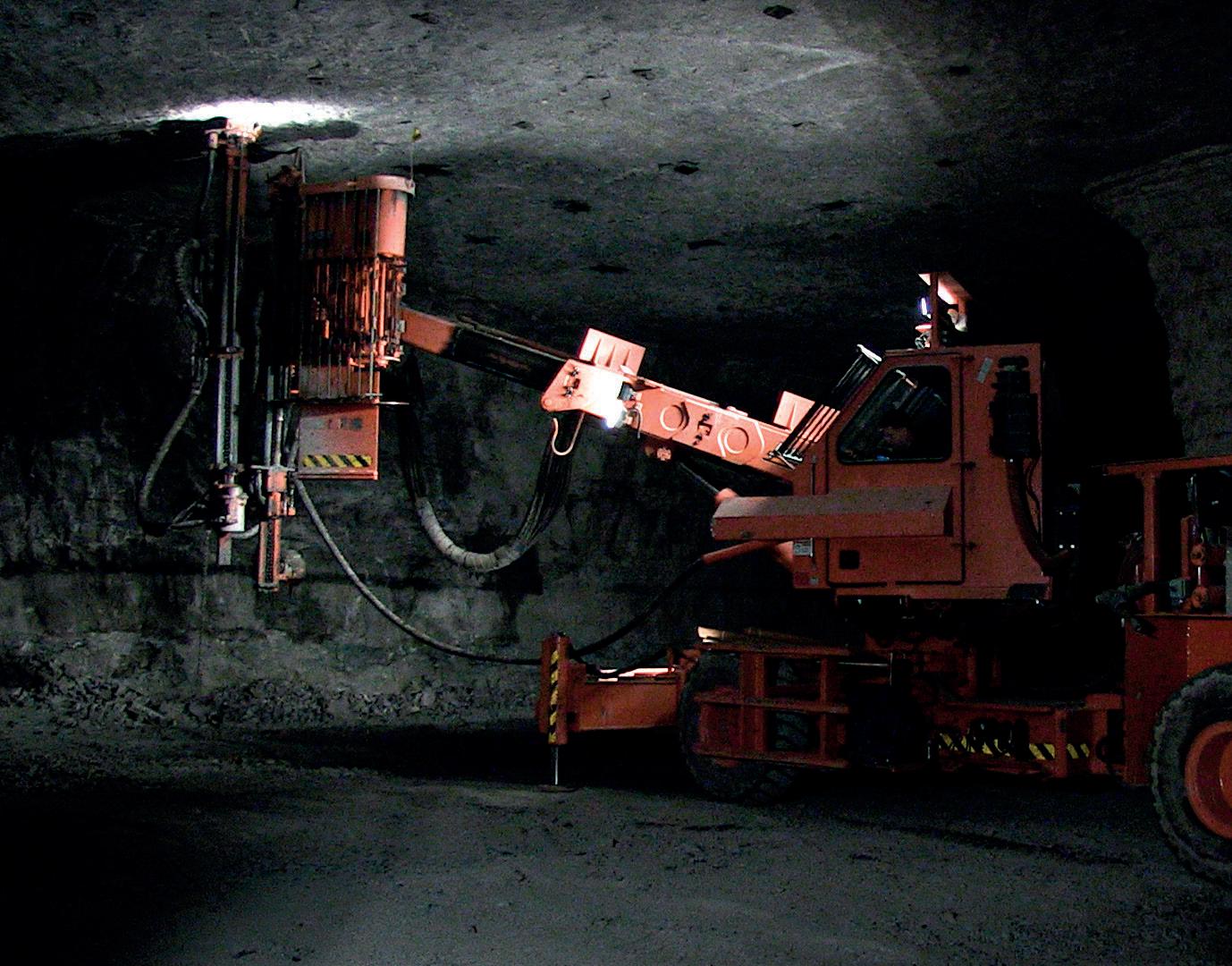
When it comes to underground roof support, one size doesn’t fit all. That’s why we start with you—your challenges, your goals, your mine. Through open conversations and collaboration, we design and build custom solutions specific to your underground operation.
At Fletcher, our equipment is as dependable as the answers we’re built on. From the first conversation to the final bolt, we’re with you every step of the way. VISIT WWW.JHFLETCHER.COM TO GET THE CONVERSATION STARTED.
Energy Exploration Technologies, Inc. (EnergyX) has entered into a binding agreement to acquire Daytona Lithium Pty Ltd, a wholly owned subsidiary of Pantera Lithium Ltd, for AUS$40 million.
This landmark transaction secures full ownership of the approximately 35 000 gross acres of Smackover lithium brine resources in Arkansas, US, adding to EnergyX’s existing 12 500 acre Texas position. Overseeing a total of nearly 50 000 acres in the Smackover, EnergyX aims to reinforce its dominance in North America’s most promising lithium region and accelerate its mission to establish a secure, sustainable US battery supply chain
This acquisition builds on the momentum of EnergyX’s Project Lonestar™, located in Northeast Texas in the Smackover Formation, which is designed to produce 50 000 tpy of lithium hydroxide by 2030, with a first phase of 12 500 tpy by 2028.
EnergyX owns rights to 330 acres of recently cleared land near the Red River Army Depot to build its lithium mega refinery. The company has already had samples of lithium from its pilot plant in Austin, Texas, qualified by cathode customers.
Now with a solid resource footprint for Project Lonestar, EnergyX will vertically integrate its proprietary LiTAS® Direct Lithium Extraction (DLE) technology platform to produce low cost lithium for its growing customer base. EnergyX can unlock unprecedented efficiencies in lithium production, leveraging its patented technology portfolio to achieve faster extraction, higher recovery rates, and reduced environmental impact.
Pending diligence and Pantera shareholder approval, the transaction is expected to be complete in 3Q25.
Teague Egan, EnergyX CEO and Founder, commented: “By vertically integrating a world class lithium resource with our advanced LiTAS DLE technology platform, we will accelerate our roadmap in building Project Lonestar to become a full-spectrum, low cost lithium producer. EnergyX is now poised to deliver a scalable, sustainable lithium supply to major EV makers, battery cell manufacturers, and cathode makers from our production facilities in the Americas. With 50 000 acres positioned adjacent to Exxon, Chevron, and Standard Lithium in the Smackover, the race is on to see who will be the first to produce commercial battery grade lithium.”
Antofagasta Minerals (AMSA)’s Centinela mine will soon deploy ABB Gearless Mill Drive (GMD) systems for its new copper concentrator project under construction in Chile. The advanced technologies are expected to enhance operational efficiency, deliver real-time insights, support informed decision-making, and reduce unplanned downtime at the site.
The GMD systems, custom-designed by ABB, recently completed Factory Acceptance Tests (FAT) for the stators that will power the ball mill motors – responsible for the final stage of ore size reduction in the process.
Manufactured in Bilbao, Spain, the stators were shipped to Puerto Angamos (Mejillones) and then transported to the Centinela Mining District. There, they will play a key role in the GMD’s electrical drive system by generating the magnetic field needed to rotate the ball mills. These systems were selected with consideration for the harsh outdoor desert conditions. Each includes 27 ft diameter ring motors with 19.6 MW of power (paired with
a control block) and three cycloconverter transformers, all designed to maximise performance.
One of the most important features of this technology in terms of efficiency and performance is its variable speed capability, which allows plant operators to respond more quickly to changes in ore composition. Process optimisation functions will further enhance grinding availability and efficiency, while reducing energy consumption and emissions.
“Antofagasta Minerals’ decision to adopt our GMD technology marks a significant milestone for ABB in the South American mining sector”, said Wilson Monteiro, Global Business Line Manager for GMD, ABB Process Industries.
With global copper demand expected to rise in the coming decades, the expansion of Centinela – known as Nueva Centinela – is a strategic priority for AMSA. The new concentrator will increase copper production by 144 000 tpy and extend the mine’s life by at least 30 years.
Tailings 2025
03 – 05 September 2025
Santiago, Chile www.gecamin.com/tailings
Mining Indonesia 10 – 13 & 17 – 20 September 2025 Jakarta, Indonesia www.mining-indonesia.com
AIMEX Exhibition
23 – 25 September 2025 Wayville, Australia www.aimex.com.au
The Digital Mine 25 September 2025 Online conference www.bit.ly/4hp4fjQ
International Mining and Resources Conference 21 – 23 October 2025 Sydney, Australia www.imarcglobal.com
China Coal & Mining Expo 28 – 31 October 2025 Beijing, China www.chinaminingcoal.com
The Mining Show 17 – 18 November 2025 Dubai, UAE www.terrapinn.com/exhibition/ mining-show
CONEXPO-CON/AGG 2026 03 – 07 March 2026
Las Vegas, USA www.conexpoconagg.com/ conexpo-con-agg-constructiontrade-show
To stay informed about upcoming industry events, visit Global Mining Review’s events page: www.globalminingreview.com/events
Wärtsilä has agreed to supply a 204 MW power plant solution for the Reko Diq copper-gold mining project in Pakistan. The power plant will operate with 12 Wärtsilä 50 engines and auxiliaries. The order was placed by Reko Diq Mining Company (RDMC) and booked by Wärtsilä in 2Q25.
The Wärtsilä solution will provide a critically needed reliable and economical power supply, enabling mining operations to function efficiently. Reko Diq is one of the largest undeveloped copper-gold projects in the world, and a globally significant mining initiative. The project site is located in a remote region of Balochistan, Pakistan.
“We are pleased to have a reliable and collaborative partnership with Wärtsilä on this considerable project. Wärtsilä’s technical expertise and strong local presence in Pakistan are highly valued”, comments Tim Cribb, Project Director at RDMC.
Epiroc AB has won a large order from mining company Sociedad Punta del Cobre SA (Pucobre) in Chile for a significant fleet of underground mine trucks, as well as digital solutions. The equipment and solutions will strengthen Pucobre’s productivity, cost efficiency, and safety.
Pucobre has ordered a large fleet of Minetruck MT65 S haulers, one of the world’s largest underground mine trucks, for use in the company’s copper mines; Punta del Cobre, Granate, and Mantos de Cobre. The Chile-based company, a long-standing customer of Epiroc, also ordered a package of digital solutions that provides, among other things, advanced monitoring and performance tracking of the machine fleet which will boost fleet efficiency and lower emissions.
The order, including the digital solutions, is valued at around MSEK 235 and was booked in 2Q25. Epiroc will also provide service and spare parts for the equipment.
“We are happy to strengthen our collaboration with Pucobre further as it upgrades its mines to become even more modern, cost efficient, and sustainable”, said Helena Hedblom, Epiroc’s President and CEO. “By adding on our leading digital solutions, Pucobre will achieve long-term efficiency gains, and even better progress towards its sustainability goals.”
Sebastián Ríos, Pucobre’s CEO, says: “At Pucobre, we are committed to driving more modern, safer, and more sustainable mining operations. The addition of the MT65 S fleet and Epiroc’s digital solutions will allow us to optimise our processes, reduce costs, and advance our environmental goals with cutting-edge technology.”
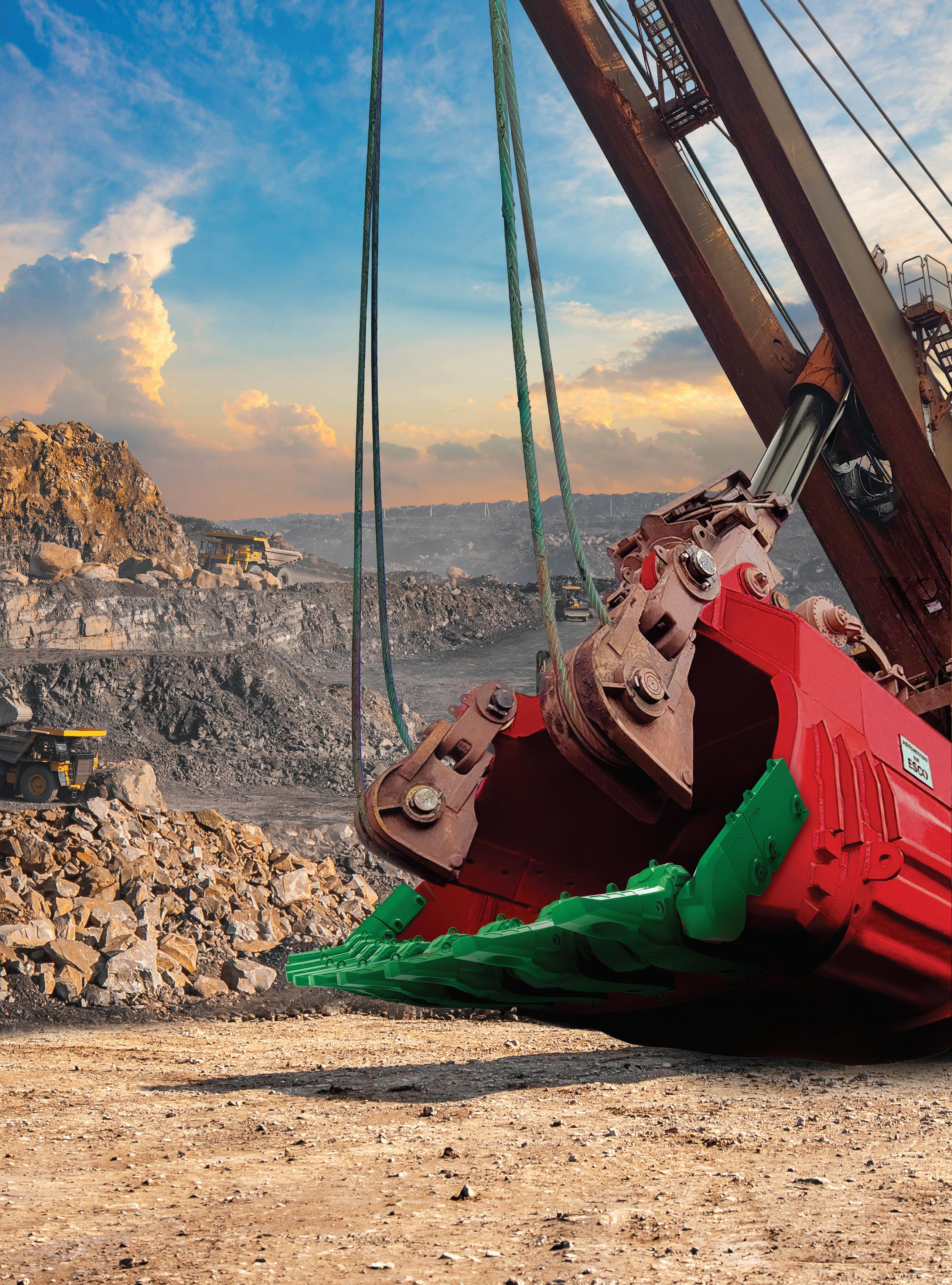
The Nexsys™ system was developed using hundreds of hours of field-trial data and extensive lab simulations. The result is an innovative system that extends adapter life and increases tooth durability reducing unplanned downtime.
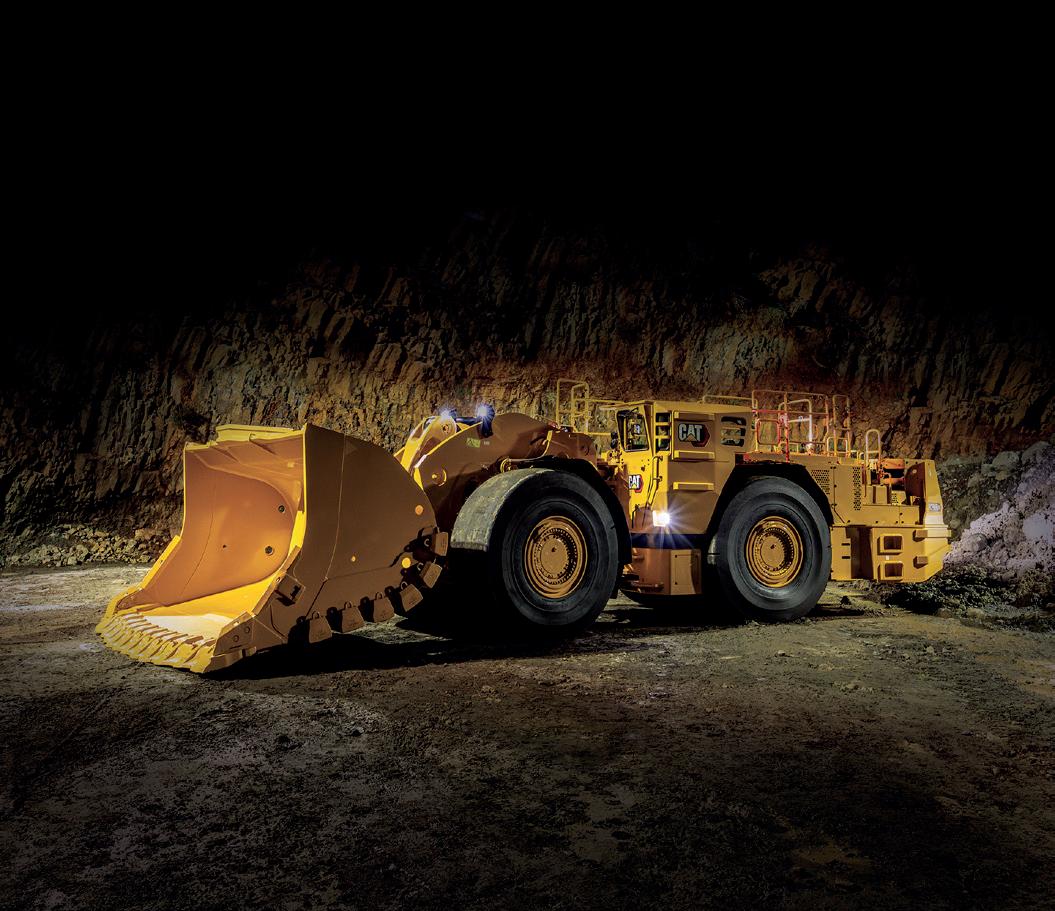
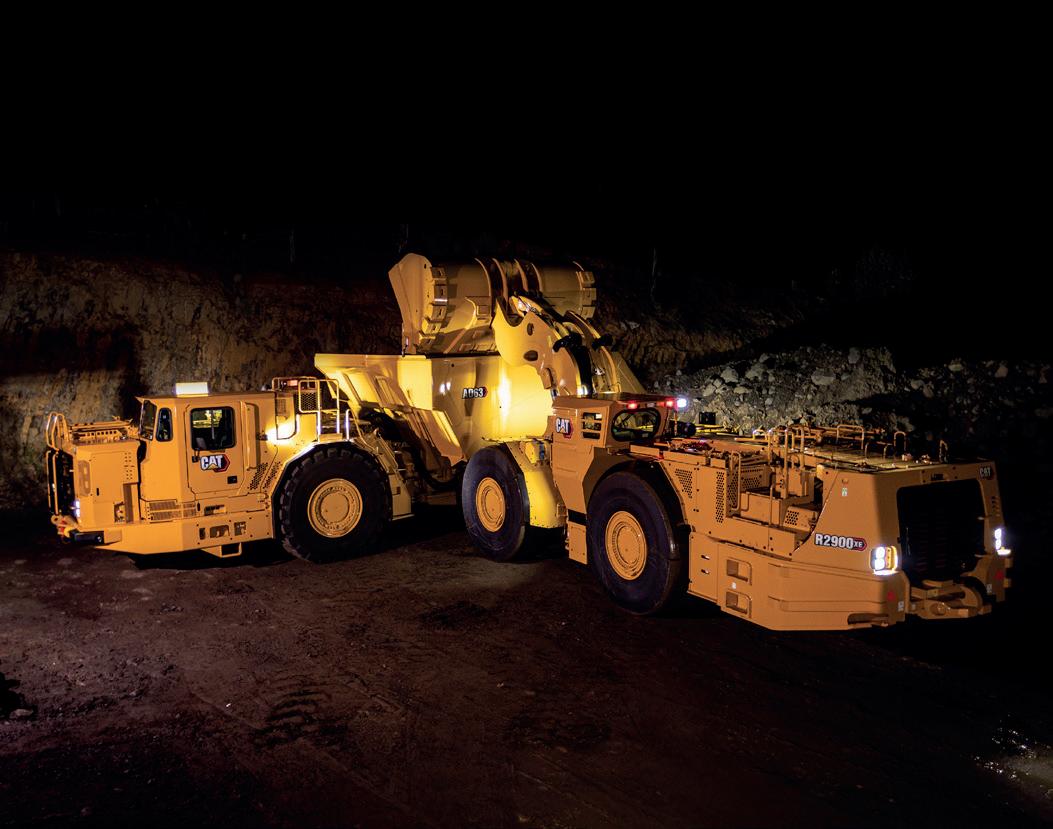
The diesel-electric Cat® R2900 XE load-haul-dump (LHD) loader is built on the R2900G’s platform, Caterpillar’s most popular underground loader. It features optimised lift arm and component geometry plus load-sensing hydraulics to improve breakout force by 35% over the R2900G. The R2900 XE meets the underground mining industry’s needs for bigger payloads, faster loading, reduced exhaust emissions, and low total cost of ownership.
n Works fast in tough conditions and offers 52% quicker acceleration than the R2900G.
n Accelerates from 0 – 24 kmph (0 – 14.9 mph) in 6.4 sec. for 7% higher speed on grade.
n Its higher 18.5 tonne (20.4 ton) payload offers fast cycle times and a three to four-pass match to the Cat AD63 truck for improved efficiency.
n The R2900 XE LHD features the field-proven switch reluctance (SR) electric drive system.
n No driveline or powertrain shock loads, therefore delivering smooth directional changing.
n Increased axle component size and four-gear planetary final drive groups provide greater strength and longer life than the R2900G.
n Steering and transmission integrated control (STIC™) provides maximum responsiveness and machine control.
n Two emergency exits plus optional rearview and forward and rear-facing sideview cameras help to improve visibility to enhance safety for operators and workers.
n Autodig technology automates critical parts of the digging cycle to optimise loading and traction control for maximum tyre life.
n Cat Payload Management (CPM) produces material management, cycle count, timing recording, and wireless production detail reporting capabilities.
n Electric drive reduces the number of parts compared to mechanical drive systems.
n Standard Product Link™ Elite system for machine health monitoring boosts connectivity and increases the availability of data provided by the R2900 XE.



























Naphtal Haya and Priya Sreenivasan, DNV, USA, shed light on the volatility, ethics, and circularity in the cobalt market.
Cobalt, a key component of lithium-ion batteries (LIBs), has long been identified as a mineral of strategic importance. It is key to making batteries more energy dense, allowing for the development of smaller batteries with longer discharge times for improving electric vehicle (EV) range and allowing safer charge-discharge cycles of LIBs which are prone to fires.
With EVs and utility scale battery energy storage systems (BESSs) expected to form the backbone of the global energy transition, facilitating renewable energy integration into utility grids and decarbonising transportation, cobalt is now centre stage in the sharpened geopolitical and trade focus on critical minerals.
As a result, the cobalt market in 2024 showed a continued growth in line with previous years, with the Cobalt Institute reporting an 8% year-on-year increase in demand, compared to 2023, with the demand from EVs continuing to be the largest driver of the increased demand.
The Democratic Republic of Congo (DRC) was, and continues to be, the largest producer of the mineral and its
global production share of 76% of the world’s cobalt continued to hold through the increased growth. Nine of the 10 largest cobalt mines in the world are located in the Katanga District in the DRC, with the PT Halmahera Persada Lygend Project in Indonesia being the sole exception.1
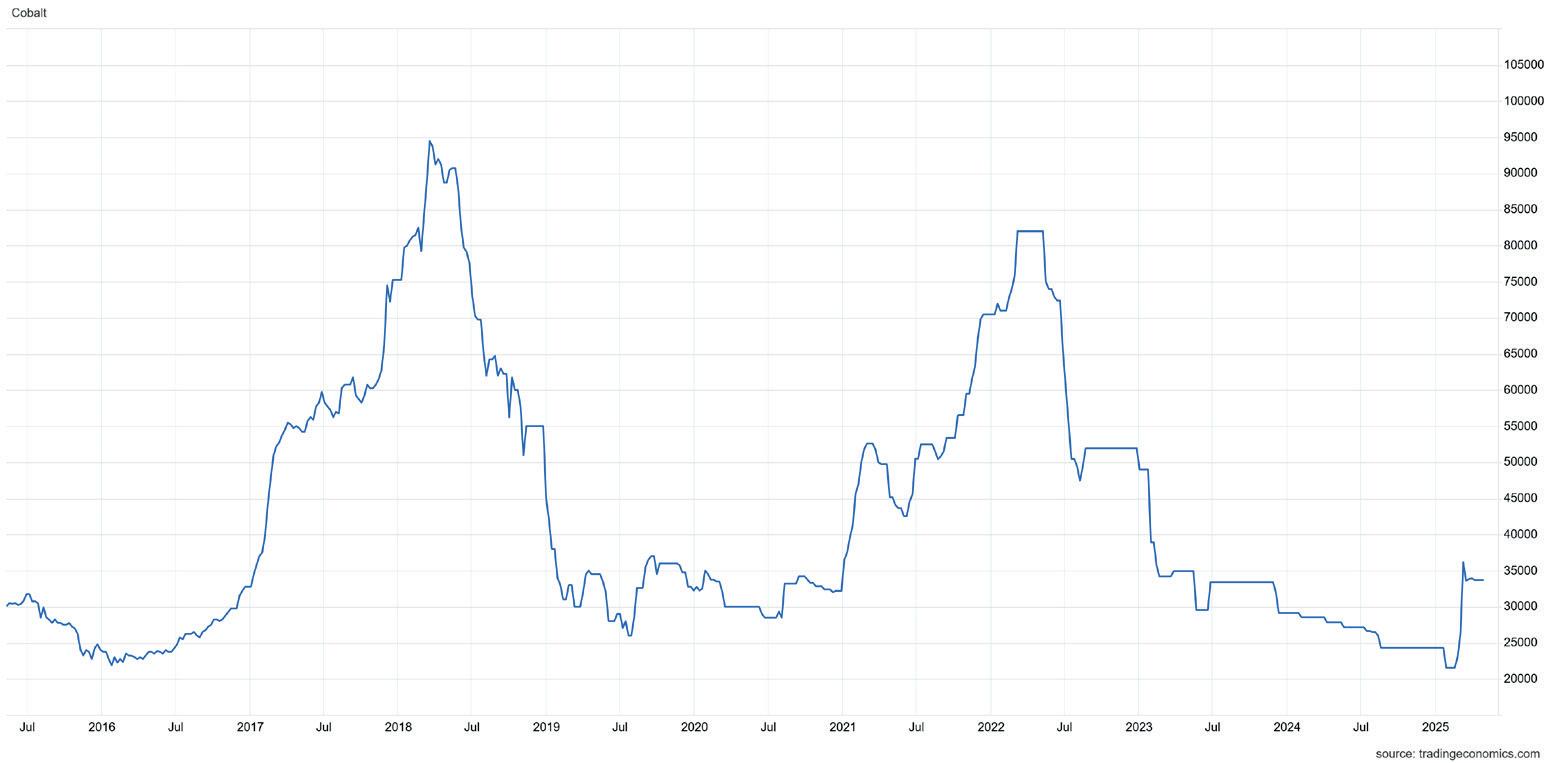
2024’s cobalt market was marked by significant and continual fall in cobalt prices. In August 2024, the cobalt price in Europe was US$26 000/t, a steep drop from its previous peak of around US$38 000/t in 2023, with production cuts from large suppliers like Glencore having little impact on the falling prices due to continued increase in supply from other producers such as Hong Kong-listed CMOC.2 The price fell to around US$10 000/t by December 2024.3 Further compounding the oversupply was Indonesia’s rise as a growing source of cobalt, predominantly from its operational nickel mines.
However, in February 2025, the trajectory of continually falling prices halted when the DRC government announced a four-month ban on all cobalt exports in an attempt to stabilise prices.5 The ban resulted in a sharp rise in prices and
had an instant and significant impact on the cobalt market, with the third largest cobalt producer – Kazakhstan-based Eurasian Resources Group (ERG), (the largest and second largest producers being CMOC and Glencore) – declaring force majeure on cobalt deliveries in March 2025.
It should be noted that this is not the first time the DRC has enacted an export ban. In 2021, the DRC government instituted an export ban on cobalt concentrates to force producers to build smelting and refining capabilities within the country and prices surged after that ban as well.
Complicating an already dire and volatile cobalt supply concentrated in the DRC, the critical mineral’s production is riddled with reports of human rights abuses ranging from child and forced labour, inhumane working conditions, and rampant violence in artisanal mines.
The issue of cobalt traceability has taken on greater prominence as a result, putting enormous pressure on battery manufacturers (and further up the line, on EV and BESS producers) to publicly disclose the origins of the cobalt used in their batteries and audit their suppliers for human rights violations.
To further exacerbate the issue, in January 2025, the M23 group, allegedly backed by Rwanda, began advancing in
the eastern region of the country. The violence from the ongoing conflict has the potential to impact the already fraught cobalt supply chain, with faked traceability documents for the minerals whose origins are muddled by blending the metal supply with that which is mined legally and in certified operations.6
The dependence on cobalt has, over the years, given rise to various attempts to diversify sources of the mineral. As it stands, Indonesia is the only significant producer of cobalt outside of the DRC, albeit comprising only 7.3% of total global production in 2023, vastly behind DRC’s production share of 73% that year. The concentration is just as stark when it comes to the refining of cobalt, with the majority of the refining capacity located in China.
Obvious concerns over national energy security have led to some attempts to mine and refine cobalt in North America. Canada currently has the third highest volume of global reserves after the DRC and Australia. The US has 0.6% of the total global cobalt reserves.
Canada’s cobalt mines are predominantly located in the Atlantic province of Newfoundland and Labrador (43%), and in Ontario (33%), most of which are concentrated in primary nickel mines.
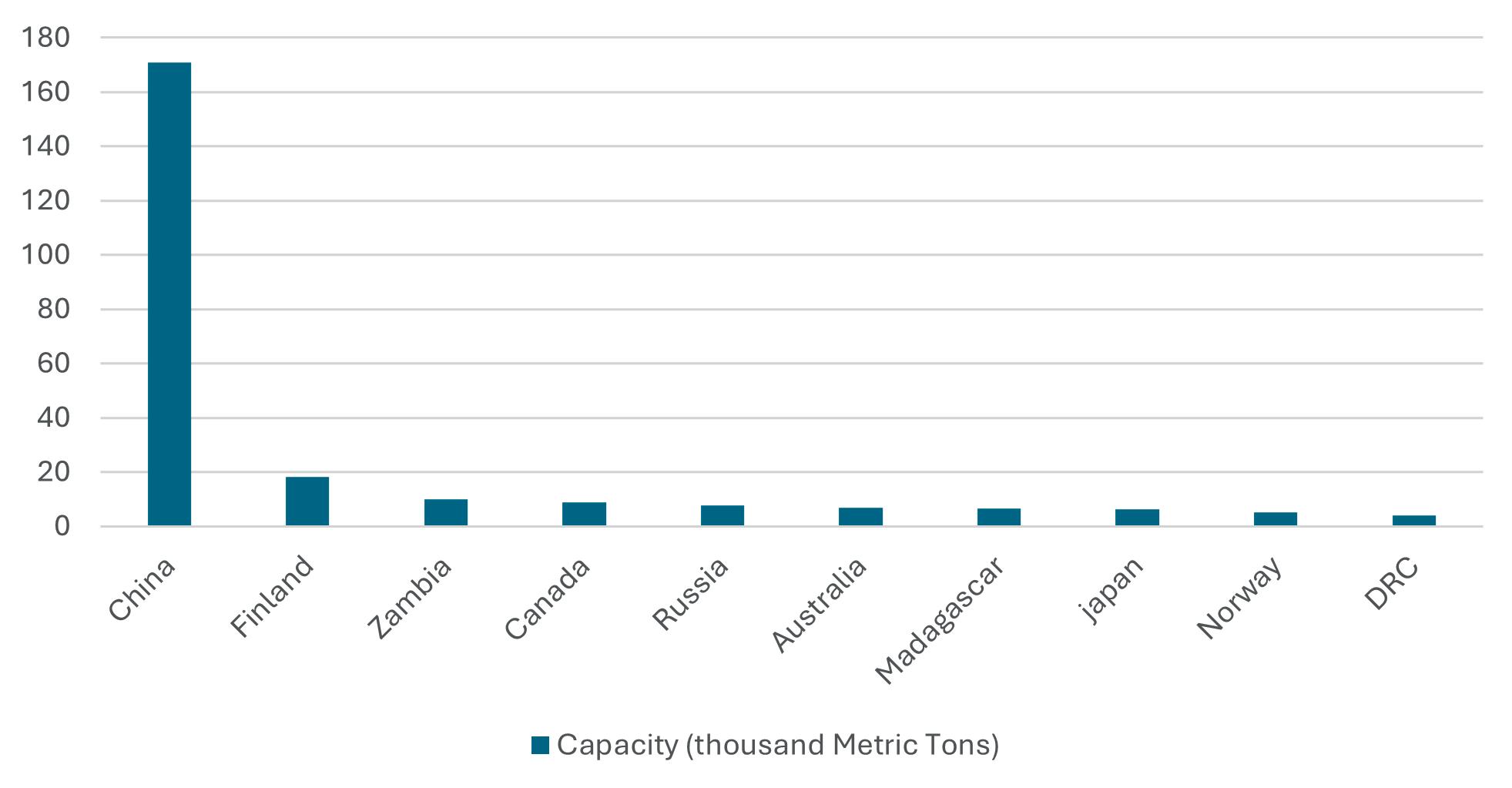
(Source: ReportLinker7).
An almost equal tonnage of cobalt is refined in Canada, with refineries found in the prairie provinces of Alberta and Saskatchewan, as well as in Ontario, Manitoba, and Newfoundland and Labrador. The refineries in Canada process nickel and cobalt from the US and Cuba.
Despite the meteoric rise in cobalt demand in recent years, attempts to build new operational mines and refineries in North America have faced stumbling blocks. The first ever cobalt mine to open in the US in the recent decades was inaugurated in Idaho, with great expectations of building up local cobalt production capacity and addressing the various supply chain and security issues that the dependency on imported cobalt had provoked. However, the global price volatility of cobalt resulted in the closure of the mine within a year of commencing operations.9
In Canada, First Cobalt – which was renamed
Electra Battery Materials in 2021 – is still in the process of expanding its existing refinery complex in Temiskaming Shores in Ontario to include cobalt, and ultimately aim for recycling battery material as well, with the primary focus of supplying the EV industry. The project has received funding from the provincial and the federal government, and partnered with Glencore, but is yet to turn operational despite being in the works since 2020. In August 2024, the US pentagon also announced funding for the refinery.10 However, as of March 2025, the refinery was still under construction after grinding to a halt in 2023.11
Adding to the woes of new cobalt mining and refining projects, the ongoing trade war, tariff uncertainty, and shifting energy policies have introduced significant uncertainty around the status of funding to the various embattled cobalt mining and refining projects in North America, indicating a continued dependence on the volatile and fraught imported supply, and casting doubt on the feasibility of having an integrated cobalt supply chain in North America.
Could economic growth be decoupled from potential environmental and social harm? What if the primary supply of cobalt could be supplemented with a more abundant source, or better yet, the ideal scenario in which cobalt could be obtained without digging a pit in the ground? This alternative source of cobalt is the secondary cobalt stream that comprises recycling of both pre-consumer (manufacturing scrap) and post-consumer waste of cobalt-containing products such as LIBs leveraged in consumer electronics, EVs,
and BESSs. Environmental conservationists and battery supply chain actors have embraced the virtues of a circular approach to value supply chains, including reduced environmental pollution and improved resource adequacy.
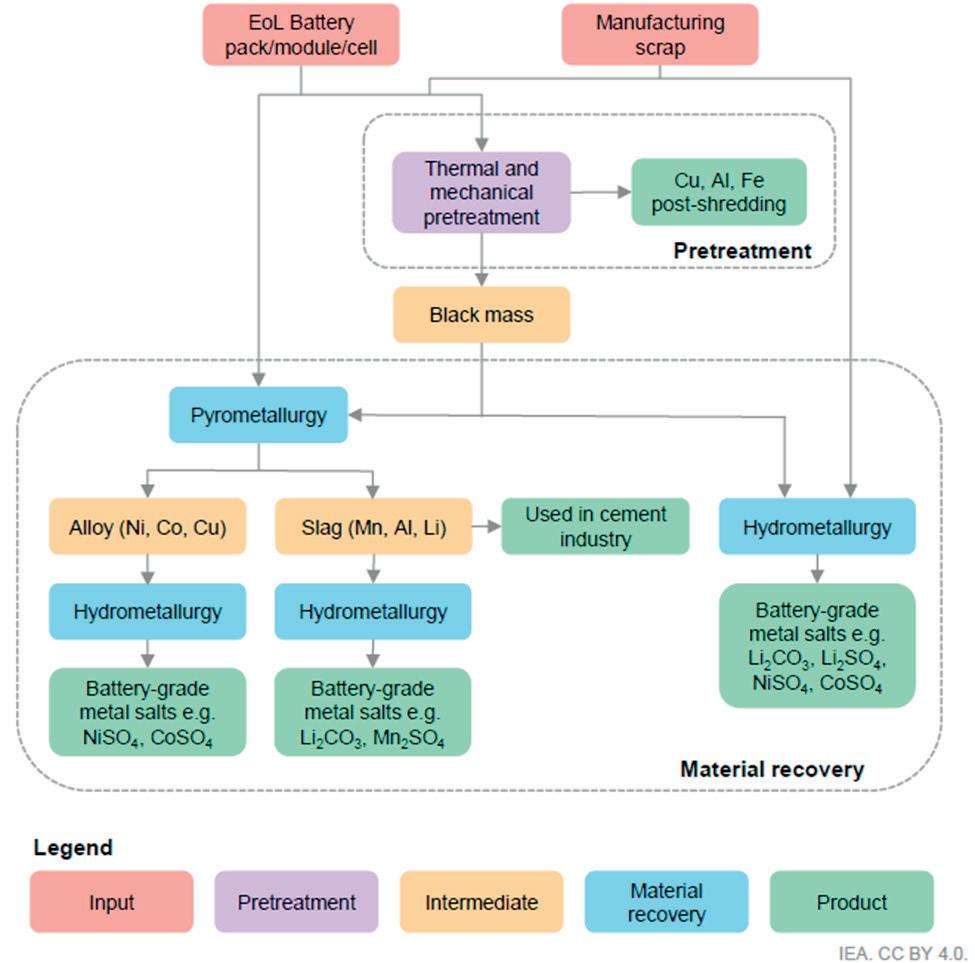
As shown in Figure 3, the process of recovering cobalt from an LIB involves two main stages, namely: pretreatment and material recovery.12
Pretreatment involves the sorting and separation of the battery anode active material (AAM) and cathode active material (CAM) using techniques, such as crushing, floatation, magnetic separation, and ultrasound. CAM proceeds to the next stage where it is subjected to purification techniques such as hydrometallurgy, pyrometallurgy, and hydro-pyrometallurgy. Hydrometallurgy typically employs an acid or ammonia to leach cobalt from the CAM and solvent extraction to separate cobalt from the leachates. In comparison, pyrometallurgy leverages high temperature to extract cobalt from the CAM through reduction smelting and high-temperature sintering reduction roasting.
Hydro-pyrometallurgy leverages the strengths of each technique by utilising pyrometallurgy to produce intermediate cobalt compounds that demonstrate higher recovery rates during hydrometallurgy. Leaching can produce cobalt compounds with purity levels exceeding 99%.13
In its Recycling of Critical Minerals report, the International Energy Agency (IEA) states that the global volume of secondary cobalt (from all feedstocks) in 2023 was approximately 24 000 t, which translates to 10% of total global cobalt demand.12 For the LIB feedstock, North America accounted for approximately 5% of global pretreatment

capacity and about 2% of material recovery capacity as of 2023, as depicted in Table 2. At a national level, the US Geological Survey’s (USGS) annual cobalt report for 2023 indicates that the US produced 2100 t of secondary cobalt largely from scrap feedstock.14 The production level decreased by about 4.7% in 2024.15 At an even more granular level, Table 3 shows the production capacities of operational facilities of leading LIB recycling companies in North America.16
Based on announced projects, IEA expects an increase of the proportions of both global pretreatment and material recovery capacities in North America to 10% by 2030, for a total combined capacity of 2 million t. Major companies leading this expansion in North America will be Ascend Elements and Cirba.
In comparison, China hosted over 80% of both global battery pretreatment and material recovery capacity in 2023. The proportion is expected to remain the same for
pretreatment, but reduce slightly to 75% for material recovery by 2030 for a combined total capacity of approximately 15 million t.
Regarding secondary cobalt consumption, 25% of approximately 8000 t of cobalt consumed in the US in 2024 came from secondary sources.14 Despite its large LIB recycling industry, the proportion of secondary cobalt in China’s cobalt consumption is not publicly available.
The growth of any industry is dependent on its economic viability, and cobalt recycling is not immune to this general rule. Enter the economics of cobalt recycling which are subject to three main factors: cobalt sport price, recycling technology, and location.12
The demand and price of secondary cobalt is dependent on the supply and price of primary cobalt. As such, the peak demand and price of secondary cobalt coincided with the record demand for cobalt observed between 2016 and 2022. At its peak in 2018, the price of cobalt in the London Metal Exchange (LME) reached approximately US$95 000/t, which led cobalt consumers to seek secondary cobalt sources.16
The recycling technique and infrastructure utilised determines the recovery rates and quality thus the cost of producing secondary cobalt. Hydrometallurgy is the dominant metal recovery process with around 90% of the capacity due to advantages such as higher recovery rates, higher purity, and lower energy consumption compared to pyrometallurgy.
Geographical location influences policy and operation cost. National and regional mandates for cobalt recycling rates and carbon emission limits for cobalt production introduce green premiums which boost the value of secondary cobalt. Lower labour and material costs,
as well as effective collection and sorting infrastructure, also increase the profitability of cobalt recycling.
The IEA expects demand for cobalt to outgrow primary supply by 2035. In the stated policies scenario (STEPS), which is based on the prevailing rate of the energy transition, secondary cobalt accounts for around 15% of total cobalt demand by 2035, up from 10% in 2023.12 The achievement of this approximately 2.5-fold increase will only be possible if the three factors discussed above align.
Cobalt demand and spot price have largely been driven by China’s economic growth given China’s status as the largest refiner and consumer of the metal. Positive economic growth in China portends a growth of the secondary cobalt stream while negative growth will have the opposite effect. The ongoing volatility of tariff rates between the US and China could lead to a global economic recession which would cause a reduction in cobalt demand and a decrease in cobalt spot prices, and thus a decline in secondary cobalt prices.
The improvement of recycling infrastructure to yield lower equipment cost and higher performance will lead to lower capital and operating expenses for cobalt recyclers. The major financial drawback of pyrometallurgy is the high energy costs mainly incurred in the smelting process. Innovations aimed at increasing the energy efficiency of furnaces, such as microwave heating, can yield operational cost savings to recyclers thus lowering production costs.17
The Achilles’ heel for hydrometallurgy is the high material cost and environmental impact associated with the leaching and purification systems.18 Even higher cost savings could be potentially gained from direct recycling technology currently being commercialised by startup companies, such as American Battery Technology Company, Altilium, Cylib, and Ascend Elements. Direct recycling entails the regeneration of the CAM without altering its chemical structure through cathode relithiation. This method promises to solve the main drawbacks of the traditional methods by consuming less energy and materials while producing higher yields.18
On the policy front, the new European Union (EU) Battery Regulation, in effect as of 17 August 2023, established recovery mandates for cobalt used in
industrial batteries of over 2 kWh capacity, EV batteries, starting, lighting, and ignition (SLI) batteries, and light means of transport (LMT) batteries.19 The regulation requires at least 16% of the cobalt content in a new product introduced into the EU market to be sourced from secondary streams by 18 August 2031. The mandated proportion increases to 26% on 18 August 2036. In comparison, the global battery cobalt recycling rate as a proportion of recycling feedstock was around 43% in 2023.12 Extended producer responsibility (EPR) schemes in other jurisdictions including the US, China, South Korea, India, and Canada are also expected to boost the production of secondary cobalt.17
Overall, economic growth, technological advancements, and recycling policies are expected to drive a 50% increase in the proportion of secondary cobalt in total cobalt demand by 2035, even without increased regulatory support in North America and driven solely by the realities of production volatility, energy security, and geopolitics.
While North America holds a relatively small proportion of both global primary cobalt reserves and refining capacity, the potential of the secondary cobalt production industry holds enormous promise for securing domestic supply and creating a new market.
It also holds the tantalising prospect of creating a viable alternative supply option for the mineral, with clear traceability and a competitive edge centred on improved value to the worker. Additionally, lowered environmental impacts facilitated by reducing requirements for greenfield mining development and transportation also transitions the activity to a truly circular, sustainable model.
Available on request.
Pichayathana, MMD Group, Thailand, studies how MMD Thailand is driving long-term success in Lao People's Democratic Republic.
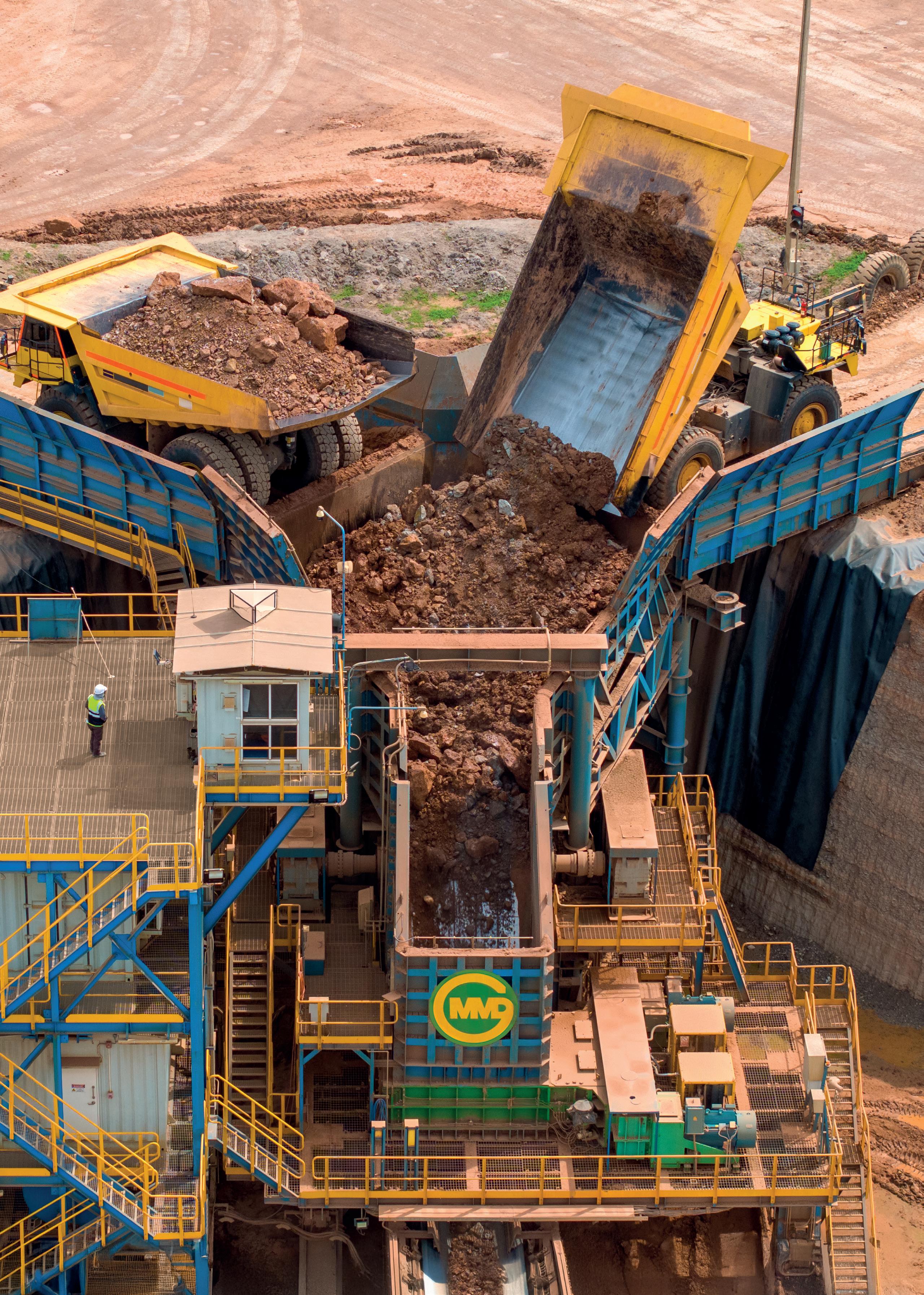
With over a decade of continuous contribution, MMD Thailand has not only supplied essential sizing technology, but has also helped set a new standard for operational reliability, technical partnership, and sustainable mining practices. The company’s enduring role in one of the region’s most ambitious energy projects reflects both the strength of its technology and its deep commitment to long-term performance.
Between 2010 and 2012, the biggest lignite mine in Lao People’s Democratic Republic (PDR) was developing what would become the largest lignite-fired power plant in Lao PDR, facility crucial to meeting the rising energy demands of both Laos and neighbouring Thailand. However, the project’s success hinged on overcoming the limitations of local lignite resources, which were less efficient than imported coal due to their lower heating value.
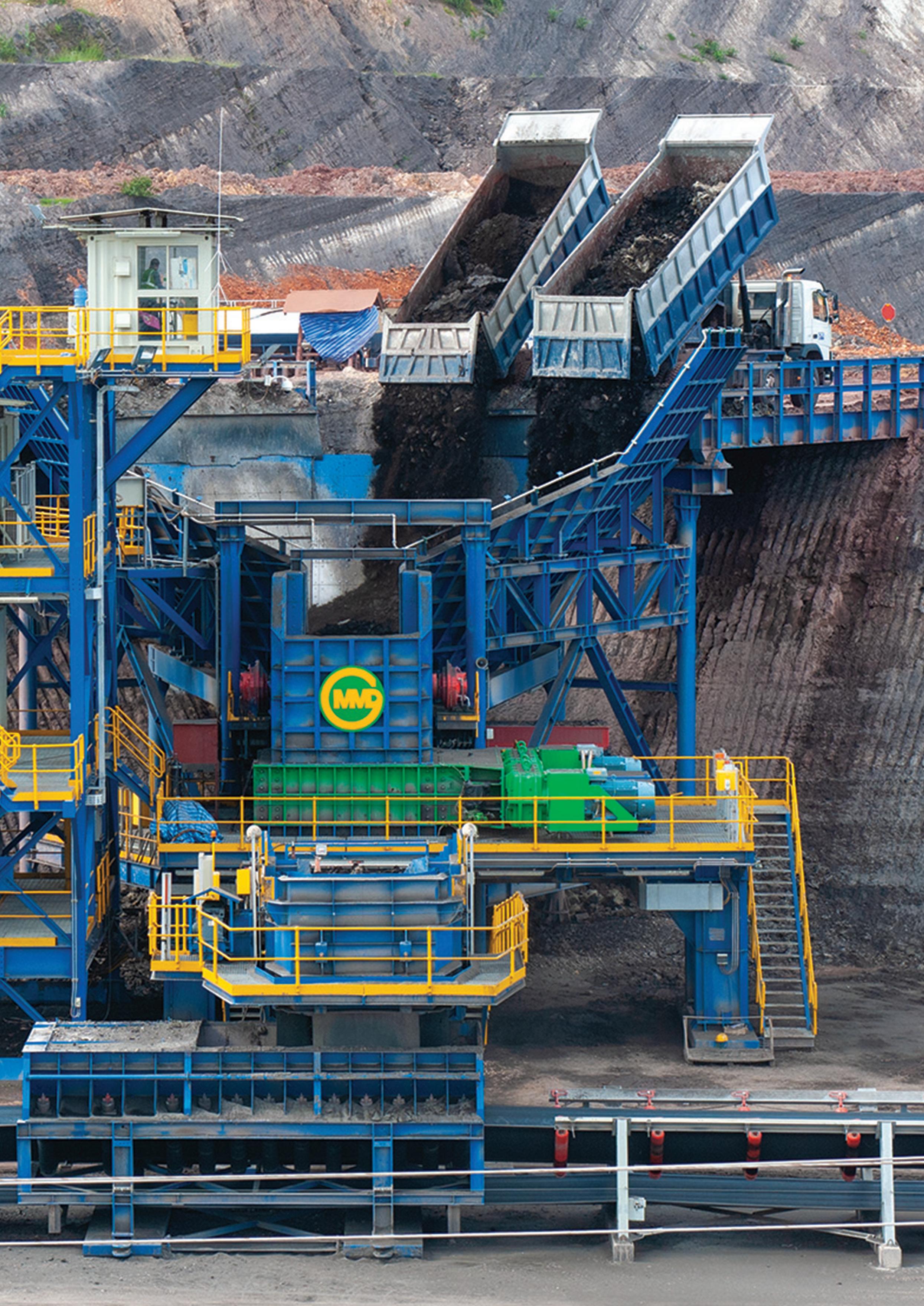
The project team initially leaned towards sourcing its entire heavy equipment package from a single supplier, to simplify logistics and reduce integration risks. However, MMD Thailand proposed a more focused and flexible approach. Leveraging its global reputation and proven technology in coal and ore sizing, MMD introduced the Semi-Mobile Sizing Station – a modular and reliable solution for handling both overburden and lignite material directly at the mine site. It was an unconventional proposal – one that required trust, technical validation, and strong collaboration to move forward.
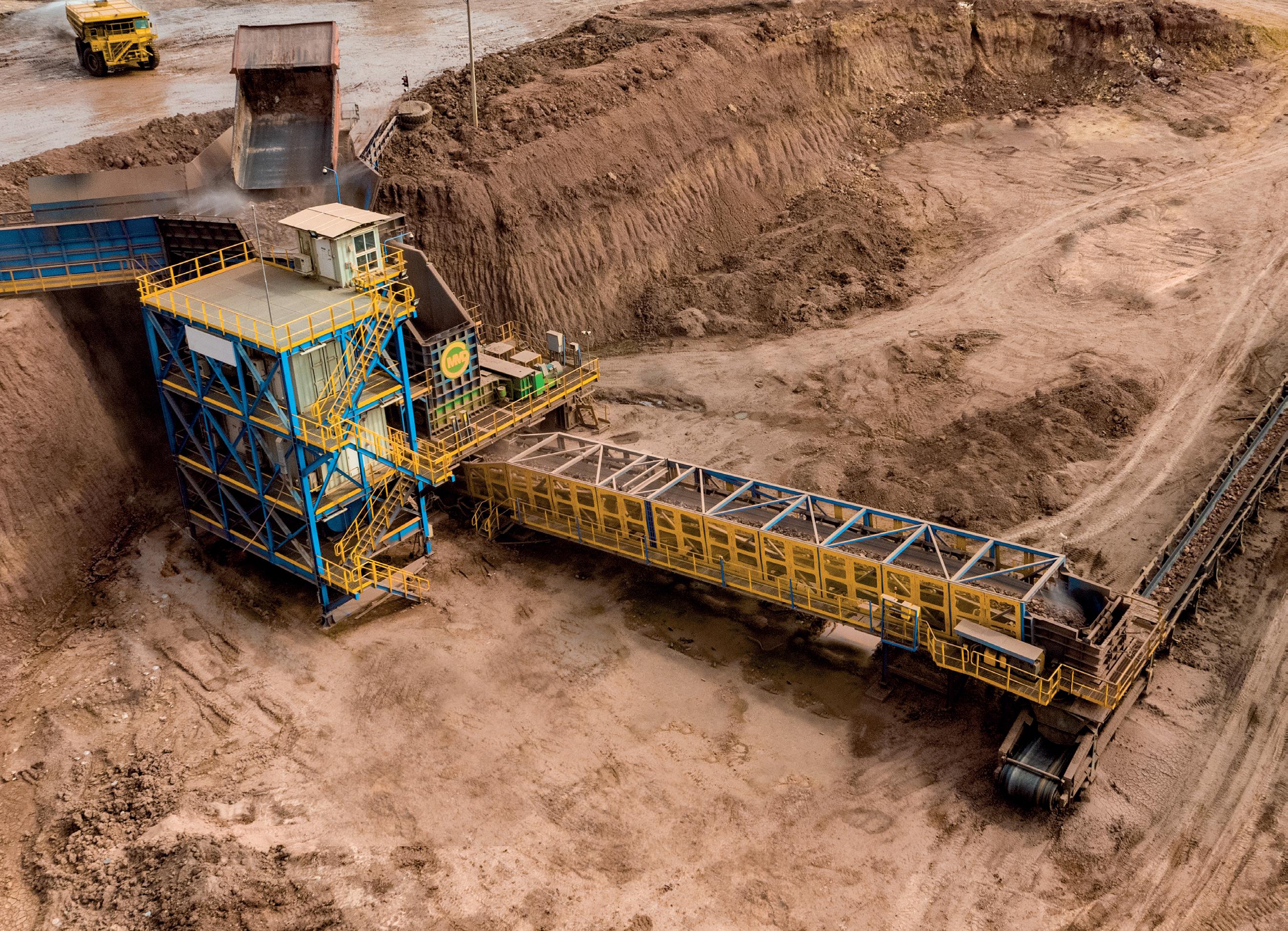
MMD Thailand’s proposed system included nine Semi-Mobile Sizing Stations – five designed for processing overburden and four for lignite. These units were custom-engineered to handle massive throughput, with processing total capacities of 22 500 tph for overburden and 6000 tph for lignite. This setup was not only built to handle the unique composition of the reserves, but also to align with its operational strategy of integrating mine-mouth electricity generation.
A major strength of the solution was its ability to reduce transportation requirements by enabling in-pit material sizing. By processing material close to the mine face, the system significantly reduced the need for long-haul trucking – traditionally a high-cost, high-emission aspect of mining operations. The benefits were multifaceted:
n Reduced fuel consumption and vehicle maintenance.
n Fewer greenhouse gas emissions.
n Less wear and tear on haul roads and infrastructure.
n Increased overall material handling efficiency.
This ‘mine-to-plant’ efficiency was critical for ensuring the long-term viability of the power station, which supplies a significant portion of its output to the Electricity Generating Authority of Thailand (EGAT).
Despite the technical strengths of the proposal, MMD Thailand had to overcome several procurement-related hurdles. At the time, the customer selected heavy machinery from a limited number of vendors to streamline integration and reduce potential risks. MMD, which specialised in niche material sizing technology, needed to earn the confidence of
stakeholders who were hesitant to divide the equipment packages.
As a specialised supplier focusing on material sizing, MMD had to convince stakeholders that integrating their system into a broader plant ecosystem would not complicate the project, but rather enhance it. The MMD team engaged in ongoing technical dialogue, provided in-depth engineering support, conducted detailed feasibility studies, and refined its proposals to address every concern. By focusing on transparency, responsiveness, and deep technical alignment, MMD Thailand gradually demonstrated that its Semi-Mobile Sizing Stations were not only compatible with the broader project architecture, but essential to it.
Eventually, the customer recognised MMD’s competencies in material sizing technology, and in 2012, MMD Thailand was officially selected as the preferred supplier for this critical component of the plant’s mining infrastructure.
From commissioning in 2012 through to 2025, MMD’s equipment has delivered consistent, reliable performance at the
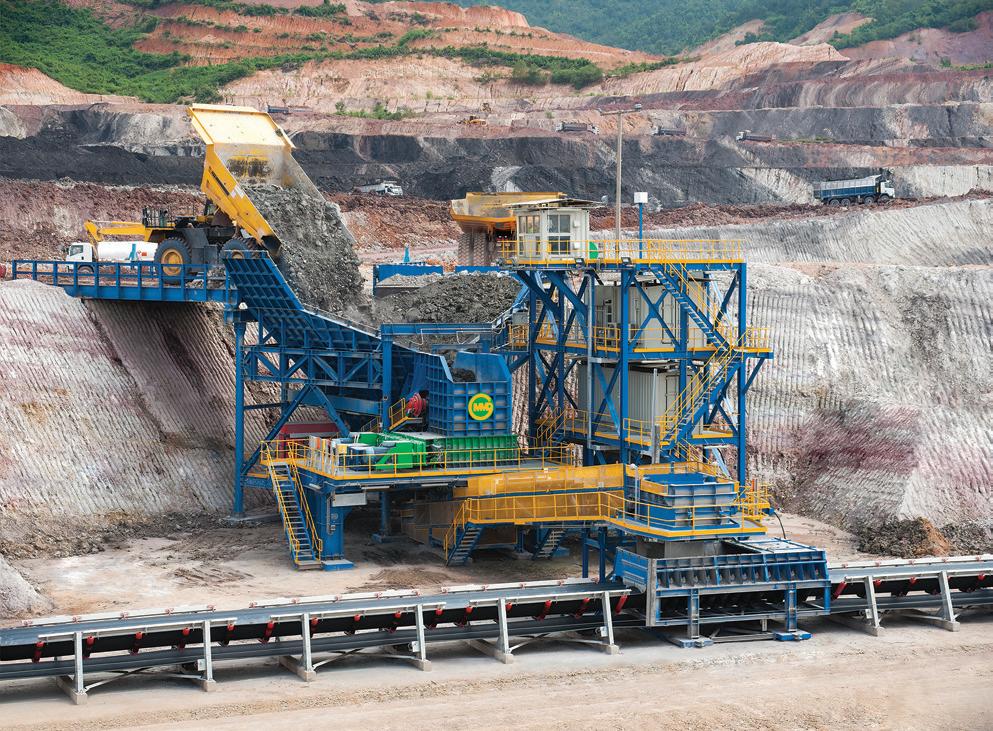
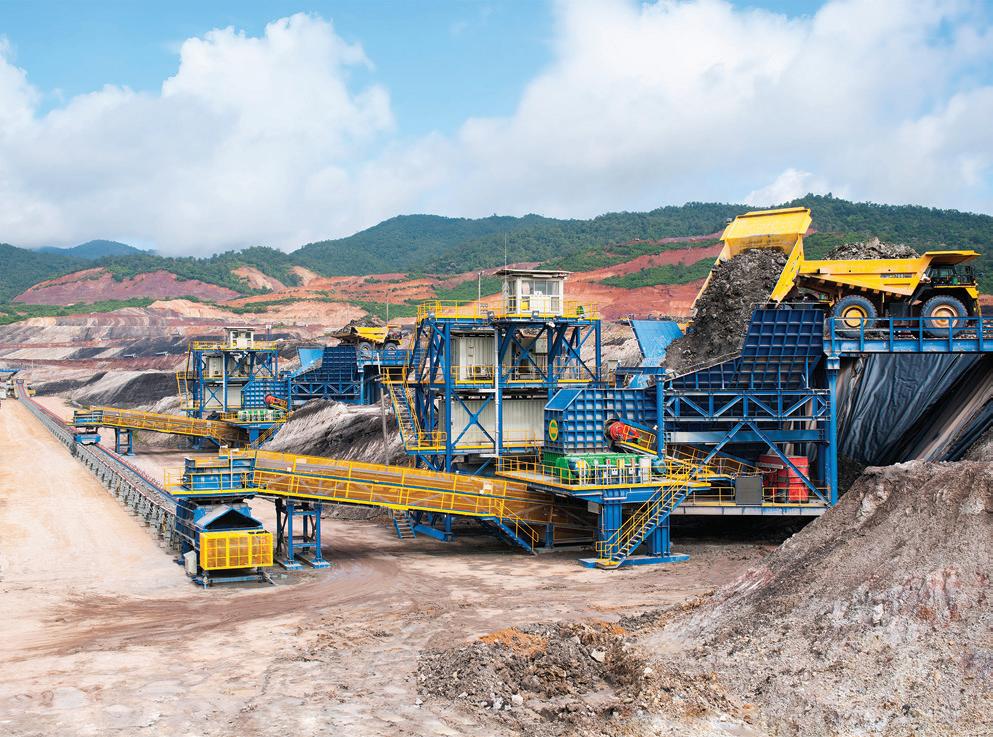
mine operation. Over the span of 13 years, the Sizer Stations have maintained an operational availability rate of over 90% –a benchmark few large-scale mining systems achieve. This success is due to several key factors:
n Robust equipment design: MMD Sizers and Apron Feeders are built to operate in rugged conditions with minimal maintenance requirements.
n Customer maintenance excellence: The project’s operation dedicated maintenance teams have implemented best-in-class practices to preserve system health.
n Strong industry partnerships: MMD’s collaboration with expert partners in steel fabrication, electrical installation, and control integration has ensured consistent system uptime.
Importantly, MMD Thailand’s systems have operated without any major mechanical failures since deployment – a testament to the engineering integrity behind the Semi-Mobile Sizer design.
In 2025, MMD’s Sizer units are still operating and playing a crucial role in the ongoing success. The semi-mobile design has enabled relocation within the mining pit, allowing operators to reduce truck haulage distances and continue crushing lignite and overburden efficiently.
This operational flexibility is key to supporting the plant’s long-term sustainability goals. By remaining close to the mining face, MMD’s units help optimise energy usage, lower emissions from vehicle movement and extend the overall lifecycle of the equipment. With an expected project life of another 20 years, MMD’s solutions will continue contributing to regional energy security for the foreseeable future.
For MMD Thailand, such projects represent more than just a successful contract. It is a defining milestone that showcases MMD’s ability to deliver high-performance solutions in complex environments, build lasting client relationships, and support the energy infrastructure of an entire region.
MMD’s work also illustrates the value of adaptability and long-term thinking in industrial partnerships. The project’s journey reflects the importance of listening to customer needs, providing continuous technical value, and remaining invested in the project’s success over time.
As energy demand continues to grow across Asia, the need for efficient, scalable, and sustainable mining solutions will only become more critical. MMD Thailand is well-positioned to meet this demand – not just with proven technology, but with a collaborative approach that places customer success at the centre.
From the mountains in the north of Laos to energy grids across Thailand and Laos, the impact of MMD’s engineering can be felt every day. The successful project is a powerful example of how technology, when paired with long-term partnership, can help build a more sustainable future for the mining and energy industries.
Aidan Mitchell, TAKRAF Group, Canada, analyses how evolving technologies and engineering practices align with the shifting priorities of the modern mining sector.
Today’s mining industry is navigating a period of profound transformation. Stakeholders across the value chain face mounting pressure to deliver on environmental, social, and governance (ESG) targets while maintaining productivity and profitability in the face of rising operational costs and increasingly complex ore bodies. In response, mining companies are accelerating the deployment
of innovative technologies to decarbonise operations, conserve water, reduce waste, and extend asset lifespans.
In 2025, TAKRAF Group commemorates its 300 th anniversary – a milestone that underscores its status as one of the oldest companies in the mining technology sector. Founded in Lauchhammer, Germany, in 1725 with the commissioning of the region’s first blast furnace, the company has evolved into a global provider of advanced technological solutions for the mining, material handling, and minerals processing industries. Over the past three centuries, the Group has transitioned from a machinery manufacturer and engineering company to a strategic solution provider, positioning itself to support the mining sector through increasingly complex operational, environmental, and regulatory landscapes.
One of the most pressing challenges in mining is the implementation of ESG principles throughout the mine lifecycle – from exploration to closure. Environmental concerns such as energy consumption, tailings management, dust control, and water usage are central to this shift. TAKRAF Group has developed and implemented several technologies designed to directly support miners in reducing their environmental footprint.
Among the most notable of these is the in-pit crushing and conveying (IPCC) technology. IPCC systems reduce or eliminate the reliance on diesel truck haulage by crushing material within the pit and transporting it via belt conveyors. This significantly lowers greenhouse gas (GHG) emissions and reduces energy intensity per tonne of material moved. The benefits are both environmental and economic, as conveyor systems for example provide lower operating costs over time compared to traditional truck fleets.
Complementing IPCC are high pressure grinding rolls (HPGRs), which provide a more energy-efficient method
of comminution, especially for hard rock applications. By applying inter-particle pressure, HPGRs reduce the overall energy required for grinding while also improving downstream flotation efficiency.
Gearless conveyor drives (GCDs), jointly developed by the Group and a specialised drive partner, further enhance energy efficiency. This system eliminates the mechanical gearbox in conventional conveyor drive stations, replacing it with a permanent magnet motor that delivers higher torque with fewer moving parts. At a large copper mine in Chile, GCD implementation resulted in a CO₂ reduction of approximately 66% compared to conventional diesel haulage for the same throughput. These findings illustrate the critical role that electrical drive technologies can play in mining decarbonisation strategies.
The dust control solutions also contribute to ESG performance. Tube conveyors provide fully enclosed transport that minimises both dust generation and environmental contamination. Long-distance conveyor systems (exceeding 7 km in a single flight) and the reduction of transfer points help limit emissions, improve safety, and reduce noise pollution – factors that are increasingly regulated in jurisdictions with strict permitting requirements.
Water conservation remains a critical issue in mining, especially in arid regions such as Chile, Australia, and Sub-Saharan Africa. Efficient water use is essential not only for environmental reasons but also for operational continuity in jurisdictions where water rights are heavily restricted or contested.
TAKRAF Group supports responsible water stewardship through a range of technologies under its DELKOR brand. DELKOR’s high-rate and high-density thickeners recover process water for reuse, significantly decreasing freshwater demand. Depending on site-specific parameters, water recovery rates from these systems range from 60% to 93%, reducing the volume of tailings and the need for conventional tailings storage facilities.
Dewatering technologies, such as horizontal belt filters and filter presses, offer additional water recovery by removing moisture from processed material. These solutions generate dry filter cakes that can be stacked or safely stored without the environmental risks associated with wet tailings dams. DELKOR’s horizontal belt filters, initially pioneered for acid filtration, are now widely adopted for mineral tailings applications across multiple commodities.
In the field of flotation, the DELKOR BQR flotation cell series, equipped with the proprietary MAXGen mechanism, delivers higher recovery rates while optimising energy consumption. These cells are suitable for a wide range of minerals and are engineered for operational flexibility, with modular components that simplify maintenance and enable process optimisation.


Mining’s geographical shift over the past century has followed new mineral discoveries, technological capabilities, and geopolitical factors. TAKRAF Group has mirrored this trend, expanding its presence in key mining regions around the globe. One example is its strong and growing footprint in Canada – a country ranked among the top five globally for mineral production and exploration activity.
TAKRAF Group first established operations in Canada in 2006 to support the oil sands industry in Alberta. Early projects included retrofitting primary crushing plants for a leading oil sands producer. These retrofits addressed issues with winter stalling by integrating the
company’s double roll crushers – ultimately resulting in the design and installation of the largest roll crushers ever built. This upgrade reduced peak torque requirements by over 40%, improving plant reliability during extreme cold weather operations.
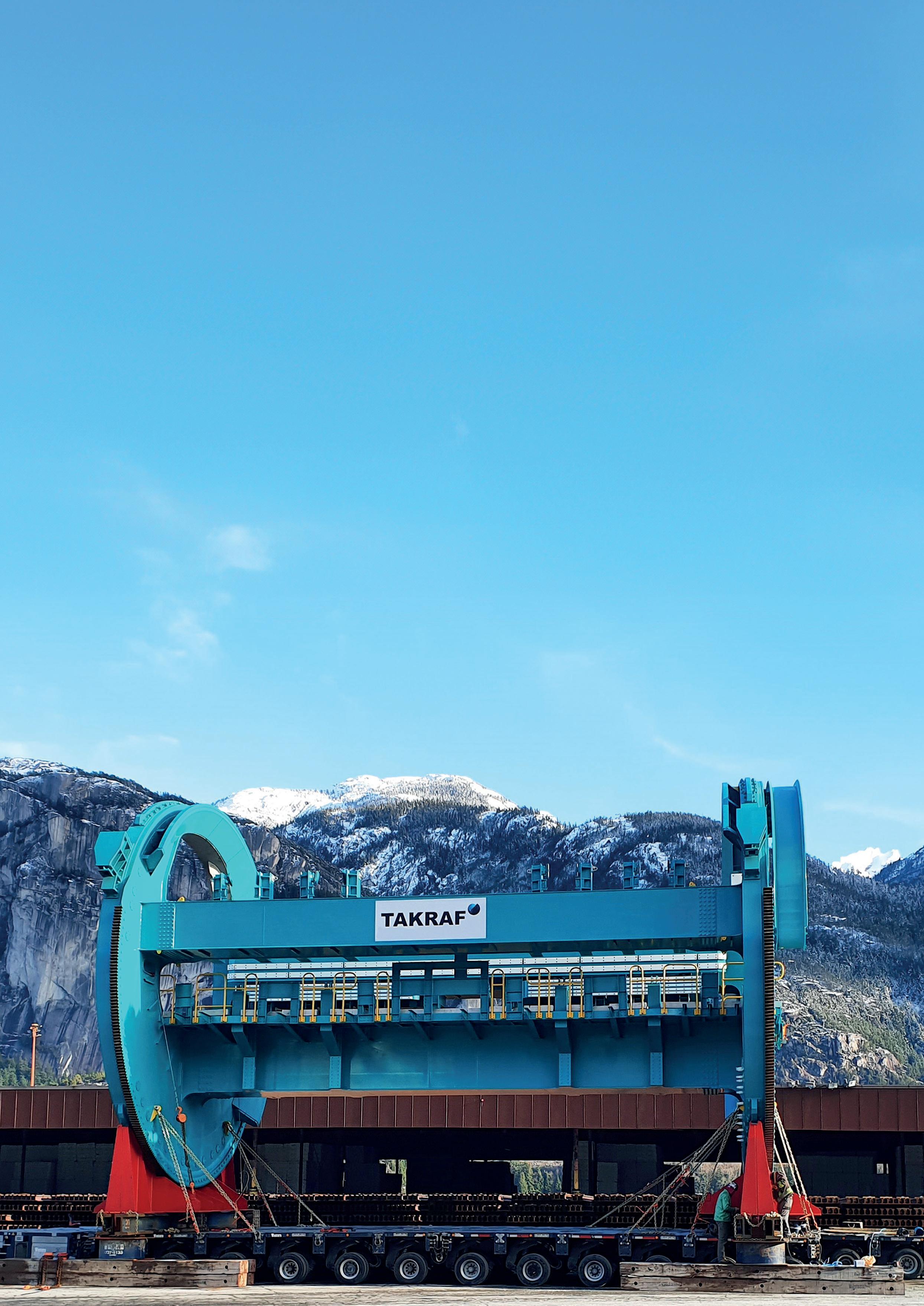
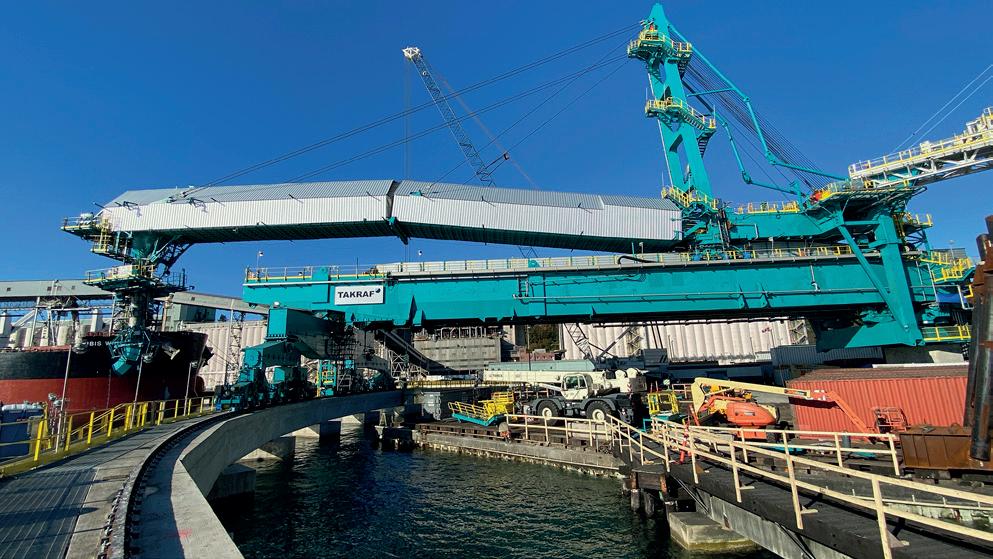
The Group has also been active in supporting material handling projects at Canada’s coastal export terminals. At the Port of Vancouver, TAKRAF Group supplied for example a tandem rotary railcar dumper as part of a major infrastructure expansion. The dumper system is capable of processing an entire string of railcars with sidearm positioning and hydraulic clamping mechanisms that accommodate railcars of varying sizes. The system includes provisions for mid-locomotive handling and fully automated movement in both directions, ensuring high throughput and low operational downtime.
In a capital-constrained environment, many mining companies are prioritising the optimisation of existing assets over new greenfield investments. This focus has spurred demand for lifecycle support services, including refurbishments, upgrades and relocation of major equipment – all of which are integral to TAKRAF Group’s aftermarket service portfolio.
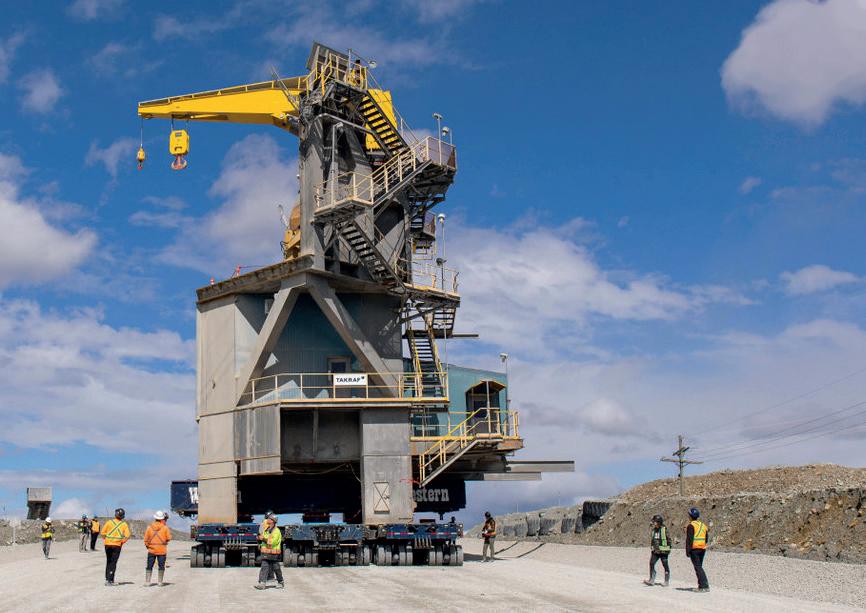
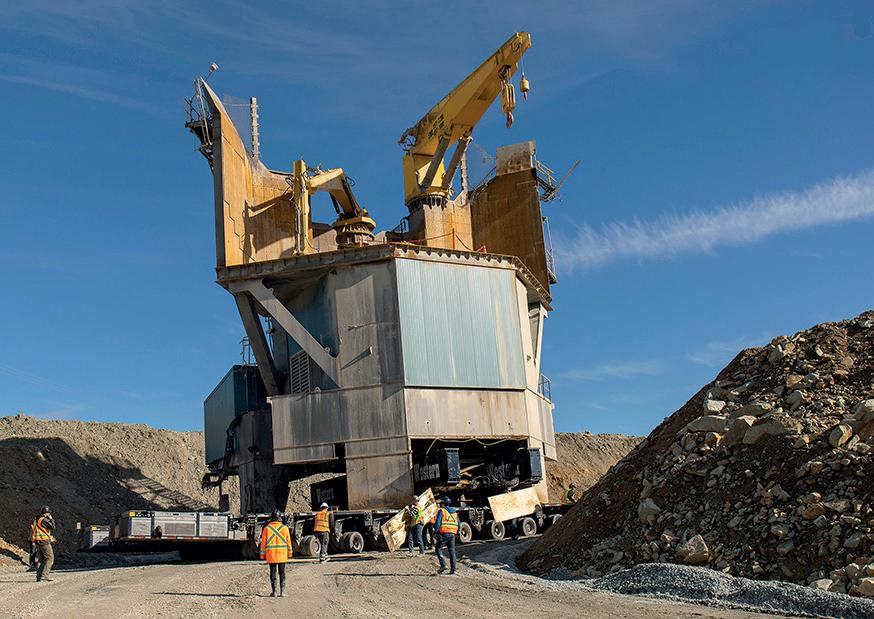
A prime example of this service offering is the successful relocation of a semi-mobile crushing station in Canada. Originally installed as part of TAKRAF’s first major crushing project in the region, the station –weighing approximately 850 t – was transported and recommissioned during a 16-day shutdown. Despite logistical challenges, including extreme weather and labour strikes, the relocation was executed ahead of schedule, supporting the client’s broader pit expansion project.
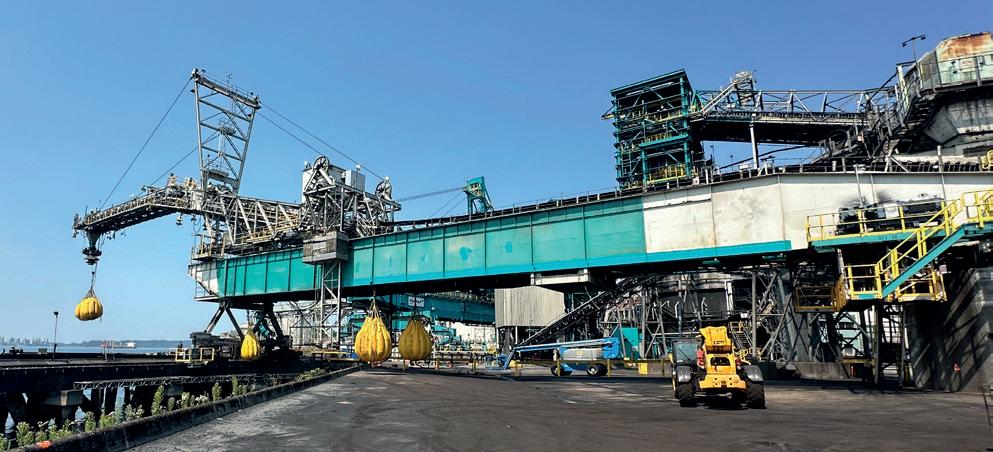
TAKRAF also provides maintenance and efficiency improvements for third-party equipment. In one case, the company completed a chute redesign for a ship loader suffering from chronic material clogging at high throughput rates. The replacement chute reduced unplanned downtime by 80%, with clogging only occurring above surge flows of 3600 tph – well above the equipment’s design capacity of 2800 tph. During the same outage, the backstay cables were replaced, requiring significant temporary structural works including counterweight towers and boom supports.
As the mining industry continues to adapt to the realities of ESG compliance, resource depletion, and economic volatility, companies require technology partners capable of delivering more than just equipment. TAKRAF Group’s longevity is not merely a historical achievement, it is evidence of sustained relevance and forward-thinking capability. Through an evolving portfolio of advanced systems and a strong emphasis on performance-based aftermarket support, the Group helps the mining industry meet the needs of today while preparing for the demands of tomorrow.
Marco Dorigo and Stefan Hutzenlaub, Voith Turbo, Germany, discuss the integral role of belt conveyors in modern mining operations.
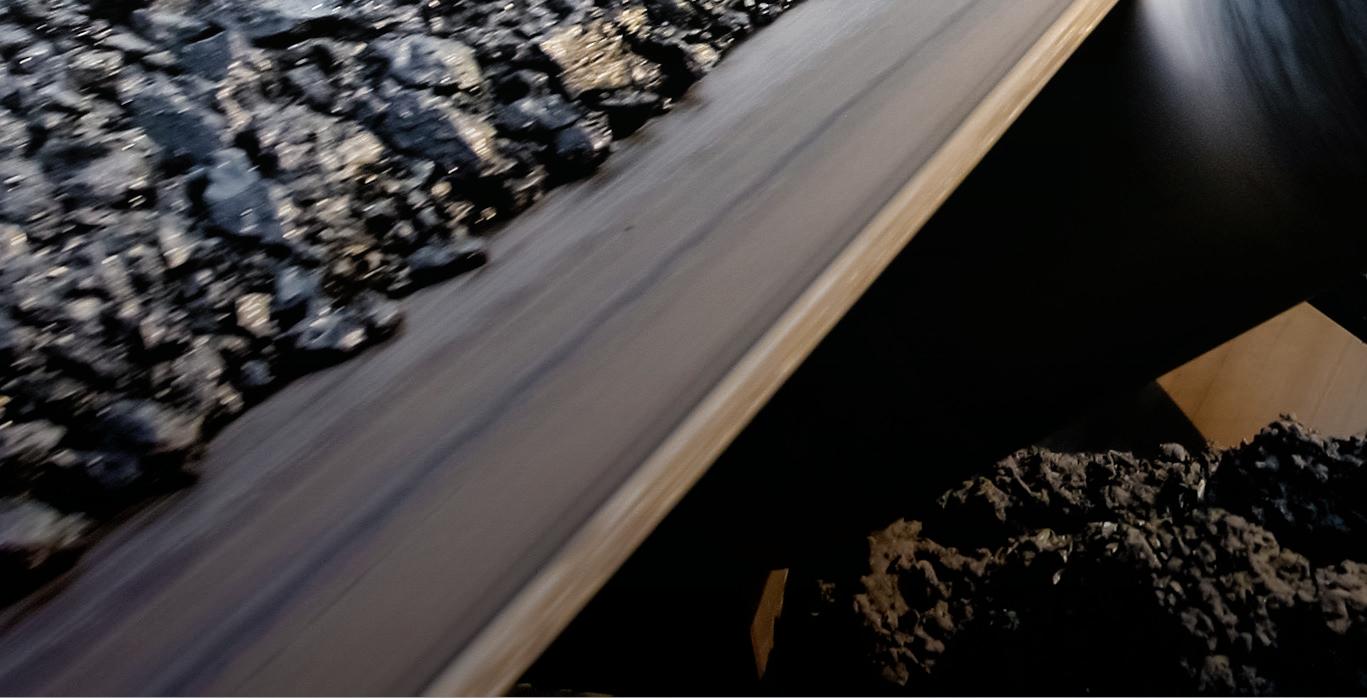
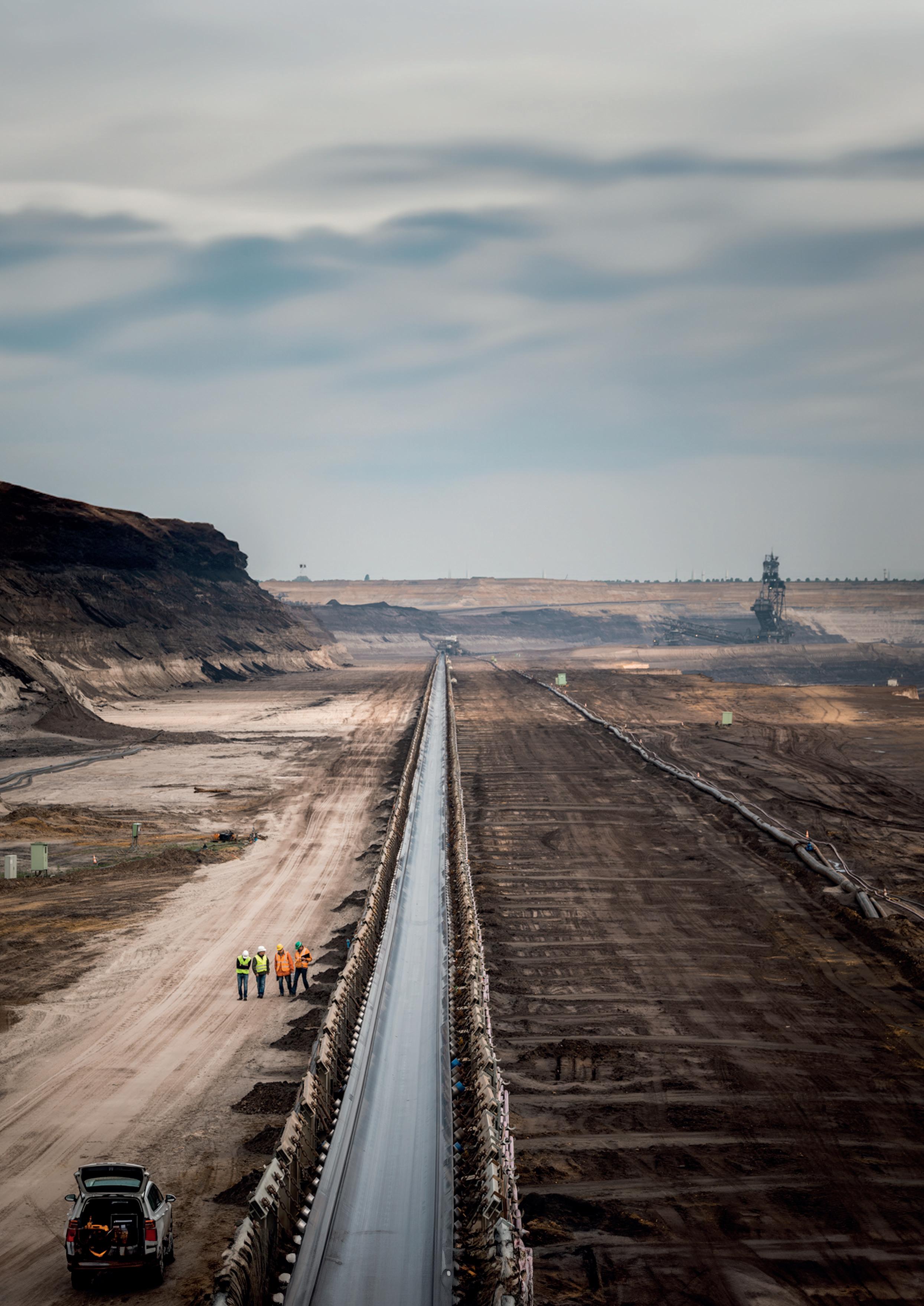
Belt conveyors are not just another component of modern mining, but are rather a fundamental aspect of operational efficiency and material handling. Each conveyor system is a bespoke creation, meticulously designed to suit the specific topographical and operational demands of its location. This customisation is crucial, as it ensures that the system’s capacity aligns with the site’s
unique geographical features and the production requirements. Therefore, when planning new conveyor systems or optimising existing ones, precision in analysis and complexity in calculations are paramount. Beyond technical precision, the successful implementation of these systems heavily relies on the human expertise and experience that guide these technical processes.
BeltGenius Conveyor Consulting, a service offered by Voith, merges cutting-edge tools with extensive expertise to provide effective design and optimisation of belt conveyor systems. The BeltGenius engineers have a deep understanding of both existing and planned systems, based on many years of experience, and can draw on components that Voith develops and manufactures itself. This profound knowledge is integrated into the TurboBelt DriveControl system, which serves as the core of any conveyor system with Voith drives, ensuring optimal operation. Voith stands out by taking full responsibility for the conveyor project, from initial design through to commissioning the drive systems, including the
control system. This approach significantly reduces interfaces and project risks, offering a seamless solution for mining operations.
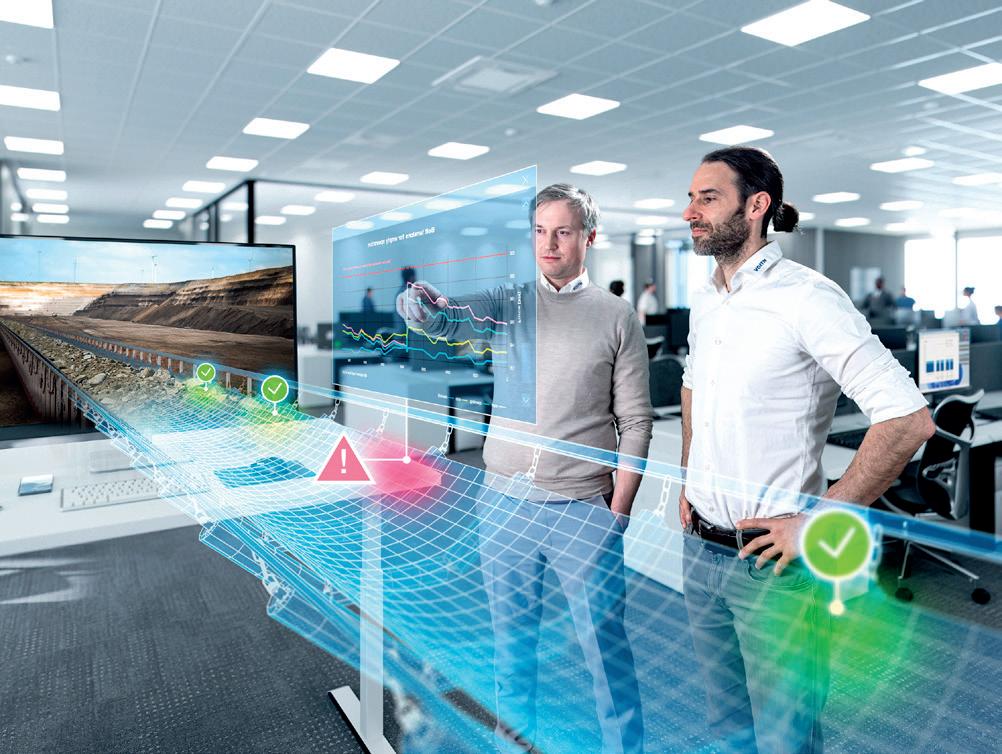
BeltGenius represents a comprehensive suite of products by Voith, designed for monitoring conveyor systems, optimising their performance and design, and diagnosing and resolving faults. The process begins with deploying sensors to collect data from critical components of the conveyor systems, whether these components are produced by Voith or third-party manufacturers. This data collection is crucial for understanding system performance and identifying potential areas for improvement.
The BeltGenius family, particularly the BeltGenius ERIC software, acts as a ‘digital twin’ for conveyor systems. This innovative software allows operators to assess whether the system is running optimally or if there are opportunities for enhancement. BeltGenius ERIC offers numerous advantages, providing full transparency of a system’s energy efficiency through the Energy Performance Indicator (EnPI). This indicator enables benchmarking across different conveyor systems, identifying improvement areas and ultimately leading to increased efficiency and reduced energy consumption.
Moreover, BeltGenius ERIC incorporates functionalities such as virtual belt scales, a virtual belt tension sensor, and a virtual slip prediction sensor.
These tools offer a comprehensive understanding of load distribution in multi-motor drives, further enhancing the system’s efficiency and reliability. By providing such detailed insights, BeltGenius ERIC empowers operators to make informed decisions that lead to significant performance improvements.
The introduction of BeltGenius Conveyor Consulting marks a significant advancement in the optimisation of conveyor systems. This service not only enhances systems theoretically, but also maximises their daily operational performance as efficiently and component-friendly as possible.
The service is underpinned by a combination of advanced calculation software and the practical experience of Voith’s experts. These professionals understand the limitations of mathematical models and enhance them with their decades-long experience. Their practical knowledge allows them to address various operational challenges, such as preventing material spillage and navigating tight horizontal curves, which are not accounted for by software alone. This synergy of digital tools and expert insights results in solutions that provide tangible benefits to clients operating in challenging environments.
Voith has a long history in developing and producing components for conveyor systems, including drive components (such as couplings), complete drive trains, control systems, and pulleys. These products are used in
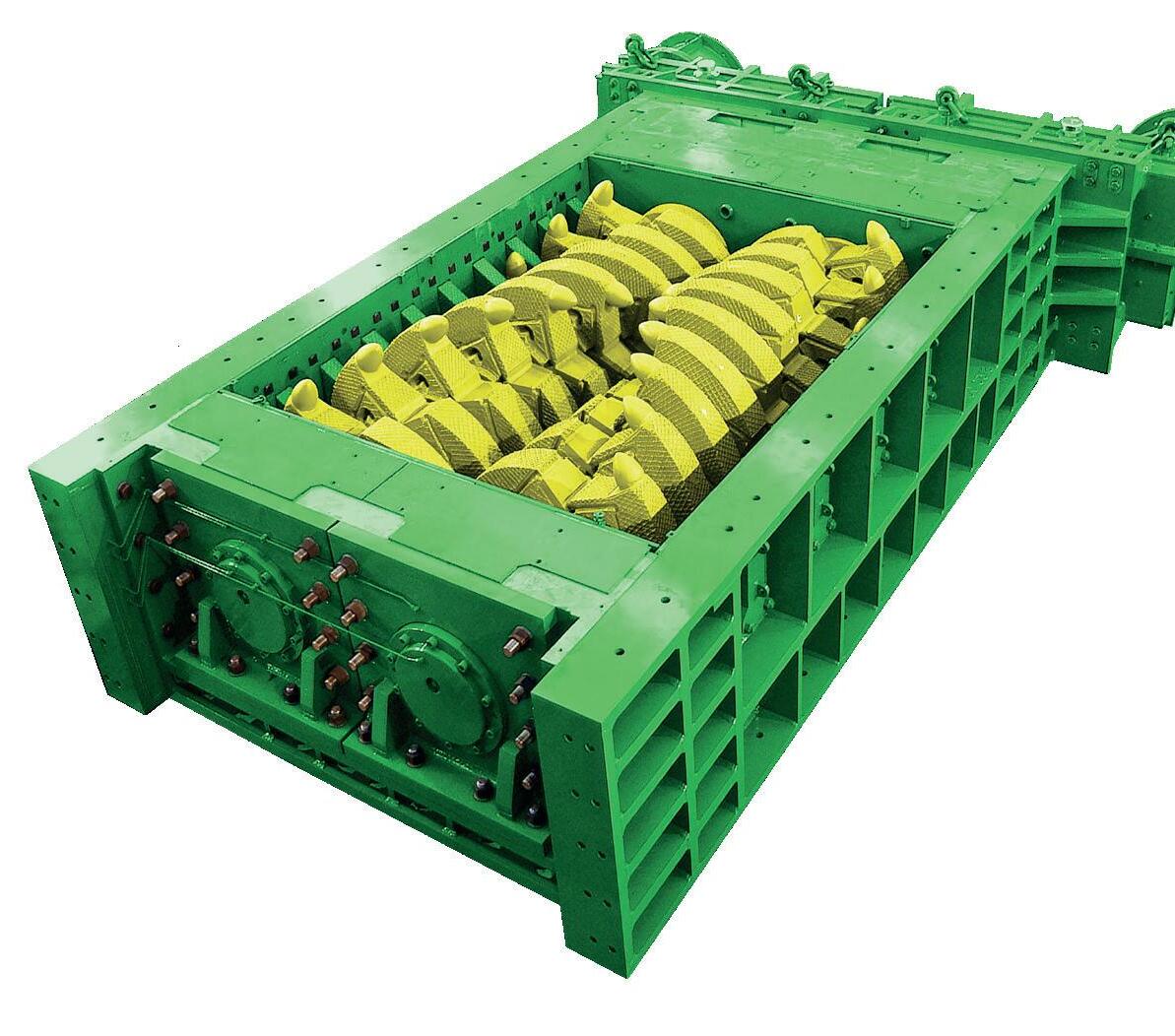
For over 45 years, we’ve delivered pioneering Sizer™ technology to industries around the world. Our mobile, semi-mobile, and fixed Sizer stations, along with the latest in-pit innovations, are designed to streamline operations and reduce the complexity of today’s modern mining challenges.
Our Sizer systems, combined with ore diversion and sensor-based sorting, take sustainability even further by cutting energy use, minimising waste and boosting ore grades through fines recovery right at the source.
As a true turnkey partner, we deliver complete solutions from concept and design through to manufacturing, installation, and support. We’re not just a supplier — we’re driving a smarter, cleaner future for mining.
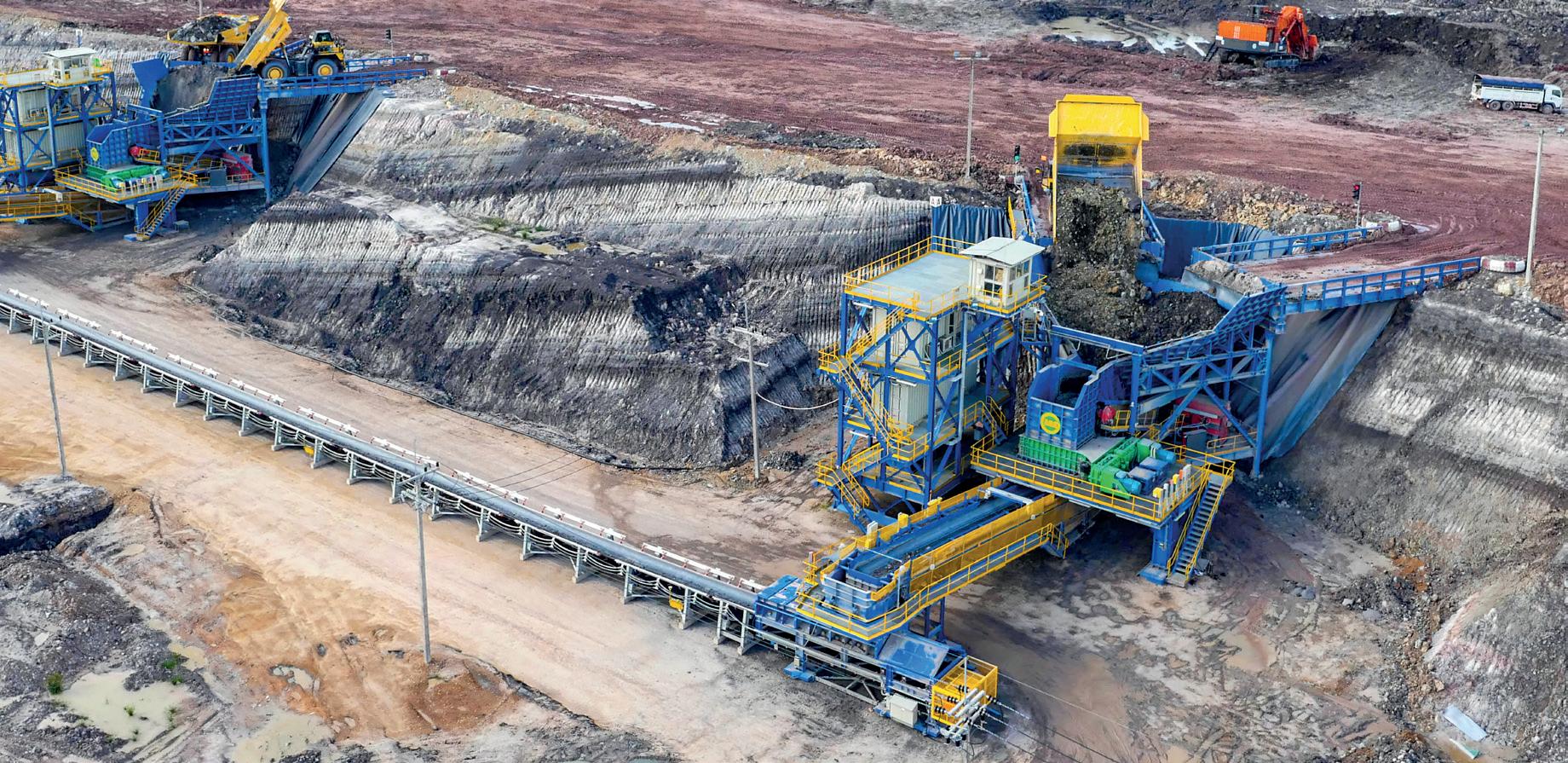
mining operations worldwide. The BeltGenius product line is designed for monitoring, performance optimisation, and fault analysis, supporting data-driven process monitoring and optimisation.
Through BeltGenius Conveyor Consulting, Voith makes its extensive knowledge of the mining sector and conveyor systems available to its clients, whether they are planning new installations or enhancing existing ones. The foundation for optimising conveyor systems lies in sophisticated calculation software, a self-developed IT solution by Voith that is continuously updated. This software incorporates data from various sources, including test stand measurements, scientific advancements, and continuous learnings from BeltGenius ERIC projects. This results in unique and precise calculations that enable Voith's experienced engineers to propose improvements based on minimal information about a conveyor system.
For more comprehensive data analysis and damage attribution, the use of artificial intelligence (AI) is indispensable. Voith’s BeltGenius team leverages the company’s existing AI-powered solution, OnCare.InSight, which can be adapted to specific applications. This integration of AI technology allows for accurate predictions and maintenance planning, reducing the likelihood of unexpected downtimes and optimising component usage.
Voith’s process is streamlined, with everything being handled by a single entity – from fault identification or project planning to commissioning. This approach minimises inefficient and potentially error-prone interfaces. The services provided include:
n System layout and fault identification using BeltGenius Conveyor Consulting.
n Project planning and production or adaptation of the appropriate drive train.
n Parameterisation of the conveyor control system by Voith, based on simulation results from BeltGenius Conveyor Consulting, or adaptation of the existing control system.
n Commissioning of the conveyor system.
This comprehensive service ensures that all aspects of the conveyor system are optimised and integrated seamlessly, making for a reliable and efficient material handling solution.
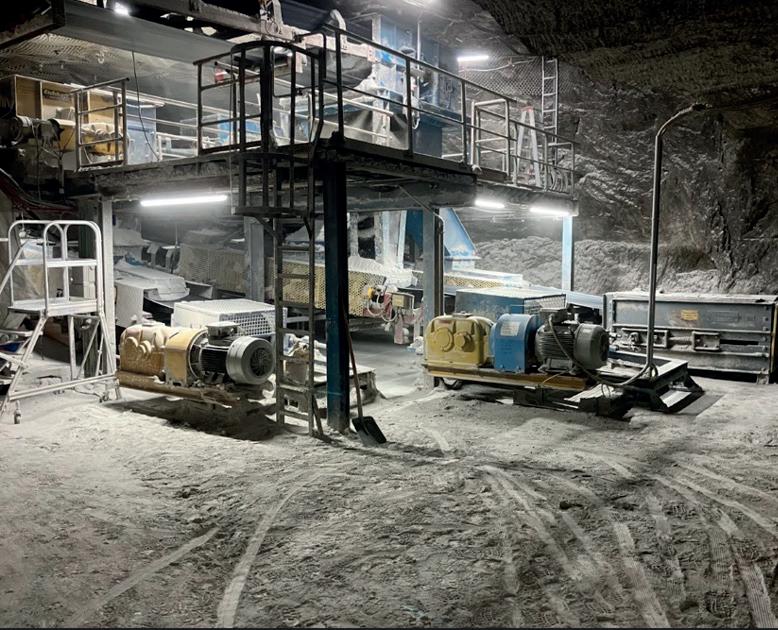
The impact of BeltGenius Conveyor Consulting is exemplified by its work with the Südwestdeutsche Salzwerke AG in its facility in Heilbronn.
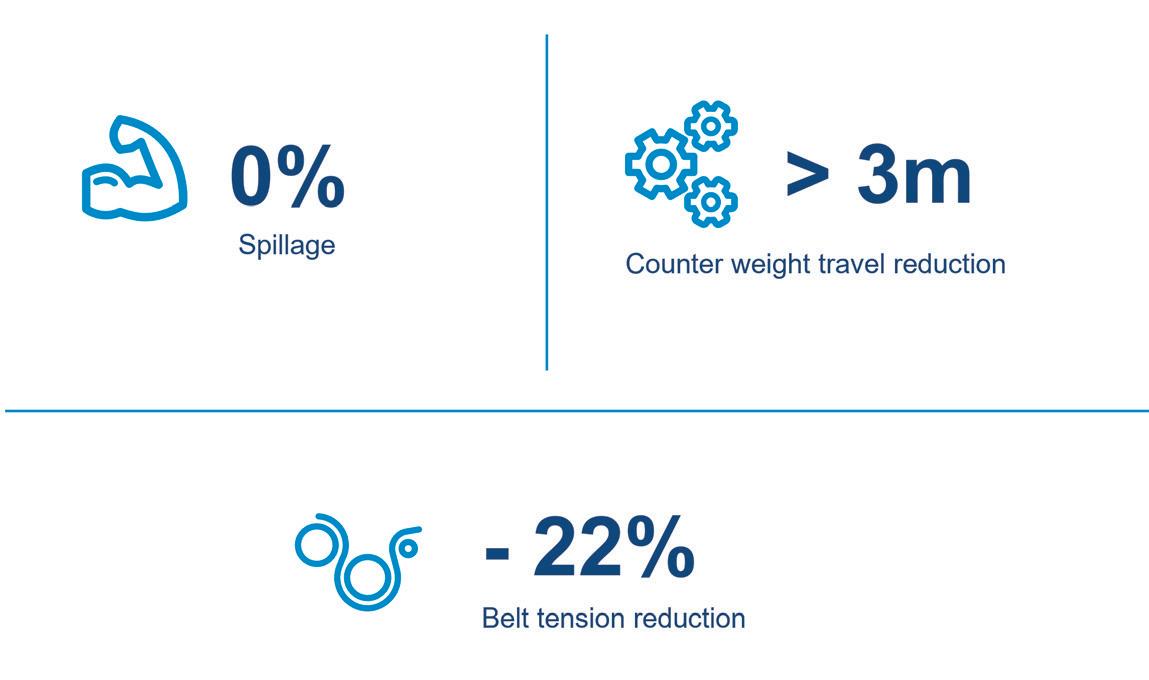
Through collaborative efforts, a solution was developed that significantly improved the efficiency of the conveyor system by enhancing its reliability. Before the consultation, the starting torques caused dynamic negative behavior, leading to material loss and even idler ejections. After the intervention, the conveyor started more smoothly, operated more evenly, and experienced no material loss, thus preserving components.
This case study highlights the practical benefits of Voith’s solutions, showcasing how tailored interventions can lead to substantial improvements in system performance and reliability. The expertise provided by BeltGenius Conveyor Consulting not only addresses immediate operational issues, but also contributes to long-term efficiency and cost savings.
Belt conveyors are critical to the efficiency and success of mining operations. The integration of advanced technologies and human expertise, as demonstrated by Voith’s BeltGenius Conveyor Consulting, offers substantial improvements in system performance and reliability. Providing comprehensive solutions that address both theoretical and practical challenges empowers mining operators to optimise their conveyor systems, ultimately leading to increased productivity and reduced operational costs.
The continuous evolution of technologies like BeltGenius ERIC and OnCare.InSight exemplify a commitment to innovation in the mining industry. These tools not only provide insights into current system performance, but also enable predictive maintenance and strategic planning, ensuring that mining operations can adapt to future challenges and demands.
The combination of Voith’s engineering expertise, state-of-the-art technology, and a holistic approach to system integration makes for significant innovations in conveyor optimisation. As the mining industry continues to evolve, solutions like those offered by Voith will be essential in driving efficiency, sustainability, and profitability.

Wilson Monteiro, ABB Process Industries, Brazil, investigates how gearless mill drives are reshaping the future of mining efficiency.
Agrowing demand for improved productivity and lower environmental impact is prompting a fundamental re-evaluation of how ore is processed and the way in which metals such as copper are extracted. This shift is driving a major transformation in the mining industry. To meet the demands of a resource-hungry world, mining operations are increasingly turning to advanced technologies that enhance not only throughput capacity, but also efficiency, sustainability, and reliability.
As the global demand for copper and other essential minerals continues to rise, mining operations face unprecedented pressures surrounding declining ore grades, increased energy costs, and the need to align with ambitious carbon reduction targets. This is where the gearless mill drive (GMD) comes in. GMDs are gaining popularity and emerging as a critical component in mitigating these challenges. Unlike any other mill drive system, GMDs represent a significant shift in how mining operations approach grinding and processing.
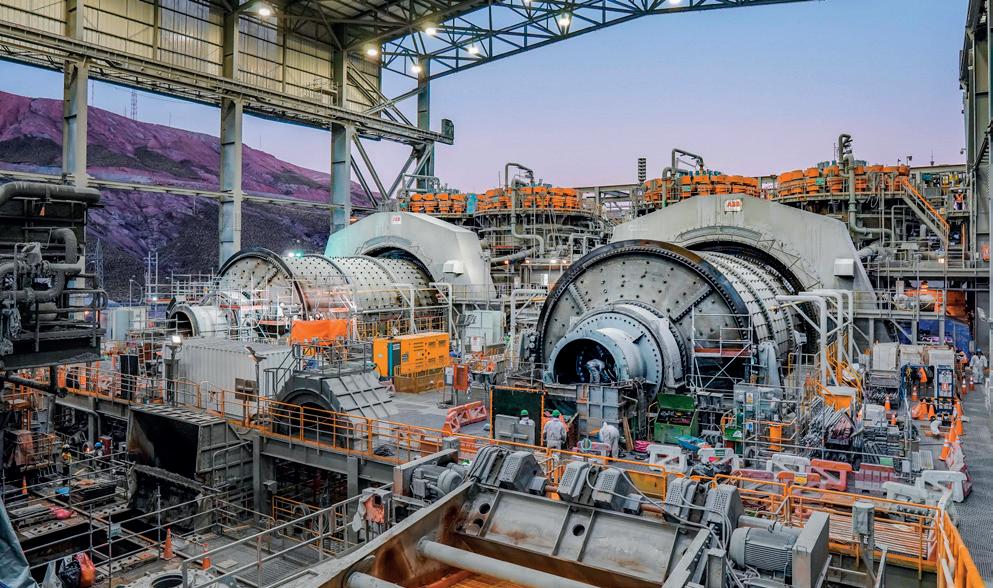
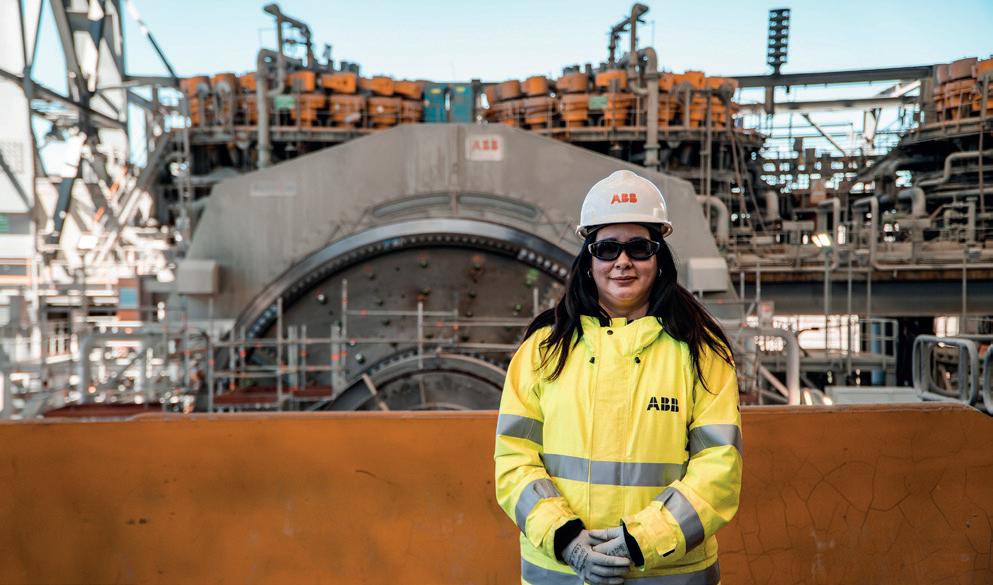
For decades, conventional ring-geared mill drives have been the backbone of grinding operations. However, as production scales up and energy efficiency becomes paramount, alternatives must be explored; GMDs are a fundamentally different solution. By eliminating mechanical components – such as couplings, gearboxes, pinions, and ring-gears – these systems integrate the motor directly with the mill. This streamlined design contributes to overall efficiency by reducing energy losses and mechanical wear, ensuring higher mill availability and lower maintenance costs over the lifecycle of the equipment. Energy efficiency is a defining advantage of GMDs. Compared to traditional ring-geared mill drives, GMDs are up to 3.6% more energy-efficient. As one of the largest areas of consumption in the concentrator plant, and a high contributor to overall energy expenditure in the mining industry, this is a considerable increase in efficiency.
On top of this, the scalability of GMDs adds to their desirability for grinding and processing operations. With power rating exceeding 30 MW and mill diameters reaching up to 44 ft, these systems enable the operation of much larger mills. This ability to handle high-capacity grinding is quickly becoming crucial in addressing the challenge of declining ore grades, since they require increased processing to maintain equal production capacity.
Where GMDs are scalable, they also grant flexibility. GMDs offer variable-speed operation, allowing for better control over grinding processes. Unlike some traditional mill drives that rely on fixed-speed operation, GMDs provide greater adaptability to changing ore characteristics and varying mill liner conditions, optimising throughput and energy consumption in real-time. This flexibility translates into increased throughput and more consistent
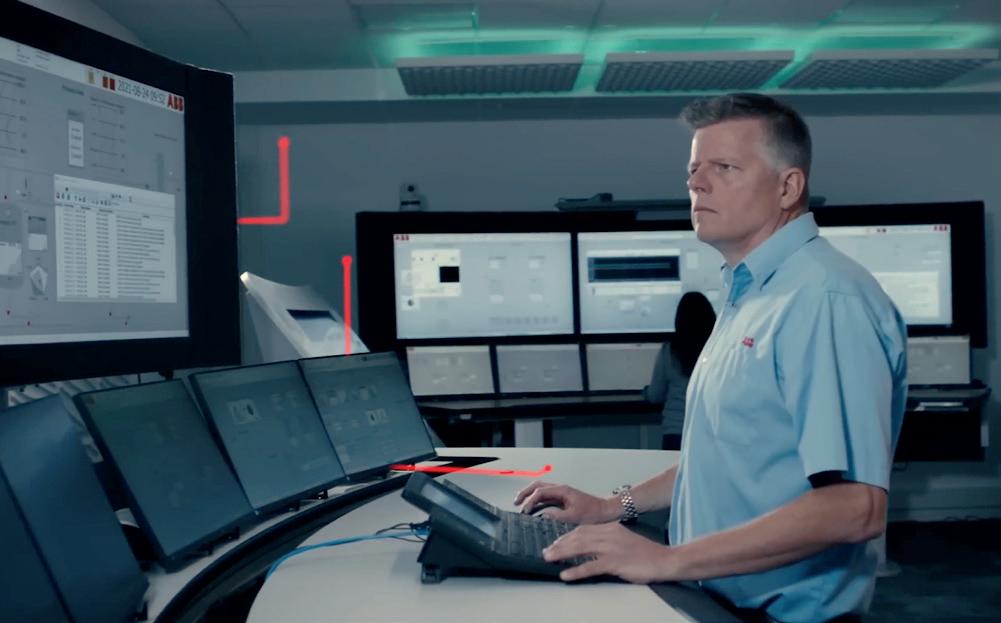
processing outcomes, which is critical in an industry where even small gains in efficiency can have a significant impact on profitability.
The adoption of GMD technology is not just about efficiency. It is about reshaping the economics of mining operations. The ability to operate larger mills at higher capacities means that mining companies can process greater ore quantities with the same infrastructure. This leads directly to increased productivity, meaning that operations can meet rising demand without the need for extensive expansions.
GMDs also contribute to higher overall mill availability due to reduced risk of mechanical failures combined with superior monitoring. The simplified design of grinding mills with GMDs reduces the amount of potential failure points, leading to fewer unplanned shutdowns and more predictable maintenance schedules. The result is a more stable operation, with disruptions to production kept at a minimum.
In a world where regulatory pressures on emissions are continually fluctuating and intensifying, adopting technologies that enhance energy efficiency is a strategic necessity. Efficiency and sustainability go hand-in-hand, with energy use directly impacting a mine’s carbon footprint. GMDs play a supporting role in environmental goals by reducing power consumption in grinding operations, lowering greenhouse gas emissions, and helping mining companies align with global sustainability initiatives.
While GMDs offer reliability advantages, mining companies are increasingly looking beyond traditional maintenance models. Long-term service agreements (LTSAs), customised to specific site conditions, provide significant reassurance in maximising uptime and optimising lifecycle performance. These agreements ensure that specialised expertise is readily available when needed, minimising response times when issues arise and proactively addressing maintenance needs before they become critical by increasing the probability that anomalies are detected in an early phase. LTSAs can also include structured maintenance plans that incorporate best practices tailored to each installation, allowing operators to maintain peak performance and extend the lifespan of their assets.
Running alongside LTSAs, AI-driven predictive maintenance is redefining how mining operations approach reliability. ABB’s GMD Connect is a prime example of this approach. By leveraging real-time monitoring and advanced analytics, GMD Connect detects early warning signs of potential failures, meaning operators can take proactive action before an issue escalates. This predictive capability not only prevents costly downtime, but also reduces the likelihood of major failures that could lead to prolonged shutdowns and financial losses.
Additional solutions, such as ABB’s recently launched GMD Copilot, a generative AI-powered tool, are poised to bring industrial decision-making into the digital age.
By integrating data from multiple sources, AI-based solutions take instant insights and enable mine operators to fine-tune processes, optimise schedules, and improve overall operations. The combination of AI-powered diagnostics and predictive maintenance solutions ensure that GMDs operate at peak efficiency, keeping maintenance costs low and maximising production uptime. In an industry where equipment reliability is crucial, these digital tools provide an additional layer of resilience, supporting mines in maintaining high levels of productivity while reducing operational risks.
GMD technology will continue to evolve alongside broader industry trends. The ability to scale for even larger and more powerful mills will be crucial as ore grades continue to decline. As mining companies seek to extract value from increasingly lower-grade deposits, the need for high-capacity grinding solutions will continue to grow. Future GMDs will be designed to accommodate these demands, ensuring operations remain efficient and cost-effective. Sustainability will also play an increasingly central role. The integration of renewable energy sources into mining operations is becoming a strategic priority. Hybrid energy solutions that incorporate solar, wind, and energy storage technologies can be used to power GMD-equipped grinding circuits, further reducing carbon footprints. By combining energy-efficient grinding technology with renewable energy, mining companies can make significant strides in achieving their sustainability targets.
Digitalisation continues to make its way into the heart of mining operations. The convergence of AI, automation, and proven GMD technology will set the stage for a transformation in mineral processing. Automation and AI will optimise and stabilise grinding processes, resulting in increased throughput with a more consistent product and consequently higher recoveries. The use of advanced sensors, AI-driven analytics, and autonomous control systems will enable even greater optimisation of grinding parameters. By continuously analysing data and making real-time adjustments, these technologies will keep GMDs running at peak performance with a high throughput and less energy waste.
The mining industry is at the beginning of an entirely new era where efficiency, sustainability, and resilience will define success. GMDs, supported by AI-driven maintenance and service solutions, represent a fundamental shift in how to maximise productivity in mining operations, while reducing environmental impact.
Embracing GMDs and the digital solutions accompanying them will be a critical step in future-proofing mining operations amidst growing economic pressures, environmental obligations, and the growing demand for minerals. The technologies are here, the challenge now is to ensure widespread adoption to create a smarter, cleaner, and more productive mining industry.
ANDRITZ filter presses for mining
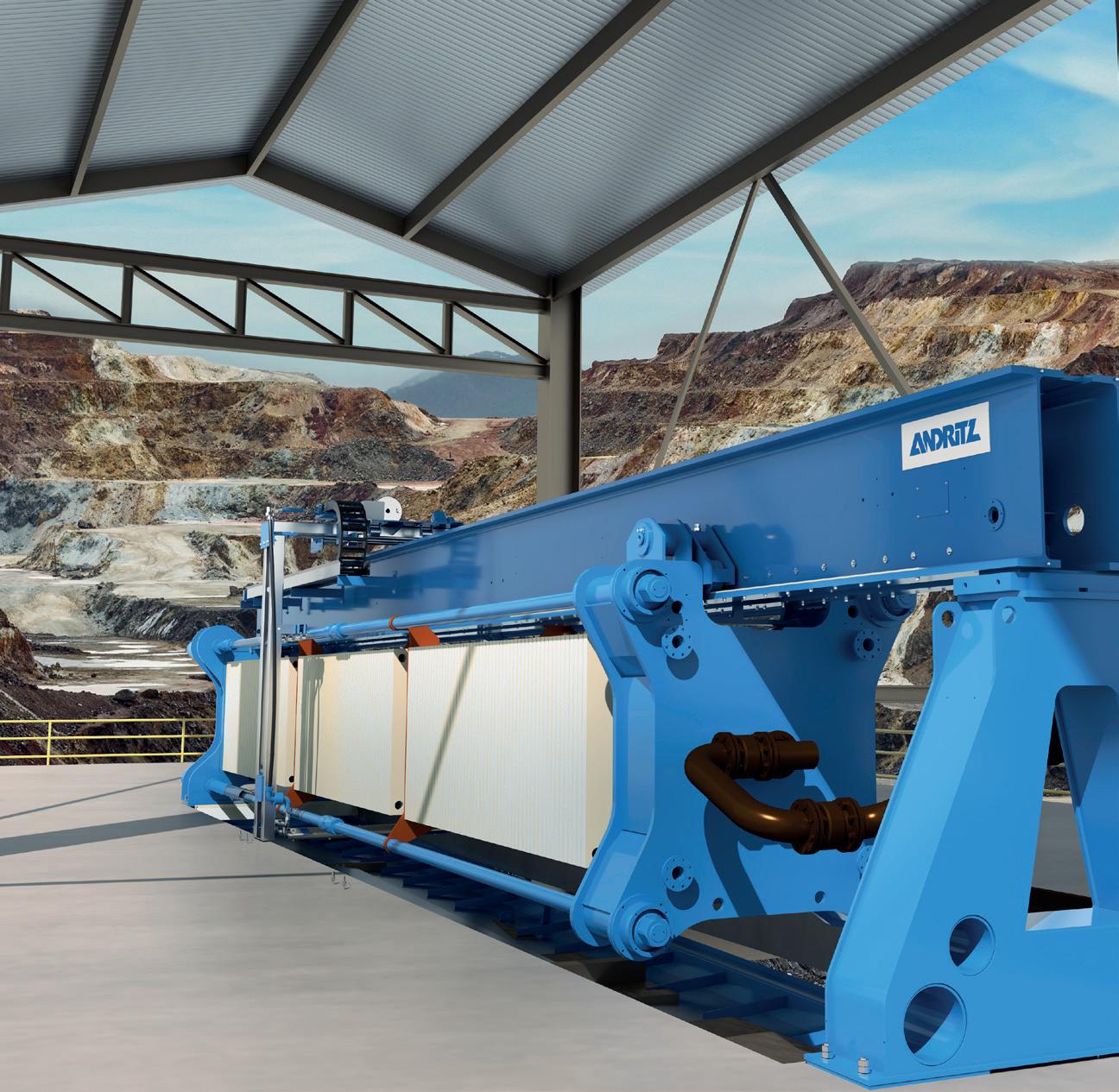
High throughput, durability and ease of maintenance make filter presses a prime choice for transitioning from wet to dry tailings disposal. Over decades, ANDRITZ has designed filter presses that meet the most stringent requirements of mining and minerals operations around the globe: from standard to heavy-duty design, from chamber to membrane type, from manual to fully automatic mode, and from overhead to sidebar systems.
How to select the right filter press for your tailings challenge? Find out in this edition of Global Mining Review.
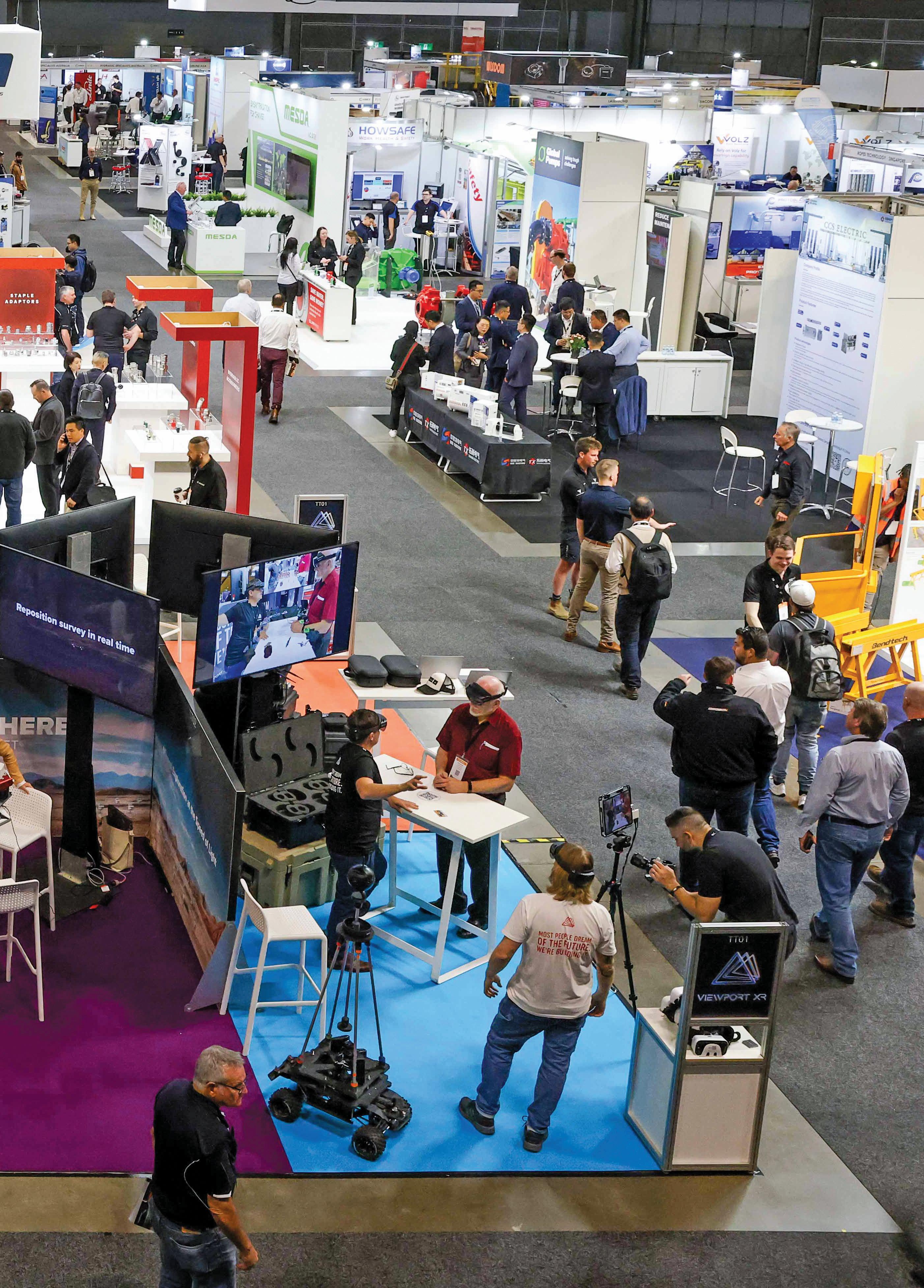
ASIA-PACIFIC’S INTERNATIONAL MINING EXHIBITION
23-25 SEPTEMBER 2025
Adelaide Showground, South Australia
Register to attend AIMEX’s inaugural event in South Australia
Uwe Wyink, James Wallis, and Hugo Brás, Master Builders Solutions, provide a technical overview of rock mass classification and the effect of polyurea silicate resin systems.
In the mining industry, especially in underground operations, managing strata control is an ongoing challenge. For decades, engineers have relied on rock mass classification systems to guide decisions around excavation safety and support design. Systems like the Q-System, Rock Mass Rating (RMR), and Geological Strength Index (GSI) offer structured ways to assess rock quality. But as ground conditions become more variable –whether due to higher rock stress, water, or fractured geology – there is a growing need for tools and materials that can actively improve those conditions.
This article takes a practical look at the parameters used in classification systems, particularly those that engineers can influence through intervention. It then explores the role of chemical ground consolidation, focusing on polyurea silicate resins, and how these materials are being applied in real mining environments to improve ground behaviour, reduce risk, and support productivity.
The Q-System, developed by Barton and colleagues in the 1970s, is widely used across
mining and tunnelling projects. The system evaluates rock mass quality using a formula that incorporates several key parameters:
Where:
n RQD (Rock Quality Designation): A measure of the percentage of sound core retrieved during drilling.
n Jn: Joint set number, related to how many joint sets intersect the rock mass.
n Jr: Joint roughness, affecting how well blocks interlock and resist sliding.
n Ja: Joint alteration, describing the degree of weathering or infill in joints.
n Jw: A factor that adjusts for water in joints, which typically weakens shear strength.
n SRF: Stress reduction factor, which accounts for conditions like squeezing or faulting.
This system is empirical, but practical – it is often used to guide bolting pattern, different ground support types, and additional ground reinforcement decisions.
The RMR system (Bieniawski) is similar in scope but weights parameters differently, and includes additional considerations like rock RQD Q = Jn · Jr · Ja · So
strength and joint orientation. Meanwhile, GSI –commonly used in numerical modelling – relies on visual assessment and is particularly useful when engineers need to derive strength properties for analysis. These systems all serve slightly different purposes, but their shared goal is to simplify complex ground conditions into actionable categories.
While classification systems are rooted in observed conditions, not all parameters are fixed. Some can be influenced through engineering interventions.
n RQD: Though usually based on drilling recovery, effective consolidation of fractured zones can
improve the integrity of future cores, which in turn improves measured RQD.
n Jr: If fractures are filled with a strong material that keys into surface irregularities, effective joint roughness – and shear strength – will be increased.
n Ja: Soft or weathered infill can often be replaced or stabilised using chemical grouting, which reduces this weakening factor.
n Jw: Water in fractures reduces shear strength. Replacing water with resins can significantly improve this parameter in wet ground.
In short, while the rock mass classification begins with geology, engineering intervention can shift the ground behaviour into a safer, more manageable state.
There are a range of materials used in mining to improve ground conditions – each with their pros and limitations.
Cementitious grouts are often the first option considered for bulk consolidation. They are relatively inexpensive and easy to use in large volumes. However, their performance in fractured or wet rock can be poor due to limited penetration and the tendency for dilution in water-bearing zones. Long cure times can also slow operations.
QA issues may occur while mixing, as water content is critical to bleeding, thixotropy, and setting time. Naturally the setting time will be long, up to 24 hr, which delays cycle time (critical for the mining operation). Furthermore, the cured cement fails easily in brittle failure mode, meaning it is not to be used in dynamic ground situations.
Two-part resin cartridges are a staple of bolt anchoring systems. They are activated by bolt rotation during installation and cure rapidly. However, several performance issues have been observed:
n Limited encapsulation: Effective anchorage is often restricted to around 1.2 – 1.5 m.
n Poor performance in broken ground: Voids and irregularities prevent uniform resin contact, leading to incomplete anchorage and local bolt failures.
n Limited volume: The volume of applied resin is limited, meaning that if borehole diameter is overshot, the rotation of the bolt may not be sufficient to fully mix the resin.
n QA/QC challenges: Cartridge systems are highly dependent on proper installation technique. Inconsistent rotation speed (too fast or too slow feed rate), water presence, or poor storage can result in incomplete curing or substandard performance.
n Typical waste of cartridges: The leftovers after a job conclusion are common, this cost is not normally considered.
These weaknesses are particularly problematic in heavily fractured ground, where the need for reliable bonding and consolidation is greatest.
Polyurea silicate resins – such as MasterRoc RBA –represent a newer class of chemical consolidation materials, specifically designed to overcome some of the challenges faced with conventional grouts and resins. Key strengths include:
n Low viscosity, which allows deep penetration into cracks and voids.
n Thixotropic behaviour, crucial for overhead bolting.
n Strong Adhesion, effectively glues surfaces together to improve RQD.
n Fast curing, enabling quicker re-entry and shorter cycle times (minutes vs hours).
n Excellent adhesion, even in wet conditions.
n Unlimited volume, allows to pump the needed resin to achieve full encapsulation.
n High QA/QC reliability, as resin is delivered via two-component pump systems with real-time monitoring of mix ratios, pressure, and flow.
n Chemically inert once cured, meaning no environmental reactivity or shrinkage.
Unlike cartridges, which are prone to partial failure in poor ground, polyurea silicate systems offer consistent, full encapsulation, and can actively improve surrounding rock mass properties – not just bond to it.
Resins like MasterRoc RBA do not just provide anchorage, they improve the host ground itself.
n RQD: By consolidating fractured areas and stabilising the rock matrix, MasterRoc RBA increases the likelihood of retrieving intact core, thus improving RQD.
n Jr: The material fills surface irregularities and hardens with the surrounding rock, increasing effective roughness and shear resistance.

n Ja: Weak, altered joint fillings can be displaced or stabilised, reducing the impact of poor infill material.
n Jw: Water-bearing fractures are sealed during injection, reducing water-related weakening.
Furthermore, because MasterRoc RBA fills annular gaps completely during bolt installation, it ensures better load transfer and reduces micro-movements that could lead to progressive failure.
Across a range of mining operations, polyurea silicate resins have been deployed in:
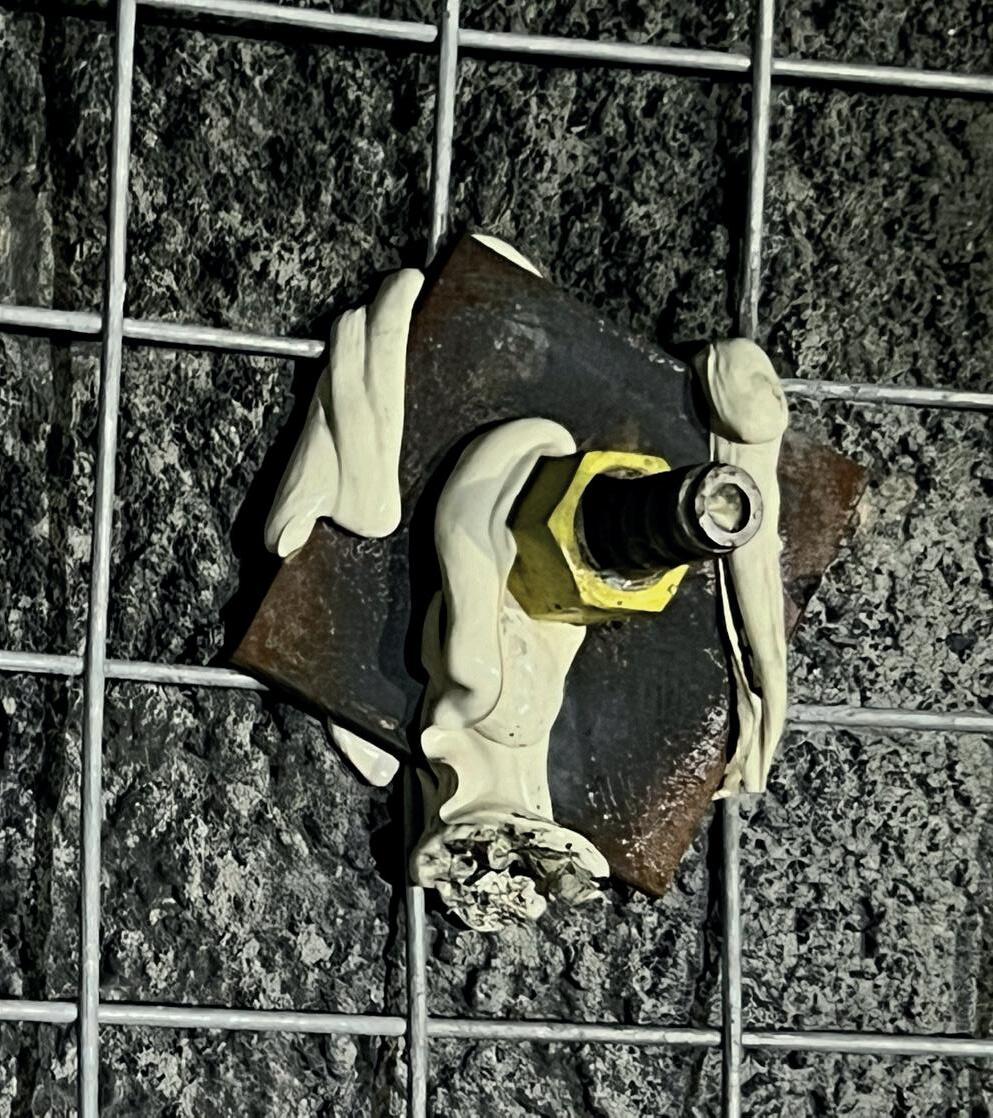
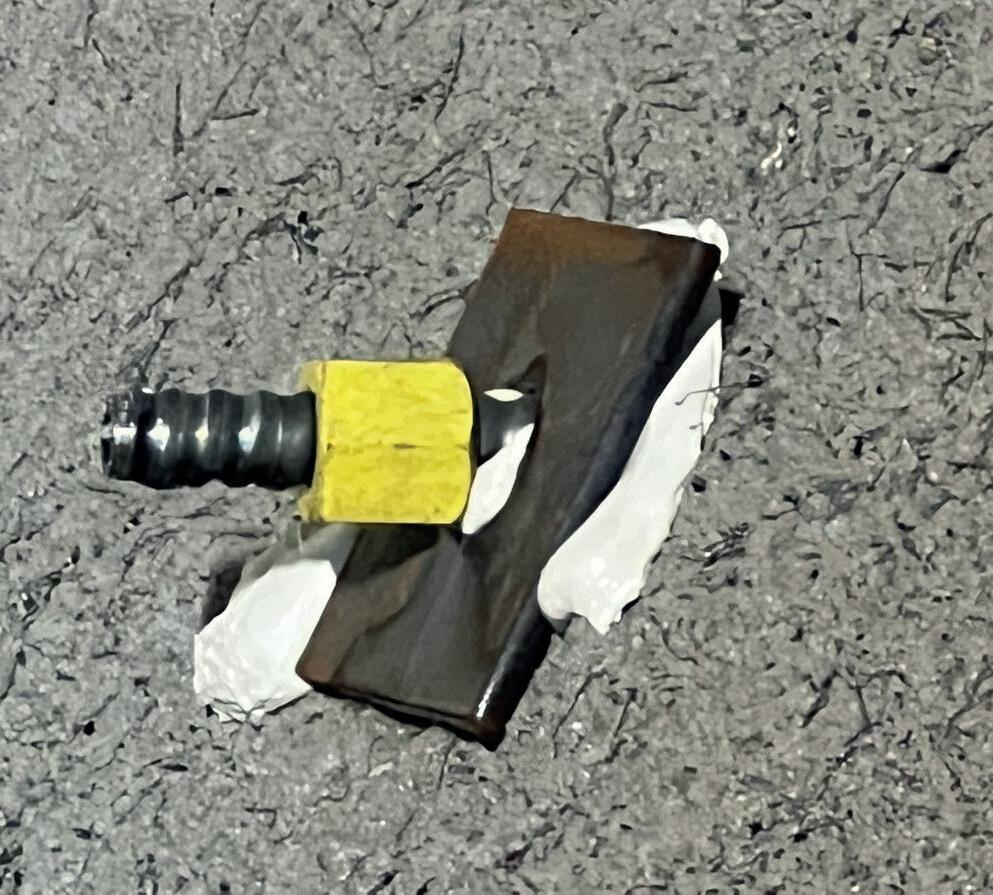
Provides full encapsulation and reliable anchorage, especially in variable or wet holes. Extension drilling also provides an alternative to cable bolts in intersections, avoiding two step bolting (bolts followed by cables).
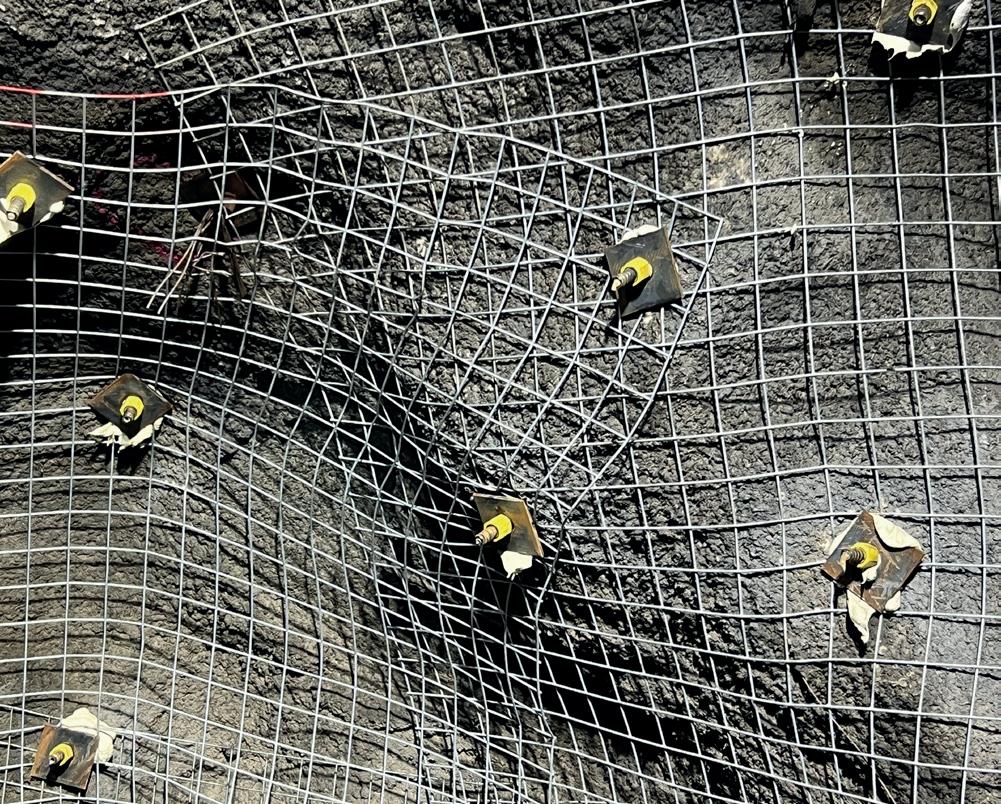
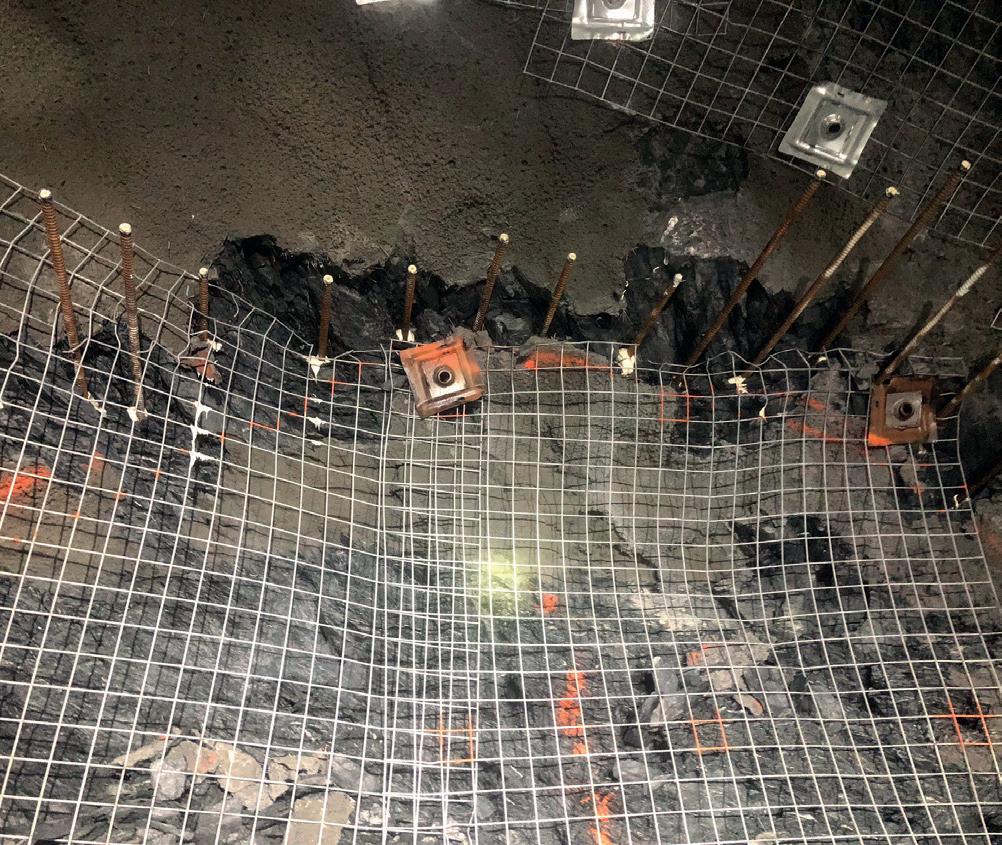
Overlap is one the bottleneck when installing mesh. With polyurea silicate resins and one step SDA method, as the bolt never leaves the hole and is then consolidated with resin, mesh placing can be considerably faster.
In advancing headings or poor ground, spiling bars grouted with PUS can effectively pre-support the excavation, minimising slabbing or collapse. This method allows improved advance per blast, therefore higher development rate enhanced by fast curing of the resin.
Where long bolts are required, full-length anchorage becomes critical. MasterRoc RBA has been used to ensure long-term performance and minimal displacement, even in high-stress conditions. The full bond protects the cable from corrosion, which, in the case of conventional
cementitious solutions – with the risk of shrinking and micro-cracking – will not be able to ensure.
Implementing reliable, high-performance resins like MasterRoc RBA brings tangible benefits:
n Improved support reliability, reducing unplanned rehabilitation.
n Efficient rehabilitation with effective bolting.
n Ground consolidation.
n Better QA/QC compliance, through controlled installation systems.
n Reduced variability, particularly in fractured rock.
n Potential for wider bolt spacing, leading to lower overall reinforcement costs.
n Shorter excavation delays, due to rapid curing and immediate strength gain.
n Faster and more efficient bolting allows quicker access to ore (payback).
These benefits translate directly into improved safety and more predictable progress – critical outcomes in any underground operation.
Rock mass classification is a foundational tool in underground mining, but it does not capture the full story when active ground improvement methods are in play. As this article shows, key classification parameters like RQD, Jr, Ja, and Jw can be meaningfully improved using targeted interventions.
Among the most effective options available today are polyurea silicate resins. Materials like MasterRoc RBA offer a unique combination of rapid strength development, reliable QA/QC, and the ability to enhance both the rock structure and the performance of installed support. In fractured, water-bearing, or altered ground conditions, these systems provide a practical and effective way to close the gap between rock mass classification and real-world performance.
Polyurea silicate resins are a new tool that have been missing in the toolbox of every ground control engineer, which can allow underground mining to face the challenging ground conditions with a new perspective.
1. BARTON, N., LIEN, R., and LUNDE, J., ‘Engineering Classification of Rock Masses for the Design of Tunnel Support’, Rock Mechanics, (1974), pp. 189 – 236
2. Bieniawski, Z. T., ‘Engineering Rock Mass Classifications’, Wiley, (1989)
3. HOEK, E., CARRANZA-TORRES, C., & CORKUM, B., ‘Hoek-Brown Failure Criterion – 2002 Edition’, Proceedings of NARMS-TAC, (2002), pp. 267 – 273
4. ZHANG, L., and ZHANG, W., ‘Improvement of rock mass properties by chemical grouting’, Journal of Mining Science, (2007), pp. 661 – 667
5. BARTON, N., ‘Some new Q-value correlations to assist in site characterisation and tunnel design,’ International Journal of Rock Mechanics and Mining Sciences, (2002), pp. 185 – 216

Mario Gerards and Michael Panholzer, ANDRITZ, take a deep dive into filter press operation, the differences between makes and models, and explain how past experiences inspire R&D innovations.
With substantial space requirements, a tough legal and regulatory framework, and multiple environmental challenges – such as landslides or leaching – the days of deposition of liquid slurry behind tailings dams seem to be fading. An increasing number of mines are instead converting to dry stacking. This is a solution that not only solves the aforementioned problems but
also reduces freshwater consumption by recovering the water trapped in the tailings. With their high-throughput matching the high-capacities of new tailings produced at working mine sites, as well as durability and their ease of maintenance, filter presses are one of the most common choices for this task. However, the switch to dry stacking does require new equipment, which brings new challenges and tasks for operators.
Furthermore, filter press characteristics vary significantly, even between the different models from the same manufacturer. Because of these options, explaining filter press operation in tailings treatment in detail and dive into process steps and characteristics might help mining operations find the correct model.
It is important to consider the operational expenditure (OPEX) in relation to the capital investment costs (CAPEX) and to always calculate which technology is the most economically efficient over time. Variable costs arise not only from energy consumption and maintenance costs, but also from consumables like polymer additives. Low operational costs are one of the biggest benefits of a filter press, although the initial investment costs can be higher than some alternative solutions. For example, a filter press does not require polymer additives except under exceptional circumstances, as the polymer residues leftover from the thickener stage are still active and more than sufficient. In addition, the filter press is one of the most economical dewatering solutions in terms of energy consumption –especially when compared with rotating equipment like decanter centrifuges. Finally, since only filter cloths (and rarely, filter plates) are wear parts, the maintenance costs are kept at a low level.
Another variable cost within a plant, however, is its operators. The more complex a plant becomes, the harder it is to find suitably qualified staff able to continually monitor the most important process parameters, evaluate them, and make the correct decisions to keep process performance at the required level. After all, the tailings dewatering process keeps qualified staff occupied with by-product treatment instead of revenue-generating actions. This is another benefit of the filter press: they are easy to maintain and operate, with a wide range of automation options.
Metris addIQ control systems, for example, include a broad array of automation solutions, from single machine monitoring to advanced automation systems like Metris addIQ ACE capable of optimising the operation of complete filter press parks. For more on this subject see ‘Taking control with Artificial intelligence’, published in GlobalMiningReview, April 2024.
Systems like these make automation a prime example of systems that represent comparatively high initial investment costs, but which quickly amortise over time due to a reduction in operating staff hours (as shown in Figure 1). One of the core benefits of this investment? Liquid gold in the form of water.
Recovering the water trapped in tailings is one of the major economic benefits of dry stacking when compared with tailings dams. Case studies from sites like Mineração Morro do Ipê and Itaminas show that, when decommissioning tailings dams, water recovery of 2200 m³ up to 3300 m³ daily per filter press are commonly achievable numbers – depending on the slurry concentration, as well as the residual moisture after dewatering. When operating in areas with scarce freshwater resources, this water recovery represents a big saving, especially if the alternative is accessing more water via desalination plants or the supply of water across long distances with pumps.
Some of the recovered water is needed in the process, as due to the nature of the tailings filter presses require frequent washing in order to prevent clogging and keep throughput at a consistently high level. By pinpointing the optimal timing for washing cycles, which can be achieved with AI modelling, wastage of the recycled water is minimised. Automation systems like Metris addIQ continuously track the filtration cycles of the filter press, identifying any deviations from optimal parameters. The automation system can thus indicate that a washing cycle may be necessary after completing the
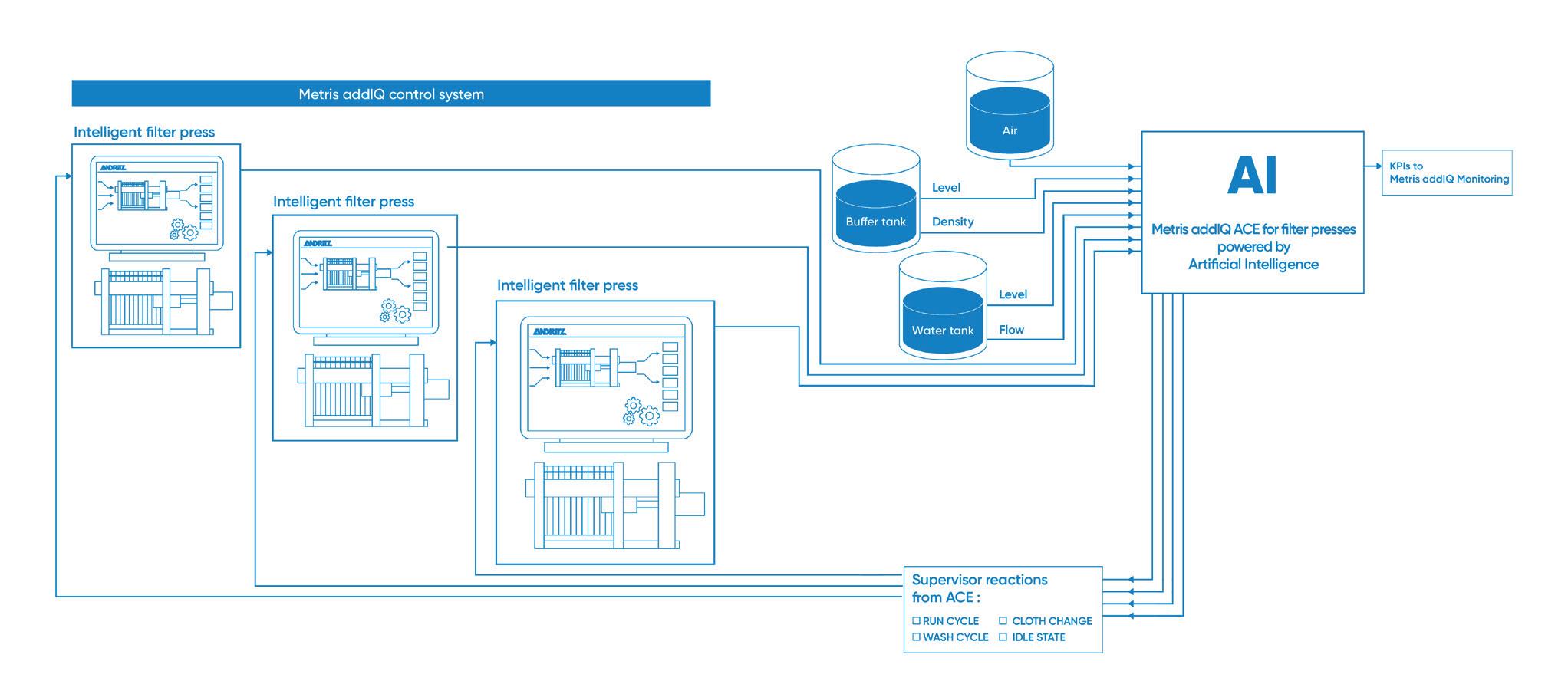
next batch, as washing cycles are often initiated when the machine is already at a standstill.
Filter presses are batch-operated systems, so a temporary standstill between batches is unavoidable. For optimising throughput, therefore, lessons can be learned from aviation; keeping time on the ground, or in this case time between batches, as short as possible, allows operators to get more flights (or batches) in during the day. Combining this operating philosophy with experience from past operations has shown the main opportunities for further reductions in cycle time lie in shortening filter cake discharge time and improving handling of filter elements.
The abrasive nature of tailings leads to more frequent changing of filter cloths than when compared with other applications like municipal wastewater treatment. Changing and washing filter cloths is frequently necessary to keep filtration efficiency and water recovery high. To keep this maintenance process efficient, one key detail is the timing. Modern AI-supported systems enable predictive maintenance by keeping track of performance data and notifying operators that the right time to start a washing cycle or change a filter cloth is coming closer. However, the cloth change process itself has to be efficient as well. Based on experience, the fastest way of changing a filter cloth is with the appropriate mechanical installation, including a feed shoe, which allows filter cloths to be changed from above (see Figure 2). This eases access to the filter element and saves time, with higher operational safety being a welcome side effect. Recent pilot testing has shown this type of installation, in combination with a modification in the plate carriage system, can cut the time required for a complete change of all filter cloths in half.
Another process step that impacts the cycle time is the cake discharge – the more plates that can be simultaneously discharged, the shorter the overall discharge time. In some older, existing cake discharge systems, just two plates are shifted at the same time. Linking more plates and dividing complete plate packages of 240 chambers into three parts allows for a significant shortening of the discharge time in comparison. The washing cycle is often initiated immediately after cake discharge is completed, as the machine is already at a standstill. The type of wash also plays a role in the duration of this idle time. One of the most efficient systems is a high-pressure double cloth washer, washing two plates simultaneously at 60 – 80 bar.
It is not just size that counts: How to evaluate the right filter press
Optimisations of filter press performance and shortened cycle times make it possible for smaller filter press models to compete with the throughput of larger machines, which is beneficial if floor space is limited.
Generally speaking, the throughput of a filter press depends on several parameters, with the following factors being particularly crucial:
n Size and number of filter plates.
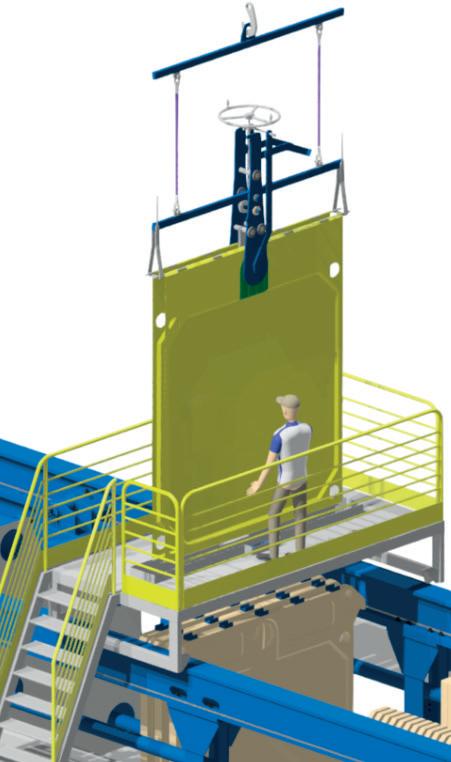
n Cake thickness.
n Duration of a filtration cycle.
n Process optimisations.
The duration of the filtration cycle is a topic already touched on, but to determine the optimal targeting of the other factors laboratory testing with a pilot filter press is a prerequisite, for example to establish the correct sizing. Professional sludge analysis is another important test, taking particle size distribution in the filtrate into account before calculating the optimal size of the filter press. Even if the planned throughput and residual moisture value have already been determined, this is not enough to specify how much filtration area, and therefore which filter press, is needed. The wrong choice of filter press can lead to a failure to meet the defined performance guarantees.
To make the best choice of filter press, operators should, in the first instance, define the desired throughput and cake dryness, collect and test samples, determine the available floor space, and define staff availability. Automation options, the size of filter elements, cycle times, and maintenance optimisation options will then help to determine how many filter presses of which sizes are needed to meet their tailings dewatering needs.
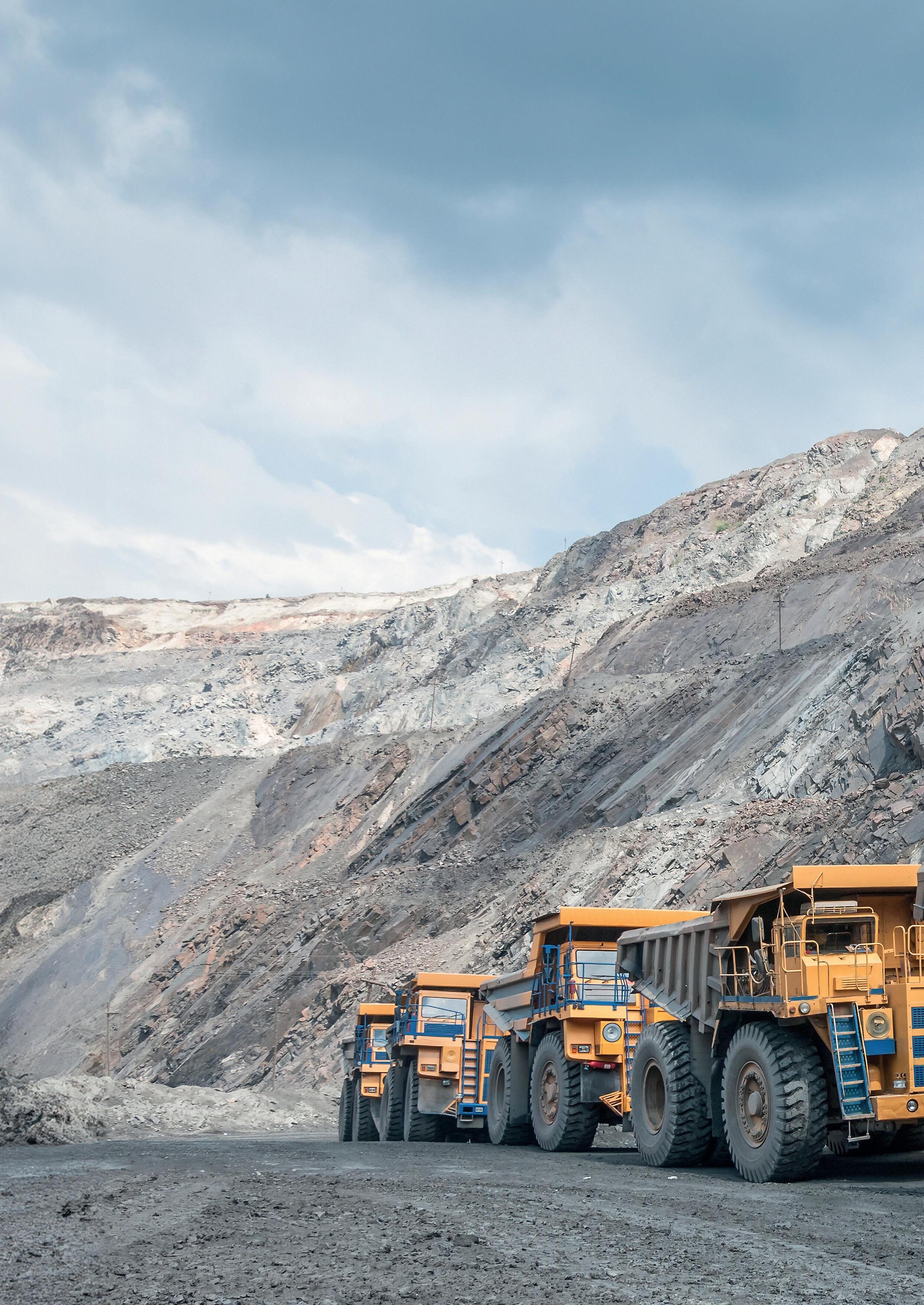
Eric Pohlmann, Nerospec, Germany, ponders the importance of enabling collision avoidance across diverse mining fleets.
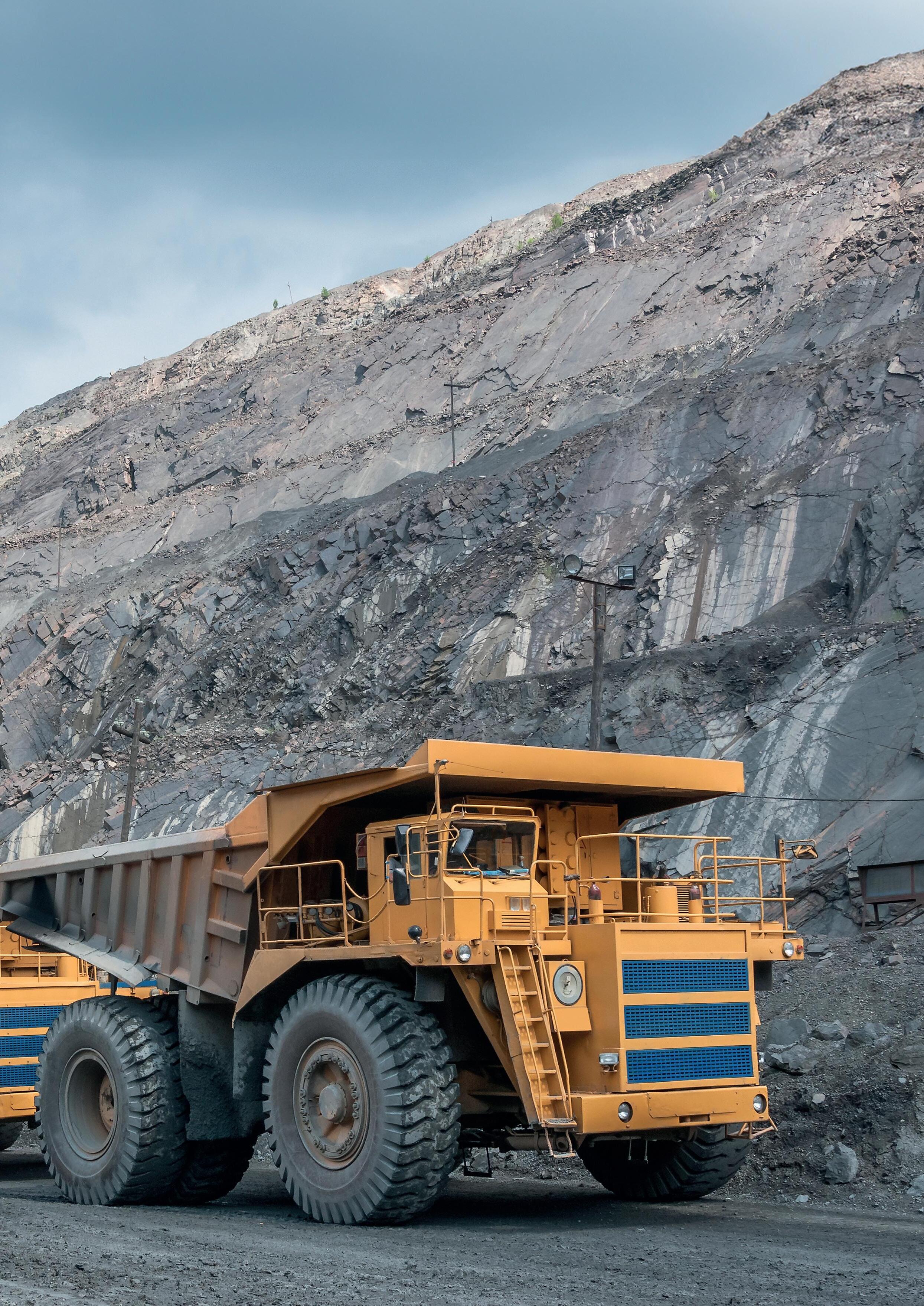
As mining operations scale in complexity, ensuring the safety of personnel and equipment across diverse fleets becomes increasingly challenging. The adoption of advanced collision avoidance systems (CAS) has become central to modern mine safety strategies, particularly those capable of not only warning operators, but actively intervening to prevent collisions. Delivering these capabilities in a standardised manner across machines of different manufacturers, models, and generations requires a flexible and agnostic approach to vehicle intervention control (VIC).
Over the past decade, the mining industry has faced increasing regulatory and operational demands to reduce incidents involving mobile equipment. The implementation of EMESRT guidelines and regional legislation has driven the development of solutions focused not only on detection and alerting, but also on automatic intervention. These systems are no longer optional additions, but fundamental components of mine safety infrastructure.
With this context, Nerospec SK has emerged as a key contributor in the development and deployment of agnostic intervention control systems. Located in Velbert, Germany, Salt Lake City, US, and Johannesburg, South Africa, the company engineers and manufactures all hardware and software in-house through a team of over 70 specialists. Its platform has been integrated across more than 500 machine types, in collaboration with leading PDS/CWS vendors and over 45 OEMs. Designed to be fully interoperable and adaptable, Nerospec SK’s VIC solutions support standardised safety implementation across mixed fleets, enabling mines to comply with Level 9 requirements without dependency on specific vendors.
South Africa remains a leading region in Level 9 adoption, supported by legislation that mandates intervention control on mining equipment. Nerospec has played a central role in supporting
compliance across major mining operations. Its system deployments are responsible for controlled ‘slow down’ and ‘stop’ events that reflect successful proactive intervention. These events provide documented evidence that collision scenarios are being addressed before escalation.
Rather than interrupting productivity, these controlled events contribute to operational continuity by reducing unplanned downtime, incident investigation, and equipment recovery time. Mines using VIC platforms report increased safety awareness, improved operator behavior, and more predictable production cycles.
As mining operations increasingly prioritise safety, automation, and regulatory compliance, the demand for standardised CAS and VIC technologies continues to grow. Regions such as the US, Canada, Central Europe, Kazakhstan, Mongolia, India, and Australia have shown a marked interest in implementing universal VIC platforms as part of broader fleet modernisation strategies. In response to this growing demand, Nerospec SK has expanded its reach and technical support across these regions, assisting mining groups in adopting interoperable, vendor-independent systems aligned with global safety expectations.
In both surface and underground mining, equipment diversity is a constant. Fleets typically include a wide range of mobile equipment, from heavy-duty haul trucks to light-duty utility vehicles and specialised support machines. These machines vary in manufacturer, age, and onboard systems, creating integration challenges for fleetwide safety solutions. Achieving Earth Moving Equipment Safety Round Table (EMESRT) Level 9 compliance in such environments requires an intervention platform that is adaptable and standardised.
Nerospec SK addresses this challenge by offering a universal VIC interface that operates independently of machine OEM, control platform, or vehicle intelligence level. Through its range of HUB controllers, the company enables seamless integration with multiple communication protocols, including CAN Bus, analogue, and digital signals. This universal interface ensures that intervention actions can be applied consistently across mixed fleets without the need for proprietary adaptations.
Level 9, as defined by EMESRT, requires the system to intervene directly with machine controls if the operator does not respond to a potential collision. These interventions must extend to critical vehicle systems, such as ignition, brakes, throttle, transmission, and steering-related components.
With more than 7000 global installations, Nerospec SK has demonstrated its capability in delivering fail-operational intervention systems that comply with Level 9 principles. The embedded logic within the neroHUB controllers has been developed specifically to accommodate mining environments where terrain, visibility, and signal availability present constant variables.
These systems must function across all operational scenarios. During development and construction phases, low-speed manoeuvring requires precise intervention capability in confined spaces. In production phases, high-speed haulage presents risks that must be managed through predictive control logic and real-time monitoring. Maintenance activities introduce additional complexity, often requiring controlled overrides that must be authorised through secure protocols.
CAS gain further effectiveness when combined with zone-specific rules and speed management. Technologies such as speed brake interlock (SBI) and speed limiting interlock (SLI) are designed to support context-aware operation. These systems monitor vehicle location and apply predefined speed restrictions within geofenced areas, such as sharp turns, declines, or pedestrian zones.
Nerospec SK’s approach to location-based logic includes the integration of programmable safety parameters that adjust machine behavior according to location-specific risk levels. This allows mining operations to manage dynamic risks in real time, with interventions applied automatically to maintain control and prevent unsafe actions.
VIC is not limited to immediate action. It also enables broader oversight of fleet behavior, safety trends, and operational compliance. Nerospec SK integrates data logging into all neroHUB controllers, recording intervention events, system status, and operator response times. This information is used both for immediate diagnostics and for retrospective analysis.
These data are centralised and analysed through Nerospec SK’s short interval monitoring and control software (SIMAC). SIMAC transforms machine-level data into dashboards and analytics, supporting short-term performance monitoring and long-term safety planning. Mines can use this information to identify training needs, evaluate risk patterns, and align safety practices with actual operator behaviour.
In addition to safety metrics, SIMAC supports the monitoring of mechanical conditions and intervention frequency, providing maintenance teams with insights into wear patterns and component stress. This dual function strengthens both safety and asset management across the fleet.
Underground mining environments pose challenges for positioning and navigation. The absence of GPS signals makes it difficult to apply location-based controls unless an alternative positioning method is available.
To address this, Nerospec SK integrates a very simple and robust version of a positioning system based on ultrawideband technology. By deploying components such as neroPINs and neroDUSTs, which act as reference points
within the mine layout, machines can calculate their location based on known signal sources. This positioning data is used in VIC logic to apply restrictions such as access control or speed limits in predefined zones.
The use of this local positioning infrastructure enables full implementation of VIC strategies in underground conditions, ensuring that intervention logic is consistent regardless of the mine environment. It also enhances the operator’s situational awareness by enabling context-specific machine behavior without reliance on manual input.
The deployment of VIC solutions across a large and diverse fleet depends not only on standardised hardware, but also on flexible engineering capabilities. Nerospec SK manages each integration through a structured process that includes machine-level analysis, interface mapping, and functional validation.
With engineering teams in both Germany and South Africa, the company delivers hardware, firmware, and software solutions under a unified development model. This allows for a tightly controlled implementation process that supports both OEM partnerships and aftermarket applications.
Each project involves coordination with mining personnel, safety managers, and OEM representatives to
ensure the integration is technically sound and compliant with operational requirements. Testing and validation include simulation of potential failure modes and verification of fallback states, which are essential to maintaining system reliability.
The evolution of mining toward autonomous and semi-autonomous operation will require the presence of validated, independent intervention systems. VIC platforms will serve as a foundational safety layer that enables autonomous vehicles to operate within accepted risk parameters.
Without the ability to perform reliable machine-level interventions, autonomous systems cannot meet current or future safety expectations. VIC systems provide a critical bridge between conventional operator control and full automation, supporting both human-operated and machine-operated modes.
As part of this transition, Nerospec SK continues to develop solutions that meet the needs of autonomy-enabling infrastructure. These include advanced control logic, fleet data integration, and interoperability with third-party sensing and communication platforms. The company’s solutions are positioned not only to address today’s safety challenges, but also to support the future




11 TH INTERNATIONAL CONGRESS ON Tailings

SEPTEMBER 3 - 5
Sheraton Hotel Santiago, Chile

Tailings 2025 is organized to offer a forum where executives, professionals and academics from the Global Mining Industry can learn and analyze the latest developments and best practices in the transportation, disposal, control and monitoring of conventional, thickened, paste and filtered tailing storage facilities.
In 2025, the Congress is set to bring together over 800 attendees and feature more than 150 technical presentations. Outstanding experts and mining executives will give eight keynote presentations, and participants will be able to attend technical courses online and in person.


SOTO CHAIR 2025 Manager Tailings & Water Australia, MMG, Australia


GERALDO PAES TAILINGS 2024 CHAIR Corporate Geotechnical Director, Vale, Brazil

JOSEPH SCALIA IV CO-ORGANIZER
Tailings Center Site Director for Colorado State University, USA

HUGO QUELOPANA PROGRAM CHAIR Engineering Manager, Gestiona Consultores, Chile

JACQUES WIERTZ CO-ORGANIZER
Environmental Rehabilitation and Ecosystem Dynamics Leader, SMI-ICE-Chile

GONZALO SUAZO CO-ORGANIZER
Assistant Professor of the Department of Civil Works, Universidad Técnica Federico Santa María, Chile

MIMY MACKENZIE GECAMIN Conferences and Publications Manager, Gecamin, Chile
Fabio Mielli, Rockwell Automation, USA, qualifies a best-in-class operations management platform for unparalleled efficiency .
Figure 1. Real-time data for better decision making.
The landscape of mining operations is undergoing a seismic shift, with companies increasingly embracing integrated operations and reducing reliance on on-site staff. Despite advancements in technology, the industry continues to grapple with challenges such as commodity price volatility, mounting environmental, social, and governance (ESG) demands, and a fiercely competitive labour market. These factors pose significant threats to profitability, underscoring the critical importance of operational efficiency.
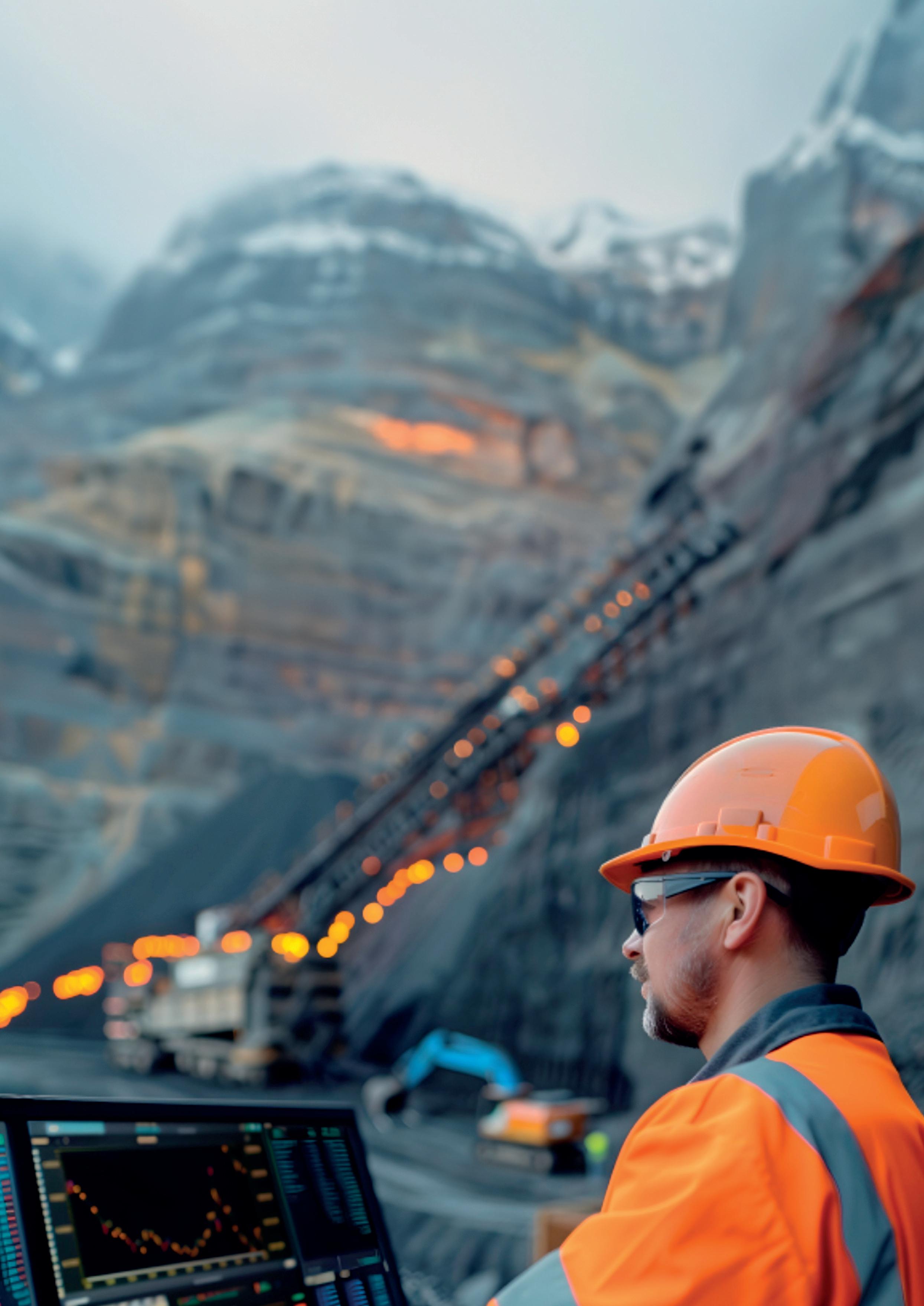
In response to these conditions, many mining enterprises have ramped up investments in digital technologies, aiming to enhance performance. However, the expected outcomes often fall short as companies reevaluate dated strategies and solutions. Given the potential of a connected enterprise, there are some key areas of focus that need to be rectified in order to help miners achieve sustainable success. At the moment:
n Companies use less than 1% of available data effectively.
n Business decisions are made based on unreliable information.
n Operations focus on short-term incident resolution rather than continuous improvement.
n Data is isolated within in-house applications.
So, why do miners struggle to turn data into useful information essential for decision-making?
The mining and minerals processing sector presents a unique set of challenges that distinguish it from other industrial sectors. At the core of these challenges are inherent measurement errors throughout the value chain. This imprecision leads to a cascade of miscalculations in inventory levels, flow rates, material losses, balances, and overall performance metrics. To mitigate these errors, the industry employs reconciliation and adjustment processes. These processes require solutions that not only facilitate such adjustments, but also deliver clear documentation of both the original and modified values. Additionally, these solutions must provide transparency regarding who made the changes and when they were made.
With widely distributed processes, network or power outages may be common. In this event, data is collected and buffered locally before being uploaded to servers
once the network is available again. The challenge for operational data users is to identify and correct any calculations or results that may be omitted from historians during outages.
Information systems pull data from many diverse sources, including near real-time data in historians and control systems, and less real-time systems such as laboratory information systems (LIMS). The time stamp of data in these various systems becomes important. While LIMS data may become available a day or more after the sample was taken in the field, it still needs to be accurately correlated with the truck, train, flowmeter, or belt-weight that supplied the data.
Many source systems will have their own data validation, correction, and management processes. This means data, which has already been introduced into calculations (for example, from a week ago), may be changed at the source, modifying results used in ongoing critical operational decisions. Fleet management systems are notorious for this, not only changing the time of an activity, but also changing the load and unload locations, resulting in different stockpile balances and weighted grades in separate locations. This is also the case for LIMS, where tests can be resampled and results modified, causing altered data to populate in historical records.
The challenge is to detect data that has changed at the source and automatically reprocess any dependent results, including stockpile balances, weighted-grades, yields, recoveries, efficiency KPIs, and throughput rates.
In almost all mining and mineral processing operations, there will be some data which is not available electronically and must be manually entered by operators. This could be by field staff during operator rounds on mobile devices, or control room personnel on desktops. Either way, this process must be simple and intuitive, notifying appropriate personnel when a scheduled inspection is required.
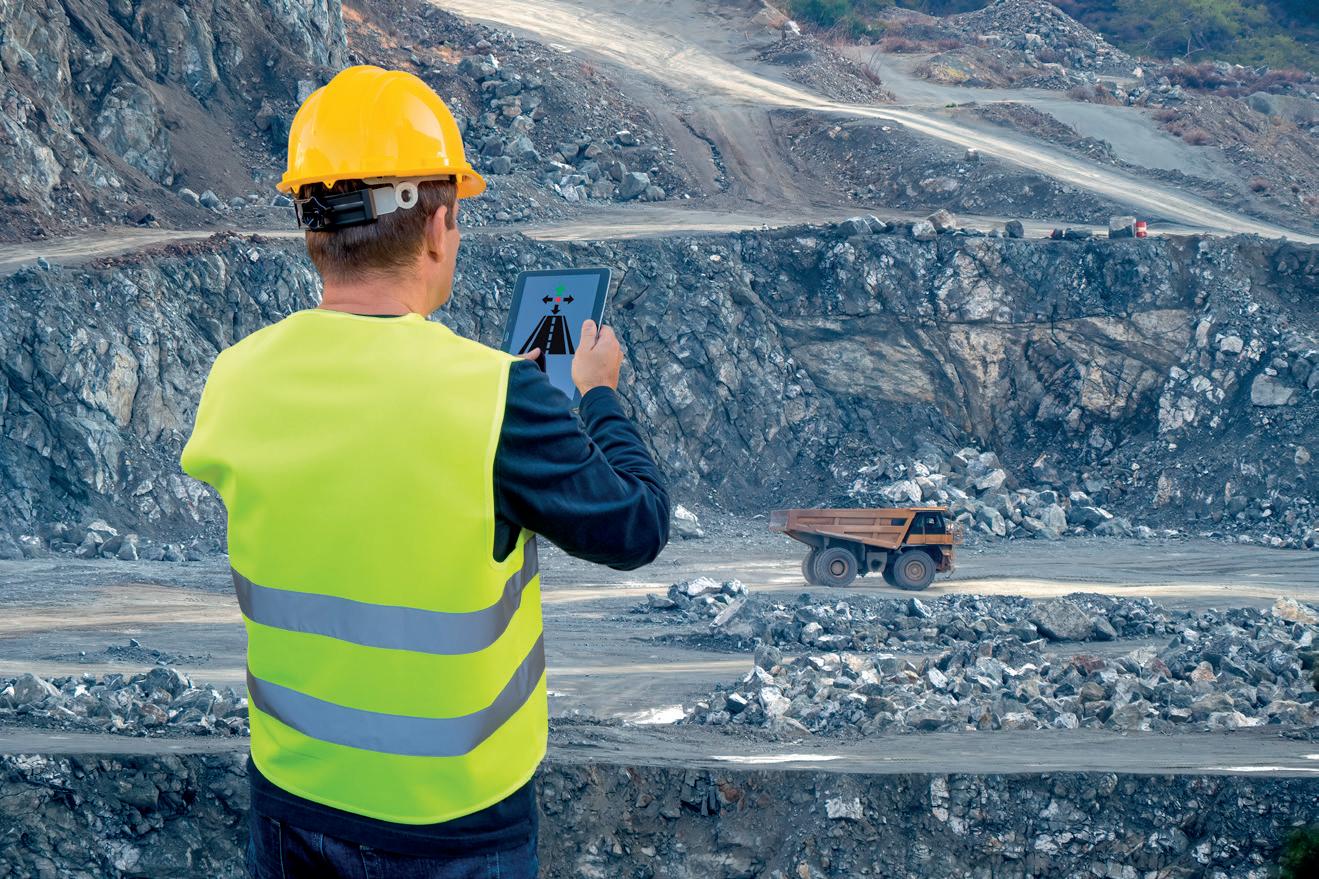
Simply put, a mining operations management (MOM) solution connects disparate, unconnected systems to aggregate data and delivers a single version of truth for the purpose of making operational decisions. By providing information with the same contextual references across the mining operation, management and operators can present a united front
in the optimisation of production and fulfillment. The platform will integrate and model data from many traditional operations and business systems. A MOM solution will offer fit-for-purpose modules designed for mining that interact, share, and cooperate on the same platform to deliver new insights.
What are some of the modules that a best-in-class MOM platform will provide in general?
Instead of creating dashboards, templates, and forms that require heavy coding and product knowledge, a MOM solution delivers seamless visualisation and data entry, is tailored specifically for each module, and can be updated by operations personnel.
Any MOM solution needs to be able to connect and integrate databases from different systems in a seamless, straightforward way, rather than employing strategies that use generic SQL procedures and dated REST API Web Services of varying complexity.
One major issue is the use of manufacturing-based models that take hours to reprocess. Quality data is not available until that reprocessing has finished (one or more days). A MOM solution delivers a genealogy component.
Often systems store the source value in different modules, resulting in duplicate data storage and complex management when correcting or reconciling data. A MOM solution uses integrated data from a single source for application data across all models within a module. This means that data changes are reflected across all models and calculations simultaneously.
A MOM solution should also offer a rich collection of out-of-the-box/fit-for-purpose modules focussed on, and developed for, mining. Some standard modules might include production reporting and inventory and storage management, among others. The availability of agile and flexible modules that are critical to miners are:
Allow KPI-benchmarking of performance over time and provide a clear indication to which plant areas and equipment are performing well and which are causing production losses. Not all process areas contribute equally to aggregation; the solution aggregates the proportion of time and losses intelligently.
Identify the business impact of planned and unplanned stoppages, as well as the impact and cause of rate losses and systematic causes of failures.
Short interval control impacts how performance, health, and quality and are measured against known boundary thresholds and alert operators when the circuit is not functioning as required. This allows operators to make meaningful changes within a shift to improve overall productivity.
Automate reporting of actual feedstock blends, throughputs, consumption of reagents, flocculants, and outputs in the context of where they are consumed, produced, recovered, or recirculated.
Align sample results with material movements to calculate the constituent quantities of the various elements within the overall ore flow. Recoveries and losses can be calculated separately for each mineral within the ore body.
Apply statistical methods to identify quality exceptions and deviations before reaching out-of-specification limits.
Report the net balance in stockpiles, stockpile partitions, silos, tanks, and other storage vessels based on metered additions, depletions, and survey adjustments. Additionally, track the grade from source to destination – enabling predictions of load out grade based on source stockpile ratios before the lab results are available. Materials and grades can be tracked by either physical or virtual models.
As the mining industry stands on the brink of a digital revolution, the imperative for operational efficiency has never been more pronounced. The challenges of commodity price volatility, environmental scrutiny, and labour market dynamics compel mining companies to rethink their strategies and embrace integrated operations. A best-in-class MOM platform is not merely a technological upgrade; it is a transformative tool that can turn vast amounts of underutilised data into actionable insights, fostering a culture of continuous improvement. As organisations evaluate their options, they must consider not only the immediate benefits of such a system, but also its long-term potential to reshape decision-making processes and enhance overall productivity. In this rapidly evolving landscape, the question remains: will mining companies seize the opportunity to innovate and thrive, or will they remain mired in outdated practices that hinder their progress? The choice is clear, and the time for data in action is now.
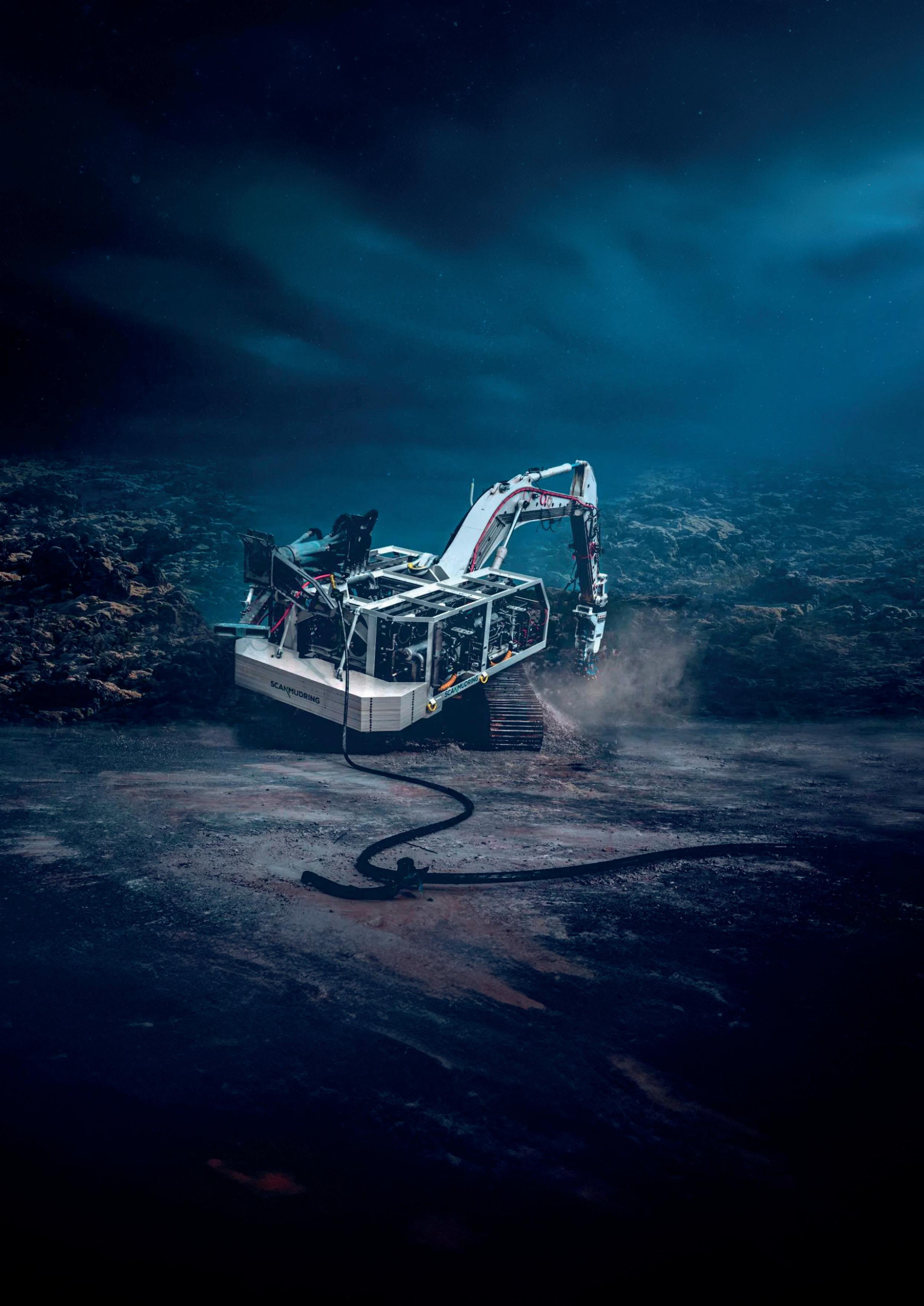
Kanchan Garg and Dr. Naghman Khan, SimScale GmbH, explore how recent technological advancements in engineering solutions are improving the mining industry.
The mining and extractive industries face increasingly complex challenges – from ensuring equipment reliability under extreme conditions to optimising resource extraction processes and energy efficiency. High-fidelity engineering simulation tools have revolutionised these sectors, enabling detailed virtual assessments that reduce risk, optimise designs, and enhance operational reliability. Techniques such as
digital twin technology, computational fluid dynamics (CFD), finite element analysis (FEA), and multiphysics modelling have become essential for tackling these challenges in modern mining. Moreover, the rise of cloud-native platforms like SimScale has made simulation more accessible than ever, allowing engineers to run sophisticated analyses without expensive hardware. Recent advances in artificial intelligence (AI) are further augmenting simulation capabilities – for example, AI-driven models can now deliver physics-informed predictions thousands of times faster than traditional methods. Together, cloud computing and AI are inaugurating a new era of simulation-driven innovation in mining, boosting reliability, operational efficiency, predictive maintenance, and design optimisation across the industry.
In the mining industry, equipment reliability is paramount due to the high cost of downtime and the safety risks associated with machinery failure. Vale, one
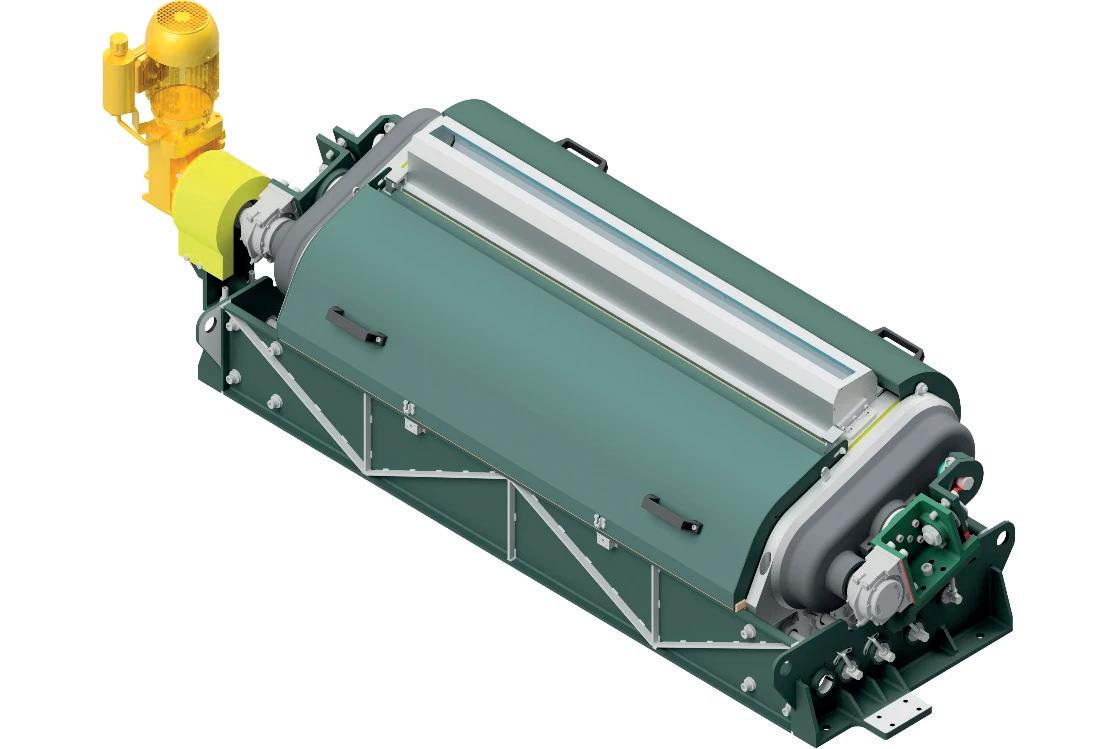
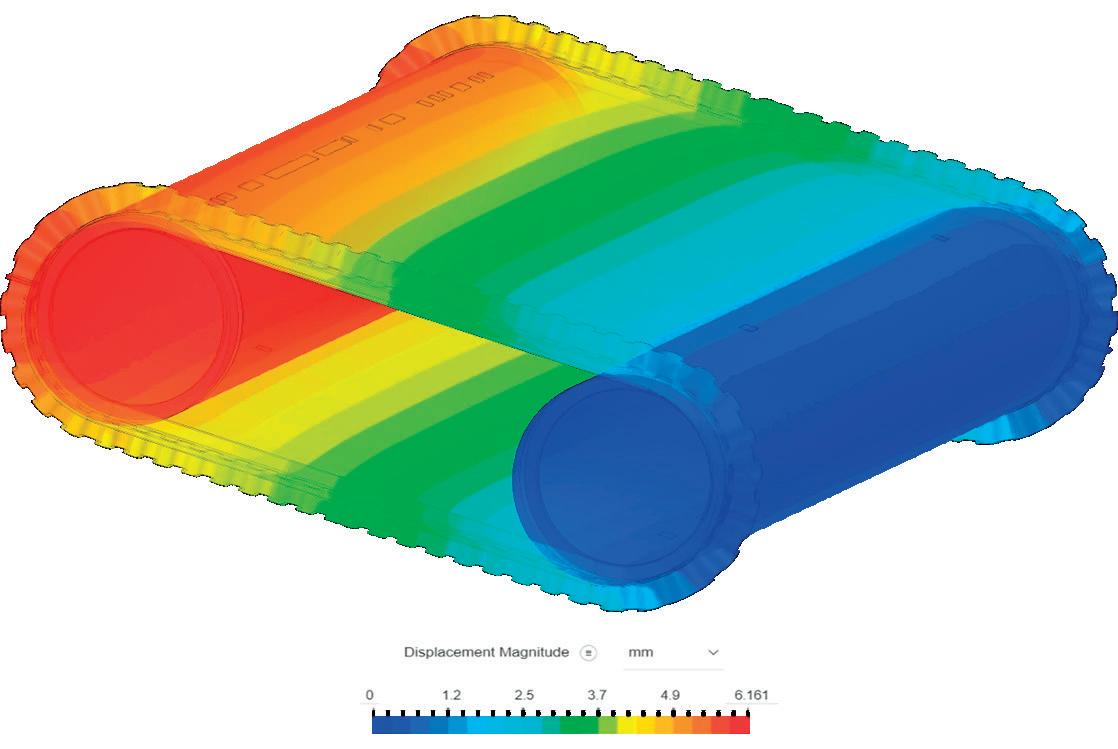
belt simulation FEA analysis, fixed and elastic supports on the belt with a load to simulate mining material in bulk, and to evaluate loads and traction. The image shows unwanted displacement in mm. Red areas indicate higher stresses and potential failure points, guiding design improvements.
of the world’s largest mining companies, leveraged digital twin technology to enhance the reliability of its mining equipment. By integrating real-time sensor data with simulation models, Vale created live ‘digital twins’ of critical machinery, allowing predictive maintenance and on-the-fly adjustment of operating parameters to prevent failures. A notable example is Vale’s use of SimScale’s cloud-native platform to simulate a large complex magnetic separator unit – a piece of equipment with many moving parts used in iron ore processing. The engineering team developed an FEA-based digital twin of the separator’s conveyor belt system, enabling them to predict structural responses and wear over the equipment’s lifetime. Through these simulations, Vale’s engineers could identify stress hotspots and likely failure points, such as the exact location on an iron ore conveyor belt where fatigue would cause a tear. This insight allowed for targeted design modifications and timely maintenance before any physical breakdown occurred.
Key technical contributions of the simulations included:
n Lifetime performance prediction: The digital twin was used to predict how the separator and its conveyor belt would perform over time under harsh operating conditions, ensuring reliable performance throughout its service life.
n Structural load analysis: Using FEA, Vale’s engineers performed safety loading calculations on the conveyor system to verify it could handle extreme loads and vibration without structural failure.
n Design optimisation and cost savings: Early virtual testing reduced the need for multiple physical prototypes, cutting down manufacturing costs and development time.
By running many simulations in parallel on the cloud, the Vale team rapidly explored different design scenarios and material choices, converging on an optimised design much faster than traditional methods. Thanks to this simulation-driven approach, Vale successfully improved equipment robustness and avoided unplanned downtime. The digital twin initiative resulted in more predictable maintenance schedules (shifting from reactive fixes to proactive care), and extended mean time between failures for critical machinery. By embracing cloud-based simulation and predictive digital twins, Vale significantly boosted the reliability and safety of its mining operations while reducing costs associated with equipment failure.
Hephae Energy Technology, a start-up in the renewable energy sector, is revolutionising geothermal energy extraction by developing drilling technology that can withstand extremely high temperatures. Geothermal wells are limited by oil and gas drilling equipment that fails beyond approximately 175°C, but tapping ultra-deep ‘superhot rock’ reservoirs (up to 300°C) could unlock 130 times more geothermal resources than
conventional methods. The challenge for Hephae was to engineer a downhole measurement-while-drilling (MWD) tool – called Pandora210 – with sensors and electronics capable of operating reliably at 210°C (with an ultimate goal of 300°C) deep underground. To achieve this, the design had to tolerate intense heat, pressure, shock, and vibration encountered during deep drilling.
Hephae’s engineering team turned to SimScale’s cloud-native simulation platform to virtually test and optimise their designs for these extreme conditions. Using coupled thermal-structural analyses, they simulated the heat transfer within the drilling tool and its electronic circuit boards, as well as the structural stresses and vibrations during operation. The simulations were run on GPU-accelerated cloud hardware, allowing high-fidelity modelling of complex physics (conjugate heat transfer, thermo-mechanical stresses) without local HPC infrastructure. This approach enabled the team to quickly iterate on materials and cooling strategies for the electronics. For instance, they evaluated novel heat dissipation techniques for insulating the sensitive sensors from the 300°C rock temperatures, ensuring that internal components remain within safe thermal limits. They also performed FEA to assess shock and vibration resilience – effectively subjecting the virtual tool to the same intense drilling shocks it would see in the field –
to verify that components would not loosen or fail under repeated stress cycles.
Through simulation-driven design, Hephae successfully developed high-temperature-resistant electronics and validated a robust tool architecture before building physical prototypes. Key results included the creation of heat-resistant circuit board designs that could survive prolonged exposure to extreme heat, and proof of the feasibility of their drilling system to significantly reduce the levelised cost of energy (LCOE) for unconventional geothermal projects. In short, simulation helped Hephae optimise the Pandora210 system to reliably operate in conditions well beyond the norm for the drilling industry. This not only improves the reliability of the tool (preventing thermal or mechanical failures downhole), but also the operational efficiency of geothermal drilling, enabling deeper, hotter wells that yield more energy. By leveraging advanced simulation early in the design, Hephae is bringing a ground-breaking geothermal technology to market with confidence in its performance and longevity.
Scanmudring AS, a Norwegian company specialising in subsea excavation, provides another example of simulation-driven innovation in the extractive industries.
Scanmudring operates 40 t subsea excavator machines for underwater construction and dredging, such as preparing offshore wind turbine sites. A recent challenge involved improving their excavator’s performance in extremely hard seabed clay. Traditional dredging attachments were struggling to cut and remove sticky clay, slowing down operations. The engineering team needed to rapidly design, test, and deploy a more powerful suction nozzle tool that could attach to the excavator’s cutter head and efficiently extract heavy clay under high pressure underwater conditions – and they needed to do all this within weeks rather than months, due to tight project timelines and the high cost of vessel time in offshore projects.
Using SimScale’s cloud platform, Scanmudring’s engineers executed a simulation-driven design loop for the new nozzle (dubbed the S70 nozzle). They first conducted CFD simulations to analyse the complex fluid flows through the suction nozzle and around the cutter head assembly. These simulations revealed the internal flow patterns, velocities, and pressure distribution as the nozzle would suction a mixture of water and excavated soil. By examining the CFD results, the team identified opportunities to refine the nozzle geometry to achieve a more stable and balanced flow, crucial for avoiding blockages when ingesting clumps of clay and preventing cavitation or backflow that could impair performance. In parallel, structural simulations (FEA) were carried out to ensure the redesigned nozzle could withstand the significant forces exerted by the excavator and the drag of underwater operation. The steel structure was optimised to add reinforcement where needed for strength while eliminating excess material elsewhere,
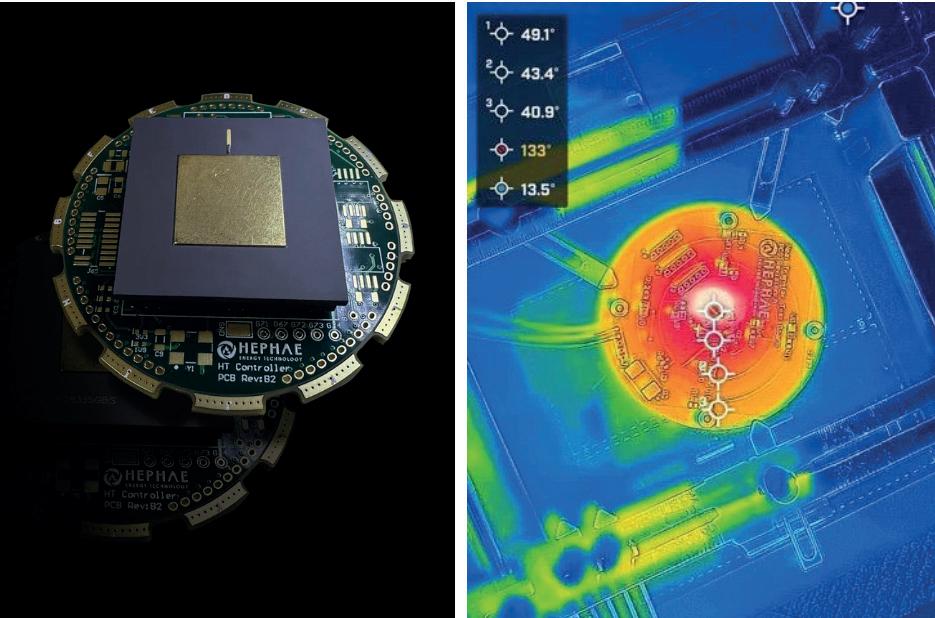
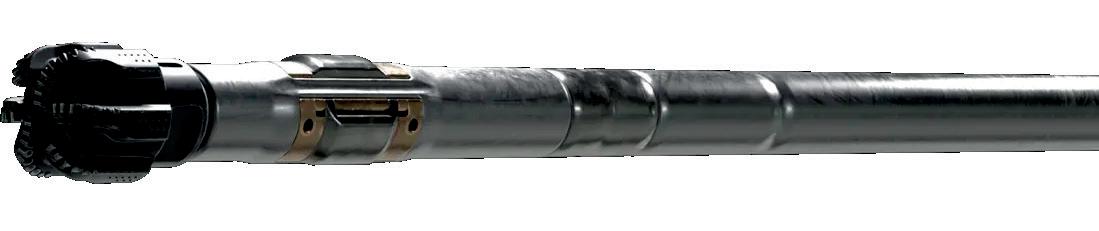
in order to keep the tool lightweight and improve the excavator’s overall efficiency.
Scanmudring arrived at an improved nozzle design in a fraction of the time that a traditional build-and-test approach would have taken. Once fabricated and attached to the 40 t subsea excavator, the performance gains were immediate and substantial. The new suction nozzle markedly increased the excavation rate in hard clay, allowing the machine to dredge and clear seabed material much faster than before. Perhaps even more impressively, the development cycle – from initial concept through design, virtual testing, and deployment offshore – was shortened to just four to five weeks, whereas historically it might take several months to design and commission a new tool. This acceleration was possible because cloud-native simulation removed the bottlenecks of traditional FEA/CFD workflows. The team did not need to wait for scarce computing resources or build multiple physical prototypes; instead, they could run multiple simulations simultaneously and incorporate changes on the fly.
By adopting cloud-based engineering simulation, Scanmudring achieved a more reliable and efficient subsea drilling operation. The new nozzle design improved operational efficiency (less downtime clearing clay, faster project completion) and enhanced reliability by ensuring the equipment can handle tougher conditions without failure. This case underscores how simulation empowers engineers to push the boundaries of design in mining and excavation equipment, even in unique environments like the ocean floor, while controlling costs and timelines.
From the mines to the seabed, engineering simulation has become an indispensable tool for enhancing reliability and efficiency in the mining and extractive industries. The case studies of Vale, Hephae, and Scanmudring each highlight how simulation-driven innovation is addressing critical industry challenges. A continuous theme across these examples is the role of simulation in enabling predictive insight – whether predicting a component’s lifespan, a system’s behaviour under stress, or a design’s performance before it is built. By virtually exploring ‘what if’ scenarios, engineers can optimise designs for durability and performance, leading to safer operations and lower operational costs.
Looking ahead, ongoing advances, such as AI-enhanced simulation, promise to further amplify these benefits. AI-driven models are beginning to provide instant predictions for complex physics, allowing engineers to evaluate thousands of design variants in seconds. This will complement traditional simulations and support real-time decision-making in mining operations. In an industry facing ever more complex technical and sustainability demands, the fusion of cloud computing, AI, and engineering physics simulation will be critical. Together, they empower mining and extractive enterprises to innovate rapidly while maintaining reliability, improving safety, and optimising efficiency in every aspect of their operations.
William Nicholls, Movex Innovation, Canada, explains why electric mini-loaders are reshaping mining cleanup by cutting downtime, boosting safety, and eliminating emissions in the toughest environments.
In a mid-sized mining operation in Australia, material cleanup had become a large-scale bottleneck. After every blast, a crew was sent in with a diesel mini-loader to push rubble out of the way and restore access. It was a routine that played out hundreds of times a year.
But the equipment, worn from constant exposure to hazardous conditions, started failing more often. One morning, it stopped halfway through clearing under a critical conveyor or access tunnel. The crew had to haul it out manually – costing them many hours of production and a couple hundreds of thousands of dollars in lost output and maintenance expenses.
It was not an isolated incident. Over the next quarter, mechanical failures and unplanned servicing chewed through the operation’s margins. The mine manager had had enough. He finally pulled the data: high maintenance

costs, frequent downtimes, and growing safety concerns tied to having operators in unstable zones. That is when he started to look for a more contemporary solution to an age-old material cleanup problem...
In mining jobs – where heat, pressure, and dust converge – material cleanup is never just a routine task. Material handling and clearing debris in mining often come down to equipment durability and performance. The conditions are unrelenting, and any weak point – a hydraulic leak, an overheating motor, or a snapped track – can bring production to a halt. For mining operations managers, every minute counts, and equipment downtime translates to real financial consequences.
As mines evolve to meet stricter safety standards and emission targets, the choice of material cleanup equipment is changing. Electric and ultra-compact
mini-loaders, once seen as niche, ‘nice-to-have’ tools, are becoming indispensable.
Few industrial settings are as harsh towards machinery as mines. The terrain alone is enough to wear down many conventional loaders. Jagged rock, uneven surfaces, and steep inclines subject equipment to continuous shocks and vibration. Structural components face relentless pressure, leading to fatigue cracks, loosened bolts, and increased danger of malfunction.
As everyone in the mining industry knows, mineral dust and rubble wreck mining gear. Fine particles infiltrate engines, motors, and electronics, clogging filters and choking components. Without advanced filtration and sealing, overheating and early component failure become inevitable.
High humidity and exposure to corrosive agents compound the problem. Moisture, combined with chemicals used in blasting or water ingress from underground sources, accelerates rust and degrades both metal and electronic systems. Over time, even protective coatings break down, exposing critical parts to damage.
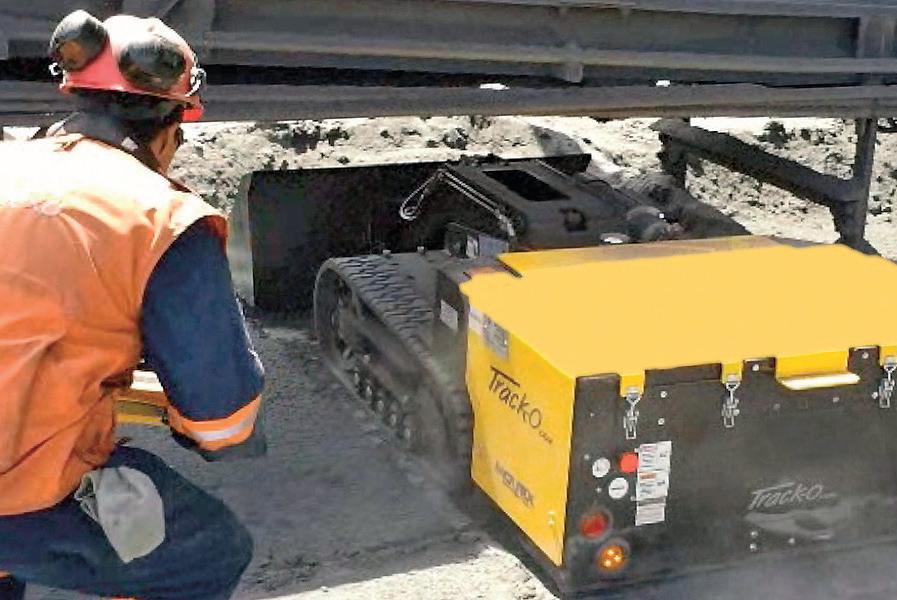
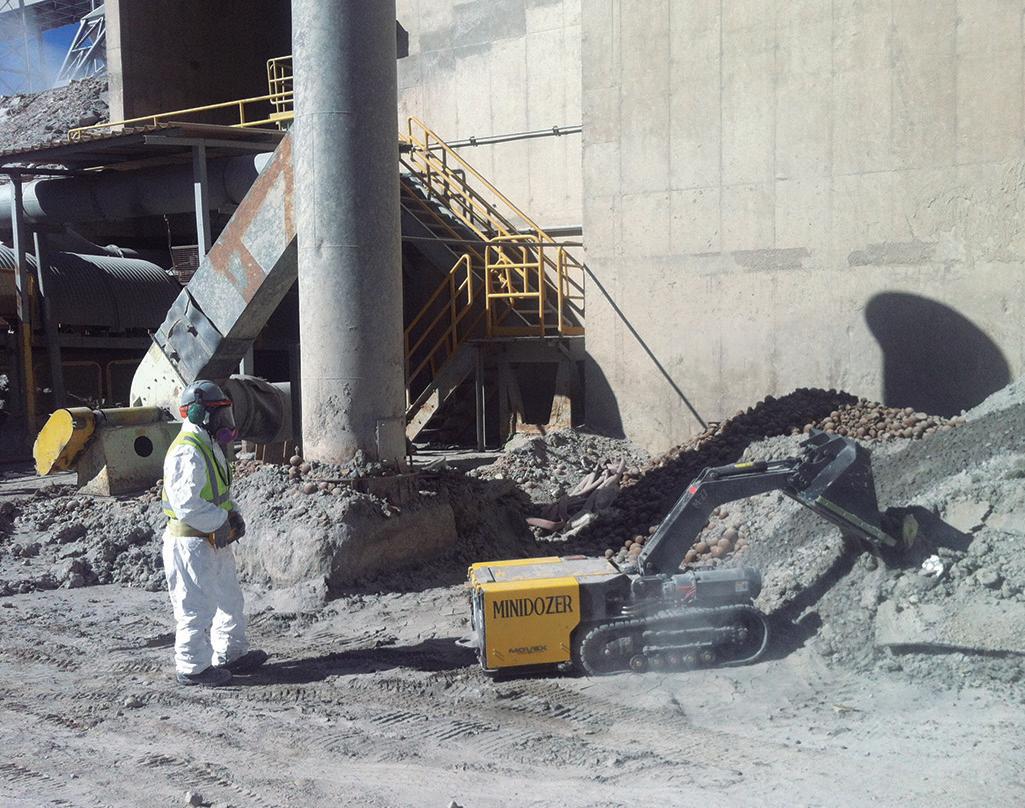
Temperatures vary widely in mining, from northern Canada to the Middle East and Australia. Prolonged exposure to heat deteriorates lubricants, damages seals, and puts thermal stress on engines, batteries, and hydraulic systems. Meanwhile, heavy loads test the limits of hydraulic components and chassis. Every run boosts the possibility of overloading the equipment’s core assemblies.
Stretching regular inspections and maintenance (or skipping them altogether) increases the possibility of a breakdown – and hundreds of thousands of hours of downtime.
For decades, diesel-powered mini-loaders have been the standard in mining. Rugged, familiar, and relatively affordable upfront, they were the natural choice. However, their advantages have started to erode.
Diesel units demand constant maintenance: oil changes, fuel and air filter replacements, coolant checks, and engine servicing. Fuel injector cleaning and exhaust system upkeep are part of the routine, especially with tighter emissions regulations. In addition, their internal combustion engines, while powerful, suffer high wear on turbochargers and other moving components.
In contrast, electric mini-loaders eliminate many of these failure points. No combustion engine means fewer moving parts and less routine servicing. There are no oil changes, no radiator maintenance, and fewer lubrication needs overall. Maintenance is mainly reduced to battery state of health and basic mechanical checks, which drives down upkeep costs.
The cost difference grows with time. While diesel loaders may have a lower purchase price, their fuel needs fluctuate with market prices, and their engineering complexity leads to frequent repairs.
Electric machines, powered by rechargeable batteries, benefit from lower energy conversion losses and fewer parts susceptible to wear. Over a five to 10-year lifecycle, the operational savings can be huge.
Reliability in harsh environments also tilts the scales. Electric loaders do not require warm-up or cool-down cycles. They have no air intake systems to clog or exhaust components to rust or malfunction. The result? When equipment holds up, so does a mine’s throughput schedule.
Then there is the worksite impact. Diesel engines produce emissions, heat, and noise – a triple threat in confined spaces. Ventilation requirements increase, both in scale and cost.
Electric loaders operate in near silence, with no emissions and less heat output. They reduce the need for forced ventilation, which can be a major expense.
leave little room to maneuver for material handling. With tight tunnels, conveyors, and narrow access points, bulky gear just slows things down. Electric mini-loaders are built for these spaces: they are ultra-compact, responsive, and easy to handle when inches matter.
Occupational safety is another area where electric systems gain ground. Remote-control capabilities are increasingly integrated into modern electric mini-loaders, allowing operators to work from a safe distance – away from waste piles, unstable ground, or blast areas.
Keeping personnel out of harm’s way not only reduces potential injuries, but can also lower insurance premiums, cut down on incident-related shutdowns, and improve compliance with increasingly strict safety regulations.
For operations managers, it is a safety upgrade that also makes financial sense.
Efficiency is easy to spot when material cleanup takes half the time. Manual removal burns through time and energy, while electric loaders move faster, stay consistent, and reduce the physical strain on crews. The result? Quicker turnarounds and smoother shifts.
Finally, there is the long-term financial perspective. Mines operating on tight margins cannot afford frequent equipment failures or costly downtimes. Electric mini-loaders, though higher in initial cost, offer stability in maintenance and energy expenses. Their reliability translates into uptime, and uptime is what drives profits.
The transition to electric mini-loaders in the mining industry is a calculated response to the burden of material cleanup. When equipment must endure punishing conditions day after day, robustness is not optional. Moreover, as regulatory

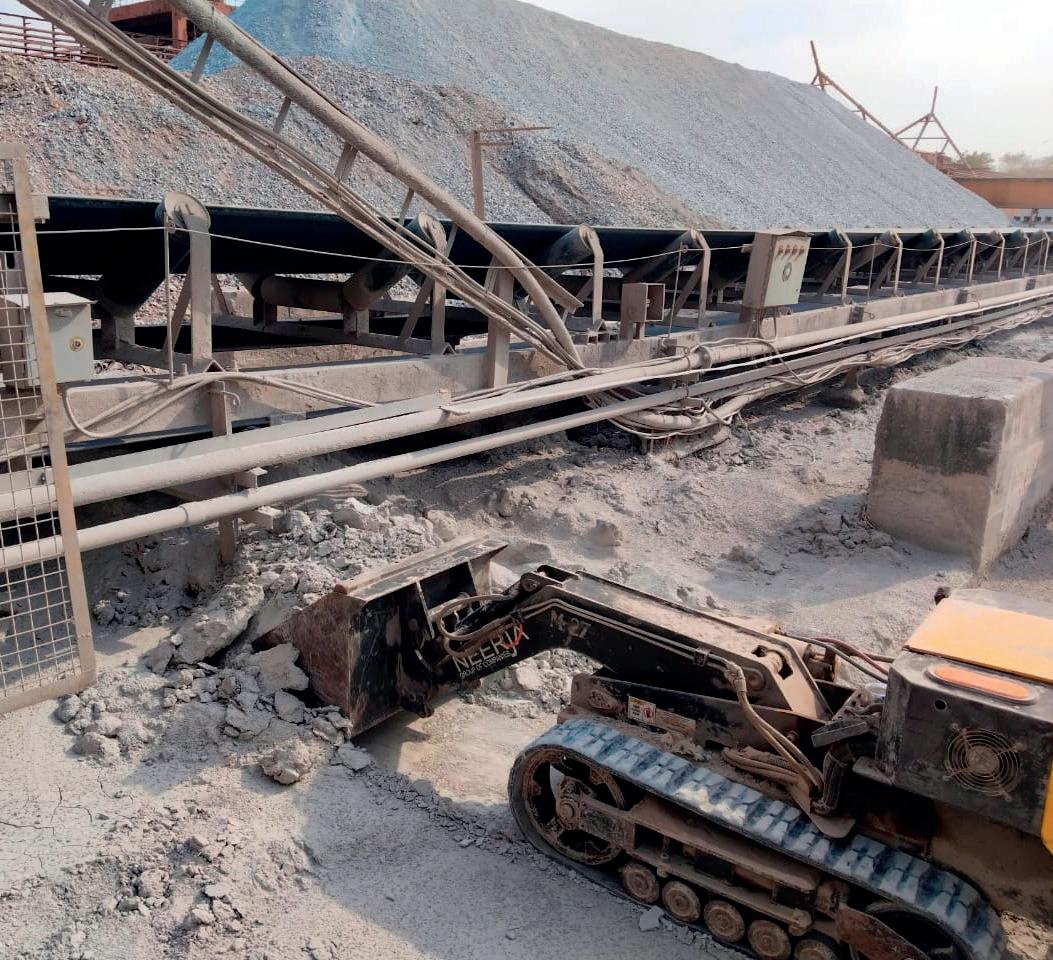
pressures grow and safety standards tighten, operations managers are reassessing what kind of material equipment belongs on their site.
Electric mini-loaders are proving they can withstand the grind – dust, heat, vibration, and all – while offering consistent performance and lower total cost of ownership. With mining equipment, failure is not an option. Sticking with outdated equipment is not a risk worth taking.


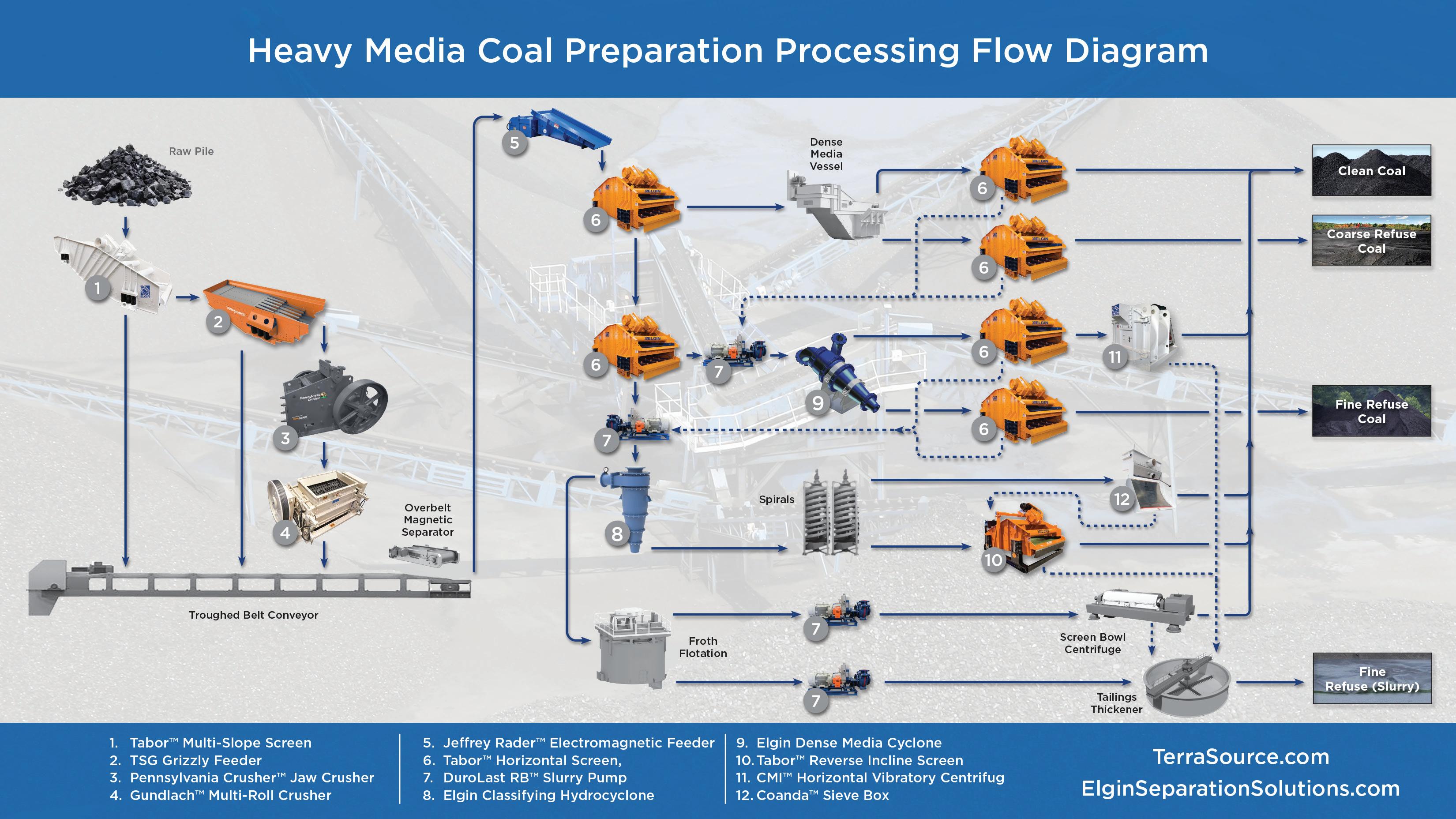
Patrick Lahaie and Michel Van Hoey, McKinsey & Company, examine how the mining industry can create superior value.
Is the glass half empty? Or half full? Today, the global mining industry is generally doing well: commodity prices have been strong and balance sheets are healthy.1,2 Although there has been turbulence recently in demand for some commodities, over the next decade the industry is likely to benefit from rising demand, driven by the growing global middle class and the requirements of the energy transition. However, there are warning signs, too. The industry is lagging in innovation and failing to attract the workforce it needs. Many existing assets are declining; with deteriorating ore quality at mature sites, new ones are more challenging to develop. In addition, costs for just about everything are high and rising.3
Given these trends, and the unpredictability of commodity and market cycles, what can management teams do to generate attractive returns for their shareholders?
A McKinsey analysis of the performance of more than 200 metals and mining companies from 2001 – 2023 found that, while commodity price changes are a critical factor in generating total shareholder returns (TSR), up to 50% of excess TSR growth – that is, after controlling for market pricing – came from company actions.
McKinsey ranked company performance by quartiles for growth, cost efficiency, and capital productivity, then analysed excess TSR. The results were clear: outperformers consistently delivered above-median cost and capital productivity, and their core operations were strong. However, to reach the top quartile of excess TSR, companies also needed top-quartile growth.
To generate this growth, mergers and acquisitions (M&A) were critical; the biggest movers executed almost twice the M&A volume compared to those that remained near the bottom. By pursuing a mix of M&A and organic investment, therefore, fast-growing players with solid but not necessarily top quartile fundamentals consistently outperform their peers.

Stating the solution is, of course, much easier than achieving it. McKinsey has estimated the industry needs
US$5.4 trillion in capital investment by 2035 to scale up supply to meet demand – approximately 10% more than in the previous decade.4 Accelerating growth in mining may be difficult; there is less capital available and recent projects have delivered lower returns per dollar than in the past.
All this is happening in a world of change, particularly in regard to energy and the efforts to reduce greenhouse gas emissions. Moreover, lower-carbon technologies require different inputs. The UN estimates that to get near net-zero, the use of energy transition minerals such as lithium and cobalt will need to increase six-fold by 2040.5,6 While net-zero is far from inevitable – at the moment, the world is running far short – any acceleration toward renewable technologies will increase the relative importance of these minerals.7
So, it is a complicated time for mining, with both economic and social pressures building. To improve its chances to create value, the industry will need to continue to evolve and modernise. Here are two approaches to explore.
Scale impact from digital technologies, including generative artificial intelligence
Technology could boost mining productivity, but most digital investments do not achieve what they are meant to.8 To get results, it is important not to get distracted by the allure of shiny tech things, but to identify specific areas where digital technology can make a real difference, such as mine planning, process controls, maintenance, and capital productivity.
Connected, digitised value chains can give teams access to much richer data that AI can assess in new ways. For example, gen AI can analyse the terabytes of proprietary electromagnetic

and seismic measurements related to resource extraction to inform decision-making.9 AI can also help run remote operations more safely and efficiently,by revealing cause-and-effect relationships and identifying problem areas more quickly.10 Maintenance technicians can use AI to process work orders, procedures, inventories, and parts databases to monitor machinery at work in the field. Capital project teams can leverage gen AI for generative scheduling purposes, and rapidly assess the impact of unpredicted issues. This allows them to make informed decisions on paths, taking weeks, if not months, faster.
Essentially, gen AI applies intelligence to data,with human judgment informing how, when, and why.11 Its uses in mining are broad, deep, and only beginning to be explored. Those who get it right could gain significant competitive advantage and above-average returns. Most companies in the industry have explored different AI use cases. Very few, however, have been able to scale its adoption to a level that truly transforms productivity and competitiveness. Scaling the impact from AI needs to be a priority for the mining industry.
Some companies in the survey have bucked the industry’s prevailing low-productivity, low-growth trends. These outliers stood out in terms of operational performance. This did not just happen: they were systematic in establishing a culture of purpose, performance, and excellence.12 Among other things, they defined routines that promote continuous improvement; invested in skill development and capability building; fostered an environment of trust and accountability; and encouraged
people to ask questions.13 The best cultures look not only at past performance, but also real time conditions, often using AI models. By doing so, they can address existing performance gaps and raise the bar for future performance.
For two decades, McKinsey has conducted research on organisational health.14 The consistent result: healthier organisations perform better, and this advantage increases over time. In fact, organisational health is the single strongest predictor of value creation.
For mining, as for every other industry, getting the right people on board is essential to create value.15 In a 2022 survey of industry leaders, more than 70% said talent shortages are holding them back from delivering on production targets and strategic objectives. Fixing this problem is not the exclusive task of the personnel department; the effort has to start from the top and be seen as a priority for everyone. In short, it has to become part of the culture.
Addressing the labour shortage challenge will require organisations to modernise and adapt their culture to a newer generation of talent.
Change is not just coming to global mining; it is already here... and likely to accelerate. In order to play its essential role in the global economy, the mining industry has to go beyond business as usual. Those that adapt will fill up that half-empty glass.




Subscribe online at: www.worldcoal.com/subscribe