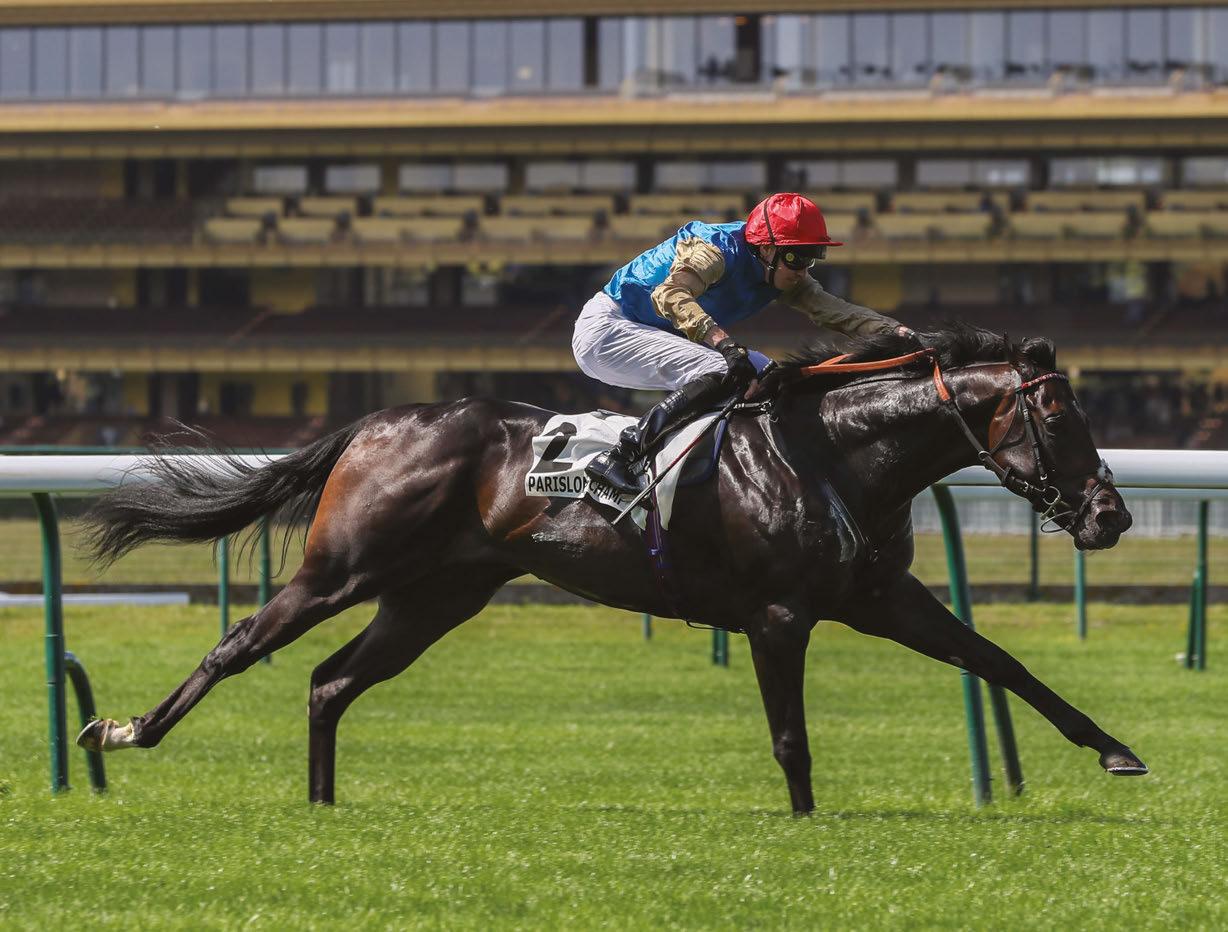
Brocade on a roll as strategy pays off in difficult climate
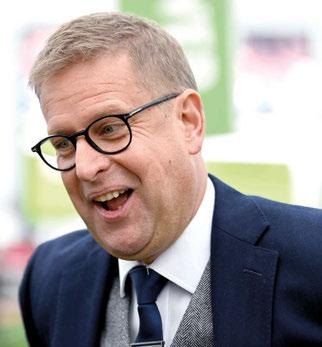
EDWARD ROSENTHAL Editor
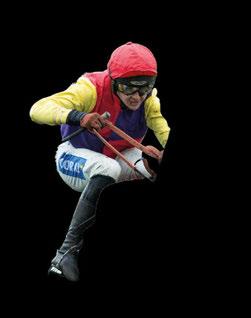
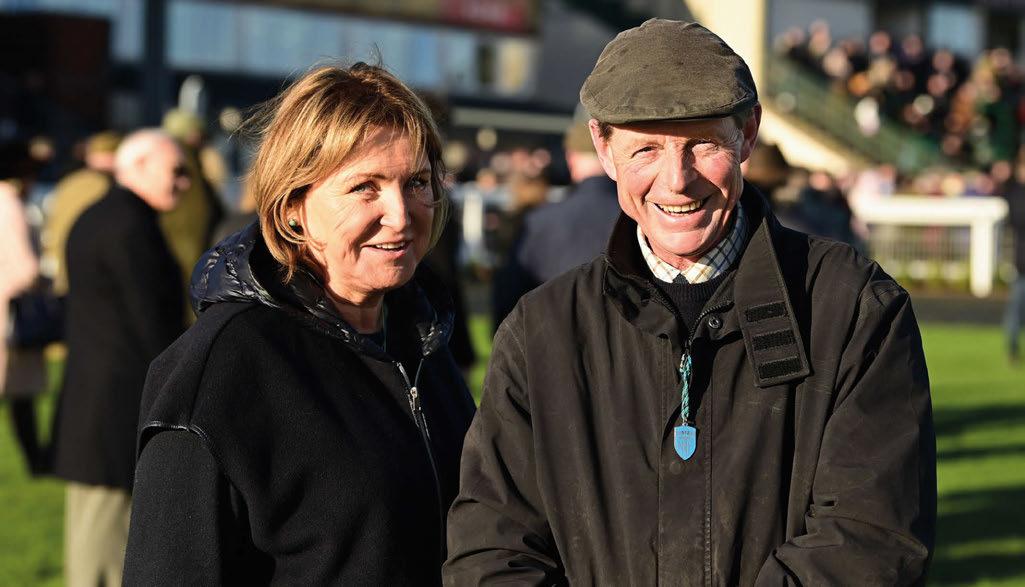
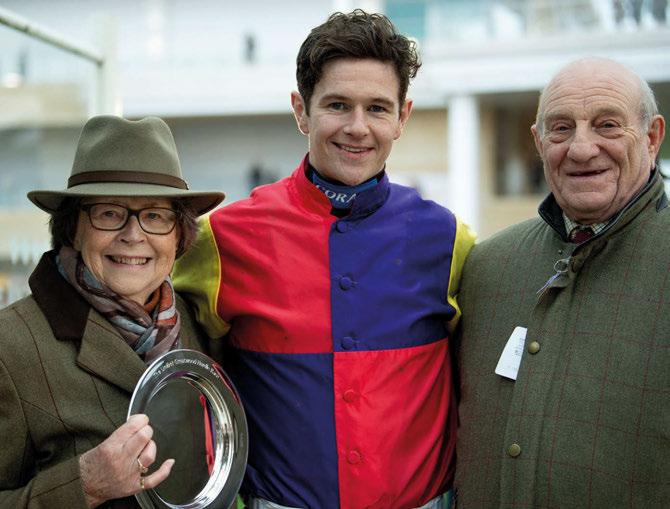
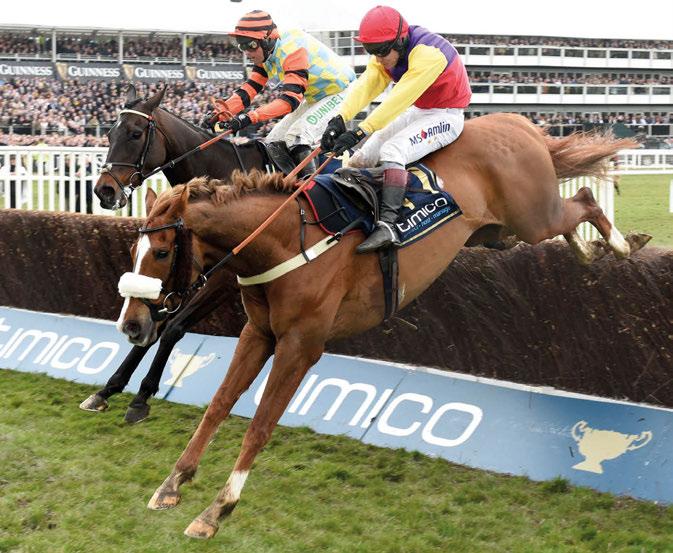
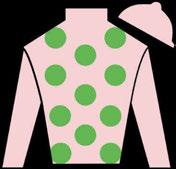
It is no surprise that Garth and Anne Broom, the couple behind Brocade Racing and the subject of this month’s Big Interview, say they “live and breathe” their racehorses. Having seen their red, purple and yellow silks carried to Cheltenham Gold Cup glory by Native River, they know what it takes to dine at the top table and their current squad looks capable of delivering further success at the highest level.
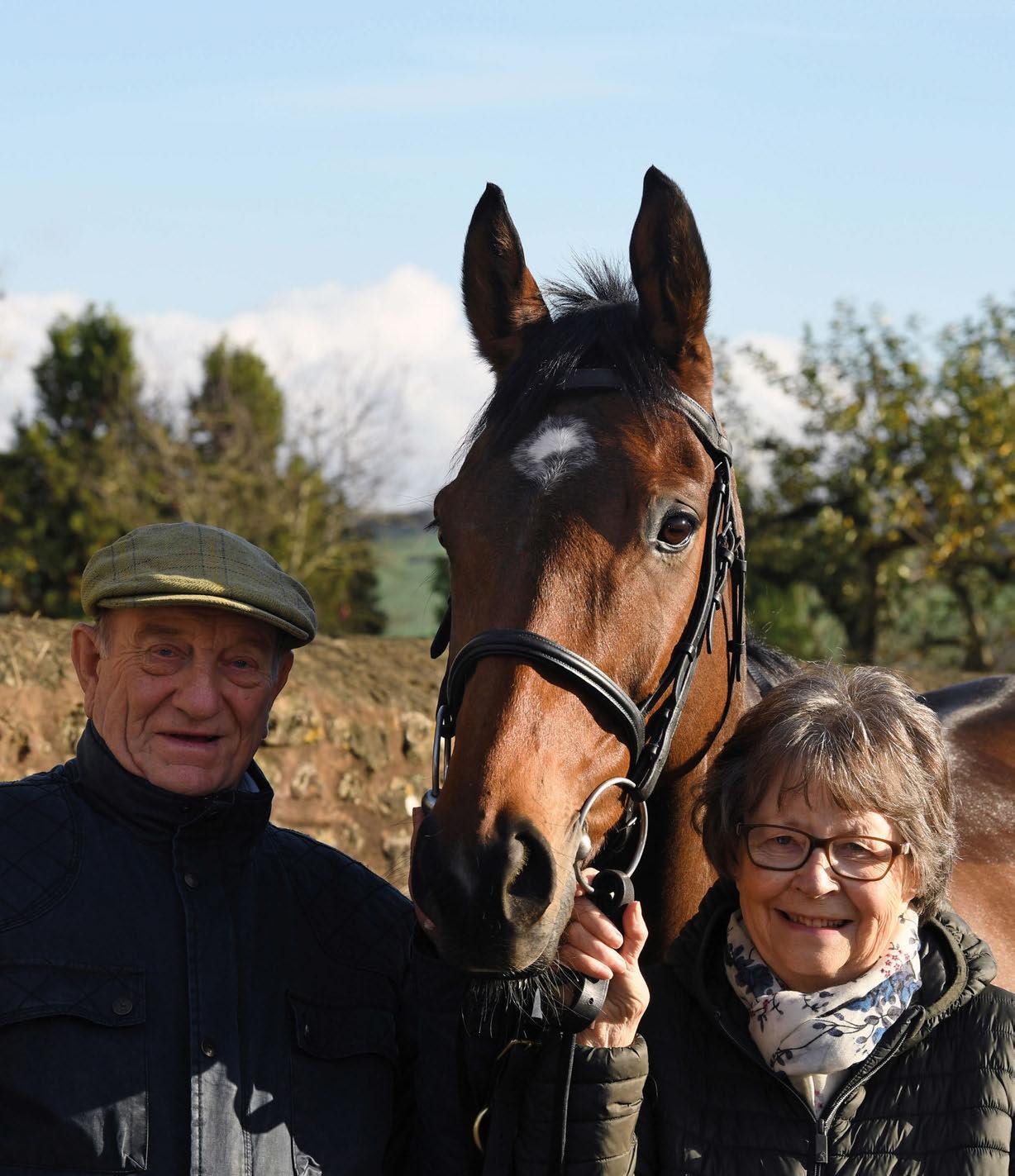
Sober Glory, trained by Philip Hobbs and Johnson White, was unbeaten at the time of writing, having won three bumpers and a maiden hurdle under Rules. The Mount Nelson gelding was recruited after winning his sole point-to-point in Ireland – his £110,000 price-tag now looking decidedly cheap – with Hobbs declaring the five-year-old to be the most exciting horse he has trained for many years.
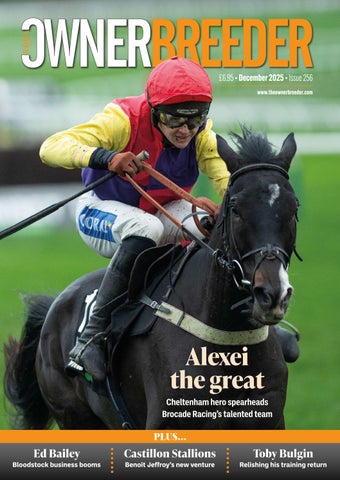
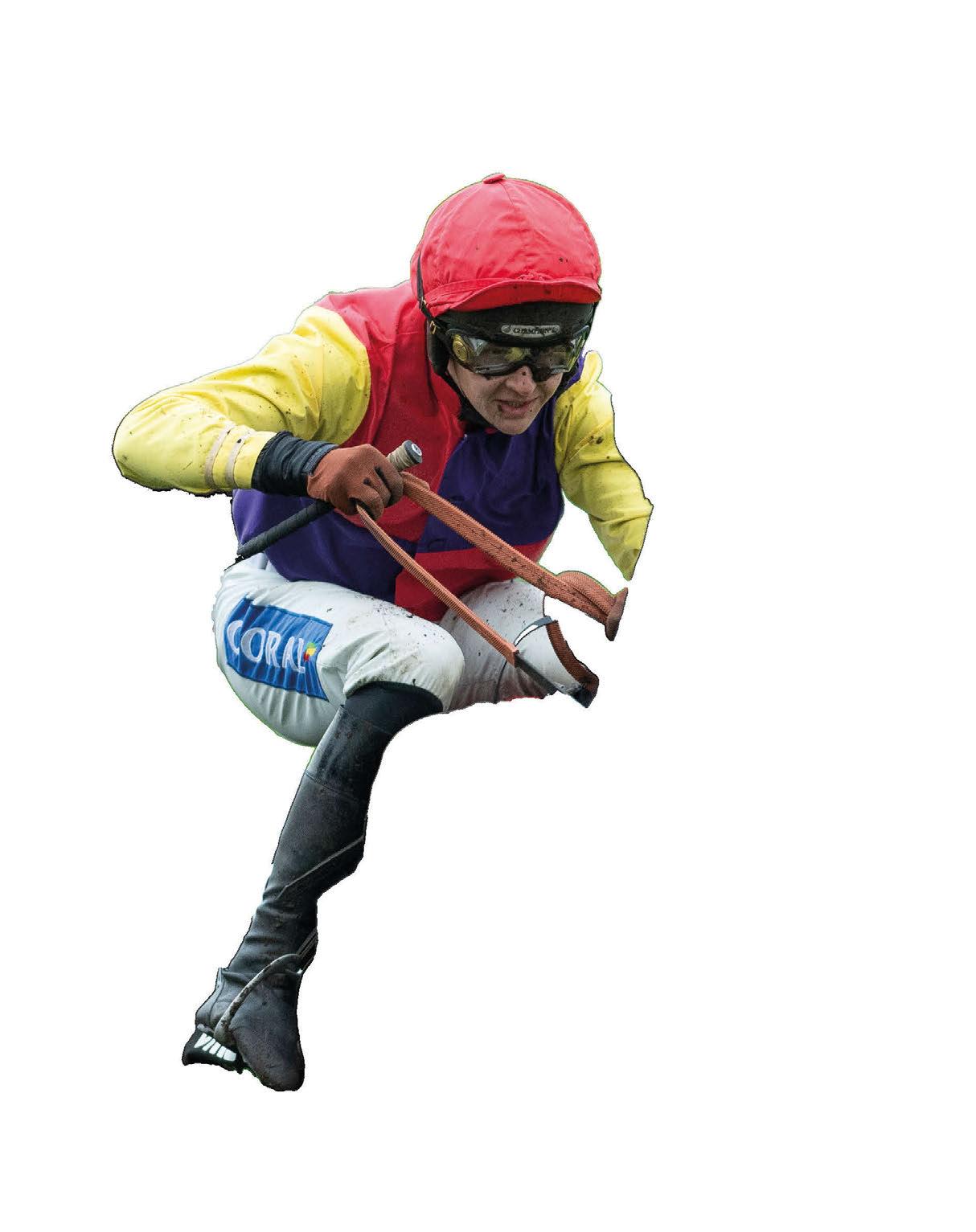
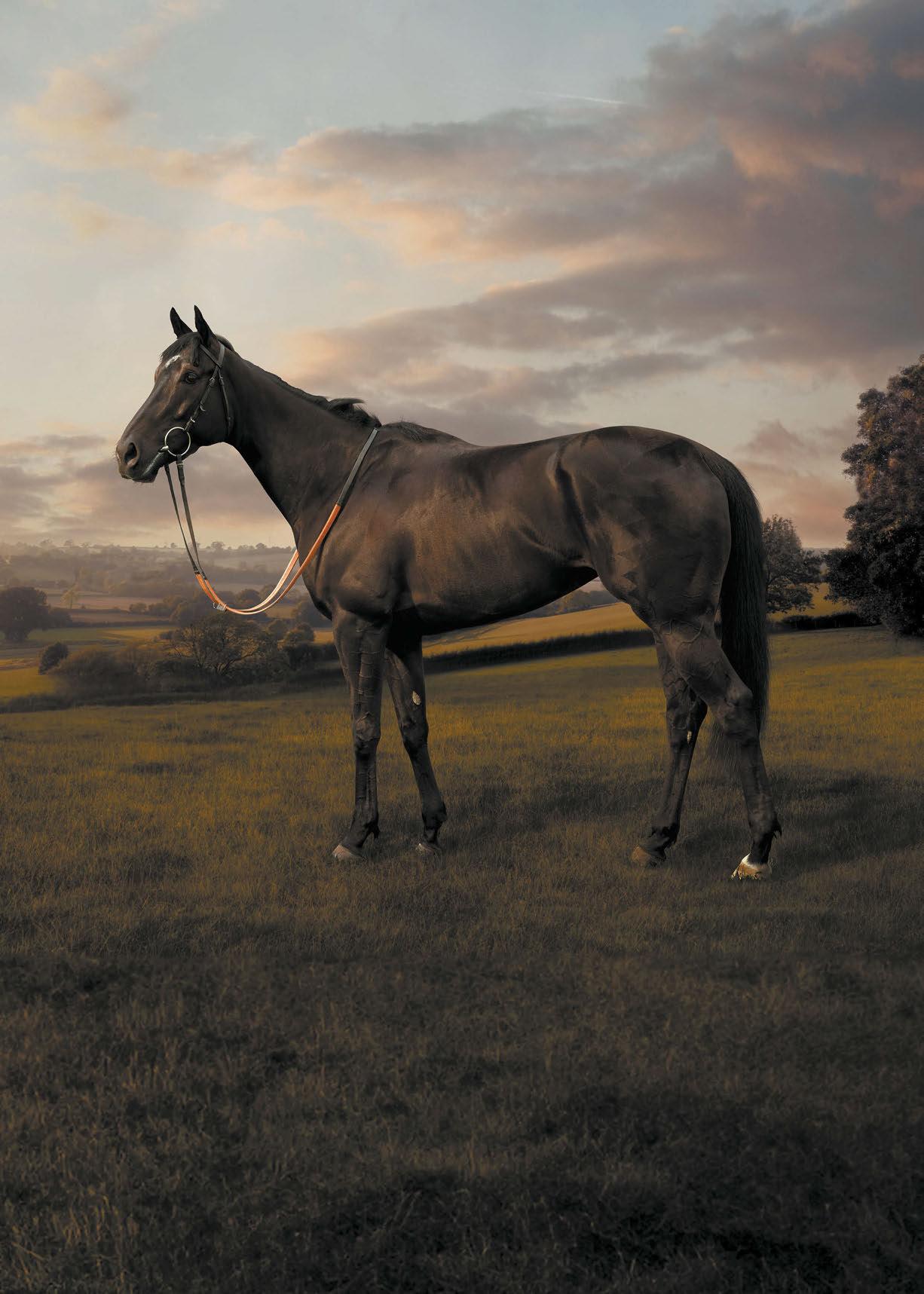
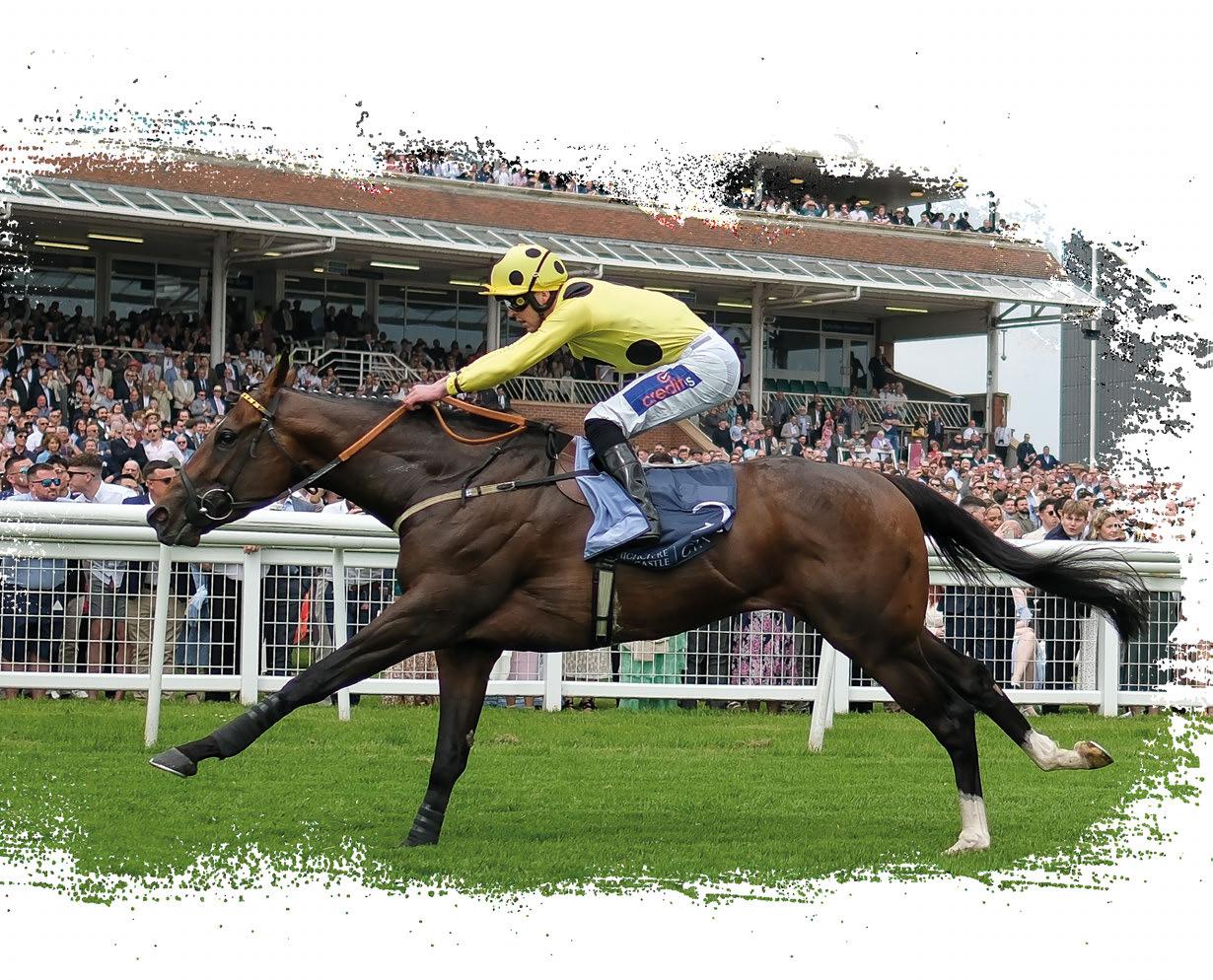
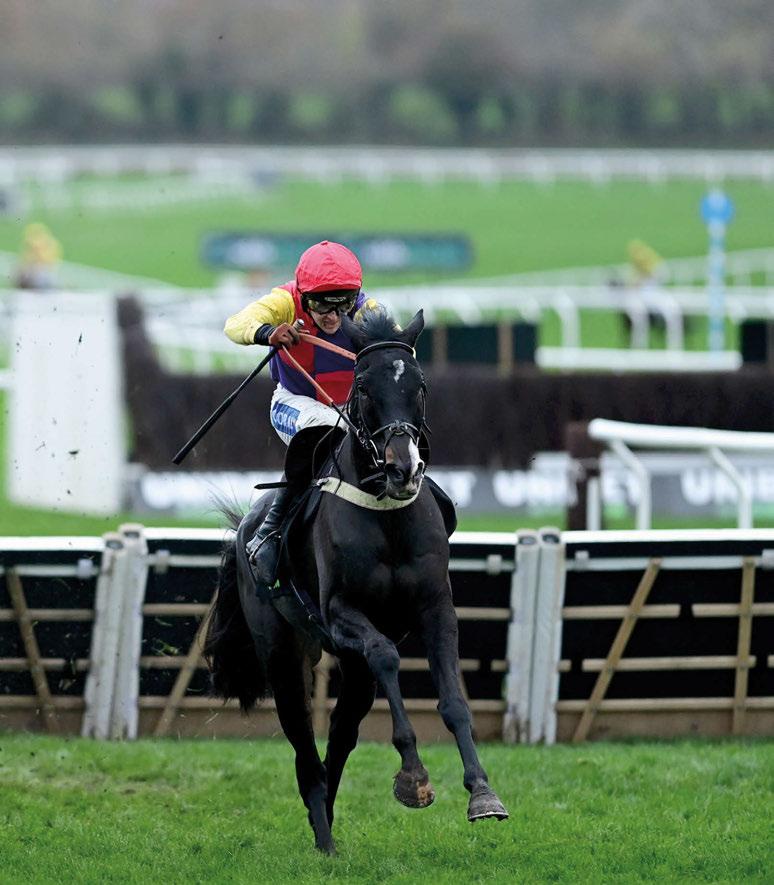
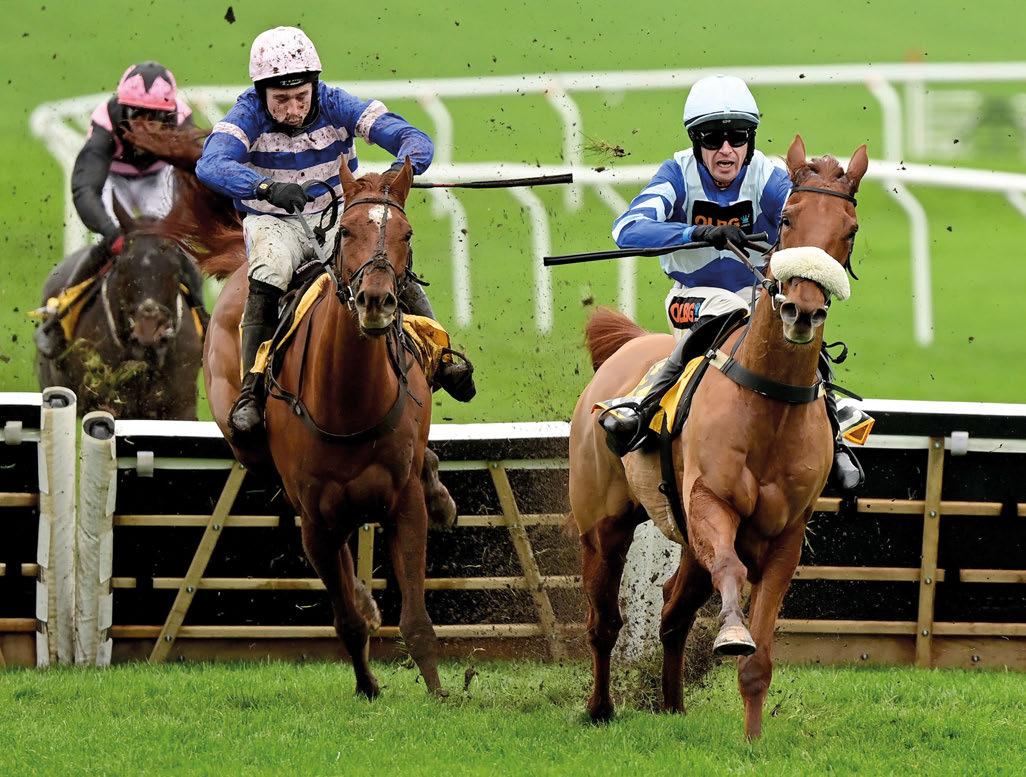
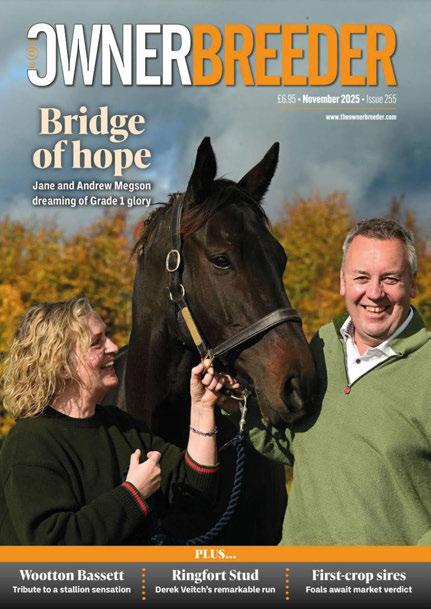
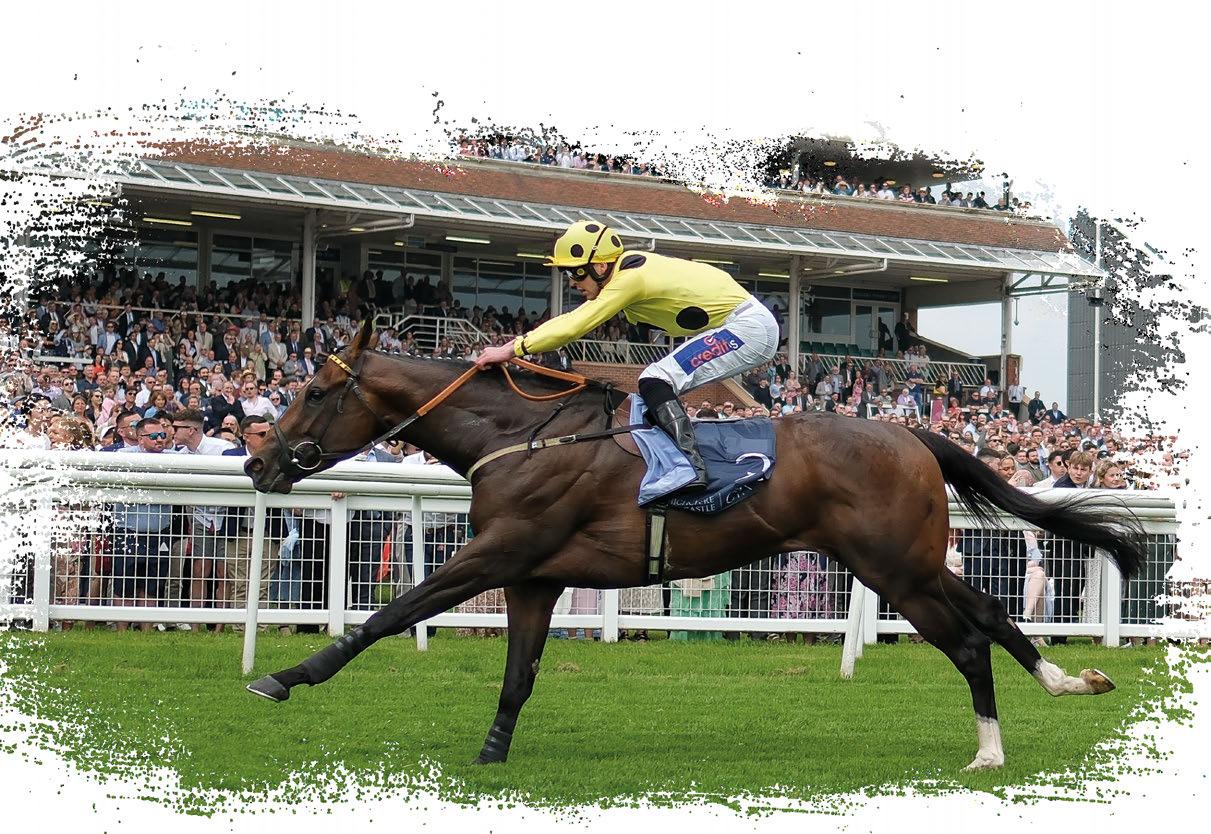
The Joe Tizzard-trained Alexei, this month’s cover star, took apart his field in the Greatwood Handicap Hurdle at Cheltenham’s November meeting, scoring by six lengths to earn another hike in the ratings, having been raised 7lb for his previous success at Ascot.
lighter horses that can run on faster ground, so hopefully they will be able to run at the big spring festivals,” Garth tells Marcus Townend (The Big Interview, pages 32-36).
“With climate change, early in the season we have had horses ready to run for a month, but they couldn’t. Sober Glory was meant to go for the Persian War Novices’ Hurdle at Chepstow in October and we had to wait with him.
“We are going that way a little bit because it can be frustrating. Last year with Sober Glory, he won three races and the logical thing would then have been to go on to Cheltenham and Aintree.
“It was the same with Kripticjim. He just had three runs last season. It is frustrating in February putting away horses who are winning.”
The Brooms understand only too well the cost of having multiple horses in training
Only time will tell whether Alexei proves up to Champion Hurdle class, but the Brooms certainly have plenty to look forward to this season. A strong supporting cast includes the winners Kripticjim, American Land, Siam Park and Gentleman Toboot, which have helped their owners to operate at a startling strikerate of 42%.
The Brooms look on course to eclipse the previous campaign’s total of 23 winners, their best tally in 19 seasons. One interesting aspect of their ownership journey is how they have adapted their approach to buying horses on account of the changing climate and its effect on ground conditions in Britain.
“With Alexei and American Land, we have started buying some
Subscriptions: Sarah Holton subscriptions@ownerbreeder.co.uk 01183 385 686
ROA Owner Breeder can be purchased by non-members at the following rates: 1 Year UK £60 Europe £90 RoW £120
ROA Owner Breeder is owned by the Racehorse Owners Association
Editorial views expressed in this magazine are not necessarily those of the ROA or TBA
The Brooms understand only too well the cost of having multiple horses in training –Garth says, perhaps tongue in check, that their business strategy is to “minimise losses” –so the decision to diversify regarding the type of horses they buy, rather than focus solely on the traditional National Hunt model, makes perfect sense.
Stallion masters and breeders might also be interested to hear the views of owners like the Brooms, who have also vowed to keep their horses in Britain and not put them on a ferry across the Irish Sea.
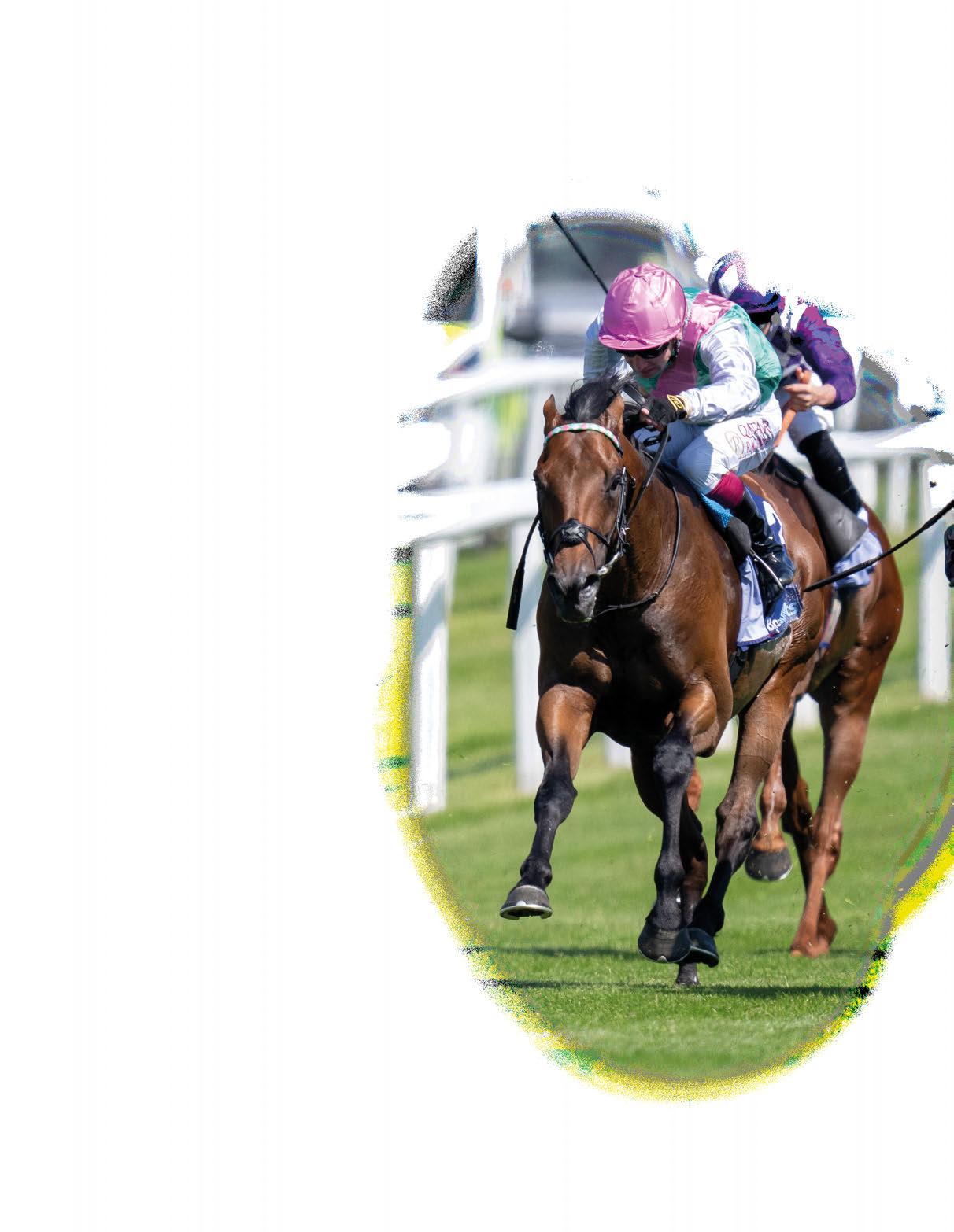
On a related theme, Cracksman, the sire of Arc winner Ace Impact, has relocated from Darley to the Futter family’s Yorton Stud in Welshpool to fulfil a dual-purpose role.
Dai Walters, the well-known jumps owner, has gone into partnership with the ever-ambitious Yorton to secure the son of Frankel for British breeders. Let’s hope this exciting young stallion receives plenty of support from the domestic market over the next covering season and beyond.
Racehorse Owners Association Ltd 12 Forbury Road
Reading Berkshire RG1 1SB
Tel: 01183 385680 info@roa.co.uk • www.roa.co.uk
Cover: Alexei continues his progression with an easy success in the Greatwood Handicap
Hurdle at Cheltenham under Brendan Powell
Photo: Bill Selwyn
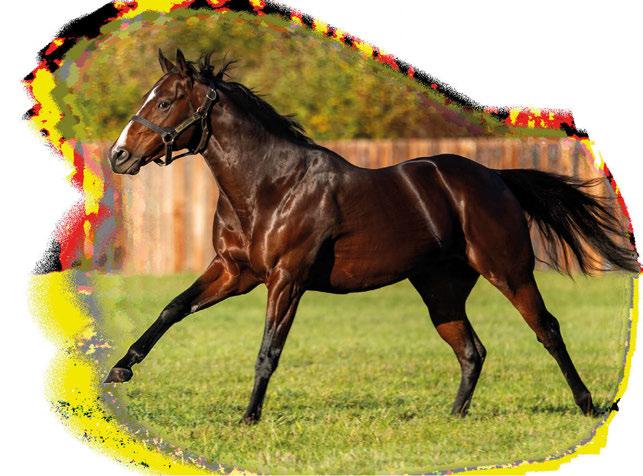
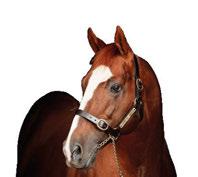
MARHABA YA SANAFI
Muhaarar & Danega (Galileo)
€ 6,000 LF
New in 2026
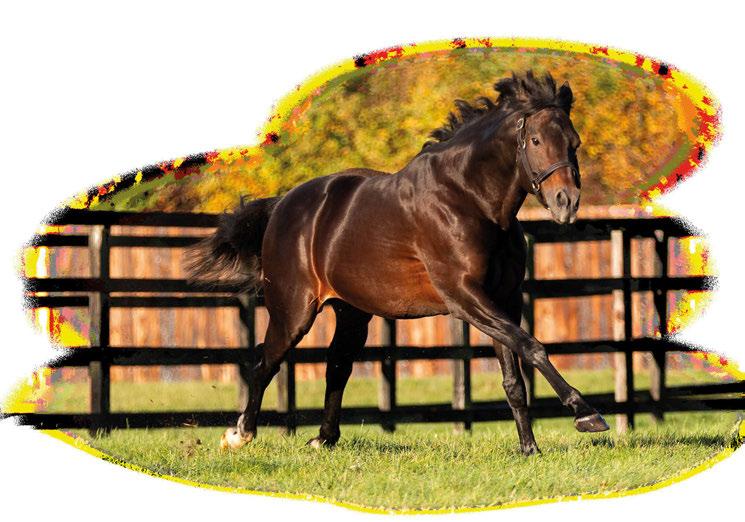
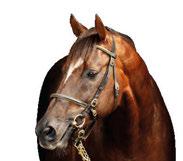
TRIBALIST
Farhh & Fair Daughter (Nathaniel)
€ 6,000 LF
New in 2026
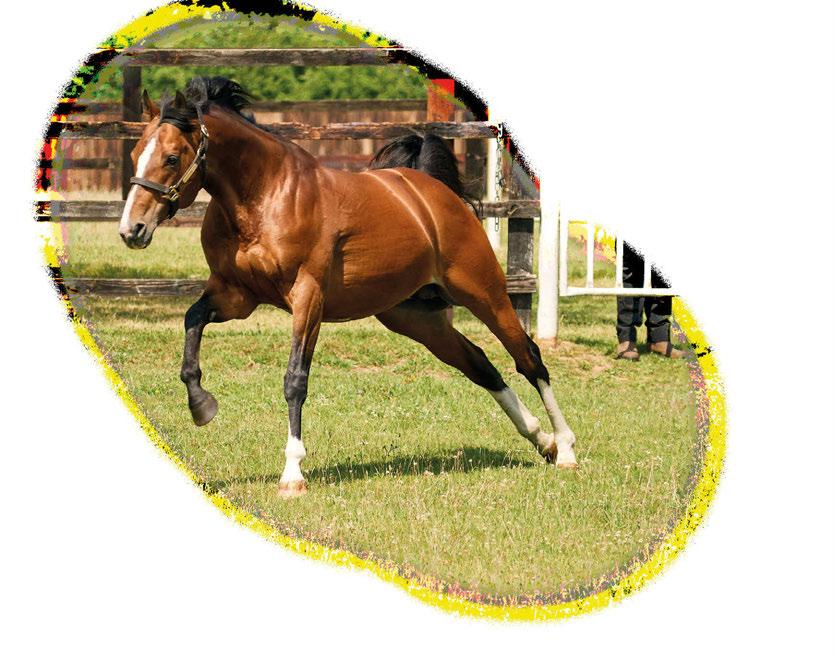
THUNDER MOON
Zoffany & Small Sacrifice (Sadler’s Wells)
€ 5,000 LF
1st 2-year-olds
TEXAS
Wootton Bassett & Texalova (Dream Ahead)
€ 3,800 LF
1st 2-year-olds
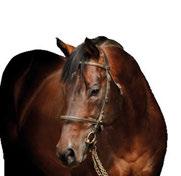
ROMANISED
Holy Roman Emperor & Romantic Venture (Indian Ridge)
€ 5,000 LF
At stud in 2021
MAGIC DREAM
Saint Des Saints & Magic Poline (Trempolino)
€ 3,500 LF
1st 3-year-olds
AIndustry cannot ignore its biggest investor
DR JIM WALKER Chair
s this is my first Leader as new Chair of the ROA, I want to highlight the huge investment that owners make to racing. This is the time of year that the British Horseracing Authority (BHA) is looking at its 2026 budget and deciding on next year's fees. Its budget is a simple equation – what is needed to keep the sport running on a day-to-day basis, what is needed to invest in all business-as-usual activities, and what is needed to explore the commercial and marketing activities that the new Chair, Lord Allen, has been hired to pursue.
The cost of these activities is met by three sources: the Levy Board, via grants given to racecourses per fixture, which are then passed through to the BHA; racecourse fees, mainly subsidised by levy grants; and owners' fees. In 2025, our contribution will be close to £10 million. As inflation drives up the costs of running the sport, the increased activities undertaken by the BHA has seen the owners' fees increase by 19% over the last three years.
Whilst we have representation through the ROA, we are only a 1/6th shareholder in the BHA and yet owners are its biggest investor. There needs to be a shift to recognise that owners are by far the most important supporters of the industry. The commercialisation of the BHA must reflect this simple fact.
of the commercial work entrusted to the BHA.
This column went to press before the Autumn Budget was announced on November 26. There has been a great deal of speculation around tax rises being targeted at the gambling industry. The BHA led the 'Axe the Racing Tax' campaign in an attempt to prevent the tax hike aimed at betting on sports, including horseracing, resulting in significant coverage in the mainstream media and, apparently, making an impression in both Number 10 and 11 Downing Street.
Tax increases for the gambling industry will no doubt have consequences for our sport. Racing receives approximately £350m per annum from bookmakers through the statutory levy, media rights payments and sponsorship. Stringent tax increases on other gambling products will have repercussions for racing, often unintended.
The ROA is only a 1/6th shareholder in the BHA and yet owners are its biggest investor
The 2025 national marketing campaign focused on racecourse attendance; indeed, almost all the activities around marketing over the last decade have been focused on racecourses and attendance. There must be a change to now divert efforts towards the recruitment and retention of owners. It feels that the industry believes owners will continue to fund the sport regardless of cost and that efforts must be aimed solely at securing the next generation of fans and punters. That has to change.
Owning horses can be the greatest experience. It is, however, expensive and can be deeply frustrating. Little, if anything, has been done centrally by the industry to secure the future of racehorse ownership. It remains a complicated process – certainly there are administrative challenges and the ROA has been working hard at simplifying the process – but there is not enough recognition of our input. Ownerfocused promotion and retention must be a key component
There is an optimistic view that carving out racing from tax increases could make our product more appealing, which could boost promotion and begin to reverse the decline in betting turnover. Yet we need to place our industry in the context of the overall economic environment. Even if we manage to avoid the direct tax rate rise, we are no doubt in for a turbulent ride while the country navigates a prolonged period of economic turmoil.
We are set for another difficult year – the results of the Budget will no doubt have an impact, as will falling foal crop numbers and, unless there is a dramatic change in approach to affordability checks, betting turnover will come under even more pressure. However, I have taken on the role of ROA Chair to help the sport negotiate the many challenges it faces, and I am eager to try and find solutions and move the industry forward.
The team at the ROA have a clear focus on representing all owners across the various industry engagements, and I am looking forward to working with them over the coming months.
As always, there are reasons to be optimistic, but we need all stakeholders to understand that only meaningful change will put horseracing back on the right path. I wish everyone a happy and enjoyable Christmas break – and plenty of winners in 2026!
TBA LEADER
TSales levy income vital to TBA and wider sport
PHILIP NEWTON Chairman
he famous First World War recruitment poster of Lord Kitchener with the strapline “Your country needs you” could apply currently to the TBA appealing to all members and breeders to pay the sales levy, both through the ring and via private sales.
Although many owners and breeders are not aware, the TBA is a charitable organisation whose funding is received via two principal sources: firstly, membership, which is purposely kept at a very commercial £180 per annum; and secondly, the majority of the income comes from the voluntary sales levy, which is 0.75% applied to all sales via both Goffs and Tattersalls.
It should be said that we are incredibly grateful to all of you who pay the sales levy annually or provide a similar contribution when private sales are achieved – your recognition of all the activity we do for the breeding sector is appreciated.
The most frustrating thing I hear sometimes is, “What does the TBA do for me?” In every case, that question is answered by a copy of the TBA annual report dropping on the doormat. But let’s not hide the TBA’s light. Here are just some of the things that we are responsible for, which breeders and the breeding industry cannot do without.
and legal advice, education and training, employer support, the digital learning platform TB-Ed, along with the recent Stud Employee Accident Benefit Scheme, all of which can conservatively be valued at over £700. This already seems a lot of benefits for the TBA to be paying members £20 to join if they use a GBB discount to benefit from and surely offers the best value in racing!
Behind the scenes, however, it is the hidden value that counts for more and ensures the breeding industry both continues and that the TBA delivers for the membership. Take as read the lobbying and representation of breeding and breeders at government and industry level, ensuring that the importance of the supply line is never taken for granted or overlooked. This is vital and essential, and if it wasn’t done breeders would know it swiftly!
The Great British Bonus is perhaps the flagship benefit having paid out over £22 million
Let’s talk direct impact first: the Great British Bonus is perhaps the flagship benefit, a scheme designed, delivered and managed by the TBA with significant financial support from the Levy Board. The discount that TBA members receive of £200 per filly foal (which is cumulative) on first stage registration pays for your membership fee straight away and with the scheme having paid out over £22m in cash payments already, incentivising buying, breeding and racing of British-bred fillies, this has been a game-changer that is hard to argue with.
Add to that for NH breeders the Elite Mares’ Scheme, which contributes towards stallion nominations and in some cases covers them in their entirety. It continues to grow in momentum with its total fund doubled to £400,000 for 2026 thanks to support from the Levy Board and is directly contributing to supporting breeders breed quality British-based mares to quality British-based NH stallions (see TBA Forum).
There are then all the additional benefits of the TBA membership itself, including post-mortem support, tax
The TBA is also the first line of defence against major disease outbreaks. Covid, although not equine-centric, was a good example. The TBA was at the front of representation to government that the 2020 breeding season should be allowed to continue. This alone had a high degree of difficulty but once the case was agreed, the TBA was charged to devise and deliver all the protocols that ensured the breeding industry continued.
In the past two years there have been isolated instances of disease breakouts that the TBA has acted swiftly upon, with crises averted. On this same subject, much recent insight on equine reproductive loss came about because of TBA financial and resource support for research over many years. The whole industry benefits directly and ongoing from this, as is the case around the support and development of welfare, environmental sustainability and legislation strategies.
Next year the TBA is embarking upon four major projects, all essential for the future health and sustainability of the thoroughbred, encompassing genetic diversity, traceability, the future pipeline of breeders, and a long-term breeding strategy for the sector and the wider sport.
We are committed to all breeders, but particularly our members, so please support the TBA by paying the sales levy. The above should convince you that this is an investment, not a cost, and you are guaranteed returns.
CHANGES
People and business
Frankie Dettori
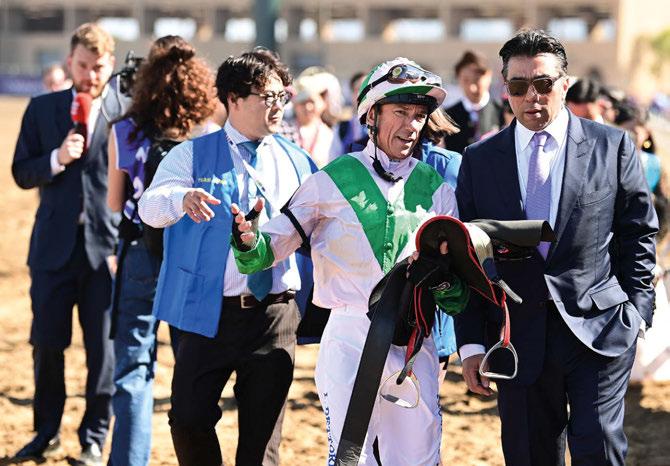
Retires from race-riding in the US after the Breeders’ Cup, with a plan to end his career in South America before taking on a new role with Amo Racing.
Rachael Blackmore
Former top jockey takes on a new ambassadorial role with Cheltenham as head of ladies’ day, with the track trying to entice more women to go racing.
Tipperary racecourse
Ireland will have a second all-weather track after HRI receives approval from the Minister for Agriculture, Food and the Marine, Martin Heydon TD.
Mark Spincer
Joins Jockey Club Racecourses as CEO after 12 years with Arena Racing Company in multiple roles, latterly as Managing Director of the Racing Division.
Horse obituaries
She’s Quality 4
Stable star for Jack Davison sustains a fatal injury in the Breeders’ Cup Turf Sprint at Del Mar. She won four races and £260,000 in prize-money.
Aamilah Aswat
Makes history as the first ever black British female jump jockey, finishing fifth on Guchen in a handicap hurdle at Kempton on November 10.
Windsor racecourse
Track returns to using the figure-of-eight configuration over jumps this season, as is the case for its Flat programme.
Racing League
Future of team competition uncertain after ARC withdraws its support as it looks to create a new Friday night series in collaboration with ITV.
Ascot racecourse
Berkshire track becomes the first threetime winner when named overall champion at the Racecourse Association Showcase Awards last month.
Jack Sherwood
Cheltenham Festival-winning rider quits the saddle aged 27 citing lack of opportunities. He rode 63 winners under Rules having started out in 2008/09.
Robert Winston
Rider who returned to the saddle after three years in retirement has his licence revoked in Bahrain after losing his job.
Ed Chamberlin
ITV Racing frontman named Presenter of the Year at the Broadcast Sport Awards. Megan Nicholls was highly commended in the young talent category.
Alex MacIntyre
Appointed new Operations and Guest Experience Director at Newbury racecourse, having spent 13 years at Saracens Rugby Club.
Ann Duffield
Trainer announces plan to relinquish her licence at the end of the year and hand over to Stephen Hanlon at Sun Hill Farm near Leyburn in North Yorkshire.
Jumps bonus
William Hill offers £500,000 to the connections of any horse who wins one of three designated Grand National trials and the main event at Aintree on April 11.
David Egan
Has his contract as number one rider for Amo Racing extended until the end of 2028. He succeeded Kevin Stott in the role in 2023.
Champions: Full Gallop
The Levy Board halts funding for the ITV series ahead of the November Budget with its possible repercussions for racing and betting.
Clifford Lee
29-year-old who had a superb year as stable jockey for Karl Burke, winning his first Group 1 on Venetian Sun, suffers a neck injury after a motorbike accident in Scotland.
CHANGES
Racehorse and stallion MOVEMENTS AND RETIREMENTS
Far Above
Renew Italian Racing signs up son of Farhh for stallion duty having already recruited the likes of El Kabeir, Inns Of Court and Kessaar.
Inisherin
Group 1-winning sprinter is retired aged four and will begin his stallion innings at Dalham Hall Stud, where the son of Shamardal will stand for £12,500.
Maranoa Charlie
Son of Wootton Bassett, winner of the Group 1 Prix de la Foret, is retired aged three to start his stallion career at Tally-Ho Stud. His debut fee is €20,000.
Sands Of Mali
Bought by Yeomanstown Stud following a silent auction conducted by Tattersalls Ireland. The son of Panis’ 2026 fee is set at €22,500.
No Half Measures
Cracksman
The Futter family’s Yorton Farm will stand the son of Frankel as a dual-purpose sire having been bought in partnership with jumps owner Dai Walters.
Idaho
Rosallion
Top-class miler, winner of three Group 1s, is retired to take up stallion duty at Dalham Hall Stud in Newmarket. The son of Blue Point’s debut fee is set at £40,000.
Son of Galileo moves to Skuttells Barrough Stud, Chloe Roddick’s new operation in Somerset, having previously been based at The Beeches Stud in Ireland.
Arizona Blaze
Group 1-winning sprinter for Amo Racing will begin his stallion career at the Irish National Stud. The son of Sergei Prokofiev is introduced at €12,500.
Top-class sprinting filly, winner of the Group 1 July Cup for owner Richard Gallagher and trainer Richard Hughes, is retired aged four.
Whistlejacket
Haras de Grandcamp recruits Group 1winning son of No Nay Never from the Coolmore partners. His opening stud fee is set at €14,000.
Carl Spackler
High-class miling son of Lope De Vega, winner of three Grade 1s on turf in the US, is retired to join the Lane’s End Farm roster, where his fee is $15,000.
Topgear
Group 2-winning son of Wootton Bassett is retired from the track and will start his stallion career for Capital Stud in Co Kilkenny at a fee of €7,500.
People obituaries
Keith McHugh 65
Racing journalist worked for the Oldham Evening Chronicle before moving to the Racing Post, where he was a popular member of the Spotlight team.
Tommie Jakes 19
Apprentice jockey rode 59 winners, his first coming at Lingfield in March 2023. Hundreds attended his funeral in Newmarket on November 21.
Roddy O’Byrne 78
Shrewd judge owned 1994 Grand National hero Miinnehoma and 2025 victor Nick Rockett during their younger days in the point-to-point sphere.
Brian Rouse 85
His career in the saddle yielded Classic glory with Quick As Lightning in the 1,000 Guineas and Japan Cup success with brilliant mare Stanerra.
Kinross
Superb performer for Marc Chan, winner of 11 races, two Group 1s and almost £2m, is retired aged eight to enjoy a well-earned retirement at the National Stud.
Internaute
Listed-winning and Group 2-placed son of Sea The Stars for Wertheimer Et Frere is retired to join Haras de la Hetraie’s National Hunt roster for 2026.
Courage Mon Ami
Wathnan Racing’s Gold Cup hero of 2023 is retired aged six owing to a persistent leg injury and will live out his days at Wathnan Stud just outside Doha.
Aesterius
Terry Holdcroft’s Bearstone Stud in Shropshire buys Group 2 Flying Childers Stakes winner and will stand the son of Mehmas for £6,500 next year.
Your mare, your move delivers
Emphatic winner of the Gr.1 Commonwealth Cup & Gr.1 July Cup
Cartier Champion Sprinter & Longines World’s Best 3YO Sprinter in 2023
Fee: £10,000 January 1st, SLF
Remembering Brian Rouse, late bloomer who won the Japan Cup
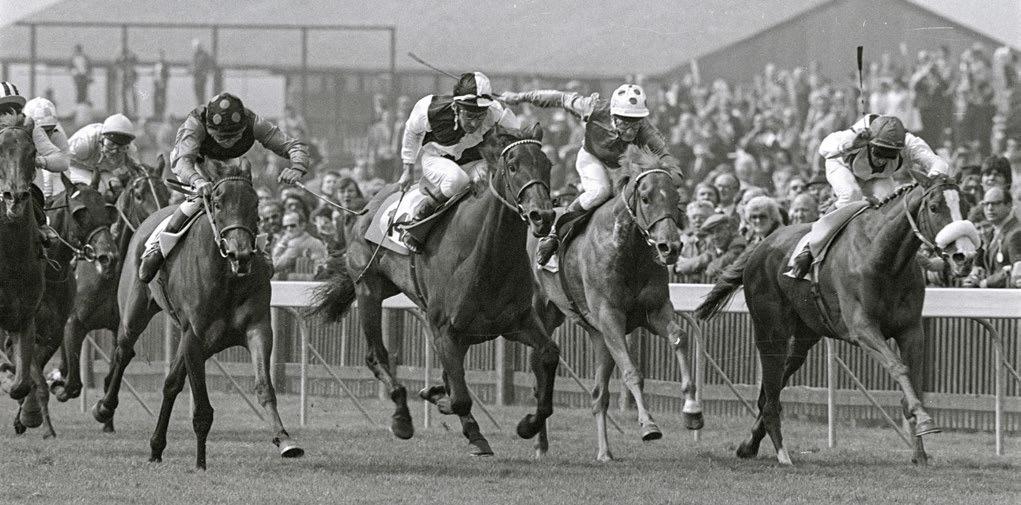
Brian Rouse, the Classic-winning rider and one of only two jockeys born in Britain to win the Japan Cup, died last month aged 85.
Rouse, who was born in Kensington, London, rode his first winner while apprenticed to Ted Smyth in Epsom, namely Gay Bird at Alexandra Park in July 1957, however he quit the saddle to become an electrician and his second winner, New Tack at Chepstow, did not arrive until May 1972.
He was 31 when he renewed his licence, and it meant he was riding against top jockeys without an allowance, despite having just the one winner to his name. Rouse operated over jumps and rode ten winners in three seasons, but he gradually established himself on the Flat and was closely associated with Epsom and prolific winners trained there like Tug Of War, Baronet and Blue Refrain.
Tug Of War landed the Northumberland Plate twice and the Goodwood Cup in 1978, a couple of months after Rouse had fortuitously won his first Pattern race in the Lockinge Stakes on Don, the chief beneficiary of the final-furlong stumble and unseat of the clear leader Jellaby.
Baronet was a Cambridgeshire regular, winning the race twice and finishing
runner-up on another couple of occasions, while Blue Refrain won at Royal Ascot three years on the bounce, culminating in the Queen Anne Stakes in 1980.
Rouse’s one and only British Classic winner had arrived shortly before, when the John Dunlop-trained Quick As Lightning kept on gamely to win the 1,000 Guineas by a neck from Our Home. The duo subsequently finished fourth behind Bireme in the Oaks.
Rouse and Dunlop struck up a fruitful partnership, including with Italian St Leger winner Sergeyevich. The jockey also rode the great Habibti to her maiden victory.
But it was Irish mare Stanerra who provided Rouse with the best year of his career, in 1983. Owned and trained by Frank Dunne, she and Rouse combined for the first time in the Brigadier Gerard Stakes, which they won at 20-1.
Then came a remarkable Royal Ascot double in the Prince of Wales’s Stakes, then run on the Tuesday, and the Hardwicke Stakes on the Friday, when they lowered Grundy’s mile-and-a-half course record.
Stanerra was subsequently a close fourth behind Solford in the Eclipse, before winning the Joe McGrath Memorial (now Irish Champion) Stakes at Leopardstown and finishing sixth in the Arc to All Along.
The pair’s crowning glory came in the Japan Cup, in which her customary late run saw her edge a three-way photo-finish. The 1983 edition was the third Japan Cup, and only Ryan Moore has since matched Rouse in terms of being a born-in-Britain winning rider.
Recalling Stanerra in an interview two years ago, Rouse said: “She was extraordinary, a bit of a freak of nature –you don’t get many like that.”
Rouse carried his momentum into the following season, posting 67 winners, the best total of his career, and also winning two Group races abroad on subsequent Arlington Million hero Teleprompter.
Other noteworthy wins came on Superior Gold (1985 Hong Kong Derby) and Dashing Blade (1990 Gran Premio d’Italia), while Rouse won five Group races on Karinga Bay and partnered Desert Orchid in his only Flat race, the duo finishing unplaced in the 1985 Sagaro Stakes.
His Group-race haul was to number 38, with his last winner proving to be Shen Yang at Folkestone in May 1995.
An injured left hand in a starting stalls accident ultimately led to Rouse retiring in 1996 aged 56, after which he returned to Hong Kong and became an instructor at the local apprentices’ school.
GEORGE SELWYN
Brian Rouse (inset) enjoyed Classic success on Quick As Lightning (left, spots on dark cap) in the 1980 1,000 Guineas
Stallions 2026
Calandagan crowned Horse of the Year at Cartier Racing Awards
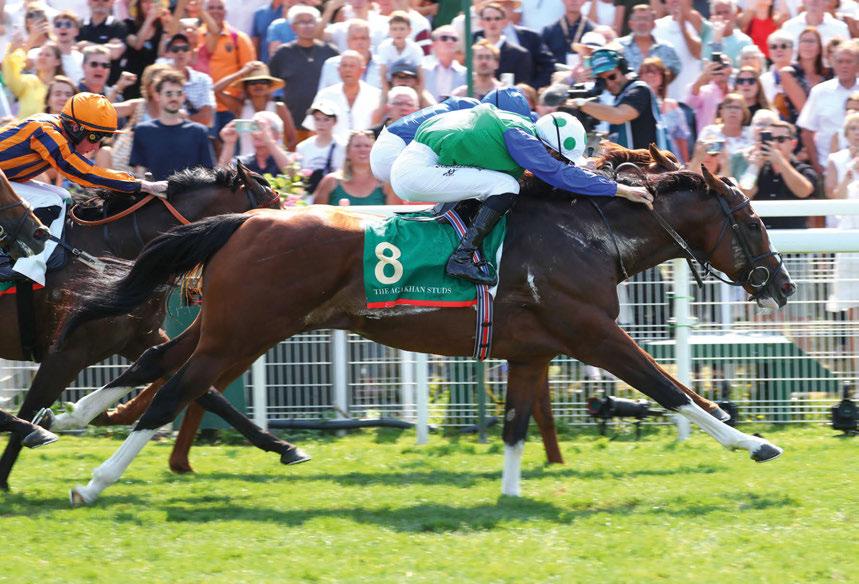
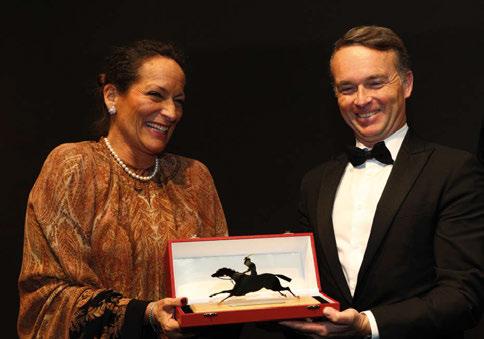
The Aga Khan Studs’ brilliant four-year-old Calandagan was named Cartier Horse of the Year and outstanding Older Horse in a glittering ceremony at the Dorchester Hotel in London on November 19.
Winner of the King George VI and Queen Elizabeth Stakes and Champion Stakes in 2025, Calandagan, trained by Francis Graffard, became the fourth horse bred by the Aga Khan Studs to take the coveted accolade, following Daylami (1999), Dalakhani (2003) and Zarkava (2008).
Princess Zahra Aga Khan received the Cartier Horse of the Year Award and said: “It has been a very special evening in many ways, and Calandagan is a very special horse. He has been trained by a very wonderful trainer, and this is a very special moment for us because Nemone [Routh, racing manager] and I have been working on this together for almost 30 years and the whole team has really contributed to this. It is wonderful.”
Coolmore and trainer Aidan O’Brien enjoyed a fabulous evening, with Eclipse and Irish Champion Stakes victor Delacroix taking the Cartier Three-Year-Old Colt prize and stable companion Minnie Hauk, victorious in the Oaks, Irish Oaks and Yorkshire Oaks, claiming the Cartier Three-Year-Old Filly trophy.
Gstaad, successful at Royal Ascot in the Coventry Stakes before capturing the Breeders’ Cup Juvenile Turf, was named Cartier Two-Year-Old Colt while Precise, winner of the Moyglare Stud Stakes and Fillies’ Mile, took the Two-Year-Old Filly award.
Australian mare Asfoora, owned by Noor
Elaine Farm Pty Ltd, was champion Cartier Sprinter after a season that yielded strikes in the Nunthorpe Stakes and Prix de l’Abbaye, while Godolphin’s Gold Cup hero Trawlerman took the Cartier Stayer award.
Journalist and broadcaster Brough Scott’s contribution to racing was recognised with the Cartier/The Daily Telegraph Award of Merit. The former jockey has established himself as a hugely respected writer and
Horse of the Year and Older Horse
Calandagan
Three-Year-Old Colt
Delacroix
Three-Year-Old Filly
Minnie Hauk
Sprinter Asfoora
author in addition to becoming the face of racing on TV for three decades and co-founder of the Racing Post
On receiving the award, Scott said: “I want to thank Cartier very much, the judging panel, and all of you. I would like to take the opportunity to pay tribute to the whole racing game, and in particular to the horses, which have lit up our lives and indeed have brought us all together tonight.”
Stayer
Trawlerman
Two-Year-Old Colt
Gstaad
Two-Year-Old Filly Precise
Cartier/Daily Telegraph Award of Merit Brough Scott
British Horseracing Development Programme: applications open
Applications are now open for the 2026 British Horseracing Development Programme, which has teamed up for the first time with the 10,000 Interns Foundation’s 10,000 Black Interns Programme.
The British Horseracing Development Programme offers those leaving higher education, or with equivalent skills and capabilities, the opportunity to explore a career in racing. It begins with a two-week residential induction course at the British
Racing School in Newmarket, during which speakers from across the industry deliver talks alongside visits to key venues including Tattersalls, Newmarket racecourses and historic training yards.
This is followed by a placement of a minimum of eight weeks at one of a range of employers across racecourses, racing’s administrators, the written media, the British Horseracing Authority and more.
The 2026 British Horseracing Development Programme will be
partnered for the first time with the 10,000 Black Interns Programme, which seeks to match interns with opportunities in work areas in which they have expressed an interest.
The programme has been developed by the 10,000 Interns Foundation, a non-profit organisation whose goal is to improve the opportunities and experiences for black people in Britain.
For more information on the programme see careersinracing.com.
BILL SELWYN
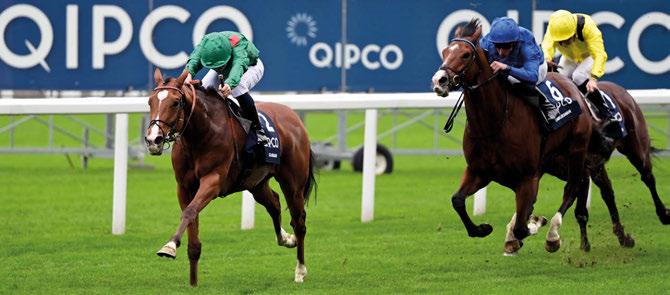
Calandagan and Mickael Barzalona recorded a decisive success in the Champion Stakes
THE BIG PICTURE AT DEL MAR
Diamond sparkles
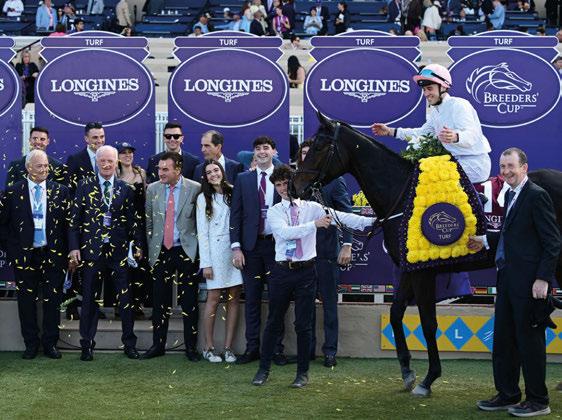
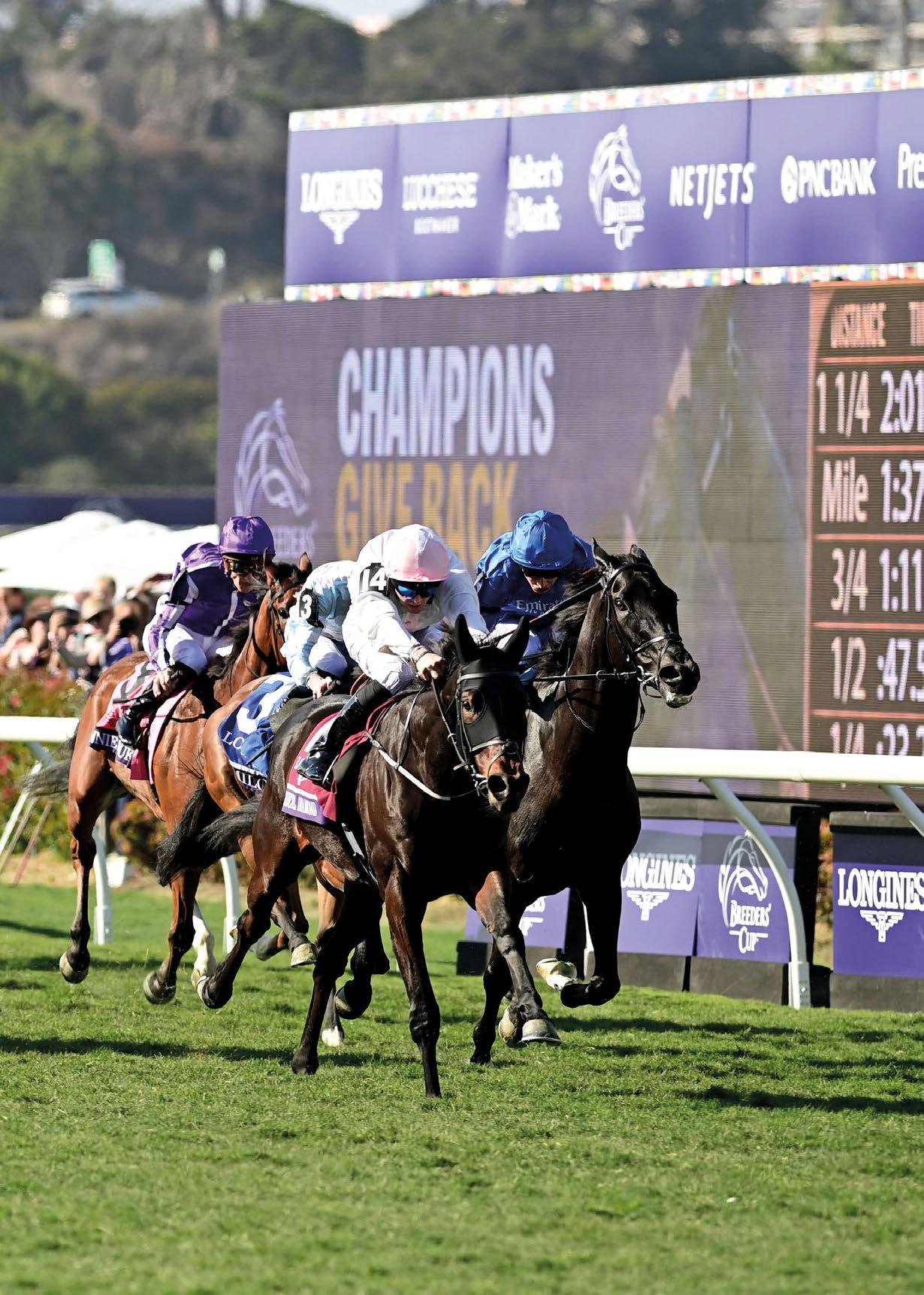
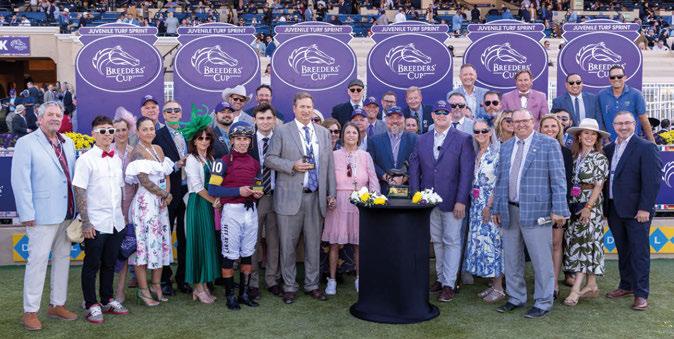
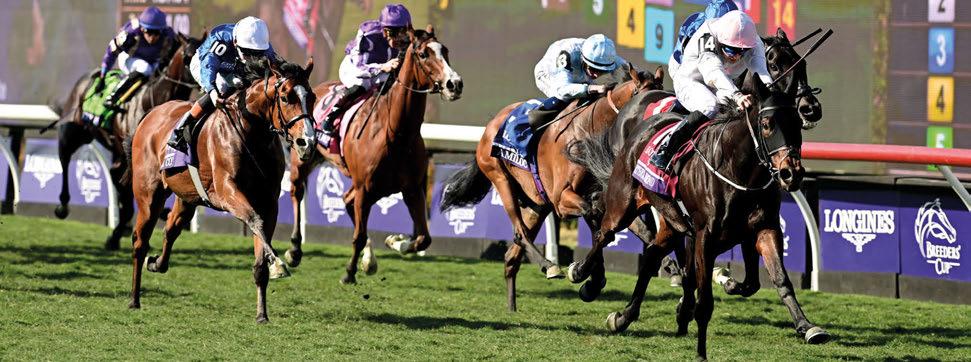
Willie Mullins swapped County Carlow for California last month as he travelled to Del Mar with Ethical Diamond, his first runner at the Breeders' Cup. The multiple champion jumps trainer returned with a winner as his charge swooped down the outside to take the Turf under Dylan Browne McMonagle for H O S Syndicate, defeating dual Turf hero Rebel's Romance by a length and a quarter.
Photos Bill Selwyn
FACES AT THE RACES
Breeders’ Cup at Del Mar
The two-day spectacular had a bit of everything including wins for the visiting European and Japanese stables
Peter Brant hit the bullseye with Gezora in the Filly & Mare Turf
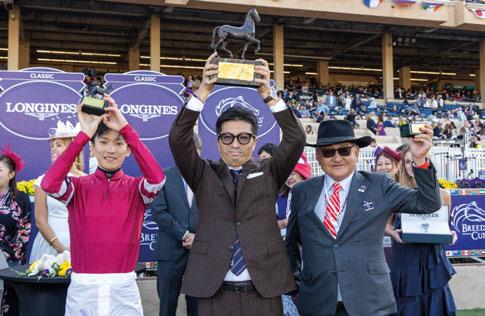
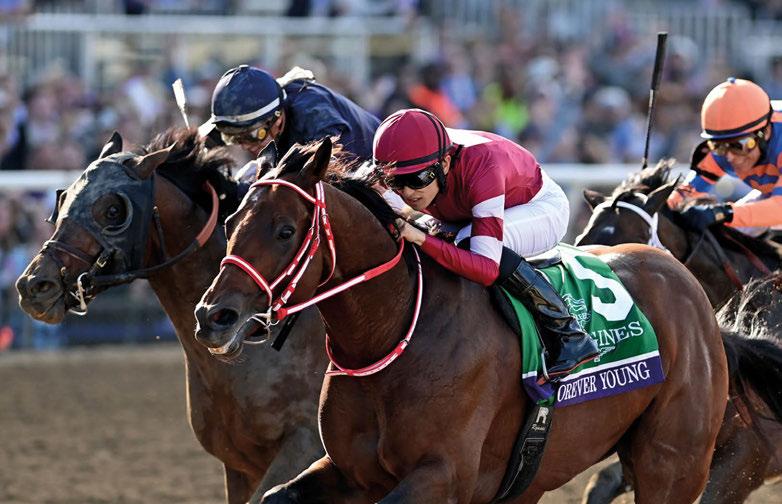
Susumu Fujita’s Forever Young and Ryusei Sakai took the Classic
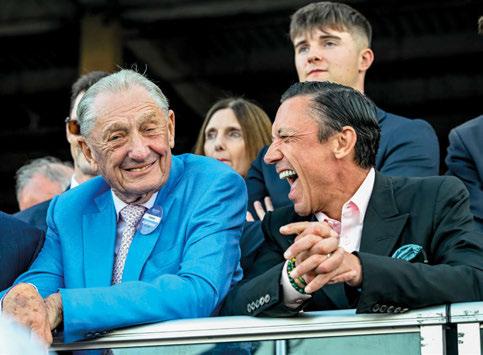
Derrick Smith and Frankie Dettori enjoy the action as it unfolds
Willie Mullins (centre) struck with his first Breeders’ Cup runner, Ethical Diamond, in the Turf for H O S Syndicate
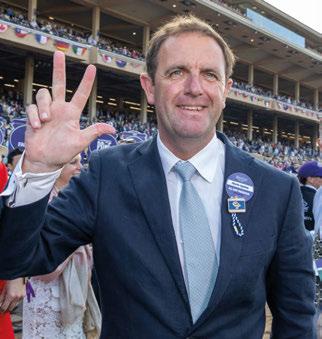
Charlie Appleby won his fourth Mile courtesy of Godolphin’s Notable Speech
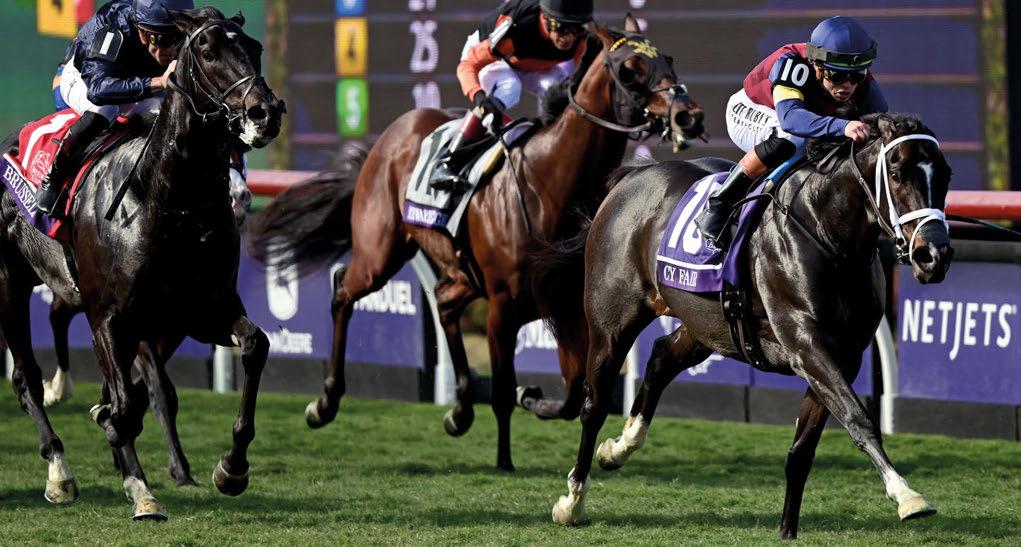
The George Weaver-trained Cy Fair and Irad Ortiz captured the Juvenile Turf Sprint for owners Medallion Racing, Swinbank Stables LLC et al
FACES AT THE AWARDS
35th Cartier Racing Awards
The prestigious ceremony saw the great and the good of European racing gather at The Dorchester in London on November 19
Ben Sangster and Kia Joorabchian
Caroline and Martin Cruddace, Saffie Osborne and Emma Banks
Princess Zahra Aga Khan and Francis Graffard collected the Horse of the Year trophy for Calandagan
Elaine and Karl Burke have enjoyed a terrific season
Clodagh McKenna and Harry Herbert
Ralph Beckett with Brian and Kathy Finch and Andrew Balding
Photos: Dan Abraham
RACING AROUND THE WORLD
‘As
close as you’ll get to a horseracing utopia’
By JAMES BURN
JAPAN
It wasn’t the crowning glory – that might come if Japan ever captures the Prix de l’Arc de Triomphe – but Forever Young’s recent victory in the Breeders’ Cup Classic at Del Mar, when he repelled a top bunch of domestic dirt horses, underlined once more the nation’s status as a racing superpower.
A world leader when it comes to industry and technology, Japan has enjoyed a rise to the top in horseracing in the last 20 years or so; Peter Chapple-Hyam’s criticism of legendary rider Yutaka Take for his effort on White Muzzle in the 1994 Arc is a distant memory, while Europe struggles to lay a glove on the Japan Cup these days, let alone have it in its grip as was once the case.
Seeking The Pearl (in the 1998 Maurice de Gheest) and Taiki Shuttle (in the Jacques le Marois a week later) were the first Japanesetrained horses to win top-level prizes overseas, since when more than 60 have been bagged.
“They were foreign-breds who came in and won Group 1s abroad, but now the winners
are nearly all Japanese-bred, so there’s been an enormous improvement in our bloodstock,” says Harry Sweeney, who has spent 35 years in Japan and is president of Godolphin’s operation there.
He has had a box-seat view of the rapid progress made and it’s not just Mickey Mouse races that have been annexed. Agnes World (July Cup) and Deirdre (Nassau) will be familiar to British racegoers, more Group 1 glory has been secured in France (where the Arc remains the Holy Grail), Delta Blues has triumphed in a Melbourne Cup, a host of stars have lit up Dubai World Cup night and Loves Only You and Marche Lorraine were Breeders’ Cup winners before Forever Young’s heroics. There was also pride when Just A Way (2014) and Equinox (2023) were crowned champions in the Longines World’s Best Racehorse Rankings.
For all that success on a global stage, things appear in rude health back home where scenes of fanatical crowds sprinting through the gates to get a prime position on big racedays have gone viral on social media. The production of ‘plushies’ – cuddly toys based on equine aces – also demonstrates the passion and devotion that exists around racing in
Japan, where something of an infatuation with stardom and celebrity endures anyway.
Huge betting turnover and the prizemoney it funds are also the envy of most of the world, so it’s easy to understand why Sweeney reaches for a certain word when assessing the state of the things.
“As close as you will get to a utopia,” he adds. “It’s not quite a utopia, but it’s very close in that you have one organisation, a government-associated body, running racing. That’s from owning the tracks to registering trainers and jockeys and, significantly, running the tote market with all the money from that going back into racing and promoting it.”
Sweeney, now a Japanese resident who owns and breeds horses in his own right along with his contribution to Godolphin, is, of course, referring to the Japan Racing Association (JRA).
Established in 1954, the JRA comes under the supervision of the Ministry of Agriculture, Forestry and Fisheries and is basically responsible for the best bits, although the National Association of Racing – operated by local authorities – also hosts lesser, shoulder fixtures.
Ten courses and two training centres are owned and run by the JRA, whose ambition is matched by those participating within its framework, which has integrity and information at its core.
“It’s a fantastic model and it’s always been the case,” Sweeney, a vet by profession, goes on. “What’s changed is a great hunger among Japanese horsemen to improve. They realised when the Japan Cup started to open up that there was a gap between Japanese and foreign horses.
“There was an understanding that work was needed to close that gap and there was an enormous hunger for knowledge, so lots of people went abroad to study and see better ways of doing things. They worked really hard and there was also heavy investment, not just in people, but in bloodstock, mares and stallions, and it involved some luck too.”
In terms of stallions, Sweeney namechecks North American imports Northern Taste and Sunday Silence for helping shape Japan’s fortunes, with the latter most notably producing Deep Impact, arguably the country’s greatest horse who then emerged as a game-changing sire himself.
Middle-distance class and the stamina that comes with it is favoured by the Japanese, which sets them apart from their counterparts elsewhere, who prefer a brand of speed that is not loved by all. It’s worth remembering Adayar, Hukum and Westover as recent examples of transfers from Britain, where a sharp juvenile retiring before his or her three-year-old season is not uncommon.
“Japan’s forte is ten furlongs and up,” the
BILL SELWYN
Forever Young (nearside) holds off Sierra Leone to win the Breeders’ Cup Classic
RACING AROUND THE WORLD
Irish native continues. “A mile minimum –even our 2,000 Guineas is over ten furlongs.”
Right in the groove, Sweeney lays bare a programme, which features hardly any handicaps, and an attitude he feels sets it apart, all the time adding to its draw.
“There’s a true love of horses and racing, beyond the betting, that fuels everything,” he says. “They like their heroes and competition, and I think the Pattern helps with that. If you’ve a three-year-old Grade 1 colt, there are, until the October of his campaign, only three races – the Satsuki Sho (2,000 Guineas), NHK Mile and the Derby – he can run in. If he hasn’t run in those races, he’s of no consequence. There’s no place to duck and dive or hide. It’s not possible and when horses go to stud we can be sure they are the best or the soundest because they’ve raced against each other, probably numerous times.”
A consistent foal crop – 7,925 were registered last year against 6,884 in 2014 –has also helped establish Japan as a fertile place to own horses and Godolphin have had a foothold there since 2002.
“Dubai is a very dynamic and expanding country, which looks for excellence in everything it does and I’d say Japan came on Godolphin’s radar in 1996 when Singspiel won the Japan Cup,” says Sweeney. “It makes commercial sense too. Godolphin wish to be involved in the best racing around the world and has horses in the UK, France, the United States and Australia. Not to have horses in Japan, which is a major bloodstock power, would be a glaring omission.”
So, Sheikh Mohammed’s outfit was one of 2,859 owners registered with the JRA last year, with a breakdown of 2,426 sole owners, 381 companies and 52 syndicates – a massive part of the ownership landscape that lends its success to the influential Yoshida family, the closest thing to racing royalty there.
Founded by the late Zenya Yoshida, the empire is now in the hands of his sons Teruya,
Katsumi and Haruya, whose racing arms, in their various guises and distinctive colours (think the yellow-and-black stripes of Shadai Racehorse and the red crossbelts and black of Sunday Racing among others), have become champion owners many times over, dominating the sport.
Almond Eye, Orfevre, Gentildonna and Equinox are among the superstars linked to the Yoshidas, whose head was responsible for the inspired talent scouting of the aforementioned Northern Taste and Sunday Silence.
The racing clubs or syndicates the brothers run are nothing new in global racing. However, in Japan they are a feature of the elite, championship level, racing bona fide champions and Group/Grade 1 horses year in, year out.
One of the reasons it has flourished is the level of fan engagement in the region; shareholders, after all, do not really ‘own’ the horses, but, essentially, lease them. If breeding potential exists down the line, the horses can be returned to a Yoshida
bloodstock branch. It’s a framework that might not thrive elsewhere with differences in culture and expectation, while the fervent connection the common person has with racing means owning an affordable share – no matter on what scale – is perhaps more appealing.
When Loves Only You struck at the 2021 Breeders’ Cup, she did so in the silks of DMM Dream Club Co Ltd, an offshoot of internet company DMM.com, which last year was said to have had more than 45 million registered users – an astonishing amount of people to tap into and something the firm did to drive interest.
The other strand of the success story is the Yoshida family’s bloodstock portfolio, which includes a number of quality mares, with plenty sourced from Europe for sale-topping prices. Marry that to the syndicate system and it might be like Middleham Park Racing having access to Coolmore’s bluebloods to syndicate.
“They’re huge and make getting involved accessible for the average man in the street,” adds Sweeney, who bred Sunday Racing’s 2012 Japanese Derby winner Deep Brilliante.
A return is also important for owners and Japan last year offered ¥100,111,213,000 –around £486 million – in prize-money across its 288 meetings that featured 3,454 races, of which 127 were over jumps. That nearly 10,000 races were run in Britain last year for £188m demonstrates the resources available to the JRA, which can offer owners injury compensation and appearance money.
“The biggest incentive of all for owners is proper prize-money,” Sweeney stresses. “It’s fantastic and that appearance money is an enormous help to keep a horse in training.
“There’s also a real balance between the price of buying bloodstock and the scale of prize-money in Japan, which means you have a chance to break even, perhaps even be profitable. You’re not burning sacks of money every time you buy a horse.”
HARRY SWEENEY
Harry Sweeney: ‘prize-money is fantastic’
ELITE STATUS
Bay 2021 Havana Grey x Dotted Swiss FEE: £8,000 1st oct slf
HAVANA GREY’s highest-rated performer with a stellar RPR of 119
NEW FOR 2026
Rated 4lbs higher than his sire Havana Grey and 6lbs higher than his grandsire Havana Gold
THE BIG INTERVIEW: ANDREW AND JANE MEGSON
GARTH AND ANNE BROOM
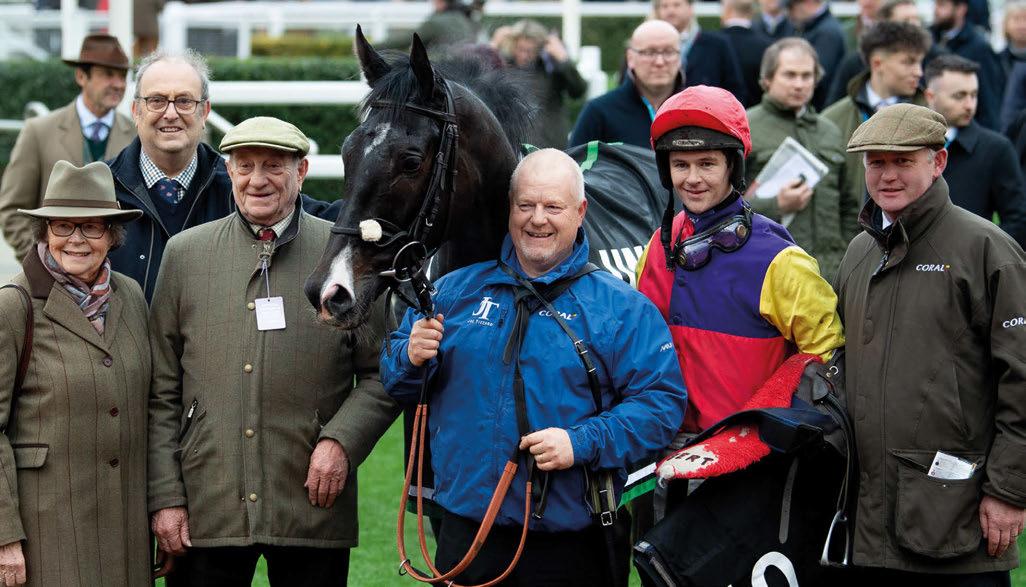
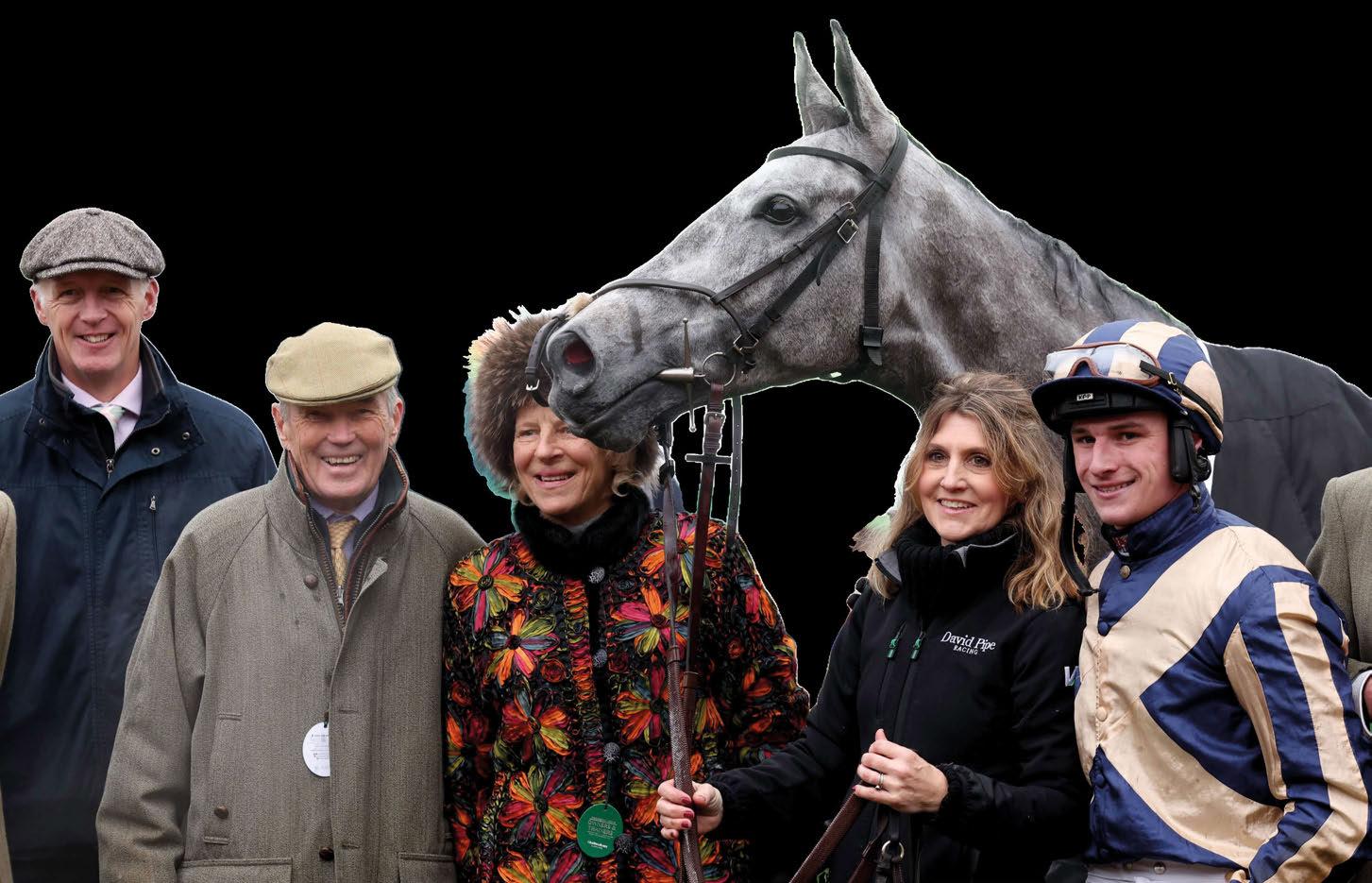
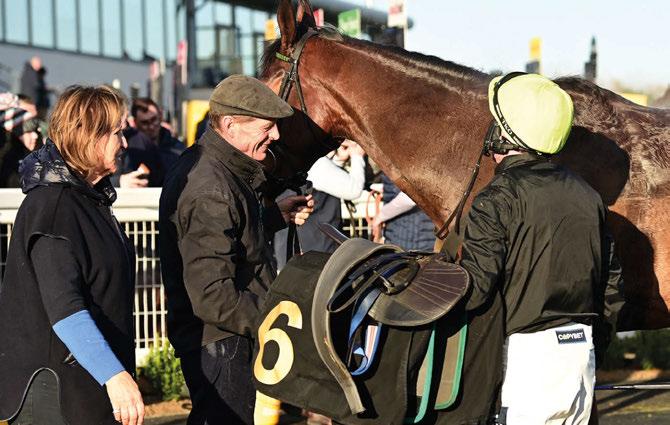
Garth and Anne Broom with Sober Glory, who is unbeaten in four starts under Rules and looks set to take high rank among this season’s novice hurdlers
Staying the
COURSE
Having reached the pinnacle of jump racing with Native River, Brocade Racing’s Garth and Anne Broom are on the ascent again with an exciting crop of youngsters led by star duo Alexei and Sober Glory
Words: MARCUS TOWNEND • Photos: BILL SELWYN
The contents of the living room in the house owned by Anne and Garth Broom on the edge of a Somerset village show how big an impression the couple have made on British jump racing.
Sitting proudly on a table by the fireplace is the Cheltenham Gold Cup, while on the sideboard, immortalised in bronze by sculptor Willie Newton, is the distinctive figure of Native River, the Colin Tizzard-trained steeplechaser with a white blaze and four white socks who won that prized trophy in 2018.
No British-trained steeplechaser has won the centrepiece of the Cheltenham Festival since.
There is also a gallery of photographs celebrating the exploits of jumpers who have carried the Brooms’ Brocade Racing silks, like 2013 Cheltenham Festival victor Golden Chieftain, three-time winner of the Rehearsal Chase at Newcastle Hey Big Spender, and Master Overseer, victorious in the 2012 Midlands National.
No wonder Garth says: ‘‘Racing has become our life. We live and breathe our horses.’’
Those Brocade Racing stand-out stars have been tough to replace, but the picture gallery looks like it could be expanding rapidly thanks to a crop of talented young horses.
The fresh influx, which delivered a season’s best 23 wins in the 2024-25 campaign, includes the Joe Tizzard-trained Alexei, who routed the opposition in the Greatwood Hurdle at Cheltenham’s November meeting, and unbeaten Sober Glory, who looked to be one of the most exciting novices seen this side of the Irish Sea when easily winning a Chepstow maiden hurdle for the Philip Hobbs and Johnson White stable.
Allstitchedup, American Land, Gentleman
Toboot, Harry Junior, Jurancon and Kripticjim have all also either won or shown promise for Brocade.
Garth says: “The reason we did so well last season was because the season before we hadn’t had a very good time, so we retired a number of horses and brought in some nice young ones.
“Normally, when you get a bunch of horses, you might get one that is okay but, unusually, we got lucky and bought a bunch of good ones. We have high hopes for some, while others will be good and winning races.
‘‘We were hoping Alexei would run well at Cheltenham but weren’t expecting him to win like he did. We are going to have to re-think our original plan and have a look at the programme. We have been caught out a little bit really with what we have got!
‘‘We don’t want to get ahead of ourselves too much, but he is likely to be put up to a handicap mark in the 140s and if you can get up to the 150s, you start to think you might be in with a slight chance against Champion Hurdle-type horses.’’
The Broom string, at one time numbering 20 horses, currently stands at 14, six horses each with Joe Tizzard and David Pipe, and two with Hobbs and Johnson White.
The three stables were not chosen only because of their proximity to the couple’s home near Taunton.
Garth says: “Philip was born in the same nursing home as my sister and our parents were great friends. I grew up with Martin Pipe, but I couldn’t afford to get involved in ownership until after he retired and his son David took over.
“In our younger days we would go to the same parties and dances. Martin had to miss
THE BIG INTERVIEW: GARTH AND ANNE BROOM
our wedding because that was the day he was having his stable inspected to get his trainer’s licence, so he had a good excuse!
“We have always gone racing and had chatted for years to Colin at the racecourse. He used to say, ‘Come on, when are you going to have a horse with me?’”
Anne has been going racing since she was a child with her father Charles Webber, who had horses in training with Gerald Cottrell. While Garth would occasionally ride the point-to-pointers and hunter chasers trained by his uncles Raymond and Trevor Winslade.
The pair had hoped that when they retired from farming and sold the two farms their marriage had brought together, that they would be able to indulge in their hobby.
The name Brocade is a nod to their past, the first three letters of their surname added to Cades, the name of the farm that belonged to Anne’s family.
Yet their initial racing ambitions were modest.
Garth recalls: ‘‘We were going to start off with one or two horses to run locally. When we first went to the Pipes, Anne said she would like a horse with long ears. People say that is a sign of a genuine horse and Martin replied, “I am training racehorses, not rabbits!”
Anne adds: ‘‘We never thought we would go to big meetings, but we were so lucky it just took off. It was just a bit of fun.’’
Their first runner – the David Pipe-trained Quinte Du Chatelet – won the St Patrick’s Day Juvenile Novices’ Hurdle at Taunton on March 17, 2008, in the hands of Tom Scudamore.
Garth says: “Success gets you gripped. It’s
Alexei and Brendan Powell (right) record a six-length success in the Greatwood Handicap Hurdle at Cheltenham’s November meeting, fuelling dreams of a possible tilt at the Champion Hurdle for his owners (below)
like a fish, once you are on the hook you get reeled in.
“We went up to Colin’s and saw this horse galloping, and he kept catching Anne’s eye. It was Hey Big Spender. Colin said his brother owned him but would probably sell him and he agreed to. He turned out to be very good – we didn’t think we would ever get one any better.
“Then we got Master Overseer. One day we had two runners – Quinte Du Chatelet and Shaking Hands – at Uttoxeter. Martin said he a had nice horse so I told him if we had a winner we would buy him. They both won, so it was a done deal, and it turned out to be a very good deal.”
The Brooms’ commitment to jump racing is absolute. They have only ever been to one Flat meeting in their lives.
Anne says: “We love the jumps and don’t bother with the Flat. We were always brought up with it.
“The only time we went to a Flat meeting was when a feed company we were dealing with got a party up at Chepstow one evening, but it is not the same. We don’t know the people and don’t follow it.”
Garth adds: “In jump racing you get to know the jumpers better because the horses come back season after season.
“I’d maybe watch the top Group 1 Flat races but only for the simple reason that somewhere down the line there might be a nice stallion we might use... but a fair way down the line when the [stud] fee has gone down!”
In the face of Irish dominance in Britain’s biggest NH races led by Willie Mullins, Gordon Elliott, Henry de Bromhead and Gavin Cromwell, many of the leading British owners have adopted a policy of ‘if you can’t beat them, join them’, switching their horses to be trained in Ireland.
However, the Brooms are adamant that
they are neither daunted by the strength of the Irish opposition, nor tempted to join the exodus.
Garth explains: “We have had several requests to have a horse with other trainers, but my reply is always that it is costing us enough to keep three trainers with horses! I can’t commit to any more.
“We wouldn’t move the horses to Ireland. The simple reason is our trainers can train our horses as well as Willie Mullins could. He is successful because he has big-spending owners.
“He is a very good trainer, but it is only what you put into a stable. I don’t think he would improve any of our horses. We have full faith in our own trainers. If they have the goods, they can do it.
“Native River is the last British-trained winner of the Cheltenham Gold Cup. I am hoping in a couple of years’ time that might change [with Sober Glory]!
“We are not put off. It all goes in cycles. It’s not long since Paul Nicholls had Denman and Kauto Star. Colin has had good horses, as has Philip Hobbs.’’
Garth concedes that they have to be canny when it comes to recruitment, which is left exclusively to bloodstock agent Tom Malone, whose farm is only a couple of miles from their home.
He knows the size and shape they have favoured with an emphasis on future chasers. They are largely Irish point-to-pointers, bought privately. Of the current crop of youngsters, only Sober Glory was bought at public auction.
Garth explains: “There is a ceiling to the amount we will pay for a horse and we buy privately. We like to buy under the radar.
It is better to give a bit more for a pointer that has shown some form
“Tom will say ‘I have a nice horse, come and see him,’ and then we decide. He has been buying for us for so long, he knows the sort of horse we like and the sort of money we are prepared to give.
“I feel at these public auctions you have the big owners butting heads with each other and one doesn’t want to give in to the other one, so probably they pay more than the horse is worth.
“We have tried all sorts of things. We used to buy store horses and we were successful with them, but the problem is you usually have to keep them a long time until they can run.
“I feel it is better to give a bit more for a pointer that has shown some form, otherwise you have two years’ training [fees] for a store who might not be any good.
“It appears to be working at the moment so I don’t think we will want to change it.”
What the Brooms have changed in their latest recruitment batch, however, is to buy a handful of different models.
Alexei was sourced from Germany where he had raced on the Flat.
Garth says: “Staying chasers are the type of horse we like. Our theory to start with was you want a big strong horse because the chances are it will not be a Grade 1 horse but if it is fairly good it will be a handicapper
THE BIG INTERVIEW: GARTH AND ANNE BROOM
– and if it is a good handicapper it has to be capable of carrying weight.
“The downside we found is that we had some nice big horses who needed soft going, but by the time you come to Cheltenham and Aintree the ground has gone against them.
“With Alexei and American Land, we have started buying some lighter horses that can run on faster ground, so hopefully they will be able to run at the big spring festivals.
“With climate change, early in the season we have had horses ready to run for a month, but they couldn’t. Sober Glory was meant to go for the Persian War Novices’ Hurdle at Chepstow in October and we had to wait with him.
“We are going that way a little bit because it can be frustrating. Last year with Sober Glory, he won three races and the logical thing would then have been to go on to Cheltenham and Aintree.
“It was the same with Kripticjim. He just had three runs last season. It is frustrating in February putting away horses who are winning.
“It has also been frustrating early this season that our local tracks – Exeter, Taunton and Wincanton – have been unraceable from the point of view of our horses.
“I always say to the trainers if we are discussing whether we should run, we have answered our own question. I call them the hungry months. Horses come in, they are in full training for about three months, but we are not earning anything.
“Somebody asked me if we ran our racing as a business and I said ‘yes, to minimise our losses!’ But I like to think we have got a grip on the situation rather than it running away from us. You can’t rely on the horses earning money, although you hope it will help a little bit.”
For the first time this season, the Brocade Racing string includes a mare. Fairy Park, a daughter of Walk In The Park, is in training with Joe Tizzard.
In Sober Glory, they hope they have a gelding who could potentially be their best since ‘horse of a lifetime’ Native River.
Garth says: “When Sober Glory ran at Chepstow, I haven’t been so nervous since Native River was running because he had been hyped up all summer.
“Philip is normally laid back, but whenever he talks to us about him there has been a glint in his eye. He has always been excited about him.
“We’d love to win another Gold Cup. To us that is the holy grail. Level weights and the best horse wins, although I wouldn’t mind a Champion Hurdle!
“This life isn’t a practice – it is the real thing so we are going to carry on with the horses as long as we can.”
River still flowing in retirement
When Native River won the 2018 Cheltenham Gold Cup, Anne Broom said it took a week for the moment to truly sink in.
Looking back now, Garth Broom reckons the couple appreciate the achievements of their chestnut gelding who won over £1 million in prize-money even more.
Native River compiled an impressive C.V. with 14 wins in his 32 races. They included three successes in Newbury’s Denman Chase (2017, 2018 and 2020), the 2016 Hennessy Gold Cup and the 2016 Welsh Grand National.
He also finished fourth in the 2019 and 2021 Cheltenham Gold Cups. But what Native River has done in retirement has given the Brooms equal pleasure.
They regularly visit the 15-yearold gelding, who is cared for at the farm of bloodstock agent Tom Malone, but Native River has a diary of engagements as full as the Brooms’, with him excelling in the dressage and showing ring.
Native River won a Retraining of Racehorses class at Burghley in 2024 and has also competed at Hickstead, The Horse of the Year Show and the Dublin Horse Show.
Ridden by Harry Cobden, he also won the Injured Jockeys Showjumping challenge at the Bicton Arena in Devon.
He has been an equine racecourse ambassador, appearing at Exeter and Newton Abbot, a guest star alongside Rachael Blackmore at a Gold Cup promotion event in London’s Bond Street as well as being the impeccably behaved chosen conveyance to the school prom of the daughter of a friend of the Brooms, her ball gown spread over his quarters.
Garth says: “He is a very gentle horse, but he had a core of steel when he was racing.
“It’s lovely because being retired and out in the field isn’t all it’s cracked up to be.
“We always try to find our horses a good home and try to match them to the right home, because some horses are more highly strung. You must make sure they don’t go with a novice who might not be able to cope. The trainers are a great help in matching them up.
“These horses have given us a lot of pleasure, and we want them to have a happy retirement. We feel it is our duty to do the best we can for them.”
Native River and Richard Johnson (nearside) take the 2018 Cheltenham Gold Cup
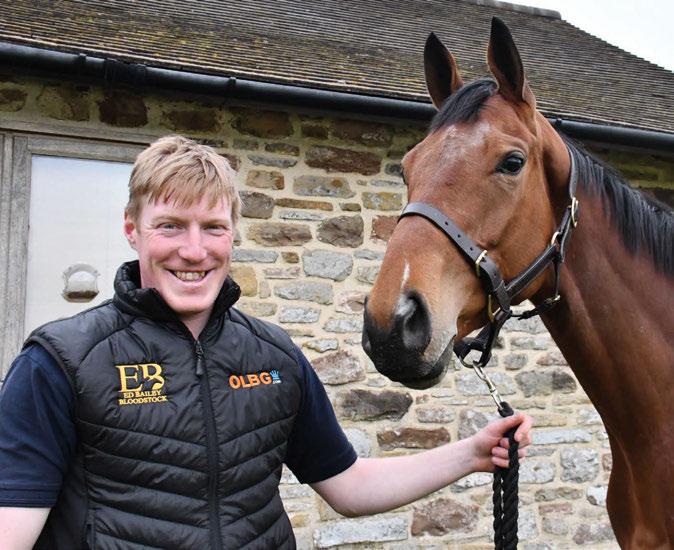
ED BAILEY
HORIZONS Grand
From buying to pre-training and consigning, Ed Bailey’s burgeoning bloodstock business is in full flight from his base in Herefordshire
Words: CARL EVANS
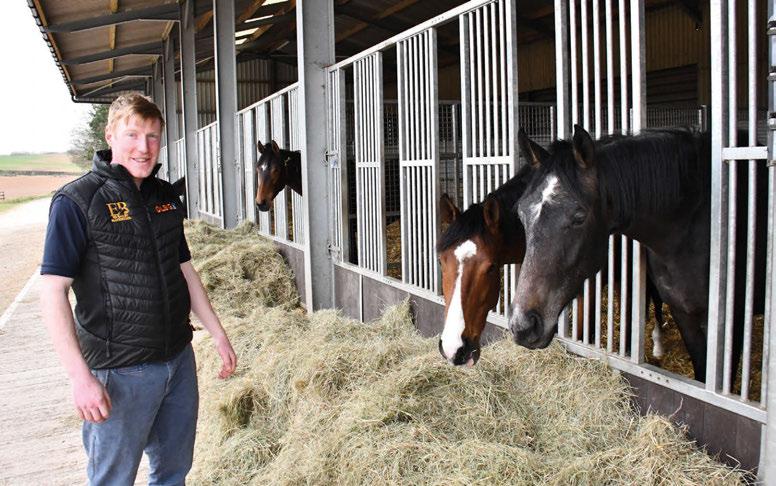
Everything about Ed Bailey’s Herefordshire home has a sense of size. Big skies, large barns and looseboxes with giant doors, a vast farmyard, huge farm vehicles, and horses with deep pedigrees or notable price tags. Bailey’s career as a bloodstock agent and a raiser and grazer of young horses is still at an early stage, but the foundations of his business have been carefully pieced together. Many of his ideas were spawned during a gap year with Paul Nicholls and then a university placement with David Redvers at Tweenhills Stud.
He says: “I was so green when I joined Paul, but everyone was very good to me and helped me out. They let me ride very good horses, Clifford Baker [head groom] was great and I shared accommodation with Stan Sheppard, who was a conditional jockey at the time, and Harry Derham, who was assistant trainer.” Ah, that explains the association which led to Bailey and Derham forging a buying association and purchasing the top two lots at the Tattersalls Cheltenham Festival Sale – for a combined
sum of £720,000.
Of his time at Tweenhills he says: “I was really inspired by how David took on an old farm and has turned it into the most
I wanted to build up a state-of-the-art facility that can produce the best
beautiful estate imaginable. I wanted to do the same and try and build up a state-of-theart facility that can produce the best horses.” Bailey therefore offers a bloodstock
buying service – he made 28 trips to Ireland alone last year to visit yards and sales rings to assess or buy young horses, not to mention trips across the Channel – and also accommodation for horses at various stages of their careers. They include foals and young stores, plus older horses who need a bit of downtime or recuperation. Cristal D’Estruval and Clondaw Park, the four-year-old Irish point-to-point winners who headed the Festival Sale, went straight from the ring to Bailey’s Upton Court Stables for a holiday before joining Derham’s string. Cristal D’Estruval recently made the perfect start to his career under Rules when successful at Warwick.
In addition to buying young horses, he offers a consignment service for three-yearolds heading to the ring, plus a breaking-in option for end-users who want to put their young horse into training. If an owner opts to go down the point-to-point route, his association with Chris Barber, who trains nearby, opens that door. Bailey says of the process: “We want to give our clients’
young horses a good education and the best possible start in life, whether they are eventually for sale or to go into a trainer’s yard.”
Current resident yearlings include a daughter of Golden Horn and the Arkle Trophy and Queen Mother Champion Chase heroine Put The Kettle On. The filly is owned by OLBG, the online betting guide which sponsors Derham’s yard and backs the Mares’ Hurdle at the Cheltenham Festival. She was bought as a foal at Goffs UK for £62,000 by Bailey and the OLBG Racing Club, a combination which at Tattersalls Ireland’s recent November Foal Sale picked up a daughter of Jeu St Eloi for €85,000. She is a half-sister to five winners of which four boast black-type and are headed by Grade 1 hurdles winner A Wave Of The Sea.
Bailey will be keeping a close eye on a Willie Mullins-trained four-year-old called Fou De Toi – who finished third on debut at Auteuil when trained in France – because he has a yearling filly out of a full-sister to that horse. The yearling is by Magic Dream, ››
Ed Bailey (right): has a productive partnership with Harry Derham CARL EVANS CARL EVANS
Ed Bailey with the exciting recent Warwick winner Cristal D’Estruval
ED BAILEY
an eight-year-old stallion standing at Haras de Castillon (see pages 44-48) and whose oldest progeny are three. Bailey says: “Magic Dream is a son of Saint Des Saints. Goliath De Berlais is also by Saint Des Saints and he hit the ground running, so I was trying to get ahead of the curve with the next sire son. I saw this filly in a field and liked the pedigree so it was a no-brainer.”
Stores who Bailey traded at midsummer auctions included a €29,000 Jack Hobbs gelding out of smart mare Atlanta Ablaze –whose 2024 filly foal by Nathaniel topped the TBA’s Goffs Showcase Sale at Doncaster last year when selling for £70,000 – and a daughter of Mekhtaal who he bought for €4,000 as a foal and traded at the Derby Sale for €50,000. She was out of a sister to the dam of Matnie, a queen among broodmares whose string of successful foals include the graded winners Caldwell Potter, Mighty Potter, French Dynamite, Brighterdaysahead and Indiana Jones.
During the lengthy, sun-blessed summer of 2025, Bailey was in his element once work finished and he could wander the paddocks and peruse the residents. He says: “I’m completely obsessed with that. I can wander around fields of horses for hours, looking at youngstock and thinking what they could be. It’s easy to dream.”
Asked which side of his business gives him the most satisfaction he says: “Winners. It’s all about winners. You don’t want to be famous for buying an expensive flop – you want to be known for the winners you buy.
“Big price-tags come with pressure, but the real kick is buying a winner who looks like it can go on to bigger things. That and seeing horses who have come through the
farm and go on to win. An example would be Sweet Caryline, who I bought with Chris Barber and who won the Paul and Richard Barber Memorial hurdle for Joe Tizzard at Wincanton. Richard was Chris’s grandfather. That was just a lovely story.”
The buying side of his business is at a relatively early stage, but with clients that include Derham, Henry Daly and the partnership of Kim Bailey and Mat Nicholls he is sure to be involved with plenty of
The real kick is buying a winner who looks like it can go on to bigger things
winners in the years ahead. Successes to date include JCB Triumph Trial Juvenile Hurdle winner One Horse Town, bought privately as a two-year-old for Derham out of Joseph O’Brien’s yard. He says: “One Horse Town became Harry’s first winner on the Flat and has now won four races over hurdles. Winning at Cheltenham’s November meeting was a real thrill. The horse has been a super star.”
Other Bailey purchases include Good Land, a Grade 1-winning hurdler for Barry
Connell, Daly’s Listed hurdle-winning mare Wye Not and the Chris Barber-trained Aintree Foxhunters’ Chase winner Famous Clermont. Waiting in the wings are some enviable young horses who have been bought in the past year.
Cattle out, horses in
At the farm which his parents Patrick and Sarah bought 40 years ago before raising four children and a prized herd of Simmental cattle, Bailey Jr is making his own mark with his family’s backing.
Arable production remains an important element, one that he works on in summer when jump racing is quiet, but the cattle have gone, horses have moved in and barns have been built or restyled to suit equine rather than bovine residents.
With an eye on the future, a network of solar panels have been installed to power the farm, with surplus being sold back to the national grid. Bailey says: “During Covid food became short on the shelves but that was due to a logistics issue, not a supply issue. I just felt that in a crisis gas and electricity supplies could become a problem. Electricity prices went up three times during Covid which was a big thing for arable farms and it went up again when Putin got busy. I don’t want that risk in the future.”
His journey to this point began at school, not that bloodstock buying and selling was on a list offered by the careers’ advisor. He says: “I was at school with Stan Sheppard and when I went to his house with nothing planned but to mess about I was soon told to get on a horse and ride out. I was very lucky to have a lot of help from Stan’s parents, Matt and Nicky, along the way. If I hadn’t been friends with Stan I wouldn’t be talking to you now.”
On Royal Riviera, who was owned by his father and trained by Nicky Sheppard, Bailey tried his hand at point-to-pointing, unseating on three of his first four rides before gaining places and then a debut win on the same horse. Over four seasons he became reasonably proficient and absorbed a knowledge of jump racing that can only be understood by those who have ridden over a fence, while inwardly acknowledging he would never follow his mate into the weighing room.
He says: “I spent a lot of time at the Sheppards’ house growing up and I really got the bug from them by going racing and point-to-pointing. Stan started riding in point-to-points and I wanted to do the same, but I wasn’t quite as good as him. I really enjoyed riding in races, but I knew it wasn’t to be, and in my second year at university I realised I was committing too much time to the sport and it wasn’t going to work.
“If I do something I want to give it 100
CARL EVANS
Ed Bailey’s Herefordshire base has been in his family’s hands for 40 years
ED BAILEY
››
per cent and I didn’t think I was making the most of my time at university. I went to Cirencester to study agricultural land management, but when I arrived I discovered there was a bloodstock course, so quickly changed onto that.
“The course involved a range of topics including nutrition, equine science, genetics, racing as a business and economics. It wasn’t too testing, and for my final exam I went straight from Doncaster sales to the exam hall having not looked at a book for three weeks. I guess you could call the sales ‘homework’.”
In his final year at Cirencester, Bailey began working on the early stages of his planned career by purchasing young horses and attracting older horses to his family home. He says it never crossed his mind to apply for jobs at well-known seats of learning, although the year spent at Ditcheat with Nicholls and the placement at Tweenhills were important stepping stones.
“While I was at university we had a few horses for Matt Sheppard that came here for box rest and summer grazing, and that made
me think about expanding that side of the business, and I also bought a couple of young horses that went point-to-pointing with Chris Barber. The first two we bought both won. You’re never going to achieve anything staying at home. You have to be out and about and meeting people.”
That policy has opened doors, although a little family association is always handy and, when starting out as a bloodstock agent, enabled him to buy some horses for Kim Bailey and Mat Nicholls. He says: “I’m not related to Kim, but he is my godfather. He’s been very good to me, and some of the young horses we bought together have been running well lately. Five-year-old White Noise has won two hurdles recently, and four-yearold Marsiac won at Aintree in October.”
More recently he has teamed up with the ascendant Derham, the pair making a notable point when securing Cristal D’Estruval and Clondaw Park for notable sums at the Festival Sale in March, before putting £120,000 down to buy another fouryear-old Irish pointer, Lasko Des Obeaux, at the following month’s Goffs Aintree Sale.
He says: “I go over to Ireland every other week when it’s busy, and once a month at other times of year. It’s good fun – you always learn something. Five or six times a year I just go around yards and look at horses who are about to run. They are hard-working trips looking at loads of horses. I also try to get over there for schooling races and on one occasion took Richard Patrick along to ride in schooling races on horses we hoped to buy. He rode Stick To The Board, who we became underbidders on when he sold for £215,000 [to Highflyer/Paul Nicholls] at the recent Cheltenham November Sale.
“Having that level of background information is so useful. You really couldn’t do a better job of looking under the bonnet than to have someone you trust riding a potential purchase in a schooling race. If I see a horse at a yard that I would like to buy I’ll go and see it run in its point-to-point. It’s better than just watching a video – you get to hear their wind as they cross the line and get a general feel for how they behave on the day. You also get a better idea about the depth of the race.”
Last month’s JCB Triumph Trial Juvenile Hurdle winner One Horse Town was sourced privately by Ed Bailey
Sire of 72 individual Stakes performers including 5 Group 1 winners
ALPINE STAR • DURSTON
FANTASTIC MOON • MUSKOKA • ASSISTENT
Sire of German Derby and Oaks winners
Sire of 97 individual 2yo winners including 3 Champion 2yos
In 2025 sire of RAYIF – 2yo Gr.3 winner and Gr.1 placed ORION QUEEN – winner of the Gr.3 Italian St Leger
QUEST THE MOON – dual Gr.3 winner
INSTANT FRAGILE – dual Listed winner
TERM OF ENDEARMENT – Listed winner
Sire of 15 individual Stakes performers including dual Gr.1 winner KALPANA
Sire of KALPANA – winner of the Group 1 British Champions Fillies & Mares Stakes in 2024 and 2025 Group 2 winners DEEPONE and BIRTHE 2025 Group 3 winner SONS AND LOVERS
2025 dual Listed winners ALLONSY and ALMERIC
2025 Listed winners DEEPONE, FLEUR DE CHINE, FRANCOPHONE and SUITE FRANCAISE
11 2yo winners in GB, FR, GER and JPN in 2025 including Stakes-placed KIKKO BELLO in Japan
The Leading European 3rd crop sire in 2025 by % Worldwide Black-Type Winners to Runners*
KALPANA winning the Group 1 British Champions Fillies & Mares Stakes for the second year in a row
RAYIF winning the Group 3 Prix Francois Boutin at 2 in 2025
CASTILLON STALLIONS
PLUNGE Taking the
Haras de Castillon is a new name to the French stallion ranks for 2026 and with a roster headed by Classic winner Marhaba Ya Sanafi, it promises to be a busy debut season
Words: MARTIN STEVENS
The Normandy stallion scene has been reinvigorated by the entrance of several big new players in recent years. Nurlan Bizakov’s Sumbe operation is standing top-notchers like Charyn, Mishriff, Angel Bleu and Belbek at Haras de Montfort et Preaux, while the Chehboub family has built a roster that includes unbeaten champion Ace Impact and fellow Group 1 winners Puchkine and Sealiway at Haras de Beaumont.
Benoit Jeffroy and his wife Annabelle Aime can now also be added to that list. They are launching Castillon Stallions at their Haras de Castillon near Castillon-enAuge next season with a line-up comprising newly retired elite winners Marhaba Ya Sanafi and Tribalist, the Jeffroy family’s own high-class runners Magic Dream and Texas, and transferred former Haras de Bouquetot residents Romanised and Thunder Moon.
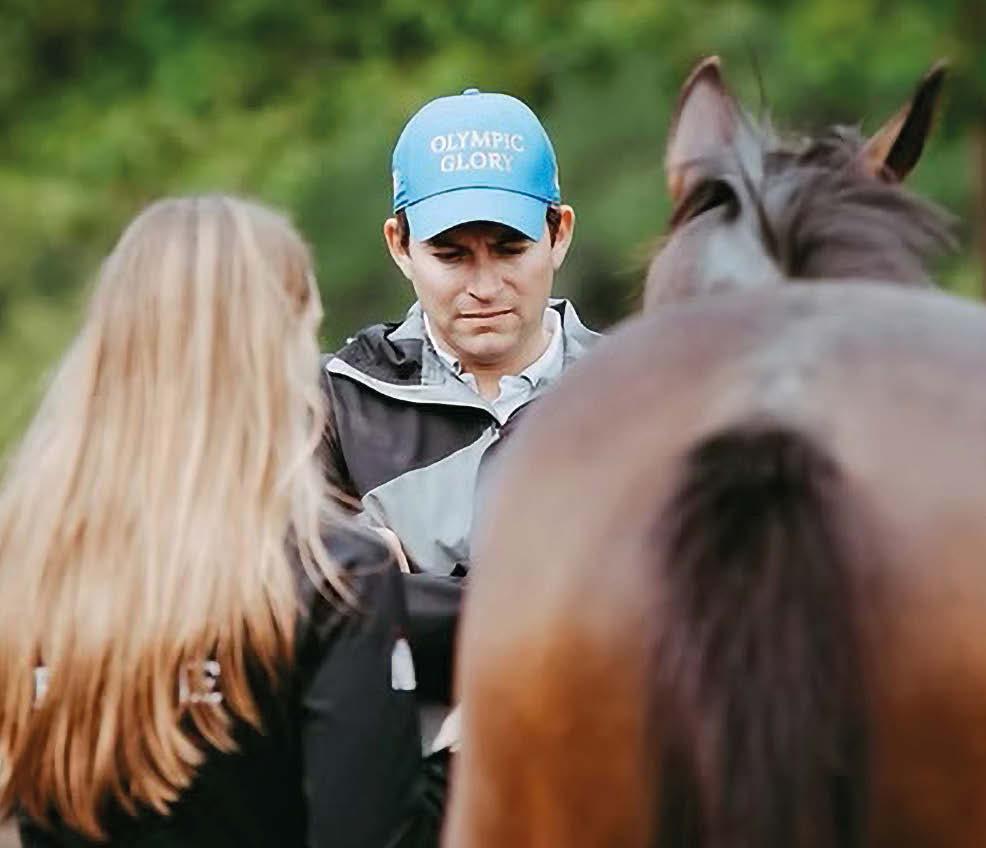
The new venture is the culmination of a lifetime’s work with horses for Brittany native Jeffroy, who says: “My father and
Benoit Jeffroy: set to stand six stallions at his new venture Castillon Stallions
Tribalist: Prix du Moulin winner is standing at Castillon Stallions under the Darley banner
grandfather were livestock traders and they started to breed and race thoroughbreds in the 1970s, so although it was a cattle farm that I grew up on, there were always horses on the place. That’s how I got interested in it all.
“I went to agricultural college and then did the Godolphin Flying Start programme, in between which I worked at Cambridge Stud in New Zealand for seven months. It was a good chance to see the world and learn English.
“I didn’t expect to meet any other French people on the other side of the world but I bumped into Gwenaël Monneraye of La Motteraye in a karaoke bar in Auckland. I’d never heard of him before then, but found that he was from Brittany too. It was an absolutely bizarre coincidence, and we’re still good friends now.”
Jeffroy spent five years as the French point of contact in Darley’s nominations department at Dalham Hall Stud after graduating from the Flying Start course.
“Ironic really, as in those days I was trying to convince French breeders to send their mares to Britain or Ireland, and now
We started off with 35 hectares at Haras de Castillon
I spend my time telling British and Irish breeders they should send their mares to France,” he says with a chuckle.
In 2012, Jeffroy was signed up by Sheikh
Joaan Al Thani and his Qatari associates to run their new Al Shaqab Bloodstock at Haras de Bouquetot in Normandy. The role involved launching high-profile stallions like Olympic Glory, Shalaa and Al Wukair and managing famous racemares such as Treve and Qemah in their broodmare careers.
A little earlier, in 2009, Jeffroy and his brother Thomas had taken on the family farm in Brittany, which operates under the banner of SCEA des Prairies, as their father focused on trading cattle. Six years later Jeffroy established Haras de Castillon in Normandy as a base closer to his and Aime’s workplaces that would work in tandem with Prairies.
Jeffroy’s own breeding business expanded almost by accident, he insists.
“We started off with 35 hectares at Haras de Castillon and used it to stable the mares coming from Brittany to Normandy for the breeding season,” he says. “But when you know lots of people, they start asking if you can take their mares, and then their friends ››
CASTILLON STALLIONS
ask if you can take their mares too, and you start to grow without even trying.
“Then we started to consign yearlings, as other studs were too full to take our horses. We had our first draft at the Arqana Autumn Sale of 2015 and managed to top the final session of the auction with an Air Chief Marshal filly who made €43,000. Selling was made to look easy. Too easy! So in the next year we said why don’t we try the Arqana October Yearling Sale? That also worked, and in 2017 we did the August Sale too. It all snowballed from there.
“As the numbers increased, we bought a second farm and leased another two big parcels of land, and today Haras de Castillon is nearly 1,250 hectares, employing a team of ten people.”
When Jeffroy left Haras de Bouquetot this year, and had more time to devote to Haras de Castillon, the next logical step was to branch out into stallions.
“I thought it was a good time to set up a new stallion station in France, as the industry has shrunk,” he says. “Sumbe and
Beaumont might be new, but Quesnay and Mezeray have disappeared, Logis has stopped standing stallions and Petit Tellier has fewer and fewer horses and the farm is up for sale. So there is space for something new.
“I’ve been working with horses all my life, and always had an interest in stallions – I was trading my father’s nominations as a child – so I thought why not give it a go?
“We’ve taken on my former assistant manager at Bouquetot, Enrico Simone Faccarello, to be head stallion man and to sell nominations, meaning his role has two aspects, which is great. He worked in Bouquetot for five years before leaving to work for Auctav, but when he heard I was setting up he was interested in joining the venture.”
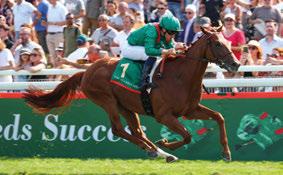
Castillon’s two newly retired stallions are certainly well qualified for the job. Marhaba Ya Sanafi, who was trained by Andreas Schutz for Jaber Abdullah, scored in the Poule d’Essai des Poulains and finished third in the Prix du Jockey Club at three and was a regular in the top mile races in France
at four and five. He is by Muhaarar out of Danega, a daughter of Galileo and Noblesse Stakes winner Danelissima, a close relation to Group/Grade 1 winners Aspen Grove, Intense Focus and Skitter Scatter.
Tribalist was trained by Andre Fabre for Godolphin and proved his class and durability by winning ten of his 25 starts over five seasons in training, including a victory over Charyn in the Prix du Moulin and success in three consecutive editions of the Prix du Muguet. He is a precious stallion son of subfertile Farhh and is a member of his breeder Car Colston Hall Stud’s wonderful Wiener Wald family.
Jeffroy says: “Marhaba Ya Sanafi was also a very good two-year-old and won the Poule d’Essai des Poulains in fine fashion. The Prix du Jockey Club in which he ran third was a vintage renewal, as Ace Impact and Big Rock were first and second and Feed The Flame was fourth. He finished strongly and the race was run in record time.
“He was a tough, consistent horse who always fought and gave his all. I went to see
Haras de Castillon is today a key part of the breeding and selling landscape in France
Aesterius 2YO SPRINTER BY MEHMAS
High-class 2yo sprinter
Won Gr.2 Flying Childers Stakes, Doncaster, 5f, beating Gr.1 Breeders’ Cup Juvenile Turf Sprint winner Magnum Force & Gr.1 Haydock Sprint Cup winner Big Mojo, just 12 days after his Gr.3 victory
“…showing bags of speed as usual, as well as a ver y willing attitude…” Timeform
Won Gr.3 Prix d’Arenberg, Longchamp, 5f
Won L Dragon Stakes, Sandown, 5f, quickening clear to win by 1¼l
Won Novice Stakes, Bath, 5f, readily on debut by 2¾l in May
2nd Gr.3 Molecomb Stakes, Goodwood, 5f, to Big Mojo
“Aesterius is a gorgeous looking colt with brilliant speed and a willing attitude. With his proven class, temperament and sire Mehmas’s record for producing top juveniles, he looks every inch an exciting young stallion prospect.” Richard Brown, on behalf of Wathnan Racing
“Aesterius was a very talented, precocious and straightforward two-year-old.” Archie Watson, trainer Bearstone Stud
CASTILLON STALLIONS
›› him in Germany and I loved him as a physical type too. He’s strong, correct and well put together with a good head on him, and he moves well. He ticked a lot of boxes for me.
“Jaber Abdullah will be supporting him strongly with a nice bunch of mares. He’ll be open for syndication, and we’re putting together an attractive package. We want to get breeders into the horse for the long term. This year’s Arqana October Yearling Sale was not that good, only okay, and it highlighted that breeders need to have access to good stallions at a reasonable price, in order to get a fair return on their produce.”
As for Tribalist, he adds: “He’s very popular in France, as he raced here for so many years and is the only horse to have won the Muguet three times. When people heard we were going to stand him on behalf of Darley they were delighted. He won nine stakes races and he beat a proper field in the Moulin.
“We’re pitching him and Marhaba Ya Sanafi at €6,000 live foal. They’re proper Group 1 horses who were tough and sound, so I think they should attract a lot of custom.”
Texas, a son of Wootton Bassett who split Modern Games and Tribalist when second in the Poule d’Essai des Poulains, and Magic Dream, a son of Saint Des Saints who took a Grade 2 chase at Auteuil at three, are particularly close to Jeffroy’s heart as his family bred and raced them. They have joined Castillon from Haras du Hoguenet.
“My grandfather bought Texas’s fourth dam Texas Beauty in 1987, when I was two years old, and we bred the likes of Never On Sunday, Frankyfourfingers and Penja from the family, so it means a lot to us,” says Jeffroy.
“Texas was a very good horse. He was precocious, but on his third race at two, he shied away from the stick and crashed into the rail and we really had to re-educate him on his next two races so he wasn’t afraid any more. We lost a lot of time with him, which is a shame as I’m sure he could have accomplished more that season.
“He was drawn wide on the outside in the Poulains and ran a big race to finish second but probably gave his all that day, as he didn’t recapture that form.”
Jeffroy describes Texas’s stallion career as a “fun side-project” although it has already turned out to be a profitable one.
“My brother and I thought he’s a nice looking son of Wootton Bassett, so why not give him a go?” he says. “We sent him 20 of our own mares and actually we were rewarded for doing so, as the resultant offspring sold very well at the Arqana October Yearling Sale. We were surprised when we saw them as foals: we thought,
woah, we might have something here. They were strong and had plenty of substance, with a fantastic walk. They move better than Texas does himself, in fact.
“Texas doesn’t have many foals, but he at least has more than Wootton Bassett did at the same stage of his career! He might work, he might not, but he had to be worth a go.”
Magic Dream is being stood by Jeffoy and his family in a similar have-a-go spirit.
“His granddam was bought by my father in the 1990s,” says Jeffroy. “He was a very good three-year-old jumper, and established himself the best chaser of that age in France that autumn. He’s a big, tall model, maybe more the physical type of an Irish jumps horse, so his stock might need a bit more time. He will be represented by his first three-year-olds next year, so it’ll be crunch time for him.”
Texas will stand at a fee of €3,800 in 2026, while Magic Dream is priced at €3,500.
Former Bouquetot residents Thunder Moon, a National Stakes winner by Zoffany who has first two-year-olds next year, and Romanised, a dual Group 1-winning son of Holy Roman Emperor, are each available at €5,000.
“I bought Thunder Moon with a few friends – Al Shaqab has a little share too, which is why he stood there – but as we own the majority and were starting the new stallion business we took him,” explains Jeffroy. “Hls first foals were well received last year and his yearlings sold well this season.
“It’s a very important year for him next year, with his first two-year-olds running, but he has a big chance of making it. Why not? He beat St Mark’s Basilica when he won the National Stakes and was a very unlucky second in the Prix Jean Prat.
“I’m really pleased that we can continue the adventure with Romanised and his owner Robert Ng. He started at a realistic price and managed to get first-crop runners in the Prix du Jockey Club [Curragh Camp] and Prix de Diane [Zia Agnese] this year.
“He gets a good number of two-yearold winners too, and was on a roll in the autumn.
“He might find his way to become a proven, affordable stallion who can get winners, and the odd good one, in the mould of Zelzal. British and Irish breeders might not recognise them, but French mare owners need them.”
Marhaba Ya Sanafi and Tribalist are available to view at Clairefontaine racecourse during the Arqana December Breeding-Stock Sale and they and the rest of the new Castillon Stallions squad will be on show when the farm throws open its gates for the Route des Etalons stud tour in Normandy in January.
Jeffroy is full of enthusiasm and optimism for the new chapter in his career but he isn’t heading into it naively, with his eyes closed. He knows the challenges that lie ahead.
“I speak to breeders all the time, and of course I’m a breeder myself, so I know only too well how much it costs to produce a horse, and the harsh realities of the market, and that you have to be so careful with the nominations you’re paying for,” he says.
“I don’t know where we’re going with French racing, there’s a lot of uncertainty at the moment, but we have to keep positive and work together to make the joys of the sport better known, in order to attract new owners, breeders and punters.
“We have a great system here in France, we just need to make more people aware of it.”
Thunder Moon: Group 1-winning juvenile has his first runners next year
GO BEARS GO
CHAMPION SPRINTER, GROUP WINNER AT 2 AND 3
SOUND BLOODLINES OF KODIAC AND GIANTS CAUSEWAY
Covered over 100 mares in his frst book in 2025
Supported by top breeders including: Oghill Stud, Baroda Stud, Elite Racing Club, Knocklong House, Highfeld Farm, Amo Racing, Tara Stud, Crowhill Farm, Robson Aguiar etc.
TOBY BULGIN
The dream’s
AT 65 ALIVE
Toby Bulgin left racing for three decades after relinquishing his licence in the late 1980s, but his passion never faded and he’s relishing his second crack at training
Words: GRAHAM DENCH • Photos: BILL SELWYN
What on earth would possess someone to go back into training racehorses at a time like this, at the age of 60 and more than 30 years after a first spell with a licence ended with just 20 winners and the realisation that it was time to get a ‘proper’ job?
Well, that’s just what Toby Bulgin has done – and he’s loving it.
At the time of writing, Bulgin is still not quite into double figures in this second spell as a trainer, but he has shown that he knows what he is doing and the statistical hook of having gained all of his last four winners in bumpers first time out has garnered the kind of interest that can only help attract new owners to his new base in Lambourn.
downside, it may prove frustrating seeing winners as promising as Poetisa and Black Eddy running for other trainers.
“We are enjoying it here,” Bulgin confirms. “I’m 65 now and someone said to me the other day that it’s a funny job to pick for your retirement, particularly the way things are in racing. But we are always hearing that it’s not a good time to go into racing, whether it’s austerity, Covid or whatever.
I still do a bit of schooling and I just love being with the horses
What’s more, with three of the successful quartet having been sold on at a very healthy profit, one of them to Willie Mullins no less, there are clear signs that he has come up with a business model that can work. On the
“When is it ever a good time to come into racing? My answer to that is that when you love it is a good time, and I’m loving it. I get up at about four in the morning and I’m usually still around at seven or eight in the evening, seven days a week. I ride out four or five lots every morning and I still do a bit of schooling. I just love being with the horses.”
Bulgin was just 21 when he first took out a licence after a crash course studying under trainers as distinguished as Sir Mark Prescott – “without doubt the best place I could have started” – Stan Mellor, Jim Old and Derek
Kent, and riding a handful of winners as an amateur and a conditional on the way.
He started training at Ashmore in Dorset after buying Old’s yard, and then moved to Shrewton, close to Stonehenge and to Larkhill point-to-point, where he bought the stables of master plotter Richmond Sturdy, where the brilliant mare Sceptre had been trained in the early 1900s.
There were seven winners in his best season, including three with Doll Lars for the colourful Greek-Cypriot owner Michael Mouskos of Captain John fame, but it all came to an end when interest rates rocketed.
Toby Bulgin: enjoying life back in the training ranks and keen to continue with his strategy of selling on promising young horses
“I’d borrowed a fortune and interest rates hit 19%,” he recalls. “I had four young children and thought the best thing to do was to get out, pay everything off, and then start again before things went terribly wrong.
“I needed to make a success of what I did next and I didn’t watch a race or read the racing papers for about five years, but I always hoped to come back. It just took me nearly 35 years!”
Bulgin took a variety of jobs, including sourcing electronic components for overseas markets, and following an opportunity to cash in on being made redundant he bought
a small farm in Essex.
He later purchased a much bigger farm at Methwold, near Thetford, and there for 20 years he farmed up to 1,100 ewes and 250 head of cattle at a time, as well as buying, selling, training and riding point-to-pointers, among them Aintree Grade 1 runner-up Brackenheath.
When he was approaching 60, he felt it was a case of ‘now or never’, and after enjoying a modicum of success as a licensed trainer again with only limited facilities at Methwold, he and his wife Nicola took the plunge, accepting a “decent” offer and
moving to Lambourn.
At New Barn Farm, which was formerly the home of Lambourn’s gallops man Eddie Fisher and more recently an overflow yard for Ed Walker, the Bulgins buy some and breed some, and the idea for now is to bring them on, win a bumper or point-to-point, and then sell. Although success continues to be on just a modest scale, the rewards have been good.
Bulgin says: “Rue Taylor set the ball running for us so far as the bumper winners are concerned when winning at Hexham. Tom Malone came and bought her afterwards and she’s now with Paul Nolan in Ireland,
TOBY BULGIN
where she’s won a couple of hurdles. She was a gorgeous filly.
“Our next winner was Merely A Detail, who I probably should have sold after she won at Doncaster. I suppose I was asking too much, so she’s still here, but she’s eligible for the Great British Bonus, and while the prizemoney was only around £1,800 at Doncaster we also picked up about £9,000 in various bonuses. She’s eligible for plenty more bonuses and hopefully she’ll win a couple of hurdles before she goes chasing.”
The best was yet to come, for Poetisa and Black Eddy both sold well following good wins at Cheltenham and Chepstow.
“Poetisa was very straightforward and as strong as a bull,” Bulgin says. “She was very athletic and worked like an absolute dream before she won at Cheltenham. People said I was mad to turn down some good offers for her before she went to the sales, but luckily I was right and she made £300,000, which did the business a lot of good.
“More recently Black Eddy won really well at Chepstow and he sold well too. He was sold privately and has gone to Mickey Bowen’s, where they love him. They think he’s a monster, which he is.”
The Bulgins have their mares and foals in Norfolk with Sarah Buckley and keep the
other youngsters on the farm in Lambourn, where they have 58 acres of paddocks.
Black Eddy was a homebred and they still have the mare, who has since produced a full-sister to him, a half-sister by Falco, and an “absolutely gorgeous” Kingston Hill colt foal. She is now in foal to Jack Hobbs, so there’s a lot to look forward to from her.
Bonuses make the business model work
It didn’t work out financially for Toby Bulgin first time around, but he seems to have found a more sustainable business model this time, despite these troubled times.
It’s just as well, too, for while he is a public trainer and would welcome new owners, all of the stable’s current inmates are running in the name of his wife, Nicola. Selling when the time is right, ideally after a winning bumper debut, is therefore a crucial element of the business model.
Although Poetisa and Black Eddy were exceptions to the rule, Bulgin tends to stick to fillies, and he concentrates on those who are eligible for the Great British Bonus (GBB) scheme.
“Fillies tend to be cheaper to buy and those that are GBB registered can pick up bonuses in races within the scheme ranging from £5,000 all the
way up to £30,000,” he explains.
“They can win up to £100,000 in total and the bonuses make one hell of a difference to the economics of keeping a horse, particularly when you sometimes might be picking up as little as £1,800 in prize money.”
Bulgin acknowledges the superior gallops available to him now in Lambourn as a big factor in the upturn in fortunes. He says: “I don’t think there’s any secret to getting them ready to win first time out, and touch wood, we seem to have got a bit of an idea of how it works.
“Lambourn is a brilliant place to train, with very, very good gallops. You’ve only got to see the horseboxes in the Jockey Club Estates car park in the morning to know what some leading trainers who are based a long way away think of them.”
The late Barry Hills, who Bulgin
Among others expected to do well in time are a three-year-old filly by Beaumec De Houelle out of Jamie Snowden’s smart mare Ixora and another of the same age by Nathaniel. Neither is named yet, but both will hopefully be out in the spring.
If recent results are anything to go on, they will be worth looking out for.
visited now and again, had some sage advice too, and it’s been taken on board to good effect.
“I remember Barry saying that you don’t have to go fast to get them fit, and also that if you’ve seen it once that’s all you need – don’t do it again,” says Bulgin, who is also a fan of away days, usually at Kempton, for experience, prior to a racecourse debut.
“I’ve kept Barry’s advice in mind and with Black Eddy and Poetisa I knew that for jumpers they both had serious gears. After I’d seen it once, I thought ‘that’s enough’.
“We use what’s called the Peter Walwyn gallop, and we use the back of the hill. I find that if you go up to the back of the hill every Wednesday and Saturday and you keep a tight hold of their heads and just let them quicken up in your hands, they’ll come back happy and they’ll eat up.”
It all sounds very straightforward, and indeed it is, for Bulgin makes no claim to have reinvented the wheel.
“I just try to keep things simple,” he says. “That way I’m less likely to cock things up!”
Toby and wife Nicola with homebred Merely A Detail and Jonathan Burke at Exeter last month
| NEW FOR 2026
Farewell to 'character' Roddy O'Byrne
There are people, especially in this industry, who can touch those from all walks of life. Roger ‘Roddy’ O’Byrne, who passed away last month, was one of those people, whether as a highly regarded judge of horseflesh, a point-to-point enthusiast who was willing to take a chance on any number of young jockeys coming through, or in his place at the helm of his famous downtown Lexington bar McCarthy’s.
The O’Byrne family is one steeped in racing tradition. One brother, Demi,
was head vet to Vincent O’Brien and a key member of Coolmore’s buying team. Another, John, filled the same role for JP McManus.
As for Roddy, he could lay claim to an association with not one but two Grand National winners in Miinnehoma, successful in 1994, and Nick Rockett, who landed this year’s edition of the race for Willie Mullins having begun his career with a point-to-point win at Curraghmore in O’Byrne’s colours. It marked a circle of sorts as it was
under a young Mr W P Mullins that Danny Connors, bought by O’Byrne for just 1,500gns as a yearling, won a Leopardstown bumper in 1989 prior to capturing the Coral Golden Hurdle at the 1991 Cheltenham Festival.
O'Byrne also had a hand in the early career of the Queen Mother's Whitbread Gold Cup winner Special Cargo while more recently his colours were carried on the Flat by Listed scorer Room Service.
“Roddy was a great horseman and
NANCY SEXTON Bloodstock Editor
BILL SELWYN
Nick Rockett: this year's Grand National winner was one of the many big names associated with Roddy O'Byrne
enjoyed life to the full,” says his nephew Timmy O’Byrne, who runs the family’s Lodge Stud in County Waterford. “I bought Nick Rockett several years ago as a two-year-old privately during Covid. He got some enjoyment out of the point-topointers, that was his passion, and to see that horse come out of the point field and do what he did made him very proud.
“His life was an adventure from a very young age. He went from Rockwell College to work for Martin McEnery – Red Rum [bred by McEnery] was a foal at the time. He rode his first winner, Frenchman’s Bend, in 1970. When he was pointing, it was still kind of a hobby, and he enjoyed every minute of it.
“A lot of the good jockeys also rode for him. Willie Mullins, Enda Bolger, Jamie Codd, JT McNamara – he liked the good jockeys but he’d always give the young jockey a chance.”
It was through the pointing field that a young Miinnehoma was developed. Bought for 5,800gns as a three-year-old at the 1986 Tattersalls Ireland Derby Sale, the Kambalda gelding won a point-to-point at Lisgoold in January 1988 prior to continuing his career with Martin Pipe, who saddled him to win the National.
“I remember when they first sat on Miinnehoma,” says O’Byrne. “He was very difficult. I remember being a child watching Nicky Dee on him when they were breaking him – he was like a bucking bronco. The horse was turning himself inside out but Nicky never moved on him.”
In later years, O’Byrne swapped Ireland for Kentucky and with it a stint at Walmac Farm when it was in its heyday as the home of Nureyev and Alleged.
“He worked for Johnny Jones in Walmac,” says O’Byrne. “One week Johnny brought him out on a cattle drive and Roddy always said it was probably the best ten days of his life, on a horse driving the cattle with all the cowboys. He said it was an unbelievable adventure.”
In Lexington, however, O’Byrne will always be remembered as the man behind McCarthy’s, the popular watering hole that is the go-to place for the international bloodstock community, particularly the Irish diaspora.
“McCarthy’s was set up in the early 1990s with his good friend Peter Kiely,” says O’Byrne. “Everyone from every walk of life goes in there, from college students to industry people. It’s a marvellous place, a home away from home. Roddy was unbelievably proud of McCarthy’s. He’d often talk about all the people working in there. There could have been 15 to 20 people working there and they were all stone mad about him, and him the same about them.”
Indeed, it was standing room only in the bar as Roddy’s funeral mass in Kilnagrange was streamed live one Tuesday morning last month at 7am – a time, on occasion, when some of the bar’s diehards might still be finishing up.
“He was a wonderful man to read books,” says O’Byrne. “One of his favourites was Lonesome Dove by Larry McMurtry, and he named a lot of his horses after characters in it.
“It was a privilege and honour to have known him. I bought Room Service for him as a yearling, and he got a great kick out of that horse; to buy just the one horse and end up with him was marvellous."
He would have undoubtedly also taken pride in the win of his Lifetime Ambition in a point-to-point last month at Turtulla. Successful just days after O'Byrne passed away, the gelding was incidentally providing his colours with a landmark 100th victory.
“He was a great character," adds Timmy O'Byrne. "As the priest said at his funeral mass, he was an artful dodger and a bit of a rogue, but he was loved everywhere. He’s touched a lot of lives, young and old, and left a lovely legacy.”
SALES CIRCUIT
Global demand
By CARL EVANS
TATTERSALLS AUTUMN HORSES-IN-TRAINING SALE
A who’s who of racehorses and racing’s movers and shakers descended on Tattersalls’ Newmarket headquarters for this annual exchange of horses in training.
None deserved greater respect than five-year-old White Birch, placed in the 2023 Derby and winner of last year’s Tattersalls Gold Cup, and who was knocked down for 300,000gns, a sum which meant he had generated £1 million in the ring and on the track. He would have made a fascinating jumper had Harold Kirk’s final bid seen him moving to Willie Mullins’ stable, but it was trainer Jamie Osborne and agent Sam Haggas who had the final say with a plan to continue his career on the Flat.
White Birch reflected great credit on Cork trainer John Murphy, who raced the horse in his wife’s colours at two, then sold him to Chantal Regalado-Gonzalez for a career that blossomed.
Twelve months earlier, this sale was topped by Delius. One year on it was Gladius who headed trade when selling for 950,000gns. Blandford Bloodstock’s Richard Brown brought the hammer down on behalf of Qatar’s Wathnan Racing, which has become a major force in Britain.
A three-year-old colt with three wins for Andrew Balding’s stable and a close-up second in the Group 3 Darley Stakes, Gladius’s sale completed a good bit of business for vendors Qatar Racing and China Horse Club, whose names were on the buyers’ sheet when he was picked up for 250,000gns at the Tattersalls October
Another member of Balding’s Kingsclere Stables academy came second on the top-ten list when selling for 600,000gns, a handsome rise on the €70,000 sum paid for him by Kennet Valley Racing as a yearling. Three-year-old Fantasy World, winner of the Listed Noel Murless Stakes over a mile and three-quarters and with potential for Flat or jump racing buyers, will be learning to tackle hurdles after agent Jerry McGrath made the winning bid on behalf of a client at Nicky Henderson’s stable, and while underbidder Ryan Mahon hoped to secure the gelding for trainer Dan Skelton, he soon found a solid alternative.
Push The Limit, from Ralph Beckett’s stable, had finished fifth to Fantasy World in the Murless, but was only beaten two lengths. With a bid of 580,000gns, Mahon – and Skelton – secured their horse, who had been bought for €48,000 as a yearling
QUOTES OF THE SALE
“Compare him to a 300,000gns yearling, I know which risk I’d rather be taking.”
Jamie Osborne, reflecting on his purchase of five-year-old high achiever White Birch.
“I would love to see him coming down that hill at Cheltenham, he looks a real jumper – and that is what he should be doing. He is made to be a jumper.”
Kennet Valley Racing’s Sam Hoskins, a
on behalf of Valmont by Alex Elliott. Another Murless Stakes runner, Nightwalker, who took second in that race for John and Thady Gosden’s stable, made 320,000gns on his way to a place with Newmarket trainer Richard Spencer, who plans to run him in Dubai this winter.
With the top three lots all bought to race on for British stables, the trend for selling domestic jewels abroad might appear to have been checked, and while the fourth horse on the list, 570,000gns BBA Ireland purchase Geography, was bought for export to the Middle East, he arrived at the ring from Peter Schiergen’s stable in Germany.
However, international buyers were circling, and Nico Archdale secured the Clive Cox-trained three-year-old Fearnot with a bid of 500,000gns on behalf of Saudi Arabia’s Najd Stud, while agents with clients in Australia picked up 25 horses valued at a combined sum of more than 3m gns. They included St Leger third Stay
fan of Flat and jump racing, following the sale of Fantasy World to a client of trainer Nicky Henderson for 600,000gns. A prospective jumper for 600,000gns? That would have been a fantasy world in the recent past.
“Normally I am on the phone in the middle of the night. It has been quite a bit easier being here!”
If you can’t beat ‘em, join ‘em. Annabel Archibald, who instead of spending sleepless nights at her home in Australia while talking to agents attending Tattersalls’ Horses-in-Training Sale, turned up in person.
Book 1 Yearling Sale. David Howden then joined those two organisations as part owner.
Gladius, a three-year-old with recent Group form, was bought to join Wathnan Racing
Stuart Boman: busy throughout the week
True, who exited Aidan O’Brien’s yard following a 360,000gns bid from agent Stuart Boman. He was working for Australia-based Briton Annabel Archibald, formerly Neasham.
When the sale’s statistics were pulled together there were slight falls, but little
meaningful change year on year. An 88 per cent clearance rate was slightly clipped, while 1,105 sold horses had turned over just north of 34m gns, a fall of six per cent. The average of 33,565gns was down four per cent while the median dipped six per cent at 15,000gns.
TATTERSALLS AUTUMN HORSES-IN-TRAINING SALE
Top lots
Name/age/sex/breeding
Gladius 3 c Night Of Thunder - Persona Grata Jamie Railton
Fantasy World 3 g Make Believe - Donau Kingsclere Stables
Push The Limit 3 c Le Havre - Sister Dam’s Imperium Sales
Geography 4 g Holy Roman Emperor - Guajara Barton Sales
Fearnot 3 c Invincible Spirit - Alsindi Beechdown Farm Stables
ARQANA OCTOBER YEARLING SALE
A rollercoaster of statistics spilled forth at this five-day sale, where trade took a downturn at Part I, an upturn at Part I:2, downs and ups at Part II, and another up at Part III.
It was a giddy affair, and one which left the French sales company pondering the size of the event after buyers took a selective view of the horses on offer. The outcome at Part I bore shades of the October Sale Book 1, which also produced a bigger catalogue, but resulted in figures that were slightly down. However, the figures matched those achieved in 2023, and when turnover at Arqana’s three key yearling sales – August, v.2 and this one –were combined, the figure exceeded €90m, nearly €5m up on last year.
At Part I, 214 lots went under the hammer, 17 more than last year, yet the clearance rate achieved a below-par 70 per cent, 16 points down on 2024. The 150 horses who changed hands turned over
When the final lot left the ring another sale started, namely the Autumn Yearling Sale. Fireworks were not expected and that prediction played out, with 49 sales from 83 offered lots, a clearance rate of 59 per cent. The event was not marketed as a replacement for Book 4 of the October Sale, which had been dropped this year, but this new label and date worked in a positive way.
True, a pair of 20,000gns top lots –namely a filly by Cracksman and a colt by Land Force – were valuations which mirrored Book 4’s top lot last year, but an average price of 4,708gns was a 39 per cent improvement and turnover of 230,700gns was double.
STATISTICS
Sold: 1,015 (88% clearance)
Aggregate (incl p/s): 34,162,850gns (-6%)
Average: 33,565gns (-4%)
Median: 15,000gns (-6%)
Blandford Bloodstock
JP McGrath Bloodstock
Ryan Mahon/Dan Skelton Racing
BBA Ireland
Najd Stud/Archdale Bloodstock
Fantasy World: Listed winner is now set to go hurdling with Nicky Henderson
Sumbe struck at €450,000 for the top lot, a son of the ever popular Night Of Thunder
ARQANA
SALES CIRCUIT
nearly €14m, a drop of 22 per cent, the average price lost 12 per cent at €92,790, while the median was clipped five per cent to €70,000.
A son of Night Of Thunder out of Listed winner Katara headed trade when selling to Nurlan Bizakov’s Sumbe for €450,000 having been consigned by Windermere Stud. Despite the name matching that of an iconic Lake District village, Windermere Stud is based in Western France and named after a barn at Australia’s Arrowfield Stud where Frenchman Pierre-Hugues Henry and Australian Janine Gandy met before teaming up and moving to his homeland.
PINHOOK OF THE SALE
A colt by Zarak from Haras Des Capucines who was bought for €40,000 as a foal by SAS Le Marais, and resold for €150,000 when knocked down to trainer Christophe Escuder.
Interest in yearlings by Wootton Bassett can only have grown following his lamentable death in September at the age of 17. If mare owners were saddened by his parting, the pain was worse for his masters at Coolmore Stud, who at this sale lifted the pick of his yearlings (on price at least) with a bid of €400,000 delivered by agent Nicolas de Watrigant. Haras du Mont dit Mont consigned the colt who hailed from the immediate family of sire Territories.
ARQANA OCTOBER YEARLING SALE
C
C Wootton Bassett - Shamtee Mont dit Mont
F Wootton Bassett - Sarai La Motteraye
C Siyouni - Creedmoor Channel
F Baaeed - Restiadargent Colleville
Al Shira’aa Racing also got in on the Wootton Bassett legacy when representative Kieran Lalor splashed €350,000 on La Motteraye’s full-sister to the 2021 Prix Marcel Boussac winner Zellie.
A sale of Flat horses in France without a high-priced lot by Siyouni would be like Deauville without the beach, and one of his colts made €320,000 when selling to Anthony Stroud, who became Part I’s leading buyer with nine lots for €1.362m. The Channel Consignment offered the Siyouni on behalf of breeders Al Shahania Stud, the Qatari operation which is dispersing its thoroughbred stock to focus on Arabian horses.
Day two of the sale, titled Part I.2, was a smaller affair with 109 offered lots that resulted in 90 sales and a clearance rate of 83 per cent, which was five points higher than the previous year. Rabbah Bloodstock’s Jaber Abdullah, who had been in free-spending mode at earlier yearling sales, gained the top lot, a €305,000 Mehmas filly who will join Chantilly trainer Andreas Schutz. A sibling to five winners from the family of this year’s Prix du Moulin winner Sahlan, the yearling was bred by Khalifa Al Attiya and consigned by Haras de Castillon.
Part II opened on day three and once again trade was a tad sticky, with falls in all the notable figures including a six point drop in the clearance rate to 76 per cent. Marseille trainer Christophe Escuder bought the €95,000 top lot, a colt by De Treville from Haras des Capucines, while the sole yearling in the catalogue from the first crop of Stradivarius was bought for €72,000 by Jeremy Brummitt and Quantum Leap Racing. That served as a reminder of the unusual carrot the stallion’s owner, Bjorn Nielsen, put to breeders to encourage his use in seasons one and two. It involves big sums for the breeder of any Group-race winner by the sire, and £25,000 for the breeders of Stradivarius’s first ten two-year-old winners – the race is on!
The standard of yearling dipped a fraction at the second session of Part II, at which a Bayside Boy colt headed trade at €67,000, but the figures for turnover, average and median all produced gains of some 50 per cent, and while Part III was
QUOTES OF THE SALE
“Wootton Bassett was an extraterrestrial!”
Nicholas de Watrigant with an interesting observation of the late, great sire.
“Wootton Bassett doesn’t need any introduction from me; he’s one of the best sires of our time.”
Kieran Lalor of Al Shira’aa Racing, with a more conventional view.
“Mr Bizakov thinks about the future, we have a stallion operation, so hopefully we can have the first son of Night Of Thunder standing in France.”
Mario Gussago, Sumbe’s commercial and racing manager, following his company’s purchase of the €450,000 top lot, a colt by the highly-prized Darley stallion.
another notch down in terms of yearling quality there were plenty of buyers at that end of the market. Of 183 offered lots, 153 found a buyer, a clearance of 84 per cent, albeit vendors had to accept falls in the average and median prices. A colt from the first crop of Classic-placed Texas – a son of Wootton Bassett – headed trade at €63,000.
Gwen Monneraye and Lucie Lamotte’s La Motteraye Consignment headed vendors through sales of 41 yearlings for just over €2.3m, while Stroud Coleman Bloodstock was again the leading buyer after sealing winning bids for nine yearlings for €1.36m.
STATISTICS
(including private sales)
Sold: 629 (82% clearance)
Aggregate: €26,548,500 (-10%)
Average: €42,337 (-12%)
Median: €23,000 (-19%)
Mario Gussago of prominent buyer Sumbe
TATTERSALLS IRELAND NOVEMBER
NATIONAL HUNT SALE
Declining foal production numbers on both sides of the Irish Sea are but another headache for racing authorities, although good trade at this annual auction might convince some breeders to keep going.
Record average and median prices are just what the doctor – or the stallion master and mare owner – ordered.
The 632 foals who walked the ring – the smallest number this millennium apart from the Covid-affected year of 2020 –resulted in 432 sales, a clearance rate of 68 per cent, up six points. The average price jumped 24 per cent to a new high of €20,660, while the median of €15,000 was a gain of 30 per cent and another record.
The turnover figure for foals alone came in just under €9m, a rise of 20 per cent year on year.
Trade for a group of 38 yearlings was modest, with just 16 of those offered finding a buyer at an average of €8,513, while the catalogue’s 25 offered mares were light on talent and just 11 found a buyer.
On this occasion the aggregate figure for foals, yearlings and mares reached €9.2m, a rise of €1.3m or 17 per cent, despite 102 fewer lots entering the ring. The smaller catalogue enabled Tattersalls Ireland to drop a short fourth session held 12 months earlier.
Number crunching is for post-sale analysis, but on the day the focus is the horse, and some quality youngsters certainly made the trip worthwhile for buyers. Four foals made a six-figure sum, double the number last year, and purchasers had to work hard to secure choice lots.
Few operations can have gained greater pride from the event than Ger O’Neill’s Capital Stud, which is home to four stallions including Derby winner Authorized. There is rarity value in his
The crowd watches on as the sale-topping Authorized colt sells to Capital Stud
jumping stock, for after spells covering mares in Britain, Ireland and France under the Darley banner he moved to Turkey for two years before O’Neill secured him for the 2024 covering season. Rising 22, he accommodates limited books, but his record with jumpers – think Grand National winners Tiger Roll and I Am Maximus for starters – make his stock desirable. That was underlined at this sale where one of his sons headed trade at €170,000, while the top-ten board included four of his foals, one more than
QUOTES OF THE SALE
Walk In The Park.
The sale-topper’s valuation was the joint-second highest foal price in the auction’s history, and the highest since the pre-bank crash year of 2007, when a Presenting filly out of a half-sister to Best Mate changed hands for €210,000. What a day that was for vendors Sunnyhill Stud, which one lot earlier sold an Old Vic half-brother to Best Mate for €170,000. Sadly he managed just one narrow win in a point-to-point and while she has foaled four winners, none have earned black type.
“We have been trying to buy many horses in France for the past two years, proper jumps horses as stallion prospects, and it is next to near impossible. So, we have figured out that we have to go and buy them as younger horses; foals, yearlings and two-year-olds.”
Capital Stud’s Darragh McCarthy after buying the €170,000 top lot by Authorized. It’s tough at the top!
“Hopefully this is the start of our buying stint.”
It was. JJ Frisby, warming up after buying a Poet’s Word colt with his father Dick for €40,000 on day one, before securing another six foals over the course of the sale for a total of €428,500 and taking the position of leading buyers.
“He is very driven, meticulous and has built up an exceptional team of people and horses.”
Agent Ryan Mahon, buying horses for clients of Dan Skelton, and offering some insight on the man who is looking increasingly likely to be Britain’s champion jumps trainer this season.
“Sarah Rohan is a lucky charm for me and led him up. She leads up my best foals. If you see her leading it’s a good sign.”
Quill Farm’s Cathal Ennis, the breeder of an Authorized colt bought by Timmy Hillman for €92,000. Ennis entrusted the foal’s sale to Michael Moore’s Ballincurrig House Stud and was delighted when his ‘lucky charm’ walked into the ring holding the lead rein.
Buyers Flash Conroy and Charles Shanahan
SALES CIRCUIT
Her story is not over, however, for her colt foal by Walk In The Park was sold for £52,000 at Goffs UK’s Foal Showcase Sale and her daughters could write plenty more chapters.
Back to the present and for the second year running John Dwan’s Ballyreddin Stud consigned the top lot, this time on behalf of breeder Louis Vambeck, with Capital
Stud making the final bid. So son joins father in Kilkenny, for the time being at least, although the plan is to race the colt in France with a view to converting him into a stallion. His half-brother, Six Figures, is a leading four-year-old hurdler in France with a Grade 2 victory and Grade 1 placings in his form.
An identical cross-Channel agenda was announced for the second-highest priced foal, a €145,000 son of Walk In The Park who was knocked down to Gerry Aherne of Coolmore Stud. The price was further justification of breeder Oliver Loughlin’s decision to regain ownership of the Listed-winning hurdler Posh Trish at the conclusion of her racing career. He bred her, sold her for €1,200 at this sale as a foal, then seven years later in 2020 bought her back for €118,000. Her three sold foals have since turned over €330,000.
Charles Shanahan and Ian Ferguson combined to secure Frank Motherway and Conor Cashman’s Crystal Ocean colt for €135,000. Shanahan said he expected their clients would return their purchase to the ring as a three-year-old, while another
TATTERSALLS IRELAND NOVEMBER NATIONAL HUNT SALE
Top lots
Sex/breeding Consignor
C Authorized - Izzy Du Berlais
Ballyreddin Stud
C Walk In The Park - Posh Trish Oliver Loughlin
Vambeck-bred, Ballyreddin-consigned foal made €130,000 to a bid from Dick Frisby and his son JJ.
Twelve months earlier father and son gave €92,000 for a Walk In The Park colt out of Listed hurdle winner En Vedette, and they liked their purchase so much they were back at the ring for the mare’s latest foal. He was not only a full-brother to the Frisbys’ yearling, but also to Lune Brillante, who 24 hours earlier had won a bumper on debut for Dan Skelton.
That almost certainly gave the latest family member an enhanced valuation, and with Ian Ferguson bidding against them the Frisbys had to dig deep to secure their prize.
STATISTICS
Sold: 459 (66% clearance)
Aggregate: €9,199,550 (+17%)
Average: €20,043 (+22%)
Median: €15,000 (+36%)
Capital Stud
Gerry Aherne
C Crystal Ocean - Park The Jet Yellowford & Drumlin 135,000 Charles Shanahan/Ian Ferguson
C Walk In The Park - En Vedette
C Authorized - Lady Shol
TATTERSALLS CHELTENHAM
DAVID MAXWELL SALE
What a way to close a riding career which turned a successful property developer into a widely-admired amateur jump jockey.
David Maxwell never sought plaudits – he was his biggest critic, despite some pretty strong competition from online trolls – but in his own inimitable way he coaxed and cajoled well over 100 winners in races under Rules and point-to-points and gave himself some thrills which most of us will never experience. Not for him a career of amateur riders’ hurdles and chases – no, Maxwell went in deep against the best professional jockeys.
It was never about money – he was in the fortunate position of being able to invest heavily in a sport which will have returned only a small percentage – but he did own some lovely young horses spread around a wide selection of top-end trainers. When he decided that at 47, and with advice from the medical profession, that it was time to quit, he contacted
Ballyreddin Stud
House Stud
Richard Frisby
T Hillman
This Walk In The Park colt sold for €145,000
Champion Bumper fifth El Cairos led the way at £410,000
Tattersalls Cheltenham for advice on how he might disperse his string. One quick look at their profiles convinced the sales company that this was a draft of horses which justified a stand-alone sale, and post racing at Cheltenham’s October meeting provided a perfectly-timed occasion on which to stage it.
The ring filled with leading trainers and agents – which said plenty about the draft – and Gordon Elliott landed the catalogue’s expected big fish, five-year-old El Cairos, who was knocked down to Mouse O’Ryan
for £410,000. Fifth in Cheltenham’s Champion Bumper and then a close second at Punchestown, the son of No Risk At All looks an exciting chase prospect.
Harry Derham had been on tenterhooks at the prospect of losing five-year-old Just Ennemi, who had won over hurdles in France and who he had been nursing towards a British debut for the best part of a year, but a syndicate within his yard came together and ensured the gelding went back to his old box following a bid of £320,000.
Agent Dan Astbury’s £250,000 bid for six-year-old, Grade 3-placed hurdler Off The Jury ensured Mickey Bowen gained a smart recruit for his Pembrokeshire stable, while Fergal O’Brien gained the ex-Venetia Williams-trained In d’Or after the sevenyear-old was sold to one of his patrons, Jane May, for £220,000.
One of the younger horses, four-yearold Midtown Manhattan, had been bought for €205,000 at Punchestown in May after winning an Irish point-to-point. Maxwell did not get to ride him in a race, and he returned to Ireland after agent Gerry Hogan bought him for an undisclosed client in that country with a bid of
TATTERSALLS CHELTENHAM DAVID MAXWELL SALE
Top lots
El Cairos 5 g No Risk At All - Linda Queen
Just Ennemi 5 g Kamsin - Aubane
Off The Jury 6 g Jukebox Jury - La Pelodette
In d’Or 7 g Nidor - La Dauvilla
Midtown Manhattan 4 g Order Of St George - Clara Allen
TATTERSALLS CHELTENHAM NOVEMBER SALE
There is a feel-good factor to Cheltenham’s three-day Paddy Power Gold Cup meeting, which heralds the first good bite at the meat of the jump racing season.
The bonhomie seems to rub off on this annual sale of once- or twice-raced young horses in training, the majority of whom arrive via the Irish point-to-point field. Timing is all, and the date in midNovember is ideal because vendors have time to pick a suitable race in which to run a horse and showcase its credentials ahead of the sale, and buyers can place their purchases with licensed trainers with a view to launching their horse(s) in the spring, if not earlier.
Not even Storm Claudia could dent proceedings – just as well the sale was taking place in Cheltenham and not 50 miles away in flooded Monmouth – and while horses and grooms entered the ring
£210,000. That sum helped towards total turnover of just over £2.25 million, a fraction of the money Maxwell had spent while following his 20-year passion, but well worth the effort of a one-off auction for the sales company.
When the last of the draft left the ring, the now-former amateur provided a calm and reasoned response to the auction’s outcome, showed admirable honesty, loyalty to Tattersalls Cheltenham and no remorse when saying he had turned down £600,000 for El Cairos just ahead of the sale. He said his greatest regret was for those stable staff who had to say goodbye to treasured horses.
With that he said farewell to racing, for now at least. No one will be more welcome should he ever return.
STATISTICS
Sold: 17 (100% clearance)
Aggregate: £2,257,000
Average: £132,765
Median: £90,000
Astbury/Martin Gowing/Mickey Bowen
Gordon Elliott: struck for the top lot
Dawn Of Light, a half-sister to Bravemansgame, headed proceedings at £370,000
SALES CIRCUIT
looking wet and windswept, the demand for some imposing specimens was not to be denied. Of the 49 offered lots, 47 found a buyer (96 per cent), the average price gained five per cent at £98,447, and the median was up 11 per cent at £80,000. The aggregate figure of £4,627,000 was up 45 per cent and a record for the November Sale. It had been bettered only once before at any Tattersalls Cheltenham auction.
PINHOOKS OF THE SALE
A four-year-old filly by Mahler called Dawn Of Light, who thrashed her rivals when winning an 11-runner mares’ maiden race at Quakerstown six days before her date with the auctioneer, became the top lot when selling for £370,000 – one of seven horses who made £200,000 or more.
Being a half-sister to top-class chaser Bravemansgame and capable of producing such a withering demolition job lay behind her valuation, which was created when bloodstock agent Mags O’Toole made the winning bid. Training and owning plans were undisclosed, but vendor Richard Busher could be confident his filly was heading to a top-notch stable, an important element given that he still owns her 15-year-old dam Genifique, and has younger horses out of her coming along. Horses who have shown form under Rules are rarely major contributors to turnover at this type of auction, but whispers suggested Minella Yoga, a Niarchos-bred Study Of Man three-year-old gelding who won an academy hurdle for owner/trainer John Nallen just ahead of the sale, might cause a ripple or two. Being the final lot into the ring was not ideal, but he came within a bid of matching the top lot when Paul Nicholls and Highflyer Bloodstock’s Anthony Bromley stretched to £360,000 to fend off rivals.
Michael Geoghegan, who owned last year’s Coral Gold Cup winner Kandoo Kid, will be Minella Yoga’s new owner, said Nicholls, who also gained four-year-old pointer Stick To The Board following Bromley’s £215,000 offer. A son of Crystal Ocean, he had fallen at the final fence when in contention to land a maiden point-to-point on the Sunday before the sale. The runner-up in that race, a powerful
Not many, if any, Tattersalls Cheltenham sales have catalogued an Orby graduate bred by the Niarchos family, but a Study Of Man colt changed hands at that yearling sale in 2023 for €35,000 when knocked down to Lucky Jack Bloodstock. Just over two years later, having been gelded and named Minella Yoga, he made his debut in and won a Fairyhouse juvenile hurdle for John Nallen. He sent the horse to Cheltenham and collected £360,000 to a bid from Anthony Bromley and Paul Nicholls. Nicholls also bought the Sean Doyle-offered Stick To The Board for £215,000, a healthy rise on the gelding’s €30,000 price when bought last year as a three-year-old store.
TATTERSALLS CHELTENHAM NOVEMBER SALE
Top lots
Dawn Of Light 4 f Mahler - Genifique
Minella Yoga 3 g Study Of Man - Yoga
Soul Asylum 4 g Walk In The Park - Miss Joeking
Eskylady 4 f Maxios - Maple Lady
Stables
Jardin De Tunis 4 g Tunis - Juntina Ballycrystal Stables
QUOTE OF THE SALE
“I was going to keep her and breed her, but then I wanted the money, too.”
Richard Busher, torn by the prospect of selling his home-bred-and-trained filly Dawn Of Light, but rewarded with a £370,000 top lot when he decided to sell.
gelding called Soul Asylum, was knocked down to Gordon Elliott for £280,000.
With Sean Bowen riding winners every day of the week and being talked of (in some quarters) as the new AP McCoy, it would be understandable if his siblings felt overshadowed. Younger brother James need not worry, for he is no less talented and is sitting pretty as number two at Nicky Henderson’s yard, but older brother Mickey had to content himself with a short career as an amateur rider. Now, however, he can make his mark as a trainer, and with owner Martin Gowing in support, Bowen’s Pembrokeshire yard is gaining some valuable new stock.
Gowing, represented by agent Dan Astbury, was underbidder for top lot Dawn Of Light, but still gained another very nice filly in the shape of Eskylady, a £260,000 purchase from Denis Murphy’s yard having won a point in October.
From Wales to Scotland, and the home to which four-year-old Jardin De Tunis will be heading after exiting the stable of Matty Flynn O’Connor – who was in a partnership that bought him for €110,000 as a store –for a box with Lucinda Russell. Her bid of £220,000 secured this most impressivelooking gelding who had won an Irish point-to-point on debut.
STATISTICS
Sold: 47 (96% clearance)
Aggregate: £4,627,000 (+45%)
Average: £98,447 (+5%)
Median: £80,000 (+11%)
Mags O’Toole: landed the top lot
GOFFS BRITISH NH BREEDERS’ SHOWCASE
This important sale, a showcase for the best of British jumps-bred foals, has to find ways of holding the line, maintaining or increasing catalogue size and retaining buyers’ attendance.
It would be sad if it dwindled – but first the good news. At the latest edition the average (£21,400) and median price (£16,000) were both up by double digits, with the former figure rising 11 per cent and the latter by 10 per cent.
Slightly worryingly, but with a falling foal crop being a factor, the catalogue had dropped in size from 100 in 2023, the inaugural year of the sale, to 90 last year and 72 for the latest edition. After withdrawals, 63 lots lined up, including nine mares.
Turnover was down, hitting a sum of £749,000, a fall of 19 per cent, while the clearance rate lost five points at 56 per cent.
Believing the event had become established in years one and two, Goffs opted not to hold a pre-sale show – with some valuable prizes for the top three in two categories – on the afternoon prior to the auction, but that is unlikely to have made any real difference to events in the ring, and given that domestic buyers were joined by those from France and Ireland, the main constituents were in place.
The Mariga family of Cork’s Coolmara Stables have been buyers at the sale since its inception and they again made their presence felt when leaving with the top lot, the seven-year-old Doctor Dino mare La Renommee who was in-foal to Logician.
A seven-time winner over jumps, including a chase victory at Listed level for Richard Newland and Jamie Insole, she was sold to Cathal Mariga for £70,000. He said the Logician foal would be given a thorough look over once on the ground before decisions are made about another mating, but for good measure he also bought a Logician colt foal for £5,000.
A Nathaniel filly from the Aston family’s Cheshire-based Goldford Stud headed foal trade when selling to Jerry McGrath for £60,000, and the same buyer left with a Golden Horn filly from Hannah and Ryan Mahon’s Outhill Farm in Warwickshire.
Goldford also gained £52,000 for a Walk
GOFFS BRITISH NH BREEDERS’ SHOWCASE
Top lots
La Renommee 7 m Doctor Dino - Grande Cavale Linacres Farm
F Nathaniel - One Gulp Goldford Stud
C Walk In The Park - Forever Present Goldford Stud
F Golden Horn - Akilaya Outhill Farm
C Walk In The Park - Kalelula Manor Farm Bloodstock
In The Park colt, sold to Belleville, having been foaled by Forever Present, a mare who was sold at the Tattersalls Ireland November Foal Sale in 2007 for €215,000. That figure remains a record for that auction.
STATISTICS
Sold: 35 (56% clearance)
Aggregate: £749,000 (-19%)
Average: £21,400 (+11%)
Median: £16,000 (+10%)
Belleville
Jerry McGrath
Jacob Pritchard Webb/Richard Frisby
Listed-winning jumper La Renommee headed to Coolmara Stables on a £70,000 bid
The sale’s top foal, a Nathaniel filly
SALES CIRCUIT
GOFFS HIT & YEARLING SALES: DONCASTER AND IRELAND
Goffs would love to attract more horses to its autumn horses-in-training sales which take place in Doncaster, South Yorkshire, and at Kill in Co Kildare.
After this year’s round, which involved single sessions (followed by yearlings) at each of the two venues, the company can point to double-figure rises in average and median prices and higher clearance rates. That is good business, yet the struggle to beef up the catalogues can be seen in a total of 185 offered lots – 92 at Doncaster, 93 at Kill – which compares to 1,157 who walked the ring at the Tattersalls Horsesin-Training Sale. It took place between the two Goffs’ versions.
Once again the highlight for the sale in Ireland was a draft of horses from Aga Khan Studs, which would have been a significant draw for buyers. The 15-strong consignment contributed €637,000 to total turnover of €1,335,000, a handy 48 per cent, and included the top five lots. They were headed by three-year-old colt Tangapour, who won over a mile at two for Johnny Murtagh’s stable and who was placed this year in the Group 2 Royal Whip Stakes.
Agent Alessandro Marconi was at the ring and his bid of €185,000 secured the 104-rated son of Wootton Bassett for undisclosed clients.
Yorkshire trainer Declan Carroll parted with €95,000 to buy another son of
ONLINE SALES
A new sales company based in France will open for business with an online auction in early February.
Aktem, the brainchild of racehorse owner Sofiane Benaroussi, has mapped out five thoroughbred auctions in 2026, kicking off with a sale dedicated to stallion shares and breeding rights. It also plans staging four live sales at MaisonsLaffitte racecourse, which finished staging public horseracing in 2019.
Wootton Basset in the shape of Esherann, a two-time winner for Dermot Weld and rated 92, while Stuart Boman’s €70,000 offer enabled him to sign for Reyenzi, a 101-rated gelding from Murtagh’s yard.
It might be hard to extract improvement from an Olly Murphy cast-off, but Donald McCain – no mean trainer himself – was prepared to take a chance on three-year-old Lord, who headed trade in Doncaster when knocked down for £70,000. Bred in Germany, Lord had knocked up three juvenile hurdle wins for Murphy ahead of his sale.
Murphy soon filled Lord’s empty stable by buying King Jon Oliver, who had twice been placed in maiden hurdles for trainer Lorna Fowler, and who realised £54,000 in the ring, while a dispersal of horses who had been handled by Ben Brookhouse – he has quit training in Newmarket ahead of re-establishing his career in Staffordshire – were headed by the £28,000 sale of five-year-old gelding I Still Have Faith to Stuart Williams.
Doncaster’s day was completed with a selection of 19 offered yearlings of which 12 sold. A £40,000 Mehmas filly and a
Benaroussi, whose fine racehorse Zarakem takes up stallion duties at Haras de la Tuiliere in 2026, has been quoted as saying Arqana’s dominance of bloodstock auctioneering in France is not good for trade.
Interest in ThoroughBid’s October Sale was quiet, with just 13 of 40 offered lots finding a buyer. By far the pick on price was Mars Harper, a nine-year-old Sulamani gelding offered from Gordon Elliott’s stable and knocked down for
£25,000 Havana Grey colt were knocked down to Bond Thoroughbred Ltd, the organisation which runs Yapham Manor Stud and which also acted as vendor.
Turnover of £839,500 in Doncaster was joined by €1.3m worth of HIT horses in Ireland and nearly €4.7m worth of yearlings. A total of 551 horses walked the ring at the last-named sale and 457 found a buyer creating a clearance rate of 83 per. Turnover was up 23 per cent while the average price gained 17 per cent at €10,228.
Helping boost the figures was a large delegation from Eastern Europe which accounted for more than 140 lots, while Italian buyers left with 50 horses. However, it was the home team which accounted for the cream of the sale, with breeze-up specialist Willie Browne buying the €88,000 top lot, a colt by Sioux Nation from Old Carhue Stud.
A €68,000 Starman filly left Jerry Murphy’s Paal House Stud when knocked down to agent Francisco Bernal – who had a mission in Spain for his purchase – while Noel Meade and Peter Nolan parted with €60,000 for Rathasker Stud’s Coulsty colt.
£30,000 to YHF Enterprises. A tough gelding, he had run in 50 races over jumps – including two bumpers – and had won five times while achieving a past rating high of 143.
Tattersalls Online November Sale was about to conclude as Owner Breeder went to press, while GoffsGo, the online sale which is open 24/7, was set to offer a clutch of HIT geldings at the same time. Its foal, yearling and breeding stock sale takes place on December 5.
Willie Browne landed the sale-topping Goffs Autumn yearling, a €88,000 son of Sioux Nation
GOFFS
Bobby O’Ryan (right): bought 94 horses
GOFFS
Choice of CHAMPIONS
“The ease of selling with Tattersalls Online makes it a smooth and straight forward experience. The main factor is less expense, no travel and it is easy for purchasers. The convenience of selling at home gives us tremendous value considering the costs of traveling to a sale. Tattersalls is a sales company we can trust. I’ve been dealing with them for my lifetime in racing and it’s always been a pleasure; their vast experience and wealth of knowledge help hugely.”
Willie Mullins British & Irish Champion Trainer
SALES CIRCUIT
FASIG-TIPTON NOVEMBER SALE
Riding off the back of several major Breeders’ Cup updates, Fasig-Tipton’s boutique November Sale lived up to its billing, yielding no fewer than 27 million-dollar lots, writes Nancy Sexton. In turn, metrics rose significantly across the board, notably the average which increased by over a third to approximately $730,000.
The star attraction arrived late in the evening in the form of Streak Of Luck, a wildcard entry by Aaron and Marie Jones LLC following the success of her two-year-old son Ted Noffey in the Grade 1 Claiborne Futurity and Grade 1 Hopeful Stakes. When that Into Mischief colt went on to consolidate his place as the 2026 Kentucky Derby favourite by taking the Breeders’ Cup Juvenile three days before the sale, the mare duly sold for $6.2 million. It also didn’t hurt that she was in foal to Not This Time, arguably the hottest young sire in the US.
It was Kia Joorabchian’s Amo Racing, looking to bolster his North American broodmare band through Ben McElroy, who came out on top. McElroy said the mare would head to Archie St George’s Brookstone Farm in Kentucky with an eye on a return trip to Not This Time.
A fresh Breeders’ Cup update also came attached to Shisospicy, who flew in from
VIEW FROM THE GROUND
California having captured the Grade 1 Breeders’ Cup Turf Sprint over colts. Co-owner Morplay Racing bought out Qatar Racing in the filly on a valuation of $5.2 million, with plans to race her on with trainer Jose D’Angelo.
Among the busiest participants on the night was Ace Stud, better known in these parts as the Newmarket-based operation that stands Shaquille at the former Dullingham Park. Signing under various names, it came away with $8.275 million worth of stock including one of the most highly-anticipated offerings of the year in Puca, the dam of consecutive American Classic winners Mage and Dornoch. The Big Brown mare had been purchased only two years previously by flamboyant new player John Stewart. As the mare’s record continued to grow – the 2025 Grade 1 Preakness Stakes winner Dornoch and this year’s Grade 1 Pennsylvania Derby winner Baeza have represented her over the past 18 months – Stewart did what he could to monetise Puca, whether by bringing in micro share syndicate Myracehorse as a partner in her 2024 Good Magic colt, or through the launch of a range of ‘Puca merchandise’.
Stewart was also very public in his plans to send the mare to Frankel on southern hemisphere time, but she instead turned up at Fasig-Tipton not in foal, where as the first American Broodmare of the Year to be offered
“Just travelled over here trying to support our two stallions we just retired to Lane’s End, Raging Torrent and Carl Spackler.” Paul Curran after signing at $5 million for Puca on behalf of Ace Stud’s Raging Torrent Syndicate. With the two syndicates also attached to Violent Wave ($1.5 million) and Selenaia ($1.2 million) at Fasig-Tipton as well as Chatalas ($2 million) and Anywho ($1.3 million) at Keeneland, it’s safe to say that neither stallion is going to lack for support.
“I kind of told the guys I probably would have bought her back no matter what. It’s just sentimental value.” Rich Mendez of Morplay Racing after buying out Qatar Racing in the Grade 1 Breeders’ Cup Turf Sprint winner Shisospicy at $5.2 million.
NUMBER CRUNCHING
$1.985 million – the covering average for the five mares who sold in foal to Not This Time. The Taylor Made Stallion, in whom a share was sold for $3 million at the Keeneland Championship Sale ahead of the Breeders’ Cup, is due to stand for $250,000 in 2026.
FASIG-TIPTON NOVEMBER SALE
Top lots
Name/age/sex/breeding
Streak Of Luck 10 m Old Fashioned - Valeria Taylor Made Sales
Shisospicy 3 f Mitole - Mischief Galore Gainesway, agent
in 17 years, the 13-year-old sold for $5 million to Ace Stud, signing through Paul Curran as the Raging Torrent Syndicate.
Raging Torrent, a Grade 1-winning miler for Yulong’s Zhang Yuesheng and Craig Dado, will stand his first season for $15,000 at Lane’s End Farm in Kentucky. Lane’s End has also taken charge of the Grade 1-winning miler Carl Spackler on behalf of Yulong; it was a syndicate attached to that stallion’s name that went to $1.2 million for the Grade 3-winning Sea The Moon mare Selenaia.
As ever, Japanese interests were extremely active, notably Katsumi Yoshida of Northern Farm, which paid $4.5 million for the 2023 champion two-year-old filly Just F Y I in foal to Into Mischief and $3.2 million for Grade 1-winning two-year-old Tenma, a Nyquist relation to Aidan O’Brien’s top two-year-old Puerto Rico.
Hugo Lascelles, working on behalf of an owner with ties to Europe, came away with the most expensive foal, a $800,000 Justify half-sister to Grade 1 winner She Feels Pretty. Lascelles also went to $3 million for the filly’s dam Summer Sweet, a More Than Ready member of a powerful Gerald Leigh family. A measure of the strength of the market can be taken by the fact that 11-year-old Summer Sweet commanded such a valuation despite not being in foal.
STATISTICS
(including private sales) Sold: 144 (77.5%)
Aggregate: $105,327,000 (+9%)
Average: $731,438 (+35%) Median: $322,500 (+29%)
Amo Racing
Morplay Racing Puca 13 m Big Brown - Boat’s Ghost ELiTE, agent
Raging Torrent Syndicate
Just F Y I 4 m Justify - Star Act Hill ’n’ Dale at Xalapa 4,500,000Katsumi Yoshida Tenma 4 f Nyquist - Amagansett Hill ’n’ Dale at Xalapa 3,200,000Katsumi Yoshida
Amo Racing spent $6.2m on A Streak Of Luck
Magic Millions Gold Coast Yearling Sale & Carnival | 10-19 January 2026 Catalogue available from late November 2025
SALES CIRCUIT
KEENELAND NOVEMBER SALE
With the effects of President Trump’s ‘Big Beautiful Bill’, a major tax incentive that makes permanent 100% bonus depreciation, filtering down to the horse industry, rarely has there been so much money floating in North American bloodstock, writes Nancy Sexton. Plenty of it is understandably swirling around at the top end of the market, but it is also flowing down through the middle and lower tiers, all of which was in effect during the latest edition of the Keeneland November Sale.
The market was a continuation of the record-breaking Keeneland September Sale, which had put money into the pockets of plenty of breeders and pinhookers. With various end users also taking the view that weanlings might be the way forward rather than yearlings, November featured a ferocious demand for horses from start to finish that was
KEENELAND NOVEMBER SALE
VIEW FROM THE GROUND
“The energy here is tremendous, and we continue to see an incredible diversity of buyers eager to reinvest after such a strong year. There’s a real sense of optimism and momentum that’s carrying through every session.” Tony Lacy, Keeneland Vice President of Sales.
“It was absolutely bonkers.” Conrad Bandoroff of Denali Stud after selling the sale’s most expensive foal, a Gun Runner colt out of Nickname for $2.2 million to Zedan Racing through Donato Lanni.
“The market is strong, but I think if you put in the time and diligence there are horses to be bought. Like any sale, we all get hyped on how the market is playing and I think a lot of us talk ourselves out of buying horses because of that. There is going to be a marketplace with the new beautiful bill, so in ten months, if we really evaluate the marketplace, I think there are a lot of us who need to put money in the market and I think there are a lot of people who will be there at the other end.” Florida pinhooker Tami Bobo.
reminiscent of the hot market of the 1980s. So strong was this year’s market that gross sales surpassed the 2024 record-breaking level with three days still to run. There were 18 million-dollar horses, among them a $2.2 million foal by Gun Runner. Bought by Donato Lanni on behalf of Zedan Racing, he was the most expensive foal to sell at Keeneland in ten years.
Top billing, however, went to the former Irish-based filly Lush Lips, who came into the sale fresh off a win in the Grade 1 Queen Elizabeth II Challenge Cup at Keeneland for the Magnier family, Paul Shanahan, Medallion Racing and partners, and duly sold for $3.7 million to Dixiana Farm. The farm’s owner Bill Shively said the Kentucky-based farm was on the lookout for top turf fillies and that Lush Lips would remain with trainer Brendan Walsh for a four-year-old campaign.
Grade 1 winner Vahva sold for $3.1 million to Killora Stud and Linton, agent for new players Jenny and Randy Boyd, just days after running second in the Grade 1 Breeders’ Cup Filly and Mare Sprint, while owner Rick Howard bought into this year’s Grade 1 Test Stakes heroine Kilwin on a valuation of $3 million.
The most expensive in-foal mare was Buchu, a daughter of Justify who was a two-time Grade 2 winner at Keeneland.
She was bought for $2.3 million by a partnership between Payson Stud and River Oak in foal to Not This Time.
Bar the Newmarket-based Ace Stud, which was busy acquiring mares to support its new Kentucky stallions Raging Torrent and Carl Spackler, high-end European participation was thin on the ground. Godolphin struck early at $500,000 for a Justify colt foal from a turf female family, while Hugo Merry went to $500,000 for the Bernardini mare Sound The Trumpets on behalf of Imad Alsagar’s Stonereath Farm, the Kentucky division of Blue Diamond Stud.
If anything, the market grew in momentum as the sale went on. As an example, day two yielded total sales that were 61 per cent ahead of the corresponding session in 2024 while the last day of Book 3, traditionally a lower-end market, was headed by a $400,000 mare.
BOOK 1 STATISTICS
Sold: 122 (76%)
Aggregate: $72,737,000 (+17%)
$596,205 (+37%)
(+21%)
Lush Lips: topped the sale at $3.7 million
PROVEN GR.1 SIRE OF SPEED
65+ Stakes winners/ performers
Including multiple Gr.1 winning sprinters
GLASS SLIPPERS & DREAM OF DREAMS
Dream Ahead Washington DC
Sire of Royal Ascot Gr.1 King Charles III winner AMERICAN AFFAIR
Plus other tough sprinters including WASHINGTON HEIGHTS, VENTURE CAPITAL, SONDAD, etc
Europe’s top sire of sprinters standing at under £25k
(5f/6f by earnings 2017 to 2025, Marray Toroughbred Services)
A leading broodmare sire by Stakes winners/horses
For sires with seven crops or lessincluding Gr.1 horses POPTRONIC, LIGHTSABER, TEXAS, and eight new Stakes horses in Europe in 2025
GR.1 SPRINT SIRE £5FEE,500
A leading sire of 5f sprinters by earnings in GB & IRE in 2025
Ranked third behind MEHMAS and HAVANA GREY (Racing Post to 6/11/25)
£3FEE,500OCT1STSLF
Champion 3yo Sprinter won/placed in 15 Stakes races
Half-brother to Gr.1 sprinter AESOP’S FABLES
DR STATZ
Pressure on profits
JOHN BOYCE cracks the code
There can’t have been too many occasions when the Tattersalls October Books 1 and 2 Sales stumbled and all other major auctions made significant progress, but that is exactly what transpired at the yearling sales this year.
While Tattersalls’ two premier sales saw their average and median prices unable to match last year’s highs, both were considerably stronger than their respective 2023 returns. In fact, if we swapped the 2024 and 2025 figures around, we would be judging the market in a more favourable light. Ultimately, the trajectory is still upwards, and it may eventually transpire that the trendline runs through 2023 and 2025, leaving 2024 as a bit of an outlier, particularly given the unusual
circumstances in which Amo Racing added £27 million of new investment.
Using Europe’s six select sales, consisting of the Arqana August, BBAG September, Goffs Premier, Goffs Orby 1 and 2 and Tattersalls Books 1 and 2 auctions as our market barometer, we see an advance in the average yearling price from £124,225 in 2024 to £128,413 this year – a small but significant 3.4 per cent increase given the negative numbers at Tattersalls.
Dividing the prices of select sales into five equal groups in descending order of price gives us real clarity. The average price in quintile one fell by 3.6 per cent this year compared to last term, but it had already increased by 20.8 per cent from 2023 to 2024, so most of the 2024 gains still exist.
(Leading sires by average with five or more sold arranged by fee range)
However, the big positive this year were found in quintiles two to five, which all showed big increases over last year of 11.7, 23.3, 23.9 and 23.8 per cent respectively, thus restoring them to 2023 levels – except for the bottom fifth average, which is still some £5,000 lower than in 2023.
This modest overall increase of 3.4 per cent will be welcome news for all involved in the production and selling of yearlings, even more so given that the equivalent average in the Covid year of 2020 stood at £86,000 and at £102,000 the year before.
In the last five years, the average price for this basket of select sales has risen by a whopping 49 per cent.
Less welcome is the rise in production costs – namely stallion fees. They have
DR STATZ
SELECT SALE AVERAGE YEARLING PRICES PER QUINTILE 2023-25
3 66,32455,674 3.568,64223.3
4 39,97729,570-8.336,64323.9
5 17,95710,282-29.112,73323.8
skyrocketed in the same period. The average advertised fee for stallions represented in the six select sales in 2019 was £28,352. but that has risen to an all-time high of £43,032 this year, an increase of 52 per cent. The average fee this year was also up 14 per cent on 2024. We can conclude, therefore, that most year-on-year yearling price increases are typically swallowed up by increased fees, thus maintaining considerable downward pressure on profits for vendors.
In all, 2,633 yearlings were sold at this year’s select sales and 1,627 (62 per cent) made a profit, defined as advertised stud fee, plus £20,000. Last year, 2,639 were sold and 1,500 (57 per cent) made money for their vendors. So it seems that despite the regression at Tattersalls in October, trading conditions were generally better at the 2025 select sales when considered together.
No prizes for guessing that Night Of Thunder was the highest climber this year, his average for all yearling sales to the end of the Goffs Autumn Sale increasing to £480,000 from £310,000 last year. This chestnut son of Dubawi has enjoyed a breathtaking year, delivering his best seasonal counts of 30 stakes winners and 15 Group winners. The Timeform 130-rated Ombudsman was his headline act together with 1,000 Guineas heroine Desert Flower and more importantly his two-year-olds featured Dewhurst Stakes scorer Gewan, Timeform’s top-rated European juvenile at 118, plus other Group winners Bow Echo, Distant Storm and Hankelow. Moreover, Night Of Thunder will be crowned champion sire in Britain and Ireland this year and will stand for €200,000 next spring.
Among our elite £50,000-plus category, Night Of Thunder boasts not only the highest percentage of profitable yearlings at 91.1 per cent but also the best yearling average to fee multiple of 5.4. Frankel, Dubawi and the recently deceased Wootton Bassett also recorded in-profit percentages of 70 per cent and better. Meanwhile, the Aga Khan Stud’s Zarak marked his entry into the £50,000-plus club this year with 3.3 average/fee multiple, just ahead of Wootton Bassett’s 2.9.
Just as they had done a year ago as third year-sires, Darley’s Too Darn Hot and Blue Point, both with their fourth crop of yearlings at the sales, head our £20,000-
49,000 group of stallions. Too Darn Hot’s daughter Falling Angel added two further Group 1 triumphs in the Matron and Sun Chariot Stakes, while his son Tornado Alert landed the Group 1 Grosser Dallmayr Preis. Group 3 Princess Margaret Stakes winner Fitzella became the first Group winner from his third crop.
Blue Point, meanwhile, sired 12 stakes winners in 2025, including his first thirdcrop Group winner Samangan, who scored in the Group 3 Critérium de MaisonsLaffitte. Blue Point’s best offspring Rosallion also performed well with four Group 1 placings, beaten a nose, neck and shorthead in three of them.
Too Darn Hot’s and Blue Point’s averages were slightly down on last year, but they were the only two in the group with £100,000-plus medians and the only two with profit percentages above 80 and
average/fee multiples of over four. Blue Point remains at a fee of €100k next year, while Too Darn Hot has earned an increase from £90k to £100k.
Havana Grey is finally a member of the £10-19K cohort with his first crop of yearlings produced after his sensational first year success. With a conception fee £18,500, his current yearlings were in great demand and he’s the only sire in the group with a £100,000-plus yearling average and median. The Whitsbury Manor Stud stallion also has the best in-profit percentage at nearly 93 per cent – second only to Night Of Thunder among all stallions – and shares the highest average/fee multiple (6.9) with the latest freshman sensation, Starman. 2025 can be counted as a transition year for Havana Grey with more success anticipated next season with his best-bred crop to date to represent him.
Starman, meanwhile, deserves a lot of
SELECT SALE FEE AVERAGES 2020-2025
credit for having posted five stakes winners, four of them at group level, among his first set of runners. The significance of the achievement is that, assessed against all first-season sires of Group winners this century, the Tally-Ho Stud stallion lies second only to the great Frankel, who sired six Group winners in his first year back in 2016.
Among the sub-£10,000 group of stallions, the clear leader by average price is Sands Of Mali, whose first-crop daughter Time For Sandals put up a season-defining performance at the highest level this year when winning the Group 1 Commonwealth Cup. He’s also responsible for Group 3 scorer Copacabana Sands and has already posted his first second-crop stakes winner in Ipanema Queen. He’s the only stallion with ten-plus sold and a £50,000-plus yearling average that has average and median fee multiples higher than ten, albeit from a small group of 12 yearlings.
Alongside Havana Grey (92.8 per cent), Night Of Thunder (91.1), Lope De Vega (84.7), Too Darn Hot (84.0), Blue Point (83.3) and Starman (81.2), Sands Of Mali is the only other sire with a percentage sold number higher than 80. He will move to stand next season alongside Dark Angel and co at Yeomanstown Stud at an increased asking price of €22,500.
Among the stallions with their first yearlings this year, it was Sea The Stars’s Timeform 137-rated son Baaeed who posted the best average at £190,000 from his initial £80,000 fee, followed by Minzaal (£78,000) and Blackbeard (£76,000). There is no doubt that given his sale results, Baaeed will represent a far more attractive proposition at his new fee of £55,000 next spring and should his first crop fire it could well be a real bargain.
The award for the highest in-profit percentage goes to another son of Sea The Stars, none other than his outstanding stayer Stradivarius (Timeform 130), who counted 75 per cent of his yearlings as profitable after we add £20,000 to his £10,000 fee. Minzaal was the only other freshman with an in-profit percentage above 70. Both Minzaal and Stradivarius also delivered the best average/fee multiples of 5.8 and 5.6 respectively.
BILL SELWYN
Havana Grey: profitable for breeders
Time to hit rarefied air
There is no hotter name in the US right now than Not This Time, a horse who has risen off inexpensive crops to become one of the world’s premier sires.
Not This Time is due to stand at Taylor Made Farm in Kentucky for $250,000 in 2026, making him the joint most expensive American stallion alongside Into Mischief and Gun Runner. Justify follows on a reduced $200,000.
One of Not This Time’s major strengths is his ability to upgrade mares. Whereas Justify and Gun Runner have always been priced out of reach of the average breeder, Not This Time never stood for more than $15,000 in his first four seasons. Over 40 stakes winners emerged out of those crops including eight at Grade 1 level, ranging from a flagship first-crop dirt two-year-old in Princess Noor, to top turf sprinters Cogburn and Sibelius, champion turf horse Up To The Mark and Travers Stakes winner Epicenter.
That group provides a snapshot of Not This Time’s versatility. It doesn’t seem to matter if short or long, turf or dirt, two-year-old or older – like his sire Giant’s Causeway before him, his stock can seemingly do it all. Naturally, it didn’t take the market long to
latch on. Rather like War Front as he rose from his own original level of $10,000, Not This Time’s march swiftly made him commercial hot property and a help to those smaller breeders who had the foresight to use him early on; for instance, yearlings bred off his final $12,500 crop foaled in 2021 averaged around $250,000 at the 2022 Keeneland September Sale.
Today, the market can’t get enough of the horse. The 74 yearlings that sold through the ring this year averaged around $670,000 for a median of $575,000. Mares in foal to him averaged $1.985 million at last month’s Fasig-Tipton November Sale and close to a million at the following Keeneland November Sale. The group included the sale-topping mares at both sales, namely the $6.2 million topper Streak Of Luck at Fasig-Tipton and the $2.3 million offering Buchu at Keeneland.
At the same time, a share in Not This Time sold for $3 million to John Sikura of Hill ’n’ Dale at Xalapa at the Keeneland Championship Sale ahead of the Breeders’ Cup at Del Mar. The transaction theoretically valued the horse at $150 million.
The drive behind this explosion in popularity has been results from the past 12
months. His progeny head into December with over $21.5 million in earnings for 2025, second to only the perennial champion sire Into Mischief. However, he leads all stallions in terms of stakes winners – 25 – and by stakes winners to runners (17.4%). He also has the measure of Into Mischief on the two-year-old sires’ listing by all metrics; winners (32 at the time of writing), stakes winners (seven) and stakes horses (15).
The key fact here is that Not This Time’s current two-year-olds were bred when the horse still stood for $45,000. Obviously his 2022 book consisted of an uptick in quality against his $15,000 years, but it still pales in comparison against the depth covered by Into Mischief, who has stood for a six-figure fee since 2018, and Justify among others. It begs the question what could happen once the first $125,000 crop, now yearlings, kicks in.
Not This Time’s dominance was brought into sharper focus during the Keeneland Fall meet in Kentucky. He was already a top-three stallion by the time the meeting came around thanks to a three-year-old crop that included Troubleshooting, winner of the Grade 1 Franklin-Simpson Stakes on the turf at Kentucky Downs, and the Grade 2 winners
BILL SELWYN
NANCY SEXTON on the rapid rise of leading Kentucky sire Not This Time
Cy Fair (right) turns back Brussels to win the Breeders’ Cup Juvenile Turf Sprint and cap an outstanding month for Not This Time
Magnitude, Giocoso and Clock Tower.
The Keeneland meeting took matters to another level, however.
During opening weekend, Imaginationthelady led home a Not This Time trifecta in the Grade 2 Jessamine Stakes for two-year-old fillies on the turf. The following day, four-year-old gelding Rhetorical won the Grade 1 Coolmore Turf Mile, defeating a pair of European Group 1 winners in the process. And a day later, two-year-olds Final Score and Schwarzenegger won the Grade 2 Bourbon and Listed Indian Summer Stakes.
When racing resumed the following weekend, Time To Dazzle headed a Not This Time one-two in the Grade 2 Franklin Stakes.
Since then, the two-year-old crop has been bolstered by Behold The King, winner of the Armed Forces Stakes at Gulfstream Park, and Balboa, successful at Listed level at Laurel, while among the three-year-olds, Juddmonte homebred Disco Time recently made it five from five in the Listed Dwyer Stakes on Aqueduct’s dirt. He is now reportedly being campaigned by trainer Brad Cox with an eye on next year’s Saudi Cup.
Not This Time’s own racing career was restricted to just four juvenile starts for Dale Romans. He won two of those, including the Grade 3 Iroquois Stakes at Churchill Downs, and also ran Classic Empire to a neck in the Grade 1 Breeders’ Cup Juvenile. He would have
Taylor Made is in possession of a stallion who is well on his way to being the best sire in the US
And if that wasn’t enough, he was represented by seven of the ten runners in the Grade 3 Bryan Station Stakes and duly supplied the first four home, led by the aforementioned Troubleshooting.
In the midst of all this, two-year-old Cy Fair won the Listed Algonquin Stakes at Woodbine to set her up for a crack at the Breeders’ Cup Juvenile Turf. She was ultimately one of nine Breeders’ Cup starters for her sire and went on to hand him a landmark success at the event,
been a leading fancy for the Kentucky Derby off the back of that performance, but he came out of the race with a soft tissue injury and was retired to Taylor Made for the following season.
He’s well bred, being a Giant’s Causeway half-brother to Grade 1 winner Liam’s Map, himself a highly successful sire, and goodlooking, so although he stood for comparatively little at the beginning, he has always attracted the volume of interest to be
winners Sacred Wish and Sibelius ran 49 times between them while Grade 2 winner Next, a marathon dirt runner, packed in 13 wins from 24 starts.
Not This Time is by far the most successful American-based sire son of Giant’s Causeway and interestingly, his half-brother Liam’s Map boasts a similar distinction in terms of his sire Unbridled’s Song, whose list of disappointing sire sons is far-reaching.
The pair are out of Miss Macy Sue, a daughter of the End Sweep stallion Trippi who possesses strong ties to Tartan Farm, a leading operation of its time which bred and raised the likes of Dr Fager, Unbridled and Fappiano under the eye of John Nerud.
Champion Dr Fager was the crowning achievement of the Florida farm but his sister Ta Wee, another champion on the track, also did plenty to further its brand at stud. That plays out in this instance through her presence as the fourth dam of Miss Macy Sue. Indeed, it might be of significance that Miss Macy Sue’s dam Yada Yada is inbred 2x3 to Ta Wee as a daughter of Ta Wee’s high-class son Great Above, himself a successful sire. She is also inbred three times to Intentionally, another former Tartan titan.
All in all, Taylor Made is in possession of a stallion who is well on his way to being the best sire in the US, and possibly in time further afield. His ability to throw good turf runners makes him appealing to European eyes and indeed his 2022 crop includes last year’s Group 2 Norfolk Stakes winner Shareholder. Various European outfits are supporting him, among them Coolmore, Juddmonte and Blue Diamond Stud, and hopefully we will see more compete in Europe
Meanwhile, the next chapter is about to be written via his various early sons to stud. They include Coolmore’s Epicenter, who has a first crop of 203 representatives to run for him
GROW DEVELOP
James Read, Selwood Bloodstock says it all
"D&H Suregrow is a central part of our feeding regime for pregnant mares, foals and yearlings. We have fed the product for a number of years and are delighted at how the youngstock look. It delivers optimal growth and development in the youngstock without them getting too heavy. We even use it during sales prep.
I would happily recommend it to other breeders."
EQUINE ROYALTY
For feed advice, please call our helpline team on 01270 782 223 or email helplineenquiries@dodsonandhorrell.com www.dodsonandhorrell.com
EQUINE HEALTH
Stallion management and fertility: it’s all about marginal gains
By LAURA STELEY
The management of stallions is a topic that often generates considerable debate. Balancing the expectations of mare owners and commercial demands while also providing the highest standard of care for each individual horse takes much consideration and commitment.
During the covering season, stallions require additional energy to support their reproductive activity. There is significant pressure on stallions, particularly those shuttling between hemispheres to breed year-round. Our responsibility, as an industry, is to support them as effectively as possible, helping them produce quality progeny while staying fit, healthy and content throughout long breeding careers.
At this moment in time, the thoroughbred is the only breed which adheres to a strictly natural live cover only worldwide policy, a ruling which had been put in place by James Weatherby when the Stud Book began in 1791. This was to preserve pedigree integrity and traditional breeding methods. Whilst this used to also be the case for many other breeds, in particular native breeds such as the Cleveland Bay, Suffolk Punch, Shire and Clydesdale, they now permit artificial insemination.
An expert’s view
Tullis Matson is a leading figure in equine reproduction and breeding technology in the UK. He founded Stallion AI Services in 2000, which has become one of Europe’s most advanced stallion semen collection and cryopreservation centres. His facilities have collected and frozen semen from more than 1,500 stallions across dozens of breeds, supporting breeding programmes worldwide. A frequent lecturer and trainer in stallion management (including within the thoroughbred sector), semen technology, and lab techniques – his work has earned awards within agriculture and conservation.
Matson advises: “I cannot place enough emphasis on the importance of preparing each stallion as an individual – what works for one stallion may not work for another due to factors such as age, temperament and physiological influences. Attempting
to improve a stallion’s fertility is all about marginal gains, leaving no stone unturned.
“Proper nutrition cannot be underrated, and this is something which I believe the thoroughbred breeding industry already does very well. Fertility supplements can play a vital role, even a small percentage increase is more than worth the while.
This said, in conjunction with NAF, I have fully trialled (at Stallion AI) and thus created Five Star Fertility for Stallions. It is specifically formulated to optimise reproductive performance in breeding stallions, via supporting sperm production, motility, quality, and libido through a synergistic blend of nutrients.
“Key ingredients include natural vitamin E, vitamins A and D3, L-carnitine, zinc, selenium omega-3 fatty acids (notably DHA), L-arginine and the herbs Siberian ginseng and Epimedium. The supplement also contains pre- and probiotics (like fructo-oligosaccharides and Saccharomyces cerevisiae) to help with digestion and nutrient uptake.
“We must bear in mind that sperm fully regenerates every 57 days. Therefore, when starting any kind of targeted feeding or supplementation, allow at least this
amount of time prior to covering to ensure the full benefits can be reaped.
“Older stallions will often have a decreased ability to store sperm and will require a more structured and thoughtout fitness regime to keep them in peak condition. Just like us, a little more TLC can go a long way as we age, and stallions are no different.”
He continues: “When bringing new stallions into the breeding shed, it is vital to build confidence by creating a calm, positive environment. This is where welltrained experienced teaser mares come into their own, as they can really help with the process. When dealing with a particularly anxious stallion there is no quick fix – it takes patience and consistent training/positive experiences.
“In my opinion and experience, the major inhibitors of semen quality in stallions are stress, pain, and genetics. Stress and pain are often underestimated in just how much of an influence they have. A stallion’s mental state can have a profound effect on the production and quality/shape of their semen, as well as seminal fluids.
“I have witnessed vast and very quick
BILL SELWYN
Stallions should be fit, not fat
EQUINE HEALTH
››
semen quality improvements following something as simple as a change of the stallion’s environment. When housing stallions together, a straightforward swap of boxes can help if, for instance, a more dominant stallion is having a detrimental effect on his colleagues! This is now something I will always pay plenty of attention to, before investigating more complex causes.
“Getting to know a stallion’s individual physical limits and then trying to work within them is pivotal when trying to avoid injury and sustain libido. For example, pain during ejaculation can make a stallion reluctant to breed and can compromise semen quality. It is so important to identify and address pain issues early on; this is where flushing stallions has a dual purpose ahead of the season.
“Another point to consider is warming them up before covering, especially in cold weather. You will not see marathon runners shivering whilst waiting for their race to begin and although a stallion has a vastly different career to the one on the racecourse, they are still athletes and should be treated as such. I would recommend at least 30 minutes of exercise prior to cover and daily turnout all year round really is the optimal routine.
“To touch on inbreeding and its potential effects on sperm quality, there is of course still much to learn. The study ‘Does inbreeding contribute to pregnancy loss in thoroughbred horses?’ by Jessica M. Lawson and Charlotte A. Shilton Et Al, made for interesting reading. The first to investigate the effect of genomic inbreeding levels on pregnancy loss, results showed that inbreeding is a contributor to mid- and long-term pregnancy loss, but not in early pregnancy loss in the UK thoroughbred population.
“Rather than using pedigrees to ascertain inbreeding as commonly done when deciding on matings, a genomic inbreeding co-efficient was calculated via genotyping and detection of runs of homozygosity. In a nutshell, pregnancies with mid-to-late loss had inbreeding present in the last few generations. Based purely on my practical experience – this has not been studied in an official manner – I have noted increased seminal fluid in breeds which are more closely inbred, such as thoroughbreds and rare breeds when compared to say, Warmbloods.
“In conclusion, it is all about marginal gains; things like behaviour management, cover timing and mental preparation can all improve fertility rates. Semen extender has its place and ensuring you find the right extender for each stallion is crucial.
“When assessing semen quality,
When bringing new stallions into the breeding shed it is vital to build confidence by creating a calm, positive environment
dismount samples aren’t the most reliable as we would hope that most if not all the semen has been deposited in the mare. A full semen collection can provide much useful information and, in my experience, has no adverse effect on the stallion continuing to cover naturally. Ultimately, stallion welfare is the number one priority, which goes hand in hand with productivity
thus meeting performance goals or forecasts.”
Optimising fertility through nutrition
Diet plays a key role in the reproductive performance of a stallion, so meeting nutritional needs throughout the breeding season is essential. Requirements vary
EQUINE HEALTH
›› depending on factors such as age, experience, number of mares covered, temperament, management routine, climate, forage quality, health status, exercise, and body condition. While it is difficult to assign an exact value to the additional energy a stallion requires during the season, it is generally accepted that needs rise by around 20% compared to maintenance.
Body condition should be monitored closely, aiming for ‘fit, not fat’. Some stallions lose weight as the season progresses, while others remain on the heavier side, so management must be tailored individually. Those inclined to drop condition may benefit from entering the season at the upper end of ideal body condition.
High-quality forage with elevated digestible energy (at least 9.5 MJ/kg) and a good level of protein should form the foundation of the diet. A stallion typically needs 2-2.75% of bodyweight per day in total feed (forage plus concentrate), while forage should remain at a minimum of 1.5% of bodyweight to maintain a healthy digestive system and warn against equine gastric ulcer syndrome (EGUS). Daily turnout is advantageous both nutritionally and mentally; there is no true substitute for ‘Dr Green’.
There are a wide range of digestive support supplements on the market, including prebiotics, probiotics, postbiotics and mycotoxin binders. These can help support a healthy hindgut environment and reduce digestive discomfort, particularly during periods of stress or changes in diet. This can be particularly useful for more highly-strung or easily stressed stallions during the covering season. Due to the number of mares most thoroughbred stallions cover, forage alone rarely provides sufficient energy, protein and micronutrients and a stud balancer and/or a complete feed is usually required.
More energy
The increased energy demand during the breeding season is best met through fibre and oil, both of which provide slow-release, highly-digestible calories without encouraging excess excitability. Oil can be fed at relatively elevated levels of up to 100 ml per 100 kg of bodyweight per day and is an efficient energy source for working muscles. It also avoids the risks associated with cereal-heavy diets, such as gastric ulcers and laminitis. Lower-starch performance feeds or added oil sources (such as micronised linseed or vegetable oils) are particularly useful for horses prone to digestive sensitivity or over-exuberant behaviour.
When additional oil is included, vitamin
E must be increased accordingly. Vitamin E is required for the safe utilisation of dietary fats, and imbalances can lead to oxidative stress within the body. Maintaining flexibility in the diet is helpful from a management point of view, a nutrient-dense balancer allows energy intake to be adjusted without upsetting the diet’s nutritional balance.
Crude protein levels of approximately 12-16% are required. Younger stallions aged three or four will still be reaching physical maturity, meaning they will have even higher protein needs to support growth and muscle formation alongside breeding duties. Optimal intake of highquality protein and essential amino acids, particularly lysine, supports muscle tone, topline and sperm health.
Targeted nutrients
Semen contains high levels of lipids, which makes sperm cells vulnerable to oxidative stress. Natural antioxidants play a key role in protecting against damage to cells and DNA, and the most critical of these are vitamin E and selenium. Both support sperm quality and production, and vitamin E may also enhance libido. Natural vitamin E sources have been shown to have superior bioavailability compared to synthetic forms. Selenium supports testosterone production and normal testicular function, although care is needed because the range between safe and toxic levels is narrow.
Additional antioxidants can be useful in certain cases, including older stallions, those with high workloads and stallions with known fertility issues. Vitamin C and L-carnitine are commonly used to support stallion fertility, primarily through their roles in cellular energy metabolism and
antioxidant defence.
L-carnitine supplementation has been shown to improve sperm motility, mitochondrial function, membrane integrity, and overall semen quality in stallions. Coenzyme Q10 (CoQ10) has gained interest recently due to its role in mitochondrial energy production and antioxidant recycling. Reduced CoQ10 levels have been associated with poor semen quality and supplementation with bioavailable forms such as ubiquinol has demonstrated advantages in equine studies and in research on male fertility in humans.
Trace minerals also influence reproductive performance. Zinc is involved in testosterone production, sperm formation and motility, while copper is linked to libido and semen quality. Omega-3 and omega-6 fatty acids are essential, but traditional equine diets often supply far more omega-6 than omega-3. Fresh grass provides a favourable balance, yet many stallions are stabled for lengthy periods during the covering season, reducing natural omega-3 intake. Supplementation, particularly forms rich in DHA, has been shown to improve semen quality in both fresh and cooled semen by supporting the lipid structure of sperm cells and their membranes.
Many successful stallions continue breeding into their early 20s, although a gradual decline in fertility and libido is normal with age. Certain adaptogenic herbs may help support the body’s ability to cope with physiological and metabolic stress associated with ageing and workload, which can indirectly influence overall vitality and libido.
Reputable feed companies formulate stud diets and supplements with appropriate micronutrient balancing and provide expert guidance when required. As previously discussed, fertility issues do not always stem directly from nutrition; targeted support of key micronutrients can help maintain healthy sperm production and function. Any supporting supplementation should ideally begin by mid-December, linking in with the 57 days for sperm regeneration. Even small improvements, just 2–3% in sperm motility or morphology, can make a significant difference.
Reference
Lawson, J. M., Shilton, C. A., Lindsay-McGee, V., Psifidi, A., Wathes, D. C., Raudsepp, T., & de Mestre, A. M. (2024). Does inbreeding contribute to pregnancy loss in Thoroughbred horses? Equine Veterinary Journal, 56(4), 711–718. https://doi. org/10.1111/evj.14057
Tullis Matson: ‘we must bear in mind that sperm fully regenerates every 57 days’
TULLIS MATSON
EXTRA SUPPORT FOR YOUNGSTOCK PRONE TO DODS
AIDS SKELETAL DEVELOPMENT
SUITABLE FOR MARES AND YOUNGSTOCK
FOR SKELETAL DEVELOPMENT
Pelleted supplement scientifcally formulated to provide 10 key ingredients necessary to support cartilage and skeletal development of foals in-utero and throughout growth.
> Calcium & Phosphorus – in the ideal ratio of 2:1 to optimise bone development
> Chelated Copper & Zinc - vital throughout pregnancy to maximise the foal’s own stores
> Silicon – a bioavailable source of silica, a critical component to maintain healthy bones, tendon and ligaments
> Vitamin D – necessary for the absorption of calcium and phosphorus
> Vitamin K – to support bone formation and mineralisation
> Chelated Manganese – for the synthesis of chondroitin sulphate, important for healthy joints
> Lysine & Methionine – essential for collagen formation, a key structural protein in bones
NEW PELLETED FORMAT
Advances in fracture management
By WILLIAM BARKER MRCVS BVSc MVetMed DipECVS MRCVS
Over the past decade, equine fracture management has undergone significant advancements, primarily driven by technological innovation and, subsequently, improved education and understanding of fracture configurations. As a result, both the number and the complexity of fractures being successfully repaired has increased, leading to better outcomes for our equine patients.
Advanced diagnostic imaging
One of the most impactful developments has been the adoption of advanced diagnostic imaging techniques, particularly computed tomography (CT) and magnetic resonance imaging (MRI). CT has become more accessible and affordable, with increasingly sophisticated machines entering the equine market. This technology enables 3D reconstructions of complex limb fractures, offering superior definition compared to traditional radiography (Fig 1). Consequently, more complex fractures can be repaired with greater mechanical integrity.
Improved imaging has also facilitated a shift in surgical technique – from large open incisions to minimally invasive procedures using plates and screws inserted through small ‘stab’ incisions. This approach reduces tissue trauma and allows for a quicker recovery.
CT-guided surgery
As experience with CT technology has grown, CT-guided surgery has become possible within theatre suites (Fig 2), further improving the precision of fracture repairs (Fig 3). More recently, the development of standing CT units has allowed limb assessment without the need for general anaesthesia. This innovation has significantly increased accessibility and enabled earlier detection and screening of injuries.
Enhanced understanding of fracture configurations has also led to the development of bespoke immobilisation techniques trackside. These include increased use of lower limb casts and the introduction of purpose-built fracture boots, which provide immediate immobilisation and help to alleviate pain and anxiety in equine patients.
Minimally invasive fracture repair
Minimally invasive techniques have revolutionised the management of distal limb fractures in horses (Fig 4a). More horses than ever are undergoing surgical repair, with
2: In theatre set-up of CT, with the patient and CT unit in the background. In the foreground, the surgeon is viewing and manipulating the CT images using sterile keyboard and mouse to ensure accurate screw placement is achieved
consistently improving outcomes. By limiting the size of incisions, these techniques reduce the risk of surgical site infections and wound complications – issues that were historically more common in complex fracture cases. Implants are introduced through small skin incisions, preserving blood supply at the surgical site, minimising disruption to the fracture, and reducing bacterial contamination (Fig 4b).
Advances in surgical implants
The complexity and effectiveness of surgical implants – particularly plates and
Figure 3: CT guided surgery - the drill sleeve (top) can be appreciated to the right of a third tarsal bone fracture ensuring the drill will enter the bone the correct trajectory and below, following screw placement, accurate positioning is confirmed using CT in the centre of a narrow third tarsal bone slab fracture
Figure 4: X-ray (left) of a highly complex complete propagating medial condylar fracture of the front cannon bone with a secondary fracture into the knee joint and splint bone fracture. The X-ray demonstrates the complexity of implant placement with all implants placed through small stab incisions under CT guidance, and right, the same patient showing the multiple small incisions the plates and screws were introduced through
screws – have improved markedly. Locking compression plates (LCPs) have had a transformative impact on fracture stability. These plates offer enhanced rigidity due to
Figure 1: A 3D CT model of a complex pastern fracture viewing the front (l) and back (r) of the bone. CT has allowed an improved understanding of the configuration of fractures, and this has facilitated more structurally sound repairs through smaller minimally invasive incisions
Figure
Figure 5: Advances in plates and screws (implants) available for use in the horse have increased in recent years. This is an example of a lock plate where the screw’s head can be ‘locked’ (bolted) into the plate making a rigid, fixed (90°) angle between screw and plate (bottom screw in plate). Traditional screws (top screw in plate) can also be used in these plates allowing flexibility in screw positioning
the fixed-angle relationship between the screw and plate, providing superior stability compared to traditional constructs (Fig 5).
In cases where minimally invasive techniques and LCPs are used, horses are more likely to recover successfully even if postoperative infections occur, compared to outcomes with older methods.
Arthroscopically-guided repair
Fractures in racing thoroughbreds often involve joint surfaces, and can result in uneven cartilage alignment. If not accurately reduced, these fractures can lead to joint irregularity, arthritis, and persistent lameness, even if the bone heals properly.
Arthroscopically-guided fracture reduction allows for precise, congruent joint alignment (Fig 6). It also enables assessment of joint surfaces for additional damage, such as cartilage loss or soft tissue injury, which is critical for establishing a prognosis. Bone fragments within the joint can be visualised and removed using arthroscopy, further improving outcomes.
Conclusion
Advancements in fracture repair techniques and technologies have led to significantly improved outcomes for equine patients. More horses are now able to remain in training or transition successfully to alternative careers, reflecting the progress made in this vital area of veterinary medicine.
Update on the configuration of propagating spiral condylar fractures in the hindlimb cannon bone
Condylar fractures of the cannon (third metacarpal/metatarsal) bones are the most common long bone fractures in thoroughbred racehorses. However, the configuration of propagating ‘spiral’ fractures has remained poorly understood, posing challenges for veterinary surgeons globally. Difficulties in managing these fractures – both acutely on the racetrack and surgically – are well documented, with catastrophic mid cannon bone failure in the postoperative period being a recognised complication. Without a full understanding of the fracture configuration, the cause of catastrophic failure remained unclear and hence difficult to prevent.
In the 1980s, due to limitations in diagnostic imaging and understanding, it was advised that fracture repair be limited to the distal portion of the bone where the fracture remained in a front-to-back (parasagittal) plane and relatively straightforward to interpret, leaving the fracture unrepaired more proximally where it begins to rotate around the bone’s long axis. By the 2000s, Newmarket Equine Hospital recommended more proximal repair using an open skin incision to visualise the fracture lines in the bone and ensure accurate screw placement relative to the fracture trajectory. However, full
Figure 6: Fractures in thoroughbreds frequently involve the joint surface and an uneven joint surface can lead to career ending arthritis. Arthroscopy (keyhole camera within the joint) allows for guided manipulation of the limb and re-alignment of the joint surface reducing the risk of arthritis. An arthroscopic probe is used to help realign the joint surface prior to screw placement (top) and ensures a flat joint surface once the fracture is compressed (bottom)
comprehension of the fracture’s configuration remained elusive, particularly as the fracture moved up the bone (propagated) out of view behind the splint bones on the back (plantar) aspect of the bone.
In 2025, following review of over 400 CT – mapped condylar fractures – including 50 propagating medial condylar fractures in hindlimbs, the trajectory of medial propagating spiral condylar fractures can now be predicted, and the mechanical significance of the configuration better understood. This understanding allows accurate and bespoke repair that can be rationalised based on a complete understanding of the fracture’s configuration. In the 50 propagating medial condylar fractures assessed with CT at NEH, 47 (94%) followed the configuration set out below.
Fracture configuration segmented into thirds
Distal (lower) third of the cannon bone
At the fracture’s origin, the fracture is in a ››
WILLIAM
WILLIAM BARKER
VET FORUM
Figure 7: CT 3D reconstruction of a complete propagating medial condylar fracture in the cannon bone, front view (left) and back view (right). At the bottom of the bone where the fracture starts the fracture is in a front-toback plane and as the fracture moves up the bone it rotates in a predictable manner turning into a side-to-side (frontal) plane in the mid cannon before the fracture becomes complete on the back of the bone around the level of the nutrient foramen
›› (front-to-back) parasagittal plane, typically originating from the condylar groove of the medial condyle. As the fracture propagates up the bone, it should be assessed in two cortices: front (dorsal) and back (plantar). The fracture in the back cortex consistently moves toward the outside (lateral) cortex, generally entering it at the level of the button of the splint bone. Meanwhile, the fracture in the front (dorsal) cortex remains straight (parasagittal, Fig 7a).
Middle third of the cannon bone
In the middle of the bone, the back fracture line (now in the outside lateral cortex) continues to move up the bone (propagate) within the outside cortex, while the front fracture line moves into the inside (medial) cortex.
Proximal third of the cannon bone
As the fracture moves up the bone (propagates) from the middle to the top (proximal) thirds, the two fracture lines may converge – an observation not previously reported in the literature. The back (plantar) fracture line moves out of the outside (lateral) cortex back toward the back (plantar) cortex, and the front (dorsal) fracture line continues through the inside (medial) cortex into the back (plantar) cortex, with the two lines potentially joining near the nutrient foramen (where a blood vessel enters the bone) and most importantly completing the fracture (Fig 8c).
Figure 8: CT 3D model with the fracture fragment removed. When complete, weight is transferred through a narrow strut of remaining cannon bone as shown. This narrow strut of bone is prone to failure (at the dashed line) and results in catastrophic cannon bone instability. Surgery should ensure any weakness in this bone is supported with a buttress repair: a) outside (lateral) view b) front (dorsal) view c) inside (medial) view d) back (plantar) view
Mechanical implications of the fracture on weight-bearing
If the fracture becomes complete, the medial condyle and its attached mid portion of bone contribute minimally or not at all to weight-bearing. Instead, weight is transferred through the remaining lateral condyle, the dorsolateral strut of bone, and the unaffected proximal portion of the bone (Fig 8).
This understanding reveals that catastrophic failure occurs in two distinct stages:
1. Completion of the medial condylar fracture in the back (plantar) cortex at the level of the nutrient foramen (Fig 8c-1).
2. Subsequent failure (most commonly postoperatively after partial repair) of the narrow dorsolateral strut of bone. Once this second fracture occurs, the dorsolateral strut is no longer intact, preventing weight transfer between the hock and fetlock, resulting in catastrophic limb instability (depicted by the dashed line, Fig 8a-2).
Implications for surgical repair
With the configuration now understood, the repair technique can be tailored to the specific fracture pattern (length of propagation and completeness). For incomplete fractures, lag screw fixation is appropriate. In cases of complete fractures, the dorsolateral strut should be supported using a technique known as buttress
plating to prevent secondary catastrophic failure, eliminating the need for prolonged immobilisation in cast or cross-tying.
At Newmarket Equine Hospital, this understanding has revolutionised the repair of propagating condylar fractures in hindlimbs, resulting in improved survival and has also informed approaches to similar fractures in other long bones, including forelimb cannon bones and the proximal phalanx.
9: Examples of fracture repair. Left: propagating fracture repair using screws alone. This technique can be insufficient in severe cases to prevent catastrophic failure. Right: screw and plate repair providing buttress support of the vulnerable bone strut
WILLIAM BARKER
WILLIAM BARKER
WILLIAM BARKER
Figure
ROA FORUM
AThe CEO Column
By LOUISE NORMAN
s we approach the end of 2025, it feels timely to pause and reflect on a year of listening, learning and laying foundations for meaningful progress on behalf of racehorse owners.
What has guided and motivated the ROA most over the last 12 months is simple: owners are essential to British racing – emotionally, financially, and culturally. However, from our research conducted earlier in the year, we heard from you that often, as owners, you do not feel recognised or valued as you should. Our work this year has focused on turning that message into action.
Listening to owners and responding
Back in the August edition, we shared a detailed summary from our most comprehensive programme of owner insight to date. This research, involving more than 1,400 owners and ROA members, offered us a candid and at times sobering view of the ownership experience.
Owners told us they care deeply about the sport and the horses at its heart, yet many feel weighed down by cost, admin
and a lack of clarity about what the ROA stands for. More worryingly, only 6% said they expected to increase their ownership over the next five years, while nearly half planned to reduce their involvement. This insight has sharpened our focus. Owners are asking for:
• A better raceday experience, more recognition and consistency
• Improved clarity and transparency around costs
• A clearer understanding of the ROA’s purpose and benefits
• Communications that feel more relevant, timely and accessible
Over this year we have turned this insight into a programme of tangible work, which includes:
• ROA Owner Relations, jointly established with the BHA in January, working with the industry and racecourses to improve the raceday experience for owners and explore more personalised central recognition
• Supporting a simplified BHA owner fee structure, introduced in October, including sustained discounts for
ROA members
• Communications, focussed around four pillars to sharpen our purpose and strengthen how we champion your voice, we have also refined our communications with more timely communications, relevant to you, the owner.
This is not instant change, but it is meaningful momentum. And it is only the start.
Strengthening owner representation
This year also marked an important chapter in how we represent owners at the heart of the sport.
We welcomed the appointment of Lord Allen, whose tenure as BHA Chair has brought a renewed focus on governance and long-term stability for the sport. We continue to work closely with the BHA to ensure owners’ perspectives are central to the decision-making required to secure racing’s future prosperity.
At our AGM in October, we were delighted to welcome our new Chair Dr Jim Walker and four new Board members: Dan Abraham (co-opted), and the election of Sam Hoskins, Mark Johnston and Peter Savill. Their diverse knowledge and frontline experience will help strengthen our voice, leadership, and connection with owners across the landscape.
Looking ahead
We are determined to build a more
Owners have said they want a better raceday experience, more recognition and improved transparency around costs
confident, transparent, and joinedup approach to ownership, one that recognises owners not simply as investors, but as partners.
Over the coming year, we will continue to work collaboratively across the sport to ensure racehorse ownership remains both sustainable and rewarding for the long term with a focus on prize-money and the costs of ownership. By collaborating with racecourses and stakeholders, we aim to develop a more consistent, high-quality ownership experience for all owners. And we will further strengthen how we
Experience the ROA marquee at the 2026 Cheltenham Festival
The Cheltenham Festival needs little introduction. Four unforgettable days when the Cotswolds become the beating heart of our sport: world-class jump racing, an unrivalled atmosphere, and storytelling that stays with you long after the tapes go up.
For ROA and Racegoer Club members, that magic comes with an added layer of comfort and community in the return of the ROA Cheltenham Festival marquee.
In its popular home next to the shopping village, the ROA marquee is open each day at the 2026 Festival, which runs March 10-13.
What to expect
The ROA marquee provides an ideal retreat from the bustle of the track. Guests will enjoy:
• Hot and cold food available for purchase
• Tote betting facilities
• Seating and tables (unreserved)
• Daily champion tipster competition It’s an excellent space to relax, talk racing, and soak up the festival atmosphere.
Booking information
ROA and Racegoers Club members can reserve places for themselves and up to
communicate by delivering targeted and owner-driven storytelling that reflects the experiences of today’s owners.
In 2026, we also plan to introduce a new Associate Membership to open up the ROA community, supporting syndicate and club members and helping to grow and diversify ownership.
Our guiding principle remains unchanged: owners must be recognised, valued, and supported at every stage of their journey.
Finally, as another racing year draws to a close, I want to say a heartfelt thank you
for your commitment, your support and your passion. Your feedback has shaped our priorities, and your support drives our work every day.
I would also like to thank our partners. Their willingness to collaborate has been invaluable as we work to enhance the member experience and deliver positive, practical change for owners.
May I wish you and your families a very Merry Christmas and a peaceful New Year. And if you are lucky enough to have a runner over the festive period, I hope they give you great excitement and success.
three guests. Places are limited, so early booking is strongly advised.
Prices (per day per person):
• ROA member: £76
• ROA guest: £86
• Racegoer Club member: £86
• Racegoer Club member guest: £97
Please note that entry to the marquee requires a Club Enclosure admission badge for the appropriate day, which
must be purchased separately and directly from Cheltenham racecourse.
How to book
Tickets for the festival marquee go on sale at 12pm on Monday, December 8. Secure your place at roa.co.uk/events.
The ROA marquee promises a warm welcome and a memorable Festival experience. We look forward to seeing you there!
Members and their guests can use the ROA marquee as their comfortable base during the four-day Festival at Cheltenham
THE RACEGOERS CLUB COLUMN
My racegoer’s bucket list has a huge tick next to one of the entries – the Breeders’ Cup. From the first time the Breeders’ Cup was staged at Del Mar in 2017, it was always the number one choice for me. Amazingly, Del Mar has hosted it on four occasions in the last nine years. So, I figured this was the year to go, as it could be a good few years before it’s back at the venue, where ‘the turf meets the surf’.
We flew into San Diego on the Wednesday evening. After a couple of drinks in our hotel, we headed to bed 23 hours after I’d got up. But there was no lie-in the next day. We had an early start – our coach left at 6.45am heading to Del Mar for our first glimpse of the track.
Our itinerary included a marquee breakfast whilst watching the Breeders’ Cup contenders go through their paces in their morning workouts on the track. As we tucked into our gourmet breakfast, there were numerous horses working. I’ve attended Breakfast With The Stars, where a handful of Derby and Oaks contenders get acquainted with the idiosyncrasies of Epsom Downs, but this was on a different level.
There were horses exercising all over the place. Suddenly, the commentator announced that Aidan’s army were entering the track. You could sense the frisson of excitement, as The Lion In Winter led the Ballydoyle brigade in the opposite direction past the stands. There were a dozen of them, if not more. After
walking a lap, they turned and cantered down the back stretch, before increasing the tempo as they galloped past us towards the winning line. It was a sight to behold.
That set the tone for the day. Afterwards we headed to the beach in Coronado, San Diego, followed by a drinks reception and Breeders’ Cup preview at our hotel, featuring Frankie [Dettori] and Oisin [Murphy], hosted brilliantly by Matt Chapman. He is marmite, but he has no peer when he’s asking those awkward questions, and it made for a highly entertaining evening with lots of laughs.
Why is it that the eve of a big event often generates so much anticipation and excitement? Think Christmas Eve as a child, or the Monday before the Cheltenham Festival. Our Thursday before the Breeders’ Cup was up there with those days.
The first five races on the Friday are non-Breeders’ Cup races, so we had plenty of time to familiarise ourselves with the amenities. Our reserved seats just inside the final furlong provided us with a great view of the action. Although we got a shock when we decided to have a drink – $16 for a pint of beer and that’s before the tax and obligatory tip are added! American racegoers visiting UK courses probably think £7.50 for a pint of Guinness is a steal.
There were two Irish trained winners
on the first day. Balantina won the Juvenile Fillies Turf for Donnacha O’Brien. And no, Oisin didn’t tell us that was his best chance the night before. But to be fair to him, Precise was still in the race at the time. Aidan’s Gstaad won the last race, sending a lot of punters home happy. Interestingly, he paid the same for a place as he did for the win at 6-5.
There was another early start on the Saturday, with the 12-race card kicking off at 10.05am. Even our winter jumps meetings don’t start that early! There were just three undercard races before the main event started. You could feel the atmosphere change and the buzz of excitement as the runners for the first of nine Breeders’ Cup races left the paddock.
The four of us – friends Paul and Linda, my wife Sarah and me – agreed that we needed to have a go at one of the exotic bets, so we chose the Pick 4 on the turf races. We made our choices and permed them in the hope of a big payout. We had the winners of the Sprint, the Mile and the Distaff. In the Turf we had Rebel’s Romance. We were so close and but for that man [Willie] Mullins and Ethical Diamond, we’d have had a fistful of dollars to take to San Francisco for the second part of our holiday.
All in all, we had a great experience, and we have some great memories of Del Mar. I highly recommend it.
BILL SELWYN
Ethical Diamond: brilliant winner of the Breeders’ Cup Turf under Dylan Browne McMonagle
TONY WELLS looks at the racing scene
Why now is the time to use the ROA VAT Solution
With inflation and rising operating costs squeezing margins, every financial efficiency matters more than ever.
One of the most effective ways for owners to reduce costs is through HMRC’s VAT Registration Scheme for Racehorse Owners (VAT Notice 700/67). The scheme allows eligible owners and syndicates to treat their racehorse ownership as a business activity, reclaiming VAT on expenses such as training, veterinary care, transport, entry fees, and horse purchases, while accounting for VAT on income such as prizemoney, sponsorship, and horse sales.
For many, this can equate to savings of up to 20% on major racing costs, often worth thousands of pounds a year. Managing VAT, however, can be complex. That’s where the ROA VAT Solution can help.
Our expert and friendly team manage registration, returns and correspondence with HMRC, ensuring owners remain compliant while maximising their VAT recovery. Owners using the service typically reclaim an average of £4,500 annually. The ROA VAT Solution also caters for all ownership types, from sole owners to syndicates and partnerships.
With HMRC tightening oversight and moving towards more digital reporting, it’s essential to ensure your VAT affairs are secure and efficient.
If you are not yet registered under VAT Notice 700/67, or you’re managing it yourself, now is the time to contact us.
Email vat@roa.co.uk or call 0118 338 5685 and ask for Davina, Glen or Rebecca in the ROA VAT Solution team.
Reminder: syndicate and racing club licensing deadline
From January 1, 2026, anyone who manages a syndicate or racing club that publicly advertises or receives payment for their role must hold a BHA licence to operate in Britain. With less than a month to go, the BHA has issued reminder emails to prompt applications. Syndicates that do not fall under the new licensing requirements should be converted to partnerships.
These changes bring syndicates and racing clubs in line with other licensed participants, such as trainers and jockeys, and are designed to strengthen regulation and build confidence in shared ownership.
Licensing follows a consultation process and the 2019 collapse of Supreme Horse Racing Club and aligns Britain with markets such as Australia. Managers will be required to complete an online BHA course, submit ownership contracts and business plans, and demonstrate sound financial management.
Sports4Causes opens the door for new owners by giving them a true taste of raceday ownership, complete with exclusive access and behind-the-scenes insight.
When you donate your unused badges, you help us introduce more people to the thrill of ownership - an effort that has already delivered real conversions through our Ownership Experience Days. There’s no commitment Just let us know when you can’t attend, and we’ll put your badge to good use. 40% of all badge revenue goes straight to Racing Welfare.
GEORGE SELWYN
The scheme allows eligible owners to reclaim VAT on expenses such as training and entry fees
A year of glory and close calls
The conclusion of the Flat racing season is a time to reflect upon the action since the turf season got underway back in April. What a summer it has been for syndicates and racing clubs. With apologies to those that I miss, it seemed worthwhile recording some of the success stories!
I have often written here that shared ownership is offering people a lower cost barrier to entry, or a chance to diversify their racehorse ownership, and that in either circumstance there is no need to give up on the dream of owning a horse able to compete at the highest level.
That has been supported by results this season where we saw syndicateowned She’s Perfect finish first in the French 1,000 Guineas, only to be demoted, while Lazy Griff was second in the Derby. Despite the ‘so near but so far’ scenarios, Basher Watts’ syndicate owners and their Middleham Park counterparts still had memorable days.
At Royal Ascot, we had syndicate owners celebrating successes when both Docklands and Sober were successful for OTI Racing, along with Merchant for Highclere Thoroughbreds.
It is brilliant to see that Pattern-level
wins almost became commonplace this season, with some of the successes including Rage Of Bamby (Hot to Trot Racing Club), Calendar Girl and Fantasy World (Kennet Valley Thoroughbreds), Al Qareem, Marshman and Anaisa (Nick Bradley Racing), and Royal Fixation (Opulence Thoroughbreds).
Although she did not operate at that level, one of the most prolific shared ownership winners this season was Insignia Racing Syndicate’s three-yearold filly Pomme Pomme.
In training with Jack Channon, the filly took her shareholders on an incredible journey through the summer, winning five times in a row.
Syndicate manager, Tina Dawson, related: “We’ve had the most amazing season! Our filly was too backward and weak to run as a two-year-old and Jack’s advice was to wait. Everyone’s patience has been rewarded in spades!”
Pomme Pomme secured the first of her five wins at Bath, with Silvestre de Sousa on board, in a 0-55 handicap. She then went on to win her next four races with apprentice Rose Dawes (who has built up a wonderful rapport with Pomme Pomme), riding her on three of
those occasions.
Everyone who gets involved in ownership is chasing the feeling generated by having a winner, but as most owners would attest, it is an experience and not an investment!
Tina continued: “Whilst Pomme Pomme has run 11 times, winning five races and being placed in three others, her total prize-money was still only £23,341, which unfortunately will not cover her costs for the year, which is a sad reflection of the times we are in.”
Despite providing a great argument for the increase of purses, Tina is still positive about the shared ownership experience, summing it up beautifully when she said: “Pomme Pomme has typified the rollercoaster that being involved in racehorse ownership can bring. A disappointing start but boy, what fun everyone has enjoyed since, with new friendships, new experiences, and a horse who is the apple of everyone’s eye!”
Let us hope that the 2026 Flat season brings similar success stories for those involved in syndicates and racing clubs. Hopefully the results in 2025 will help to swell the numbers of people getting involved next season.
Pomme Pomme struck five times in 2025 for Insignia Racing
Bid to Give: champagne breakfast experience with Paul Hanagan at Eboracum Racing Stables
This month’s Bid to Give auction package in partnership with Racing Welfare gives ROA members an exclusive opportunity to enjoy a truly memorable morning for six guests at Eboracum Racing Stables, near York, hosted by former dual champion Flat jockey, Paul Hanagan.
This exclusive experience begins with a champagne breakfast before heading behind the scenes for a private tour of the stables, tack room and wash-down area. Guests will then have the opportunity to watch the horses on the gallops from the unique owners’ balcony, followed by an informal Q&A session with Paul, offering fascinating insight into life in the saddle and beyond.
Each guest will also receive a complimentary annual membership to both The Graham Lee Racing Club and The Rob Burrow Racing Club, including a welcome pack, regular updates from the team via WhatsApp and email, invitations to stable visits, VIP racedays, and exclusive member events.
A wonderful opportunity to enjoy racing hospitality at its most authentic – and to support a great cause. To be in with a chance of securing the lot, head to www.bidtogive.co.uk to place your bid before the closing date of December 19.
All funds raised go towards Racing Welfare’s crucial work in supporting the workforce of British horseracing,
Paul Hanagan: former champion rider
right from their recruitment into the industry and through into retirement. Kindly donated by Paul Hanagan and Eboracum Racing Stables.
Racing Come Dancing raises over £100,000
Racing Welfare’s first-ever Racing Come Dancing events made glittering debuts at Newbury and York racecourses in November, raising more than £100,000 to support the charity’s work with people across racing and breeding.
The sell-out evenings brought together participants from all areas of the sport, each taking to the floor, after only eight weeks of training, to perform in front of celebrity judging panels and live audiences. Both events were professionally produced and live streamed by RaceTech, giving supporters across the country the chance to vote and donate by text.
At Newbury, headline sponsor Ladbrokes helped deliver a spectacular opening night. Judged by Strictly Come Dancing’s Ola Jordan, Strictly winner and TV Presenter Chris Hollins, and trainer Richard Phillips, the evening reached its finale when Tom and Sara Malone (Tom Malone Bloodstock) were presented with the Inkerman Glitterball Trophy by former England Cricket Captain and Strictly champion himself, Darren Gough.
A week later, the northern event at York proved equally impressive. Strictly
professional James Jordan, Derby-winning jockey Martin Dwyer, and international dance coach Sadie Wild joined the judging panel, with Becky Smith and Hayley Clements taking the title after a crowd-pleasing performance that earned a standing ovation.
“Racing Come Dancing has been a phenomenal success,” said Racing Welfare Chief Executive Dawn Goodfellow. “The enthusiasm, generosity
and commitment shown by everyone involved has been incredible, and the funds raised will make a real difference to the people we support across the racing industry.”
Plans are already underway for an even bigger return of Racing Come Dancing in 2026. Feeling inspired to sign up for next year’s event? Email ckingston@racingwelfare.co.uk for more information.
Tom and Sara Malone took the Inkerman Glitterball Trophy
PAUL HANAGAN
World Pool tops £65m in revenue for British and Irish racecourses
World Pool enjoyed a record-breaking 2025 season in the UK and Ireland with the global pools in operation on 23 racedays – more fixtures than from any other racing jurisdiction.
Historic Classic contests and topquality Group 1s are a mainstay of British and Irish racing, and 20 of this year’s fixtures included races featured in the recent International Federation of Horseracing Authorities’ (IFHA) list of top 100 Group/Grade 1 races, a key target for World Pool.
A major benefit of World Pool’s involvement in UK and Irish racing is the increased revenue passed on, and since the beginning of 2025 over £15 million has been generated for UK and Irish racecourses, with more than £65m generated since World Pool’s inaugural fixture on Queen Anne Stakes day at Royal Ascot in 2019.
New racedays were added this season, with Irish 2,000 Guineas day, York Stakes day, Hopeful Stakes day and Dewhurst Stakes day all debuting, which saw increases in prize-money, with the Group 2 York Stakes and Dash Handicap boosted by a combined total of £40,000.
World Pool also feeds back into racing through charitable initiatives and this season the global pools have continued to support grooms and stable staff through the World Pool Moment of the Day.
This initiative, which began in 2022, rewards grooms and stable staff with a £4,000 prize should their horse be chosen as the day’s most memorable moment, and a total of £76,000 has
The 1% Club gains ground
Racing Welfare’s 1% Club continues to grow, with consignors pledging a small share of their Tattersalls sales to help fund the charity’s services for people working in racing and breeding.
This year, three yearlings who sold through the initiative raised £855, with another nominated yearling redirected
been awarded across the UK and Ireland this season.
In addition, the second ever World Pool Jockeys’ Championship concluded on British Champions Day with Oisin Murphy winning the £50,000 charitable donation, which he chose to divide equally between the Motor Neurone Disease Association (MNDA) and Racing Welfare.
Nothing could be achieved without strong wagering growth, however, and this season World Pool turnover across
to the December Yearling Sale. Early champions of this initiative include Newsells Park Stud, Hillwood Stud, Chasemore Farm, and Kirtlington Stud, whose incredible generosity is helping Racing Welfare continue its vital work across the industry and we are incredibly grateful for their support.
The 1% Club invites consignors to nominate one horse and pledge 1% of its sale price to Racing Welfare. The scheme is not limited to yearling sales, with
UK and Irish fixtures hit a record high of HK$5.1bn, an 11.7% increase on 2024.
Punters in the UK and Ireland also enjoyed exceptional value when betting into World Pool through the UK and Irish Tote, which outperformed SP in 48% of races and paid £171.44 more than SP to a level £1 stake.
From racecourses to stable staff to punters, the benefits to UK and Irish racing couldn’t be clearer, and across the industry we should be hoping that 2026 is another record-breaker for World Pool.
nominations also welcomed from the mares, foals and horses-in-training sales.
“Every contribution, no matter the size, makes a lasting impact,” said Racing Welfare Chief Executive Dawn Goodfellow. “It’s a simple, effective way for breeders and consignors to give back to the people who make this industry possible.”
To find out more about becoming part of the 1% club, contact Clare Kingston on 07891 186494 or email ckingston@ racingwelfare.co.uk.
Oisin Murphy: supported the Motor Neurone Disease Association and Racing Welfare
TBA FORUM
The TBA is pleased to announce that the total fund for the Elite Mares’ Scheme has been doubled ahead of the 2026 breeding season, thanks to the Levy Board. With an increase in funds the TBA has made amendments that benefit breeders, allowing greater reductions in nomination costs and in many instances making them free.
The amendments streamline the structure, reducing the number of categories from three to two while increasing the available grants. This means larger reductions in nomination costs for breeders, with the most substantial increases benefiting those mares previously in the now-removed Category 3.
The revised categories are as follows:
Category 1A – 150+ rated mare: £5,000 grant
Category 1B – producer of 160+ rated gelding or 150+ rated mare: £5,000 grant
Category 2A – 130-149 rated mare: £4,000 grant
Category 2B – producer of 140-159 rated gelding or 130-149 rated mare: £4,000 grant
Another positive change has seen the ‘double grant’ rule abolished and, in its place, a more flexible ‘triple grant’ rule, subject to a £12,000 cap.
TBA NH Committee member Colm Donlon said: “By combining Categories 2 and 3, and introducing the ‘triple grant’ rule, the 2026 Scheme opens up an
increased band of available and affordable stallions for the entire Elite Mares pool. We believe this has benefits to choice and diversity, but most importantly greatly increases affordable access to the leading National Hunt stallions for all Elite Mares’ Scheme breeders.”
Open to TBA members and mares that are domiciled in England, Scotland and Wales, applications are being taken until the end of January.
Mares eligible for the scheme need to be black-type winners, or have achieved a minimum rating of 130, or have produced a runner of a defined performance (table below). They can receive the subsidised nominations to British-based stallions that are eligible and have been nominated by their managers under the terms of the scheme.
Created to highlight to breeders the quality of National Hunt stallions standing in Great Britain, so far 23 stallions have been made available.
Winners of black-type races over obstacles in Great Britain, Ireland and France will be treated as having the following minimum ratings, if these are above those actually awarded:
When these measures are applied, a horse relying on winning a race that is confined to three-year-olds or four-yearolds only will be treated as having achieved a rating 5lb below that derived as above.
A mare that qualifies for the scheme by satisfying multiple criteria (either as a racemare and producer, or as producer of more than one qualifying horse) will be regarded as having achieved an Official Rating increased by 10lb for every additional qualification. No mare aged 23 or older (born in 2003 or before) is eligible for the scheme.
Grants
There are two categories of grants –Category 1A/1B is £5,000; Category 2A/2B is £4,000. These grants, which are paid direct to the stallion owner on receipt by the TBA office of a positive October 1 pregnancy certificate, apply to the 2026 breeding season only and cannot be carried forward to any future season.
What to do next?
For a full list of eligible mares, visit the Elite Mares’ Scheme page on the TBA website where an online application form can be found. If you have a mare who you believe has obtained the necessary credentials but is absent from the list, please contact Rob Davey at rob.davey@thetba.co.uk.
Stallions in Elite Mares’ Scheme 2026
ARRIGO
BANGKOK
CANNOCK CHASE
CRACKSMAN
DARTMOUTH
DRAGON DANCER
ELDAR ELDAROV
FRONTIERSMAN
GENTLEWAVE
ITO
JACK HOBBS
KEW GARDENS
KINGSTON HILL
LOGICIAN
MOGUL
PASSING GLANCE
PLANTEUR
POSTPONED
SCHIAPARELLI
SUBJECTIVIST
TELESCOPE
WELLS FARHH GO YORGUNNABELUCKY
Yorton newcomer Cracksman has been made available to elite mare owners
Foaling the Mare: expert knowledge at your fingertips
The foaling season brings both excitement and responsibility to every thoroughbred breeder. Whether you’re welcoming your first foal or have decades of experience, ensuring the best possible start for mare and foal requires up-to-date knowledge and confident decision-making during those critical hours.
TB-Ed’s exclusive Foaling the Mare programme delivers comprehensive, industry-leading education designed specifically for thoroughbred breeders and their teams. This three-course series provides the expertise you need to manage every stage of the foaling process with confidence.
Preparation for Foaling guides you through essential pre-foaling protocols, from recognising the signs of impending birth to preparing your foaling environment and assembling emergency contact lists. Understanding what to expect helps you anticipate and respond to your mare’s needs effectively.
Three Stages of Foaling takes you through the remarkable process of birth itself, explaining the physiological changes occurring at each stage and helping you identify when intervention might be necessary. This knowledge proves invaluable when time-sensitive decisions matter most.
Post Birth (first 24 hours) focuses on the crucial early hours, covering vital newborn assessments, mare-foal bonding,
colostrum management and recognising potential complications requiring veterinary attention.
Written by industry experts and accredited by the BHA for CPD, this programme combines veterinary knowledge with practical wisdom earned in the foaling barn. Learn at your own pace, revisit modules as needed and gain the confidence that comes from understanding the process.
Foaling the Mare Programme is free for TBA members and ACCESS subscribers.
Visit TB-Ed today to access this exclusive programme and boost your knowledge and understanding of thoroughbred foaling.
Superb visit to Polly Gundry and Exeter races
The final regional visit for 2025 took place in the middle of October where attendees spent the morning at Polly Gundry’s Holcombe Brook Stables, just outside of Ottery St Mary.
Having been welcomed warmly by the host in her kitchen, visitors then made their way up to the top of the gallop where three youngsters – by Getaway, Pether’s Moon and Telescope – were put through their paces, both on the Flat and over obstacles.
Polly is a firm believer in extensive schooling and explained her process to an attentive and engaged crowd. Whilst she has a sand round at the top of the hill, the majority of the work is done on a variety of
grass gallops.
Having watched the lot go through their paces, everyone went down to the yard which she noted housed 38 stables and was full. She was asked a variety of questions by attendees, who afterwards made their way to Exeter racecourse.
Based in the Travado Box – named after the three-time Haldon Gold Cup winner –attendees were able to network amongst themselves as well as with members of the TBA team in attendance, including CEO Naomi Mellor, over the course of lunch, before an afternoon’s racing.
Look out for details early next year for events in your region.
TBA Stud Farming Course, December 9–11
Time is running out to secure your place on the highly-acclaimed TBA Stud Farming Course, which will take place from Tuesday, December 9 to Thursday, December 11 at the British Racing School in Newmarket.
This three-day programme offers comprehensive coverage of essential stud management topics through expert lectures and practical visits to Newmarket Equine Hospital and Juddmonte Farms.
With industry experts from Newmarket Equine Hospital, Rossdales Veterinary Surgeons, and the Royal Veterinary College delivering the content, plus a networking dinner and site visits included, this is the ideal opportunity to refresh your knowledge ahead of the breeding season.
The course fee is £465 (inc VAT) for TBA members or £600 for nonmembers, with those joining the TBA at booking eligible for the members’ rate – a £135 saving. Group discounts are available for three or more delegates, and the fee includes a course dinner on the first evening, refreshments, and online course materials. Spaces are filling fast so don’t delay in signing up.
For more details on this popular course or to book your place, visit the events page on the TBA website at thetba.co.uk.
TB-Ed is your invaluable online resource
Youngsters at Holcombe Brook
Juvenile success all around the world
Whilst the larger operations continued to produce top-level winners in October, the month provided plenty of success for the mediumto-small operations across the globe.
On home soil, the Overbury Stallions and Dukes Stud-bred Gewan atoned for a below-par effort in the Champagne Stakes to capture the Dewhurst Stakes. The grey, who was front rank for much of the contest, ended the season with three wins, including the Acomb, from four starts.
He is not the only success for both studs this term. For Overbury it has been represented by Jean Romanet third Start Of Day, whilst Dukes, under its Dunchurch Lodge banner, has been represented by Group 3 and Listed winner First Instinct
At Newmarket, Gewan got the better of Coventry Stakes winner Gstaad. Bred in Wales by Kelly Thomas under her Maywood Stud banner, Gstaad followed a trio of runner-up placings at the top-level with an ultra-smooth success in the Breeders’ Cup Juvenile Turf at Del Mar.
Staying in the US and the Pocock Family, who breed and raise stock on the edge of the Quantock Hills in Somerset, doubled their Group 1 tally through the achievement of Lush Lips in the Queen Elizabeth II Challenge Cup at Keeneland’s October meeting. Their first was Rekindling, winner of the 2017 Melbourne Cup.
That contest was meant to have been the destination for the David and Trish Brownbred Frankel colt Sir Delius after his win in the Turnbull Stakes at Flemington, but he was ruled out of ‘the race that stops a nation’ after pre-race scans.
Back in Blighty and on Champions Day Cicero’s Gift put in the performance of his lifetime to capture the Queen Elizabeth II Stakes. The five-year-old was bred in north Wales by Fiona Williams.
He was completing a British-bred double on the day, following on from the smooth win of Kalpana (Study Of Man), who retained her British Champions Filles & Mares title. The four-year-old races for her breeder Juddmonte, who also bred Prix Matchem winner Temptable, a daughter of Kingman. Whilst running in the Juddmonte silks, Regal Resolve (Kingman), winner of the Prix Isonomy at Chantilly, was bred by Sun Bloodstock Sarl.
The Too Darn Hot filly Fallen Angel struck a rich vein of form throughout the late summer and added the Sun Chariot Stakes to
her CV in impressive fashion. This was a fifth Group 1 win and first on home soil. She was bred by Branton Court Stud, also represented by Spicy Marg, winner of the Bosra Sham Fillies’ Stakes on the final day of the month.
Plenty of action took place on the Rowley Mile during the month. Future Champions weekend saw the Hascombe and Valiant-bred Advertise filly Calendar Girl take the Oh So Sharp Stakes, whilst there was a first Group win for the Golden Horn filly Karmology in the Pride Stakes. She was bred by David and Yvonne Blunt. The following day and the Newsells Park Stud and Merry Fox Stud-bred Damysus (Frankel) captured the Darley Stakes.
Time To Turn won the Horris Hill Stakes at Newbury for Godolphin, who were represented in Japan by the Farhh colt Off Trail, winner of the Sho Swan Stakes at Kyoto.
The evergreen Hamish won the St Simon Stakes at Newbury two years after his last win in the 12-furlong contest when run at Newmarket. He was bred by the late Brian Haggas.
The Andrew Whitlock-bred Term Of Endearment (Sea The Moon) enjoyed the drop back into Listed company to strike in the Beckford Stakes at Bath, a level which witnessed wins for the Cheveley Park Studbred Cajole (Dubawi) in the October Stakes, Ice Max, bred by Gordon Roddick, in the Robin Hood Stakes, and the Rockcliffe Studbred Division (Kingman) in the Rockingham Stakes.
In Ireland, Study Of Man’s former Group 2 winner Deepone, bred by Andreas Bezzola, returned to the winner’s enclosure after the Concorde Stakes at Tipperary, whilst the Flaxman Stable homebred Norwalk Havoc (Showcasing) retained his Knockaire Stakes title. At Naas, Kirsten Rausing’s homebred Fleur De Chine (Study Of Man) took the Bluebell Stakes.
Across the Channel and ground conditions were ideal for the Lowe Family-bred Sparks Fly, who readily won the Prix Perth. The Coverdale Stud-bred Breckenbrough (Kingman) captured the Prix Coronation at Saint-Cloud, whilst at Longchamp, Rainbows Edge, who was bred by the late Queen Elizabeth II, landed the Prix Casimir Delamarre.
In Germany, the Gestut Hony-Hof-bred Santagada won a pair of Group 3s – the Preis der Deutschen Einheit at Hoppegarten and the Shadwell-sponsored Herbst-Stutenpreis
at Hanover.
In the Premio Dormello at San Siro, the Cayton Park Stud homebred Just Call Me Angel was victorious. There were Italian Listed wins for the Lady Bamford-bred Star Of Life in the Premio Criterium Femminile, the Peter Crate-bred Rogue Enforcer in the Premio Omenoni, and for the Razza del Solebred Patroclo in the Premio Umbria.
Having been absent since purchased by Resolute Racing at the December Sale last year, the Malih Al Basti-bred Village Voice made the ideal Stateside start when winning the Waya Stakes at Aqueduct. The day before and the St Elias Stables homebred Astbury Park was victorious in the Jockey Club Derby Invitational Stakes.
Further north in Canada and the Dance Smartly Stakes went to the Highgate Studbred Bated Breath mare Breath Away
In Australia, the Herbert Power Stakes went the way of the Hungerford Park Studbred Brayden Star. The Bart Cummings Cup was won by the Tweenhills-bred Valiant King, whilst Travolta took the St Leger Stakes at Randwick. He was bred by Highclere Stud and Michelle Morris.
Over obstacles and the Mill House Studbred mare Speculatrix won the Tom Malone Bloodstock Novices’ Chase at Chepstow, while the Wensleydale Juvenile Hurdle was taken by the Kirsten Rausing-bred Study Of Man gelding Minella Study. In Ireland, the Horse & Jockey Hotel Hurdle went to the Wertheimer brothers-bred Frankel gelding Gaucher
In the States, Golden Horn was at the double with jumps winners. The Hascombe and Valiant Stud-bred Chortal captured the Harry E Harris Hurdle at Far Hills – where the Oldcourt Stud-bred Coutach took the Foxbrook Champion Hurdle – and the Rebecca Philipps-bred Little Trilby was victorious in the William H Allison Stakes at Great Meadows.
Results up to and including October 31 and provided by GBRI.
The Dukes Stud-bred Gewan (right) takes the Dewhurst for Zhang Yuesheng
GEORGE SELWYN
Health, safety and wellbeing in stud management: why it matters
Successful stud management extends beyond producing quality breeding outcomes - it requires creating a safe, healthy, and positive environment for both horses and the people who work with them. In any breeding operation, staff handle stallions, mares, and foals whilst performing physically demanding and high-risk tasks on a daily basis.
The legal and practical imperative
Robust health, safety, and wellbeing measures are not optional extras — they are legal requirements that carry significant implications for any breeding operation. Beyond compliance, these arrangements are fundamental to:
◼ Maintaining operational continuity and productivity
◼ Securing appropriate insurance coverage
◼ Protecting staff from injury and long-term health issues
◼ Creating a workplace culture that supports recruitment and retention
These obligations apply equally to small family-run studs and large commercial operations, with no exemptions based on size or structure.
Preparing for the 2026 breeding season
As the 2026 breeding season approaches, this presents an opportune moment to review your current health and safety arrangements. Key areas requiring attention include: Policy and documentation: review and update your health and safety policy to reflect current operations and any changes in legislation or best practice.
Risk assessments: existing risk assessments should be reviewed and adapted to account for new activities, equipment, or personnel. This is particularly important given the evolving nature of breeding operations throughout the season.
Staff training and induction: new staff require comprehensive induction training covering your organisation’s health and safety arrangements, emergency procedures, and reporting protocols. All staff, regardless of tenure, should understand your expectations regarding safety standards and their individual responsibilities.
Insurance coverage: verify that your insurance policies remain appropriate for your current operations and that you are meeting all requirements stipulated by your insurers.
Understanding your responsibilities
The physical nature of stud work presents inherent risks that demand proactive management. Staff regularly engage with unpredictable animals, work with heavy equipment, and perform tasks in varying weather conditions. Employers have a legal duty of care to minimise these risks through appropriate systems, training, and equipment.
Moreover, the competitive employment landscape means that health and safety standards increasingly influence an operation’s ability to attract and retain skilled staff. Prospective employees are more likely to seek positions where their wellbeing is demonstrably prioritised.
Access to expert guidance
For those requiring specialist advice, the TBA has partnered with Jenadco, a health and safety consultancy accredited to the OSHCR (Occupational Safety and Health Consultants Register) — the competency standard endorsed by the Health & Safety Executive and recognised by insurers.
TBA members can access a complimentary half-hour consultation to discuss specific concerns or general arrangements. Whether addressing a particular issue or seeking to enhance overall protocols, professional guidance can help ensure your operation meets legal requirements whilst protecting your most valuable asset — your people.
To arrange a consultation, contact the TBA at info@thetba.co.uk or call 01638 661321.
Over the coming months, this publication will feature articles addressing key health and safety topics relevant to breeding operations, providing practical guidance on best practice implementation. Ultimately, the success and sustainability of any stud operation depend not only on breeding excellence but on the health, safety and wellbeing of the people who make that excellence possible. Reviewing and strengthening these arrangements is an investment in your operation’s long-term viability and reputation.
The TBA welcomes Alice Bletsoe-Brown
At the beginning of September, coinciding with the TBA’s AGM, a new face was welcomed to the TBA executive team. Alice Bletsoe-Brown has been appointed as a Project Delivery Executive on a fixed-term contract basis to primarily support charitable-funded activity in the areas of equine health and welfare, environmental sustainability and the development of educational events and resources for breeders.
Alice brings a wealth of experience and expertise to the role, ranging from racing administration, rural land management, to a handson position on a stud farm in the southern hemisphere. Listen out for Alice on a recently published podcast featuring Rebecca Mouncey and James Crowhurst discussing the foal’s first six months of life, and how experiences and management practices during this rapid developmental phase can influence a thoroughbred’s future prospects on the racecourse.
Alice will be meeting members during the annual Stud Farming Course, where she will be supporting with the delivery of this three-day educational course and will be at Tattersalls during the December Sales. She is particularly keen to speak to those breeders who would like support in calculating a baseline emissions footprint on the TBA’s Stud Farm Carbon Calculator.
BREEDER OF THE MONTH
When you get a horse like that, you don’t want to miss any of it
Kelly Thomas: bred the Breeders’ Cup Juvenile Turf winner Gstaad out of £800 purchase Mosa Mine
MAYWOOD STUD: Gstaad
It had appeared only a matter of time before Gstaad became the second top-grade winner that Kelly Thomas’s Maywood Stud has produced within the space of just two years.
Aidan O’Brien’s colt, who had finished second in three consecutive Group 1s at Deauville, the Curragh and Newmarket after his triumph in the Coventry Stakes at Royal Ascot, claimed the Breeders’ Cup Juvenile Turf at Del Mar in decisive fashion and Thomas was determined to be there.
The son of Starspangledbanner was emulating the feat of his half-brother Vandeek, the outstanding Prix Morny and Middle Park Stakes winner who is now a stallion at Cheveley Park Stud.
Carmarthenshire-based Thomas has become a source of inspiration for small operators, as she has just four active broodmares and bought back this champion pair’s dam, Mosa Mine, for only £800 during her modest racing career. It makes her a deserving, and very obvious, choice for the TBA Breeder of the Month.
“Just to be a part of something like that was a huge honour, and to have been lucky enough to actually go was a trip of a lifetime,” Thomas says of her journey to California. “We’ve tried to follow both Gstaad and Vandeek everywhere. When you get a horse like that you don’t want to miss any of it because you never know when you’re going to get another one.
“We’ve been lucky enough to have two on the trot out of the mare now, which
is just remarkable, but it’s still a rarity to have bred horses like this, so we’re absolutely making the most of it.”
Thomas had felt humbled when MV Magnier bought Gstaad for 450,000gns at the Tattersalls December Foal Sale on the back of Vandeek’s emergence and she was able to be part of the Coolmore team’s celebrations after Christophe Soumillon guided his mount home by a comfortable three-quarters of a length.
“We got pretty much access all areas, which was lovely, the Breeders’ Cup looked after us so well,” she continues. “I think he was a little bit unlucky in his previous runs, things just didn’t fall right for whatever reason.
“I had every faith that he was a very good horse and although going out there was all very different with the travel, going round a bend, a new distance of a mile, there was a lot he had to prove, but we had to be there whatever the outcome.”
Maywood Stud is very much a family set-up and Thomas is helped by her parents Barbara and Andrew, husband Huw and three children. She has operated with small budgets but it is anything but a plaything. The decisions that the equine science graduate has taken through the course of the last 20 years have resulted in this run of success, beginning with the 12,000gns purchase of the pair’s granddam Baldemosa, a minor winner in France.
“We bought Baldemosa in 2005 and
we only started in 2003 so it was in our formative years,” Thomas explains. “Mosa Mine was one of the first foals we bred out of her.
“She’s by Exceed And Excel, who was standing his first season in Dalham Hall. I’d seen him at Kildangan the year before and fell for him, I just thought he was so strong, so full of enthusiasm for life.
“Mosa Mine has been fantastic for us. With everything she’s produced, they’ve all been winners. Starspangledbanner was her most expensive cover as we had been very lucky to get into Havana Grey in his second season to produce Vandeek.”
Mosa Mine, now 18, has been given an even more exalted cover as she is in foal to the late Wootton Bassett.
Thomas has another of Mosa Mine’s daughters, Lady Kheleyf, as a broodmare and she will have very close relatives to the pair, being in foal to Havana Grey and a Starspangledbanner colt from this year. One of her two other broodmares from different lines, Miskin Diamond, had the promising Zennor Storm score on debut at Kempton recently, so there is much to celebrate.
“We only have our own mares and at the moment there’s just four of them, the most we’ve ever had is five,” she says.
“I think I read once that we were punching above our weight with the number of winners from the number of foals we produce, and that’s nice, it makes me feel like we’re doing something right.”
Have yourself a GBB Christmas and a bonus-flled new year
More than £20 MILLION paid out in just fve years.
Could it be your turn to win big in 2026?
The golden rule of retirement: why every horse should have a non-racing agreement
When the time comes to retire a racehorse, one simple step can make all the difference to its future welfare and traceability: completing a BHA non-racing agreement (NRA). An NRA is a document signed by the current registered owner confirming that the horse is no longer eligible to race under Rules. It ensures the horse cannot re-enter training or racing and creates a clear transition point from a regulated environment to life after racing.
It also enables the British Horseracing Authority (BHA) and Retraining of Racehorses (RoR) to remain connected to that horse, allowing data to be shared, surveys to be sent and ownership details updated. In short, it is the foundation for a safe, traceable and responsible retirement.
An NRA is an official declaration lodged with the BHA when a horse leaves racing. Once signed, it prevents the horse from returning to the track while allowing it to begin a new chapter – whether that’s through a private rehoming, an approved retrainer, or a gift to charity. If point-to-pointing could be part of the horse’s future, make sure the NRA is completed to allow for this and prevent any unintended restrictions.
From the moment the NRA is lodged, the horse’s details are passed securely to RoR, who contact the owner to understand their plans. This helps ensure horses don’t fall through the cracks during a vulnerable transition period. It’s the mechanism that connects racing’s regulatory records with RoR’s aftercare network that supports former racehorses for the rest of their lives.
When a horse leaves racing without an NRA, that link is broken. The horse effectively disappears from the industry’s traceable system, making it impossible to confirm where it has gone, whether it has been responsibly rehomed, or whether the new owner has the skills and facilities needed to provide for its long-term welfare. Without an NRA, the risk of a horse being passed from home to home, or worse, sold on without understanding its background or limitations increases significantly. The industry has made enormous strides in improving traceability, but this depends on owners completing the correct paperwork at the point of retirement. The NRA isn’t just a formality; it’s a duty of care.
An infographic produced by RoR outlines eight key actions: plan ahead by setting
aside a contingency fund for retirement or retraining; confirm retirement by completing an NRA and RoR’s post-racing survey; choose a pathway, whether through direct rehoming, an approved retrainer or a charitable route; complete ownership transfer and update passport with Weatherbys within 30 days; consider whether a more structured assessment programme is required, such as RoR’s Retraining Assessment Programme (RAP); support success through education and ongoing welfare checks; be realistic that not all horses adapt to new careers; and offer lifelong support by engaging with RoR for advice and connections. This joined-up approach recognises that racing’s responsibility doesn’t end when a horse leaves the track. Every owner has a role in ensuring a smooth, supported and safe transition.
Owners can complete the NRA online through Weatherbys, or by contacting their trainer or racing office to initiate the process. The form takes only a few minutes but provides reassurance that the horse’s status and details are recorded and traceable. Once submitted, RoR reaches out to the named contact with a short survey about retirement plans. This process is already delivering measurable benefits: around 11% of horses
captured in the first three months of an NRA being signed already registered with RoR, and the proportion is growing steadily as more horses transition out of racing.
Louise Norman, ROA Chief Executive, said: “The non-racing agreement is a step in supporting responsible retirement. By completing it, owners assist the traceability of every former racehorse and ensure they are protected and able to access the right support after racing. It takes only minutes, but it makes a difference to the welfare of the horses who have given us so much.
“All registered owners can complete an NRA when their horse retires from racing. It can be done online via Weatherbys or by contacting your trainer.”
As custodians of racehorses, owners hold the key to their future welfare. Completing a non-racing agreement is the golden rule of responsible retirement, protecting both the horse and the reputation of British racing. Whether a horse is destined for competitions, hacking or simply being turned out, its next chapter starts with the right paperwork.
Taking the time to complete the NRA ensures that the horse who gave you everything on the racecourse has the security, support and recognition it deserves beyond it.
Many former racehorses enjoy successful second careers
VIEW FROM IRELAND
Celebrating 100 years of the ITBA
As 2026 is looming and with it the centenary of the Irish Thoroughbred Breeders’ Association, it is an apt time to look back on our history and some of the events and characters that brought us to where we are today.
It all kicked off on January 15, 1926, in the heart of Dublin, at 7 Anglesea Street. It was to be a short-lived venue as future meetings were in the much more salubrious environs of the Shelbourne Hotel. Perhaps the early ITBA Council foresaw that having an office in Temple Bar (a very popular spot for hen and stag parties and general mayhem now) would not be an ideal location to plot and safeguard the future of the Irish thoroughbred!
Early meetings showed the Council and members to be bang on the money in terms of their plans and thinking. In their very first year they requested the Turf Club to “immediately apply for a licence to control and operate the Totalisator or Pari-Mutuel so that the benefits therefrom may be secured to breeders in Ireland.” This was followed a year later by a representation to the government to remit some of the betting tax for the benefit of racing and breeding.
This early interaction was the start of a long and healthy relationship with the government, which continues to this day and is perhaps best exemplified by the groundbreaking action in 1968 of Charles Haughey as Minister for Finance. He introduced a tax exemption for stallion fees in the Finance Act of that year – this arguably is the biggest single catalyst in transforming the Irish thoroughbred industry into the powerhouse it is today. The Haughey name played a key role closer to home when Charles’ daughter, Eimear, became the first female Chair of the ITBA in 1996. Earlier this year she was inducted into the ITBA Hall of Fame for her contribution to the industry.
Current industry players featured prominently from day one, with Goffs and Co agreeing to share the expenses of an early push to promote the Irish thoroughbred, although it was a short-lived campaign and in 1930 they were provoking the Council’s ire over a shortage of stabling in Ballsbridge. Messrs Weatherby and co were also in their sights in the early days but for a good cause, namely a request that all export certificates of bloodstock emanating from Ireland be labelled prominently with the words ‘Bred in Ireland’. The Second World War saw a battening down of the hatches but also some notable landmarks, such as the attendance of a woman at a meeting for the first time in 1941, closely followed in 1943 by
The minutes and rules from the very first meeting in 1926
the election of a woman as a member, while the same year saw the Association agree on a definition of an Irish-bred as “a horse that has been foaled in Ireland, or which has foaled elsewhere in consequence of its dam having been sent from Ireland, within six months of its birth, to a stallion standing out of the country.” Another notable landmark of the 1940s was the Association bringing in Vet Certs for bloodstock sales, along with its request in 1944 to the government to create a new National Stud.
The 1950s saw well-known Irish racing and breeding families feature prominently in ITBA matters, with Joe McGrath and Roderic More O’Ferrall chairing the organisation for much of the decade. The former was the founder of the Irish Hospitals’ Sweepstakes, which was an Irish Derby sponsor for many years; Joe won its better-known UK counterpart in 1951 with Arctic Prince, a horse he bred and owned. The latter was a formidable trainer before he turned his hand to breeding at Kildangan Stud where he produced 11 Classic winners. Kildangan has stayed an active participant in ITBA matters to this day, with Joe Osborne of that parish chairing it from 2012 to 2014.
The swinging 60s saw plenty of action for the ITBA, although the start of the decade was marred by the foot and mouth outbreak and the banning of equine imports. Thankfully it was short-lived and the Association continued its progression with the appointment of veterinary advisors for the first time in 1964, with the current incumbent being the incomparable Des Leadon.
In 1966, female members were finally elected on to the Council, whilst a year later discussions were held with the Irish Field on matters of interest including racing in which two-year-old Irish-breds were engaged. This heralded the start of another relationship that is well over 50 years old and which in its present incarnation sees regular coverage of
our very successful NH Fillies Bonus Scheme as well as our Next Generation Internship Programme, not to mention ITBA sponsorship of the overseas Irish-bred winners that appear weekly in the paper.
The leading character of the 1970s, both for the Association and indeed the Irish breeding industry, was its Chairman, Captain Tim Rogers. He was instrumental in getting Charles Haughey to introduce the tax break on stallion income. No better man for the job as he was well used to working with top politicians, Winston Churchill being a very good friend, Tim having served as his aide-de-camp for a period during the Second World War. Not only did he build Airlie Stud into one of Europe’s foremost stallion farms in the 1970s – Habitat and Petingo were at the top of the stallion tree then – but he also masterminded an overhaul of the Irish National Stud, having joined its board in 1967.
His positive influence also extended to the sales sphere, and he was an early investor in Goffs’ new sales complex, which the company established in Kill in 1975. Tim passed away in 1984, but he would have been a happy man seeing the Irish President, Mary McAleese, open a new headquarters for the ITBA in 2009 beside the front gate of Goffs.
Modern times have seen both the Irish thoroughbred industry and the ITBA go from strength to strength. From the amalgamation of the ITBA with the Broodmares Association in 1982, to the introduction of the IRE suffix in early 1988, to the foal levy entering the statute books in 2000, there has been no slackening of the pace. Many leading farms like Coolmore, Kildangan, Ballylinch, Yeomanstown, Derrinstown and Ballyhane have driven the industry ahead with many of their leading lights playing leading roles in the ITBA’s progress. Familiar names like Christy Grassick (whose niece Cathy also recently chaired the ITBA), John O’Connor, Joe Hernon, Stephen Collins and Joe Foley have all led the Association with distinction.
Derek Iceton, of Tara Stud fame, deserves a special mention as he was involved in getting the Irish foal levy in place and its impact has been very beneficial for the ITBA, the Irish Equine Centre, Irish Thoroughbred Marketing and indeed the whole industry.
We look forward to celebrating our centenary with all our members and friends in 2026 and have numerous events planned. It is fitting that our centenary year is also the Year of the Horse in the Chinese calendar –hopefully, ITM, Goffs and Tattersalls will be inundated with enquiries from that quarter for all our benefit!
The
Digital copies of Owner Breeder shared with members of the
Total readership exceeds 20,000 per month – Europe’s most widely read monthly horseracing magazine.
A proven, tried and trusted publication with opportunities available from just £340 per month.
Our jury answer the big questions: With the foal crop falling significantly, what would incentivise you to produce more racehorses?
“
Perhaps the question should be ‘what can be done quickly to make me decide not to breed less?’ The small breeder in the UK faces a trading environment of poor prize-money, fewer buyers and rising costs. Only the deep-pocketed love of animal husbandry keeps the show just about on the road.
A good return breeding racehorses is elusive. Only the top, elite end of the market offers a reward that is commensurate with the risk that a mare owner takes. Yet, we know that even at the top end the market is mega selective and the very few buyers in that range pick and choose. Perhaps it is fine for a breeder with a portfolio of top stallion offspring to enter that fray, but for the smaller breeder, sticking one’s neck out and buying a £75k-plus nomination is a move loaded with risk.
THINK
Colin Bryce, owner of Laundry Cottage Stud
So, what could be done to incentivise more breeding? One part of the answer, if we are to be realistic and rule out any progress on prize-money or government-funded tax breaks, must be more attention to risk management. Data will help.
For example, stallion success statistics moderated by the quality of their book, paying attention to nicks (it was the Galileo - Danehill nick that we targeted to breed Via Sistina), widely available advice on good pasture and grassland management, veterinary, nutrition and farriery knowledge disseminated to breeders, exploring risk sharing with stallion owners (foal sharing and other creative arrangements that trade equity for a lessening of risk) etc. Pushing the odds of an acceptable sale in one’s favour is the key. If that can happen, we might see our way to breeding more mares.
More important, though, is the other element in the answer: prize-money. The racing industry in the UK is in crisis, led by National Hunt racing with the Flat in the van. One wonders what is the interminable delay in the appointment of a BHA CEO and Board – hopefully of folks with ‘skin in the game’ – about? Their leadership is critical to address the problems of an industry in decline and to advance implementation of brilliant initiatives such as Project Pace, which would have a very positive effect on prize-money and offer buoyancy to the breeding business.
We need to use data creatively, manage the many risks inherent in breeding racehorses and, to solve the prize-money issue, we require a creatively led industry and a renewed racing product.
Then we can breed more mares!
Yvonne Jacques, owner who breeds as Carisbrooke Stud
When asked what would encourage me to produce more racehorses, I like to begin with the positives, because there are so many.
My passion for breeding comes from a lifelong love of the thoroughbred. Living and working on my stud, surrounded by mares, foals, and yearlings in peaceful and beautiful surroundings, is a privilege I treasure. The thrill and pride of seeing a homebred win – no matter who owns it – is incomparable.
Since founding Carisbrooke Stud in 2017, my ambition has always been to breed a Group 1 winner, and then another, and another! Like all breeders and owners, we are eternal optimists, driven by passion and the dream of producing that next champion.
However, the current economic climate presents real challenges for smaller owner-breeders. Breeding is becoming increasingly difficult to sustain financially. Nonetheless, I believe that with the right support and incentives, the future of British breeding can remain vibrant and strong.
Financial incentives to help balance sales trends would be transformative. Many breeders struggle to achieve even the stallion covering fee at the sales, before considering the substantial costs of rearing and preparing foals and yearlings. Initiatives such as the Stradivarius fee incentive, introduced by Bjorn Nielsen, offer creative ways forward, and wider adoption of such ideas would make a real difference.
The Great British Bonus scheme has been a tremendous success for fillies, and further breeder-based rewards for racing performance would be warmly welcomed. Although we lack the Frenchstyle breeders’ premiums, exploring new funding models –perhaps through greater transparency in media and racecourse revenues – could provide resources for enhanced prize-money and breeder support.
More fillies-only races across the programme would also be a significant step in strengthening the breeding landscape. Each year, we carefully select our stallions, balancing performance goals with market trends. Despite the pressures, we remain committed, because breeding is not just a business, it is a way of life. And like all in this wonderful industry, we live in hope that our next foal might just be the one to make our dreams come true.
THINK TANK
owner and manager of Tweenhills Farm and Stud
I suppose the issue is not what would encourage ‘me’, as I am inflicted with a natural optimism and have the benefit of an outstanding set-up, rather, what would encourage more owners to breed. There is a desperate shortage of owners prepared to play the long game and breed from their good fillies in the hope of creating families. The old owner-breeder is a dying breed.
National Hunt breeding, in particular, in the UK has gone beyond being in a perilous state and ditching breeders’ prizes had brought around a terminal decline. You only have to look at the dominance of French breeding in that sector to see how breeders’ premiums and a developmental race programme have promoted the French breed to prominence in our industry.
Every other successful thoroughbred breeding country/state in the world enables their breeding industry to flourish through incentivising breeders’ premiums. We have the Great British Bonus, which does great service to British breeders, but it’s too little too late for the National Hunt game and it’s only just about keeping the Flat breeders going. The scheme isn’t meaty enough to incentivise behaviour change and encourage owners to keep fillies and breed from them. This is what we need if we are going to reverse the decline.
”
Jackie Chugg, owner of Little Lodge Farm, renowned producer of NH stock
The old adage, ‘Fools breed them for wise men to buy’, was one of my late husband’s favourite quotes and it’s becoming a reality for NH breeders. We’re in dire straits. No one’s going to keep doing it for a loss.
In October, I took seven to Goffs for the Breeders’ Showcase Sale – four of my own foals, two foals for clients and a mare for a client. They all sold – five went to Ireland – but none of them covered their costs of production.
I took two foals to the 2024 Goffs January Sale and they topped the sale at £68,000 each. I went back this year with the two half-brothers by Nathaniel and never had a bid for either. The Irish have become very selective – we cannot compete with them.
At the same time, our overheads have gone up massively, vet and farrier fees have multiplied along with labour costs, while the prices [at auction] have contracted.
The Great British Bonus is an excellent scheme for fillies, but we need an incentive for British trainers to buy British-bred geldings. A nice foal by a good sire with a decent pedigree will always be bought by an Irishman – there are very few English pinhookers left. Where are the young people coming into the game?
Brexit has meant that the cost of transporting horses has more than doubled. We need to do something to free up the movement of horses. Doncaster gave £500 towards the cost of
any foal transported back to Ireland.
In Ireland, they all offer filly foal concessions to NH breeders. So, you’re paying half up front and only pay the other half if you get a colt.
British stallions have to do it the hard way from smaller books.
Frontiersman is now breaking through – he throws lovely stock – but we’ve had to wait five or six years for that. Time is money.
When Master Oats won the Cheltenham Gold Cup, Scarlett and Robin Knipe received a £30,000 breeders’ prize. Twenty years ago, if you bred a winner of a chase, you’d get a £3,000 or £4,000 breeders’ prize. Now you get nothing. When The New Lion won the Grade 1 at Cheltenham, we didn’t get as much as a small memento!
The juvenile three-year-old hurdle races have been one positive step – trainers look like they might be cottoning on now.
Everyone here agrees that there must be an incentive for people to buy British-bred geldings. Only then could you think about breeding more mares.
”
HIGH CLASS GR.1 SPRINTER
Grey 2018 Cable Bay x Arcamist FEE: £8,000 1st oct slf SENSATIONAL YOUNG SIRE
Grey 2015 Havana Gold x Blanc de Chine FEE: PRIVATE
*Only mares 16hh and under will be covered* LEADING EUROPEAN 1 ST AND 2 ND CROP SIRE
Bay 2016 Scat Daddy x Orchard Beach FEE: £8,000 1st oct slf
Bay 2007 Oasis Dream x Arabesque FEE: £30,000 1st oct slf