

Design Layers
Textures, tones & finishes shaping modern interiors



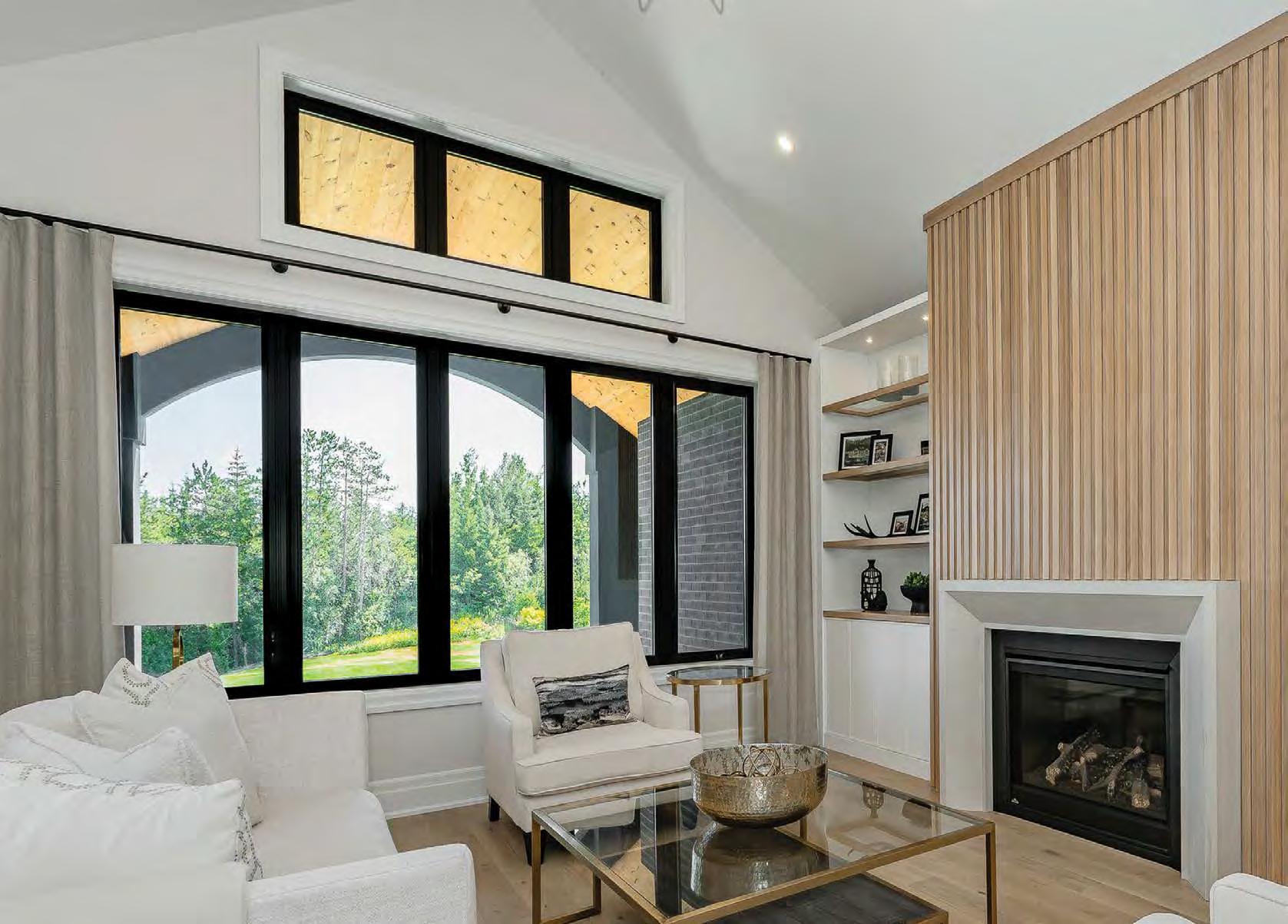
Best-in-Class performance for both Dual and Triple glazed windows
Modern and slim design with improved functionality

Triple perimeter weatherstrip for best air/water leakage resistance

Aluminum reinforced mullions for larger window configurations







OXFORD STONE JASPER

What
The
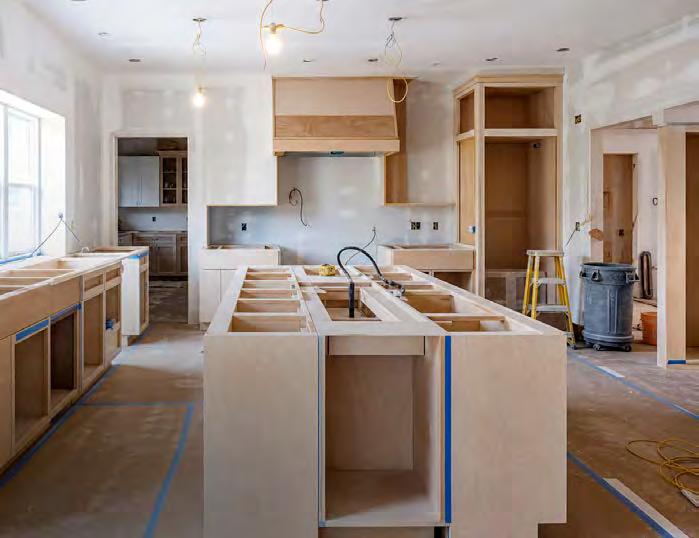
CONTENTS SUMMER 2026
9 Association News
With rewarding visits to Budapest, Quebec and Queen's Park, OHBA officials have been getting around; the Reno Summit returns; and a DC reduction program.
15 Inside Storey
Woodsmith's Chris Smith on why licences for permitted reno work are long overdue.
19 Frame of Mind
Cutting carbon and costs at Copenhagen’s intriguing Resource Rows.
21 Trending
From tilt-and-turn windows and timeless ledgerock to multi-tone shingles and safety sleeves, here's what’s new in industry products and services.
43 Building Buzz The 2026 Canadian Cost Guide, a groundbreaking heat pump, what condo developers are doing with standing Inventory, and two new luxury projects in Toronto.
50 Chapter Spotlight Challenging market, you say? Windsor-Essex HBA is finding ways to thrive.

The



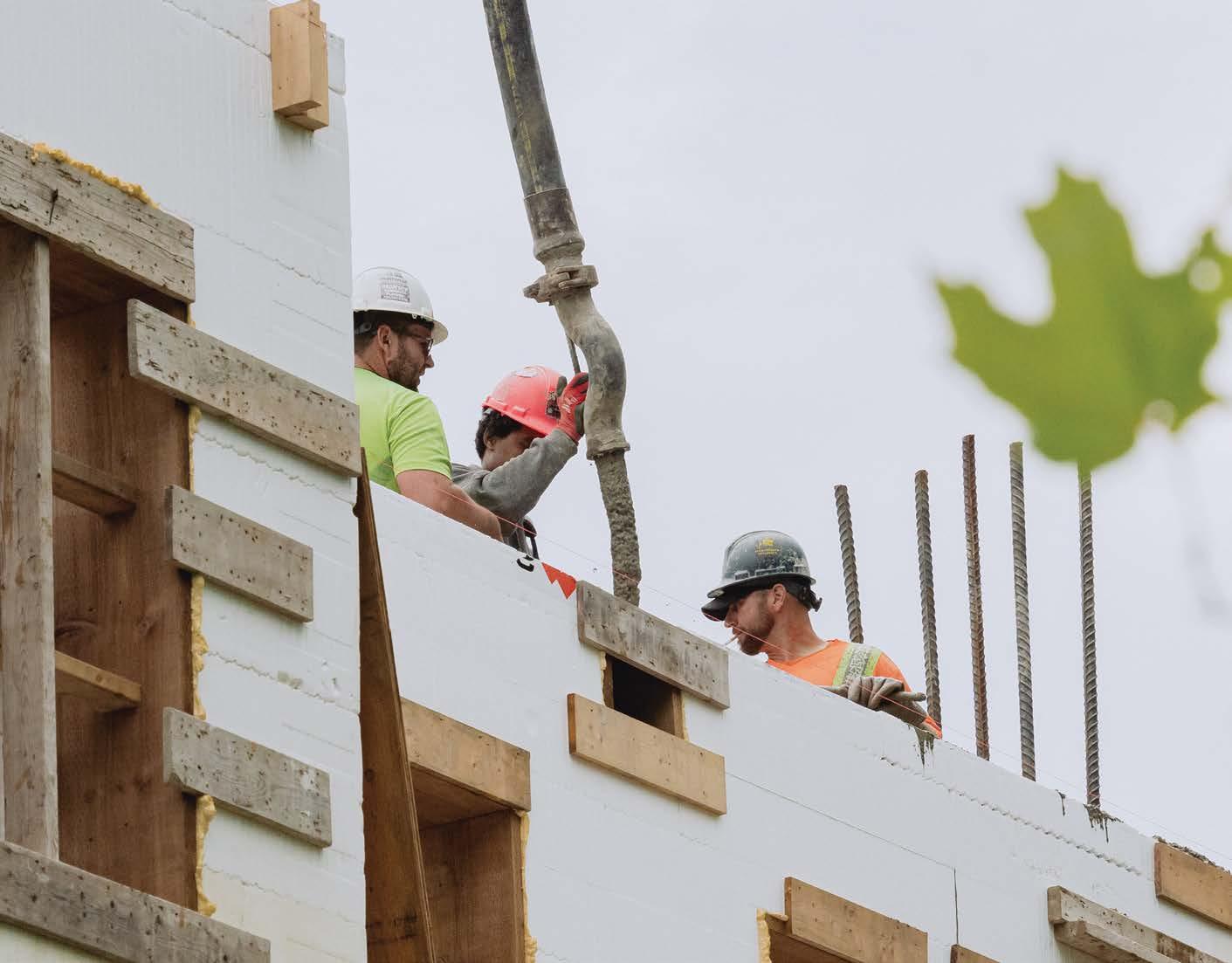

Amvic™ Insulated Concrete Forms: Shaping the Future of Sustainable Construction

Amvic™ Insulated Concrete Forms (ICF) are a stay-in-place, 5-in-1 concrete forming system incorporating structure, insulation, an air/vapor barrier and a finish attachment to create a cost-effective, resilient and environmentally friendly construction system. Amvic™ ICF is revolutionizing modern construction and changing the way we build for a greener tomorrow.

EDITOR Ted McIntyre ted@laureloak.ca
ART DIRECTOR Ian Sullivan Cant
CONTRIBUTORS Avi Friedman Tracy Hanes
ADVERTISING
Cindy Kaye, ext. 232 cindy@laureloak.ca
PUBLISHER
Sheryl Humphreys, ext. 245 sheryl@laureloak.ca
PRESIDENT Wayne Narciso
PUBLISHED BY
Laurel Oak Marketing Ltd. laureloak.ca onhomebuilder.ca


Take a photo of our QR code and sign up for digital updates and news!
FormLockTM interlock: Patented interlock with moisture drain system
Quick & easy installation: Reduces waste & increase job site efficiency
Embedded cross-ties: Two diagonal cross ties which virtually eliminate the chance of blow out
alleguard.com
No tying required: Built-in rebar holders eliminate tying
Multiple block types: Including straight, 90° corner, 45° corner, taper top, t-block, brickledge & radius blocks
Ontario Home Builder is published six times per year (Winter, Spring, Pre-Summer, Summer, Fall, Awards).
A l l rights reserved. No part of this magazine may be reproduced without the written consent of the publisher. © 2026
For address corrections please email info@laureloak.ca or phone: (905) 333-9432.
Single copy price is $6.00
Subscription Rates: Canada $16.95 + HST per year, Order online at https://www.laureloak.ca/subscribe. CANADIAN PUBLICATION MAIL










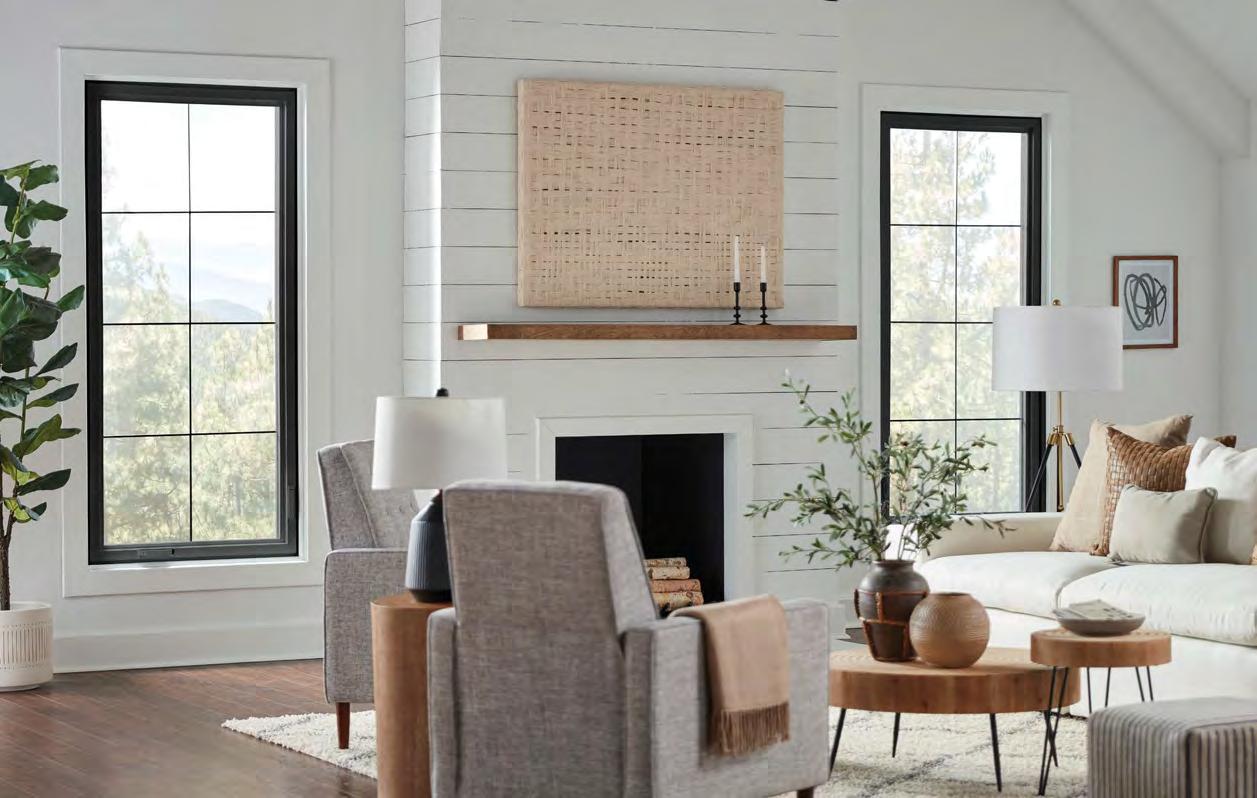
A NEW VIEW OF VINYL: THE GENTEK® WINDOW COLLECTION
MORE GLASS. CLEANER LINES. BUILT FOR THE CANADIAN CLIMATE.
The Gentek Window Collection brings together the 4000 Series and 3000 Series in a modern high-performance vinyl window system designed for today’s homes—and tomorrow’s expectations.






Delivering slimmer sightlines, stronger curb appeal, and energy-smart comfort year-round, it gives builders, contractors, and homeowners more of what matters on both sides of the glass.
• Refined, contemporary profiles that welcome more natural light indoors
• Two frame depths for residential replacement and new construction
• Energy-smart glass packages and premium finish options, including Armour Guard™ black exterior window coating
• Adaptable details for different wall conditions, siding types, and installation approaches
gentek.ca | Make us a part of your home.






























MAKE ONE CLEAR CHOICE THAT COVERS MORE GROUND. Contact your Gentek Sales Rep, nearest retailer, or scan to learn more.
Association News
OHBA news, views and events



OHBA Heads to Queen’s Park
ON MAY 25 , OHBA held its annual Queen’s Park Day, bringing together members and industry leaders from across Ontario for a day of meaningful engagement with provincial decision-makers on the policy solutions needed to increase housing supply and improve affordability.
The day began with the official launch of OHBA’s 2026 strategic policy document, Raising the Standard, which outlines seven priority actions to support housing affordability, improve the efficiency of the approvals process, strengthen
infrastructure financing, enhance consumer protection, support workforce development, and better align housing and energy policy. The document served as the foundation for discussions throughout the day and was shared directly with elected officials and government staff.
Throughout the day, delegates shared firsthand perspectives on the challenges facing Ontario’s residential construction sector and highlighted practical policy solutions to support housing delivery. OHBA conducted meetings with 30
elected officials and government representatives, including 18 cabinet ministers, exceeding the number of ministerial meetings secured in previous years. The day concluded with a well-attended evening reception, where members had the opportunity to connect and network with elected officials, political staff and other key stakeholders.
The strong level of engagement from the government demonstrated the continued importance of OHBA’s advocacy efforts and the value of bringing industry voices directly to decision-makers. OHBA thanks all participants for their commitment and engagement to advancing policies and advocacy that support housing supply, industry growth and stronger communities across Ontario.
Minister of Energy and Mines Stephen Lecce (third from left) and Associate Minister of Energy-Intensive Industries Sam Oosterhoff (middle row, centre) are joined by delegations from OHBA and Enbridge Gas.
Ontario Housing Minister Rob Flack shows off his OHB magazine cover, with Angela De Vries, Dani Gabriele, Kirstin Jensen, Peder Madsen, Dave Depencier, Cara-Lynn Wade, Mark Irvine and Mark Prociw.
Premier Doug Ford is joined by OHBA’s Scott Andison, Brendan Campbell, Christina Giannone, Tom McLaughlin and Mike Memme.
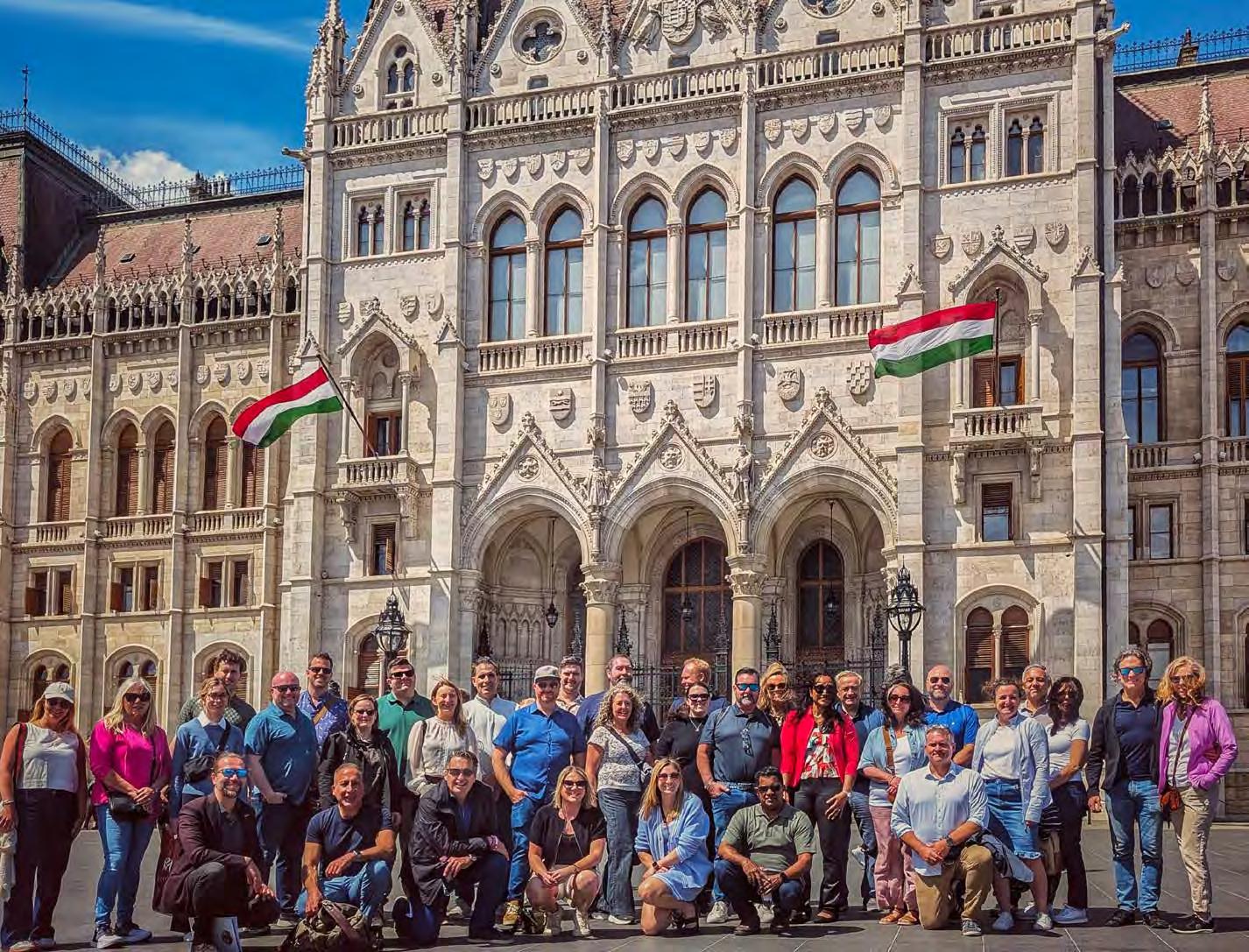
Exploring Budapest
Lessons in Urban Regeneration, Architecture and Housing Innovation for Canada
By Michael Collins-Williams
IN MAY, a delegation from the Ontario Home Builders’ Association (OHBA) embarked on its 10th International Housing Study Tour, travelling to Budapest, Hungary, for the association’s first-ever housing mission to Eastern Europe. Over the past decade, OHBA’s International Housing Study Tour program has become one of the association’s premier professional development initiatives, providing members with the opportunity to explore innovative housing, architecture, urban planning and development projects on the other side of the world. This milestone tour continued that tradition by offering delegates a unique perspective on one of Europe’s
most dynamic and rapidly evolving cities. Budapest provided an exceptional backdrop for examining how historic preservation, modern architecture, transit investment and large-scale urban regeneration can work together to create vibrant and livable communities. Throughout the four-day study tour, delegates explored a wide range of projects and neighbourhoods while engaging in discussions about housing, development and city-building.
A key component was the opportunity to learn directly from local experts. OHBA delegates spent three days with architect Arne Hübner of Guiding Architects, whose knowledge
of Budapest’s history, architecture and development patterns provided invaluable context. The tour began in the historic city centre, where delegates explored projects spanning more than a century of architectural evolution. Highlights included the beautifully restored Párisi Udvar, the modern Szervita Square Building, and the awardwinning Central European University campus. Together, these projects demonstrated how thoughtful design can respect historic character while accommodating modern uses and contemporary urban living.
One of the most significant themes was large-scale urban regeneration. Delegates visited BudaPart, the largest mixed-use development currently underway in Budapest. Located along the Danube River, the project is transforming a former industrial area into a vibrant neighbourhood featuring residential towers, office space, retail uses and public waterfront access. The scale


and ambition of the project provided valuable lessons for Canadian cities seeking to intensify urban areas while creating complete communities.
Another high point was a visit to the iconic MOL Campus, designed by Foster + Partners. As Hungary’s tallest building, the tower has quickly become a landmark on Budapest’s skyline and demonstrates how contemporary architecture can contribute to a city’s identity.
The final day focused on housing innovation. Delegates visited the Marina City development project in the rapidly growing 13th District. The hard-hat tour provided a unique opportunity to visit a development under construction and engage with project representatives on design, local construction practices, and market conditions. These site visits sparked valuable conversations about density, housing typologies and the evolving needs of urban residents.
Beyond the professional learning opportunities, the tour also delivered an

page:
at the Hungarian Parliament Building in Budapest.
from top left: Danielle Sabourin (Senior Trade Commissioner, Global Affairs Canada), Scott Andison, His Excellency François Lafrenière (Canadian Ambassador to Hungary), Christina Giannone, Kirstin Jensen and Mike CollinsWilliams at the Aria Hotel; Andy Oding (BKC), TJ Cieciura (Design Plan Services), Scott Andison, Cara-Lynn Wade (Enbridge Gas), Christina Giannone and Mike Collins-Williams at the farewell dinner on the Danube River; Delegates visit Budapest’s MOL Campus.
exceptional cultural and networking experience. Travelling as part of a Canadian business delegation creates unique opportunities to build relationships, exchange ideas and strengthen connections across Ontario’s residential construction industry. The informal discussions that occur between site visits, over meals and while exploring a new city together often prove just as valuable as the formal presentations and tours themselves.
A highlight of the week welcoming His Excellency François Lafrenière, Canada’s Ambassador to Hungary, who joined delegates for dinner and shared insights on Canada-Hungary relations, trade and international collaboration. OHBA also extends its sincere appreciation to Danielle Sabourin, Senior Trade Commissioner, and the entire team at the Canadian Embassy for their assistance in helping make the delegation a success. Their support demonstrated the important role that Canada’s diplomatic and trade network plays in fostering
international business connections and knowledge exchange.
This milestone 10th International Housing Study Tour would not have been possible without the generous support of our sponsors: Design Plan Services, Building Knowledge Canada, LG Electronics Canada and Enbridge Gas. Their commitment to professional development and industry leadership helps make these unique learning opportunities possible. We would also like to recognize Tony Alfieri, who has participated in every tour since the program began a decade ago.
As delegates returned home, they brought new ideas, fresh perspectives and valuable lessons from one of Europe’s most fascinating cities. Budapest demonstrated that great city-building is achieved through a careful balance of heritage, innovation, investment and vision—lessons that will undoubtedly continue to inspire OHBA members for years to come.
Opposite
Delegates
Clockwise
Ontario Announces Development Charge Reduction Program Details
Ontario’s residential construction industry has received a significant boost with the announcement of a new federalprovincial partnership aimed at reducing development charges (DCs) and lowering the cost of building new homes.
Announced on March 30, the Canada-Ontario Partnership to Build committed up to $8.8 billion over three years to help municipalities reduce DCs by 30% to 50%while continuing to invest in the critical infrastructure needed to support growth and housing development.
A subsequent announcement on June 1 provided long-awaited program clarity on funding eligibility, timelines and application requirements, giving municipalities a framework to access provincial and federal support while advancing local efforts to improve housing affordability and supply.
Applications will be assessed based on the magnitude of the proposed DC reduction, the number of homes expected to be enabled through the initiative, and the municipality’s financial contribution toward the program. Housing-enabling infrastructure projects will receive priority consideration, with municipalities encouraged to pursue the most ambitious reductions possible to maximize available funding.
For Ontario’s residential construction industry, these announcements represent an important step toward lowering the upfront costs of housing delivery and creating conditions that can help get more projects moving in communities across the province.

For details on the municipal next steps and the application criteria they must follow, please scan the QR code.
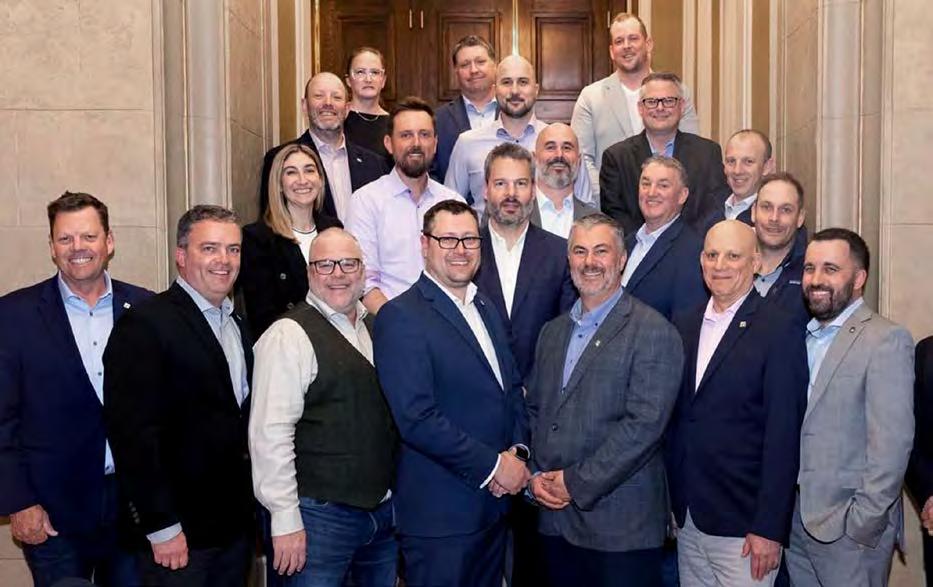
CHBA Home Building Week
OHBA staff, executive officers and members were well represented at CHBA’s Home Building Week in Canada, from May 4-8 in Quebec City.
OHBA members led, participated in and attended various CHBA committee meetings, including the Joint Technical Research Committee and Net Zero Council, the Women in Residential Construction Council meeting and the Canadian Renovators’ Council meeting.
Our fullest congratulations to the new CHBA executive, including Pat Daniels of the Greater Ottawa HBA, who will serve as Vice-President, and Doug Taylor of the Grand Highlands HBA, who will serve as the Local HBA Board Rep (Small).
We were thrilled to see London HBA’s Jared Zaifman win Executive Officer of the Year (Large HBA), Melissa Jonker and the Grand Highlands HBA win HBA of the Year (Small HBA), and Sue Wastell of the London HBA win Member of the Year at the CHBA Association Awards!
We’re also excited to congratulate our members who were nominated and those who captured CHBA’s 2026 National Awards for Housing Excellence. Join us in congratulating the winners!
Return of the Renovators’ Summit
OHBA will be hosting its second Renovators’ Summit later this year. Join fellow renovators, custom builders and industry innovators for a full day of insight, networking and inspiration — plus our closing Innovation Lounge Reception.
Stay tuned for more details, including registration!
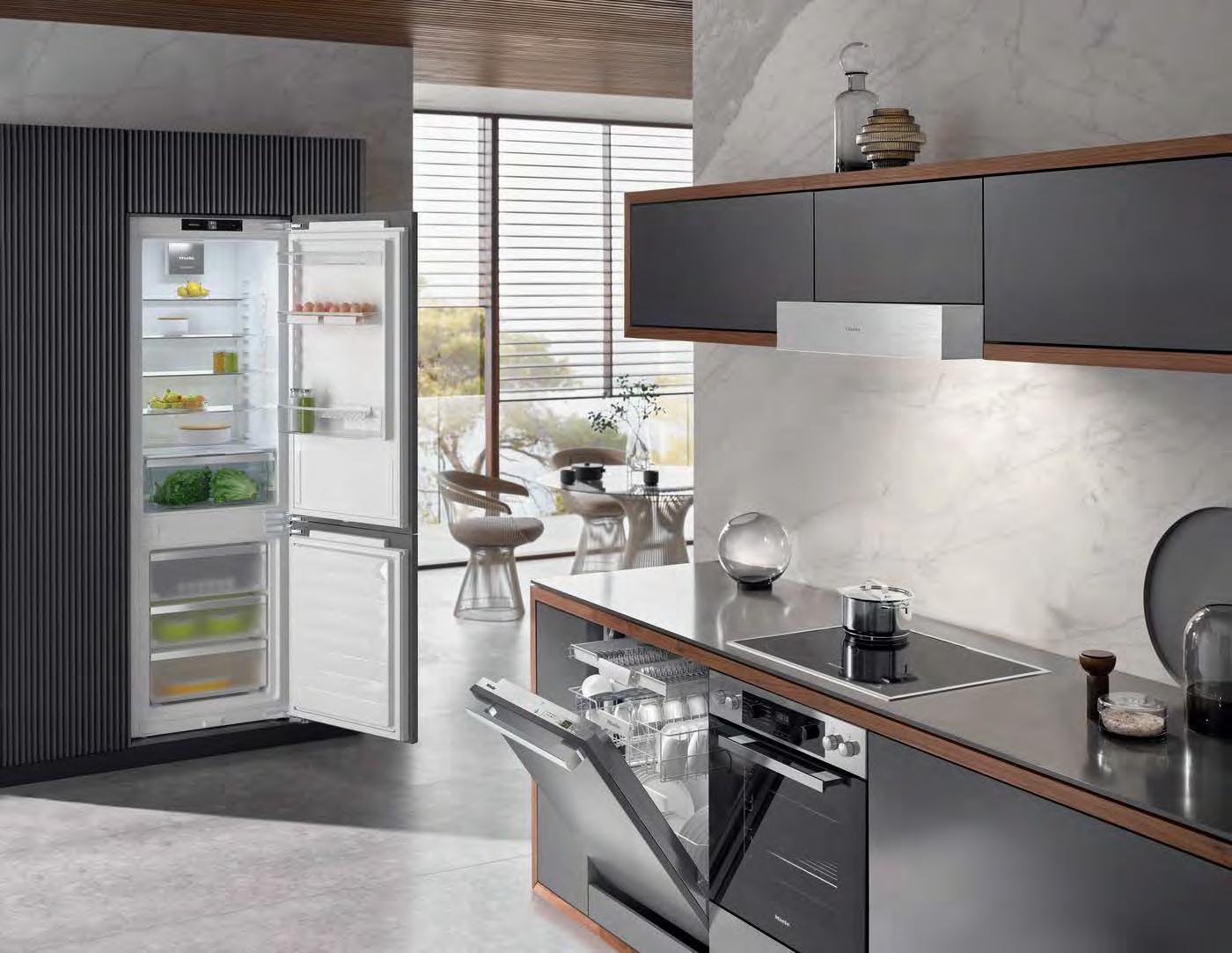
Doing appliances right with a partner in your own backyard has never been easier. Founded in Stoney Creek, Ontario, we’re 100% dedicated to removing the appliance burden from your projects. Our responsive team will be there every step of the way from qualifying your needs, to dealing with your homebuyers, to facilitating a smooth onsite delivery and installation. Do appliances right with Goemans and scan the code to connect with an experienced Commercial Account Manager.
Doing appliances right with a partner in your own backyard has never been easier. Founded in Stoney Creek, Ontario, we’re 100% dedicated to removing the appliance burden from your projects. Our responsive team will be there every step of the way from qualifying your needs, to dealing with your homebuyers, to facilitating a smooth onsite delivery and installation. Do appliances right with Goemans and scan the code to connect with an experienced Commercial Account Manager.
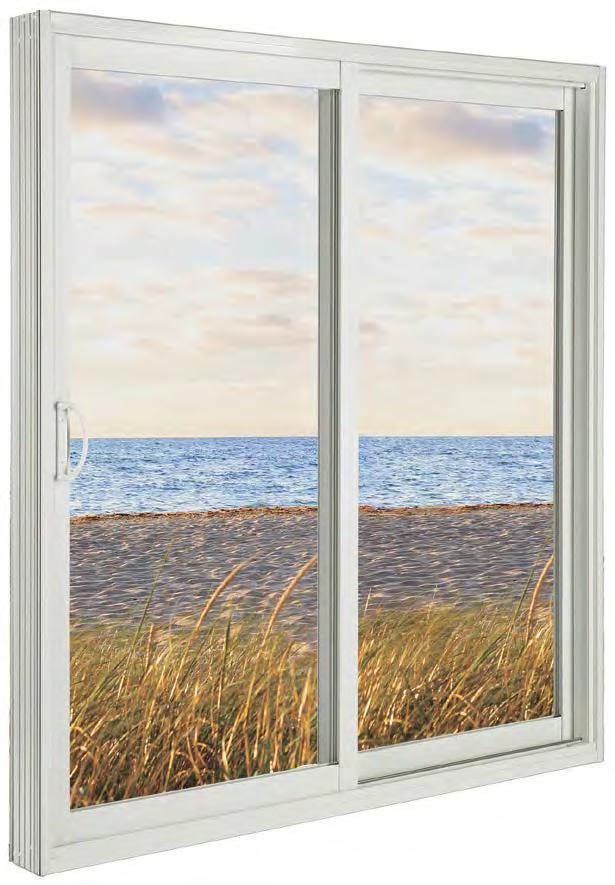
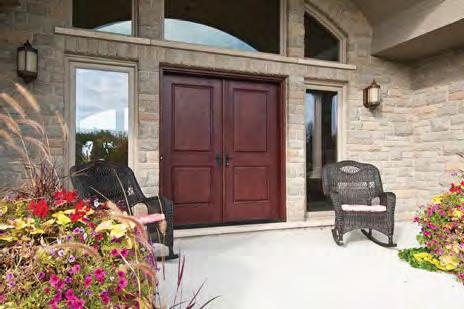
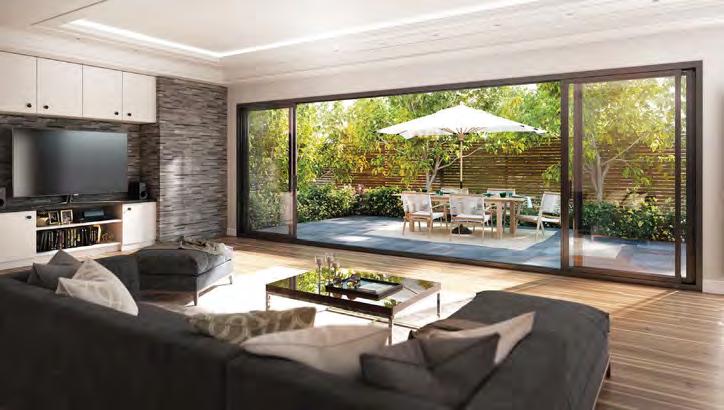
TRI-PANE PATIO DOOR. BUILT FOR CANADA.
PREMIUM PERFORMANCE FOR PROJECTS THAT DEMAND MORE.
Engineered for energy efficiency, durability, and clean design, the JELD-WEN® Premium Tri-Pane Patio Door helps meet modern performance expectations, without compromising on aesthetics.

EXPLORE OUR FULL LINE OF CANADIAN MADE ENERGY-EFFICIENT WINDOWS AND DOORS AT JELD-WEN.CA
Inside Storey
One-on-One with industry experts

Reno Reckoning
The time has come for a licensing framework for permit-related work
By Ted McIntyre with Chris Smith
ONTARIO’S RENOVATION SECTOR is growing more complex, more costly and, in too many cases, more vulnerable to shoddy work and hidden defects. The recent news has been filled with stories of unscrupulous actors—from Hamilton police warning residents to beware of aggressive contractors to a Paris homeowner losing $200,000 for renovations that were never completed.
However, the challenge runs far deeper than merely weeding out badfaith contractors—it’s about identifying the unqualified ones.
Chris Smith, owner of Torontobased Woodsmith Construction, says the industry needs a clear licensing framework for permit-related residential
renovations—one that improves consumer protection, creates accountability and reflects the required skills. A Red Seal carpenter and BCIN-certified designer with additional certification in Net Zero and Adaptiv Home design, Smith argues the goal is not to burden legitimate contractors, but to distinguish qualified professionals from underground operators and give homeowners a way to know who is really responsible for the work.
OHB: What’s the first horror story that comes to mind with respect to shoddy renovations?
CHRIS SMITH: “A client of ours in the east end of Toronto had previously

renovated their house. It was purportedly all done with a permit. While we were renovating their first floor, we opened the ceiling to discover that the second floor they’d been living on for 12 years wasn’t properly framed. They had the old 2”x4” ceiling joists—suitable for supporting a ceiling, but not a whole floor—with 2”x6”s that were spanning up to 14 feet! It was obviously hidden from the inspector, and now, because of this shoddy work, we had to reframe it as we went along. It was a massive undertaking, costing the client almost $100,000 in additional materials and labour—all because whoever did the original work didn’t know what they were doing, and because there was no way of tracking it.”
CHRIS SMITH OWNER, WOODSMITH CONSTRUCTION
So it’s not necessarily that they’re not well-meaning, just not well-trained?
“I think the real problem is contractors who just don’t know what they don’t know. And because they feel they can step up from renovating a bathroom or a kitchen to a full home, they run into problems because they make assumptions. They can’t clearly articulate to clients what it will take to do the job because they’ve never actually done that job before. Experience matters. If you’ve been renovating homes in Brampton and then go to downtown Toronto and try to do the same thing, you’ll probably have issues, because in downtown Toronto it’s mostly 100-plusyear-old homes. It’s a completely different scope of work once you open up those walls. And that’s what licensing gives us a chance to do—educate contractors on the things that they might not be aware of.”
Is it just me or does this issue seem to be getting worse?
“Renovations have grown substantially over the past 20 to 30 years. Homes had to get built first and then age. We now have a critical mass of aging housing stock that requires a very skilled contractor to handle everything that needs to be upgraded to properly meet energy efficiency requirements of the respective regions. And in most cases, these homes were built in areas where you can’t easily knock them down and rebuild. That’s why renovations have become such a huge driver in the economy, and will continue to be even bigger—it’s just a function of the math.”
I expect you’re often being undercut by bad-faith or inexperienced contractors.
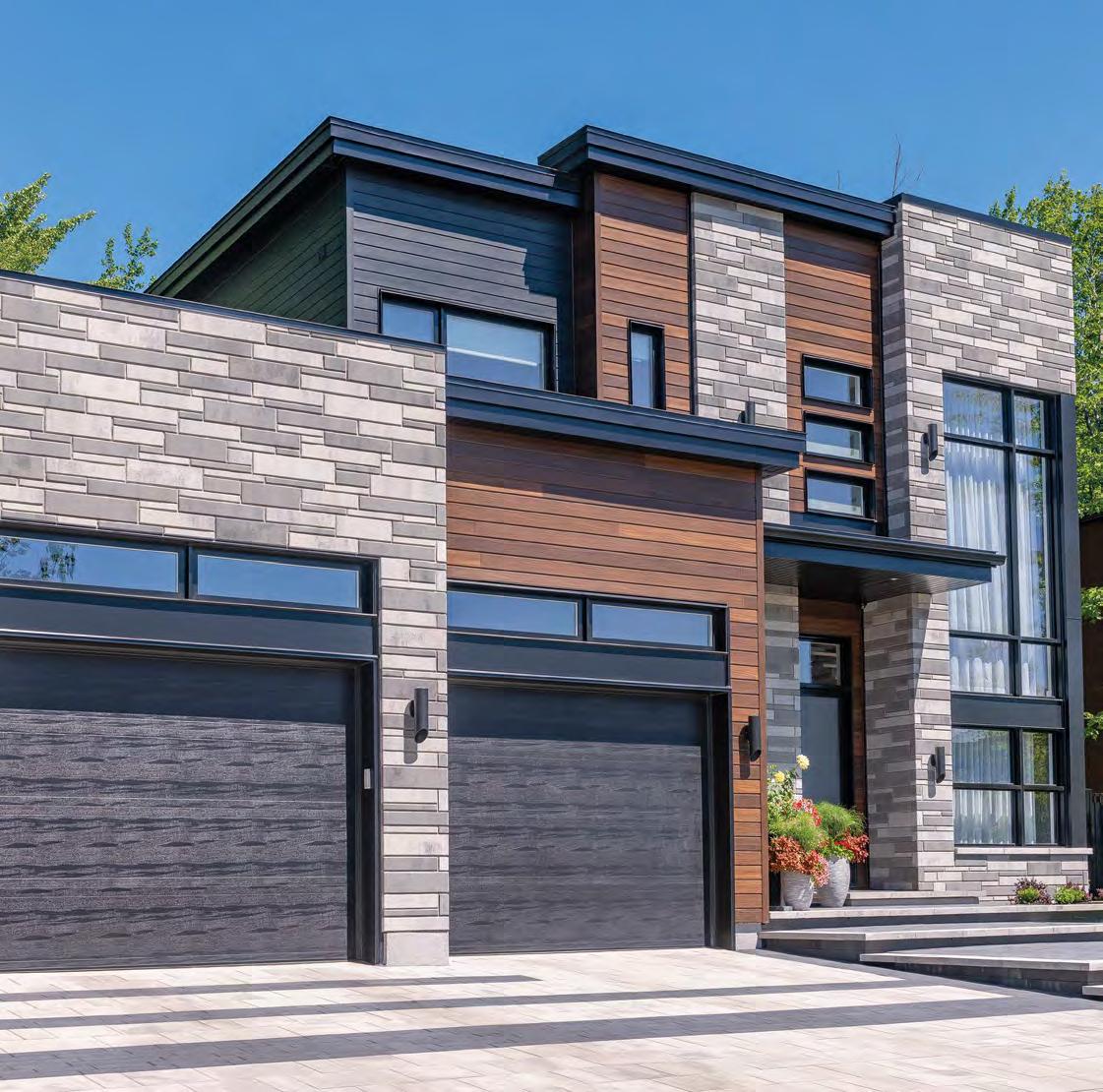
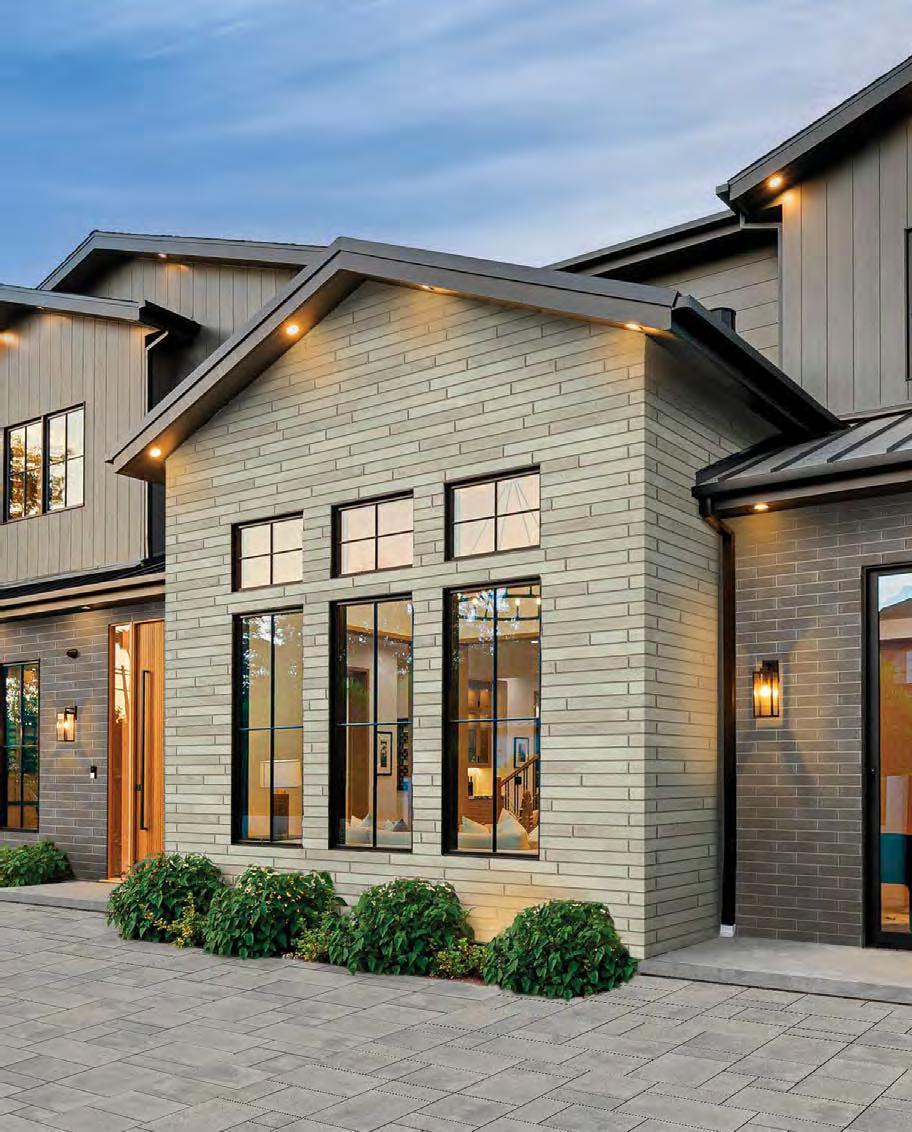
Add a modern, linear aesthetic to your next home or building project with Talia stone. Its multi length bundle and 57mm (2 1/4”) coursing height works seamlessly with Modular and Norman size brick allowing for a continuous look from brick to stone. Talia is available in 6 through-the-body stock colours and is compatible with our Granada and Contempo stone, offering flexible design options.
“When I talk to my colleagues, who all have similar qualifications and experience, our prices should not vary dramatically. I use that to educate customers that a lot of fixed prices and quotes for any reno, especially before the work is even undertaken, are assumptions at best, because you have no idea what’s on the other side of those walls. So I like to say, ‘Here’s an apples-to-apples comparison. Here are my qualifications, and this is what I think the scope of work will entail.’ We do a cost-plus model, so we’ll budget a healthy number to be safe, and then at the end of the day, if it costs us less, it costs you less.”
As part of OHBA’s Renovators Council, how are you addressing the issue?
“We want to get our heads around the number of qualified renovators in
TALIA STONE OSLO
Ontario, because right now we have no idea how many companies are out there operating—how many are pulling permits and doing work on those homes. That’s why we’ve focused on permit work; it has to get inspected. We’re not focusing on the enforcement side, because that’s the job of the inspector.”
Are there models in other provinces or countries you’ve been able to reference?
“Not really. We thought that B.C. had a model, but it turns out that it’s voluntary there. Some provinces don’t even have permits, which we found sorta stunning. So we’re inventing a framework we think will work. The BCIN framework has been helpful because, remember, for the design side of things, it was a wild, wild west before BCIN was introduced. Anybody could draw something on a napkin, submit it and get a permit—and there were always important details missing. Today, in order to become a BCIN-licensed designer, you have to demonstrate your knowledge not only of the legal side of the building code but the standards side as well.”
BCIN certification only costs $150 to write the exam?
“You’ve got to take a few courses as well, but it isn’t a super imposing expense. But you do need to take out (errors and omissions) insurance to qualify every year. Insurance is standard in our industry, though you’d be surprised how few contractors have the proper coverage. So that’s also part of what our program would involve—you›d have to carry insurance and keep it up to date. And like BCIN, it would be an annual fee. And there is ongoing education as well, with professional development requirements.”
Are you confident this will put a dent in the cash jobs?
“It should. At the very least, we can protect consumers. When somebody has a horrible experience with a contractor, the first question we can ask is, ‘Was that contractor licensed?’ If the answer is no, then we have a point of comparison we’ve not had before. And that’s a real driver for this. Everyone in the industry I’ve spoken to is massively supportive, because it’s frustrating to see all the bad news and reviews in the media.
“So if you have an issue, and whoever did the work didn’t have a license, well then, that’s on you. But if you have an issue and the person did have a license,




Bloomington




that’s something we could now address as an industry. But right now, you have a lot of these cash jobs, with homeowners thinking, ‘Why am I paying the difference if everybody is essentially the same?’
“I mean, if you’re driving a car, even if you’re a great driver, you’ll eventually have a big problem if you don’t have a licence. And yet there’s no such requirement to renovate homes—and that’s way more involved than driving! The barbershop that cuts your hair has a licence. Even the real estate agents who sell the houses we renovate are licensed! So as an industry, to not be licensed is ridiculous, given the level of skill, knowledge and cost required to do what we do.”
And you’re not worried about driving even more operators underground ?
“No! I think it would be the reverse. You’ll take some of the guys currently operating underground and motivate them to get their licenses, because if they want to be able to get a permit and do this kind of work, they’ll need the licence.
“We need to draw that line in the sand and say, ‘If this house has a permit, you can no longer get this work done without having this number.’ Or, the homeowner will have to sign off, saying they’re fine with their contractor not being licensed, which could lead to future legal problems if they try to sell a home that’s not code-compliant. But I don’t see too many who will want to check that box.”
Are there any concerns from industry members about the cost or implementation of this?
“There’s always the worry that this is just going to be another fee and more red tape. But we’ve been good at explaining our thought process and that we’re looking at a very fee-light model like BCIN, and not a high-cost one like Tarion.”
What’s the timeline for advancing the proposal, and what level of support have you encountered from the provincial government?
“They’re, in principle, very supportive. They’re extremely concerned about customer protection and love the idea that this problem could be solved, since they get many complaints from their constituents about poor renovations.
“Timeframe-wise, we understand that this is a heavy lift, but we’re cautiously optimistic that we can get something through in the next few years. One way or the other, though, we’ll follow it through to the end. This has to get done.

Circular Savings
Cutting carbon and costs at Copenhagen’s Resource Rows
By Avi Friedman
IN THE LINEAR approach to construction, materials and energy are used to build dwelling units, then discarded in a landfill as construction waste once the building’s useful life ends. The “reduce, reuse, repair and recycle” perspective of a circular housing economy, on the other hand, accommodates and conserves current construction to reduce waste and lengthen the functional use of a dwelling unit. This flexible approach not only addresses environmental conditions but also touches on sociodemographic change—reorienting housing as a tool that evolves with occupants rather than being discarded.
An illustrative example is Resource Rows (Ressourcerækkerne) in Ørestad Syd on the outskirts of Copenhagen. Designed by Danish firm Lendager Group, and completed in 2019, the project implemented material reuse to achieve affordability, aesthetic quality and environmental benefits. The upcycling of materials was a central philosophy in the design. The thoughtful expression of mismatched brick facing created from waste at local demolition sites makes this apparent.
The site features a shared rectangular courtyard, flanked by two five-storey apartment blocks at the end of two rows


of three-storey townhouses. The 92 units (29 rowhouses and 63 apartments) also share a common open area with rows of small greenhouse huts on the rowhouse rooftops. A bridge connects the two rows of roofscape to optimize the use of outdoor space within the dense development. Resource Rows’ high density delivers cost and environmental footprint savings via the use of shared infrastructure and greenspace, reducing the need for cladding materials and increasing the energy-efficient qualities of attachment.
The units are compact but are designed with ample natural light and open plans to give the impression of larger spaces. Public greenery also invites tenants into common areas to foster community connections, while indoor and outdoor gardening also encourage community and health.
An integrated underground parking garage, meanwhile, eliminates the need for inefficient street parking, maximizing the use of valuable land.
The project’s striking brick-and-mortar panel façade is composed of material cut from the panels of buildings targeted for demolition at local sites, including Denmark’s own Carlsberg Brewery. Modern mortar is strong enough to
remain intact throughout this cutting process, resulting in a greater reduction in cost and carbon footprint than more common brick-reuse techniques. The reuse process typically involves individually detaching each brick from the mortar, cleaning and repurposing it. The innovative panellized technique saves time, money and material while adding local historical heritage to the project. The distinctive façade also adds visual impact to an otherwise simple elevation.
Lendager also diverted waste from other local projects, using timber crates from the Copenhagen Metro expansion as exterior window frames and decking, and a roof truss designed for another project as the steel bridge spanning the courtyard. In all, Resource Rows diverted 463 tons of material from landfills. This amounts to 29% savings in carbon dioxide equivalent per square metre of construction and has proved to be cost-neutral in terms of maintenance. In terms of brick construction alone, the project saved 500g of carbon dioxide equivalent per brick, equating to a 70% reduction in carbon compared to typical new-brick construction.
The project was built at a lower cost than a non-upcycled equivalent, and Lendager Group believes that the cost benefits of reuse strategies will only improve as they become more standard within the industry.
AVI FRIEDMAN is an architect, professor, author and social observer.




























Trending
Ideas for Builders & Renovators

Tilt-Turn Brilliance
Strassburger’s Tilt-Turn windows and doors deliver engineered excellence for builders, blending sleekness with maximum brightness and unobstructed views. Tilt for secure ventilation or turn for full egress openings, meeting stringent energy codes via multi-chamber PVC 82.5 mm frames with thick 2.5 mm walls, and multipoint locking for superior insulation, security and durability. Custom colours and hassle-free operation elevate residential designs. STRASSBURGER.NET
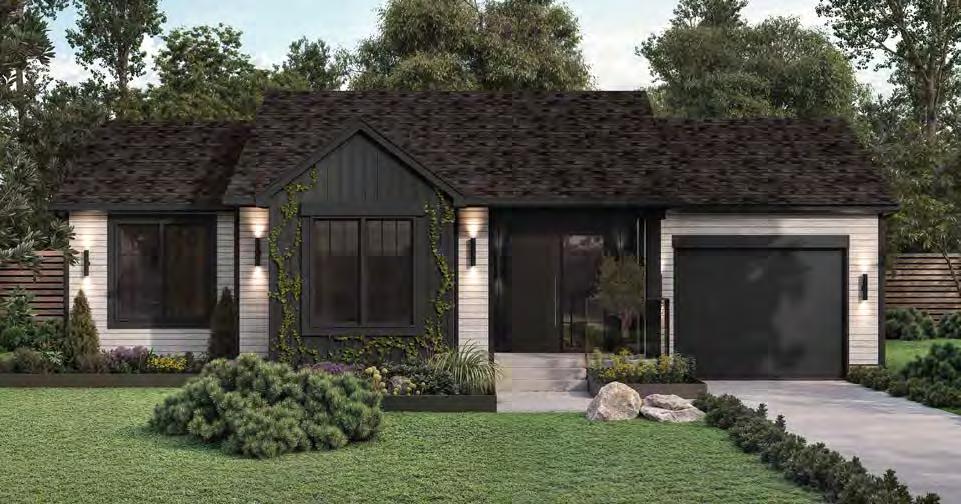
Layered Looks
BP Canada’s multi-tone shingles are gaining traction in 2026 for the depth and design flexibility they bring to residential roofs. Blended palettes—think brown with copper and beige or black with soft grey accents—coordinate easily with siding, doors and windows, especially in phased renovations. The roof-first approach helps your homeowners build a cohesive exterior over time while boosting curb appeal and value. BPCAN.COM
Grate Finishes
Part of its complete shower system, Schluter-Systems’ new Kerdi-Drain-Style line has been expanded with four new stainless steel grate designs, offering more ways to complement your shower. Measuring 10x10 cm, each grate is available in brushed stainless steel and nine Trendline finishes for increased design flexibility. Accommodating tile thickness from 6 mm to 32 mm, they’re compatible with Kerdi-Drain bonding flange drains, laterally adjustable to align with the tile grid, and levelled to the tiled surface. SCHLUTER.CA

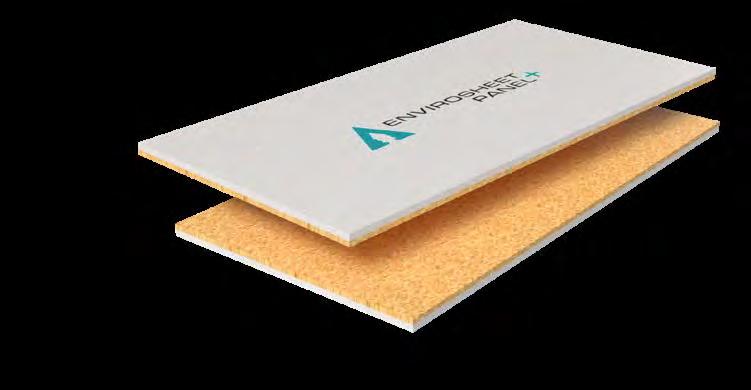
Coming soon, Alleguard’s Envirosheet+Panel is composed of a closed-cell expanded polystyrene (EPS) that’s adhered to an oriented strand board (OSB) panel, offering cost-effective thermal performance while also reducing a project’s construction time by eliminating separate installation for sheathing and insulation. The panel can assist with supporting your project’s exterior cladding system through the OSB sheathing. ALLEGUARD.COM

Timeless Stone Appeal
Markham’s Beaver Valley Stone offers a versatile new natural stone for custom home builders. Champlain Ledgerock is ideal for creating elegant retaining walls and curbing. Sourced from North America, it offers unmatched durability and a timeless aesthetic that enhances any landscape. Its unique texture and three colour variations (South Bay Quartzite pictured) also add a touch of sophistication to outdoor spaces. BEAVERVALLEYSTONE.COM
PEACEFUL LIVING IN COMPACT SPACES
PEACEFUL LIVING IN COMPACT SPACES
PEACEFUL LIVING IN COMPACT SPACES
Minimize noise transfer between rooms with QuietZone® Acoustic Insulation from Owens Corning.
Minimize noise transfer between rooms with QuietZone® Acoustic Insulation from Owens Corning.
Minimize noise transfer between rooms with QuietZone® Acoustic Insulation from Owens Corning.




Armoured Comfort
the Deal
Milwaukee Tool’s new 16" and 18" cutresistant protective sleeves are available in ANSI/ ISEA 1052024 Cut Level 4 and Level 6 options for pros needing reliable arm protection without sacrificing comfort or dexterity. Breathable knit materials enhance airflow and flexibility, while an adjustable bicep strap ensures a secure fit. Moisturewicking fabric keeps users cool, dry and protected with UPF 50+. Designed for all-day wear across demanding jobsite tasks and varied applications on site. MILWAUKEETOOL.CA

Shower Efficiency, Style and Versatility
Moen’s Magnetix Plus Showerhead collection, featuring the powerful magnetic docking system, is now paired with refreshed styling, smoother movement and expanded customization. Available in three platforms—a handshower, a combination showerhead and a compact 2-in-1 showerhead—the collection allows users to choose the shower experience that best fits their routine, space and preferences. Each model features a larger spray face, six unique spray settings and intuitive controls that make every shower feel more personalized and indulgent. MOEN.CA
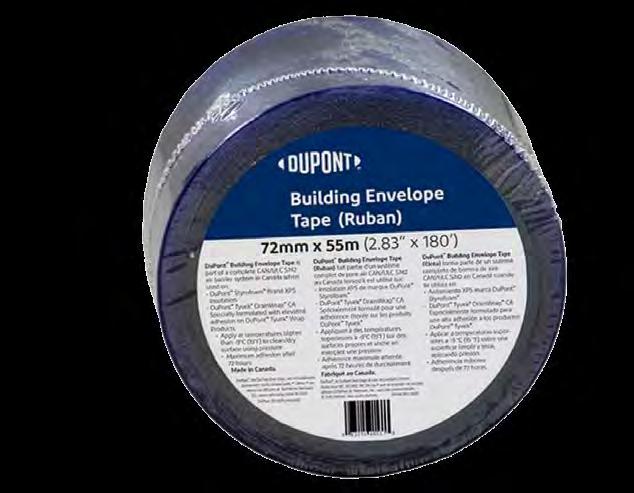
Backpack Muscle
DuPont has launched its Building Envelope Tape in Canada, engineered for harsh climates and reliable air and moisture sealing. Featuring UV-treated polypropylene backing and a strong acrylic adhesive, it stays pliable in extreme cold and supports CAN/ULC S742 systems with Styrofoam XPS and Tyvek Drain Wrap CA. With high adhesion, flexibility and easy installation, it helps improve energy efficiency while reducing waste. Available in clear rolls, it integrates cleanly into modern enclosure assemblies today. DUPONT.CA
Clear debris fast with the 60V MAX Brushless Backpack Blower. It delivers gas-like power without the noise, making it ideal for large residential jobsites. Digital speed control lets you lock in output, while an LED dashboard provides real-time performance updates. Adjustable shoulder straps and a waist belt improve comfort during long runs. The package includes concentrator nozzle, two 12Ah batteries and dual chargers. Built for pros who value efficiency and control. DEWALT.CA


























re CLAIM your business


When the unexpected strikes, trust Federated Insurance to get you back to business – fast. We’re here to support your business’s recovery with as little disruption as possible.









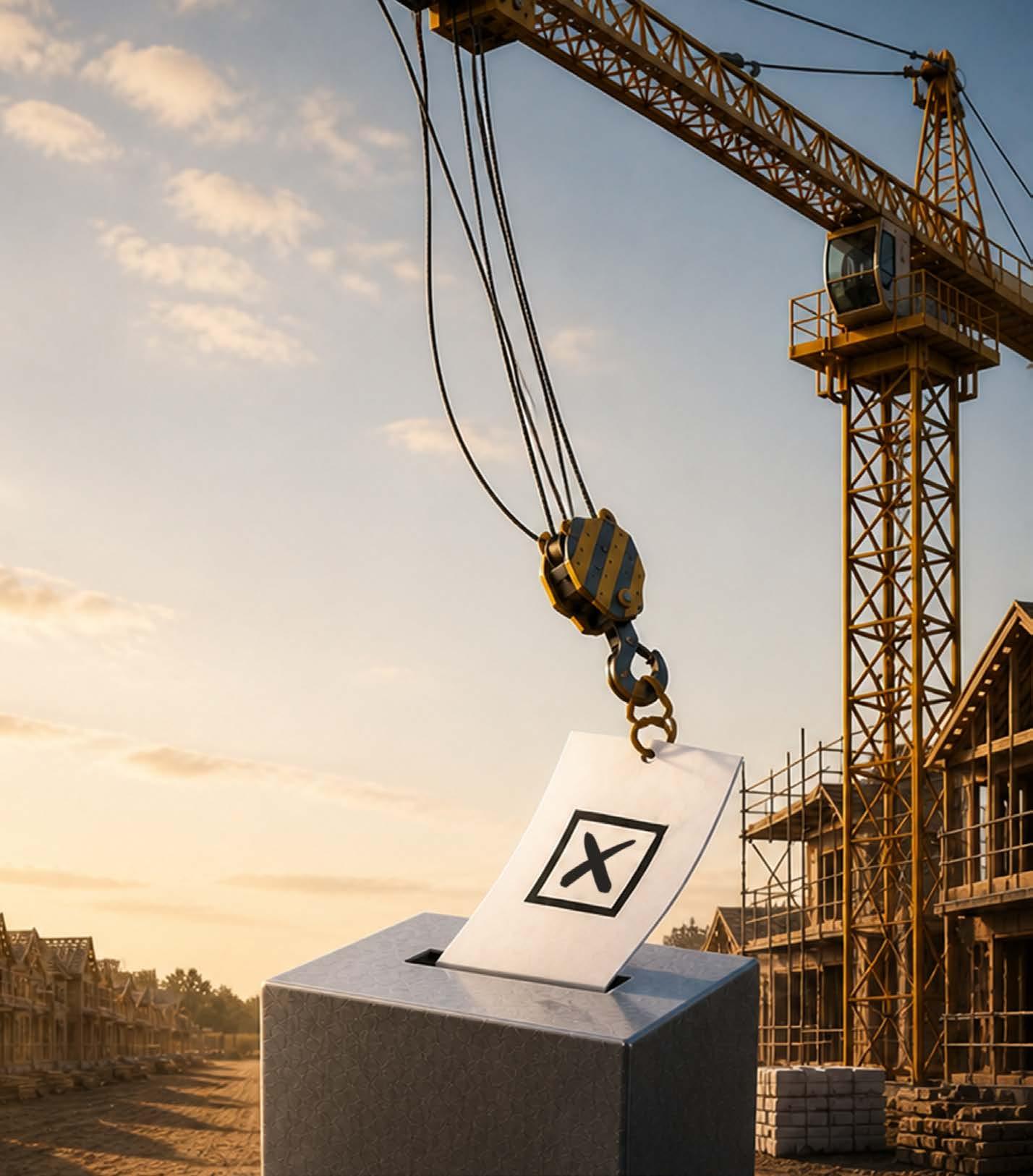


Vote Here
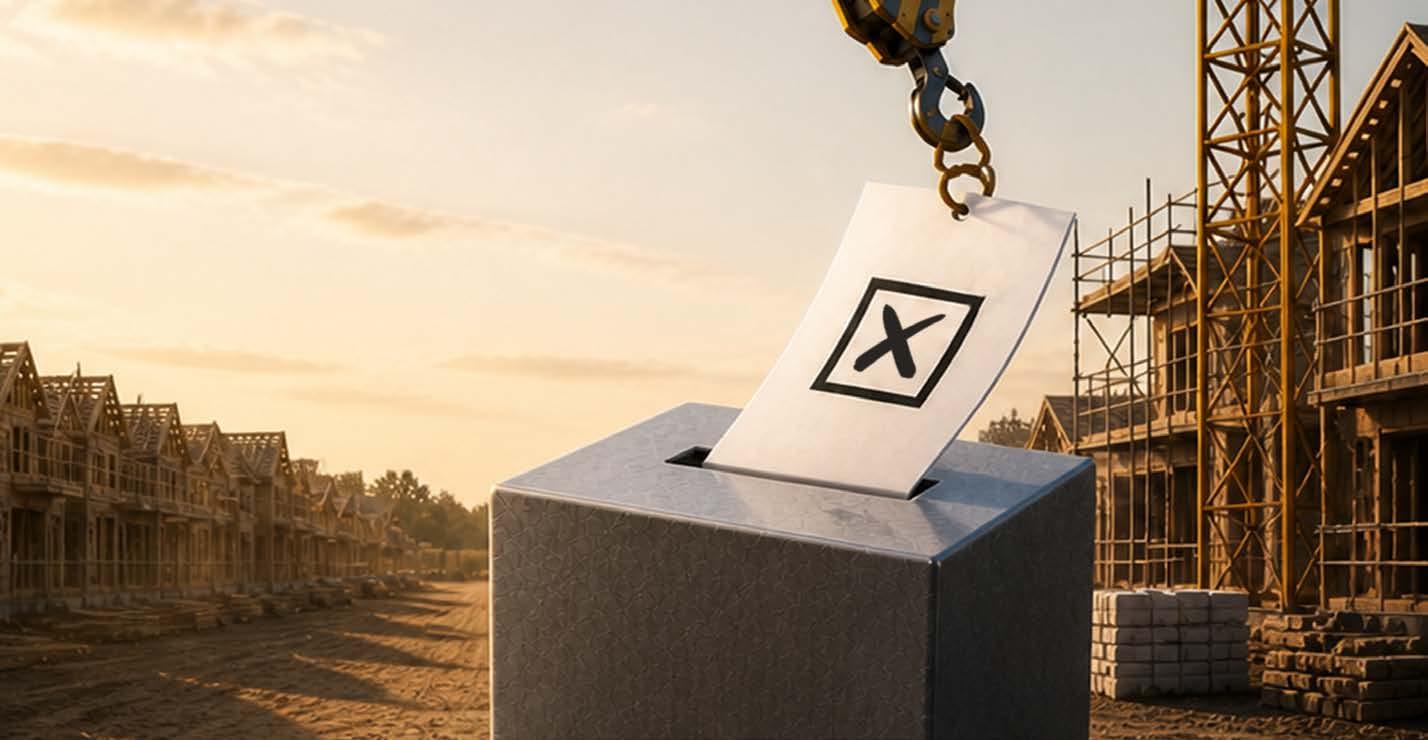
Your chance to shape the housing conversation starts before October’s municipal elections
By Ted McIntyre
“SO THE SAYING goes, ‘If you don’t vote, you can’t complain,’” I pose to Michael Collins-Williams, West End Home Builders’ Association CEO. “Does the same apply for OHBA members who don’t make an effort to help educate candidates and local residents about housing issues heading into the October 26 election?”
“Yeah, I love the armchair critics,” Collins-Williams replies. “Democracy is a participatory sport. If you don’t participate, you’re not going to help shape the outcome.”
We’re chatting about Ontario’s municipal election season—when the housing conversation stops being abstract and gets very local, very fast.
From zoning and servicing to development charges and permitting timelines, City Hall is where a builder’s best plans can either move ahead or get knotted in red tape. That’s why OHBA is urging industry members to know the rules, meet the candidates, and ensure housing supply is part of the campaign conversation before the ballots are counted.
John Cruickshank, OHBA’s Manager of Engagement & Advocacy, got ahead of the election-season chaos by sending out the provincial association’s first-ever Municipal Election Guide in March. Cruickshank describes it as a reference document rather than a political playbook. The guide clarifies the strict legal and financial rules governing the upcoming elections, including thirdparty advertising and donor contributions. It emphasizes that, while the association itself must remain neutral to avoid classification as a donor, members are encouraged to proactively engage with candidates on housing issues.
Walking the Line: Education vs. Endorsement
One of the most important themes in the guide is the distinction between explaining issues and backing a candidate. “We have to be very careful about this,” Cruickshank stresses. “It really is about educating candidates on our issues. We can’t endorse someone—that would be considered a donation, and you want to stay away from that.”
Th at line matters. Under Ontario’s election law, corporations and trade unions are barred from donating directly, and there are firm limits on how much any one person can contribute (but no limits on how many family or business members can contribute). Using company money, staff time, or facilities to help a campaign can constitute a prohibited corporate contribution.
The same care is required around
advertising. Any paid message that explicitly supports or opposes a candidate—or a “yes/no” ballot question—is regulated as third-party advertising. To do that, an individual, corporation or union must register with the municipal clerk, respect spending limits, and include prescribed identification on each ad. General advocacy about policy, on the other hand, does not trigger those rules.
“You can meet with candidates, organize all-candidates debates, do social media, send out questionnaires that draw out where candidates stand on density, approvals, infrastructure and fees, or engage your members or the public on issues not tied to a particular candidate—all without needing to register,” Cruickshank explains.
A Living Toolkit for Leaders
“As issues become salient, we’ll do a briefing note on them, providing things like background numbers and our policy position, and then leave that up to our members and our HBAs to use as they see fit,” Cruickshank explains. “But municipal elections are intensely local. There may be issues in one city that don’t exist in another. We’ll provide consistent province-wide messaging on matters like development charges reform, but we have to allow space for regional priorities.”
Collins-Williams, a registered lobbyist, offers a poignant view from the front lines of municipal advocacy. Asked about WE HBA’s achievements with

Michael Collins-Williams CEO, West End Home Builders’ Association
“Democracy is a participatory sport. If you don’t participate, you’re not going to help shape the outcome.”

Lucky 7 Municipal Election Essentials
1. Know the key dates. Nomination deadline (Aug. 21) and election day (Oct. 26).
2. Check local rules first. Municipal rules can differ.
3. Pick your priority races. Focus on councils and candidates where housing decisions matter most.
4. Prepare a short housing brief. Keep it local, factual, and solutions-based. Lead with economic impact, including jobs, investment, tax base and growth.
5. Ask policy questions. Density, approvals, development charges, infrastructure.
6. Keep engaging after election day. Relationships shouldn’t stop when the vote is counted.
7. Meet in person when possible. A short faceto-face conversation goes farther than a phone call or email.

Why Don’t All Munis Have Elections?
Ontario features 444 municipal governments, but only 414 will hold elections in October 2026. That’s because not every municipality has a council that is elected directly by local voters. Thirty ‘upper-tier’ municipalities, such as the regions of Durham and York, are made up of several lower-tier municipalities. In these cases, voters cast ballots for representatives in their own cities, towns or townships, and some of those locally elected officials then sit on the uppertier council on their behalf, meaning no additional election is required at that level.

John Cruickshank OHBA Manager of Engagement & Advocacy
“Municipal elections are intensely local. There may be issues in one city that don’t exist in another. We’ll provide consistent province-wide messaging on matters like development charges reform, but we have to allow space for regional priorities.”
local government, Collins-Williams cites a two-pronged approach. “There’s the public policy changes and adjustments,” he says. “But the number one thing is establishing real trust, dialogue and relationships.”
For Northern Ontario Home Builders’ Association chair Anthony Farrugia, one reason those relationships matter is that staff and councils often need practical exposure to how policy changes affect the delivery of housing. He points to Sudbury’s quarterly Land Development Advisory Council as an example of what can happen when industry input is taken into account. where changes to water metering laws “have allowed for pre-approvals to bring multiple services to a lot.”
Learning Curve
Election season offers a narrow window in which candidates may be especially open to hearing clear, practical messages about housing. But not everyone is open to development. “Municipal candidates—and many elected councillors—often see it as their role to veto development in their individual ward,
regardless of the provisions of provincially regulated planning regulations or the broader implications to the municipality,” says Hamilton West–Ancaster–Dundas MP John-Paul Danko.
That’s why industry input matters. “Many municipal candidates come from backgrounds outside housing and construction. Conversations with builders, suppliers and tradespeople can provide important insight into how permitting timelines, labour availability and infrastructure constraints affect projects in practice. Even if there is no immediate outcome, those conversations build knowledge that candidates carry with them into office. Ongoing engagement helps ensure policies are grounded in real-world conditions and support the timely delivery of housing. In my role as a municipal councillor and now federally, I have engaged regularly with housing industry representatives, including the West End Home Builders’ Association. On many individual projects these discussions have helped me work more closely with the community to ensure that concerns were adequately addressed. On broader policy decisions, insight from housing industry representatives

Campaign Contribution Rules
(Ontario Municipal Elections 2026)
Only individuals who normally reside in Ontario may contribute to municipal candidates. Corporations and trade unions are prohibited from donating.
Per candidate limit: Up to $1,200 (includes cash, goods, and services).
Toronto mayoral race: Up to $2,500 per contributor.
Overall cap: Up to $5,000 per municipality (across all candidates and registered third-party advertisers).
Per municipality: Limits apply separately in each municipality.
Cash rule: Contributions over $25 must be traceable (e.g., cheque or e-transfer).
In-kind contributions: Donated goods & services count toward limits.
Timing: Contributions can only be accepted during the campaign period (from nomination to Dec. 31, 2026).
Reporting: Candidates must record, receipt and deposit all contributions and return any prohibited funds.
Always confirm details with your municipal clerk, as local rules may vary.

John-Paul Danko MP, Hamilton West–Ancaster–Dundas
“Municipal candidates—and many elected councillors—often see it as their role to veto development in their individual ward, regardless of the provisions of provincially regulated planning regulations or the broader implications to the municipality. In my experience, it is far more effective to work collaboratively with homebuilders to improve the quality of proposed developments and ensure that community concerns are addressed.”
has helped me understand the implications of government decisions such as setting Hamilton’s urban boundary and the impact of taxes and development charges on the cost of housing.”
Danko says that sharing industry insights during public meetings leading up to elections can also play a valuable role. “Residents are concerned about how growth affects their neighbourhoods but often do not fully understand the municipal approvals process or the broader implications of local planning decisions,” Danko says. “Housing industry members can play an important role in helping explain how the planning and approvals process works, including how delays, restrictive zoning, servicing constraints and uncertainty can affect costs and the pace of housing delivery—along
with the benefits of homebuilding to provide needed housing options, support good-paying jobs in the skilled trades and strengthen the municipal property tax base.”
Which issues most need to be stressed to candidates during the election season? “Development charges is first,” Farrugia says. “Number two is that we need to explore more opportunities for technological or infrastructure growth and to start accepting more creative solutions.” Farrugia points to alternative servicing and other innovations as areas where municipal approval systems need to catch up if housing supply is to improve.
Those outside-the-box solutions can start from within. “Many folks will come to us with things they think need
to be addressed—but often with creative suggestions—’What if we tried this to shape policy? ’”Farrugia notes. “ Then we bring it back to staff, digest it, and see if it can be practically implemented at various levels of government.”
That same spirit animates Quinte HBA’s approach. CEO Ruth Estwick says her association is preparing its own pre-election effort because too many municipal conversations about growth unfold without sufficient understanding of the residential construction sector’s contributions.
“We’ve seen the need for education to help councillors better understand what we do and what we represent in terms of jobs, tax base, investment and overall economic impact,” says Estwick, stressing that the objective is context, not confrontation. “We want to work with the municipality on growth. For example, ‘What does it mean if you don’t approve X, and what are the economic

Not Your Average Influencer
You’re unlikely to find anybody quite as invested in candidate engagement for this coming election as Turkstra Lumber CEO Peter Turkstra. Although he hasn’t been involved in the day-to-day affairs of his business in over a decade, Turkstra is working full-time again, having launched Thrivehamilton.ca and an accompa nying Instagram page in April.
Turkstra says he got involved in the non-profit initiative out of neces sity. “In pursuit of development charges reform, I wrote to every

Peter Turkstra CEO, Turkstra Lumber
“Decisions at the municipal level are critical, but people really didn’t turn out to vote in 2022. Much of that was driven by the fact that most don’t know what’s going on.”
mayor and every municipality where we sell our products—all 20 of them. That’s when I realized that the problem was much greater than just development charges,” Turkstra says. “There are some wonderful employees of the City of Hamilton, but in speaking to councillors, I had some really bizarre discussions. One thought development charges just paid for the work within those construction projects. A few think that no house should be built by anyone other than the city—that we should have only subsidized housing.

“Decisions at the municipal level are critical, but people really didn’t turn out to vote in 2022—much of that driven by the fact that most don’t know what’s going on,” Turkstra
laments. “Traditional media don’t really cover it anymore since their resources have been gutted. What we do know in Hamilton is that since being elected in 2022, this council has increased residential taxes by 23%. The property taxes for my four locations have gone up $38,000. This is not sustainable.”
To educate the public on where candidates stand on various issues, Turkstra is working tirelessly to interview local politicians and share their responses online.
“I’m not in anybody’s pocket—I’m Switzerland,” he assures. “The point is to try and get the facts out so that people will be motivated to vote.”
What can other housing industry members do apart from voting? Talk to those in power, Turkstra says. “If this were any other business and you were dissatisfied with your vendor, you would contact them immediately.”
impacts related to that? ’ It’s not so much about not seeing more things go our way, but that they simply go the right way in terms of growth for the municipality.”
How to Talk to Candidates
That emphasis on trust takes on a particular flavour during an election campaign, when many candidates are new to the file. “The reality, especially when you’re dealing with non-incumbents, is that you can tumble down a rabbit hole pretty quickly in terms of the really technical components of public policy,” Collins-Williams cautions. “I think when initially meeting candidates, the discussion should be about the economic impact with jobs, the communities that we’re creating, and what stands in the way of that. There are systematic challenges and barriers with governments, but broader conversations are more critical during an election cycle than how many inches wide the pipe is or how Section 8 of a DC background study affects you.”

Who Votes Most, & Least ?
In Ontario’s previous municipal election, only 32.9% of eligible voters cast a ballot. That was down from 38.3% in 2018 , and down from 43.1% in 2014. That’s a 10.2% drop over eight years!
By comparison, 69% of eligible voters participated in Canada’s 2025 federal election.
In all, 2,842 seats were directly elected in 2022, with a total of 6,325 candidates running for office.
The disparity of voter participation is startling. While the town of Latchford in northeastern Ontario saw 233 of 316 eligible voters cast a ballot to lead the province in voter turnout percentage for the 2022 municipal elections, Black River-Matheson, a 90-minute drive away, saw a paltry 155 of 2,605 bother to vote.
Here are some quick stats from the 2022 municipal election.
Voter Turnout
Turnover Rates
Es twick is tailoring that advice to her region. “We’re quite a large region geographically, expanding across three counties, one of which is among the largest in Ontario,” she says. “Our plan is to do a road show—to send out the invitations, get people to attend, have an open house, and then do presentations at a high level. Let candidates ask questions and get the opportunity to meet our members—and not just builders and developers but suppliers too, so that they understand the scope of this industry.”
Some of Quinte HBA’s meetings will be open to the public as well as candidates. “It gives us the opportunity to show the public who we are—that we’re not the big bad wolf; that we actually live and work and build in their communities,” Estwick explains. “That will hopefully help change the mindset.”
For individuals, the obstacles to engagement are often practical: limited time, tight schedules and a sense that politics is somebody else’s job. But Collins-Williams suggests you find the time. “Take half an hour out of your schedule and sit down and really talk to a candidate to share with them information about your business, about the industry, and how we can build a more prosperous future in the communities that the candidates are
BOTTOM 3
NOTABLES
Municipalities experienced an average turnover of 42% in 2022, similar to the 41.5% reported in 2018. Turnover ranged from 0% in 23 municipalities to 100% in 10 municipalities.
Women
31% of candidates in 2022 were women (up from 27% in 2018 and 24% in 2014). The Township of Algonquin Highlands elected a council comprised entirely of women.
Success Rates
Incumbents enjoy a substantial advantage. 80.1% of those running for the same office were successful. Of the 350 incumbents running for a different office, 59.1% were successful.
In contrast, only 28.5% of those first-time candidates were successful.
—Data supplied by the Association of Municipalities of Ontario
By the Numbers
Ontario’s StrongMayor Powers

216 municipalities have been granted strong-mayor powers since 2022.
The legislation was introduced to help speed up housing construction.
A Toronto Star review in May 2026 examined 4,242 mayoral decisions made under the legislation.
More than 75% of those decisions were procedural in nature.
Only 81 decisions — about 2% — were directly related to housing creation.
Some mayors used the powers to accelerate development approvals, while others used them to block densification or housing projects.
Critics argue the legislation has had a limited impact on housing supply and raises concerns about democratic accountability.
Municipal voters will have their first opportunity to judge how these powers have been used in the October 2026 municipal elections.

Ruth Estwick CEO, Quinte Home Builders’
Association
“We want to work with the municipality on growth. For example, ‘What does it mean if you don’t approve X, and what are the economic impacts related to that?’ It’s not so much about not seeing more things go our way, but that they simply go the right way in terms of growth for the municipality.”
putting their names forward to serve in,” he urges.
And don’t bother phoning or emailing. “You need to sit down and meet in person,” Collins-Williams stresses. And instead of meeting every name on the ballot, he suggests a more strategic use of time. “There are those on the other side, those where there is alignment, and some in the mushy middle. In my role, I will meet with everybody. But if I’m advising members who have a limited amount of time…well, you’ve got to allocate your time and resources appropriately.”
For those who genuinely cannot schedule one-on-one meetings, there are still options. “Educational op-eds in your local news outlet about public policy, especially in an election campaign, are impactful, as are allcandidates debates, and showing up at these town halls and asking pointed but respectful questions about housing and approvals,” says Collins-Williams, who has made it a habit to contribute to The Hamilton Spectator, local TV and other media to get his association’s housing message heard.
In each of those settings, members are doing double duty. “We see it as community building, and we see it 100% as education,” Estwick says. “Because the better candidates appreciate and understand
the situation, the better they can explain that to their constituents when they’re trying to make and pass a policy.”
Burlington: Progress and a Reset
But such engagement is a never-ending cycle. Burlington illustrates that reality as well as any. When Marianne Meed Ward first won the mayor’s chair in late 2018, she was widely seen in the development community as a fierce critic of intensification and a defender of the status quo. Over time, that changed. Through Burlington’s Pipeline to Permit Committee, formal delegations on development charges and steady conversations with staff and council, WE HBA and Meed Ward’s administration carved out more common ground, including a growing recognition of the need for more diverse housing forms and more predictable approvals.
But then word came that, after two terms, Meed Ward might not seek reelection. A new mayor and council could arrive with different instincts, pressures and learning curves on housing.
After all was said and done, Meed Ward decided to run again. But it illustrates that in politics, nothing is permanent—and every election restarts the relationship-building process.

Cover Material
From tactile finishes to integrated technology, today’s interiors are redefining surface appeal
By Tracy Hanes
Cosentino’s Icon Taj Whisper brings the warmth and movement of natural stone to contemporary interiors.

GOOD RIDDANCE TO GROUT. Goodbye, greys. Hello, warm tones, textured finishes and surfaces that look as if they were coaxed from a mountain.
With all the chaos in the world, homeowners are gravitating toward interiors that feel lived-in, personal and warm. Cool, impersonal spaces are giving way to those that are big on character and comfort. Sustainable materials that are durable are also on homeowner wish lists, because beauty is wonderful, but beauty that survives family spaghetti night is even better.
These shifts are showing up across the surface category, from countertops and backsplashes to flooring, walls and accents. The latest products launched and showcased at trade events, including the 2026 Toronto Interior Show, the International Surface Event in Las Vegas and the Kitchen & Bath Industry Show in Minnesota, suggest a market moving in two directions at once: more natural in look and more engineered in performance.
Among Cambria’s new designs, St. Isley quartz feels like a work of art, with its ribbons of bold veining.
Countertops
Lead the Way
If there is one surface worth tracking, it is the countertop. The 2026 Houzz Kitchen Trends Study found that countertops remain the leading kitchen upgrade during a renovation, cited in 91% of projects, with backsplashes close behind at 85%. That makes the category a reliable crystal ball for where kitchen design is heading.
Elsa Batten, principal of Aware Design Studio in Peterborough, will recommend natural stone on occasion, but prefers engineered products that are “more indestructible.” Quartzite and quartzite-inspired engineered surfaces are prime examples in kitchens and bathrooms. Evelynn Ratcliffe of Alair Homes Toronto describes them as “resilient as much as they are beautiful,” adding that they are heat- and stainresistant, and hold up to day-to-day use in the kitchen and bathroom.
Natural quartzite still has an edge for those who want the real thing. It is harder than granite, resistant to scratching, cracking and chipping, and can handle hot pots and pans without scorching. It is also UV-resistant, unlike engineered quartz, though it does need annual sealing to avoid staining. Taj Mahal quartzite from Brazil remains especially popular.



Cosentino’s Éclos is a new category of mineral surfaces with zero crystalline silica, a high recycled content, and a breakthrough layered design system.

Realism with Drama and Durability
A big force shaping the category is lifelike replication. Yasmine Goodwin of My Design Studio says, “Pretty much across the board, I’m seeing hyper-realistic textures that are an imitation of real materials. Design is meeting technology. With countertops, for example, engineered products are outperforming natural materials. You can use them on the exterior or interior of a home, and there are fewer warranty issues.”
Porcelain is one of the star performers here since it can convincingly mimic quartzite or marble while
also delivering the kind of durability homeowners love to hear about and contractors love not to worry about.
Caesarstone’s porcelain surfaces offer heat, scratch, stain and UV resistance, while large-format slabs can stretch up to 132” x 65” and feature digital printing that mimics stone and wood.
Caesarstone’s Lioli Porcelain line features crackled, fossilized and grained finishes, including soft-toned options such as Mirabel, a warm beige with cream undertones, and Sleet, a soft grey with subtle veining. The message is clear—surfaces are no longer just visual; they are becoming tactile.
Caesarstone’s durable porcelain collection (Lioli Mirabel pictured) offers heat, scratch, stain and UV resistance.

TRENDS WATCH
Seamless countersplashes
Low-silica materials
Large-format slabs
Warm neutrals
Continuous flooring
Seamless is in Style
Cambria turned heads at KBIS with its Style Without Limits booth, which positioned quartz as an architectural material rather than a countertop-only solution. The brand showcased quartz across kitchens, baths, walls and floors, while introducing new designs.
That broader, more integrated use of surfaces lines up with a bigger industry move toward seamless looks, including slab backsplashes and integrated countertop-to-backsplash designs, or “countersplashes,” as Ratcliffe calls them.
“These applications support both aesthetic and practical goals by minimizing grout lines, simplifying maintenance, and creating a cleaner visual appearance,” notes NKBA Director of Research Tricia Zach.
While NKBA’s report findings are overall market observations and generally tied more closely to remodelling and renovation activity than specifically to production-builder sentiment or new-home construction, Zach says NKBA’s research
points to continued demand for surfaces that balance aesthetics, durability and practicality. Quartz remains dominant, with 83% of respondents in the 2026 Kitchen Trends Report expecting it to stay popular in kitchens, while 76% say the same for baths.
Does Sustainability Matter?
To what degree are environmentally friendly materials driving customer decisions? The answer is complicated. “NKBA’s findings suggest homeowners increasingly define sustainability through performance, longevity, wellness, efficiency and lower maintenance rather than recycled content alone,” says Zach. “Industry professionals report that homeowners are prioritizing products that are easy to maintain and designed to last longer, helping reduce replacement frequency. In fact, 91% of respondents identified easy-to-clean countertops as a homeowner priority.
Vintage Flooring’s White Oak Gotham Smooth Herringbone Collection (above).




“The reports also point to growing interest in wellness-oriented design considerations such as water quality, air quality and healthier living environments,” Zach adds. “Overall, sustainability appears to resonate most strongly when it is tied directly to personal benefit, comfort, efficiency and long-term value.
Cosentino Canada Regional Director Karim Guirguis sees it as less nebulous. “Sustainability is definitely becoming a bigger factor in purchasing decisions,” Guirguis says. “Consumers today are much more informed and want to know how products are made, what materials are being used, and whether they’re environmentally responsible. We’re seeing increasing demand for lower-silica materials, and products with a smaller environmental footprint, particularly among younger buyers and the design community. And there has been a big breakthrough in the development of next-generation low-silica and silica-free surfaces combined with advanced manufacturing technology.
The industry is finally able to deliver materials that are safer to fabricate, more sustainable, and still achieve the premium aesthetics and performance consumers expect. That’s really transforming the future of the category.”
This is where newer mineral surfaces are making gains. Cosentino’s Éclos, launched within its new inlayed mineral surface category, combines an integrated 3D design with a crystalline silicafree composition and more than 50% recycled materials. Its Inlayr tech creates depth and movement throughout the surface, and the material can withstand temperatures up to 220°C.
But the category is splitting, Guirguis says. “On the production-home side, builders are looking for materials that help reduce costs, simplify installation and minimize maintenance and warranty claims. Speed, consistency and durability are more important than ever. On the luxury and custom side, homeowners and designers are looking for more sophisticated surfaces—larger
formats, seamless applications, more realistic veining, and materials that combine beauty with performance.”
Floors Go Continuous
The surface conversation does not stop at waist height. Batten cites one of the most visible shifts as being fixed flooring—the use of the same continuous floor throughout a home. Goodwin adds that some builders are now considering removing tile from bathrooms and foyers in favour of vinyl plank, especially with waterproof and performance surfaces becoming increasingly important.
That makes sense in a market where homeowners want materials that can be installed quickly, cleaned easily and replaced without a crisis-level drama.
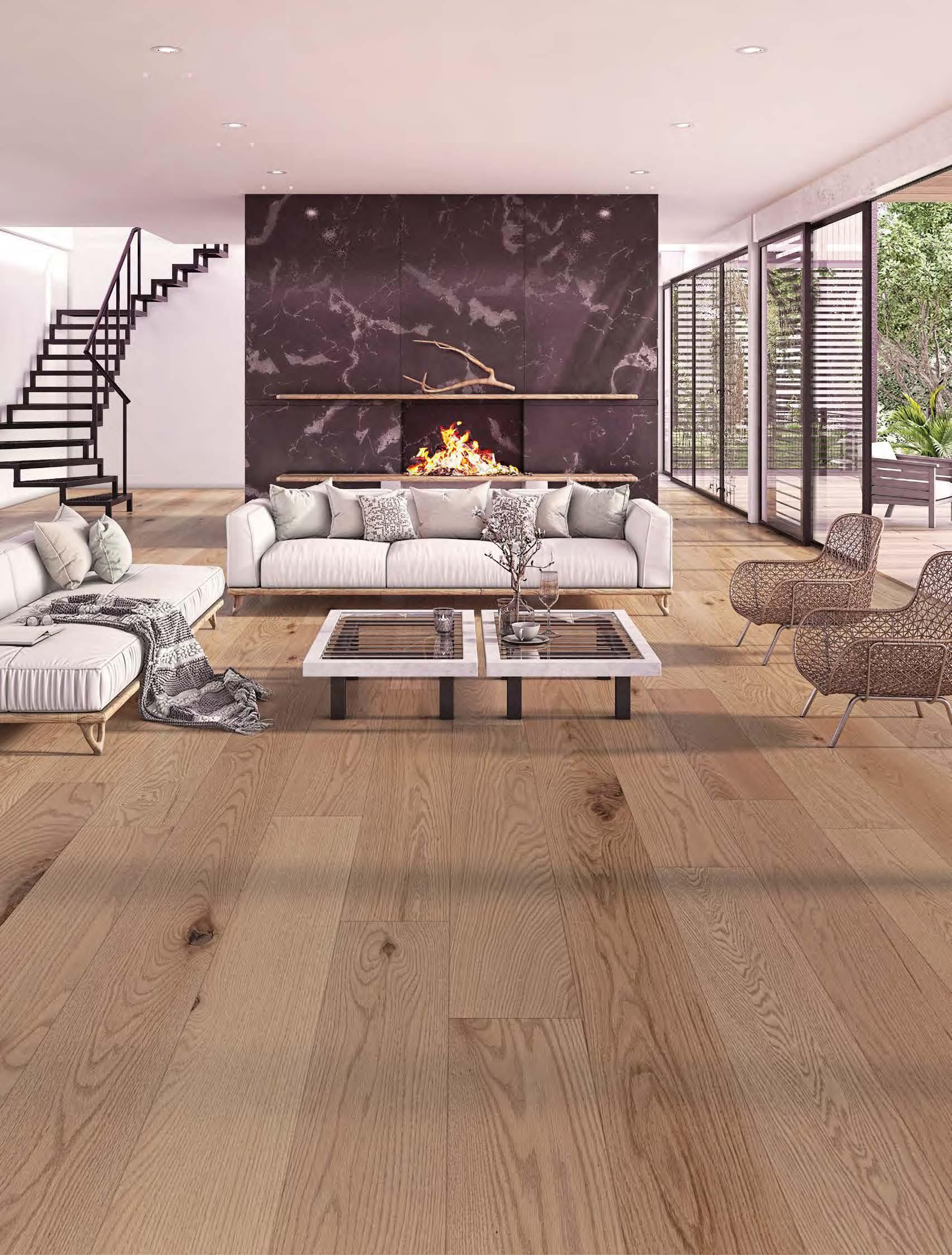
Engineered hardwood, meanwhile, remains strong, but the visual direction has shifted. Wide planks, chevron and herringbone patterns and even brass inlays are giving floors more personality, while dark browns are fading in favour of medium brown, sand and mushroom tones. Grey has lost its crown; warm neutrals have taken the throne.
Walls Get Personality
Walls are becoming a bigger part of the surface story, especially as homeowners look for ways to add warmth without overcomplicating a space. NKBA’s Dianne Pogoda notes that after years of white and grey dominating the scene, colour has returned to the kitchen. She says natural materials and earthy tones have surged, with greens leading the pack, followed by blues and browns.
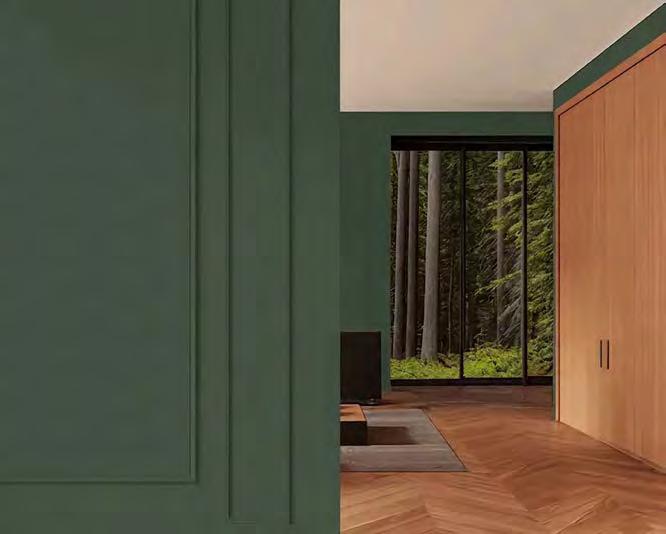
Paint is the easiest way to make a personal statement, and the 2026 palettes reflect that appetite for warmth and depth. Dulux Canada’s Colour of the Year, Pine Forest, and Sico’s Boreal Forest both lean into restorative greens, while Benjamin Moore’s Silhouette pairs burnt umber with charcoal for a richer, more tailored look.
Wallpaper is also making a comeback, with botanical prints, murals, metallic accents and geometric graphics appearing not only on walls but even on ceilings. Grasscloth and other natural wallcoverings add texture, while reclaimed wood, panelling and faux stone continue to bring organic character into the mix.
Clockwise from top: Alair Homes notes a movement toward wallpapering ceilings; feature walls are in, including Arriscraft’s easy-to-install new Elevation Norman Thin Brick; and continuous flooring, including waterproof vinyl plank, is also trending.

The Texture Era
If there is a unifying theme across all of these products, it is texture. Fluted, ribbed, matte and hand-crafted finishes are helping interiors feel less sterile and more layered. That is a major reason why many of today’s surfaces are being selected as much for how they feel as for how they photograph. It is also why oversized slabs and large-format tiles are having a moment. They create cleaner lines, reduce grout and make spaces feel more expansive. “But keep in mind that the larger the tile or slab, the more expensive it becomes because the material has to be transported and protected,” Goodwin notes. “I’m seeing the 2x4-foot tiles, but the format has to suit the scale. In a townhouse or condo, it might not work, but in larger detached homes, the drama is often worth it.”
The result is a market where skindeep beauty is no longer superficial—it is strategic.
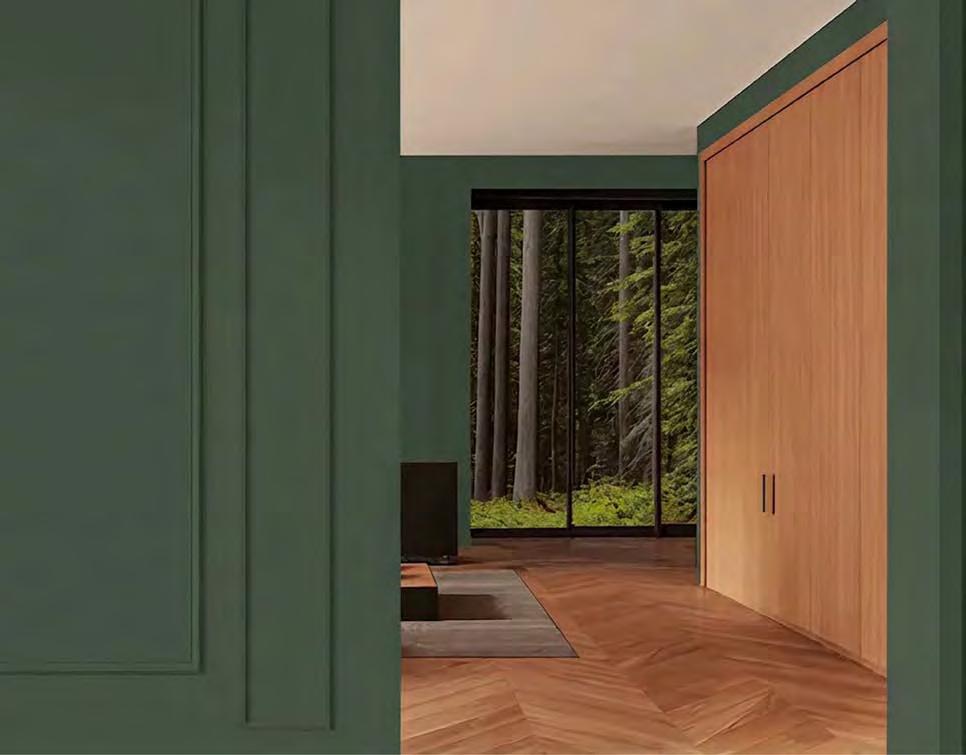
Lush greens are in, as noted by SICO’s Boreal Forest and Dulux Canada’s Colour of the Year, Pine Forest (below).
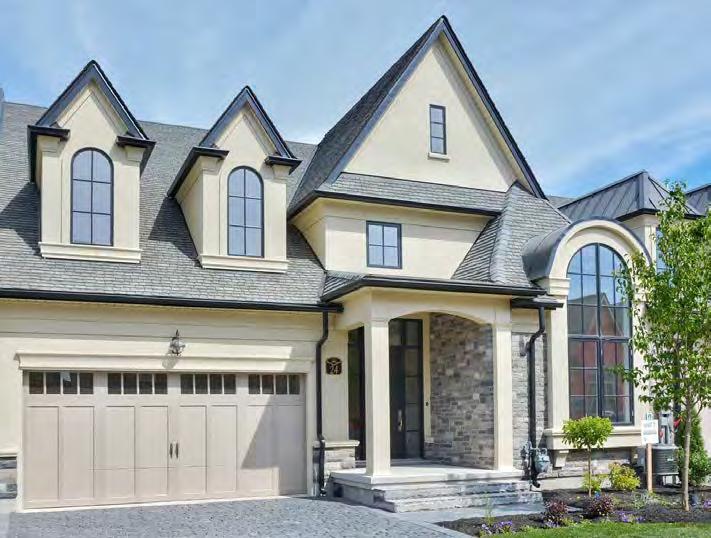
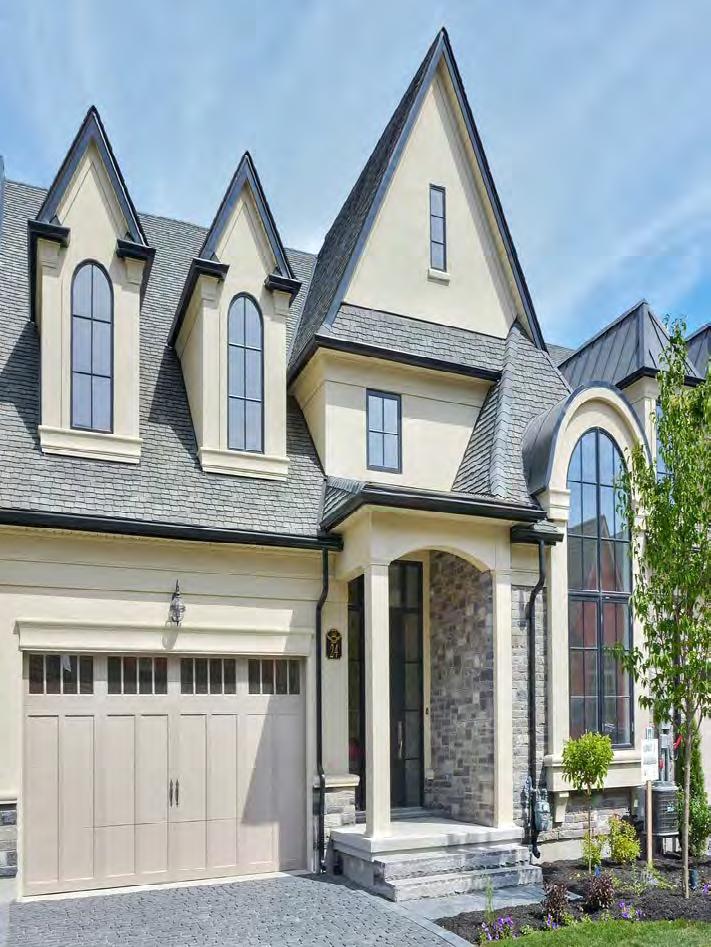

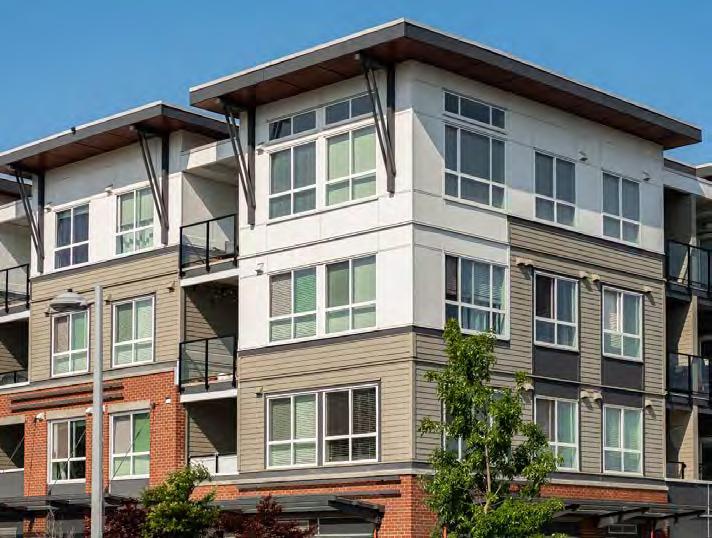


From roof trusses to wall and floor panels, we provide service across Ontario and deliver highquality components that keep your projects moving. Our team provides complete framing services for the installation of our prefabricated products — saving builders time, labour, and costly site delays.



Building Buzz
Avg. Estimated SF
5561,500 1,0001,949
Great Condo Reset
Completed inventory is being split between rental and resale
COMPLETED BUT UNSOLD new condo inventory in the GTHA is being absorbed in two very different ways. In Bullpen Research & Consulting’s recent sample of 200 developer-owned suites, 37% were listed for rent and 63% for resale, suggesting owners of completed inventory are using both leasing and sales channels to move units.
The average rental unit was 707 SF and asked $2,850 per month, or $4.03 per SF, while the average resale listing was larger at 936 SF and asked $1.04 million, or $1,112 per SF.
That split matters because it shows the market is sorting completed inventory by use case. Smaller suites appear
more leasable, while the ownership side of the standing inventory is skewed toward family-sized product rather than the compact units investors often seek.
Pricing pressure
The bigger message for builders is that asking prices remain under pressure, even after several years of elevated condo values. Across the 22 completed developments in the report, average asking prices were essentially flat at $1,286 per SF from 2021 to 2023, then eased to $1,176 in 2025 and $1,112 in 2026. That represents an 8.7% year-over-year drop in 2025, followed by another 5.4% decline through May 2026.
From the 2024 peak to 2026, the average asking price fell about 13.7%. For developers, that is a clear sign the market is repricing completed product and that peak-era pricing is no longer realistic on unsold inventory. The steepest cuts were concentrated in projects that launched at the highest prices, suggesting the most aggressively priced launches are now facing the sharpest reset. Several examples underline the point. Empire Maverick fell from $2,067 per SF in 2024 to $1,254 in 2026, a drop of 39.3%. District Trailside 2.0 declined 37.3%, from $1,255 to $787. JAC Condos slipped 37.1%, from $1,319 to $829. Nautique Lakefront Residences dropped 31.5%, and The Garden District fell 29.0%.
Developer strategy
“Many developers are no longer clinging to peak pricing,” Bullpen Research & Consulting Inc. President Ben Myers told
Building Buzz
Ontario Home Builder. “With values likely to stay relatively flat over the next couple of years, it makes sense to sell in this noHST window."
Myers also noted that developerowned inventory is still appearing selectively on MLS, suggesting builders are testing the waters with a limited sample of offerings.
What rents signal
The rental side of the market is telling a different story. Asking rents for completed new condos are clustered tightly, with one-bedroom units averaging $4.10 per SF, two-bedroom units $4.01, two-bedroom-plus-den units $4.02, and three-bedroom units $4.00. For builders, that suggests rent levels have hit a practical ceiling, even if leasing can still support cash flow.
Bedroom-type performance
The strongest evidence of repricing comes from the bedroom-type analysis. Median asking prices across the sample peaked at $1,301 per SF in 2022, eased to $1,277 in 2024, and then fell to $1,093 in 2026. That puts the 2026 median 16% below the 2022 peak and 14.4% below 2024, though still 14.2% above 2018.
The biggest declines since the peak were concentrated in smaller and midsized units. One-bedroom-plus-den suites dropped from $1,308 per SF in 2024 to $1,009 in 2026, down 22.9%. Onebedroom units fell 18.5%, from $1,332 in 2022 to $1,086. Studios declined 17.5%, while two-bedroom-plus-den units fell 16.4%, and two-bedroom units 15.8%. Three-bedroom units proved more resilient, falling only 11.1% from $1,369 in 2024 to $1,217 in 2026.
That pattern matters for product strategy. It suggests developers remain more confident in larger end-useroriented suites, even as smaller investorheavy formats have taken the sharpest price reset. For future launches, that could influence how builders think about unit mix, especially if they want to reduce exposure to the most vulnerable product types.
Completed inventory is now as much an asset-management issue as a sales problem. Smaller suites can often be leased at workable levels, while larger ownership units may need sharper pricing where they were originally positioned too high. For builders, Myers says the practical move is to read each project on its own and decide whether to lease, discount or hold.
TECHNOLOGY
Heat Pump Technology Hits a New Level
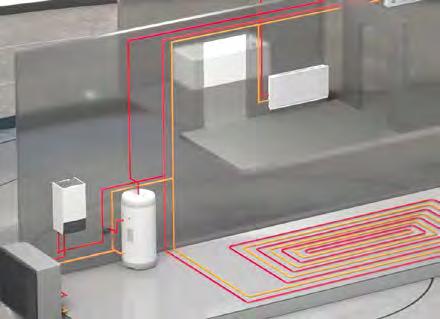
As Ontario builders navigate tightening energy codes and client pushes for fossil-fuel-free homes, Daikin Comfort Technologies has launched the Altherma 3 H HT, a high-temperature air-to-water heat pump they claim will redefine boiler and furnace replacements.
Launched in May in Burnaby, B.C., this 3-in-1 system delivers heating, cooling and optional domestic hot water with water temperatures up to 70°C, even during brutal -28°C cold snaps.
What sets it apart for Canadian residential construction is sheer versatility. The “plumb-and-play” setup hooks directly into an indoor hydro box with minimal piping tweaks, then ties into existing emitters like radiators, baseboards or in-floor loops without major plumbing overhauls, slashing retrofit headaches in older stock or new net-zero spec homes. Powered by a groundbreaking compressor from Daikin’s Japan and Europe labs, it runs on low-GWP R-32 refrigerant for lower emissions than legacy R-410A systems, aligning with provincial rebates like the $7,500 for cold-climate heat pumps in electrically heated dwellings. Inverter-driven compressors and fans ensure top efficiency, while cooling holds steady to 43°C—a boon for humid GTA summers.
It's also very quiet at 41 dBA (or 35 dBA in low mode), thanks to a single oversized fan, triple compressor insulation, and vibration-dampening plates— perfect for dense subdivisions where decibels matter. Its sleek grey casing, inspired by Daikin’s indoor units, slips discreetly into modern exteriors without the industrial eyesore of traditional HVAC gear. “One solution, multiple possibilities,” describes Edwin Reek, Daikin’s Director of Water Heating Solutions, emphasizing its role in ditching gas for all-electric hydronics.
Ontario builders and renovators can soon spec this for code-compliant, rebate-eligible projects under O. Reg. 540/22 and CSA F280.
RESEARCH
Altus Guide Highlights Canadian Construction Costs

Altus Group has released its 2026 Canadian Cost Guide, an annual comprehensive benchmark of hard construction costs for real estate development and infrastructure projects in major Canadian markets.
Drawing on data insights from more than 6,500 development projects representing over 1.6 million square feet and more than $573 billion in collective value, the guide provides detailed hard cost data by asset class, city, and on a persquare-foot or per-unit basis.
“Altus Group’s cost guide shows that hard construction costs are increasingly shaped by structural factors such as labour availability, regulatory complexity, trade policy and geopolitical conditions, rather than traditional inflationary drivers,” said Anil Ramjee, Senior Director, Development Advisory at Altus Group. “These factors are often outside a project team’s direct control, and they’re playing out very differently across Canada. In this environment, informed planning and strong cost oversight are essential to managing risk and improving certainty throughout the development process.”
“Over the past two years, construction costs across Canada settled at a new baseline following a period of sharp inflation and supply chain disruption, but stability hasn’t meant certainty,” the report reads. “The outlook heading into 2026 is cautiously optimistic, with optimism building toward 2027. Stabilizing interest rates and gradually improving financing conditions are expected to support a measured recovery in private-sector activity.
Note that this guide does not include the impact of any pending tariffs, which may affect the material prices and overall construction costs in 2026. The guide



3
3
3








“aims to serve as a helpful resource for initial budgeting or as a benchmark for estimating costs,” Altus says. “However, we strongly recommend that you consult with a qualified professional to create an accurate estimate and pro forma figures tailored to the specific conditions and details of your unique development and infrastructure projects.”
ARTIFICIAL INTELLIGENCE
DeWalt Study Flags AI Skills Gap
The news was already not good for an industry well aware of an impending silver tsunami of retiring trades. Then came the news that Ontario faces a severe shortage of qualified teachers in technological education programs in schools. In March, the Ontario Teachers’ Federation reported just 365 Englishstream candidates enrolled in 2023-24.
Causes include the 2015 doubling of teacher college from one to two years, which slashed enrollments; tradespeople’s reluctance to participate due to pay cuts and the lack of salary credit for experience; and funding caps on training spots. Fortunately, the province plans a one-year program revival by 2027, which will speed up the graduation process while cutting an average of $3,000 off tuition.
But will the next crop of educators be properly trained? A new global study from DeWalt highlights a growing disconnect on Canadian jobsites: Construction professionals see artificial intelligence as essential, but lack the training to use it.
DeWalt’s 2026 AI in the Trades report found that 87% of Canadian respondents believe AI will be indispensable within five years, yet only 16% currently use it in their day-to-day work.
Where AI is gaining traction is in practical applications. Nearly half of early adopters (49%) are using it in planning and design, with others applying it to site monitoring (45%) and estimating or procurement (31%). Reported benefits include improved quality control (37%), cost savings (36%) and increased productivity (35%).
Training remains the key barrier, the report notes. An overwhelming 89% of respondents say AI education should be embedded in trade schools, while 62% want hands-on instruction tied directly to construction tasks. In the absence of formal programs, many are turning to
self-directed learning through online platforms and video tutorials.
Adoption is expected to accelerate quickly, with up to 92% anticipating increased use within the next year. But without stronger training pathways, the industry risks slowing the uptake of a technology it already views as critical.
EXPANSIONS
Milwaukee Opens Canadian Hub

Milwaukee Tool has officially opened its first-ever Canadian Service Hub in Georgina, marking a significant investment to strengthen support for tradespeople across the country. The new 54,000 SF facility will be a centralized repair and service centre for Milwaukee products, delivering faster turnaround times, better customer support and a more streamlined service experience for professionals nationwide.
APPOINTMENTS
Monaco Among Daikin Appointments

Daikin has announced the appointments of three regional general managers nationwide: Quin Randolph (Western Canada), Joe Monaco (Central Canada, including Ontario) and Francois Lachapelle (Eastern Canada). Monaco’s career with Daikin spans 22 years, starting at Goodman Company Canada and progressing through various roles at Daikin Comfort Technologies. His experience includes branch manager, area sales manager, regional pricing manager and, most recently, regional manager.

If you are using EPS as exterior insulation in your builds, there is a better way to add R-value. BTRboard delivers higher performance and is easy to install.
• 30% better R-value per inch than EPS insulation
• Costs less than XPS panels
• 21% structurally stronger
• Fire & moisture retardant
• Build faster with less labour



Bridle Path Condo Launch

While affordability remains front and centre, North Drive Investments continues to focus on highly curated residential developments, including its June groundbreaking of 2 Post Road, the first condominium project in the Bridle Path in 25 years.
Nestled at the corner of Bayview Avenue and Post Road, the boutique condo offers 62 expansive suites starting at $2.5 million, with opportunities for suite combination, ceiling heights up to 12 feet, outdoor terraces and serene green spaces. Features include enhanced security and premium amenities, including valet service, a private dining room with a catering kitchen and a pickleball court.
EXPANSIONS
Brantford Home to IKO's First XPS Plant
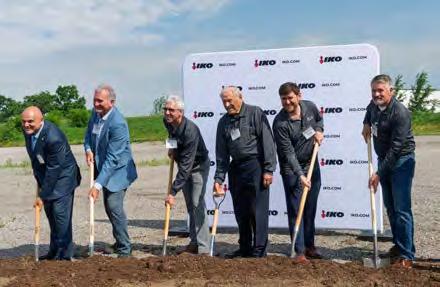
IKO, a leader in the roofing, waterproofing and insulation industry, officially broke ground on its extruded polystyrene (XPS) insulation manufacturing facility in Brantford in June.
The new 67,000 SF facility represents more than $45 million in investment and further advances IKO’s manufacturing capabilities. While it currently operates polyISO insulation facilities in Ontario, Alberta and Maryland, Brantford marks the company’s first XPS insulation manufacturing plant.
Once operational, the facility is expected to employ approximately 40 people in the Brantford area and will support customers across Canada and the northeastern U.S.


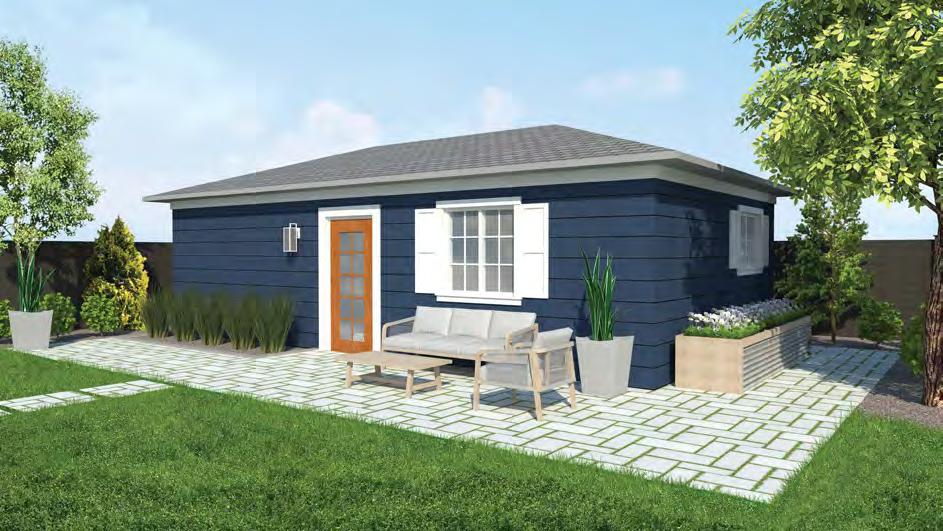
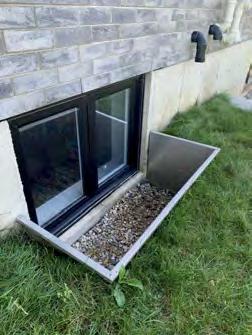
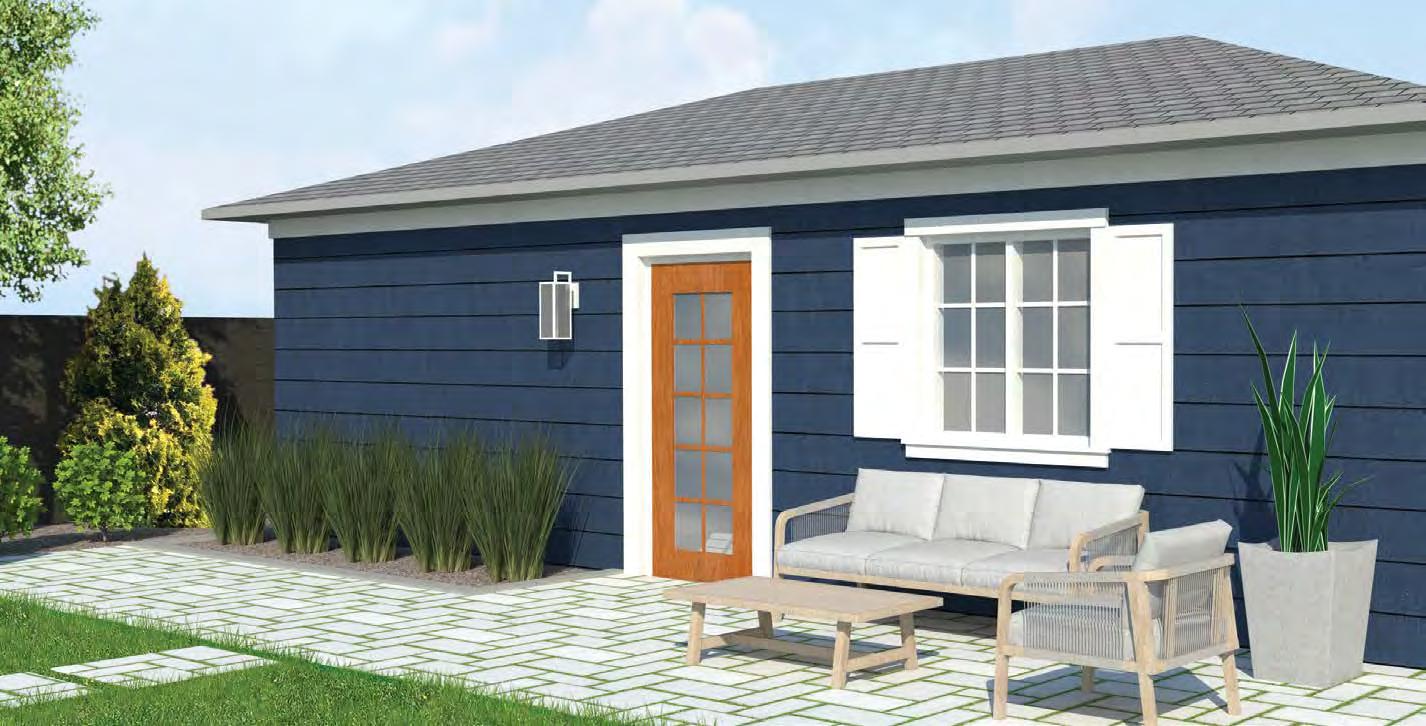

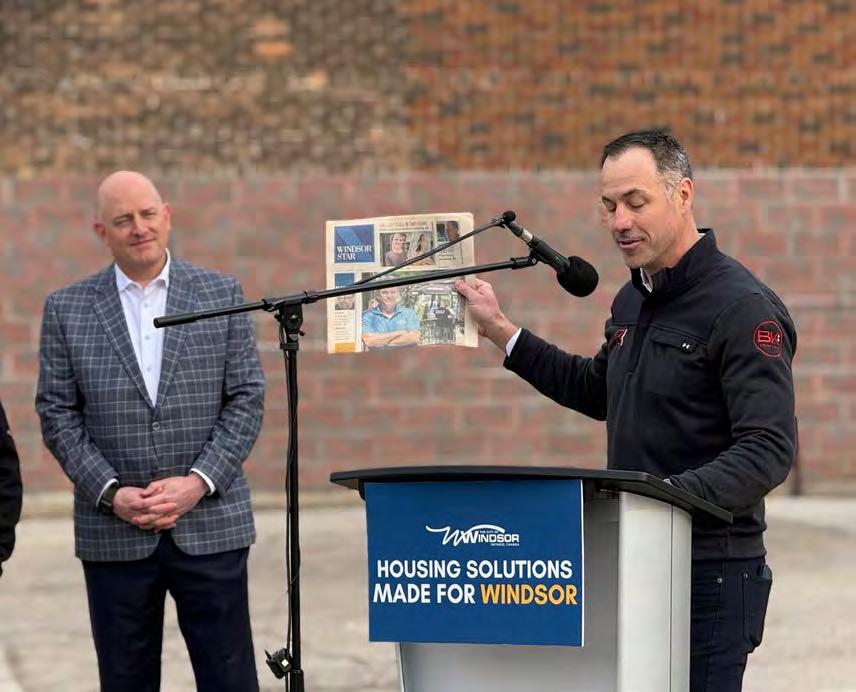
Windsor-Essex HBA
FOUNDED: 1953 MEMBERS: 105
LEAN ECONOMIC TIMES often mean lean recruitment, but Windsor-Essex Home Builders’ Association (WEHBA) has bucked the trend. Over the past six years, the local chapter has grown from roughly 45 members to 105—momentum that helped earn it the 2023 OHBA Local of the Year honour.
WEHBA’s culture is rooted in a “Call a Member First” philosophy, Executive Officer Melissa Schenk notes. More than a slogan, it’s an operating principle designed to strengthen relationships, keep business local and encourage collaboration in a region where builders, trades, suppliers and professionals frequently intersect.
“If I’m going to do business with somebody, I prefer it to be a member,” says Schenk, “ because they abide by a certain code of ethics and want to make a difference in our community.”
WEHBA’s operational format has changed under Schenk, who also oversees three other OHBA locals. Traditional dinner meetings have evolved into immersive gatherings hosted at members’ businesses and job sites, providing firsthand exposure to local innovation. Recent venues have ranged from J.P. Wiser’s Experience Centre to Nico Taverna, where members of Dimanti


Countertops showcased the partnerships and craftsmanship behind the revitalized space. “It’s been a real game-changer, and our members support these functions like nowhere else,” Schenk says.
Partnerships were also in evidence at The Hive on Pelissier, a recently completed luxury mid-rise residential project built by BK Cornerstone alongside Distinctive Homes & Real Estate.
As with all OHBA chapters, community involvement is a defining characteristic. In June, members began constructing a Ladies Pavilion at Brentwood Recovery Home, an organization central to the region’s addictions and mental health continuum.
This year, members are also revitalizing a small house at Windsor’s Safety Village, a not-for-profit community organization dedicated to providing hands-on safety and injury-prevention education. Originally built by WEHBA members in the early 2000s, “it’s a little children’s village with miniature homes, where kids can drive around in little cars,” describes current WEHBA Chair Norbert Bolger, founder and owner of Nor-Built Construction.
Workforce development also remains a priority, with members supporting
Windsor’s St. Anne Catholic Skilled Trades Academy and Learning Centre to encourage careers in construction.
Beyond individual projects, WEHBA is engaged in the broader transformation of the region, including Windsor’s Strengthen the Core plan—a multi-year, $20+ million strategy aimed at enhancing safety, cleanliness and vibrancy.
For members, early insight into civic priorities such as these can be invaluable. “We sometimes get information before it’s released publicly, which is an asset to our members,” Schenk highlights.
Still, Windsor-Essex faces its share of challenges. Bolger points to the prevalence of owner-built homes, a byproduct of the region’s strong blue-collar roots.
“We have a lot of people in manufacturing, and many get their buddies together and build homes for themselves,” says Bolger, whose association has been an active voice in addressing the issue. “At one point, 35% of new homes were owner-built. It’s a big problem here.”
Economic uncertainty tied to Windsor’s automotive and tool-and-die economy has also created volatility. “As soon as some of the tariffs came down, a lot of people weren’t sure if they were going to have a job, so they held off on potential new-home construction and renovation,” Bolger says.
Despite those pressures, WEHBA is thriving—a reminder that in WindsorEssex, membership isn’t just a metric— it’s the mechanism.
Clockwise: Past WEHBA Chair Brent Klundert (at the mic) talks about Downtown Windsor revitalization; current Chair Norbert Bolger; and Executive Officer Melissa Schenk.




















































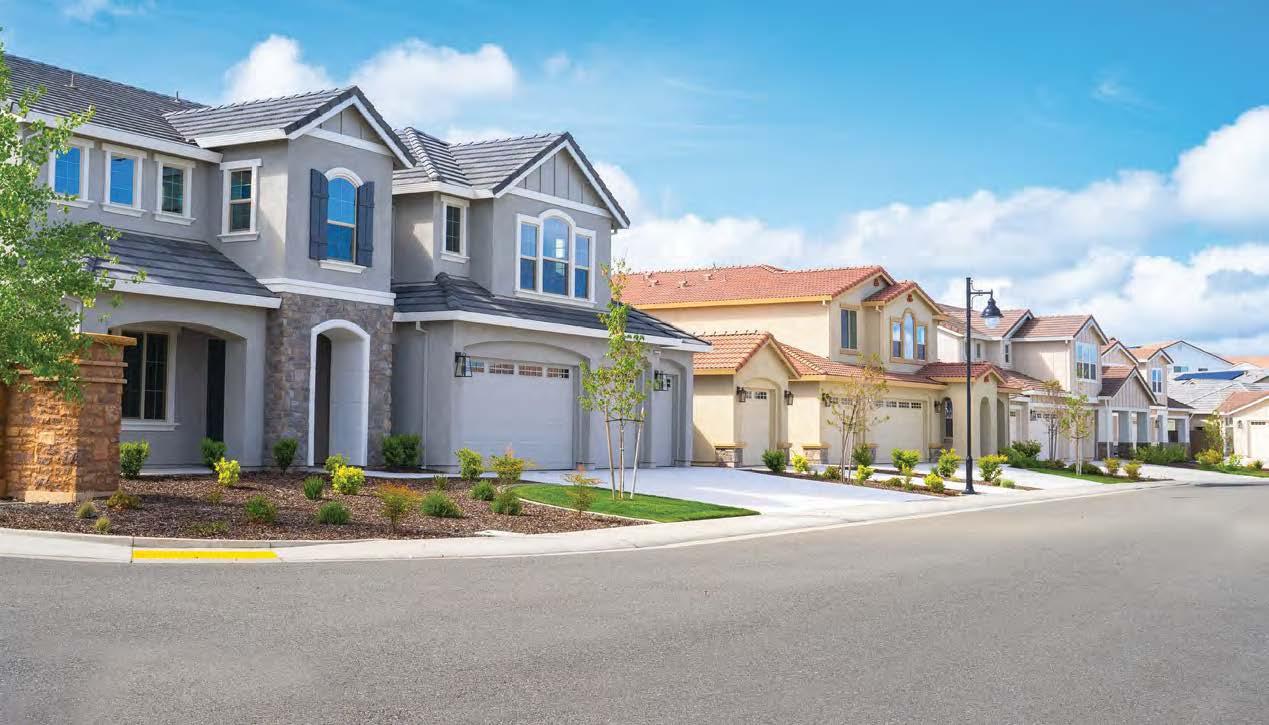
ONE SYSTEM. ENDLESS POSSIBILITIES.
The Napoleon® EQ ® Fusion Hybrid Solution delivers heating, cooling, hot water, and zoned comfort through one intelligent, space-saving system. Powered by the EQ ® Hub Smart Thermostat, it automatically optimizes performance based on outdoor conditions and utility rates to maximize efficiency and comfort.
FASTER INSTALLS. SMARTER SYSTEMS. HAPPIER CUSTOMERS.
Why choose EQ ® Fusion?
Up to 120% Efficiency
Heating, Cooling & Hot Water
Flexible Zoning
Lower Operating Costs
Compact Footprint
Quiet Operation
Smart App Control
Third-Party Verified