
HIGHER EDUCATION
DISCOVER THEIR NEXT STEPS
CHECK OUT OUR

HIGHER EDUCATION COURSES
HIGHER APPRENTICESHIPS
PARENT GUIDE
We know that your son or daughter relies on your advice to guide their future decisions. Choosing a career path can seem daunting, so we aim to provide you with all the information you need so that you can help your child to make the right choice for their next step. Whatever your child’s starting point, we will ensure they have the knowledge and support they need to continue their journey to a great career.
What are the options?
After completing a college course at Level 3, such as a BTEC, A-Level or an Apprenticeship, students have the option to:
• Progress into higher education either with the college or at a university
• Start an Apprenticeship at Level 3 or above
• Go straight into employment
At NWSLC, we offer a range of Higher Education courses and Apprenticeships across our campuses.
Our courses have been created with your child in mind. They are based on a practical hands-on approach with modules that enhances employability skills. As students work through their course, they will develop their existing knowledge in their chosen sector, enhance their independent learning and apply their skills to the industry.

Higher Education
We deliver a range of BTEC Higher National qualifications validated by Pearson as well as programmes delivered with partnership universities. Our students benefit from our lower tuition fees and smaller class sizes. Our courses aim to get students work-ready, with higher skills that can be applied directly in the workplace.
 Joseph Kloos
Level 3 to Level 6 Media Studies
I chose NWSLC as I felt what the college taught was most relevant to my interests and will allow me to gain the qualifications needed to help secure a good career.
Joseph joined NWSLC to study media at Level 3 and chose to stay on to follow a degree course at our Hinckley Campus. 0330 058 3000

nwslc.ac.uk
Myths about Higher Education at college
College vs university – It’s all down to your preference
Let’s start by saying that both options are equally valid and the choice you make depends on your circumstances and personal preferences only.
What is the difference between college and university?
University is the route that many students take. It is deemed the ‘typical’ route to getting a degree. However, there are around 31,000 students under the age of 21 following higher education course in UK colleges (Association of Colleges). University is great for some. Students can choose to move to a different city from where they currently live, or they can live at home and study locally. Courses at college tend to have smaller, more personal classes and lower course fees. It is also likely that if a student stays on to study a HE course at college, they will already know the staff that are teaching the course. Many college courses are more hands-on and the smaller group sizes mean students are able to develop skills quickly, with more tutor contact time.
College courses are not accepted by employers
HNCs and HNDs are nationally recognised qualifications and can be converted to a degree. After two years of study our students can either top-up their study to gain a full degree or they can enter into employment.
You can’t get a student loan to study a degree at college
Higher Education courses at college are exactly like paying for courses at university. They can be paid for independently or through Student Finance England. This can be specified on the UCAS application form. A student finance application needs to be started early; you will be required to assist in this application as household income will need to be evidenced. Students will have the option to apply for a loan to cover the tuition fees and an additional loan to cover maintenance.
You can access more information about Student Finance here:
https://www.gov.uk/getundergraduate-student-loan
What support is available for disabled students?
Alongside the support NWSLC gives, Higher Education students can apply for a Disabled Students Allowance (DSA).
DSA is extra support to cover any additional study-related costs that may be incurred because of a mental health issue, long term illness or any other disability. DSA does not need to be repaid and the type of support and how much you receive depends on your individual needs, not your household income.
It could help with the costs of specialist equipment, study helpers, travel costs and printing.
To learn more or to apply, please visit www.gov.uk/disabledstudents-allowance-dsa/how-toclaim
Students at college don’t get to graduate
Yes, they do! We have a graduation ceremony every January that celebrates the achievements of our students and provides our successful higher education students with their certificates.
You wont get any industry experience at college
You should always consider what employers will be looking for in an employee. Employers will want to see that applicants have the knowledge needed for the job, as well as industry experience.
We encourage all our HE students to undertake work experience and we support this as much as possible including providing opportunities for students to engage with live opportunities and commissions.
Look at our website to see our range of course areas at nwslc.ac.uk/HE

058 3000 nwslc.ac.uk
0330
Why choose HE at NWSLC?
Higher Education is a major investment with benefits that will last a lifetime. We aim to ensure students get everything they need and more during their time with us.
Familiarity
Many of our students choose to stay with us to complete Higher Education programmes because it means that they can study in an environment that is familiar to them. They will have got to know their tutors already and may feel confident and comfortable studying with us.
Specialist teaching and expertise
Many of our staff have worked in industry or continue to practice in their specialist subject area, and are well-placed to share industry knowledge.
Accreditations
We are registered and regulated by the Office for Students (the regulatory body for Higher Education in England) and meet all ongoing conditions of registration including meeting all expectations for quality and standards. October 2019 saw us undergo a full Ofsted
inspection and the college was judged to be Good with Outstanding features.
Smaller group sizes
Unlike universities, our group sizes are quite small, just right for individual support and guidance throughout students’ time with us.
Local to you
Our campuses are easy to access by public transport and some students find that it minimizes impact on other aspects of their life such as childcare, family commitments and part-time jobs. As we are local, there’s no need to worry about the additional costs of accommodation that may apply to studying further afield.
HEenquiries@nwslc.ac.uk
87% HE Student Satisfaction
Our rates are 12% above the national average. Feedback shows that we continue to improve in teaching, assessment, feedback and academic support.
Lower fees
Studying a higher education course with us is exceptional value for money and costs up to 30% less than at a university. Students can apply to Student Finance to pay for their course, just like at university.
Partner universities
We have long-standing partnerships with three partner universities; Coventry University, the University of West London, and the University of Warwick. Our relationship with these universities enables students to gain qualifications up to Level 6.

Work-ready
Courses are designed with the support and help of employers and with industry in mind. Students get the right skills for the industry that they wish to enter. Placements and work experience are also readily available on our HE courses. Listening to our students is important to us. That is why we support the HE student council, created a HE student ambassador academy and receive a positive rating on the National Student Survey for student satisfaction.
We offer Higher Education courses in:
• Business
• Childcare and Education
• Computing and Digital
• Creative Art and Design
• Creative Media
• Engineering
• Heath and Social Studies
• Performing Arts and Theatrical Make-Up
• Public Services and Sport
0330 058 3000 nwslc.ac.uk
(National Student Survey 2021 - Higher Education Students)
Apprenticeships
Apprenticeships offer another alternative to post 18 study. Your child can progress on to a higher level apprenticeship following their course. They can even study at the same level meaning they can develop more work-based skills.
We understand that classroom learning is not for everyone. We believe that apprenticeships are a great way to find a job within the industry your child wants to work in, gain hands-on experience and earn some money while working towards a nationally-recognised qualification.
Apprenticeships take between 1–5 years depending on the level, sector and prior skills.

Benefits of an apprenticeship
• Earn* while you learn
• Gain a recognised qualification
• Receive on-the-job training
• Study a wide choice of Apprenticeships from various sectors
• Develop industry-specific skills from experts in the field
*Apprentices are paid at least the national minimum apprenticeship wage, with many employers paying more.
Apprentices must also complete 20% off-the-job training. What does this mean?
• Theory – such as lectures, role-playing, online learning, simulation exercises or manufacturer training

• Practical training that apprentices wouldn’t usually do during the week – such as shadowing, mentoring, industry visits or competitions
Why choose Apprenticeships with NWSLC?
Your child can start an Apprenticeship at any age and at anytime throughout the year!
Each apprentice will have a dedicated assessor with industry-specific skills. Their assessor will be available to provide support throughout their programme, either online or with visits to the workplace.
Our apprenticeship offer is designed to meet industry demands. We aim to make sure your child pursues a career they are passionate about.
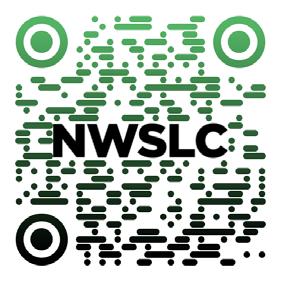
Did you know that we have many live apprenticeship vacancies at the moment? We are always working with employers to recruit apprentices across a range of sectors. Take a look!
SCAN THE QR CODE TO FIND OUT MORE
058 3000 nwslc.ac.uk
0330
Our facilities
NWSLC delivers Apprenticeship programmes from our Nuneaton, Wigston and Harrowbrook Campuses, which are all purpose-built with facilities designed to meet the needs of specialist courses that they offer.
Apprenticeships are also delivered at the bespoke MIRA Technology Institute which is equipped to operate at the cutting edge of technology and is home to our specialist industry-leading automotive apprenticeship programmes. We also offer apprenticeships at our Digital Skills Academy, our specialist IT & digital training academy which is located at Coventry University Technology Park.
What apprenticeships do we offer?
We offer a wide variety of apprenticeships throughout the Midlands region. These include:
• Accounting
• Automotive
• Business and Management
• Construction
• Digital, Computing & IT

• Engineering
• Hairdressing
• Hospitality and Catering
• Marketing and Events.
engage@nwslc.ac.uk
Hannah Baister

Level 5 Human Resources Apprenticeship
People Services Team Leader Hannah achieved her Level 5 CIPD qualification, completed an apprenticeship, and managed the challenge of new payroll procedures when all 4,000 staff at The Works were put on furlough.
Hear from one of our apprentices about their experience:
SCAN THE QR CODE TO FIND OUT MORE

“
The tutors were really supportive, I was determined to demonstrate how much I have learned during my career.
“
Qualifications and fees
Students applying for Higher Education or Apprenticeships will be expected to have GCSE English and maths at grade 4 or above, or another equivalent Level 2 qualification.
3,4, 5,6,7 Apprenticeships The employer pays the tuition fees
Apprenticeships allow you to work as a paid employee whilst gaining your qualification.
Dependent on the employer. You will be required to have GCSEs in English and maths.
4 HNC Higher National Certificates
£5,950 when studying full-time for a year, £2,975 per year for part-time study
A nationally recognised BTEC qualification that usually takes one year to complete when studied full-time.
64 UCAS points (Merit, Pass, Pass for BTECs) or Access to HE course: 30 pass credits and 15 merit credits.
5 HND Higher National Diplomas
£5,950 per year when studying full-time
A two-year, nationally recognised qualification equivalent to the first two years of a degree.
64 UCAS points (Merit, Pass, Pass for BTECs) or Access to HE course: 30 pass credits and 15 merit credits. You will need a Pass to progress from Year 1 to Year 2 (HNC to HND).
5 Foundation Degrees Our courses cost from £4,000 per year
Equivalent to the first two years of a degree.
Prior study at Level 3 and / or experience in the relevant industry.
6 Degrees (including top-up Degrees)
Our courses cost from £4,000 per year
Designed to give you a thorough understanding of a specific subject.
This is subject dependent, but most require a Merit grade or higher in a Level 5 qualification.
For course-specific figures, see our website nwslc.ac.uk and view the course information pages.
Level Title Estimated cost Key Info Entry requirements
Amber Mayes HND Public Services
Amber has enjoyed an incredible journey since she started at the college after struggling in mainstream schooling when she was younger because of her ADD and Dyslexia. Thanks to a positive experience at NWSLC, and over six years later, Amber has successfully progressed from Level 1 to Level 5 and achieved her dream of working in education as a teaching assistant.

Throughout my years at NWSLC, my tutors gave me endless support and pushed me constantly even when I felt like quitting.
With their support and all the extra extra time that they gave me I have progressed all the way from Level 1 to 5.
The lessons were brilliant, and my tutors always taught to my needs and gave me extra guidance when I needed it.

0330 058 3000 nwslc.ac.uk
Applications
Higher Education
Most course applications are taken through UCAS. This is an in-depth application that asks for confirmation of address, grades, nationality, funding routes and a personal statement to explain the applicant’s suitability for the course.
The UCAS application deadline in January ensures that all applicants are given fair consideration before places are offered for a September/ October start. NWSLC takes UCAS applications after this deadline and accepts students onto courses that have space up until the end of September.
Some
applications
for Foundation
Degrees and top-up degrees are taken through our partner universities or internally through the college. Please check the website for individual application information.
If you are unsure about how to apply or would like any support with an application, please contact the HE Enquiries Team at HEenquiries@nwslc.ac.uk or consult the Frequently Asked Questions on our website.
www.nwslc.ac.uk/courses/highereducation-courses/he-faqs/
Apprenticeships
To start an Apprenticeship, your son/daughter will either need to be employed or identify an employer who is looking for an apprentice. If you do not have an employer in mind, then you can register your interest in an Apprenticeship and work with our advisors who will try to find an employer.
If your son/daughter is interested in an Apprenticeship, they can apply in two ways:
1. By browsing the current vacancies on our website
www.nwslc.ac.uk/ apprenticeships-currentvacancies/
2. By registering to be part of our ‘talent pool’ or to speak with an advisor.
www.nwslc.ac.uk/contact/
Our recommendations
• Start looking at options as soon as possible – your daughter/son should start as soon as they have settled in to college, at least a year before the UCAS application January deadline.

• Ask for guidance – we have a team of impartial guidance advisors. Reach out and make contact sooner rather than later
• Keep your options open – try to explore all the options that are available to your child and keep a few in reserve.
• Don’t panic – there is always something available. If you have missed an important deadline, get in touch and we will do our best to help.
0330 058 3000 nwslc.ac.uk
0330
3000



058
Information is correct at the time of going to press. Every effort is made to ensure accuracy. The college reserves the right to withdraw or amend courses, entry requirements, fees and details included in this publication. For latest course information please visit the website www.nwslc.ac.uk. © North Warwickshire and South Leicestershire College 2021. Statistics sourced from: www.prospects.ac.uk and www.career-pathways.co.uk nwslc.ac.uk
HEenquiries@nwslc.ac.uk