LEADING BRANDS AND EXPERT ADVICE, IN OUR SHOWROOM OR ONLINE
LEADING BRANDS AND EXPERT ADVICE, IN OUR SHOWROOM OR ONLINE
LEADING BRANDS AND EXPERT ADVICE, IN OUR SHOWROOM OR ONLINE
LEADING BRANDS AND EXPERT ADVICE, IN OUR SHOWROOM OR ONLINE
f low us here
f low us here
f low us here
f low us here
R m Refresh w h
rugs
custom & stock options available
Here's to Summer
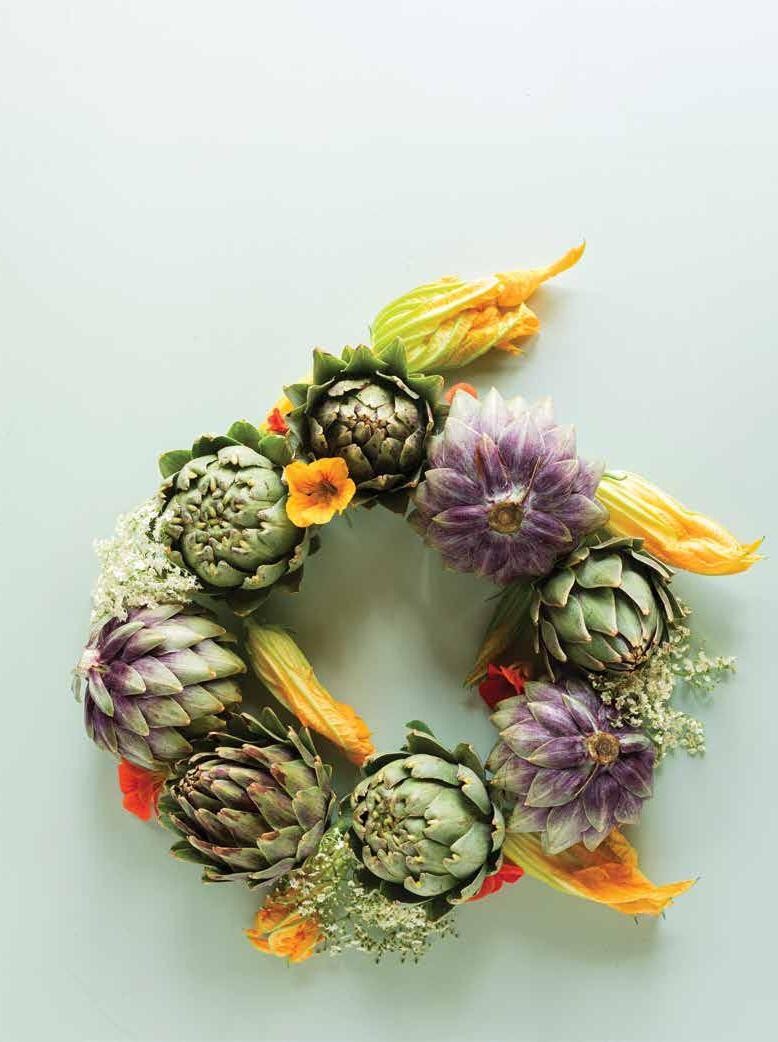
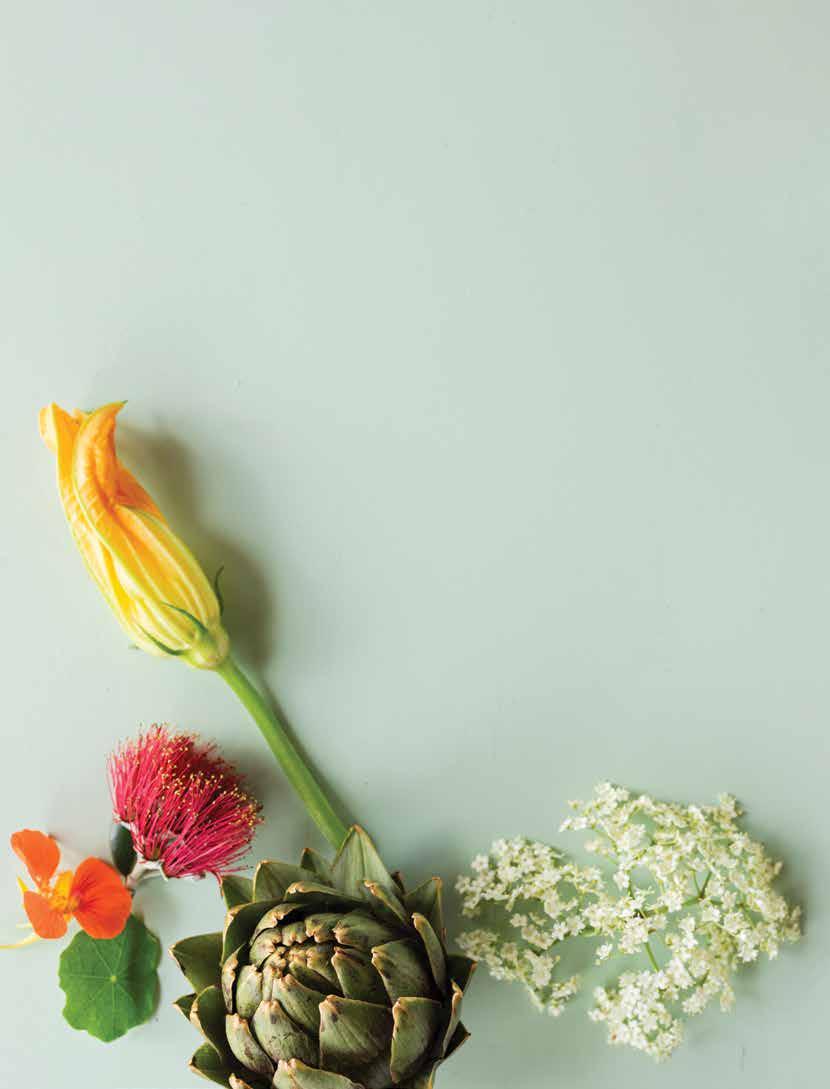
This issue was a real fun one to put together. I had the idea of doing an issue on edible flowers two summers ago while foraging roadside for wild fennel pollen. Edible flowers have become more and more commonplace on our plates as garnish, but I wanted to look at the ones that offer more than a pretty adornment.
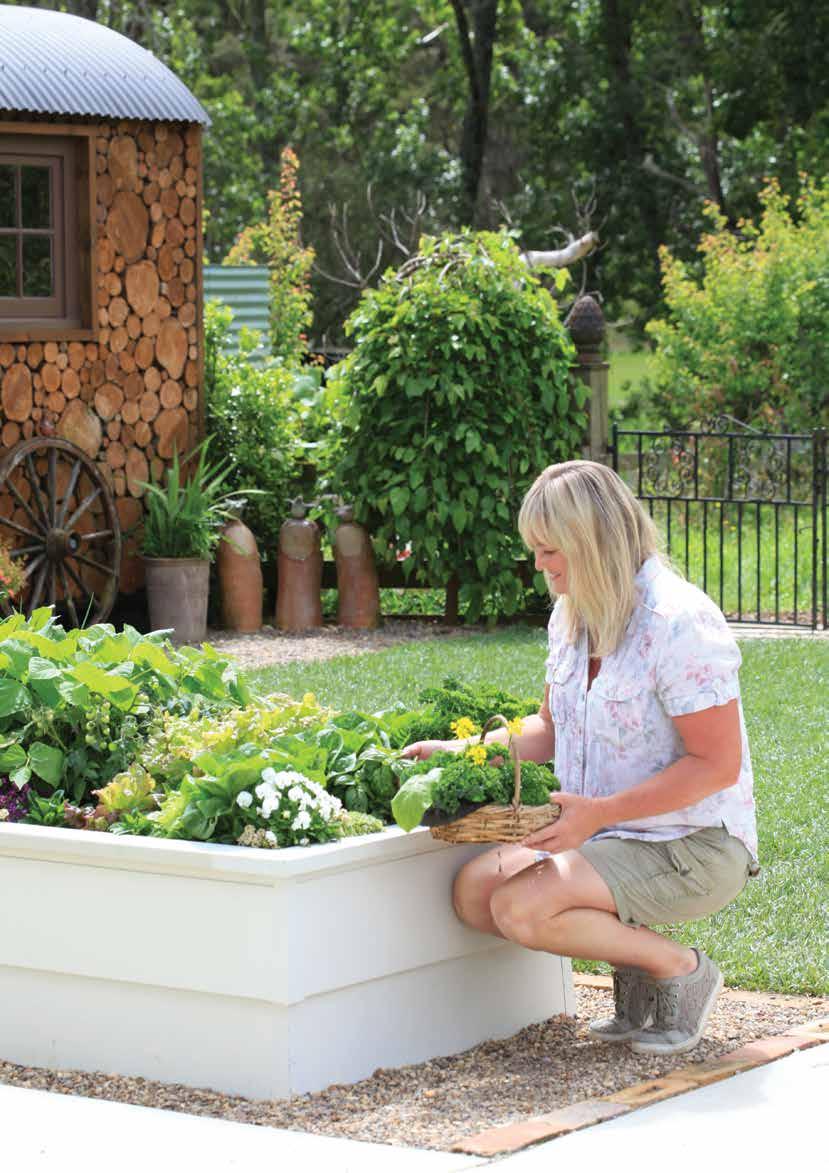
So we started to cast our eyes around for edible blooms we love to eat. Kathy Paterson snapped up zucchini flowers, literally and figuratively, as she carefully took home the flowers from my veggie garden after our team Christmas lunch last year. I always grow yellow zucchini specifically because they produce great flowers.
Julie Le Clerc took capers and then took the words right out of my mouth. Her eloquent introduction on capers (page 20) was exactly what I would have written, down to the first time I looked in awe at a caper plant growing in abundance in the Mediterranean.
On capers, I had to include my hairdresser Paul’s capers trying to grow capers, simultaneously trialling an alternative with the nasturtiums that were taking over my garden (page 18).
All this floral fun continued with a visit to Hamilton Gardens, where I got a sneak peek at the new Medieval Garden, due to open in February (page 36). In an ironic twist, it is based on a garden in Palermo, where I had just returned home from having led our fourth Taste of Sicily Tour. I love that one of my favourite places in my hometown, Hamilton Gardens, now has a piece of another special place for me, Sicily.
I love visiting Hamilton Gardens, and it’s well worth the trip to the Tron, trust me! Every time I go I learn something new. And
13-24 JULY 2026
Join Emma for this feast of the senses! From rice paddies to cinnamon groves, the sea to national parks, we will cross this enchanting island, delving into its history, culture, wildlife and food. $6996 pp twin share
Galloway
My Darling Lemon Thyme
this time I learnt how far ahead they begin planning for each new garden, with planting beginning sometimes five years in advance. As someone who likes to be organised and plan ahead, I was impressed! It made our two years planning for this issue seem like child’s play.
Speaking of planning, a few of the team are heading to Tasmania in March to research and test our Taste of Tasmania tour we hope to take in early 2027. Watch out for more details in our winter issue or follow the fun on our @tasteoftours Facebook page.
I count myself very privileged to be surrounded by a talented and passionate team. As we wrap up another year it seems the perfect time to thank and highlight them. Without such an awesome team, Nourish would not be the treasured read you have come to expect. While we may not be able to before Christmas, I promise the team we will raise a glass together in the new year.
And with that I wish you and your family a fabulous summer filled with good cheer and even better food.
Cheers Vicki Ravlich-Horan Editor
“Another fabulous adventure completed. If you wish to adventure beyond the predictable, see a country behind the scenes, get to know the people and their past with an equally adventurous group of people, superbly organised and down-to-earth host and local guides - Taste of Tours will take you there.”
– TASTE OF SRI LANKA 2025 MANDY AND GREG JARVIS
Taste of Tours are small group tours giving you a real taste of place. For more details on this tour please visit
Emma
LATE SUMMER GARDEN BOTANICAL ART WORKSHOP
Join professional botanical artist Jennifer Duval-Smith for one of her relaxing and inspiring botanical art workshops. This is a fun workshop for beginners to dab hands.
On a mission to connect people back to nature and their own creativity, Jennifer will explain easy strategies to sketch any plant, teach you to trick your brain into seeing more, and show you how to enjoy creating your own nature journal sketchbook.
The workshop at Nourish HQ in Hamilton includes morning tea and wonderful lunch created by Nourish’s own Vicki RavlichHoran.
Sunday 1 March, $190pp
Get your tickets at nourishmagazine.co.nz/shop
PRIVATE TOURS
3.
Our sister company Taste of Tours has built a reputation for carefully curated, bespoke small group tours. In 2026 we are getting even smaller with the launch of our private tour option.
Celebrating a milestone? Looking for a way to get all your friends together for a great time? Taste of Tours can create bespoke small group (6–12) tours just for you to destinations like South Australia, Sri Lanka, Bologna and Sicily.
Find out more at tasteoftours.com or email hello@tasteoftours.com
2.
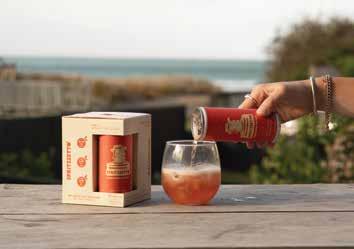
SPRITZZETTO
Aperitivo hour is an Italian tradition fast catching on in New Zealand, and Spritzzetto is going to help with that this summer. Blending premium New Zealand wine with delicate Italian style aperitif aromas, it offers a smooth balance of sweetness and mild bitterness.
Co-founder Lucca Kirwan says when creating Spritzzetto “we had a few non negotiable’s, to deliver a product that was authentic, contains premium ingredients, no artificial colours or flavours and low calories compared to other ready-to-drink cocktails available in the market. What we ended up with we are incredibly proud of and something we cannot wait for Kiwis to try.”
spritzzetto.com
4.
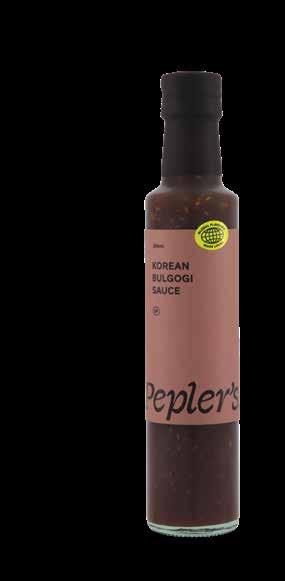
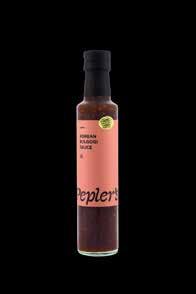
PEPLERS KOREAN BULGOGI SAUCE
Sweet, savoury and seriously tasty, Peplers Korean Bulgogi Sauce will be your best friend this BBQ season. This is the sauce where soy meets sesame, garlic dances with ginger, and a touch of sweetness brings it all together.
Think of it as the secret handshake of Korean BBQ: rich, umami-packed, and irresistibly glossy.
Use as a velvety marinade for chicken, beef or pork. Brush over tofu or mushrooms before grilling. Add it to your stir fry, use as a spread in wraps or as an easy dip for fresh spring rolls. peplers.co.nz
GLAMPING AT FALLS
A luxury camping experience overlooking the forest but steps away from their award-winning bistro is the latest offering at Falls Retreat.
This large five-metre Lotus Belle tent comes complete with a queen bed made up with quality linen. There is a separate lounge and kitchenette and a self-contained bathroom that faces the forest, helping you feel immersed in nature.
This is a space designed for relaxing, a place to switch off and unwind and enjoy nature while still enjoying incredible food.
www.fallsretreat.co.nz/glampingtent
PAHOIA PENINSULA HOME SALE BREAKS RECORD
Brent Trueman admits the champagne corks were popping with the recent sale of the award winning Pahoia Peninsula property which broke Bay of Plenty’s previous house price record. “This is a record that will stay in the Bay of Plenty for a while,” says Brent, who is proud of his small team.
“We’ve been having a great run with a number of great sales,” admits Brent, who says the key to their success is “an unmatched team of wonderful people full of vibrant and unique ideas that can be implemented instantly”.
How? Brent attributes this to their strict recruitment policy: “The existing team must approve of a new member unanimously or it’s a no. That’s why we have a unique team culture which is key to attracting high performing people.” truemanandco.nz
AN ITALIAN BRUNCH
WORDS VICKI RAVLICH-HORAN | IMAGES BY BILLIE BLUE
A few years ago, I began to hear good things about the couple who had bought The Trading Post in Paengaroa. Great Italian Osteria vibes was what I was told, and so naturally I was keen to check them out.
Impatient that I could not wrangle my calendar to get there for dinner, I invited a fellow foodie friend for brunch. Our long overdue catch up began in the car as we drove from the Mount to Paengaroa, both of us barley taking a breath as we caught each other up on life. That was until we arrived at The Trading Post.
Seated in their courtyard on a beautiful sunny Saturday morning, we both exhaled. Silence followed as we studied the menu. This was no ordinary brunch menu with predictable dishes but one that had me intrigued and already contemplating my next visit.
Fast forward a few years and I have got to know Kylie and Simone, the owners of The Trading Post. While Kylie is a Kiwi, Simone hails from the Peidmont region in Italy. The pair met in Melbourne before moving to New Zealand to raise their young family.
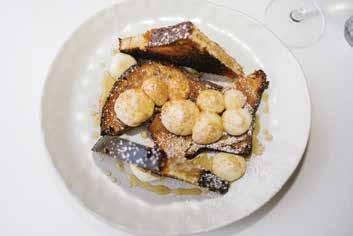
Growing up in Italy Simone says brunch was not a thing. “We would most certainly head to a bar [cafe] and have an espresso, but this would be accompanied by a pastry – custard or jam filled cornetto, Bombolone or Danish. Which is why you find our cabinet full of them,” says Simone, smiling.
It is in Melbourne that Simone says he was first introduced to the concept of brunch. Kylie points out, “Australians love a brunch as much as we do, and he was quickly converted.”
As caffé and pastry are the typical way to start your day in Italy, Kylie says, “Expect to find a lot of pastries, and panini style dishes on our menu.” These are made in house using a mix of flour from Naples and Farmers Mill from Timaru to closely connect the flavours you get in Italian panetteria.
Kylie says, “We also believe that if you’re going out for breakfast you should try something that you wouldn’t have at home, or that you don’t find everywhere else.” The Trading Post’s menu pays homage to some of the typical dishes you don’t get to enjoy unless travelling in Italy.
Travelling through Italy you can almost guarantee you’d come
across a variation of a rustico panini at an Autogrill or train station cafe. Simone explains this half-moon shaped sandwich “is made from pizza style dough. We fill ours with a pancetta, mozzarella and provolone.”
Their Italian Club Sandwich pays homage to the panettone gastronomico – a tall, brioche-style bread (just like sweet panettone you get at Christmas time) but instead of using sugar or candied fruit, it's layered (or filled) with savoury ingredients like prosciutto, smoked salmon, cheeses, or creamy spreads. This is a typical dish you’d see at a family baptism, Christmas or New Year celebration. The Trading Post’s version has crumbed duck, bacon, grilled zucchini, capsicum and other delicious salads.
Kylie says, “Italian food often gets pigeonholed into pasta and pizza, and don’t get us wrong, we love these dishes as much as the
next person, but there is so much more to Italian cuisine. There are regional dishes and everyday nuances that never make it into the spotlight.”
Experience these dishes along with the warm hospitality of The Trading Post for brunch on the weekend throughout the summer months. “We’re aware that we are definitely a destination cafe”, says Kylie. “So we make sure there’s no rush to leave once you arrive. We’ve spent a lot of time in the garden growing different herbs and fruit trees. Many of the details in the restaurant are made from Simone's nonna, so there’s beautiful tapestry to be admired. We’ve also got beautiful neighbours, so you can come out for brunch and then have a shop at the beautiful homewares at Silkwood next door.”
I also recommend finding a way to get there for dinner on a Thursday, Friday or Saturday night. But book ahead to avoid disappointment.
1 Hall Road, Paengaroa 3189 www.thetradingpost.nz
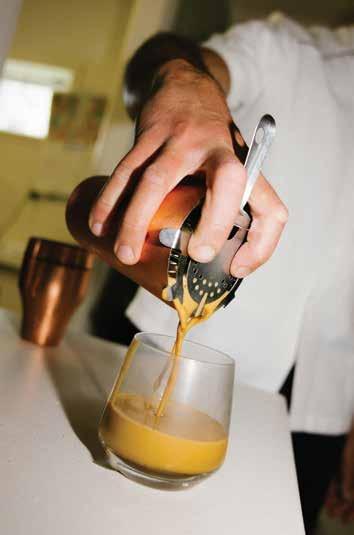
SHAKERATO
Italians love their coffee but like a cappuccino after 11am. An ice coffee is not a thing. Introducing the Shakerato, which is. And in my opinion a better option!
double shot espresso
15 ml vanilla syrup
30 ml Amaretto di Saronno
Three quarter fill a cocktail shaker with ice.
Add the coffee and vanilla syrup along with the Amaretto di Saronno (if you want alcohol free ad extra vanilla syrup).
Shake until the shaker is too cold to hold.
Slowly pour into a tumbler glass and watch the layers separate.
Enjoy!
Fizzing with Freshness at Tranquillo
WORDS LIZ FRENCH | IMAGES BRYDIE THOMPSON
It was standing room only when Tranquillo Beauty Clinic’s new proprietor, Dani Sheridan, invited former and prospective clients and local business people to celebrate her new venture and to reassure them that it’s not going anywhere but up!
Dani Sheridan may be new to Tranquillo, but she is not new to the business of beauty. A country girl, she was brought up just outside Gisborne, where she completed her nursing training, supplementing her income by working at Farmers’ beauty counter. She found a niche; one she built on while working as a registered nurse, developing a YouTube following. Her make-up tutorial videos, including one about decluttering and cleaning her make up collection, attracted more than half a million views.
Dani has gradually made it to Tauranga via Taupō and Whakatāne, where she worked in beauty treatment businesses, soaking up
information and ideas, always grateful for the grounding that nursing had provided, citing “do no harm” as a good mantra on which to build beauty services designed to improve both looks and morale.
Once Dani and her family had settled in Tauranga it became a goal to own her own business … but not just any business. It had to have an excellent reputation, very high standards and, of course, the books had to look good too. Tranquillo Beauty Clinic was all that and more.
Dani took over in early September and worked quietly under the radar until the official opening at the end of October. During that time, she employed three staff members, each with her own passion within the field and all working together to deliver delight to clients by enabling them to, “relax and recharge and enjoy results-driven treatments tailored to their needs”.
TEAM SPIRIT
As owner/manager Dani finds herself working about half on the business and half in it, so places huge value on employing the right people. She firmly believes that the best team is one where members get the opportunity to work to their strengths in an environment where they are always learning and encouraged to be enquiring. And where they have fun! Senior Beauty Therapist Mikaela Andersen enthuses, “This is the best place I’ve ever worked. Dani is my fav!” Mikaela is proficient in a wide range of treatments, her overall aim that her clients leave feeling confident and comfortable in their own skin.
Spa therapy is Moenah O’Shea’s thing. She likes to see her clients “melting away” after holistic massages using natural products.
And junior therapist Gracie Cappely is loving what she’s learning and most enjoys the combination of creativity and caring, and the instant results that a waxing or a facial can deliver.
PROFESSIONAL PROTOCOLS
Dani stresses her emphasis on the correct protocols in all areas of the business. “Beauty therapy is largely unregulated,” she says. “Therefore, the onus is on us to ensure that every solution and every treatment we offer comes tested, proven and reliable, and that we are proficient at its application.”
To ensure the new team at Tranquillo completely understand your skin, they are offering a free Observ 520x Skin Analysis with your first facial at Tranquillo under its new management. Observ is an advanced diagnostic imaging tool that effectively captures a comprehensive visual of your skin condition, including the typically ‘invisible’ underlying layers, patterns and structures. Dani comments, “That’s why we invest in diagnostic tools like the Observ 520x, to ensure we understand every client’s skin before we treat it.”
NEW LOOK, LATE NIGHT
Under Dani’s guiding hand, Tranquillo Beauty Clinic is gently evolving. Regular clients will notice subtle changes in the décor, with the rich and soft combination of deep jade and pink punctuating the logo and feature walls.
Dani would love to see more professional women acknowledging that they deserve the beauty treatments that not only respect and rejuvenate their skin but allow them an oasis of ‘me time’ in their busy schedules. She hopes opening late every Thursday will encourage and facilitate this.
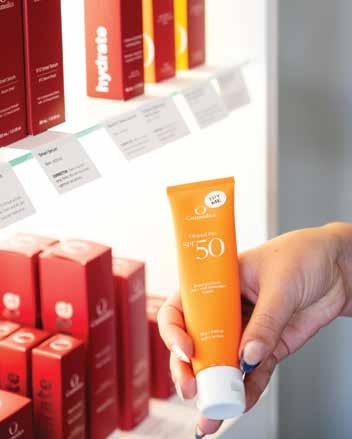
SUMMER SUNSCREEN
Dani emphasises that if there’s one non-negotiable step in your summer skincare ritual, it’s daily sunscreen. While protection is essential year-round, it’s especially crucial during the warmer months when UV exposure peaks. She encourages clients to invest in high-quality formulations for the face – those that feel light, natural, and infused with skin-loving ingredients – and to reserve more affordable options for the body. Full-body protection is a must, but your complexion deserves the very best. After all, glowing, healthy skin is always in season.
Liz’s career careened everywhere spanning London barmaid, café owner, art gallery assistant, PR, radio and television (Head of Publicity for TV3 in the 1990s), real estate, and now, part time writing. She is an active relaxer enjoying hiking, biking, improving bone density at the gym, skiing in winter and devouring several books a week. She never lets an adventure pass her by but is mature enough to say “No” if it doesn’t look life enhancing. Luckily, she loves writing for Nourish!
Provolones
Goudas
D’affinois
Goat Cheeses
Fetas
Dolmades
Taramasalata
Sicilian Olives
www.thornegroup.co.nz
Kalamata Olives
Stuffed Olives
Stuffed Peppers
Dried Pears
Apricots
Pates
Gherkins
Fresh Breads
Grissini’s
Crackers
Pesto
Eliasalata
Dips
Nuts
Seeds
Dukkha...
A Moment of Calm with Webster’s Tea
Inside the Te Puna tea shop blending ritual, flavour and family.
WORDS RACHEL HART | IMAGES BRYDIE THOMPSON
I consider myself a jittery person. Jumpy. A bundle of nerves. My two young children (love them as I do!) don’t help matters, and neither does my morning coffee.
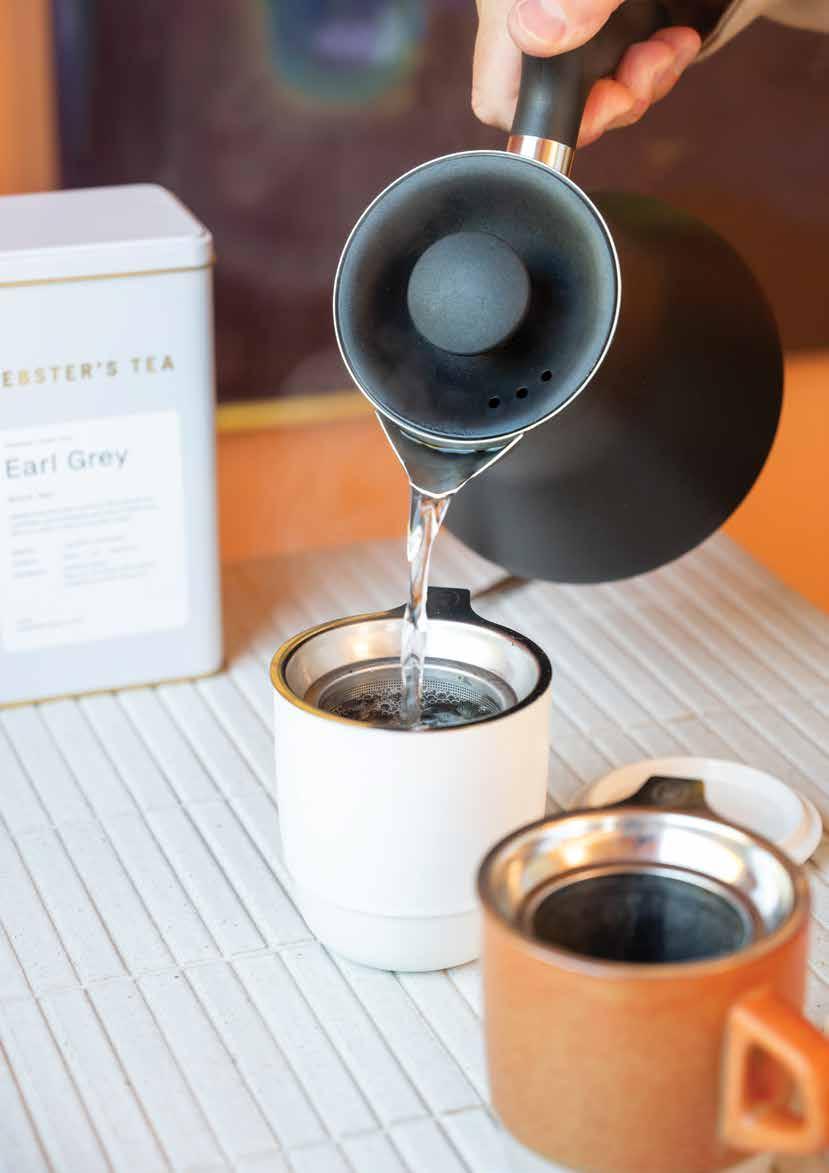
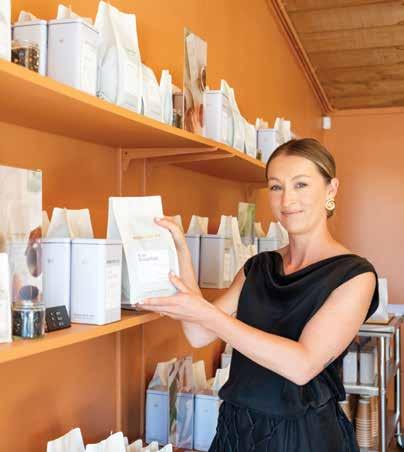
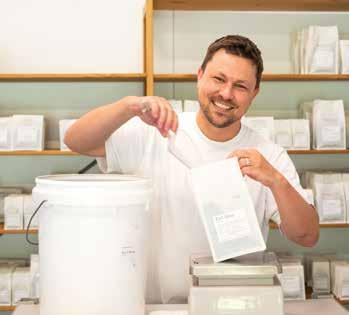
But this week, I discovered two things that can calm my nerves. The first was a chat with the down-to-earth couple behind Webster’s Tea. The second? A cup of their famous Earl Grey. As I sit down with Mark and Ash inside their storefront on Clarke Road, Mark explains that he has loved tea since he was a kid. His mum had five or six cups a day, but never drank it on the go. Instead, she’d put on the kettle, make a cuppa, then sit down and enjoy it. As Mark got older, she started making him one too.
Fast forward 20-odd years and Mark found himself working in a tea shop in the Canadian Rocky Mountains. He stayed there just long enough to reignite his love of tea.
When he returned home, he noticed that tea was largely an afterthought in Kiwi cafes. He thought of his mum, drinking five cups of what he had since learnt was essentially “tea bag dust”. Sure, she had the ritual down pat, but the drink itself wasn’t reaching its potential. Armed with what he had learnt in the Rockies, he set out to improve the quality of tea in New Zealand.
Like many a start-up, Mark launched Webster’s Tea from his parents’ garage. He sourced quality ingredients, and made sure leaves were vacuum sealed throughout the entire journey to retain their flavour and aroma. He blended, boiled and tinkered until he had created a lineup of stellar teas.
“We hang our hat on flavour,” Mark says, “and the secret to flavour comes down to quality.”
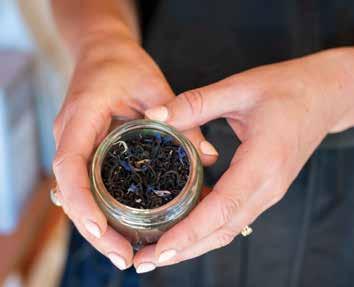
Webster’s Tea is fresh, organic, premium loose-leaf tea. Not only is loose-leaf higher quality than tea bags, but it also lends itself to ritual. Making a cuppa doesn’t take long, yet it feels mindful. It gives you permission to slow down.
Mark booked himself a stall at the Little Big Markets, which is where he met Ash. A graphic designer by trade, she was working
for the Markets, and she was all business. “You need to peg down your gazebo” were the first words she ever spoke to him.
“I didn’t peg it down, hoping she’d come around again,” Mark says, remembering.
Fittingly, their first date was over a cup of tea, and it didn’t take long for the pair to discover a shared love of vinyl. (Seven years and two kids later, they still love their record collection, but insist their children, Harrison and Penny, aren’t named after The Beatles.)
A PANDEMIC AND A PIVOT
For the first four years, Webster’s Tea was a one-man band and wholesalers were the mainstay of the business. Mark had put in the hard yards of cold calling local cafes, getting them to stock quality tea to sit alongside quality coffee beans. He had an online store, but it was secondary. Then Covid-19 hit, and the nation was plunged into lockdown. Wholesale went to zero overnight.
The business was flipped on its head and the online store became the focus. Once a small percentage of sales, direct-to-consumer shipments started to soar. When things opened back up, they had Harrison, who was born only two weeks before lockdown. Weekends were precious family time now, so markets were a thing of the past.
A lot happened in a short period of time, but one thing became clear: Webster’s Tea had outgrown the garage. Mark opened a small shop in Te Puna’s Clarke Road Village. Baby Penny joined the clan. Ash officially came on board as wholesale account manager, graphic designer and social media whizz. And earlier this year, they moved a few shops down, into a bigger space.
“Tea is such a sensory product,” Mark says. “Having an in-person storefront has become an important part of the business.”
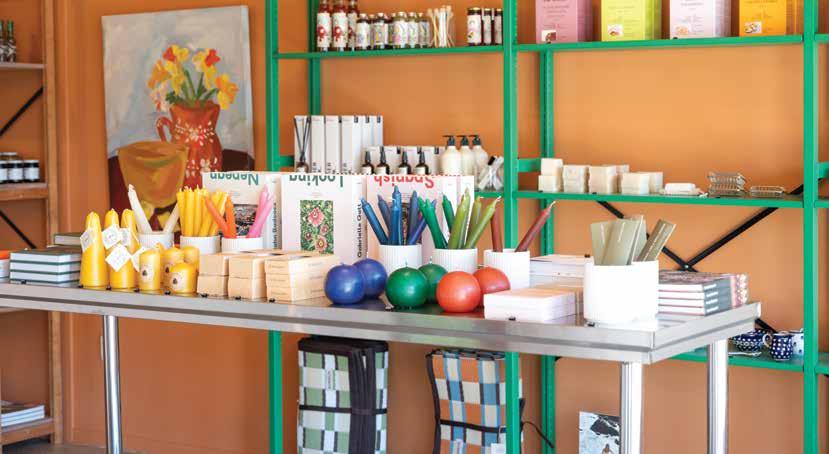
The shop is calming and uncluttered, with beautifully arranged shelves and an abundance of open space. Earthy terracotta walls lend a warm, welcoming feel. You can touch, see and smell the teas to the left, or veer right and browse the hand-picked homeware and pantry products. Want to try before you buy? There’s always
something steeping at the sample station. Sometimes it’s turmeric tea, Ash’s favourite evening wind down, or the ever-popular English Breakfast. It might be a seasonal special, or their star product: Earl Grey.
“People write poetic love notes about our Earl Grey,” Ash says, and I get it: it’s a stunning tea. Many reviews include words like best, amazing and favourite. Others choose more creative terms of endearment like, “the GOAT of Earl Greys,” or my personal favourite: “… it’s on par with delicious moments such as a baby sleeping on your shoulder.”
If the goal was to be New Zealand’s premium tea of choice, I’d say Webster’s Tea has achieved it, so what’s next for this beloved tea brand?
“We’ve spent a decade honing our craft, refining the packaging, we have our beautiful shop. Now, the task is scaling,” Mark says. Ash puts it slightly differently: “World domination!” And with cafes stocking their tea in Japan and Thailand, international shipping, and a special mention in British Vogue, it seems they’re well on their way!
Webster's Tea
7 Clarke Road Te Puna, Tauranga Open Tuesday to Saturday, 9am - 3pm www.websterstea.co.nz
Floral Finds at Vetro
WORDS VICKI RAVLICH-HORAN | IMAGES ASHLEE DECAIRES
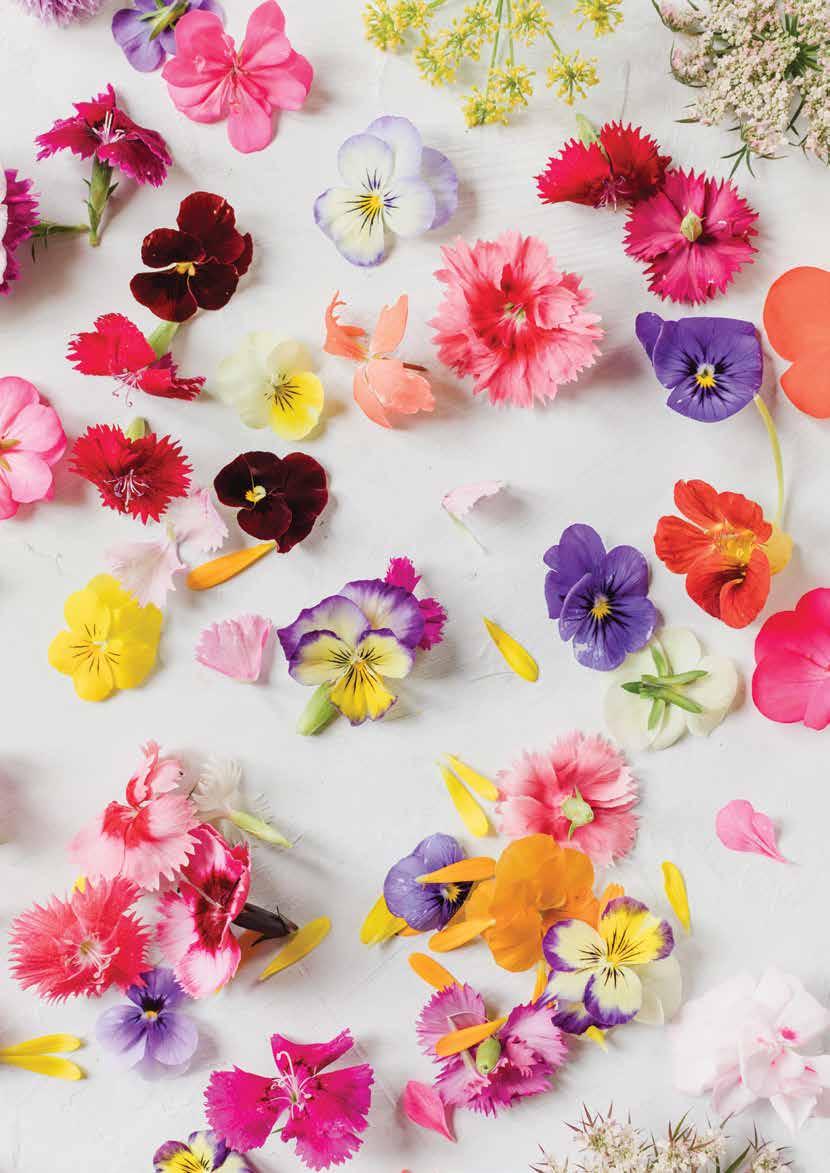
Edible flowers took off around 10 years ago as chefs turned from green leaf-based garnish to more floral flourishes, and the likes of viola, calendula and borage began gracing our plates.
Some of the more skilled chefs understand that like microgreens, flowers can also have a flavour and thus can use them not just as garnish but as a key part of the dish. Onion weed flower has a lovely savoury mild onion flavour, delicious where you might use a chive, think an omelette, whitebait fritter or delicate salad.
Fennel flower has an intense anise flavour with a hint of citrus and works beautifully on fish and roast potatoes as well as chocolate or creamy desserts.
Lavendar has long been the flagship flower when it comes to baking. Personally, I think this is one bloom that should stay in your grandmothers’ drawers!
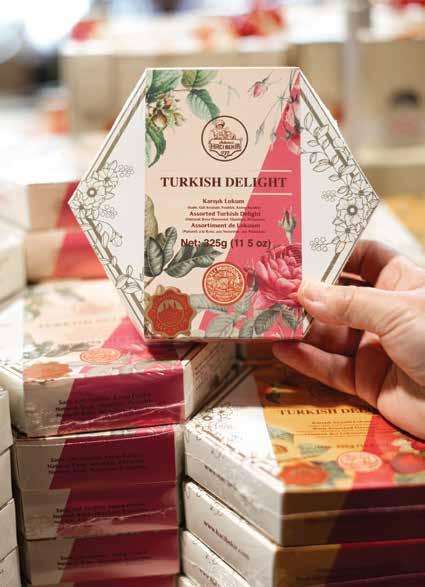
Many people believe the same should be said for rosewater. The key with rosewater, and lavender, should you choose to go there, is restraint. A little goes a long way! A fan of Turkish delight, I can see the merit of rosewater. Add a drop or two over fresh berries this summer or a little when making strawberry jam.
Amongst the Christmas goodies at Vetro, you will find little jars of rose petal confit and the very interesting red poppy flower confit. These French jellies are in tiny jars, and worth a punt to see if you like their flavour. They would both be beautiful over a creamy dessert like panna cotta or vanilla cheesecake. The red poppy flower confit works well with a sharp cheese or to deglaze a pan when cooking duck.
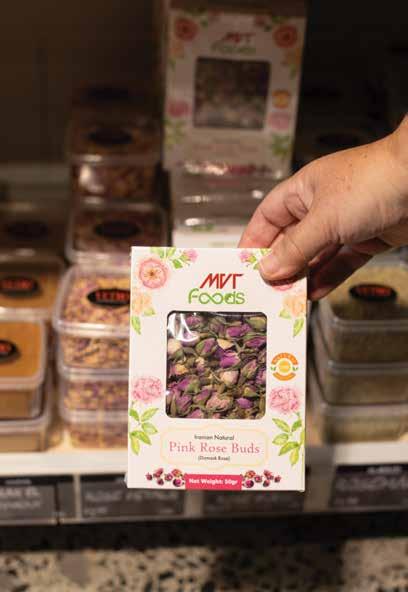
If you’re not convinced on rosewater, grab some Iranian rose petals from Vetro to use as a pretty floral garnish for dessert and cakes instead. These are meant to be made into a tea, but I always
have some on hand for a beautiful yet simple garnish, be it on top of a mousse or cupcake.
Or perhaps give it a go in the form of rose harissa, a fiery spice paste with the added hint of rose petals.
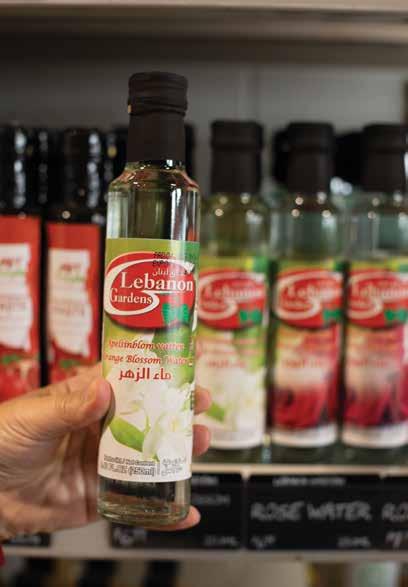
Also on the shelves at Vetro is orange blossom water. The cousin of rosewater but, I think, more versatile and less polarising. This Middle Eastern/North African staple is used in a syrup to pour over or soak rich sweets in like basbousa bel ashta and qatayef.
Whether in sweet syrups or savoury spiced meat fillings, orange blossom brings elegance and soft complexity to a dish. The key again is restraint so it enhances not overwhelms.
For a refreshing twist add a splash to lemonade or sparkling water this summer. Or mix a tiny amount to a citrus vinaigrette for something special. Use in a cheesecake or icing for cupcakes or a citrus loaf.
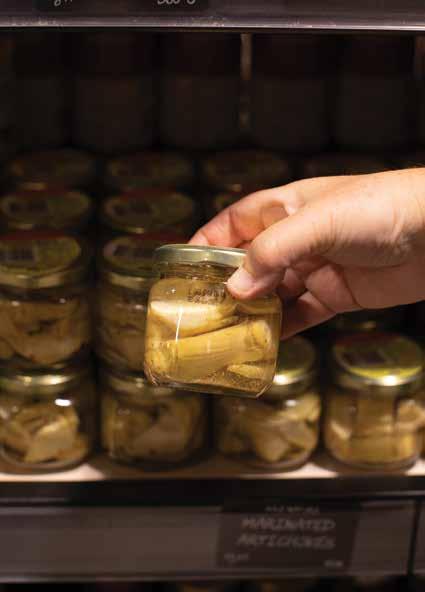
My last floral find on the shelves of Vetro was the good old artichoke. I love growing artichokes, but I’m not one to eat them fresh. Quite simply I don’t think they are worth the work!
A jar of artichokes, on the other hand, can be very handy. An easy addition to a charcuterie or antipasto board, they also make a lovely dip. Add them to pasta, atop a pizza, you can even roast or fry them.
Be it Greek olives semi dried with herbs and lavender, rose harissa, a jar of capers or artichokes, a pack of Turkish delight or bottle of orange blossom water, you’ll find a floral fancy for you at Vetro.
Vetro Tauranga, 111 Third Avenue, Tauranga
$49 for a year of fresh local flavour delivered to your letterbox.
A GRAND Caper
Throughout the Mediterranean, capers grow wild. I remember my first visit to Sicily and having a lush caper bush growing with abandon down a rocky wall pointed out to me.
After that, I saw them everywhere. And this is something I point out to my hairdresser, Paul Fitch from Mousey Brown in Hamilton, every couple of months when I sit down to have my hair cut. These regular trims always come with chats about what and where we have been eating. Over the last two years they have also included a caper update.
Paul says the Fitch family love capers so much they buy them in 2kg pails. They sprinkle scrambled eggs with capers, top pizza with them, “pretty much add them to everything”, admits Paul.
Our first caper conversations were with Paul trying to source the seeds. It started with a Trade Me find and a little bag that arrived in the mail, which Paul says looked like dust. Needless to say, they didn’t germinate. His next source was Italian Seeds Pronto, with a decent number of seeds in the packet, giving, as Paul says, “a few to play with”.
With the seeds procured, the challenge was then to get them to germinate. I have suggested he get a lizard and feed them the seeds. This apparently is how many are spread in Sicily – the lizards eat the seeds then deposit them in a rock or crevice. From here they grow and flourish.
WORDS VICKI RAVLICH-HORAN
Instead, Paul placed his seeds in the fridge for around a month, then scarified them. This is the process of roughing the outer layer to free the germ inside. Then it’s a matter of time, with seeds taking 4+ months to germinate. Most people fail because they give up too soon.
Not Paul! Not only was he willing to wait, he had also spent many hours online uncovering others that have been successful, talking to MPI and generally falling down a rabbit warren of capers. The great gardener and writer the late Virgil Evetts proved helpful, if not just for proof it could be done.
There was an old article online of a couple in Greytown that had flourishing plants, more evidence it could be done. A woman in Auckland he connected with via an online forum suggested he just put the seeds outside under the eaves of the house and wait. This finally yielded results, and Paul nursed seedlings over the winter months on a heat pad in the kitchen window, only to forget to water them last month.
“It’s a heartbreaking story,” admits Paul, who isn’t ready to admit defeat. “It’s a ten-year plan,” he says, laughing. Finding someone with a flourishing plant to take a cutting from is now the plan. Once the bush is established it is apparently indestructible, coping with frosts and soaring heat.
If you are after a new do with some caper chats, give Paul at Mousey Brown a call.
Or if you have had success with capers, Paul would love to know.
___ mouseybrown.co.nz
A little bit goes a long way when it comes to these flavourful little buds. Taste as you go; you may not need as many of these capers as you think.
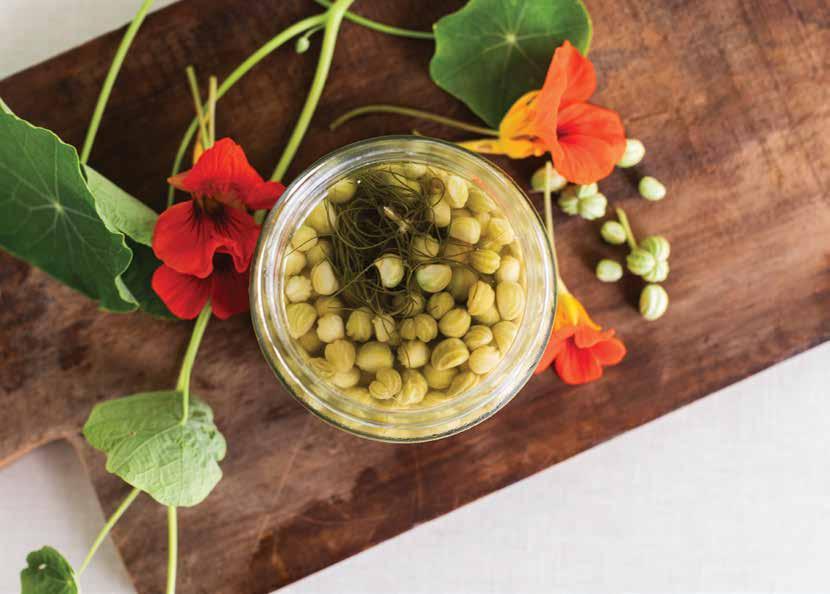
Poor Man’s Capers/Pickled Nasturtium Seeds
I have secretly been encouraging Paul’s caper with capers, hoping if he was successful, I would benefit from perhaps an excess plant. I share his excitement at growing them, just not his perseverance. So with Paul’s capers not looking fruitful, I turned to the nasturtiums that were taking over my garden.
These poor man’s capers may not be the real deal. Paul says, “They are like an e-bike.” In my defence, e-bikes are more and more popular. And while I hold out for the real deal, these are a good lesson in using what you have.
I personally like that they are crunchier than capers, so great in salads.
Unlike capers, which are the flower bud, you are using the nasturtium seeds, so after the flower has bloomed.
Rinse and drain nasturtium seeds and blot them well on paper towels.
Pour seeds into a one-pint canning jar.
Bring vinegar, salt, sugar and herbs and spices (I used dill and peppercorns) to a boil and pour over seeds.
Seal and refrigerate jar, then let sit for about three months.
Clever CAPERS
WORDS, RECIPES & IMAGES JULIE LE CLERC
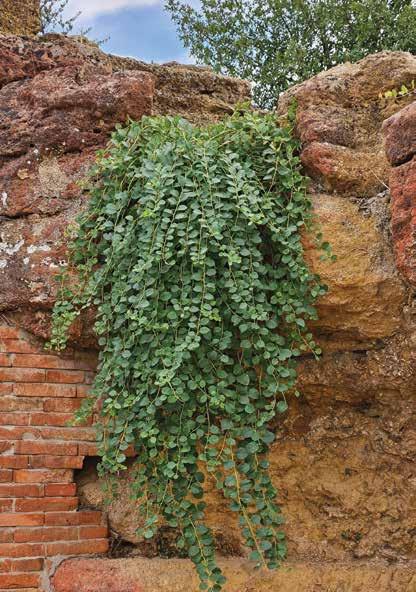
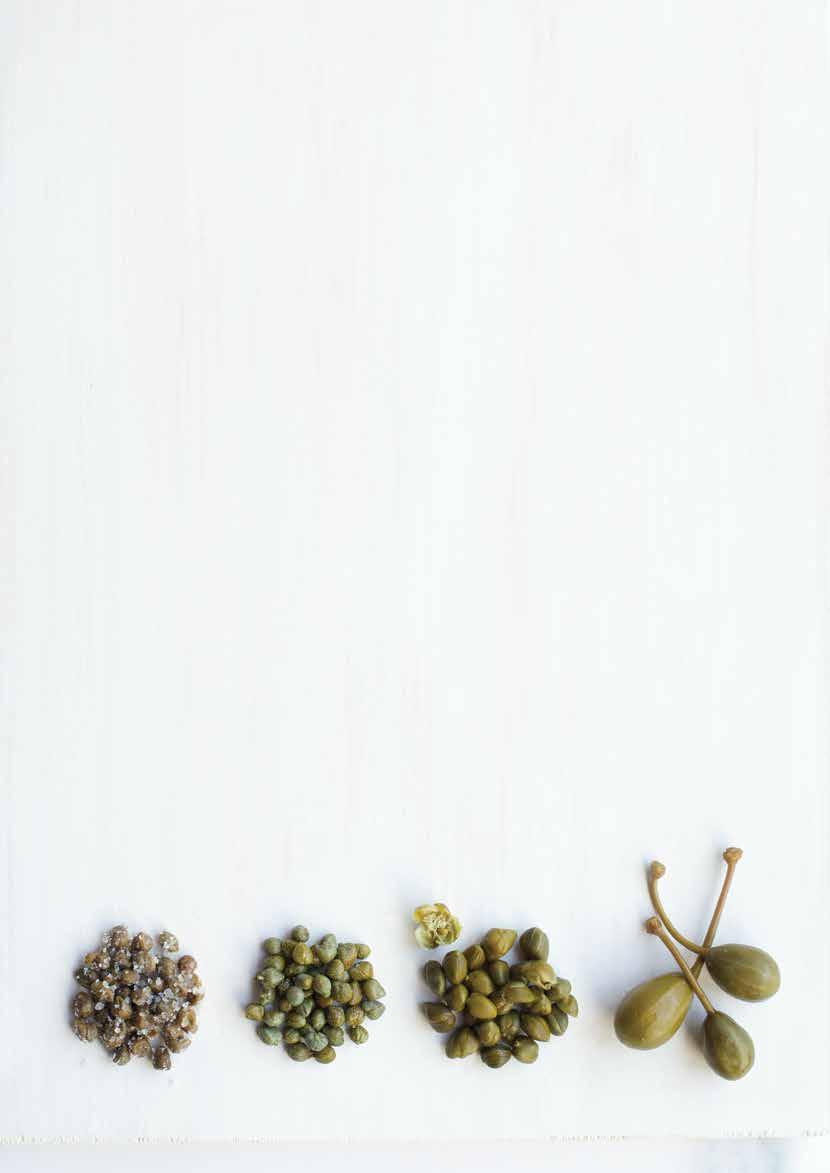
Capers may be tiny, but they sure punch well above their weight. These zesty little flavour bombs are actually the unopened flower buds of the caper bush, also known as Flinders Rose (Capparis spinosa), a hardy shrub that grows across the Mediterranean. You’ll often see them clinging to rocky outcrops and sun-bleached stone walls in places like southern Italy, Spain, Malta, Croatia, Greece and Morocco.
It was many years ago now, but I’ll never forget spotting them for the first time growing wild in Malta, tumbling over an ancient wall and thriving where nothing else seemed to. To realise that the humble jarred condiment began as a fragile flower-to-be felt like uncovering a delicious secret.
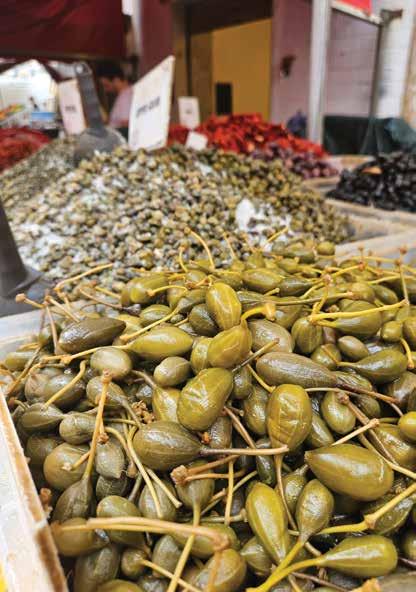
The buds are carefully gathered by hand, usually in the cool of morning, then dried and preserved in salt or a vinegar brine. This process intensifies their distinctive flavour and gives them their unmistakable punch. Sizes vary – the tiniest, known as nonpareils, are prized for their delicate texture and concentrated flavour, while the bigger ones are a bit bolder. Salt-cured capers need to be soaked in cold water and rinsed before use, while vinegar-brined versions can go straight from jar to the dish. The brine can be used too – a splash will add an intriguing brightness to dressings and sauces.
If the buds are left to bloom, the bush will produce fruit: the caperberry. About the size of an olive, with a firm skin and an explosion of seeds inside, the pickled berries are a crunchy, lemony taste sensation. Delicious on their own as an antipasto, caperberries can also be used as a garnish to add texture and cut through rich flavours.
In the kitchen, capers are indispensable. They bring welcome sharpness to pasta, pizza, seafood, salads, dips and stews. They’re brilliant in mayonnaise, vinaigrettes, sauces, salsas, and savoury butters, and pair beautifully with eggs, oily fish, lamb or roasted vegetables. Try tossing a spoonful through potato salad or serving a sprinkling over smoked salmon and cream cheese smeared on a bagel. Whatever the dish, a handful of capers will bring it into sharper, livelier focus.
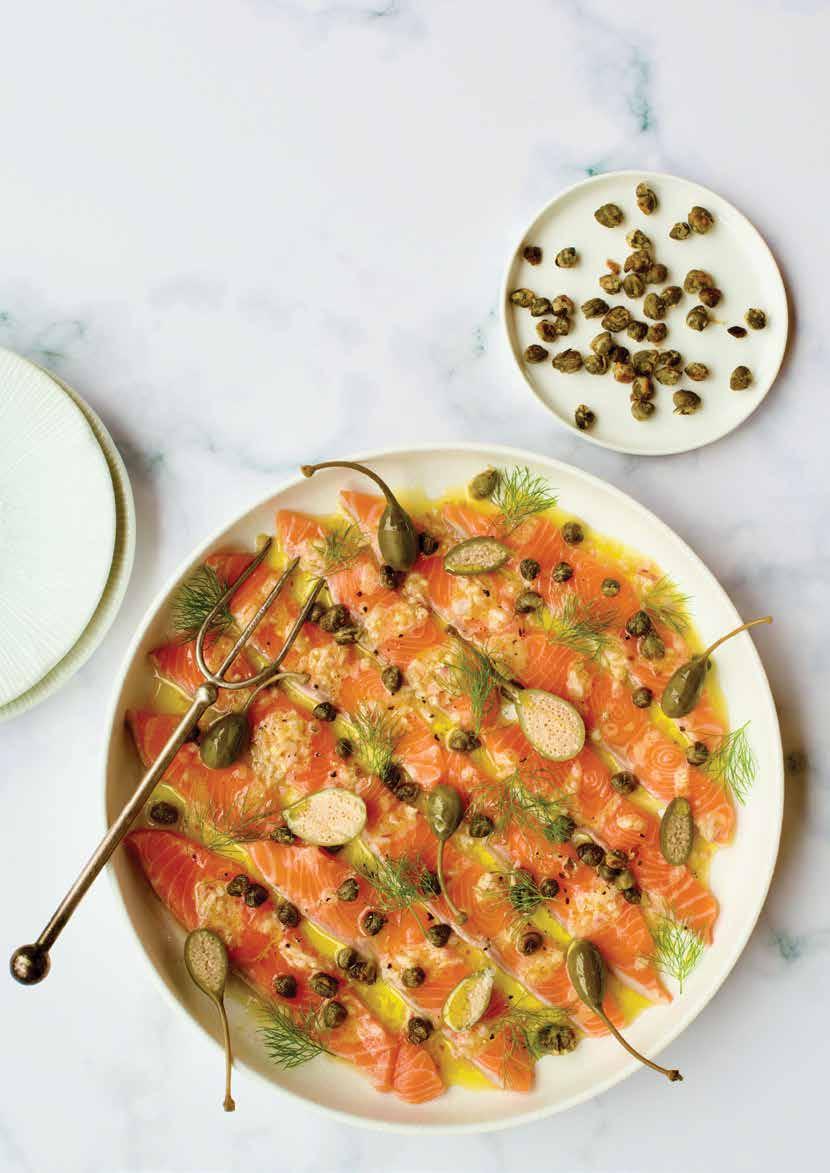
SALMON CRUDO WITH FRIED CAPERS
This salmon crudo with fried capers is light, fresh and perfect for a hot summer’s day. It only takes a few ingredients and a short time to make this crowd pleaser. Slightly larger capers are ideal for frying, as their extra surface area allows them to crisp up beautifully.
SERVES 4 AS A STARTER
DRESSING
1 small shallot, very finely chopped
1 clove garlic, crushed
1 tsp Dijon mustard
2 tbsp lemon juice
¼ cup extra virgin olive oil
salt and freshly ground black pepper
FRIED CAPERS
¼ cup larger capers, drained
1 tsp flour
2–3 tbsp olive oil
SALMON
350g freshest sushi grade salmon a few dill or fennel fronds, picked freshly ground black pepper a few caperberries, halved, to garnish
DRESSING: In a bowl, combine all the dressing ingredients and whisk until well combined. Season to your liking with salt and pepper and set aside.
FRIED CAPERS: Pat the capers dry with a paper towel and place in a small bowl. Add the flour and toss until lightly coated. Heat the oil in a small non-stick frying pan set over medium heat. When the oil is hot, add the capers and cook for a few minutes, stirring until crisp and golden. Transfer the capers to drain on a paper towel lined plate.
SALMON: Slice the salmon as thinly as possible and arrange on a platter in a single layer, then drizzle over the dressing. Scatter with crispy capers, dill or fennel and grind over a little extra cracked pepper. Garnish with caperberries and serve immediately.
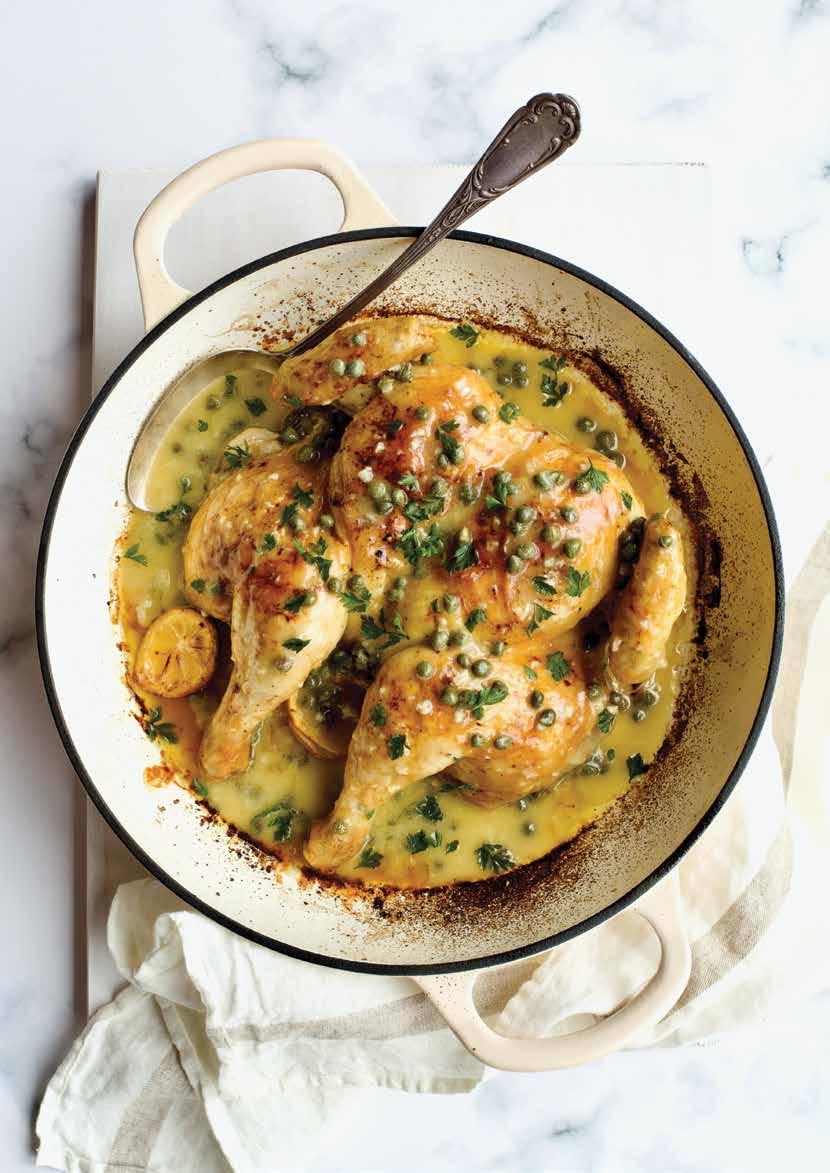
BUTTERFLIED ROAST CHICKEN PICCATA
Chicken piccata is a wildly popular Italian-American dish usually made with chicken breasts, but I like to change things up and use a whole butterflied bird. The combination of tender roast chicken and buttery, zesty sauce has everyone reaching for seconds.
SERVES 6–8
ROAST CHICKEN
1.5kg free-range chicken
salt and freshly ground black pepper
1 onion, thickly sliced
1 lemon, sliced
20g soft butter
PICCATA SAUCE
10g soft butter
2 cloves of garlic, crushed
10g plain flour
200ml dry white wine
¼ cup small capers in brine, drained
1 tbsp caper brine
2 tbsp chopped flat leaf parsley
Preheat oven to 180°C fan-bake. To butterfly the chicken, turn it breast-side down on a cutting board. Use kitchen scissors or a large sharp knife to cut along each side of the backbone and remove it. Turn the chicken breast-side up; use the heal of your hand to press firmly on the breastbone against the bench to flatten out the chicken. Season all over with salt and pepper.
Put the sliced onion and lemon in a pile in the centre of a roasting pan, then lay the chicken on top. Tuck the wings under the breasts. Rub the chicken’s skin with butter. Roast for 60–70 minutes, basting the chicken with the pan juices once or twice during cooking, or until the chicken tests cooked. Test by inserting a skewer deep into the thigh meat and the juices run clear. Remove the chicken to rest for 10 minutes while making the sauce.
PICCATA SAUCE: Melt the butter in a saucepan. Add the garlic to gently cook for 1 minute. Remove pan from the heat and stir in the flour to form a paste. Slowly add the wine, whisking until smooth. Return the pan to the heat and bring to the boil, stirring until the sauce thickens and no longer tastes of flour. Simmer for 5 minutes or until the sauce is reduced by one third. Add the juices from the roasting pan and simmer for a few minutes more. Stir in the capers and brine and adjust seasoning to your liking.
To serve, spoon the glossy piccata sauce over the chicken and scatter with parsley. You can discard the onion if you like, but I don’t, as it is meltingly soft and delicious to eat. Joint or carve the chicken and pair with your choice of pasta, roasted vegetables, steamed greens, or a simple leafy salad.
Julie Le Clerc
Julie Le Clerc is a former cafe owner and chef turned food writer, stylist and photographer. She loves creating doable, flavour-driven recipes inspired by seasonal local produce and assorted world cuisines. Julie has written a bunch of best-selling cookbooks that reflect her cafe background, love of baking, and culinary travels. When she’s not in her own kitchen, you’ll find her dreaming about inspiring destinations, near and far, or off on an eating adventure.
FLOWER POWER
WORDS RACHEL HART
I remember the first time I saw flowers on food. I was working in a busy local bakery when a woman arrived with a small plastic punnet. Suppliers often came and went with fresh fruit and veg, sacks of flour and sugar, and an unholy amount of butter. But this punnet, hand delivered by the grower, was filled with petals … and they were destined to garnish our baked goods!
Since that first encounter a dozen years ago, flowers have become a staple in Kiwi cafes and restaurants, and not just in vases. The rise of edible flowers mirrors a shift towards celebrating food that is fresh, seasonal, and beautiful enough to share … both on your plate and on the ‘Gram. You’ve probably come to expect violas perched on a cake, marigolds brightening a salad, or a delicate borage blossom floating on top of your cocktail. What you might not expect are the health benefits.
Just as fruits and vegetables get their colours from pigments, so do flowers. The crimson hibiscus, the golden calendula, the pale blue cornflower: these hues come from polyphenols (plant pigments) which act as antioxidants, strengthening our bodies in their fight against stress and inflammation.
Then, there are the micronutrients. The humble dandelion, with vitamins A, C, and K, and minerals iron and calcium, has a nutrient profile that rivals leafy greens. Pansies bring a pop of vitamin C, and sunflower petals – much like their seeds – offer a dash of vitamin E. Each petal brings its own benefits, even if only a pinch.
Rachel Hart
Still, my favourite thing about edible flowers is that they invite a moment of pause, which is its own form of nourishment. Your senses light up at the peppery bite of nasturtiums, the floral fragrance of rose petals, or the cool-as-a-cucumber freshness of borage. This is the definition of mindful eating, a practice that supports digestion and helps calm the nervous system. There’s something undeniably restorative about savouring what’s on your plate.
A word of caution the next time you see a pretty petal in your garden: not all flowers are edible. Some can cause stomach upset, and others, like foxglove, are downright poisonous. Like most trends, the popularity of edible flowers is just the latest chapter in a long history. Rosewater has flavoured sweets in the Middle East and India for centuries. Chrysanthemums, native to China, have been used in broths and soups since the Song dynasty. And in central Mexico, the rainy season brings an abundance of squash blossoms which are famously folded into quesadillas de flor de calabaza – an iconic seasonal dish. Here in New Zealand, Māori have long turned to native blooms for both food and medicine, from the sweet-tasting tāwhara of the kiekie vine to kūmarahou blossoms, brewed into a bitter, medicinal tea.
Of course, we aren’t eating blooms by the bucketload, and a petal here and there won’t drastically change the results of your next blood test, but even if they’re mostly ornamental, a fresh flower certainly beats a dusting of icing sugar or a handful of sprinkles. It just might be the prettiest reminder to slow down and enjoy your food!
Hailing from Canada, Rachel has fallen in love with life in the beautiful Bay of Plenty where she is a freelance writer with a passion for healthy food. She splits her time between telling people’s stories, creating web content and experimenting in the kitchen.
“One
The late Antonio Carluccio was Britain’s leading exponent of Italian cooking, and to quote him, “This vegetable may come last in alphabetical order, but for Italians it is the first and most widely used, along with the tomato. Zucchini [courgettes], are grown and enjoyed in every corner of Italy.”
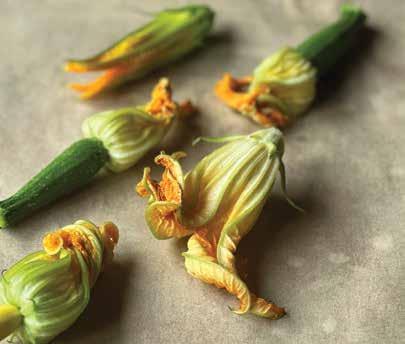
Young, unripe little marrows, they have to be picked before they grow too much. In the middle of the plant are both the male and female flowers. The female flower is smaller, with the male flowers being more elongated and less delicate. It’s the male flowers that are best for cooking.
The flowers really need to be used the day they are picked, as they wither pretty quickly.
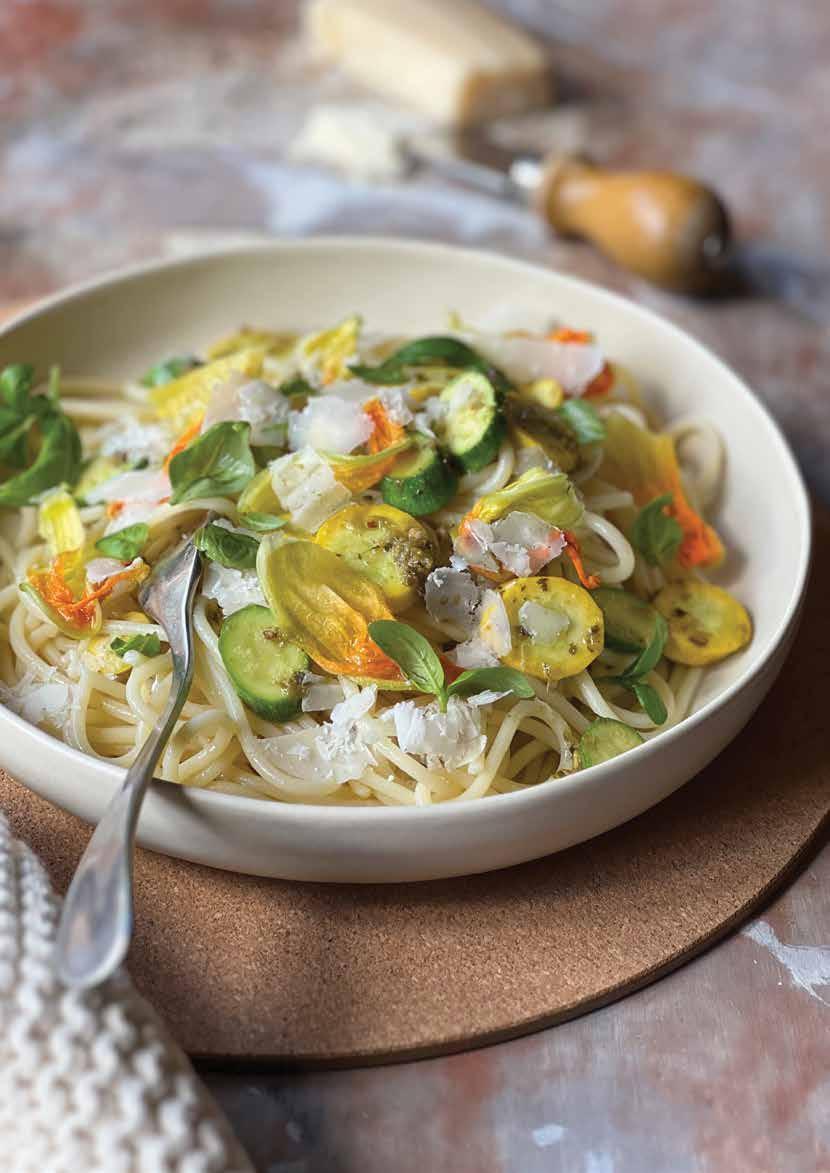
Spaghetti with Zucchini and Their Flowers
An excellent bowl of spaghetti requires few additions, just like topping on a pizza – less is more.
SERVES 2
200g dried spaghetti
good splash of extra virgin olive oil
4 baby zucchini (from the flowers), sliced 1½ tsp harissa (I used the milder green harissa)
4 flowers, stamens removed and torn or sliced small handful of basil leaves parmesan, for shavings
Cook the spaghetti in a large pot of salted water until al dente. Meanwhile, heat the oil in a frying pan over medium heat and add the sliced zucchini. Pan-fry quickly until they just start to brighten in colour, then stir through the harissa. Add the flowers and allow to wilt.
Drain the spaghetti, holding back about 1 cup of the cooking water. Pour some of the cooking water into the frying pan to moisten and make a little sauce.
Tip the cooked spaghetti back into its pot and add the contents of the frying pan. Toss well to combine.
Pile into warmed shallow bowls and top each with basil leaves. Using a vegetable peeler, shave over some parmesan.
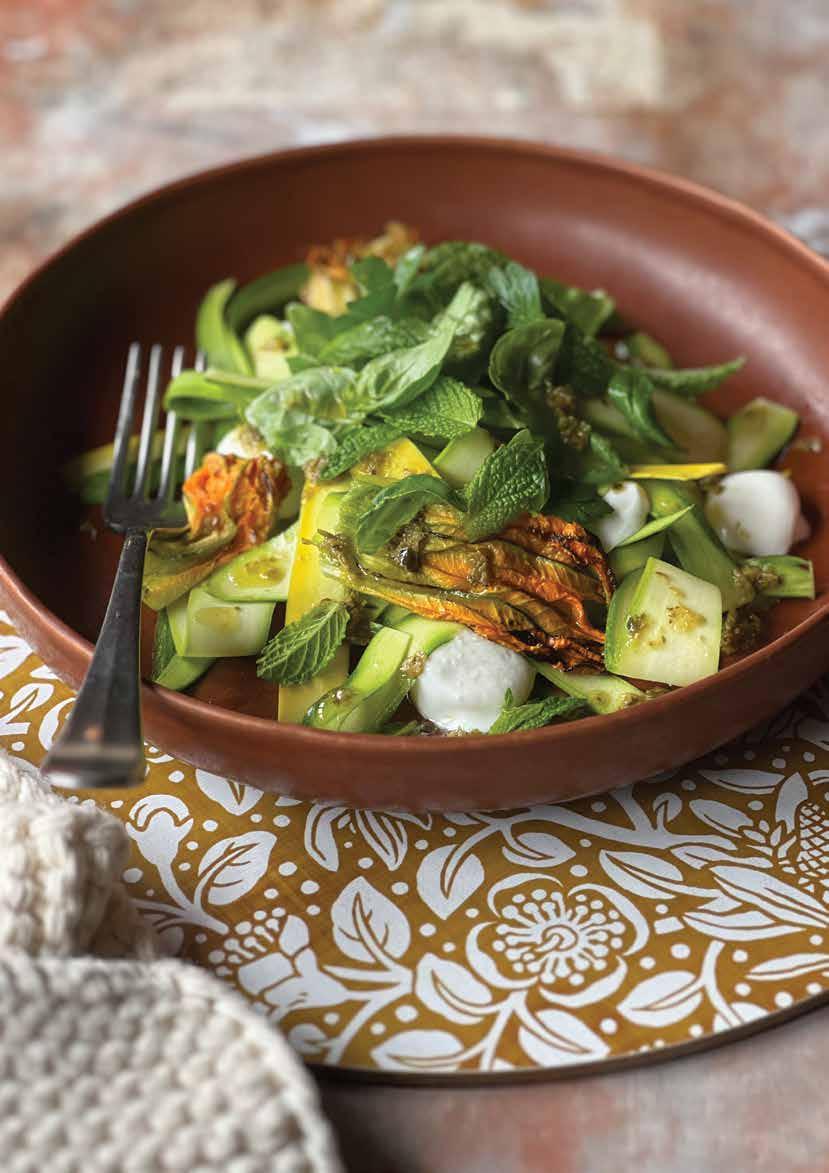
Zucchini and Their Flowers with Fresh Cheese
A great side salad or starter when zucchini flowers are at their peak.
Bocconcini or ‘small mouthfuls’ brighten with the perfectly calibrated tang from the dressing.
SERVES 4
6 zucchini flowers, stamens removed
4–6 young zucchini
125g tub bocconcini, drained
DRESSING
large handful mint leaves
large handful coriander leaves
large handful basil leaves
1 clove garlic, chopped
1 green chilli, deseeded and finely chopped
6 tbsp extra virgin olive oil
finely grated zest and juice of 1 large lime or 2 small limes
2 tbsp white wine vinegar
1 tsp honey or extra, if needed
To make the dressing, reserve a few of the herbs for scattering over the salad and roughly chop the remaining herbs on a board with a large sharp knife. Put in a food processor with the remaining ingredients and process until everything is well chopped and emulsified. Taste for seasoning, adding salt if needed.
Heat a chargrill until hot.
Using a vegetable peeler, shave the zucchini lengthways into ribbons straight into a shallow salad bowl. Scatter around the bocconcini.
Flash the flowers over the chargrill to slightly wilt and give a little colour. Alternatively, leave completely raw and tear or slice flowers into thin strips. Scatter over the salad.
Drizzle over enough dressing to moisten and gently toss to combine. Scatter over the reserved herbs and serve straightaway.
Kathy Paterson
A plentiful herb garden, citrus trees and a trial and error vegetable garden give Kathy the starting place for her recipes along with her love of the classics with a modern twist.
Named one of Aotearoa NZ’s Top 50 Most Influential & Inspiring Women in Food and Drink 2024, Kathy is a food writer, recipe developer, food stylist and photographer. www.kathypaterson.co.nz
Sweet Syrups
WORDS VICKI RAVLICH-HORAN | IMAGES ASHLEE DECAIRES
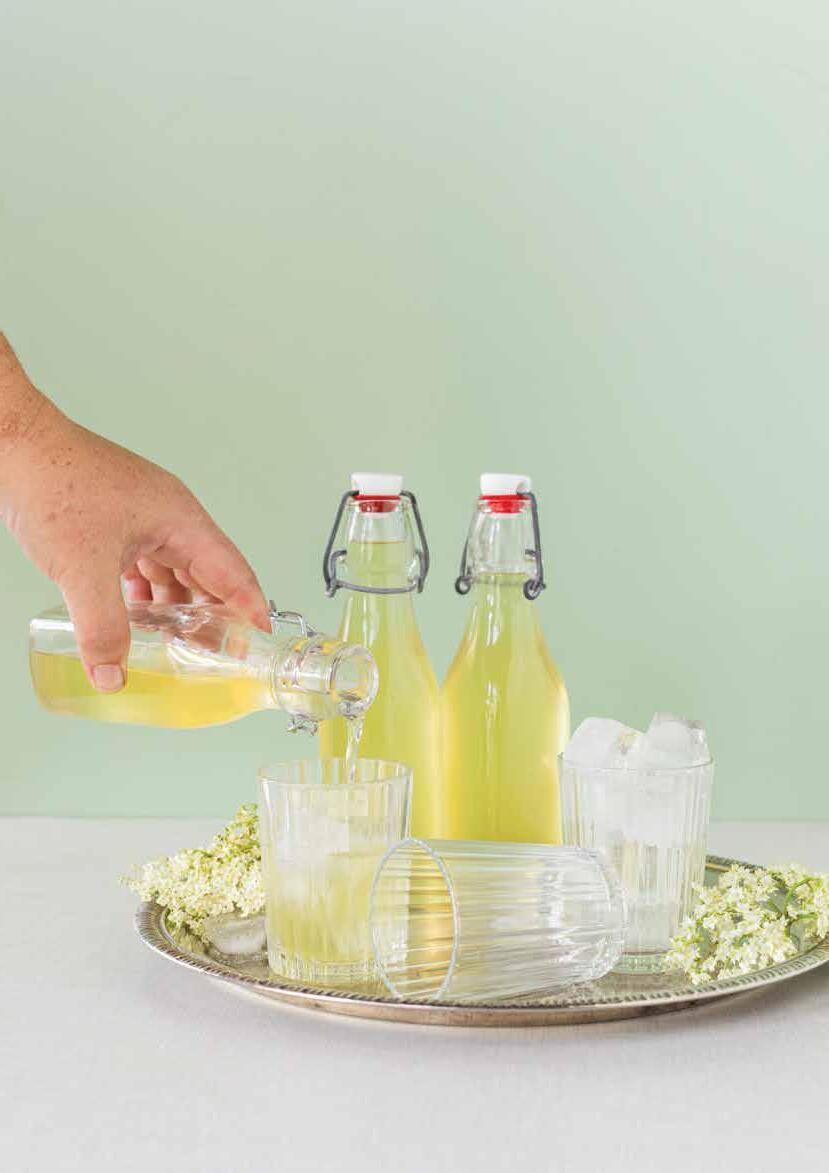
I have long been a fan of elderflower syrup. Its delicate, sweet, floral taste with notes of pear, lychee and citrus make it a wonderful poaching liquid for fruit. I especially love pears poached in elderflower syrup.
In the summer months drizzle it over fresh berries or add to a spritz (alcoholic and non) or your gin. Make an elderflower jelly or panna cotta, or turn it into an icy treat either as a shaved ice flavouring or homemade popsicle.
The syrup, little more than a simple syrup infused with elderflowers, is very easy to make. The hard part is finding the elderflowers. In Europe, where the syrup originates, the elderberry grows wild like a weed. And those lucky South Islanders may stumble across some along rural roadsides. Not so for us North Islanders.
A few years ago I found a plant and ‘gifted’ it to my sister, who has both a green thumb and a large property – the perfect combo to foster my elderflower source. Not keen, she let the poor bush die. I took the hint and last year planted my own and was quickly rewarded with enough blooms to make my first batch of syrup.
Elderflower Syrup
The recipes you find online are very similar; the main variance being steeping the flowers in the cold water before making a syrup or after. I based my version on Bevan Smith’s (from Riverstone Kitchen) version.
1kg sugar
1.5 litres of water
2 tsp citric acid
peel and juice of 4 lemons
25 elderflower heads (approx.), thoroughly washed
In a large pot bring the sugar and water to the boil. When the sugar has dissolved, add the citric acid and lemon juice.
Place the lemon peel and elderflowers in a large glass or plastic bowl/ container and pour the hot sugar syrup over.
Allow to steep for 24 hours. Sieve the syrup and pour into sterilised bottles.
The syrup is ready to use but can be stored in the fridge for a couple of months.
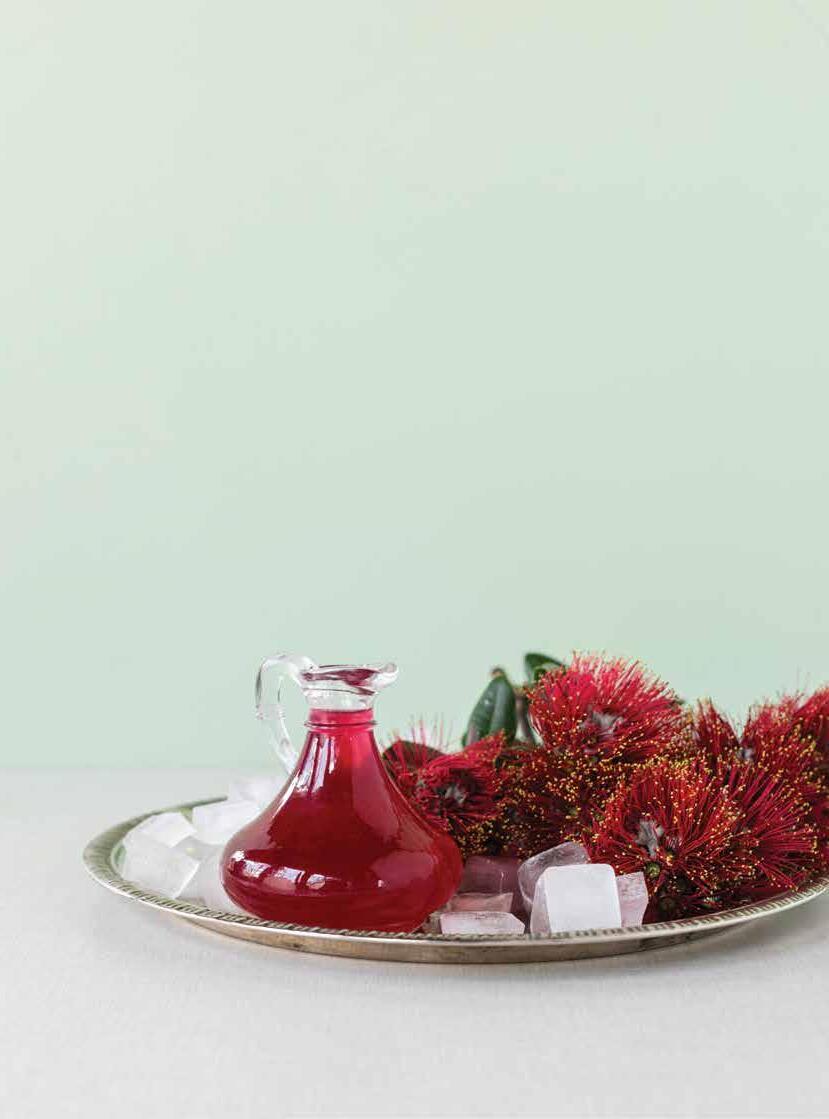
Pohutukawa Syrup
Elderflower syrup was all about using what was at hand, so if you can’t find or grow your own elderberry bush, forage a true Kiwi ingredient – the pōhutukawa.
This syrup is a beautiful ruby red and makes for a festive flourish. My tip is rope in some helpers, as it takes some time to get 3 cups of pōhutukawa stamen!
3 cups pōhutukawa stamens
2 cups water
¼ cup sugar
juice of 1–2 lemons strip of lemon peel
Carefully pull the stamen from the bunches of pōhutukawa and rinse thoroughly.
Bring the sugar and water to the boil. When the sugar has dissolved, add the lemon juice, peel and pōhutukawa stamen.
Allow to steep for 24 hours. Sieve the syrup and pour into sterilised bottles.
The syrup is ready to use but can be stored in the fridge for a couple of months.
MASCARPONE
WORDS VICKI RAVLICH-HORAN | IMAGES ASHLEE DECAIRES
Mascarpone is often described as an Italian cream cheese. This is technically correct, as an acid (citric or tartaric) has been used to curdle the cream, like you would when making cheese. But the term ‘cream cheese’ to most New Zealanders has us thinking of the Philadelphia version we use to make cheesecake. Mascarpone, on the other hand, is creamier, softer and smoother and less acidic.
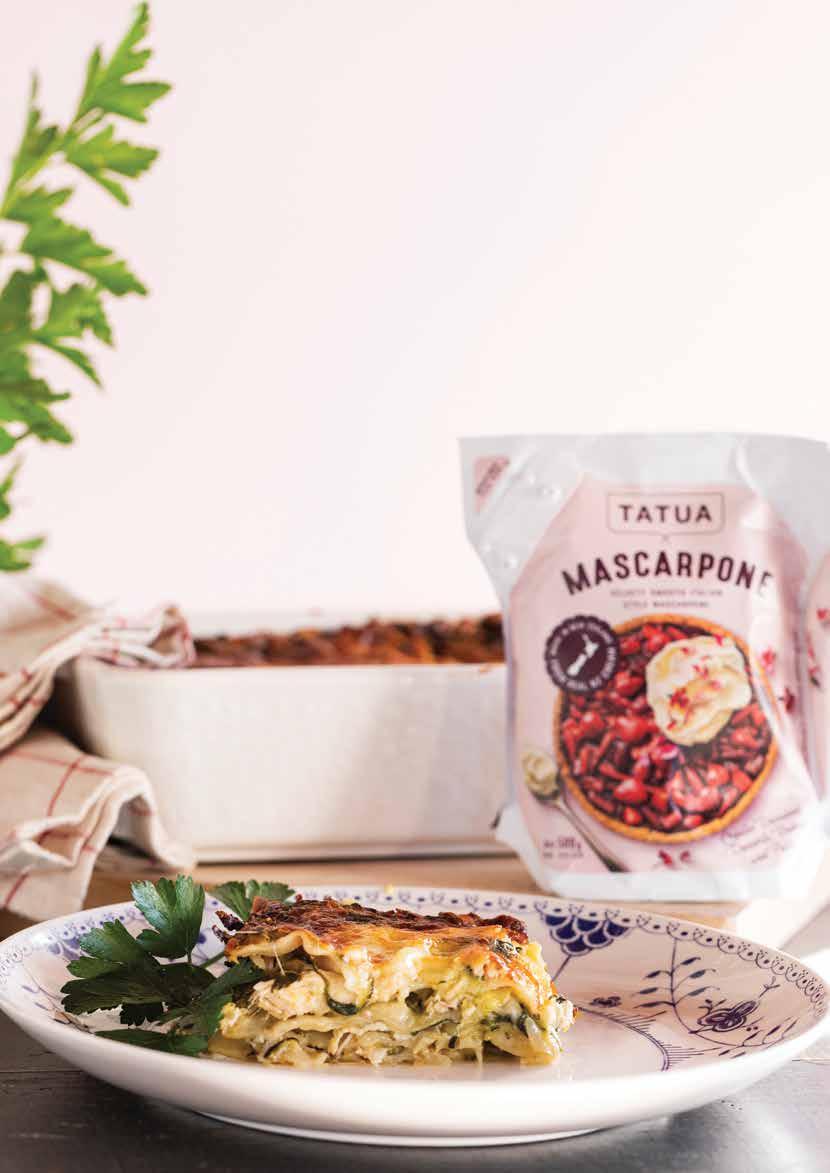
Most would have used it when making tiramisu, but its thick, creamy texture and taste mean it can be used in many other ways. My fridge is never without a packet of Tatua mascarpone. I add it to pasta, soups, risotto, sauces, cheesecakes and icings. Sweetened, a dollop of mascarpone served with dessert beats whipped cream every time.
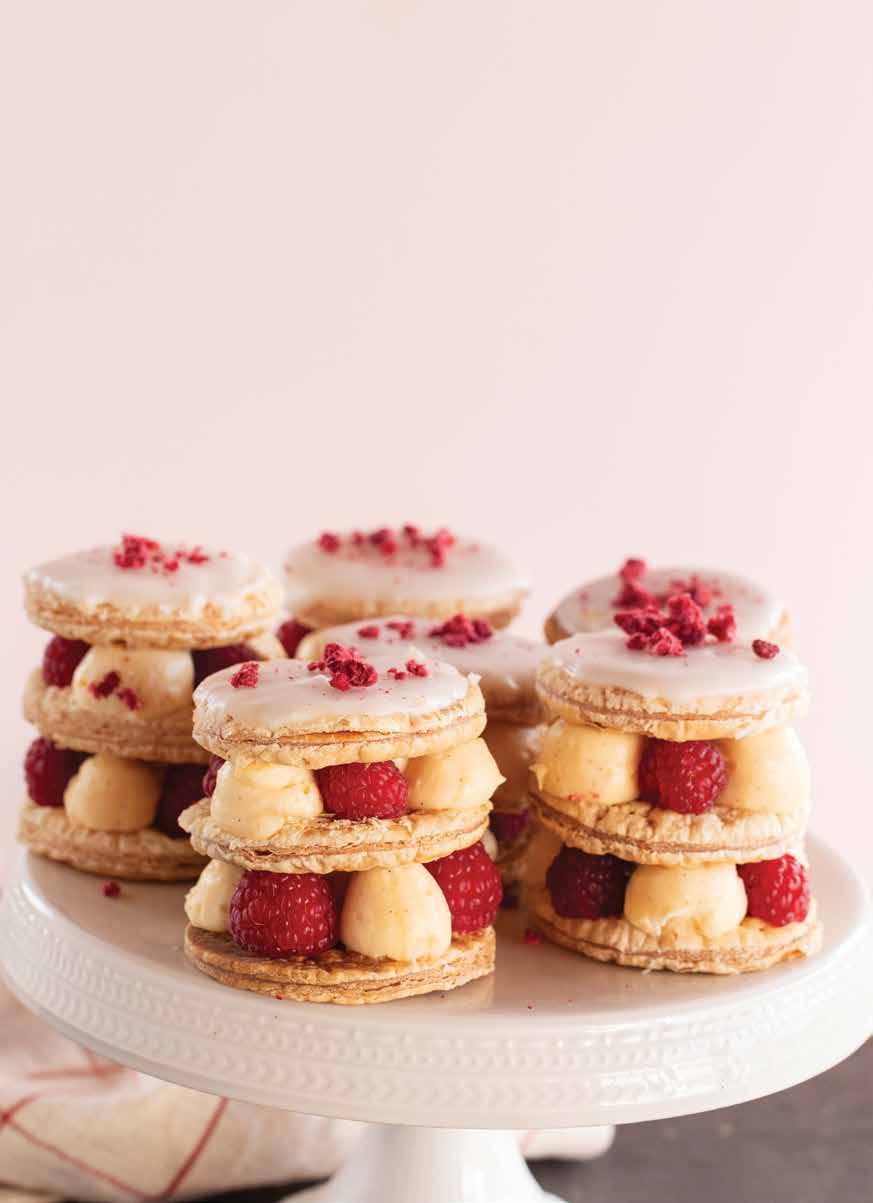
Raspberry Mille-feuille
These fancy custard squares look impressive, and I agree they have a few steps and can be a little fiddly, but don’t put them in the too-hard basket!
I made mine round for a dainty high tea or dessert option, but you could keep things simple and cut the pastry into rectangles for a more traditional shape.
Another option is to just have one layer of custard (instead of two). In this case you will need more pastry.
If you want to go all out, you could make your own flaky pastry, but this was a step too far for me! Instead, buy good quality pastry, like Paneton (available from Vetro and La Cave)
MAKES 6
2 cups milk
1 vanilla pod or 2 tsp vanilla paste
6 egg yolks
½ cup sugar
¼ cup flour
2 tsp gelatine
1 cup Tatua mascarpone
2 sheets of ready rolled flaky pastry
1 punnet of fresh raspberries
½ cup icing sugar
1 tbsp hot water
½ tsp vanilla extract
Place the milk in a small saucepan along with the split vanilla pod or the vanilla paste. Heat until just before it boils.
While the milk is heating, whisk the egg yolks, sugar and flour together until pale.
Carefully pour the warmed milk into the beaten egg yolks, whisking continuously.
Pour the mixture back into the pot, and over a medium heat continue to whisk until the custard thickens. Don’t overheat or the custard will curdle.
Bloom the gelatine by placing it in a small bowl with 2 tbsp of water. Stir and let it sit for 2–3 minutes. Whisk this into the still hot custard. Allow the custard to cool a little. Then fold in the mascarpone. Cover and cool completely in the fridge.
Cut the pastry into 18 identical sized pieces. I used an 8cm round cookie cutter and got 9 rounds per sheet. Place the pastry pieces on a lined oven tray. Prick them with a fork then cover with a piece of baking paper and another oven tray.
Bake in the oven at 200°C for 12–15 minutes, or until golden but not brown.
OPTIONAL – dust the hot pastry with icing sugar, which will give it a slight sweet touch. When the pastry has completely cooled, place the custard mixture in a piping bag fitted with a round nozzle between 100–140mm.
Group the pastry into threes. Ice one in every three pastry discs and allow these to set. Then place the raspberries on one out of every three pastry discs, leaving a gap between each berry. Pipe the custard between each berry and in the middle.
Top with another pastry disc and repeat. Top this with an iced pastry disc. To complete the look, you can decorate with a little freeze dried raspberries.
TO MAKE THE ICING - Mix together the icing sugar with the hot water and vanilla extract until smooth.
Chicken, Zucchini and Mascarpone Lasagne
This lighter lasagne is just the ticket for the summer months, especially if you planted zucchini in your garden and are wondering how to eat them faster than they grow. The joy of using mascarpone in this recipe is you eliminate the need for making a white sauce.
2 tbsp extra virgin olive or avocado oil
1 onion, finely diced
2 cloves garlic, finely chopped
3–4 zucchini, grated (approx. 4 cups)
2 tbsp cornflour
2 cups chicken stock
120g pack of baby spinach
1 cup Tatua mascarpone
1 cup freshly grated parmesan cheese
3 cups cooked shredded chicken
400g packet of fresh lasagne
1 cup grated cheese
LOVE FOOD HATE WASTE – This is a great dish to make if you have half a roast chicken leftover.
In a large pan heat the olive oil, add the onion and garlic. Sauté over a low heat until the onion is translucent.
Add in the grated zucchini and cook for 3–5 minutes. Mix the cornflour with the stock and pour into the pan. Add the spinach and cook until the liquid has reduced and thickened.
Stir in the mascarpone, parmesan and shredded chicken. Check and adjust the seasoning to taste.
Place a quarter of the mixture on the bottom of an oven dish (approx. 20cm x 25cm). Place the lasagne pasta on top and then layer on another quarter of the mixture. Repeat two more times, topping your last layer of the filling with the grated cheese. Bake at 180°C for 45–60 minutes or until golden brown.
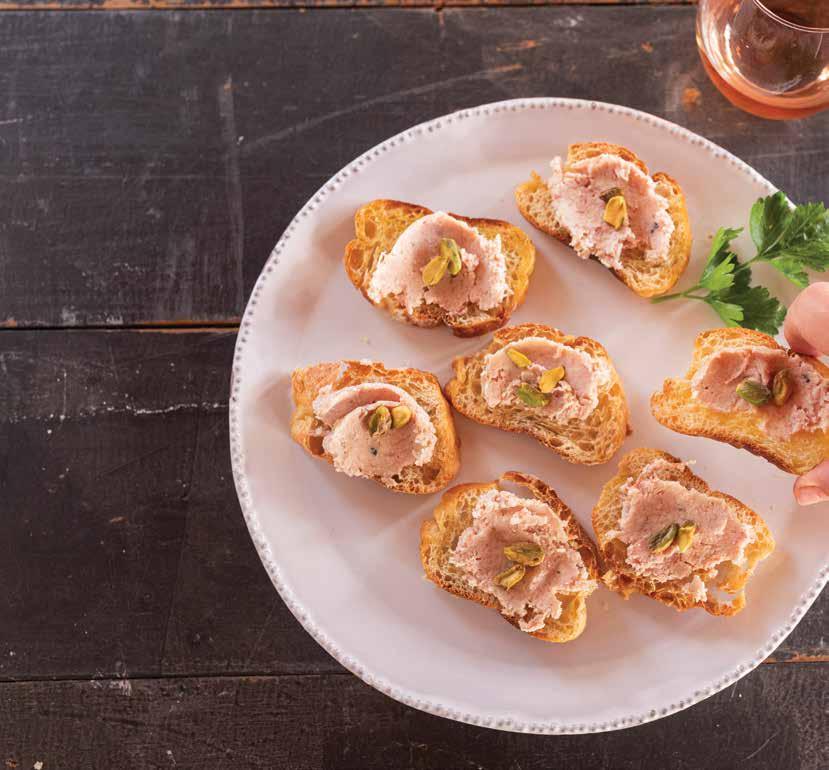
Mortadella Mousse
Transport yourself to Northern Italy this summer. On trend mortadella whipped with mascarpone makes for a tasty crostino topping, perfect with a glass of prosecco.
250g mortadella, rind removed ¼ cup Tatua mascarpone cup grated Parmigiano-Reggiano cheese toast rounds for serving pistachios for garnish Dice mortadella and place in a food processor; grind to a paste. Add the mascarpone and Parmigiano. Process until blended. Spread on toast and top each with a pistachio, or refrigerate until ready to use.
NOTE – Mortadella is not cheap but a little goes a long way. This mousse will top 20–30 crostini. Or make it go even further and buy the little Melba toasts from Vetro.
Herb It Here
I was born a few centuries too late to add ‘witch’ to my curriculum vitae, but in my summer herb garden, I feel like a modern-day apothecary. Food is medicine, after all, and growing helpful herbs is as appetising as it is health-giving.
WORDS LYNDA HALLINAN | IMAGE SALLY TAGG
The Salem Witch Museum’s official Herb Chart – from amaranth to angelica, basil to bee balm – reads like an alphabetical stocktake of my own kitchen garden. I can tick most of the boxes. Indeed, the only herbs on their 31-strong list that I don’t grow are heather, horehound, myrrh, patchouli and star anise – and that’s largely because my wet climate casts wicked spells on their roots.
The first herb I ever grew was mint, an essential component of mojitos, mint sauce for roast lamb and our Christmas table’s steaming ménage à trois of baby ‘Jersey Bennes’, butter and shredded mint. My favourite culinary variety is common winter mint. It has large, dark green, crinkly leaves and the mintiest flavour, but peppermint, spearmint and apple mint are popular for herbal teas.
Mint is one of the few herbs to flourish in damp, shady soil. It has a habit of taking over, but it’s easy to weed out with a fork and a firm yank. Mint, sadly, is also susceptible to fungal rust in humid weather, which means that just as summer heats up, it breaks out in spots.
The best way to cope with rusty mint is to plant an insurance policy: cultivate two clumps, one in sun and one in shade. When one clump goes down with rust, as it inevitably will, cut it right off at ground level and drench the soil with seaweed-based liquid fertiliser. It’ll pop back up, good as new, at which point you can take the clippers to the second clump.
In the heat of summer, perennial herbs such as oregano, rosemary, sage and thyme crank up their production of flavour-giving volatile essential oils. Cut regularly throughout summer or these same oils can sour and turn bitter by the end of autumn.
Plant perennial herbs in full sun and you can safely ignore them once established. In their first season, however, they’ll benefit from mulch and a good soak every couple of weeks to provide a cool root run.
Annual herbs need more mollycoddling. Basil, coriander and dill will quickly bolt to seed if drought-stressed, so water regularly and deeply, and sow extras every few weeks to maintain a constant supply. Sow large-leafed basils such as ‘Sweet Genovese’ for pesto, and so-called bonsai basil varieties such as ‘Spicy Globe’ and ‘Greek Mini’ for sandwiches. In salads, ‘Mrs Burns Lemon’ is delicious, with a distinct citrus flavour.
I prefer Italian flat-leaf parsley to curly parsley for culinary use, but I grow both because curly parsley is much prettier in the garden. Parsley can be planted fresh every year, but by nature it is biennial and you should get two years of picking before it runs to seed.
Even if you only use fresh herbs occasionally, there’s a level of smug satisfaction to be gained from growing recipe-specific herbs. Does anyone actually pick borage for anything other than freezing its dainty blue flowers in fancy ice cubes, or dill for dotting delicate sprigs on salmon and cream cheese canapés? I certainly don’t.
I only grow chervil for cheese soufflé – namely the twice-baked goat cheese version that’s been on Auckland restaurant The Engine Room’s menu for 20 years – but every year I’m frustrated by my attempts to grow French tarragon for chicken and leek pies.
True perennial French tarragon (Artemisia dracunculus) is hard to come by in garden stores and even harder to keep going. (Don’t be fooled by its Mexican and Russian impersonators; these have a sharper flavour that’s a poor imitation fresh and quite revolting dried.)
I’ve never managed to grow enough tarragon to dry for winter use, but this summer I’m going to think happy thoughts and wave smudge sticks of homegrown white sage (Salvia apiana) in its direction. My white sage (seeds from Kings Seeds) is flourishing. This ancient herb is said to clear the air of bad energy, so here’s hoping it can give my tarragon a helpful hurry along.
GONE TO SEED?
• When annual herbs run to seed, don’t be in a rush to rip them out. Chervil, coriander, dill, fennel and parsley all produce umbrellas of tiny flowers that provide fodder for bees and beneficial insects. Parsley seedheads also look great in cut flower bouquets.
• This summer I’m also growing crops of coriander, cumin, caraway, fennel, fenugreek and marjoram to replenish my spice racks. To save your own herb seeds for cooking, let the heads mature on the plant until almost dry, then harvest the whole plant and upend it into a brown paper bag to fully dry indoors for a few weeks. Rub off the seeds to store.
Lynda Hallinan
Waikato born-and-raised gardening journalist Lynda Hallinan lives a mostly self-sufficient life in the foothills of the Hunua Ranges, where she has turned a former sheep paddock into an organic no-dig vegetable garden at Sweetgum Cottage. Her garden is open to the public by appointment.
Medieval Garden Opens Soon
One of the most intriguing churches in Palermo (Sicily) is San Giovanni degli Eremiti (or Church of Saint John of the Hermits) with its distinct red domes. This now deconsecrated church began life in the 6th century alongside a Benedictine monastery. When the Moors conquered Sicily, it became a mosque, only to then be renovated and returned to the monks when the Normans came to power in the 1100s. This is a typical tale of Sicily, where the architecture tells the history of the myriad of nations that have ruled and influenced it. But what lies behind San Giovanni degli Eremiti still today is the cloister. This luxurious garden is the best-preserved part of the ancient medieval monastery and the inspiration for Hamilton Gardens’ 19th themed garden.
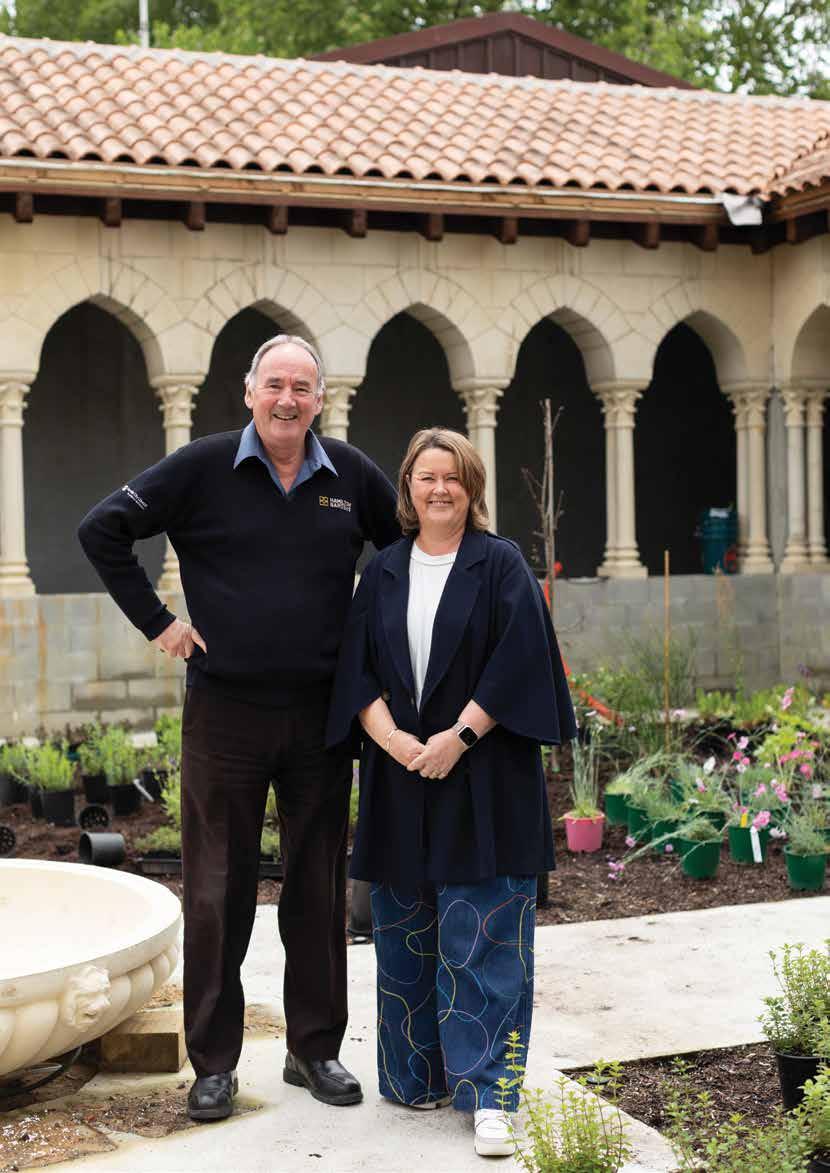
I caught up with Gus Flower, Horticulture & Operations Manager at Hamilton Gardens, to get a sneak peek of the garden before it opens to the public in mid-February. Gus, who has worked at the gardens for 24 years, says he loves working their because “they are more than a garden”.
He is quick to point out Hamilton Gardens is not a botanical garden, instead it is part history, part storytelling, part theatre, all through the art of gardens and gardening. “Passive recreation,” Gus quips. You can go as deep into the detail as you like, or you can simply enjoy their beauty and peace.
As we take the shortcut through the gardeners’ HQ to the Medieval Garden, a giant concrete structure gains my attention. This will form the central structure for the Baroque Garden, the 20th themed garden, due to open in the next few years.
Work on this garden started five years ago, with the planting of some 350 shrubs and trees around the perimeter of the garden that will give it its structure as well as screen it. This gives you a little insight into the planning and work that goes into each new garden.
There are 30 themed gardens in the long-term plan. While it is Gus’s job to forward plan and plant for these, it falls on Lucy Ryan, Director of Hamilton Gardens, to find a way to fund them. “The Medieval Garden is a milestone for Hamilton Gardens and a real community achievement. From groups like the Friends of Hamilton Gardens, the Hamilton Gardens Development Trust, and Momentum Waikato to individuals who share the vision, it’s a shared effort. Fundraising is never easy, but seeing that collective support turn into something tangible is incredibly rewarding.”
Your neighbourhood Italian restaurant.
Book a table online: thetradingpost.nz
1 Hall Road, Paengaroa, 3189 /thetradingpostnz
WORDS VICKI RAVLICH-HORAN | IMAGES ASHLEE DECAIRES
As we near the Medieval Garden, Glenn Morris and the team from Tuscany Statues are working on the six tonne bell tower that will be hoisted on top of the garden’s structure. The Medieval Gardens are a testament to their craftsmanship, as the apothecary garden, the main focus of the Medieval Garden, is surrounded by a covered archway with small double columns, decorated with beautiful motifs.
Leading on from the apothecary garden is the cloistered garth, a space that would have been used by the monks as a space for rest, recovery and contemplation. This is a space visitors can peak into, after all it is a cloistered monastery!
Here, Gus says they will mow the lawn, versus clubbing it down as would have been the way back in the monk’s time; a small concession to a garden where the details have been thoroughly researched, thought through and planned.
It turns out juniper has more uses than just in gin and was a key tree in the cloister garth apothecary garden. Much work went into trying to source a juniper plant for this garden, but Gus says they couldn’t source a European juniper, so instead they have planted Cryptomeria japonica.
Likewise, each garden would have had an apple tree in the middle, but in Hamilton’s climate these would have grown too big and shaded too much of the garden. Instead, crab apples, which give a wonderful display of blossoms and fruit, were chosen.
The garden is to be planted with authentic Sicilian herbs like fennel, mint, sage, thyme, sorrel, rosemary … “The monks wouldn’t have cared,” says Gus, but “we want to create a floral display”. To do this Nick Redshaw, the gardener in charge of the Medieval Garden, will have to jiggle things around and learn what works, all while finding a way to walk in the garden without destroying the display. This is a juggle the Hamilton Gardens have learnt from previous gardens like the Herb Garden that was opened in 1987.
The space is capped off with a genuine terracotta tiled roof, the tiles being brought in from Spain and already looking authentically weathered. Gus has also sourced European ivy to plant in a few crevices and allow to grow “wild”.
With so many gardens to choose from, I asked Gus if he had a favourite. And like any guardian he was reluctant to pick one, noting they all change with the seasons. He did admit “right now the English Flower Garden”. The English Flower Garden opened in 1989 and has just recently had a major overhaul. Gus says he “knows how much blood, sweat and tears” have gone into reopening these gardens and “it’s almost as cool as a new garden”.
The Medieval Garden is due to open in mid-February 2026. When you visit the Hamilton Gardens you will find it after the Mansfield Garden, connected to the Mondrian Court where the Picturesque and Baroque gardens also branch off.
Entry to the gardens is $20 per person, children under 15 are free. Hamilton rate-payers can gain free entrance by obtaining a MyGardens Pass with proof of residence. Find more details at hamiltongardens.co.nz
www.tgafarmersmarket.org.nz
Afternoon A Very Bayview
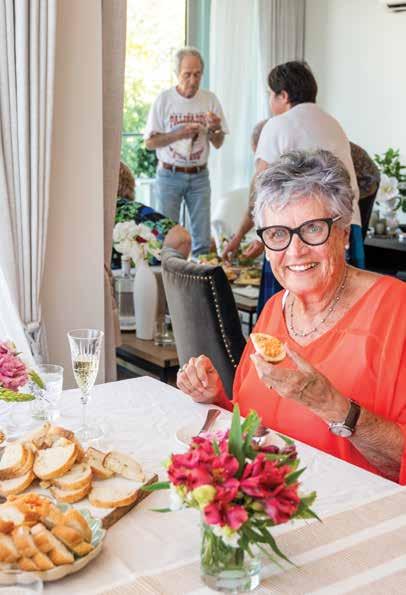
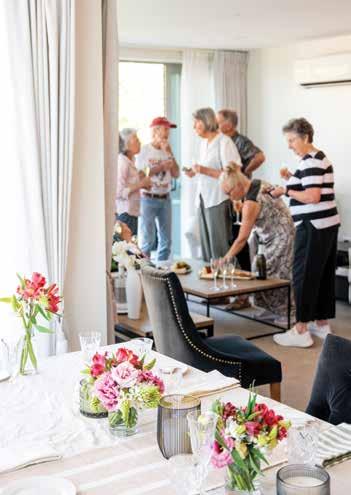
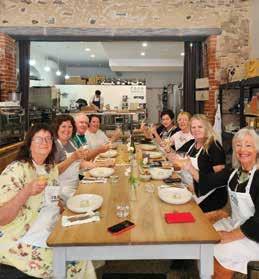
The sound of a champagne cork popping echoes through the apartment, followed by laughter and the gentle clink of glasses. “Come in, there’s plenty of bubbles!” someone calls, and a few more guests make their way in, stopping just long enough to admire the view before being drawn to the heart of the home – the kitchen.
Sunlight spills across the benchtops, catching the rim of a platter piled high with olives and cheese. The atmosphere is easy, unhurried and quietly effervescent. Neighbours who’ve only nodded to one another in the lift are now swapping stories and leaning in close as though the conversation’s been going on for years. “It’s so nice to finally put names to faces,” one woman says with a grin. Another nods, flute in hand. “You could host an entire family in here – and still have space to dance!”
The gathering has been organised with Nourish magazine’s editor, Vicki Ravlich-Horan, who’s come to share a little culinary inspiration. But it’s more than a cooking demo. It’s a taste of village life. The idea is simple: open the doors, pour the wine, and let good food and conversation do the rest.
Before the first tray even hits the oven, the guests are comparing their own ‘go-to’ dishes. “Baked brie with honey and walnuts,” says Catherine immediately. “It makes people stay longer.” Judi, seated beside her, declares bruschetta her signature, “but only when the tomatoes are perfect”. Two others laugh as they realise they’ve both said lasagne. “We might need a lasagne-off,” one teases. Around the room, stories unfurl – about family dinners, grandchildren, and recipes that have been handed down with love.
Then comes the hush.
Vicki stands at the stone bench, sleeves rolled up, ready to begin. In an instant, the chatter fades to silence. You can smell the aromas of fresh ingredients and the gentle knock of a rolling pin. “That’s the quietest this bunch has been all year,” someone whispers, and a ripple of laughter breaks, quickly stifled so as not to miss anything.
Flour dusts the air. Pastry stretches under Vicki’s hands. The smell of butter and herbs drift through the space. “She makes it look so easy,” murmurs a guest near the table. “My pastry normally looks like it’s been through a storm.” A few heads nod in agreement. When the tray finally slides into the oven, there’s a shared breath –the collective patience of people waiting for something wonderful.
And then, it happens. The oven door opens, releasing a wave of buttery heat, and applause follows almost on instinct. “Oh, that smell!” someone gasps. “That’s dangerous,” another says, laughing. The first bite is greeted with quiet reverence. Then, chaos –cheerful, friendly chaos. Compliments fly. Plates pass in every direction. “I didn’t say a word while I was eating,” a woman admits between mouthfuls. “That says it all.”
As the trays keep coming – crisp olive oil crackers, a bright carrot and almond dip, a scatter of freshly toasted dukkah – the energy builds. The apartment hums again with life. The kitchen bench becomes a gathering place; the table, a map of half-empty plates and folded napkins. Conversations roll easily from food to family, to travel, to favourite spots to visit.
One guest gestures to the balcony, where the late afternoon sun spills gold across the harbour. “This view doesn’t get old,” she says. “I never thought I’d find somewhere that felt this peaceful.” Beside her, a new resident adds, “We came for the apartment, but we
LEFT TO RIGHT: PAULINE, ANDREA, FIONA, JILL, MICHAEL, PAM, WARREN, MARLENE & JUDY
stayed for this – the people, the laughter, the days like this.”
Someone refills glasses without being asked. Another wipes a crumb from a friend’s sleeve. Laughter drifts down the hall as a small group declares they’ll form a Bayview Cooking Club. “Next month it’s at mine,” one announces. “I’ll bring the bubbles, you bring the lasagne.”
The longer the afternoon lingers, the warmer the mood becomes. People who arrived as strangers are now trading phone numbers and promising to swap recipes. Someone slips a copy of Vicki’s recipe sheet into her bag and whispers, “I’m making this on Sunday.” Another folds hers carefully and says, “I’ll frame mine before I spill wine on it.”
By the time the last plates are cleared, no one seems eager to leave. The table is scattered with crumbs and empty flutes, but it feels beautiful in its disarray, like evidence of something shared. Leaning back in her chair, one of the party sighs contentedly. “You can feel the warmth in here,” she says. “Not just from the oven.”
It’s a small moment, but it captures everything the afternoon was about. Great food. Good company. And a space that feels open and alive – a place that invites you to linger a little longer.
As guests drift towards the door, there’s one last chorus of goodbyes and promises to “do it again soon”. A few stay behind, still talking by the window, still smiling. From the hallway, you can hear the laughter echo as the lift doors close.
You get the sense that this won’t be the last afternoon like it at The Bayview – just the beginning of many more.
The Bayview Retirement Village in Tauranga, thebayviewvillage.co.nz
LEFT TO RIGHT: FIONA, ANDREA, PAULINE
JUDY
TAKE A STAB
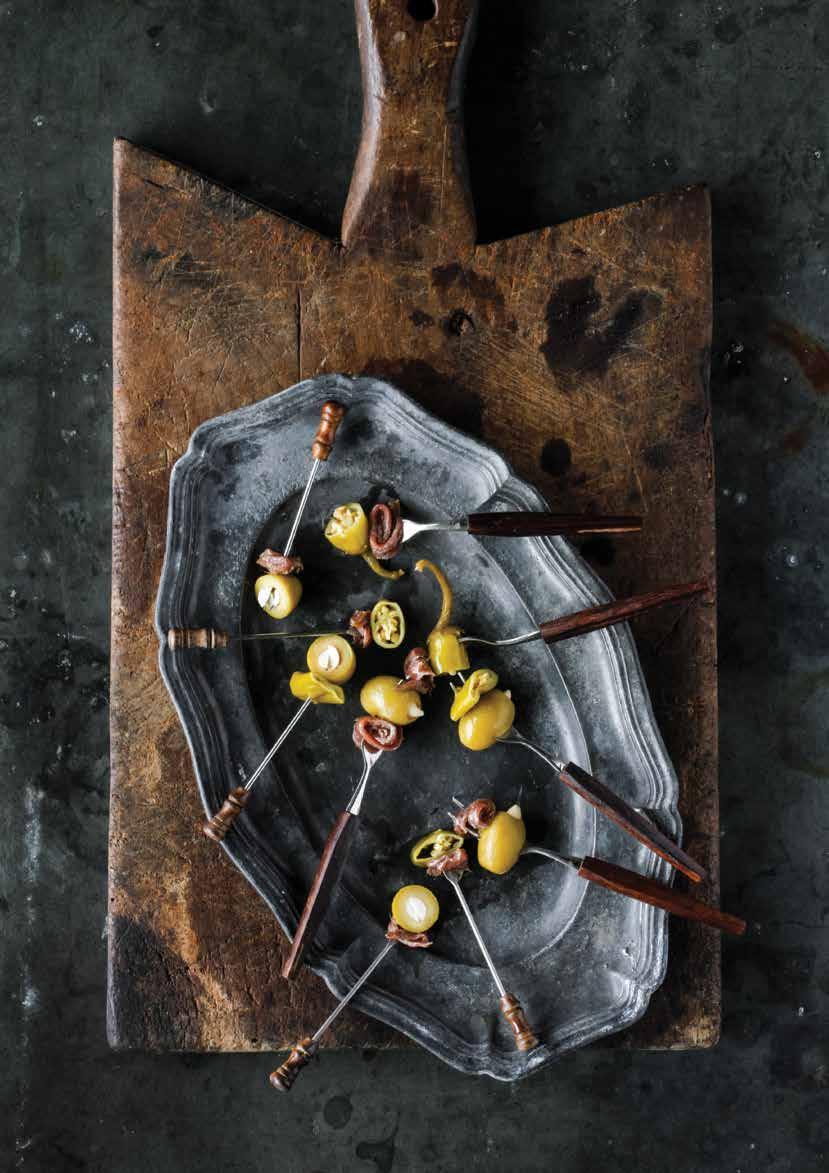
LITTLE PRICK STICKS – OR GILDAS, DEPENDING ON WHO YOU ARE SERVING
Large green pitted olives
Good quality anchovy
Guindilla chilli (available from Vetro)
At the end of a long day, stab a combination of each ingredient on small cocktail forks or picks. Lay on pretty plates and serve with your favourite cocktails. As an alternative to the chilli, you can use cornichons or white cocktail onions.
RECIPES & IMAGES FIONA HUGUES
In 1946 Rita Hayworth starred in a film portraying a character named Gilda who was beautiful, spicy and a little bit wild.
Shortly after the release of the film, a bar in San Sebastian served a tapa that was salty, spicy and sharp, much like Rita’s part, and in doing so the delicious little olive, anchovy and guindilla chilli combo became known as the Gilda. Just shy of 80 years later, these exotic little skewers have returned to popularity and can be found in bars across all the cool cities. At this end point of the year I’m grateful to be only stabbing things that are delicious, like these Gildas and the ingredients of the following recipes, thus avoiding poking forks in my eyes to avoid witnessing some of the current craziness in the world. In saying that I won’t be too presumptuous and guarantee that my thoughts are purely confined to impaling food ingredients in the weeks ahead but can confirm each stab here is very therapeutic and a little act of culinary villainy. With all manner of my sharpest props becoming instruments of gleeful havoc, wickedly nothing is safe this summer: peaches, courgettes, grapes, lamb and possibly a few annoying relatives.
Fiona Hugues | Born in Hamilton, multiinternational award winning food stylist & creative multi-hyphenate Fiona Hugues spent her childhood gallivanting around the Waikato countryside on horseback. After Hillcrest High School, Elam School of fine Arts took her to Auckland where she now resides on a rural property with her French husband, teenage children & a plethora of animals. From
From our kitchen to yours — dive into the deep, savoury
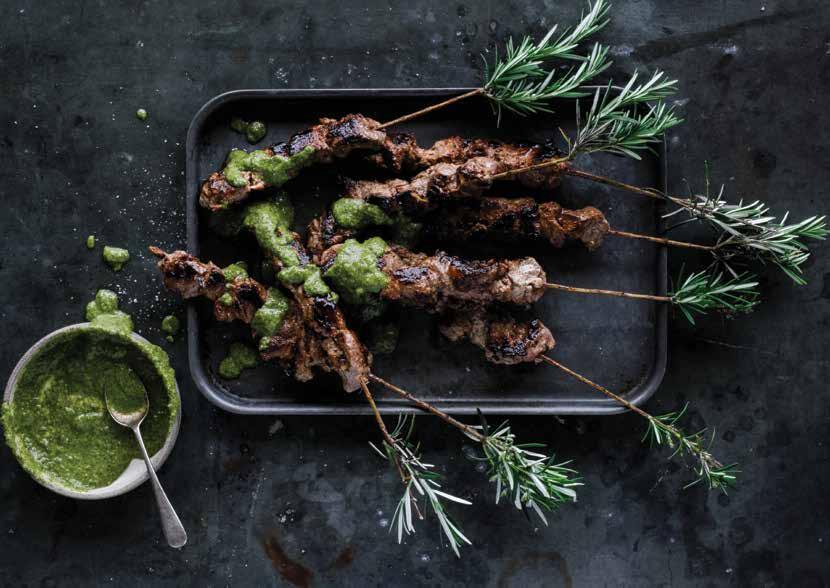
SACRIFICED LAMB WITH MINTY HERB SAUCE
These lamb skewers are lovely wee impaled meaty treats for easy festive entertaining. Make them as big or small as you like. Using sprigs of rosemary wood imparts lovley additional flavour to the meat. Mind, don’t use any twigs you’re not familiar with – I recall once upon a time a gormless chap killed his whole family dead using highly toxic oleander sprigs to BBQ a campside dinner. An unthinkable thing to imagine at an annual family gathering … or not.
500g approx. lamb leg meat, cubed
1 cup Greek yoghurt
1 clove garlic, crushed
1 tsp ground cumin lemon juice to taste salt & pepper
FOR THE MINTY HERB SAUCE
a large handful of fresh herbs – basil, parsley & lots of mint
3 cornichons or 1 small gerkhin
1 tbsp capers and juice
2 tbsp red wine vinegar extra virgin olive oil
1 tsp honey or raw caster sugar
2 anchovy fillets or a 2 cm squeeze of anchovy paste (available from Vetro)
flaky sea salt & fresh ground black pepper
Rosemary twigs, stripped, with leaves left on one end.
The day before, marinate the lamb. Mix all ingredients together, add the cubed lamb, mixing well to combine and place in a lidded contaner or sealable plastic bag kept in the fridge.
Make the minty sauce ahead of time so the flavours have time to get to know each other. To a small food processor or using a stick mixer, add the sauce ingredients and combine. Add lots of herbs from your garden – I prefer basil, flat leaf parsley and lots of mint for this one –and process to a fine green sauce. Taste and adjust seasoning.
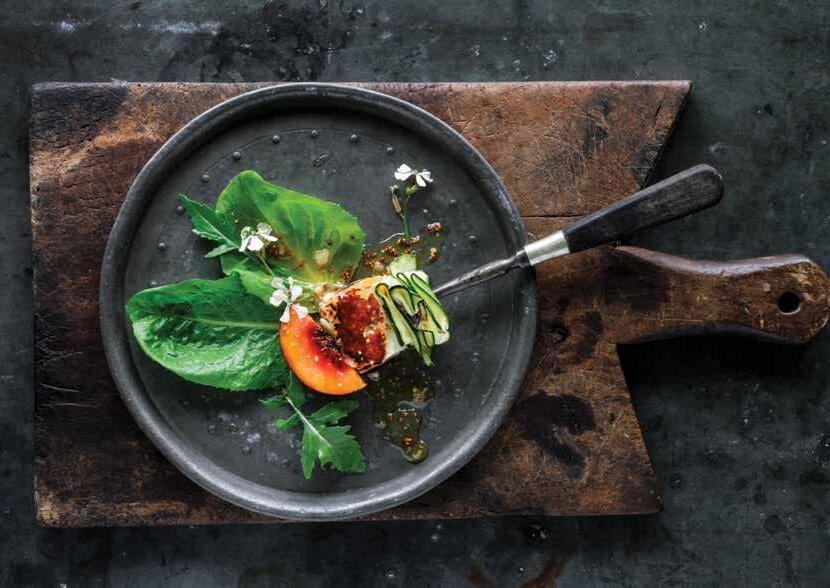
HALLOUMI & COURGETTE WITH PICKLED PEACH
This combination is a delicious, light summertime dish to placate the vegetarians in your midst –I serve these skewers on salad leaves with plenty of crusty bread and a glass of chilled rosé.
halloumi cut into large 5cm chunks
peach or nectarine, cut into wedges
1 tbsp champagne vinegar or white wine
vinegar
1 tsp caster sugar
1 courgette, shaved into ribbons
extra virgin olive oil
salt & pepper
rocket & lettuce greens
FOR THE DRESSING
1 tbsp finely chopped shallot
2 tbsp champagne vinegar
½ clove of garlic, crushed
1 tsp runny honey
1 tsp Dijon mustard
cup extra virgin olive oil
salt & pepper
First make the dressing.
Add all the dressing ingredients to a small jar and shake well to combine. Taste and season to adjust.
Place the peach or nectarine wedges in a small bowl and sprinkle with the sugar, champagne vinegar and a little salt. Microwave on high for 45 seconds. Set aside to cool.
Shave the courgette into ribbons, drizzle in a little EVO and fold tightly to make a stack. Stab onto a skewer and add the chunk of halloumi. Grill to toast in a dry pan or BBQ grill over meduim heat until golden.
Add a wedge of the fresh pickled peach or nectarine and lay the skewers on leaves on a platter
Pour the dressing over the leaves and skewer and serve with plenty of crusty bread.
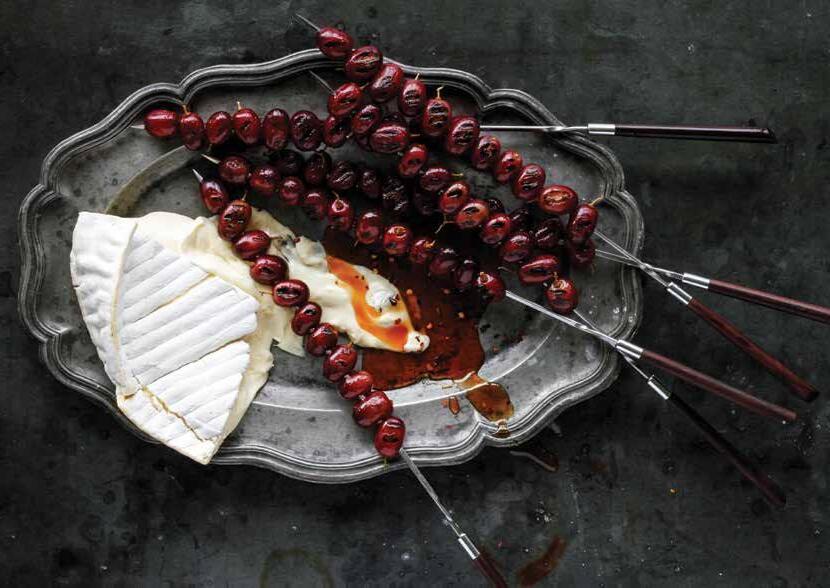
IMPALED GRAPES, DOUBLE CREAM BRIE & HOT HONEY
This dish looks wickedly pretty for your end of meal platters this holiday season. Easy to prepare, the roasted grapes add lovely sweet caramel flavours to gooey double cream brie. Make sure you have good bread to devour it all with.
Double cream brie – use the best you can afford
Flaky salt
Seedless grapes
Hot honey
Spray olive oil
Chilli flakes (optional)
Crusty bread to serve Pierce 10 grapes on each kebab skewer and spray with a little olive oil. Season with salt. Grill over medium heat until gently marked.
Serve with luscious creamy brie that has been brought up to room temperature so it’s lovely and soft and drizzle the whole lot in hot honey. Sprinkle with chilli flakes if using.
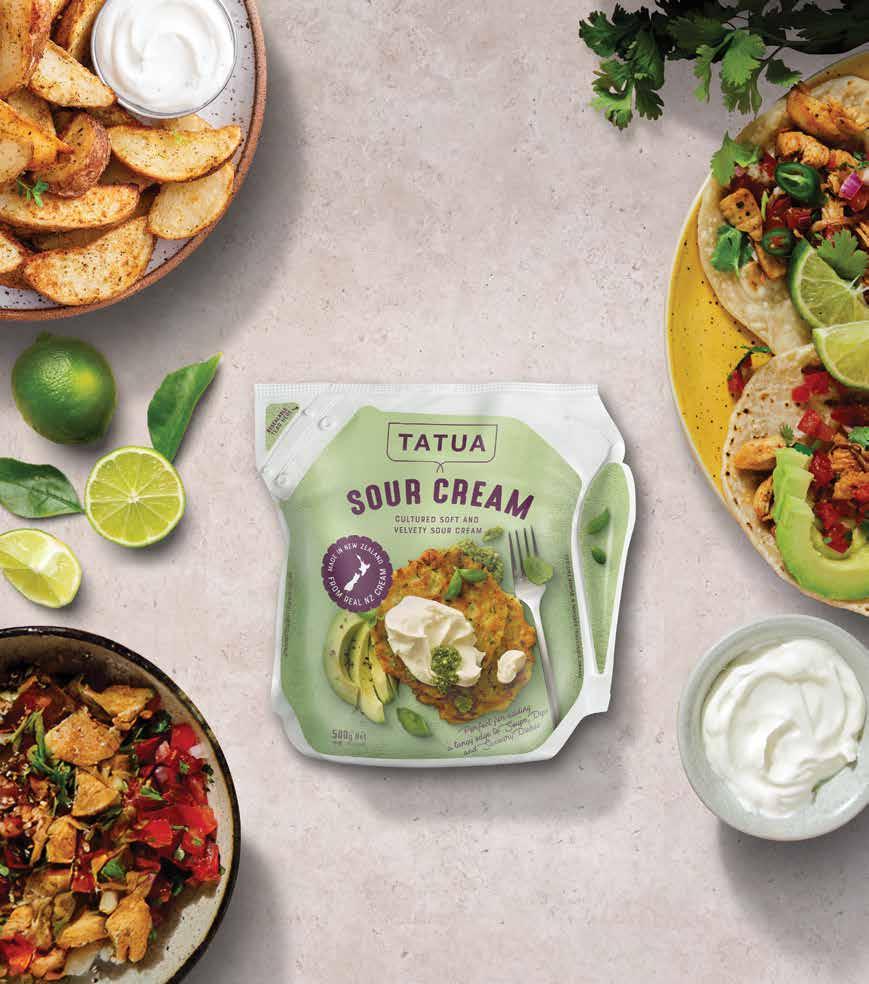
A touch of Sour Cream, a taste of Summer
Cool and creamy – perfect for summer days and easy gatherings
Tatua Sour Cream is soft and creamy with a delicious tangy flavour. Perfect for topping nachos, baked potatoes and gourmet pizza, it also brings fresh flavour to summery sauces and dressings. Use it as a quick dip with lime and sweet chilli, or as a cream substitute to add velvety richness to sweet and savoury dishes.
Proudly New Zealand made | Available in supermarkets nationwide
I grew up eating all kinds of seeds by the handful, thanks to my hippy parents! These nutrient powerhouses are super versatile and make a lovely addition to salads, smoothies, slices, stir-fries and more.
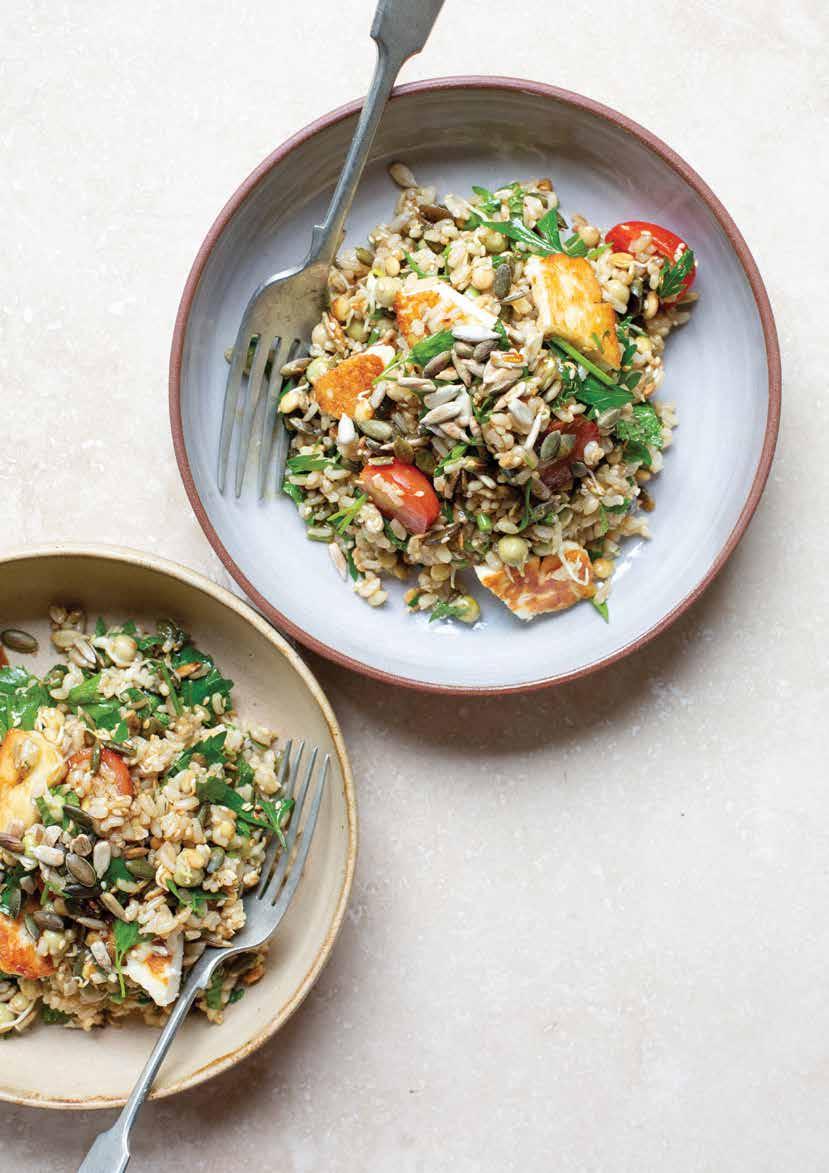
Crunchy Brown Rice Salad with Cherry Tomatoes + Crispy Halloumi
Sprouted legumes and toasted seeds bring all the crunch to this substantial brown rice salad, while tomatoes and herbs add freshness and fried halloumi a lovely salty kick. Some finely sliced red onion is also a great addition to this salad, if you like salad with a bit more bite. You’ll find pomegranate molasses at specialty food stores like Vetro or The Herbal Dispensary.
SERVES 4–6
1 cup medium grain brown rice, rinsed
200g packet crunchy sprouts bean combo (or a mixture of homesprouted legumes such as lentil, blue peas and mung beans)
½ cup lightly toasted pumpkin seeds
½ cup lightly toasted sunflower seeds
¼ cup lightly toasted sesame seeds
250g cherry tomatoes, halved
200g packet halloumi, sliced olive oil to shallow fry
generous handful of mint and parsley leaves, roughly chopped
DRESSING
2 tbsp pomegranate molasses 1 tbsp balsamic vinegar juice of 1 large lemon cup extra virgin olive oil generous pinch caster sugar fine sea salt, to taste
To cook brown rice, place rinsed rice into a medium heavy-based saucepan, cover with 1¾ cups cold water, bring to the boil, then turn the heat down to the lowest setting, cover with a lid and cook 40–45 minutes until the water is absorbed and the rice tender. Remove from heat, keeping lid on, and allow it to stand for 10 minutes before removing the lid, fluffing rice up with a fork and setting aside to cool. This can be done in advance.
In a large bowl, combine cooled rice, crunchy sprouts, toasted seeds (reserve a few for the top if you like) and cherry tomatoes.
Heat a large frying pan over high heat, add a touch of olive oil and fry halloumi slices until golden on both sides. Remove from pan and cut into bite-sized pieces. Add to the rice salad, along with the chopped herbs.
To make the dressing, combine pomegranate molasses, balsamic and lemon juice in a small bowl, whisk in olive oil and season to taste with sugar and salt. If it’s still too sharp add another tablespoon of olive oil. Pour enough dressing over salad to coat (you may have extra dressing) and serve.
7 Clarke Road, Te Puna, Tauranga Open 9 -3, Tuesday - Saturday www.websterstea.co.nz Discover better tasting tea. Visit Our Te Puna Tea Shop to discover teas, homewares and NZ-made pantry favourites.
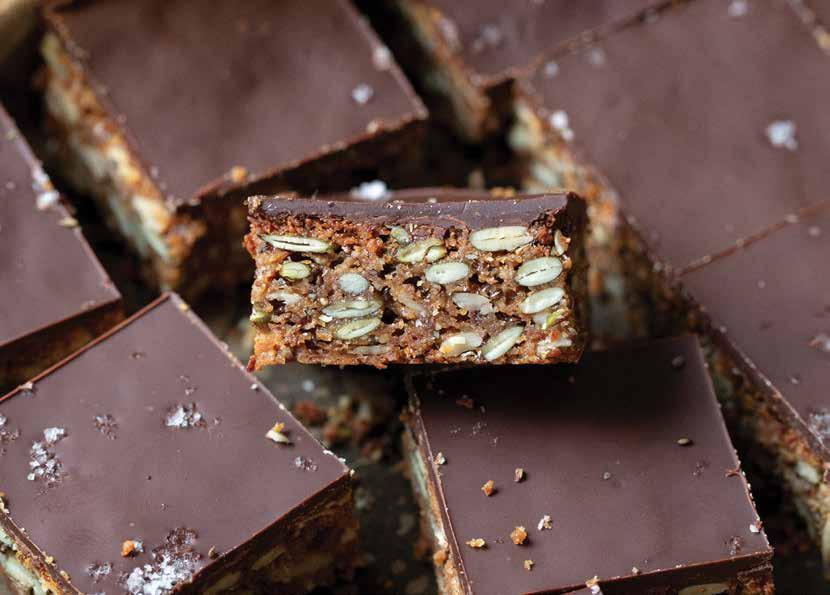
Seedy Choc-top Slice
This slice is chock-a-block with seeds of every kind, mildly sweet and with just the right amount of chocolate on top. Feel free to swap around the seeds you use, just stick to the same amounts. Don’t like pumpkin seeds? Simply use more sliced almonds or sunflower seeds. Like hemp seeds? Add in a few tablespoons or swap out the chia for them. You’ll find brown rice malt syrup at most supermarkets in the health food section.
MAKES APPROX. 20 SMALL SQUARES
¾ cup pumpkin seeds
½ cup sliced almonds
½ cup ground almonds
¼ cup sunflower seeds
¼ cup chia seeds
¼ cup ground flaxseeds (linseeds)
¼ cup dried cranberries or raisins
¼ cup tapioca starch (flour)
1 tsp cinnamon
¼ tsp fine sea salt
½ cup nut butter (I used almond, but peanut butter is also great)
½ cup rice malt syrup
2 tbsp virgin coconut oil
1 tsp vanilla extract
Emma Galloway | mydarlinglemonthyme.com
@mydarlinglemonthyme | @tahu.ceramics
CHOC TOP
150g dark chocolate, roughly chopped 1 tsp virgin coconut oil flaky salt to sprinkle, optional
Preheat oven to 160°C. Line a slice tin with baking paper (I used a 9x12-inch tin).
Combine seeds, ground and sliced almonds, dried cranberries, tapioca starch, cinnamon and salt in a bowl and mix well to combine. Place nut butter, rice malt syrup, coconut oil and vanilla extract into a small saucepan and cook over low heat, stirring constantly until just melted, smooth and combined. Pour into dry ingredients and mix to form a stiff, sticky dough. Press into prepared tin and bake 20–22 minutes, or until lightly golden. Remove from oven and set aside to cool.
Melt chocolate with coconut oil in a small heat-proof bowl set over a small pot of boiling water. Pour over cooled slice, tipping it to the sides to evenly coat with chocolate. Sprinkle with flaky salt if using and set aside to set (this can be sped up in the fridge if you can’t wait!). Slice into small squares to serve.
Store in an airtight container for 3-4 days, or pop in the fridge for up to a week. Allow to come to room temperature for the best texture.
Best-selling author of three cookbooks and award-winning blogger, Emma Galloway is also a chef, photographer and budding potter. After years of living overseas, she has settled back in her hometown of Raglan, where she is inspired by the seasons and her extensive veggie garden.
This is a truly intimate tour. Our base is a gorgeous villa just outside Bologna, perfect for us to explore the nearby towns of Parma, Modena and Ravena, discovering the true heart of Italian cuisine.
$6550 pp twin share
“Wow what a way to explore Sicily. The small and intimate nature of the trip made it extra special. A perfect way to explore the island of Sicily with a passionate, knowledgeable local guide, supremely organised tour leaders and equally passionate adventurers and foodies. Be prepared for an action packed week that really does showcase the diverse landscape and cultural offerings of Sicily. ”
MANDY JARVIS
TASTE OF SICILY 2023
Taste of Tours are small group tours giving you a real taste of place. For more details on any of these tours please visit
Join your hosts Vicki and Julie Le Clerc travelling down the stunning coast of Croatia. Discover the rich history and stunning beauty of this nation while enjoying their wonderful food and wine.
$11,9750 pp twin share
This is our flagship tour and one of our favourites! Spend 10 nights in Sicily’s culture and countryside, tasting all she has to offer.
$9450 pp twin share
“Vicki’s local knowledge was great and her expertise in all matters food and wine related added another level. This is a tour that opens up experiences not normally available due to the knowledge of the local guide. So many wonderful experiences.”
KAY SCHULDA
TASTE OF SICILY 2023
“Trip of a lifetime! The repartee, knowledge, humour, respect was perfect. Nothing seemed to be too much so that at all times I felt included and valued. Superb!”
KATHY
Be captivated by the untouched region of Puglia, from its wonderful wines to unique architecture, gorgeous olive groves to historical towns. Based in a beautiful masseria we will immerse ourselves in the enchanting region.
$7495 pp twin share
LET’S SPLIT
WORDS & IMAGES VICKI RAVLICH-HORAN
My first night in Split was not ideal. Delayed flights ending in lost luggage meant I arrived around 9pm needing to buy the basics – toothpaste, deodorant and clean undies! Luckily this is Europe and even on a Monday night the town was still buzzing.
With the essentials sorted I was hungry but exhausted. So I stumbled into a pastry shop around the corner from where I was staying. My first bite in Split was from St Burek, which turns out is one of the best places in Split to enjoy burek – a crispy, thin, flaky filo-like pastry that incases various fillings, traditionally cheese or beef, but now any number of ingredients.
Burek is not technically Croatian. This Balkan pastry originated in Bosnia and Herzegovina, but let’s remember 40 years ago they were all Yugoslavia. Pekara (aka bakeries) are in abundance in Croatia, with pastry products making up the core range, which explains why the population adopted burek as their own.
I first visited Croatia as a backpacker 25 years ago. Split was a very different town! I would most definitely not have been walking around the old town alone at night. The war between Serbia and Croatia (1991–1995) had not long ended and the country still wore the scars for all to see. Tourism had not recovered, with only a few, mainly German tourists, returning to enjoy the beautiful coast of Croatia. Schnitzel dominated restaurant menus.
A lot has changed in a quarter of a century and Split’s transformation from a scary port town to a tourist hub is proof positive of this, so are the menus of local restaurants.
Split, Croatia’s second largest city, is the perfect spot to base yourself, either to explore Krka National Park or the many surrounding islands.
I was here to visit my Pop’s village. Ivan Ravlic left what was to become Yugoslavia at the end of WW1 and found his way to New Zealand. Growing up, Nan and Pop and my mum and dad were the only Ravlich’s in the phone book. So imagine what it was like to discover that one in every eight people from his village were Ravlic’s!
Sadly, what I found was that Kozica (Pop’s village) is now home to only around eight houses. Many left when Pop did, apparently many ending up in Western Australia and South America. More left again in the 90s. In fact, Croatians continue to leave. Now part of the EU, their young people seek better futures throughout Europe.
So while I didn’t meet any relatives when I drove to Kozica, the airport attendant’s (who found my bags) mother was a Ravlich from Kozica!
Bags found and my mission to drive to Pop’s village achieved, it was time to rediscover and enjoy Split.
Dominating the old town of Split is Diocletian’s Palace, the retirement village for Roman Emperor Diocletian.
Diocletian was an interesting character. His origins are often disputed, but it is believed he was born in Solin, less than 10kms from Split. His father may or may not have been an emancipated slave. What is not disputed is Diocletian’s rise through the army, culminating in beating his adversary for supreme rule in 284AD.
These were turbulent times for the Roman Empire, which was on the brink of collapse. Diocletian is attributed to implementing a number of changes and restoring order, which saw the empire continue for another 150 years.
But it is perhaps what Diocletian did after being an emperor which brought him eternal fame. The first Roman Emperor to abdicate, he commissioned the Diocletian Palace to be built for his retirement.
Taking 10 years to construct, this fortress-like palace is 30,000 square metres and includes military barracks as well as the emperor’s residences. Facing the sea, it is said Diocletian could pull up in his ship.
Considered one of the most imposing Roman ruins, Diocletian’s Palace is the old town of Split and one of its main attractions. Staying in the old town is a must. It is the city’s living heart, with a labyrinth of alleyways that could just as likely lead you to an intriguing piece of history as a hidden courtyard or cocktail bar.
In the centre of the palace is Peristil Square. Here you can marvel at the Roman architecture with its grand Corinthian columns framing the square. This is a spot to start your palace explorations but also one to come back to because, as it probably was in Diocletian’s time, it is a great gathering spot. It is a meeting place, a spot of art exhibitions, open air concerts and theatrical performances. Bars scatter cushions on the steps for you to enjoy an aperitivo and a platter of local cured meats and cheese while watching the world go by or marvelling at the history all around.
One such marvel is the Sphinx perched on a ledge. This 3500-yearold Sphinx is the only surviving, of 12, brought from Egypt by Diocletian.
Behind the Sphinx you will spot St Domnius Cathedral whose bell tower is the tallest in Dalmatia. Impressive as the bell tower is, it was a later addition, and the real interest lies in the story and twists of history behind the church’s walls.
Originally built as Diocletian’s mausoleum, his body was interred there on his death in 316AD, where it remained until the seventh century. Diocletian had overseen the longest and most severe persecution of Christians in Roman history, including the execution of bishop Dominius from his hometown Solin.
The martyr Dominius became a saint and in a twist Diocletian did not anticipate, St Dominius became the patron saint of Split and it is his body that now rests in the cathedral.
From Peristil Square head towards the sea and walk through the vestibule. This rotunda with an opening to the heavens was once the entrance to the imperial residence. It is now the perfect spot for a photo op or, if you are lucky, to enjoy traditional Klapa singers making the most of the acoustics.
Carry on further and descend into the basement of the palace and some of the best-preserved parts of the palace. For Game of Thrones fans this was the spot where Daenerys chained her dragons in a crypt-like dungeon.
The basement has had many uses over the centuries, including as a rubbish dump. Originally it was a substructure designed to elevate the emperor’s apartment above sea level.
Coming out of the basement you arrive at the Riva, or waterfront promenade. Here you will find restaurants and bars and often a market with local crafts and souvenirs. It’s also here you can spot the hoards of cruise passengers disgorging or where you catch a ferry to nearby islands.
Just outside the palace walls is the green market (Pazar). This open-air market is open every day and is possibly one of the most authentic farmer’s markets I have been to. Visit early to get a real local experience. Don’t expect much English to be spoken, but it’s amazing how much a smile and some hand gestures can get you. When I visited, local plums and sweet figs were in abundance.
On the other side of the palace is the fish market (Peskarija). Open from 6.30am every day, it’s well worth a visit to see the abundance of sea life the Adriatic Sea offers.
A covered affair, this one is located near naturally occurring sulphur springs, which repels the flies. It is said Diocletian chose Split for his retirement because of the sulphur springs, which helped with his arthritis.
Not for me, but for seafood lovers Crni Rižot is a must try dish in Croatia. The black risotto is made from cuttlefish, and I am told delicious. It’s not the colour that put me off but the seafood (yes, it’s true, I am not a seafood fan). If in Split, seek out Makarun, a restaurant and hotel hidden in a private courtyard in the old town for one of the best versions of this iconic dish.
Just around the corner from the fish market is Kantun Paulina, who has famously been serving up ćevapi since the 1960s.
A common street food in Croatia, ćevapi are small meat koftes served in a pita or bun with raw onion and ajvar (roasted pepper relish). Instead of pita, Kantuna Paulina’s ćevapi comes in the fluffiest bread bun.
I swear there are more gelato stores in Split than in Italy! I’m not really an ice cream girl, but when in Rome, or in this case Split … Bili San is a local favourite and uses only the best ingredients. And if you are in the know you ask for a chocolate dip.
I was also enticed to try a cone at Geleteria Emiliana, as it was on the corner by my accommodation and I would walk by it five or six times a day. With an open kitchen you can see the gelato being made before your eyes. I went for the chocolate, rum, and cherry.
On my last night in town, I sat at the bar of a buzzing restaurant and realised I truly am Croatian. I ordered a local pasta with truffles and pancetta washed down with a glass of local Zinfandel and was in heaven.
Quite rightly the Zinfandel is probably not the best match for a truffle dish, but it is my favourite wine variety and I came to learn its origins are Croatian, not Puglia, as I had thought.
Istria in northern Croatia is known for their truffles, while the local salty pancetta is also made in the north of the country where it is air dried. Together with the pasta from the Romans, you have a perfect dish (in my opinion). Want a real taste of Croatia? Join me in June on our Taste of Croatia tour – just six spaces left!
MY CROATIAN KITCHEN
Both sets of Helena Nuic’s grandparents came to New Zealand from Croatia. While West Auckland was home, Helena says she grew up with strong ties to Croatia, via the language, music, stories and, of course, food.
She explains, “My Croatian Kitchen began as a way to preserve the memories and traditions passed on to me by my family.”
It began with an old family recipe book which, as Helena describes, had “thin pages and fading ink holding recipes from family, loved ones who have passed and new friends. My Croatian Kitchen is not just a collection of recipes” according to Helena “but a collection of traditions that should not be lost”.
Helena describes Hvar, where her family come from, as her home, despite not growing up there. The idyllic island where throngs of tourists that descend every summer is, in Helena’s world, a laid back place where food, family, conversation and connection are central to the way of life.
As Helena shares her family recipes, she paints a picture of life on the island where “family and friends are central, and food is a language of its own”.
Croatian food, Helena explains, “is authentic and simple, with a belief that less is more. It is not about an explosion of competing flavours but rather a defined, honest and always delicious representation of food.”
She says, “The recipes that Baba has taught my mama, that she has taught me, are their own kind of history … Every bite is the taste of home.”
Keen to enjoy a bite of Helena’s home?
Hard copies of My Croatian Kitchen have sold out, but the ebook is still available at mycroatiankitchen.bigcartel.com
You can also follow Helena, who often travels back to Croatia, on her Instagram page @helena.kitchen_
FRIGANE PAPRIKENA SALATU (FRIED CAPSICUM SALAD)
Sweet and succulent capsicums meet tangy vinegar and bold olive oil to create the ultimate side dish to any fresh summer meal.
16-20 capsicums/peppers
(red, yellow & orange)
Olive oil
4-6 garlic cloves
1 tsp salt
½ tsp black pepper
½ cup red wine vinegar
2 tsp malt or balsamic vinegar
Place whole peppers in two large covered fry pans or stock pots with olive oil generously covering the base.
Fry the peppers on high heat, once vigorous frying begins, turn down to a moderate heat. Have pot lids partially covering the peppers.
Turn peppers frequently to ensure all sides are cooked through.
Peppers will have some charring but ensure heat is low enough to cook the peppers. This takes 20-30 minutes.
Once peppers are softened and sautéed, prick each with a fork. Fry for a further 5 minutes with the lid partially covering. Set aside ensuring the lid fully covers the pot or fry pan to allow the juices from the peppers to be released.
Place vinegars, salt and pepper in a shaker or jar and shake well. Finely chop the garlic. Quantities of vinegar, garlic, salt and pepper can be modified to suit you.
Arrange peppers into serving dishes and sprinkle with chopped garlic. Pour over the vinegar, salt and black pepper mixture.
From the pans or pots pour over the olive oil and liquids from the peppers. If there is excess oil, ensure the darker liquid from the peppers is maximised by removing it from the oil, pouring it onto the peppers then adding the oil according to taste.
Peppers should be three-quarters covered in the oil/vinegar mix, allowing further infusion of flavours.
TIP: This salad can be prepared in advance as it can keep in the fridge for a week or so and is more flavoursome on day 2 or 3 of being prepared as flavours become more intense.
FATIMAS
Over the past 30 years, Fatima’s has served more than a million customers from its bustling kitchens in Auckland. They’ve always been cooks first – passionate about feeding people, sharing flavour and making food that feels good to eat.
Now you can bring a little of that magic into your own kitchen. Whether you’ve stood in one of their queues, grown up eating their lamb shawarma or koftas, if you want to know how to make their garlic sauce or are curious about harissa, FATIMAS cookbook brings the colour, spirit and soul of their kitchen into yours. FATIMAS is packed with the dishes and techniques that have kept their kitchens humming. From slow cuts to zesty salads, from punchy sauces to late-night pitas, each recipe is designed to be approachable, satisfying and full of flavour.
These are recipes for any day of the week and for cooks of all skill levels. Each one teaches a technique or flavour combination that reflects Fatima’s way of cooking – layered, full of herbs, spice-rich and always grounded in the bold, vibrant ingredients of the Middle East, reimagined here in Aotearoa, New Zealand.
Kirsty Senior co-founded Fatima’s in 1995 and has been at the helm ever since. Over the past three decades, she has guided the business through growth, change and challenges – raising a daughter while navigating everything from new technologies and shifting food trends to evolving systems, regulations, and legislation.
Now the Managing Director, Kirsty remains the backbone of the business. Kirsty’s love for layered, complex flavour resonates throughout the book – she’s their in-house texture enthusiast, responsible for the generous use of seeds, nuts and grains, and the queen of double (sometimes triple!) sauce layering.
Sophie Gilmour grew up around the clatter of kitchens and the hum of good conversation. Since joining Fatima’s in 2018, Sophie has brought heart, hustle and a deep love of flavour to everything she does. With a background in law, cooking and front-of-house hospitality, Sophie’s impact has been felt in every corner of Fatima’s – from reimagining systems to fostering culture, and always, always staying true to the food.
She believes in flavour that punches above its weight, in spaces that feel like home, and in businesses that nourish everyone involved – from kitchen crew to customer.
COURGETTE, CORN, CORIANDER & AVOCADO SERVES 6
This salad is attractive, substantial and a great way to showcase raw courgette. We think it’s best in summer when the corn is fresh (although you could use thoroughly drained frozen corn in a pinch), and we love the punchy flavour of the coriander dressing. It’s a fantastic accompaniment to barbecued meats and has become a firm favourite in our rotation for summer dinners with its ability to tick both the salad and vege box simultaneously. If we’re feeling indulgent, we add feta as well, which suits it perfectly.
FOR THE SALAD
½ small red onion, peeled and sliced ½ lemon, juiced
small handful coriander, stems finely chopped and leaves roughly chopped
flaky sea salt and freshly ground black pepper
3 courgettes, trimmed and peeled into ribbons with a peeler as far to the core as possible
2 avocados, peeled and cut into chunks
70g (½ cup) almonds, roughly chopped and toasted
FOR THE DRESSING
60ml (¼ cup) extra virgin olive oil
1 tablespoon apple cider vinegar
1 teaspoon maple syrup
1 teaspoon Dijon mustard
1 garlic clove, peeled and crushed small handful coriander, stems and leaves
Pickle the red onion with lemon juice and sumac in a small bowl while you prepare the rest of the salad.
RRP $59.99
Available from October 2025, published by Beatnik
Heat the oil in a frying pan over a high heat. Fry the corn for 2 minutes until it is just tender and some pieces are charred. Season generously and stir in the chopped coriander stems. Set aside.
Place the ingredients for the dressing in a jug and blend with a stick blender.
Place the courgette ribbons on a flat plate. Layer with corn, avocado and red onion. Spoon over the dressing and gently toss to mix. Sprinkle with almonds and coriander.
Five fabulous nights of foodie fun in South Australia with host Julia Clarke.
$3850 pp twin share
Fatimas
By Kirsty Senior and Sophie Gilmour, photography by Vanessa Wu
EVENTS
TAURANGA FARMER'S MARKET
Where local and convenience collide. The Tauranga Farmer’s Market is on every weekend, rain, hail or shine.
This free, whānau-friendly event turns the Tauranga waterfront into a buzzing celebration of manu culture, cool jumps, DJ beats and community vibes. Saturday, 13 December Waterfront, Tauranga
XMAS EVE AT FALLS RETREAT
Enjoy a special Xmas set menu lunch. Three courses showcasing homegrown and locally sourced produce.
$85pp($35 kids - 2 courses plus drink) plus cc booking fee
Wednesday 24 December from 11.30am*
*Set menu with individual tables/staged bookings fallsretreat.co.nz
L.A.B & STAN WALKER
Warm up your summer with an epic live music event featuring Kiwi icons L.A.B, Stan Walker, Aaradhna, Te Wehi and Corrella. A powerful line-up, in beautiful Tauranga – this one’s a standout. Saturday, 27 December Wharepai Domain, Tauranga.
NEW YEAR’S EVE COMMUNITY CELEBRATIONS
Welcome 2026 with an evening full of music, laughter and community. With roaming performers, a delicious selection of food trucks, kids’ activities, and an MC to host the evening.
Wednesday 31 December
Pāpāmoa, Greerton, Mount Maunganui, Tauranga city centre and Matua.
NEW YEARS EVE AT FALLS RETREAT
Make this New Years Eve one to remember with a four-course degustation dinner with optional wine matches or non-alcoholic pairings.
$135pp plus cc booking fee
Wednesday 31 December, 6.30pm*
*long table/event style dining fallsretreat.co.nz
WAIHĪ BEACH SUMMER FAIR
Live music, 200+ stalls, big crowds, and loads of fun is guaranteed at the Waihī Beach Summer Fair.
Saturday 3 January 10am – 4pm Wilson Park, Waihī Beach
KATIKATI AVOCADO FOOD & WINE FESTIVAL
At the Katikati Avocado Food & Wine Festival, you can expect great food, wine, cooking demos, and product displays.
Saturday 10 January
$65pp
Uretara Domain, Katikati katikatiavofest.co.nz
ASIAN FOOD FESTIVAL
Celebrate the Chinese New Year at The Historic Village. Enjoy delicious Asian cuisine, traditional cultural performances including the stunning dragon dance, children's games, and more.
Saturday 14 February, 11am – 9pm The Historic Village historicvillage.co.nz
HAMILTON ARTS FESTIVAL TOI ORA KI KIRIKIRIROA
The annual Hamilton Arts Festival Toi Ora ki Kirikiriroa has been the Waikato’s premier arts event for 25 years. 8 DAYS, 50 EVENTS, 600+ ARTISTS.
20 February – 1 March 2026 hamiltonartsfestival.co.nz
BEAST OF A FEAST
Craft beer fans, food lovers and music goers, this one’s for you. Beast of a Feast is back with a boutique beer festival, live tunes and tasty bites at Soper Reserve.
Saturday 28 February
Soper Reserve, Mt Maunganui beastofafeast.co.nz
BOTANICAL ART WORKSHOP
Join professional botanical artist Jennifer Duval-Smith for one of her relaxing and inspiring botanical art workshops at Nourish HQ in Hamilton. Includes morning tea and a wonderful lunch created by Nourish’s own Vicki Ravlich-Horan. $190pp
Sunday 1 March, 10-2pm nourishmagazine.co.nz/shop
TASTE OF SOUTH AUSTRALIA
Join Julia Clarke on our Taste of South Australia tour this Easter.
1–6 April
$3800pp (twin share) tasteoftours.com
TASTE OF SRI LANKA
Join Emma Galloway for a feast of the senses.
$6995pp (twin share)
13-24 July tasteoftours.com
discover a world of
fl ring inspir i
Leading brands and expert advice, in our showroom or online with samples deliveryed to your door