NO DEPRESSION
Bobby Rush • John Denver
Loudon Wainwright III

“Roots music is a tradition centered around the songs of the people, what they are going through and talking about and marching in the streets about. It’s singing about people’s lived experiences.”
Jess Klein, p. 23
5 HELLO STRANGER by
Hilary Saunders
6 SUPPORT BEHIND THE SCENES
Three nonprofits shaking up the music industry’s status quo by Courtney E. Smith
14 THANKS FOR NOTHING
Roots musicians aim to bring more Thanksgiving songs to the table by Will Hodge
24 SERVANT OF HER VOICE
A rediscovered Armenian folk song connects immigrants to their homeland by Noah Berlatsky
32 RIGHT ON TIME
The curious rise and resurrection of gospel-soul group The Staples Jr. Singers by Zach Schonfeld
42 ALL ABOARD
Silkroad Ensemble goes full steam ahead with Rhiannon Giddens leading the way by Hilary Saunders
50 THE LAST OF HIS KIND
Bobby Rush reflects on his reign as King of the Chitlin’ Circuit by Jim Shahen
58 BACK TO THE WELL
Marcus King brings the lessons of classic rock into the modern era by Joshua M. Miller
64
A HOME RUN IDEA
The Vandoliers and baseball bat maker Warstic find common ground in sports and music by Natalie Weiner
70 A LIFE ACHIEVED
Loudon Wainwright III reflects on music, family, and connecting by Michael Elliott
78 THE MUSIC IS YOU
Keeping John Denver’s legacy alive
50 years after ‘Rocky Mountain High’ by Katie Moulton
86 CHASING SONGS AROUND
The reach of Todd Snider’s troubadour life by Hilary Saunders
92 REVIEWS
95 CONTRIBUTORS
96 SCREEN DOOR
Bringing back revelations by Eugene Hutz

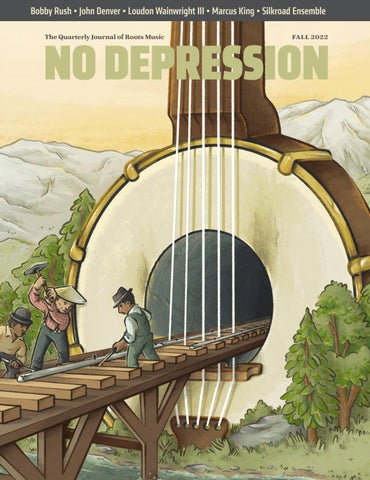
ON THE COVER
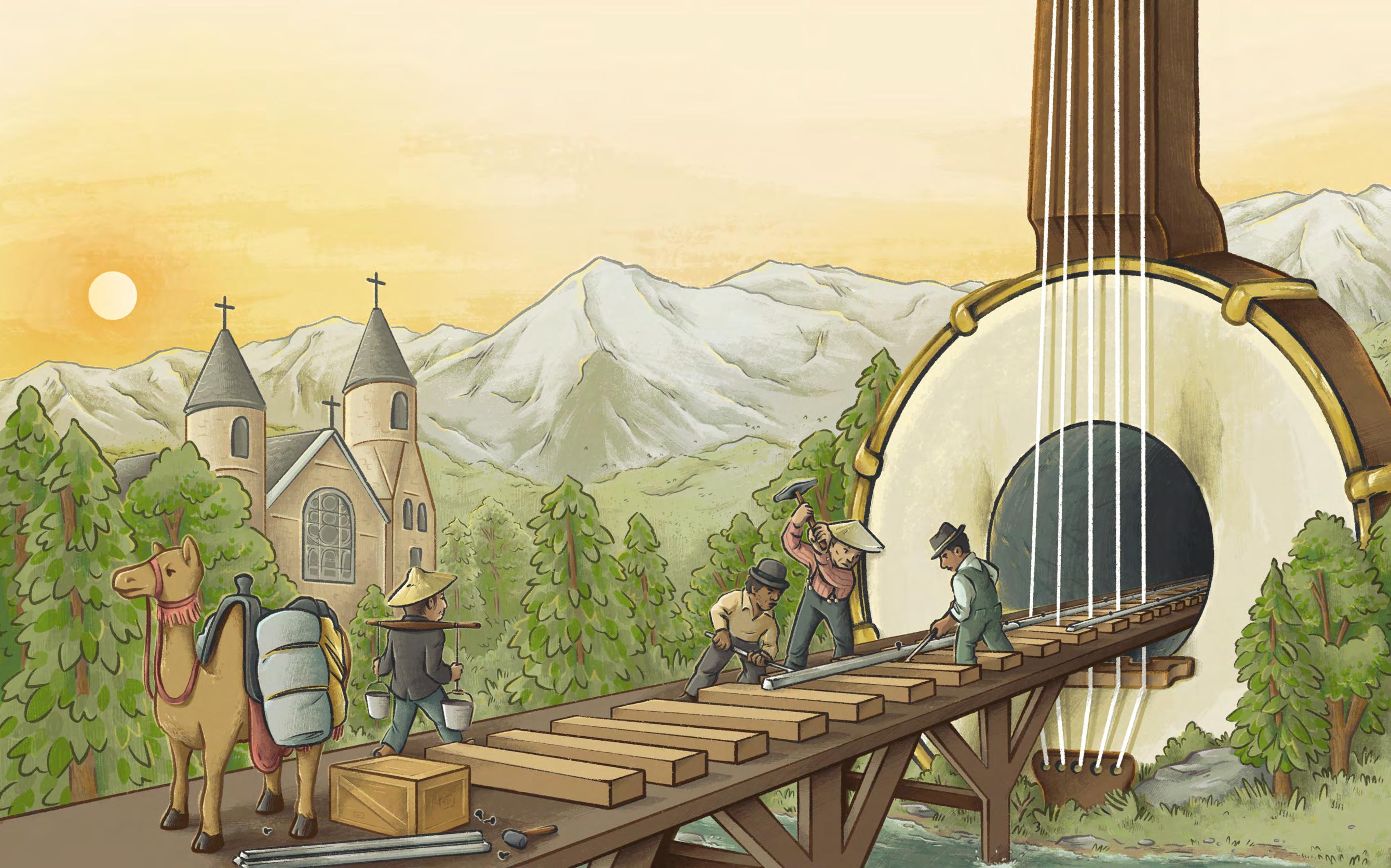
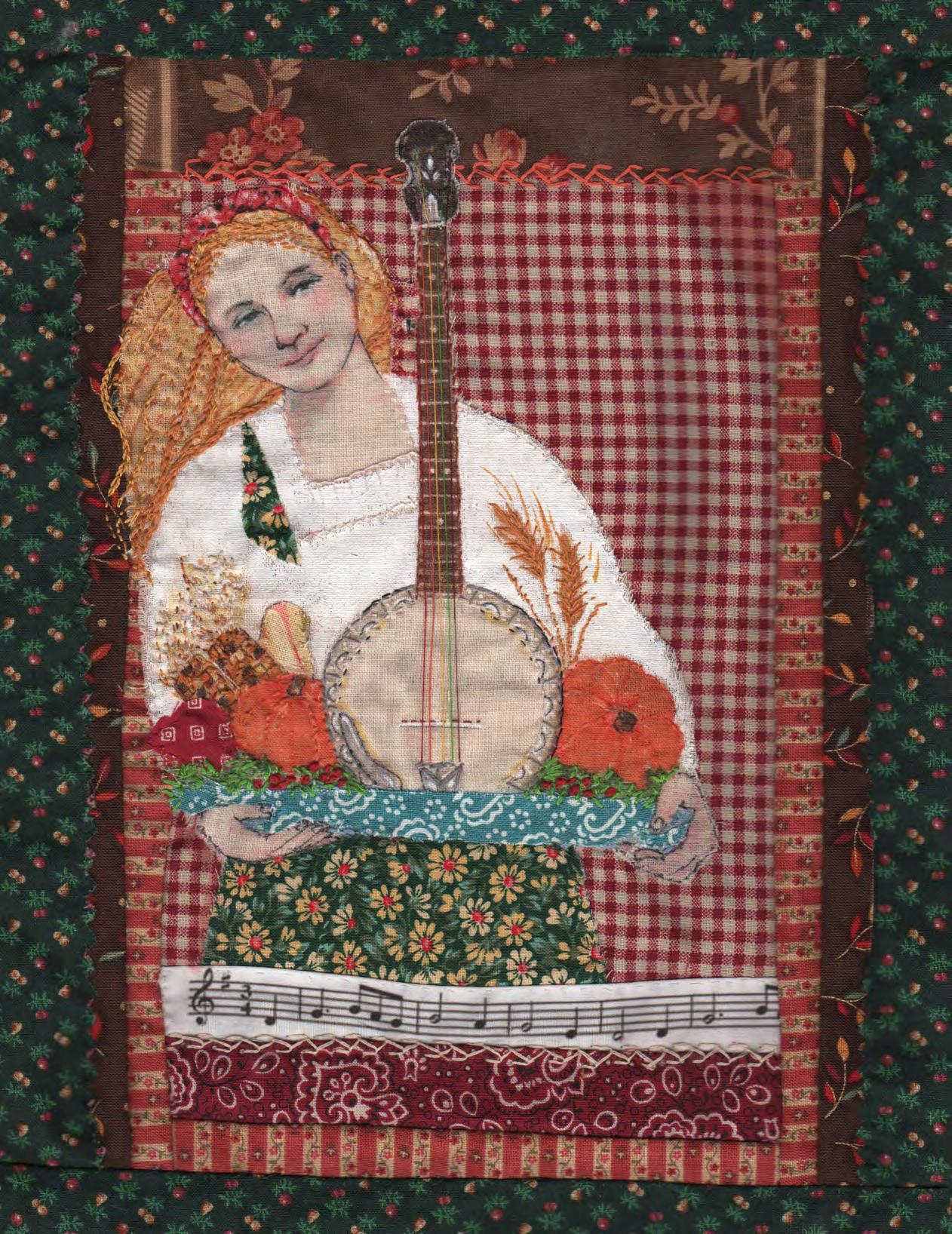
Shelby Criswell adopted their comic book style artwork for the cover of the Fall 2022 issue of No Depression Symbolism abounds, with the banjo, railroad, laborers, mountains, and more referencing specific stories included this quarter.
NO DEPRESSION TEAM
Chris Wadsworth Publisher and President, FreshGrass Foundation
Hilary Saunders Managing Editor
Stacy Chandler Assistant Editor
Sonja Nelson Advertising
Adam Kirr Director, Marketing and Retail
Maureen Cross Finance/Operations
WEB nodepression.com
TWITTER & INSTAGRAM @nodepression FACEBOOK facebook.com/nodepressionmag
GENERAL INQUIRIES info@nodepression.com
ONLINE ADVERTISING advertising@nodepression.com
SUBSCRIPTIONS store.nodepression.com
JOURNAL DESIGN & PRODUCTION
Marcus Amaker
Printed in Nashville, Tennessee, by Lithographics Inc.
No Depression is part of the FreshGrass Foundation. freshgrass.org
ISBN-13: 979-8-9860117-1-4
©2022, FreshGrass, LLC
Hello Stranger
On my first major journey since the pandemic started, I brought Gloria Steinem’s memoir My Life on the Road with me as an inspirational, textual companion. The trip spanned three countries and six cities and took me abroad for almost a month. I traveled by plane, train, car, and subway, as well as by foot across many, many miles.
Not shockingly, the idea for this trip stemmed from wanting to go to a friend’s gig. But over time, with both much planning and much spontaneity, it blossomed into something far larger. I heard Occidental music in Paris and hoe-downs in Stockholm. I met Finnish fans who flew to Sweden just to see their new favorite American singer-songwriters perform and spied on attendees who knew all the words in a language not their own. I met someone who asked what I do and literally fell to his knees and bowed when I told him I work at No Depression. He’d been reading it since he was a kid.
I thought I knew how much I’d missed traveling during lockdown, but it turns out I was underestimating out of selfpreservation. Despite the COVID scares and 10 cumulative hours of travel delays and lack of air conditioning and poor nutrition that comes with this kind of life, I fell in love with the road — and the magical connections you make with people along the way — all over again.
Steinem, a renowned feminist author, advocate, and activist, released My Life on the Road — a book about her itinerant childhood
BY HILARY SAUNDERS

and intentionally transient adulthood and career — in 2015. Regarding the overlap between traveling and community organizing, she wrote, “Other than becoming a rock musician or a troubadour, nothing else allows you to be a full-time part of social change.”
Sitting in the Arlanda Airport hotel bar, I nearly spilled my Swedish stout while marking that passage in my book. Steinem’s work is far outside the music industry, so I was surprised to find her making a connection that has become the basis of so much of my life and work with No Depression — that everyone has a story to tell. That music carries stories better than most forms. That stories connect us when we feel most divided. And that sharing music with others, especially on the road, is one of the greatest joys and one of the most powerful agents of change.
The thing about the road though,
is its unpredictability. The road is never straight, and sometimes, as my friend and I used to yell lovingly at each other, there’s not even a path to follow! Starting with the Fall 2022 issue, we’re embarking on a new leg of our own journey with No Depression
This edition is the first since our return-to-print issue in Winter 2015 without a theme and will pave the way for future editorial adventures.
Somewhere along the road during my recent journeys, I posted a photo with the caption, “May you always have a mini bottle of vintage champagne and a French pastry at hand.” A musician — one that we’ve covered in these pages — saw it and joked that I’d just written the forgotten verse to Rod Stewart’s ballad “Forever Young.” Our brief musical connection and chuckle reminded me of even the smallest ways that songs bring us together. So as you read these stories of hope and thanks and perseverance and connection and roots and growth in the Fall 2022 issue of No Depression, I’ll hope you’ll take Rod’s prayer of life on and from the road as guidance and gift:
May the good Lord be with you down every road you roam. And may sunshine and happiness surround you when you’re far from home.
And may you grow to be proud, dignified and true. And do unto others as you’d have done to you.
Be courageous and be brave. And in my heart you’ll always stay Forever young. ■
COURTNEY BOYER
SUPPORT BEHIND THE SCENES
Three nonprofits shaking up the music industry’s status quo
by Courtney E. Smith
In the music industry, there are individuals and collectives, and sometimes, there are people who turn everything upside down to create a massive change for the better.
No Depression looked at three organizations that tap into some of the most pressing issues of our time: mental health, the climate crisis, and the representation of disability culture. Each is shaking up the status quo in music and doing it with an inspiring cadre of roots musicians.
“Much of our community has a hard time explaining these struggles to people who don’t work in the music industry. So our support groups became a safe space to come and say things like, ‘I don’t know who I am without an audience,’ ” Hilary Gleason
Backline co-founder and executive director
Backline
During the worst of the pandemic, therapists saw an increase in people seeking help, primarily for anxiety, depression, and trauma. In a 2021 survey conducted by the American Psychological Association, mental health professionals reported higher workloads, longer waitlists, and less capacity for taking on new patients.
Backline — formed in 2019 with the mission of connecting music industry professionals (which includes artists, managers, agents, promoters, and crews) and their families with low- and no-cost resources to support their mental health and wellness — saw the number of requests it received for help quadruple.
Access to mental health continues to be a complex issue, especially within the music industry, that is difficult to resolve.
According to information gathered by Backline, nearly half of the people working in the music industry do not have health insurance. And more than half of the same group surveyed earn less than the national average wage. Depending on location, marketplace insurance may not even include coverage for regular therapy sessions. And, according to Backline, 73% of independent music makers report feeling stress, anxiety, and depression during the course of creating music.
Since its launch, Backline has provided help to nearly 11,000 individuals. Artists made up the majority of Backline clients in 2021, at just less than of half their base, and road crews (including lighting and sound techs) were the next largest group at 20.5%. Recently, it has been working with musicians like Shawn Colvin, The Infamous
Stringdusters, and Julien Baker to raise money and awareness of the organization.
Backline had only been around for about six months before the pandemic hit in March 2020. It found that during that time, as touring revenue disappeared and money got tighter and tighter, even low-cost services were too costly for some members. So the organization set up Zoom support groups led by licensed clinicians to provide free discussions and a sense of community, says co-founder and Executive Director Hilary Gleason.
“Much of our community has a hard time explaining these struggles to people who don’t work in the music industry. So our support groups became a safe space to come and say things like, ‘I don’t know who I am without an audience,’ ” Gleason says.
Now that artists are going back

on the road, an old issue has come back into focus — substance abuse.
“After taking this hiatus for the length of the pandemic, going back on the road is really challenging,”
Gleason explains. “You’re excited, you’ve got an adrenaline boost, and you haven’t been in that space, so you might be nervous.”
To address those struggles as well as a general uptick in interest in wellness, Backline and Life4Love (a free online medication portal) launched a workshop in February for touring professionals that addresses issues around managing stress and integrating healthy habits into touring life. It covers topics from eating habits to mindfulness to help them regain the sense of balance and control they felt during the relative stillness of being homebound during COVID. They’ve also started providing free subscriptions to wellness apps that
include yoga and meditation guidance.
Another growing challenge for Backline is finding not only enough available therapists in general, but also professionals who have the appropriate credentials and experiences for this niche membership. Backline has a network of 250 providers across the country, but it hasn’t been enough under the strain of the pandemic. And having started in the folk and jamband scenes, the organization is also actively working to increase outreach to musicians in hip-hop, R&B, EDM, and other genres where artists are less likely to be straight, white males.
One aspect of Backline’s focus, Gleason says, is making sure it has enough clinicians accepting new patients in each state. But it is also actively working to find providers of color and providers who have
experience working with the LGBTQ+ community. In 2021, Backline partnered with the Black Mental Health Alliance (BMHA), which has a community of providers who are clinicians of color or who have undergone cultural competency training. Backline also asked BMHA to conduct a cultural competency training for its existing network of clinicians that included discussing the history of systemic racism in the music industry and the specific barriers that people of color face.
“Oftentimes, people want a therapist or mental health professional that really understands what they’re going through,” Gleason says. “So that we’re able to say, as we’re reaching out in the hip-hop community for example, we have providers that are appropriate and affordable for them.”
Larkin Poe performs at Brooklyn Bowl Nashville for Backline’s Set Break livestream event in 2021.
REVERB
Adam Gardner, singer and guitarist in the roots-rock band Guster, and his wife, Lauren Sullivan, an environmentalist, started REVERB in 2004 after firsthand experience with the environmental damage caused by tours. Seeing Bonnie Raitt’s earth-friendly Green Highway Tour back in 2002 led them to a conversation with her manager, Kathy Kane, and REVERB began as a project of Raitt and Kane’s ARIA Foundation. The organization works with musicians to create climate positive (their more upbeat spin on carbon negative) tours and with venues and festivals to make incremental, systemic changes to help the world and local communities.
Dave Matthews Band, Jack
Johnson, Maroon 5, John Mayer, and Barenaked Ladies were among REVERB’s first musical partners, and they all continue to work with the organization. This summer, REVERB helped My Morning Jacket, Billie Eilish, Harry Styles, and Lorde, among others, create sustainable and climate-friendly tours.
REVERB artists to do more than just buy carbon offsets to make up the carbon toll of a tour. Rather, the nonprofit works with artists in the planning stages of a tour to do things like secure plant-based or plantfocused catering that can be locally sourced. Excess food can be donated to local charities or even back to farmers for compost or livestock feed. REVERB also helps bands and tours create more sustainable stage
productions, including alternatives to pyrotechnics that can pollute local water sources, and find reusable, upcycled, or sustainably sourced merch.
It matters, Gardner says, when there’s a message on Lorde’s online store, for example, saying, “Hey, you’re you might notice that these cost more. This is why and here’s why I can stand behind it.” It shows the artist is trying to minimize their footprint, which could inspire fans to do the same, he explains.
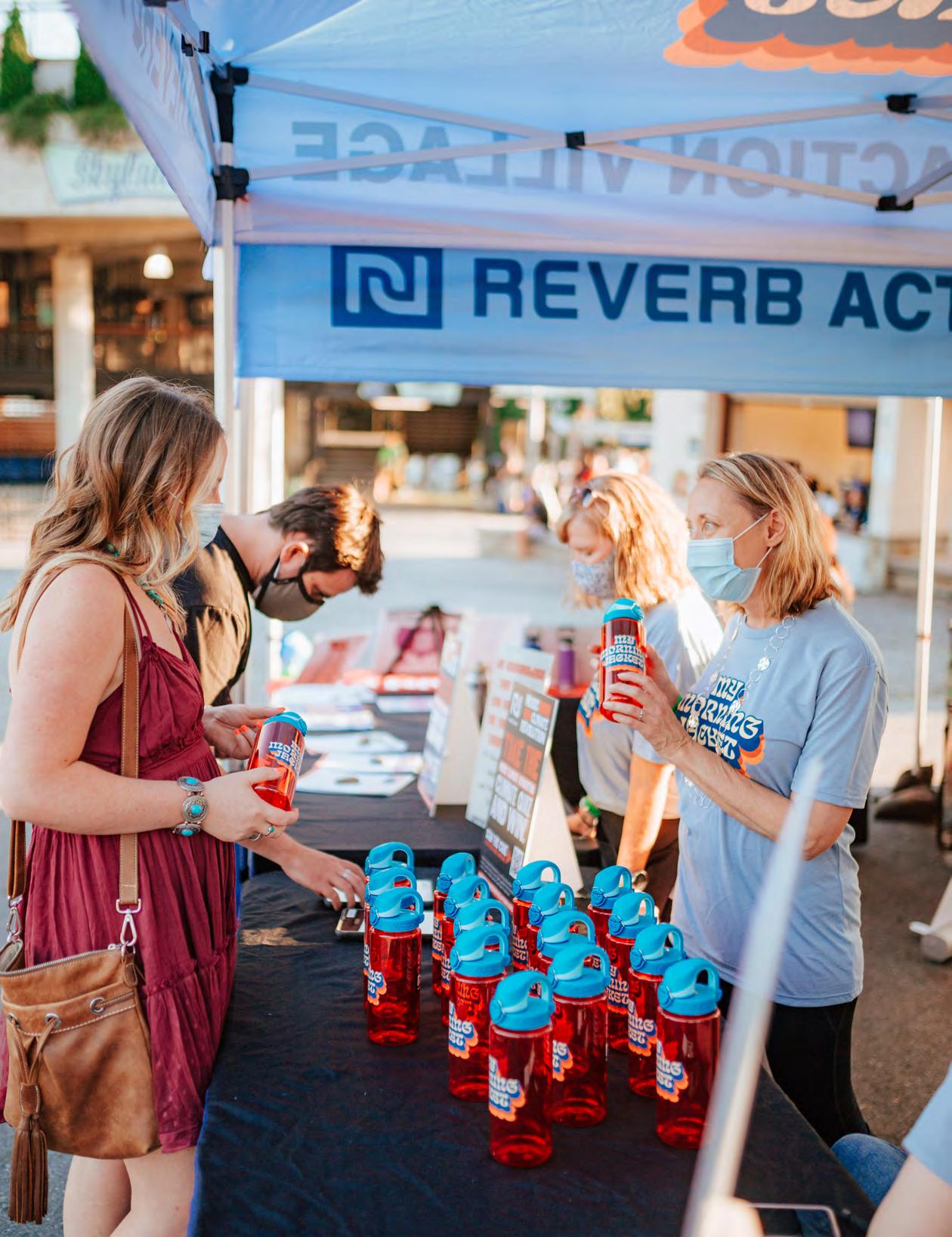
Gardner adds that if bands and artists pair with the organization early enough in the process, they can create a budget to send a team from REVERB on the tour. On the road, REVERB team members can organize things like its fan-facing

REVERB On-Site Coordinator Emilio Roberts sets up an Eco-Village at a venue.
Action Village, which features information tents from local and national organizations and free water bottle refilling stations.
REVERB can also coordinate with touring groups to eliminate singleuse plastics and petition for venue policy changes that allow concertgoers to bring in refillable bottles. Even working with performance spaces to serve drinks in aluminum cans — a substantial 65% of which are recycled — instead of pouring them into plastic cups makes a huge environmental impact, explains Gardner.
Fans also have a role to play in creating a climate positive tour, Gardner notes, because their travel to shows and festivals is a huge part of carbon production in relation to
the event. REVERB has programs to encourage ride sharing. “We will reward that by working with the venues to give cars that have four or more people in it priority parking. We also have fun things where you can get caught carpooling and, all of a sudden, somebody gets frontrow seats. We’re incentivizing and making it fun.”
One of REVERB’s newest campaigns is its Music Climate Revolution, which combines the efforts of managers, agents, labels, radio stations, and artists — including Dead & Company, Brittany Howard, Jason Isbell, and more — to help mitigate the climate crisis. In the campaign’s first 180 days, it eliminated 50,000 tons of carbon dioxide equivalent, created the
world’s first climate-positive tours to put more carbon back into the atmosphere than they took out, and featured an awareness-raising speech at climate change conference COP26 by KT Tunstall.
“ What’s really cool about this issue and music — and artists in particular — is that we can be a living example of how we can make change,” Gardner says. Artists, he says, can raise awareness and make a tangible difference by saying, “I’m going to reduce my carbon footprint. I’m going to make an impact out on tour by changing the way I do business and using my voice and my ability to raise funds to make my tour a positive thing and help heal the damage we’ve done as a species to our planet.”
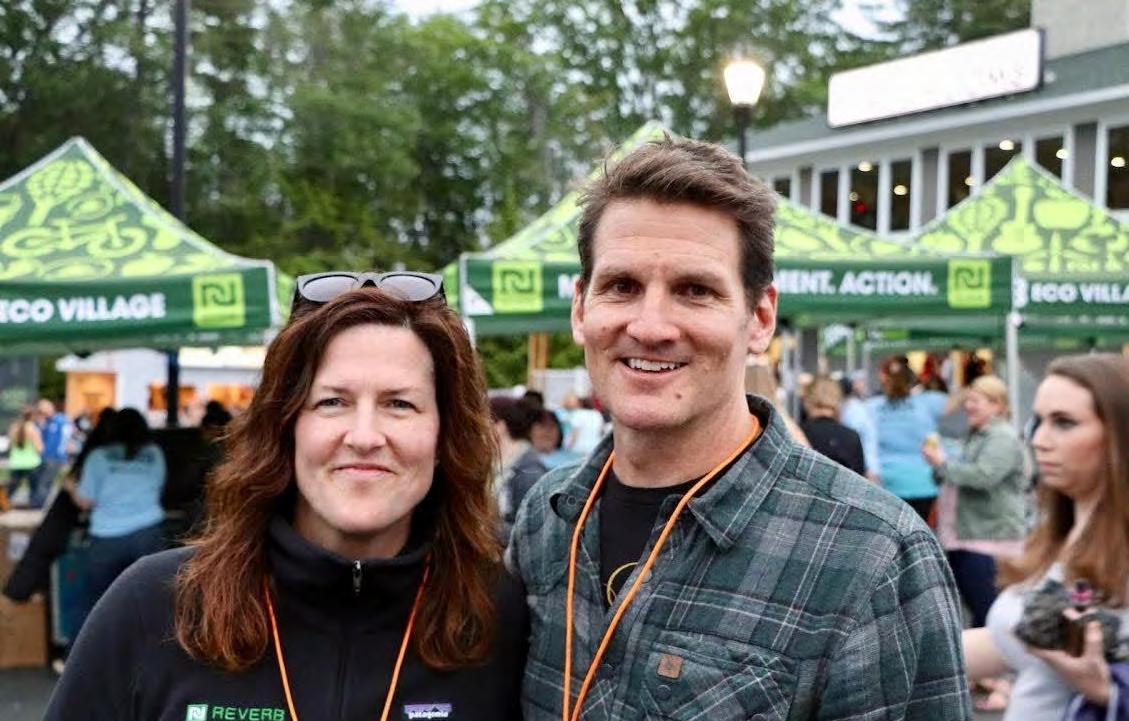
REVERB Founders and Co-Executive Directors Lauren Sullivan and Adam Gardner
Gaelynn Lea

RAMPD
Recording Artists and Music Professionals with Disabilities (RAMPD) was founded in May 2021 with assistance from the Recording Academy. The group, co-founded by songwriter and producer Lachi and experimental folk fiddler Gaelynn Lea, helped the 2022 Grammy awards show move beyond the bare minimum of accessibility compliance and inclusion. Viewers at home may have noticed the addition of ramps onto the stage, since winners traditionally had to navigate stairs to walk on stage. The show also incorporated American Sign Language (ASL) interpreters and live audio descriptions and captioning. But those were only a few of the ideas that Lachi, who is blind, brought to an initial committee meeting with the Recording Academy.
Off-screen, RAMPD is challenging the awards shows it works with — including the Wavy Awards, which honors “historically excluded artists,” and the American Association of Independent Music’s Libera Awards — to think about inclusion even before the events happen. That means incorporating alt text and image descriptions in social media promotions, captioning online videos, and carefully considering their use of language. It also includes using camel case in hashtags — capitalizing each new word so that screen readers can read the text more easily.
Lachi also encourages presenters and winners to use self-description when they introduce themselves. “Saying something like: ‘I’m Lachi, she/her, Black girl, cornrows, blue shirt, and I’m wearing a bandana.’
Things like that are really helpful,” Lachi explains. “It helps the 30 million blind folks tuning in to know what’s going on, and it propels the messaging of inclusion.”
Right now, RAMPD primarily works with awards shows, but members also advise other organizations on how to plan their events at venues that are compliant with the Americans with Disabilities Act (ADA) — including ramps at building entries and to the stage, ASL interpreters on stage during the ceremony, captioning on any in-house videos, and accessibility options for visually impaired artists. RAMPD also emphasizes that having a virtual aspect to concerts, festivals, and awards shows is helpful not only for people with disabilities, but also for artists or fans who can’t travel to an event.

While disability visibility at awards shows has been a big priority for RAMPD, the organization is working toward other goals as well. Lea, born with osteogenesis imperfecta, shares that RAMPD is seeking a grant to create a database of working musicians with disabilities.
“One of the main goals of RAMPD is to let people know that there are disabled artists that you can be working with in all different areas of the music industry,” she says. “We get a lot of requests. I mean a lot, like daily, asking things like, ‘Who can I interview? Who can I hire for this project?’ Our goal is to be able to say, ‘Go look at the database.’”
Lea continues: “I’m really excited about the resource guide because I’ve seen such a need for it. For a long time, I was doing gigs, and I felt like I had to say ‘yes’ to everything because
while I didn’t want to not talk about disability, I also didn’t know a lot of other people [to recommend instead]. So I want to be able to say, ‘I can’t do it, but guess what, here are 35 other people who can. Go hire one of them!’”
The organization is also working to create a RAMPD stamp for venues and festivals to indicate they exceed ADA compliance. The aim is for people to know, when planning to attend music events, where they’ll be “treated with respect, able to access the things that you need and feel that your culture is supported in that place,” Lea says.
The group continues to seek actions within its scope, hoping to shift the conversation about disability away from bare minimum compliance to celebrating the culture. ■
Lachi
THANKS FOR NOTHING
Roots musicians aim to bring more Thanksgiving songs to the table
by Will Hodge
“It’s easy to write a sad song about the holiday because the holidays are a struggle for me. When I was a kid, Thanksgiving was a big family gathering centered around my grandmother’s cooking. But I’ve never really established a routine for it as an adult.”
Mary Gauthier
As late summer’s sunsets start signaling the parade of fall and winter holidays in the United States, there’s certainly no scarcity of festivities for those who choose to celebrate. For many, Halloween has grown into a monthlong bacchanal full of bottomless candy dishes, horror movie marathons, and pop-up retail stores helping to outfit a plethora of costume changes. Christmas has inspired so much merry-making ephemera that there are entire film franchises to binge and genrespecific radio stations to play aroundthe-clock from late November to early January.
And then, sandwiched neatly between these two mirth-filled monoliths, is Thanksgiving and its dearth of pop cultural paraphernalia. On the surface, the absence of popular Thanksgiving media can
easily be attributed to the holiday’s complex, deeply contested history. The oversimplified version of Thanksgiving — the Wampanoag tribe and the Plymouth pilgrims sharing a meal to celebrate a peaceful partnership exemplified in the latter’s first harvest on the former’s ancestral land — grossly whitewashes the country’s verifiable history and continuation of colonialism, displacement, and genocide of Indigenous peoples.
However, in spite of this dubious historical context, there’s no denying that Thanksgiving has a significant cultural footprint in the US. It’s the only federal holiday that comes with its own “day after” add-on, entire retail business strategies are built around Black Friday sales, and the Macy’s Thanksgiving Day Parade is often reported to be the world’s largest (and second-oldest) recurring parade. The holiday’s popularity is
not a sign of unanimous approval, though, as it is also observed by many individuals and communities in completely disparate countercelebrations: many Indigenous people honor both the National Day of Mourning and Unthanksgiving Day, while anti-capitalists protest the day after Thanksgiving as Buy Nothing Day.
Still, some form of the holiday can be traced back to observances on Indigenous soil now claimed by the United States as far back as the 1500s. So the shortage of sonic culture anchored around this season has resulted in the enigmatic nonentity known as the “Thanksgiving song.”
Writing Around It
Due to these inherent complications (or perhaps in spite of them), only a few musicians have tried to make some sense of the holiday by writing a proper Thanksgiving song. In fact, for much of the holiday’s earliest incarnations, the only songs available were co-opted hymns that contained some attribute — thankfulness, togetherness, agrarianism — of the
commemoration’s overall formula. This includes Dutch and German hymns like “We Gather Together,” “Now Thank We All Our God,” and “We Plough the Fields and Scatter” from the 16th, 17th, and 18th centuries, as well as some more recognizable 19th-century English hymns like “For the Beauty of the Earth” and “Come, Ye Thankful People, Come.”
Even as the narrative around the holiday evolved into more of a patriotic pillar to the nationfounding mythos, its ever-twisting roots still seemed unable to bear much musical fruit.
In the latter half of the 20th century, however, a few musicians set out to write Thanksgiving songs with more intentionality, though it often seemed that they wrote around the holiday more than they wrote about it. Arlo Guthrie’s infamous “Alice’s Restaurant” from 1967, long considered the first popular Thanksgiving song of the modern era, really exemplifies the songwriting tradition of not exactly knowing what to do with the holiday. Guthrie’s comical, rambling, talkingblues protest song against the Vietnam War draft only briefly
mentions the holiday as a minor plot point. What more likely solidified its role as a Thanksgiving musical tradition is its nearly-20-minute run time, a qualifier that helped generate annual spins by radio DJs who got stuck working the Thanksgiving Day shift and enjoyed playing the song to give themselves long breaks.
The term “popular Thanksgiving song” wouldn’t re-emerge until a couple decades later when Adam Sandler’s “The Thanksgiving Song” made the surprising leap from Saturday Night Live “Weekend Update” sketch in 1992 to certified radio hit single five years later — though it was far more of an irreverent, reference-heavy fever dream than a proper song. Much like Guthrie’s offering, the success of Sandler’s ode to the holiday could probably be chalked up to a lack of competition more than an acknowledgment that an iconic Thanksgiving sentiment had finally been captured in song.
Trouble at the Table
The concept of what an authentic Thanksgiving song could be started truly coming to form in the 2000s,

with roots and roots-adjacent musicians leading the creative turn. In late 2005, legendary rockabilly trio Reverend Horton Heat wrote “Turkey Gotta Gobble” as the sonic centerpiece for a nationwide holiday ad campaign for the restaurant chain Boston Market. While their Thanksgiving-forward tune was not officially released as a single, the rockabilly battle rap pitting turkey against ham successfully played to millions of ears through the heavyrotation television spots.
Just a couple years later, singersongwriter Mary Gauthier released a heartbreaking song called “Thanksgiving” on her 2007 album, Between Daylight and Darkness Instead of writing about the big holiday meal that can be so easily taken for granted, Gauthier masterfully conveys the various obstacles many families have to overcome just to get to a shared table.
“Thanksgiving at the prison surrounded by families / Roadweary pilgrims who show up faithfully,” she sings, “Sometimes love ain’t easy, sometimes love ain’t free.”
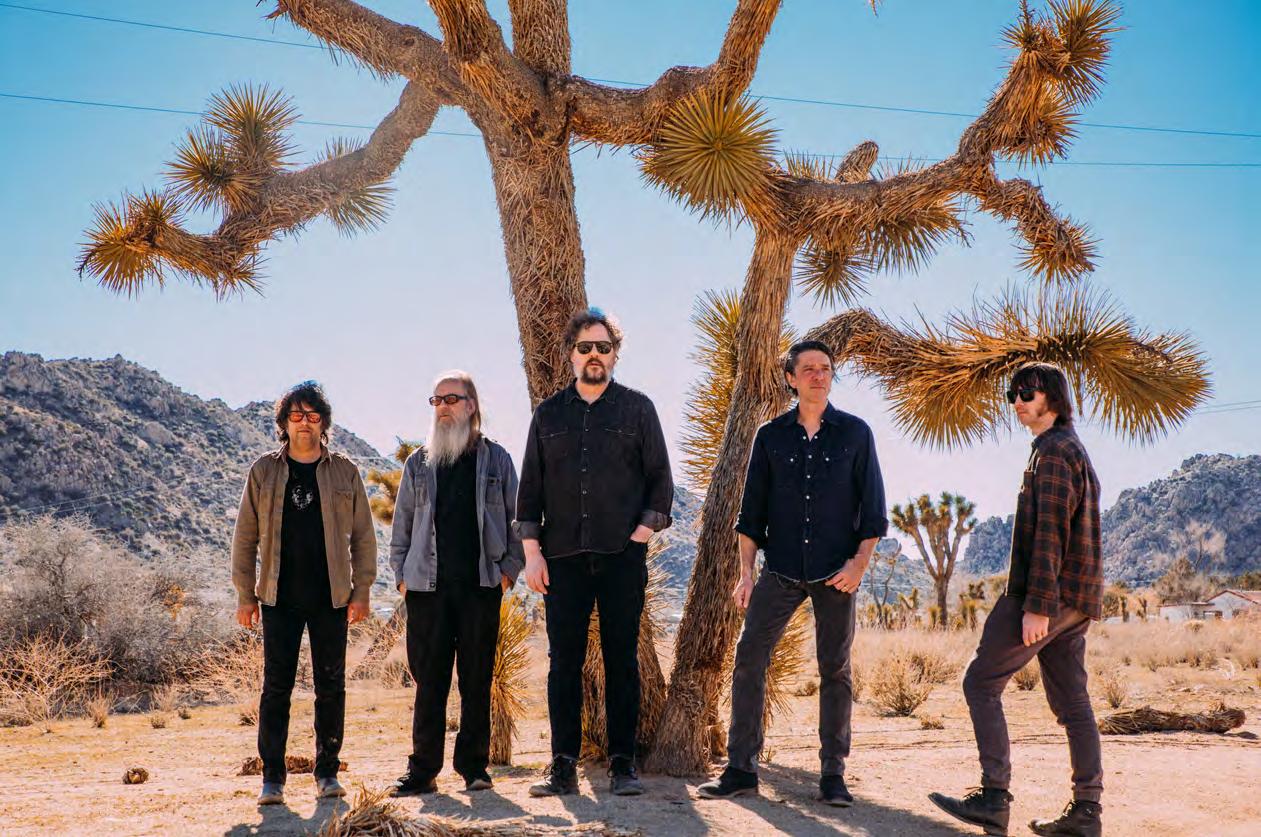
In 2010, Southern rockers Drive-by Truckers helped kick off the inaugural Black Friday Record Store Day with a 10-inch vinyl single of “The Thanksgiving Filter,” a brutally honest slow-burn ballad that confronts many of the complicated feelings that can surround the holiday’s customary family meal. The weariness in frontman Patterson Hood’s vocal is palpable as he addresses the atmospheric minefields of multigenerational relationships (“Grandmother’s wheelchair is sitting in the corner, we all sure love her but the little ones avoid her”), politics (“My aunt’s praising Palin and my niece loves Obama”), and healthy boundaries
(“You wonder why I drink and curse the holidays, blessed be my family from 300 miles away”).
“Holidays are hard for people who have complex families or families that are scattered in some way,” says Gauthier, reflecting on her song. “Some folks have to go that extra thousand miles to be with loved ones that are incarcerated or hospitalized. I just wanted to tell a story about a family who actually goes the extra yardage to really do the work of love.”
Capturing the fought-for beauty of a sad song isn’t exactly new territory to Gauthier, so it’s no surprise that writing a heavyhearted holiday song would come pretty naturally: “It’s easy to write a sad song about the holiday because the holidays are a struggle for me,” she says. “When I was a kid, Thanksgiving was a big family gathering centered around my
Mary Gauthier
ALEXA KING STONE
Ben Rector
grandmother’s cooking. But I’ve never really established a routine for it as an adult.” After a thoughtful pause she adds, “Holidays can really throw me.”
While Hood’s and Gauthier’s Thanksgiving songs tackle some of the grittier aspects of the holiday, other songwriters have taken a more traditional approach to the season’s familiar identifiers. In 2008, Grammy-winning artist Mary Chapin Carpenter wrote the sentimental “Thanksgiving Song” for her holiday-themed album Come Darkness, Come Light. “Father, mother, daughter, son, neighbor, friend, and friendless,” she sings on the hymn-like invitational, “All together everyone, let grateful days be endless.”
While the song’s title and its inclusion on a holiday album make its intentions clear, Carpenter’s straightforward lyrics present one of
the potential pitfalls of trying to harness gratitude and gathering in a universally relatable (and not cheesy) way. While she sings of a table, a feast, and traveling home, the details are blurred just enough to evoke a Christmas scene or any other meaningful family gathering just as easily. There’s a fine line between writing a “Thanksgiving song” and just writing a song about giving thanks.
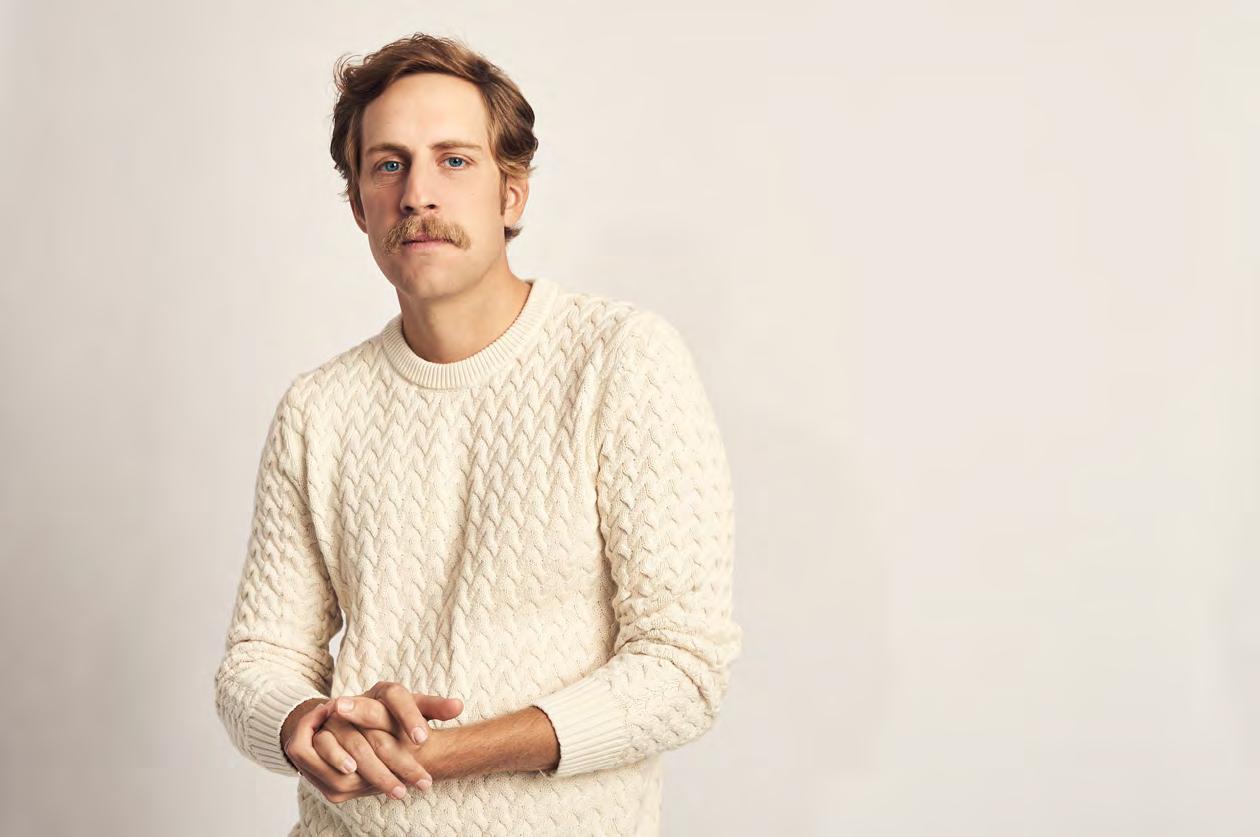
Perhaps the most successful example of a singer-songwriter embracing the holiday and highlighting all of its traditional trappings is Ben Rector’s “The Thanksgiving Song.” Released on his 2020 holiday album, A Ben Rector Christmas, the reflectively sentimental piano ballad seems to strive for that bittersweet balance between nostalgia and reality.
“I’ve always really enjoyed Thanksgiving,” he says, “because it
mirrors a lot of the things I love about Christmas, but with less of the pressure.” Rector infuses his song (and its clever music video) with a cornucopia of festive imagery, notably making mention of the holiday’s “big three F’s”: family, food, and football.
Rector feels the creative obstacles to Thanksgiving songs are less about lyrical content and more about the lack of familiar musical motifs. “If I said the term ‘Christmas music,’ you can immediately cue up in your mind what that constitutes. Just like if I said ‘Motown.’ Those genres pull up a specific palette of flavors. There’s nothing like that to even start to reference for Thanksgiving songs. I think the biggest difficulty is that there isn’t more of a sonic template to slip into: Nothing sounds like Thanksgiving.”
One way Rector tempers the holiday’s nostalgia is with a deft
sprinkling of melancholy. His verses address the passing of loved ones and the unrelenting forward momentum of time. “I think the line ‘The old kids table all have kids of their own’ was really meaningful to write,” he says. “My grandparents have passed away, and when I look at the holiday through my children’s eyes, my parents are now their version of that. Seeing life evolve through the lens of Thanksgiving was a fun thing to tap into. It’s like the holiday kind of stays the same and you watch life change around it.”
Rec tor also wrote a poignant line for the last chorus that may seem innocuous to future generations but will certainly hold a different space for listeners who first heard the song upon its release at the end of the first pandemic year. “We’ve made it through, I do believe, the
longest year in history,” he sings, aiming to find a balance between timeliness and timelessness.
“ Thinking back to 2020, it felt like nothing we had experienced before,” he reflects. “I remember having the conscious thought, if this song is going to be around awhile then I hope we are not always going to be in times that feel as tumultuous as these. My hope is that it won’t always feel like 2020 did, but like a sort of colloquialism, I think a little bit of that sentiment will always be relevant.”
Turning Topical
The approach to writing a popular Thanksgiving song that is more topical than traditional is something that has manifested itself quite readily in the roots music community over the last few years. Such recent
cultural flashpoints as the 2016 election, the Standing Rock/Dakota Access Pipeline protests, and former NFL quarterback Colin Kaepernick’s activism against systemic racial violence and inequality have all been directly addressed within the context of Thanksgiving songs by artists like Chris Thile, Rachel Baiman, and Jess Klein.
Less than two weeks after the 2016 US presidential election (and just five days before Thanksgiving), Thile used his “Song of the Week” segment as host of weekly public radio show A Prairie Home Companion (later renamed Live from Here) to debut “Elephant in the Room,” a clever protest song highlighting what he sang as, “the treacherous waters of talkin’ small on this of all Thanksgivings.” The song underscores the tense atmosphere and hair-trigger topics many people

Jess Klein
MIKE JUNE
were trying to avoid engaging with around that year’s Thanksgiving tables by satirizing how comments about the weather can lead to arguments about climate change and a discussion of sports can quickly devolve into racist dog whistles and tales of political improprieties.
Much like Drive-by Truckers did in their Thanksgiving song a few years prior, Thile also snapshotted his song a bit by refrencing specific presidential candidates — “An uncle says ‘I’m still with her!,’ An aunt says, ‘Yeah, I feel the Bern!’” — all while doing his best not to make mention of “the elephant in the room.” While he does call out a couple things he’s genuinely thankful for, namely his wife and their child, it’s the opening line that seems to bottle the sentiment he’s most grateful for in that specific moment: “Thank God for fermentation.”
The topical route proved fruitful for Rachel Baiman as well, as the title track from her Thanksgiving EP was inspired by the 2016–17 protests by Native American members of the Standing Rock Sioux tribe against the construction of the Dakota Access Pipeline on their sacred lands. The story hit a cultural crescendo over the 2016 Thanksgiving holiday, as televised images of the US government displacing Native Americans through the use of bulldozers, attack dogs, and water cannons seemed to echo the oppressive history of the holiday itself.
Baiman recalls her thought process while writing: “I was sitting at my parents’ home in Chicago a day or two before Thanksgiving, reading an article about the Dakota Access Pipeline protests and having this overwhelming fury about the
situation. I questioned how we could pretend to celebrate the beautiful dinner between the white colonizers and the Indians when there was this blatant disrespect for Indigenous rights going on in the name of fossil fuels and big business.”
Never one to mince words, Baiman’s verses set the incongruous scene: “As we honor a dinner between unlikely friends / the irony lays bitter true means and true ends / As the Northlands play host to a familiar feast / prospectors gorge on Indian grief.”
Her chorus describes the pipeline as a “long black snake headed across the West” with “black sludge in her belly, steel across her chest,” a constructed destructor whose justification is that “the money flows in behind her and covers up her tracks.”
Baiman explains that the image
Drive-by Truckers
of the snake was pulled directly from the article she read at her parents’ house. “That’s how the protesters were referring to the pipeline, and it has this sinister feel that the situation demands.”
Baiman admits that she initially struggled with whether she should be writing a song like this for Thanksgiving. But in the end, finding her own role in the larger story helped crystallize her approach.
“Even though I consciously tried to write my own song from a white perspective out of respect for what I don’t know and couldn’t understand, I still question if it’s something I should be singing about,” she says.
“There’s always the question of what voices do we want to hear from, about what topics? On the other hand, colonization and genocide are the historical realities that I’m benefiting from, so it also feels wrong to avoid addressing them.”
Folksinger Jess Klein approached writing a Thanksgiving song through a topical lens as well on her 2018
single “New Thanksgiving Feast.” The solo acoustic number combines lines acknowledging Standing Rock, Colin Kaepernick, and the nationwide protests following the 2016 election with personal stories of her grandparents’ immigration from Russia and her own experiences with Thanksgiving in elementary school and as an adult.
Says Klein: “I saw all of this reckoning with our past and thought that this disconnection between the reality of our history and what most of us are taught is exactly why we are where we are now. I bring up a lot of different topics in the song, but all of them felt very connected to me as I reckon with what it means to be an American.”
The lyrics of “New Thanksgiving Feast” include both Klein’s personal nostalgia for the holiday and her willingness to call out the injustices of the nation’s history and present. Emphasizing the power of televised images to comfort and confront, she sings “Dad put the football on, it felt
like family” in one line, while later referencing the arresting footage of the “elders with weathered faces, faces that read like history” who were pelted with water cannons in freezing North Dakota.
“Writing a Thanksgiving song is complicated,” Klein admits. “How do you capture, on the one hand, something that has brought a lot of people joy and connection, while on the other hand has caused deep pain? I guess it comes across as a protest song, but I really wanted it to be a song describing my personal attempt to reckon with life in this moment. What is it going to take for everyday white Americans to acknowledge that the American system we are in is causing many people deep pain?”
Like Baiman, Klein also felt the desire to find her own place within the cultural implications of the holiday’s mythos: “I didn’t want to remove myself from this narrative. I grew up with stuffing our faces and watching football and I also grew up with the ignorance. We won’t move
GINA BINKLEY

forward until we take accountability for all of it by asking ourselves, ‘What has my role been in this? What pain have I been part of, willingly and unwittingly?’”
Building the Canon
For all of these artists who have been bold enough to tackle the complex and elusive nature of writing a Thanksgiving song, there seems to be a consensus that the roots music community embodies fertile space to produce more. “It’s easy for me to write a sad song about the holiday,” admits Gauthier, “but I’d like to see something comedic — like a John Prine or Robert Earl Keen kind of thing — because there’s such darkness in the holiday that the humor is just low-hanging fruit.”
Taking stock of the slowly burgeoning Thanksgiving song canon, Baiman adds: “I think with the mistrust of our government in recent years, along with life being pretty tough, there’s an
understandable movement toward irreverent songs in general. I think people appreciate talking about the realities of Thanksgiving more than the Hallmark portrayals of the past.” For Klein, the idea that some of these more honest Thanksgiving songs would come from within the roots music community feels like a reflection of what has already been brewing in the genre for quite some time: “In some ways, I feel like the roots music world has been undergoing this cultural reckoning with trying to realize that we have historically focused too much on just the stereotypical white roots music singer-songwriter. Sometimes there’s an embracing of the past that doesn’t always look at the whole picture. But roots music is a tradition centered around the songs of the people, what they are going through and talking about and marching in the streets about. It’s singing about people’s lived experiences. So let’s write more Thanksgiving songs about that.” ■
Rachel Baiman
SERVANT OF HER VOICE
A rediscovered Armenian folk song connects immigrants to their homeland
by Noah Berlatsky
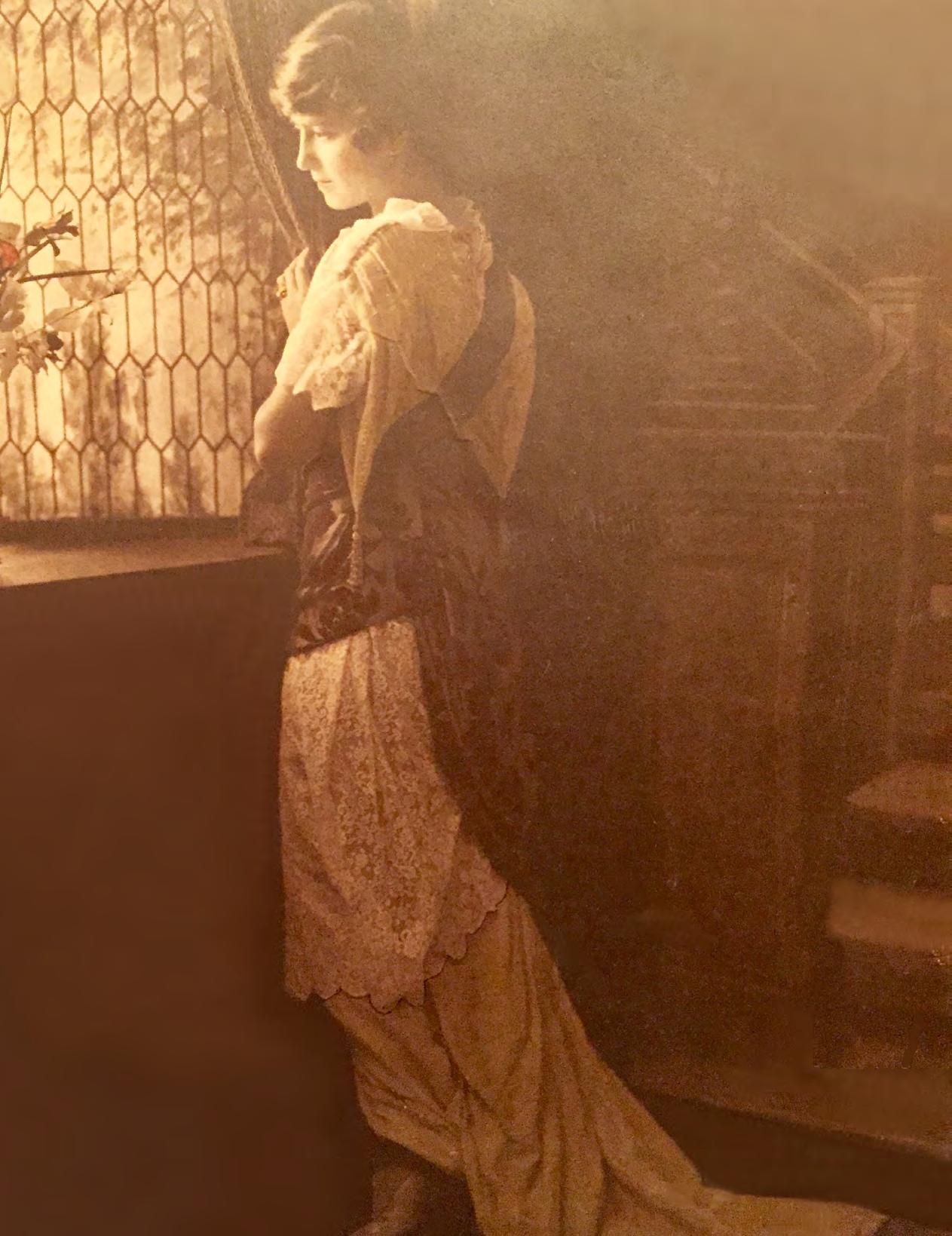
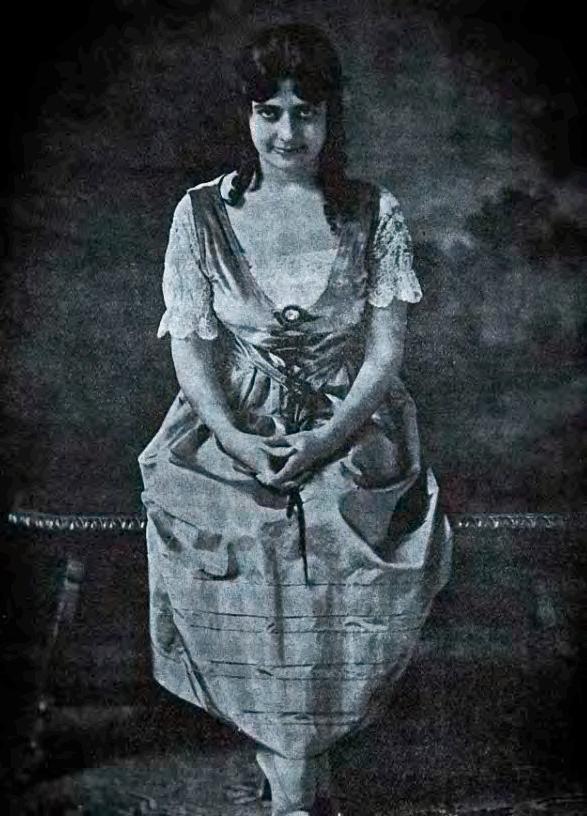
Zabelle Panosian circa 1916, likely photographed by Aram Panosian

Record collector ian Nagoski vividly remembers when he first heard Armenian American soprano
Zabelle Panosian’s 1917 Columbia recording of the song “Groung” in the early 2010s. The 78 had an unusual orange label (“The label is never orange! It’s always green!” he explains) and it was broken. When he laid it flat, he managed to get it to play. And as soon as he did, he was disappointed. “It’s classical music,” he says, putting himself back in the moment. “And I think, ‘Oookay. Who cares? It’s middle-class, mid-brow bullshit.’
“But then,” he continues, “her voice comes in. And when you hear
[Panosian’s] voice, she’s not just enacting some idea of what she thinks you want. She sounds like herself. She gives you a note out of the blue that is different from any other note on any record I’ve ever heard in my life.”
Nagoski, a used book and record dealer in Baltimore, runs Canary Records, a reissue label founded in 2009 that has released collections of African American gospel, Brazilian folk, and birdsong. Amid these other musical interests, though, Nagoski has continued to pursue Panosian’s story for years. Along with researchers Harout Arakelian and Harry Kezelian, he released a 22-track CD and richly illustrated 80-page book last April devoted to Panosian’s
music, both titled I Am Servant of Your Voice.
When he first heard “Groung” about a decade ago, Nagoski was focused on collecting recordings for his first compilation of Ottoman diaspora recordings. They eventually became a release titled To What Strange Place, which Canary Records put out in 2015. The stunning 3 ½-hour collection is a tour through an American musical past that has largely dropped out of history.
Far from Home
Before the major labels started to chronicle the music of Black and white rural American diasporas, they had recorded performers who had
Zabelle Panosian circa 1917-18
“Zabelle is not alone in being forgotten. I’m dealing with dozens upon dozens upon dozens of musicians who have suffered that same fate.”
Harout Arakelian researcher
traveled even farther from home. In the 1910s and ’20s, many Armenian, Greek, Turkish, and Egyptian immigrants from the Ottoman Empire found their way into studios. Their recordings were released to an audience eager for a reminder of home.
That’s not just the context for Panosian’s recording; it’s also the content. That first song Nagoski listened to, “Groung,” means “Crane” in Middle Armenian, an older form of the modern Armenian language. The lyrics are a sad, longing evocation of home:
Crane, where are you coming from?
I am servant of your voice.
Crane, don’t you have a bit of news from our country?
Don’t hasten away. You’ll arrive at your flock soon enough.
The piano background sets a slow, sedate pace as Panosian’s soprano rises up like the bird she’s serenading, morphing into a keening throb or yodel. Her voice seems to soar across miles and miles, trying to reach the spot where that crane will return to land.
Nagoski didn’t know what the words were at first; he doesn’t speak Armenian. In the liner notes for To What Strange Place, he mistakenly wrote that “Groung” was originally a poem by Hovannes Tumanian, written in 1896, that was set to music.
After the compilation was released, though, he started to hear from a number of other collectors of early Armenian recordings. One person who reached out was Harout Arakelian, a video editor and tenacious amateur scholar based in Los Angeles. Another was Harry Kezelian, a writer for the ArmenianMirror Spectator, a Boston-based news outlet. The three began to work together to uncover more information about Panosian.
Kezelian, who grew up in the Armenian community in Detroit, loved music from a young age.
Inspired by the Blues Brothers 2000 film when he was 12 or 13, he started to listen to old blues and jazz recordings. Although he loved the
“There’s a really long, deep relationship between where I’m from [in the US] and where these records are from. A hundred and something years of relationship. It turned out that we were neighbors. That ‘they’ were a part of ‘us,’ that the United States included the Middle East.”
Ian Nagoski
Canary Records founder
music itself, he realized that as an Armenian American in the north, he couldn’t fully understand or relate to the topics in the lyrics.
But his forays into collecting blues records made him realize he could look into the roots of his own tradition as well. Kezelian was familiar with Armenian wedding music and church music, but he says he “took it for granted.” He thinks he found his first Zabelle Panosian record in a cache in his grandfather’s farmhouse in Brighton, Michigan.
Kezelian studied Armenian in a college program at the University of Michigan. Thanks to that background, and his knowledge of Armenian song, he was able to tell Nagoski where his translation of Panosian’s masterpiece had gone awry: “Groung” was not the 19th-century poem. (Though the poem itself is, as Kezelian noted, very popular, it is generally sung to a
different tune.) The song Panosian recorded actually dates at least back to the 17th century, and Kezelian believes it’s the oldest non-religious Armenian melody that is still sung regularly. “After the Armenian genocide,” he says, “it became an anthem for the diaspora.”
The more research Kezelian, Nagoski, and Arakelian did, the more they found that the diaspora and the genocide were at the heart of Panosian’s story. She was born Zabelle Mesrobian in Bardizag, a small town 80 miles east of Istanbul, around 1891. She was the first member of her family to emigrate to the US, settling in Boston in 1907, where she married Aram Sarkis Panosian, a photo engraver. Her husband supported her singing, and his money enabled her to study the English language and train in Western classical voice. Their
daughter, Adrina, was born in 1908. In the subsequent years, Zabelle became an established singer, performing classical song and Armenian folk tunes like “Groung.”
Mother Armenia
Armenians in the Ottoman Empire had long been persecuted; they were seen as outsiders and untrustworthy because of their ethnicity and Christian religion. But in 1915, the new Turkish government embraced a genocidal program of dispossession and forced relocation. Between 800,000 and 1.2 million Armenians were marched to their deaths in the Syrian Desert during 1915-16. Among those were many in Panosian’s old village of Bardizag, which, according to accounts Nagoski read, was virtually depopulated. In 1910, it had 10,000
people; in 1917 only 40 remained.
Panosian’s siblings had all emigrated and her mother had died when she was young, but her father starved to death during the genocide.
Panosian had already used her concerts to raise money for Armenian causes, but after the genocide began her efforts intensified. She performed in Detroit with famous evangelist Billy Sunday and French actress Sarah Bernhardt for Armenian relief. She also recorded with Columbia Records in the 1910s, and some of those tracks are included on I Am Servant of Your Voice.
For Kezelian, one of the most interesting songs Panosian recorded, in addition to “Groung,” is “Im Sireli Zavagounks (My Beloved Children).” In it, Panosian speaks as a personification of Mother
Armenia, singing to her children:
Centuries passed,
I didn’t get any word.
My brave ones died, were lost. I weep, my blood freezes.
I don’t have anyone to give me healing.
Come, my beloved sons, And visit with your mother And visit with your mother
Panosian’s vibrato tremble evokes weeping even more clearly than in “Groung.” The lyrics collapse the plight of the diaspora, wandering far from home, and the victims of genocide.
The song also references (or perhaps is referenced by) a popular image of the time, in which Mother Armenia is shown crying on a pile of ruins. Kezelian says Panosian was often depicted in advertisements as
Ian Nagoski
that Mother Armenia figure as well.
Like many folk singers of a later period, including Woody Guthrie and Leadbelly, Panosian’s persona was part of her performance. As a woman in the diaspora embodying the motherland, she imaginatively placed her listeners in their home country, calling to their children. And at the same time, she positions the listeners themselves as the children. Through iconography and lyrics, she expresses the longing of the land for its people, and the longing of its people for their land.
Remembering the Forgotten
For unknown reasons, Panosian did not record again after 1918. However, she did continue to perform, and between 1920 and 1923, she toured Europe successfully with her thenteenaged daughter, Adrina. When
they returned to the US, Panosian found America in the grip of an antiimmigrant fervor. Thanks in part to the relief efforts of people like Panosian, Armenians were identified strongly in American consciousness with persecution, neediness, and starvation. That made them seem undesirable, and the Johnson Reed Act in 1924 restricted Armenian immigration to only 120 people a year.
Perhaps in a nod to the market, Panosian changed her stage name to Zabelle Aram around this time as well. Like Harry Belafonte and Paul Robeson after her, she performed a range of ethnic songs (Russian, Italian, Spanish) while anchoring her concerts in her own tradition.
Adrina went even farther afield from her roots. She became an accomplished Spanish dancer, and actually billed herself as Spanish,
quietly dropping any reference to her Armenian ethnicity. Through the 1930s and ’40s she appeared in a few small Hollywood roles as Adrina Otero, modeled for artists like Philip de Låszlo and William Russell Flint, and performed with pioneering flamenco guitarist Carlos Montoya.
For her part, by the early 1930s Zabelle’s career on the stage was largely finished, though Nagoski, Kezelian, and Arakelian found at least one instance of her performing in the 1940s. Varoujan Karentz, a son of Zabelle’s cousin, now 94, says he never knew Zabelle was a singer, though he was aware she was involved in promoting Armenian culture. According to Karentz, she even helped organize an Armenian exhibit at the 1949 New York World’s Fair.
It’s striking that a performer who had what was essentially a hit record
January-February 1919
in her community with “Groung,” who performed with Sarah Bernhardt and toured Europe, could have vanished from history so completely that even her own relatives didn’t know about her career. But Arakelian says this is not uncommon among Armenian artists. Arakelian has collected about 1,000 early Ottoman diaspora recordings, and he says “Zabelle is not alone in being forgotten. I’m dealing with dozens upon dozens upon dozens of musicians who have suffered that same fate.”
Arakelian thinks part of the issue is that the Armenian community in America was so small in 1918 — probably only 100,000 people. And while old blues and country recordings were reissued by famous collectors like Harry Smith and covered or discussed by stars like Bob Dylan, the Armenian diaspora
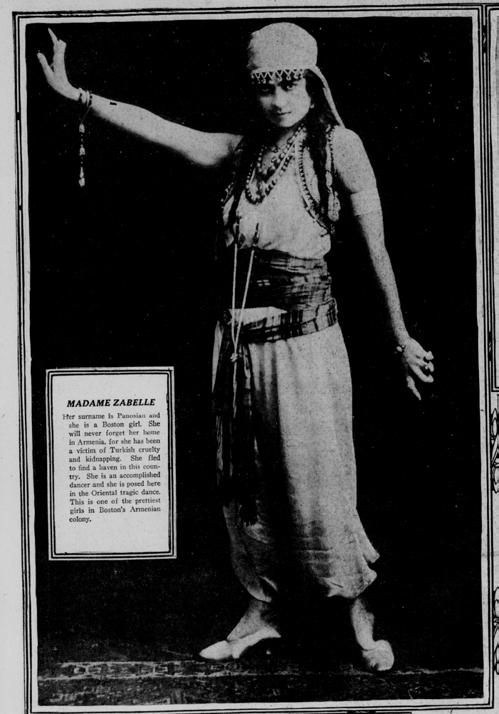
Zabelle Panosian in Boston circa
recordings had little mainstream influence or purchase.
Nagoski has been trying to change that with Canary Records, not just to keep the music of people like Panosian alive, but also because these recordings challenge and re-contextualize American national identity. American roots music comprises more than blues, gospel, jazz, and country, and has origins beyond England, Ireland, and the African continent. Nagoski wants to put people like Zabelle and others who immigrated to the United States from all over the world back into American folk traditions.
When Nagoski began collecting Ottoman diaspora recording in the mid-2000s, the US was fighting two wars in the Middle East. “I was 30 years old, badly educated, and didn’t know anything about the relationship between the United
States and the Middle East,” he recalls. “I didn’t know what any of those countries were.”
When he began listening to and finding information about performers from the Ottoman diaspora, Nagoski realized that the Middle East wasn’t so far away after all. “There’s a really long, deep relationship between where I’m from [in the US] and where these records are from,” he says. “A hundred and something years of relationship. It turned out that we were neighbors. That ‘they’ were a part of ‘us,’ that the United States included the Middle East.”
Nagoski also speaks passionately about the way that musicians provide a unique perspective on history. Musicians aren’t kings or presidents, he points out. They’re normal, everyday people — workers who travel for their trade. Nagoski loves
Zabelle Panosian posing as Abishag from the biblical pageant play “The Chosen King” on January 24, 1920
researching old records because he can follow the songs and see where history goes.
Listeners can hear that history in Panosian’s “Groung.” In one of the few interviews with Panosian that Nagoski and his collaborators unearthed, she said that she learned her version of the song in childhood; it seems to be a specific regional variant. The arrangement is probably hers, as is the coloratura classical style she learned in America.
Like many recorded folk songs, “Groung” is a document of how far it has traveled — from Armenia to the US in ways that took years for Nagoski, Kezelian, and Arakelian to put together. It’s a tune that came with Panosian across thousands of miles, grew and changed with her, and then told its own tale of travel on record, a servant of her voice. ■
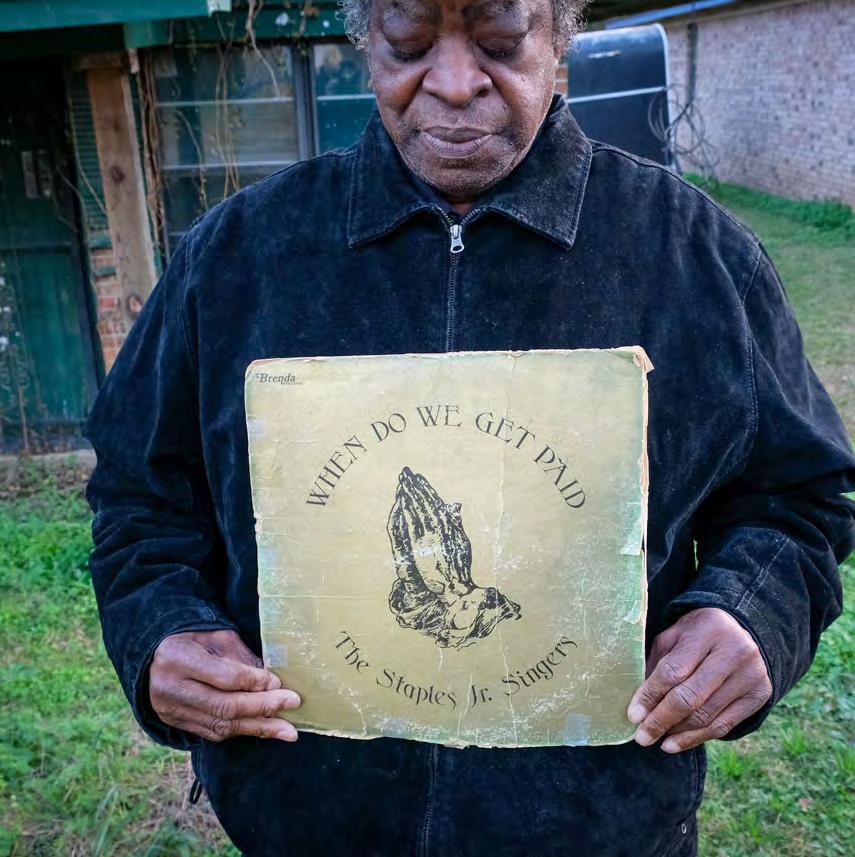
Edward Brown

RIGHT ON TIME
The curious rise and resurrection of gospel-soul group The Staples Jr. Singers by
Zach Schonfeld
“More than many gospel records, [they were] songs about actual life experience, as opposed to being saved or what’s going to happen to us in the other world.”
Yale Evelev Luaka Bop president
It’s a saturday afternoon in April, and gospel fills the air at Baby’s All Right, a Brooklyn club known for its indie performers and garishly glowing LED walls. Around 40 people are gathered in the performance space. Though it’s not yet 1 p.m., the space is lively, populated by a mix of gospel devotees swaying to the groove and confused brunchers who wandered in to check out the spectacle. A veteran gospel singer named Annie Caldwell, surrounded onstage by musicians including her brothers and daughters, asks the audience, “How many wanna take a ride? How many wanna ride with Jesus one day?” The audience responds with enthusiasm. Caldwell lurches into a rousing call-andresponse tune built around this refrain: “Take a ride! Take a ride!” If this performance seems surreal to the disoriented brunchers,
it’s doubly so for the musicians themselves. The band is called The Staples Jr. Singers (inspired by, though not related to, The Staple Singers), a family band formed half a century ago in Mississippi who performed a soul-gospel hybrid in the spirit of Otis Redding, The Rance Allen Group, and their famous namesakes. This particular weekend marks their first time performing under that name in 40 years and first time ever outside the Mississippi Delta, for the unlikely reissue of the group’s first and only album, 1975’s When Do We Get Paid. The 13-track collection, a little-known gem of scorching gospel pleas dialed into the social concerns of Black Americans in the South, is a rare artifact scarcely heard outside the band’s native Mississippi until it was re-released in May by Luaka Bop, the eclectic New York-based label founded in 1988 by David Byrne.
“I knew if I kept on singing, somebody will hear me,” says vocalist Edward Brown, who was a young teenager when he formed The Staples Jr. Singers with his siblings. “The music was out there.”
Few original copies of the album survive. Lost in obscurity until recently, When Do We Get Paid is a piercing document of an era in which gospel music was transformed by the influence of ’70s funk and soul, particularly following the crossover success of The Staple Singers, who enjoyed significant hits like “I’ll Take You There” and “Respect Yourself” while signed to Stax Records.
Mavis Staples and her family
were foremost among the Staples Jr. Singers’ influences (especially the group’s earlier gospel recordings), along with The Williams Brothers, The Mighty Clouds of Joy, and other groups of the era. “I just loved Staple Singers. That’s why we named our band the Staples Jr.,” says singer/guitarist A.R.C. Brown. Caldwell, his sister, adds, “They did songs that really can relate to what you going through, how you feel.”
The Staples Jr. Singers formed in either 1969 or 1971 (sources differ) by three young siblings growing up in Aberdeen, Mississippi: Annie Brown Caldwell (around 11 at the time of the band’s founding), A.R.C.
Brown (12), and Edward Brown (13). Eventually, brothers Cleveland and Ronnel Brown, the family’s youngest, joined the group. Like many gospel musicians of the day, they got their start performing in church.
“My daddy and mama brought us up in the church,” says Caldwell, whose deep, soulful voice is a crucial element of the band’s music. “We started out going from houses to houses, singin’ — me and Ed and R.C. and Cleveland, my brother Ronnie — as The Staples Jr. Singers. We didn’t have drums, just the guitar. Just singin’, praising the lord.”
The band began traveling
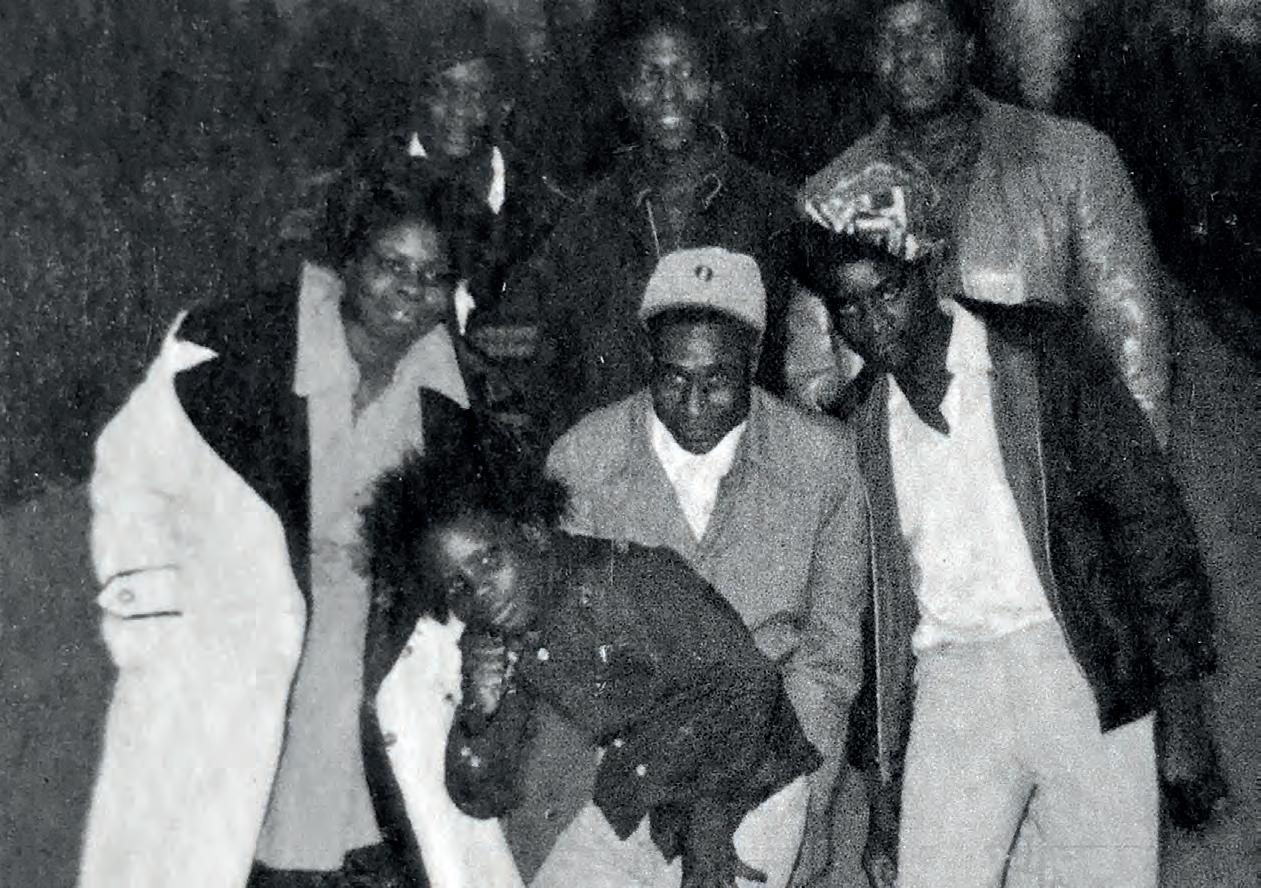
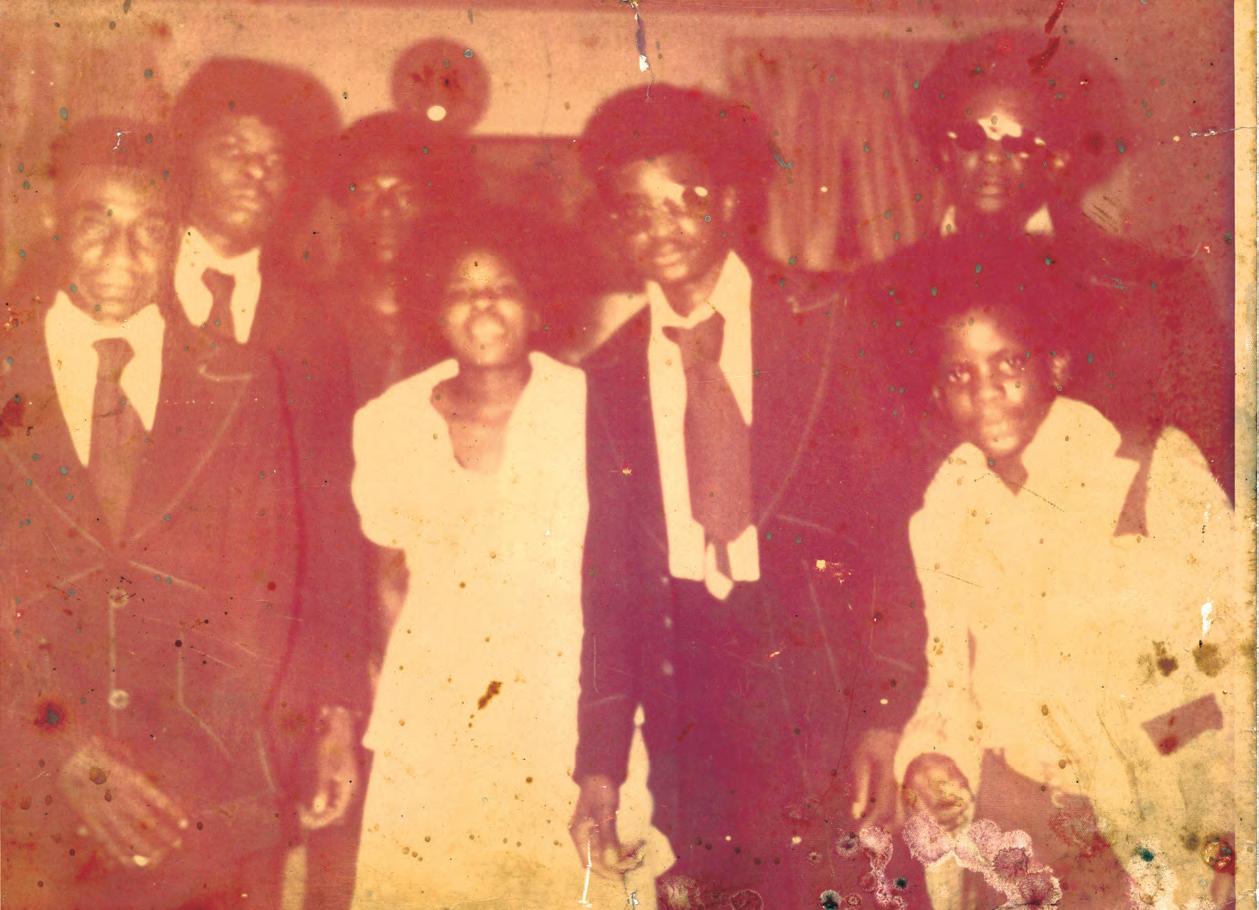
The Staples Jr. Singers circa 1975, clockwise from top left: A.R.C. Brown (guitar), Corl Walker (drums), Cleveland Brown (backing vocals), Edward Brown (vocals), Deacon Wordell Andrew (backing vocals, band supporter), Ronnel Brown (bass), and Annie Brown Caldwell (vocals).
around the Bible Belt and sometimes even the Midwest, often playing multiple shows in a single day.
They were not always welcome in white establishments and restaurants in the ostensibly desegregated South, though these early tours still inspire fond memories from the musicians. Caldwell remembers riding in the family van and singing on the way to their concerts.
“ Those places downtown, they didn’t like you to go in,” vocalist Edward Brown says. “They had signs that said ‘White Only.’ We went through a lot of stuff. But through it all, God paved the way for us.”
The teenage musicians were inspired by the gospel music they heard at church, and by their religious fervor. “After I do my homework, I would read my Bible
and sing like I could just sing miracle after miracle,” Caldwell says.
A Race to Run
In 1975, the band — whose members were still in their teens — got the opportunity to make an album. The details of how it came together are fuzzy. According to Edward, the group decided to make an LP after releasing and selling out copies of a 45 called “Waiting for the Trumpet to Sound”/“We Got a Race to Run,” released by the little-known Mississippi gospel label Brenda Records.
“We cut with a guy in Tupelo, Big John,” says Edward. A traveling gospel singer named Joe Orr had introduced them to this mysterious Big John figure — no one is entirely sure what his real name is — who
ran a recording studio in Tupelo, Mississippi. According to Yale Evelev, president of Luaka Bop, “Somebody said, ‘Hey, do you want to make a record?’ and they went and made a record. Then they sold the records. Nobody else sold the records.”
The album is steeped in remarkably potent pleas and skeletal funk grooves. Rousing calland-response choruses on songs like “I Know You’re Going to Miss Me” and “I’m Going to a City” balance out yearning, Stax-style ballads like “When Do We Get Paid.” The songs are rooted in impassioned, unwavering faith, although the funk rhythms and bluesy, wah-wah guitar invoke a more straightforward version of Isaac Hayes’ or James Brown’s rhythm sections.
As for the album title, it carries a
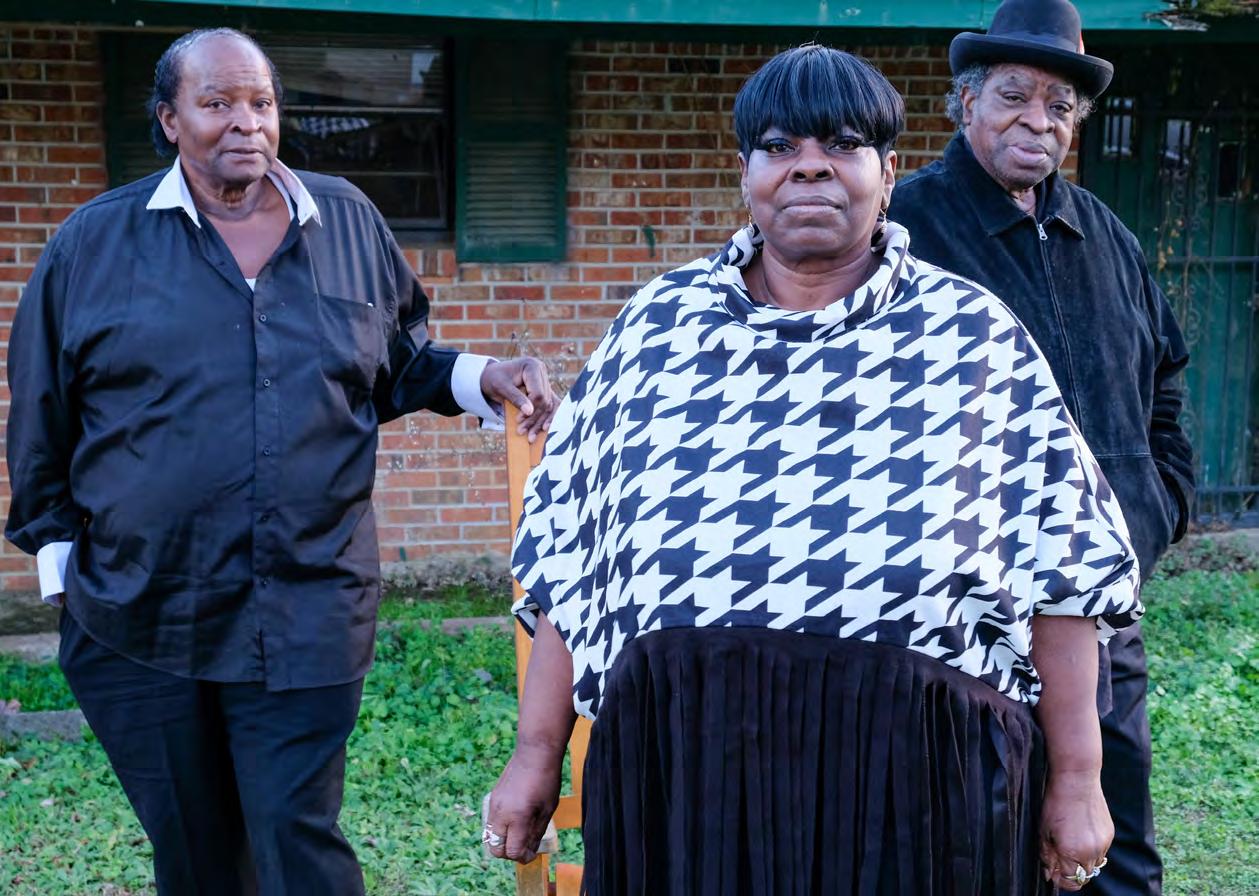
From left, A.R.C. Brown, Annie Brown Caldwell, and Edward Brown
curious double meaning. It can be heard as a plea for spiritual deliverance or, in more literal terms, as an indictment of music industry exploitation, and it works either way. While modern listeners may assume it’s a commentary on the financial exploitation of Black soul artists by record companies, Edward confirms that it was intended in a more spiritual sense: “God gonna pay us after the work is done,” he says.
When the album was finished, the young musicians sold copies at performances and on their front lawn. Few original copies exist today; Evelev paid $700 for one several years ago.
The album sank into obscurity, and the band never made another. By the early 1980s, The Staples Jr. Singers went their separate ways. Edward and A.R.C. rechristened
themselves The Sensational Brown Singers, while Caldwell eventually formed her own group, The Caldwell Singers, with her husband.
“That’s just my life today as my life was then,” Caldwell says. “It never left me.”
Tracking Down a Band
The Staples Jr. Singers’ music first came to the attention of Luaka Bop in a circuitous way, via a gospel DJ named Greg Belson. Born in England and based in Los Angeles, Belson is a veteran club DJ, producer, and broadcaster known for hosting radio shows such as Divine Discotheque (broadcast on Soho Radio) and The Divine Chord Gospel Show (presented on dublab.com). Though he had been collecting soul records since 1987, his interest in gospel was triggered
in 1993, when a friend played him a 1973 recording of “Sometimes I Feel Like a Motherless Child” by a littleknown gospel singer named Clarence Smith.
“I was instantly drawn to it,” Belson says. “I bought a copy of that record as soon as I could. When it arrived, I saw it was on [Stax subsidiary] Gospel Truth and it pricked up my ears a little bit.”
Belson did not become a serious collector of gospel singles until 2004, when he found a rare 45 by a group called The Lovers of God.
“Since then, I’ve been digging hard and finding all these micro presses and releases that were only done for a congregation or a church in the smallest sense,” Belson says.
Around 2006, Belson was scouring eBay when he spotted a Staples Jr. Singers 45, “We Got a Race to Run,” released by Brenda
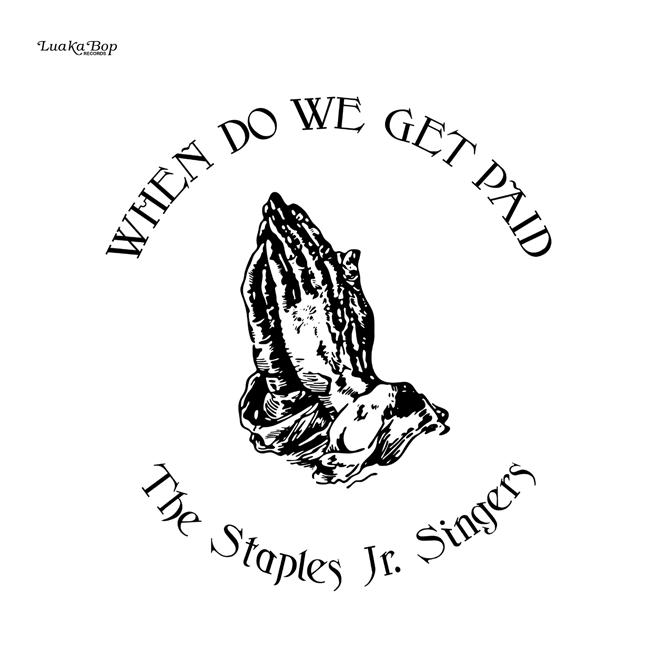
Records. “Something appealed to me about the look of the label,” Belson says. The band name also caught his curiosity. He wondered if they were related to The Staple Singers, but it didn’t look like it based on the artwork that had been posted on the eBay auction. “It just appealed to me that this is a record I should snap up and listen to at some point.”
Belson purchased the single having never heard a note of the group’s music. He paid about $14.99.
“As soon as I got it on the turntable, I was instantly fascinated by the band,” Belson says. He gravitated to the funkier side, “We Got a Race to Run.” What he loved about it, he says, was “the simplicity. But yet, the absolute stone-cold funk delivery — that was the thing that appealed to me the most. With gospel, I like to investigate the more
soulful, funkier, vocal harmony side.”
Years passed. Belson still knew nothing about the band’s story. In 2016, he was DJing at a Minneapolis club run by his friend, Brian Engel, a longtime Twin Cities DJ and funkloving crate-digger. After the gig, they were chatting and pulling records off the shelves at Engel’s house. Belson was surprised when his friend pulled out the Staples Jr. Singers LP. Engel explained that he had found it while crate-digging at a local secondhand store. It had traveled a long journey from Mississippi to Minnesota.
Belson excitedly said he had a 45 by the same band. Engel replied, “If I ever decide to sell the LP, then it’s yours, my friend.” In 2019, Engel finally sold the record to Belson.
A few years earlier, Belson had met Evelev at a Christmas party
hosted by the DJ Cut Chemist. This was fortuitous, because Evelev was interested in putting together a compilation of gospel music for the Luaka Bop’s World Spirituality Classics series. The trouble was, Evelev wasn’t well-versed in gospel. “I’m somebody who’s been into music and records my whole life,” he says. “But gospel music I always found a somewhat daunting genre to learn about.”
Evelev loved the music Belson played on his gospel radio show and asked the DJ to send him some rare cuts that Luaka Bop could license for a compilation. The original plan was to make a compilation of political gospel songs. Then Evelev noticed that among those political songs were gospel songs about “how we live with each other,” as he describes them.
That became the theme for the
2019 compilation The Time for Peace Is Now, a treasure trove exhuming deep cuts from the new wave of 1970s gospel in the American South. Compiled by Belson, the release garnered critical acclaim and put a spotlight on longneglected gospel groups such as The Little Shadows and The Gospel I.Q.’s. Reviewing the project for Pitchfork, Stephen Thomas Erlewine observed “how deeply intertwined these working musicians were with the prevailing funky, soulful sounds of the time,” while Jim Allen at Bandcamp Daily suggested that this gospel-funk fusion effectively created “a sort of ‘post-gospel’ music.”
A Staples Jr. Singers song, “We Got a Race to Run,” was included on the compilation and brought the group its first widespread recognition. It almost didn’t make
the cut, though, because obtaining the rights was a challenge. “You couldn’t search for Staples Jr.,” Evelev recalls. “There was nothing. Everything was Staple Singers. Gospel people I talked to didn’t know anything about that.”
The only credit on the 45 was Annie Brown. But there are thousands of Annie Browns; Luaka Bop had no idea how to find this one. Then the label’s designer realized that Annie Brown is now Annie Caldwell of The Caldwell Singers. “So I started calling every Annie Caldwell in Mississippi,” Evelev says. “There were seven Annie Caldwells in Mississippi and I left a message for six of them. The seventh one, I was leaving a message when Annie Caldwell picked up and said, ‘Oh my God! This is great! I just came back.’” The label staff began silently jumping up and down in
excitement.
In 2017, Caldwell agreed to license “We Got a Race to Run” for The Time for Peace Is Now, and Evelev took a road trip down to Mississippi with a film crew. He met Caldwell, along with some other artists featured on the compilation, and saw The Caldwell Singers perform.
Eventually, Luaka Bop decided to reissue a full LP by one of the groups featured on The Time for Peace Is Now. Initially, Evelev wanted to put out an album by the Florida group The Little Shadows, but he didn’t like it quite enough. “When I heard the whole Staples Jr. Singers record, I was blown away,” Evelev says. “It was a very different kind of gospel record. … More than many gospel records, [they were] songs about actual life experience, as opposed to being saved or what’s going to
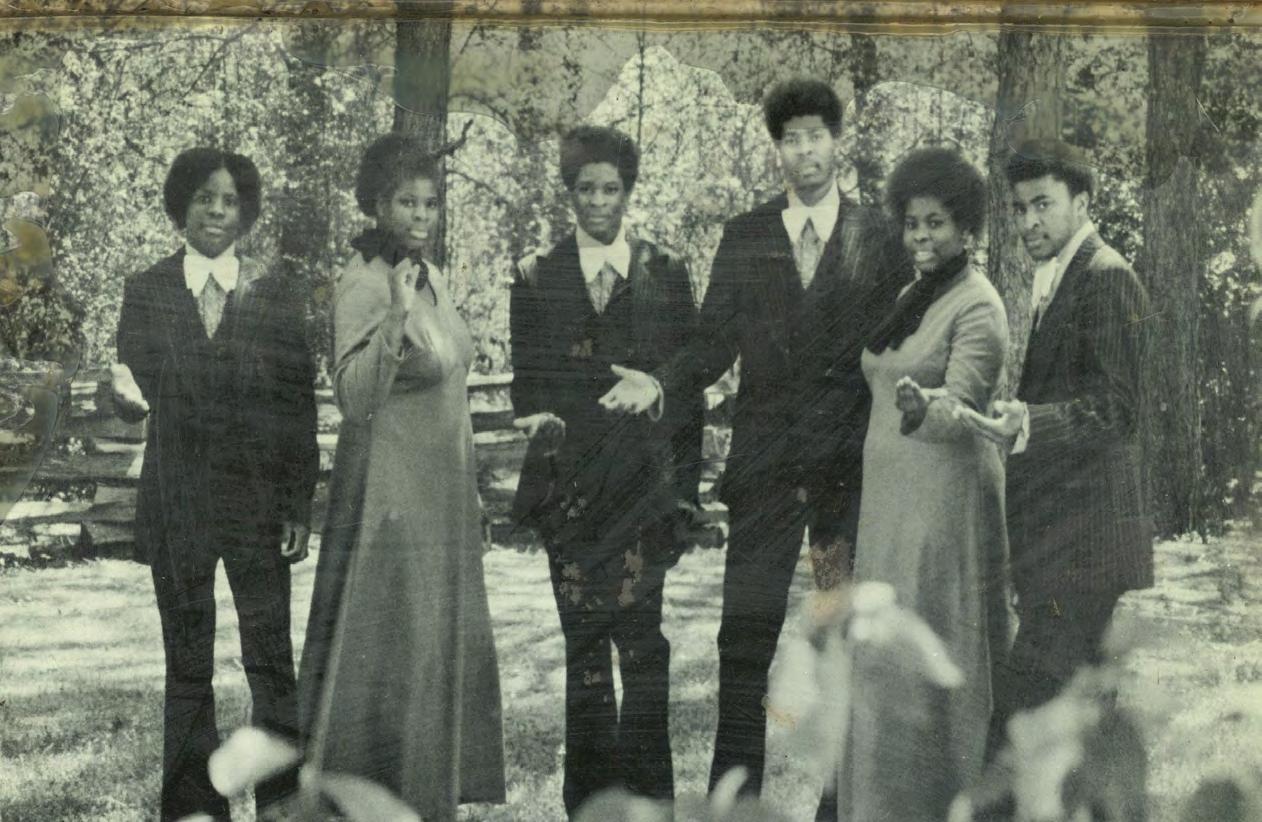
The Staples Jr. Singers circa 1977, from left: Ronnel Brown, Annie Brown Caldwell, A.R.C. Brown, Cleveland Brown, Annice Brown Byars, and Edward Brown.
happen to us in the other world.”
Evelev liked that it was a family band, and liked that the surviving members are still performing today. “It’s kind of great to work with people who are around and you can talk to,” he says.
But Caldwell’s brothers were angry when they learned that Caldwell had licensed “We Got a Race to Run” without their knowledge. They refused to let her license the full album to Luaka Bop. “I tried for a while to license The Staples Jr. Singers album,” Evelev says. “Annie said her brothers were not into it, which I didn’t really understand. But I kept trying over the years.”
In 2021, one of the brothers, vocalist Cleveland Brown, who was once the group’s manager, died. (The youngest sibling, bassist Ronnel Brown, had also died 10
years earlier.) One of Cleveland’s final wishes was that his siblings would reunite and agree to work with Luaka Bop on the reissue. With some reluctance, the three surviving siblings agreed to work together again in Cleveland’s honor. When Do We Get Paid was finally re-released in May, a year after his death. “It’d been so long since we had been singing them songs,” A.R.C. says. “I never did forget that album.”
The Payoff
The reissue of When Do We Get Paid arrives at a moment in which ’70s gospel and soul music is enjoying a resurgence. The past few years have afforded numerous opportunities for younger generations to discover this music. In March, Questlove won an Oscar for his celebrated
documentary Summer of Soul (... Or, When the Revolution Could Not Be Televised), which chronicles the 1969 Harlem Cultural Festival and features performances by the Edwin Hawkins Singers and The Staple Singers, among other groups. The Staple Singers were also ubiquitous on the 2020 election trail, when Joe Biden regularly used “We the People” as a campaign song. That same year, Rolling Stone placed Marvin Gaye’s What’s Going On at No. 1 on its list of the 500 Greatest Albums of All Time.
The Staples Jr. Singers, however, are mostly unaware of these developments. They were always part of a more regional, down-home gospel movement. “The record sales for gospel records is totally regional,” notes Evelev. “It’s very hard music to get into from a record collector point of view, because it all
COURTESY OF LUAKA BOP
just kind of stays within its world. There are people who travel around and buy records. You’re not going into a record store to buy records. You’re going into a radio station. You’re going to jukebox distributors.”
The musicians express happiness at the unexpected revival of their music. Yet their path to reconciliation has been rocky. In April, Luaka Bop brought The Staples Jr. Singers to New York City for a whirlwind series of performances — their first in decades — including the gig at Baby’s All Right. During the days leading up to the shows, old tensions boiled over. A.R.C. and Edward refused to perform with Caldwell’s daughters, Edward didn’t want to sing on Caldwell’s songs; the three siblings had a screaming fight the night before the shows.
“ The anger between them was still out there and palpable,” Evelev says. “And I’m thinking, well, we’re here now! We’re doing this with you now! You’re not angry at us. You’re angry at Annie! But it’s because of Annie that we’re all together now, doing this.”
Evelev recalls moments during the performances when A.R.C. and Edward were livid because Caldwell brought her daughters up to play a Caldwell Singers song. “Everybody’s doing these songs very aggressively. They’re really angry. The audience doesn’t know what’s going on. It just sounds incredible.”
Yet by the end of the performances, the family felt gratified by the appreciative reception and proud of the music they played. After their 17-hour drive home, Evelev learned that one of Caldwell’s daughters had sat the
siblings down and made them watch footage of themselves performing old Staples Jr. material. They were moved. Caldwell called Evelev and said the band was back together and would continue to perform when possible.
Waiting for redemption is a key theme in The Staples Jr. Singers’ music. There is a moment in “Waiting for the Trumpet to Sound,” one of the band’s most potent tunes, in which they declare: “He may not come when you want / But He always right on time.”
That’s essentially the band’s attitude on the long-overdue reissue of their music. “Folks thought we had forgot about the album,” A.R.C. says. “We never did give up none of our stuff.” The guitarist adds: “Might take a little while for God to come, [but] He know when to come.” ■

ALL ABOARD
Silkroad Ensemble goes full steam ahead with Rhiannon Giddens leading the way by
Hilary Saunders
RICH WOODS, NOIR PRISM

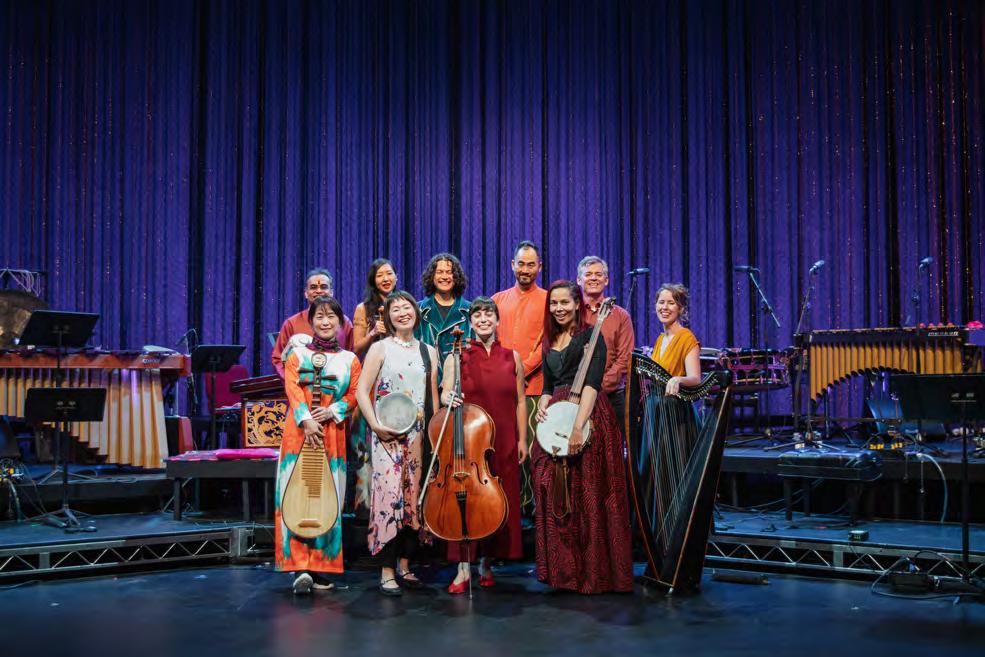
It was a muggy summer night in New York’s Hudson Valley for the Silkroad Ensemble’s tour kickoff, and its new artistic director, Rhiannon Giddens, stepped out on stage barefoot.
The audience at the Caramoor Center for Music and the Arts broke into cheers and whoops to welcome her, but Giddens wordlessly quieted the crowd with a slight motion of her hand. She led the nearly sold-out, 1,500-seat Venetian Theater in a calland-response before the 14-piece ensemble filed out to join her for the world premiere of “The Call,” composed by harpist and ensemble member Maeve Gilchrist.
The instruments came in waves, as the Celtic harp, soprano saxophone, Western classical small string section, and more took turns carrying the tune. But the Japanese taiko drums and recorded sonic textures of the ocean kept pace, as did the yangqin, a traditional Chinese hammered dulcimer that added melody and percussion simultaneously.
After “The Call,” Indian tabla player Sandeep Das quickly fist-
bumped Italian accordionist/ percussionist Francesco Turrisi before the ensemble — rounded out with a Chinese stringed pipa, Japanese bamboo flute shakuhachi, and numerous forms of percussion from around the world — launched into “O Death” with barely any pause.
“O Death” is a traditional Appalachian folk song that is one of the most famous, beloved, feared, and defiant narratives in American musical history. It is generally credited to Baptist preacher and musician Lloyd Chandler (though the song was likely adapted from others from the time in Western North Carolina and Appalachia).
The song really gained popularity in the 1960s, when Alan Lomax recorded a version performed by gospel and folk singer Bessie Jones and old-time banjoist Dock Boggs recorded his own version. Several decades later, Ralph Stanley recorded “O Death” in the style of an Appalachian Primitive Baptist Universalist church for the 2000 film O Brother, Where Art Thou?, and his a cappella version won a Grammy in 2002. Even more recently, Shakey
Graves and Monica Martin recorded a similarly sparse duet version that premiered during the second season of the television show Fargo.
But for all the times “O Death” has been covered, it’s never been done quite like this. Surrounded by the rest of the Silkroad Ensemble in a semi-circle, Giddens sang to the audience, turned around, sang to the other musicians, and turned around again. In turn, she conducted, danced, and whispered, flexing her range from guttural moans to her classically trained operatic head voice.
O, Death
Woah, Death Won’t you spare me over ‘ til another year?
Those lyrics encapsulate the entire premise of this tour, named Phoenix Rising. With death seemingly omnipresent from the pandemic, the Russian invasion of Ukraine, and perpetual American gun violence, the Silkroad Ensemble decided to name this tour — its first since COVID-19 began — for the mystical
PHOTOS BY ADAM GURCZAK

bird that sets itself on fire before being reborn. Through music, the ensemble aims to honor the notion of survival, reemergence, and reinvention.
Cultural Collaboration
Silkroad began as an experiment. Founded by 18-time Grammywinning cellist Yo-Yo Ma in in 1998, the project was rooted in a belief in the power of music as cross-cultural communication. According to the organization’s website, Ma “recognized the historical Silk Road as a model for cultural collaboration — for the exchange of ideas, tradition, and innovation across borders. In a groundbreaking experiment, he brought together musicians from the lands of the Silk Road to co-create a new artistic idiom: a musical language founded in difference, a metaphor for the benefits of a more connected world.”
Today, Silkroad comprises many elements. Its main programming arm, the Silkroad Ensemble, is a flexible group currently comprising 32 players. Other flagship programs include its Global Musician Workshop (held annually at the New
England Conservatory), Silkroad Seeds (a biennial commission granted for individual projects), and Silkroad Connect (a middle school arts education initiative run in conjunction with the Turnaround Arts program).
But as Kathy Fletcher, Silkroad’s executive director, says, “Everything in Silkroad starts with the music. The music is the heartbeat of the organization.”
After leading Silkroad for 22 years — from its beginnings as a loose collective to its current nonprofit status with funding from sources such as the Mellon Foundation, Alice L. Walton Foundation, and even the FreshGrass Foundation (No Depression’s publisher) on its upcoming project — Ma stepped down as artistic director in 2020. Giddens, who had performed with the ensemble numerous times, assumed the role later that year.
“When we were looking for new artistic director [people would ask], ‘How do you fill Yo-Yo Ma’s shoes?’” Fletcher recalls. “And Rhiannon says, ‘Well, I don’t wear shoes.’ And I think that’s a beautiful metaphor. Passing the baton from Yo-Yo, I think
Rhiannon was a brilliant choice.” She continues, “You might not think it, but Yo-Yo Ma and Rhiannon Giddens have so much in common. They’re both such musical geniuses, but really they’re humanitarians. And they really are dedicated to curiosity and cross-cultural collaboration and using the power of the arts to bring peace and connection into this world, which is what I’m all about. And Silkroad gives us an amazing platform to do that.”
Giddens, of course, is a MacArthur Fellow (which comes with what’s known as the “Genius Grant”), a Grammy-winning founder of the Carolina Chocolate Drops, founding member of supergroup Our Native Daughters (with Allison Russell, Leyla McCalla, and Amythyst Kiah), and an esteemed banjoist and singer-songwriter in her own right. In 2018, she wrote the score for the ballet Lucy Negro Redux, which premiered at the Nashville Ballet the following year. And her most recent LP, They’re Calling Me Home with partner Francesco Turrisi, was released in 2021 via Nonesuch Records.
In the role of artistic director of
“You might not think it, but Yo-Yo Ma and Rhiannon Giddens have so much in common. They’re both such musical geniuses, but really they’re humanitarians. And they really are dedicated to curiosity and cross-cultural collaboration and using the power of the arts to bring peace and connection into this world.”
Kathy Fletcher Silkroad executive director
the Silkroad Ensemble, Giddens shares the same goals as her esteemed predecessor, but approaches achieving them in a different way. In some ways, Giddens says, she’s still trying to figure out her own leadership style.
“I’m a different person than Yo-Yo, and I lead differently and am more of a hands-on kind of person. I get in the thick of it and that’s just who I am, so it’s just a different approach,” Giddens says, calling from her home in Ireland. “When it comes to making art and making music, I feel very confident that I’m a good and generous collaborator. I love working with people. [It’s] the paperwork and the edifice nature of it that I have less affinity for! So that’s a challenge and it’s one that I’m working on.”
Despite the paperwork that comes with behind-the-scenes nonprofit organizing, Giddens emphasizes how much of a fan she is of the organization, its mission, and its players. She remembers growing up and watching the ensemble perform during a PBS special and speaks glowingly about working with Ma and the ensemble for a recording of “St. James Infirmary Blues” on
Silkroad Ensemble’s 2016 album, Sing Me Home. Through Silkroad, she hopes to be able to implement tangible changes within the world of performance arts. She views her music and work within the roots music community as a microcosm of what can be effected through an organization like Silkroad, with its infrastructure and financial support.
“ There’s a lot of challenging of the status quo going on in the arts world right now. Which is beautiful, but it’s also difficult … How is it sustainable? How is it systemic? And how is it supported?” she muses.
“I want Silkroad to be a positive answer to this question of how things are changing. We’re trying to make the group feel communal. We’re trying to make it feel like everybody has a voice. We’re really trying from the inside out to be the change that we want to see. And that’s difficult and it’s taking time, but it’s time that needs to be taken.”
Connecting a Continent
The Phoenix Rising tour wrapped up in July, so Giddens, Fletcher, and the rest of the Silkroad Ensemble are
already looking ahead. The biggest project on their radar is six-yearlong endeavor called The American Railroad. Just like Ma based the original Silkroad experiment on the ancient path that connected China to Europe and enabled the silk trade, The American Railroad project connects the Atlantic to the Pacific again, this time across North America via the rails.
The first transcontinental railroad in the United States was built between 1863 and 1869 and connected the existing eastern infrastructure to the western half of the US at Council Bluffs, Iowa. At first, the rail was solely used to transport goods, but just four months after its completion, passengers were already taking the transcontinental rail to Alameda, California.
What many don’t realize, though — and what the Silkroad Ensemble hopes to convey through music — is the range of humanity involved with the transcontinental railroad. The train ultimately connected people from across the United States, but even its creation involved an intersectional group of people. Civil War veterans built much of the rail in

the territories of Nebraska and Wyoming in exchange for plots of land as the US expanded westward. In the Utah territory, Mormons built the rail, and in central California, primarily Chinese immigrants.
“The United States is a global community, and we all came from somewhere else, except Native Americans, and we all belong here.
The American Railroad is going to give us the opportunity to tell stories that aren’t told,” Fletcher explains.
“You don’t hear about the Chinese laborers or the Irish laborers and how the building of the transcontinental railroad impacted Native Americans and African Americans — newly freed and slaves. It’s a really incredible story and through the power of music, we’re going to be commissioning new work. We’re going to be unearthing work that has already been written. We’re going to actually be getting on a train and doing a cross-country train tour.”
Members of the ensemble have already begun to gather and brainstorm what communicating this story through music might entail.
In addition to the musical traditions of all of these different laborers, the range of injustices — from unsafe working conditions and unfair wages to the larger themes of colonialization and nationalism — have also influenced how Silkroad artists are learning about, processing, and personalizing this history.
“I think all the artists have to connect to the topic the way they want to, the way that feels great to them,” Giddens says, “and some of them are going to connect to the social issues and those aspects of colonization because then it connects to people who are coming from different places.”
She mentions Das, the Indian tabla player, as an example of one of the ensemble members who has taken this idea and internalized it by connecting the transcontinental railroad across the United States to the rail system the British laid across India. “[The project] creates connections to people’s own experiences, even if they’re not from America,” Giddens says. “That’s kind of the whole point.”
Even in the early stages of planning The American Railroad project, ideas are starting to take shape. Fletcher lists off a Broadway musical, a children’s book and record, a podcast, and collaborations with visual artists as possible ways to help tell the story of the railroad in addition to the ensemble’s music.
“I love to be on the ground floor of a dream,” she says. “The incredible thing is at the end of six years, I’m so excited to see what actually happens because I don’t think we can even imagine.”
In the nearer term, Giddens is simply excited by plans for the Silkroad Ensemble to perform together again and the possibilities ahead of them.
“Honestly, I’m looking forward the most to making music. There’s been so much planning and so much talking, and all that stuff’s very necessary,” she says with a laugh. “But I’m just really ready to just get up on stage and play and make music and create new arrangements and have fun and connect with people.” ■
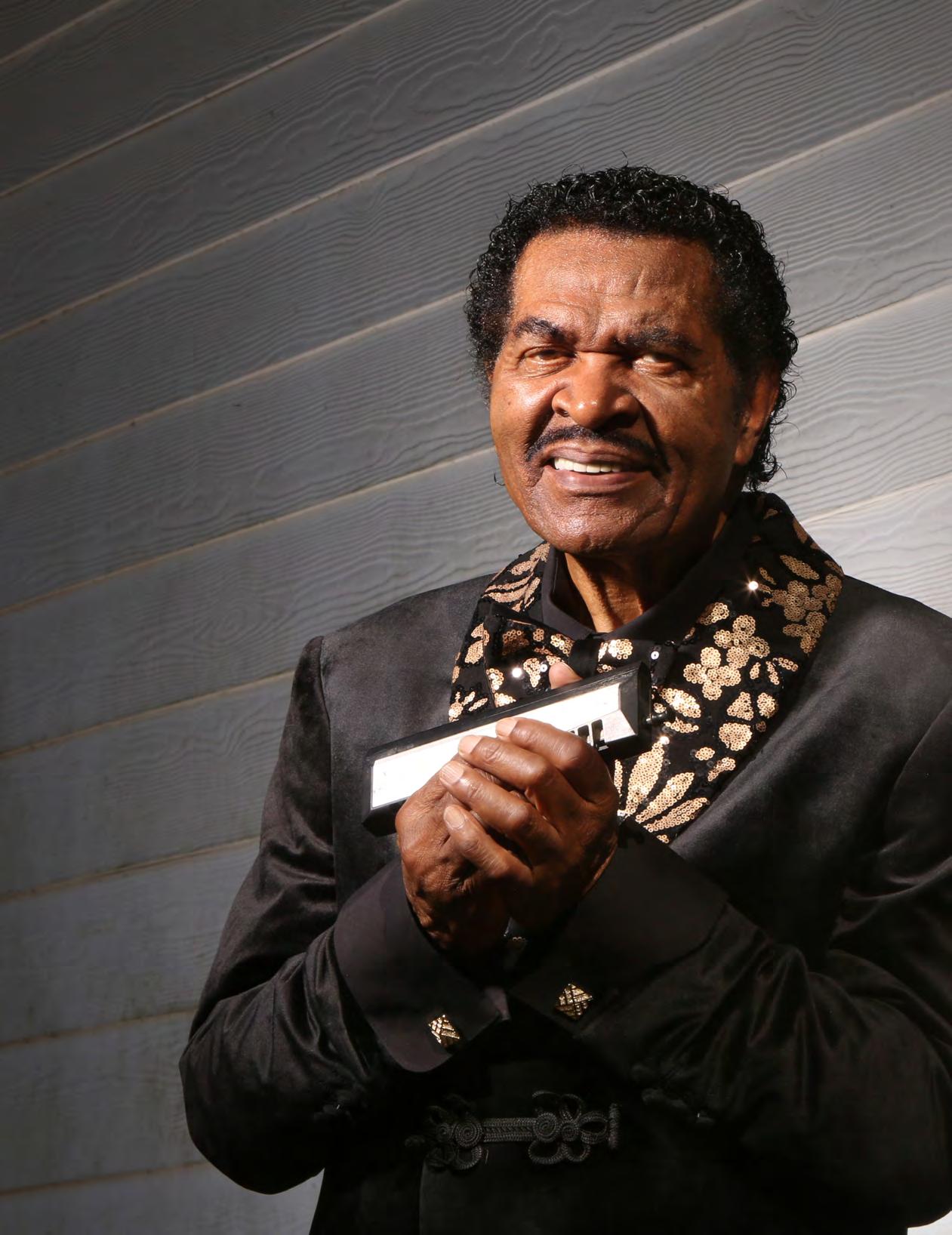
THE LAST OF HIS KIND
Bobby Rush reflects on his reign as King of the Chitlin’ Circuit by Jim
Shahen
Bobby rush sits on a stool, acoustic guitar in his lap, and tells the 40 people in the audience at Caffe Lena, a small coffeehouse and folk venue in Saratoga Springs, New York, his life story.
He starts with his childhood in Carquit, Louisiana, and adolescence in Pine Bluff, Arkansas, in the 1930s and 1940s. In 1951, at the urging of friend and mentor Muddy Waters, he moved to Chicago and started his own career as a blues singer.
“I’ve cut 397 records,” Rush says. “On Nov. 10, I’ll be 88 years old. I’m the oldest Black blues singer in the world.”
He delivers the words humbly and in context, presenting himself as
more of a historical figure than anything else. But when Rush starts playing “Down in Mississippi,” the first track off his Grammy-winning 2020 record Rawer Than Raw, his finger-picking is self-assured and nimble. The beat he’s pounding out with his foot is insistent. And his vocals are strong, clear. He sounds vital.
It’s hard to believe Bobby Rush is the oldest person in the room, much less the senior-most figure in his genre. Excepting some unknown nonagenarian singer, though, he likely is. And that status is more than just a factoid for Rush to work into his stage banter; it’s a summation of his life’s work.
“When I left for Chicago in 1951, I was following in the footsteps of Muddy Waters, Howlin’ Wolf, Jimmy Reed, Lightnin’ Hopkins, Bo Diddley, Rufus Thomas, and Little Walter,” Rush says. “Those old blues guys influenced me, inspired me.
“It’s been good living this long, but it’s sad to live long enough to see the lights go out on all of them,” he continues. “I’m one of the few left who understands the purpose of what I do and who it’s for. I’m the last of my kind.”
Rise of a King
Rush spent the first 20 years of his career trying to find a label and an
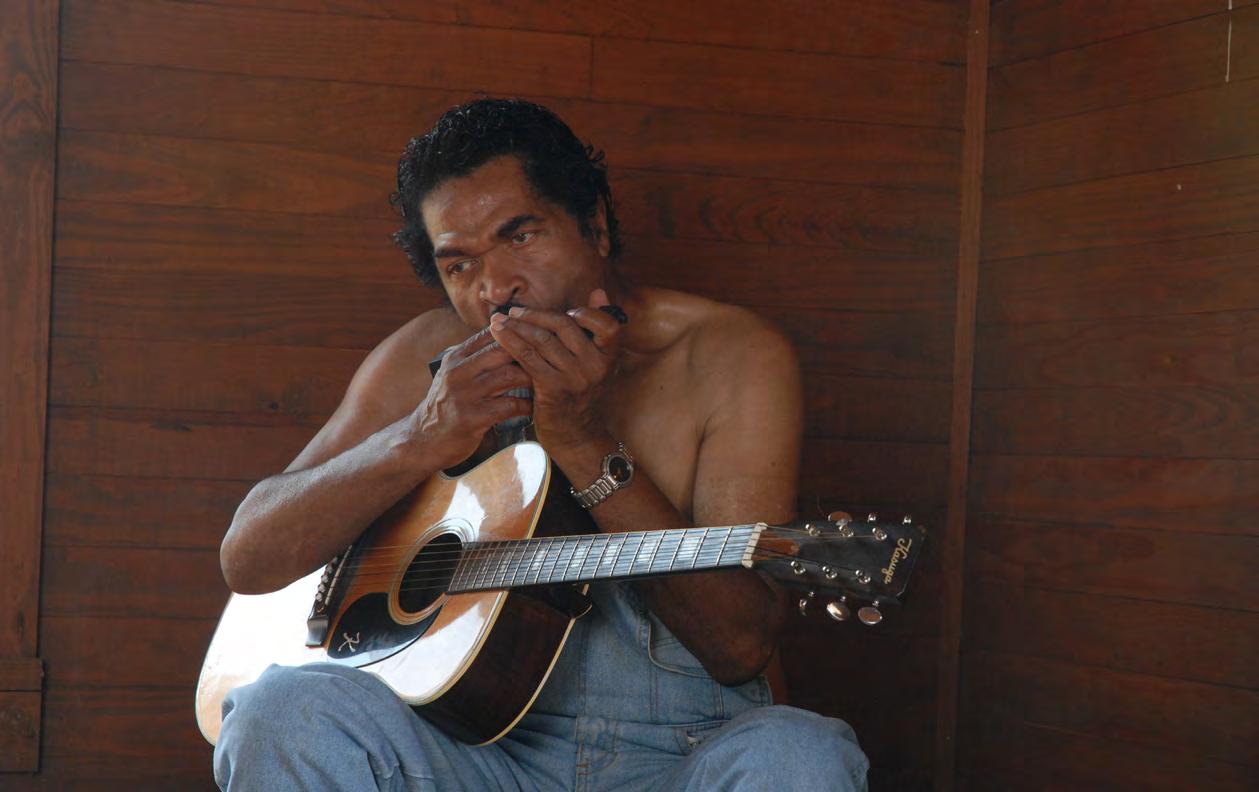
JAMES PATTERSON
audience. But despite recording and producing dozens of moderately successful singles, corporate machinations made securing a good record deal close to impossible.
“Chess Records took their offer away from me because I could read,” he recalls. “There was a union contract sitting on Phil Chess’ table and I read what was on the table. He said, ‘We can’t use that n-word because he can read.’ I was dangerous because I could read and analyze my contracts.
“Black people in the business did me the same way: Vee-Jay Records, Johnny Vinson, treated me the same way,” Rush continues. “He would talk to me, tell me he loved me, but he
showed me the back door too. I had to grow myself my own way.”
So Rush became a one-man enterprise, self-managing, recording, and promoting. This helped him make key connections with venues and other acts, allowing him to book shows for himself and others and get on the bill as support for a range of famed musicians in the Black blues tradition.
In that capacity, Rush honed his craft and learned a valuable lesson: Don’t upstage the headliner.
“Oh, I got fired lots of times. I would work so hard making a name for myself that I was just stomping a hole in folks,” Rush says. “One show was ‘Chuck Berry and Bobby Rush,’
but the newspaper reported it after as ‘Bobby Rush and Chuck Berry.’ I was gone. Teddy Pendergrass hired me for 81 dates, and after five the promoter wanted to talk. They paid me out and said I was working too hard and had to go.
“I learned to let the star be the star,” he continues. “One day B.B. King said to me, ‘Hey Bobby Rush, you’re making it hard for me up there’ and that’s all I needed to hear. The same kind of thing would happen with Buddy Guy, James Brown. No one wanted those guys to go on before them.”
Rush paid his dues and eventually became a reliable headliner in his own right. He
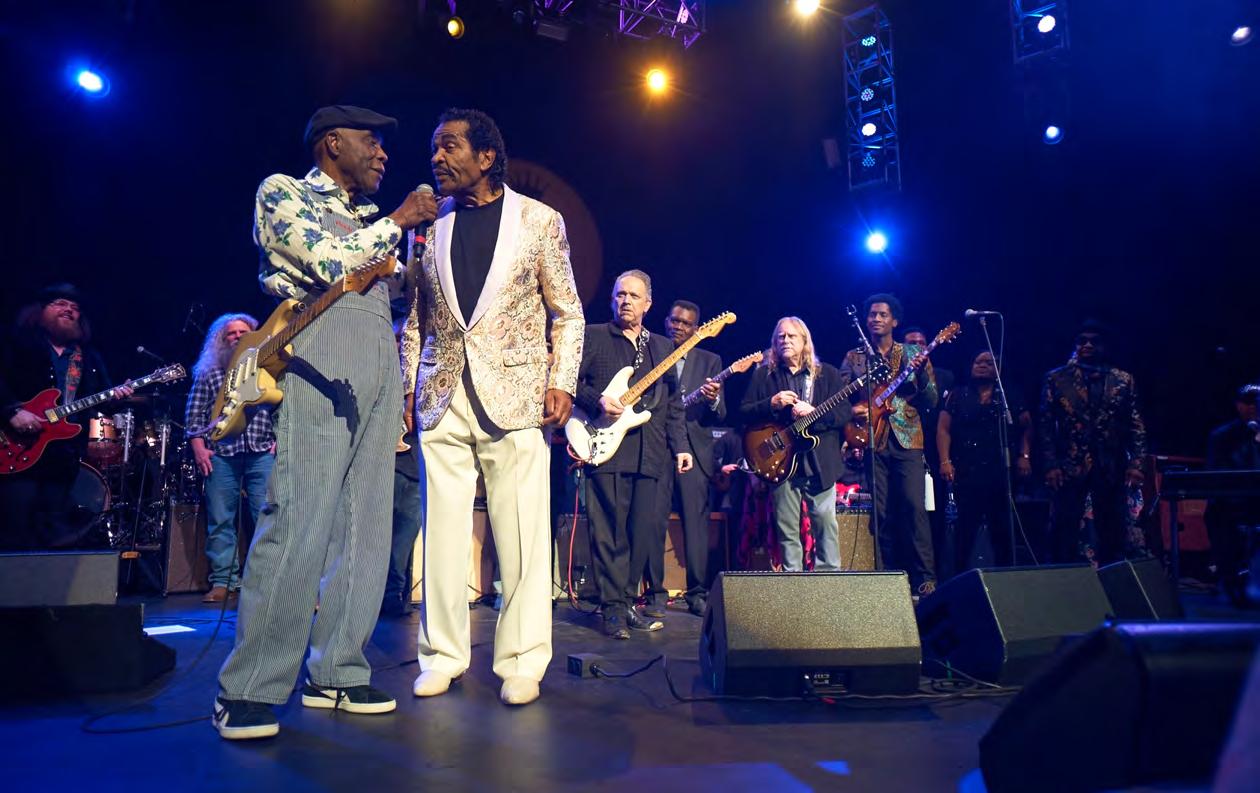
Buddy Guy, left, and Bobby Rush at a B.B. King tribute show in 2020
cultivated a reputation as a dynamic live performer with an outrageous stage demeanor, becoming an underground legend and garnering a nickname that persists to the present day.
“I’m the King of the Chitlin’ Circuit,” Rush affirms.
“ The Chitlin’ Circuit is the network of Black-owned entertainment venues that are denser in certain parts of the country; the South is the most dense,” explains Preston Lauterbach, author of the 2012 book The Chitlin’ Circuit and the Road to Rock ‘n’ Roll and co-host of Last Fair Deal: The Robert Johnson Podcast.
“Its history goes back through segregation, to the ’30s and ’40s; by the 1950s it was really thriving independently without any outside support,” he continues. “It was African American talent, venues, audiences, talent agencies. It was a completely African American-owned industry that came at a time before records were profitable.”
Rush spent his teen years in Pine Bluff, a place Lauterbach refers to as a “great Chitlin’ Circuit town.” At that time, one could venture into a local club and catch performances from the likes of Big Joe Turner, T-Bone Walker, or Louis Jordan.
The talent coming through the
Chitlin’ Circuit’s first wave laid the foundation for a generation of Black musicians and ushered in a stylistic shift in the sound of American popular music.
“ The music would have been really bluesy, jazzy, and came at a time that what would be considered rock and roll was evolving,” Lauterbach says. “Instead of the big jazz bands, you’d see smaller bands, like Louis Jordan and his Tympany Five. Jordan particularly changed the shape of music.
“ The influence he had on Ray Charles, B.B. King, Chuck Berry, Bobby Rush — he did what Elvis did for The Beatles,” he adds. “You could ask any of them about the impact of Louis Jordan, but they’re all dead, except for Bobby.”
By the 1960s and ’70s, when Rush was at his most active on the Circuit, desegregation and integration offered new opportunities to Black artists, allowing for crossover potential. As that happened, the rural clubs started closing up shop and Black-owned venues in urban areas became the major source of activity on the Chitlin’ Circuit.
The music itself changed, too. Gone was the blues and jazz of the pre-rock and roll era. “Soul was kicking in and the Circuit played a crucial role in that evolution. It
became a place for that generation to perform and hone their chops,” says Lauterbach. “It was very good for art and kept everybody on their toes. …You couldn’t just grind popular stuff into the ground. It really gave the artists the space to make something happen. Bobby came up in that atmosphere.”
Music for Grown Folks
In addition to his flamboyant live shows, Rush has made his mark by playing what Lauterbach says is colloquially referred to as “grown folks’ music,” songs centered on adult-themed content.
Rush’s material is hilariously lascivious. He employs slang and deploys absurdist metaphors to tell stories of two-timing men and women, romantic scenarios gone awry, and other tawdry tales that frequently end with him looking ridiculous.
This year, Rush is celebrating the 50th anniversary of one such track, the one that made him a star on the Chitlin’ Circuit. He loves to tell audiences the inspiration behind “Chicken Heads,” tracing its history back to his early childhood years in Louisiana: Rush was teaching himself guitar on the sly, fearing his preacher father would find out and
force him to quit playing. One day, his dad told him get the guitar so he could teach him a lesson. The young Rush was stunned that his father could play guitar and even more so by what he was playing.
“I thought Daddy was going to play ‘Amazing Grace’ or ‘Precious Lord,’ something from the church,” he tells the audience. “But he started singing, ‘Me and my gal went chicken huntin’ / She fell down and I saw somethin.’ I couldn’t believe it!
“I knew what he was talking about, but I didn’t know the words for it, and I said, ‘Daddy, sing it again,’ so I could find out,” Rush continues. “Years later, I took that idea and wrote ‘Chicken Heads.’”
Released in 1971, “Chicken Heads” would be Rush’s first certified gold record. Last February, he released the four-track Chicken Heads 50th Anniversary EP to celebrate the original — a charmingly irrepressible, highly euphemistic slice of gritty Southern soul-funk. For the anniversary, Rush re-recorded “Chicken Heads” with his current band and collaborated with three other artists to put their spin on the classic song.
On one version, Buddy Guy offers up some incendiary lead guitar for his longtime friend while Rush blows some mouth harp and shares lead
vocals, transforming the track into the type of torrid blues-rocker that has become Guy’s stock and trade. On another, rising blues phenom Christone “Kingfish” Ingram slows down the tempo, turning in a rendition that merges his swampy electric blues with classic soul. In a team-up with Gov’t Mule, Rush and the group dig into the song’s groove and offer up a greasy Southern rocker.
“It’s such a cool tune and we were really psyched to do it,” says singer and guitarist Warren Haynes. “It was the first thing Gov’t Mule recorded after the pandemic. It was just what we needed as we inched our way back toward getting back to what we do as a band.
“We’ve known Bobby for ages; he sat in with Gov’t Mule about eight years ago, maybe more, at a tribute to B.B. King and we’ve played together a handful of times,” he adds. “In the blues world, everybody knows Bobby. There’s this positive energy that flows through him that’s contagious and makes him a pleasure to play with.”
For Rush, having such enthusiastic collaborators on the EP made work on the project enjoyable. And having a contemporary like Guy, an established act like Gov’t Mule, and a nascent talent like Ingram involved also served as a validation for his career to-date.
“Warren and I built a relationship playing together in Jackson [Mississippi],” Rush says. “They love the thing that I do and when I asked him to do it, he said, ‘Man, shit yeah.’ I told him I didn’t have much money to give him for it and he said, ‘Man, your money is no good to me.’
“He doesn’t know how much that meant, the love and respect he had for me,” Rush continues. “So many people wanted to do it — Eric Clapton, Tom Jones asked — but I didn’t have the room. To have Buddy, Gov’t Mule, and a young guy in Christone play, it makes what I do live on forever.”
Crossing Over, Not Out
Right now, Rush is recording and performing for his largest, most diverse audience ever. He still dons the sequined jumpsuits and brings out the big band, backup singers, and dancers for lively shows in front of Black audiences. But in recent years he’s found success outside of his Chitlin’ Circuit kingdom.
An appearance in Martin Scorsese’s 2003 PBS docuseries The Blues: A Musical Journey and a string of well-regarded albums on his own Deep Rush Records imprint brought increased attention. The real breakthrough for Rush came in 2016, when he released Porcupine
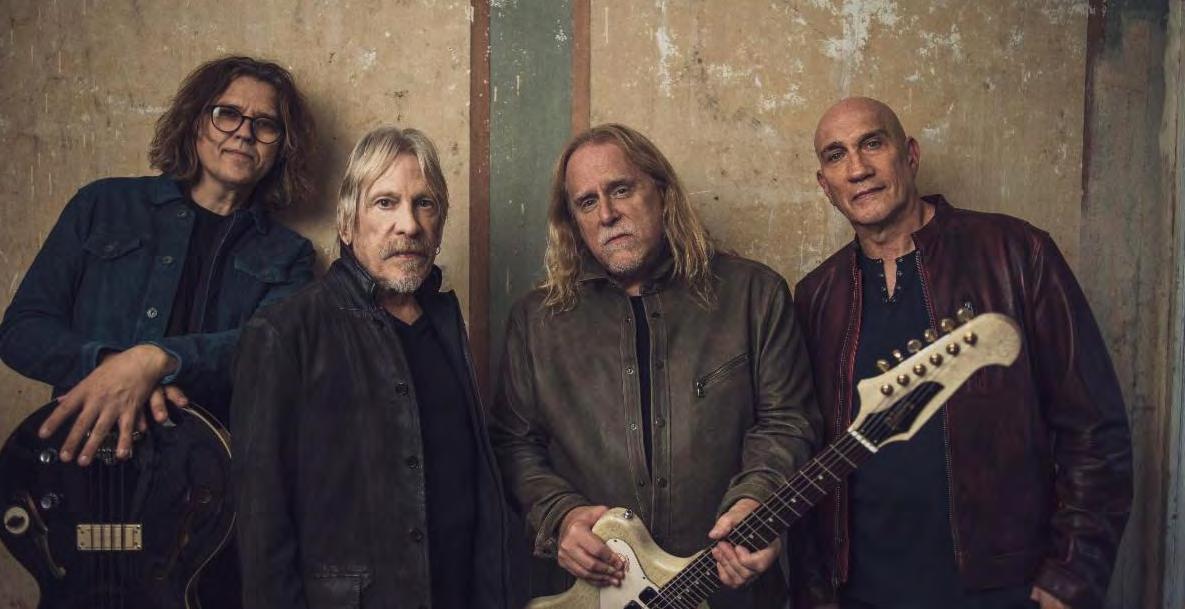
Meat on Rounder Records. The record’s scaled-down arrangements and guest spots from Keb’ Mo’, Joe Bonamassa, and Dave Alvin (and slightly less outrageous lyrical fare) were a hit with white blues audiences.
“I was 83 years old and Scott Billington [an executive at Rounder and producer of Porcupine Meat] said, ‘We just want you to be you,’” Rush recalls. “I played him a demo of ‘Porcupine Meat’ and I could tell he was like, ‘I got some shit here with this guy.’
“When ‘Chicken Heads’ first came out, I was afraid to tell people what it was about and it wouldn’t get played,” Rush continues. “But I told Scott that ‘Porcupine Meat’ was about a girl that’s ‘too fat to eat and too lean to throw away.’ He just about lost it he was laughing so hard.”
Porcupine Meat won the 2017 Grammy Award for Best Traditional Blues Album. After three prior nominations, it marked Rush’s first Grammy win. His follow-up LP, Sitting on Top of the Blues, was released in 2020 and earned him another nomination. Last year, his solo acoustic Rawer Than Raw earned him a second Grammy. The plaudits were unexpected and
more important to him than Rush anticipated. They’ve proven crucial in raising his musical profile.
“I didn’t know how much it was going to mean,” he says. “I’ve had big records, but this meant so much. I didn’t know what it would mean financially.
“It raised my clout financially, the price to book me was able to go up,” Rush notes. “The Grammys, winning two and being nominated four other times, raised my clout and allowed me to cross over to a white audience.”
Rush switches up his persona and approach to suit the respective audiences. He rarely, if ever, performs a solo acoustic show for Black fans and, conversely, white folks are unlikely to get the full-on ribald soul-funk treatment.
“It’s been hard to do it my way, and I do have to compromise what I say,” he says. “I have to think about my audience, its age, if it’s white or Black. I have to think about who I am as a Black man telling my story to white people.
“It’s funny to me; God has given me the ability to do whatever I want to do and He’s given me an ability to read an audience,” Rush continues. “But I’ve learned that people are
people and I want to make sure they say, ‘Bobby Rush, damn he’s good.’”
There are benefits to having two distinct, sustainable audiences. It allows him to display the full range of his abilities as a musician and performer. The stylistic separation has also helped him grow his fanbase without sacrificing his appeal to the Black listeners who sustained his career for decades.
Rush sees that as something unique for a Black blues and roots performer and vital to letting him maintain what he feels makes him stand out as an artist.
“I’m a rare kind of person; I crossed over in my way without crossing out on myself or my people,” he says. “People won’t really know or understand it until I’m dead and gone. Sam Cooke didn’t do it, Ray Charles didn’t, B.B. King did what he had to do to make it, but they crossed out.
“It was hard for me because I didn’t, even when management wanted me to,” Rush continues. “Thank God I didn’t. I consider myself a musician and an entertainer. There’s many musicians and very few entertainers. I’m the last of my kind, the last of the entertainers.” ■
JAY
SANSONE
Gov’t Mule
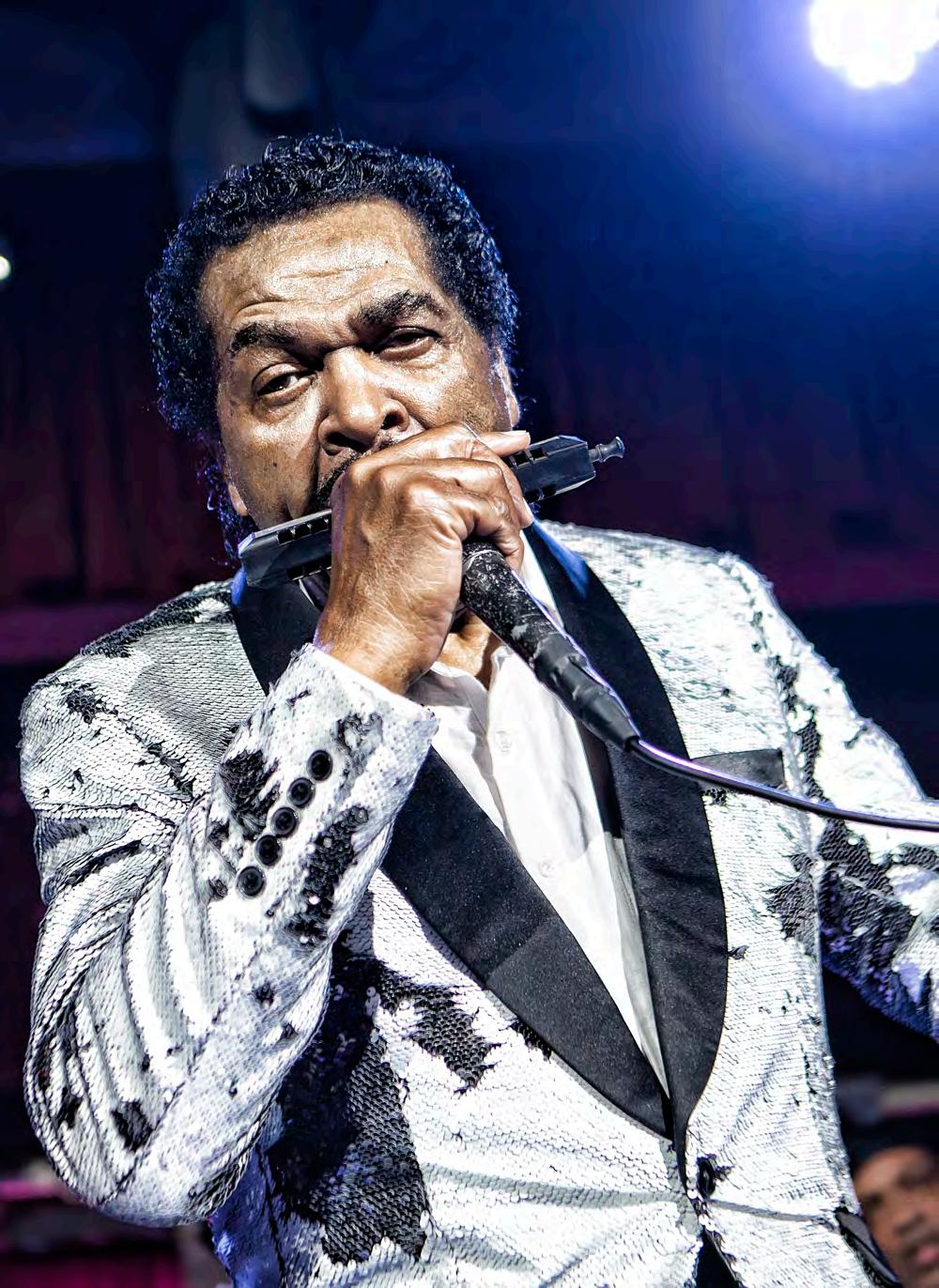
BACK TO THE WELL
Marcus King brings the
lessons
of classic rock into the modern era
by Joshua M. Miller
In 2021, 26-year-old singersongwriter and guitar phenom Marcus King found himself with more questions than answers. He was in a dark place, overindulging in multiple substances and trying to push through a particularly painful breakup.
King credits music, particularly classic rock and roll, for throwing him a lifesaver. On his new solo album, Young Blood, which came out in August via American Records/ Republic, King examines these challenging experiences and ultimately finds hope and salvation. There’s nothing phony or cliché in
King’s lyrics. Everything is straight from his heart and from his past, if occasionally embellished with artistic liberty.
“I think music is the greatest healer, especially for the things I was struggling with at the time,” says King. “I was really happy to have music and songwriting and good friends to help me get through a dark period in my life. I’m happy to share all this pain, through the power of music, with everyone.”
Raised on Rock
King picked the title Young Blood to pay respect to an old friend of his,
Allman Brothers drummer John Lee Johnson, also known by the nicknames Jaimoe and Jai Johanny Johanson, who likes to assign nicknames to others as well.
“He always calls me ‘Young Blood,’ and I just always thought that would be a nice way to self-title a record without just self-titling it,” says King.
But his respect for the past goes even deeper. On Young Blood, King created a classic-sounding rock-androll album that pays respect to the music of the ’60s and ’70s that he grew up listening to.
“I just wanted to fully get back to my roots and give people a real
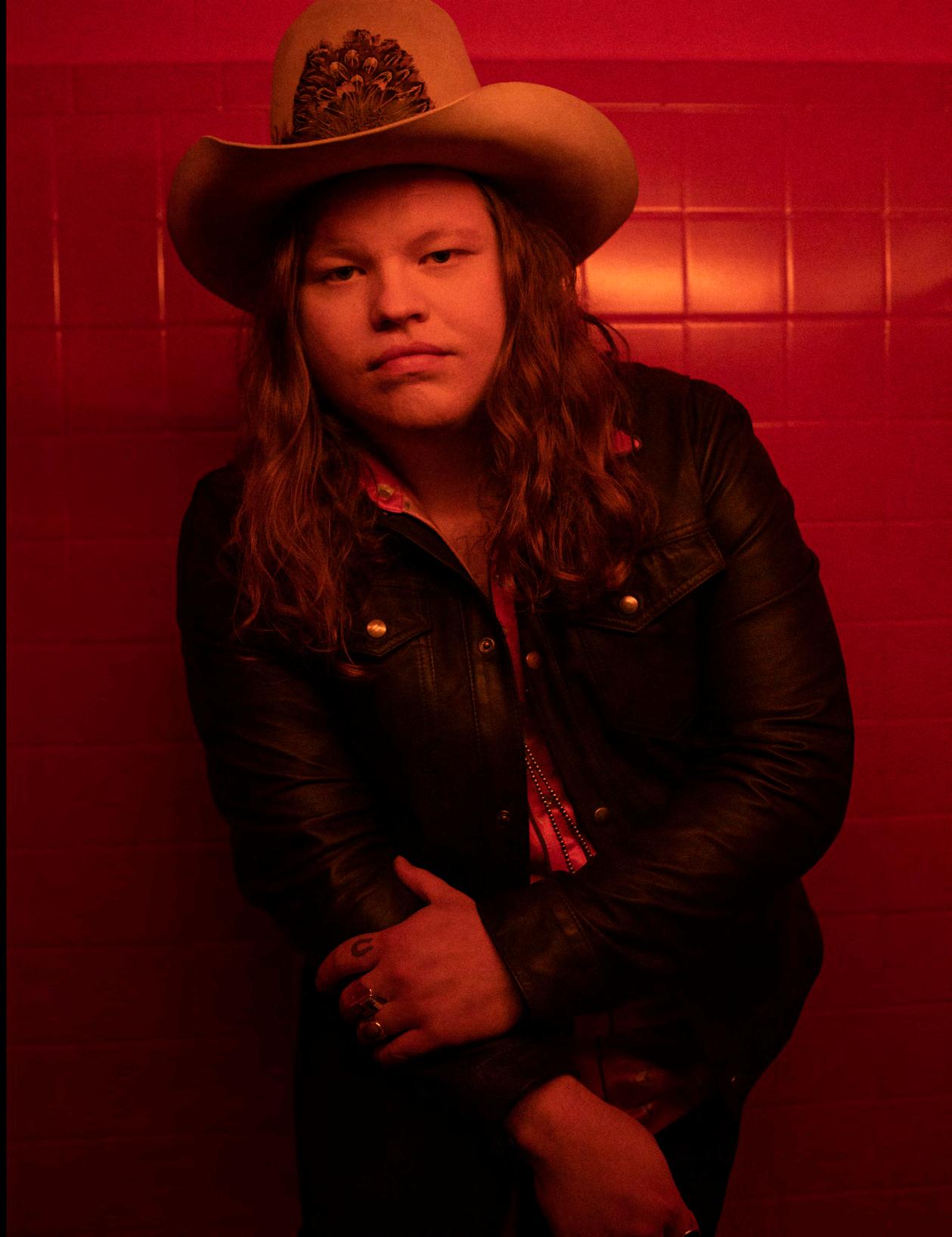
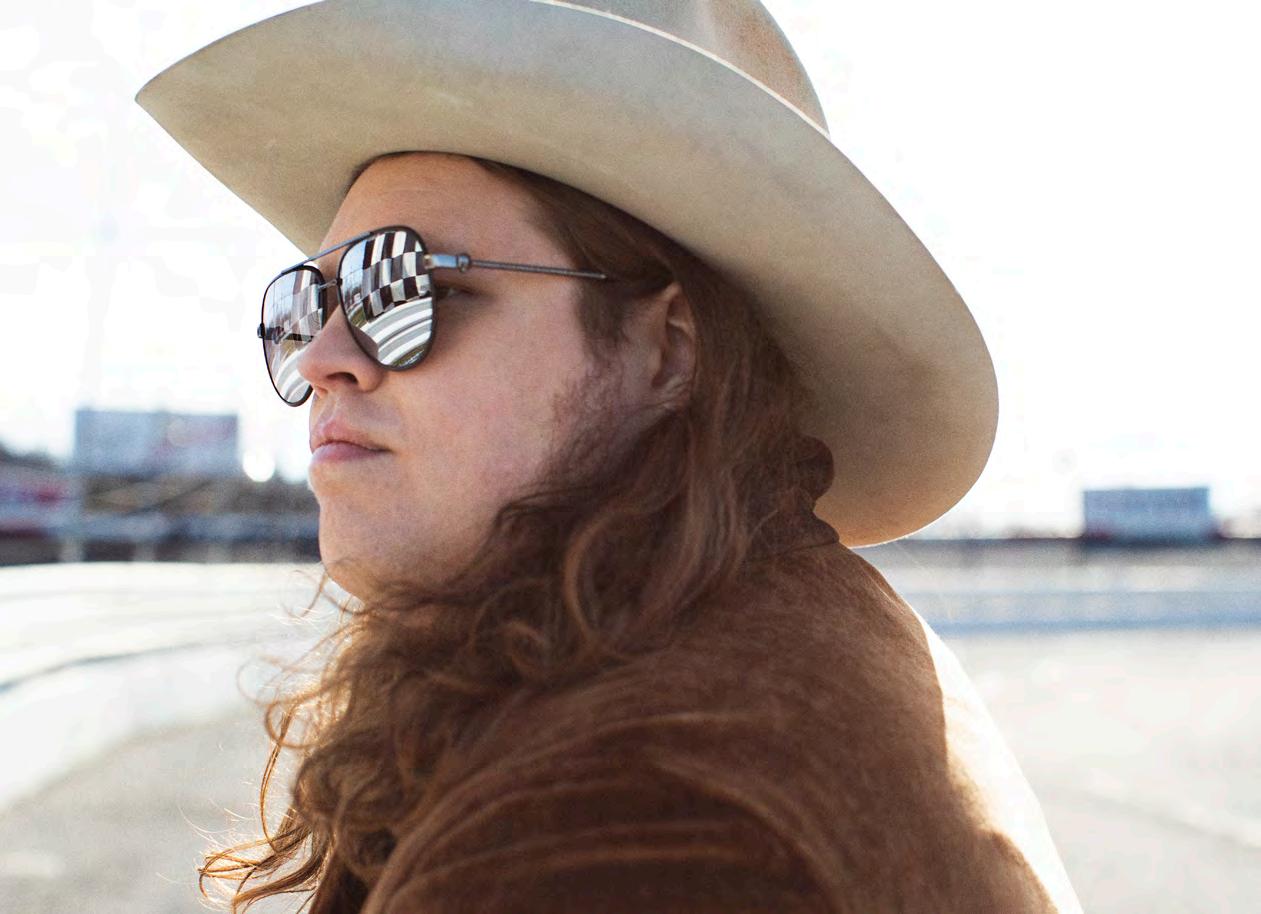
glimpse into the music that first really molded me as a human,” King says.
The album is a homage to artists that King admires. He recalls the excitement of discovering a range of classic English and American musicians steeped in blues, rock, and Southern anthems and finding authenticity in their sonic and lyrical inhibitions. They weren’t afraid to speak their mind, and some used their music as a way to address personal struggles and important issues. Those sounds and styles impacted his own songwriting, and he tried to emulate those values, that rawness, and apply those same qualities to Young Blood.
Listeners can pick up on musical connections to Jimi Hendrix’s shredding and Black Sabbath’s heaviness on songs such as “It’s Too
Late” and “Aim High.” But King also integrates the lean, muscular rock of Grand Funk Railroad and ZZ Top in songs such as “Lie Lie Lie” and “Good and Gone.”
One key source King cites is Procul Harum vocalist and guitarist Robin Trower. Bridge of Sighs, Trower’s second solo LP from 1974, was the first album he bought with his own money when he was 11 years old. Another was the British blues rock band Free. “I think Fire and Water is probably the record that impacted me the most, and particularly a song called ‘Oh I Wept,’” King says. “I find myself going back to that well quite often, as far as drinking those waters of inspiration.”
These “warm-sounding eras of music” felt comforting to him. They sound like home because he was
raised listening to that music.
“I feel at home hearing records from that time,” he says. “I think a lot of it has to do with the recording style of those decades, which was primarily tape, and all cut live in the same room. The music itself was not very contrived.”
As important as vintage sound is to King, he also takes note of the work ethic of that era. It’s the inspiration for his rock anthem “Hardworking Man.” The guitar riff for the song came to life when he and his band started recording it. Angelo Petraglia and The Black Keys’ Dan Auerbach helped co-write the lyrics.
“I was inspired by all the hardworking men I knew in my life, and my grandfather in particular,” King says.
Family has played a pivotal role in King falling in love with rock and
“Marcus King’s music is my home base. It takes me back to when real musicians, who could play and sing their own music, gave everything they had to be up there on the stage instead of taking everything you’ve got to see a live show today.”
Desmond Child
roll. King, a fourth-generation musician from Greenville, South Carolina, learned guitar when he was three years old from his father, Marvin King, a blues rock musician. When he was about 8, he performed alongside his father, grandfather (a country guitarist), and uncles for the first time.
“I was able to have access to my father’s record collection from a really young age, and my grandfather would babysit oftentimes when I was little, and he’d show me things on the guitar or introduce me to artists like Elvis Presley and Chuck Berry,” he says. “My father put me onto the blues greats, with Muddy Waters and Albert King, and rock groups like The Allman Brothers Band and [Led] Zeppelin.”
King is reminded of their
influence every time he performs on stage and in the studio. He used his father’s amp for recording Young Blood and occasionally uses his grandfather’s 1962 Les Paul electric guitar. “There’s quite a bit of significance for that guitar with me, and I really only bring it out for special occasions,” he says. “I recently used it at the Ryman when I played with Marty Stuart. I bring that guitar with me in spirit everywhere, but really only take it to really important hallmarks in my life.”
Good Energy
When he set out to make a rock and roll album, King didn’t do it alone. Other co-writers on Young Blood include Desmond Child, Greg Cartwright, and Andy Gabbard. And Auerbach, who helmed King’s 2020
solo debut El Dorado, once again produced the album.
They recorded the album in just six days in the summer of 2021 at Auerbach’s Easy Eye Sound Studio in Nashville. These solo albums with Auerbach followed three albums with his eponymous Marcus King Band, which helped him break into the scene in 2013.
“We worked together on El Dorado, so the comfortability level was that much higher,” King says. “We’ve become very good friends in the past few years, since I’ve been living in Nashville, so it was really a natural and organic process to work with him in the studio again.”
Seeking to capture the classic power trio sound of bass, drums, and guitar that originated in the ’60s and ’70s, Auerbach assembled a potent backing band, including drummer
Chris St. Hilaire and bassist Nick Movshon.
“I put a lot of trust in Dan Auerbach as a producer, and I really admire his ear and his ability to get the best sound out of his artists,” says King. “I completely trusted him when he was assembling the group for this record to be recorded with. Everyone just brought the most powerful rock-and-roll energy that we could imagine for this record, and I think we made a good call.”
Child, known for his collaborations with Aerosmith, Bon Jovi, and KISS, says the album’s sound brings him back to his younger days. When he was a teenager in Florida, he’d sneak into rock festivals to see artists such as Janis Joplin, Jimi Hendrix, The
Rolling Stones, Alice Cooper, B.B. King, and Johnny and Edgar Winter perform. It’s what made him want to become a rock star himself.
“Marcus King’s music is my home base,” he says. “It takes me back to when real musicians, who could play and sing their own music, gave everything they had to be up there on the stage instead of taking everything you’ve got to see a live show today.”
Child wasn’t familiar with King’s work prior to them working together. But he trusted Auerbach’s judgment — “when Dan Auerbach says write … I write!” he says with a laugh — and instantly connected with King’s music.
“I started listening to him on my way in the car to our writing session
and was totally blown away,” says Child. “Marcus is truly one of the great rock and blues singers of our time.”
Child says he, Auerbach, and King “bonded instantly from the moment we took off our COVID masks and sat at Dan’s round table close to the goodies and beverages in the fun kitchen area at Dan’s studio in Nashville.” The writing atmosphere was productive, as all three contributed equally and the “ideas were flying back and forth from the first chord.”
They found an especially personal connection as they co-wrote “Blood on the Tracks,” a sizzling rocker with a tight rhythm in the vein of Creedence Clearwater Revival. In the song, King lyrically stands face to face with his
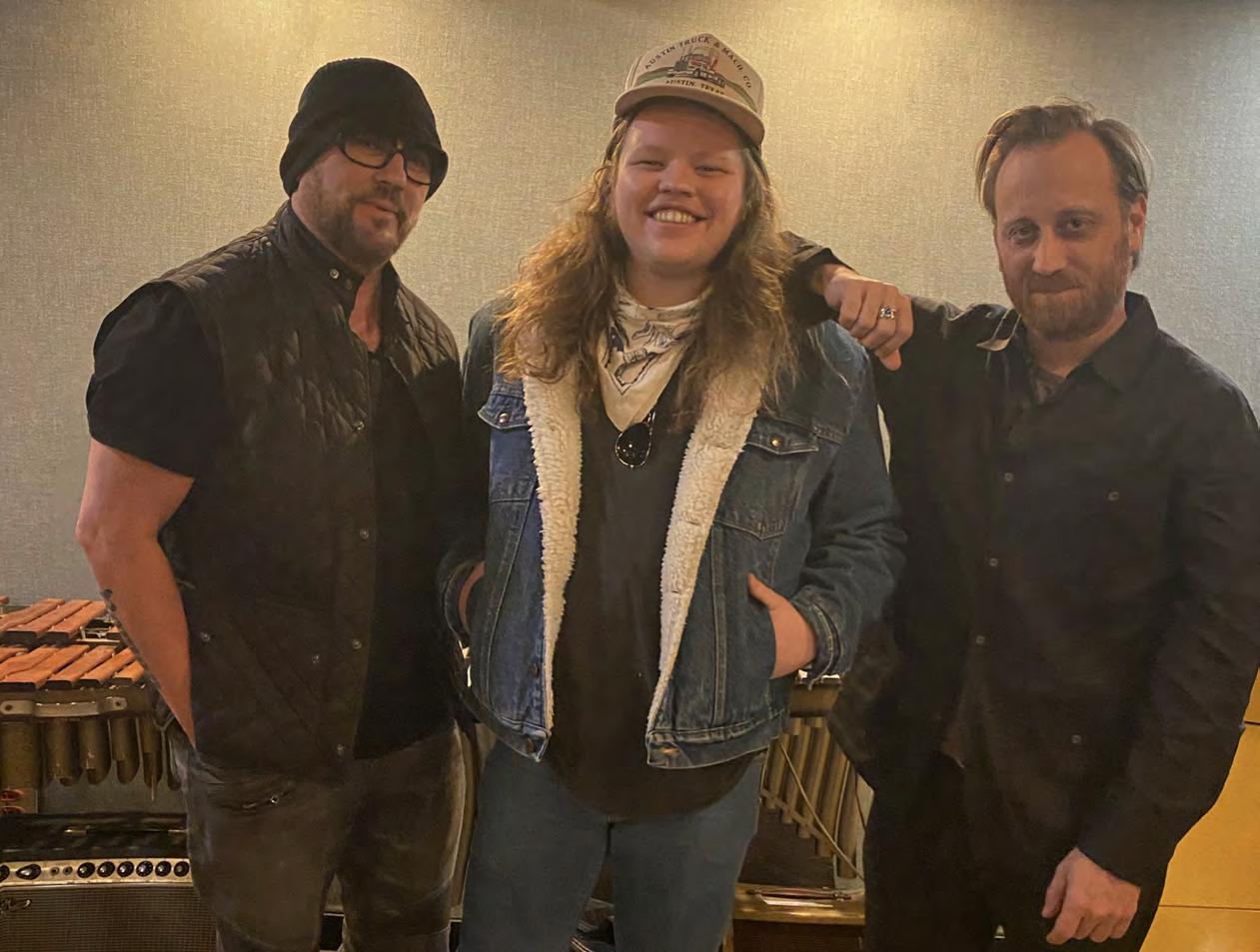
dark thoughts and decides to leave everything behind and escape. Child could relate, via his personal struggles of working in the cutthroat music industry.
“ Writing ‘Blood on the Tracks’ with Dan and Marcus was very personal for me as well and I thought all along they were helping me fine-tune the lyrics about my life,” says Child. When it came time to record, the band tracked mostly live — often in just a few takes — to achieve its raw sound. King says it worked so well because it happened spontaneously.
“We captured a lot of really organic and natural moments between myself and the other musicians,” says King. “That was the purest way for me to capture these
songs and what they meant to me, so I’m glad that we took that approach.”
Once all 11 tracks were written, recorded, and produced, Young Blood was ready to be released on Rick Rubin’s American Records/ Republic Records. “Rubin is a really big hero of mine, always has been. Really enjoy the time I’ve been able to spend with Rick,” says King. “He’s a wonderful human being and obviously has a great ear for music, and I’m very excited to have his input this time around.”
King is grateful for Rubin’s implicit support, as well as explicit votes of confidence from all over the music industry. From Gov’t Mule’s Warren Haynes signing The Marcus King Band to his Evil Teen label and releasing its 2015 debut, to Dave
Cobb’s production work on the band’s 2018 Grammy-winning Carolina Confessions, to a gig at Eric Clapton’s Crossroads Guitar Festival in 2019, and more, King credits past and present collaborators — both the veterans and members of his own multiple outfits — with helping him grow as a musician and person.
“It’s truly a blessing to be able to do what I love, and to make a living at it, and to be able to do it with bandmates who have become more like family members in the past years, so I just feel really honored to be able to do this for a living,” King says. “I’ve had a great opportunity to work with many of my heroes, and to have the stamp of approval from your hero is always a great honor.” ■
From left, Desmond Child, Marcus King, and Dan Auerbach during the recording of ‘Young Blood’ in Nashville

A HOME RUN IDEA
The Vandoliers and baseball bat maker Warstic find common ground in sports and music
by Natalie Weiner
RICO DELEON

The Vandoliers
The music of bat-based sports stretches far beyond “Take Me Out to the Ballgame” — just ask anyone who’s savored the anticipatory pause between the crack of a home run and the roar of the crowd. As Modern Drummer magazine put it in a 2006 collection of advice titled “Grip Tips and Observations,” “Just as there is a sweet spot on a baseball bat, there is an optimum spot on the drumstick, which acts as a pivot point and will provide a better sound.” Because whether repelling a pitch going 90 miles per hour or hitting a snare with feeling deep in the pocket, there’s an
aesthetic similarity and a meaty, percussive pop.
Yet the most obvious connection — that both occupations require using wooden sticks to hit things — has fielded few results besides that analogy, at least until now. An unlikely recent Twitter conversation centered on this exact idea, with a Dallas band shredding the difference between country and punk and a baseball bat manufacturer finding common ground somewhere between home plate and a drummer’s throne.
The Vandoliers have been flaunting their punk DNA for country music fans since 2015, when lead
singer Joshua Fleming had an epiphany about the ties between the two genres and penned the band’s aptly titled debut Ameri-Kinda. In August, the group released its selftitled fourth album on Amerikinda Records/Soundly Music, just after a monthlong European tour and in between stints opening for Flogging Molly and Old 97s. They’ve been spending so much time on the road that drummer Trey Alfaro can barely keep his sticks intact.
“Right now, I’m looking at a pair of sticks that I’ve used for one show — and they’re just in shreds,” Alfaro says, calling toward the end of the band’s jaunt across Europe and the
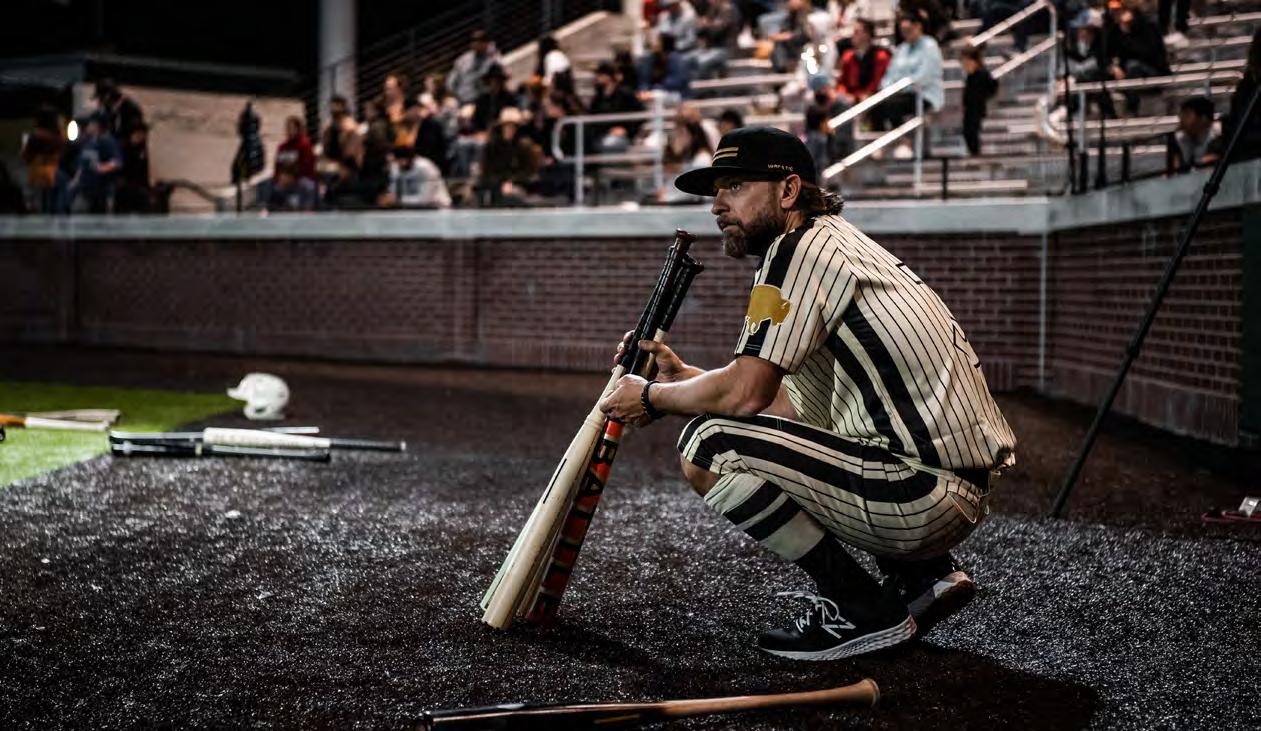
PHOTOS BY SEAN BERRY / COURTESY OF WARSTIC
Ben Jenkins
UK. “It’s not like they’re cheap sticks. I know it’s kind of weird coming from an alt-country/Americana band, but I play big drums and big cymbals and my sticks get torn up quickly.”
Alfaro says keeping sticks intact has “always” been a challenge. Before joining The Vandoliers last year, he was playing mostly punk, and his hard-hitting style hasn’t really changed as he supports the band’s rollicking, intense take on country music. Now, though, in the midst of the group’s marathon tours, he’s struggling to keep himself in sticks, which he notes are not exactly cheap. (A 12-pack of Vic Firth drumsticks
costs more than $50.) “I’m not endorsed yet,” he quips, “so I’ve been trying to ration them as much as I can.”
When Alfaro made an offhand comment to his bandmates in early June about breaking too many sticks, they immediately started brainstorming a solution. Cory Graves — who plays keyboard and trumpet as just a fraction of his musical contributions to the band — mans the group’s Twitter account and figured that would be the best place to go in search of some drumstick-related support. “I always think it’s funny and cool the way that we’ve gotten offers for things or
made connections just from some jokes I made on Twitter,” he says. Although his initial impulse was to tweet at one of the major drumstick manufacturers in search of that long-awaited sponsorship, it just didn’t seem quite right for the offbeat band. “We were like, ‘That’s not on-brand for us,’” Graves says. “We’re not normal stick company people.”
Then came the lightbulb moment. “Somebody [in the band] was just like, ‘Man, you’re breaking too many sticks — you should be whipping out baseball bats back there,’” Alfaro remembers with a laugh.
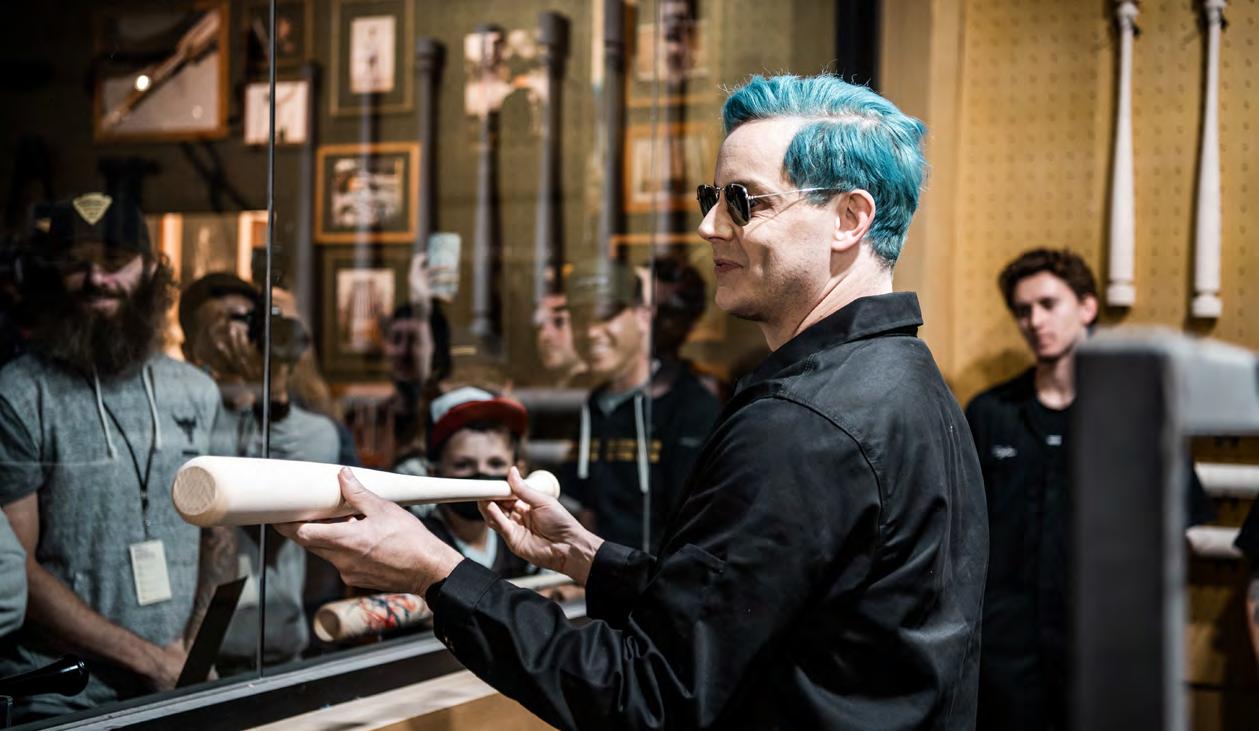
Jack White at the Warstic flagship store in Dallas
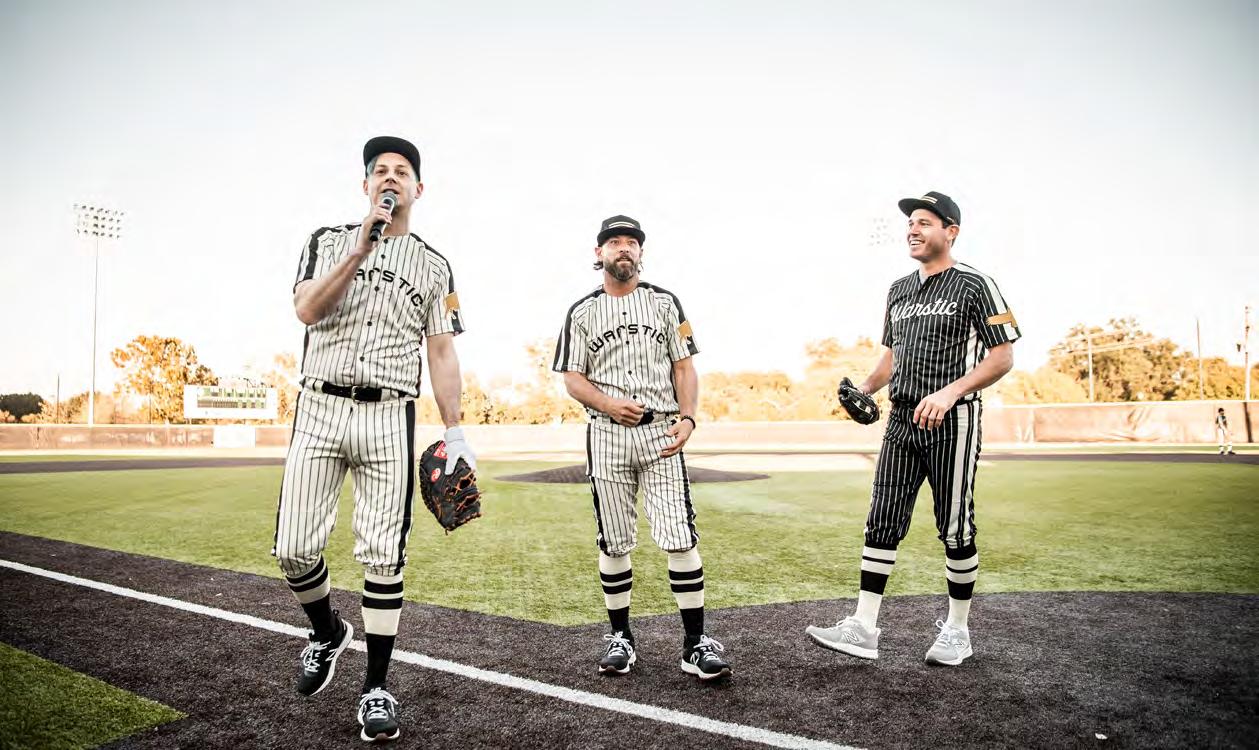
The Vandoliers, as it happens, are avid Texas Rangers fans. According to Graves, fiddle player Travis Curry is the most devoted to the team, watching every game even while the band is on tour, even when he can’t root for them in real time. But the whole band is into the sport: Earlier this year, they even had Vandoliers baseball jerseys made to add to their enviable merch selection (which also includes a Rangers-styled raglan shirt with their name in the place of the Major League Baseball team’s). Alfaro worked at the Rangers ballpark in high school and says that The Vandoliers occasionally hit the batting cages for fun. Before Alfaro joined the band, The Vandoliers even toured the Louisville Slugger factory while on the road.
So after the suggestion that Alfaro should pick up some significantly larger hitting implements, it only made sense that Graves would immediately turn to the venerable baseball bat manufacturer to ask them for a hand. “Yo @sluggernation
y’all ever make drum sticks?” he tweeted. “Our drummer [is] tired of breaking so many every damn show.”
Hillerich & Bradsby, the company that manufactures Louisville Slugger bats, never responded. But another company did: Warstic, a bat manufacturer that improbably has both musical and Dallas ties — and happens to be workshopping a drumstick.
Officially founded in 2011, Warstic is the brainchild of Dallas native Ben Jenkins, who combined his brief experience as a second baseman in the Phillies farm system with his time as designer and founder of branding agency
One Fast Buffalo to create highconcept sporting goods. It was a one-man operation until Jack White (a noted Detroit Tigers fan, in addition to his musical accolades) became an investor in 2016, alongside former MLB player Ian Kinsler. They’ve since built a headquarters and flagship operation in Dallas’ Deep Ellum neighborhood that features an
intimate speakeasy venue as well as batting cages — in other words, as much a marriage of music and sports as a Vandoliers baseball jersey.
Major League Strength
Warstic had been brainstorming ways to make drumsticks long before seeing Graves’ tweet.
“Like most people, we’ve been trying to figure out how to be a little bit more sustainable,” says Jenkins. “One of the things that’s always bugged me and Jack is that with the wood bats, they’re actually made to break. You might use them one game, or you might use them 50 games — if you hit the ball wrong one time, it’s gonna break.”
Exploring why requires a brief foray into the history of baseball: Bats have been made out of a variety of different types of wood over the years, much like drumsticks. Right now, most professional baseball players use maple bats, a trend started by Barry Bonds, the MLB’s
From left, Jack White, Ben Jenkins, and Ian Kinsler
“In a lot of ways, the ‘perfect’ drumstick includes the concept of it breaking, not being ‘break proof’ or else people would just use metal sticks. It’s about feel [and] balance, just like in the world of baseball bats.”
Jack White
career home run leader, in the late 1990s. Maple is both harder and more brittle than many of the other types of wood used to make bats (especially ash, which was the most common material used pre-Bonds), making it even more breakable. Warstic stocks bats made of metal, maple, and birch. By comparison, maple, oak, and hickory are among the most popular types of wood for drumsticks.
“Usually these bats break in half,” Jenkins says. “And it’s like, okay, could a drumstick be made out of that?”
Warstic started workshopping a new process that would allow the company to recycle broken bats into drumsticks, sending out prototypes for White’s drummer, Daru Jones, to test while on tour. Jenkins quickly realized that his experience designing baseball bats — and playing baseball — was considerably more relevant to drumstick creation than he initially expected.
“It’s been kind of the same
process as with a baseball bat, finding the right balance between performance and durability,” Jenkins says. “If you make them too heavy, you won’t want to swing with it. If you make it too light, you might like it, but they’re gonna break too easily.”
White connects that sense of balance back to music as well. “In a lot of ways, the ‘perfect’ drumstick includes the concept of it breaking,” he says, “not being ‘break proof’ or else people would just use metal sticks. It’s about feel [and] balance, just like in the world of baseball bats.”
Having finally found the right balance in business, Jenkins and Warstic are planning an initiative where athletes can return their broken Warstic bats in exchange for some kind of store credit, and then the company can use the fragments to make drumsticks. At first, he says, the sticks will probably be more like one-off collector’s items, but as the company continues to grow, the possibilities for a bat/stick recycling
program will too.
“Maybe it will lead to the point where drumsticks are something we get more mass produced, but at least in the meantime, they’ll be something cool and functional for collectors,” Jenkins says. He also says they’ll work on sending a pair to The Vandoliers, although Alfaro might have to wait a while for that coveted sponsorship.
“I would love to be the guinea pig,” Alfaro says. For now, he and the band will keep trying to balance playing as hard and relentlessly as possible through a tour that could very well require the kind of endurance and intensity so often associated with the major leagues.
According to The Vandoliers, their drummer is more than equipped to hit it out of the park, regardless of what kind of tools he’s working with.
“He’s just got everything nailed, it’s been so much of a relief having him back there,” says Graves. “But yeah, he whacks the shit out the drums — no other way to say it.” ■
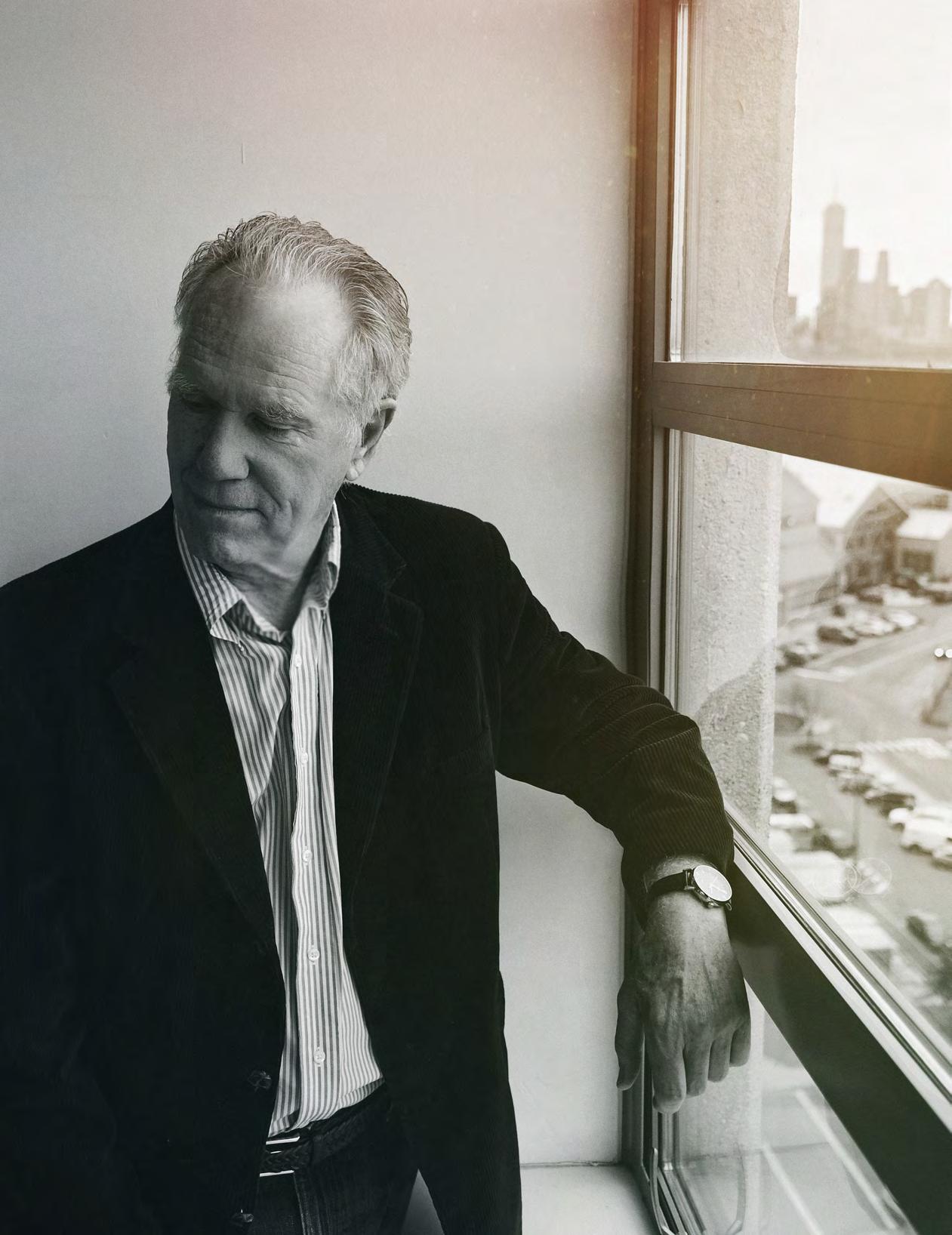
A LIFE ACHIEVED
Loudon Wainwright III reflects on music, family, and connecting
by Michael Elliott
When asked about his debut as a performer, Loudon Wainwright III doesn’t hesitate. “I was seven years old and I remember the song,” he recalls. “It was an old folk song called ‘Rosin the Bow.’ ” He then sings a line in that familiar voice that’s graced well over two dozen studio albums in the last 50 years: “ ‘Oh, I’ve traveled this wide country over la de da de da de dahhhh … ’ I must have learned it at camp or school. I sang it for my mom and her sister. They then showered me with adoration and I was hooked.”
Wainwright is not being selfeffacing; he loves the spotlight and is refreshingly honest about it. The singer-songwriter, now 75, also embraces his age, but he’s been
doing that for a while. Now that he’s entered his fourth quarter-century, Wainwright has discovered that it’s a milestone he’s been rehearsing for his entire career.
“I’m in this kind of latter-day stage in my life,” he confesses. “How much longer is it going to go on? I’ve been concerned with this shit since the beginning of my career.” In fact, as he points out, the first line of the first song on his first record — “School Days,” from his 1970 selftitled LP — goes, “In Delaware when I was younger / I would live the life obscene.”
“I’ve always been kind of age obsessed,” he continues. “But now that I’m really up there, it all feels pretty organic to me.” So organic, in fact, that he named his latest album, Lifetime Achievement.
A return to his own songs after a
charming diversion into the Great American Songbook with I’d Rather Lead a Band in 2020, Lifetime Achievement travels the familiar Wainwright paths of dark familial comedy (“Fam Vac”), staring down mortality (“How Old Is 75?”), romantic reflection (“Lifetime Achievement”), and irreverent perspectives on mundane, everyday life (“Town & Country” and “Fun & Free”). While the songs on Lifetime Achievement flow easily, centered around Wainwright’s acoustic guitar, there’s plenty of space for banjo, electric guitar, the occasional horn section, and a new addition to his arsenal: the tried-and-true folkie’s friend, the harp rack.
“Dick Connette, Stewart Lerman, and I worked a long time on sequencing the record,” he says. “That to me is always important. I
like to think that people still listen to something from beginning to end. That’s what I like to do anyway. I know that some people like to jump around and whatever, but we wanted to create a kind of musical arc with the record, and I think we did a pretty good job on that.”
Finding the Spotlight
Wainwright’s personal life and musical career have both developed quite the arc over the years as well. He was born in Durham, North Carolina, in 1946 to longtime Life magazine columnist Loudon Wainwright Jr. and Martha Harriet Taylor, a native Southerner from South Georgia. His parents were both Marine Corps veterans. The next year and shortly after his sister Martha (whom everyone calls Teddy) was
born, the family moved back to his father’s native New York, where Loudon and Teddy’s brother Andrew was born in 1950, followed by their youngest sister, Sloan, in 1956. (Sloan also became a singersongwriter, performing frequently on the Greenwich Village scene and releasing several albums over the years.)
Coming of age in the 1950s, music caught Wainwright’s attention early on. “I liked rock and roll,” he assures. “I mean, the first record that I ever bought was ‘All Shook Up’ by Elvis, and I had some of Fats Domino’s 78s and Jerry Lee Lewis and all that. I loved it, but somehow, I never bought an electric guitar. I started singing with other people when I was at boarding school in the early ’60s. That’s when the folk boom was happening. I got myself a Martin
D-28. It was acoustic music that I was drawn to.
“For a couple of years there, folk was the happening thing,” he recalls. “It was the first time I heard Bill Monroe. It was the first time I heard Mississippi John Hurt, the Jim Kweskin Jug Band, Richard Fariña … I mean, some of those people were 30 years older than me, but some were just a few years older. It was all very inspiring.”
Although Wainwright’s original dream was to be an actor — he even gave acting school a try before dropping out and heading to San Francisco for a while “to become a hippie” — he still gravitated toward music. He eventually found work in a boatyard in Rhode Island, but within a year of writing his first song, Atlantic Records signed him and released his debut, eponymous
“I love comedians and I’m always trying to make my audience laugh. But I also wanted to write more serious things, too. Funny and tragic are the flip sides to the same coin. When you laugh, you sometimes cry. And when something’s tragic, you also cry. They are certainly connected.”
Loudon Wainwright III
album in 1970.
After two albums, Atlantic dropped him, but Columbia offered to release his third, simply titled Album III, in 1972. It opens with “Dead Skunk,” inspired by Wainwright running over an already dead animal one night, which is still his biggest hit. Reaching the Billboard Top 40 with banjo-fueled, observationalist comedy free of ambiguity, the song is still as silly as it is timeless.
Despite the one-hit-wonder tag, Wainwright didn’t feel pigeonholed. “I like writing novelty songs,” he admits. “Some of my heroes are Stan Freberg, Jonathan Winters, and Lenny Bruce. I love comedians and I’m always trying to make my audience laugh. But I also wanted to write more serious things, too. Funny and tragic are the flip sides to the
same coin. When you laugh, you sometimes cry. And when something’s tragic, you also cry. They are certainly connected.”
It’s Complicated
Writing about complex emotions comes naturally not only to Wainwright, but also to most everyone in his complex and extended family. “I have four kids,” he gushes. “And three of them — Rufus, Martha, Lucy — they’re known because of their music. I have another daughter, Lexie, who’s a brilliant, funny writer, although she’s steered clear, at least so far, of the guitar/song thing. But I am proud of them. They’re talented, and they’ve done well. As far as my contribution, certainly, in the case of Rufus and Martha and Lucy, I wasn’t really on
the scene as much as I should or could have been, but their moms were and are amazing, talented women themselves.”
Wainwright’s first wife, singersongwriter Kate McGarrigle, performed with her sister Anna as a folk duo for many years. McGarrigle (who passed away in 2010) and Wainwright divorced in 1978, when Rufus was three and Martha was just a few months old. Lucy’s mother, Suzzy, was part of another famous musical family, The Roches. Wainwright and Roche — although never married — stayed together for nine years and split in 1984, when Lucy turned two. He eventually married Ritamarie Kelly, mother of Lexie, in 2005, though they broke up as well.
As far as his children continuing in the family business, that’s never
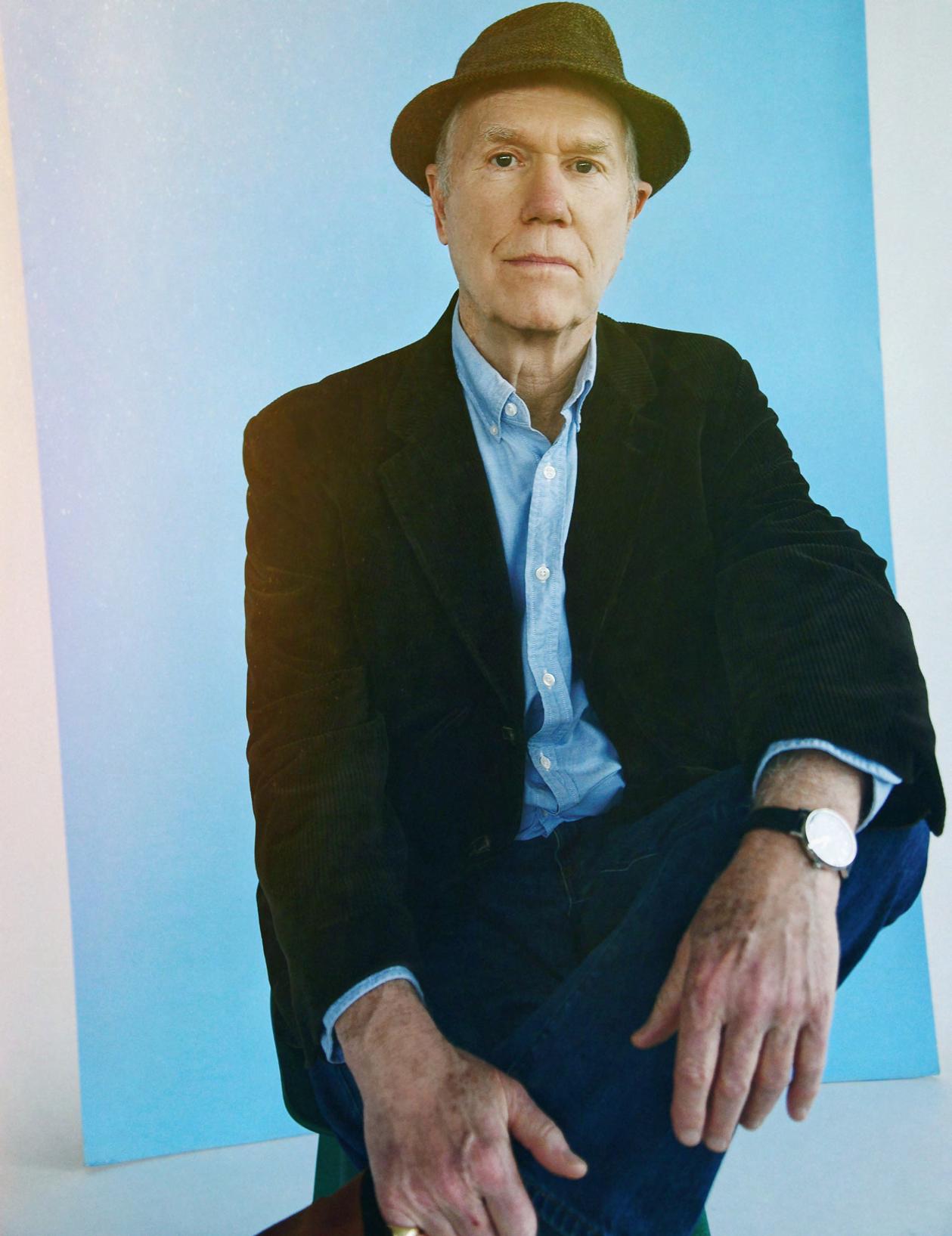
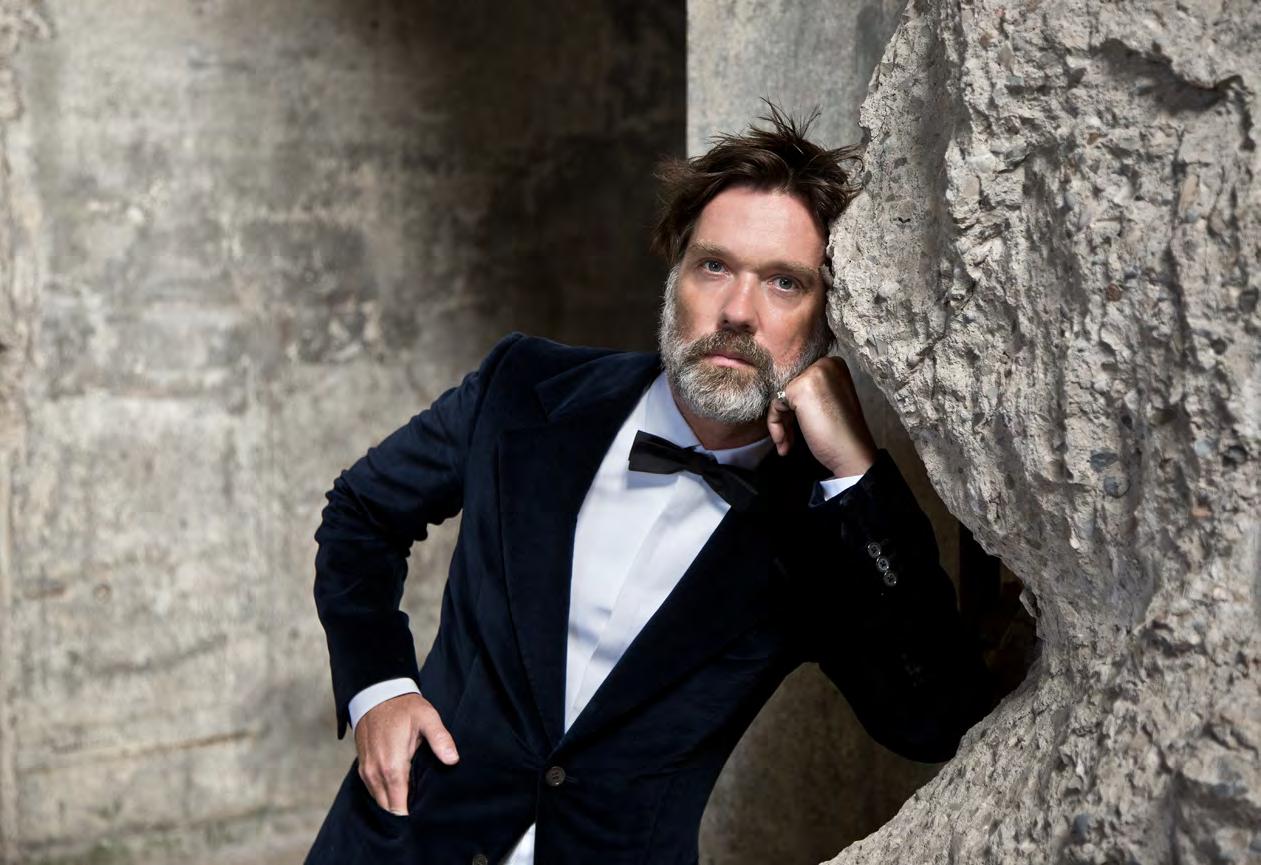
been a concern. “When they started to pick up guitars or sit down with pianos or whatever, I was excited,” Wainwright admits. “I think that show business, entertaining, writing songs, and performing are all honorable pursuits. If they’d wanted to be marine biologists or investment bankers, I suppose that would have been okay. But their take on things are very individual and particular to themselves.”
Being a musical family, they naturally sometimes work out their family drama through their music. (Wainwright has been known to refer to them all as the “dysfunctional von Trapps.”) “It’s all in the songs,” Wainwright says. “Not so much with Lucy. She has a more genteel quality. But Rufus, Martha, me, and certainly with Kate, there is and was a confessional streak that
we all share. Sometimes it can feel a little bit like the Battle of the Bands.”
That lyrical conversation continues on Lifetime Achievement, most directly on the cantankerous “Fam Vac.” “I thought, ‘I want to go on a family vacation but I want to go by myself. I want a vacation from the family,’” Wainwright says with a laugh. “That joke might have kicked it off. I’ve always written about family in general and my family in particular. So it makes sense that I would write such a song.” He even sings about Lucy on the lively “Hat.”
“That was the first word that she said, ‘hat’,” he says with pride.
Rufus, whose last album Unfollow the Rules, came out in 2020, believes a Wainwright family playlist would be quite compelling. Over the years, there’s been Wainwright’s “Hitting You” (inspired by a time he struck
Martha when she was a child);” his and Martha’s “Father/Daughter Dialogue;” Kate’s directive to a philandering Wainwright, “Go Leave;” Rufus’ “Dinner at Eight” (sample lyric: “Daddy, don’t be surprised if I wanna see the tears in your eyes”); or, without regard to subtlety, Martha’s ode to Wainwright, “Bloody Mother Fucking Asshole.”
“Someone could really dedicate a good year to just mapping out the different songs and how they relate to each other,” Rufus says. “And what events they refer to and who they’re directed at. Then you can put the Roches in there as well. It is pretty fascinating.”
Such confessionalism reaches outside of music as well. Earlier this year, Martha published a memoir called Stories I May Regret Telling You that does not mince words about
TONYH AUSER
Rufus Wainwright
her relationship with her father.
Wainwright approaches it diplomatically and from the standpoint of someone who’s always been bitingly honest in his own lyrics. “Family life can be a choppy, tempestuous thing,” he admits. “I think we’re getting along pretty good. I thought overall [Martha’s book] was excellent, well written, and interesting. She and I disagreed about the some of the facts, but we’ve had discussions about that.”
Rufus, meanwhile, after his welldocumented struggles with his father, is choosing now to accentuate the positive, reflecting on the musical impact Wainwright had on his children. “My mother had a lot of resentment toward Loudon, but very much wanted to impress his musical legacy upon Martha and me. At some point,
maybe when the dust settles from this book, I would like to go back and really look at all of his work. As Tennessee Williams said, ‘All good art is an indiscretion.’ ”
Watching the Clock
Lifetime Achievement is a perfect encapsulation of Wainwright’s career and personal life. He’s not considering retirement, but he’s aware of the clock. He resides on Shelter Island (off the coast of Long Island) with his long-time partner, New Yorker editor Susan Morrison (for whom he penned the new album’s title track). He is also a proud grandfather three times over. Ultimately, when Wainwright is asked about his lifetime achievements, his music and career arc are what spring to mind. After
all, he still loves the spotlight. “I have a lot of gratitude about the fact that I got to do in my life pretty much what I wanted to do. A lot of people don’t get to do that. So I love the fact that I’ve been doing this for 50 years and still get to make records and write songs and do shows.
“As far as the achievement aspect of it … You know, I’ve made something like 30 records, but then I went online and saw that Merle Haggard recorded 66 studio albums, five live albums and 10 compilation albums! I mean, I have a body of work, but … ,” he trails off with a laugh. “I’m not sure what kind of shape it’s in, but I feel happy that I got to do what I wanted to do and some of the results have been pretty good. In my estimation, anyway.” ■

THE MUSIC IS YOU
Keeping John Denver’s legacy alive 50 years after ‘Rocky Mountain High’
by Katie Moulton
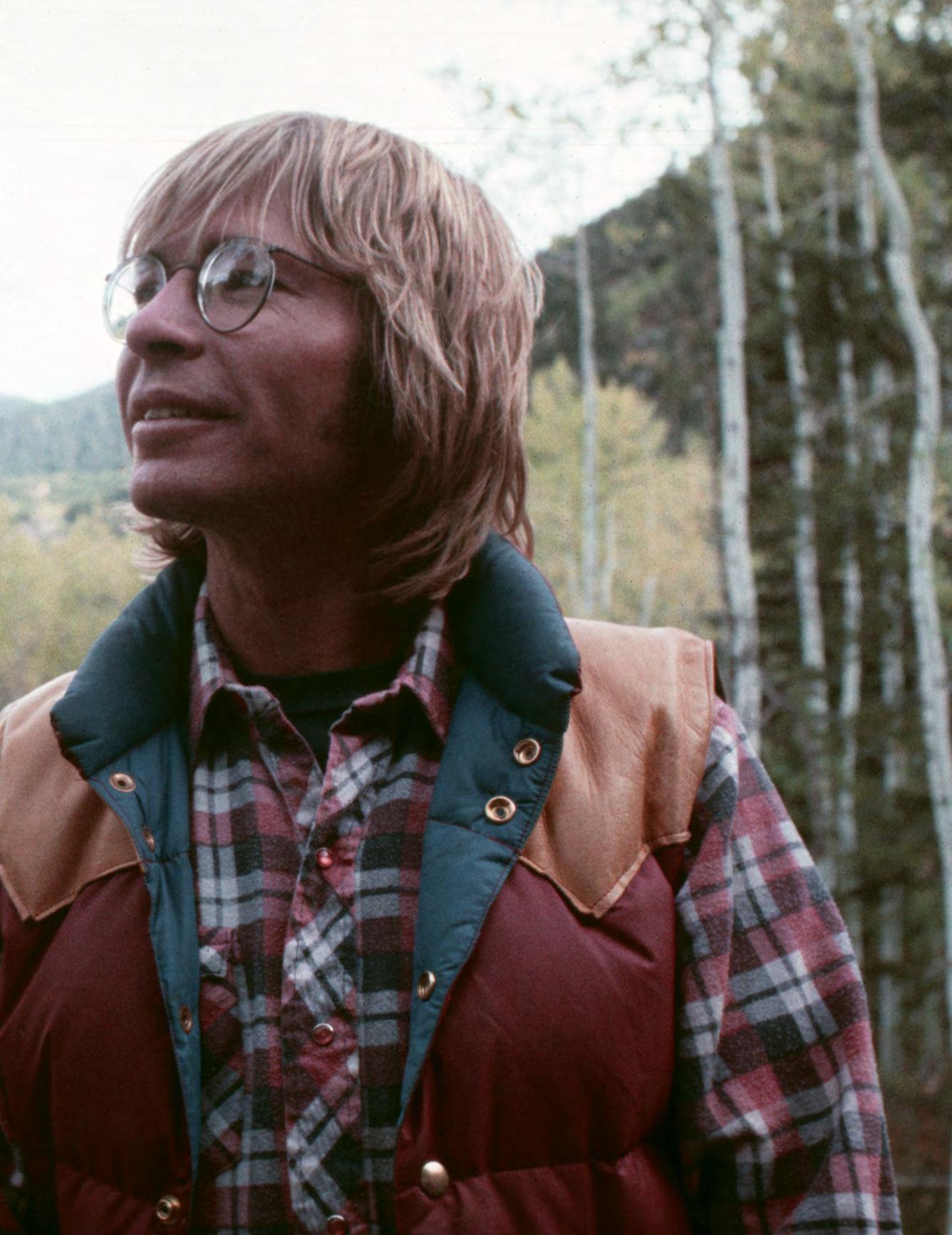
In 1972, “rocky mountain High,” the title single from John Denver’s sixth album, started climbing the charts.
Almost as quickly, however, some commercial radio stations began to ban the song, perceiving the “high” in the lyrics as a reference to getting stoned. In spite — or perhaps because — of this alternative reading of the song’s meaning, the album Rocky Mountain High became the singer-songwriter’s first to crack the Top 10 of the US Hot 100.
In 1985, Denver spoke about misinterpretations of the song and its subsequent censoring. “This was obviously done by people who had never been to the Rocky Mountains,” he said, “and also had never experienced the elation … or the joy in living that one feels when he experiences something as wondrous as the Perseid meteor shower on a moonless and cloudless night, when there are so many stars that you have a shadow from the starlight, and you’re out camping with your best friends, and introducing them to one of nature’s most spectacular light shows for the very first time.”
But Denver was not merely waxing poetic about the natural world or his own aggravation. He spoke these words in front of a Senate committee, as part of his testimony at the Parents Music Resource Center hearing, speaking as a representative of artists against
censorship. “Obviously, a clear case of misinterpretation,” he said. “Mr. Chairman, what assurance have I that any national panel to review my music would make any better judgment?”
This recorded testimony is emblematic of the musician’s dual strengths as a conveyor of simple, earnestly expressed songs and a fierce advocate for humane, environmental causes. Born Henry John Deutschendorf Jr., he adopted Denver as his last name for the stage after his favorite state’s capital city, long before he made Aspen his adopted home. In the 25 years since Denver’s death in a plane crash at age 53, he is more often remembered for his idealistic, easy-listening folk songs than as a source of controversy. But since 2022 marks 50 years since Rocky Mountain High, John Denver’s estate and devoted fans are considering new ways to continue Denver’s work and what it means to keep a musical legacy alive.
Avenues to the Future
For 7S Management, the Coloradobased artist management company that represents the John Denver Estate, preserving a legacy takes many forms. Most importantly, says Amy Abrams, who co-manages the John Denver Estate, “We have a mission to represent John Denver’s legacy as we believe he would have
done, which includes making sure the music lives on in future generations.”
The primary business of 7S Management is managing current working musicians like Nathaniel Rateliff, Hiss Golden Messenger, and Dawes. This focus on what’s now and what’s next has led the company to think strategically about bringing Denver’s music to diverse audiences. Most recently, 7S Management and the John Denver Estate have worked together to reissue Rocky Mountain High this September in honor of its 50th anniversary. The re-press is on limited-edition blue vinyl and released by the late songwriter’s own Windstar Records, in conjunction with Secretly Distribution.
The 50th anniversary celebration also included a multifaceted, multimedia performance with the Colorado Symphony in September. The concert featured original audio and video of Denver performing, backed live by members of his former band and the orchestra itself, a way to commemorate Denver’s legacy by reviving not just his lyrics, but his literal voice as well.
Resident Conductor Christopher Dragon led the orchestra, but according to Abrams, Denver himself still posthumously served as “bandleader,” as the performance featured arrangements from string charts that Denver had comm-
“We have a mission to represent John Denver’s legacy as we believe he would have done, which includes making sure the music lives on in future generations.”
Amy Abrams
7S
Management
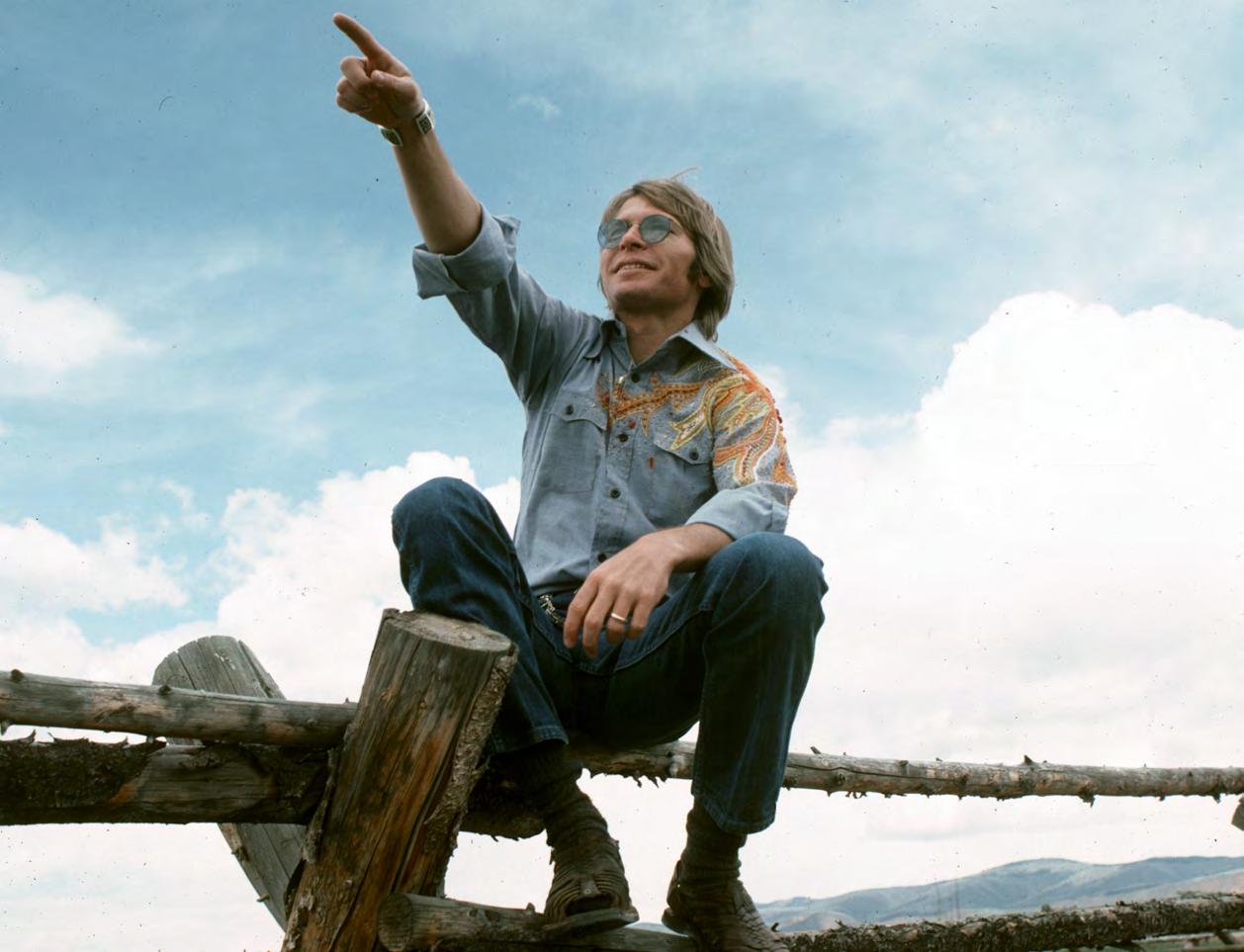
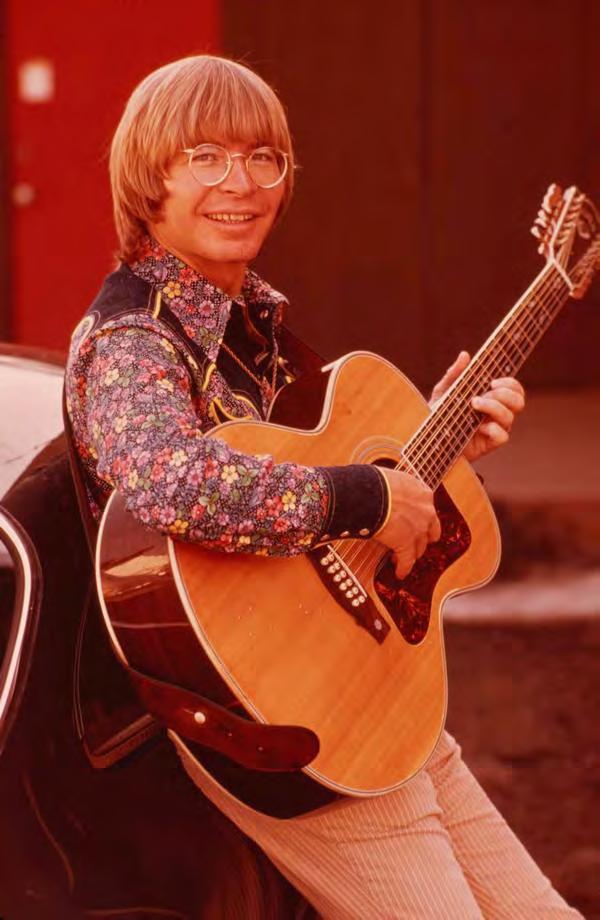
issioned during his lifetime. Most of the isolated vocal and guitar recordings were taken from Denver’s performances during the Rocky Mountain High era. “Fortunately for us, there is a lot of material, since [Denver] had to the foresight to film and record so many performances,” Abrams says.
Another strategy for putting Denver’s music in front of new audiences has been through inventive song placements. In particular, the transition of the Estate’s US publishing partners from BMG to Kobalt — an independent rights management and music publishing company known for its successful syncing — in 2015 opened new avenues in TV (the revival of Will & Grace, Bates Motel, Clarice), film (sequels of franchises like Alien, Diary of a Wimpy Kid, and Kingsman), and even video games (Fallout 76).
In Oscar-winning filmmaker Bong Joon-ho’s 2017 movie Okja, “Annie’s Song” is used to score a slow-motion confrontation of attempted violence and heroic rescue of the title character — a genetically modified “super pig.” Around the time of the release, Bong told The New York Times that his older brother was a huge fan of the song, humming and playing it constantly. But the director was
reminded of the song during editing, and suddenly the bittersweet nostalgia — and the artist’s environmentalist stance — were the right juxtaposition for the scene and the film’s themes.
Denver’s activism and passion for environmental causes are an important part of the Estate’s legacy preservation efforts. “Our mission also includes making sure his activism and causes are represented alongside that music,” Abrams says, and that includes drawing attention to the parks and natural spaces that he loved.
The natural space that Denver loved above all others was the Rocky Mountains, and recent official designations from the state suggest that Colorado loves him back. Last summer, Colorado Gov. Jared Polis announced that a trail in Golden Gate Canyon State Park — about 30 miles west of the capital — would be renamed the Rocky Mountain High Trail, a nod to the singer’s connection to the natural world.
“Here in Colorado, we’ve always known that our majestic mountains, our bright blue skies, our starlit nights and our forest and streams were the stuff of legends,” Polis said in a press release announcing the trail naming, “but John Denver made them the stuff of song lyrics, too.”
In 2011, Denver was the first
inductee of the Colorado Music Hall of Fame. And even earlier, in 2007, a fourth-grader named Kari Neuman initiated a campaign to designate “Rocky Mountain High” Colorado’s official state song. Colorado’s state legislature picked up the idea and passed the resolution later that year, so now the once-banned song shares the honor with the state’s first official song, 1911’s “Where the Columbines Grow.”
Simple and Beautiful
This fall, Denver’s adopted home of Aspen will once again host an annual celebration of his life, music, and environmentalism. These events have been organized for decades not by the Estate, but by a confederation of Denver devotees and former colleagues. Chris Collins, who hosts the John Denver Celebration website, says the event “has operated as a tribe, with no central figure that manages everything.”
The John Denver Celebration comprises a weeklong slate of events, including environmental education presentations, a Jeep tour of local points of interest, a meet-and-greet at the John Denver Sanctuary, and tribute concerts by a variety of artists. Collins also produces two shows at Aspen’s Wheeler Opera House, where his band also
“Listening to and thinking seriously about John Denver again makes me want to go out and unabashedly be myself as a songwriter.”
René Moffatt
performs.
Collins has been a fan of Denver’s music since he was 20 years old, but only came to Aspen 20 years ago, where he fell in with like-minded musicians who became collaborators. After a few years there, he says, he “started taking the tribute show seriously, taking it on the road,” and now Chris Collins and Boulder Canyon are one of the premier John Denver tribute acts.
“I started producing bigger shows in Aspen because I feel like it’s important to sustain John Denver’s legacy, and Aspen needs that anchortype show,” Collins says. “It’s my gift back to John Denver, for the gifts his music has given me.”
Though Collins embodies Denver’s music live on stage, he says it’s important that he not merely impersonate the musician.
“Denver had a particular magic to his songwriting and his voice,” Collins says. “Other than having a really nice instrument, it’s the authenticity and ability to express without stylizing too hard. He sang so directly and unassumingly that
people really felt it when he sang. I have to work really hard to not imitate, not emulate too much. The best way to sing it is just to sing it as purely as I can myself.”
In addition to the Rocky Mountain High anniversary, this year also marks 25 years since Denver’s death, and Collins sees this as a new opportunity to consider the artist’s legacy.
“ The 25th of anything — a silver anniversary — [is] a big deal,” Collins says. “Because of the age of most of the guests, it’s a great chance to reflect not only on John Denver’s life but on our lives, and what he’s meant to us. Teenagers come to the shows, and even they hear the simplicity of longing for home, for freedom.”
Colorado-based singersongwriter René Moffatt is one of such fan who came to Denver’s music at a young age. When his parents married in 1974, his father wrote to Denver to invite him to the wedding. “He never got a response,” Moffatt says with a laugh, “but that’s how close they felt to him.” The way his
parents spoke of Denver sounded the way others of their generation talked about the Kennedys, Moffatt recalls — “a high place in their minds of idealism and hope.”
As he’s matured as an artist, Moffatt finds much to admire about Denver’s technique in performing and songwriting. “So many of his lyrics were simple and almost generic, but the way he sang them over the melody made all the difference,” he says. “He’s got a crazy, intense, Freddie Mercury vibrato! It’s crystal clear, and he never drops it.
It’s a vocal style you don’t hear anymore, and it’s such a marvel he turned into such an enormous star.” Moffatt cites the simplicity of the lyrics and the straightforward melodies of songs like “Sunshine on My Shoulders” as the reason Denver’s songs connect with perhaps the most idealistic audience of all — children. “In some ways, we’re always trying to get back to who we were as children,” Moffatt says.
“Listening to and thinking seriously about John Denver again makes me want to go out and unabashedly be

myself as a songwriter.”
Moffatt, who also works as an advocate for artists and arts scenes, believes there should be an annual John Denver songwriting festival or workshop in the city he took for his performing last name. “The potential of Denver’s legacy is a missing piece in the Denver music and arts economy,” he says. “Look at the songs through a technical standpoint, through the lens of what’s happening today: simple words, beautiful melody. They’re going to be singing ‘Annie’s Song’ for hundreds of years.”
Ahead of His Time
These efforts — in and out of Colorado, affiliated with the John Denver Estate and otherwise — have also introduced new fans to the beloved songwriter. Within roots music, a 2013 tribute album called The Music Is You included mostly faithful renditions of Denver’s biggest songs. Amos Lee cast “Some Days Are Diamonds” with his downtempo bluesy tinge, while Sharon
Van Etten teamed up with J Mascis for a grittier, electrified version of “Prisoners.” And Brandi Carlile and Emmylou Harris joined forces for a gospel-inflected, board-stomping singalong of “Take Me Home, Country Roads.”
Denver’s influence continues to spread to new generations and even new genres. Denver-based retro-rock band Greta Van Fleet, for example, often covers “The Music Is You” in live shows because, as they say via email, “We too believe in the shared connection between music and storytelling.”
They continue, “John Denver has played a crucial role in our development as not only musicians, but as people. His ability to capture the essence of nature and humility during his career is incredibly poignant.”
And earlier this year, Scandinavian EDM DJ/producers Alex D’Rosso and VARGENTA released a dance remix of “Take Me Home, Country Roads” featuring vocals by Los Angeles-based singer Matthew Clanton.
“ There are younger generations coming to John in new ways and discovering his messages, which were super progressive in his time,” Abrams says. “I don’t know if he was given full credit at the time.”
She points to the “Rocky Mountain High” lyrics about environmental harm (“While they try to tear the mountains down to bring in a couple more / More people, more scars upon the land”) and “Prisoners,” released at the height of the Vietnam War. Additionally, Rocky Mountain High includes “Paradise,” a John Prine cover on the devastating impact of strip mining.
The John Denver Celebration’s Collins believes that Denver’s songs are ageless, regardless of the age of his listeners or interpreters. “The things that he sang about are timeless,” he says. “One of the truest lines, from ‘Poems, Prayers and Promises,’ mine and John’s favorite song, is ‘How sweet it is to love someone, how right it is to care.’ He parlayed his stardom into energy for real change.” ■
René Moffatt
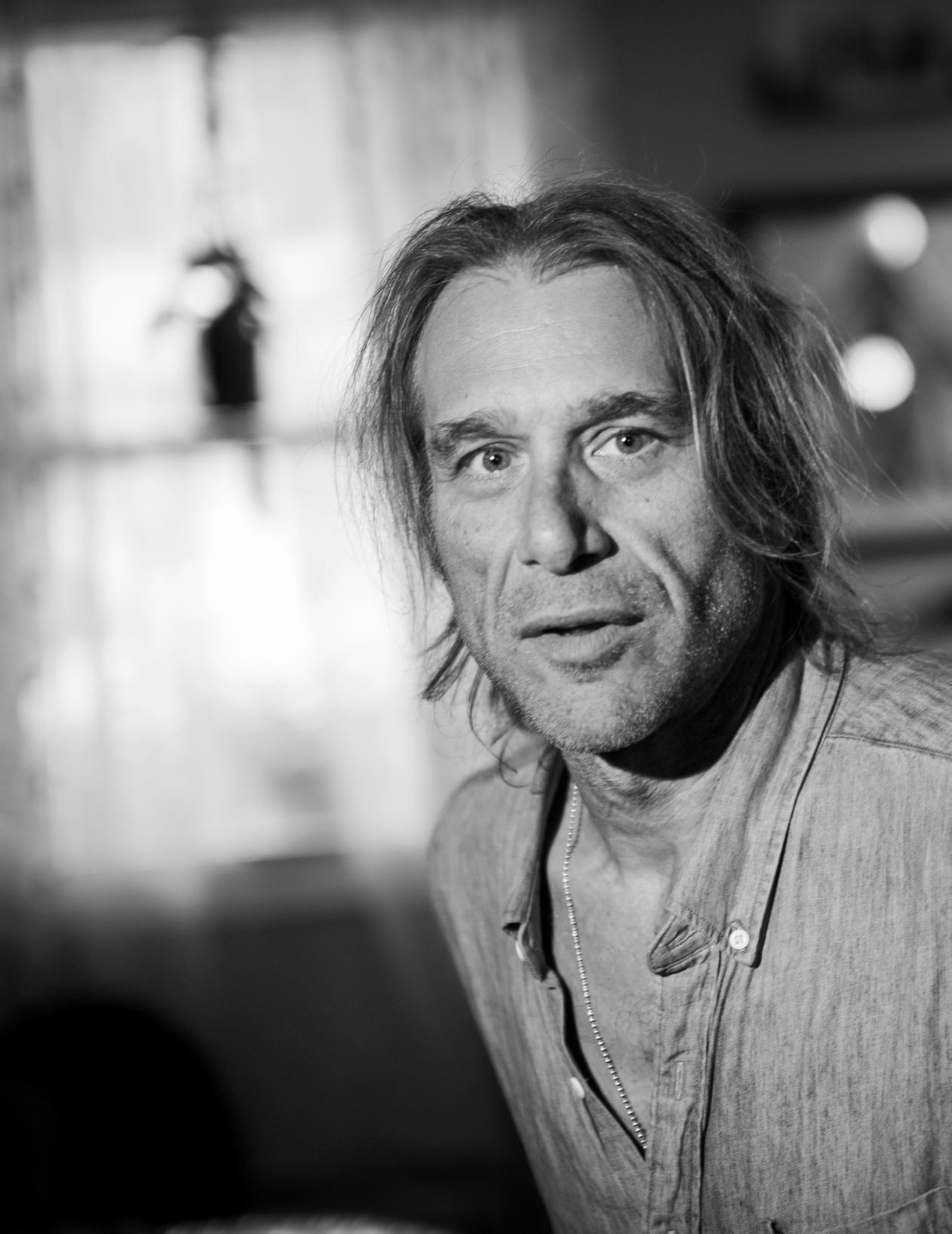

CHASING SONGS AROUND
The reach of Todd Snider’s troubadour life
by Hilary Saunders
There’s a line on nashvillebased troubadour Todd Snider’s new live album where he tells the crowd, “I went on tour in ’94 and we didn’t stop until the pandemic. This is my second tour!”
He offers a dry little laugh as the audience goes wild.
“I never stopped gettin’ into chasin’ songs around,” he says before launching into “Working on a Song” from 2019’s Cash Cabin Sessions Vol. 3.
Live: Return of the Storyteller — Snider’s third live album and 19th overall — comprises 15 songs from this “second tour,” his first time on the road since the pandemic started. The album comes in at a whopping 27 tracks, including the interludes for stories, rambles, jokes, eulogies, and improvisations.
Calling from his home in Nashville, Snider explains that around 75 shows from that 2021 run were recorded. “My sound guy and my tour manager, every night they would make notes of what they thought was good,” he says. “At the end of the tour, I made a set list. … And then they went and found what they thought were the best versions of all those songs and stories.”
Tracks on Live: Return of the
Storyteller date back to Snider’s 1994 debut, Songs for the Daily Planet, but a number of others honor friends, bandmates, colleagues, and mentors he met along the way. In particular, Snider recalls how hard it was losing John Prine, Neal Casal (his bandmate in supergroup Hard Working Americans), Jerry Jeff Walker, and Col. Bruce Hampton all while the pandemic kept him off the road.
“It’s this long tradition of a family. Ramblin’ Jack Elliott is the first troubadour of America and he’s still alive and he was John Prine’s hero. He was Guy Clark’s hero. He was Jerry Jeff, Billy Joe Shaver’s. All the people that do what I do for a living … this job didn’t even really start ‘til the late ’40s. It’s a small family,” he begins.
“I felt the honor of the tradition that I’ve been really lucky to get to be part of. I get to be one of the people that travels around and listens around for stories and things and then goes and takes them other places. It’s a ridiculous privilege to get to do it.”
Another privilege Snider recently enjoyed was having one of his songs become the inspiration for an entire feature-length film screenplay. Writer/producer/director Justin
Corsbie transformed Snider’s “Just Like Old Times,” a song from his 2006 album The Devil You Know, into Hard Luck Love Song, which was released nationwide in theaters last year by Roadside Attractions & Lionsgate. (Snider went to see it in Nashville with Fiona Prine and Hayes Carll.). The film, which features Golden Globe and Academy Award nominee Eric Roberts, One Tree Hill star Sophia Bush, and Wu-Tang Clan leader/ rapper RZA, tells the semi-true, complicated love story of a rambling singer-songwriter.
As Corsbie — who founded his own production company called Synthetic Pictures — told Americana Highways last October, “I’m a huge music fan, and a longtime fan of Todd’s work. Been going to his shows and listening to all his stuff since I was in college in the late ’90s. He’s a really unique talent, and I’d always wanted to figure out a way to relay some of his magic to film and TV audiences.”
The following pages include stills and behind-the-scenes images from Hard Luck Love Song, which is now available to purchase and stream on-demand. Todd Snider’s Live: Return of the Storyteller is out Sept. 23 via Aimless Records/Thirty Tigers. ■
Michael Dorman as Jesse

Producers Allison R. Smith and Justin Corsbie
Dermot Mulroney as Rollo
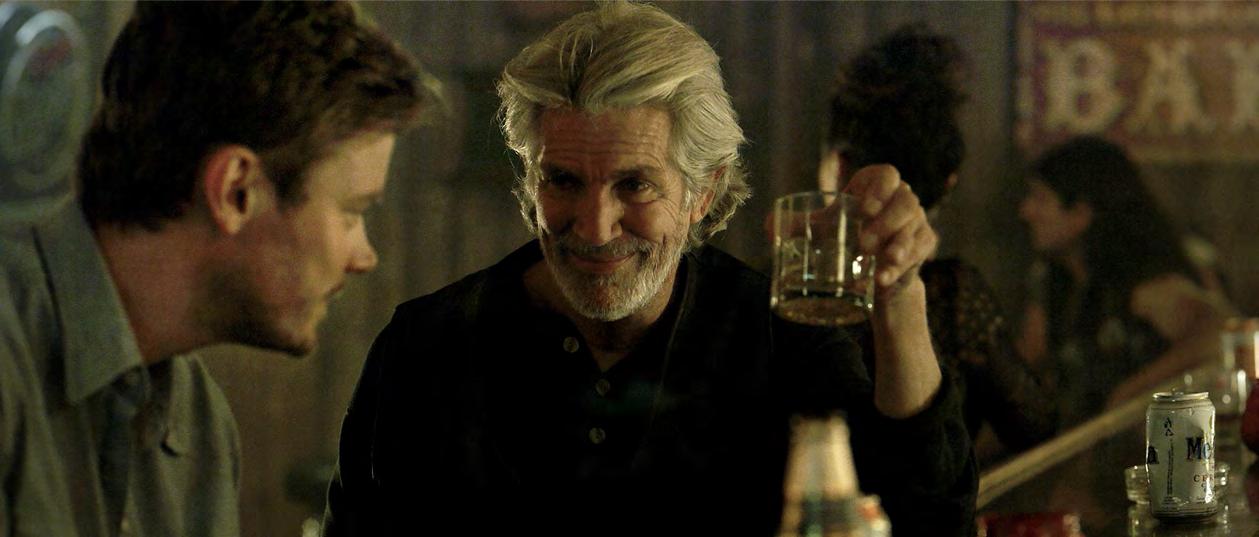
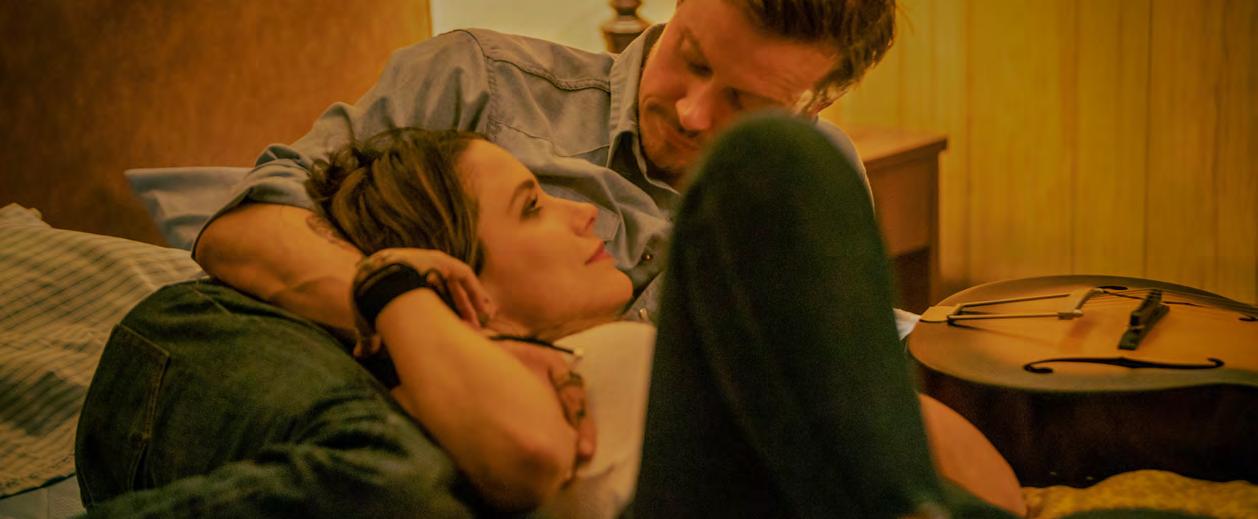
RZA as Louis
Eric Roberts as Skip
Sophia Bush and Michael Dorman as Carla and Jesse

From left, Allison R. Smith, Todd Snider, and Justin Corsbie
REVIEWS
You asked and we’re listening! Just like in the original version of the magazine, No Depression is now including reviews of some of the best roots music albums released in recent months. These excerpts were originally published at nodepression.com, and you can read many more reviews — plus news stories, interviews, and columns — there. For more of what’s on our radar, follow No Depression’s “Best of the Month” playlist on Spotify.
Willi Carlisle Peculiar, Missouri
Free Dirt Records
Released July 15
Willi Carlisle has loved traditional music since childhood. On this, his second full-length record, he invokes the influence of musical heroes like Utah Phillips, Rosalie Sorrels, and Ramblin’ Jack Elliott with articulate yet plainspoken songwriting that touches on a wide range of topics, including love, queerness, living on the brink of homelessness, and the concept of impermanence.
necessity. The sense of empathy in “Vanlife” extends into songs like album opener “Your Heart’s a Big Tent,” in which Carlisle embraces his queer identity as a superpower rather than a liability.
Peculiar, Missouri is ripe with bootscootin’ basslines and glamorous grooves that will get listeners moving like they’re at a square dance, oftentimes even on its songs of sorrow. A prime example of this is “Vanlife,” a tale that underlines the differences between folks living a bougie van lifestyle by choice vs. those forced into living out of a van by
Drive-by Truckers
Welcome 2 Club XIII
Another song touching on this is “Peculiar, Missouri,” a song about queer sadness and finding humanity in the luminescent aisles of Walmart. But on the opposite end of the spectrum, Carlisle documents the stressful journey to accepting himself as he is on “Life on the Fence,” a song about hiding his feelings for a man that he’s scared to tell anyone about.
In total, the album’s dozen tracks do a tremendous job of paying homage to the roots of traditional music while at the same time casting a wide tent and welcoming in people who haven’t felt embraced by the music in the past, helping to put action behind the album’s themes of inclusivity and love above all. — Matt Wickstrom
ATO
Released June 3
With Welcome 2 Club XIII, The Drive-by Truckers — Patterson Hood (guitar, vocals), Mike Cooley (guitar, vocals), Brad Morgan (drums), Jay Gonzalez (guitar, keys, vocals), and Matt Patton (bass, vocals) — shift their attentions from the explicit political zeitgeist (as on their last three records) and instead explore the politics of being human in America (more similarly to their earlier work). Throughout the album, they explore memory’s textures, its sharpest edges and fuzziest corners, and what it means to exist in this world we inhabit.
The album took shape unexpectedly in three days last summer, as the band got together to rehearse for their first post-lockdown shows. They demoed some ideas,
and suddenly they had an album. The Truckers cut most of the songs in one or two takes, lending the looseness of their live shows to the record. Margo Price provides backing vocals to “Forged in Hell and Heaven Sent” (exploring what it means to meet an old friend or lover after time has passed), while Schaefer Llana adds her voice to “The Driver” and “Wilder Days.” Additionally, Mike Mills of R.E.M. sings with Cooley on “Maria’s Awful Disclosures,” a song that fits more meaning and depth into four verses and a twice-repeated chorus than most novels as it subtly excoriates antiimmigration agitprop and QAnon.
Welcome 2 Club XIII captures the beautiful weariness of having lived, best rendered in “Wilder Days” when Hood sings in mournful celebration, “there’s no comfort in survival / but it’s the best option that I’ve found.” — Matt Ruppert
Chastity Brown
Sing to the Walls
Red House Records
Released June 17
Refining the infectious rhythms, melodies, and vocals of her previous album, 2017’s Silhouette of Sirens, Chastity Brown releases her new set, Sing to the Walls. The project stands as a culmination of Brown’s journey, a sequence that marks her evolution from a rootsy troubadour to a meticulous songwriter, sublime singer-instrumentalist, and orchestrally inclined producer.
“Like the Sun,” in particular, marks Brown’s striking growth as a singer, in terms of emotional range and effective phrasing. Her classically oriented synth work — including riveting crescendos and decrescendos — is especially impressive. With “Hope,” Brown moves from
the synthesizer to the acoustic piano, a shift that contributes to the cut’s relatively austere sound. The lo-fi-ish “Gertrude,” replete with samples of birdsong, ends the project on a tone that’s nostalgic yet optimistic, elegiac yet equanimous.

Loose comparisons can be made between Brown and the jazzy Georgia Anne Muldrow, gospel-inflected Rhiannon Giddens, and pop-leaning Valerie June. One can also perhaps detect affinities with the vocals of early blueswomen and expansive vistas of Bruce Springsteen and Robert Plant. Brown, however, has distinguished herself among her colleagues and clearly reconfigured whatever influences might be part of her musical DNA. With Sing to the Walls, she achieves a singular virtuosity. — John Amen
S.G. Goodman
Teeth Marks
Verve Forecast/UMG
Released June 3
Unrequited love is, in many ways, the thesis of Teeth Marks, S.G. Goodman’s sophomore record. The emotions she works through in these songs are timeless and universal, a salve for anyone, at any age, who needs a reminder that their self-worth shouldn’t be measured by the love or approval they receive from others.
Throughout the record, Goodman mines the humiliation and heartbreak of rejection across various moods, like the slow burn “Heart Swell,” the swoony “When You Say It,” and maybe most pointedly in the driving, poppy “The Heart of It.” While some of the songs were written amid one particular period of inner turmoil, others had been floating around for years. “When You
Say It,” for example, is more than a decade old, and the thought of reimagining it for the record was an unappealing prospect until Goodman suddenly heard the drum shuffle for it in her head one night during the band’s dinner break from recording. Musically, Goodman’s influences span a wide range. Raised in rural Kentucky and still calling the state home, she grew up on the golden age of ’90s country music videos on CMT and classic rock radio, as well as the post-punk of some of the earliest bands she played in. An appreciation of those influences, as far apart as they may seem, can be heard across Teeth Marks, in the quiet, folksy twang of songs like “Patron Saint of the Dollar Store” and “Dead Soldiers,” and in the shredding guitars of “Work Until I Die” and “All My Love is Coming Back to Me” — the album’s brightest glimmer of hope.
— Maeri Ferguson
Price at the FreshGrass Festival | Bentonville 2022

NO DEPRESSION
Part of the FreshGrass Foundation
No Depression is brought to you by the FreshGrass Foundation, a 501(c)(3) nonprofit organization dedicated to preserving and promoting the past, present, and future of American roots music. In addition to publishing No Depression, producing FolkAlley.com, and presenting the FreshGrass Festival | Bentonville in Arkansas and FreshGrass Festival | North Adams at Mass MoCA in Western Massachusetts, the Foundation also funds cash awards for up-and-coming musicians. Visit freshgrassfoundation.org for more information.
Winter 2022
No Depression is committed to producing the best roots music coverage, both in print and online at nodepression. com. With long-form, multisourced stories highlighting the music’s stars and up-and-comers as well as its underreported issues, the quarterly editions of No Depression’s journal are essential reading for every roots music fan.
Included in this issue: Margo Price, John Mellencamp, S.G. Goodman, Kelsey Waldon, The Local Honeys, Tiffany Williams, Iranian songwriter Ebrahim Monsefi, and more.
Between issues, stay current on roots music with news, reviews, and thought at nodepression.com. Here are just a few of the artists we’ve covered recently:
Tedeschi Trucks Band
Charley Crockett
Wilco
Andrew Bird
Madison Cunningham
Tami Neilson
Pharis & Jason Romero
Brennen Leigh
Leyla McCalla
Dead Horses
Arlo McKinley
Amanda Shires




Margo
Fall 2022 Contributors
COURTNEY E. SMITH is a writer based in Dallas, where she works as the editor for Eater Dallas. She’s the host of Songs in the Key of Death, a podcast about murder ballads, and the author of the book Record Collecting for Girls.
Gogol Bordello — founded by EUGENE HUTZ in 1999 — took its style of Eastern European-influenced gypsy punk and doused it deep into the underground rock of New York City. The band’s eighth full-length album, Solidaritine, is inspired by survival in the face of adversity — a theme that can be applied to the pandemic just as much as it can be applied to the war going on in Hutz’s native Ukraine. In addition to music, Hutz has acted in acclaimed films such as Liev Schreiber’s directorial debut Everything Is Illuminated and Filth and Wisdom, helmed by Madonna.
HILARY SAUNDERS is the managing editor at No Depression and her previous work has appeared in Paste, ESPN, Next City, The Jewish Daily Forward, and more. She’s a proud member of the National Press Club and Society of Professional Journalists, an alumna of the University of Miami, and a unironic believer that rock and roll can save the world.
JANICE FRIED is a native New Yorker currently living in the wilds of suburban central New Jersey. Her illustration work has been seen in various forms and in many publications. She is currently creating art with fabric and mixed media but has spent many years producing mixed media art on paper.
JIM SHAHEN is a freelance writer from around Albany, New York. He’s the popular music writer for the Albany Times Union and has written
for No Depression, Consequence of Sound, and Vinyl Me, Please. He has an unhealthy obsession with Oasis.
JOSHUA M. MILLER is a freelance writer from Wisconsin. His work has been published in a variety of publications, including the Chicago Sun-Times, Rolling Stone Country, Guitar World, Paste, Under the Radar, Spin, and Grammy.com.
KATIE MOULTON is the author of Dead Dad Club: On Grief & Tom Petty (Audible 2022). Her recent work appears in New England Review, Electric Literature, and No Tokens, and she has written for Oxford American, Consequence, The Believer, and elsewhere. She lives in Baltimore.
MARCUS AMAKER is Charleston, South Carolina’s first poet laureate, a 2021 Academy of American Poets fellow, an opera librettist, and an awardwinning graphic designer. His poetry has been recognized by The Kennedy Center, PBS Newshour, Washington National Opera, The Washington Post, The Guardian, NPR, and more. He’s released more than 35 albums as an electronic musician. His ninth book, Black Music Is, is out now.
MICHAEL ELLIOTT is a native North Carolinian and a former radio veteran of more than 30 years. His work has appeared in No Depression, PopMatters, Albumism, Americana UK, and The Bitter Southerner. His first book, Have A Little Faith: The John Hiatt Story, was published in 2021 by Chicago Review Press, and the paperback edition came out this September.
NATALIE WEINER is a Dallas-based freelance journalist and critic who specializes in music and sports. She has written for The New York Times, Rolling Stone, NPR, The Washington
Post, JazzTimes, and Pitchfork and worked on staff at Billboard, Bleacher Report, and SB Nation.
NOAH BERLATSKY is a freelance writer based in Chicago. He played the banjo briefly and poorly, but he misses it.
SHELBY CRISWELL is a genderqueer illustrator, comic maker, and graphic designer from San Antonio, Texas. They love going on long bike rides and playing banjo, but have yet to master how to do them simultaneously. Shelby has done design work for Willi Carlisle, Dylan Earl, Shawn Hess, Chris Acker, and Bonnie Montgomery. Their debut graphic novel, Queer As All Get Out, is out now from Street Noise Books.
STACY CHANDLER is the assistant editor for No Depression. She also writes occasionally for the (Raleigh, North Carolina) News & Observer and various alumni magazines and has copy edited daily newspapers, accounting magazines, shopping guides, online college courses, and pretty much anything else that has words in it. She lives in Raleigh with her husband, their daughter, and a new puppy.
WILL HODGE is an Atlanta-based journalist who has contributed to Rolling Stone, The Grammys, Paste, CMT, and various other outlets. When he’s not writing about the folkinfused symbiosis of classic country and punk rock, he can be found daydreaming about the hip-hop/new wave sonic wonderland of late ’70s/ early ’80s New York City.
ZACH SCHONFELD is a freelance journalist and writer based in Manhattan. He was formerly a senior writer at Newsweek. His first book, Ghetto: Misfortune’s Wealth, was published by the 33 1/3 series in November 2020.
Screen Door
BRINGING BACK REVELATIONS
BY EUGENE HUTZ
After all the trials of the last years, once again music has a chance to become a thing that is revelational. Something that is uplifting in a way that makes your spirit indomitable. Something that offers insight you can’t get from analysts. Something that cuts through all the conceptual formations in your mind and sharpens your emotional intelligence. Something that allows you to take back your free will.
Of course, all of that can happen provided music-makers will deliver. But will they? Are they focused enough to conjure anything up from the collective unconscious? Coined by Swiss psychiatrist Carl Jung, the idea of the collective unconscious is widely accepted and entrenched into pop culture: a common thread of human experience that feeds all revelations — artistic, prophetic, or scientific.
There is that mystical wire that runs deep into our collective self, and some of us have a knack for retrieving what’s urgent and crucially needed. Strangely though, it’s been so long since that wire gave us anything revelatory that it makes one wonder if that collective unconscious has expired. Has it been completely dispersed by narcissistic pursuits of instant gratification? Are writers and music-makers — those “technicians of the sacred,” as poet Jerome Rothenberg described them in his 1968 anthology — all now sellouts? Well paid-off, like judges sometimes can be?
In literature, everybody knows and appreciates George Orwell’s
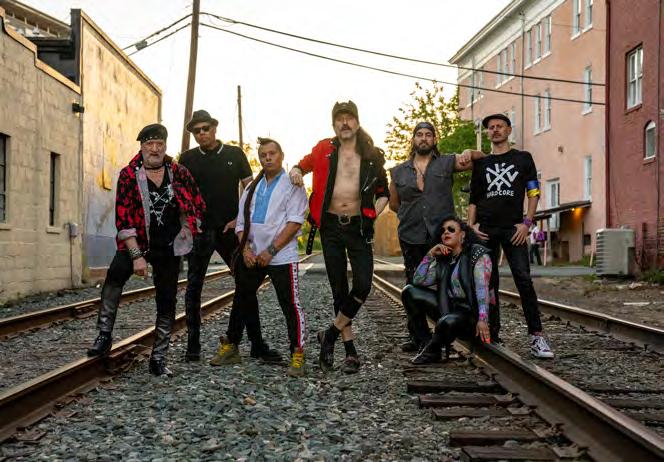
revelation, 1984. Some also know that Orwell was retranslating the message of Aldous Huxley’s Brave New World, who in turn, shared the same warning of Yevgeny Zamyatin, the anti-Soviet and anti-fascist author of dystopian novel We. All three masterpieces predict the now: the manufactured consent for the rise of fascism.
In music, though, it’s often the anonymous storytellers — the Delta bluesmen, Ukrainian Kobzars, and other troubadours of the world — who are much closer than their counterparts in the spotlight to revealing much-needed truths. They present us with documents of human perseverance, resilience, defiance, and spiritual strength. However wretched and dark some of their stories might be, their songs confirm that we have what it takes to confront the darkness.
There’s a hopeful wish that
survival instructions are included somewhere in our collective unconscious. Still, it’s going to take a real effort from these “technicians of the sacred” to bring back the revelational quality of music. That’s when proximity to roots, be it the blues or folk from my native Ukraine, comes to the rescue.
Fortunately for Gogol Bordello, the bridge between roots music and the worldwide punk scene is a strong one: Punk is folk music born out of big cities that communicates values of resilience and perseverance across several generations. The desire to give back to these crucial traditions that empowered me in the first place is what keeps me going.
Eugene Hutz is the singer and frontman of Gogol Bordello, whose new album, Solidaritine, comes out Sept. 16 via Casa Gogol/Cooking Vinyl. ■