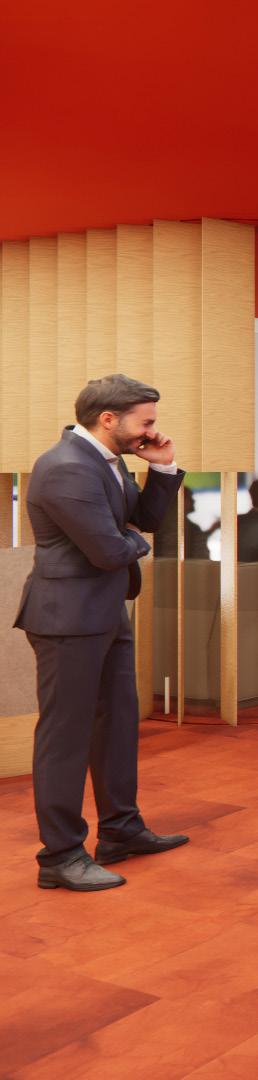
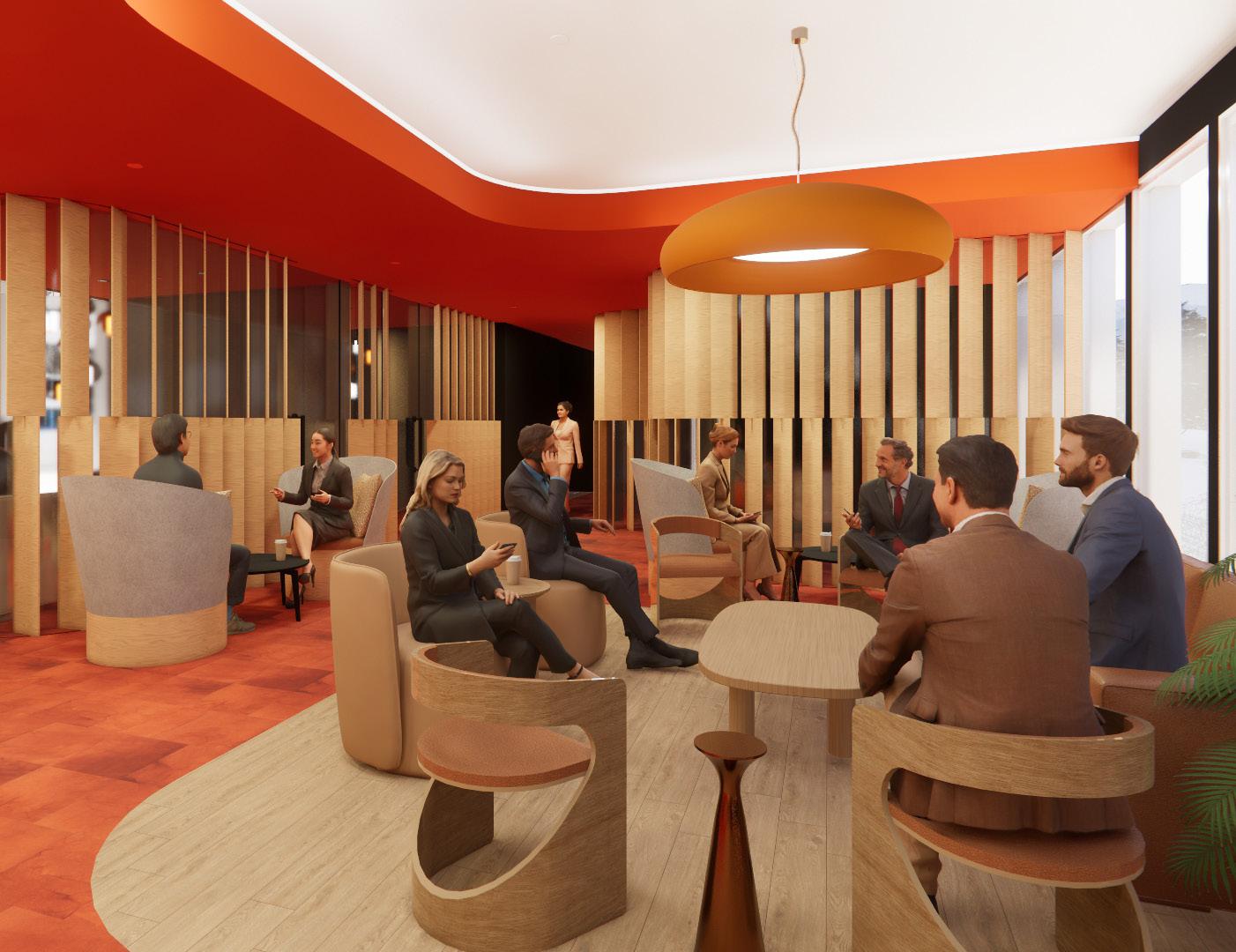
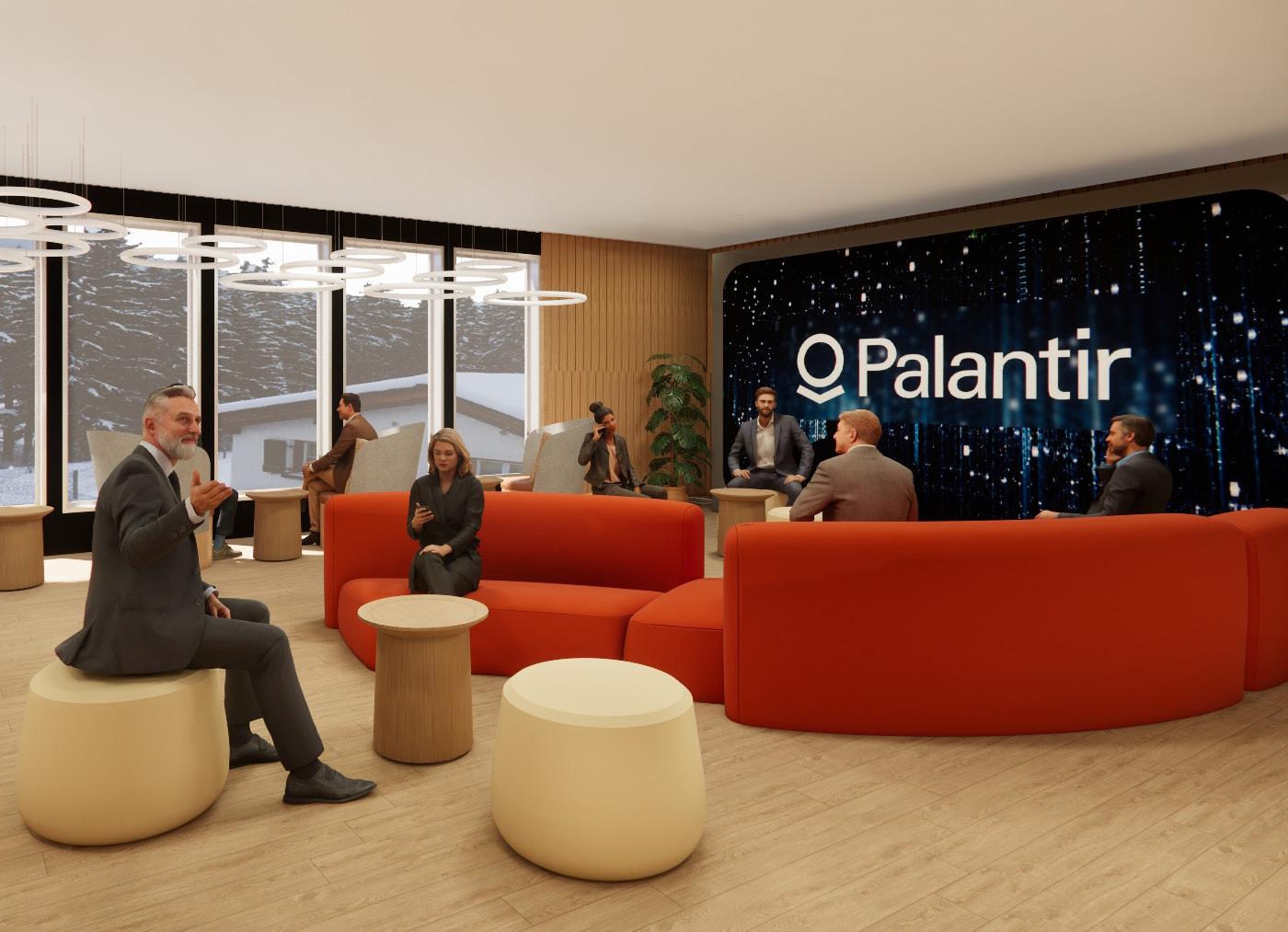
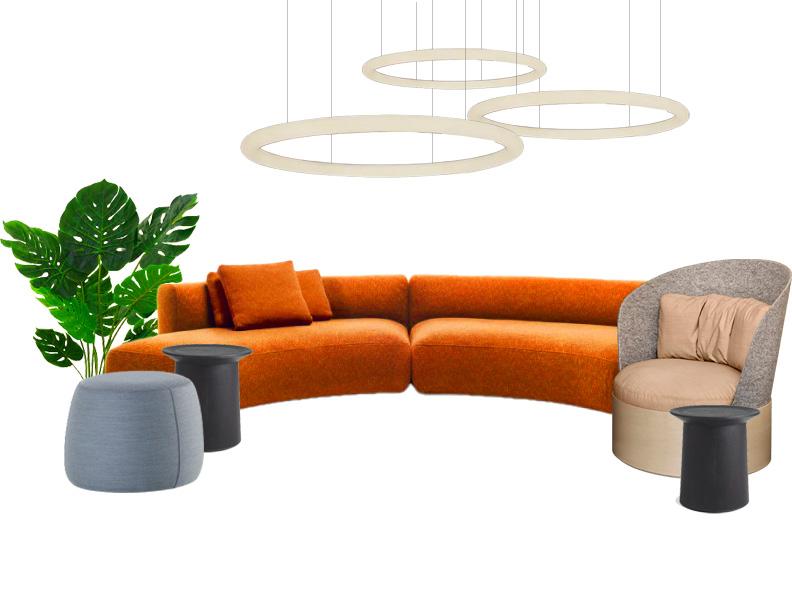
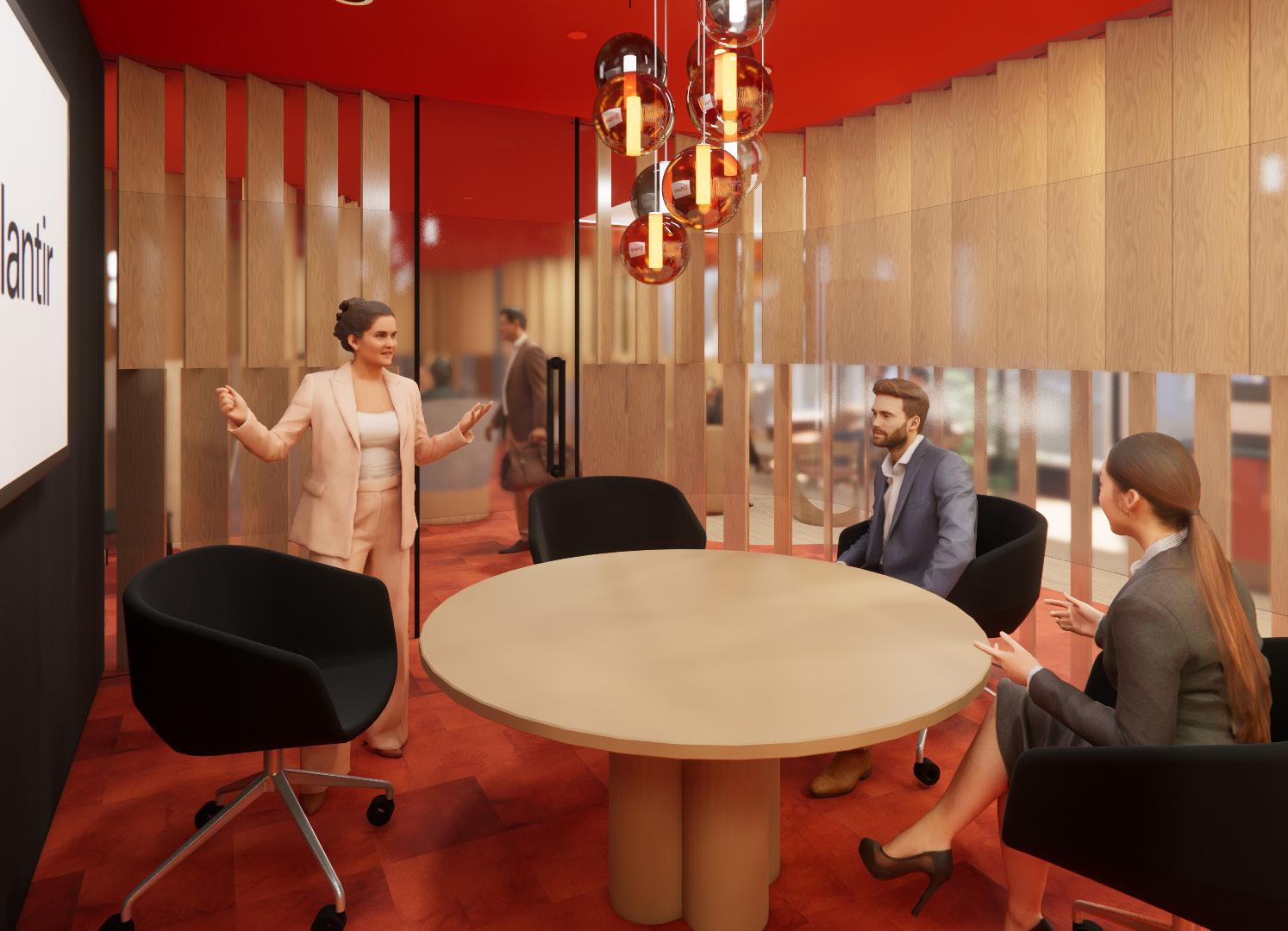
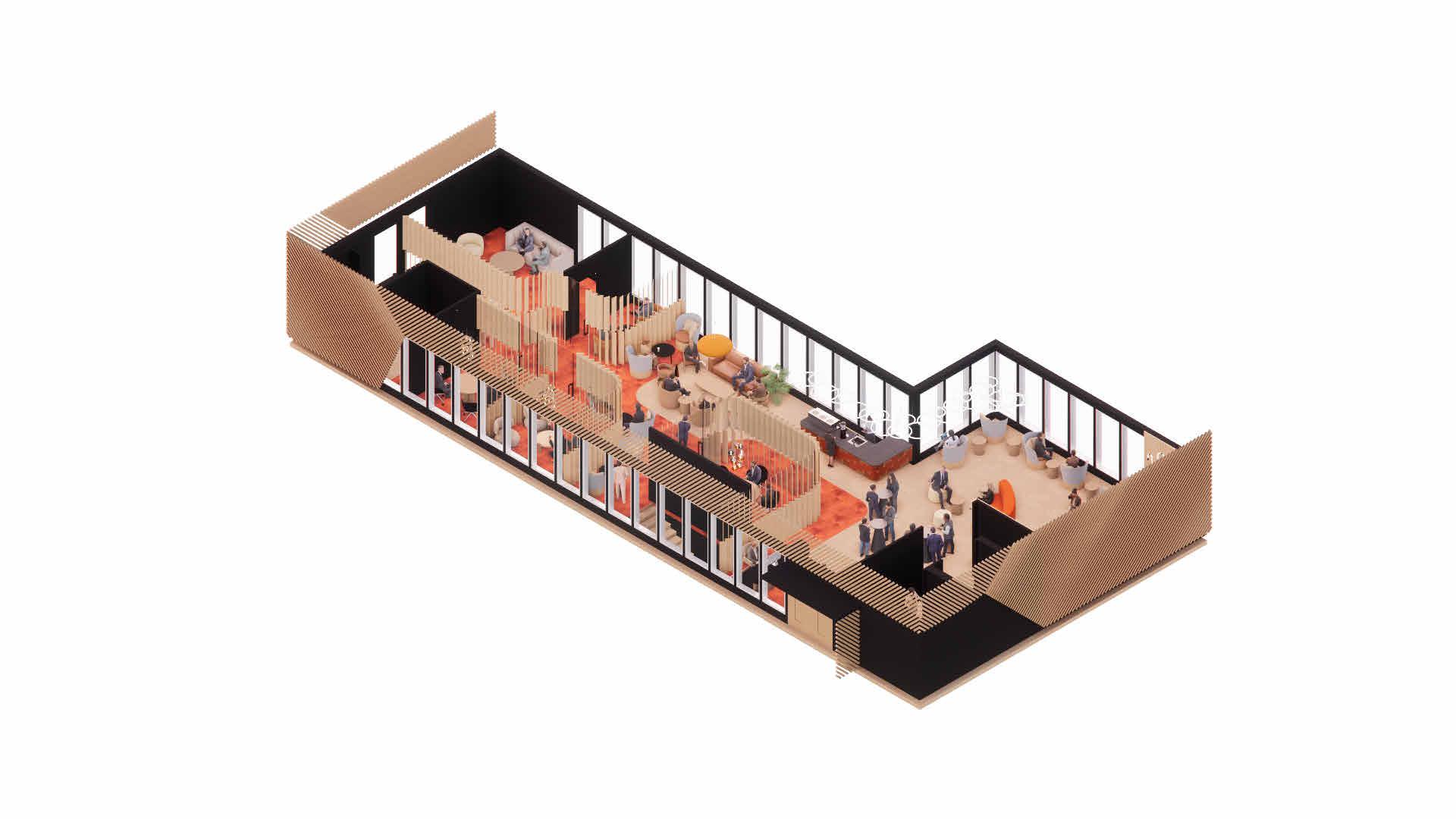
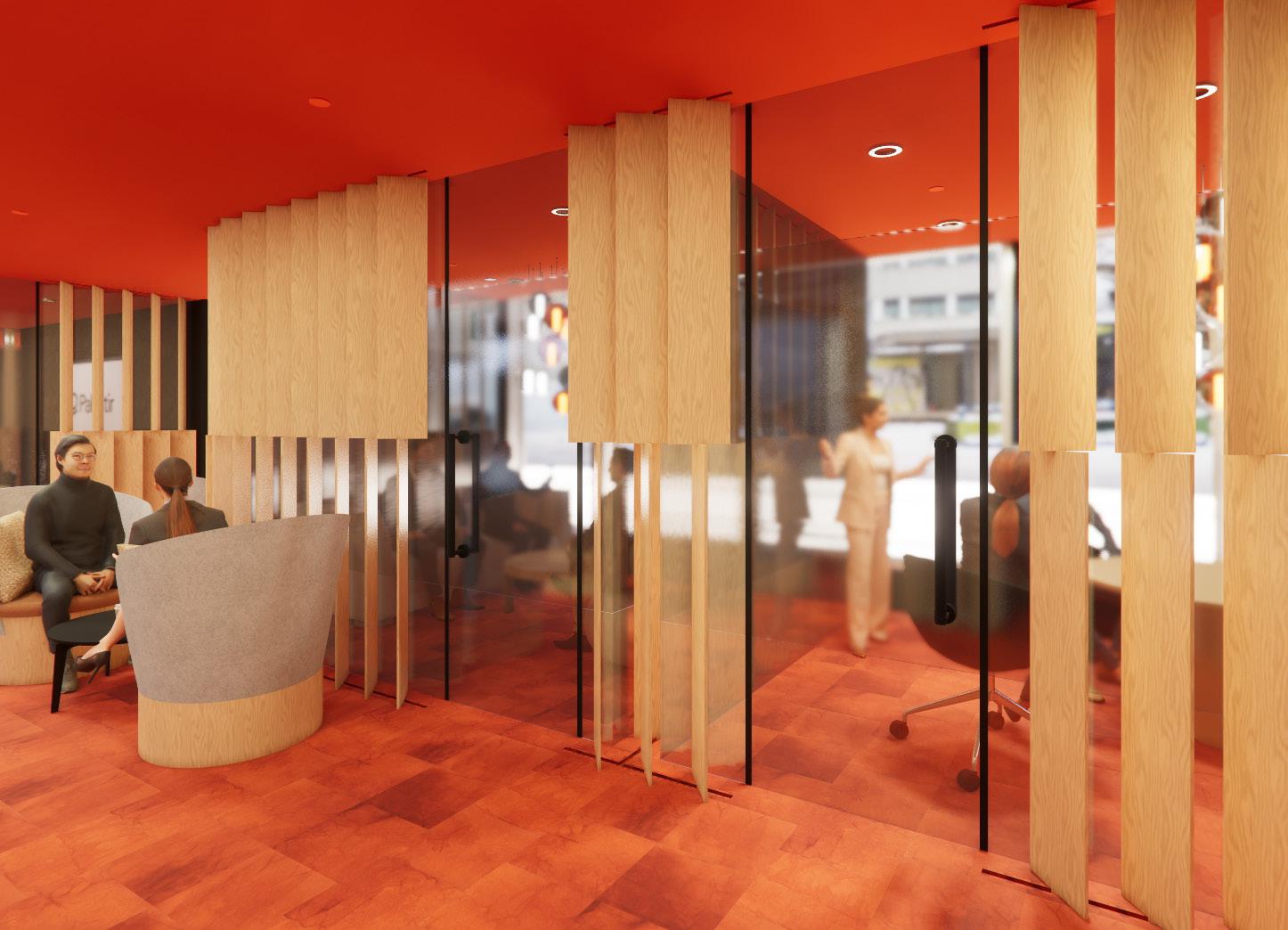
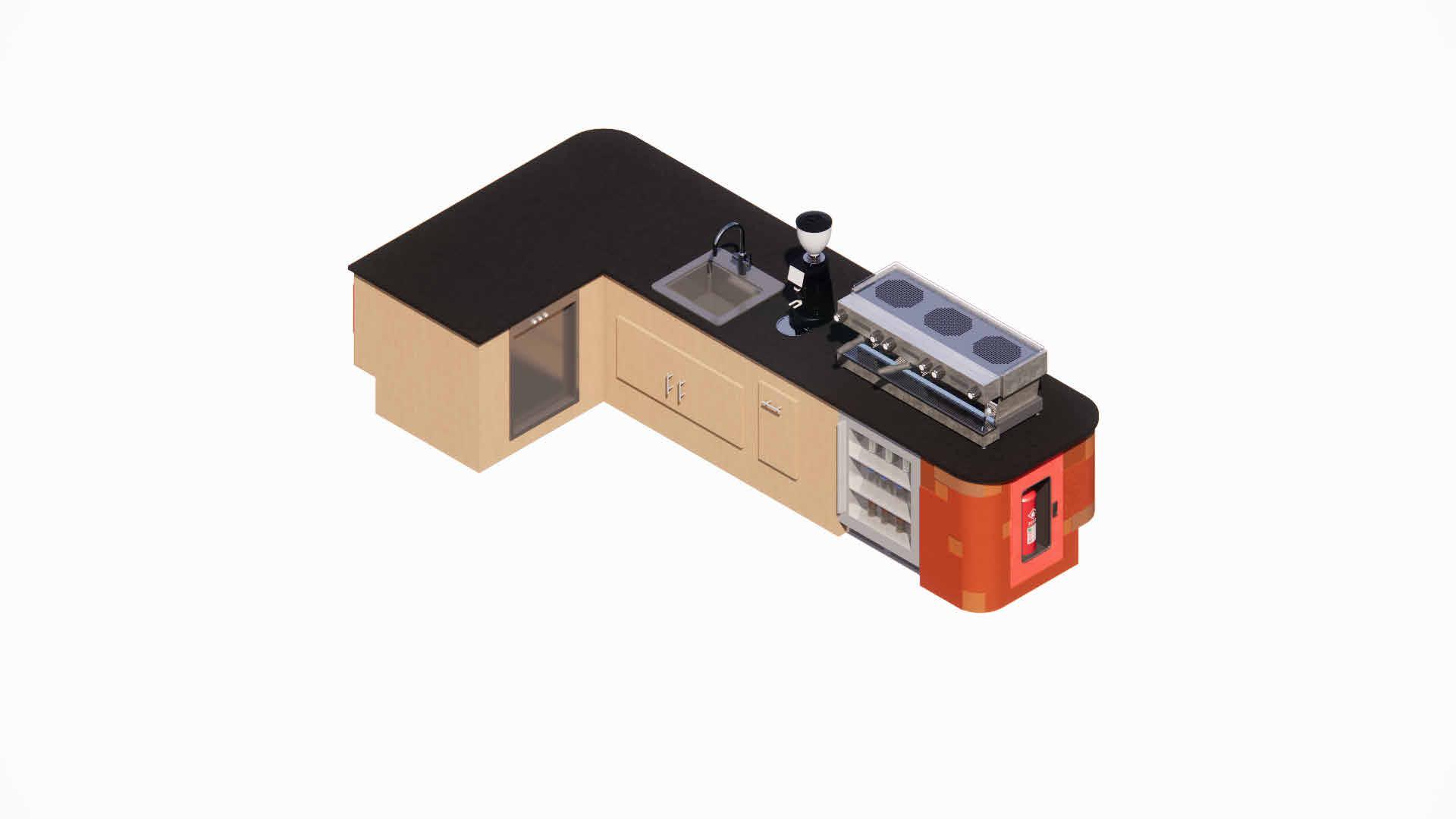
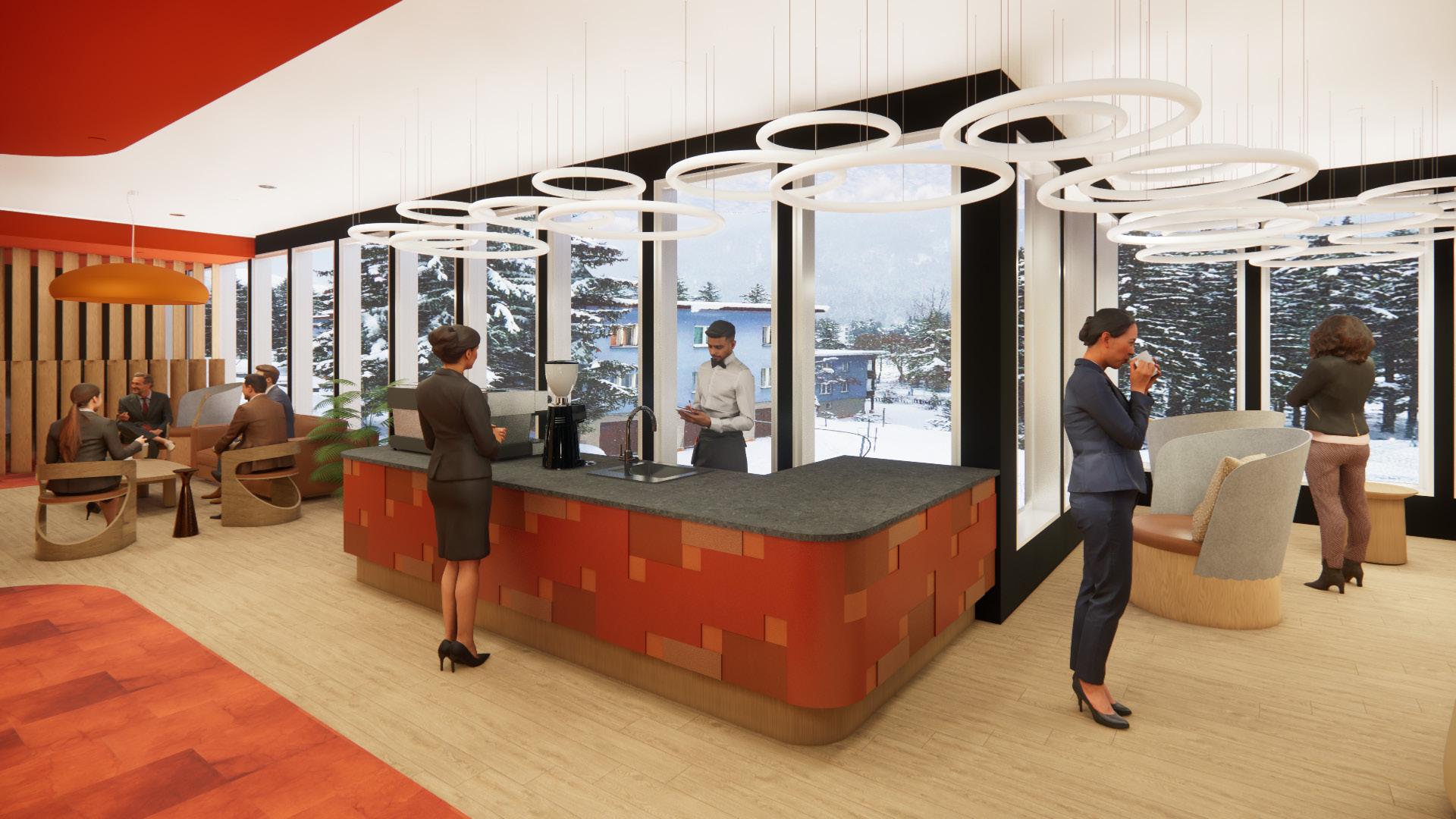
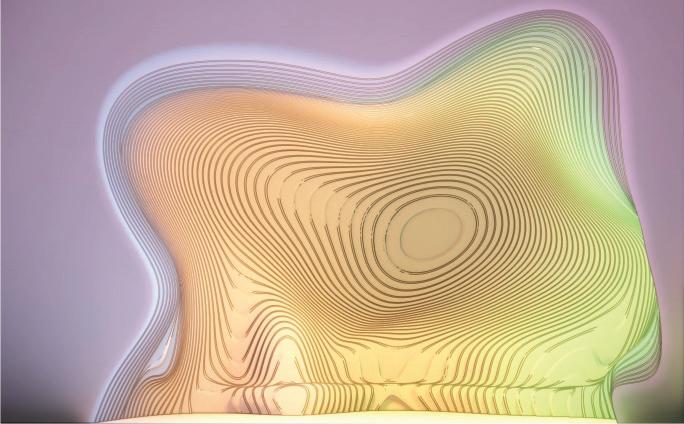
This American, technology-based company specializing in data analytics, strives for innovation and originality. Keeping this in mind, the wooden panel system is designed to create dynamic moments with modular elements that enhance the users’ sense of perception. Along with this, the spatial layout is designed to establish a distinction between the public and private areas through the use of color and implied boundaries. Design Excellence Award IIDA Scholarship Awarded Project
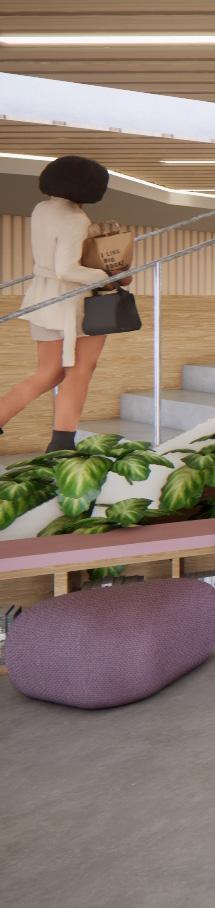
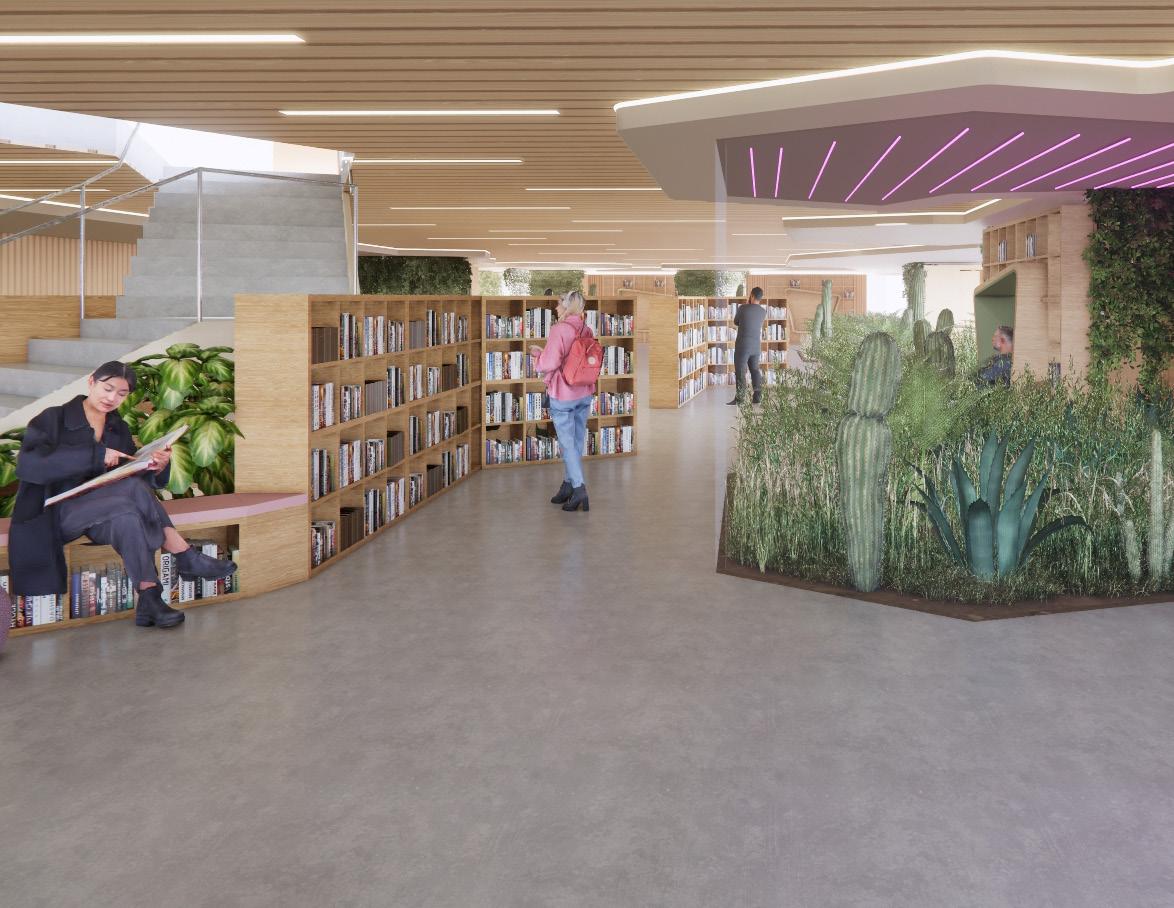
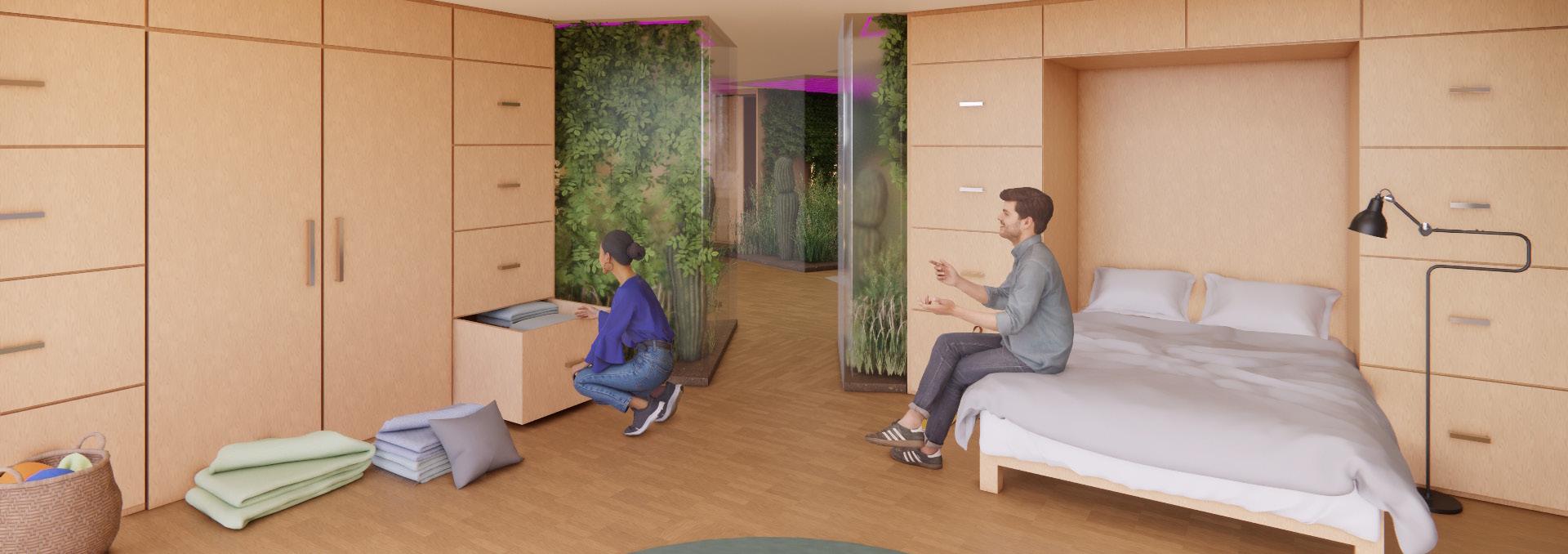
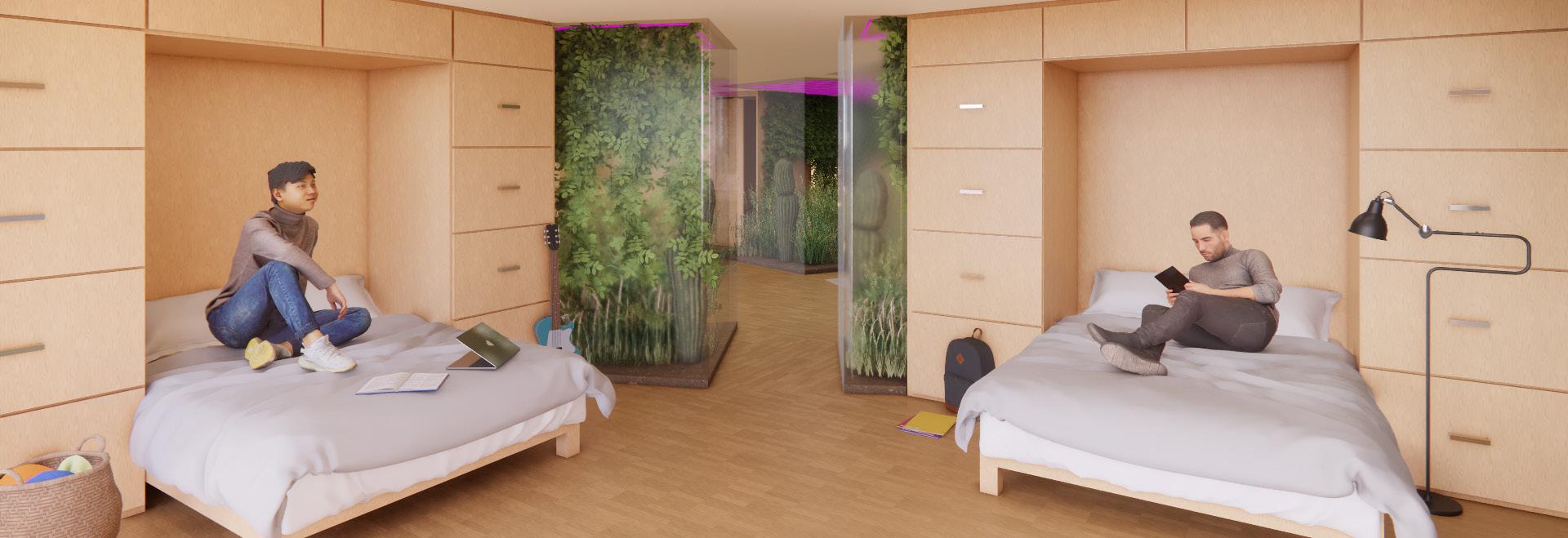
The project explores how spatial systems shape interior environments through proximity and orientation, compressing elements like the kitchen, living, and restroom into minimal space. Rather than relying on traditional walls, the modules themselves act as spatial dividers, ensuring no visual connection between units when inside. Tall greenery is placed strategically to provide an added layer of privacy while softening boundaries and creating thresholds and shared zones. Designed to support Los Angeles’ growing population, it offers individual comfort while fostering a sense of community. A library for residents creates a shared space that encourages interaction, offering a place to read, relax, work, and connect with others.
Site Analysis
Walter P. Story Building
Site Analysis Walter P. Story Building
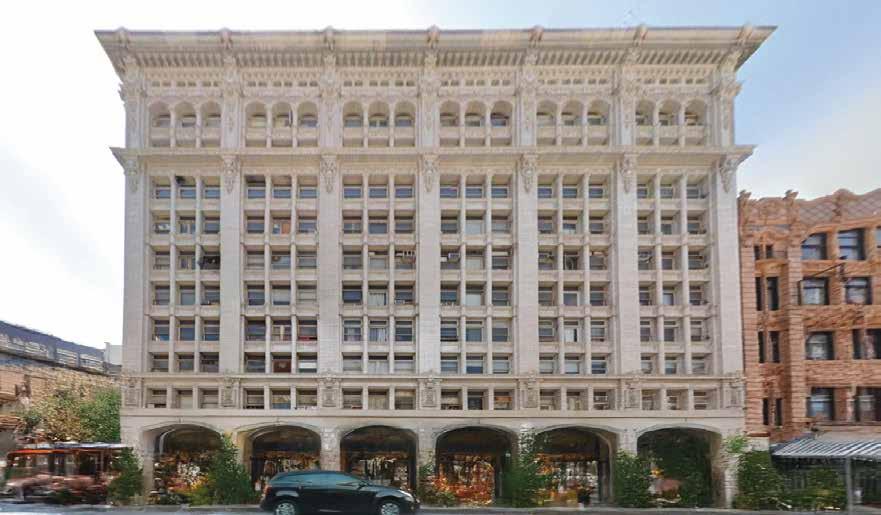
The Walter P. Story Building, built in 1910, is a 12-story Beaux-Arts style high-rise located at the corner of Sixth and Broadway in downtown Los Angeles. Originally commissioned by Walter Perry Story in honor of his father, it has served various commercial and office purposes over the decades, contributing to the area's historic architecture.
• Architectural Style: Beaux-Arts with Classical Revival influences.
• Original Use: Offices and commercial spaces.
• Historic Tenants: Included law firms, businesses, and shops.
• Current Use: Mixed-use, with retail spaces on the first floor and offices above.
The Walter P. Story Building, built in 1910, is a 12-story Beaux-Arts style high-rise located at the corner of Sixth and Broadway in downtown Los Angeles. Originally commissioned by Walter Perry Story in honor of his father, it has served various commercial and office purposes over the decades, contributing to the area's historic architecture.
• Location: 610 S. Broadway, Los Angeles, CA—part of LA’s Historic Core district.
• Nearby Landmarks: The Bradbury Building, Los Angeles Theatre, and Ace Hotel.
The Walter P. Story Building, built in 1910, is a 12-story Beaux-Arts style highrise located at the corner of Sixth and Broadway in downtown Los Angeles. Originally commissioned by Walter Perry Story in honor of his father, it has served various commercial and office purposes over the decades, contributing to the area’s historic architecture.
• Architectural Style: Beaux-Arts with Classical Revival influences.
• Original Use: Offices and commercial spaces.
• Historic Tenants: Included law firms, businesses, and shops.
• Current Use: Mixed-use, with retail spaces on the first floor and offices above.
• Location: 610 S. Broadway, Los Angeles, CA—part of LA’s Historic Core district.
• Nearby Landmarks: The Bradbury Building, Los Angeles Theatre, and Ace Hotel.
Limestone
LIBRARY
LIVING SPACE
LIBRARY GREENERY
LIVING SPACE
PRIVATE COMMUNAL
LIVING SPACE LIVING SPACE
FLOOR PLAN AND BUBBLE DIAGRAM
Walk-in Terrarium
GREENERY GREENERY
GREENERY
BEDROOM SIDE
TWO PERSON UNIT
ONE PERSON UNIT
CONCRETE FLOOR
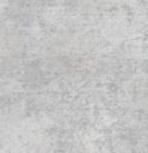
Concrete was used in the library for its durability and because it resists heavy wear, making it ideal for high-traffic public spaces.
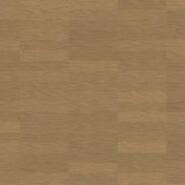
Wood was used in the modules for its warmth and comfort, creating a cozy, inviting feel that’s perfect for sleeping spaces.
Wood was used in the modules for its warmth and comfort, creating a cozy, inviting feel that’s perfect for sleeping spaces.
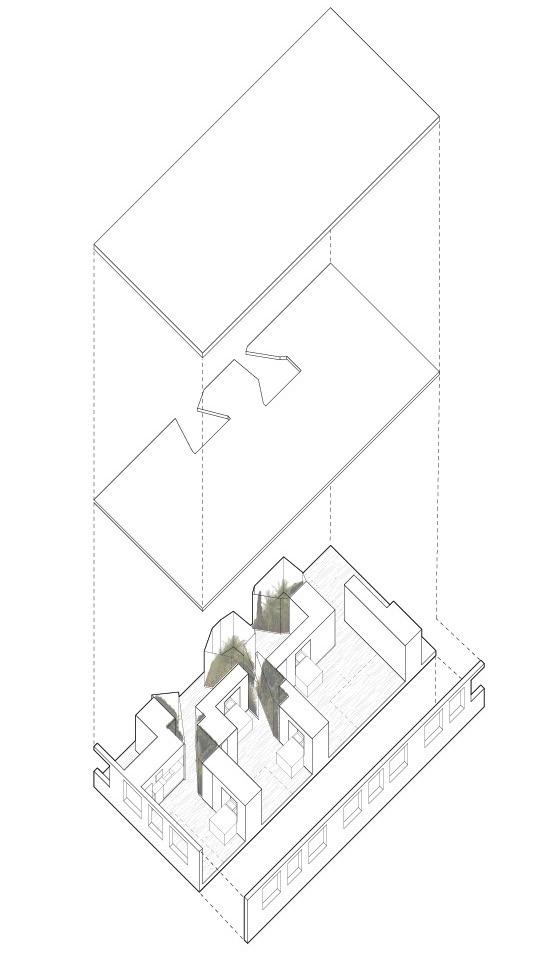
EXPLODED AXON
STRUCTURAL CEILING
DROPPED CEILING
EXISTING WALLS
WALK-IN TERRARIUM
WOOD MODULES
WOOD FLOOR
LIVING UNIT - COMPACT CONFIGURATION
LIVING UNIT - SLEEPING CONFIGURATION
Museum of Emotions
Fall 2023 | Prof. Ria Bravo
Partner: Karina Salaiz
Programs: Blender, Rhino 7, Enscape, Illustrator
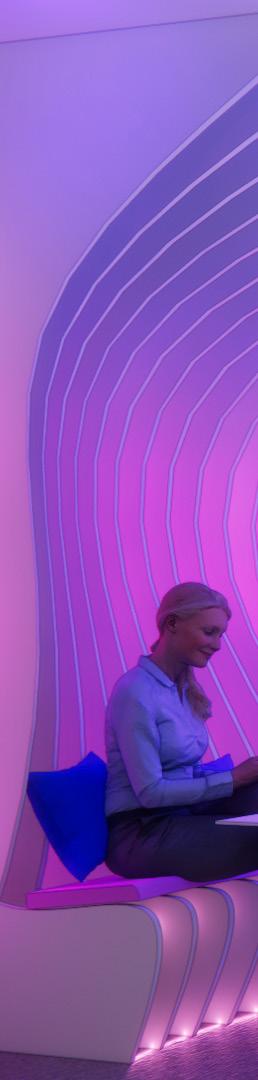
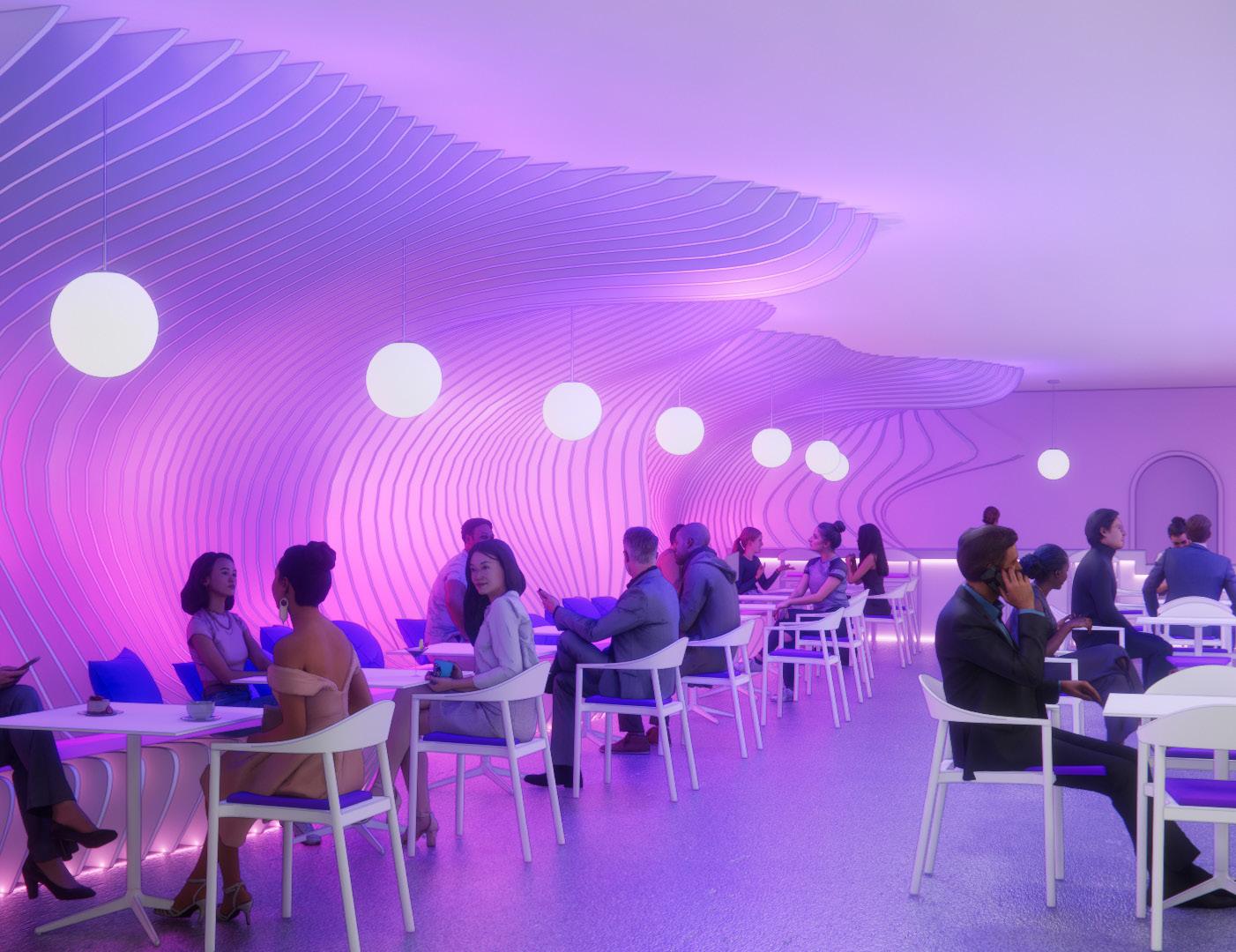
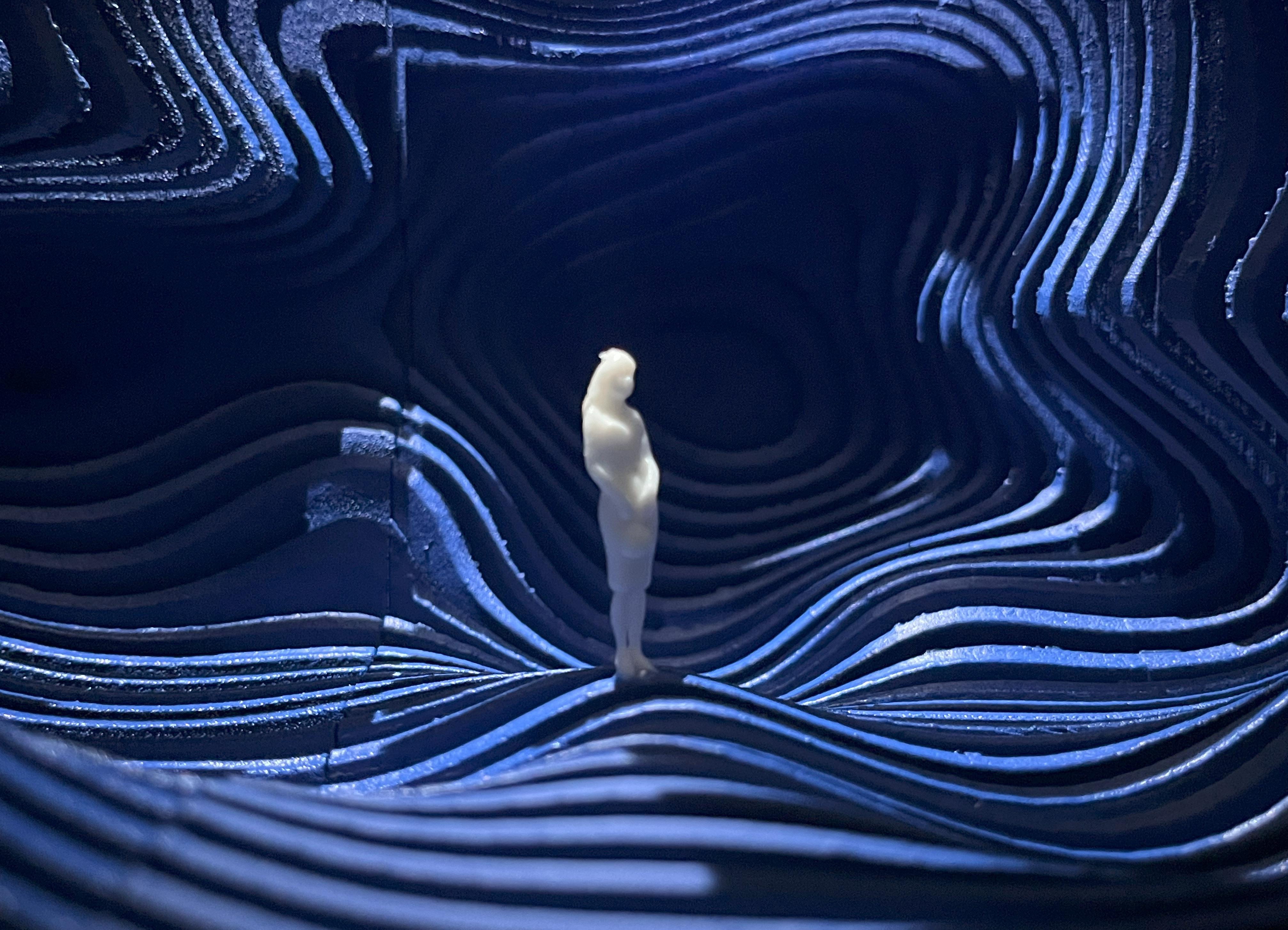
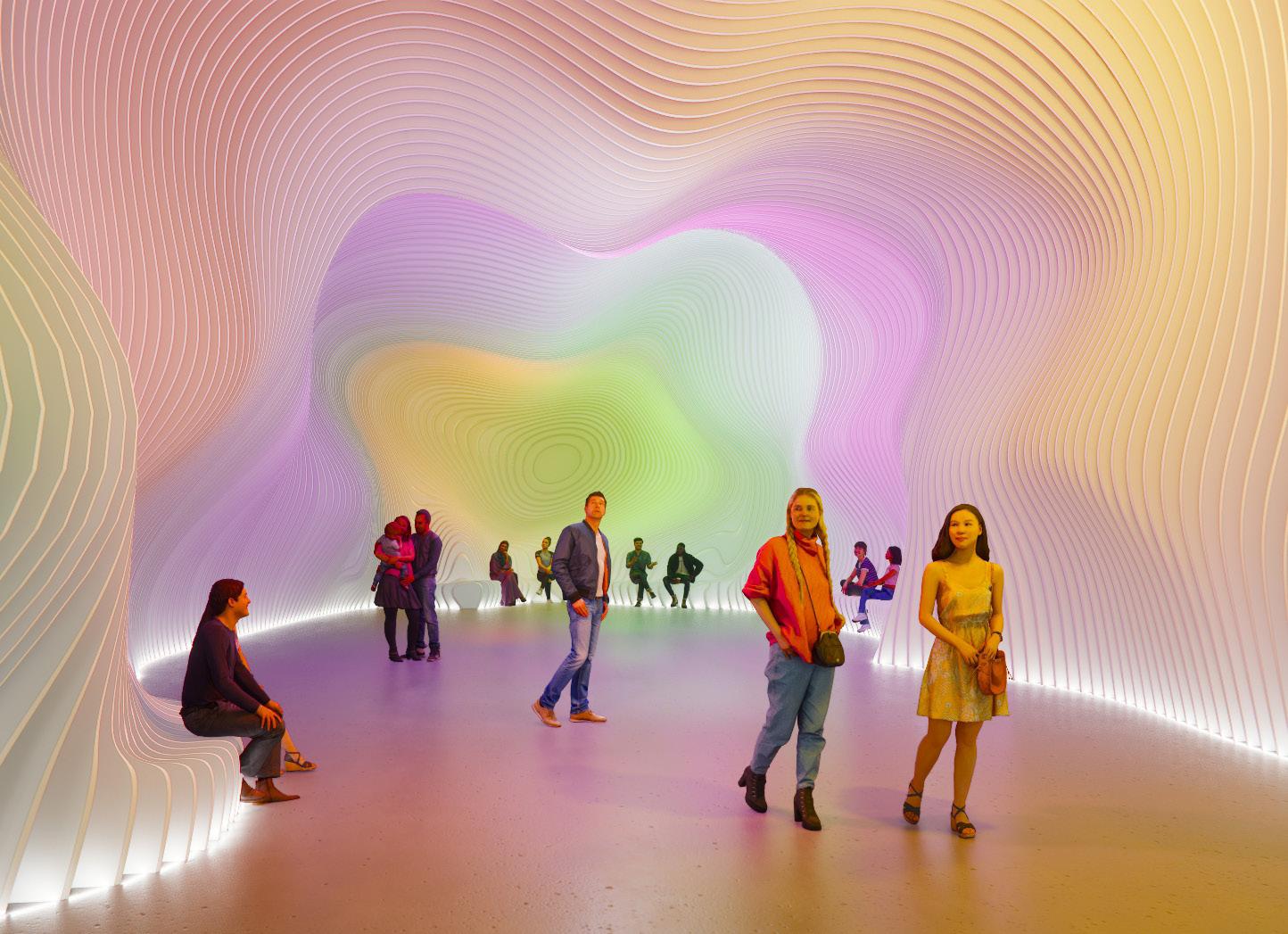
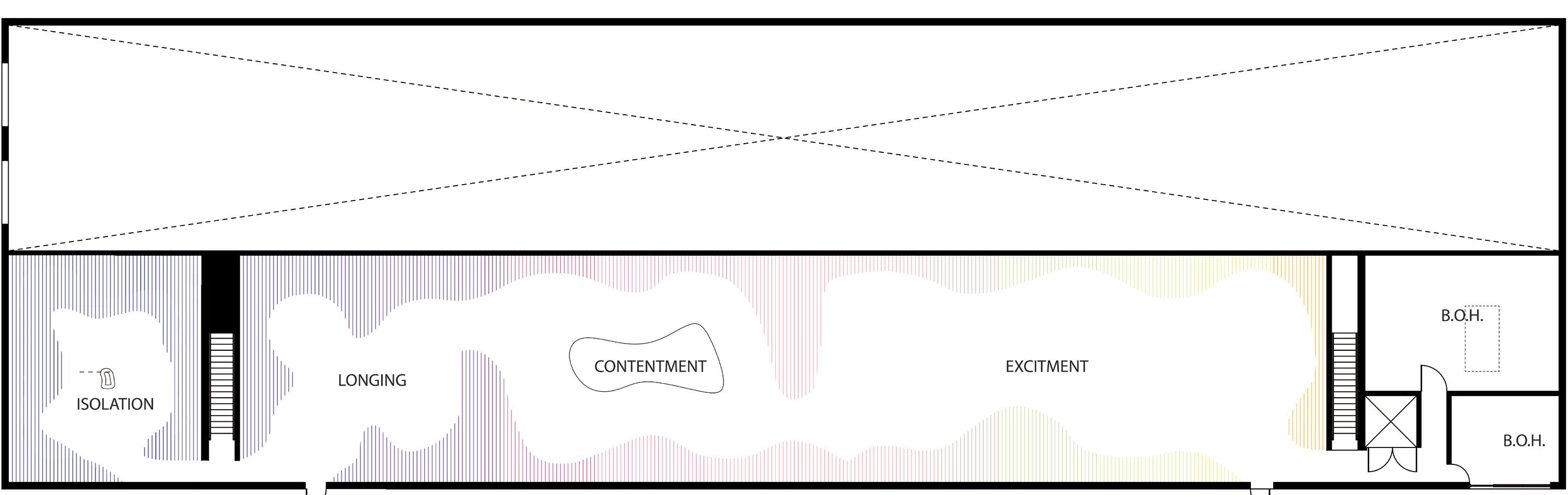
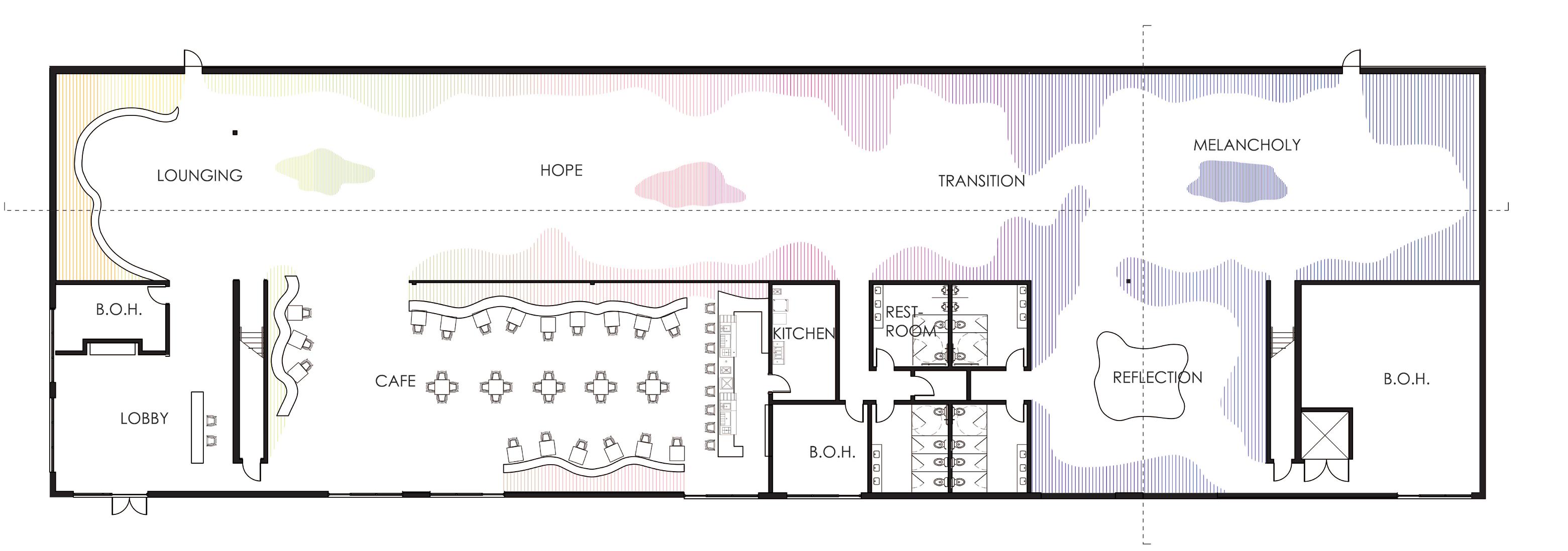
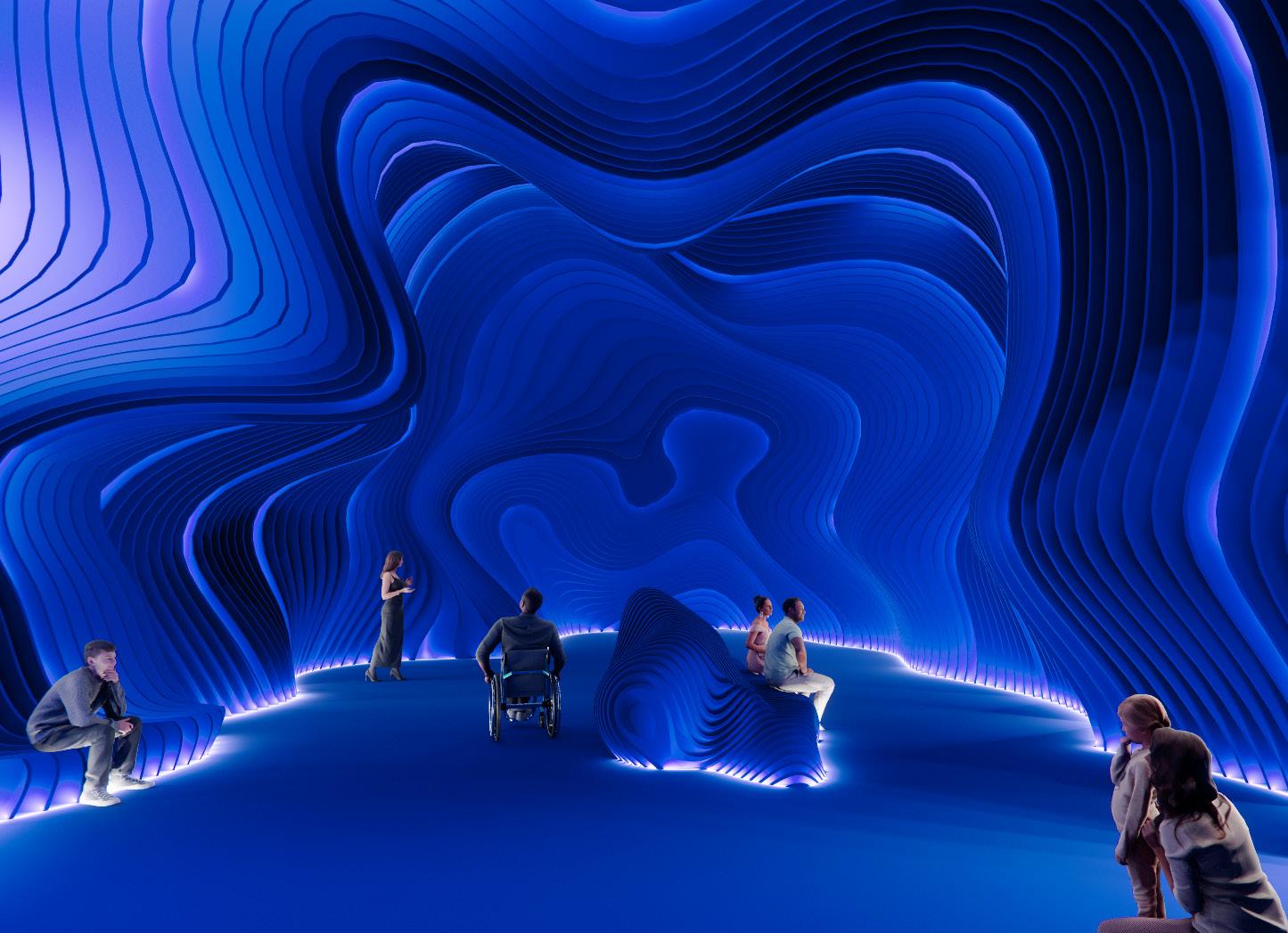
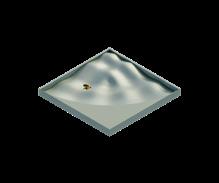
The Museum of Emotions is part of an international Architectural competition that uses design principles to visually represent two emotions. The design of both of the exhibitions was created through a series of topographical panels that transition through color and light to reflect the attributes of hope and melancholy. Visitors in the Hope Gallery are encouraged to sit together and amongst strangers through the large inclusive seating lounge. On the other hand, the Melancholy Gallery encourages solitude and individual appreciation. IIDA Scholarship Awarded Project
TRANSVERSE
LONGITUDINAL
LOUNGING SECTION-ELEVATION
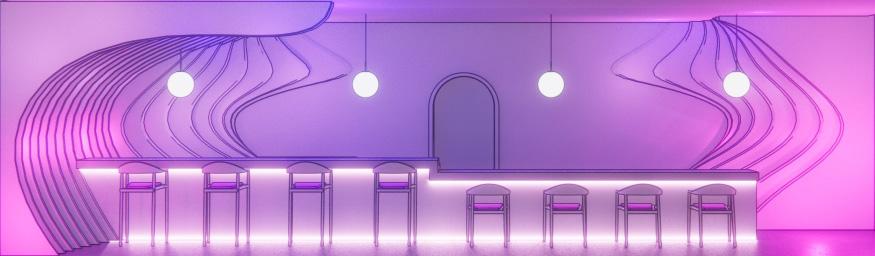
CAFE SECTION-ELEVATION
TRUSSES
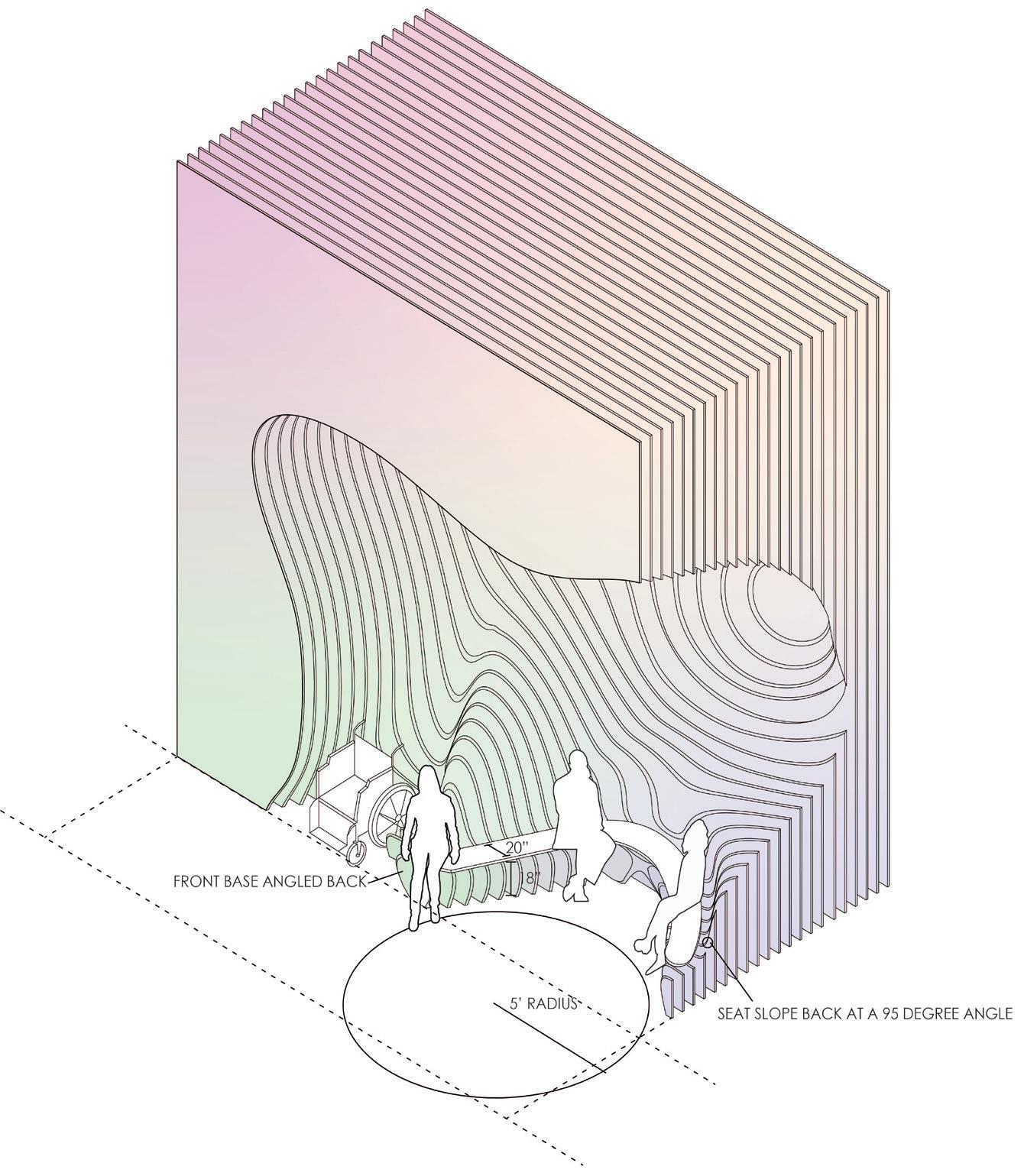
UNIVERSAL DESIGN PRINCIPLES
- PRINCIPLE 1: EQUITABLE USE
- PRINCIPLE 6: LOW PHYSICAL EFFORT
- PRINCIPLE 7: SIZE AND SPACE FOR APPROACH AND USE
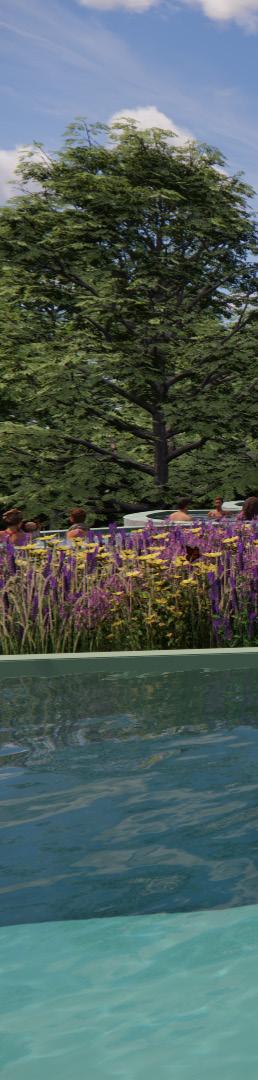
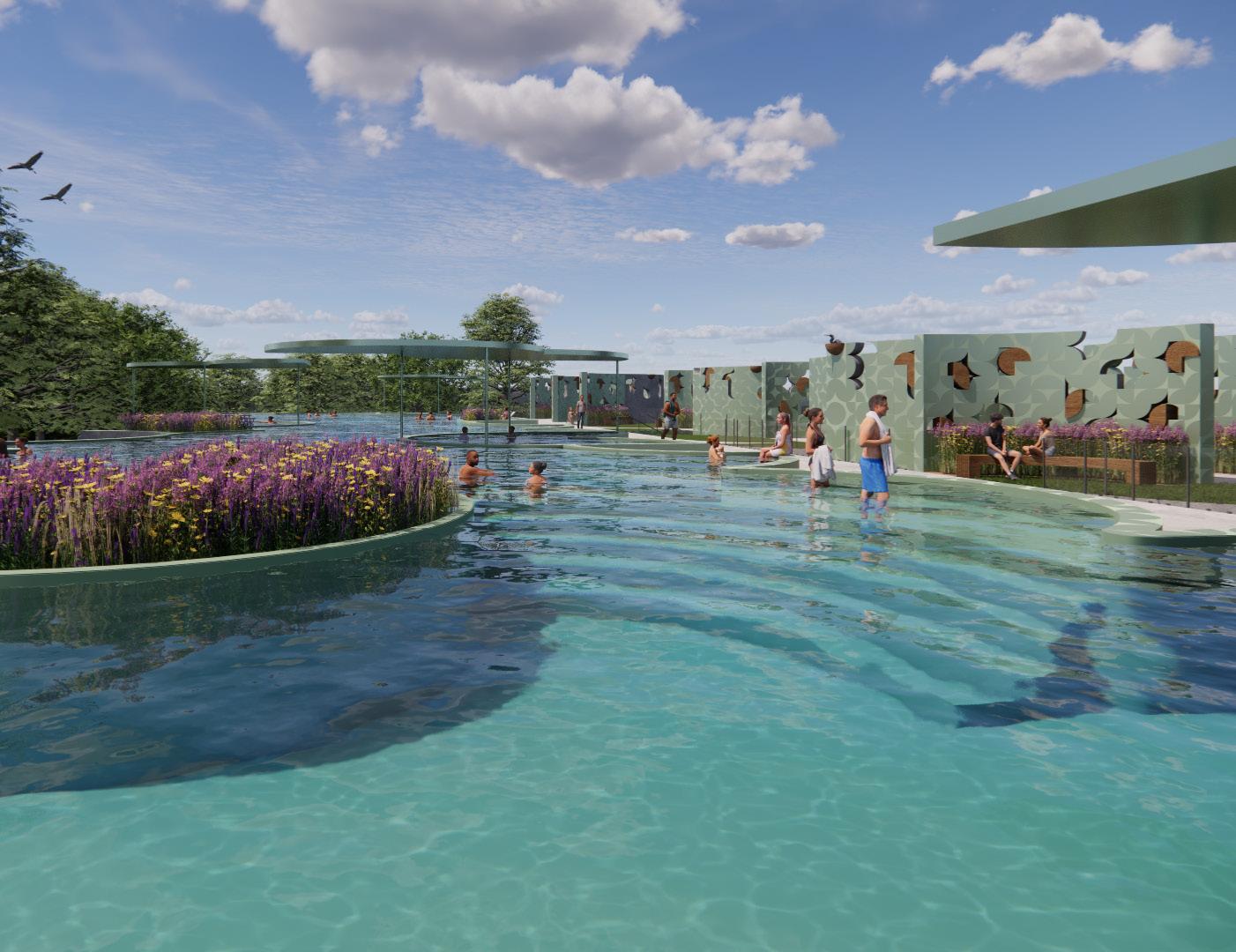
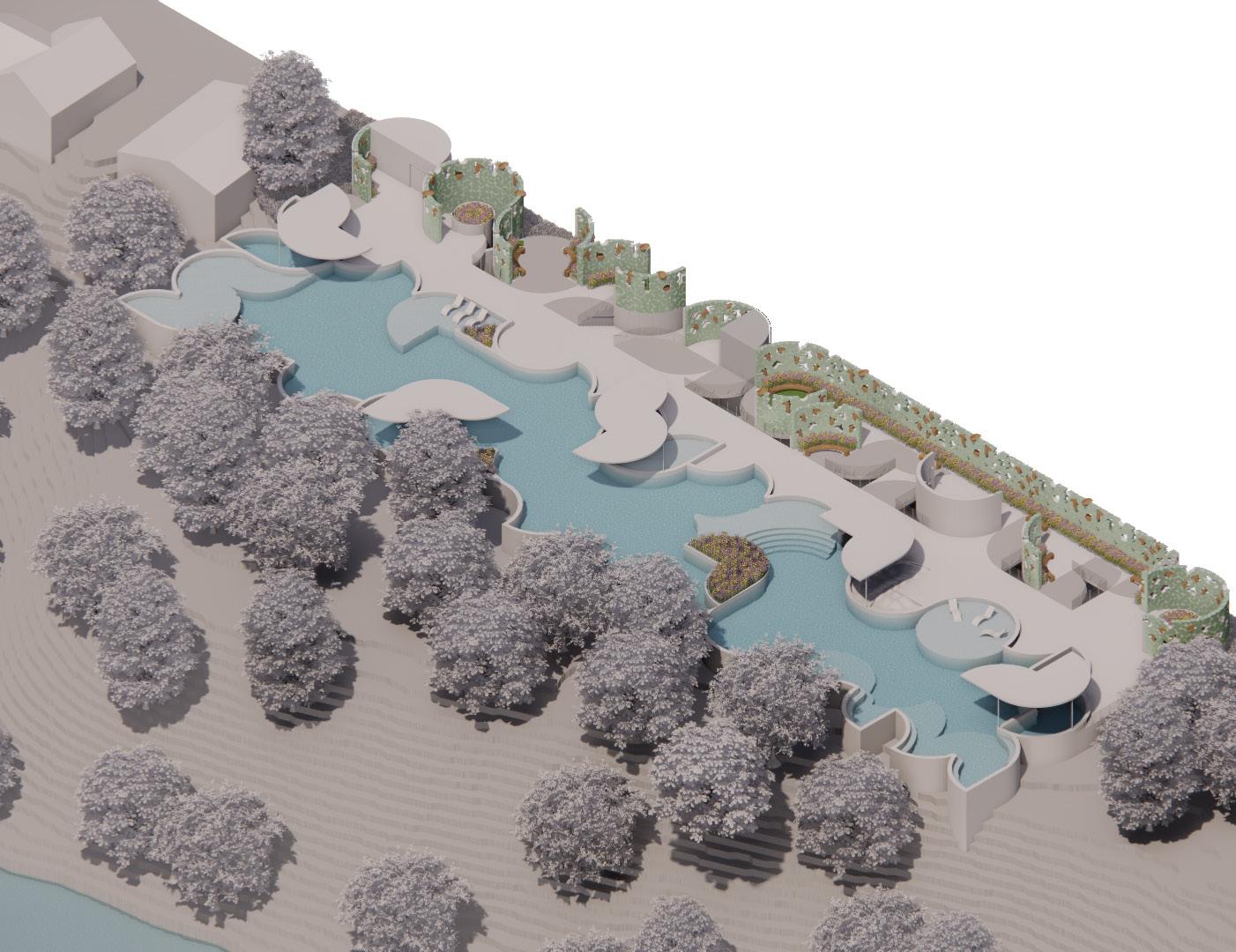
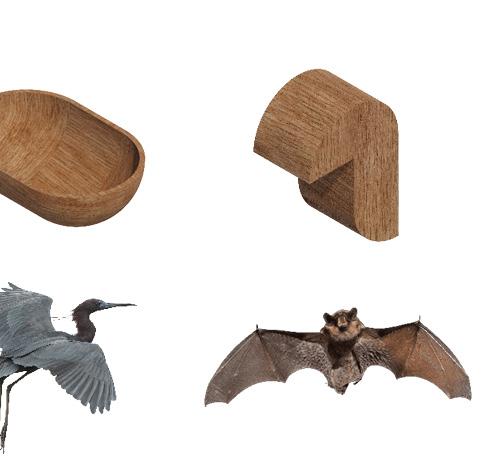
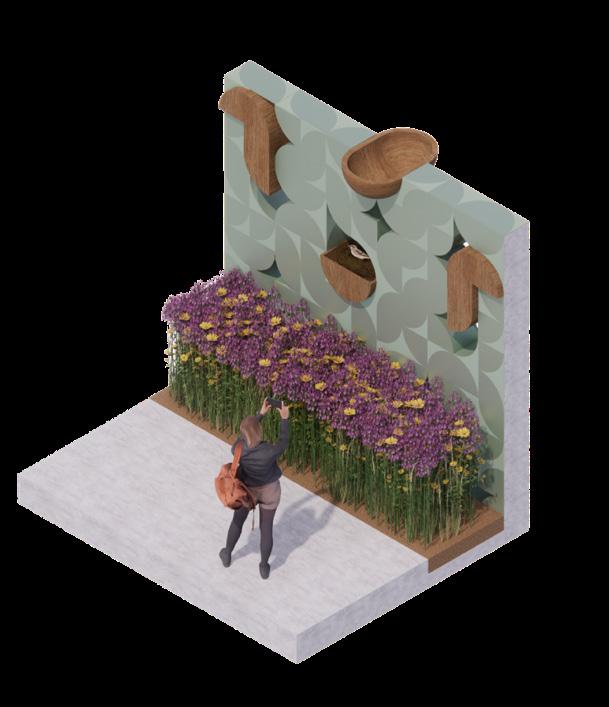
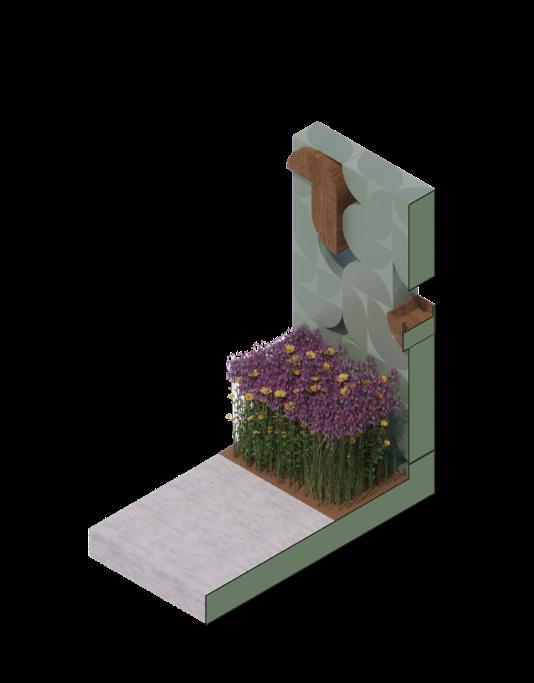
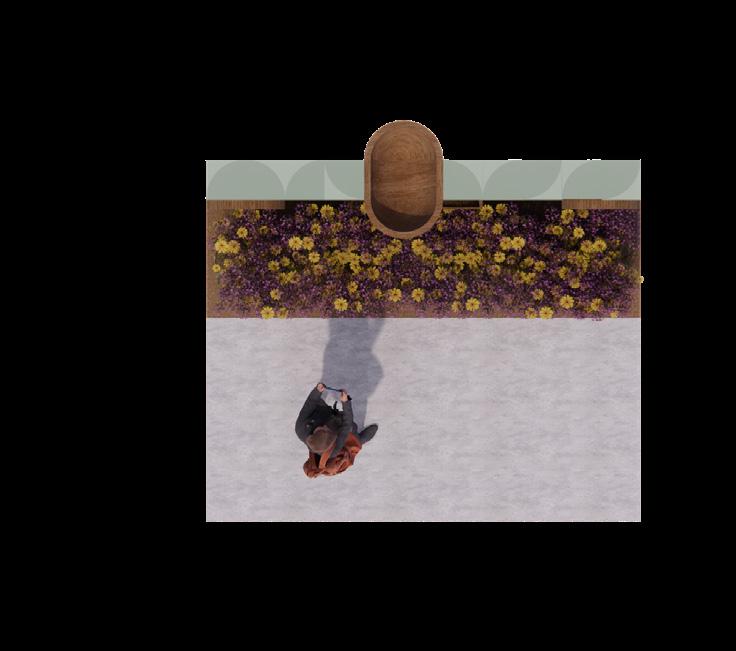
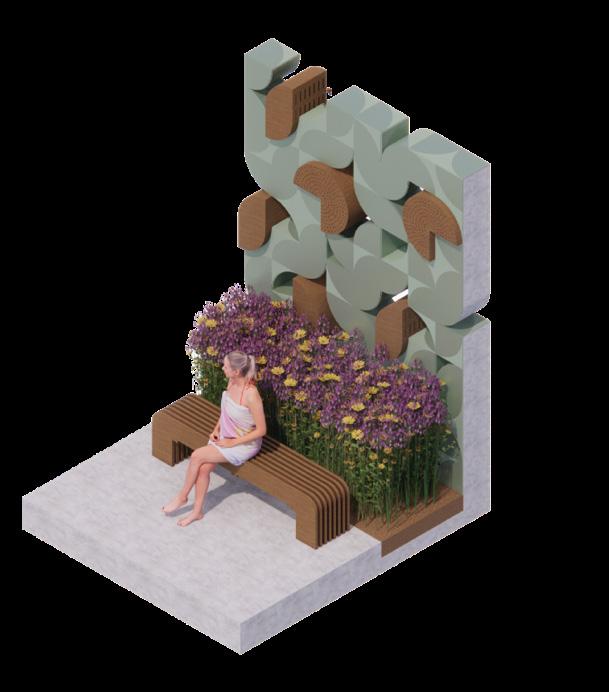
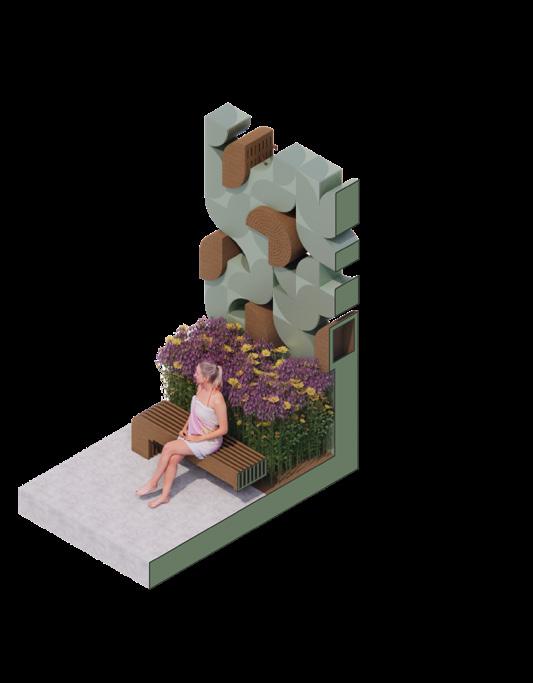
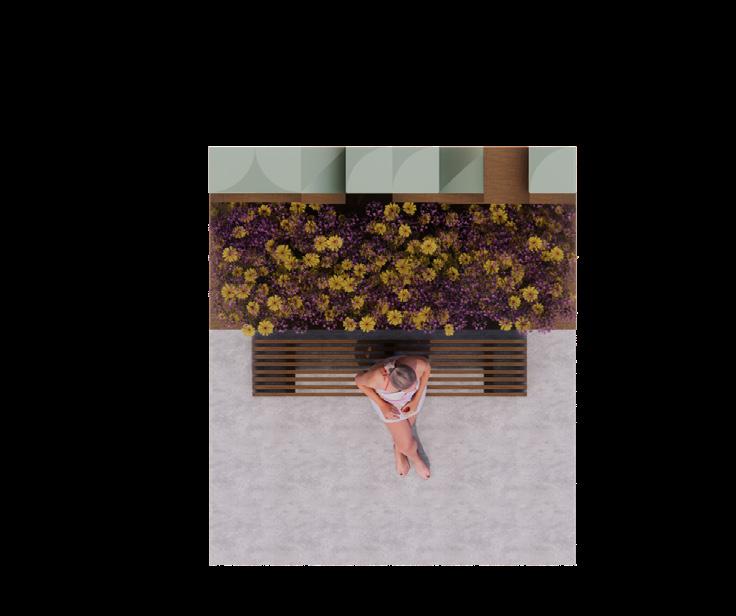
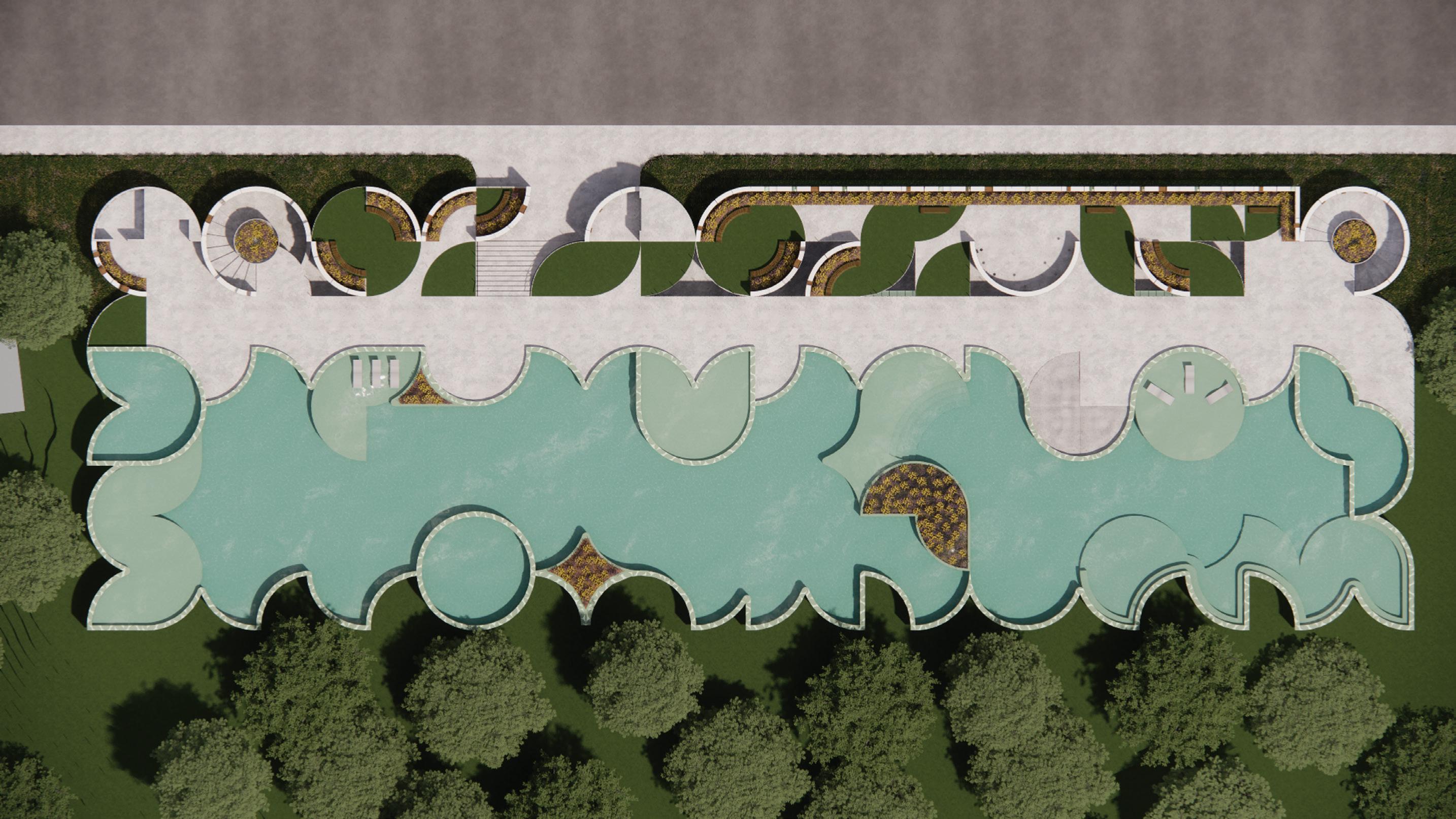
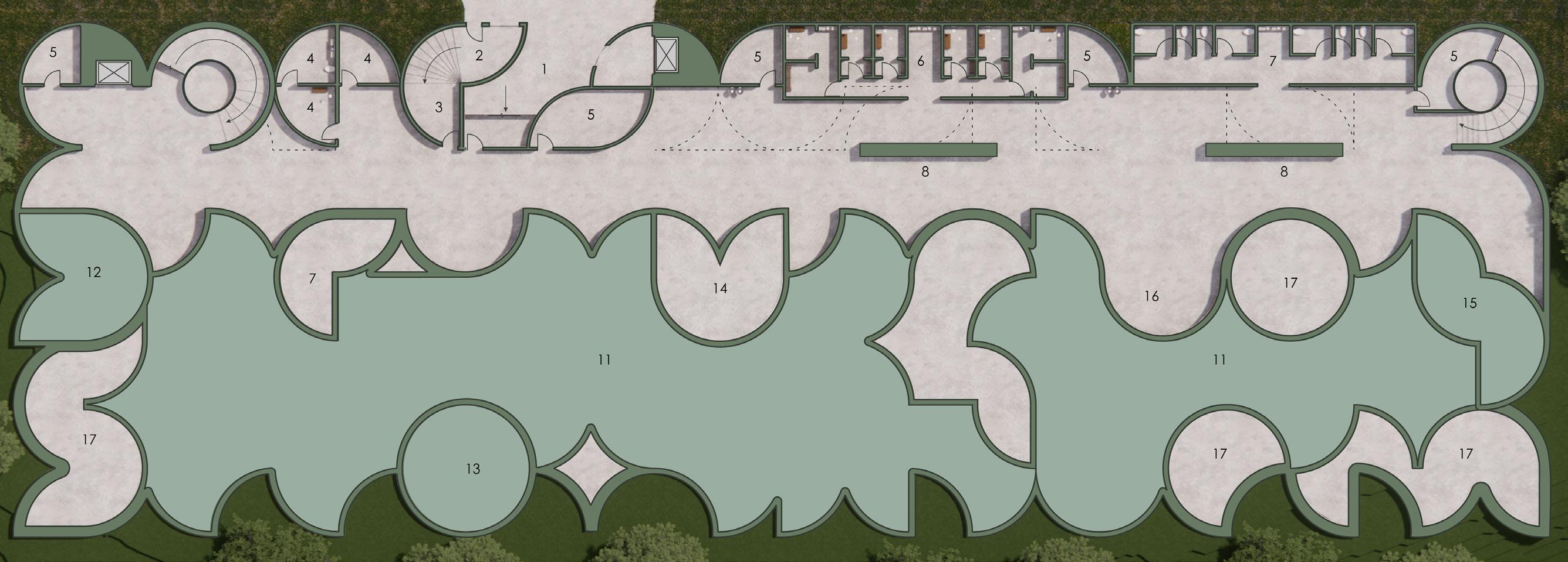
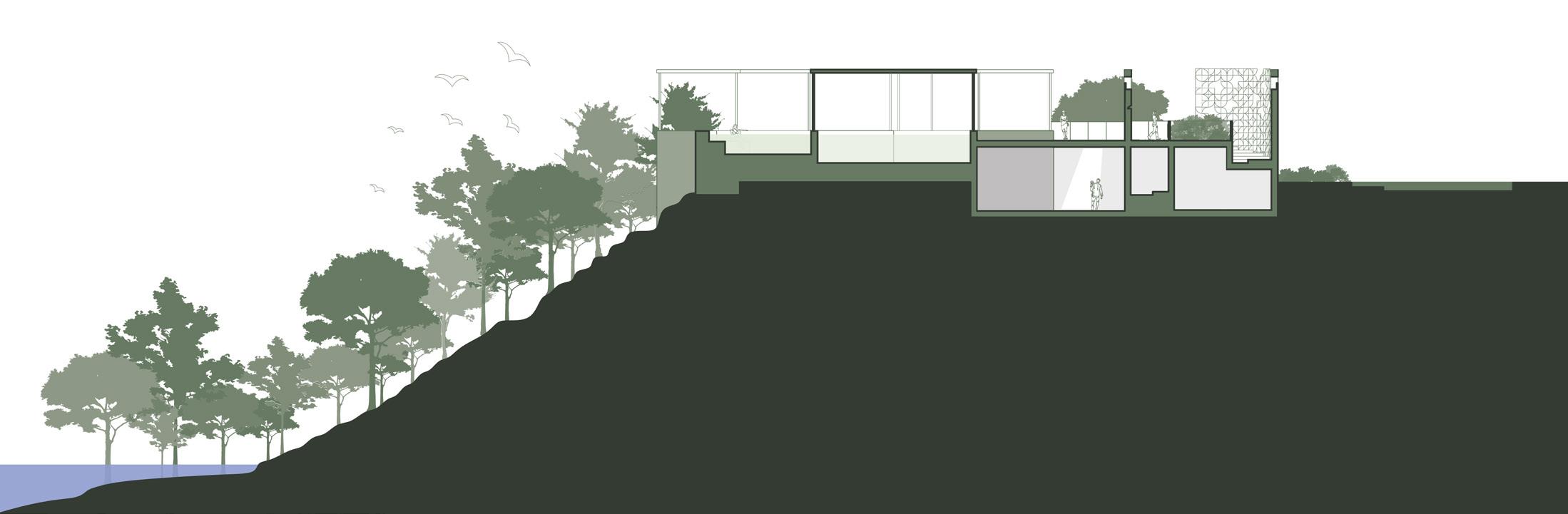
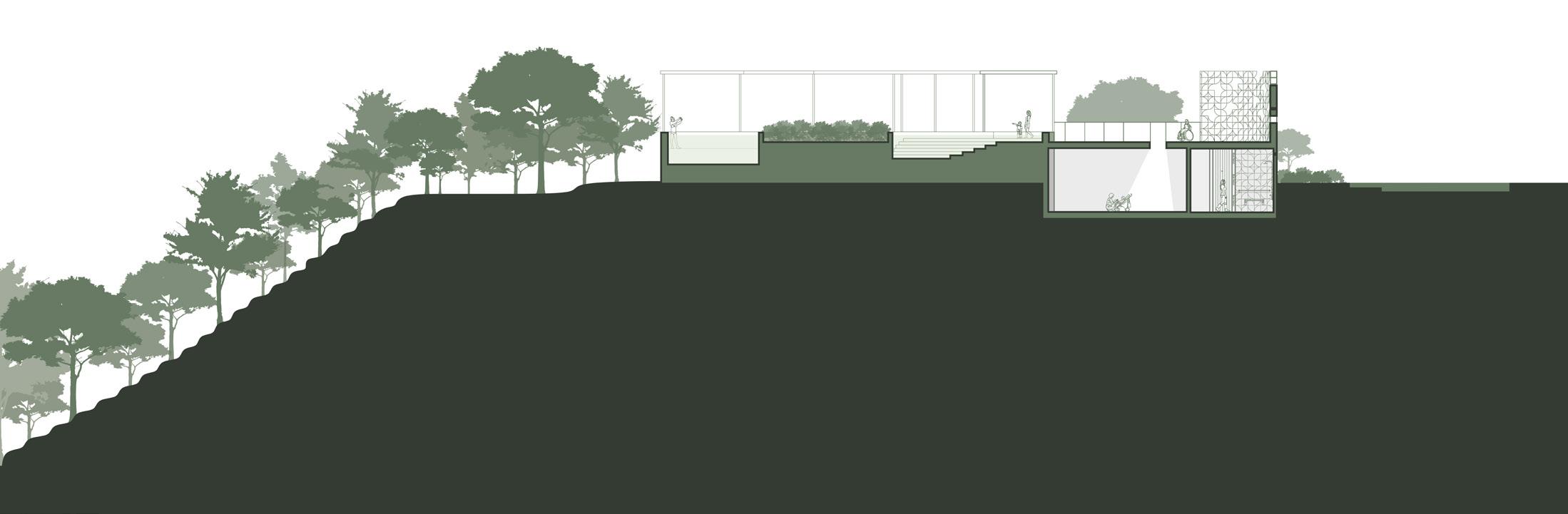
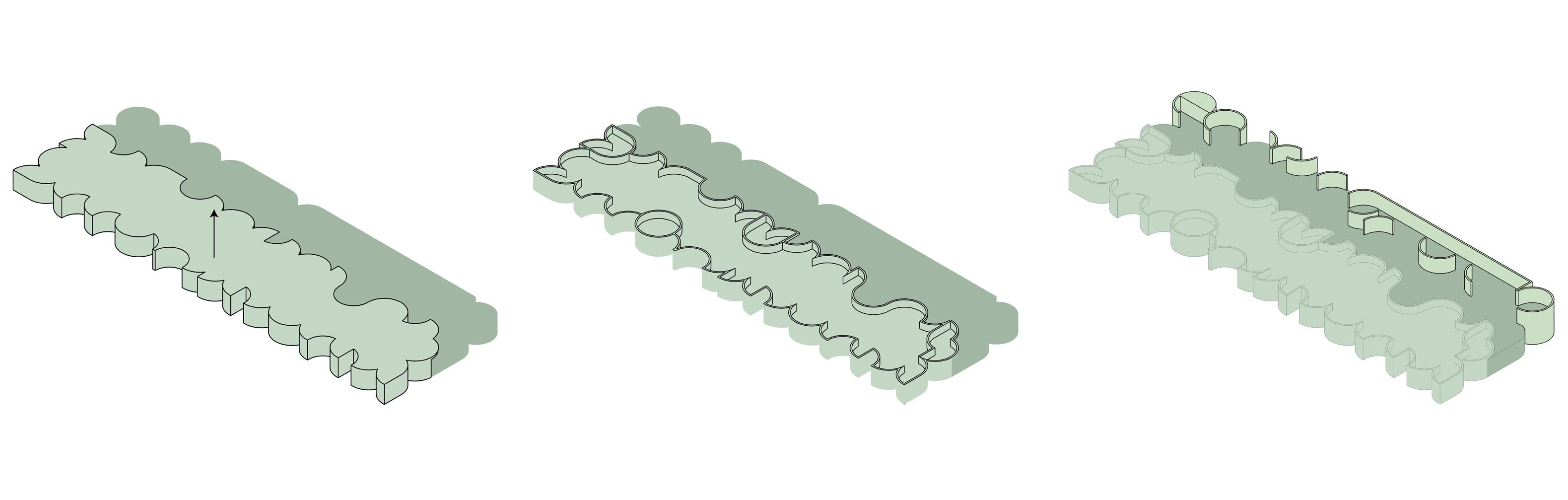
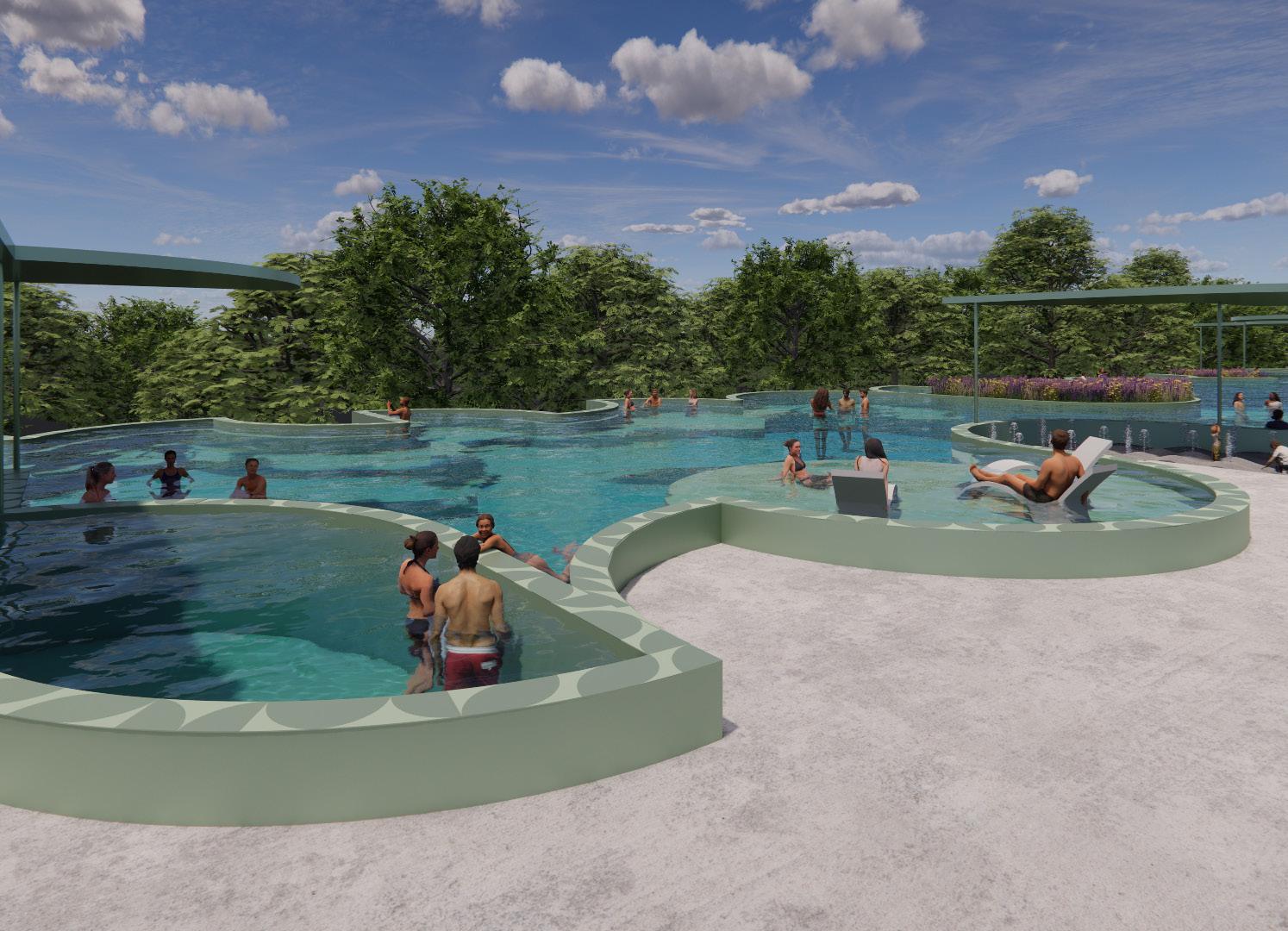
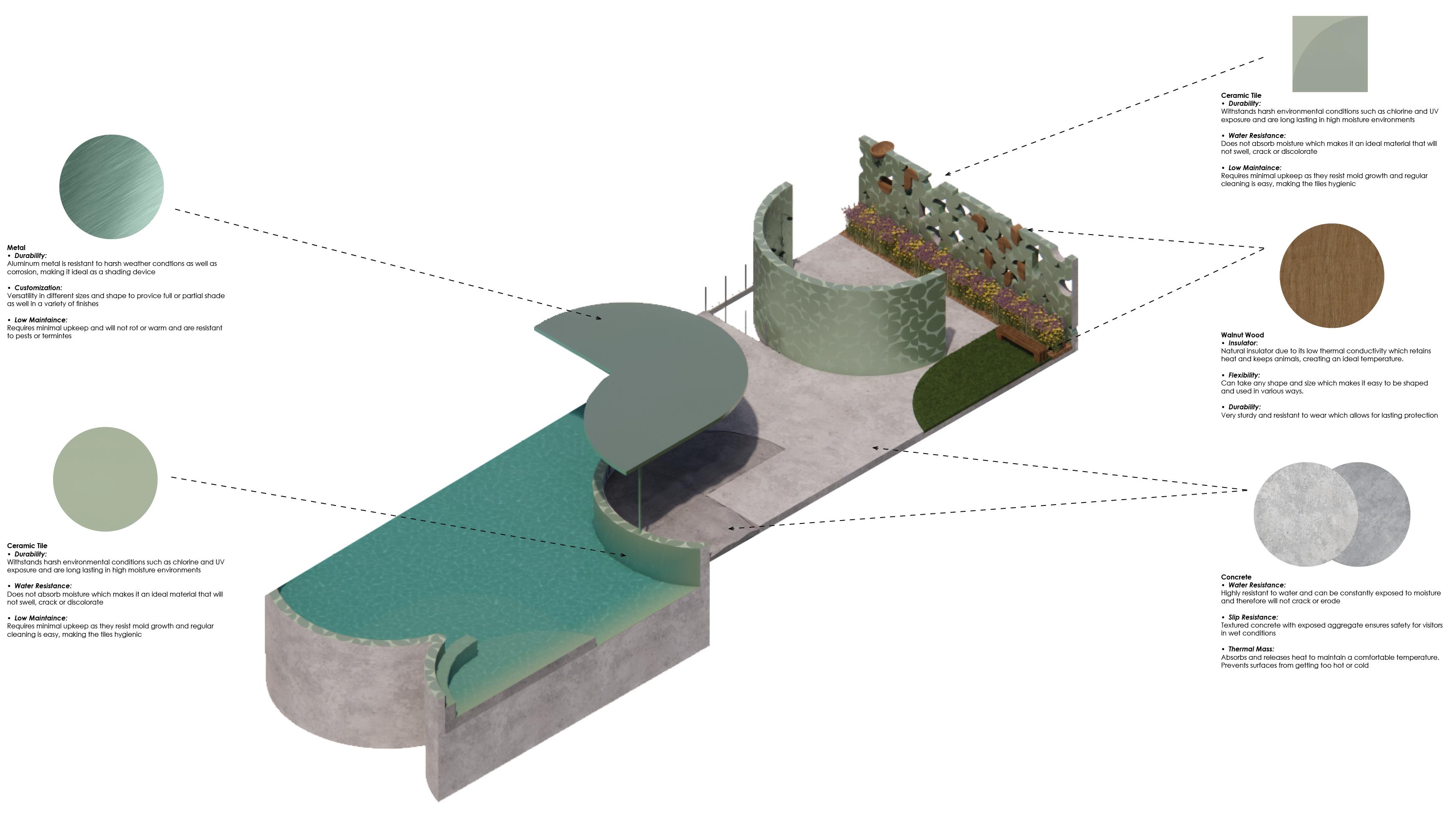
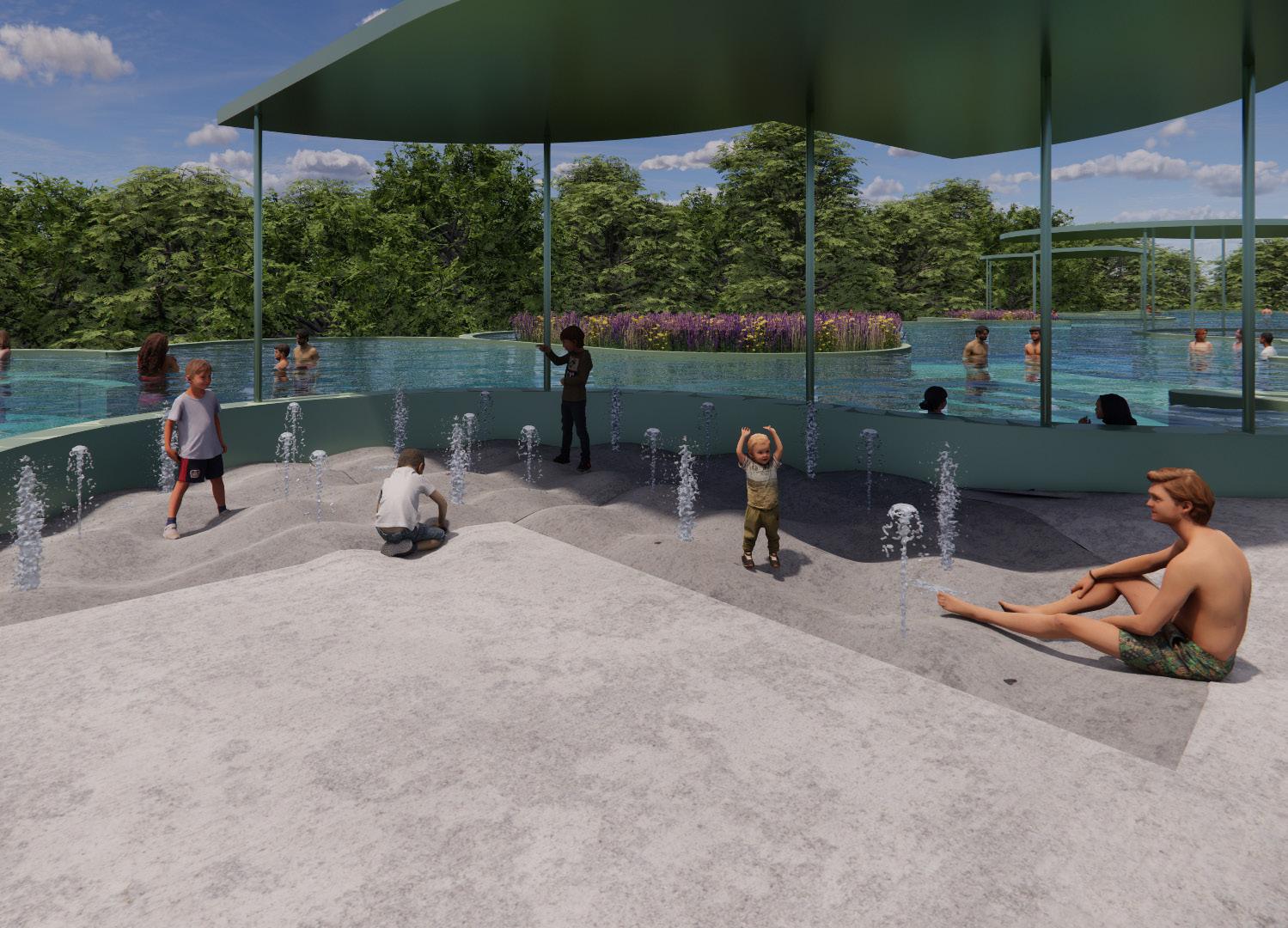
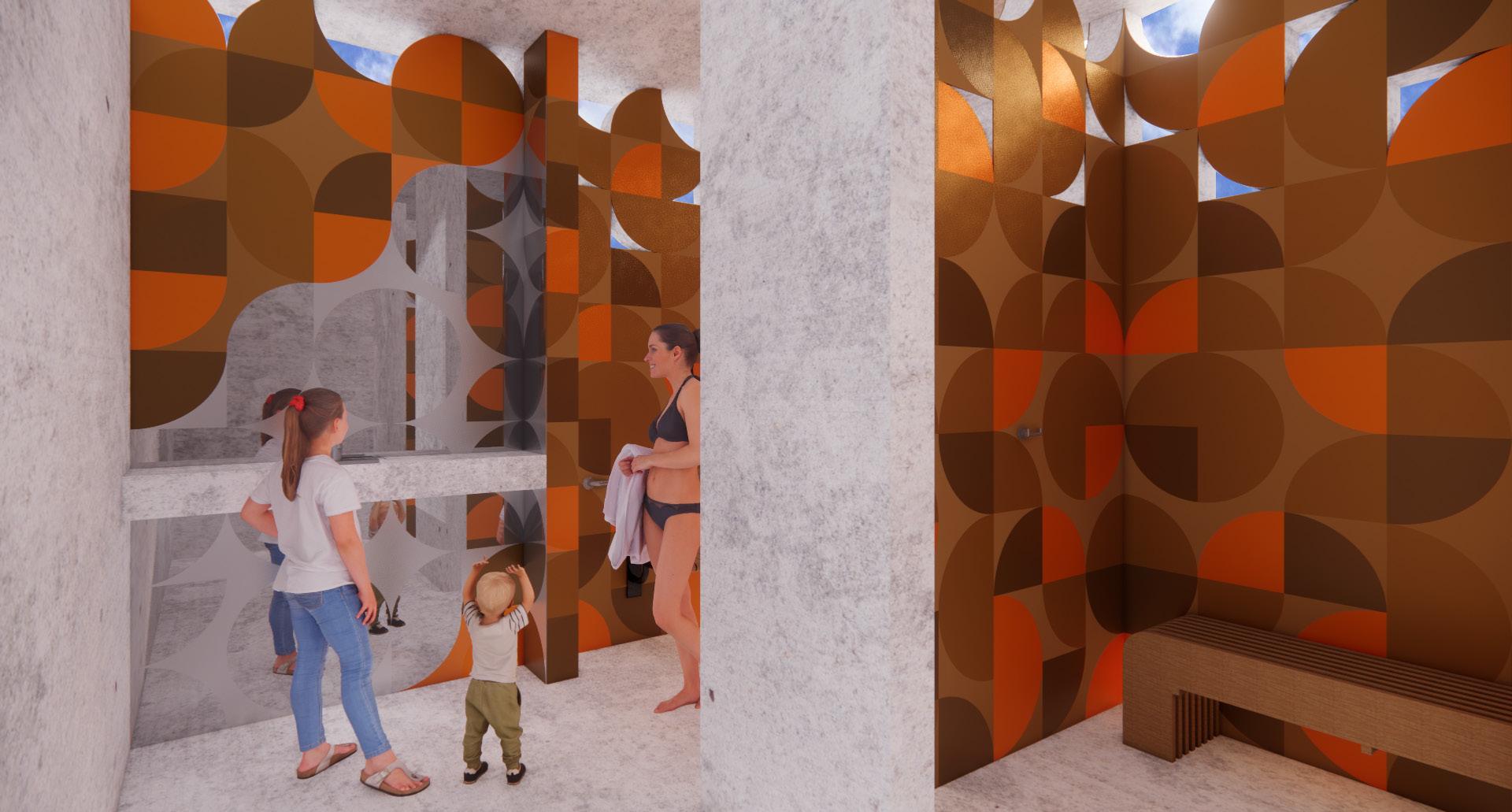
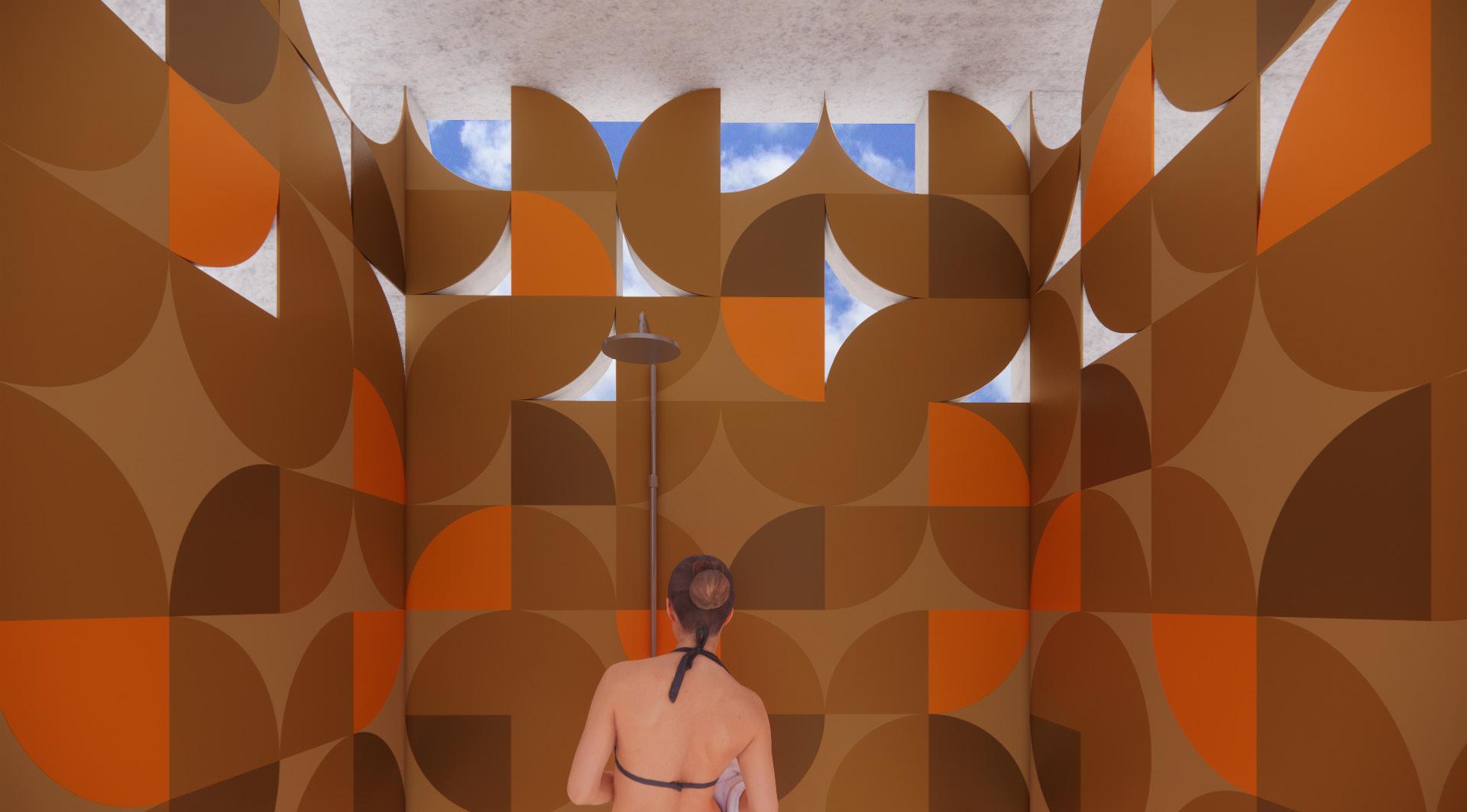
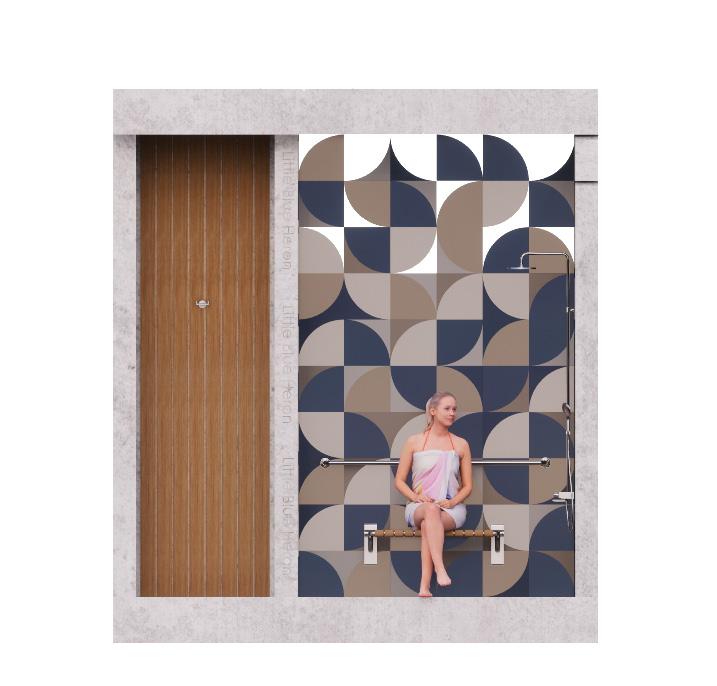
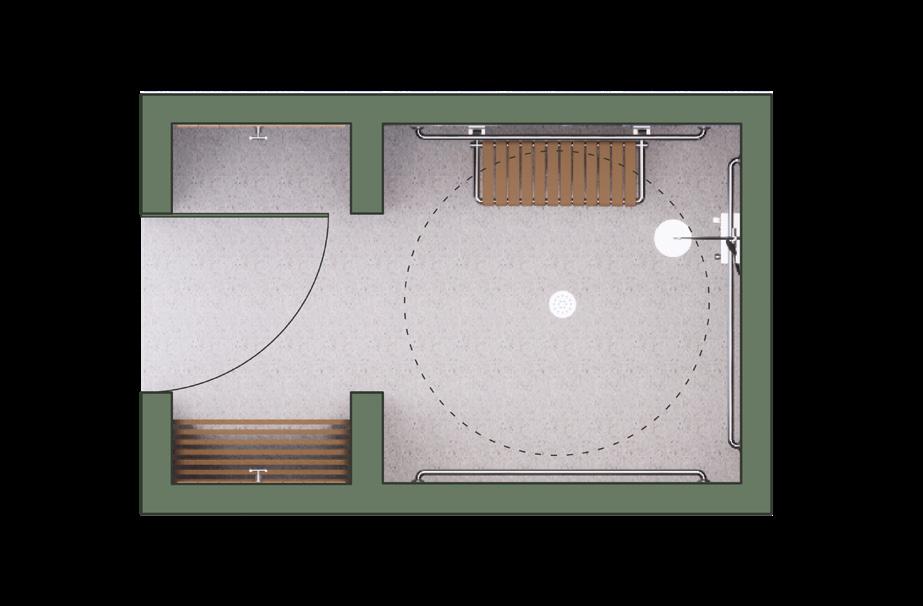
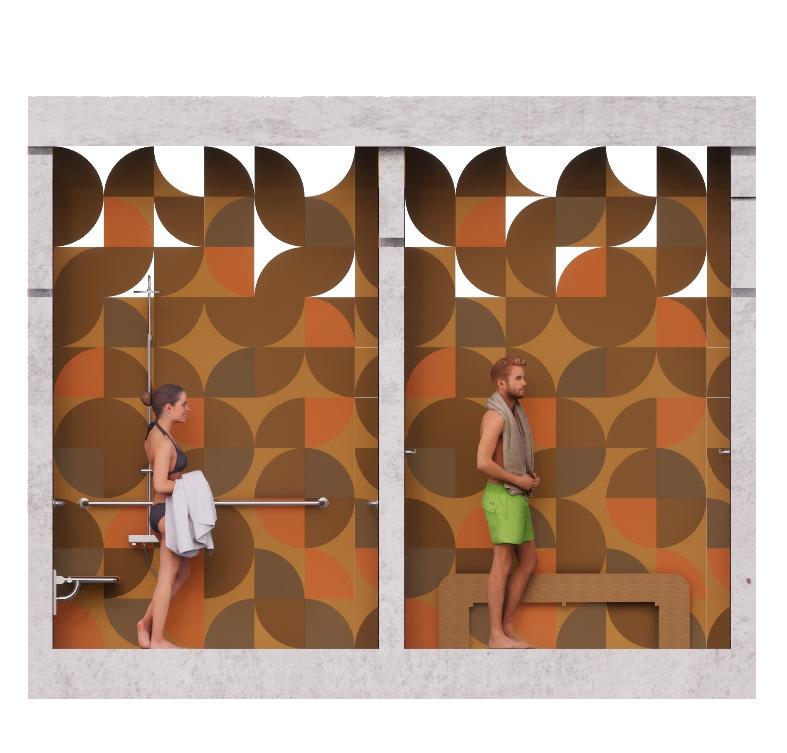
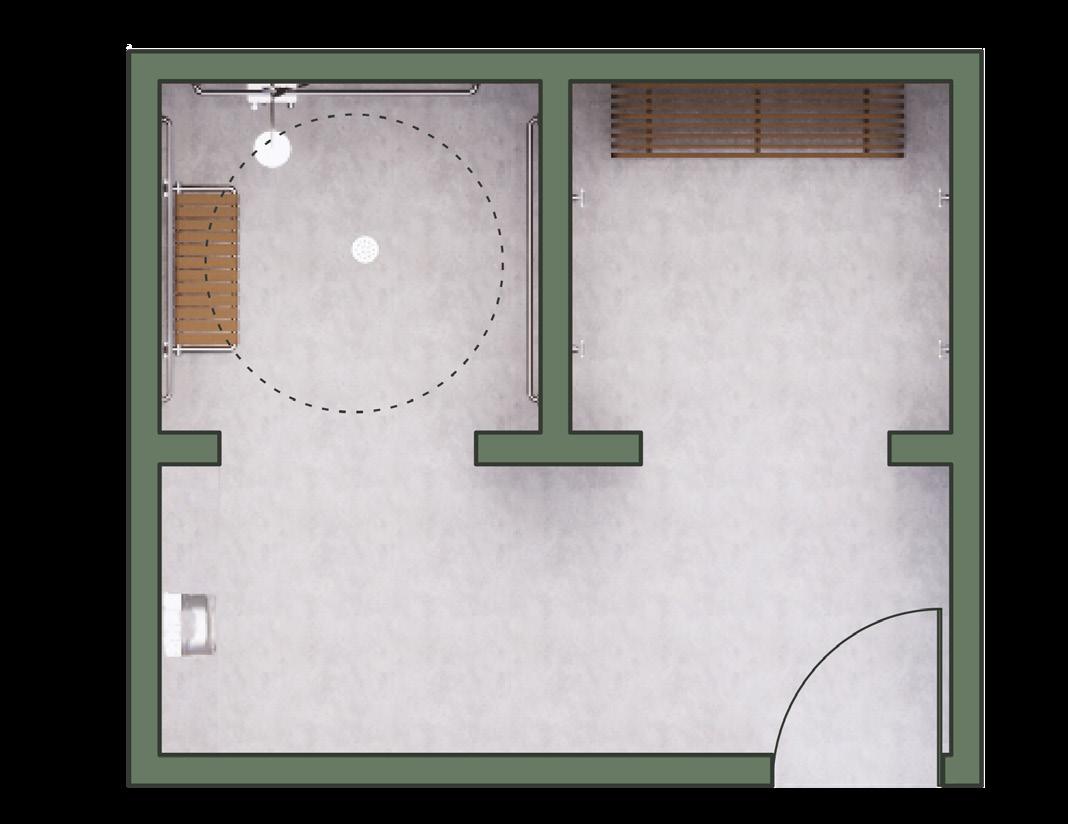
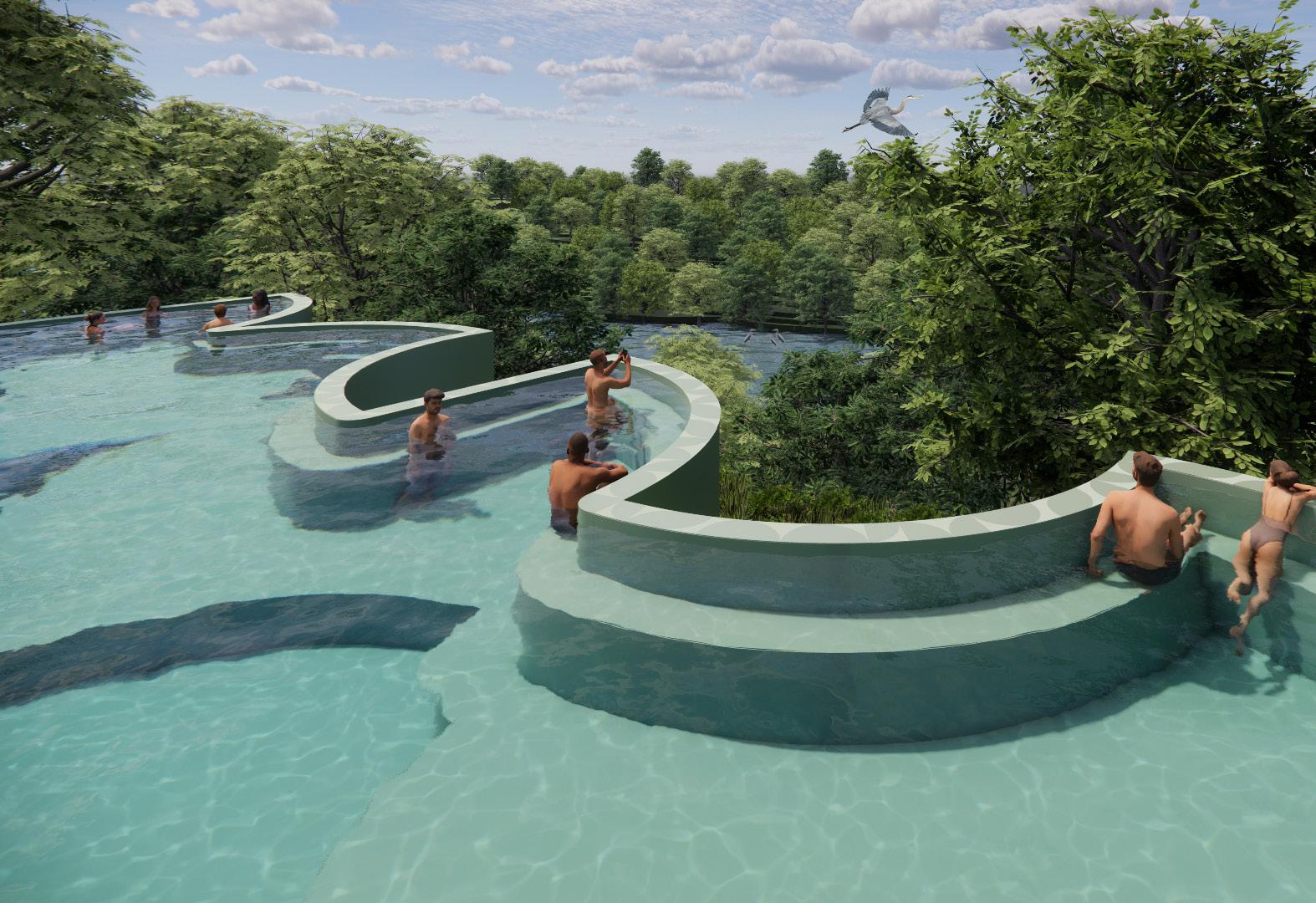
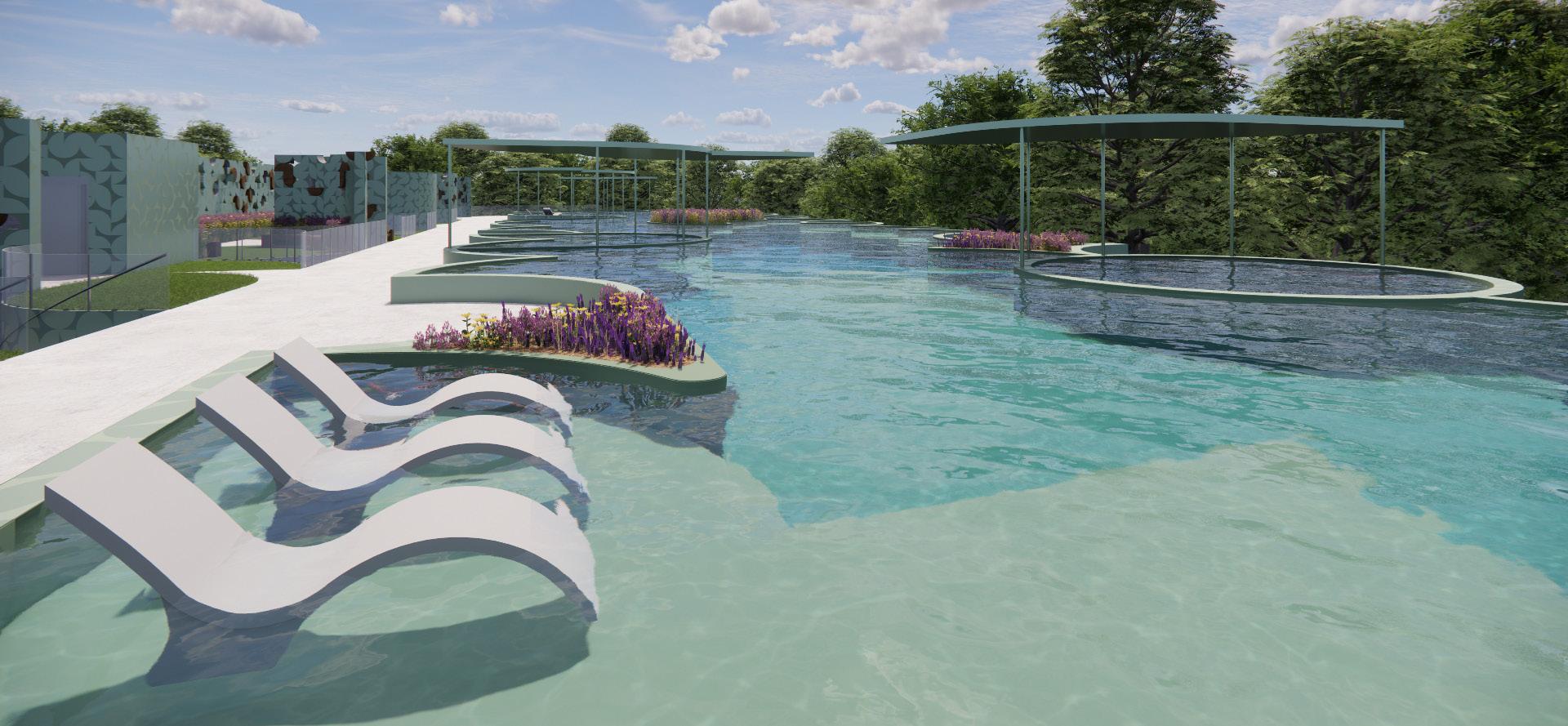
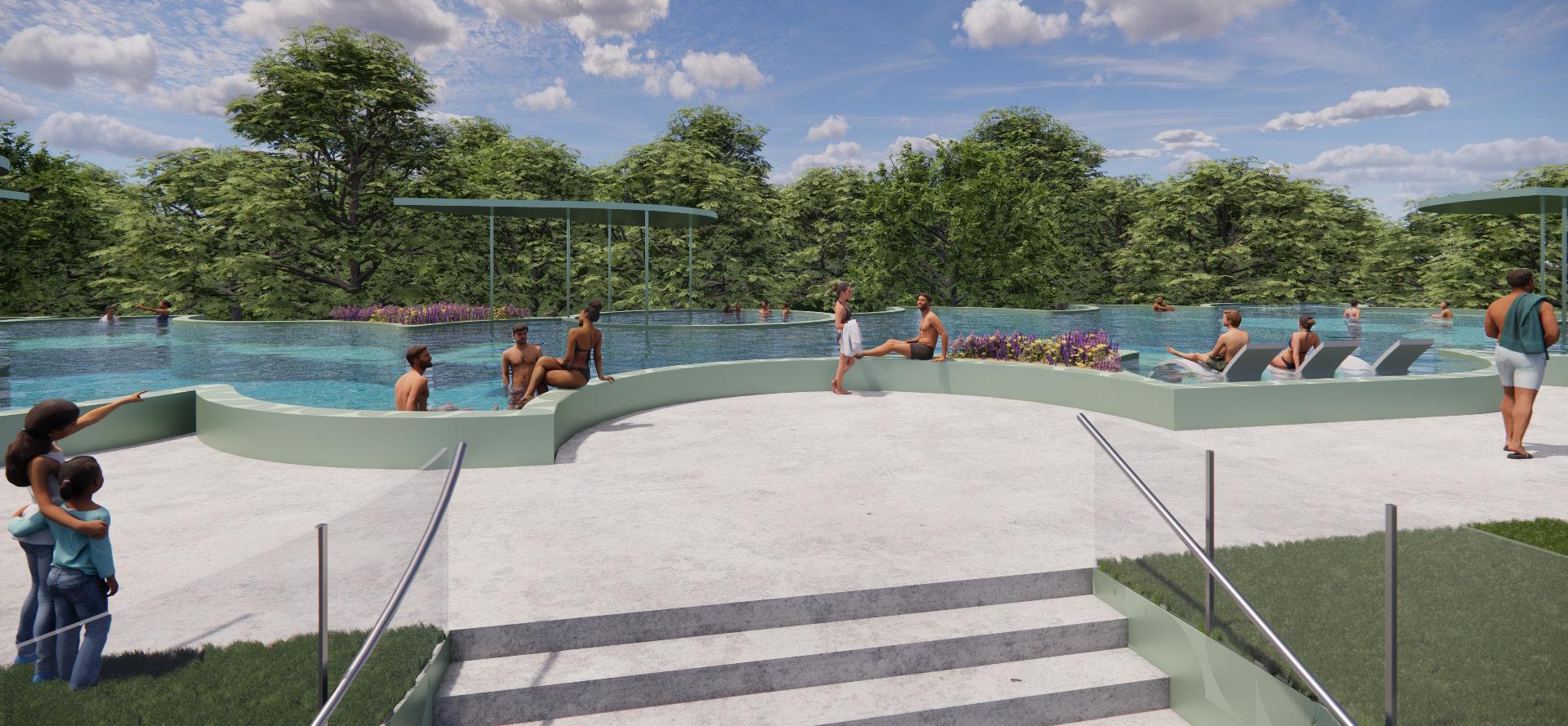
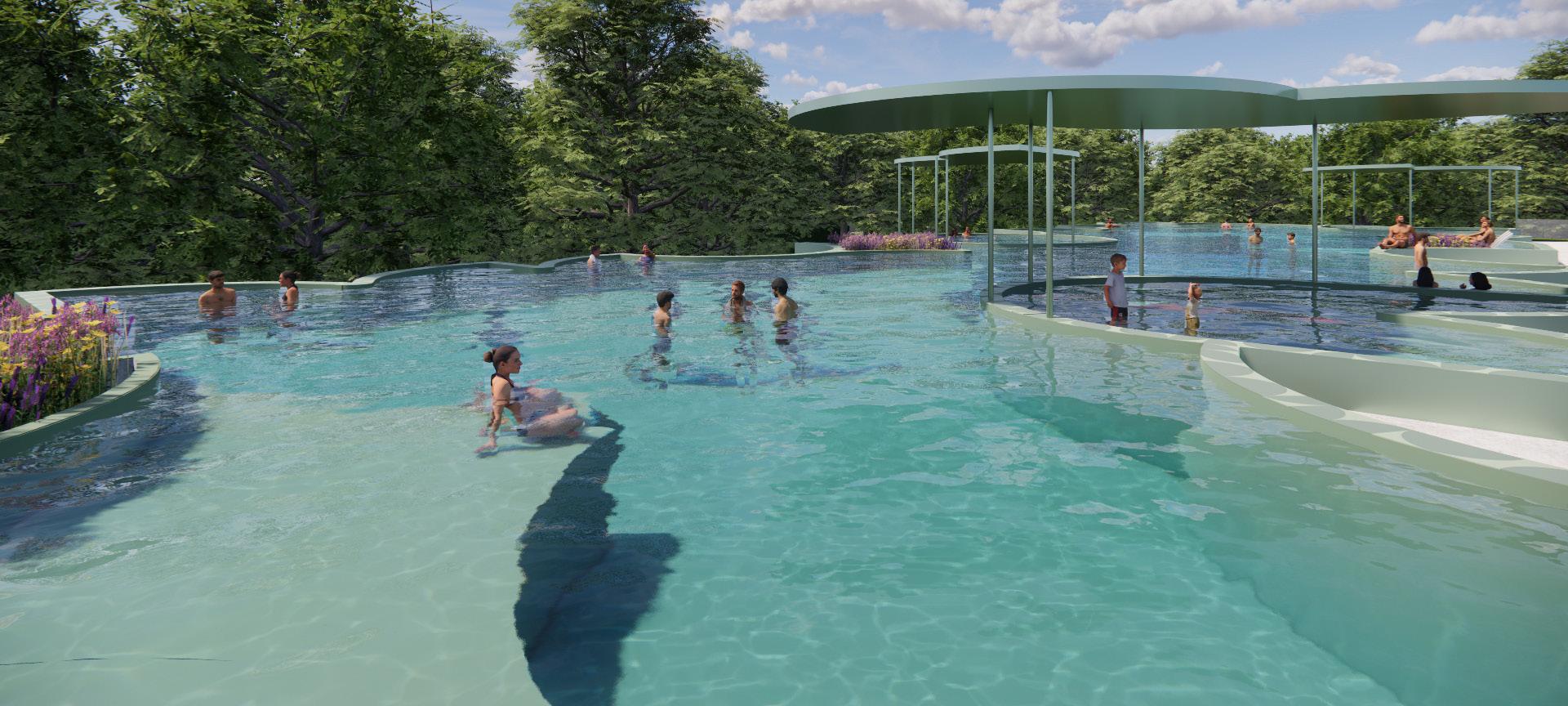
This project envisions a bathing facility in East Austin that fosters multispecies connections by integrating human-centered design with elements that cater to local wildlife. Aiming to challenge conventional urban design, the facility creates a shared environment where humans and other species can coexist, deepening connections between natural and built environments. With over 54% of Americans lacking basic swimming skills and Austin’s extreme heat, the design prioritizes public leisure by incorporating curvilinear segments that form intimate coves, enhancing personal and social interaction. To promote interconnections with other species, sculptural habitat walls act as privacy barriers and nesting spaces for wildlife, embodying a harmonious relationship between people and nature.
BIRD WALL SECTION-AXON
BIRD WALL AXON BLUE HERON MEXICAN FREE-TAILED BAT
INSECT WALL SECTION-AXON
INSECT WALL AXON
BIRD WALL PLAN
INSECT WALL PLAN
1. Entrance
Ticket Office
Office
Family Cabana
Storage
Shower
Restrooms
Lockers 9. Garden + Decking 10. Outdoor Showers
Leisure Pool 12. Recreational Pool 13. Instruction Pool 14. Children Pool
Wellness + Therapy Pool 16. Splash Pad 17. Pool Deck
SECTION A
SECTION B
VIEW
FAMILY SHOWER
FAMILY SHOWER
INDIVIDUAL SHOWER
INDIVIDUAL SECTION
FAMILY SECTION
INDIVIDUAL PLAN
FAMILY PLAN
BLUE HERON
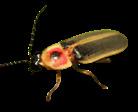
BUCKEYE BUTTERFLY
VIEW OVERLOOKING THE RIVER
ENTRANCE
Toy Wall
Fall 2024 | Prof. Ria Bravo
Partners: Ella Friedman, Karina Salaiz, Ashley Maurer
Programs: Rhino 7
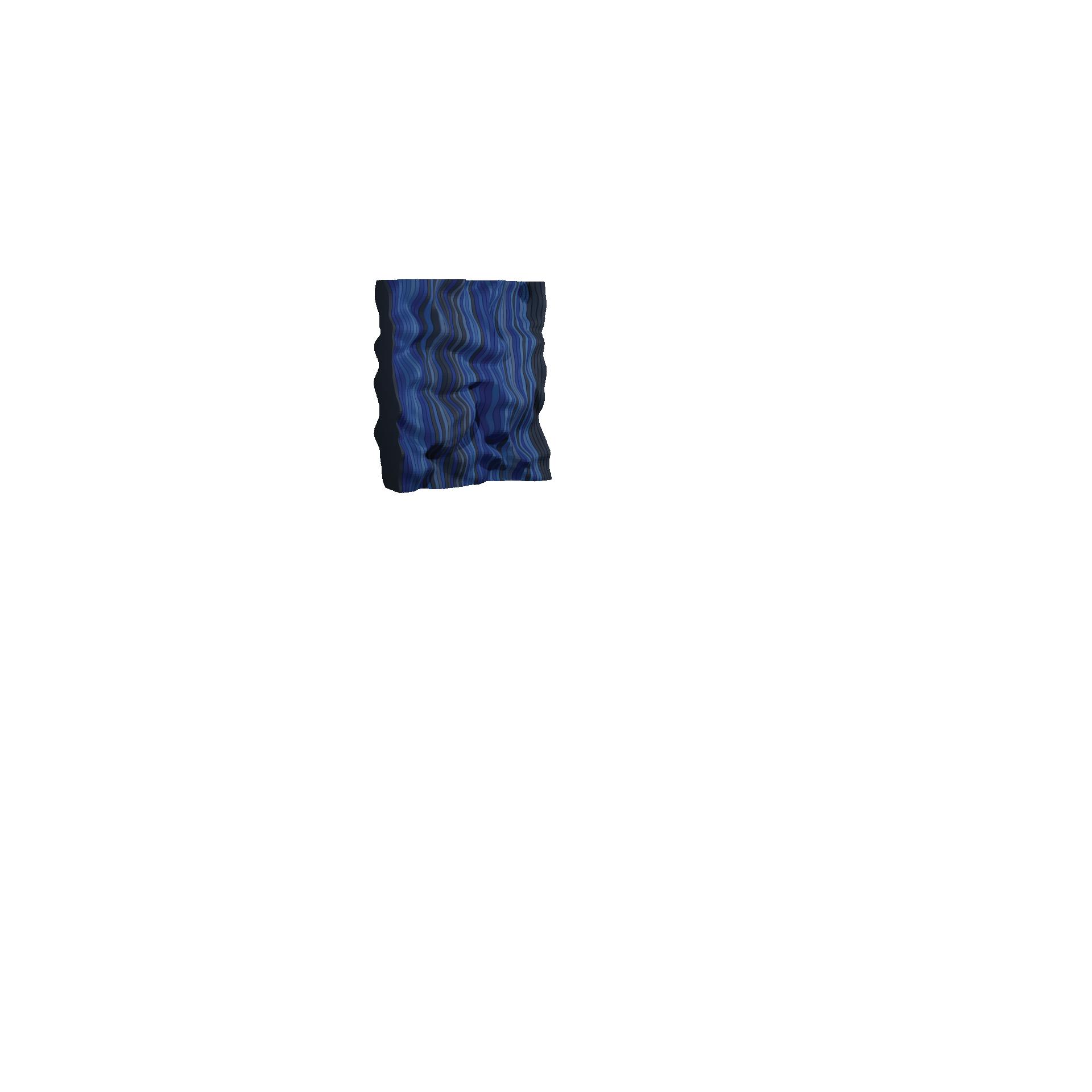
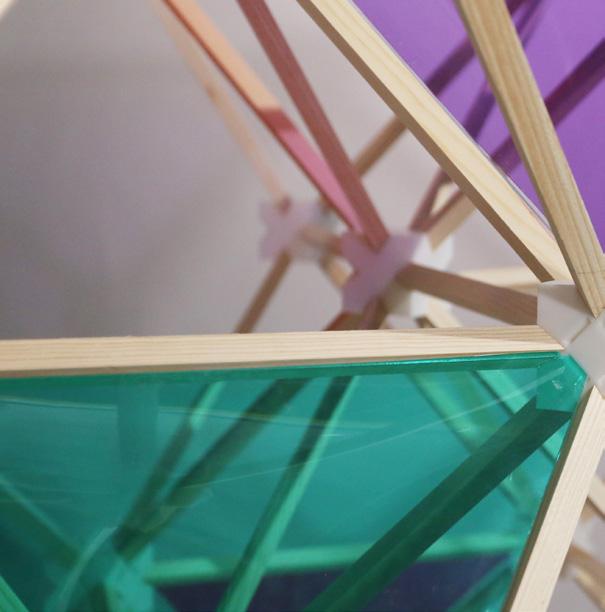
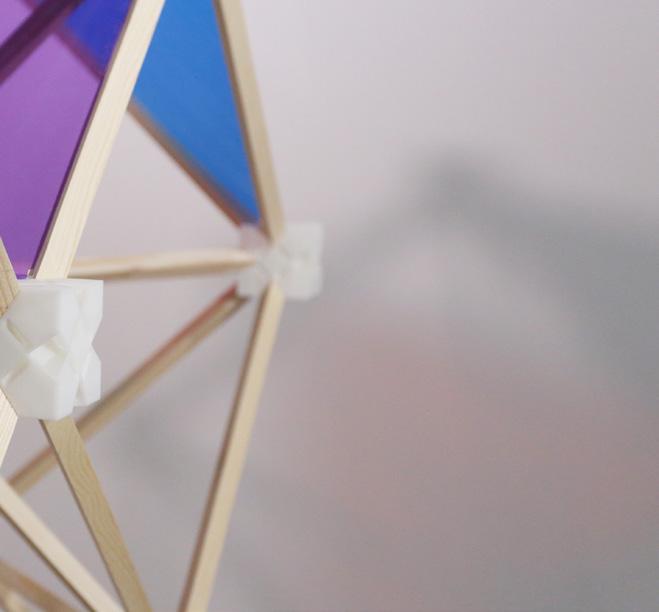
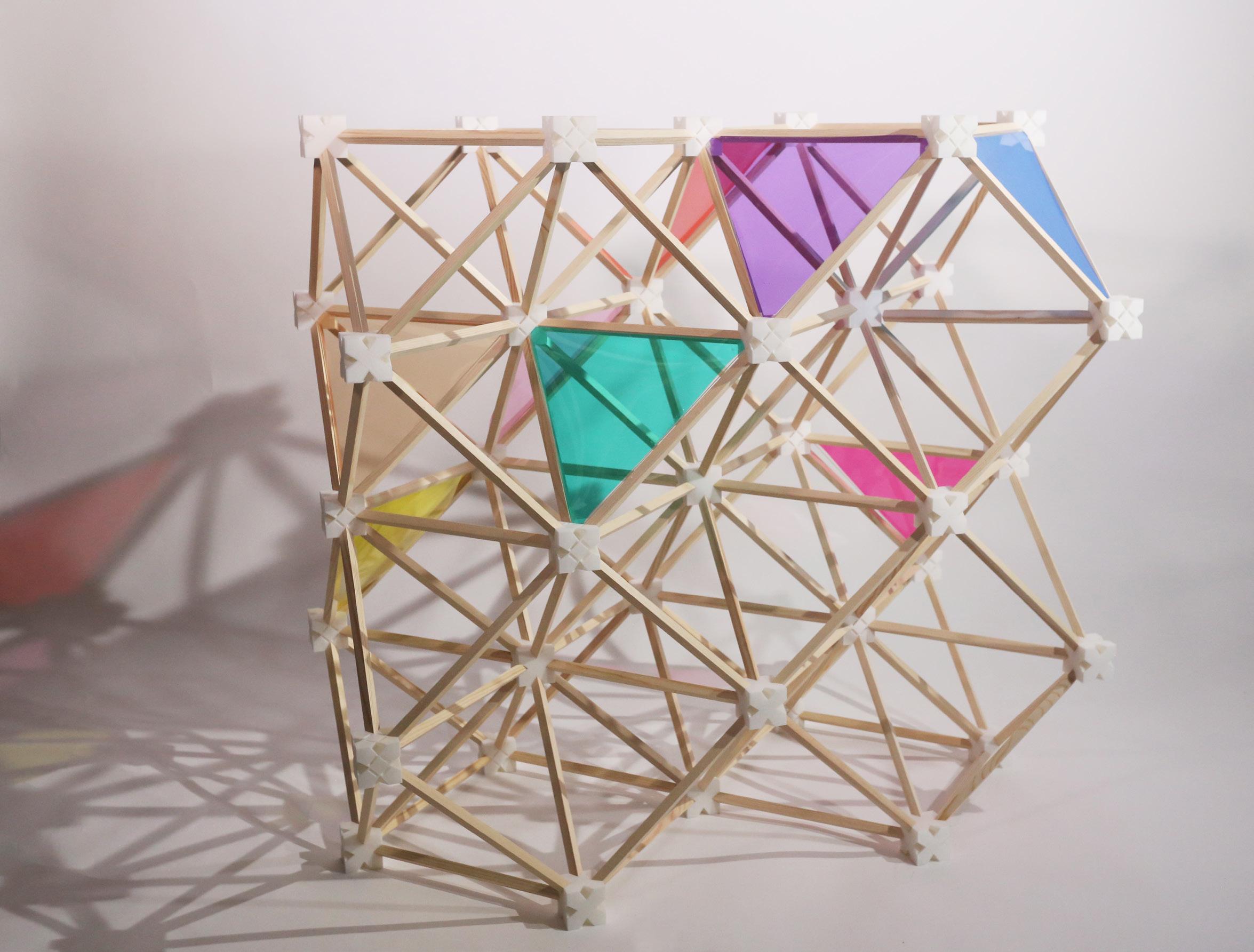
This wall system redefines traditional partitions by offering a modular, adaptable design with interchangeable elements, allowing users to customize spaces based on specific needs. This approach promotes creativity and engagement in the construction process, strengthening the connection between users and their environments. It simplifies the creation of dynamic, flexible spaces, making them accessible and fostering well-being while transforming how interior walls are built and perceived.