BRIDGING THE DIVIDE
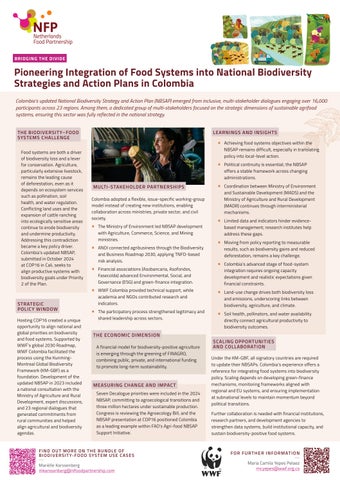
Colombia’s updated National Biodiversity Strategy and Action Plan (NBSAP) emerged from inclusive, multi-stakeholder dialogues engaging over 16,000 participants across 23 regions. Among them, a dedicated group of multi-stakeholders focused on the strategic dimensions of sustainable agrifood systems, ensuring this sector was fully reflected in the national strategy.
Food systems are both a driver of biodiversity loss and a lever for conservation. Agriculture, particularly extensive livestock, remains the leading cause of deforestation, even as it depends on ecosystem services such as pollination, soil health, and water regulation. Conflicting land uses and the expansion of cattle ranching into ecologically sensitive areas continue to erode biodiversity and undermine productivity. Addressing this contradiction became a key policy driver. Colombia’s updated NBSAP, submitted in October 2024 at COP16 in Cali, seeks to align productive systems with biodiversity goals under Priority 2 of the Plan.
STRATEGIC POLICY WINDOW
Hosting COP16 created a unique opportunity to align national and global priorities on biodiversity and food systems. Supported by WWF’s global 2030 Roadmap, WWF Colombia facilitated the process using the KunmingMontreal Global Biodiversity Framework (KM-GBF) as a foundation. Development of the updated NBSAP in 2023 included a national consultation with the Ministry of Agriculture and Rural Development, expert discussions, and 23 regional dialogues that generated commitments from rural communities and helped align agricultural and biodiversity agendas.
Colombia adopted a flexible, issue-specific working-group model instead of creating new institutions, enabling collaboration across ministries, private sector, and civil society.
• The Ministry of Environment led NBSAP development with Agriculture, Commerce, Science, and Mining ministries.
• ANDI connected agribusiness through the Biodiversity and Business Roadmap 2030, applying TNFD-based risk analysis.
• Financial associations (Asobancaria, Asofondos, Fasecolda) advanced Environmental, Social, and Governance (ESG) and green-finance integration.
• WWF Colombia provided technical support, while academia and NGOs contributed research and indicators.
• The participatory process strengthened legitimacy and shared leadership across sectors.
A financial model for biodiversity-positive agriculture is emerging through the greening of FINAGRO, combining public, private, and international funding to promote long-term sustainability.
Seven Decalogue priorities were included in the 2024 NBSAP, committing to agroecological transitions and three million hectares under sustainable production. Congress is reviewing the Agroecology Bill, and the NBSAP presentation at COP16 positioned Colombia as a leading example within FAO’s Agri-food NBSAP Support Initiative.
• Achieving food systems objectives within the NBSAP remains difficult, especially in translating policy into local-level action.
• Political continuity is essential; the NBSAP offers a stable framework across changing administrations.
• Coordination between Ministry of Environment and Sustainable Development (MADS) and the Ministry of Agriculture and Rural Development (MADR) continues through interministerial mechanisms.
• Limited data and indicators hinder evidencebased management; research institutes help address these gaps.
• Moving from policy reporting to measurable results, such as biodiversity gains and reduced deforestation, remains a key challenge.
• Colombia’s advanced stage of food-system integration requires ongoing capacity development and realistic expectations given financial constraints.
• Land-use change drives both biodiversity loss and emissions, underscoring links between biodiversity, agriculture, and climate.
• Soil health, pollinators, and water availability directly connect agricultural productivity to biodiversity outcomes.
Under the KM-GBF, all signatory countries are required to update their NBSAPs. Colombia’s experience offers a reference for integrating food systems into biodiversity policy. Scaling depends on developing green-finance mechanisms, monitoring frameworks aligned with regional and EU systems, and ensuring implementation at subnational levels to maintain momentum beyond political transitions.
Further collaboration is needed with financial institutions, research partners, and development agencies to strengthen data systems, build institutional capacity, and sustain biodiversity-positive food systems.
Karssenberg
GUARDIANS PAID FAIRLY
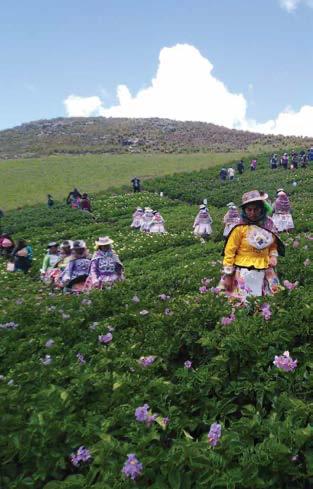
AGUAPAN’s benefit-sharing model rewards farmers for conserving native potato varieties while ensuring genetic resources remain in the public domain for research, training, and innovation. Built on early collaboration between the International Potato Centre (CIP) and Andean communities, it fosters trust and transparency among farmers, researchers, and companies. Farmerdesigned mechanisms and the clear separation between compensation and genetic access have made the system credible and equitable, linking traditional knowledge with global food systems.
HOW THE
Multi-Stakeholder Partnership Structure
• Private companies such as HZPC, Agrico, and EUROPLANT provide long-term financial support linked to corporate social responsibility goals. AGUAPAN coordinates conservation activities, while CIP documents varieties and provides genebank backup. The Peruvian Society for Environmental Law (SPDA) advises on legal frameworks, and NGOs like Grupo Yanapai and Asociación Pataz deliver field support.
Economic Model
• The model blends payments for ecosystem services with market development. Farmers receive annual stewardship payments, while initiatives such as MISKI PAPA create niche markets for heritage potato mixtures. Diversified partnerships reduce dependence on single donors, ensuring financial resilience.
• Genetic studies of 1,075 varieties identified 88 new landraces now added to international collections. Around 100 families receive payments that improve livelihoods and recognition of custodianship roles. Monitoring covers biodiversity recovery, women’s participation, youth leadership, and value-chain innovation, supported by digital tools such as VarScout and WIKI PAPA
Scaling biodiversity benefitsharing depends on strong farmer organizations, transparent governance, supportive policy frameworks, and committed privatesector partners. The AGUAPAN model shows that decoupling benefits from genetic access builds trust and empowers farmers to define priorities. Transparent verification, crop-specific approaches, and active multi-actor support networks are key to credibility and impact.
Challenges include limited privatesector participation, a waiting list for new members, and minor genetic mixing during seed exchanges. Market demand for diverse potatoes remains low, requiring initiatives like MISKI PAPA to link conservation with viable consumer markets and longterm sustainability.


In the Peruvian Andes, Indigenous farming families serve as custodians of hundreds of native potato varieties—preserving cultural heritage and resources vital for global food security and climate resilience. Since 2014, the Association of Guardians of Native Potato of Peru (AGUAPAN) has managed a voluntary payment system linking Dutch potato companies with custodian farmers, providing unconditional annual payments to support on-farm conservation.
• Farmer-led governance and transparent systems build trust and accountability.
• “Benefit sharing without access” ensures legal clarity while protecting farmers’ rights.
• Simple, transparent mechanisms reduce bureaucracy and eliminate access conditions.
• Complementary on-farm and genebank conservation strengthen resilience.
• The crop-based model is replicable for maize, quinoa, and cacao.
• Intergenerational continuity through the AGUAPAN youth network (JORA) sustains knowledge and livelihoods.
SCALING OPPORTUNITIES AND COLLABORATION
Within Peru, scaling focuses on expanding the custodian network to include new potato varieties, strengthening documentation, and engaging youth to reduce extinction risks. Market initiatives like MISKI PAPA provide complementary economic incentives for conservation.
Internationally, the AGUAPAN model can be adapted to other crops and regions with similar governance structures, aligning with Multilateral System (MLS) or Standard Material Transfer Agreement (SMTA) and SeedNL trust-building principles. Replication requires context-specific adjustments while upholding core values of farmer autonomy, transparency, and benefit sharing without access.


The triple challenge of feeding growing populations sustainably, preventing biodiversity loss, and adapting to climate change demands holistic landscape approaches. Fragmented, sector-based strategies have failed to address interlinked pressures, with agricultural intensification eroding the natural systems it depends on. Policy incoherence and ineffective decentralization continue to limit cross-sector coordination, while short-term projects struggle to show measurable, long-term results.
Integrated landscape approaches provide a practical scale to address these challenges. Commonland catalyzes large-scale restoration by bringing farmers, conservationists, businesses, and governments together under the 4 Returns Framework. This model integrates biodiversity and food systems by linking ecological, social, and economic outcomes through long-term, multi-stakeholder partnerships that build resilience across landscapes.
INTEGRATED APPROACHTHE 4 RETURNS FRAMEWORK
Commonland drives landscape-scale restoration through the 4 Returns Framework, linking conservation and agriculture to deliver four outcomes:
• Inspiration – restoring hope and purpose.
• Social Returns – strengthening livelihoods and resilience.
• Natural Returns – restoring biodiversity and ecosystems.
• Financial Returns – generating sustainable income.
The framework enables stakeholders to co-create restoration pathways suited to local contexts, using strategic zoning that restores nature, combines biodiversity and food production, and enterprise. Partnerships unite farmers, communities, NGOs, businesses, and governments under shared goals, supported by learning networks, diagnostic tools, and blended finance linking public, private, and carbon markets for long-term collaboration.
ECONOMIC MODEL
The financing logic blends patient capital and diversified revenue streams from productivity gains, carbon and biodiversity credits, and sustainable value chains. Coinvestment and adaptive management reduce risk and transaction costs while allowing flexibility across landscapes.
MEASURING CHANGE AND IMPACT
The 4 Returns network connects global practitioners through long-term partnerships and shared monitoring tools. Baselines, indicators, and 10-year evaluations track hectares restored, biodiversity recovery, and community income improvements.
• India – Andhra Pradesh: A partnership with GVK Society applies the 4 Returns approach across 26 villages, focusing on regenerative agriculture and women’s empowerment. Activities include resource mapping, water and agroforestry pilots, and financial literacy training for over 750 women. The 20-year vision targets state-wide land restoration, biodiversity conservation, and climate resilience.
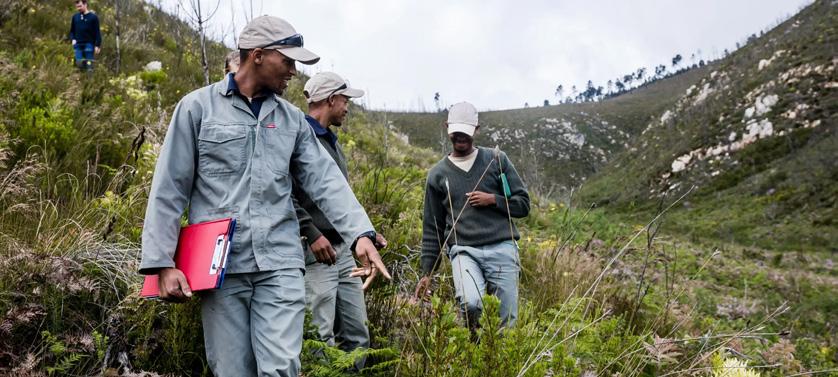
• South Africa – Baviaanskloof and Langkloof: A 15-year collaboration with Living Lands promotes regenerative livestock management, rotational grazing, and restoration corridors for endangered flora. Early indicators suggest promising progress towards restored land, market premiums for regenerative lamb, and improved drought resilience, highlighting how social, economic, and ecological benefits reinforce one another.
Sustained finance for facilitation and stakeholder engagement is critical but often overlooked. Deep, inclusive collaboration that values local and scientific knowledge helps shift perceptions where economic needs dominate. Blended finance mechanisms and peer learning networks demonstrate tangible cobenefits and build trust.
Building durable relationships takes time, yet this patient investment delivers lasting change. Local adaptation strengthens governance and Indigenous land rights but can clash with rigid planning systems.

• Build on what already works to show cobenefits across sectors.
• Co-creation ensures ownership; prescriptive models fail.
• Long-term (20-year) horizons and patient capital are essential.
• Policy coherence across sectors remains a critical enabler.
• Align implementation with national policy and finance cycles for impact. Commonland’s 2040 goal is to expand through clusters of landscapes connected through peer learning networks. Scaling through the 1000 Landscapes for 1 Billion People initiative will promote global collaboration and blended finance. Priorities include stronger engagement with finance institutions, governments, and technology partners to embed landscape approaches in national policy and investment frameworks.
SCALING OPPORTUNITIES AND COLLABORATION
In the arid landscape of Nuweiba, South Sinai, where rain may fall only once every two years, the Habiba Community has transformed 16,000 m² of barren coastal desert into thriving green oases. Meaning beloved in Arabic, Habiba is an agroecological living laboratory of regenerative food production, ecological restoration, and Indigenous Bedouin empowerment that has inspired over 100 farms to adopt biodiversity-positive practices.
The initiative began as a tourism venture founded in 1994 as Habiba Beach Lodge. When the tourism collapse in 2007 exposed local vulnerability., Habiba transformed its mission toward regeneration and resilience. It has since evolved into an integrated agroecological model, encompassing an organic farm, learning center, and regenerative farm, linking ecological restoration with sustainable livelihoods under the global Ecosystem Restoration Communities movement.
INTEGRATED BIODIVERSITY–FOOD SYSTEM APPROACH
Habiba operates as a self-reinforcing ecosystem where each initiative supports the next, prioritizing sufficiency and reinvesting gains into community and landscape.
Multi-Stakeholder Partnership Structure
• Community Partners: Habiba collaborates with Bedouin partners on land use and co-creation; over 75 Bedouin farms now apply regenerative practices.
• Public Sector: Nuweiba City administration governs land use planning, South Sinai Governorate provides national promotion, and the Ministry of Water and Irrigation.
• Research Network: More than 20 universities engage through the Habiba Academia platform on ecology, heritage, and sustainable tourism.
• Private Sector: Hotels, restaurants, and organic retailers sustain local market linkages by sourcing Habiba’s products.
Community Programmes
• WOMAD crafts cooperative and backyard gardens strengthen women’s and widows’ livelihoods.
• The after-school programme builds children’s agricultural and stewardship skills.
• Green corridors will connect farms, restoring ecosystem function and supporting pollinators and livestock movement.
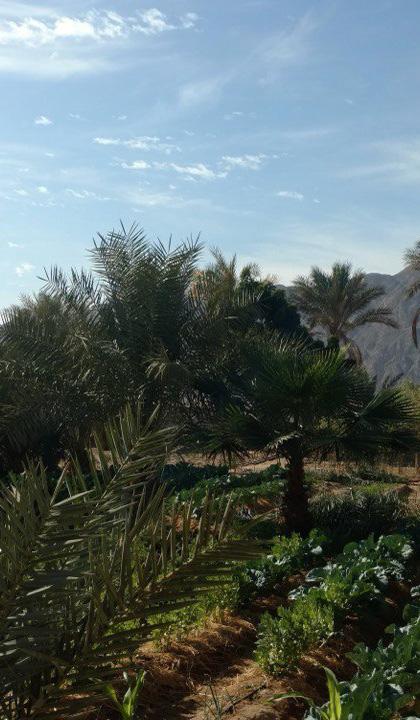
Revenue from the Beach Lodge and Medjool date harvest sustains the farm and Learning Centre, with added support from the Habiba World Foundation. The 16,000 m² farm sells locally and processes surpluses using solarpowered equipment.
CHANGE AND IMPACT
• Over 100 farms, including 75 Bedouin-owned, have regenerated desert land across Nuweiba.
• Introduction of over 60 crop varieties improved dietary diversity.
• Generates local economic value via market-linked products through established supply chain.

Mariëlle Karssenberg mkarssenberg@nlfoodpartnership.com
Habiba’s journey of learning began with the support of Egypt’s Desert Research Centre, whose workshops on arid organic farming ignited regional interest and bridged traditional Bedouin wisdom with scientific innovation.
Recognition from South Sinai’s Governor and UN-Habitat positioned it as a model for coastal arid regions.
Through its “lighthouse approach,” Habiba inspires communities to choose and adapt regenerative practices at their own pace.
• Geographic constraints: Isolation limits access to skills and markets.
• Financial and water constraints slow expansion.
• Changing farmers’ mindsets from short-term profit to long-term ecosystem health.
• Prioritizing soil health and natural ecosystem balance drives strong regenerative returns.
• Leading by example fosters voluntary adoption of sustainable practices.
• Embracing “enough over abundance” sustains community programmes and landscape restoration.
SCALING OPPORTUNITIES AND COLLABORATION
Habiba aims to expand its impact through:
• Locally, it seeks to scale agri-PV pilots for energy selfsufficiency, create green corridors, and invest in postharvest processing, WOMAD expansion, and Wadi Watir Delta restoration.
• Regionally, collaboration with academic and governmental partners supports replication across Egypt.
• Internationally, through the Habiba World Foundation and UN-Habitat, it promotes knowledge exchange in arid coastal regions.
Strategic collaborations are needed with technical experts, research institutions, and development organizations to advance soil restoration, biodiversity monitoring, and global methodology sharing.
FOR FURTHER INFORMATION
Julian Kuntzsch info@habibacommunity.com

In Kenya’s agricultural heartland, Nakuru County shows how participatory foresight can align biodiversity with economic development for long-term food security. Evidence-based visioning with diverse stakeholders produced a Manifesto for Change embedded in county plans and budgets, fostering champions for agroecological practices and sustainable finance within circular economy goals. Strategic policy engagement and community ownership proved key to linking healthy ecosystems with inclusive growth. VISIONING

“What we tend to find is that the market moves the system more than the producers. So, if the market can move the system with the emphasis on regenerative farming and biodiversity then you’ll see the change.”
– Wangeci Gitata-Kiriga, Foresight4Food Kenya
MULTI-STAKEHOLDER FORESIGHT PROCESS SUPPORTING
Nakuru County’s foresight initiative, anchored in the Foresight4Food Framework, is led by Oxford University’s Environmental Change Institute with Wageningen University and funded by the Netherlands through IFAD’s FoSTr programme. In collaboration with the Results for Africa Institution (RAI), over 40 stakeholders were initially engaged including government agencies, community networks and research institutes. The multi-stakeholder approach has enabled evidence based scenario planning to guide the county’s long-term food system transformation.
COLLABORATIVE FORESIGHT PROCESSES
The Nakuru foresight process applied the Foresight4Food Framework, combining social, technical, economic, environmental, and political (STEEP) analysis, participatory engagement, and modelling to co-design sustainable food futures.
PHASE 1 – Systems Mapping: Identified drivers, ecological pressures, and leverage points linking biodiversity and agriculture.
PHASE 2 – Scenario Development: Created five futures; with the selected future Ukulima Bora integrated sustainable, indigenous, and circular practices.
PHASE 3 – Pathway Development: Designed Think and Go Green pathways aligning biodiversity, nutrition, and livelihoods.
PHASE 4 – Mobilization: Anchored the biodiversity-embedded Manifesto for Change in county planning.
PHASE 5 – Operationalization: Embedding foresight outcomes in county planning and budgeting.
The foresight process promoted financial incentives for biodiversity-positive practices through circular economy principles and payment for ecosystem services.
Kabazi Ward established a decision-support ecosystem combining systems thinking, foresight, and communityled leadership through existing Beyond 2030 Networks of local actors. These networks informed the county’s Manifesto for Change with context-specific insights on indigenous crops and circular economy approaches. The model links grassroots action to county governance, providing a replicable, locally grounded pathway for nature-positive food systems transformation.
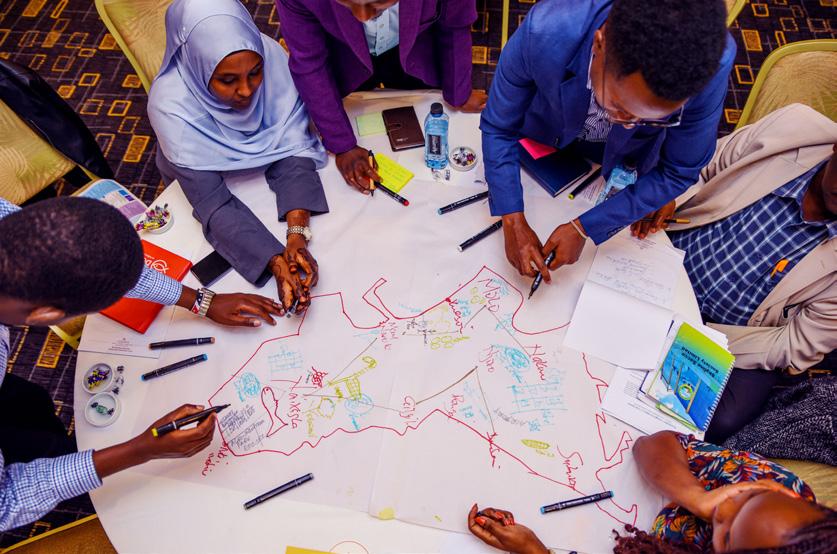
The Manifesto for Change is embedded in Nakuru’s 2023–2027 Strategic Plan and budget, allocating KES 117 billion for agroforestry, indigenous crops, and ecosystem payments. Officials, faith leaders, and financiers now champion biodiversity, while the Think and Go Green pathway links regenerative farming and indigenous crops to new market opportunities.
FIND OUT MORE ON THE BUNDLE OF BIODIVERSITY-FOOD SYSTEM USE CASES
Mariëlle Karssenberg mkarssenberg@nlfoodpartnership.com
FOR FURTHER INFORMATION
Bram Peters bram.peters@ouce.ox.ac.uk
Foresight unlocks different kinds of dialogue among sectors that rarely interact, improving coordination and shared ownership.
Embedding biodiversity in food system planning requires translating long-term visions into local, actionable priorities.
Policy coherence depends on linking foresight outputs to existing planning and budget cycles.
Locally grounded pilot sites, such as Kabazi, demonstrate the practical value of anticipatory approaches.
The Kabazi model shows how community ownership and foresight at grassroots level can bridge policy and practice.
SCALING OPPORTUNITIES & COLLABORATION NEEDS
Building on Nakuru’s Kabazi model, foresight can be embedded in Kenya’s devolved governance and Bottom-Up Economic Transformation Agenda to integrate biodiversity across county and national plans. Scaling requires policy alignment through the NBSAP and National Agroecology Strategy, blended finance, and foresightinformed monitoring. Partnerships with universities and research institutions will develop context-specific indicators and link community innovations with national and regional systems. These will foster a whole-of-government and whole-of-society foresight culture that aligns biodiversity outcomes with economic and social well-being.
Joyce Nyamweya joycenyamweya@yahoo.com
MARKETS HELP RESTORE WATERSHEDS

Nature’s Pride, European market leader in exotic fruits and vegetables, developed a collaborative approach to address water stress and biodiversity loss in its supply chains. Starting in Peru’s Ica watershed in 2018, it united retailers, growers, and local stakeholders to manage water and biodiversity at landscape level. Water became the organizing principle linking agriculture, biodiversity, and food system resilience. The experience in Peru demostrates how markets can support watershed restoration when linked to collective, landscape-level stewardship, complementing farm audits with coordinated water-biodiversity management to strengthen ecosystem resilience. Nature’s Pride has used this experience to develop and support similar initiatives in Chile and Spain.
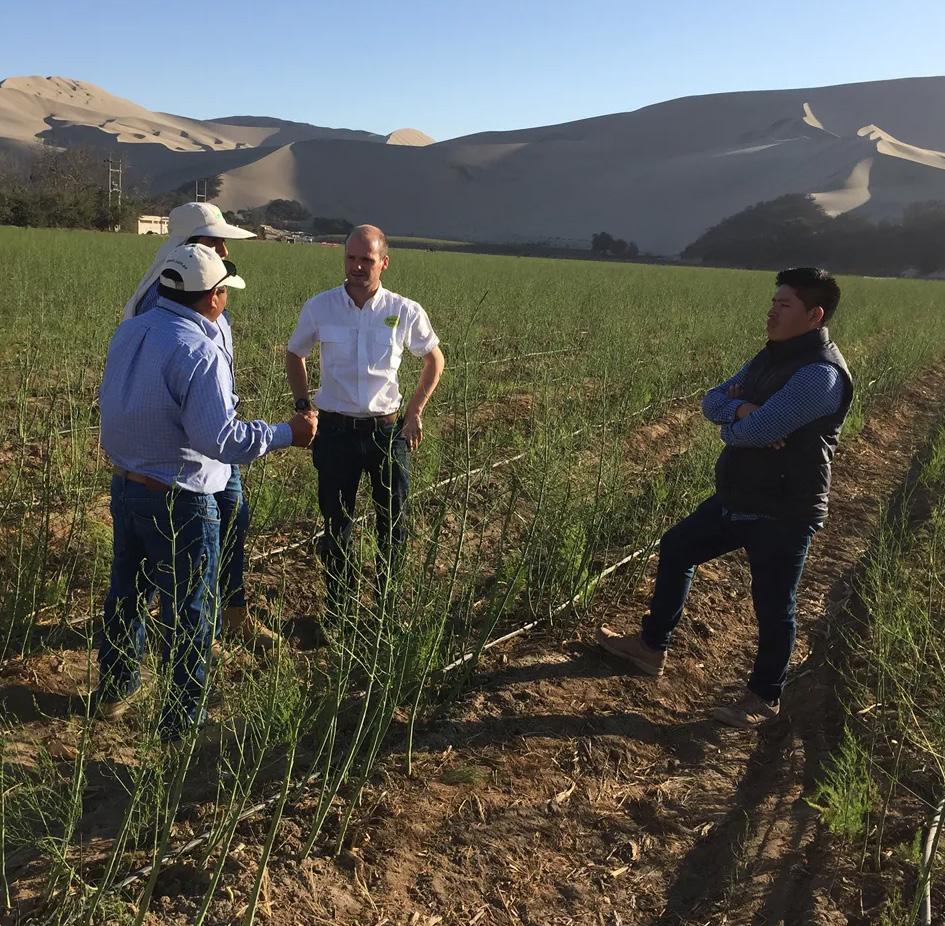
Nature’s Pride’s long-standing commitment to care for people and nature underpins its collective action model. As a company and through its foundation, it invests money, expertise, and time to understand watershed-level challenges and develop joint responses to water stress. This values-driven approach enables long-term collaboration beyond compliance, addressing root causes of ecosystem and water risks.
The collective action model links value-chain actors, from producers to buyers and policymakers:
Water as the Organizing Principle
Water integrates biodiversity and food system resilience via watershed restoration, reforestation, and riparian protection.
Peru’s Ica Watershed
The Ica Water Stewardship Collective has united communities, farmers, and authorities to restore high-mountain ecosystems with native vegetation, infiltration ditches, and better alpaca grazing practices, building trust through consistent engagement. Agro-exporters also invested in wastewater treatment and aquifer recharge.
Nature’s Pride used the experience in Peru to develop and support similar initiatives in Chile and Spain
ECONOMIC MODEL
In 2023, Nature’s Pride piloted GLOBALG.A.P. biodiversity module to help shape the sector’s understanding of what good on-farm biodiversity practices could look like. The goal is to create a standardized reference against which growers across the world can assess their on-farm biodiversity performance, much like SIFAV’s basket of water standards and social standards. In this approach, collective action at landscape level complements best practices on the farm.
As founding partner of the Sustainability Initiative Fruits and Vegetables (SIFAV), Nature’s Pride advanced shared indicators for collective action at sector level. It also created collaborations with WRAP’s Water Roadmap and the Partners for Water Programme
Financing blends seed capital from the Nature’s Pride Foundation, public grants, and market contributions. Early assessments financed by the Nature’s Pride Foundation and the Netherlands government enabled wider industry participation and triggered investments from other partners to strengthen landscape resilience.
Mariëlle Karssenberg mkarssenberg@nlfoodpartnership.com
MEASURING CHANGE AND IMPACT
Nature’s Pride measures both quantitative and qualitative indicators in Peru. For example, erosion reduction and water infiltration are tracked. However, it notes that at this stage of the collaboration the qualitative indicators are the most important as trust-building and social capital form the foundation for long-term success.
Other key metrics include: community participation, watershed collaboration, and sustained private-sector engagement. Particularly the public-private collaboration that has taken shape with the Netherlands government, SIFAV, and WRAP have proven extremely valuable.
LEARNING AND INSIGHTS
Building landscape resilience requires combining longterm vision with short-term community benefits such as employment through ecosystem restoration.
Developing trust is essential yet time-intensive, requiring consistent engagement across political cycles.
Balance innovation by frontrunners with making sure that all actors pay their fair share.
Water stewardship proved an effective entry point for biodiversity integration, connecting actors and monitoring systems.
Context-specific adaptation is needed: Chile’s structured governance demanded a different approach than Peru’s community-led model.
Dedicated facilitation, technical expertise, and sustained funding are prerequisites for collective action success.
SCALING OPPORTUNITIES & COLLABORATION NEEDS
The experience gained over the years in Peru now informs work in Chile and Spain. Scaling requires adapting to local contexts, securing finance, and fair cost-sharing among companies. Broader collaboration is needed where watersheds serve multiple industries. Policy priorities include sustainability clauses in EU trade agreements, improved water licensing, and landscape-scale due diligence. Strengthening partnerships in finance, policy, and innovation will enhance monitoring, reduce risk, and advance collective water stewardship and biodiversity-positive supply chains.

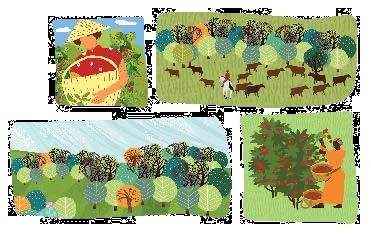
Protecting biodiversity is not only an environmental priority but also a financial necessity. Strategic financing plays a key role in emerging markets where agriculture, forestry, and other land-use (AFOLU) sectors overlap with vital ecosystems. SAIL Investments (SAIL) shows how private credit can unlock biodiversity outcomes at scale by embedding legally binding sustainability targets into loan covenants. This aligns risk-adjusted returns with forest protection, emission reduction, and resilient rural livelihoods.
“Linking biodiversity and food systems is complex but achievable –and when structured well, it creates scalable solutions that benefit ecosystems, communities, and portfolios.”
- Michael Schlup, Chief Sustainability Officer, SAIL Investments
THE BIODIVERSITY–FOOD SYSTEMS CHALLENGE
Global food production is the largest driver of biodiversity loss, responsible for deforestation and degradation of tropical forests that host 80% of species. Agriculture alone threatens over 85% of species at risk of extinction, yet these food systems also depend on soil fertility, pollination, and climate regulation. The AFOLU sectors are both dependent on and destructive of nature—making them critical for naturepositive finance.
SAIL’S INTEGRATED APPROACH TO FINANCING FOOD SYSTEMS
SAIL is a global private credit manager accelerating sustainability transitions in naturalcapital-dependent industries. It provides longterm loans to mid-market companies in food and natural resource supply chains often overlooked by traditional finance. Each loan includes a Sustainable Value Creation Plan (SVCP) that legally binds borrowers to biodiversity, climate, and social milestones.
Using geospatial monitoring and independent verification, SAIL tracks deforestation risks, NDPE compliance (No Deforestation, No Peat, No Exploitation), and climate performance. SAIL reports under the EU’s Sustainable Finance Disclosure Regulation (SFDR) and aligns its approach with the Kunming–Montreal Global Biodiversity Framework (KM-GBF), SDGs, and the Taskforces on Nature- and Climate-related Financial Disclosures (TNFD, TCFD). To date, SAIL has helped protect over 3 million hectares of forest, avoided or sequestered 13 million tonnes of CO₂e, and improved livelihoods for 60,000 people across projects in Vietnam and Brazil.
FIND OUT MORE ON THE BUNDLE OF BIODIVERSITY-FOOD SYSTEM USE CASES
Mariëlle Karssenberg mkarssenberg@nlfoodpartnership.com
Launched in 2017 with USD 100 million and anchored by Norway’s International Climate and Forest Initiative, the &Green Fund was SAIL’s first private credit vehicle. It demonstrates how loans tied to sustainability targets can curb deforestation in high-risk sectors. Now valued at USD 410 million, it includes contributions from the UK and Dutch governments, the Green Climate Fund, Central Africa Forestry Initiative, Unilever, and German institutional investors.
SAIL’s model connects borrowers, investors, scientists, civil society, and regulators to align finance with biodiversity and food system goals. Borrowers commit to measurable targets through SVCPs, financed by institutional investors and verified by independent auditors. Partnerships with Wageningen University and The Nature Conservancy provide technical input, while investor networks like Pensions for Purpose and Nordsip expand engagement. Progress is tracked through continuous monitoring and annual verification under global standards (SFDR, TNFD, TCFD).


• Working across diverse contexts requires loan covenants that balance ambition with feasibility and rely on strong local due diligence.
• Regulatory shifts, complex risk management, and investor unfamiliarity with biodiversity finance pose challenges but build long-term capacity.
• Embedding sustainability in loan terms makes biodiversity integral to operations; stepwise, multi-metric targets work better than rigid goals.
• Blending financial and agricultural expertise with patient capital creates workable solutions.
• Public finance de-risks early pilots, but scaling biodiversity-positive investment depends on private capital and investor education.
SCALING OPPORTUNITIES & COLLABORATION NEEDS
SAIL’s model can be replicated across other natural-capital sectors such as energy, water, and forestry. Expansion into underfinanced markets could accelerate sustainability transitions. Scaling depends on deeper engagement with institutional investors and collaboration among finance, science, and policy partners. Insurance and risk specialists can design resiliencebased products, while research and conservation institutions refine biodiversity metrics. Embedding biodiversity covenants into mainstream finance will align investment portfolios with nature-positive outcomes.
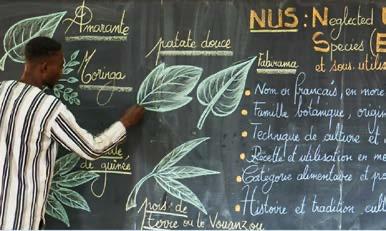
School feeding programmes reach over 450 million children globally, making them one of the largest public food system interventions and a key tool for tackling child hunger and poverty. When designed around agrobiodiversity—the variety of animals, plants, and micro-organisms used for food—they can strengthen nutrition and local food systems while conserving biodiversity. Yet global food production relies on just 12 plant and animal species for 75% of all food, undermining ecosystem resilience and dietary diversity. Integrating nutrient-rich, climate-resilient indigenous crops into school meals helps diversify diets and restore ecosystems.
INTEGRATED BIODIVERSITY AND FOOD SYSTEMS APPROACH
The Biodiversity for Food and Nutrition (BFN) programme demonstrated that school meals can mainstream biodiversity conservation while improving nutrition and local economies. Coordinated by the Alliance of Bioversity International and CIAT, FAO, and UNEP with Global Environment Facility funding, the programme influenced global policy momentum that accelerated after the 2021 UN Food Systems Summit, when 111 governments joined the School Meals Coalition (SMC)
These efforts link agrobiodiversity to procurement, education, and local economies, showing that integrating traditional and indigenous foods can simultaneously improve nutrition, enhance farmer livelihoods, and conserve biodiversity.
School meal programmes align existing public procurement budgets with biodiversity goals, redirecting funds toward diverse, local suppliers, removing the need for new financial mechanisms.
Political shifts can open windows to embed agrobiodiversity in school meals when actors are prepared. Cross-sector platforms linking farmers, policymakers, educators, and markets are most effective, but coordination and infrastructure gaps persist. Financing and reliable procurement remain critical for scaling. Revaluing traditional foods requires long-term education and community leadership. Measuring impact should go beyond nutrition to include biodiversity, livelihoods, and social outcomes. Pilots in Brazil, Kenya, and India demonstrate scalable models supported by digital tools and adaptable indicators for evidence-based transformation.
FIND OUT MORE ON THE BUNDLE OF BIODIVERSITY-FOOD SYSTEM USE CASES
Mariëlle Karssenberg mkarssenberg@nlfoodpartnership.com
INTEGRATIVE PATHWAYS: COUNTRY EXAMPLES OF SCHOOL MEALS LINKING BIODIVERSITY TO FOOD SYSTEMS
BRAZIL – National Procurement: Through the National School Feeding Programme (PNAE), 30% of school food is sourced from family farmers. An official list of 101 native species ensures indigenous fruits, vegetables, and grains reach 40 million children, redirecting budgets to biodiversity-positive suppliers.
KENYA – County-Level Innovation: Counties source indigenous vegetables such as amaranth, spider plant, and nightshade for school meals. Educational events and farmer–school partnerships strengthened value chains and informed Busia County’s Biodiversity Conservation Policy
INDIA – Forest Foods Integration: In Madhya Pradesh, collaboration between the Alliance and the Research Consortium for School Health and Nutrition (LSHTM), reintroduces forest foods into menus and procurement systems, linking indigenous crops to improved child nutrition and livelihoods.
Agrobiodiverse school meals advance multiple Sustainable Development Goals, tracking biodiversity, nutrition, farmer income, and resilience through frameworks such as the Agrobiodiversity Index and FAO biodiversity indicators.
SCALING OPPORTUNITIES AND COLLABORATION
School meal programmes can drive food system transformation by linking biodiversity, nutrition, and climate action. Scaling focuses on integrating indigenous foods into procurement across South Asia, Sub-Saharan Africa, Southeast Asia, the Pacific, and the Americas. The School Meals Coalition and partners like WFP offer platforms for financing, capacity building, and digital tools aligning nutrition, biodiversity, and culture.
Strengthening collaboration with initiatives such as the Agroecology Coalition and embedding biodiversity into education, procurement, and policy frameworks will ensure school meals serve as a lever for healthier, more resilient, and biodiversity-positive food systems.
Natalia Estrada Carmona n.e.carmona@cgiar.org
Kenya’s arid and semi-arid lands (ASALs) cover 80 percent of the country and support millions of people, livestock, and wildlife. Yet recurrent droughts, invasive species, and land degradation have left communities vulnerable, fuelling conflict between farmers, herders, and wildlife.
The Water-Energy-Food (WEF) Nexus offers an integrated way to manage these pressures. Tested through the LISTEN project (Laikipia, Isiolo, Samburu Transforming the Environment through Nexus), it linked governments, communities, civil society, and researchers to restore rangelands, strengthen water management, and enhance food security in Kenya’s drylands.
BIODIVERSITY AND FOOD SYSTEMS APPROACH
Launched in 2020 by SNV with the Frontier Counties Development Council (FCDC) and AGRA, the €3.6 million LISTEN project applied the WEF Nexus at landscape scale, connecting actors from herders to government agencies.
Despite drought and COVID-19 disruptions, activities adapted through extended timelines. Water management proved the key entry point, unlocking gains in food security, rangeland health, and livelihoods across the Ewaso Nyíro basin.
MULTI-STAKEHOLDER PARTNERSHIP STRUCTURE
The WEF Nexus connected sectors across three governance levels.
• National and county: Governments adopted climate acts and budgets integrating restoration and resilience.
• Landscape: WRUAs developed sub-catchment plans over 20,000 ha involving 6,000 households, coordinating grazing across ecological boundaries.
• Community: Over 100 climate and grazing committees and Village Savings and Loan Associations (VSLAs) managed resources, revived traditional systems, and strengthened household resilience.

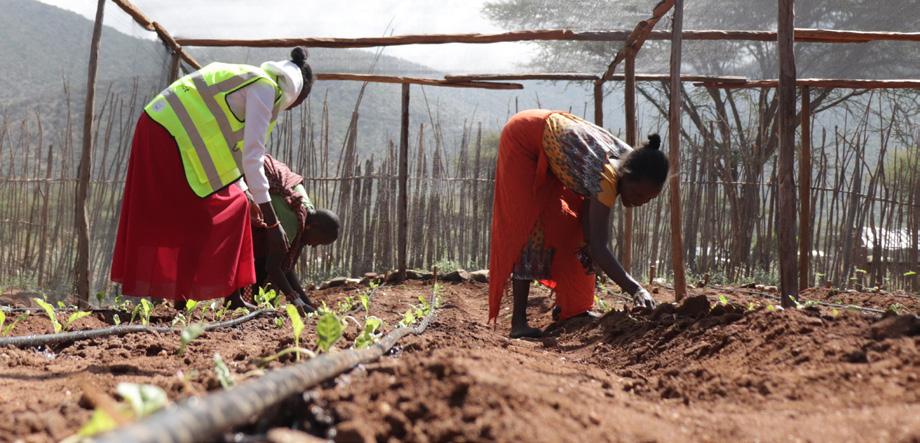
• Solar irrigation, flood barriers, hydroponic fodder, and digital monitoring were piloted with private-sector partners using results-based finance.
• Climate advisories reached ~490 000 people daily through community radio, and county learning platforms supported exchange.
• Eight VSLAs provided rotating credit for diversified livelihoods such as nurseries and grass harvesting.
• Over 10,000 women and youth participated directly in irrigation and rangeland management activities.
Biodiversity: Drones tracked regeneration on 198 ha; 12 nurseries and riparian bamboo restoration established.
Food production: Improved seeds raised yields 25–50%; 15,596 farmers adopted conservation agriculture.
Water: The Sanga sand dam (6,600 m³) improved access for 1,000 households and 10,000 livestock.
Institutions: Nexus principles integrated into county plans; nine ward committees functional; VSLA savings increased.
Landscape: 60,000+ ha under sustainable management with fewer resource-based conflicts.
County climate acts now mandate budget allocations embedding Nexus priorities. Integration with national programmes such as FLLoCA ensures funding beyond project timelines, and six business cases confirmed the viability of Nexus-linked enterprises.
FIND OUT MORE ON THE BUNDLE OF BIODIVERSITY-FOOD SYSTEM USE CASES
Mariëlle Karssenberg mkarssenberg@nlfoodpartnership.com

• Conflict resolution is central to rangeland management and participatory grazing plans reduced disputes and improved governance.
• Cultural resistance to new enterprises shifted once benefits became visible and poultry prices doubled.
• Results-based financing and supplier partnerships enabled adoption of solar pumps and improved seeds.
• Insecurity and inter-county policy differences hindered uptake, showing that peace and coordination are prerequisites for technology adoption.
• Balancing land-use trade-offs and promoting women’s and youth participation required greater investment in peacebuilding and social-behaviour change.
• Water proved the critical lever linking biodiversity, food, and energy outcomes.
• Drone imagery built local trust by visibly demonstrating ecosystem recovery.
SCALING OPPORTUNITIES AND COLLABORATION
Institutional frameworks and enterprise models provide a foundation for scaling the WEF Nexus across Kenya’s ASALs and the Horn of Africa. Success depends on adapting to local contexts and maintaining finance for coordination. Partnerships with agribusiness, fintech, and renewableenergy providers can expand sustainable livelihoods, while regional and global platforms help share lessons. Continued government leadership, private investment, research collaboration, and peacebuilding remain essential for long-term impact.

Biodiversity underpins food security, yet agriculture, the sector most reliant on healthy ecosystems, is also the main driver of ecosystem degradation. The World Business Council for Sustainable Development (WBCSD) mobilizes companies to embed biodiversity and regenerative farming across food and land-use systems. Through the One Planet Business for Biodiversity (OP2B) platform, businesses collaborate to scale regenerative agriculture and shape enabling policies.
COLLABORATIVE BUSINESS PARTNERSHIPS FOR REGENERATIVE AGRICULTURE
WBCSD drives biodiversity-positive food system transformation through global coalitions that unite companies, governments, finance, science, and civil society to remove barriers, share pre-competitive knowledge, and co-design metrics linking biodiversity, climate, and livelihoods. By blending corporate, public, and development finance, these partnerships de-risk projects and unlock large-scale investment.
Flagship partnerships include:
Action Agenda on Regenerative Landscapes (AARL): Aggregates and accelerates global regenerative agriculture efforts, connecting farmers, agribusinesses, financiers, and non-state actors to transition landscapes by 2030.
One Planet Business for Biodiversity (OP2B): A coalition of 26 companies scaling regenerative practices and biodiversity protection across 24 countries, aligning metrics and finance.
Landscape Accelerator Brazil (LAB): Promotes deforestationfree soybean and beef production in the Cerrado and Pará, targeting USD 28 billion in GDP growth and 600 000 producers.
Sustainable Rice Landscapes Initiative (SRLI): Restores rice ecosystems and strengthens resilience across Asia, addressing emissions, biodiversity loss, and food security.
OP2B’S ROLE IN SCALING REGENERATIVE AGRICULTURE
OP2B’s 26 members combine complementary strengths across value chains, aligning metrics, sharing costs, and enabling large-scale transformation.
Food & beverage companies advance on-farm regeneration through sourcing programmes and farmer partnerships.
Input & technology firms provide precision tools and training, blending mineral and organic fertilizers to cut emissions.
Fashion & beauty brands integrate biodiversity-positive sourcing, supporting farmers via agroforestry and efficient irrigation.
Finance actors deliver blended finance and risk-sharing models.
Knowledge partners co-develop metrics linking biodiversity and climate performance.
FIND OUT MORE ON THE BUNDLE OF BIODIVERSITY-FOOD SYSTEM USE CASES
Mariëlle Karssenberg mkarssenberg@nlfoodpartnership.com
"The cost of inaction has become greater than the cost of change. To tackle climate change, we need to make regenerative agriculture the norm, not the exception.”
– WBCSD
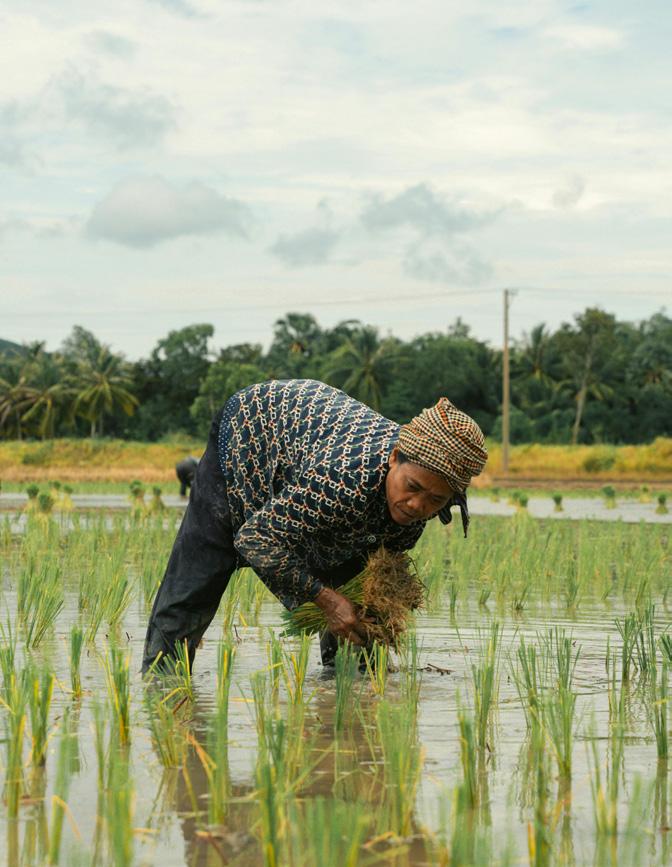
OP2B’s financing model combines public, private, and development capital through blended finance, equipmentsharing, and crop diversification to reduce costs and risks. From 2019–2023, members invested USD 3.6 billion, with USD 2.4 billion committed through 2030. The approach links finance, technical support, and policy incentives to scale regenerative agriculture.
OP2B has engaged 300,000 farmers across 24 countries, converting 3.9 million hectares to regenerative practices that enhance soil health, biodiversity, water, and climate resilience. WBCSD and the SAI Platform align policy, finance, and technical guidance through shared outcome-based indicators to scale regenerative agriculture and strengthen sustainable, resilient food systems globally.

Fragmented funding limits farmer transitions, requiring integrated public–private financing models and stronger coordination.
Blended “one-stop-shop” finance combining public, private, and concessional capital can reduce farmers’ payback periods from nine to five years.
Outcome-based incentives are critical to de-risk investments and ensure small and medium farms reach profitability.
Standardized Monitoring, Reporting, and Verification (MRV) systems would streamline reporting, align indicators, and boost investor confidence.
Balancing pace between rapid grassroots action and slower systemic change remains a core challenge for scaling regenerative agriculture effectively.
OPPORTUNITIES FOR PARTNERSHIPS AND SCALING
WBCSD and members plan to expand regenerative landscapes across Europe, targeting 40 million ha by 2030. Scaling depends on stronger public–private finance, unified subsidies and loans, robust monitoring, and diverse investor participation. Partnerships with agrifood companies, retailers, and financial institutions can accelerate adoption, de-risk investment, and strengthen biodiversity-positive supply chains globally.
FOR FURTHER INFORMATION
Casper Zulim de Swarte zulimdeswarte@wbcsd.org