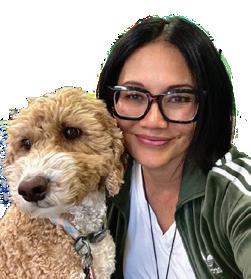
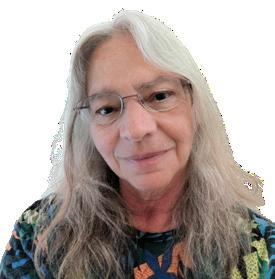
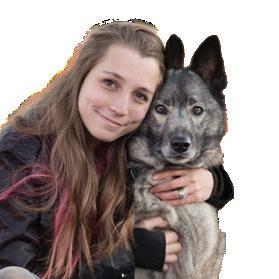
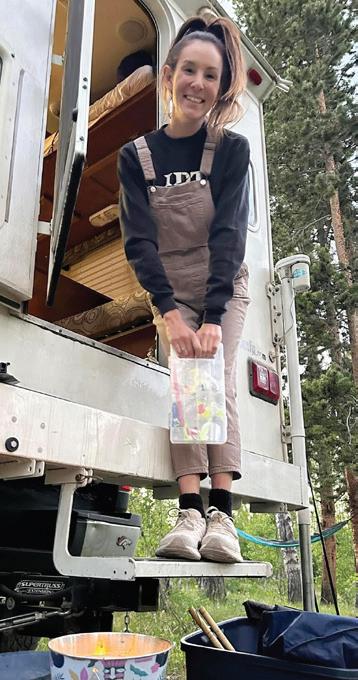
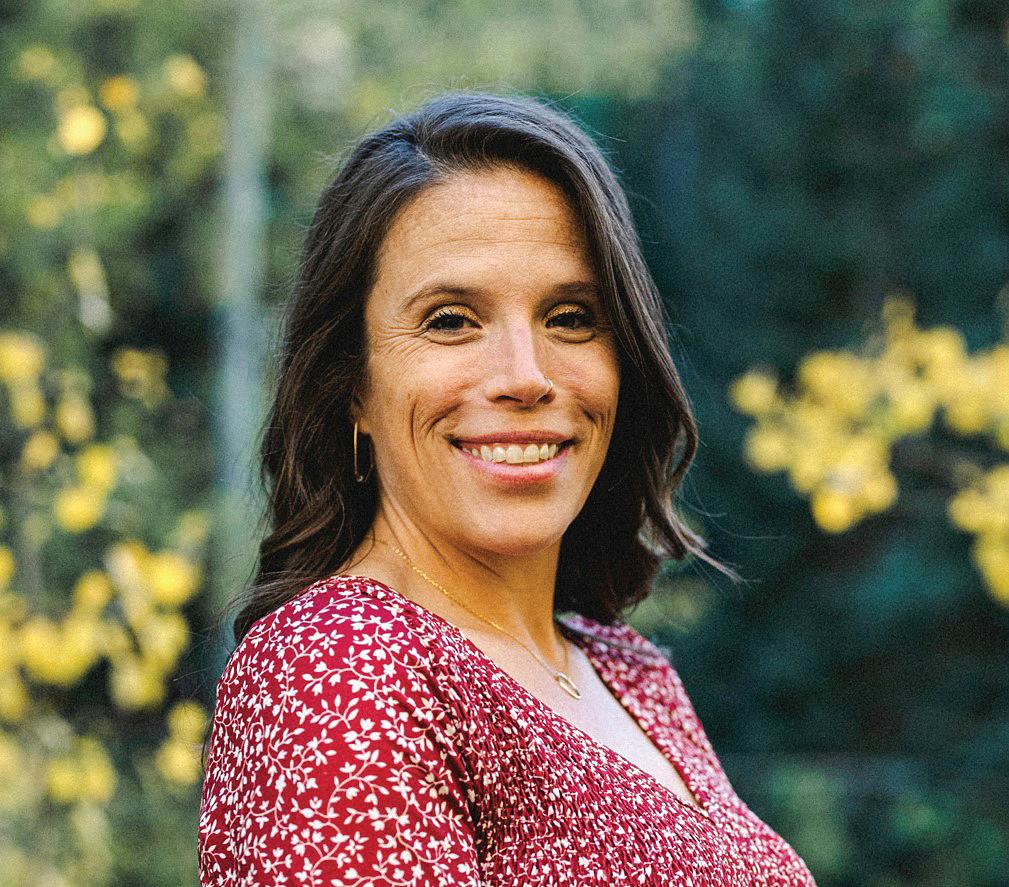
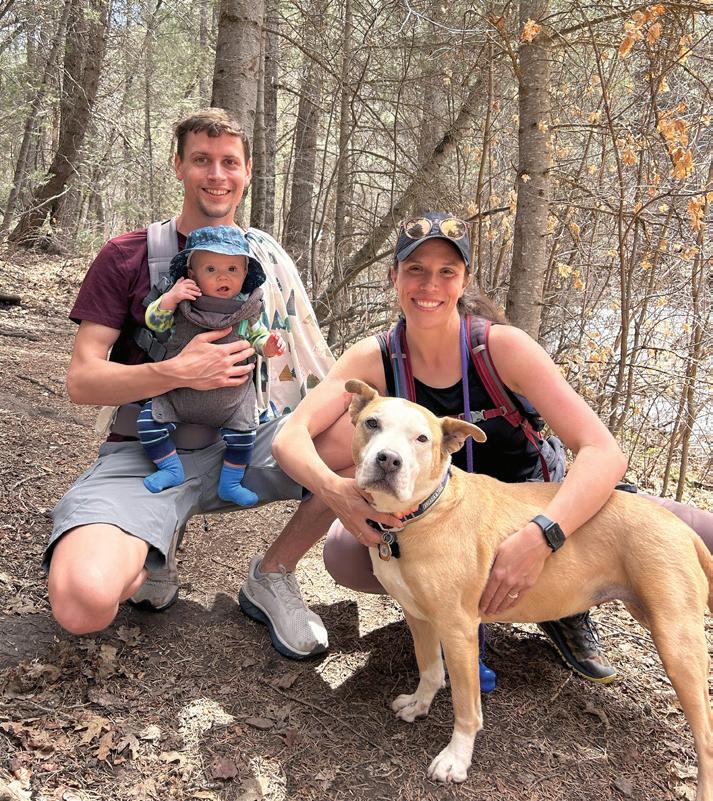
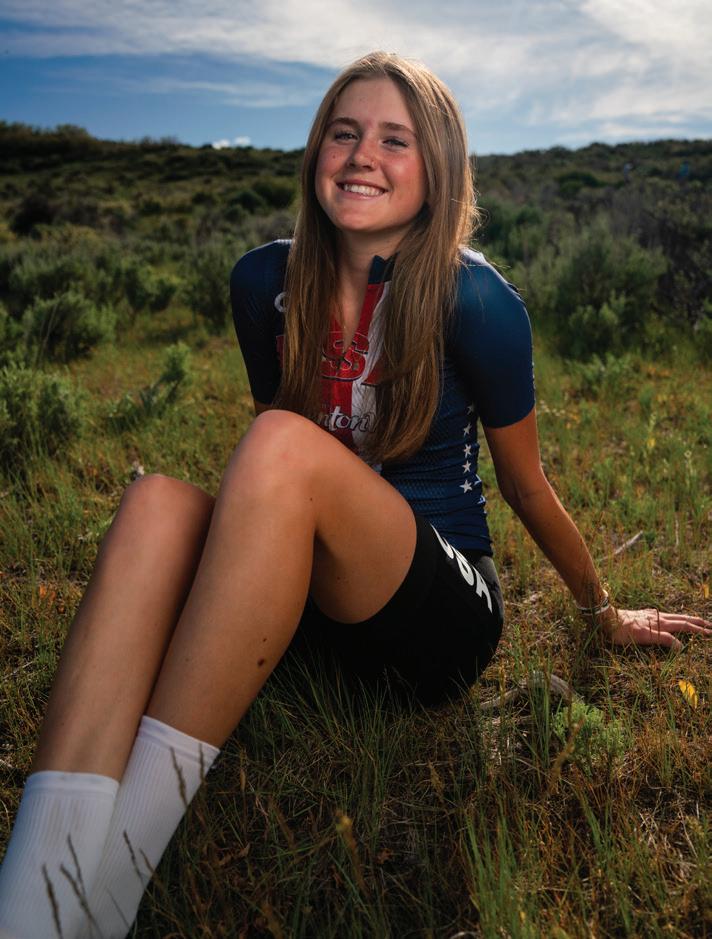
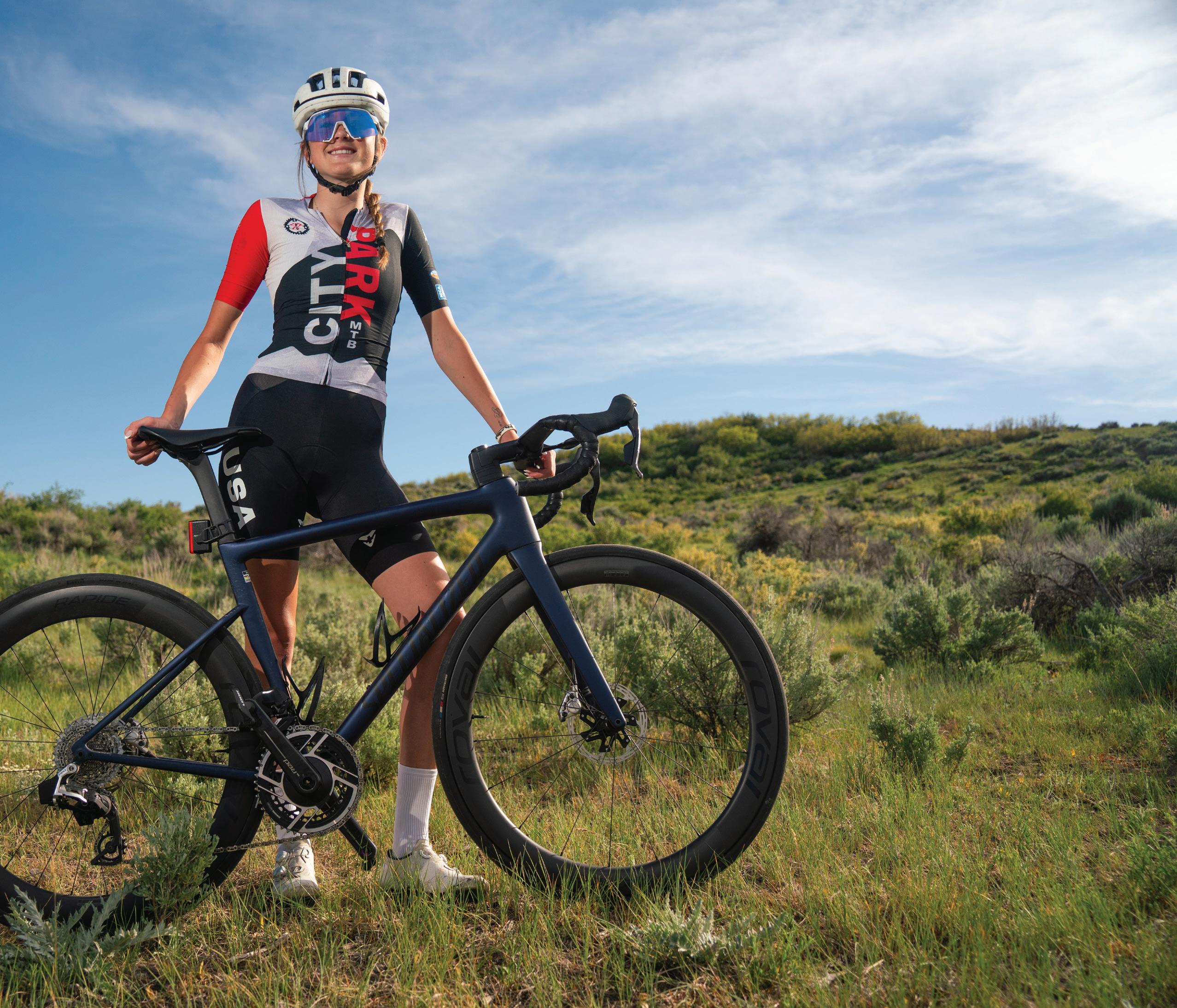
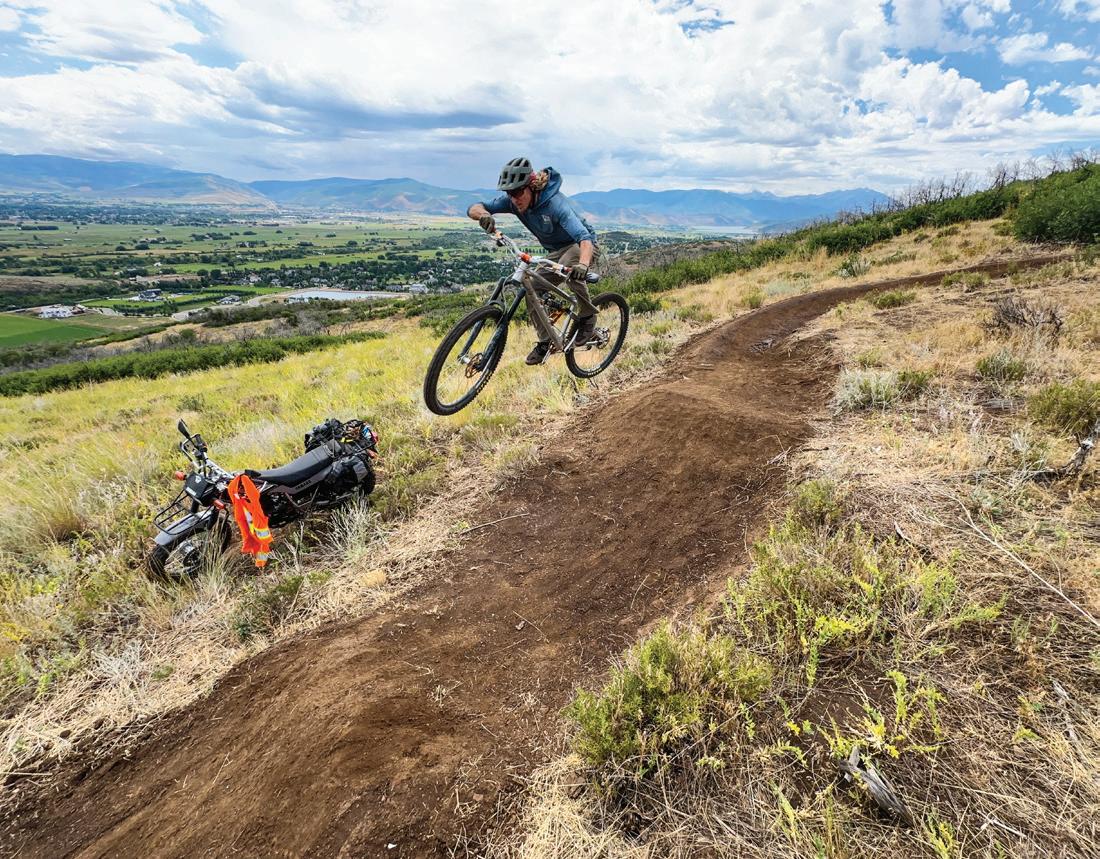
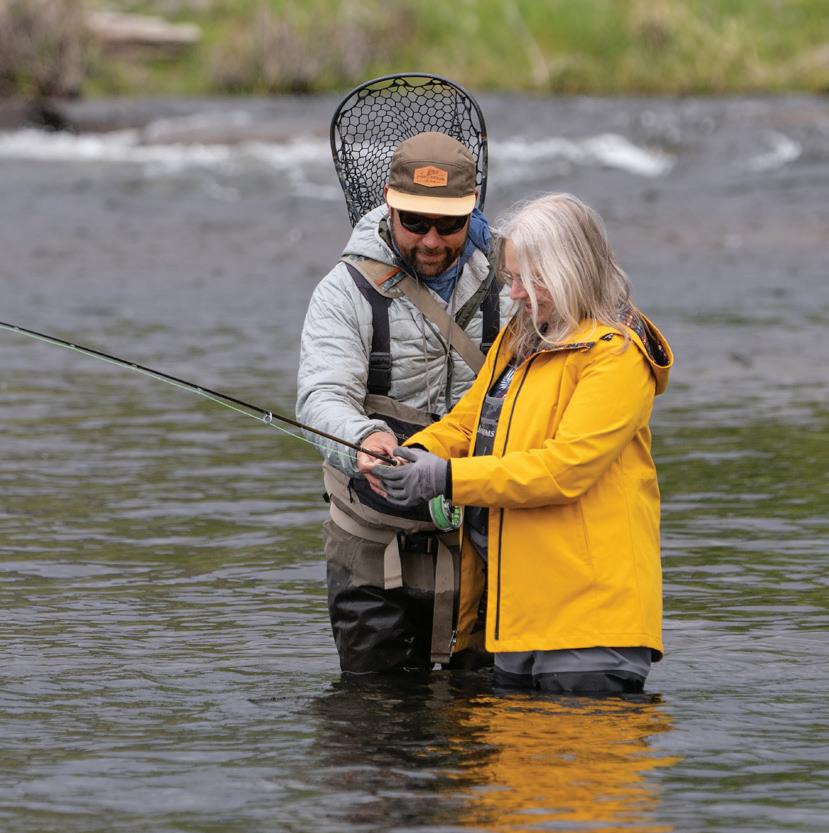
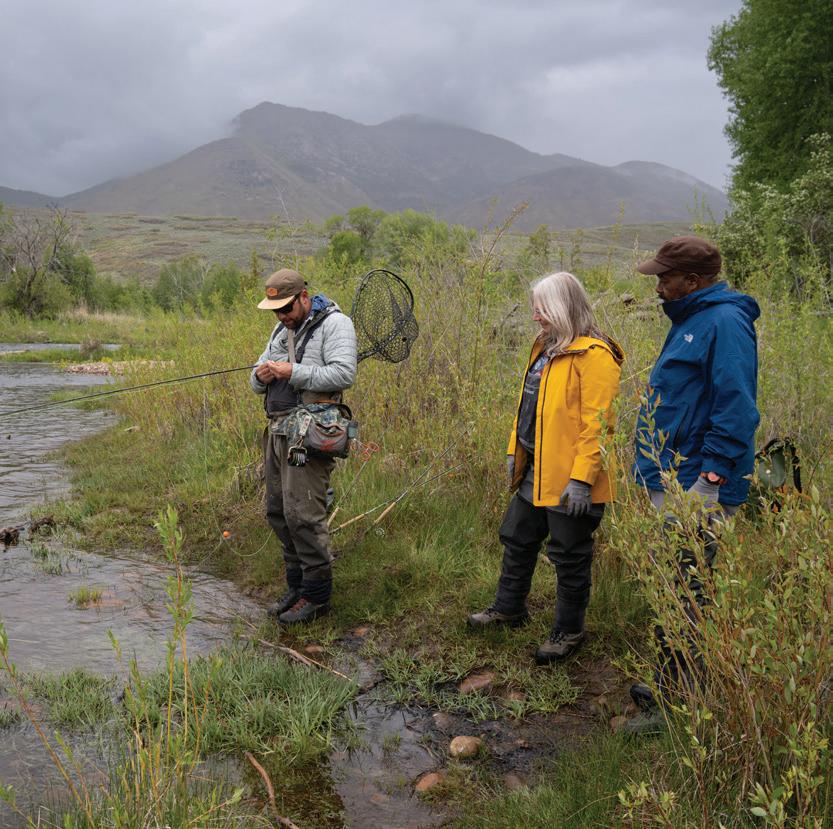
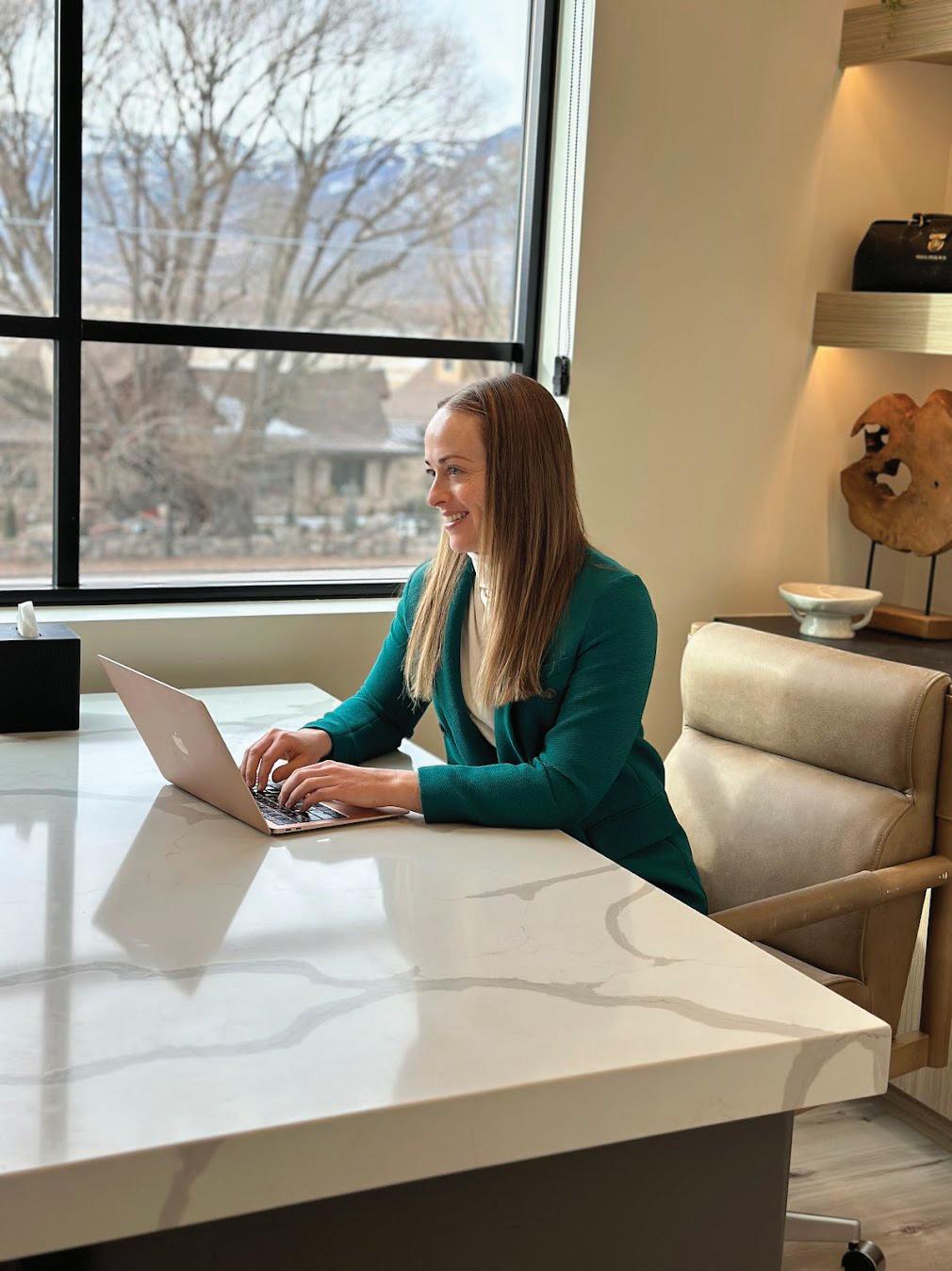
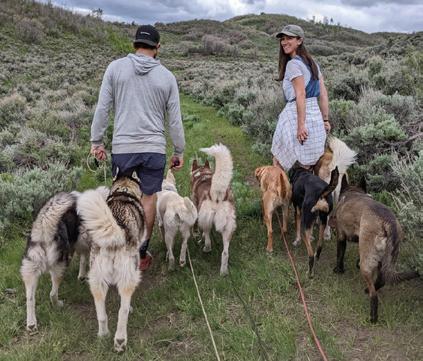
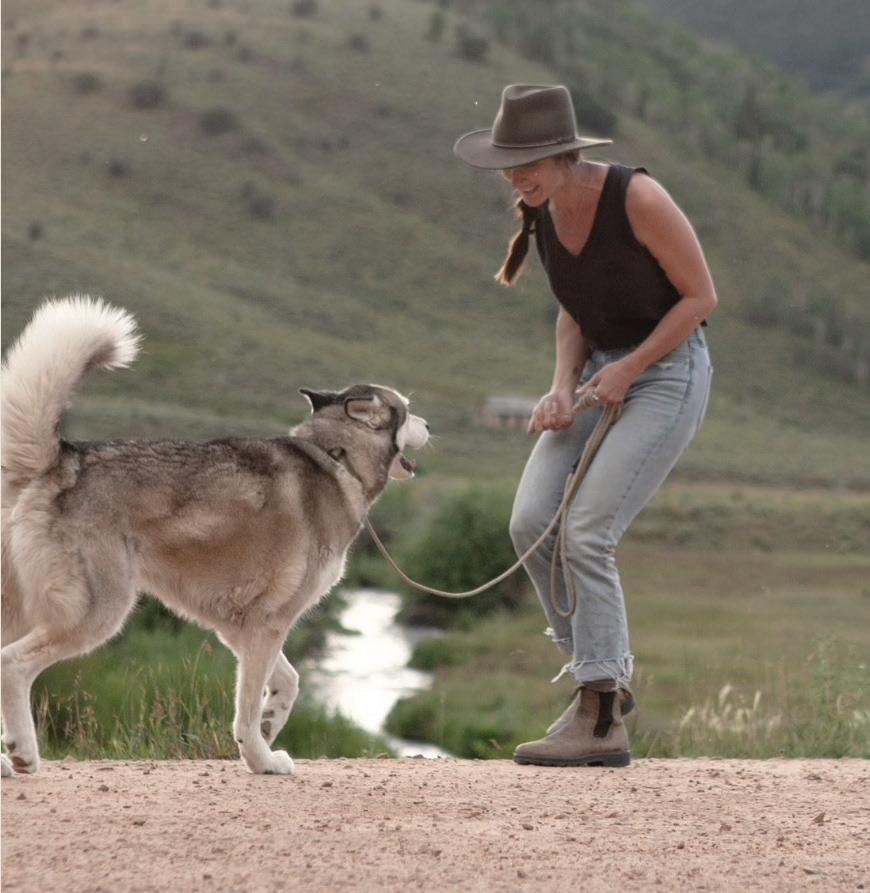
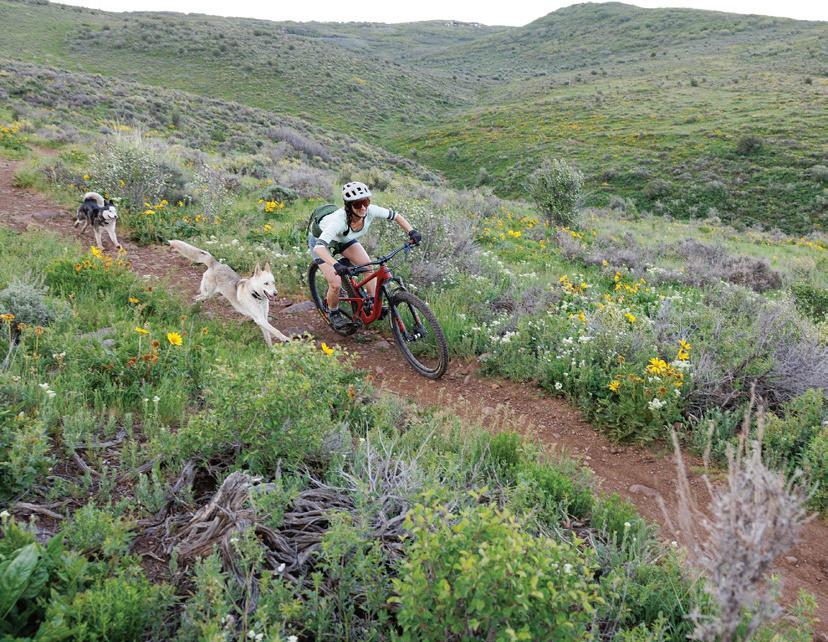
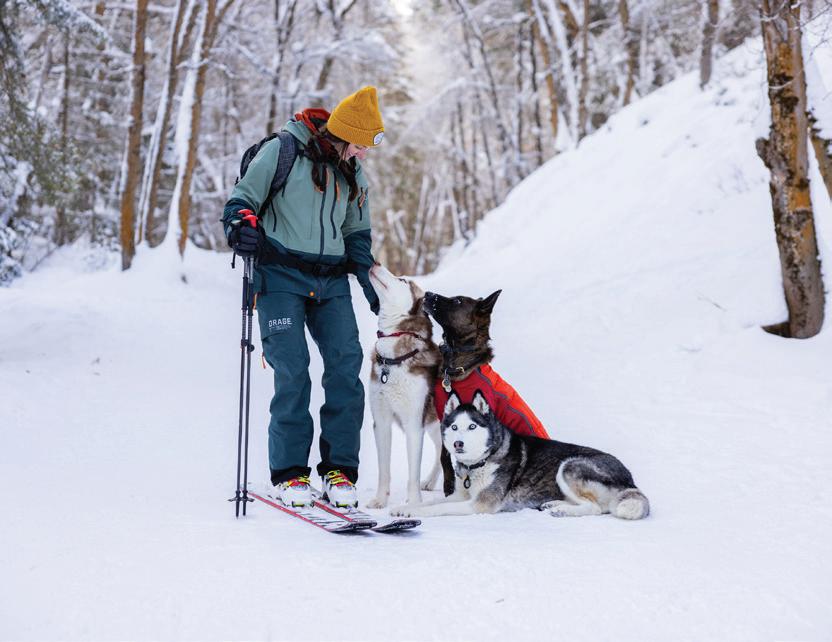
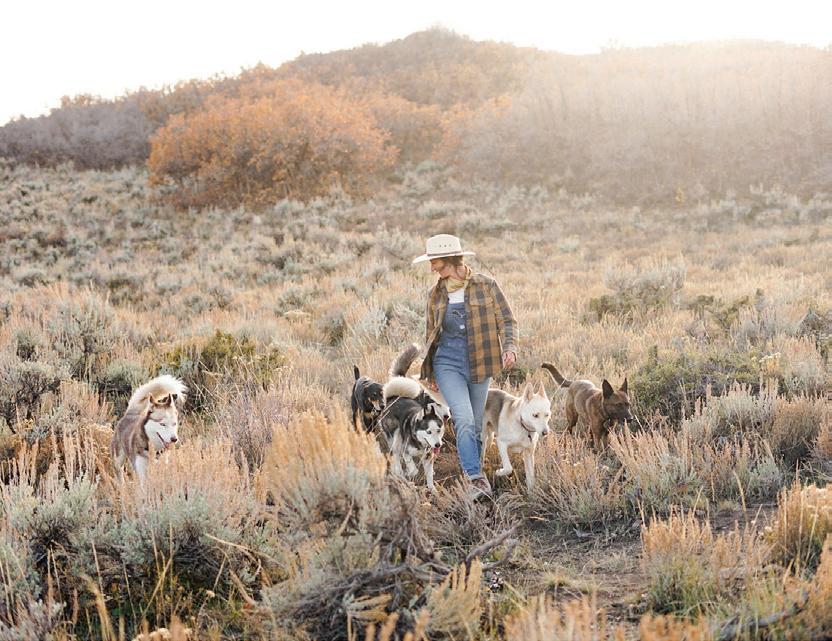
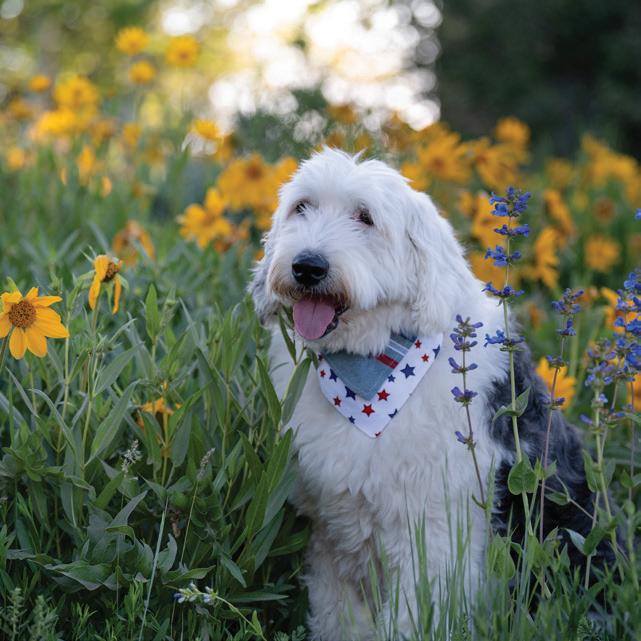
Natalie Taylor is a regular contributor to Neighbors of Park City/Heber and writes the monthly “Rad in the Wasatch” column. She leads a writerly life and relishes poeming in her garden. She has lived in Utah most of her life, surrounded by the majesty of the Rocky Mountains. One of her favorite memories is sitting under the porch on a rocking couch with her grandmother, listening to stories, and gazing at Mount Olympus. Considering herself fortunate, she’s been able to explore some hidden crannies of the state as well as those well-known gems. She’s not finished exploring yet.
Natalie earned a BFA in English with a creative writing emphasis from the
University of Utah. She is the author of the poetry chapbook, Eden’s Edge and has been published in notable poetry journals and anthologies. She served as a managing editor for Utah Bride & Groom and as an assistant editor for Utah Style & Design and has written for many local publications, including Park City magazine and ParkCity Style magazine for years.
In addition to writing, she is a yoga teacher and sound practitioner. She teaches three nights a week, in a variety of formats, from power vinyasa to restore and offers monthly public sound
CONTRIBUTING WRITERS
baths as well as private events. When she’s not writing, practicing or teaching yoga or participating or leading in sound medicine events, you can find her hiking, skiing, camping, soaking hot springs or just enjoying the views with her daughters and beloved pooch.
Behind the Scenes with Jacqi Tewksbury at Stein Eriksen Residences
BY AIMEE L. COOK
PHOTOS BY DEB DEKOFF
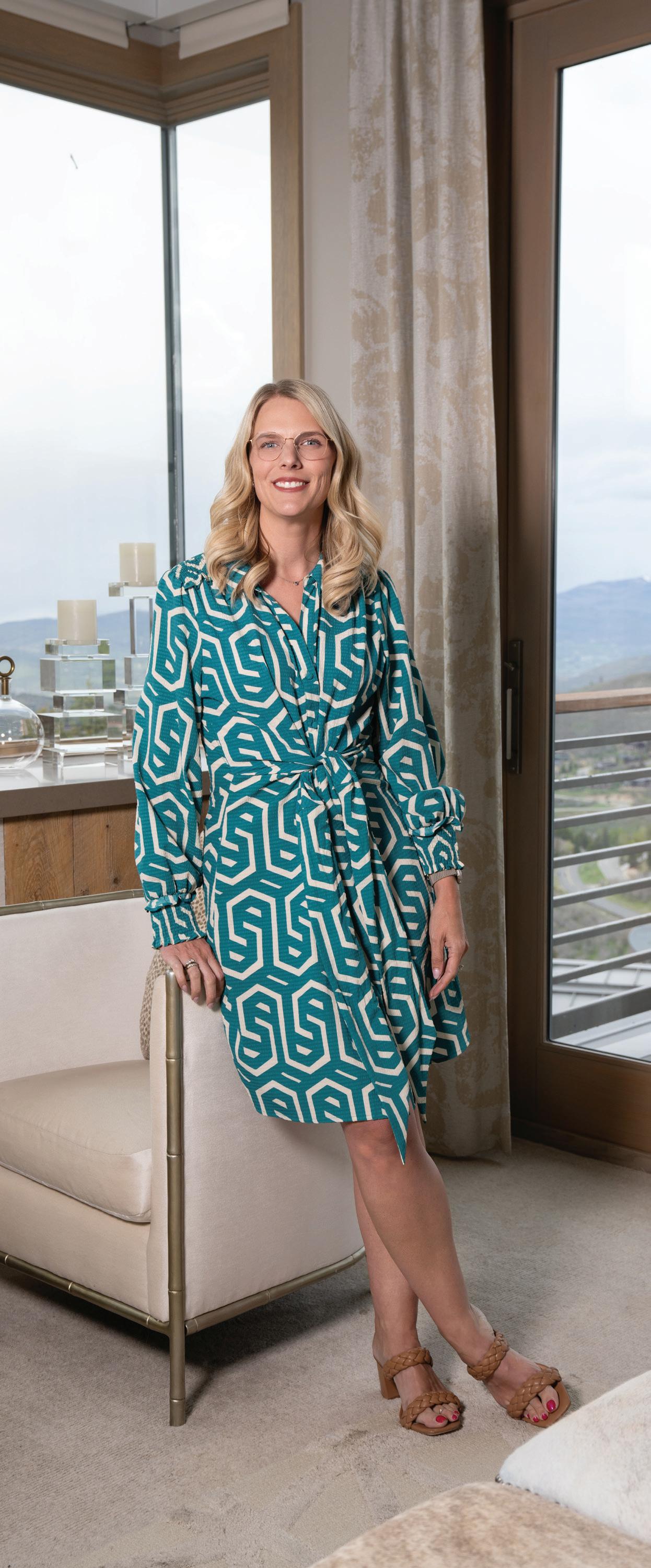
If you’ve ever stayed at Stein Eriksen Residences in Deer Valley, chances are Jacqi Tewksbury had a hand in making your visit unforgettable. Since 2016, Jacqi has been a driving force behind the seamless daily operations of the prestigious property, proving that resort management is as much about dedication and precision as it is about creating extraordinary guest experiences.
As Resort Manager for the residences, a separate property from the lodge, Jacqi oversees the 54 residences, half of which are part of a rental pool. From coordinating repairs to ensuring the most minor maintenance details are handled flawlessly, she’s always one step ahead to ensure the property runs like a well-oiled machine.
“My job entails maintaining the guest experience from the moment they book until they have made it home,” Jacqi explained. “I assist housekeeping and engineering managers and their teams with anything that they need as well. I also handle owner relations, which for many owners is their second home.”
THE STEIN ERIKSEN WAY ALWAYS
Stein Eriksen offers a unique blend of luxury and natural beauty. Guests enjoy the stunning alpine views, world-class dining, and thoughtful amenities designed for relaxation. Whether you’re stepping onto the slopes in winter or soaking up the serene summer atmosphere, the property’s charm lies in its ability to balance elegance and warmth.
Jacqi’s role oversees this balance, ensuring that even the most routine repairs, like owners having a working vehicle onsite, align with the resort’s high standards. Her attention to detail and love for the community keep Stein Eriksen Residences running smoothly year-round.
Jacqi describes her work as a blend of problem-solving and relationship-building. “Hospitality is a 24/7, 365 thing, and we are managing high expectations for owners and our guests,” she explains. “It means being available around the clock and managing things from start to finish.”
“I enjoy getting to know the owners organically,” Jacqi added. “The non-Google approach, I call it. Interactions with the people and sharing those with the team are really key. Even though I don’t work in the kitchen, it doesn’t mean I don’t assist the chef by sharing feedback for his team.”
Jacqi moved to Park City from California in 1997 and has loved Park City ever since. She met her now-husband, Dan, through mutual friends while he was working at Cole Sports in 2014. Later, Dan would begin his career at Stein’s as a concierge in 2015. The couple married in August of 2018 and welcomed their first child, a son, in December of 2020. You might say working for Stein Eriksen is a family affair.
“I love Park City, I had a great childhood here, “Jacqi shared. “I am welcoming of some of the changes in town, we [Stein Eriksen] are part of some that change, so by embracing what we have here, I want to portray the best parts of town so people who come have the best trip possible.”
When she’s not busy with resort tasks, you’ll find Jacqi alongside Dan and their son, exploring the beauty of the local area.
PENDRY PARK CITY BRINGS ELEVATED ALPINE LUXURY TO UTAH
Pendry Park City stands out as a destination for those seeking a luxurious yet approachable, family-friendly escape. This modern alpine lodge offers the perfect blend of sophistication and casual comfort, making it a must-visit spot for families, outdoor enthusiasts, and anyone craving a taste of elevated mountain living.
A RETREAT FOR EVERY SEASON
With 175 beautifully designed guest rooms and suites, Pendry Park City combines the natural warmth of its mountain setting with a sleek, modern aesthetic. Floor-to-ceiling windows and contemporary furnishings create a soothing ambiance that mirrors the beauty of the outdoors. Whether you’re visiting for ski season or a summer getaway, the accommodations pay homage to the surrounding landscape in a way that feels both timeless and fresh.
And it’s not just about relaxation. Pendry’s Adventure Guides at Compass Sports are at the ready to ensure you get the most out of everything Park City has to offer. From bike and premium gear rentals to guided mountain tours, they make it easy to explore the stunning Utah terrain, no matter the season.
“Compass Sports is our year-round outfitter, and as we get into the warmer months, we offer mountain biking, guided tours, E-bikes and hiking,” says Chris Lawing, director of sales and marketing for Pendry. “We also partner with UPPAbaby and provide baby-jogger-type strollers.”
Need some adult time to go exploring? There’s Paintbox, Pendry’s signature children’s club, where kids ages five to 12 can enjoy various activities, lunch, or dinner, depending on the session time. Pendry’s focus on balancing family-friendly conveniences with standout experiences ensures that every family member is well taken care of.
For those seeking relaxation, the signature spa is the ideal place to unwind and find inner peace after a day of adventure. Treat yourself to a rejuvenating treatment or just relax in the herbal steam room.
DINING WITH A VIEW
Pendry Park City’s culinary offerings are just as dazzling as its surroundings. Head to The Pool House, the rooftop dining space open to the public, to experience casual yet refined creations paired with panoramic views of the mountains. To add a touch of fun, there’s even a DJ spinning during summer weekends, perfect for those laid-back afternoons in the sun.
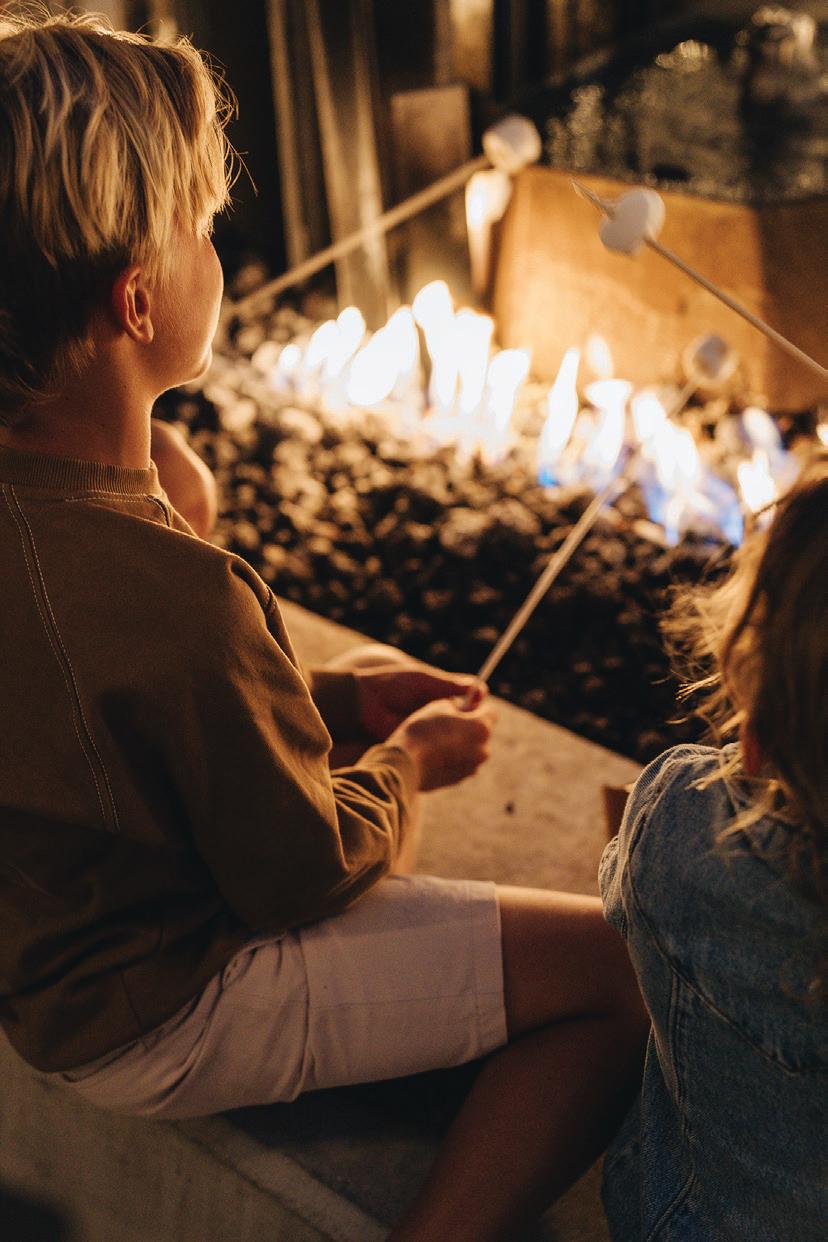
Kita is the place to be for a higher-end dining experience that’s still wonderfully approachable. Specializing in dishes with Japanese influences, Kita offers the kind of meals that stay with you. And here’s a sweet bonus for families or guests with a sweet tooth: After dinner, you can enjoy complimentary s’mores kits, with which you can toast marshmallows by one of the three outdoor firepits, as well as savor the simple pleasures
that set the Pendry experience apart.
Dos Olas Mexican restaurant will also reopen during the summer months, and the Après Lounge is always open for dining, snacks, cocktails, and such.
PLAN YOUR VISIT TO PENDRY PARK CITY
Whether you’re drawn in by the unparalleled dining, family-friendly amenities, or the call of the mountains, this modern alpine retreat ensures your time in Park City is nothing short of exceptional. Chris shares an insider tip for locals: The 10-person Sunrise Gondola in Pendry Plaza is slated to open for the 2025–2026 season!
For more details and booking options, visit Pendry Park City’s website today. Its staff will be waiting with a s’mores kit (or two) just for you!
HUGO SPRITZ The
The Hugo Spritz is an exciting addition to the spritz family. It is a bright and sassy alternative to the slightly heavier and bitter Aperol Spritz. The Hugo Spritz was created by Italian bartender Roland Gruber in 2005. Made with Prosecco, Elderflower Liquor, Soda Water, and Mint. The end product has a naturally sweet flavor with herbal notes, while the mint adds a fresh, zesty essence to the finish.
Sweet, bubbly, and refreshing. The Hugo Spritz is the perfect drink to sip on while lounging by the pool or, really lounging anywhere and pretending you are by the pool.
Prep time 5 minutes
INGREDIENTS*:
• 1 ½ oz Elderflower Liqueur
• 2 oz Prosecco
• 2 oz Soda Water
DIRECTIONS:
• 6-8 Mint Leaves
• Lime Wedge for Garnish
• Mint Sprig for Garnish
Start by adding ice to a wine glass. Add Elderflower Liqueur. Then add mint leaves. Stir gently for about 10 seconds. Add both the Prosecco and Soda Water. Stir again making sure to bring the mint leaves up from the bottom. Garnish with a Lime Wedge. “Smack”** the mint sprig between your hands and place in the glass. Sip and smile!
**Bartenders Trick: Smacking the mint releases the essential oils which contains the flavor and scent of the mint.
If you tried this and liked it…. Tag me on Instagram @elevateeventbartending
Ballerina Farm in Kamas, Utah, is a blend of traditional farming practices and a forward-thinking online presence; it has become a hub for farm-totable living, all while managing to stay rooted in community values.
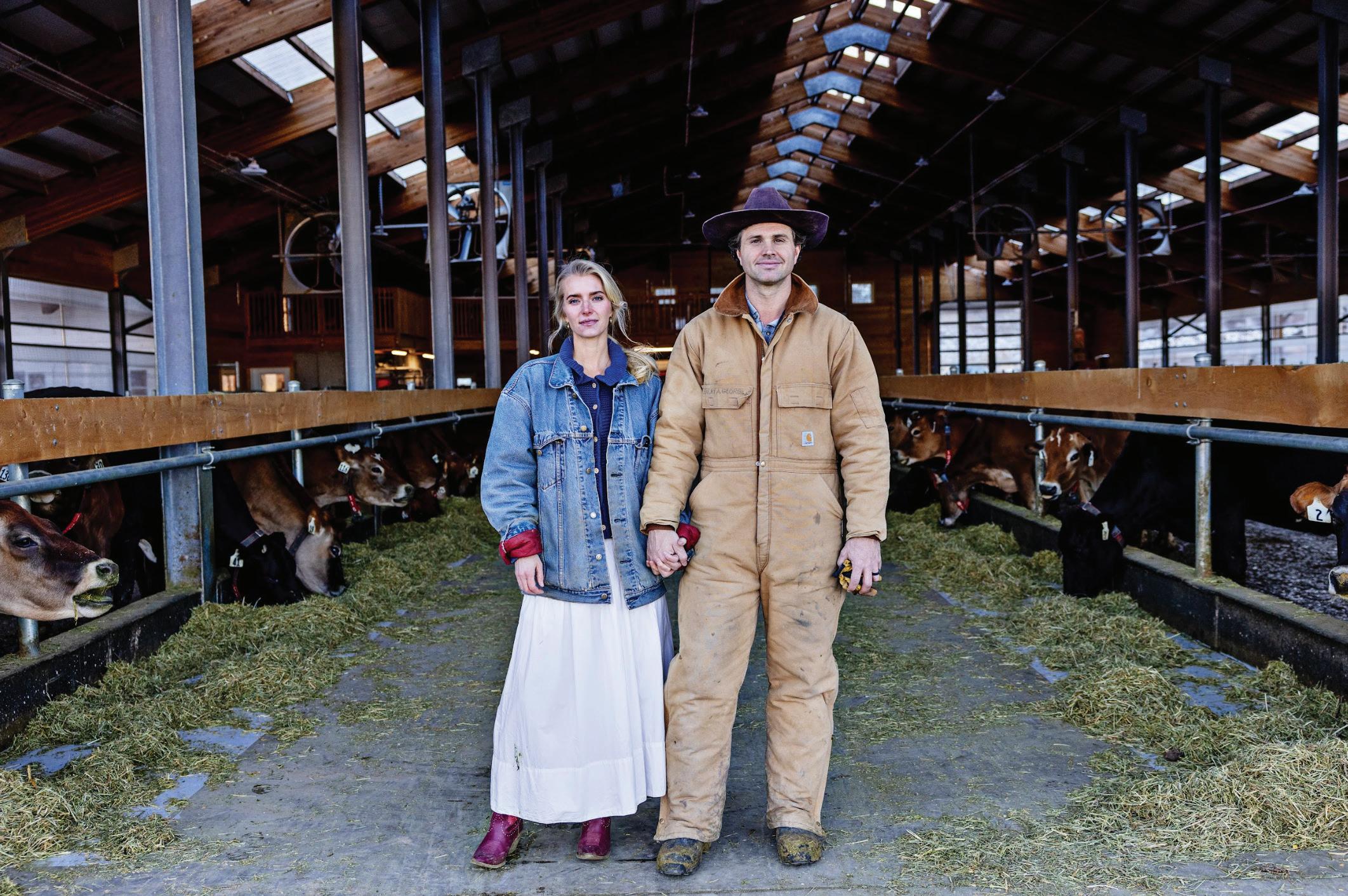
The farm, run by former ballet dancer and Mrs. Utah, Hannah Neeleman, alongside her husband Daniel, is the product of years of dedication, risk-taking, and a passion for connecting people with their food. Now, the Neelemans are celebrating a new milestone with the opening of their Farm Stand in Kamas, a charming spot that brings locals and visitors one step closer to the source of their food.
BUILDING A DREAM, ONE STEP AT A TIME
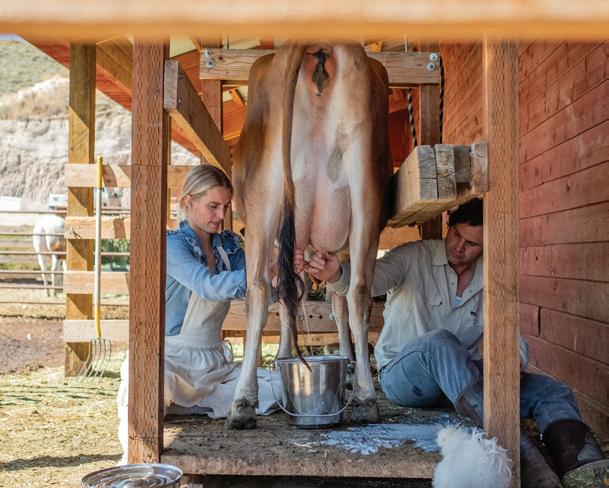
Hannah and Daniel’s farming dream has been eight years in the making, and it started with a leap of faith. “Social media allowed us to bring people along with us,” Hannah explains. “Not just to market our products to a broader audience, but to make them a part of our story. Many of our followers have watched us build Ballerina Farm, which is pretty spectacular.”
The Farm Stand, although modest, is a huge win for the couple and their devoted community. “While we originally planned a full agritourism site, we hit some regulatory hurdles,” says Hannah. “Instead of pausing entirely, we launched a small first step where customers can finally purchase our raw milk and pantry goods in person.”
FROM BALLET TO FARMING
Hannah’s transition from a professional ballet career to running a bustling farm might sound unexpected, but as she sees it, it was a natural evolution. “Ballet taught me discipline, precision, and a deep respect for the process,” she says. “Farming might look completely different, but the values are similar. You show up every day, you work hard, and you keep refining.”
Hannah applies the same intentionality from her dance days to every aspect of the farm. Whether raising animals, developing products, or leading the team, she aims to ensure that everything reflects the family’s values of quality and connection.
“I started ballet when I was very young,” she explains. “My parents ran a flower shop in Springville, Utah, and I spent a lot of time dancing in the back room. The family joke is that the proceeds funded my ballet career. To help out with payments, I began competing in pageants, and I guess I never really stopped.”
After Hannah married Daniel and started a family, the couple spent several years living in Brazil, where their love of farming began, inspired by visits to integrated farm hotels and driving through agricultural landscapes. “We even brought pigs back to our rental house in Brazil, much to our landlord’s surprise.” Upon returning to Utah, Hannah and Daniel purchased their own land and started building what is now Ballerina Farm. “It began with a desire to get closer to our food—and we haven’t looked back,” says Hannah.
CURATED GOODS WITH A PURPOSE
The Ballerina Farm Stand offers a curated selection of pantry staples, baked goods, and meat products, all crafted with care. “Our baked goods are made in partnership with Chef Benoit Cornet, who brings experience from French Michelin Star restaurants,” Hannah shares. “He makes extraordinary croissants, fresh baguettes, cinnamon rolls, danishes, and more.”
Quality is non-negotiable at Ballerina Farm. The staff strives to reconnect people to their food through mindful sourcing and innovative ideas, like their recently introduced cultured butter, buttermilk, and whey lemonade. “That’s the heart of our philosophy: a real connection between where food comes from and where it ends up,” explains Hannah.
Balancing motherhood and entrepreneurship is no small feat, especially with eight children in tow. “There’s really no such thing as a typical day around here,” Hannah says. “We’ve learned to expect the unexpected. Most mornings start early. Daniel and I wake up with the kids and eat breakfast together.”
Daniel usually heads to the dairy, and the two of them juggle meetings across the different Ballerina Farm teams throughout the day. Despite the whirlwind days, Hannah finds joy in the chaos. “The days are long. Once the kids are in bed, which keeps getting later and later, Daniel and I catch up on messages, emails, and editing reels. We often work late into the night, getting ready to do it all again the next day,” she says.
LOOKING AHEAD
The future for Ballerina Farm is brimming with opportunity, starting with its next big project, the Ballerina Farm Store in Midway, Utah. “We have big dreams for Ballerina Farm,” Hannah shares. “You’ll just have to follow along to see what is next!”
Ballerina Farm exemplifies how blending tradition with modern innovation can create a meaningful, community-focused business. Whether it’s through their engaging social media posts or connections at their farm stand, Hannah and Daniel Neeleman have created something special while offering products and a lifestyle worth celebrating.
“Everything we put into the world represents our family, our values, and the standard we hold ourselves to, so I want it to be the best it can be,” Hannah emphasizes.
Visit the Ballerina Farm Stand in Kamas, located at 1476 W 200 S, and stay connected through its social media for updates and behind-thescenes stories.
Just minutes from Deer Valley’s new East Village ski lifts, Ameyalli Residence Club boasts serene views of the majestic Wasatch Mountains.
The Club’s four-bedroom, four-and-a-half-bathroom homes offer like-minded families a seamless blend of pampered living, real estate co-ownership, and wellbeing programs curated by one of the world’s most respected longevity experts.
As I think of summer in Utah, the classic song by John Travolta and Olivia Newton-John from the movie Grease comes to mind—“Summer lovin’, had me a blast. Summer lovin’, happened so fast.” For those who love water sports, it’s a realization that the season can pass by rather quickly. There is quick access to water in this area, which is one of the many reasons why Heber Valley and Park City locals love calling this place their home. For boating enthusiasts, consider the prime time to ride—wake surfing, boarding, skiing, tubing—to be between May and the end of September. Now, let’s talk about all of the water FUN!
THE BOATER: DRIFTING AWAY
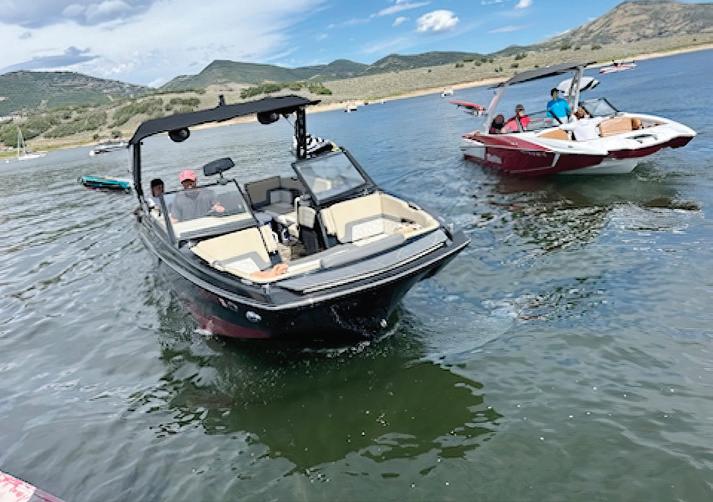
Locals, be advised you’re in for some good boating days during the summer season in Utah. This area provides access to numerous boating locations. Throughout May to September, there’s usually at least one day of the week that you can expect to get time on the water. Two destinations for boating are less than 30 minutes away and will allow you to enjoy time with your family and friends: Jordanelle Reservoir and Deer Creek State Park, both HOT spots to be at for the season.
WHAT TO BRING: TELL ME MORE, TELL ME MORE!
You will need a parking pass to enter both Jordanelle Reservoir and Deer Creek State Park. There are different ways to go about this: You can purchase it at the pay center upon arrival, or you can buy a Park Pass from stateparks. utah.gov. Fees for parking are $20+ per day, depending on your group size,
the number of vehicles you have entering, and the duration of time spent. Example: If you plan to boat multiple days in a row and want to use the park’s campgrounds on the same day, you’ll be paying higher fees for the experience.
Note: If you are an active boater and want to save, your best option is to buy an annual park pass. If you’re a local senior, you save even more on your annual pass—senior discount rates are awesome. To buy a pass, this can be done online or in person. Check out this website: stateparks.utah.gov
Your certification and waivers. If you’re planning to boat, you’ll decide between renting a boat or bringing your own. In both cases, you’ll need to ensure that you have your proper certifications. For more information on rentals, check out the sites below: https://www.jordanellerentals.com/boat-rentals/ https://deercreekislandresort.com/
Safety is of the utmost importance! Remember that the water or the
weather can be as unpredictable as a summer romance, similar to Sandy and Danny’s in Grease. Be prepared with the proper safety gear for everyone in your party. More info for safety measures can be found here: https://recreation. utah.gov/boating/boating-education/ Sunscreen and hat preparation. You may never see a 113-degree day, but you should expect to see one in the 80–90 degree range in the summertime. “Summer sun, something’s begun”… and let that not be a burn! Take care of yourself and others and protect yourselves when exposed to the beautiful Utah sunshine.
Principal McGee Says, “If You Cannot Be an Athlete, Be an Athletic Supporter”
Let’s be real: Not everyone wants to dive into the water, nor should they be expected to be a professional at water sports like wake surfing or slalom skiing. That being said, there are still many ways you can enjoy the local water. A couple of options…
Set up a picnic at Deer Creek State Park. The area has several spots available for day use. You will see people with tents, all enjoying the water from the shore.
Note: Parks can be overcrowded during the summer, and many people planning a day of water activities arrive early—the facilities are first come, first served. No joke, there was one time when I
arrived at Deer Creek Park and the staff informed me that they were at capacity for the day. As the saying goes, “The early bird gets the worm.”
If you have no interest in being by the water but love observing the views of summer, treat yourself to lunch or dinner at The Lake House at Deer Creek. One of the most exclusive dining spots is located right on the water: https:// thelakehousedeercreek.com/
Special tip: With a valid reservation at The Lake House, you have free parking access, as long as there is capacity. Let the parking attendant know if you’re just planning on dining at the restaurant during your park stay, and your parking fee will be waived.
Bring your camping gear and just observe the waterside views. Both Jordanelle Reservoir and Deer Creek State Park offer camping options for visitors.
Note: Many campgrounds will be at capacity on holiday weekends or weekends in general. Plan ahead so that you don’t miss out on the waterside fun. Winging it isn’t always the “plan” of action. You say, “Tell me more, tell me more,” and I say, “Uh-huh, doobie-do, but oh, those summer nights”—which aren’t just a fantasy in this town. These evenings are real! I wish you all a good time on the shores, on boats, or in a camp zone. That was my “Chu”-bop for you. Shoo-bop-bop, yeah…
INDULGE IN CULINARY ELEGANCE
Transform your dining experience with our exclusive Private and Personal Chef Service! At Culinary Elegance, we bring your gastronomic dreams to life, whether it’s an intimate dinner or a grand celebration.
Let our talented chefs weave their culinary magic at your table, delivering a luxurious dining experience that knows no bounds.
Your exquisite journey starts here. Discover a new standard in fine dining with Culinary Elegance! 435 655 1449 thymetodinecatering.com chefakeenoclarke@gmail.com
Are your computer issues driving you up the wall? If you’ve been desperately searching for reliable and efficient IT solutions right here in Heber, there’s one local business you’ll want to have on speed-dial.
ACE Rescue IT Solutions is a true gamechanger for small businesses and homeowners. Owner Aaron Cheatwood specializes in small business and home IT support, offering an extensive range of services, including co-managed IT, computer repair, cybersecurity, and monthly service plans. It’s a one-stop shop for all your techrelated worries. And the best part? Its local presence ensures there’s always someone nearby to help, so there are no more endless waits during tech emergencies.
“We provide managed and outsourced IT solutions for small-tomedium-sized businesses,” Aaron explains. “If you are big enough to need IT support but not big enough to have your own IT department, we will be that for you. We can take the IT concerns from your employees, allowing them to do what they do best.”
For individual users, ACE provides essential services such as RAM installation, computer upgrades, virus and malware removal, laptop keyboard repair, laptop screen replacement, component upgrades, and general tech support.
For businesses, ACE offers services designed to ensure your operations run smoothly—from helpdesk solutions for your teams to comprehensive managed IT services, co-managed IT services,
and family.
outsourced IT departments, and IT consulting. Additionally, ACE assists with IT purchasing and procurement, network setup, switch and router installation, and VoIP phone setup and system design.
“Originally, I got into the business because I was the local computer repair person,” Aaron says. “What I found was that a lot of businesses didn’t think about IT needs or things like compliance, backups, or security until it was too late. Clients can ask for advice knowing that I stand by my promise, “I won’t sell something people don’t need.”
NO MORE TECH EMERGENCIES
One thing every client seems to rave about is the simple fact that this team is locally based. When IT emergencies arise, there’s zero time spent waiting for a far-off technician to connect remotely or for endless support tickets to get resolved. Instead, there’s a trusted local team just a call away, ready to provide rapid solutions.
Cybersecurity is evolving rapidly, and so are the threats targeting small businesses. What many don’t realize is that cybercriminals are no longer just setting their sights on large corporations; small businesses are becoming prime targets due to perceived vulnerabilities and fewer resources dedicated to security. From phishing scams to ransomware attacks, the landscape grows more complex every day.
For business owners, staying ahead means not just reacting to attacks but proactively implementing solutions to safeguard sensitive data and operations.
“I like to take IT off their plate so small businesses can focus on things like growing,” Aaron adds. “I love small businesses and this town, and I love the fact that we have so many entrepreneurs. I wanted to make sure those businesses stayed protected.”
Whether assisting small businesses in achieving compliance or helping homeowners recover precious family photos from a failed hard drive, ACE Rescue IT Solutions brings personable, expert-level service to every task.
Park City Creamery Delivers Curated and Award-Winning Fromage Infused with the Mountains (Literally!)
When it comes to her craft Corrinne Zinn brings passion, knowledge and a whole lot of Altitude
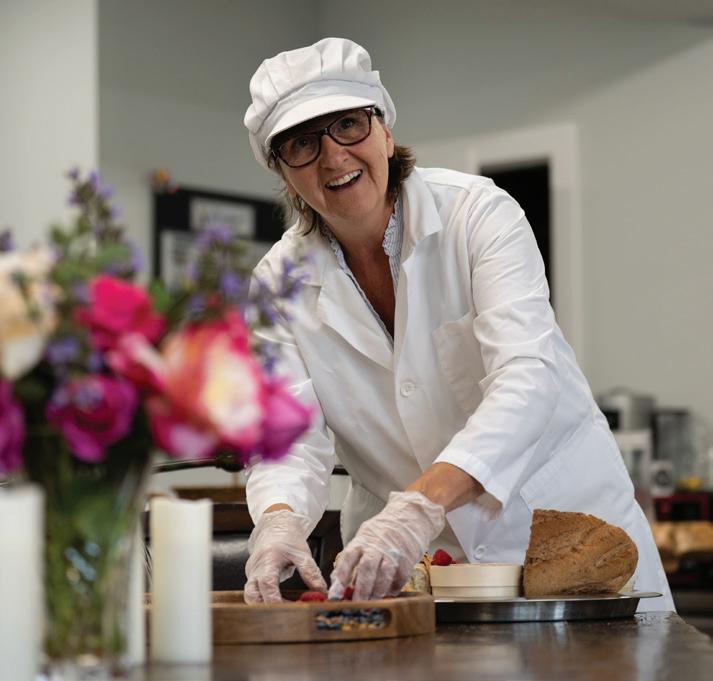
For true connoisseurs of finely curated, homemade cheese, Park City Creamery is a hidden gem unlike any other in Utah. Their offerings are not only infused with the unique essence of the local mountains, but each bite comes with a heartwarming story so delightful, it feels like something straight out of a classic Shirley Temple film.
Born in a small town near Brussels, Belgium owner and fromager Corrinee Zinn remembers running in the fields among cows at her family’s small farm. Nearby, her aunt made small batches of cheese for family and friends in her basement. But it wasn’t until many years later when fate brought Zinn to Connecticut, and then to the mountains of Colorado, that her true calling took root.
Following a flight in the days after 9/11––“We put everything in the truck like new pioneers and moved west”, she remembers––Zinn found herself living among local vineyards and wineries. Recognizing that her new life offered an opportunity rooted in family tradition, Zinn connected with a local French cheesemaker who offered her a few tips. “I thought, I like to cook, maybe I can come up with something just for myself, so I bought some milk from a local farmer.” Her idea was just to make a little for herself and her family, but after a local vineyard sampled her product, ”He got so excited to have some local cheese with his wine,” says Zinn, “that’s how
everything started.” Her initial foray with one winery quickly branched out to include many wineries and local farmers’ markets in Aspen and Crested Butte, whereby her local resource for milk advised her to purchase a goat to help her keep up with the demand, leading Zinn to purchase one goat, which eventually turned into fifty. “I had never milked a goat before and the eight-year-old daughter of the farmer who sold me the goat had to teach me,” she laughed.
In the west we don’t talk about it very much but in France it’s defining, every region has its own terroir.
In 2012, Zinn moved to Utah where she worked as a consultant for a farmer in Midway who purchased her goats looking to start a cheese business. It was then Zinn established Fromage without Borders. “My idea was to help U.S. farmers to create a more European-style cheese,” she said. “In Utah, you can find a lot of cheddar and Swiss cheese but not the type of cheese we are making, which is called soft-ripened, and a brie-style of cheese.”
After Deer Valley Resort started purchasing her cheeses, the executive chef offered her a kitchen at Silver Lake where she finetuned her craft over four years. “It was a dream come true. I was skiing in the morning and making cheese in the afternoon,” she said.
Following the resort’s sale, Zinn rented a kitchen in Salt Lake City and started experimenting with different recipes. In 2018 she found a warehouse near Hideout, Utah and the Park City Creamery was born.
With a staff of four, including a cheesemaker from France, the creamery focusses its craft on two unique processes: altitude and terroir, described as “taste of place,” the idea that the flavor of the cheese is influenced by its place of origin. “In the west we don’t talk about it very much but in France it’s defining, every region has its own terroir. The terroir in Utah will be different than in California, and it even differs in seasons here in
Utah. It depends on what the cows and goats are eating,” says Zinn.
With the unique flavors and boutique process that go into her products Utahns have been supportive. The creamery sells its products at local farmers markets and in retail groceries including The Market at Park City, Copper Moose Farms, Fresh Market, Macey’s, Heber Valley Farm, Dan’s Foothill, Harmons, and Caputo’s in Salt Lake City. Fine dining restaurants have also “paid homage to the fromage” including Creamery cheeses as part of their menu offerings at Montage, Deer Valley, Le Depot, Courcheval, and High West, among many others. The creamery has also earned impressive accolades in the industry, and annual recognition from international audiences.
Each month the creamery teams up with the Park City Wine Club for an intimate gathering of wine and cheese pairings they call Table for 12. “We love the public to come and learn about the process and enjoy a wonderful evening with great wine and cheese.”
From the mountains of Colorado to the curated tastes of the Wasatch Back, the Creamery has made an impact and continues to attract national attention. Zinn is in the process of working to expand the business to the palates of New York and California through distribution. And, when asked if she could recommend her favorite, Zinn laughed. “They are all my babies; I could never pick just one.”
Mood
THE MONTHLY
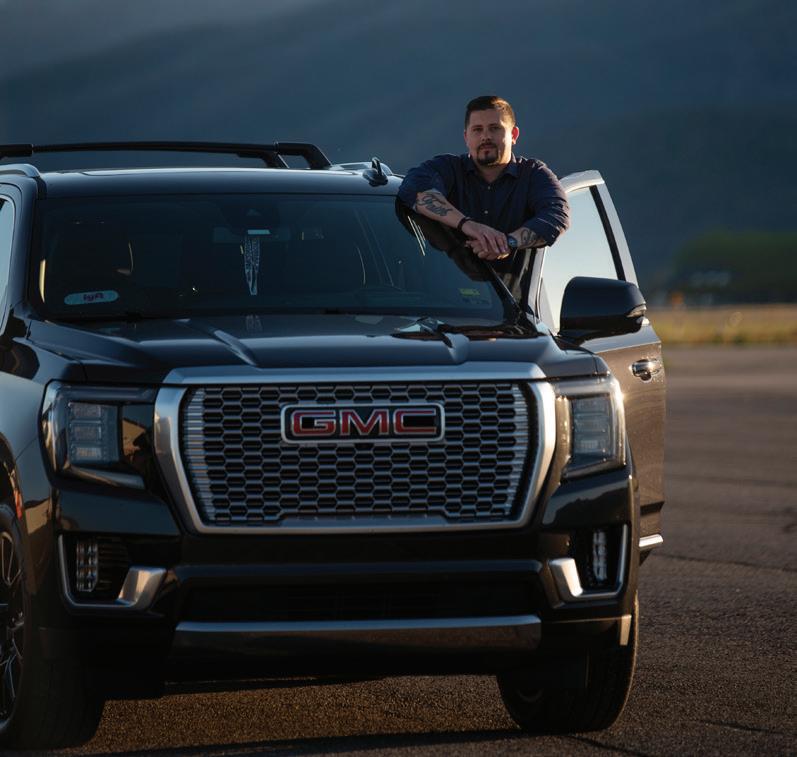
Welcome back to the "Monthly Mood." Here, we update everyone who has known Kyle since before MOODYBLU and has been following him, his family, and the company. Starting July, you can also find the "Monthly Mood" on the Moodyblu website under the "Blog/Monthly Mood" tab.
Last month, I discussed working "on" rather than "in" the company—something I hadn’t fully realized the importance of until now. Due to past oversights and mistakes, patching things up to regain profitability is crucial. While we were profitable at times, overhead costs have skyrocketed— windshield wipers now exceed $70, and replacing windshields costs $700-$970, beyond what commercial insurance covers under a $1,000 deductible. Additionally, vehicle purchase and insurance costs have soared. When I owned six vehicles and insured five, the monthly payment was $1,500-$1,800. However, over two years ago, setbacks like two failed transmissions and a totaled van increased costs. We downsized the fleet and sought cheaper insurance, but current rates request a $5,200-$5,500 down payment plus about
$4,000 monthly for just two vehicles. Cutting expenses and increasing revenue are crucial to overcoming these challenges. More on our plans will be in the August issue.
Our winter wasn't favorable. Despite people still traveling to ski, consistent snow could have boosted our business significantly. During adverse weather, relying on clarity over not knowing if a rideshare has 4x4, experienced drivers, or snow tires brings us more business, and we collaborate with other companies during peak times. Unfortunately, we lacked this last winter and began the slow season unprepared. Despite these hard times, we are determined to push through.
Connecting with UVU Heber Campus's CAPS group has been a highlight this year. CAPS students assist small businesses in social media, advertisements, bookkeeping, and more. With their help, we enhanced our Instagram presence and created new promotional materials. We will showcase our services, prices, and reviews in new brochures and participate in this year’s farmers market. Please stop by and say hi!
PERSONAL UPDATE
Our family is busy with five kids, four of whom have birthdays in June, July, and August, along with my wife’s birthday and our anniversary on June 28th.
Liam’s baseball season just ended, and he is eager to improve next year.
Anthony excelled in soccer, his strongest sport.
Nataly and Bella recently won first place in dance competitions and will perform at the Stadium of Fire for the BYU stadium's opening.
This summer, we aim to camp, visit the lake, hike, and enjoy all we can.
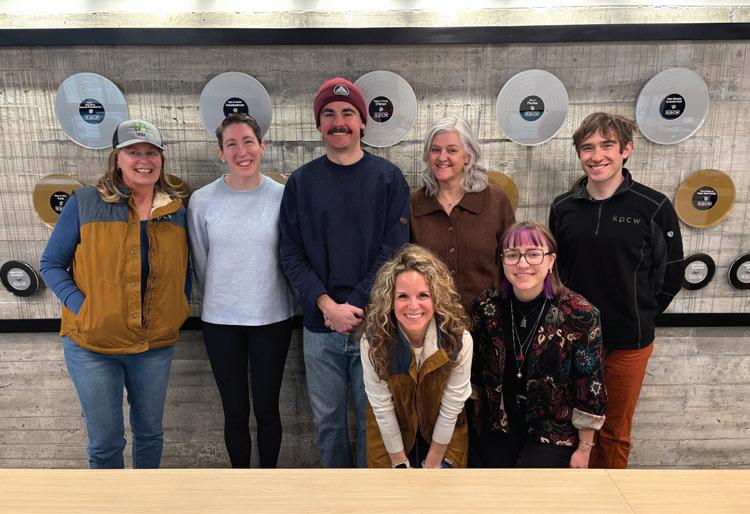
Welcome to The Local, your source for community news from your friendly neighborhood public radio station. KPCW is the only not-for-profit source of daily news across Summit and Wasatch counties. Tune in to our new podcast, “The Community Campfire,” Fridays at 9 a.m. We showcase your stories, live music, witty Campfire Kids and much more.
KPCW has hand-selected a few recent articles that reflect the happenings in our vibrant, eclectic and engaged community. Read–and listen–like a local at KPCW.org.
Heber Leadership Academy launches walking tour of downtown history
By Grace Doerfler
Residents can now explore 35 homes and buildings all over Heber to learn more about the valley’s pioneer heritage and early leaders.
This year’s Heber Leadership Academy class and the Community Alliance for Main Street installed the plaques around town. CAMS Executive Director Rachel Kahler said it’s exciting to see the group’s hard work come to fruition.
“There’s a lot of memories in these buildings, but it’s also representative of who we are and where we came from, from a city standpoint,” she said.
Maps of the historic sites are available at the Heber City administration building, the Daughters of the Utah Pioneers Museum and the Heber Valley Visitors Center.
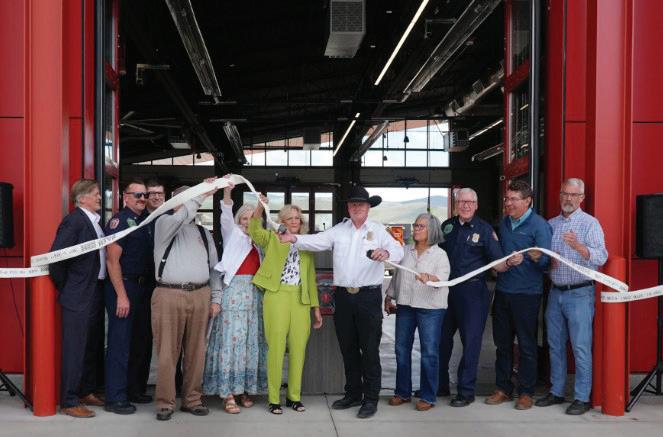
Wasatch Fire District celebrates opening of Station 51 in Heber
By Grace Doerfler
The county’s firefighters have a new home: the Claude R. and June M. Hicken Fire Station 51 on 1200 South near Wasatch High School.
Fire Chief Eric Hales said the new station marks a milestone in the fire district’s history.
“It’s especially meaningful to reflect on the fact that, 100 years ago, members of this valley came together to establish the original Heber Valley Fire Department,” he said. “Today, we stand on their shoulders.”
The new station is part of the fire district’s larger effort to meet the needs of a rapidly growing county with expanded staffing and added facilities. The Wasatch Fire District plans to add four more stations in the coming years.
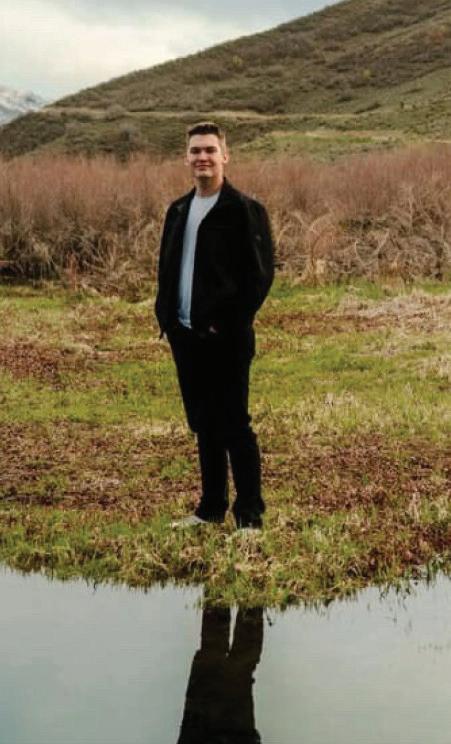
Anonymous teen sparks kindness movement at Wasatch High School
By Amber Borowski Johnson
An anonymous Instagram account has quietly become a lifeline for many students at Wasatch High School. Fueled by a desire to help others feel seen, Koler Berkley spent 2.5 years behind the screen offering encouragement and listening to peers who felt alone.
In May, Koler stepped into the spotlight to present a new award honoring the kind of leadership that doesn’t ask for credit.
What began in anonymity has grown into a lasting impact that speaks volumes. Koler’s journey proves you don’t have to be loud to make a difference.
Listen to the full story at KPCW.org.
Local News in Wasatch County
The KPCW News Team brings you daily news on the radio, online, and directly to your email inbox with our free newsletter:
Public radio stations like KPCW play a vital role in connecting communities through fact-based reporting, local storytelling, and civil discourse. We’re community-powered and committed to serving the Wasatch Back, but we can’t do it without your help!
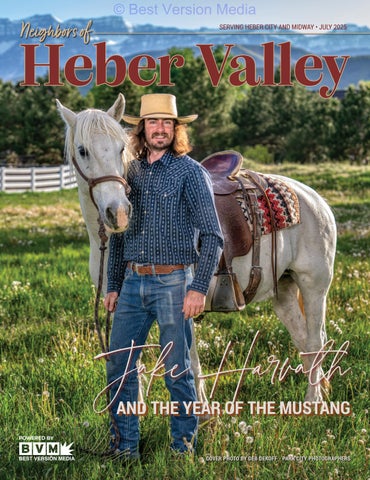
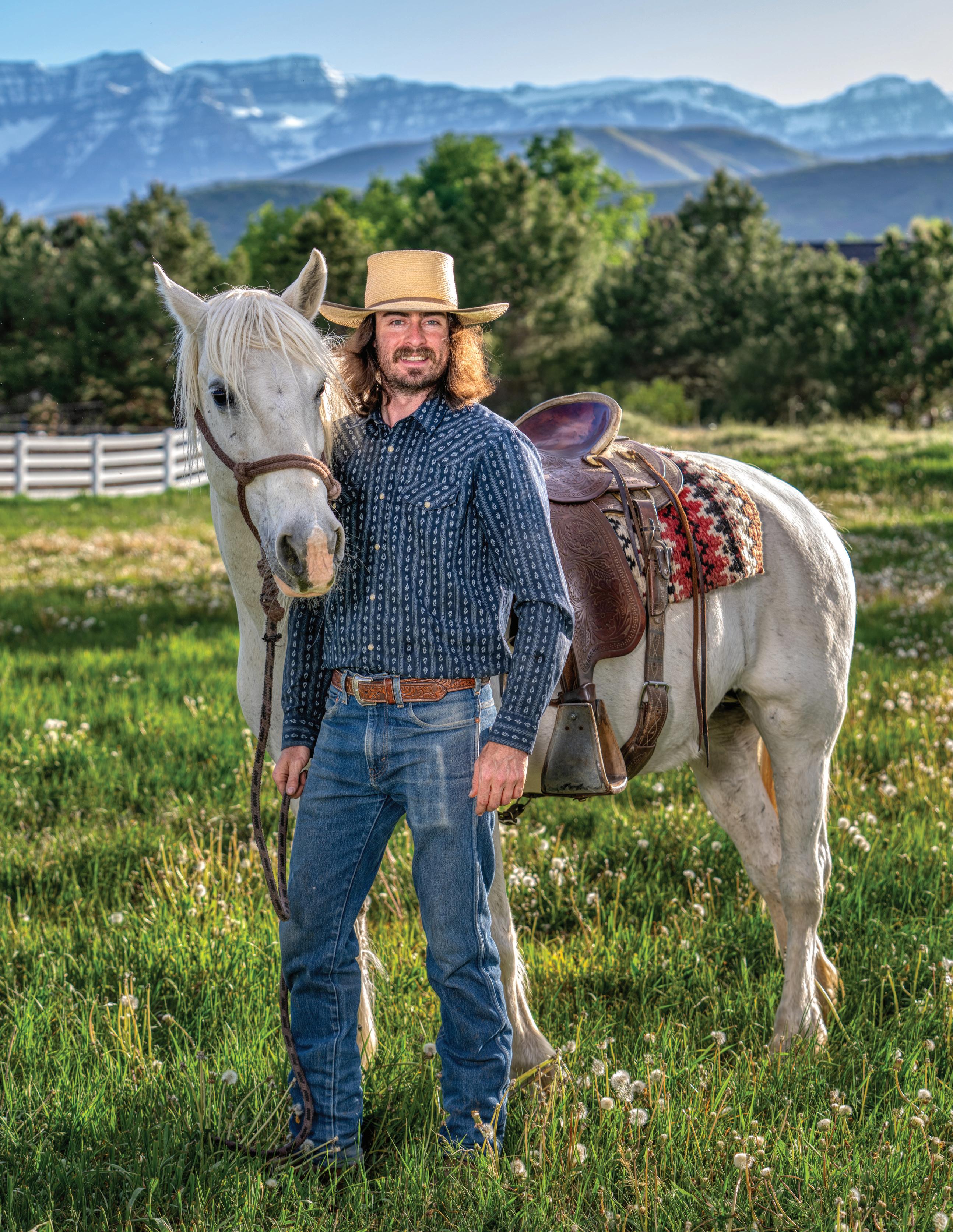
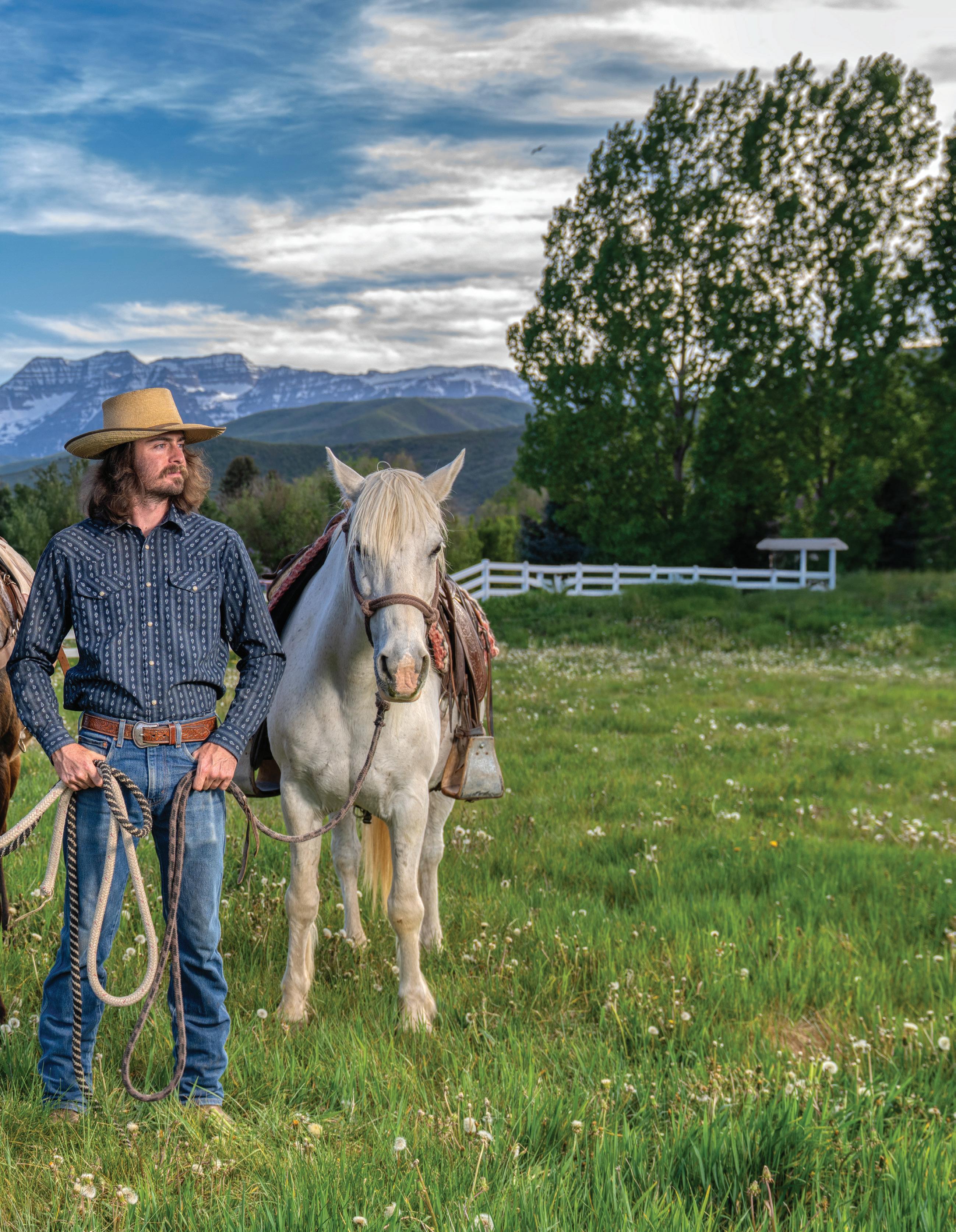
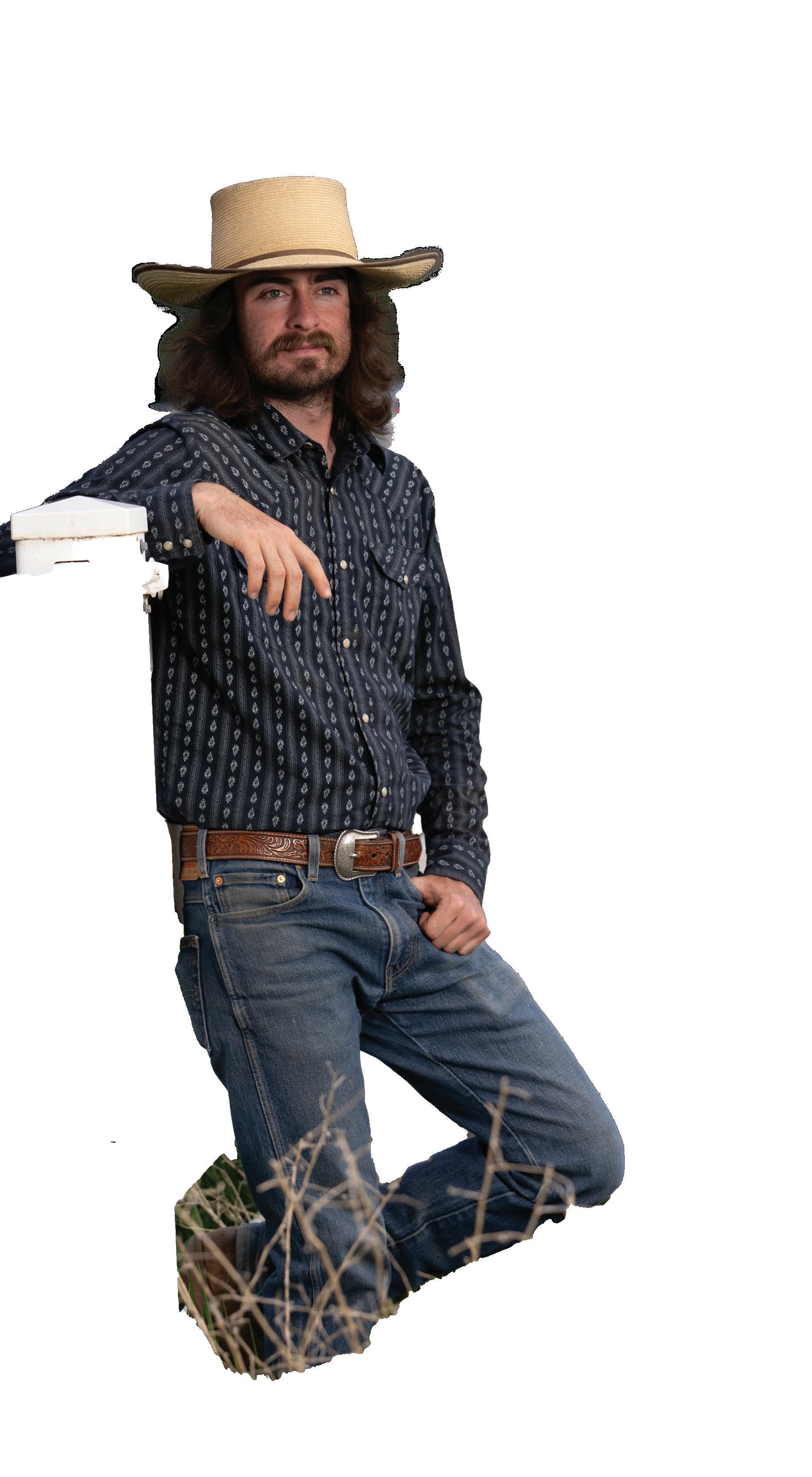
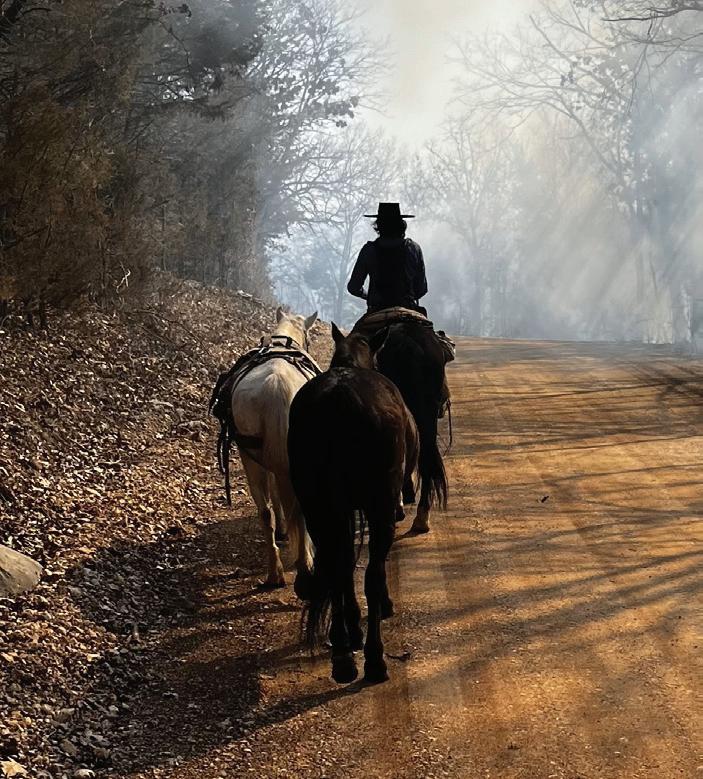
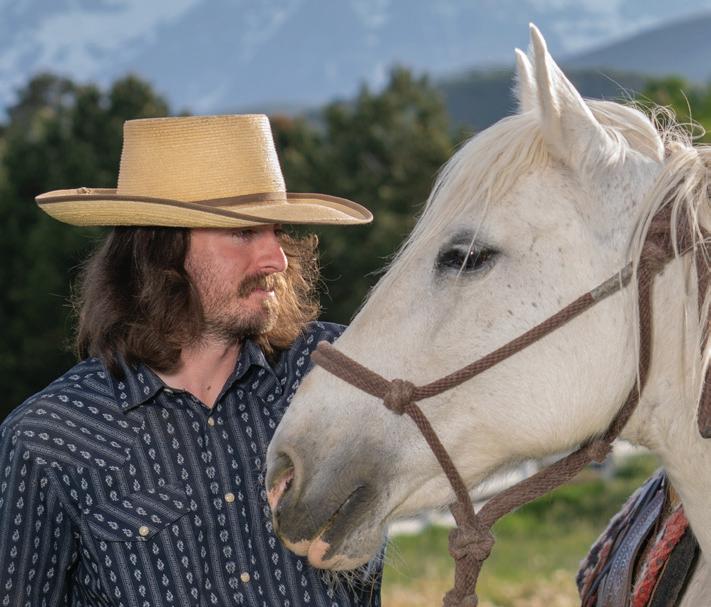
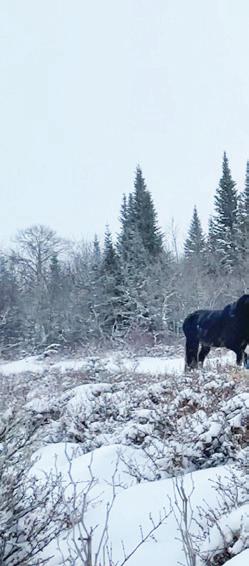
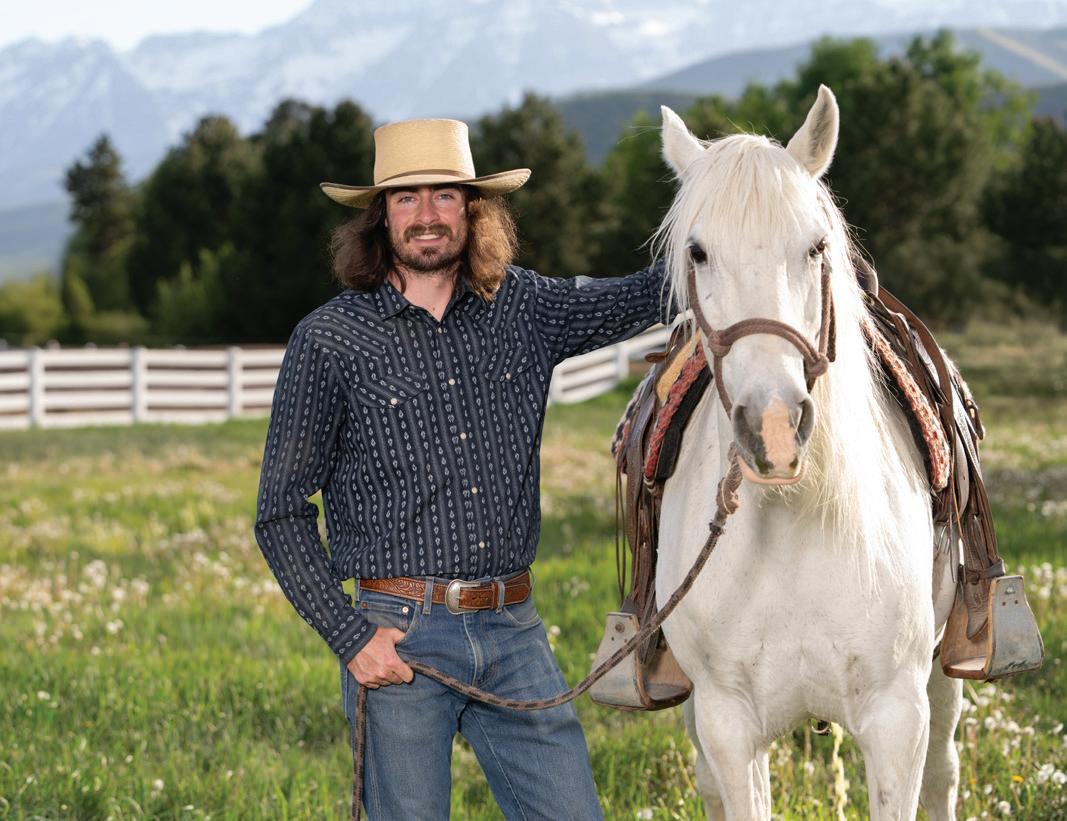
WHEN JAKE HARVATH WAS A TEENAGER, HE AND A COUPLE OF FRIENDS TALKED ABOUT RIDING THEIR HORSES ACROSS UTAH. IT DIDN’T PAN OUT—AT LEAST IN SOME WAYS. “We were kids; we were never going to organize that ourselves,” Jake says. The idea, however, didn’t dissipate. Ria McCarthy, one of those kids, upon graduating from Wasatch High, completed the one-month ride with her mother and her father. Then, Jake’s idea soon outgrew Utah—it would consume the entire United States. He picked up a mission to bring awareness to the crises that wild mustangs face today, in a campaign called “Year of the Mustang.”
Mustangs are beautiful, wild horses roaming public lands. Jake explains that they are enveloped in a tangle of political controversy and budgeting concerns, due to their population being difficult, nearly impossible, to fully manage. “People wonder why there might need to be population management. It’s not like the 1800s, or even the early 1900s, where horses
According to Bureau of Land Management (BLM) data, the total wildhorse count (which includes burro, or donkey, populations) in 2025 started out with roughly 73,000 animals.[1] In 2023, there were nearly 10,000 more. The reduction is a result of hundreds of millions of dollars spent that year managing privatized corrals and administering fertility treatments. Nearly 6,700 horses were adopted in 2024, and a little more than 8,000 horses were adopted in 2023. Still, the herds naturally grow due to
BLM is responsible for managing and regulating their population, ensuring its “multiple-use mission.” BLM land is open to hunting, cattle grazing, and other types of land leases. Where horses range and eat, with cattle, deer, and elk, mustangs easily compete for resources. So, they employ “appropriate management levels” (AML) for each herd and work to achieve a [sustainable] population target through a variety of management
“All other wildlife is managed by state agencies, like the Department of Wildlife Resources, or DWR. That’s because horses are considered ‘feral,’”
It’s a distinction characterized by our fascination and ideation with horses. Human-equine sentiments are a melange of nostalgia and relationship. “It’s almost like you’re discussing religion or talking about a family member, the way people talk about their horses, and that’s more modern,” Jake says, implying we have to treat them differently from deer and elk.
The Wild Free-Roaming Horses and Burros Act of 1971 empowers BLM, rendering it accountable to the public. Even with all the adoptions, there is still what BLM considers a massive excess to its AML, which is about 27,000. In an April 2025 article about this very issue, High Country News reported that “BLM needs to shrink its herds, but it’s prohibited from using federal funds to slaughter horses or euthanize healthy ones, and it has yet to figure out how to administer birth control on a large scale.”[3] This is due, in part, to the massive expense maintaining the privatized corrals.
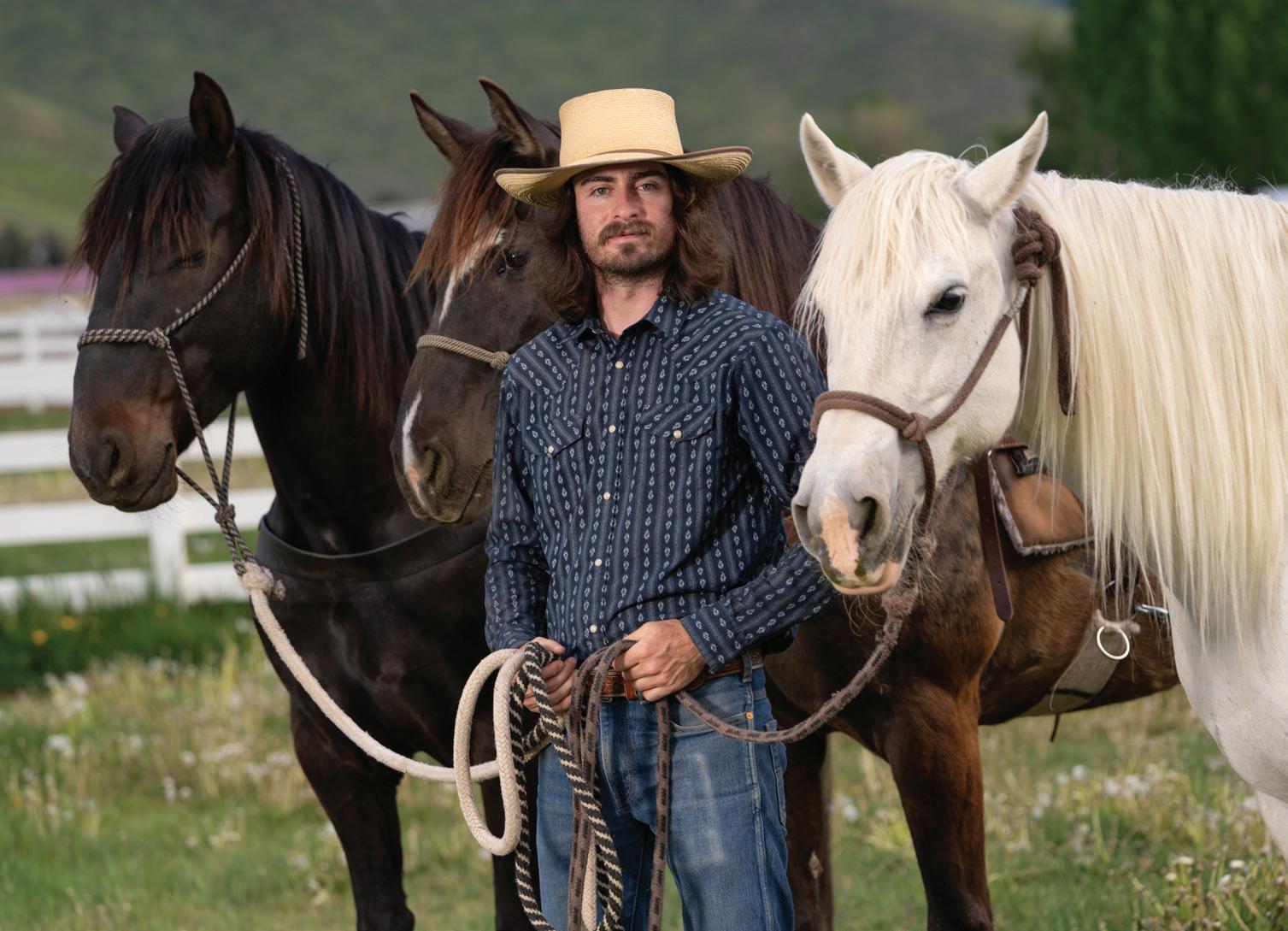
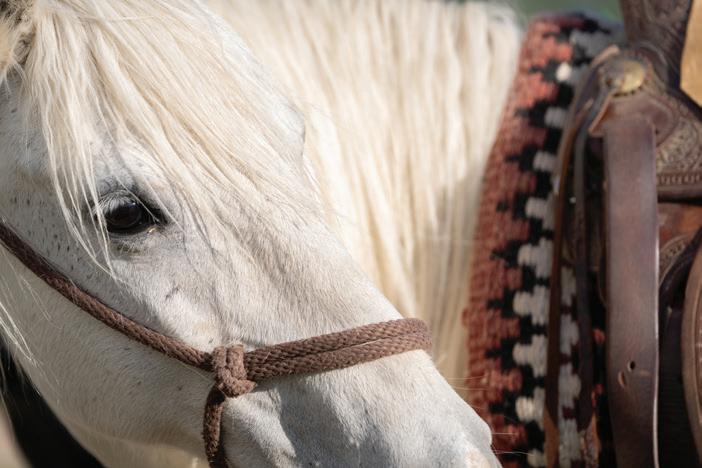
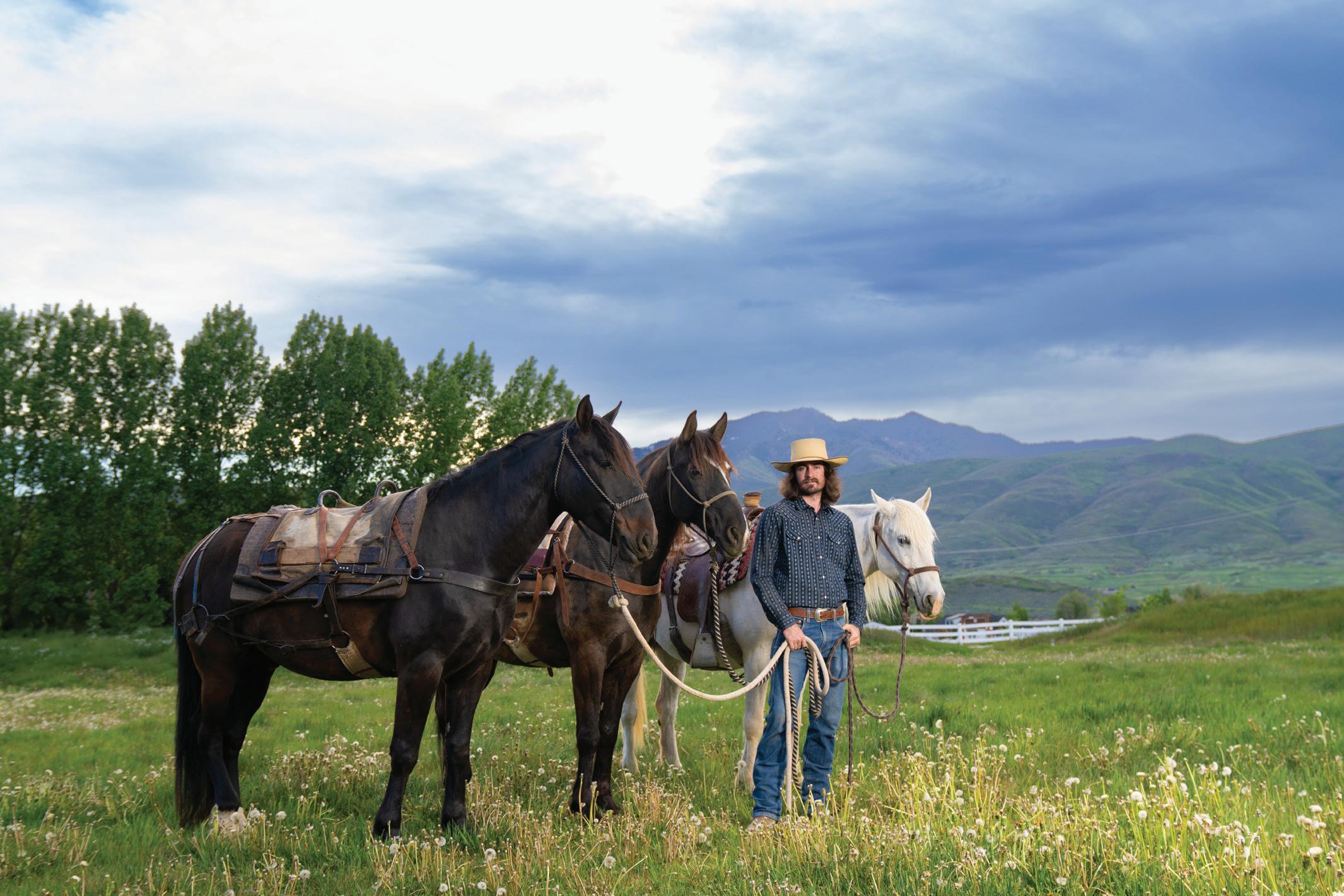
Jake has become an advocate for mustang adoption. After all, his three horses are BLM roundups. It is a real solution to reduce federally managed herds, relieve BLM’s strained federal budget, and give the mustangs meaningful homes. He also sees an opportunity to bring people and horses back
It’s more than a romantic gesture to restore the cowboy and ranch hand to rural places. Jake attests, “The truth is, I’m not a biologist. I’m a horse trainer, I’m a farrier. I’ve been working with wild horses since I was a teenager. [Mustangs] were the horses that seemed to teach me some of the most valuable lessons. There was training young domestic colts, and then there was taking an animal out of the wild that pretty much only had
“Turning that into a working horse has given me so many incredible pieces of information and tools as a horse trainer. I wanted to share that with other people. With all the horses available for adoption, there’s so much potential if people are willing to take the time to train them. That is the mission of the Year of the Mustang, to get people to see these horses as working horses the way I do.”
It is a better alternative to leaving them corralled by BLM or on the range, where population-to-feed ratios lead to starvation, a major cause of death among wild horses. They deserve better.
Historically, the relationship between people and horses is almost like a team. Horses trust people, and people care for them. Although horses are work animals, they were the lifeblood of Western exploration—they drew plows, hauled supplies, and allowed the mail to be delivered at breathtaking speed along the Pony Express route, which passes through Utah. So much of our history in the Western United States is built on horseback that it is a little unfair how quickly horses were forgotten.
“Today’s mustangs are the descendants of animals that were reintroduced by European settlers—beginning with Spanish colonizers in the 16th century—and subsequently bred and used by Indigenous peoples as well as white settlers,” reports High Country News. [4]
“They still have many of the desirable attributes that were bred into them long ago,” Jake said in a recent YouTube video documenting a visit to Kemmerer, Wyoming.
Once trained, mustangs can be indispensable. “People who are just looking for good all-around horses, a trail horse, or a ranch horse. I’d absolutely recommend them. They’re big boned; they’re generally quite healthy horses. And very quick to learn,” Jake says, indicating that they truly have a place among people. Still.
PLANNING THE YEAR
Marketing an idea generally obscured by our industrious culture, Jake started social media accounts to put his mission front and center as “Year of the Mustang.” His evolved, long-range ride crossing 25 states and 6,000 miles blended the two ingredients.
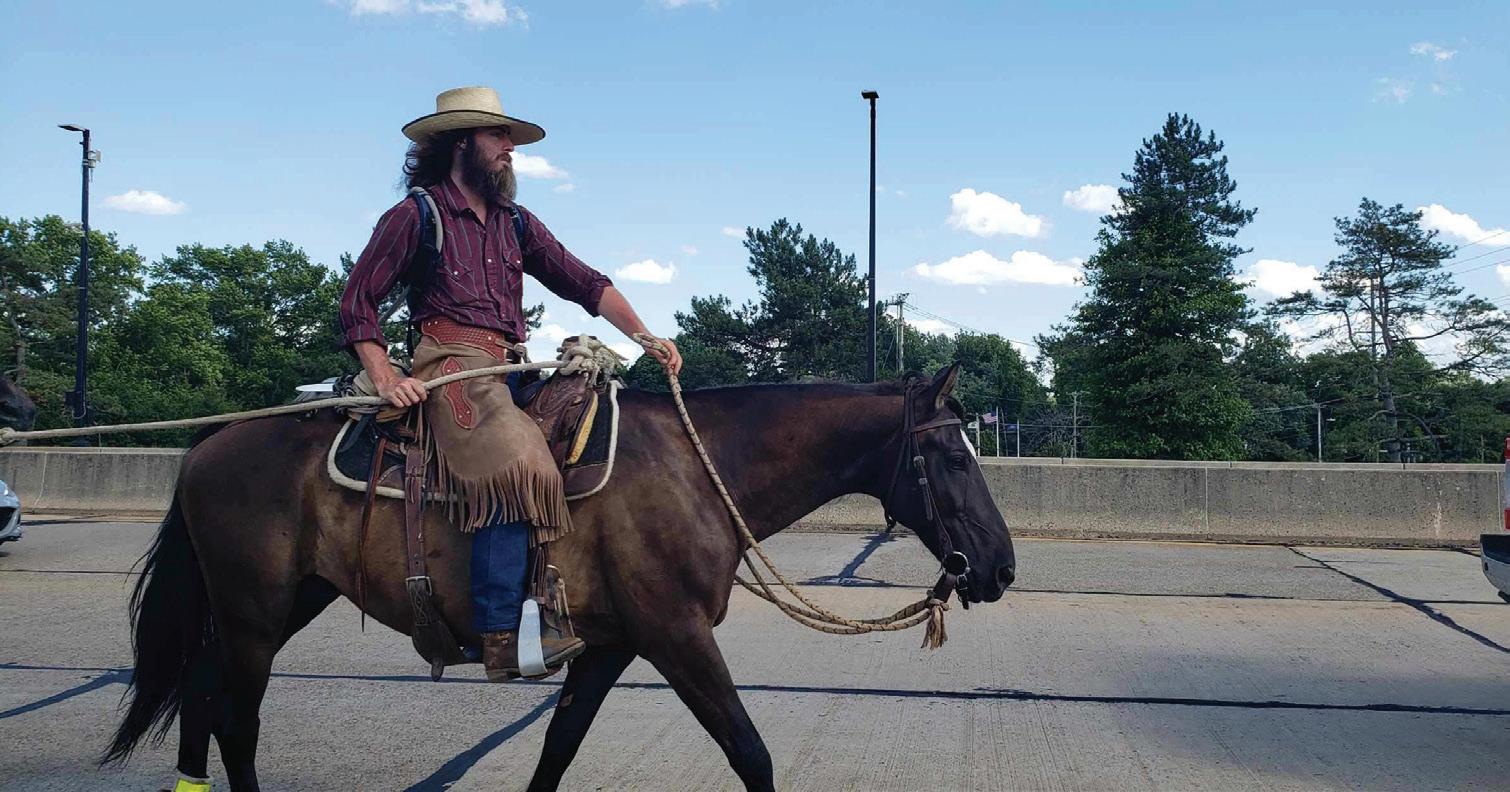
It took years of planning. The map he routed with GPS waypoints was delineated by colored segments from Heber to the Atlantic Ocean. Each colored segment was a day’s journey.
The narrative had the rare makings to capture the audience that mustangs so desperately needed. Alone on the saddle, Jake shares the message as his horse trots different legs of the journey. The story has successfully reached interested eyes and ears on his YouTube channel.
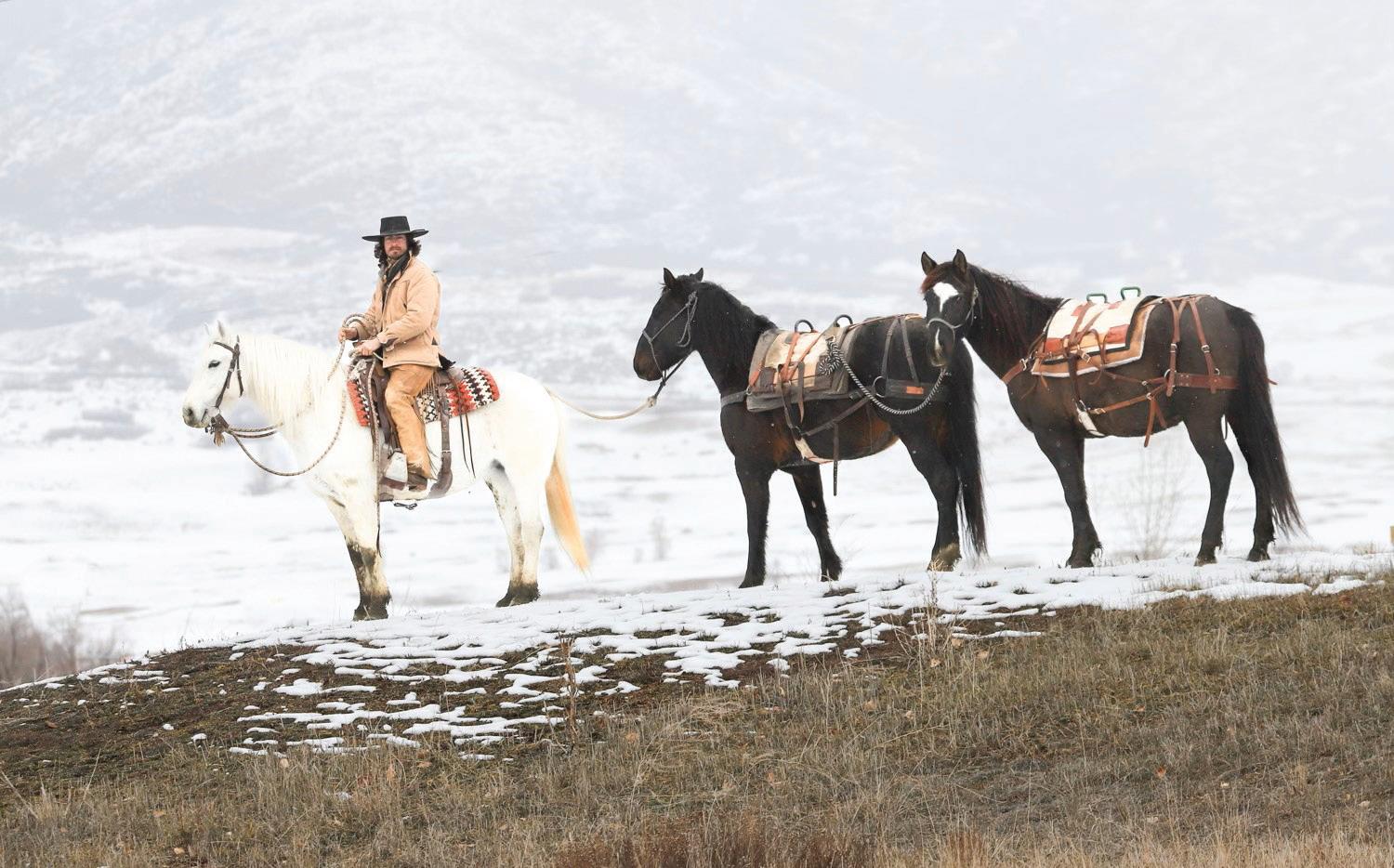
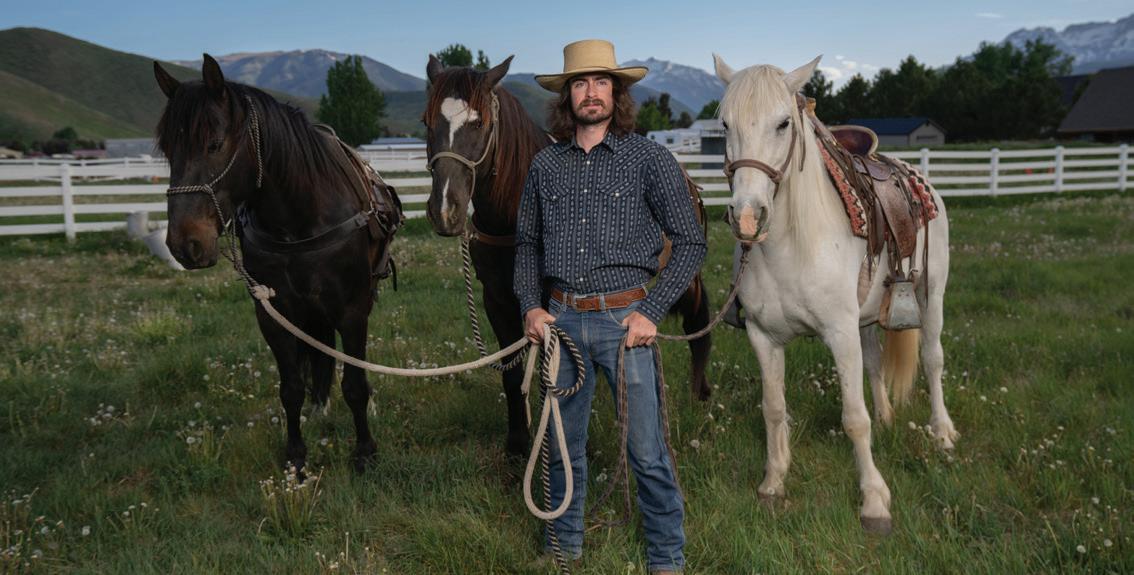
Jake could not haul daily provisions for Bella, Denver, and Eddie, his mustangs. And he started out with only two weeks of provisions for himself. He explains one reason mustangs are well-suited for such a journey: “The idea of always going to a new place every day isn’t emotionally abnormal for horses. That’s how mustangs are in the wild. They’re always moving from place to place, finding more food.” Additionally, they usually respond positively to feed variations.
Bella, Denver, and Eddie had walked and packed around the mountains. But walking across the country has lost ground since cars came around. Today’s society regards horses as more of a pleasure pursuit, traveling relatively short distances with them.
It would seem that Jake stepped back in time when he saddled Bella and loaded Eddie and Denver. By riding mustangs across the country, he demonstrates that they can be brought back to us, that they can be trusted work animals once again. We can restore the derelict relationship that once enabled settlers to explore the West, plow fields, build commerce, and tie our communities—near and far— together, even if we don’t employ them that way today.
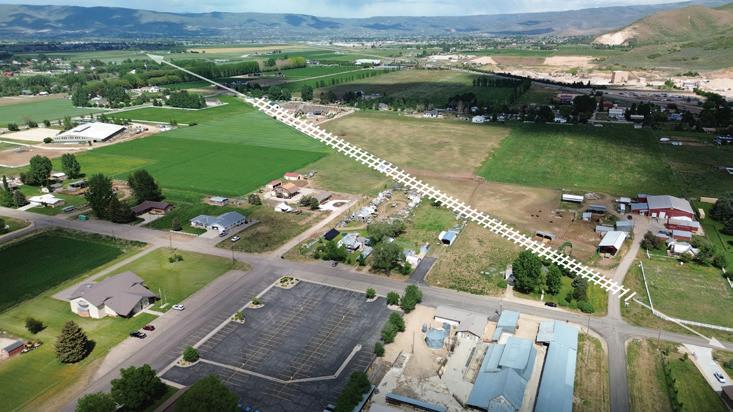
For one of the very few instances in recent memory, Jake rode south out of Heber Valley on horseback. It was on September 25, 2023. For a place settled by ranchers using horses for nearly everything, people came and went the same way. The Denver & Rio Grande Western Railroad arrived in 1899, meaning for the first time ever, Heber Valley settlers didn’t have to leave town on their horse. It marked the end of an era. The “Final Spike” for Heber’s railroad spur was driven by Heber’s mayor, Abraham Hatch, and Provo’s mayor, L.O. Taft, on September 21, 1899.[5] Abraham is Jake’s great-great-great uncle.
THE TRIP
In the Western United States, large swaths of public land made traveling easy. Jake could traverse on- and off-trail, away from
highways. “Everyone who rides horses extensively is expecting to get their horses loaded up in a trailer or ride back to their pen at the end of the day. The idea of going on a pack trip and then living this way is two totally different things,” Jake says, describing the adjustment to life on his horse.
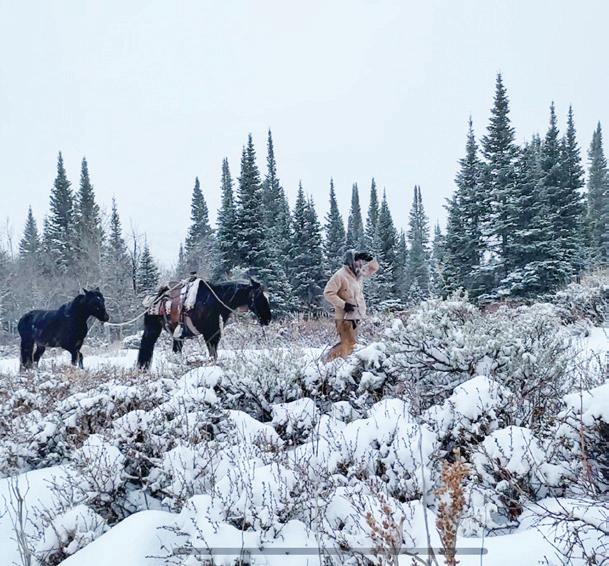
“At the two- or three-week mark, I was like, ‘This isn’t just a pack trip anymore—this is, this is living this way.’ Like a nomadic horseman, you get into such a rhythm with your horses. There’s no turning your brain off to them because they’re your life,” Jake says.
As his social media presence grew, people started contacting him to see how they could help. Others would find out through word-ofmouth. Although Jake resupplies in towns along the route with apples, pasta, rice, and other provisions, he explains how complete strangers have impacted that plan.
“As I went along, I got better at networking, and I got better at getting help. And that became necessary for the sake of the horses, because we were staying in places where there wasn’t necessarily public land to camp on,” Jake recounts, which meant natural feed for his horses was not readily available.
Further down the trail, Jake adds, “Everyone wanted to feed me. I’d carry three or four days’ worth of food, just in case. But I’d get fed day after day. Sometimes people would pull over and hand me something.”
People also wanted to help with the horses. “Someone would leave a bale of hay out in the field or where I was camping. I’d stay with people, and they would have feed for us.” Even in certain circumstances, strangers came through.
As the trip developed, Bella was losing weight. Worried, Jake had her transported home from Arkansas. “A donor covered the entire expense of trailering her back to Utah,” Jake says, describing the community’s impact on his trip. Supporters were pushing from behind.
As dusty hooves, washed through streams and rain, trotted along the route, people of all walks of life have asked what Jake was doing. Sometimes astonished by the immensity of his journey, and likely that he was only 23 years old at the time, they listened to the mustang story. From town to town, folks anticipated his arrival.
“I had super-inspiring experiences. I had a family in Arkansas bring their boy out who was dying of cancer. ‘You were the one he wanted to meet,’ his parents said. I just melted. ‘Does he want to sit on my horse?’ I let him sit up there for a second. So many incredible people inspired me. It was cool to see how many people [the Year of the Mustang] touched,” Jake says, reflecting on a very powerful moment.
“I remember going through Princeton, and these boys were playing basketball in a park. They saw me ride by, and they came out in the middle of town and said, ‘I’ve never seen a horse before,’” Jake continues. “I was their first experience with horses!”
“I was staying with people who had the facilities to put up my horses. They had a pen or pasture stall or something,” he says of traveling by horse in cities.
“There were so many opportunities to engage with people. I was invited to schools [the Culver Academy, for instance], church groups, FFA groups, and a university or two to talk about what I was doing.”
Unlike organized speaking engagements, these were real-time, giving his message the boost that social media might not have.
Some of Jake’s host families rounded up the neighbors while he stayed with them so that he could present. “That all got tied back into the wild horses and the issues that a lot of these people were understanding for the first time,” recounts Jake.
“Sometimes I was in the middle of my ride [for a presentation], so I’d ride to the school, and all the kids would come out,” Jake says.
It was a rare moment, especially for the kids. Can you imagine a man on a horse arriving at your school, not having been in a car or truck for months?
The Amish took Jake in, and they connected on “the mindset of my animals are work animals, too,” Jake says. “Most people have horses for their leisure.”
“There’s something beautiful about the way the Amish do things. Having spoken with them in Pennsylvania and Ohio, Indiana, Kentucky… There’s something I respect about the way they see life,” Jake explains, adding that it was indeed memorable to stay with them.
OFF THE DUSTY TRAIL
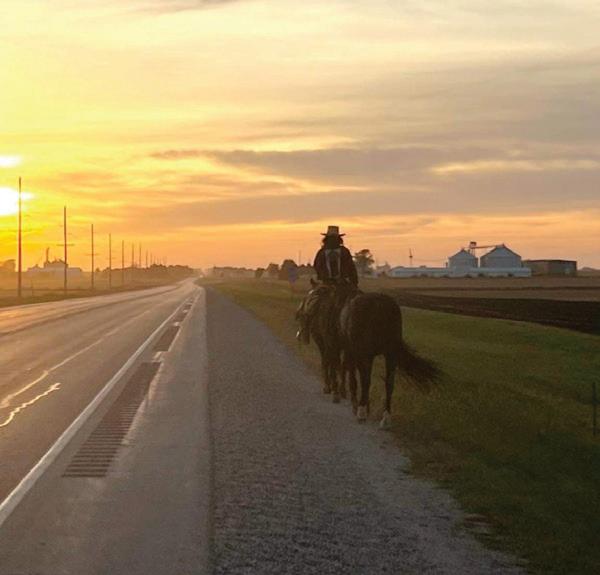
Averaging about 20 miles per day, keeping a pace that suited the horses, Jake made it back to Heber in December 2024. Riding south on Main Street with a police escort, he looked like he was fresh off a movie set, but upon a closer gaze, a young man weathered by the trail was coming home a seasoned explorer.
But how can you quantify the success of such a journey? Jake wishes it had been easier. “It’s hard to say,” he admits. “I think about all the people I met along the way that came back and said, ‘Hey, we adopted our first wild horse.’ Those are the coolest things for me.”
Now that Jake is home, the journey has ended, but the mission continues. “This affects us nationally,” he says. “If it’s ever something we vote on, [we] have to understand these issues. If the public understands what the horses are facing, they can make a difference.
“I’ve been all over this country and seen so much of it from horseback. There’s something so unique about the natural beauty of [Heber Valley]. I thought it was just something we all said growing up.”
Hummingbirds! Who doesn’t like them, I actually love them. I heard a story many years ago that I love and is about a big fire and a very tiny hummingbird.
It goes like this:
One day, a wildfire broke out in the forest. The animals were terrified, and they ran to safety watching their own home burn. But one small hummingbird flies to the river, picks up a single drop of water, and carries it back to drop on the flames. Again, and again. The other animals laugh. “What do you think you’re doing?” “I’m doing what I can,” says the hummingbird.
That little bird didn’t put out the fire alone. But it acted. It didn’t wait for someone else to step in. And that’s the mindset I try to bring to my work in insurance. Because the truth is—life is unpredictable. Fires, floods, accidents, sickness, they can feel like wildfires tearing through the safe forests of our lives. We can’t prevent every disaster, but we can prepare.
We can choose to be like the hummingbird, taking meaningful action now, not later. I see people who are overwhelmed when they think about planning for the future—just like the animals were while watching the fire. Insurance may feel like “just paperwork” or another bill. But it’s so much more. It’s a promise: That’s why: When bad things happen, we will be your safety net. We will show up with a bucket—and not just a drop—we will help rebuild what was lost. It’s protection, peace of mind, and a plan. My job isn’t to sell you more than you need, it’s to listen and to understand your needs. So, take the first step and make a difference.
Be like the hummingbird.
Give us a call and remember sometimes, all it takes is one drop to change everything.
Mid-Year Market Check-In:
What’s Really Happening in the Wasatch Back?
As we enter the second half of 2025, the Wasatch Back real estate market—covering Midway, Heber, and the greater Park City area—indicates a significant shift from the past few years. After a period characterized by intense buyer competition and remarkably low inventory, the market is now exhibiting increased inventory, a slowdown in sales pace, and changing expectations among buyers and sellers. Inventory has risen sharply. As of early June, there were 1,986 active listings—up from 1,768 in May and 1,629 in April— representing nearly a 22% increase in two months. This expansion offers buyers more choices, reducing urgency and providing greater negotiating power. For sellers, it emphasizes the importance of pricing correctly and preparing homes effectively. Well-priced, well-staged, and well-marketed properties still sell, but the days of quick, multiple offers are waning.
Buyer activity has softened. Pending sales—a measure of demand—declined from 260 in
April to 138 in June, a 47% decrease over spring. Some of this slowdown is seasonal, as many buyers rushed early in the year to avoid potential rate increases. However, factors such as buyer fatigue, rising listing prices exceeding expectations, and sensitivity to interest rates also contribute to the cooling. Despite market slowdown, prices remain strong. According to Summit Sotheby’s International Realty data, the average sold price over the past six months (through April 30) was approximately $2.6 million, with homes spending around 75 days on the market and a price-per-square-foot of $892. This reflects the area's diverse real estate—luxury properties, second homes, and custom builds—and underscores that buyers are increasingly seeking value. Homes that are well-positioned tend to sell faster and sometimes with price reductions, whereas homes that are not competitively marketed may linger.
For sellers, it’s clear that success in 2025 requires a strategic approach. Pricing
must be guided by current, local data; staging and updates are vital for emotional appeal; quality photography and targeted marketing are essential; and professional guidance can make a difference.
Buyers now have advantageous options. With nearly 2,000 active listings, they can be more selective and strategic. However, interest rates remain a concern. Savvy buyers are acting now with plans to refinance later if rates decrease, as the current market rewards preparedness and timely action. Overall, the Wasatch Back is neither overheated nor in decline; it is adjusting to a balanced middle ground. Whether buying, selling, or observing the market, understanding these underlying trends helps inform smarter decisions. For personalized insights or to discuss your next move, contact me for neighborhoodspecific data, valuations, or advice.
We are so excited to host weekly kid's activities for a Summer of Fun at the Wallsburg Park! All activities are $5 per child, and all necessary supplies will be provided. Please RSVP via details below or contact the Wallsburg Town Clerk at 801-960-8426 so we can have an idea of how many supplies to order. Walk-ins will be welcome on the day of, as supplies last!
Time: 10:30am • Cost: $5 per child
Website: RSVP via Google Doc at gohebervalley.com
WEDS IN JULY
@Midway Town Square 75 N 100 W, Midway Midway's summer concert series is happening at Midway Town Square on Wednesday nights. Bring a blanket or lawn chair. There will be food trucks and great music for the whole family. Come and support local musicians.
Time: 6:30-8:30pm • Cost: Free
YOGA: Free, Gentle Community Yoga Practice (Ages 55+)
@Wasatch County Library, Bowcutt Room 400 E 1200 S, Heber
THURSDAYS IN JULY
Wasatch County YOGA FOR SERVICE Class Series. Join Yoga Instructor and volunteer, Marty Harger, for a yoga series intended to bring more grounding and less stress to your week. We use gentle movement connected to breathwork, mindful awareness, and meditation as practices you can learn to incorporate at home to stay calm and well. Presented by the Wasatch County Senior Citizens Center and Wasatch County Library. Please bring your own yoga mat and yoga block. Wear clothes that allow you to move and breathe freely. Being comfortable is key and all are welcome. The room is a beautiful space to practice together! Questions? Call or text Marty Harger at 801-712-5406.
Over the past two decades, the Heber Market has been a weekly summertime event that has welcomed visitors and locals to gather in downtown Heber City to enjoy local food, drink, shopping, and live music. Time: 5-9pm Markets w/booths and vendors, 6:30-8:30pm Live music
Cost: FREE to all
Website: https://hebermarket.com/
Midway Art Gallery Open House
FRIS & SATS IN JULY
@Midway Art Gallery 120 W Main Street, Midway
Visit the Midway Art Gallery to explore stunning works by local artists. Stroll through the gallery, admire unique pieces, and experience the creativity of Heber Valley. Stop by and support the arts in the heart of Midway!
The market is held every Saturday from 10:00 am to 1:00 pm at the Midway Town Square from June through October. Fresh local produce and local artisans are onsite selling goods at the farmer's market in Midway. See you there!
@120 W Main Street in Midway AND Heber Main Street Park, Heber
JULY 3-5, 25-27
The annual Wasatch Back Art Festival will be showcasing local artists, makers, and crafters. These two festival events seek to support artists in selling their original and diverse artworks. All work must be the artist's original creation. Plan to be at these two art festivals to see original local artwork! Wasatch Back Art Festival Midway 2025 (formerly Art Around the Square)
Thursday, Friday & Saturday, July 3, 4 & 5, 2025
120 West Main Street in front of the Community Center, Midway, Utah 2nd Annual Wasatch Back Art Festival Heber 2025
Friday, Saturday & Sunday, July 25, 26 & 27, 2025
Heber Main Street Park, 250 South Main Street, Heber City, Utah
Community Concert Series - Ryan Biter Soulful Americana
@Wasatch Country Library 465 E 1200 S, Heber City
JULY 25
The Wasatch County Library invites you to an evening of live music. This outdoor performance will have you dancing in your seat (or on your feet!). The concert is family-friendly, free to attend, and open to everyone—bring a friend and join us at the library amphitheater for a vibrant night of music and community!
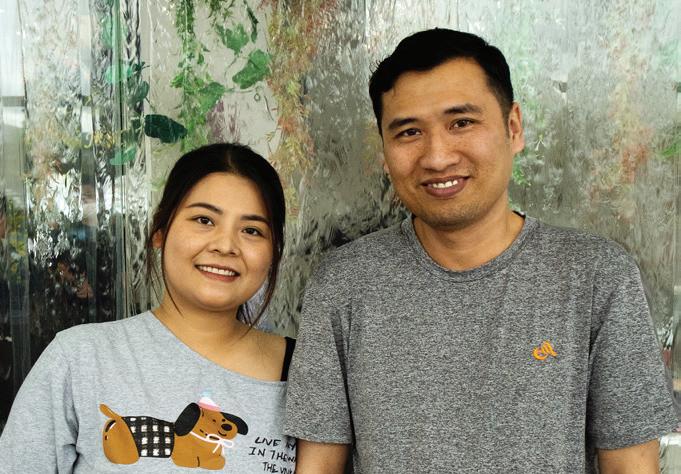
Thirty-seven-year-old Steven Tran has been a nail tech for 10 years. He manages Heber Nail Spa, which offers full-service manicures and pedicures and is situated between Crumbl Cookies and Café Rio on the south end of Heber City. Humble about his role, Steven is thankful to his staff and his uncle Jason, who owns the spa. White tile glistening across the floor from front to back, with gentle lighting easy on the eyes, Heber Nail Spa invites everyone to take a closer look at what it offers.
Steven grew up in Vietnam, and Jason, the family entrepreneur, owns multiple businesses, including markets and, formerly, another salon. Steven is the face of Heber Nail Spa, in part because Jason sponsored his family’s immigration to the US. When Steven first arrived, he worked for Jason in his markets. Eventually, Steven recognized the need for a nail salon in Heber Valley and pitched the idea to Jason.
Steven found the retail space and opened Heber Nail Spa in June 2024. (Its one-year anniversary will have already passed after the time of this writing; Steven is looking forward to the celebration.) He spent the previous four years working in a Park City salon; as one might imagine, he is not just servicing Heber locals, but also loyal fans of his work from Park City, Kamas Valley, and even patrons from Provo and Salt Lake valleys. The nail salon is planning eventually to open another Heber location to accommodate its rapid growth.
A glass-paneled waterfall quietly cascades behind the welcome desk, where Steven spends the majority of his day. Brightly lit arcs of light at each of the 16 hand stations accent the seats with an almost heavenly glow. Nail techs remove chipped and faded paint, as well as prep and polish. Cuticles are trimmed. Focused and producing unique art, each nail tech ensures that every customer’s experience is exceptional.
Heber local Megan Murphy loves the spa. “Everyone here is super talented and friendly; it doesn’t matter who is doing your nails; it’s going to be done right.”
“We have 16 hand stations and 16 pedicure seats,” says Steven. A large working space allows them to bring in additional nail techs, attending to even more quality treatments.
Commitment to quality is deeply rooted in Vietnamese culture, many of whom live in the Salt Lake Valley, making the daily commute to service the Heber Valley community, often carpooling to spend the day working in Heber Valley together.
Their customers arrive ready for the care, but also for a little reprieve from the day. Everyone has their guard down and exchanges smiles. Dani, one of the techs, says, “I like that our customers are so nice.”
Steven emphasizes that this is a very normal experience. “Customers here are very nice, [from] Park City and Heber. I am here every day, so I see a lot. I love to see them leave happy too.”
As Western culture has started to embrace the idea of hand- and foot care, Steven has seen an uptick in less common groups. “I see men come in every single day; sometimes those same guys come in every two weeks,” he notes. According to one of Business Insider’s 2020 articles, more men than ever are getting some degree of hand and nail care. While that might not be a staple business segment in Heber Valley, it is a refreshing new perspective on men’s hand- and foot health.
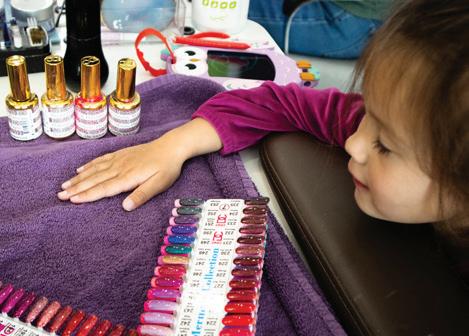
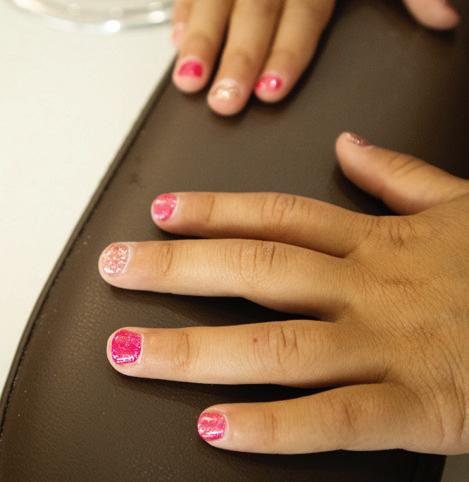
Kids have a lighter-hearted sentiment towards the experience. Fallon, a young girl getting her nails done, simply says, “I love the colors!” as she chooses which polish to have her nails painted that day.
Steven reminisces, not long ago, when he would juggle clients walking through the door, or those calling on the phone and emailing to schedule appointments. Online booking has made his job more about guest experience.
With 32 potential seats to fill at any given moment, his job could easily turn chaotic. And that’s not the point at Heber Nail Spa—peace and calm are holistic, so Steven enables systems to maintain those attributes.
Eastern culture has long been known for recognizing sanctuary, and Steven and his staff have brought that to Heber. As you walk through the doors of Heber Nail Spa, the culture of productivity and getting from point A to point B falls away, even if only for the duration of your appointment, with hope that the feeling carries customers through the rest of the day.
It’s not just painting nails and beautification—it is renewal.
The Heber Valley real estate market is showing mixed trends. Overall, it remains competitive, but some areas are experiencing price increases while others see a decline.
MARKET OVERVIEW
▶ Median home price: around $650,000.
▶ Homes are selling faster than last year.
▶ The sale-to-list price ratio is below 100%, meaning some homes sell below asking price.
KEY TRENDS
▶ Median Home Price: In Heber City, the median is about $1,145,000. Some neighborhoods, like Heber City West, have seen a dip in price per square foot.
▶ Days on Market: Homes are selling quicker; in Heber City, the average is 86 days.
▶ Inventory: Supply has increased compared to last year, providing more options for buyers.
▶ Demand: Population growth and new amenities are boosting demand, supporting property values.
FINANCIAL FACTORS
▶ Mortgage rates are roughly 6.9%.
▶ The cost of living in Heber City is about 3% higher than the national average and 7% higher than in other Utah cities.
SPECIFIC AREAS
▶ Heber City: median price $1,145,000.
▶ Heber City West: listing age 101 days (May 2025), down 46.4% from last year, indicating quicker sales.
▶ Midway: growing popularity and rising demand.
MARKET INFLUENCES
▶ Infrastructure improvements and new amenities increase property values.
▶ Growing population continues to drive housing demand.
SUMMARY
Heber Valley’s market is dynamic, with opportunities for buyers and sellers alike. While prices are high, increased inventory and areas of softening suggest a balanced, evolving market. Ongoing improvements and population growth will likely keep driving prices and demand forward.
Best Version Media does not guarantee the accuracy of the statistical data on this page. The data does not represent the listings of any one agent or agency but represents the activity of the real estate community in the area. Any real estate agent’s ad appearing in the magazine is separate from the statistical data provided which is in no way a part of their advertisement
MEET REGGAN JASTRAM: With a distinguished career spanning 20 years in the real estate industry, Reggan brings a level of expertise and sophistication that is unparalleled. As a broker for 9 years, she has successfully led her own boutique brokerage as well as one of the largest Brokerages in the area. She offers a personalized, high-end luxury service to all of her clients regardless of the listing.
Mini golf has never been this imaginative. Pixar Putt at Mountain View Village (13303 S. Teal Ridge Way, Riverton) brings your favorite Pixar movies to life with 18 holes of challenging, themed fun. This pop-up mini-golf experience touring the country is perfect for children of all ages and adults who are kids at heart. Each hole is intricately designed with themes from some of the most beloved films, like Toy Story, Up, and Finding Nemo, making it an Instagram-worthy adventure that is fun for the whole family. The course is more challenging than it looks, so be prepared to hone your short-game skills. “We are delighted to bring the magic of Pixar Putt to Utah for the first time, right here in Riverton. Featuring beloved childhood characters and endless adventure, this interactive pop-up exclusively at Mountain View Village is for our guests and community to experience and enjoy,” shares Heather Nash, general manager of CenterCal Properties.
The course will be open Monday through Friday from 3:00 p.m. to 8:30 p.m. (closing at 10:00 p.m.), and Saturday and Sunday from 10:00 a.m. to 8:30 p.m. Prices start at $25. Beginning on June 9th, Pixar Putt will be open at 10:00 a.m. daily. Tickets are now available at www.pixarputt.com.
TAKE IN A BEES GAME AT THE NEW BALLPARK AT AMERICA FIRST SQUARE
Nothing says summer quite like the crack of a bat and the roar of a crowd. The Ballpark at America First Square is the newly imagined hotspot for family memories, offering a classic baseball experience with elevated food offerings. With a stadium capacity of 8,000 fans, The Ballpark offers a variety of seating options, including open-lawn, premium, club, and field-level seating, ensuring there’s a perfect spot for every fan.
The new amenities place The Ballpark at America First Square among the best in Minor League Baseball facilities, rivaling even some Major League venues. Fans can enjoy locally inspired concessions and a convenient grab-and-go market enhanced by smart technology from Amazon Go. For families, kids’ play zones provide even more fun, and an expansive video board keeps everyone engaged with the game. The sights that everyone enjoyed at the former stadium remain, offering great views of the Wasatch Mountains.
Getting to the game has never been easier—a new TRAX stop at centerfield makes The Ballpark and America First Square more accessible, while increased walkability and bikeability, along with sufficient parking, ensure stress-free arrivals. Gamedays are now even more exciting with curated experiences designed for fans, creating unforgettable memories for every baseball outing.
Unique seating features also set this venue apart. Fans seated behind home plate in the new field suites will be closer to the batter than the pitcher. Berm seating in right field
Looking
for fun ways to spend quality time with your family? Whether you’re in the mood for outdoor exploration or a lively sports experience, you can find it nearby.
SWANER PRESERVE AND ECOCENTER
For families who love the great outdoors, Swaner Preserve is a must-visit destination. With more than 1,200 acres of protected wetlands, this space offers plenty of opportunities for exploration and learning. The Swaner EcoCenter adds an educational twist, featuring interactive exhibits on local ecology and sustainability. Plus, its kidfriendly workshops are a hit for curious minds eager to learn about the environment. Family Butterfly field trips are a popular outing, taking families to Neffs Canyon to search and learn about Utah’s native butterflies.
Ongoing programming for families includes Sunday Craft, where children of all ages will enjoy creating a nature-themed craft, and the Wetland Climbing Wall, which is an indoor-climbing activity for all ages, offered on Saturdays and Sundays. Climbers must weigh at least 30 pounds to participate. Check the website often for updates on monthly family activities and special events.
adds a relaxed and family-friendly vibe, while seats in left field provide a prime view overlooking the field, as well as new MLBstyle bullpens.
The Ballpark at America First Square is state-of-the-art fun for every type of baseball fan.
Tickets can be purchased at https://www.milb.com/salt-lake.
WASTELESS SOLUTIONS BRIDGES THE GAP BETWEEN EXCESS AND ACCESS
WasteLess Solutions, a Utah-based nonprofit dedicated to fighting food waste and hunger, has a simple goal: rescue surplus food and make sure it feeds people, not landfills. With Dana Williamson stepping down as founder and president, WasteLess Solutions has announced, as of June 2nd, Alexx Goeller as its new director.
“It has been such a passion and joy building this organization. I have been in awe of how the community has gotten behind the cause and really helped us grow and make such a difference,” says Dana. “WasteLess is in a great place, and it is time to hand it over to a new leader. A leader who is passionate about making a difference, about supporting our volunteers, about growing our staff and building our funding so WasteLess can accomplish all that we envision. It is an honor to pass the reins to her [Alexx]. I am excited to see where she takes the organization.”
With more than a decade of experience in the nonprofit and public sectors, Alexx has passionately dedicated her career to creating lasting social impact. Her journey began in 2012 with two years of service in the US Peace Corps, followed by influential work with Utah’s diverse refugee community. Most recently, Alexx led the philanthropy and community engagement team at a children’s museum, where she expanded access for underrepresented communities, fostered key partnerships, and launched creative initiatives, including organizing unique fundraising events and establishing a Young Professionals board.
“I have a lot of ideas to grow the organization; there is so much potential,” Alexx shares. “I
want to dive into all the partnerships and look at ways to possibly monetize what we are doing. I am really excited and honored to be in this role.”
WasteLess Solutions partners with local businesses to rescue edible, surplus food that would otherwise go to waste. Thanks to its volunteers—a.k.a., “food rescuers”—these perfectly good items are swiftly delivered to organizations like Boys and Girls Club, YMCA, and Rescue Mission, where they’re distributed to those in need.
A grant from Whole Foods now allows the organization to operate a fully refrigerated electric van, launching the Mobile Market project. In May, the Mobile Market completed its first delivery, bringing fresh, nutritious food directly to its partners at Comunidades Unidas. This new initiative allows Mobile Market to reach even more communities, expanding access to healthy food and strengthening the commitment to reducing food waste.
SUMMIT COUNTY EXPANSION
With support from the Park City Community Foundation, WasteLess Solutions has recently expanded into Summit County as part of its Zero Food Waste initiative. This included hiring area director Julianne Rosen-Carone, stepping closer to the goal of diverting all food waste from local landfills by 2030. Recently, Julianne and her team rescued 250 pounds of produce and dairy items from the Legacy Lodge at Park City Mountain Resort.
“Eventually, I would love to see a WasteLess in every country,” Alexx says. “I want it to be a household name.”
Becoming a volunteer food rescuer is one of the fastest, most impactful ways to make a difference. The streamlined rescue app, powered by Food Rescue US, allows volunteers to complete pickups and deliveries in less than 30 minutes. All it takes is a quick glance at the app to see where you’re needed.
“The volunteers are the heartbeat of the organization; they are what the organization is,” Alexx says. “I want to make sure we are [acknowledging] them and nominating them for various recognitions.”
How can one help expand resources and sustain operations? Give money. Have extra fruits or vegetables from your garden? Sending those surplus produce items is a fantastic way to contribute. Additionally, if your organization or community program could benefit from rescued food, consider becoming a food receiver to help distribute these valuable resources to those who need them most.
Mark your calendar and plan to attend the annual Second Chance Dance, where six local chefs transform rescued food into gourmet dishes, judged by attendees and celebrated experts. Monday, August 25, 2025, from 6:00 p.m. to 9:00 p.m., at The Grandview at Millcreek Common, 1354 E Chambers Ave, Millcreek, 84106. Tickets are $100.
“WasteLess Solutions’ Second Chance Dance is not only a night of great food and drink—it’s a celebration of sustainability, creativity, and community impact,” says Heather King, head of the Chefs’ Committee for Second Chance Dance. “I’m passionate about getting healthy food to those who need it most and in the process of keeping unused and ‘ugly’ food from being discarded needlessly. With top-tier chefs from Manoli’s, Bambara, Riverhorse on Main, Franklin Avenue, Arlo, and Brighton Resort transforming rescued ingredients into culinary masterpieces, this event proves that reducing food waste can be both delicious and inspiring.”
It is never too late to get started with the Library’s Summer Reading Program for all ages. Get a tracking sheet at the information desk next time you are at the library.
7/8-Try Something Tuesday for Adults 6:30 p.m. Plein Air Drawing, sign up required.
7/17- 6 p.m. Lindsay Jepperson-Author of “Adjusting Your Sails, Anchoring to God in the Storms of Life” ; book signing and sale.
7/17 Morning Book Club for Adults 10:30 a.m. The Escape Artist by Jonathan Freedland
7/17 Evening Book Club for Adults 6:30 p.m. “Black Cake” by Charmaine Wilkerson
7/25-Community Concert Series 6-7 p.m. Featuring Ryan Biter-Roots Singer Songwriter. Presented by Heber City Limits and sponsored by Wasatch TAP and Wasatch County Library
7/28-Puzzle Races-Race to complete a 300 piece puzzle first with your team of 3. All ages, sign up required.
Meet Bisy Backson!
The best things in life are from the simple moments we just let happen. Sitting with friends, going on a walk, laughing with coworkers, and saying to ourselves, “It’s a nice day” and knowing you don’t have to get anything
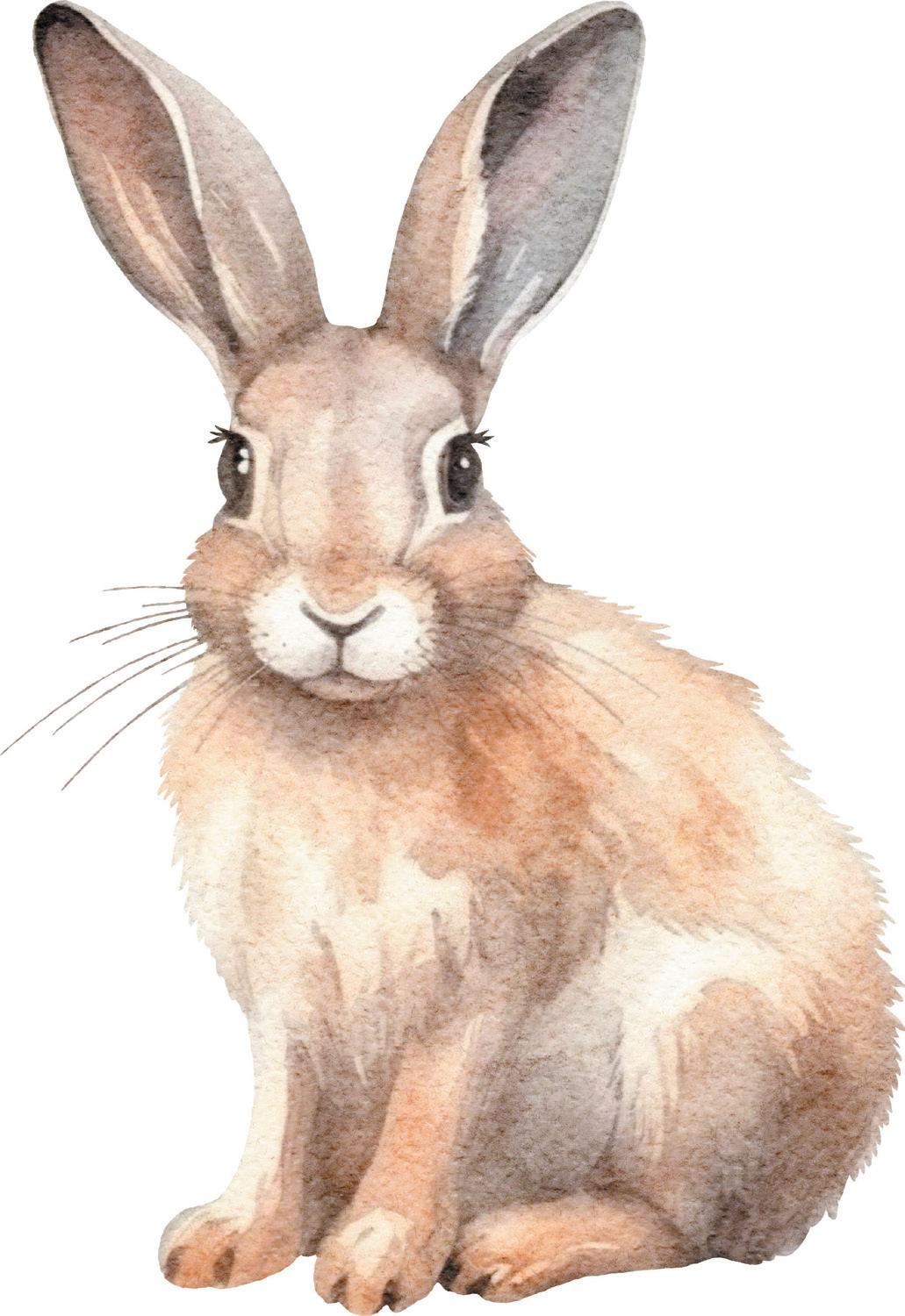
Gather around, young and old. Let me tell you a story about our friend Rabbit, running through the woods to see if his friends can play. You might be wondering what Rabbit knows about life and what could possibly come out of this tale. Tune in: I promise Rabbit has something to teach you.
Rabbit wakes up to the sun peeking through his window. He peers through the sleepy sunshine and sees not one cloud in the morning blue sky. He jumps out of bed and swings the door open to his little woodland. “What a beautiful day!” he says, hopping and jumping, on his merry way to see if his friend can enjoy the day with him.
Rabbit arrives at one friend’s house and notices a little note on the door. He gets closer to read the silly words:
BISY BACKSON BISY BACKSON
“Bisy Backson?” Rabbit wonders aloud. He can’t think of a single animal in the woodland with that name; he is curious what it might be. While a few full, airy clouds pass overhead, Rabbit suddenly remembers some things he knows about the very interesting Bisy Backson.
A Bisy Backson is a type of creature that is always on the move, running between one place and the other, holding an endless list of tasks. The more tasks a Backson completes, the longer the list grows.
You see a Bisy Backson walking down the path, and they can hardly mutter hello because they are already on their way to the next task. The Backsons are famously on the move—they cut corners by using drive-throughs and life hacks, all so that they can save time to work on their list. When Rabbit and his friends are sitting around the pond for a midday break, the Bisy Backson says they will come back to join after they get their work done. When Rabbit and his friends gather and talk after dinner, a Backson always says they have to get back to work, that they have somewhere to be.
When a Backson lies in bed at night, they feel exhausted and overworked, and their head is loud with nonsense. They never make it back to the river for a break, and they certainly
didn’t spend any time sitting with friends for a conversation. But, of course, they are just thinking about what they can accomplish tomorrow so that they are one step closer to having all the free time in the world.
Rabbit sometimes asks a Backson what their favorite food is, what they love about the outdoors, or even what they are looking forward to this week. Every time, the Backson responds with, “Hmm, I haven’t thought about that.”
Rabbit sometimes doesn’t know what to talk to the Backsons about. “Have you seen the new lilies down by the river?” he asks.
“I certainly haven’t, but have you heard of the latest news and current events?” replies the Bisy Backson.
When Rabbit attempts to respond, the Bisy Backson is already halfway down the road, on the way to their next thing. A Backson loves to save time, but what Rabbit learned is that they are so busy saving time and getting things done that when it comes to enjoying their day, they are too busy and stressed to do anything that they are saving time for in the first place.
Rabbit walks all along the woodland. Through the trees, past the river, he jumps on a swing and enjoys the fresh air. He says hello to some of his other friends, he tries new honey fresh from the tree, and finally he heads back to the house with the “BISY BACKSON” sign on the door.
When Rabbit gets back to the door, he laughs at himself. The sign doesn’t say “Bisy Backson.” He giggles and reads:
BUSY BACK SOON BUSY BACK SOON
This is where Rabbit’s tale comes to an end, but the story of Bisy Backson lives on. In our own modern world, away from any woodlands, we all have a Bisy Backson living in our heads. The constant “go
go go” of life and the pressure of getting stuff done and being time-efficient are chronic problems for all of us. We think if we are being productive and getting things done, we are saving ourselves time in the end.
But what about now? We never see the end because we keep adding things to our list to get done. We sit at a table, order, eat, pay, leave, and go to bed. We get coffee with a friend, wear workout clothes for the gym afterward, and leave our phones on the table in case we need to see any emails coming in.
Tell your Bisy Backson to take a break. The best things in life are from the simple moments we just let happen. Sitting with friends, going on a walk, laughing with coworkers, and saying to ourselves, “It’s a nice day” and knowing you don’t have to get anything done to enjoy the nice day.
SCRAPPY’S VALLEY LUNCH AND THE RITCHIE FAMILY
Entrepreneur Verdell Ritchie—a.k.a., “Scrappy”— bought The Stand in the late 1930s or early 1940s. “The Valley Lunch,” as it was also called, had the best local food around, but specifically after Verdell took over. Meat, vegetables, ice cream, and other menu items were all locally sourced. Such was the time; Scrappy’s Valley Lunch was the place to gather for miles around.
Verdell’s daughter, Joan (Ritchie) Giles, and her husband, Steve Giles, still live in Charleston, Utah, in a quiet, cozy home with a big lawn. Steve looks on from the driveway as spring’s dandelion seeds fly on to his property. “It looks like cotton just flyin’ over into my yard!” he says, always one to take care of his lawn, which is beautifully kept despite his neighbor’s dandelions.
For Joan and Steve, living in Charleston leaves one to wonder what it might have been had the Bureau of Reclamation never dammed the Provo River. Joan says, “The lakebed is where Charleston was. My Grandpa [Ritchie] and Grandma Ritchie had to move their home up here.”
Joan’s grandparents, John “M” and Sarah Elizabeth Wright Ritchie, had a ranch in old Charleston. Verdell and his siblings, of which there were eight, would go every summer and help harvest alfalfa, each taking time away from their regular jobs. They used horses and very little machinery.
As the Bureau of Reclamation executed construction of Deer Creek and its dam, families had to leave, and ranches were sold and left behind. “It was a thriving community there. The train ran near the river bottoms where the lake is today,” says Jason, Joan and Steve’s son.
In its early days, the train would stop behind the restaurant. Denver & Rio Grande Western Provo Canyon Branch extended up Provo Canyon and straight to Charleston Station, which was within a few hundred feet of The Valley. The railroad had to realign high up on the western slopes above the reservoir’s projected spillway elevation, away from Charleston.
The year 1940 marked the end of Charleston
Station, and the old railroad behind Scrappy’s restaurant was torn up by 1942. Afterward, the train hauled less and less livestock and produce out of the valley. Hauling freight on Highway 189 was simpler compared with using the train; likewise, passengers traveled by rail less frequently. According to Heber Valley Historic Railroad’s archives, “By 1947, the mixed train’s coach was only being attached to the ‘Heber
CHRISTIAN CENTER OF PARK CITY STORES: BACK 2 SCHOOL BASICS
As summer winds down in the Wasatch Back, one of the most impactful programs of the season quietly springs into action: Back 2 School Basics, a beloved initiative by the Christian Center of Park City (CCPC). Designed to support local students from low-income families, the program ensures that every child starts the school year with the essentials—and the confidence—they need to succeed.
Held annually in early August, Back 2 School Basics transforms a local retail store into a shopping haven for over 1000 students from Summit and Wasatch counties. Each child receives a $100 gift card to pick out brand-new clothing and shoes—items they choose
for themselves, reflecting their style and personality. The experience empowers students while easing the financial burden on their families during the backto-school season.
But the support doesn’t stop there. Students also receive backpacks and age-appropriate school supplies, donated by generous individuals, local businesses, and community groups. Each student receives the necessary tools for academic success, from pencils to binders.
“This program is about more than new clothes or school supplies,” says Lisa Griffeth, Programs Manager at CCPC. “It’s about dignity, confidence, and giving every student the opportunity to start school on equal footing.”
Thanks to dozens of volunteers and sponsors, Back 2 School Basics embodies the spirit of community. It’s a reminder that when people come together to care for their neighbors, students don’t just show up on the first day of school—they shine.
Find out more about this program and how to get involved at: ccofpc.org/back-2-school-basics/.
There is a lot more going on at CCPC. To keep up on the latest happenings, you can follow our social media here: facebook.com/ChristianCenterofParkCity or our website here: ccofpc.org
Local’ if there were passengers to ride in it, and more often than not, there weren’t any.”
Conveniently, Highway 189 travelers would pass right by The Valley Lunch.
Not dissuaded, folks came from all over the valley to eat Scrappy’s home cookin’. Scrappy was known for his obsession with food, and he loved desserts. “He’d come over to dinner with his own bag of donuts,” Steve exclaims, his hand in the air holding a memory. “I couldn’t go to sleep after tryin’ to keep up with him!”
Jason reminisces about how good the food was. “[The Valley Lunch] made Roquefort dressing [similar to blue cheese but tastier] and peeled mashed potatoes; they even had a real French-fry cutter.”
“It was booming in the ’50s, he was making about $80,000 per year and, you know, he was doing well,” Steve remembers, after compiling the business’s book when Verdell passed away. Joan and Steve were teenagers through the ’50s, graduating in 1958 and 1959, respectively, from high school. Steve recounts that The Valley Lunch was a big part of their youth.
Just north of Scrappy’s, the old warehouse that still stands today, had been several different businesses. The Charleston gas station and store were just north of that. According to family records compiled by Joan and her siblings, Verdell Ritchie owned it. In effect, Verdell owned a substantial portion of Charleston’s commercial district.
Verdell was born on October 23, 1910, and raised in Charleston, while Elva was born on October 26, 1907, and raised in Heber City. Both graduated from Wasatch High. When they were married, they moved into the small two-bedroom apartment attached to the rear of the gas station’s store.
In their family anthology, Joan’s brother Dee recalls what life was like for them in Charleston: “I was bathed in a large round tub placed in the center of the kitchen floor. Mom [Elva] would pour [heated] water into the tub. We did not have a refrigerator either.”
Joan’s grandmother was a legendary piemaker; Verdell sold her pies at the restaurant. “I got to the point where I could carry three pies on my left arm [gesturing the entire length of her arm], and two here on the right,” says Joan, recalling she ran the pies from their grandmother’s house across the street to the diner. “Some people came in just to eat the pies.”
But how did the nickname “Scrappy” come about? Dee’s account explains that Verdell had to throw out an unruly customer “by the seat of his pants and nape of the neck…into the front parking lot.”
From then on, he was known as Scrappy.
After their mother, only 45, passed away when Joan was 12 years old, having dealt with lung cancer toward the end of her life, their father
struggled. Without Elva, Verdell was lost. Eventually, he lost nearly everything else, including ranchland, his home, and The Valley Lunch, after investing in a fraudulent resort development.
Verdell had friends in Reno who invited him to sell insurance for their company. There in Nevada, at the age of 55, on February 19, 1966, he died from a series of heart attacks.
Today, Scrappy’s restaurant is someone’s home, shrouded behind fencing. Only pleasure-seekers ride the train. Of the 50 dairies that once dotted Heber Valley, only the Kohler family’s remains. Although the Ritchie and Giles families have seen much of the dramatic change in Heber Valley, their legacy is not lost to the inevitability of progress. Like other Heber families, they proudly share their joyful memories. As society makes moves to accommodate growth, there remains no place to get a good meal in Charleston.
Olga Hegner was surprised when she discovered that painting is what she always wanted to do in her life. She did not paint or draw when she was growing up but did take regular trips to museums. She earned her Juris Doctor in Moscow, and her Master of Law degree at the University of Illinois. She was a successful lawyer, but times changed, and she was looking for something that would really occupy her time and be interesting. She decided to learn how to draw, so she took some programs in local schools and at the Kimball Art Center.
“Drawing skills are very important to me. I would like to have a good drawing as a basis for my paintings, and I am willing to take the time and effort to develop and perfect this skill,” says Olga. “An online classic drawing course was offered in perfect time for me, and I am enjoying every minute, or hour, of it, although it is not an easy one.”
Olga believes everyone should keep learning. She started her path towards being a professional artist in 2010. She loves painting outside and painting from life. While she does take photographs of scenes she wants to paint, she is not a fan of photorealistic painting. She believes a good photograph is art in itself. However, some subjects—animals, for example—are difficult to paint without the use of a photograph.
She also remembers a photoshoot of cowboy scenes in Wyoming some years ago. She was not very enthusiastic about taking photos and wanted to paint from life, but the photographs she took became an important source of her later paintings of cowboys, horses, and dogs.
Olga considers herself to have been incredibly lucky when she joined Create PC’s artist community. “They help the artist community financially, emotionally, and are part of the vibe in Park City,” she says. While she has now moved to her own space one floor above Create PC’s artist spaces, you can still find her work in the Create PC Gallery at 1500 Kearns Blvd, Space F110, in Park City. If you would like to see more of her work, email her at olgahegner@gmail.com.
Olga Hegner paints and draws from the life that surrounds her. She has found her own style, which includes still-life images and scenes from real life with a hint of abstract elements. If you visit her studio, you will see walls full of her images presented salon-style. You might even imagine you are in a museum.
SOMETHING KIND IS COMING TO PARK CITY When Small Gestures Add Up to Something Big
In a town that’s growing fast and constantly evolving, the most meaningful parts of the community don’t just happen—they’re intentional. The culture of our community is shaped by our values, and that’s the heart of Kept Kind™ – a weekend-long campaign of connection, generosity, and small acts of kindness happening July 25–27 across Park City.
Whether it’s a free lemonade stand run by kids, a handwritten note for a stranger, or a simple hello on the trail, Kept Kind is about amplifying the goodness that already exists here. It’s a moment to slow down and honor what already works so well in our community, and to shine a light on it.
The campaign was created and produced by Caren Bell, founder of Kept Current, Park City’s trusted weekly guide to what’s happening around town.
As Park City grows, one thing hasn’t changed: people still care deeply about this place, and the kind of town we’re building together. As Bell puts it, “Park City has so much heart. There’s a reason we have 150 or so nonprofits in this town,” Bell says. “People care.”
Presented by Weedon Family Ranch, Kept Kind is about participation like, one neighbor surprising another, one business doing something
unexpected, one shared moment that sparks the next. All it takes is a little intention, and a willingness to look up and look out for each other. Simple, everyday gestures may seem ordinary, but they quietly shape Park City’s identity and bring its values to life.
At its core, Kept Kind is an open invitation. Parkites are encouraged to dream up their own ways to brighten someone’s day—whether as individuals, families, businesses, or groups of friends. The gestures can be small. The impact won’t be.
Bell brings years of experience to the effort, having led communications for global brands like Nike, Tommy Hilfiger, Live Nation, and the UFC. But Kept Kind isn’t a brand campaign—it’s something far more personal. It’s rooted in her love for this town, and her belief that community, connection and kindness are Park City’s greatest strengths.
Through Kept Current, she’s built a platform that helps locals engage more deeply with where they live. With Kept Kind, she’s inviting them to build on that connection—and shape what comes next.
“Kept Kind is my love letter to Park City. But it’s not mine alone — it’s something we get to create together.”
HOW TO GET INVOLVED
Volunteer with Us:
Join our community volunteer days before the event to write kindness notes, make mini art, and help us create surprise moments to place all over town. This is a chance to co-create the experience, one handmade detail at a time. See details on keptkind.com/volunteer
Support the Campaign
We’re not a nonprofit, but every dollar donated goes right back into making Kept Kind bigger, brighter, and more joyful for the community. Think: more surprises, more art drops, more magic. You can help fund fun surprises for the community.
https://KeptKind.com/donate
Do Your Own Thing
Plan your own kindness activation— as a family, friend group, club, or organization. Whether it’s a popsicle stand, trail snacks, thank-you notes, or chalk messages, we’d love to hear about it and help you spread the word. Please reach out at CBell@keptcurrent.com.
Follow Us
Get ideas, updates, and inspiration by following @Kept_Current_ParkCity and @KeptKindpc on Instagram.
Go to our https://KeptKind.com for more details, and sign up for the Kept Current newsletter to get the weekly entertainment scoop delivered to your inbox. #KeptKindPC
Apparently, some people thought that the original Snow White (1937) movie was good enough to make a live action version. I am here to squash that idea underfoot, and grind it into the concrete. There are so many problems with Snow White I can’t even begin to list them all. So, I decided to cover some of the biggest issues here, for your convenience.
First: Snow White’s logic is so messed up. Like when Snow White decides to make a random cottage in the middle of the woods her home. She’s like, “Oh, I know! I’ll break into their house, move all their stuff around, have the forest critters to lick the plates clean, and maybe, just maybe, they will let me stay.”
Second: Snow White is actually so dumbed down. I mean, the fact that the creators named the seven dwarves after their dominant emotion or pastime gives you the first hint. Well, let's see. The one over there is short, smiling, and jumping up and down for joy. I think I’ll name him…Jeff. Yeah, that sounds about right. There was no such creativity involved.
It’s the same thing with the character design. Just look at Snow White. They couldn’t have thought of some backstory to explain her goofy odd looks? Her appearance makes absolutely no sense.
• She is pale as heck. That makes no sense, because in the movie she goes outside regularly. Or, of course, she could be albino, but that doesn’t make any sense either. She has dark hair and eyes, and I doubt they had eye-color changing contacts back then (what was it, the 16th century?). Even if they did, it wouldn’t be on Snow White. Her irises are absolutely massive, and she would have to use like four fingers to stick 'em in.
• Her lips. They are big and red and full. That has zero correspondence with her skin, because (I already ruled out albinism) the only way she is that pale is because she spent her entire life indoors. And if she did spend her life as a hermit, Snow White’s lips would be chapped as heck, super thin, probably a grayish-blue color from the lack of sunlight exposure, vitamin D, and moisture in the air. I mean, seriously?
• Snow White was laying in that glass box for about a year, right? So the sunlight, magnified by the glass, should have given her a considerable burn—or at least a tan. But nope, she retains the skin tone of a first degree flash-bang. And aside from the tanning thing, why didn’t she decompose? Or at least starve to death? The prince kissed her on like day 318 post-death. And what kind of messed up person kisses a (un?)dead person? What would you
qualify as when you have been in an appleinduced coma for nearly a year and haven't eaten since you went under? A zombie, perhaps? Suffice it to say that she is 50% dead, 3% alive, and 100% confusing.
Speaking of questionable decision-making, let’s talk about this Evil Queen who is so bad at being evil. She’s jealous, sends the Huntsman to go kill Snow White because she is pretty, and says to bring back her heart. The Huntsman chickens out and brings back a pig’s heart. The evil queen is satisfied until she finds out Snow White is actually alive, and by that time, it’s been what, a day or two? If the Evil Queen was smart, she would have asked for Snow White's head or something. You know, something that you couldn’t just cut out of a pig and pretend it originated from a fourteenyear-old princess. Of course, the evil queen was anything but smart.
So what does this dimwitted queen do instead? She tries to kill Snow White with a poisoned apple. That was actually really dumb. I mean, the spell could have gone wrong (which it did), Snow White could have refused the apple, and any number of other things could have happened. Clearly she didn’t learn her lesson from last time: Verify your kill! For example, she could have taken one of the dwarfs' pick axes and just gotten to it. She also could have gone the arson route and burnt the dwarfs’ house to the ground. Or, using her special witch powers, she could have created a lightning bolt to fry Snow White.
But then, Snow White isn’t too bright (unless you count her skin) either. What kind of person lets in creepy old ladies, with or without apples? I mean, stranger danger, right?
Last thing: The closing of the movie has got to be the most unrealistic part. It’s like, Yawn. Oh wow, look at that! The creepy lady with the apples is gone, and this complete HOTTY prince is here. Dang! I’m hearing wedding bells!
I mean, come on.
Well, this ends it. If by any chance you were thinking about seeing the new Snow White, just don’t. I wouldn’t wish that on anyone. However, if you are having a bad day and you need to have some belly laughs from pure stupidity, try turning on SNOW WHITE (1937). It's quite enjoyable.
A MEDIEVAL LOVE
BY ISABELLA VENEGAS
The universe has begun to spin much too quickly, how the world should be beautiful, not just pretty.
The pettiness of life has overcome her patience; the glass beyond her eyes has no luminescence.
The sun is of a modern sight that hides the heart, if only her love could be sweet and no longer tart.
She shuts her brown eyes and swallows her tears, for as she does, an olden age of time draws near.
The world is full of rolling hills, greenery, and flowers; there are columns of gray stone and castle towers.
The stream blossoms with purple under her sword: a sharp mirror, a silver blade of beautiful craft forged.
Her blinding white dress flows from her shoulders; her hair floats in the wind, air that is much older.
She might be a queen, a princess, a maiden; she will fight, and her bravery is never fading.
She smiles and lifts her hair up to look above; in another life, she will have this medieval love.
BY KIRSTEN KOHLWEY
LOGAN TO GARDEN CITY
A DEEP DIVE INTO NATURE
Heading to Logan, we stop for a meal at Angie’s, “Where the Locals Eat.” Serving Logan at 690 Main Street since 1983, this clean, basic diner with room for large groups has reasonably priced American food. Impressive is the page of gluten-free meals, while locals swing by tables to chat with others who happen to be eating at the same time.
From here, we head down Logan Canyon, a National Scenic Byway. Almost as soon as we enter the canyon, we stop at the parking lot for Stokes Nature Center. While it wasn’t open when we were there, a fairly flat hiking path leads to it, as well as past it, along the river. This is just the first of many hiking trails in Logan Canyon.
Stokes Nature Center is open from 10:00 a.m. to 2:00 p.m. on Friday, Saturday, and Sunday. Just driving through Logan Canyon is a feast for the eyes and ears. Aspen groves shimmer yellow in the sunshine, the river gurgles along the road, and steep cliffs with cave entrances hidden either behind gates or high up near
the tops of the cliffs are visible from the road.
The large gate on the entrance to Logan Cave protects Townsend’s big-eared bats, which breed and hibernate in the cave. Even though the gate originally became necessary due to vandalism, it is even more important now to prevent the spread of White Nose Syndrome, which was originally detected in 2007 in New York. Utah bats had been spared this disease until it was detected in Canyonlands National Park bats in 2024.
So far, the disease has not been detected in the northern parts of Utah. If you are not up to hiking, don’t miss the scenic overlook as you drive down out of Logan Canyon towards Garden City. The view of Bear Lake highlights the turquoise-blue color of the lake and its large north–south span.
Garden City is known for its raspberry shakes. Opinions vary as to which place has the best ones; Zipz definitely had the longest line. So far, LaBeau’s is my winner, but even better is the raspberry jam you can buy in town. We
stayed at the Ideal Beach Resort; relaxing and sitting at the end of the piers, you can even see pelicans fly by. Bear Lake has many rest areas and state parks that provide beach access— within Garden City, this access is rare. The resort itself is a bit dated but makes up for it with a heated pool, spa, and sauna.
If you choose to stay here, bring your own food. The resort’s little store has prices that surprised even my already heightened awareness of rising costs. We brought our paddleboard—and we should have brought our pickleball gear. You can also rent boats and lake toys here.
With Wyoming to the east and Idaho to the north, we drove 45 minutes to Fossil Butte National Monument to check out the remains of Fossil Lake. The visitor center has extensive displays of fishes, stingrays, and other animals found in the Fossil Lake formation. New fossils continue to be added as new species are found. Just down the road is Kemmerer, Wyoming, the location of JCPenney’s very first store. It still features the original wooden shelves and layout, with just minor upgrades to the lighting and the addition of dressing rooms. Driving another 30 minutes northwest of Kemmerer,
What is House of Colour?
we satisfy a new passion of ours—we visit Fossil Lake Safari and find some lovely fish fossils. The staff member showing us how to split rock gets very excited about the fossilized turtle poop that I find. I can’t say I have quite the enthusiasm for that one, but it is…different.
Back in Garden City, we head to the Pickleville Playhouse and pick up our tickets to Trouble in Hunky Dory, a melodrama, at Will Call. The packed theater fills with laughter at the jokes, and the audience plays along with the prompts being displayed to either boo or cheer. The cast is confident in their roles and delights everyone with its musical performances. Joseph and the Amazing Technicolor Dreamcoat is on the schedule for this summer.
Garden City is suffering from a lack of workforce at the moment. Several restaurants are closed because of this, so expect lines or longer wait times at the remaining ones. Surprisingly, prices are reasonable. The size of a 36-inch “Monster” pizza at Firehouse Pizza is incredible to behold, its box requiring to be slightly tilted for it to fit through the doorway.
We see plenty of people walking and jogging on the path that leads basically all the way
For over 35 years, House of Colour has been helping people look their best and feel their most confident by finding color and style options that are completely unique to YOU!
Utah, the wait is over.! Do yourself a favor and book a color analysis with Julie! It is a ONE-TIME investment into yourself that lasts for many, many years.
along the main drag through town. Garden City is a great spot to plan a vacation around, with easy access to sightseeing in northern Utah, Idaho, and Wyoming.
Book your consultation @ hocjuliehickam.as.me/schedule.php 435.315.2258 • Julie.Hickam@HouseOfColour.com • Follow me on Instagram @houseofcolour.juliehickam
MEET DEENA THOMPSON, MS, CNS
HELPING YOU RECLAIM ENERGY, CONFIDENCE, AND HEALTH—WHEN NOTHING ELSE HAS WORKED
Deena Thompson is a Certified Nutrition Specialist (CNS)—a title that sets her apart from other nutrition professionals. Unlike registered dietitians, CNS practitioners hold a master’s degree in Personalized Nutrition, the highest academic credential in the field, requiring an additional 1,000-hour supervised internship and advanced clinical licensing.
Originally from Provo, Deena spent 10 years in the Bay Area before moving back to Utah in 2021. After starting a virtual private practice, she felt the pull to reconnect with her Heber Valley community. That’s when the opportunity to work part-time with Wasatch Optimal Wellness’ weight-loss program landed in her lap—and she hasn’t looked back.
WHY CHOOSE NUTRITION? A PERSONAL JOURNEY
“It was life-changing,” says Deena. “Western doctors treated me like a hypochondriac. One even prescribed an antidepressant when I told them my gut hurt. I had no signs of depression!”
TURNING PAIN INTO PURPOSE
If you’ve ever wondered what drives someone to dedicate their life to health and healing, Deena’s story may sound familiar. “Almost every nutritionist I’ve met got into this work for one of two reasons—they were either sick themselves, or watched someone they love suffer without answers,” she explains. “I got really, really sick myself, and that’s what launched me into the career.”
While earning her undergraduate degree in Exercise Science from BYU, Deena planned to pursue medical school. But life had other plans. Chronic fatigue, severe digestive issues, and a lack of answers from the medical system led her down a different path. She recalls, “I know firsthand how exhausting and defeating it is to be unwell and not know why.”
Despite eating well and staying active, Deena’s health deteriorated. She began obsessively researching nutrition, reading books, tuning into health podcasts, and experimenting with her own diet and lifestyle. But it wasn’t until she met a functional medicine doctor who ran comprehensive lab testing that she found the real root cause of her symptoms.
Today, Deena channels that frustration into fuel. She uses science-backed, root-causefocused nutrition therapy to help others who feel ignored or dismissed.
Her clients include people who:
▶ Struggle with chronic fatigue
▶ Battle digestive issues that doctors can’t explain
▶ Are tired of hitting plateaus with weight loss
▶ Are looking to optimize blood markers, like cholesterol or blood sugar
▶ Want to look and feel vibrant and healthy in their own bodies again
“I want to help people like me—the complicated ones, the ones with weird symptoms, the ones no one else knows what to do with,” Deena says.
GET REAL ANSWERS—NOT JUST BAND-AIDS
If you’re tired of chasing symptoms, seeing specialists with no clear path forward, or being told “everything looks normal” while you feel anything but—you’re in the right place. “If you’ve been through the rigmarole— trying to lose weight, lower your cholesterol, fix your fatigue, or solve your gut issues—and
you’re still stuck, confused, and frustrated...I get it. And I can help.”
START YOUR HEALING JOURNEY
Visit therealfoodnutritionist.com. Attend one of Deena’s live or virtual workshops. Book a personalized consultation to begin the path to real answers.
You don’t have to suffer in silence. With the right guidance, the right tools, and the right support—you can get your life back.
WHY POLICIES TO REDUCE TRAFFIC AT BONANZA FLAT WILL BACKFIRE
In Heber and Park City, there is widespread concern about traffic according to recent surveys. And there is endless conflict about how to address it. In Park City, for instance, people decry the pace of development while complaining about traffic that comes mostly from commuters who can’t rent or live anywhere in or near town without further development.
Wanting something is different from coming up with policies that achieve it. Plus, there is always a risk of perverse incentives.
Which brings us to Delhi, India. According to what is likely an apocryphal story, the British colonial government was struggling with an infestation of deadly cobras. So, they offered a bounty for cobra skins. Locals began to hunt and kill cobras for money, but the cobra supply ran low—and hunting them one-byone was inefficient anyway. Entrepreneurs began to breed and farm the snakes. When the British recognized their miscalculation and canceled the bounty, cobra farmers released their now valueless stock, making the infestation even worse than it was prior.
That story inspired German economist Horst Siebert (1938-2009) to write a book about perverse incentives titled Der KobraEffekt. It was never translated into English— probably because it’s a dry tome about how Germany’s social safety net encourages wasteful spending. Still, the American commentariat adopted Siebert’s coinage, The Cobra Effect, to describe when incentives worsen the problem they are intended to solve.
I thought about these incentives during a trip to Brighton Ski Resort in February. It was a Saturday powder day, and there were no parking spots available to book. So, a friend and I drove to the Park & Ride at 6200 S Wasatch Blvd to catch the free bus. We arrived at 6:45 am, assuming that would be plenty early.
The buses pick up at the Midvale Ft Union Station, 6.5 miles west, before they pick up at 6200 S. A bus arrived at about 7 am, mostly filled, and left the majority of people in line behind. The next bus arrived from Midvale completely full around 7:30 and took no one. We finally caught an 8:30 bus, which had been sent empty to 6200 S, bypassing Midvale, because the line at 6200 S had
become so long.
Paid, reserved parking and free buses were supposed to incentivize bus usage and reduce traffic into Big Cottonwood Canyon (BCC). In practice, it had several unintended consequences.
First, skiers were incentivized to drive in the opposite direction of Brighton to catch a bus back towards Brighton, burning more fuel than they would have otherwise. Second, skiers eager to avoid bus waits and parking fees began to circle Brighton’s parking lots just before noon, when there are no more fees or reservations required. That has resulted in standstill afternoon traffic, which creates headaches for BCC locals and danger for everyone recreating. Ambulances and search-and-rescue vehicles can’t get in and out of the canyon in a timely manner. New traffic pattern, new cobras.
This summer at Bonanza Flat Conservation Area, will paid parking reduce traffic? Or spawn cobras?
KPCW’s Parker Malatesta reports that spots at Bloods Lake, Bonanza Flat, and Empire Pass Trailheads will cost $5 per hour on weekdays and $8 per hour on weekends. Residents of zip code 84060 can get a permit to park for free. Park City Transit’s purple line will visit Bonanza Flat trailheads Friday through Monday when demand is highest. Transit to Trails, which contracts private transportation to shuttle folks to Bonanza Flat for free, may expand service.
Let’s put ourselves in the mind of a Bonanza Flat visitor with dogs. They used to drive up BCC to Guardsman Pass on hot summer days because dogs aren’t allowed in the BCC watershed. Dogs aren’t allowed in Park City buses either unless they’re in a carrier. This recreator doesn’t have a great alternative to paying for parking.
A hiker without dogs still wouldn’t be thrilled to drive an extra 15 min down to
Old Town, pay for parking at China Bridge, bus back up, then bus down after their hike or ride. Likewise for a mountain biker who drives up Pine Canyon Road from Midway. They have a limited window to ride, limited funds to spend, and a demand for highelevation terrain with cooler temperatures.
Most likely, visitors from BCC and Midway will find the nearest unpaid parking (just above the Montage on Marsac Avenue) and create massive traffic and crowding headaches there. We will still get cobras— just down the road where there is even less parking and less space to expand it.
Paid parking at Bonanza Flat will not stop demand. It will just ensure that Rivians, Teslas, and Range Rovers fill the parking spots instead of Subarus, Toyotas, and Fords. So much for making public lands accessible to the public.
Policies designed to reduce traffic don’t always have that effect. They just create new breeds of cobras.
RICHARD
The Saga of Ninja Steve
HOW TO QUICKLY (AND CONSISTENTLY) DISMANTLE BRAND TRUST.
One of the first things I learned about SS Public Relations, my first source of ghostwriting clients, is that SSPR did not turn down clients. Ever. (Today, they’re known as NextPR, and they have higher standards.)
That led to me writing for companies I can’t discuss here without violating this magazine’s “family friendly” content rules. However, I can talk about Turing Space Industries, originally known as QSα (pronounced “QSAlpha”).
In 2013, QSα was preparing an Indiegogo campaign to launch Quasar IV, “The World's First Self-Authenticated Cipherphone Designed To Protect Your Digital Identity.” The Quasar IV supposedly ran on a “military-grade encryption” system called the “Quatrix.”
I don’t think a Quasar I, II, or III was ever released. The name Quasar—a type of massive black hole found at the bright center of a galaxy—gave off a futuristic, space-age vibe.
But the phone, said QSα, took its “…design inspiration from one of the world’s most recognized symbols of secrecy, supernatural ability and stealth: the art of Ninjutsu.”
Oh yes—the company’s founder claimed to study ninjutsu, the art of the ninja, the spies of medieval Japan. His name is Steve, so we’ll call him Ninja Steve.
To launch Quasar IV, Ninja Steve needed some cash. So, he launched an Indiegogo crowd-funding campaign (I might have helped…). In the intro video to the campaign, Ninja Steve is seated with his face next to the handle of a ninja sword, with ninja-ish music playing in the background. The Indiegogo page had another video of a human ninja (not Steve—unless it was a brilliant ninja disguise) doing ninja-y things with a ninja sword. Near the end, this ninja does a cartwheel and then starts throwing ninja stars (excuse me, shuriken) towards the camera.
If you contributed to the campaign, boy oh boy, were you in luck! €174 got you a Ninja Jacket and 195 QuaCoins to spend in the QuaStore, which offered mobile apps for QuaOS (have you caught onto the naming scheme yet?). For just €17,815, you could get ten phones “… carved with our Ninjutsu Saizo, Togakure or Soke clan logos.”
I know what you’re thinking. This “unhackable” phone (QSα’s words) sounds a bit…suspicious. Well, you’re not alone. The Indiegogo campaign was supposed to raise €2,850,401 but managed €87,931. Thankfully, Ninja Steve knew what to do about it. If ninjutsu didn’t inspire trust in the world’s most secure phone, QSα would use even more powerful symbols.
After a PR smoke-bomb-cartwheel (Quasar? What Quasar?), QSα reemerged in a new guise in 2015 as Turing Robotic Industries, which would eventually become Turing Space Industries, which involved neither robotics nor space.
Like Tesla, named for inventor Nikola Tesla, Ninja Steve hitched his brand to another famous genius: Alan Turing, a founder of modern computer science. Presumably, he’d work some Turing motifs into the
Wrong. In 2015, Turing announced its flagship phone, the Dark Wyvern—named for the two-legged beast usually referred to as a dragon (but don’t say anything that ignorant on Reddit if you value your life). The Dark Wyvern was made of “Liquidmorphium™, Turing’s signature composite that is tougher than titanium,” because Marvel wouldn’t sell them any Vibranium.
If you weren’t ready to drop $999 on a Dark Wyvern, you could buy the lesser Cardinal (not a dragon), Pharaoh (also not dragon-related), or Beowulf (dragon-adjacent poetry). Or, if you really wanted to ball out, you could reserve the Dark Wyvern Glaedr, with a body featuring “…24K gold highlights that tell the ancient tale of a fire-breathing dragon.” Nothing says military-grade security like Glaedr, a dragon from The Inheritance Cycle youth adult fantasy novels.
The Dark Wyvern was mired by delay after delay after delay. People who pre-ordered it became a bit suspicious of Ninja Steve, and more so when Turing filed for bankruptcy in 2018 shortly after announcing another upcoming phone: the Appassionato (which, I assume, is also a type of Nespresso pod).
Turing was doing fine, insisted Ninja Steve, when the press asked him about the bankruptcy. That year, Turing also announced the $2,749 HubblePhone, which, naturally, would run on KeplerianOS. Ninja Steve had come full circle, back to outer space.
The fate of the HubblePhone and Ninja Steve is unclear. On Facebook, Turing promised refunds for HubblePhone pre-orders. The last sign of Ninja Steve was a three-question Q&A in an online blog that stopped publishing in 2020. There, he talked about “neuromorphic” computing.
Ninja Steve seemingly went out of his way to undermine trust in his phones—surely, a strategy grounded in ninjutsu. Yet people couldn’t help giving Ninja Steve money and attention. Maybe one day he’ll cartwheel out of the shadows and throw some more ninja stars at our ever-vulnerable credulity.
branding of the new phones, right?
HOW SUMMIT LAND CONSERVANCY IS WORKING TO SAVE LAND AND WATER FOR ALL UTAHNS
Since its founding in 2002, Summit Land Conservancy (wesaveland.org) has had a hand in preserving some of Park City’s most beloved and defining open spaces; places like the 120 acres of pasture surrounding the McPolin Barn, Round Valley, Bonanza Flat, and Treasure Hill. And while, historically, the reasons for placing land in conservation easement have ranged from recreation and ecological preservation to aesthetics and maintaining a way of life, Summit Land Conservancy recently highlighted another, perhaps less intuitive but even more urgent reason for preserving land along the Wasatch Back: saving Great Salt Lake. “The three rivers that rise on the Wasatch Back–the Weber, the Provo, and the Bear–are the watershed for Great Salt Lake,” says Caitlin Willard, Summit Land Conservancy vice president of communications. “If we don’t work to save the remaining undeveloped land around these rivers, they will be developed, and the water feeding these rivers will be sucked into municipal water systems instead of flowing downstream to the lake.”
There’s been much said and written about the toxic particles lying at the bottom of Great Salt Lake that, if the lake is allowed to dry up completely, could easily become airborne. But this is not a threat exclusive to those living in the Salt Lake valley. According to the Utah Division of Water Resources, it would take just one hour for winds traveling at 25 miles per hour to carry dust from the lake to Park City–wind speeds common on the leading edge of cold fronts.
The lake also provides critical habitat for 10 million migratory birds and helps increase wintertime precipitation all along the Wasatch Front and Back. Furthermore, the lake supports thousands of jobs in mineral extraction, fertilizer, and brine shrimp industries. All told, the lake provides $2.5 billion in direct economic activity annually in the state of Utah.
For all these reasons and more, in 2023 Summit Land Conservancy launched its For the Future Fund, a five-year effort to raise $10 million from individuals to protect 36,000 acres of Great Salt Lake Watershed in four counties across the Wasatch Back. What this means is that every dollar donated
to the conservancy through May 2028 will be used in two ways. The first, is to leverage contributions from landowners, foundations, and government grants. “Donations from individuals are crucial to what we do,” Willard says. “Without support from individuals, we would not be able to access the federal dollars that make these transactions possible. Each dollar donated to our For The Future fund is leveraged about 10 times.”
The For the Future Fund is also providing Summit Land Conservancy with cash on hand to act quickly when a critical watershed property comes on the market. “When you have a willing landowner, the process of putting a piece of land into a conservation easement takes about two to five years to complete, which is too much time in regard to saving Great Salt Lake watershed lands” Willard explained. “The For the Future Fund allows Summit Lands to be more nimble, using the funds to purchase land outright, swiftly taking the land off the market when necessary, then raising the funds after to replenish our fund.”
Earlier this year, Summit Land Conservancy’s annual Conservation Breakfast, CEO Cheryl Fox reported that the conservancy is already well on its way to meeting its goal to protect 36,000 acres in the Great Salt Lake Watershed by 2028. “Summit Land Conservancy already protects more than 19,000 acres in total, of which 3,600 acres are in Park City,” she said. Fox went on to explain that the Conservancy now has signed contracts with landowners willing to protect an additional 25,000 acres. It is also amplifying its impact by partnering with other land trusts, like the Ogden Valley Land Trust and Bear River Conservancy, lending their expertise and knowledge to help prevent Great Salt Lake’s collapse, which she described as a “looming threat to all life in northern Utah.”
There are plenty of ways for individuals to get involved with Summit Land Conservancy’s efforts. There’s weekly events held on lands preserved by the conservancy, like the Hops Hunters Hikes, Moon Shine Adventures and Nature Bathing Hikes, as well as handson land maintenance projects like Tune-Up Tuesdays and Stewardship Saturdays. (For
more info, visit wesaveland.org/happenings.)
One of the most impactful ways people can support Summit Land Conservancy’s efforts, particularly those focused on preserving lands within the Great Salt Lake Watershed, is by attending the annual Blue Sky Bash, coming up on August 8, 2025, an event aimed at saving land paired with “heavy pours, tasty grub, and rowdy auctions.”
Meet Park City local Addisyn Lundberg, a high school junior excelling in mountain biking.
Addi, as her friends and family call her, grew up with an outdoorsy family that valued spending time together, whether it was river rafting, hiking, skiing, or mountain biking. When Addi was around three, she started riding her bike with her parents in Colorado. In 2011, the Lundbergs moved to Park City, wanting to provide their family with the greatest outdoor opportunities. Here, surrounded by an abundance of trails, Addi’s love for mountain biking grew.
Addi began racing at the age of 10 with the Summit Bike Team. Many of these early races, such as the
Intermountain Cup series, were just for fun.
The Lundbergs would make a weekend out of it, traveling to the race venue and camping. Despite Addi’s early success at these races, where she won in the Junior High category, she didn’t see herself as a competitor—at least not yet.
In the summer after her 6th-grade year, Addi joined the Park City Mountain Bike Team, embracing the opportunity to ride with kids her own age. She won in the Advanced Girls category for both of her Junior Devo years. Just as she was flourishing in these Junior races, her father, Wil, passed away unexpectedly. Wil lovingly supported Addi on and off the bike, and his memory lives through WILS, a family foundation built on Wil’s love for the outdoors. For more information, please visit www.wilsfoundation.org.
The following season, Addi began envisioning a future in bike racing. She joined ACCEL, a national-level youth development team geared towards race preparation outside of the high school season. With ACCEL’s support, she competed at Nationals in
the 13–14 category at Winterpark, Colorado. The high altitude was challenging, particularly for the East Coast athletes, but Addi was able to place 7th among the top competitors in the nation, which was an eye-opening experience for her in the world of competitive bike racing.
Throughout the remainder of summer, Addi would continue to train with the Park City Mountain Bike Team. That fall, for Addi’s freshman season at the high school level, she petitioned to skip the Freshman category and go directly to Junior Varsity A (JVA), a move fairly uncommon in the bike-racing world. In JVA, she won all four of the regional races, allowing her to line up front row at States with a points-leader jersey. Two laps later, she found herself with an impressive 3rd-place State finish.
The following winter, Addi continued to put time into crosstraining with Skimo, or ski mountaineering, on the indoor trainer bike. That summer, she continued to race nationally with ACCEL and petitioned again for her 2024 high school season. As only a sophomore, she was placed on Varsity, the highest category for high school. For her junior year, she found early success at her first regional race at Soldier Hollow, where she placed 2nd in Varsity, then won the following three regional races. Again, she was front and center with the points-leader jersey, finishing 3rd against the strongest girls in Utah.
Following her successful freshman, sophomore, and junior seasons, Addi geared up this last winter with even more motivation to train to her fullest potential. During off-season, she rides twice a week with the Max Testa program, as well as on her own, to keep her legs moving through the winter. She also implements strength training at Park City Hospital with Andrew Fast, whom she partly credits to making her more explosive off the start line. This season is Addi’s first time participating in the 17–18 category, which offers a more competitive field and UCI points—and which can qualify racers for the Junior World Cup, along with prospects at the collegiate level and beyond.
Motivated by creating the strongest version of herself, Addi’s dedication to training has increased this season. She explains that unless she becomes ill, she sticks to the plan provided by her coach,
riding six to seven days a week. She also has dialed in her nutrition and recovery routine, making sure to rest her legs before the next training session. To see if the work she’d been putting would translate to placement, she competed in Puerto Rico this past February. While snow was still flying in Park City, she took advantage of heat training by spending time after rides in saunas and steamshowers. She placed 5th at both the XCO (cross-country) and XCC (short-track) disciplines, and she took 6th place on the second day of the XCO. A few weeks later, she raced in Temecula, California, and achieved her best placement ever, 3rd, for the short-track discipline, and landed another 6th-place finish in the XCO.
she was able to work with fellow athletes and coaches to improve climbing and descending skills, as well as compete in a practice race. With more confidence coming off the Team Camp, she was able to enjoy her best UCI race yet in Wisconsin, placing 2nd at the XCO and 3rd at the XCC, even while being positive with Flu B.
As Addi was preparing for another race in Arkansas, she was invited to the US Junior Team Boot Camp, after having placed in the top five in the 17–18 category. She went on to race in Arkansas with a 7th-place finish in XCO and XCC, and she came in 14th on the second day for the XCO. She explains that the competition here, with athletes across the globe, is potentially what she can expect with racing outside of the nation. For four days at the US Junior Team Camp in Bentonville, Arkansas,
summer CAMP at
Addi’s 2025 breakthrough season isn’t done yet, with more UCI races across the United States this summer. Also, the work she’s put in is paying off beyond the podium; recently, she was given the chance to train in Europe, in the hope of preparing for what her future could potentially look like. She is scheduled to leave mid-August to race in France and Switzerland and will return to the States in early September.
This amazing opportunity, sadly, is at the same time as the high school fall season, so Addi will most likely be missing her last season. But, as a captain on the Park City Mountain Bike Team, she plans to support her teammates when she can, as well as continue being a leader by example. From simply riding with her family to being invited to race internationally, Addi Lundberg is the next generation of cycling.
WASATCH TRAILS AND ADVOCACY:
With Mia Yue, WTF’s Executive Director
“Backcountry trail use isn’t always 100% inclusive or accessible,” explains Mia Yue, executive director of Wasatch Trails Foundation (WTF). “When we held our strategic-planning session, we had accessibility and inclusivity as a couple of our core values.” Keeping its core values, the foundation is taking on urban and backcountry development, even though its very existence is due to mountain-trail user efforts.
WTF takes a broad approach to defining trails. Bike paths connect the community; they facilitate functional bicycle riding, like commuting to work or getting coffee, for example. Hence, planning new backcountry trails, pump tracks, and bike paths are all part of its vision.
“Groundbreaking for Southfield Park’s new asphalt pump track will be after Wasatch County Fair Days. It will accommodate all wheels,” adds Mia. “It will be a place for scooters and BMX bikes. It will be perfect for groups that don’t have transportation to a trailhead or don’t necessarily have interest in mountain biking on trails.”
Next, Mia discusses the Heber Halo project, which “will aim to connect all of the backcountry trails around the valley, not necessarily so somebody would ride the entire thing.” Mia clarifies, “So wherever you are in the community, it’s easier to access trails.” Likely, that would be a five-to-10-year endeavor.
Backcountry trails around Heber Valley thaw quicker than most of the
higher-elevation Park City trails. Locals use them later into fall, even in early winter, without walking or riding on snow. With user days in Heber Valley growing, the trails need us more than ever. Mountain bikers, hikers, runners, and equestrians visit from all over, often from outside Heber Valley. With all that use, it’s becoming increasingly
“We have roughly 175 miles of singletrack here. Memberships are growing, currently sitting around 270. We have four trail crewmembers this year, up from three members last year. That’s 40 extra hours a week on the trail,” Mia enthuses. Wasatch County and surrounding-area trail users stand to benefit enormously.
With more trails coming, such as Springer Hollow, WOW-BLT (Bonanza Loop Trail), and restorative work in Dutch Hollow, volunteer trail days will be one of the easiest ways to support WTF. Becoming a member funds the foundation directly, but both memberships and volunteer hours facilitate additional grants to sustain it.
backcountry trail maintenance,” Mia explains. The funding represents a massive success in trail advocacy and development in Wasatch County and has been a worthwhile goal, but also an uphill journey for Mia and WTF.
“I’m so excited that the community realizes trail management is a real thing, and that people are moving here because of trails, for access to the outdoors,” continues Mia, highlighting the significance of these accomplishments. And by “outdoors,” this means not only backcountry trails.
A key indicator used in seeking grants and other funding is volunteer hours. “When someone donates one hour of work, the foundation can receive additional monetary funding,” Mia says. “A lot of people don’t know that. It’s incredibly helpful when community members volunteer because we wouldn’t be able to get grants without volunteers.”
Trail advocacy comes in many forms and can vary from community to community. In Heber Valley, WTF needs members, volunteers, and word-of-mouth marketing. Mia laments that sometimes people aren’t always clear about Wasatch Trails Foundation and Mountain Trails Foundation being distinct entities—and this is only one of the challenges she has faced as executive director.
For the first time ever, the WTF trail crew will be funded entirely by the TAP (Trails, Arts & Parks) tax. “This is the first year that Wasatch County, Heber City, and Midway City are taking an active role in
Building its presence is the next step, if you will, to be a household term. The work that WTF is doing is what many of us have long awaited. “Wasatch Trails Foundation is a functioning organization making meaningful steps towards preserving, protecting, and building the trail system in the Wasatch,” Mia says. “Most people probably don't realize the state park trails are viewed the same as campgrounds and rely heavily on volunteer maintenance. The reality is the state park doesn't have that budget, so that’s where we come in.” In addition, WTF supports Ken McCarthy, trail builder and manager at Jordanelle Ridge, Blue Sage Ranch, Big Pole, and other public trail areas.
Mia expresses gratitude for the support from Mountain Trails Foundation, whose executive director, Lora Anthony, she cites as the best mentor in her circle, backed by an incredible board of directors. Looking at the progress WTF has made, we cannot overlook the shepherds that have nudged and provided resources to get it here. Heber Valley and surrounding areas stand only to gain from what Wasatch Trails Foundation is doing.
After we receive instructions from Fish Heads Fly Shop in Heber City on what to bring, as well as where to buy our fishing licenses well in advance, the day finally comes. The weather is gloomy, but when we arrive at 8:00 a.m., Curtis Lindley, general manager/head guide, greets us with enthusiasm and introduces us to our guide, Kris Clemons. They proceed to outfit us with waders and boots. The waders have attached waterproof sock feet; I feel like a hobbit. The socks stick out two inches past my feet, which prompts Curtis and Kris to bring me bigger boots—that way, they fit without cramping my feet. I imagine this is what astronauts used to feel like. When my straps are adjusted properly, we head back to our cars and follow Kris to the fishing area. Driving with my giant boots, surprisingly, isn’t a problem. The rain starts shortly thereafter.
Only one other car is parked at our destination. Kris grabs the poles and net along with his other gear and leads us on the trail to Provo River. When he spots a line already in place at his intended spot, we loop back and hike farther down the river. The mountains peek out of the clouds in the distance, and wildflowers are blooming. We can hear the birds squawking and chirping over the sounds of the rushing water. Provo River is flowing quite fast today; along the way, Kris explains where the trout and the native mountain whitefish like to hide.
When we arrive at our fishing spot, a large, well-established beaver lodge flanks the opposite river shore. Kris explains that on a sunny day, we’d be able to see Mount Timpanogos from here, but we’re here on a rainy day with 44-degree temperatures. Kris puts weights and fake worms on our poles and leads us into the river to show us how to cast. Walking in my giant boots requires concentrated attention to placing my feet. The casting steps aren’t hard—you position your hand with a finger on the line as a brake, twist the pole, raise it, and
cast it to the other side of your body, which works most of the time. Neighbors photographer Deb says she did it once before as part of a breast cancer–recovery event. After waking up the next day, I understand why they pick fly-fishing; I can feel muscles I haven’t consciously exercised before.
Standing in the river observing nature is calming. Canada geese, mallard ducks, sandhill cranes, and a bald eagle fly overhead. The first fish that pulls my line jumps in the air, shortly after Carl catches an eight-inch-long trout. Kris and Carl don’t hear me shout to them over the rush of the water, so by the time I remember to reel the fish in, it has already freed itself. Along the way, I have to free three twigs from my line. The rain picks up, and I can feel myself getting colder in the water, despite long underwear and warm clothing. I hook another fish and start reeling it in. I see it as I reel in the line, but before Kris can get to me, it also has freed itself. Carl manages to reel in two fish.
Soon after that, I discover that I have made a tactical error—the rain jacket I’m wearing has cloth lining inside. I feel something tugging on the back of my jacket, and the lining gets wet, the chill spreading faster through my body. One more fish nibbles on my line before I leave the river.
Even though I have more warm clothing in a dry bag, Kris offers me a down jacket to wear back to the cars. Combined with the exercise of hiking back, I warm up quickly. Two young moose watch us from the other shore. Kris suggests another spot for more fishing, but I choose to call this outing good enough. Kris is full of knowledge on the Middle Provo area, its history, wildlife, and fishing. I thoroughly enjoy this adventure and may return when better weather is likely.
Keep kids safe around vehicles, windows and water this summer
Soak
up the sun with these essential summer safety tips
Summer brings long days of play and adventure, but staying vigilant about children’s safety around windows, vehicles, and water is crucial.
“Accidents can happen in an instant, and precautions can prevent tragedies,” said Susan Petersen, MD, an Intermountain Health family medicine physician at St. Vincent Regional Hospital in Billings, Montana. “Always supervise kids near water, ensure windows are secure, and teach them about car safety – and never leave a child unattended in a car.”
Intermountain Health treats children for injuries from falling out of open windows at their homes, for heatstroke after being left alone in cars on hot days, and for near-drownings in swimming pools, lakes and even bathtubs every year.
WINDOW SAFETY: OPEN 4 INCHES OR LESS
Each year, thousands of children are injured from falling out of home windows in the United States
Windows open more than 4 inches can be a hidden fall hazard for children, as window screens can pop out even with a little bit of pressure from a child’s hand. The best way to keep children safe from window falls is to remember the 4-Inch rule. We should open our home windows no more than 4 inches to prevent falls.
NEVER LEAVE A CHILD IN A CAR – EVEN FOR A SECOND
The temperature inside a vehicle can heat up by 20 degrees in 20 minutes and become deadly on summer days.
Every year, nearly 40 children across the country die after being left in a hot vehicle. Many more have suffered heatstroke and other injuries in close calls. A child’s body temperature can increase 3-5 times faster than an adult’s. Cracking a window has very little effect on the temperature inside the car.
“A child’s body temperature can increase 3-5 times faster than an adult’s,” explained Dr. Petersen. “Cracking a window has very little effect on the temperature inside the car.”
Hot car tragedies often happen when an unattended child gains access to a vehicle, or a caretaker forgets a child is in the car, often due to fatigue or change of routine.
Here are ways you can prevent hot-car injuries:
• Always look in the back seat before getting out of your vehicle.
• Keep vehicles locked and keys out of the reach of children so they can’t get inside.
• Never leave your child alone in a vehicle – even for a few minutes.
• Keep a visual reminder that a child is with you, like a stuffed animal, in the seat next to you.
• Place something you’ll need when you arrive at your destination, like your phone or bag, cell in the back seat. That way, when you reach for the item, you’ll likely see the child.
• If a child is missing, quickly check all vehicles, including the trunk.
• Call police or 911 if you see a child left alone in a car.
WATER SAFETY: BORROW A LIFE JACKET AND APPOINT A WATER-WATCHER
When it comes to keeping kids safe in water, nothing compares to adult supervision, Dr. Petersen said. Fitting children with a Coast Guard-approved life jacket at the pool or open water is the next best thing to prevent accidental drowning.
Here are some ways keep young children safe around water:
• Never leave a child unattended in a bathtub, even for a second.
• Appoint a “water watcher” to supervise children without distraction. Take shifts and create a visual cue, like a lanyard or silly hat, so everyone knows who’s watching.
• Fully drain kiddie pools and buckets and turn them upside down when not in use.
• Ensure the whole family learns to swim.
• Have children wear Coast Guard-approved life jackets – not water wings, which can deflate or fall off a child’s arms.
• Enclose pools and hot tubs with self-closing and locking gates.
• Teach children to stay away from water while hiking or camping.
• If a child is missing, always check nearby water first.
• If a child falls into rushing water, call 911. Don’t jump in after them.
• Learn CPR.
“Ensuring proper supervision and teaching children about safety can prevent tragic incidents,” said Dr. Petersen. “By taking these precautions, we can help ensure a happy and safe summer for all.”
For more information, visit primarychildrens.org/safety.
All Intermountain Health hospitals in Montana are equipped to care for a variety of traumatic injuries, including head injuries, broken bones and injuries caused by accidents or violence. Additionally, St. Vincent Regional Hospital is proud to be verified by the American College of Surgeons as a Level I Trauma Center, demonstrating its commitment to providing the highest level of trauma care in the state.
BY WHITNEY HEBBERT, LMFT
ATTACHMENT AND DIFFERENTIATION: A DYNAMIC BALANCE FOR HEALTHY RELATIONSHIPS
In human connections, attachment and differentiation are two key psychological concepts shaping relationship quality and longevity. Though seemingly opposing—attachment emphasizing closeness, and differentiation highlighting independence—they are interdependent forces that foster emotional intimacy, autonomy, and resilience.
UNDERSTANDING
ATTACHMENT
Attachment theory underscores the importance of close emotional bonds in development. Secure attachment, usually formed early in life, fosters feelings of safety, value, and confidence in relationships. In adult partnerships, this manifests as a desire for closeness, reassurance, and emotional support. Secure attachment creates a "safe haven"—a base enabling exploration, risk-taking, and return for comfort. In romantic contexts, this appears as responsive communication, trust, and emotional attunement.
UNDERSTANDING DIFFERENTIATION
Developed by Murray Bowen and expanded by David Schnarch, differentiation refers to maintaining a strong sense of self while remaining emotionally connected. A well-differentiated individual can manage their thoughts and feelings, set boundaries, and stay true to their values despite emotional pressures or conflicts. Differentiation is not detachment but emotional maturity: staying close without losing oneself.
THE INTERPLAY BETWEEN ATTACHMENT AND DIFFERENTIATION
Though they seem at odds, attachment and differentiation work best together. Secure attachment provides the safe space for differentiation, while differentiation deepens the authenticity of attachment. They reinforce each other:
▶ Secure attachment fosters vulnerability, encouraging genuine expression of needs and emotions. Differentiation ensures this openness doesn’t lead to overdependence.
▶ Differentiation promotes autonomy, enabling partners to tolerate differences and conflict without reactivity. Secure attachment helps maintain engagement and caring even when independence is asserted.
▶ Together, they build resilience—pairing emotional safety with individual growth, allowing relationships to withstand conflict, change, and life transitions while remaining connected.
PRACTICAL IMPLICATIONS
▶ Foster secure attachment by being emotionally responsive. Show availability, reliability, and empathy, offering reassurance and affection consistently. Practice responding rather than reacting defensively, and genuinely seek to understand your partner’s perspective.
▶ Enhance differentiation through self-awareness. Own your emotions and choices, communicating needs and boundaries clearly without blame or withdrawal. Ask yourself whether your reactions or requests are fair and grounded in understanding. Growth and self-improvement come from honesty with yourself, not perfection.
▶ Support personal development and independence. Celebrate individual interests, friendships, and growth alongside shared moments, emphasizing that healthy relationships include room for both connection and autonomy.
▶ Accept tension as part of closeness and independence. Recognize that discomfort can signal opportunity for deeper understanding. Tolerate emotional discomfort until it naturally subsides—view it as a sign of healthy differentiation.
▶ Cultivate emotional regulation skills. Practices such as mindfulness, therapy, and open dialogue bolster both attachment stability and differentiation capacity.
CONCLUSION
Healthy relationships do not require sacrificing selfhood nor building walls—rather, they involve staying connected while remaining whole. Achieving this balance through attachment and differentiation fosters secure, supportive, vibrant, and authentic relationships.
RECOMMENDATIONS:
Read Passionate Marriage by David Schnarch.
Practice self-compassion and positive self-talk to better tolerate difficult aspects of yourself.
In disagreements, prioritize understanding and seeing the truth over proving the other wrong. Be honest, self-revealing, and kind in conflict.
THE DOWN-TO-EARTH SURGEON FOCUSED ON RESULTS AND SAFETY
Renato Saltz is a seasoned plastic surgeon with over 30 years of experience, and he’s not the type to chase after viral fame or social media hype. Based in Utah, Saltz is known for his straightforward approach—he’s all about delivering safe, natural-looking results while sticking to ethical standards. For him, it’s about genuine patient care, not fleeting trends.
He jokes that he’s not the guy doing TikTok dances, “I don’t dance on TikTok,” he says with a grin. But what he does do—day in and day out—is deliver genuine, reliable results. What has kept him successful all these years is his focus on skill, honesty, and making sure his patients feel confident and safe. His reputation is built on a long history of satisfied patients and a dedication to results that last.
Saltz’s journey began in Brazil, where he helped out at his parents’ small store near the Argentine border. Those early days taught him values like hard work, good customer service, and integrity—things that still guide his work today. After finishing medical school, he moved to the United States to pursue top surgical training. He completed a general surgery residency at Jackson Memorial Hospital in Miami during the 1980s—a wild time in Miami history—and then specialized in plastic surgery at the University of Alabama. Later, he practiced in Georgia before making Utah his home.
In the late ‘90s, Saltz decided to open his own clinics, and today he runs two busy centers— one in Salt Lake City and another in Park City. His practices offer everything from facelifts and body contouring to hair restoration and non-invasive treatments like Botox, fillers, laser skin resurfacing, and radiofrequency skin tightening. He’s always looking for new ways to improve and stay ahead of the curve, which is why he has a team of talented aestheticians, nurse injectors, and wellness specialists. These services help his patients look and feel their best, blending surgical and non-surgical options.
Saltz emphasizes the importance of maintaining high standards and ensuring patient safety. He was even part of creating the very first course on safety in aesthetic medicine—an effort to help the industry set strict standards and reduce risks. He’s quick to warn patients to be careful about whom they trust. Choosing board-certified surgeons and
reputable clinics isn’t just a good idea—it’s life-saving. He’s seen the dangers of unqualified practitioners, especially with procedures like fat injections, which can sometimes turn deadly if done improperly. His message is clear: do your homework, ask questions, and report bad practices.
Outside the operating room, Saltz places a lot of importance on relationships—his family, staff, and industry partners. His wife and daughter are actively involved in the practice, and he believes that a well-trained, caring team makes all the difference for patients. He also collaborates with device companies and injectable brands to introduce the latest innovations into his clinics, providing his patients with access to the most advanced treatments available.
Looking ahead, Saltz sees a lot of changes coming to the industry—larger mergers and big corporate groups. He notes that building an independent practice is becoming increasingly expensive, and many young surgeons are opting for hospital jobs instead. Still, he stays passionate about surgery. He says, “If you don’t love being in the operating room, then you’re in the wrong business.” For him, surgery is more than a job—it’s a calling.
All in all, Saltz’s career proves that honesty, safety, and a genuine passion for helping people will always make a difference in cosmetic surgery. He’s a reminder that doing things the right way is what really counts.
BUSINESS PROFILE • BY BETSY DEMANN • PHOTO BY DEB DEKOFF
BY TIFFANY WICKES
BREATHE, HEAL, TRANSFORM:
THE SOULFUL TOUCH OF CRYSTAL JOY
The breath and the mind—king and queen of human consciousness— are the gateway to healing. To truly renew, the body must be well oxygenated.
“I start all massage sessions with whatever the client needs; breath work, prayer, intentions…” says Crystal Joy with enthusiasm.
Breathing is an automatic act, often taken for granted—until you experience how Crystal’s transcendent approach to massage integrates it if that’s what the individual client requires. With over 20 years of experience, Crystal has worked at prestigious resorts in Aspen, Colorado, including the Aspen Club Sports Medicine Institute and the Colorado Center for PhotoMedicine.
After building a thriving business in Aspen, Vail, and Denver, she’s had the privilege of working with professional sports teams, HBO comedy stars, and staff from Sports Illustrated. But beyond elite clientele, Crystal has also provided deeply compassionate care for post-surgical patients, burn victims, and clients referred by the Rocky Mountain Cancer Society.
Her true specialization lies in supporting clients with PTSD, anxiety, and other complex emotional or physical challenges. For Crystal, massage is far more than physical touch—it’s a medium for deep restoration.
“The soul is housed in the body, and it deserves to be treated with reverence.”
Well-executed massage therapy offers countless physical and emotional benefits: reduced stress, pain relief, better circulation, improved sleep, boosted mood, and even enhanced self-esteem. Imagine how much more productive and joyful life becomes when your body is relaxed and your mind is at ease.
Crystal’s team at Mountain Elite Massage Sanctuary and Wellness shares this philosophy. Every therapist is handpicked to bring precision, connection, and transformative energy to your experience.
“When 2020 hit, I lost all my staff, as did most people during the lockdowns. I had no idea if we’d recover from the shutdown. But we did. And we came back big.”
Since then, her client base has doubled, drawn to the sanctuary’s holistic offerings and her staff has been hand selected to fill a necessary connection with each client that comes to the sanctuary. Each session begins with mindful breathing and flows into customized massage therapy. The journey may include restorative rituals, time in the salt room, or FootZonology—a practice that balances, detoxifies, and rejuvenates the body through pressure points in the feet.
“It’s so much more than a massage—it’s transformation at the cellular level,” Crystal says.
Each space in the sanctuary has been expertly curated to create a unique healing experience. If you're ready for a tranquil, restorative session with Crystal or one of her elite team members, visit Mountain Elite Massage—where healing begins with a single breath.
EMBARK ON A JOURNEY OF PEACE, TRANQUILITY, AND RENEWAL AT MOUNTAIN ELITE MASSAGE.
Whether it’s a deep tissue massage, pedicure, or a Sanctuary Signature Stretch with CBD, we hope you’ll feel relaxed and refreshed from the moment you walk in the door. Please feel free to book your appointment online or call the spa directly at 435-315-3573. We look forward to seeing you soon!
BY TIFFANY WICKES, ON BEHALF OF WOW CLINIC
PHOTO BY DANA KLEIN
How Wasatch Optimal Wellness Is Doing Weight-Loss Medications the RIGHT Way
“If you take a GLP-1 to lose weight, you’re basically cheating.”
That’s how the conversation has often been framed over the past year, as GLP-1 medications have surged in popularity. But simply using a supplement to lose weight isn’t the full story.
The version most people hear involves dramatic weight loss, muscle depletion, hair loss, “Ozempic face,” nausea, and more. Yes, these things can happen—but they usually happen when it’s done wrong. The other side of GLP-1 use—the safe, supportive, scientifically grounded side—is rarely discussed. I’m here to change that.
If you’re experiencing those symptoms, something is off. Either you’re not being properly guided, or your provider isn’t giving your journey the attention it deserves.
MEET DEENA THOMPSON
Deena Thompson is a Certified Nutrition Specialist at Wasatch Optimal Wellness (WOW), helping clients in the Wasatch Back lose weight, rebalance key health markers, and reclaim their vitality through WOW’s medically guided weight-loss program.
Experience Wellness Like Never Before
In the picturesque surroundings of the Wasatch Back, Wasatch Optimal Wellness (WOW Clinic) is redefining healthcare by blending the wisdom of conventional medicine with the insight of holistic healing approaches.
• Cold Plunge
• Dry and Infrared Saunas
• Full-body DEXA Scan
• Hyperbaric Oxygen Therapy
• IV Therapy
she became mysteriously ill—dealing with unexplained symptoms that traditional medicine couldn’t solve. She eventually found validation and healing through a functional medicine practitioner, which sparked a lifelong commitment to self-advocacy and holistic care. Now, she brings that same dedication to WOW, where she supports the nutrition pillar of the program.
• RMR
• VO2 Max Testing
• Weight Loss Management
• Joint Injections
• Nutritional Counseling
“It’s important to lose weight slowly,” says Deena. “Rapid loss— more than two pounds per week—can lead to sagging skin, nutrient depletion, and almost guarantees muscle loss.”
WHAT MAKES WOW DIFFERENT
WOW’s program is anything but one-size-fits-all. Every client undergoes DEXA scans, VO2 Max testing, comprehensive blood panels, and customized dosing protocols. Clients work closely with both a physician and a nutrition specialist to:
▶ Hit fiber and protein targets
▶ Stay hydrated
▶ Choose whole food options
▶ Move their bodies effectively
▶ Maintain or even build muscle mass while losing fat
“There is a wrong way to do this,” Deena explains. “That’s why we oversee our clients throughout their six-month minimum commitment—adjusting calories, monitoring symptoms, and finetuning medications as we go.”
From the start, clients meet regularly with Deena to learn how to eat in a way that naturally supports appetite regulation. With enough protein, fiber, and hydration, clients feel full and satisfied—without
Deena’s personal health journey started when
needing to rely on willpower alone. These habits, grounded in research, help ensure that weight loss is sustainable.
“We also monitor carbohydrates based on each client’s blood-sugar profile,” Deena adds.
Many people struggle to lose weight due to undiagnosed blood-sugar issues—like insulin resistance or insulin deficiency. At WOW, these conditions are identified through lab testing so that the program can safely and effectively be tailored to your unique metabolic needs.
“We dig deep: blood work, body composition, cardiovascular health— we use VO2 Max testing to track improvements that directly tie into longevity,” Deena says.
The WOW difference also lies in how clients transition off medication. “We practice a respectful and targeted exit strategy,” Deena adds.
Just as doses are slowly ramped up to find the minimum effective dose, they are gradually tapered down with close attention to the following: returning appetite, gained muscle, increased lifestyle activity, and caloric needs for weight maintenance.
This deliberate off-ramp gives clients the tools—and confidence—to maintain their weight on their own.
“The problem with how most people use GLP-1[s] is that they just eat less—they don’t eat differently. Then they’re shocked when they regain the weight. Our approach is different because we educate them and guide them every step of the way.”
WOW’s weight-loss program isn’t just about medication—it’s about transformation. It’s customized to you, backed by labs, grounded in science, and overseen by a team that genuinely cares about your longterm success.
Interested in our interior design services?
Have questions or inquiries about what we offer?
We’re here to help! Our team will reach out to you promptly to assist with any information or assistance you need.
THERE’S A NEW WAY TO HEAL THE GUT (HINT: IT’S BETTER THAN A FECAL TRANSPLANT)
If you’ve ever struggled with chronic digestive issues or had a hard time finding real answers about your gut health, you’re not alone. As a holistic nutritionist specializing in gut repair, I work with patients who’ve been dismissed, misdiagnosed, or told “everything looks normal” — even when they feel far from it.
One of the most talked-about procedures for gut health is the fecal microbiota transplant (FMT) — a process where stool from a healthy donor is transferred to a patient’s colon to help restore a healthy gut microbiome. Sounds wild, right? It’s actually incredibly effective… but here’s the catch: FMT is only FDA-approved in the U.S. for treating recurrent C. difficile infections, a life-threatening condition that doesn’t respond to antibiotics. So unless you’re in that very specific category, this option is off the table.
But here’s the good news: there’s a smarter, safer, and more accessible way to rebuild the gut using next-generation postbiotics.
I’m a certified provider of ThaenaBiotic®, a professionally dispensed supplement made from the sterilized, bioactive compounds found
in stool from ultra-healthy donors. It may sound similar to a fecal transplant, but instead of using live bacteria (which can be risky), ThaenaBiotic® captures the postbiotics — the powerful signaling molecules that gut bacteria naturally produce. Think of them like text messages from your microbiome telling your body how to function, heal, and thrive.
This is not your average probiotic. In fact, research shows that postbiotics are more important when it comes to reducing inflammation, restoring gut balance, and even influencing mood and immunity.
As a gut health practitioner, I use advanced stool testing (like the GI MAP), paired with customized nutrition and targeted supplements, to help my clients finally feel better — often after years of frustration.
If you’ve tried probiotics, cut out foods, or been told nothing’s wrong — yet still feel bloated, anxious, or stuck — it might be time for a new approach. Healing your gut isn’t about guesswork. It’s about using the right tools with expert guidance.
if this is right for
I’d
to
Schedule a Discovery Call on my website, and let’s get you the answers your body has been waiting for.
Emilie Davis is the founder of Whole Essentials Nutrition in Park City. She helps adults and children struggling with gut issues, food sensitivities, and chronic symptoms get back to feeling good again using functional testing, nutrition coaching, and personalized care.
WILDFIRE PROTECTION FOR YOUR HOME & HEALTH
As flowers bloom and hillsides turn from white to green, we shift from mud to wildfire season. J.M. McComb, Emergency Manager for Park City, warned of increased temperatures and below-average precipitation, predicting a season prone to wildfires.
PROTECTING YOUR HOME
Images of the Palisades fires remain vivid and unsettling. Understanding the threat and mitigating risks early is essential. Outside, create defensible space, plant fire-resistant landscaping, and trim bushes. For your home, use fire-resistant roofing and siding, store flammable materials safely, and protect vents and eaves. Prepare emergency kits, evacuation plans, and stay informed. More details are available at nfpa.org/education-and-research/ wildfire/preparing-homes-for-wildfire.
THE HEALTH RISKS
Regardless of risk level, wildfire smoke degrades air quality and can harm health, especially for vulnerable populations like the elderly, children, and those with pre-existing conditions. Extreme conditions challenge our body's detoxification and respiratory systems.
WHAT YOU CAN DO
Monitor air quality via weather apps or AirNow.gov. Heed poor air warnings—exercise indoors or rest. Unlike normal times when ventilation is beneficial, during wildfires, keep windows and doors closed.
FILTERING YOUR AIR
Seal your home against drafts—inspect weatherstripping and replace as needed. Remove window AC units if possible. Set your HVAC to recirculation mode; avoid “auto” or
“economy” settings. Change filters regularly— aim for MERV 13 or higher. Consider portable air filters from providers like Austin Air (available at freelivingco.co/collections/ austinair) or Air Doctor. DIY options include attaching a MERV 13 filter to a box fan. Avoid ozone generators and swamp coolers that draw in outdoor air.
AFTER THE FIRES
Continue using portable filters and replace HVAC filters as recommended. Clean AC units and ducts. If you experience respiratory or cardiovascular symptoms, rest and consult your doctor.
Let's hope the warnings are cautionary and wildfire sparks stay at bay. Preparedness remains key. Stay safe and healthy, Park City!
Dana Grinnell is the founder of Free Living Co, offering non-toxic, sustainable products to support health. Visit us at 1476 Newpark Blvd Ste 100 or online at freelivingco.co.
Boarding & Daycare
Great facilities and loving staff make our pet resort the best place for your pet.
DROP-OFF & PICK-UP (Boarding & Daycare Guests) Monday- Friday 7:30am - 12:00 pm • 1:00 pm- 6:00 pm (closed from 12pm-1pm for lunch) Saturday 8:00am-12:00pm • 3:00 pm-5:30pm. We are closed Sundays and holidays for drop-offs and pick-ups.
When you shop at Park City’s ReStore, you’re doing so much more than scoring great deals, you’re participating in a community-wide effort: supporting local sustainability and strengthening the community and improving lives through home ownership. The proceeds from your purchases go directly to fund Habitat for Humanity’s local home building initiatives, so you’re personally contributing to the construction of affordable homes in Summit and Wasatch Counties.
You’ll delight in the joy of discovery and the surge of satisfaction from finding that perfect piece of furniture, décor item, or appliance—at an incredible discount. Every ReStore patron has a story about their favorite find. From the antique armchair that now sits by the fireplace, to the retro lamp that’s become a conversation starter, these items transform a house into a home, and a space into your personal sanctuary. Each visit to ReStore is a unique experience, and what you find can often surprise you with its functionality, beauty, and value.The ReStore stocks hundreds of both new and used items in our boutique and home goods store, including furniture, artwork, lighting, electronics, home décor, building materials, housewares, appliances, and so much more.
Our inventory is refreshed daily so you never know when you might find the occasional antique or simply the perfect piece to complete a room’s look. Everything is 50% to 90% off retail prices and always a shopping adventure!
WAYS TO DONATE
• SPRING CLEANING
• MAKEOVERS
• DECONSTRUCTIONS
• CORPORATE
PARTNERSHIPS
PICK UPS
The Park City ReStore now offers two convenient options to have your new and gently used furniture, artwork, home décor, and building supplies picked up: Standard Pickups & Priority Pickups
DROP OFFS
We may accept new and gently used furniture, artwork, home décor and building supplies. Store team members have final say on what donations we will accept. Drop Offs available – Mon-Sat 10-4:30
6280 SILVER CREEK DR., PARK CITY, UTAH 84098 (Just beyond Home Depot by Silver Creek Village)
We are a short drive from Heber, Midway, Kamas, Coalville, Salt Lake City, and Evanston.
Joy Brinkerhoff Patten: Mechanical engineer, mountain biker, and mom
Talking to Joy is a little like talking to a ray of sunshine. The enthusiasm is palpable.
“I drive to the middle of nowhere and fix things,” says Joy Brinkerhoff Patten, technical services product support manager at Solar Turbines. By the middle of nowhere, she means dirt roads in Montana, Colorado, Idaho, Wyoming, Utah, Nevada and the southwest. She moved to Park City from California 13 years ago for the gig. Back then, she was the first and only female regional field engineer. She’s been analyzing the vibrations in Solar’s gas turbines for more than two decades. Now, her current position takes her around the globe looking at Solar Turbines’ 11,000 engines— some low emission and eco-friendly.
“I love vibrational analysis,” she says. “We look at 2-, 3-, or 4,000-pound engines rotating at huge speeds—15,000 RPMs. And to discover what’s happening in the engines, I study movement about the thickness of a human hair. So, it’s very precise. You have to be very open minded with vibrational analysis because you never know what it could be. It’s like looking at tea leaves. It’s an interesting job.”
Joy earned a BS degree from California Polytechnic Institute and certifications in both vibration diagnostics and rotordynamics. Very few women work on engines in the field, nearly 99% are men. But her work is so specialized, she’s earned a lot of respect from her male counterparts.
“I fix a lot of problems thanks to my technical expertise. I was in the Czech Republic to watch an engine assembly,” she said. “When we have complicated issues, we get together to problem solve and troubleshoot. Solar is very conservative, we want to keep people and the environment safe, so we try to do the right thing. Sometimes, I have to have hard conversations with customers and tell them we’re not comfortable with changes. It’s hard, but never dull.”
Imagining anything dull in her life is a far stretch. When she’s not designing bearings or fixing giant engines, she’s racing down a mountain on her bike. Joy grew up in northern California and started racing cross-country in 1999 for the Cal Poly Wheelmen (while attending college) in San Luis Obispo, eventually earning a professional license for downhill mountain bike racing. “The very first hill I went down was so fun,” she says. “I’m 5’9 and a bigger human, so I can go down hills really fast. I accelerate quickly. I was bad at mountain biking for 10 years but I loved it and figured out how to get better.” She went pro in 2009 and raced cross country, downhill, dual slalom, 4X, and Enduro. Most recently, she was named Queen of the Showdown after a second-place finish in Sundance Mountain Race.
“As I went on, I saw friends struggling,” she says. “I wanted to help them get faster, so I developed a bunch of
physics-based drills. They were so effective that in 2007, I created Joyride MTB, now Joyride Mountain Bike LLC.” After earning her certification for mountain bike coaching, she coached for many different local organizations including AndShesDopeToo, Dirt Series, WomenMTB, Momentum, Woodward PC, and more.
She also teaches technical riding skills to all levels of riders and hosts riders at AndShesDopetoo Retreats. The clinics cover a range of topics from braking, cornering, jumping, drops and switchbacks to steep descents.
“The sport of mountain biking has given me more than I can ever repay,” she says. “I want to help other women find that. I want more people to find their path, find their voice, and get more confident. What you learn on the bike can be applied to life.”
Joy is mom to two kids, an 18-year-old son and 5-year-old daughter. “We bike,” she laughs. “My son is really good. I’ll tell him to hit that drop and he does it. My daughter is great too.” So how does she balance it all? “My husband is super supportive and has always been. He’s an incredible artist and we have a lot of fun together. My mom helps too.”
Wondering if there’s anything she can’t do? “I’m afraid of heights, so I don’t climb,” she says. “My husband taught me how to snowmobile 10 years ago. I snowboard, backpack, and hike. I like to be outside but you won’t find me bungee jumping or jumping out of planes.”
TO RIDE?
We would love to hear from you! If you have any ideas for nominating a member in our community for this column, please reach out to Jacquie Symes at jacquie@bestversionmedia.com Thank you!
FROM HIKES TO MOUNTAIN BIKING, TREKKING WITH YOUR FURRY FRIENDS CAN BE SAFE AND REWARDING
Since 2021, Pete’s Adventure Pack has been guiding owners with a full curriculum of training classes through many channels––including an online membership portal, one-on-one sessions, and private lessons. In addition to basic dog training, Molly offers training in Trail Etiquette, Recall, Understanding Trail Rules, and Structured Fulfillment.
TRAIL ETIQUETTE
Molly says the most important thing when hiking with your dog is to avoid letting your dog rush other dogs, and knowing how to respond when another dog rushes you. “In a situation where an off-leash dog approaches you, I always advise to keep your dog moving. Step off the trail to let the other dog pass. If it approaches you to sniff your dog, turn your dog around and retreat in the other direction, but keep moving.” This practice, she says, helps your dog understand that they don’t need to be in charge of the situation, or get into a protection mode. “If you stop, that gives your
dog more time to fixate and kind of load up,” she continues. “If you keep them moving, you keep them working, and not focused on engaging the other dog.” She added that by turning your dog away from the approaching dog you’re avoiding a head-to-head encounter, which is where conflict can start. “By presenting your dog’s booty to the other dog you’re presenting less of a threat to the other dog, and in most cases, they will get in their sniffs and move away.”
RECALL
Recall starts with working with your dog inside your home where there are fewer distractions. A longer leash is ideal where your dog can get some distance, and starts by calling their name and then reeling them in like a fish––repetition is key. Molly also advises avoiding using food as a reward as there will be times when you’re adventuring with your dog in real-world situations where it’s less convenient to access treats. “When I’m skiing or biking with my dog, I’m not going to pay-it-out
Bark City Veterinary Specialists and Urgent Care offers Urgent Care services on Saturday and Sunday from 10 am to 8pm and a Veterinary Specialty practice Monday through Thursday. We are an easily accessible, walk in Urgent Care, for when your regular Veterinarian is unavailable. Our Urgent Care treats urinary tract infections, wounds, lacerations, vomiting, diarrhea, ear issues, broken bones, broken toenails, and many more common non-life threatening, but urgent medical concerns. We have x-ray, CT, in house lab, and Quick Scan ultrasound capabilities offering state of the art care for your pet when they need it most.
Helping people & dogs build strong relationships and adventure safely outdoors
every time, and when the food doesn’t become the reward anymore, the system fails,” says Molly. “Try to use affection as the motivator, whether praise or physical touch, dogs love a good scratch or rub.”
UNDERSTANDING TRAIL RULES
One of the most important things any dog owner can do is to fully understand the rules of the trail when encountering mountain bikers, other hikers, and horses, all of whom frequently share the public trails. Some trails in Utah, like many located throughout Mirror Lake Highway, have designated days of the week that allow dogs, and this was designed to allow for more enjoyable trail use for the public.
“As a responsible dog owner, it’s your job to always
be paying attention, and to move yourself and your dog off the trail when encountering bikes and horses,” says Molly. “They have the right of way, and knowing this will help you avoid accidents and potentially stressful encounters.”
STRUCTURED FULFILLMENT
Finally, Molly is adamant about owners ensuring that their dogs, especially working breeds prevalent in the community, get the right type of exercise, which includes both physical and mental stimulation. For active breeds like heelers, Australian Shepherds, German Shepherds, Border Collies, and Huskies (and even doodles) a leisurely stroll will not suffice. “A lot of classic behavioral issues with working breeds comes down to frustration due to pent up energy and
Complete Fertility Care For Aspiring Families in Utah
Wellnest is the only fertility clinic in Ogden that brings together renowned fertility specialists, a suite of wellness and support services, and accessible pricing.
• IVF Care
• Fertility Preservation
•
• Now Accepting
lack of fulfillment,” Molly says. “If you’re mountain biking and your dog is zipping up and down the trail 900 times, that is all adrenaline. There is no mental work going into that. Though it looks like they’re having the time of their life, it’s actually a lot of stress. If you’re exercising them within the guidelines of trail etiquette, then they’re working their brains more.”
Dog owners who are interested in learning more about the full curriculum of training options for adventuring with their pets can visit www.petesadventurepack.com.
Bubba, oh, Bubba. I am truly blessed that I get to work with and photograph dogs. There is no doubt about that. Sometimes you get a little extra sprinkle of the magic, the blessings and gratitude come in tenfold when I get to hang out with a dog like Bubba. You may have seen his photos a few times throughout this publication, that’s because he is still waiting for the perfect family to show up and take him home. A gentleman like Bubba might not stick out to a family wanting to adopt, he isn’t overly friendly, jumping all over like many other dogs. He isn’t a young young puppy who is all wiggles. He is steady, he is loyal to his people, he is a shadow that never fades even in the darkest of days. At 5 years old, he is no spring chicken, but he’s also no December duckling.
I just completely made that up, but you get my point. A 5-year-old Shepherd mix is a dog in their prime, you get to miss out on the hellish puppy phase that we all know and love. Bubba is a steady, easy-going fella. He does tend to move more slowly when warming up to new people, which can be discouraging but I promise, if you give him time, meet him more than once, you will see his personality shine. It’s such an amazing feeling when you get to witness the goofball emerge from him, and oh man, oh man, this dog is goofy. He loves living at fetch and the amazing people at fetch love him. But what he would love even more is a home to call his, a place that is all about Bubba. Maybe it’s you, you might be his biggest fan. You just haven’t met him yet. #Teambubba.
Please reach out to Tori with Fetch to meet him, you won’t regret it! 540-383-7522
I have never met a more bodacious, booty rockin’, voluptuous dog than Lucy ell. Lucy is an 8-year-old English Sheepdog, who is oh-so-ready to find her forever home.
She has had two previous homes, but due to the families’ personal reasons they were unable to care for her. Lucy currently lives with a wonderful foster. She has done well living with three other dogs, two English Sheepdogs and a Sheep-a-doodle. She is an easy going gal but does need slower introductions when it comes to meeting other furry friends. She loves humans, I can attest to this. She snuck a few kisses in when I wasn’t paying attention.
We got to walk around her neighborhood and fawn over the wildflowers. There aren’t many things better than a dog in a patch of wildflowers. With the love and care of her foster family Lucy’s confidence has grown. Working with a local dog trainer, her leash manners and overall well being have flourished. Lucy is waiting for her future family and it might be you. Please take the time to reach out to Ahmi Bryant (801) 550-2049 even just to chat about her, maybe to even go on a little stroll through the flowers. You won’t regret it!
The Park City Song Summit is a vibrant and evolving event that highlights music and the well-being of artists and attendees.
Since its inception, the Song Summit has grown into a platform for cultural and wellness exchange, featuring diverse activities. Attendees are treated to intimate sessions that address mental health, enhancing the overall experience with thoughtful wellness activities like sound baths, yoga, and massages.
The Song Summit celebrates a wide array of musical talents, providing a unique opportunity to see artists such as Larkin Poe and Mavis Staples perform in intimate settings. It offers diverse musical experiences, ranging from gospel harmonies to high-energy performances. Programs like Summit Rising demonstrate a commitment to nurturing emerging artists, with structured mentorship and performance opportunities that emphasize healthy creative practices.
Returning to downtown Park City, the summit will infuse City Park and the local library with events, allowing for rich interactions in these iconic venues. With the Main Stage and the Foundation Stage offering a mix of established and emerging talents, the event promises an immersive, educational, and entertaining experience.
Whether reconnecting with favorite artists or discovering new ones, the Park City Song Summit provides a dynamic environment to enjoy music and support young talent while promoting health and wellness.
Join us and be part of this special, one-of-a-kind event in our beautiful mountain town. Experience the magic of music, creativity, and community right here at home!