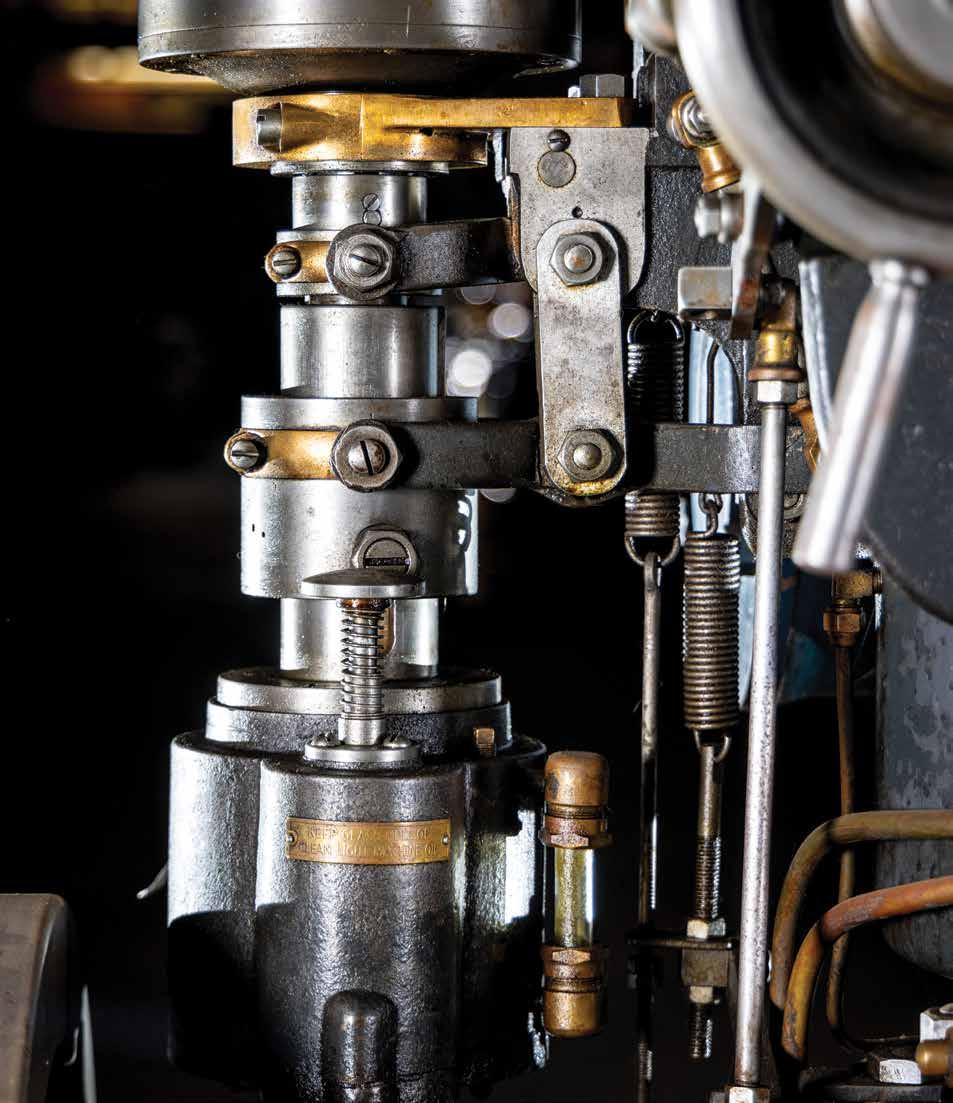
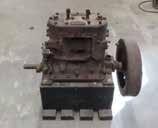
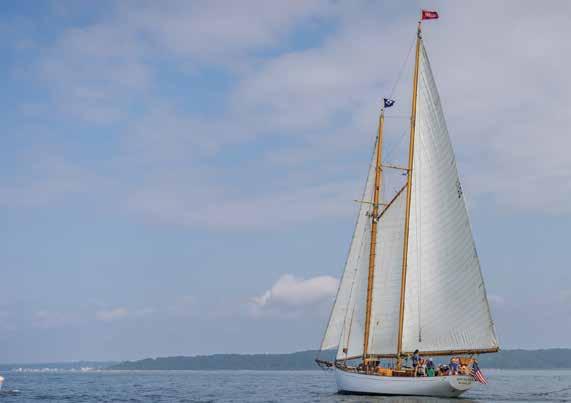
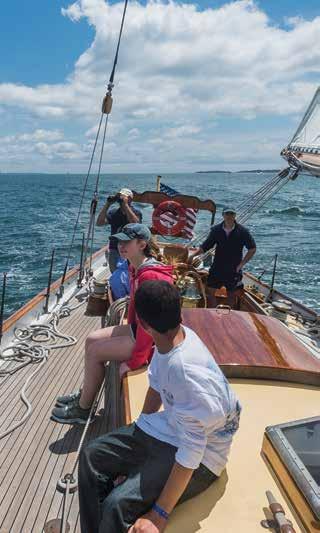
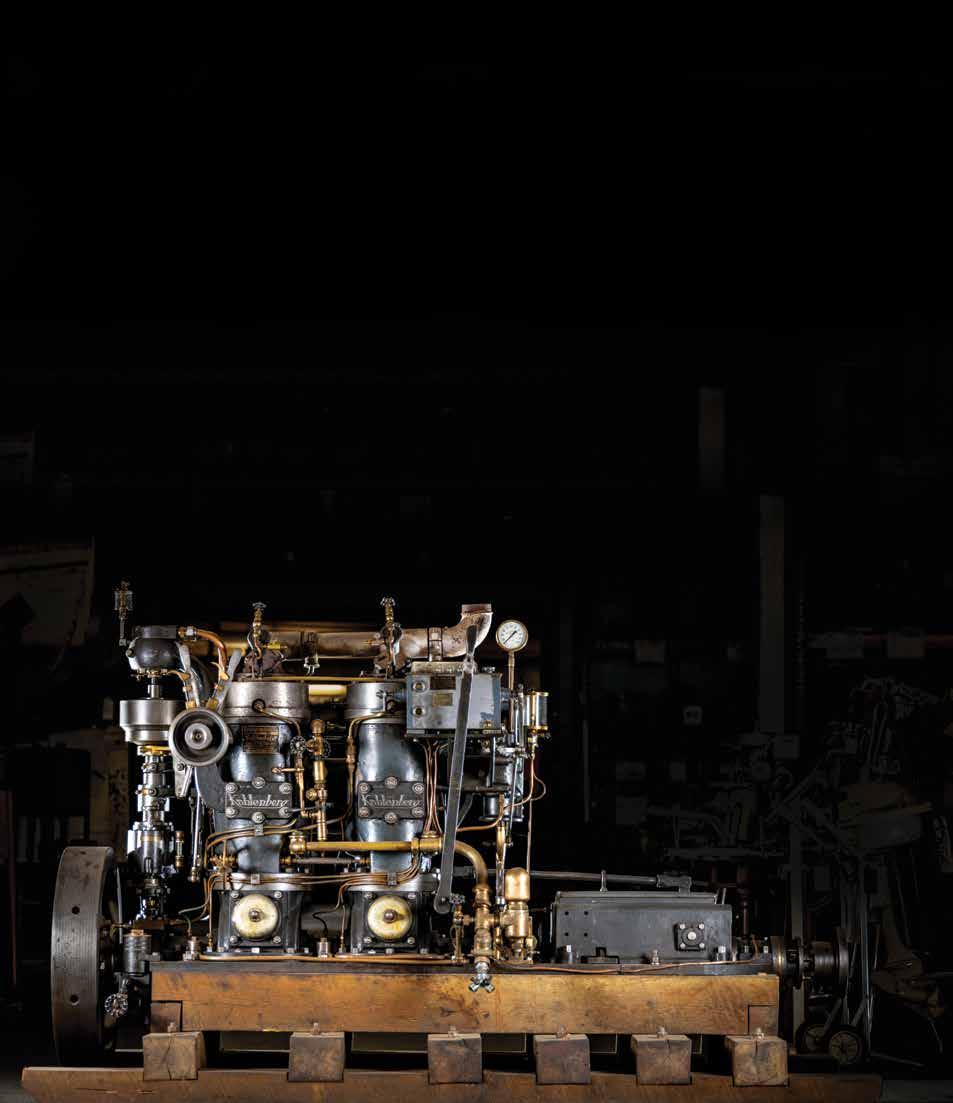
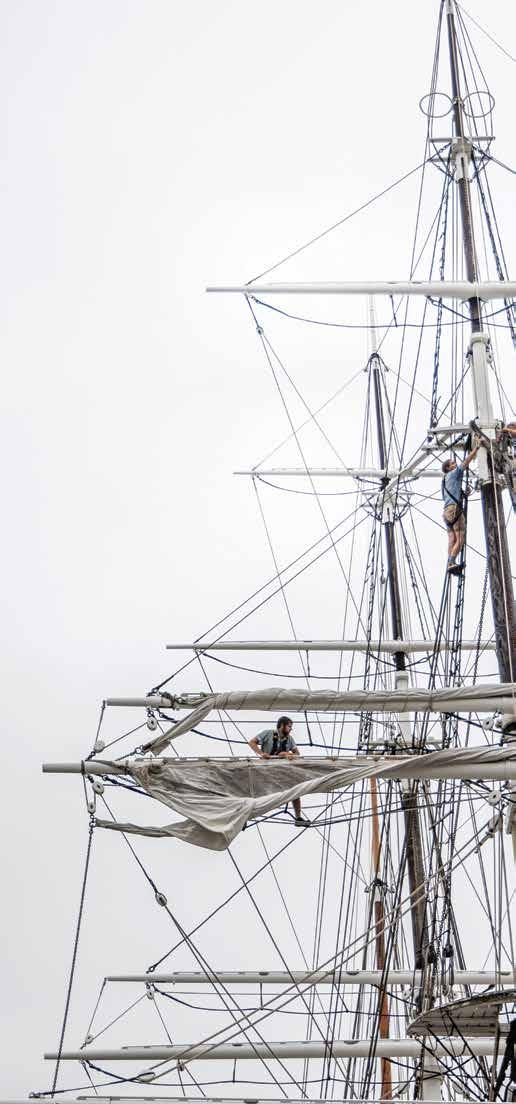
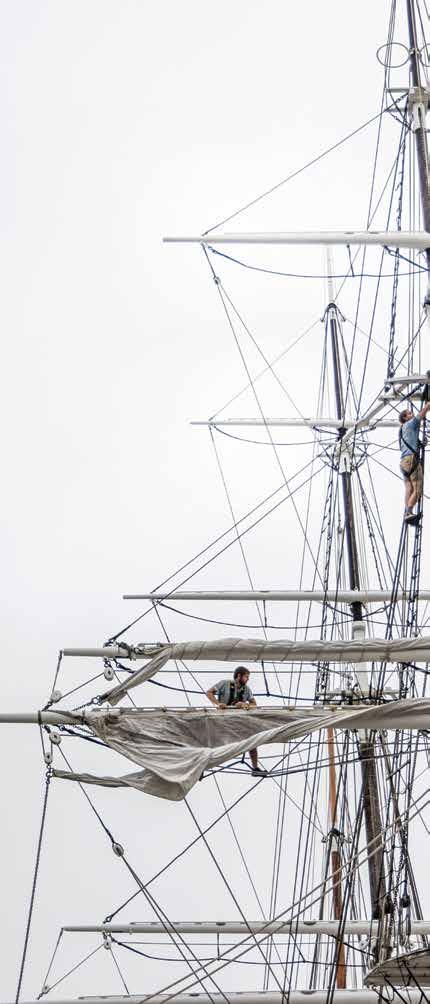
Detail from a Kahlenberg semi-diesel marine engine designed in 1922 and built in 1930. This 24-horsepower engine will be in the American Watercraft Collection exhibition in the future Wells Boat Hall. See page 28 for more information.
CONTACT
V isitor Information : 860-572-0711
A dministration : 860-572-0711
A dvancement : 860-572-5365
M embership : 860-572-5339
P rogram Reservation : 860-572-5331
M useum Store : 860-572-5385
V olunteer Services : 860-572-5378
P lease go to the Museum’s website for information on fall and winter schedules.
CORRECTION
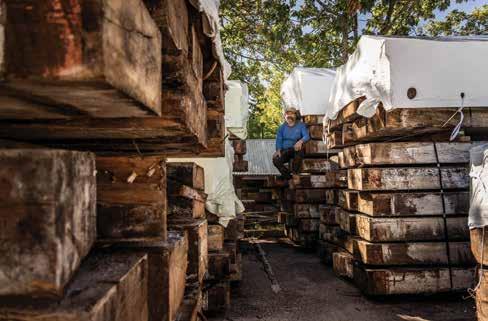
Timber salvage from Hoosac Stores Warehouse, July 2025.
Innovating Restoration with 3D Modeling
Hays and Ros Clark Shiplift Renewal
Museum Receives Historic Timber Donation for Dunton Restoration
Preserving Vessels that Shaped America
Standout Season for Schooner Brilliant
Moon Tree Lands Here
Museum Crafts Sign for SUBASE New London
Readying the Fleet
Munson Fellows Spotlight
Charles W. Morgan Walking Tour
FEATURES
A Legacy of Resilience
Charting Course for the Next Century
SPECIAL: WATERCRAFT
Preparing for a 50-year Dream:
The American Watercraft Collection in the Wells Boat Hall
Annie: Ready to Come About—and Don’t Capsize!
Fiddler: A Fine-ended Boat for a Woman Who Wanted Speed
The North Haven Dinghy: The World’s First One-Design Class
Old Glory III: Through the Fundy Fog
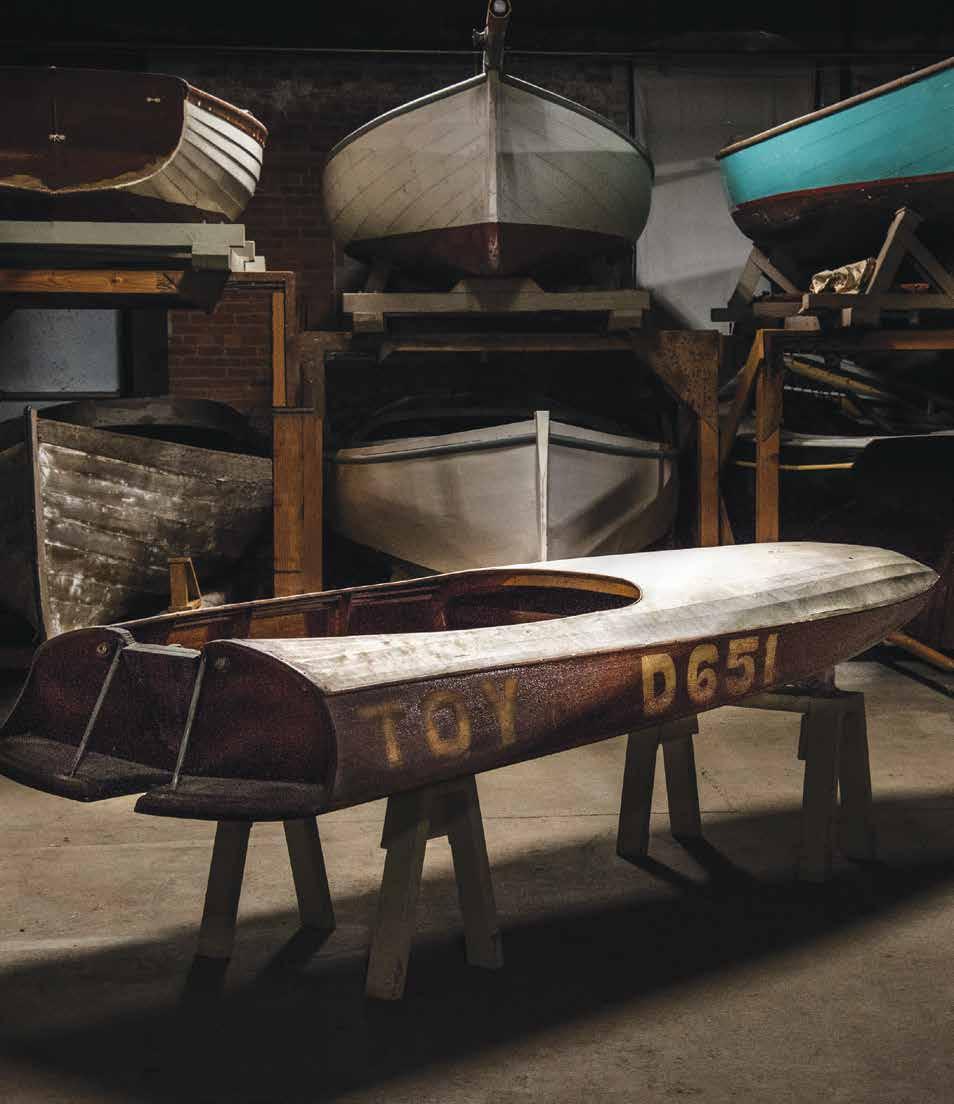
Wings on Ice: Long Island’s Ice Scooters
Button Swan: A Newport Fish and Lobster Boat
Lollypop: Candy Boat
Kahlenberg Semi-diesel Marine Engine
In our spring/summer 2025 issue, page 21, the pine sea chest belonging to 19th-century Irish immigrant James McKiernan was mischaracterized as a dug-out style chest. The chest is a dovetailed construction with a hinged lid and metal fittings. 32
75 Greenmanville Avenue
Mystic, CT 06355-0990
www.mysticseaport.org
A Message from the President
As David McCullough once wrote, to have no sense of the history of your country is like having no sense of the history of your life. It is a form of amnesia—and can be as detrimental to society as it is to an individual.
At Mystic Seaport Museum, we look forward to marking our nation’s 250th anniversary next year. Let us hope that this milestone launches a renewed era of interest in understanding our shared past. In this moment, we strive to spark curiosity about history so that we may be better prepared to meet the challenges of the present.
One of the most powerful ways we inspire curiosity and share knowledge is through storytelling. The stories in this issue—drawn from our American Watercraft Collection—illustrate this in ways we hope you find both compelling and inspiring. Like all museums, we continue to face the challenge of providing relevant and engaging experiences to ever-evolving audiences.
As we prepare for our country’s Semiquincentennial next year, we also keep another anniversary in mind: 2030 will mark the centennial of Mystic Seaport Museum. There is much work to be done, and with your continued interest and financial support we can successfully navigate our course toward our Centennial—and far into the future.
I look forward to seeing you here at Mystic Seaport Museum as we celebrate America’s 250th anniversary year.
Onward!
Chris Freeman
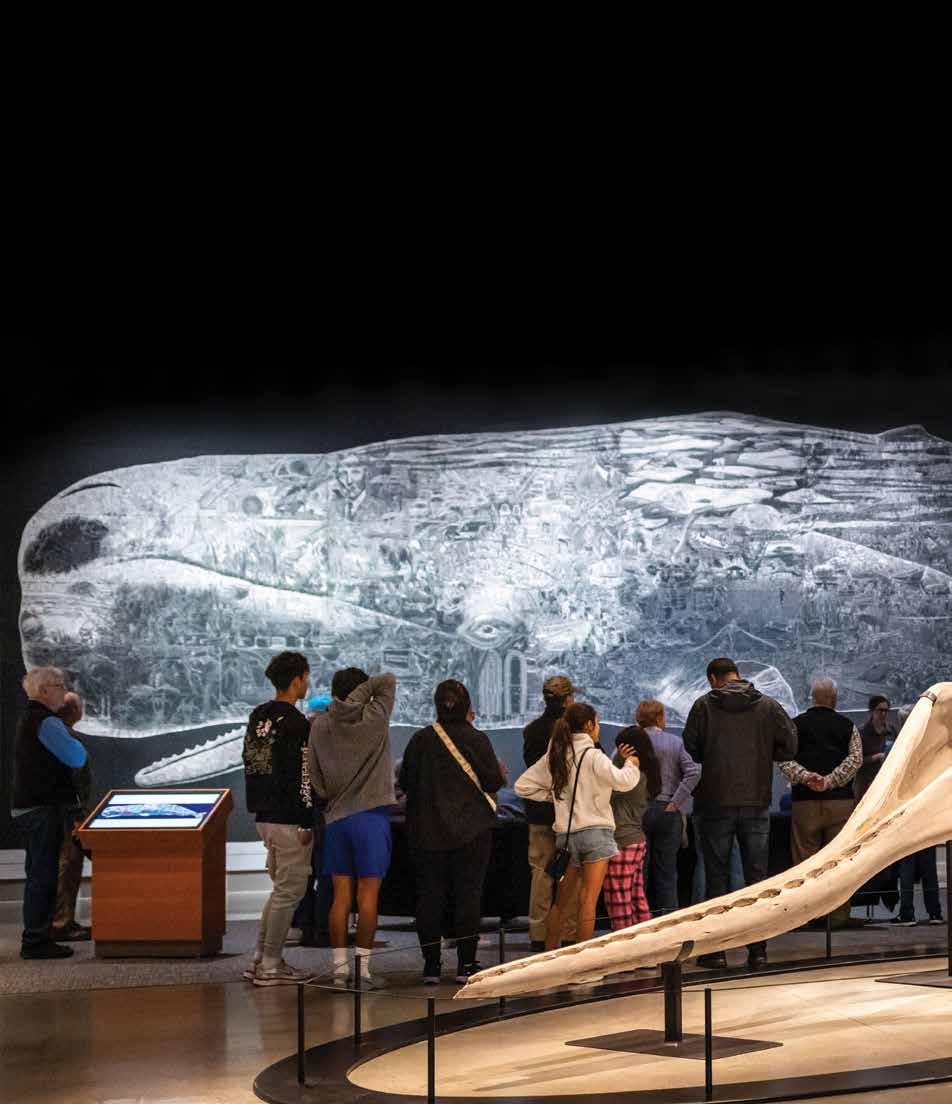
Photo (right): Or, the Whale by Jos Sances, on display in Monstrous: Whaling and Its Colossal Impact, is embedded with a history of capitalism in America and images of human and environmental exploitation and destruction since 1850. The whale is a metaphor for survival, immortality, and a reason for optimism.
BECOME PART OF THE MARITIME NARRATIVE FUND YOUR SEA STORY
By supporting Mystic Seaport Museum with a gift to the Annual Fund, you are more than a donor—you are a thread in the ongoing story of maritime history. Your gift sustains educational programs, keeps traditional trades alive in our shipyard and historic village, fuels engaging waterfront activities, and helps us share world-class exhibitions that spark curiosity in future generations.
WE NEED YOUR SUPPORT BY DECEMBER 31, 2025.
Innovating Restoration with 3D Modeling
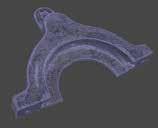
Photogrammetry, a computer-based method that uses photographs to create accurate digital three-dimensional (3D) models, was used at the Museum to document watercraft and assist in restoration projects. The technique also proved valuable in the Museum’s shipyard machine shop, where it aided in the restoration of historic marine engines. Since original parts were often incomplete or unavailable, 3D photogrammetry supported the remanufacture of missing
or damaged components.
One such project involved the restoration of a rare Stanley marine engine from about 1910, with little technical information available. In disassembling the engine, the team discovered that a fragment of an oiler assembly was attached to the crankshaft.
Volunteer Bob Andrle created a wireframe model of the existing part. Volunteer Nate Rosebrooks then 3D-printed the plastic part, slightly larger than the original to allow
Hays and Ros
Clark Shiplift Renewal
In 2007, the Henry B. du Pont Preservation Shipyard underwent a significant $10 million upgrade, replacing the aging liftdock with a modern Synchrolift system.
This investment ensured the Museum could continue essential vessel maintenance—most notably enabling the major restoration of the Charles W. Morgan ahead of the vessel’s 38th Voyage in 2014. The improved infrastructure also expanded the Museum’s maritime repair business, attracting high-profile projects such as the Mayflower II and Susan Constant.
In spring 2025, the Synchrolift’s supporting software was upgraded, and the permitting process for dredging
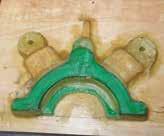
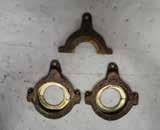
for casting shrinkage. From this pattern, molds were created, bronze parts were cast, and the components were machined to final specifications for installation.
This successful collaboration between the Museum’s shipyard and its volunteer photogrammetry group demonstrated the potential of digital tools in preserving maritime heritage and supporting the rebuilding of engines within the Museum’s collection.
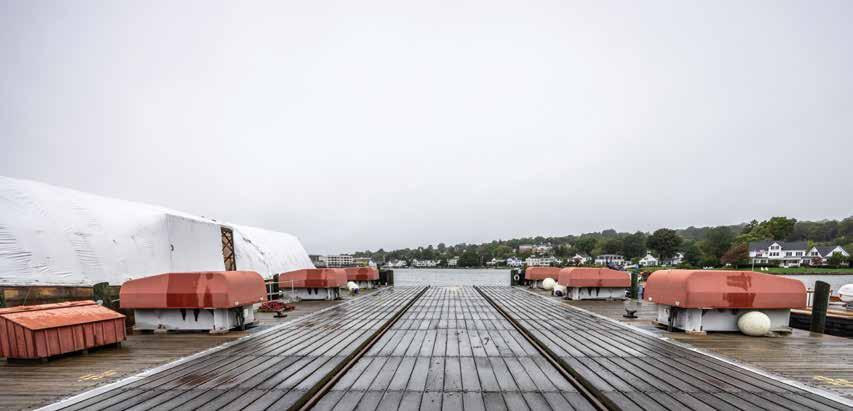
beneath the lifting platform began. The survey revealed silting had raised the seabed level by as much as seven feet, significantly reducing the platform’s submersion depth. During the spring haul-out of the Charles W. Morgan, there were only inches of clearance beneath the keel— underscoring the urgency of this work.
As part of the renewal, rust removal and repainting of the haul-ashore cradles will also be completed. Together, these efforts will ensure the Museum’s ability to care for our historic watercraft collection and sustain the shipwright skills essential to preserving traditional large timber frame vessels.
Plastic 3D printed part and casting mold
Stanley marine engine from about 1910
3D mesh digital model of the existing bronze oiler part
The original bronze oiler (top) and the four new parts (bottom) ready to be installed in the Stanley marine engine
Museum Receives Historic Timber Donation for Dunton Restoration
The Museum has received a significant donation of longleaf pine timber from the National Park Service in Boston. This gift of more than 300 timbers—totaling 50,600 board feet—will aid the restoration of the L. A. Dunton. Salvaged from the historic Hoosac Stores Warehouse at the Charlestown Navy Yard, where the USS Constitution is docked, the timber provides a rare and authentic source for traditional shipbuilding still practiced at Mystic Seaport Museum. Built in 1895, the warehouse served as a vital Navy supply depot, and its century-seasoned timbers are uniquely suited for preservation work.
Longleaf pine is prized for strength and durability. Harvested from trees hundreds of years old, old-growth timber features tight growth rings, natural rot resistance, and greater stability. This material will replace the ceiling, deck beams, and possibly hull framing on the Dunton, ensuring long-term integrity and historical accuracy. The donation underscores a meaningful collaboration between two storied maritime institutions and supports the Museum’s mission to preserve vessels and maritime skills for future generations.
Preserving Vessels That Shaped America
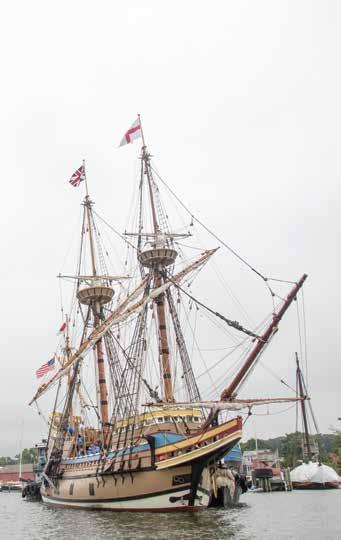
The 17th-century merchant vessels Mayflower (left) and Susan Constant (below) played pivotal roles in the early formation of what would become the United States. The Mayflower, arriving in 1620, carried the Pilgrims to Plymouth, Massachusetts, where they established one of the first successful English colonies. Their Mayflower Compact laid early groundwork for self-governance and democratic principles. The Susan Constant, part of the fleet that founded Jamestown, Virginia, in 1607, helped establish the first permanent English settlement in North America. Jamestown became a
cornerstone of colonial development and a model for future expansion.
As the United States marks its 250th anniversary, the re-creations of both vessels will be in the Museum’s Henry B. du Pont Preservation Shipyard for service. The Susan Constant is undergoing a two-year, $3.6 million refit, while the Mayflower II will receive its biennial haulout, inspection, and maintenance. These ships are icons of exploration, resilience, and freedom—reminders of America’s complex origins and enduring democratic ideals.
Standout Season for Schooner Brilliant
Moon Tree Lands Here
The Museum’s Treworgy Planetarium is now the home of an Artemis Moon Tree. The Artemis Moon Tree program is a modern-day reimagining of the Apollo 14 Moon Trees, which carried tree seeds into lunar orbit in 1971. During NASA’s Artemis I mission of 2022 the seed of our new tree, an American Sweetgum, journeyed 270,000 miles from Earth aboard the Orion spacecraft and around the Moon. Trees are being distributed around the country to organizations with a special connection to NASA. In 2021, the Museum’s Planetarium was among the first class of institutions given the designation of NASA Community Anchor. This honor was accompanied by grant funding enabling us to develop and implement new hands-on STEM programs for middle school students—programs that continue to be offered with each new school year. The Moon Tree, a symbol of life sustained in the most extreme conditions of space, now stands on our grounds as a testament to the spirit of exploration, discovery, and persistence.
This season marked a triumphant return to sailing for schooner Brilliant. After a long winter of structural work and a repowering, the vessel was honored at the WoodenBoat Show with the “Best in Show” award for a professionally maintained sailing vessel, which served as a meaningful recognition of the extraordinary work of shipwrights, Museum staff, crew, and supporters who helped return Brilliant to the water. Brilliant resumed its role as a classroom under sail, with teens cruising to Montauk, Block Island, Narragansett Bay, Martha’s Vineyard, and points in between. Partnerships thrived: Bronx students from Rocking the Boat joined for a third year, and a new collaboration with the Marine Science Magnet High School deepened local ties. Fall programming brought adult sailors aboard for day sails, races, and passages—proof that a vessel launched in the 1930s continues to inspire and educate today.
Museum Crafts Sign for SUBASE New London
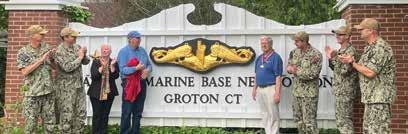
In May 2024, SUBASE New London asked Mystic Seaport Museum to create a new carved sign for its entrance gates. The original sign, in place for many years, had deteriorated beyond repair. Working closely with base representatives, Museum staff designed and produced a new sign led by Carve Specialist Rich Froh. Staff interpreter Steve Gibbs, a former U.S. Navy Qualified Submariner, also contributed extensively to the project.
The sign was unveiled at the Naval Base on June 18, with both Rich and Steve in attendance. During the ceremony, Rich was presented with an honorary dolphin pin in recognition of his craftsmanship. Reflecting on his involvement, Steve said, “I was honored to have the opportunity to work on this project. Having earned the right to wear the dolphin insignia myself, I have great respect for the insignia and what it means.”
This collaboration offered a meaningful opportunity for the Museum to strengthen its connection to the local maritime community while creating a sign that will endure for years to come.
Readying the fleet
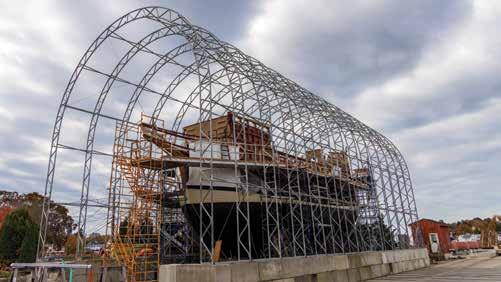
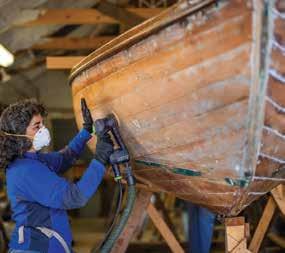
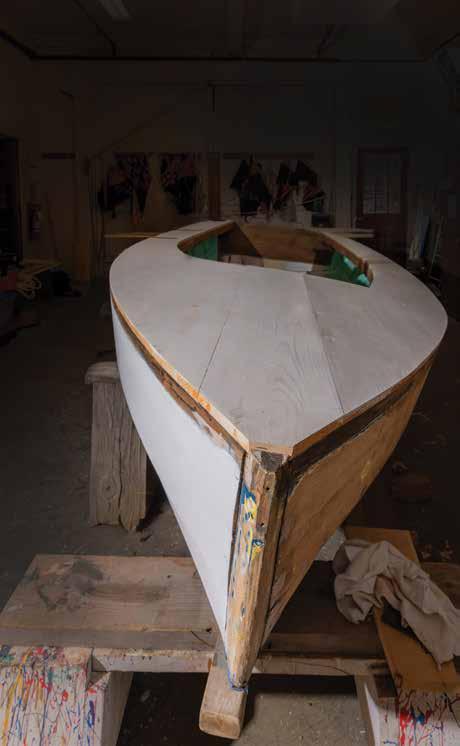
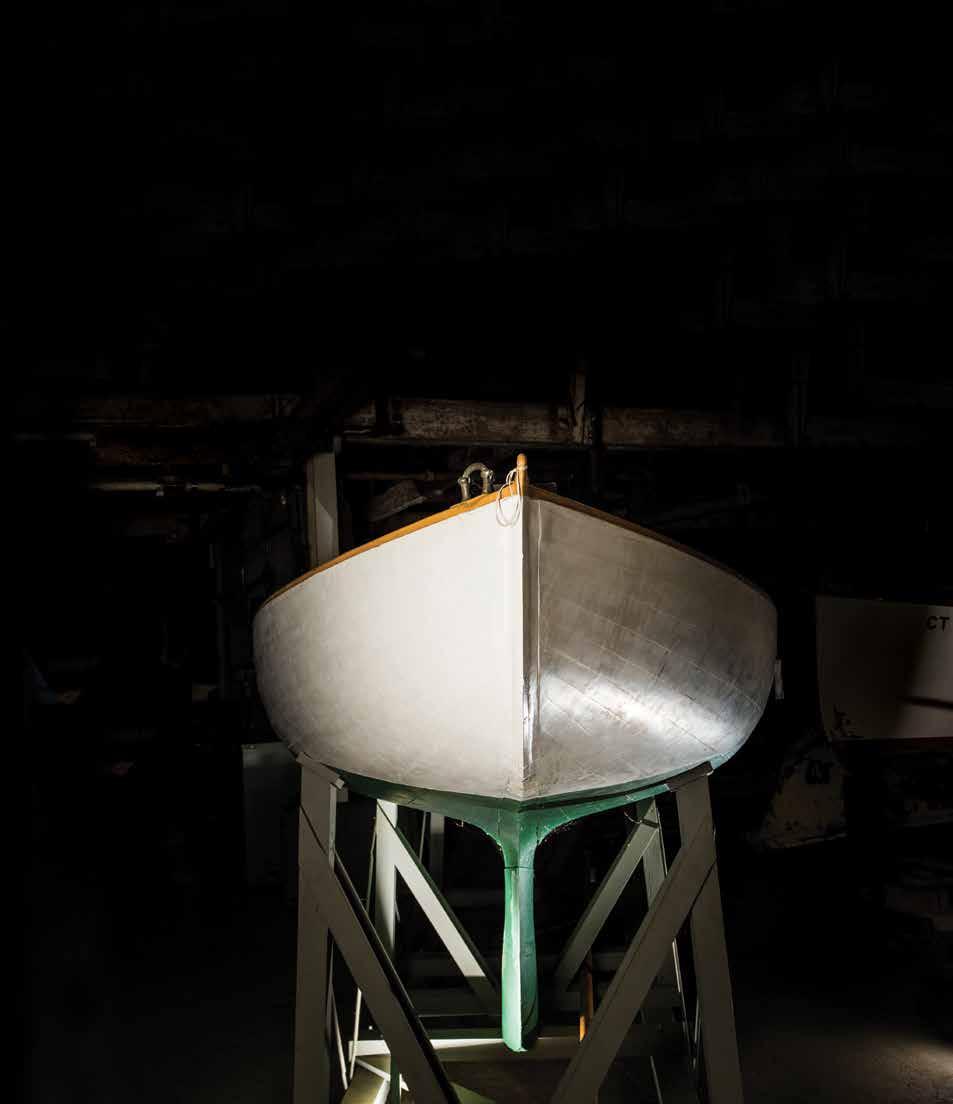
As the renovation and construction phase of the Wells Boat Hall nears completion, preparations are underway for the American Watercraft Collection Exhibition. The Paint Shop crew continues to repair and refinish watercraft destined for the exhibition while also maintaining vessels currently on display on the Mystic River. Volunteers Susan Andrle and Chuck Surgalis have devoted nearly full-time effort to yacht-quality refinishing projects.
Of the thirty-six boats requiring extensive paint work, twenty are now complete, with another five in progress.
Meanwhile, Quentin Snediker, Clark Senior Curator for Watercraft, and his team are assembling racks and dollies tailored for
Munson Fellows Spotlight
For more than six decades, the Frank C. Munson Institute of American Maritime Studies at Mystic Seaport Museum has welcomed graduate students, faculty, and independent scholars for intensive summer programs in maritime history and culture. Fellows engage in seminars, conduct original research, and join a national network of maritime scholars. Sara Rich, an Associate Professor at the Rhode Island School of Design, a citizen of the Waccamaw Indian People, and a maritime archaeologist, art historian, artist, and author of speculative fiction, participated in the Munson Institute in 2024. She described her experience:
When the call for applications to the Munson Institute came through the H-Maritime network, it seemed an opportunity too good to be true. Here was a chance for an intensive education on the multicultural maritime sphere of Colonial America, an education that was certain to enrich my research on deforestation for shipbuilding in my tribal community’s ancestral lands, and networks of timber trade along the eastern seaboard. Once accepted into the program and settled into the archives, I was astounded by the amount of documentary evidence detailing the shiploads of Southern yellow pine systematically removed from my homelands to New England ports. Further, coursework themes of extractivism in maritime history effectively grounded my research within the bigger, messier business of coloniality. My research and teaching are far better off because of my Munson Institute and Paul Cuffe fellowships, and I am grateful to Mystic Seaport [Museum] for the opportunity. Learn more about the Munson Institute at www.mysticseaport.org/ munson/.
the diverse range of craft to be displayed in the Wells Boat Hall. This is no one-sizefits-all task: the collection spans from an eight-foot Cub Pram to boats exceeding thirty feet in length. To safeguard the larger vessels, Master Shipwright Trevor Allen is designing and constructing custom cradles to provide the precise support each requires.
The work reflects a coordinated effort across departments, volunteers, and shipwrights to ensure that when the American Watercraft Collection Exhibition opens, visitors will encounter these boats presented with the care, craftsmanship, and historical integrity that define the Museum.
Charles W. Morgan Walking Tour
Last spring, the Museum’s Interpretation Department piloted a new Charles W. Morgan Walking Tour, offering visitors a deeper look at the Museum’s flagship and the connections between whaling and life in New England. The tour featured special “behind-the-scenes” stops, including the sail loft, chandlery, and the hold of the Morgan The experience began in the chandlery, where participants learned how captains and sailors provisioned for long voyages, before moving into the heart of the village to explore the trades that sustained the whaling industry—smithing, coopering, and printing among them. From shore to ship, the tour concluded in the Morgan’s hold, immersing visitors in the realities of life at sea: where sailors slept, what they ate, and how they kept in touch with loved ones back home. We look forward to offering the Charles W. Morgan Walking Tour again in the future!
Remnant longleaf pine stands in Sandy Island, South Carolina, which was heavily deforested in the 19th century for the naval stores and shipbuilding industries.
A Legacy of Resilience
Mystic Seaport Museum began as an act of rescue. In the early 20th century, wooden shipbuilding was waning along the Mystic River—where, between 1784 and 1919, more than 600 wooden vessels had once been launched. As the industry declined, maritime artifacts were scattered or destroyed. On December 25, 1929, three citizens of Mystic—Edward Bradley, Carl Cutler, and Charles Stillman—founded the Marine Historical Association to preserve America’s seafaring heritage. Their vision has been part of the Museum’s DNA ever since. Time and again, pivotal moments have revealed the Museum’s boldness to confront obstacles and reimagine what is possible. Through economic upheavals, storms, aging vessels, cultural shifts, and, most recently, a global pandemic, the Museum has consistently chosen transformation over retreat.
PRESERVING THE LAST WOODEN WHALER
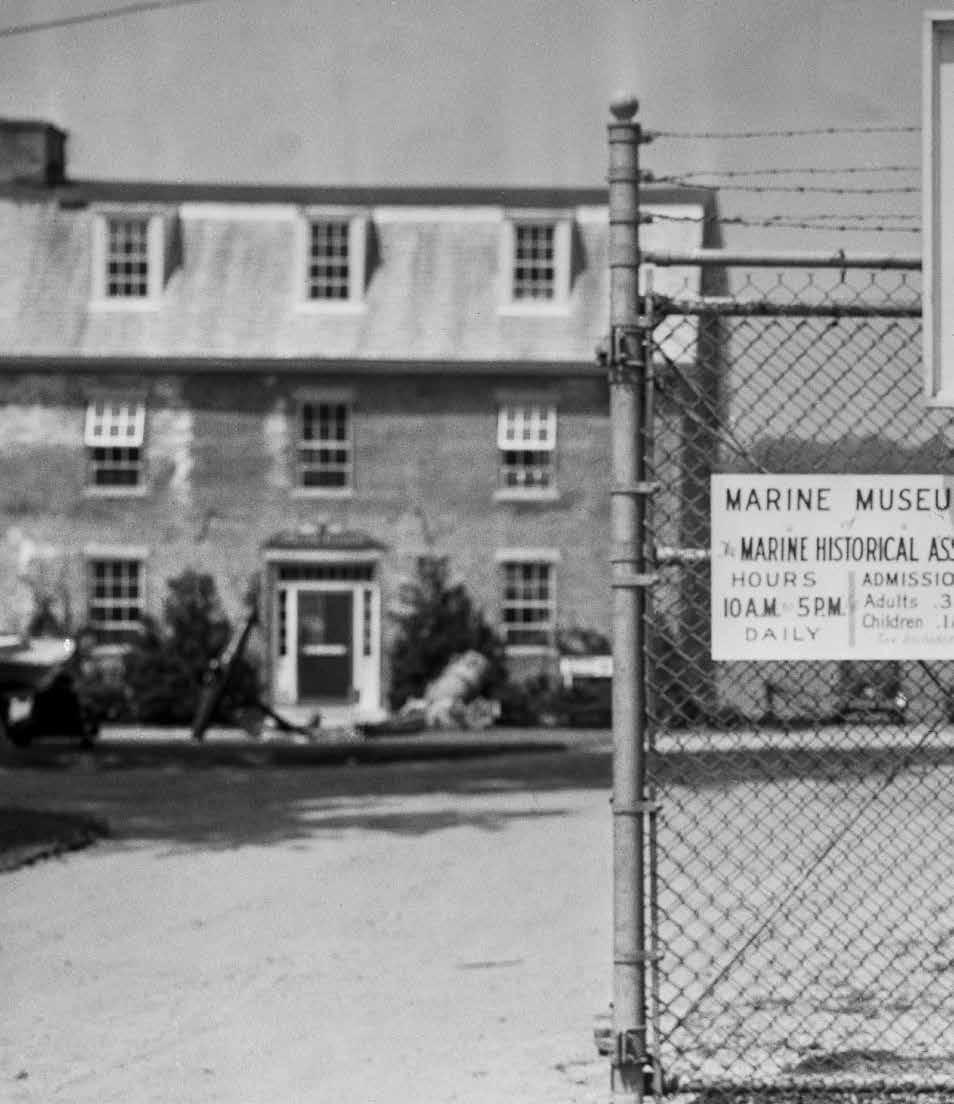
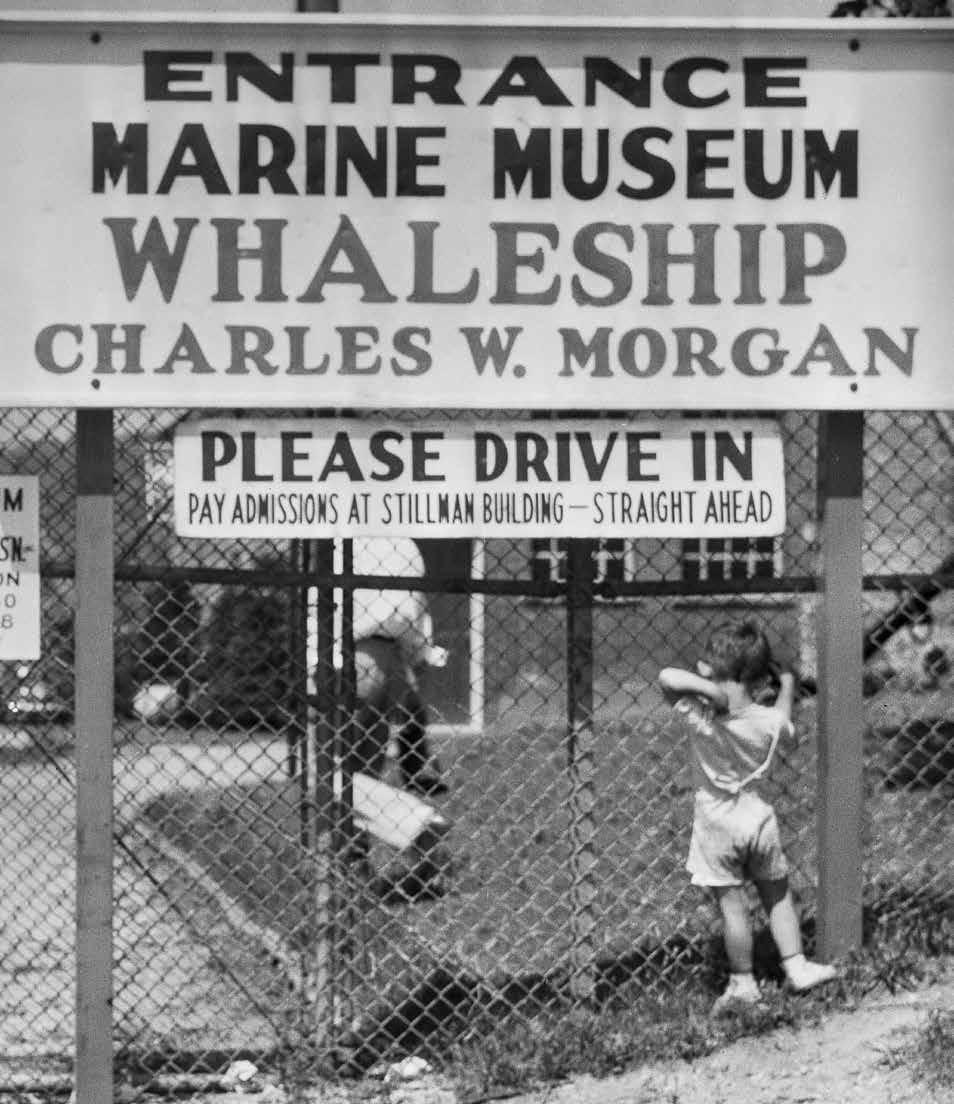
In its formative years, the Museum operated out of a defunct textile mill— today’s Stillman Building. Just 184 visitors paid admission in 1935. Yet the founders believed the Museum could thrive by preserving artifacts of national significance. Their chance arrived in 1941, when the last wooden whaleship, the Charles W. Morgan, faced destruction.
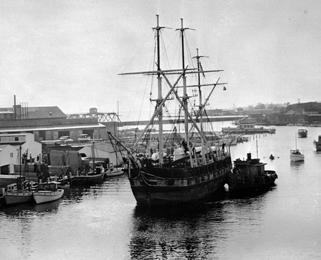
Damaged in the 1938 hurricane, the century-old vessel was towed from South Dartmouth, Massachusetts, to Mystic just before the attack on Pearl Harbor. Amid wartime shortages, the ship opened to visitors the following summer. Membership grew from 27 in 1930 to more than 1,000 by 1947, while attendance rose to 23,000. Saving the Morgan did more than preserve an artifact—it proved that bold acquisitions could capture the public’s imagination and provide the resources to sustain the Museum.
BUILDING A LIVING MUSEUM
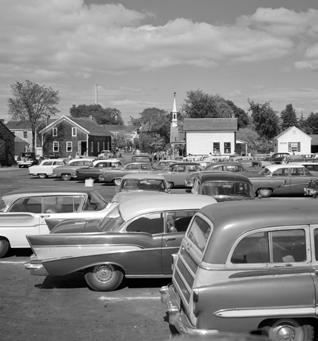
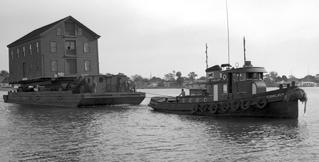
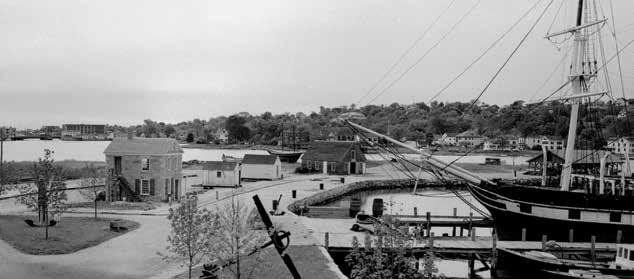
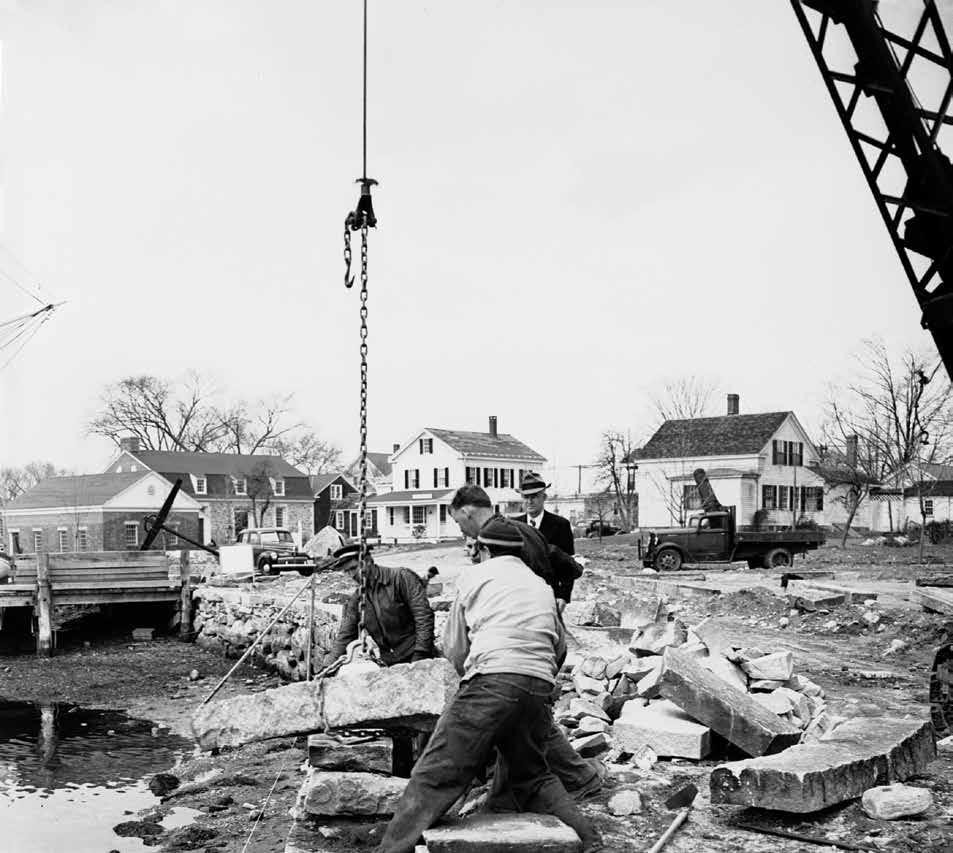
In 1943, Museum leaders envisioned a re-created seaport street lined with shops
and homes from the mid-19th century. Moving entire buildings—among them the Driggs Peters Shipsmith Shop, Mystic Bank, Boardman School, and the Burrows and Buckingham-Hall houses—demanded both fundraising and engineering ingenuity. By the 1950s, the seaport village had become a defining feature, immersing visitors in the life of a seafaring community.
The Museum inaugurated the Mariner Training Program following three pivotal acquisitions: the full-rigged ship Joseph Conrad in 1947, a fleet of Dyer Dhows donated by local yacht clubs in 1950, and the schooner Brilliant in 1952. Additionally, the Frank C. Munson Institute of American Maritime Studies was established in 1955. These ambitious investments were resource-intensive and risky, yet by the late 1950s annual visitation reached 250,000. The lesson was clear: growth could come through immersive experiences that required bold commitments to infrastructure.
RESTORING VESSELS AND SKILLS
By the 1970s, it was evident that the
Charles W. Morgan and other vessels needed major restoration. At the same time, traditional shipbuilding skills were vanishing. To preserve both vessels and craftsmanship, the Museum created the Henry B. du Pont Preservation Shipyard. Under master boatbuilder John Gardner, new programs in boatbuilding, small-craft preservation, and maritime demonstrations brought heritage skills to life.
The Shipyard became central to the restoration of the Morgan. During the Bicentennial in 1976, the Museum welcomed nearly 578,000 visitors. Rather than retreat in the face of deteriorating vessels, Mystic Seaport Museum invested in expertise and capacity—reaffirming its mission by building strength from within.
REINVENTING AND BROADENING THE STORY
In the 1980s, many outdoor history museums struggled to retain audiences. Mystic Seaport Museum responded by diversifying its offerings. The acquisition of the Rosenfeld Collection—nearly one million maritime photographs—expanded research opportunities, while early digital initiatives
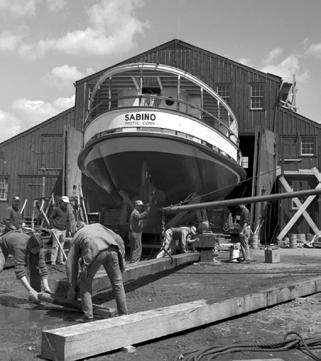
CLOCKWISE FROM TOP LEFT: CHARLES W. MORGAN arrives in Mystic, 1941 (1955.1.20); South parking lot (currently South Entrance), 1958 (1958.9.7C); Sail loft moving, October 9, 1951 (1951.10.25); ANNIE work progress, July 1950 (1950.7.2); Museum gounds, 1949 (1949-10-21); SABINO, April 21, 1978 (1978.5.63)
made collections more accessible. By redefining itself as more than a re-created village, the Museum weathered cultural shifts that closed similar institutions. The 1990s marked another turning point. Rebranding as “The Museum of America and the Sea,” Mystic Seaport Museum reached beyond New England. The signature exhibition Voyages: Stories of America and the Sea explored national maritime themes, while conferences examined race, ethnicity, and maritime history. The construction and 2000 launch of the schooner Amistad invited visitors to engage with the intertwined histories of slavery and the sea.
More recently, the 2024 exhibition Entwined: Freedom, Sovereignty, and the Sea centered Indigenous, African, and African-descended worldviews, underscoring the Museum’s ongoing commitment to more inclusive storytelling.
INVESTING FOR THE 21ST CENTURY
With the new millennium came the challenge of caring for a growing collection. In 2001 the Museum opened the 41,000-square-foot Collections Research Center, housed in the former Rossie Velvet Mill. Purpose-built storage and workspaces now safeguard more than two million objects while providing access for scholars. At the same time, the Museum launched the ambitious project to restore the Charles W. Morgan to sail again. Relaunched in 2013, the vessel departed on the historic 38th Voyage in 2014, visiting ports across New England and raising awareness of whales
and ocean stewardship. This extraordinary endeavor reaffirmed the Museum’s willingness to surmount logistical hurdles and pursue ambitious projects in service of its mission.
NAVIGATING A PANDEMIC AND PLANNING AHEAD
The COVID-19 pandemic posed one of the greatest operational challenges in the Museum’s history. With revenues uncertain, leadership pressed forward: beginning restoration of another section of the Rossie Velvet Mill into the Wells Boat Hall, improving marina facilities, and partnering with Greenwich Hospitality Group to develop the Delamar Mystic hotel on Museum grounds. Even during closures and health restrictions, the Museum invested in longterm infrastructure and sustainability.
In 2024, Mystic Seaport Museum established the American Institute for Maritime Studies to expand research and partnerships. At the same time, the award-
“Our history proves it: challenges are not roadblocks but turning points.”
winning “Find Your Sea Story” campaign embraced digital and community-based engagement, demonstrating the Museum’s adaptability and commitment to meeting audiences where they are.
A PATTERN OF RESILIENCE
At every stage, Mystic Seaport Museum has turned challenges into opportunities. When wooden shipbuilding declined, we preserved vessels and built a re-created seaport. When historic ships aged, we founded a preservation shipyard. When attendance flagged, we diversified programming. When cultural expectations shifted, we broadened our stories to include voices once overlooked. When facilities grew outdated, we created modern spaces to safeguard collections. And when a pandemic struck, we launched new partnerships and planning initiatives. As the world faces climate change, technological disruption, and shifting cultural expectations, Mystic Seaport Museum will continue to adapt. Obstacles can be catalysts—and bold risks, from acquiring an endangered whaleship to staging a modern voyage, have defined the Museum from the beginning. Our history proves it: challenges are not roadblocks but turning points. Preserving maritime heritage is not a static endeavor. It is a living practice of resilience and reinvention, one that continues to chart a course for the future.
Leah Prescott, Senior Library Administrator/ Interim Vice President for AIMS
Bulkheads at Mystic Seaport, April 1949 (1949.4.17)
CHARTING COURSE FOR THE NEXT CENTURY
For nearly 100 years, Mystic Seaport Museum has been the keeper of America’s maritime story. Generations of visitors have walked the decks of tall ships, wandered the re-created seaport village, and marveled at the craftsmanship in our shipyard. As we head toward our 100th anniversary in 2029–2030, one big question looms: How does a museum rooted in history stay vital and relevant in today’s fastchanging world?
A SEA CHANGE IN PERSPECTIVE
When we began thinking about the Museum’s next chapter, we started with a simple truth: America’s relationship with the sea has changed. Once, our coastal towns were defined by whaling, fishing, and shipbuilding. Today, those coastal towns are defined by arts, culture, foodways, and technological innovation. The sea continues to shape lives, but in new and pressing ways. The conversation is not just about commerce, recreation, service at sea, resources from the sea, and immigration but also about sea level rise and climate change. The narrative is evolving from one of human impacts on the oceans to the oceans’ impacts on us.
To capture that bigger story, we spent two years talking with more than 250 people—staff, volunteers, educators, scholars, trustees, business leaders, and community members. Their answers to a central question—“Why does the maritime experience matter?”—were as varied as the sea itself. Some pointed to freedom and adventure; others to resilience, skill, and community. What united them all was this: America’s maritime story isn’t just about the past. It’s a mirror for who we are today and a compass for where we’re headed.
WHAT WE LEARNED
Through those conversations, we heard clear messages. We learned that the Henry B. du Pont Preservation Shipyard is essential not only for preserving our national historic landmark vessels, but also for sustaining the traditional skills that keep maritime trades alive. We learned that the American Institute for Maritime Studies serves as a central hub for research and scholarship, fostering new opportunities for learning and dialogue. We learned that our supporters desire that our vast collections be carefully preserved, so the stories contained within can be shared in ways that feel fresh, accessible, and relevant to today’s audiences. We learned that our stakeholders value our educational offerings especially when they deliver quality opportunities to the widest possible audience and when cost is not a barrier to participation. We learned that our visitors and stakeholders cherish and value their experiences with the Museum, both in person and online, informing us to offer new ways for people to engage with maritime history in person and virtually. We learned that our museum provides a respite and refuge from the madness of the modern world and provides opportunities for everyone to forge indelible memories connected to the maritime experience. And of course, we learned that our beautiful site on the banks of the Mystic River will continue to be a defining strength, offering access to
on-the-water experiences that are not commonly available.
A NEW FRAMEWORK
To answer the question of how to stay vital and relevant, Mystic Seaport Museum has developed a framework to guide the Museum into its second century. Charting Our Course 2030 is a plan that honors maritime traditions while also sparking curiosity and conversations that matter now. Think of it as a bridge from our founder’s original vision to be “educational in purpose, national in scope, and an inspiring force for the future” to the modern-day equivalent of providing meaning, relevance, and inspiration that will connect future generations to our shared history and the lessons that history transmits.
“We must launch an agility mindset wherein teams mobilize around opportunities that drive real impact.”
Museum Trustee
A COMPASS FOR DECISION-MAKING
To keep the plan on course, every new idea will be measured against four simple benchmarks. We will ask whether a project is Relevant—does it connect meaningfully with people today? We will consider Reputation—does it strengthen the Museum’s standing locally, nationally, and globally? We will weigh Responsibility— does it honor our role as caretakers of history, community, and the environment? And finally, we will look at Revenue—can it contribute to the Museum’s long-term sustainability? These four questions will serve as a compass, ensuring that each step we take aligns with our mission and vision for the future.
GUIDING PRINCIPLES
The Museum’s work will be guided by a set of principles that shape how we tell stories and connect with people. We will convene, connect, and curate, creating opportunities for dialogue about the interplay of past and present. We will place people at the heart of our storytelling—
whether staff, visitors, or members of the community—because maritime history is ultimately about human experience. We will celebrate our home in Mystic by strengthening our ties to the town and region, even as we look outward to reach national and global audiences through digital platforms. Climate impacts will remain a central theme, woven into our planning, partnerships, and exhibitions. Underpinning it all will be a commitment to excellence, ensuring that our practices— financial, organizational, and cultural— are strong enough to carry the Museum confidently into its second century.
WHAT VISITORS WILL EXPERIENCE
Over the next several years, visitors will experience this vision taking hold across the Museum. The restoration of the fishing schooner L. A. Dunton will showcase maritime craftsmanship, while new waterfront exhibits and the opening of Wells Boat Hall will highlight the breadth of the American Watercraft Collection. A comprehensive master plan will tackle infrastructure, accessibility, and the challenges of sea level rise, while the American Institute of Maritime Studies will promote lifelong learning through conferences, digital classrooms, and nationally recognized research and scholarship. The Museum also looks to the future with a digital museum initiative, featuring a new website, online classrooms, digital membership cards, and global partnerships. At the same time, the visitor experience on campus will grow richer through new exhibitions, centennial celebrations, and expanded accessibility features such as sensory spaces.
LOOKING TOWARD 2030
Charting Our Course 2030 is our commitment to sailing confidently into our second century with all sails set and all flags flying. Philanthropy will play a central role, with a Centennial Founders campaign focused on recapitalizing Mystic Seaport Museum for our second century. We will be seeking to secure $50 million in new support to help safeguard the future of the Museum and support our continued growth and success, ensuring that the Museum remains strong for generations to come.
Our founders believed that the origins of freedom so fundamental to our nation were deeply rooted in our maritime culture. We continue to believe that some of life’s most important lessons can be learned from the sea, which connects us all. If you share our vision and are committed to engaging future generations in these important conversations, we invite you to spread the word and share your enthusiasm far and wide.
Sherri Ramella, Editorial Director
The Museum’s watercraft collection has long been at the heart of our work. The boats— beautiful in design and historically important— continue to captivate audiences. Whether on the water or preserved within the collection, they embody centuries of skill, ingenuity, and cultural exchange. Each step into the Rossie Mill reveals something new, affirming the collection’s lasting allure.
A BRIEF HISTORY
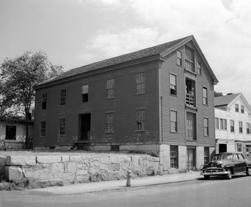
The American Watercraft Collection began in 1931, when the Museum—then known as the Marine Historical Association—acquired the 1880 sandbagger Annie. Since that first acquisition, the Collection has grown to more than 650 watercraft, arguably the world’s largest museum boat collection, with the nearest comparison being the canoe and kayak holdings of the Canadian Canoe Museum (Le Musée Canadien du Canot) in Peterborough, Ontario.
Until 1950 the Collection numbered no more than fourteen vessels. By 1959 it had grown to fifty-three, excluding the large, in-the-water vessels. The 1960s doubled that total, and the 1970s doubled it again, with 109 boats added in that decade alone. The 1970s and 1980s marked a period of rapid growth, guided by leaders such as John Gardner, Maynard Bray, Ben Fuller, and R.D. “Pete” Culler. Their work helped shape what is now known as the Traditional Watercraft Revival.
Without a central facility to house the boats, many were displayed outdoors, exposed to the weather, while others were only partly sheltered beneath open sheds. Recognizing the toll this took, staff moved vessels into what became known as the “catboat shed,” into the North Boat Shed (now the McGraw Gallery Quadrangle), and into the Museum’s first purpose-built storage—a prefabricated steel building near the Facilities Management Building. Access during these years was limited to special events or private appointments.
FRUITION OF THE DREAM
The acquisition of the Rossie Velvet Mill in 1973 brought the long-held dream of housing the small craft collection in one place within reach. By the mid-1980s, vessels were being stored in unused sections of the Mill. Though this offered protection from the weather, the space was not yet suitable for visitors. Progress came in fits and starts, with funding a persistent challenge. Today, after decades of planning and perseverance, the dream is becoming reality.
SELECTING BOATS FOR EXHIBIT
With the creation of a 35,000-square-foot Watercraft Hall, curators faced the challenge of deciding which vessels to display. Even in such a large space, it is impossible to include all 650 boats. After extensive discussions, surveys, and input from staff, trustees, experts, and Wells Boat Hall Exhibition Curator Pieter Roos, working in collaboration with the design firm CambridgeSeven, the team selected 173 vessels for display. That number may rise toward 200 as the boats are arranged into exhibition
“neighborhoods,” or themed groupings.
PREPARING THE BOATS
Every vessel requires thoughtful preparation for exhibition. For some, this may mean light cleaning; for others, careful conservation or—in rare cases—full restoration. Each boat is evaluated based on structural condition, surface coatings, and wear from use, with the goal of presenting it in a dignified and engaging way. Many will appear in their “as found” state, preserving the evidence of their working lives.
In 1988, John Gardner wrote in The Log of Mystic Seaport: “I don’t believe there is any peculiar historical virtue in dirt and decrepitude. It is legitimate, I think, to repair and refinish items in order to bring them as near as possible to their original condition.” Guided by that philosophy, the Museum balances conservation with presentation. Some vessels, such as Candy Boat No. 1 Lollypop (2025.50), require full restoration, while others, like the Piscataway River Wherry (1973.236), will receive only light cleaning to preserve their original coatings.
This work is led by Tim Giulini, Project Manager of the Henry B. du Pont Preservation Shipyard, together with a dedicated team of professional staff and volunteers.
SIGNIFICANCE OF THE COLLECTION
The American Watercraft Collection’s importance is widely recognized. In 1974, the National Park Service designated the Museum’s collections as “contributing elements” of the Mystic River Historic District on the National Register of Historic Places. The Museum also stewards four National Historic Landmark vessels: Emma C. Berry, Sabino, L. A. Dunton, and Charles W. Morgan. Many of the small craft hold equally distinguished pedigrees. Virio (1959.455) belonged to President Franklin D. Roosevelt; Alerion III (1964.631) was designed and sailed by Nat Herreshoff; other boats were owned by his son, L. Francis Herreshoff. Tautog (1985.7), a Sakonnet One Design, was designed by naval architect John Alden, and a Labrador kayak frame (1964.1562) once belonged to Admiral Richard Byrd. Many of these historic vessels will be featured in the new exhibition.
As Revell Carr noted in the 1979 edition of Mystic Seaport Watercraft, the National Endowment for the Arts underscored the Collection’s cultural significance by supporting the publication of Maynard Bray’s landmark catalog. The grant recognized the Museum’s watercraft as an expression of a truly American art form. This achievement would not be possible without the generous support of Stan and Nancy Wells, whose commitment has transformed a longstanding vision into reality. It also builds on the work of generations of curators, shipwrights, volunteers, donors, and collectors whose dedication preserved the vessels and the stories they carry. The new Wells Boat Hall is, in every sense, the fulfillment of a collective dream.
Quentin Snediker, Clark Senior Curator for Watercraft
“The acquisition of the Rossie Velvet Mill in 1973 brought the long-held dream of housing the small craft collection in one place within reach.”
Annie: Ready to Come About— And Don’t Capsize!
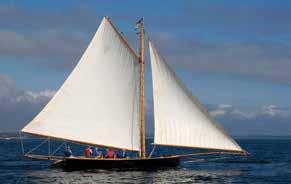
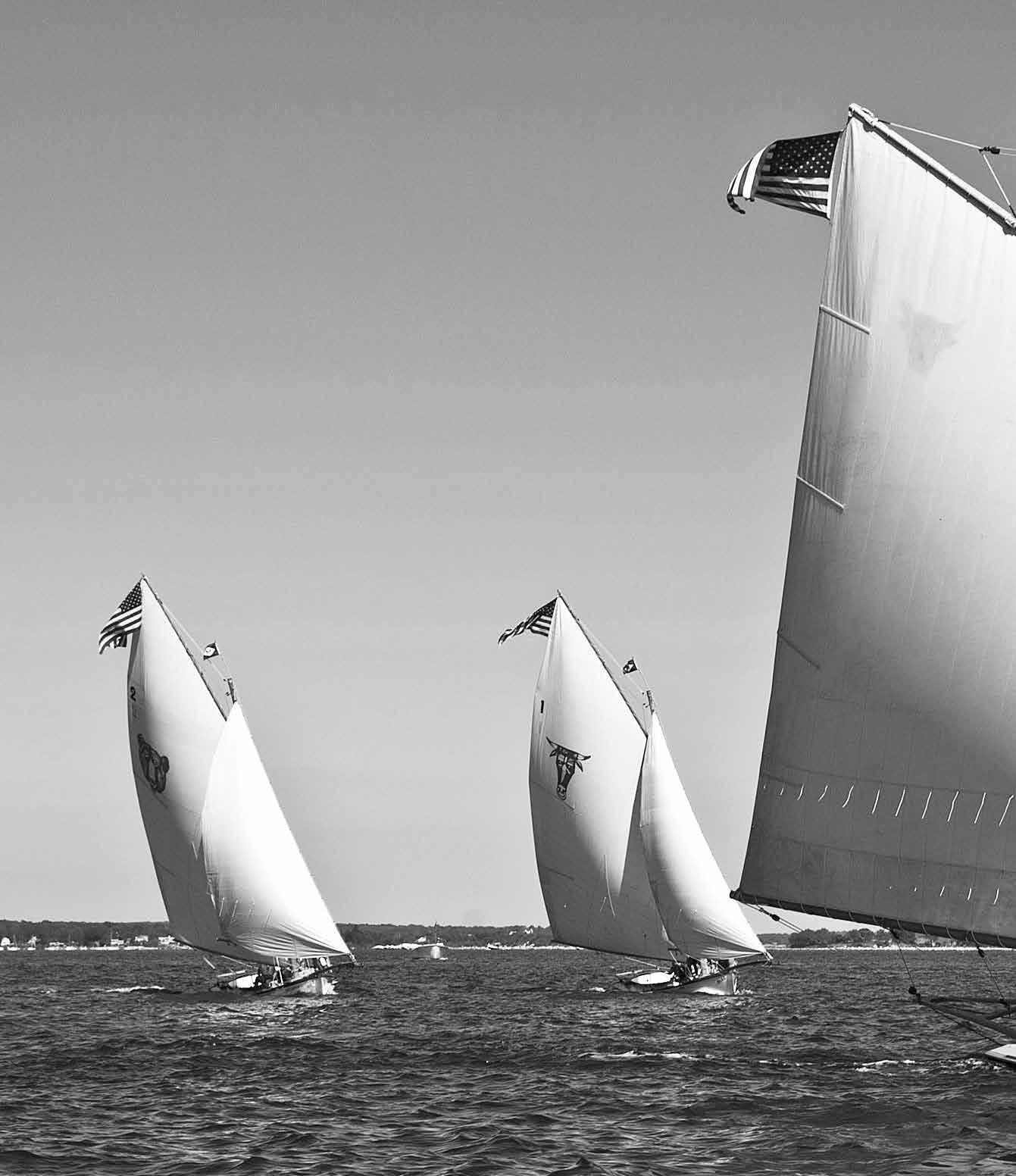
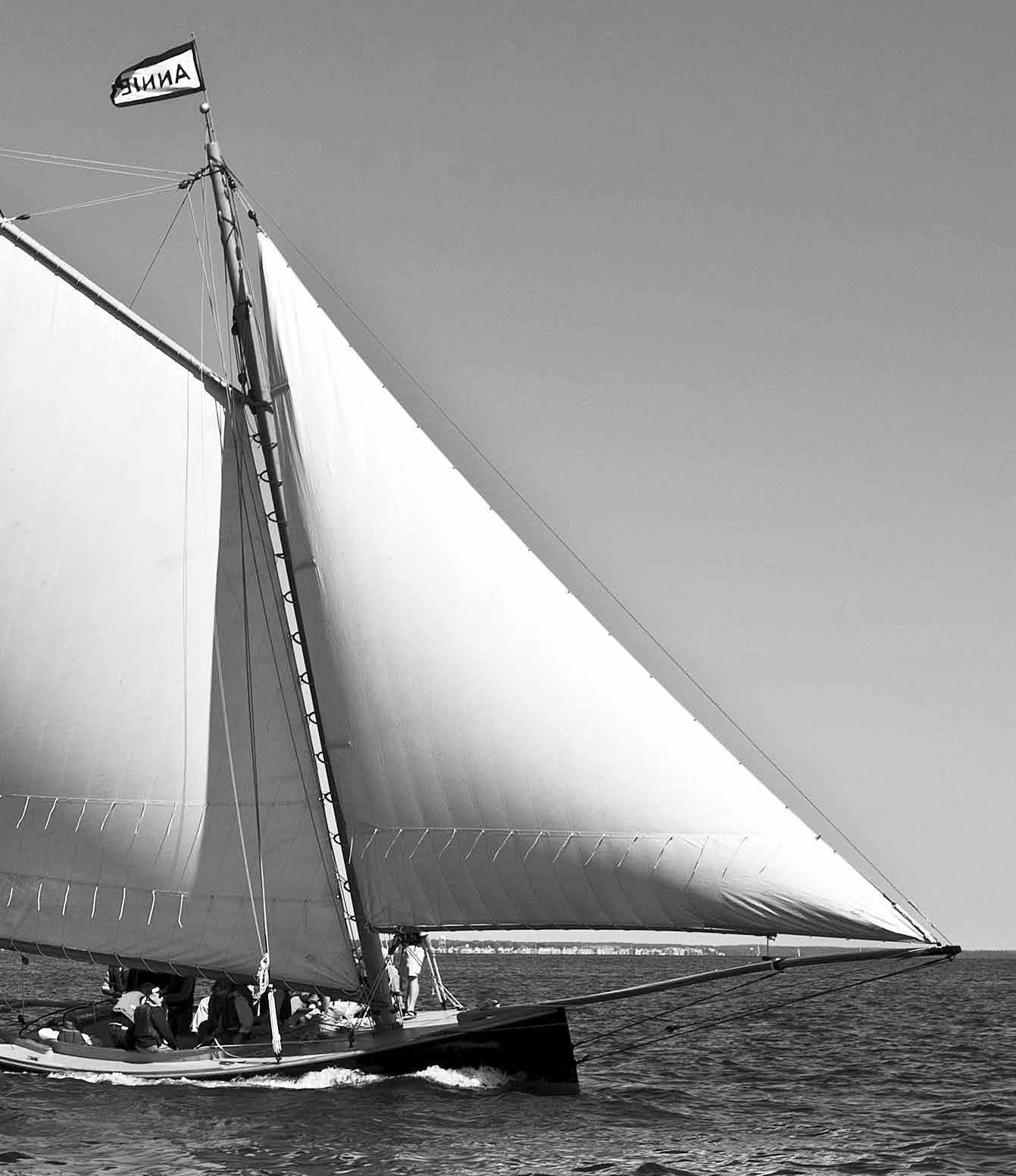
Sandbagger racing may have been America’s first extreme sport, and Annie—the very first vessel Mystic Seaport Museum acquired—is a perfect example of why. With a hull just 28 feet long but with a staggering 68-foot sail plan, Annie was built for speed and danger. Known in their day as “bag wagons,” sandbaggers were fast, edgy, and unstable—operating at the limits of control much like modern America’s Cup boats. It was said the famed racer Susie S. could capsize in a dead calm at the dock if the sail was up and no crew onboard.
The sport began in New York Harbor as informal contests between working sloops—oyster boats and cargo carriers with modest rigs. As the crews became more competitive, wagers were laid, the stakes grew, and the sail plans became increasingly oversized. By the 1840s and 1850s, the boats had evolved into finely tuned, precariously balanced
racing machines where amateurs and professionals alike pushed their limits in dazzling displays of skill and teamwork.
These races became public spectacles. Large excursion boats brought spectators to watch the action, eat, drink, and gamble on the results. The competition was as wild as it was thrilling. Without fixed ballasts, sandbaggers carried 2,000 pounds of gravel in forty fifty-pound bags. Each tack—turning through the wind—set off a frenzy: fourteen crew members hauling or tossing the heavy bags across the deck while scrambling to the high side themselves, all while the skipper steered with precision to keep from capsizing under the sudden weight shift of both men and stone.
Part of the sport’s appeal was its democratic spirit. Crews mixed seasoned harbor watermen with wealthy Fifth Avenue yachtsmen and everyone in between.
Newspapers covered the rivalries, and certain boats, captains, and crews became local celebrities. In one famous 1870 match between Tiger and Bella, the unheard-of sum of $50,000—over $1.3 million in today’s money— was wagered on the outcome.
After more than 35 years of excitement, sandbagger racing began to fade in the late 1880s. The sport drifted away from New York City toward Long Island Sound and even the Gulf of Mexico. Growing exclusivity in yacht clubs, which excluded non-members from crews, hurt participation. And as clubs imposed more and more rules, much of the anarchic charm disappeared.
For many sailors, the fun went with it.
Today, Annie remains a striking sight—with a sleek black hull and towering, exotic sail plan that makes the vessel look as if it’s flying even when motionless. Annie embodies both the raw, modern edge of a racing thoroughbred and the elegance of the Victorian age—a living reminder of a time when sailing was as much about daring as it was about grace.
Pieter N. Roos, Wells Boat Hall Exhibition Curator
ABOUT THE VESSEL
Annie Sandbagger 28'9" x 12'4"
Built in 1880 for Henry Tift of Mystic, Connecticut, and Tifton, Georgia. Donated to the Museum in 1931 by Dr. C. K. Stillman. (1931.4)
A fine-ended boat for a woman who wanted speed
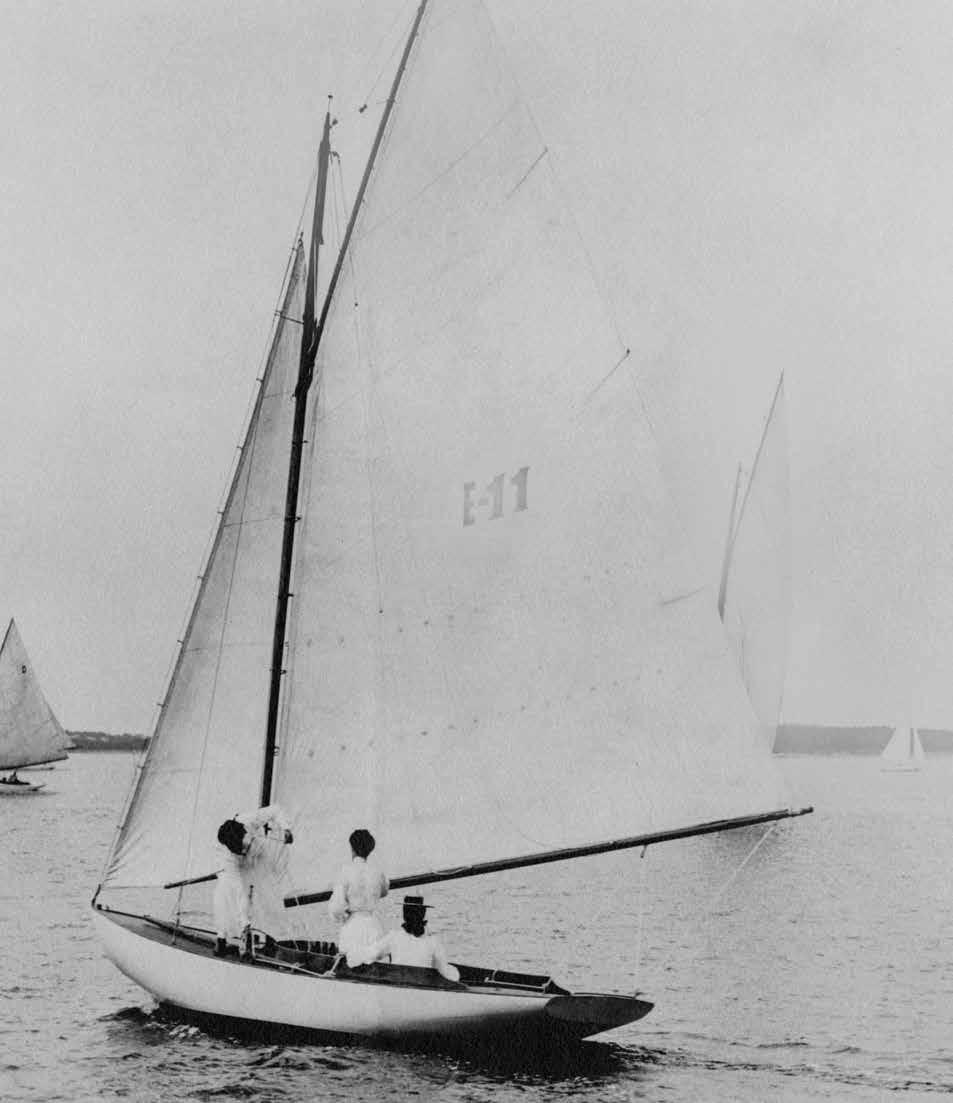
For Nathaniel Greene Herreshoff, America’s foremost yacht designer, 1898 was a notably productive year. One of his most prominent projects was Columbia, the two-time America’s Cup defender. True to form, Herreshoff never allowed a successful design to serve just one purpose. He often adapted core concepts across different vessels, and in this case, he scaled down the hull shape to create the Buzzards Bay 15—only the second of his many one-design classes.
The rating rule in effect at the time encouraged designs with dramatically exaggerated overhangs at the bow and stern, producing a rakish profile. As a result, the Buzzards Bay 15 measured 25 feet overall, despite a waterline length of only 15 feet.
The Beverly Yacht Club in Marion, Massachusetts, commissioned the new design—referred to locally as the “15-footer”—specifically for racing in the variable winds and tricky waters of Buzzards Bay, at the base of Cape Cod. Herreshoff tailored the boat to these conditions, giving it a shoal draft of 2 feet 3 inches with the centerboard up and 5 feet when down.
During the winter of 1898–99, the first eleven boats were built. That spring, “Captain Nat” personally towed them from his Bristol yard to the club in Marion behind his 78-foot steam yacht Squib, where they were assigned to their new owners by lottery. The class was an instant success—exciting to race, and ultimately nearly 100 were built over the next 28 years.
Designed for performance, the 15-footers were lightly built for their length. Coupled with a substantial rig, this put considerable strain on the hulls. Over time, sheer lines sagged and leaks developed, particularly near the mast step. As beloved as they were, the boats tended to wear out—and relatively few have survived.
We are fortunate to have Fiddler in our collection, a 15-footer given in 1902 by Bostonian Lewis Dabney to his daughter Caroline. Lewis, who owned a larger Herreshoff yacht, occasionally raced on the same day as his daughter—each in separate events. Caroline quickly proved herself a skilled and competitive sailor, often racing with an all-female crew. A photo in the Museum’s collection, somewhat dismissively captioned “Caroline M. Dabney racing with her petticoat crew,” speaks volumes about the era’s attitudes. Caroline had the last word in 1904 when she and her crew won the Beverly Yacht Club Annual Cup, besting the all-male crews. Years later, she passed Fiddler on to her son, Augustin Parker, who carried on the family tradition, winning the Van Rensselaer Cup in the same boat in 1933.
Pieter N. Roos, Wells Boat Hall Exhibition Curator
ABOUT THE VESSEL Fiddler
Herreshoff Buzzards Bay 15' Class 24'9" x 6'9"
Built in approximately 1902 for Miss Caroline M. Dabney. Donated to the Museum by Augustin H. Parker, Jr. (1959.1286)
Miss Caroline Dabney racing with her “petticoat crew”, 1901–1903. (1960.348)
The North Haven Dinghy: The World’s First One-Design Class
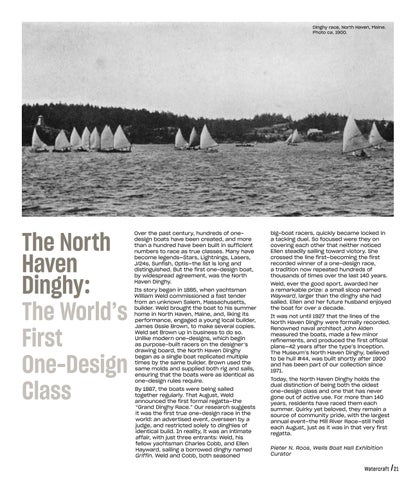
Over the past century, hundreds of onedesign boats have been created, and more than a hundred have been built in sufficient numbers to race as true classes. Many have become legends—Stars, Lightnings, Lasers, J/24s, Sunfish, Optis—the list is long and distinguished. But the first one-design boat, by widespread agreement, was the North Haven Dinghy.
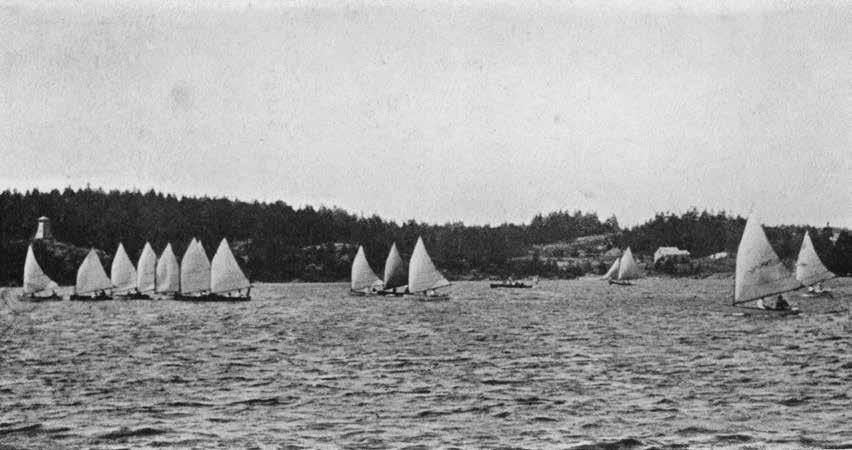
Its story began in 1885, when yachtsman William Weld commissioned a fast tender from an unknown Salem, Massachusetts, builder. Weld brought the boat to his summer home in North Haven, Maine, and, liking its performance, engaged a young local builder, James Ossie Brown, to make several copies. Weld set Brown up in business to do so. Unlike modern one-designs, which begin as purpose-built racers on the designer’s drawing board, the North Haven Dinghy began as a single boat replicated multiple times by the same builder. Brown used the same molds and supplied both rig and sails, ensuring that the boats were as identical as one-design rules require.
By 1887, the boats were being sailed together regularly. That August, Weld announced the first formal regatta—the “Grand Dinghy Race.” Our research suggests it was the first true one-design race in the world: an advertised event, overseen by a judge, and restricted solely to dinghies of identical build. In reality, it was an intimate affair, with just three entrants: Weld, his fellow yachtsman Charles Cobb, and Ellen Hayward, sailing a borrowed dinghy named Griffin. Weld and Cobb, both seasoned
big-boat racers, quickly became locked in a tacking duel. So focused were they on covering each other that neither noticed Ellen steadily sailing toward victory. She crossed the line first—becoming the first recorded winner of a one-design race, a tradition now repeated hundreds of thousands of times over the last 140 years. Weld, ever the good sport, awarded her a remarkable prize: a small sloop named Wayward, larger than the dinghy she had sailed. Ellen and her future husband enjoyed the boat for over a decade.
It was not until 1927 that the lines of the North Haven Dinghy were formally recorded. Renowned naval architect John Alden measured the boats, made a few minor refinements, and produced the first official plans—42 years after the type’s inception. The Museum’s North Haven Dinghy, believed to be hull #44, was built shortly after 1900 and has been part of our collection since 1971.
Today, the North Haven Dinghy holds the dual distinction of being both the oldest one-design class and one that has never gone out of active use. For more than 140 years, residents have raced them each summer. Quirky yet beloved, they remain a source of community pride, with the largest annual event—the Mill River Race—still held each August, just as it was in that very first regatta.
Pieter N. Roos, Wells Boat Hall Exhibition Curator
Dinghy race, North Haven, Maine. Photo ca. 1900.
Old Glory III Through the Fundy Fog
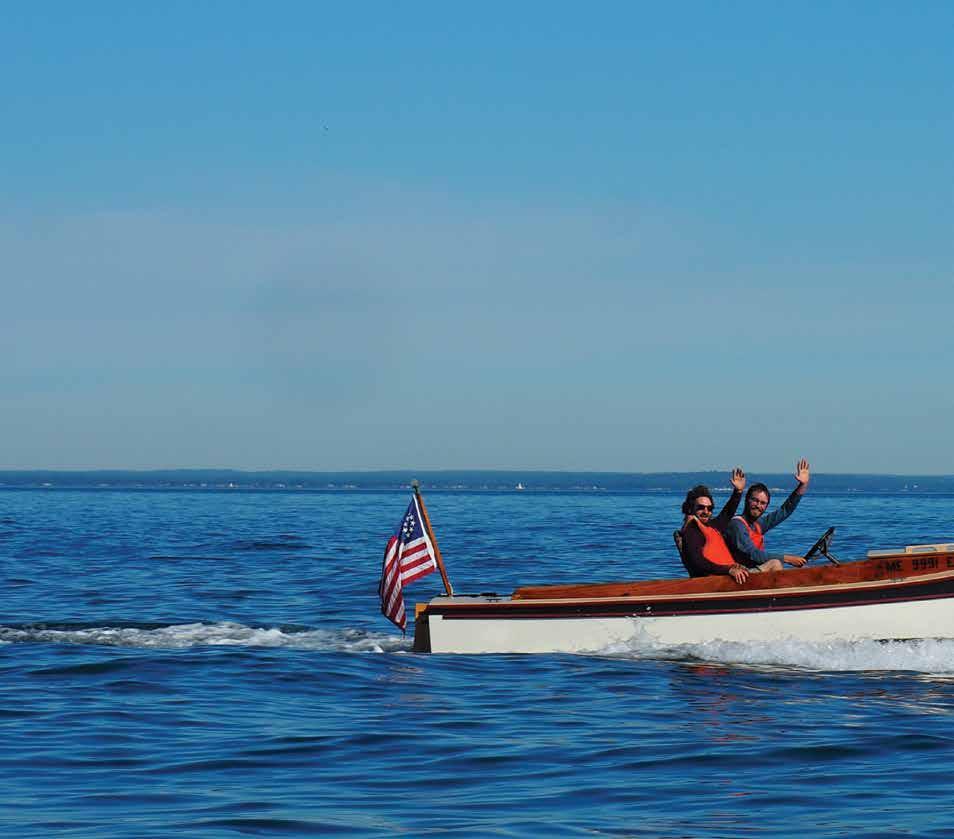
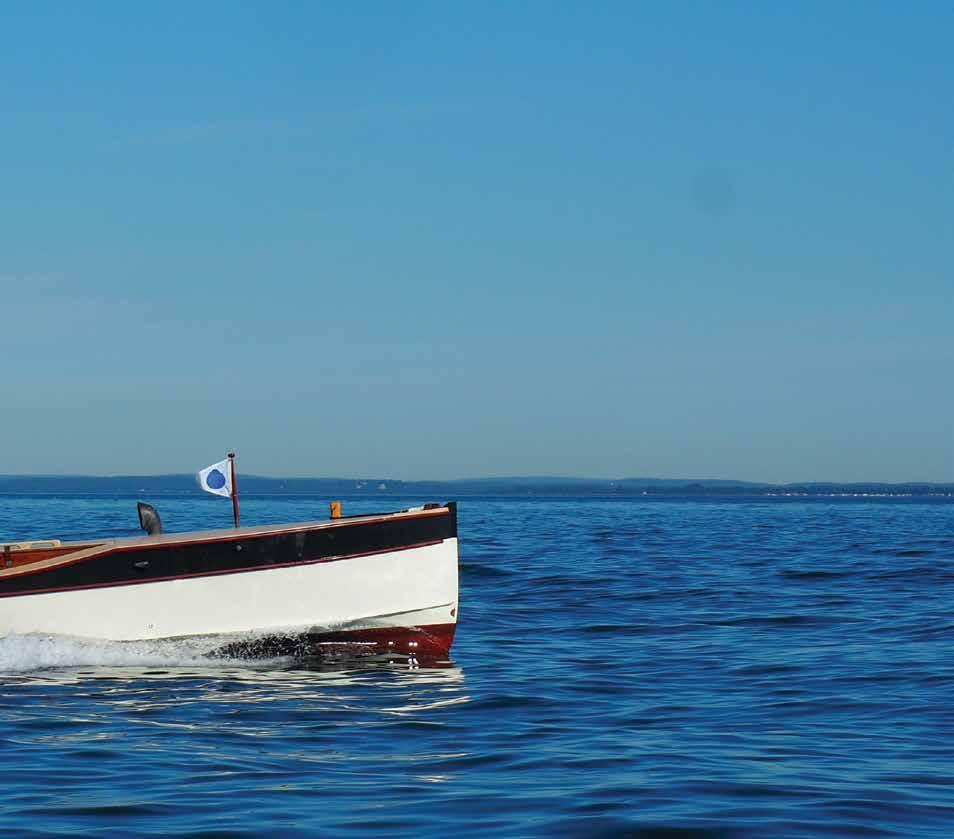
William Hand-designed 25-foot runabout Gramp being delivered to the Museum on June 22. 2017 from Shelter island. Jamie Kirschner, left, and Kevin Murray at the helm.
Cruising from New York to Nova Scotia in an open boat today would certainly be adventurous—but not necessarily dangerous. Now imagine attempting that same journey without GPS, radar, weather forecasts, or any navigational aid beyond a good chart, a compass, and a lead line. In 1916, George Bonnell and Bill Nutting set out to do just that aboard a home-built open runabout powered by a gasoline engine—then still a relatively new technology.
Their boat was a 25-foot Piute III, a design by William Hand intended for amateur construction. Bonnell built two boats to this design: Old Glory II and Old Glory III. The first was launched in 1912. On launch day, Bonnell hooked up the engine, gave the boat a quick harbor trial, then promptly loaded his wife, another couple, and supplies, and set off from Long Island to Canada. Although the vessel was largely untested, the long voyage went smoothly.
The second boat, Old Glory III , also built by Bonnell in his Westchester County backyard, now belongs to Mystic Seaport Museum and is preserved under the name Gramp . For the second Nova Scotia voyage, Bonnell’s only crew was Bill Nutting, a seasoned sailor, cruiser, and writer who would go on to found the Cruising Club of America and serve as its first commodore. Bonnell was also a charter member.
They departed Long Island Sound in good weather near evening, but by the next morning, thick fog set in—and would haunt much of their voyage. In the Gulf of Maine, days of steady rain drove them into port to wait out the weather at a friend’s home in Tenants Harbor. Later, pressed for time, they made the bold decision to cut directly across the Bay of Fundy. The fog thickened, and their monotonous watch into the gray void was
finally broken by a violent storm. With no visibility and heavy seas, they deployed a sea anchor and rode it out for over 28 hours.
Amazingly, they made landfall near Digby—exactly where they had intended. Bonnell later noted that Old Glory III had held up well, though every inch of varnish had turned white from the constant damp of fog, rain, and sea.
Articles in Motor Boat magazine chronicling their journey highlight how starkly different navigation was in 1916. On the return trip, for example, they searched the dark horizon for the Hen and Chickens Lightship—a vital navigational landmark. Spotting a glow to port, they assumed it was the lightship and steered toward it. After an hour, with the light no closer, they realized they had been following a steamship. In the absence of a fixed reference point, they were forced to double back and locate the actual lightship. Without a confirmed position, they could have been anywhere. Visual fixes were everything in 1916—a far cry from the certainties provided by GPS today.
George Bonnell lived a long life, continuing to cruise and write about his adventures. Bill Nutting’s story ended more tragically. In 1924, he was lost at sea off Greenland. Daring by nature and known to scorn the tedium of safety precautions, Nutting embarked on his final voyage in questionable conditions aboard a poorly chosen vessel. His friends were deeply saddened, though not entirely surprised. One fellow editor at Motor Boat magazine remarked that Nutting might have lit the boat on fire himself, as “he was not too careful around matches and gasoline.”
Pieter N. Roos, Wells Boat Hall Exhibition Curator
ABOUT THE VESSEL Gramp
Piute III, a design by William Hand Built in 1915 (2017.30.1)
Wings on Ice: Long Island’s Ice Scooters
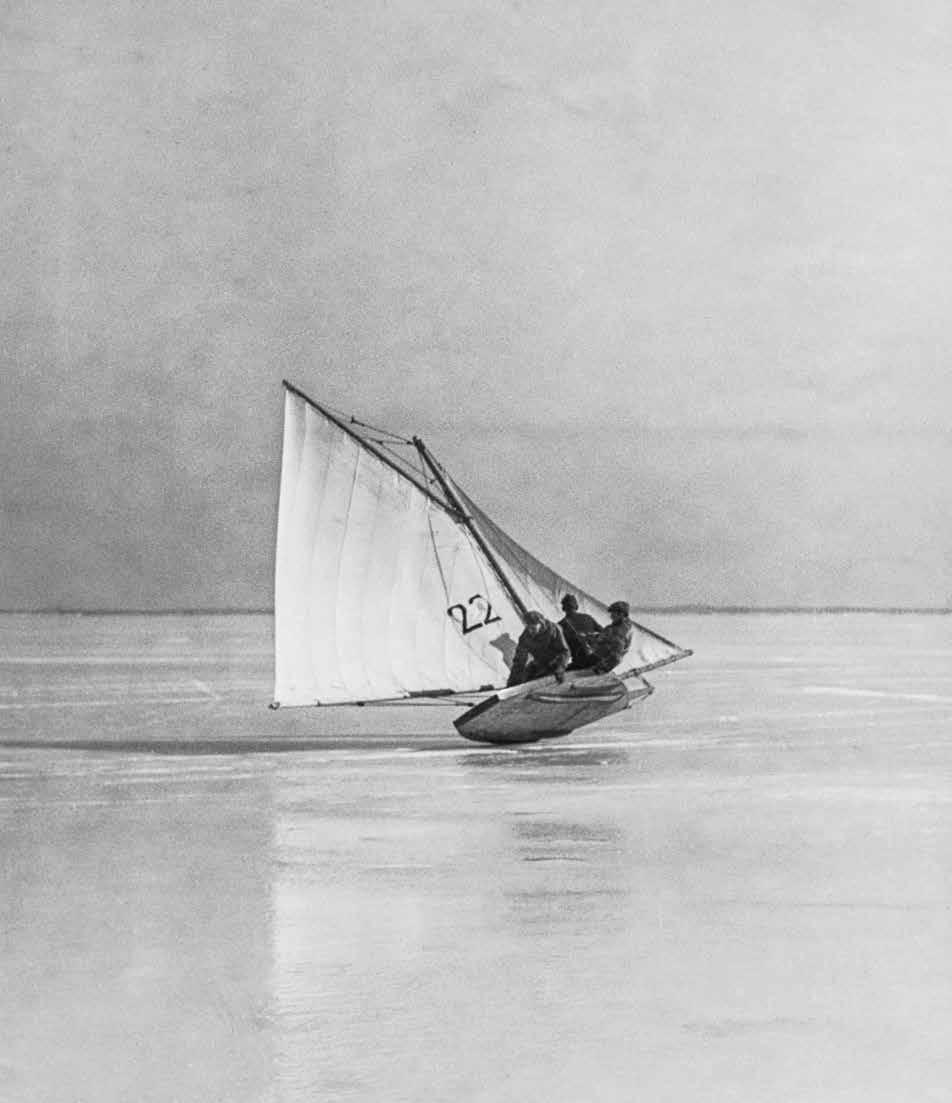
Averting a knockdown, ca. 1935. “Straining on the sheets and laying well out over the windward rail, these scootermen avert a knockdown.” George J. Seger’s Iceboat Album (1997.27.770.61).
Before snowmobiles zipped across snowbanks and sleek ice yachts skimmed frozen lakes, a wind-driven vessel carved its legacy into the ice of Long Island’s Great South Bay: the ice scooter. Born of necessity, this local invention served fishermen, hunters, and surfmen of the US Life - Saving Service when the bay froze. Whether setting nets, reaching distant marshes, or patrolling icy waters, they needed reliable transport across semi - frozen expanses.
The ice scooter’s roots are closely linked to many members of the Long Island Life-Saving Service. Early on, they used flat-bottomed “punties,” duck-hunting boats that were pushed with poles over ice and floated in open water. Soon, sails and runners were added, allowing wind - powered travel. With iterative improvements in hardware and rigging, these hybrids evolved into early ice scooters—a testament to necessity and ingenuity.
These craft were lightweight and melon - seed-shaped, 12–16 feet long and about 4 feet wide, typically built of pine or cedar. Their convex underbodies and decks, slightly pointed bows and sterns, and four hull-mounted runners were optimized for balance and speed. With a small cockpit for one, occasionally two, and no rudder, steering relied on sail trim and shifting body weight. As one scooterist noted, “If you over- trim the sail, the thing just starts spinning.”
Long Island’s coast, with its shifting sandbars and storm-swept inlets, saw frequent shipwrecks. To address this, the federal government established its first Long Island life - saving station at Eaton’s Neck in 1849. By 1914, thirty stations employed full-time keepers. Yet, when the bay froze in patches, boats were sometimes helpless—until the scooter arrived, its amphibious nature bridging ice and water.
Stories of daring rescues spread. In 1904, William Jayne and Charles Oakley were stranded on drifting ice while spearing eels near Bay Shore. Captain Edward Watts launched his scooter, navigating dangerous floes to rescue them. In 1912, three keepers led a rescue across the frozen bay, carrying four scooters aboard an oyster sloop. When the sloop was stopped by solid ice, they set off on the scooters to continue their mission. Such episodes cemented the scooter’s reputation—not just as a working vessel, but as a tool for survival.
What began as a practical endeavor soon turned into a pursuit of thrill, as rescuers and adventurers started competing in organized races. On February 23, 1903, the Brooklyn Daily Eagle reported a “Great Scooter Race,”
judged by four-time America’s Cup defender Captain Hank Haff. The winner received a hand-sewn silk pennant from sailmaker Frank Brown—a prized symbol in South Bay communities.
Clubs formed early in the 20th century, and by 1924, the South Bay Scooter Club was officially founded—and remains active today. These groups fostered camaraderie and urged design improvements: sleeker shapes, better sails, sharper runners—for both speed and agility.
Today, warmer winters and modern technology have made ice scooters a rare sight. But their legacy lives on in maritime museums, family stories, and the Great South Bay Scooter Club. Last winter—after years of thin ice—members returned to the frozen bay, chasing the same wind and thrills their ancestors once knew.
More than a mode of transportation, the ice scooter remains a powerful symbol of invention, community spirit, and the wind-borne courage that once defined Long Island winters.
Katharine Katin, Curator of the Long Island Collection
The Long Island Collection is generously supported by the Robert David Lion Gardiner Foundation. The Robert David Lion Gardiner Foundation supports the study of Long Island history and its role in the American experience. Please visit www.rdlgfoundation.org for more information.
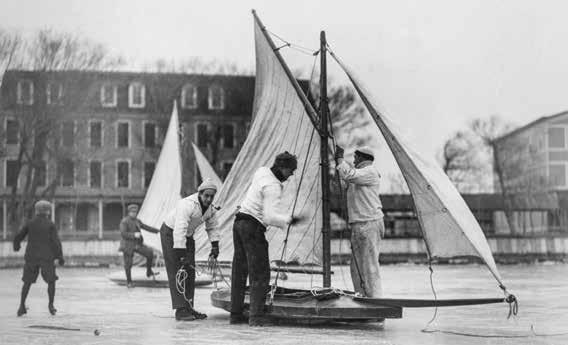
Rigging an ice scooter in front of Ocean Ave Hotel, Patchogue, Long Island, New York, ca. 1935. George J. Seger’s Iceboat Album (1997.27.770.39).
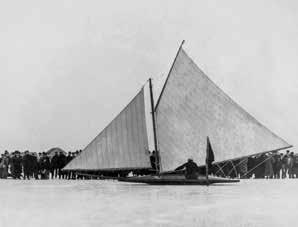
Fred Thurber’s Eagle off of Patchogue, Long Island, New York, ca. 1935. The jib, almost as large as the mainsail, is known as an overbalanced jib and is the only means of guiding the craft on its course. George J. Seger’s Iceboat Album (1997.27.770.62).
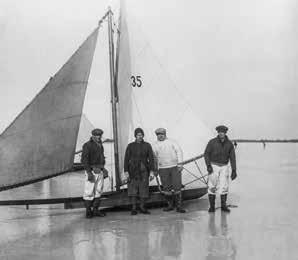
Scooter Ida A of the Great South Bay Scooter Club, ca. 1935. Left to right: Alfred Ackerly, Chas. Conklin, Ike Rowland, George Ackerly. George J. Seger Iceboat Album (1997.27.770.96).
Button S wan: A Newport Fish and Lobster Boat
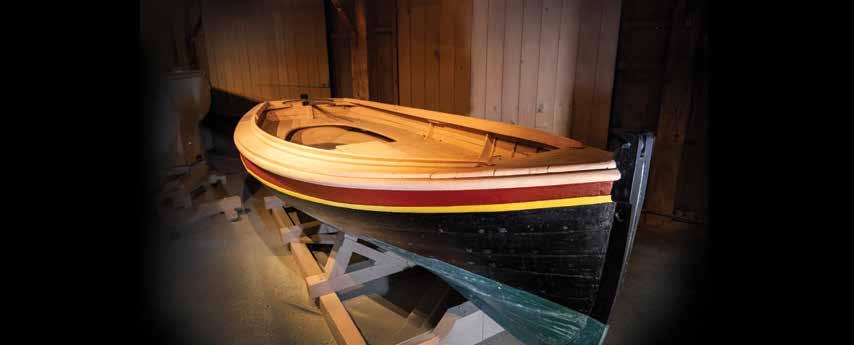
Sweeping lines define the poetically named Button Swan , a wonderfully compact 12-foot boat and one of the oldest vessels in the Museum’s collection. The boat’s name comes from William Henry Munroe, a similarly compact Newport, Rhode Island, fisherman who built and owned the vessel. Munroe was one of hundreds of thousands who, over the last four centuries, made their living from the sea. Most remain anonymous, but collectively they shaped America’s maritime heritage. We know of Munroe thanks to a young Newporter named Christopher Grant LaFarge, whom Munroe mentored and introduced to life on the water.
Years later, LaFarge memorialized his boyhood mentor in a 1921 Scribner’s Magazine article, offering rare insight into the world of a 19th-century waterman. Further research has brought the life of a subsistence fisherman into greater focus.
Born in Newport in 1833, Munroe earned
the nickname “Button,” due to his short stature, from his uncle and likely guardian, John Swan. As a tribute, Button took on Swan’s surname unofficially. He learned the trade under his uncle’s guidance and became a skilled, highly respected fisherman.
Records of Munroe’s life are limited. By 1858 at the age of 25, he was listed as a fisherman in the Newport City Directory, boarding at 83 Thames Street in Newport’s Point section, and living in the Point neighborhood. He never owned a home, instead boarding in various residences there through 1904.
LaFarge remembered Munroe’s exceptional seamanship, especially in the treacherous waters near Brenton’s Reef. In one vivid recollection, he described Munroe’s mastery of boat-handling: But inside that buoy, all the way to the shore, stretches as grim a set of teeth as ever ground ribs and planks to splinters—Brenton’s Reef. Although an offshore breeze made the sea smooth, the reef was breaking in dazzling white, for the great rollers of the recent storm were still coming in from the ocean. Until the flood-tide made and the wind shifted, Button was not ready to try the reef, so we held on to Seal Rock Ledge beyond. But don’t suppose we went around Brenton’s Reef to reach it. There is a gap in the reef with good water; it is narrow and, as the old Eldridge Coast Pilot used to say about Wood’s Hole, “no place for strangers.” But it was a plain shortcut by an alley for Button, provided there was enough sea running,
ABOUT THE VESSEL
Button Swan
Fish and Lobster Boat ca. 1880 12'3" x 5'4"
Given to the Museum in memory of Capt. Fernando Fowler by the children of Cyrus P. Brown. (1949.145)
for the only way to steer through that gap is with the hissing foam close on either side of you to show the course. Though he lived modestly, Munroe was not alone. He had friends and a close working relationship with James Hart, a boatbuilder whose shop at 64 Long Wharf served as a gathering place for local watermen. It was in Hart’s shop that Munroe built his own boat—and possibly others like it—dubbed by Howard Chapelle as the Newport Fish & Lobster Boat. Hart’s shop was a steady producer of these crafts. We have no idea how big a hand Munroe had in their production, but LaFarge seemed to regard him as a competent builder.
Munroe died at age 72 in the Rhode Island Hospital for the Insane, from the effects of dementia, likely a ward of the state due to the lack of family. But his legacy lived on. A friend preserved his boat under cover for decades before it came to the Museum in 1949. A few years later, noted small craft preservationist and boatbuilder Bob Baker restored it with great care, uncovering its original paint scheme and other details.
In a world that often celebrates wealth and notoriety, the quiet labor of people like Button Swan can be forgotten. But thanks to LaFarge’s tribute and the boat that survived him, we can honor a man whose life, though humble, is part of the fabric of America’s maritime past.
Pieter N. Roos, Wells Boat Hall Exhibition Curator
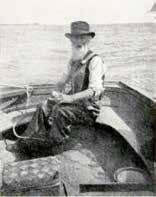
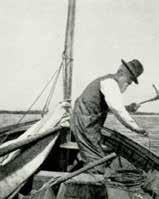
Images of Munroe in his boat, ca. 1890. Scribner’s Magazine, October 1921
Lollypop: Candy Boat
Born from a desire to ignite a lifelong passion in young sailors, the Candy Class boats were more than vessels—they were childhood memories made tangible. Three generations of sailors on Mount Hope Bay grew up learning to sail and racing these cheerful skiffs, their earliest nautical lessons wrapped in hulls named after sweets.
In 1921, carpenter and designer T. Elton Wood and his brother Clarence crafted a hardchined, single-sail skiff for Wood’s daughter Virginia and other teenagers—safe, forgiving, and built to handle without adult supervision. Created in the same year and similar in size and spirit to the better-known Beetle Cat, the Candy Boat was simpler, easier to build in a garage, and nearly impossible to capsize or sink.
These boats are what we refer to as a hyper-local one-design. For many years they were only thought to have existed on Mount Hope Bay—bordering Tiverton, Portsmouth, and Bristol, Rhode Island, and Fall River and Swansea, Massachusetts. The boats were raced frequently and in large numbers, many from the Fall River Yacht Club in Tiverton, and about 60 existed in all the local fleets.
Just recently, research found that this hyperlocal boat wasn’t confined to Rhode Island’s shores. Clarence Wood, in a long-forgotten deal, sold the plans to Cleveland Yacht Club, leading to fifteen sloop-rigged versions built for classes and competition on Lake Erie.
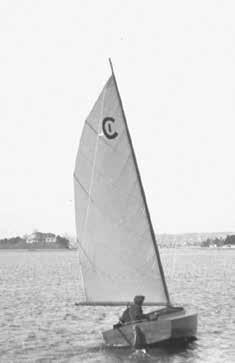
The prototype Lollypop gave birth to the fleet, and every boat that followed was named after a popular candy, with names like Lemon Drop, Tootsie Roll, Milky Way, and Butterscotch. In fact, the initial class logo was intended to be crossed lollipops, but that idea was abandoned when sailmakers said it was too difficult to produce.
Generations of local children learned to sail in these boats right into the 1960s. As happened with so many early one-designs, mass produced fiberglass boats led to their demise, and Candy Boats haven’t raced on Mt. Hope Bay for many decades, but their memory has not been lost. They were vibrant chapters in the lives of young sailors—teaching wind, tide, courage, and community. When you look at a Candy hull, you see imagination given shape, youth given wings—and a sweet reminder that sailing can begin with humble dreams and a heart full of joy.
Today, Lollypop and Nonpareil—a late fiberglass version—reside in the Mystic Seaport Museum collection, tangible links to a bygone era. Though none of the original race fleets still sail Mount Hope Bay, enthusiasts and local researchers, Gail Martin and Charlie Flanagan, have provided the Museum with considerable information, and Charlie is working to produce a kit, so a rebirth of the Candy Class might be possible.
ABOUT THE VESSEL
Lollypop
Candy Boat
Built in 1921 by carpenter and designer T. Elton Wood and his brother Clarence.
Donated to the Museum by Charlie Flanagan. (2023.50)
Pieter N. Roos, Wells Boat Hall Exhibition Curator
Lollypop being trialed by designer T. Elton Wood in 1921. Courtesy of Bill Parks.
Kahlenberg Semi-diesel Marine Engine
For many of us, an engine is an anonymous lump of iron hidden below decks—something to be fed oil and left to someone else’s care. But imagine the engine as the beating heart, the center around which the vessel is built. That’s the world of marine engine enthusiasts. Let’s kindle that spark of enthusiasm in all of us with the story of a 1930 Kahlenberg marine engine.
At 24 horsepower and weighing in at 1,800 pounds, this early evolution of marine engine design was built for small commercial vessels, especially rugged fish tugs on the Great Lakes. The Museum’s example was purchased by Ferdinand Hatz for his boat, Owenee, in Wisconsin.
In 1895, the Kahlenberg brothers in Two Rivers, Wisconsin—Otto, William, and John—began by crafting small steam and stationary engines. By 1898, they created their first gas engine, noted for toughness and reliability. A later breakthrough came in 1914, when they introduced a semi-diesel—or “hot-tube”—engine. Using white gas to heat the cylinder enough to run the diesel, it was the precursor of the glow plug. Thus equipped, these engines could conquer the bitter cold of midwestern winters, and they were the direct predecessors to our 1930 engine.
Known as a Kahlenberg “marine oil” engine, it was designed to burn a variety of heavy fuels—perfect for the resource-deprived era of the Great Depression. Kahlenberg developed a worldwide reputation as fine heavy-duty machines, whether in smaller configurations, like our 2-cylinder model, or up to the largest, 6-cylinder, 200+ horsepower monster.
For a moment, forget the technical side. Picture a chilly midwinter dawn on Lake Michigan: the engine sitting amidships under a wooden fish tug’s boxlike superstructure. A crewman lights the integral torches astride the hot tubes, many minutes pass while the blue flames slowly heat the cylinders; the crew is grateful for the warmth they provide. Finally, temperature is reached, the cylinders are engaged, the engine coughs to life, pistons move in steady harmony, and the boat can move out onto the lake where fishing can begin. That deliberate pulse—each clattering revolution—carries the day’s catch, the livelihood of families, ensuring the rhythm of a community.
So next time you lift a hatch, don’t just see a machine. See a beating heart. Every measured revolution is a testament to mechanical evolution and ingenuity. This engine, restored and still ticking, connects us to a time when work was measured not in gigabytes, but in the persistent quiet hum of a trusted mechanical powerplant.
Kahlenberg is still in business under original family ownership in the same Wisconsin location, although they now produce other marine products. The last Kahlenberg engine was built in 1964. The Kahlenberg in our collection was donated in 2018 and restored to operating condition in 2019 by Museum Volunteer Nate Rosebrooks and Engine Collections Curator, Scott Noseworthy.
Pieter N. Roos, Wells Boat Hall Exhibition Curator, and Barry Thorpe, Museum Volunteer
ABOUT THE ENGINE
Kahlenberg semi-diesel marine engine
Designed 1922
Built 1930
Weighs 1,800 pounds 24 horsepower (2018.38)
AMERICAN WATERCRAFT COLLECTION
Where every boat tells a story.
The American Watercraft Collection, more than 90 years in the making and largely unseen by the public, contains 650 boats—each carrying a story of adventure, resilience, and the enduring human spirit.
Now, for the first time, many of these treasures of maritime history will emerge from the shadows and their stories will be told in the newly constructed Wells Boat Hall. But we need your help to make it happen. Join us in bringing these untold stories to light.
Support the campaign today.
A PERMANENT EXHIBITION OPENING SOON WITH YOUR HELP.
In 1920, Franklin D. Roosevelt purchased Vireo, a virtually unsinkable sailboat, so his children could safely learn to sail near their
Island home.
A year later, after a day aboard with his family, Roosevelt fell ill from the effects of polio—an event that would change the course of his life and history. Vireo now resides in the Museum’s American Watercraft Collection.
Campobello
HOLIDAY GIFT GIVING
November 28—December 7
Enjoy 20% off in the store and online, excluding sale and promotional items.
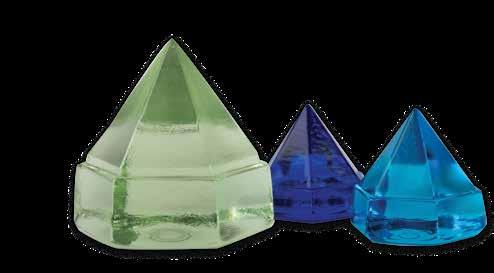
To shop online, visit shop.mysticseaport.org. Use code: MYSTICMEMBER