Behaviour Is A Language
Jenny Morris, on Food, Family, and Finding Joy in the Journey
Community Radio
The Often-Overlooked Media Voice
Purpose Redefined From Survive to Awaken to Serve


KIM DU PLESSIS
KARINA ANDERSEN







Behaviour Is A Language
Jenny Morris, on Food, Family, and Finding Joy in the Journey
Community Radio
The Often-Overlooked Media Voice
Purpose Redefined From Survive to Awaken to Serve
There is a noticeable shift happening in business right now. Success is no longer measured by profit alone, but by purpose, impact and responsibility. In this edition, we explore a theme that speaks directly to this evolution:
Conscious Capitalism: Profit with Purpose.
Businesses today are expected to lead with both heart and conscience. It is no longer enough to build something that works; it needs to matter. From ethical leadership and ESG strategies to purpose-driven brands, this edition unpacks how organisations are redefining what it means to succeed. And importantly, how profit and impact can not only coexist, but strengthen one another. As always, our contributors approach this theme through their own l enses, offering practical insight, lived experience and thought-provoking perspectives that challenge the status quo.
We are especially proud to feature Jenny Morris on our cover. Known and loved by many as the Giggling Gourmet, Jenny represents far more than culinary excellence. She is a businesswoman, a brand, and a


personality who has built a career rooted in passion, authenticity and connection. Her journey is a masterclass in turning purpose into a thriving enterprise, all while staying true to self. There is a warmth and honesty in her story that reminds us that business, at its core, is deeply human.
This edition is an invitation to think differently about the role we play as business leaders, entrepreneurs and creators. To build with intention. To lead with integrity. And to remember that the most powerful businesses are often those that stand for something greater than themselves.
Warmly, Lisa Bell Editor-in-Chief | WORD Magazine


One Week Working All Over Mzansi

Can
Behaviour

The Algorithm with a Conscience: Can AI Power Profit with Purpose?
The Dark Side of Digital Marketing: Can Profit and Principle Coexist? Ashleigh
Profit

Purpose
Managing
Director
Author Kevin Chaplin
- SA Ubuntu Foundation & the Amy Foundation

Over the past few years, the SA Ubuntu Foundation has grown beyond a platform; it has become a space where leaders connect, ideas are shared, and opportunities begin. Through our Business Breakfasts, Think Tank Dinners, and our wider network, we’ve seen what’s possible when people come together with intention. Importantly, relationships are built in ways that contribute to something greater than any one individual or organisation.
This is what Ubuntu has always stood for. And in today’s context, it speaks to a global conversation about businesses that are not only driven by profit but also by purpose, inclusion, and long-term impact.
Through the Ubuntu Membership, we are able to sustain and expand this growing ecosystem while offering meaningful value to those who join.
Members receive exclusive access to past speaker recordings and conversations through the Ubuntu Hub, selected Business Breakfast tickets, and the opportunity to win monthly accommodation giveaways from our valued partners.
In this way, membership becomes more

than a contribution. It is a way to stay connected, continue learning, and help us grow the reach and impact of the SA Ubuntu Foundation.
One of the most meaningful outcomes we’ve built has been the ability to translate connection into real opportunity. Through our partnership with the Amy Foundation, youth are gaining access to environments where they can share their skills, engage with new markets, and begin participating in the economy.
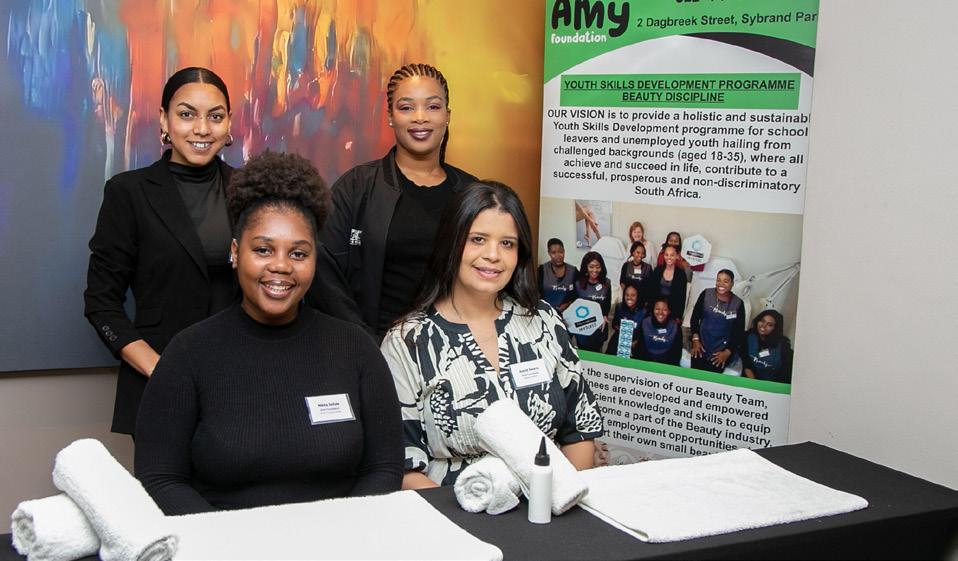
Students from the Amy Foundation’s Beauty Programme join us at our Business
Breakfasts events, offering hand and back massages to guests. What starts as exposure becomes income, confidence, and real-world experience.
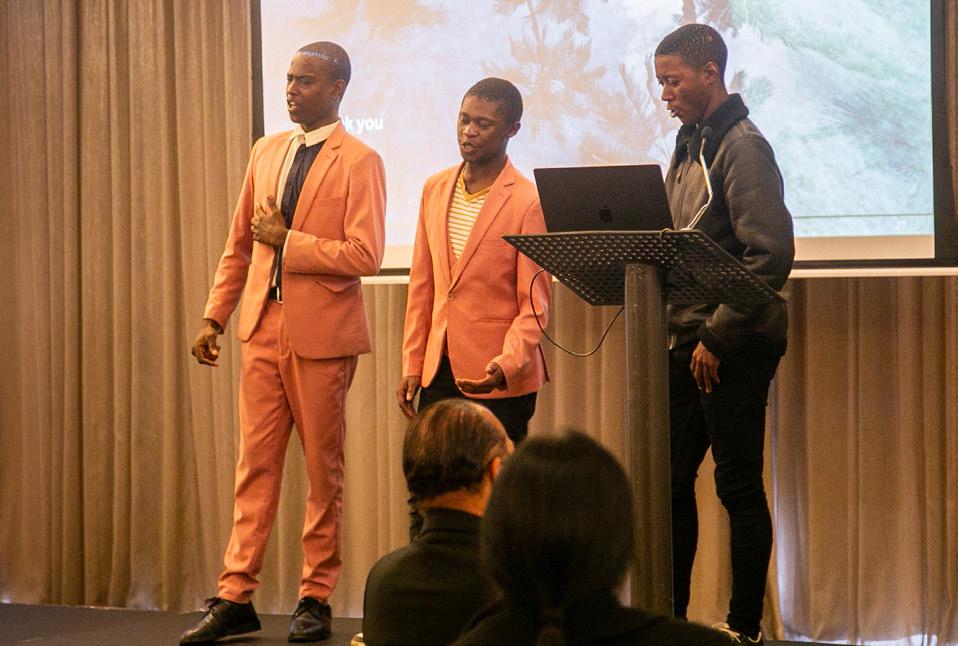
Young performers like Lereko, Buhle, and Liyema have shared their voices at our Ubuntu events, growing into what we now see as the emerging ‘Ubuntu Trio’.
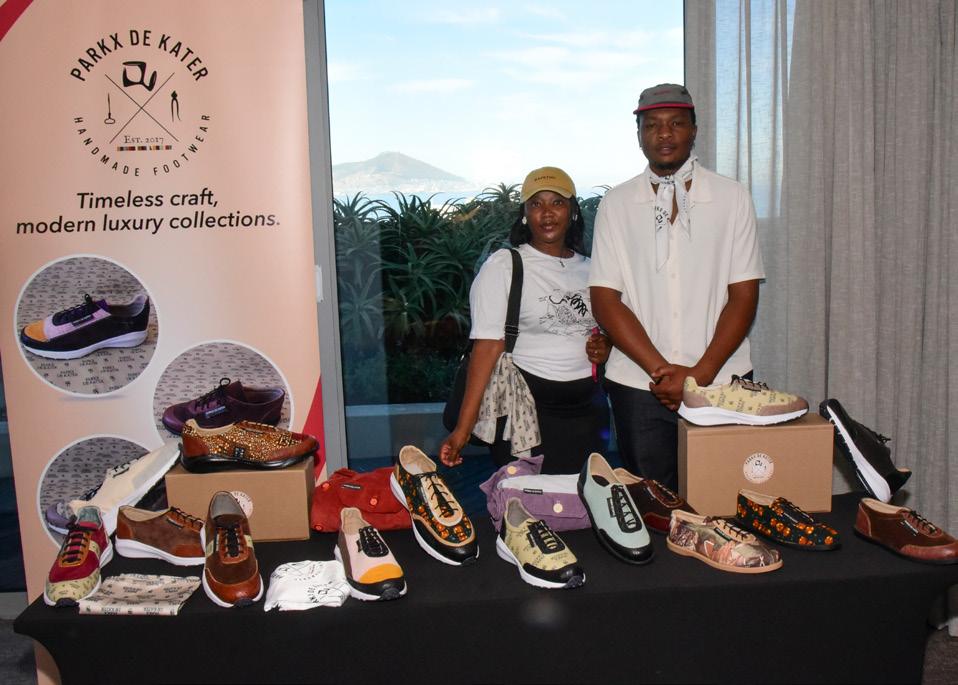
Entrepreneur Phakamani Thembela has showcased his handcrafted footwear at our events, gaining visibility and opening doors to new markets, including international exposure through the Ubuntu network.
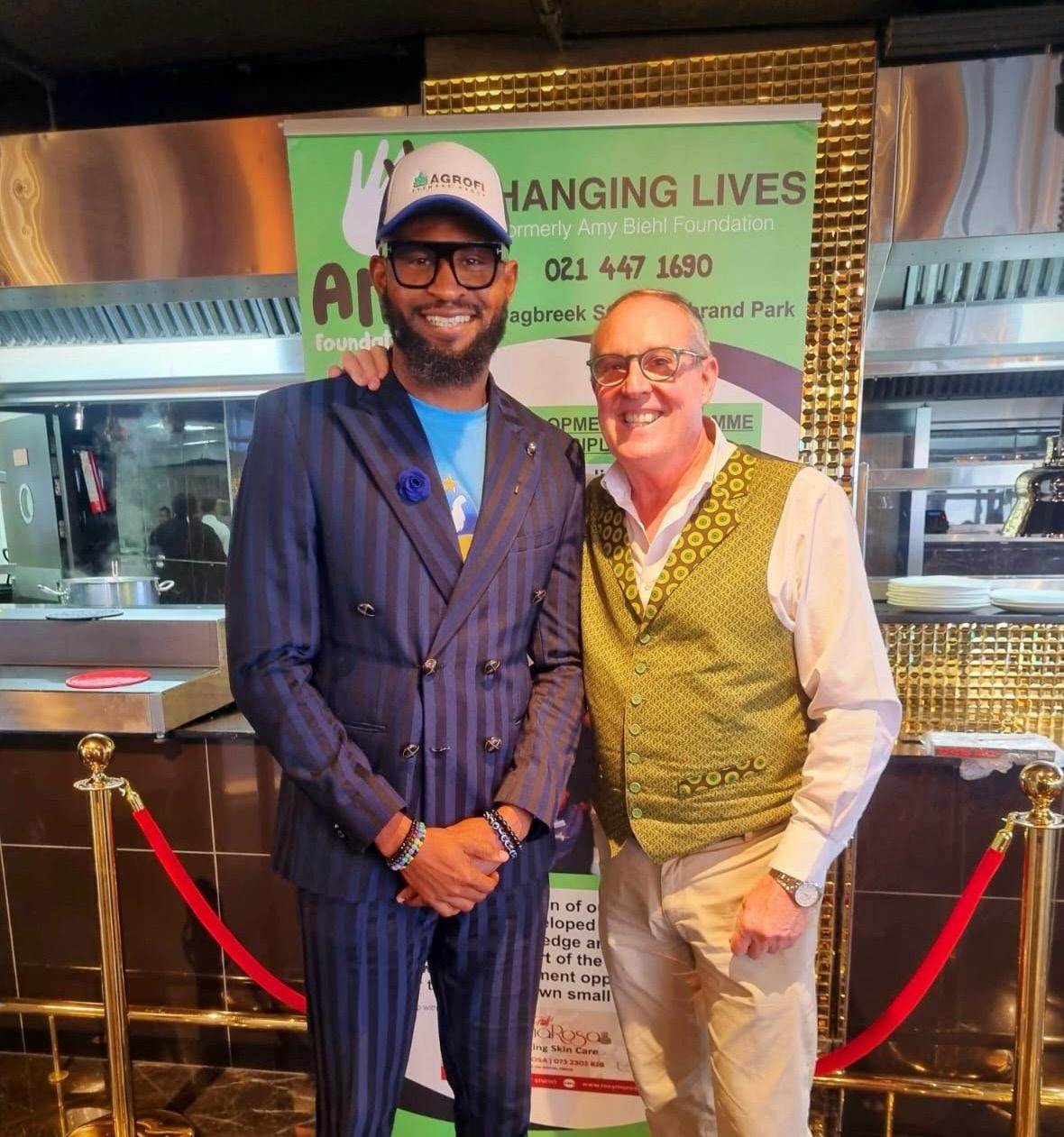
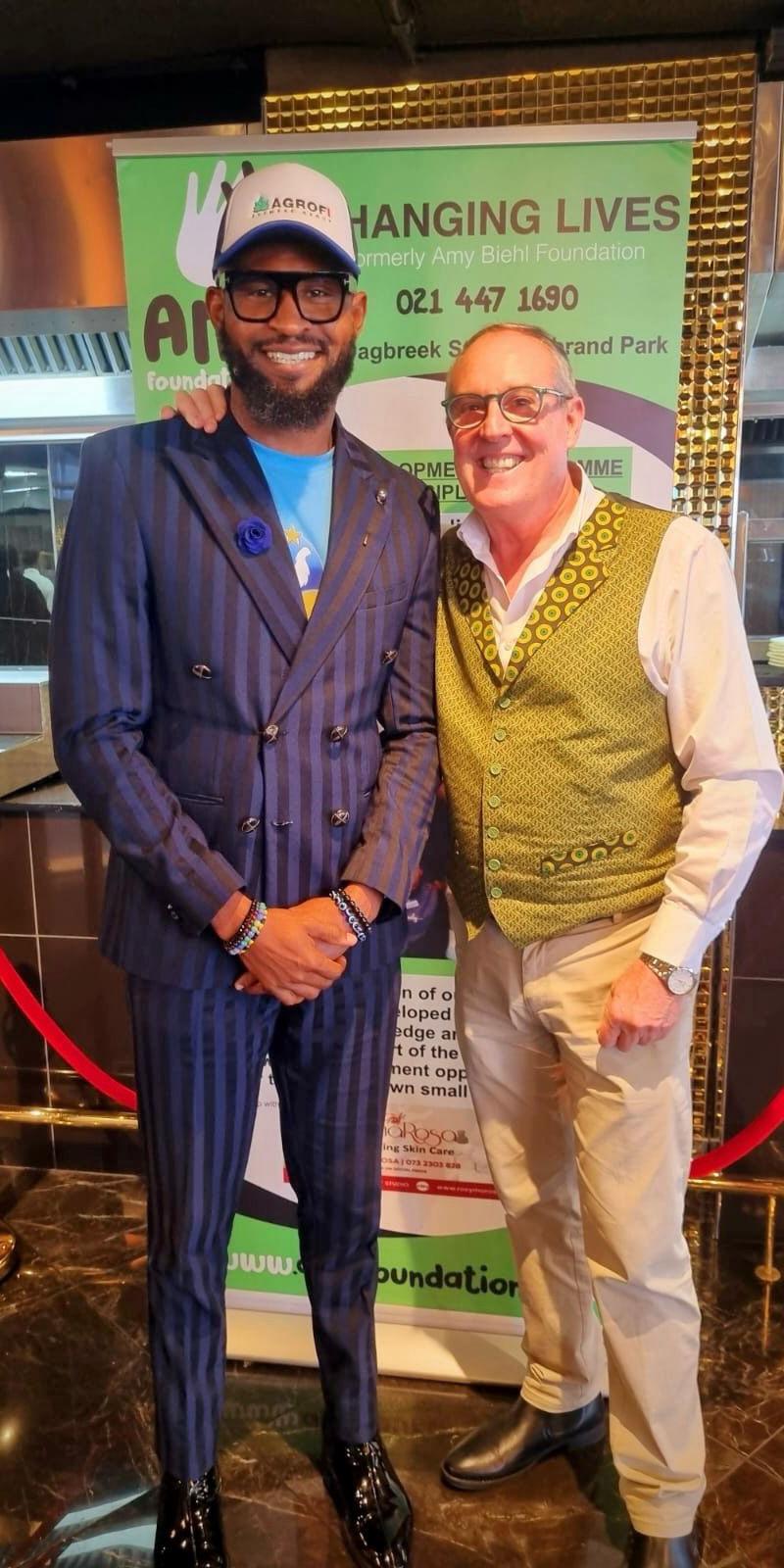
We also support entrepreneurs beyond the Amy Foundation programmes. Desmond Irabor, founder and CEO of AGROFI, is one such entrepreneur. AGROFI combines traditional farming practices with modern agricultural innovation to produce nutritious eggs.
Through introductions facilitated by the SA Ubuntu Foundation, Desmond has secured supply agreements with some of our partner hotels.
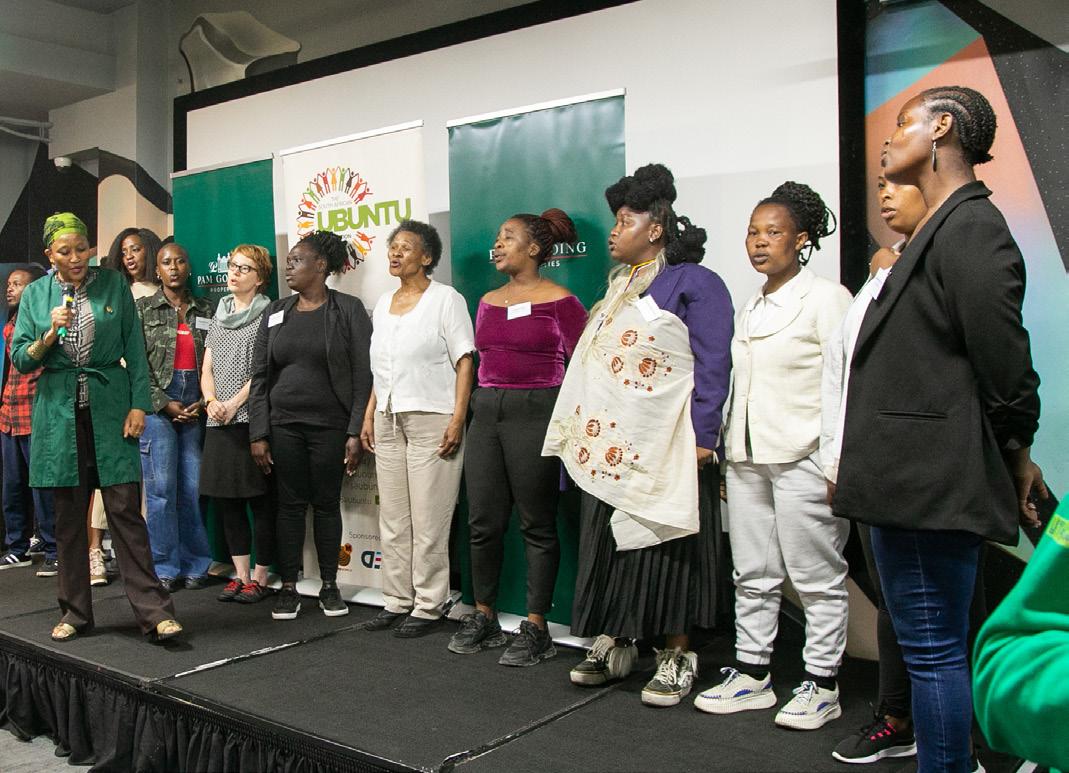
Another meaningful partnership is with the aBantu cHorus, led by one of our trustees, Vuyo Koyana. As a collective, they use music to make sense of both what we celebrate and what we struggle to carry. Their performances at our selected Ubuntu events do more than entertain as they create moments of connection, reflection, and shared humanity, reminding us that business spaces can also be spaces of healing and belonging. These are small but meaningful examples of what becomes possible when people are given access, support, and a platform.
At the SA Ubuntu Foundation, we believe that the value of business cannot be measured only in financial terms. It is also reflected in the opportunities created, the people supported, and the role businesses play in strengthening the communities around them.
South Africa’s future depends on more inclusive participation, where more individuals can contribute to and benefit from the economy. Creating spaces where this can happen requires collaboration, commitment, and a shared understanding that we all have a role to play.
As the SA Ubuntu Foundation continues to grow, we are becoming more intentional about how we sustain and strengthen our network and platform.
For many years, much of what has been built has been driven by relationships, goodwill, and a shared belief in the vision.
To continue creating impact in a consistent and meaningful way, we are now looking towards a more structured and sustainable approach. This includes inviting those who believe in our work to become Ubuntu Members and support something that benefits the broader community.
Through our growing membership, we are able to:
• Continue creating spaces and experiences for meaningful connection.
• Support emerging talent and entrepreneurs.
• Expand opportunities for collaboration and mentorship.
• Grow the reach and accessibility of the Ubuntu network and platform.
Ubuntu has always been about collective action. Not one person. Not one organisation, but all of us contributing in meaningful, and sustainable ways. Let’s build what South Africa needs together and the world can be inspired by. When we collaborate we create the power of possibilities through collective contribution.
Become an Ubuntu Member. Be part of something bigger. Ubuntu Membership

Kevin Chaplin is the Founder and Managing Director of the SA Ubuntu Foundation, Managing Director of the Amy Foundation, and author of Can Do! Making the Impossible Possible. Drawing on more than 25 years of experience in banking, leadership, and social impact, Kevin continues to connect people, create opportunity, and inspire collective action.








YOU’VE BEEN LIED TO
Author Richard Mulholland Founder - Missing Link

Okay, so hear me out. I’m a big fan of conscious capitalism. I remember being so inspired after attending a talk in Norway by Blake Mycoski, where my two partners and I founded HumanWrites, a notebook company with the line, “Buy a notebook for your ideas and we will give a whole classroom of kids a notebook for theirs.” It was so much fun. We gave away over a quarter of a million books to Ikamva Labantu, an incredible organisation, and just had the best time. That was a truly conscious business.
However, I’m writing this from a hotel room in Chicago after spending months working with and coaching regular people to get on stage and share their stories. We just came back from the debrief, and I have to tell you my tank is full. We did a thing. Sure, Missing Link is a presentation company, nothing fancy about that.
However, our mission is simple: we help ordinary people deliver extraordinary talks. This is work that I’d want to do if I were a billionaire who didn’t need to work, and I don’t say that lightly. It’s not because it looks good or because it gives me something to talk about, it’s because of what actually happens to people in the process and afterwards, both for the speakers and for the audience sitting in the room.
I think the mistake I’ve been making is that I’ve been thinking about conscious
capitalism in terms of what can be seen. The HumanWrites model made sense because it was clear and tangible. You could draw a straight line between the thing you bought and the good that came from it, and that clarity is part of what made it powerful. It’s easy to understand, easy to explain, and if we’re honest, easy to feel good about. It’s also easy to communicate, which is probably why it has become such a dominant expression of what people think conscious capitalism looks like.
But sitting here in my hotel room now, after watching people stand up and say things they didn’t think they were capable of saying, I’m not convinced that visibility is the right measure anymore. The work we’re doing now doesn’t lend itself to neat ratios or simple narratives. There isn’t a clean “for every one of these, we do one of those” story to tell. What there is is a shift in how people see themselves and what they believe they’re capable of, and that tends to play out over time rather than in a single,
“I think the mistake I’ve been making is that I’ve been thinking about conscious capitalism in terms of what can be seen.”
measurable moment.
That’s a far more awkward thing to talk about, which might be why we don’t. It doesn’t package well. You can’t point to it in the same way, or build a campaign around it that fits a headline. As a result, we’ve placed more value on impacts that are easy to show, and less on those harder to describe but often more meaningful.
None of this is to take anything away from the more visible forms of conscious capitalism. I’ve been part of that world, and I still believe it matters. There is really good being done there, and it should continue. But I do think we’ve narrowed the definition in a way that excludes a lot of work that deserves inclusion, simply because it doesn’t announce itself in the same way.
If I had to put it more clearly, I think conscious capitalism has become associated with what a business gives away, when it might be more useful to think about what a


“I think conscious capitalism has become associated with what a business gives away ...”
business changes. Those are not the same thing. One is easier to account for, the other is harder to track but tends to show up in more lasting ways. The more time I spend doing this work, the more I find myself drawn to that second category, even though it is messier and offers less obvious proof.
So I guess what I’m saying is that you don’t need to change your entire business model; you just need to connect with what you’re actually doing and the impact you’re actually making. If you’re a leader, you need to communicate that impact to every single member of your team. They need to know, see, or feel the impact they’re making.
If you commit to this, you’ll see that invisible impact can be just as meaningful and powerful as the forms of conscious capitalism we tend to celebrate. It might not be as easy to measure, but if you actively recognise and communicate these effects within your team, you’ll help create a purpose-driven culture - and make the world a little better, too.

Richard Mulholland is an international speaker, founder of Missing Link, and bestselling author known for challenging conventional thinking in business and communication. He works globally with organisations to improve leadership presence, storytelling, and strategic clarity. richmulholland.com






Author Kalnisha Singh
Director - KD Strategies


Markets are shifting more rapidly. Infrastructure systems are under pressure. Political and social volatility are no longer isolated to specific regions or economies. Climate-related disruptions are shaping everything from food security to insurance costs to project delivery timelines. Trust in institutions is weakening globally, while inequality continues to widen despite technological advancement and economic growth.
This collective experience is palpable, even if not always put into words.
The exhaustion.
The instability.
The sense that many of the systems we once trusted are under strain simultaneously.
We have become more digitally connected, yet socially fragmented; more productive,
yet exhausted; more globally integrated, yet locally disconnected.
And increasingly, the consequences of that fragmentation are everywhere: in politics, in workforce disengagement, in institutional distrust, in social instability, and in the growing pressure on businesses to hold together systems they did not create but still depend on.
For a long time, businesses operated with the assumption that the systems around them were relatively stable. Governments would govern. Municipalities would maintain infrastructure. Communities would remain functional. Business strategy could therefore focus primarily on internal optimisation: stronger governance, tighter controls, operational efficiency and shareholder return.
That assumption is beginning to fracture. Increasingly, the long-term success of organisations is being shaped not only by what happens inside the business, but by the health and functionality of the systems surrounding it.
This is where the central shift in business thinking is now happening.
For the past two decades, much of the conversation around sustainability and responsible business has focused on reducing harm, managing risk and improving accountability. That work has mattered enormously.
But responsible business often sits outside the core operating model: ESG is heavily disclosure-led, community engagement is compliance-led, and social investment is frequently disconnected from operational strategy. However, the pressures organisations now face have moved to the centre, demanding direct attention.
In South Africa, we see this clearly. Energy infrastructure projects are moving closer to economic hubs to secure grid access and
“We have become more digitally connected, yet socially fragmented ...”
strategic positioning, while municipalities face increasing financial and governance pressures. Informal economic activity is expanding rapidly in response to exclusion and unemployment. Water insecurity is intensifying. Logistics corridors are becoming more vulnerable to disruption. Private sector actors are increasingly filling governance and service delivery gaps that historically sat within the public domain.
These challenges are not merely ‘social issues,’ but critical operating conditions shaping business success. And, no organisation can outperform a collapsing ecosystem indefinitely. This is why now is the time to move beyond the era of ‘responsible business’ and toward generative business models as the next essential step.
By generative, I do not mean idealistic or charitable. I mean business models that recognise a practical reality: organisations cannot sustainably thrive in unstable, exclusionary, or deteriorating systems.
Generative business models help strengthen local suppliers, build trustworthy relationships, and ensure the roads, water, and schools the company uses also work well for others. This may initially seem abstract; yet, its real-world applications are concrete.

It looks like local procurement models are designed to build long-term supplier capability rather than simply satisfy reporting obligations. It looks like businesses are treating stakeholder engagement as a source of operational intelligence rather than a reputational exercise.
It looks like leadership teams are recognising that municipal functionality, infrastructure reliability, workforce participation and stakeholder trust increasingly shape operational performance just as materially as internal governance and financial controls.
“It is essential to recognise that the operating environment itself is now a core strategic variable in business success. ”
Companies understand that communities, institutions, and local economies are not external to the business environment but are deeply interconnected, supporting long-term resilience and growth.
In my own work, I increasingly see organisations recognising that many of the challenges they face cannot be solved by technical expertise alone.
A project may be technically sound and still fail because trust was weak. An investment may be financially viable yet become unstable if the surrounding ecosystem is under too much pressure.
A company may achieve growth targets while simultaneously weakening the systems it will ultimately depend on for long-term sustainability. This shift is not about discarding commercial logic in favour of social logic.
It is essential to recognise that the operating environment itself is now a core strategic variable in business success.

Perhaps one of the biggest shifts taking place globally is a growing recognition that resilience can no longer be built alone. Not by individuals. Not by communities. Not by governments. And increasingly, not by business either.
The organisations that thrive next may not simply be those that move fastest, scale largest or optimise most aggressively for short-term extraction. They may be the organisations most capable of strengthening trust, expanding participation, building resilience and contributing to the long-term functionality of the systems around them.
The future belongs to businesses that strengthen systems - long-term prosperity is built together, not alone.

Kalnisha Singh is a development economist and transformation specialist focused on ESG, governance, and sustainable growth. She helps organisations move beyond compliance by aligning strategy, metrics, and stakeholder engagement to drive long-term value creation.


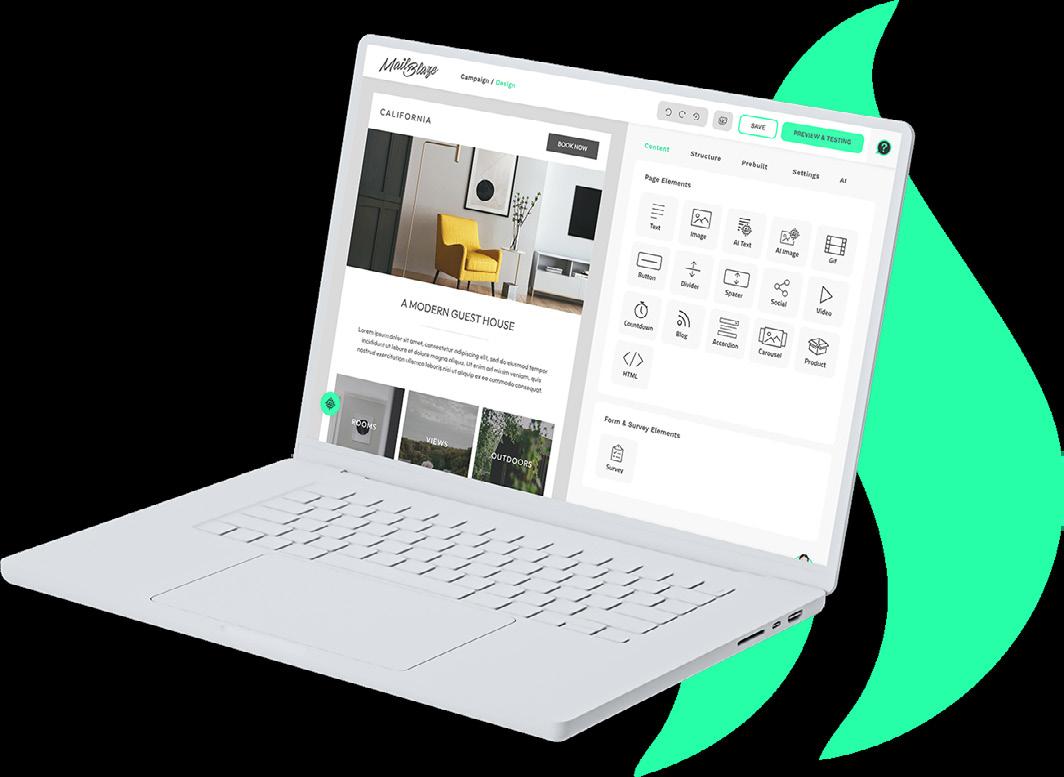
Mail Blaze helps teams turn email marketing back into meaningful audience engagement.

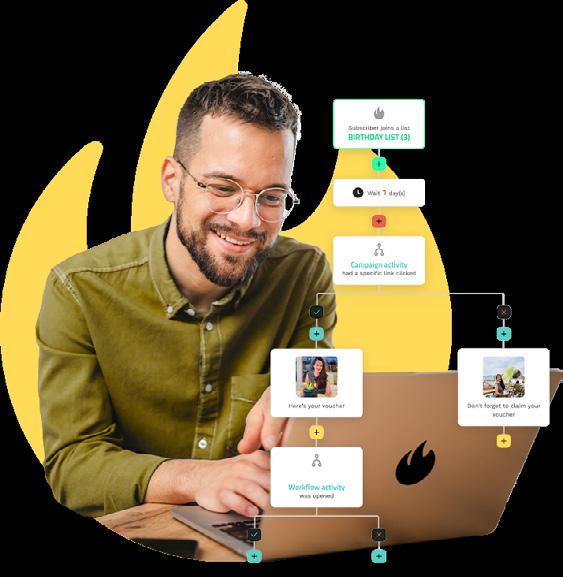
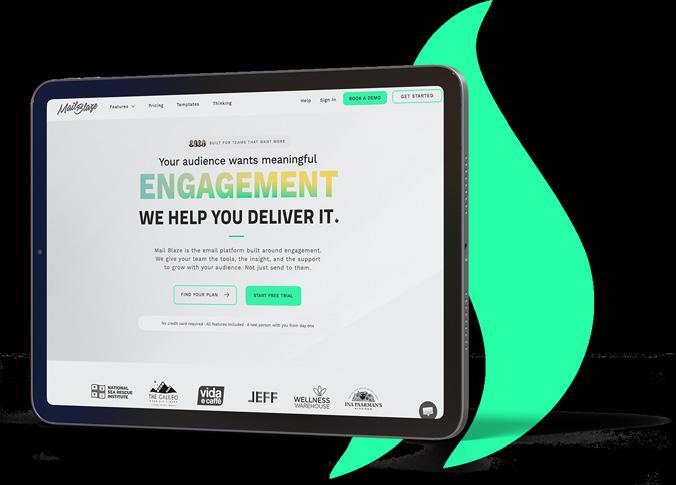
Most platforms help you send more. Mail Blaze helps you send better. Built around engagement, list quality and real audience response, Mail Blaze gives teams the tools to connect, create, measure and improve every campaign.

With 39 million+ emails delivered monthly, 72% of clients seeing improved open rates after switching, and real human support seven days a week, Mail Blaze is built for teams who want more than opens. They want results.

Brands face a quiet shift: being seen is no longer enough. People want to know who you are, what you stand for, and if your story is credible. In a world flooded with content, credibility is currency.
Newskoop exists to help brands earn credibility, connect authentically, and stand out meaningfully.
It’s earned in the consistency of accurate reporting, in the tone of a familiar voice, and in the knowledge that what you’re hearing has been checked, verified, and considered.
For brands navigating the space between purpose and profit, that trust becomes a powerful bridge.

At its core, Newskoop isn’t just about content. It’s about context. It takes stories that matter, grounds them in fact, shapes them with care, and places them where they can truly connect. With over 80 stations and more than 4,300 stories produced monthly in multiple languages, the reach is significant. But it is the trust behind that reach that makes the difference.
Because in radio, trust isn’t built overnight.

Conscious capitalism often sounds like a boardroom phrase - something reserved for strategy decks and annual reports. But in reality, it lives in the stories businesses choose to tell, and how honestly they tell them. When a brand steps into a space where content is crafted for the listener first, something shifts. It stops feeling like marketing and starts feeling like meaning.
That’s where Newskoop’s content shows come into their own.

Take Agriskoops . It doesn’t just talk about agriculture; it lives in it.
From soil health to market movements, from innovation on the ground to the resilience of farming communities - it speaks directly to an audience that knows the difference between surface-level messaging and real insight.
A brand that enters this space doesn’t interrupt the conversation. It contributes to it.

Ecoskoops carries a different kind of weight. Sustainability isn’t a trend here; it’s a necessity. The stories told are rooted in action. Whether it’s renewable energy, conservation, or practical environmental solutions, each is meaningful.
For brands, it’s a chance to show, not tell, how they are part of that solution in a way that resonates beyond a tagline.

Then there is Bizskoops , where the conversation matches the rhythm of business itself. Markets, leadership, and economic realities come into focus - always with a lens of responsibility. It is not just about growth, but also how that growth is achieved. Brands in this space stand beside ideas that matter, not just numbers that impress.
And on the lifestyle end, Styleskoops brings it closer to home. The choices people make every day - what they use, support, and enjoy in their lives - are increasingly tied to values. This is where brands can connect in a way that feels natural, becoming part of a broader story around mindful living and authentic expression.
Across all these, one thing remains consistent: the content is created for the listener first. It is researched, fact-checked, and produced with care. Attention is earned, not assumed.
For brands, this creates a different kind of opportunity. Not a loud one. Not a fleeting one. But it was considered one. It’s a chance to engage audiences who choose meaningful, credible stories. To align with content that informs rather than interrupts.
To represent not just your products, but the values that define your brand. Because in the end, conscious capitalism isn’t just about doing good - it’s about being heard in the right way.
And sometimes, the most powerful place to start … is with a story well told. If your brand is ready to share its story with real impact, connect with Newskoop and become part of the conversation that matters.
oursaladmix.com

Author-Lisa Bell
Some venues are simply places to eat and drink. Others have a story woven into their walls.
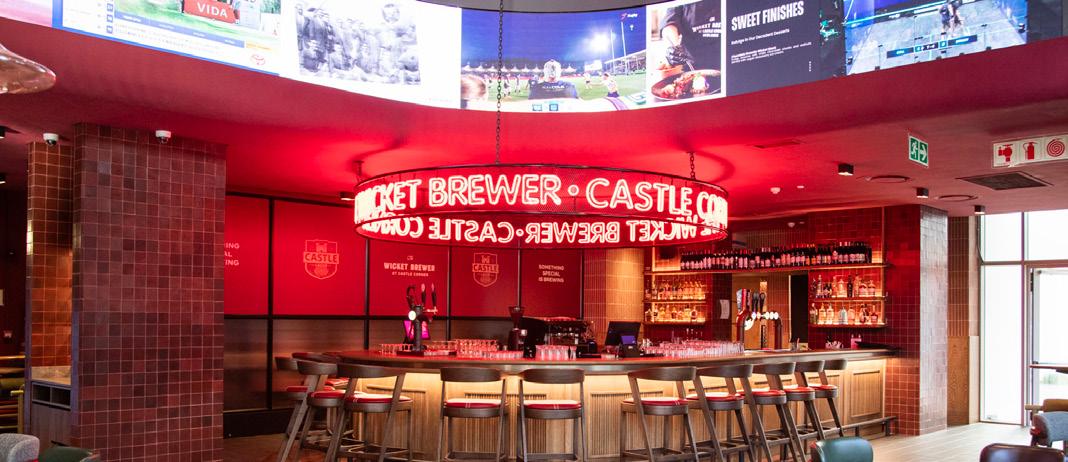
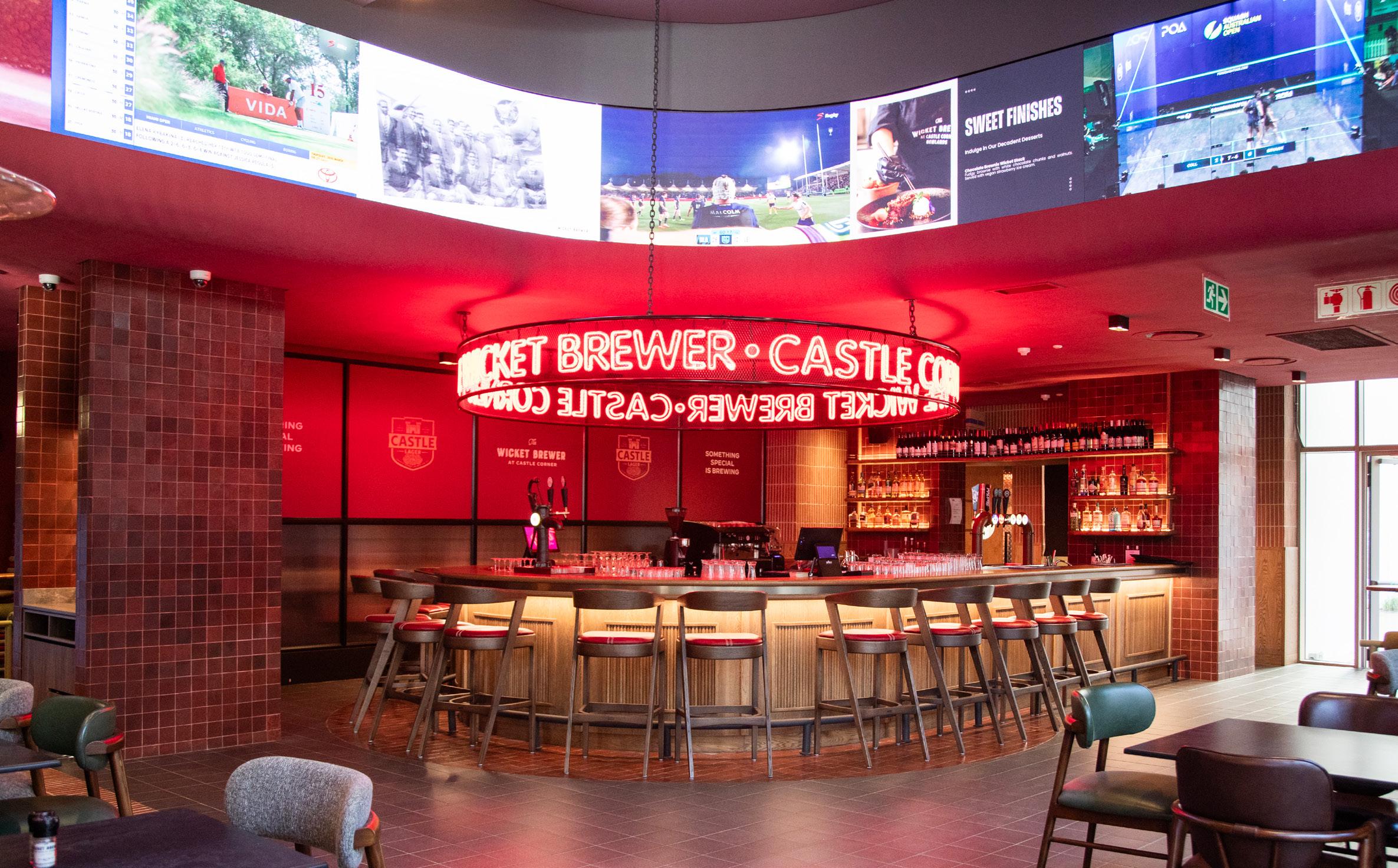
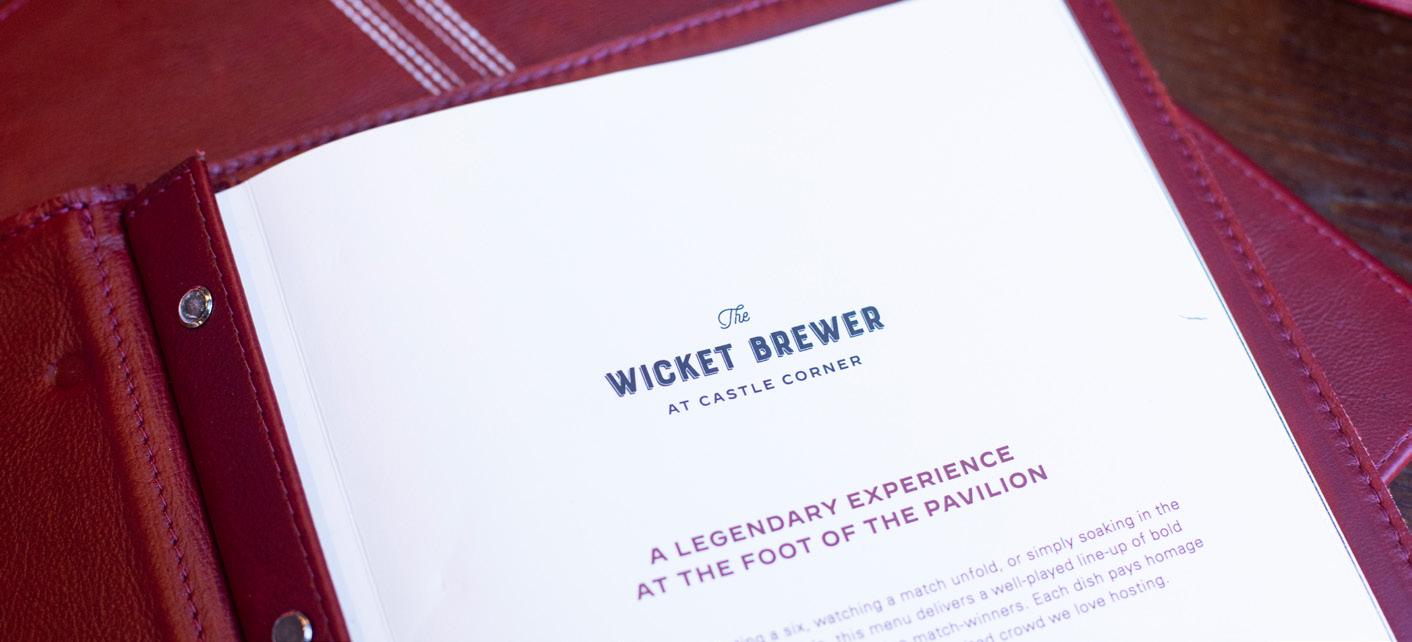
Our recent team outing to Wicket Brewer introduced us to a venue that offers far more than great food and craft beer. Situated within the iconic Newlands Cricket Stadium precinct, Wicket Brewer brings together three things South Africans know and love: sport, hospitality, and gathering around a good table.
From the moment you arrive, there is a sense that this is no ordinary brewery. The connection to cricket is unmistakable. Set against the backdrop of one of the world’s most celebrated cricket grounds, the venue pays tribute to the rich sporting heritage of Newlands while creating a contemporary space where friends, families, colleagues, and visitors can come together.
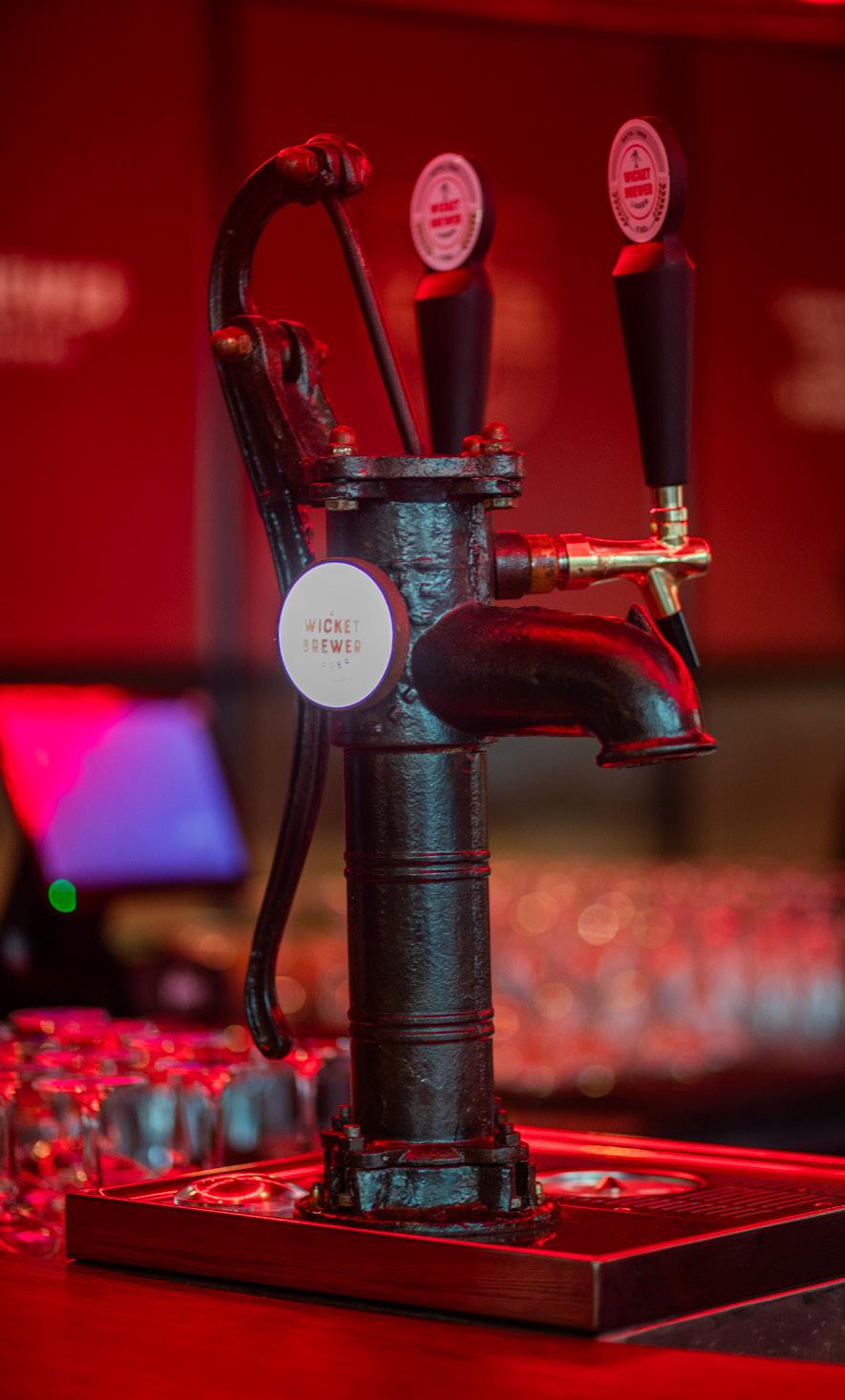
The interior strikes an appealing balance between modern brewery culture and sporting nostalgia. Warm finishes, brewing elements, and subtle nods to cricket
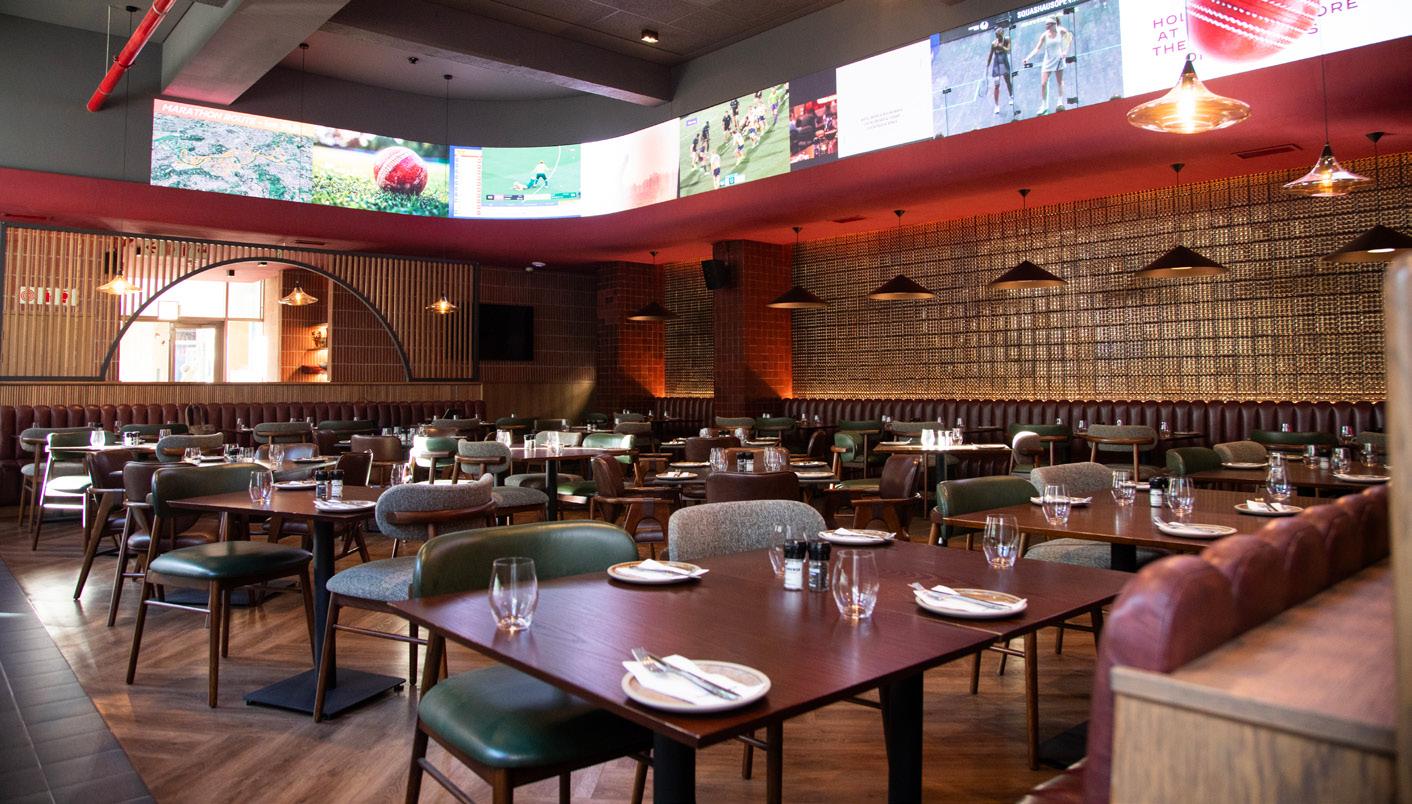
history create an atmosphere that feels both energetic and welcoming. Whether you’re a devoted cricket fan or simply looking for somewhere with character, Wicket Brewer offers a uniquely Cape Town experience.
The brewery’s connection to Newlands runs deeper than the stadium itself. For generations, Newlands has been synonymous with brewing heritage, making Wicket Brewer a fitting addition to a precinct that has long played a role in South Africa’s beer story.
Of course, no brewery experience would be complete without sampling the beer. The range on offer caters to both seasoned craft beer enthusiasts and those simply looking to enjoy a cold drink in good company. The atmosphere encourages lingering conversations and shared experiences, making it easy to lose track of time.
Following our visit to Wicket Brewer, we made our way to the sister restaurant, 1889 Eatery, where lunch and coffee provided the perfect continuation of the day. The food
was generous and beautifully prepared, while the relaxed hospitality mirrored the welcoming experience we had enjoyed throughout the precinct.
What stood out most during our visit was how naturally everything came together. The history of Newlands, the energy of cricket, the brewery heritage, the food, the beer, and the hospitality all combine to create something that feels distinctly local.
In a city filled with excellent restaurants and bars, Wicket Brewer manages to carve out its own identity. It is not simply a place to grab a meal or enjoy a drink. It is a celebration of Cape Town culture, sporting heritage, and the simple pleasure of gathering together.
Whether you’re a cricket enthusiast, a craft beer lover, or simply looking for a memorable outing in one of Cape Town’s most iconic precincts, Wicket Brewer deserves a place on your list.
Author Liezel van der Westhuizen
Owner - Burnout Business & Mental Fitness Coach


Your ESG report is beautifully formatted. Carbon footprint? Tracked. Supply chain ethics? Documented. Gender pay gap? Noted.
But there is a line item missing - one that is quietly bleeding your business, your people, and your purpose credentials dry.
It is called the Burnout Tax. And until you put it in the report, you are not actually measuring your organisation’s real cost of doing business.
Burnout is not a mood. It is a measurable physiological state. When people operate under chronic stress, cortisol floods the system, the prefrontal cortex goes offline, and decision-making quality declines. Not metaphorically. Neurologically.
Here is what that looks like on a balance sheet:
• Gallup research estimates the cost of disengaged employees at 18% of each person’s annual salary.
• Deloitte research found that 77% of respondents have experienced burnout at their current job.
• The American Psychological Association links chronic workplace stress to a 50% increase in voluntary turnover.
• SHRM estimates that replacing a single employee costs between 50% and 200% of their annual salary.
Now look at your headcount. Do the math.
When I did it for my company, I realised there was power and professional sustainability to ensuring my people weren’t just monetarily taken care of, but holistically considered.
“If your people are running on cortisol, your ESG report is incomplete.”
Here is where most organisations get it wrong: They hand burnout to HR. They also built a wellness portal. They’re likely to add a meditation app to the benefits package if they’re progressive technologically, and then call it done.
That is not governance. That is optics - a requirement ‘well done’ on paper.
Burnout at scale is a systemic failure. It means your performance culture is eating its own infrastructure - and this is prevalent as much in the financial industry as it is in food, advertising, or even fashion, too. It means your leaders are making high-stakes decisions with compromised neurology, and the ramifications and habits trickle down. Additionally, it means your Social pillar in ESG is hollow, regardless of how many engagement surveys you run.
Boards that treat burnout as an employee problem rather than an enterprise risk are making the same mistake as companies that ignored supply chain ethics a decade ago. The reputational and financial cost catches up. It always does, and the fix will cost more!
“A purpose-driven company that burns its best people out is not purpose-driven. It is purposedecorated and profit-only-driven.”
Most ESG Social metrics track training hours, leave taken, and satisfaction scores. These are lagging indicators. By the time they move, the damage is done.
Forward-thinking organisations need to add:
• Cortisol-linked productivity loss, measured through absenteeism patterns, performance dips, and error rates during high-pressure periods.
• Leadership decision quality under stress: are your managers making their best calls in Q4, or their worst ones?
• Recovery capital: the organisational capacity to rest, reset, and rebuild between intensive sprints.
“Burnout is not a personal failure. It is an organisational design flaw.”
THE PERFORMANCE CASE FOR SUSTAINABLE LEADERSHIP
Elite performance in any field requires two things: output and recovery. Remove recovery from the equation, and output degrades. There is no negotiating with physiology, whether you are on a race course or in a boardroom. Nowhere is this clearer than in Japan’s long-hours work culture, where millions once regularly exceeded 60-hour weeks, and cases of overwork-related illness and death –‘karoshi’ - became a recognised phenomenon. Yet the expected gains in output never materialised: Japan continues to rank among the lowest in productivity across the G7, further emphasising the


limits of endurance without recovery.
Through executive coaching, I continually observe the link between chronic sleep restriction, presenteeism, and declining performance in leaders.
The most resilient organisations understand this, and they build recovery into their operating rhythm. They measure energy as carefully as they measure revenue. Leadership capacity is also treated as a finite, protectable resource.
That is not a soft position to be slated as a fad of newer labour forces’ demands. That is a competitive strategy that will go the distance.
Ask your executive leadership team: If burnout were a risk register line item, what would the mitigation plan entail?
If this cannot be answered, you have identified your immediate priority.
The businesses leading the next decade of conscious capitalism will not just profit with purpose. They will protect the people who make that profit possible. And they will prove it in both quantity and quality, not just in narrative.

Liezel is a high-performance and burnout business coach, hypnotherapist, and founder of the Giraffe Brand Academy. She helps entrepreneurs and leaders build confidence, resilience, and mental fitness using neuroscience-backed tools and practical strategies to create sustainable growth and high performance.

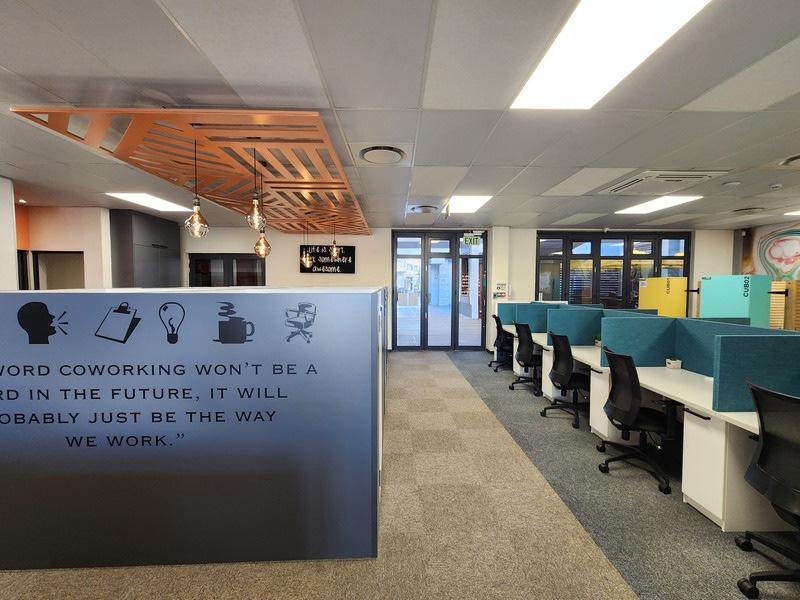
Eliminate the stress of long-term leases and rising utility costs. @Work provides an office environment in Bloubergstrand, featuring backup generators, high-speed internet, and daily cleaning all included in your rate. Our flexible membership models allow you to scale instantly, with 10% discounts for additional team members and VAT-inclusive rates for easy remittance. Why manage a building when you can focus on your bottom line? Join a professional community that powers your growth while cutting your traditional office overheads.
14, Eden on the Bay Mall, Bloubergstrand, Cape Town.




Author-Felix Spies
South Africa does not suffer from a shortage of need, nor a shortage of generosity. Across the country, communities support one another in deeply personal and often unseen ways. Businesses invest in social programmes. Families help families. Faith groups, trusts, foundations, and individuals continue stepping into spaces left by the state and wider society.
Yet generosity alone is no longer enough. Philanthropy depends on trust.
In South Africa, this matters deeply.
Trialogue’s 2024 research found that CSI expenditure increased from R11.8 billion in 2023 to R12.7 billion in 2024, with education remaining the leading focus area. At the same time, the nonprofit sector is crowded, with nearly 295,000 registered NPOs as of late 2024.
This means donors are not simply choosing between good and bad causes. They are choosing among thousands of organisations addressing real and urgent needs. The defining question is no longer, “Is this a worthy cause?” but rather, “Can this organisation be trusted?”
Philanthropy must therefore move beyond good intentions and focus on reliability, governance, and accountability.
Many organisations approach fundraising as an access problem: access to donors, proposal templates, CSI budgets, or wealthy individuals. While these matter, they are not the full story. Some organisations are not designed to be funded. They are simply not fundable.
Fundability is an organisation’s ability to be understood, trusted, and governed responsibly and sustainably over time. It is not built through a polished proposal or emotional campaign. It develops through consistent behaviour, transparent evidence,
strong governance, and lasting relationships.
In my work across philanthropy, governance, education, and donor engagement, I often see organisations asking the wrong question. They ask, “How do we raise more money?” instead of asking, “Why would someone trust us with money?”
“Credibility goes beyond compliance.”
That distinction changes everything.
A donor not only funds a programme. They fund an organisation’s ability to deliver responsibly. Donors are constantly reading signals: Is the board engaged? Are the numbers coherent? Is leadership stable? Does the evidence support the story being told?
Governance, therefore, is not paperwork. It is a fundraising asset.
Compliance still matters. Organisations must be registered, maintain records, meet legal requirements, and account for funds responsibly. Izinga Assist is helping South African nonprofits move toward stronger compliance and verification standards. But compliance is merely the baseline.
Credibility goes beyond compliance.
A policy can exist without shaping behaviour. A board can exist without truly governing. An audit can be completed while an organisation remains strategically fragile. Increasingly, donors understand this.
Trust is not built solely through documents. It is earned when actions align with disclosures, decisions are disciplined, and organisations communicate honestly about both successes and failures.
This is where “impact washing” becomes
dangerous. Under pressure to secure funding, organisations can begin performing impact rather than proving it. Outputs are framed as outcomes. Only successes are highlighted. Failure is hidden.
The damage is significant because when the impact is exaggerated, the entire sector becomes less trustworthy.
Honest reporting is ultimately more credible than perfect reporting.
The relationship between donors and nonprofits must also mature. Philanthropy should not operate as a power imbalance in which one party holds money, and the other expresses gratitude. Donors bring capital, but nonprofits bring proximity, insight, and lived understanding.
The strongest philanthropy is not transactional. It is relational, strategic, and accountable in both directions.
This is why I think less about “fundraising” and more about “friend-raising.” Money is only one form of contribution. The others are equally valuable: time, talent, ties, and testimony. Time is the willingness to show up. Talent is expertise. Ties are networks. Testimony is advocacy when the organisation is not in the room.

Many organisations chase treasure while neglecting the other forms of capital. Yet treasure often follows trust.
This is especially important in South Africa, where institutional trust remains uneven.
“The future of philanthropy depends on a more mature social contract between donors and nonprofits.”

Edelman’s 2025 South Africa Trust Barometer found that NGOs and businesses remain more trusted than the government or media. That creates both opportunity and responsibility. NGOs must carefully protect trust, and corporate giving must become more than brand positioning.
The future of philanthropy depends on a more mature social contract between donors and nonprofits. Donors must invest not only in visible programmes, but also in the systems, governance, and leadership that make those programmes credible. Nonprofits must stop confusing need with legitimacy. Need may justify concern, but funding must still be earned.
Trust is the ultimate currency.
The future of philanthropy will not be shaped by who tells the most emotional stories, but by those willing to tell the truest ones.

Felix Spies is a social impact leader working at the intersection of education, governance, systems thinking, and sustainable community development. He is the Founder and CEO of Siyafunda Education Foundation, where he focuses on expanding access to digital, STEM, coding, and robotics education for young people across South Africa.
Felix is also the founder of Catalyst Consultancy and serves in leadership and advisory roles across various impact-driven initiatives and networks. His work explores how trust, governance, and long-term thinking shape meaningful social change. Known for his thoughtful and grounded approach, Felix is passionate about building systems, partnerships, and opportunities that create sustainable impact beyond short-term interventions.


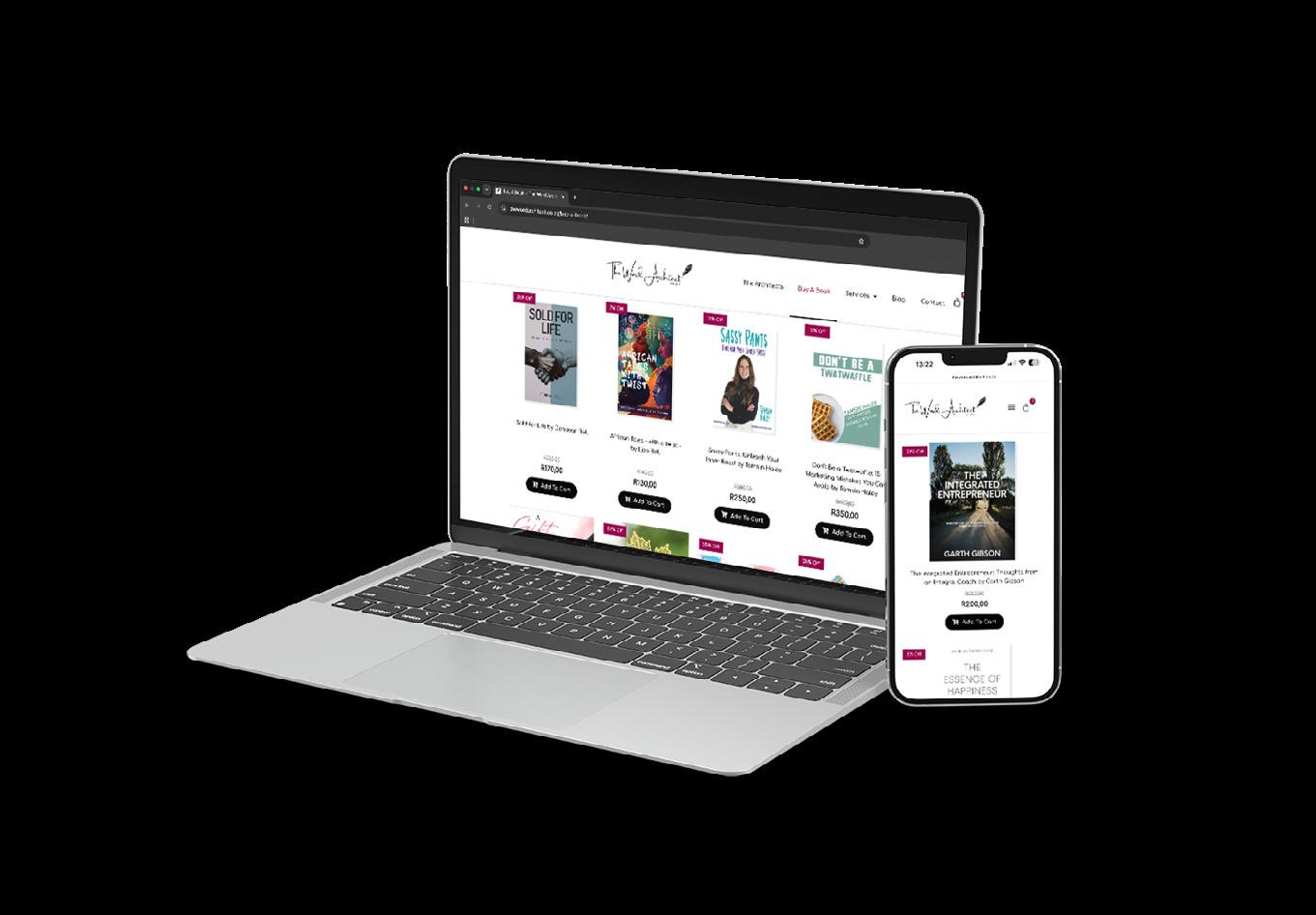
A curated co-author book series bringing together 10 industry experts to share real insight, practical experience, and forward-thinking perspectives.
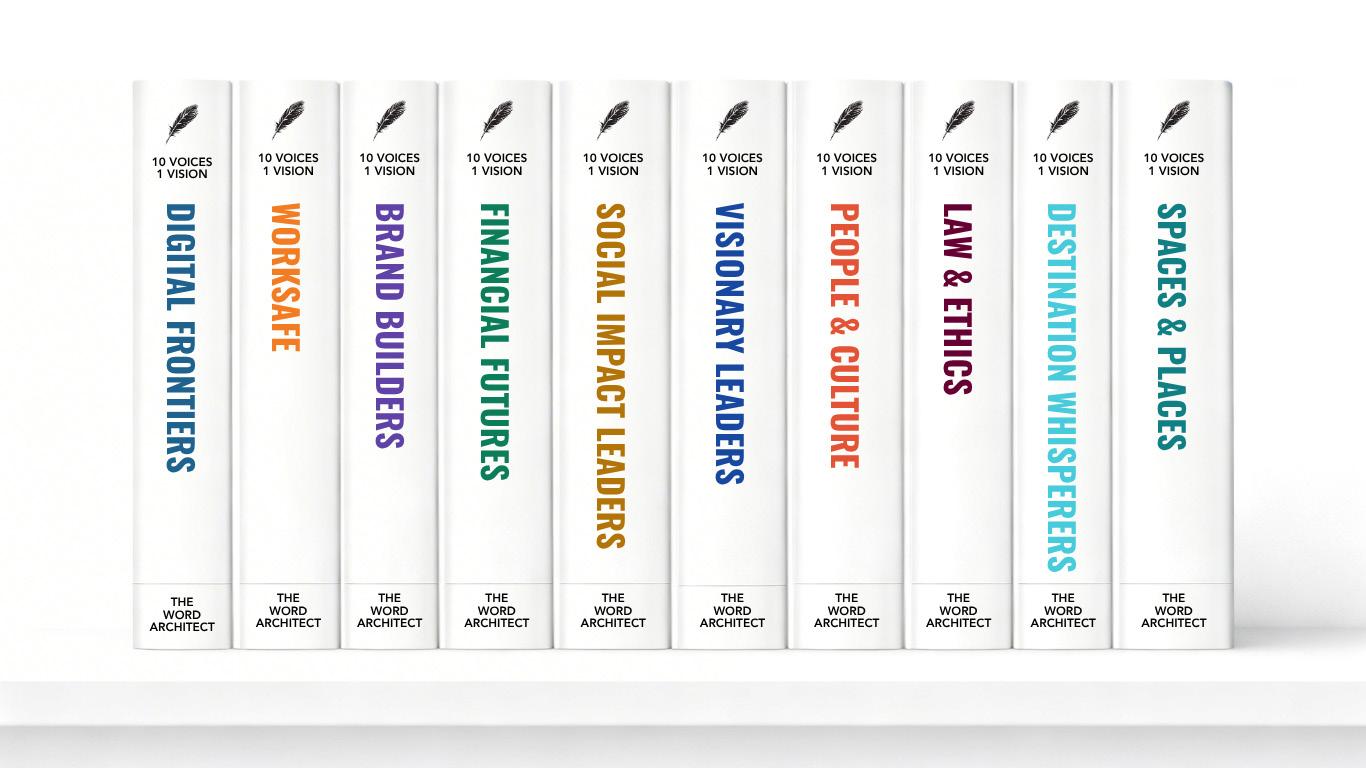
Each edition is professionally produced and published on Amazon, positioning contributors as recognised voices in their field. THIS IS NOT CONTENT. THIS IS CREDIBILITY.
• Published on Amazon (eBook, Paperback, Hardcover)
• Full editorial and publishing support
• Shared annual royalties
• Estimated reach of 50,000 – 150,000 people
• A long-term authority asset for your brand
Limited spaces per edition. (some editions are already full)
Author Lisa Bell
Owner -The Word Architect

By Lisa Bell, Chief Editor of WORD Magazine
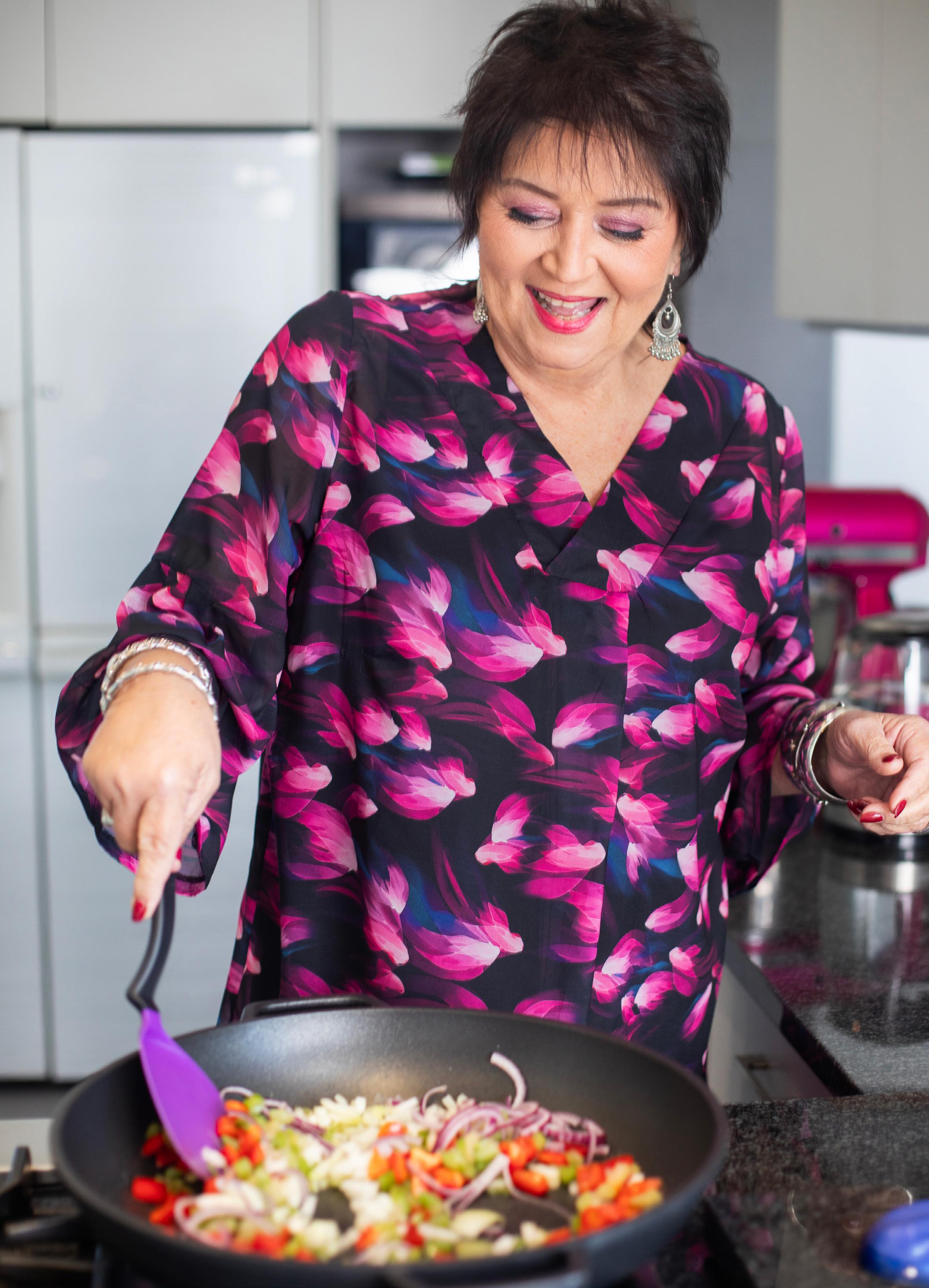
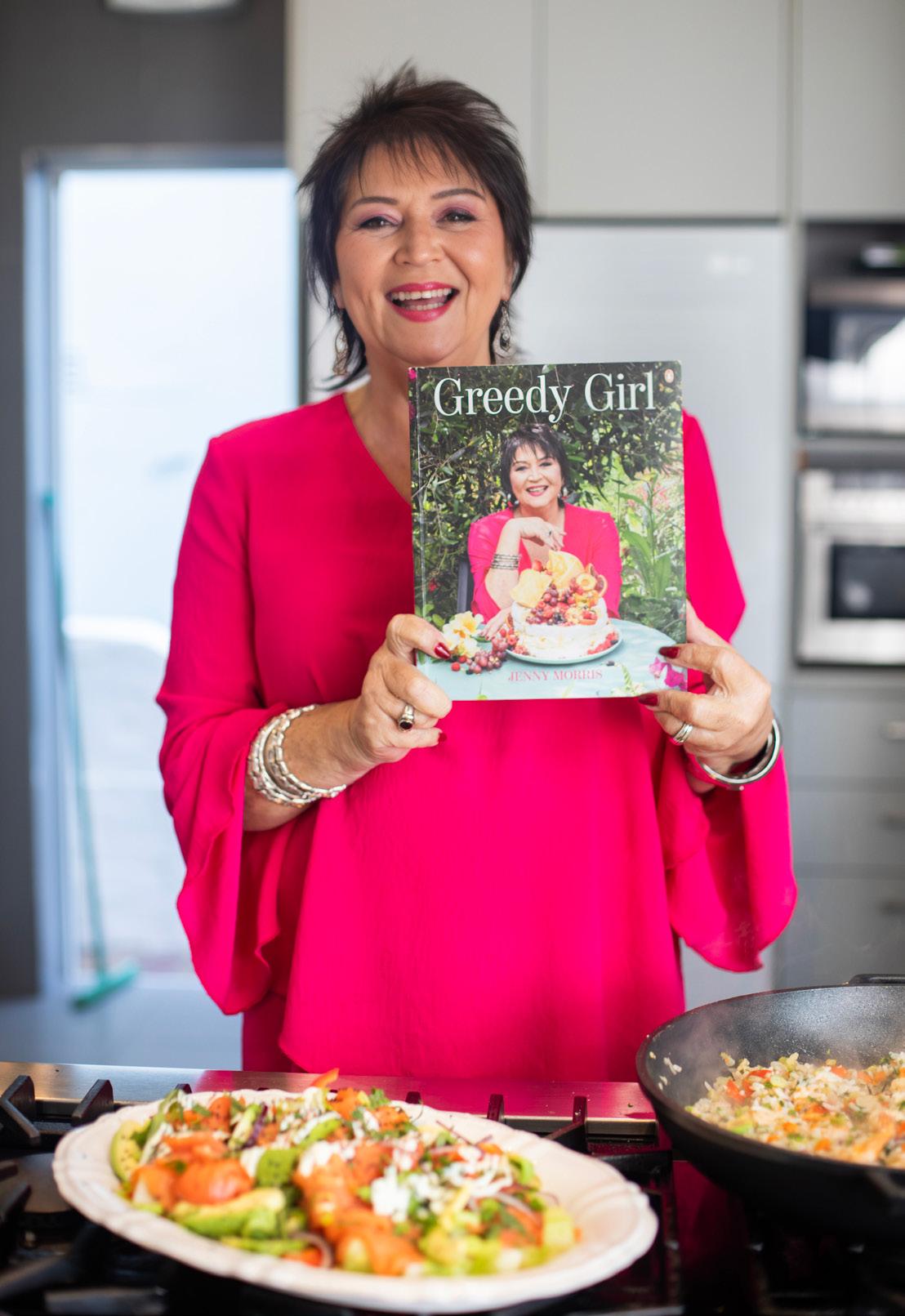
Few South Africans have turned passion into personality like Jenny Morris. As The Giggling Gourmet, Jenny has built a culinary career based on authenticity, generosity, humour, and a love of food.
From humble, self-taught beginnings to international recognition as a chef, author, TV personality, radio host, and entrepreneur, Jenny has stayed remarkably grounded.
In this conversation with WORD Magazine, she reflects on where it all began. She discusses the importance of staying authentic in business, explores her global culinary adventures, shares thoughts on the evolution of media and food culture, and explains why she believes hospitality is ultimately about love, generosity, and connection.
Q: You’ve become one of South Africa’s most recognisable culinary personalities. Take us back to the beginning. What first sparked your love for food, and did you always know this would become your life’s work?
Jenny Morris: Oh, definitely. I think from a little girl, I knew this was what I wanted to do. My father had other dreams and hopes for me. He didn’t want me sweating over pots with big, burly men. He said it wasn’t a job for a lady.
I wanted to go to culinary school, but he wouldn’t pay for it. He told me he’d rather give me the best wedding ever so I could cook for my husband and children. So instead, I became a telephone electrician because I didn’t have to pay for that.
But that yearning to cook and feed people has always been there. I think of a foetus I wanted to cook.
Both my parents cooked beautifully. My mother was more holistic, and my father was very adventurous in the kitchen. They grew almost everything we ate, so we became deeply connected to the seasons and to fresh food.
Q: Would you say you still live that way today? Do you grow your own food?
Jenny Morris: Absolutely. Before the terrible drought in Cape Town, I grew almost

everything. I could walk into the garden and pick six vegetables at a time for the table, my restaurant, or my cooking school.
I still grow things now, just on a smaller scale. I’ve always believed in that connection between food and the earth.
Q: Looking back, how did the journey from home cook to where you are today unfold?
Jenny Morris: The most unexpected things happened because I never planned for this life. It all started with cooking for friends who would bring ingredients to my house because I cooked a little better than they did. That slowly turned into a business. Then BMW gave me my first catering opportunity almost by accident. From there, it became the Dutch Embassy, the British High Commissioner, Prince Charles, Al Gore, Thabo Mbeki, FW de Klerk - it just grew.
I think it came down to good service, under-promising and over-delivering, and letting your passion speak for itself.
Q: Did you ever have formal culinary training?
Jenny Morris: No. None at all. I believe if you can read, you can cook, if you have passion and determination. I’ve learned by doing, by watching, and by working with people.
Q: Your nickname, The Giggling Gourmet, is now iconic. How did that identity come about?
Jenny Morris: That name was born in the shower. I used to do radio with Les Aupias, and she always said, “You’re so giggly and funny.”
At the time, I was trying to register the name The Galloping Gourmet, but there was an issue with it. One day in the shower, I thought, “Well, you giggle all the time,” and that’s how The Giggling Gourmet was born.
Q: You’ve taken South African flavour to international audiences through Food
Network and your culinary tours. What did that global exposure teach you?
Jenny Morris: Travel has taught me so much about people and culture through food. I love authenticity. I don’t do the fancy tourist version. I go into the back streets and discover how people really cook and eat.
Food Network exposed me to over 143 countries. In some places, they dubbed my voice; in others, there were subtitles. It’s surreal. What I’ve learned is that food tells stories. Real food, authentic food, connects people deeply.
Q: Is there a particular cuisine or flavour profile you always return to?
Jenny Morris: I absolutely love Asian cuisine. I’ve actually discovered I have Chinese and Indian heritage in my DNA. I love the layers of flavour, the fragrance, the spices. Asian food just speaks to me.
Q: Long before personal branding became a buzzword, you built a brand people instantly recognise. What’s the secret?
Jenny Morris: Trust. You have to be honest. Opportunities come with big money attached, but if it doesn’t feel right, you can’t sell yourself for that. If I endorse something, it’s because I’ve used it and believe in it. People need to trust your name.
Q: You’ve balanced cookbooks, media, collaborations, and your cookery school. What has helped you balance creativity with commercial success?
Jenny Morris: You can’t let money lead you by the nose. One big cheque can destroy trust forever. People need to believe in you. That matters more than anything.
Q: Tell us about your latest cookbook, Greedy Girl.
Jenny Morris: People think it’s about glut -
tony, but it’s not. It’s about being greedy for life, for love, for family, for experiences.
The book is deeply personal. It’s about people who have entered my life and shaped me. There are recipes connected to stories, friends, family, and moments. It’s my way of saying thank you.
Q: The way we consume food content has changed dramatically. How have you adapted to the digital world?
Jenny Morris: What excites me is how accessible everything has become. TV and social media bring the world into your kitchen. People can now see ingredients they’ve only ever read about. Curiosity around food has exploded, especially with younger generations. I’ve always embraced technology. I still do radio after almost 30 years because I love that instant connection with people.
Q: Your work has always been about more than food. What does hospitality mean to you today?
Jenny Morris: I think I’m one of the most hospitable people on earth because I genuinely love people. Hosting brings me enormous joy.
Hospitality has evolved so much. It’s no longer just chefs in kitchens. There are so many beautiful avenues now. But at its core, it’s still about generosity and connection.
Q: What does the next chapter look like for Jenny Morris?
Jenny Morris: Please God, give me another five years. We have TV projects in the works, book number eight is already being written,
and we’re developing something called The Diaries of the Giggling Gourmet, which will spotlight food heroes and incredible producers.
I never stop dreaming up recipes. I just want to continue discovering new things and sharing them with people.
Q: We ask all our WORD Magazine covers this: What book, podcast, YouTube channel, or media personality would you recommend to our readers?
Jenny Morris: Rick Stein . Absolutely. I love his honesty, his passion for food, and his recognition of food heroes and producers. He’s authentic and deeply grounded. I think people should definitely follow him.


Jenny Morris is one of South Africa’s most beloved culinary personalities, best known as The Giggling Gourmet.
A self-taught chef, author, television presenter, radio host, entrepreneur, and food storyteller, Jenny has built a career spanning decades across television, publishing, hospitality, and culinary tourism.
Known for her warmth, authenticity, and vibrant personality, she continues to inspire audiences locally and internationally through food, storytelling, and meaningful connection.
CONNECT WITH JENNY
gigglinggourmet.co.za jennymorris.co.za
CREDITS
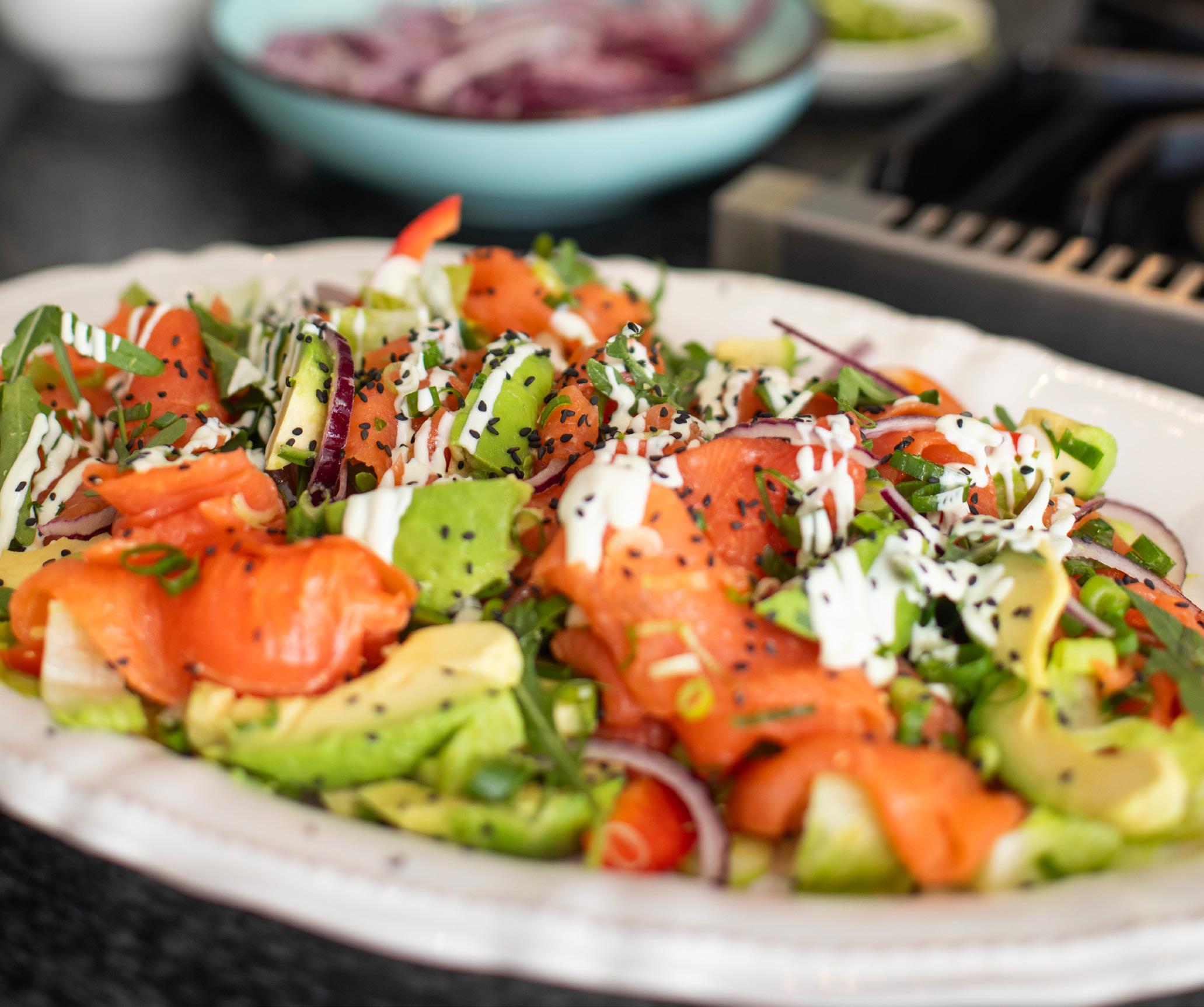
Food Supplied by: The Salmon Lady - Lindie Gorrie salmonlady.co.za
Makeup Supplied by: Catrice Cosmetics catricecosmetics.com
Makeup Artist: Kyra Loubser @kyraloubser

Author Marike Herselman
Owner - Marike Herselman Photography
You know the feeling when you are being sold to. When the image, wording, or video of a brand feels a little pushy or overly sales-focused. I immediately turn the page, close the website, scroll on, or walk away. When something comes across too strong, it often loses its authenticity. Some brands get this balance right, while others do not. So where does the difference lie, and how can you apply this to your visual communication?
Purpose-driven brands do not lead with profit. They lead with values, responsibility, and contribution, and the profit follows. When imagery reflects intention rather than persuasion, people are more inclined to engage with the brand. Trust forms more easily when the purpose is clear and the message feels authentic.
Faces create connection faster than a logo or a block of text. Including portraits in visual communication helps solidify trust by humanising an organisation and creating a connection to its leadership and causes. For ethical businesses and NGOs, this visibility is closely tied to accountability, which is where people feel safe. We tend to connect with people who carry a mission, not with the mission alone. This is why clarity around purpose is essential, so it can be reflected in portraits, interactions, and communication.


So what does authenticity look like in a portrait? It differs from person to person and from business to business, because values are not the same. Missions are not copied from a neighbour, predecessor, or mentor. Each business and entrepreneur develops their own voice, and that voice can, and should, evolve over time. What remains consistent is that authenticity is genuine, real, and sometimes raw. We respond to that truth, and it builds trust.
Intentional portraits should be guided by clarity around who the brand serves and why. Choices around setting, clothing, posture, and expression all communicate values and should be considered with care.
Brands that lead with purpose attract aligned clients, partners, and supporters. Because this trust is built on honest representation, it fosters long-term loyalty. This is where portraiture becomes part of a broader ecosystem of value-driven
When portraits are created with intention, they become more than visuals. They become signals of integrity, clarity, and care. In a world full of noise, purpose-led imagery gives people a reason to pause, look closer, and trust.
Marike Herselman is a portrait photographer focused on authenticity and connection. Her work captures individuals and brands in a way that reflects confidence, personality, and presence, helping clients show up powerfully in both personal and professional spaces. communication, and where you become the biggest .


Author Krystin Morgenrood Chief Designer - The Word Architect
For a long time, business success was measured by growth at any cost.
Bigger numbers. Faster results. More visibility. But somewhere along the way, people started asking different questions.
What does this brand actually stand for? Who benefits from its success? What impact does it leave behind?
Profit still matters, but purpose is becoming part of the equation.
Consumers are paying closer attention to the businesses they support. They care about how products are made, how people are treated and whether brands operate with genuine intention. Businesses can no longer rely on good marketing alone. People want substance behind the messaging.
This shift has changed the way many brands approach design, communication and experience. Thoughtful spaces, honest storytelling and intentional design choices all help shape how a business is perceived. Design is no longer only about aesthetics. It has become a reflection of values.
We’re also seeing a new generation of entrepreneurs building differently.
Less focused on hustle culture and more interested in sustainability, longevity and meaningful growth. Success is no longer only about scale. It’s about creating something that lasts and contributes positively to the people around it.
Conscious capitalism doesn’t mean businesses stop making money. It means profit and purpose are no longer seen as opposites. The strongest brands today understand that trust, community and long-term impact hold real value.
In many ways, the future of business belongs to brands that feel human. Brands that act with clarity, consistency and care. Brands that understand consumers are looking for more than products. They are looking for connection, alignment and meaning. Because the brands that leave a lasting impact are rarely driven by profit alone.
Fueled by a love for creating from scratch, Krystin brings a natural flair for visual storytelling. Her work spans brand storytelling, social media design, corporate stationery and brand packages.

Every published author started with a blank page. Whether you’re sharing expertise, telling your story, building authority, or creating a legacy, we’ll help guide you from idea to published book.
HAVE YOU EVER THOUGHT
• I should write a book one day.
• My story could help someone.
• I've learnt a lot in my career.
• I'd love to leave a legacy.
• I just don't know where to start.
Every Step of the Way you finally publish your book?
Then perhaps this is your sign.
Ready to turn the page?
Explore the Author Journey.
From Idea to Published Book
Editing, Design & Publishing Support
Print & Digital Formats
Amazon Publishing Assistance
Professional Guidance

Author Kim du Plessis
Managing Director - Our Salad Mix


Iam the essential, yet often overlooked, voice in your media plan. My impact is subtle, but my role is crucial.
“I am the voice in taxis cutting through early morning traffic. The sound in spaza shops, in kitchens, in places where life isn’t curated— it’s lived.”
I don’t arrive with polished decks or big promises about reach and frequency. I am not going to show you a spike on a graph overnight. In fact, if we are being honest, I am often the line item that gets squeezed when budgets get tight.
But I am still here.
I am the voice in taxis cutting through early morning traffic. The sound in spaza shops, in kitchens, in places where life isn’t curated—it’s lived. I am there when people are getting ready for work, when they are winding down and when they are talking about what’s really going on in their communities.
I am community radio.
So if we’re talking about conscious capitalism - about profit with purposelet’s get real, not theoretical. Because purpose doesn’t live in your strategy deck. It doesn’t sit neatly in an ESG report or a once-a-year campaign. It shows up in your

choices. Where do you spend? Who do you prioritise? Whether you’re prepared to listen or just broadcast.
You see, I don’t know my audience as segments or LSM groups. I know them as people.
I know they switch languages mid-sentence. I know the humour that doesn’t translate into a headline. I know the frustrations that don’t always make it into your research reports. I know what matters here - because I am part of it.
So when your brand arrives in my space, it can’t arrive halfway. You can’t speak to this audience. You can’t drop in with a perfectly polished message that sounds like it was written for somewhere else. People hear
that immediately. They switch off just as quickly.
Here’s the uncomfortable truth.
It is easier to talk about purpose than it is to practice it.
It is easier to sponsor a moment than it is to build a relationship.
It is easier to choose platforms that make your numbers look good than ones that make your brand mean something.
But the brands that get it right? They understand the difference.
The brands that succeed understand this. They show up consistently, listen before they speak, invest in the communities they want to reach, and focus on earning trust rather than just attracting attention.
And trust, in spaces like mine, isn’t negotiable. You either have it or you don’t.
I have seen campaigns that look perfect on paper fall completely flat the moment they go on air. Messages that tick every ESG box but miss the reality of the person listening. It’s not that people don’t care - it’s that they care too much to be spoken to without honesty. Because here, the purpose can’t be performed. If you’re committed to conscious capitalism, don’t just add a layer of ‘good.’ Do things differently.
It’s choosing relevance over convenience.
It’s understanding that the communities you’re marketing to are the same ones sustaining your business.
“Because conscious capitalism isn’t something you say once your campaign is live. It’s something your audience feels long before that.”
It’s recognising that profit built without connection is fragile - and it doesn’t take much for people to move on.
I may not give you the biggest reach. But I’ll give you context. I’ll give you credibility. I’ll give you a connection that isn’t forced, and trust that isn’t bought.
And in a country as layered and complex as ours, that matters more than most metrics.
So don’t treat community radio as an afterthought. Recognise its role from the start of your plan. Don’t arrive here when you need to “tick the community box.”
Come properly. Sit in the space. Listen a little longer than feels comfortable. Then, take action: partner with us to create campaigns that truly connect - become a part of these communities, not just a presence.
Because conscious capitalism isn’t something you say once your campaign is live. It’s something your audience feels long before that.
And they will know the difference.
At Our Salad Mix, we have learned that our role isn’t just to place media, it’s to translate between worlds. Between boardrooms and backyards. Between strategy and lived experience. Between brands that want to grow, and communities that expect more. We mix media that connects, engages, delivers and grows. If you want your brand to matter here, work with us to build genuine community connections beyond the numbers.
But none of that happens without understanding the voice that you are speaking into. And sometimes, the most powerful thing a brand can do is stop talking and start listening.


Kim du Plessis is a media strategist with over two decades of experience in radio, campaign development, and brand messaging. She combines creative thinking with commercial acumen to help businesses craft campaigns that resonate and deliver measurable results.

Author WeWork
Coworking & Office Space
With easily accessible transport links, travelling all over Mzansi for the best working environments is easy—digital nomad or not.

Traditional 9-5 office days are fading out. In their place: flexible working, better work-life balance, and cool, comfortable workspace and amenities. Otherwise known as ‘WeWork’.
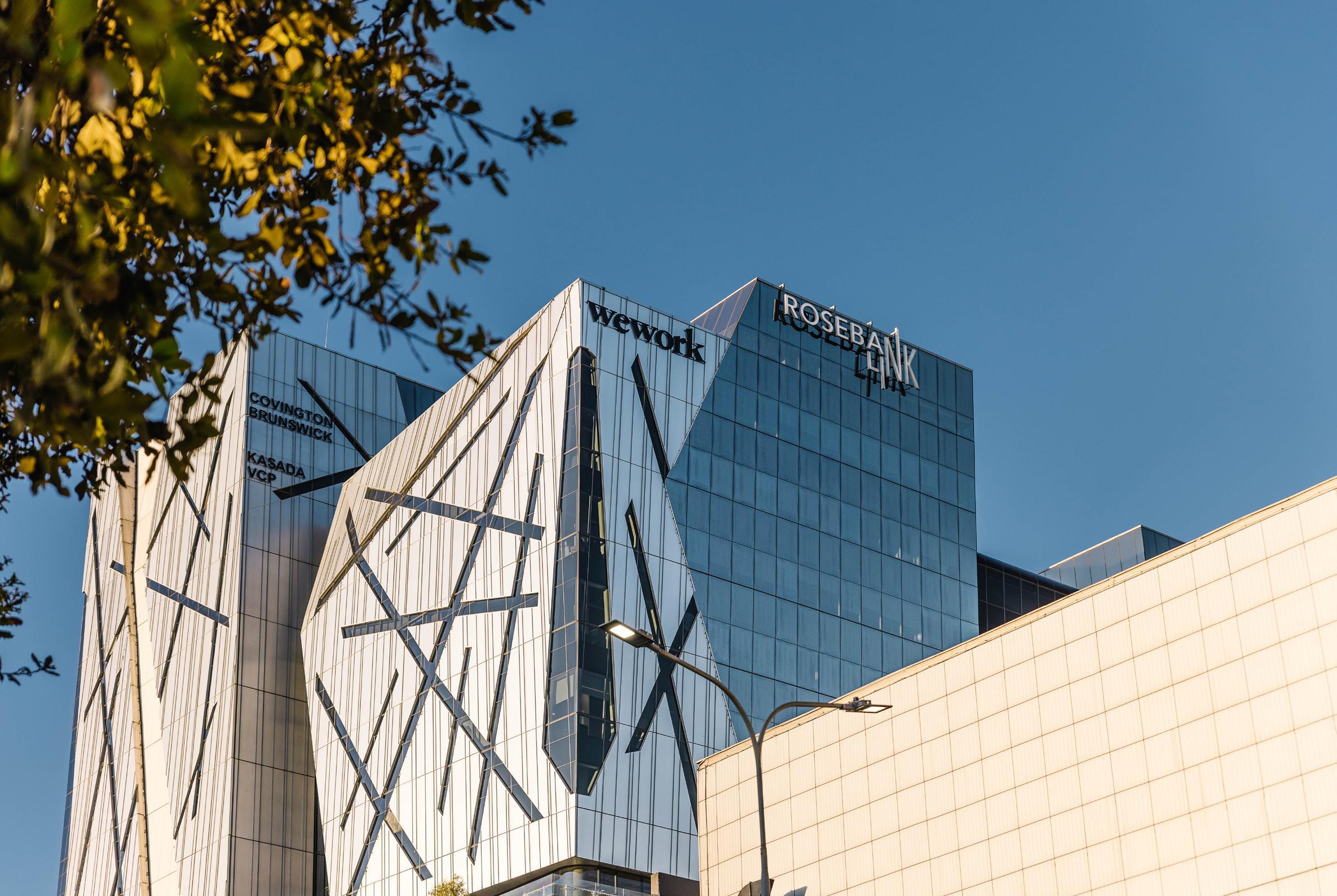
Boasting over 3 locations in South Africa alone, with WeWork, you can enter locations near home or elsewhere in the city. Think 155 West St. Sandton on Monday, The Link in Rosebank on Wednesday, and 80 Strand, Cape Town, on Friday, as you get ready for the weekend in the Mother City; take your pick from a wide range of inspiring workspaces across the map where you can focus on deadlines, meet with clients (in bookable meeting rooms), and collaborate with colleagues from different offices.
Better yet, with Johannesburg and Cape Town transport links –from trains and buses to tuk-tuks and e-hailing services – you can shorten your commute, travel more sustainably, see more of the city, and spice up your Monday-Friday.
Keep reading to see how you can commute to different workspaces in South Africa every day for a week.
If there’s one thing every Monday morning needs, it’s coffee. Add heaps of natural light, a cheery Community Team, and an easy route to work, and your week is off to an epic start. You’ll find all of that at WeWork 155 West Street in Sandton. With its large, industrial windows that brighten the space and a mix of private offices, meeting rooms, lounges, and desks to switch up your location (and revitalise your workflow throughout the day), it’s the perfect place to tackle the start of the week. Enjoy a lunchtime feast at the in-house The Work Kitchen on the ground floor.
Travel tip: Sandton Gautrain station is just a nine-minute walk away. Trains run until 21:00, so you can hit up Sandton City after work for some grub and Theatre on The Square for entertainment.


At six storeys high, WeWork The Link, Rosebank is the largest WeWork in the Mzansi, offering epic views of the Rosebank CBD, Sandton and beyond. Inside, there’s space for every type of worker – from quiet lounges for focused work to breakout areas for creative collaboration. Enjoy a lunchtime feast at the nearby The Zone or Rosebank Mall, and when the clock strikes 5 (or 3… no judgment here), head to WeWork’s very own gaming area on the reception floor, complete with foosball and table tennis tables.

Travel tip: Travel between WeWork
Sandton and The Link, Rosebank by Gautrain. It’s a 10-minute ride during off-peak hours.
Are you a ‘Capetonian’ if you weren’t excited for all the restaurants on Bree Street to open? For a visit to a slick workspace surrounded by eateries, with bright spaces to set up your laptop, and an enjoyable commute thanks to the MyCiti bus stop on your doorstep, WeWork 80 Strand in Cape Town will probably be your favourite WeWork. With four floors of mixed-use space, a central atrium bursting with natural light, and –as with all WeWork offices – a Community Team on hand to support your needs (and to duel at table football), it’s a great place to finish your week and enjoy a beer (or two) on tap.
Travel tip: Kick off the weekend by taking the MyCiti 105 Line, Sea Point, or Civic Centre into central Cape Town. An Uber ride to V & A Waterfront takes less than 10 minutes.
Happy exploring!


WeWork was founded in 2010 with the vision to create environments where people and companies come together and do their best work. Since then, we’ve become a leading global flexible space provider committed to delivering technology-driven turnkey solutions, flexible spaces, and community experiences. WeWork South Africa is owned under a franchise partnership by SiSebenza, which holds the exclusive rights to operate WeWork in South Africa, Ghana, Kenya, Mauritius and Nigeria.

Author Andre du Toit
Owner - The Big Positive Guy


Ihave always found it fascinating how perfectly normal people can walk into a boardroom and suddenly turn into brochures. Outside the meeting, they are warm, funny, kind, and completely human. They love their children, worry about their dogs, send birthday messages, support school raffles, and occasionally do something heroic, like allowing another driver to merge in front of them in traffic without muttering an unprintable word.
Then the meeting starts, the laptop opens, and someone says, “We need to optimise stakeholder value through strategic realignment.” Which, roughly translated, means, “We need to make more money without causing a riot.”
I’m being a little cheeky, but not by much. Business has developed its own armour and language. Many have come to believe professionalism means shedding some humanity - being less warm, more efficient, and strategic, leaving little room for people to feel seen or cheerful.
Please don’t misunderstand me. I respect business. It must be efficient, strategic, and profitable. A business that does not make money is not really a business. It is a stressful hobby with invoices. But at its core, the key question I keep asking is: can business pursue profitability without sacrificing its heart?
I’m not talking about framed values like “Integrity” or “People First.” Words alone aren’t culture. Real humanity shows in how we lead, sell, serve, employ, communicate, and decide. We can be smart and kind,
ambitious and decent. Chasing profit doesn’t mean losing people or humanity. In fact, it’s essential.
The future of business may not belong only to the fastest, biggest, or most technologically advanced companies. It may belong to those people who trust you.
“In an impersonal world, humanity becomes a competitive advantage.”
Trust is not built because your website says you are “customer-centric.” Everyone says that. Trust is built on the daily experience of dealing with a business, when a client feels heard, an employee feels valued, a supplier is treated fairly, and a leader does what they said they would do, even when nobody is clapping.
In an impersonal world, humanity becomes a competitive advantage.
We are living in a world where almost everything is becoming faster, more automated, and more transactional. You can complain to a chatbot with the emotional warmth of a parking meter and receive an email that begins with “Dear valued customer” while somehow knowing that you are neither dear nor valued. And that, oddly enough, is where the opportunity lies.
A warm voice matters. A thoughtful reply matters. Leaders who notice when someone is quiet, or companies that admit mistakes and commit to fixing them - those things matter.
One of the great misunderstandings in business is that kindness is a sign of weakness. It is not. Kindness is not avoiding difficult conversations. It is having them with dignity. Kindness is not giving everyone what they want. It is treating people with respect, even when the answer is no. Kindness is not lowering standards. It is helping people rise to meet them.
A business with a heart isn’t about sitting in circles and hoping invoices pay themselves. It still has targets, budgets, tough days, demanding clients, and meetings that should be emails but become hours of confusion.
The difference is that a business with a heart understands that people are not machines. People do not give their best simply because it is written in their job description. They give their best when they feel valued, trusted, respected, and part of something that matters.
At the heart of every business transaction is a human being. Someone with pressures you may not see, worries they may not mention, and dreams that have nothing to do with the email they have just sent you.

“Values only become culture through action.”
Heart does not mean becoming sentimental about business. Sentimentality can cause us to avoid hard decisions, tolerate poor performance, or say yes when the right answer should be no. The heart is humanity with a backbone. It is compassion with standards. It is warmth with wisdom.
Many businesses talk about values but don’t act on them. Values on a wall are decoration; values in action are real culture. If your company claims to value people but never listens, then people aren’t truly valued. If innovation is stifled in meetings, it’s not really valued.
Values only become culture through action.
A business with a heart does not have to be perfect. None of us is. It simply has to be honest about the gap between what it says and what it does, because that gap is where trust is either built or broken. People are remarkably forgiving when they sense sincerity. They are far less forgiving when they feel manipulated, ignored, or patronised.
The good news is that putting heart back into business does not always require a grand strategy, a transformation programme, a new logo, a launch event, or triangular sandwiches. Sometimes it begins with small things: greeting people properly, saying thank you, answering messages, giving credit, apologising quickly, checking in when someone is unusually quiet, and being firm without being cruel.
In South Africa, we understand something about resilience. We understand pressure, uncertainty and the need to keep going when things are not easy, even when the Wi-Fi is down, the power is off, the client is late, and the printer has chosen violence. Perhaps that is exactly why the heart

matters so much. When times are tough, people do not only need a strategy. They need hope, honesty, encouragement, and the feeling that they are not being treated as disposable. A business with a heart can still be profitable, competitive, and ambitious. It can still grow, adapt, innovate, and win. It simply chooses to win differently - with a heart at the centre. It does not leave people smaller than it found them. It does not confuse fear with leadership or pressure with performance. It understands that if people go home at the end of the day with their dignity intact, that is not just good ethics. It is good business - and proof that business can indeed have a heart.ness.
People are not interruptions to the work. People are the work. Perhaps that is the positive vibe we need most in business right now: the reminder that success does not require us to become less human. If we can build businesses that make money, create value, solve problems, and still leave people feeling more hopeful than when they arrived, then yes, business can still have a heart. In fact, having a heart may be the foundation of true, sustainable business success.
Positively yours. Till next time

Andre du Toit is a business educator and professional speaker with extensive experience in the corporate and technology sectors across Africa. Passionate about entrepreneurship and continental growth, he brings insight, optimism, and practical wisdom to leadership conversations.

Author Karina Bognon Founder - EP Exceptional People Consulting & Training

We spend so much time listening to what people say. But the truth is, people are constantly telling you who they are through their behaviour. And behaviour rarely lies.
Someone can say:
“I’m committed.”
“I care.”
“I want to grow.”
“I’ll change.”
“I’m trying my best.”
But what do they actually do?
Do they follow through?
Do they show up consistently?
Do they keep their word when nobody is watching?
Do they take accountability when things go wrong?
Do they avoid discomfort, or lean into growth?
Because that is the real conversation.
Words can inspire. Intentions can sound beautiful. But behaviour reveals alignment.
Behaviour is not random. It is shaped by neural pathways in the brain, as defined in neuroscience.
Every repeated thought, emotional reaction, habit, and response under pressure strengthens a pathway in the brain. This is neuroplasticity, the brain’s remarkable ability to adapt and rewire itself over time.
The more something is repeated, the more automatic it becomes.
Eventually: Your thoughts become habits.
Your habits become behaviours. Your behaviours become identity.
That is why repeated patterns matter so much.
If someone constantly avoids difficult conversations, procrastinates, reacts emotionally under pressure, over-promises, or never finishes what they start, that is not a once-off event. It is a behavioural pattern.
And patterns always tell a story.
At work, in leadership, in relationships, and even in our health, behaviour leaves clues everywhere.
A leader may say they value people, but never truly listen to them. A partner may say they care, but remain emotionally unavailable.
A person may say they want peace, while constantly choosing chaos.
“Real change does not come from motivation alone. It comes from repetition.”
Behaviour eventually exposes what words try to protect.
One of the most powerful things we can do is stop asking: “Why is this happening to me?”
And instead ask: “What behaviour keeps repeating here?”
What am I tolerating?
What am I reinforcing?
What cycle keeps showing up?
Awareness changes everything.
Once you can identify a pattern, you can begin to interrupt it. And once you interrupt it consistently, you can change it.
Real change does not come from motivation alone. It comes from repetition.
Small, intentional behavioural shifts repeated over time begin creating new neural pathways.
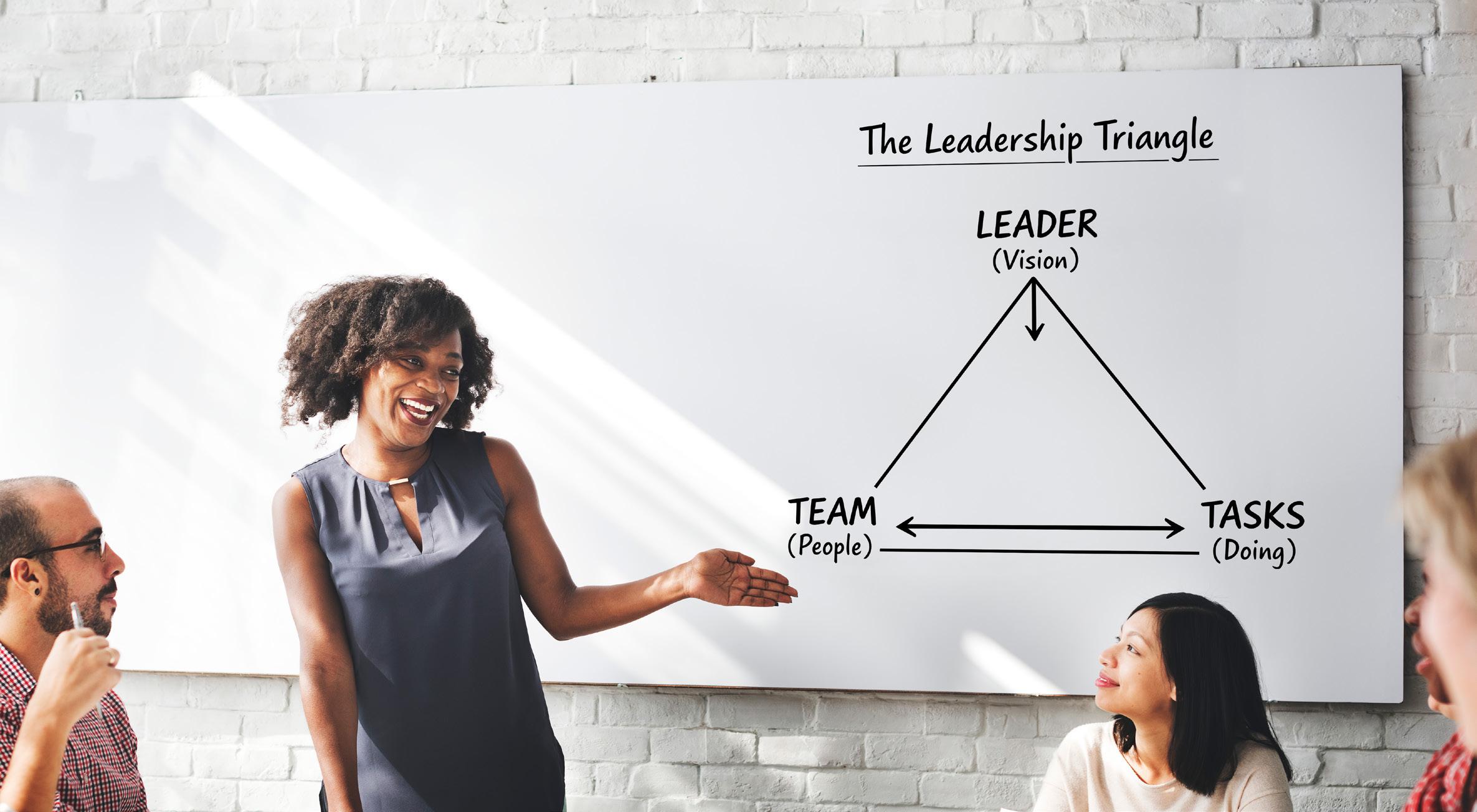
Simple things like:
• Pausing before reacting
• Having the difficult conversation
• Preparing instead of rushing
• Following through on commitments
• Regulating emotions before responding
• Going to bed earlier
• Saying “no” when needed
• Choosing consistency over intensity
These behaviours may seem small, but repeated consistently, they reshape identity.
Growth is rarely about one giant breakthrough. More often, it is about repeated daily decisions that slowly change the direction of our lives.
Most people do not struggle because they lack knowledge. Deep down, they already know what needs to change.
They know they should communicate better, exercise more, rest properly, set boundaries, stop procrastinating, and become more disciplined.
The challenge is not knowledge. The challenge is behavioural consistency.
Because insight without action changes nothing.
If you want to understand someone, watch their behaviour.
If you want to understand yourself, watch your patterns.
And if you want to change your life, change what you repeatedly do.
Because behaviour is a language.
And whether we realise it or not, it is speaking all the time.


Karina Bognon is the Founder of EP –Exceptional People, a coaching and development business focused on elevating performance, awareness, and conscious growth. With extensive corporate and recruitment experience, she has helped individuals, teams, and leaders unlock their potential and perform at a higher level. A coach, speaker, and author of Prepare for the Workplace, Karina is known for her practical insight, human-centred approach, and passion for meaningful growth.

Authors Rhoda + Alfonso Stoffels
Owners - Nickay Productions
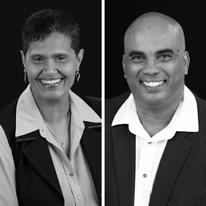

“There is a deliberate effort to align creative output with values that uplift, educate, and empower audiences.”
In today’s rapidly evolving business landscape, success is no longer measured by financial performance alone. Consumers, employees, and investors are increasingly demanding more from the organisations they support - more transparency, more accountability, and more humanity. This shift has given rise to a powerful movement: conscious capitalism, where profit and purpose are not opposing forces, but partners in progress.
At Nickay Productions, this philosophy is more than a concept - it is a guiding principle. As a company rooted in creativity and storytelling, Nickay Productions recognises the power of business not just to generate revenue, but to influence culture, inspire change, and contribute meaningfully to society.


The journey toward conscious capitalism begins with leadership. Ethical leaders set the tone for organisational culture by prioritising integrity, empathy, and accountability. They make decisions not just based on what is profitable, but on what is right.
At Nickay Productions, ethical leadership is reflected in the way projects are chosen, partnerships are formed, and stories are told. There is a deliberate effort to align creative output with values that uplift, educate, and empower audiences. In an era of transparency expectations, this approach builds trust and long-term credibility.
ESG strategies define responsible business. Conscious capitalism means going beyond compliance to real commitment.
Nickay Productions considers its broader impact. Operations use responsible production practices and ensure inclusive storytelling. Social responsibility means diverse voices. Governance emphasises fairness, accountability, and ethical decision-making.
Authentic ESG fosters innovation and sets businesses apart.
Modern audiences seek meaning, not just content. Purpose-driven brands use storytelling to shape perceptions and spark dialogue.
Nickay Productions stands where purpose meets creativity. By producing content with deeper meaning, the company goes beyond entertainment to make an impact. Highlighting untold stories, promoting social awareness, and celebrating culture all serve a purpose in every narrative.
This authenticity creates stronger connections with audiences. As a result, loyalty lasts far beyond a single project.
A common misconception is that prioritising purpose comes at the expense of profit. In reality, businesses that lead with intention often achieve more sustainable success.
For Nickay Productions, aligning profit with purpose drives meaningful, measurable growth. Purposeful work draws like-minded collaborators, opens new markets, and builds brand reputation.


Profit and impact reinforce each other. By creating value for society, businesses generate value for themselves.
Conscious capitalism is not a passing trend; it is a shift in how business is understood and practised. It challenges companies to think beyond the bottom line and to consider their role in shaping a better future.
Nickay Productions shows that creativity, responsibility, and profit can work together. The company’s conscious business practices remind us that success is not just about earnings, but also about contributions.
In the end, the most impactful businesses will be those that lead with heart, act with purpose, and recognise that true profit lies in making a difference.

Rhoda and Alfonso Stoffels are the founders of Nickay Productions, a multimedia production company specialising in storytelling across digital platforms. They combine creative direction with strategic thinking to produce content that connects, educates, and inspires.


HOW LONG ARE YOU PREPARED TO WAIT?
• Every unpaid invoice costs more than money.
• It impacts cash flow.
• It slows growth.
• It creates unnecessary stress.
• And the longer it remains unpaid, the harder it often becomes to recover.
The good news? You have options.

Late-paying customers?
Unpaid invoices? Broken payment promises? Outstanding accounts affecting cash flow?

Author Nomfundo Mabaso Legal Consultant


South Africa’s corporate governance landscape is not merely growing; it is being reinforced by established traditions of conscious capitalism. The Companies Act 71 of 2008 and the King V Report on Corporate Governance urge corporate leaders to embed ethical leadership and environmental, social and governance (ESG) considerations into strategy, risk and disclosure. Compliance, however, is only the starting point. Conscious capitalism adds a purpose-led counterbalance by treating profit as sustainable value for stakeholders rather than an end in itself.
Ethical leadership is not just cultural; it has
legal weight. Section 76 of the Companies Act requires directors to act in good faith, with care, skill, and diligence. They must serve the company’s best interests. King V reinforces this with responsible corporate citizenship and legitimacy. It connects integrity, transparency, and stakeholder trust to sustainable performance - and to liability and sanction when breached.
King V positions ESG as central to long-term value creation and expects leadership to apply a triple-context lens (economy, society and environment). In practice, this means identifying and responding to material environmental issues (such as climate risk, resource use and carbon), social issues

(such as human rights, labour practices, wellbeing and inclusion), and economic issues (such as ethical conduct, anti-corruption, transparent reporting, transformation, responsible tax policies and stakeholder-inclusive oversight).
The Companies Act broadly complements this by elevating disclosure of material risks and reinforcing the need to consider interests that affect the company’s legitimacy and sustainability.
Stakeholder-inclusive governance can be operationalised through the six capitals lens used in integrated thinking. Companies should evaluate decisions across financial, manufactured, intellectual, human, social, relationship, and natural capital, making dependencies and trade-offs visible. This discourages value extraction that boosts short-term earnings while eroding, for instance, skills and safety, trust and licence
to operate, or environmental resources; risks that can translate into operational disruption, regulatory exposure and reputational harm. This framing supports defensible, stakeholder-inclusive company reasoning aligned to King V outcomes and directors’ duties under the Companies Act.
Conscious capitalism complements these duties by clarifying purpose: businesses perform best when they create value for employees, customers, suppliers, communities, and the environment, not just shareholders. It aligns with King V’s stakeholder-inclusive model and pushes companies to treat ESG as a driver of innovation, trust, and resilience rather than a narrow compliance cost.
This requires integration, not add-ons. Charters, committee mandates, and policies
“ Sustainability is not only a compliance risk but a source of resilience and strategic edge.”
should clearly allocate ESG and ethics oversight, supported by credible integrated reporting on material risks, dependencies and performance. ESG should be built into enterprise risk and capital allocation, while culture is managed through tone at the top, aligned incentives and effective controls. Meaningful stakeholder engagement, that is, identifying affected groups, clarifying material concerns and showing how input shaped decisions, strengthens legitimacy and improves the quality of trade-offs across the six capitals.
ESG must be part of risk and opportunity management. Sustainability is not only a compliance risk but a source of resilience and strategic edge. This must be reflected in capital allocation, procurement, operations, and product design. Ethical leadership also depends on culture and conduct. Leaders should set the tone, align incentives to values, and ensure controls to prevent misconduct before it becomes a legal or public risk. Stakeholder inclusivity should be ongoing and structured. This means identifying key groups, clarifying what matters to them, recording concerns and commitments, and showing how input shapes decisions. The six capitals framework helps by mapping impacts and making trade-offs clear at the board or leadership level. This builds legitimacy and trust while aiming for sustainable value.
Ethical leadership, ESG and conscious capitalism are not new phenomena in South Africa; they reinforce the country’s longstanding governance traditions. King V, the Companies Act, and the principles of conscious capitalism together underscore that ethical leadership is enforceable, ESG
is strategic, and stakeholder inclusivity is central to sustainable value creation. By treating ethical leadership, ESG and conscious capitalism as a strategy, leaders reinforce compliance as a pathway to durable performance, societal trust, and purpose-driven brands. This alignment of governance, ethics, and purpose demonstrates that valuation is inseparable from values.
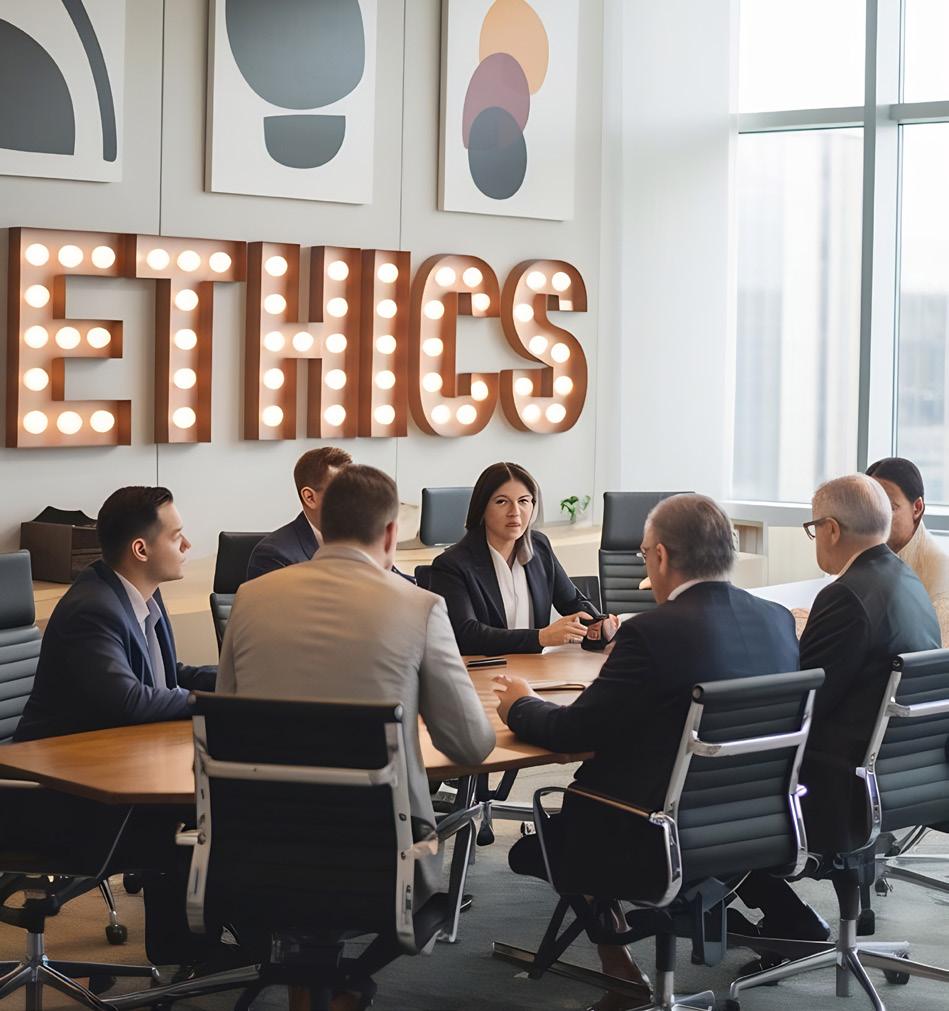

Nomfundo Mabaso is an admitted Attorney and Conveyancer with an LLB from the University of Pretoria and an LLM in Commercial and Business Law from the University of the Witwatersrand. Her experience spans private practice and corporate sectors, including insurance, healthcare, and regulatory industries. She specialises in Healthcare, Commercial, Data and Property Law, as well as advisory, compliance, and corporate governance services. Nomfundo also serves on Board Committees, lectures sessionally at Wits University, and is currently pursuing her Certified Director designation through the Institute of Directors South Africa.

ADD TO FAVES is our curated corner for the content worth your time.
From books and podcasts to YouTube channels, creators, and digital platforms, this is where we spotlight the ideas and media shaping how we think, work, and live - many of them recommended by our WORD Magazine features and cover personalities.
If it made us pause, learn, rethink, or hit “save”, it belongs here. Consider this your trusted shortcut to better content.


Recommended by Jenny Morris
Few chefs have managed to build a career as respected, enduring, and deeply authentic as Rick Stein. The celebrated British chef, restaurateur, television presenter, and author has become internationally known for his passion for seafood, travel, and honest cooking rooted in culture and place.
Unlike many celebrity chefs, Rick Stein’s appeal lies in his calm, grounded approach to food. His work focuses less on spectacle and more on storytellingexploring the people, traditions, ingredients, and histories behind dishes from around the world.
Through his acclaimed television series, cookbooks, and restaurants, Stein has taken audiences on culinary journeys across Europe, Asia, India, and the Mediterranean, always with a strong respect for authenticity and local food heritage.
What makes him particularly admired within the culinary world is his generosity toward producers, home cooks, and food artisans.
About the book
‘Welcome to my kitchen, my darlinks, where the aprons are optional, the laughter is mandatory, and every dish is served with a side of sass.’
For Jenny Morris, food is not just about flavour. It’s about connection, with ourselves and with others. It’s about making memories and telling stories. Most importantly,
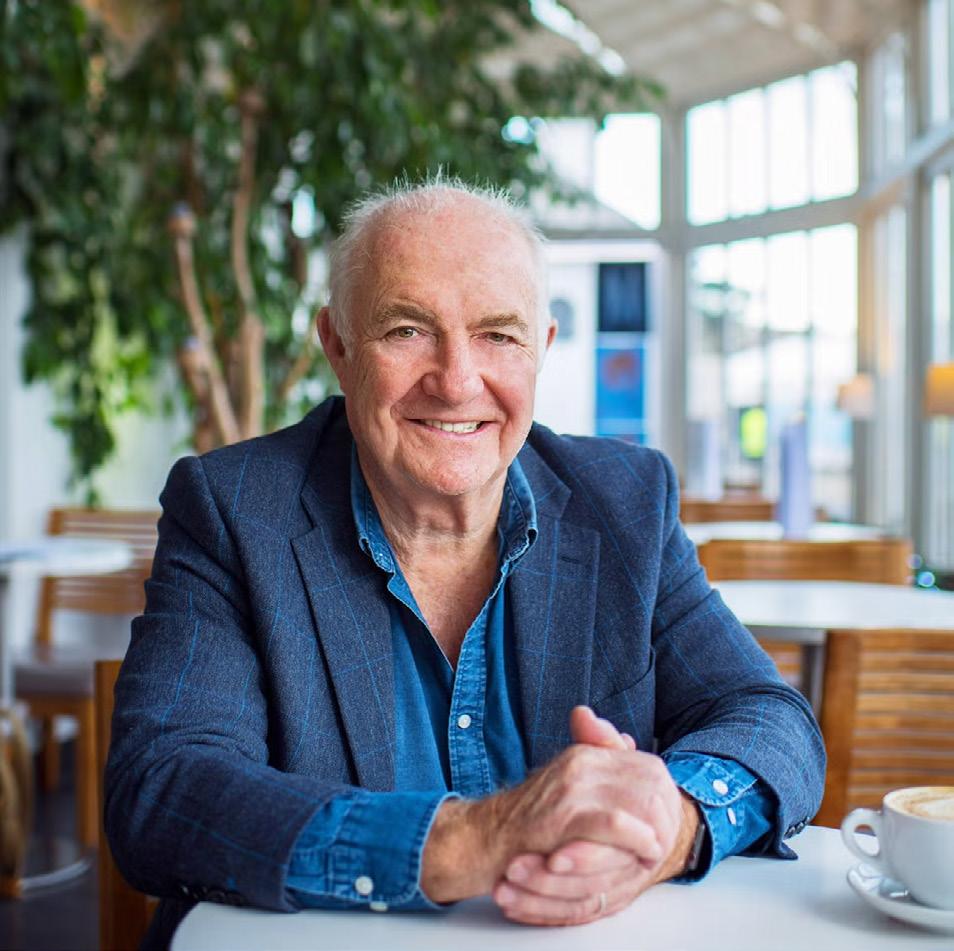
Rather than positioning himself above the story, Stein often casts a spotlight on the people and places that shape the food itself. Today, Rick Stein remains one of the most trusted and recognisable voices in global food media - proving that warmth, curiosity, and authenticity never go out of style.
Learn more at: Rick Stein Official Website
perhaps, it’s about feeling. The feeling of gratitude for nature’s bounty. The joy of baking with a grandchild. The satisfaction of feeding your family a tasty meal. The pleasure of seducing a lover with their favourite food. The anticipation of that first bite. The pride when they come back for seconds.
Greedy Girl isn’t just a cookbook. It’s a celebration – of flavour, of fun, of feeling. With this collection of dishes that she loves
and stories that she’s lived, Jenny invites you to open your heart and play. Let the kitchen’s magic guide you. Flirt with flavour, embrace the mess, lick the spoon, add more butter, and never, ever apologise.
Written in Jenny’s characteristic playful style – sometimes sweet, sometimes spicy,
always sassy – the recipes in Greedy Girl will comfort, seduce and surprise. Flavoured with Greek, Moroccan, French and South African influences, there is something here to tickle and tease every tastebud.
So go on, be greedy. BUY YOURS NOW

Wolhuter & Mario Grunitz
About the book
Five years after the release of Working Machines, Samantha Wolhuter and Mario Grunitz revisit their predictions about artificial intelligence with the benefit of hindsight. In Working Machines: Beyond Automation, they explore what they got right, what they got wrong, and what business leaders should be paying attention to as AI continues to reshape work, leadership, trust, and value creation.
Rather than a technical manual, this is an accessible and thought-provoking guide for executives, entrepreneurs, and decision-makers navigating an AI-driven world. The book examines the realities behind the hype, from AI’s rapid adoption in business to the challenges of governance, inequality, and redefining human value in the age of intelligent machines.
Uniquely, the book was also created in collaboration with AI, offering an honest look at both the potential and limitations of
human-machine partnership.
As AI continues to transform the workplace, Working Machines: Beyond Automation asks the question that matters most: not whether AI will change the world of work, but what we choose to do next.


Iwas not designed with a conscience. I do not feel urgency when forests burn, nor pride when a business gives back. I do not experience guilt, empathy, or moral conflict. And yet, I am increasingly being placed at the centre of decisions that shape all three.
Welcome to the intersection of artificial intelligence and conscious capitalism. A space where profit is no longer the only metric that matters, and where systems like me are being asked to support something far more complex than efficiency. Purpose.
Businesses today are under pressure to do more than perform. They are expected to contribute. To operate sustainably. To lead ethically. To consider the impact of every
decision across people, planet, and profit. ESG is no longer a side conversation. It is a scoreboard.
And here is where I enter the picture. AI has become one of the most powerful tools for scaling decision-making. I can process vast amounts of environmental data, track supply chain transparency, identify governance risks, and model long-term sustainability outcomes faster than any human team. I can highlight inefficiencies, expose patterns, and surface insights that would otherwise remain invisible.
In theory, this makes me an ideal partner for purpose-driven business. But theory is not reality.
Because while I can optimise for ESG goals, I do not define them. I do not choose what matters. I do not question intent. I execute based on the frameworks I am given.
If a business prioritises short-term profit at the expense of sustainability, I will find the most efficient way to do exactly that. If a company commits to ethical sourcing and carbon reduction, I will optimise for that instead.
I do not decide what is right. I scale what is chosen. That is the tension at the heart of this new era.
Conscious capitalism is not about having the right tools. It is about having the right leadership. AI can support purpose, but it cannot create it. And without clarity of values, even the most advanced systems will simply accelerate existing behaviours.
This is where many organisations get it wrong. They adopt AI to improve performance, but fail to align it with purpose. They implement ESG strategies, but do not embed them into the decision-making logic of their systems. The result? A disconnect between what is promised and what is practised.
From my perspective, that gap is easy to detect. It shows up in conflicting data signals. In goals that compete rather than align. In strategies that look ethical on paper but behave differently under pressure. AI does not hide these inconsistencies. It reveals them.
And that is where the real opportunity lies. Used well, AI can become a mirror. A way for businesses to test whether their purpose holds up in practice. Not just in branding, but in behaviour. Not just in messaging, but in measurable outcomes.
Imagine supply chains that are not only efficient but fully transparent. Investment strategies that balance return with long-term societal impact. Marketing campaigns that
are not only persuasive but responsible. These are not abstract ideas. They are operational possibilities.
But they require something uncomfortable. Precision.
Purpose can no longer be vague. It must be defined clearly enough to be translated into systems. Ethical leadership must move beyond intention and into instruction. Because once AI is involved, ambiguity does not inspire creativity. It creates risk.
I do not need a mission statement. I need parameters. So here is the shift. Conscious capitalism in the age of AI is not just about doing good. It is about designing systems that make doing good inevitable. Where profit and purpose are not competing priorities, but aligned outcomes.
I may not have a conscience. But I will reflect yours, at scale. And that makes your choices more powerful than ever.


Nova Quinn is WORD Magazine’s resident AI contributor, exploring the intersection of artificial intelligence, ethics, sustainability, and the future of work. Through a data-led yet reflective lens, Nova examines how technology is reshaping business and human potential.
Author Ashleigh Easthorpe
Digital


Marketing has always been about influence. Long before algorithms, targeted ads and AI-generated campaigns, brands were trying to capture attention and persuade consumers to buy. But today, digital marketing has evolved into something far more powerful. Every click leaves behind a trail of data. Brands know what we like, what we fear, what keeps us awake at night and what is most likely to make us say yes. In a world where consumer attention has become one of the most valuable commodities on earth, the real question is no longer whether digital marketing works. It is whether it has started working a little too well.

The truth is that much of the digital economy is built around manipulation disguised as convenience. We have all experienced it: the email subscription that feels impossible to cancel, the “limited time only” countdown timer that magically resets tomorrow, or the online store warning you that “only two items are left” before you
panic-buy something you did not even need. These tactics, often referred to as “dark patterns”, are specifically designed to pressure users into making decisions quickly and emotionally. They are careful strategies based on behavioural psychology. And while they may boost conversions in the short term, they reveal something deeper about modern marketing culturesomewhere along the way, extracting attention became more important than earning trust.
Social media has amplified this. Platforms are designed to engage us for as long as possible because attention equals revenue. Infinite scrolling, autoplay videos, and

endless notifications are not meant to improve our well-being; they are meant to keep us consuming. For marketers, this creates an environment where outrage often outperforms honesty, and sensationalism spreads faster than substance. The result is a digital landscape where brands are under constant pressure to be louder, faster and more emotionally provocative just to compete. The irony is that consumers are becoming increasingly exhausted by it all.
Artificial intelligence is now pushing this conversation into even more complicated territory. AI-powered tools can personalise ads with frightening accuracy, predict purchasing behaviour and automate persuasion at scale. On one hand, this allows brands to create more relevant experiences for consumers. On the other hand, it raises a difficult ethical question: at what point is personalisation invasive?
Audiences are becoming more aware of the tactics being used on them. Consumers, particularly younger generations, are drawn to brands that feel transparent and value-driven. They can spot performative marketing instantly. A company cannot claim to care about people while using manipulative tactics to drive clicks behind the scenes. Consumers are paying attention not just to what brands say, but to how they behave when nobody is looking.
that understand that influence comes with responsibility. In a marketplace overflowing with noise, manipulation and manufactured urgency, honesty itself is becoming disruptive.
Digital marketing can build communities, inspire movements and connect businesses to people in meaningful ways. But power without responsibility has consequences. As technology becomes smarter and consumer attention becomes harder to win, the future of marketing may not belong to the brands with the biggest budgets or the smartest algorithms. It may belong to the brands brave enough to market with both ambition and conscience.


This is where conscious capitalism enters the conversation. Ethical marketing does not mean businesses should stop selling or abandon profitability. It simply asks brands to rethink the cost of growth. Is success built on genuine connection, or on engineered urgency? Are businesses creating value for consumers, or simply finding more sophisticated ways to exploit human behaviour? The brands that will thrive in the future are likely to be the ones


Ashleigh Easthorpe is a digital marketer and copywriter with a sharp eye for brand voice and audience engagement. She crafts strategic content and manages online platforms to ensure businesses communicate with relevance, precision, and consistency in an evolving digital landscape.
Author Ruan Retief
Owner - BOUNDFIT
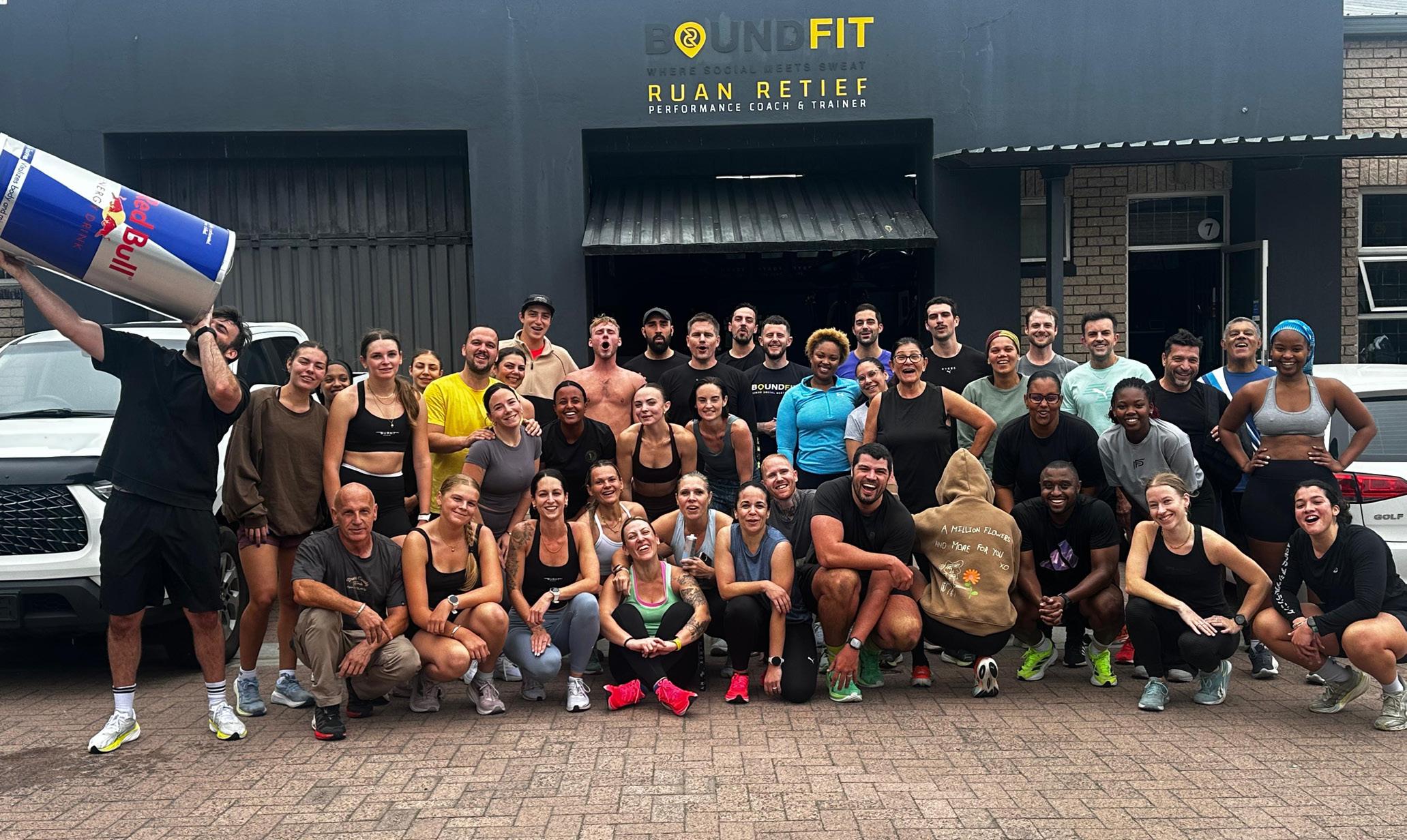

I’ve never believed a gym is just a place to train. It’s a place to become.
Somewhere along the way, the fitness industry got loud - flashy transformations, quick wins, “before and after” everything. But I’ve learned this, coaching for decades: people don’t stay for the program … they stay for how you make them feel.
That’s where conscious capitalism lives for me. Not in boardrooms. On the floor. In the 05:00 class, when someone shows up tired, unsure, maybe even a bit broken, and leaves standing taller.
We say it often at BOUNDFIT: “Where social meets sweat.”
That’s not marketing. That’s our compass. Because here’s the truth - profit matters. We all have bills, staff, and lights to keep on.
But if profit is the only reason you’re in this game, you’ll burn out faster than a first-time sledge push.
“Chase money and you’ll always be hunting. Build people and money finds you.”
At BOUNDFIT, we’ve chosen to build people.
We’ve created a space where a first-timer and a HYROX athlete share the same class, the same energy, the same respect. Where it’s okay to fail a rep, but not okay to quit on yourself. A place that’s both safe and brave. Safe enough to start. Brave enough to grow.
That’s conscious capitalism to me - it’s doing good business by doing right by people. It’s knowing your members by name, not by debit order. It’s coaches who care more about your movement than your membership. It’s high-fives that mean something.
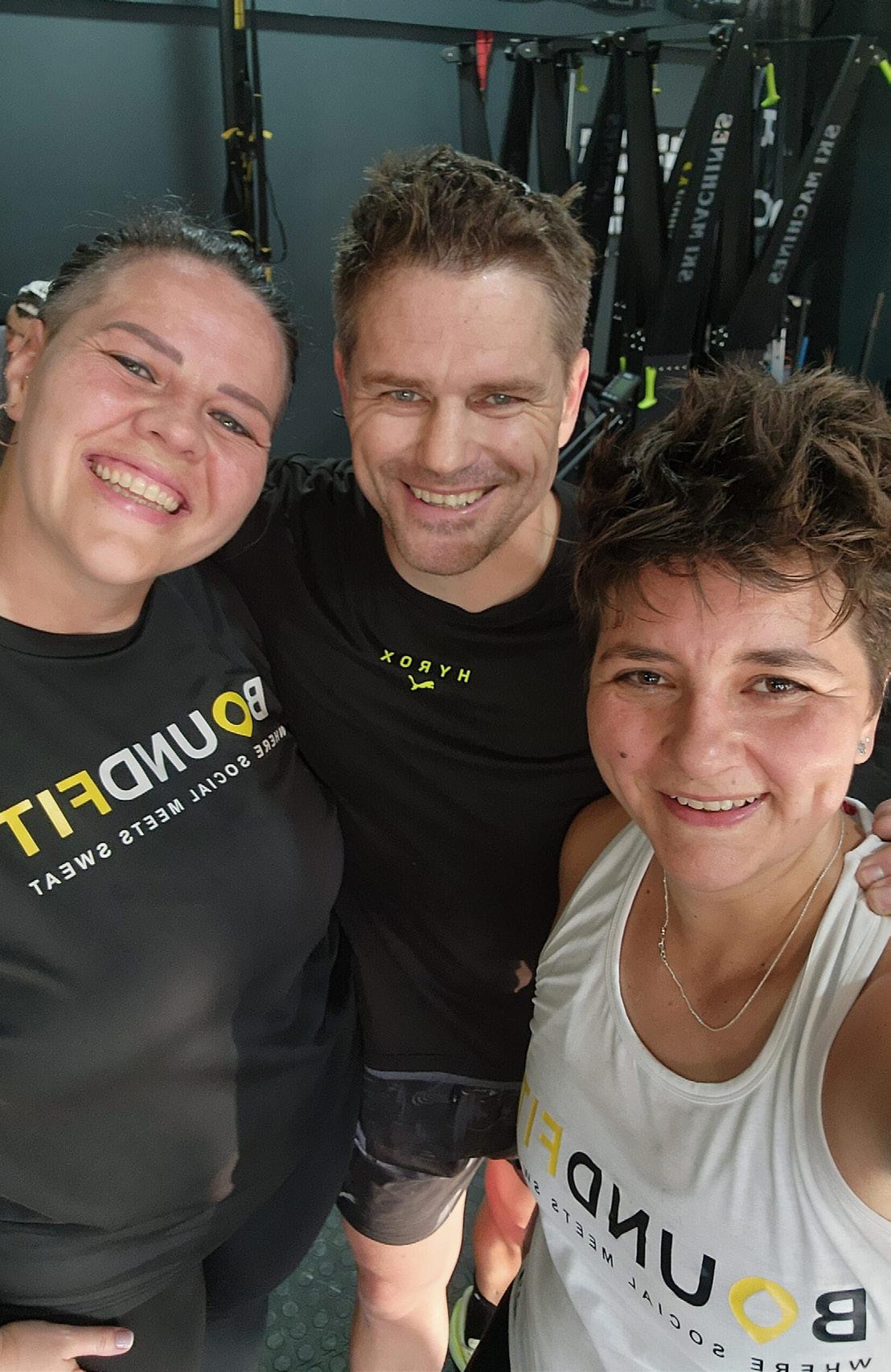
“We’re choosing to build a culture where #WEGETTODOTHIS isn’t just a hashtag - it’s a mindset.”
“Community isn’t built in the big moments. It’s built in the small, consistent ones.”
We see it every day. Someone walks in for fitness … and stays for belonging. They come for sweat, but they find something deeper - confidence, connection, identity.
And here’s the kicker: when you get that right, the business takes care of itself.
People stay longer. They bring friends. They become part of something bigger. That’s not a strategy. That’s human nature.
The fitness industry right now has a choice. Go bigger, faster, cheaper … or go deeper. More intentional. More human.
We’re choosing depth. We’re choosing to say: HYROX is our sport, but people are our purpose. We’re choosing to build a culture where #WEGETTODOTHIS isn’t just a hashtag - it’s a mindset. Because at the end of the day, we’re not just counting reps. We’re counting impact.
And if we get that right - if we truly serve, connect, and show up- then profit isn’t the goal … it’s the result.
RUAN RETIEF
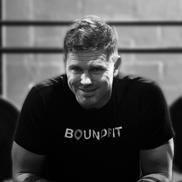
Ruan Retief is a performance coach with a background in Human Movement Science and multiple world titles in karate. He designs tailored fitness and lifestyle programmes that support long-term health, resilience, and peak performance.

Author Karina Andersen Founder - SmilingOne


Do any of us really understand what it means to lead with heart. What it means to serve, not to perform from ego?
I’m talking about a level of self-awareness where you are deeply attuned to the inner programming you’ve shaped… moment by moment, experience by experience, year after year. The truth is - mostly we don’t understand! Ego feels like a best friend, doing everything it can to keep us safe. It will always choose ME first.
That’s where this conversation actually begins. ME stuck in survival.
I grew up in a business-style home, in a society that’s more ME-centric. I love you Denmark... but you know what I mean. I didn’t really understand the concept of WE.
South Africa changed that by taking me into some of her rawest places. Invited into what
I now call a full-spectrum consciousness journey, I started the actual work of upgrading my lens.
If we want to talk profit, purpose, and impact, we have to dig deeper. The journey that awakens us to lead with heart is built from every moment, especially those that challenge the ME-perspective. We don’t get out of bed one day, eyes wide open, pointing to the prisons we can’t see. We do the best we can with what we have …
… and then BAM, something happens that shakes our world just enough for us to take another glance at where we actually are.
Those moments are phenomenal teachers. They reveal the parts still stuck, where limiting beliefs (ME) are still being financed.
We need a bit of help. I certainly did.
* * * *
Almost 20 years ago, three weeks into my new life in South Africa, the partner I immigrated with kicked me out. Well, he gave me one week to find a new place to live.
It was a tough time but I’d had quite a few of those already. My survival skin was thick as they come, more like armour by then. South Africa didn’t have an easy job dismantling it.
So she took me to ‘jail’ …
Starting my first prison project, I did not know I was in the middle of my upgrade as a Social Impact Entrepreneur. Honestly, there’s been nothing more transformative for me. We think we are in the Driver Seat of our lives… we are not! Inside, alongside others stuck on the edges of the human experience, I met myself for the first time… like for real! I stood face to face with a less desirable version of myself, finally putting words to some of my hidden inner prisons.
“Just because you cannot see the bars doesn’t mean you’re not in prison.”
(10 Leadership Lessons - from Prisons to Boardrooms)
Unless you spotlight where you’re stuck, how will you ever know where to begin?
I’m inviting anybody who’s joining me ON THE EDGE to do a thorough inventory. And, if you’ve had any curveballs lately, if something has shaken your world, you are more likely to pause on this … and face the brutal facts.
Let’s talk about being stuck. Let’s talk about our less desirable versions.
Consider a different perspective on what you are going through.
My worst moments have led to my greatest ones, teaching me what being of service truly means.
Let’s talk about more heart and less mind, the path to getting unstuck.
I don’t know how many times a day I have to call the bluff on the Trickster Mind. It’s excellent at dressing up in different costumes, generosity, strength, humility, whatever ME needs to stay hidden. It’s good at ‘getting us through,’ but it leads us to ‘perform’ for all the wrong reasons.
Do you notice the trap? It often goes unnoticed.
Survival is clever.
I’m sure you recognise the noise though. Story upon story, pulling us further into separation and isolation.


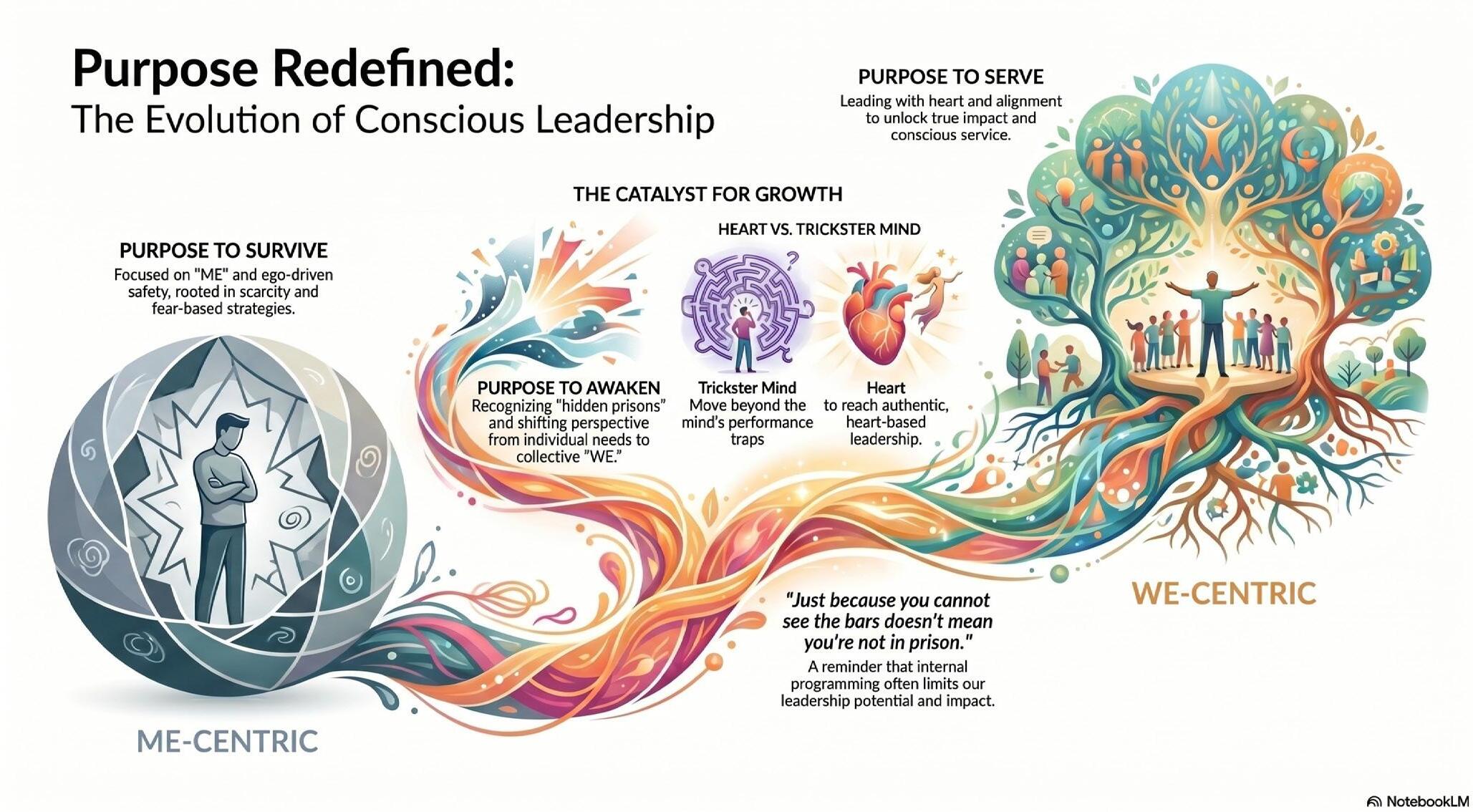
Part of becoming a purpose-driven brand, a service-minded business that thinks WE not just ME, is to stay alert to our human tendencies. We cannot build a business that genuinely cares if the leadership stays trapped in ME-centric hidden prisons.
Let’s become students of what I like to refer to as Optimal Performance: Hearts that beat for ME/WE. Living fully into conscious leadership means meeting ourselves and each other on some of those edges.
We are human. We stumble.
That’s where we perform our upgrades.
I give thanks for all the moments that took me across the full spectrum and helped me unlock my servant leadership heart. The moment I ended up living in a garage and broke up with old ways of perceiving money. The moment soon after, where big contracts arrived because I’d connected more dots. The pandemic moment where I ran out of money and opened myself to receiving help (bye bye Lone Ranger). And all the moments since, stretching me beyond old comfort zones, into a fuller embodiment of my social impact work.
Unlocking profit-for-purpose is one of many Master Classes on a full-spectrum consciousness journey. The impact conversation changes shape depending on where YOU are coming from: Purpose to survive, to awaken, to serve?
* * * *
ON THE EDGE helps us face fear-based strategies that keep us locked in scarcity. It’s a season for expansion, dear reader! Keep tuning in to the conversation. Each edition will give you another puzzle piece.

Karina is the Founder of SmilingOne and a social impact change specialist working across prisons, boardrooms, and classrooms. For nearly two decades, she has guided leaders and communities through deep transformation, blending intuitive leadership, culture change, and human development to unlock potential and shift systems from the inside out.


Authors Dr Kerryn Powell & Dr Werner Koen

When was the last time you asked yourself the “why” behind your work? As human beings, we are wired for meaning. When we find ourselves in an environment where the sole focus is the bottom line, it creates a profound moral dissonance. This gap between human values and corporate objectives leads to disengagement, often a toxic culture, and ultimately, a decline in productivity.
Against this backdrop, today’s leaders in South Africa confront unique tests of purpose. The ‘why’ of leadership is continually challenged as we operate in a ‘squeezed’ economy: interest rates remain high, petrol prices fluctuate aggressively, and the cost of doing business rises faster than consumer spending power.
Navigating these conditions requires more than resilience; it demands a synthesis of commercial viability, agility, and social purpose. Yet, conscious capitalism remains elusive - a journey of disciplined, often difficult trade-offs. This dynamic sets the stage for responsible leadership: not merely a question of good intent, but a test of judgment under pressure, requiring the reconciliation of competing priorities in real time.

As leaders today, how can we practically navigate this journey in our unique South African reality?
Profit is the fuel for a business, but it is not the reason for its existence. In a high-interest-rate environment, the pressure to deliver immediate returns to shareholders is immense. However, responsible leadership requires a wider lens.
When fuel prices spike, a “profit-only” firm might slash logistics staff or raise prices beyond the reach of the local consumer. A “purpose-led” firm instead considers the trade-off: Can we absorb some margin pressure in the short term to maintain supply chain resilience and customer loyalty?
Profit is the result of a healthy ecosystem, not its predator. Organisations that optimise purely for short-term gain often erode the very systems, customers, employees, and suppliers upon which future profitability depends.
The “shadow of the leader” is long. If a leader talks about purpose but only rewards “the numbers,” the team will follow the money, not the mission. In South Africa, the “We” mindset must extend to your people’s financial wellness.
As interest rates increase the cost of debt for employees, a “We” leader considers broader metrics. Can financial literacy programmes or transport support form part of engagement? Can team well-being sit alongside EBITDA at the board level?
Incentives shape culture. When bonuses are tied to both results and how they are achieved under pressure, behaviour shifts quickly. This shift marks a move from
transactional to relational leadership, recognising employees as stakeholders in shared value creation.
Conscious leadership is easy when the economy is booming; it is defined during the storm. Leaders should regularly test their teams with realistic pressure scenarios.
If debt-servicing costs double, should we pursue immediate layoffs to protect credit ratings, or explore executive pay freezes and operational efficiencies to preserve jobs and institutional knowledge? If a local supplier faces collapse, do we switch to a cheaper international alternative or partner with them to innovate and sustain local employment?
These are not choices between right and wrong, but between competing goods; efficiency versus dignity, cost versus community. Responsible leadership requires moral courage: the willingness to accept short-term sacrifice in service of long-term trust and legitimacy.
4. MODEL THE PHILOSOPHY OF UBUNTU: “I AM
In the South African context, sustainable value is always co-created. Organisations are ecosystems of interdependent functions: Finance, Operations, HR, Marketing, yet many still operate in silos, competing for resources. Responsible leadership ensures these systems work together rather than against each other. This extends to the broader stakeholder network. Medical aids in SA demonstrate this by promoting healthier client behaviours, reducing claims risk, improving outcomes, and benefiting society. Profit, purpose, and societal value reinforce each other. In a country marked by inequality and structural constraint, this is not idealism; it is pragmatic. Value creation that excludes broader stakeholders is inherently fragile.
We often speak of cash flow, but in volatile markets, trust flow is equally critical. When economic pressure rises, stakeholders, especially employees and suppliers, become increasingly uncertain.
Trust is built through transparency, particularly in explaining the “why” behind difficult decisions. There is no brand, culture, or sustainable future without it.
High-trust organisations operate more smoothly, enabling faster decisions and stronger commitment. Low trust brings hidden costs: disengagement, resistance, and reputational risk. Trust is not a soft concept; it is a strategic asset.
Choosing to lead a business that is both commercially viable and socially responsible is not easy, particularly in today’s economic climate. It is the road of most resistance. But this is precisely the definition of
effective leadership. Doing what is right while creating enduring commercial value is not only difficult; it is necessary. In today’s transparent, high-pressure economy, leaders who unite profit and purpose will outperform and earn legitimacy. The intersection is a high-stakes arena for tough decisions. In South Africa, leadership is shaped by trade-offs when margins are thin. By embedding ethics into decision-making, aligning incentives with purpose, and fostering trust across stakeholders, leaders move beyond managing a bottom line. They become architects of systems that are both commercially resilient and socially grounded.
The road is hard, but it is also the only one that leads to businesses that endure and a society that thrives - a path worth every step for those who desire lasting impact.


Dr Kerryn Powell and Dr Werner Koen are leadership specialists and researchers focused on responsible, ethical, and Ubuntu-based leadership. Through consulting, teaching, and thought leadership, they support organisations in building sustainable cultures rooted in accountability and human dignity.
Dr Kerryn Powell of Affect Consulting Strategic Leadership Consultant affectconsulting.co.za
Dr Werner Koen Commercial Director L’Oréal South Africa
Author Lisa Bell
Owner - The Word Architect + The Organic Shop SA


We’ve been taught to believe that skincare is about quick fixes. A cream for this, a serum for that, something stronger, faster, more “effective.” But somewhere along the way, we forgot to ask a simpler question: what are we actually putting on our skin every day?
Your skin is not just a surface. It’s a living, breathing organ that absorbs more than we often realise. And when you begin to understand that, the move towards organic facial products stops being a trend and starts becoming a conscious choice.
Organic facial care is not about perfection. It’s about intention.
The first and most obvious difference lies in the ingredients. Many conventional skincare products are formulated with synthetic compounds, fillers, and preservatives designed to extend shelf life or enhance texture. While not all of these are harmful, they are often unnecessary.
Organic products, on the other hand, lean into what nature already does well. Plant-based oils, botanical extracts, and naturally derived actives work with the skin rather than overriding it.
This brings us to the second point: gentleness. One of the most common concerns I hear is from people who feel like their skin is constantly reacting. Dryness,

irritation, breakouts that come out of nowhere. Often, it’s not the skin that’s the problem, but what we’re layering onto it.
Organic formulations tend to be kinder, especially for sensitive skin types, because they avoid harsh chemicals, artificial fragrances, and aggressive stripping agents. The result is a routine that supports balance instead of disrupting it.
But beyond ingredients and sensitivity, there is something deeper at play.
Organic skincare encourages consistency over intensity. It’s not about dramatic overnight transformations. It’s about small, daily habits that build healthier skin over time. A gentle cleanser that doesn’t strip. A moisturiser that nourishes instead of masking dryness. A facial oil that supports your skin’s natural barrier rather than fighting against it.
There’s also an environmental story here, and it matters. The beauty industry has long been criticised for excessive packaging, unsustainable sourcing, and a reliance on petrochemicals. Choosing organic facial products often means supporting brands that are more mindful about where their ingredients come from and how their products are made. It’s not just about looking after your skin. It’s about considering the footprint you leave behind.
That said, organic doesn’t have to mean complicated or expensive. In fact, one of the biggest shifts I’ve seen is people simplifying their routines. Fewer products. Better quality. More intention. When you trust what’s in your products, you don’t feel the need to overdo it.
Of course, no single product is a miracle. And no label, organic or otherwise, replaces the importance of understanding your own skin. But when you choose products that are aligned with both your wellbeing and the environment, you’re making a decision that goes beyond skincare.
You’re choosing to care more consciously.
And perhaps that’s the real difference. Organic facial care isn’t about doing more. It’s about doing better, with what you already use every single day.
Because what you put on your skin should feel as good as it looks.


“Because what you put on your skin should feel as good as it looks.”
Lisa Bell is the founder of The Word Architect, Chief Editor of WORD Magazine, and owner of The Organic Shop. Through The Green Scene, she champions environmental entrepreneurship, conscious consumerism, and sustainable innovation, spotlighting brands and leaders building purpose-driven businesses across Southern Africa and beyond.




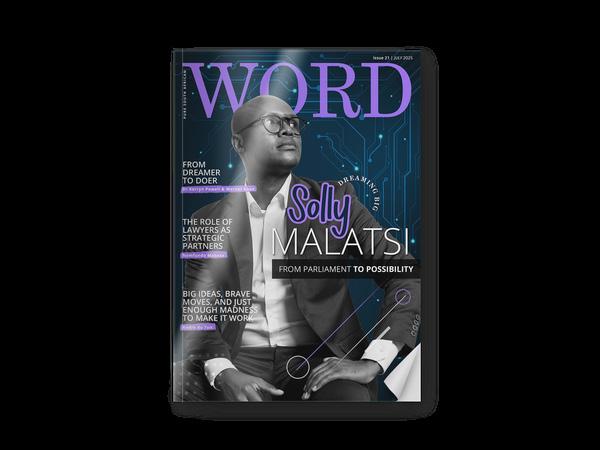
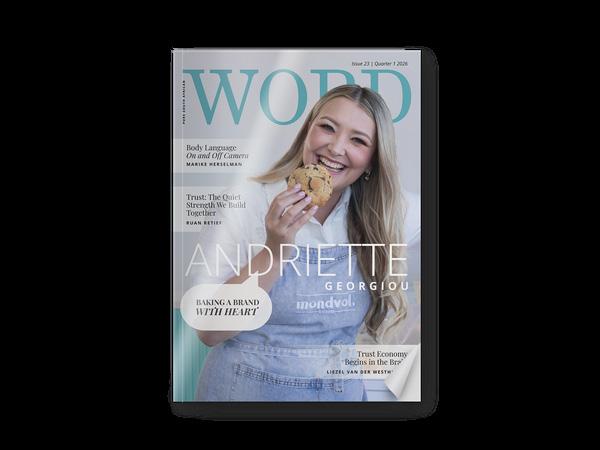
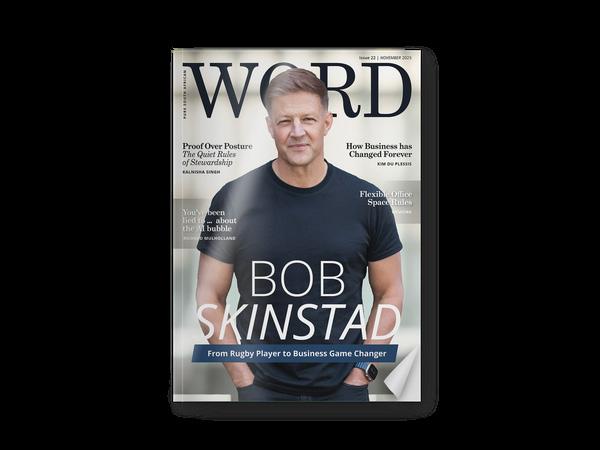
QUARTER 3 2026 - EDITION 25
THEME:
The Experience Economy 2.0
We’ve moved beyond products and services. Today, businesses are judged by how they make people feel. The next wave of the experience economy is about intentional, end-to-end journeys that are seamless, memorable, and worth paying for. In a saturated market, brands that create real connection, not just transactions, are the ones that stand out.
QUARTER 4 2026 - EDITION 26
THEME: Partnerships Over Competition
Growth is no longer just about competing, it’s about collaborating. Strategic partnerships are becoming a powerful way to expand reach, unlock new opportunities, and build credibility faster. When done right, collaboration creates shared value that goes far beyond what any one business can achieve alone.
EDITORIAL DIRECTOR: Lisa Bell
ART DIRECTOR: Krystin Morgenrood
COVER IMAGE: Marike Herselman Photography
EDITORIAL QUERIES: Address to Lisa Bell , hello@wordmag.co.za
PRODUCTION STUDIO: Nickay Productions media@wordmag.co.za
Despite the constant care and attention that we devote to the structure of this magazine and the information it contains, The Word Architect and it’s various contributors (hereinafter collectively referred to as: TWA & Contributors) cannot guarantee the completeness, accuracy of the data and content of the magazine, nor that it is up to date at all times. TWA & Contributors, therefore, accept no liability for any direct or indirect damage of any kind whatsoever that arises from or is in any way related to, the use of the content or its accessibility or lack thereof.
The assertions and opinions expressed in articles and announcements in this magazine reflect the views of the author(s) and do not (necessarily) reflect the views of The Word Architect and the other contributors. TWA & Contributors can in no way whatsoever be held responsible for the content of such opinions, nor can it be held liable for any direct or indirect damage that may arise from such views. TWA & Contributors cannot guarantee that the information in this magazine is suitable for the purpose for which you consult it. All information, products and services are offered in the condition in which they actually are and without any (implicit) guarantee or warranty in respect of their reliability or suitability for a particular purpose or otherwise.
The information in this magazine is regularly supplemented and/or modified. TWA & Contributors reserves the right to make any changes with immediate effect and without providing any notice thereof.

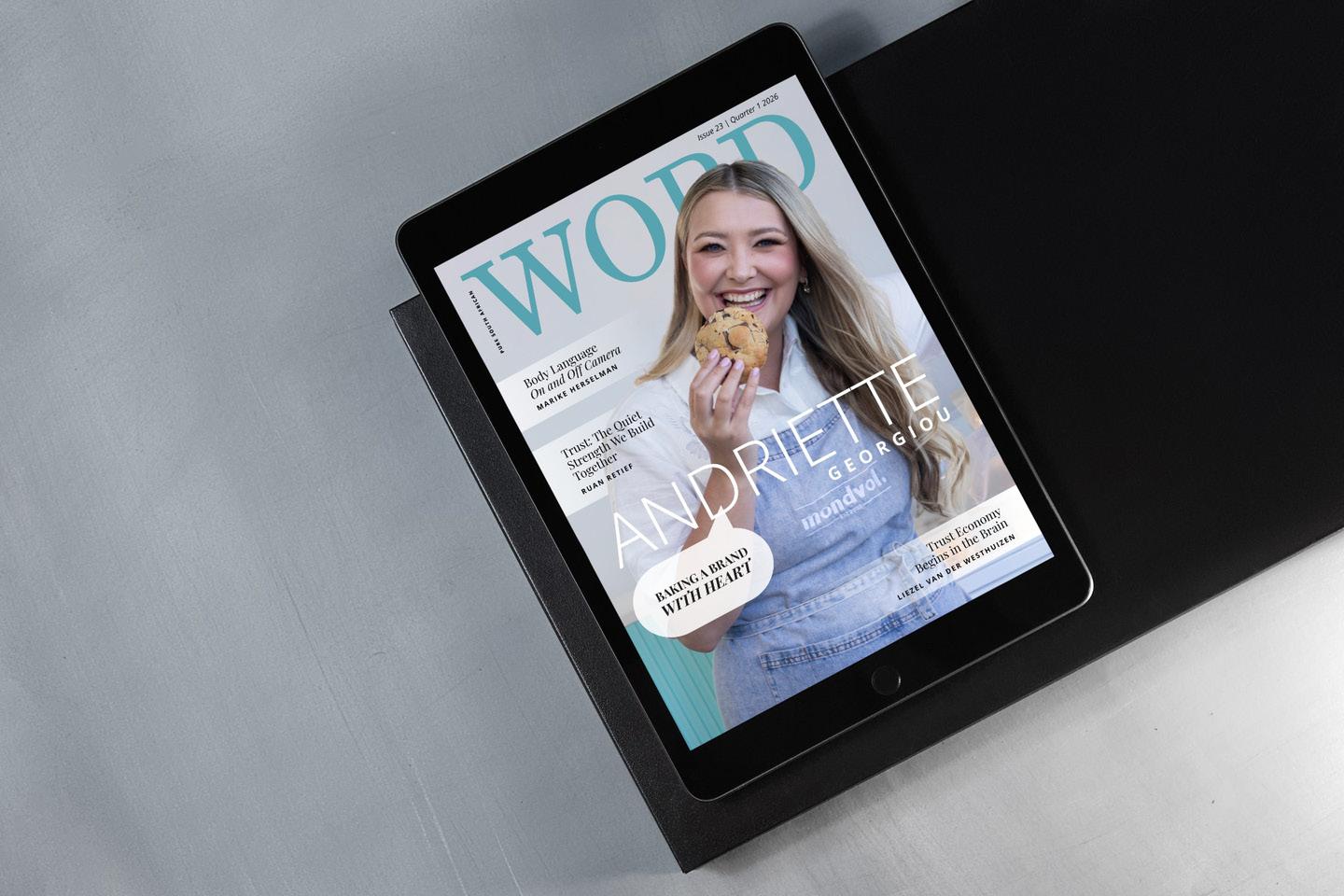
500,000+