Inquiries about membership, upcoming events, replacement Viewfinder issues, and special orders should be directed to:
Colin McKinley, Executive Director Leica Society International 14070 Proton Road, Dallas, TX 75244 info@leicasocietyinternational.org (972) 233-9107 Ext. 211
Viewfinder is the official publication of the Leica Society International, a nonprofit organization incorporated in the state of Delaware. Copyright 2024. Reproduction or use of any material contained herein without permission of the Society if forbidden.
Leica is a registered trademark. It and other trademarks pertaining to the Leica System are the property of LEICA CAMERA, USA, INC or LEICA CAMERA AG.
ISSN 1543-8732
PRESIDENT
David Knoble Charlotte, NC
EXEC.VICE PRESIDENT
William Fagan Dublin, Ireland
VP / TREASURER
Robert Levite
Coral Gables, FL
IMMEDIATE PAST PRESIDENT
Brad Husick Medina, WA
PRESIDENTS EMERITUS
James L. Lager
Rolf Fricke
Bill Rosauer
EXECUTIVE DIRECTOR Colin McKinley Dallas, TX
SENIOR DIRECTORS
Gary Hough Woodinville, WA
Douglas Drumheller Pittsburgh, PA
Alan Weinschel Roslyn Heights, NY
ELECTED DIRECTORS
Class of 2025
Chris Herbert Tempe, AZ
Bill Royce Prescott, AZ
Hari Subramanyan Heidelberg, Germany
Kirsten Vignes Minneapolis, MN
Class of 2026
Sandra Eisert Redmond, WA
Tom Fey Oxford, Ohio
Wayne Goodman United Kingdom
Jonathan Slack United Kingdom
Class of 2027
Amitava "Chats" Chatterjee Manassas, VA
Marke Gilbert Royal Oak, MI
Class of 2027 Continued
Wilbur Norman Sante Fe, NM
John Pegouske Dearborn, MI
APPOINTED OFFICERS
Viewfinder Editor
Bill Rosauer
Buffalo Grove, IL lhsaeditor@yahoo.com
Viewfinder Designer
Kirsten Vignes Minneapolis, MN
Viewfinder Associate Editors Richard Rejino Dallas, TX
Ed Schwartzreich Waterbury, VT
Amitava "Chats" Chatterjee Manassas, VA
Contributing Editors
James L. Lager Closter, NJ
A LETTER FROM THE EDITOR
by BILL ROSAUER
Welcome to our fi nal issue of Viewfinder for 2024. I think you will agree, we have some very diverse articles for your enjoyment in this issue, again offering something for everyone. As usual, Kirsten has done an outstanding job with her layout design for this issue.
You may have heard that our good friend and presenter at many LSI meetings, Costa Manos, passed away recently. I have been a huge admirer of Costa for many years, as I have always seen his photography as the true embodiment of what Leica photography is all about. David Farkas was also a good friend of Costa’s, and we have written about Costa to lead off this issue. Costa, we will miss you greatly!
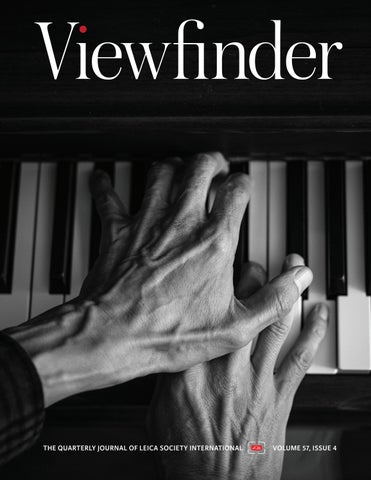
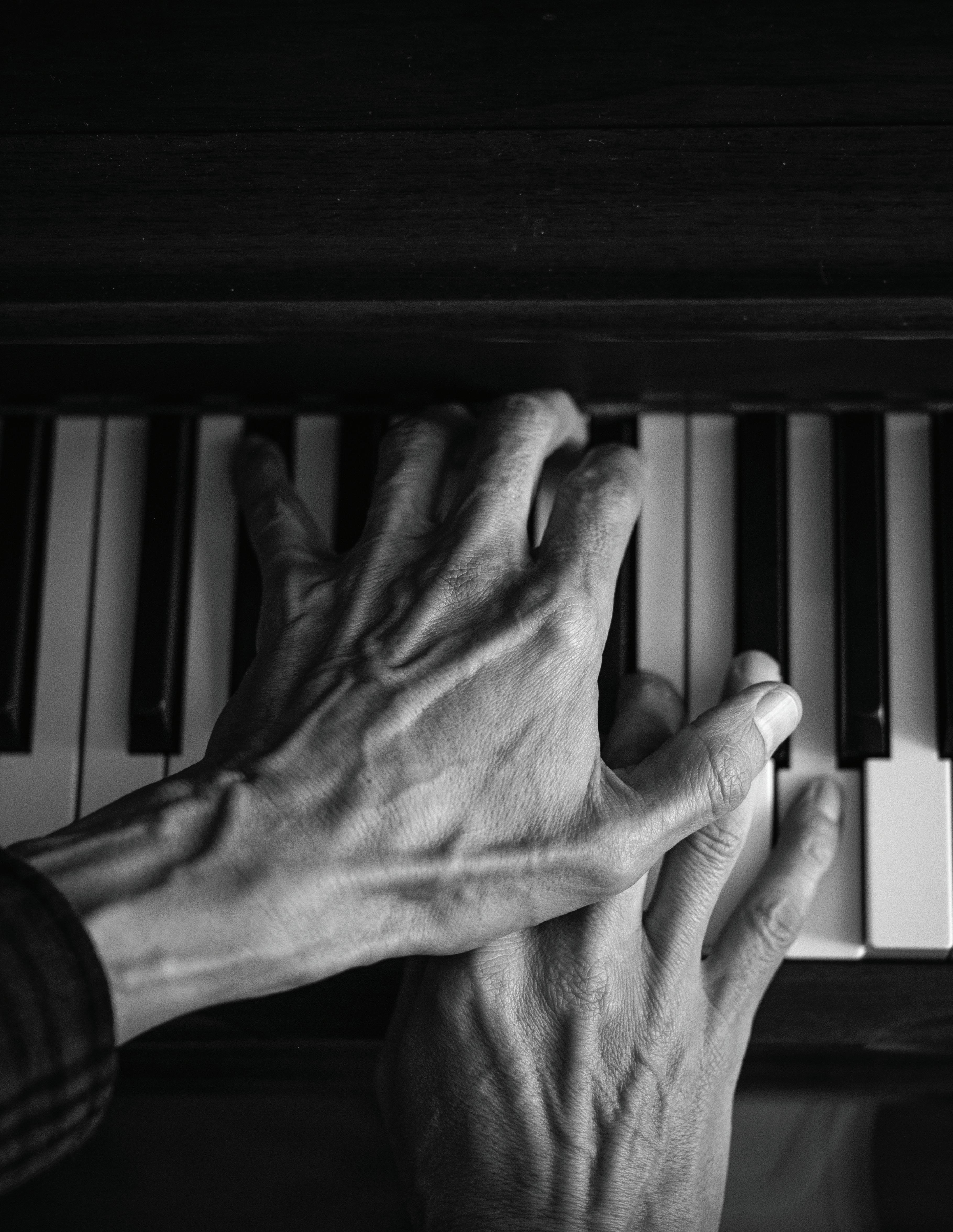
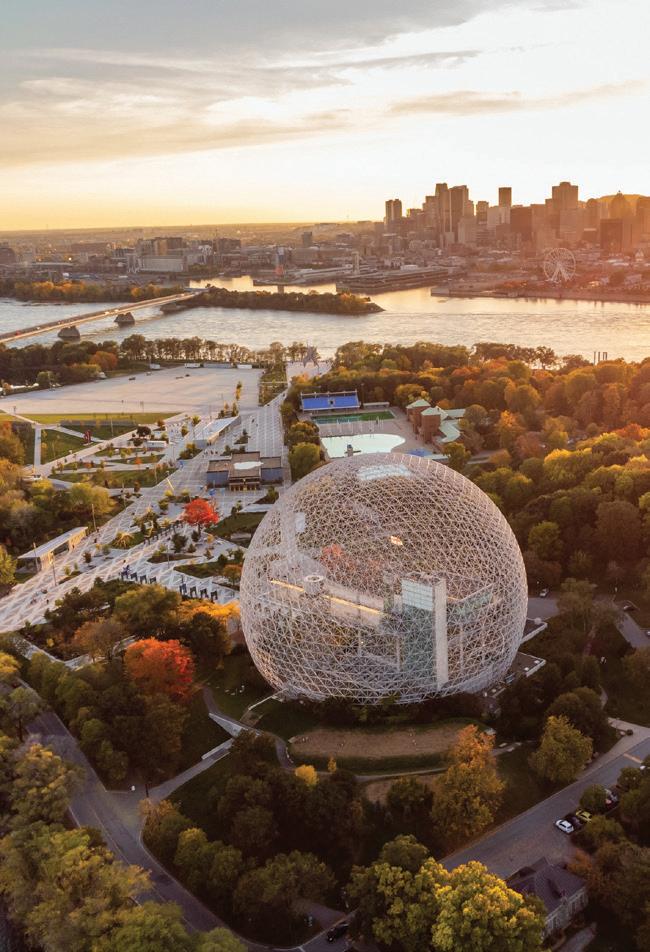
Our cover picture is by our recently retired Admin, Richard Rejino. I am sure many of you know Richard through the annual meetings and Spring shoots Richard has organized for us over the years. Richard has also grown as a photographer over the years with us as well. I think you will find Richard’s article on his journey of discovery through photography very interesting, and you may fi nd many similarities in your own photographic journey. Richard is going to be part of the Viewfinder team in the future as well, so he is not leaving us with his retirement!
LSI Sustaining Member Jason Shaw has written a great review of attending his fi rst annual meeting recently in LA. I am sure you will share his enthusiasm, and will remember well your first annual meeting with the LSI. The in-person meetings have always been the highlight of my years with the LSI, and all of us have made lifelong friends in the Society at these meetings. If you have never been to an LSI event, please consider joining us!
Albert Knapp and Ruth Oratz bring us another one of their beautiful travel essays, this time on the castles and dungeons of the châteaux of the Loire Valley in France. I have never been to this area, but their images and story in this article certainly has added this to my bucket list of places to visit in the future!
We have a very special article from our long-time board member and contributor to Viewfinder Bill Royce, on his fi rst Leica, an
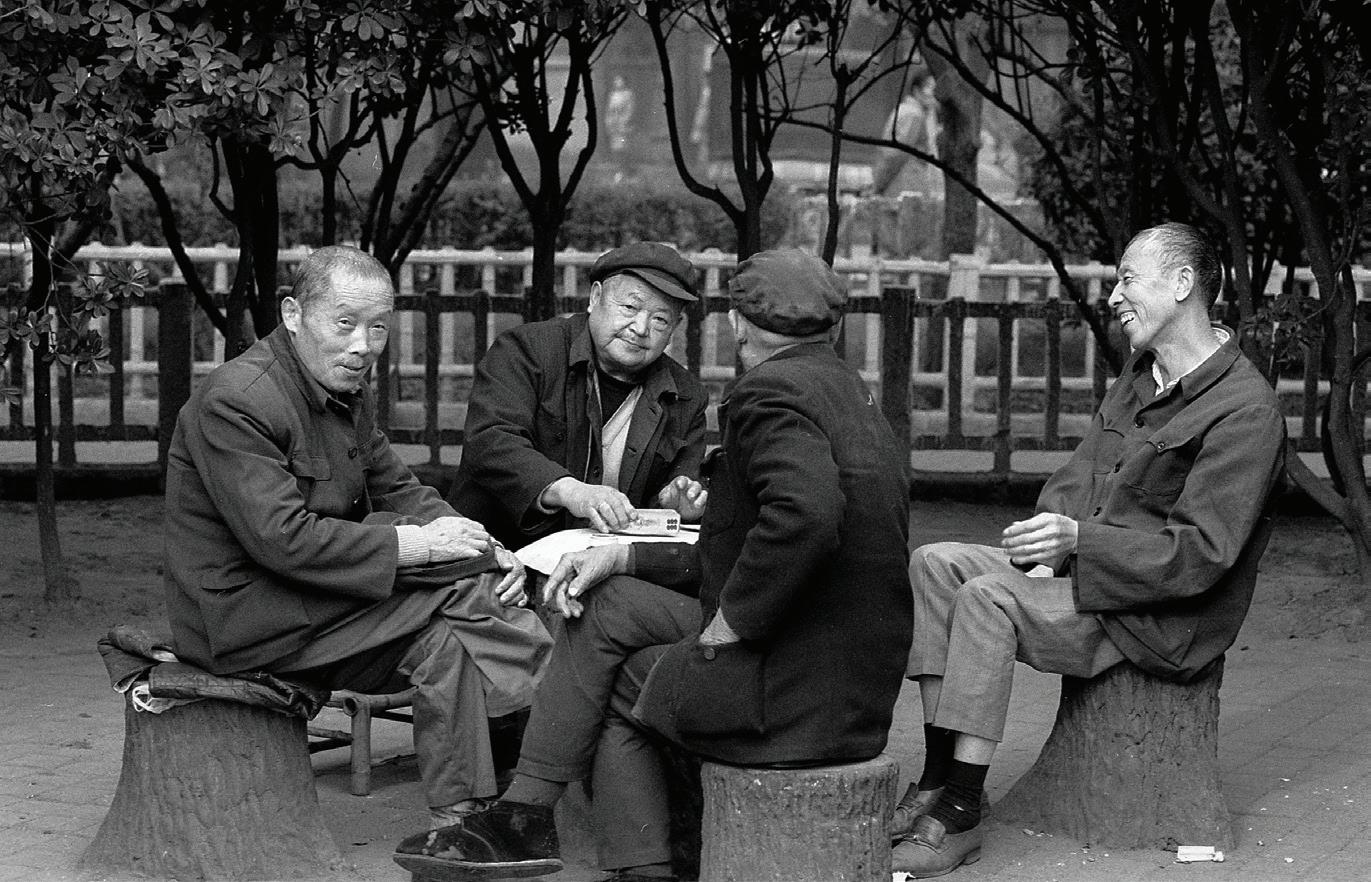
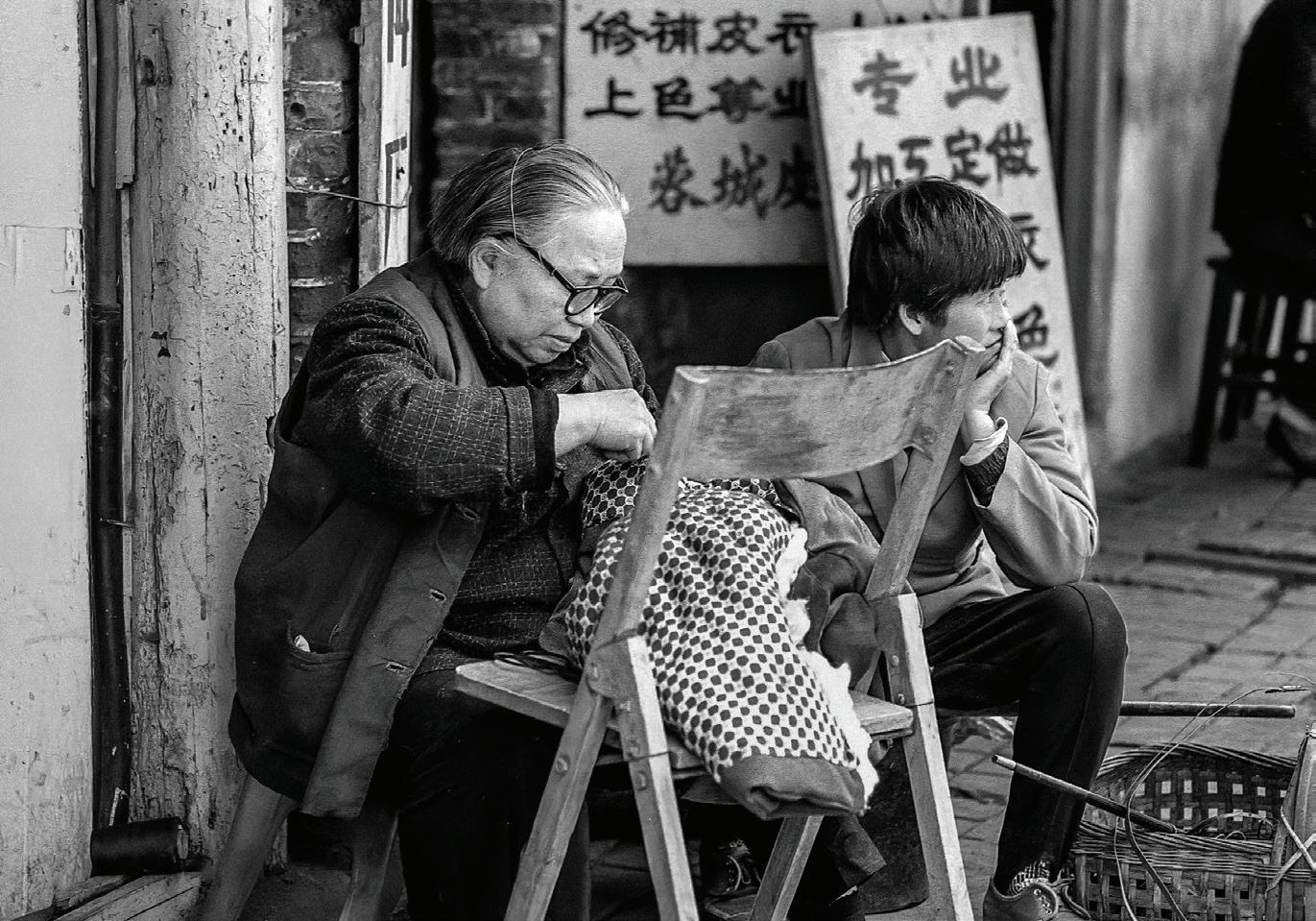
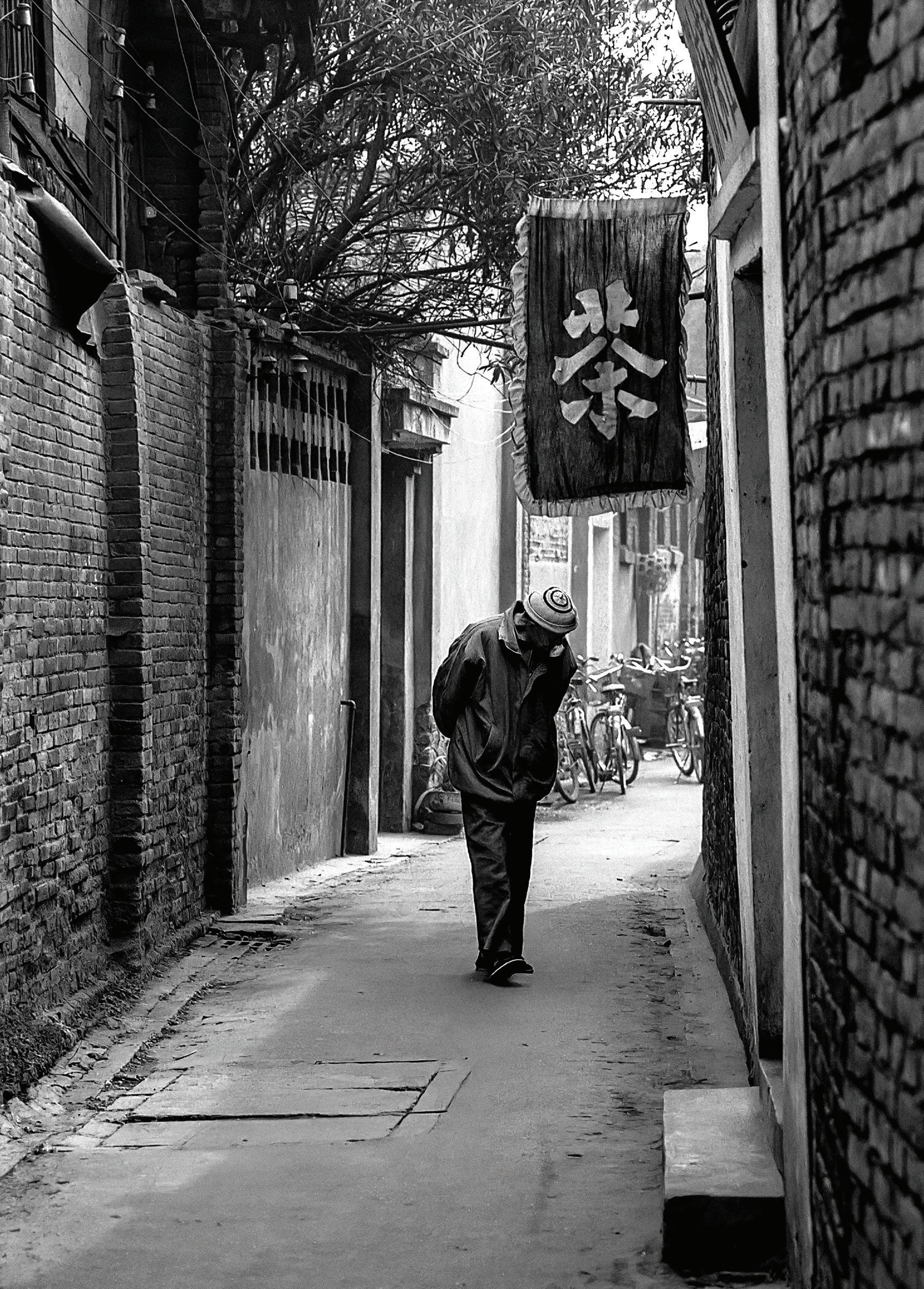
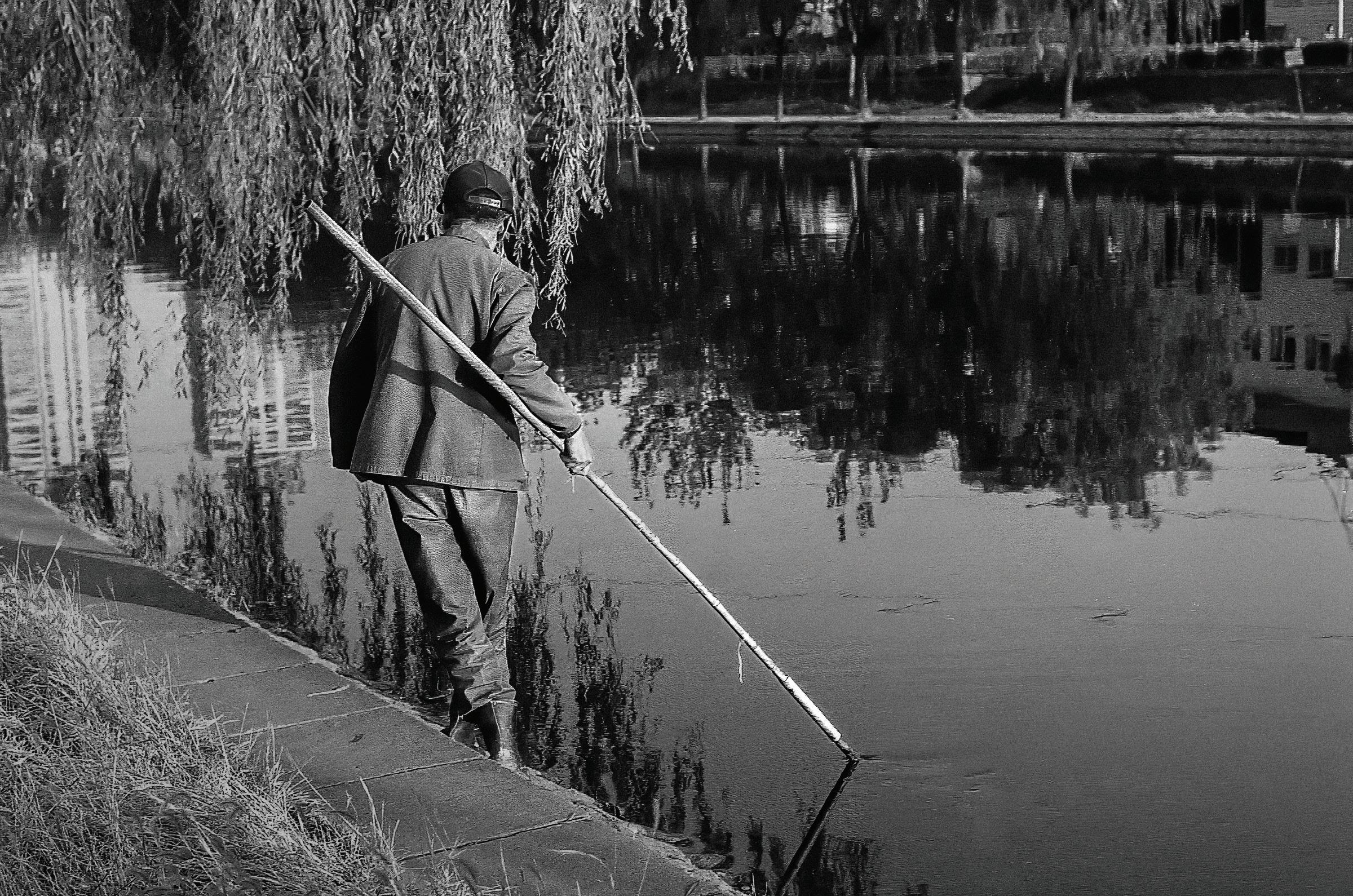
M6, and his travels as a pilot for Boeing in China in the 1990’s. I think you will fi nd Bill’s story and images of China that no longer exists quite fascinating. As Bill points out, the Leica M is perfect for travel, with its high quality lenses in a compact format. Many of us have discovered and love the same thing about the Leica M camera and have made it our essential kit for travel photography.
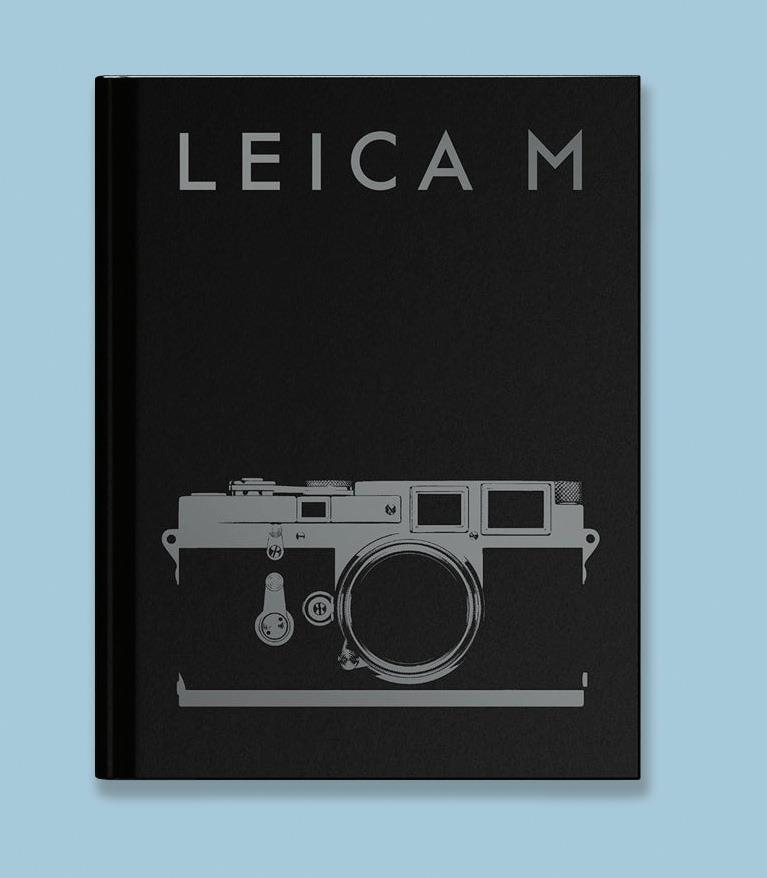
Speaking of the Leica M, Leica recently came out with a wonderful book on the Leica M, which celebrated the seventieth anniversary of the M camera. Ed Schwartzreich and I write a review of this wonderful volume in this issue. I think you will agree with us that it deserves a special place in your Leica library. Ed also reviews the foldable thumb rest for the Leica M from IDS. Th is outfit has been making some very useful accessories for the Leica M recently, and you might fi nd this one right up your alley to make your Leica M more user friendly.
Alan Stokes returns to the pages of Viewfinder with his wonderful article on Porto. Alan attended the LSI Spring Shoot there in 2024. He recalls an image renowned Leica and Magnum photographer Henri Cartier-Bresson took there in 1955. Alan fi nds out which Leica HCB used to take his photograph and reproduces the image with one taken during the Spring shoot of the same scene. I think you will agree, Alan’s detective work provides an interesting back story about HCB and his time in Porto all those years ago.
We also have two great articles by Jim Lager. One article on the Black Paint M4 cameras, and another on a very desirable Leica collectible, the Sabre Stock for use with long lenses on the Leica. I briefly had one of these in my collection, and I can attest to the fact that it did work quite well with long tele lenses with the Leica screw mount cameras. Of course, I sold it at auction as well as Jim suggested.
Bis Nächste Zeit,
Bill
View nder Editor
A LETTER FROM THE PRESIDENT
by DAVID KNOBLE
Dear LSI Members: Photography has always been about curiosity—about looking, seeing, and capturing moments that speak to something deeper. At LSI, we celebrate that pursuit, bringing together photographers from around the world who share a passion for learning, storytelling, and the artistry of the image.
As we move forward in our own photography, we continue to ask important questions: How do we make better images? How do we see differently? How do we push the boundaries of creativity? Part of the answer lies in mastering the tools at our disposal. Today, that includes not only the legendary craft smanship of Leica cameras but also the evolving role of artificial intelligence in photography. As a tool, AI can help us explore new creative possibilities and uncover insights we might have missed. From advanced noise reduction to intelligent composition suggestions, AI can serve as a powerful assistant, helping us express our vision more effectively. But ultimately, the decisions, the framing, the moment of pressing the shutter—that remains in our hands. We will begin exploring AI as a tool for our photography.
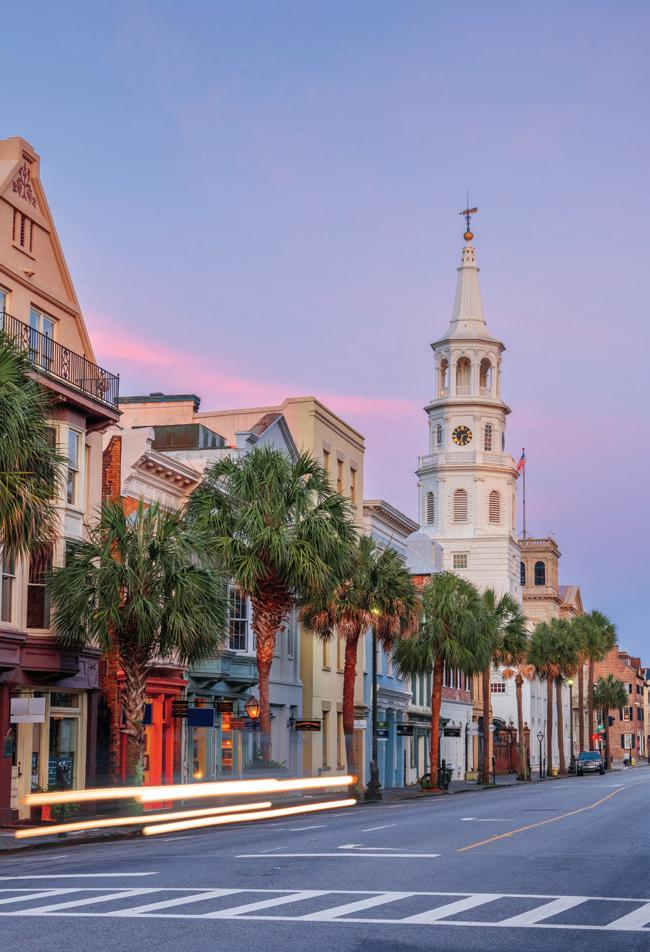
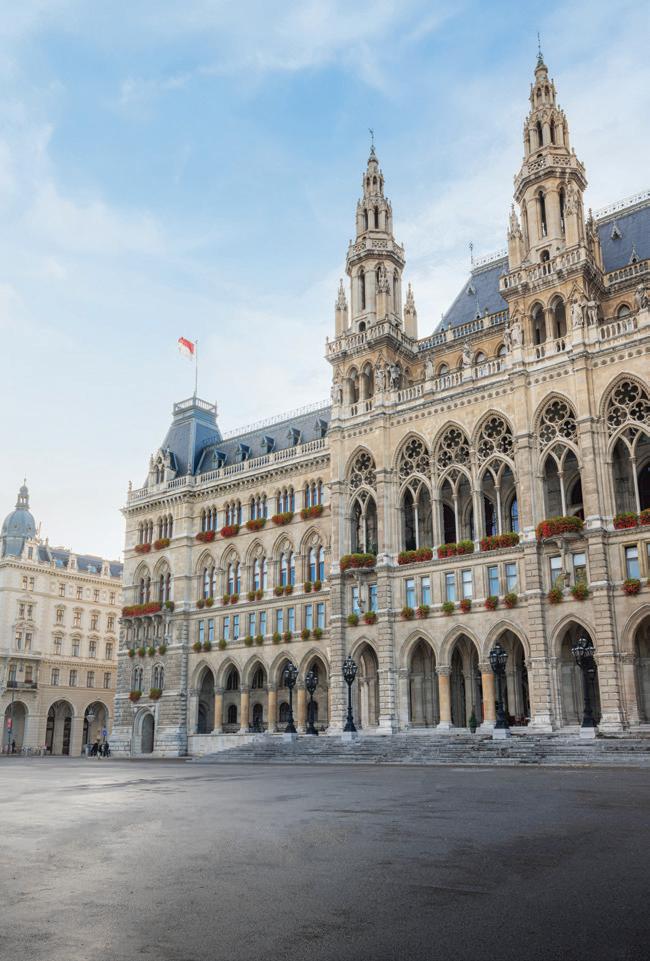
Your spring conferences in Charleston, South Carolina, and Vienna, Austria have a whole host of speakers and events. These are great opportunities to expand your creativity by talking with others that share your passion. We move the locations around each year so that you may have a better opportunity to join us! I hope to see you at our spring conferences in April and May!
Your board has been working hard in several areas to provide more to you, our members. We have some incredible surprises for this year in store, and I encourage you to keep watching! We also offer two grants each year and our LSI Women in Photography grant will be announced very soon. Th is is a great collaboration with Leica Camera North America, and we continue to have increasingly hard selections with the phenomenal talent submitting portfolios. Look for the results early this summer!
Th is issue of Viewfinder embodies the spirit of exploration, blending history, innovation, and creativity. I hope you fi nd a connection with something in these pages that helps you explore something different or more of the same. You can also engage in social media on Instagram with our monthly challenges or learn and contribute on What’s App with the bi-weekly challenges. Our shared journey is one of discoveries, and LSI is here to share, support, and grow with each of you. Keep asking questions. Keep seeking. Keep creating. Keep sharing.
We have some great plans in store for 2025 and I hope you will all take part in them! For now, keep shooting. We Are Photographers!
David Knoble President, Leica Society International
CONSTANTINE MANOS
Ihave always felt that Costa’s images reflected the true essence of what Leica photography is all about. Having known Costa for many years, from when he attended and presented his images at several LSI meetings over the years, I was so very sorry to hear we have lost him. He was always very open to discussing his work, and always very friendly and gave some of the best presentations at our annual meetings. His images from his Greek Portfolio are my personal favorites of his body of work. I have two of Costa’s signed images from that series hanging in my home, and I just looked at my copy of his Greek Portfolio book which he graciously signed for me.
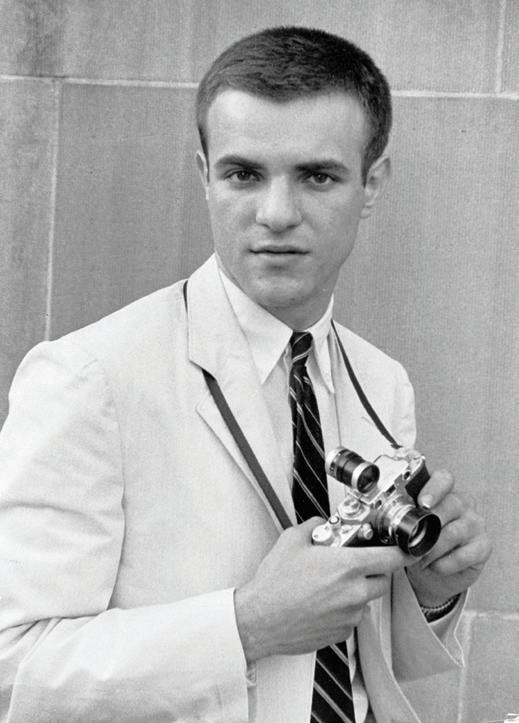
Early on, Costa was influenced by the work of Henri Cartier-Bresson and his philosophy of the Decisive Moment. Learning that HCB used a Leica, Costa acquired his first Leica, a IIIf and 35mm lens in 1952 at age 18. I featured Costa’s early work in Viewfinder 49-2 in 2016. This was from a series we did on "My First Leica," where well-known Leica photographers talked about their first Leica cameras. These were images of Daufuskie Island in South Carolina, where the local people were very isolated and made their living harvesting oysters and crab in the local waters. After Daufuskie, Costa took a portfolio of these images with him to New York to the offices of Magnum Photos where he met with Cornell Capa about joining the fabled photo agency. Costa continued photographing with his Leica through college. His work photographing the Boston Symphony Orchestra highlighted his rapidly developing talent. Costa entered the military and continued to use his Leica to document life around him.
Upon leaving the military, he embarked on a three year project documenting everyday life in small villages in Greece with his Leica. I remember Costa telling us that these towns were so small and isolated they did not have electricity or telephones. These images became the basis of his book, A Greek Portfolio. During his time in Greece, he drove his VW Beetle to Paris, and dropped off some of his prints from Greece at the home office of Magnum. He said hello to everyone in the office, left his box of prints and drove back to Greece. About a year later, while in a remote Greek village on the top of a mountain, he received
a large package of mail. Inside was a letter from Magnum Photos informing him had been selected to become an Associate Member of the agency! He dashed backed to Paris in his VW, and as they say the rest is history.
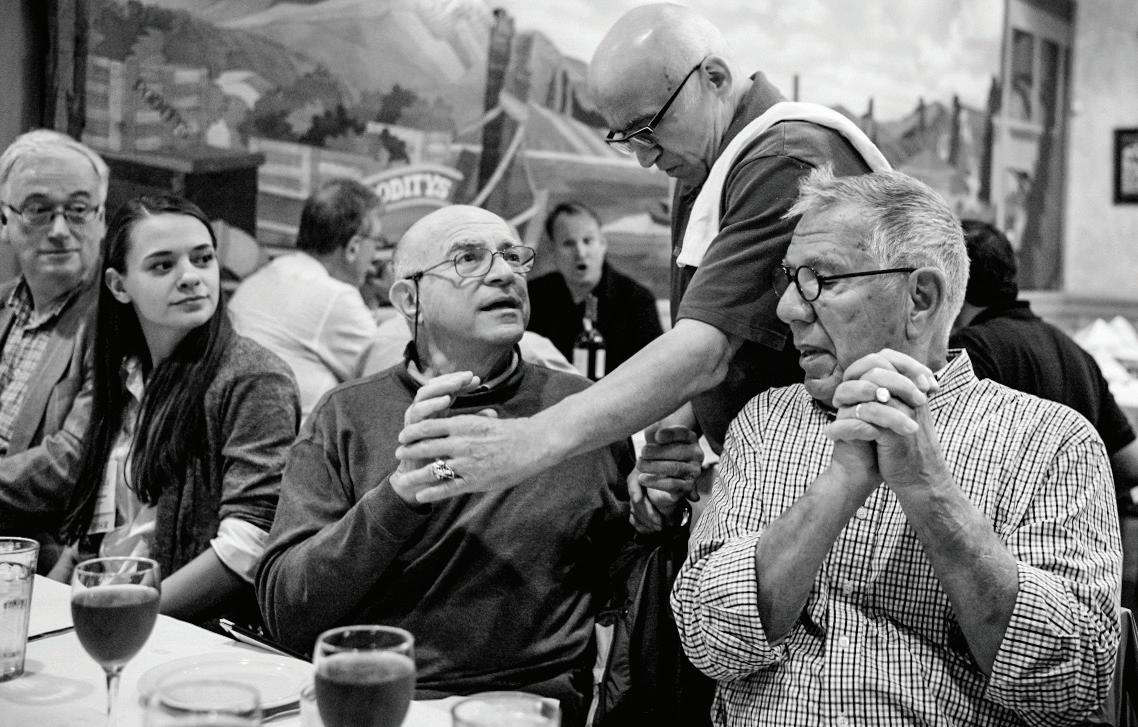
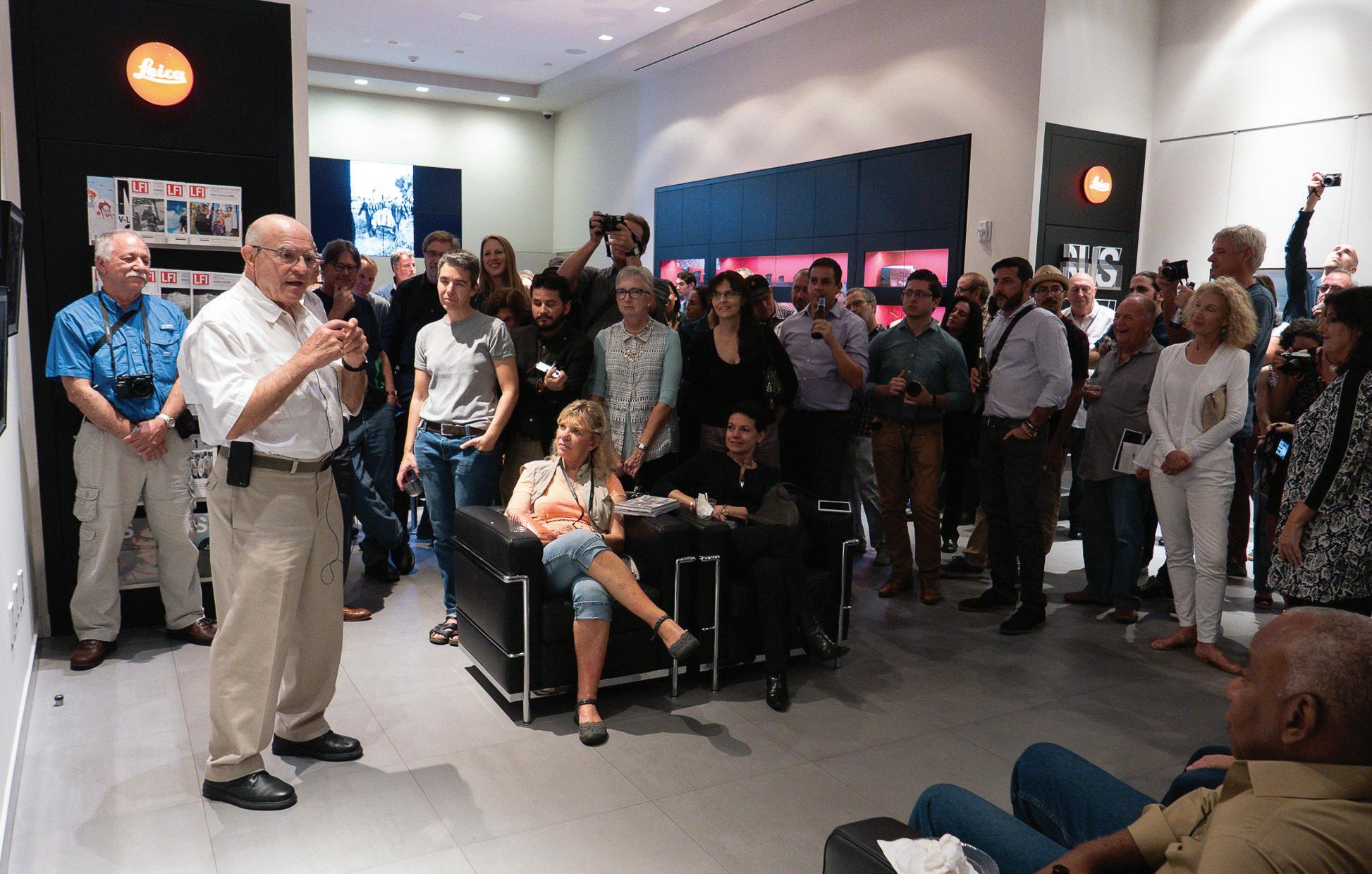
I share an image here of Costa taken in my favorite Greek restaurant here in Chicago. This was during the LHSA Annual Meeting in 2017, where Costa was a speaker. You might recognize some of the people in the picture seated at our table. My waiter had just pulled off one of his routines on Costa, taking his watch to which Costa was caught totally unawares. Moments later, he returned Costa’s watch to him saying, “You know, they say, don’t take a gift from a Greek!” It was a fun moment on which I look back on fondly of great times with Costa and my Society friends.
- Bill Rosauer, Viewfinder Editor •
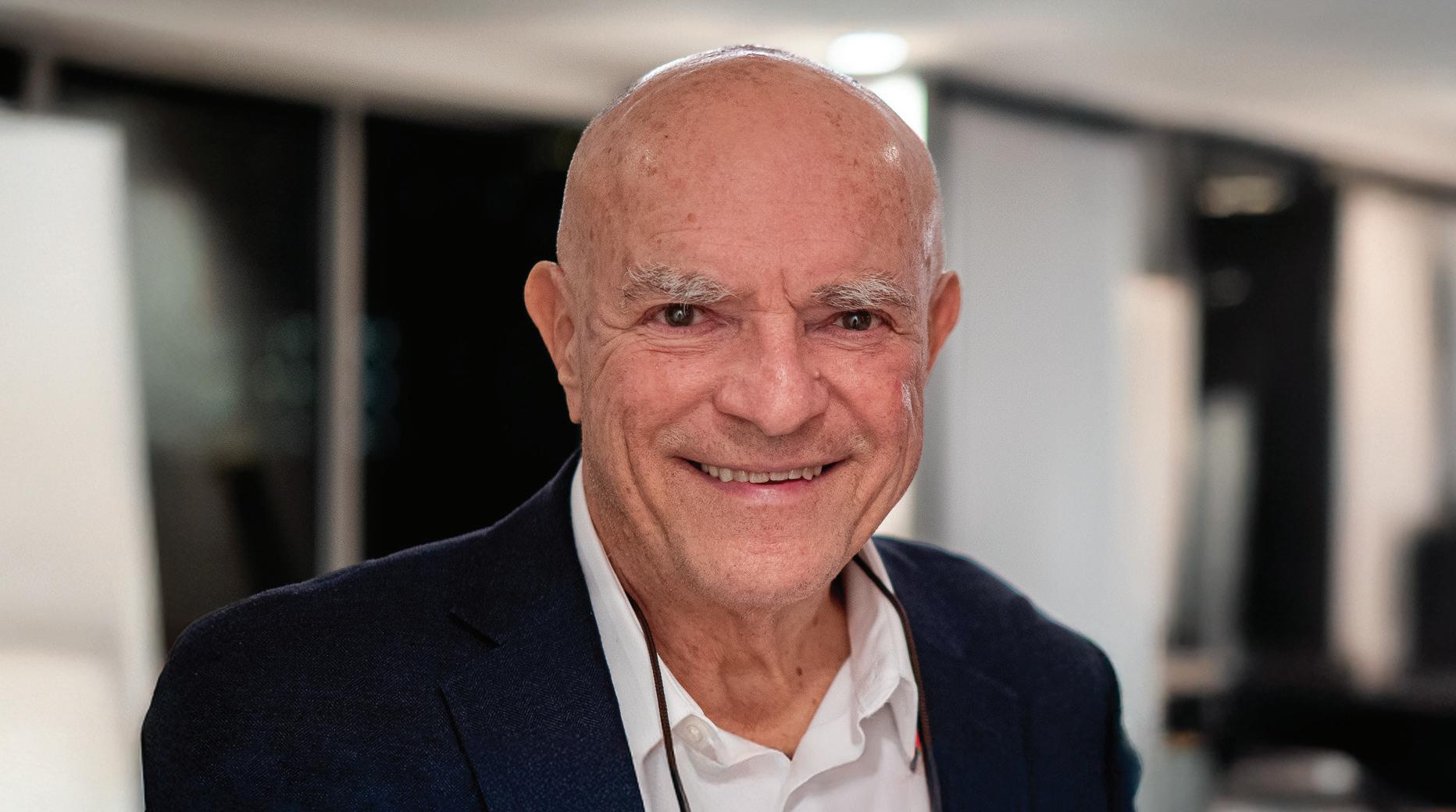
Itis with deep sorrow that we mourn the passing of Constantine Manos, a brilliant photographer, dear friend, and an extraordinary soul. To those who knew him, he was not just a master of his craft but a warm, generous, and deeply kind person whose presence was as memorable as his photographs.
Costa was born in Columbia, South Carolina, in 1934 to Greek immigrant parents, whose heritage became a lasting influence on his perspective and work. His passion for photography began at an early age, and by the time he was in college at the University of South Carolina, he was photographing for Life magazine. He gained international acclaim for his ability to capture the human spirit in ways that were both profound and accessible.
In 1963, Costa joined Magnum Photos, an honor that placed him among the most celebrated photographers in the world. His work ranged from documenting the vibrancy of American life in the Deep South to exploring the richness of Greek culture, as seen in his seminal book A Greek Portfolio, which earned him global recognition and numerous accolades. Costa later broke new ground with his pioneering work in color photography, culminating in the critically acclaimed American Color and American Color 2. In these projects, Costa shifted his focus to the bold, chaotic beauty of everyday life in the United States.
With a masterful use of light, shadow, and vibrant hues, he created images that were dynamic, thought-provoking, and uniquely his own. These works not only redefi ned his artistic vision but also influenced a new generation of photographers to explore the potential of color as a storytelling medium.
I fi rst met Costa in 2006, during the early days of the Leica M8, a camera he embraced with his characteristic curiosity and enthusiasm for innovation. From the very start, I was struck by his passion for storytelling through images and his ability to fi nd beauty and humor in the everyday. He spent his winters in Dania Beach as a snowbird, just down the road from our office, and would often drop by for a visit. Over the years, our friendship grew through countless lunches and wonderful conversations—moments I will forever cherish.
We had the privilege of showcasing his work in our gallery at Leica Store Miami, where his photographs captivated and inspired all who saw them. Costa’s art was a reflection of who he was: thoughtful, sharp, full of life, and profoundly connected to the world around him. His ability to see beyond the surface and capture the essence of a moment was unmatched.
But Costa was more than his work. He was a kind soul, a true gentleman with a twinkle in his eye and a love of good company. He made you feel at ease, sharing his stories, his humor, and his wisdom so effortlessly. To know Costa was to know generosity, both of spirit and talent.
The world has lost a remarkable artist and an even more remarkable human being. His legacy will live on in the lives he touched and the images he left behind, which continue to remind us to see the extraordinary in the ordinary.
Rest well, dear Costa. Your friendship, your artistry, and your spirit will forever remain in our hearts.
- David Farkas, LSI Sustaining Member & Past Board Member
LEICA M BOOK
A Book Review by BILL ROSAUER & ED SCHWARTZREICH
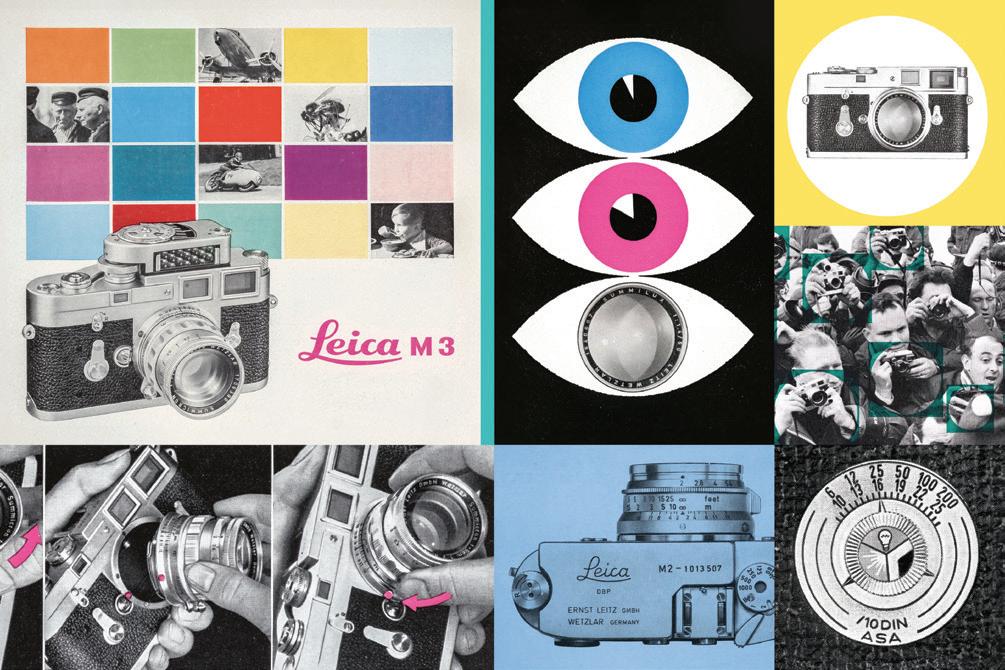
Coincident with the 70th anniversary of the M camera in 2024, Leica has commissioned a comprehensive book to celebrate this anniversary. I have been an avid M photographer since I talked my father into letting me use one of his M3 cameras at the age of 12 years old, and have used or owned every single model of the M camera ever made. The M camera has been a huge part of my photographic life.
ED SCHWARTZREICH “ Editor Rosauer and I found out a month or so ago about Leica's new book celebrating 70 years of Leica M, simply and appropriately titled “Leica M“. Leica USA kindly supplied us each with a copy for review.
While this approximately 275 page, HEAVY, harbound book is clearly both a celebratory and eyecandy-like publication, promoting the brand, it is also a serious and worthwhile volume for anyone with an historical bent, or who wants a book to complement any of the M camera bodies they have recently acquired.
We would describe the book as a potpourri, with content in it to satisfy several different strands of Leica interest: photography by noted photographers, including some you have never yet heard about; a very detailed pictorial chronology of all Leica Special Edition models, including again some that at least one of us had never heard about; accounts of Leica equipment development by several noted historians, including Ulf Richter and Leica’s own Stefan Daniel, and photographers Ralph Gibson and Joel Meyerowitz; other historical articles by Peter Karbe, and by several persons unknown to at least one of us — but all informative; and an introduction by Dr. Kaufmann. Questions: do you know the reason why Leitz and then Leica made their bodies and lenses in batches? Do you know what Stefan Daniel’s favorite lens might be? Th is book will tell you.
Each of the major M camera models is covered in depth. We get a history of how and why the M3 was developed, a history that brought joy to the cockles of Ed’s heart with mentions of such luminaries as Ludwig Leitz, Hugo Wahrenfennig, and Heinrich Janke, Ed having written at length about them. And Editor Rosauer must have appreciated mention of all the special editions he fathered, even if their detailed paternity was omitted.
Ed’s fi rst M camera, if you disregard the Minolta CLE, was an M5. The reason? Size was similar to his Nikons, and it had a meter. It worked really well and he still owns it! I own and have used most all of the fi lm Ms. Oh and yes, I also got to beta-test an M8, along with Bill. Today I use M10s and an M11.
In all seriousness, this book has gravitas, as well as being an appropriate coffee table book, to mark a major anniversary in the ongoing development of one of the last century’s most iconic inventions, the Leica camera. None of us were alive when the Leica camera was invented, yet here it is, still with us, and still an incredibly useful machine and beautiful object. Th is book is nice too!!”
BILL ROSAUER “ Our good friend Ulf Richter wrote a chapter on the history of the development of the Leica, from Barnack’s Lilliput camera to the fi nal production Barnack camera, the IIIg; culminating in the Model IV prototype before the outbreak of the War. Th is sets the stage for the M3’s birth in post-war West Germany.
Marwan El Mozayen writes about the development of the M camera, beginning with the M3, introduced in 1954. He tracks the development of the M through all the subsequent models through the M6 and M7, up to the current production MP. He also recounts the challenges encountered by the Leitz company in dealing with
The Leica M Book
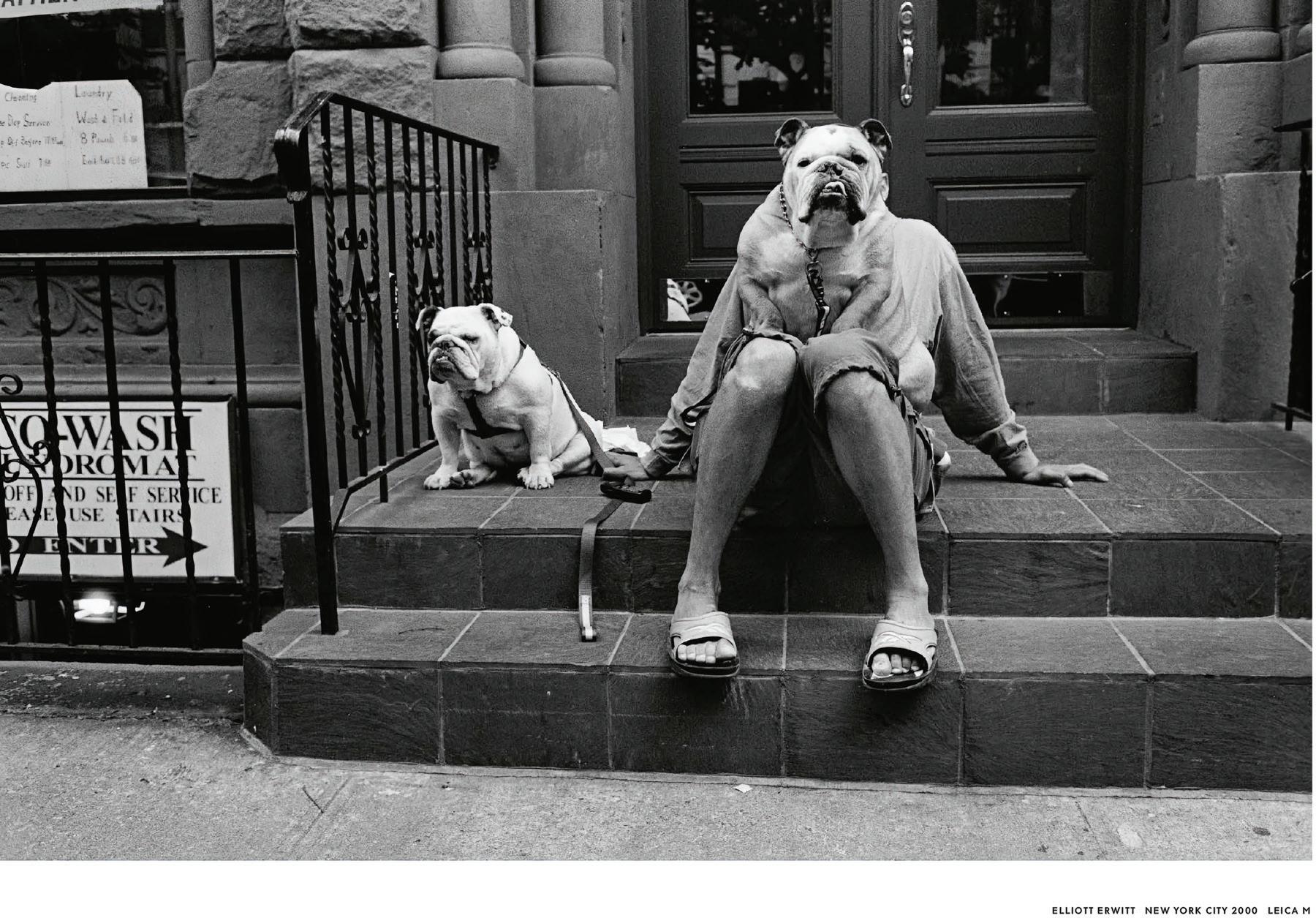
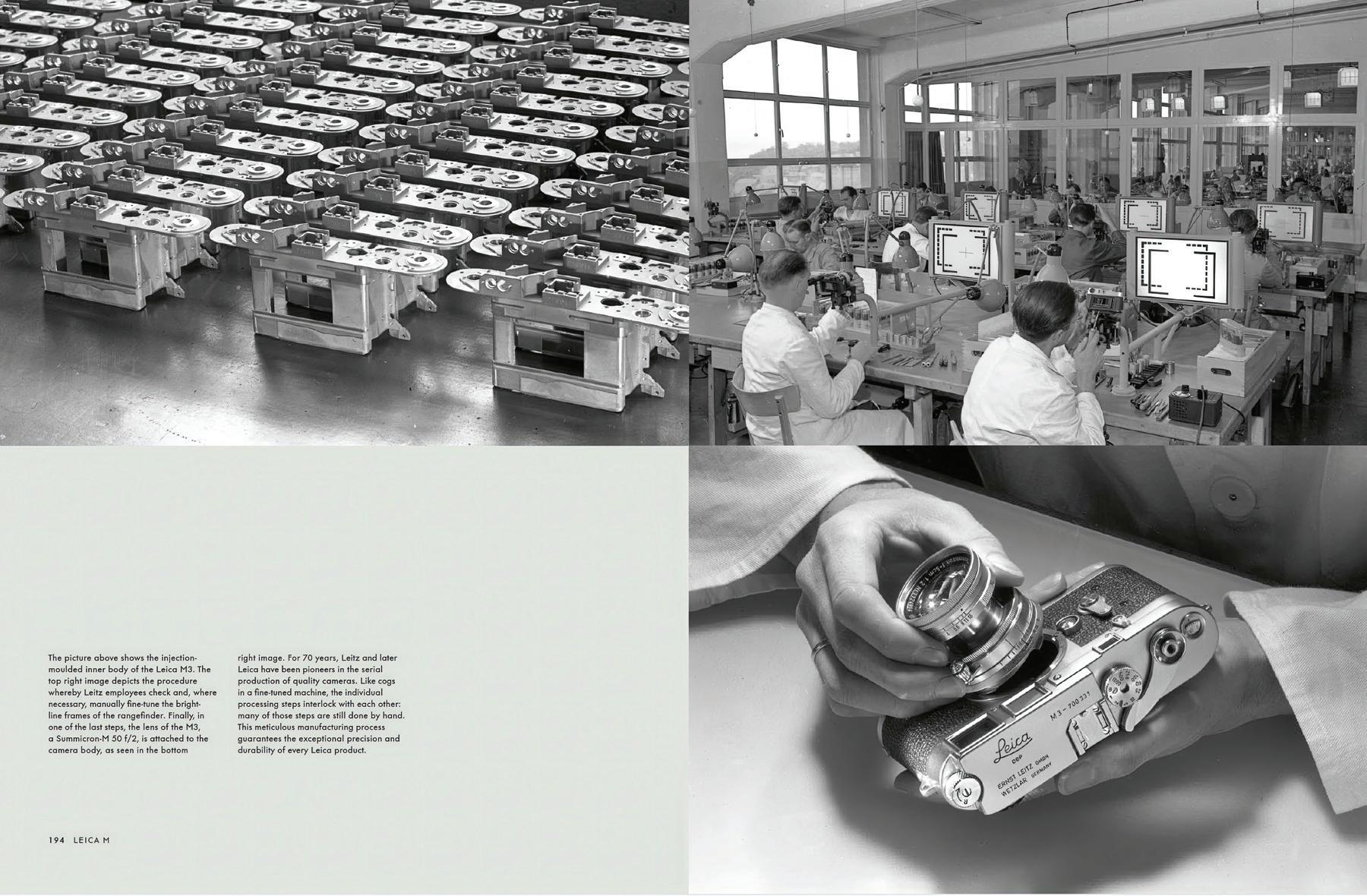
Sample Pages from The Leica M Book
their competitors, especially those from Japan, and the threat of the SLR to the Leica rangefi nder cameras. In his chapter, he also gives a good history of the R cameras as well. Few people will remember that with the failure of the M5 in the marketplace, Leica seriously considered terminating the M camera line with that model. Thank goodness Walter Kluck, the manager of Leitz Canada, stubbornly relocated M camera production to the Midland factory. The M4-2 and M4-P cameras produced there saved the Leica M camera. In this chapter, development of a metered camera in the classic profile is documented. Design studies were based on the then current R4 camera, and a rather ungainly looking M4-P with external circuit board for the internal meter cell reading off a white circle on the camera shutter. The M6 was the result of this development, and was introduced in 1984.
In the interview with Stefan Daniel in another chapter, Stefan recalls how his journey with the M began with this camera when his group of 16 year old trainees were introduced to the camera to be unveiled at Photokina that year. Coincidentally, I attended my fi rst Photokina in that year, and was completely bowled over when I held the M6 in my hands at the Leitz booth. On my return home, I immediately called Rockleigh and told them I must have one of the new cameras to show in my store. I still have that camera, and years later, Stefan looked at my camera and confi rmed it was one of the original Photokina cameras!
I enjoyed reading the interview with Stefan Daniel about his insights into the development of the M camera, and how involved he has been in the success of the M camera and the Leica company. I met Stefan back in 1996 at Photokina, and became good friends with him while working on the various LHSA Special Editon M cameras. The chapter, A New Era by Holger Sparr is a fascinating recounting of the development of the Leica M8 and the subsequent digital M cameras. I was fortunate to be able to Beta test the M8, and have been an enthusiastic user of the M9 and M10 cameras. Peter Karbe’s chapter, Shaping Light, gives us some good insight into the incredible Leica optics for the M camera. As Chief of Optical Design at Leica, Peter explains how Leica has been at the forefront of optical design, especially in regards to the use of aspherical lens surfaces, and other cutting edge optical technologies. Th is coupled with use of the fi nest materials and precision mechanics, ensure that Leica M lenses are some of the fi nest lenses ever made for 35mm photography. Th is has been the case at Leica since the days of the fi rst Leica camera with the lenses designed by Max Berek, to give the user the best possible results. Mark Shipard, head of the Design Office based in Munich gives some insight into the design process at Leica. I was privileged to visit Mark and the design team at their office in Munich to see fi rsthand how his group is working on future designs for Leica.
Of special interest is the section on Special Edition M cameras made over the years by Leica. I was proud to see the cameras I worked with Leica on; the Black Paint M6 TTL, the Hammertone
MP and the MP3 in this chapter. It is amazing how many special editions Leica has made over the years, and while some may not appreciate it, they have made a solid contribution to the bottom line of the company. Curiously, the M2S (KS14-4) camera made for the US Military and its civilian counterpart the M2-R were omitted!
Overall, this book is an excellent celebration of the most important and influential Leica of all time, the Leica M camera. In this book, there is something of interest for every Leica enthusiast. Whether you are a user, historian or collector, there is plenty here to be of interest to you, all presented in a very user friendly format. For connoisseurs of fi ne photography, there is a substantial portion of the book dedicated to the incredible images only a Leica M and Leica glass can create in the hands of a talented photographer. The print quality and the reproduction of the images, and the presentation of the book itself is of very high quality, which befits a book produced by Leica themselves. In conclusion, this book is a worthwhile addition to your Leica library, and both Ed and I highly recommend it.
Th e Leica M Book is available from Leica directly and your Leica dealer, but not from Amazon at this time! Hopefully this will be rectified in the future to allow distribution to the widest possible audience.”
Leica Society International 2024 Annual Conference
Here we are.
You really should be here with us.
A three-day conference seems long on paper. If you feel that way, I hesitate to tell you it’s about five days in total when you include travel and the meet-and-greet Wednesday night. Yet still, those scheduled days become a blurry moment in time against a carefully choreographed program that piques your interests and holds firmly onto your passions. This particular moment, which is occurring in a city shared by over 12 million residents and 50 million tourists annually, seems infinitely smaller in scale when compared to that initial three-day announced schedule. Why did I think it was going to be a long weekend?
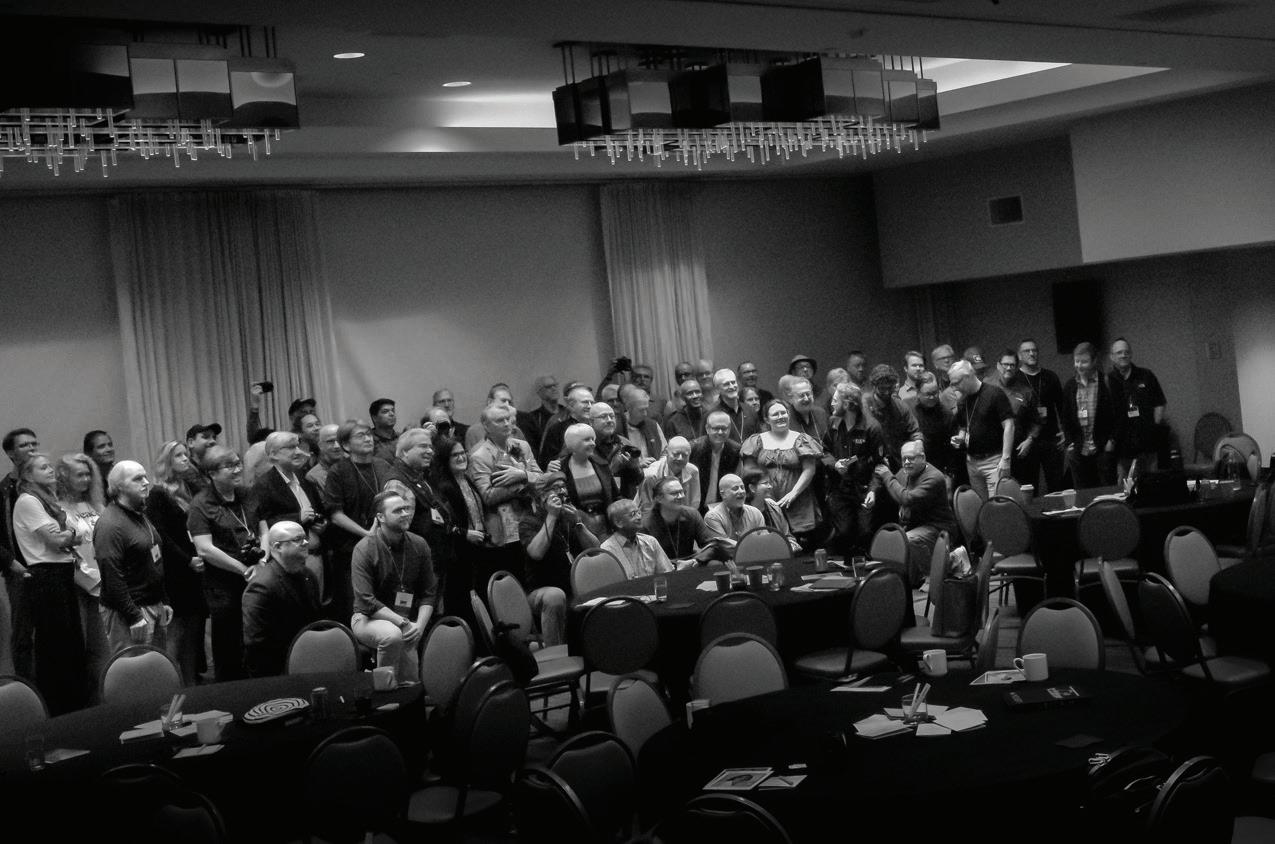
The 2024 Annual LSI Conference brings together 128 Leica enthusiasts from five countries. Amongst them are seasoned professionals and Leica top brass, advanced amateurs, Akademie instructors, and 35 leery freshmen attendees, sitting unsteadily in an unfamiliar yet welcoming crowd. Regardless of any selfimposed status, each attendee brings with them a unique and personal perspective to a place where the common language of
photography facilitates friendly discussions, objective critiques, and a fondness of a brand shared by all those who can attend.
Here we all stand equal. Here we observe, together, creative and reportage work that inspire us to create and share our own content and stories with each other and the world. Together we revel in unabashedly coveting cherished equipment and vintage relics… some we hope to own for ourselves one day and some we hope to simply see in person given these rarest of chances. We will line up all-too early before service of a continental breakfast for a chance to borrow new equipment from Leica Akademie. For some of us this will be after walking the streets of L.A. all night hoping for a bit of serendipity to grace our viewfinders. Here we will ogle brassing, trade in rumor and tell tales of cracked elements.
Here, we are photographers. Here, we are Leica -
- and we’ve come together for a common purpose in Los Angeles. Make no mistake - although faces amongst the throngs of Leica aficionados may change over time, you should know this isn’t a workplace gathering or a roomful of strangers:
It’s a family holiday, and you are running late.
Los Angeles California, USA
I’ll get inside before it starts, and you go to park the car. If the bar opens, maybe you can sneak in unnoticed before Richard welcomes us in one last time… see you inside.
Close at Home
While no overt theme was named in the 2024 LSI Conference schedule, one of Hollywood stardom electrified portions of the speaking events, even offering a surprise guest on Friday night at Leica Store Los Angeles. A fitting narrative and guest for our chosen venue.
LSI’s own Phil Caruso’s showmanship in storytelling opened us up to the insider world of photographing film productions. If you’ve never consumed fine art, but you have a pulse, you have inevitably seen Phil’s work. Phil’s work behind the scenes and his production of industry Key Art would be named as amongst the most iconic imagery covering the last several decades in American pop culture: Tom Hanks in Forrest Gump sitting on the iconic bus stop bench, Robert DeNiro administering a lie detector to Ben Stiller in Meet the Parents and many others are credited to Phil’s lens.
by JASON SHAW
Ongoing relationships with DeNiro and notable directors Ron Howard, Martin Scorsese, Francis Ford Coppola, Barry Levinson, Robert Zemeckis continue to keep Phil working across the industry he himself helped to shape during the transition to the digital world.
A surprise visit from Jeff Garlin, best known for his comedic contributions to Curb Your Enthusiasm and Meet the Goldbergs highlighted just how close this community, no… this Family, with Leica is. Hearing a famous comedian roast your friend and favorite Leica Store Manager is not something soon to be forgotten. It’s akin to having your odd uncle crack jokes at your cousin’s expense at Thanksgiving dinner. Star Power seems a little softer when you’re here amongst friends. Jeff shoots with an M, if you’re curious…and Josh Lehrer at Leica Store Miami sold him his first.
Back at the conference hall, a multiple-media presentation from Kwaku Alston highlighted his own journey of artistic expression. He focused on preserving his creative vision through the necessary encumbrances of celebrity and industry pressures, remembering his humble roots when working with the largest names on the planet. You may know a few of them. You likely know them all. With names like Oprah, the Obamas,
and Disney/Marvel on your resume, even those who don’t awe in the presence of celebrity can’t help to be a little struck during his discussion.
Another theme, one of access, was shared amongst several speakers, weaving its way silently through their stories, often highlighting the need to foster relationships and trust amongst those in proximity to our cameras. As many young photographers find out, privacy is amongst the first obstacles to overcome when shooting in a public space, often requiring disarming others when motivations don’t necessarily align. With celebrity, privacy takes on a wholly different scale to overcome. Gaining access and keeping it are separate and often competing and difficult concepts to balance in a world that requires heavy walls to shelter personal space in a public life.
Speakers Katarina Benzov and Mathieu Bitton each shared stories positively dripping in stardom. Their respective experiences as a lifelong and self-described “music fanatic” offer each of them a unique story to tell.
Katarina acknowledged the need to put the camera away during private moments that could define a photographer’s place in
history. Providing oneself with the opportunity for continued access in the long haul proves to be more fruitful for both the photographic record and the relationships she spends time on building.
The theme of access continued throughout the week, with war and political references, entrenched in the line of fire and inside Senate hearings. Yet some felt closer to home than a soldier or a star could provide to us: stories of chef’s kitchens and a family living in a broken-down travel van on a beach.
It’s Family Time.
Jim Sullivan uses his experience as a Chef to document life working in the kitchen subculture, teasing out nuances only immersion can bring. His long-term project “Kitchen Verite” was shot over a nine-year period in black and white film and details the stresses and habits of those who live in this world.
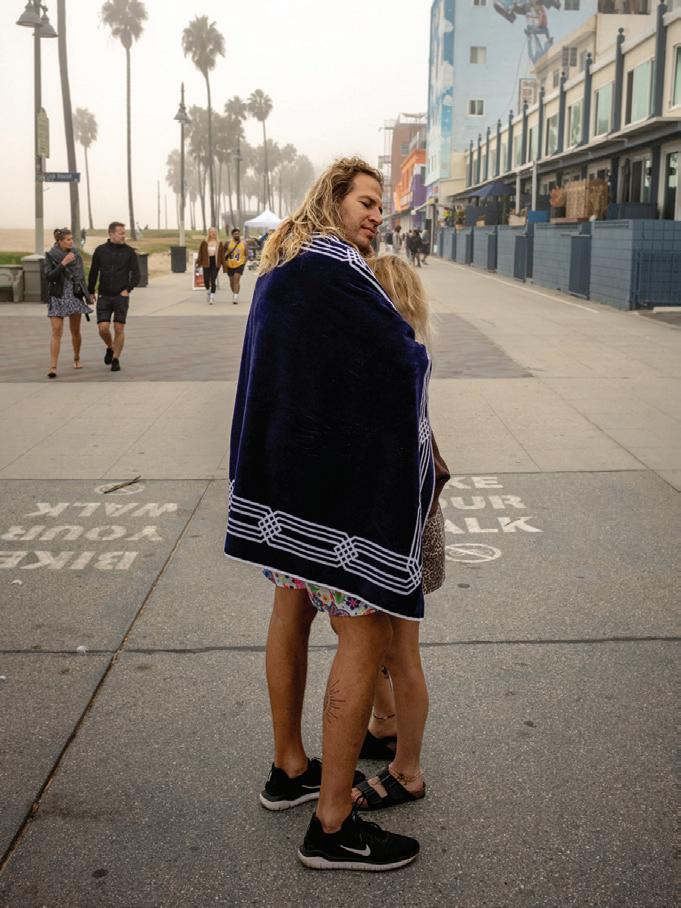
Dotan Saguy recounted gaining the trust of seemingly an entire community over the years, telling the intimate tales of those
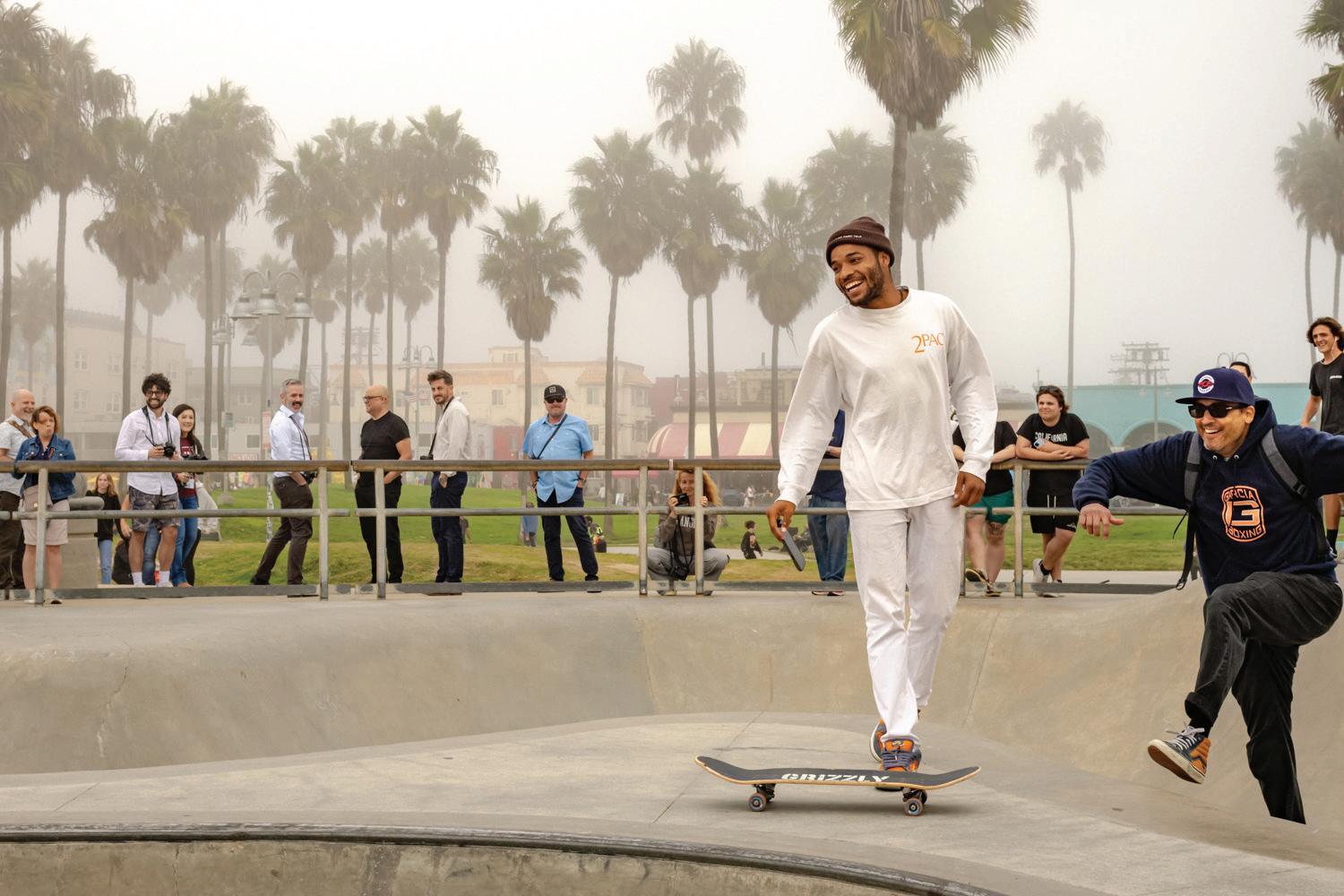
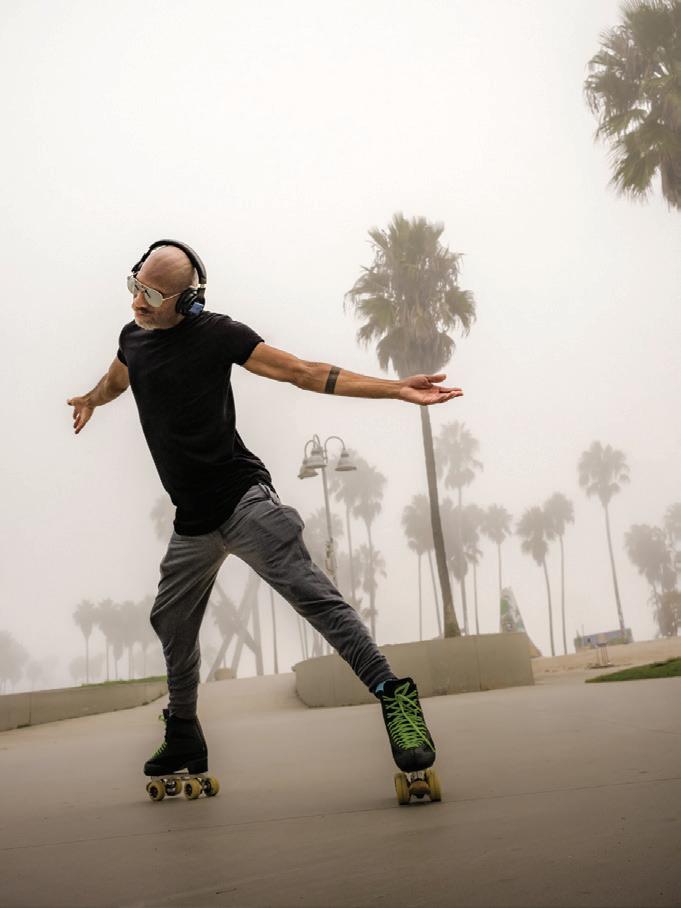
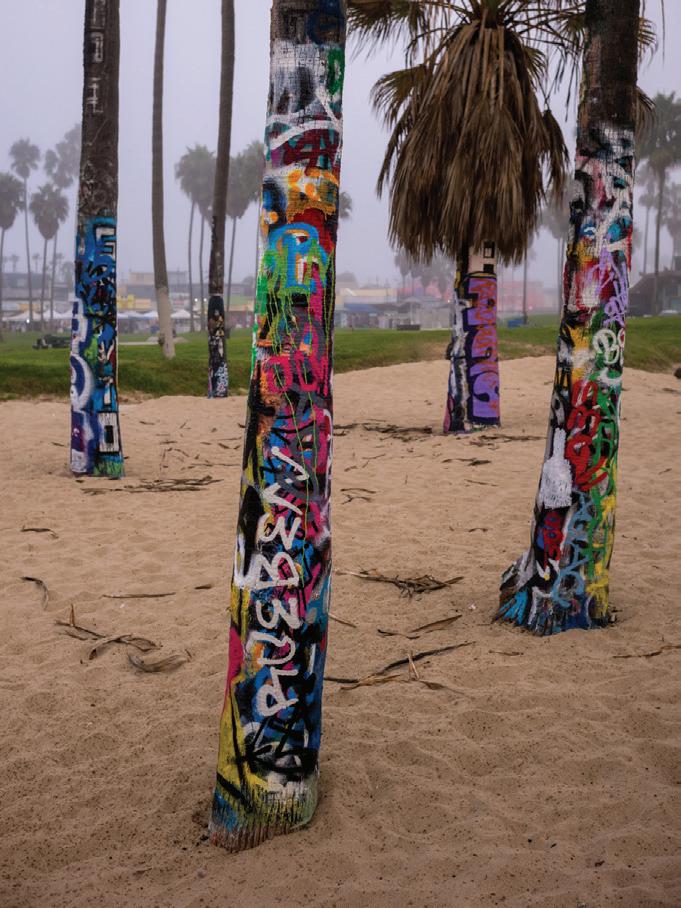
welcoming him into their difficult living situations at Venice Beach, telling their stories and bringing hope to others. Dotan’s work teaches us the benefits of planting our feet in the sand until they almost root us in place, seeing the stories that unfold within our reach, sometimes casting out lines in our visual field to fish for subjects moving in and out of our frames.
Beach and fishing references seem fitting, given the location. Dotan’s published books are a must for your collection. If you like Elliott Erwitt’s work, Dogtown is a must, but don’t skip the other books either.
Craig Semetko discovers serendipity in moments in between moments, teaching us the value of life and new perspectives he has gained when dealing with his own mortality and looking into a new future.
A fi nal touch on the theme of access was brought ultimately home by LSI’s own Richard Rejino and Kirsten Vignes Martin.
Richard and Kirsten offered personal glimpses into their inner lives, showing to all in attendance that the only person who truly has access to us is us ourselves. Their projects on self-portraiture
highlighted the importance of self-discovery, honesty, healing, and the benefits to our growth along our photographic journeys. While it was not the fi nal presentation it certainly felt like the right place to end recounting the events of this blurry weekend for me.
A Partial Goodbye
And so, the family went its separate ways, some staying in LA to get back to work, some going around the world towards home or their next project. I say to you all - see you next year. For those of you who couldn’t make it or have never made it yet - we felt your absence and can’t wait to see you.
I miss you all already.
Leica Society International Porto 2024 Henri Cartier-Bresson Porto 1955
by ALAN STOKES, SCOTLAND
Mywife and I managed to combine a 10-day vacation to Porto with the LSI Spring shoot event in May 2024. Prior to the LSI event, we had walked through Porto absorbing the lovely European culture and we also had plenty of time to visit various museums and local attractions. One attraction we went to see was the “Living Van Gough” multimedia experience held in the old “Customs House” building, directly outside this building, the historical tram line runs along the road for tourists to enjoy a 1946 vintage tram ride.
On the Saturday evening following the final LSI event we had arranged to meet up with Richard Clarke (Leica Store Manchester) and Alan Starkie (Cameraworks-UK) for a drink and some dinner.
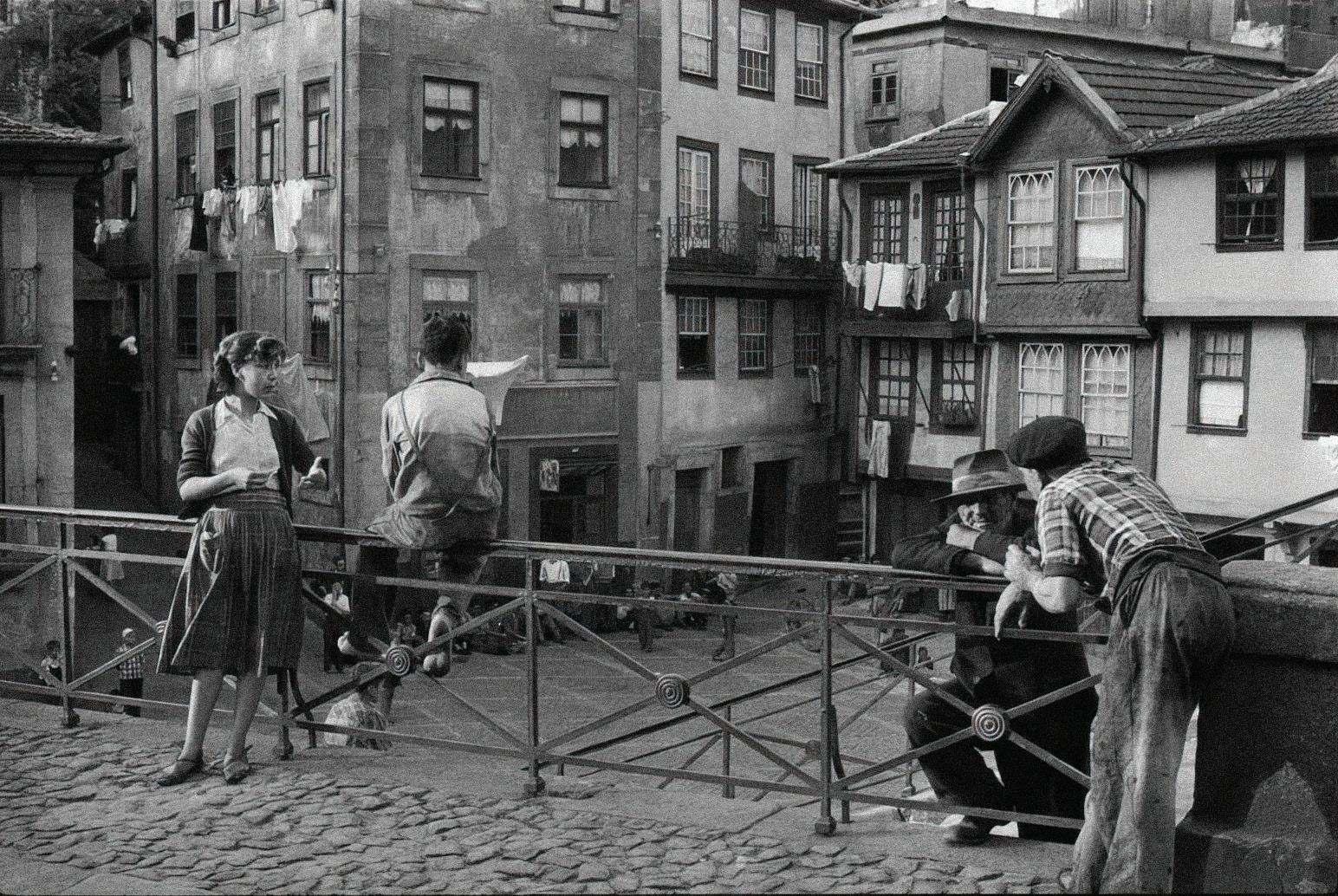
As we sat in a waterfront bar chatting, Alan showed me a black and white photograph that Henri Cartier-Bresson had taken when he visited Portugal and Porto in 1955. (figure 1) He described where the photograph had been taken, which was directly outside the “Customs House” building where we had viewed the “Living Van Gogh” attraction and walked past many times. We also had enjoyed a vintage tram ride past this very spot earlier in the vacation.
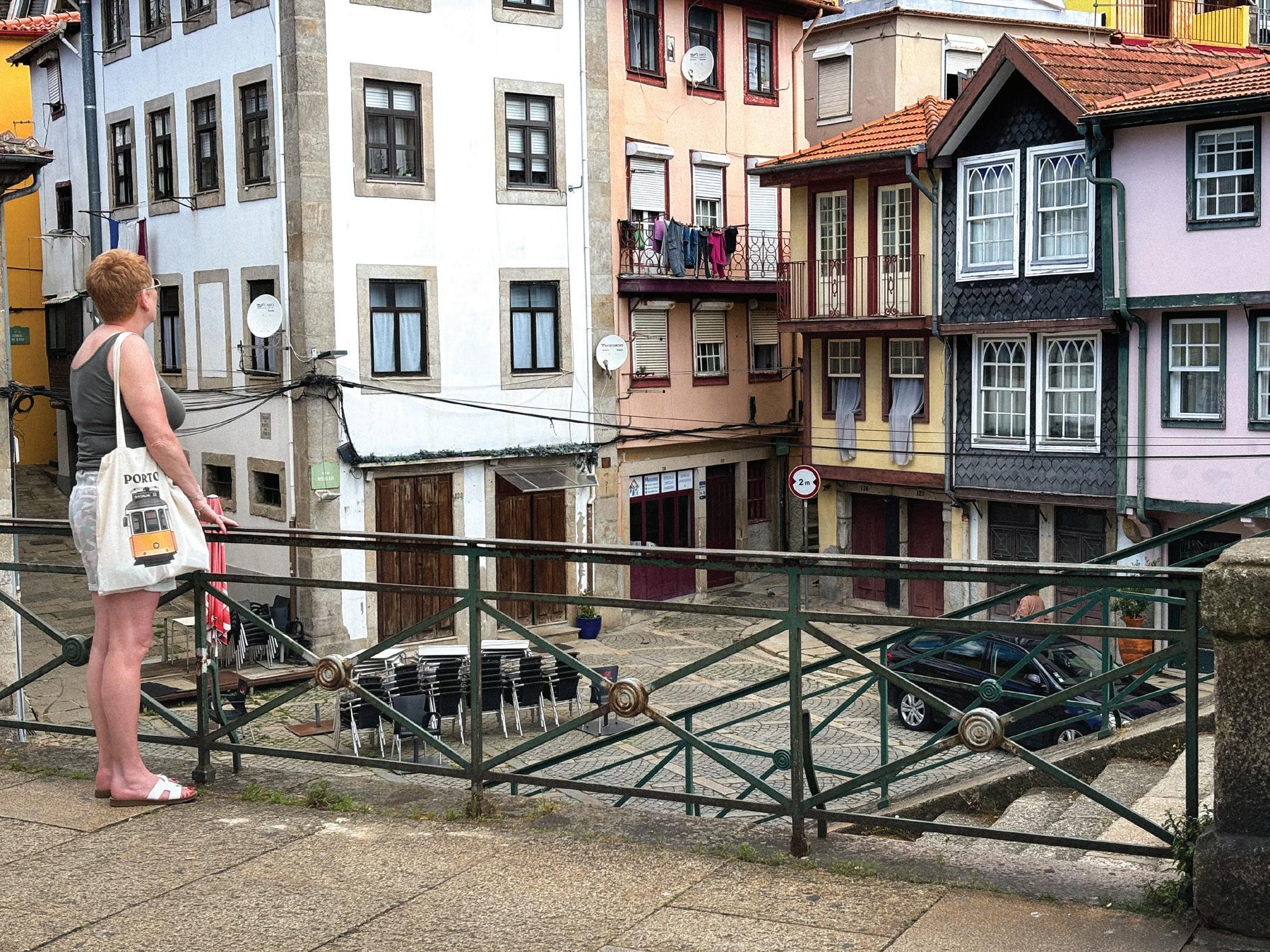
The next day was our very last day in Porto, but I had to go back to the location with a copy of the Cartier-Bresson photo. We located the exact spot very quickly and remarkably the scene is almost identical to the one that Cartier-Bresson would have seen when he took his photograph in 1955.
We then tried to replicate the photo as best as possible (using my wife as a “stand in” model), thinking that Cartier-Bresson would have used his trusted Leica camera and a 50mm standard lens? I could manage to get quite close to the original composition, but the modern road layout is now a restriction. To get to the exact
spot where Cartier-Bresson stood would mean standing on the busy road which was not possible due to the heavy volume of road traffic. (figure 2)
I started to wonder then, what model of Leica camera would Cartier-Bresson have used in 1955 during his visit to Porto?
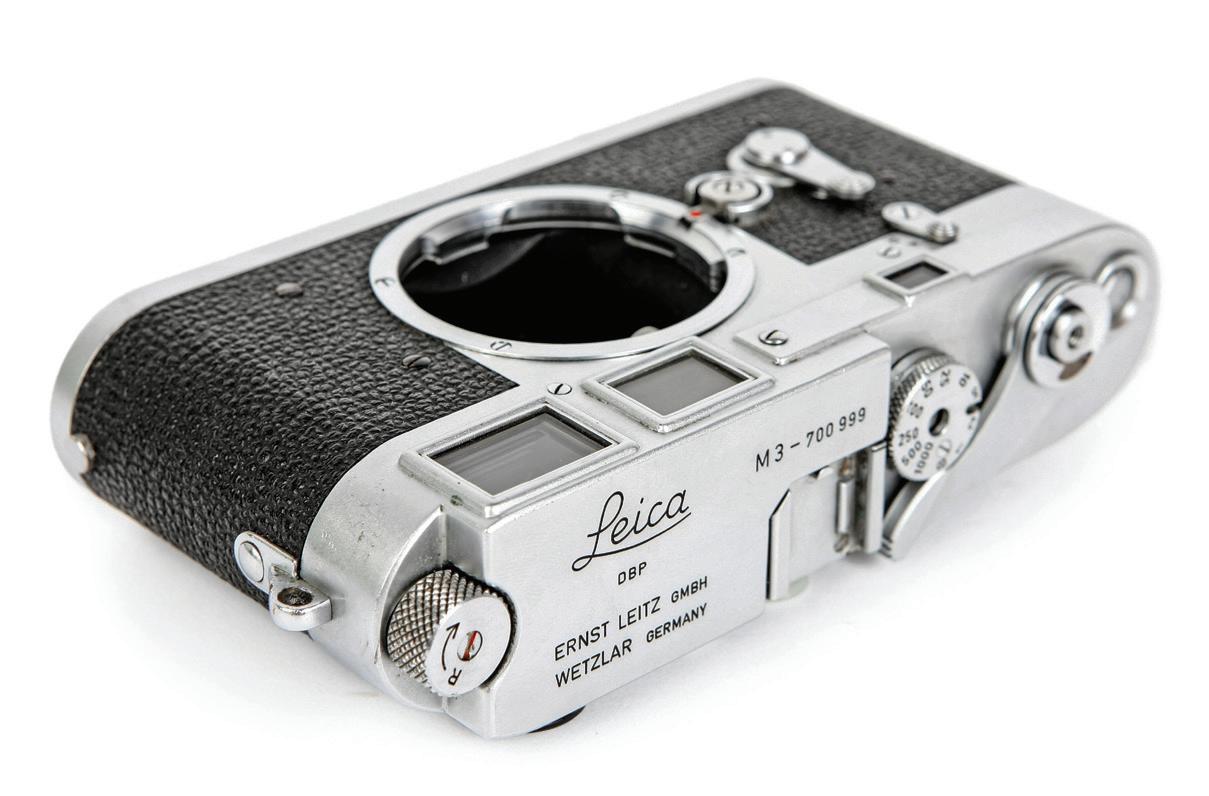
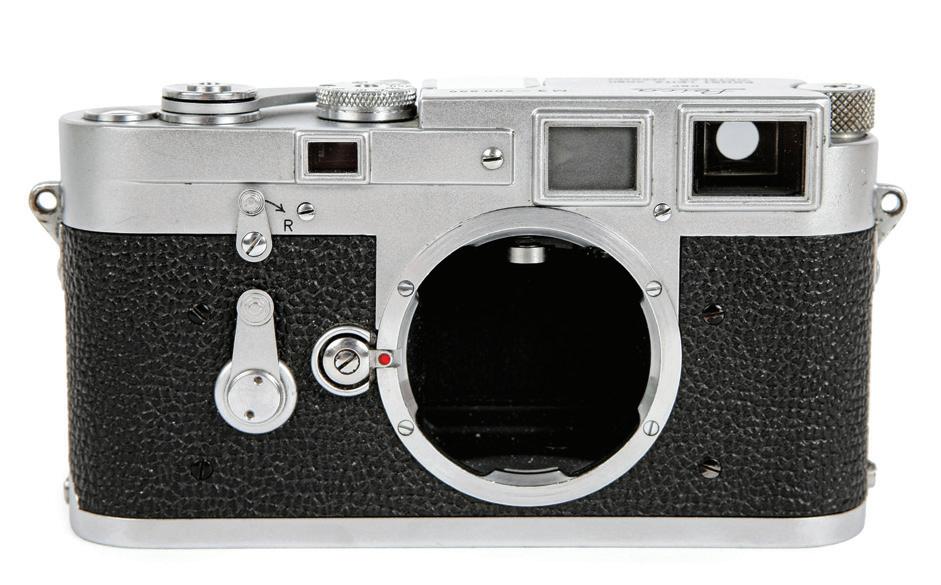
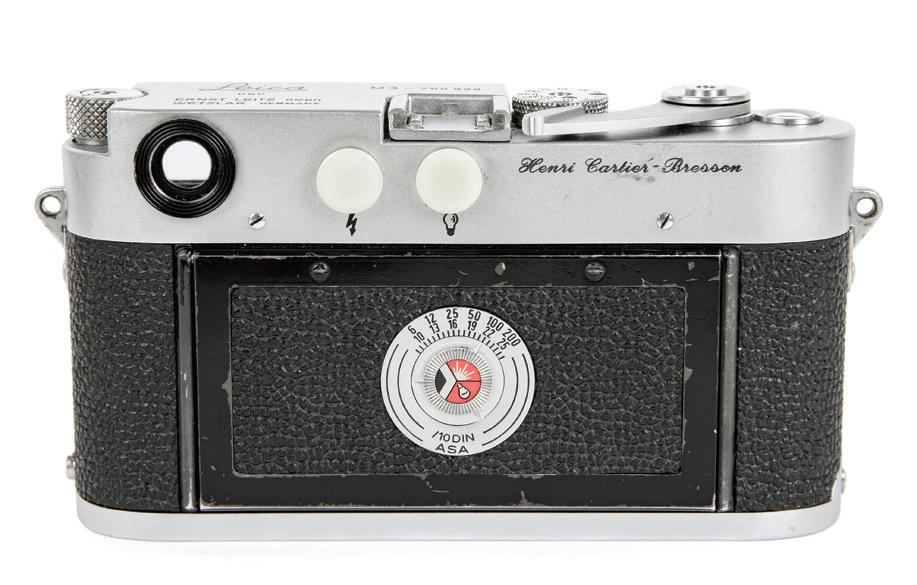
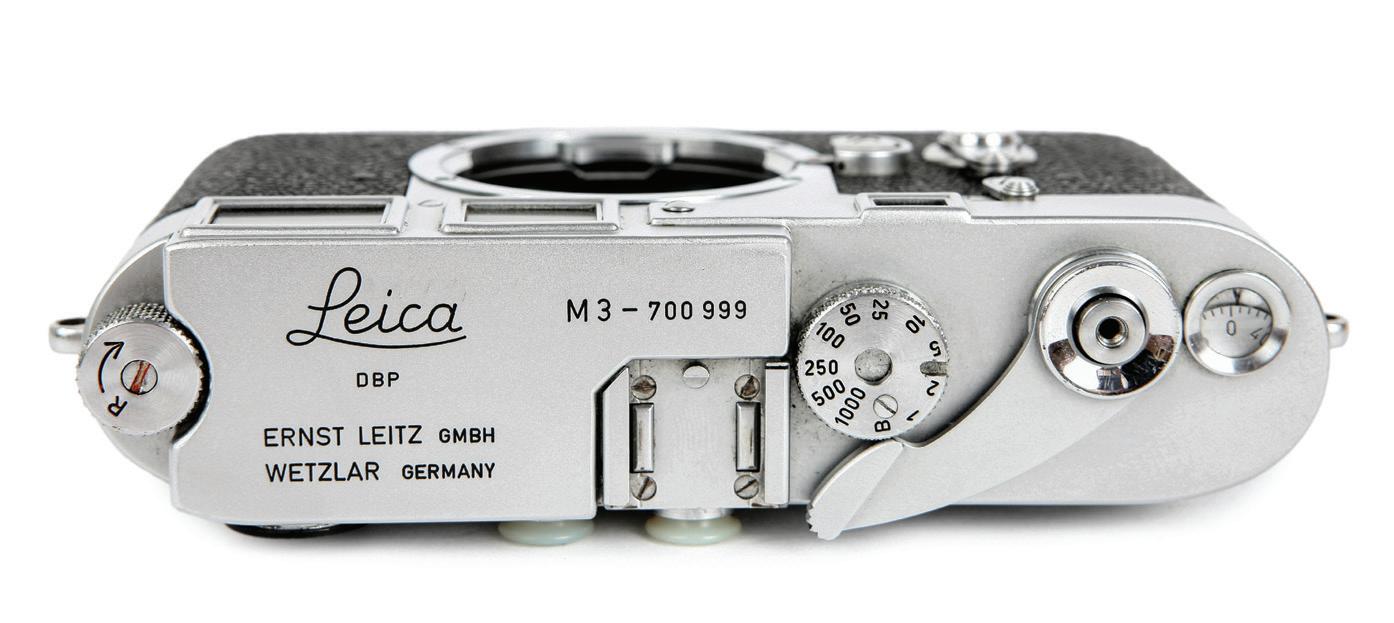
The Leica M3 had been launched the previous year at the Photokina exhibition held in April 1954, I could also establish that he was presented in 1955 by Ernst Leitz, Wetzlar with M3 serial number 700 750, further research revealed that Cartier-Bresson also owned another M3 camera serial number 700 999 (the thousandth Leica M3 from 1954 production which started at 700 000).
(figure 2) Alan Stokes' recreation in the same location, Porto, 2024.
(figure 1) Henri Cartier-Bresson, Porto 1955.
The Leica Store Lisse had this M3 No 700 999 listed on their website as being “sold’ by them recently, so I emailed them and they very kindly supplied photographs of this camera. (figures 4-7, opposite page)
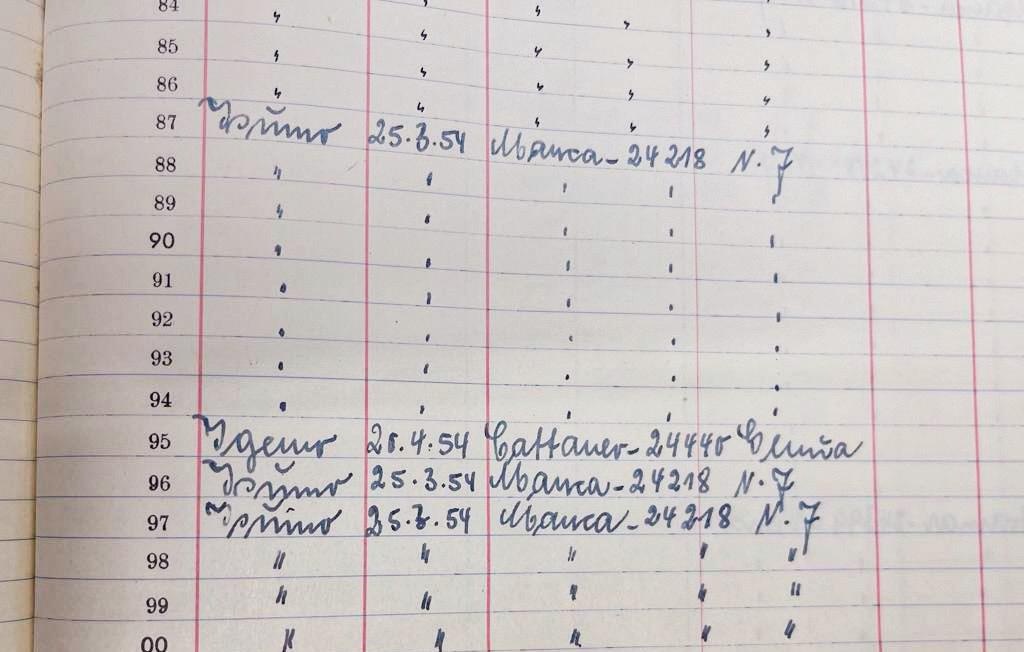
David Stephens (Leica Store Manchester owner) was visiting the Leica archives recently, so I asked David if he could fi nd out any details of M3 No 700 999. Detailed above is the delivery record for M3 No 700 999. (figure 3, above)
The delivery record for this M3 puzzled me at fi rst, as it states: "IGEMO (or IMARO, handwriting difficult to read) March 25th 1954 Manca 24218 NY"
The Leitz codeword for IGEMO is an M3 body without lens, IMARO is an M3 with 50mm F3.5 Elmar, but what does “Manca” refer to? Bill Rosauer and Jim Lager kindly helped me out with the details of “Manca”.
During WW2 Leitz New York was controlled by the Alien Property Custodian, in 1952 Henry Mann purchased Leitz New York, the Mann family also owned the principal import company MANCA (Mann Camera). Leicas were sold to MANCA, then to Leitz New York, then to franchised Leica dealers and fi nally to the end
customer. Upon the death in the 1960’s of Henry Mann, his son William Mann took over control of the company. William Mann also owned Leitz Rockleigh during the period 1971 – 1975 when Jim Lager worked there.
I could not establish which camera Cartier-Bresson used during his visit to Portugal & Porto in 1955, but I would imagine he would have used a Leica M3. Last year Leica celebrated the 70th year since the camera was launched, a major milestone in the history of the M series cameras and Leica history.
On the LSI website there is an interesting feature by Jason Schneider about this innovative camera “Leica M3 variations, 1954 to 1966”. You can read it at the following link or by using the QR Code below.
(figure 3) Leitz Delivery record for M3 No. 700 999
(figures 4-7) The Leica M3 700 999. My sincere thanks to the Leica Store Lisse and Leica Store Manchester who supplied photos.
1990’s
China with My First Leica
by BILL ROYCE
Inthe late 1980’s and 1990’s, as a pilot for Boeing, I visited China a number of times. This was about the time I acquired my first Leica, an M6. In contrast to earlier cameras I had used, I was drawn to the compactness and quality of the Leica, perfectly suited for travel and street photography. I started with a 50mm Summilux M (third version with the extensible lens hood), a 90mm Elmarit M, and eventually in the mid-90’s, I bought the newly-introduced 35mm Summilux M f/1.4 ASPH, a revolutionary lens at the time. During later trips, I used a DLux2 and eventually an M8.
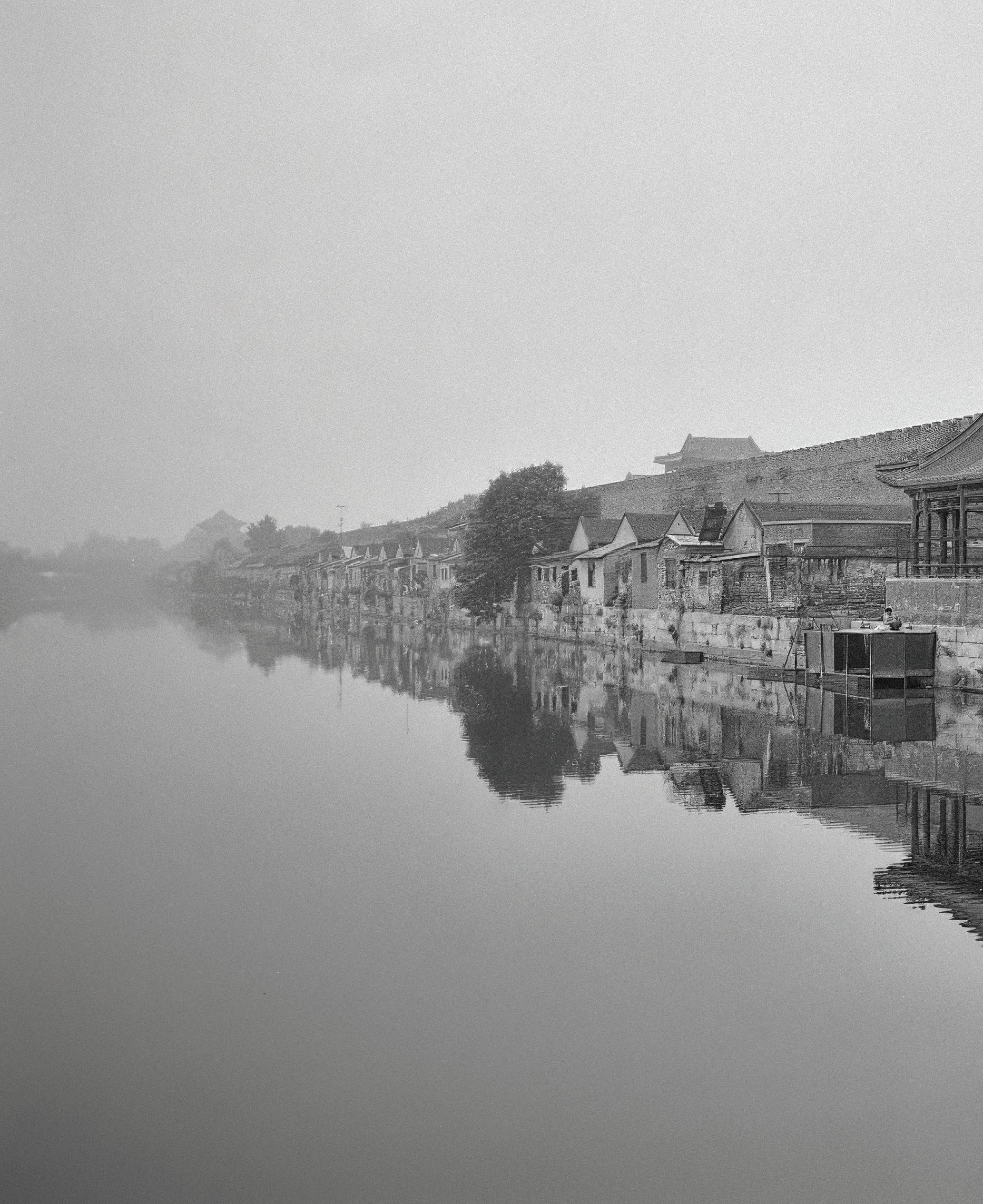
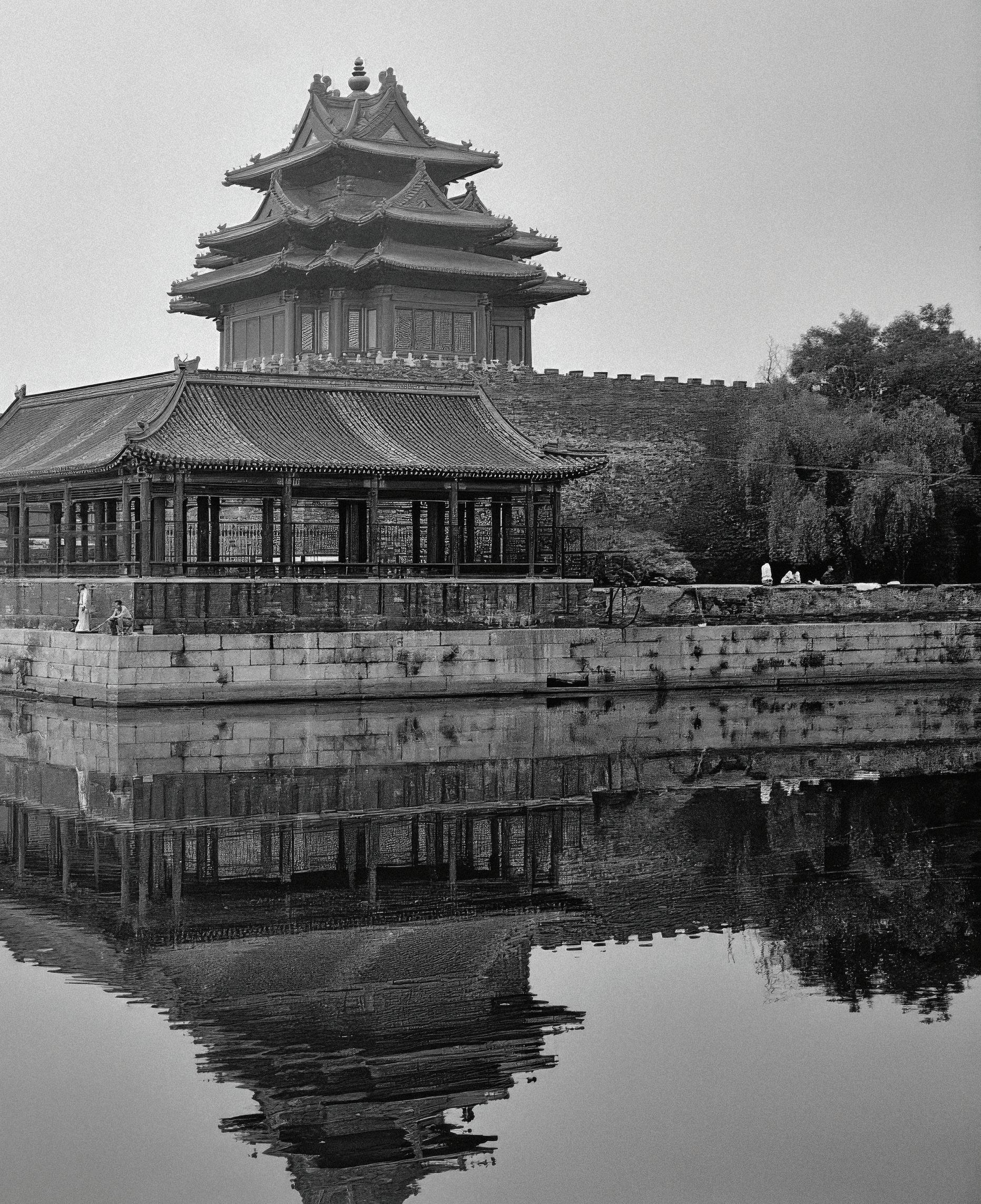
The back side of the Forbidden City in Beijing.
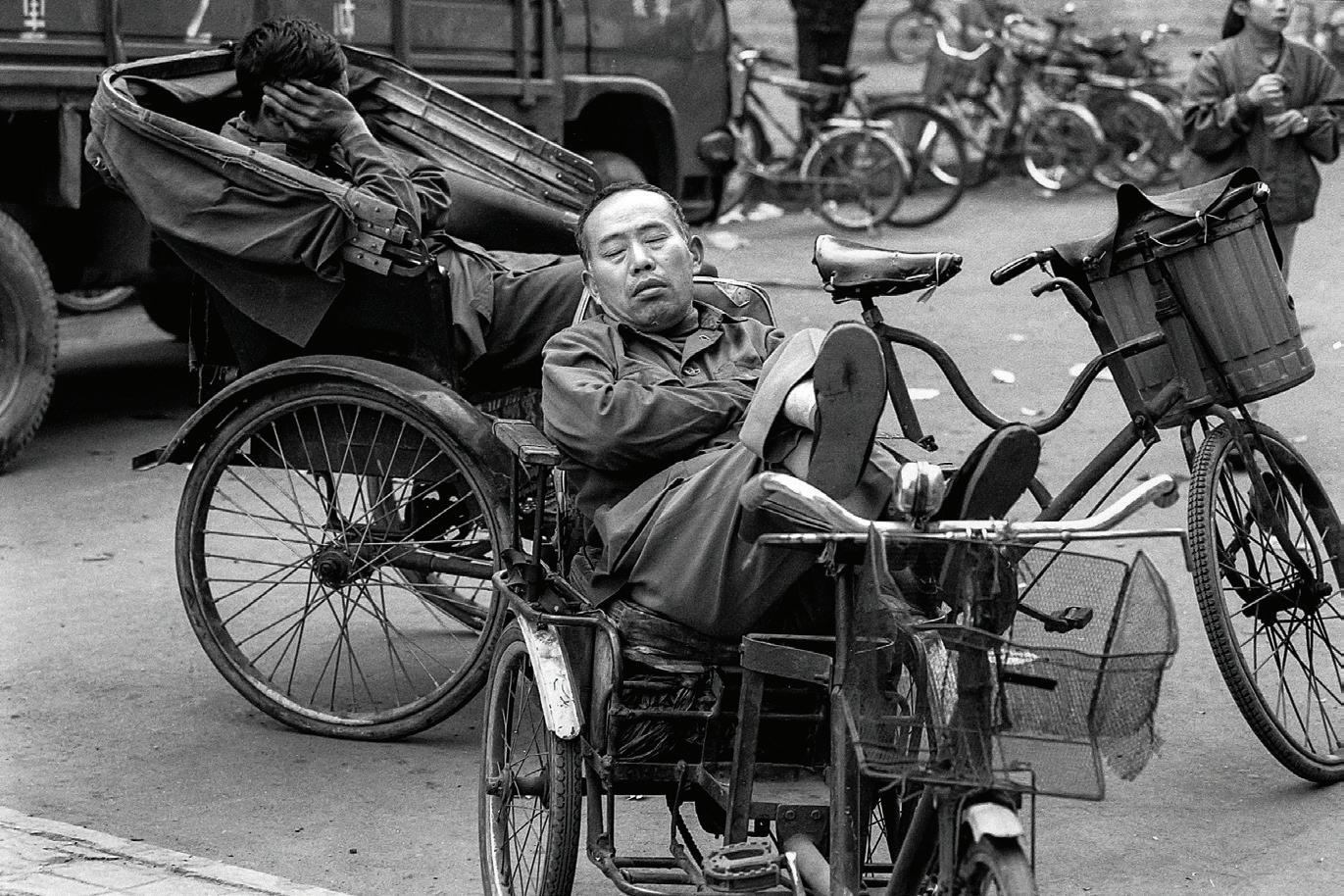
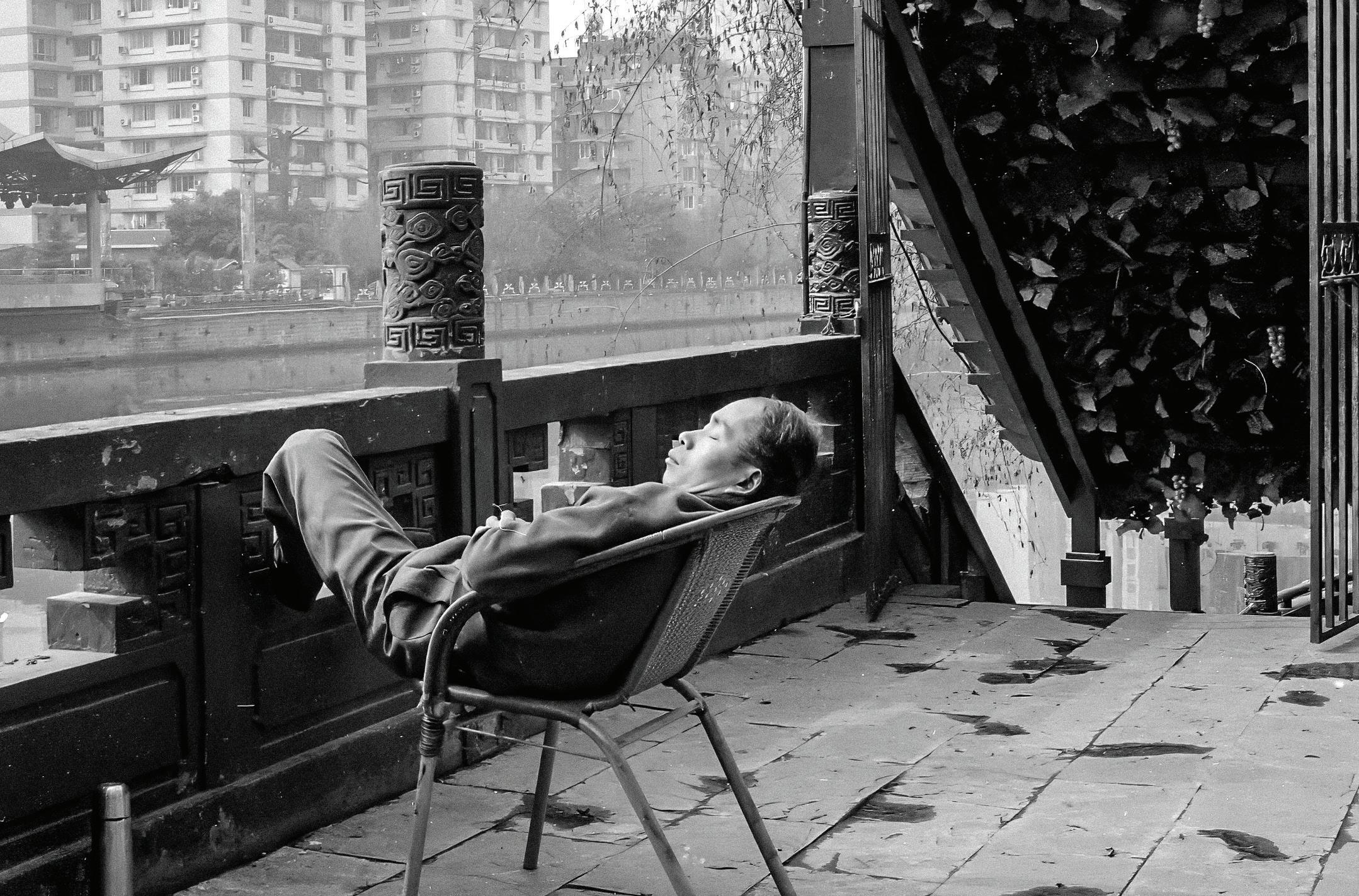
China was just emerging from a primitive state. Pre-modern China turned out to be a great place to shoot. Everywhere I wandered, there were lots of fascinating people and very interesting old buildings and streets. Among the cities I visited were Beijing, Chengdu, Shanghai, Guanzhou and, of course, Hong Kong (before and after the handover). During my visits, I really had no restrictions on where I went with camera in hand, although I avoided official-looking government buildings. There were some challenges, not the least of which was the air pollution, which limited visibility to a mile or less in most cities and caused me to return from each trip there with a nasty cough. I do recall the older hotels in the smaller cities like Chengdu had mattresses that were as hard as concrete!
The images in this article convey a sense of what it was like to visit China at the time. I primarily used TMX 100 and TMX 400. ISO 400 film was essential most places due to the constant, relatively dark overcast conditions, even during daylight hours.
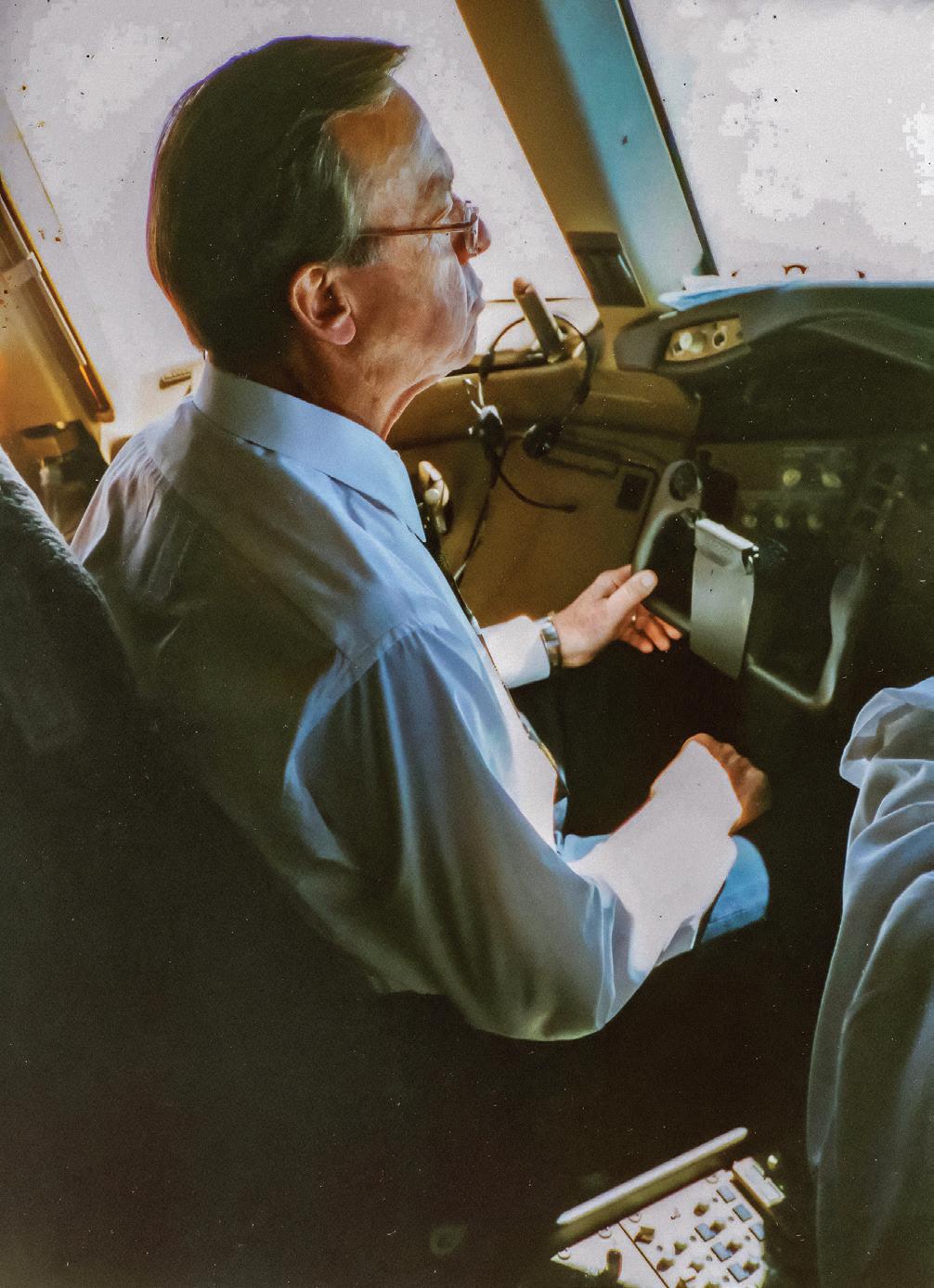
My most memorable trip was flying the very fi rst Boeing 777 to China in 1995. We flew from Seattle via Seoul, landing fi rst at the main Beijing airport. After demonstrating the airplane to Air China pilots over several days, we flew the airplane to Guangzhou for demonstrations there. To our delight, the astronaut Rear Admiral Alan Shepard joined us for the fl ight and stay in Guangzhou and then on to Hong Kong. We could not resist putting him in the pilot’s seat for part of the trip. Needless to say, in the evening we got to know him better and hear of his space experiences including his time on the moon where he actually hit a golf ball. Admiral Shepard was thrilled to sit in the 777 cockpit. Despite the difficult lighting conditions the image (left) captures nicely his time in the captain’s seat.
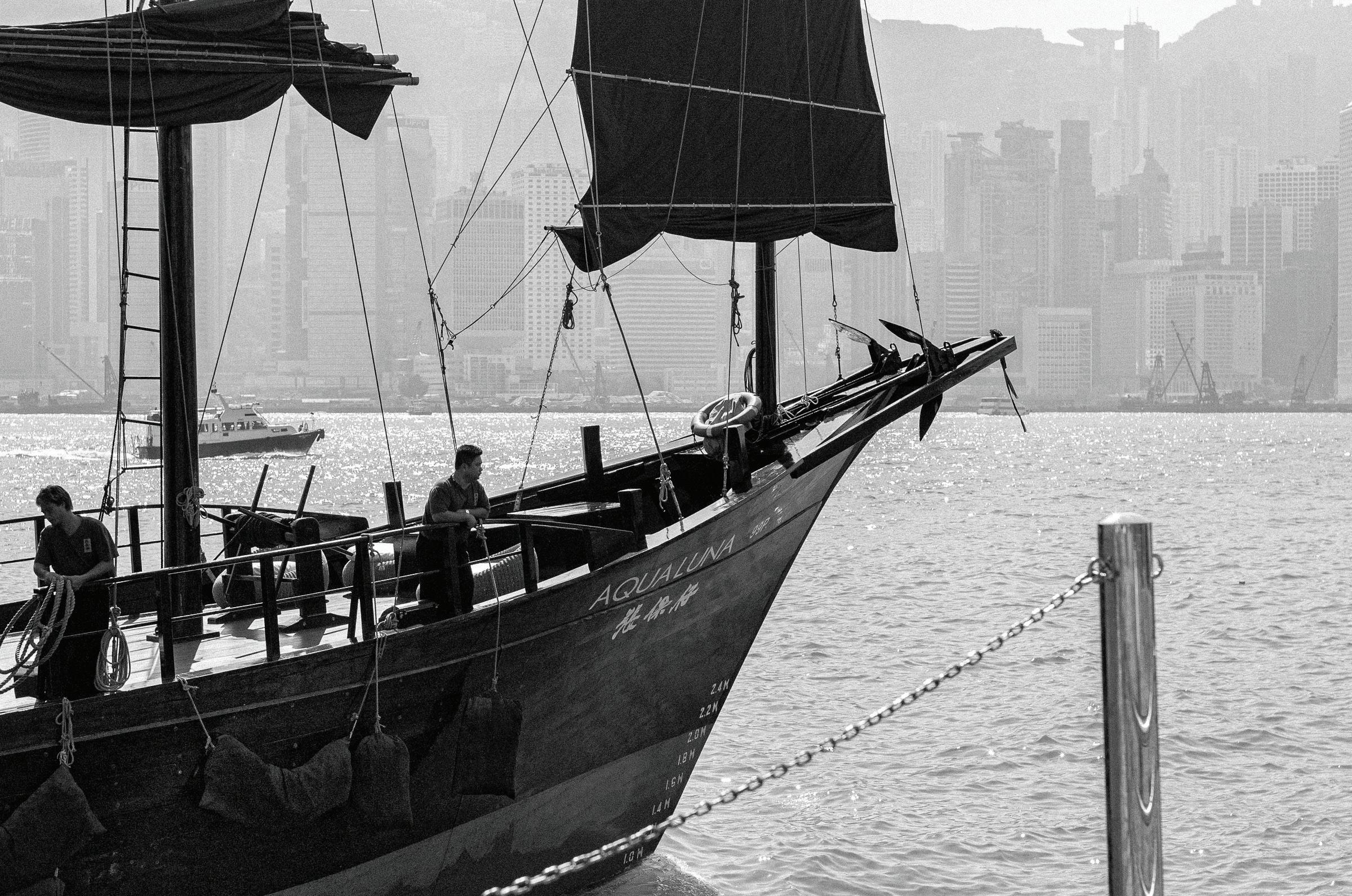
After each visit to China, it was always refreshing to exit via Hong Kong, with its photogenic harbor (below) and relatively cleaner air!
and DUNGEONS CASTLES
THE CHÂTEAUX
OF THE LOIRE VALLEY
by ALBERT B. KNAPP MD & RUTH ORATZ MD
Castles and dungeons, with their turrets and spires, enormous keeps and surrounding moats, elaborate staircases and hidden chambers, inhabit our imaginations in fairy tales and fantasy games. But in reality, these impressive structures built starting in the early Middle Ages were citadels, seats of power, strongholds, defensive positions, prisons, and residential refuges for kings and nobility. In the Loire Valley the Kings of France and their aristocrats built more than 300 châteaux, used for military, administrative and domestic purposes. We traveled leisurely along the meandering Loire and its serene tributaries, moving back and forth across time as we entered into the magical realm of these castles and dungeons. Our camera kits were flexible, lightweight and adaptable to the various exterior and interior conditions. Ruth’s Q3 performed exceptionally well in the lowlight inside and Albert’s SL2 system went from wide to zeroing in wherever he focused.
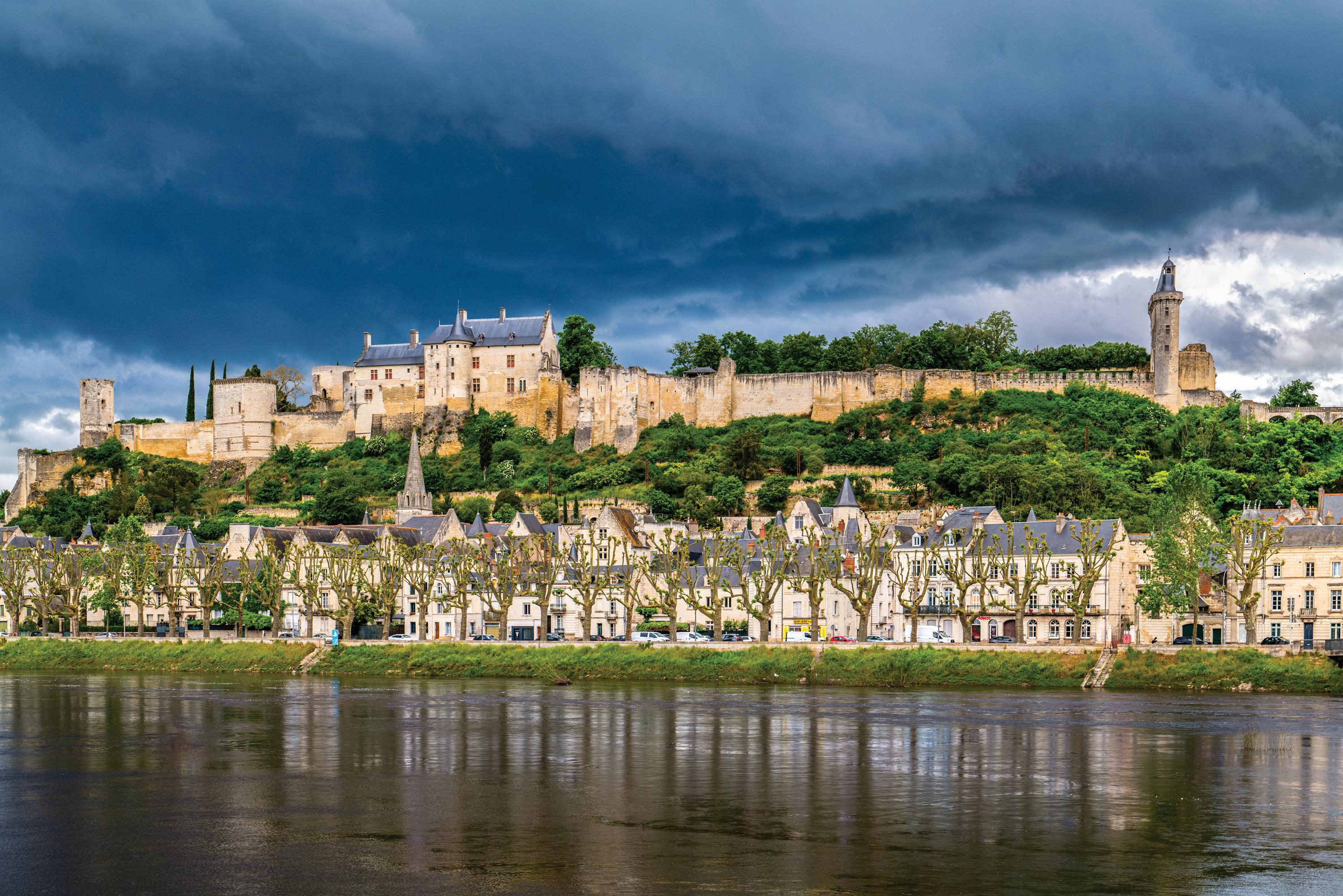
Perched high on the bank overlooking the Vienne River, Chinon castle is perfectly situated to survey the surrounding lands. Chinon is well known as the home of the Plantagenet King Henry II of England where as the “Lion in Winter” he lived with his Queen, Eleanor of Aquitaine, in the 12th C. The region had a stormy history of perpetual French and English conflict. It was at Chinon in 1429 that Joan of Arc, having heard heavenly voices entreating her to take up arms to save the France from the invading English, met the dauphin, the future Charles VII. The castle fell into decay in the ensuing centuries, until in 1840 it was recognized as a historical monument, and only recently restored to its glorious past. (figure 1)
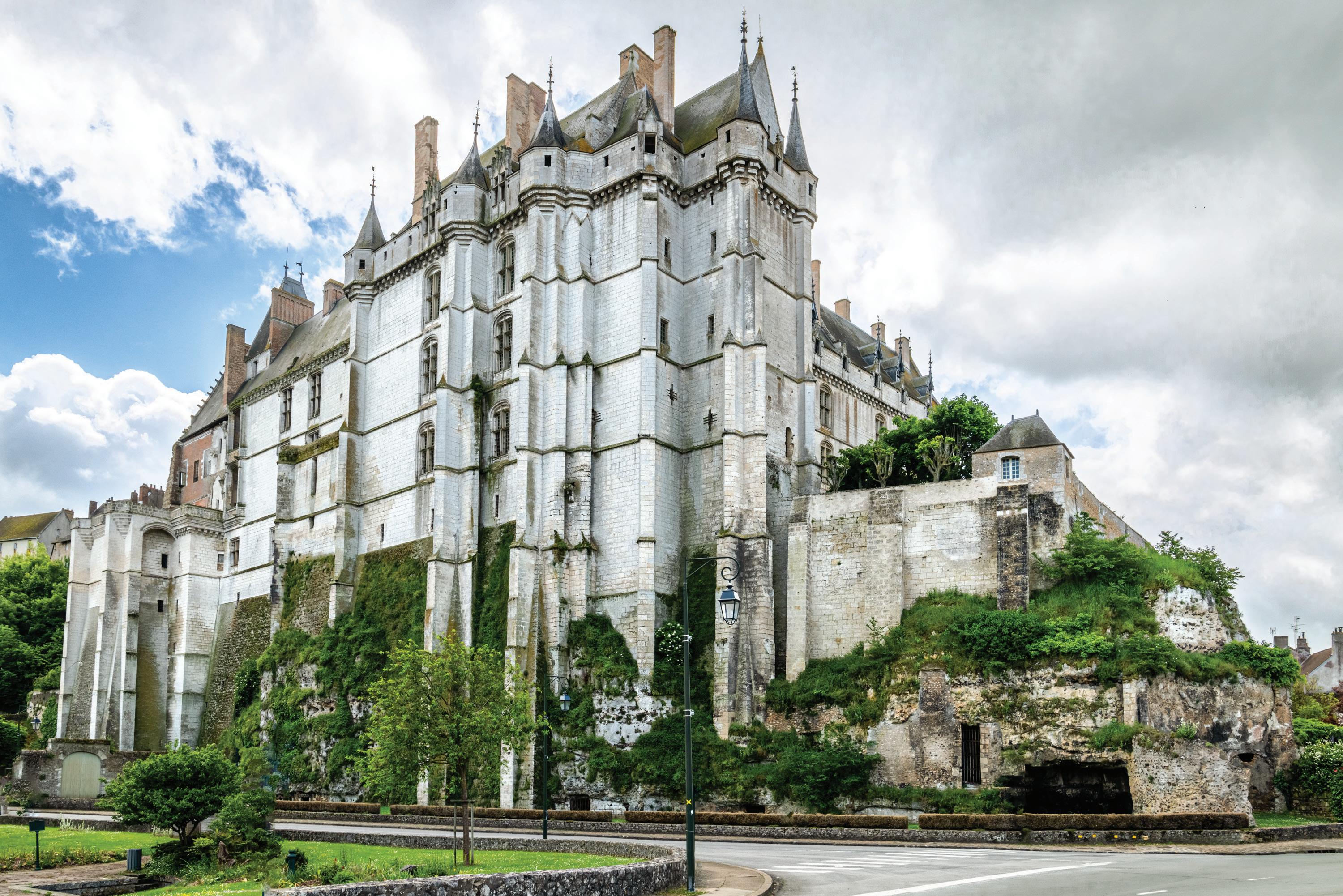
Châteaudun juts out on a promontory occupying a strategic position above the Loir River, a tributary of the Loire itself. This early medieval castle rises straight up in striking verticality to provide stunning bird’s eye views in all directions. Its enormous subterranean
(title page, figure 8) Château De Sully (1102 & Rebuilt 1395), Sully-Sur-Loire France. Leica Q2 at f/8, 1/ 250 sec, ISO 100.
(figure 1, below)
Forteresse Royale De Chinon (~ 10th C), Old Town & Vienne River Chinon France. Leica SL2 + Vario-Elmarit-SL 24-90mm at 57mm, f/8, 1/400 sec, ISO 400.
(figure 3, above)
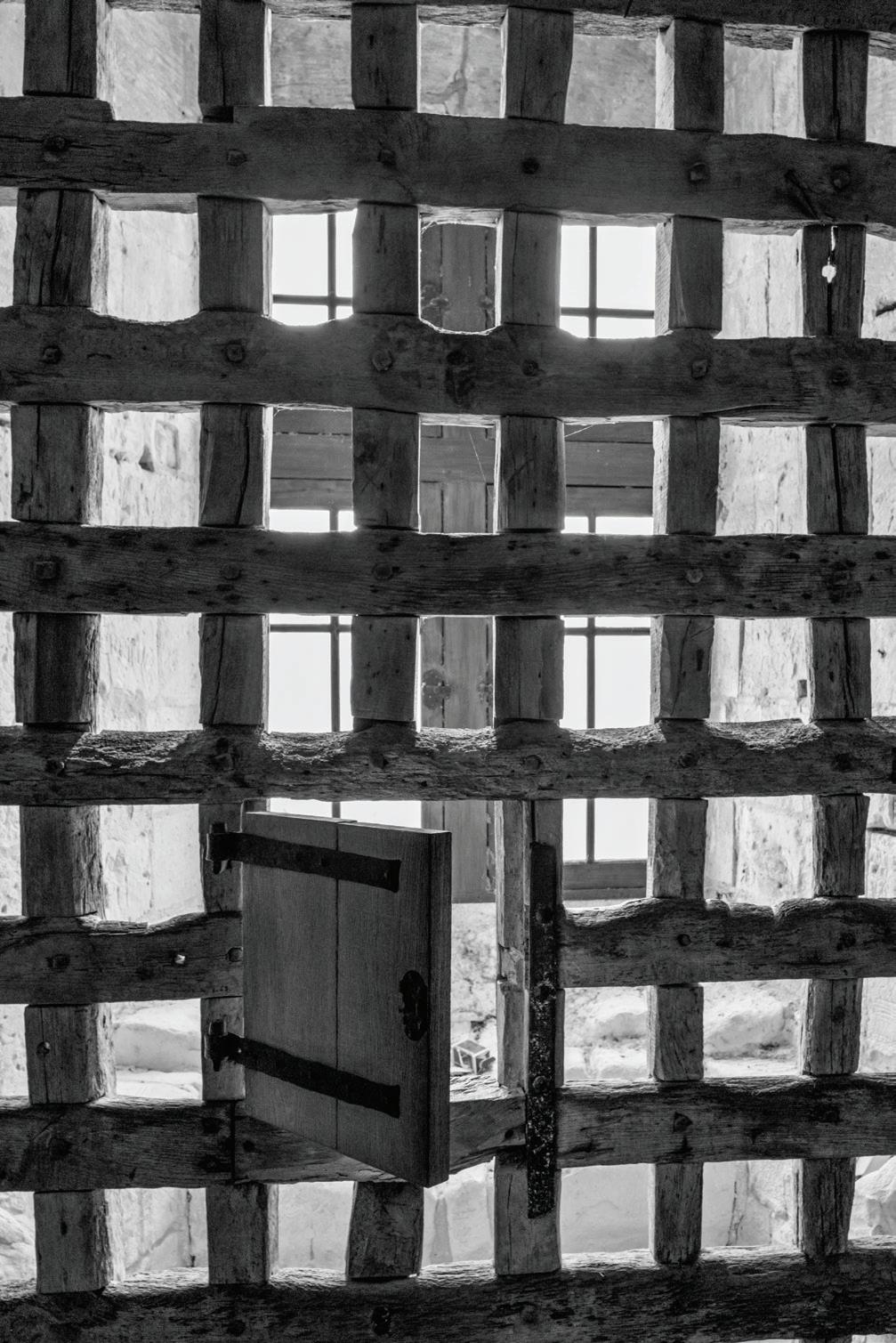
Dungeon (1013-1035) Château De Loches (~9th C Rebuilt 1204) Loches France.
Leica Q2 Monochrom at f/6.3, 1/60 sec, ISO 1600.
(figure 2, opposite page, top)
Château De Châteaudun (~1180), Châteaudun France.
Leica SL2 & Vario-Elmarit-SL 24-90mm at 24mm, f/8, 1/2500 sec, ISO 400.
(figure 4, opposite page, bottom)
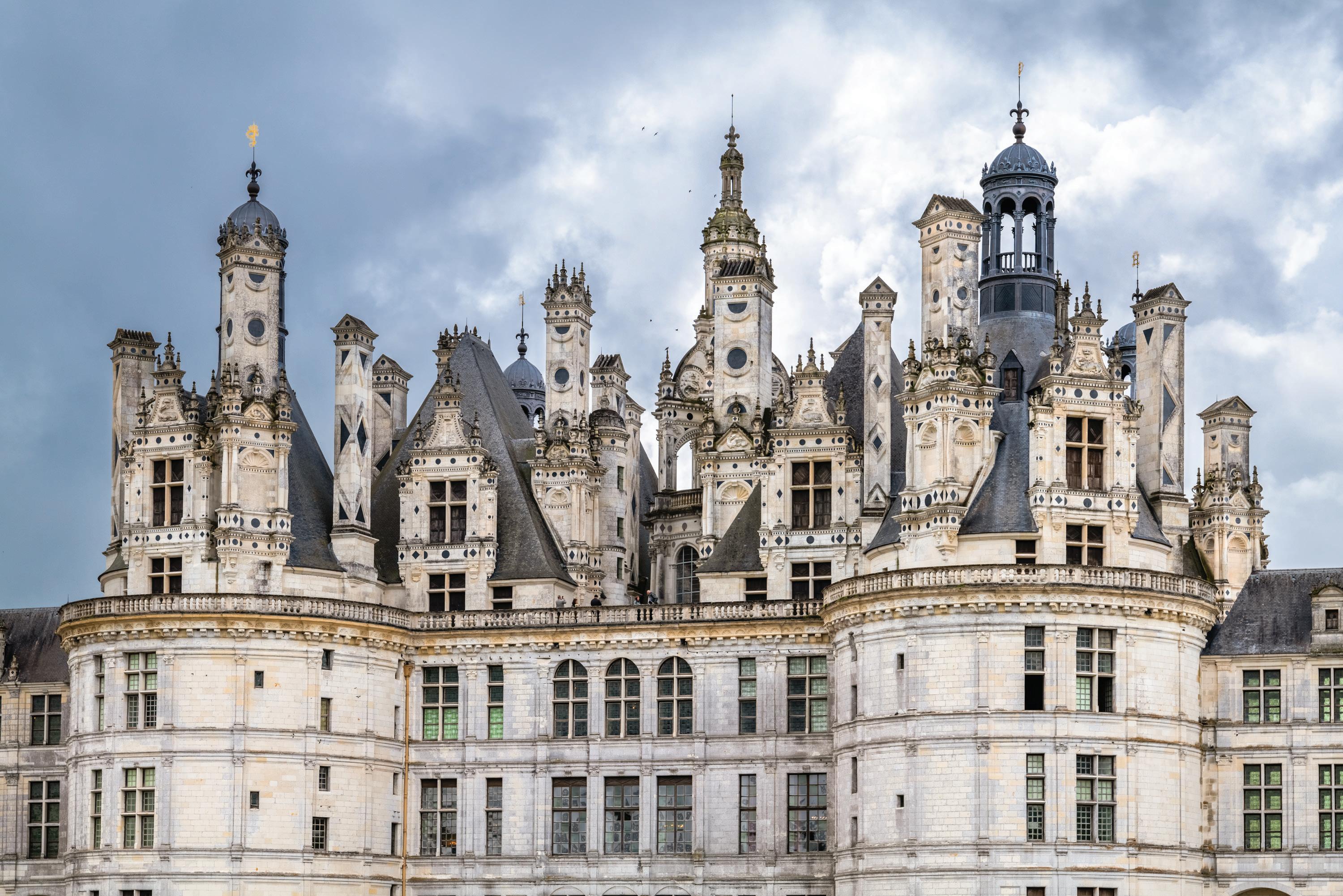
Château De Chambord (1519-1547), Chambord France.
Leica SL2 & Vario-Elmarit-SL 24-90mm at 71mm, f/6.3, 1/5000 sec, ISO 400.
dungeon plunges deep below the main levels – just next to the kitchens, most definitely an added torture to the prisoners starving in their freezing cells. A fortress was present on this site as early as the 10th C, with new additions reflecting the transition from Medieval to Renaissance. (figure 2, previous page).
Perhaps most terrifying of all the dungeons are those buried in the abyss of the Château de Loches. This huge, fortified enclosure runs more than a mile in circumference and is one of the most complete set of buildings to survive intact from the Middle Ages. References to a dungeon at Loches date back as far as the 6th century, with the primary building erected in the early 11th C. Renowned for its legendary instruments of torture and the favorite demeure of the “Spider King” Louis XI, Loches was used continuously as a prison even through the French Revolution. Victims were shut up in iron cages, shackled and sometimes chained to the walls. Visiting even now we are haunted by the palpable cruelty of imprisonment. (figure 3, left)
From the depths of dungeon despair, one ascends to the pinnacle of Renaissance castle whimsy on arriving at Chambord – a monumental castle so delectable that it has its own liqueur blended from blackberries, raspberries, black currant, Madagascar vanilla, and XO cognac. The renowned biscuiterie of Chambord provides an assortment of royal galettes, buttery shortbread and meringues that harken back to an era of regal entertainment. And the Château de Chambord offers architectural delights beyond expectations! François 1er, the Renaissance King, patron of the arts and sciences, promoter of humanism as well as of Leonardo Da Vinci, claimed the throne in 1515 at the age of 21. Early in his reign the young king commissioned this marvel which would become the largest and most recognizable in the Loire. The concept and design can be attributed to Leonardo da Vinci, who was invited to France by the King, and who lived out his days nearby to Chambord in Le Clôs Luçé. Even from a distance the stunning architecture feels strikingly new and unique. The building fans out in perfect symmetry from the central keep in the shape of a Greek cross. In the middle a flawlessly constructed double helix staircase carries one up to the rooftop. Here is in fact an entire city of terraces and towers, chimneys and turrets - large enough to wander and get lost in!
(figure 4, previous page)
If Chambord is the grandest of the Loire castles, then Azay-leRideau may be the most delicate. Azay is a Renaissance confection, a jewel floating on a petite island in the River Indre. Built in the early 16th century it combines French, Italian and Flemish influences. The exterior is utterly charming, but after loving restoration of the interiors the visitor to Azay today can step back inside to feel the flavor of noble life centuries ago.
(figure 6, opposite page)
Château De Villandry (~11th C Rebuilt 1532-1536) Villandry France.
Leica SL2 & 16-35mm
Super-Vario-Elmar-SL at 35mm, f/8, 1/1600 sec, ISO 400.
(figure 7, opposite page)
Château De Montgeoff roy (1772-1776) Maze-Milon France.
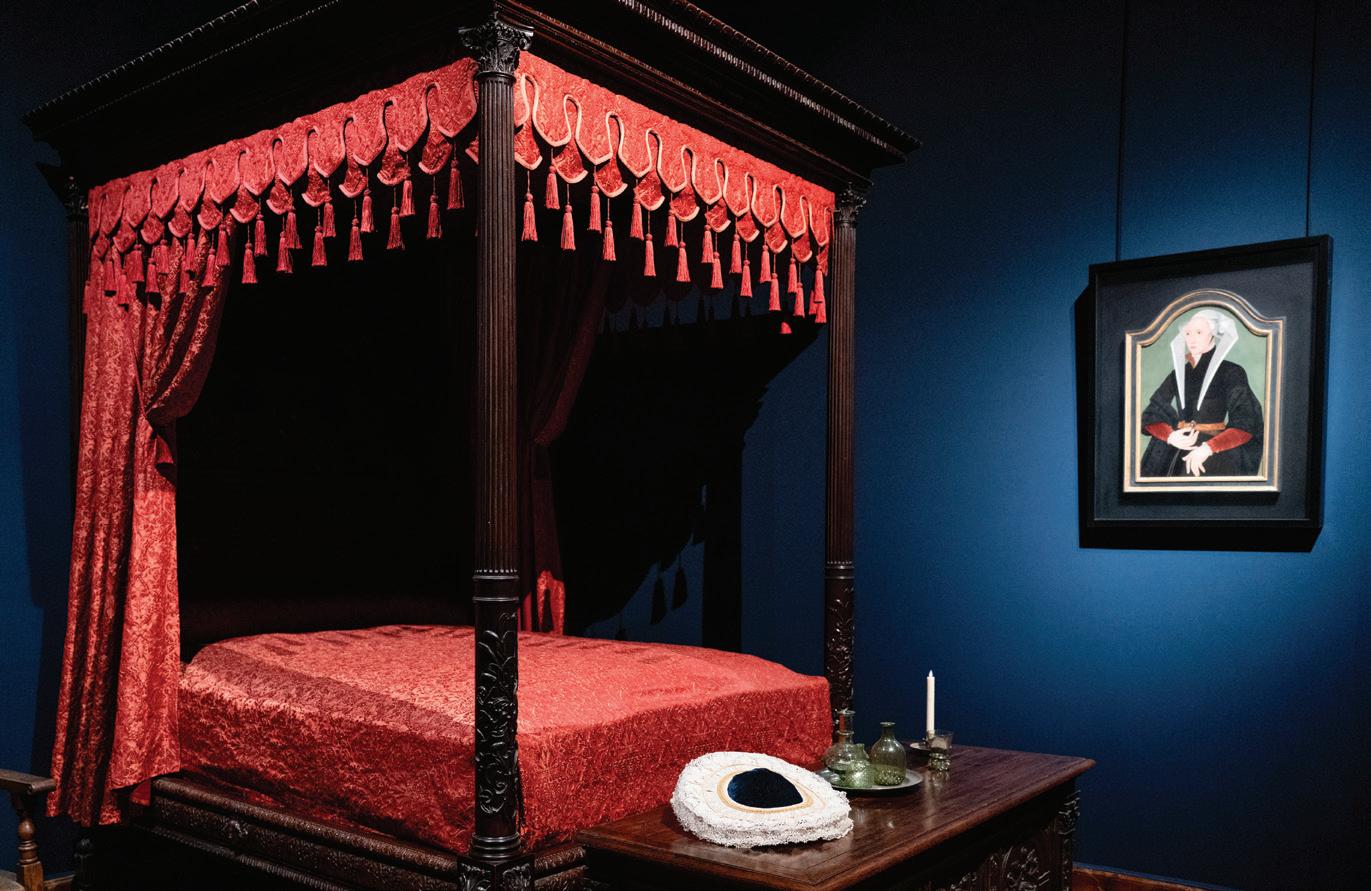
In times past rooms were multifunctional. One slept, worked, dined, received guests and entertained all in one space. The master bed chamber in Azay-le-Rideau is in fact quite a large room. The rich crimson velvet brocade and private portrait beckons to the ornately carved 4 poster bed in this intimate corner. (figure 5, below)
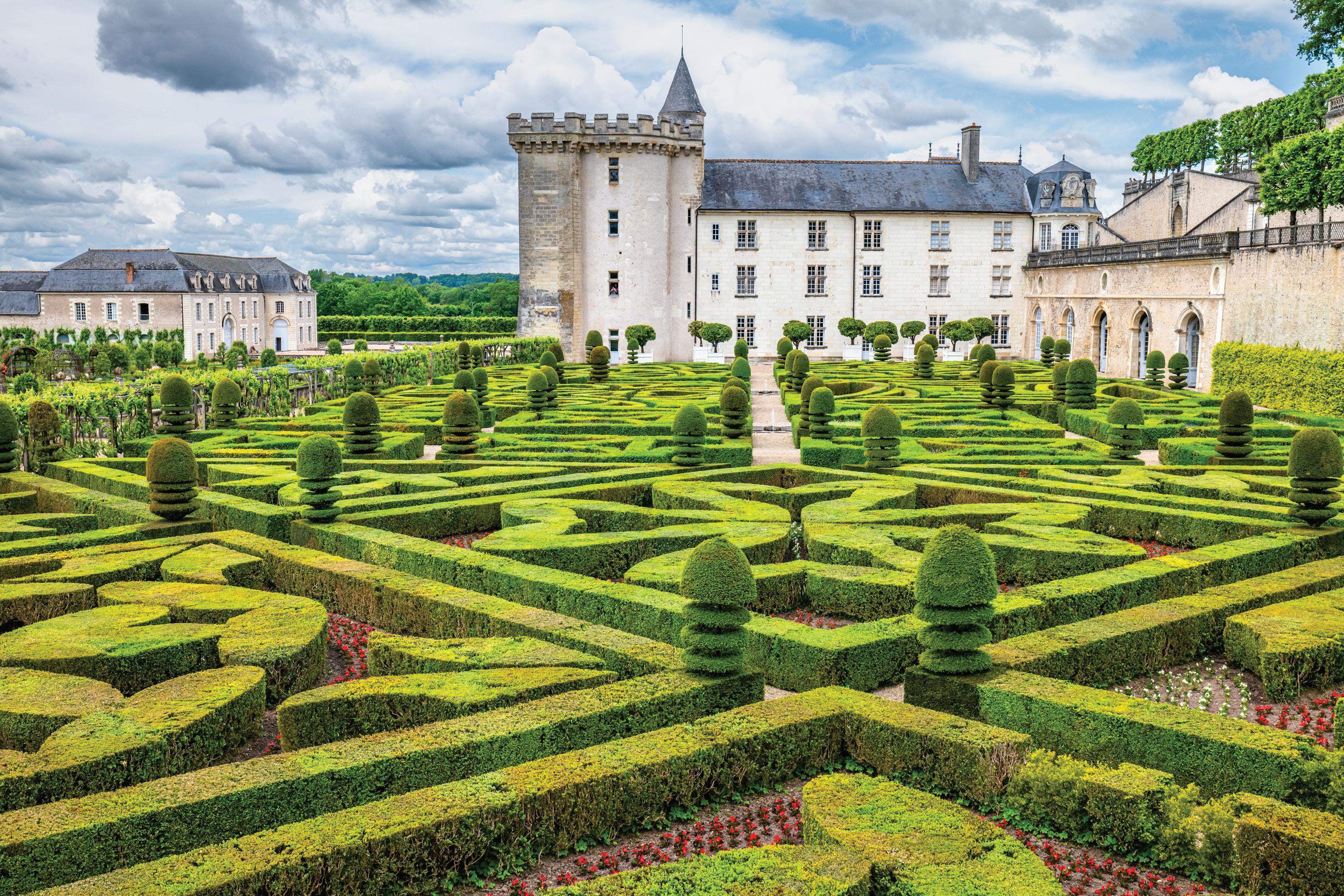
As castles became less military and more residential, their gardens took on a more prominent aspect in design. The most amazing of all the Loire Valley gardens are at the Château de Villandry. Spanning 22 acres (5 hectares) four tiers are laid out with the sun garden, the water garden, the ornamental garden and the fabulous decorative vegetable garden. The property was acquired in the early 20th C by Dr. Joachim Carvallo, a Spanish physician, and his American wife Ann Coleman, heiress to a steel fortune. The couple lovingly restored the buildings and rebuilt the gardens based on original Renaissance engravings for guidance. They did not merely imitate but created anew a magnificent landscape. Seen from above the formal knot gardens reveal symbols of love and chivalry. (figure 6, previous page)
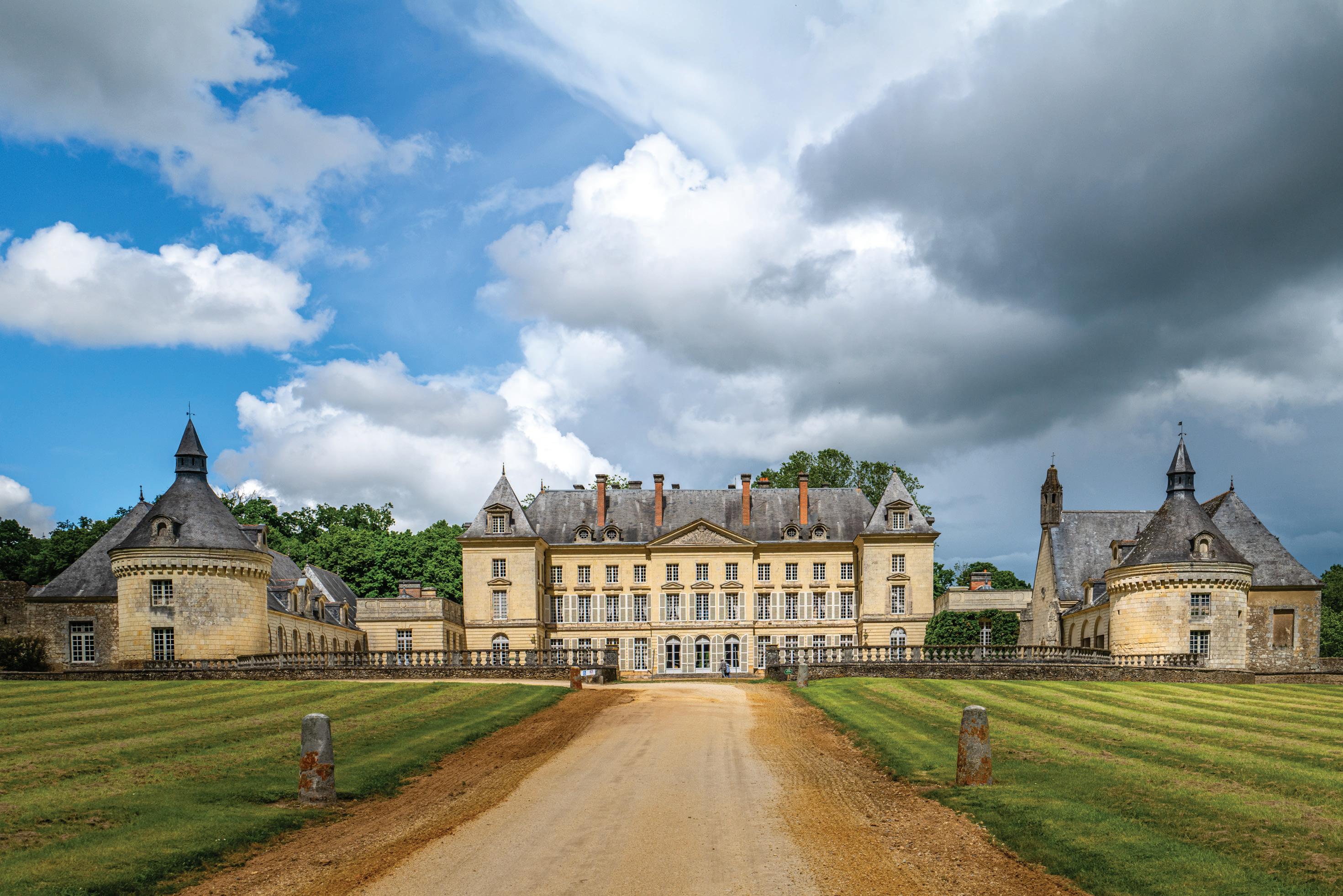
The Château de Montgeoff roy represents yet another iteration of aristocratic presence in the Loire Valley. More modest in scale it is a relative newcomer to the region and is one of the last remaining residences of the Ancien Regime. Built in 1770 by Marshal de Contandes, as a retirement home, Montgeoff roy was spared by the Revolution thanks to a grandson who was a member of the French National Assembly. Since then, the château has been continuously occupied by the same family – and as a consequence the interiors including furnishings and decoration have been unaltered and preserved. We chanced upon Montgeoff roy just as a thunderstorm was looming, the late afternoon light breaking through ominous clouds encroaching the blue sky above. (figure 7, previous page)
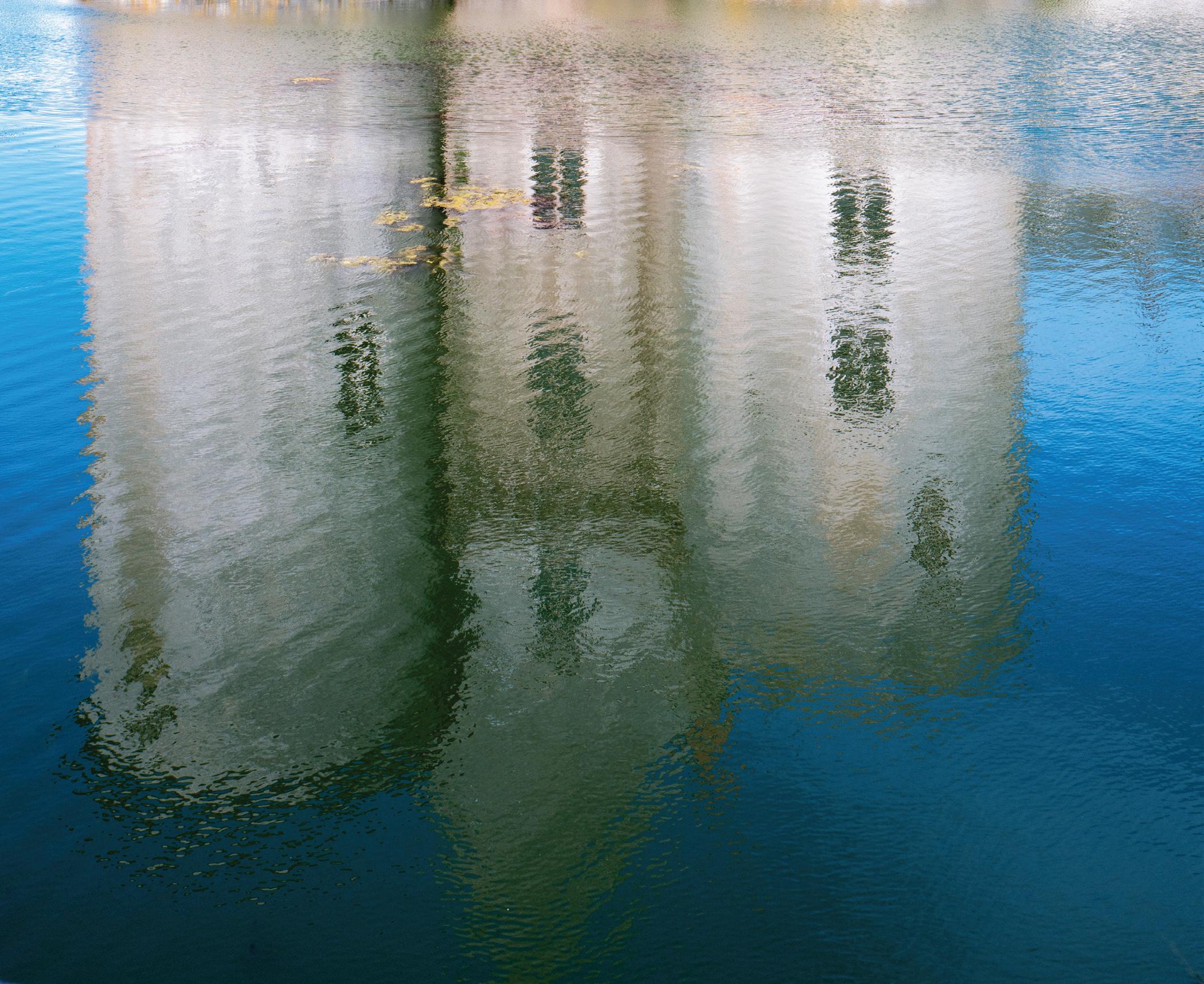
Truly a fairytale fortress, the Château de Sully with its strong fortifications was built at a natural ford in the Loire River in order to maintain control of river traffic. It sits at the gateway between Burgundy and Paris, with the river as the main highway. Reflected in its wide moats, fi lled by the Sange River, Sully’s imposing stone turrets soften and blur, bringing us back to our childhood dreams of castles and dungeons. (figure 8, title page)
There are many more castles, churches, monasteries and quiet old towns strewn throughout the Loire Valley with innumerable tales to tell and secrets to reveal. The Valley is a cultural delight, a gastronomic treat and a photographer’s dream.
(figure 5, right)
Château Azay-Le-Rideau (1119 Rebuilt 1518-1523)
Azay-Le-Rideau France.
Leica Q2 at f/2.8, 1/30 sec, ISO 6400.
THE SELF PORTRAIT
A JOURNEY OF DISCOVERY
by RICHARD REJINO
It’s a daunting idea to photograph yourself every day for one year. Let’s be honest – it’s downright embarrassing. But there is something about photographing yourself that I have always found intriguing. It stems from a curiosity of wanting to see what I look like in the world and my place in it.
A little over a year ago, I began thinking seriously of starting a project in self-portraiture. The more I thought about it, the more convinced I became it would be filled with fascinating layers to explore and uncover. Among them were the obvious technical and creative challenges of making an interesting image every day. As someone who is frequently hired as a portrait photographer, I wanted to turn the camera on to myself and see what would happen. What interested me more, however, were the answers to questions of how I would deal with my feelings of vanity, and how openly and honestly I would reveal myself. If that weren’t enough, I also committed to making an hour-long presentation later in the year about the project, which felt as if a pair of imaginary eyes were watching my every move. So, it was with these questions and possibilities in mind that I began the project on January 1, 2024.
What made it challenging was that I didn’t want to make simple selfies. Certainly, selfies and self-portraits can and do overlap, but I wanted to create images that were more thoughtful, or that stood alone as a conceptual, artistic expression. I also knew it would be unlikely that I could keep the promise of creating an image of myself every day, especially since my job often required long hours and a lot of travel. Nevertheless, I did my best to stick to the promise, which I was able to do about 85% of the time.
Committing to a project like this begs the question, why would someone indulge in photographing himself for an entire year?
What would be the benefit? Admittedly, it did feel narcissistic at first, and I felt self-conscious when I mentioned it to my photography friends. Some were genuinely fascinated, but most looked perplexed with the unspoken question of “Why?” written all over their faces.
Self-consciousness aside, I saw self-portraiture as an opportunity to explore my identity and to discover more about my photography – and who of us isn’t interested in that? After all, the two are inextricably linked. To quote Phil Penman, “you can tell a lot about a person by the kinds of images they take or who they take pictures of, and the way in which they capture them.”
I felt more justified when I discovered that self-portraiture has been with us for almost 400 years. Rembrandt made 100 selfportrait paintings, etchings and drawings. Van Gogh painted 36 self-portraits and Frida Kahlo painted 55. Art historian Kenneth Clark wrote, “With the possible exception of Van Gogh, Rembrandt is the only artist who has made the self-portrait a major means of artistic self-expression, …who has turned selfportraiture into autobiography.”
Despite my conviction, over the course of the year, there were several moments when I doubted what I was doing. I wondered if I would have the courage to show my work. I worried about what people would think, and if anyone would really be interested in it. At the same time, my intuition was telling me that this project was much more than a self-indulgent exercise. It forced me to think about how to portray myself: Would I make images that show myself as I really am, or as how I want to be perceived? Are they the same thing?
In the early days of the project, I described what I was doing to photographer Maggie Steber, who said that “photographing yourself is important, if for no other reason than to document your life. You can go back and remember who you were and how you changed in each photo.” Maggie helped me realize that the immediate value of self-portraiture is that it leaves behind a legacy, a personal commentary of your life for your family and future generations. We should all remember that as the photographer in your family, there are far fewer images of you than of anyone else.
“All photographs are self-portraits…” MINOR WHITE, PHOTOGRAPHER
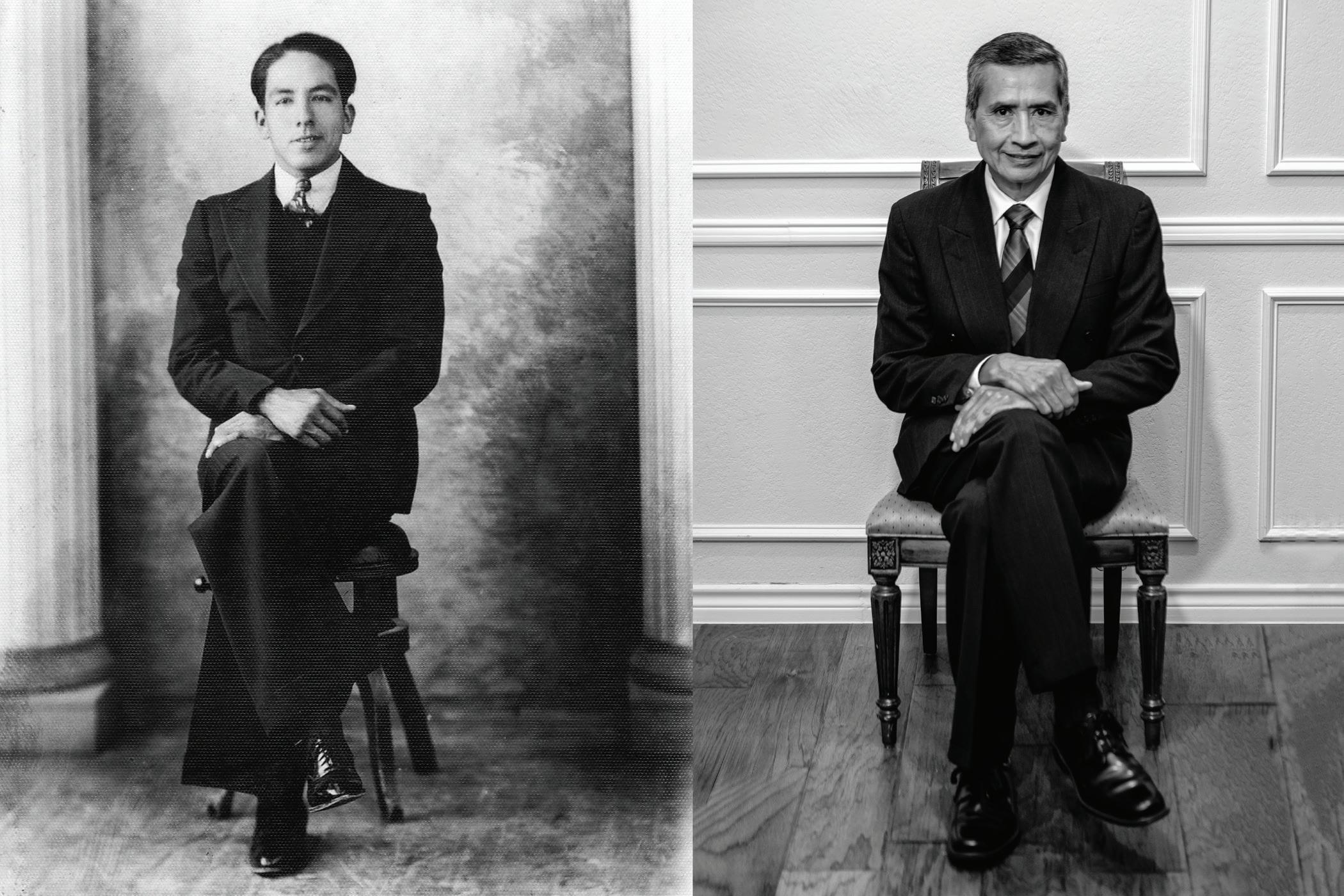
One example of documenting your life is found in the image above. I thought it would be interesting to pair a photo of my father on his wedding day next to an image of me wearing similar clothing. This juxtaposition of him at the beginning of his life (age 31), and me at the latter part of my life felt intensely poignant. It contradicted how we always think of our parents as being older than us. It also reminded me that though I may be one-of-a-kind, possessing my individuality, I am also an amalgam of all the generations before me.
IMPROVING YOUR TECHNICAL & EDITING SKILLS
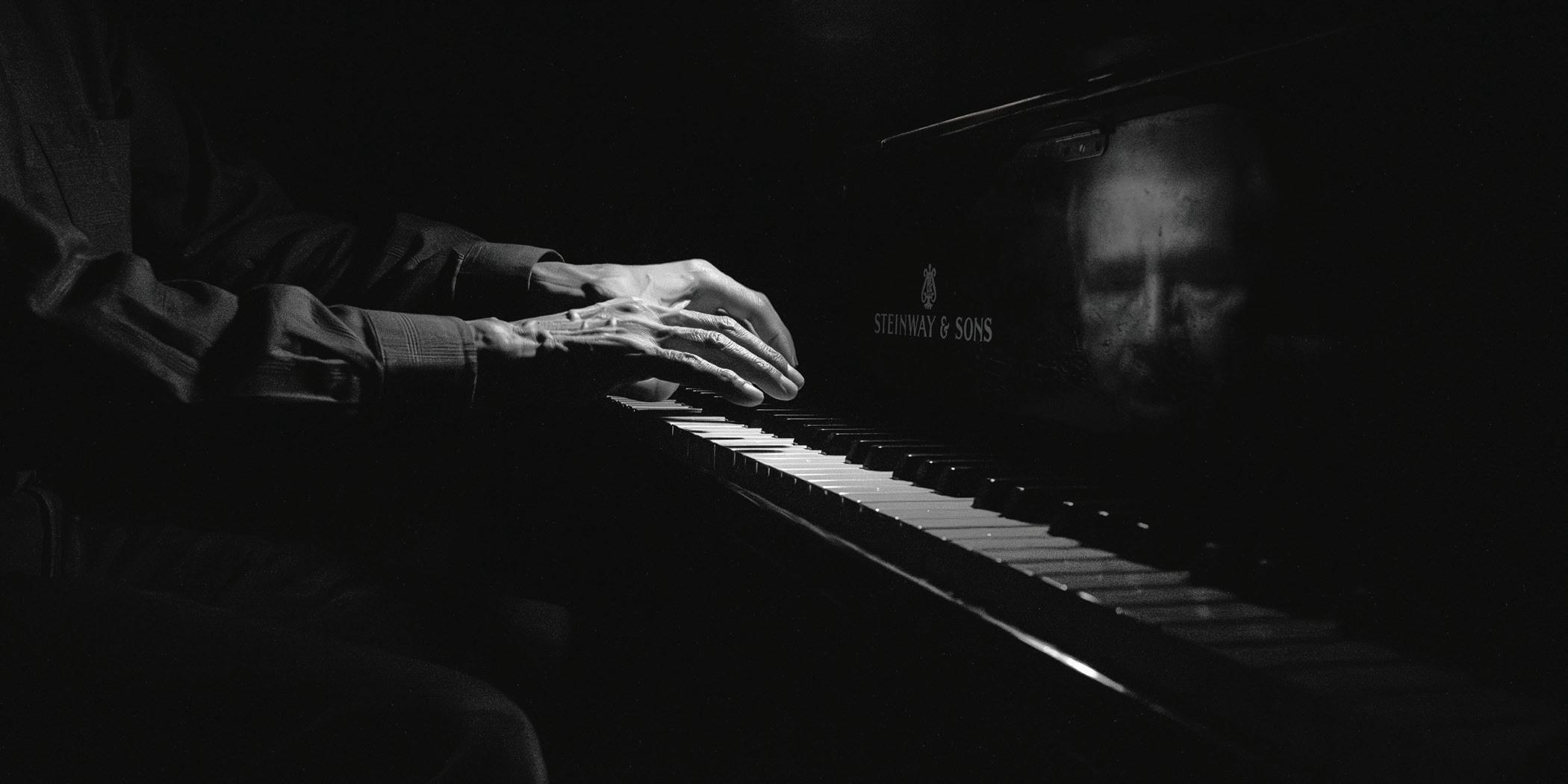
An important benefit of self-portraiture is that it helps you develop greater technical mastery over your camera. I grew up playing the piano and went on to receive a master's degree in music. My teachers made me practice technical exercises daily − scales, chords, arpeggios, with different touches, dynamics, and variations. They entrenched in me that having technical command of the instrument would give me the freedom to interpret music as only I could. In other words, a good technique simplifies the physical, so it forms a link with the spiritual.
The same applies to photography. For example, learning how to focus when the subject isn’t in the viewfinder has its challenges. Face detection technology is a wonderful tool but isn’t possible when you’re not in the frame. So, learning to use a wider depth of field for more focusing latitude is essential. Working with a remote trigger would seem a likely solution, but using a Bluetooth connection on your phone has a much shorter range than using wireless remote.
Then there is the quandary of hiding the remote, so it isn’t obvious that you are using one. If you use the timer, you’ll need to get used to running to your spot, hitting it, and looking completely natural
in the ten or twelve seconds before the shutter goes off. Having interval shooting capabilities doesn’t always solve the problem either, especially when you are too far from the camera to hear the shutter or see the blinking light.
I became intimately familiar with five different cameras for this project, a Leica CL, Leica SL2-S (on loan), Leica Q3 43, an iPhone, and a non-Leica camera. Each of them offered its advantages, and during this project, I developed a proficiency moving from one to the other.
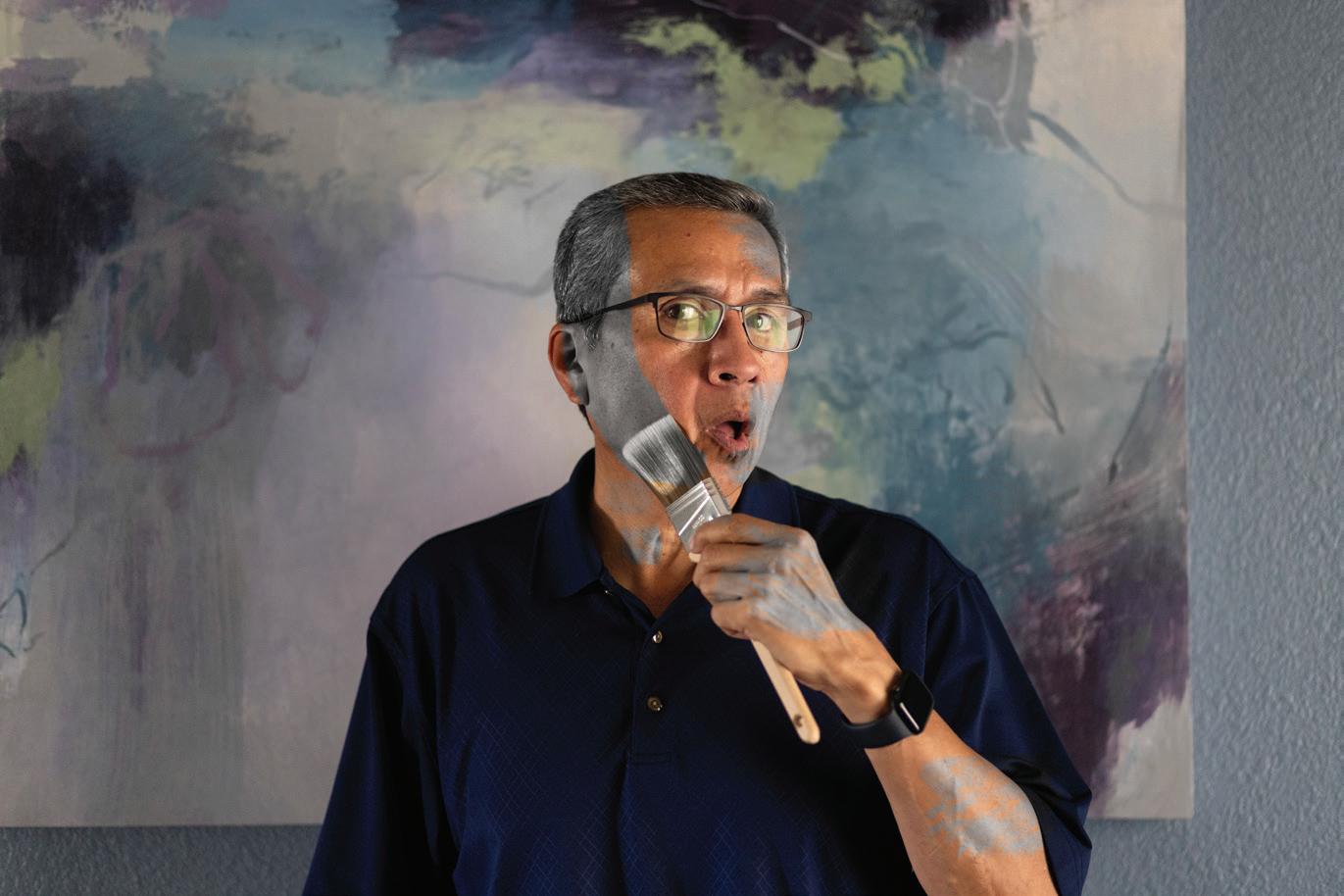
Self-portraiture also helped me become more adept at using different editing tools and techniques. The “remove tool” in Photoshop is a great example of “AI” making our workflow more efficient. Another tool I love is the “memory brush.” In the example on the top left, I stacked the same image, one in color and one in black and white and used the memory brush to make it look as if I were painting myself in black and white.
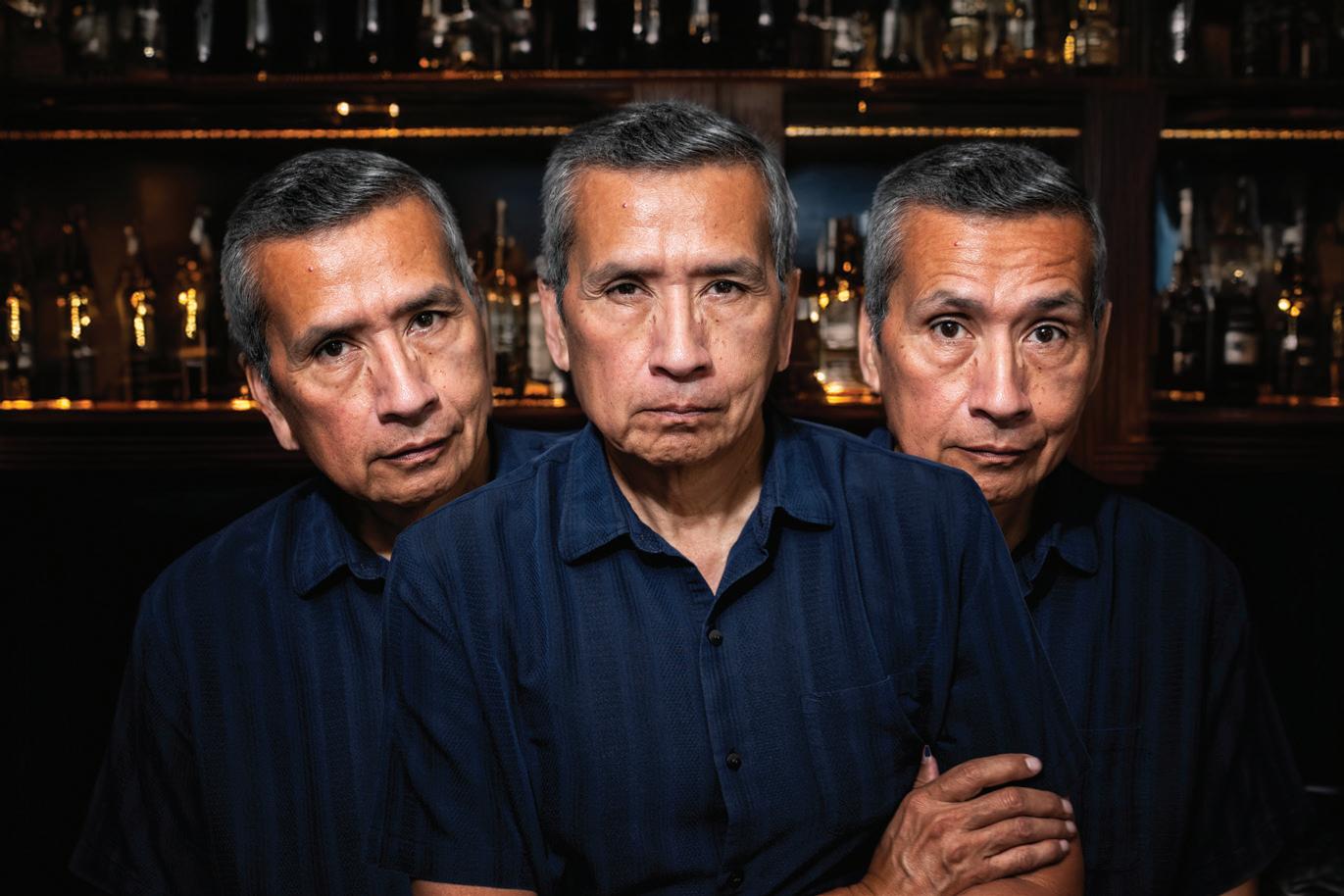
This project also helped me become more proficient with using the generative AI feature in Photoshop. The composite to the left (middle) was made from three different images that I cut and pasted to a new canvas. Then I asked AI to work its magic and create a background bar room scene. It was remarkable how it matched the color temperature with the light on my face.
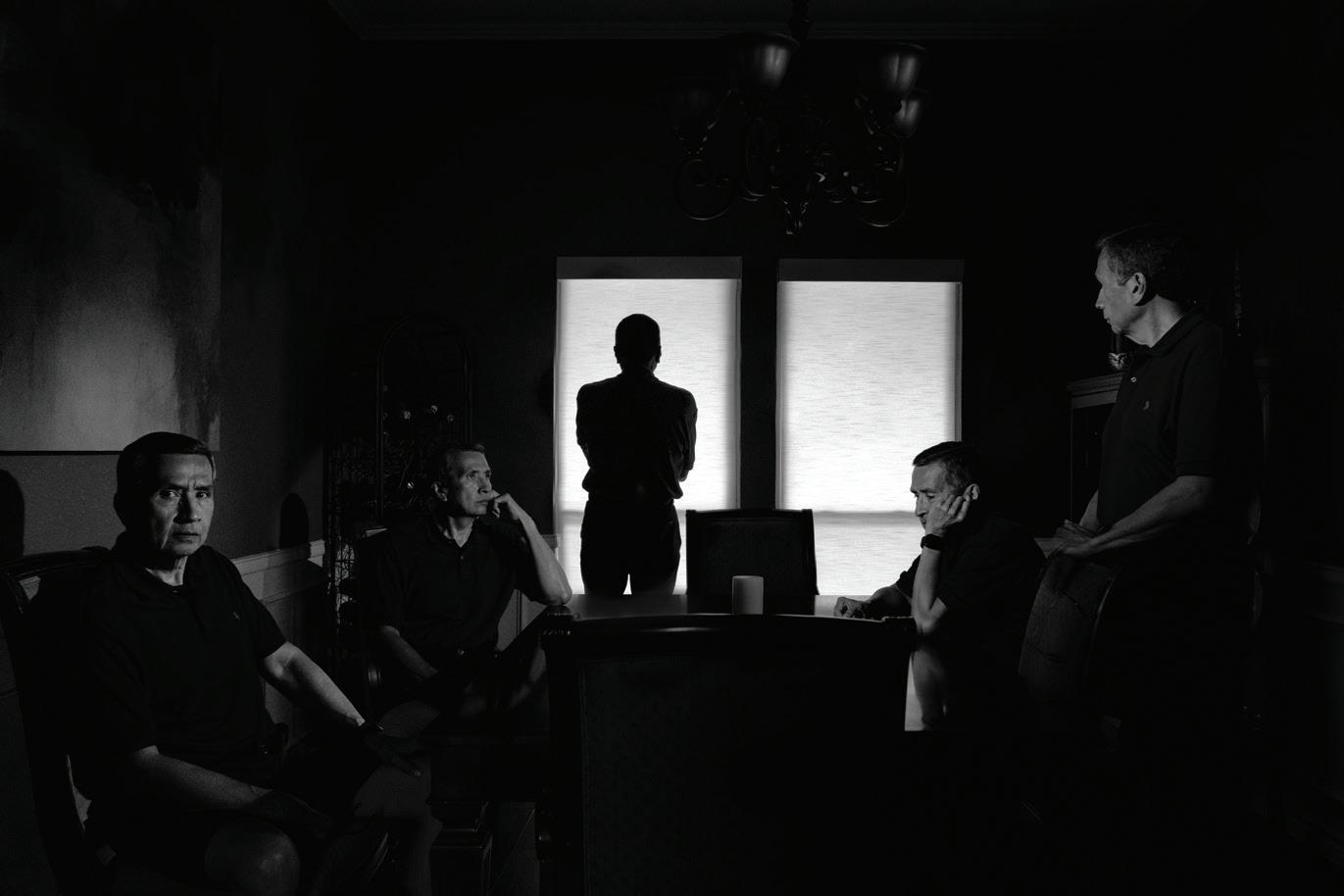
Lastly, the example to the bottome left is one of the first images that I envisioned as a cinematic scene. I wanted to illustrate the internal struggle that goes on in my mind when making a difficult decision. To create this image, I used an off-camera flash and a homemade snoot to illuminate my faces. I stacked the five images and used the memory brush to “paint” each of my selves into the scene. The result was this image, which I call Deliberation.
CHALLENGES
When I first began this project, it was easy to stay motivated and come up with creative ideas. The excitement of starting something new fueled my enthusiasm, but around the third month, I was stuck. I looked at my work and saw quite plainly that I was making some of the same images over and over. I had run out of new ideas. So, I shared my work with photographer friends and asked for their feedback. I searched Google for creative ideas in self-portraiture. Yet, day after day I was faced with the challenge of making another photo that was different from the day before. Honestly, it was exhausting.
“Don't wait for inspiration. It comes while working…”
HENRI MATISSE, PAINTER
But it is exactly this kind of test that was so important to the growth of this project. It presented me with the challenge to dig deeper and really think about what I was willing to say or reveal about myself. It was then that I started to examine myself in the context of the three creative disciplines that have always fulfilled
me, music, writing, and photography. This meant that to tell my story honestly, I had to express different parts of my personality in ways that were more vulnerable and truer to who I am.
Being vulnerable is scary and even more scary when you immortalize it with a photograph. But I found certain comfort in working with only the camera and myself. Working alone gave me the courage to explore different parts of myself both literally and metaphorically without the inhibition of having someone else in the room. Changing my approach from shooting random images to making portraits that told my story was a turning point.
SELF-ACCEPTANCE
Earlier I mentioned being faced with two perplexing questions: Will I make photos that portray who I really am or how I want to be perceived? Are they the same thing?
Even before I stepped in front of the camera, it was difficult not to edit myself. I had to fight my vanity. For example, I realized that I often photographed myself from the “good side” of my face and was subconsciously controlling how I wanted to be seen. So, I started making portraits from my “bad” side until I got used to seeing me from every angle.
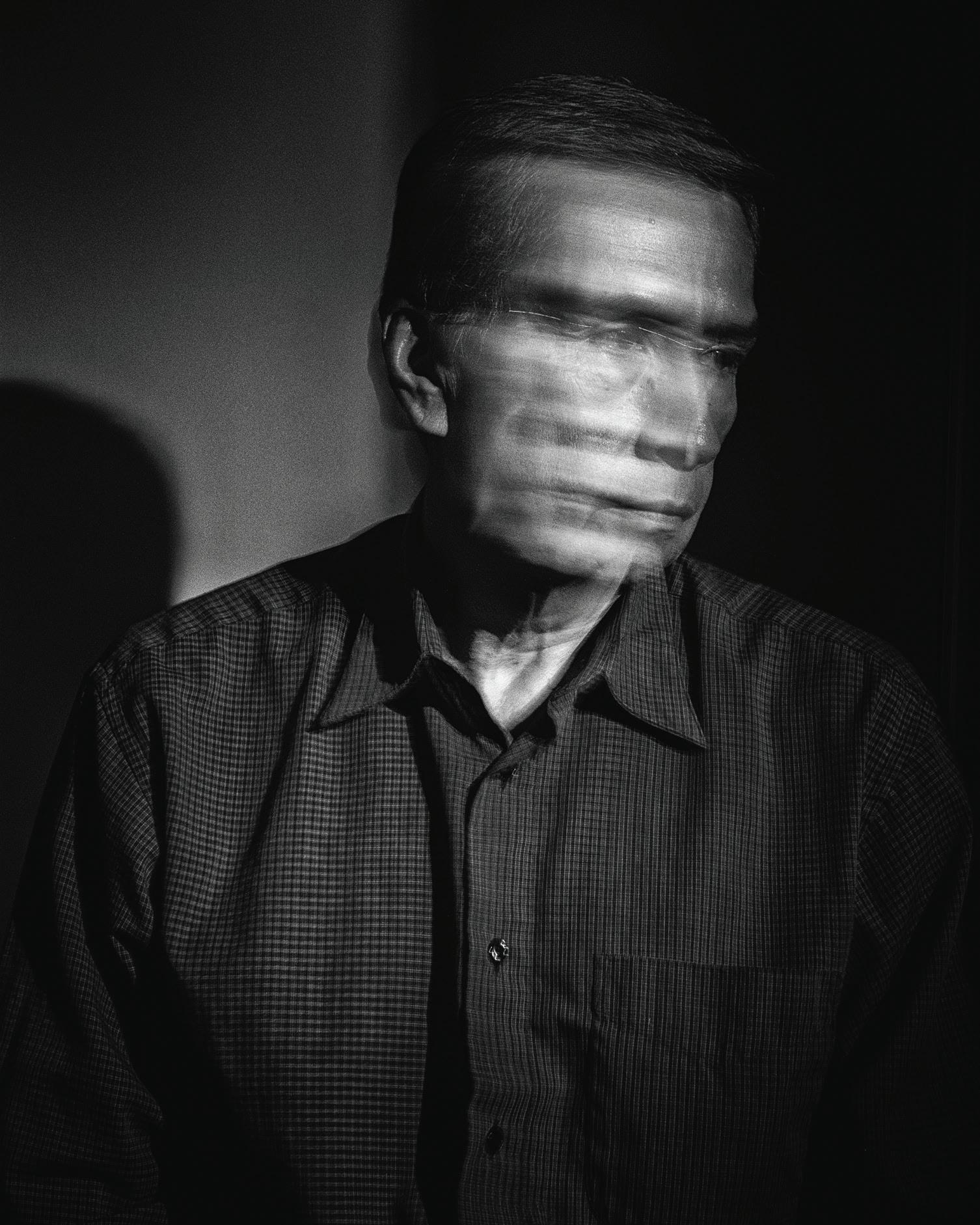
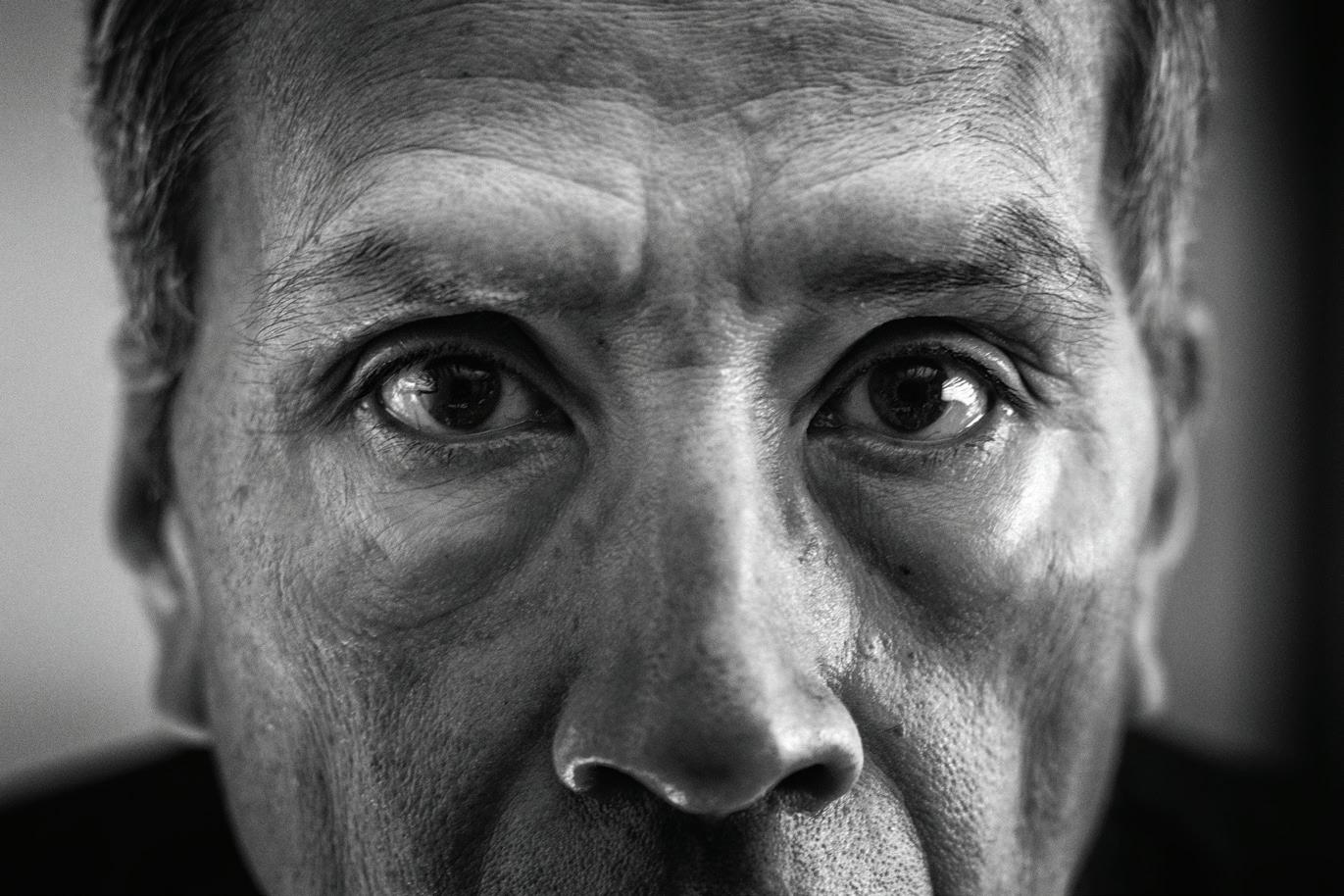
I made this close-up on the top right late one night at the end of a long day. As I have aged, my skin is not as taut as it once was. When I lean to one side, my face slides over and hangs with the weight of gravity yanking it further down. Age spots appear and hair grows in places it never did before. But I also saw someone who was engaged in the world, determined not to let it pass him by.
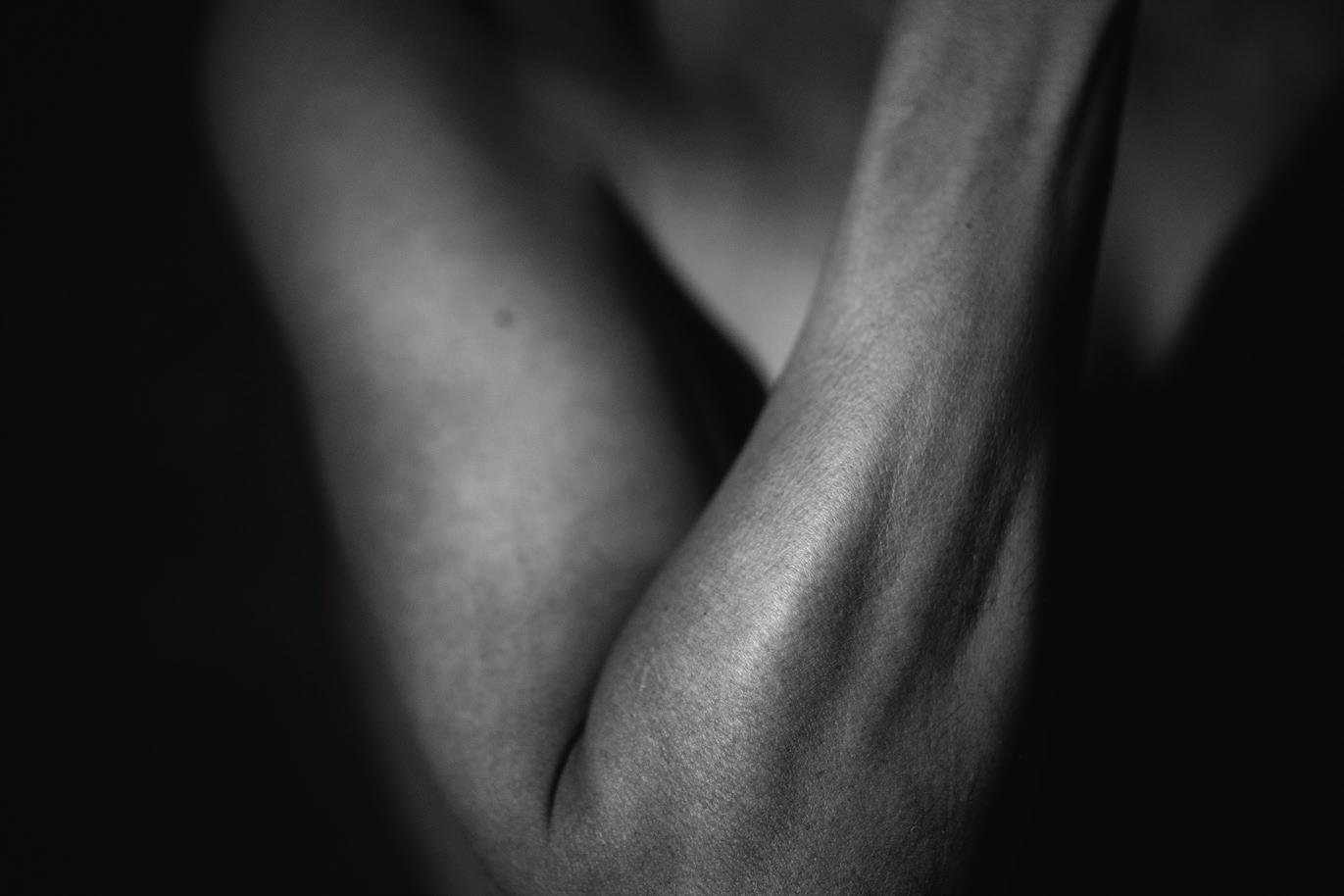
A common theme for self-portrait photographers is the exploration of the nude. This was a line that I wasn’t sure that I wanted to cross. But it was also part of the uncomfortable and vulnerable aspects that I felt I needed to experience if I was to bring honesty to this project. So, I reluctantly gave it a try in the images to the right (middle & bottom) Frankly – it was horrifying. After this many years, my body looks more like a half-melted stick of butter than how I prefer to remember it in my youth. As brave I thought I was, I could only make G-rated “implied nudes.”
“We are making photographs to understand what our lives mean to us…”
RALPH HATTERSLEY, PHOTOGRAPHER
SELF-REFLECTION
I recall how unsure and self-conscious I felt when I first began this project. It was a feeling that lingered and never really went away, but I kept going because I trusted my instincts. Now that my project in self-portraiture has ended, I confess that I didn’t have a life-changing epiphany, but then, that wasn’t the point. The purpose of this project was to explore my identity through the medium of self-portraiture. In that sense, it was a success. This project brought who I am into sharper focus.
It stretched my creativity in ways I had never done before. I’ve learned new editing techniques. I have more empathy for clients who come to me for their portrait and who are desperately uncomfortable in front of a camera. I realized, too, that I have been making self-portraits for much of my life and this project reflects my continuing desire to understand myself more fully.
I am by nature an introvert and introspective, which makes me a thoughtful, sensitive, and serious person. I’ve known that my connection to the arts is rooted in music and that I interpret my life now through the lenses of music, writing, and photography. But tied to that identity is my deep desire to be creative and to share it with the world.
Th is is all closely tied to the performance aspect common to all the arts. I have always had the opinion that anyone who considers themselves an artist and who says they only make photos for themselves, or they play the piano for themselves, or they write because it’s only for their eyes, isn’t really being truthful. I believe if someone is driven to create art, it’s because they want to share what they have to say with the world. For many, including myself, sharing their creation is in essence a performance that exposes our inner thoughts
and feelings, which can be a terrifying proposition. But fear only hides the unfulfi lled desire to show the world who we are and that we wish to be seen and understood.
THE GOLDEN HOUR
Photographers know the golden hour is the time of the day when the light is soft , warm, and golden. It’s the kind of light where magic can happen. As a broader metaphor, there is a certain clarity one realizes when they reach the golden hour of their life. I think that’s why I embarked on this self-portrait journey. I am always searching for new things to try, to learn.
As a result, I’ve discovered the real fountain of youth. It’s when you fi nd something that excites you so much that you feel as if you’re bursting with life. It consumes you and you can’t think of anything else. It fuels your zest for living. It shows that you are never too old or too young to fi nd a creative passion in your life.
This self-portrait project has been challenging and rewarding. It may not be for everyone, but for me it was a fascinating experience. I uncovered layers of complexity within myself and my photography that went far beyond making images. It merged the technical, the artistic, and the philosophical into an unforgettable pilgrimage into self-discovery. As photographers, we believe that everyone has a story, that everyone has value. I’ve learned that the more personal I make my story, the more universal it becomes − the more I am understood, the more I discover.
Cherbourg
DOWNTOWN
by KARINE NOWAK
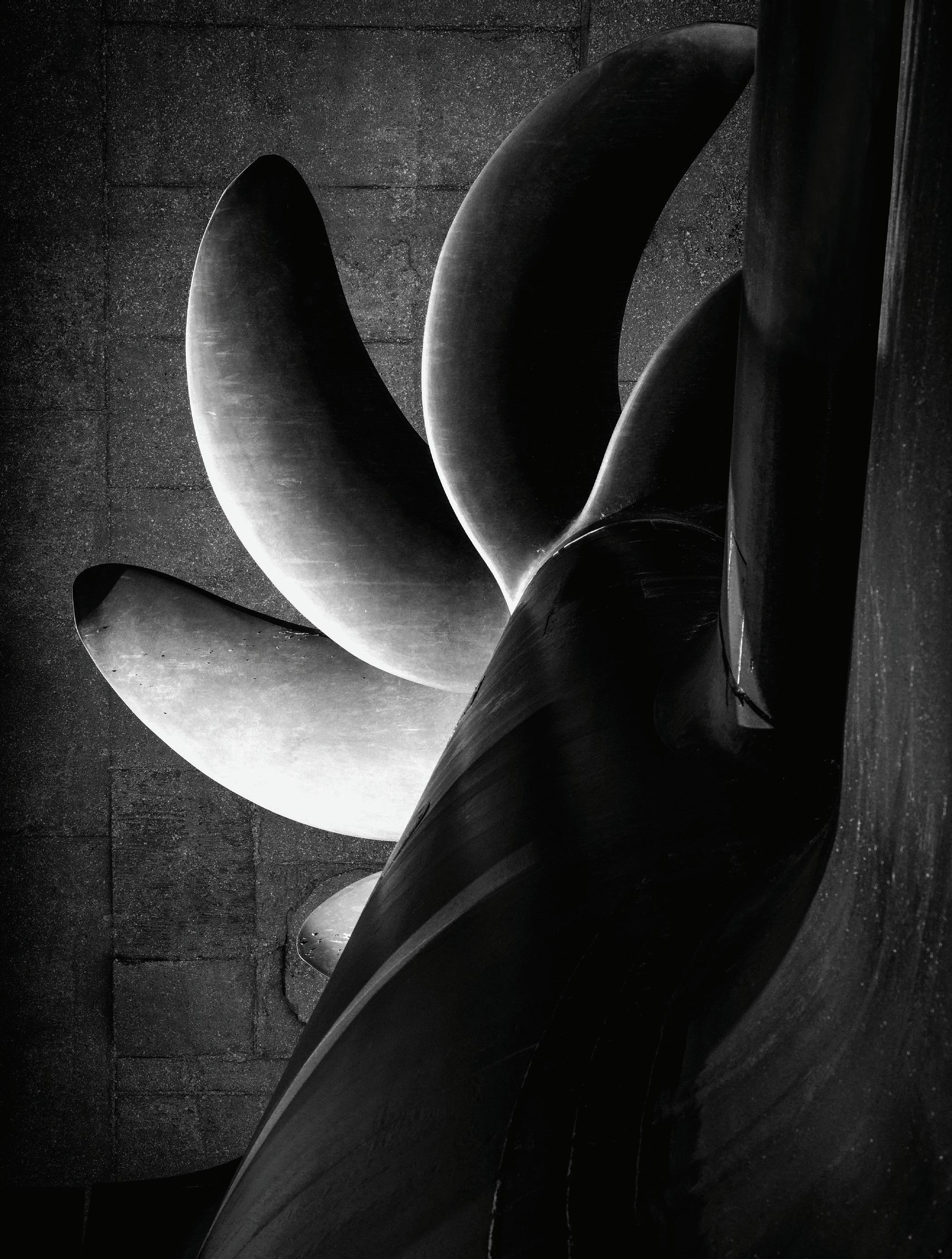
The propeller of the French Navy submarine "Redoutable". This submarine has been transformed in the museum. The nuclear reactor has been removed and the mid-section has been replaced with an empty tube. Emblematic of the submarine construction at Cherbourg, it’s the largest submarine open to the public.
Ihave always been drawn to the singular atmosphere of a port city, a crossroads of local and international cultures. Situated on the Channel coastline in Normandy, France, Cherbourg is the largest artificial harbor in Europe without being the primary harbor of France! This strange paradox presents an undeniable photographic interest that has captivated me for many years.
The city grew thanks to its strategic military port; however, its construction and one of the fortifications of Cherbourg's Bay have been extended over more than a century and a half. When it was finally operational, England was no longer our enemy and had even become our ally! Shipbuilding’s technical requirements shaped the facilities of the Arsenal and made the city’s urbanization evolve. Since the end of the 19th century, the naval base of Cherbourg has specialized in the construction of submarines. When they adopted nuclear propulsion after WWII, other activities related to atomic power had been established in the territory, favoring its development while imposing a culture of secrecy.
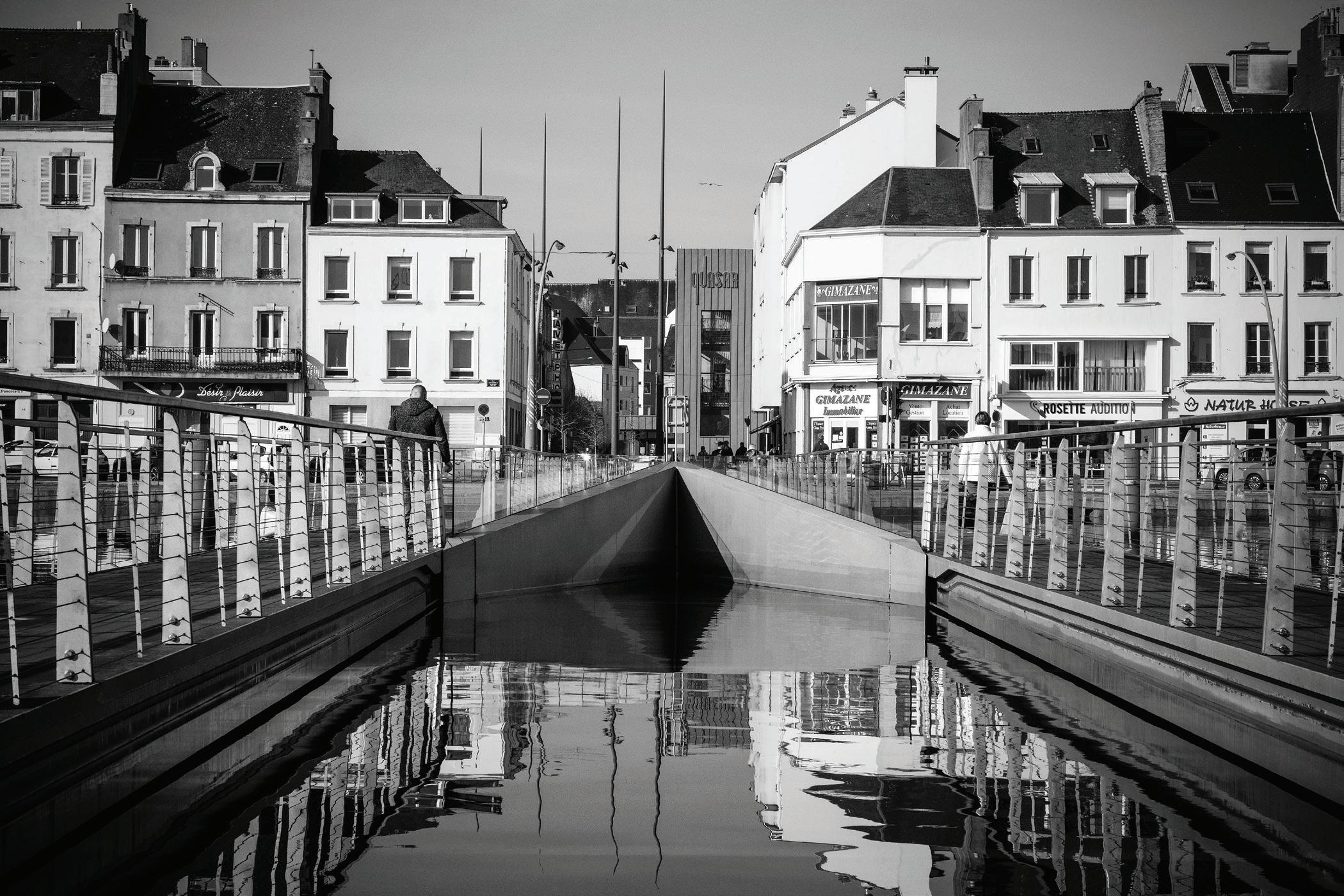
The heart of the port city is beating to the rhythm of the tides and the ships that go in and out. The rotating bridge is the central axis around which the clock of the city life rotates. The cars, then, give way to the boats at each opening. Even downtown, life ebbs and flows tirelessly, time after time, tide after tide. Each vessel tells
stories and legends of sailors from the whole world: Noah's Ark, Ulysses and his Odyssey, and the Jules Verne's Voyages Extraordinaires. The industrial character of the port city is closely linked to this interface between land and sea, between here and elsewhere, and between urban and maritime.
The history of Cherbourg is characterized by the golden age of the Transatlantic era. The world's biggest stars came to Cherbourg aboard these Liners: Charlie Chaplin, Cary Grant, Duke Ellington, Liz Taylor, Salvator Dali; and history has also recorded the hope of millions of emigrants who embarked at Cherbourg (in 3rd class) to seek the American Dream.
After the Liberation, despite the destruction of the harbor infrastructures by the German Army, Cherbourg harbor knew an intense activity because this deep-water port was highly strategic for delivering support and logistics to the Allied Forces. In this small town at the end of France, the daily traffic was double that of the port of New York!
During the last decades, to face economic crisis and decline, the Cherbourg harbor activity has diversified significantly. Boating, fishing, cruising, cross-channel ferries, military naval bases, civil and military shipyards, marine renewable energies, and aquaculture have seen dynamic development.
DOWNTOWN PROJECT
The strength of a photograph springs from its ability to capture the decisive moment in an image frozen in time, to assemble the elements of the narrative, and reveal the emotions contained in a few hundredths or a few thousandths of a second.
Every photographer aspires to have his photographs speak for themselves, yet it must be noted that everywhere the text accompanies the image. Exhibitions or publications: the place of photography cannot be conceived without the one of context. The question of the photographer’s intent is in fact the heart of what is, or what should be, photography.
Since prehistory, from rock art to the contemporary era, all civilizations have always sought to represent the world. Until the advent of photography in the first half of the 19th century, painting was the only medium, but with photography, it became possible to capture images more accurately. This revolutionary technique was made possible, thanks to several discoveries at that time: the camera with the optical properties of its lenses on the one hand, and the chemical processes necessary to sensitize glass plates and to develop films on the other. However, when does a photograph exceed its objective documentary vocation, to become artistic?
The initial intent of the photographer could be different from what the final result is or will become. I mean that it seems quite difficult to press the shutter button thinking "I'm creating art," and yet no one is guaranteed to succeed in making an artistic picture because you never know if you have a date with luck.
A photograph is always the result of conscious or unconscious choices of the photographer. Framing determines what the photographer chooses to highlight. Its ability to place or move to capture the moment is crucial. Then, the shutter/aperture coupling comes to affirm and refine the point of view by bringing the sharpness of a great depth of field, a blur of movement, or the softness of a bokeh. “All photographs are accurate. None of them is the truth,” said Richard Avedon.
Photography questions my relationship to time and space. The M camera is discreet and silent. Its philosophy is to be focused on the essentials (das Wesentliche), to feel close to the subject, and free to build the image exactly like you want by choosing all the settings manually. This way of photographing forces one to slow down the process. When I walk on the docks, I have no precise idea of what I will capture. Documenting everyday life is a modest theme in my photographic quest. In this long-term project, the perception of time is particularly subjective, almost blurred in the timeless patina of the images. I realized my shots in a very small space, reduced to the docks and downtown Cherbourg. Despite its 80,000 inhabitants, it's just equivalent to a small village, but a village open to the whole world!
This small village is in perpetual motion. It transforms itself, evolves, and adapts to the needs and lifestyles of its inhabitants. These profound changes brought some photographs of historical value because what was photographed no longer exists today. Like a diary, the Cherbourg Downtown Project is inscribed invariably in black & white. I have chosen to shoot in monochrome for its timelessness, its drama, and its resolute modernity, not to mention the classicism it represents in photography.
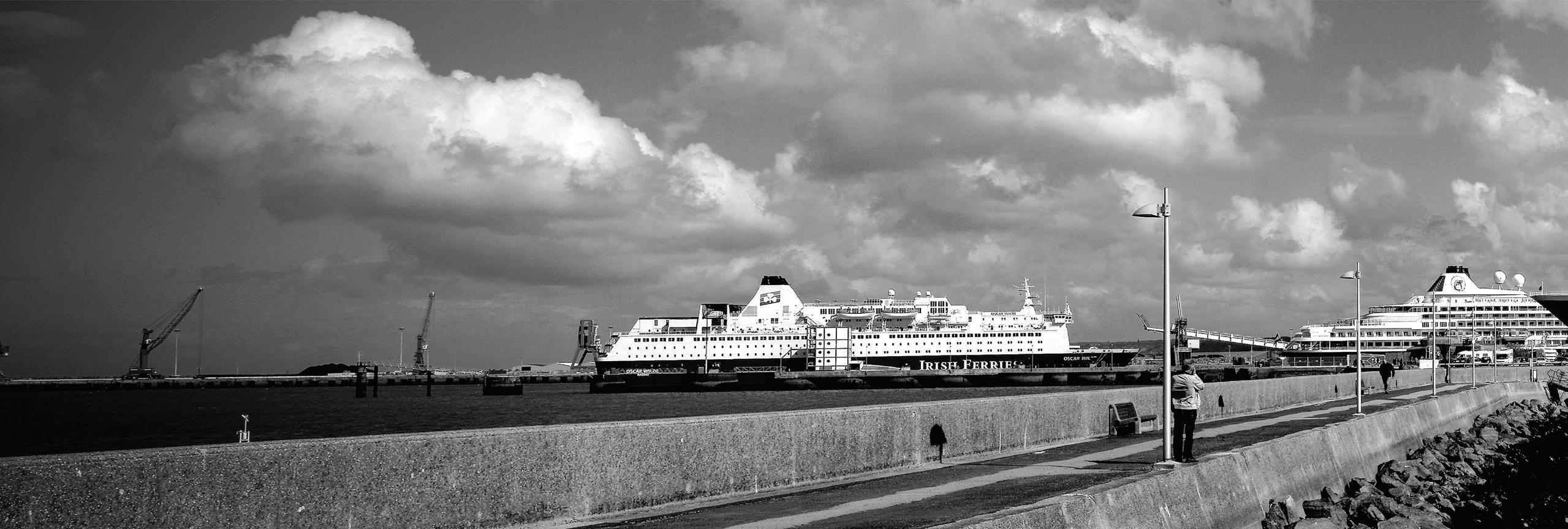
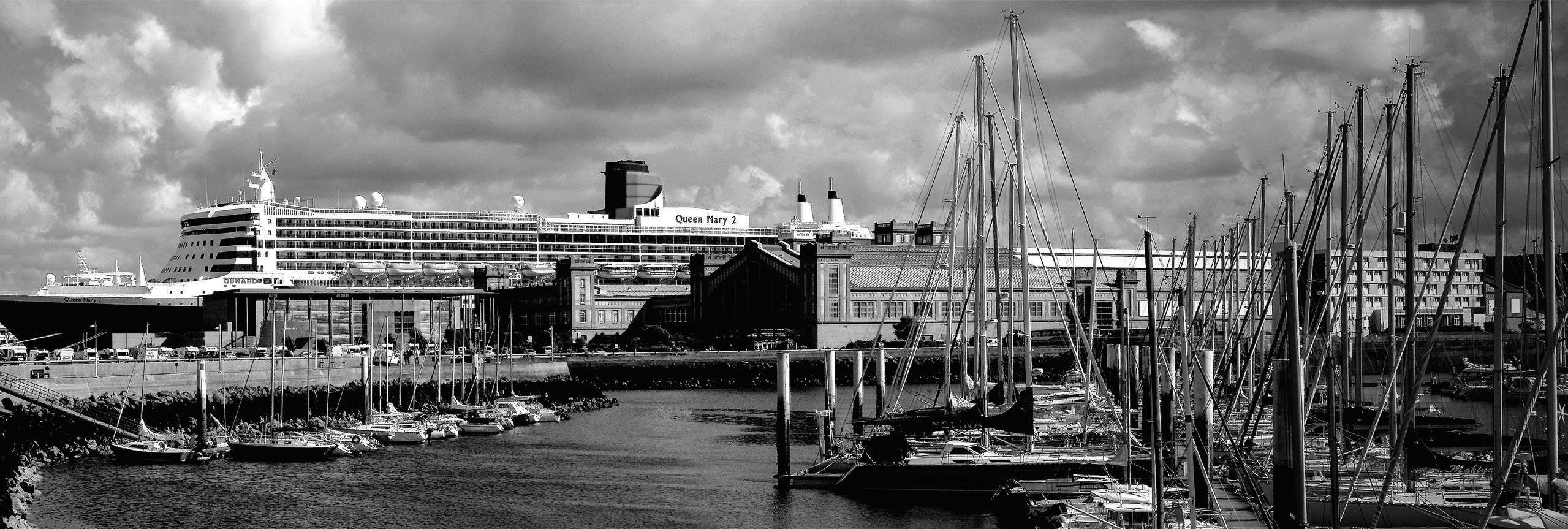
Panoramic view of the port (by assembling 16 pictures) with the cross-channel Ferries, the Queen Mary II at the transatlantic station, and the marina.
The M camera is discreet and silent. Its philosophy is to be focused on the essentials (das Wesentliche), to feel close to the subject, and free to build the image exactly like you want by choosing all the settings manually.
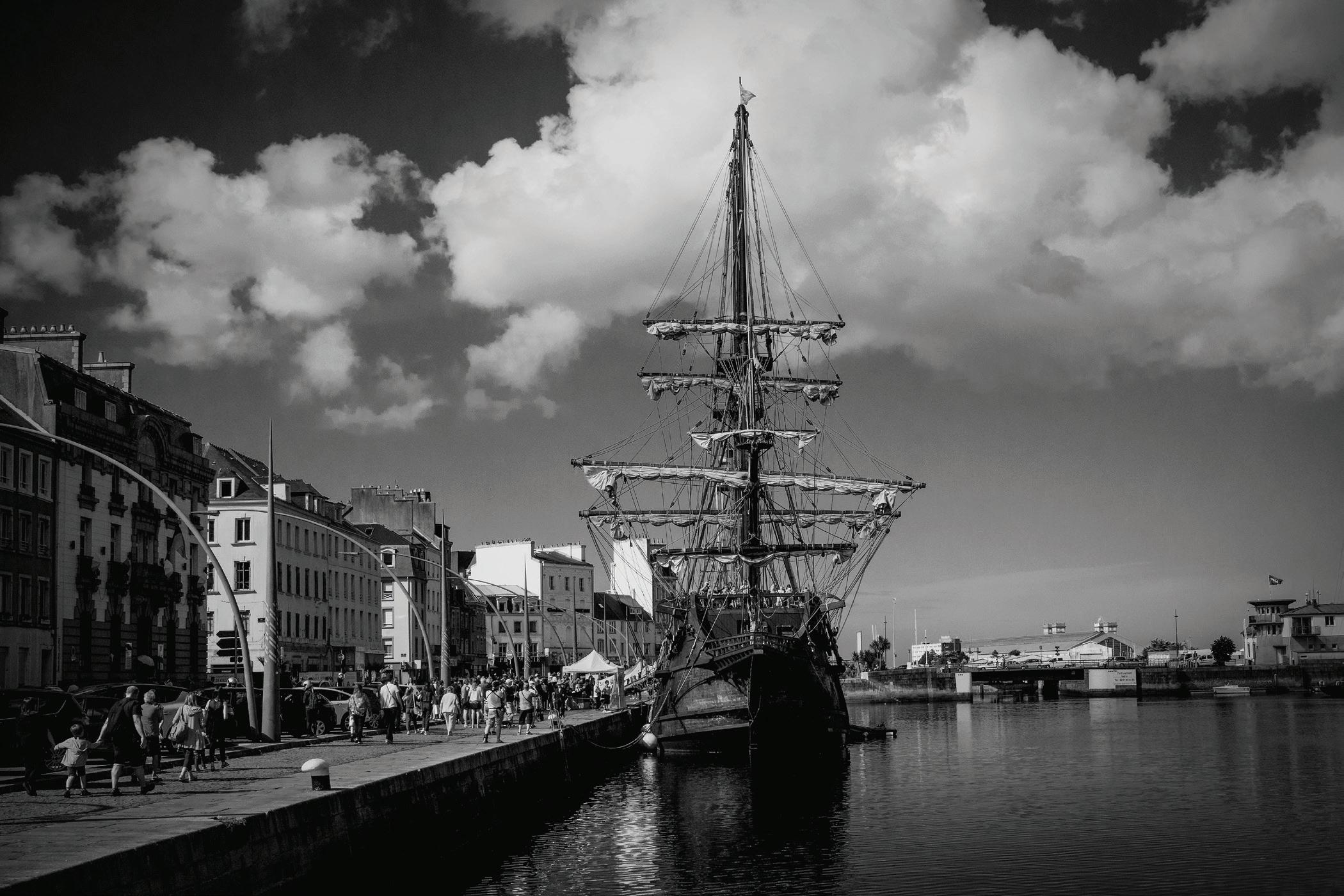
People come from far away to admire the Spanish Tall Ship “El Galeón”.
Panoramic view of the port (by assembling 16 pictures) with the cross-channel Ferries, the Queen Mary II at the transatlantic station, and the marina.
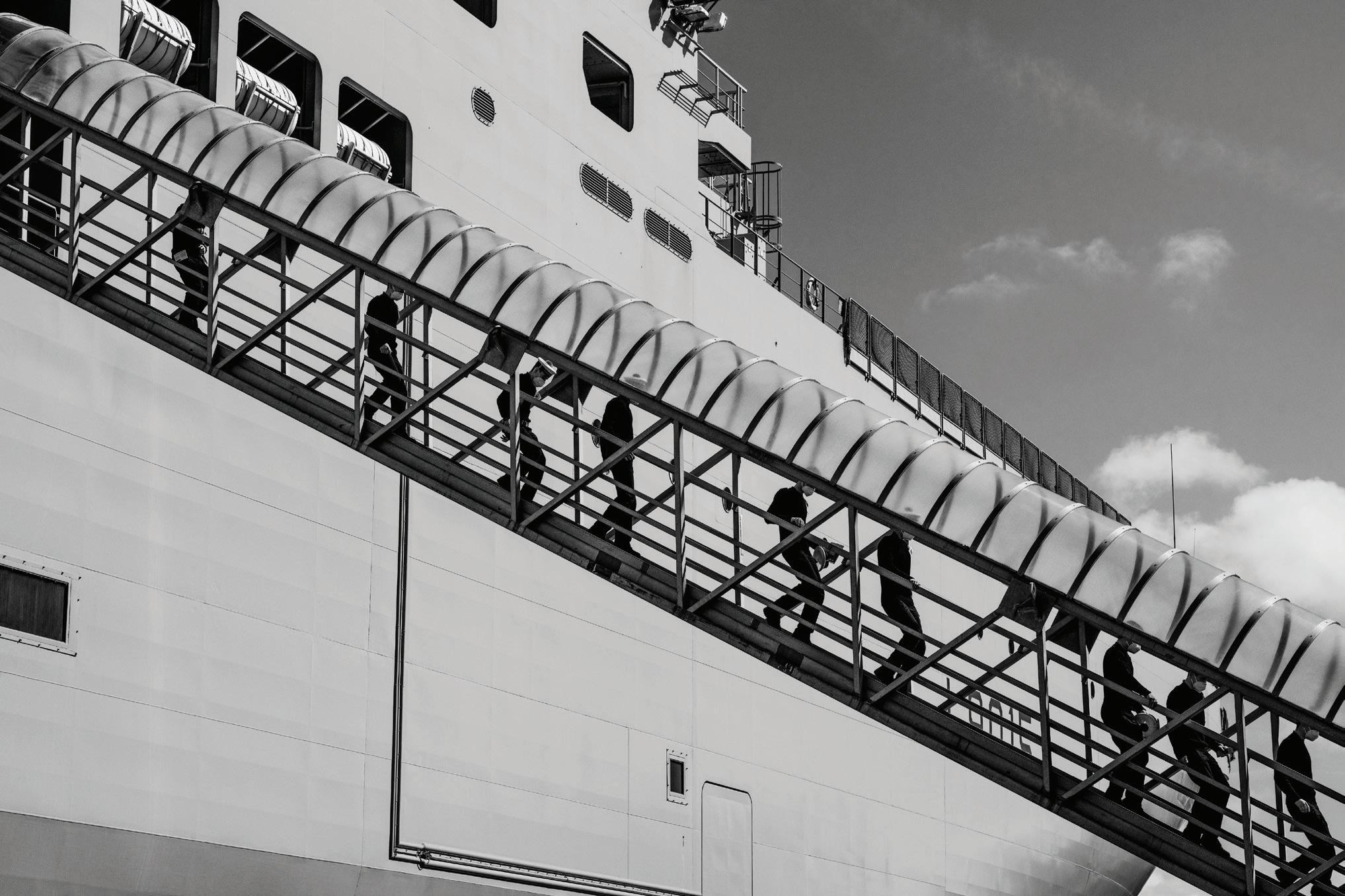
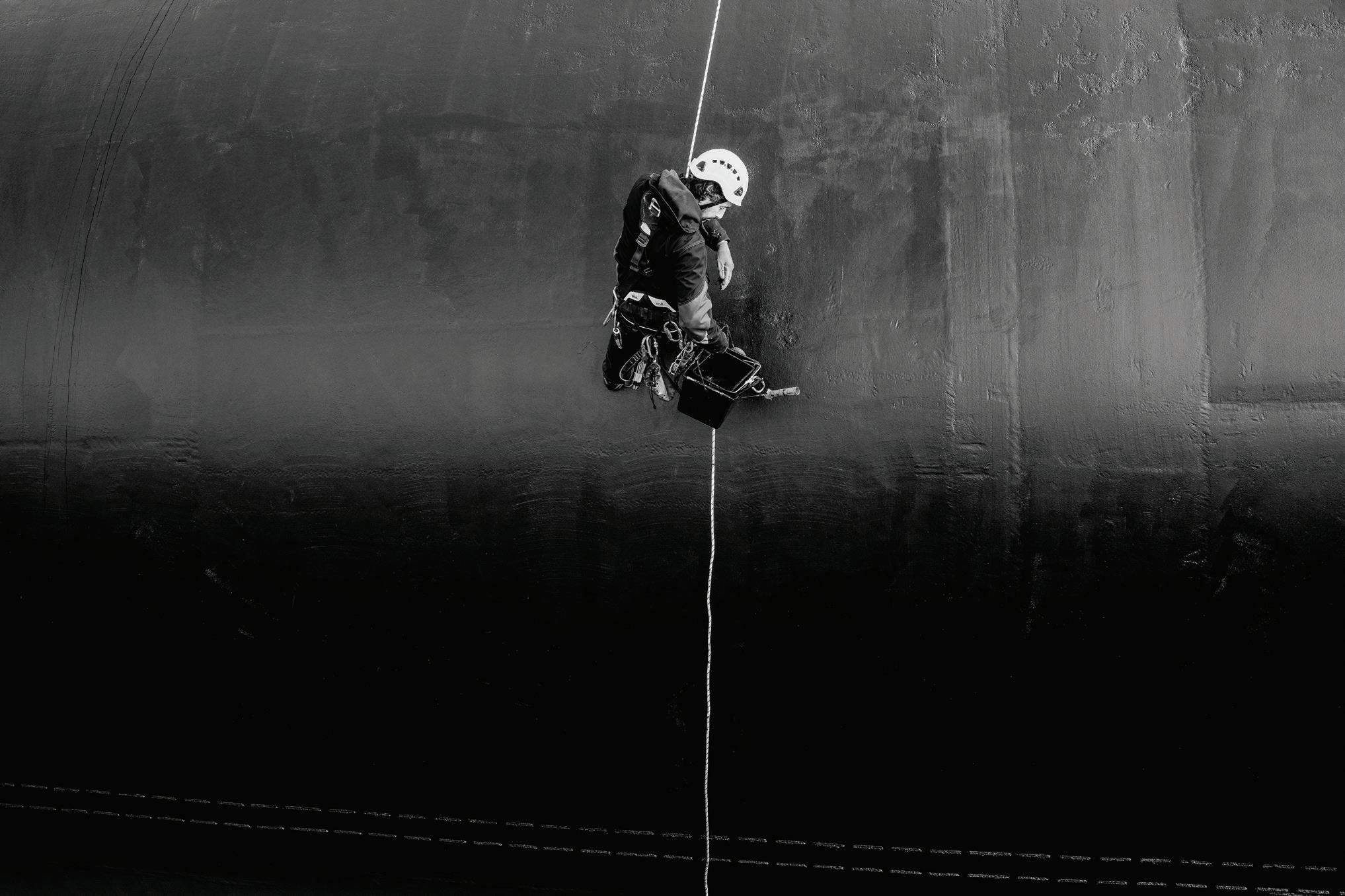
(top) Sailors on the gateway of the Landing Helicopter Dock “Dixmude” (French Navy) (bottom) A rope-access painter is restoring the hull of a submarine.
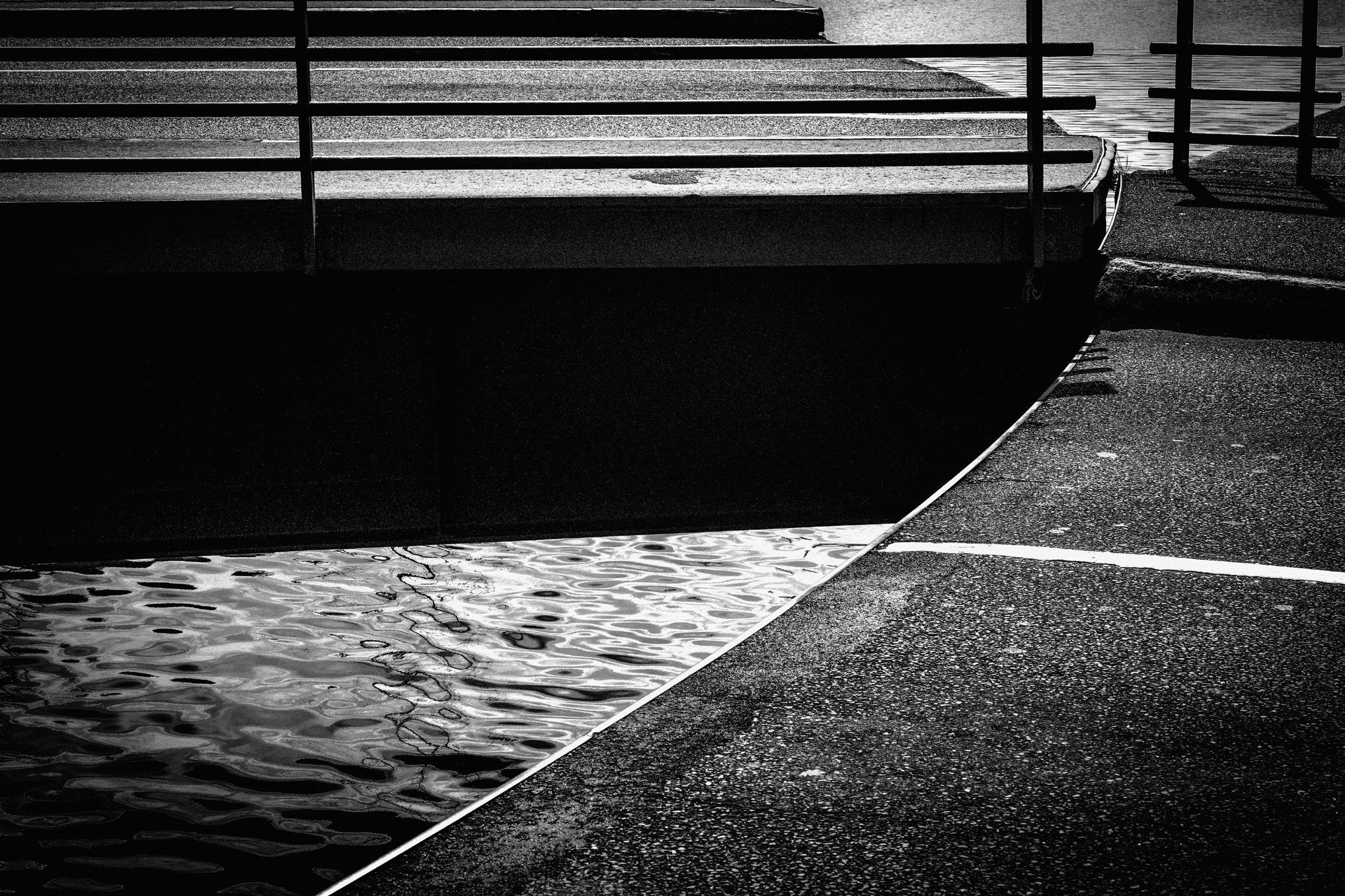
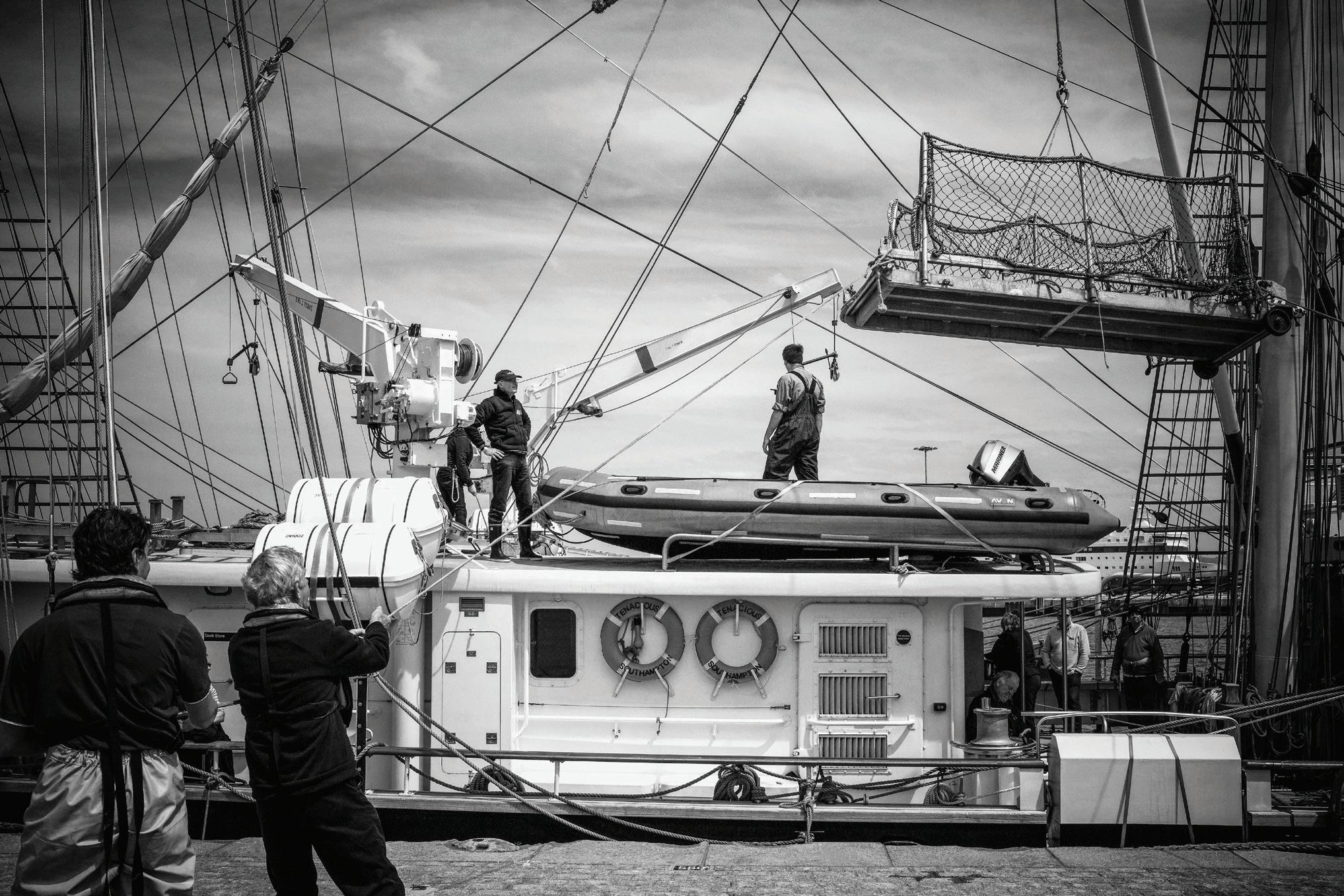
(top) The rotating bridge is the central axis around which the clock of the city life rotates. (bottom) Docking maneuver of the British tall ship "Tenacious". This modern wooden ship has been totally adapted for welcoming their crew of disabled people (including wheelchairs).
Since I began photography, I have chosen to use Summilux lenses, and my favorite one is the Summilux-M 75mm. I sometimes use other lenses from Wetzlar for specific tasks. Each lens has its own signature and technical characteristics. It could seem a paradox to use a Summilux for photographing at f/11 or f/16. But the Summilux is not only distinguished by its very luminous characteristics or by its fabulous bokeh, but the precision of the details and the choice of a great depth of field are also fantastic. Its sharpness and its rendering are so pure, smooth, and precise, even with the diaphragm stopped down.
Ishoot in monochrome for its timelessness, its drama, and its resolute modernity.
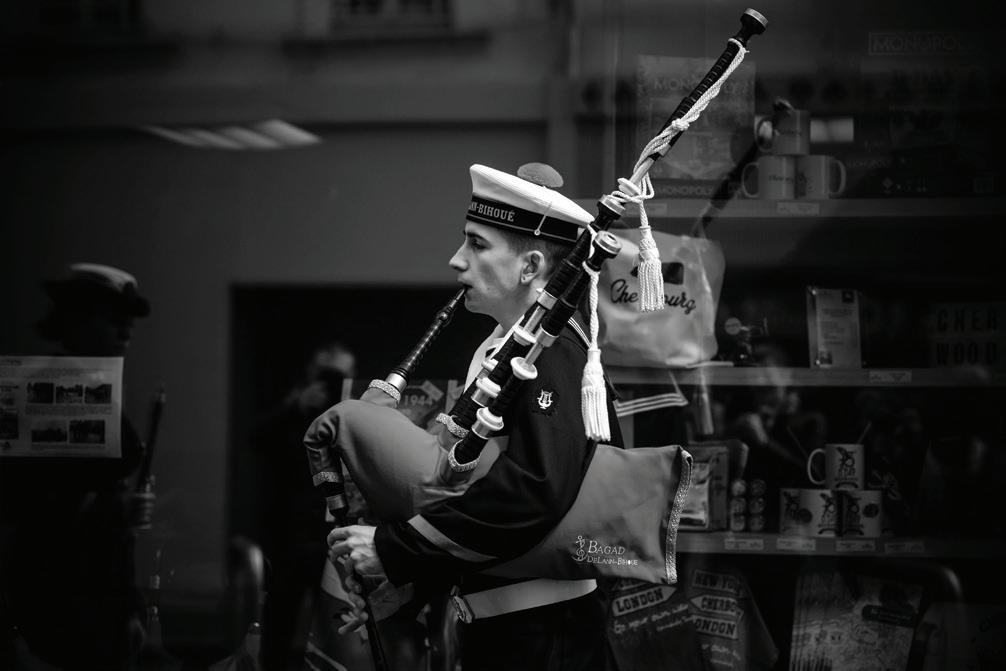
The “Bagad de Lann-Bihoué", a Breton pipe band of the French Navy, is in Cherbourg's streets. Symbol of excellence and tradition, it represents France and the French Navy in multiple events.
My photographic approach was mainly documentary even if “Cherbourg Downtown” was created much like a painting, in small touches. Slowness was a necessary path in which I sometimes had to accept to lose myself, to allow something unexpected to emerge. I have wandered the docks for more than a decade photographing light, shadows, atmospheres, and faces, to capture this fragile bond that unites our existences to our environment. Picture after picture, it’s fi nally almost a portrait reflecting the soul of the port city. The town appears like a real person and reveals its unique character in a subtle alchemy of strength, melancholy, poetry, and hope.
Karine Nowak was trained at the I.N.A. (French National Audio-Visual Institute) and is a member of the Professional Photographers Union. She uses a digital Leica M and prints her own photographs. In 2017, she was shortlisted to exhibit at the 44ème Salon de la Marine, at the Musée National de la Marine (Palais Chaillot, Paris). Her work has been celebrated by a congratulatory letter from the Chief-of-Staff of the French Navy. Since then, her photographs have been shortlisted by the Juries and editorial teams at the Leica Fotografie International/LFI Gallery and LSI The International Leica Society.
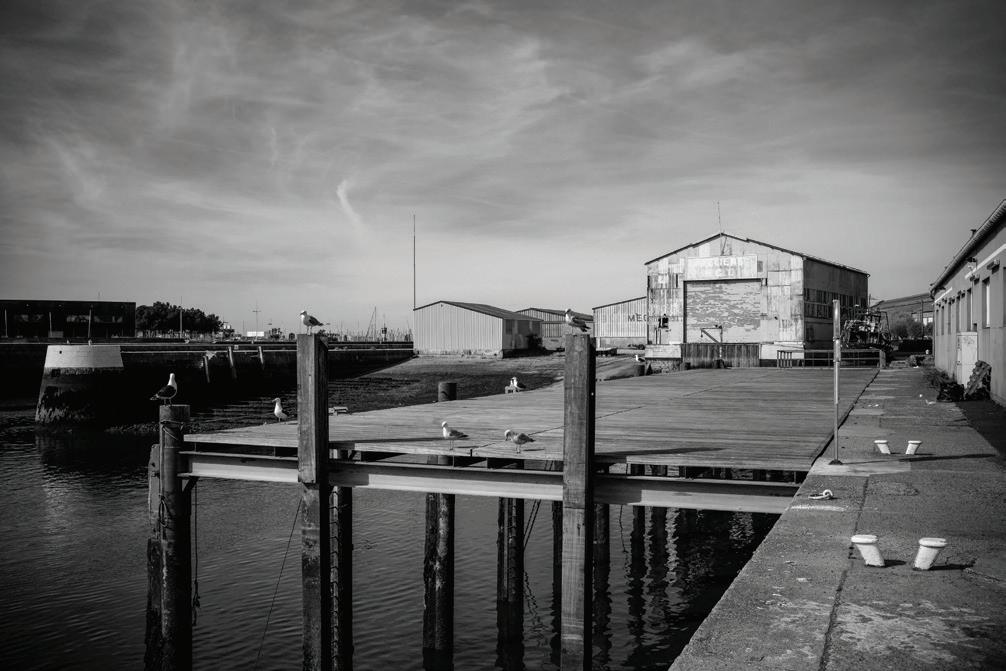
This ancient shipyard was building wooden side-fi shing trawlers until they became outdated, and replaced by the new generation of stern-fi shing trawlers. This lost place, in the heart of the port city, is a witness to the necessity to adapt and evolve to face economic crisis and decline.
during the
About Karine
A sailor
docking maneuver of the French tall ship "Belem", classified as a historical monument. This vessel serves as a school ship for the French Navy.
Gunstock
by JIM LAGER
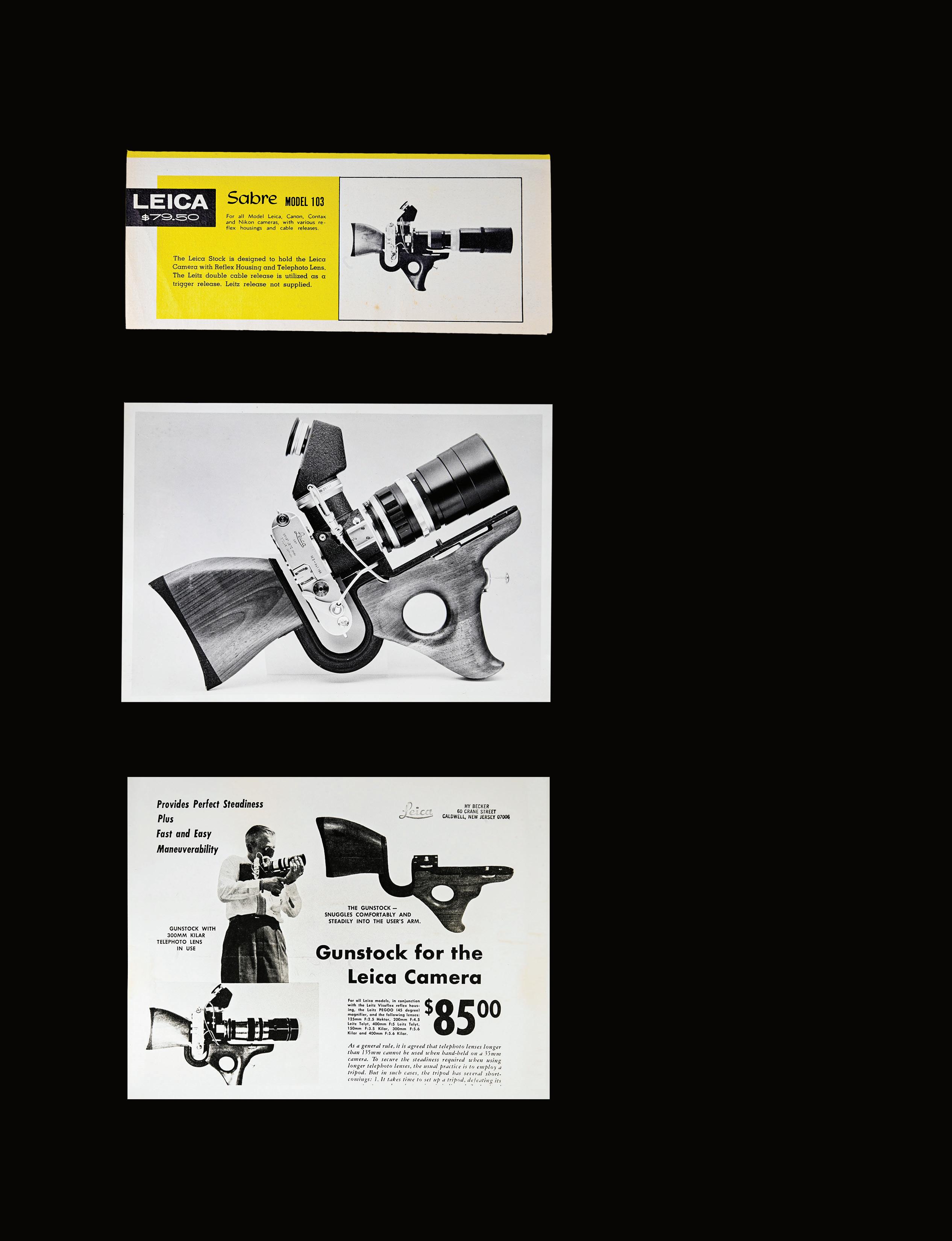
In late 1957 Altman Camera in Chicago prepared an 8.5x11 inch information sheet titled Gunstock for the Leica Camera. M Leicas were illustrated equipped with 300mm and 400mm Kilfitt Kilar lenses. The Visoflex 1, PEGOO magnifier, and double cable release were shown mounted to the robust gunstock support. An additonal attachment screw was located forward of the Visoflex to accomodate heavy 400mm lenses (Leitz 400mm 1:5 Telyt).
The gunstock manufacturer Sabre Photographic Supply Company Oak Park, Illinois supplied a brochure detailing various models designed to fit cameras other than the Leica, i.e. Exacta, Alpa, Hasselblad, and Bolex. The Sabre Model 103 accepted the Leica with Visoflex 1 and reflex housing equipped Contax, Canon, and Nikon bodies.
Production totals for the Model 103 are unknown to this writer. Today, six decades after initial availability, specimens are occasionally offered at auction.
With 200mm 1:4 Telyt.
From the 1957 Altmans data sheet file.
Sabre Stock Model 103 with 400mm Telyt from brochure.
Black Paint Leica M4
The 1967 introduction of the Leica M4 will be long remembered. The M4, basically a combination of the M2 and M3, became a favorite − especially among photojournalists. An August 1967 E. Leitz, Inc. New York inter-office memorandum states that 20 black-fi nished M4 bodies #10402 have been ordered. Th is is the earliest mention of the black M4 researched by this writer.
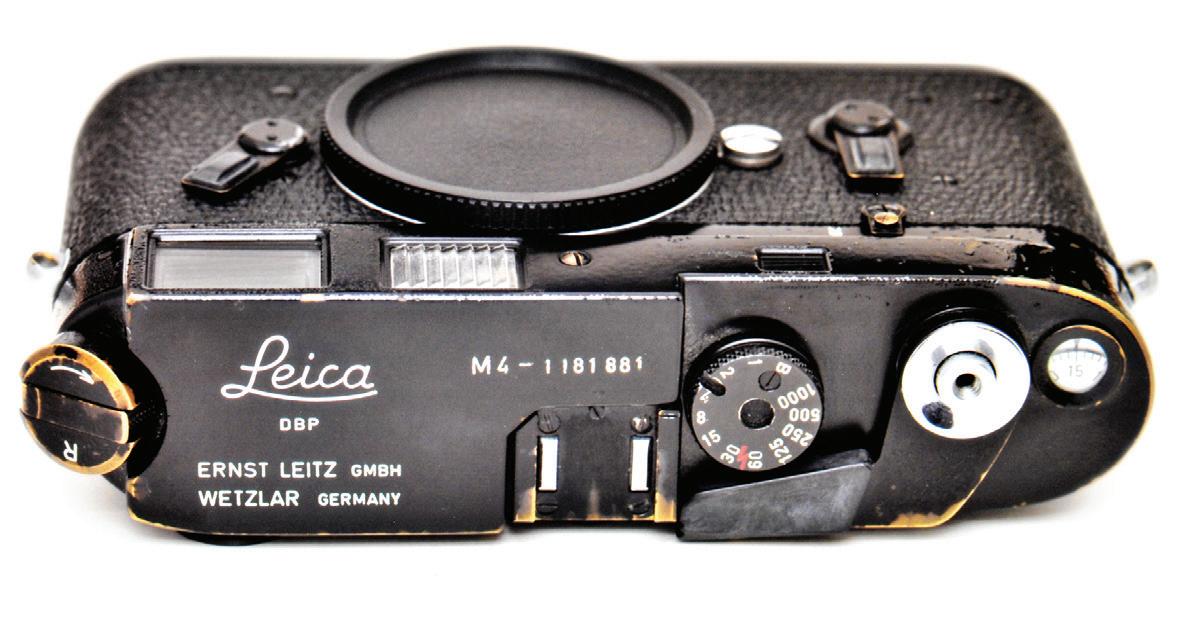
Production lists record serial numbers 1178101 - 1185000 as 1967. There is no mention of black fi nish. Occasionally an M4 in the 1181XXX range surfaces exhibiting this distinctive motif. Collectors were reluctant to accept these cameras as factory original black because the records
by JIM LAGER
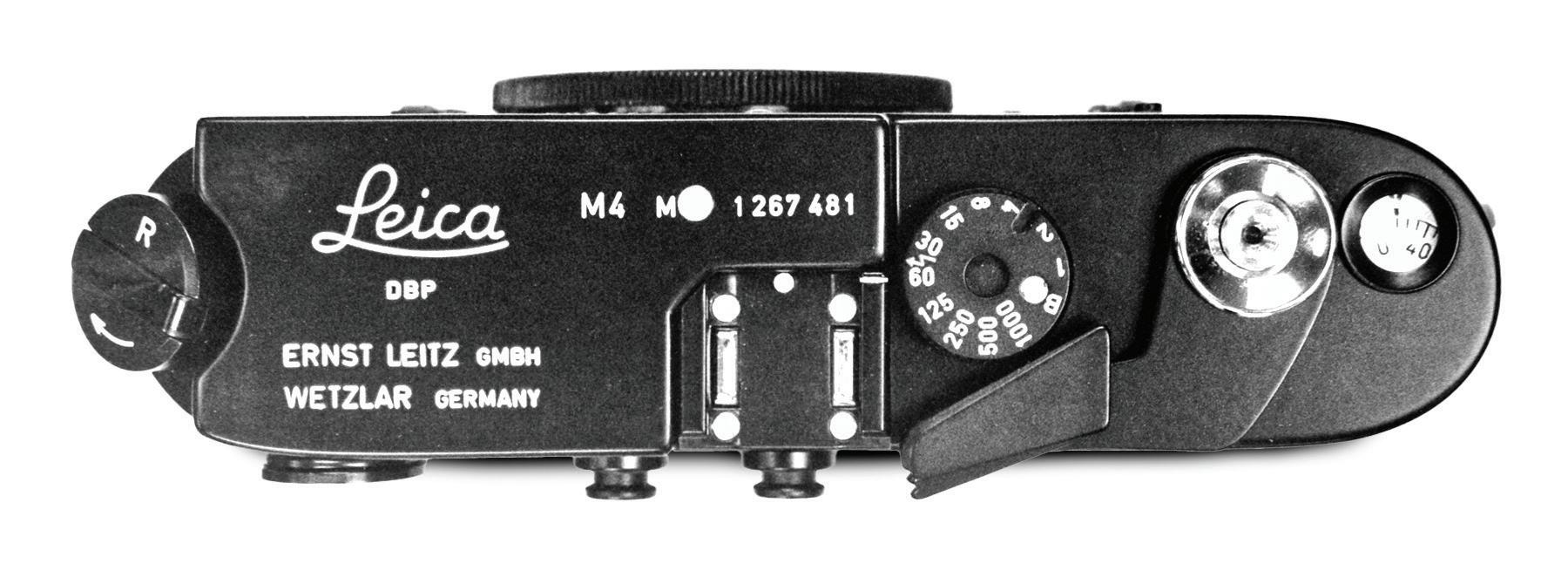
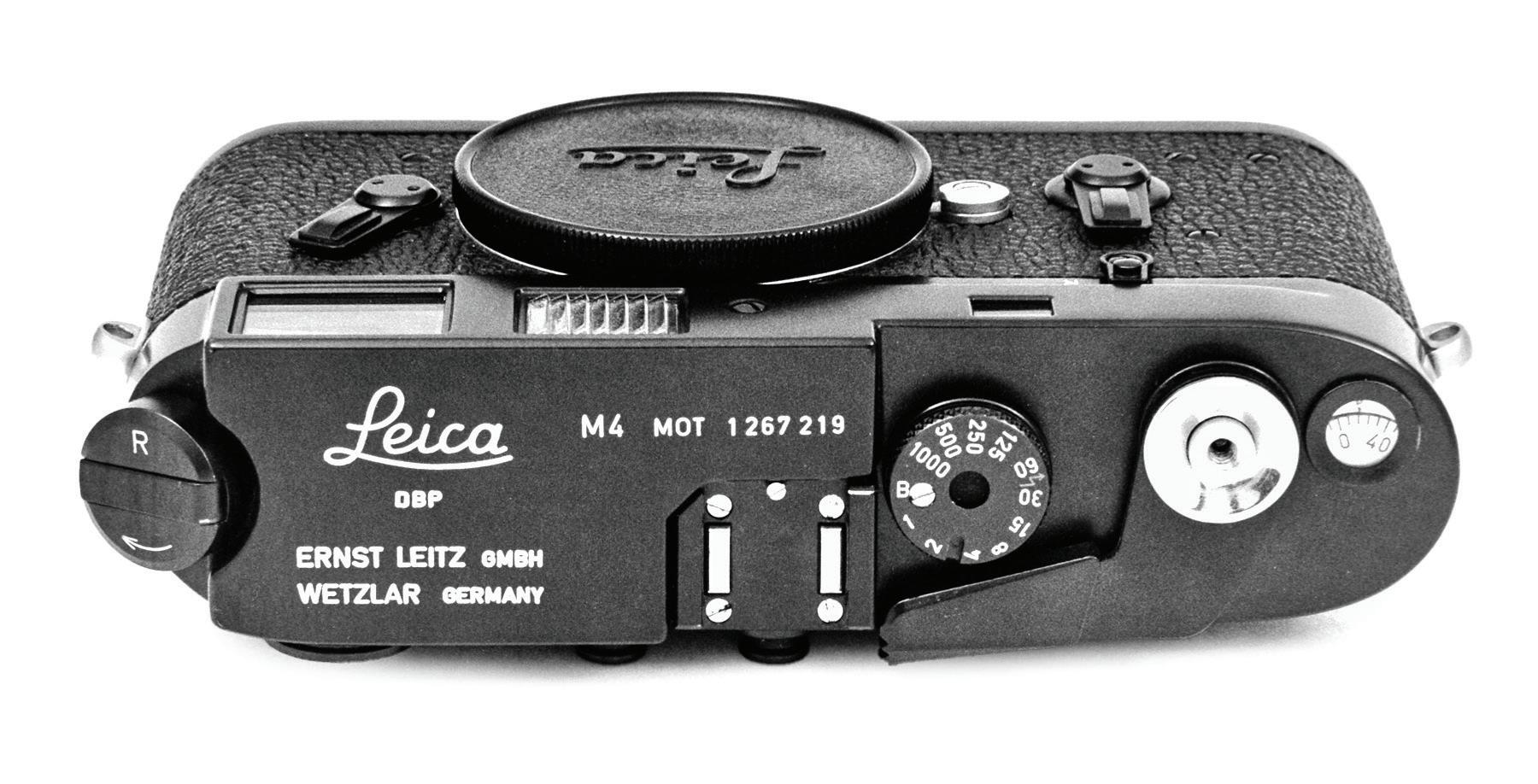
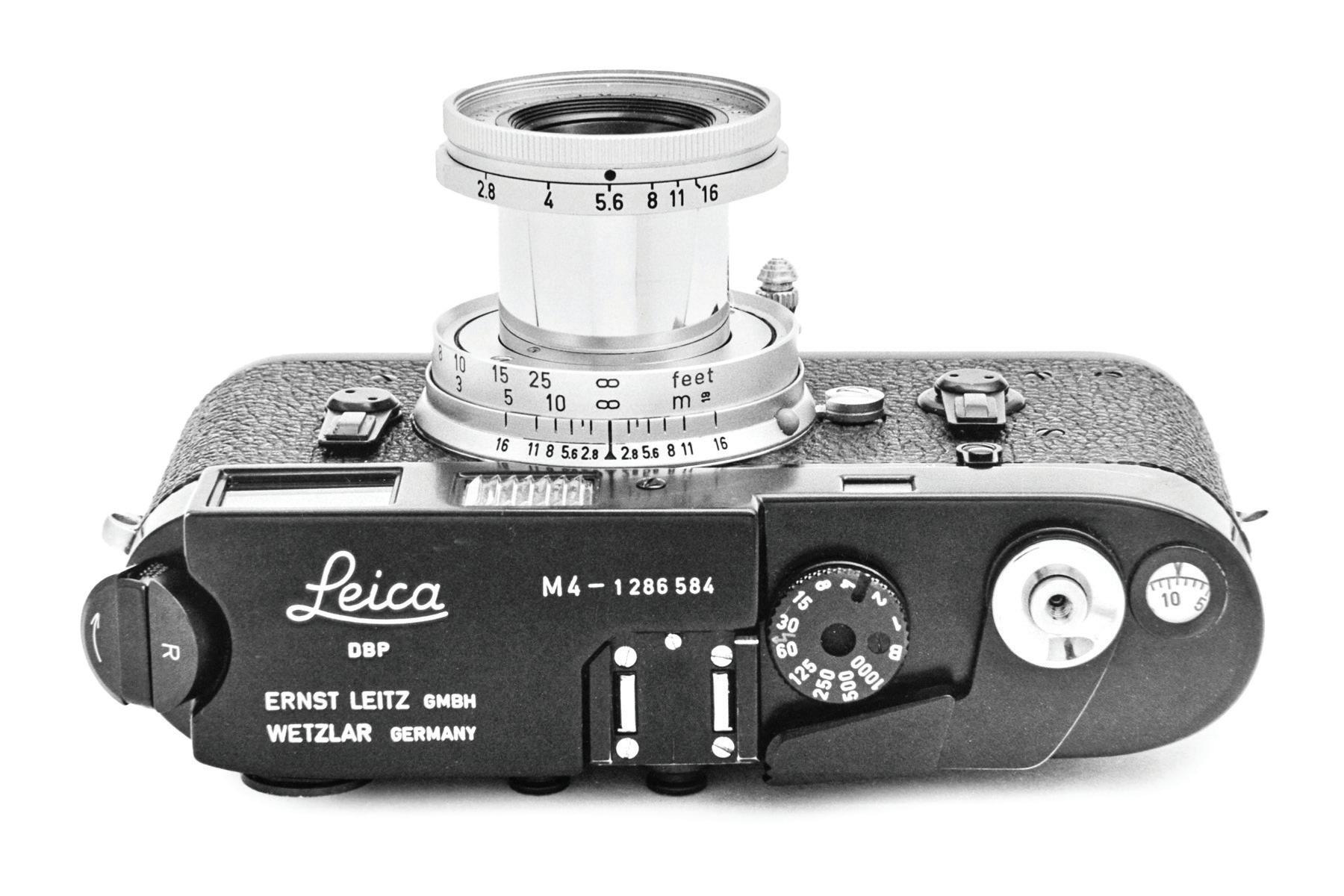
available to them did not say black. During my early research efforts I began to document black paint M4's at 1181251, 1181531, 1181622, 1181654, 1181881, and 1181903. These Leicas are without question factory original black.
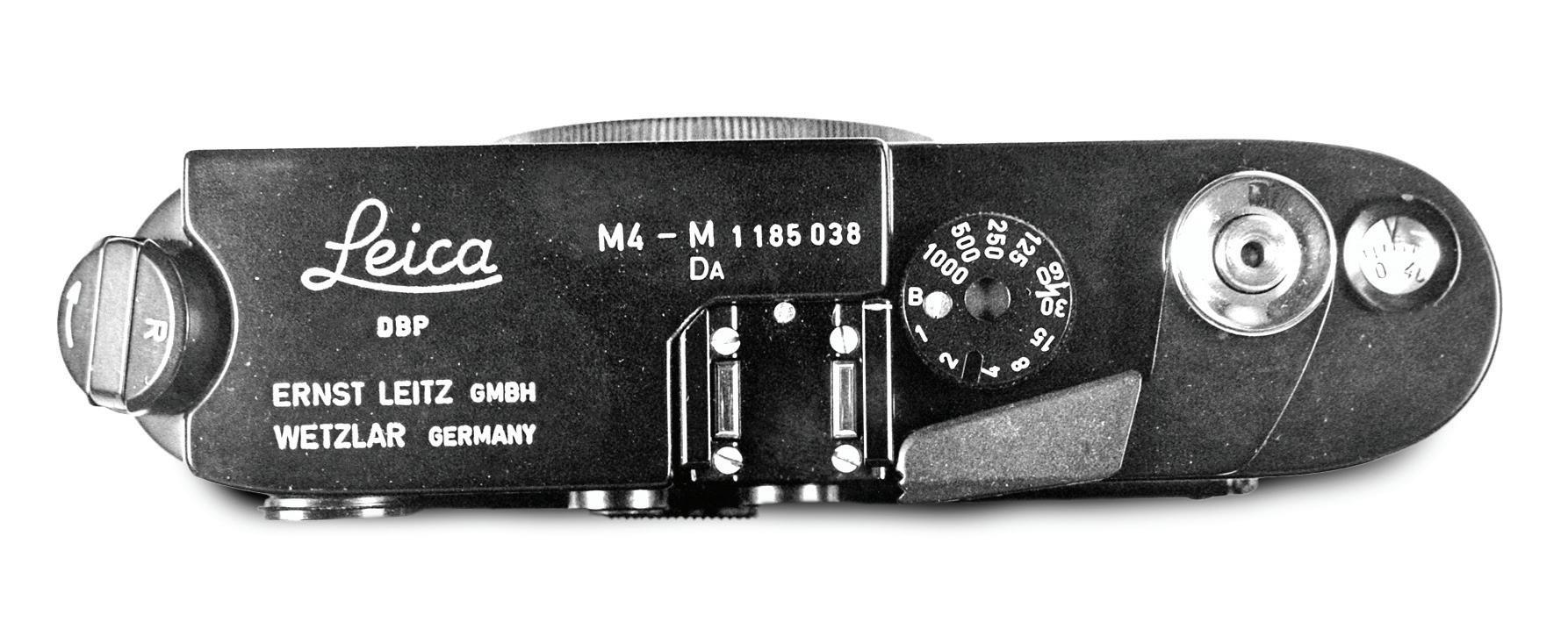
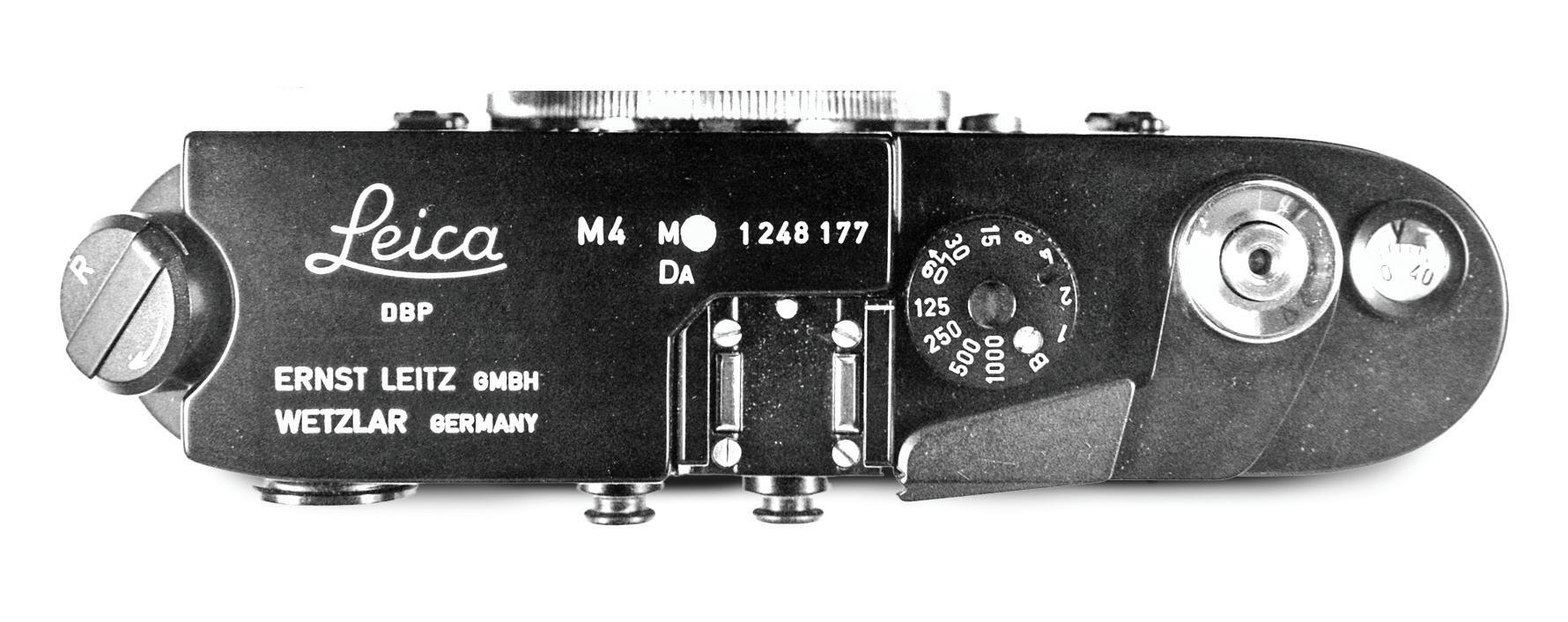
Later black paint examples exist as the M4 (10402). The M4-M and M4 MOT ( both as 10401) were configured to accept the late type E. Leitz, Inc. New York electric motor drive. Cameras constructed as a result of parts usage subsequent to the Zeiss Leitz fundus camera order were offered in the American market as black M4's usually with marker strip capability. Please refer to the illustrations.
serial no. 1185038 (1968)
serial no. 1181881 (1967)
serial no. 1286584 (1971)
serial no. 1267219 (1970)
serial no. 1267481 (1970)
serial no. 1248177 (1969)
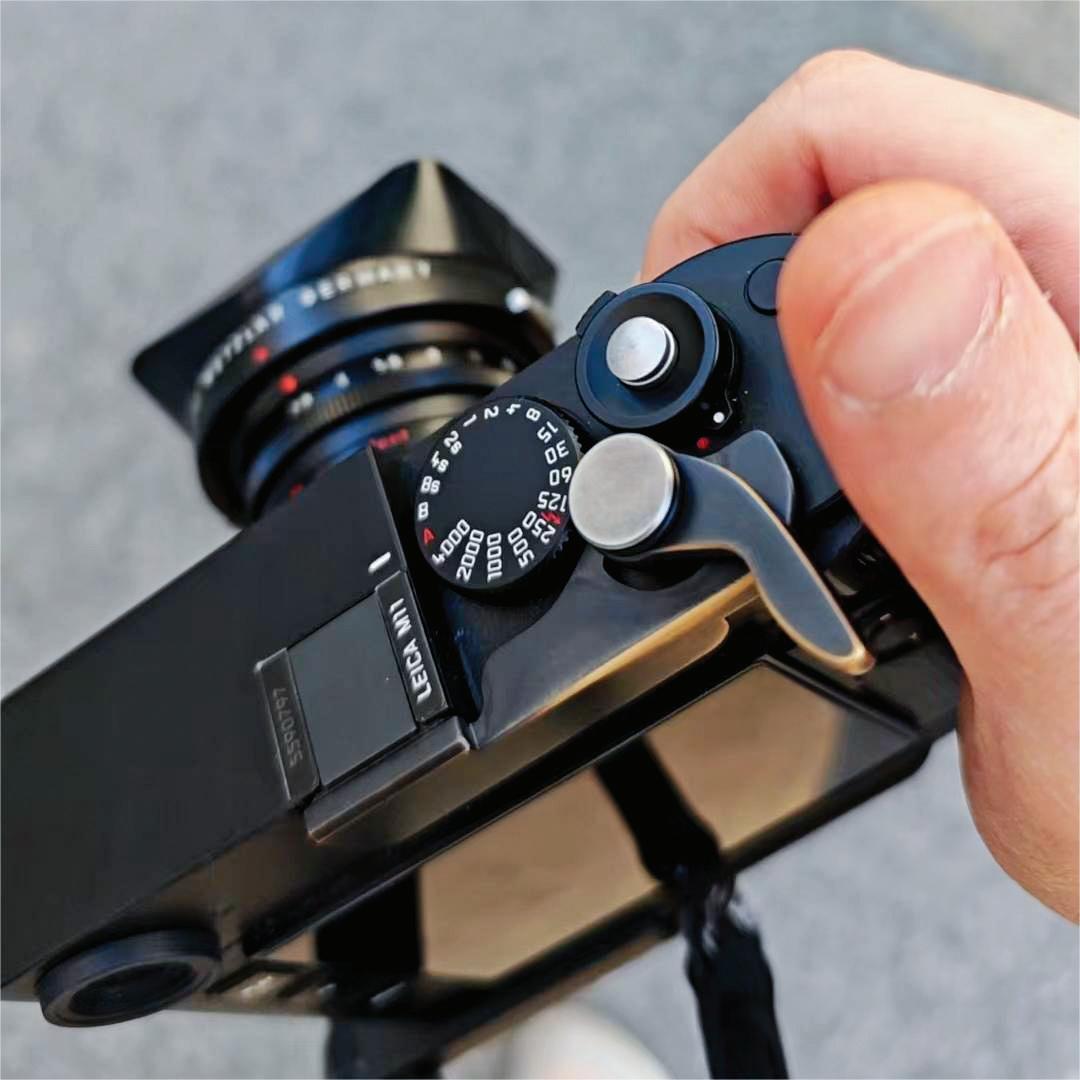
The IDS Foldable Thumb Rest for Leica M
by ED SCHWARTZREICH
Recently I came across the IDS website, idsworks.store. I don’t remember whether this was via an ad or a link from an article. In any case, the product displayed caught my eye immediately.
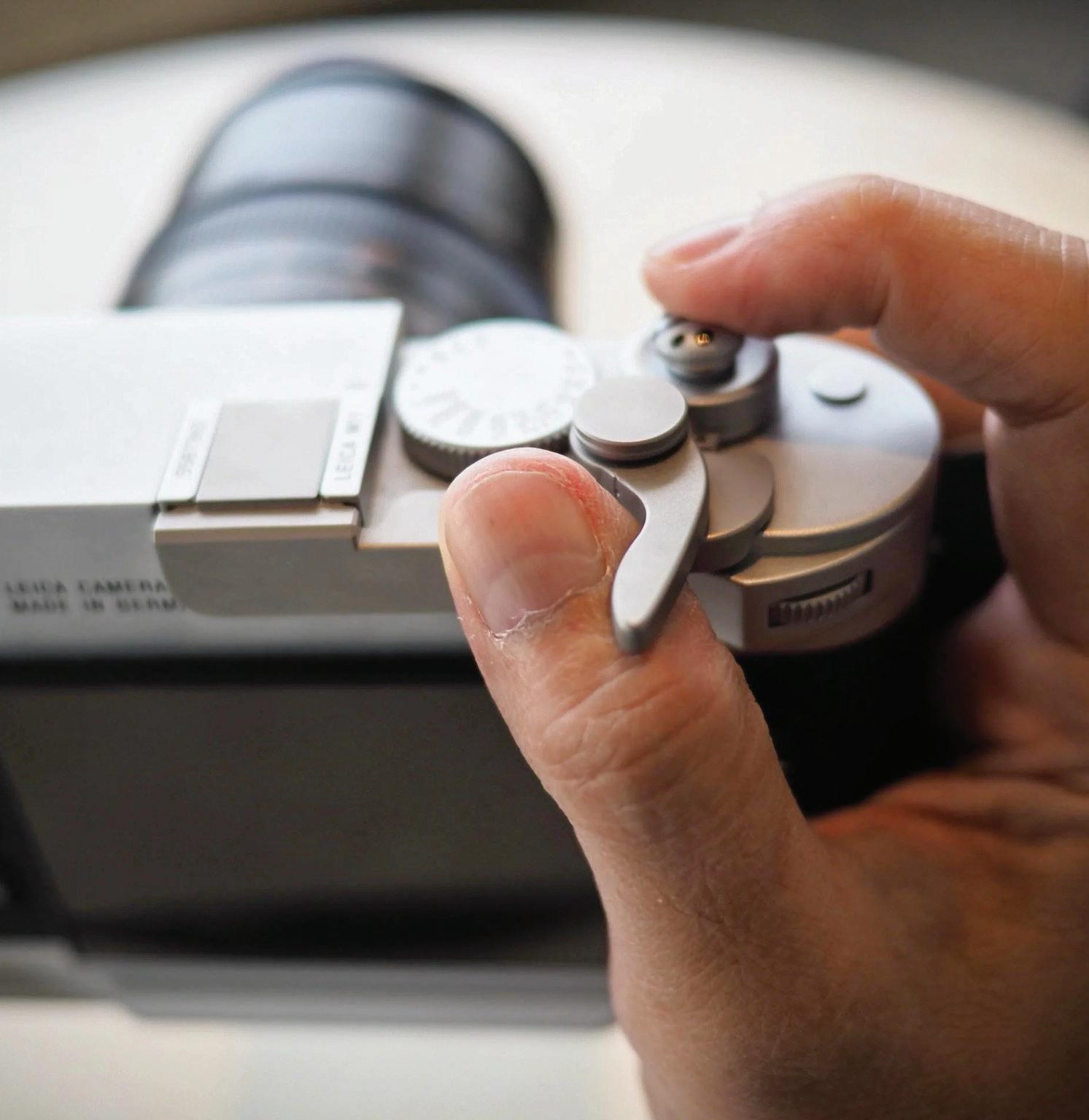
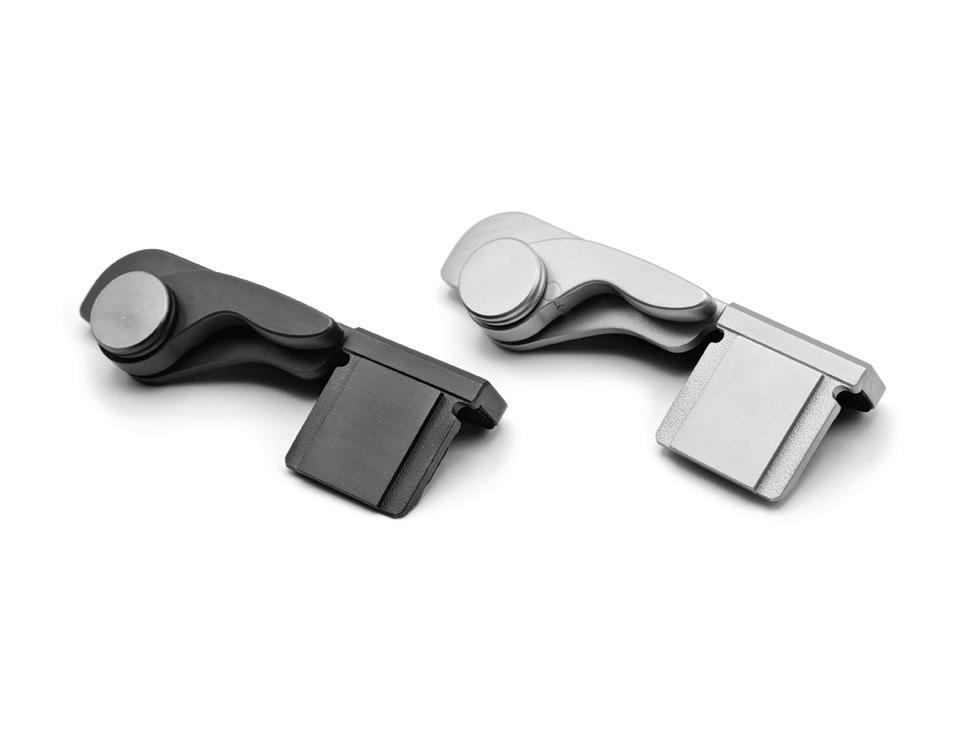
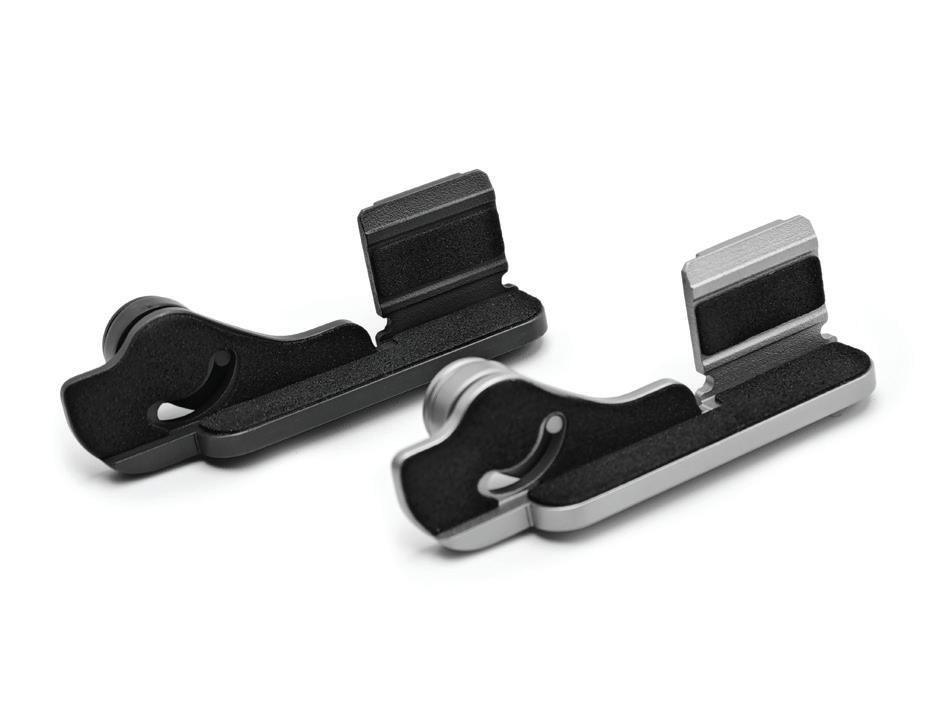
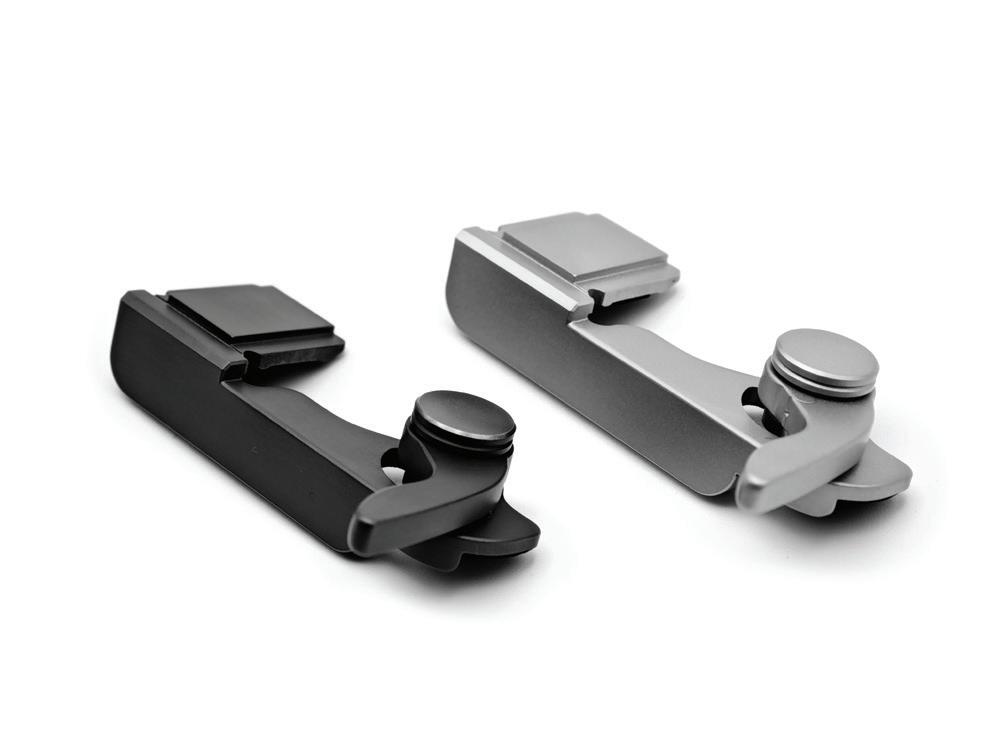
Those who know me well know that I have almost a fetish for add-on Leica-related products that actually do something necessary. In the case of this flash-shoe-mounted thumb grip, it performed an important function better than most: it allowed the photographer who cut his teeth on film cameras, especially Leica Ms, to stabilize the camera in a right-handed grip, fingers around the curved right side of the camera (as seen from the rear) and thumb pushing laterally against the faux wind-on lever. A regular Thumbs Up is nowhere near so secure feeling. And, as the website says, using this product prevents the pommel of a regular Thumbs Up (or clone) from poking into the belly of the photographer when the camera rests there on its strap between shots. You simply close the thumb grip to prevent this.
I already own two thumb rests that function this way: they are made by Hobby Japan and are the spitting image of the wind-on lever of my M2. They are beautiful, expensive, and hard to find. They have the added advantage of disguising your M10 or M11 as a film camera, so that one does not frighten the public. “Oh, what a nice old camera you have there; is it an antique?”
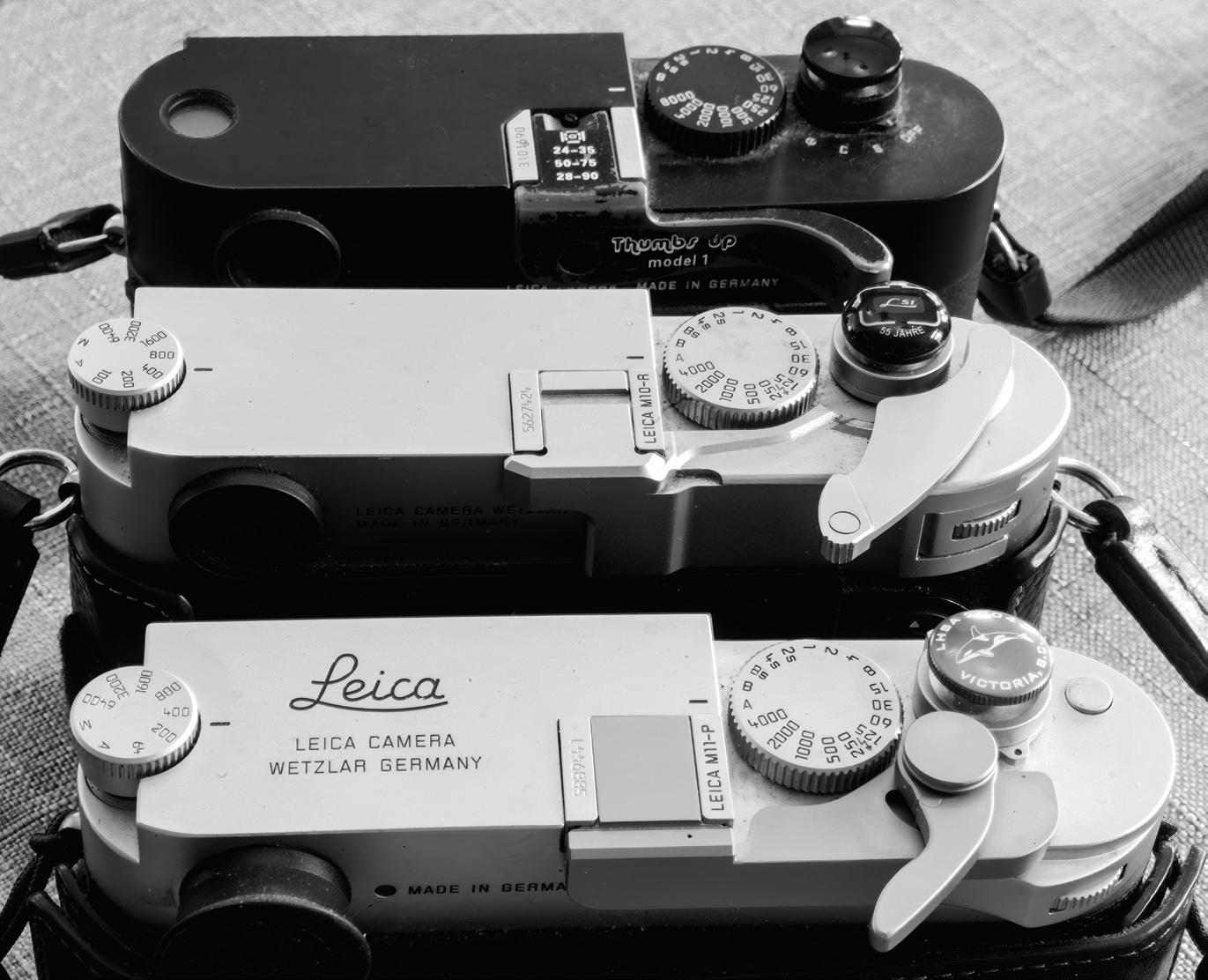
This new thumb grip is all business. It is very sturdily made, smooth to operate, and effective. From my point of view, it is what I need on my M10's and M11, and its price point is basically competitive with the current Thumbs Up and significantly cheaper than Leica’s own offering. Above is a quick photo I made of one of Tim Isaac’s original Thumbs Up on an M8, then a Hobby Japan folding one on an M10-R, and closest in the IDS model on an M11-P. I don’t have an M10-D to show.
And about that M10-D. When it came out, there was a noisy group online that disparaged the faux wind-on as an affectation, or worse. For myself, that wind made eminent sense for the reasons spelled out above. If only, however, Leica had made that wind a switch to
One of Tim Isaac’s original Thumbs Up on an M8 (top), then a Hobby Japan folding grip on an M10-R (middle), and closest to the camera, is the IDS model on an M11-P (bottom). I don’t have an M10-D to show.
perform some useful pre-exposure function when engaged, the result might have been near perfection in my book.
This new thumb rest is made of stainless steel, so it is unlikely to fail. There is a black model made from treated brass, also with a stainless part to maintain strength. Neither of them exactly matches the silver chrome or black finish on the latest Leicas, but they are close enough not to draw undue attention. Best of all they work as advertised!
Downsides of this new thumb rest are those of all thumb rests: no entirely appropriate place to add on an external viewfinder when needed (IDS is working on this), and especially to use a Visoflex which requires an electrical connection. That's about all I can think of.
Henry Tse, the owner of IDS has this to say:
IDS (Initial Design Studio) was established on June 16th, 2022, with its focus on producing camera-related accessories. Our first product was a grip for the Leica M10 series which started as a personal project as I could not find a product on the market that fully satisfied me. As of today, we now produce accessories for pretty much all Leica M / Q / SL series products with coming up products for Hasselblad and Fujifilm medium format cameras.
As an entrepreneur with no capital for investment and understanding these difficulties, I decided to consider IDSworks as a single brand for myself. I consider IDSworks.store as a small platform to provide opportunities for like-minded local craftsman to showcase their work and the fruits of their labor, while earning their fair share in the global market. For example, our hand carved grip pad was made by a local craftsman.
When the Leica M10-D was introduced with its “film advance” lever as a thumb grip, we thought this was a brilliant idea, and believed that many Leica users coming from the analog era would want
something akin to this on their normal digital M cameras. We actually started development on something similar which required replacing the shutter button cap and making some modifications. But after careful consideration we decided to drop that idea as we were not sure whether it would void the warranty from Leica. While we were thinking of other possible solutions, we came across “Uncle Handle” via a friend in a local Leica group. Uncle Handle, who some may be familiar with from eBay, is an experienced watch maker of 30 years and a local craft sman here in China.
Uncle Handle had been a Leica camera enthusiast for 14 years. It turns out that he had similar thoughts about a well-designed thumb grip as well. Coming from a design background I thought his ideas of utilizing the empty space between the shutter speed dial and shutter button was brilliant and also visually balanced. After he understood our mission, we reached a partnership agreement to bring this product to market globally via our platform, and IDSworks became the sole global dealer. These thumb grips are totally handmade and there is therefore a longer production time, yet it’s worth it. The fi nal products that are sold globally now are actually the sixth generation with many improvements prior to this fi nal version.
Such improvements include:
• fi ne turning the resistance
• the open angle
• revised mechanical design
• upgrading the mini ball bearings
• assembly method improvements
• making this product available for all Leica M and Q series
With those artists / craftsmen that choose to work with us, we do not believe in achieving the lowest price by cutting down material costs, product quality, or simplifying design to achieve a lower production cost. Instead, we respect good design, continuous innovation, and fi ne workmanship, and we believe these qualities should be the key to brand recognition and a positive word-ofmouth reputation in this niche market.
To be honest we have a lot more interesting ideas about products, but we are such a small team, we have to proceed slowly and carefully. Th is process is however really enjoyable as we are meeting new friends with similar interest globally.
Currently IDSworks thumb grips are available for: Leica M10 / M11 / M240 / M9 / M8 / Q3 / Q2. They are hand-assembled in China, and after that work, which takes a week, shipping is quite rapid. IDS also has several other products on its website. Look at their great-sounding modular grips, for various Leicas.