Inquiries about membership, upcoming events, replacement Viewfinder issues, and special orders should be directed to:
Richard Rejino, LHSA Executive Director 14070 Proton Road, Dallas, TX 75244 info@lhsa.org, (972) 233-9107
Viewfinder is the official publication of the LHSA - The International Leica Society, a nonprofit organization incorporated in the state of Delaware. Copyright 2020. Reproduction or use of any material contained herein without permission of the Society if forbidden.
Leica is a registered trademark. It and other trademarks pertaining to the Leica System are the property of LEICA CAMERA, USA, INC or LEICA CAMERA AG. ISSN 1543-8732
the bag that took four generations of photographers to make by Brad Husick
2022 spring shoot colorado springs by Blake Mistich
the silk roads against the flow by Willy Truyens
PRESIDENT Brad Husick Medina, WA
EXEC.VICE PRESIDENT
David Knoble Charlotte, NC
VP / TREASURER
William Fagan Dublin, Ireland
IMMEDIATE PAST PRESIDENT
Keith R. Sbiral Chicago, IL
PRESIDENT EMERITUS
James L. Lager
Rolf Fricke
Bill Rosauer
APPOINTED OFFICERS
Viewfinder Editor
Bill Rosauer Buffalo Grove, IL
lhsaeditor@yahoo.com
Associate Viewfinder Editor
Ed Schwartzreich Waterbury, VT
EXECUTIVE DIRECTOR
Richard Rejino Dallas, TX
22 early leica bodies, lenses, users & films by Roland Zwiers
31 oscar one zero five = millions by William Fagan 36 what's in a name, or, how do you spell oscar? by Bill Rosauer
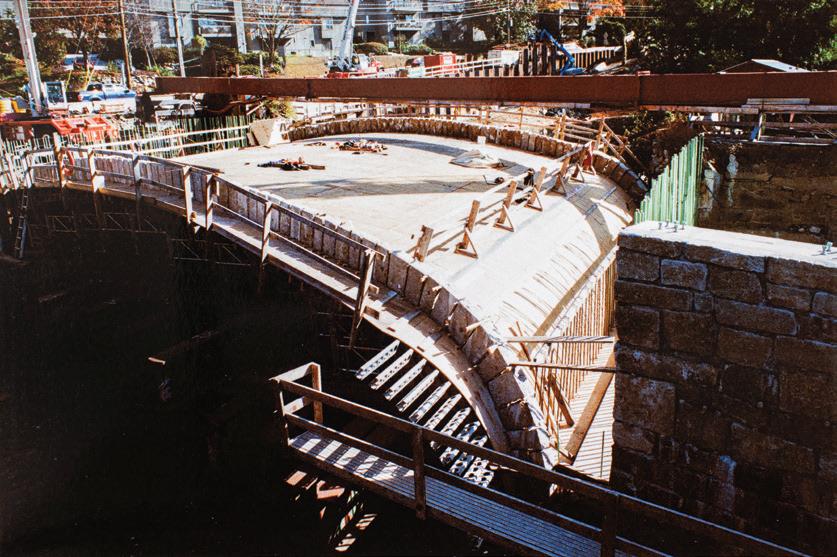
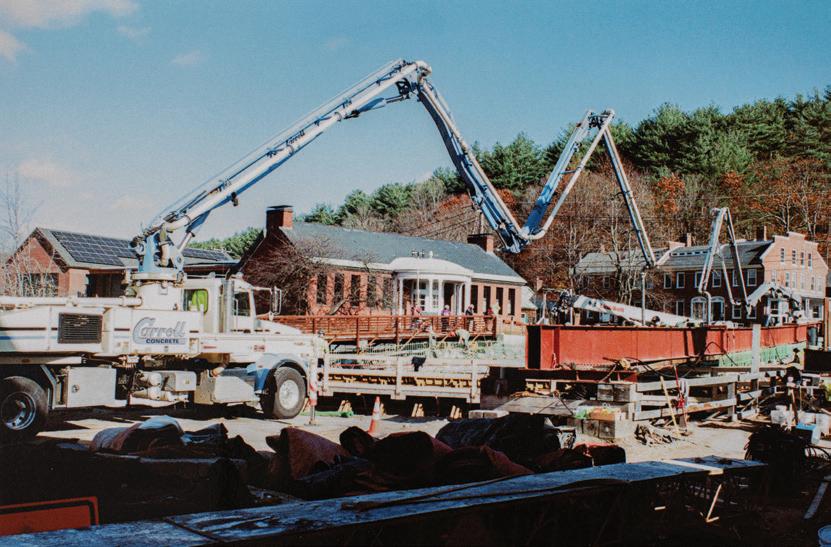
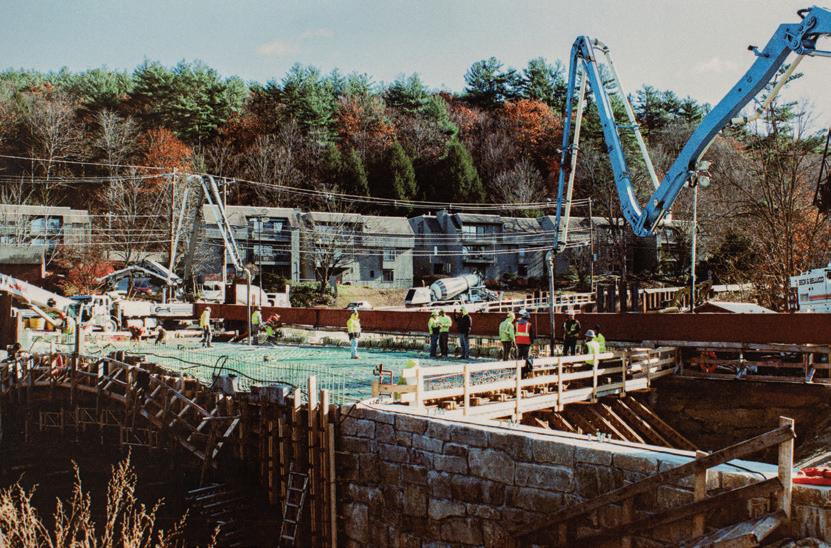
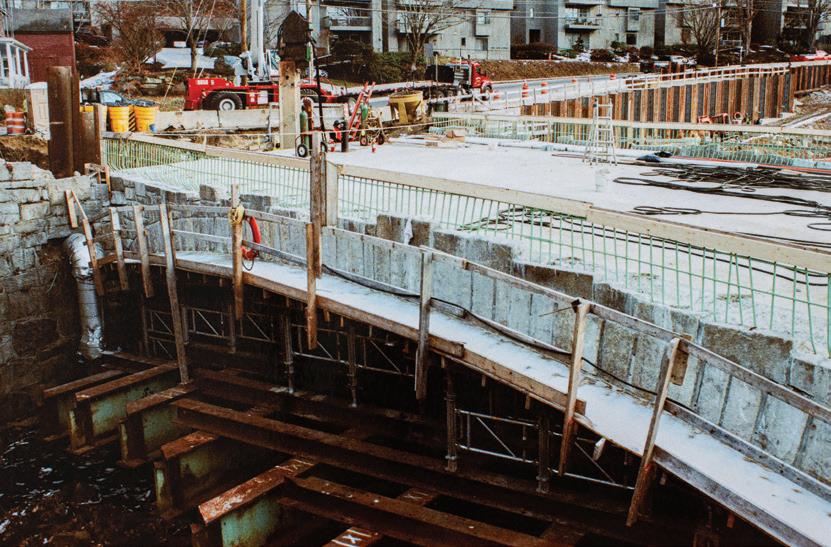
44 the bridge story, part iii by Dick Gilcreast
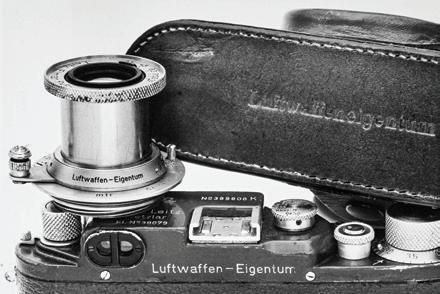
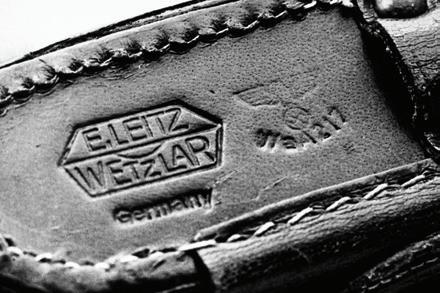
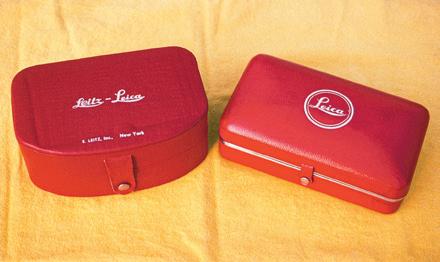
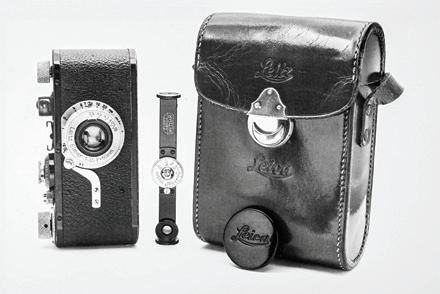
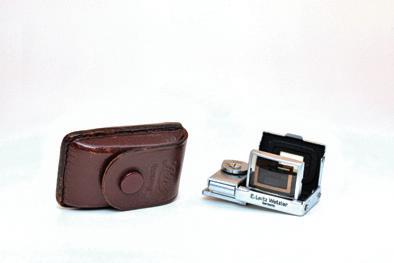
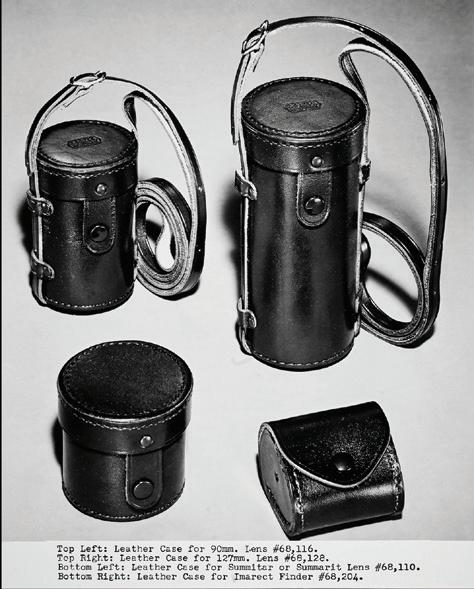
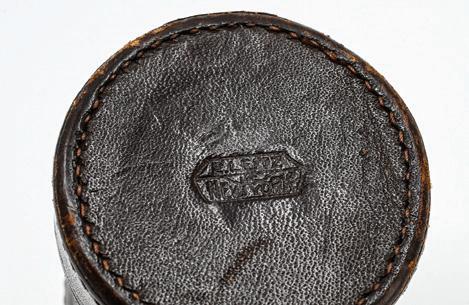
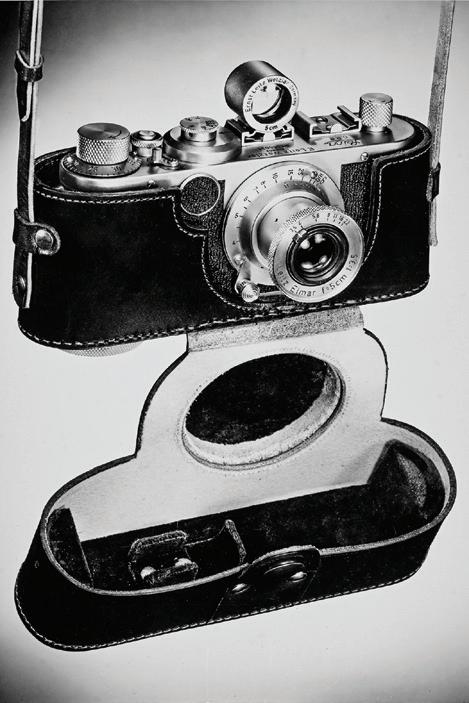
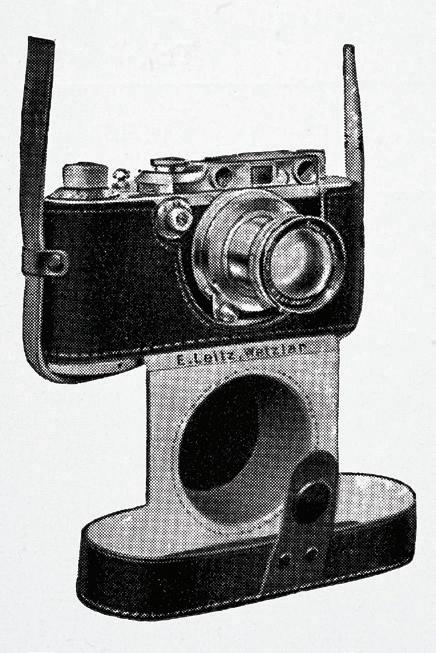
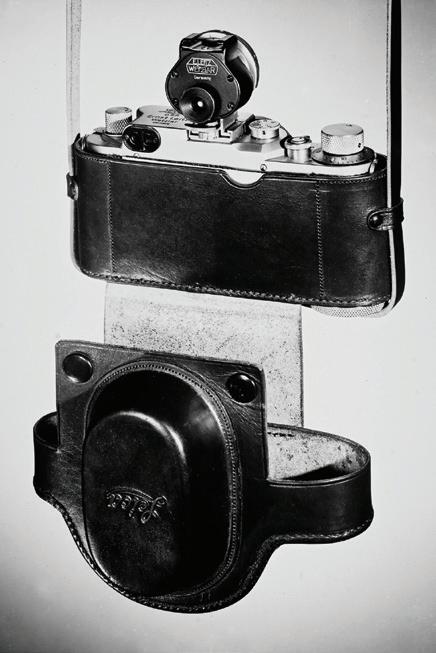
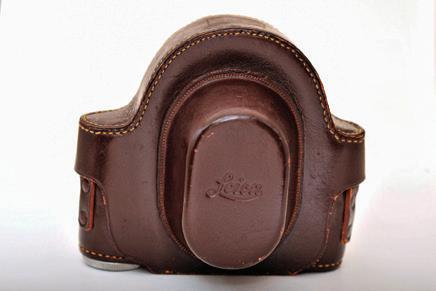
48 a case for your leica by Jim Lager
info@lhsa.org
ELECTED DIRECTORS
Class of 2022
Andrew Godlewski Middletown, RI
Bill Royce Kirkland , WA
Kirsten Vignes Minneapolis, MN
Philiip Blair Kenmore, WA
Class of 2023
Sandra Eisert Redmond, WA
Ashwin Rao Seattle,WA
Robert Levite Coral Gables, FL
Class of 2024
Wilbur Norman Sante Fe, NM
David Spielman New Orleans, LA
Amitava "Chats" Chatterjee Manassas, VA
John Pegouske Dearborn, MI
SENIOR DIRECTORS
Gary Hough Woodinville, WA
Douglas Drumheller Pittsburgh, PA
Alan Weinschel Roslyn Heights, NY
CONTRIBUTING EDITORS
James L. Lager Closter, NJ
S.R. Gilcreast Jr. Peterborough, NH
S. Williis Wright Port Washington, NY
A LETTER FROM THE PRESIDENT
by BRAD HUSICK
Your International Leica Society has achieved a new milestone - we have surpassed 3200 members worldwide, nearly half of whom live outside the United States. Part of this is tied to the recent financial success of Leica itself, and part, we hope, is that we’re providing a place where all Leica photography enthusiasts want to be.
Just a few weeks after opening registrations for the upcoming Annual Meeting and Conference in Dublin, Ireland, on October 13-15, we are nearly 60% sold. If you can join us in Dublin, please register soon so you can secure a spot. We have big announcements coming up in Dublin, so stay tuned!
We have announced our annual Photo Grant program to be awarded at our Annual Meeting. This year, we have a theme that matches Leica’s “The World Deserves Witnesses” and focuses on photojournalistic work. Leica Camera, Inc. has generously added a Leica M10-R camera and 50mm Summilux ASPH lens to the prize package for the winner, along with our $5,000 grant. The program is open worldwide, and we will accept up to 50 applications. Details are on the website.
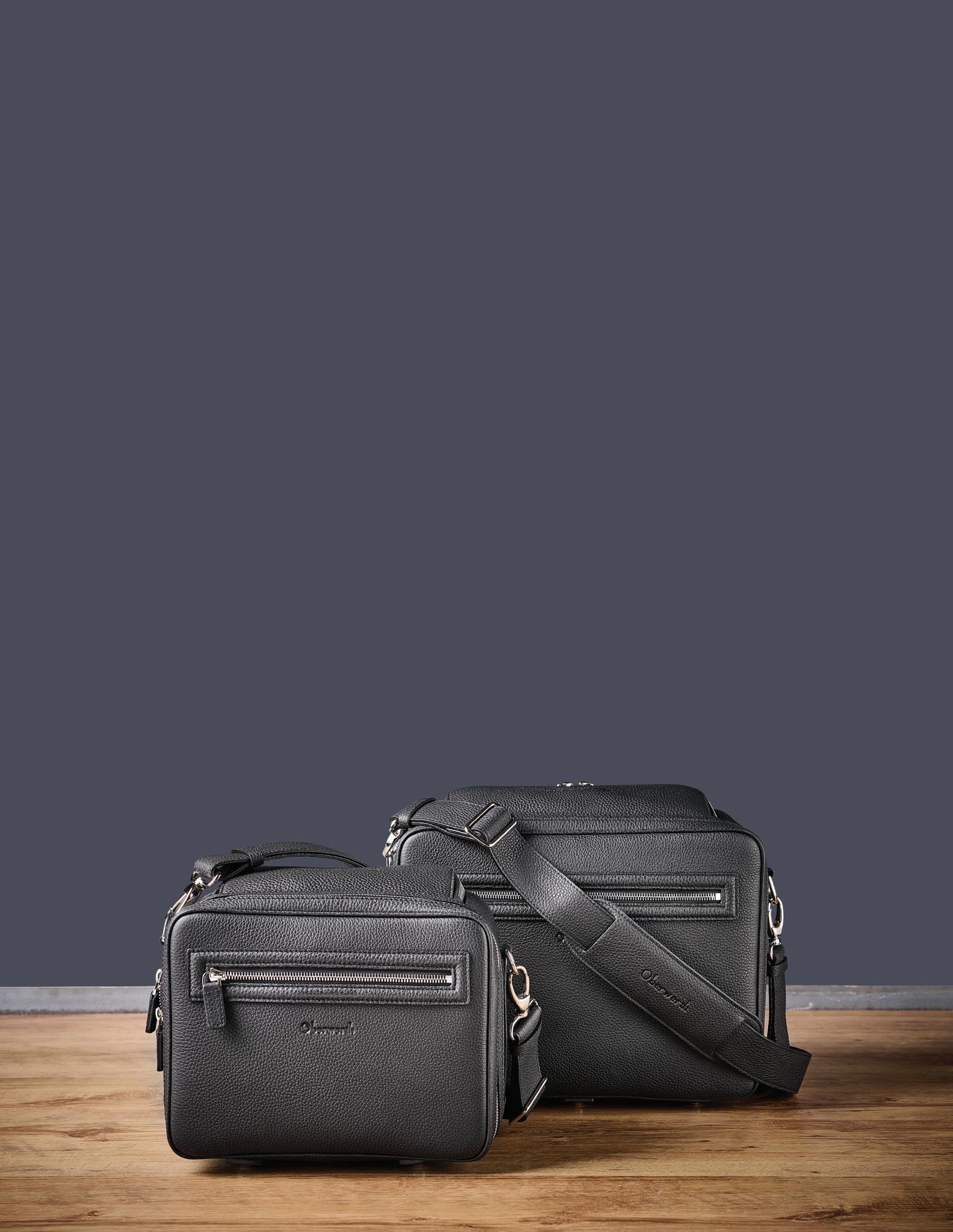
The two unique Leo bags from Oberwerth, co-designed by LHSA, are now available at Leica stores. We spent a year designing them and worked through seven prototypes before optimizing the design. Oberwerth, a Gold-level corporate sustaining member, is donating a portion of the proceeds. Details on the bags are on the website.
Our acclaimed webinar series continues with special guests David Knoble and Jason Schneider. Check out the two dozen past webinars on the website - a benefit of your membership. We started the series with a four-part lesson on Lightroom that you might want to watch and refresh your skills.
We hope you enjoy this Viewfinder issue and continue to witness your world with your Leica.
In your service,
Brad
A LETTER FROM THE EDITOR
by BILL ROSAUER
Wow, I’m sure by now you have heard the big news about the record-breaking auction of NullSeries camera 105 at the recent Leitz Photgraphica Auction in Wetzlar. With buyer’s premium, the camera fetched a record 14.4 Million Euros! Other Null-Series cameras have sold for significantly less in recent years. William Fagan was at the Leitz Park auction in person, and we have his report of the exciting goings on in this issue. I have a related article about one controversial feature of this camera, namely the engraving on the viewfinder with the name Oscar Barnack. I explore the various theories about how this engraving came to be on the camera, and how Barnack’s first name was spelled. It brings to mind the old Oscar-Meyer commercial from when I was a kid, “My baloney has a first name, it’s O S C A R”! I also explore a bit of the history of the LHSA’s precursor organization, the Barnack Leica League, founded by Jim Forsyth and Barnack’s son, Conrad. I hope you will enjoy the story!
Also in this issue, we have the introduction of a new camera bag especially made for the LHSA by Oberwerth, the Leo. Our president, Brad Husick, worked on the design with the team from Oberwerth, and the result is a beautiful leather bag with many innovative features. Brad presents the story of this labor of love in this issue. The bag comes in two sizes and will be available through select Leica dealers and directly from Oberwerth.
Blake Mistich reports on our recent Spring Shoot in Colorado Springs. The event was well attended and offered some beautiful scenery for photography and a chance for LHSA members to enjoy each other’s company after the long isolation of Covid. Looking forward to seeing everyone in Dublin this October. It looks to be a grand time with lots to see and do. William Fagan is planning a wonderful event, and hopefully we will see many of our overseas friends there as well.
Willy Truyens, of Belgium, takes us along on his epic journey exploring the fabled Silk Road trade route made famous by the exploits of Marco Polo. Silks, spices and all manner of exotic goods made their way from the ancient capitals of China, across vast deserts, steppes, rivers and mountains to the consumers of Europe. Not only goods, but cultures flowed back and forth across the route for literally hundreds of years. Willy tells us his story retracing this ancient route, along with some wonderful photography with his Leica in hand.
Roland Zweiers has the first part of a series of articles on the early Leica cameras, Leica users, and the film that they had available to them in those early years. This first article covers the years from 1913, when Barnack was working on the Ur-Leica to 1926, when the Leica really started to make an impact in the photographic world. Ed Schwartzreich, our resident Dr. Paul Wolff authority, has worked extensively with Roland on this article. Many do not realize how important the availability of quality film stock was to the success of the Leica. When Barnack first developed the Leica concept by doubling the standard motion picture format of 18x24 running vertically through the motion picture camera, to 24x36 travelling horizontally through the Leica, the film stocks then available were the biggest limiting factor to the concept of small negative, big pictures. Roland traces the development of film stock available for 35mm cameras, and how critical it was that these films rapidly improved over this period. He also traces the development of the Leica from the Ur, through the Null-Series and the early years of production and what films were available for those models. I think you will enjoy this story and gain useful insight into the early days of the Leica and 35mm photography thanks to Roland’s article.
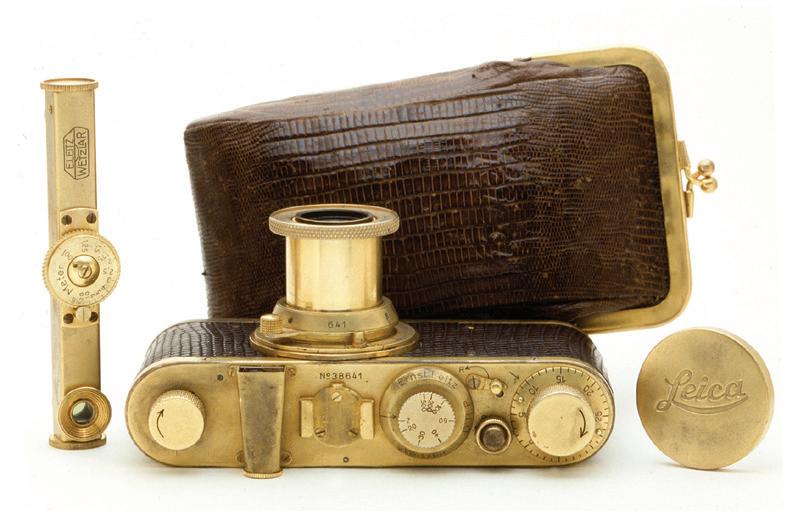
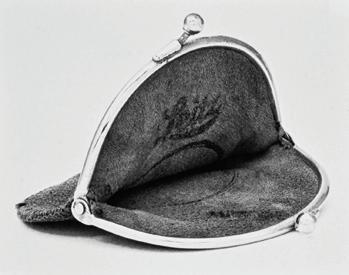
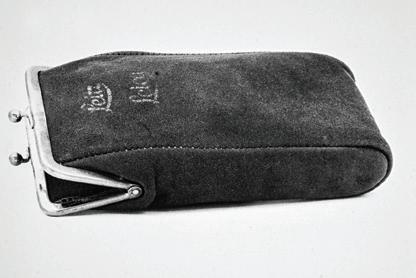
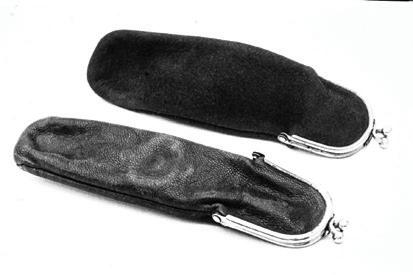
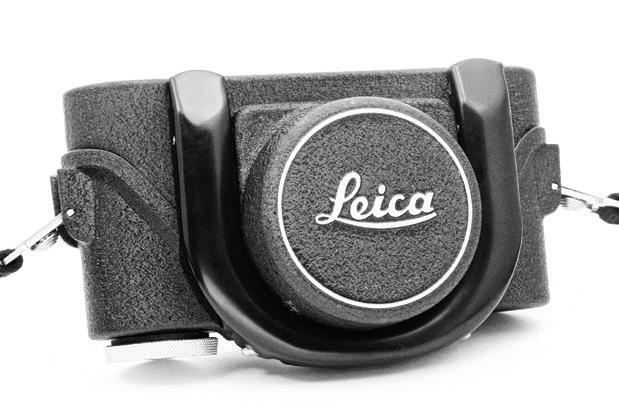
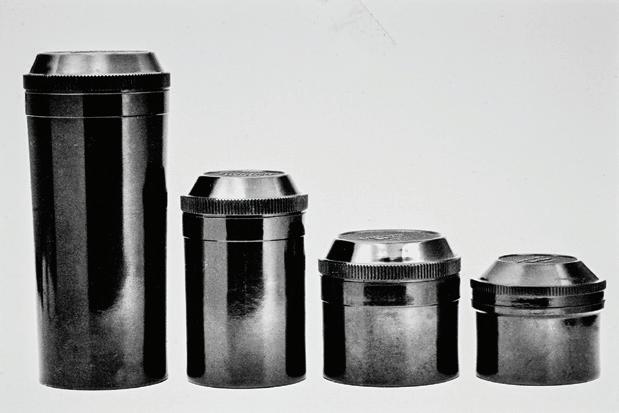
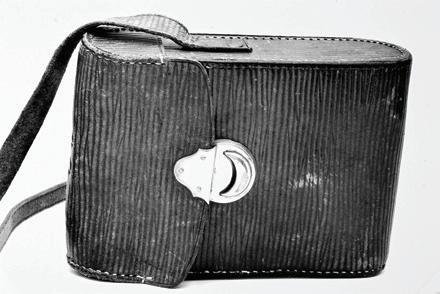
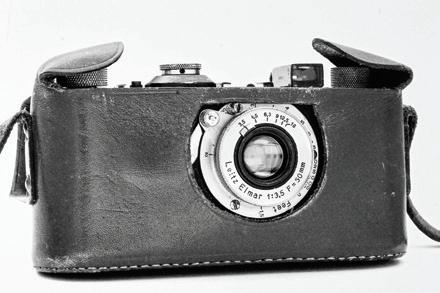
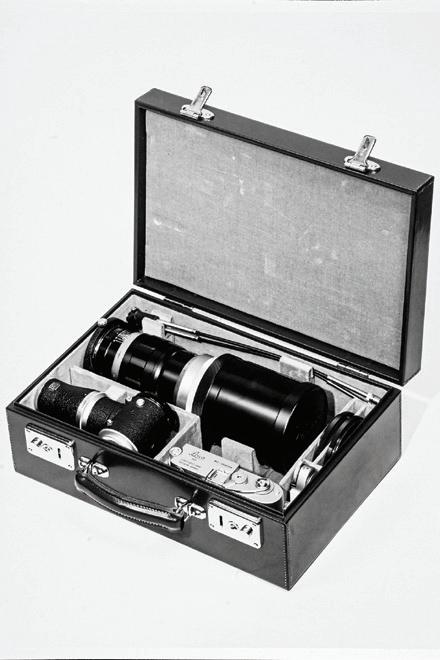
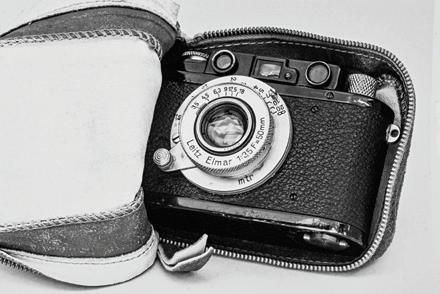
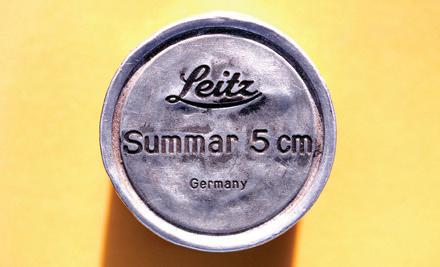
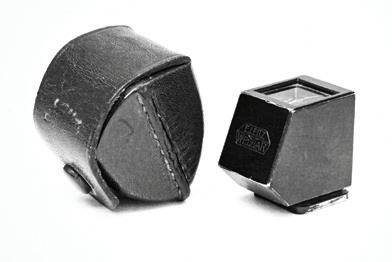
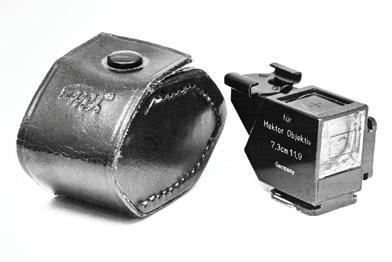
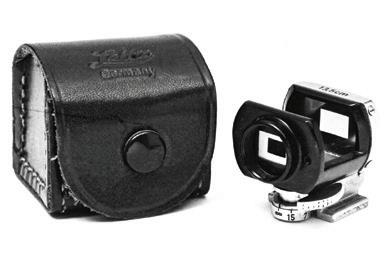
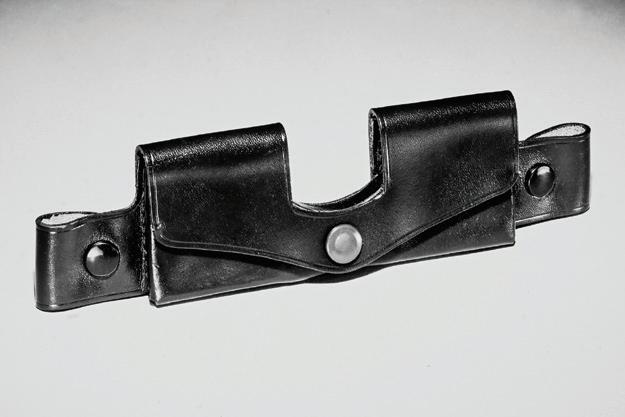
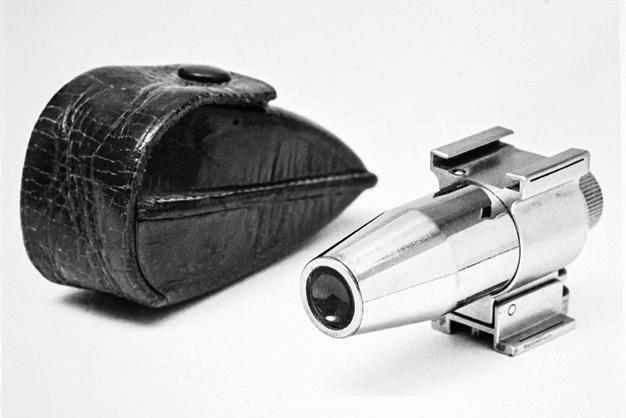
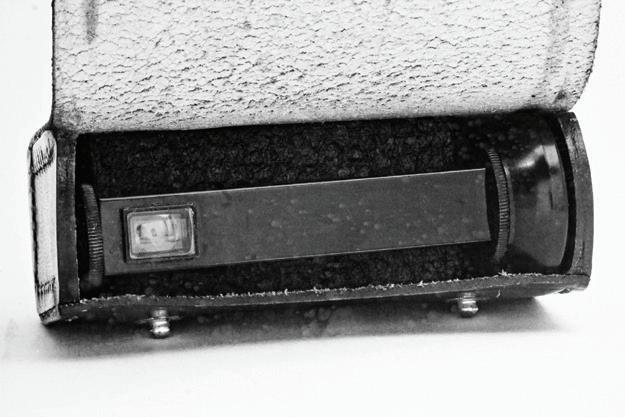
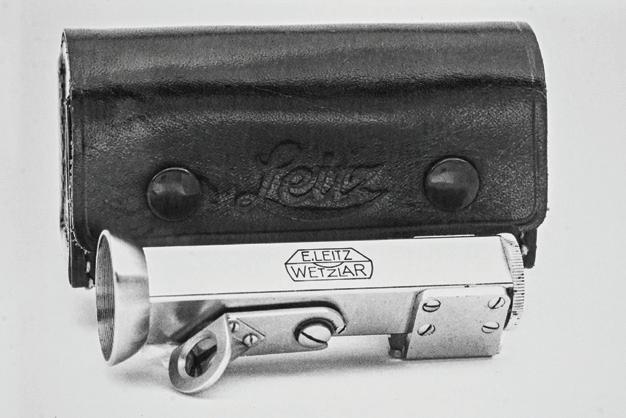
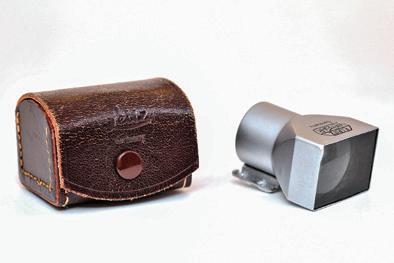
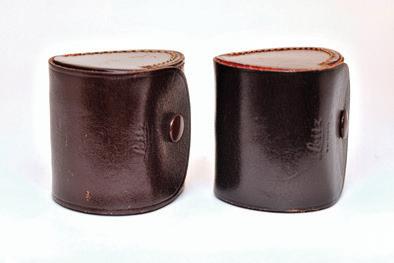
Jim Lager shares some unique and little-known cases available for the Leica, from the earliest purse type with a bow clip, to the ever-ready cases, to the famous Bakelite lens cases in screw mount days, the special cases for long lenses like the 400 1:5 Telyt, leather finder, lens and camera cases from the 1930’s to the 1950’s. Part of Leica’s success over the years, from the very beginning, was in having a robust and innovative line of accessories for the Leica. This was all part of the Leica System, which allowed the full exploitation of the Leica from closeup use to extreme telephoto photography. No other camera system was as diverse, comprehensive or flexible as the Leica System.
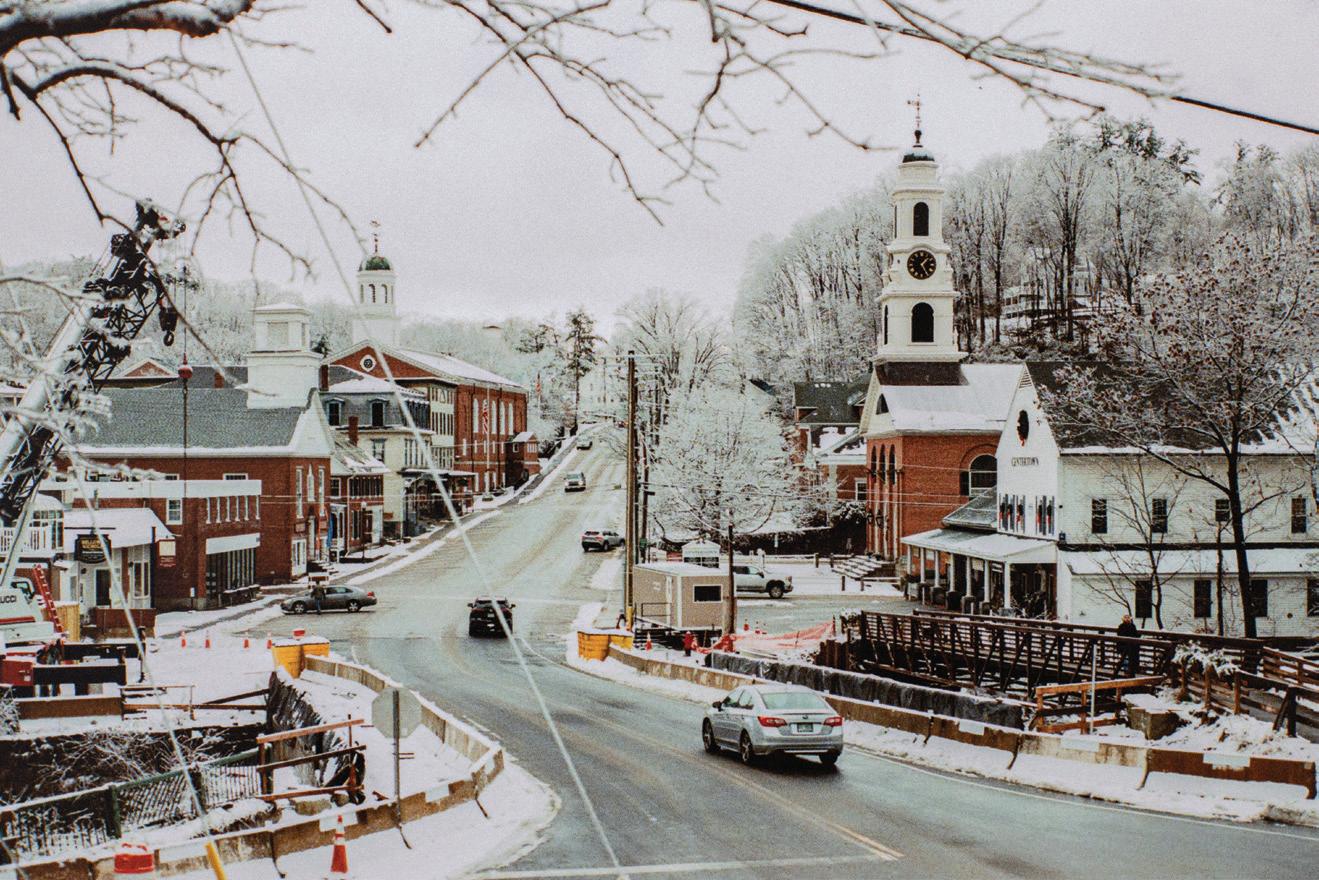
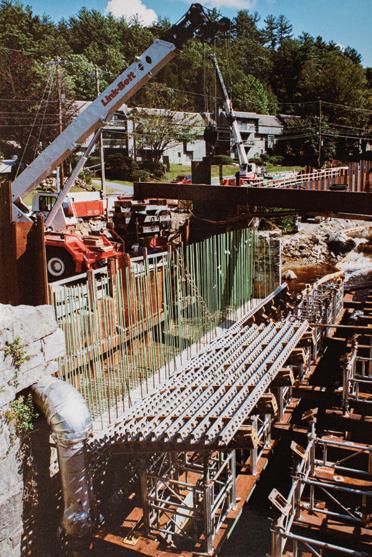
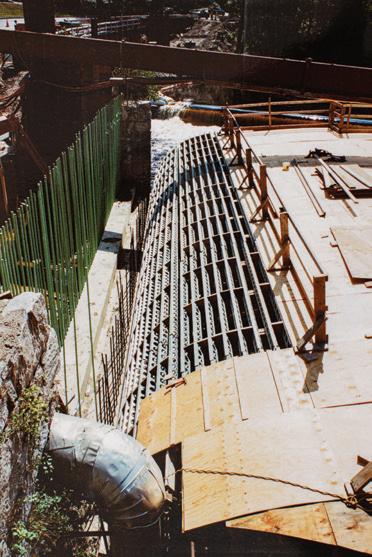
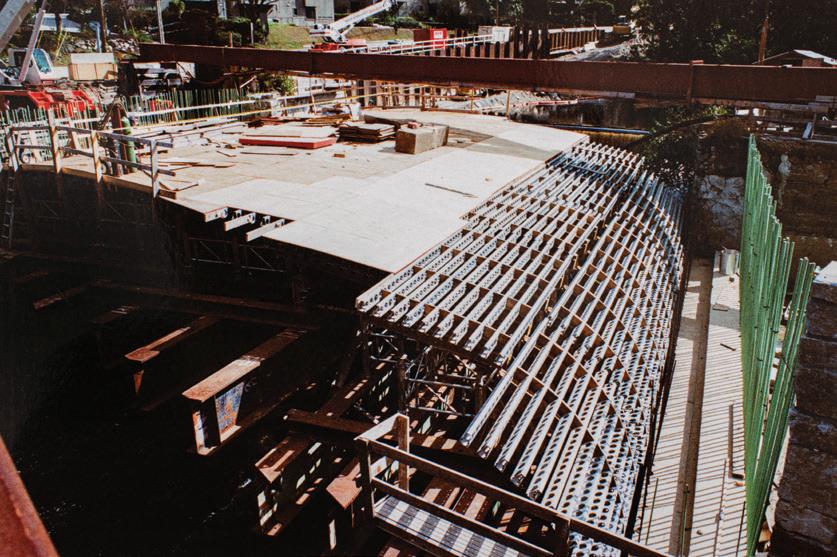
Dick Gilcreast brings us the final stage of his Bridge Replacement Story. It is amazing how Dick’s Leica has documented the construction of this new bridge which will serve the people in town for many years to come. Documentation, another one of the roles in which the Leica excels!
Bis nächste Zeit! - Bill
The Bags That Took Four Generations of Photographers to Make
by BRAD HUSICK
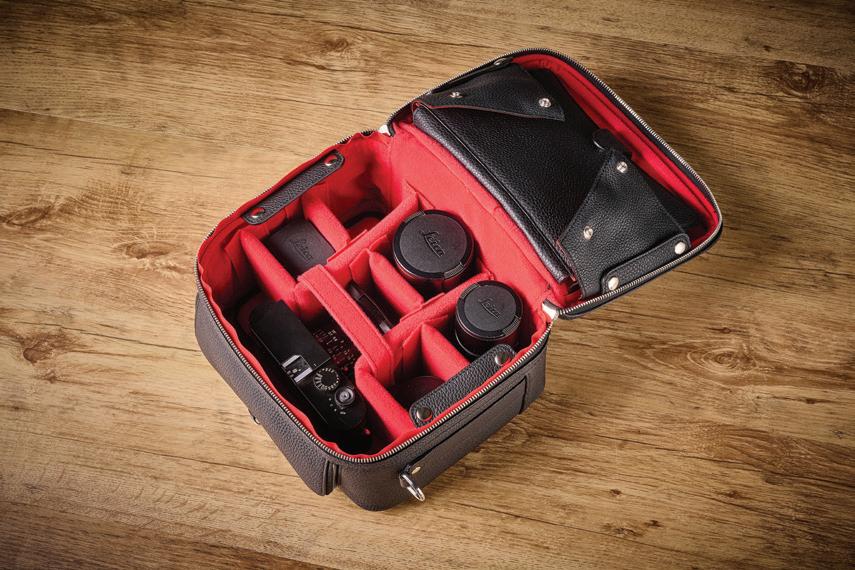
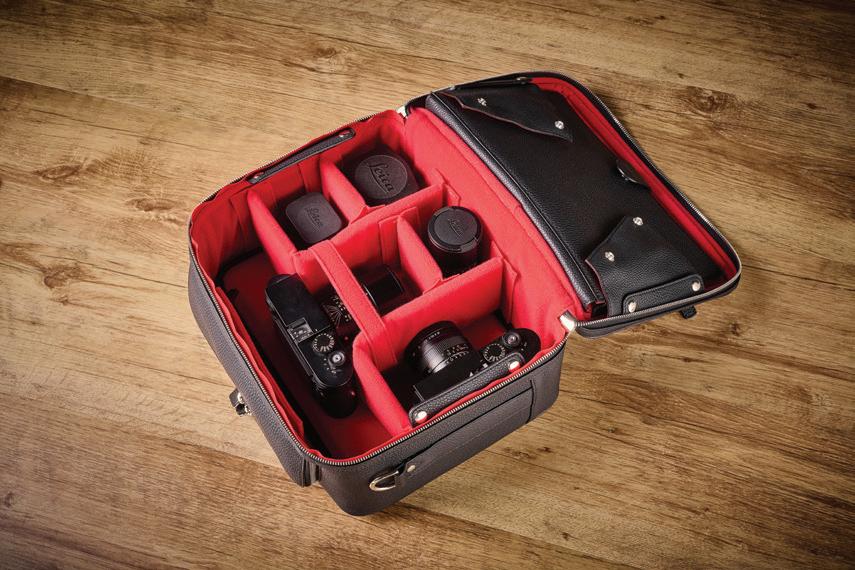
The Leo "Correspondent"
The Leo "Voyager"
Alittle more than a year ago, when I was serving as Vice President for the International Leica Society, I wrote to the team at Oberwerth, with an idea for a new type of camera bag. The concept was for a bag that rests comfortably on your shoulder and hip, with quick access to your camera and full access to several lenses and other accessories.
Bags with flaps sometimes called “messenger style” have always confounded me as you have to open the flap before reaching your gear. If you tuck the flap on the back, your bag is wide open to the elements and prying hands. Oberwerth makes some of the most beautiful bags in this style, but they never worked well for my carrying. The new bag concept features a quick-access panel on top that allows you to grab your camera quickly.
Much to my delight, the CEO and founder of Oberwerth, Regina Immes, was excited about the idea. Together with her design team, we worked on the details, going through four different prototypes at first to address the little decisions that make the difference between a nice bag and a truly great design. One example we worked on was the zippers - we needed large enough zippers to run smoothly around corners, but they couldn’t stick out and scratch the gear as it was taken in and out of the bag. Oberwerth developed an inner layer of silky fabric that solved the problem. We made the prototype from beautiful leather, but the bags’ weight was an issue. We chose a lighter and softer leather that is even more luxurious. In the end, we went through seven prototypes before finalizing the design.
Another small but important detail is that the new bags incorporate a hidden pocket in front for an Apple AirTag. I love the concept of the AirTag but never understood why you’d want to advertise that you have one on your bag with some fancy keychain attachment. That invites the thief to cut off the AirTag and run.
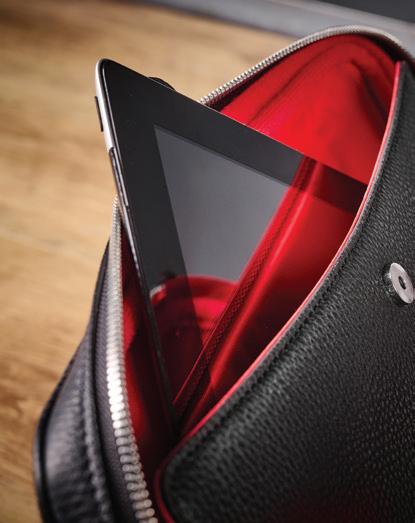
As we worked on the bag, it became apparent that having two sizes of the bag would work well depending on the use cases. The larger and smaller bags can accommodate the Q or M cameras and lenses and, with quick removal of an inner padded layer, also house the SL2 system. The smaller bags can also carry an iPad Mini and the larger one a MacBook Air or MacBook Pro 13”.
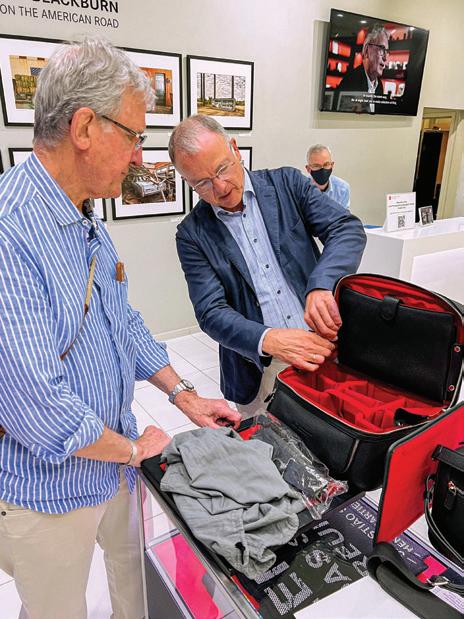
(top) Stefan Immes, COO of Oberwerth, demonstrates the Leo bag to past LHSA president Gary Hough at the Leica Store Bellevue, with Brandon Andre, store manager in charge.
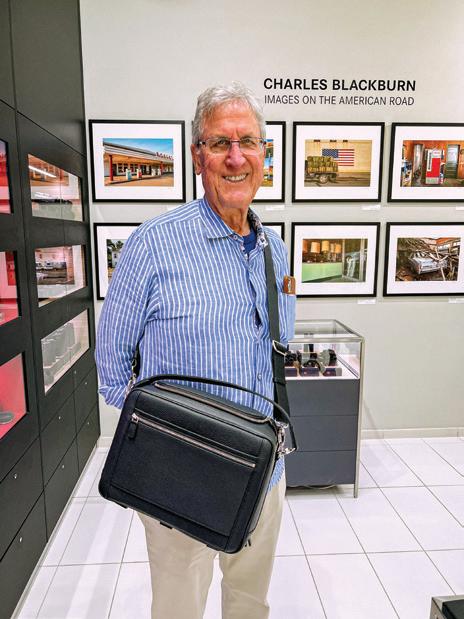
(middle) Past LHSA president Gary Hough models the new Leo Voyager bag at the Leica Store Bellevue
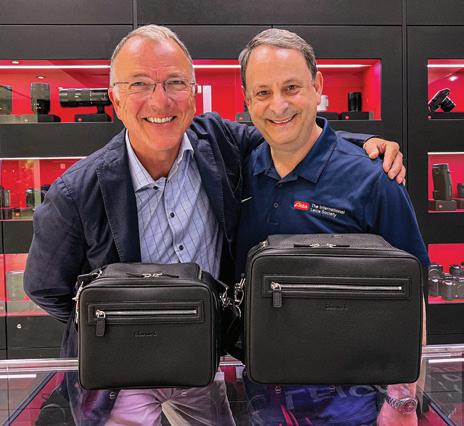
(bottom ) Proud bag parents Stefan Immes, COO of Oberwerth, and LHSA President Brad Husick show off the new Leo bags at the Leica Store Bellevue
There are dozens of small but substantial design features in the new bag. The larger “Leo Voyager” has a slip pocket on the back for the handle of your roll-aboard luggage. Both bags include a leather hand strap and an adjustable leather shoulder strap, both with quick-release hardware. The smaller “Leo Correspondent” has room for an M camera with a mounted lens or Q camera for quick top access, compartments for five more M lenses, and an iPad Mini. The Leo Voyager has room for a Leica SL-type with mounted SL lens, plus room for two more SL lenses (not the 90-280!) and accessories, plus an Apple MacBook Pro 13, MacBook Air, or iPad Pro. Of course, the Leo Voyager can hold two M bodies or an M and a Q plus more lenses and accessories. The inserts are reconfigurable red hook-and-loop. The bags have a removable spacer pad that, when in place, makes them perfect for M and Q cameras and, when removed, makes room for the SL2 and SL2-S cameras. Both bags feature a new user-adjustable leather 2-position top flap limiter that prevents gear from tumbling out when the bag is on your shoulder.
Both bags feature leather spacers and chrome feet for placing the bag on the ground in wet environments.
The Leo Correspondent measures:
• Outside Dimensions: 10.25” wide x 7.9” high x 6” deep
• Inside Dimensions: 9.8” x 7.5” x 4.25” -4.5” deep
• Weight: 2 lbs, 14.5 oz empty with both straps
The Leo Voyager measures:
• Outside Dimensions: 13” x 10.25” x 7”
• Inside Dimensions: 11.8” x 9.8” x 4.25”-4.5” deep
• Weight: 4 lbs, 2.6 oz empty with both straps
Inside the Leo "Voyager"
Inside the Leo "Correspondent"
Both bags are 100% mid-European calf leather in black or brown. This leather is soft and raised on sustainable farms. It’s tanned using a semi-aniline process that makes the leather very water-resistant and color-fast.
When traveling through airport security, the Leo bags make it easy to open the top lid to show the contents when needed – no more unloading your bag at the security checkpoint. The laptop or iPad lays flat as well in the X-ray scanner.
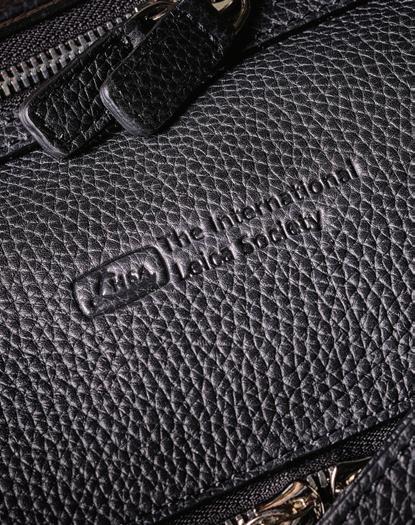
These bags are only available as special editions featuring the LHSA - The International Leica Society logo embossed on top, and a portion of every sale helps support the Society. Production is not limited to any particular quantity. Oberwerth is generously donating, and we genuinely appreciate them. Oberwerth is also a Gold-level Corporate Sustaining Member of the Society.
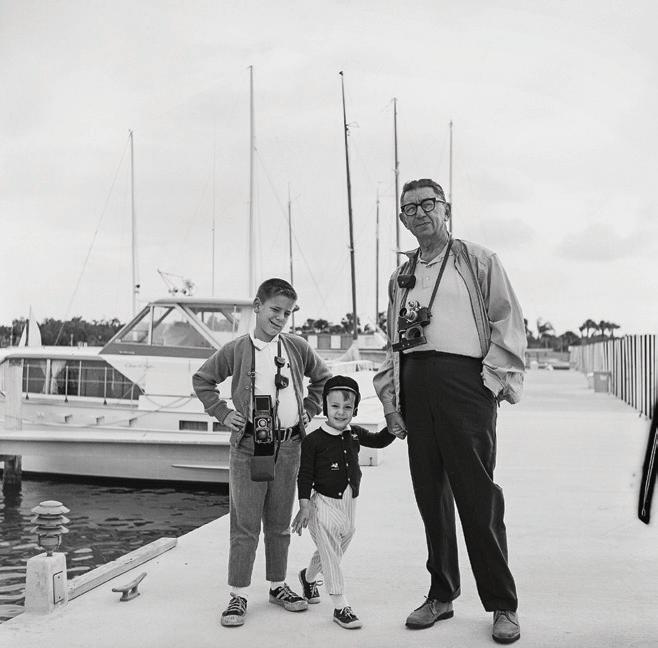
Now, why is this article titled as such? My great Grandfather Charles emigrated to the United States from Russia and found work in New York City at Sterling Photoengraving. His son, my Grandfather Leo, also worked at Sterling and was a prolific photographer. His son, my father Charles, taught me photography and darkroom techniques starting when I was five years old. Attached is a photo of Grandpa Leo with his Leica and grandsons - I am the younger one in the smashing outfit! My older brother Lawrence has a Rolleiflex around his neck. My father took this photo around 1967. (below left)
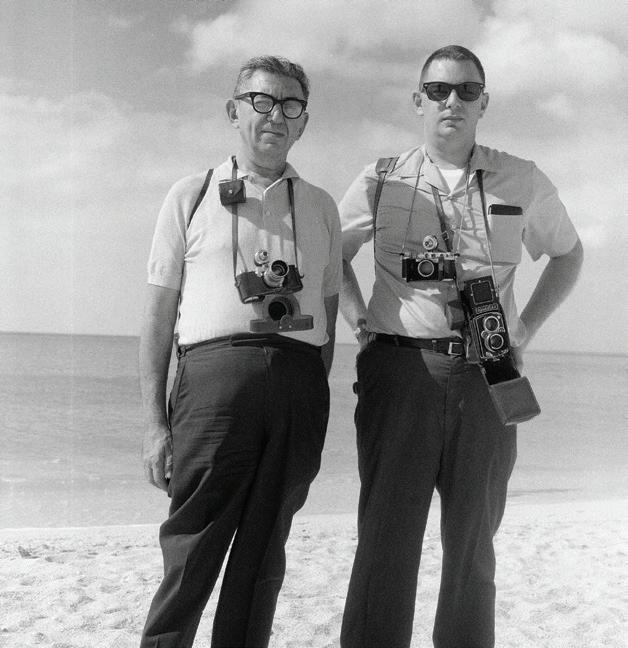
Next is a photo of my Grandfather Leo and my father Charles, taken in the late 1960s. Leo is holding his Leica IIIb and Charles has a Leica IIIc and Rolleiflex. When my father Charles passed away in 2010, he left for me all of the negatives from Leo and himself – more than 11,000 images. I had them all scanned, and I’m still working through this irreplaceable collection. Oberwerth was kind enough to honor my Grandfather with these eponymous bags. (below right)
We are entering the market with two of our Diamond–level Corporate Sustaining Members, Leica Store Miami and Leica Store San Francisco. They will be for sale in all US Leica stores over time and available directly from Oberwerth worldwide. We will also feature them on the LHSA website with links to store sales pages for transactions. The Leo Correspondent has a retail price of US $699, and the Leo Voyager has a retail price of US $999.
I like to think that my photographer ancestors would smile when they saw the Leo bags. I hope you enjoy them as much as I have enjoyed being part of the team that created them.
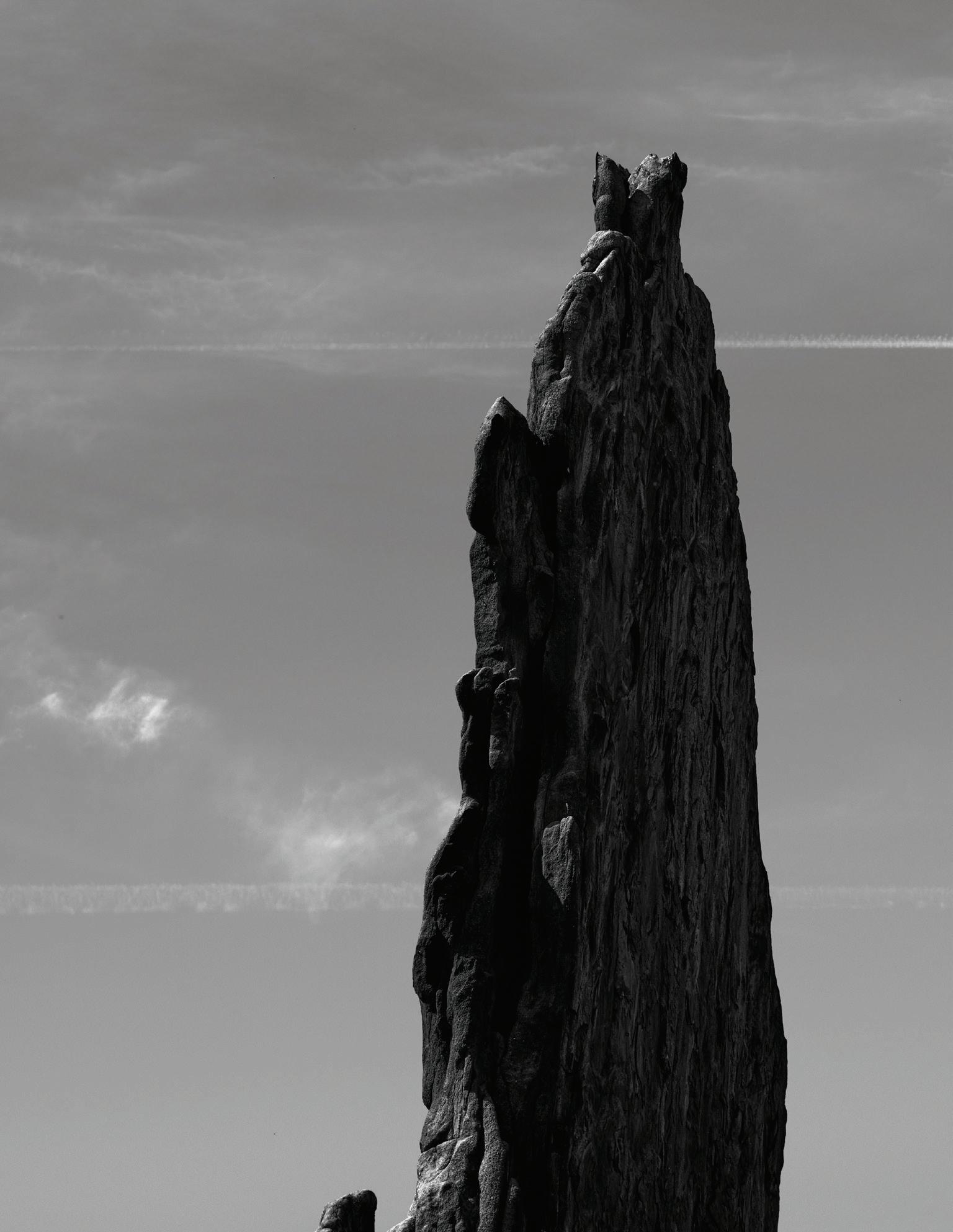
Garden of the Gods Leica M10 Monochrom + 90mm APO-Summicron-M. 1/4000 sec, ISO 160
INTERNATIONAL LEICA SOCIETY SPRING SHOOT 2022 COLORADO SPRINGS
by BLAKE MISTICH
Isat impatiently on a plane in Pueblo, CO. I was en route to Colorado Springs for the LHSA - International Leica Society Spring Shoot and my flight had been diverted due to surrounding wildfires. As a relatively new member, this was my first society meetup and I was looking forward to the meet-and-greet at the Antlers Hotel bar, but it didn't look like I'd make it.
After a while, I overheard an Air Force cadet talking to his wife on the phone. She lived near the COS airport and said she could see planes taking off and landing. Tired of sitting in a hot plane on the tarmac, I decided to walk to the front of the plane and tell the pilot what I had heard. Seeming surprised by this news, he whipped out his cell phone, made a call, and 30 minutes later we made the 15-minute flight to Colorado Springs.
I was exhausted from a long day of travel, but I freshened up in the room and headed down to the bar hoping to catch any remaining Leica freaks that might have come in late or hadn’t given up just yet. To my delight, the meet and greet was still chugging along, pun intended.
Not knowing what was cool, I decided not to take a camera down with me. However, everyone was wearing a camera. Being newer to the Leica world, this was a sweet sight to see. The group was lively and it was very easy to get into the mix and feel right at home. I had found my tribe.
The next day, following a warm welcome and LHSA update from President Brad Husick, we collectively sat at the feet of David Spielman to receive our shooting assignment. David, a lifelong and seasoned philosopher of photography, led us through images and stories spanning his career and imparted to the group that the road less traveled is oftentimes where you find the gold at Golden Hour. Or Blue Hour. Whatever hour feels right to you.
With our assignment and a sense of purpose, we all ventured out in small groups to begin work on our collective shooting assignment - to capture Colorado Springs. Spoiler Alert! At the end of the trip, everyone submitted their photos to be viewed during the closing discussion. It was truly amazing to see the quality of photographers present and the diversity of approaches when all were tasked to shoot the same subject. This was an education all by itself.
After exploring and having lunch, we all gathered together to view the work of Reed Pike's Peak. I mean Reed Pike. Glitch in the matrix? Reed spoke on honing one's craft for the sake of being published somewhere that is meaningful to you. He walked us through his journey to be featured in Lenswork Magazine and shared images from a long-term project where he shot a lotus pond. These images were taken on their first submission - they paused the press just to include them in the next issue.
(top left) Matthew Kutz. Leica M10 Monochrom + 50mm APO-Summicron-M. 1/125 sec, f/2, ISO 10000 (top right) David Spielman. Leica M10 Monochrom + 35mm Summilux-M FLE. 1/4000 sec, f/1.4, ISO 1000 (borrom) Red Dot Forum Camera Talk. Leica M10 Monochrom + 50mm APO-Summicron-M. 1/60 sec, f/2, ISO 500
After Reed wrapped his presentation, we loaded up the bus and headed to the Garden of the Gods. I am not a big hiker and wore jeans and a jacket, which soon proved to be far too warm for this Leica fanboy. Despite my first-world problems, I took a walk with my freshly updated M10 Monochrom affixed with the new Visoflex 2 and my 90mm apo lens. One of the fun things about knowing you are going somewhere with a metric ton of talented photographers shooting gear that can’t be improved upon by god or man is that you have to think about how you are going to capture things in a unique light. That is why I chose the Monochrom and the 90 apo. I thought maybe, just maybe, I would get something unexpected. I think I got one banger as the kids say.
"It was truly amazing to see the quality of photographers present and the diversity of approaches when all were tasked to shoot the same subject."
Returning to the hotel the excitement was so thick an open bar had to be brought in just to calm everyone down. The boys from Leica Store Miami took their Red Dot Camera Talk on the road and we got to watch it live and in person! David Farkas, Josh Lehrer, and Jose Rovira spent almost three hours geeking out with members, taking questions, and slinging the comical passive aggression we have come to love and expect from them. It was a fun night, to say the least.
The next morning for some unknown reason I missed the bus to Pike’s Peak. No, it had nothing to do with the open bar the night before. I think I would have remembered if it had. So I sprang out of bed and caught an Uber to the park’s entrance where I waited for my new buddy, Dr. Matt, who had rented a car. Knowing I didn’t want to be too hot at the top of a 14,000foot mountain, I opted to wear shorts and a t-shirt. As the oxygen was draining from my brain I began to notice snow on the sides of the road. Needless to say, I wasn’t too warm when we exited the car at the peak. Reed Pike’s Peak.
The view was overwhelming as I watched airplanes flying down below us. Burning the last remnants of oxygen in my blood, I fired a few rounds in the M10M with the 50 apo With such expansive views, finding a captivating composition was challenging for me, so I opted to focus on people as their eyes filled with wonder at the top of the world. With shapes and shadows in abundance, the human element completed nature's scene. Now freezing - due to my playing basketball as a kid instead of Boy Scouts - we grabbed a coffee and headed back down to denser air.
(top) Pike's Peak. Leica M10 Monochrom + 50mm APO-Summicron-M. 1/4000 sec, f/2, ISO 250 (bottom) Garden of the Gods. Leica M10 Monochrom + 50mm APO-Summicron-. 1/4000 sec, f2, ISO 2500
Back at the hotel everyone chose their favorite images from the weekend to fulfill David Spielman’s assignment and edit for sharing. One of the highlights of the trip for me was seeing just how differently everyone was able to witness the same locations. The images displayed before the group were just as unique as the people that took them. I think that is why we, as photographers, can enjoy going out and shooting together just as much as we can enjoy lone-wolfing it. No two images are going to be the same; our individual lives and experiences are going to shape what we see when we look through that viewfinder and choose the moment. Click…
"People from all over the US and the world came together in Colorado Springs just to be with others who share a love for little brass boxes that capture light. The International Leica Society is an inspiration, an education, a history, and a home for Leica-minded people of all ages and backgrounds."
Few other brands CULTivate the intense sense of loyalty and community that Leica Camera AG does. People from all over the US and the world came together in Colorado Springs just to be with others who share a love for little brass boxes that capture light. The International Leica Society is an inspiration, an education, a history, and a home for Leica-minded people of all ages and backgrounds. After attending what was my first event, I am honored to have been asked to write this follow-up to what was truly a transformative experience. I can say that, yes, my photography has improved as a result of attending, but I left the mountains with more than sharpened skills. I left having made new friends. I left feeling inspired. I left knowing that I found a place where I could serve photography and give back to the craft and the camera that has come to shape my very identity. From one Leica freak to the next…thank you to everyone who attended and helped make this spring shoot so special.
- Blake Mistich, Leica Photographer
(bottom) Garden of the Gods. Leica M10 Monochrom + 90mm APO-Summicron-. 1/4000 sec, f5.6, ISO 160
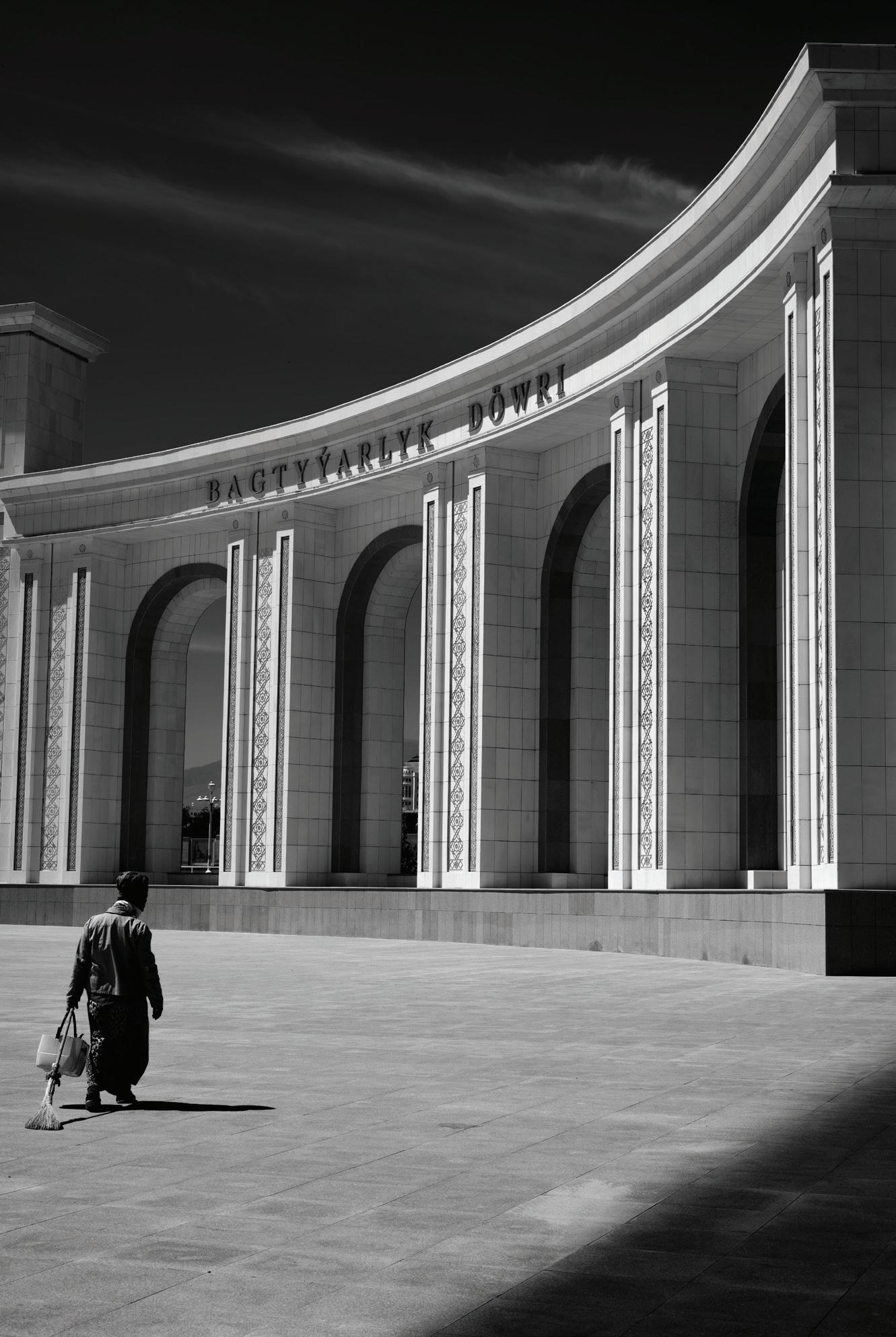
Cleaning Lady, Altyn Asyr park, Ashgabat, Turkmenistan
Leica M10-P + 50mm Summicron-M. 1/750 sec, f/8 ISO 200
The Silk Roads against the flow.
"The Silk Roads, the legendary trade routes, behind which hides a world of romance and adventure, of trade caravans, ancient cities & Marco Polo."
by WILLY TRUYENS
We Belgians all have a little bit of Tintin in our genes so we didn't need much persuasion to tempt us to book this trip. I like to travel in a small group. It has the advantage that I don't have to worry where to sleep and how to get from point A to B, but it leaves me the freedom to wander off by myself.
When the Venetian merchants went to the Far East in the 13 th century, they entered an unknown, mysterious world. They traveled for years over land, with caravans along the silk routes, the long dangerous trade routes over mountains and through deserts to the ancient imperial capitals Xi’an and Jin, present-day Beijing.
Enormous amounts of goods have since flowed from the producing Far East to the consuming West. In the opposite direction, Western clothing, customs and symbols have gradually become established in the ancient traditional cultures of Central Asia.
With the Leica M in hand, we traveled for 30 days due East, from Ashgabat to Beijing and found a world much more familiar to us than it would have been in Marco Polo’s time, and we even had a Belgian beer nearly 8000 km from home!
Our Silk Road trip started off in Turkmenistan. As a tourist you need a personal invitation to enter the country, and your
whereabouts are closely managed by official guides. The white marble capital Ashgabat is a very strange city with large monuments and boulevards but hardly any people in the streets and parks.
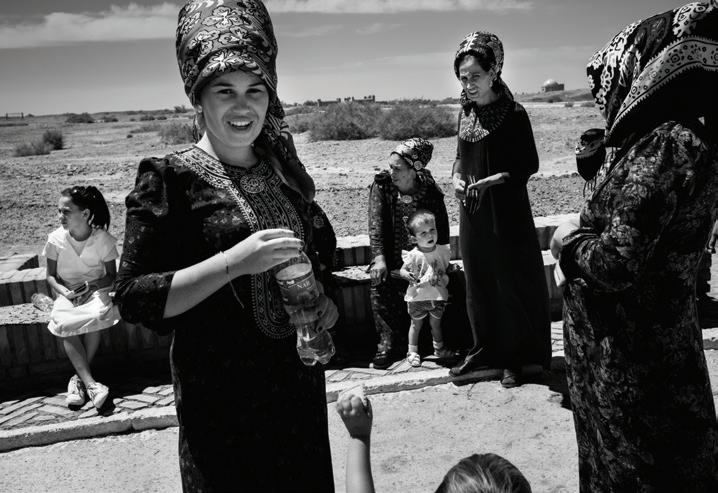
Close to the Uzbekistan border, we visited Kunya-Urgench where a mosque, a minaret and a handfull of mausoleums are the reminders of this once great city along the Silk Road. These mausoleums of 14th century sultans are still visited today by Turkmen pilgrims in their finest traditional clothes.
Time to cross the border with Uzbekistan. First stop Khiva. This wonderful city surrounded by high adobe walls still breathes the atmosphere of bygone centuries. In the narrow lanes, young apprentices learn the craft of woodworking needed to maintain the ancient madrassas and mosques.
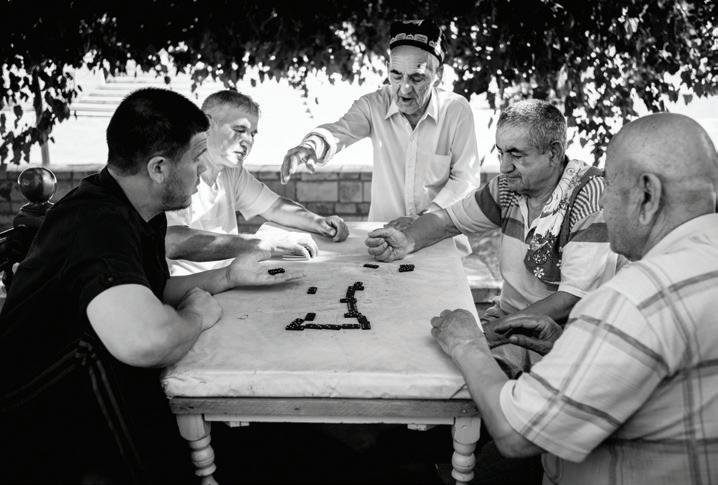
Bukhara used to be one of the most important caravan towns along the Silk Road. It is said to be the most authentic town in Uzbekistan. It is an enjoyable, relaxed place where men play dominoes in the shade of the trees in the main square.
Close to Bukhara lies the Bakhautdin Naqshband Mausoleum, the founder of the most influential Sufi order in Central Asia. It is a popular place of pilgrimage for its followers.
Next on the road came the legendary city of Samarkand, in the 14 th century one of the largest cities in Central Asia. The
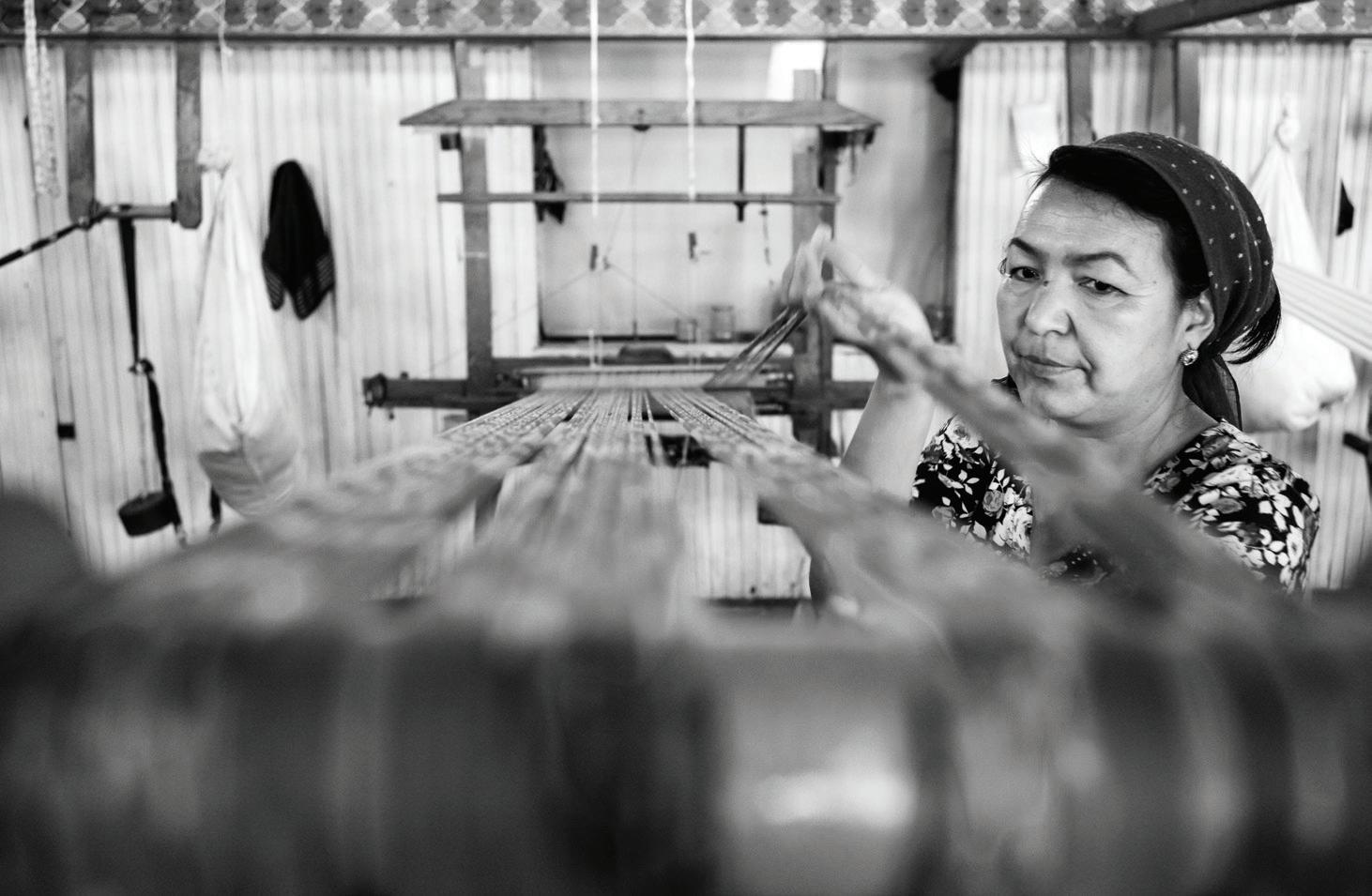
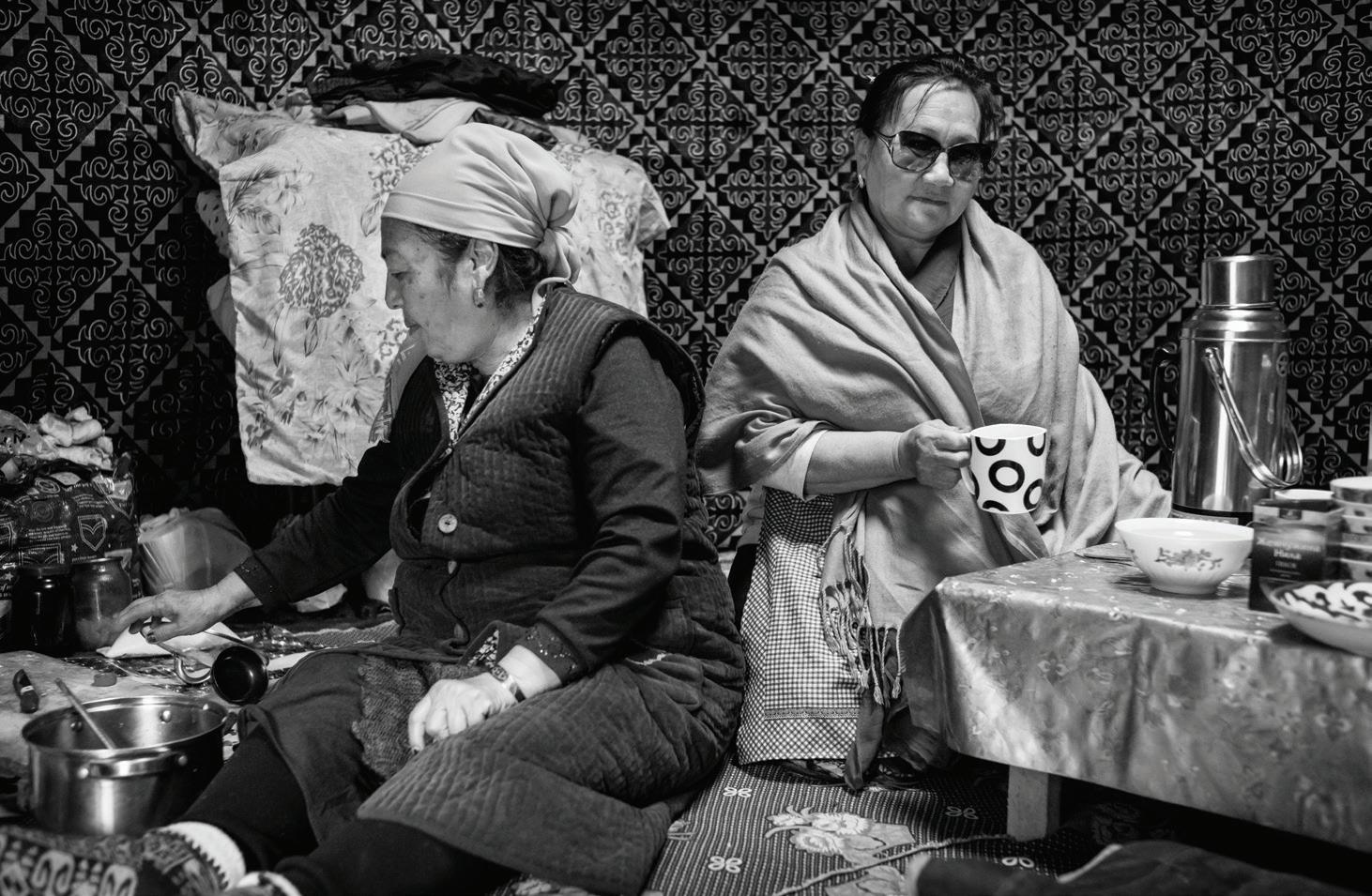
(top) Preparing the Loom, Yodgorlik Silk Factory, Margilan, Uzbekistan. M10-P + 35mm Summicron-M. 1/90 sec, f/5.6, ISO 6400. (bottom) Life in a Yurt, Talas Region, Kyrgyzstan. M10-P + 35mm Summicron-M. 1/750 sec, f/2, ISO 6400.
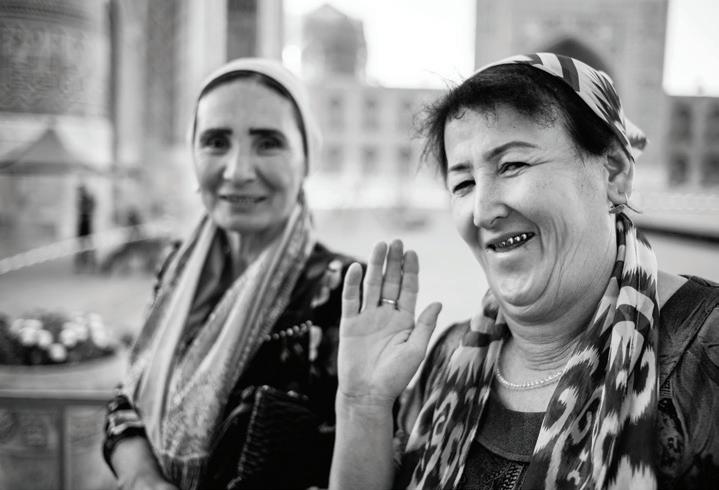
buildings around Registan Square are impressively beautiful to this day. We met some local ladies with a golden smile as a symbol of their wealth.
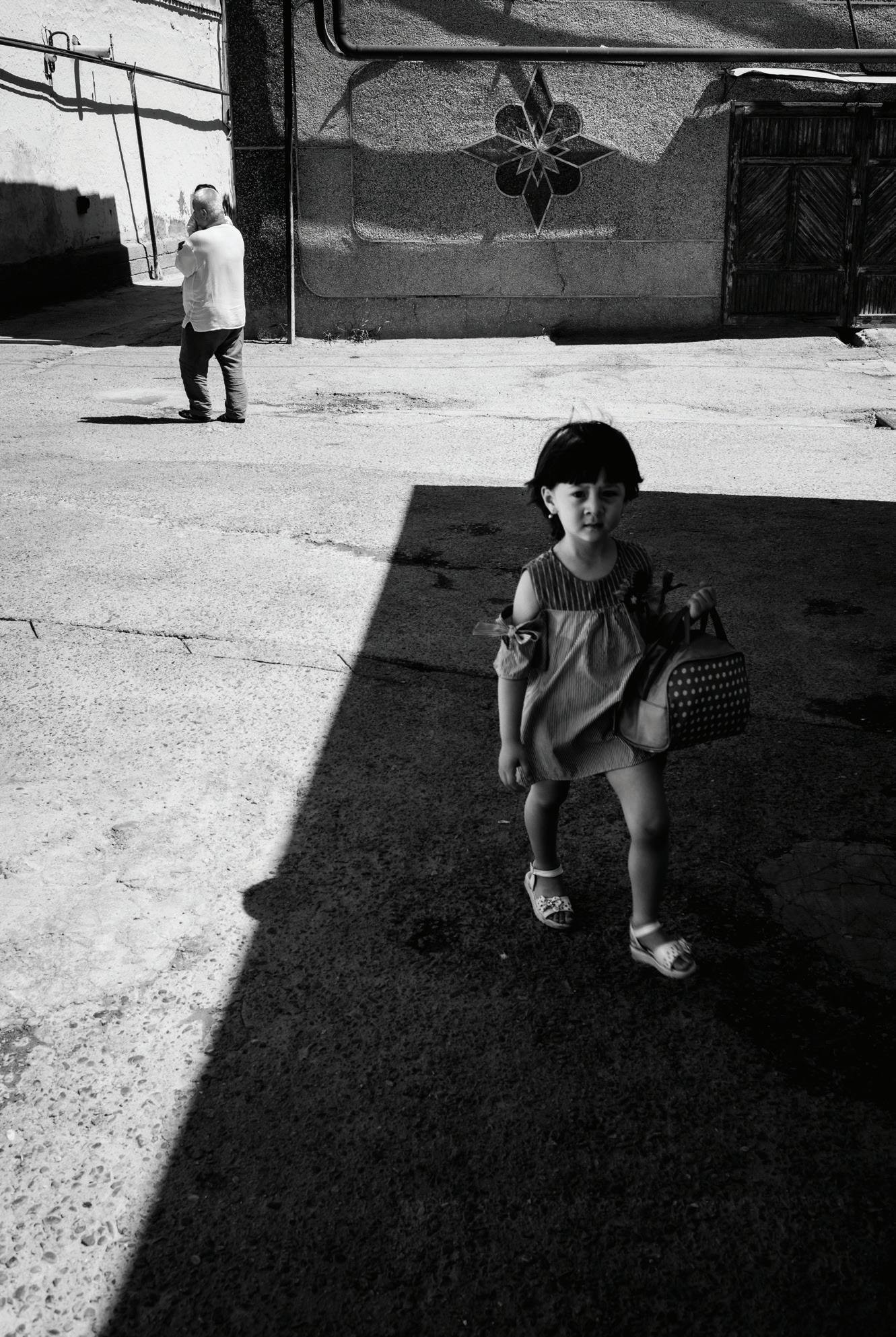
In the backstreets, life goes on as everywhere, a man walks with his grandchildren, a melon seller counts his turnover for the day...
Via the Soviet-style city Tashkent, we travel further East. The last stop in Uzbekistan is Margilan where we are invited to visit the traditional Yodgorlik silk factory, only a short distance before we go into the mountains to the border of Kyrgyzstan.
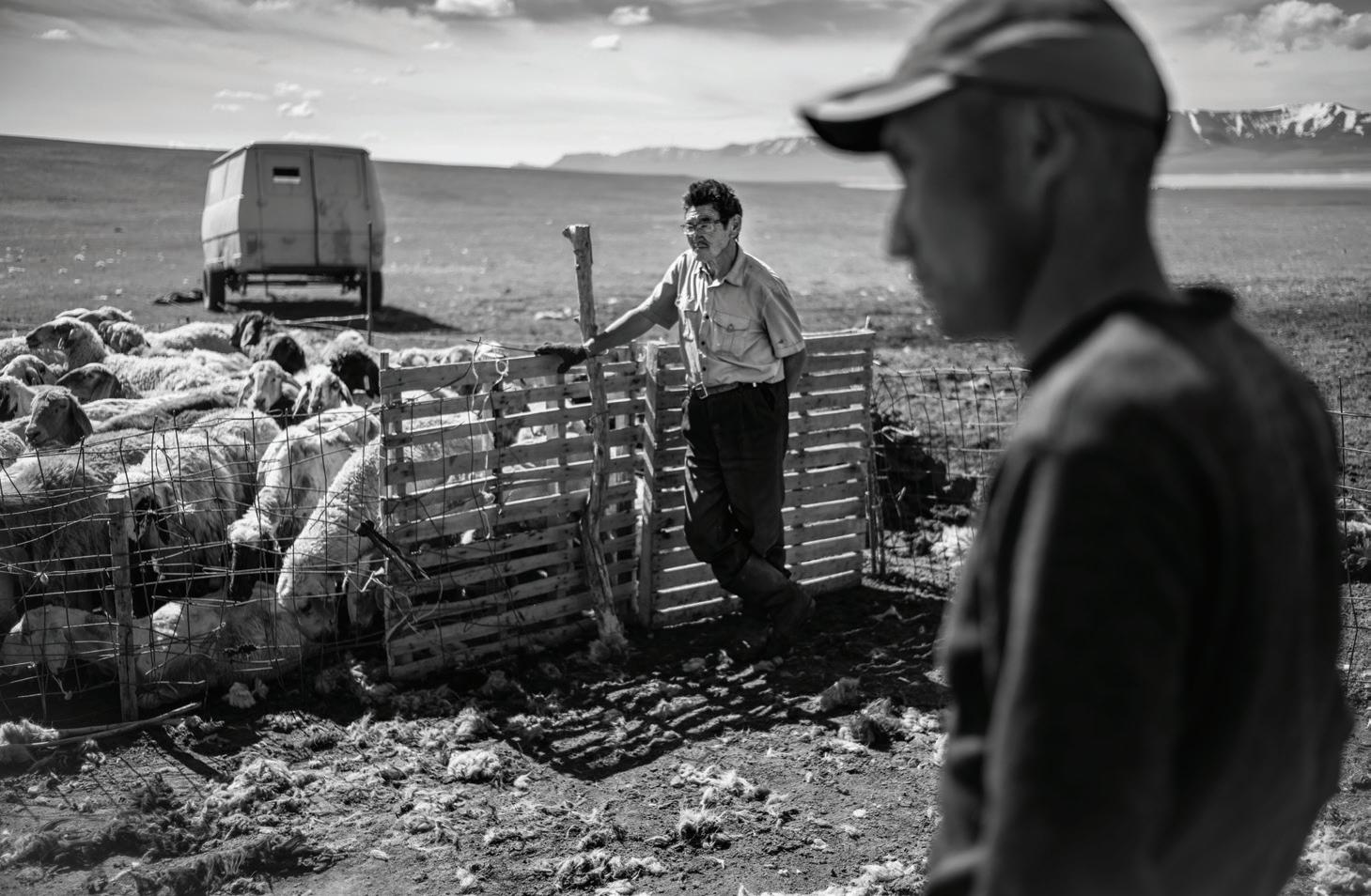
Kyrgyzstan is a mountainous country with stunning landscapes and high plateaus. People in this vast, rural area live a semi-nomadic life, spending the summer on the high plateaus with their herds of sheep and horses. Although nowadays old trucks and trailers are often being used as homes on the steppes, the traditional yurts also remain in use. People here are very friendly, and tradition dictates that they provide hospitality to strangers. So once you enter their yurt, you are offered biscuits, tea and fermented horse milk.
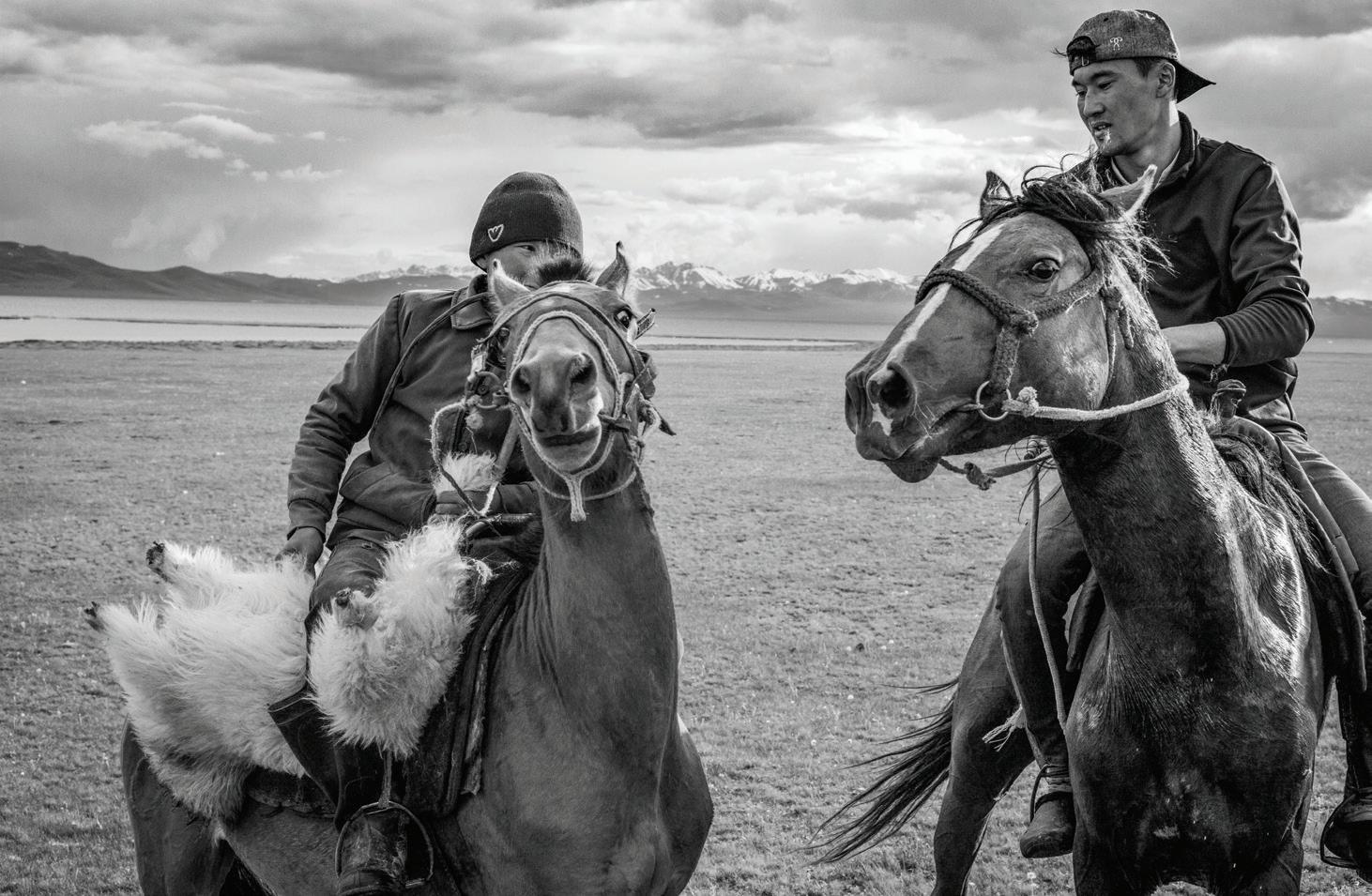
Kyrgyzstan is also a poor country, with few natural resources. The shepherd we spoke to (with the help of an interpreter) said he could barely survive on the produce of his flock. The Kyrgyz are very skilled horsemen, and they like to demonstrate this in a game of kok-boru or 'kiss the bride', but the girls are equally skilled on the backs of their nimble horses so they are no easy prey.
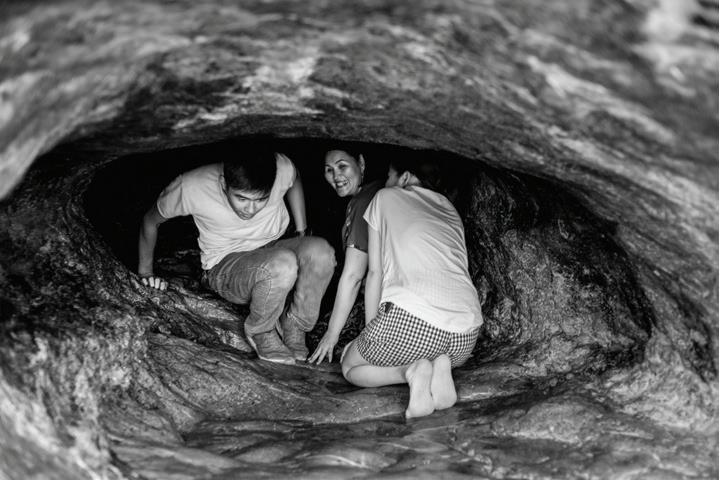
In the city of Osh, we were witness to a ritual thousands of years old, where a young couple crawled into a small cave, that symbolizes the womb of Mother Earth, to have a fertile marriage. I'm not sure though how the mother-in-law fit into this picture.
Entering China from Kyrgyzstan is a challenge for the nerves to put it mildly. Our luggage was x-rayed twice, and our passports and visas were thoroughly checked no less than 7 times. Even the pictures on our iPhone were examined.
Then, disaster struck. The last official in the line thought my Leicas looked suspicious with their 'Made in Germany' marking, and wanted to take a closer look. His clumsiness made my M10-P slide off the counter and land on the marble floor. The plastic lens hood of the 35mm shattered, and my heart skipped at least one beat. The man remained unmoved and acted as if nothing had happened. Our guide calmed me down and convinced me not to make a drama out of it because this was not the right place for it, and to settle it later with our travel insurance.
Afterwards it turned out that the M10-P and the lens had endured the drop miraculously without damage.
(top) Golden Smile, Samarkand, Uzbekistan.
M10-P + 35mm Summicron-M. 1/750 sec, f/2, ISO 200
(middle) Domino Players, Buchara, Uzbekistan.
M10-P + 35mm Summicron-M. 1/250 sec, f/2, ISO 200
(bottom) Womb-cave, Sulayman Mountain, Osh, Kyrgyzstan.
M10-P + 35mm Summicron-M. 1/45 sec, f/2, ISO 200
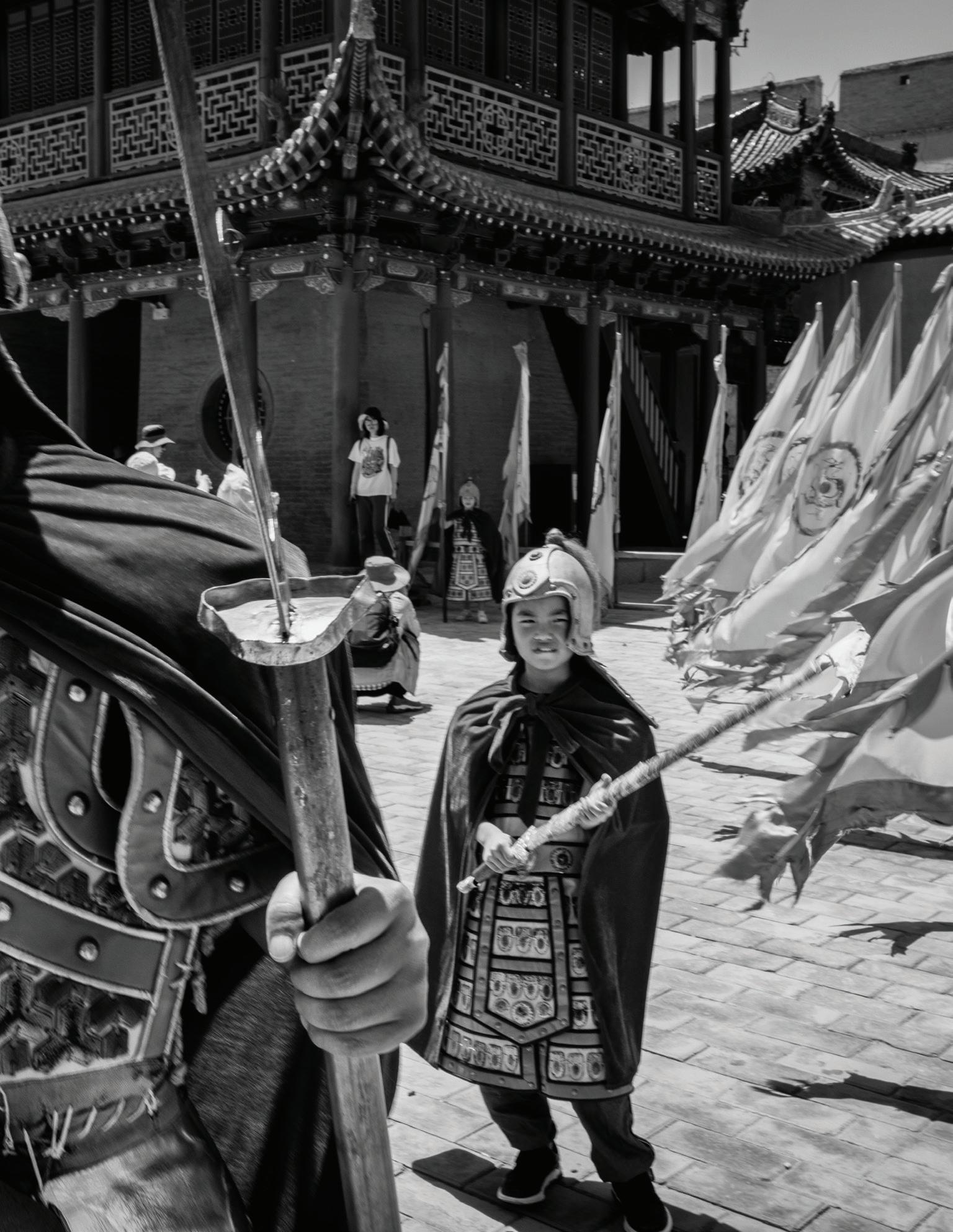
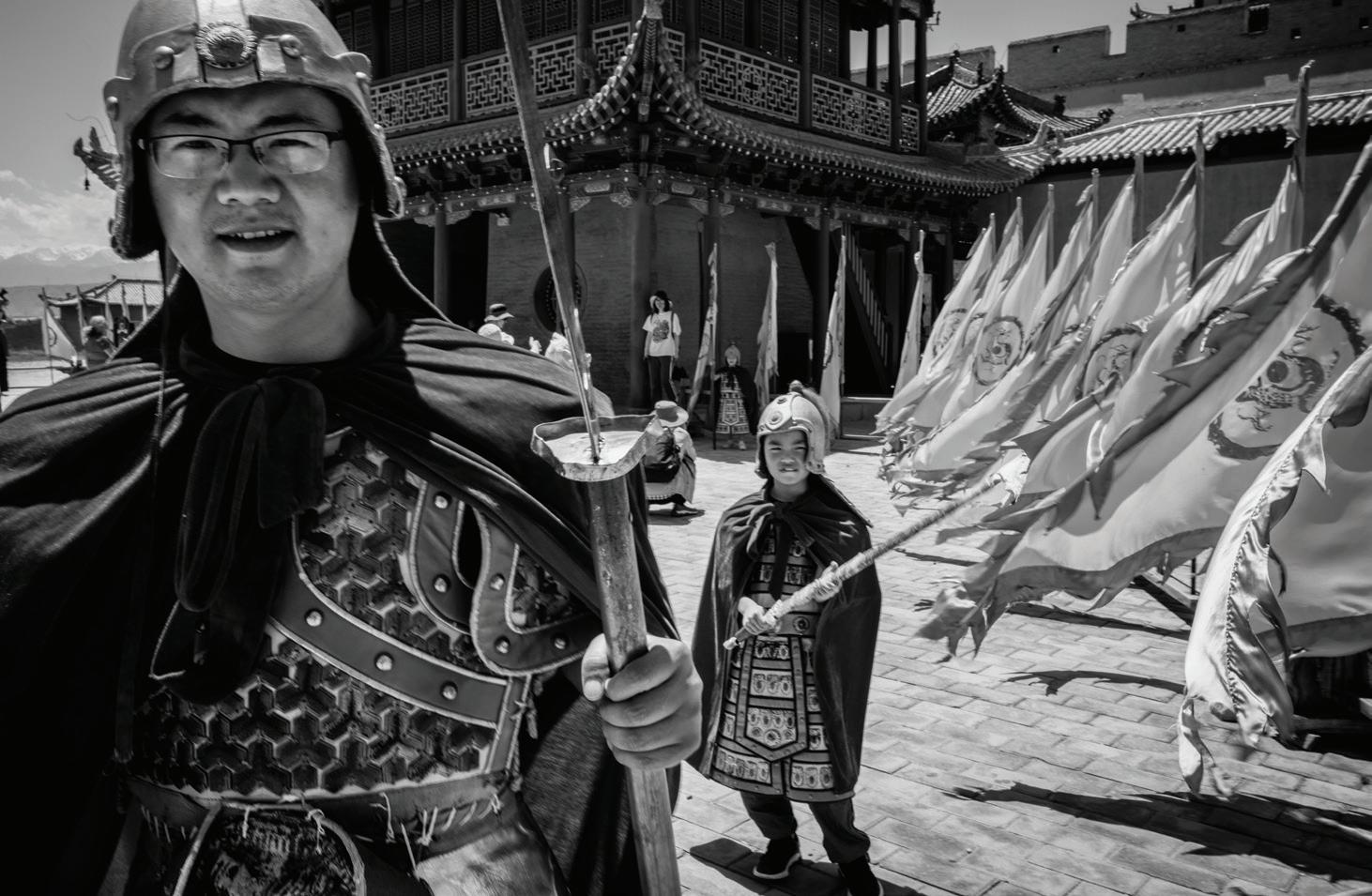
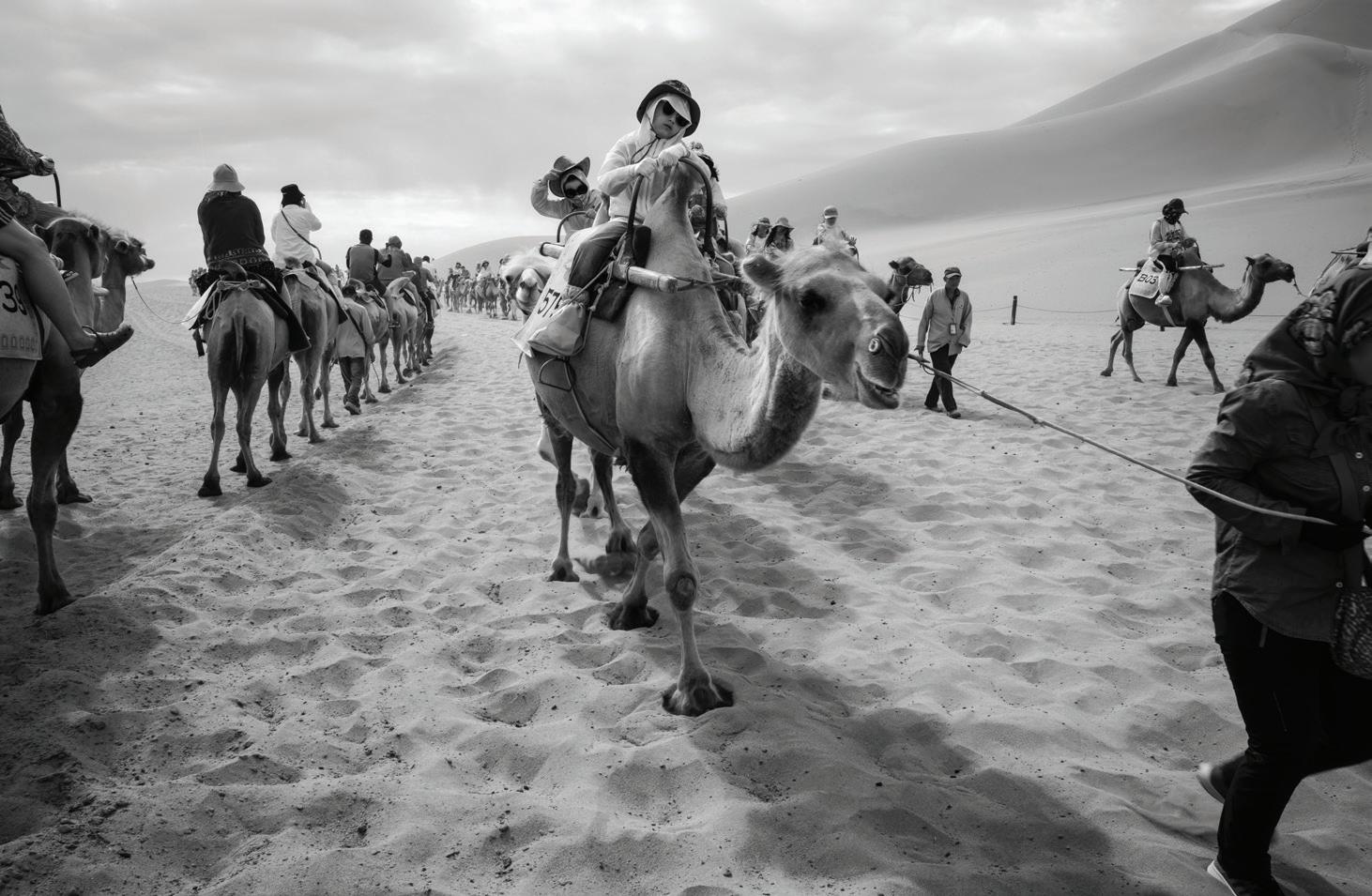
(above) Dressed up tourists at Jiayuguan Fort, Gansu Province, China. M10-P +28mm Summicron-M. 1/180 sec, f/11, ISO 200 (below) Tourist Caravan, Sand Dunes, Dunhuang, China. M10-P + 28mm Summicron-M. 1/125 sec, f/11, ISO 200
(above) Shepherds at Song Kol Lake, Kyrgyzstan. M10-P + 35mm Summicron-M. 1/2000 sec, f/2, ISO 100 (below) Kok-boru Game, Song Kol Lake, Kyrgyzstan. M (Typ 262) + 50mm Summicron-M. 1/750 sec, f/11, ISO 1600
This Westernmost province of China is Uyghur territory. As in other areas, the Chinese government is doing whatever it thinks necessary to keep things in order. As a visitor, however, you don't notice this. The people we meet are friendly and hospitable. The food and mood are comparable to those in other Muslim countries closer to the Mediterranean. What does catch the eye are the large number of surveillance cameras along the streets. Big Brother is watching!
Family day out, Kunya-Urgench, Turkmenistan. M10-P + 35mm Summicron-M. 1/500 sec, f/4, ISO 200
At the famous horse and camel market in Kashgar we see only sheep, goats and cows being sold, but nevertheless it is a captivating, photogenic experience.
Further East, past the Taklamakan desert, we explore the singing sand dunes of Dunhuang. This is also a popular destination for Chinese tourists who, in their hundreds, are hoisted onto a camel for a half-hour ride through the desert. Resembling the old trade caravans, only the load they transport is different.
In the middle of nowhere, the fortress at Jiayuguan marks the end of the Great Wall. Same as the sand dunes, this site is operated as a major attraction for Chinese domestic group travel, complete with fancy dress parties.
On our way towards Beijing, the endpoint of this voyage, we spended a few days at Xi'an, the old Imperial capital of China, and of course the obligatory visit to the Terracotta Army of Qin Shi Huang, the first Emperor of China.
When one arrives in Beijing after this epic trip, it is clear that here, the centuries of intensive trade with the Western world has almost completely repressed the traditional Eastern culture to the museum. Or does this apply to all big cities in the world?
From R to M
Around 1990 I bought my first Leica. An R6 and one lens, a 28mm Elmarit-R 1:2.8. This set has been my loyal companion until 2014 when I switched to digital with an M-E and learned to focus with a viewfinder. The M-E was followed by an M (Typ 262). And, because Leica keeps on evolving towards less and less buttons on the back of the camera, a Silver M10-P has replaced the old M-E.
Most of the time, the black M has a 28mm Summicron ASPH attached, and my M10-P is fitted with a 35 Silver Chrome Summicron ASPH.
From the very beginning of my photography adventure, I was inspired by the images of William Klein in his book Close-Up (1989). His visual language gave me the feeling that the viewer was part of the scene. There is nothing stealthy in this way of taking pictures, you need to engage with the people you are photographing, then make them forget you're taking pictures. The small Leica is a perfect instrument for this approach.
I know, I don't even reach the ankles of Mr. Klein, but I keep telling myself that there's nothing wrong with keeping on trying.
Why the Leica?
First of all: Simplicity, "Das Wesentliche". As a photographer born in the pre-digital age, I get no joy out of studying a manual the size of the New Testament. In my experience everything that a camera does automatically requires extra attention.
Second: Robustness. Leica's are built like a tank, they do their job, even in our notorious Belgian climate. They even survive clumsy Chinese Border Police.
Thirdly: I don't want to call it unobtrusive as in many articles about the M, I’d rather call it 'sympathetic'. Certainly a silver chrome Leica attracts attention, but in a positive way.
People are seemingly less intimidated by the classic look of a Leica M than by a bulky DSLR.
Leica M10-P + 50mm Summicron-M. 1/350 sec, f/11 ISO 200
Early Leica Bodies, Lenses, Users & Films 1913-1926 (part one)
by ROLAND ZWIERS
AN INTRODUCTION by
ED SCHWARTZREICH
Iwanted to write a brief preface to the articles, starting in this issue of Viewfinder, by Roland Zwiers. Roland has an intense interest in the history of photography, in part by understanding the evolution of early film emulsions 1910 – 1939. I was introduced to Roland last January, courtesy William Fagan, primarily due to my long involvement with the career of Dr. Paul Wolff as a Leica pioneer.
Roland says: “My first question to Ed Schwartzreich was my hypothesis that a 1924/1925 instruction book on skiing already contained Leica pictures by Dr Paul Wolff, pictures that must have been taken in the winter of 1923-1924. I realised that this hypothesis would be controversial in Leica literature. Ed Schwartzreich was sceptical at first, but did not reject my hypothesis straight away. He gave me the opportunity to embed this hypothesis in a bigger summary framework, that is now presented in summary form”.
Roland had surmised that because Dr. Wolff was collegial with Oskar Barnack, Wolff must have formed his original negative feelings about the Leica and its 35mm format by actually using one or more of the 1923 Null-Serie Leica prototypes on assignment, rather than just by having a technological discussion with Barnack. Wolff, in this scenario, used the camera with the then-available emulsions, and soon became quite disenchanted with his results. But did these putative
experiments with the early camera actually survive anywhere? These ski pictures, taken by Dr. Wolff with whatever camera, are so muddy and poorly defined that if these are indeed Leica pictures, Wolff would have been put off for years about the camera’s potential. But, while I was indeed dubious at first about this conjecture, Roland has won me over now to at least the distinct possibility that such a history might be the case.
A stickler for hewing as close as possible to original sources, Roland has advanced other ideas about early Leica development that may run counter to received wisdom. While he would be the first to say that further research might change his opinions, possibly even drastically, he wishes to present them here in what I can only say is a grand fashion.
Jim Lager and I had a conversation not long ago about some of Roland’s ideas. We agreed that while we both felt intensely about this subject matter, one could joke that there were probably only a dozen or so others worldwide who cared about this Leica arcana. So, for those here who share our passion, let the games begin! Roland adds, affirmatively: “This article is work in progress and can be enriched by criticism, observations and comments by the Leica-community”.
Part Two will cover Development of the Leica, 1913-1926, both the cameras and their lenses. Fuller explanation of Roland's spreadsheet table will occur in Part Two". •
is an extensive post-war literature on early Leica cameras and Leica lenses. There is literature on famous Leica photographers such as Dr. Paul Wolff. Post-war literature on early Leica films is scarce and intertwined with legends. This is a good opportunity to approach the earliest Leica photography from the angle of the earliest available 35mm cine negative films. My research combines post-war Leica literature with books and magazines (photography and cinematography) from the period 1910-1926. Additional insights and information were kindly provided by Ed Schwartzreich, Jim Lager, Ottmar Michaely and Ulf Richter. In this way various developments regarding Leica production, Leica lenses, Leica users and the quality of 35mm cine negative film can be presented in a coherent way.
In this article, I present a summary table of my work in progress. The rows of the table are about the production of the (Ur-)Leica between 1913 and 1926 (rows 2, 3 and 4) , the development of the complementary standard lens (rows 5 and 6) , the first users (row 6) , and the 35mm cine negative films available in Germany (row 7) . It is innovative to start with the combination of films and users.
LEICA-FILMS & LEICA-USERS, 1913-1926
In 1913 Oskar Barnack must have oriented himself on the best available 35mm cine negative films. These were of American and French origin and obviously intended for cinematography. German production was available (Agfa, Goerz, Kino-Film Co Düren, NPG, Muron Kino-Rohfilm), but of lesser quality. Primary sources from the 1910s give no indication whatsoever that Perutz managed to produce 35mm cine negative film in this period. The familiar claim that in 1913 Perutz ‘at the instigation of the Bavarian film industry’ already produced perforated cine negative film, must amount to a post-war fabrication. An early source for this claim is the 1955 Perutz jubilee publication Denkschrift zum Fünfundsiebzig-Jährigen Perutz-Jubiläum 1880-1955
In early 1914, during his visit to the USA, Ernst Leitz II likely used films that had already have been cut to size by Oskar Barnack in Germany. Ernst Leitz had to change his films either in complete darkness or in dim red light. What make film? In 1914 the best films were produced by Lumière and Eastman Kodak. In case Ernst Leitz had plans to demonstrate the Leica to George Eastman and/or the American film industry in New York, the Kodak film would have made more sense. There is, however, one important caveat. Eastman Kodak was part of a trust that charged filmmakers additional (and ultimately illegal) fees for the use of Kodak film. Independent filmmakers refused to oblige and increasingly took refuge in Hollywood. In case Ernst Leitz intended to meet these independent filmmakers, loading the Leica with independent Lumière or Agfa film would have enabled an alternative narrative.
of a 1915 German
reconnaissance camera designed for roll film. An early model made use of unperforated 35mm cine negative film.
Picture
aerial
1915 aerial reconnaissance picture with (Agfa) Fliegerfilm.
Description
Prototype 1 = First Leica Ur-Leica
Prototype 2 = Ernst Leitz II
Prototype 3 = Gebrauchsmuster 1914
Mustermodell für Fabrikation
Gebrauchsmuster 1920 = Chrome-plated camera at auction? [1x] [not numbered]
Handmuster 1920 = Kisselbach camera = Nr. 100 [1x]
No self-capping shutter, lens cover required
Nr. 101-125 [25x]
Lens 1 : 4,5 f=4,2cm Summar
f/4,5 f=4,2 cm Summar
f/4,5 f=4,2 cm Summar
f/3,5 f=5cm Leitz Anastigmat
First test series
No self-capping shutter, lens cover required
Null-Serie definition 1 = 25 numbered cameras
Null-Serie definition 2 = 29 numbered cameras
f/3,5 f=5cm Leitz Anastigmat Lenses Produced
Oskar Barnack Ernst Leitz II
Patent office 1914 Internal use Leitz
Patent office 1920 Internal use Leitz
Kodak Lumière
Pathé Agfa Goerz Kino-Film Düren
NPG
Muron Kino-Rohfilm
Kodak Lumière
Agfa Goerz Gevaert Agfa Agfa Fliegerfilm
Agfa Goerz [1922]
Notes O. Barnack/ deliverybook 1923 Nr. 105 = Henri Dumur
Dr Paul Wolff borrows a Leica
Agfa Goerz Lignose [1923]
1924 (January to June)
Nr. 126-129 [4x]
1924 (June to 19 December) 1924-1925 (19 December 1924 to 23 April 1925) 1925 (23 April to 15 December 1925)
373x = scenario 1 (Nr. 126-499)
25x = scenario 2
Engravings list TB
Nr 126 = 7/11/24
127-235 = 24/11
Nr. 236 = 27/11
237-637 = 19/12 [= 510x]
Second test series
Self-capping shutter
Null-Serie definition 2 = 29 numbered cameras
f/3,5 f=5cm Leitz Anastigmat
4 plus left-over lenses used on series production
Nr. 127 = Anton Baumann
Dr Paul Wolff borrows a Leica
Dates of engravings for Nr. 126-637
Notebook Barnack: „Up to 23 April 224 new cameras delivered“
Engravings list TB
638-777 = 27/6/25
778-848 = 9/07
849-1128 = 18/07
1129-1169 = 16/10
1170-1284 = 2/11
1285-1582 = 20/11 [= 941x]
Dates of engravings for Nr. 638-1582
Notebook Barnack: „Up to 15 December 853 new cameras delivered“
First series production, some 1100-1450x depending on scenario 1 or 2
Some 25 or 373, including left-over Leitz Anastigmats 224 853
Nr. 133 = Anton Baumann
Nr. XXX = Curt Emmermann
Nr. 211 = Willy Frerk = February 1925
Nr. XXX = ‚N-n‘ = C.E Neumann or H. Naumann?
Agfa Goerz
Lignose Gevaert [1924]
Nobel-Toxo [1924
1585x [cameras sold, instead of cameras produced]
f/3,5 f=5cm Elmar (Goerz glass)
[1585 = lenses on cameras sold]
Agfa Goerz
Lignose Gevaert
Nobel-Toxo
Agfa Goerz Lignose Gevaert
Nobel-Toxo
Perutz Grünsiegel [March 1925]
Nr. XXX = Leica obtained by Dr Paul Wolff (ME 1939)
Nr. XXXX = Leica presented to Dr Paul Wolff
Agfa [4x]
Goerz [2x]
Lignose [3x]
Agfa [4x] Goerz [2x]
Lignose [4x]
Nobel [3x]
Perutz [4x] Gevaert
Nobel-Toxo
Nobel-Pan Gevaert
Perutz Grünsiegel
Perutz Spezial Fliegerfilm Gevaert
Glanzfilm
Kodak
After August 1914 (the start of the First World War) foreign brands gradually disappeared from the German market. The same applied to domestic makes with the exception of Agfa. In this way the highly specialised Agfa film factory in Wolfen obtained a monopoly position on the German and AustrianHungarian markets.
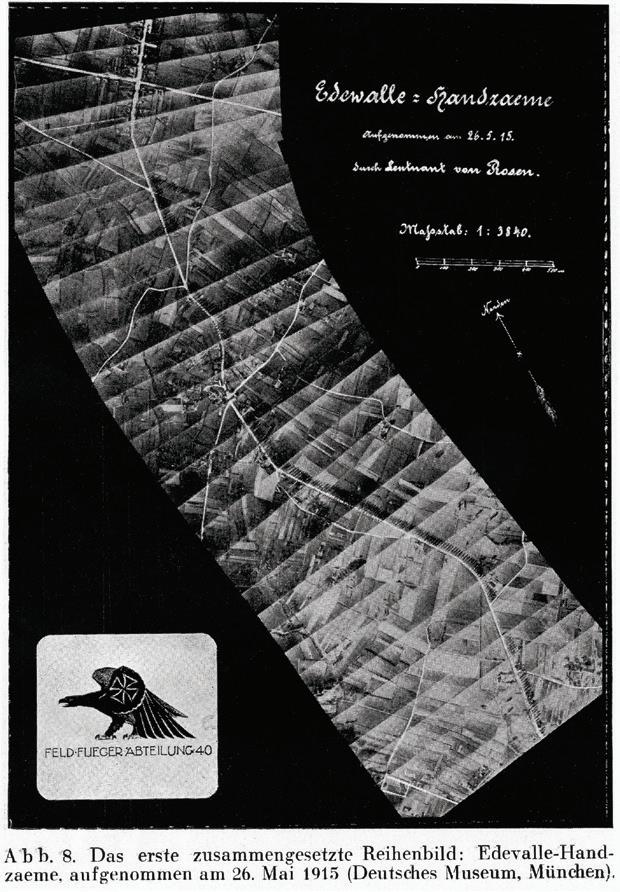
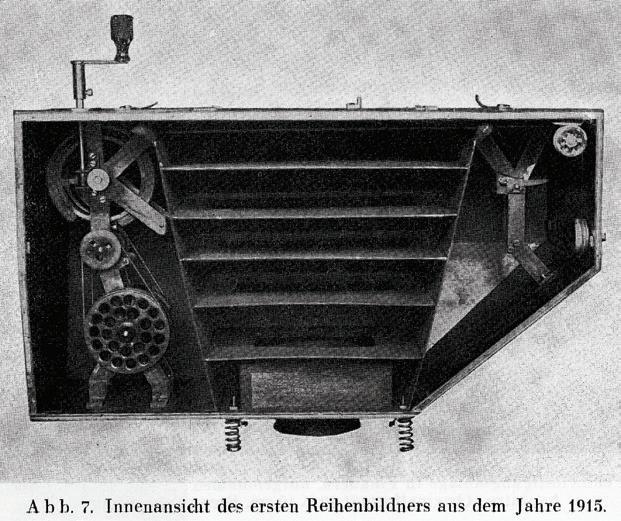
Unfortunately regular Agfa 35mm cine negative film was less suitable for Oskar Barnack's purposes. So during 1915-1918 he experimented with Agfa Fliegerfilm, which was produced for the new German aerial reconnaissance cameras. This is made clear by Max Berek (1948) Plauderei über die Entstehung der Leica: “In the beginning Oskar Barnack used the so-called Fliegerfilm, as its fine grain matched the requirements; but this film had a limited shelve life and had to be used up relatively quickly.” (Figures 1 & 2)
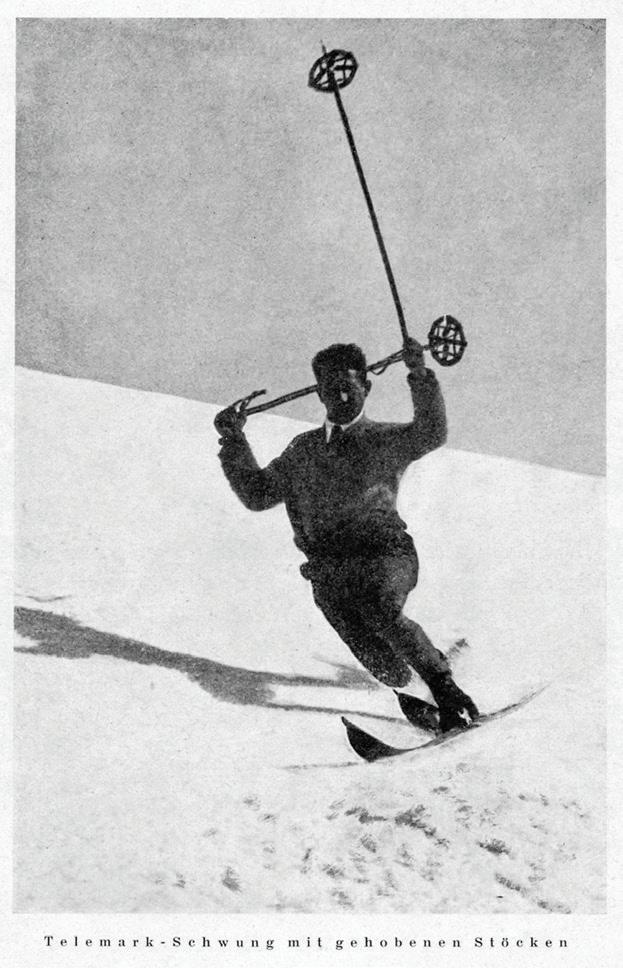
From 1922 onwards new German competitors for 35mm cine negative films arrived on the scene again. First Goerz and then Lignose. However, the films available on the German market were still not ideal for Leica photography. Foreign films could not yet be imported. Around this time Dr Paul Wolff must have borrowed one of Oskar Barnacks test cameras. Some resulting Leica pictures are included in the 1924 book Die
Ski-Schule by Josef Dahinden. One 1924 Leica picture is included in the book Meine Erfahrungen mit der Leica of 1939.
The bad quality of these pictures convinced Dr Paul Wolff that the Leica negative was too small for serious work. The following quote from the 1934 edition of his book “Meine Erfahrungen mit der Leica” has to refer to this period.
“So the grain was there! It was the be-all and end-all of us first Leica-users. Normal cine film in the Leica, at that time still lowly orthochromatic and not free from halation - it was a cross!
Yes, postcard size picture were just possible, not really inspiring, but one already walked around with the idea that one day it might be different.” (Figures 3-5)
After 1922 the quality of 35mm cine negative films would increase dramatically. The improved quality (higher colour sensitivity, increased film speed, finer grain) did not come at the expense of limited shelf life, as had been the case with
3. 1924 Leica picture by Dr Paul Wolff in the 1939 book Meine Erfahrungen mit der Leica.
4. (Leica) picture by Dr Paul Wolff in the book Die Ski-Schule (October 1924). This picture must have been taken in the winter of 1923-1924.
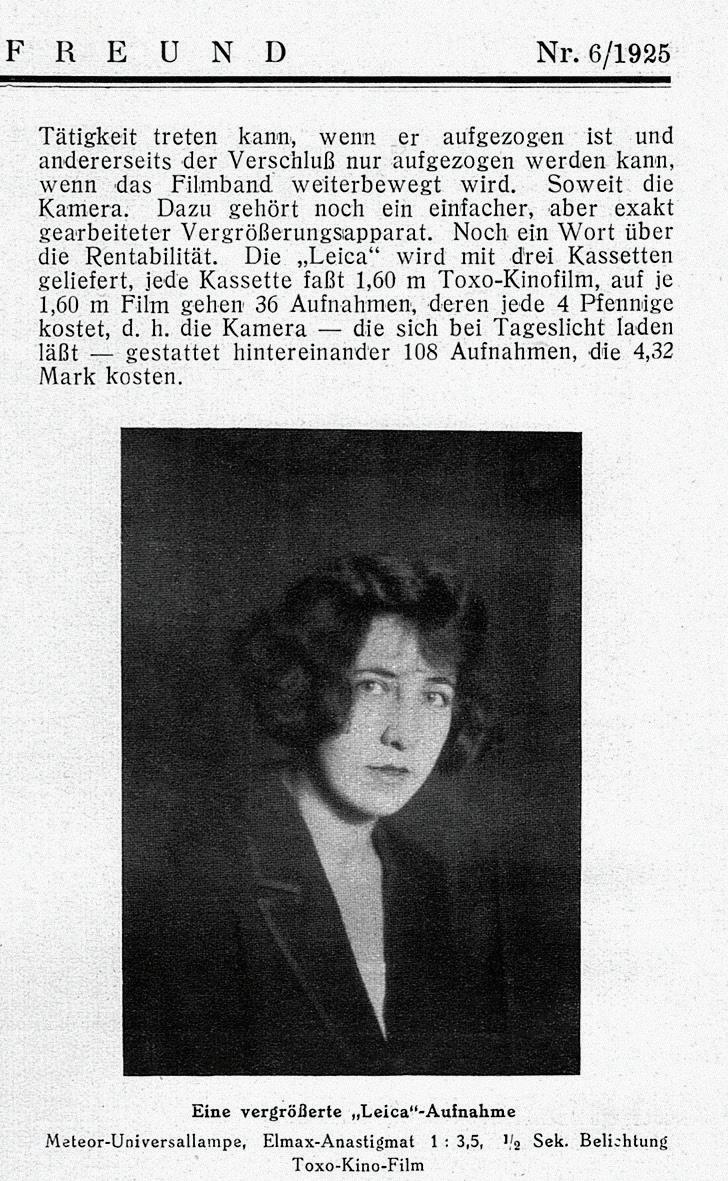
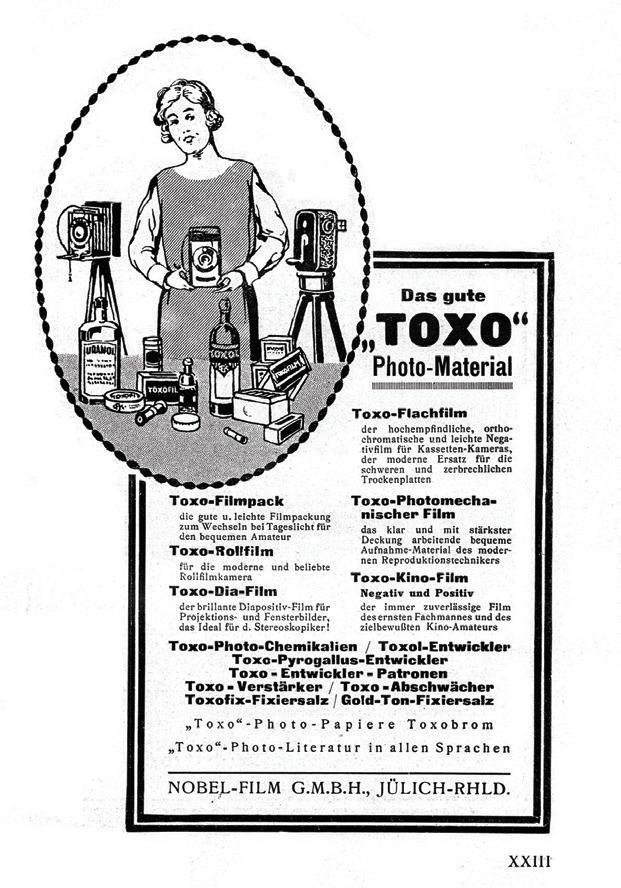
the wartime Agfa Fliegerfilm. One reason was the arrival of innovative German competitors that challenged Agfa’s long time monopoly position. A second reason was that technological progress was speeding up after having been delayed by the (hyper) inflation of 1922 and 1923. A third reason was the prospect that competitive foreign 35mm films would be allowed on the German market from 1926 onwards. So by June 1924, when Ernst Leitz II had to make his go/no-go decision for taking the Leica in production, the film situation had already improved. At that time the best possible German 35mm cine negative film was likely the Toxo-Kino-Film as produced by Nobel. This film was used by Willy Frerk in the first Leica review of March 1925. (Figures 6 & 7)
At the end of March 1925, immediately after the introduction of the Leica, the Perutz 35mm cine negative film appeared on the market. This film was used for the second Leica review of May 1, 1925. The reviewer ‘N-n’ states that he prefers this
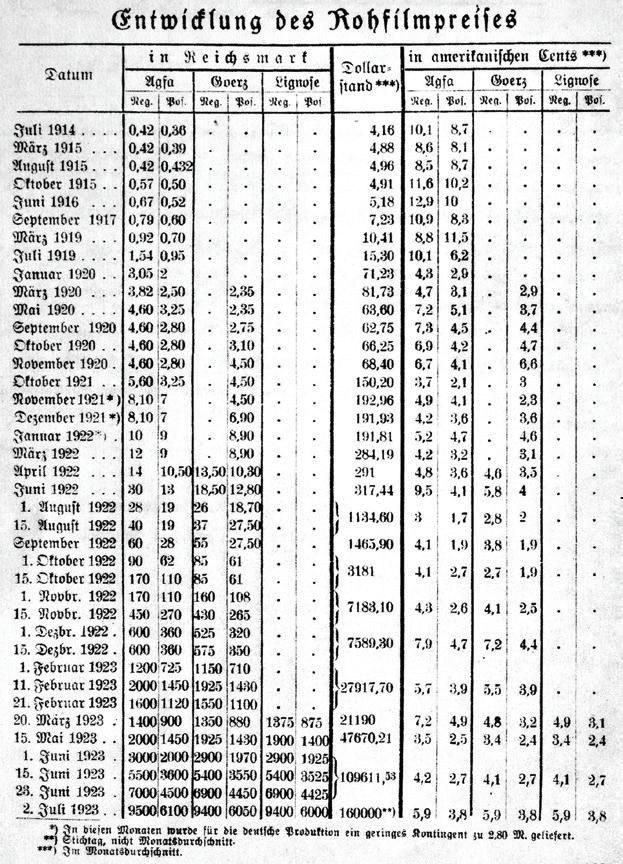
5. Development of the price of cine negative and cine positive film on the German market. From 1920 onwards Goerz challenged Agfa’s monopoly position in cine positive film. This type of film was used for copying work. From 1922 onwards Agfa lost its monopoly in cine negative film as well. This type of film had to be used for Leica photography. The hyper-inflation of 1922 and 1923 must have delayed pending improvements of 35mm cine negative film.
Perutz film because of its high sensitivity to colour. He does not mention grain explicitly, but states that postcard-size enlargements cannot be distinguished from same-size contact prints. This means that the quality of this film was already much higher than the films that had been available to Dr Paul Wolff only a few years before. “Because of the excellent quality of the lens the negatives in many cases allow enlargements of up to 18x24cm, and even larger when one aims at bromoil prints”.
The Perutz film made use of the Grünsiegel (green seal) emulsion that was widely used for large plate cameras. During 19241925 Perutz introduced this emulsion step-by-step to film material (flat film, roll-film, cine negative film, filmpack; in that order) . The Perutz Grünsiegelfilm became a popular Leica-film for amateur photography as well and became known as the Perutz Leica-Film.
6. Part of the March 1925 Leica review. For the accompanying Leica picture Willy Frerk chose a challenging subject: a portrait picture in artificial light with brown hair against a dark background. The good rendering of the hair tone is proof of the high colour sensitivity (orthochromatism) of the Toxo-Kino-Film.
The improved quality of these early Leica films (Toxo-Kinofilm, Perutz Leica-film) is also mentioned by Max Berek in 1948. By extending an earlier quote one can see how everything comes together in a logical way:
“In the beginning Oskar Barnack used the so-called Fliegerfilm, as its fine grain matched the requirements; but this film had a limited shelve life and had to be used up relatively quickly. But as an alternative [to this Fliegerfilm], the first buyers of the Leica could already be presented with an equally fine grained, but more durable orthochromatic film.” (figures 8 & 9)
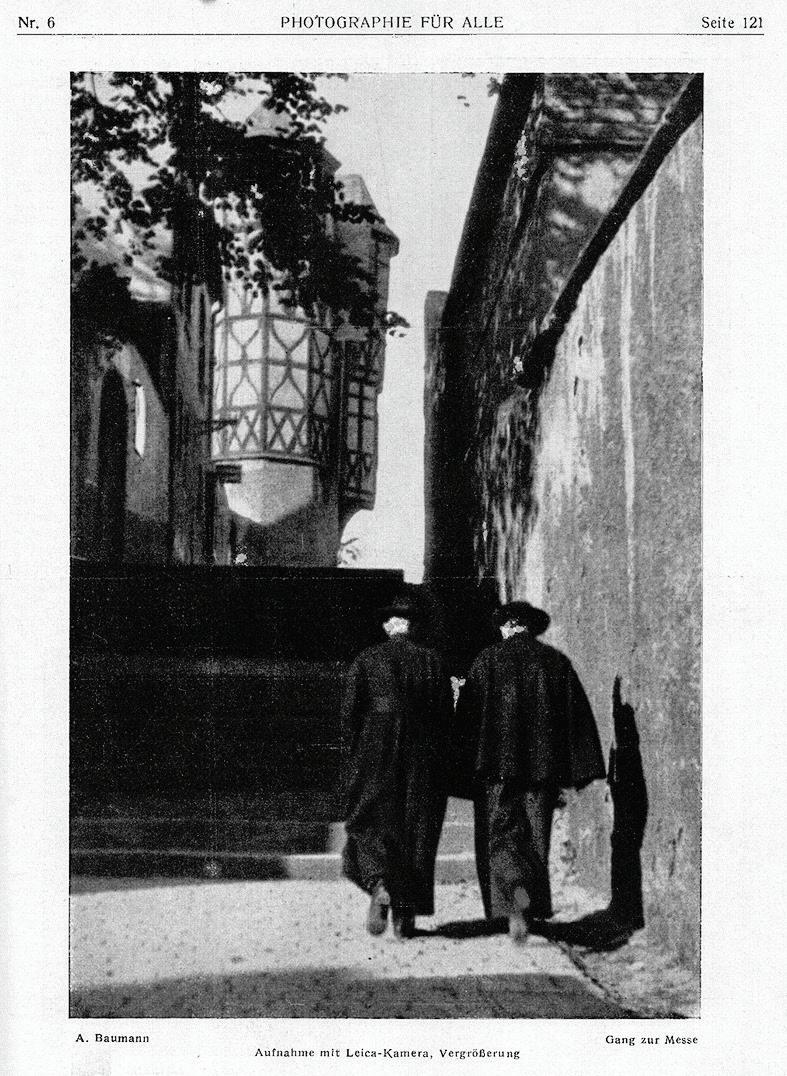
The May 1925 review is signed by ‘N-n’. Who can this be? I only have one clue. The article is published in the magazine ‘Photographie für Alle’. This was the sister magazine of the contemporary ‘Die Photographische Industrie’ . The latter magazine has an overview of the authors that made contributions in 1925. This leads to two possible candidates: C.E Neumann and H. Naumann. The accompanying full page (!) picture is included in the May 1925 review. The Leica-photographer is
7. 1924 advertisement for Toxo film products. In 1924 Nobel-Film offered a complete film programme (flat film, roll-film, filmpack, cine negative film). Agfa, Goerz and Lignose had managed this (much) earlier. Perutz would reach this milestone in the second half of 1925.
not ‘N-n’ but Anton Baumann. He received the cameras with production Nr. 127 and Nr. 133.
Being familiar with large plate photography, Dr Paul Wolff must have been well aware of the quality of the Perutz Grünsiegel emulsion. So the positive May 1925 review made him change his mind. That would fit in with his later recollection that he obtained (instead of borrowed) a Leica in 1925. It also fits with the 1925 and 1926 Leica pictures that were published in the 1934 edition of Meine Erfahrungen mit der Leica . (figures 10a & 10b, following page)
In late 1926 the Perutz Spezial Fliegerfilm came on the market. In the course of 1927 Leica pictures with this film by Anton Baumann start appearing in the magazine Photographische Rundschau und Mitteilungen . In January 1928 Curt Emmermann considered this film as the best possible Leica-film. It became known as the Perutz Leica-Spezialfilm. Still, Dr Paul Wolff found this film unsuitable for big enlargements. That didn’t result in Dr Paul Wolff doing away
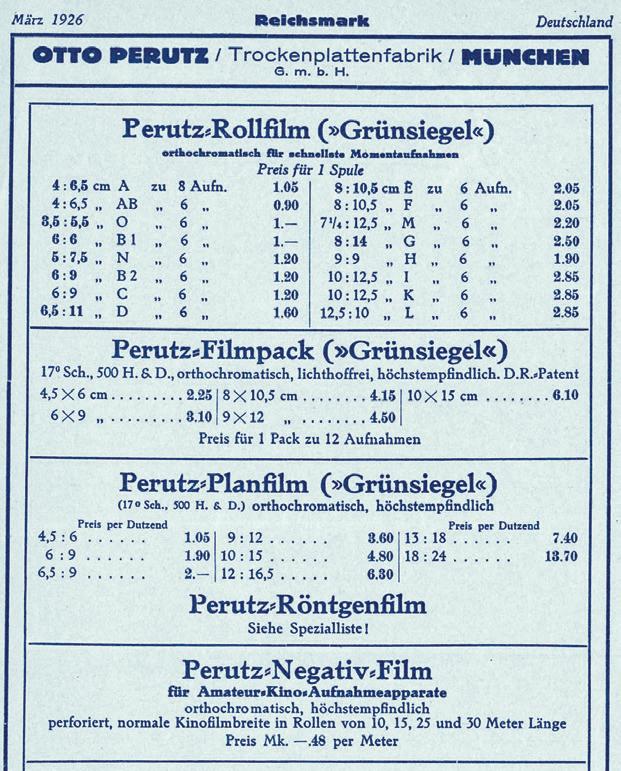
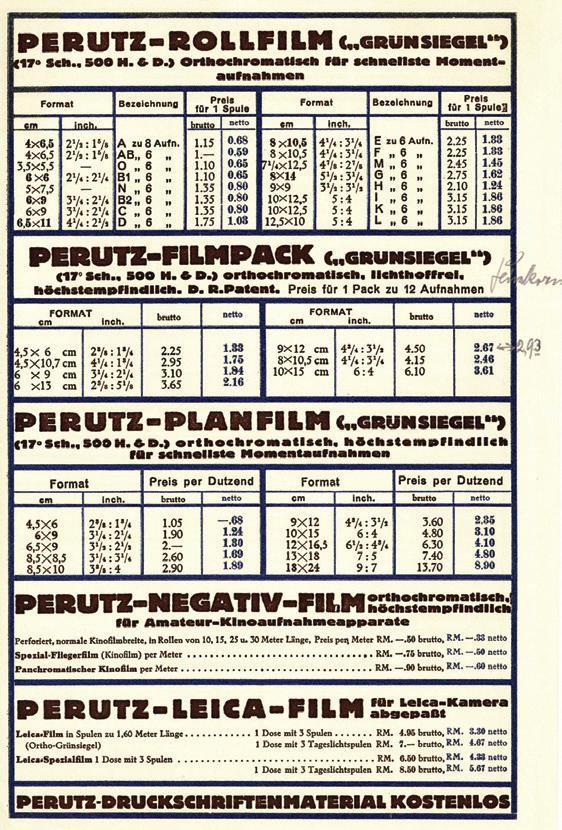
8. The Perutz pricelist of March 1926. In this pricelist the Perutz film programme is finally complete. The PerutzNegativ-Film for cinematography has the famous Grünsiegel emulsion and is available in lengths of 10 to 30 meter. In March 1926 the Perutz Spezial Fliegerfilm is still not included in the pricelist. I owe this pricelist to the Deutsche Museum in Munich.
with his Leica. In 1926 he even obtained a second Leica given as a reward for his efforts towards a 1926 exposition in his hometown Frankfurt a/M. So in the course of 1926 he had two Leicas at his disposal. He would use these for a technological Odyssey that would deliver spectacular results in unexpected ways. (figures 11 & 12) •
9. (above) Full page Leica picture in the review of May 1, 1925 by Anton Bauman.
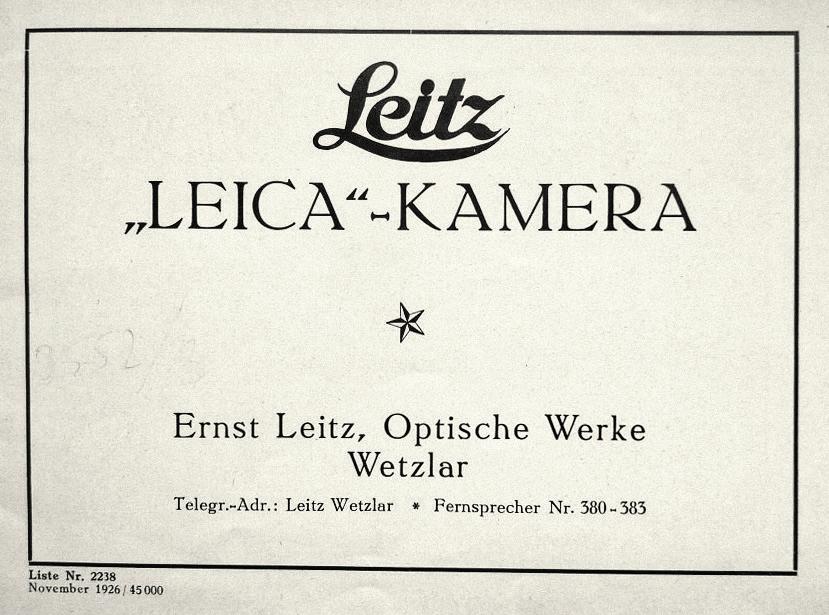
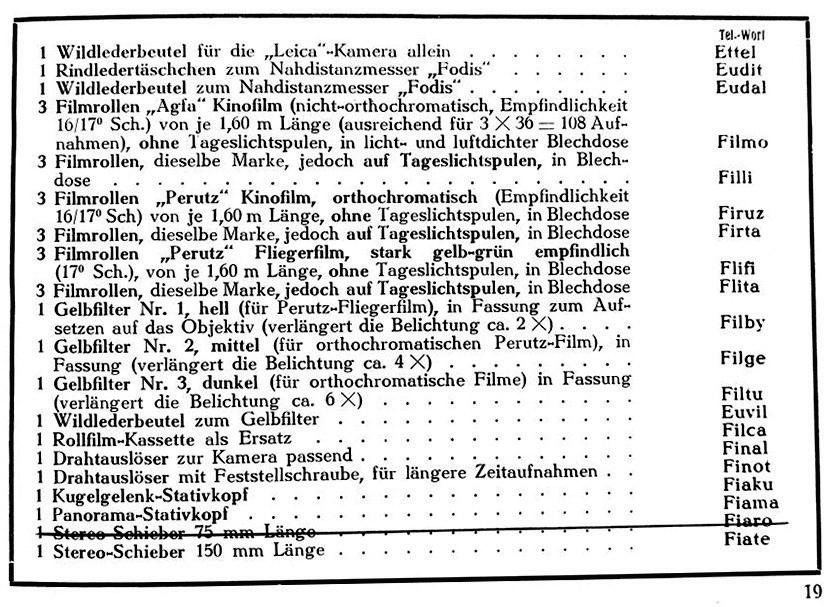
11. (right, top) Cine negative films by Agfa and Perutz in the Leitz catalogue of November 1926. The films are offered in lengths of 1,60m. The older Agfa and Perutz films are still simply called ‘Kinofilm’ (cine film). The new Perutz film is called ‘Fliegerfilm’. I owe this catalogue to Ulf Richter.
12. (right, bottom) The Perutz Leica-Film and the Perutz Leica-Spezialfilm in a 1928 Perutz Price list. The Perutz film programme is still based on the Grünsiegel emulsion. The Spezial-Fliegerfilm/ Leica-Spezialfilm is a relatively new product. I owe this pricelist to the Deutsche Museum in Munich.
This action picture demonstrates the high orthochromatism of the film in use. With a colour blind film (sensitive only to blue and violet) the sky would have been completely white. With a lowly orthochromatic film the high filter factor of the yellow filter would have required a very long shutter speed, making a hand-held Leica-picture impossible.
10b (right, bottom) 1926 Leica picture by Dr. Paul Wolff in the 1934 edition of Meine Erfahrungen mit der Leica
10a . 1925 Leica picture by Dr Paul Wolff in the 1934 edition of Meine Erfahrungen mit der Leica . Note that the sky is not white. This result is due to the use of an orthochromatic film in combination with a yellow filter.
OSKAR ONE ZERO FIVE = MILLIONS
by WILLIAM FAGAN
figure 3
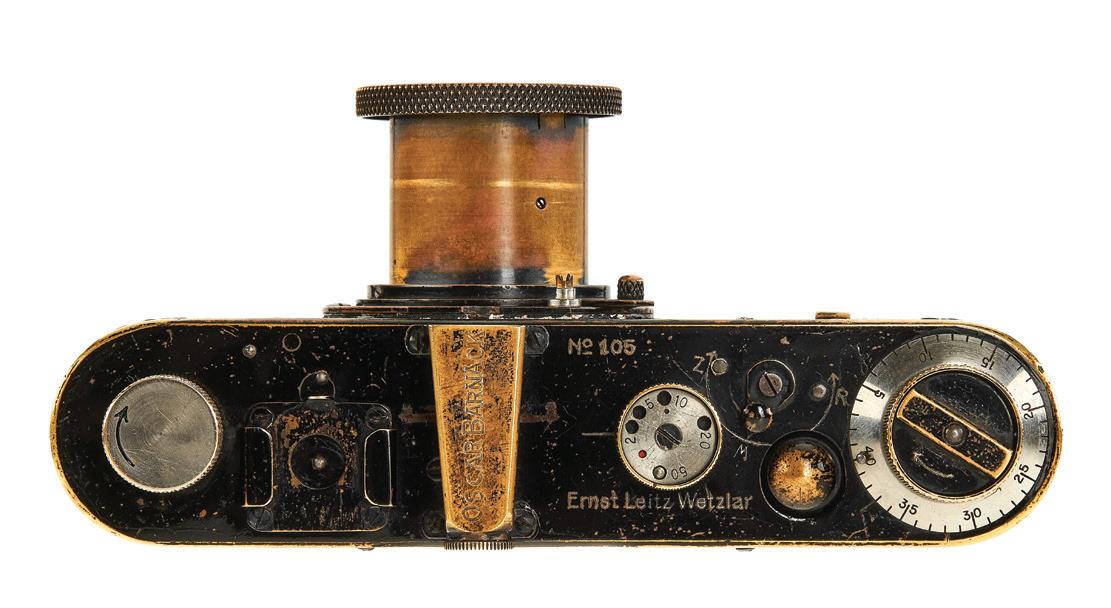
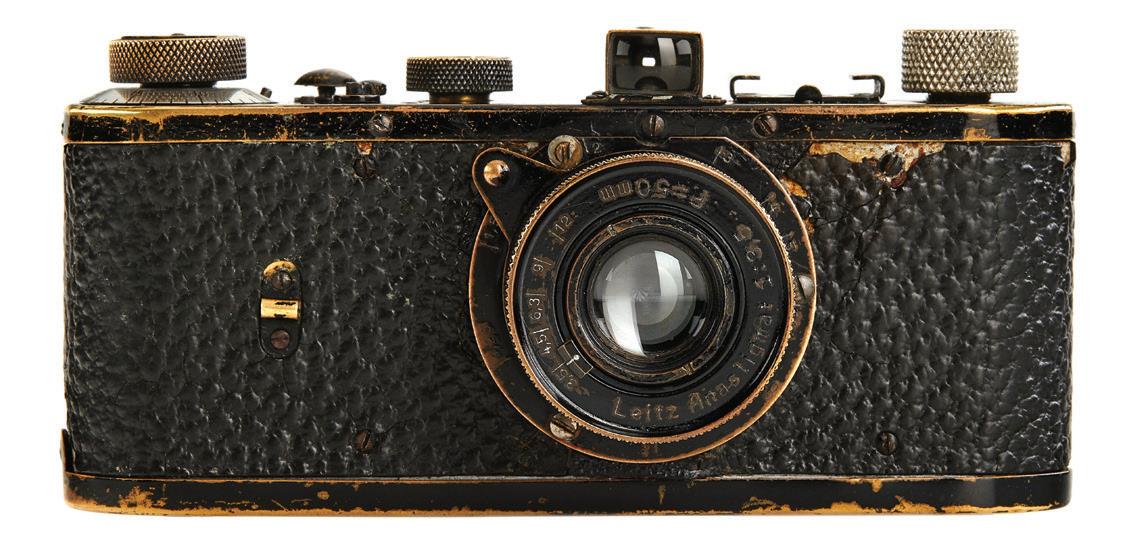
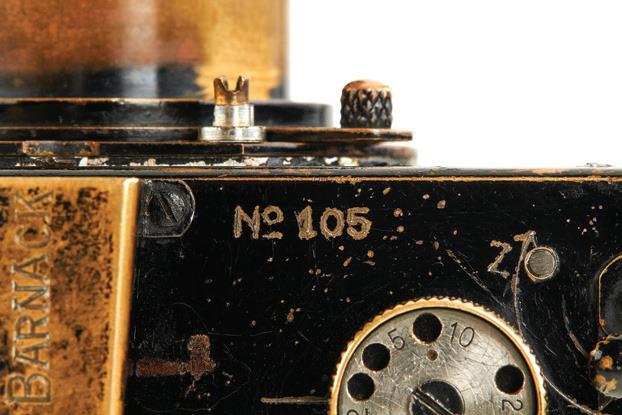
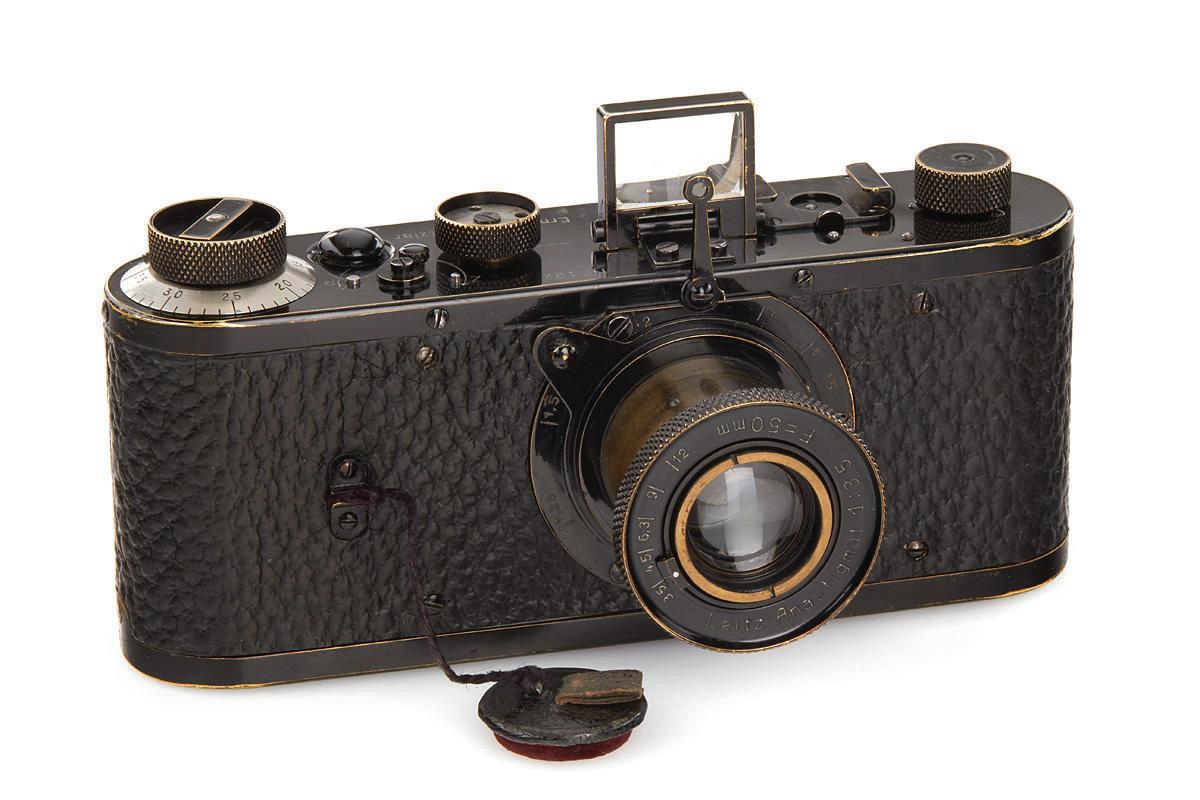
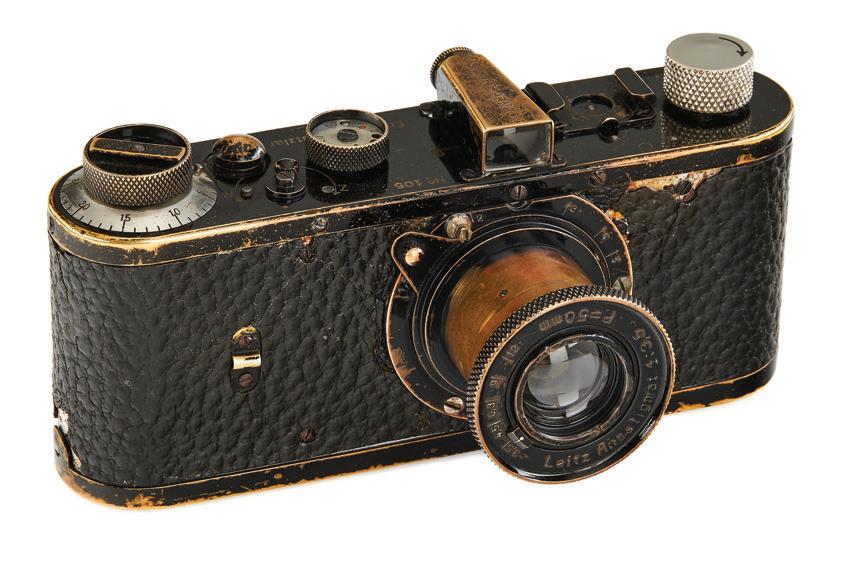
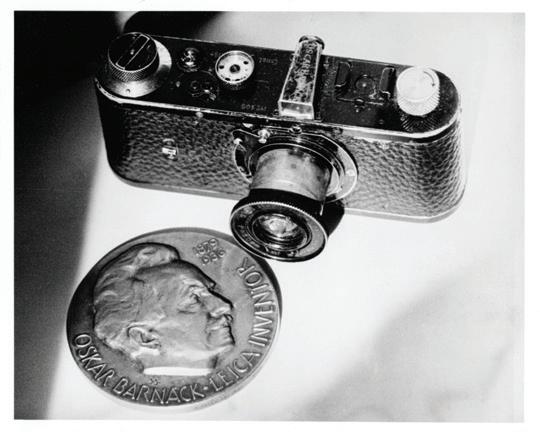
This is not a wireless call sign, but a camera which is an example of what is today called the Leica 0 (Null) Series which came between the early protoypes made by Oskar Barnack and the first production models of 1925. This one, No 105, which was used by Oskar himself and carries his name was auctioned at the Leitz Auction held in Wetzlar on 11th June of this year. ( figure 1 )
In 1923 Leitz distributed ( note not ‘sold’) somewhere between 20 and 30 cameras developed from the earlier prototypes (UR-Leica and further prototypes), with various new features, to factory personnel and trusted outside parties. These can truly be said to be the ‘pre-production Leicas’. The term Leica, meaning ‘Leitz Camera’ did not exist then. In fact the first appearance of the word ‘Leica’ on an actual camera was on the II Model D, which was launched in 1932.
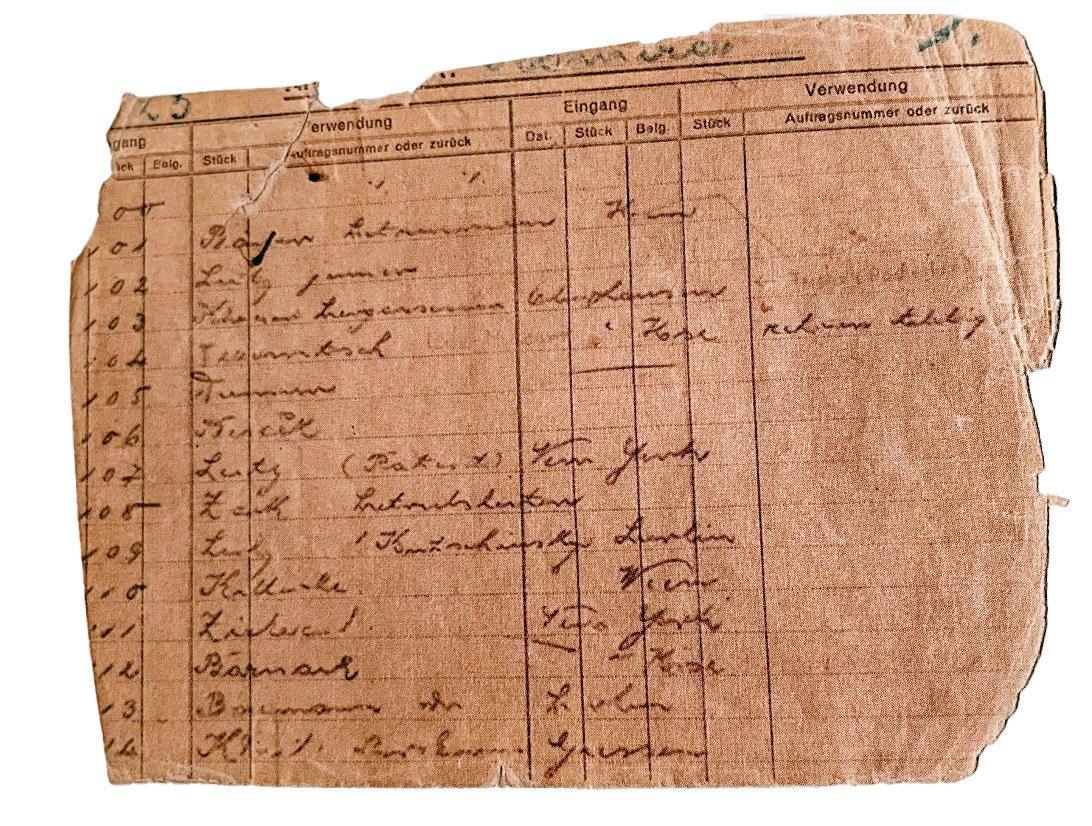
The No 105 camera was originally distributed to Henri Dumur who was a senior manager and subsequently became a Company Managing Director. Dumur was related to the Leitz family. Barnack is listed as having initially received No 112, but there is evidence Barnack subsequently used No 105 according to available records and his own son, Conrad Barnack, who sold the camera to a US collector in 1960. Apparently, there is also evidence that the cameras, which were not owned by the people using them, often came back to the factory for ‘updating’ and they were sometimes distributed to other parties, following being worked on. The lot in this auction contained some documentation relating to the camera, but this largely related the period after the camera was in the US. (figure 2)
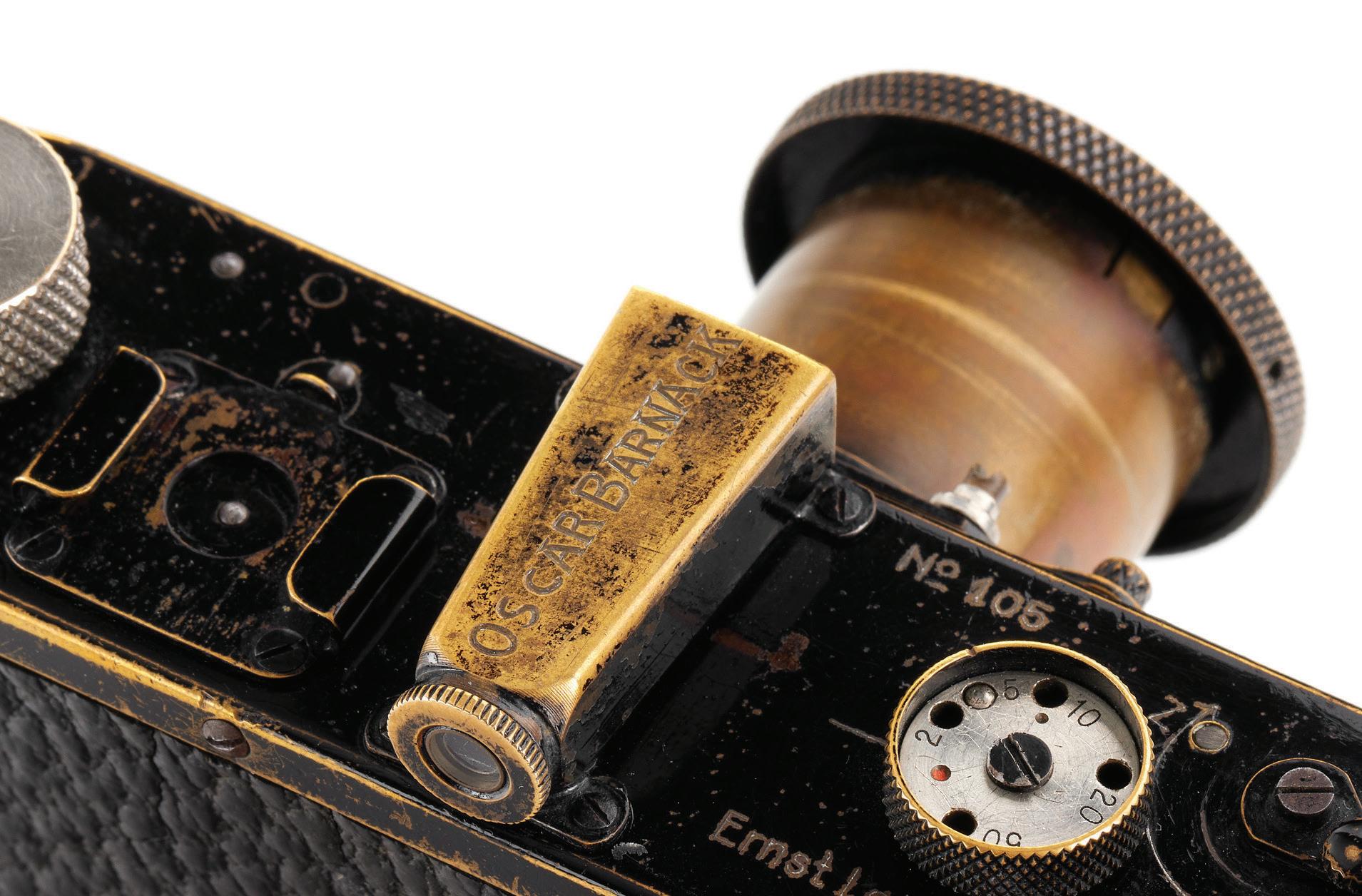
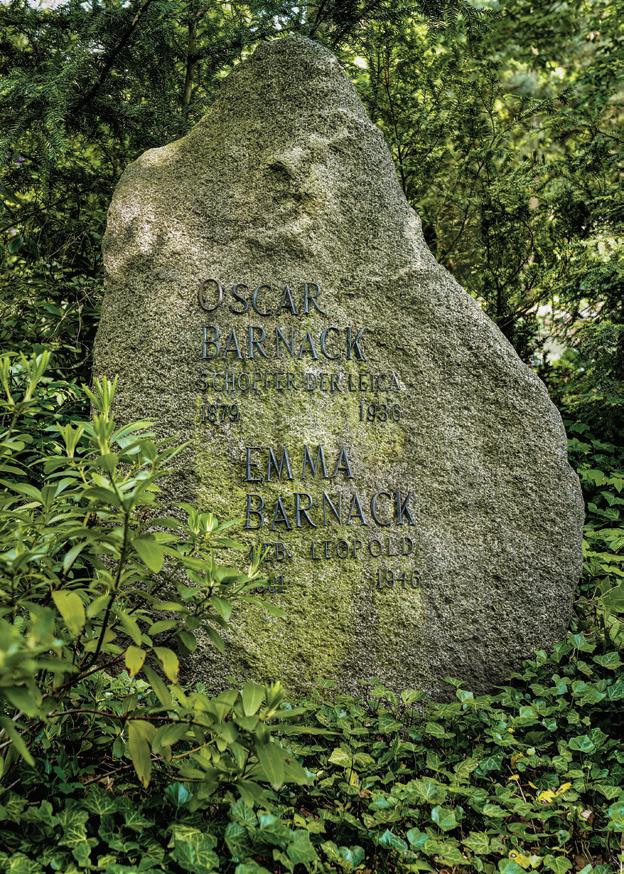
This camera carries the name ‘Oscar Barnack’ engraved on its viewfinder. The ‘Anglicised’ spelling of ‘Oskar’ as ‘Oscar’ is to be noted and while there is no evidence of when this was added, this was almost certainly after the first distribution of the camera in the 1920s. It is to be noted that Conrad Barnack spelt his father’s name as ‘Oscar’ and the same spelling appears on Barnack’s grave and also on a printed version of his marriage certificate from 1903 which I have seen. Editor Rosauer is doing a more thorough analysis on the ‘C v K ‘ saga.
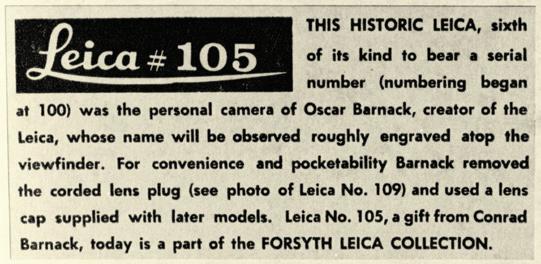
The first batch of the ‘O Series’ cameras, which included No 105, had non capping shutters which meant that the lens had to be capped when winding on/shutter cocking took place. There was a clip on the front of the camera to hold a short string which was attached to a leather lens cap. As well as the leather cap, this camera also came with a metal cap with the initials O.B. on it. (figure 3)
There were 3 types of viewfinders put on these early cameras:
1. a folding finder with a ‘cross-hair’
2. a tubular Galilean type with ‘cross-hair’,
3. as for 2 with no ‘cross-hair’.
It is believed that this camera, like others, intially had a type 1 viewfinder, which was then replaced with a type 3, which was subsequently engraved.
The photo above shows a lever with an arc marked Z, M and R to the right of the viewfinder
Z = Zeitaufnahmen (Bulb) for operator timed exposures
M= Momentaufnahmen (Instantaneous) for camera timed exposures, and
R= Ruckspulen (Rewind) for releasing the advance cogs to allow rewind – there is some debate on the exact German word, but any user of old Leicas will recognise what it is.
This camera did not have the first and second curtain system which appeared later. Using the M setting, the shutter speeds are not set in the usual way, but by setting a slit width with a dial giving results, according to the following table
Slit width in mm - fraction of a second = approximate effective shutter speed:
• 2 - 1/500th • 5 - 1/200th • 10 - 1/100th
• 20 - 1/50th • 50 - 1/25th
figure
figure 6
This, of course, reverses the situation we are familiar with as, with this, the higher the number, the slower the shutter speed, which reverses the cognitive approach which we have today.
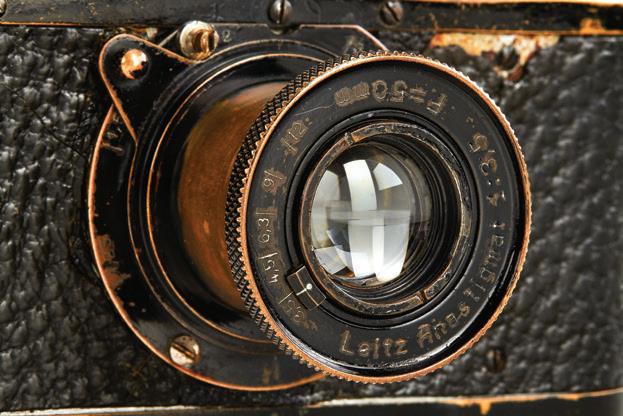
The Leitz lens is the Anastigmat which was the original 50mm design by Max Berek and which was developed over time to become the wonderful Elmar lens, ‘the lens that made Leica’. This one has apertures of 3.5, 4.5, 6.3, 9 and 12. Later designs went to f18. (figure 4)
The original rewind knob on the camera was replaced by a later design for a I Model A. The reason for this, according to Ottmar Michaely, the technician who worked most recently on this camera, was to enable the use of the standard Leica FILCA film cassettes. According to Ottmar, even by the late 1920s, the original cassettes for the 0 Series had become quite scarce. Although somewhat ‘upgraded’, this would still not have been an easy camera to use. A separate rangefinder such as the FODIS could, perhaps, have been used for distance, but metering and film speeds were not yet fully developed . The German Scheiner exposure had been around since the 1890s, but it generally relied on comparisons between different films. DIN did not arrive until 1934 and ASA and ISO were even further down the road.
Today, we have wonderful light meters and automatic and program exposure, so, for the average photographer, using a camera like this today would be difficult. Even, back in the day, Barnack was forced to admit that it was initially difficult for many photographers to produce good results with his ‘kleine photo-wunder’. It was only when expert users such as Paul Wolff found out by trial and error how to produce great negatives that the camera achieved general acceptance.
All of the above is by way of introduction to the fact that whoever bought this camera on 11th June is unlikely to walk around the streets or countryside using it, leaving aside its value.
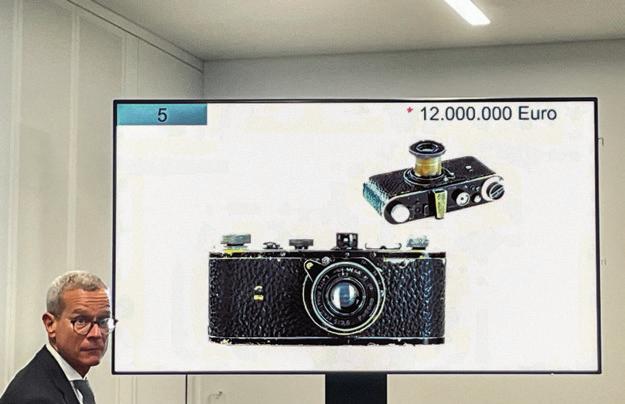
At the auction, the start price was €1,000,000 with an estimate of €2,000,000 to €3,000,000.
But, would it fetch the predicted price level? As horse racing pundits might say, this type of camera had ‘form’.
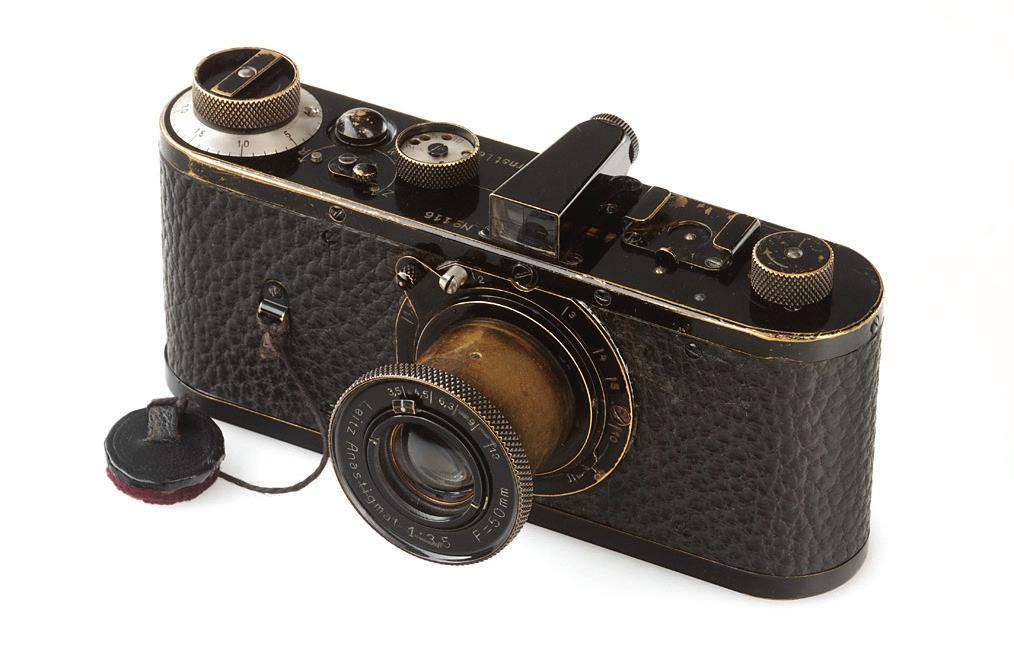
In May 2012 another Leica 0 Series camera, No 116, fetched €2,160,000, including premium, at the Westlicht Auction which was the forerunner of the Leitz Auction. This was then a world record price for a camera. (figure 5)
The world record price for a camera was broken, again at the Westlicht Auction (now Leitz), in March 2018 when another 0 series, this time No 122, fetched a price of €2, 400,000, including premium. (figure 6)
The eagle-eyed will spot differences between the 3 cameras, as was common for Leitz in those days, but they are all essentially the same thing.
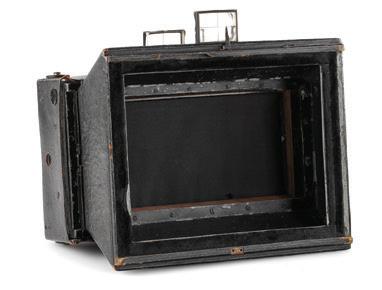
The No 105 camera came to the new owner with a Nettel camera used by Barnack which was one of the items which persuaded him to invent the little 35mm camera. As previously mentioned, there was also some documentation going with the lot. (figure 7)
7
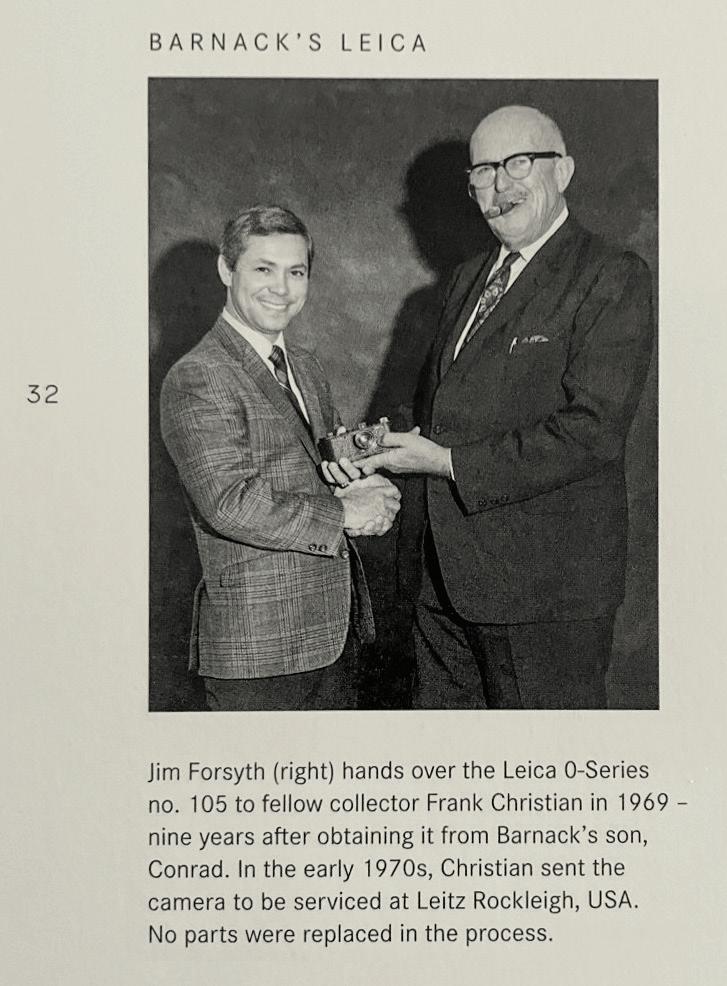
Who was the lucky person now selling the camera? I have heard some names, but my lips are sealed. The broad history is that Conrad Barnack acquired the camera after his father’s death. It spent some years in a museum in Munich, but, after his own business had got into trouble, Conrad took back the camera and sold it to American collector, Jim Forsyth, around 1960. Jim sold the camera to Frank Christian in 1969, but, thereafter, there is no further public information, but I do know that it has changed hands on at least two more occasions. There is evidence that the camera was serviced in the early 1970s at the Leica facility at Rockleigh, New Jersey, USA, but, it is said, no parts were replaced at that time.
I attended the auction for the camera on 11th June. It was the fifth item in a catalogue of over 400 items. As I arrived in the auction room, the tension in the air was palpable. Just a few minutes into the auction No 105 was reached. Bidding started at € 1 million and moved slowly up to €2 million. All of the bidding throughout was by telephone, with no room bids, and slowly the number of ‘live’ phones decreased. After €2 million the pace picked up and then somebody sneezed and, as quick as a flash, the auctioneer said ‘gesundheit’, everyone there laughed and the tension in the room relaxed. Then, eventually, maybe about €10 million, the number of ‘live’ phones fell to two and the tension started to rise again. Eventually only one phone was ‘live’ and with no other bid being forthcoming the auctioneer stood up and hammered down the lot at €12 million or €14.4 million with premium. There was also Value Added Tax (VAT) on top of that. There was a thunderous round of applause. My photo below shows Alexander Sedlak, Managing Director of Leitz Photographica Auction, taking one last look around the room as the winning bid was hammered down. This was, of course, a new world record price for a camera, which is likely to stand for some time.
figure
The whole process took only about 6 minutes, but it felt like 30 minutes. (figure 8)
Later, after the auction, I had an ejoyable discussion for an hour or two with Ottmar Michaely, the technician who had worked on the camera. Among other things he confirmed that, after adjustment to its focus, the camera could take perfect pictures. So whoever bought No 105 got a real live working camera. But will it be used in public? Would insurance be an issue? I think the answer to the first question is probably ‘no’ and the answer to the second question is probably ‘yes’.
In my head, I can hear people saying that every camera deserves to be used, particularly those who don’t really understand the motivation behind pure collecting. Also, I can imagine people saying that it was a criminal amount of money to spend on a 100-year old camera with all of the things going on in the world. People collect many things, including paintings, furniture and antique furniture etc and often pay much greater sums than this item obtained and nothing I might say here will deter a small number of wealthy camera collectors from doing the same - maybe not for the same amount if another example of a 0 Series comes up for auction in the future.
Whether you agree or disagree with collecting such old and valuable but significant items, I am sure that most would agree that this is a fine looking camera which started the heritage of Leica cameras which we still have today. Without the 0 Series cameras and the decision of Ernst Leitz and his team in 1924 to ‘take the risk’ to produce the Leica camera we would have no Leicas to play with today. I’d like to think that this article is as much a history lesson and a reminder of where the Leica camera came from as about a world record price for a camera. Despite the price, there is something in this for everyone interested in the history of Leica. (figure 9)
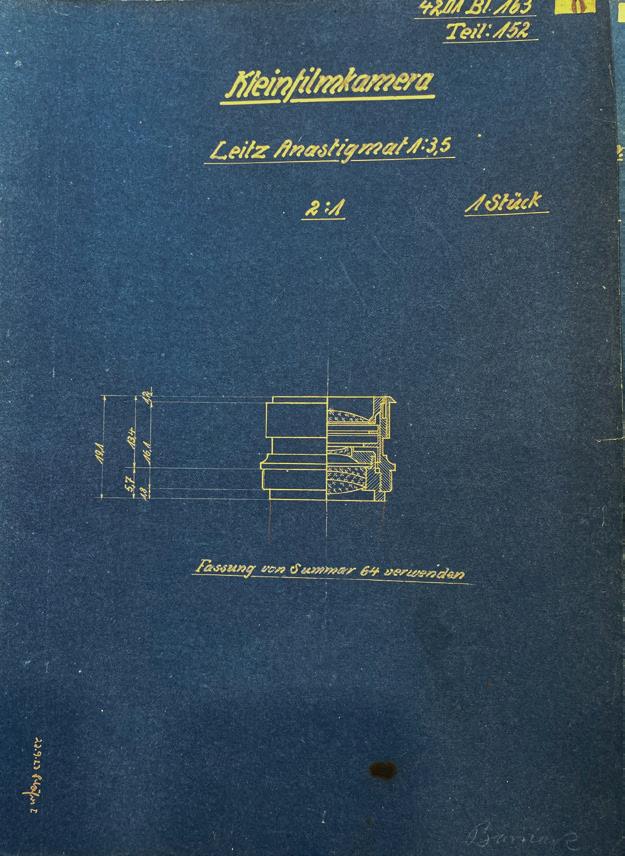
One final ‘endpiece’ on the No 105 saga is that at the same auction a set of blueprints for the 0 and I series cameras was sold for €48,000. These had not been known to still exist and came from from a source outside of Leitz/Leica. Ottmar Michaely was of the view that these were possibly even more significant than No 105, a viewpoint which I might agree with. On the day before the auction I had the privilege to go through those blueprints and I photographed this one from 1923 showing the Anastigmat lens in a 64mm Summar mount for the 0 Series. Ottmar thought that was a very significant blueprint. Like other ones in the series it carries Barnack’s signature on the bottom right corner. (figure 10)
Queries about the Leitz Auction should be made to:
Leitz Photographica Auction Westbahnstraße 40, A-1070 Wien
THE recent record-breaking sale of Leica Null Series 105, completed by Leitz Photographica Auction in Wetzlar, is described elsewhere in this issue. One controversial detail of 105 is the engraving on the top of the Galilean viewfinder featuring Oscar Barnack’s name. This is interesting for several reasons. None of the other Null Series were engraved in this way, and the spelling of Barnack’s first name is not the customary way with a ‘K’. Who was responsible for this spelling on the engraving, and who was responsible for having it engraved on the viewfinder on 105? Hopefully, I can shed some light on this in this article.
The Null Series cameras were pre-production prototypes made to test and evaluate the revolutionary Leica camera concept before the decision was made to go into full production of the Leica. At this time, things were in a great state of flux, including even the name of the camera, which was known internally as Barnack’s camera. It wasn’t until the camera went into production, that the camera had a name. One very early name tested for the Model I was “LECA”, and this unusual spelling was featured in an early brochure (Prospekt). At some point Leitz decided on the more pleasing name Leica, for LEItz CAmera.
These Null Series cameras were produced in March to June of 1923. On page 89 of Ulf Richter’s book, Oskar Barnack – From the Idea to the Leica, he shows a page from Barnack’s Workshop Log Book (Werkstattbuch) with a notation for 105, with the date 3/7 (July 3), along with the name Dumur. (figure 1) Null Series No 112 originally went to Barnack himself, according to the Werkstattbuch and Auslieferungsliste (delivery list) or Lieferliste (figure 1) . No. 105 is shown being originally given to Henri Dumur, the Swiss-born grandnephew of Ernst Leitz, who had joined the firm in 1903, then again in 1912 becoming Sales Manager in 1915. He was a board member and eventually became a co-director of E. Leitz G.m.b.H. in 1930. Henri worked at Leitz for 60 years until 1963. His favorable opinion of Barnack’s camera would have carried great weight in the decision to produce the Leica. Remember that the decision to make the Leica was not made until the dramatic and fateful board meeting in June 1924, when after 3 1/2 hours of debate, Ernst Leitz II looked at his watch, and noticing it was time for lunch, announced, “So it is now 12:30 pm. We conclude this meeting. I hereby decide it will be risked.” It is not known if Dumur was in favor of producing the camera during this contentious meeting.
The select few that these cameras were loaned to were trusted individuals known to the Leitz company. They were encouraged to report back on their impressions of the new camera, and any suggestions they might have to improve upon it. We know that running changes were made to these prototype cameras, and it is thought that the Galilean viewfinder that is now on 105 must have been one of these changes, having been originally the folding frame type seen on other Null Series cameras. Several other changes were made to this camera, such as the change of the rewind knob to that of a later Leica I Model A to allow the use of a FILCA cassette, but we have no reliable information as to when these changes were made to 105.
We do know that 105 next went to Oskar Barnack himself. We know from Ulf Richter’s book about Barnack that he was a constant tinkerer, and I am certain that Barnack himself made some of the changes to 105, as well as to the other Null Series cameras to one degree or another based on the feedback received from the testers. Barnack later passed the camera on to his son Conrad at some point before his death in 1936. Conrad used the camera himself until he loaned it to the Photographic Technology Display at the Deutsches Museum in Munich in 1939. 105 was kept at the Museum from 1939 to 1945, returned to Conrad, who
then returned the camera to the museum where it was again displayed from 1954 to 1960. The Deutsches Museum also had other milestones from the dominant German camera industry of the time, such as the many models of the Zeiss camera, including the Contax. From a photograph in the museum collection of 105 next to a Leica III (Model F) which is believed to date from 1939, it is clear that 105 did not have the engraving of Barnack’s name on the viewfinder at that time. It is reasonable to assume that 105 could have received its engraving to the viewfinder either in the nine-year period of 1945 to 1954 when it was in the possession of Conrad, or as late as 1960 when he had it returned to him from the museum but before he sent the camera on to Jim Forsyth.
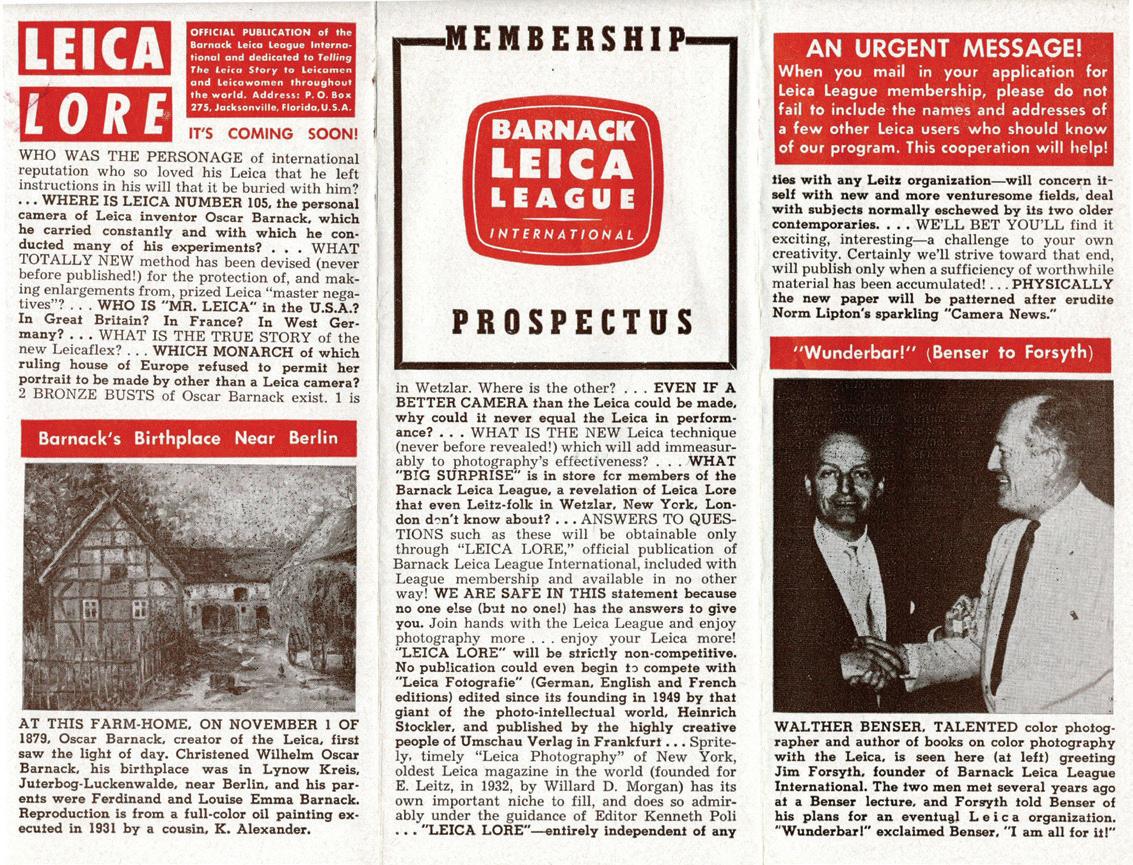
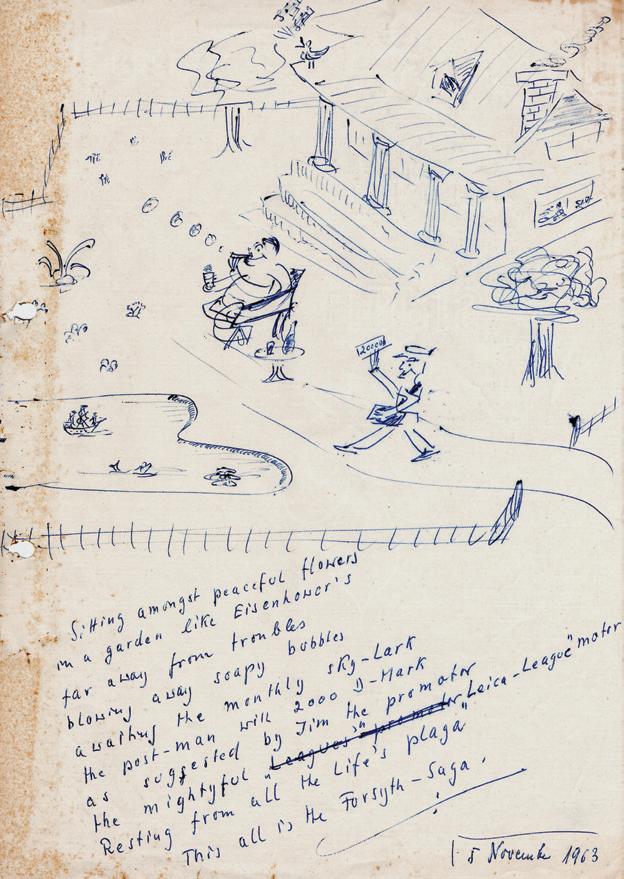
In 1960, Conrad agreed to sell 105 to the American collector Jim Forsyth. Forsyth was a consummate promoter, and he featured 105 and his relationship with Conrad in the prospectus for his Barnack Leica League. The letter from Conrad Barnack to Forsyth dated 9 October, 1960 discusses the possible sale of 105, plus the Nettel plate camera Oskar Barnack had used from 1903 to 1912 and which had inspired the invention of the Leica as a smaller, lighter alternative to the plate camera. A heavy bronze bust of his father, plus a painting of Oskar Barnack’s birth house in Lynow was also included in the sale. The prospectus for the Barnack Leica League also featured a picture of this painting. (figure 2) The League was a failed venture, and in 1969 Forsyth sold 105 to its next owner, Frank Christian. Unfortunately, in the picture of the “handoff” of 105 from Forsyth to Christian it is not clear if 105 had the engraved viewfinder at that point. (figure 5) Some years later, Frank Christian sold the camera to Al Clarke, one of the founders of the LHSA, who had the camera in his
(figure 2) Original Prospectus of the Barnack Leica League
(figure 5) The famous "handoff" of 105 from Jim Forsyth to Frank Christian
(figure 4) Forsyth's description of the engraving of Barnack's name on 105.
(figure 3)
collection for about 25 years, from around early 1971 through the mid-1990’s. Al Clarke wrote about "Barnack's Leica" in a cover story in the LHSA Viewfinder, Vol. 23, No. 2, 1990, available in the LHSA online archives. 105 then went to the next owner who put the camera up for auction this year in Wetzlar.
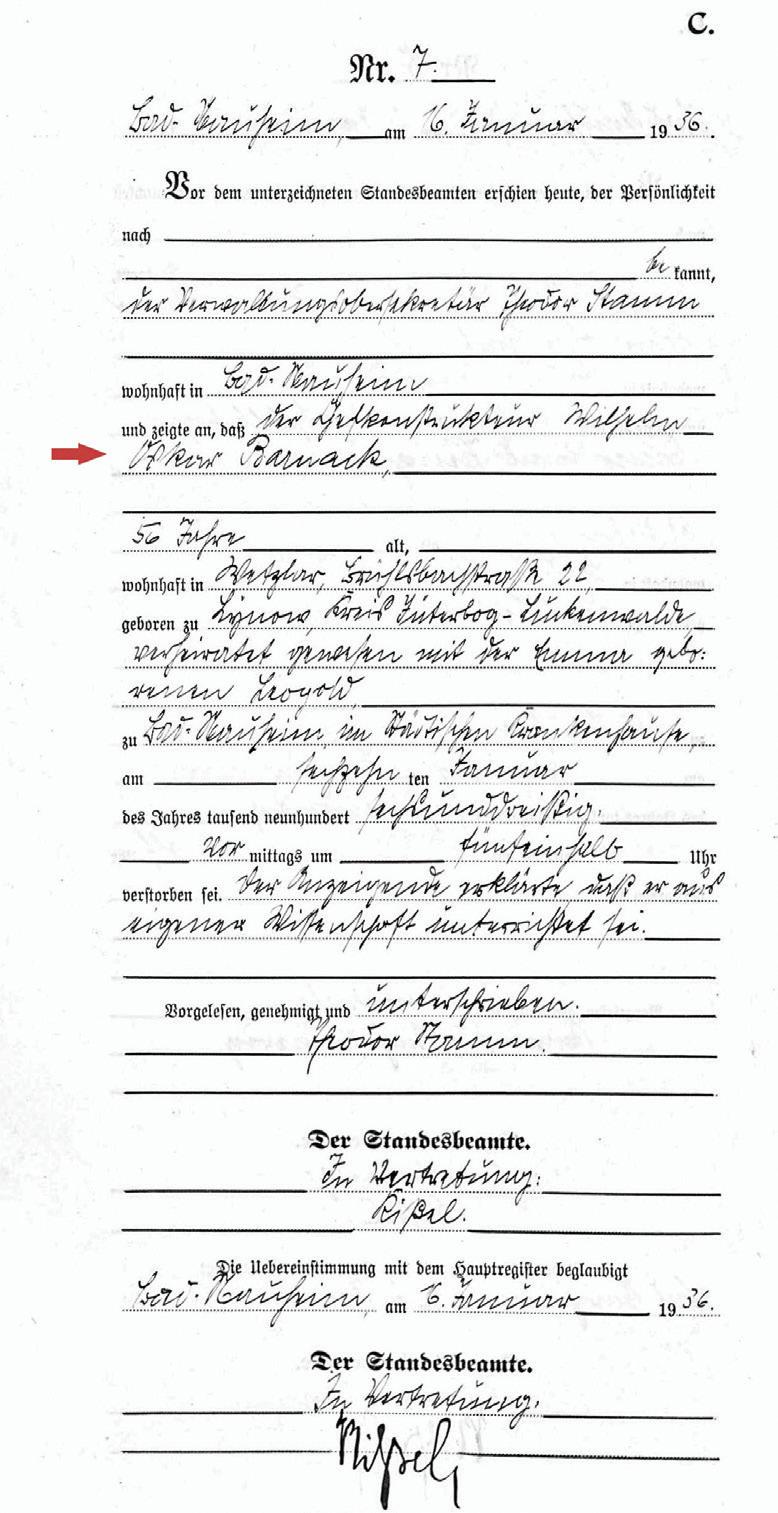
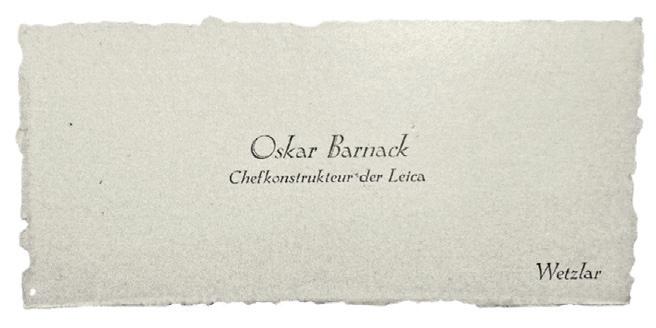
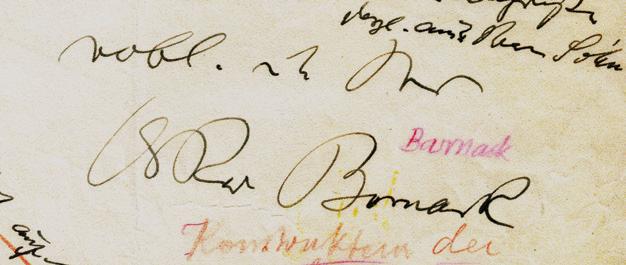
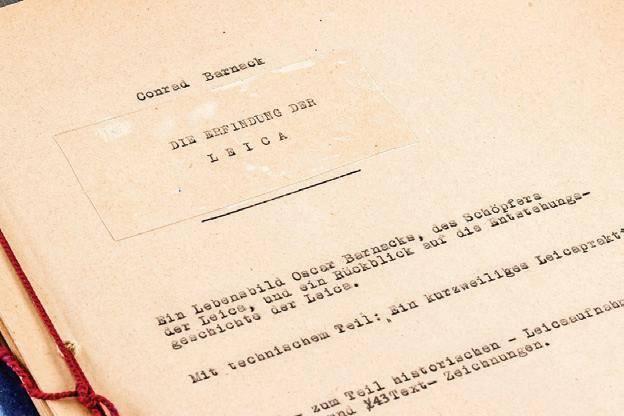
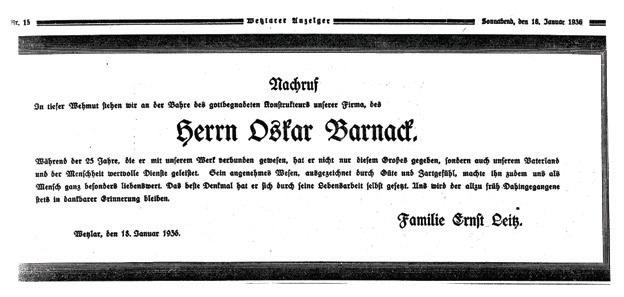
Getting back to the question of the spelling of Oskar, most of the examples I have seen support Oskar with a ‘K’. We have several examples of Barnack’s signature in handwritten notes and letters. We have several official government documents, Barnack’s business card, and the official death notice from the firm of E. Leitz, Wetzlar. There are listings in the local telephone book for Wetzlar with Oskar spelled with a ‘K’. On the other hand, we have Barnack’s gravestone, the manuscript that Conrad Barnack wrote about his father’s life and work on the Leica, spelling Oscar with a ‘C’. The question of the spelling of Barnack’s first name was specifically addressed in a letter to Conrad from Jim Forsyth on his business letterhead. He wrote, “Please tell me: I notice that you spell your father’s name Os c ar, rather than Os k ar. Is that because you are writing in English? When I write of him, should it be with the c , then? (Many questions I will have to ask you, Conrad; you will earn your money!)” This letter was dated 26 October, 1960, later in the same month that Conrad wrote to Forsyth offering 105 to him. Wouldn’t it be nice if we had Conrad’s response to this direct question about why he spelled his father’s name Oscar? This would have settled the debate once and for all. Unfortunately, there is no record of such a response.
Familiarity with the German language and history gives some insight into the spelling dichotomy. Many German given names have dual spellings, for example Karl and Carl, Kristina and Christina, Katerina and Caterina, etc. Use of the letter K over C is by far the most accepted spelling of given names. However, the letter C was also an accepted spelling. There is also the use of alternate spelling of given names within the family circle versus the spelling of one’s name in public for business and official use. Conrad seems to be the only one in the family to spell Oscar with a ‘C’. Oscar Fricke reports that Barnack’s wife Emma called him Oskar in surviving post cards, and Emma’s nephew referred to Barnack as Onkel Oskar. Official documents and employment records etc., used the more common Oskar with a ‘K’. On most documents, Oskar usually just signed things “Barnack”. However, when he signed things with his full name, it was always “Oskar Barnack”.
Then there is the question of who was responsible for engraving “Oscar Barnack” on the viewfinder of Null Series 105. Given that the photo from the archive of the Deutsches Museum clearly shows it was not engraved in 1939, it is safe to assume this engraving happened sometime after that photo was taken. From that point in time, things become much less certain. Given the outsized personality of Jim Forsyth, most have concluded that he was the culprit for doing this. Also, the
spelling of Oscar with a ‘C’, would be typical of the Anglicization of Barnack’s name, and would be more likely what an American collector would have done to reinforce the provenance of this rare camera. Jim Lager, Lars Netopil and I were convinced Forsyth was the person responsible. For what reason, we do not know. However, in correspondence with Oscar Fricke, Rolf’s son, in his considered opinion he believes that Conrad was responsible. Why he would have had the engraving done this is anyone’s guess. Perhaps it was to commit to posterity that it was his father’s camera, and the spelling with a ‘C’ is consistent with the spelling Conrad used in many other references to his father. Oscar also observed that Forsyth worshipped that camera, and seriously doubts that Forsyth would have done anything to alter it. In fact, in Forsyth’s own description of 105, he makes reference to the engraving of Oscar Barnack on it, “whose name will be observed roughly engraved atop the viewfinder.” He also mistakenly states that numbering began at 100, when it actually began at 101. (figure 4)
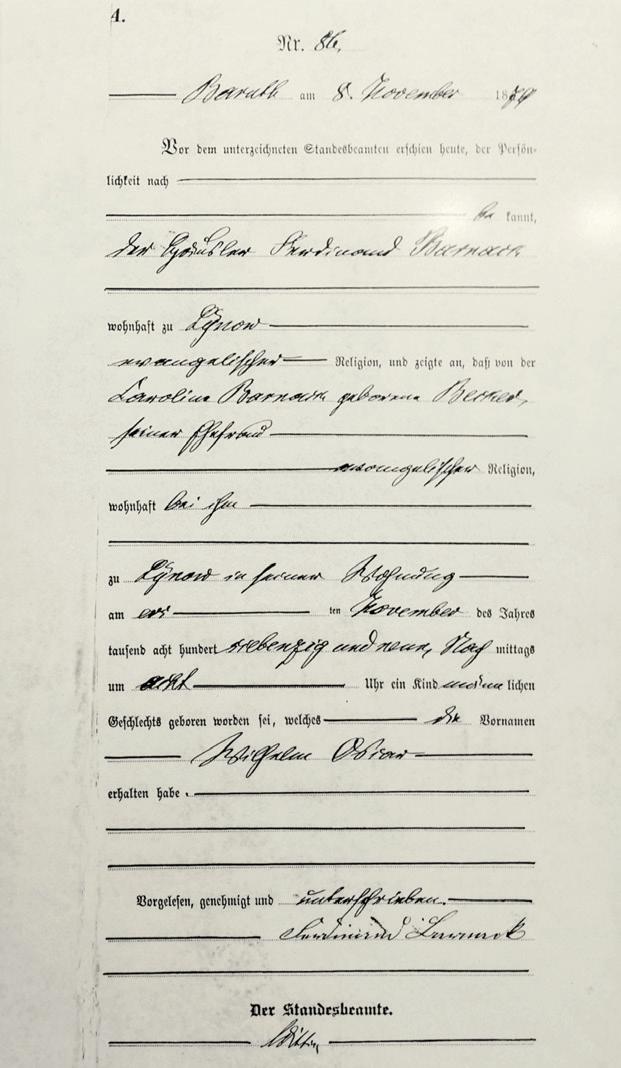
(figure 6) 1879 - birth record as Wilhelm Oskar Barnack
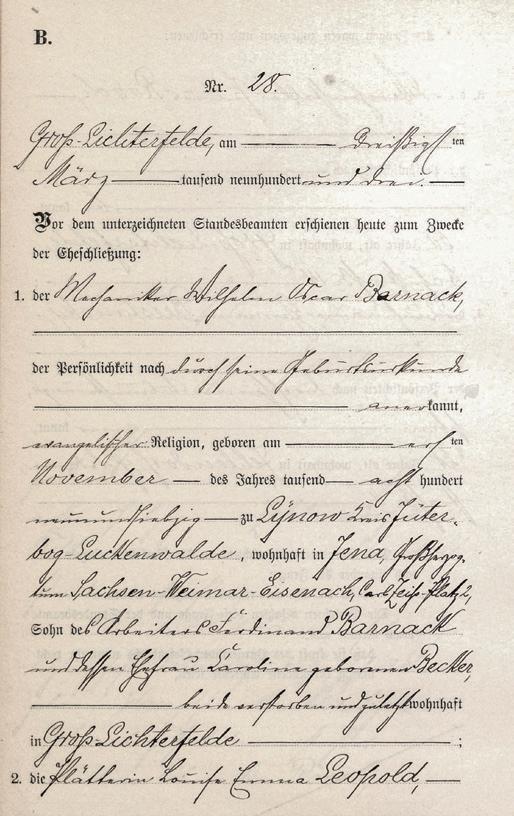
(top - figure 7) Top of original (Erstregister) marriage record as Wilhelm Oscar.
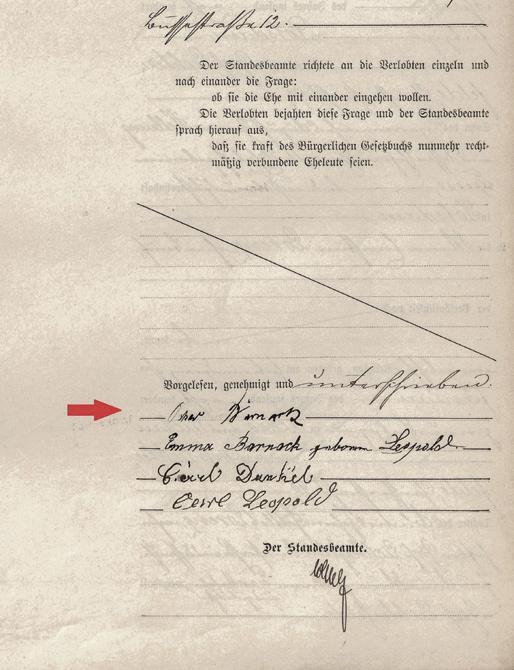
(bottom - figure 8) Original (Erstregister) marriage record, signed by the 23-year old Barnack as "Oskar Barnack". See red arrow.
(figure 9) 1936 Death Record recorded as Wilhelm Oskar. See red arrow.
Conrad’s life experiences may also have come into play here. Conrad was assigned to the Leitz agency in London from 1934 to 1936 in the pre-war years, and became fluent in English and familiar and friendly with the English. From 1938 to until the start of the war, Conrad was with the Leitz agency in Munich. He was called up for military service then, training German Signal Corps recruits, then a year in France, and then on to Stalag VIIA POW camp in 1941, in the town of Moosburg in Southern Bavaria. This was the largest POW camp in Germany, with over 150,000 POWs passing through it. Conrad was a guard at the POW camp, and became very friendly with one of the British internees, Peter Dorley-Brown. Peter’s son Chris wrote a book about his father, and wrote about Conrad and his father being good friends during this trying time. They remained friends for many years after the war. From January of 1943, Conrad spent the duration of the war on the East Front in Russia. At war’s end, he spent 14 days in the captivity of the Americans, and after he returned to Munich went to work for the American Military Government. Conrad remained in Munich, eventually opening his own photo store. Knowing more of Conrad Barnack’s life story, that he was fluent in English, and appeared to somewhat of an anglophile, might explain why he preferred the Oscar spelling.
Let’s take a look at some of the supporting documents pertaining to Barnack at different points in his life for some more insight into how his first name was spelled.
First, we have his Birth Certificate. This was handwritten in a style of writing that is very difficult to read today, especially for non-native German speakers. I have been working with Ottmar Michaely and several members of the German Leica Users Forum on deciphering the handwritten spelling on the Geburtsurkunde. The font used for his birth certificate is called Deutsche Kurrentschrift, and is now only seen on old documents, plus the individual’s handwriting who filled out the document makes this very difficult to actually identify the individual letters of the names. The consensus is that the name is Wilhelm Oscar Barnack, born on 1 November, 1879. Place of birth is Lynow. His father Ferdinand’s occupation is listed as Häussler , which means a very poor farmer or a farmer with no land. His mother is recorded at Caroline Barnack geb. (née) Becker. Religion is Evangelisch.
It is interesting to note the Geburtsurkunde issued on 7 March, 1979. This was during the years of the DDR, the Deutsche Demokratische Republik, or better known as East Germany. Here we see Oskar spelled with a ‘K’. His parents’ names and his mother’s maiden name of Becker. No reference is made to religion. Another question is raised as to who requested this document at this late date. Most likely someone researching Barnack’s life story, possibly an LHSA member!
Barnack’s Marriage Certificate (Heiratsurkunde) comes next,
dated 30 March, 1903, when Barnack was 23 years old. Barnack’s occupation is listed as Mechaniker (Mechanic) Wilhelm Oscar Barnack, living in Jena, which is where Carl Zeiss was located who was his employer at this time. His wife is listed as Plätterin (a person who would iron the laundered clothing of someone else) Louise Emma Leopold, living in Gross-Lichterfelde. Religion again listed as Evangelisch. Oscar Fricke sent me copies of two original marriage certificates. On the "Zurückgeführtes Erstregister" (original record), his name is spelled Oscar Barnack by the registrar, but he signed it (original signature) Oskar Barnack. The second document, "zum Erstregister erklärtes Zweitregister" (copy book record), his name is spelled Oskar Barnack and written (not signed) Oskar Barnack in the signature section.
We also see Barnack himself spelling his first name, Oskar, with a ‘K’ on several letters in his own hand. ( figure 11. The letter to Leistenschneider thanking him for the gift of the PIX pencil.) There is also an image of his business card while he was employed at Leitz, with his name Oskar (figure 10) . I also show the announcement of Barnack’s death in 1936, from the Leitz company, also with the ‘K’ spelling of Oskar. (figure 15) There is also the monument across from the old Leitz factory in Wetzlar, with Oskar Barnack on it.
(figure 10) Barnack's Business Card
Another interesting document I have included here is the sketch and poem penned by Conrad Barnack, dated 8 November, 1963. (figure 12) The poem is very interesting and explains the sketch Conrad made to go along with it. Conrad is enjoying life in his backyard like Eisenhower, blowing bubbles and enjoying life listening to the Skylarks sing. In the poem, Conrad describes Forsyth as “Jim the Promoter, the mightyful Leica League motor”. In the sketch, we see the Post Man coming up the (figure 11)
walk with a monthly check in the amount of 2,000 DM from Jim Forsyth. Back in 1960, the DM to Dollar exchange rate was set at close to 4:1, which would equal $500. Today, a 1960 dollar is equal to $9.87, which would make that check worth $4,935.00. Oscar Fricke has provided several documents for my edification, and they are consistent with the amount of $1,500 for everything that Forsyth offered to pay Conrad for the items he had sent him. In today’s dollars this would be about $15,000. In one letter, Forsyth offers to pay Conrad $500 for 105. Then again, in some of the correspondence I have seen between them, I have the impression that Forsyth was always short of money, paid Conrad Barnack sporadically, and the two of them had an up and down relationship.
Oscar provided me with excerpts of seven letters between the principals from October of 1960 to June of 1962. In a letter dated 23 October 1960, Conrad states that he is giving Forsyth the collection, and only asks if Forsyth can “help me out of my present straights”. Forsyth’s response dated 29 October 1960, makes the statement that “loved things should not be “sold”, but “given”, to a friend”. He goes on to say that he will send Conrad two International Money Orders in the amount of $50 and $100 to begin, and that he can count on at least $1,500. In one letter from Forsyth to Conrad, he talks of 105, the Nettel camera, the painting and the bust of Barnack as investments in the proposed Barnack Museum he was going to build, and that Conrad would be rewarded financially later. In a letter dated 15 June 1962, the payments total to that point appears to be $1,050, and the accounting of payments made to Conrad led to some acrimony and talks about Forsyth’s own financial problems. Forsyth states that he will make payments of another $200 or $300 on account, and maybe smaller sums before then, “if I am courteously and considerately treated”. In late correspondence they have appeared to have repaired their relationship, but this is all quite at odds with Conrad’s sketch and poem mentioned above, which seem to refer to the promise and not the reality.
Forsyth’s precarious fiscal condition prompted him to offer his collection, including 105, for sale to various collectors. I have seen a letter dated August 9, 1965; Forsyth offers his entire collection to a prospective buyer. He begins the letter, “I am 60 years old today, and I feel it. Not enough time remains for me on the calendar to carry out my ambitions for Leica League which was so very dear to my heart…”. He goes on to literally “dicker” between himself and the prospective buyer, first stating “I put my figure at $3,000 and you can beat me down to $2,000”. He closes the letter with, “I want to ‘get out from under fast’. Close out by August 15 at the very latest. So let me know”. It is painful to read his sales pitch for his collection, and more than a little sad. It was not until late 1969 that he successfully sold 105 to Frank Christian, after corresponding with Al Clarke. I have also seen another letter dated March of 1969 to Al Clarke about the sale of his collection, and the
(figure 13) Cover page of Conrad's unpublished manuscript of his father's biography
(figure 12)
authenticity of 105. Forsyth had provided Al Clarke with a photo of 105 with a Barnack Medal Conrad (figure 3) had engraved to Forsyth, as part of the sales pitch to Al Clarke. He goes on to say that he regrets not sending the camera to Al Clarke a professor at OSU (Ohio State University), but he does not trust the mail. The engraving is mentioned when Clarke questioned the engraved metal lens cap with the initials O.B., with, “no reference to the Barnack name on the Newtonian finder of 105 . If you study the photo carefully, this will be discernible. THEN I STUDIED MY ORIGINAL OFFERING BRIEF AND DISCOVERED THAT THE NAME-ON-FINDER HAD NOT BEEN MENTIONED!” Forsyth goes on to mention all of the other items included with the sale of 105, namely, “the life-size heavy bronze bust, the old Nettel camera, and the oil painting of the farm home at Lynow, are priceless items, and the COMBINATION is exalted.”
Included with the recent Leitz auction were some other interesting documents. One of these was a manuscript by Conrad Barnack, Das Buch von der Leica , (figure 13) which was never published, about the history of his father and the Leica. You can see in the photo of the cover page; Oscar’s name is spelled with a ‘C. This manuscript did not sell in the auction.
Finally, we have the gravestone shared by Oscar and Emma Barnack in a secluded area of the Alte Friedhof in Wetzlar. (figure 14) Here again, we see Oscar spelled with a ‘C’. One has to wonder if Barnack’s wife Emma, or their son Conrad was responsible for the inscription on the gravestone. I believe that Conrad was the person responsible for this given the evidence presented earlier in this article.
Some might say that this entire subject is like the debate over “How many angels can dance on the head of a pin?” Ah, but that is what makes the study of all things Leica interesting for many of us! Unfortunately, the principals involved in this story are no longer with us, so we will not likely have a completely definitive answer to the questions involving the “Oscar Barnack” spelling on the viewfinder of Oskar’s 105. However, we do know that Conrad Barnack alone favored the “Oscar” spelling for his father’s name during the times in question. Based on all of the evidence, we can also reasonably conclude that Conrad was likely responsible for the viewfinder’s engraving. “How do you spell Oskar?” Conrad spelled it Oscar.
Many thanks go out to Oscar Fricke who went out of his way to help me, Jim Lager, William Fagan, Lars Netopil and Ottmar Michaely and numerous friends and members of the English and German Leica Users Forum (LUF). Without your generous help, I could not have written this article!
(figure 15) Barnack's Death Anouncement
(figure 14) Barnack's Gravestone as Oscar
Bridge Replacement Story
The Final Stage
by DICK GILCREAST
Once the old cast concrete bridge had been demolished and removed, steel supports and beams were set into the water to support the construction of a mold to be filled with concrete for the new bridge, this time using lots of re-bar steel to keep the concrete from cracking, as had evidently happened to the old one without internal re-bar, designed in 1939 and finished in 1940.
Figure #1 shows the steel support system in the river which took several weeks to build, with re-bar at the far end and the beginnings of steel supports for a plywood arch to form the bottom of the arched casting mold for the concrete to be poured into.
Figure #2 shows the beginning of the plywood to seal the bottom of the mold.
Figures #3 and 4 show the rest of the plywood being set in place.
Figure #5 shows the plywood completed, with the stone sides being started.
Figure #6 is the beginning of the internal re-bar system within the concrete area, which the earlier bridge did not have, and the stone sides are being built up.
figure 1 figure 2
figure 3
figure 4
Figures 7 & 8 show the re-bar totally filling the casting space, with the stone siding tall enough to seal the sides of the mold.
Figures 9 & 10 are the concrete pouring stage. No less than 62 loads of concrete were poured from both ends of the bridge in one day from 7:00 am to after 5:00 pm, transferred from trucks to bridge by a system of overhead pipes on booms which could put the pour exactly where needed into the gridwork of re-bar steel.
Figure #11 shows the hardened concrete span ready for tarring.
Figure #12 shows the support steel being pulled out from under the new bridge by a power shovel to be lifted onto a waiting truck by crane.
figure 7
figure 8
figure 9
Lastly, Figure #13 (previous page) shows the almost completed bridge open to two lanes of traffic in midDecember, a month ahead of schedule. A little work still remains to finish the sidewalks, making it possible to open a third left-turn lane, and to finish the stone siding. During the two years of construction pedestrian traffic was accommodated by a small walking bridge seen to the right, so local residents could walk to the main street stores. Otherwise they would have to drive a mile to the other available highway bridge -- which incidentally is undergoing some reconstruction work itself now that traffic can be reduced a little -- so this bridge was opened early, the last detail work to be finished by April.
As before, photography was done with 35 and 50mm lenses, but during this last year using only a single Leica Illc and taking time to change lenses when needed. The single film roll kept all the pictures current with each other, and helped to reduce film and processing costs. Film was the usual Kodak Ultramax 400 color negative because it can handle any lighting, bright or dark. with less need for superfast lenses.
figure 10
figure 11
figure 12
A CASE FOR YOUR LEICA
by JIM LAGER
Βeginning with the earliest production Leicas of 1925, protective cases have been part of the Leica System. The ETRIN case held the Leica, FODIS rangefinder, and two type A film cassettes. During the following decades (especially the 1930's-1950's) an enormous array of beautifully handcrafted cases were catalogued. It is nearly impossible to discuss and illustrate all of them. Shown here are a few representative samples. LHSA members are asked to share their cases.
Interested parties may contact me at jlager100@yahoo.com or Editor Rosauer at lhsaeditor@yahoo.com
Bow clip case for filter
Bow clip case
Bow clip case for rangefinders
Bow clip case for LUXUS
MOORB metal case for IIIf
Bakelite lens cases
Early ETRIN with ribbed surface
Leica A with ETRIN
Dielmann (non Leitz) case for Leica
Eveready case with one word "Luftwaffen-Eigentum" denoting air force property
Eveready case showing Leitz Wetzlar condensor logo & WaA217 (Waffen Amt) acceptance marking
Outfit case EMQOO (14587) for 400mm 1:5 Telyt & Visoflex 1 (Leitz Photo)
Zippered pouch case
Tropical case for 5cm Summar
Leitz New York snap-shut cases (circa 1949)
Early AUFSU viewfinder with case
Specially masked 7.3cm AUFSU with case
SOOYF (Leitz Wetzlar) 13.5cm viewfinder with case
Leitz New York filter case
Torpedo viewfinder with case
WINKO with case
WINTU with case
SBLOO 3.5cm viewfinder with case
Cases for VIOOH viewfinders
SEROO viewfinder with case
ESFUS eveready case (circa 1939)
Leitz New York lens cases
Leitz New York logo on case
Leitz New York ESMAR 68031a case for Leica with VIOOH (circa 1949)