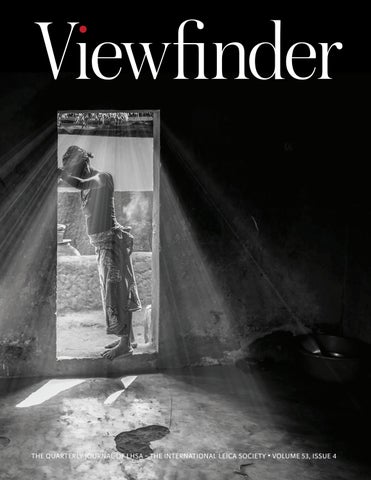
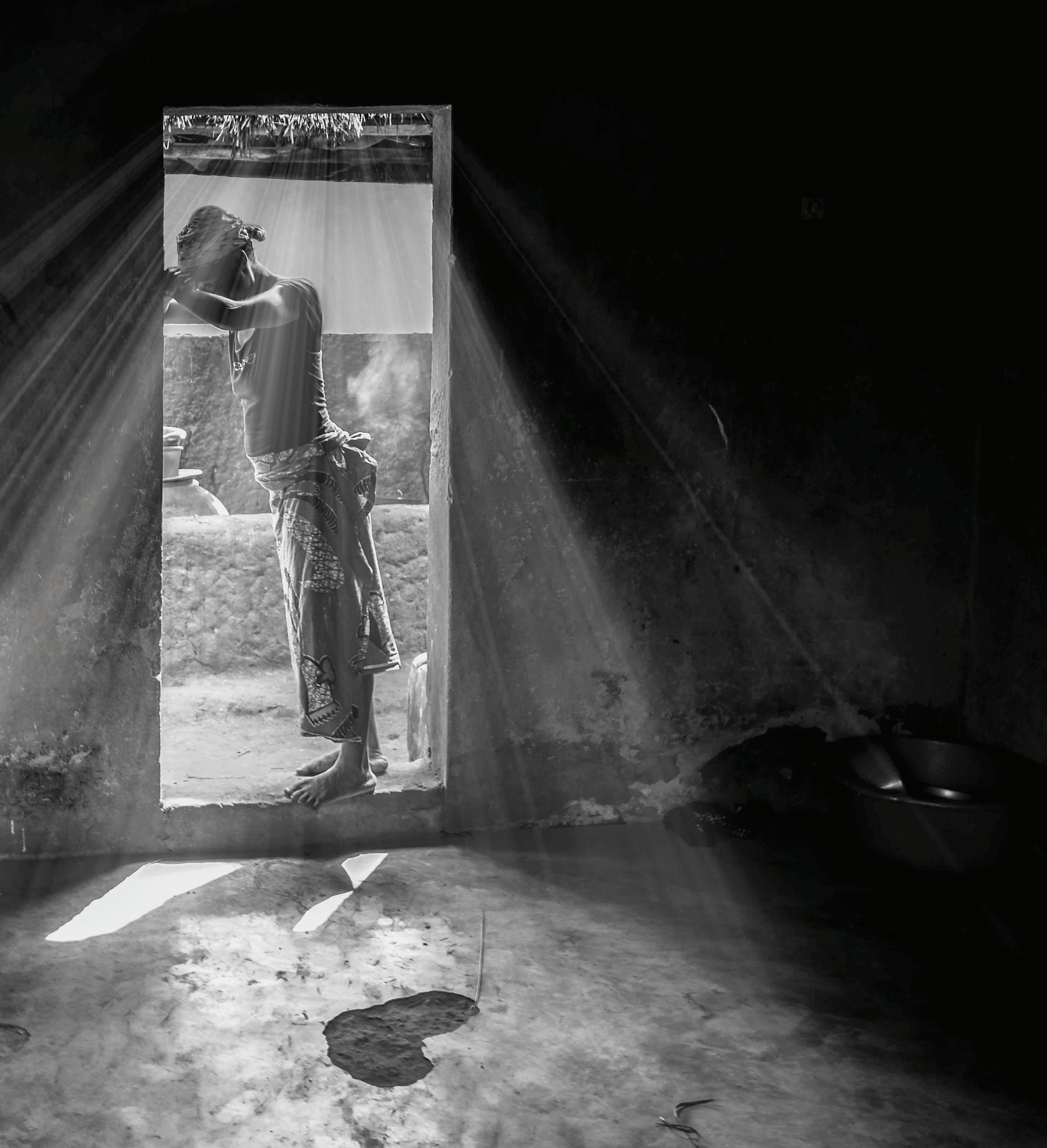
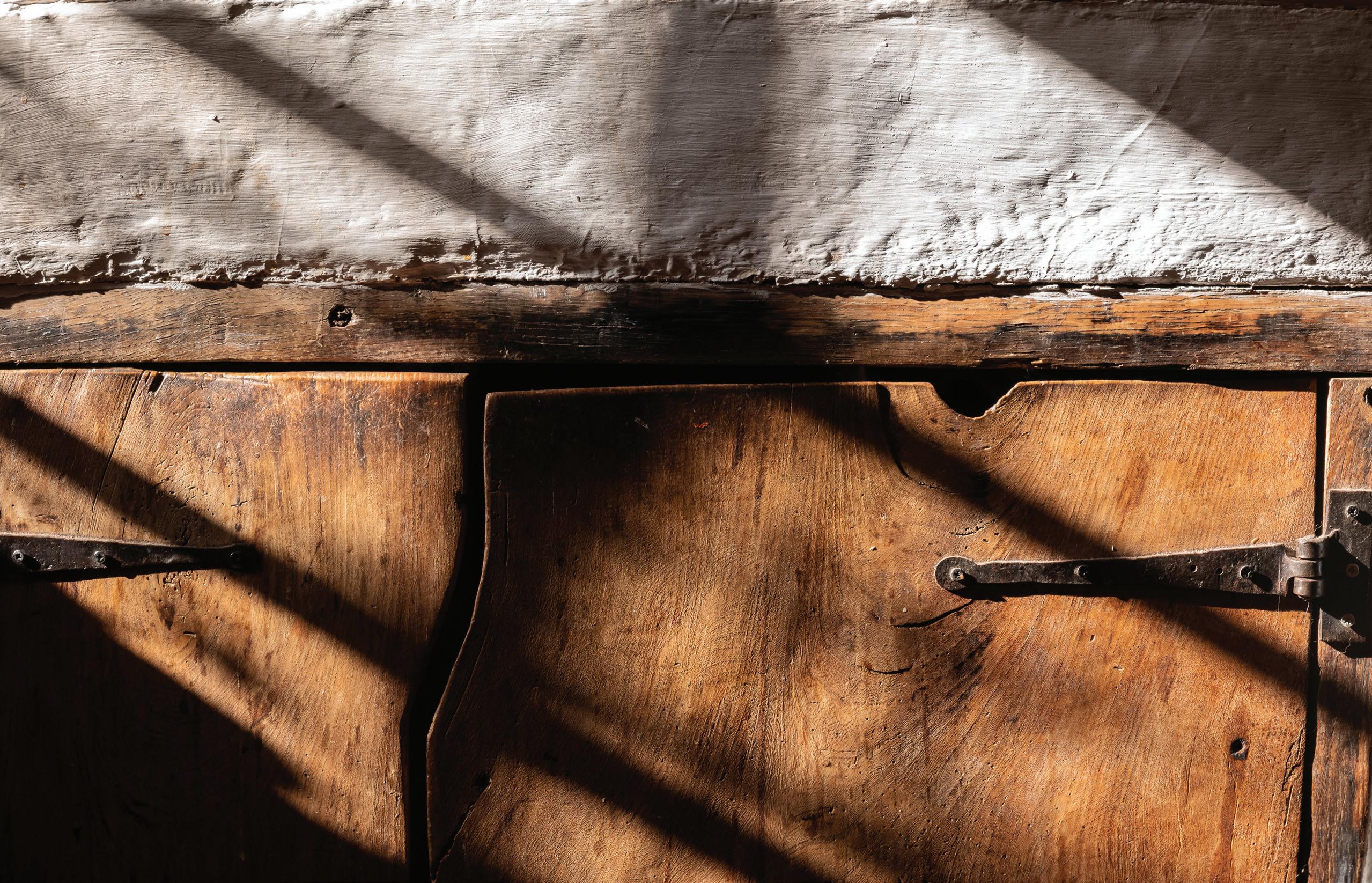
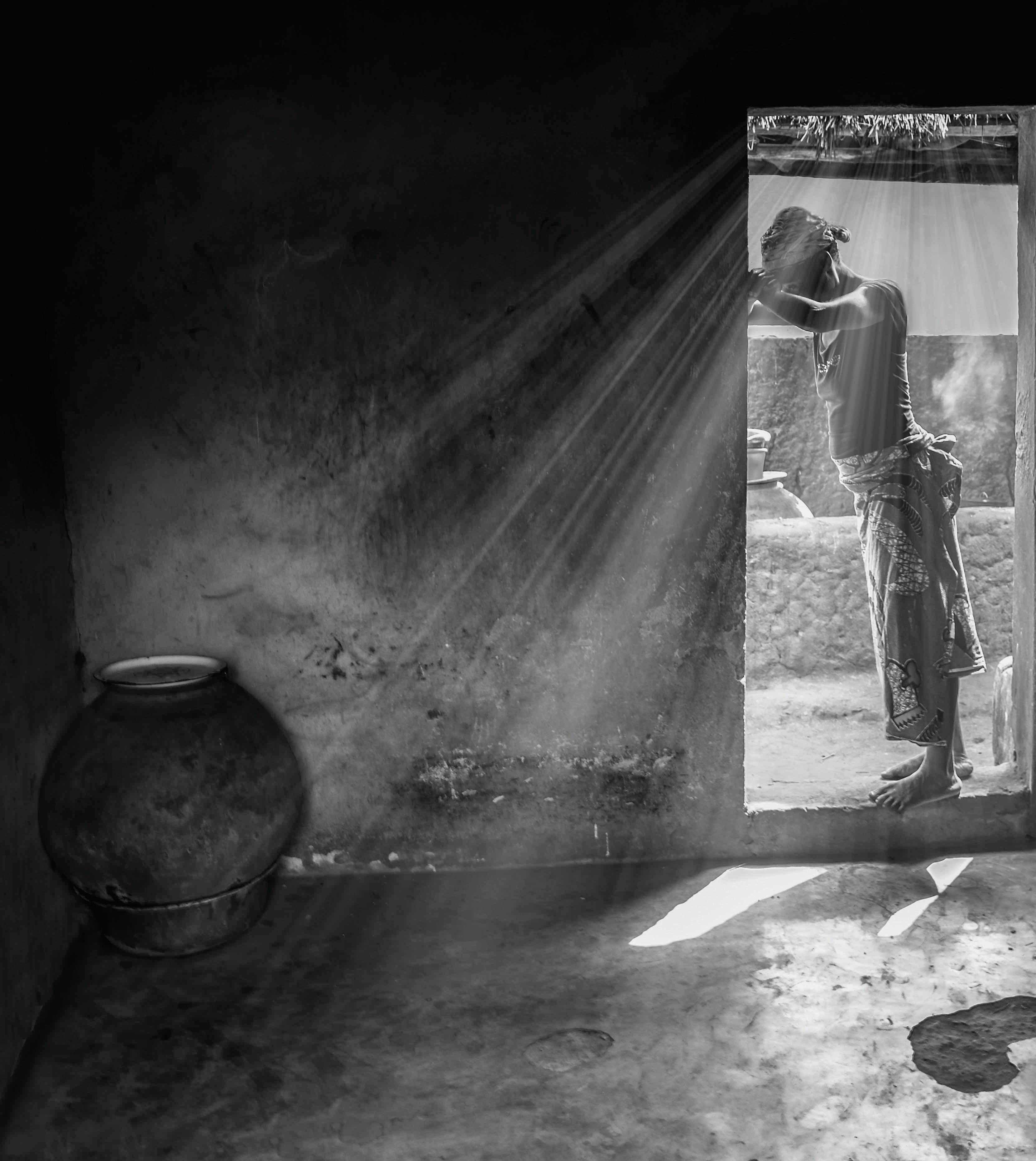
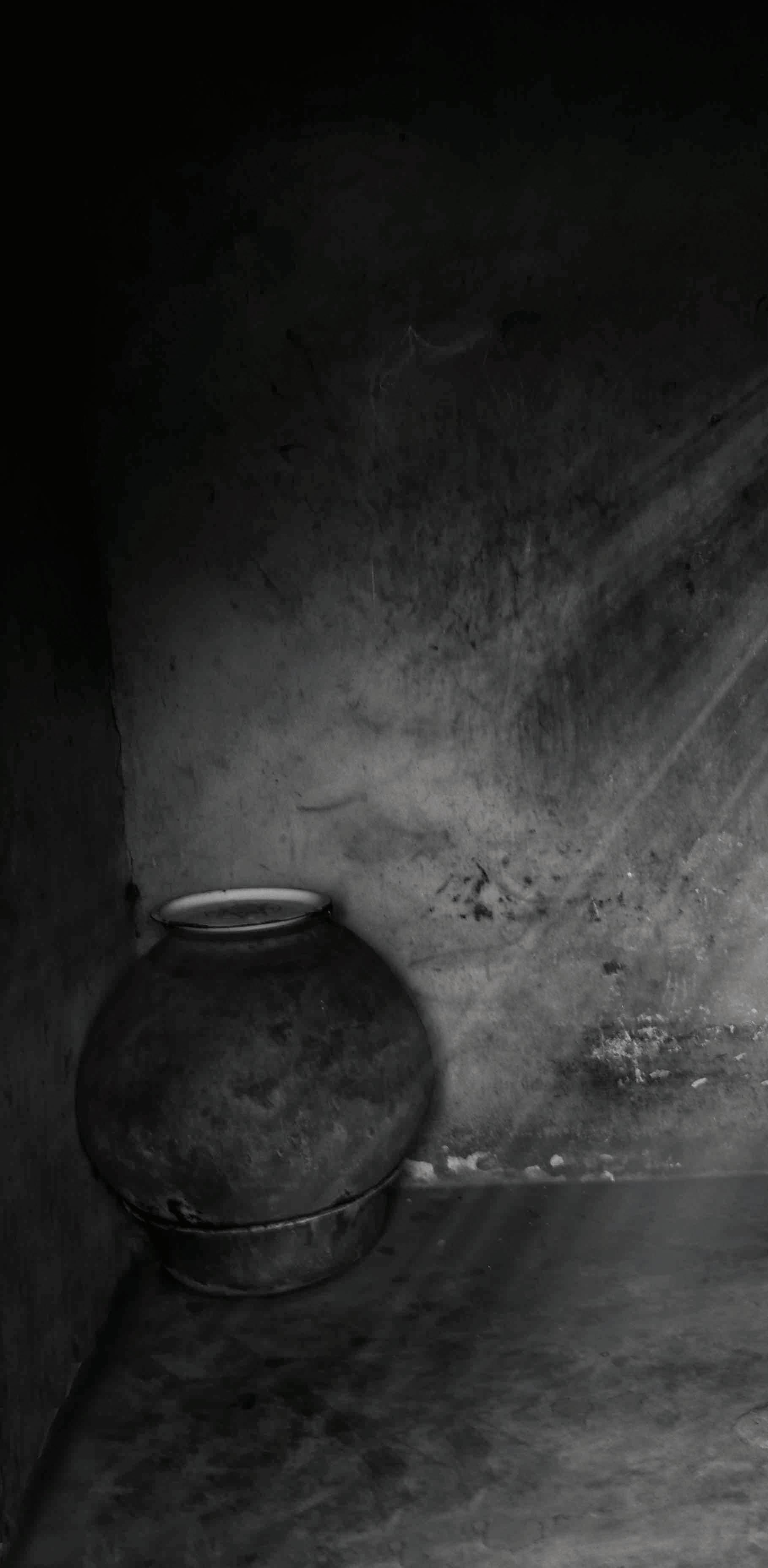
From James Nabwangu's "Benin" article. (pp. 22-29). Kitchen Entrance Silhouette, Benin Leica M10 & 28mm Summilux-M ASPH. at f/6.8, 1/15, ISO 400.
22 the forgotten kingdom of dahomey & the present day republic of benin by James Nabwangu
a method of using a polarizer
& other sm lenses by Dick Gilcreast 11 comparing the old leica 50mm f/1.2 noctilux-m with its 2021 reincarnation by Milan Swolfs
OFFICERS & DIRECTORS
Inquries about membership, upcoming events, replacement Viewfinder issues, and special orders should be directed to:
Richard Rejino, LHSA Executive Director 14070 Proton Road, Dallas, TX 75244 info@lhsa.org, (972) 233-9107
Viewfinder is the official publication of the LHSA - The International Leica Society, a nonprofit organization incorporated in the state of Delaware. Copyright 2021. Reproduction or use of any material contained herein without permission of the Sociey if forbidden.
Leica is a registered trademark. It and other trademarks pertaining to the Leica System are the property of LEICA CAMERA, USA, INC.
ISSN 1543-8732
PRESIDENT
Keith R. Sbiral Chicago, IL
VICE PRESIDENT
Brad Husick Medina, WA
SECRETARY/TREASURER
David Knoble Charlotte, NC
IMMEDIATE PAST PRESIDENT
Alan Weinschel Roslyn Heights, NY
PRESIDENT EMERITUS
James L. Lager
Rolf Fricke
Bill Rosauer
APPOINTED OFFICERS
Viewfinder Editor
Bill Rosauer Buffalo Grove, IL lhsaeditor@yahoo.com
Associate Viewfinder Editor
Ed Schwartzreich Waterbury, VT
northern exposures by Albert B. Knapp MD & Ruth Oratz MD 36 35mm apo-summicron-m f/2 asph by Jonathan Slack 44 an sl odyssey by Charles Garrettson
50 letiz at photokina 1966 by Jim Lager
EXECUTIVE DIRECTOR
Richard Rejino Dallas, TX info@lhsa.org
ELECTED DIRECTORS
Class of 2021
Wilbur Norman Santa Fe, NM
Jay Paxton Houston, TX
David Spielman New Orleans, LA
Class of 2022
Andrew Godlewski Middletown, RI
Bill Royce Kirkland , WA
Kirsten Vignes St. Petersburg, FL
Class of 2023
Sandra Eisert Redmond, Washington
William Fagan Dublin, Ireland
Dan Tamarkin Chicago, IL
CONTRIBUTING EDITORS
S.R. Gilcreast, Jr. Peterborough, NH
James L. Lager Closter, NJ
S. Willis Wright Port Washington, NY
SENIOR DIRECTORS
Gary Hough Woodinville, WA
Douglas Drumheller Pittsburgh, PA
A LETTER FROM THE EDITOR
by BILL ROSAUER
star of this issue is the re-issue of a legendary Leica M lens, the Noctilux 50/1.2 ASPH. This is one of the Grail lenses for Leica collectors, and the current market price for an original, rare-as-hen’s-teeth example lens is in the tens of thousands of dollars! This is the third lens Leica has re-issued in the heritage line, the first two being the 90 Thambar and the 25/5.6 Summaron. In this issue, we have Jono Slack’s review of this lens in the field and what you can expect performance wise in actual use. Milan Swolfs is one of the fortunate few to own an original Noctilux, and he compares the new lens with his original Noctilux. You may remember Milan from the review that he did in Viewfinder of the re-issue of the Thambar, where he compared his original lens to the new one as well. Milan is one of the few people I know who has mastered the Thambar! His images were chosen by Leica for the release of the new Noctilux, so his images here may look familiar to you. We also have Jim Lager’s take on the original launch of this lens at Photokina 66, with some of the original brochures and other information we have included with his article.
Leica also released the incredible new APO 35/2 Summicron ASPH lens about a week after the Noctilux re-issue. I had been hearing rumors about this lens for quite some time. We have Jono Slack’s full report here with images on this exciting new lens. I have been following threads on this incredible new lens on the Leica User’s Forum. Leica has been doing a phenomenal job with new lens introductions even in this time of Covid! This also reinforces Leica’s commitment to the M product line, and secures the M line as the jewel in Leica’s product line crown. Stay tuned for more exciting announcements in the future.
We have two Tips and Techniques articles in this issue of Viewfinder. One by Dick Gilcreast on how to use polarizing filters on Leica screw-mount lenses, and the other about a new feature in Photoshop, Sky Replacement, in Photo Shop by Bill Royce. Adobe has been doing a lot of upgrades to the Photo Shop and Light Room products lately. Leica has also just done
a firmware upgrade for the M10-R, M10-P and Monochrom utilizing computational imaging, with automatic correction of converging verticals. I downloaded the new firmware to my M10-P, and I can attest that it works a treat. This will come in handy for those of us who do landscape and architectural photography while traveling. This new feature streamlines your “run and gun” approach to this kind of photography, and saves a lot of time in post processing. I am also thinking this may be useful in macro and product photography to help in perspective control. What you used to have to use a perspective control lens to accomplish, can now be done painlessly with software. I will be writing an article about this for a future Viewfinder article.
We have two new-comers to this issue of Viewfinder. James Nabwangu has some striking images in his “The Forgotten Kingdom of Dahomey and the Present Day Republic of Benin” article. His images were so impressive, we have given him the cover on this issue. I am sure you will find his article quite interesting discussing his travels in this African country. We also have Chuck Garrettson’s article, “An SL Odyssey”, where he takes us on quite an adventure with his Leica SL, even temporarily losing it at one point of his journey!
Albert Knapp and Ruth Oratz return again to bring us “Northern Exposures”, their journey through the incredibly beautiful country of Norway. Albert and Ruth can’t wait to begin travelling again with their Leicas in the near future. We all do as well, and look forward to being able to see our Leica family in person again soon!
On a final note, Kirsten and I recently hosted a YouTube webinar on the making of the LHSA Viewfinder. We had special guests Jono Slack, Milan Swolfs, Stefan Daniel and Andreas Kaufmann. If you haven’t seen it, please do. You can watch it directly on YouTube or through the LHSA website, and let us know what you think.
Bis nächste zeit! - Bill
A LETTER FROM THE PRESIDENT
by KEITH SBIRAL hello
LHSA Members! Can you believe we are already almost one quarter into 2021? Spring is here and we have so much to discuss. How about a new 50 Noctilux 1.2? Or a new APO 35 Summicron that Jono Slack describes as "perhaps the best M lens ever made.” Such an amazing time to be a Leica user!
Wetzlar continues to create amazing products that help each of us create in our own way. It’s so exciting to have support from Dr. Kaufmann and so many others for LHSA’s mission.
I encourage you to participate in LHSA webinars, utilize your LHSA 10% off for Leica Akademie workshops (there are some fantastic workshops coming up with Maggie Steber, Arthur Meyerson as well as Craig Semetko), and get out and enjoy spring with your Leica. Socially distanced, of course.
We continue to work toward building our membership. Don’t forget to sign up a friend if you can. It will be fantastic to meet the 2021 members in 2021 goal.
Finally, I really hope you will participate in our virtual LHSA Spring Shoot. We are planning a fantastic event for May 14-15. I hope you all mark your calendars and register.
It is a great time to be a member of the Leica community, enjoy this fantastic issue of Viewfinder!
Keith R. Sbiral President, LHSA The International Leica Society
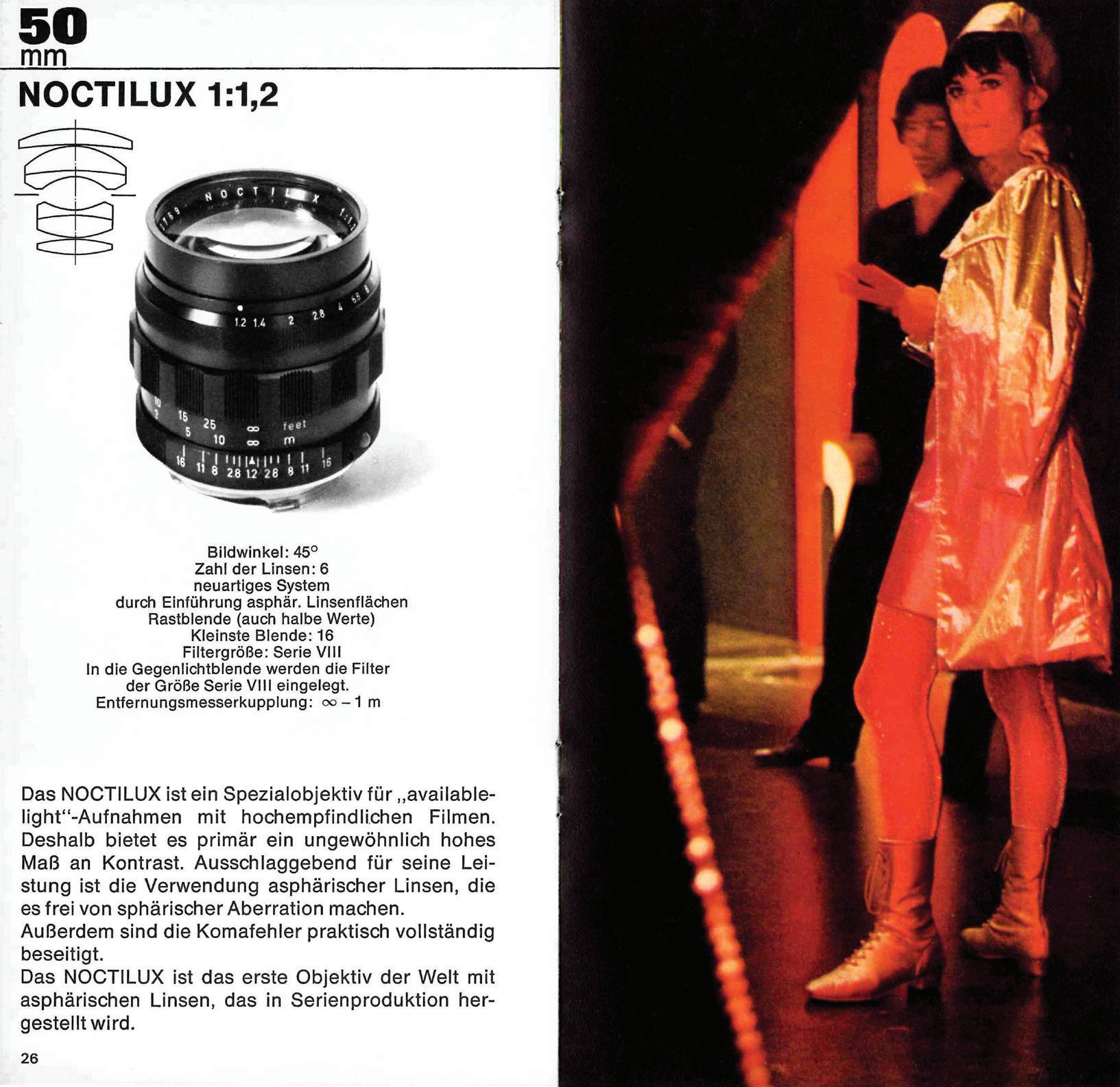
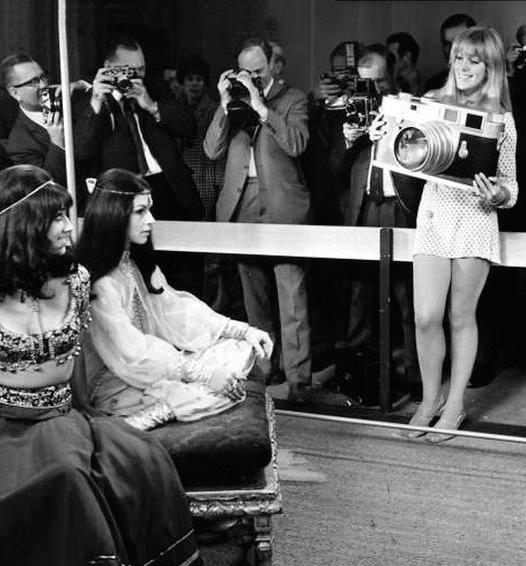
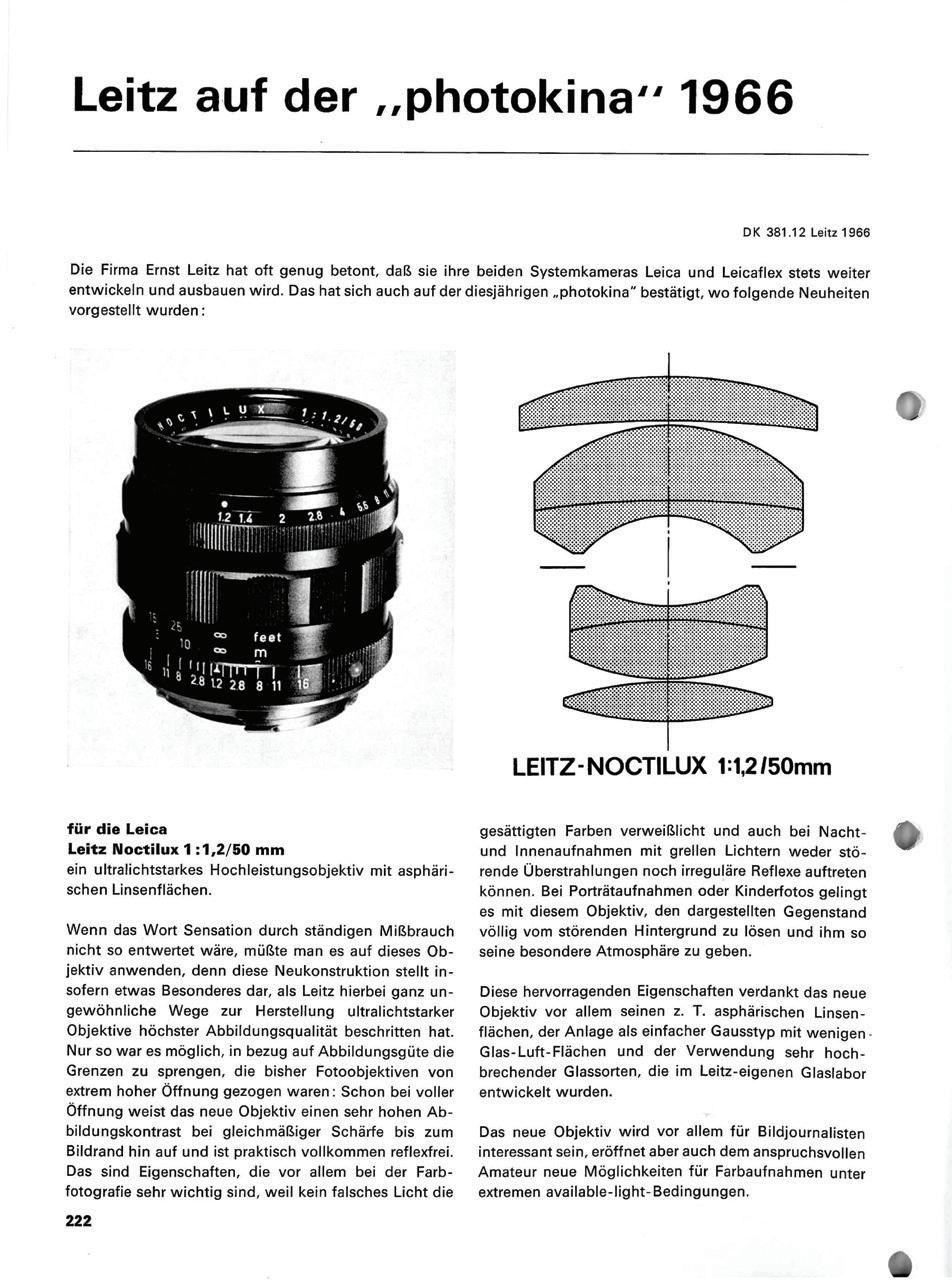
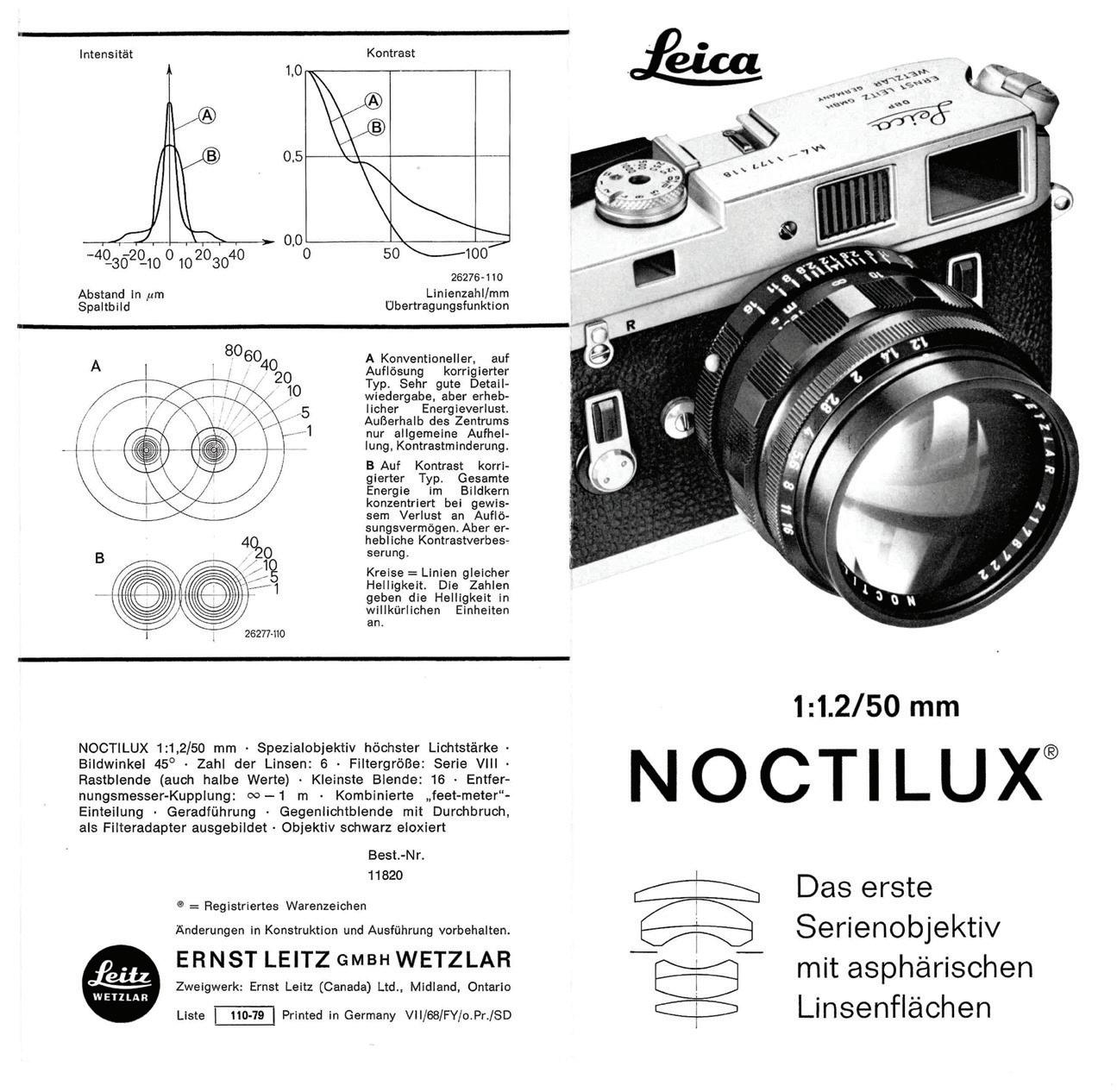
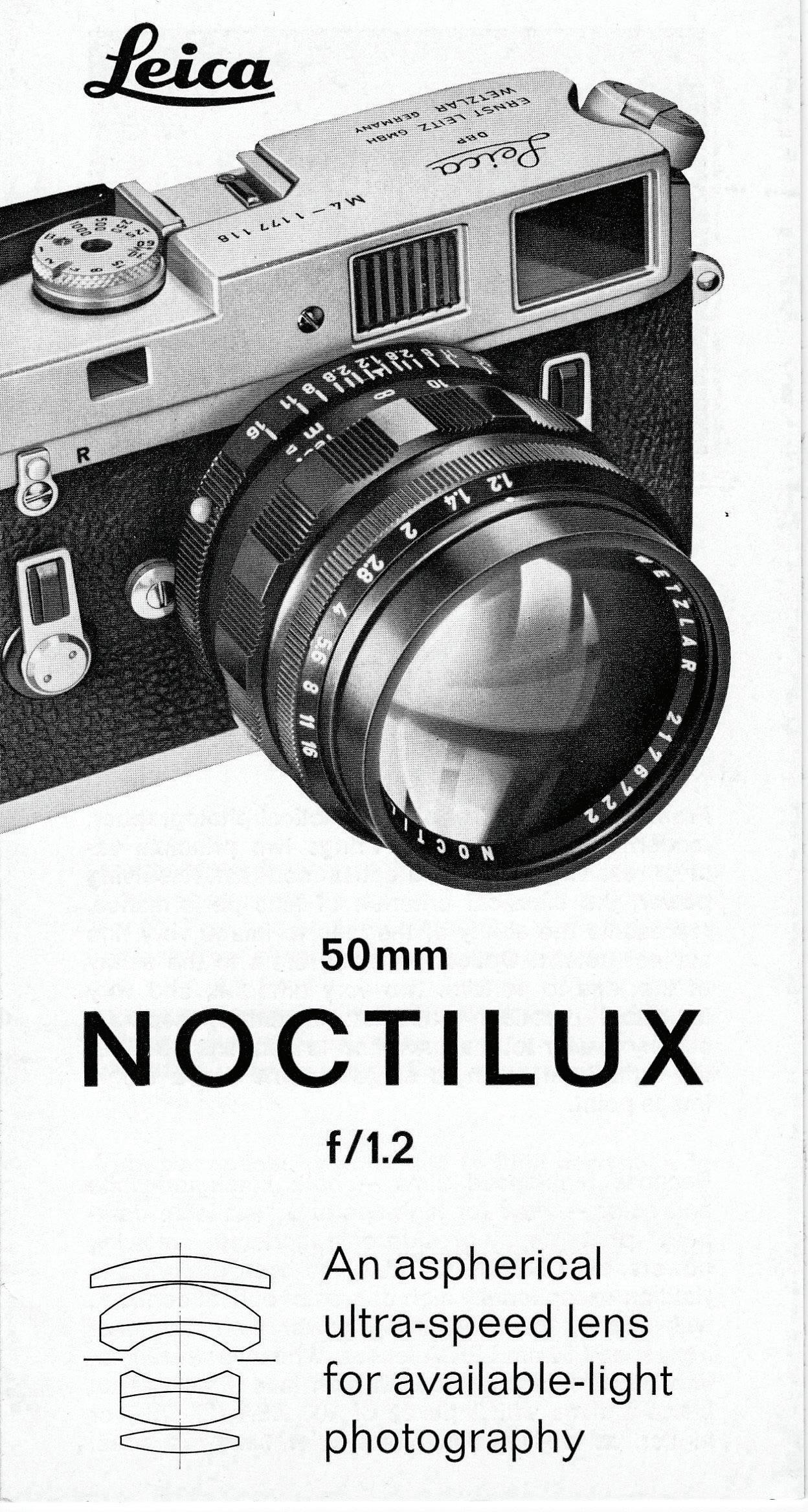
(top) Photokina in mid-late 60's.
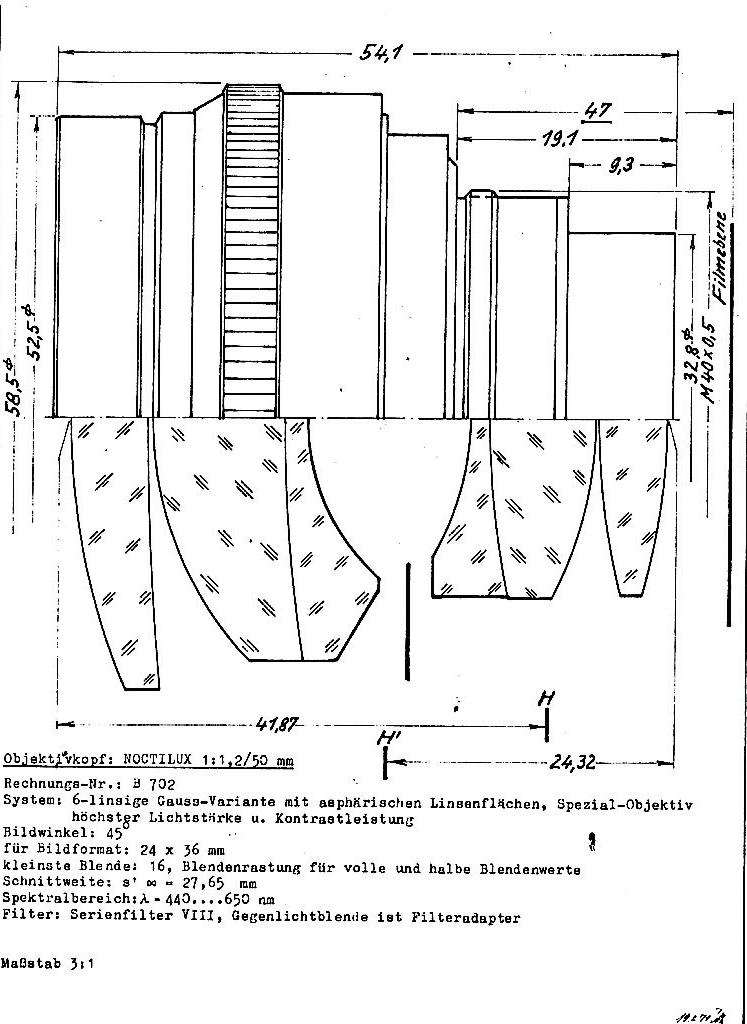
(bottom) A memo in German recounting Leitz's announcement at the 1966 Photokina: the original f/1.2 Noctilux.
SKY REPLACEMENT
by BILL ROYCE
a serious photographer has traveled far, at great expense, to get that coveted scenic shot, only to find the sky is either a dull gray overcast or an empty, cloudless blue sky. How can this problem be solved and result in a beautiful image for your wall or library? When returning to the scene on a better day is not practical, you might consider replacing the sky in post processing. In the past, the process for replacing the sky with a more attractive one in your library needed considerable skill to create a foreground mask, add a new sky layer, and refine the edges to obtain a satisfactory result.
No longer is this necessary! Adobe has created, within Photoshop CC, a recently introduced image editing tool for sky replacement. It benefits from a high degree of automation, allows you to replace the sky with one of theirs or one of your own, and keeps you from delving into the mysteries of masking and layers. This article will show you how to use this tool. Note: Before submitting for judging an image modified as described herein, you may wish to check applicable rules to ensure such edits are allowed or consider identifying it as “altered reality” or some similar category. The Photographic Society of America (PSA) prohibits this technique for photojournalism, nature and travel images.
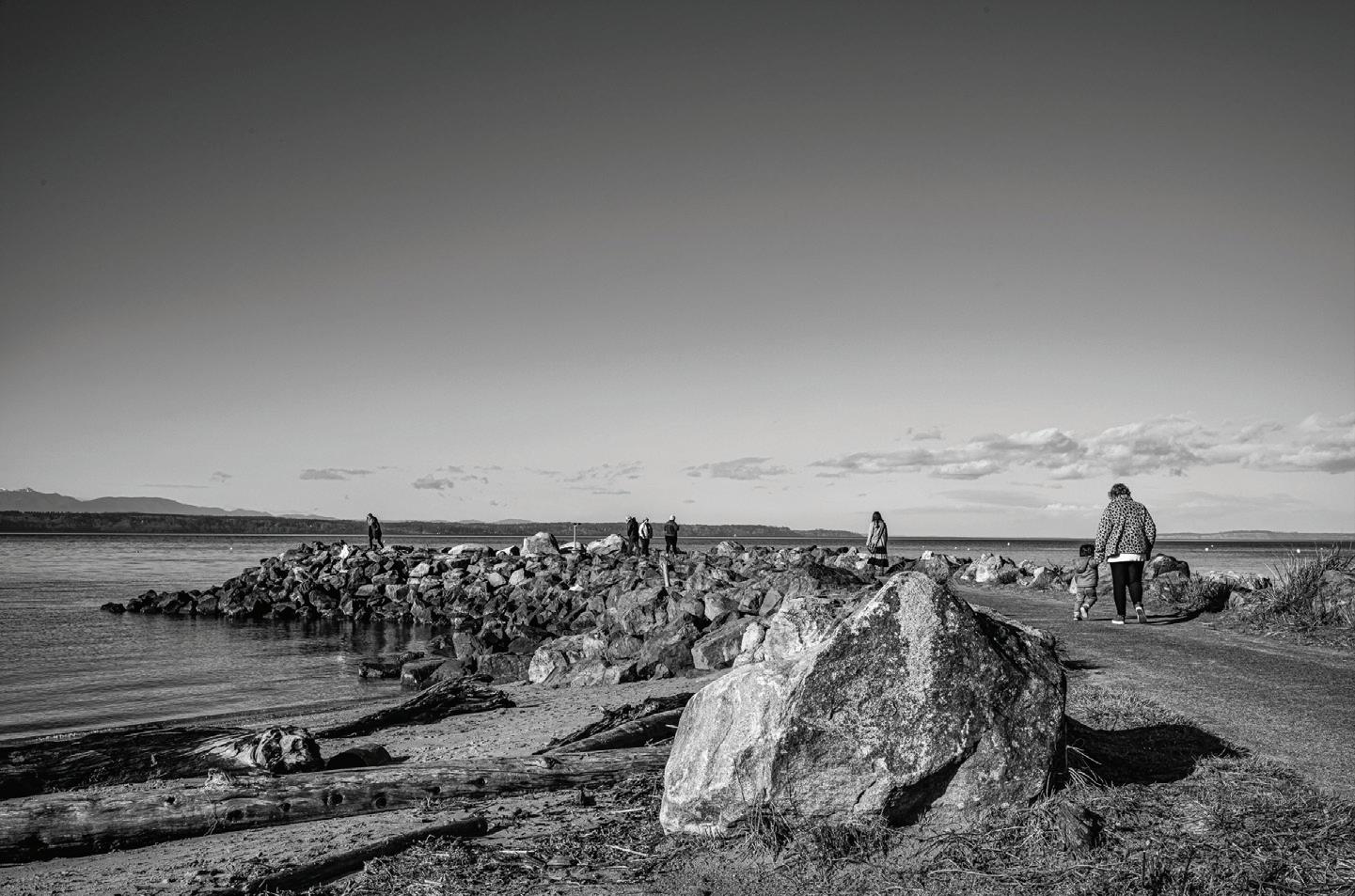
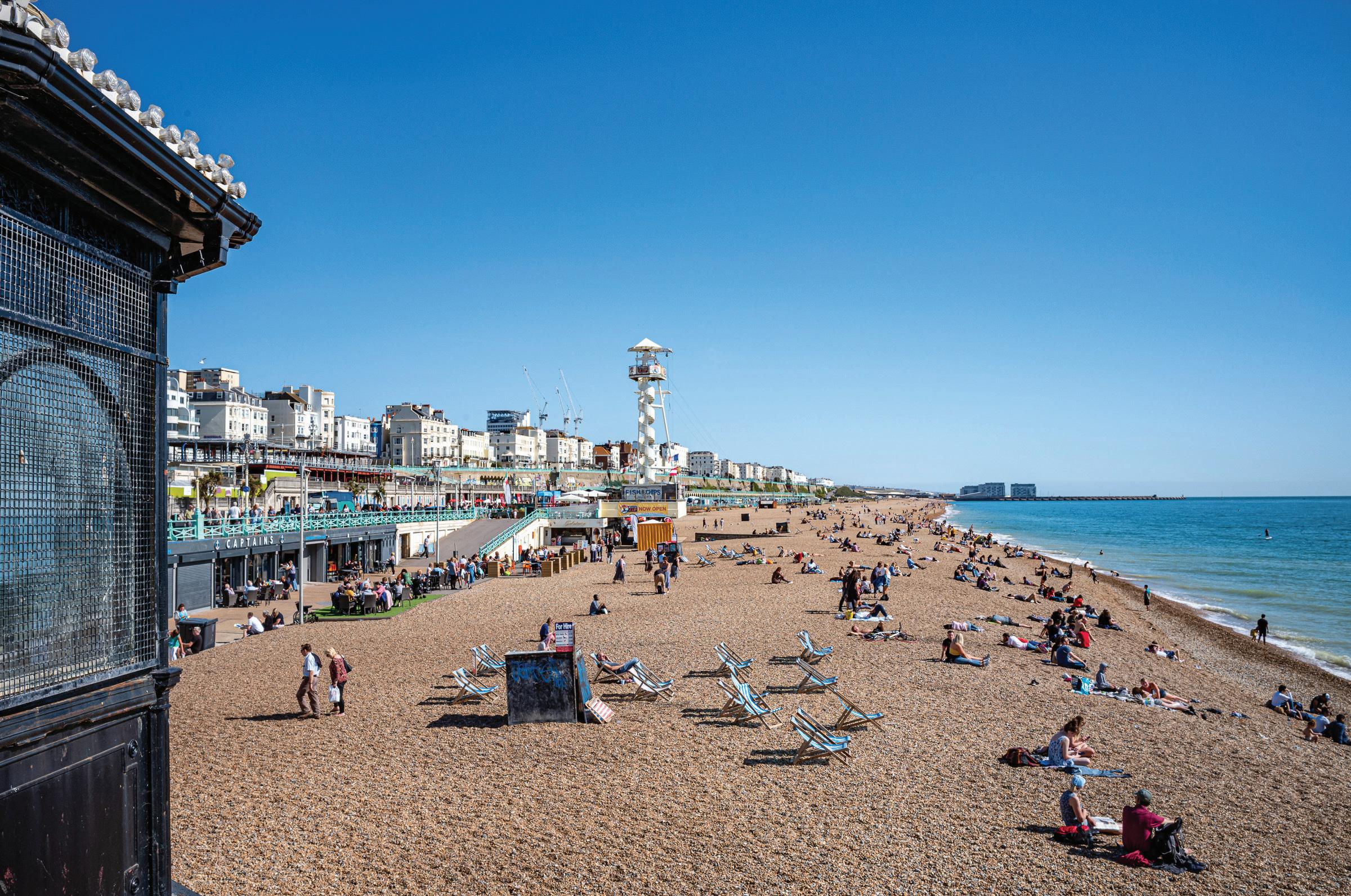
Top right is the original image, boring sky included, taken with an M10M, 35mm f/2 (7 element) with a yellow filter.
The process will produce a more realistic result if you create your own “sky library”, to include monochrome and color examples as needed. I suggest you keep building your library over time to give yourself a variety of cloud formations to choose from. If you are working with a color original and plan to convert to monochrome, you might consider adding the replacement sky in color first, then convert the entire image at the same time for a more consistent and realistic look. If you are starting with a monochrome image, adding monochrome skies to your library might also be to your advantage.
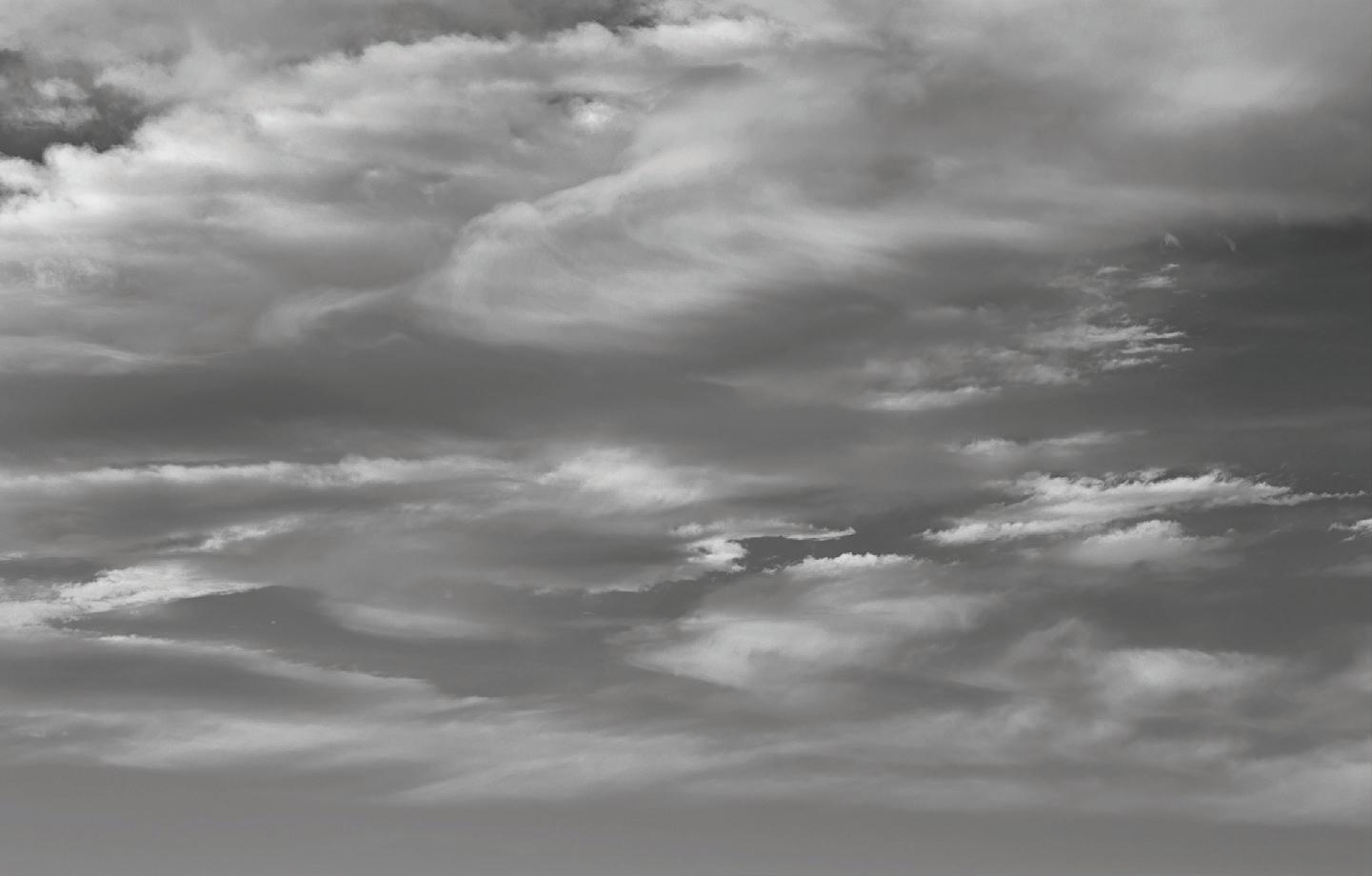
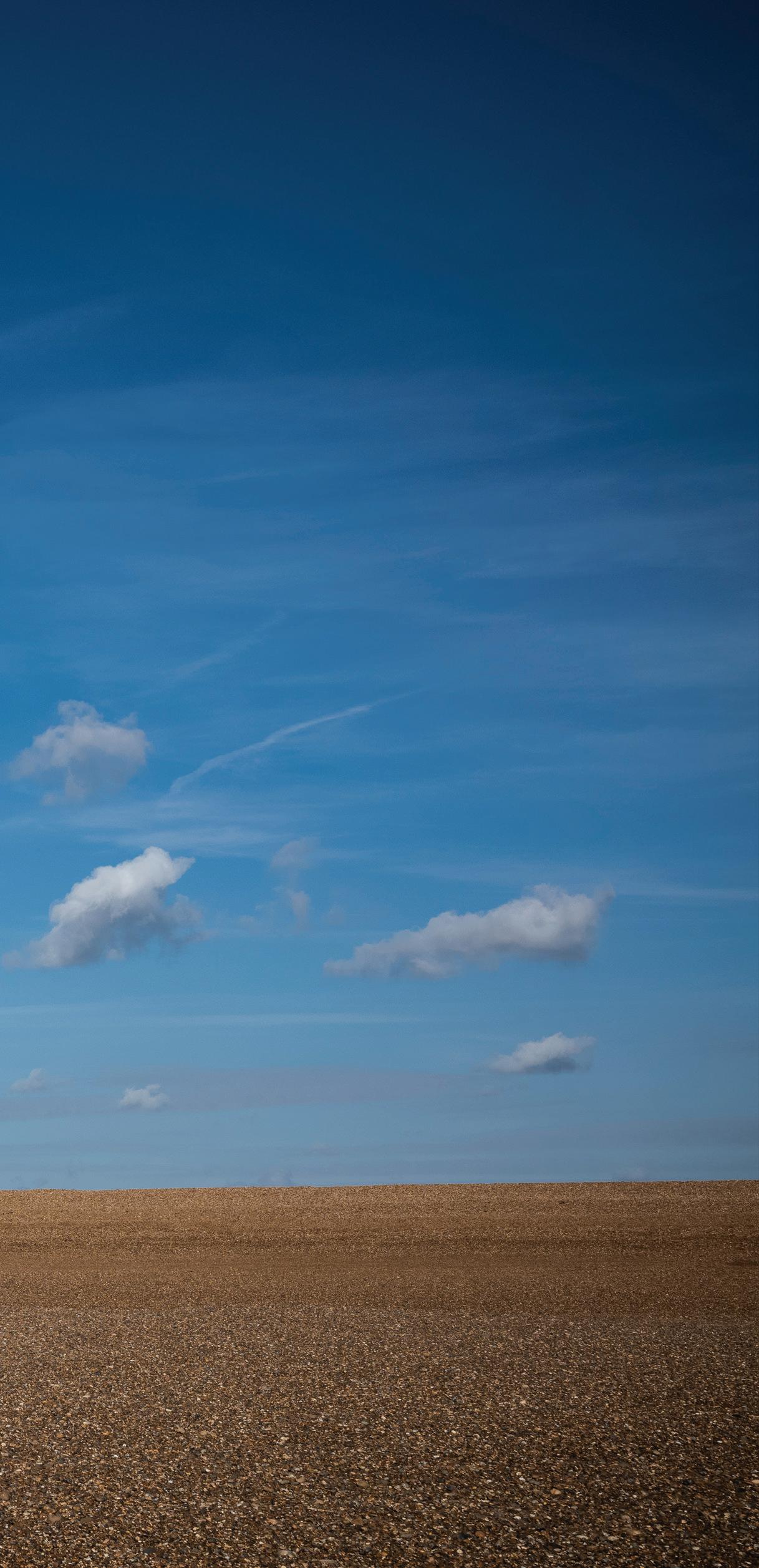
Bottom right is the replacement sky, taken with an M10 Monochrom camera, selected from my Lightroom library. Note this sky example fades in contrast near the bottom of the image. When you take images like this you should consider shooting near the horizon; there will be less adjustment needed later.
Here are the steps to replace the sky:
1. Open the original image in Photoshop CC.
2. From the drop-down menu select Edit > Sky Replacement...
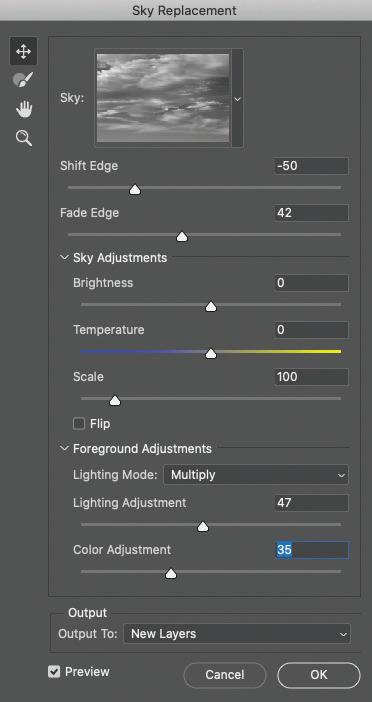
3. The sky replacement dialog box (shown left) will appear to allow selection, customization and adjustment of the sky for best realism.
4. At the top, select the sky shown or use the small down arrow at the right edge of the sky thumbnail to navigate to a Photoshop-provided sky or one of your own.
5. Once the sky is selected, it will show in your image.
6. The cruciform arrow tool in the upper left corner allows you to click and drag the sky to position the clouds in your image as needed.
7. Adjust the Shift Edge and Fade Edge sliders to make the transition near the horizon more realistic. This is a very important step! Once you move these sliders their effect will be obvious. Remember the sky near the horizon is usually hazier than the upper portion.
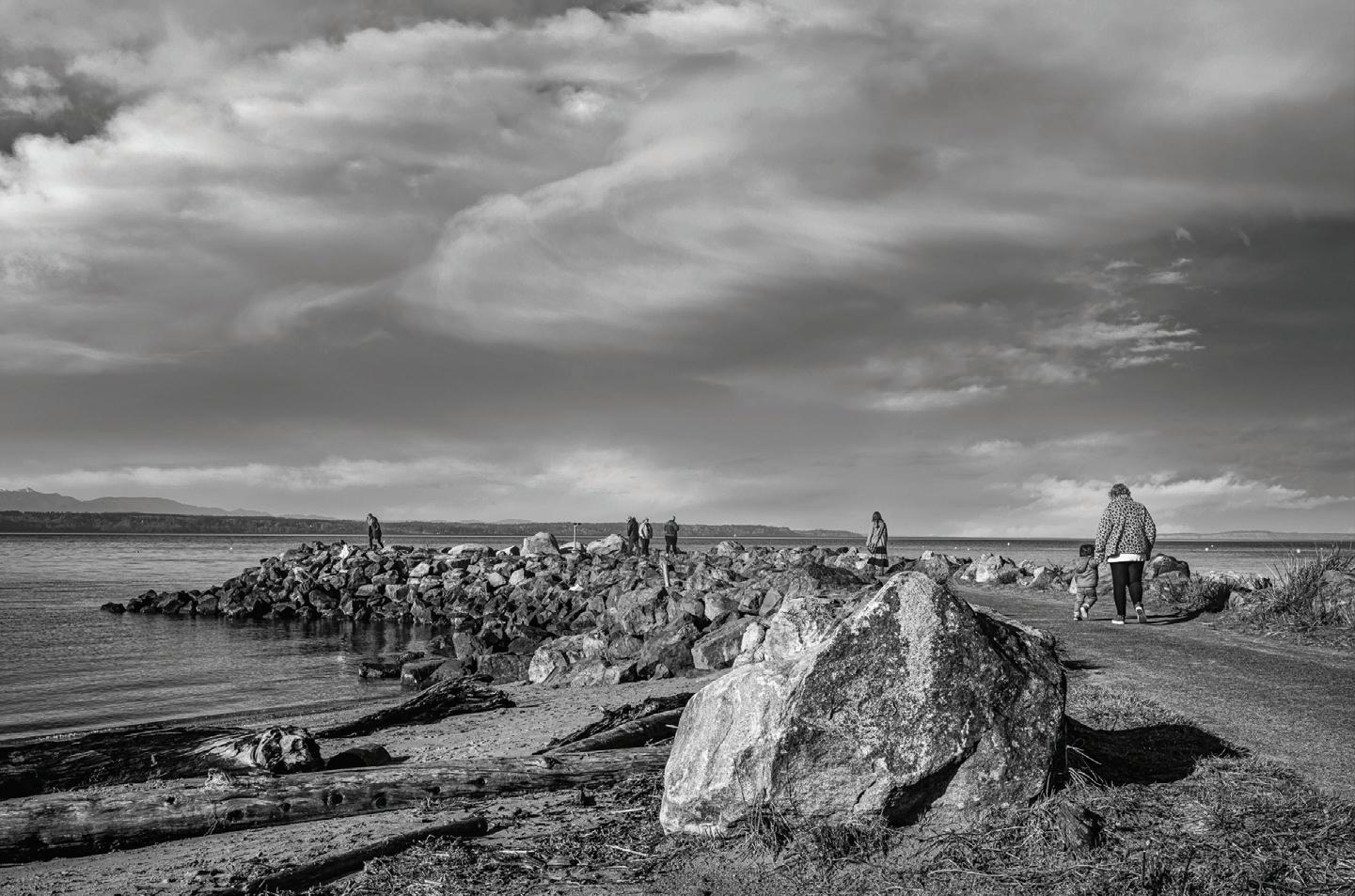
8. Under Sky Adjustments, adjust the brightness and color temperature to match the foreground. The scale adjustment allows you to control the size of the cloud image. Flip the sky as needed so that the direction of sunlight hitting the clouds matches the foreground lighting. In this example, both the foreground and sky show the sun shining from the left.
9. The Foreground Adjustment sliders allow you to match the upper part of the foreground with the lower part of the sky, both in brightness and color.
10. Select the output to New Layers and click OK.
11. Save the image and enjoy!
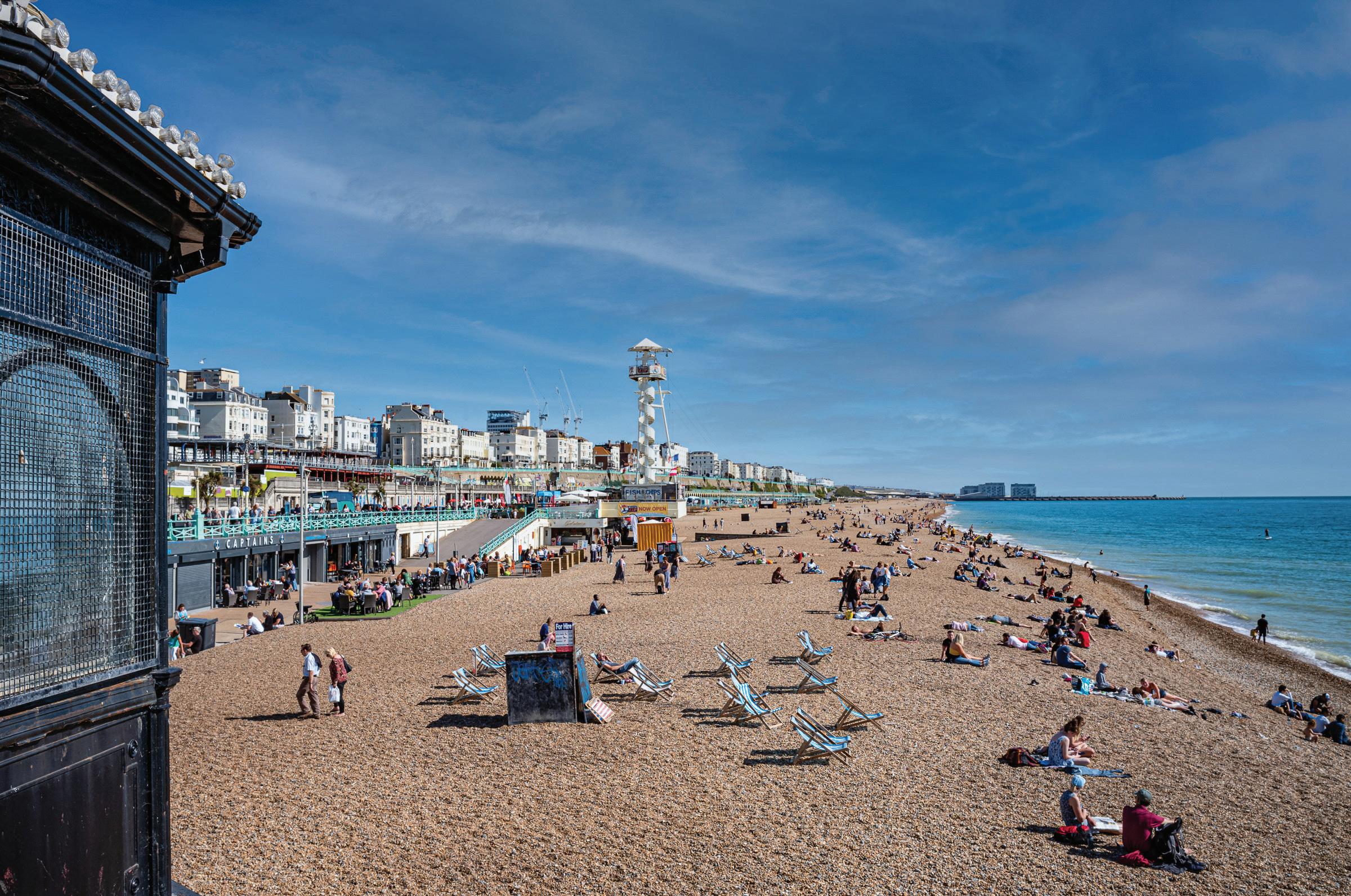
Previous page center is the result. Note that Photoshop was able to mask the people quite well. You also may wish to use your editing skills further on the finished image to best match contrast or color, etc. Also, if the original image has clouds or other objects that you don’t want showing through the new sky, simply remove them before starting the sky replacement process. One limitation worth remembering: Adding clouds to the sky of an image where there are reflective surfaces in the foreground, such as a body of water, will not create or change a corresponding reflection.
Another example to the right, using the same process, this time with a color image (Brighton, UK, M10 + 28mm f/2). Notice the accuracy of the masking. I used a Photoshopfurnished sky. Easy!!
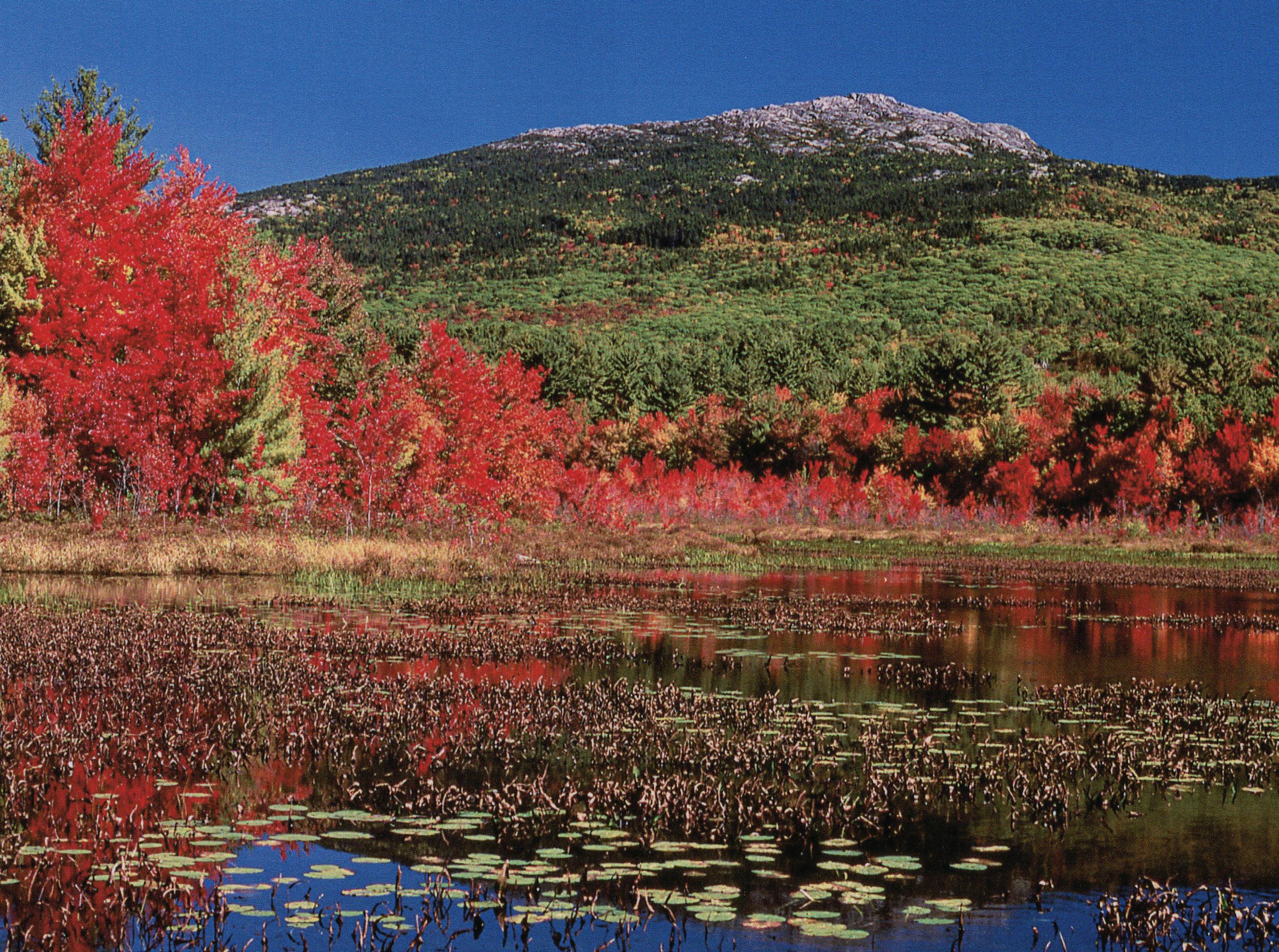
A Polarized shot of southern NH's 3165 ft. Mt. Monadnock, seen from the west side looking east over Perkins Pond, with the 50mm lens. The picture was made in early September, when the swamp maples first display their red leaves, well before the onset of "foliage season" when all the other trees tum. The polarizer is used here at about half strength, 90 degrees to the sun, to control reflections of the sky in the water, darken the blue sky a little, and intensify the reds and greens by eliminating all reflections from the leaves.
A Method of Using a Polarizer on Summitar & Other Leica SM Lenses
by DICK GILCREAST
Putting a polarizer on a Summitar lens once required a special swing-out mount with built-on hood, such as the early Leitz NY FISUM, or the later 13352, both of which clamped onto a 42mm front flange. While these filters were swung out they could be looked through and rotated to the required setting, and then swung back over the lens, the 180 degree rotation maintaining the same setting. But these old polarizers would be difficult to find now in usable shape, the old polarizers being prone to separation, even if once located. The more recent polarizer (introduced in 1998, Lager) was the Leitz 13356 which could be mounted on several lenses by means of one of three intermediate rings screwed into the E39 filter threads of lenses from 28 up to 50mm. But none of them could be used on the Summitar's unique inset filter thread, so for some time it has been difficult to put a polarizer onto a Summitar.
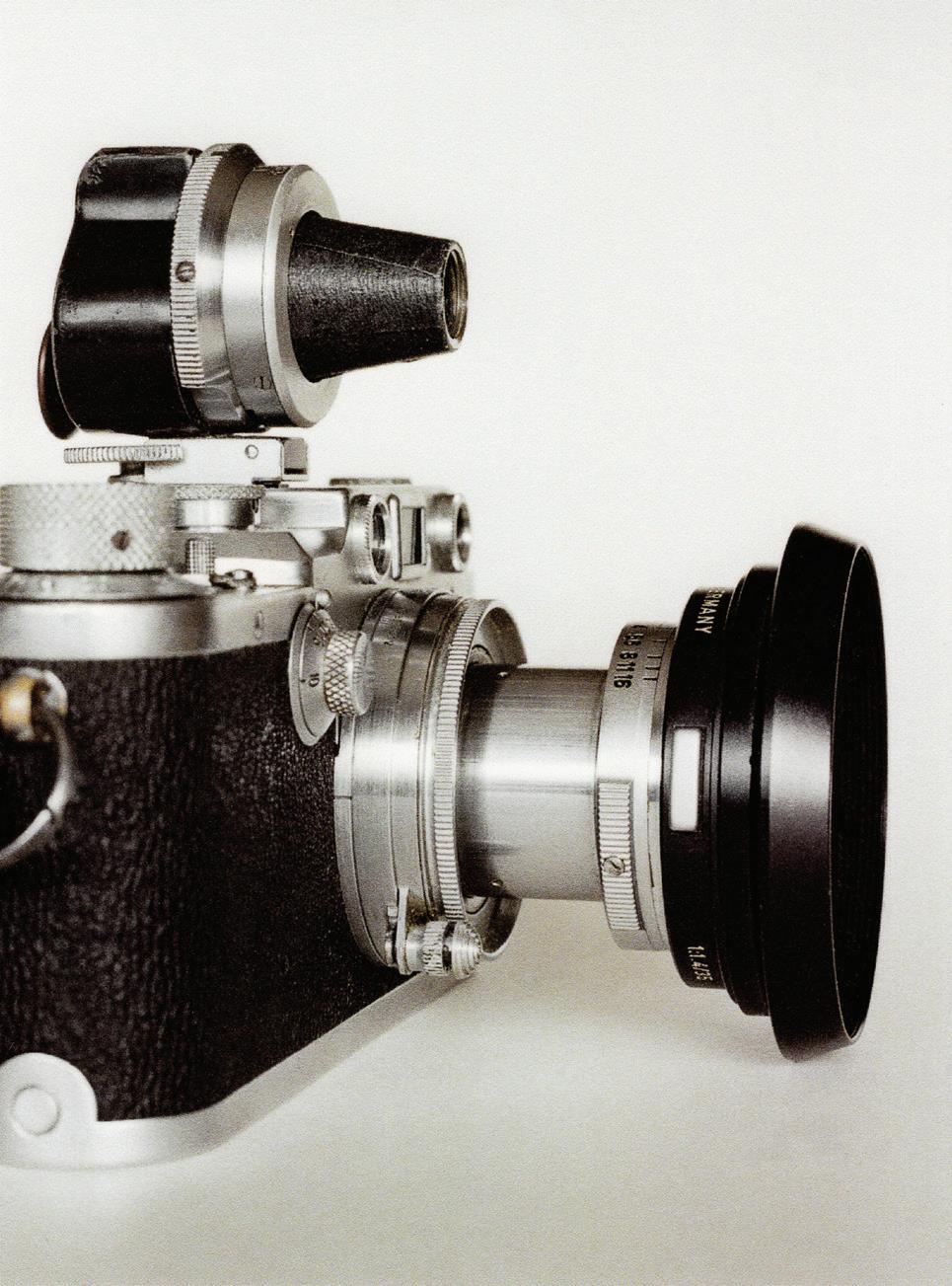
However one present-day solution is to use the round and vented clip-on hood number 12504, as shown on the following page, if you already have or can find one. It was originally designed for the black version of the 35mm f/1.4 Summilux-M (not the ASPH) and the early six-element 35mm f/2 Summicron-M, both of which which had no filter threads, but it also fits the 42mm diameter flanges of all the 50mm Summicron SM and the 35 and 50mm Summicron-M lenses - and, good news! - it also fits a Summitar of any age whether the lens has the later hood-gripping groove around it or not. Even without the groove, the hood's clips hold it well enough on the illustrated early 1946 version of the lens. The hood consists of a two-piece ring which holds a series VII filter, which can then be clipped onto a lens at any point in rotation. With a polarizer mounted in it, the hood can be held in the hand and rotated in front of the eye to find the best setting, and then
be clipped onto the lens in that same position. Of course the hood can also take any filter made in that size - such as a UVa for protection from rain - or any other filters not available in the original Summitar mount. The rule to remember with a polarizer is to allow one and a half stops (factor of 3x) more exposure while it is on the lens.
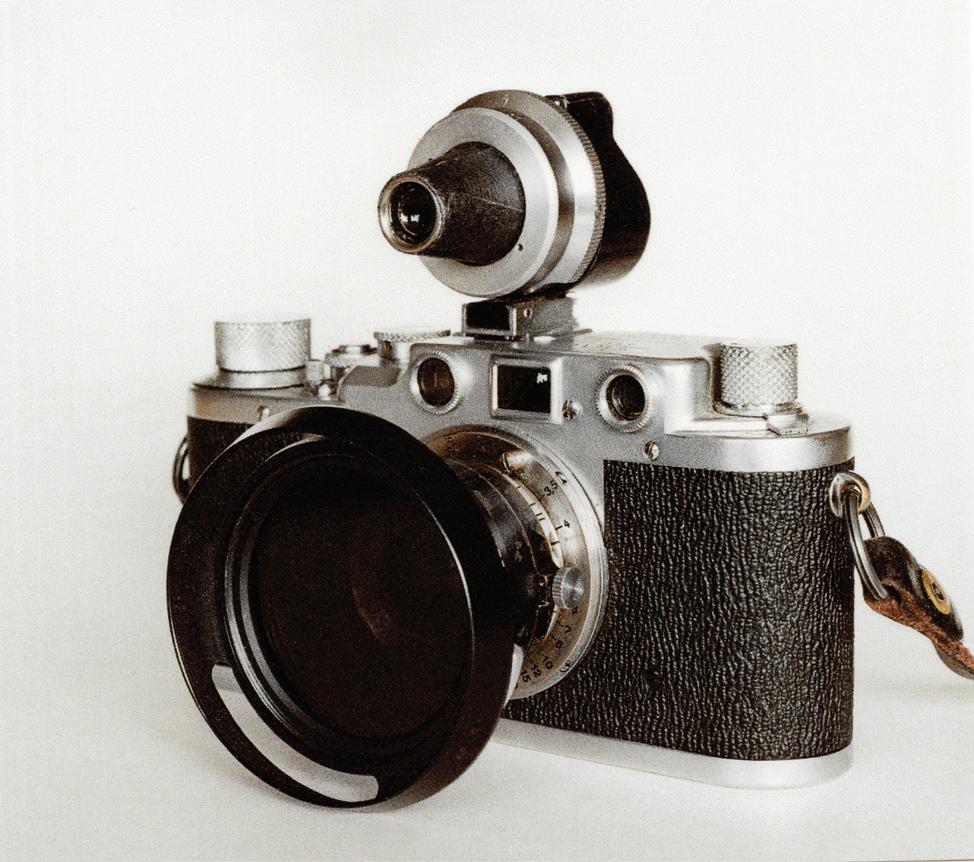
This same hood with polarizer can also be clipped onto the proper hoods of the 35mm Elmar or Summaron f/3.5 lenses with A-36 size front flange, since the diameter of the hoods for both lenses is the correct 42mm. The spring-loaded clips will keep the hood from falling off during use, but be careful since it won't be locked in place well enough for carrying. A little black masking tape around the hood will provide a better grip and prevent scratches. The 12504 hood with filter can be rotated by eye and then clipped onto the hood in the same way as with the Summitar, but with the proviso that the focus of the lens not be changed after the filter is put on, as the rotating lens mount will turn the filter to an incorrect position. This is not usually a problem with 35mm lenses, as their great depth of field needs minimal focus change. And 90 or 135mm lenses can also be used in this way - using the same 35mm hoods on them - but the rotating lens mounts will require some extra care in maintaining focus and polarizer orientation together.
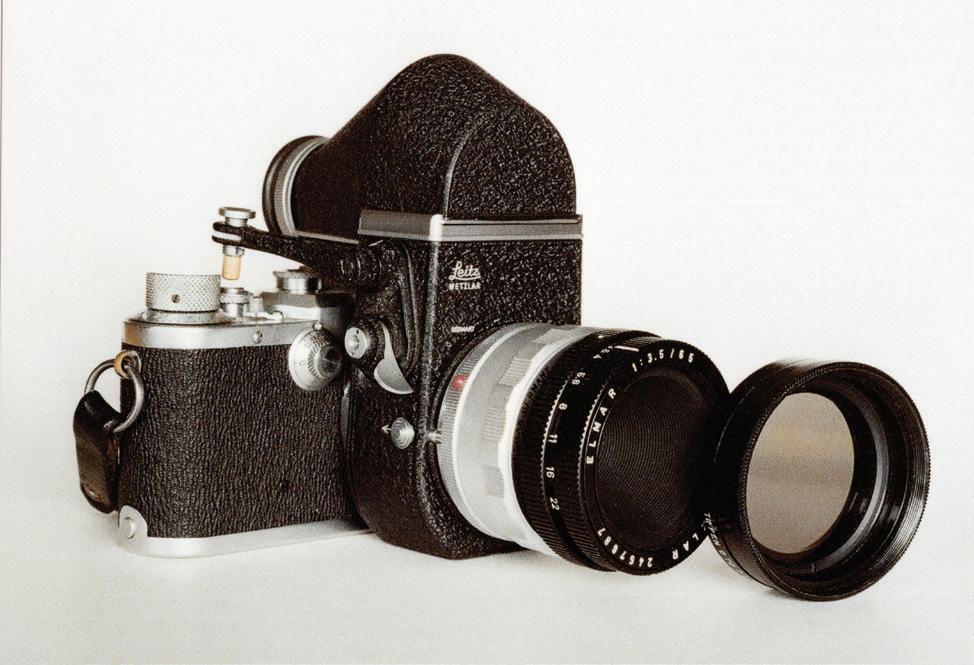
You can even use a polarizer with a Visoflex I or II with several lenses for studio or outdoor work. For instance the same series VII polarizer can be fitted onto the series VI lens flange of the black second version 65mm f/3.5 Elmar-V (the chrome first version having a less usable filter size of E-41) using a step-up ring from series VI to VII and taking the same series VII filter as above. The effect of the filter during rotation can then be seen while viewing the Visoflex screen. 90 and 135mm lenses can also be used with the same 35mm hood and clipped-on 12504 arrangement as above.
These methods of using a series VII polarizer are also very useful with filters of all types, such as correction filters for flourescent or studio flood lights, or graduated filters for lightening a shaded landscape under a bright sky.
(top) 50mm Summitar, seen from the side, 12504 hood with VII polarizer mounted, and lmarect finder to see over the hood.
(middle) A 35mm Elmar, with its black FLQOO hood, onto which is clipped the 12504 with series VII polarizer mounted in it.
(bottom) A Visoflex II with OUBIO tripod adapter, onto which is added a chrome OTZFO focusing mount and black 65mm Elmar. A series VI to VII step-up ring is shown holding the series VII polarizer which can be mounted and rotated directly on the series VI front flange of the 65mm Elmar.
Comparing the Old LEICA 50MM F/1.2 NOCTILUX-M with its 2021 Reincarnation
by MILAN SWOLFS
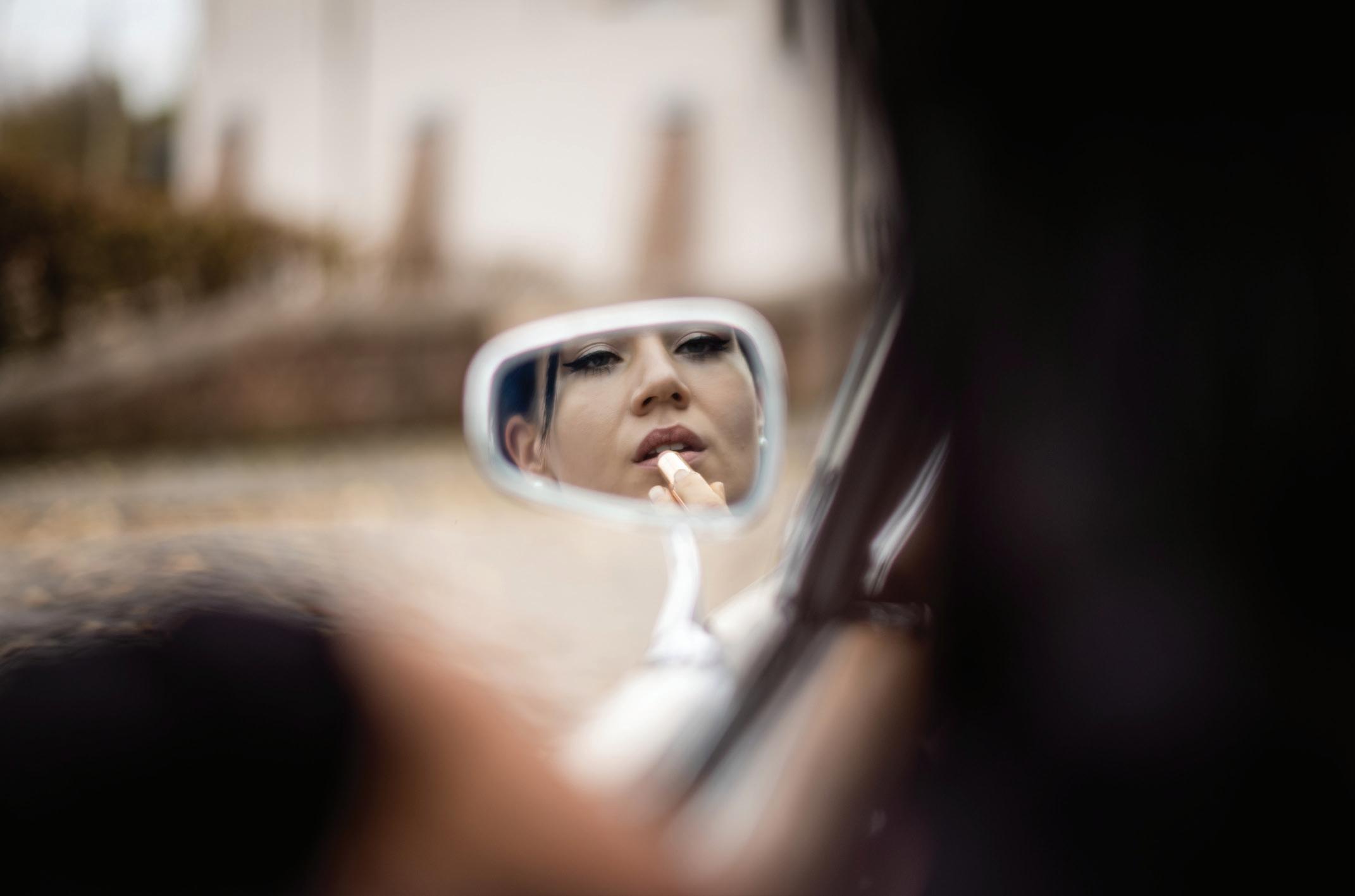
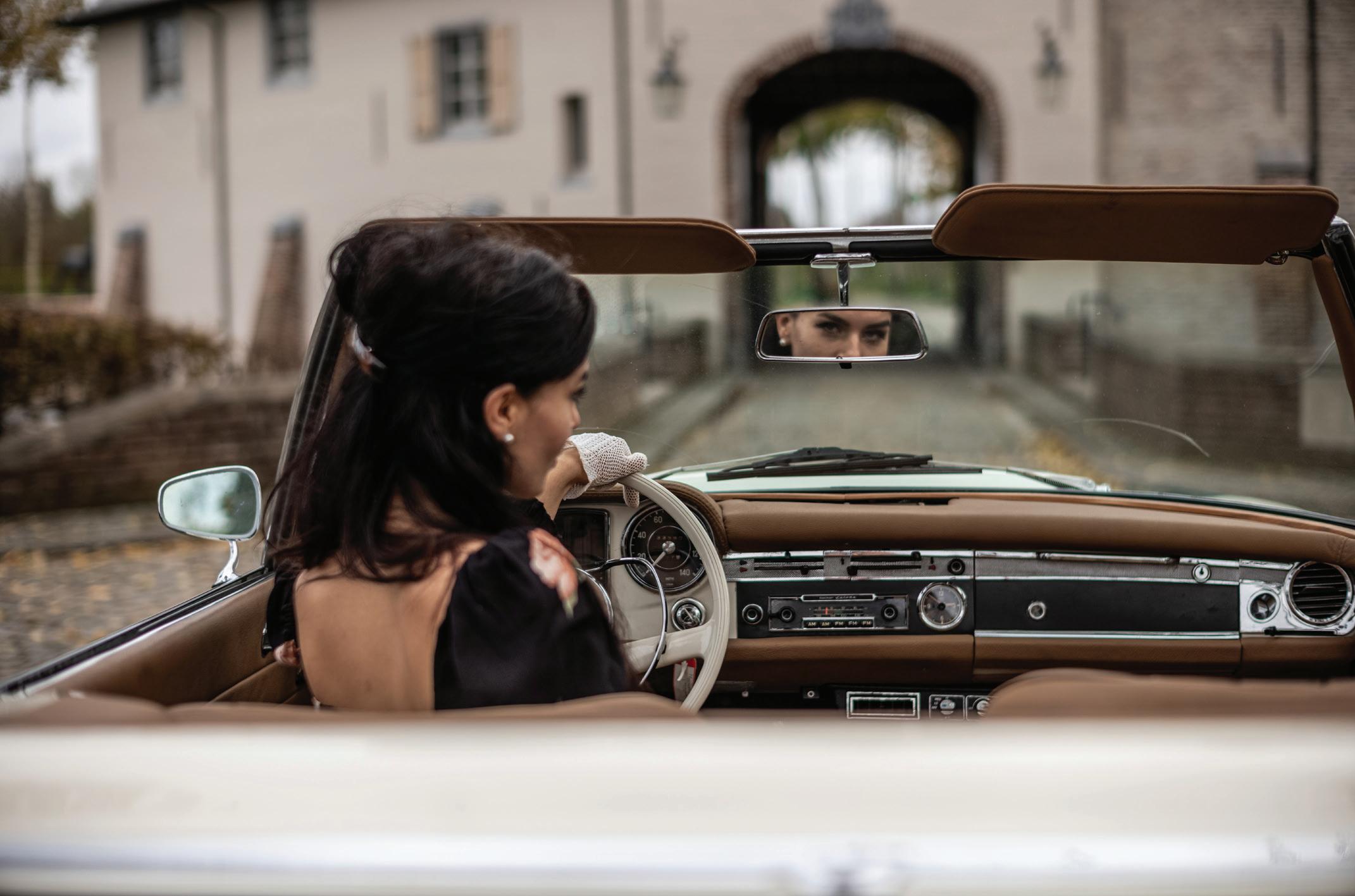
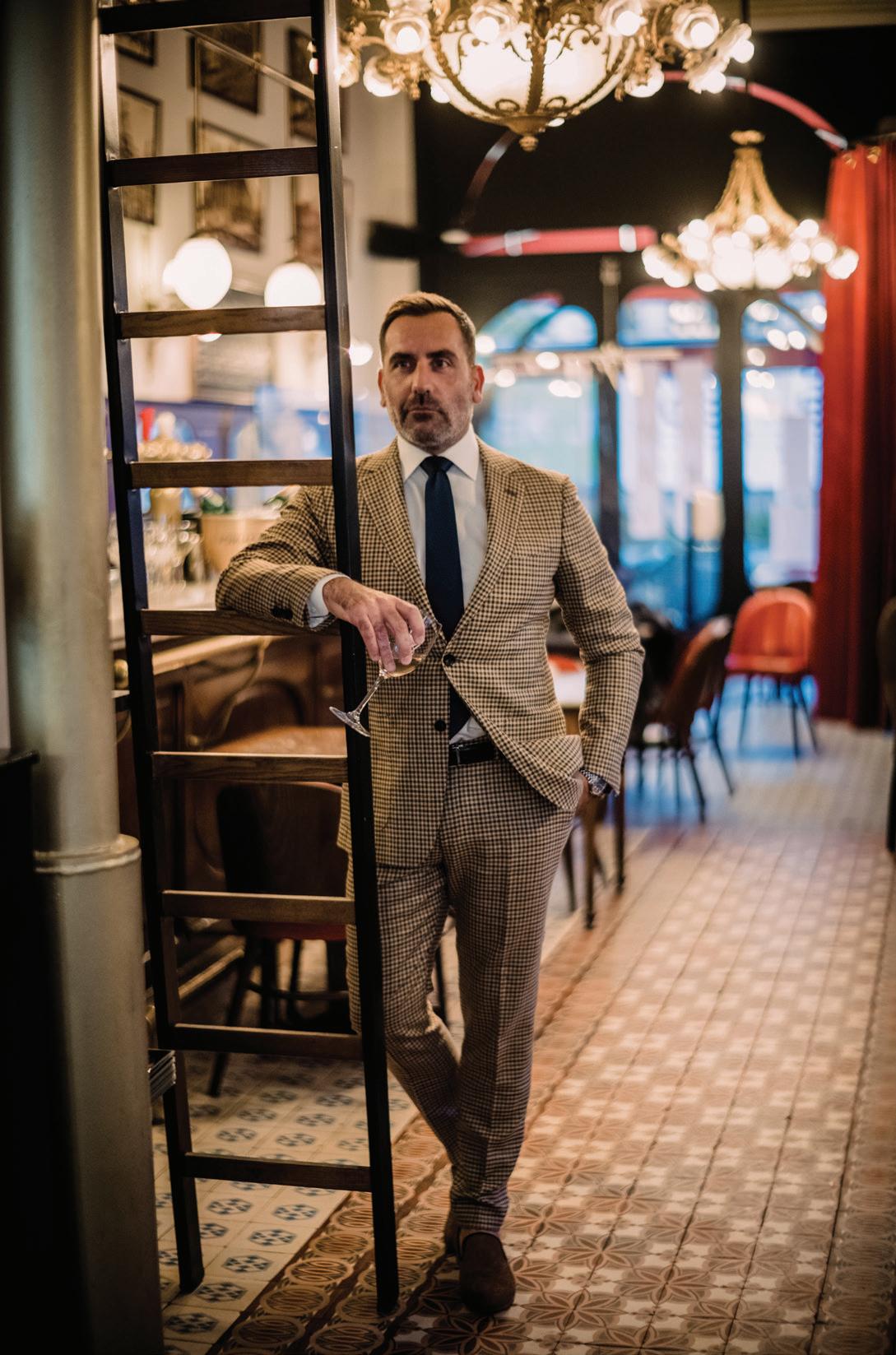
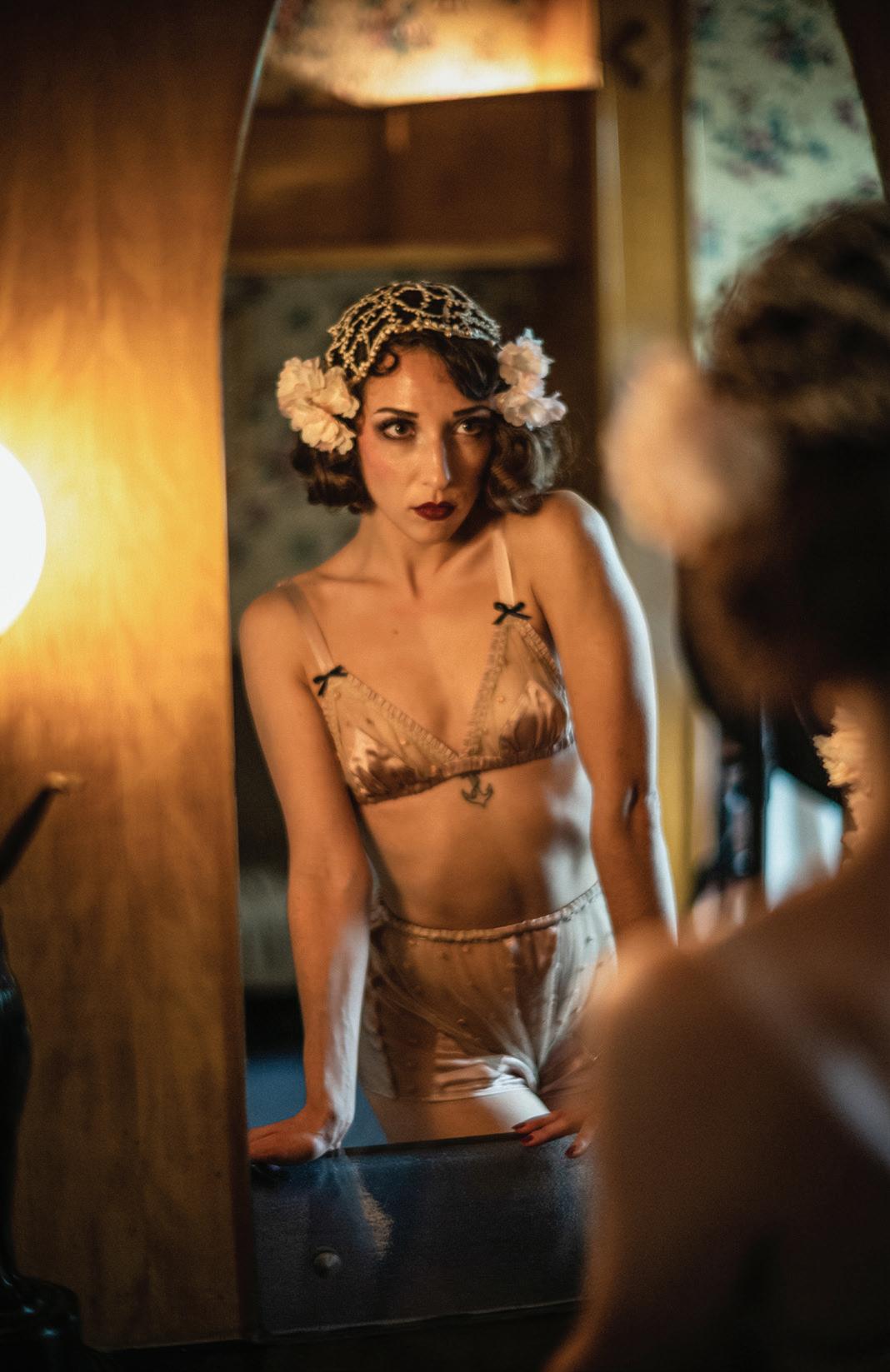
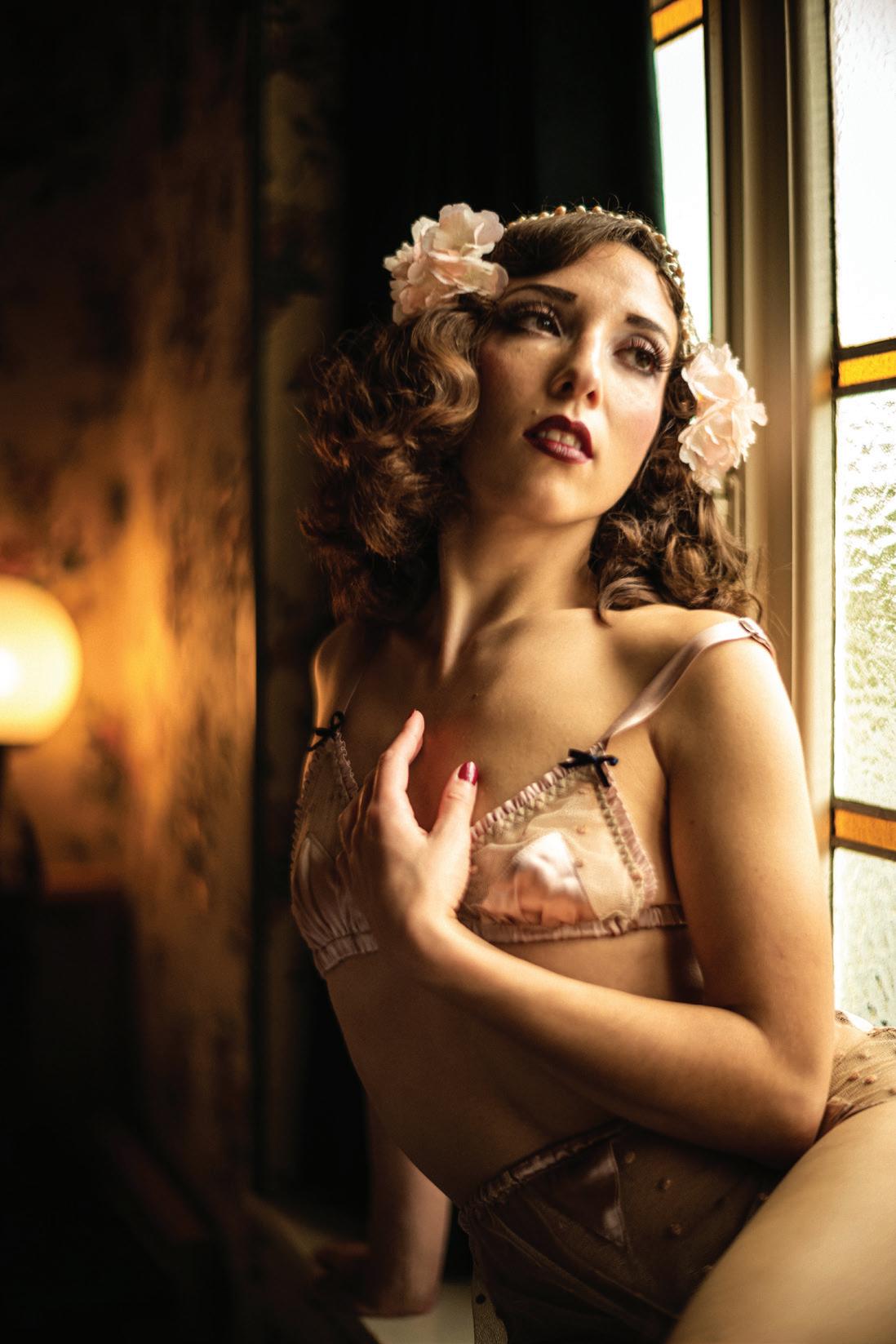
a renowned glamour photographer, I am fortunate to own an original Leica Noctilux 50mm f/1.2 lens, and have been using the new 2021 reincarnation in comparison with the original for several different shoots. Both versions have been used on the Leica M10-R rangefinder. Given the rarity and stratospheric prices commanded by the original Noctilux, is sometimes scary and intimidating to use, given it is now a rare and very valuable lens. I am probably one of the very few who actively uses it in the field, but now that Leica has released a new version, I am more likely to use the new one instead and leave the original safe at home in its box.
What I like the most about the original Noctilux f/1.2 for my kind of photography is its soft rendering, the gentle skin tones and the “Leica glow”. I must say that Leica made an excellent choice by sticking to the original visual signature, striving to replicate the rendering of the old version with its 2021 reincarnation. The new version has similar bokeh, glow and rendering.
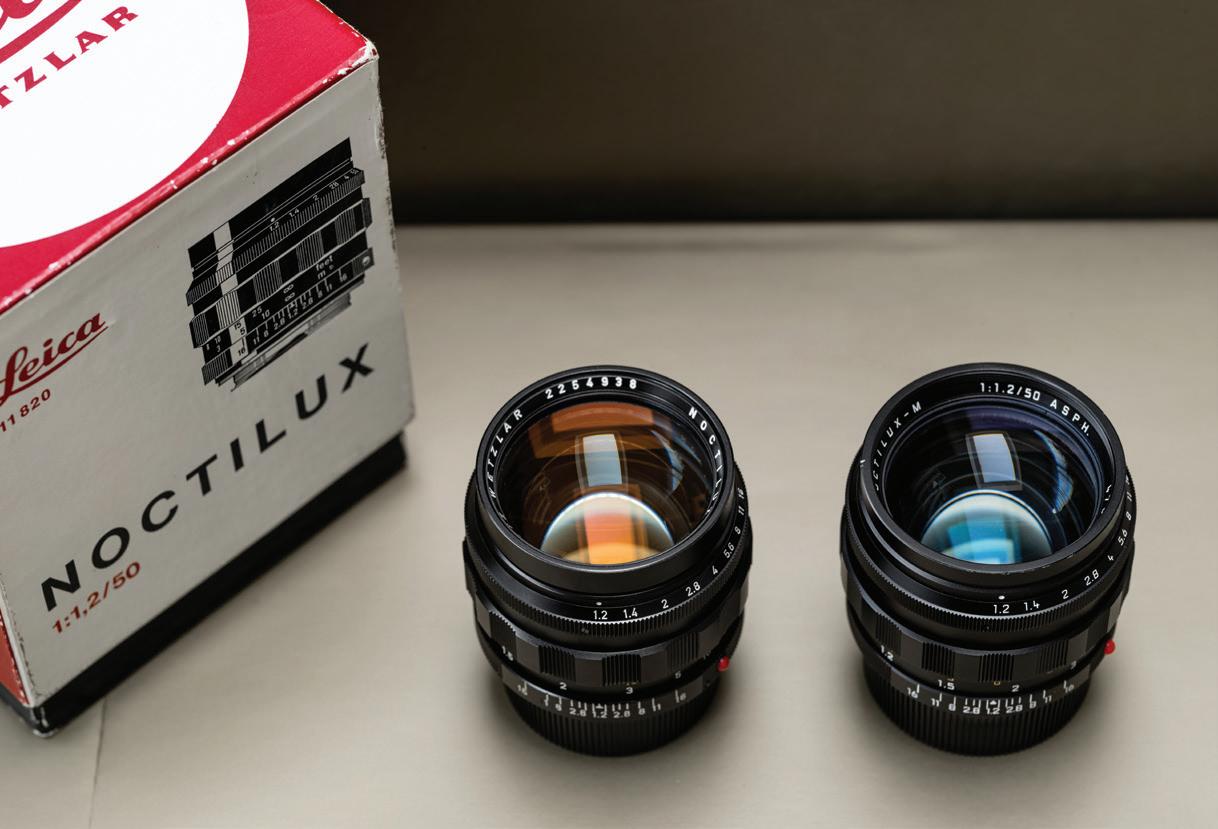
The biggest difference between the old and new versions, from my perspective, is the slightly increased image contrast which is a function of newer and more effective lens coatings. In addition, the old version creates images with slightly warmer tones, while the new one generates more neutral colors, likely due to improved and modern glass chemistry. You can see the difference in the color of the old and new coatings in the lens comparison image. These color shifts can be easily corrected during post-processing if desired, to further mimic the legendary performance of the legacy 50mm f/1.2 NoctiluxM. Both lenses generate similar levels of sharpness. It is important to note that unlike the newly improved (over the original) 50mm f/0.95 Noctilux-M, the f/1.2 version is not that sharp wide open, but you do not buy this lens for its ability to deliver sharpness! This lens delivers a softer images which appeal to me personally over those delivered by the f/0.95 lens. Both f/1.2 versions use aspherical lens elements owing to which the lens sometimes creates busy bokeh, but I am a big fan. The old version of the lens exhibits more chromatic aberration, which has been better controlled in the new version, owing to better optical design.
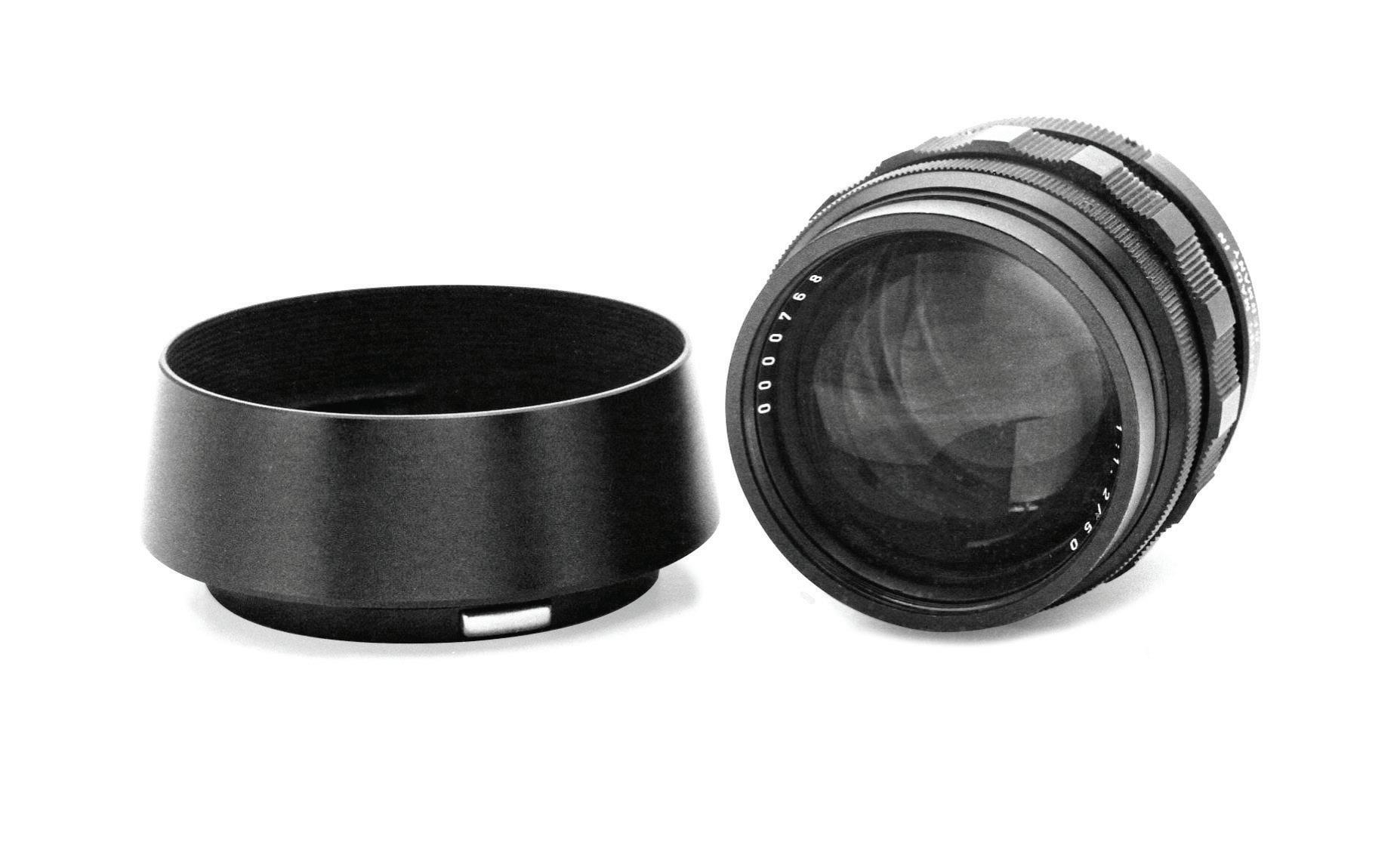
Ease of use has also been factored in; case in point, filters are easier to use in the new version, which uses a standard E49 filter in comparison with the original, which required a series filter held in place in the lens hood which screwed apart for that purpose. Otherwise, in all other respects, the old and new versions of the Noctilux lens and hood are identical.
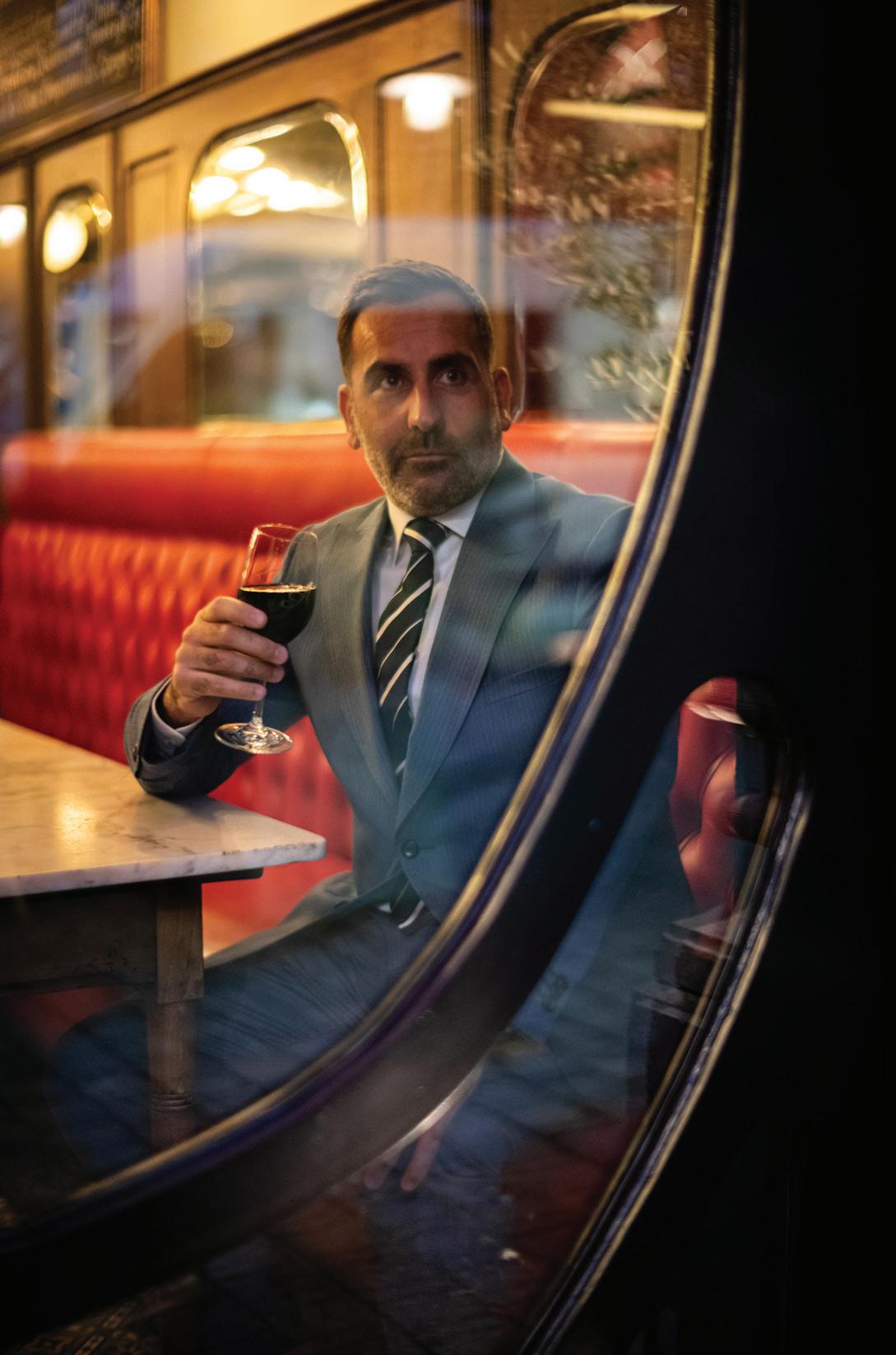
While testing the new lens, I lit the scene only with candlelight, drawing inspiration from Stanley Kubrick who used a high speed Zeiss lens while shooting interior scenes for the film Barry Lyndon. While Leica’s Noctilux 50mm f/1.2 creates
incredible color images because of its subtle tones, it also delivers very good black and whites. In the photos accompanying this article you can see the subtle glow in the eyes, creating a halo, which is very much the Noctilux 50mm f1.2 look.
Milan Swolfs is a Belgium-based photographer best known for his burlesque and vintage-style fine art portraits that bring to mind the unforgettable Hollywood glamour of the 1920s and 1930s. Leica Camera AG used his photos for the official launch of the Leica Noctilux-M 50mm f/1.2 ASPH reissue.
www.milanswolfs.com
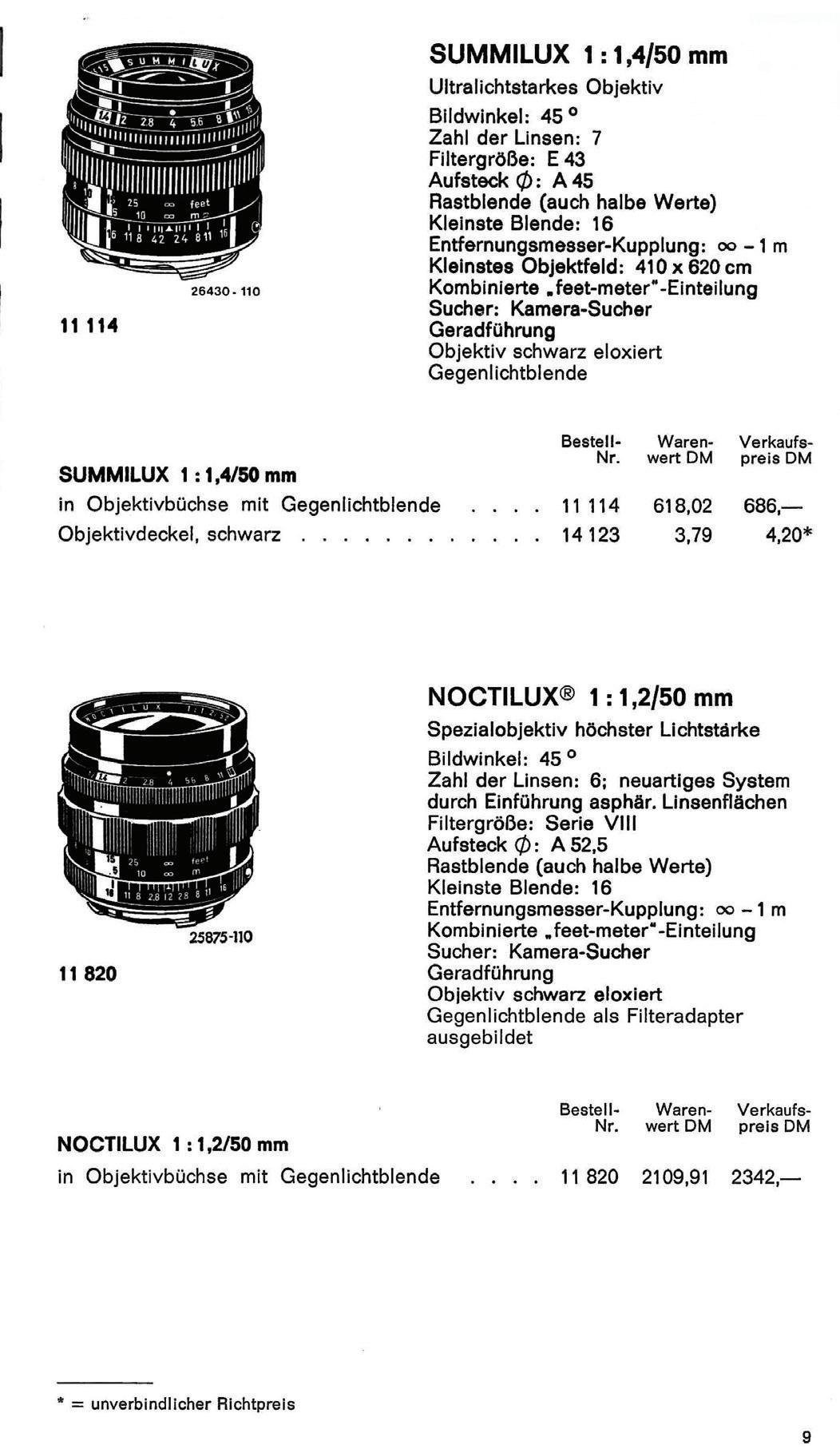
(above) Original and new re-issue of the 50 1/1.2 Nocitilux side by side, with the original Leitz, Wetzlar box. Original on the left with warmer toned lens coating. New re-issue on the right with modern, bluer lens coating.
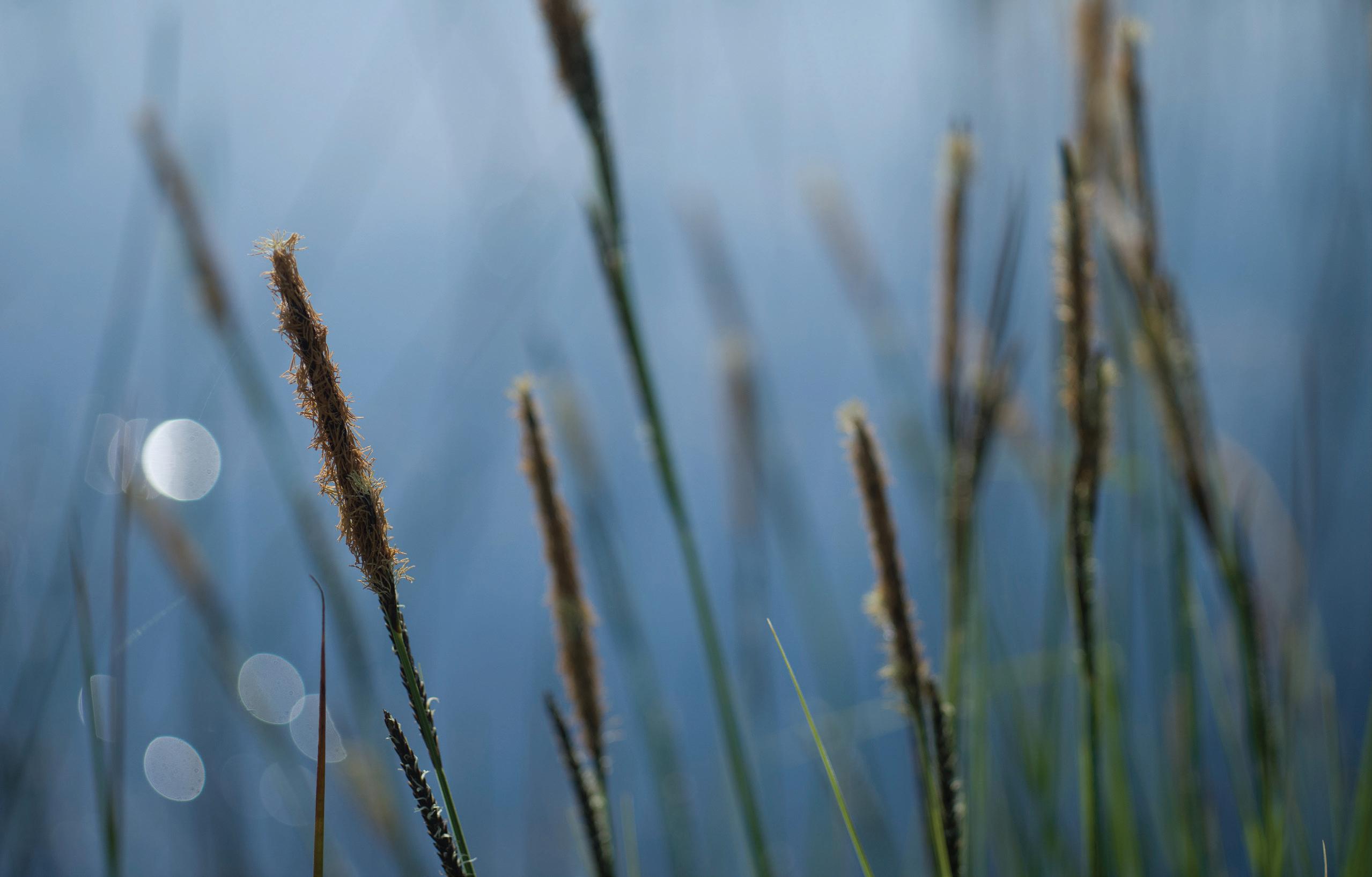
(top) "Bluegrass" - Leica M10-R, 1/3000, f/1.2, ISO 100.
(bottom) "Patina - Dreaming of Summer" - Leica M10-R, 1/90, f/5.6, ISO 640.
NOCTILUX 50MM F/1.2 ASPH
An Appreciation
by JONATHAN SLACK
is the third lens in Leica's historical lens series where they revisit classics and remake them with modern glass and coatings, but with the original basic design. The two previous lenses are the tiny Leica 28mm SummaronM f/5.6, originally released in 1954 with a screw mount, and the Leica Thambar-M 90mm f/2.2, a quirky soft focus portrait lens from the mid 1930's.
The Leica Noctilux-M 50mm f/1.2 is rather a different beast. Released in 1966, it was the state of the art lens for shooting in low light, very expensive, and very difficult to make. Estimates of how many were produced vary between 500 and 2,500, but, I understand that the actual number was 1,757. As a result of this it has become a photographic legend and a serious collector's item with production lenses selling for well over $20,000 and even lens hoods changing hands for around $4,000! Sadly, I do not have an original lens to compare with the new one, but I guess that will be true of most of the people who buy this lovely lens.
I've been lucky enough to have a prototype copy of the Noctilux for almost the whole of the lockdown. I've used it on both the SL2 and the M10-R and have very much fallen in love. Of course it has its vices and would not come out well in a technical comparison between the current f/0.95 Noctilux (or the 50 f/1.4 Summilux come to that!). Just a glance at the MTF curves shows that pretty clearly. But this lens is an important part of Leica's history and it's great that Leica should re-make it so that us lesser mortals can have a go with it!
HISTORY In 1966 Leica was still a big player in the photojournalism world, and there was an increasing demand for fast lenses for shooting in extremely low light. Nikon, Minolta, Canon and Leica all produced f/1.2 standard lenses in the 1950's and 1960's. Leica's 50mm f/1.2 was the star of the show at the 1966 Photokina.
Work started at Leica in 1957 on the production of aspherical elements. The first lens prototype produced in 1958 was the Summaron 35mm f/2.8 ASPH. This featured two aspherical surfaces, but never went into production.
A 52mm f/1 ASPH. prototype also featuring two aspherical surfaces was produced in 1959, but Leica realised the image quality wasn't good enough at f/1 and settled for f/1.2. The first prototypes were made in April of 1964 designed by Helmut Marx and Paul Sindel. (Helmut Marx was Professor Max Berek's successor as head of the photographic lens design in Wetzlar, and creator of the first 50mm Summicron in 1953).
The Noctilux 50mm f/1.2 was released as the 11820 in 1966.
Professor Helmut Marx used an Elliott 402F computer helping design and saving lots of time ray tracing. This was before he had begun to develop his COMO optimisation program for lens design in the late 60's.
The Leica Noctilux-M 50mm f/1.2 has two aspherical elements (front and rear) which were made on a specially built grinding machine that had to be operated manually. There was only one machine, and only one person capable of operating it (Gerd Bergmann), and he had to discard many elements as rubbish.
After the release in 1966 there was much research to produce an f/1 version of the lens with three aspherical elements, but in 1970 the project was abandoned because
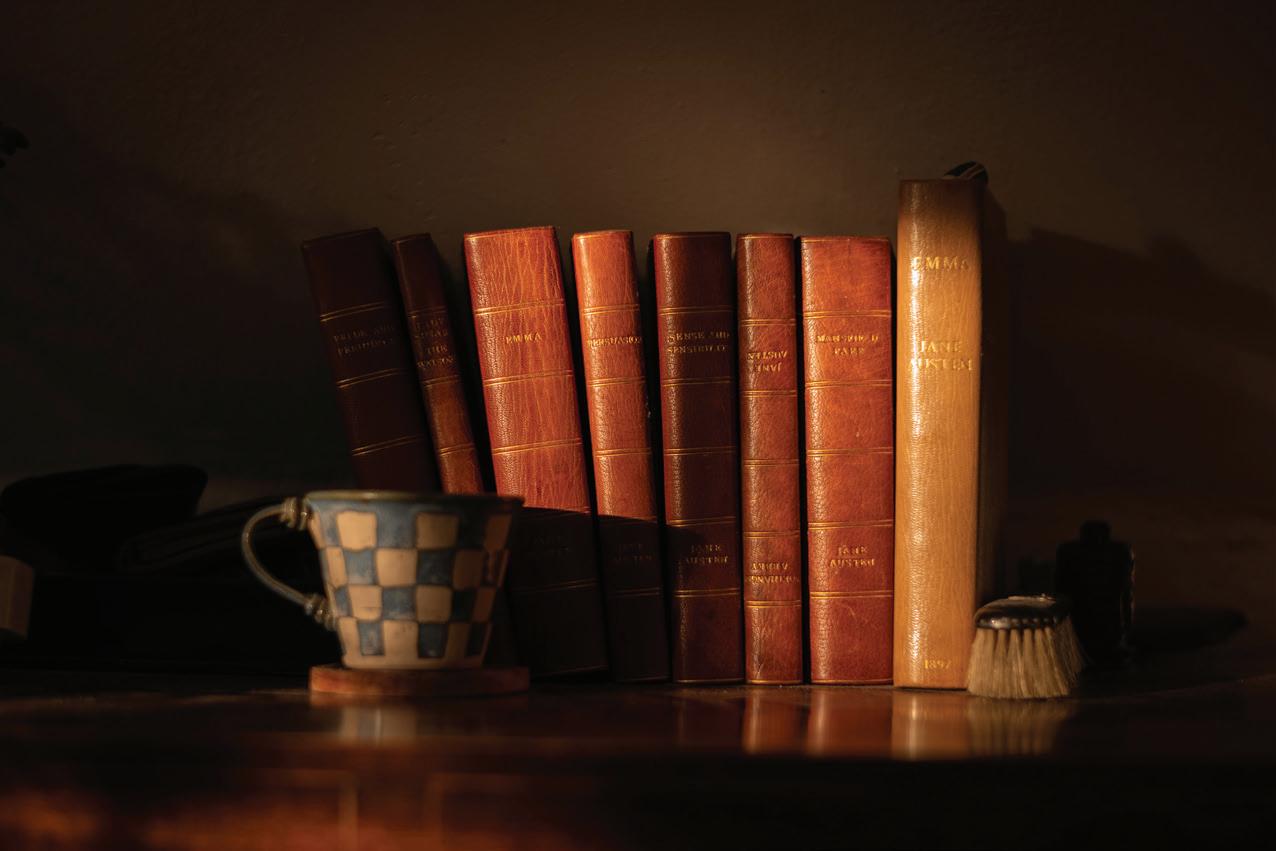
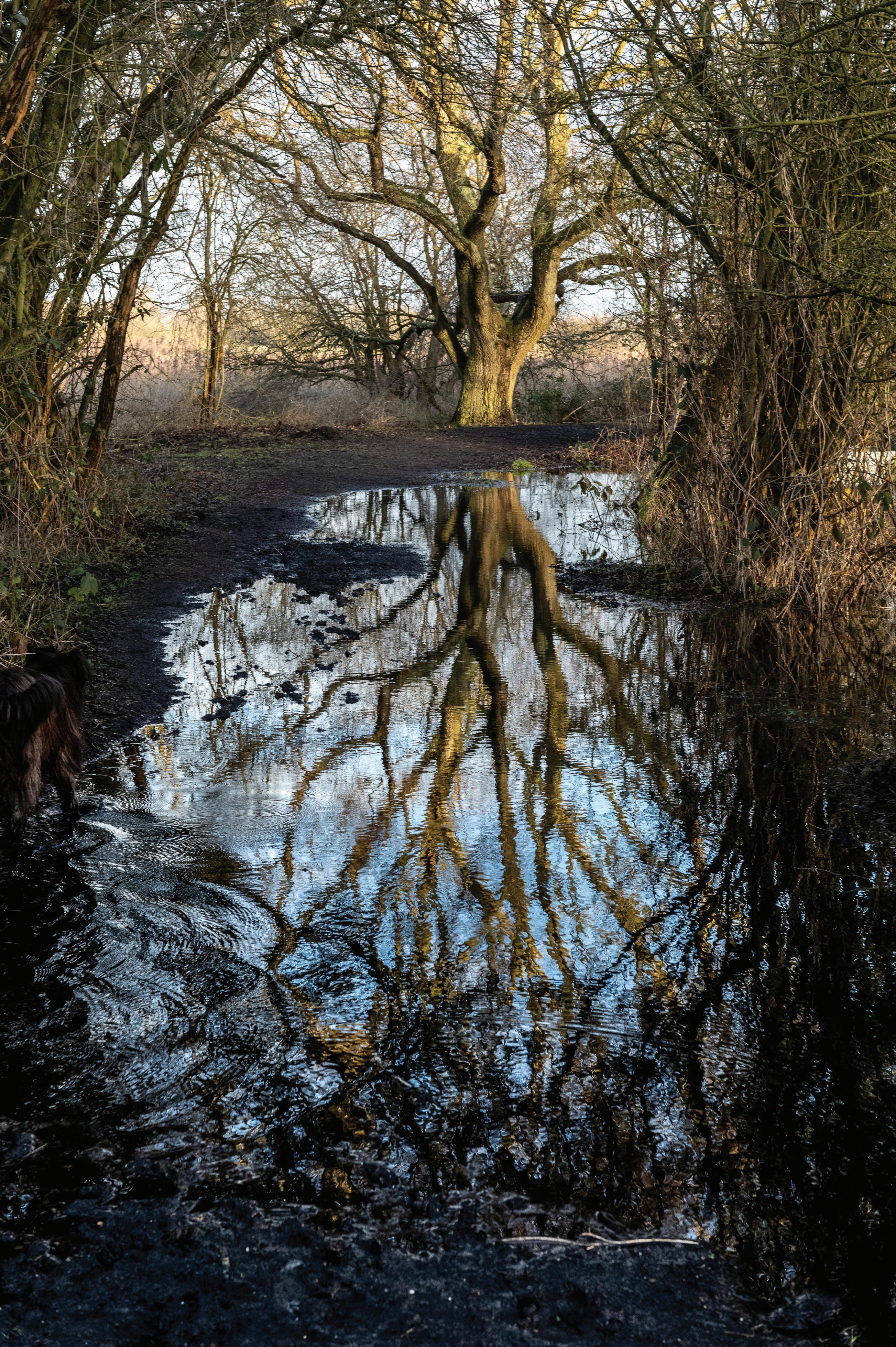
(this page) left: Leica M10-R, 1/2000 sec, f/5.6, ISO 100. right: "I can See You" - Leica M10-R, 1/1000 sec, f/1.2, ISO 100. (opposite page) left: " The Dawn of Austen" - Leica M10, 1/125, f/4, ISO 200. right : "Sleepy" - Leica M10-R, 1/90, f/2.8, ISO 1250.
the aspherical technology was in its infancy, and the production costs were immense. The f/1.2 lens remained in production only until 1975.
In 1975 Walter Mandler in Canada designed an f/1 Noctilux without any aspherical elements. It was launched in 1976 and was a great success, staying in production until 2008. In 2009 Leica introduced Peter Karbe's stunning f/0.95 Noctilux, a double Gauss design with two aspherical elements.
THE MODERN LENS
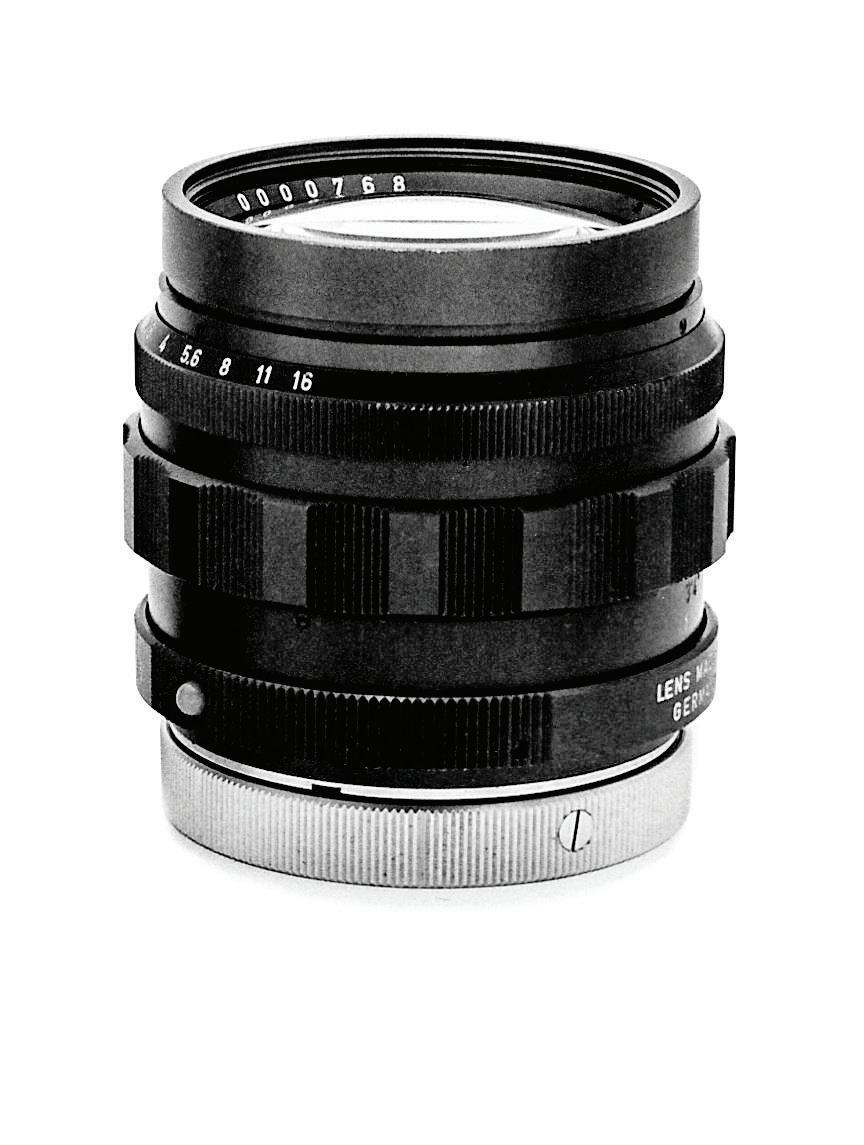
The original Noctilux did not have a filter thread on the front element, it was part of the clip-on lens hood. The new lens does have a filter thread, and as far as I'm aware, that's the only obvious difference between the new and old lenses. Even the lens hood is superficially identical. (Although it says "LEICA CAMERA WETZLAR" and misses out the 'GERMANY' on the original lens - or at least my prototype does!) Otherwise the size, handling and appearance of the modern lens is just the same as its illustrious predecessor.
By modern standards, it's a small lens, about the same height as the current 50mm Summilux-M Asph. and only a little fatter. It handles beautifully on an M body, perfectly balanced, but with a much longer focus throw than the more modern M lenses. It only focuses down to one metre - I was hoping it would focus closer, but apparently that wasn't possible.
IMAGE QUALITY
First of all I should say that I had quite an early prototype lens, but I expect that the image quality is pretty representative. It almost behaves like two different lenses. At f/1.2 nothing is quite sharp, even in focus at the centre, by the edge of the frame it's very soft and there is quite a lot of vignetting. It doesn't sound so good, but it's actually rather a lovely dreamy look.
By f/2 the centre is quite sharp and the vignetting has mostly gone, however, the edges and corners are still quite soft. At f/2.8 things have improved further and by f/5.6 everything but the corners are incredibly sharp, however the corners are still soft and remain so at all apertures.
Overall Contrast is fine, but not like a modern Leica Aspheric. However, stopped down, in common with the rigid Summicron the Noctilux has incredible micro-contrast and really great acuity. In fact the image quality is very comparable to the rigid
M10-R, 1/4000, f/1.2,
M10-R, 1/1500, f/4,
Summicron from about f/4 and on. Bokeh is lovely (well, I think so, it's rather a personal subject) . Stopping down a little the 16 aperture blades ensure that the aperture remains completely circular.
FOCUS SHIFT Something which is always a concern with vintage lenses is focus shift. This is where the point of focus changes as you stop down, for example with the Zeiss 50mm Sonnar ZM if you focus at 1.5 metres at f/1.5 and then stop down to f/8, not only does the point of focus move forwards, but the original point of focus is out of focus (despite the greater depth of field as you stop down). Zeiss will alter lenses so that correct focus wide open is at the distance you prefer.
I carefully checked the Noctilux f/1.2 from about 1 metre, 2 metres, 4 metres and 30 metres. in each case the original point of focus remained properly in focus. There seemed to be some forward shift, but I feel that as long as the point focused on remains in focus as you stop down then it's not a problem in use.
WHICH VERSION? The Noctilux f/1.2 is coming in two versions. The simple version is €7,000 and is black with an aluminium body - this is the one for normal mortals! There is also a Silver Chrome version with a brass body in a strictly limited edition of 100 copies. This retails for €15,000, and being brass I imagine it's pretty heavy. Lovely, but more for collectors than for everyday use. I suppose one could buy both!
CONCLUSION I really like the concept of remaking classic lenses, and this Noctilux is a lovely example, especially as the second hand price of the original lens makes it well outside the range of the average photographer. At €7,000 this lens seems like a something of a bargain, especially considering its rather exotic double aspherical design. (Apparently it's still pretty difficult to make). Unlike the 90mm Thambar or the 28mm Summaron (lovely as they are), the Noctilux is very usable as an everyday lens, both on M and SL cameras (I guess it might also be fun on the CL). Dreamy and strange wide open, stopped down it is wonderfully sharp, and, if you like the look of the classic Leica lenses from the 50's and 60's then this would be an exciting addition.
sources Too many to acknowledge all of them and I'm ashamed to say that I've forgotten some of them. However, these two articles were informative and interesting. First and foremost is this article on the Barnack Berek Blog "Noctilux-M 50mm f/1.2 Asph: The Beginning of a new Optical Era." Secondly is Erwin Puts interesting article on the origin of myths! "Leitz Noctilux 1:1.2/50: The Untold Story."
Kitchen Entrance Silhouette, Benin
Leica M10 & 28mm Summilux-M ASPH. at f/6.8, 1/15, ISO 400.
Benin
the FORGOTTEN KINGDOM of DAHOMEY & the PRESENT DAY REPBULIC of BENIN
by JAMES NABWANGU
"The eye never forgets what the heart has seen" — African Proverb.
"For Africa to me... is more than a glamorous fact. It is a historical truth. No man can know where he is going unless he knows exactly where he has been and exactly how he arrived at his present place."
— Maya Angelou
overriding ambition has always been to engage the world and those who populate it through photography. During this wonderful journey, my wife and I have dealt with challenges that would fill a lifetime. We shall continue to photograph because by doing so we become keenly aware of being alive and part of humanity. Photography speaks to us in a way nothing else does. In a world so divided as we are witnessing today, we firmly believe photography has the power and ability to shine a light on whatever is good and still present in all of us, as we hope, pray, and strive for some reconciliation that is fundamental to the survival of the human species.
We seem to be condemned to live out the rest of our lives searching for the holy grail to the origins of mankind. Having been born in Kenya, the African cradle of our human race has a special impact and relevance to my way of thinking. Benin in particular, has been of particular interest. First, as the epicenter of the inhuman Slave Trade perpetrated from such places as Ouidah, and secondly, the origins of ancient religious practices and spiritual beliefs that comprise Voodoo.
We did finally set out earlier this year to travel to Benin, engage with the people, learn about their rich history (dark moments and all), and more importantly, show them photographically as they go about their daily lives. This was to be a project from which we hoped to learn a great deal about the ancient Kingdoms of Dahomey and the present day inhabitants of the modern day Republic of Benin. We hoped to travel down the path from the place of the Slave Market in the center of town in Ouidah to the Beach through the Gate of No Return. While the slaves knew where they had come from, none knew where they were going and many would have preferred to commit suicide rather than be forced to endure the inhuman conditions, pestilence, rapes and sometimes death on the high seas and afterward. The five day march in chains from Abomey to Ouidah was just the start to their horror and nightmare. One day we hope to make that trek. Four weeks allotted to this project weren’t long enough. Meanwhile, we did make it to other places.
Leica
Armed with our Leica cameras and assorted lenses, our arrival into Cotonou with no preconceived ideas had its moments. Even though my wife and I are no strangers to Africa, there was a bit of a culture shock. Everything was different, for example, there was no scent of the jacaranda blooms that would be commonplace in my motherland. Benin is one of the poorest countries in Africa and yet the people were friendly, helpful and happy, despite the lack of material things, insufficient access to healthcare and poor infrastructure. Fortunately, we both speak French and English. Unbeknownst to us, the scourge of COVID-19 was just starting and well on
(right, top) Tapioca Preparation, Djibio, Benin
Leica M10 & 28mm Summilux-M ASPH.
at f/4.0, 1/60, ISO 400
(right, bottom) Manioc Preparation, Djibio, Benin
M10 & 28mm Summilux-M ASPH.
at f/5.6, 1/350, ISO 400
(below) Market for Pottery
Leica M10 & 28mm Summilux-M ASPH. at f/3.4, 1/45, ISO 100
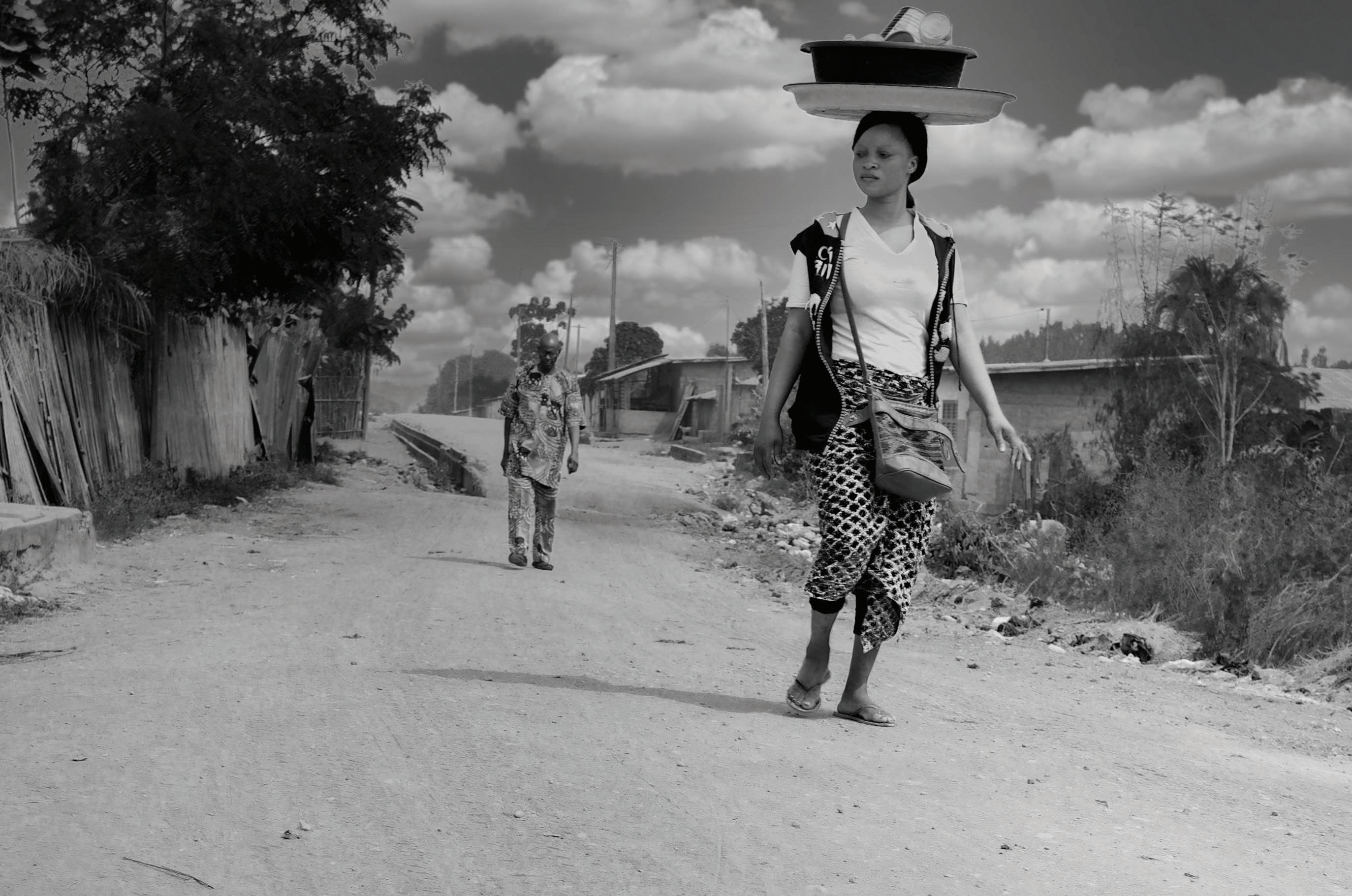
(right, top) Off to Market, Grand Popo, Benin
Leica M10 & 28mm Summilux-M ASPH. at f/5.6, 1/350, ISO 100
(right, bottom) Gasoline Transport, Benin
Leica M10 & 28mm Summilux-M ASPH. at f/2.8, 1/180, ISO 200
its way to becoming a pandemic. We received a timely email from the consulate in Cotonou to reconsider our planned trip further north. Security issues existed near the border with Niger in Pendjari National Park in northern Benin where, seven months before our arrival, several European tourists had been kidnapped, their guide and two French commandos killed in the ensuing rescue effort. Islamists were active in those areas. Photography was therefore limited to the southern parts of the countryside villages and around the five cities of Cotonou, Porto Novo, Grand Popo, Abomey and Ouidah.
Despite slavery being abolished, and Benin being a functional democracy, the historical importance of Ouidah as a slave-trading outpost is hard to overlook. For centuries, the kingdom was at the epicenter of slave shipments from the Bight of Benin, exploited by the Portuguese in the 1580s, followed by the Dutch, French and English. Incidentally, slaves from Africa were delivered to Jamestown, Virginia for the very first time in 1619. Clotilda, the last slave ship carrying one hundred and nine men, women and children was able to leave Ouidah in 1860 and evade the British while bound for Alabama in the United States. Cudjo Lewis gave an account of that harrowing passage in 1972. The descendants of those captives can still be found in Africatown, Alabama.
The immensely lucrative slave trade started to wind down after a blockade against the practice by the British in 1852. The Kingdom became a French colony in 1872 and then a protectorate in 1892. The country subsequently came to be known as Benin with full independence (1960) and the name change later to the modern day Republic of Benin in 1975.
Modern day Benin is only slightly smaller than Pennsylvania. Fon, Yoruba, Dendi and French are the dominant languages. Even though not many will own up to it, the fact remains that the vast majority are Voodoo believers. As with most things in life, there have been some expropriation of customs and aspects of catholicism and surprisingly, vice versa. Voodoo is a vital aspect of life in Benin and every year, the 10th of January is a National Holiday when Festivals are held throughout the land. Our plan was to be in Benin on that date. Less than twenty-four hours after our arrival in Cotonou, we sat down with Romuald Hazoumé, one of the most acclaimed contemporary African artists, who gave us a two hour exposé on life, culture, religion, the economy, as well as the history of his homeland dating back to the existence of the Kingdom of Dahomey that lasted from 1600 to 1904. Presiding over the Voodoo festivities is the “Pope" as well his retinue of priests, and followers. The Ingungun, the spiritual returnees occupying physical human bodies, were also present in many parts of the country. Supplicants were present at Voodoo shrines and during the festivities a fair amount of alcohol was consumed as people danced and sometimes fell into trances.
"Travel isn’t always pretty. It isn’t always comfortable. Sometimes it hurts, it even breaks your heart. But that’s okay. The journey changes you; it should change you. It leaves marks on your memory, on your consciousness, on your heart, and on your body. You take something with you. Hopefully, you leave something good behind.” – Anthony Bourdain
Through the lens, we were to observe the country’s open air markets, roadside vendors of food and gasoline as well as mosques and even Voodoo places of worship. Agriculture is a main occupation and internal trade and commerce appeared to be dominated by women. This we found interesting since there was another time when the Dahomey Kings relied on fearsome women soldiers who were later known as the Amazons who even fought against the French at the time of colonization. Cooking is normally done outside and people appear well-fed. Rice, manioc, corn, tapioca, fruits and palm wine are readily and widely available.
During our time in Benin, we felt that we had managed to connect with the locals, for the most part, to photograph them unless they objected, of course. Dominique Hazoumé did a superb job of helping us bond with the ordinary citizens of his country. That was our objective from the very start. We visited such fascinating places as Lake Nokoue, also known as the “Venice of Africa”, where houses are built on stilts and people get around on pirogues which function as water taxis. We also visited open air markets, pottery production cooperatives, red palm oil and alcohol production communities, as well as charcoal makers, fishermen and a Voodoo shrine or two. In addition, we spent time with sculptors and painters. The Abomey museum and the previous seat of the Dahomey Empire is of immense historical importance. A curious aspect of life is the transport of petrol from Nigeria on motorcycles frequently through clandestine entry points. We spent time on the Black River with these motorcycle riders, their bikes dangerously loaded down with numerous jerrycans of petrol. Some have been known to have been killed when during an accident, a small spark sets off a major explosion resulting in casualties. As a result of this trade, gasoline stations as we know them here in America, no longer exist in Porto Novo. Petrol is sold roadside from bottles and jars.
As for the images presented here and regarding travel, we can only wholeheartedly agree with what others have said.
“It’s not about what you see in these photos. It’s about what you don’t see, but feel.”
– Santu Mofokeng
(right, top) Between the Ladies at the Market, Se, Benin
Leica M10 & 28mm Summilux-M ASPH. at f/8.0, 1/125, ISO 400
(right, bottom) Working the Manioc, Djibio, Benin
Leica M10 & 28mm Summilux-M ASPH.
at f/4.8, 1/180, ISO 100
NORTHERN EXPOSURES
by ALBERT B. KNAPP MD & RUTH ORATZ MD
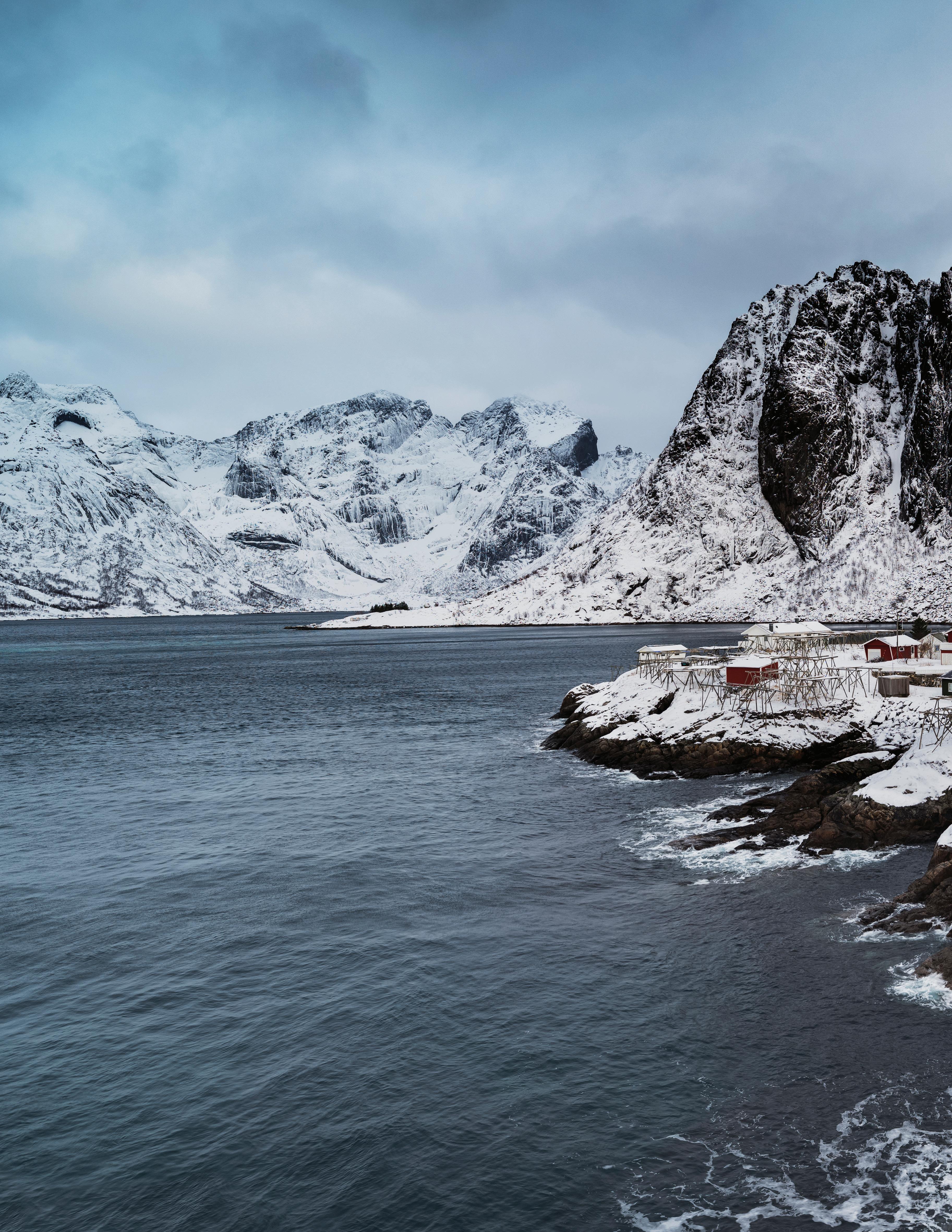
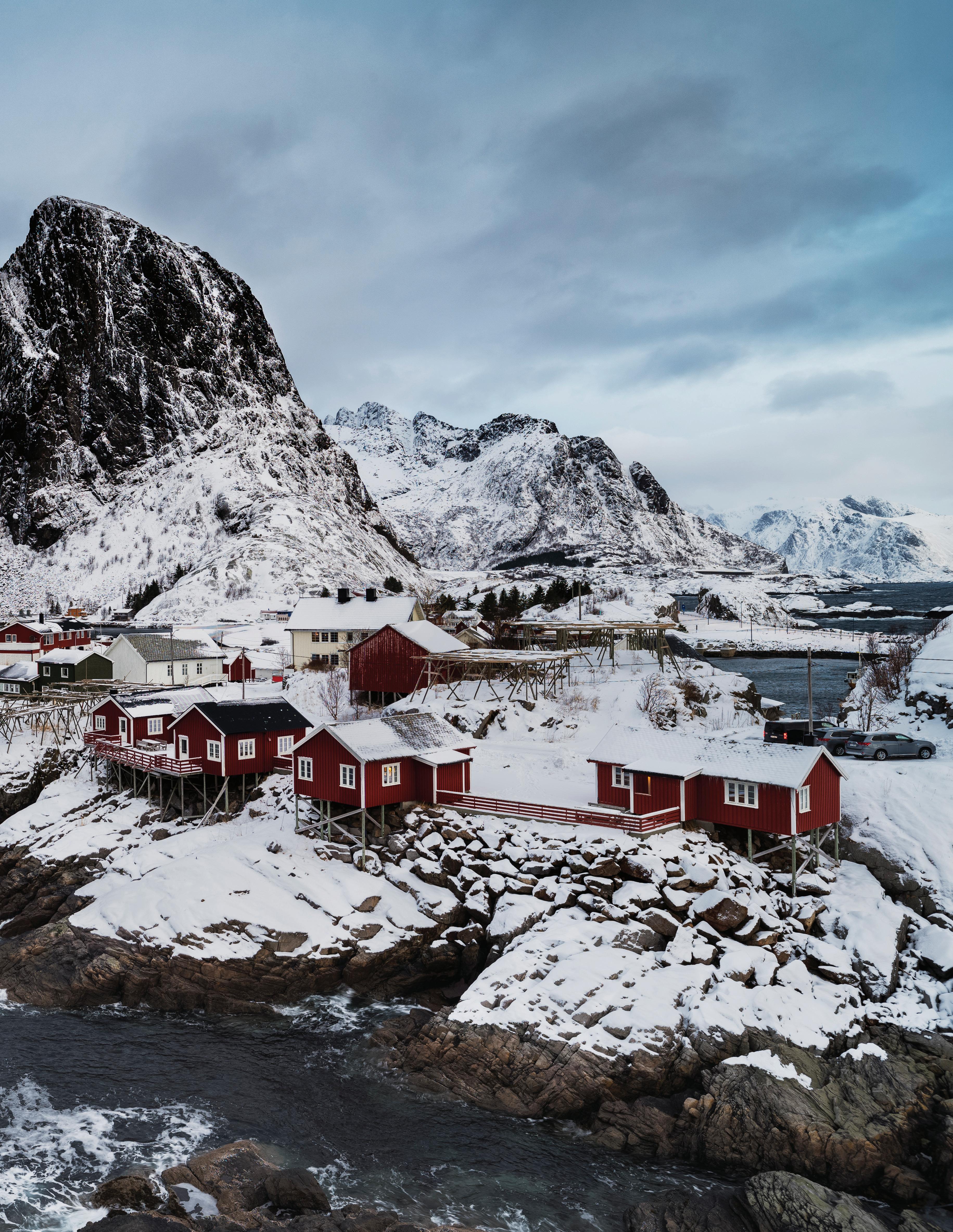
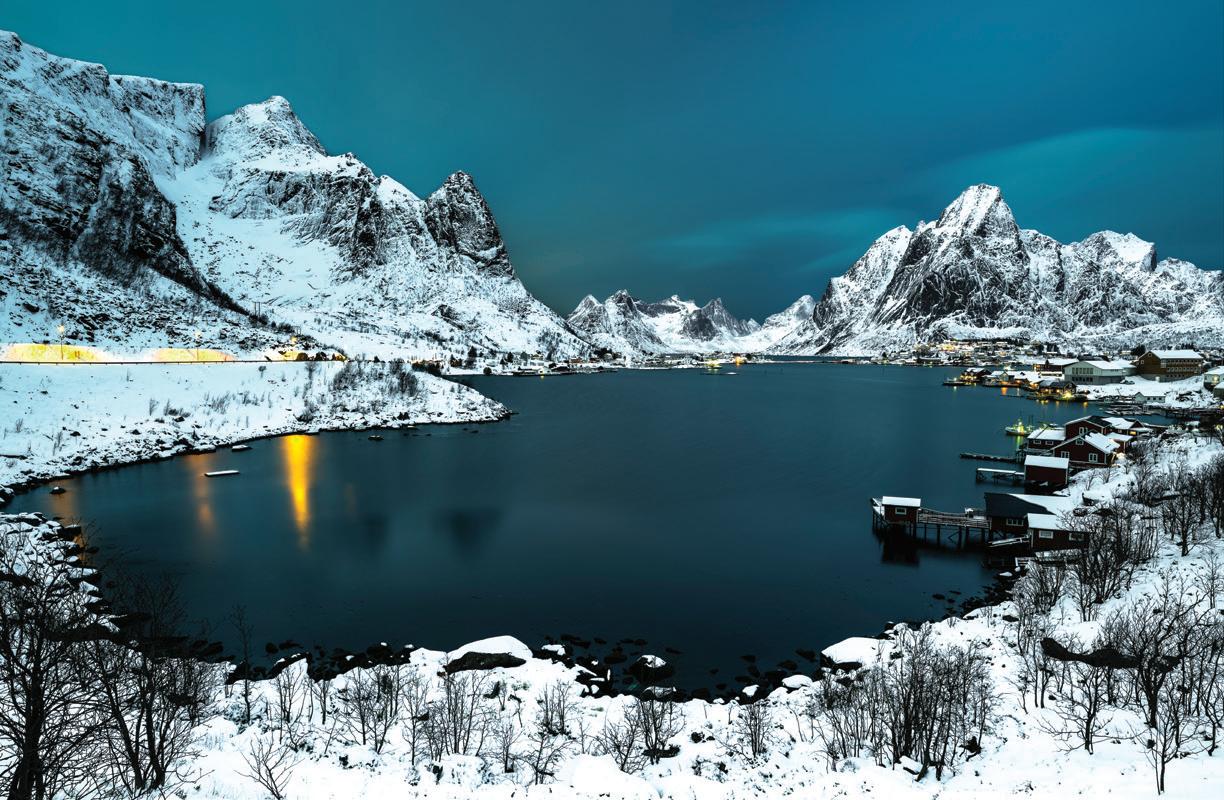
6. Hamnoy, Lofoten Islands, Norway. Leica S (Typ 007) Super-Elmar-S 24 mm f/3.5 ASPH at f/5.6, 1/6 sec, ISO 200.
IN the depth of winter high above the Arctic Circle daylight is short and slim. The sun creeps above the horizon in mid-morning, never reaching the high apex of summer brightness, and quickly wanes. We travelled to this remote wonderland of silver shimmering seas and majestic mountains in order to capture the magic of this light – these northern exposures.
The Lofoten Islands are draped along the coastline of Northern Norway spilling down from the continent as an archipelago of disconnected dots, sheltered bays, open beaches, and compact villages built on stilts along the waters edge. Every view and every aspect of life is directed toward the sea. In winter the raw beauty of this far northern environment becomes surreal. As we struggled to deal with cameras and lenses and tripods in the freezing cold and blowing winds, we also grappled with how to capture the serenity and the wildness of Lofoten. Many photographers have been here. But using the Leica S system on a tripod, the idea of long exposure panoramas seemed to offer a new way of looking at this mystical place.
Long exposure photography is not commonly used in this setting. But by nullifying the potentially distracting movement of waves in the sea and swift moving clouds in the sky it allows one to focus on the immovable mountains, ice and rocks. Furthermore, blousy foliage or flowers do not distract from the solidity of the composition.
These photographs were taken by Albert with the S system. He brought his entire Leica S kit but found that he relied most heavily on the Super-Elmar-S 24 mm f/3.5 ASPH and the Vario-Elmar-S 30-90 mm f/3.5–5.6 ASPH along with the Really Right Stuff TVC-34L Mk2 Tripod with BH-55 Ballhead. Other lenses, including the Elmarit-S 45 mm f/2.8 ASPH, Summarit-S 70 mm f/2.5 ASPH, Summicron-S 100 mm f/2 ASPH, APO-Macro-Summarit-S 120 mm f/2.5 and the APO-Elmar-S 180 mm f/3.5 were less frequently used but then again came in handy for some specific shots. The load is heavy but their presence was most worthwhile.
For the first part of our adventure we were based in Leknes, a perfect point from which to explore neighboring Haukland and Uttakliev beaches.
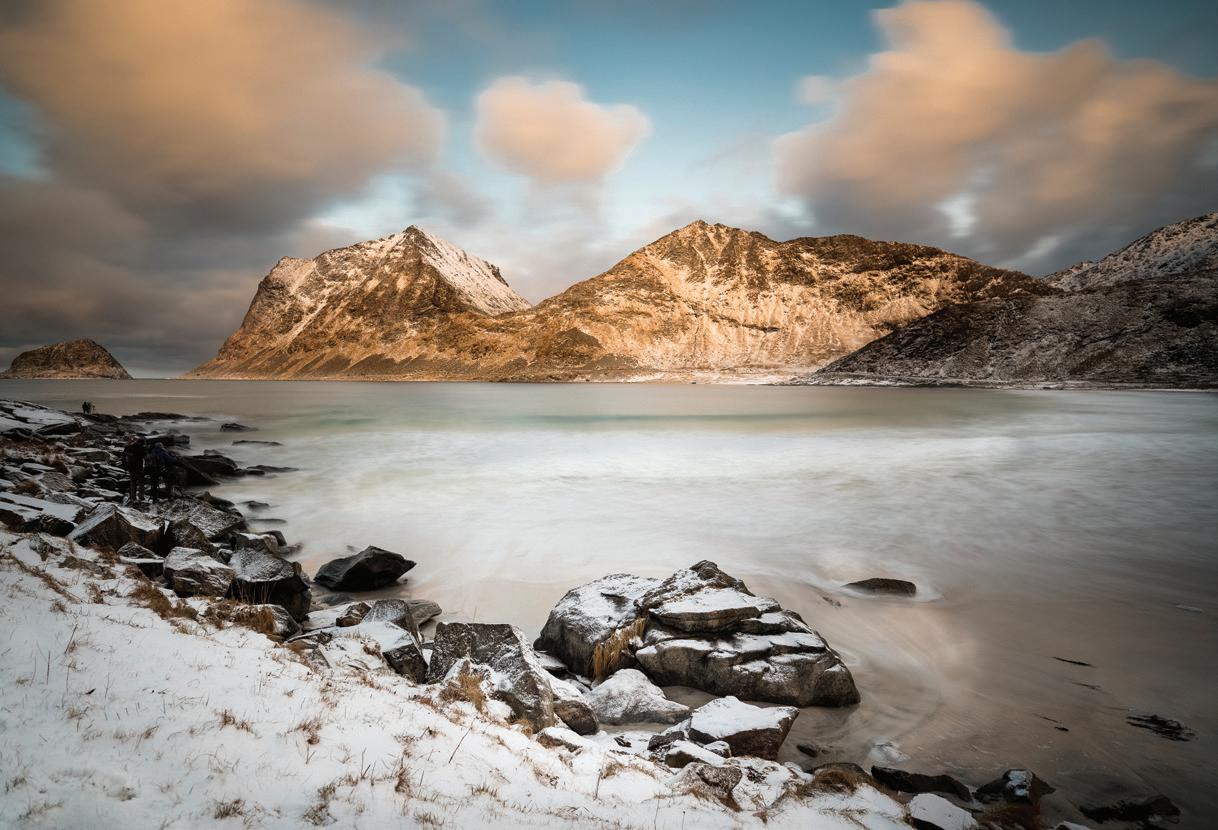
At Haukland (#1) sunrise arrived just before 10 am; we set up about an hour before to catch the first rays as they illuminated the distant peaks. Pink mid-morning dawn cast a luminous glow on the frozen seawater and brought life to the cotton clouds hanging above.
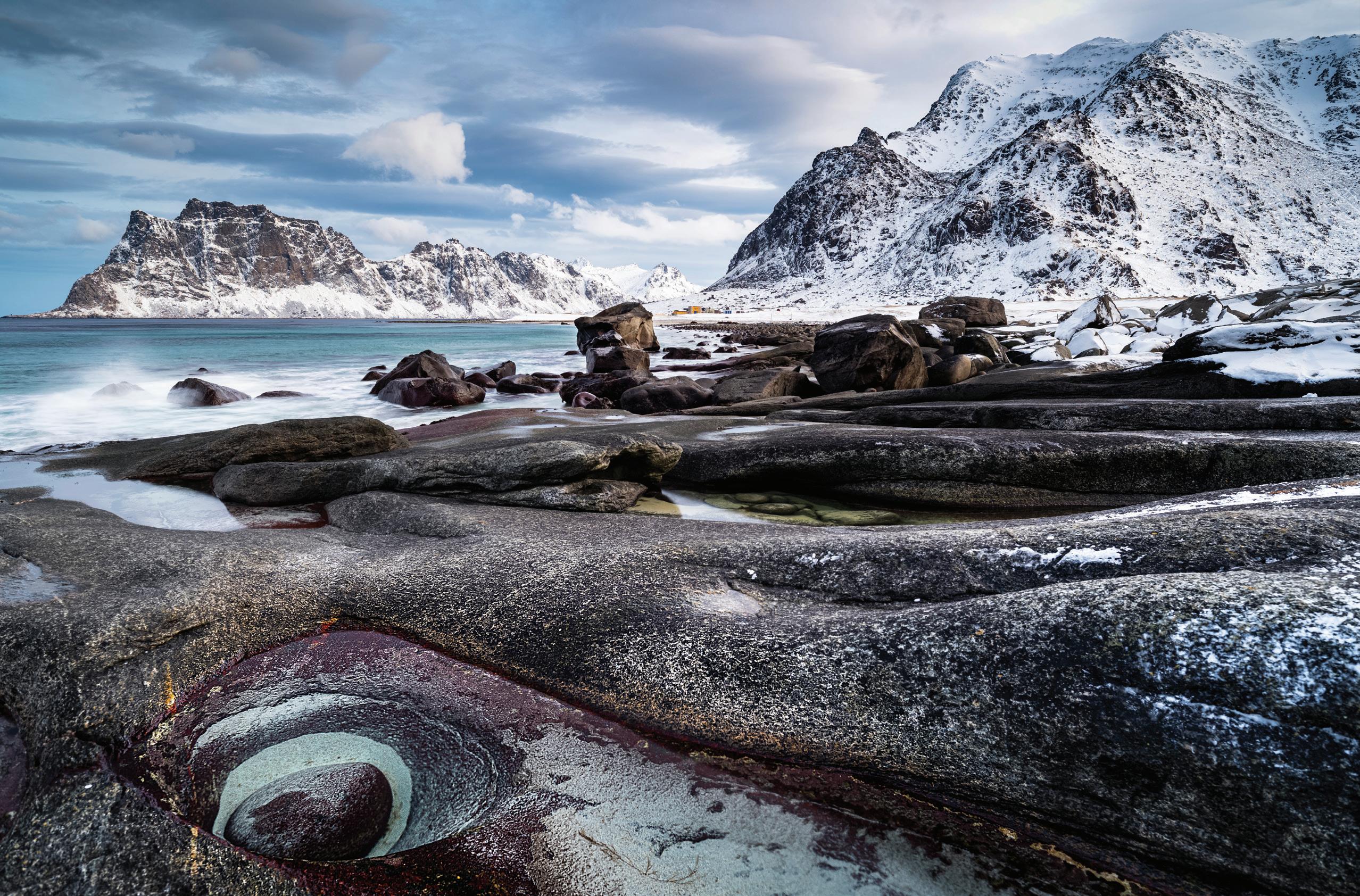
Uttakliev (#2) is treacherous – slippery rocks and a steep climb down to the edge of the Dragon’s Eye. Again we arrived well before sunrise in order to position correctly for the moment when the light arrives. Most photographers have captured this spot in the “portrait” position, but Albert elected the “landscape” format to show a larger context and perhaps a new view.
1. (left) Haukland Beach, Lofoten Islands, Norway. Leica S (Typ 007) & Super-Elmar-S 24 mm f/3.5 ASPH at f/3.5, 12 sec, ISO 800.
2. (right, bottom) The Dragon’s Eye, Uttakliev Beach, Lofoten Islands, Norway. Leica S (Typ 007) & Super-Elmar-S 24 mm f/3.5 ASPH at f/8, 1 sec, ISO 200.
3. (right, top) Kilan, Lofoten Islands, Norway. Leica S (Typ 007) & Vario-Elmar-S 30-90 mm f/3.5–5.6 ASPH at 59 mm, f/8, 1/30 sec, ISO 400.
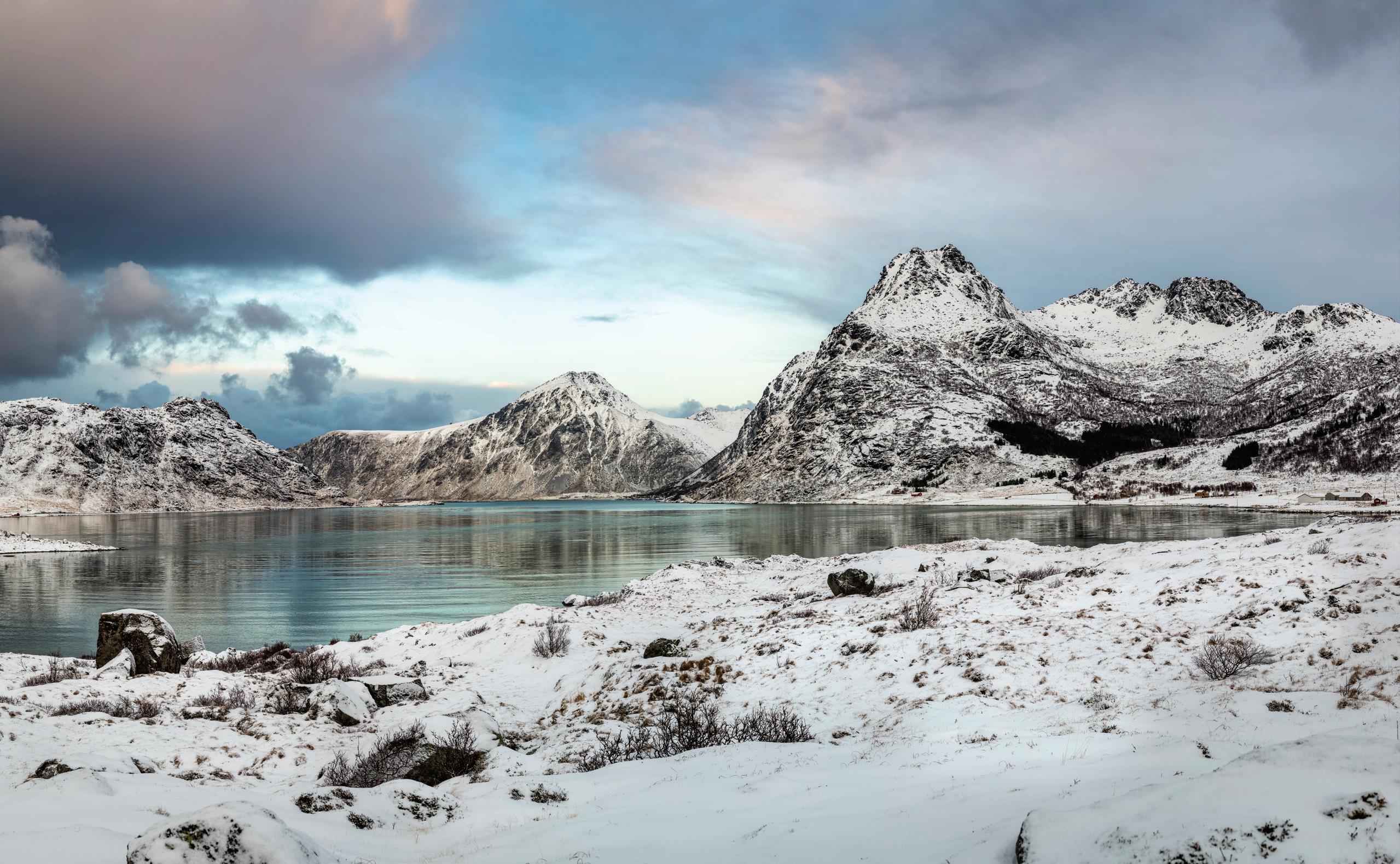
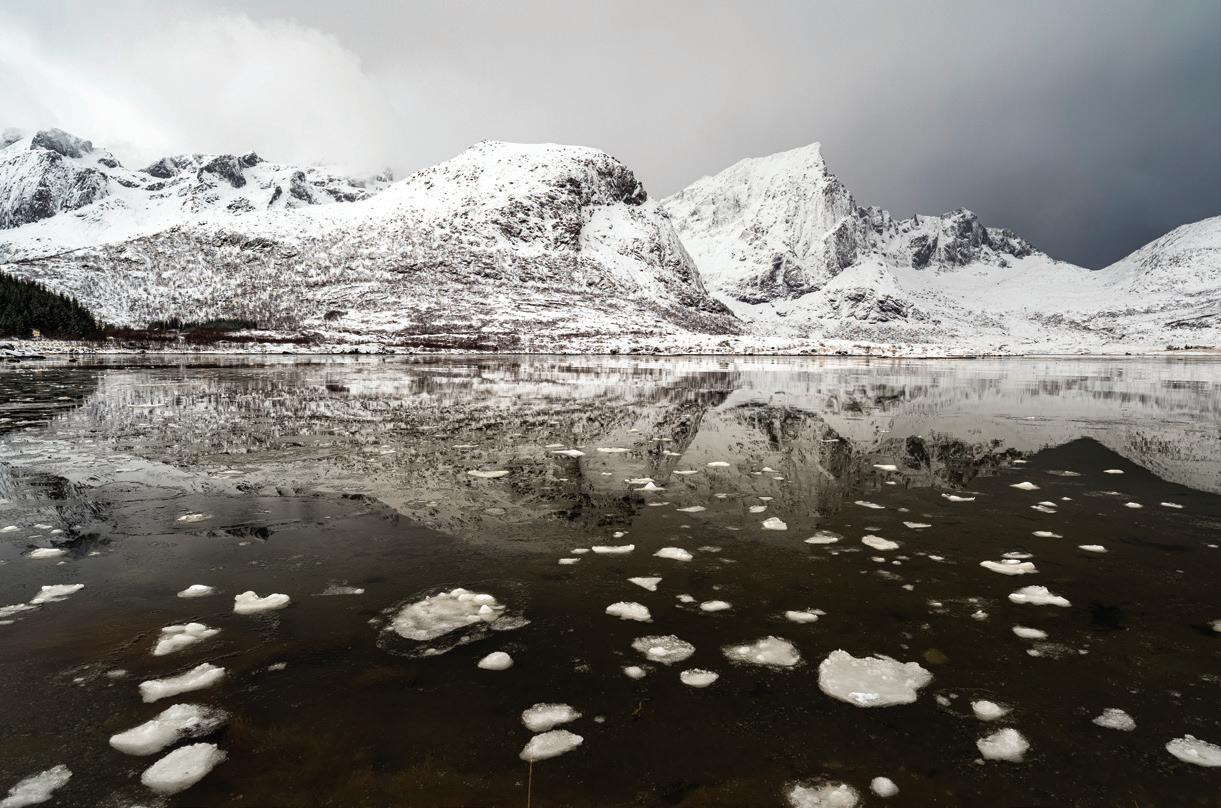
After a few days we moved on to Hamnoy (#6) where we stayed in charming and cozy wooden cabins, cooking for ourselves and driving out to nearby locations. The water at Kilan (#3) beach is crystal clear. In the afternoon, after a long hike out along the beach, tripod and cameras in hand, just before sunset, the light is low and the reflections of the craggy black mountains resonate in a turquoise aquamarine fjord. A quarter of a mile and 15 minutes drive away a perfect mirror is created by a nearly black lake (#4); floating bits of ice create an impressionistic foreground.
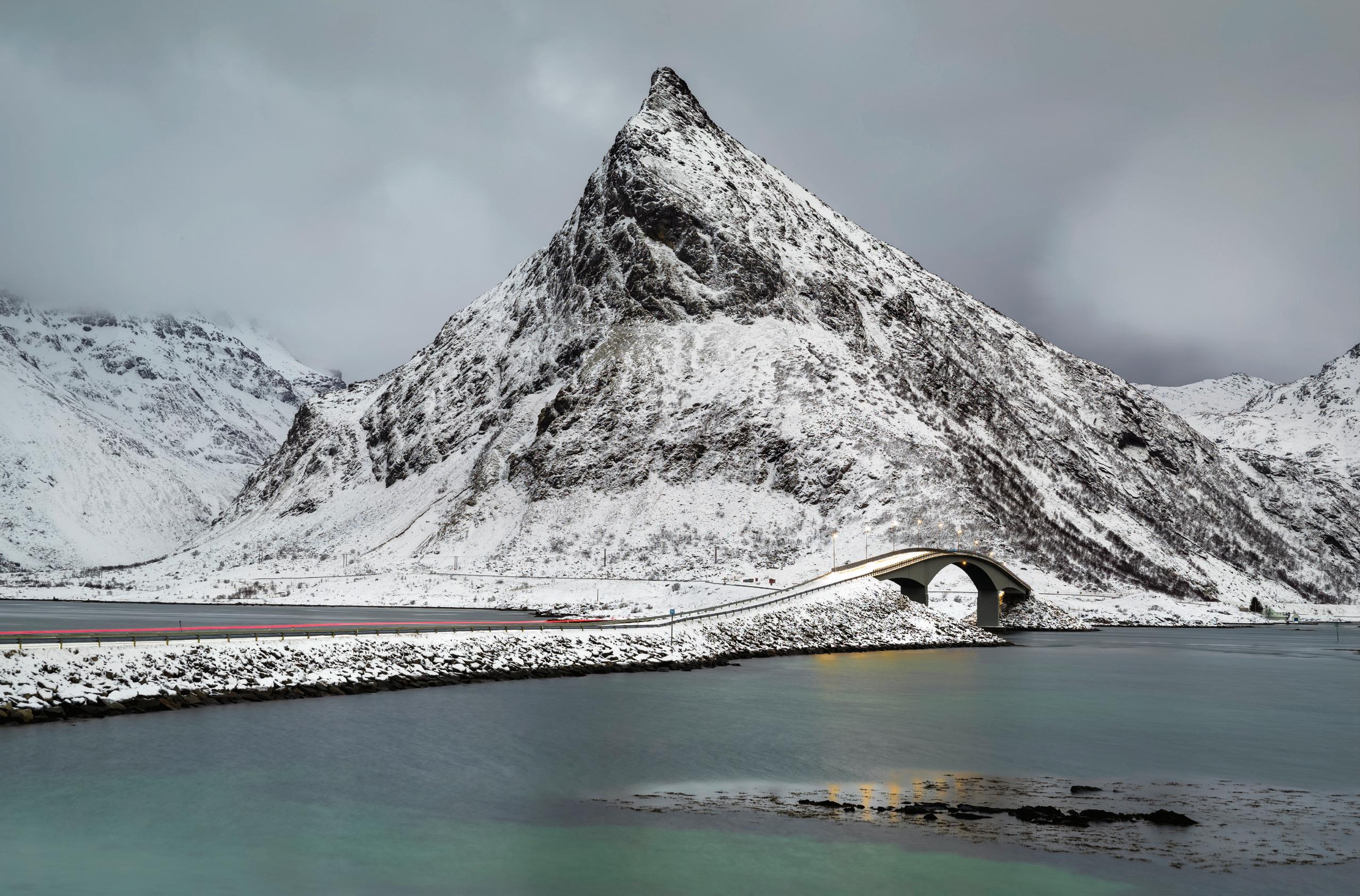
The bridge at Fredvang (#5) curves along the base of the peak. As evening comes the sky takes on a soft grey, the long exposure photograph smoothes out the movement of the clouds resulting in an even more gentle background for the imposing triangular pinnacle.
Hamnoy (#6) is the oldest fishing village in Lofoten. Classic red wood cabins nestle together, perched along the edge of island. Long exposure photography here brings a
4. Kilan, Lofoten Islands, Norway.
Leica S (Typ 007) & Super-Elmar-S 24 mm f/3.5 ASPH at f/6.8, ¼ sec, ISO 400.
5. Bridge at Fredvang, Lofoten Islands, Norway.
Leica S (Typ 007) & Vario-Elmar-S 30-90 mm f/3.5–5.6 ASPH at 62mm, f/8, 12 sec, ISO 200.
sense of serenity to the turbulence of the waves and the clouds. After sunset the town of Sakrisoy encircling the Vestfjord looked at first like a deep dark sky with just a few glimmering lights in the bay (#7). However an ultra-long exposure brought out the hunter green hues of the aurora borealis, invisible to our human eyes but exquisitely captured on the Leica sensor.
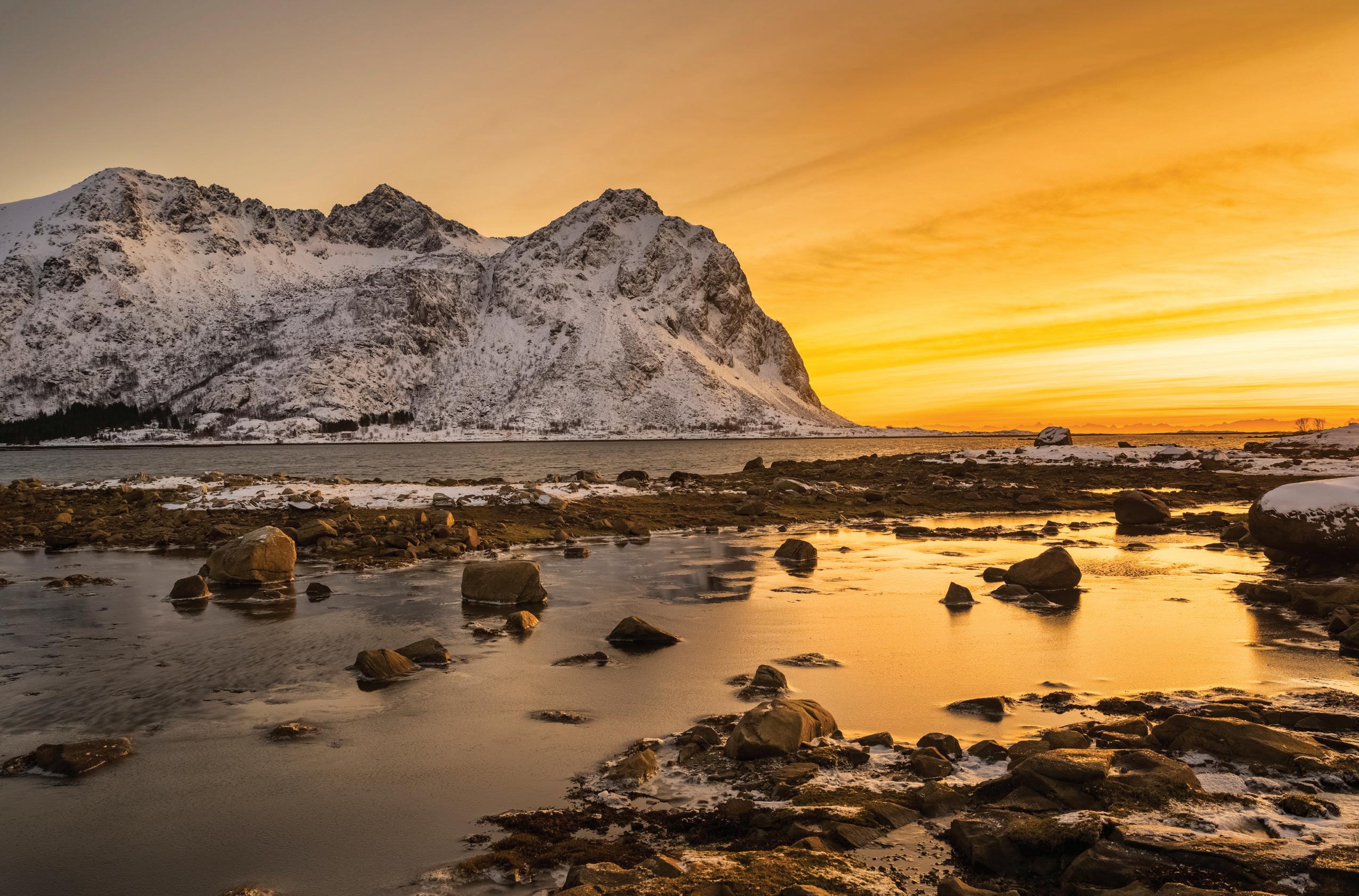
On our last morning we trekked out to the frozen lake at Valberg for sunrise (#8). For this one shot the golden glow of the peaking sun did not call for long exposure photography. The stillness of the moment and the majesty of the place caused us to pause, a slower breath, a quieter heartbeat, an inner reflection.
The far north in the deep winter is a mysterious experience. The light is fleeting, the are mountains immovable but the water and skies are in constant motion. Long-exposures are a most valuable tool when used selectively and creatively to memorialize the allure of Norwayʼs Lofoten islands.
mm, f/8, 1/125 sec, ISO
7. Sakrisoy & the Vestfjord, Lofoten Islands, Norway. Leica S (Typ 007) & Super-Elmar-S 24 mm f/3.5 ASPH at f/22, 90 sec, ISO 200.
8. Valberg, Lofoten Islands, Norway. Leica S (Typ 007) & Vario-Elmar-S 30-90 mm f/3.5–5.6 ASPH at 36
400.
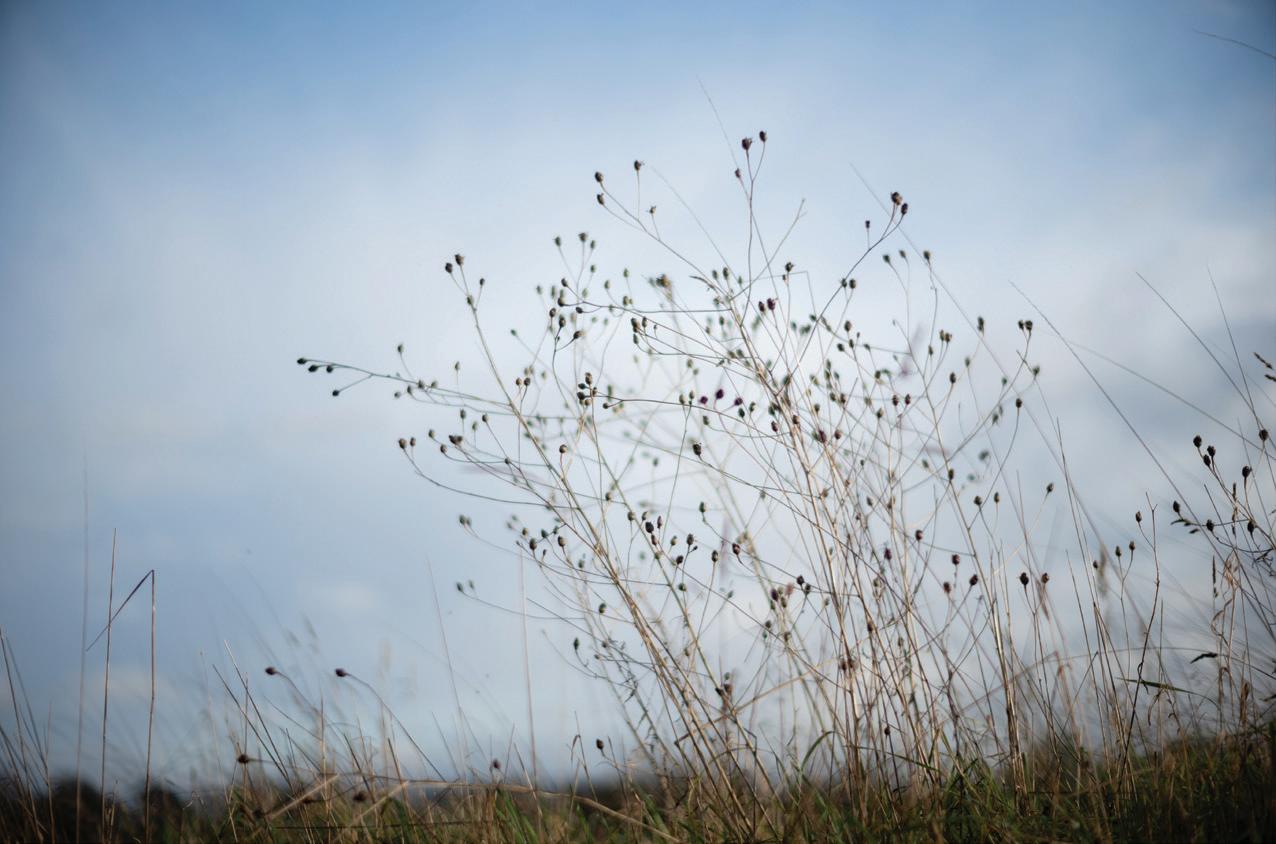
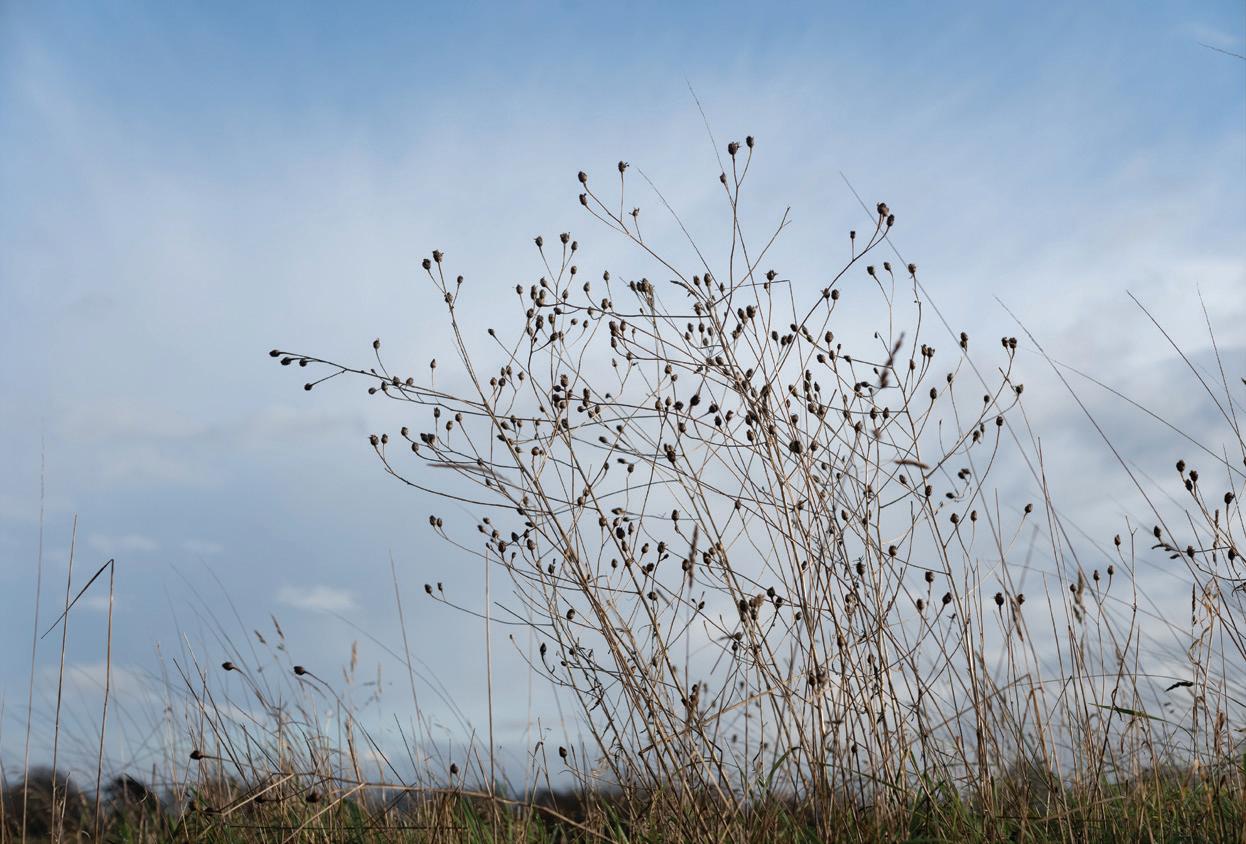
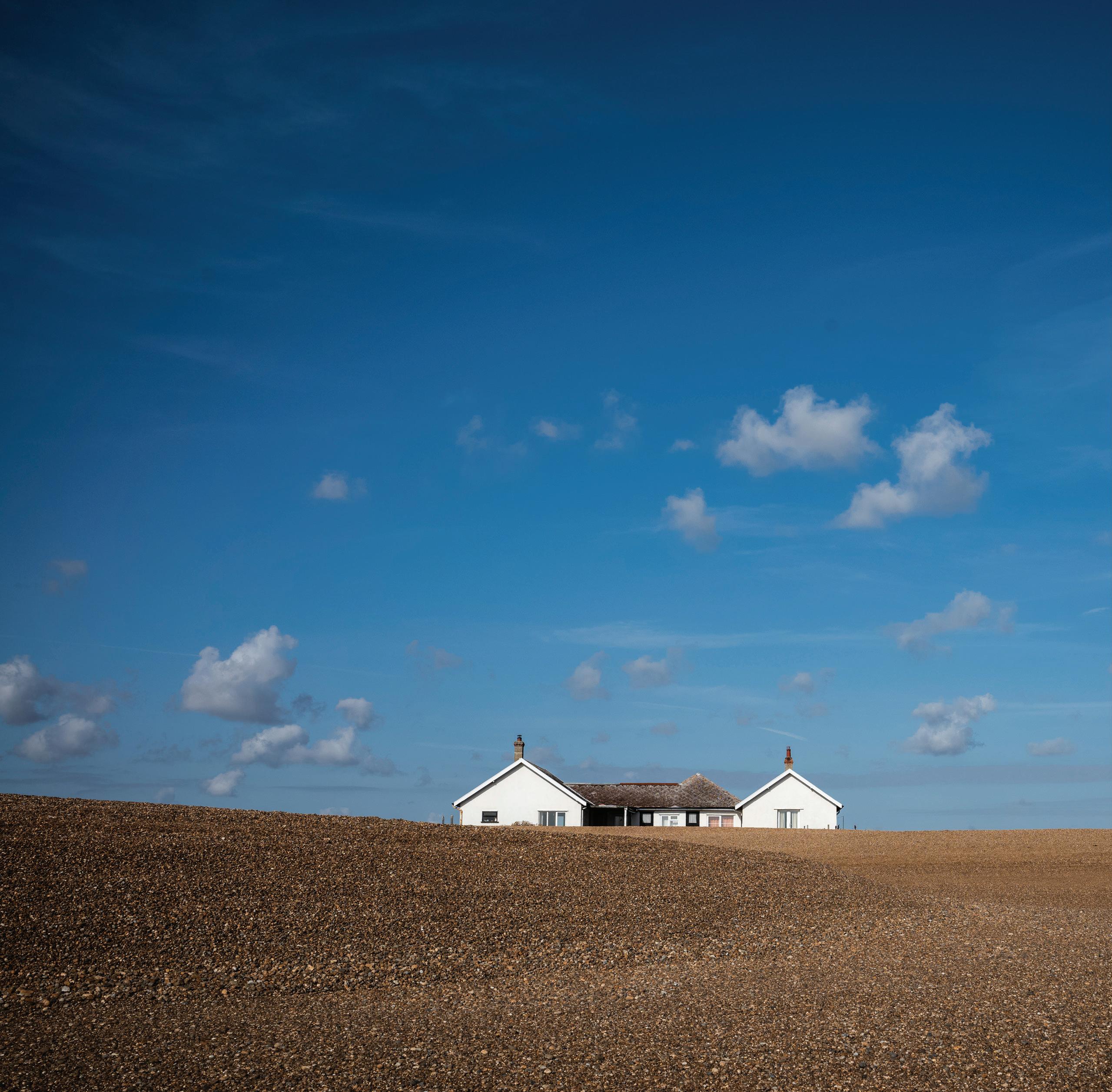
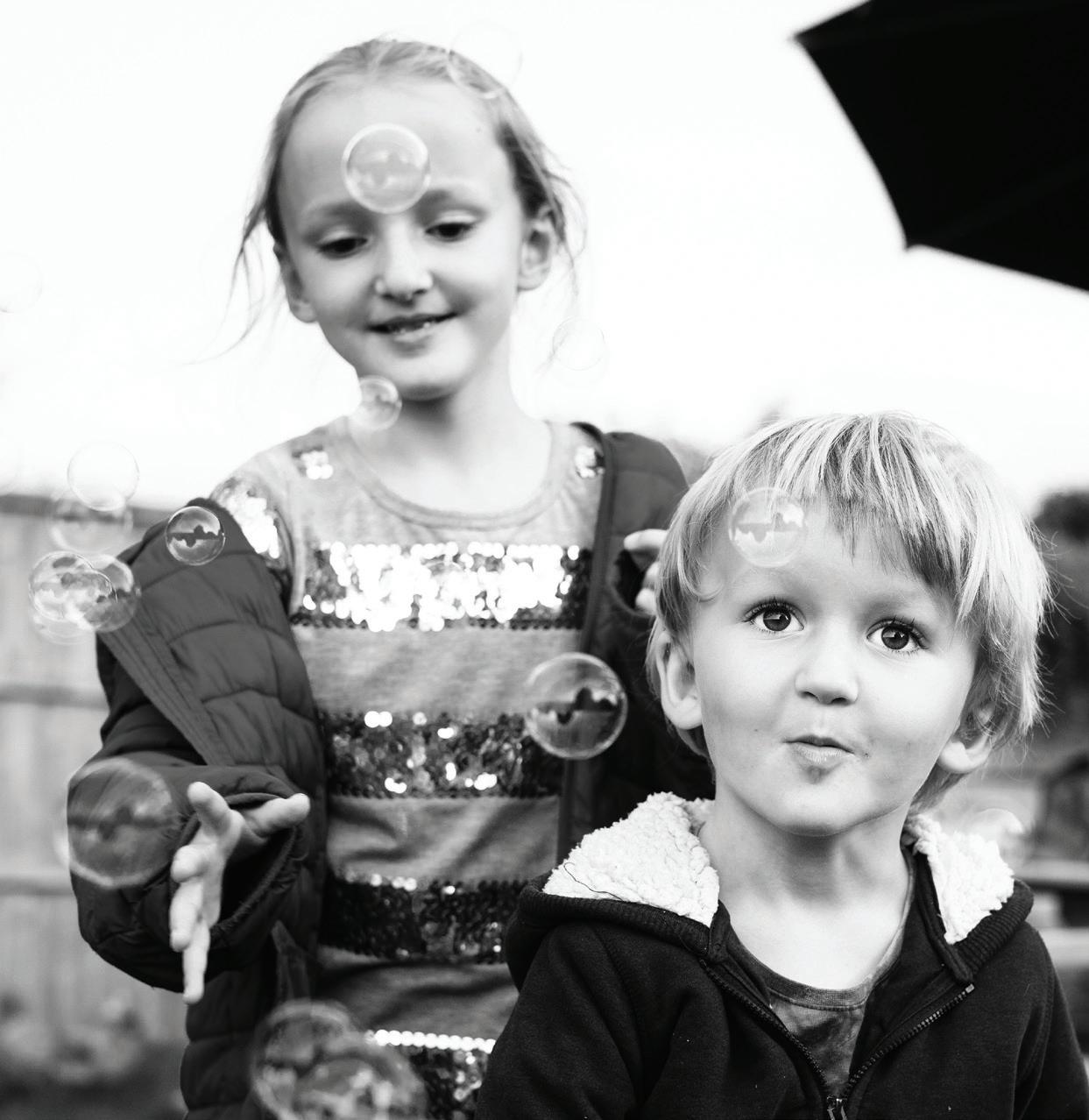
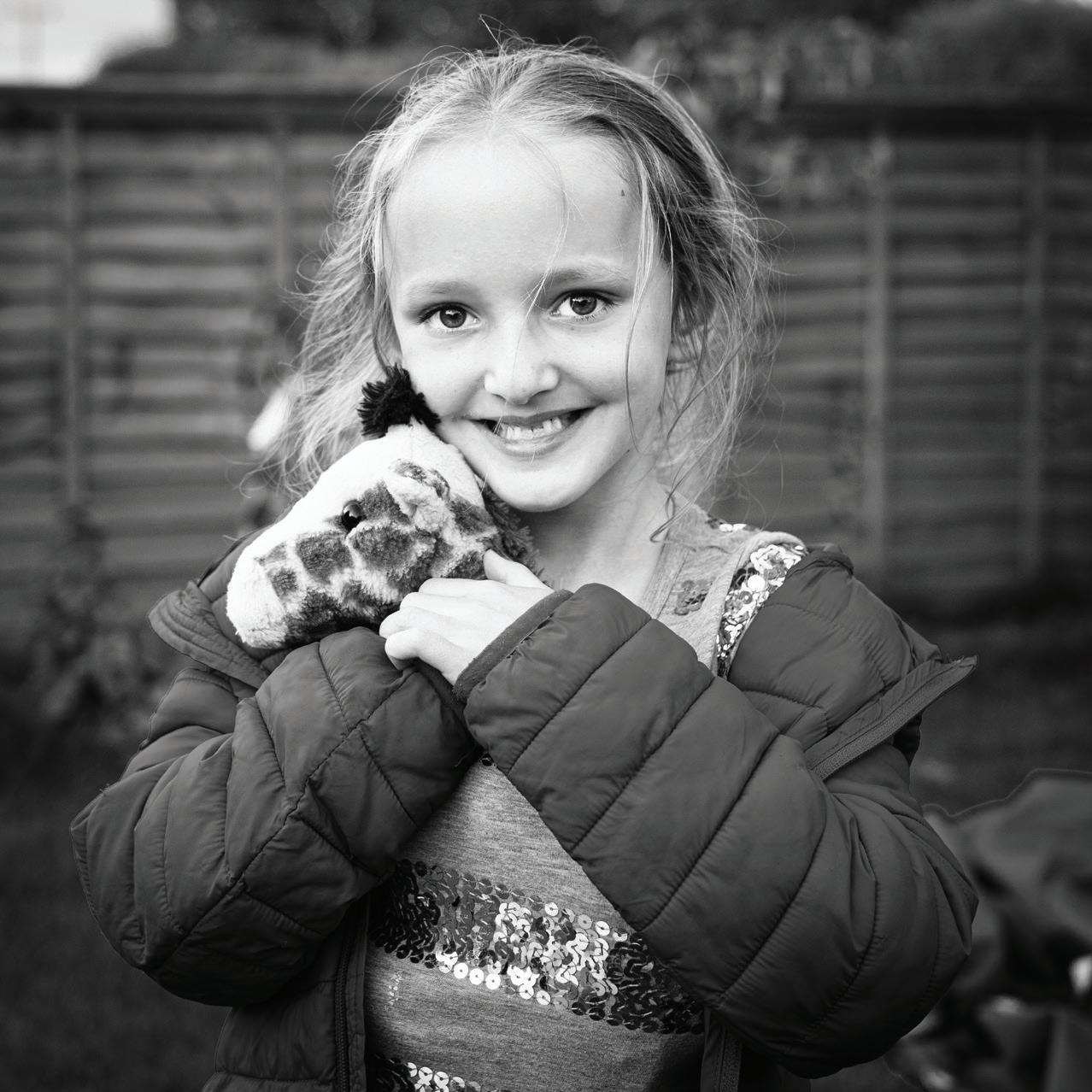
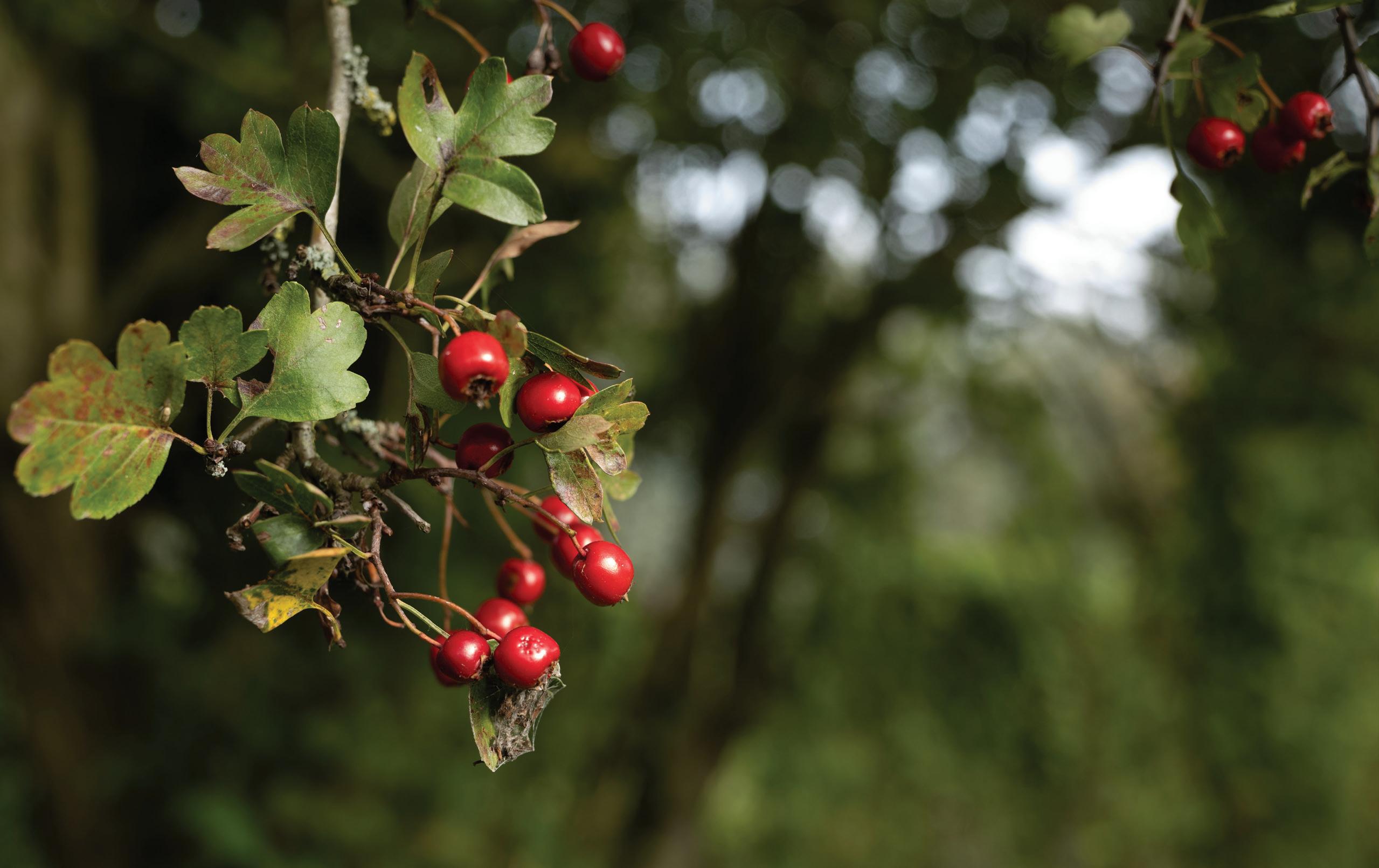
"Shingle Street" - Leica M10-R, 1/750, f/5.6, ISO 100
APO-SUMMICRON-M 35MM F/2 ASPH
by JONATHAN SLACK
About 10 or 11 years ago I went to Solms for a visit. I was a little early, and when I arrived the receptionist told me that Jesko was in a meeting and would be a bit late, and asked if would I like to fill up the time playing with this lens. Of course.
The lens was a 50 Summicron, and there had been rumours of a replacement, so I took it at face value. I wandered around outside taking a few shots, and then sat down and put them on my computer. I'm not sure that my jaw actually dropped, but I was certainly gobsmacked. The images had a real clarity with wonderful bokeh - they just pinged out at me.
Of course, this was my first sight of the 50mm APO-SummicronM, and to give myself credit, I immediately realised how special it was, even when expecting something 'standard'.
Before that my only experience of APO lenses was the 75mm APO-Summicron-M, which was already a firm favourite of mine. That lens also combines creamy bokeh with real precise sharpness. Every time I see someone use the word 'sterile' in conjunction with this lovely lens it hurts afresh!
Since that day we have seen a whole range of APO-Summicrons for the L mount, and these also have been characterised by this combination of wonderful bokeh and stunning sharpness. Absolutely the opposite of 'sterile', these lenses produce a consistent and lovely look, not harsh at all, just right.
Now we have the fifth Apochromatic M lens (after the 90, 75 and 50 APO-Summicron-M lenses and the 135mm APO-Telyt). The Apo-Summicron-M 35mm f/2 ASPH. I had the lens for a month from September last year. A though looking at the first shots wasn't quite such an epiphany (I was expecting to be blown away.) , it was still a revelatory experience!
"IMAGE QUALITY IS NOTHING SHORT OF MAGICAL."
(above) Leica M10-R, 1/1500, f/2, ISO 100
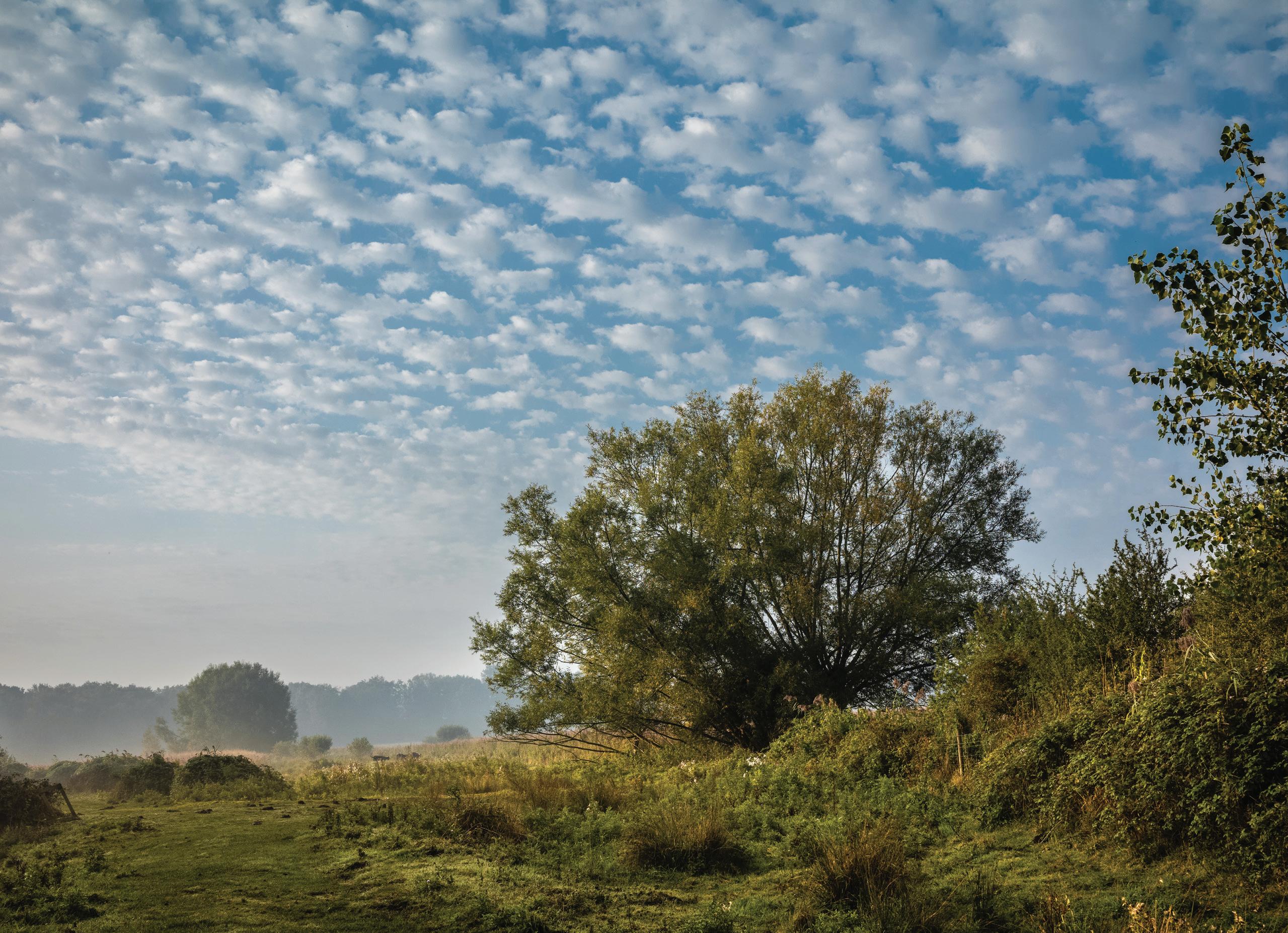
(top) "Fen Morning" - Leica M10-R, 1/350, f/8, ISO 100.
(bottom left) Leica M10-R, 1/500, f/2.8, ISO 100
(bottom right) Leica M10-R, 1/1000, f/2, ISO 100
APOCHROMATIC CORRECTION • This is the term used to describe the reduction of colour aberrations in lenses. It requires special glass and is necessary if you want to produce the very best MTF figures.
For many years Leitz had their own glass production facility, and it was here that early glass materials to minimise colour aberrations were developed. Walter Mandler used these in the development of the early APO lenses.
The 180mm APO-Summicron-R was the first APO lens developed for the consumer market and was introduced in 1994. The intention was to get the best possible performance wide open, implementing APO technology to achieve this. This lens has become a legend, and now changes hands for £7,000 to £8,000 in good condition.
During the 90's Leica made a number of other APO R-System lenses including the 180mm Elmarit-R f/2.8, the 280mm APO-Telyt-R f/4, and the 400mm and 560mm APO-Telyt-R modules. These APO glass elements are not easy to handle during production and during this period Leica became experienced in implementing the technology.
The first APO lens for the M system was the 90mm APOSummicron-M ASPH, released in 1998. Here they combined apochromatic correction in combination with newly developed aspherical surface polishing processes. The 75mm APO-Summicron-M f/2 ASPH was released in 2005, and in addition to APO and aspherical technologies, it included a floating element, just like its brother lens the 50mm Summilux-M ASPH.
The fourth APO M-System lens was the 50mm APOSummicron-M f/2 ASPH, and this is the lens I referred to in my introduction. Thorsten Overgaard in his lens compendium refers to it as 'The World's Best 50mm'. I think that was almost certainly true on its release in 2012.
Since then Leica have mostly been concentrating on the APO-Summicron-SL range for the L-Mount. At the time of writing, 5 lenses are available: 90, 75, 50, 35 and 28mm. The 24 and 21mm lenses are scheduled to appear during the next year or so.
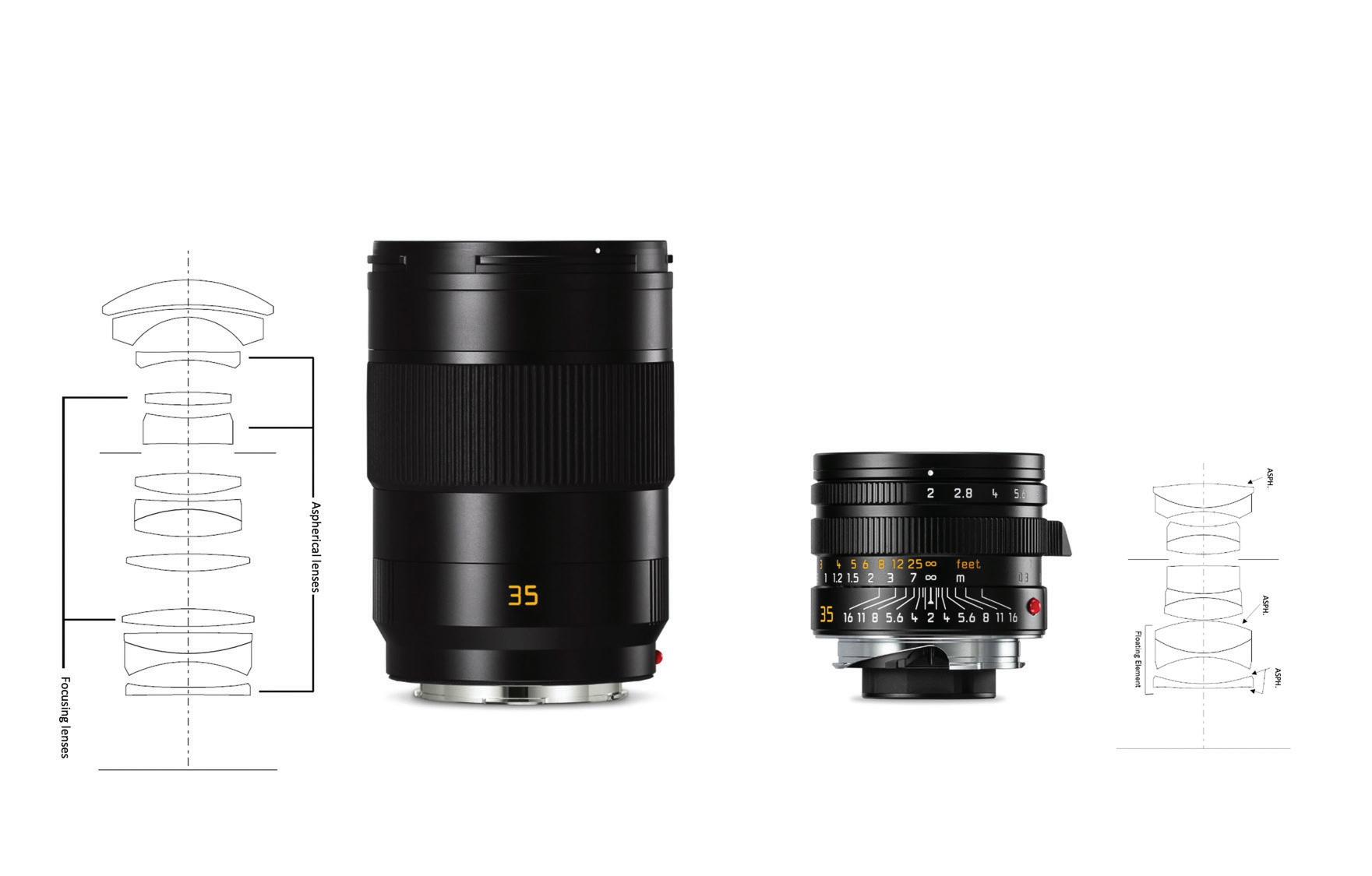
APO-SUMMICRON-M 1:2/35 ASPH • Leica have pulled out all the stops with this lens. There are 10 elements consisting of:
• 3 Aspherical lens elements (with 4 aspherical surfaces)
• 6 elements using Apochromatic glass
• 3 elements made of glass with a high refractive index.
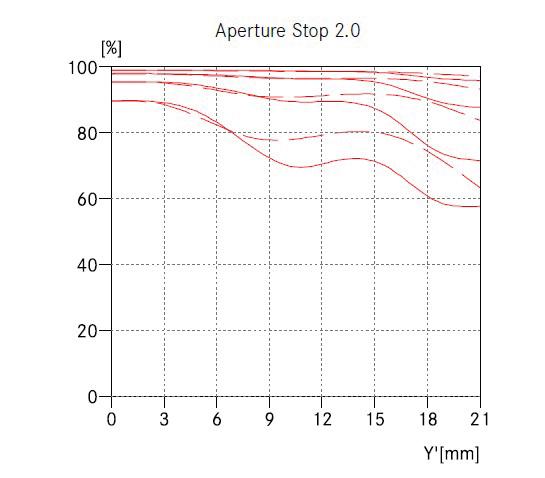
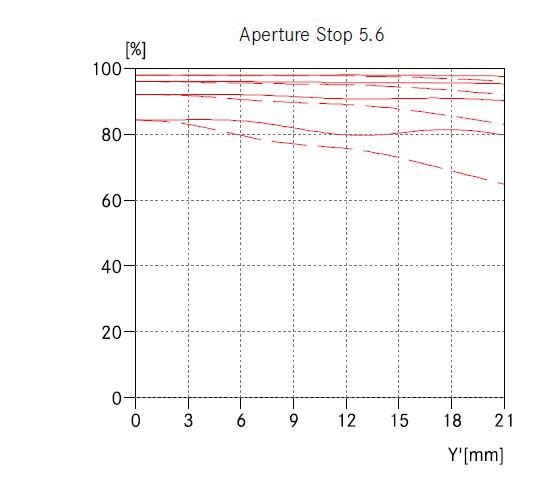
MTF Curves for the 35mm APO-Summicron-M f/2 ASPH at f/2 (left) and f/5.6 (right).
(left) M10-R, 1/350, f/2, ISO 100 (right) M10-R, 1/125, f/2, ISO 100
Construction comparison between the 35 APO-M and 35 APO-SL.
In addition, they have developed a new focusing mount capable of focusing down to 0.3m. From 0.7m to infinity is rangefinder coupled with a similar throw as other classical 35mm M lenses. From 0.7 to 0.3 metres you will need to use live view or the EVF for focusing (or an SL camera).
Remarkably the MTF figures for this lens are almost as good as those for the much larger 35mm APO-Summicron-SL, which, Peter Karbe feels, is the best 35mm lens available on the market today.
The lens diameter at 53mm is the same as the 50 APO. Without the screw in lens hood the length is 40.9mm as opposed to the 50 at 47mm; with the lens hood attached it's 49mm. It weighs 305gm as opposed to the 300gm of the APO 50, so, to all intents and purposes, it's the same size as 50mm.
HANDLING • Like its sibling, the 35 is just a perfect match for an M camera. It's small and relatively light and beautifully made and finished. It has a finger tab, but unlike the 50, it has a screw in lens hood, which is shorter than the one on the standard 35mm Summicron-M ASPH , more like the lens hoods on the late lamented Summarit lenses, or indeed the Leica Q.
The close focus is really useful, and if you don't have an EVF with you, it's easy enough to focus using the LCD. On an L-Mount camera, it's even simpler. I think perhaps I would have liked to have a slightly more positive step when focusing closer than the coupled rangefinder, but this is really nitpicking (and it might have changed on the production lens).
IMAGE QUALITY • Image quality is nothing short of magical. From f/2 and also stopped down, it's consistent and without obvious flaws beyond a little vignetting. It's sharp right to the corners with hardly any fall off, even at f/2.
As is the case with other recent APO lenses, the transition between the ultra high definition in focus to creamy bokeh out of focus area is gentle and swift.
Most of my test shots were with the Leica M10-R (and all the ones in the gallery). There is no question that the 35 APO resolves well enough for the 40 mp sensor (and the 48 mp of the SL2). I would imagine it is future-proofed against higher resolution sensors in M and L mount cameras to come.
"IT IS A LOVELY OBJECT, LIKE A BEAUTIFULLY MADE WRIST WATCH, PERFECT IN FORM & FUNCTION."
CONCLUSION • Just like the 50mm APO-Summicron-M, the 35mm is an expensive lens. This is because the glass is expensive and hard to make, the production is problematic and the tolerances are very tight. Making such a small lens of such good quality is not simple. Hence the cost. On the other hand, it is a lovely object, like a beautifully made wrist watch, perfect in form and function.
I've been lucky enough to have had several discussions and some email correspondence with Peter Karbe about both the M and SL APO-Summicrons. I think that giving up the bragging rights of wide apertures in order to make the very best quality lenses is admirable. It has the added advantage of keeping the size down.
Leica has applied this philosophy over 15 years to produce five SL and four M APO-Summicrons, lenses which are consistent in performance and 'look' - a real asset for the serious photographer.
There is a feeling amongst many photographers that modern lenses don't have a 'soul' like vintage glass; that they all look the same. I would really dispute that, and I think that these in particular have a lovely look and feel about them, quite unlike any other lenses I have used.
Developing and manufacturing this 35mm lens also shows Leica's serious intentions for the M system going forwards. Perhaps this isn't a surprise, but it's nice to have it confirmed.
This is a significant lens announcement for Leica, but more than that it's a lovely lens of peerless quality. Something to be used as a standard lens by the discerning photographer for years to come.
Acknowledgement • First of all to Emma, who continues to cook delicious meals and humour me whilst I'm hunched over my computer at the other end of the kitchen (or left behind on dog walks crouched over a bent stick!).
Special thanks to Peter Karbe who has been incredibly kind with his time and technical input with respect to Apochromatic technology and its history with Leica.
Stefan Janssen has also been really helpful, responsive and forthcoming with information (and lenses!).
Thanks also to Stefan Daniel and Jesko von Oeynhausen at Leica, always helpful and fun to deal with.
first Leica was an M2 that I inherited from my uncle. He was a very cool uncle, and we always had a special relationship. After his passing, that specialness was manifested when I learned that he had willed me his Leica collection: an M2, two IIIf’s, and a range of lenses and accessories.
Manna from heaven. Photography has been one of my greatest passions ever since I was fifteen and asked to borrow my dad’s Argus C3 that was hanging, unused, in his closet. Over the years I was aware of the Leica luster…but I never thought I would ever be able to afford to dip my toe into that sacred water—the Ganges of photography. Well, now I did not just have a Leica—I had an entire Leica system!
I have to admit, when I got the first prints back, I was disappointed. I expected better. But then, I was comparing thirty ...forty...fifty year old equipment (and not the best that Leica produced in those years) with my newest Nikon gear. I began to study. And I learned what Leica has achieved and symbolized in its history. The place it has earned in the photo world. And who has shot with them. I was smitten and bitten by the Leica bug. Unfortunately, my mother was quite prescient when, in my early teens, she observed that I had “a champagne taste, but a beer pocketbook.” That observation has uncannily - and cruelly - described my fate ever since. As irony would have it, however, my mother’s passing enabled me to indulge my champagne taste, at least photographicallyand with Perrier Jouet!: the M10. The latest M! The holy grail of any Leica addict! And I had a full range of landmark M and R glass that would work beautifully with it. Heaven! And the M10 is heavenly. But somehow, as I pondered this new windfall in my life…I began to notice a shadow slowly creep across my horizon. Something not fulfilled. Something not quite right. As reality set in...painfully...I realized the problem: the M is primarily a street-shooting camera. Henri CartierBresson. Alfred Eisenstadt. While I was completely enamored with the entire Leica mystique and legend…I am just not a street shooter. I think about it, but it rarely happens. What I am is a landscape artist. I am happiest practicing contemplative photography: large format...under a focusing cloth... marveling at that huge, reversed, upside-down image...meter
and loupe hanging round my neck. Yes, I know: M’s can be excellent landscape cameras. But that is not what they were intended for. That was not their essence. And there were more suitable alternatives out there, and I owned one of them: a V5 5 x 7 Deardorff. Now that I was no longer shooting professionally, when was I going to use my M? Not very often. How could I therefore justify the enormous investment in my M system? What to do. What to do.
part ii
When the SL came out, I found it interesting, even impressive, but it did not appeal to me...until I read a lovely article on the SL as...a landscape camera. And so, my tortured journey took a new turn. After extensive research I sold my M10 and acquired not only a nearly unused SL, but also a 16-18-21 WATE, which I had read did wonderfully on the SL, and a 24-90mm ASPH, which was supposed to be incredible. I was fully aware of the “great complaint” about the SL...especially with the 24-90 on it: it is way too “big/heavy.” Yes, for an M user. But for a long time Nikon SLR user…it was not big at all: it was normal. I also am completely satisfied with Leica’s rationale: what is more important? Image quality? Or convenience? Certainly for a pro camera? For me, that has never been a debate. Shut up, suck it up, and schlep the weight (I have “schlepped” up to 60 lbs. of large format gear at times) And so I found myself with this glorious gear now in my hands.
"Proud
of its heritage, the SL can accept the challenge of nearly any photo assignment that the 21st century can throw at it, and handle it superbly..."
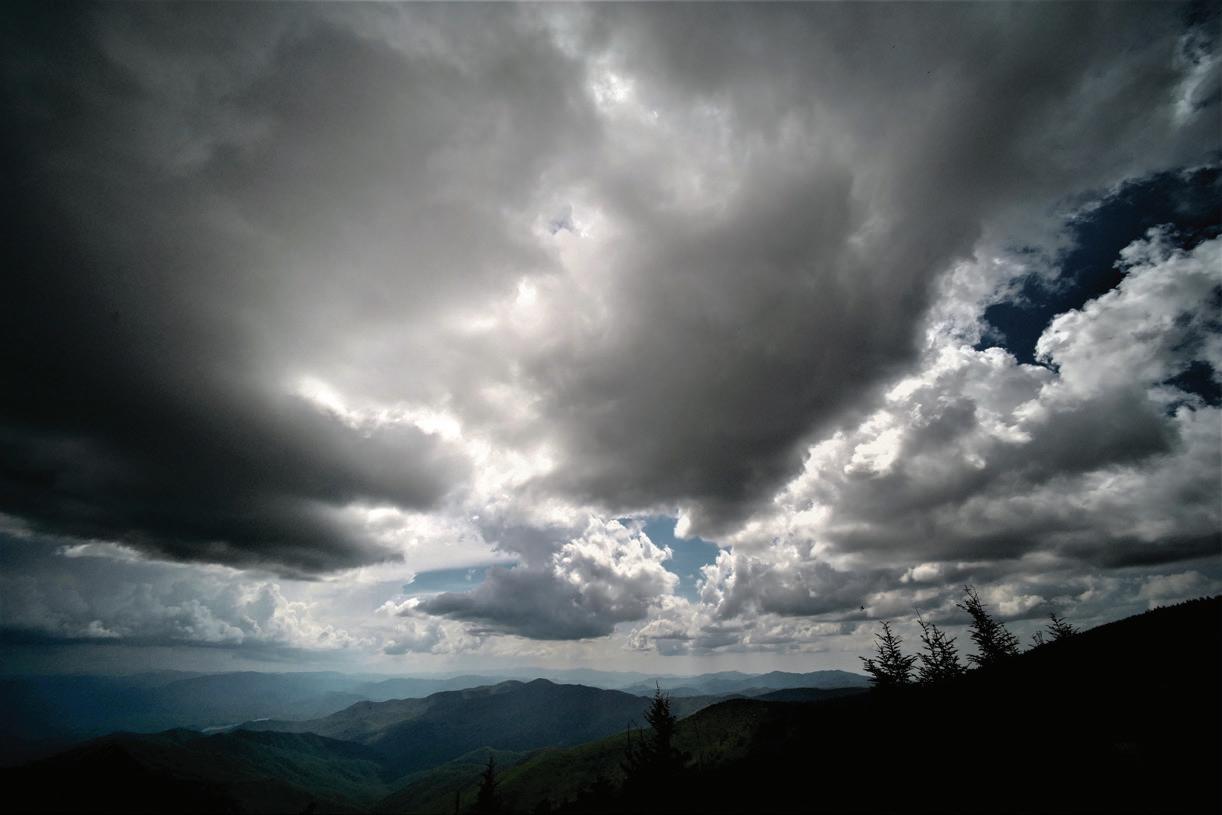
Shortly after purchase I began a long summer trip out to the American West. My first stop was the Smokies, in Tennessee. On my first morning I was now able to actually go out and shoot with my new beauty! What a relief from all the hours spent researching/pondering/eBaying/hand wringing about what photo gear I should have. I spent that first day with the SL/24-90 on Clingman’s Dome - the highest peak in the park. In the valley, it was hot and humid, but at 6000 ft+ elevation,
it was 77 degrees...perfect. The sky was overcast, filled with dark, puffy foreboding clouds, with occasional rain bursts (not a problem with the SL/24-90!) . As they scudded over the surrounding mountains it provided beautiful, dramatic scenery. I did not take more than fifty steps before I had to stop to take my first photograph. That is how it went all afternoon. I literally shot continuously for at least five hours, while hiking on that impressive peak. The SL was a sheer pleasure to use. A joy really. I was euphoric. Like any camera, it has a learning curve. Like every camera, it has its faults. Thanks to eBay, I have been able to own some of the finest cameras ever made (Nikon, Sony, Hasselblad, Deardorff, Linhof, Sinar...) I have loved all of them, including my M’s [as these words are being written a full M3 vintage display/shrine sits in a case nearby]. But when I held the SL in my hands, something happened. I have held many of the world’s greatest cameras before, but somehow, holding the SL was different. I am aware that there are comparable cameras with higher resolution. And as a landscape artist, having 36…or 47 mp (and now 60+!) would be really nice. But with good technique - and all my Leica glass (such as the 100mm APO Macro) - the SL is capable of producing 20 x 30 prints of very high quality, and if I need to go beyond that I have the ‘Dorff. And how often do any of us go beyond 20 x 30? Really? For MOST shots of ANY kind the SL/24-90 will cover it as well as it needs to be covered - better, in fact. We all know how the SL’s data compares to the a7rIV, the D850…and now the Panny S1r. But, if I have learned anything over the years, it is this: while important, the “data” really only tells so much that is useful. It is crucial for telling you how well a camera may meet your needs. But how about how you FEEL when you pick up a camera? When you look through its viewfinder? When you hear the shutter? When you see/feel/hear the quality of the materials used and the precision with which they have been designed and assembled? When you notice ingenious and distinctive details of design? When you know the legacy of the lenses that will work with this camera? And when you know the history, the priorities and the legacy of the company that made them? THAT data never seems to show up in (most of) the reviews. But for me, it is at least as important as any other data that can be generated about a camera. Does this camera INSPIRE me?! Does it CHALLENGE me?! Does it make me think: “Ok, you have somehow managed to afford this thing, but are you capable of wringing out its full potential? Are you as good as it is?” How many cameras do THAT? Why isn’t THAT in the reviews? That seems to me to be at least as important as any other data that is provided, if not more so. In that regard, the SL is as good as anything I have ever owned. Better, actually. And because it is an excellent platform for the landmark Leica glass, both M and R, that I have managed to acquire over the years, that rings the bell for me. More than that, with the 24-90 ASPH mounted on it, somehow I feel that I can take on nearly ANY photo situation. In fact, I feel like I can take
on the WORLD. Bring it! Somehow I feel a confidence that even the sacred M does not give me. This camera is made with clear awareness of the (glorious) past…but equally of the digital present. Proud of its heritage, the SL can accept the challenge of nearly any photo assignment that the 21st century can throw at it, and handle it superbly...taking almost any kind of abuse in the process. Almost.
part iii
And so, with that kind of SL euphoria, I continued my journey. Eventually I arrived in Santa Fe, NM, where I went on a retreat and where the SL and I were definitely bonded. It was now a part of me. I did not need the euphoria. I just needed it in my hands to feel complete.
"...the SL and I were definitely bonded. It was now a part of me. I did not need the euphoria. I just needed it in my hands to feel complete."
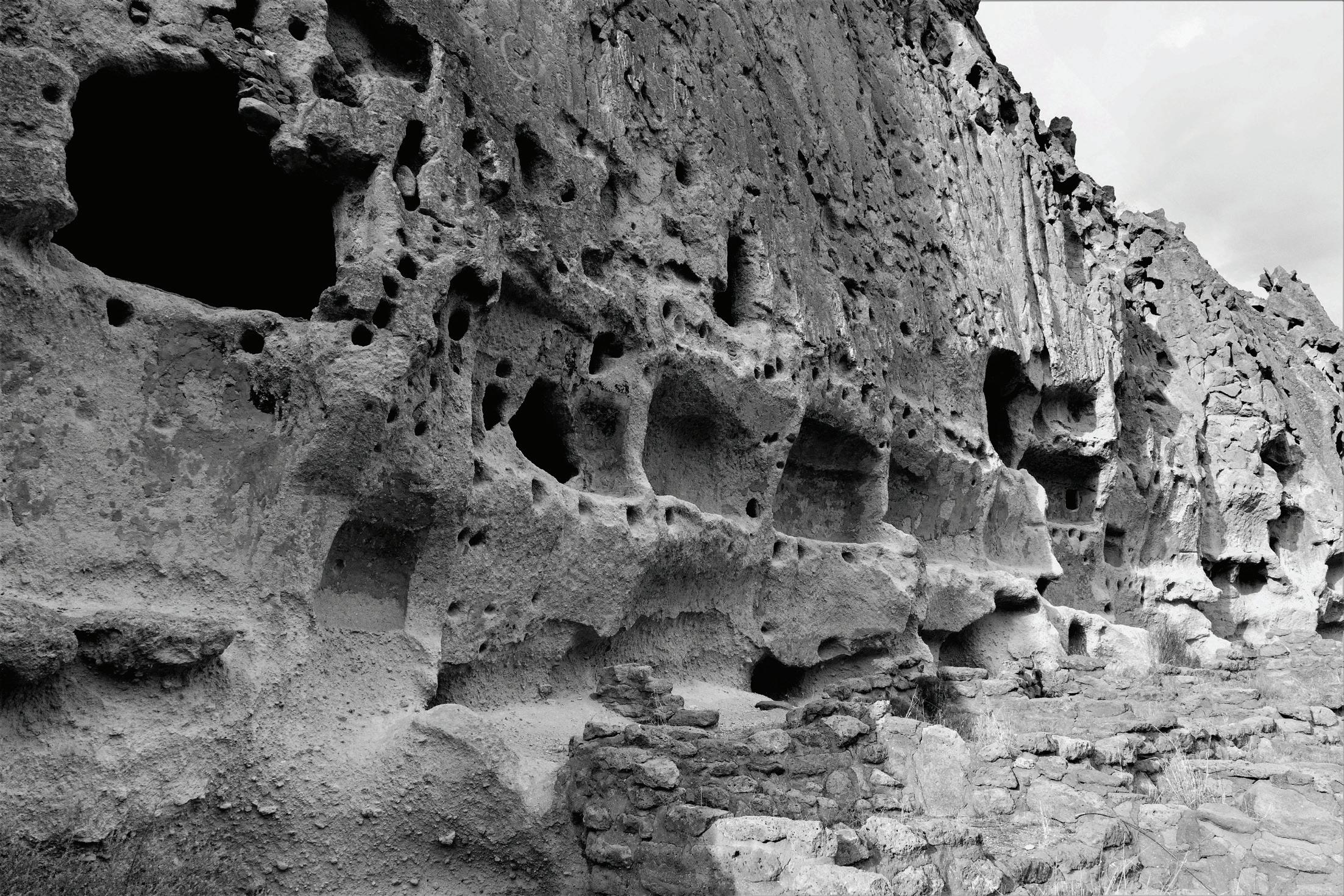
After the retreat, one of my best friends flew out to Santa Fe to join me. He had never seen the area and thought it would be fun to hang out there. It was fun. In fact, it was a blast. We took in a number of the sights in the city. Loved the Georgia O’Keeffe museum. Had some superb meals, and had a good number of beers. At one wonderful restaurant - where I had the best burrito by far in my life - they served a margarita with a special tequila, served in its own carafe. It provided, shall we say, its own kind of euphoria. One day, we headed out to Bandelier National Park to see the adobe ruins there. It provided my friend and I with a wonderful day of hiking up a beautiful, almost Brigadoon-like canyon, where there were great rock formations and many adobe ruins. Lots of photo ops. At day’s end, we got back to my car. I put the SL on the roof as I unlocked the car, sat down and took my hiking boots off my tired feet, put on my Birkenstock’s, got into the driver’s seat…and drove away, feeling very content. Once back in Santa Fe, we parked and started walking to a highly recommended restaurant where we anticipated having another great meal, not to mention numerous cervezas. Before we got too far, however, I thought about the SL. Where was it? I did not want to leave it in the car, certainly not in a place where it was visible, so we walked back to the car and looked. And looked. And then looked again, this time frantic. This could NOT be happening. This could NOT happen to me. This could NOT happen to THAT camera. It was hopeless. THAT cameraand its incredible counterpart, the 24-90 ASPH - were gone.
I racked my brain: what could I have done with it? Where could it be? My addled mind was awash in a cauldron of overwhelming anxiety mixed with dread. This COULD NOT BE HAPPENING. THIS WAS TOO TERRIBLE TO HAPPEN.
That evening, my friend and I resolved to go back to the park first thing in the morning, when it opened, and see if we might be able to find it. So we did. And we looked - everywhere - for hours. My friend is as fine a friend as there are, so he actually looked quite a bit longer than I did. It was hopeless. It was gone. The only other thing I could think of to do was to report the loss to the ranger station and see if anything might come of that. Fat chance. The odds were miniscule. Too small to provide even a ray of hope. So, that was that. I spent the rest of the trip using my iphone, which actually worked quite well for what it is, but how could it - how could ANYTHING compare to the SL?
"...with the SL, Leica has produced one of the greatest cameras ever in its storied history."
After putting over four thousand miles on the car, I finally returned home. It had been a great trip - even with the loss of the SL. A few weeks later I was checking my email when I saw something from someone I did not know. Interested, I opened it up and saw that it was from the ranger station where I had left my contact information. It informed me that someone had brought in a camera that they found on the side of the road. They asked me to describe the camera. If I could do that accurately, they would contact the person who reported it and it would be returned to me. When I provided a description of the camera, the ranger responded: “that’s it.” For a moment, my mind went blank. Then a flash. Then the weight of a great sorrow had suddenly been lifted. A searing pain was healed. A grief let go. A very deeply bitter regret was mollified (somewhat: I was still the idiot who left THAT camera on my car roof) . I was redeemed! The sun was shining once again! My beloved SL! Of course, some questions remained: what kind of condition will it be in? Would it still function? If not, how many thousands of dollars would it take to restore it? Thankfully, beyond my anxiety, I also had this thought: what wonderful soul had turned that camera in? Even damaged it could still be worth thousands of dollars. I was overwhelmed with gladness, with gratitude, and with the pleasure of thinking that humanity can be a beautiful thing.
The person - do I dare say angel? - and I corresponded a bit, just to make arrangements. I offered to pay her a reward - the
very least I could do. She refused. She was just doing what anyone would have done, she said. Wow. I sent her a check to cover the cost of shipping and insurance - and at least a modest reward as thanks. And then, in a few days, there it was…in my hands again. A miracle. After being lost forever, here I was gazing on it with my eyes...a sight I never thought I would see again.
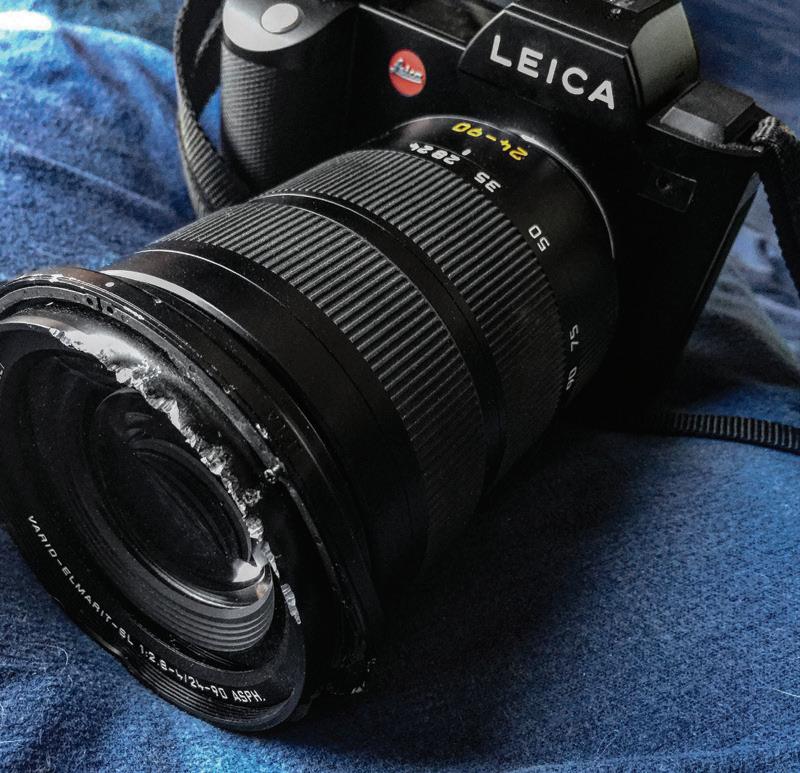
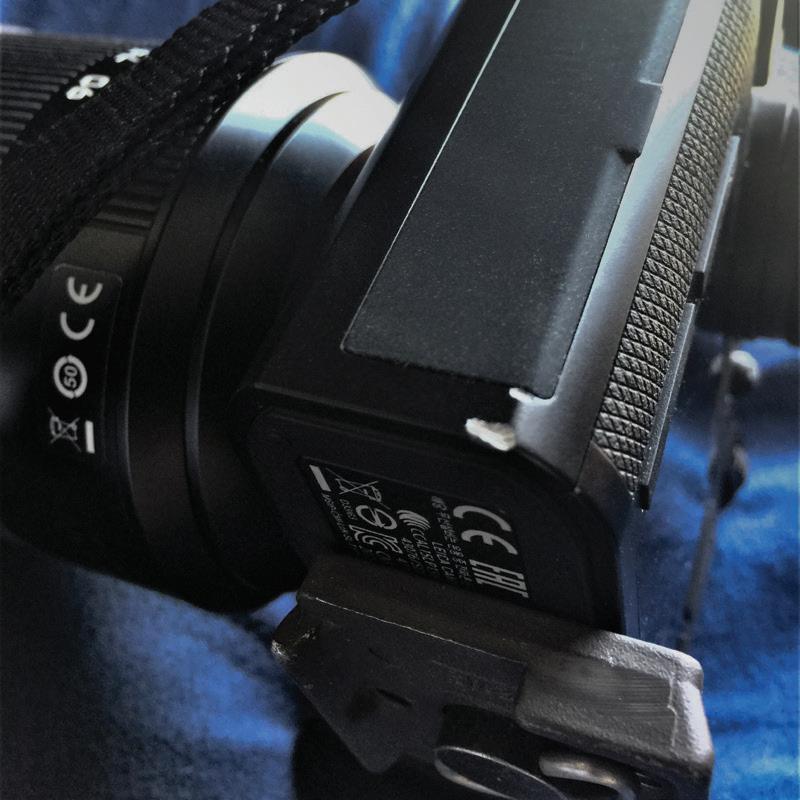
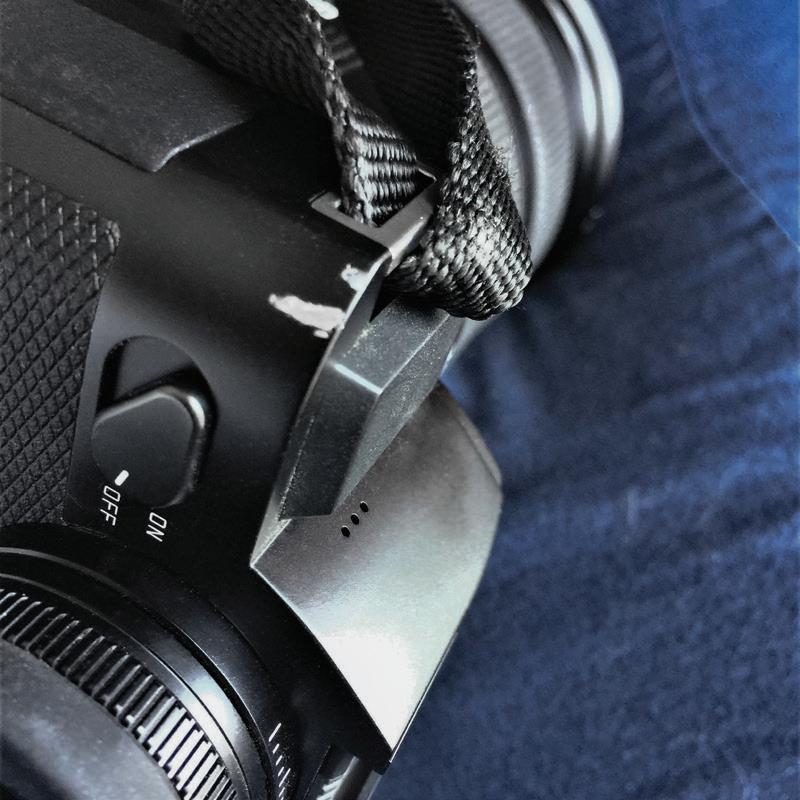
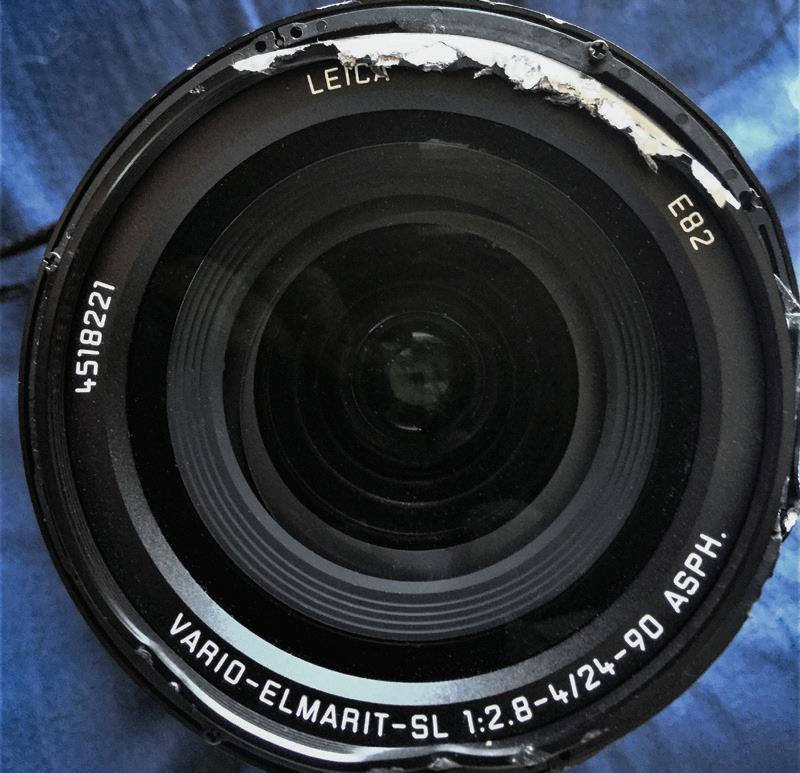
It was a sight alright - a sorry sight. The damage was clear. The lens would not zoom, though the glass was miraculously scratch free. There were heavy dings and nicks and scrapes on both the camera and the lens. It obviously would need to go out for repair…and how was I going to afford that? To my great and happy surprise, my insurance company agreed to pay for everything! I could not believe it! It was my fault! I was the idiot who left it - THAT camera - where I did. I did not deserve to get out of this disaster without paying a penny - but I did. I sent it off to Leica USA. The lens was irreparable, but Leica offered me a refurbished one instead. The body could be fully restored with no problem.
So after enough weeks passed, I had my SL back again in my grateful grip - with a beautiful, new-looking 24-90 ASPH. The SL was immaculate. I could not see a sign of what it had been through anywhere. It was perfect. So was the lens. All was well with the world once again. part iv
Two years later I still have the SL and we remain bonded. Last December I registered for a Leica Day at a Leica store in DC, near to where I work. The SL2 had just been released. I had to check it out. OK, I did not HAVE to, but how could I turn down a full afternoon and evening with fellow Leicaistas (I think I just made up a word) , with the full array of Leica gear available for me to check out, including the SL2? So I did. The SL2 is an extremely impressive camera. I was able to use it with the 90-280mm ASPH. With the new in-camera stabilization, it was not a problem at all to hand hold how many pounds of exquisite photo gear? I also played with the 50mm Noctilux. Magnifique!...and it was a lot smaller and lighter than I thought. Mmmmmm. And so it went. There were a number of pros there and one gave a pleasant Leicaproud presentation. There were hors d’oeuvres and wine. It was kind of like a Leica I-died-and-went-to-heaven experience. But did I leave that night craving the SL2? Nope. Not one bit. Yes, it is an extremely impressive piece. Yes, yes, yes, I know, I know…40+mp vs the SL’s 24! In-camera stabilization! Whatever. It is all very nice, but the SL still suits me best. For my personal high end art work, I use my Hasselblad V systemand the SL becomes a part of that when I need to go wider than my 38mm Biogon can take me. But for everything else, it is the SL. After that pleasant evening I read Sean Reid’s
review/comparison of the SL2, the Sony a7rIV and the SL. Yes, the SL2 and the a7rIV were both superior in the obvious ways to the SL. But, that said, the SL still stands up REALLY WELL, despite the age of its design. That was good enough for me. So, the SL remains - and it still feels differently than any other camera I have ever held. That includes an S2 which I was able recently to check out.
And so, there is the odyssey. Is my point to convince you M holdouts to switch to the SL? Not at all. If anything has been made clear over the years of buying and selling camera gear, there is no one camera that will do it all for every photographer. That is an ever-evanescent grail. My point instead is that with the SL, Leica has produced one of the greatest cameras ever in its storied history. If M owners (or Q or S or whatever) happen to read this and decide to take a look at the SL - fine. If not - also fine. We are all different, and our lives change, as mine has. We all have our personal preferences, passions and needs. If an SL might fulfill yours - definitely take a serious look (now that the SL2 is out SL prices have plummeted - as low as $2500! THAT’s a deal!) . If not, then, as a Leica lover... be proud of what Leica has achieved. It is very clearly thriving in the 21st century (after almost not surviving) . And that is something that should make all of us glad.
Charles Garrettson - Charlottesville, VA
"...as a Leica lover…be proud of what Leica has achieved. It is very clearly thriving in the 21st century (after almost not surviving). And that is something that should make all of us glad."
LEITZ AT PHOTOKINA 1966
by JIM LAGER
Photokina 1966 Leitz Wetzlar announced new products including the 50mm 1:1.2 Noctilux welcomed by available light specialists of the day. Evaluation of prototypes circa 1964-1966 suggested the Noctilux set new performance standards at the widest apertures. See page 235 of my Volume II-Lenses for prototypes 0000662 and 0000678.
Internationally recognized experts including G.W.CrawleyBritish Journal of Photography, Bob Schwalberg then at Leitz Wetzlar, and Bill Pierce - Popular Photography published their findings and concluded the Noctilux was an improvement over existing high speed lenses. Camera News of West Germany Volume 8, #2,1966 (Photokina coverage) commented the Noctilux features high image contrast and is completely free of internal reflections.
An internal E.Leitz, Inc. New York memo from October 1966 suggests first availability will be November/December 1966 in very limited quantities. Subsequent deliveries are scheduled for mid 1967. Noctilux catalog number 11820 appears in the December 1966 consumer price list at $678 when the Leica M3 body price was $288. E.Leitz, Inc. New York product catalog #40 June 1967 lists the Noctilux In July 1968 Leitz Wetzlar prepared an informative pamphlet 110-79 detailing Noctilux characteristics.
Was the Noctilux purchased by legions of Leica enthusiasts? Probably not as the Elmar, Summicron, and Summilux were sufficient. The Noctilux was expensive and availability was limited but if one absolutely required its capability Leitz Wetzlar offered specialists the supreme tool.