Inquries about membership, upcoming events, replacement Viewfinder issues, and special orders should be directed to:
Richard Rejino, LHSA Executive Director 14070 Proton Road, Dallas, TX 75244 info@lhsa.org, (972) 233-9107
Viewfinder is the official publication of the LHSA, The International Leica Society, a nonprofit organization incorporated in the state of Delaware. Copyright 2020. Reproduction or use of any material contained herein without permission of the Sociey if forbidden.
Leica is a registered trademark. It and other trademarks pertaining to the Leica System are the property of LEICA CAMERA, USA, INC.
ISSN 1543-8732
PRESIDENT Alan Weinschel Roslyn Heights, NY
VICE PRESIDENT
Keith R. Sbiral Chicago, IL
SECRETARY/TREASURER
David Knoble Charlotte, NC
IMMEDIATE PAST PRESIDENT
Gary Hough Woodinville, WA
PRESIDENT EMERITUS
James L. Lager
Rolf Fricke
Bill Rosauer
APPOINTED OFFICERS
Viewfinder Editor
Bill Rosauer Buffalo Grove, IL lhsaeditor@yahoo.com
Associate Viewfinder Editor
Ed Schwartzreich Waterbury, VT
alsace
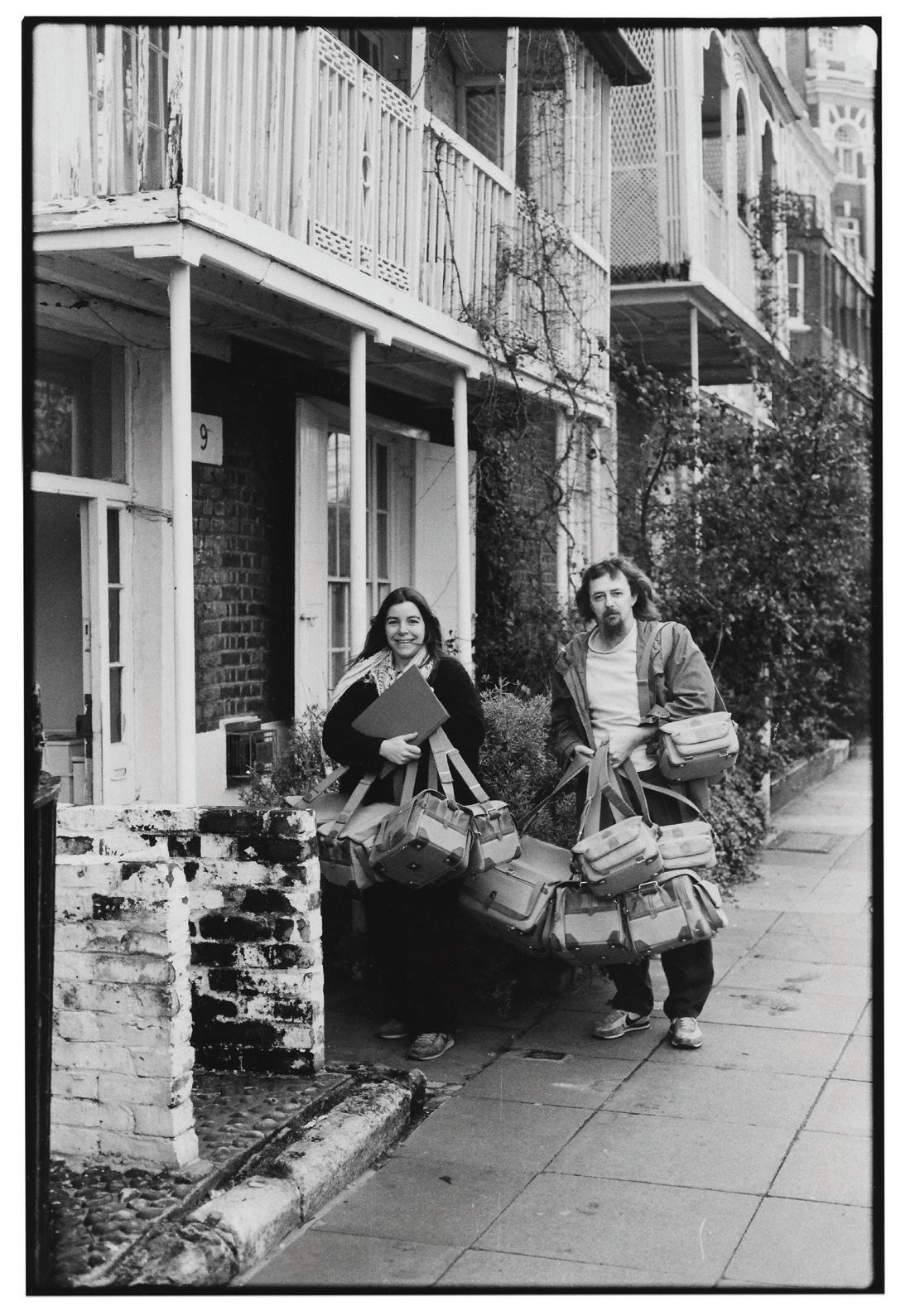
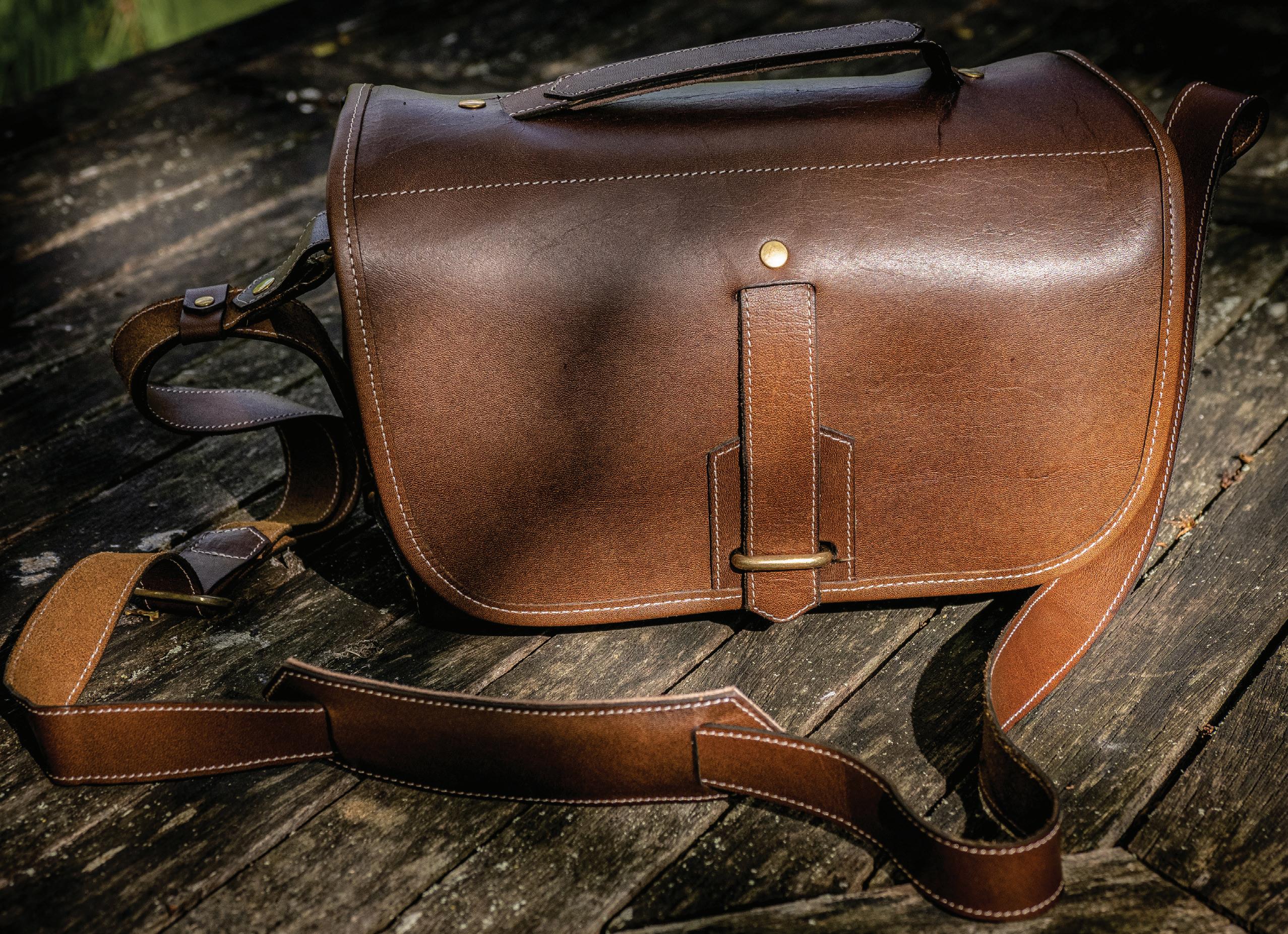
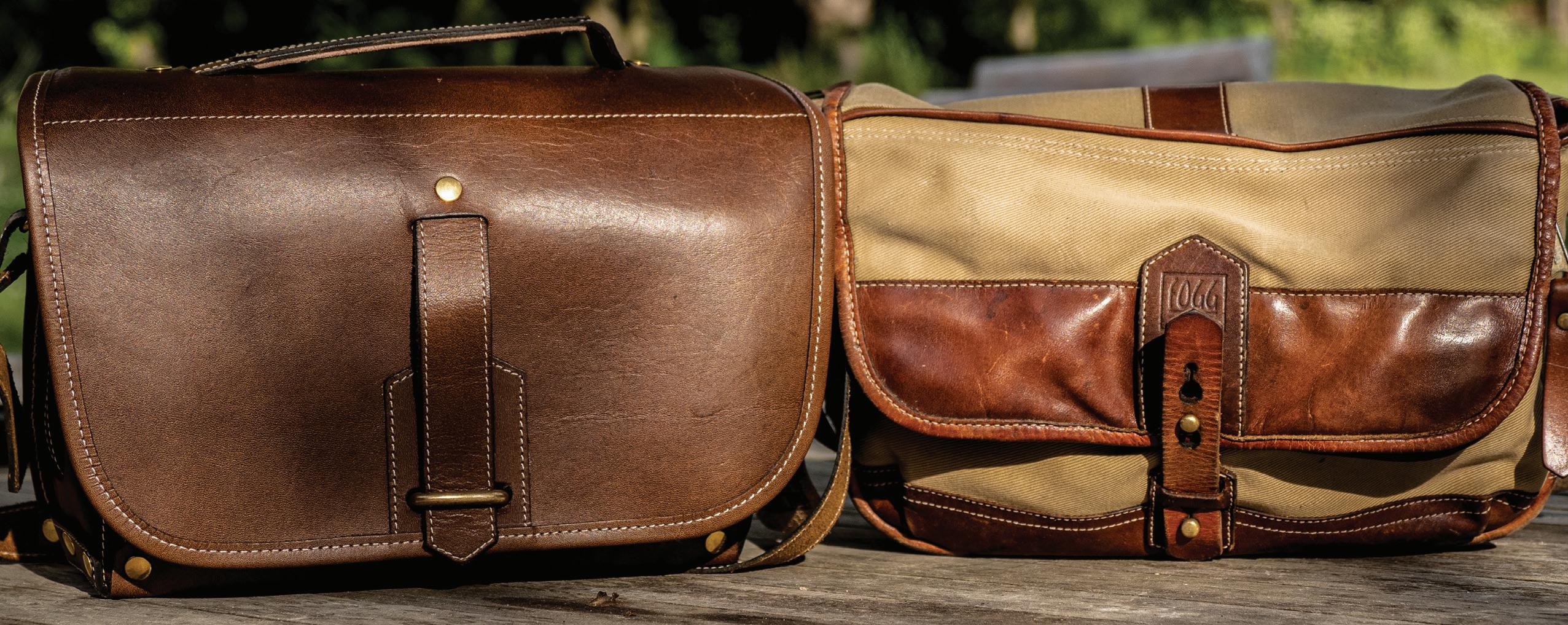
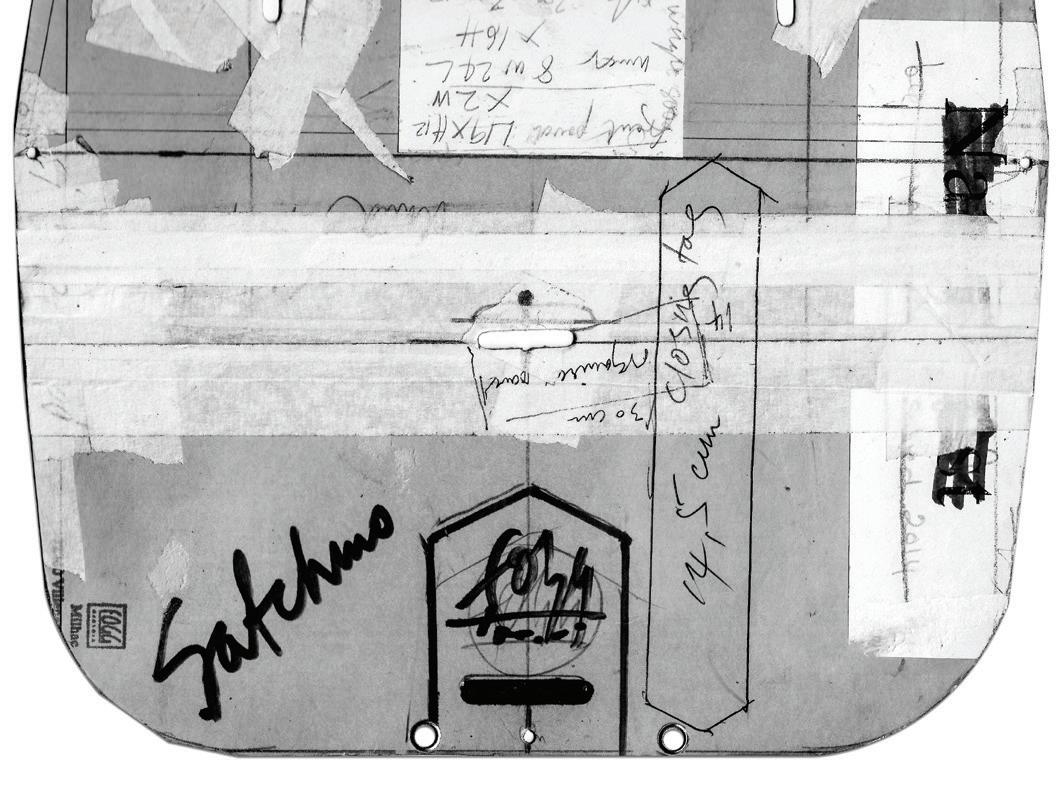
fogg & the new satchmo by Jonathan
EXECUTIVE DIRECTOR
Richar Rejino Dallas, TX info@lhsa.org
ELECTED DIRECTORS
Class of 2020 Thomas Campbell Hollywood, SC
Douglas Drumheller Pittsburgh, PA
Dan Tamarkin Chicago, IL
Class of 2021
Wilbur Norman Santa Fe, NM
Jay Paxton Houston, TX
David Spielman New Orleans, LA
Class of 2022
Andrew Godlewski Middletown, RI
Brad Husick Medina, WA
Bill Royce Kirkland , WA
CONTRIBUTING EDITORS
S.R. Gilcreast, Jr. Peterborough, NH
James L. Lager Closter, NJ
S. Willis Wright Port Washington, NY
A LETTER FROM THE PRESIDENT
by ALAN WEINSCHEL
dear members,
I hope you all have been staying safe and healthy as the pandemic continues to do its damage. Age usually has its privileges; in these times, it puts many of us at risk, forcing curtailment of day to day life. So too, the pandemic has affected your society. When we had to cancel our May Spring Shoot in Colorado Springs, the Annual meeting in Seattle in October seemed far away. It wasn’t. We have decided to go “virtual” for that meeting as well. It will run for two days for about 4 hours a day in a time slot that will allow as many as possible worldwide to participate. Registration is open, with some great speakers on the agenda (including Leica lens chief Peter Karbe), as well as a tutorial. If you “attend,” you will be given an assignment a few weeks prior to the meeting, and will thereafter be asked to submit an image. On the second day of the meeting, Tom Smith, our friend from Leica Akadamie, and member Sandra Eisert, a former White House photo editor, will comment constructively on the images. It shapes up to be a great learning experience and I hope you will participate.
There has been an unexpected benefit to the pandemic. Even though we have not been able to have meetings, we have been able to stay engaged with our membership by offering instructional webinars about every two weeks, with great contributions from Brad Husick, Keith Sbiral, Helen Todd and others. Going “virtual” has been a learning experience. It enables us to engage with members all over the world. We have had several hundred members at a time join these webinars, and we will continue to offer them. We also had a very popular “Conversation with Leica” in May, with Dr. Andreas Kaufmann and Stefan Daniel taking questions.
After the M10-R was announced, Leica asked us to provide questions for Stefan Daniel in a session run by Leica on July 24. Our relationship with Leica remains excellent.
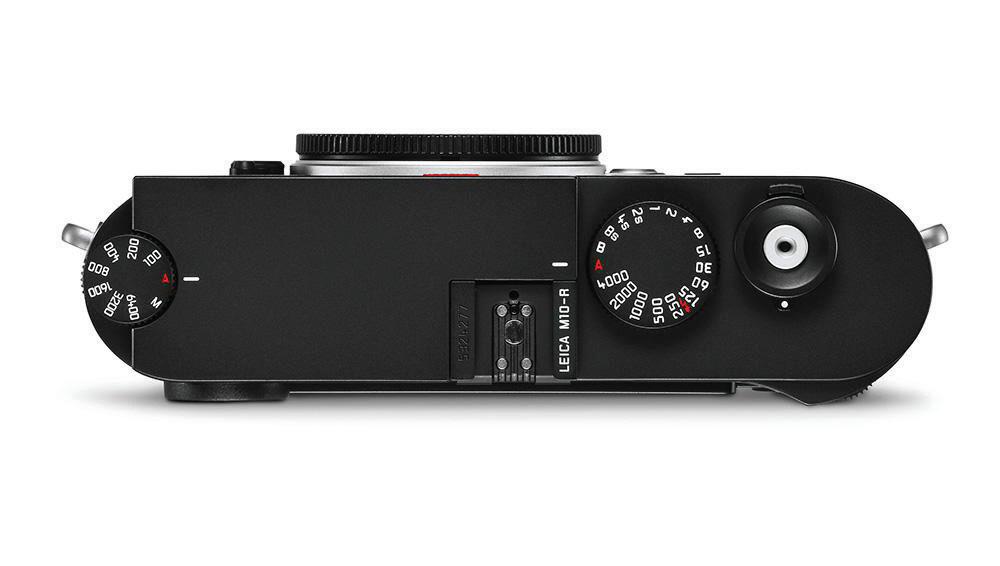
In this issue, you will see discussion of the M10-R with one of Jono Slack’s great reviews. I was lucky enough to get a M10-R soon after it was announced, and in my opinion, it is deserving of the “flagship” label. There will be a Sweepstakes for one of these cameras announced soon. Somebody has to win. Maybe you.
Let me close with some news about your Society. Notwithstanding the pandemic, we have been able to continue our membership growth. Leica continues to display our offer of a free digital trial year for purchasers of new system cameras (and “Qs”) who are not already members. In 2016, we had about 750 members; today we are about 2400. That is good progress. Our finances have also improved but we are still running a yearly deficit and that cannot continue indefinitely. As you know, the Officers and Directors receive no compensation. They pay dues, and when we have meetings, they pay their own expenses and registration fees. You can help here. A large number of you are free trial members. Please continue with us and join as a full member. If you are already a member, you can support us by participating in the Sweepstakes we run. (We usually have one a year, but with the release of both the M10 Monochrom and the M10-R, 2020 will see two Sweepstakes) . There will also be some special membership opportunities this Fall. Look out for them. You can also help by participating in the Annual Meeting and if you have any ideas for additional webinars (including something you could offer) , please let us know. You can also follow us on Facebook, YouTube and Instagram; it is a way to connect with others who share your passion.
Finally, we are very grateful to those of you who have paid your dues and, in some cases made additional contributions. You are helping to maintain LHSA as the largest (and best!) Leica membership organization in the world.
- Alan Weinschel, President
A LETTER FROM THE EDITOR
by BILL ROSAUER
as I write this Editor’s Page, we are still in the alternate reality caused by the COVID-19 pandemic. It has presented many challenges to everyone, especially to us photographers who are used to being out taking pictures or meeting with other photographer friends from around the world, let alone our friends and family. I am hoping all of you are staying safe and healthy during this difficult period. Here’s hoping we can get back to “normal” again sometime soon!
Ruth Oratz and Albert Knapp describe their time in quarantine in the initial phase of the COVID 19 pandemic. For them, it was a quiet time of reflection and discovery, recalling Thoreau and his time at Walden Pond. I think you will appreciate their thoughtful and beautiful images they have made during their time in isolation. David Spielman brings us some incredible images of his New Orleans, which he knows so well. As David puts it, for his fifth book he wants to “capture a portrait of its personality and soul”. I think you’ll agree he does a masterful job of it. You can contact David at DavidSPIELMAN.com if you would like a copy of his new book.
David Knoble explores the options of shooting with film or digital. David takes a look at the advantages and disadvantages of both mediums. With the Leica system, you have the advantage of using both or either one. Having a choice is a wonderful thing. Read David’s article and see what works best for you.
The big news of course, is the introduction of the new Leica M10-R, the newest member of the M10 family. Of course, we have Jonathan Slack’s review of it in this issue. Jonathan does advance testing of new Leica cameras, and he has spent considerable time with the new camera. Jonathan is in a unique position to candidly tell us about the advantages and disadvantages of using a higher resolution sensor in the M system. In discussions some time ago, I had advocated with Stefan Daniel and Jonathan that 24mp was enough for me, especially as 40+ MP sensors would require an upgrade to my computer and storage capacity. I saw the quest for more and more sensor resolution as a continuance of the “Horsepower Wars” that had affected almost all consumer goods since the 1960’s Muscle Car Revolution. Something no one knew they needed until after the advertising people convinced you that you did! After discussing the matter extensively with Stefan and Jono, they convinced me that new sensor was in fact a good move for the company. I look forward to trying out one myself soon. As an aside, an early M10-R owner posted on the Leica M user group on Facebook with an interesting image taken with his new camera and the 75/1.25 M lens. It was a head and shoulders shot of a family member, and he made the interesting comment that he didn’t realize he was posing for a selfie in the picture. What? The answer was revealed upon examining a close-up crop of the subject’s eye, whereupon closer inspection, the taker of the image could clearly be seen reflected on her eyeball. Wow! Even with the compression of the Facebook page and my iPhone screen, the proof was in the pudding. I’m sure a lot of Leica users will be exploring the exciting capabilities of the new M10-R.
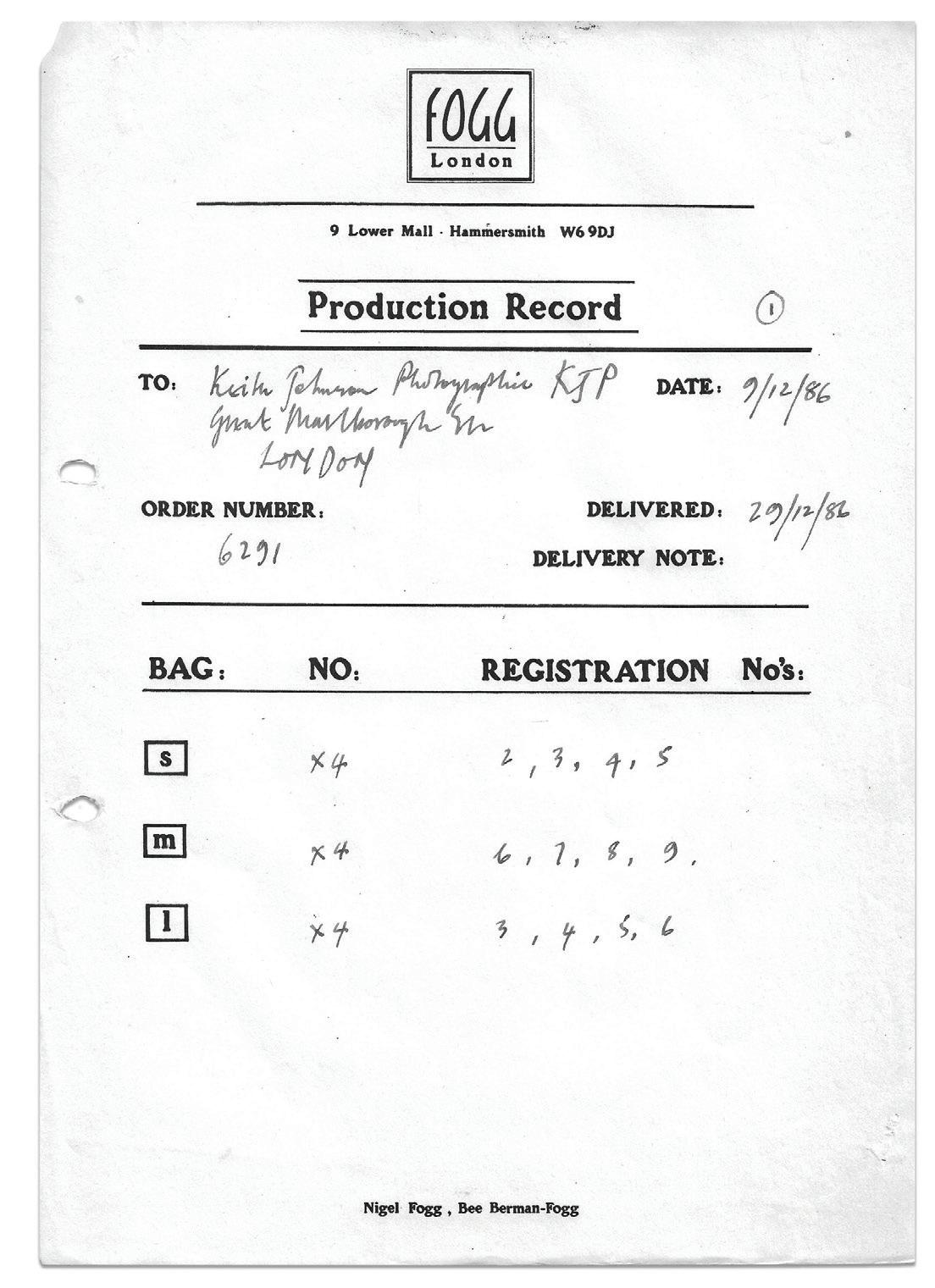
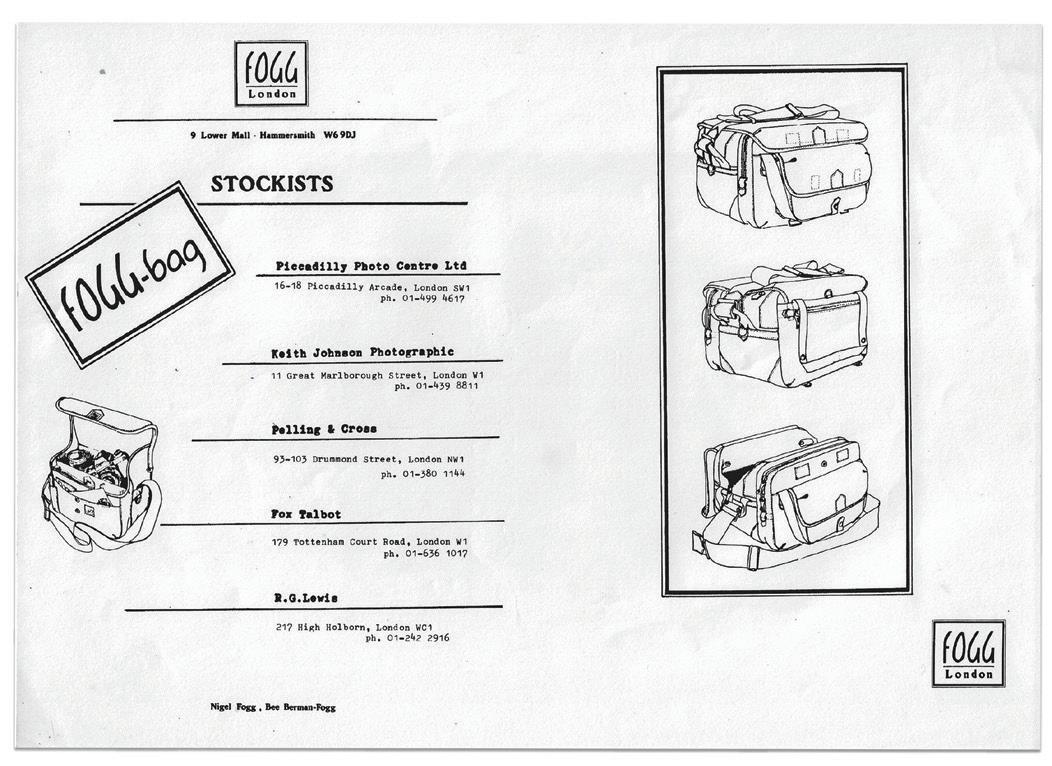
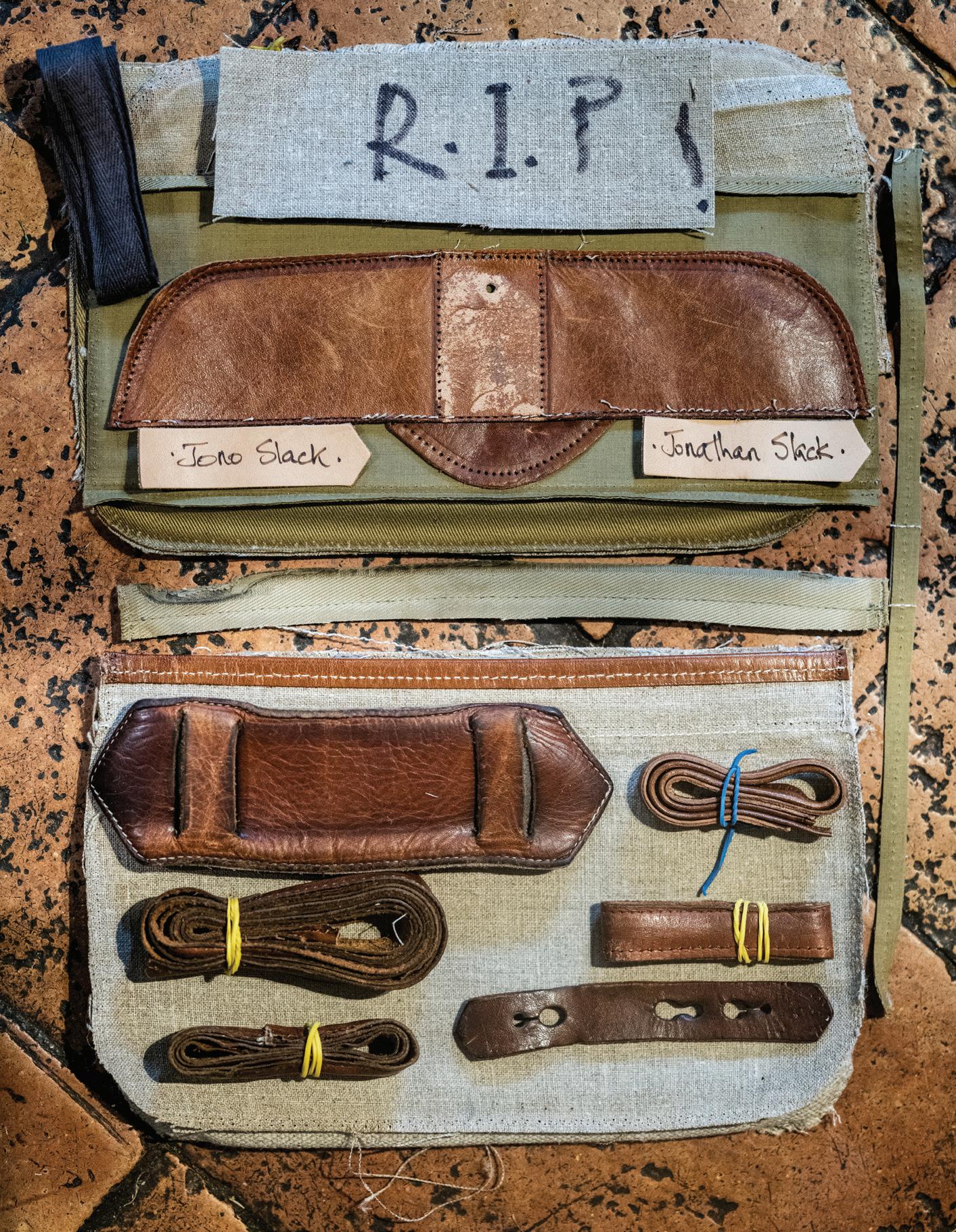
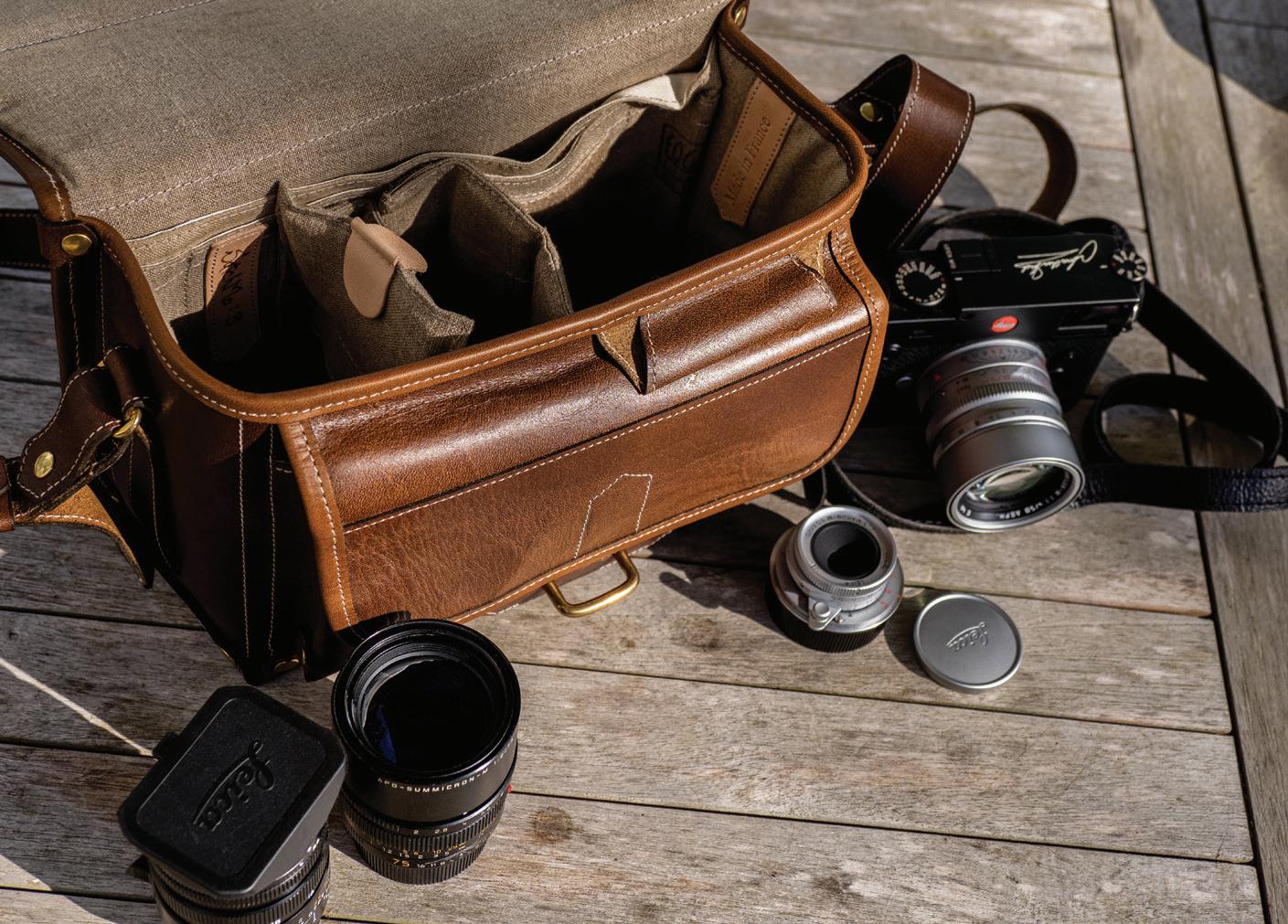
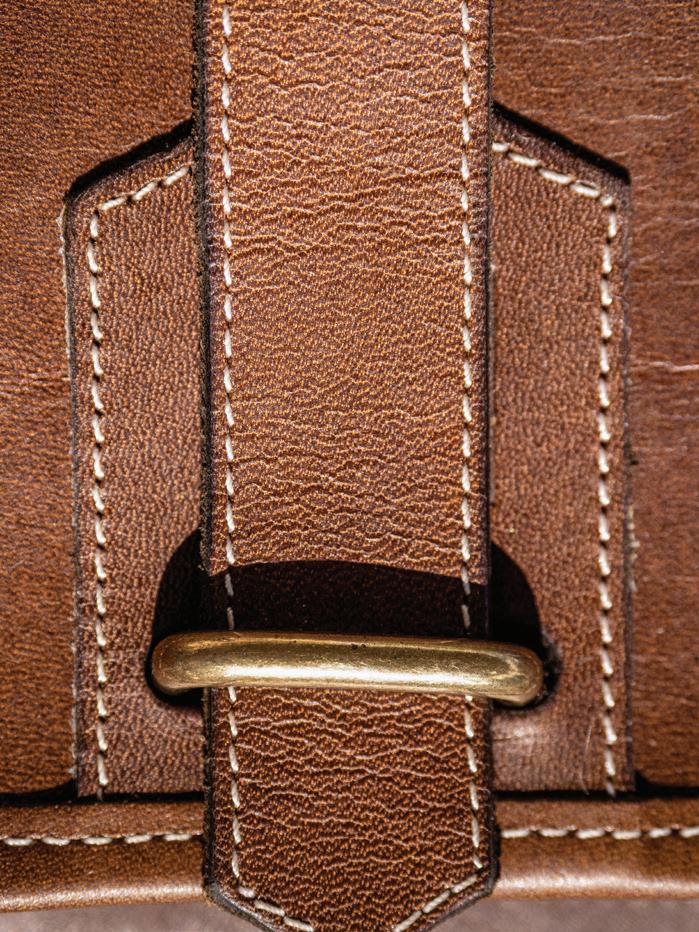
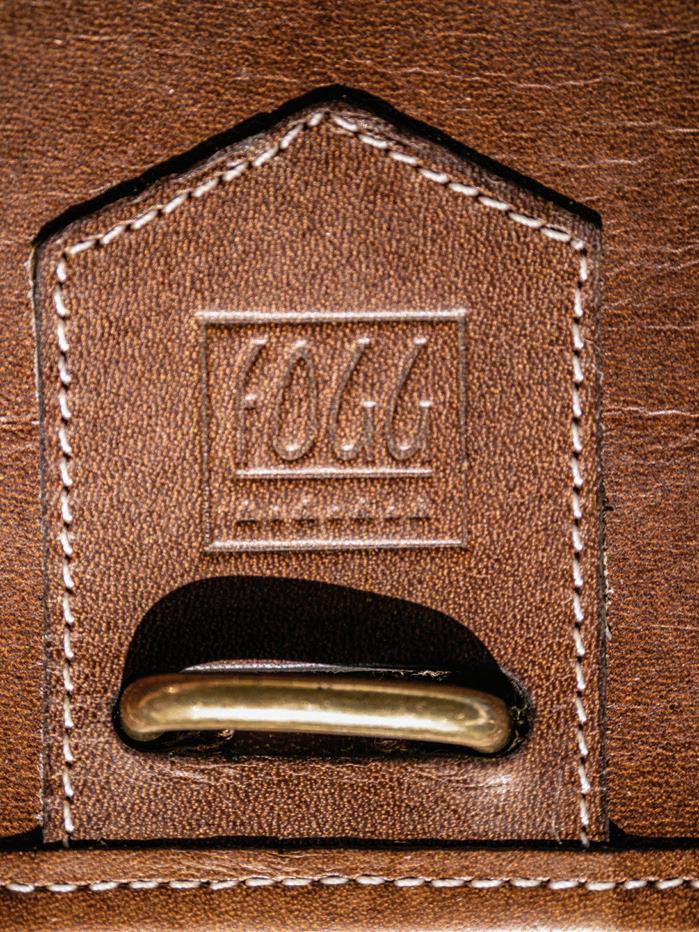
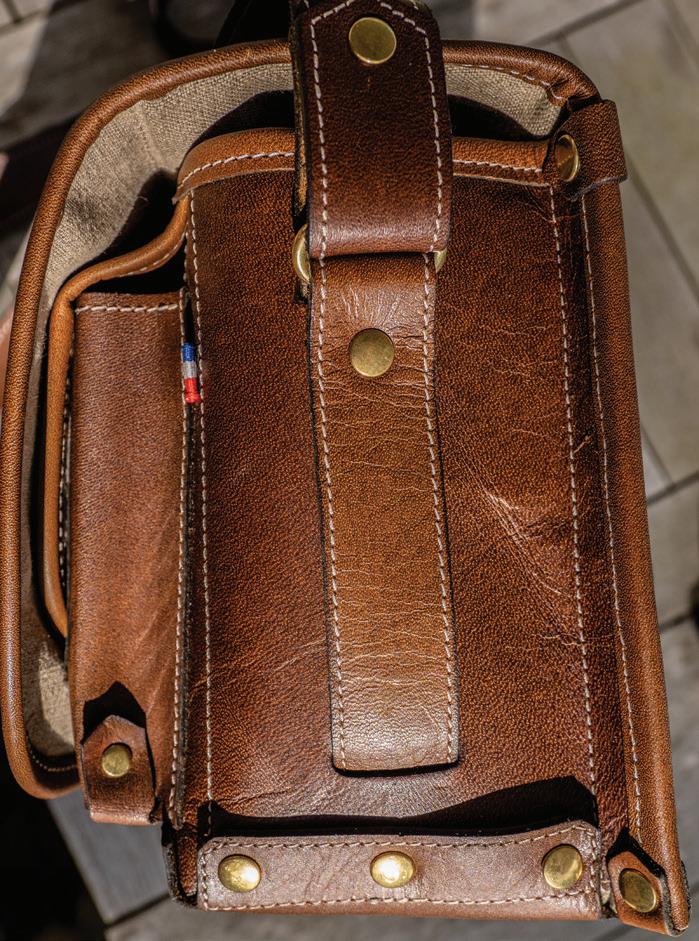
Jono also reviews the new Satchmo bag from FOGG. In addition to his review of this beautiful new bag, Jono gives a little history of the brand with the story of Nigel and bee Fogg and the wonderful bags they create. I am a dedicated FOGG user myself, with more of their bags in my collection than a sane person would admit to. Back when I had my Leica store, I was one of the few stocking FOGG dealers in the US. That was back in the late 80’s, and I’ve
been using them ever since. They are truly one of a kind creations that are quite special. If you aren’t aware of them, you should check out the FOGG website, www.foggspecialistbags.com
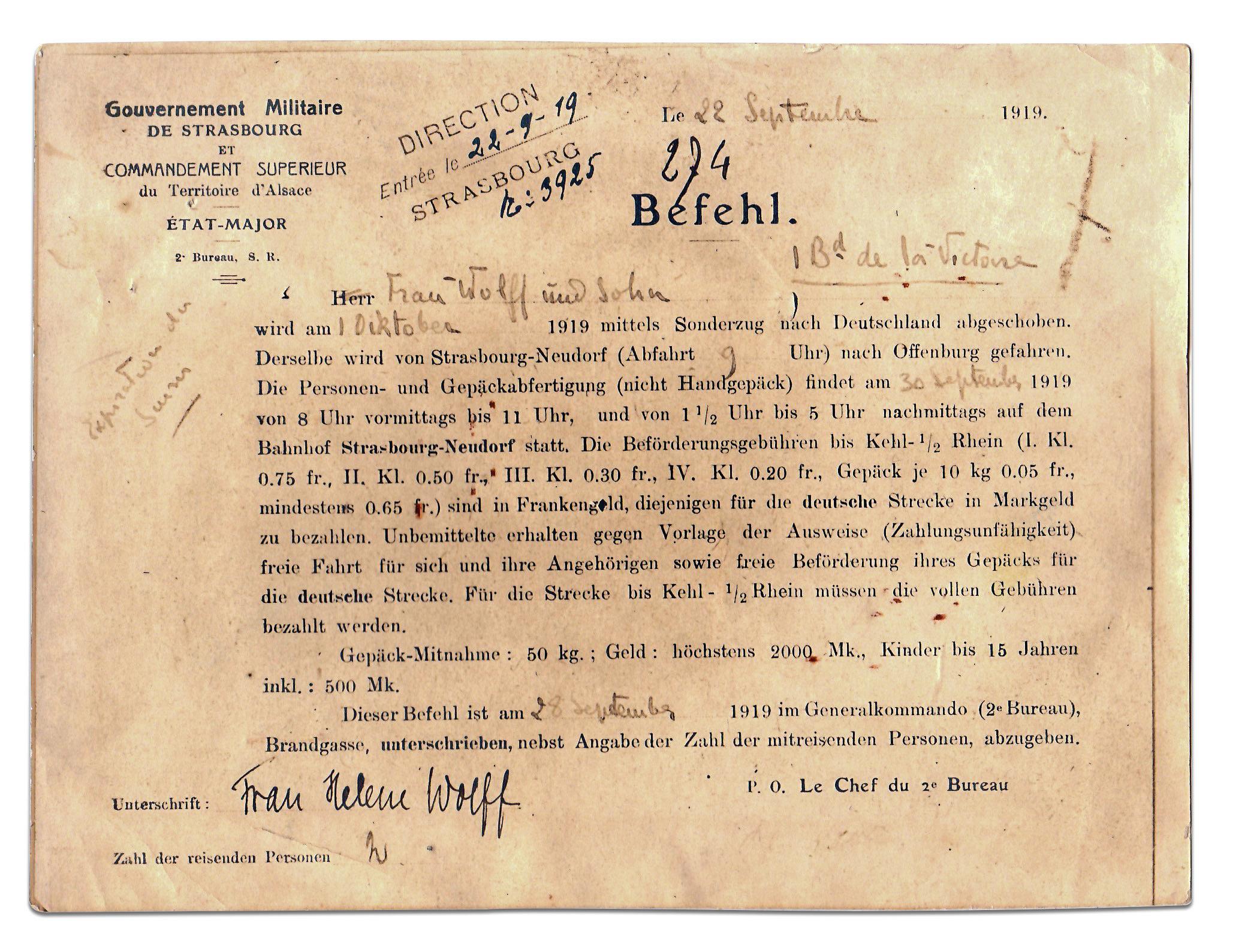
Ed Schwartzreich explores the expulsion of Dr. Paul Wolff from his native homeland of Alsace after WWI, when it was returned to France as one of the terms of the Versailles Treaty. Few remember the history of the region, but Germany saw this as another insult by France, further helping set the stage for WWII. This was a major event in the life of Dr. Wolff, forcing him to give up his career in medicine, and then subsequently taking up photography as a profession in order to put food on his table. Were it not for this obscure twist of fate, there most likely never would have been a “Dr. Paul Wolff, Pioneer of the Leica” and his efforts to popularize and make the little wonder, the Leica, the world renown brand that it has become.
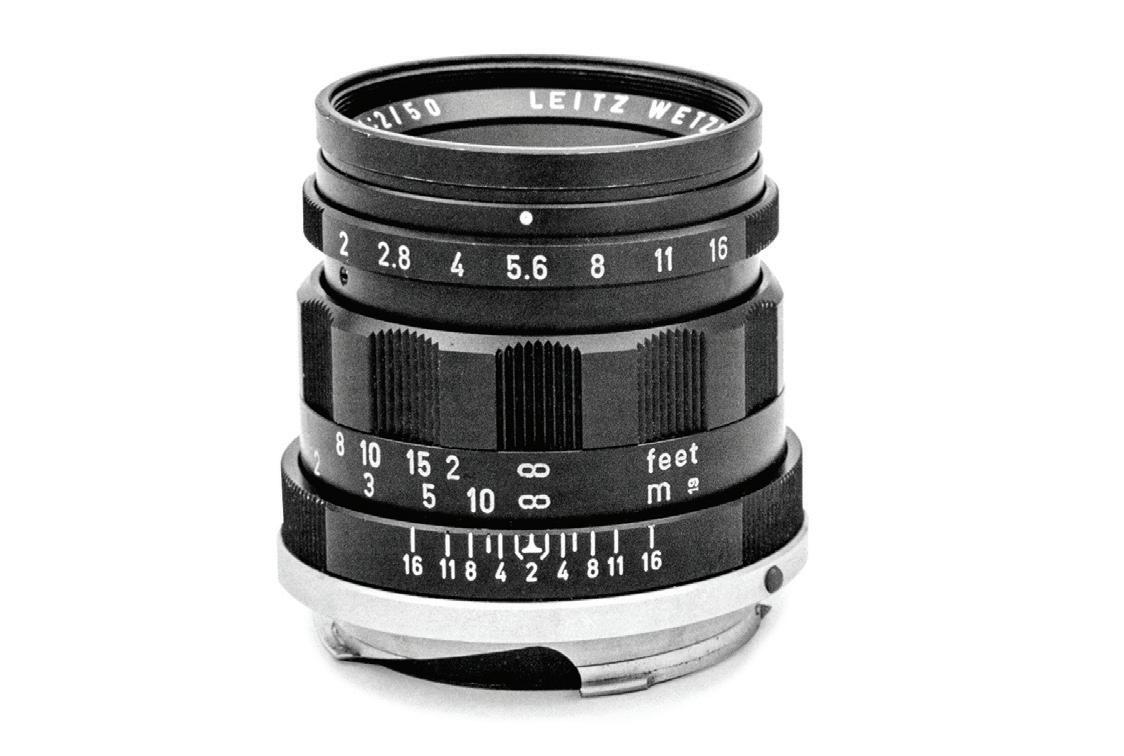
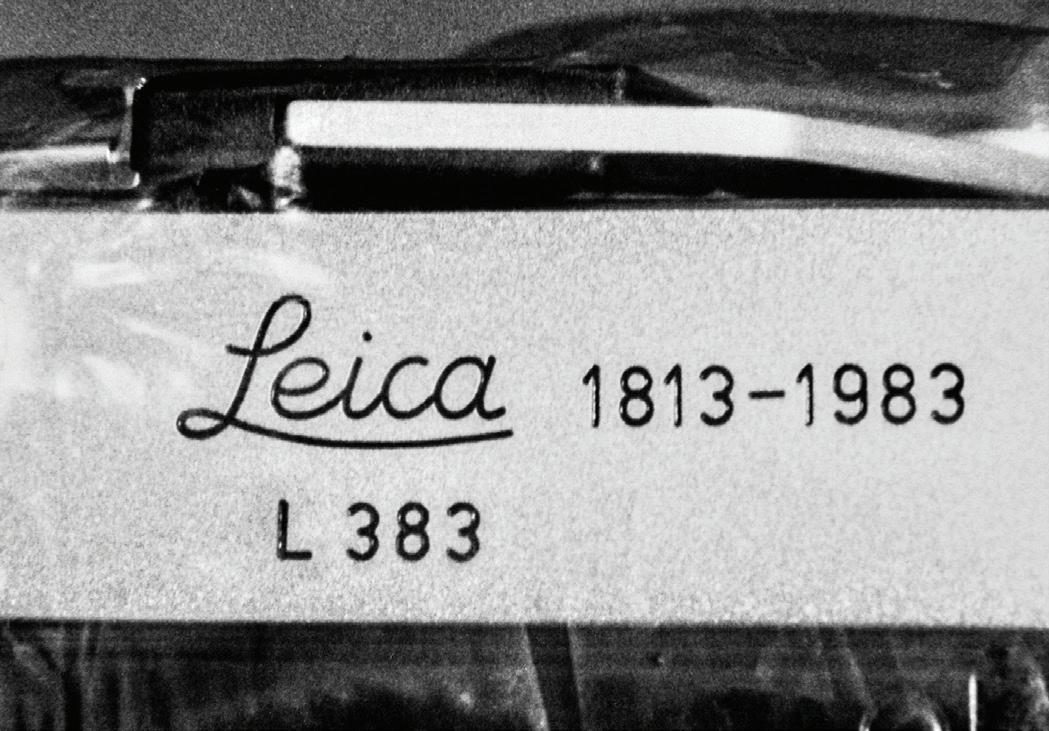
Jim Lager tells us about the very rare 6 element rigid mount 50/2 Summicron #11817 made in black anodized finish featuring heavy knurling, for a very short period of time in 1968. In his other article, Jim shows us a mis-engraved special edition M4-P Seventy Years of Leica Rangefinders, with the years 1813 – 1983 engraved on the back of the top cover. Jim calls it the “Napoleonic Special”! We have Dick Gilcreast’s Tips and Techniques article about using the Leica for candid portraiture photography. Dick shares some interesting tips with us that I’m sure you will find to be useful.
In this issue we have Augusto Liger’s article on arguably the last screwmount camera made and delivered by Leica. He is assisted in his efforts to verify his theory about his Leica IIIa by Jerzy Wasowicz, well known expert on Leica screwmount conversions. I think you will find this quite an interesting read. This reminds me of another sensational find earlier this year of what is believed to be the first Leica IIId made, at an auction at a rural second hand shop here in the States. I hope to be sharing that story here in Viewfinder in a future issue.
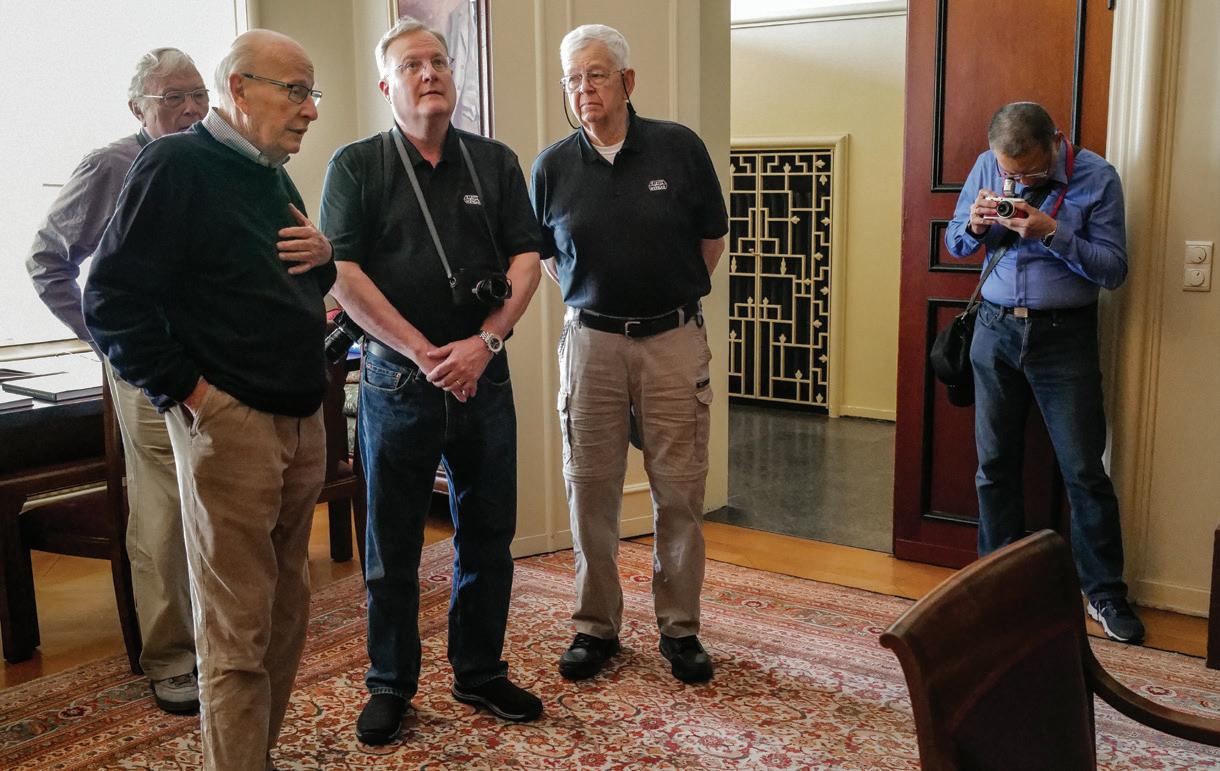
Sadly, we received news that Knut Kühn-Leitz, the last surviving member of the Leitz family passed away on May 23rd of this year. Knut had been a friend via correspondence about his books and my review of them for Viewfinder. Knut had also been a gracious host during our visit to Haus Friedwart to my tour group in Wetzlar last May. Ed Schwartzreich had also been Knut’s guest at Haus Friedwart during the LHSA meeting in Wetzlar in 2018. Both Ed and I share some fond memories of Knut in this issue.
Bis nächste Zeit! - Bill
REMINISCENCES OF KNUT KÜHN-LEITZ
by ED SCHWARZREICH
Hello Ed? This is Knut!” the booming voice on the phone announced. I had just asked Lars Neotpil please to make a formal introduction for me to Dr. Kühn-Leitz, because I found out from Günter Kisselbach that it was Knut whom I needed to talk to about an article I was writing for Viewfinder. I had not expected such a hearty welcoming gesture from someone who I had never met and who was, for me at the time, a rather distantly renowned personage.
We had a 45-minute telephone conversation, mostly about Knut’s father Kurt Kühn who was the subject of my researches, and a week or two later, another conversation of similar length. When Knut found out that I was planning to attend the 2018 LHSA Meeting in Wetzlar, he said I must let him take me to lunch and have a tour of Haus Friedwart! I said that my wife Julie would be with me, and he invited her too to be his guest.
Lunch with Knut was a gracious affair at a local restaurant. We spoke about several topics, but the one I recall best was about his experiences as a child at the end of WWII. For a time, he had been sent out of Wetzlar as his family was concerned that the town and the Leitz factory might well be the target of a bombing run. Knut said that it was his recollection that the expected raid did not occur due to bad weather in the vicinity, but one could hear the planes overhead anyway.
We spoke just a bit about his parents, and about growing up with much time spent at Haus Friedwart. I asked him about his hyphenated last name, and, if I recall correctly, he indicated that this was what his family wanted after his parents separated. He
spoke about the old Leitz company and the concern of his grandfather and then his uncles for every employee (his grandfather knew every worker by name and something about the circumstances of each one), and the new Leica company and its commercial pressures; there was definite nostalgia in his voice about the old way of doing things. Knut was quite proud of what he had done for the company, such as handling the relationship with Minolta.
The topic changed to Dr. Paul Wolff (with my interests, of course it would). Knut remembers being with Dr. Wolff around 1950 at a Leitz event, but said unfortunately he was too young to appreciate that much about him. He then asked me my opinion about Dr. Wolff and the Nazi’s, saying he really wondered what might have been the case there. I tried to give an answer, which basically translated to my being as much in the dark as he was; I told him I was researching this very question as there was much current interest in Dr. Wolff.
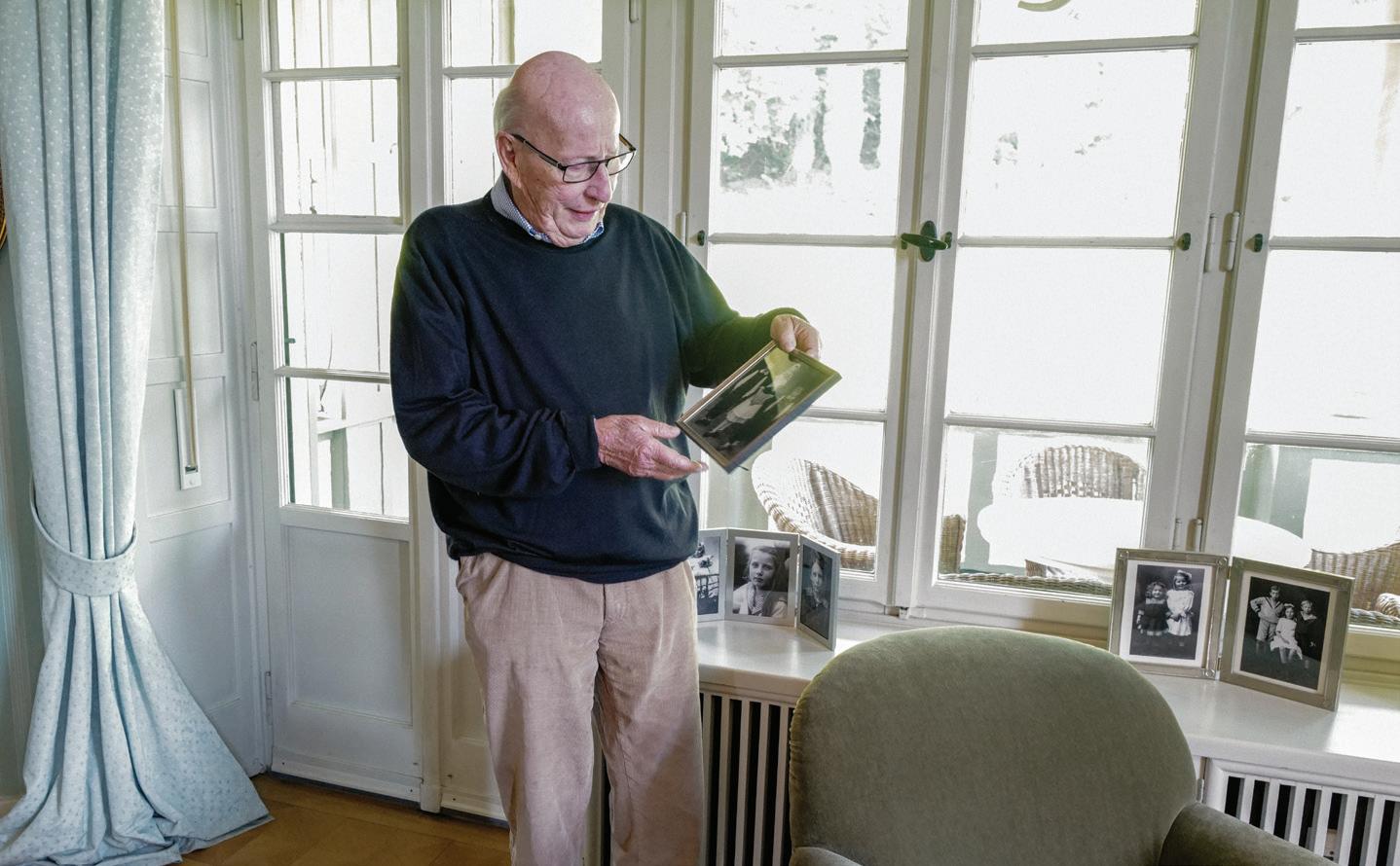
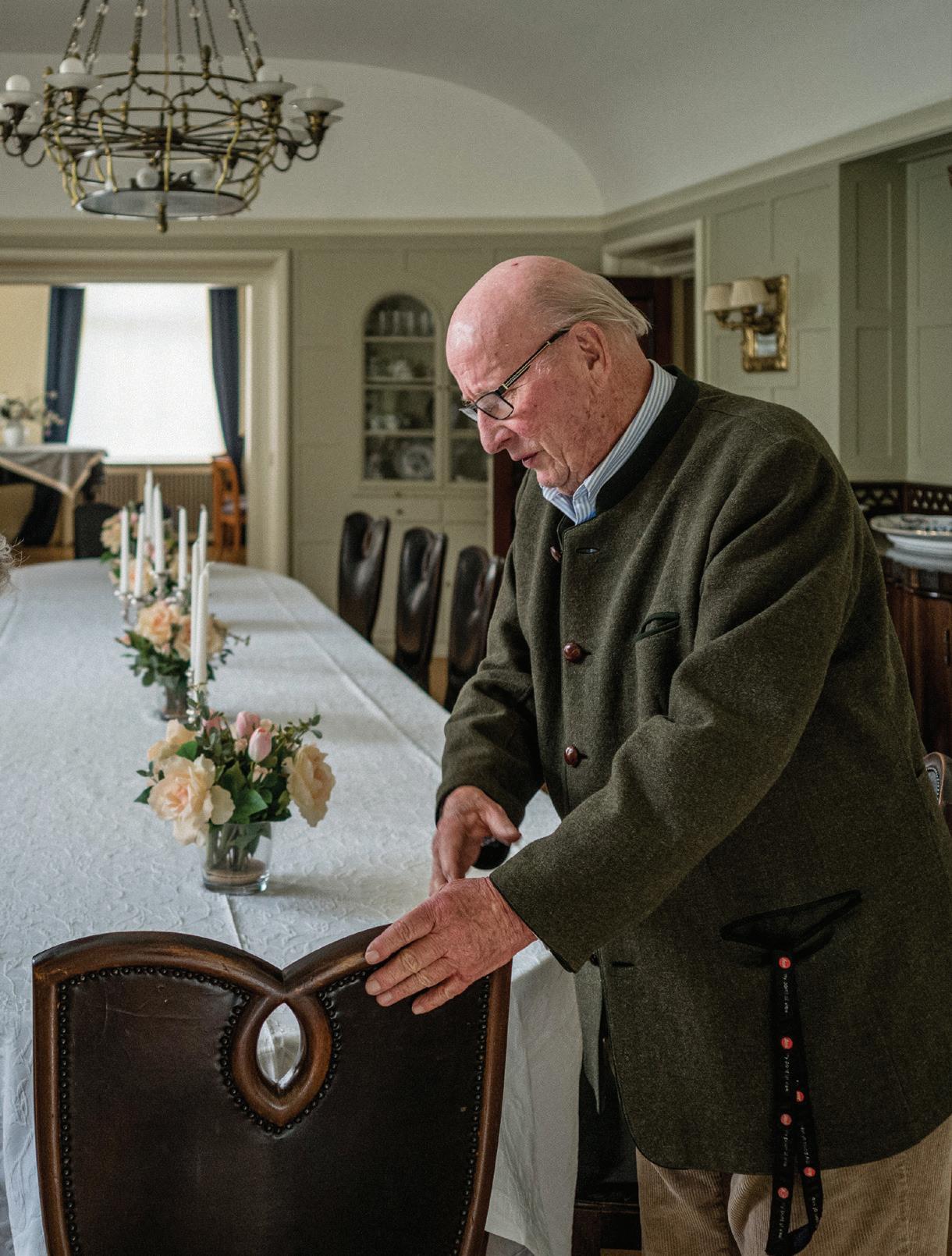
Knut then drove us to Haus Friedwart, and told us the story of the house, its architect and its contents, and its current use, under the auspices of Ernst Leitz Foundation, for public events. Knut no longer lived there, but part of the building was indeed currently a private residence, leased out. The main part of the house - that which we are used to seeing in pictures - was for such public events, and that was the part we were shown. The house had definite echoes for me of my grandparents’ home, which was of similar vintage though hardly so grand. The fixtures, including of all things, a dumbwaiter, and the appearances of the public rooms, were strikingly reminiscent of their home. My grandfather had had several simultaneous careers: one was as a musician and
composer. The Leitz family had strong classical music interests also, and there was a music room with a piano and with framed pictures on the walls of many of the famous musicians who had performed for the family and their guests. A similar pattern had been the case, on a lesser scale, with my grandparents. I was quite touched emotionally by the unexpected flood of reminiscences.
Prominently displayed also were plaques from Jewish organizations commending Ernst Leitz II on his support for his Jewish employees during the Nazi period. These seemed all to be recent additions. There were also many photographs, oil or pastel portraits, and busts of Leitz family members.
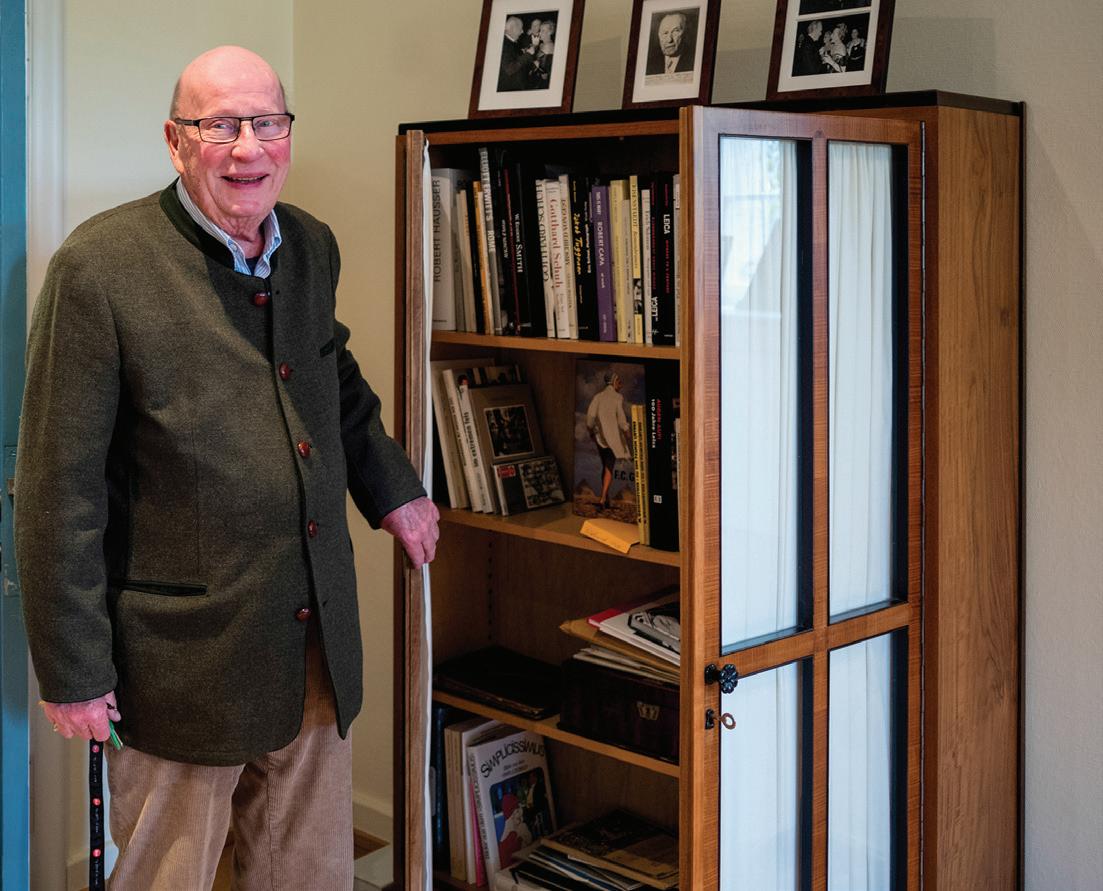
Knut had some of his personal collections still at Haus Friedwart. He had a few Leicas on display, as well as a book collection. The enclosed snapshots show part of these. He also had a collection of images from famous Leica photographers that he had collected personally. These were displayed in a stairwell, but there was neither time to look at them at length, nor really a chance to photograph them in any meaningful way.
Because I was so familiar with the house from pictures, I noted that some things had been rearranged -- it was a home, or course, not a museum. I think Knut appreciated my interest here; he certainly commented upon it. Speaking with Knut and his showing us Haus Friedwart was one of the highlights of my life. Julie was also moved by the experience.
Knut phoned me again, unexpectedly, some time in 2019. Here was merely asking for contact information of another LHSA member, but once again his friendliness and sincerity were notable. Knut was so gracious and open about things that had I secretly hoped we would be able to meet again somehow. Now sadly, that cannot be.
Knut and I spoke at least twice about his series of books on his family, and on Max Berek. He did not appear very concerned that these were published only in German-language editions despite most LHSA members not being able speak or read that language, and my having to struggle with German as well. Perhaps he was surprised that any English speakers would be so interested. Knut did say that he was working, with several other contributors, on the final volume in the series -- his story of his uncle Ernst Leitz III -- and implied that this last book would have an English-language edition. That book was published in Germany last year, but again apparently only in German. If anyone reading this remembrance has access to obtaining permission for English versions of Knut’s four books, I would be happy to work whatever team could be assembled for such a project. This would be a most fitting memorial for Knut.
2020 NOMINATING COMMITTEE REPORT
by GARY HOUGH, CHAIRPERSON
LHSA NOMINATION COMMITTEE
May 1, 2020
In accordance with the Bylaws of the International Leica Society (LHSA), (Article 8, Section 3), the Nominating Committee submits the following slate of nominees for Officer and Director positions, to be considered for election by the membership in an electronic election to be conducted prior to the 2020 Annual Meeting of the Society.
• President: Keith Sbiral
• Vice President: Brad Husick
• Secretary-Treasurer: David Knoble
Directors, Class of 2020:
• William Fagan
• Bill Royce
• Dan Tamarkin
• Director to finish the term of Brad Husick: Kirsten Vignes
Respectfully submitted, Gary Hough, LHSA Past President
Committee: Gary Hough, Bill Royce & David Spielman
CHANGING OF THE GUARD
by BILL ROSAUER
in
the last issue of Viewfinder, I mentioned that Roger Horn, long-time friend and President of Leica Camera USA was retiring. This came to pass on July 1, 2020, after Roger had been with Leica for 46 years. As Roger noted in his “farewell address” to the Leica community, he has been with Leica since 1974, at first as a Cost Accountant. In speaking to Roger a few months ago about his pending retirement, he told me that his first job at Leica was to do an analysis on the Tilt-All tripod division. I’m sure a lot of you remember the Tilt-All fondly.
My acquaintance with Roger goes back to 1983, after I had opened up my Leica store with my father in the suburban Chicago area. By that time, Roger was the head of accounting at Leica USA. Needless to say, it always paid to be on good terms with the credit manager, Ray Tomaselli, whose boss was Roger! I would see Roger and Ray on my visits to HQ in New Jersey and at the PMA and Photokina trade shows. Roger’s career advanced steadily through the years, ultimately becoming the president of Leica USA, with Ray being the VP. We had all remained good friends over the years and had seen many people come and go, both at Leica USA and Leica Gemany. Believe me, it was quite an incredible and diverse cast of characters over the years!
After Roger became president, I worked with him on the LHSA Special Editions and also other benefits for LHSA members, including the member repair discount (please take advantage of it!) , membership applications inserted into Leica USA product (years before our current program with Germany) , and other behind the scenes work to benefit our members.
Roger would always take my calls, always ready to listen and always ready to help with whatever the issue was. Roger was instrumental in overcoming the many difficulties associated with making the Special Edition models become a reality. When discussing our relationship over the years, Roger being the modest person he is, conceded that he offered me counseling when I needed it! Recently, Roger took the time to host a Zoom meeting with me to personally introduce me to his successor as the new President of Leica USA, Mike Giannattasio. I look forward to working with Mike G in the future.
Roger, you have been a true friend, and I want to thank you again for your friendship and for all your help over the years. This is a rare thing these days, as CEO’s and heads of companies come and go through the proverbial revolving door. Roger, I will miss you and the Leica community will miss you too. Job well done!
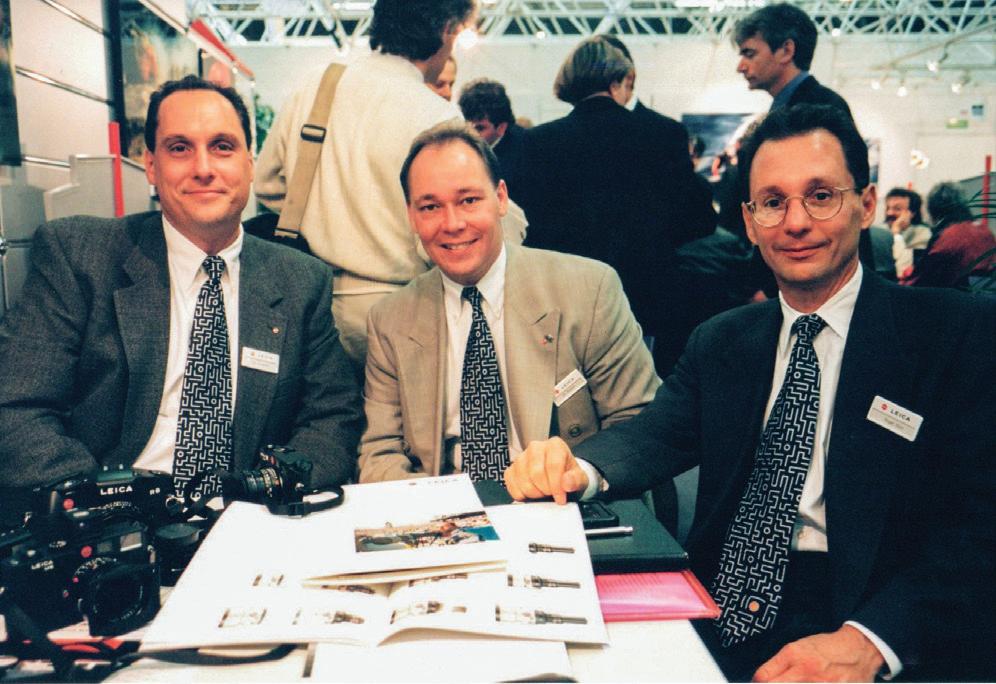
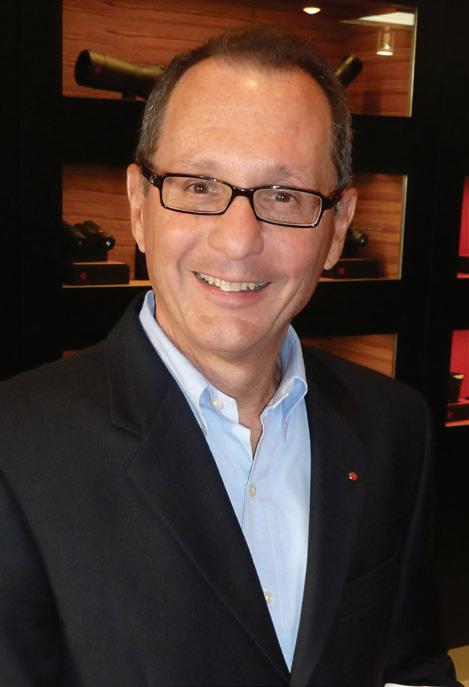
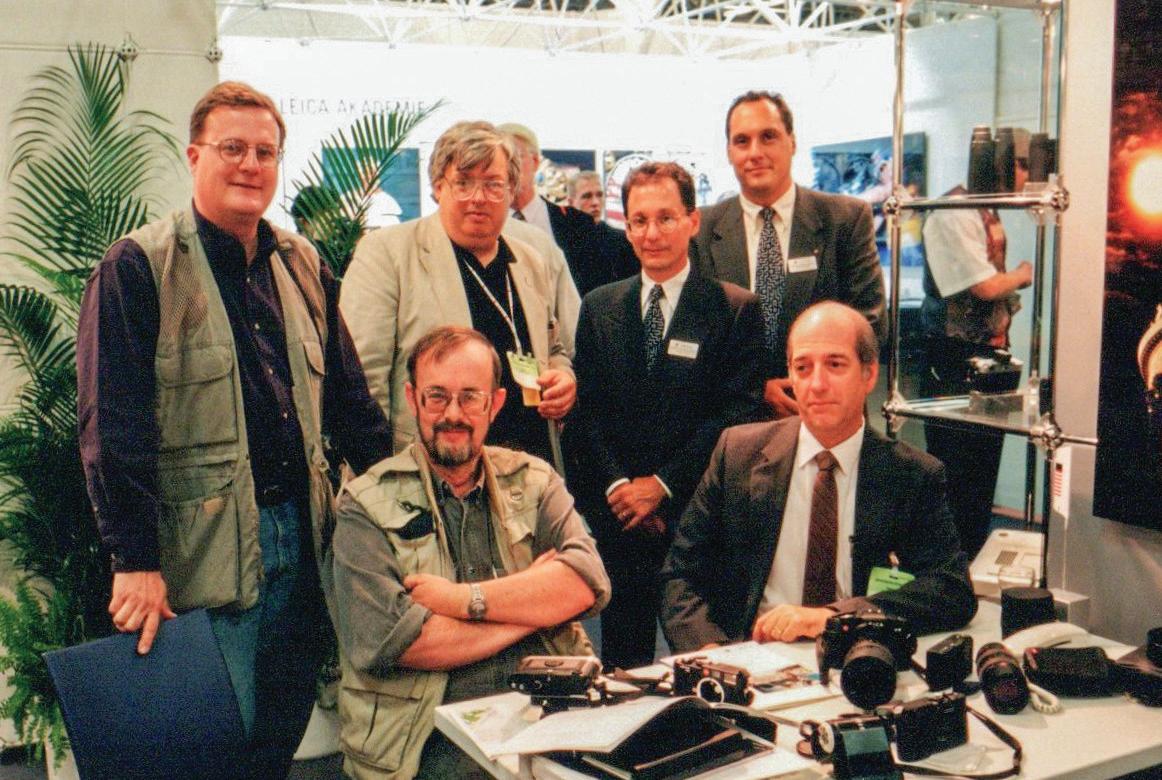
(left) Ray Tomaselli, Jim Wagner and Roger at Photokina. (center) Roger's recent "official" portrait. (right) Photokina 1996. Back row, from left, myself, Sal DiMarco, Roger and Ray. Front row, Tom Abrahmsson and unknown person.Sadly, my frequent companions at Photokina, Sal and Tom, well known to LHSA members, are no longer with us.
RECOLLECTIONS OF KNUT
by BILL ROSAUER
Ifirst met Knut Kühn-Leitz back in the mid-80’s during a Leica dealer Akademie training trip to the old factory in Wetzlar. Knut joined our group for lunch one day in the old, round administration building across from the factory. Our buffet lunch was in the board room, which was quite an intimidating place for someone aware of the history of Leica. Portraits of Knut’s illustrious relatives, as well as those of Oskar Barnack, Max Berek and Lihotsky looked down at us sternly from the walls. Knut himself was very much at ease and quite pleasant with our group, engaging us in conversations about the company and family.
Fast forward about twenty years, and a call comes up on my phone from Germany. Who could this be calling me on a Sunday, from Germany? As Ed related in his piece on Knut, it was Knut himself on the line, introducing himself in his booming voice and asking if I would be interested in reviewing his most recent book for Viewfinder. Needless to say, I was floored and flattered at the same time. Of course, I would be happy to review his book! Business out of the way, a pleasant conversation ensued.
Fast forward again to last May. Knut had agreed to host my tour group in a visit to his childhood home, Haus Friedwart. We also visited the first Leitz Administration building next to the factory which was also the original home of the Leitz family under Ernst Leitz himself. Knut was in his element sharing stories of his mother, grandfather, uncles and others well known to us from the Leitz Pantheon. It was quite a treat for myself and my group. One thing that really struck me, aside from Knut’s enthusiasm sharing his stories, was how spry and nimble he was climbing up and down staircases, the grounds of Haus Friedwart and the climb up to the house itself from the old city gate (Kalsmunt Tor) next to the Admin building where he met us. He did much better than a few of us decades younger than himself! It was the experience of a lifetime, and I will never forget how gracious he was to us.
I will miss Knut and his congeniality on future visits to Wetzlar. I will miss his stories of his family and what it was like to live in such a famous house. We have all lost this last link with the famous family Leitz!
Instant Candid Portraiture with a Thread-Mount Leica
by DICK GILCREAST
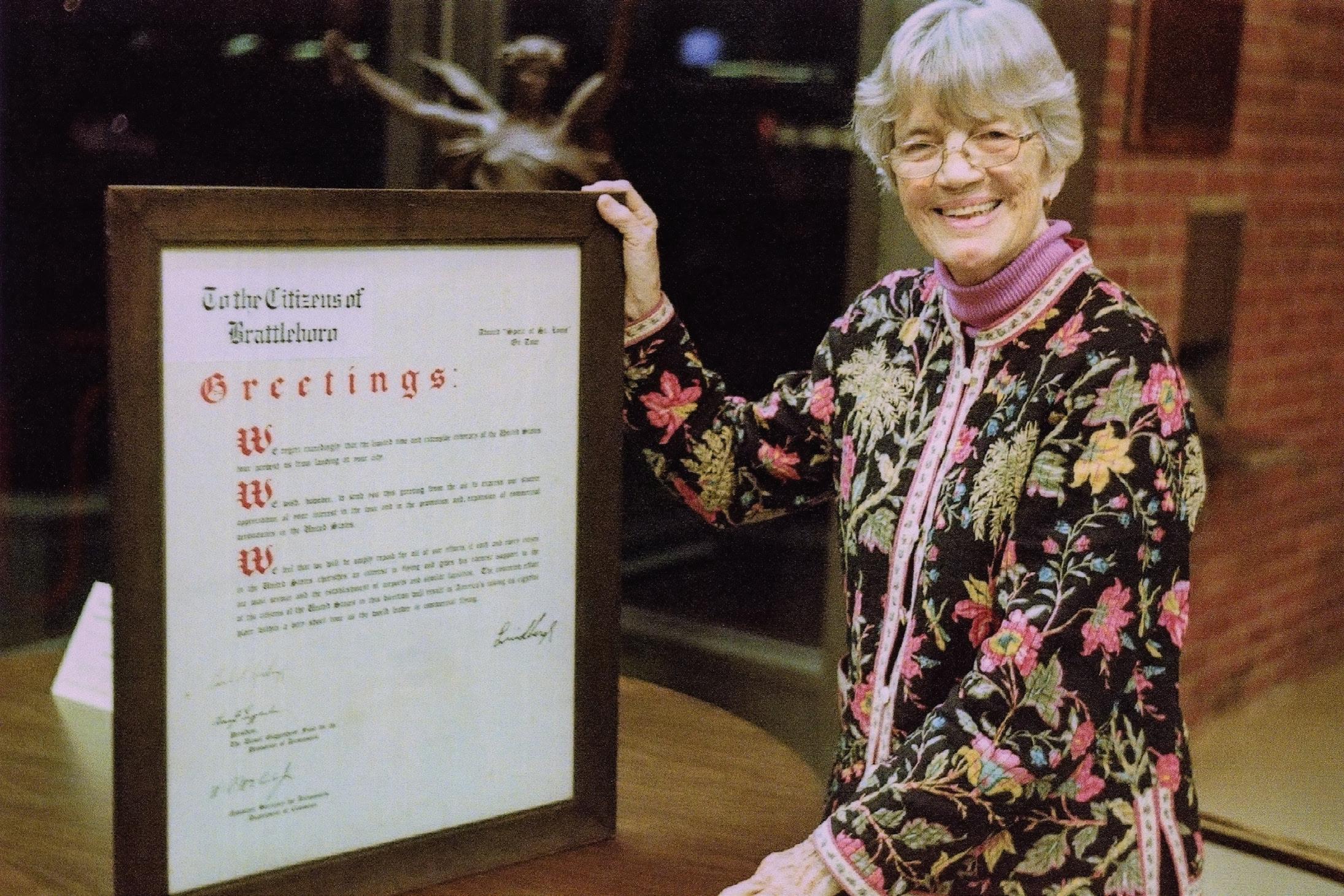
The picture is of Reeve Lindbergh, daughter of Charles A. and Anne Morrow Lindbergh, a well known author of many books. It was made at the Brattleboro, VT public library after she had given a talk on her latest book "Two Lives", (Brigantine Media Noyage, 2018) detailing the contrast between her life as a part of a famous family and that of her life as a wife and grand -
mother on a rural northern Vermont farm. I got a chance to talk with her a little afterwards, and she kindly agreed to pose with the historic document her father dropped from the "Spirit of St. Louis" on Brattleboro during his flying tour of the country, soon after the transatlantic flight in 1927.
A lot of candid pictures of single people and small groups can be done with a 50mm lens, just as Cartier-Bresson and many others have done through the years. But as he and some of those others learned, a valuable refinement in the technique is to get the shot quickly enough that the smiles haven't faded, there is no time for sidelong looks or blinks, and everybody is paying attention. A manual rangefinder camera works well for this because of the instant shutter response and the continuous viewing during the exposure. A second shot can be made if there is something seen amiss during the first, but that initial attention may have already begun to wane and the second shot won't be quite the same.
Frequent use of the 50mm lens allows getting to know the angle of view well enough so there's no need to preview every shot to see the angle of coverage and composition, as is the case during a lot of lens changing or zooming. Once the the eye learns to gauge the distance and the coverage of the 50 without viewing beforehand, the camera can be raised to the eye and the shot made instantly. The quick timing is everything. But how can we get exposure and focus together quickly enough for that good timing?
Essentially, just find a good spot of light and use it, either in a normal place for the subject, or moved elsewhere for better light. Exposure and focus are the two other factors involved, and they can both be be pre-set. Determine the exposure beforehand. Set the distance for a given area of depth - or, as in this case, grab a quick focus with the rangefinder on the outline of the person as the camera is raised. Then make the picture as soon as the viewfinder is at the eye and before the smile becomes frozen.
Any rangefinder camera could be used for this kind of work. The camera used here was a 1950 Leica IIIc with its 1.5x enlarged rangefinder image, and with a 50mm brightline viewfinder in the accessory shoe, both finders providing large and bright imaging under all conditions, especially in low light. The lens was a 1946 50mm f/2 Summitar. A particular significance of the Leica being used that evening is that it is a newer model of the same same type as the Leica Model 1 used by her parents on their flying trips while researching routes across the north and south Atlantic in the early 1930s.
For this picture a location was found under an overhead light at a library table. Exposure was a 60th at f/2.8, based on experience in theater lighting, and taking advantage of the wide exposure latitude of the ISO 400 color negative film in
use. Then a quick focus was made as the camera was raised, and the picture made as soon as the viewfinder framed the image. A second insurance shot was then attempted, with a short time taken to move back a bit and frame more carefully. But that genuine first moment had already faded, so the first picture became the keeper, just as I've found in other situations using this same technique.
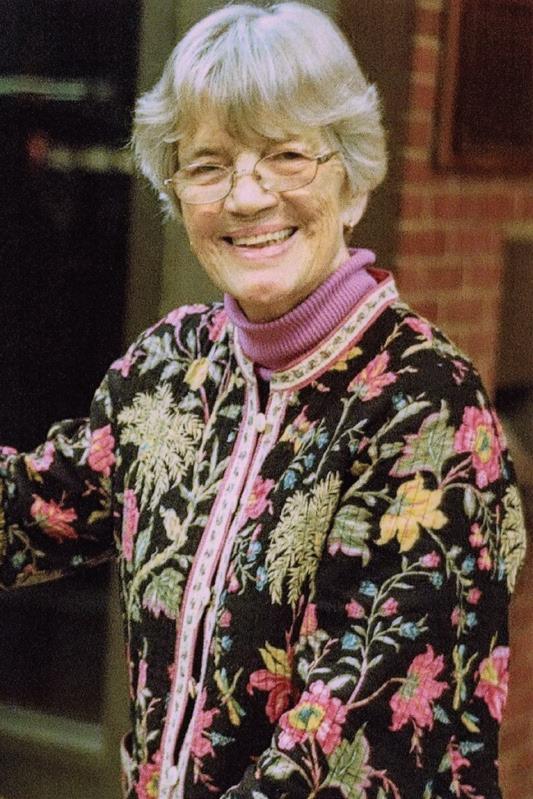
A cropped vertical version of the picture is also shown, the equivalent of a picture that might have been made with a 75mm lens, since the short dimension of a 50 frame is equal to the long dimension of a 75 at any distance. This is an added benefit of using a 50 for this kind of picture, making it effectively two lenses in one, with no time lost in lens changing, and being able to keep the camera in horizontal format for quicker rangefinder use.
A fully automatic digital focus and exposure camera would have gotten a picture, but it would have taken a little longer for the camera to react after the button was pushed, especially if the metering dictated some extra exposure compensation to be dialed in for the bright figure against the dark background. In that case I would have had to settle for the equivalent of the second picture, which wouldn't have been quite as genuine.
Reeve liked the picture, and asked permission to use it for publicity. So the cropped 75mm version now graces the top of the introductory page of the Jan/Feb 2020 issue of Victoria Magazine, where she is named the magazine's 2020 WriterIn-Residence.
film or digital: why choose ?
by DAVID KNOBLE
eveloped forum threads with too many pages to show and dates going back years will discuss the pros and cons of choosing film or digital as a medium for photography. Both sides bring strong arguments of the right choice. I continue to ask myself, why choose in the first place?
Black and white film has its roots and, compared to color, negatives remain relatively easy to develop at home and then scan to combine on hard drives next to other digital images. Film companies are continuing to release new formulas and Kodak Tri-X and llford films never left the market. Mainstream stores still have chemicals available to purchase (which tells you a lot about their thoughts on the film photography market)
I thoroughly enjoy shooting black and white film for a number of reasons. I embrace the surprise of taking an image and developing the negative. I build on the confidence received after shooting so much film that I’m sure an image will come out fine after pressing the shutter, and I love the challenge of the whole process. I smile at the organic look of film and the absolute non-electronic, mechanical nature of film cameras. Film, for me is an entire artistic process that takes but fraction of a second to start, but much more time to complete.
However, digital is old enough now that RAW images also have their roots in today's photography - even with older folks like me! Even with a higher initial cost, fast workflows and arguably recycling of SD cards, digital has some strong benefits over film. Today, Leica cameras capture wide dynamic range images approaching or exceeding film, immediately saving them to a memory card. With the newest Leica M10 Monochrom, 41 megapixels of pure black and white sensor is available to travel with. The fact that the M10 camera bodies are all essentially the same size as the Leica film bodies makes carrying both easy. To really mix things up, I also enjoy using the Leica M10-D which has a thumb rest in the shape of a film advance lever and no LCD providing the same wait-and-see that film provides.
With these digital benefits, why might I suggest that such seemingly different tools should both be used together? Tool is certainly a key word and time is necessary to produce final images with both crafts, albeit in different aspects of the workflow. But, photography is about making photographs. I think by sharing a few stories you might get the picture ;)
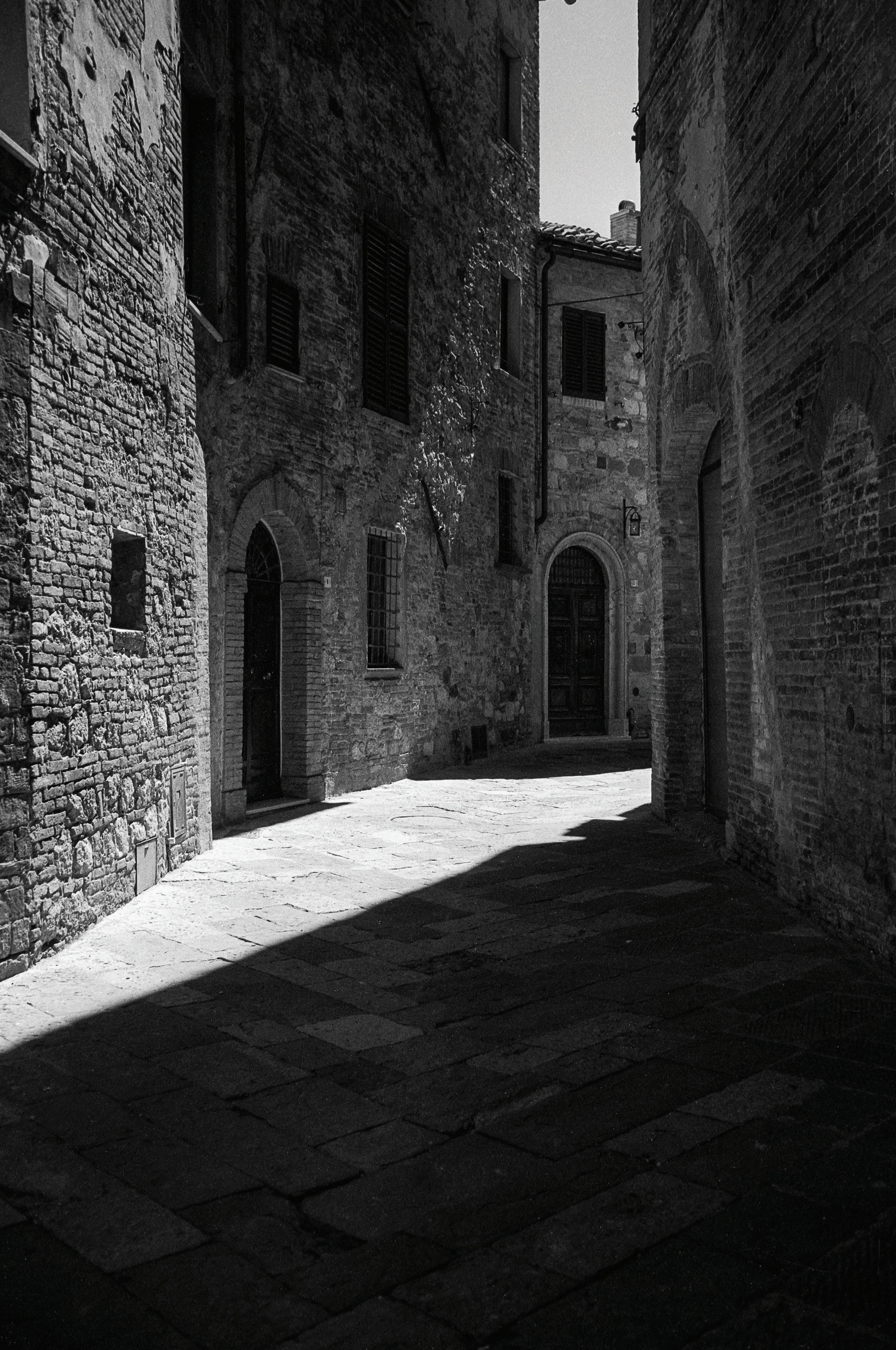
The Tuscany story comes first. We spent two weeks staying in a very small town in Tuscany with our children and several other couples. The house we stayed in was part of the town wall from the 15 th century and the walls were two and threefoot thick stone slabs. The town was only a few blocks in each direction and we were the only English speaking groupeveryone else was local.
I brought a small kit with me consisting of an a-la-carte Leica MP with the 0.85 finder (which I call my MP3 because 0.85 is the closest to the 0.91 M3 viewfinder today). I also brought the Leica SL and three M lenses - the Summicron 35 ASPH, the Noctilux 50mm 0.95 and the APO Summicron 90mm. Along with 16 rolls of Tri-X 400, I had two SL batteries and a charger.
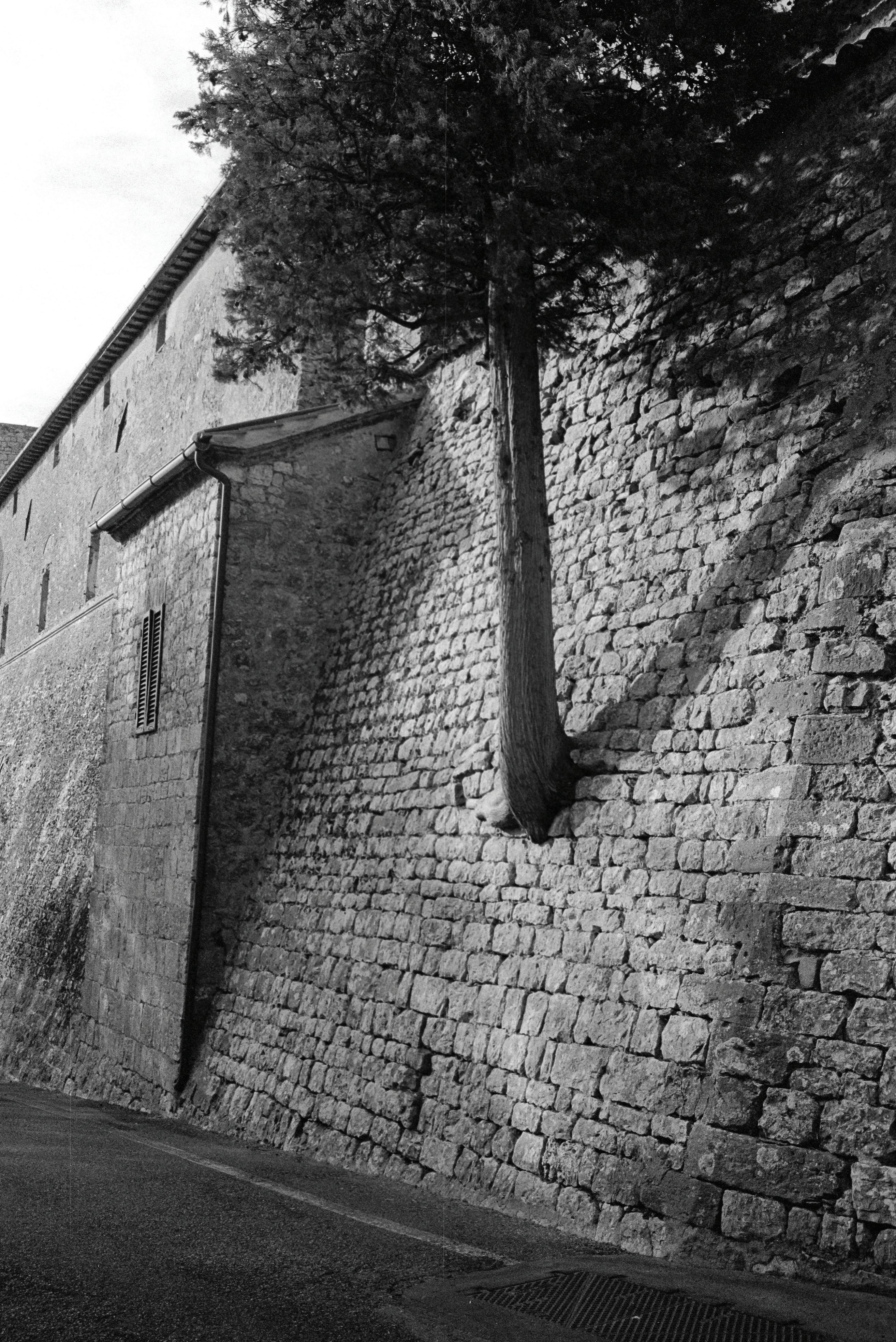
I shot some film the first day especially around this little village that looked like it was straight from the medieval history books with old trees growing straight out of stone walls. In fact, I speak French fairly well, but know only three words or so in Italian. So, when I went to the small nook that had groceries in the center of the village, I started with ‘Bon Giorno’ and from there started using hand signals. It was slow and agonizing, but I made it through. By the end of our time there, I would come in and wave to be greeted with a smile and an exchange of Bon Giorno’s . They were an incredibly friendly family.
The second day I pulled out the SL, checked the battery level and SD cards and went to mount a lens. The second day would be color photography, or so I thought. After 20 minutes of dumping out my suitcase and my camera bag I realized with heavy heart that my M-Adapter-L must still be on my desk at home. With no way to mount a lens on the SL, it became a glorified paper weight. I shot film the second day, the third day and then the fourth day we went to Florence - and I shot more film.
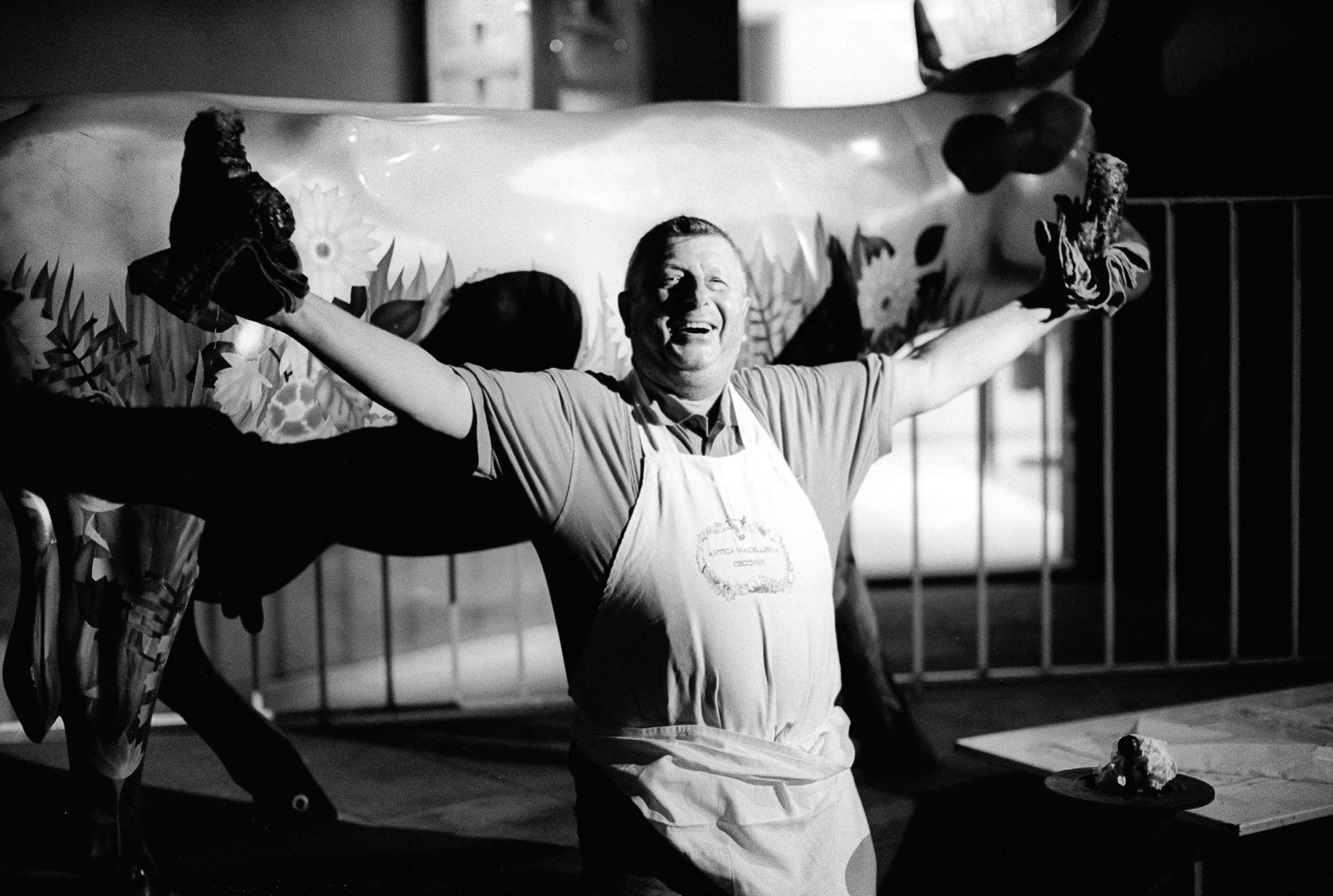
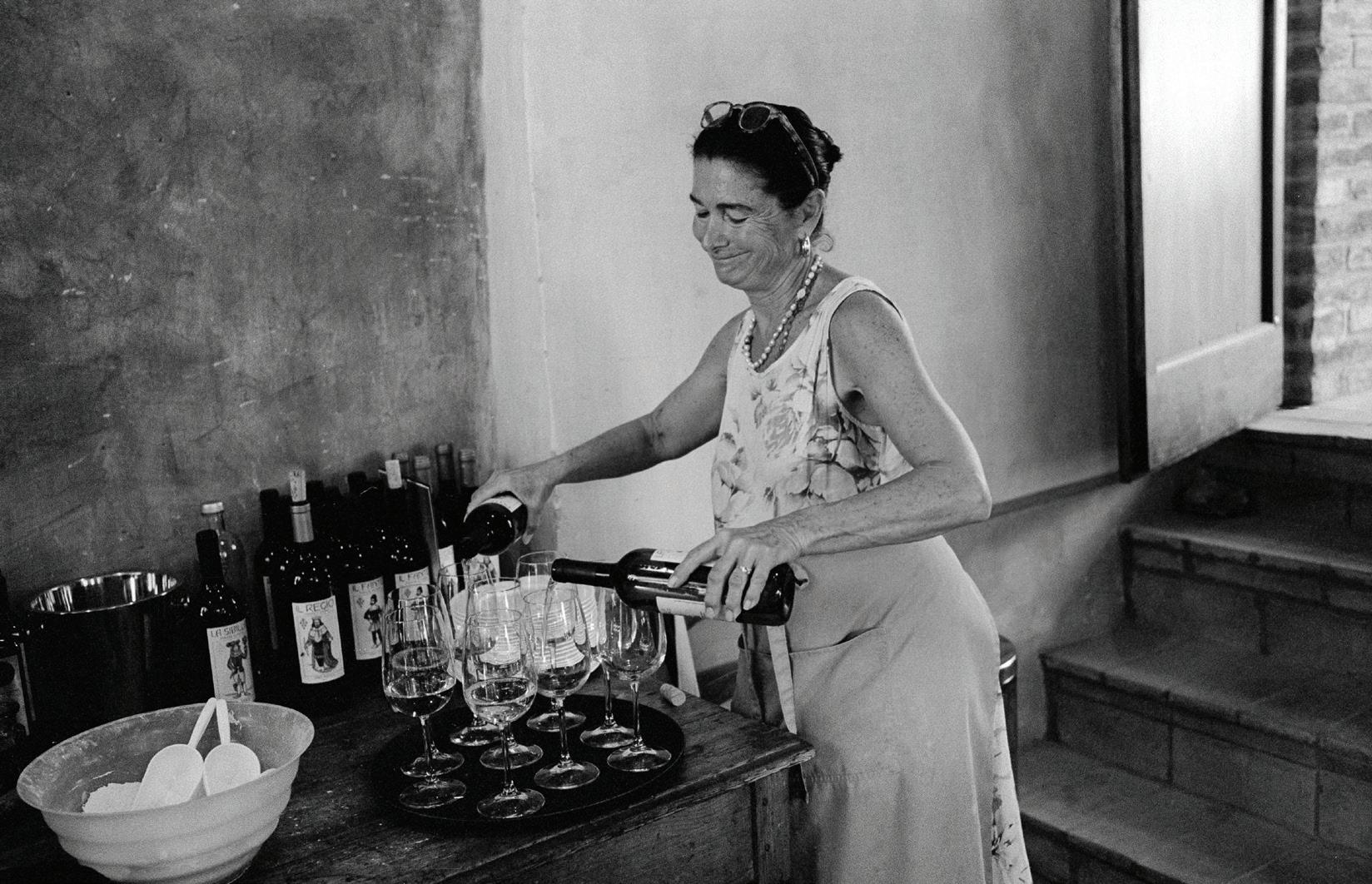
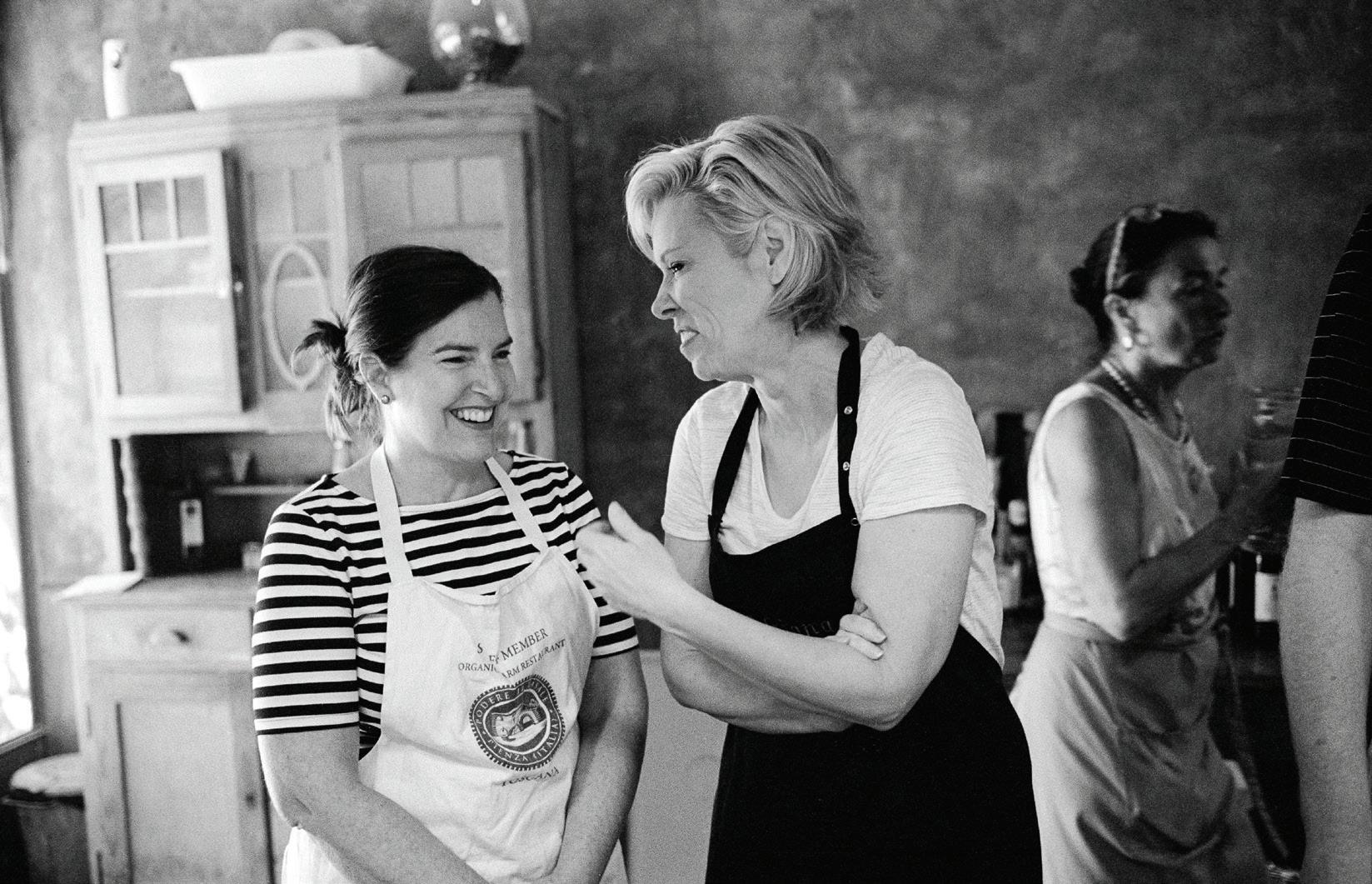
Honestly, after I got over the fact that I did not go through my gear thoroughly enough before we left, I knew I would enjoy continuing to take photographs, albeit on film. The small town we stayed in had a cat that used to seek me out when I would walk and look for photographs. We visited an organic farm overlooking the road to Rome and scenery from the movie, “Gladiator.” There we made pizza dough and cooked oven fired pizzas for lunch. Another small town had a beef restaurant where the only item on the menu was, beef. Placemats mapped out the various parts and cuts of beef and appetizers and entrees were delectable. One of the chefs posed for me outside by the large painted bull by the entrance.
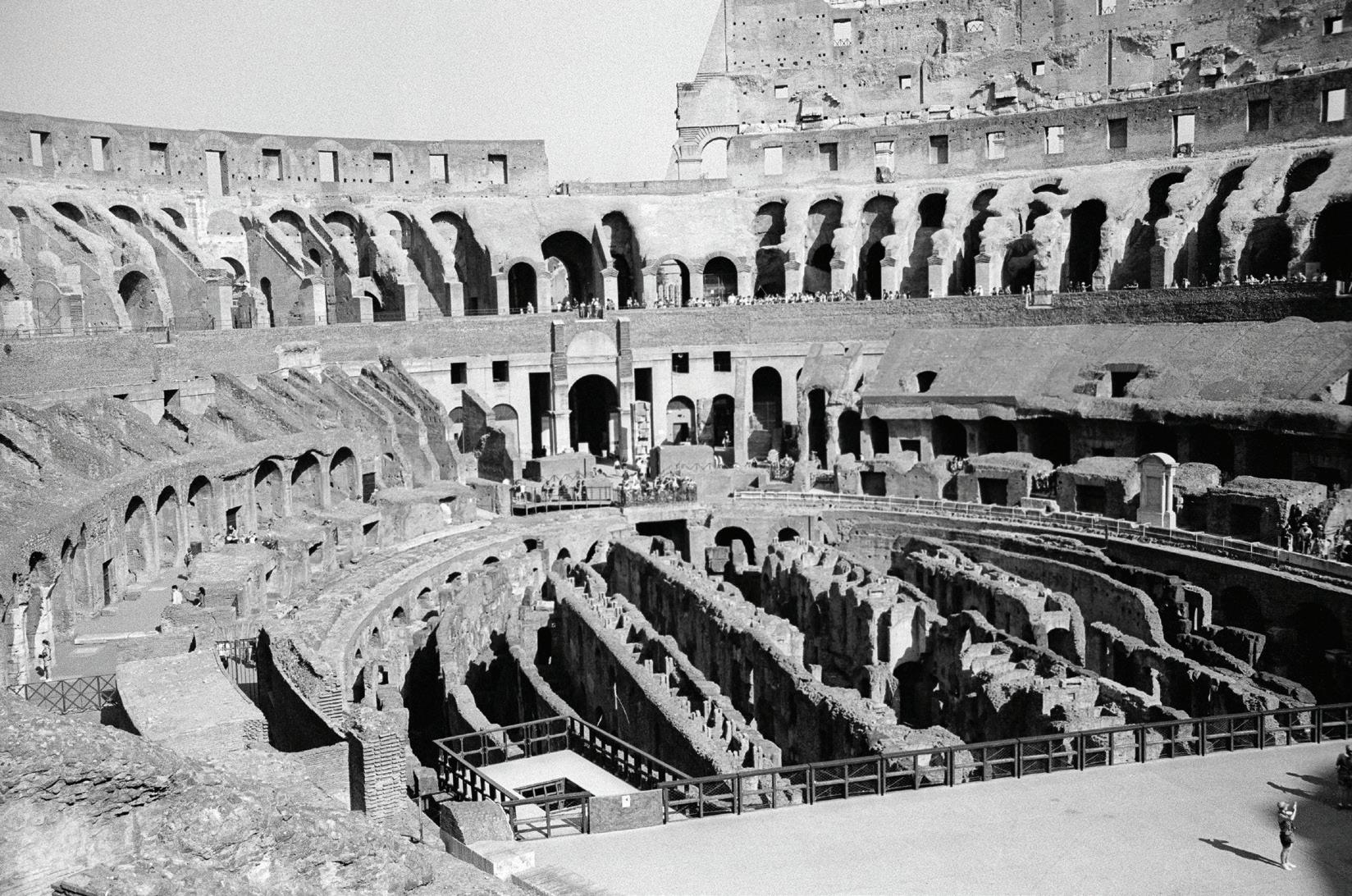
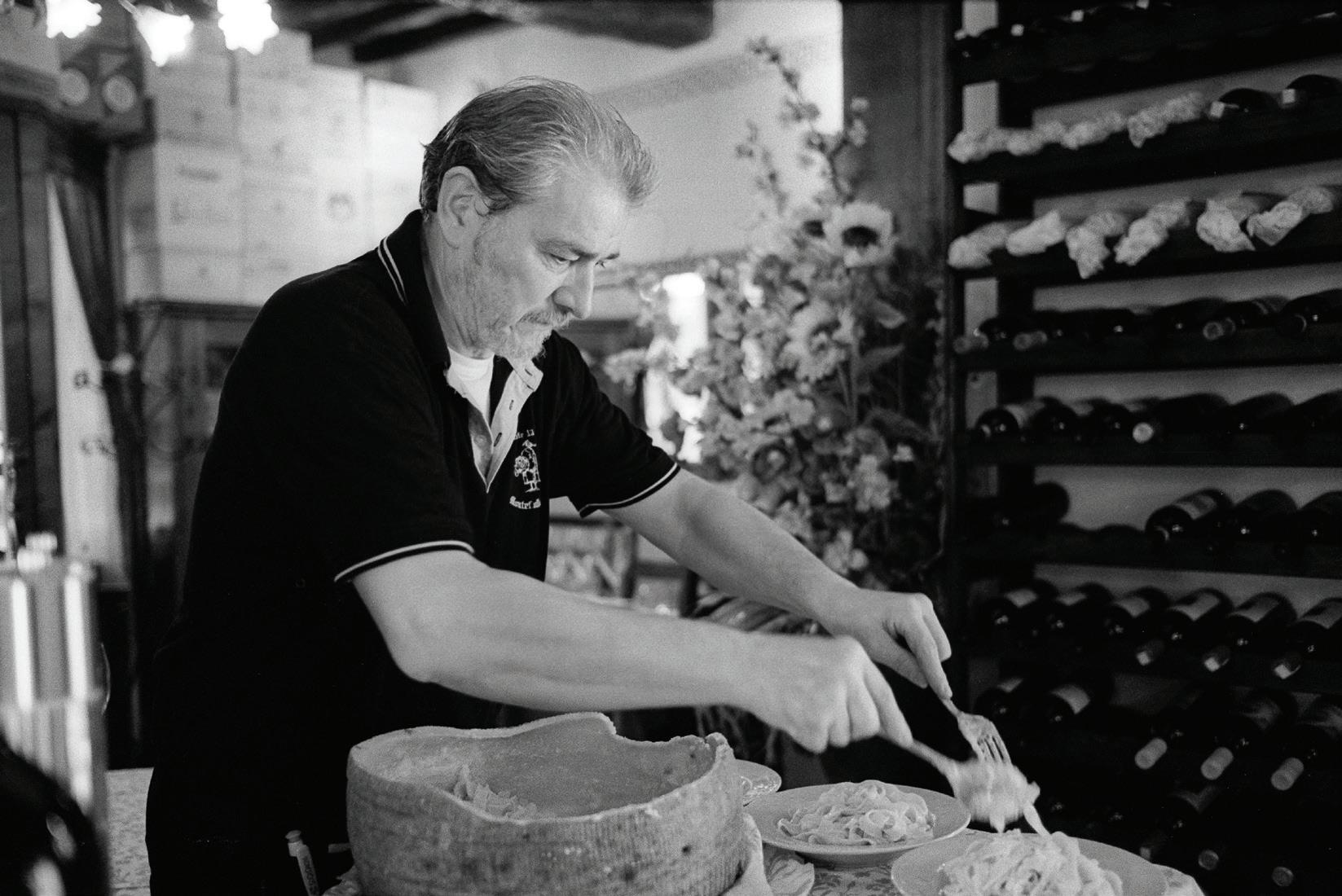
Tuscany is an incredible area of the world where small villages have at least one church and one local place to eat. Wine is inexpensive, low in alcohol content, made locally and incredibly good with every meal. Another small town brought us lunch that was fresh, hot pasta placed in a hollowed out cheese wheel where everything melted together. The owners son, a waiter, loved my Leica film camera and we talked, in broken English, about film and cameras. Of course, Rome was also a great place to visit, but the bustle of the city can be a little overwhelming once you get used to the quiet countryside. The Rome Colosseum was grander than it seems in pictures, and the Emperor’s palace on Palantine Hill nearby is expansive
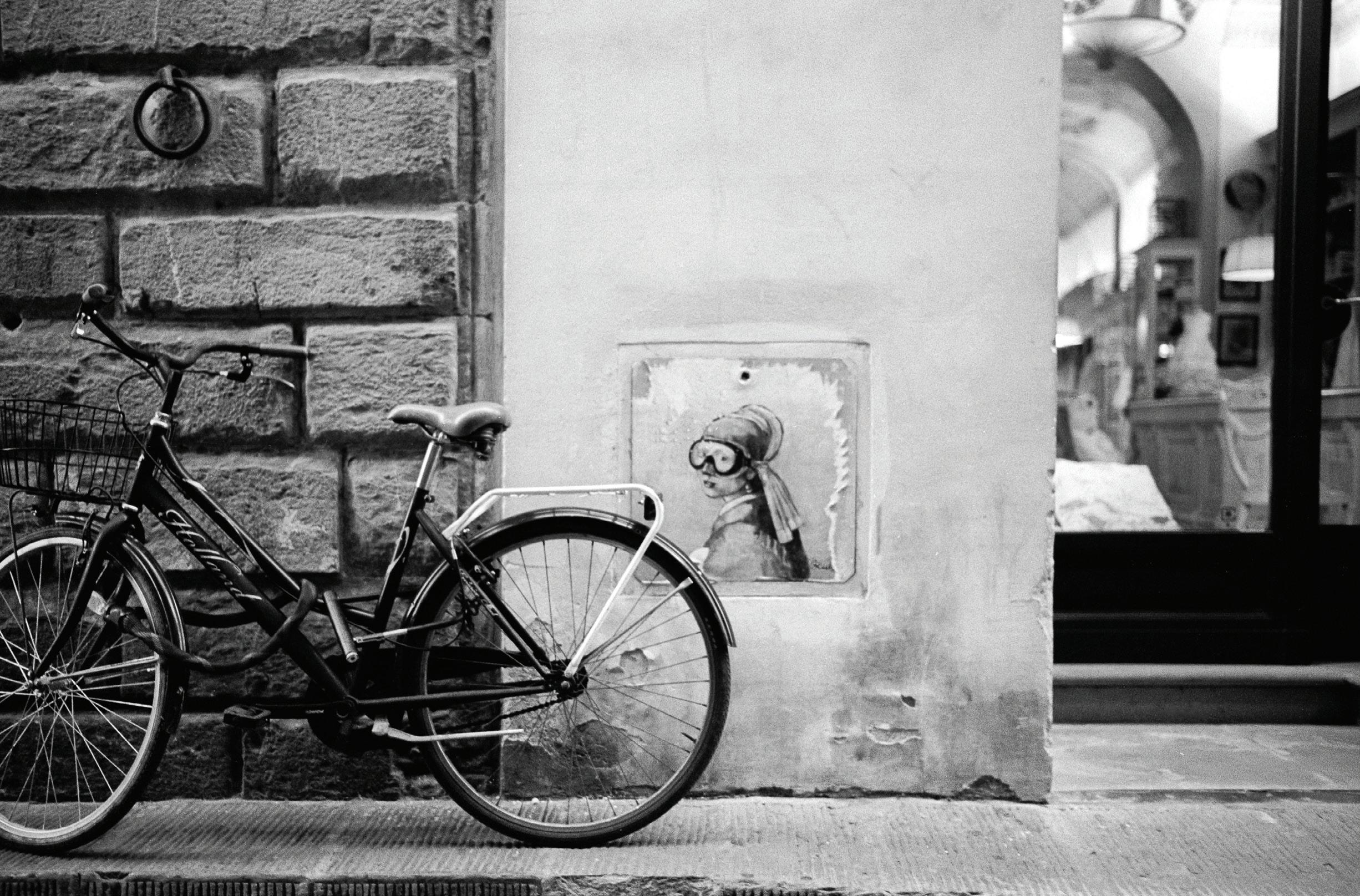
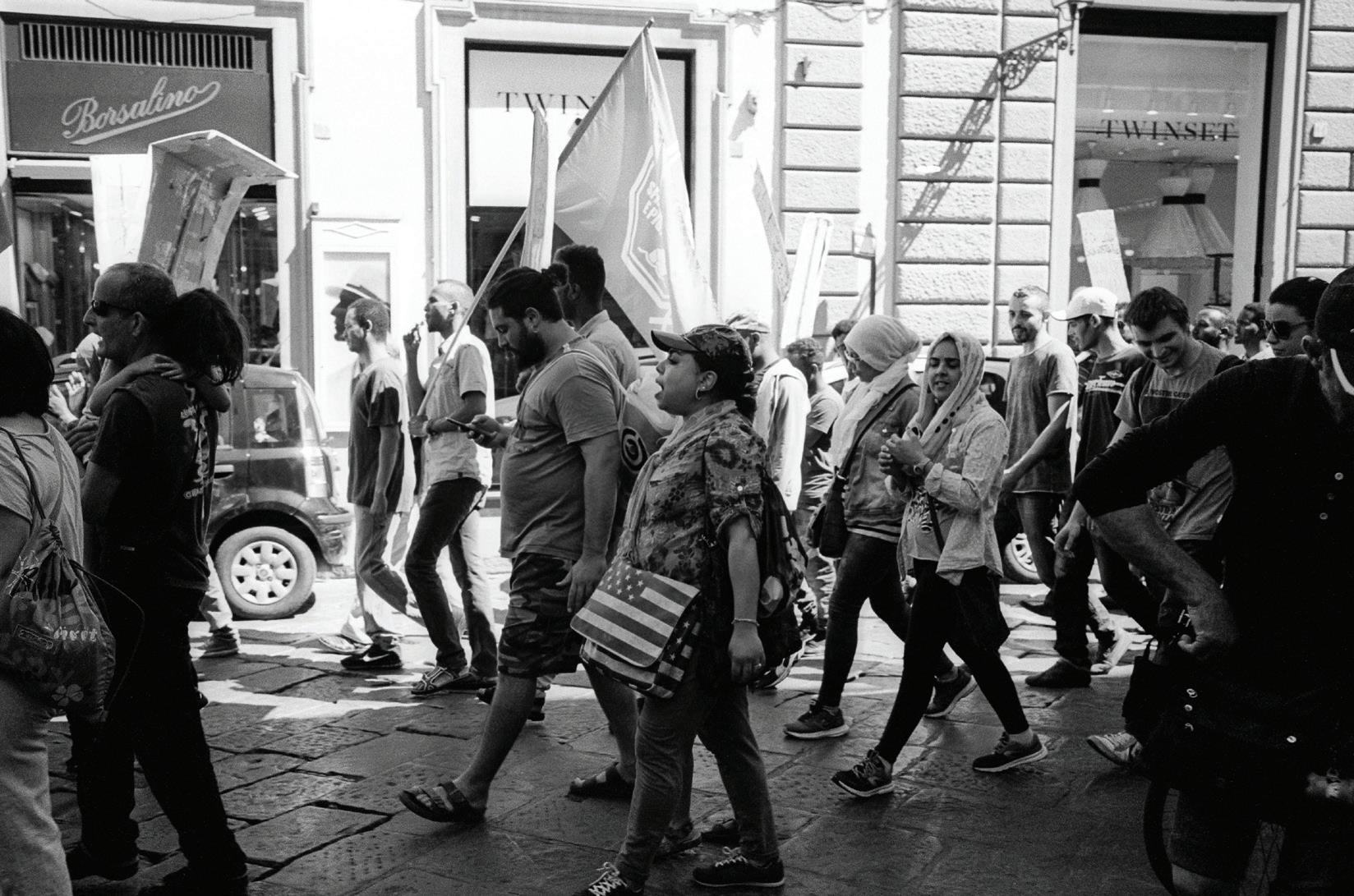
even if essentially in ruins. Walking around Rome and Florence provided an endless supply of content, but the limited film forced me to think before shooting. We even walked by a square as a planned protest was coming through - one lady wearing a Stars and Stripes purse and a photographer clearly thinking I was in the way.
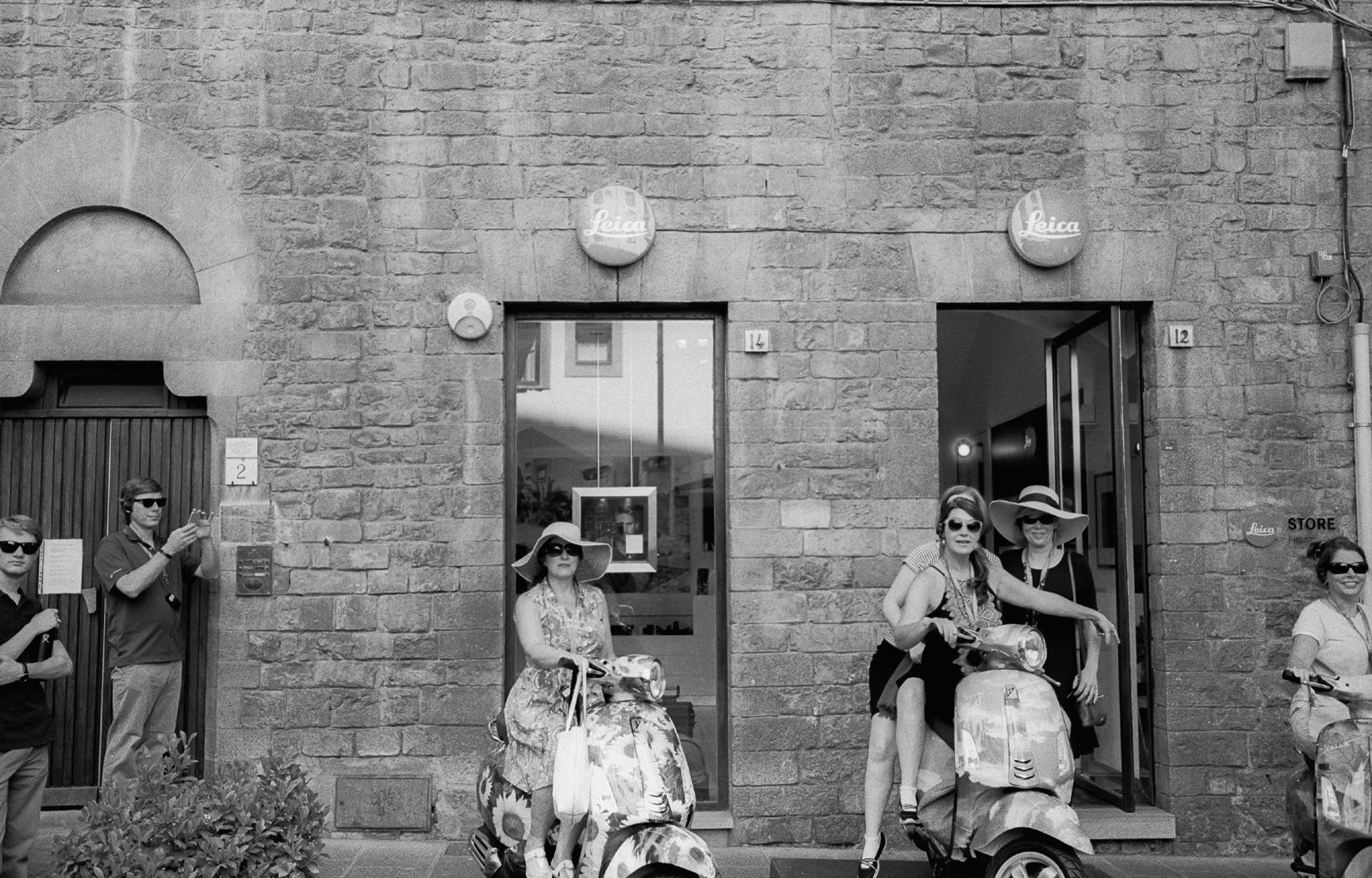
One of my favorite images from this trip, although nowhere near the best technically, was an image of our group getting on what appeared to be a fake motorcycles mounted to the ground. It looked like a nice place to sit and became a great snapshot opportunity. It was not until after I took the image when my wife remarked, “Hey, isn’t that a Leica store? Do you think they have what you need?” Sure enough, with a great shout-out to Leica Firenze (Florence), I ran in and bought an M-Adapter-L and stuck it in my camera bag. The rest of the trip I still alternated between film and digital, but I was really happy I had my film MP to start the trip.
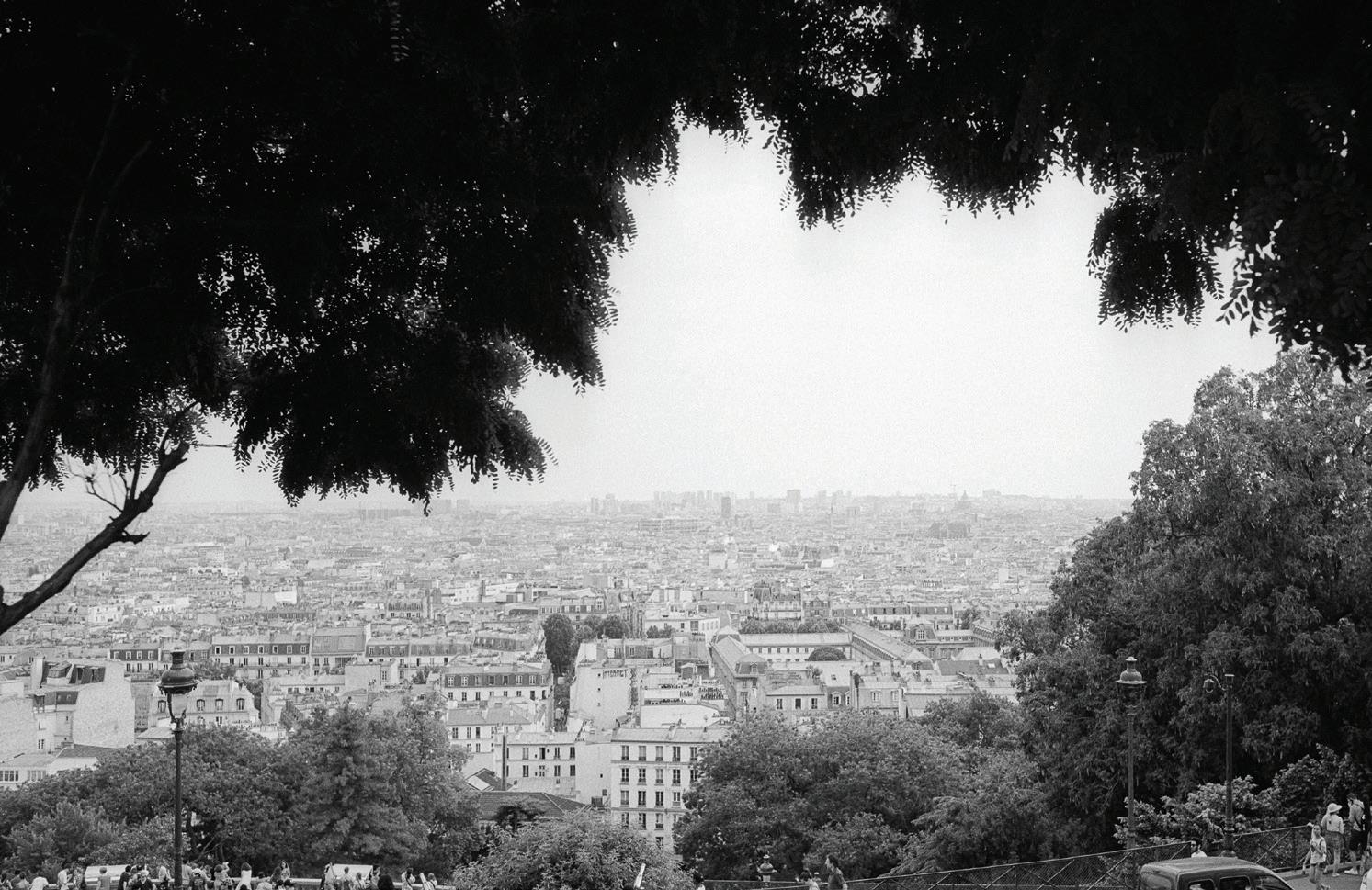
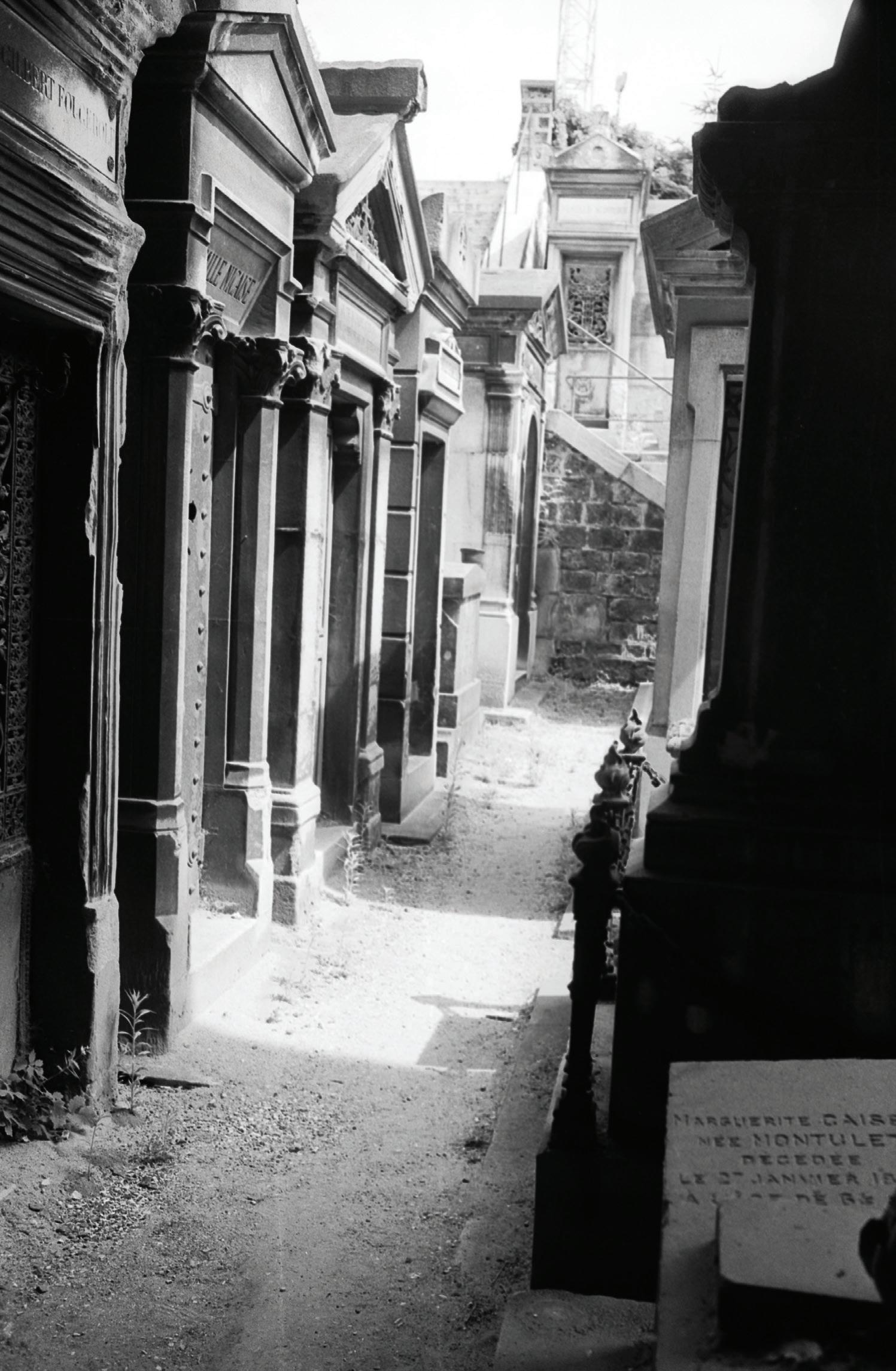
On another occasion a few years prior, we were in Paris with my youngest son and had gone out for a walk. With iPhones today there are great apps to help you plan a walk in cities you know little about. This particular walk went through Montmartre and ended at the Sacré-Cœur Basilica with a breathtaking view of Paris. I had decided to take my MP 0.85 loaded with Ilford FP4+ 125 speed film. As we walked I started taking photographs. We entered the ‘graveyard’ and as luck would have it, the battery in my MP died. Without a replacement in my pocket, and with no external light meter, I began using the sunny-16 rule. For the rest of the afternoon, I guessed at exposures and took photographs.
I enjoyed putting multiple rolls of film through my Leica on this trip. Luckily, I did bring extra batteries in my suitcase for the MP. After replacing the one that no longer worked, I continued to shoot film. We had great weather at Monet’s house and the Château de Chenonceau in the Loire Valley that spans the Cher river and was very significant in World War II. Of course, the Champs Elysées and the Arc de Triomphe are fun to walk as well.
Film provided a great creative outlet for this vacation and again forced me to think before shooting because of the limited supply of frames. I also have some great digital images of the Notre-Dame Cathedral, the Eiffel Tower and various museums and other locations and I was never worried about my SD cards getting through the airport x-rays.
One of the great aspects of shooting film is the mechanical nature of the camera which enabled me to continue exposing film even without a light meter or a battery. If there is one compelling reason to enjoy film, it is the flexibility under so many diverse conditions. Cold. Wet. Hot. Dry. All types of weather and temperatures work with film. No battery chargers
or other outlets are necessary and solar powered cells are not needed. I have used my Leica MP’s in the rain and snow with no ill effects. Yet, I have also shot my Leica SL and S007 in the pouring rain and snow with no ill effects!
Obviously, the advantages are different between film and digital. Clearly one advantage of digital photography is the immediacy of seeing the image and potentially making adjustments to take more images. Black and white films provide high levels of dynamic range and negatives make great physical backups next to fault-prone hard drives. Full Frame negatives to Full Frame digital sensors are still comparable, although there will be a point in time where that is not the case as digital technologies continue to develop. To make an easy comparison, my negative scans, in DNG format average about 35 megabytes. My M10 Monochrom DNGs average just a little larger.
Another case in point is the Leica S system. The S007 boasts 15 stops of dynamic range, which even the new Leica SL2 does not yet match. I was recently discussing the Leica lenses of the S007 on a forum and made an interesting comparison. If you have grown up in the digital camera era, think about this - in film days we had 35mm cameras of all different types that used the same interchangeable sensor (i.e., 35mm film like Kodak Tri-X) and given the same exposure, the lens was what made the difference in the final image, the film was the same. Today, we essentially buy a digital camera with a unique film as each sensor is manipulated differently by the camera manufacturer. Then, we pair a lens to that “film” and take photographs. Instead of comparing technique between two images of the same film, we compare image resolution and noise from a combination of unique digital sensor and lens.
If you have the time and patience, black and white film can be rewarding. If you have thought about trying film, then you can pickup an older M-4 or M-6 (non TTL) for reasonable prices and use them with other Leica M Lenses. I will begin writing some focused, short articles on film development, sharing tips and techniques I have learned about development and scanning. So, do not worry about choosing film over digital as a medium for your photography. Instead spend some time perfecting both!
All the images here were taken with black and white film.
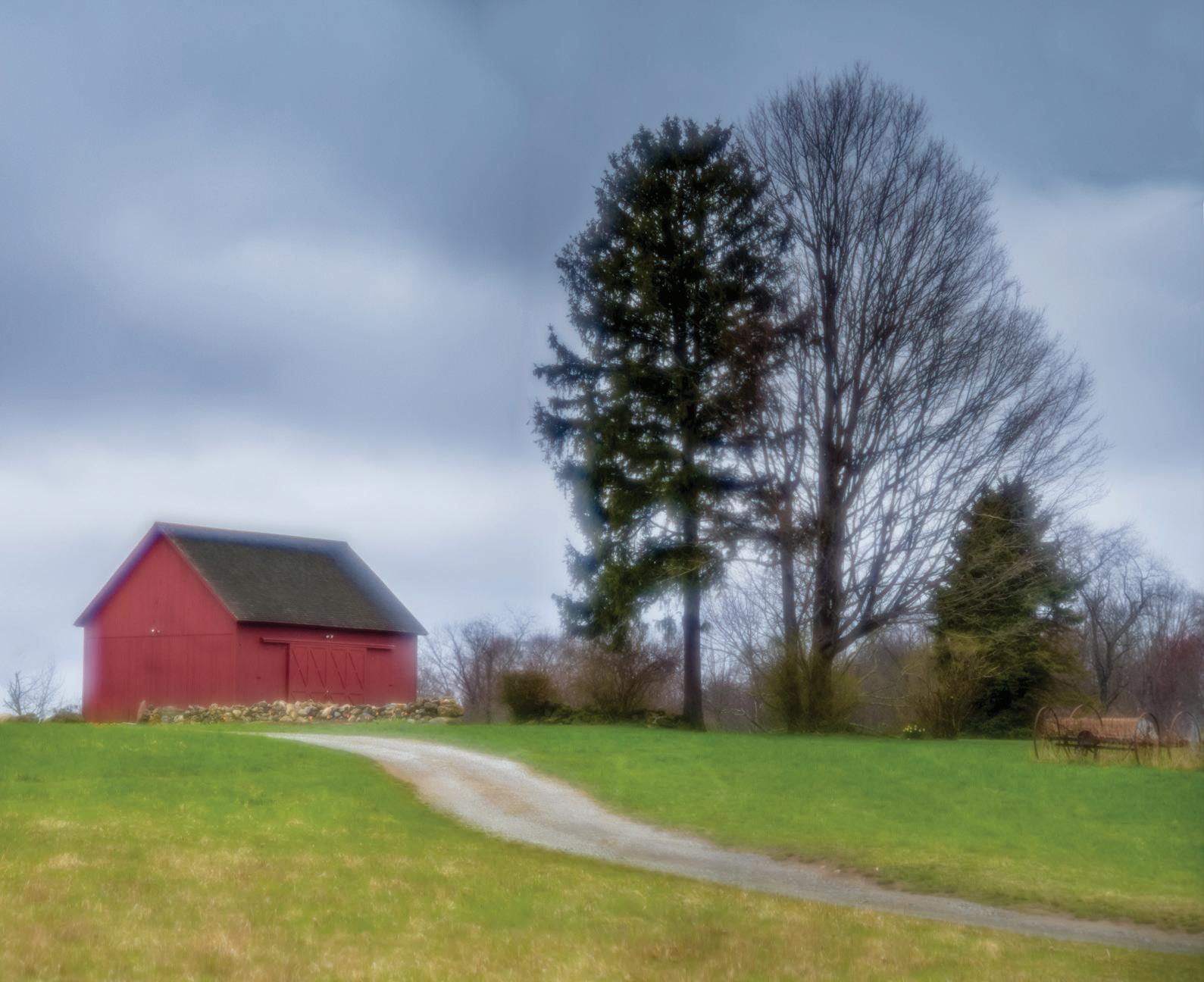
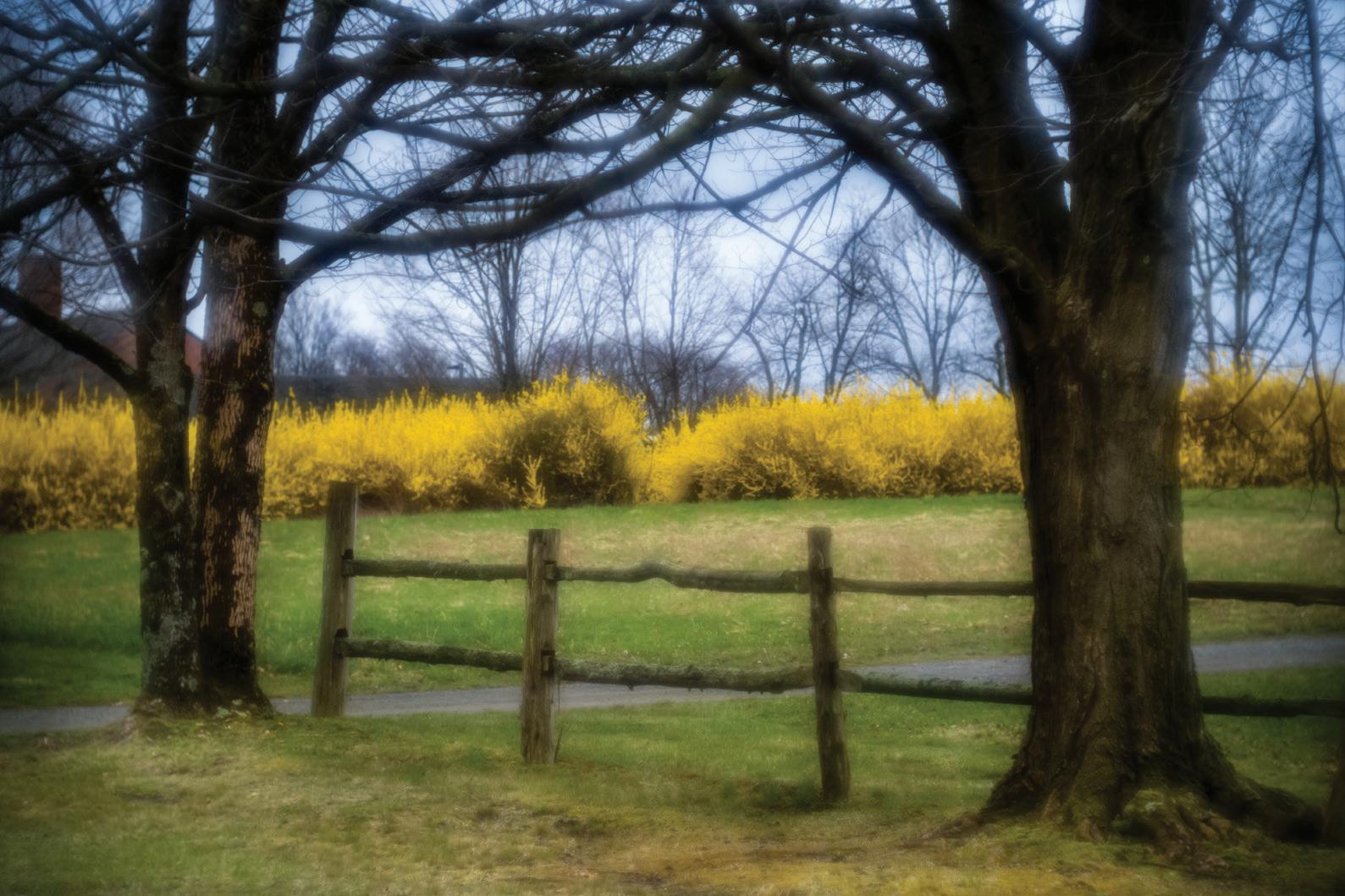
(top) Red Barn, Redding, CT. Leica M10 & Thambar-M 90mm f/2.2 at f/2.4, 1/2000 sec, ISO 400. (bottom) Fence & Forsythia, Redding, CT. Leica M10 & Thambar-M 90mm f/2.2 at f/2.8, 1/4000 sec, ISO 1000.
early days
PRELUDE TO THE SPRING
by ALBERT B. KNAPP MD & RUTH ORATZ MD
March and April 2020 we found ourselves distanced from our family and friends, living in an isolated way at our heretofore weekend home in Redding, Connecticut. The COVID-19 pandemic put a halt to the normal routines of a full and busy professional and personal life in New York City. Albert’s private gastroenterology practice closed completely; Ruth transitioned to telemedicine video visits for her breast cancer patients. The days were cool, damp, and admittedly gloomy. The grim news of sickness and death hovered in the air. We turned to photography, walking alone together through the woodlands of Southern Connecticut, to clear our heads, find solace and bring creative energy back into our world.
On these walks our thoughts ran to others who had trod here in New England. Henry David Thoreau in 1845 went to live at the woods of Walden Pond, outside of Concord, Massachusetts. In March of that year he described, “A pleasant hillside where I worked, covered with pine woods, through which I looked out on the pond, and a small open field in the woods where pines and hickories were springing up …. They were pleasant spring days, in which the winter of man’s discontent was thawing as well as the earth, and the life that had lain torpid began to stretch itself.”
Like Thoreau, almost two centuries ago, we walked away from town, from houses and red barns and fenced in fields where yellow forsythia bloomed, into the quiet unadorned woods for solitude, reflection and a closer connection to our natural environment. We walked with our cameras, each finding a personal vision in the subdued hush of the empty forest. We realized that we had embarked on another photo adventure, not traveling to the distant reaches of far away continents, but literally in our backyard, discovering a new world to explore in a Leica way.
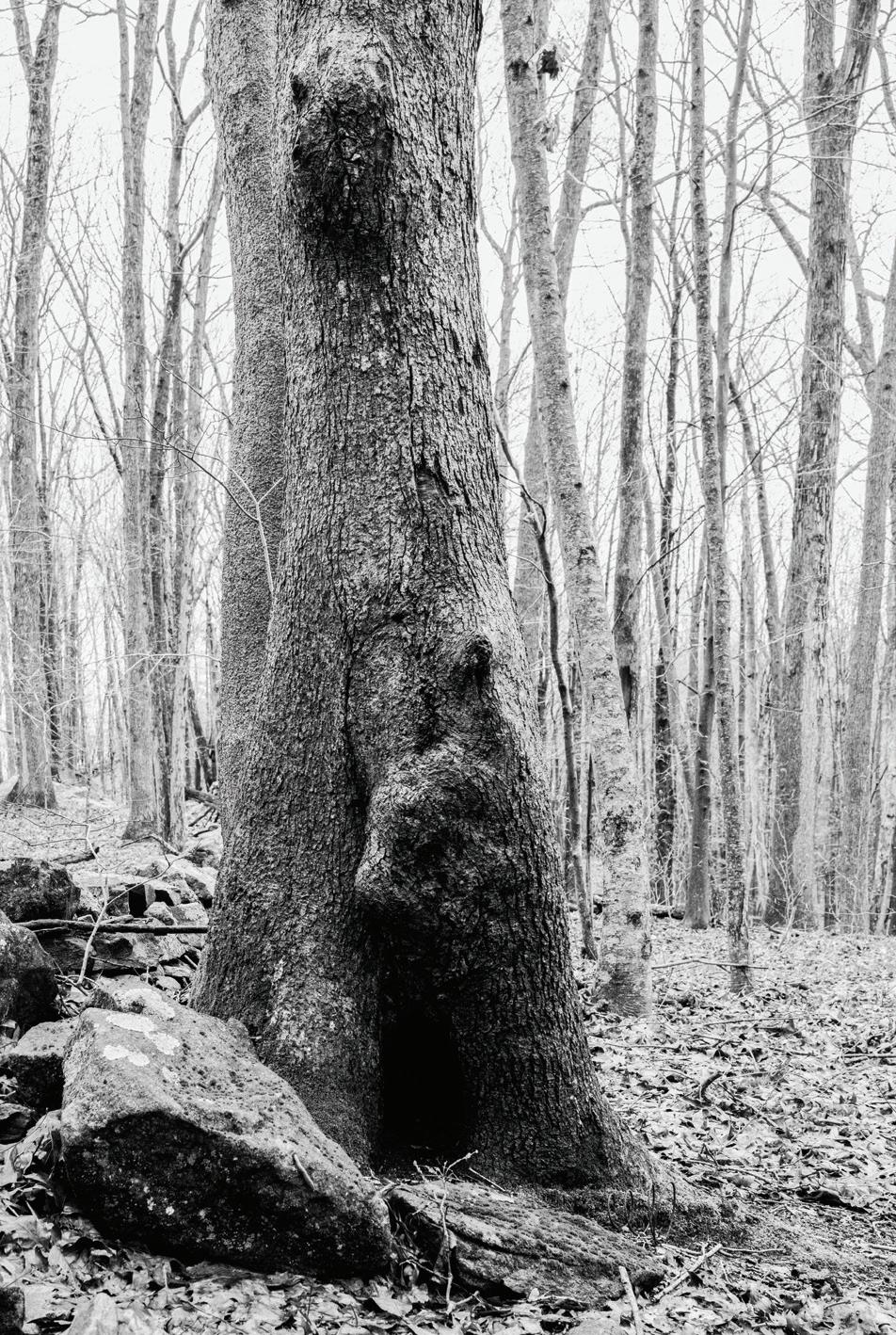
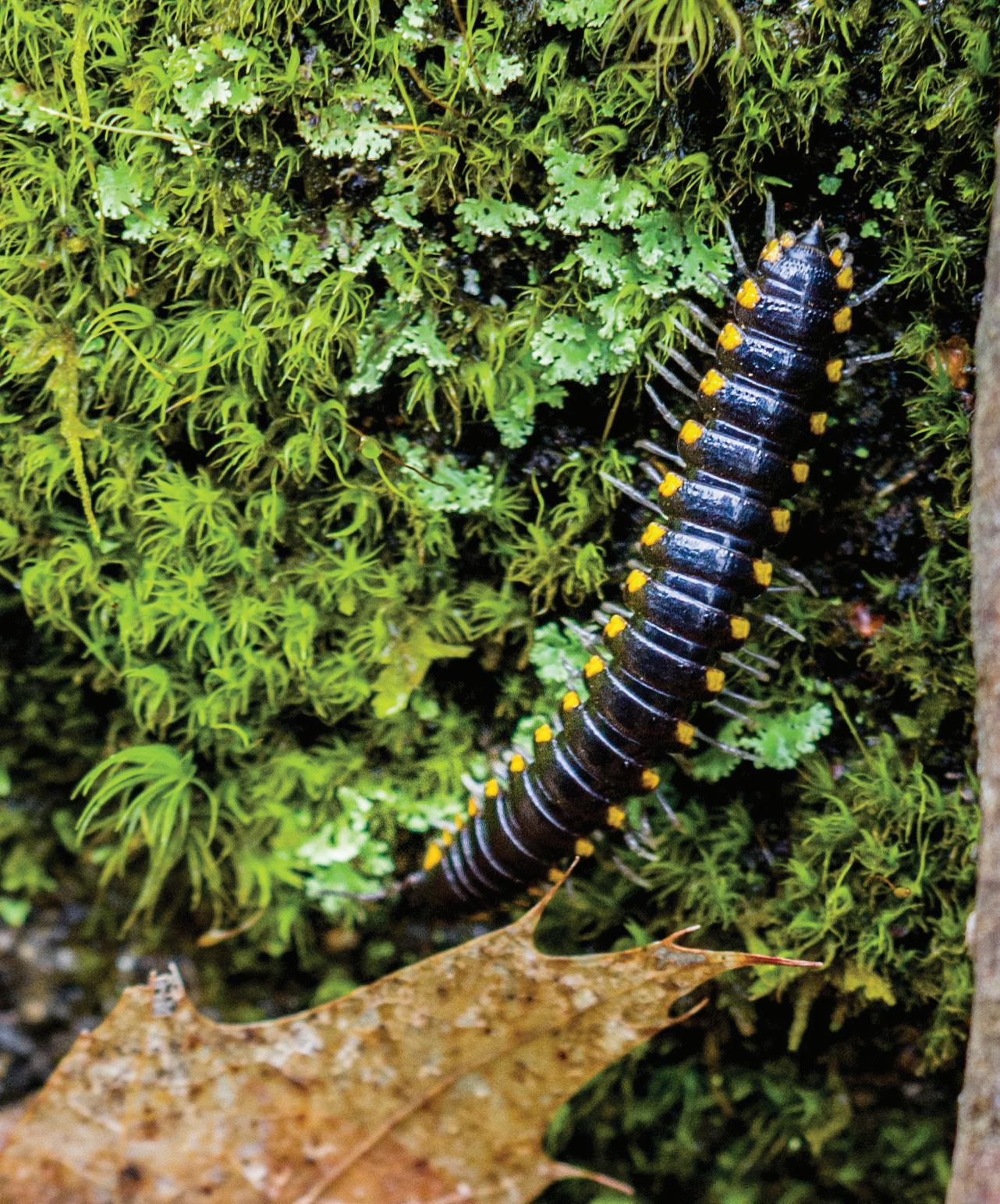
Ruth relied on the Q2, comfortable, portable and versatile. She saw the big sweeps but as always could walk in close to the details that even in low light are beautifully captured by the Q2. A black and white rendition revealed a bear in the woods, moving in very close and settling down into the forest floor found a black and gold millipede. The weatherproofed Q2 case protected her camera during frequent rains. Albert carried his wonderful M10 and chose to photograph the landscapes solely with his 90mm f/2.2 Thambar lens – taking advantage of the deliberate and calibrated chromatic aberration generated in these images, to render dreamy, impressionistic pictures. He used the center spot filter most of the time as it gave a uniform look, so essential to landscape photography. He initially attempted to use the live view to calibrate the degree of chromatic aberration but eventually found it easier to just take sequential pictures at f/2.2, 2.4, 2.6. and 3.2 and select the optimal iteration in Lightroom. Albert was particularly surprised by the amount of chromatic aberration seen on sullen overcast days and eventually developed a feel for the chromatic aberration “sweet spot” so that he would only need two versions of the shot instead of four.
Redding is unique in Fairfield County because of the great effort made by the town’s citizens to keep Redding rural. There is no commercial development here; the Redding Land Trust holds more than 1500 acres of open space, preserving the natural wild-lands of the region. This part of Southern New England is a central hardwood forest. The white oak (Quercus alba) , state tree of Connecticut, predominates, with red oak, black oak and chestnut oak alongside. Partnered in these woods are hickories, birch, ash, dogwood, poplar, hemlock, pines, beech, and maples – both sugar and red. The understory is populated by mountain laurel (Kalmia latifolia) the state flower, along with low-bush blackberry, barberry, and high-bush blueberry. The forest floor is carpeted with mosses, lichens and ferns. Forever changing and evolving the woodlands revealed their gentle emergence from winter dormancy to early spring rejuvenation as we walked the trails.
Rocks and water are the other important components of the landscape here. Lying in the physiographic province called the New England Upland, the bedrock underlying the hills and valleys is mostly metamorphic, composed of schist, gneisses, and marble. These rocks are believed to be more than 600 million years old, dating to the Precambrian age. In more recent geologic time, Redding experienced glaciation. Between 10,000 – 15,000 years ago retreating ice sheets swept clean the rolling hills of the region, leaving some areas polished smooth and other slopes scratched and craggy. Large boulders were left behind. And in the valleys saturated with water, rivers and wetlands collected, creating productive aquifers. Four main watercourses resulted: the Aspetuck River, the Little River (which runs through our own property) , the Saugatuck River and the Norwalk River.
The woodlands, rocks and water of Redding combine to create a stunning and fragile ecosystem, which we have come to appreciate and respect as residents and stewards. As we walked in the woods, we were alone, quiet and pensive. Not unlike Thoreau at Walden. “A man thinking or working is always alone, let him be where he will. Solitude is not measured by the miles of space that intervene between a man and his fellows... The indescribable innocence and beneficence of Nature, - of sun and wind and rain of summer and winter, - such health, such cheer, they afford forever!...Shall I not have intelligence with the earth?”
We hope that our photographs offer our deep appreciation for the dignified natural beauty of our own home region, during the early days of spring and isolation.
(top) “Bear” in the Woods. Centennial Watershed State Forest, Easton, CT. Leica Q2 (28mm) at f/5.6, 1/125 sec, ISO 400. (bottom) Black & Gold Millipede (Apheloria Virginiensis).
Centennial Watershed State Forest, Easton, CT. Leica Q2 (28mm) at f/4, 1/125 sec, ISO 400.
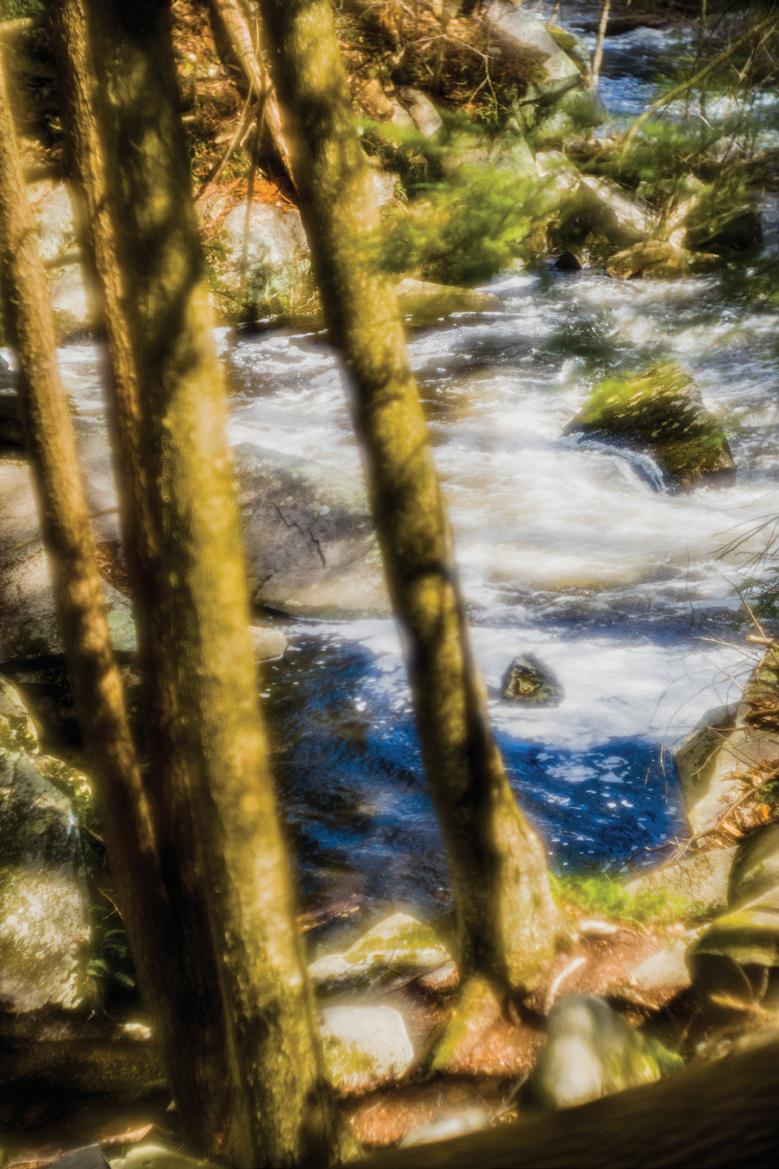
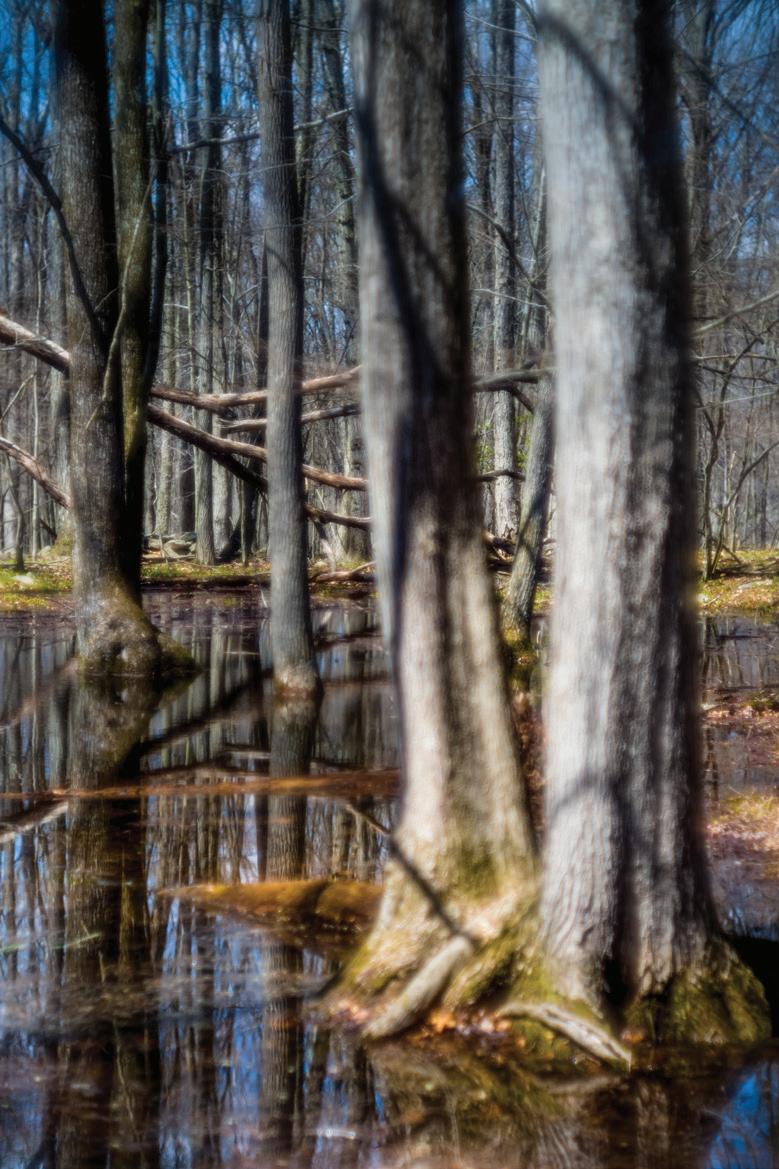
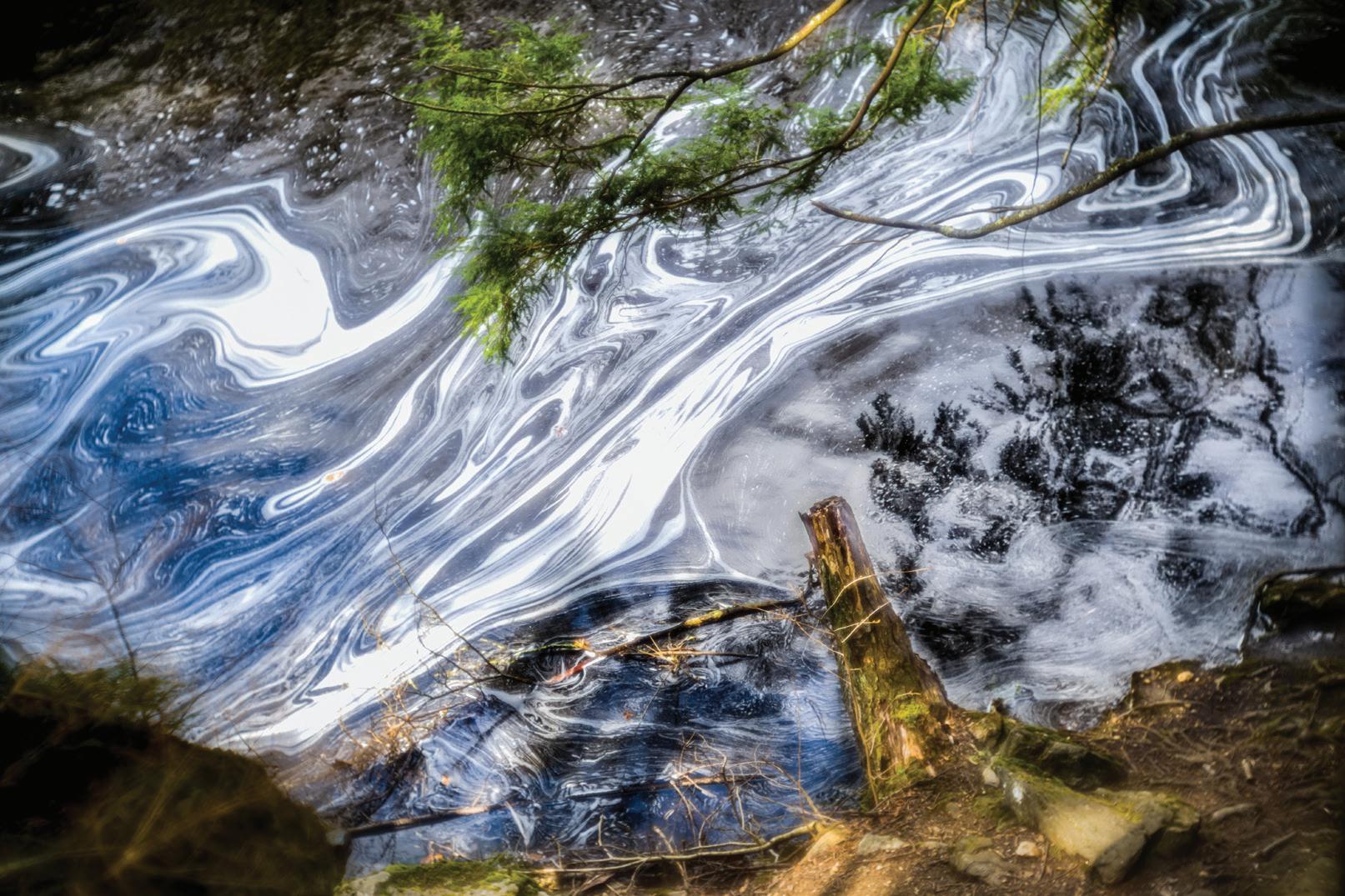
(top right) Saugatuck Falls Natural Area, Redding, CT. Leica M10 & Thambar-M 90mm f/2.2 at f/2.2, 1/1500 sec, ISO 200.
(top left) Saugatuck Falls Natural Area, Redding, CT. Leica M10 & Thambar-M 90mm f/2.2 at f/2.4, 1/2000 sec, ISO 400.
(bottom) Saugatuck Falls Natural Area, Redding, CT. Leica M10 & Thambar-M 90mm f/2.2 at f/2.4, 1/750 sec, ISO 200.
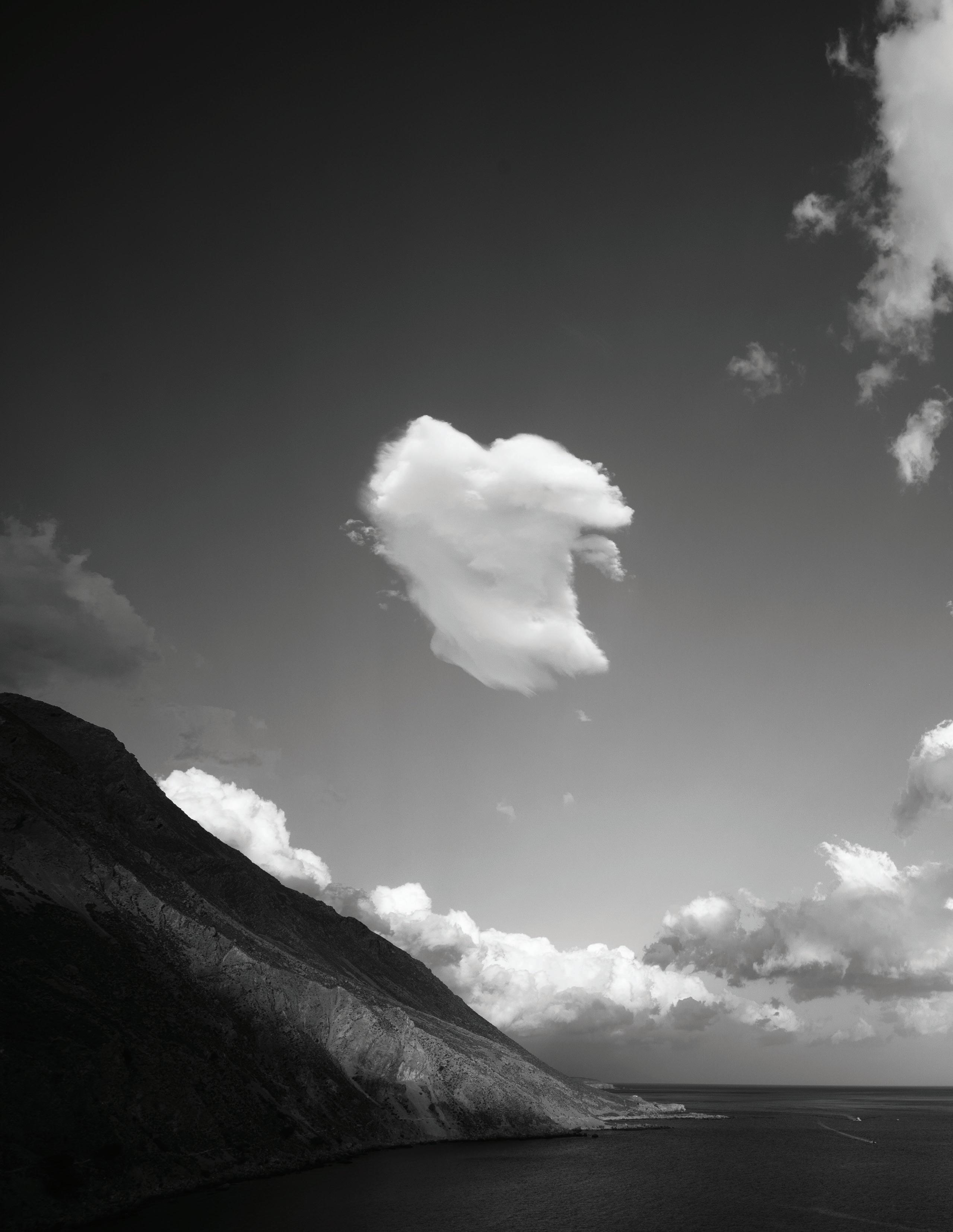
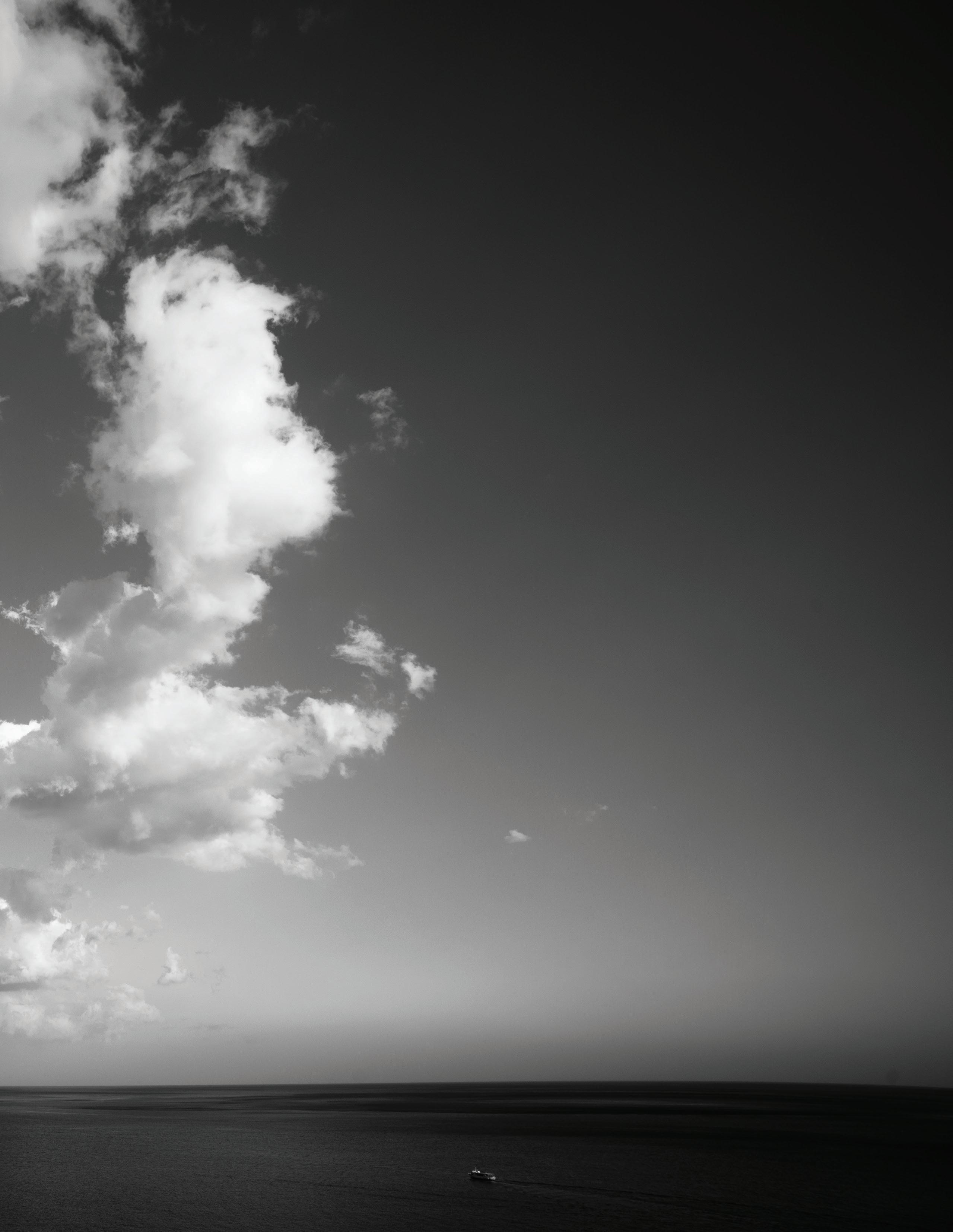
Cretan Clouds. Leica M10-R + 16-18-21mm
Tri-Elmar-M at 16mm and ISO 100.
the
LEICA M10-R
by JONATHAN SLACK
The lifecycle of Leica M cameras has led us to expect a Monochrom at the end of the line, and we have had it, the surprising and wonderful M10 Monochrom which was released in January this year ( www.slack.co.uk/leica-m10monochrom.html) . So, we’ve had the wonderful M10, the premium M10-P the minimalist M10-D, and the 40 megapixel M10 Monochrom, now we have to wait for the announctement of the M11 right?
Wrong!
It doesn’t require sixth sense to realise that if Leica can make a 40MP Monochrom sensor, then they can make a colour sensor at that resolution as well, and of course they have, so let’s welcome the M10-R, or should we welcome it? Let’s face it, the 24 mp of the Leica M10 is really quite enough for almost any photographic project, be it a brochure or a billboard.
I’m going to have a look at whether the extra resolution is worth it, and also at di ff erences in character and performance between the existing M10 sensor (in all the other colour M10 variant cameras) and the new sensor, and there really are di ff erences.
THE CAMERA
The camera itself looks like the original M10, it has none of the M10-P engravings and it has a normal red dot rather than the screw. Indeed it is only the sensor which has changed, However, the motherboard, buffer, processor, menus etc. are identical to the M10-P.
Leica has already maxed out the bu ff er size for the processor, so there isn’t a larger bu ff er, and of course the larger files mean that the camera is a little slower processing, and that the bu ff er is e ff ectively smaller. Having said this, I never lost a shot, and I’m not seeing many complaints from M10 Monochrom users about the speed.
THE SHUTTER
The shutter is the quiet version from the M10-P, which has been extremely popular with many people.
In common with some fashion and portrait photographers, I prefer the slightly louder M10 shutter as I like my subjects to know when I’ve taken a picture, it makes a good way to control the flow of a shoot. The perfect situation would be a ‘normal’ shutter sound like the M10 with the option of a silent electronic shutter, but I understand that the read-out speed of the M10 sensor is too slow for this.
I’ve shot wedding ceremonies from close up with the original M10 and never disturbed anyone with the noise. Personally, I prefer the sound of the quieter shutter, but it imposes limitations on shooting which the original M10 did not.
THE RESOLUTION
So the exchange is that you get more resolution and a di fferent sensor in return for a moderate decrease in shot to shot speed and bu ff er depth - is it worth it? Absolutely yes! That was certainly my first response, and after nearly a year with the camera, it still is.
Maybe a little explanation - I have been really happy with 24 megapixels. It seemed to me to be the sweet spot (and I
know I’m not alone ) - quite enough for a sensible amount of cropping, big enough for decent sized prints, fast processing and reasonable storage requirements.
Testing the Q2 slightly modified my opinion. It was great to get the higher resolution for the crop factors, but hey, I didn’t want an APS-C or Micro Four Thirds Leica. I like full frame! I think that this is why in the final analysis, I decided not to buy a Q or a Q2 - lovely to have a compact, full frame 28mm camera, but the crop factors were not so attractive and I often like to shoot at 50 and 75mm.
Using the SL2 and the M10-R has really convinced me of the value of extra resolution - it’s nice to have it for printing. It’s also nice to have it for cropping (if you need to) , it also encourages you to default to a slightly wider angle lens, in the knowledge that if you really do need to you can crop it later on. I tend to carry one less lens in my bag as a result of it. It’s also wonderful for landscapes with lots of detail.
I have used the M10-R with the following lenses:
16/18/21 Tri-Elmar-M Asph
28mm Summaron-M f/5.6 (modern version)
28mm Summicron-M f/2 Asph
28mm Summilux M f/1.4 Asph
35mm Summilux-M f/1.4 Asph
50mm Summilux-M f/1.4 50mm Asph
50mm APO-Summicron-M f/2
50mm Noctilux-M f/1.2 (Thanks for the loan- you know who you are!)
60mm Macro-Elmarit-R f/2.8
75mm APO-Summicron-M f/2
All these lenses worked really well with the camera and I haven’t seen any evidence of them being challenged by the extra resolution.
VIGNETTING
Rather like the M10 Monochrom the M10-R shows more vignetting than previous digital M cameras. When shooting portraits (or still life or close up) wide open, this can be a positive advantage. If you’re shooting landscapes however, then you will probably want to stop down enough to make the vignetting insignificant. It seems to be more noticeable with wide angle lenses (as you would expect) . If it’s undesirable, then it’s easy to fix in post processing, but with the risk of creating more noise in the corners.
Sean Reid (www.reidreviews.com) is going to look at this in more detail with specific lenses if it’s something likely to cause you concern.
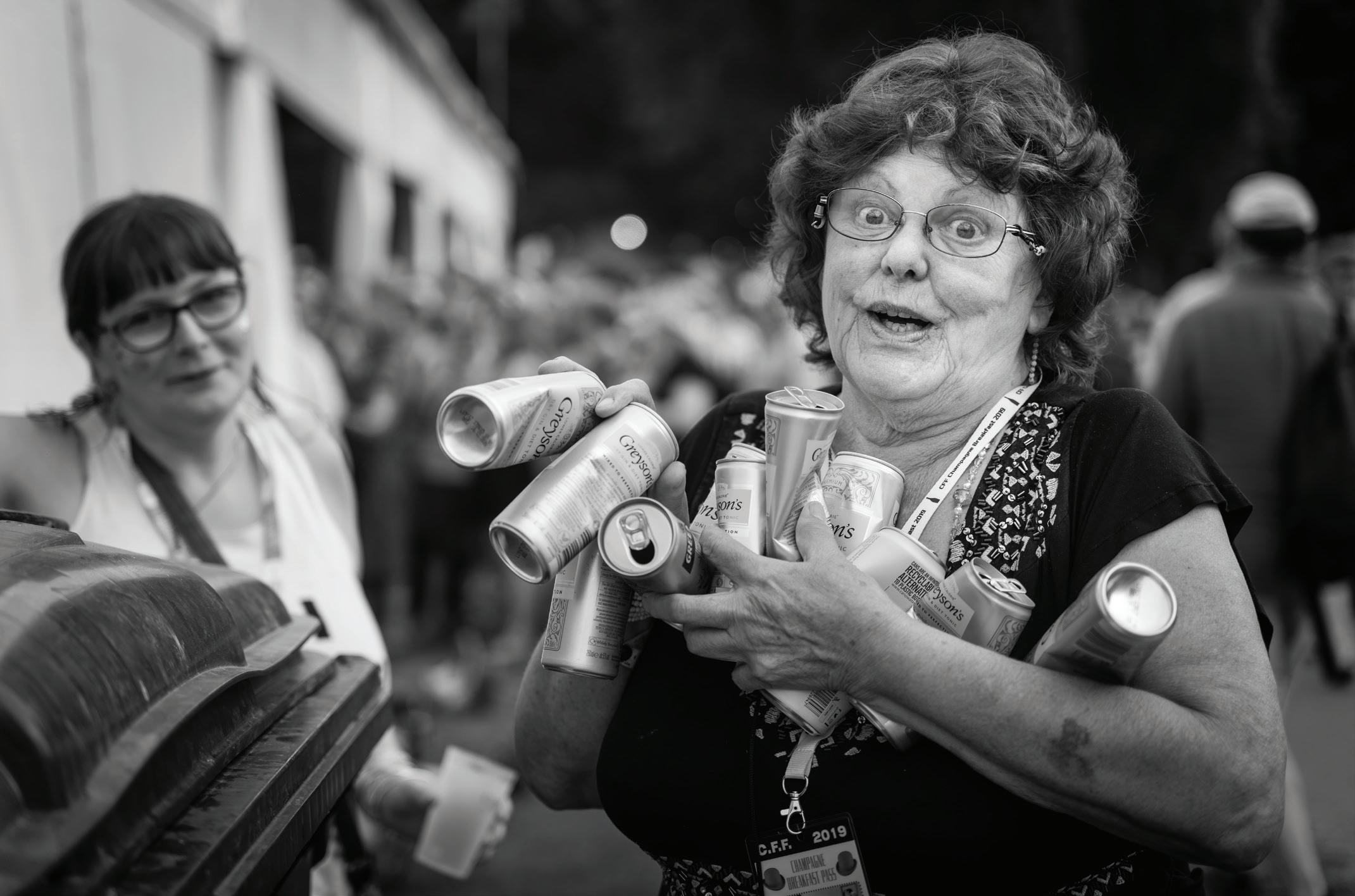
(top) Checking Out the Ocean. Leica M10-R + 50mm APO-Summicron-M at ISO 100. (bottom) Busted! Leica M10-R + 50mm APO-Summicron-M at ISO 250.
(top) Leica M10-R + 50mm Noctilux-M f/1.2 at ISO 100.
(bottom) Leica M10-R + 50mm APO-Summicron-M f/2 ASPH at ISO 100.
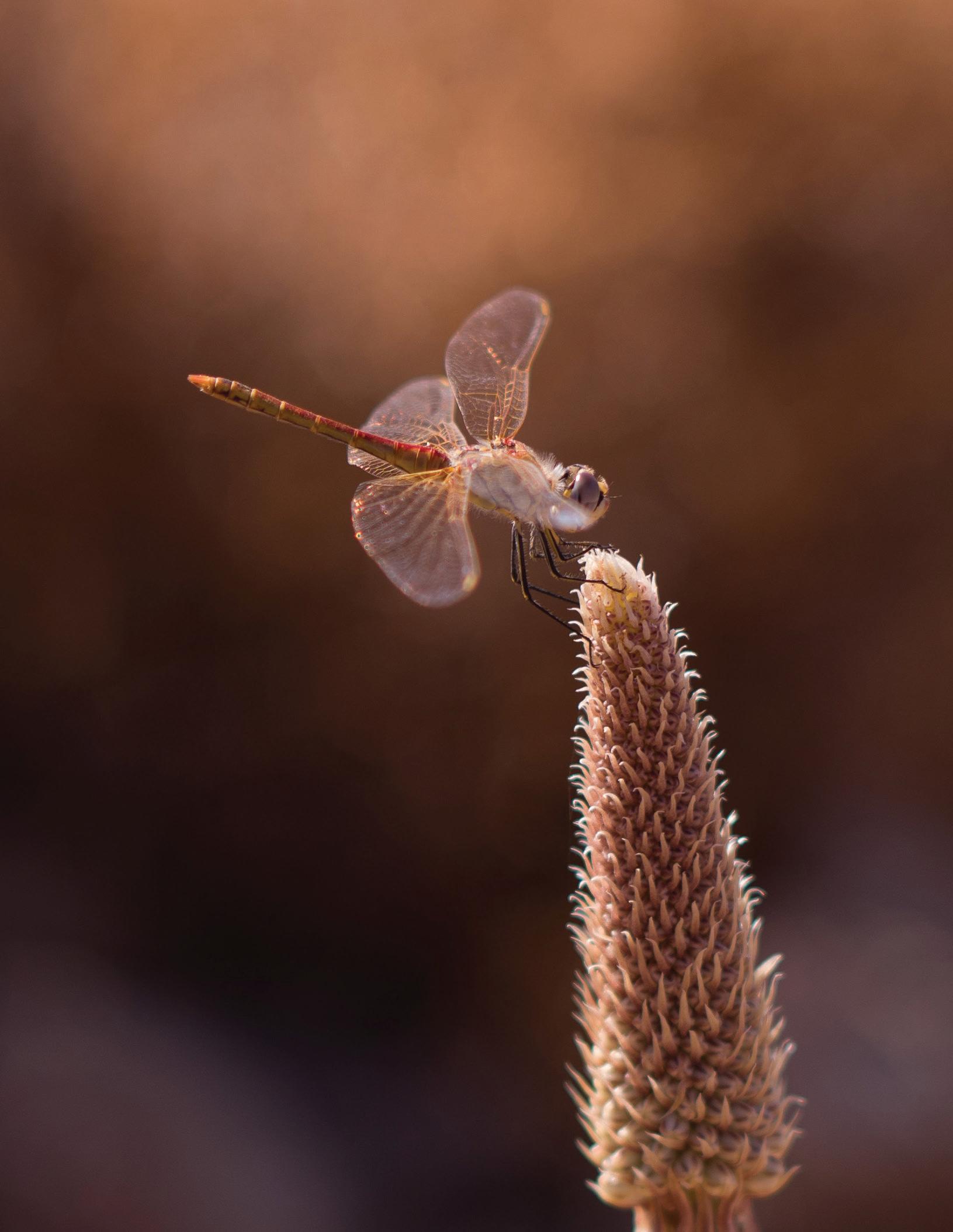
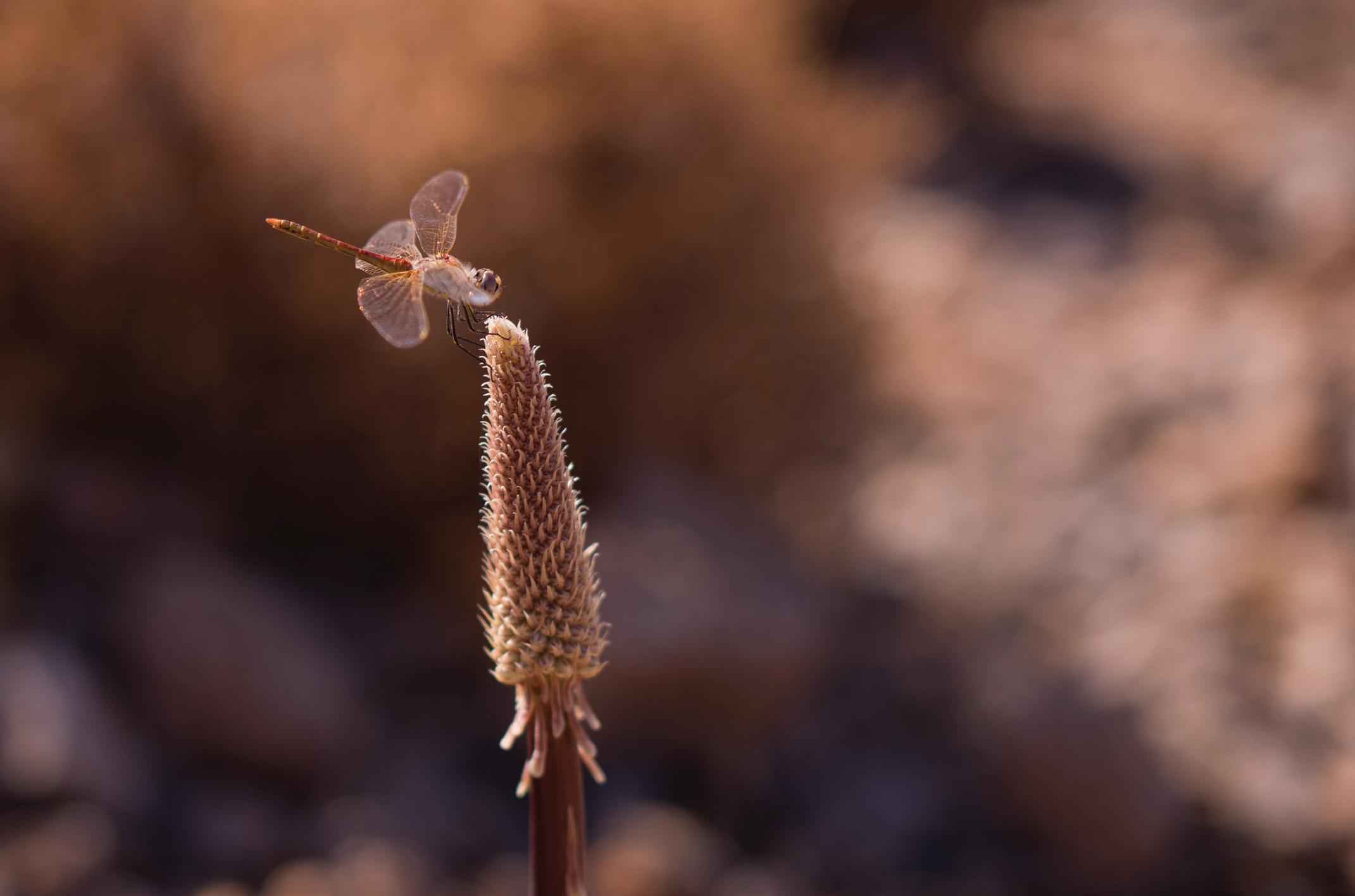
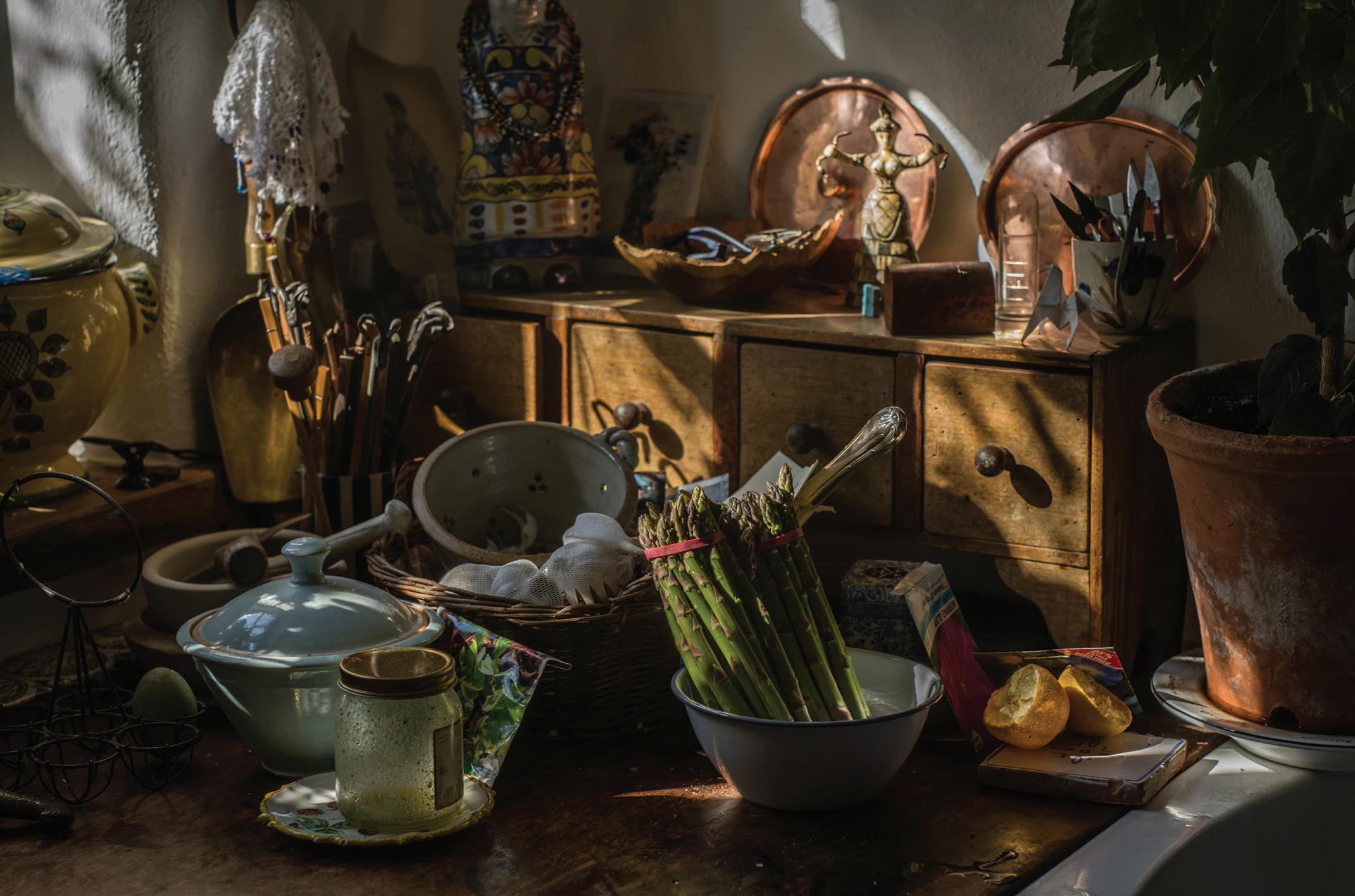
(top) Cretan dragonfly on a sea squill. Leica M10-R + 50mm APO-Summicron-M ASPH at ISO 100. (bottom) Asparagus. Leica M10-R + 75mm APO-Summicron-M ASPH at ISO 160.
HIGH ISO
I’ve done a lot of ISO comparisons between the M10 and the M10-R. This is made more complicated by the difference in resolution, making it hard to do a proper comparison. My feeling is that looking at the M10-R files at 100% the noise is roughly equivalent to the M10 at 100%. Considering the difference in resolution, I think that probably works out at a one stop improvement. It's also worth mentioning that the noise on the M10-R feels more organic and less regular.
The high ISO on the M10 is pretty good, and you might expect that increasing the resolution would make the noise worse rather than better. So this is a real improvement for the new sensor. I’ve been quite happy to shoot at iso 12500.
DYNAMIC RANGE
The base ISO for the M10 was not iso 100, but something like iso 160. There is also an issue with ugly roll-off on overexposed areas. This is worse at iso 100 (pull) , I wrote about this here: https://www.slack.co.uk/m10- highlights.html.
Leica changed the base ISO for Auto ISO to 200. This was rather a masterful move, as it meant that people wouldn’t accidentally get ‘blown’ highlights, whilst still allowing use of iso 100 where it was appropriate. My feeling is that however good this was, you still have to be very careful of losing information in highlights with the 24 megapixel M10 sensor at any ISO.
The base ISO for the M10-R actually is iso 100, but more to the point, for the M10-R, Leica has completely solved the problem with over exposed highlights. With the M10 even a quarter of a stop of overexposure would irredeemably blow highlights. In the same scene with the M10-R, I’ve managed to gain good detail from an image overexposed by two stops.
However, the sensor in the M10-R isn’t just higher resolution. It’s much better than the sensor in all the other colour M10 variants. It has better high ISO, more Dynamic Range, nicer noise characteristics and the raw files are much nicer to work with in post processing. In practice the slightly slower shotto-shot times and smaller buffer didn’t cause me any problems (and experiences with the M10 Monochrom suggests that it doesn’t cause others problems either)
Generally speaking, I get the first iteration of each new M camera and miss out the Monchrom and 'P' variants, and so far that’s happened (although I still rather hanker after an M10-D) . This time it’s different, and I’m saving up my pennies to grab myself an M10-R as soon as they start shipping.
This is a real photographer's camera - in my opinion it has the best image quality of any M camera ever made, and it’s a pleasure to use. It’s hard to see how Leica can really improve on it without making radical changes in the M11.
We shall see!
At first sight, the files from the M10-R may look a little flatter than those from the M10 straight out of the camera, but they are much nicer to work with in post processing, and there seems to be more scope for pulling detail out of the shadows as well as the headroom with the highlights.
Whether the M10-R actually has more dynamic range will probably be established in a DXO report. But from a practical photographic point of view, the files are a real step forward and much easier to post process.
CONCLUSION
So, It’s an M10 with a higher resolution sensor, a quieter shutter and an effectively smaller buffer in a discreet ‘no frills’ body. Put like that doesn’t sound too exciting.
(clockwise from top left)
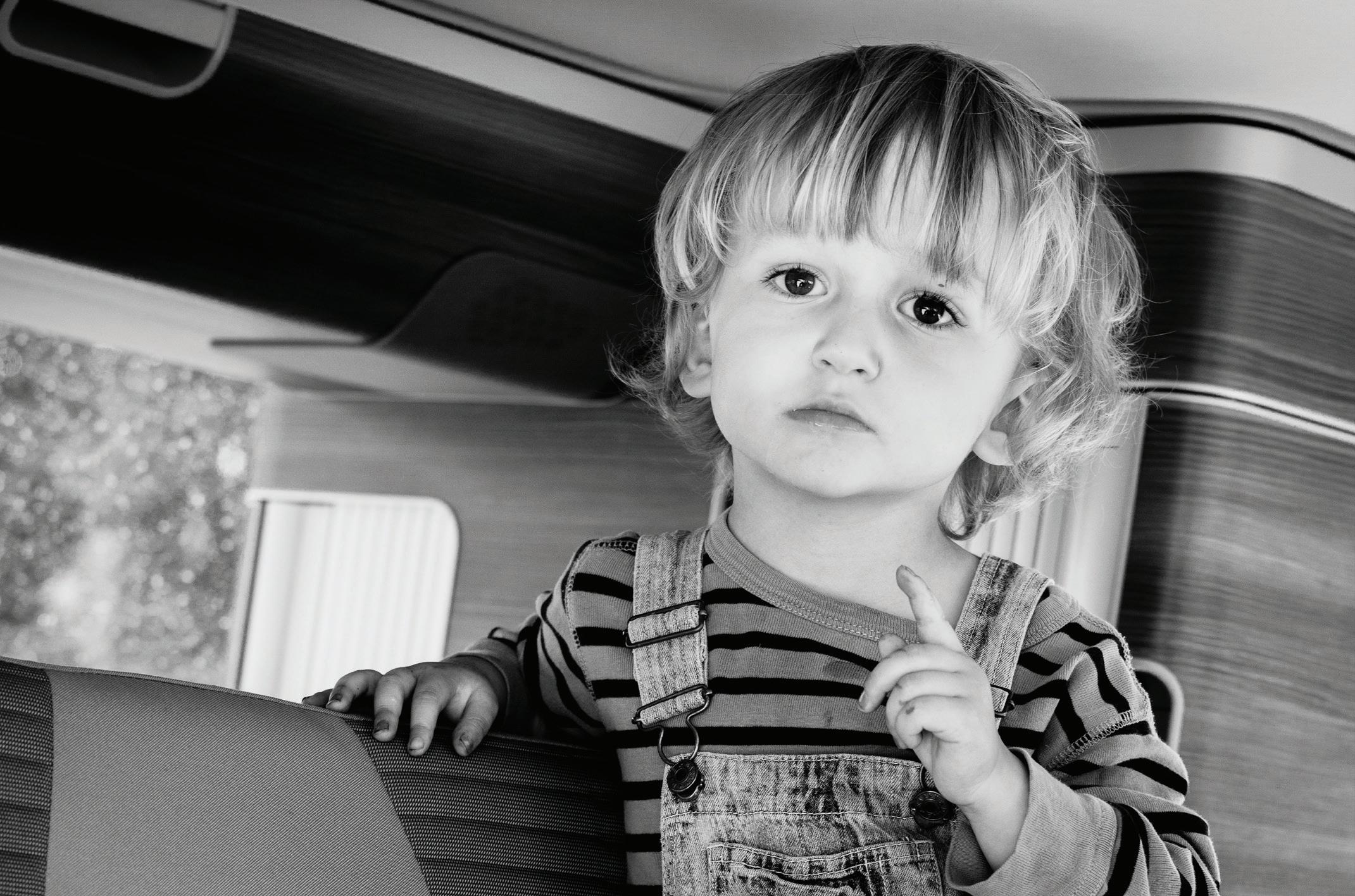
Brother. Leica M10-R & 50mm APO-Summicron-M ASPH at ISO 100.
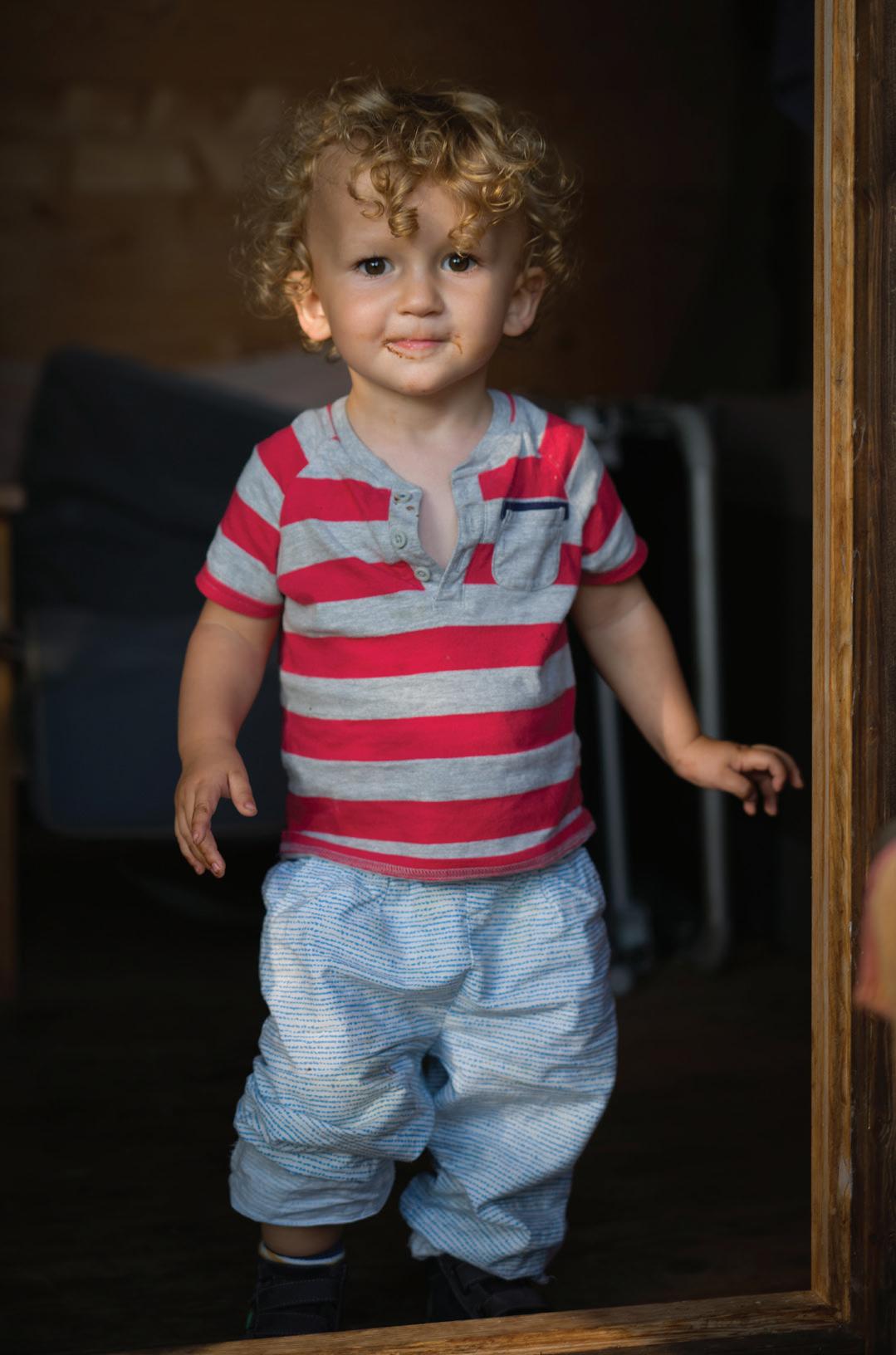
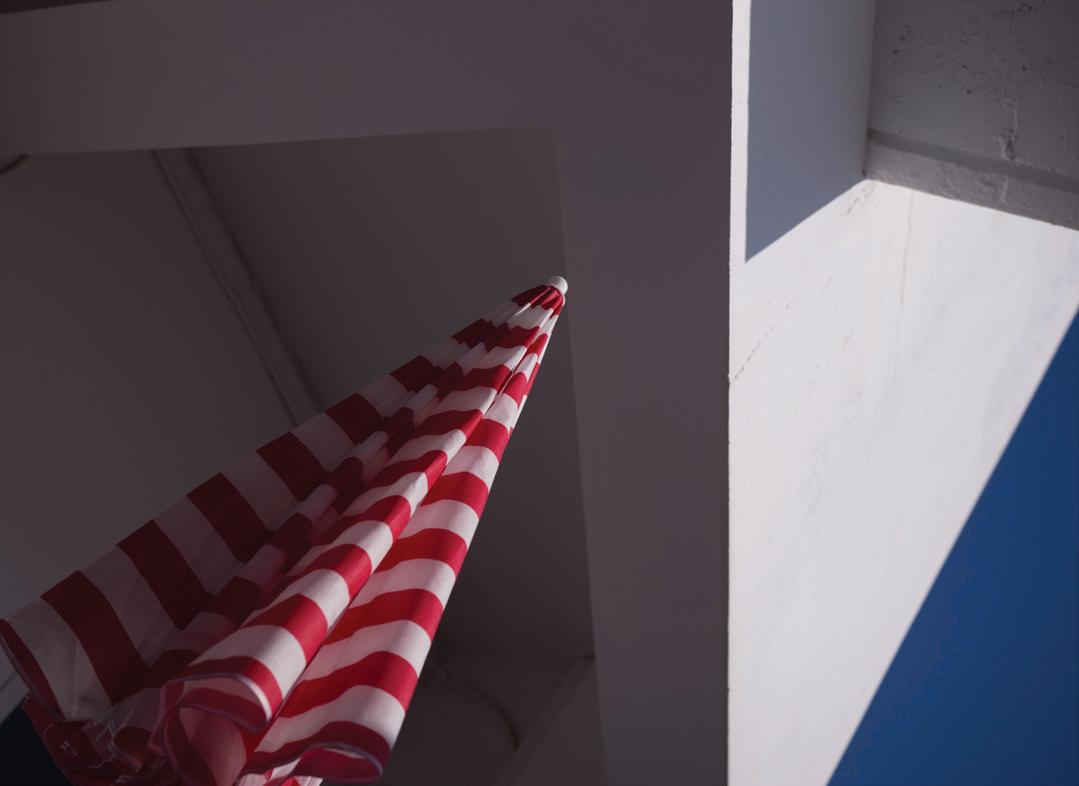
Diagonals in pink and blue. Leica M10-R & 50mm APO-Summicron-M ASPH at ISO 100.
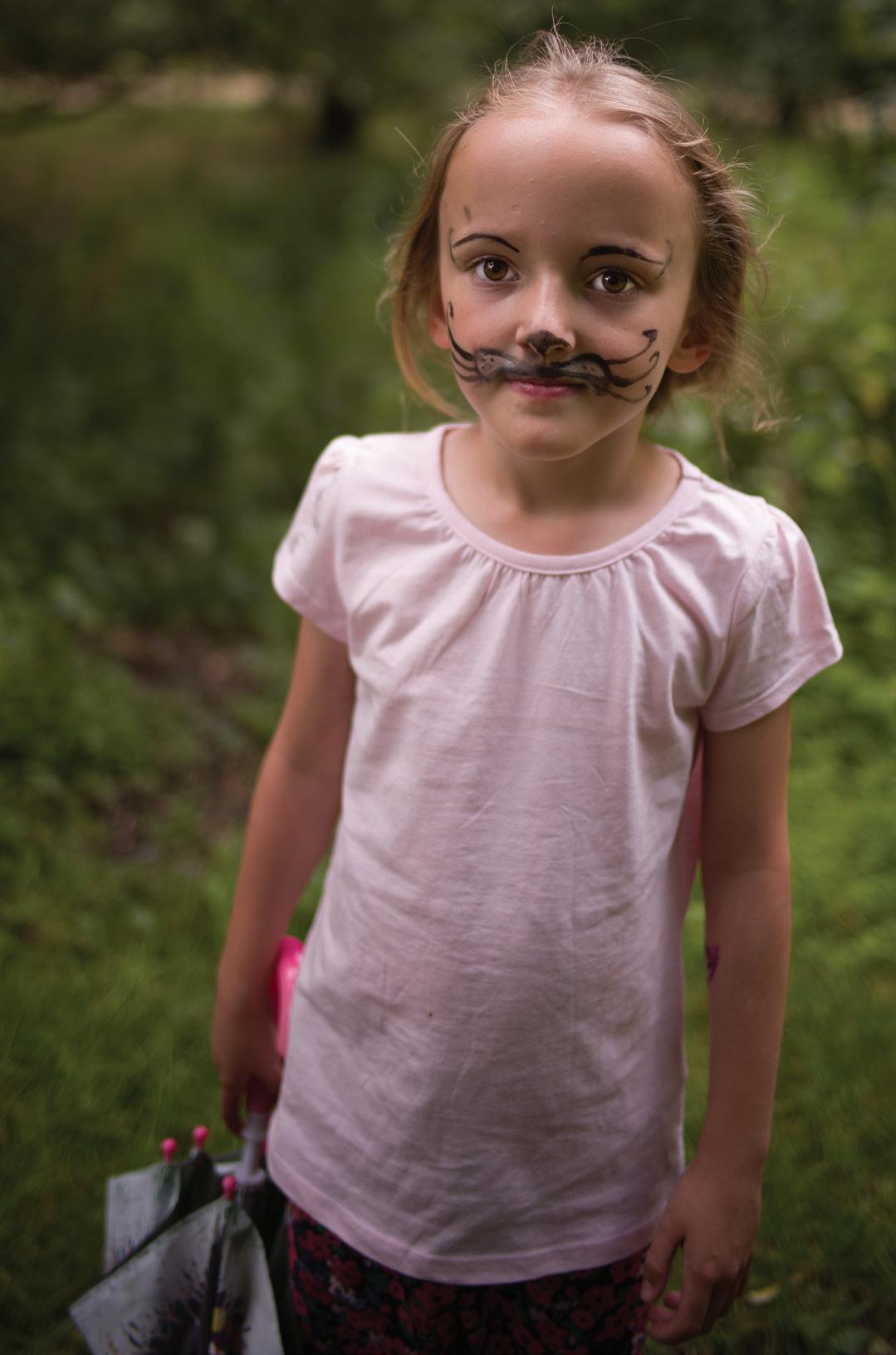
Sister. Leica M10-R + Leica M10-R & 28mm Summilux-M ASPH at ISO 100.
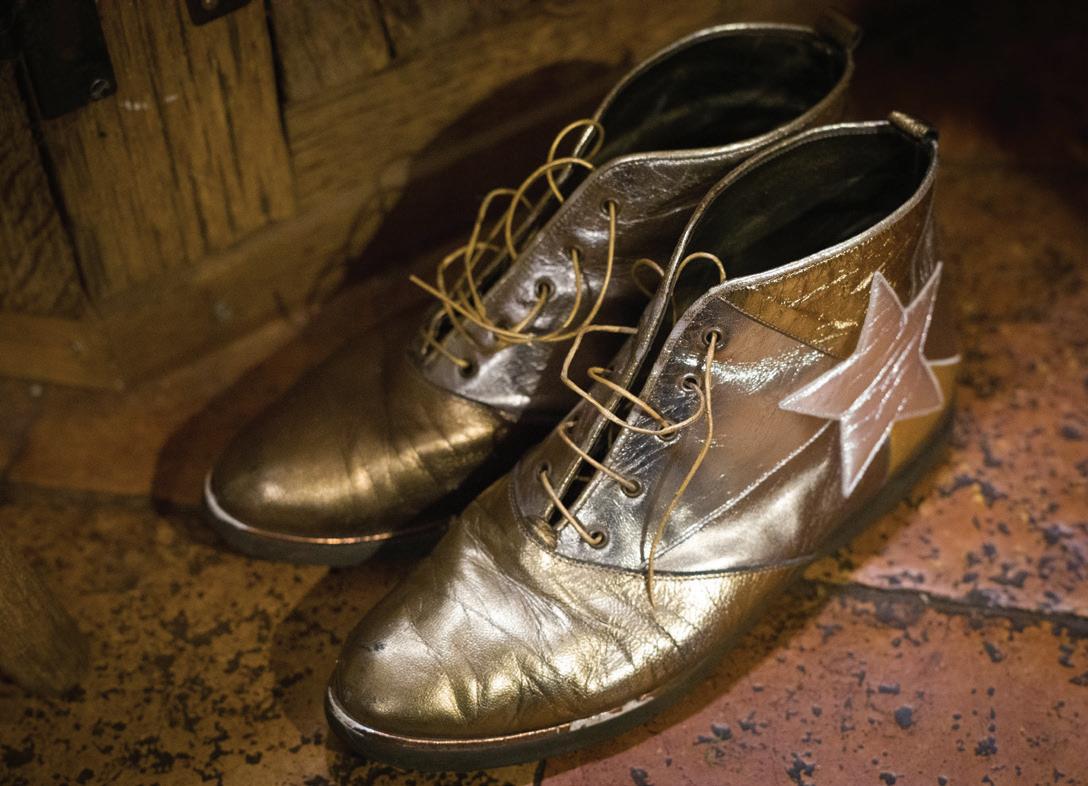
Shoes. Leica M10-R + Leica M10-R & 50mm APO-Summicron-M ASPH at ISO 16000.
NEW ORLEANS PORTRAYED
by DAVID G. SPIELMAN
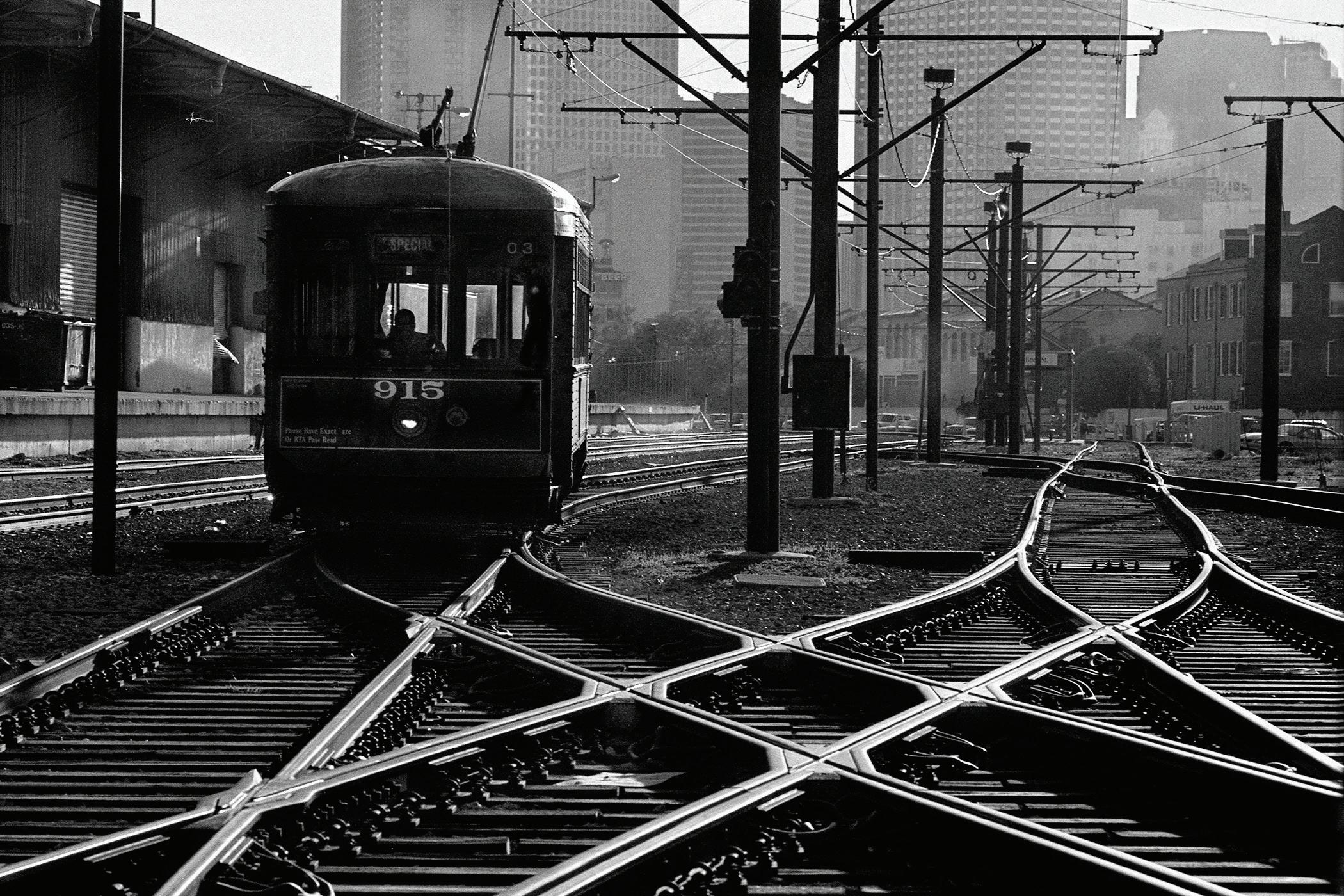
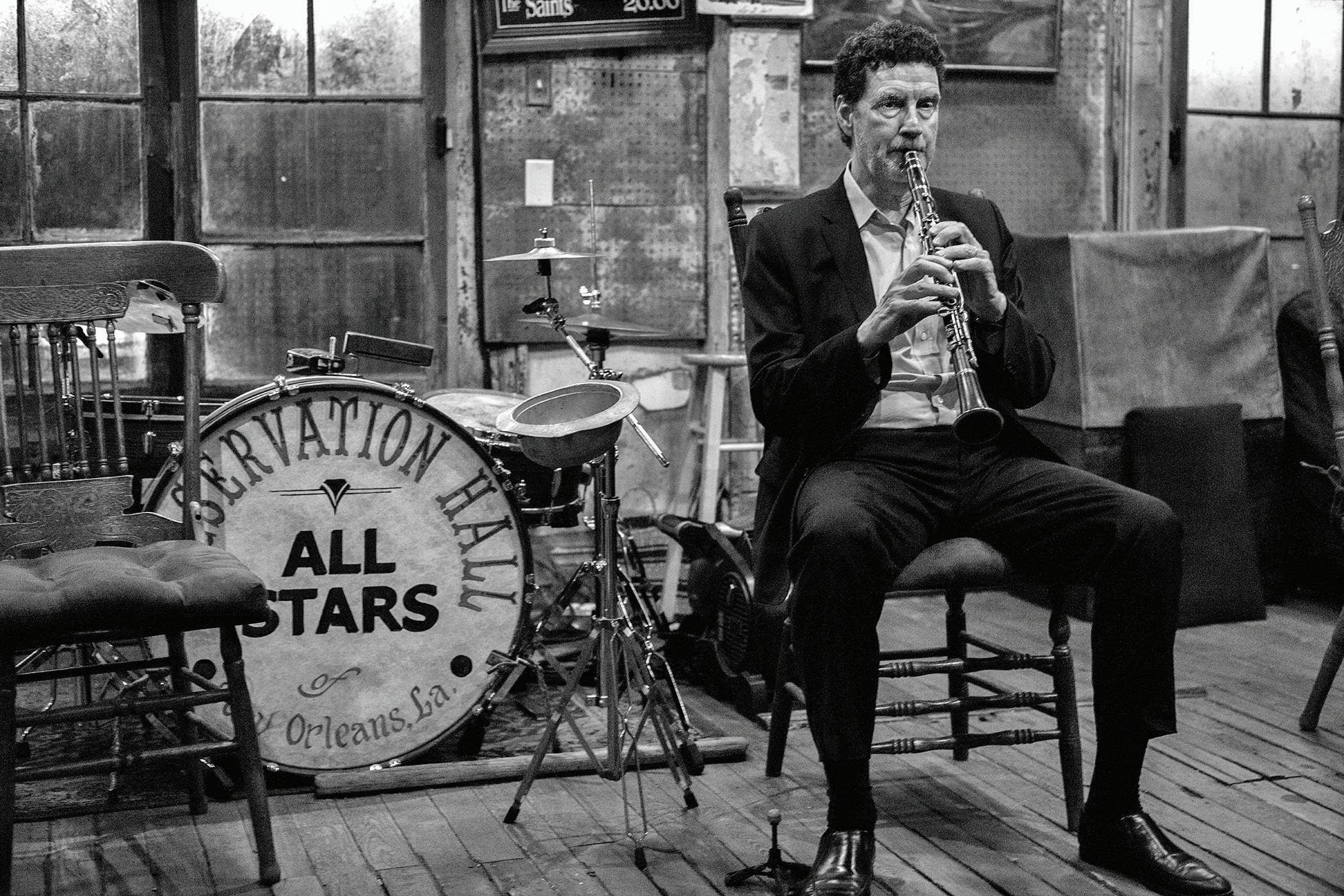
whenyou take a moment and think about it, New Orleans is, for all intents and purposes, an island. To get here you have to cross a bridge. We are surrounded by water and are below sea level. Adding to its uniqueness or weirdness, depending on your perspective, we were founded by pirates. It is thought to be where the Mafia first appeared in North America. So the stage is set for one of the greatest contradictions of our times. Jazz was founded here,
along with Creole cooking, many cocktails, medical procedures and other things. We are proud of many, would like to forget about others, but good or bad, they all have contributed to the magic and soul of this place.
New Orleans has been my home for over forty years. I never imagined I would have stayed this long but somehow the humidity, never ending summers, flooding, hurricanes, music,
food and of course, the people and characters have gotten under my skin and into my heart. Arriving here more or less on a whim, having never been here before, not knowing what a freelance photographer did and how I was going to make a living, I embarked on this great adventure. The ride hasn’t been easy, or boring. Recessions, hurricanes, oil spills, 9/11 have made it a changing game of challenges and adventures.
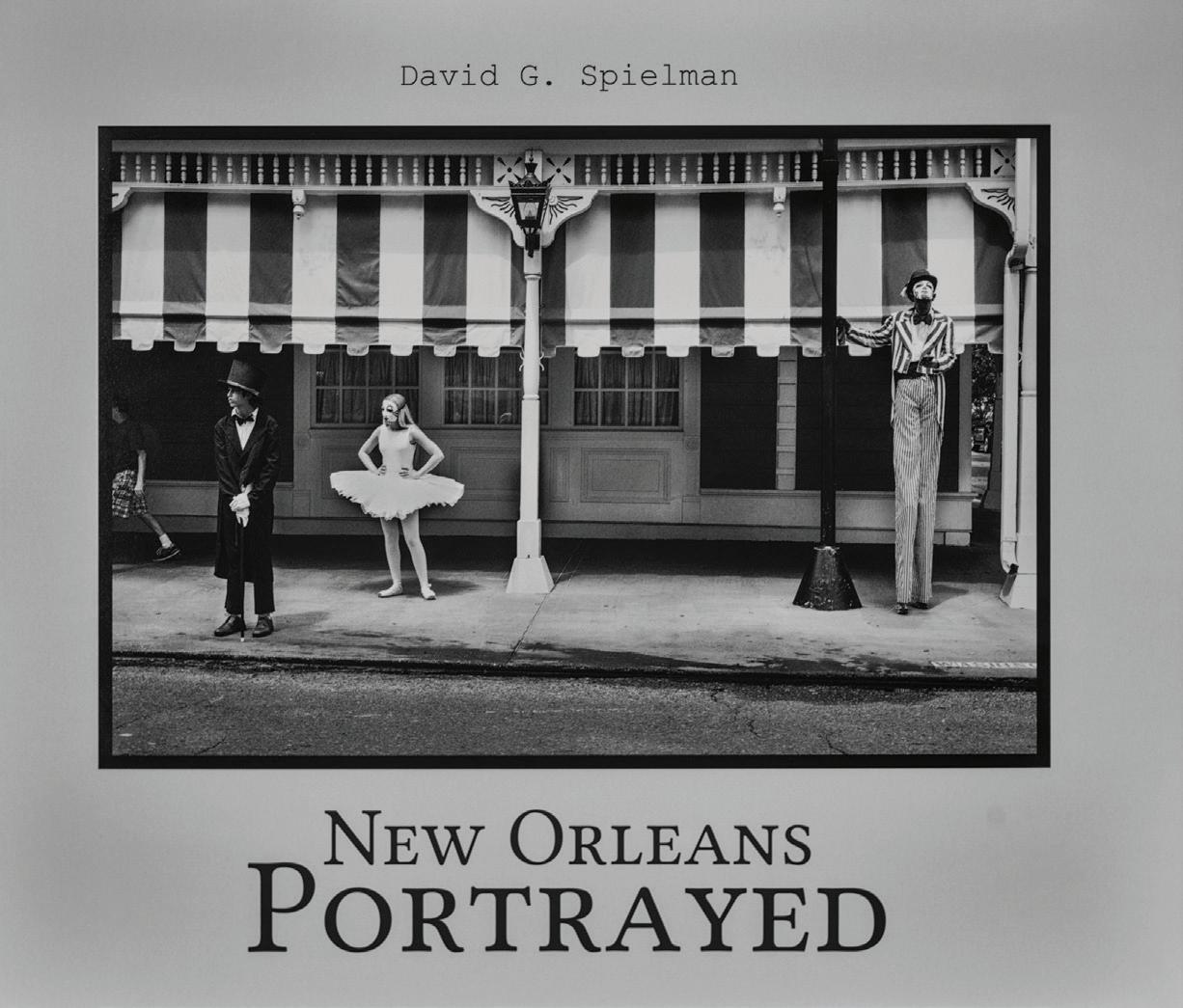
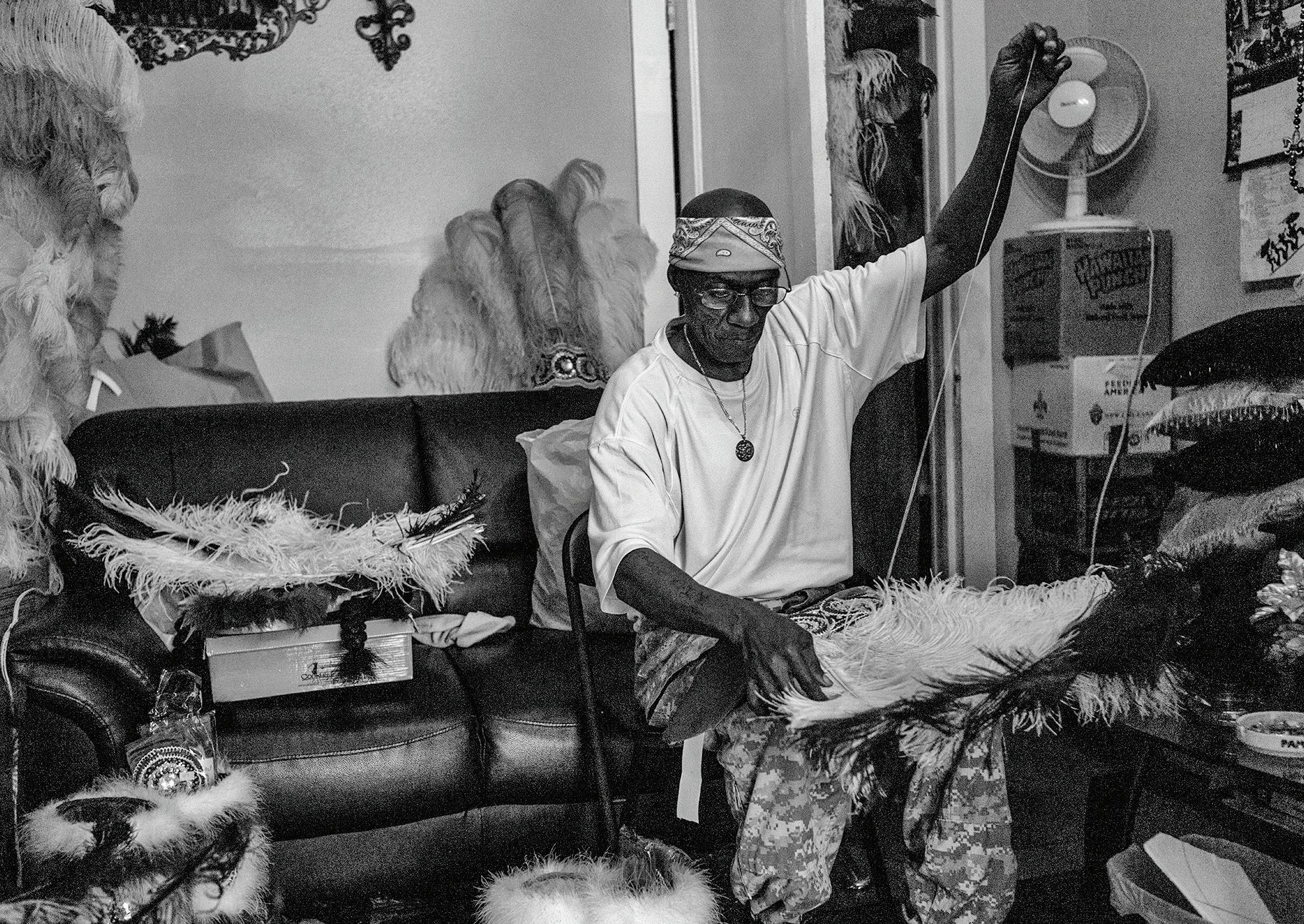
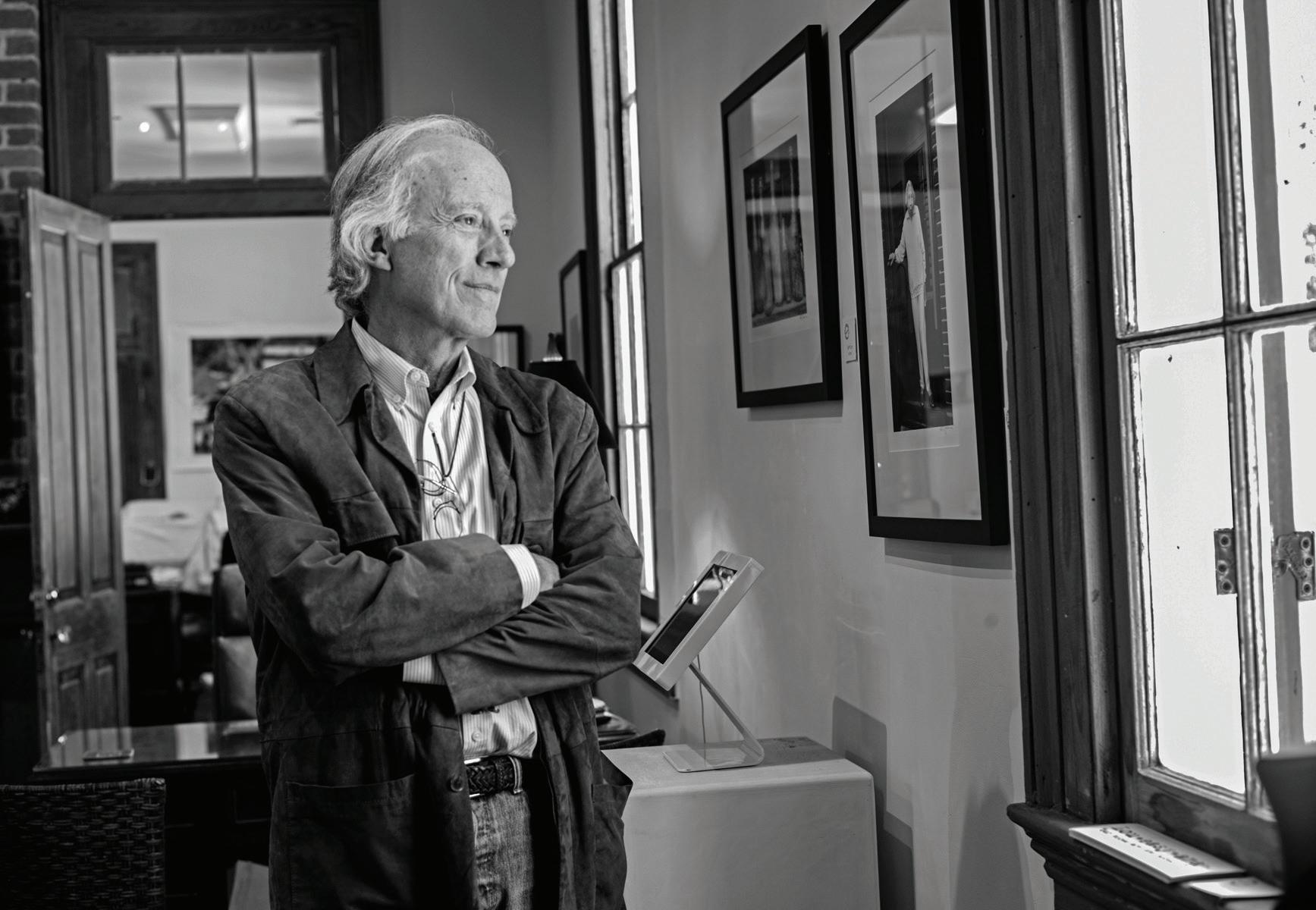
New Orleans Portrayed is my fifth book, after Southern Writers , Katrinaville Chronicles, When Not Performing , and The Katrina Decade . My thought process for Portrayed was simple. During our 300th anniversary I wanted to explore and reintroduce myself to New Orleans: digging deeper, looking harder as the world and N.O. are changing at “internet” speed. The idea was to put together a body of work that would reflect what we looked and felt like at 300 years old. My plan is to give a set of prints to the Historic New Orleans Collection, so years down the road there will be a window for future generations to view our city. Freeport McMoRan, a good and generous friend and corporate client of mine and supporter of HNOC, generously helped underwrite the gift of prints.
I spent a little over a year crisscrossing and backtracking through the streets and neighborhoods: turning right when I used to turn left, looking up instead of looking down, and trying to see it through fresh eyes. My photographic heroes are those who shot during the Depression for the WPA: Walker Evans, Dorothea Lange and Gordon Parks are just a few. Of course Henri Cartier-Bresson, Robert Doisneau and others have inspired me and propelled my photographic efforts. The thread that runs through their work differs from some of the work today. Their work, even in wars, depression, devastating
poverty and awful events, managed to capture the human condition with the individuals’ dignity intact, whether Lange’s Migrant Mother, Evans’ Sharecroppers in Alabama, or Bresson’s images from around the world’s war torn and poverty stricken locations. You can see and feel their concern. They didn’t exploit or try to shock you; they were presenting their visual story. Sadly, today, the media is quite often only interested in the most shocking and alarming images, foregoing the story in the process.
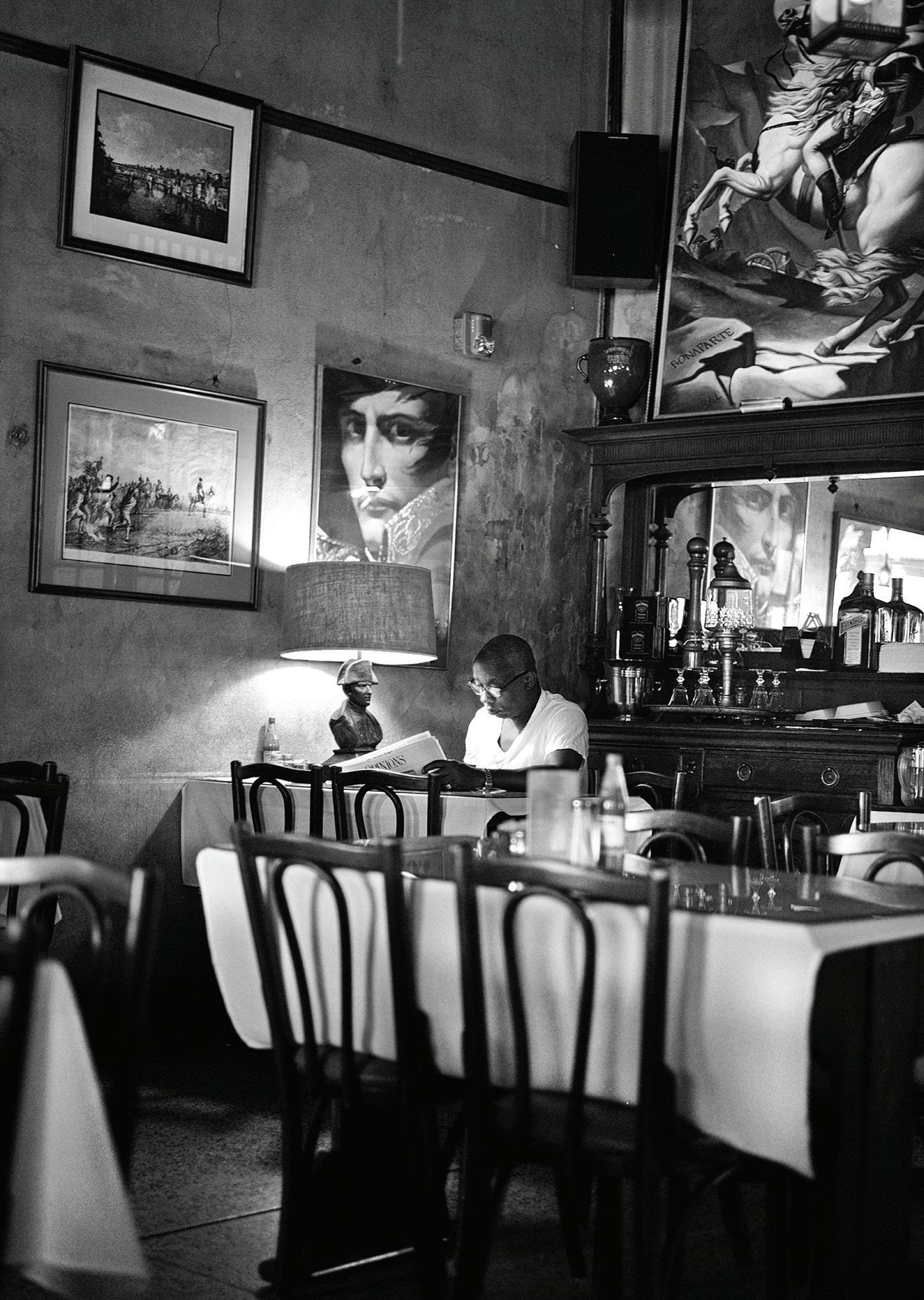
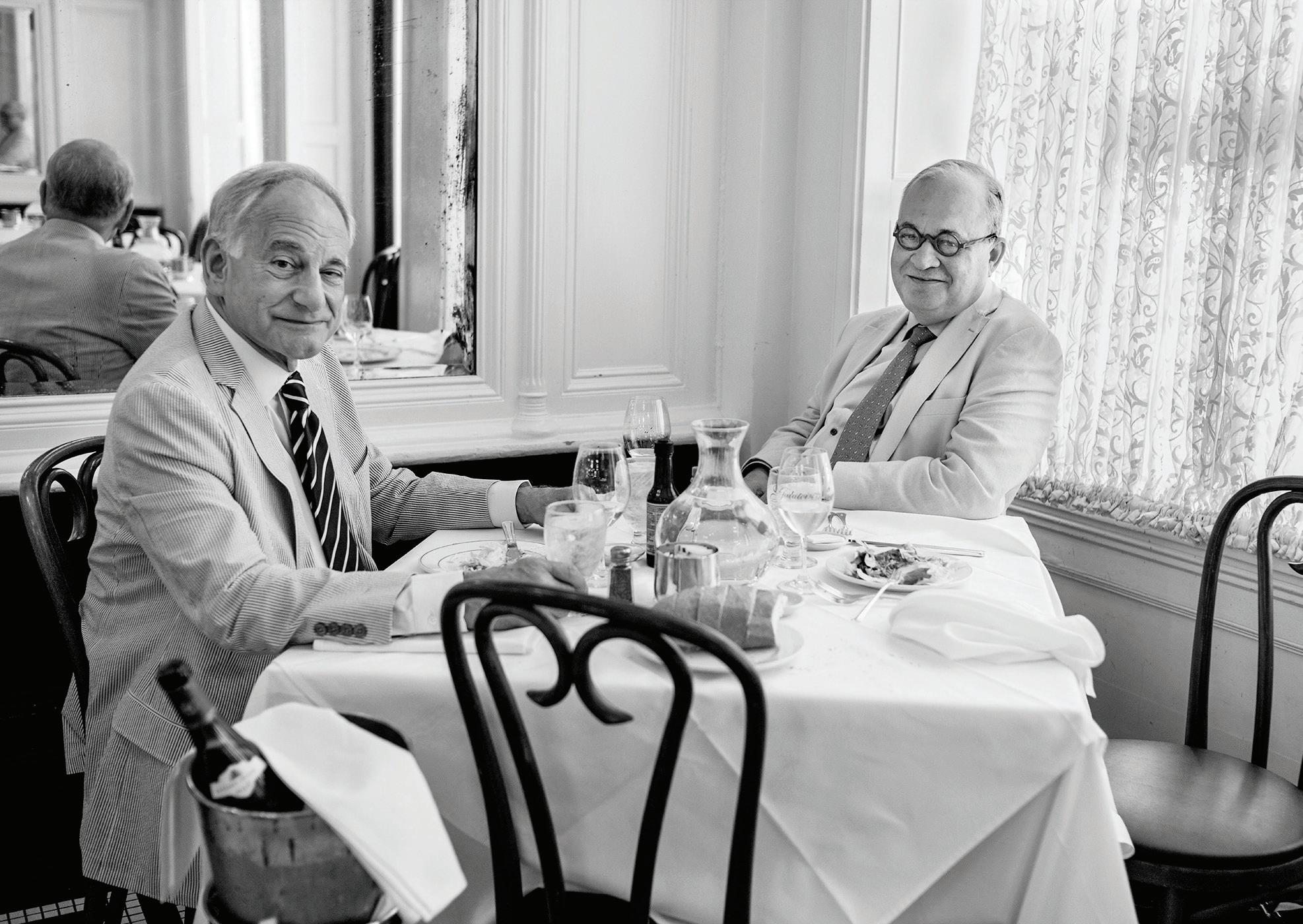
New Orleans has its problems, as all cities have, but I wanted to capture a portrait of its personality and soul. It was my intent to show the power of our neighbors no matter what rung of the ladder they might be on: groundskeepers, wait staff, diplomats, writers, musicians, and on and on, I was looking for the power of their personalities. The same holds true for the architecture, small neighborhood restaurants, businesses and all the other little details that make us weird yet charming. Many may be gone soon as self-driving cars and Internet businesses may put an end to many of these quirky yet amazing ventures.
They are there, hiding in plain sight. As I like to say, “It isn’t about the gear, it is about learning to look”. If you don’t look, you won’t see and if you don’t see it, you can’t take a picture of it. It takes time, patience and determination to let those images find you. I don’t find them, they find me. Every day, when I go out looking, I don’t have an agenda. I decide on an area and hope something happens, light, rain, people, whatever, I just widen my field of view and look. Usually something makes itself known: maybe not a great one but it starts the process and one thing will lead to another. There are two images in the book that I just happened to see looking out of my gallery window. The first is the cover, titled Commander’s & Clowns. Late one afternoon I was walking through the gallery and glancing out the window, I saw them. Getting my camera, I went out and took the picture, not stopping and talking or asking what they were doing, as I really didn’t want or need to know. It was strong enough without those details. To me is showed very clearly the serendipitous nature of New Orleans. Our party and parade attitude is always close by. Of course I’ve been asked many, many times what was going on. Well, I can’t say for sure, but I’m guessing that they were waiting for a group to arrive and upon their arrival they were going to lead the party to the patio area at Commander’s Palace Restaurant.
My gallery is located in the middle of the Garden District in New Orleans, which is one of the oldest and historic neighborhoods in America. It sits across the street from Lafayette Cemetery #1 and caddy corner from Commander’s. Visitors in large numbers visit the Garden District, the cemetery and walk to Magazine Street where you will find unique shops. Late one afternoon as I was getting ready to close up shop, I happened to look out my window, across the street at the cemetery with
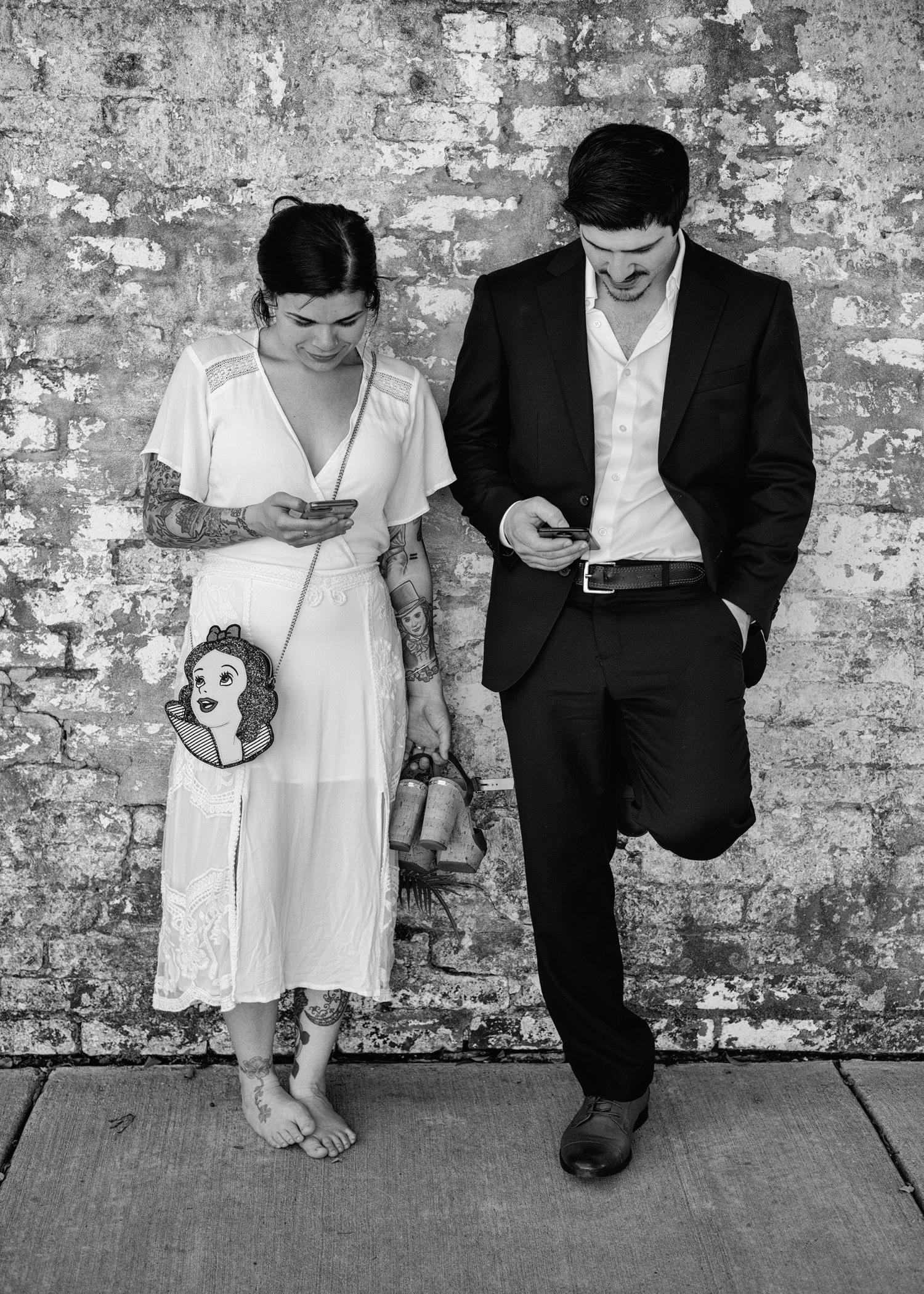
its old patina brick wall. Standing there was a young couple, waiting for the restaurant to open. Very attractive, they leaned against the wall quietly, looking at their cell phones. Again, picking up my camera I went out, but this time, I asked if it was all right if I took their picture. They said, “Sure, what do you want us to do?” I said, “Nothing, just stand there and do what you were doing.” I took just a few frames then thanked them, giving them my card. I also told them “Please send me an email and if the picture is good I would be happy to send you a print.” Several days later, when I got around to looking at what I had taken, there was this wonderful image of the young couple: she in a very pretty white summer dress, he in a black suit with an open collar. She has tattoos covering most of her body that I can see. Looking closely, she had a Disney theme and a Snow White purse. A likeness of Willie Wonka and a Disney Castle on her arms, but best of all she is holding her shoes, tats on her legs and her feet are crossed at the toes, like a little girl. The old brick wall behind them adds texture to a very sweet portrait. I titled this Millennial Gothic. I’m still waiting for their email, as I really want them to have a print.
Walker Evans said, “Good photography is unpretentious.” It has always been important to me, not to over think or over produce an image. I’m trying to capture a fraction of a second. Sometimes it might be right before or just after what some people might call the decisive moment. It is the blink of an eye when the light, architecture and all the other elements come together, giving meaning or sense to what you have been looking at. More times than not pictures/images find me. Heading out without any or very low expectations I never know what I might find. It always makes it interesting and after all these years I continue to have very good luck in finding faces and places to photograph.
Driving through Audubon Park one day, I noticed this couple standing beneath the Tree of Life, as it is known, flowers in
her hand, waiting for the seven invited to their wedding. Just another moment in the park’s and tree’s long and illustrious life.
Leica's M cameras have been the perfect tool for me. Wonderfully evolved, unquestionably designed, small, quiet and the quality of the optics are unsurpassed. Placing yourself and waiting for something to happen, becoming almost invisible, is the way I like to work. An observer of sorts, trying to express what I see and feel in one frame. With cell phone cameras and the self-absorbing nature of selfies, it is much more difficult to blend in and remain part of the background instead of being in the forefront of the event or whatever you are trying to take a picture of.
Taxi Cabs, as we have known them, may become dinosaurs in our time. Drive sharing businesses like Uber and Lyft are forcing cab services to the curb. GPS units have taken the place of knowledge of a cab driver who not only gets you to your destination, but might even share some of the city’s history and personality. So, there the cars, drivers and buildings sit, and it won’t be long before children look at them with wonderment as the children today look at a rotary telephones.
Simon is a clever folk artist who offers witticisms and social comment through his work. He’s a Frenchman who found his way and his visual voice in New Orleans in the 1990’s: bright colors and interesting lettering are found in his elaborate artwork.
As I get older, I realize less is more. Too many photographic equipment choices cause you to pause and that might let the scene change or disappear. Pondering over which lens is sometimes an obstacle, so my feet become my telephoto or wide-angle lens. Hemmingway was always looking for the simplest and clearest words for his sentences; Picasso was trying to lay down the prefect line, the cleanest and most expressive. In my work, realizing I’m no Hemmingway or Picasso, I try to take the best possible picture each time I lift my Leica. As I move indoors or back outside, I adjust my camera and lens to what lighting conditions I encounter, shortening the time it takes to properly focus and expose the picture. All of these things have become almost second nature. My goal is to see, shoot and then move on. Before anyone knows I was there observing their world, capturing it for others to see and appreciate. Leica M’s are, for me, the perfect instrument by which I have made my living. They are and will continue to be my constant companion. The history and mystique of the cameras and lenses are epic. But, for me, the simple fact remains: the equipment is the tool that allows me to express my visual voice!
To order a copy of "New Orleans Portrayed" visit: www.DavidSpielman.com to express my visual voice!
The Quest for the Last
by AUGUSTO LIGER & JERZY WASOWICZ
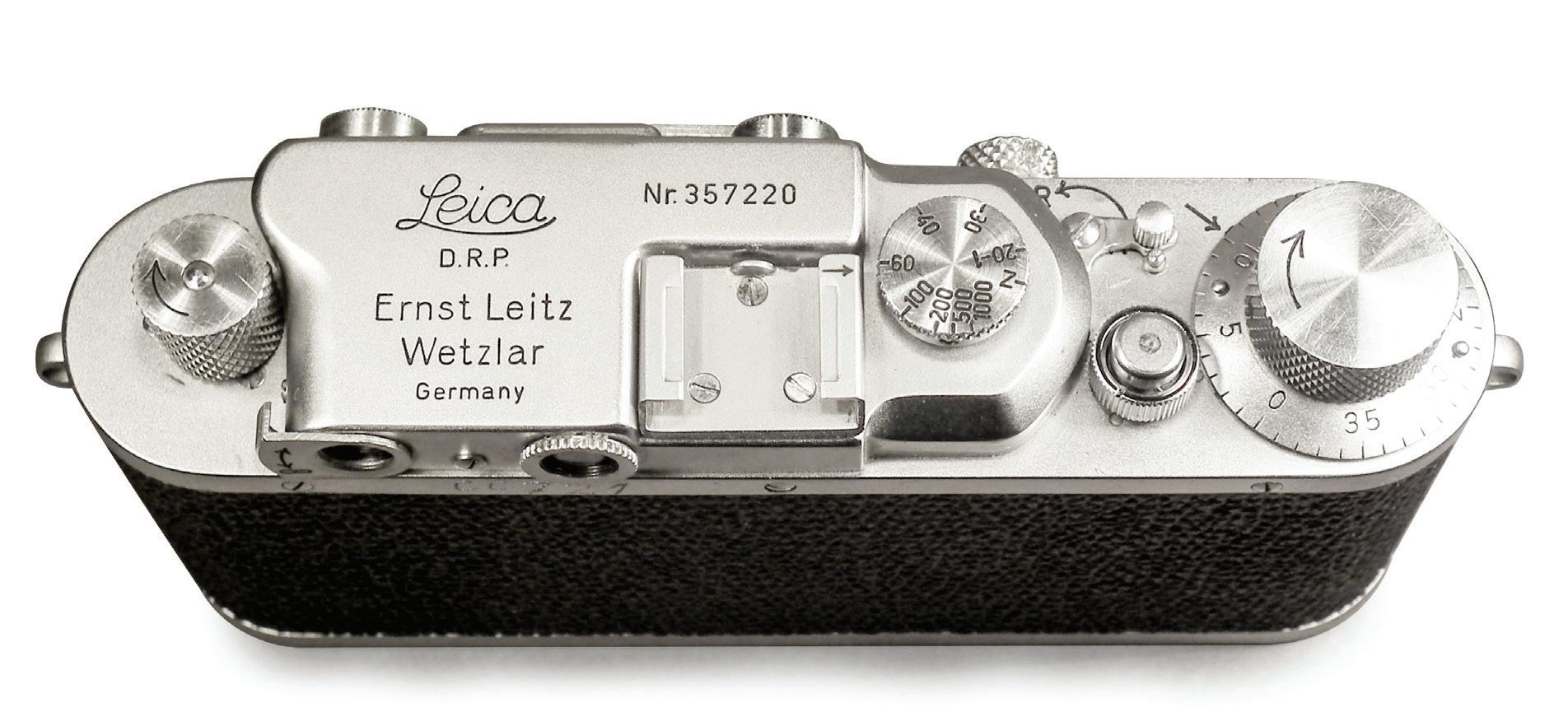
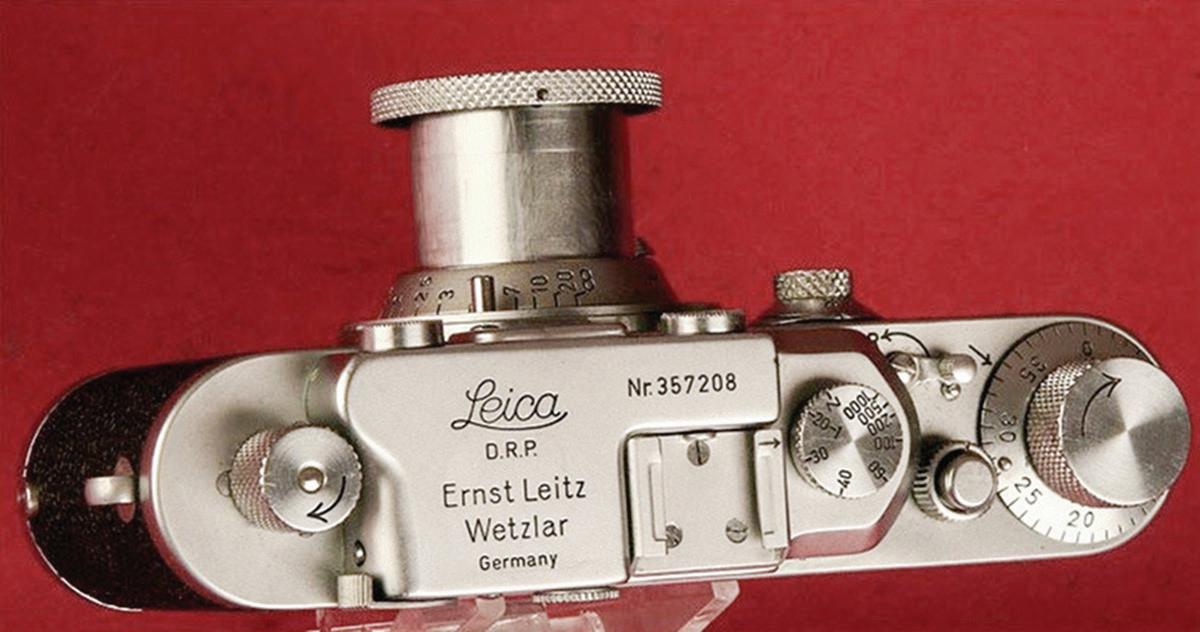
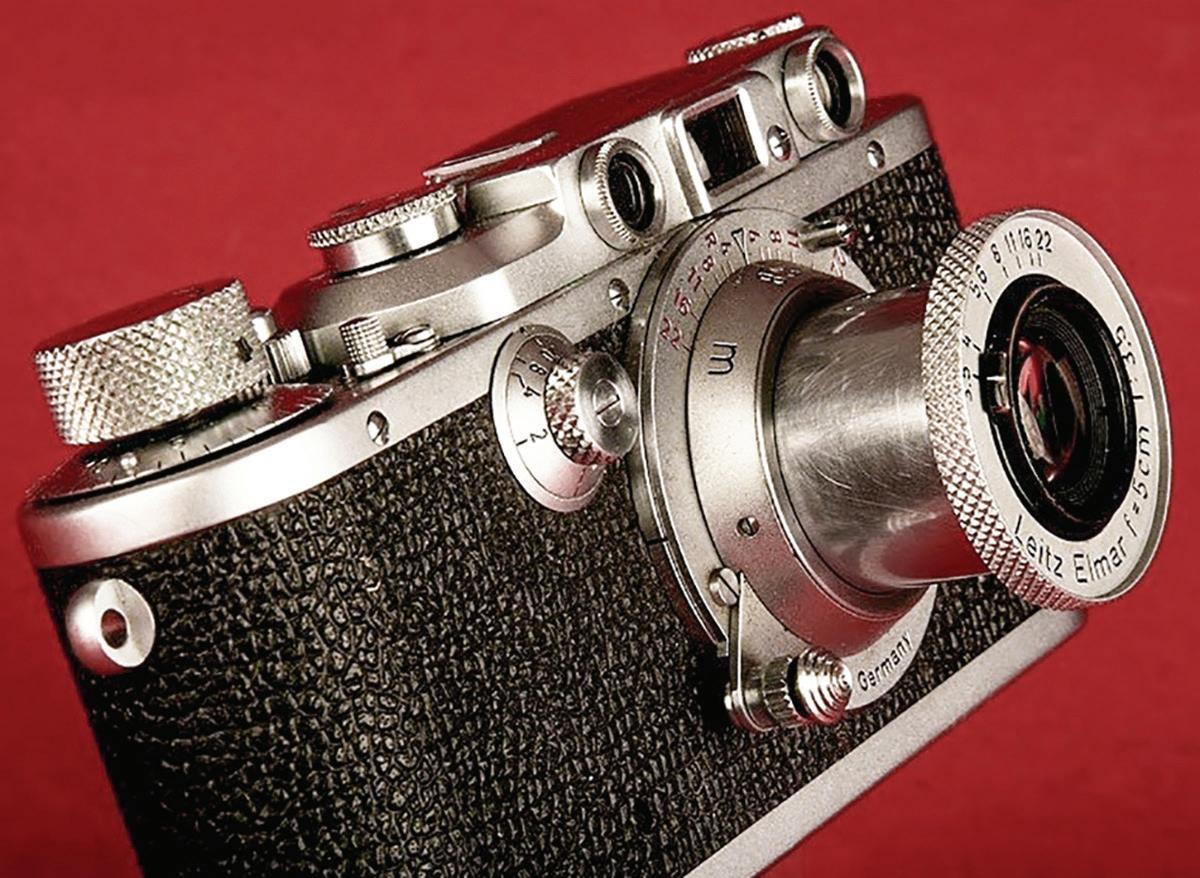
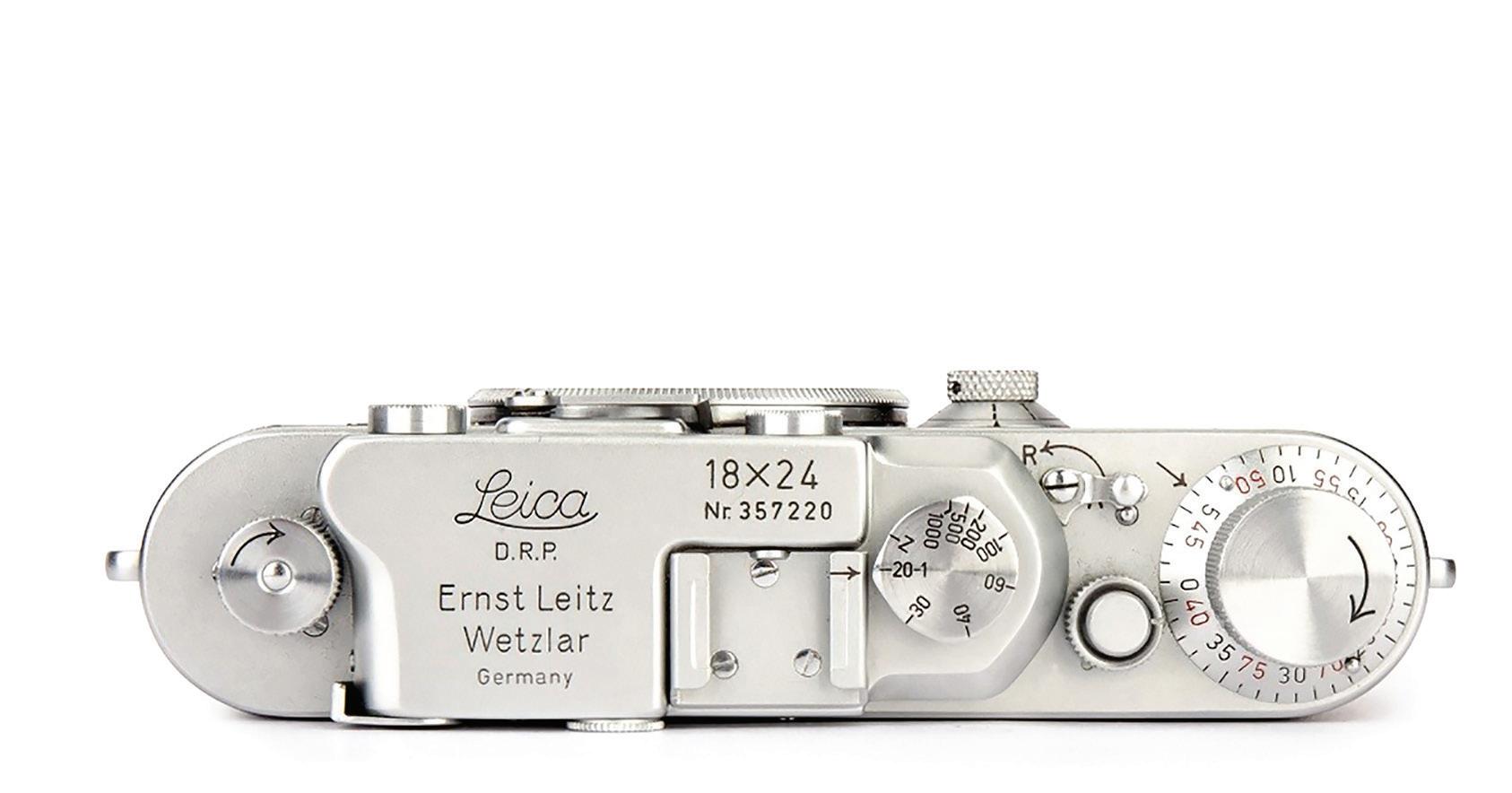
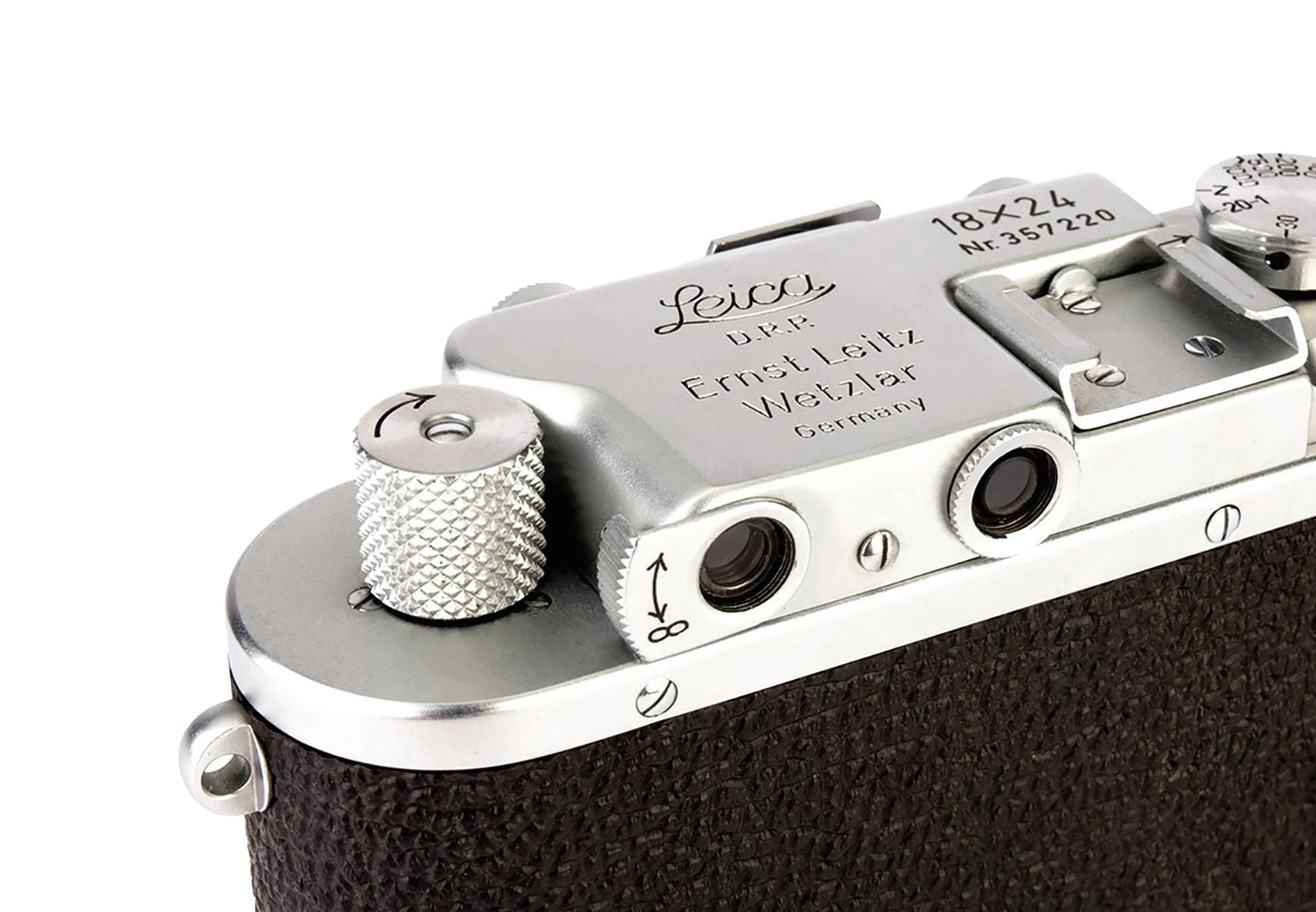
all began when I saw a nice Leica IIIa serial number 357220 in a online classifieds listing in Germany. Its price was very reasonable for a regular sample and it looked in really nice condition.
I had been searching for some time for an “interesting” Leica IIIa. The main targets had been the early black lacquered, the “Monte en Sarre” or even a war-time sample. The two first options, on top of their high price, concerned me a bit due to the amount of fakes in the market, specially nowadays.
So, even where there were some other potential buyers interested in it, they didn’t buy it, probably because even when it seemed in really good condition, it had a hand scratched code in the back that the seller related someway to an inventory.
During my initial research, its serial number looked interesting due to - according to the usual lists - the last batch of the IIIa was numbered between 356701 to 357200 (500 cameras) and dated between 1948 and 1950. The serial number was not only twenty numbers beyond the last documented in those lists, but also and even more interesting, it was in a set of numbers
that appears as “Unknown and/or probably not used” in every source I checked. I saw some vague reference to cameras in that range including FF and even to Leica-72 but really unclear. With that information, I decided to buy it.
My thought was that it could be that the last batch had gone longer (more than the documented 500 units) so this could well be one of the last Leica IIIa's - if not the last one!! That would date this camera between 1950-1951.
In parallel, I kindly asked the seller about the camera and he answered that the camera served in the Biology Department of Münster University for many years, and, it was bought by and old professor when it was replaced by newer technology, who then sold to my seller. That was great and it matched with the outstanding condition of the camera, as well as with the mark in the shutter button due to a release cable typical of scientific use. He also said that the code scratched at the back was the university inventory number. I contacted the university to double check its history but unfortunately they didn’t answer.
On top of that, I wrote Leica inquiring about any information that might have about the camera.
So, with all the information above, I opened a thread in the Leica International Users Forum about the camera explaining my theory about being one of the last IIIa's (if not the last one ). As a side note, if you want your camera or lens to be challenged, there is no better place in the net!
At the very first moment there was a bit of misunderstanding due to numbers below 400,000 are usually associated with pre-1946. That’s true for the IIIc, but not necessarily for the IIIa. Also the Blue Book, pg. 317, (that I don’t have) seems to assign the range 360,001 – 361,200 to the IIIa, and if so, those cameras could potentially be later than mine. Nowadays it seems clear (or at least as clear as it can be with Leica) that those serial numbers were assigned to the Leica IIId before 1946.
After the initial mess, it was mentioned (thanks Allan) that according to Band 1, the last batch for the IIIa with a high probability was in fact 356701-357186. That was great, but on the other hand it placed mine farther from the last regular batch, which in these cases is not necessarily good news. He also noticed (which I didn’t) that the serial number was engraved with “Nr.” Instead of “No.” and that change didn’t takeplace until mid-1951.
At this point, Jerzy (who I consider one of the world wide specialists in conversions) mentioned the 357109 (and close numbers) probably could have been Betriebskameras , used internally and later on refurbished and sold/given to employees. In parallel, I got an answer from Leica, asking me to send pictures of the camera. Interesting.
Almost two months later, I got the answer from Leica:
“LEICA IIIa # 357220 was shipped with note 48063 on November 29th. 1965 to a private person in Muenster Germany.”
At the beginning I really didn’t realize what it meant. But let’s put in context the date: the last regular batch of Leica IIIa dates between 1948 and 1950, the last regular batch of Leica IIIg (supposedly the last screw mount Leica) ended in 1960.
So in this case, twenty numbers more meant fifteen year later. Based on that, I politely asked to double check the information indicating the above and the answer was absolutely clear:
“Hello Augusto,
This sounded strange for me too, but the entry is correct. There are several LEICA IIIa bodies with similar S/N which have
been delivered in that period. But this side of the delivery book is uncomplete, only a few cameras are listed on this side from 1965. All cameras are clearly indicated as LEICA IIIa bodies. Maybe Ernst Leitz GmbH had an overhang of this old camera and sold them to private persons in 1965. In my official list of serial-numbers the S/N 357201 – 358650 are listed without any remark or production date. Riddles in the dark and nobody will be able to find out. Hoping this notice will clear the situation. Enjoy your day.”
So targeting 1965, I located in one of the usual lists the date 5-Nov-65 associated to the 397xxx Betriebskameras . Anyway, my IIIa was documented 24 days later, so it was the time to include the delivery information in the forum with a new statement to be challenged: This could be not only one of the last (if not the last one) Leica IIIa but also one of the last (if not the true last one) Leica screw mount ever delivered from Leica.
Jerzy pointed to the Betriebskamera as an option as it is known that during the sixties, Leica cleared out the screw mount cameras used for internal purposes, so the only way of going forward was to get the internals professionally inspected.
After two months I sent the IIIa to Jerzy (together with other two cameras that I wanted to CLA) for getting inspected internally and as always, he produced a great professional report of the findings:
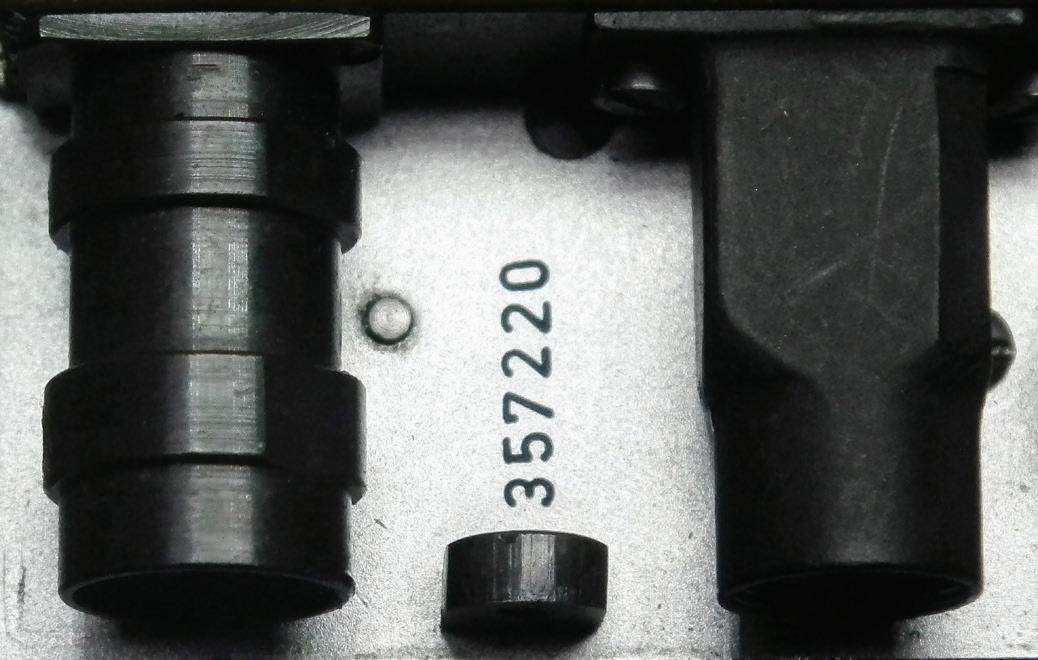
“After taking off the top cover and body shell this camera shows no sign or markings of being Betriebskamera. Regular SN is engraved in usual place, there are no other marks visible. (image 2)
As well the top cover does not show any unusual markings, many of top covers from regular production have some marks, like, possibly “14” which may be found here.
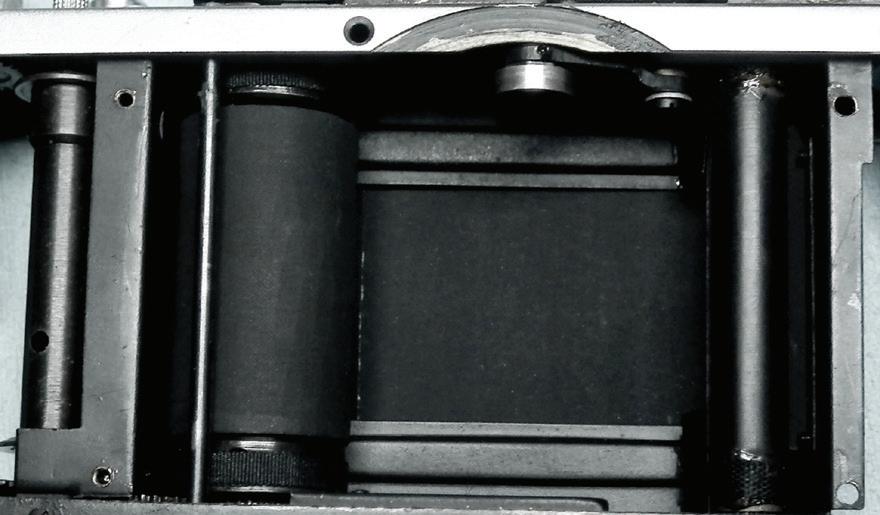
It was usual at Leitz that the cameras which have been rebuilt have camera SN and some other markings scratched on the frame where the arrows point. Nothing can be found here. (images 3 - 5)
This camera has curtain brake which may be found on some IIIa from regular postwar production and many upgrades to IIIa sync.
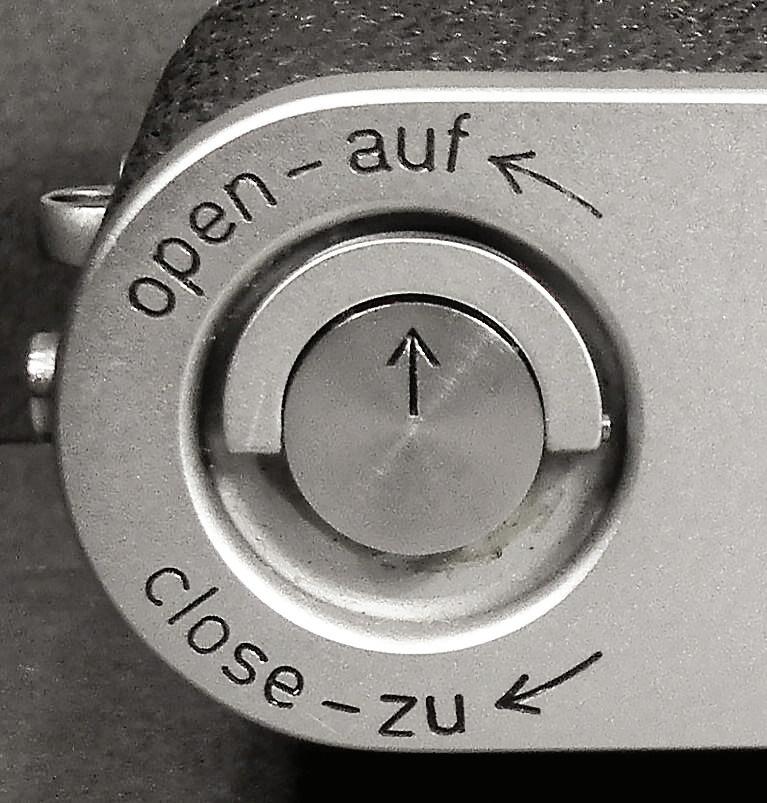
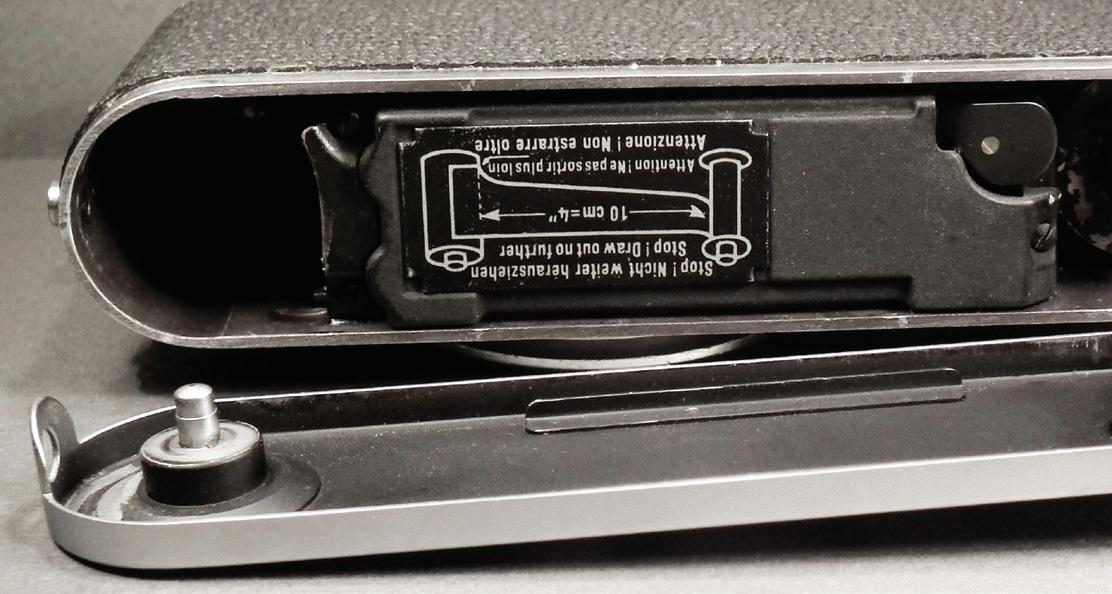
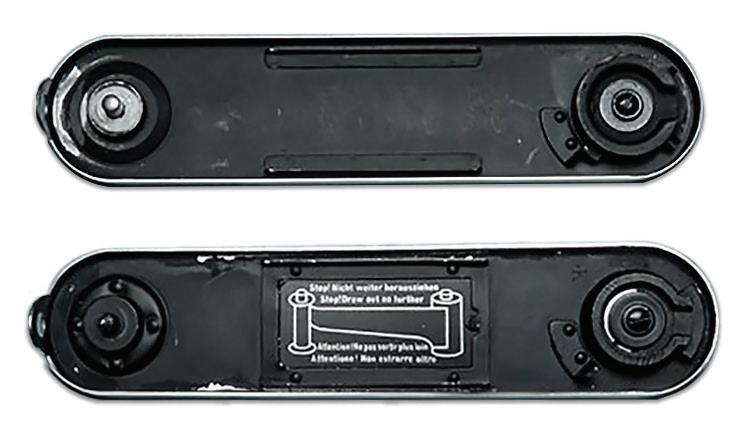
Light shields, with velvet behind, are unusual for postwar IIIa, but were used in many upgrade to IIIa sync done after 1954. Bottom cover has engravings typical for cameras from early fifties. Film loading instructions are not attached to the bottom cover, as it was for postwar IIIa from regular production but applied on additional plate covering mechanical parts on the frame. (images 6 - 8)
While, as mentioned, cameras from regular production do not have this cover plate it was commonly used on the cameras upgraded after 1953.
Body shell with vulcanite is as well from the time after 1953. It has vulcanite structure used after this year (and until M4 ), it has as well additional pin at the bottom used to attach flash holding arm.
Similarly to above parts as well body shell is different as with cameras from regular production, but was commonly used for upgrades.
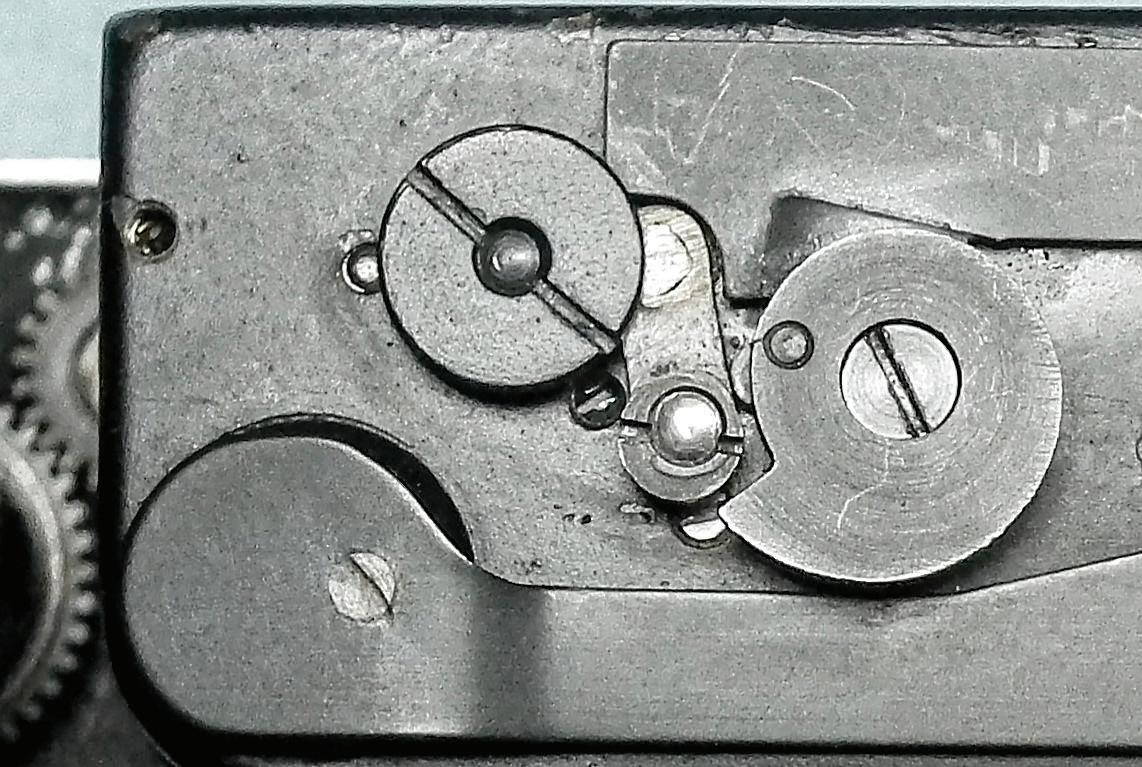
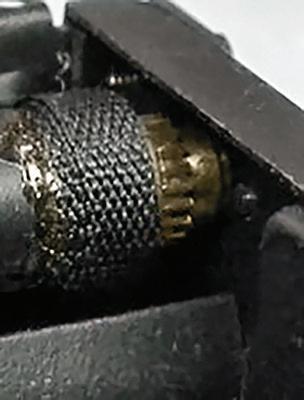
Shutter mechanism is from postwar IIIc. It may be recognized by the gear on the small second curtain drum. In postwar IIIc, which have different slow speeds gear than IIIa, it was used to reset slow speeds gear after the second shutter closed. It does not have any function here. Postwar IIIa have shutter without this gear, but many of upgraded cameras (starting from approx 1953) have similar shutter mounted. (images 9 & 10)
Note the different way of fixing the film spool pin/tripod mount on the left side. The way how it is fixed in 357220 and different shape is uncommon for regular production, but often used in upgraded cameras.
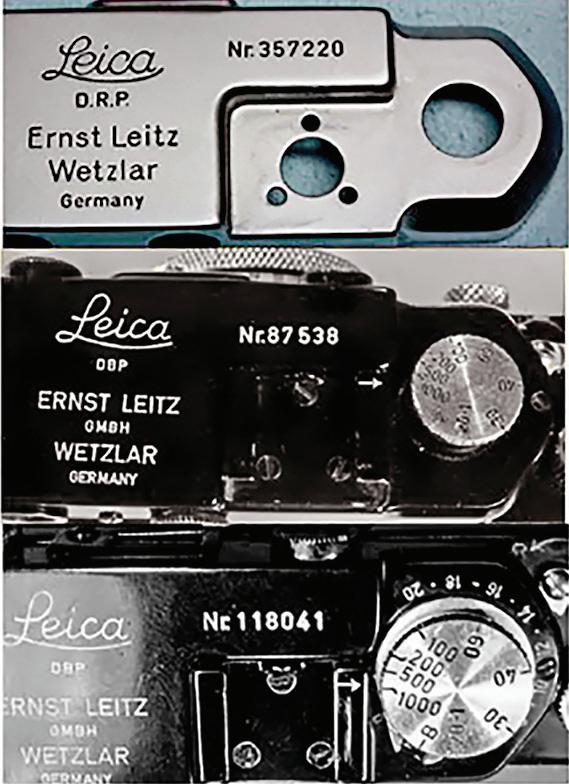
A bit intriguing is top cover. It has a shape and engravings (DRP) how it was used until approx. 1952. Top covers used for conversions after 1952/53 were shaped differently under the speed dial (to have enough space for flash contacts) and have engravings including” DBP”,” GmbH” or “GMBH”. These new covers were never in regular production, they were developed to be used in converting older models to flash sync models. They were used even if the upgraded camera did not receive flash sync.
Why the top cover is of old style, not used anymore after 1952/53? Well, if the camera was really assembled from spare parts this could be a valid explanation, old stock was used. Top covers have been pre-manufactured, chromed and with all engravings except SN. This was then engraved when top cover was needed for repair or upgrade.
As a summary: The camera has some parts which were not used in regular production, but were used from around 1953 to rebuild upgraded cameras. Upgrade program for screwmount cameras was ceased at Leitz as well around mid 60-ties. I do not believe that this camera was produced in 1950 and rebuild with newer parts later, it should have then order or serial number scratched on the frame. No evidence could be found that it was “Leitz-Eigentum” or “Betriebskamera” before, like it was with IIIc/IIIf that I have seen.”
Knowing Jerzy a bit, I saw him a bit down for not finding any evidence that it had been a Betriebskamer a. So I wrote him saying that for me, it was so important what he found ( small differences that could be present in upgrades) , than what he hadn’t found: no evidence of been modified or upgraded. So upgrades in a non-upgraded camera. That meant that the camera had been created as it is currently: a genuine IIIa that has several parts and technology from a very much later period. A modern IIIa. Not refurbished or repurposed.
That was the moment to come back again to the Forum and play hard, showing the evidences and asking for any other “documented” screw mount camera from a later date.
As expected, I got an answer (thanks Sabears) being challenged due to in the Hahne list (that unfortunately I also don’t have ) that “there are at least two cameras in 1965, N. 357208 and N. 357220 and another, much later, camera that was delivered in 1970 (!!), it's N. 357182 (Leica 72)”.
That was the first time I saw my serial number in any list but it appeared as a Leica 72. Jerzy clarified that there was no evidence of any conversion in my camera so everything pointed in the direction of an eventual error in the Hahne list, given the confirmation that I previously got from Leica.
We checked the Hahne list and the last screw mount cameras according to that list were:
• Cameras from 1965: 357208, 357220 (both listed as 18x24) despite of, according to the Leica records, they appear as IIIa even when the 357220 has a side note about a Leica 18x24
• Cameras from 1967: six Leica IIIg appeared.
• Cameras from 1970: 357186 (18x24), 948001 (IIIg)
According to Hahne list, there were some IIIf assembled/ produced in Midland, black dial are 610001-611000, red dial 684001-685000 and production was 1951-53 and last reporter found there was 353916 from 1953. And there is no reference to Leica assembled/produced in St.Ingbert (France), “Monte en Sarre” dated in 1949-51 (SNs 359xxx). As well as the IIIc/f former Betriebskameras, which serials were above 397608.
On top of that, Leica delivery records list four cameras delivered in 1963, and at least three of them are Leica IIIa.
So at this point it seemed clear that, even when my IIIa was not the last screw mount, it could still be the last Leica IIIa ever produced and one of the last screw mount Leica ever produced. What it started as an investigation about my camera, now had become a search for the last screw mount Leicas. So focusing on 1965, 1966 and 1970, I started to search the net for those last numbers.
From 1970:
• Serial 357182 that appears as “Leica 72”. I located it: the Leica 72 type f serial number 357182 was sold by Westlicht (Leica Auction) on 26 June 2016 and, as stated in the auction, its original delivery date was 21 Oct 1970 and they attached a copy of the delivery record. So confirmed.
• Serial 948001 that appears in the list as a IIIg. It has not surface yet.
From 1966:
• Six Leica IIIg are listed (Serials: 988266, 988269, 988276, 988277, 988279 and 988280). None of them have surfaced yet.
From 1965:
• Serial 357208, I found it as sold by “Joyería y Antigüedades Aznar” in Spain (antiguedades.es), and the pictures show that it’s clearly a IIIa. Leica records for dates its delivery 5 of July 1965. So this is earlier than mine. Pending on a internal inspection, it looks like very authentic (and this could match with the answer from Leica talking about some other IIIa). (images 11 & 12)
• Serial 357220 As I found the rest, why don’t check my own serial number? I really don’t know how, but I located the
serial: A camera with serial number 357220 was auctioned by “L&H Auction Co., Ltd.” on Spring 2016 but it was a L eica 72 and to me, it looked very genuine! (images 13 & 14)
So after all, Hahne was not wrong with this one, maybe just incomplete. Jerzy and I were in agreement that both cameras with serial 357220 are authentic and there is a duplication of the serial number. That’s probably the reason for the side note in the delivery records.
-
Three Leica IIIg are also listed: 988270, 988272 and 988273.
Note: All the Leica IIIg listed during these three years are part of regular batches from 1958 so their concrete delivery date is pending to be confirmed. Even so, those cameras could well have been produced as part of the regular batches and delivered later.
So, without a further investigation of the production books, we can conclude that there is a number between three and thirteen cameras (depending on the source) that were delivered in 1965 and 1970 (and potentially 1966).
Some of them are Leica IIIa, built under special order. A model that was introduced in 1935, what makes from it, the model with the longest production period in Leica history.
And yes, according to the delivery books and others sources, my camera 357220 from November 1965, is the last Leica IIIa ever produced, more than thirty years after this model was introduced. The camera could be the second last screw mount ever produced and be in a position between two and twelve last Leica screw mount ever delivered.
acknowlegements:
• L&H Auction Co., Ltd. (lhauction.com.hk) for the pictures of the Leica-72 serial 357220
• Joyería y Antigüedades Aznar (antiguedades.es) for the pictures of the serial 357208
• The Leica International Forum users specially to William, Sabears, Allan McFall and Pierre for challenging me and providing extremely valuable information.
• The Leica Customer Service people that help those of us that love to track the life of our cameras and for an amazing century of writing photography history keeping their records
• Jim Lager for the information provided, his deep knowledge and specially his friendly support and the collegiality that I found with him when sharing my thoughts and findings.Thank you.
• Willy Hahne for his invaluable Band 1.
WHY DID DR. WOLFF LEAVE ALSACE?
by ED SCHWARTZREICH
This is the second of three articles based upon documents and images received from Ashley Wolff, Paul Wolff’s granddaughter. Here we examine the actual expulsion order document from Alsace for Wolff’s wife and young son.
oneof the mysteries regarding the life of Dr. Paul Wolff concerns the exact reasons why he left Alsace, the place where he had been born in 1887.
We know the following: that Wolff left Alsace due to it becoming French after WWI; that his 1919 move to Frankfurt am Main upended his profession as a medical doctor, even though it ultimately promoted his career as a photographer; and that the move appears to have caused him considerable personal difficulty and likely prolonged hard feelings. Nonetheless, it has never been entirely clear whether his move was voluntary or forced. This author had previously suspected that Wolff’s leaving was voluntary and had to do with his German medical license no longer being honored in now-French Alsace. An Alsatian antiquarian correspondent reasoned along similar lines, but felt Wolff left because he likely did not speak French. Further reading about the period indicated to this author that if Wolff, as a German, had met the rather strict criteria that allowed him to stay, he would then have had to accept French citizenship through a naturalization process.1 The upshot of each of these earlier hypotheses was that Wolff had found it easier to leave and relocate to Germany. Now, new information pushes the explanation for Wolff’s move strongly towards one of forced expulsion.
One of the documents which was in the possession of Dr. Wolff’s granddaughter Ashley Wolff when this author met with her is an official expulsion order from Alsace for Wolff’s wife Helene and son Klaus, her grandmother and father; this document was examined almost 100 years to the day after it was issued. Ashley kindly scanned it and forwarded it to this author. Here is the author’s translation:
the main printed body of the document:
Military Government of Strasbourg and Superior Command of the Territory of Alsace, General Staff, 2nd Bureau. S. R. [The 2nd Bureau S.R. references France’s External Military Intelligence Agency]. September 22, 1919 [handwritten] .
order : “Frau Wolff and son” [handwritten] will be deported on “1 October” [handwritten] 1919 to Germany by special train. This train is routed from Strasbourg-Neudorf (departure 9 [handwritten] o’clock) to Offenburg. Passenger- and baggage-handling (not hand luggage) takes place on 30 September [handwritten], 1919, from 8 am to 11 am, and from 1:30 pm to 5 pm at the Strasbourg-Neudorf train station. The transport fees to Kehl / Rhine (I. class. 0.75 fr., II. class. 0.50 fr., III. class. 0.30 fr., IV. class. 0.20 fr., Luggage per 10 kg 0.05 fr., at least 0.65 fr.) are to be paid by cash in francs, those for the German route by cash in marks. Those without the ability to pay receive free travel for themselves and their relatives on presentation of their identity cards (showing insolvency) and free transport of their luggage for the German route. For the distance to Kehl / Rhine the full fees have to be paid.
luggage allowance: 50 kg.; Money: not more than 2000 marks, children up to 15 years inclusive: 500 marks.
This order is to be submitted on 28 September [handwritten] 1919 to the General Command (2nd Bureau), Brandgasse, specifying the number of persons traveling.
signature : Frau Helene Wolff [signature] by order: The Chief of the 2nd Bureau.
Number of persons traveling: 2 [handwritten]
stamps and handwritten notes on the document:
stamp: “Direction Strasbourg, entered 22/9/19, [?]: 3925” ; this appears to be somewhat similar to what might be stamped on a passport, visa, or possibly a rail ticket, and may imply that Helene and Klaus had to travel from their home to Strasbourg to be deported. Handwritten: “1 Bd de la Victoire” . This address is currently short-term student housing at the central university in Strasbourg; in 1919, it consisted of 18 apartments, shops, and a brasserie, per the French website www.ArchiWiki.org. It could have been a temporary holding site for
deportees, with Helene and Klaus arriving there only on Sept. 22, per the stamp. Above the word “Befehl” [order] is a handwritten number, apparently 274.
Handwritten words at an angle on the left side of the document appear to say, translated from French, “Expiration of Reprieves (des Surses)” . On the reverse side of this document (not shown) it states, handwritten in German: “From the French authorities – Expulsion Order for Germans in Alsace-Lorraine”.
The author has read detailed and complicated descriptions of what happened to various Alsatians after WWI, depending on their birth nationality and the depth of their allegiances during the War. Wikipedia, however, offers a simple, helpful commentary on this:
"The French Government [after WWI] immediately started a Francization campaign [in Alsace] that included the forced deportation of all Germans who had settled in the area after 1870. For that purpose, the population was divided in four categories: A (French citizens before 1870); B (descendants of such French citizens); C (citizens of Allied or neutral states); and D (enemy aliens = Germans). By July 1921, 111,915 people categorized as "D" had been expelled to Germany”.
Paul Wolff’s father was Prussian and moved to Alsace along with 200,000 other non-Alsatian German speakers following Germany’s 1870 victory in the Franco-Prussian War. The Wolff family had remained German citizens, and so was definitely in category “D”. With the other two members of Wolff’s young family being deported as here, the likelihood is that Wolff himself was given a similar order, but such a document has not surfaced. Historically, we do know that the process of determining whom to expel -- especially German military veterans -- was complex, difficult for those who wished to remain, and often arbitrary and ugly on an individual or family level. 2
The author also consulted with Thomas Sommer of the Dr. Paul Wolff & Tritschler Archiv about this topic. Mr. Sommer is in possession of Dr. Wolff’s partially-completed and unpublished autobiography from 1950, the year prior to Wolff’s death. Mr. Sommer kindly provided the following excerpt from that document (translated by the author):
“I was expelled only in November 1919. Until then I had had time to look after my family. These were depressing days and weeks. I worked like a maniac until late at night enlarging my most beautiful negatives.
I had already systematically photographed my beloved city of Straßburg, likewise the beautiful mountains of the Voges -
en [Vosges]. The negatives were lying there waiting to be used. I found an Alsatian publisher who would not exploit my situation as a German and gave him the negatives. F. Bruckmann AG in Munich then made three books from these in the best copper gravure: Le vieux Strasbourg I, Le vieux Strasbourg II and Les Vosges.
I received payment for this only when I was in Germany and got a bundle of money that hardly had any purchasing power. It was all over with my dreams! The photographs had given me what I considered a small fortune but now this money was worthless and was just enough to buy some furniture and some bed linen.
Like so many family men in broken-down Germany, I was unemployed. True, I had studied medicine, but I didn't have the money to buy the necessary instruments, even the simplest, let alone rent the necessary rooms. I went looking for a job. I crisscrossed Germany trying to sell my photographic knowledge."
Paul Wolff’s personal status vis-à-vis the new Alsatian government in this period thus appears to have been straight “Category D”, even though his expulsion date, as he writes about it toward the end of his life, was not at precisely the same time as that on the expulsion order for his wife and son. Could Wolff’s leaving have been a month earlier than he recollects? Could his family have been given a one-month reprieve that we do not know of? It does appear from their expulsion order that Helene and Klaus had previously been given some sort of reprieves -- but we do not have the context to know why. Ashley had told the author that her grandmother’s family had partial English roots; might this have affected her own classification? 3
While clearly there are still unanswered questions here, what is strongly implied from the available evidence is that Dr. Wolff, like the other two members of the Wolff household, was deported from Alsace because he was German. He had no choice.
references
1. Veterans, War Widows, And National Belonging In Alsace, 1871-1953 By Devlin Marshall Scofield
A Dissertation submitted to Michigan State University in partial fulfillment of the requirements for the degree of History – Doctor of Philosophy 2015, pp 296-328
p 322 “[One of the categories] of the borderland [i.e. Alsatian] population whose citizenship status was discussed in the Treaty of Versailles were Germans who resided in the province prior to the outbreak of war. French authorities considered any resident of Alsace to be German if they had migrated to the province during the Imperial period or were the descendant of a German immigrant. The Treaty expressly forbid any “old” German from automatically receiving French citizenship. It did, however, offer an avenue to French naturalization, provided that the applicant had lived in the Reichsland before August 3, 1914 and lived for an unbroken period of three years in the provinces after November 11, 1918. Given the previous discussion of the difficulties many “old” German Alsatian soldiers encountered attempting to return to the province after the war, it is evident that they were at a distinct disadvantage when it came to the naturalization application process.”
2. Ibid p 300: “French officials were ultimately able to reconcile the majority of German Alsatian ex-soldiers to the established French nationalist narrative by characterizing them as reluctant and unwilling conscripts in the German military. The situation was more problematic for Alsatians who appeared to have willingly cooperated with the German government, such as career officers, volunteers, and soldiers receiving commendations for their wartime actions in the German army.”
3. Ibid p 325: “French officials would rapidly discover that the application of seemingly straightforward classifications was problematic in the borderland. Family units and their members could not be categorized as a group and given a single corresponding identity card. Instead, the widespread intermarriage of the German and Alsatian population meant that an array of different identity cards were regularly issued within the same family.”
AND THE NEW
by JONATHAN SLACK
Iam not certain where I first came across Fogg bags - it might have been in 2007 at Robert White camera shop to pick up a Leica 75mm APO-Summicron-M.
I first bought a B-Laika for my M equipment and quickly fell in love, later I bought a B-Major for my Nikon dSLR equipment, which has been used at weddings and events ever since. That’s the bag that’s been used ever since, not the camera, which morphed into a Leica SL and now an SL2 with various lenses. Then I bought a Flute pouch - for keeping a camera on my hip whilst horse-riding. Around this time (2012) I started communicating with bee berman and Nigel Fogg and they used some of my photos on their website.
I have to admit to being a bag fetishist. I have excellent bags from lots of different bag makers. I have two bags from two makers (shame) , but I have six Fogg bags (no shame!) . Buying a Fogg bag isn’t just a transaction; it’s a real experience (especially if you can deal directly with them)
When Fogg sent me their new all leather bag to check out I thought it would be a really good opportunity to spread the word about a unique and rather wonderful company. I asked them for some historical details, planning to do a little biography, but what they sent was so wonderful I thought it better to let them speak for themselves.
Incidentally, if you have an email correspondence with them, bee always spells her name in lower case, she always writes in red, and Nigel in blue.
A LITTLE HISTORY (MOST OF IT IN THEIR WORDS)
Nigel and bee were born in South Africa, bee trained as a theatre stage designer at the Royal Academy of Dramatic Art (RADA) in London, whilst Nigel began making various leather items at university.
bee was dangerously active as a documentary photographer for the anti-aparthied movement in Cape Town. Nigel was
curator of photography at the South African National Gallery. In 1985 they moved to London as there seemed no resolution to the anti- apartheid problem. In bee berman’s words:
“Two people without a smidge of business in their DNA start a business. Those with intelligence would have shut the door, turned off the light and lost the key before the year was through. Instead we tight-rope-tottered on."
DELIVERING THE FIRST SET OF BAGS TO RG LEWIS
bee continues: "Philosophy was simple - we had both been photographers and had our individual ‘perfect-bag-list’. An example: While running in a squatter camp raid in Cape Town, my bag up-ended spitting out my gear/film into the sand. I was arrested - on my knees.
#1 -The bag must shut quickly and hold gear while running...
Our office was a call-box down the road from the mighty Thames in Hammersmith. In all seasons we squeezed into the red-box, Nigel being the desk as i juggled diary and papers on his back. then we swopped as he connected with suppliers from the yellow pages. Amateurs? Sure."
As Nigel puts it: “Given the severe recession in the UK our best chance seemed to be to pursue the making of camera bags, the first attempts having been made in SA.
Twenty prototypes later, our first bags were supplied to RG Lewis in London, in 1986, and later that year won an award from the Design Centre. We’re still going.
We moved to France in 1992, to be able to live and work in exquisite surroundings, and against the backdrop of a rich historical and cultural heritage. "
ALL THEIR OWN WORK
As far as I know Fogg is unique, in that the bags are all made by bee and Nigel , themselves. They are not made in a state of the art factory in Germany, or South Korea or Birmingham, and especially not in a sweat shop in ‘wherever’.
If you buy one of their bags, it isn’t like some anonymous purchase. It’s an experience, rather like buying a Leica, but even more personal.
bee again: “Why? Why would two adults way past pension age keep going? Because of the people we make the bags for. The shift from customer to friend evolves mostly before money crosses palms - and we remain in contact long after the sale has been made.
We share photographic adventures but also lives filled with births and marriages, illness, political discourses, arguments and tolerance and sadly, loss - when the air in our day passes with a heaviness too.
They are articulate, enlightened, amusing, knowledgeable (Do I dare add, the most exigent folk walking planet earth?) and most important, they share generously with two perfect strangers. We don’t work for anyone...we work with them.
And finally their technique of returning their golden oldies is worthy of a hundred Oscar’s: "I’ve had a little accident, a little stain, a little tear, the puppy, the baby, the wife, the wine...” , and still neither siren nor warning light goes off in our brains. Instead “NO PROBLEM send it back...for a token payment we will bring it back on the road.”
Last return took me a week to undo...the stitching had fossilised deep into the leather, the fabric turned to dust in my hands. The weathered leather was all weather and no leather... but each piece is placed like an archeological dig into a box for Nigel: like a well-rehearsed actor: “THAT’S IT. THIS IS THE LAST TIME...NEVAH EVAH.” Then it’s shelved.
A few days later the box is on his bench looking like a demented jigsaw with missing pieces. Slowly bits are added/modified as it moves quietly backwards and forwards to my machine and back again. 'Til it stands for another 20 years...shaving 4.7 minutes off our lives and taken three weeks to achieve.”
I’m afraid I’m a guilty party here. My first B-Laika became a little frayed around the edges after five years being used every day - sweated on in Crete and China and stolen from a restaurant in Leeds, traipsed around the fens, poured on in Cornish rain (there’s nothing like Cornish rain) . I sent it back for repair. When it returned, the replaced pieces were in a bag, it hadn’t just been repaired, but largely redesigned on the basis of where it had worn, with new leather edging to protect the bit that had been damaged by my boney hips.
THE NEW SATCHMO
If you really REALLY use your bag every day there is a real conundrum: canvas bags are lighter and more flexible, but they do wear faster than leather, and leather bags are almost always too heavy and stiff.
The Fogg SatchMo is their first full leather bag. They sent me one to evaluate. I’ve spent the last couple of months using it every day and it’s becoming nicely broken in.
It’s pretty much exactly the same size as the B-Laika, which means that it has room for two Leica M bodies with lenses attached, and two other (smallish) lenses tucked underneath. It is derived from their version of the carpenter’s pouch to last a lifetime of heavy use.
The flap covers the whole of the front of the bag and is fixed shut with a brass staple with a piece of sturdy leather tucked through. I wasn’t certain about this to start with, but I’ve grown to love it, it’s easy to do up quickly, and also easy to undo quickly, with one hand behind your back!
It’s also very easy to change the length of the shoulder strap so you can move from over one shoulder to across the chest. The bag has a carrying handle, which is great for grabbing it from the passenger seat (or the back seat) in the car.
Under the flap, the single front pocket is quite generous, I use it for a wallet, a couple of spare batteries and my Apple AirPods Pro - but it would be equally convenient for a phone and charger. There are two very slim pockets on the front, suitable for SD cards or credit cards. The flap cover of the front pocket has a magnetic closure to keep it in place. On the top of the flap is a leather pen loop - which is thin enough to allow it to go under the clip on the pen cap and generous enough to fit quite a substantial fountain pen.
The inside of the bag is covered in coarse linen (like all the Fogg bags) with 3 flexible and movable dividers, and a rear fixed divider which could be used for a phone or a slim tablet or notebook, but not any of the larger iPads. The interior is well padded against the outrages every camera is subjected to!
As I pointed out earlier, the problem with leather bags is almost always that they’re too heavy, but the SatchMo weighs 800gm to the B-Laika’s 640gm, not such a great increase.
A couple of months isn’t long enough to really get to know a bag, but SatchMo has enough in common with my favourite B-Laika to know that it’s the perfect size for a good M setup, It’s a lovely thing to look at and it feels like it’s going to last a lifetime.
SIX ELEMENTS, HEAVY KNURL
by JIM LAGER
Lens 2269508 (1968)
November 6 th, 1968 E.Leitz, Inc. New York internal memo announced the new Leitz Wetzlar rigid mount six element 50mm 1:2 Summicron lens #11817. Available only in black anodized finish, the seven ounce Summicron permitted focusing as close as 28" (0.7 meters) on the Leica M4 and M2. An infinity lock was eliminated. Heavy (coarse) focusing mount knurling was fitted as employed on earlier seven element 50mm Summicrons #11117 and #11118. By 1970 (possibly earlier) the knurling had changed to a smooth uniform motif more economical to produce.
Earliest 1968 lenses occur at 2269251 - 2270250 and 2294001 - 2296350. Heavy knurl specimens are infrequently seen. One can speculate that perhaps only a few hundred were completed. If you have such a lens Editor Rosauer and I will appreciate your comments.
DON'T OPEN IT!
by JIM LAGER
I n 1983 a special model of the Leica M4-P was prepared to commemorate seventy years of 35mm Leica rangefinder photography. The M4-P silver chrome body was engraved Leica 1913-1983 and a special production number such as L-100. A Leitz Rockleigh Leica Dealer Newsletter states that 200 will be produced.
You can imagine my astonishment when shown a sample camera by a local Leica Dealer. The engraving was very interesting. I asked if I could photograph the engraving. Can we at least take it out of the protective sealed plastic bag? The answer was an emphatic no! OK then, I will shoot through the bag ! No problem. The engraving is shown here for your perusal. I refer the this M4-P as the “Napoleonic Special”. 1813 indeed!
LHSA – The International Leica Society is proud to announce that on July 22, 2020, its premier publication, the Viewfinder, received the AM&P Excel Silver Award for Design Excellence in the 10,000 or fewer circulation category.
The Association Media & Publishing Excel Awards represent the best in association publishing and recognize excellence and leadership in association media, publishing, marketing and communications. The competition is open to nonprofit and forprofit associations, as well as industry service partners submitting on behalf of association clients, regardless of whether they are members of AM&P.
Over the years, Viewfinder has become an important part of the LHSA community with a dedicated following and we were extremely proud and overjoyed to have our publication judged alongside other fine magazines. Special congratulations go out to Editor Bill Rosauer and Graphic Designer Kirsten Vignes, and to all the contributing authors, editors and proofreaders whose dedication to excellence earned this well-deserved award.
This was a proud moment for LHSA and for Bill and Kirsten in particular. With every issue, they assemble the most relevant topics and present them with an attractive layout and design for which the Viewfinder is known. Alongside its passionate subscribers, the Viewfinder has become the Society’s greatest asset.
SINCE 1968
For over 50 years, the Viewfinder has been LHSA’s flagship publication and is known throughout the world as one of the leading sources for Leica enthusiasts for cameras, equipment,
LHSA'S VIEWFINDER RECEIVES DESIGN EXCELLENCE AWARD
by RICHARD REJINO
photography and historical information. First published in 1968, it began more as a four-page bulletin of information and ironically with very few images, but as LHSA grew in stature and means, so did the Viewfinder. Ten years later evolved from a few pages to a 24-page journal filled with historical articles and images about all things Leica. Until the late 1990s, the Viewfinder was largely a black and white publication, but by the end of the millennium, color images and layout were more frequent but not yet predominant. It wasn’t until the 2000s that the Viewfinder was published with four-color printing on a regular basis.
In 2012 the Viewfinder masthead was updated and remains as its current look today. From its meager 4-page beginning, the journal is now 54 pages in length and features in-depth articles on all aspects of Leica photography. Its current editor, Bill Rosauer has been with the Viewfinder since 2000 and Graphic Designer Kirsten Vignes has worked with Viewfinder since 2015. We appreciate how they artfully blend the proud tradition of the past with the new trends of today.
If you are interested in seeing the evolution of the Viewfinder for yourself, visit our website lhsa.org and find the Viewfinder Archives page. There you will find downloadable files of every issue since 1968.
After a long and storied history, the Viewfinder is now an award-winning journal – a long overdue and well-deserved distinction.
Thank you for supporting LHSA – The International Leica Society. Without your membership, the Viewfinder would not be possible.