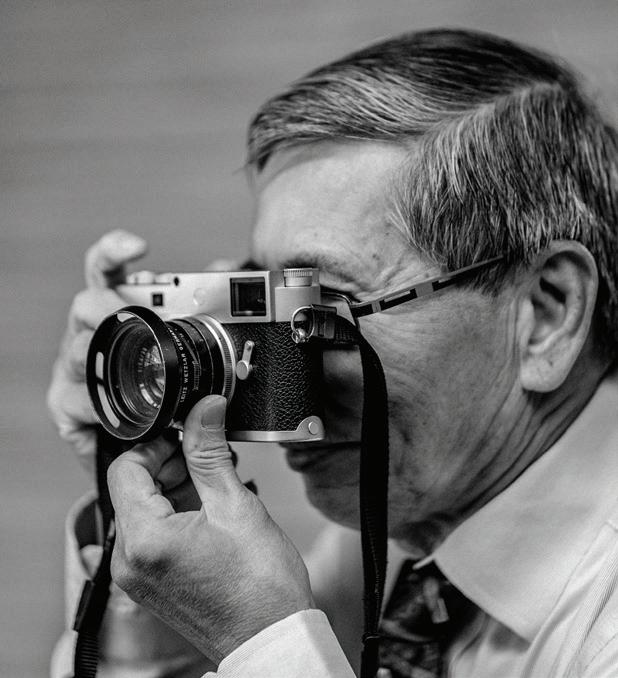
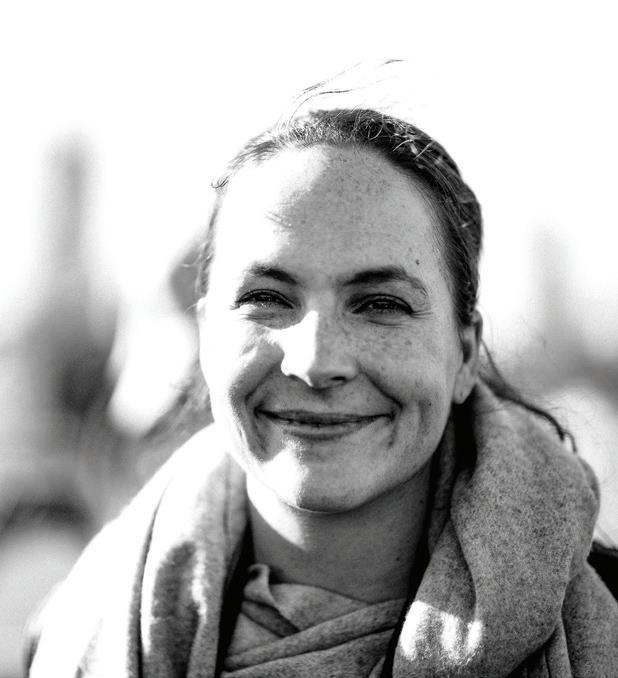
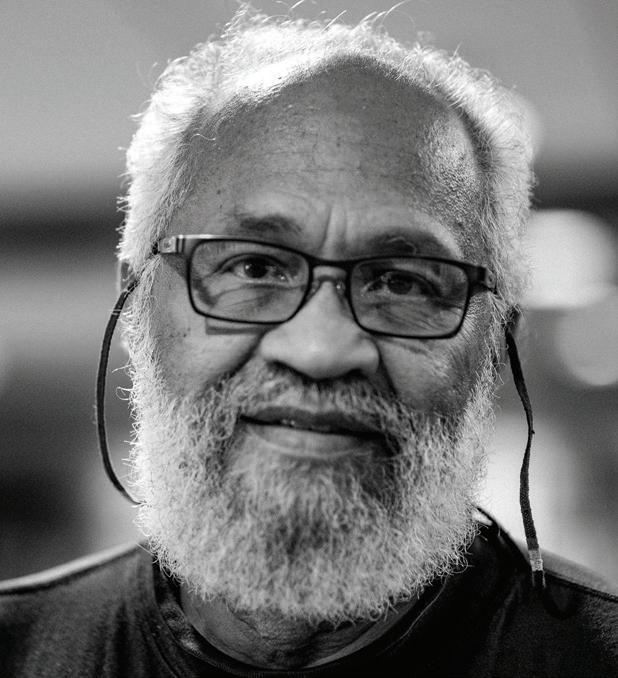
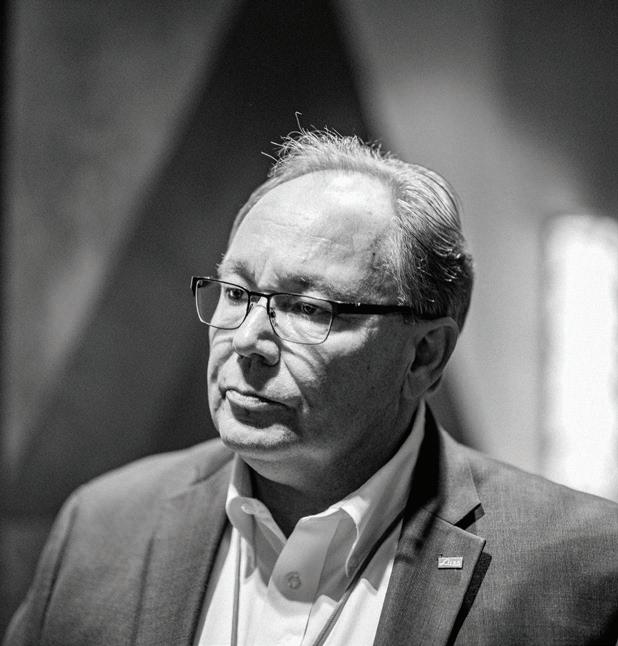
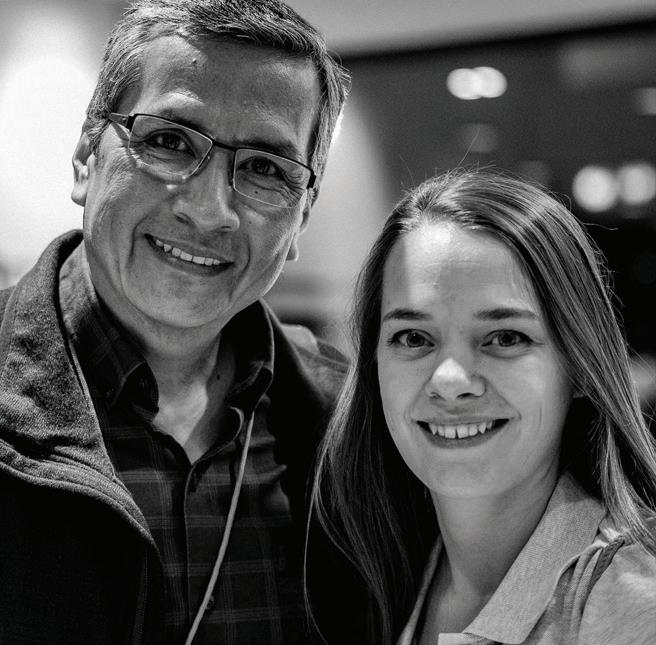
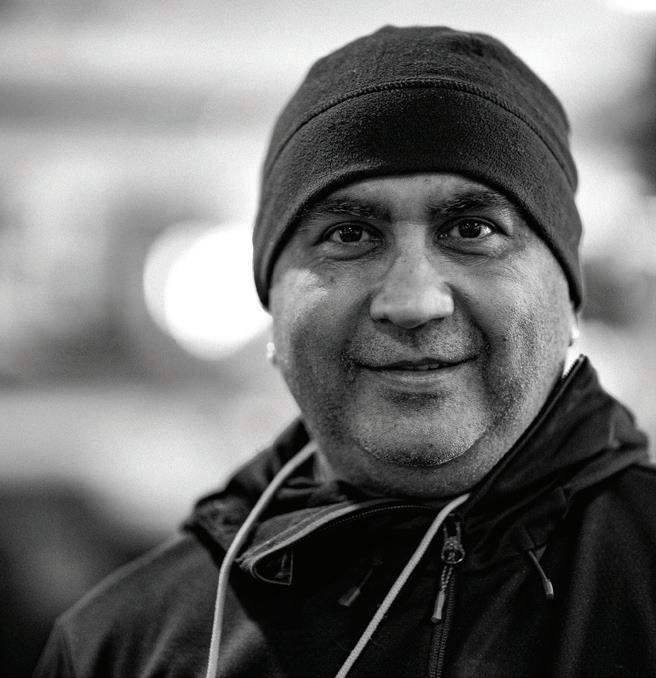
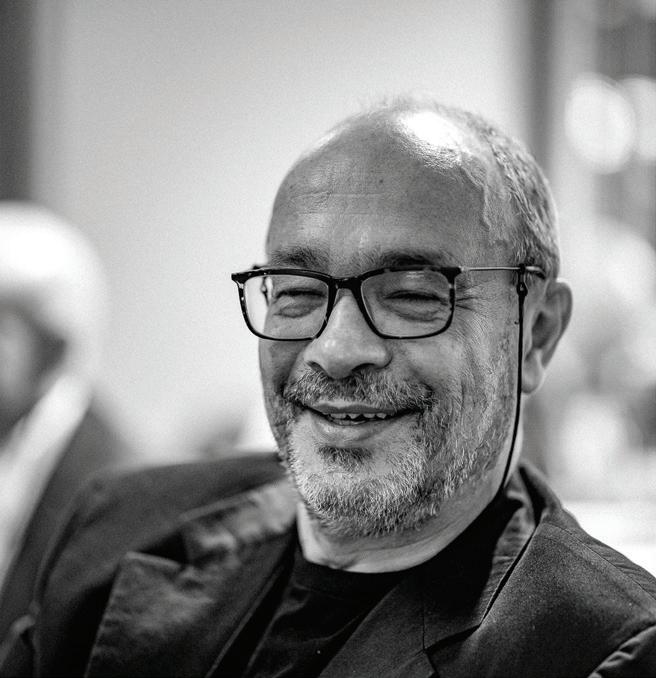
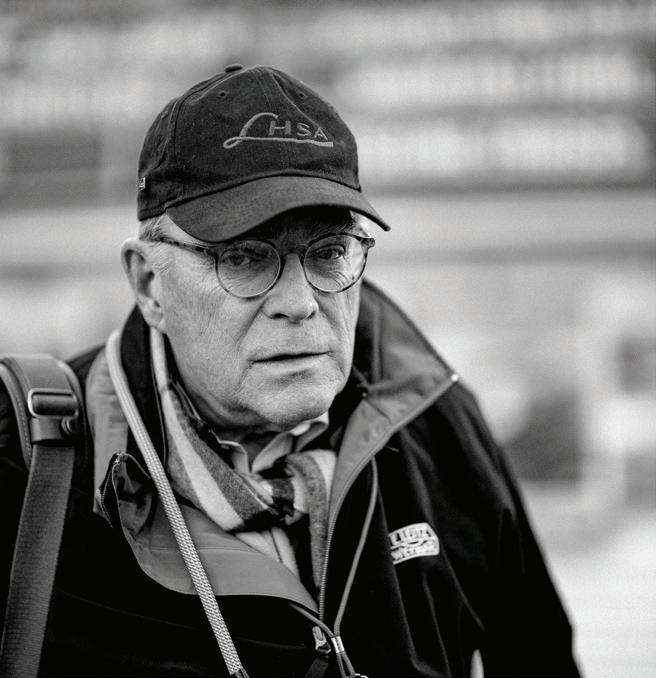
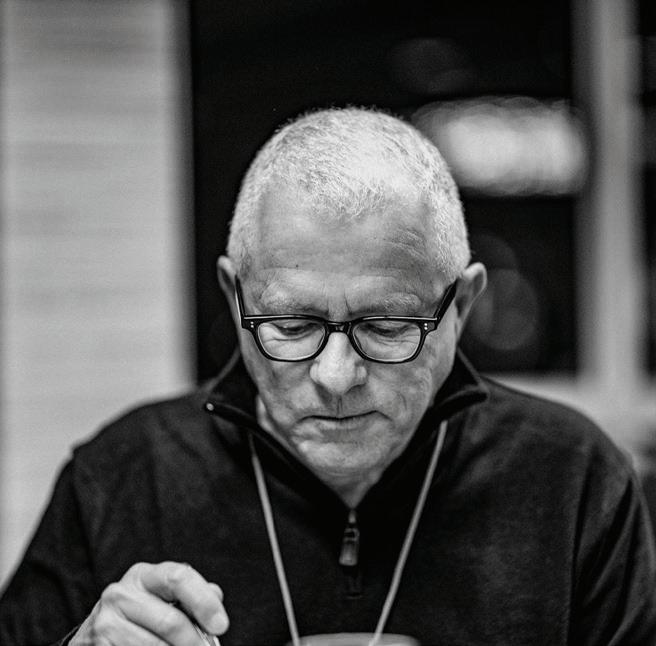
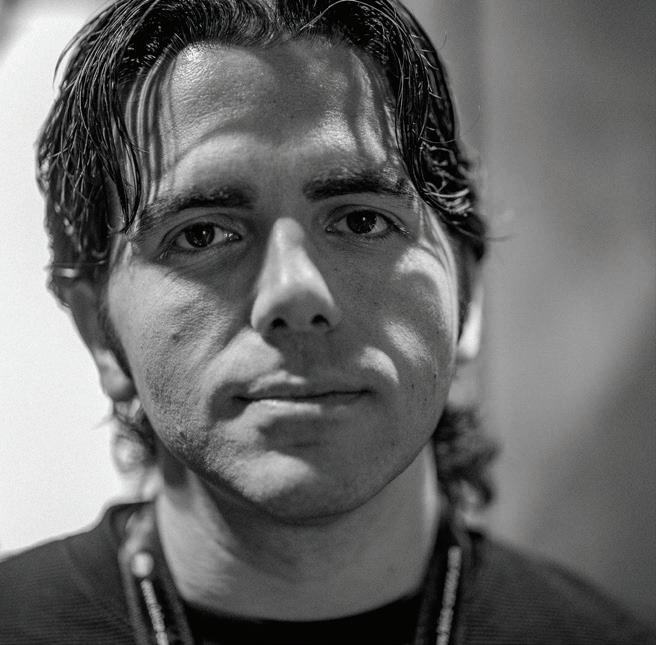
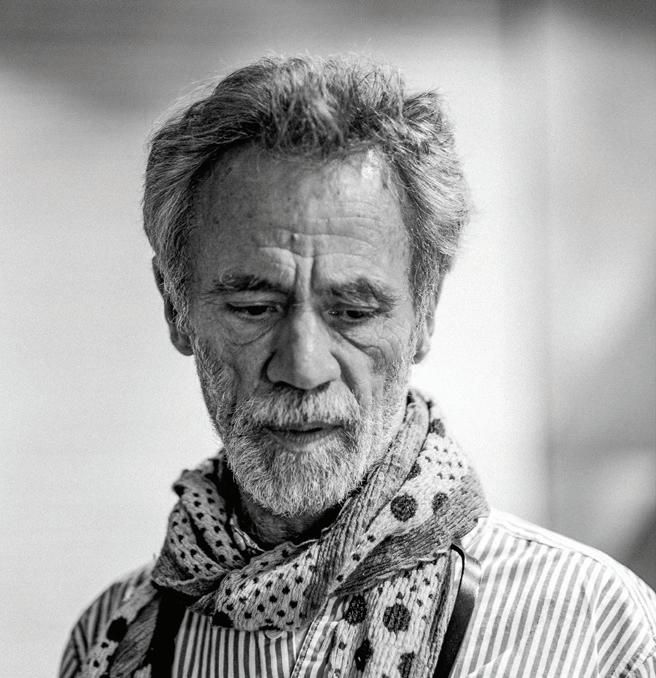
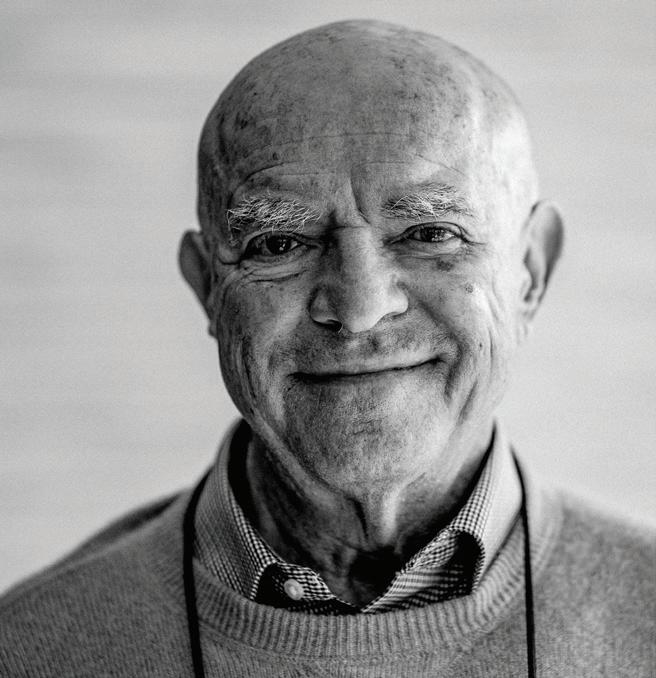
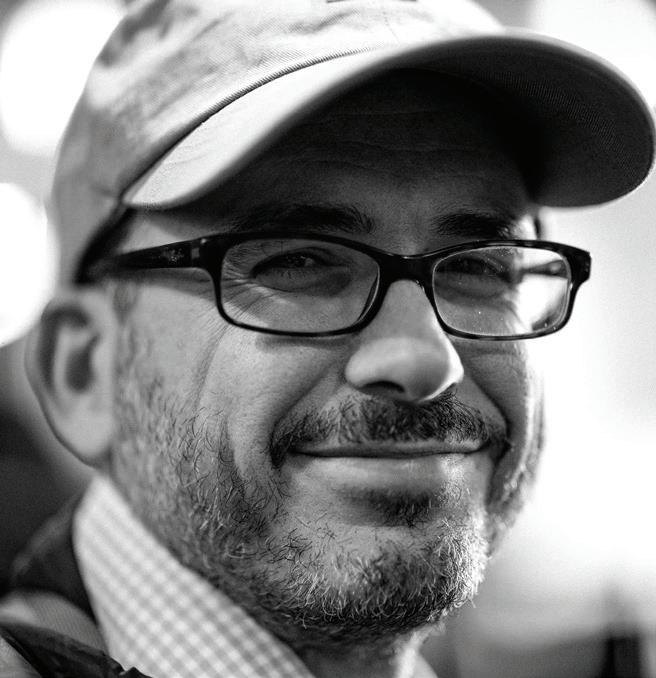
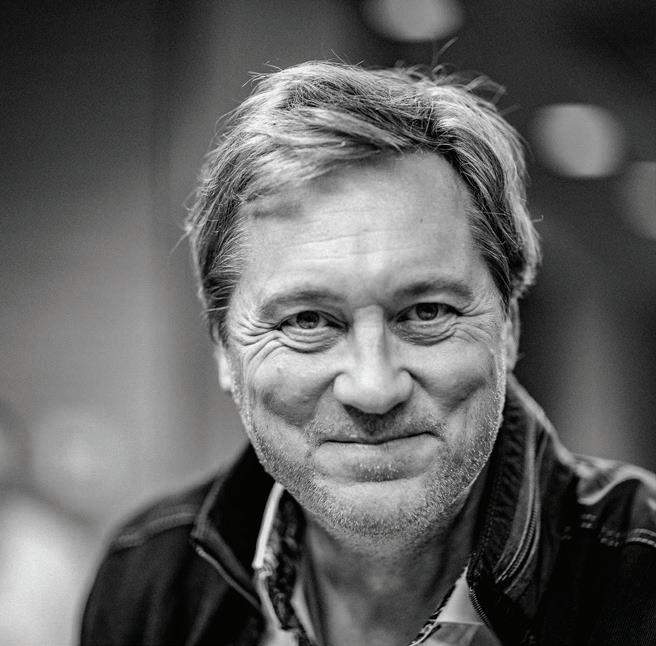
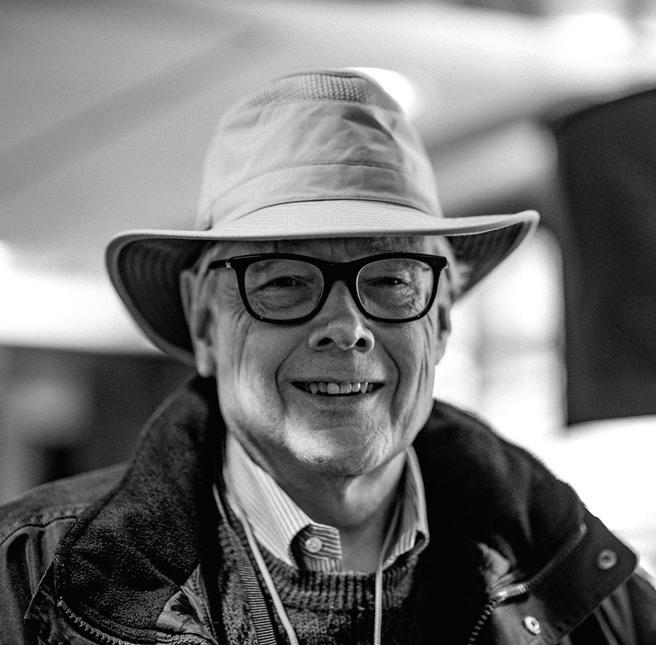
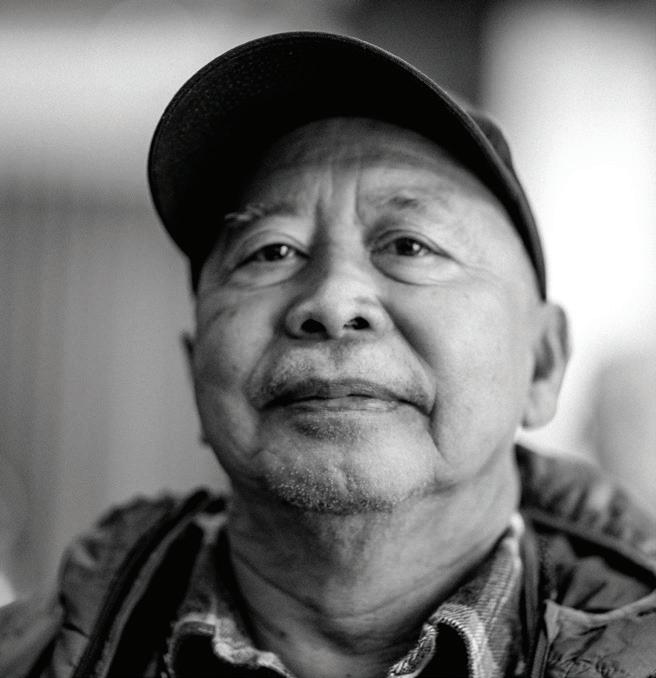
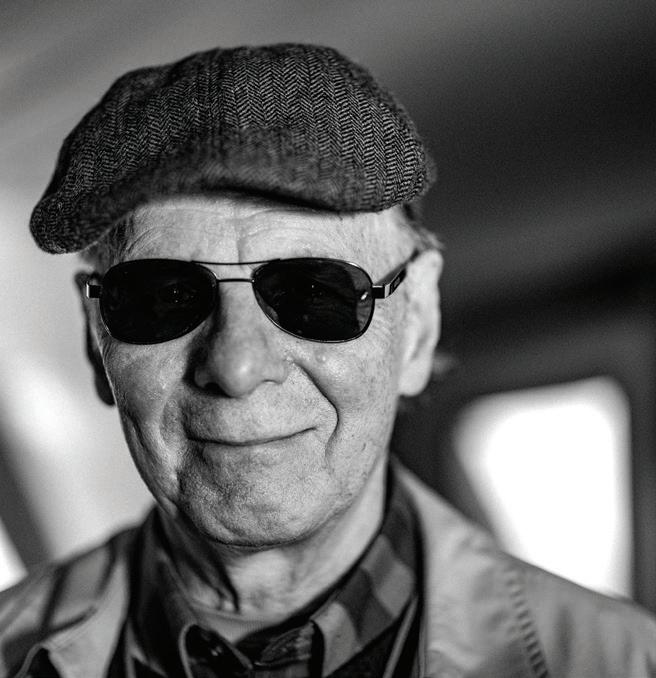
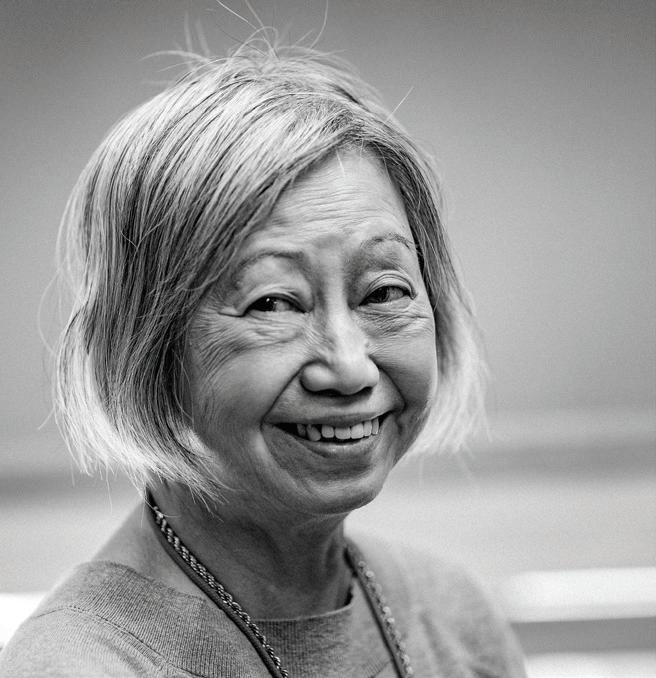
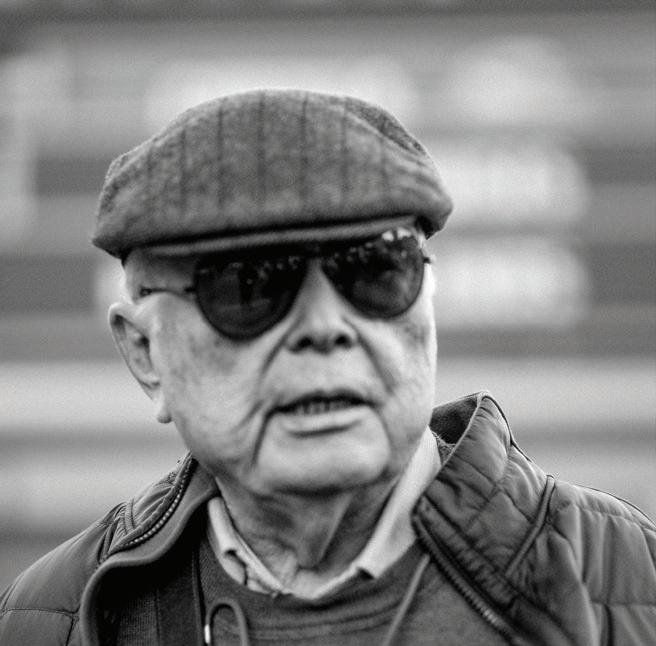
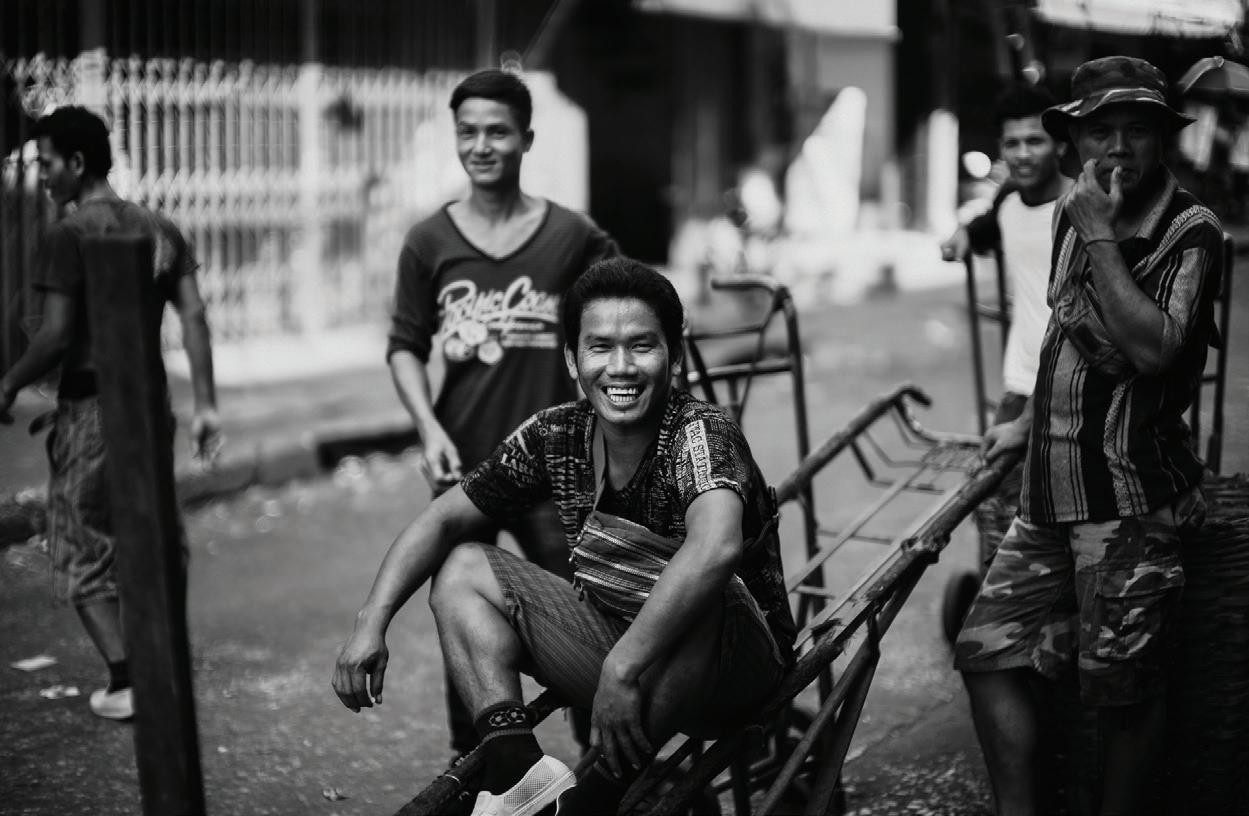
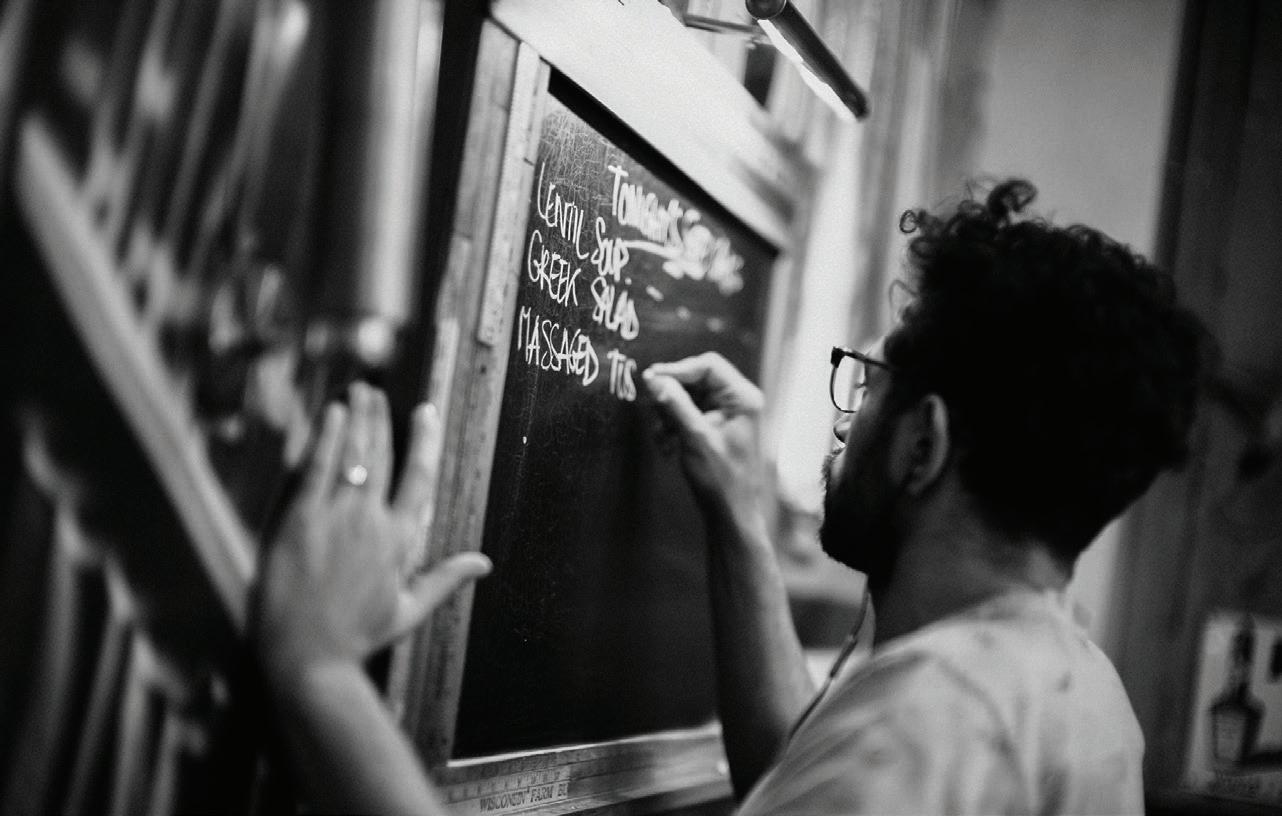
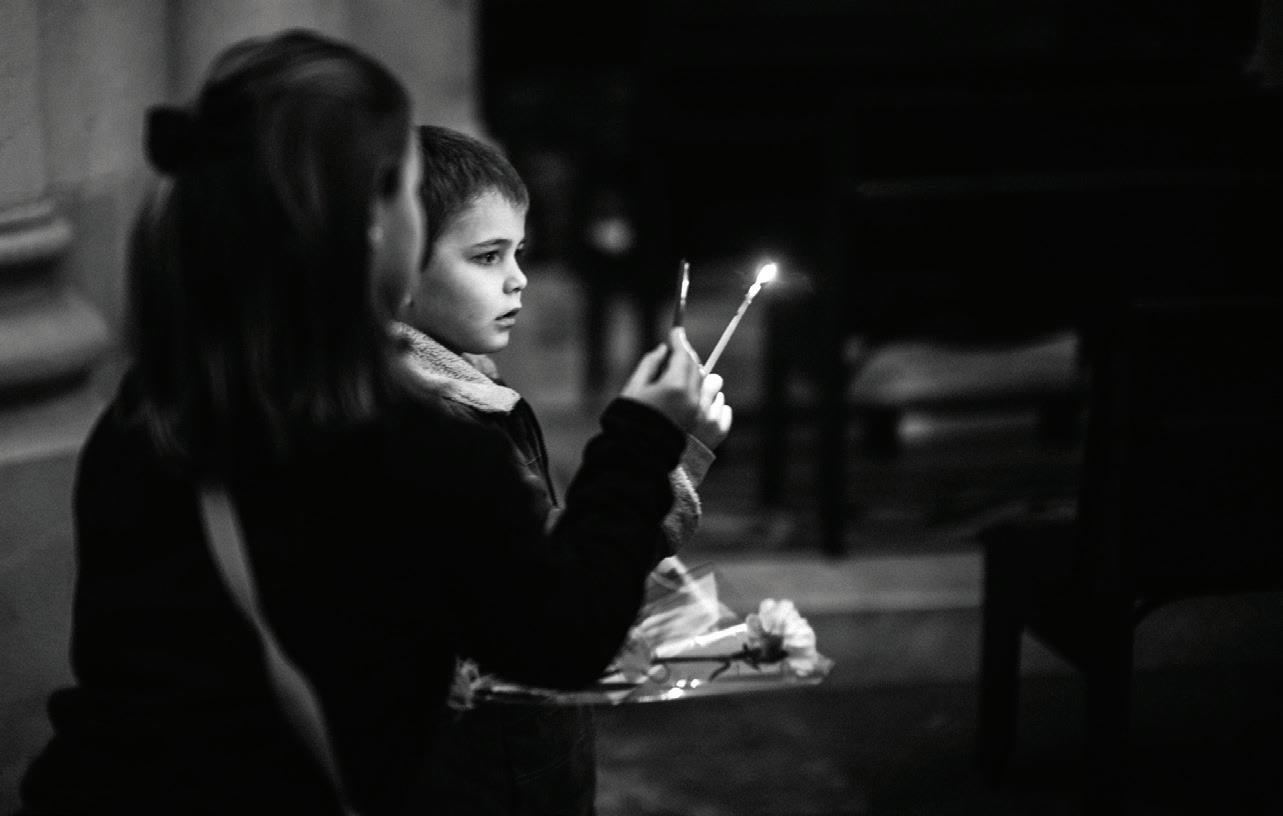
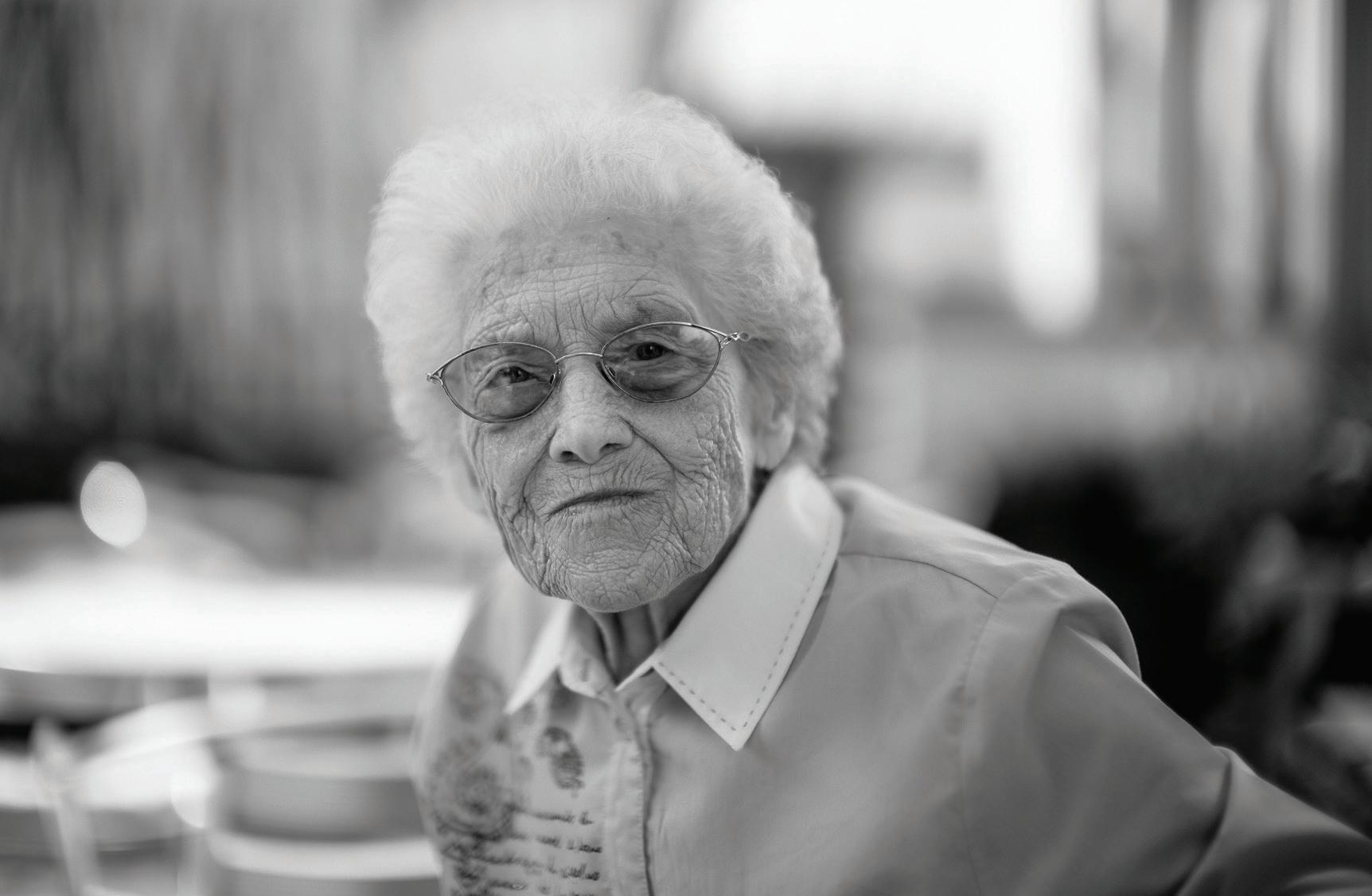
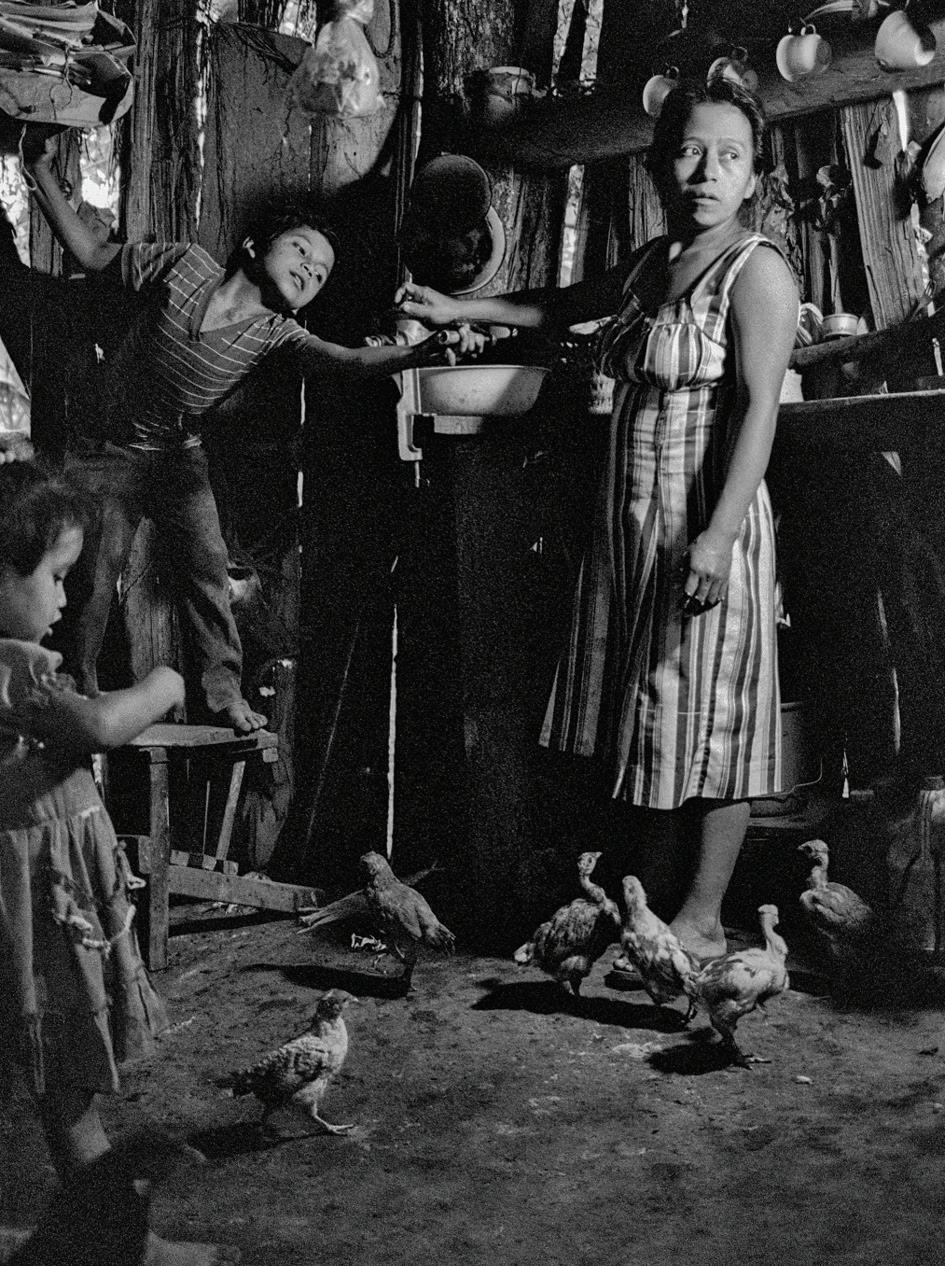
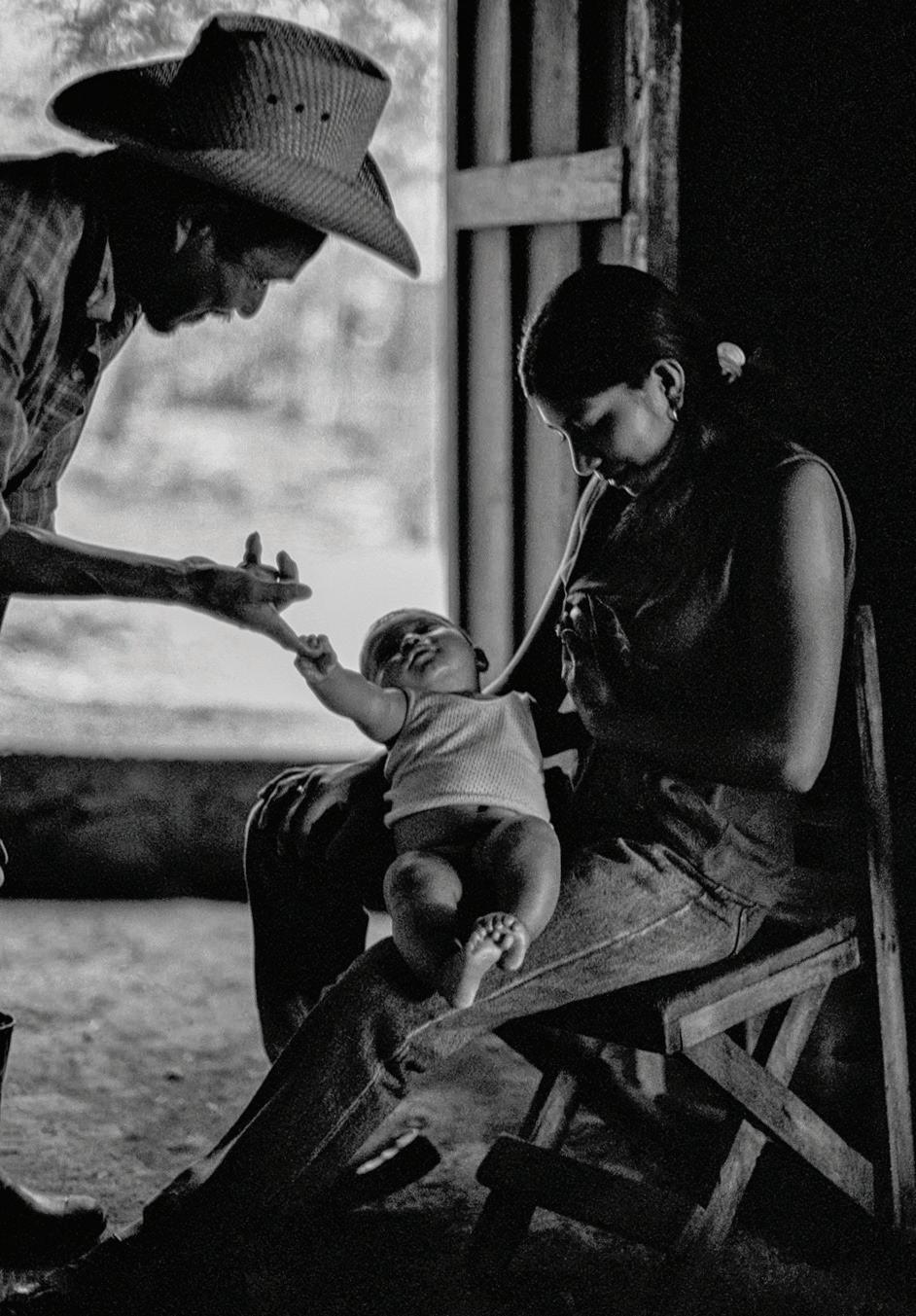
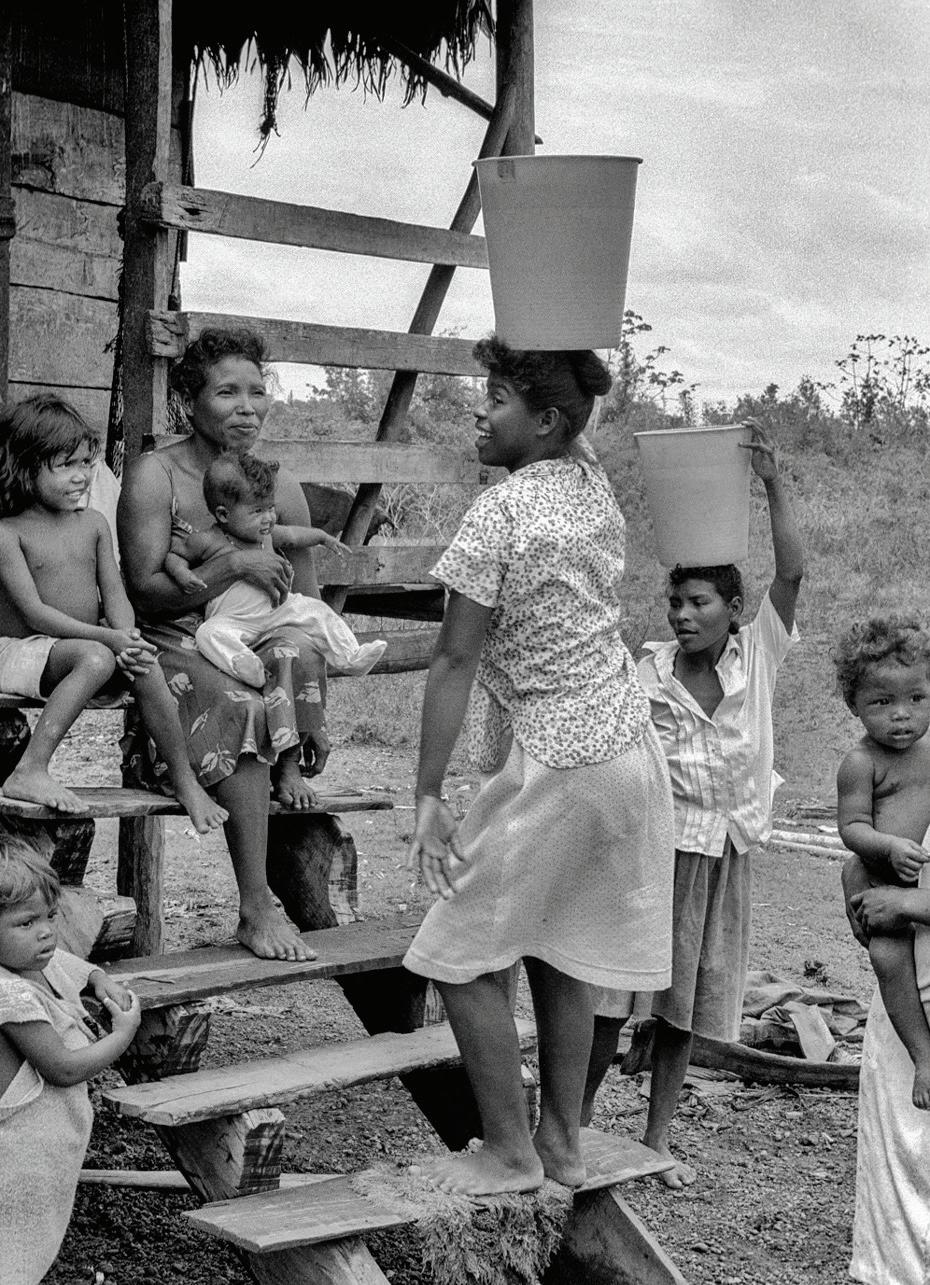
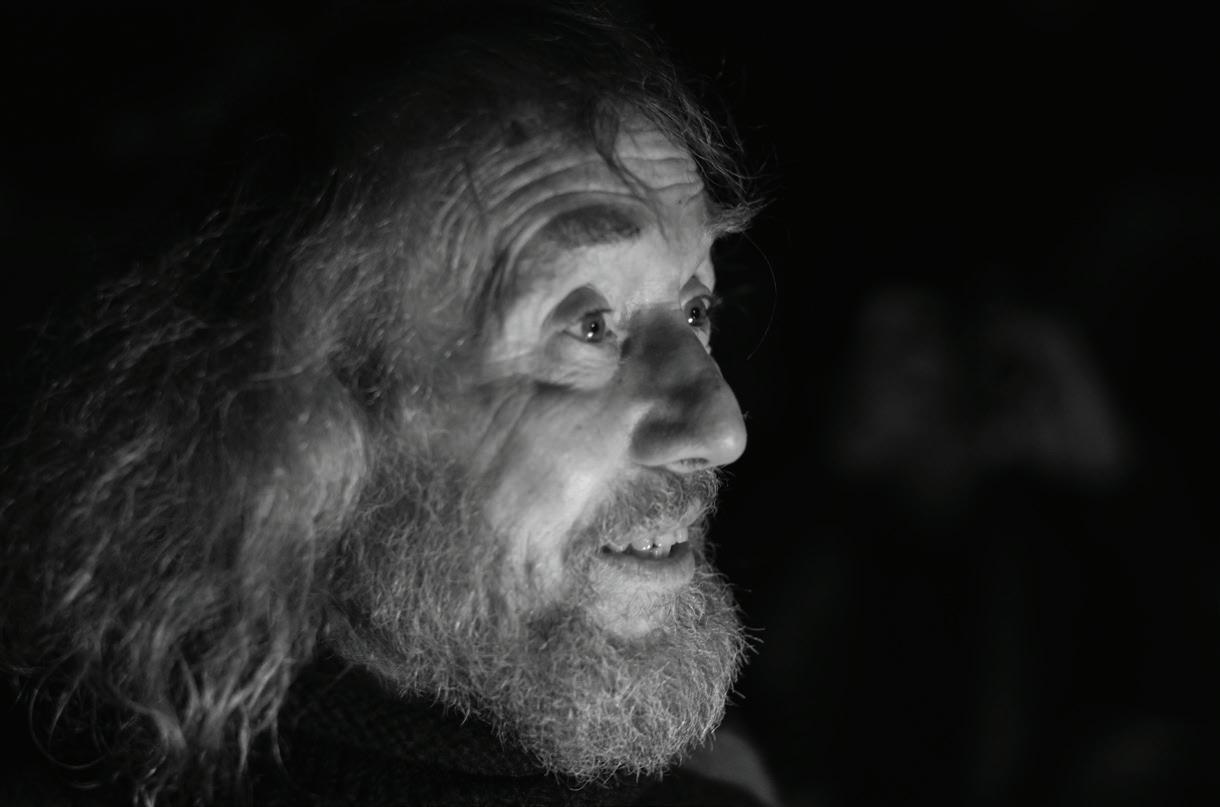
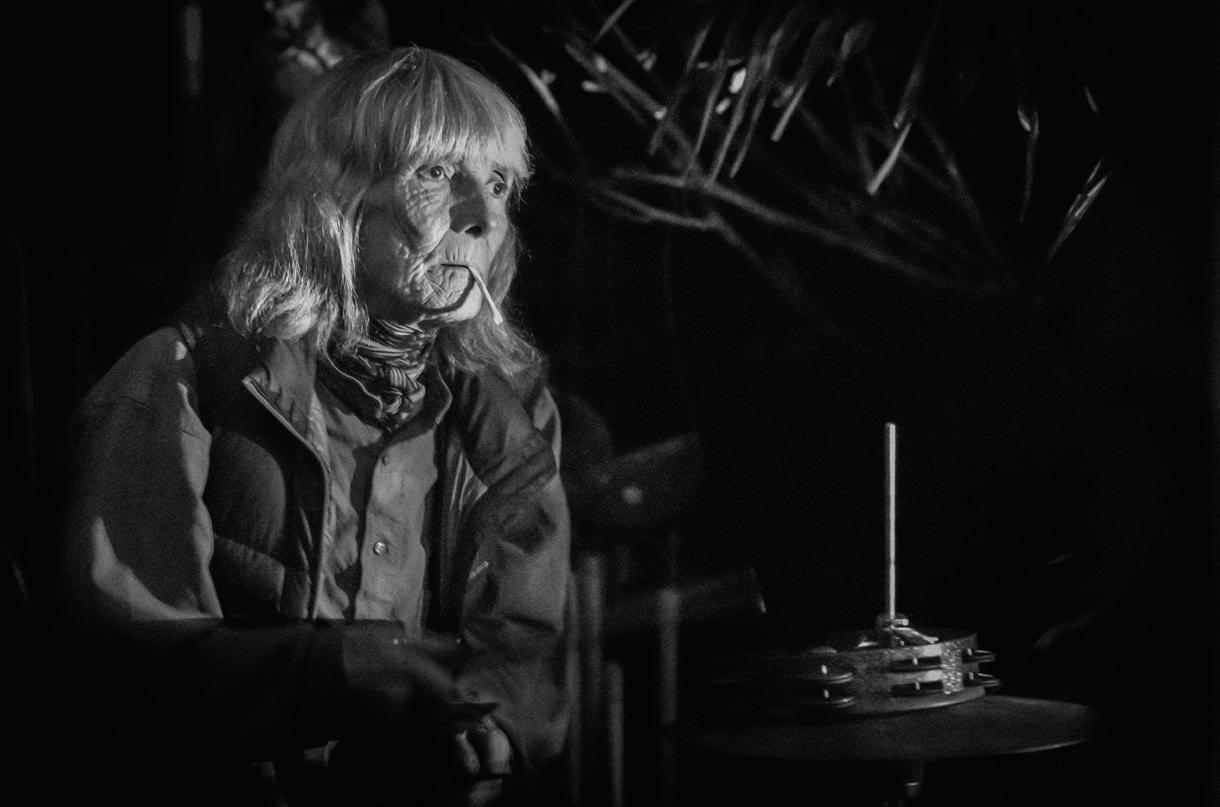
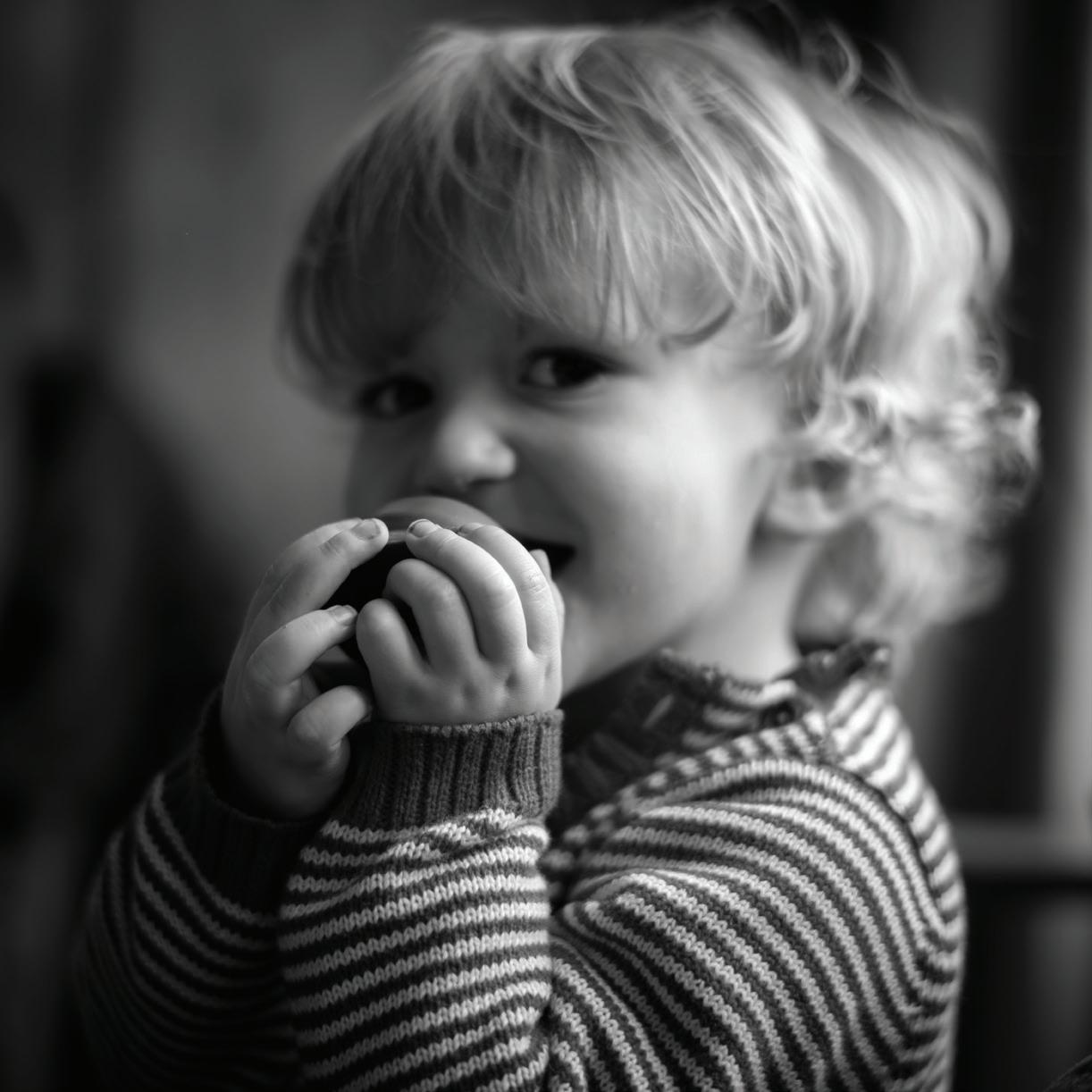
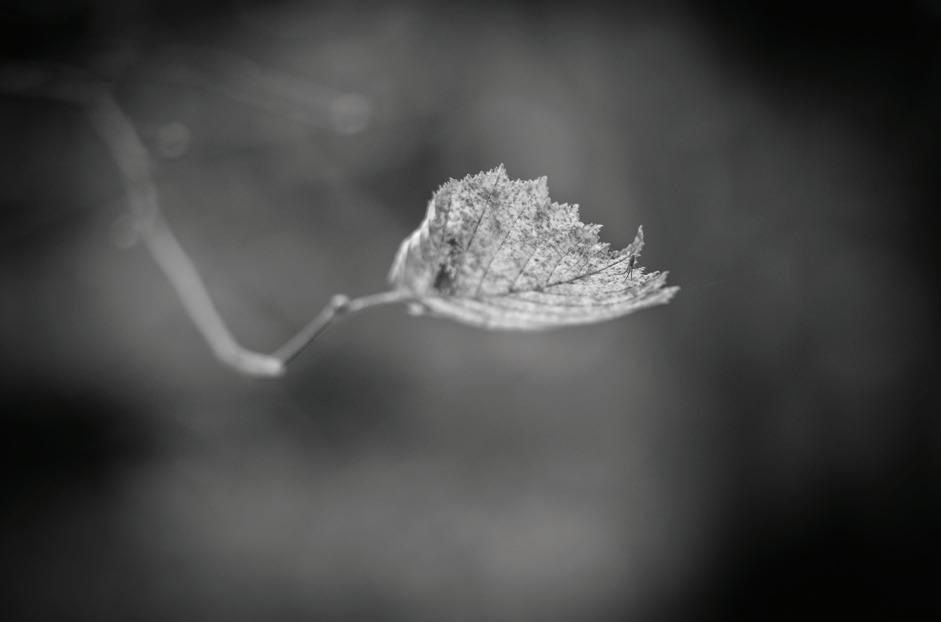
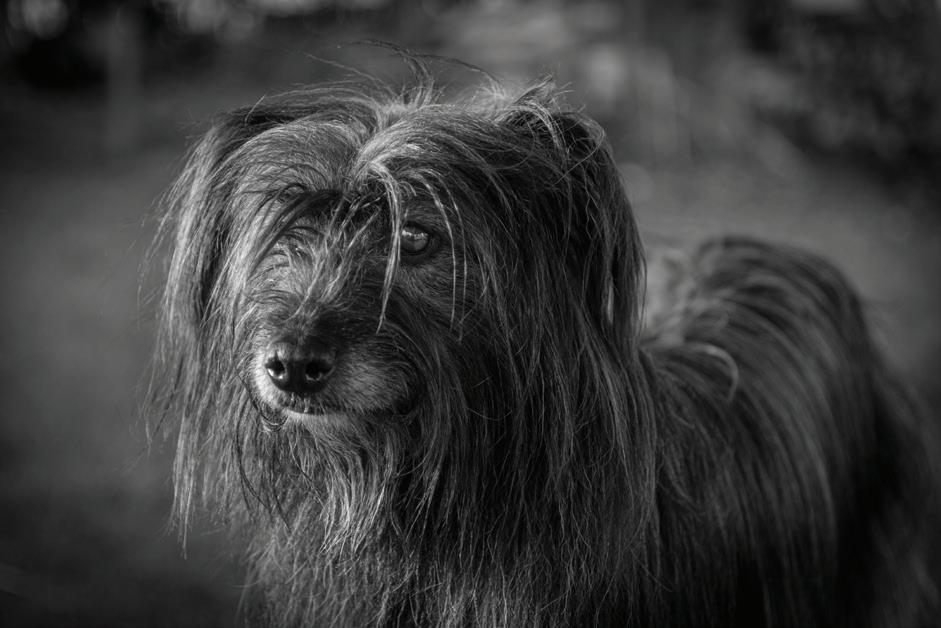
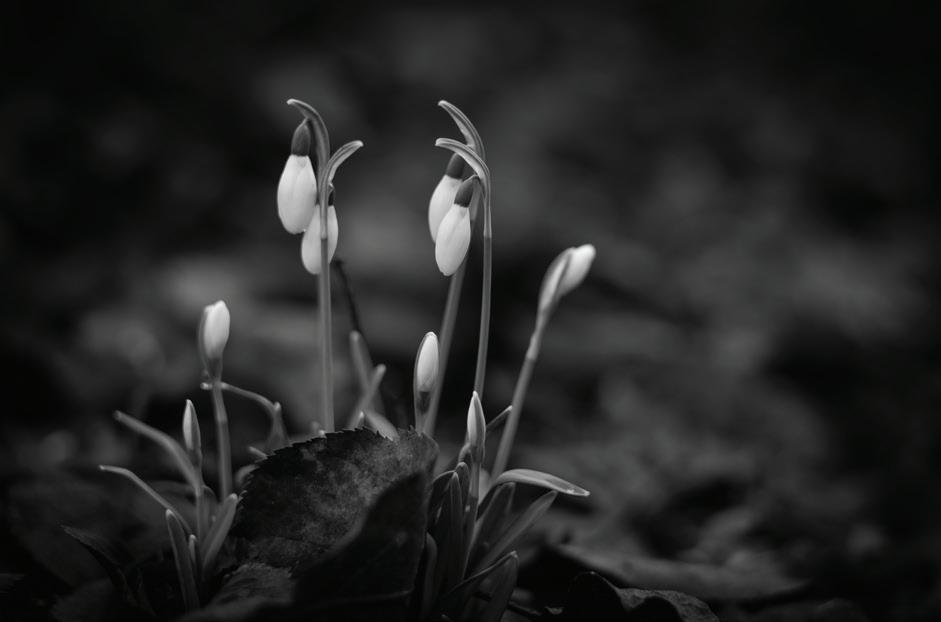
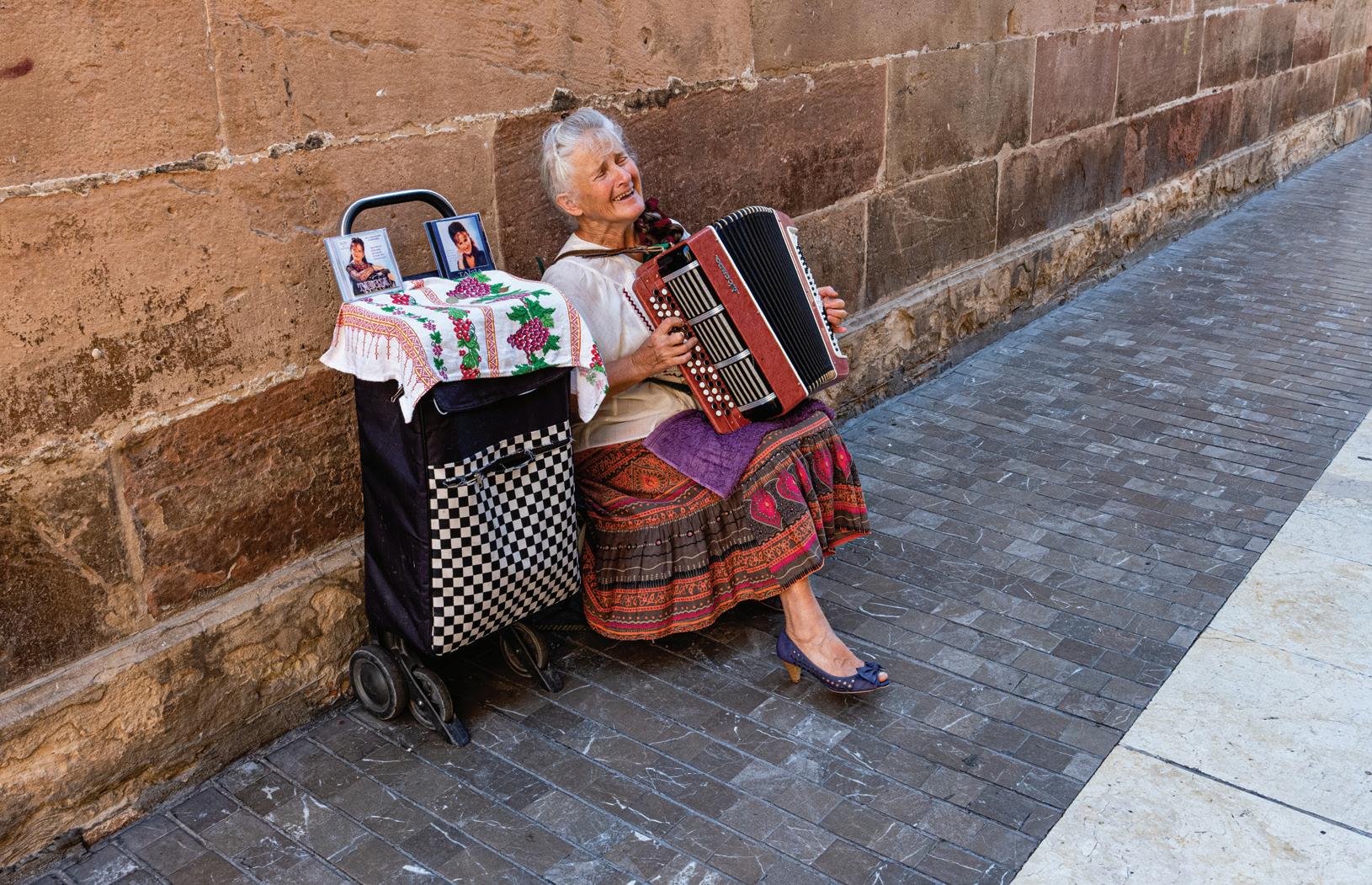
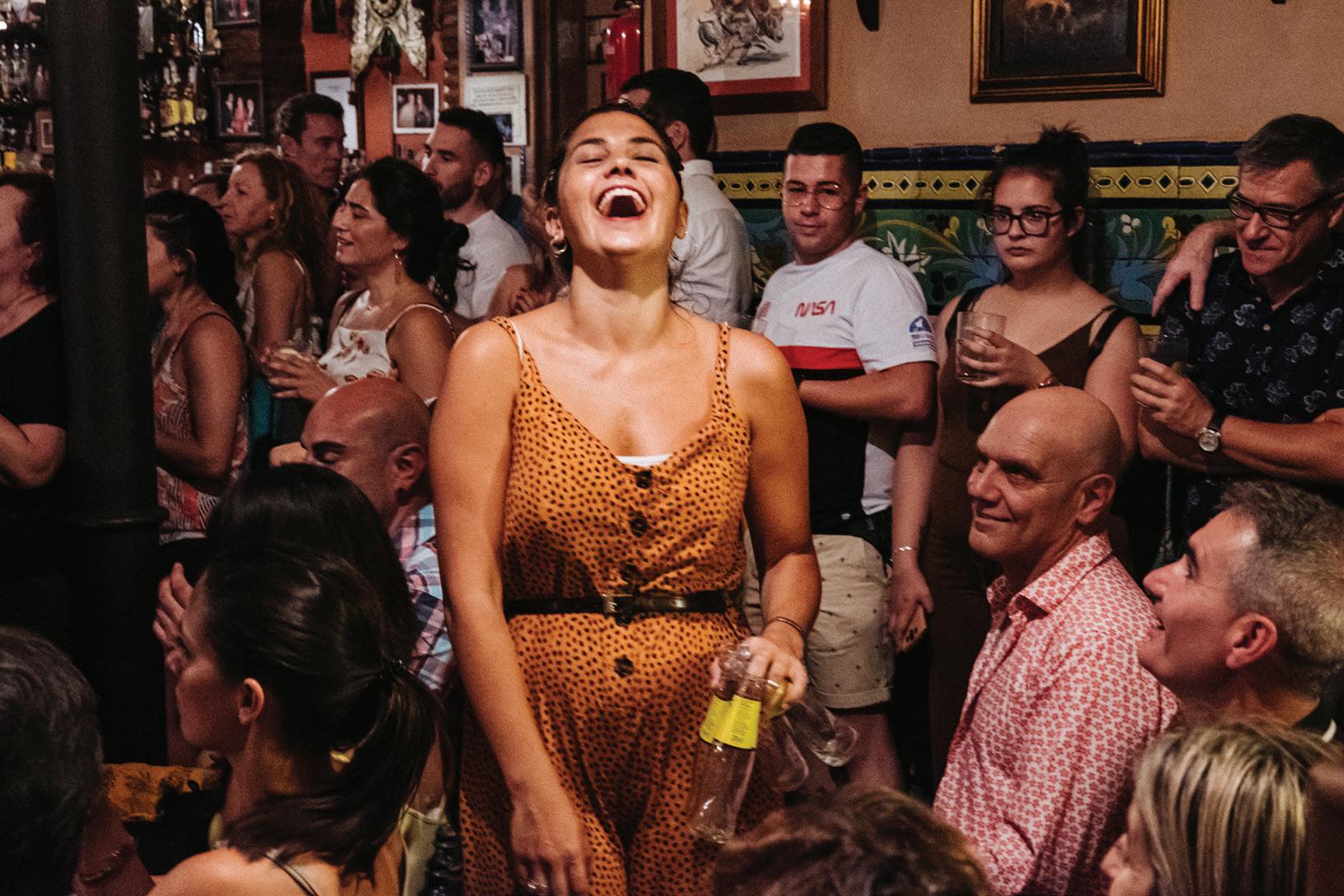
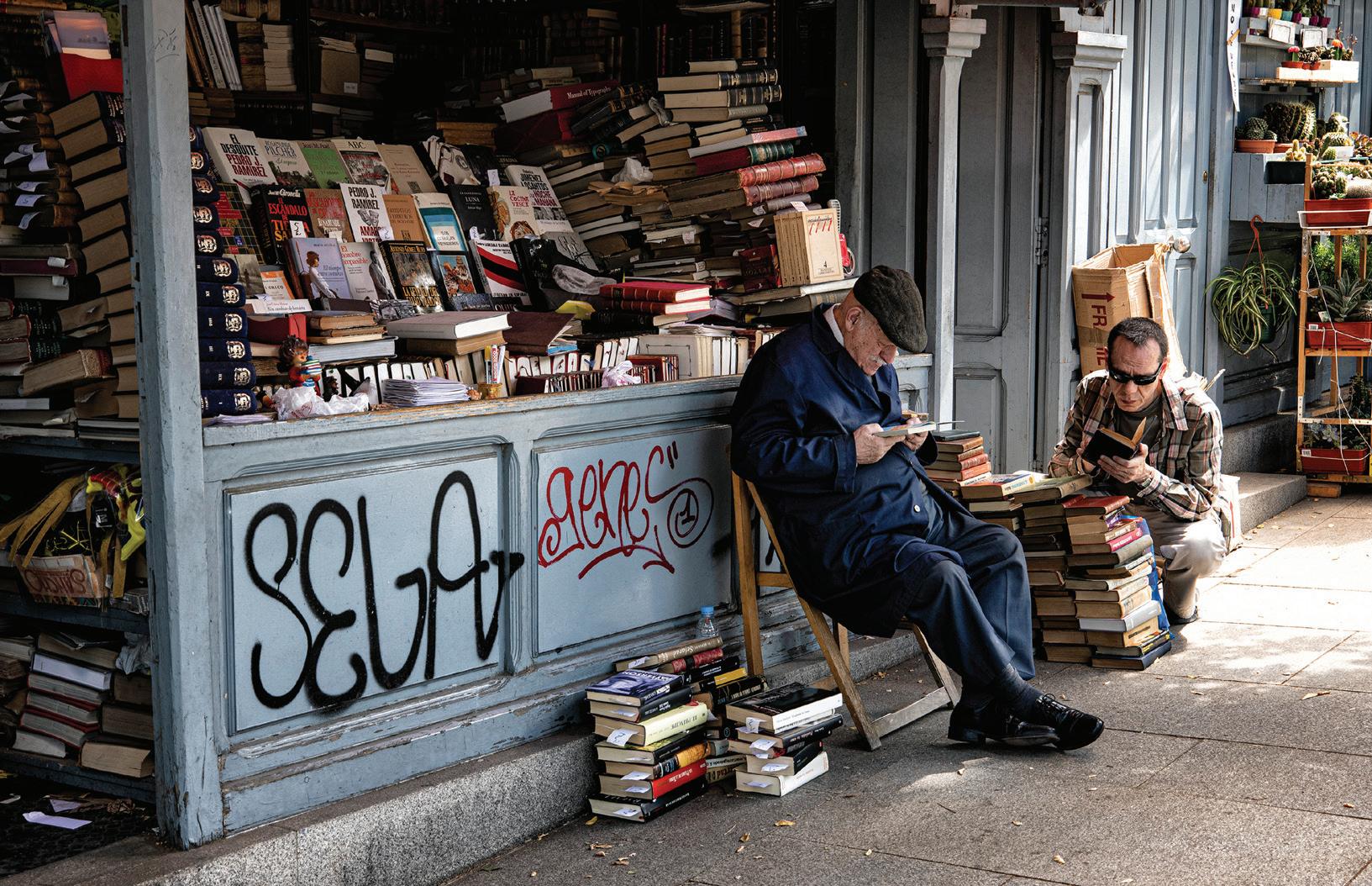
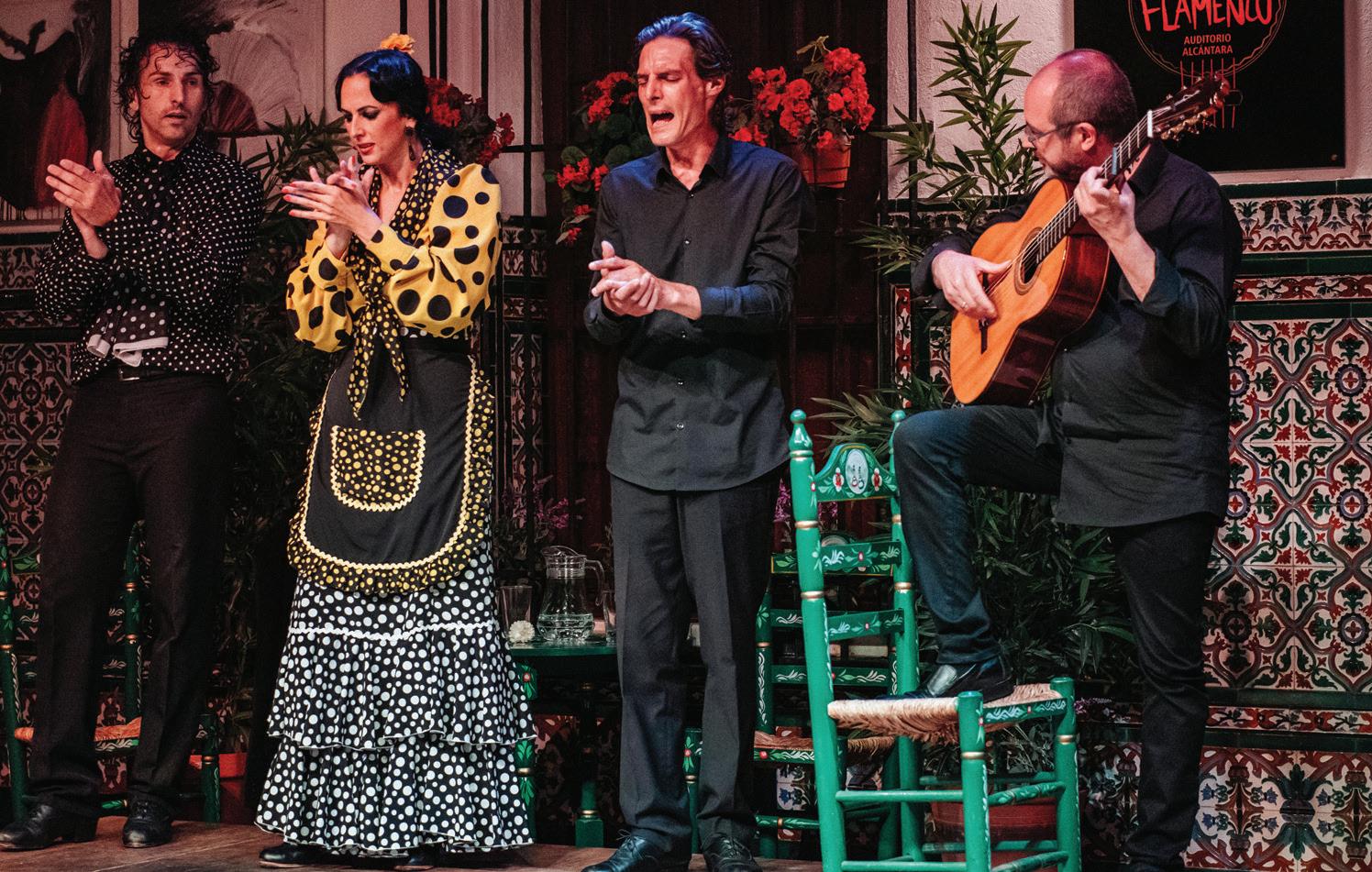
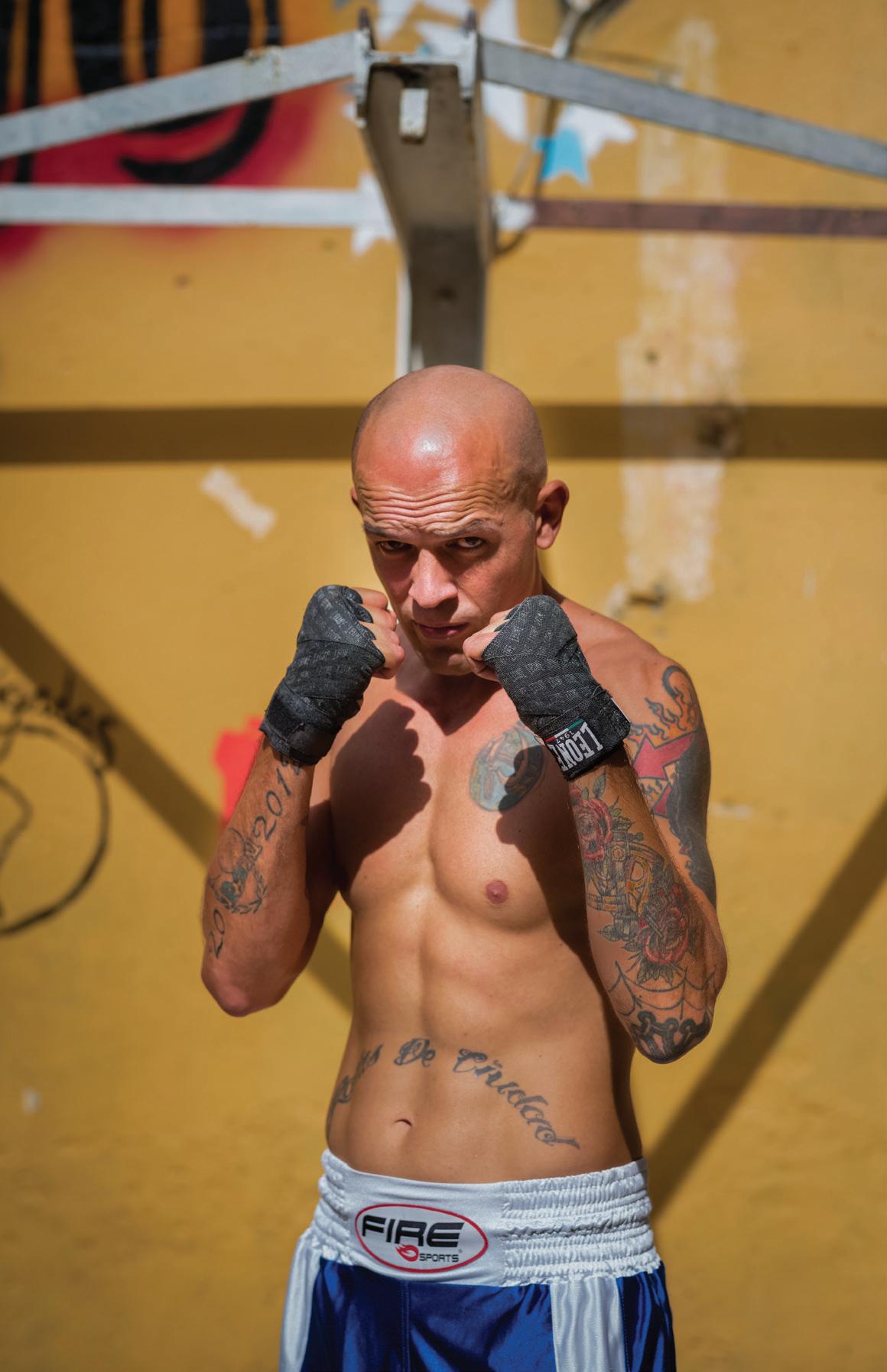
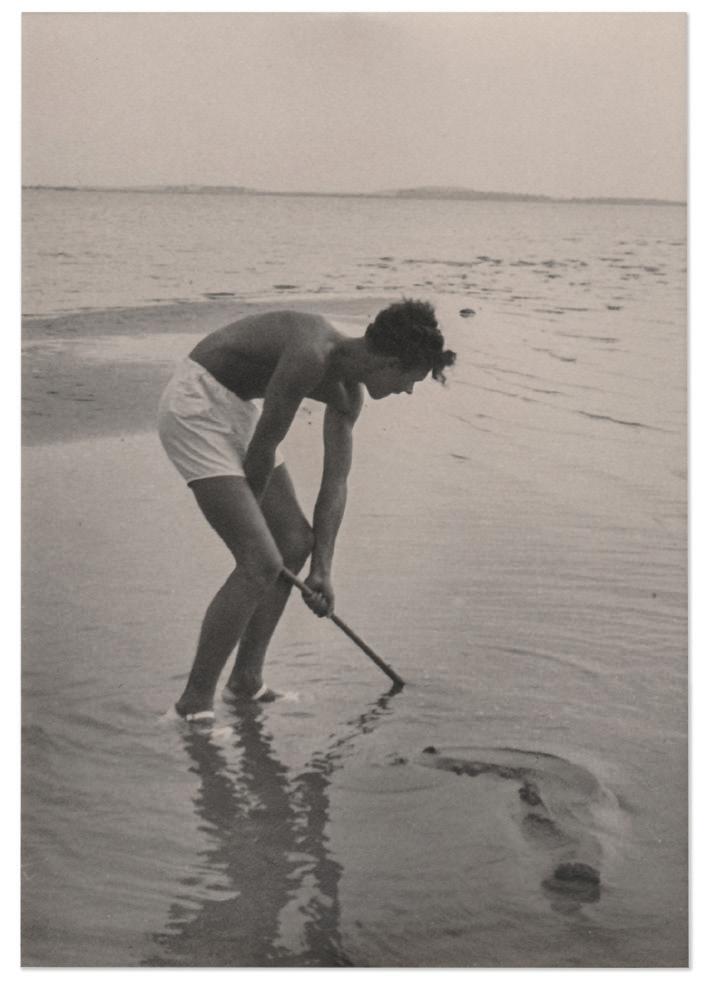
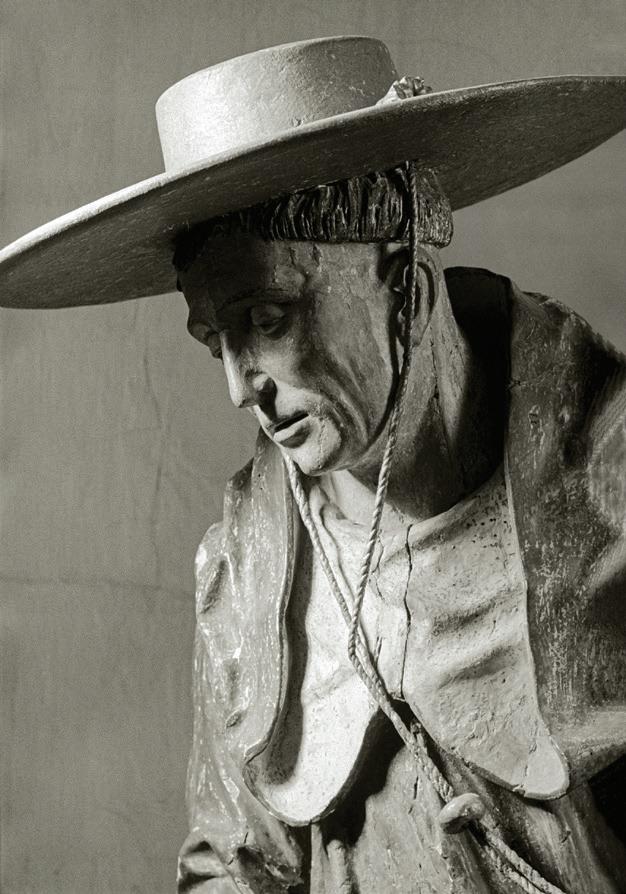
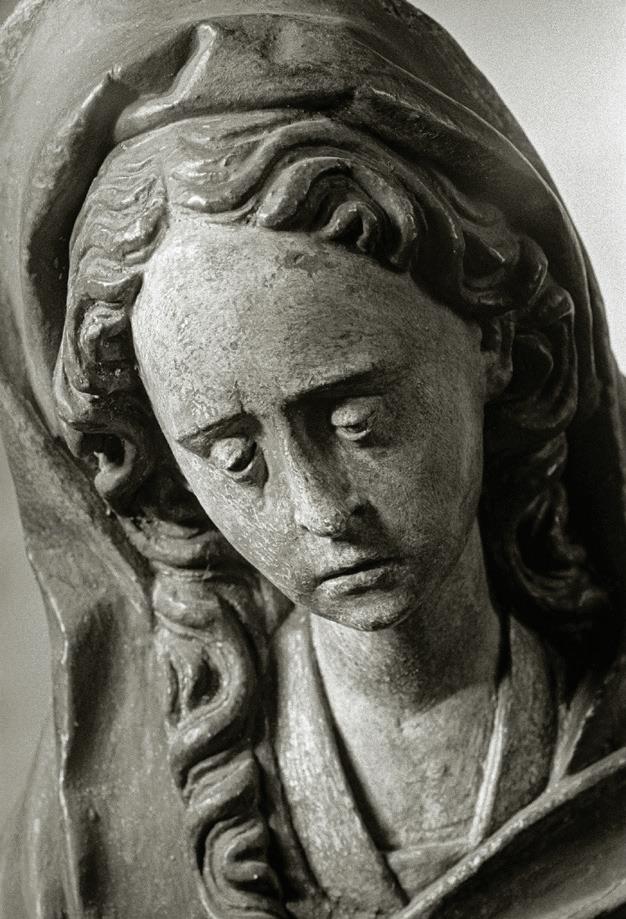
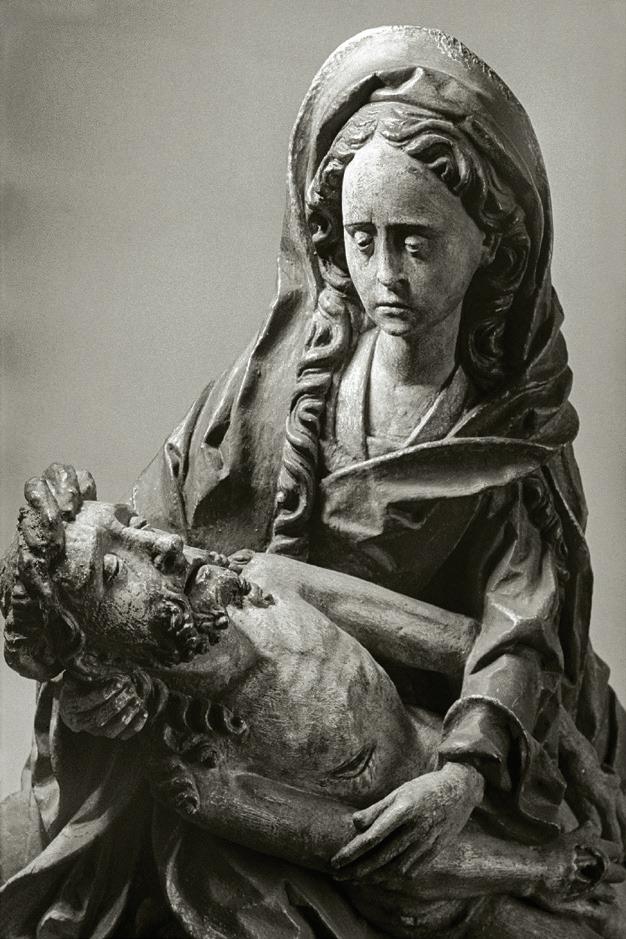
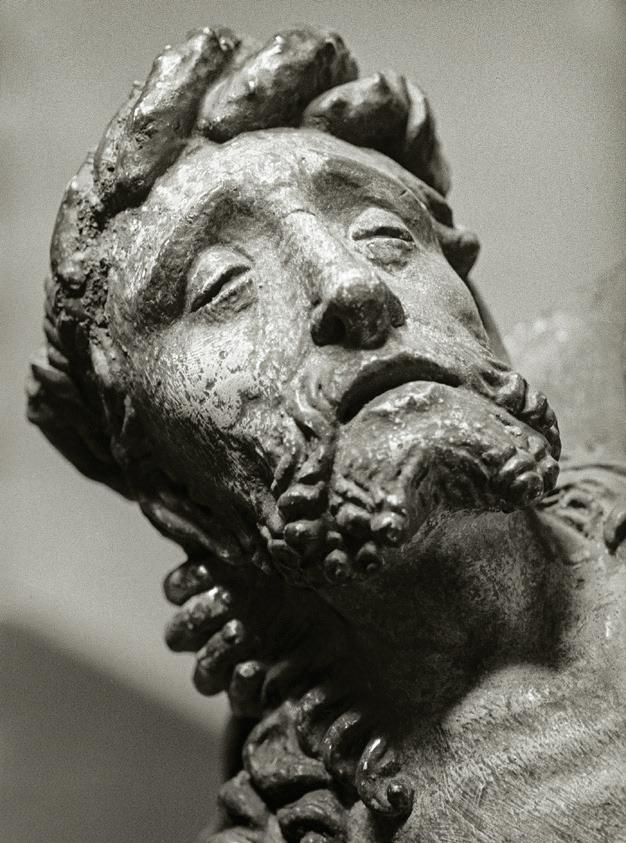
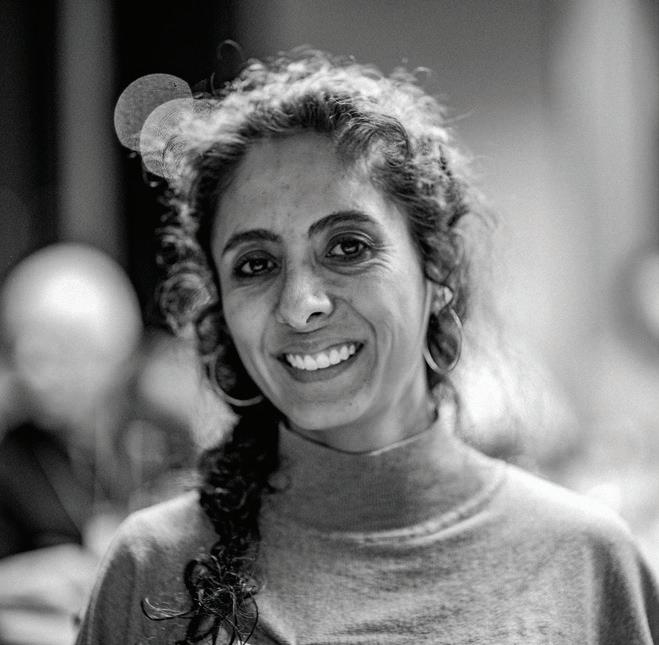
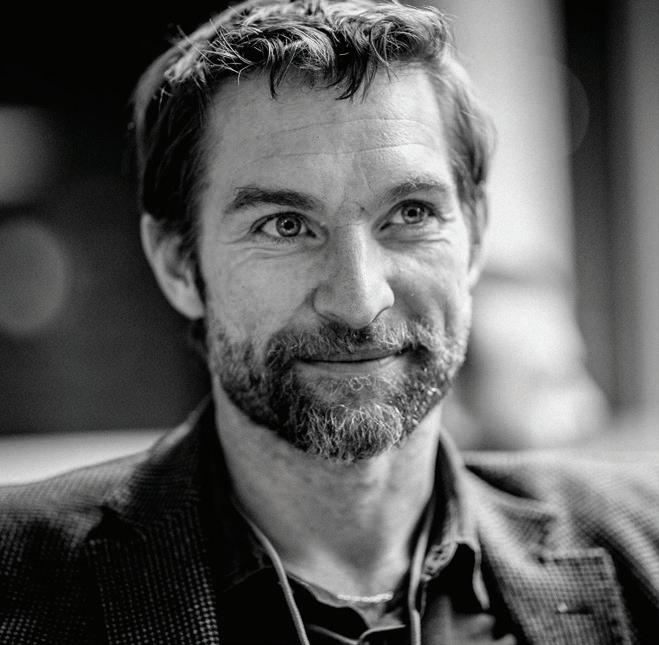
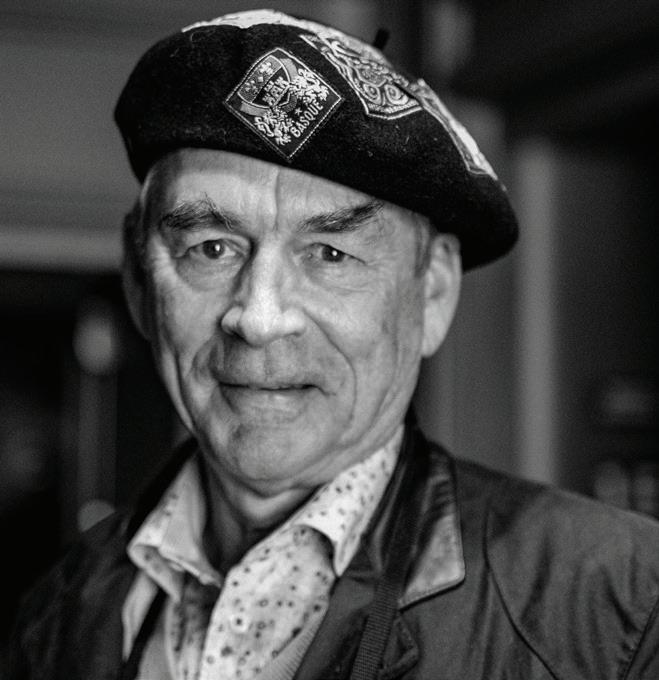
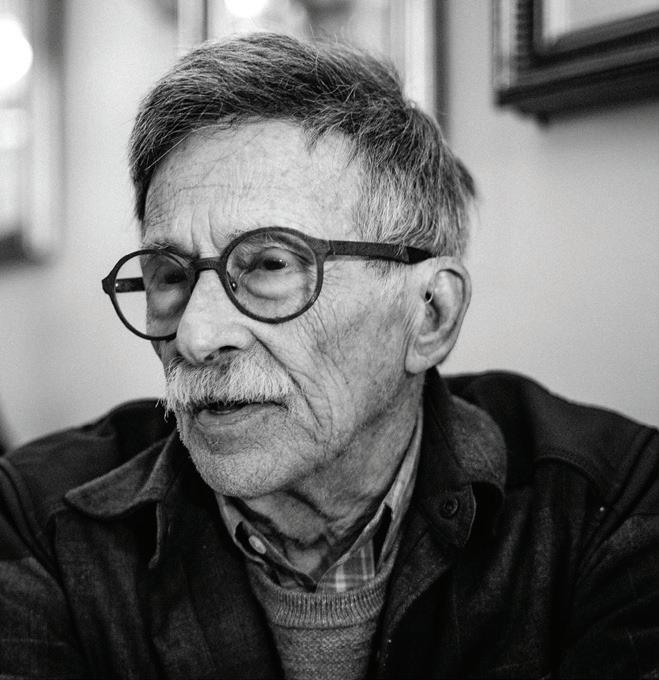
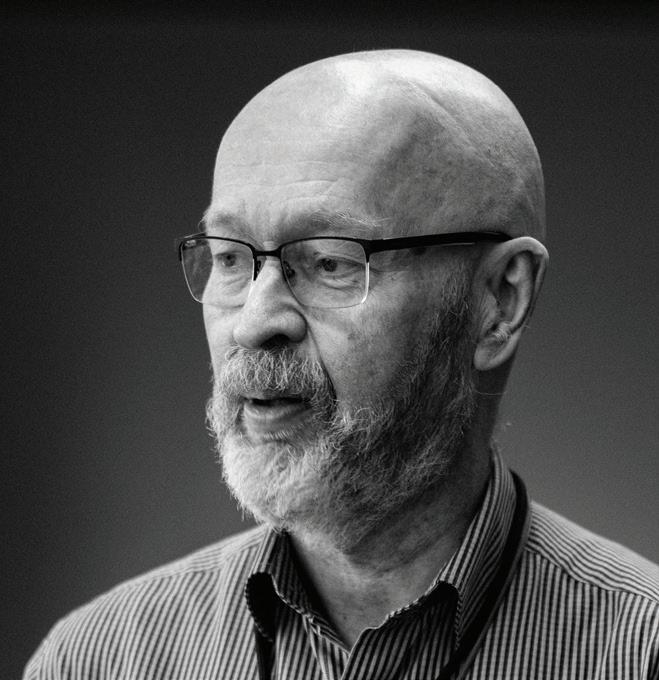
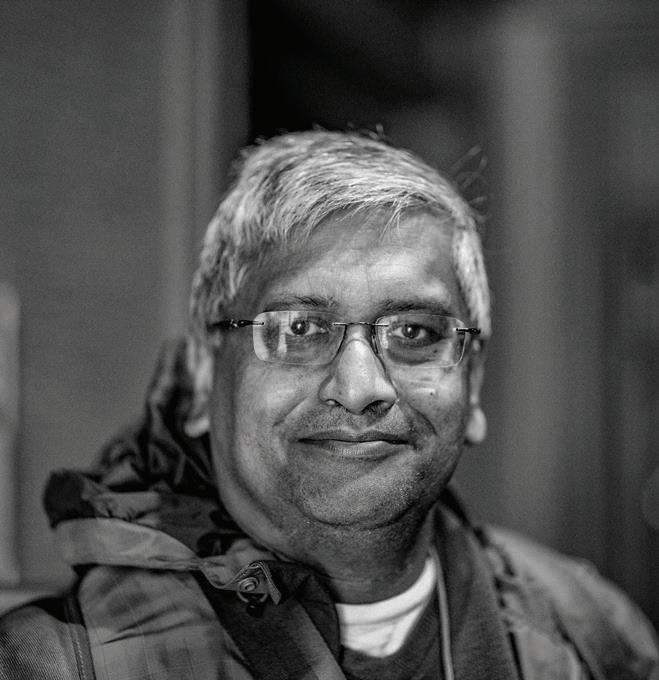
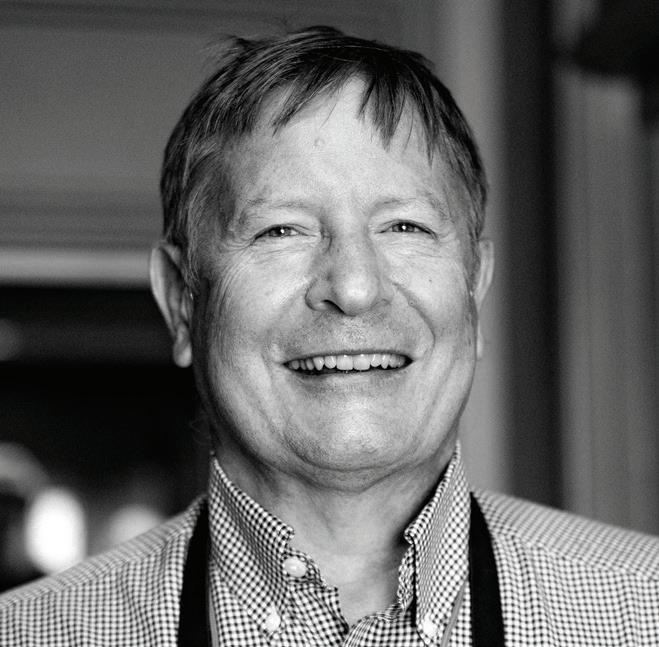
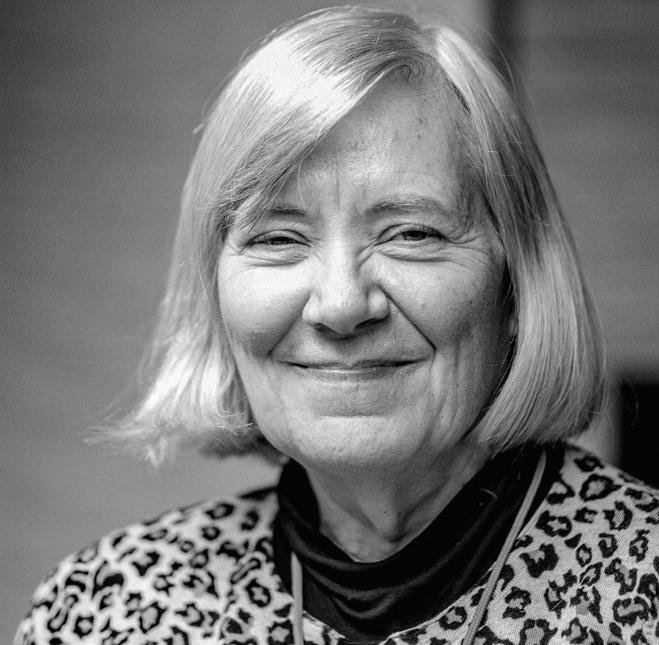
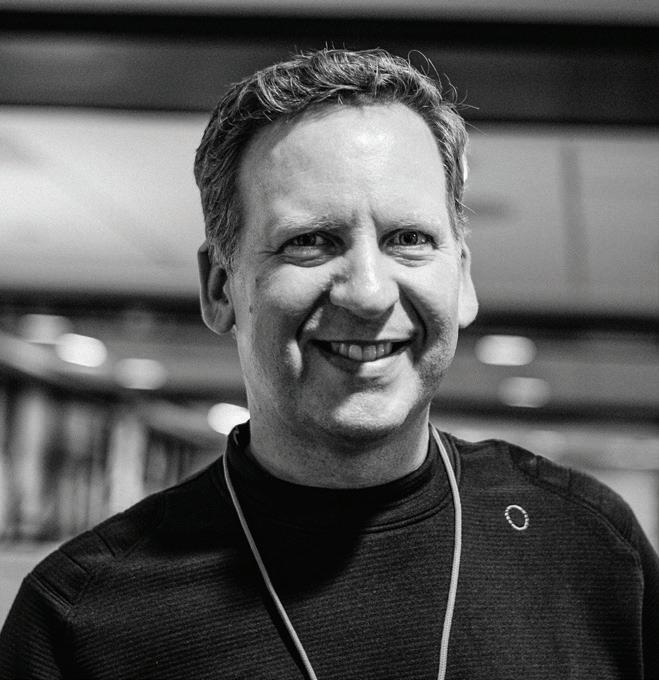
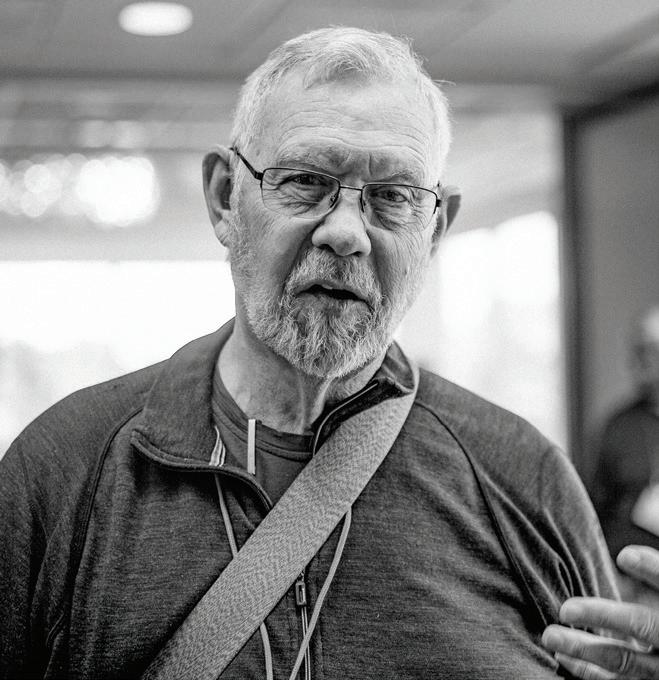
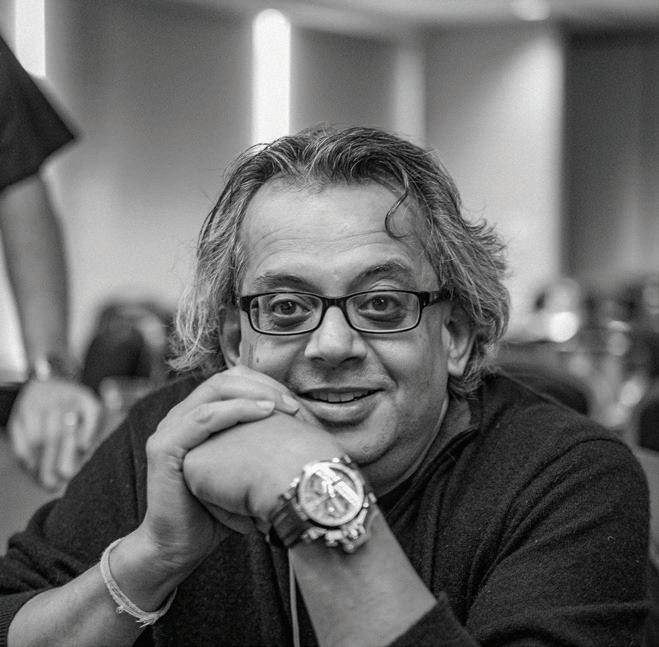
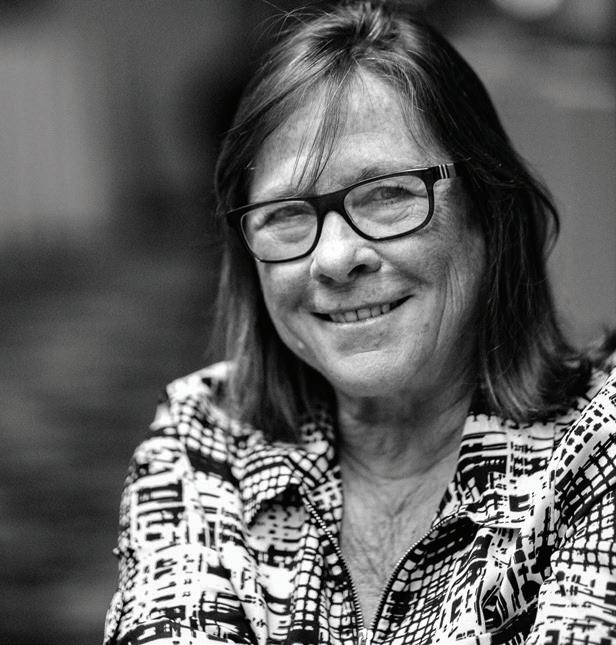
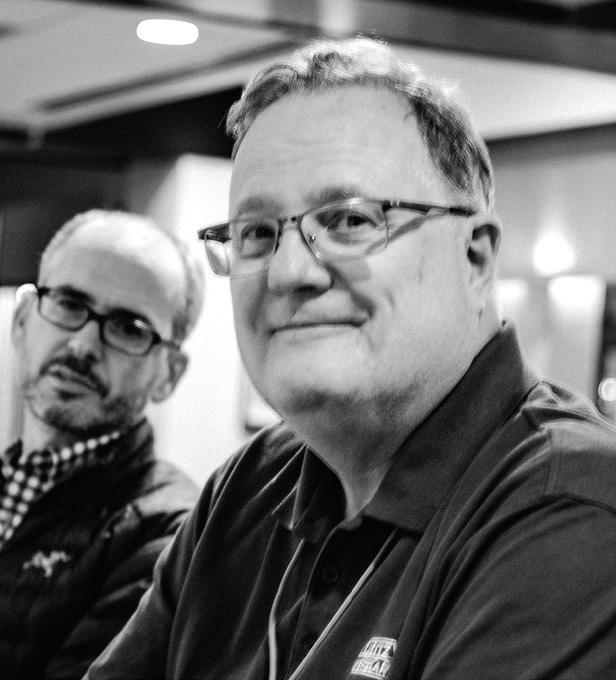
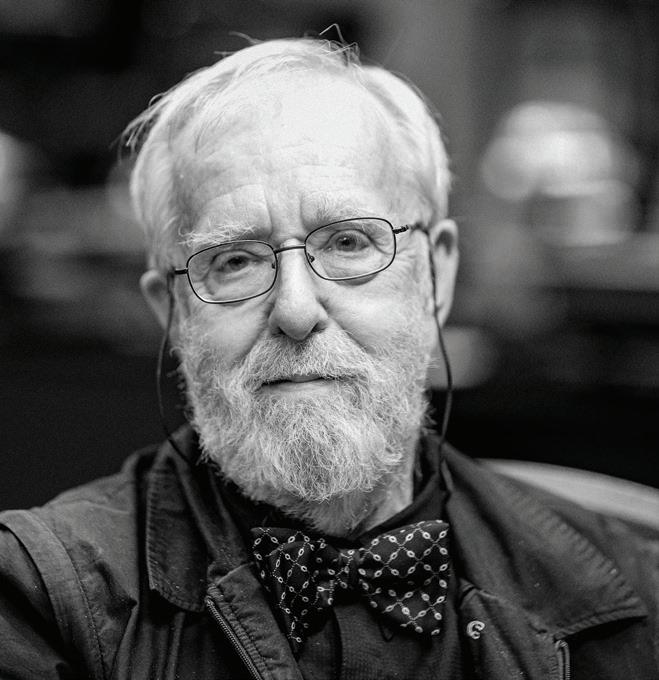
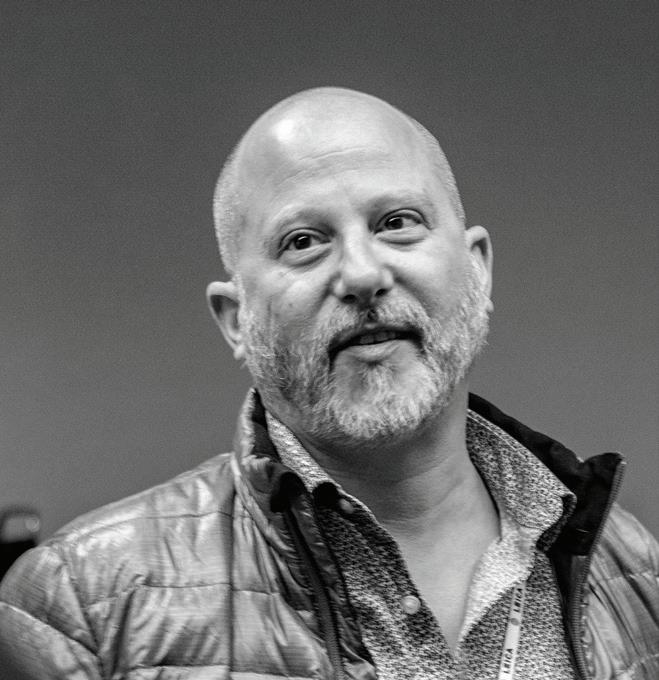
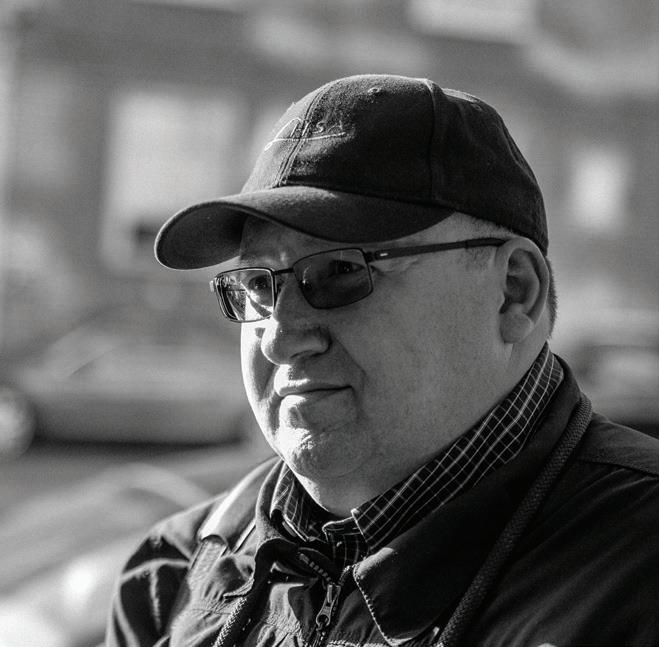
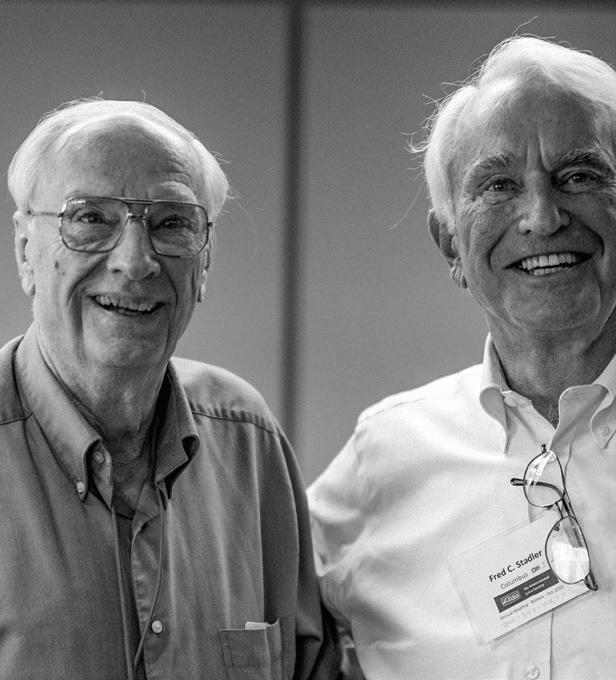
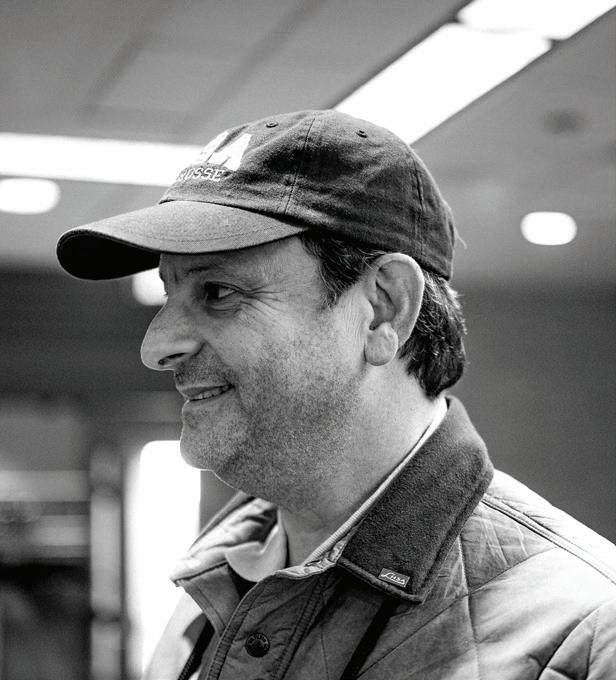
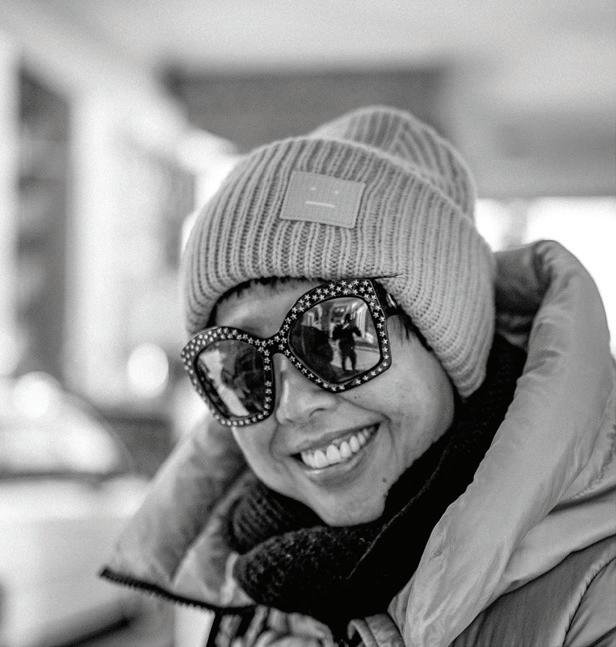
Portraits by Leica Society member Ritu Raj. Taken during the 2019 Fall Meeting in Boston using the Leica M Monochrom (Typ 246) and 75mm Noctilux-M f/1.25. Thank you Ritu for capturing the Society!
OFFICERS & DIRECTORS
Inquries about membership, upcoming events, replacement Viewfinder issues, and special orders should be directed to:
Richard Rejino, LHSA Executive Director 14070 Proton Road, Dallas, TX 75244 info@lhsa.org, (972) 233-9107
Viewfinder is the official publication of the LHSA, The International Leica Society, a nonprofit organization incorporated in the state of Delaware. Copyright 2014. Reproduction or use of any material contained herein without permission of the Sociey if forbidden.
Leica is a registered trademark. It and other trademarks pertaining to the Leica System are the property of LEICA CAMERA, USA, INC.
ISSN 1543-8732
PRESIDENT Alan Weinschel alan.weinschel@lhsa.org
VICE PRESIDENT
Keith R. Sbiral krs@reddotbluedot.com
SECRETARY/TREASURER
David Knoble dmknoble@gmail.com
IMMEDIATE PAST PRESIDENT Gary Hough gary.hough@lhsa.org
PRESIDENT EMERITUS
James L. Lager
Rolf Fricke Bill Rosauer
APPOINTED OFFICERS
Viewfinder Editor Bill Rosauer lhsaeditor@yahoo.com
Associate Viewfinder Editor
Ed Schwartzreich ed.schwartzreich@imagere.com
dr. wolff family pictures by
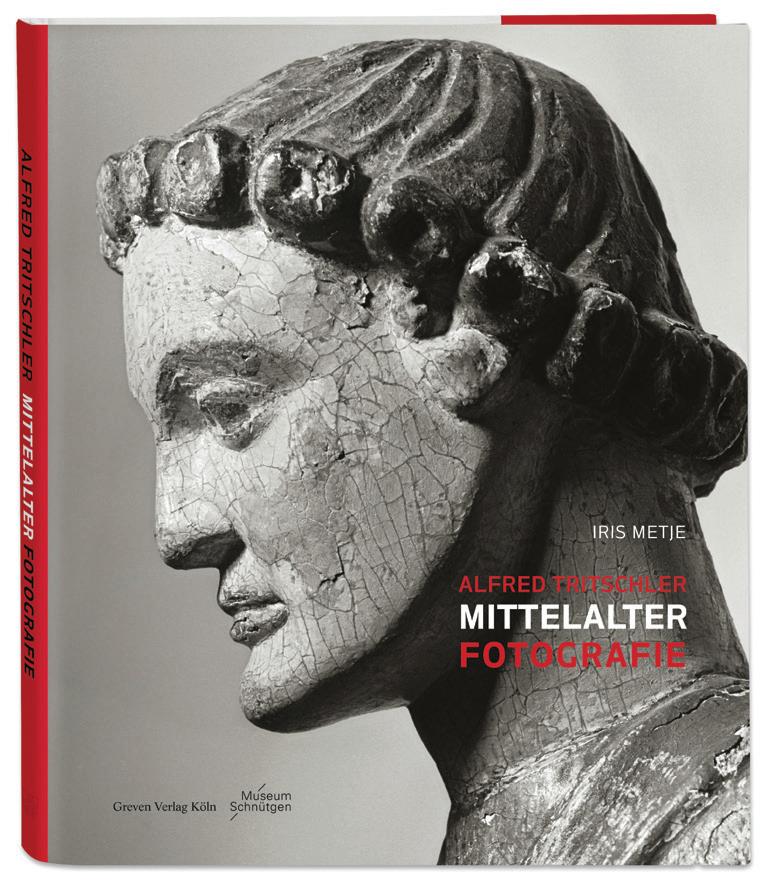
Schwartzreich 46 book review: alfred tritschler "mittelalter fotografie" by Ed Schwartzreich
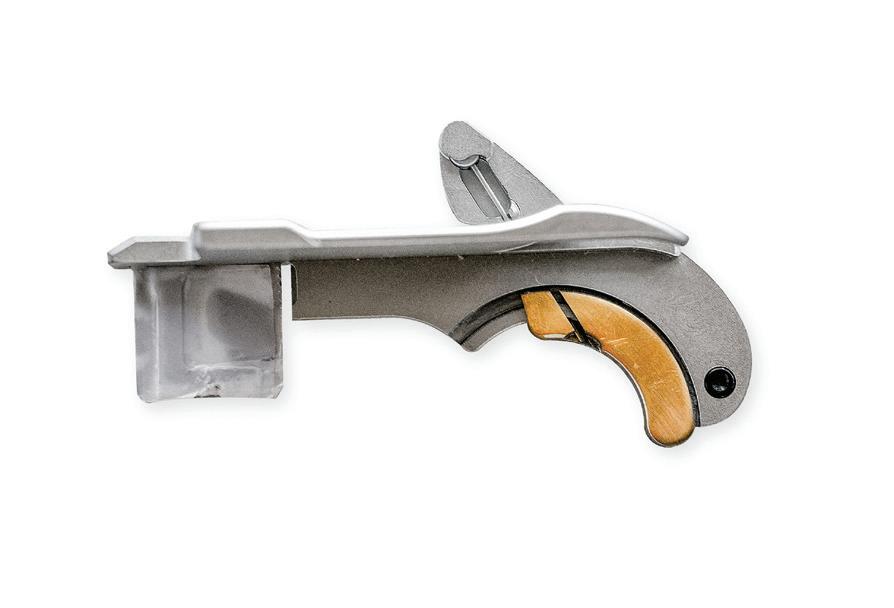
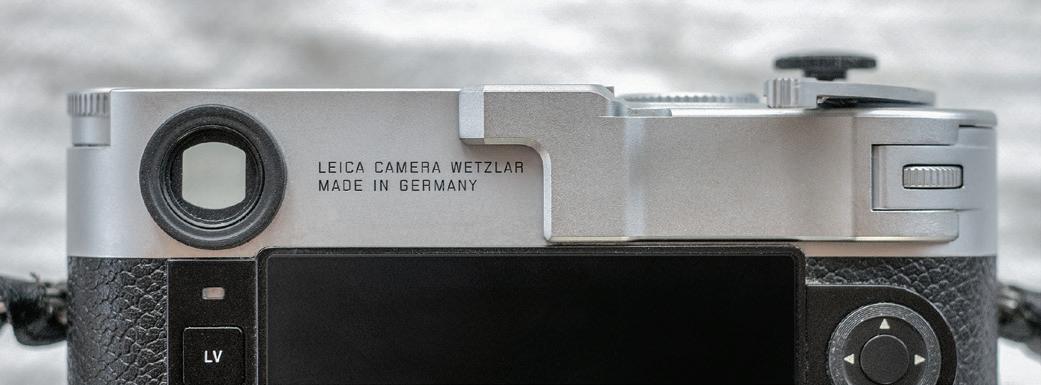
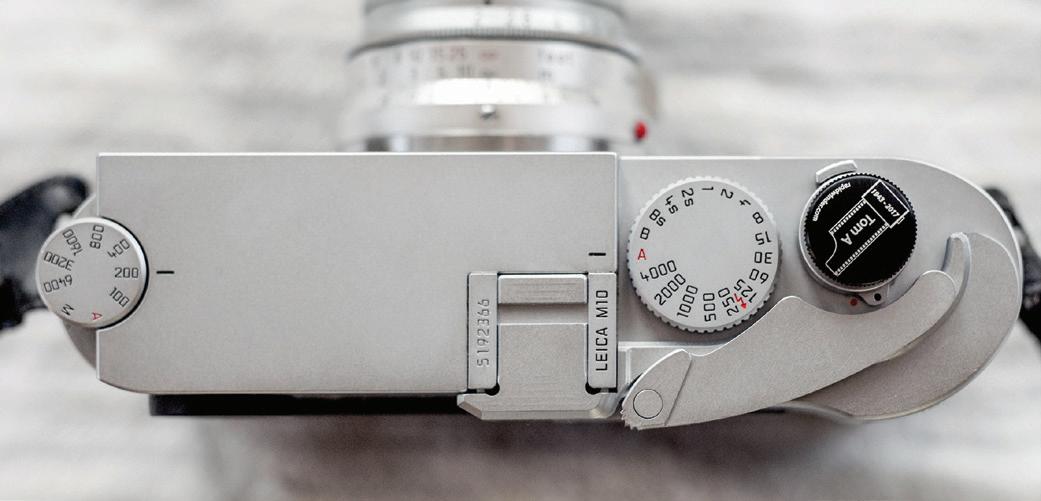
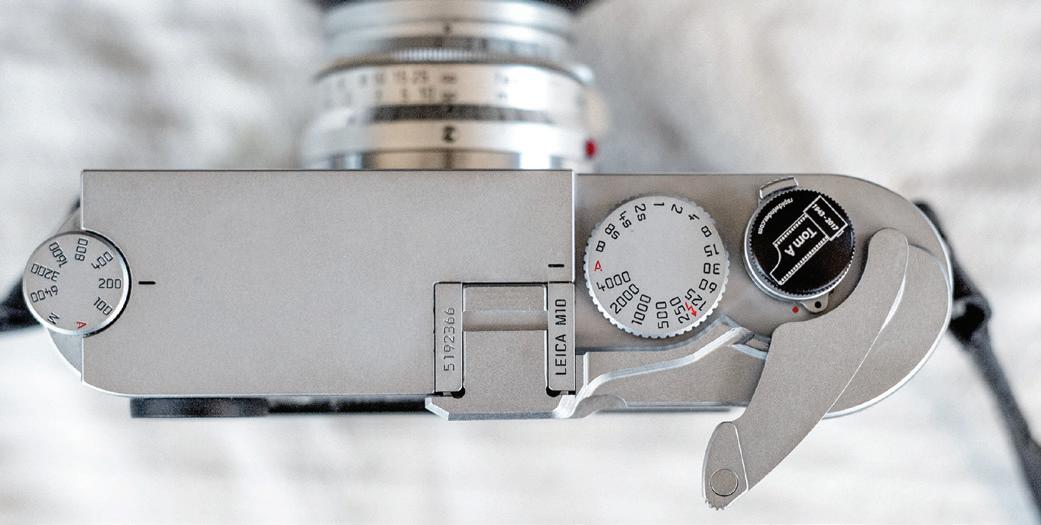
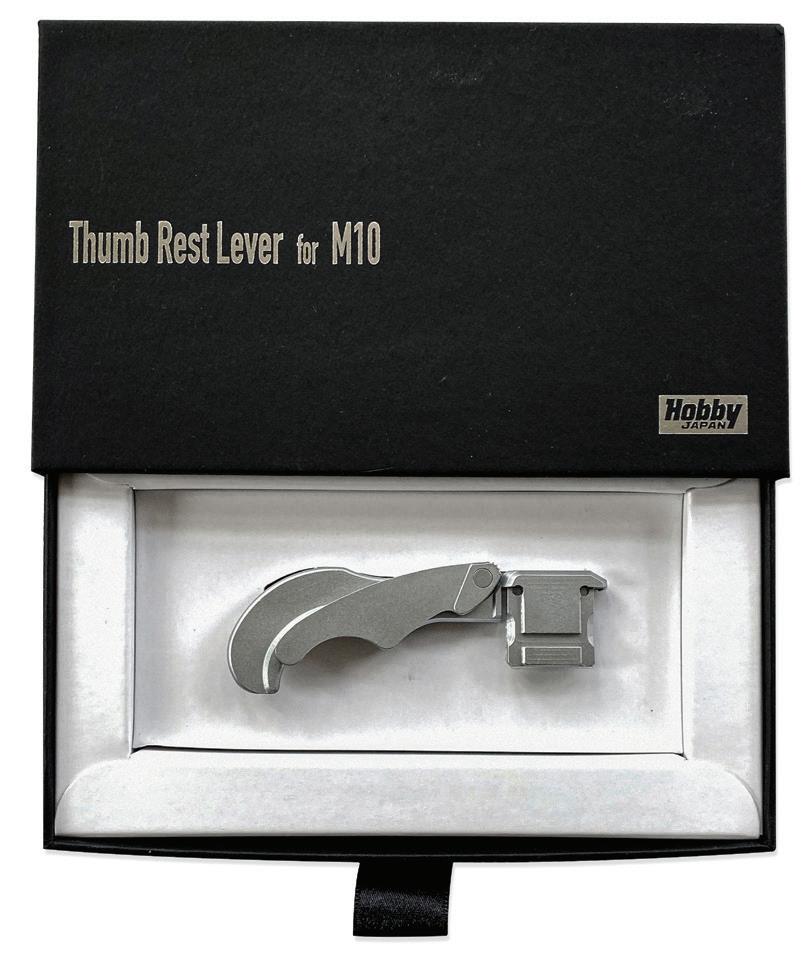
48 review: m10 thumb rest lever by Ed Schwartzreich
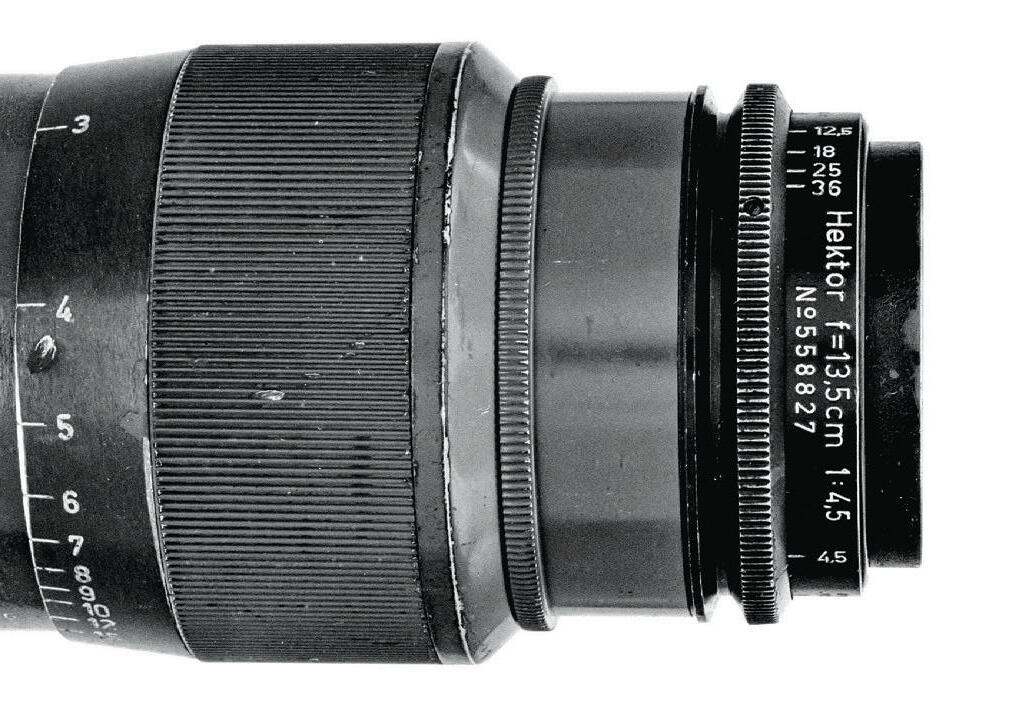
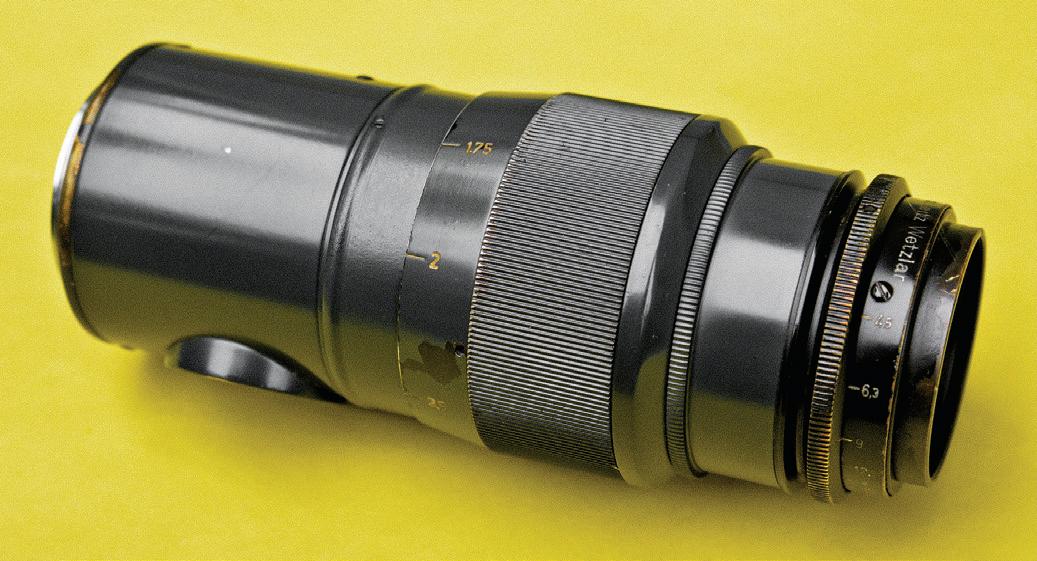
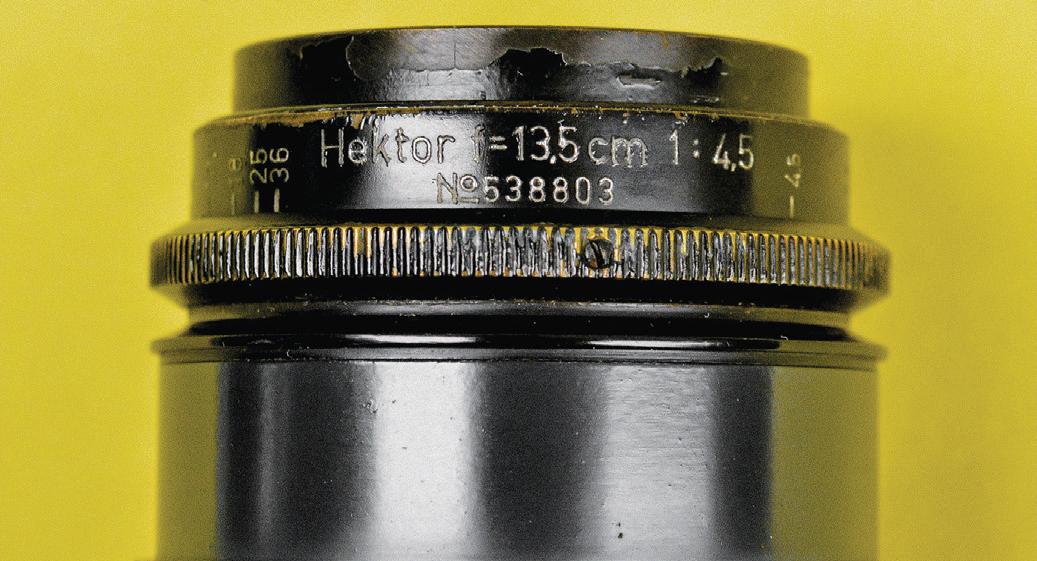
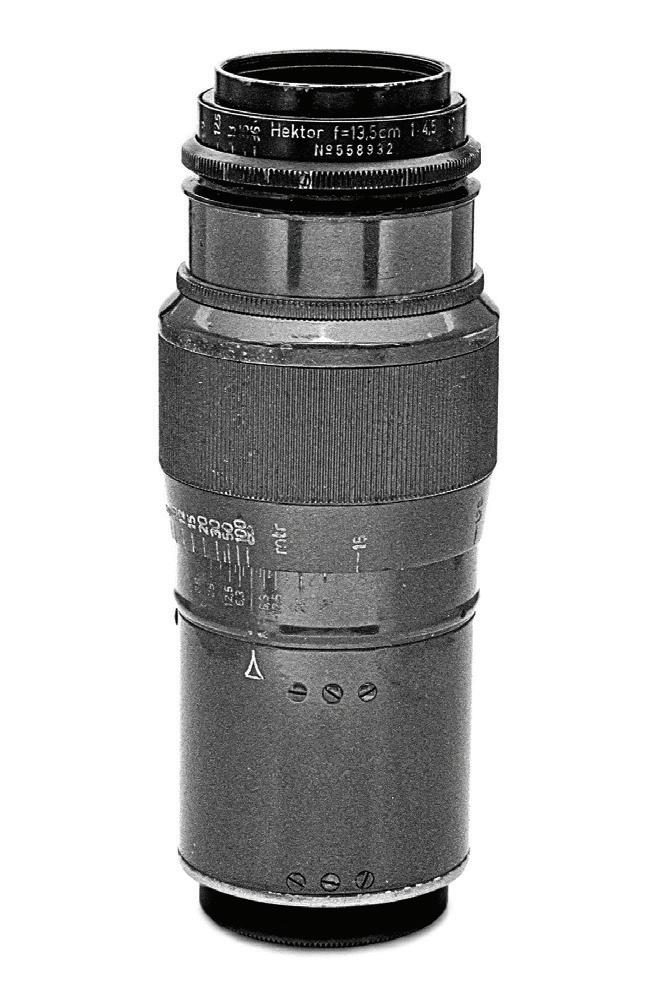
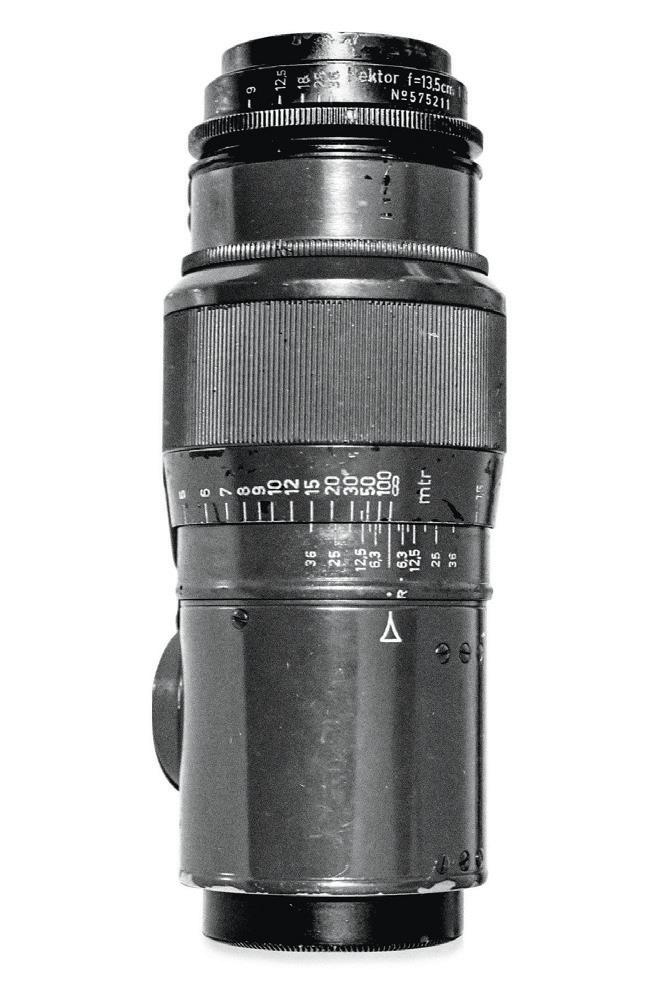
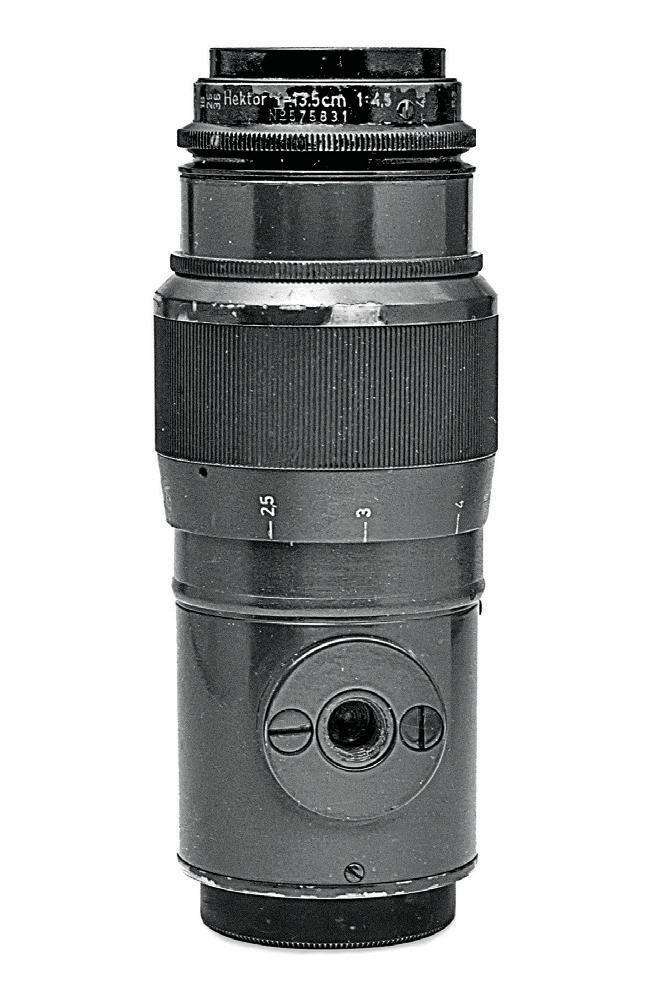
50 13.5cm hektors to berlin 1944 by Jim Lager
ELECTED DIRECTORS
Class of 2020
Thomas Campbell leicar7@aol.com
Douglas Drumheller dougdrum@comcast.net
Dan Tamarkin dan@tamarkin.com
Class of 2021 Wilbur Norman coupdefoudrellc@gmail.com
Jay Paxton jaypax@mlhs.net
David Spielman david@davidspielman.com
Class of 2022
Andrew Godlewski harley772@yahoo.com
Brad Husick husick@gmail.com
Bill Royce wfroyce@gmail.com
CONTRIBUTING EDITORS
S.R. Gilcreast, Jr. (603) 381-8293
James L. Lager jlager100@yahoo.com
S. Willis Wright beoon@aol.com
FRONT COVER
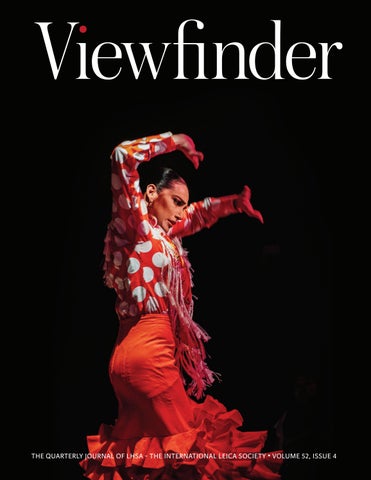
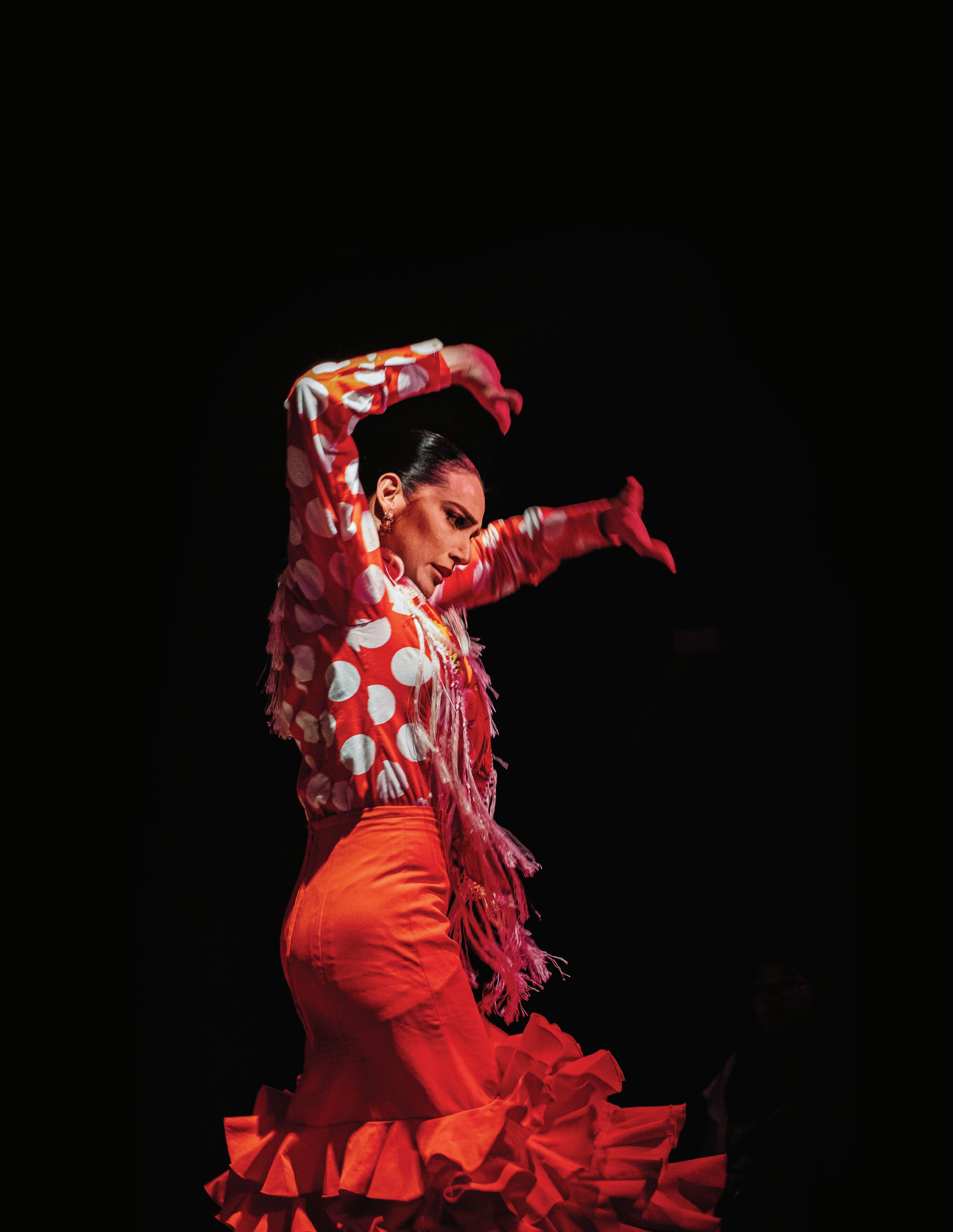
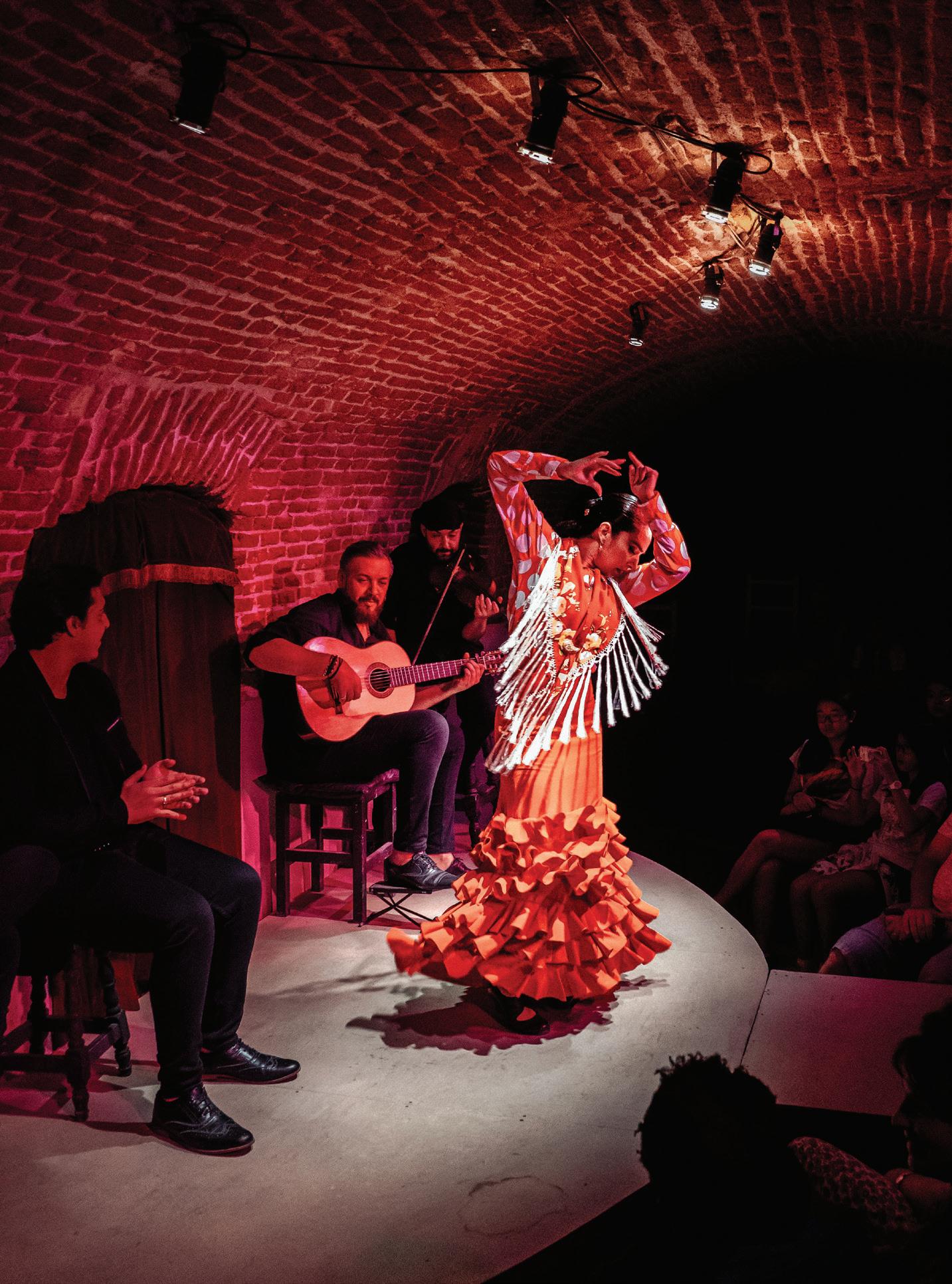
Richard Rejino's article "Spain: Flamenco, Tapas & A Musical Journey" (pp. 24-31).
A LETTER FROM THE PRESIDENT
by ALAN WEINSCHEL
have now entered the third decade of the century. The digital/internet/social media age has upended so much that it is impossible to measure. For photographers, we can look back at the digital upheaval (with different opinions on it) and look forward to yet more change. How long ago did some of us say that a 10 or 12 mp sensor was all you needed? Now, we are seeing sensors with the capacity for enormous detail, expanded dynamic range, and pretty darn good high ISO noise levels. The Leica SL2 is one of those, and there are more to come (including the M10 Monochrom reported on in this issue) . Lenses have had to change to keep up with the sensors and Peter Karbe and his crew at Leica are turning out lenses across all the Leica product lines that are better than anything we have ever seen. Cameras in high-end phones are excellent and the point and shoot camera business has suffered. Nevertheless, the camera business for us enthusiasts has seen lots of innovation and lots of competition, all of which benefits us with many good choices to make images.
LHSA has changed as well. As you know, the LHSA leadership has been working extremely hard to modernize your society, expand membership, and achieve the financial stability we need to keep going. We have made some good progress, with the help of new members gained from the Leica registration program that started in October 2018 and continues. But we still have a way to go. I hope you will continue to support your organization by participating in fundraising events like our sweepstakes. Watch for our sweepstakes later this year. We are planning one with an M camera body, and one with the LHSA 50 th Anniversary Commemorative APO-Summicron-M 50mm f/2 ASPH, one of the sharpest lenses ever made. Only 500 of the commemoratives were made, and you might win one.
Leica’s Monochrom cameras are innovative but also pay homage to the past. I recently visited a museum with a photo retrospective that spanned many decades. There were scores of great photographs – but only a few were in color. It got me thinking about how most of us see in color, yet black and white has unique impact when we are looking at photographs. Maybe it is the simplicity of black and white that draws us to lines and shapes, shadows and gradations of light. All this leads me to the question I would like to put to you: when you photograph, do you see in color or black and white as you are shooting? Do you look at a scene as you are shooting and think about what it would look like in black and white? In the digital world, of course, unless you are shooting a Monochrom you have a choice - so do you instead of seeing in black and white when you are shooting, wait for postprocessing and look at an image on your screen and think, “this one should be in black and white?” Or is it a bit of both? Let’s start a discussion. It might help us “see” a little better.
Finally, our Spring shoot in Colorado Springs starts May 14. Our headmaster, David Spielman, will serve as instructor. There will be a visit to the spectacular Garden of the Gods at twilight, a trip to Pikes Peak, and time for critiques and discussion of images – and as always, great opportunities to schmooze. Registration and hotel information is on the website. Our meetings are meaningful and an opportunity to learn and to make and renew friendships. We hope you can join us.
Alan Weinschel
A LETTER FROM THE EDITOR
by BILL ROSAUER
may have noticed that the last issue of Viewfinder was a little late in coming due to the issue being held up for the introduction of the Leica SL2. In our effort to get back on our regular schedule, this issue is following the last issue by about five weeks. Fortuitously, this corresponded with the long-awaited release of the new Leica M10 Monochrom. Of course, we have Jono Slack’s review of the new camera in this issue. In addition, Jono does a comparison of the new camera with the original M9 Monochrom just for Viewfinder !
Richard Rejino, our Executive Director, writes about his own work for the first time, covering his recent travel to Spain to explore his roots, both culturally and musically. Andy Godlewski, Board Member, co-writes an article with regular contributor Bill Royce on a new use for the venerable Leitz accessory, the BEOON. It’s amazing how this over 60-yearold accessory can still be used with the most modern Leica camera to digitize our old negs and slides with more than acceptable results much more quickly than traditional scanning. Amitava “Chats” Chatterjee is also writing for Viewfinder for the first time. I met Chats back in June, 2018 at the dedication of Leitz Park III, and we have remained close friends since. Here Chats explores his ten-year love affair with the Leica. He will be a regular contributor in the future as well.
David Knoble, our Society secretary-treasurer, does a wonderful interview with the tremendously-talented Tina Manley. I was introduced to Tina years ago by our past president and Viewfinder editor Roy Moss as our Spring Shoot in Charleston. Tina gave a wonderful presentation of her work then, and I have followed her career over the years. I know you will enjoy David’s interview and some of her work shown here.
Ruth Oratz and Albert Knapp have been prolific contributors to the Viewfinder over the years, and in this issue, we have images from one of their trips abroad, this time to Cuba. I’m sure you will enjoy their story and wonderful images. Of course, what would Viewfinder be without a piece from Jim Lager, and we have his article here on the grey paint finished 13.5cm Hektors from 1944. Jim continues to contribute to Viewfinder at a prolific rate and I appreciate his work, only
wishing I had more pages in each issue for him. Dick Gilcreast has a Tips and Techniques article for us on photographing old steam trains with the appropriate screw mount camera and lenses.
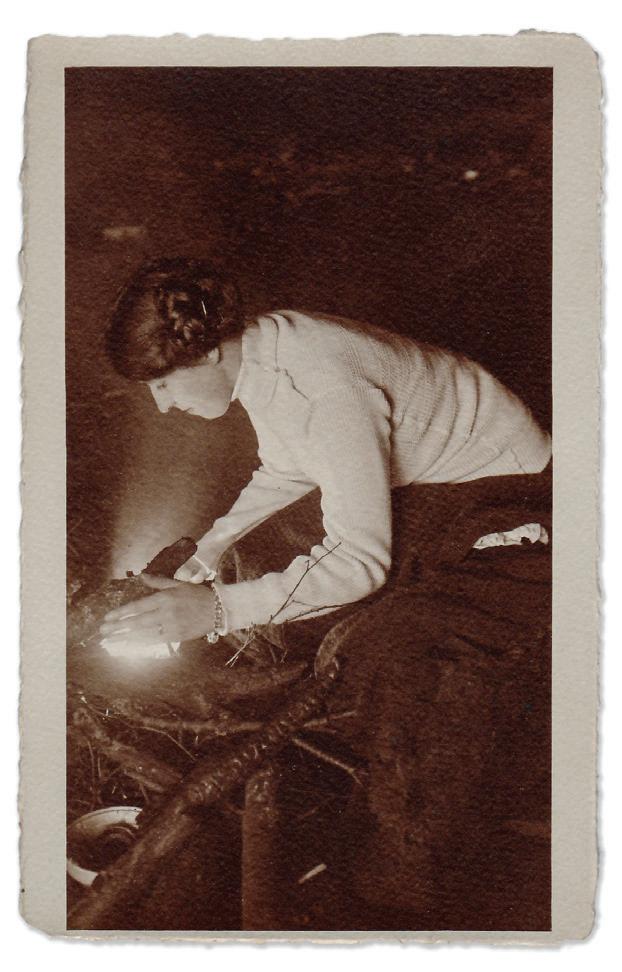
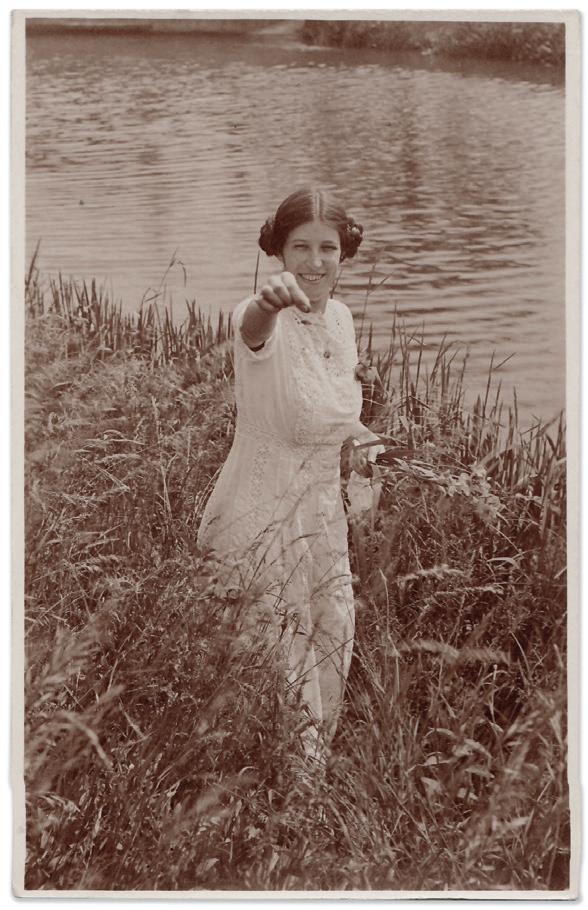
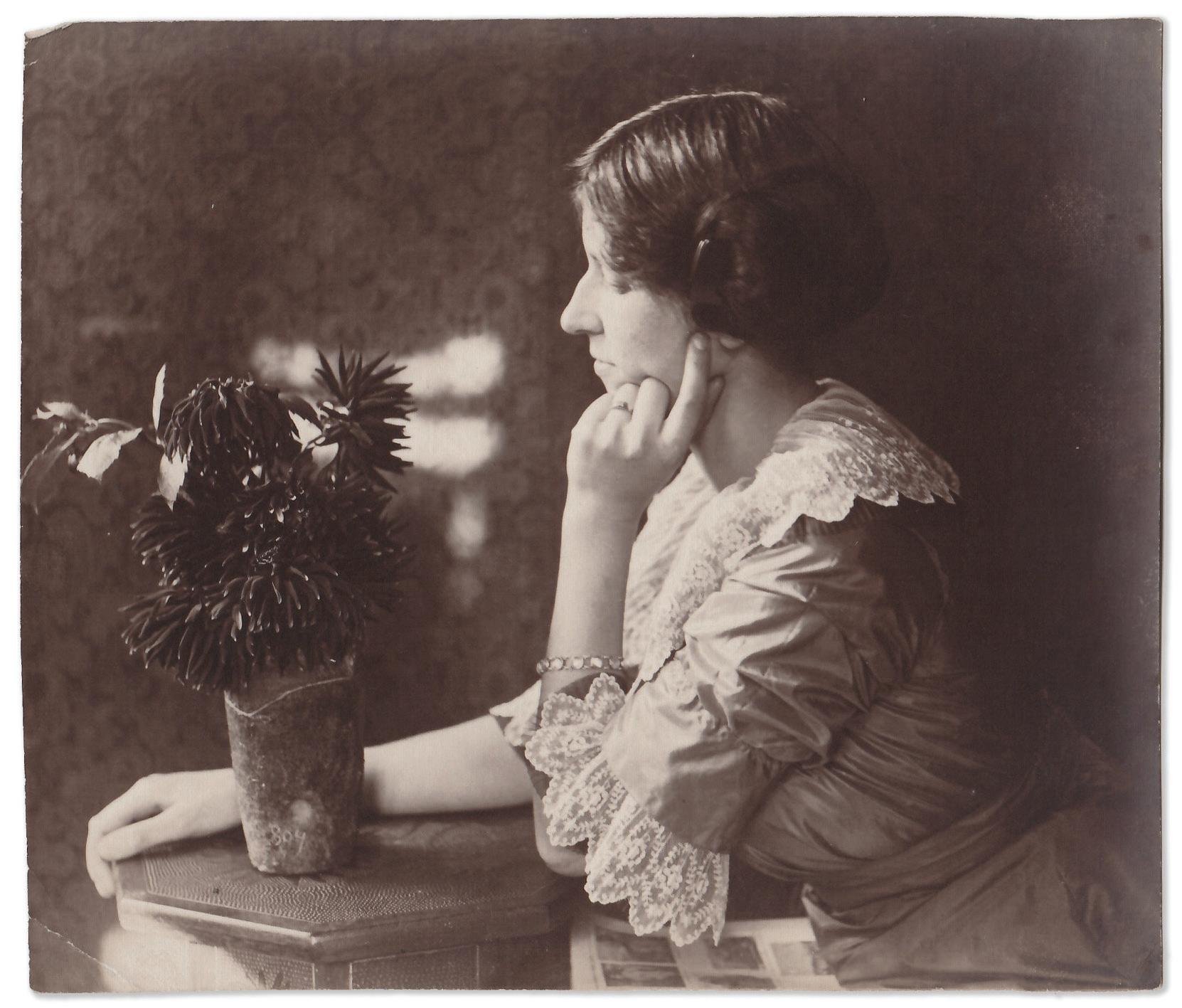
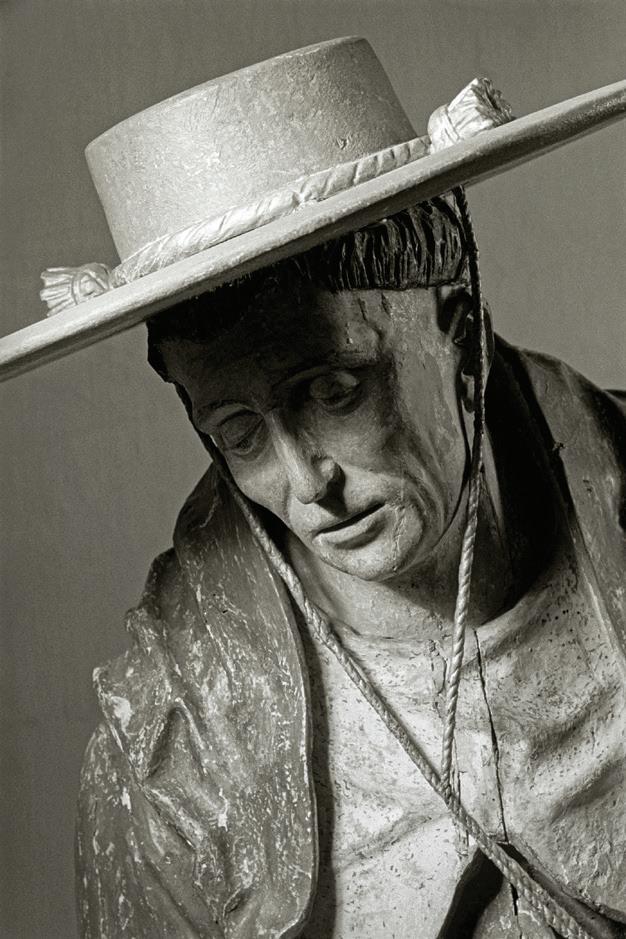
Ed Schwartzreich has three articles in this issue, two of which are on his favorite subjects, Dr. Paul Wolff and Alfred Tritschler. In Mittelalter Fotografie , Ed reviews a book covering the immediate post-war work of Alfred Tritschler. These striking portraits of Medieval sculptures in a museum in Cologne had not been seen for decades. Ed also shares images provided to him by Paul Wolff’s granddaughter, of Dr. Wolff’s wife and child. These images have never been published before and are here exclusively in Viewfinder. These pre-Leica images clearly show Dr. Wolff’s vision long before he discovered the Leica.
Ed also reviews an interesting accessory for the Leica M10, the Hobby Japan Co., Ltd. Thumb Rest Lever. Daisuke Matsushita, like many of us, missed using the advance lever of the film M camera to help grip and steady the M while shooting. He came up with the idea of a folding lever to use on the M10, instead of the usual “Thumbs-Up” type devices already on the market. Over the course of two and a half years, Daisuke worked with Hungarian engineer and designer Mikael Torma to help make his concept of the Thumb Rest Lever reality. The lever is CNC machined from a brass ingot in a factory outside Budapest and finished in black or silver by a factory outside of Vienna, Austria. After numerous trips to Hungary and Austria to make sure the lever lived up to his expectations, I think he has succeeded! Of course, Leica came up with a similar solution on the M10-D. I am curious if Leica may come up with a similar lever on a future M camera.
Lastly, I’d like to thank Ritu Raj for providing a series of portrait images on the inside covers of issue of the attendees to the LHSA meeting in Boston.
Bis nächste zeit!
Bill
Old Leicas for Old Railroad Photography
by DICK GILCREAST
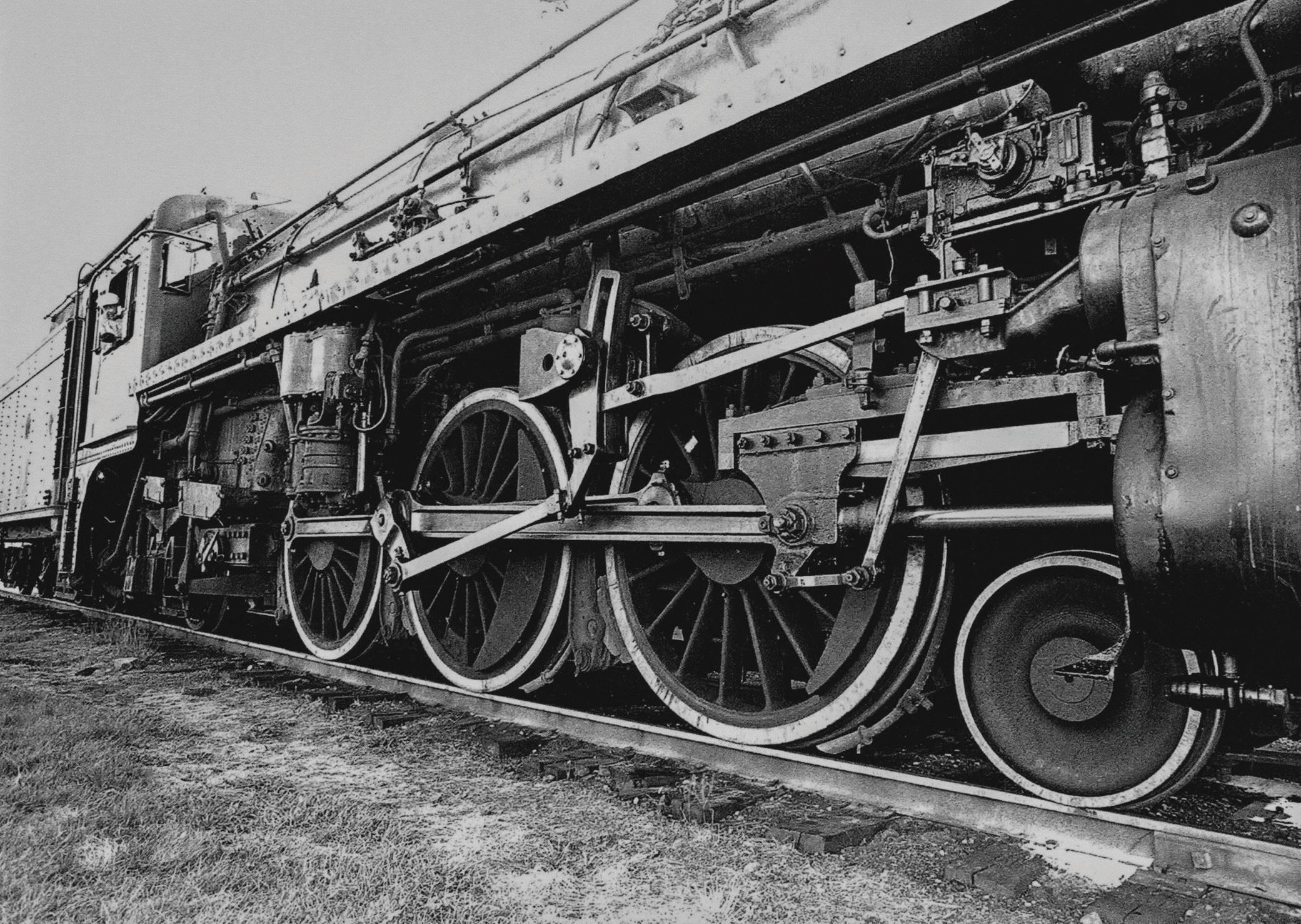
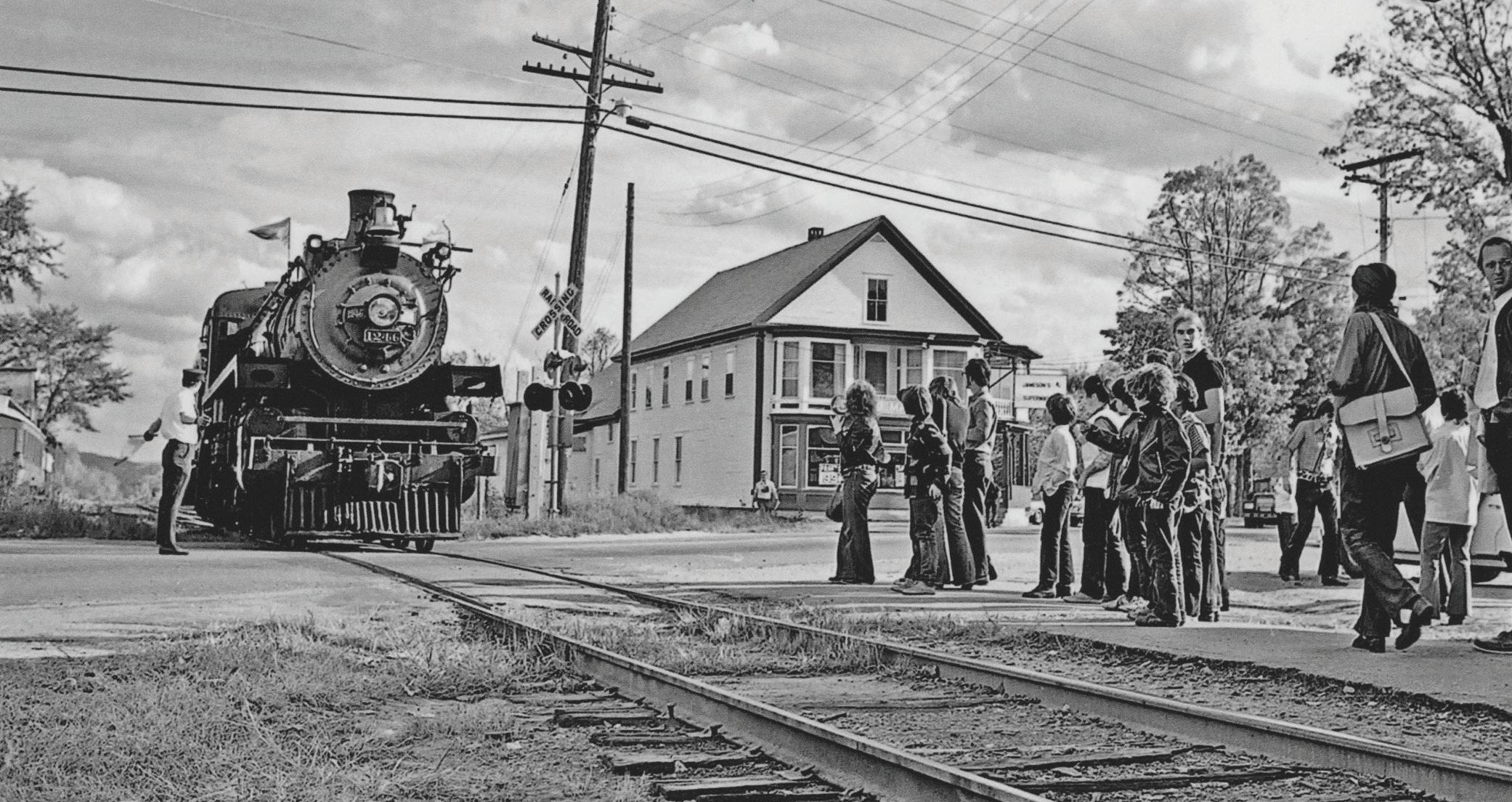
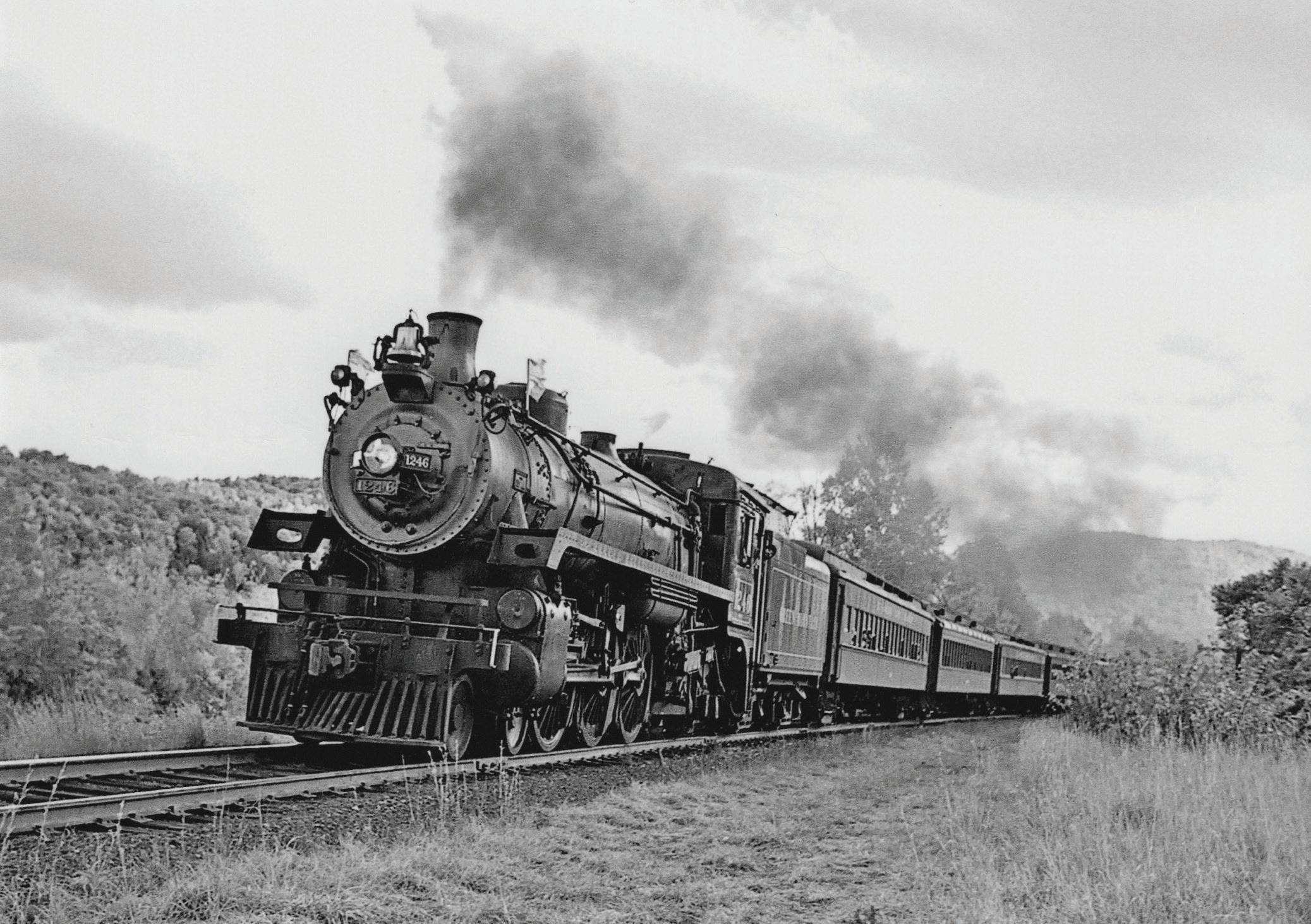
photographs from a number of years ago are of a steam-powered excursion train and locomotive, both before and after its arrival at Vermont's Chester Depot RR station, following one of its sightseeing runs starting from Bellows Falls VT.
Although working with Leica M cameras professionally at the time, plus a couple of SLRs, I have always kept two SM Leicas in a small bag for personal projects, usually have a 35 and 50 combination on them. That day, however, I made sure to include a super-wide 21 for one specific purpose: a close three-dimensional picture of the massive pistons, wheels, and driving rods that provided the motive force of this 4-6-4 locomotive No. 1246, which I had seen it before, but only at a distance. The idea was to work from the shadowed side, using only the reflected highlights to outline the major components and eliminating all the myriad of details in the shadows, making it easier to see the major outlines of the machinery. The picture was also to show a real working locomotive, not a polished museum example.
This was in 1979, while the Bellows Falls VT "Steamtown" museum attraction was providing a steam locomotive for this run. A little time later, after the unfortunate death of its founder, Steamtown was moved to Scranton PA, where it is today, so these particular pictures stayed in the files instead of going to the usual New England regional magazines that I did stories for. The seasonal excursion run from Bellows Falls to Chester Depot does continue to this day, but using diesel power, under the name "Green Mountain Flyer." And there is also an occasional winter run as the "Santa Express."
What caused me to search out these old pictures was a photographer friend recently mentioning his interest in the publicity surrounding the rollout of the rebuilt Union Pacific R.R."Big Boy" locomotive, although he wasn't able to attend.
His story reminded me of these pictures. And, since steam railroads have been seen in many shows in recent yearsperhaps starting with Thomas the Tank Engine and Harry Potter's Hogwarts Express, and going on to more recent videos of newly restored antique 19th century Welsh Highland and Isle of Wight and other English and even U. S. steam excursion trains being aired on YouTube, etc. - they have served to revive nostalgic memories in the public about the old days of steam, this might be a good time to see what a couple of Leica SM cameras and lenses were able to do with this old-time subject?
A 50mm f/2 Summitar lens on a Illc camera was used a little way out in the countryside to get the classic picture of an approaching steam train, the "normal" focal length being used to avoid any undue wide angle exaggeration or telephoto compression of the train. The 50 was then used at the center of town to show the engine crossing the main street into the station. Film in the 50mm camera was its usual all-purpose ISO 100 Plus-X, with an lmarect finder used for accurate full-frame composition.
The 21 mm f/4 Super-Angulon was on the second camera, a black-dial lllf, which was loaded with ISO 400 Tri-X film that day to deal with the dim light on the shadowed side of the engine, and be able to provide the needed depth of field at a hand-holdable shutter speed. Viewing was with one of the excellent 21 mm Leitz optical brightline viewfinders, which I've always liked. They not only give accurate composition in an easy-to-see smaller frame, but are also unusually good at keeping the pictures level while seeing and keeping verticals straight at the edges of the frame.
My thanks to good friend Terry Maltby, LHSA, for jogging my memory about this railroad coverage, as well as his very kind scanning of these negatives for digital printing by means of his Leica T, 60mm f/2.8 Macro-Elmarit-R, and light box.
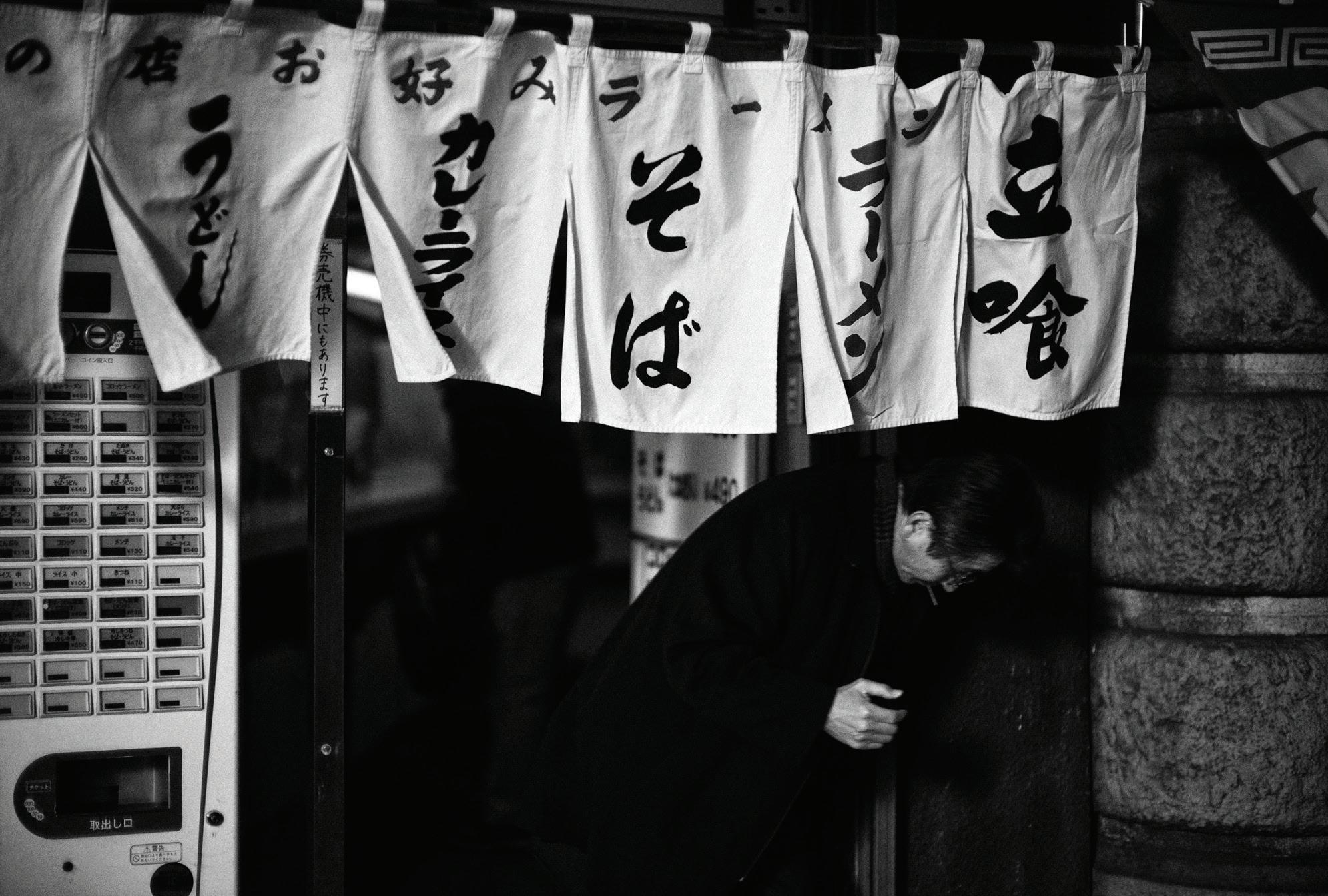
this page: Yurakucho Restaurant Patron. Leica M9 and Leica 50mm f/0.95 Noctilux-M.
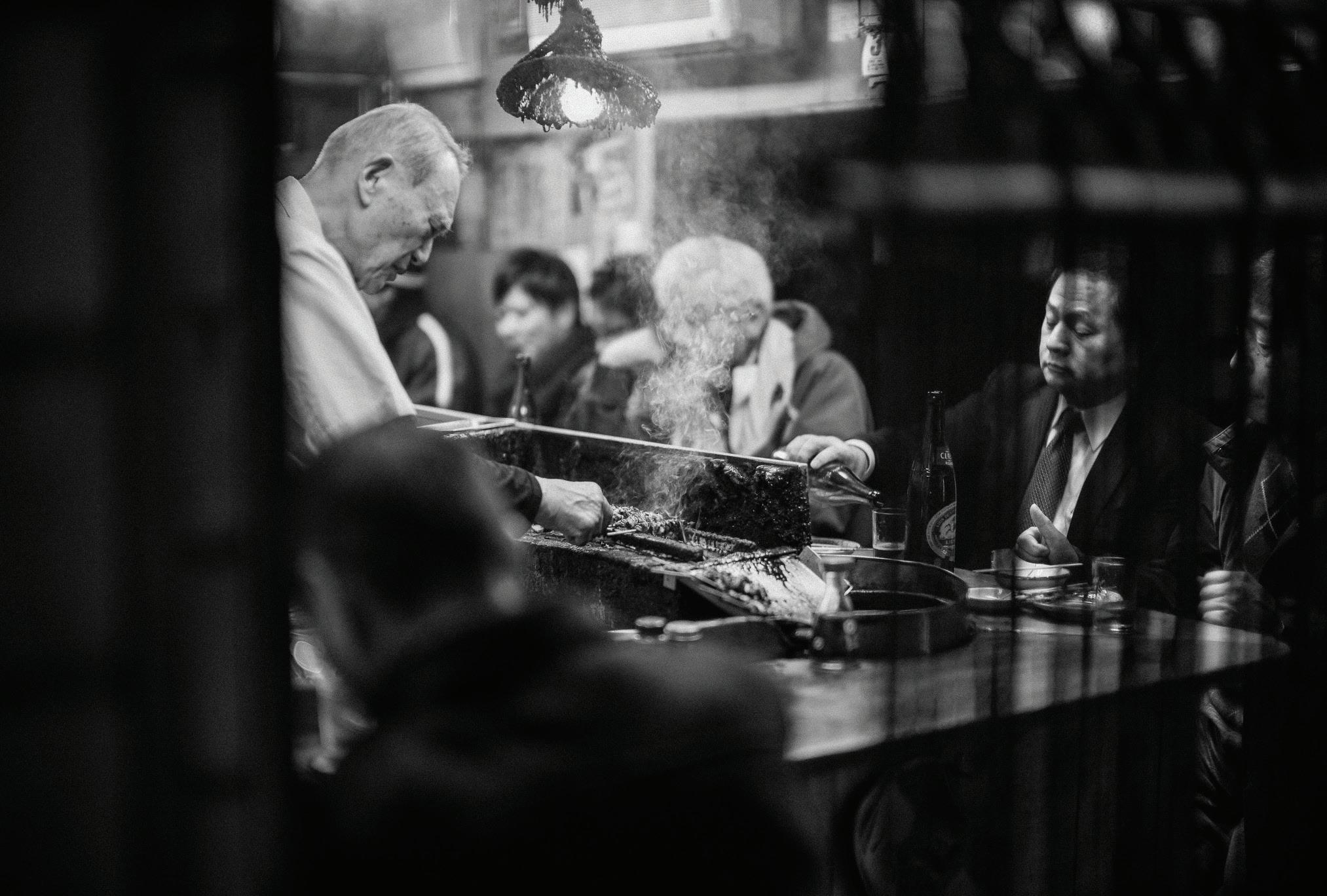
opposite page: Salaryman, Beer and Yakitori. Leica M9 and Leica 50mm f/0.95 Noctilux-M.
#10YEARSWITHLEICA
by AMITAVA “CHATS” CHATTERJEE
first introduction to the fascinating world of Leica began with a remarkable encounter. I was comfortably seated in a window seat on a flight from Narita to New Delhi. As a certified AvGeek and licensed pilot, I am usually fixated on airport and aircraft movements outside the window. However, on this flight, I happened to be seated next to Sebastiaõ Salgado. What a stroke of luck for an amateur photog. I recognized him from his Kuwait images after the first Gulf war. His picture of the oil-covered rig worker weary from repairing destroyed oil wells might ring a bell with some of you. Anyhow, given the exalted status of my co-passenger, I promptly forgot about aircraft and aviation and slid into a conversation about photography, my other love. Salgado was very generous with his time. We spoke about his work and career trajectory. He offered critique on a few of my images which I had pulled up on my laptop. At one point, he stood up, pulled out a case from the overhead bin, opening it to show me four well-used, gorgeously brassed Leica M film bodies. He handed one to me and I marveled at the weight, finish and brassing. It was a reverent moment. This camera had witnessed war and its aftermath. From that day on, I was hooked, and vowed to get my hands on my own Leica some day.
Fast forward six years. Leica had just announced their revolutionary M9, and I wanted one. A dear friend convinced me that I should switch from my Canon 1Ds Mark III and collection of L lenses, and instead focus on Leica. The Salgado encounter, which inspired my desire to own a Leica, made up my mind. As a result, I was soon in possession of a lovely Leica M9 and a relatively cheap 35mm f/2.5 Leica lens. I happily took them on a trip to Montreal and proceeded to have an absolute blast. Soon thereafter, in my quest for bokeh, I exchanged the f/2.5 for an f/2, and then acquired a 35mm f/1.4 Summilux-M, which I still own and use with joy.
I knew I could not stick to just two 35mm Leica lenses. After much research, I decided to buy Leica’s newly released 50mm f/0.95 Noctilux. Its three-dimensional bokeh always took my breath away. I had also read of the need for a neutral density filter for the lens in order to shoot wide open, and knew I had to own it and the lens. After hunting high and low and coming up dry, I learned of Ken Hansen. Emails were exchanged, and very quickly, even before my funds had reached Ken, he shipped a brand new Noctilux at a significant discount since I had made a joke about eating a ton of boxed cereal to fund my acquisition. Such a kind man, super-friendly and an absolute pleasure to do business with. Rest In Peace.
Fully committed to Leica, I bought a 90mm f/2 Summicron and a limited edition M6 Millenium (1307 of 2000). Soon thereafter I bought two M Typ 240's and a Typ 246. This allowed me to keep lenses permanently attached to the various bodies I owned, helping me win the battle over sensor dust! Acquiring the M6 gave me the opportunity to invest in developing chemicals, equipment and a pro negative scanner. However, I do not spend as much time with film as I should, but I definitely enjoy the M6 every time I pick it up. Since then, I have used my Leica gear in many countries and love how unobtrusive they are. I recall spending nearly an entire day roaming Paris, taking in the sights. The best part of the experience was being able to walk around, M9/50 Noctilux around my neck, two lenses in my coat pockets, M (Typ 240) in a pocket, and batteries tucked away. No camera bag to weigh me down. It was extremely liberating.
My love with Leica continued, and at the 2014 Leitz-Park inaugural, my Leica friends grew. Leica is a magical brand that binds us together into one giant family anchored around our common love for photography. I have lost track of the number of times I have walked around and seen another red dot. Usually, in these situations, at a very minimum, our eyes lock, we smile at
left: Bangkok Flower Market Smoke Break. Leica M (Typ 240) and Leica 50mm f/0.95 Noctilux-M.
each other, and nod our heads in respect for a fellow Leicaphile. Time permitting, we have exchanged pleasantries and linked up on Facebook. I have met many photogs this way, and today, approximately half of my Facebook friends are Leica users.
I attended the 2018 Leitz-Park III inaugural, made even more special because I got to spend time with Alan Weinschel, our LHSA president, and Bill Rosauer, our LHSA editor. We shared many meals together, and Bill took us down memory lane with a
photographic process in a deeply intrinsic manner that is incredibly sensorial and rewarding. Further, in addition to superb cameras and lenses, Leica has invested in the fantastic Leica Store network. I have spent many hours at the Wetzlar, Washington D.C., Singapore, Tokyo, Milan, Los Angeles, San Francisco, Miami, Las Vegas, Boston and New York stores. Leica Store employees make the time to listen and help out as best as they are able. In this day of clicks, I am super happy that Leica realizes the importance of a retail store-based experience.
"THAT’S WHAT LEICA IS ALL ABOUT. LEICA EQUIPS US WITH THE TOOLS TO FREEZE TIME AND CAPTURE MOMENTS FOR POSTERITY. "
fantastic walk around Wetzlar, the old Leica buildings, and other places of historical significance to Leica. Alan and Bill were the reasons I joined The International Leica Society. They invited me to come back to Wetzlar for the 50th year event that October and I am so glad I did. There is something incredibly wonderful about Leicaphiles getting together and bonding over something we love deeply.
I have spent ten years with Leica now. Every photographic moment has been special. I have had the great fortune of owning two M9's, M6 Millenium, two M Typ 240's, M Typ 246, X1, X2, Q, M10, SL, Q2, SL2 and M10 Monochrom. I love my Leica M and L-mount lenses, and enjoy playing with and agonizing over the immense desire to acquire new releases. I recently interacted with the M9 again, new sensor and all. I slipped it into my Luigi Leicatime case and brought it up to my eye, and the smell of well-worn leather wafted up. I felt very pleased and marveled at the romance of Leica photography. The superb optical and electro-mechanical design of Leica equipment allows us to become part of the
While writing this article I went back through my digital photography archive over the last two decades. I have close to 100,000 images as of January 2, 2020 (I don’t leave my shutter on rapidfire). Of those, about 44,000 images were captured with Leica gear over the last ten years. My Noctiluxes and Summiluxes are equally used (approximately 12,000 images each) and the rest are shot with the other lenses. I leave my fellow readers with a fraction of the thousands of images captured with my Leicas over the last ten years.
Sofie’s portrait is a favorite of mine. During my trip to Wetzlar for the 2014 Leitz Park inaugural, I ended up at the Steinfurth Rosenmuseum café enjoying a late lunch when up walked an old, elegant lady, stooped over her cane. She was having trouble getting up the cobblestoned incline so I got up, walked over to her, held her hand and escorted her in. As we got to the entrance, the owner walked up, greeted Das Großmutter and sat her at a table. She proceeded to enjoy a coffee and “rosentorte”. Meanwhile, I nibbled at my lunch but kept glancing over my shoulder to look at this elegant woman, sitting by herself, enjoying
(left) Mother & Child. Leica M (Typ 240) and Leica 50mm f/0.95 Noctilux-M. (right) Sofie. Leica M (Typ 240 and Leica 50mm f/0.95 Noctilux-M.
her snack. Given how she was attired, this may have been the highlight of her day, and she was giving it the respect it deserved. On my way out, in a spur-of-the-moment decision, I decided to pick up her check. When the Café proprietress mentioned this, Sofie was delighted, called me over to her table and gave me a big hug. We proceeded to have the most wonderful conversation, aided in large part by Google Translate because my command of German is limited to “urlaub Deutsch”. During our dialogue I learned her name and the fact that she was born in Hess in 1920, with a family full of engineers and three children who had been lost to the wars. I marveled at her strength while we chatted, but soon our time together came to an end. Sofie thanked me profusely and then asked for my help in navigating said cobblestones out of the Rosenmuseum. She took my arm, and we walked out to the street and bid our goodbyes. She gave me another hug. I bid her farewell with tears in my eyes for this dear old lady who has seen so much. I hope she stays safe.
The Yurakucho restaurant patron is another favorite image, and goes to prove that it pays to wait. I was out and about with my Leicas, and ended up in Yurakucho, Tokyo. There are many small restaurants around the subway station and I love walking through the alleyways, taking in the sights. I chanced upon a small restaurant tucked under a flyover. “Noren” flags blew in the breeze. The menu is displayed on the dispensing machine to the left of the frame. You choose what you want, insert the requisite payment (yen coins mostly) and press the corresponding button and out pops a little meal ticket that you hand over to the chef. I had a delicious and tasty meal - grilled fish, miso soup, rice and a small cup of green tea. Satisfied, I stepped out and started taking pictures again, but something was missing. I decided to wait for a few minutes when a patron came out, lighting a cigarette and ducking out in one swift movement. I am glad I was able to freeze this moment in time. That’s what Leica is all about. Leica equips us with the tools to freeze time and capture moments for posterity.
On this same trip to Tokyo, I lost my camera bag twice! On the first occasion, I stopped at a McDonald’s for coffee. I found a table, absentmindedly placed my bag on the floor next to me, and intently studied my phone to determine what to do next. I finished my coffee, got up and left without the camera bag. Approximately twenty minutes later, while wanting to take a picture, I reached for my camera bag, but it was not on my shoulder. A moment of panic froze my entire being, but then I quickly retraced my steps and found my camera bag where I had left it, under the table in that McDonald’s. On the second occasion, I was at Narita Airport, flying back to the US. I’d cleared Immigration and was waiting for my flight. I love perusing Narita’s dining options and ended up at my favorite udon noodle shop. A steaming bowl of tempura udon later, I stumbled out of the restaurant and walked around the airport terminal, taking in the sights. I came upon a new 787 Dreamliner glistening in the morning sun and decided to take a picture. No camera bag. Again, similar brain freeze and a mad rush to retrace my steps to recover my Leica gear and PASSPORT! When I got to the restaurant, the hostess greeted me with a smile, reached down behind her and held up my camera bag. It was a relief because the bag had my M9, M240, 50 Noctilux, 35 Summilux and 90 Summicron in addition to my passport. Nowadays I keep a very close watch on all my camera gear. I do not want repeat incidents like these ever again!
My Leica journey has only begun. My Leica family has grown over the years, and in particular, many of you may also know Andreas, Bill, Jono, Hari and Evris. My #10yearswithLeica project is live on Instagram (www.instagram.com/Chatsphotog). I look forward to welcoming you there and hopefully connecting. I will share my workflow with you in a subsequent LHSA article. Until then, luxuriate in the presence of your Leica gear! I look forward to seeing your unique perspective.
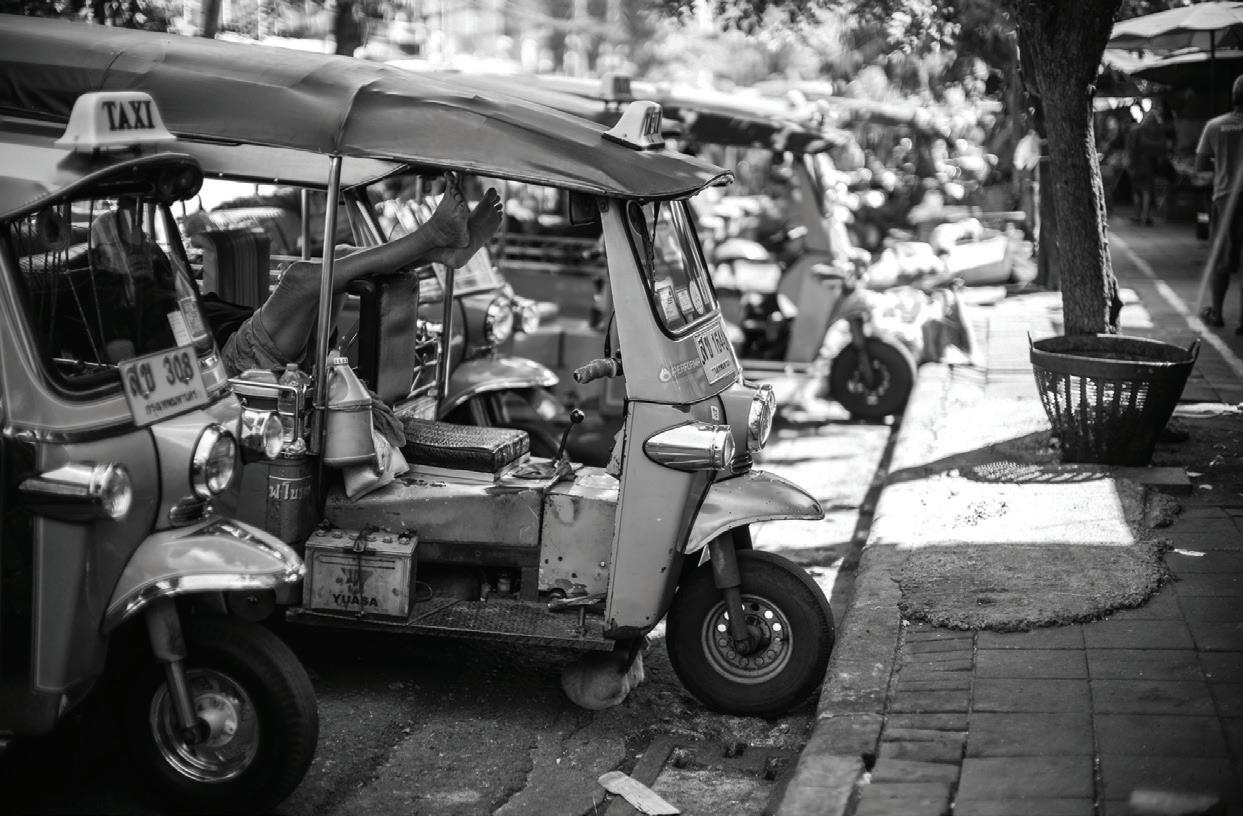
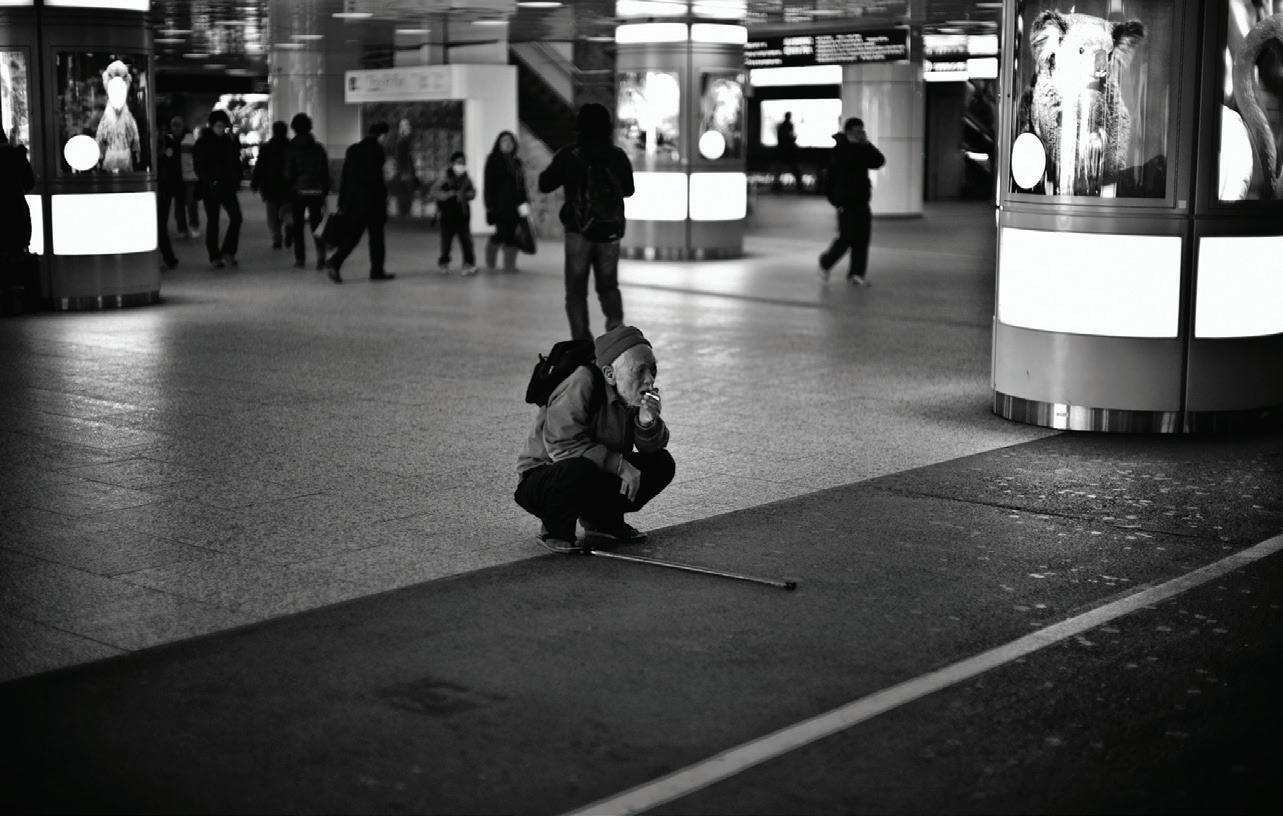
left: Tuk Tuk Snooze. Leica M (Typ 240) and Leica 50mm f/0.95 Noctilux-M. right: Tokyo Station Smoke. Leica M9 and Leica 50mm f/0.95 Noctilux-M.
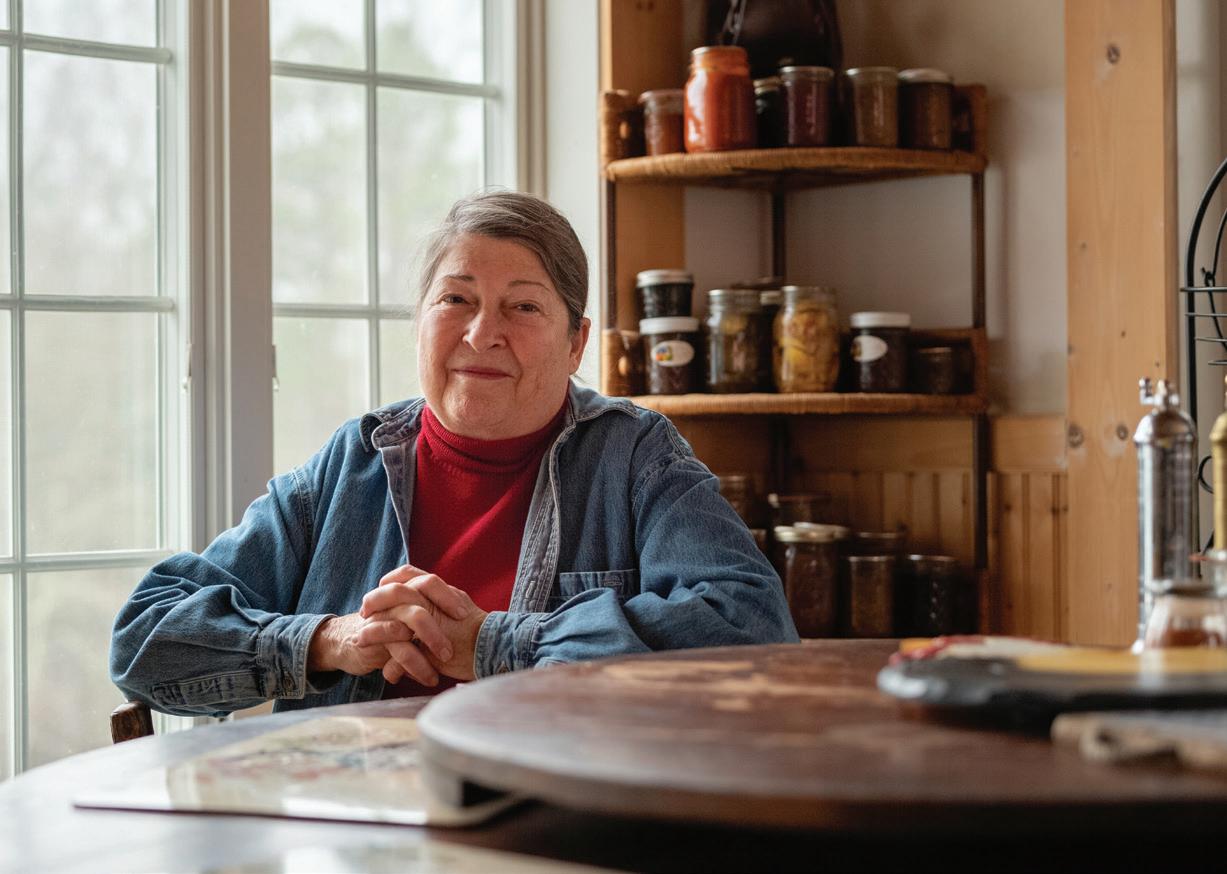
Tina Manley lives in the country with her husband, Tom, and loves her kitchen almost as much as her Leica! She loves to grow food and can it in old mason jars. Tina has true southern charm and graciously allowed me to interview her in October 2019 and then photograph her at home in early January 2020. This is her story and her contributions to not only photography, but humanity. Thank you Tina!
(An Interview with)
Tin a Man l e y
by DAVID KNOBLE
(October 16th , 2019) David Knoble: You have visited over 83 countries in your career and so much of your work explores the human side of everyone, regardless of where or how they live, which you know is dear to my heart. You have worked with some world-renown photographers like Maggie Steber, Sam Abell and Eugene Richards and you have used all kinds of cameras - mostly Leica fi lm and digital bodies. You have been published in a number of diff erent magazines, won awards for your work and provided a lot of images for UNICEF. Th ere is no question your photography has made a diff erence in people's lives and I thank you for taking the time to talk with me about your career.
To start us off, tell me when you knew you wanted to be a photographer?
Tina Manley: I first started taking photos in 1971 after my grandfather died and left me $500 in his will. I bought a Minolta SRT 101 and started taking photos of my own children. I was fascinated with film and set up a darkroom to develop and print my own photos. That soon got too expensive to be a hobby and I started looking at ways to make money with my photos. I am a very shy person and not at all pushy about selling myself so many photography venues seemed to be out of my reach - wedding photography, portraits, graduation photos - all which required selling skills. Then I discovered stock photography. I went to a seminar in Wisconsin on "Sell and Resell Your Photos" by Rohn Engh. That seemed right up my alley. No personal interactions with buyers! Just reply to requests for photos and send out packages of slides for consideration. The first photo I ever sold was for a book cover. I was hooked!!
What was it like for you in the beginning?
It was much easier in the beginning. Even though I had to send out actual transparencies and worry about getting them back undamaged, I was dealing directly with publishers who valued my work and continued to contact me when they needed more for their textbooks or magazines. [At that time print media was in demand.] Through the years, stock photography has gotten both easier and more difficult. Easier because I no longer send out physical slides but digital files. All requests come in by e-mail or through agencies and can be easily sold anywhere in the world in minutes. More difficult because everybody else can do the same! Today, every time you respond to a photo request, you are dealing with different people in agencies all over the world many who seem to have no interest in continuing a relationship. That makes the repeat part of the business much harder.
I agree, Tina, film work is more difficult and the digital era has opened up opportunities for many more people, making some photography venues more of a commodity. Would you describe the first moment you realized you had accomplished something great, something important to you that made you feel like you could succeed?
The first photograph I ever sold was of my two children on a swing for the cover of a book Between Brothers and Sisters. It was a pretty good-selling book and I was proud of the photo. Then I sold a photo for the cover of a medical textbook. The same textbook went through 7 editions and for every edition they bought my photo again for the cover. However, the most important photos to me have been the ones I've taken for Dimes for Hunger. Since 1988, I worked as a mission consultant for the
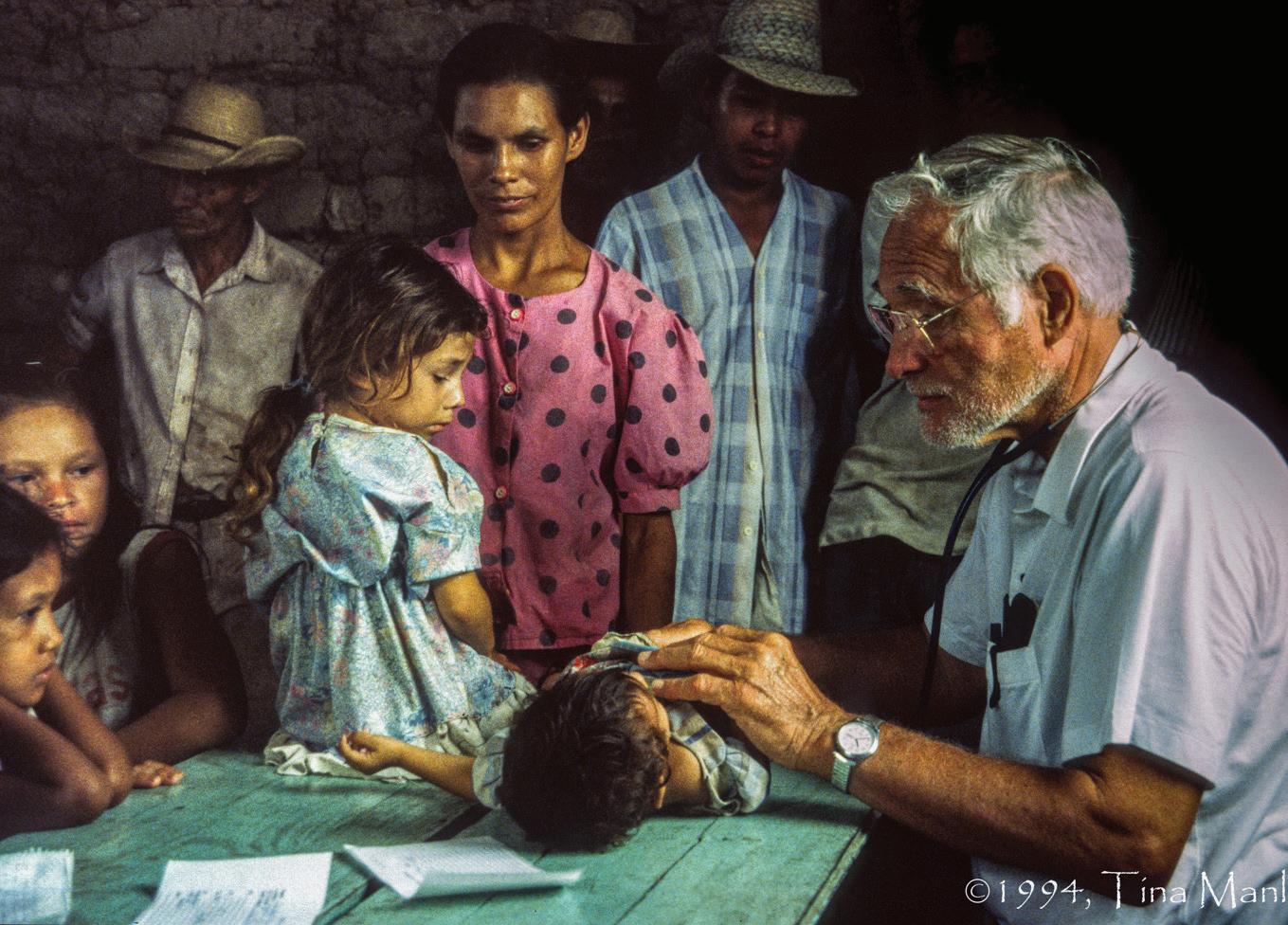
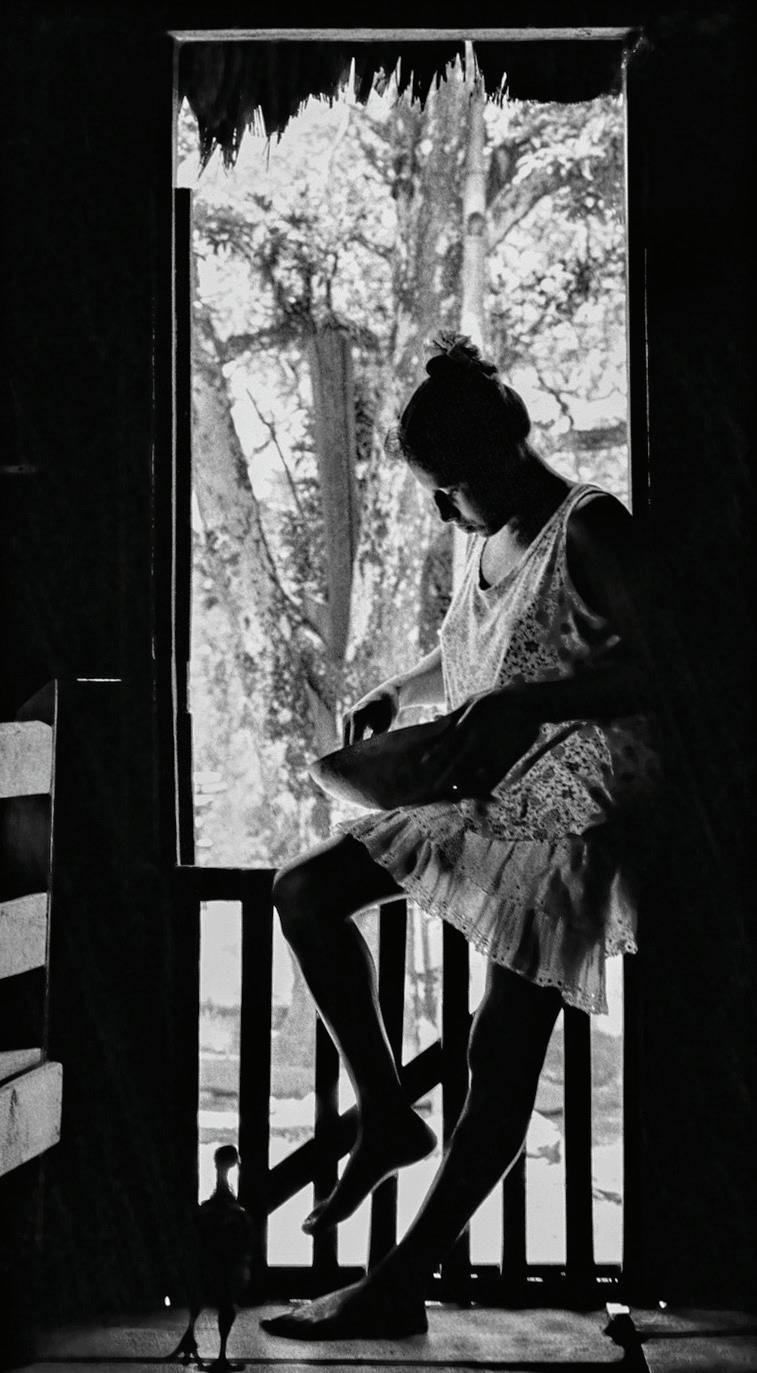
PCUSA [Presbyterian Church USA]. I have been taking medical brigades to Honduras and Guatemala every year and conducting clinics in remote villages. I typically stayed with a family and took photos of their daily lives. I also photographed local hunger relief programs like Meals on Wheels. Over the years, the photos I’ve taken were used to raise money in our Dimes for Hunger campaigns - over $2 million in the 30 years I was involved. I'm retired now, but I regularly return to Central America and will be going back to Honduras during October to photograph the cataract clinic we are opening there.
So you reached a point where you had some focus and were producing images that made a difference. While you were climbing that ladder, what barriers did you see as a woman, that a man might not have? How did you break through those barriers?
Instead of barriers, I have seen being a woman photographer as liberating in many ways. I was allowed to stay with families in Honduras, Guatemala, Iran, Iraq, Syria and many other countries where being a male might have been a disadvantage. I stayed with widows in Guatemala where there were no men left in the village after the civil war. I photographed women in Iran and Iraq in homes where strange men would not have been allowed. As far as selling stock photography goes, as I tell photography students, the photography buyers don't care if you are a woman or a man, if you have a degree or not, if you are young or old. They only care if you have the photo they need and if you will lease it to them at a price they can afford!
That is such a great perspective! How about a time you were really worried might lose your work, or something wouldn’t come out the way you wanted (gear problem, mistake, etc)?
There have been a few times I worried about losing my work. In the early days, I would carry a backpack with 300 rolls of film. All of that film had to go through x-ray machines in the airports. I bought lead-lined bags to protect it. Of course, when you use the film, it doesn't get any smaller. You still have to carry all of that film back home safely and develop it once you get there.
In Iraq after the first Gulf War, I was one of the first journalist allowed in the country and was required to stay in the AlRashid Hotel with all of the other journalists. CNN was on the 13th floor. After a week there, I got ready to leave but my bill at the hotel was over $3,000! The hotel would only accept American dollars - no credit cards at that time. I didn't have
near that much cash and they threatened to put me in jail. They suggested that I talk to the guys on the 13th floor. I did that and the CNN guys pulled a suitcase out from under a bed, gave me $3,000 and I got home. I will always be grateful to CNN!
Even after I switched to digital, I still had to worry about the photo files. In Honduras, I fell into a river with two M8's on my shoulders. Both cameras went under water, but I dried them out by a fire and they continued to work for the rest of the trip!
Th ose are incredible stories - both receiving help to leave the country, and the durability of Leica's fi rst digital M well before the water sealing techniques used today. Along those lines, what has it been like going from fi lm to digital?
I really didn’t have much of a choice. I had to switch to digital when publishers began requesting digital files. I was scanning film and sending that in for development, but it was a complicated process. Then, in 2005, I was involved in a photography project called Families of Abraham. Seven photographers followed Jewish, Christian, and Muslim families in the Charlotte, NC, area for one year. In order to be consistent, we all had to use digital cameras. I had used Leicas since 1980 and never wanted to switch, but Leica had not come out with a digital M camera yet. I bought a Canon 1DMark II and used it for the year-long project. The Canon was fine for that project but, as soon as Leica came out with the M8, I switched back! I could use all of my Leica lenses on the M8 and I loved it. I had all of the advantages of my wonderful Leica lenses without having to carry 300 rolls of film through airports and developing it when I got home. As far as I was concerned, Leica digital was the best of both worlds. I have never regretted switching to digital. I did regret switching briefly to Canon.
Are there some infl uences early in your career that pushed you to succeed?
The most important early influence that made me chose photography was the knowledge that I had the ability to make a difference with my photos. I have always cared more about using my photos to show the people of the world that we are all more alike than we are different and less about making a living with my photos. Since I have been able to work with NGOs and self-development programs all over the world, I can see the progress that these programs make in developing countries. I cannot imagine a better use of photography.
Tina, that seems to be one of the best uses for your talents and you have clearly been successful in making a difference. What advice might you give a young person today that wanted to get into stock photography?
I would never advise a young person to become a stock photographer today. In my opinion, photography, like journalism, has disappeared as a career. If you want to make a difference in the world, get involved with a cause that interests you - world hunger, pollution, climate change, homelessness, gender identityanything that you care about. Use photography as a tool to inform, educate and affect people who might be able to make a difference. If you do what you love, the money will follow... eventually. Just don't plan on making quick money as a photographer or a journalist!! That may change in the future, but I'm not optimistic.
understand they all center around your experiences in Honduras and Guatemala. Can you tell me about a time that you think had the most impact on someone else, or a group, or cause and why?
With the volume and speed of images throughout the internet, I could not agree more that finding a focus and a passion is the best way to move towards a career in photography. I think technology today also allows us the ability to pursue a project and self-publish the results both as a hobby and a career. You have provided some of your most favorite images and I
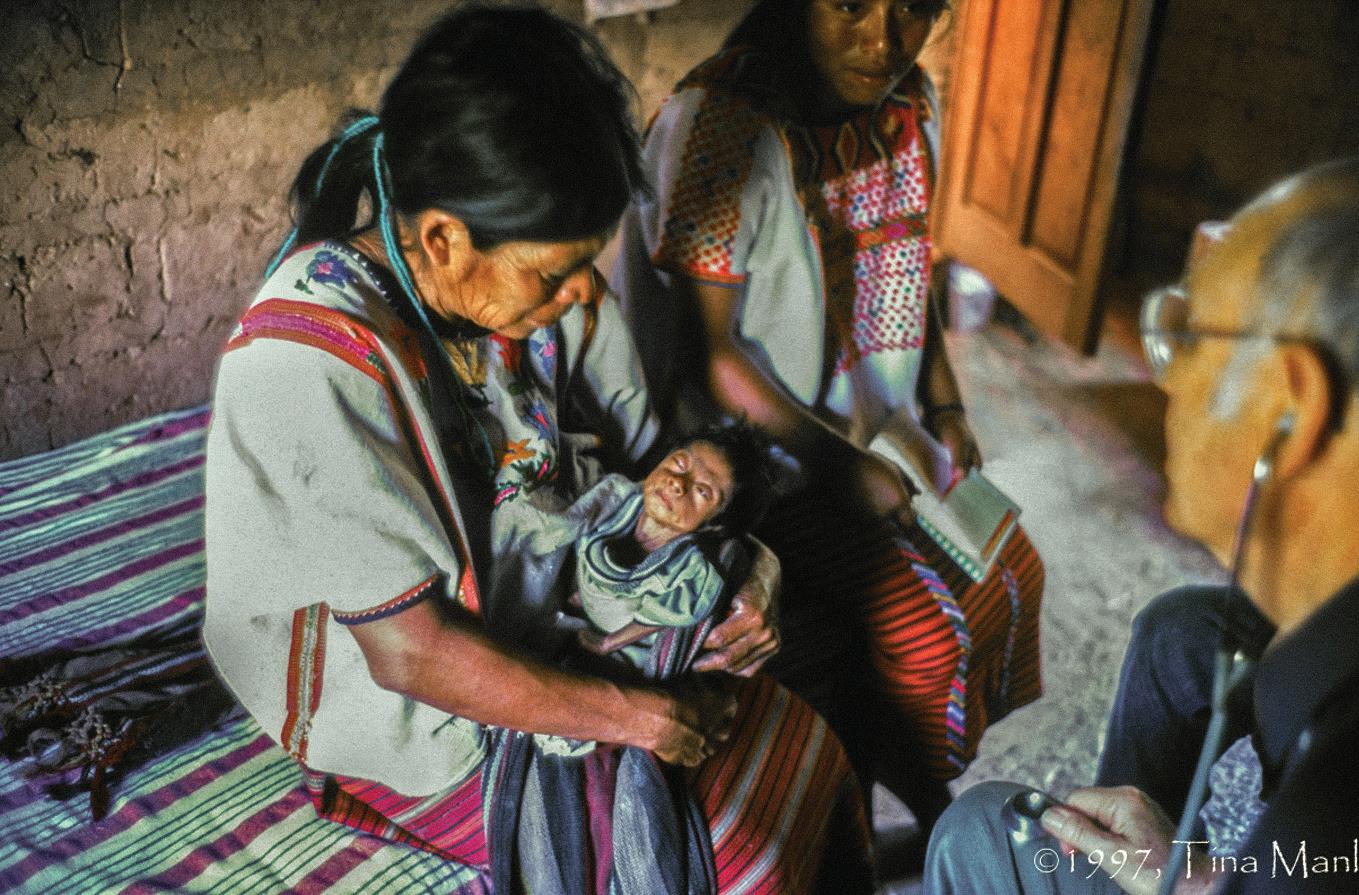
I know that our medical clinics in Honduras and Guatemala have made a big difference in many peoples' lives. The most memorable for me was probably 1997 in Acal, Guatemala. Dr. David Cowan was examining an elderly widow with dementia. She unwrapped her hand-woven scarf to reveal a tiny, tiny baby. The woman had found the baby abandoned in a cornfield and had kept her for weeks, thinking she was nursing the baby. The baby was very malnourished and only weighed 2 pounds. We rushed her to the nearest hospital where she stayed for several months. Back home, we raised money to pay for the baby's hospital stay. When she got out of the hospital, the baby was
adopted by Fabiana Ordoñez Perez, the midwife/dentist that we have supported for years in Acal. Cecilia is now a happy, healthy young woman and we have visited her often.
Tell me what you like most about shooting Leica cameras, fi lm and digital?
My first camera was not a Leica, but that soon changed. In 1976, on a trip to Europe, I bought a Leica M3 double stroke at a flea market. I loved the small, durable camera and its wonderful lenses. Eventually, I carried four M6's at a time, each one with different lenses and different films. My favorite lens was always
the Noctilux (f/1.0). The small, unobtrusive cameras were perfect for the dark, adobe homes where I did most of my documentary photography. I have used nothing but Leica since then except for one project we mentioned earlier. I went on seamlessly to the M8, M9, Monochrome, M240, M246, and now the SL. The SL is the best camera I have ever used. As I get older, I am very grateful for the accurate and quick auto-focus of the SL. I still use some of my manual lenses on the SL and, of course, on the M240 and M246. The lens I use most often now, though, is the SL24-90.
Where did you grow up and who did you work for over your career?
I was born in Columbia, SC, grew up in Dothan, AL, have lived all over the world, eventually returning to SC. I have worked for the Presbyterian Church, USA, as a mission consultant, and for many NGO's around the world. In 1980, I started my own stock company called "Images", and have been selling stock through it and various other agencies worldwide.
Tina, your work is spectacular and your passion for helping people really shows in your images. Th ank you for spending so much time with me and sharing your stories! I understand people can see more of your work and how you have setup your stock agency at:
https://tinamanley.photoshelter.com
LEICA M10 MONOCHROM
by JONATHAN SLACK
INTRODUCTION I have been lucky enough to test all three of Leica’s Monochrom cameras. The 18 mp M9 Monochrom was launched in Berlin amongst much excitement in November 2012. The 24 mp M246 Monochrom was announced two and a half years later on April 30 th 2015. We have had to wait nearly five years for the latest version with the M10 Monochrom being announced on January 17 th 2020.
I think that for many of us the M10 was the ultimate digital expression of the Leica rangefinder camera. They had managed to reduce its size to that of an M7, speed it up, quiet the shutter and streamline the operation. Then came the M10-P with an even quieter shutter.
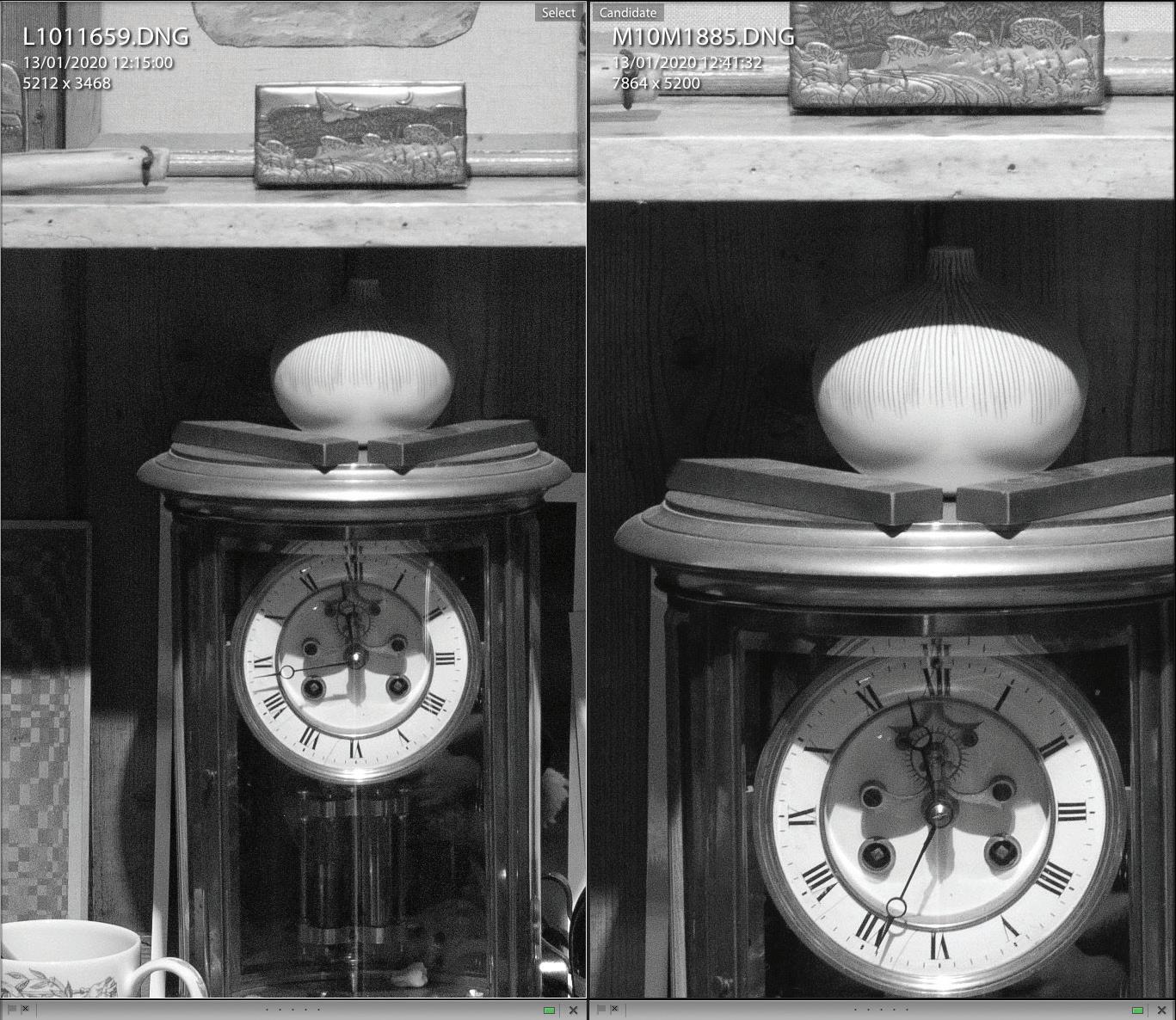
The M10 Monochrom retains the quieter shutter of the M10-P, but adds a completely new 41 mp monochrome sensor (7864 x 5200 pixels). Of course this brings up a number of immediate questions:
Are the M lenses good enough to support such resolution?
Does anyone really need this much black and white resolution?
Are the M10 electronics sufficient to deal with such big files?
Is it possible to hold the camera steady enough with no stabilisation?
Is it possible to focus accurately enough with the rangefinder?
I’ll be looking at these questions in the course of this article.
As usual I should emphasise that my job with Leica is as a camera tester, and my job is to report problems to Leica (which I certainly do!) . On the other hand, I would never miss out anything which seemed to me to be critical and I don’t get paid for writing these articles (either directly or indirectly) . I’m not asked what to write, and although I do show them to Leica first for fact checking, that is all that they do.
In the past (and always by chance) it has turned out that testing cameras has coincided with one of our trips abroad. This time, it hasn’t been the case. What’s more, I’ve had a pretty busy time at work, so, apart from a brief working trip to Cornwall (where it rained every day) , the images accompanying this article have mostly been shot within walking distance of home (or in a local pub!)
THE BODY The M10 Monochrom body is a beautiful thing, and I think this might just be the loveliest of all the variants (perhaps of all the digital M cameras) . The body is a stealthy black chrome with no red dot (just the big screw of the M10-P) . It has no logo on the top plate, just the word " monochrom" engraved in small letters at the front (mine also has P03/15 engraved to indicate its prototype status) . On the back it says " leica camera wetzlar - made in germany," but like the engraving on the top plate this is not picked out in colour.
The shutter speed dial has the shutter speeds picked out in white (as usual) , but the "A" setting is grey rather than red, and this goes for the "M" setting on the ISO dial and the red on/off dot. The rear plate is the same as a normal M10, with LV, PLAY and MENU buttons on the left and a four-way rocker switch on the right with a central button. The thumb wheel and its bump are also the same as the M10.
The whole effect is very discreet and really smart.
OPERATION, SPEED & MENUS If you put a much larger sensor into a camera with the same processor you are inevitably going to have an impact on the speed of processing, and it’s certainly the case with the M10-Monochrom. Shot to shot times, writing to disk and review times are all slower. So perhaps it isn’t the camera for sport! On the other hand, as a single shot user, I never found myself waiting for the camera (and I do often shoot groups of images together)
I mostly use Sandisk Extreme Pro 64 gb 95 m/s SD cards, and with the camera on continuous-fast it takes 10 DNG files at high speed before pausing, and another 10 before really slowing down. I can’t imagine anyone using continuous on a camera like this, but it does show that for measured shooting the slightly slower processing times are unlikely ever to cause an issue. Certainly I’ve never been inconvenienced by it.
For most normal photographers it won’t ever be relevant (or noticed) . The important point is that as far as I’m aware there is no shutter lag involved, whether you use the EVF or not.
I’m not going into the menu system in any detail. As expected, it is pretty much identical with the M10, but with colour and white balance options removed.
Having spent much of the last year using Panasonic and Fujifilm cameras it’s a real joy getting back to Leica’s simple but functional menu system. I think it’s sometimes overlooked how much purpose and determination Leica put into keeping it like this.
FOCUSING & IMAGE STABILISATION (OR NOT) The Leica M Rangefinder (or, in German, Messsucher , hence the “M”) was first released in 1953, and it wouldn’t be unreasonable to wonder whether it is still fit for purpose for a 41mp sensor 67 years later in 2020.
I’m not fortunate enough to own a 50 or 75mm Noctilux, but I’ve found rangefinder focusing with my 50mm Summilux-M Asph. and 75mm APO-Summicron-M to be easy and reliable, even wide open (I mostly shoot wide open) . I have a practice game I play, which involves focusing with the rangefinder, and then checking whether it’s correct in the electronic viewfinder (EVF); it always reassures me what a wonderful tool a rangefinder still is.
Which brings me back to the EVF. I know there have been a lot of complaints that it’s rather old school, and I long since stopped using it with the M10 (I’m pretty good at focusing with a rangefinder, and I like to see around the subject) .
I found that I liked using the EVF with the M10 Monochrom; partly because it was nice to see the image in black and white, but also for focusing. I think it works best with focus peaking turned off, and with auto zoom turned off (with zooming on the front button). For most images I found there was a shimmer of excitement over the area in focus, with no need to zoom in for critical focus. I particularly enjoyed using it with the 60mm Macro-Elmarit-R.
I imagine that for those lucky enough to have a Noctilux or the 90mm Summilux, the EVF will be a real benefit, but I’ll only use it when I want to see the end result before I take the picture. Surely the point of a Leica M camera is the rangefinder (at least that’s how I see it) .
With respect to image stabilisation, of course, it would be nice to have it, but the very quiet shutter and the solid body seems to have made camera shake a relatively minor problem, and the fantastic high ISO together with the extra stop you get without the colour filter array means that you can use the ISO settings to preserve a high enough shutter speed. In this context I found the 1/f, 1/(2f) and 1/(4f) minimum shutter speed in the Auto ISO settings particularly useful.
IMAGE QUALITY, RESOLUTION & ISO I’m afraid that I was dead set against Leica increasing the resolution from 24 mp which seemed to me to be the perfect compromise between quality and convenience, resolution and file size, perfectly capable of a good sized print and fast processing.
But I’ve changed my mind. The extra price to pay in terms of processing power and storage space is really small in the face of the extra advantages in terms of image quality and crop-ability.
With the SL2 and now the M10M, I’ve often found myself shooting just with a 50 or a 35mm, when previously I would have used a zoom, or a 35 and a 75mm (and the lens changes that implies) .
The monochrome sensor in the M10 Monochrom foregoes the Bayer filter required in colour cameras. With a Bayer filter, groups of four pixels (with Red, Green, Green, Blue filters) are processed in a batch and then separated into four pixels in the demosaicing process. This means that theoretically the Monochrom has four times the absolute resolution of a colour sensor.
In actual fact, the modern demosaicing routines are very good, and so the resolution bonus with a monochrome sensor is perhaps more like two times. But that still left me wondering whether M lenses are up to a comparative resolution of 80 mp
I thought I’d test this with my idea of the Leica M Triumvirate:
• Leica 28mm Summilux-M Asph.
• Leica 35mm Summilux-M Asph. FLE
• Leica 50mm Summilux-M Asph.
I shot my tame copper beech hedge at a nasty 10 metres at f/1.4, f/2, f/4, f/5.6 and f/8 with each lens. Each of them lost a little at f/1.4 and f/2 in the very extreme corners (the 35 FLE
was probably the best) . Stop down a little and the corners are perfect, but even wide open all but the very corner of the frame is beautifully sharp.
"THE AMOUNT OF DETAIL WHICH IS HIDDEN AWAY IN THE SHADOWS...IS NOTHING LESS THAN BREATHTAKING."
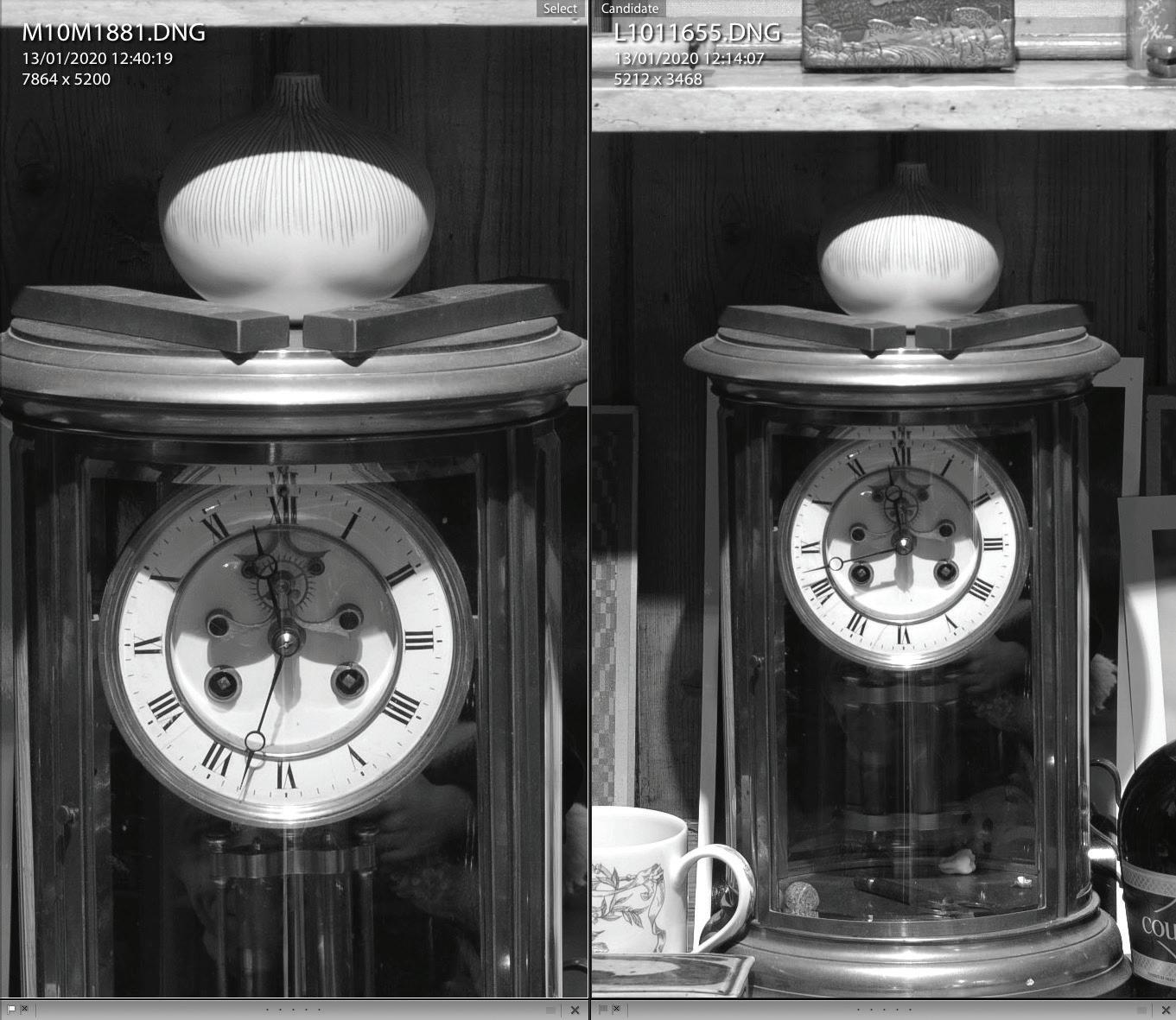
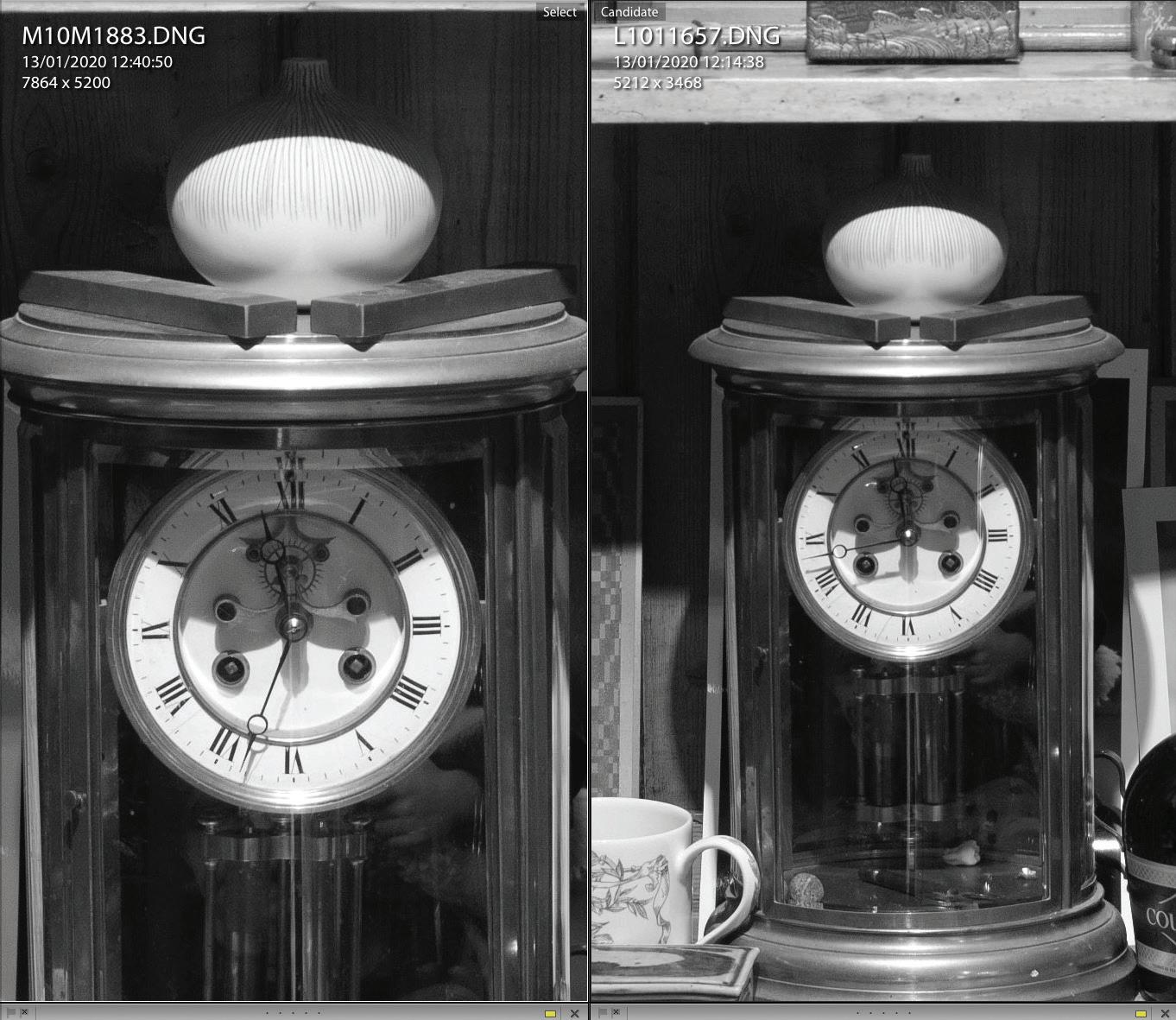
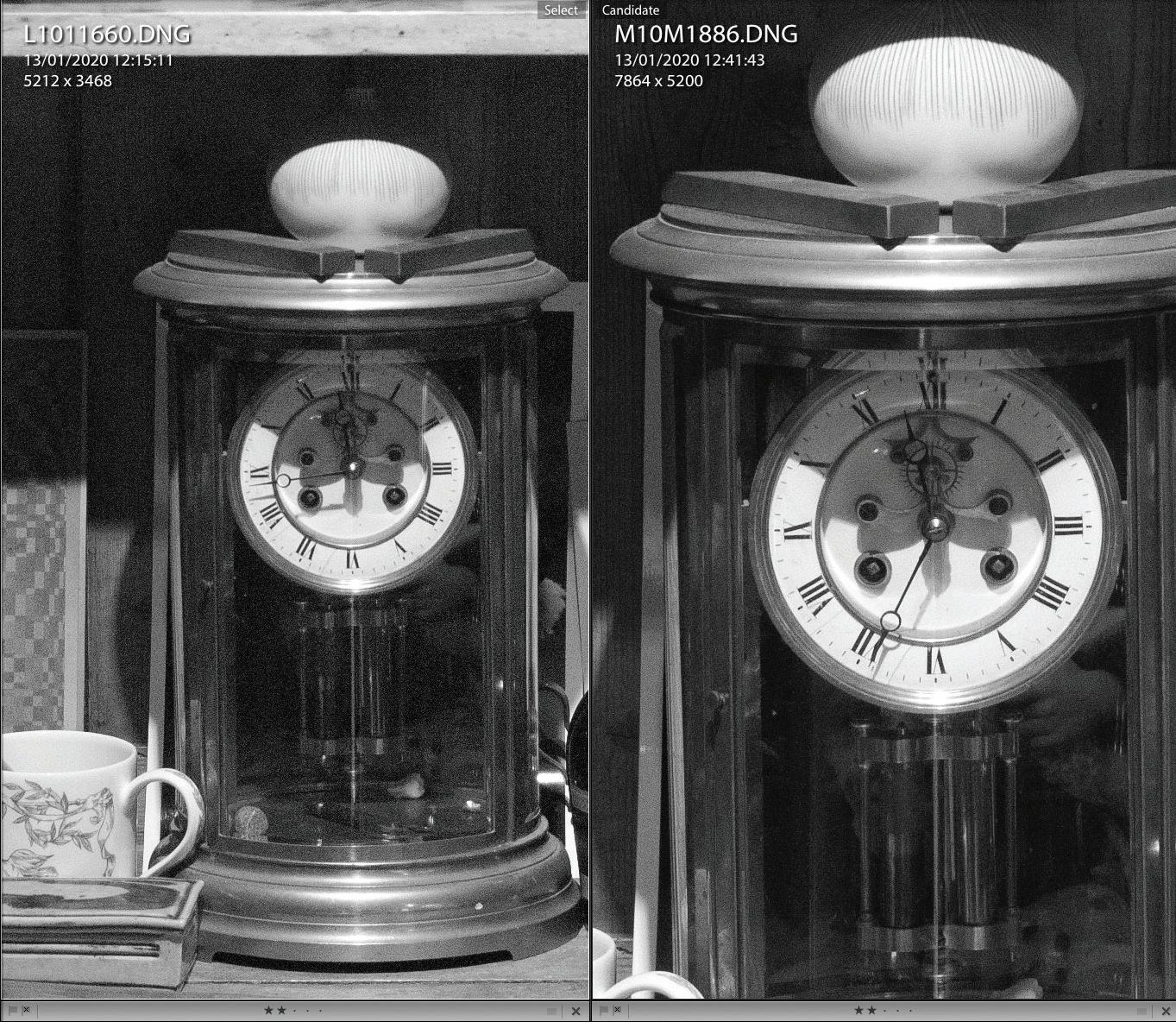
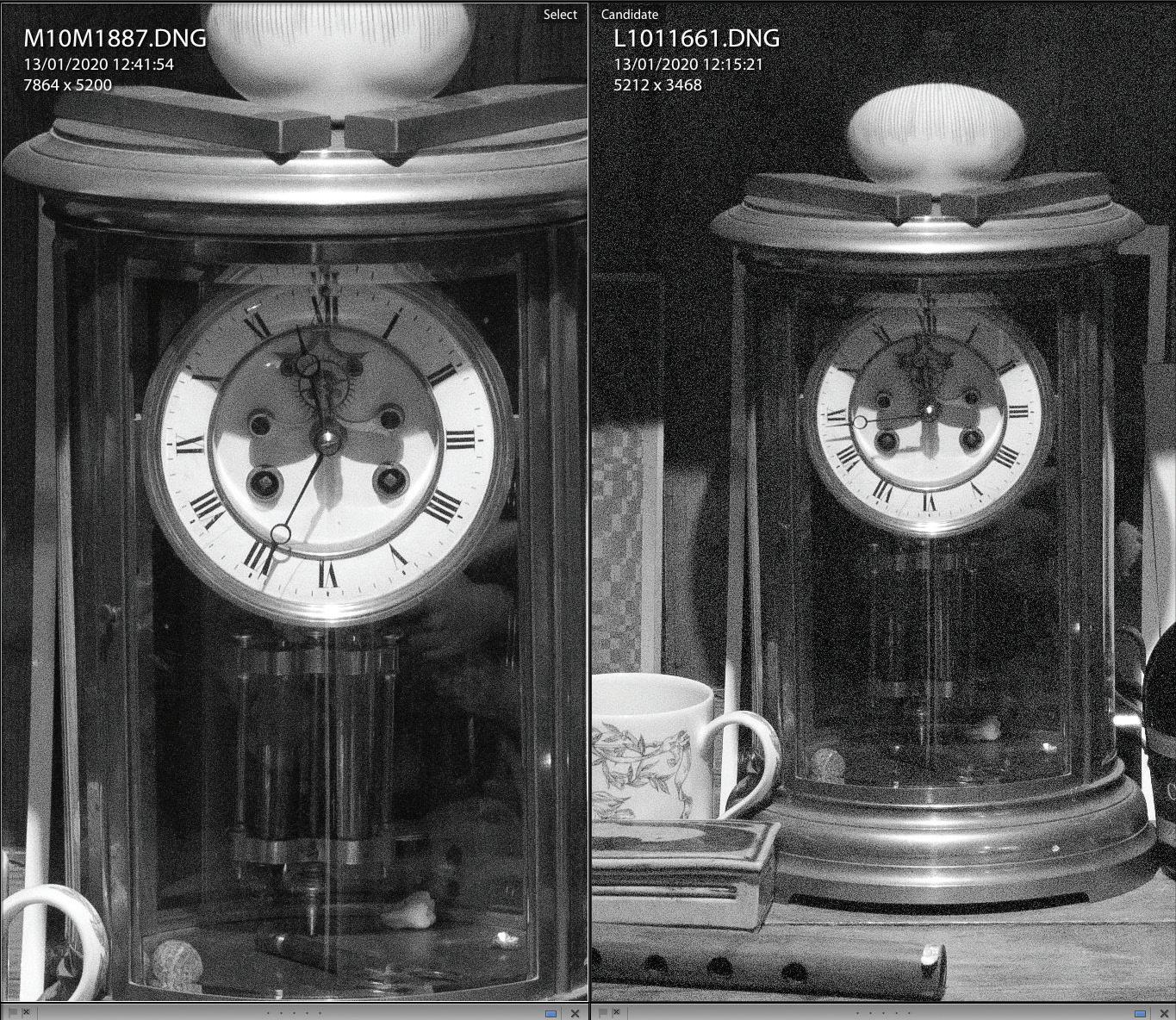
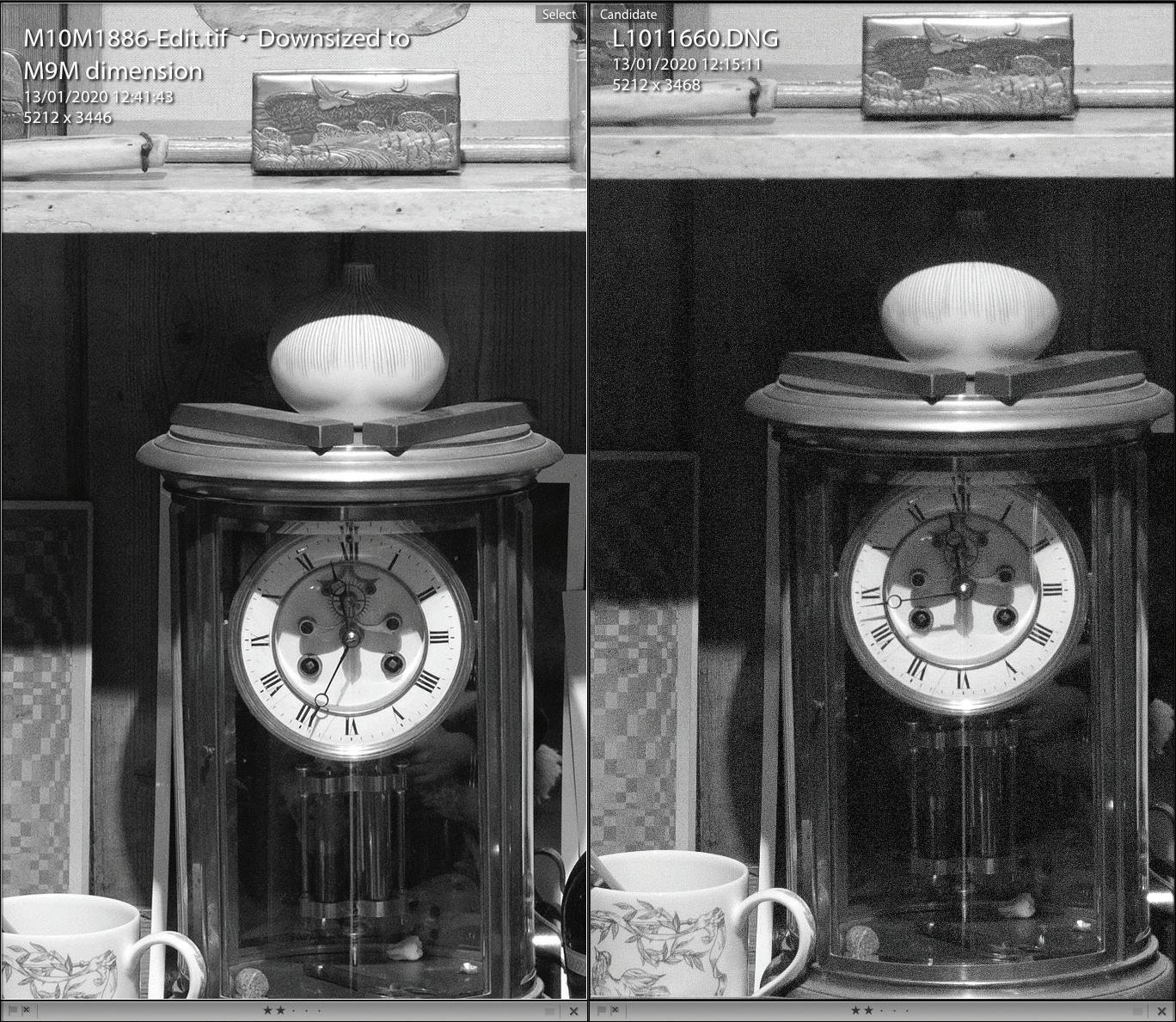
COMPARISON WITH THE ORIGINAL M9 MONOCHROM (FOLLOWING PAGE) Unfortunately I don’t own a Leica M Monochrom (Typ 246), but I do have my M9 Monochrom with the CCD sensor, and I thought it might be interesting to do some comparisons between the original Monochrom (from 2012) and this new version.
The first thing is that it’s obvious how much has happened since 2012. Functionally and operationally (speed, shutter noise, menus etc.) so much has changed since then, and the new camera seems sleek and fast in comparison.
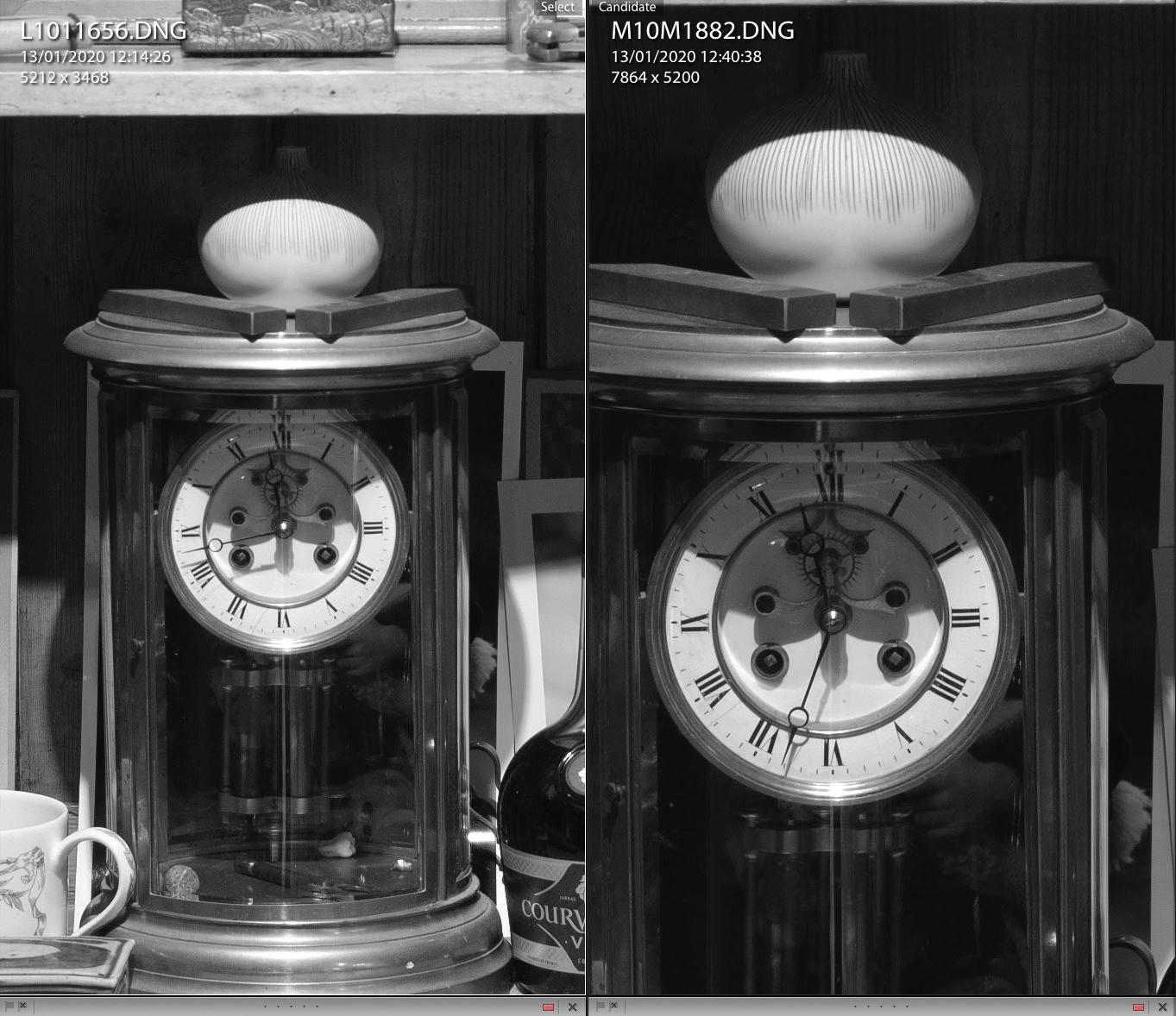
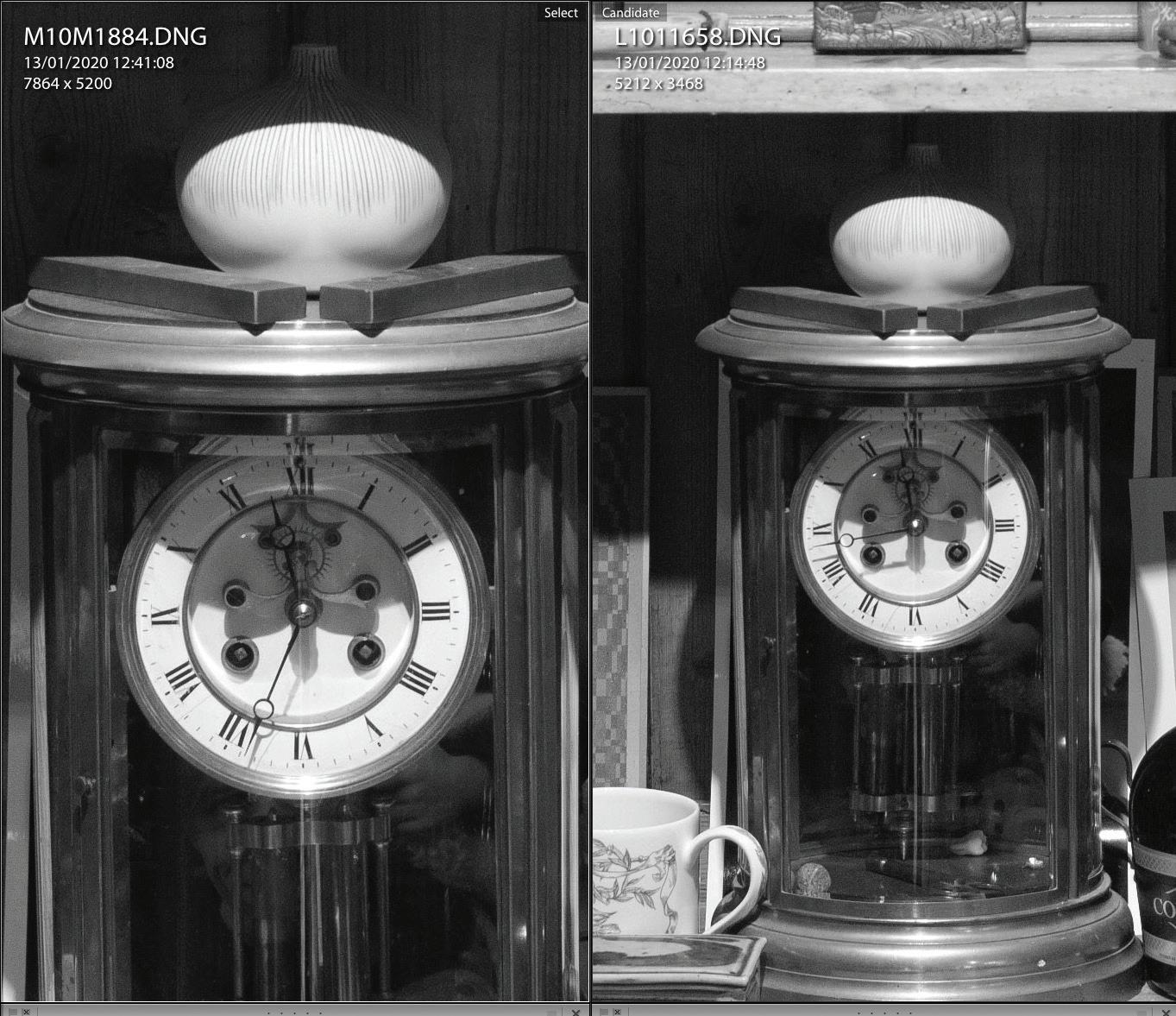
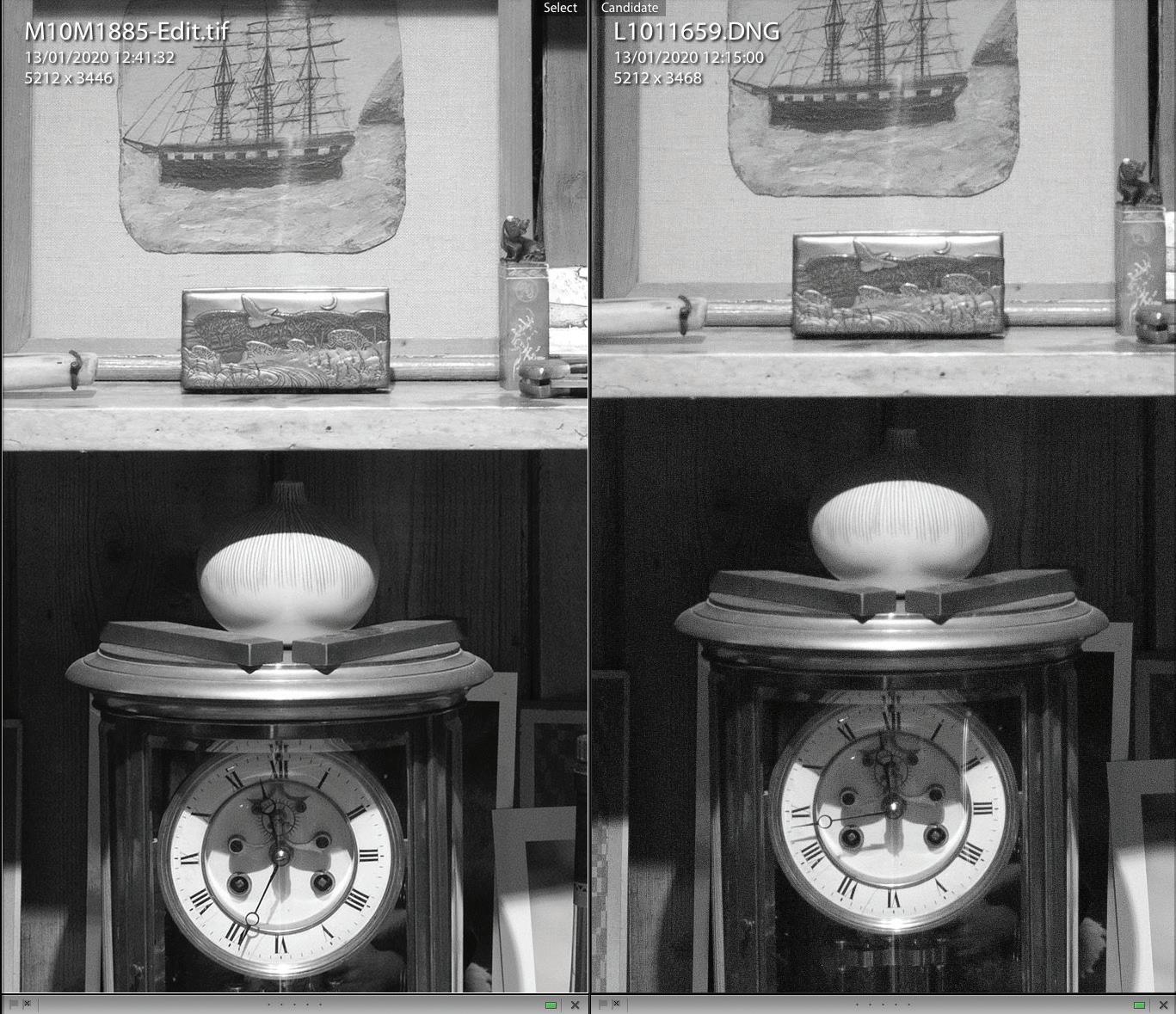
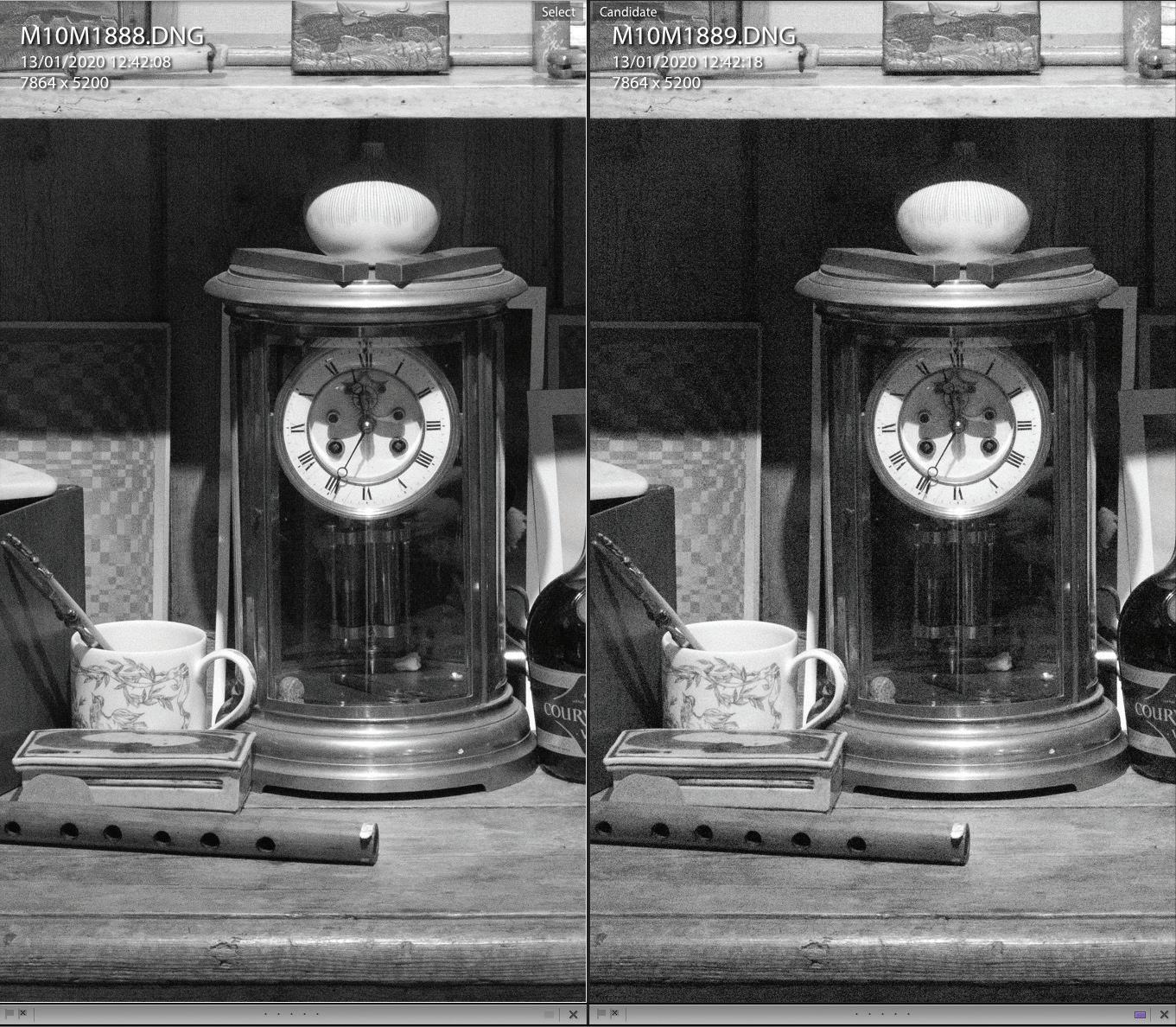
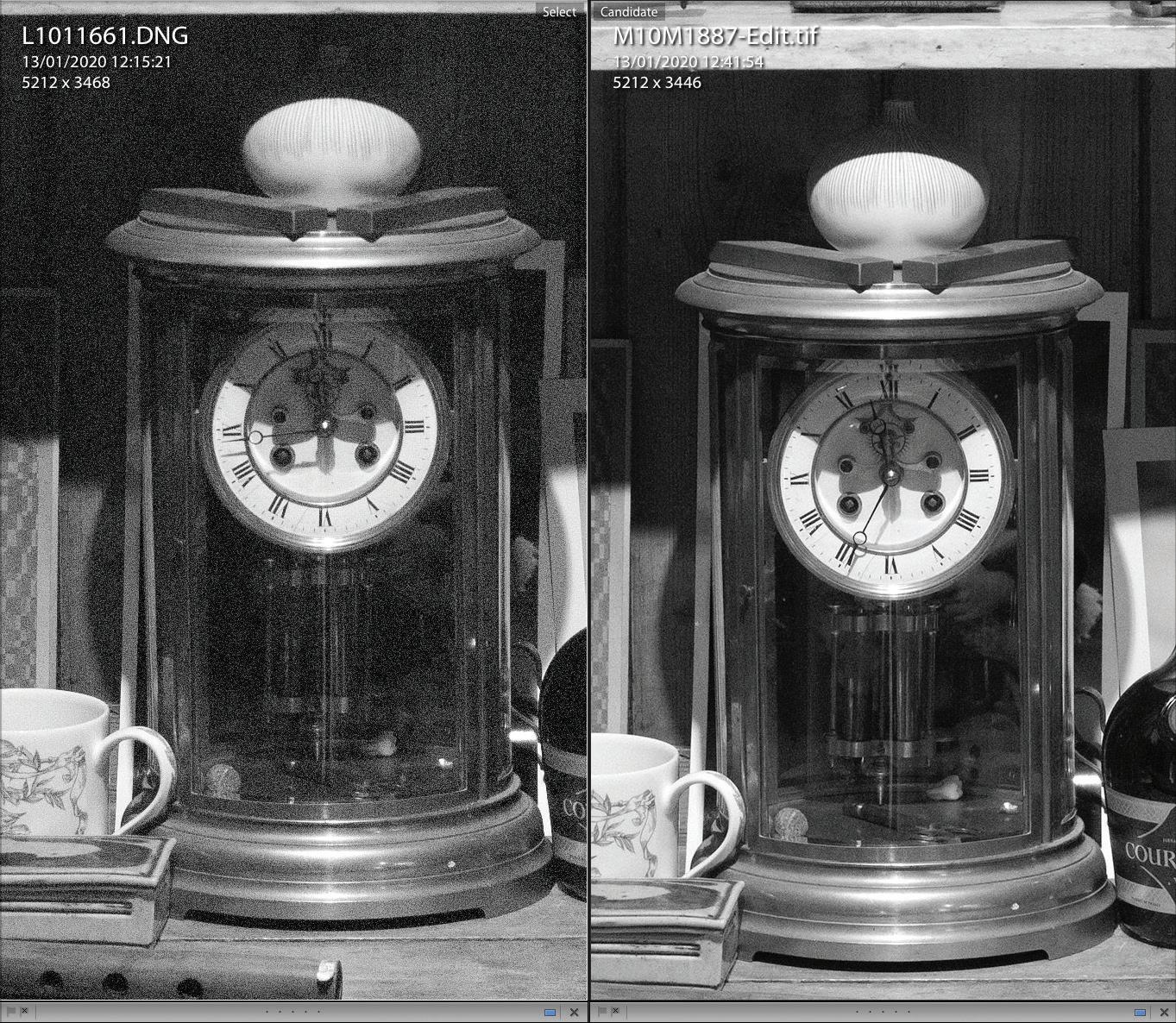
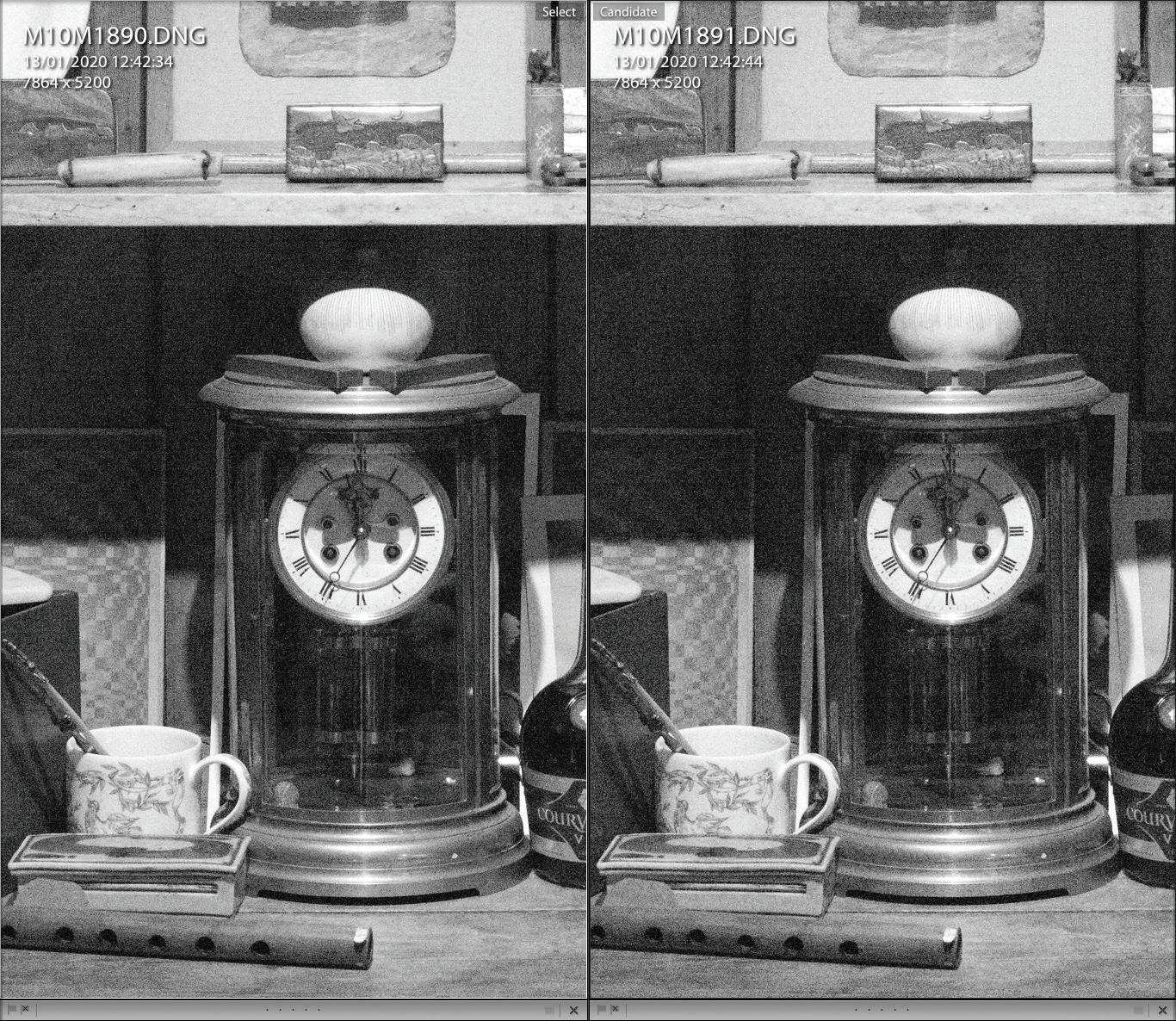
But I thought it would be interesting to do an ISO comparison between the cameras from 160 ISO up to 10,000 ISO (and beyond for the M10M) . So I searched everywhere and finally found my trusty tripod at the bottom of a cupboard. I fixed it up in front of our kitchen dresser and took a series of pictures with the 35mm Summilux-M FLE at f/5.6. The ‘compressed’ pictures show the M10M reduced to the 18 mp resolution of the M9M.
What is immediately clear is that both cameras are actually quite usable right through the ISO range, but there has been a huge boost in image quality over the last 8 years, and the difference between the cameras in terms of noise amounted to about 2 - 3 stops. So that the M9M at 10,000 ISO was marginally better than the M10M at 100,000 ISO but not as good as the M10M at 64,000 ISO.
Dynamic range is quite a different thing, you still have to be a little careful not to overexpose the highlights, but the amount of detail which is hidden away in the shadows in the new camera is nothing less than breathtaking.
None of these images has had any post-processing done (other than reduction in Photoshop where relevant) , they are DNG files straight from the camera and can be downloaded from www.lhsa.org. Sharpening was switched off in Lightroom.
2500 ( M10M files resized for comparison with M9M.)
iso 5000
iso 5000 ( M10M files resized for comparison with M9M.)
iso 10,000
iso 10,000 ( M10M files resized for comparison with M9M.)
M10m iso 10,000 (left) & ISO 40,000 (right)
M10m iso 80,000 (left) & ISO 100,000 (right)
(clockwise from top left)
75mm APO-Summicron-M f/2 ASPH, ISO 3200
75mm APO-Summicron-M f/2 ASPH, ISO 2000
60mm Macro-Elmarit-R f/2.8, ISO 160
75mm APO-Summicron-M f/2 ASPH, ISO 160
50mm Summilux-M f/1.4 ASPH, ISO 320
75mm APO-Summicron-M f/2 ASPH, ISO 64,000
(opposite page, both images)
75mm APO-Summicron-M f/2 ASPH, ISO 160
CONCLUSION The easy part is to say that this camera is a joy to shoot with, a joy to handle, and produces wonderful images quite suitable to make very very big prints. The only possible functional criticism which I can find is that it’s a little slow processing images and writing them to disk (SD Card)
But why a monochrome camera? Sure, it was exciting and interesting when Leica brought out the first Monochrom in 2012, and arguably the resolution benefits were bigger then, when the M9 sensor was just 18 Mp
These days converting from colour to black and white in post processing is much easier; it allows you to change the conversion on different colour channels and the higher resolution of modern sensors surely makes the increase of resolution of the monochrome sensor largely academic.
But shooting with a black and white camera imposes a discipline on the photographer which can be really valuable: It really makes you think about the structure of the image and the composition whereas colour encourages a ‘think about it later’ ethos.
And then there is Leica. Whilst other manufacturers chase each others' technological tails and moan about falling camera sales, Leica has the courage to produce excitingly different cameras, free of the function fetish of their competitors and still brave enough to produce something which really is exciting. I’m absolutely convinced by this camera and it’s been a real pleasure to have it and shoot with it for the last four months.
"...SHOOTING WITH A BLACK & WHITE CAMERA IMPOSES A DISCIPLINE ON THE PHOTOGRAPHER...IT REALLY MAKES YOU THINK ABOUT THE STRUCTURE OF THE IMAGE AND THE COMPOSITION..."
SPAIN
FLAMENCO, TAPAS & A MUSICAL JOURNEY
by RICHARD REJINO
When Eliana, a young flamenco dancer from Madrid, stepped out from behind a curtain into the red-hot glow of the stage, little did I know how much she would profoundly affect me.
My wife, Mona, and I were seated in a small underground cave waiting to experience our first live flamenco performance. From a tiny stage, four musicians filled the space with highly melismatic singing, rhythmic clapping patterns, and the sound of flamenco guitar. The simplicity of the setting was in stark contrast to the complex ensemble of these accomplished musicians. Moments later, Eliana appeared, her face twisted in intensity, and began a slow, seductive dance. She glided across the stage, her chest and hips pulling her in a circle. Her hands floated above her head in fluid movements. Slowly, she worked herself into a frenzy until the sudden explosion of rhythmic stomping jolted my core. Her baile (dance) was at once passionate, graceful, and violent. The musicians behind her wailed and clapped and strummed as if to stir her even more. That night I experienced something intensely raw and beautiful. It was only the first of many incredible experiences during my trip to Spain the summer of 2019.
Spain has always been on our bucket list, and when our long-time friends suggested we travel there together, we jumped at the chance. My connection to Spain is rooted in an ancestral and musical heritage. A genetic test that I took recently revealed that 20% of my DNA could be traced to Spain and Portugal. As we began to map out our journey, I realized that our itinerary had been unknowingly predestined years ago when I was an undergraduate music major in college. My piano professor suggested that I listen to the music of Spanish composers Enrique Granados and Isaac Albeniz to inspire me. Since then, my musical life has never been the same and I have learned several of their pieces.
So, I thought, what better way to explore Spain than through a musical journey of Andalusia, the region that inspired so much of the music I have loved, learned, and played over the years?
We scheduled our trip for the latter half of June. I packed my journals, my favorite pens, and my Leica CL camera with three lenses: the 18mm f/2.8; the 18-56mm f/3.55.6; and the 60mm f/2.0 lens (on loan from Leica USA) . As a relative newcomer to Leica and the CL system, I loved its unassuming size and spectacularly sharp lenses. For me, the CL is the perfect travel camera. It fits in flawlessly with my vacation philosophy, which is a mix of journalism with landscape and street photography.
Our flight took us from Dallas to Madrid where we stayed in the Puerta del Sol section of the city. It is near several must-see sites that we took in over the two days we were there, including the cathedral, the Prado Museum, and the Palacio Real de Madrid . Our musical journey began with a visit to the Prado, home to the largest collection of paintings by the 19 th century painter, Francisco Goya. His paintings inspired Enrique Granados to compose his masterpiece, Goyescas , a suite of six virtuosic piano pieces he later turned into an opera, in particular La Maja Vestida (the dressed maja), La Maja Desnuda (the nude maja), and El Pelele (the straw man). I was mesmerized by the vibrant colors and uncluttered structure. They reminded me of the most essential elements of photography: composition, lighting, focusing on a central point of interest, and simple backgrounds.
After our first taste of Spain and a night of unforgettable flamenco in Madrid, we took a train to Toledo, a small hill town an hour south. Our arrival there unexpectedly coincided with the feast day of Corpus Christi, an important Catholic tradition for people of Spain marked by a long procession of priests, nuns, community leaders, and others. It is tradition to carpet the procession route in some kind of greenery, in this case, rosemary. The smell of it filled the air and the locals held sprigs of it in their hands as they lined the narrow streets.
We visited the Catedral Primada Santa María de Toledo , a perfect example of how architecture reflects the very essence of Spain: the historic and current blend of Moorish, Muslim and Christian beliefs and culture. The cathedral was originally a mosque and took 250 years to build. Its altar is one of the most ornate I’ve seen and the choir loft one of the largest. The sacristy housed its own mini art museum. At its center is El Greco’s famous painting The Disrobing of Jesus, and there were Goyas, Rembrandts and others on display. Everything about the cathedral speaks to symbolism, wealth and power, adoration, and reverence. Of course, photographing the cathedral presented
certain lighting challenges and the CL performed beautifully, especially when I used the exposure compensation dial and real time viewing to balance the exposure.
The next day we traveled by train to Seville, the capital of Andalusia. We rented an apartment on the banks of the Quadaquivier River in Triana, which is the gypsy quarter of the city and known as the soul of Seville. The enchanting view from our window looked out across the river to the city and the glorious Cathedral of Seville.
Triana held a special interest for me because it inspired the famous piano showpiece, Triana, composed by Isaac Albeniz.
As we walked the streets, I listened to the music through my earphones and strolled down Calle de San Jacinto with my Leica in hand. I saw young and old out for a stroll, old men sitting on a bench talking, clusters of women out shopping.
One of the highlights was the Triana market. It had everything from fresh fish and meats to cheeses, sausages, and produce. It was a veritable mecca of home grown and locally supported foods and businesses. An experience not to be missed.
I had always heard that the night life in Spain begins late, around 10:30 or 11:00 p.m. It’s true. The second night in Triana, we set out after a delicious dinner and the streets were bustling with activity. I could feel the energy pulsing beneath my feet. We walked past the Triana Bridge, its reflection sparkled in the waters of the river, and worked our way into the heart of Triana. We went by the restaurant Las Golondrinas (the Swallows), where we'd had delicious tapas earlier in the day. Our smiling waiter, Juan Miguel, recognized us from before and brought us a small glass of sherry, which we sipped as we watched the locals walk past us hand in hand and arm in arm. Near midnight, we found a long line of people waiting to get into a bar, so we decided to wait with them, not knowing what we would see. I struck up a conversation with a trio of friends who'd traveled from Valencia and a couple on holiday from Italy. The conversations were as delicious as the sound of different languages that floated around us.
Eventually, the bar opened, and we took our seats. A guitarist, two singers, and a percussionist entertained us with folk songs and popular music. As the night went on, locals filled the bar until it was standing room only. I was dumbfounded to see how everyone knew the words to every song, and they sang like a chorus at the top of their lungs, swaying and smiling and laughing with the music.
Food, Tapas & More The rest of our journey to Andalusia took us across the southern edge of Spain along the coast and inland. We started in Madrid and Toledo, and after Seville we drove to Malaga and Granada, with stops in Cadiz, Nerja, and Ronda in between.
For us, the experience of culture and cuisine is as much a part of travel as being in a new place. One of the most universally known and popular Spanish foods are tapas , which are small snack-sized portions of food that can be enjoyed between meals or combined to make an entire meal. It isn’t uncommon for a restaurant waiter to
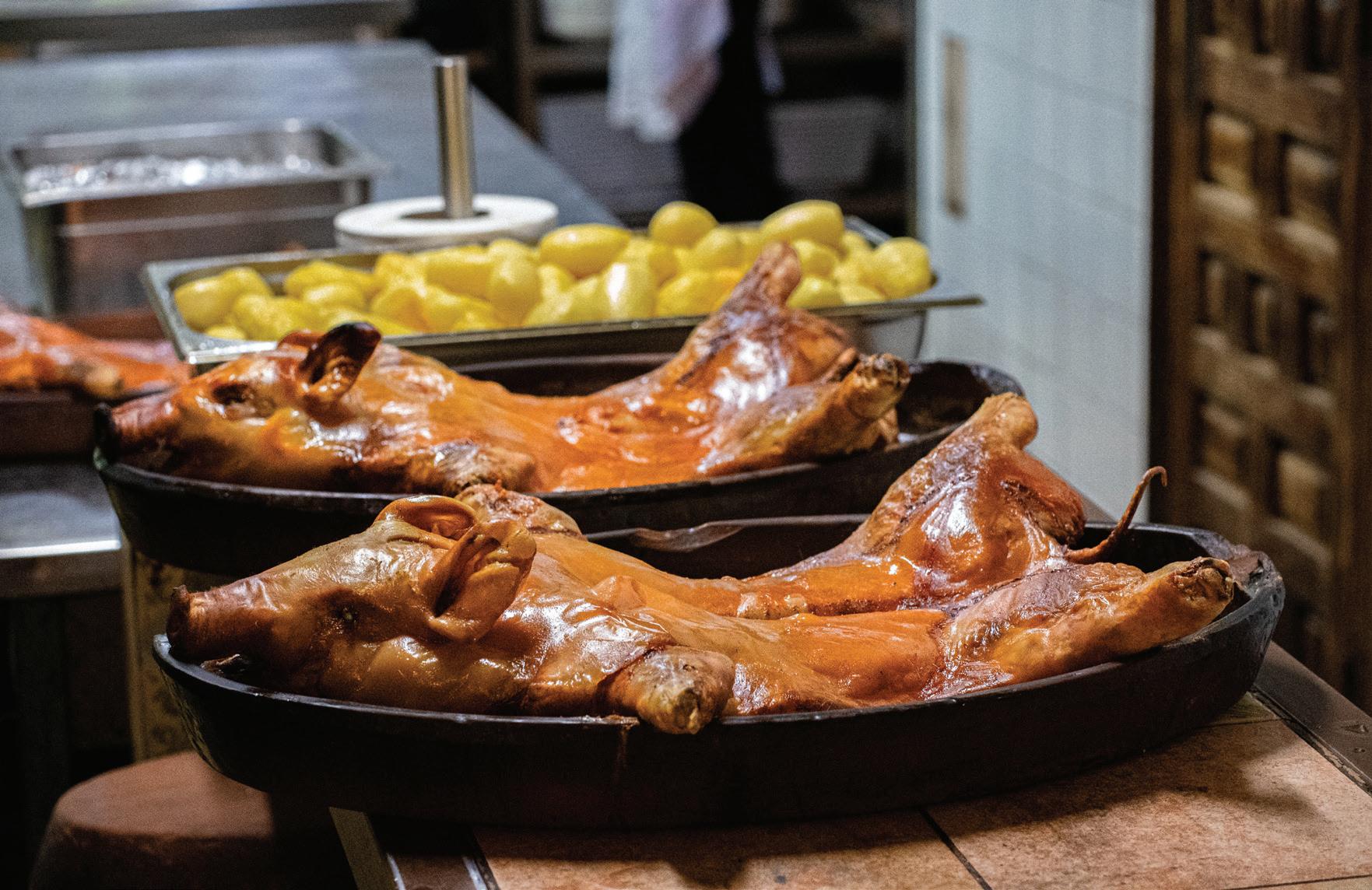
say, “May I order for you?” The first time this happened, we looked at each other in disbelief and decided to take chance and said yes. What came next were plates of sumptuous bites of beef, swordfish, salmon, mushrooms, pork and cheeses. Our waiter kept bringing us more and more until we finally had to say “enough.”
One can’t go to Spain without tasting jamón , which is a dry cured pork similar to Italian prosciutto. It is sold in almost every grocery store and in specialty shops that are everywhere. Along with paella and gazpacho, jamón is most associated as being of Spanish cuisine. The nuances in taste and quality make it a delicacy and quite pricey. It is typically served in paper thin slices and is a real treat to have with cheese and wine. The first time I ordered it, it was a little unnerving to watch the server slice the meat right off the pork leg with the hoof fully intact, but it was simply delicious.
In Malaga, a coastal town, we had a fish stew, called a zarzuela, and a seafood paella at a little restaurant called Piyayo . These dishes were out-of-this-world delicious and there was a lot of moaning around the table as we savored the blend of spices and smells. Standing by were a couple of pitchers of sangria, our go-to beverage. In Spain, an excellent bottle of wine can be had for as little as three or four euros. And it flowed everywhere. It was almost as cheap as the cost of bottled water in a restaurant, so of course we had sangria by the pitcher with most meals and it tended to replace water as our main source of hydration.
Our road trips to Malaga and Granada were interjected with two stops along the way. The first was Ronda, a delightful town full of character and charm. It sits atop the Tajo ravine that runs through the middle and is over 360 feet deep. The bridge that crosses over the ravine showcases magnificent views of the valley. I put on my earphones and listened to Rondeña by Albeniz and got a double dose of visual and aural stimulation that enhanced everything around me. Ronda is also the birthplace of the bullfight. The stadium, where some of the most famous toreadors in history created their legends, is near the center of town. A magnificent bronze statue of a bull stands at the entrance, symbolizing a part of Spain’s culture that goes back for hundreds of years. The second stop was Nerja, a small town parked at the edge of the Mediterranean and known for its main attraction, the Balcon de Europa (The Balcony of Europe). It offered spectacular panoramic views of the Mediterranean and the rocks and beaches below. The water sparkled and was so clear that we could see the ocean floor.
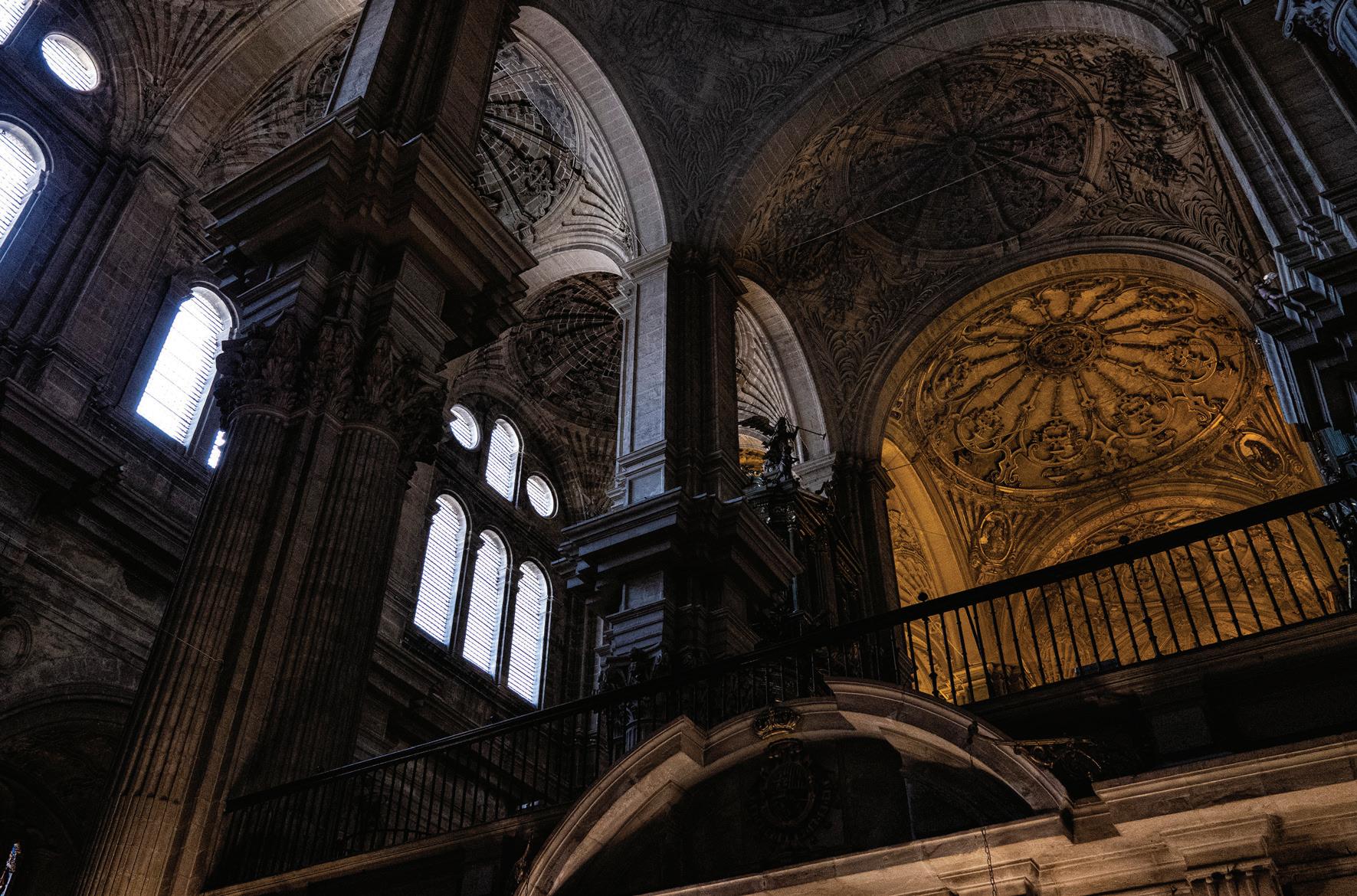
One of the main attractions in every Spanish city is their cathedral. It seemed there are as many cathedrals in Spain as there are Starbucks! One of the most beautiful we visited was the Cathedral de Granad a. Unlike other cathedrals that are dimly lit, this one had an abundance of natural light. Its massive white, wooden columns rose up to support an ornate, plaster ceiling. In the middle were two mighty organs standing across from each other.
The church sacristy is always an interesting place to see. It is the place where the priest’s garments are kept and where linens, altar cloths and other equipment used in the Mass are stored. In the steps leading up to it, the marble checkerboard tiles were worn and shiny. I thought of the centuries of priests who said prayers over each of the garments they wore and imagined them emerging from the sacristy, into the ambulatory, and up to the altar to begin the Masses that were said century after century. Then I looked up toward the glorious ceiling and was awed by the fact that every inch of the cathedral had been touched by human hands: artisans, artists, builders, architects, parishioners, people who were no different than us. People who worked hard every day and built the cathedral, worshiped there, and saw it become what it is today.
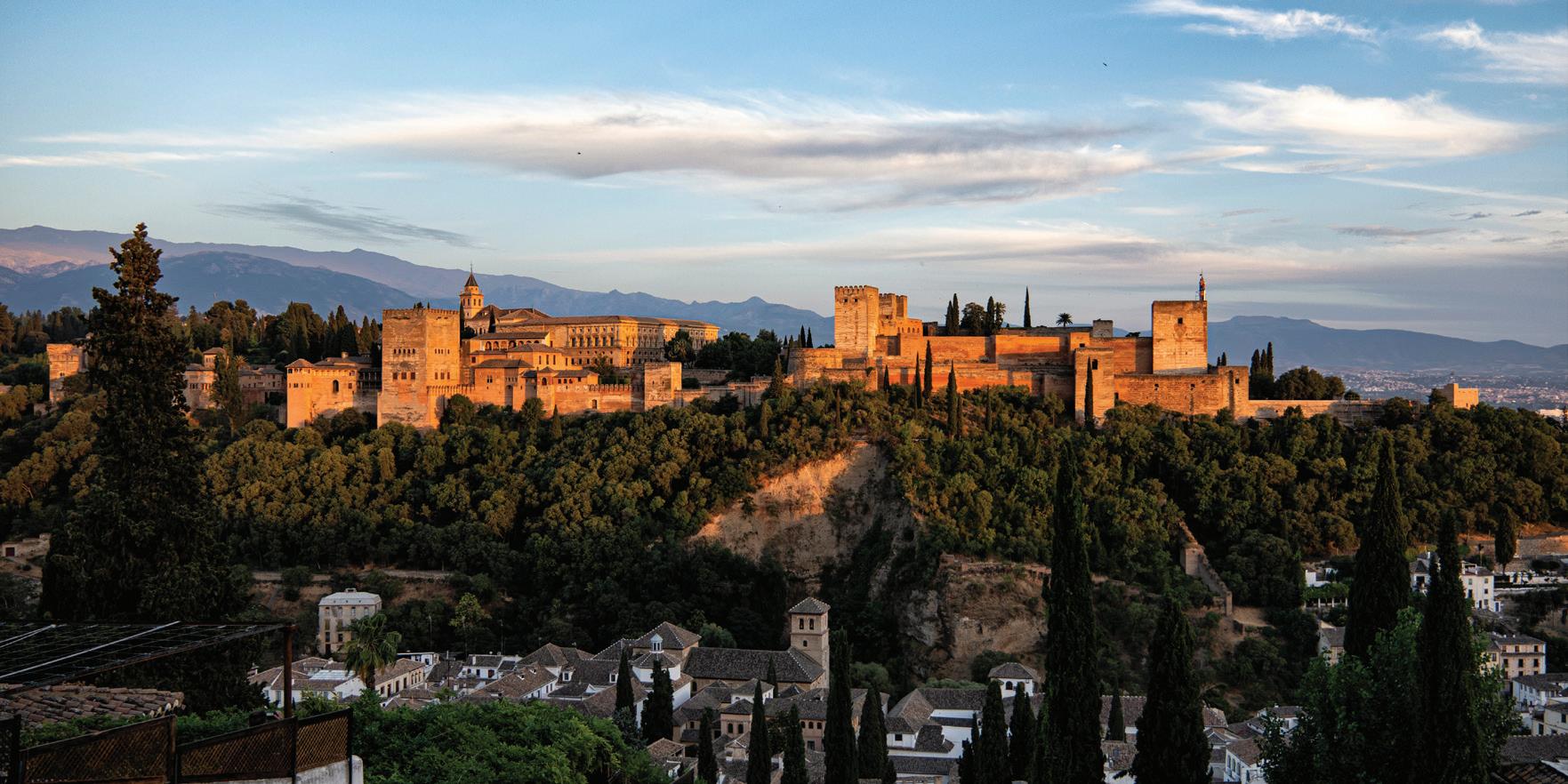
Music I think it is nearly impossible to overstate the impact from seeing the towns and areas of Spain that inspired the music to which I am deeply connected. To walk the narrow winding streets of Albaicin, the medieval district of Granada, or to amble along the port in Malaga and smell the ocean, or to stroll beside the river in Triana, all the while listening to the music they inspired, was an intensely emotional experience.
It is one thing to play this music, but to see and smell the places that inspired them, well, imagine seeing the magnificence of the Grand Canyon or the Pietà in the Vatican for the first time and you can begin to understand the effect these experiences can have. It changes everything, and for me it was like hearing the music for the first time all over again.
We spent our last night in Spain at our third and final flamenco performance at the Arte de Flamenco in Seville. It was a perfect way to bookend our trip. Flamenco dancer Lola Jaramillo emerged on stage with castanets rattling in her hands like a coiled snake. She floated across the floor one minute and suddenly, broke into a zapateado (shoe dance) the next. Her arched back and swollen chest formed a regal “S” curve from her neck to her hips, accenting the sensual nature and physical strength of her body.
The dances with her partner, Francisco Mesa, were equally tantalizing. They moved together in unison and individually, and for all of the eroticism of flamenco, they never touched, but were entirely in touch with each other. In between, they paced back and forth on stage like animals waiting to break out of their confines. Every part of them, and us by extension, was immersed in the frenzied energy that climaxed in the quiet and thunderous roar of flamenco.
The next day on the train back to Madrid and the airport, I watched the arid Spanish landscape filled with olive tree groves, hills and fields of golden wheat, and distant mountains speed by like pages from a book. I reminisced about the two glorious weeks we had in Spain and felt grateful for the opportunity to experience a stronger connection to my ancestral and musical homeland. To say that it was an unforgettable experience is cliché, but still undeniably true. I know that we will return to Spain in the future, and in the meantime, the living memories I have of the cities and towns we visited will be enhanced through the music and images they brought to life.
C U B A IN LIVING COLOR
by RUTH ORATZ MD & ALBERT B. KNAPP MD
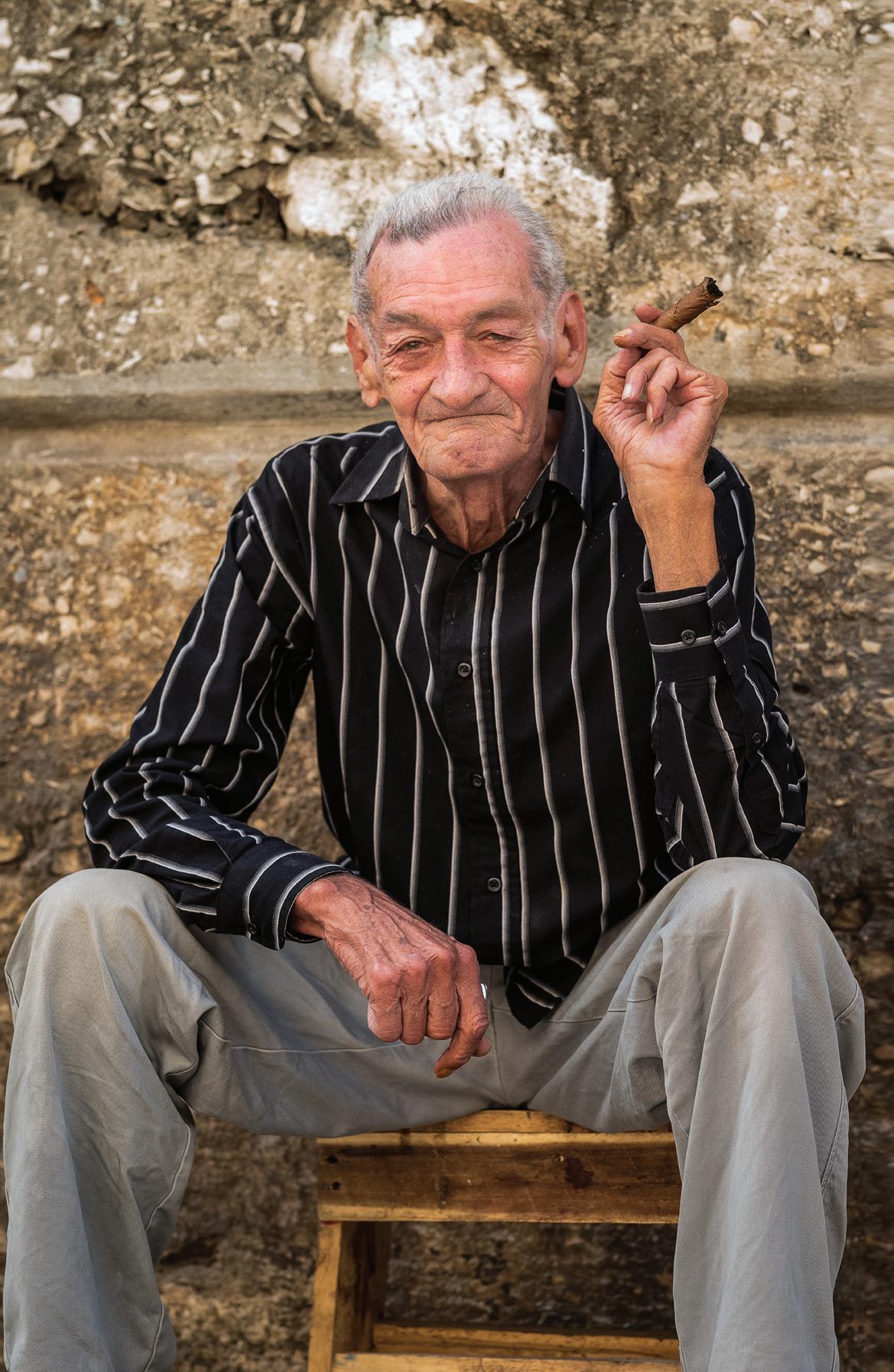
Cigar
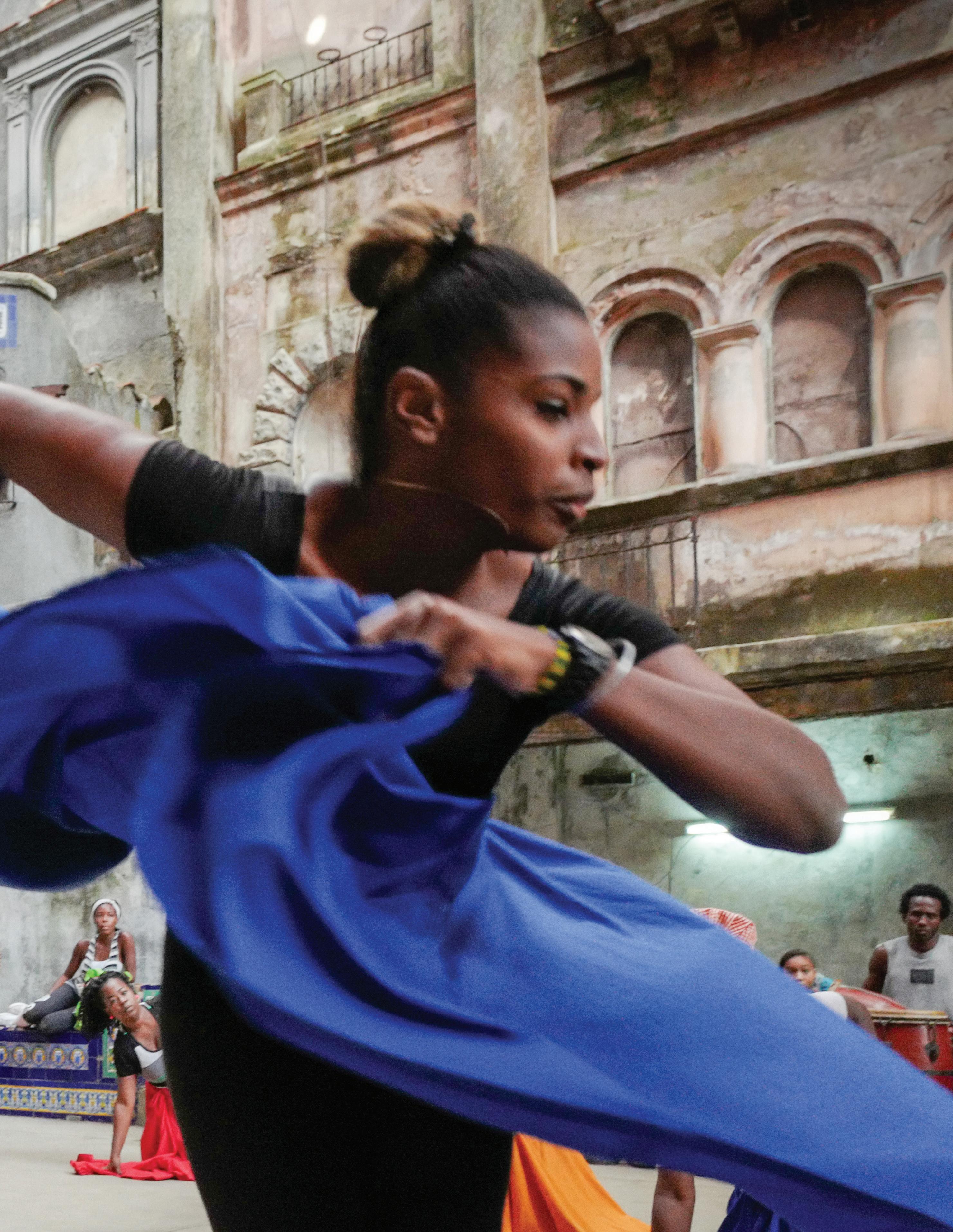
Leica S (007) Summicron-S 100mm f/2 ASPH at f/4.8, 1/250 sec, ISO 800. (right) Banana Vendor. Leica S (007) Summicron-S 100mm f/2 ASPH at f/2, 1/125 sec, ISO 1600. (previous page) Blue Skirt Dancer. Lecia Q (116) with Summilux 28mm f/1.7 ASPH at f/4, 1/250 sec, ISO 3200.
is the jewel of the Caribbean, the largest island in the Sea. First inhabited by tribes of indigenous peoples from the Americas, Cuba was claimed by Christopher Columbus for the Spanish crown in 1492. In the following centuries Spanish colonization brought European tastes and sensibilities to the New World. Thousands of black slaves imported from Africa carried with them and preserved ever since deep roots in
their tribal traditions, beliefs, music, and dance. Immigrants from other European nations and North America contributed to the businesses of sugar, rum and in the 20 th cenutry of entertainment, fashion and the high life. Jews and others from the Ottoman Empire added their own unique customs to the mix. This resulted in the truly colorful conglomeration of peoples, cultures, languages, religious practices, costumes and cuisine that is Cuba today.
(left)
Smoker.
We visited Havana in December 2018 where through personal connections we had the special opportunity to walk the backstreets of the city and also connect with individuals in their homes, places of work and worship and recreation. These photographs go beyond the random street scene or sneaky snap with a long lens and rather reveal more emotive portraits of the people we met, for a moment, an hour, an evening. We were struck by the diversity of character and story, each
individual a rich palimpsest of personal and cultural history, by what distinguished them and what united them. In each there is a clear sense of personal identity and integrity. Pride in accomplishment and effort despite sometimes grueling challenges of low income, inadequate resources, poor infrastructure and political barriers imposed from within and without the national borders.
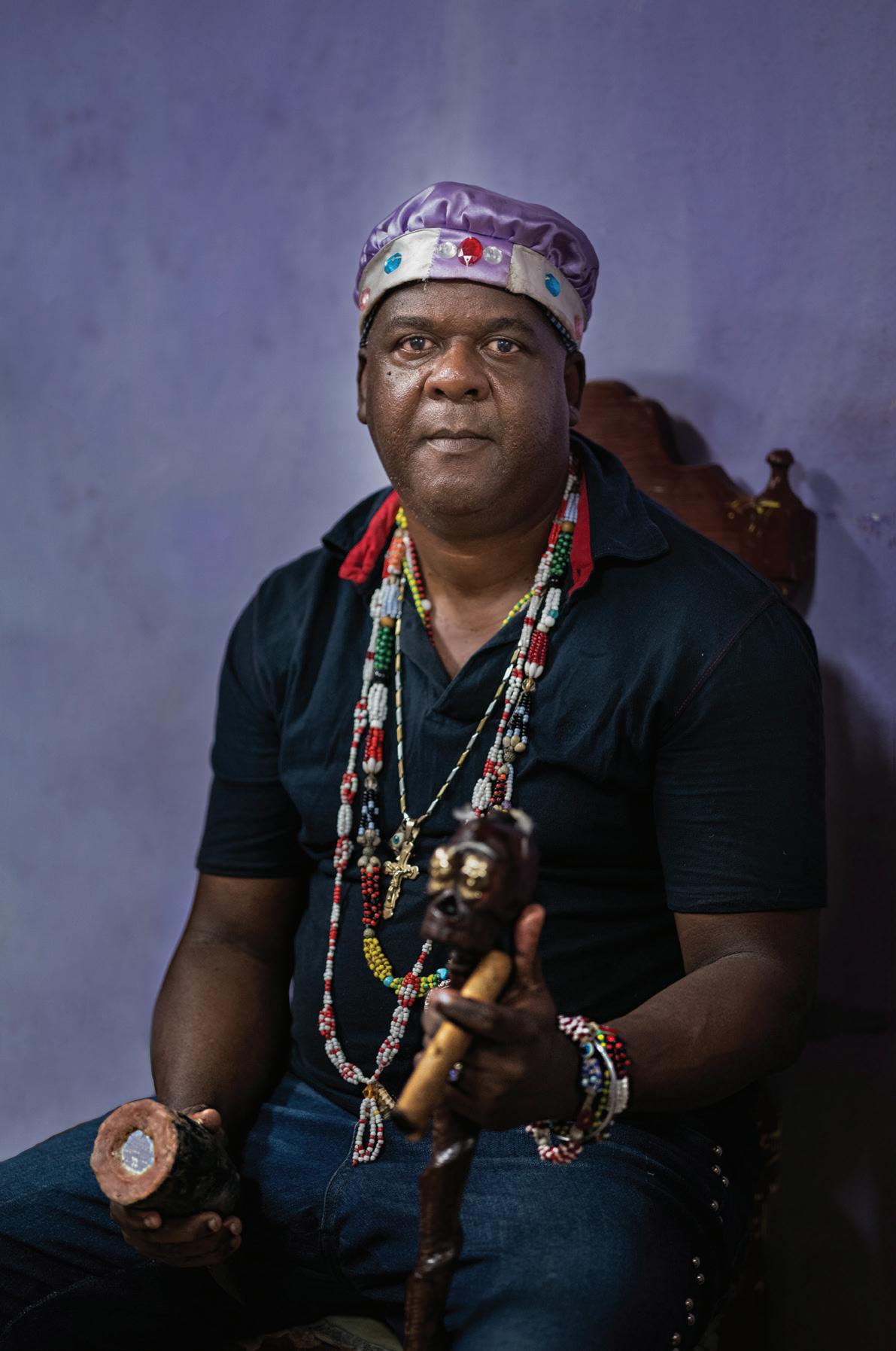
(left) Santeria Priest with Batea Stick. Leica S (007) Summicron-S 100mm f/2 ASPH at f/2, 1/60 sec, ISO 3200. (right) The Boxer at Work. Leica S (007) Summicron-S 100mm f/4 ASPH at f/4, 1/14000 sec, ISO 800.
Ruth speaks enough Spanish for easy conversation. Many Habaneros know some English and Albert’s champion smile and style won over his portrait subjects. In some cases we were accompanied by friends who acted as translators.
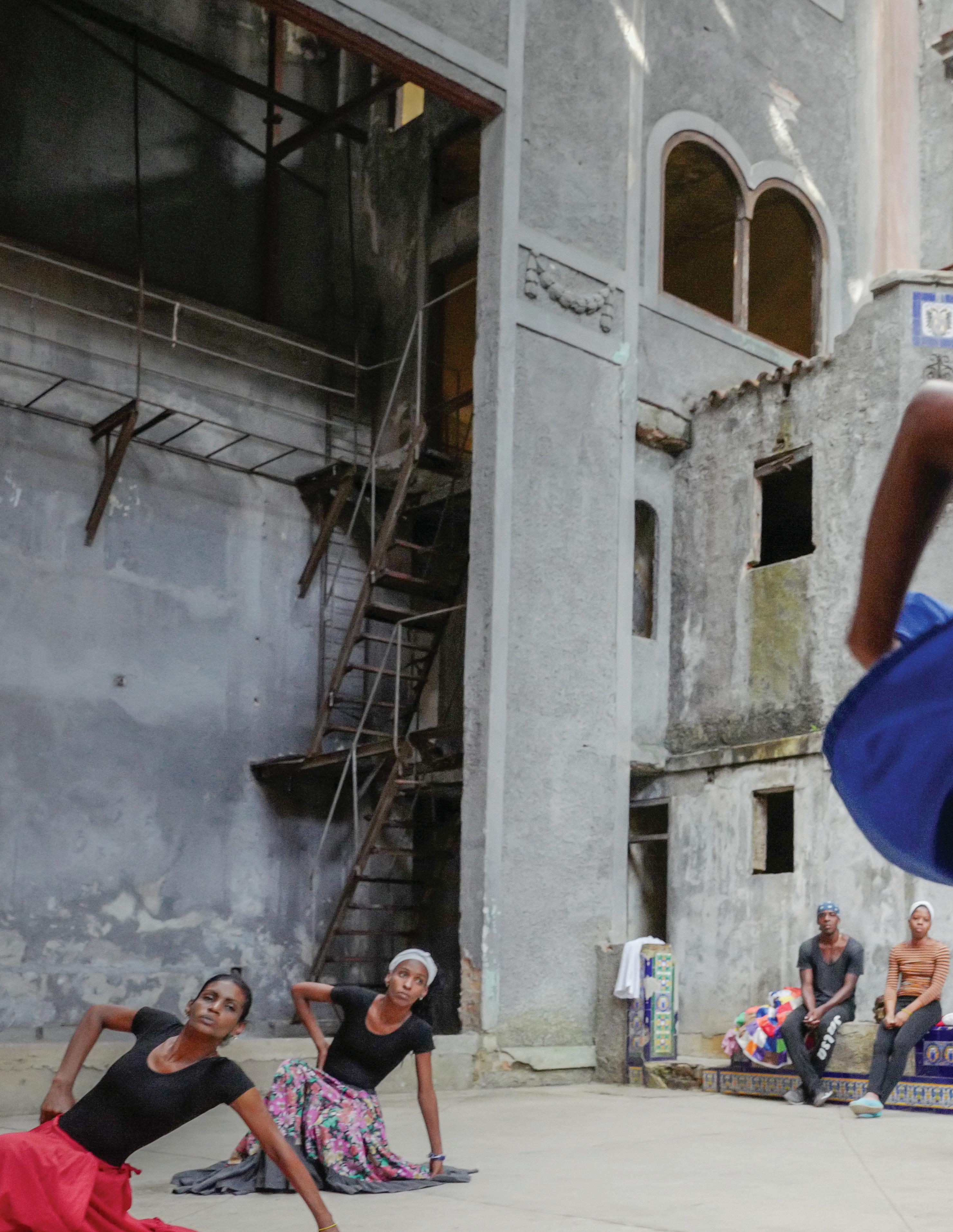
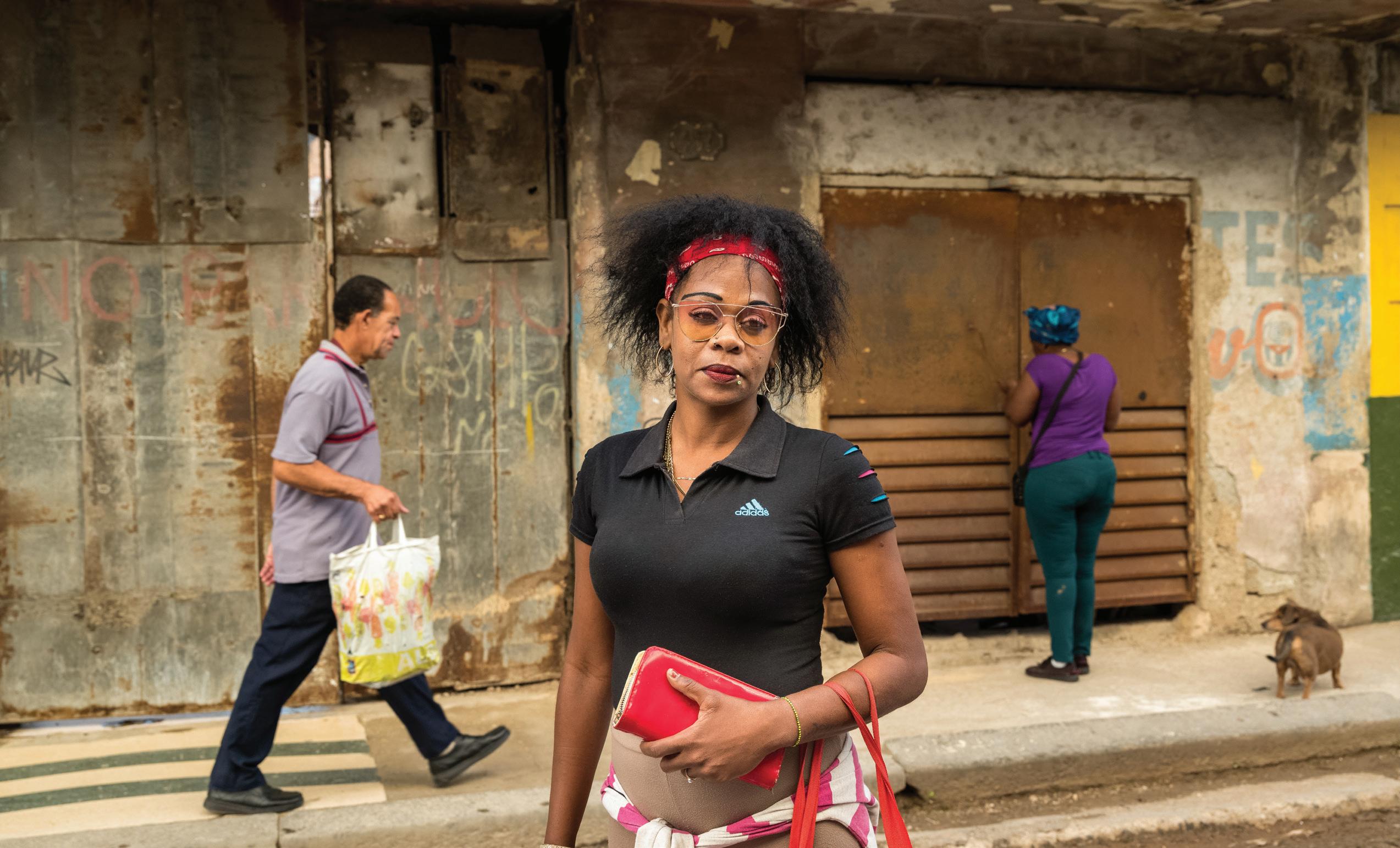
On the streets of old Havana we met a young banana seller trying to make a go at his fruit stand business. Here a passerby poses languidly, cigarette dangling, in front of the closed door to a house in her neighborhood. Once the door opened, we were welcomed in to find an expansive building whose roof had been blown away by a hurricane several years earlier, life inside and out continued. Cubans excel at both dance and sports, marrying fierce athleticism with elegance and grace. At a rehearsal of an Afro-Cuban modern dance company we
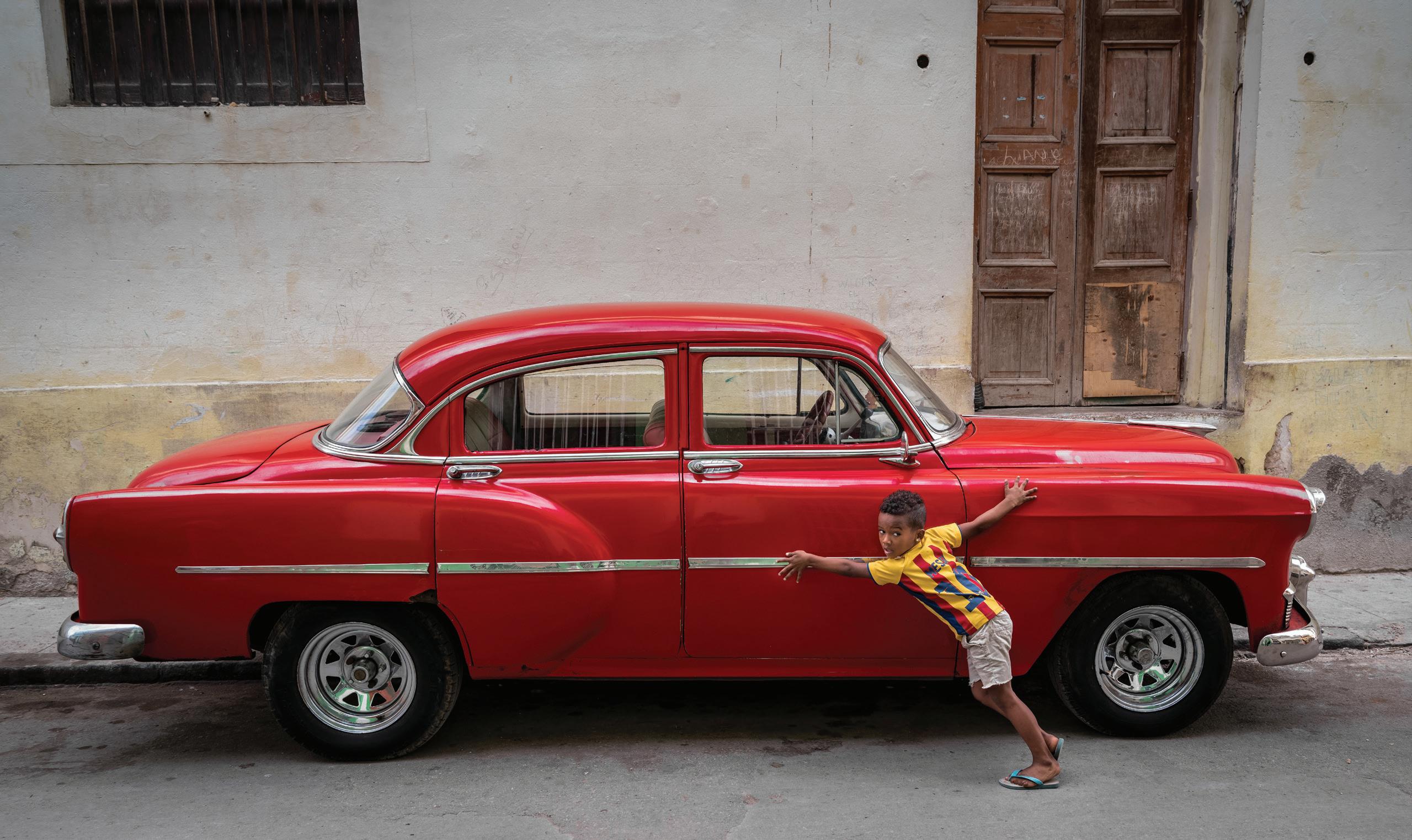
Red Car with Boy. Leica S (007) Vario-Elmar-S 30–90mm f/3.5–5.6 ASPH (30mm) at f/6.8, 1/125 sec, ISO 400.
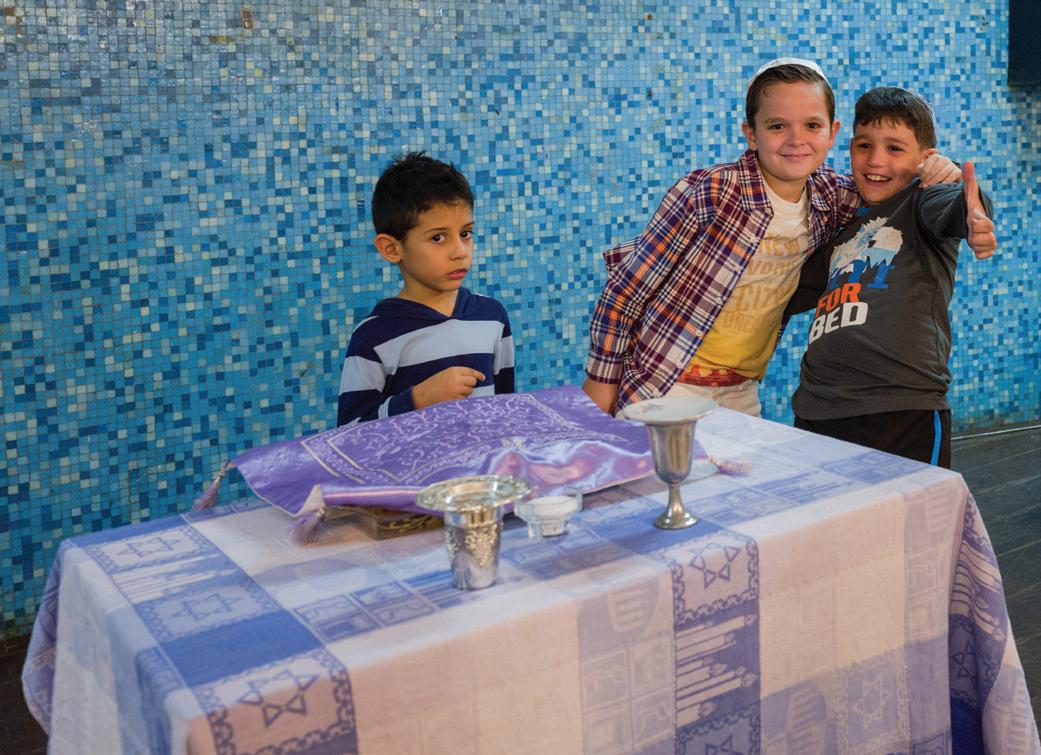
Kids at Jewish Wedding. Lecia Q (116) with Summilux 28mm f/1.7 ASPH at f/4, 1/60 sec,ISO 1600.
felt the beat of the drums and snapped away to the rhythms of the swirling skirts. Boxers working out in a neighborhood gym embodied strength and determination. Here is a gent decidedly enjoying the privilege of a hand-rolled Cuban cigar. This priest of Santeria, a pantheistic spiritual cult that combines beliefs and customs of the Yoruba people with an overlay of Spanish Catholic elements, regaled us with stories of magical deeds and miracle cures. He is known as a healer. In his home he holds his powerful batea stick, and is adorned with multicolored beads signifying the Orishas or Saints with whom he is in contact. The ubiquitous antique cars are most often used as taxis; here one is parked on a backstreet lovingly caressed by a young lad. Havana’s Jewish community, present on the island for over a century, was nearly extinguished
after the 1959 revolution, but is once again flourishing. These three boys are excited to be attending a Jewish wedding celebration – like kids everywhere frolicking before the adults arrive.
Cubans are fundamentally accepting of one another’s complex and mixed pasts, their shared ancestry and comingled communities. We were delighted by the vibrant and vivacious quality of life in the saturated sublime colors of Cuba.
Street Scene. Leica S (007) Vario-Elmar-S 30–90 f/3.5–5.6 ASPH (47mm) at f/6.8, 1/250 sec, ISO 1600.
LEICA BEOON vs. HIGH RESOLUTION SCANNERS A COMPARISON
by ANDREW GODLEWSKI AND BILL ROYCE
This article discusses how the BEOON was used to digitize black and white and color negatives and a mounted color slide, and then compares the resulting digital images with those produced by both a Plustek 7600i and a Nikon 5000 scanner.
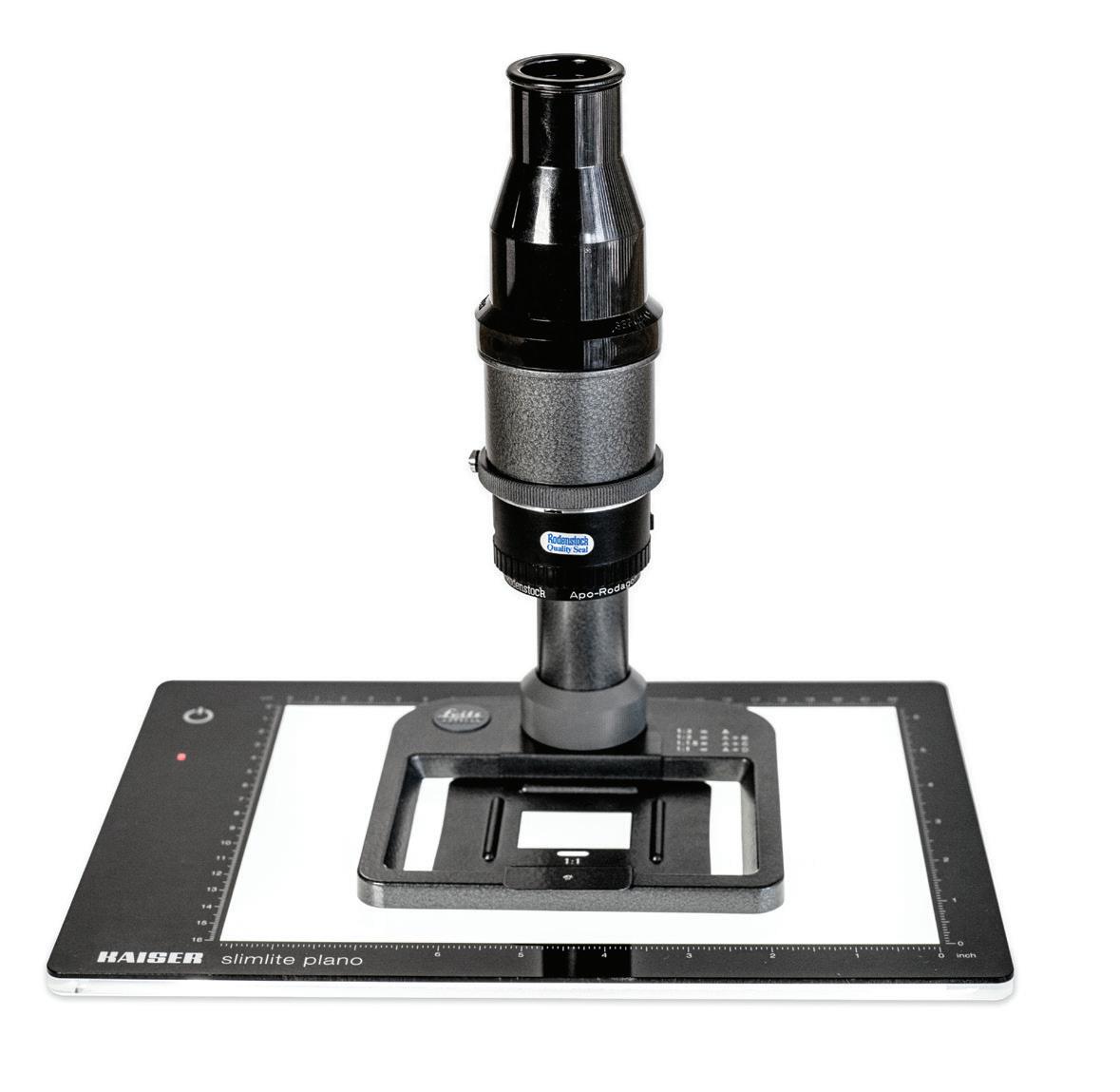
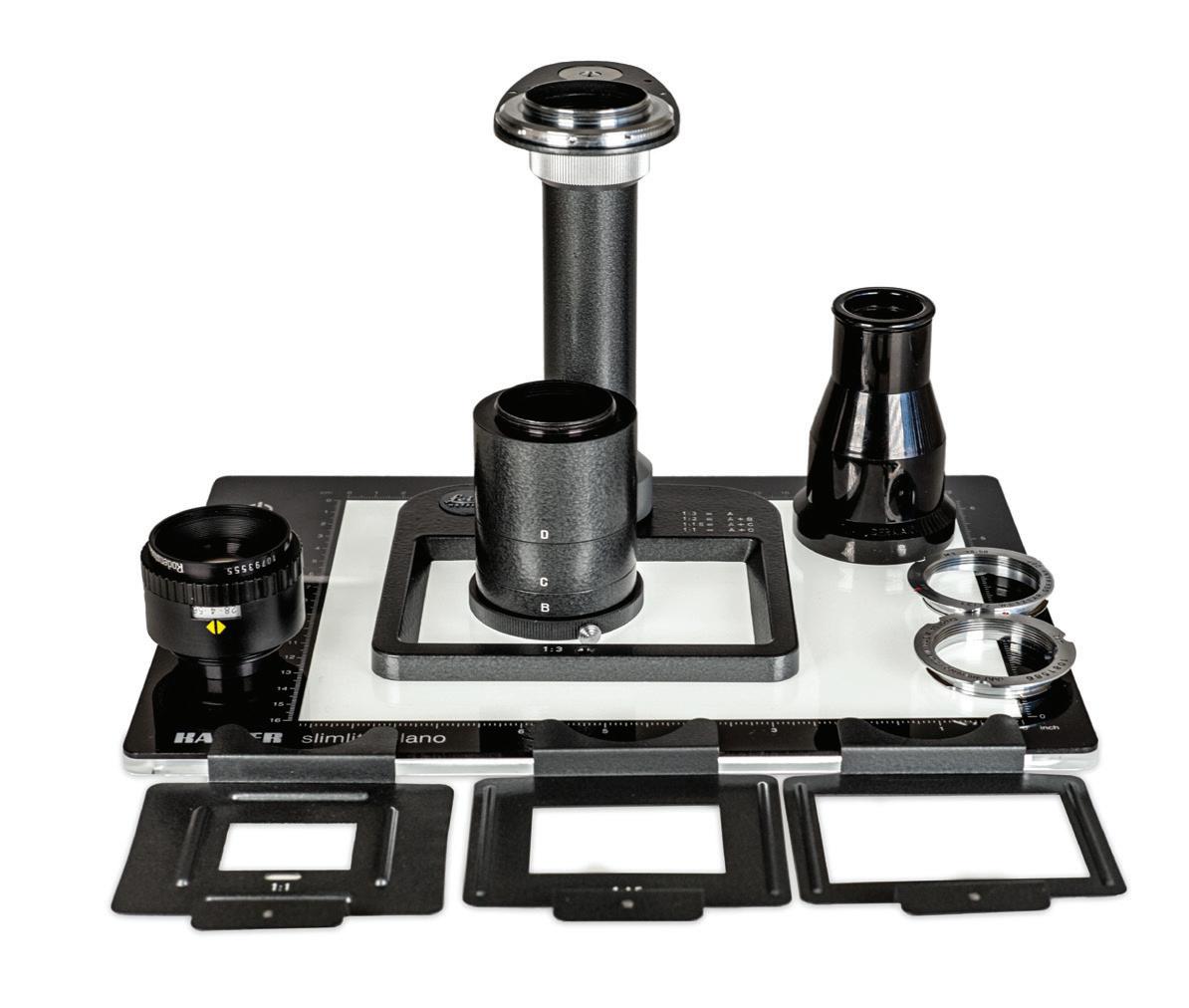
The Leica BEOON was produced until about 1970 for the purpose of copying slide film and other flat objects using a Leica camera body mounted on top. As shown below, the BEOON consists of a copy stand, an extension tube set, lens adapters, a focusing loupe and copy holders in three sizes. For this comparison, a Leica M Typ 240 body coupled with an extension tube and an APO-Rodagon 50mm f/2.8 enlarging lens were used on the BEOON. The TriX and Ektar 100 negative images were taken with an M6TTL .58 and the Kodachrome 64 slide with an M4-P. The light source was a Kaiser Slimlite Plano LED lightbox emitting 5000K color temperature (also shown below).
Both the Plustek 7600i and Nikon scanners were set at 4000 dpi. The resulting digital images are quite comparable in pixel dimensions, adding validity to the comparisons. The slide image pixel dimensions are slightly smaller due to the size of the slide mount (cropped off), as shown in the following table:
Plustek 7600i
The comparisons that follow are shown as both a complete image and an enlargement approximately 650 x 1100 pixels in size. The negatives shot with the BEOON were inverted in Photoshop to make them positive images. The scanners produced positive images. The complete images were adjusted only in brightness, including reducing highlights and increasing shadows as needed for comparison. Note that all three methods of reproduction result in slightly different color casts, which are correctable with editing. Further, for the sake of comparison, no sharpening or noise reduction was used at first, which can improve the images measurably.
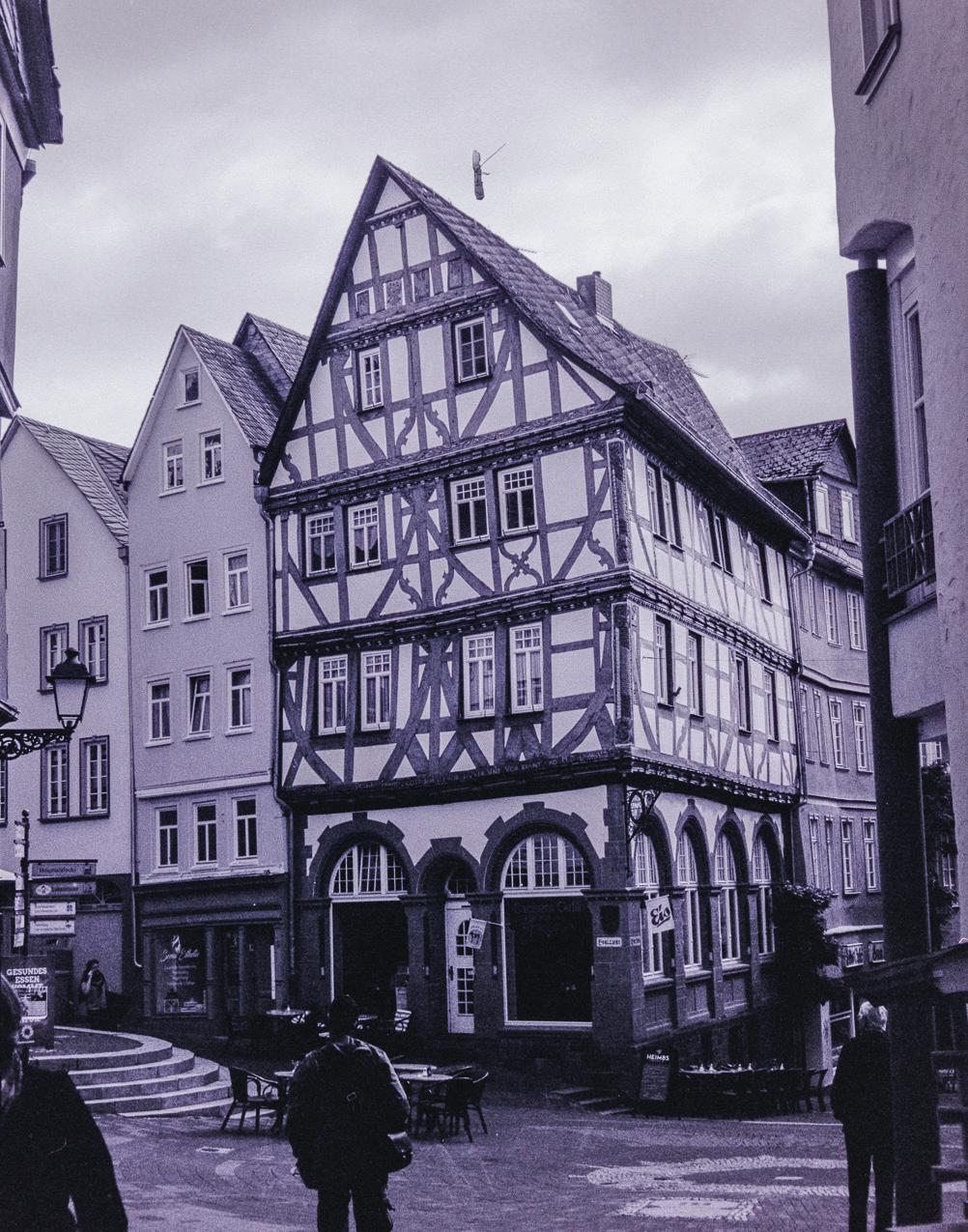
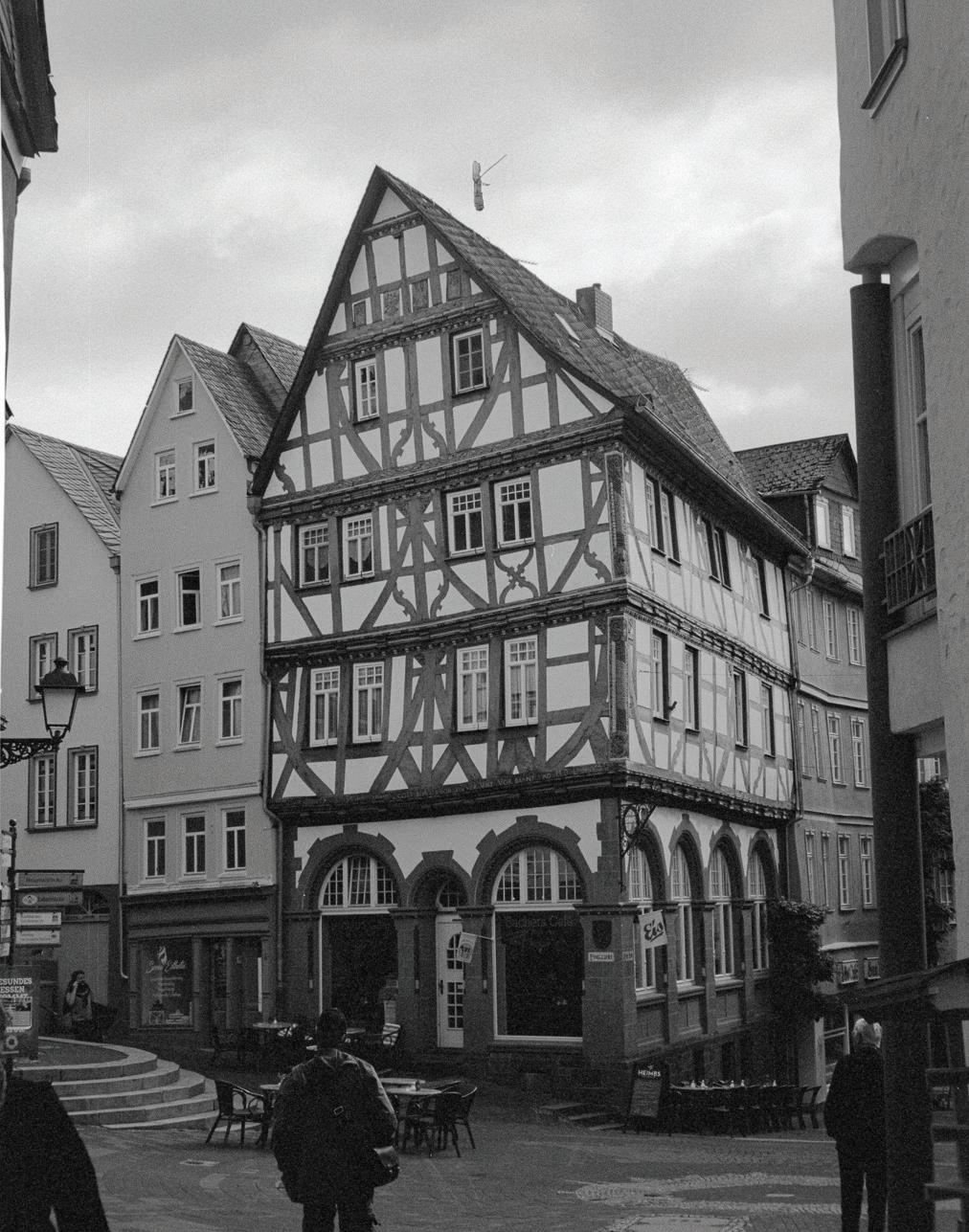
BLACK & WHITE ( KODAK TRI-X ) NEGATIVE COMPARISON
BEOON PLUSTEK NIKON
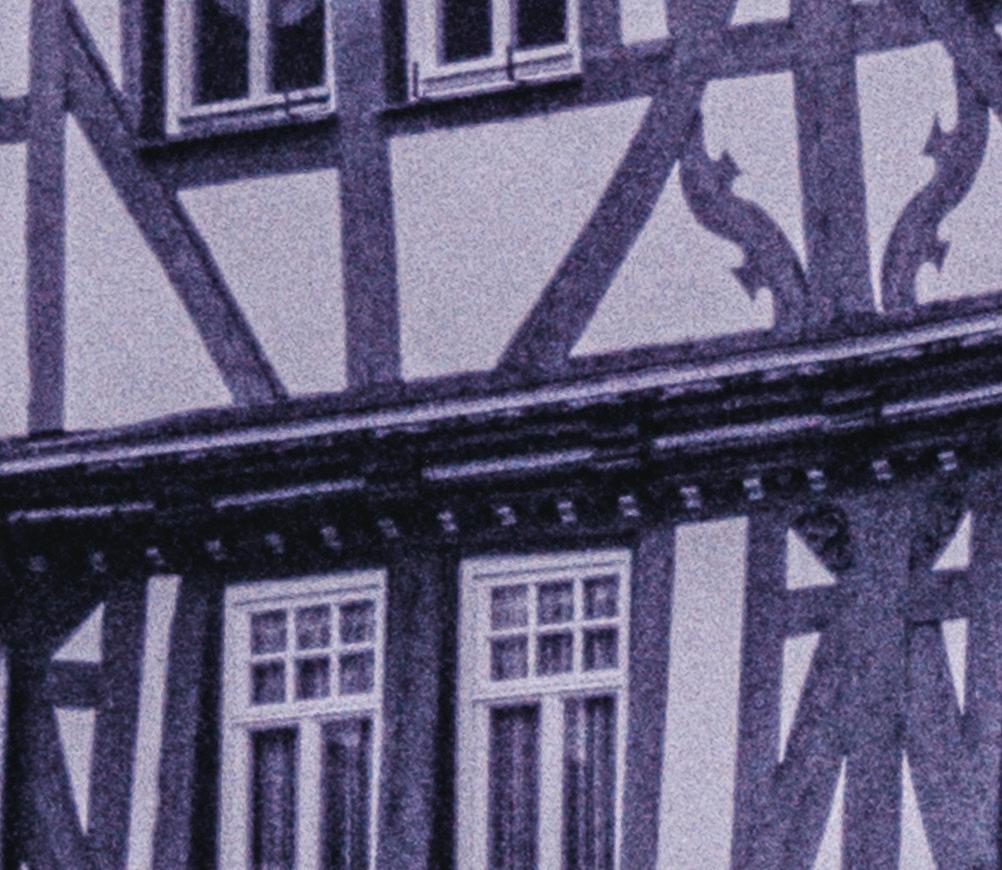
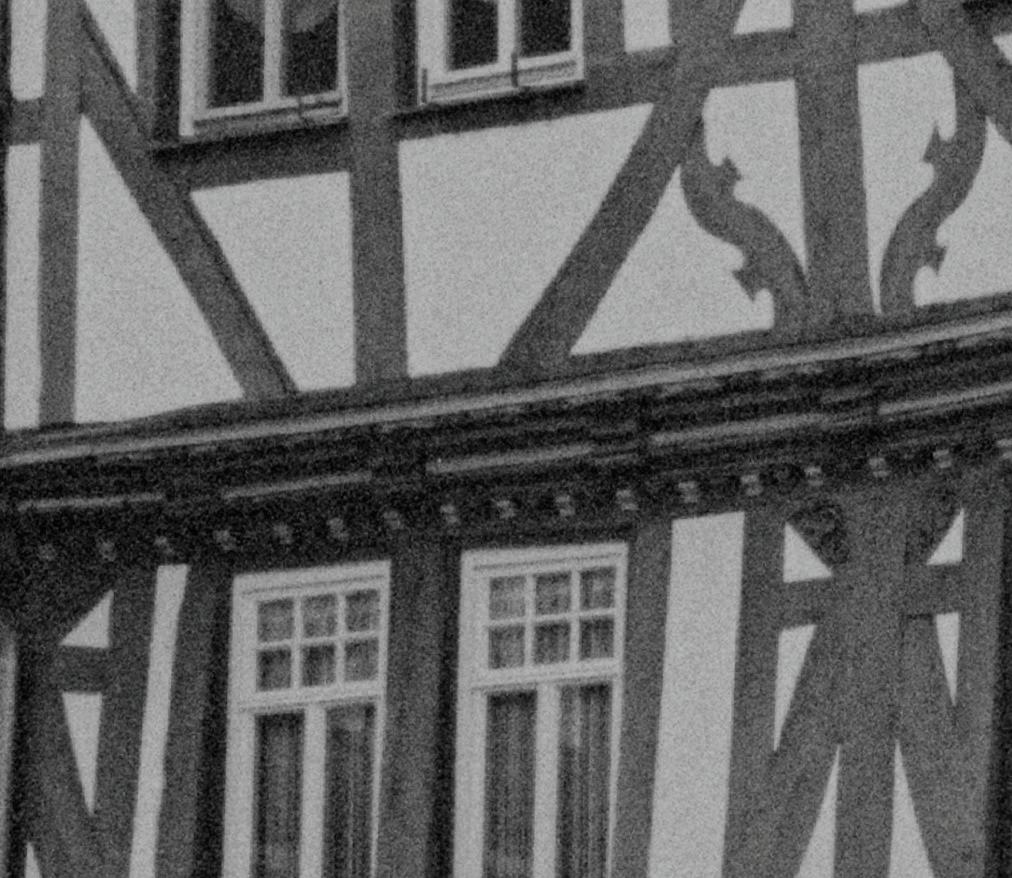
The BEOON produced a bluish color caste and shows a bit of color noise that the scanned images do not have. All three images are approximately the same in resolution and grain. The BEOON image also shows a slightly higher contrast than the others.
BEOON PLUSTEK NIKON
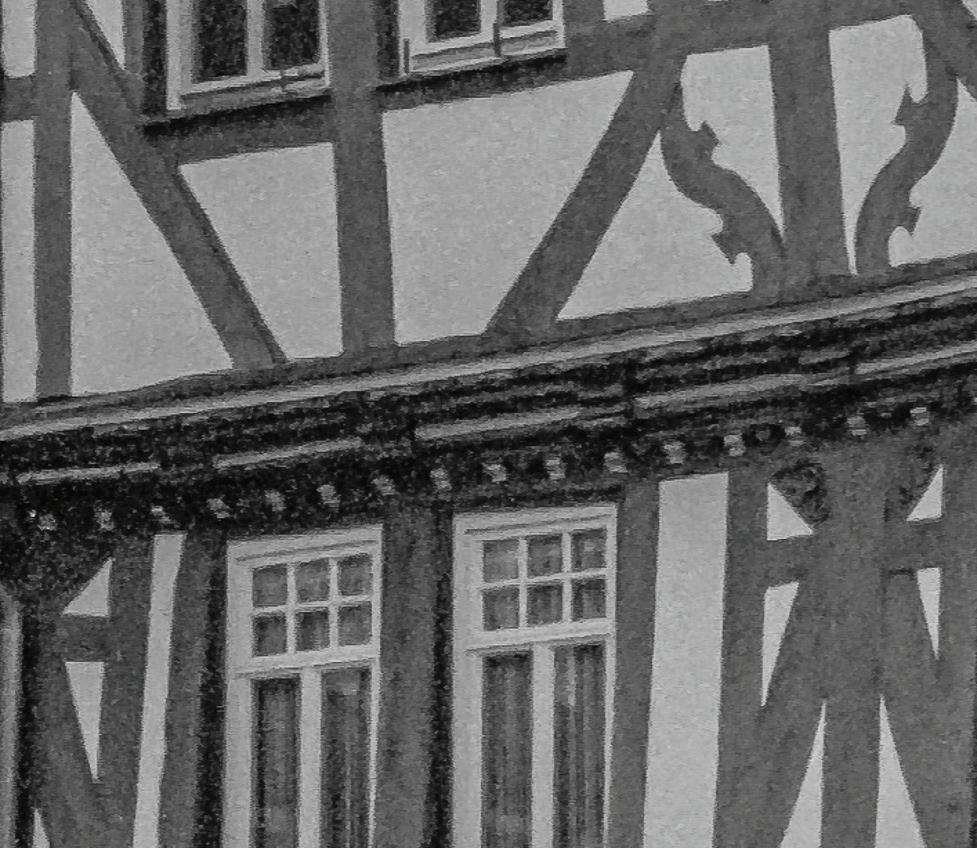
The following are the three enlargements above with minor adjustments in contrast, noise and sharpening. Note the BEOON image was converted to black and white, further blurring the difference between the three images. To make them more precisely equal, some contrast and exposure editing is needed but not attempted for the sake of this illustration. Also note that noise reduction has a beneficial effect on TriX grain. Heavy masking was used to limit sharpening to the major edges and avoid sharpening of noisy artifacts and grain.
Conclusion: For BW negatives, the three are essentially the same, especially if a skilled editor were to adjust them to suit.
NIKON
COLOR ( KODAK EKTAR 100 ) NEGATIVE COMPARISON
From a color and contrast perspective, the two scanners did a much better job than the BEOON as shown below:
Ektar 100 color negative film is known for extremely fine grain, and the resulting images show this. The images yield fine detail, regardless of how they were digitized, and need almost no sharpening or noise reduction. There are significant color differences between all three, correctable with normal color adjustment techniques, but not attempted here:
COLOR POSITIVE ( KODACHROME 64 ) COMPARISON
The following images show significant color differences, with exposure corrected to enable a comparison relative to highlight and shadow detail. Measured qualitatively by the relative neutral whiteness of the clouds, the BEOON image appears to be the best image from a color accuracy perspective. Kodachrome film, quite color-stable when stored correctly, further reinforces the perceived color fidelity here.
When enlarged, the images show significant differences. The BEOON image shows the best definition, and slightly less shadow detail than the Plustek image. The Nikon 5000 scan shows the least shadow detail of the three and significant grain/noise.
BEOON PLUSTEK
NIKON
BEOON
PLUSTEK
NIKON
COLOR POSITIVE ( KODACHROME 64 ) COMPARISON CONTINUED...
Differences can be reduced with normal noise and sharpening corrections as shown above.
CONCLUSION
For color slides and negatives, all three methods produce significant color differences which are correctable using normal color adjustment techniques.
• The BEOON combined with the M (Typ 240) does a commendable job digitizing color slides.
• For color negatives, the two scanners produced superior images with respect to contrast and color.
• For black and white negatives, all three methods yielded approximately equal results. Noise reduction reduces apparent grain significantly.
Interesting possibilities that should be investigated in the future, based on the above observations, include:
• The use of multiple exposures, combined with HDR merging, to improve the luminance range of the scans.
• The use of the BEOON in combination with the M Monochrom to copy black and white negatives and compare the results with a scanned image.
• The comparison of scanned images of Ektar 100 film (converted to monochrome) to negatives from one or more ISO 100 black and white film types. The objective here would be to investigate the value of using a local C-41 processing facility to produce really fine grain images which then are converted to black and white, thus avoiding the need for dedicated black and white film processing.
This is the first of three articles based upon images received from Ashley Wolff, Dr. Paul Wolff’s granddaughter. These articles are an attempt to answer several otherwise unanswered biographic questions:
1. What was the nature of Paul Wolff’s photographic vision and how much did the Leica influence this?
2. What was the reason for Wolff’s leaving Alsace for Frankfurt after WWI?
3. Why did Wolff keep the title: ”Dr”, and does this throw any light upon Wolff’s behavior during the Nazi regime?
Dr. Paul Wolff’s Family Pictures
by ED SCHWARTZREICH
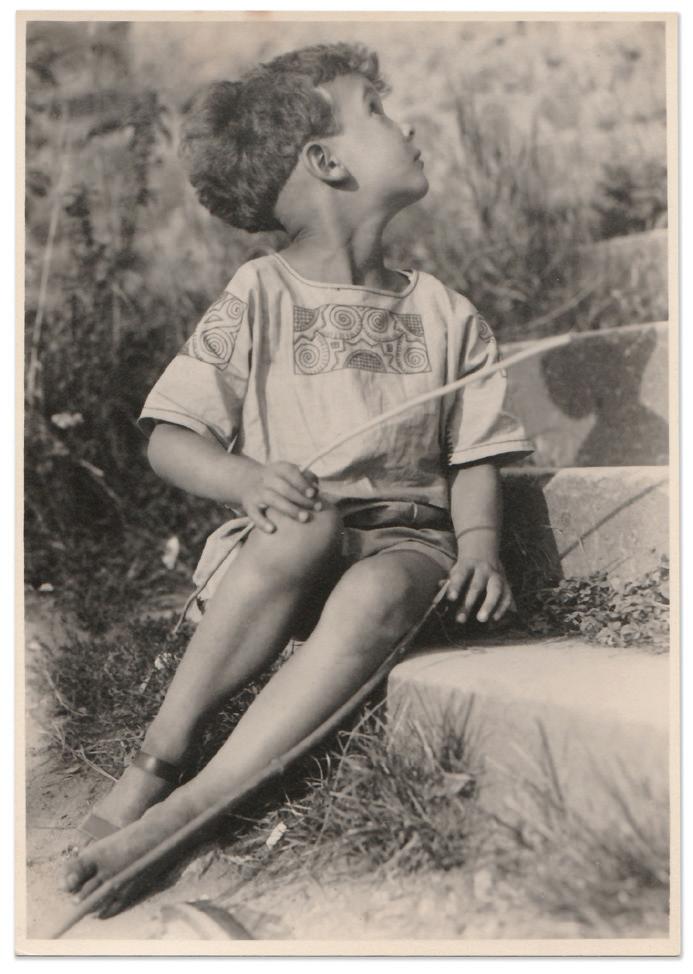
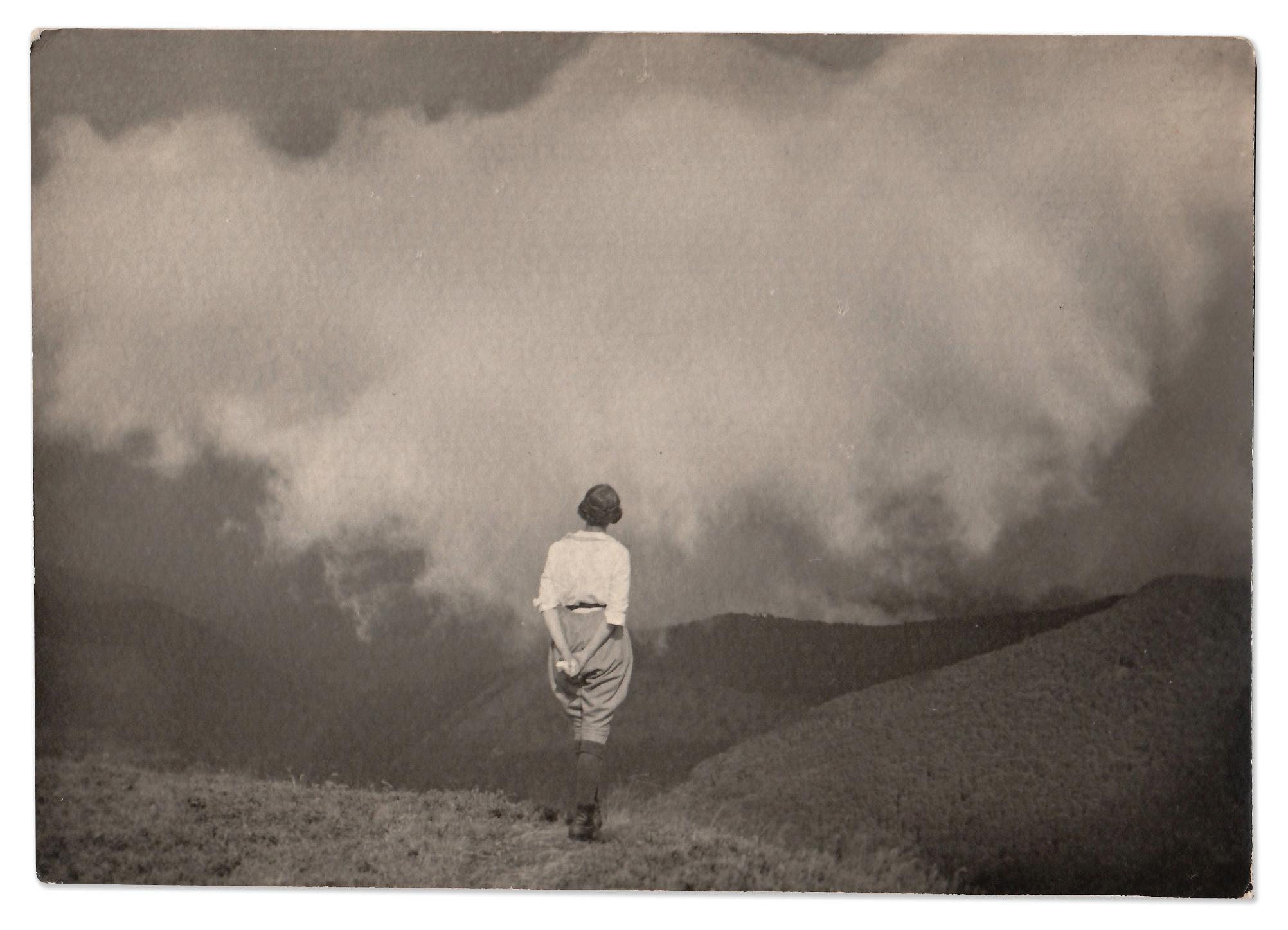
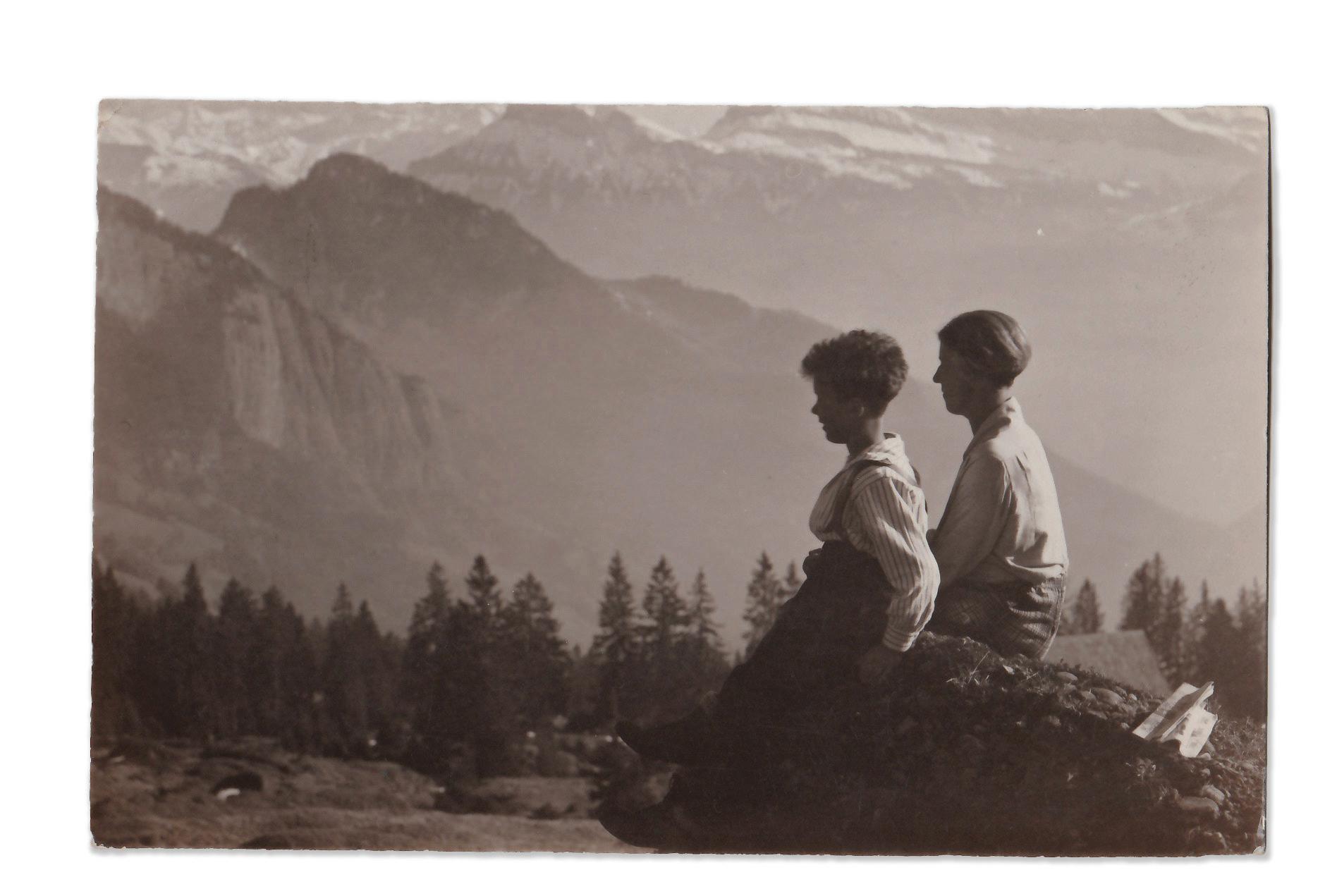
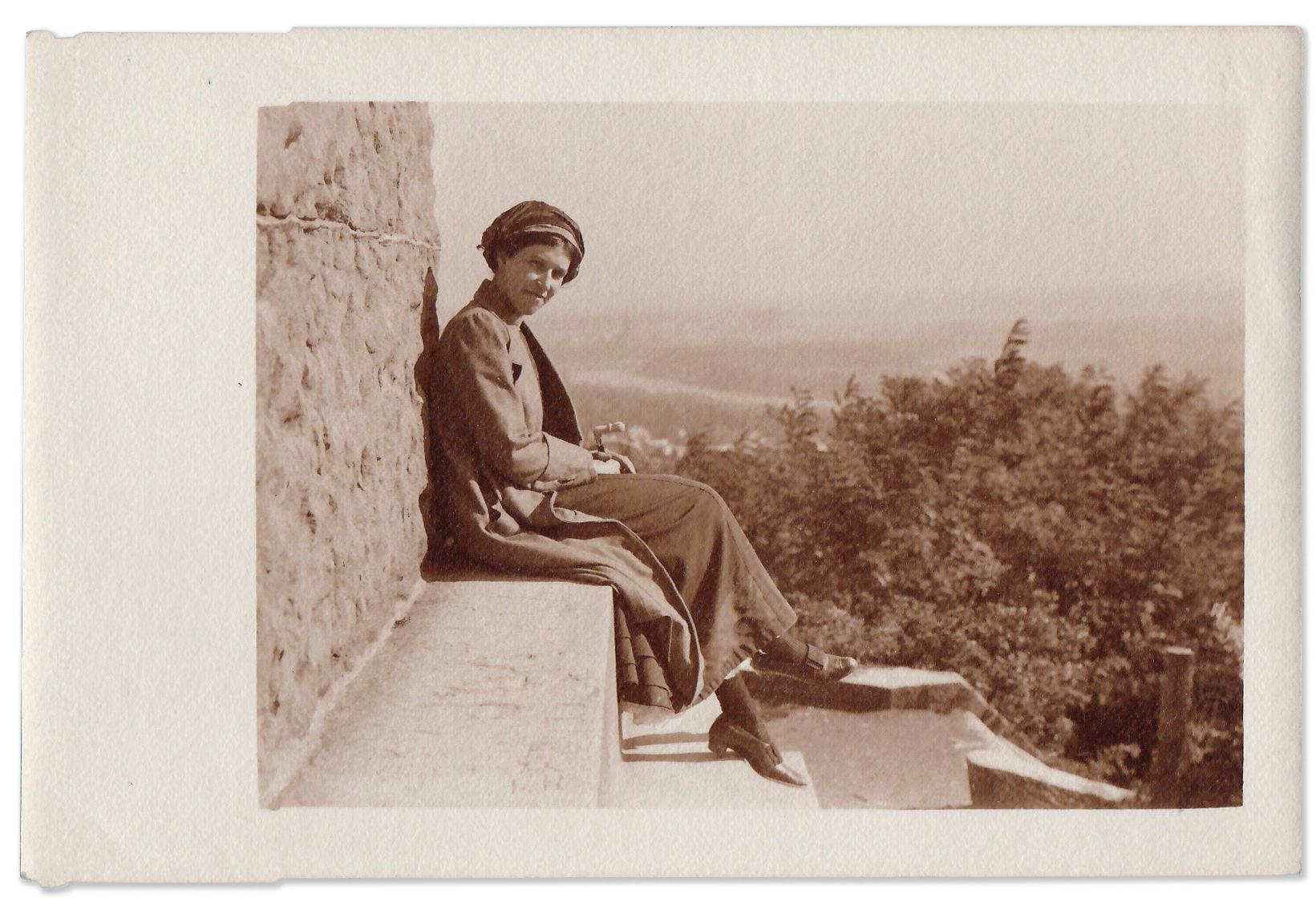
more than once in his life this author has wondered about the home lives of famous or very talented people –were they any different based upon their specialized knowledge from the way one’s family, friends, or neighbors did things? Specifically, when the famous person was a photographer, what sort of pictures did they make of their children, their spouse, their in-laws? Did their child complain about the picturetaking (like this author’s own), “Oh no, here goes Pop again”? Were their pictures any different from those of other doting parents?
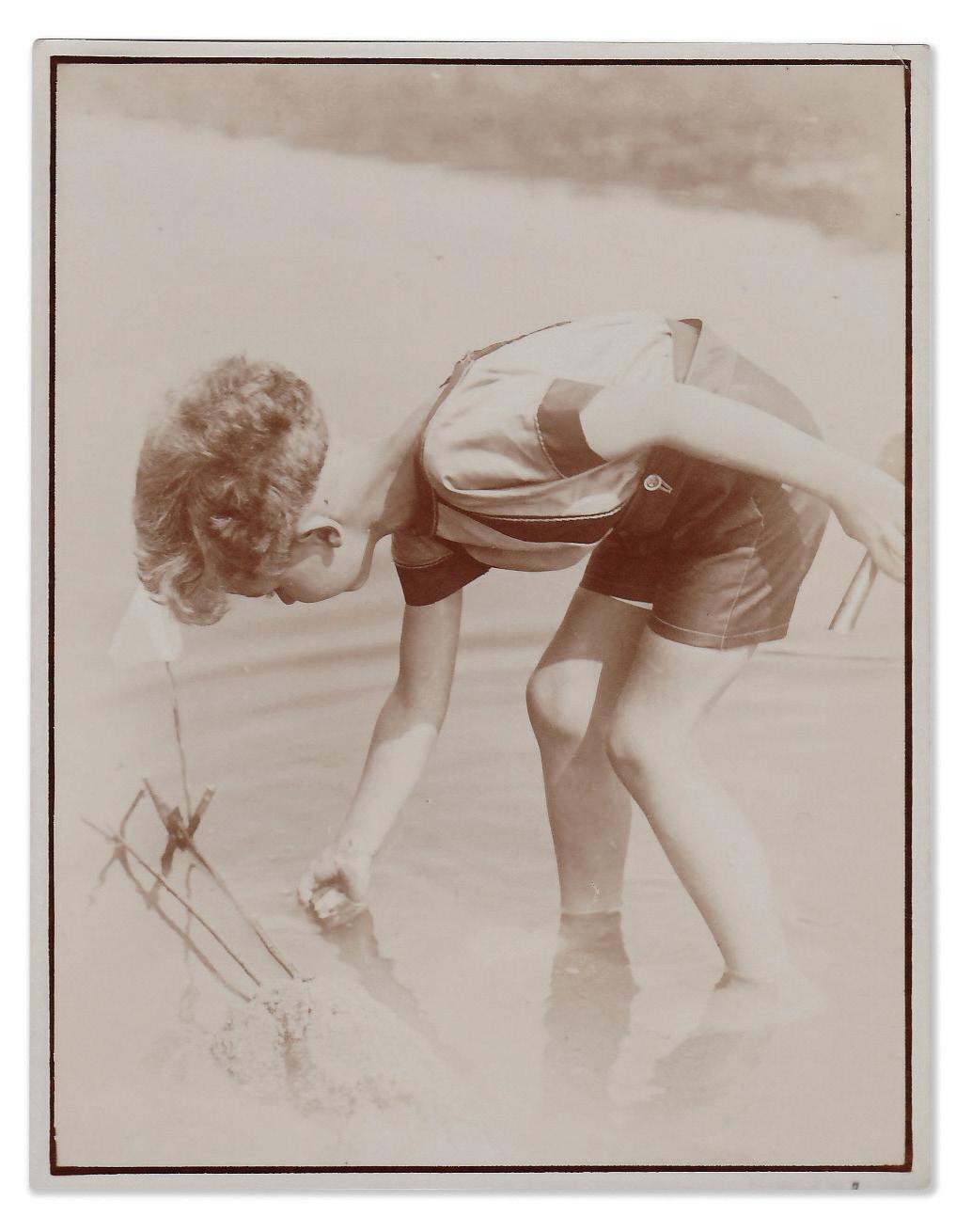
Recently the author had the opportunity to meet Ashley Wolff, granddaughter of Dr. Paul Wolff from his first marriage, and view small prints that Dr. Wolff had made of his wife and young family in the period of approximately 1911 to 1925. The author was thrilled with this encounter, both with the chance to meet such a gracious relative of Dr. Wolff, and to share family history and pictures. Ashley brought with her the expected types of family pictures such as various family groups enjoying themselves and shots of individual family members, but chosen here from her collection are a few that especially appealed to an outside observer and historian of Dr. Wolff ’s life and work. The images chosen are all of Paul Wolff ’s first wife Helene (Dörr) and/or his son Klaus, Ashley father, born in 1916. Ashley then kindly scanned these images, and quite minor adjustments to them were made in Adobe Photoshop to compensate for 100 years of fading: mostly adjusting levels and occasional spotting.
It is not at all certain the equipment that Dr. Wolff used for these images, only to say that it was likely not a large format plate camera, nor a Leica (which was not in existence then)
One’s hunch is that what was used was some sort of roll-film folding camera using 120 medium format film (or larger obsolete sizes such as 116 and 122 films), cameras such as a Contessa, an Ernemann, or perhaps a Kodak. Possibly several different such cameras were used through this span of years. These cameras in general were smaller and had faster lenses than contemporary plate cameras and this allowed them to be easily carried by the photographer and used hand held, such that the resulting compositions are potentially freer. The surmise is that the images here are all contact prints.
What strikes one quite forcibly about the pictures chosen here is that they have the look of Dr. Wolff’s Leica images of years later. The author is not aware that Dr. Wolff took pictures of people with his large format equipment, but of course carefully choreographed people pictures were what he mostly did with his Leicas in the 1930’s; such was his specialty. From what one can tell of Dr. Wolff’s pre-Leica people pictures from the examples here, his vision is little different from what he and others later termed: ’Lebendige Leica’ (lively Leica) photography.
The image of Helene in the mountains, from behind, is very similar to an image from Dr. Wolff’s 1934 Meine Erfahrungen book (Plate 5), and is almost in the ratio of 24:36, but not quite. So, it is unlikely that this is a Leica shot, but it closely prefigures what was to come!
Several of the images involve moving in fairly close to the subject, with the subject and associated material more or less filling the frame, again typical of Dr. Wolff’s later Leica shots. The average home photographer does not tend to do this. And while any of us might ask our spouse to sit in a picturesque place, or corral our children or in-laws to photograph them as a group, or try to photograph one of them individually performing a particular activity – diving
into a pool, or shooting a bow - Dr. Wolff, as he did again and again later in his career, directs his family members into natural-looking poses that have artistic and compositional interest. How he was able repeatedly to do this without caricature or awkwardness can only be explained on the basis of his great talent.
The image of Helene at the campfire was likely made with a tripod set-up, much like Dr. Wolff ’s procedures with his much later factory images. The framing is too precise, and the DOF too large in the apparent darkness, for this to have been a hand-held shot.
One sees strong use of diagonals in several of these images of Klaus especially, and again this is typical of Dr. Wolff ’s vision throughout his career.
Dr. Wolff in these early images often utilizes selective focus, opening his lens up wide with only the subject in focus, to draw our eye into what he felt was important pictorially. While we tend not to see much use of this technique in Dr. Wolff ’s later images, Wolff instead substituted honing in to the subject with extreme close-ups and with deep depth of field. It is, however, the same idea of isolating “the part that represents the whole, the quintessential feature” (to quote Dr. Wolff ), even though the later technique is different and usually requires a tripod for exact framing and because of the slower exposure with the lens closed down.
Overall, it is the “liveliness” of these pictures that really shines through. These are real people engaged in living their lives, even if they were likely posed for the shots. This ability to capture and even slightly enhance reality – and often to make us smile - was Dr. Wolff ’s photographic gift. And to answer the question posed at the start of this article, in this case the famous person does indeed perform on a higher plane than most of us could.
ALFRED TRITSCHLER "MITTELALTER FOTOGRAFIE”
A BOOK REVIEW
by ED SCHWARTZREICH
It never rains, but it pours. Not only are we being treated right now to new books and exhibitions on Dr. Paul Wolff & Tritschler, but out of the blue comes a strikingly beautiful art book with images of medieval sculptures that Alfred Tritschler photographed in 1948. From the book’s introduction (translation by the reviewer): “Among the numerous photographic prints held by the Museum Schnütgen in Cologne, known for its medieval works of art, comes a surprise find that was ignored for decades: a compilation of vintage prints, taken by Alfred Tritschler... These photographs taken in Cologne, with their very personal view of the sculptures from the museum's collection, represent a special subset of this photographer's work never previously taken into consideration. In the museum’s object documentation, these old blackand-white prints had a largely invisible existence, partly stuck onto cardboard and sorted into portfolios… Ninety of this Leica photographer’s 35mm prints have survived there and have now been viewed, digitized, and scanned. The book collects these largely unpublished photos...”
Most of the images in the book derive from Tritschler’s scanned vintage prints. Thomas Sommer of the Dr. Paul Wolff & Tritschler Historisches Bildarchiv located all of the relevant negatives (for reference), and scans of some related negatives are also used as supplementary
(left column) St. Jerome as Cardinal, Cologne, 2 views; around 1480-1500, linden wood, colored (right column) Pietà, 3 views; Circle of the Master of Osnabrück, circa 1525, oak, colored
images in the book. The images are quite beautifully printed. The Archiv’s documentation for the negatives does not specify the camera equipment Tritschler used, but it seems clear to both Mr. Sommer and to the reviewer that most of the images were taken with a 135mm f/4.5 Hektor lens. The Hektor is known even today for its superlative performance at close distances with a mirror reflex housing, and of course the 135mm focal length renders head shots (which basically describes many of these images) quite naturally. Tritschler, in his endnote to his near-contemporaneous book of plant close-ups “Schönheit am Wege”, cites use of the 135mm focal length on a Leitz Mirror Reflex Housing (Leitz PLOOT) and employing various extension rings as needed, along with the 90mm and 200mm focal lengths used occasionally. The reviewer is reasonably convinced that he used the same equipment for these museum images. The lighting used here in the museum shots is often quite dramatic portrait lighting, and Tritschler proves masterful at making these old sculptures come alive for us. Perhaps one should have expected from the sympathetic way Tritschler portrayed workers in factories, close-in at their workstations, that he had such skills, but still, for someone like the reviewer quite familiar with Wolff and Tritschler’s published work, discovering this book is truly like finding a secret room in one’s house with treasures in it.
In 1948, Germans from all walks of life had to improvise for their livelihood. The “Wirtschaftswunder Deutschland” was likely stimulated that year with the currency reforms, but did not really get going until the 1950’s. Wolff and Tritschler were living and operating in quite reduced circumstances at the time. From the introduction: “Wolff had left Frankfurt in 1944 …[and by 1945] found a home for himself, the Wolff & Tritschler company, and his 35mm negatives (which had previously been safely stockpiled there), in Braunfels on the Lahn, where he occasionally lived in the princely castle; Tritschler followed him to Braunfels in 1946. From there they resumed their photo business; however, they could not build on their commercial success of the 1930s. Tritschler briefly described the difficult entrepreneurial situation in an illustrated book immediately after the war [in “Schönheit am Wege”]: ‘In the damp, ancient prison cells of a small town on the river Lahn, we had a makeshift darkroom and tried to control the operation through those confused times: work tools, chemicals, papers and films were scarce everywhere and were only to be found with difficulty and with great sacrifice’”. One assumes that barter and even subterfuge were employed to obtain supplies.
It seems a reasonable conjecture that Tritschler intended a somewhat similar book to “Schönheit am Wege” for these medieval sculptures. Otherwise, we do not know exactly why these pictures were taken. He took three sets of images under different titles, so it was a significant undertaking. It would be the reviewer’s guess that such activity was done on
spec, with the simple intent to make ends meet on the cheap: neither plants nor sculptures require paying models or using much in the way of expensive external or ancillary equipment. Why the images remained unpublished and essentially hidden away is also not clear, as Tritschler ran the Wolff & Tritschler business until he retired in 1963, and lived until 1970. Perhaps soon enough after taking these pictures he had the return of business contracts and no need to self-market the idea of an art book.
The book’s text is entirely in German. Dr. Iris Metje, author of the introduction, is an art historian and since 2011 has been a research associate on numerous publications and exhibition projects on medieval art for the Museum Schnütgen. Her other research focus is the history of photography. Her introduction covers Tritschler’s history, something about the collections from which he chose objects, and comments on Tritschler’s artistic vision as exemplified in how he posed and lit the sculptures, and what depth of field he chose to photograph them. While an interesting text, monolingual English readers should not be deterred here, as it is the images themselves which will speak to us.
There is also an appendix with the data and the provenance of each image.
The reviewer wants to thank Dennis Janzen from the Greven Verlag in Cologne for the images.
Alfred Tritschler Mittelalter Fotografie
136 Pages with 102 Photographs, 24 × 28 cm ISBN 978-3-7743-0925-8, Greven Velag Cologne 25,00 €
(left) Dust jacket of the book.
THUMB REST LEVER FOR LEICA M10
by ED SCHWARTZREICH
People who know me know that I am a sucker for aftermarket gadgets that are made to fit Leica cameras and perform some function that is otherwise difficult to bring off. I even gave a talk at Annual Meeting a few years ago about all such gadgets that I had accumulated over the years. So, this is probably why Editor Rosauer tasked me with reporting on a new accessory: the Thumb Rest Lever for M10. This device, designed and made by Hobby, Japan and sold by Map Camera in Japan, is somewhat similar to Tim Isaac’s better-known Thumbs-Up, but allows the motion, and to a degree, the feel of a film Leica M wind lever. Or, to be more current, a Leica M10-D. This accessory promises the ergonomic and stable one-hand grip that photographers who cut their teeth on film M cameras used to use instinctively.
I was loaned a Thumb Rest Lever in chromed brass to test. It also comes in black chrome. It only fits the M10 or M10-P. In fit and finish it matches reasonably well the silver chrome of my M10, and its contours nestle cleverly and neatly into and against those of the camera body. The “wind lever” has mild detents both when closed against the camera body and when fully open, and is reasonably smooth to open, but nowhere near to the silky feel of an M Leica wind-on. A look underneath the device shows that the wind lever mechanism’s underside is brass moving in a chromed channel, which pair of metals, if I remember correctly, lower the coefficient of friction to a degree. From what I read on line, the entire device is CNC’d out of solid brass.
Shortly after receipt, I mounted the accessory onto my camera and took it out for a brief photoshoot. It mounted quite securely. While pleasant memories of outings with my film M’s filled my thoughts, there were a few minor issues with the new device. The edges of the “wind lever” portion were too sharply milled and tended slightly to cut into my thumb as I held the camera in my right hand with the lever extended. Clearly, if I owned the Thumb Rest Lever, I would use emery cloth to dull these edges slightly – not a deal breaker, however.
Second, the wind lever felt a bit thin and had a slight vertical wobble, at least as compared to one of my M2’s which I pulled out of the drawer for comparison. The lever on the M2 wobbled also, but not so much. The thickness of the wind lever however was 2.00 mm, the same as on the M2, so this parameter was not causing the issue; the cause was in the brass portion moving ever so slightly in its channel. Again, slight, but a concern nevertheless, especially when the instruction sheet cautioned against forcing the lever too strongly, as this might cause the mechanism to loosen. I found myself wondering how well it would stand up in active daily shooting.
The instruction sheet that came with the device also warns that dirt or grit may get between the device and the camera, causing scratches on the top plate. On a hunch, I carefully cleaned the groove in which the wind lever mechanism rides, and its smoothness improved a bit. It seems possible that a small amount of dirt had accumulated in it. In use, one might have to clean this periodically.
For my own personal use, I feel the device might benefit from some additional refinement: close the groove and use grease that would smooth the lever’s travel, damp its movements, and keep dirt out. I would also like it to have its own accessory shoe, for external viewfinder mounting. I have some concern about its overall robustness, but if I owned it, I would treat it with care, just like I might treat Leica optics or external viewfinders.
The proof of the pudding is how any accessory actually helps performance. Wind-on levers on film M’s were very useful in facilitating rock-steady shooting, as they greatly stabilized the camera, locking in place the right thumb while the remaining fingers encircled the right end of the camera body. I used the accessory in this manner in the accompanying hand held shot of Fall foliage, here with a 180/3.4 Apo Telyt-R mounted on an M10. Shot was at f/6.3, about 1/360 sec at ISO 800. I took 4 such shots, and 2 were quite sharp, as here. I think I would have had more difficulty getting this level of sharpness without the accessory, given the parameters of my shooting.
I later used the Thumb Rest Lever for street shooting while at LHSA’s Boston Annual Meeting, and felt it to be helpful for readying myself in anticipation of the next shot. I had to catch myself repeatedly though when it would not wind on after firing the shutter the way a Leica M does. Old habits die hard.
Nothing loosened up or changed as I used the device repeatedly over several days. It felt solid.
The bottom line for me is that I like this accessory.
The price of the Thumb Rest Lever from Map Camera is ¥45,000 before tax, or around $450.00.
Lens 558827, September 1944.
The grey paint finished 13.5cm 1:4.5 Hektor (codeword HEFAR) was briefly discussed in the Viewfinder #4, 1983. Two lenses were illustrated 575211 on the cover and 576111 in the article.
During August and September 1944 Leitz Wetzlar shipped 13.5cm Hektors to Berlin. At least four shipments are recorded in the delivery ledgers preserved in the Leica Germany archive.
13.5CM HEKTORS TO BERLIN 1944
by JIM LAGER
The illustrated examples from 1944 have grey painted focusing mounts fitted with black lacquered lens heads. There is no indication of finish in the records. An earlier September 1941 shipment in the 558XXX range is written grau (grey).
Any grey finished HEFAR is conspicuously different from the ordinary black lacquered motif. We can speculate that most grey samples were lost/consumed as the War neared closure. Editor Rosauer and I welcome your observations.