Inquries about membership, upcoming events, replacement Viewfinder issues, and special orders should be directed to:
Richard Rejino, LHSA Executive Director 14070 Proton Road, Dallas, TX 75244 info@lhsa.org, (972) 233-9107
Viewfinder is the official publication of the LHSA, The International Leica Society, a nonprofit organization incorporated in the state of Delaware. Copyright 2014. Reproduction or use of any material contained herein without permission of the Sociey if forbidden.
Leica is a registered trademark. It and other trademarks pertaining to the Leica System are the property of LEICA CAMERA, USA, INC.
ISSN 1543-8732
PRESIDENT Alan Weinschel alan.weinschel@lhsa.org
VICE PRESIDENT Keith R. Sbiral krs@reddotbluedot.com
SECRETARY/TREASURER David Knoble dmknoble@gmail.com
IMMEDIATE PAST PRESIDENT Gary Hough gary.hough@lhsa.org
PRESIDENT EMERITUS
James L. Lager
Rolf Fricke
Bill Rosauer
APPOINTED OFFICERS Viewfinder Editor Bill Rosauer lhsaeditor@yahoo.com
Associate Viewfinder Editor Ed Schwartzreich ed.schwartzreich@imagere.com
28 my leica journey by Rosalynn Tay 36 a new old 8-element 35 f/2 summicron by
Schwartzreich
dr. wollf's time has come by Ed Schwartzreich 49 the non-standardized leica c & matched lenses by Jim Lager
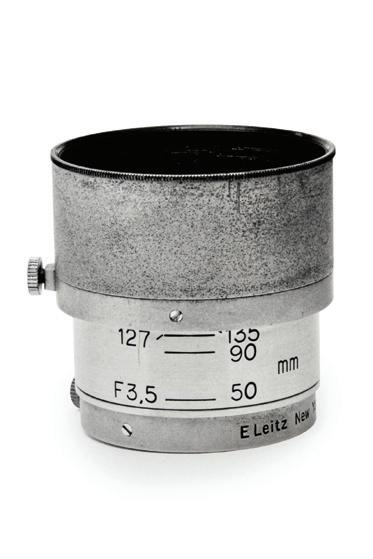
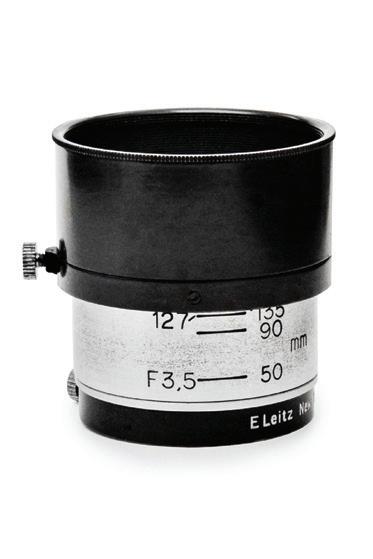
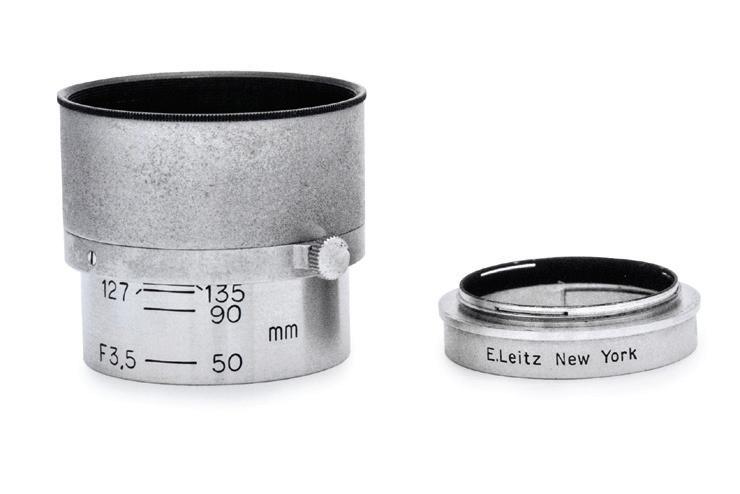
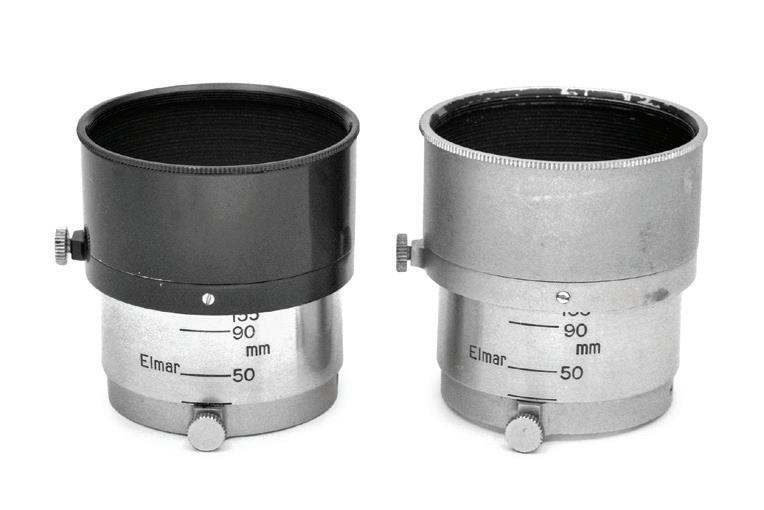
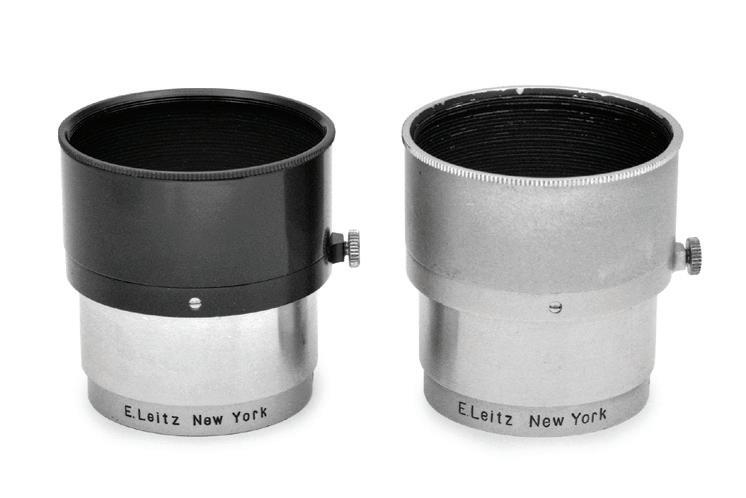
50 e.leitz new york adfik & fikus lenshoods by Jim Lager
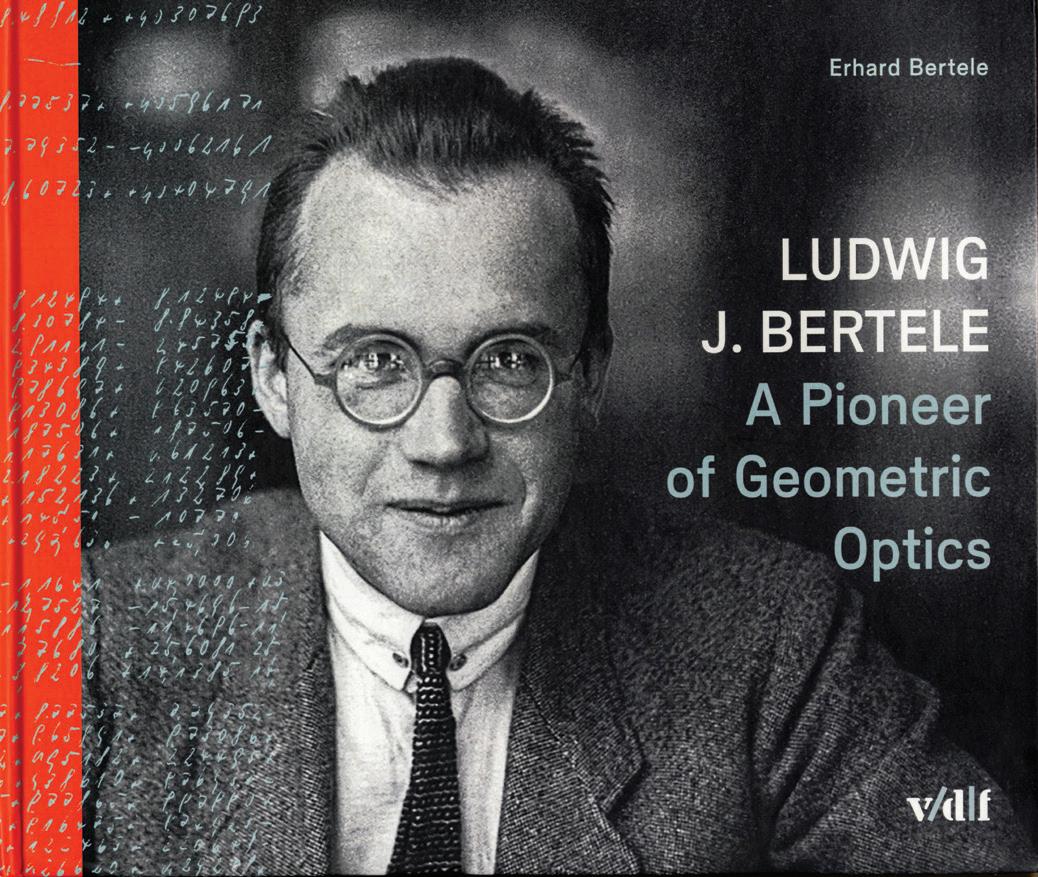
50 book review: ludwig j. bertele by Ed Schwartzreich
ELECTED DIRECTORS
Class of 2020 Thomas Campbell leicar7@aol.com
Douglas Drumheller dougdrum@comcast.net
Dan Tamarkin dan@tamarkin.com
Class of 2021 Wilbur Norman coupdefoudrellc@gmail.com
Jay Paxton jaypax@mlhs.net
David Spielman david@davidspielman.com
Class of 2022 Andrew Godlewski harley772@yahoo.com
Brad Husick husick@gmail.com
Bill Royce wfroyce@gmail.com
CONTRIBUTING EDITORS
S.R. Gilcreast, Jr. (603) 381-8293
James L. Lager jlager100@yahoo.com
S. Willis Wright beoon@aol.com
A LETTER FROM THE PRESIDENT
by ALAN WEINSCHEL
a few weeks ago, in Boston, we began the second 50 years of LHSA with a meeting that had great content and allowed the renewal of old friendships and the forging of new ones. The shared Leica passion was evident throughout and at dinner on the last night, we heard from Leica’s guiding force, Dr. Andreas Kaufmann. Dr. Kaufmann described LHSA as “an important part of the Leica family.” It is nice to hear that description from the head of the family.
The programs in Boston included an instructional session from our Board member, Bill Royce, who revealed some of the features of Adobe Camera Raw. It was an eye opener even for experienced Photoshop users. Antonio DiBenedetto of Leica spoke about Leica’s product directions, and we had inspiring sessions with Ed Keating, a Pulitzer Prize winning photojournalist, Sean Reid, who gave us a peek at his upcoming book, and our friend Costa Manos, one of the truly great photographers of our time. If you weren’t able to come, please think about attending a future meeting. We had many first-timers in Boston, (including a member from Singapore!) and everyone thought the meeting was meaningful and worthwhile.
The next meeting is our Spring Shoot in Colorado Springs May 15-16, 2020, and like our last several spring sessions, will be instructional with David Spielman again acting as headmaster.
In Boston, as is customary, I delivered the President’s “state of the society.” I can’t provide all of it, but here are some highlights: Your Society has put itself in a position where we can see a time when we are on sound financial footing. The program, started in October 2018, under which Leica system camera buyers (and Leica Q buyers) can sign up for a free year of LHSA membership through the Leica website has been successful. More than 1800 new members joined through this program, and we are now seeing growing numbers of paid renewals from these new members. Over time, we hope to gain enough new members paying dues to help us balance the books. To do that we need to be responsive to what members want, and one of the things we have heard is a desire for meetings outside of the US. We are listening and there will be an email soon regarding the 2021 annual meeting. We are planning on Dublin, Ireland and will be asking about your interest in that.
The other things that members want in a more general way are:
1. Engagement: Our meetings are a great start, but we also hope you can engage with your fellow Leica enthusiasts on the website and social media as well.
2. Education: Learn about how to use your gear and learn to improve your photography. Sessions like Bill Royce’s at annual meetings, the instructional Spring Shoot, our “ask the expert” service and others are a great way to learn. Watch for an upcoming video series on how to use film Leicas.
3. Information: Get the latest firmware updates, information on new Leica products, and on upcoming seminars and gallery shows on the website and in Viewfinder. In this issue you will see Jono Slack’s hands-on review of the new Leica SL2.
4. Contribution: Our Photographer’s Fund helps aspiring young photographers complete a project. Our third winner, Scott Brennan, was with us in Boston and showed us some of his wonderful images.
5. Inspiration: Be inspired by the work of great photographers, some well-known and some not so well-known, whose images you can see here in Viewfinder, on our site, and at our meetings. There is nothing like seeing great photography to make you want to go out and get better.
I hope to see you at one of our meetings, and if you want to get involved in your society, we encourage you to let us know.
- Alan Weinschel
A LETTER FROM THE EDITOR
by BILL ROSAUER
have some very big Leica developments that we feature in this issue of Viewfinder. We held this issue for the biggest news, that of the Leica SL2. The SL was quite a capable camera in its own right, but time moves on in the fast changing world of digital photography, and we now have the SL2. Leica has clearly built upon the strengths of the SL, and made clear improvements all across the board after listening to users. Our president Alan Weinschel was able to test an advance copy of the camera, and board members were able to see the new camera in Boston. We were all quite impressed, and for M users such as myself, the incorporation of IBIS is a potential game changer. Leica Beta tester Jonathan Slack gives his full report on the new camera here in Viewfinder. I look forward to spending more time with the camera in the near future.
We also have Ed Schwartzreich’s report on an exciting new homage lens, based on the classic eight element 35/2 Summicron. I became aware of this new lens on Stephen Gandy’s Range Finder Forum. I followed the announcement of the lens and the sample photos presented in the thread with great interest. It was quite a story of an entrepreneur in China, Mr. Zhou, and his efforts to duplicate the legendary Leica classic lens. I contacted the OP, Kevin Xu, and asked if it might be possible for us at the LHSA to test the new lens and report on it in Viewfinder. Kevin was most gracious and we had two pre-production samples in hand prior to the Boston meeting. Kevin was so excited to work with Ed Schwartzreich and myself on this that he drove up to Boston Saturday to meet with us personally. Ed is very familiar with the eight element Summicron and volunteered to write up a comparison report of the two lenses. After extensive correspondence with Kevin, you can read Ed’s review here in this issue. Even more exciting is the price of this lens, coming in at $500 USD. My own experience with the lens is that it is indeed a high quality rendition of the classic Summicron, with great fit and finish and a high quality feel to it. I have been very pleased with the results with my M10. Kevin has also revealed what the next project will be: an exact copy of the original Noctilux 50/1.2 lens! We eagerly look forward to getting our hands on that one!
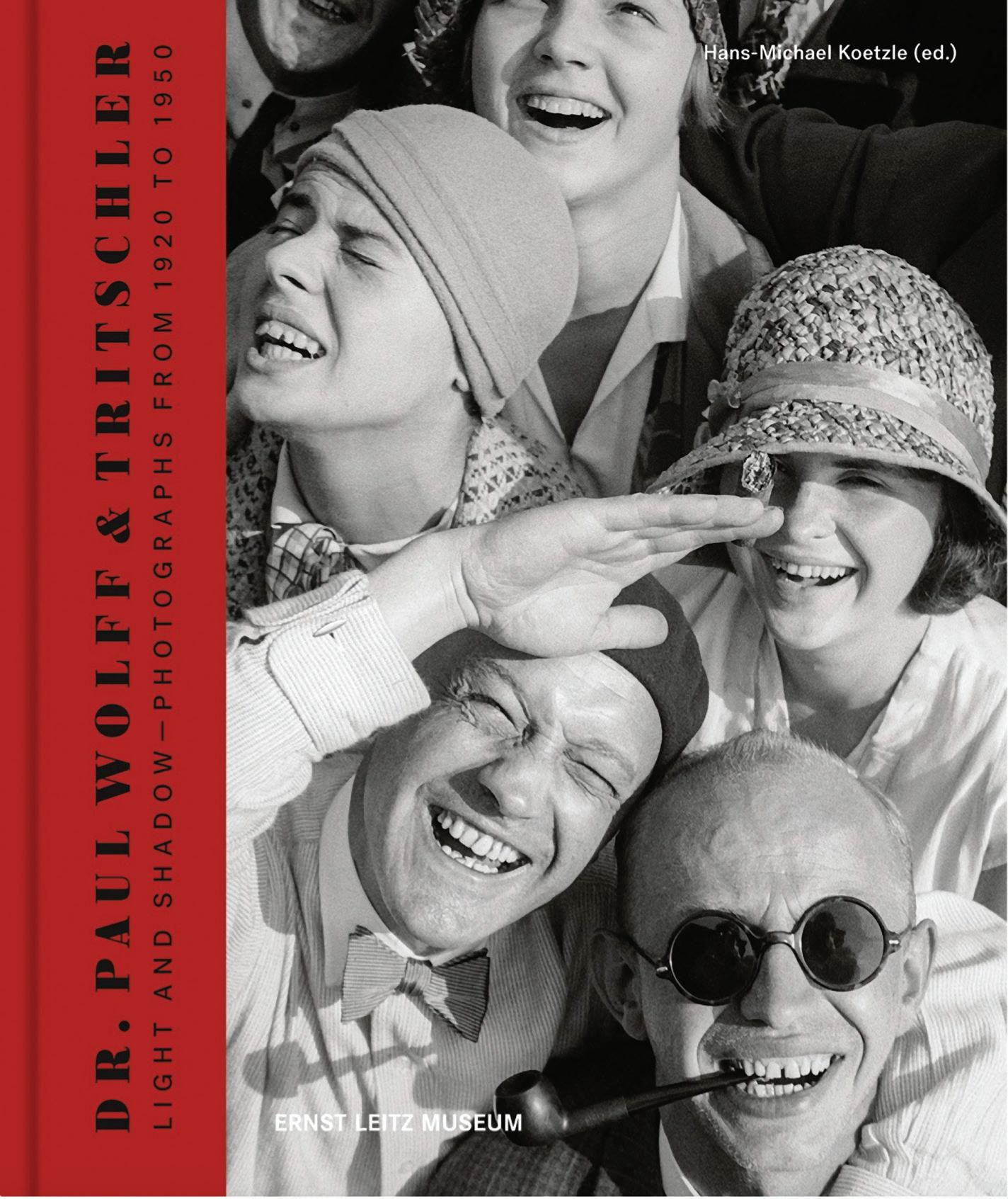
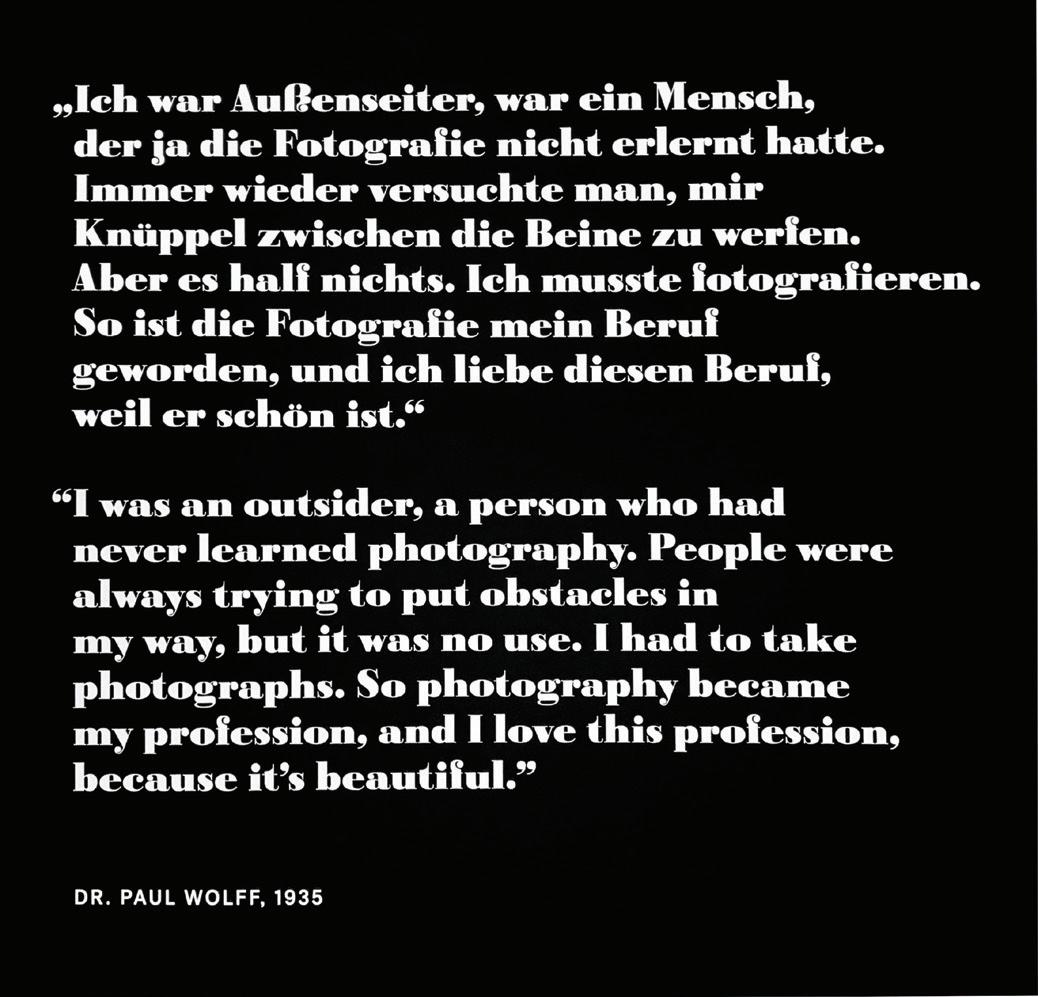
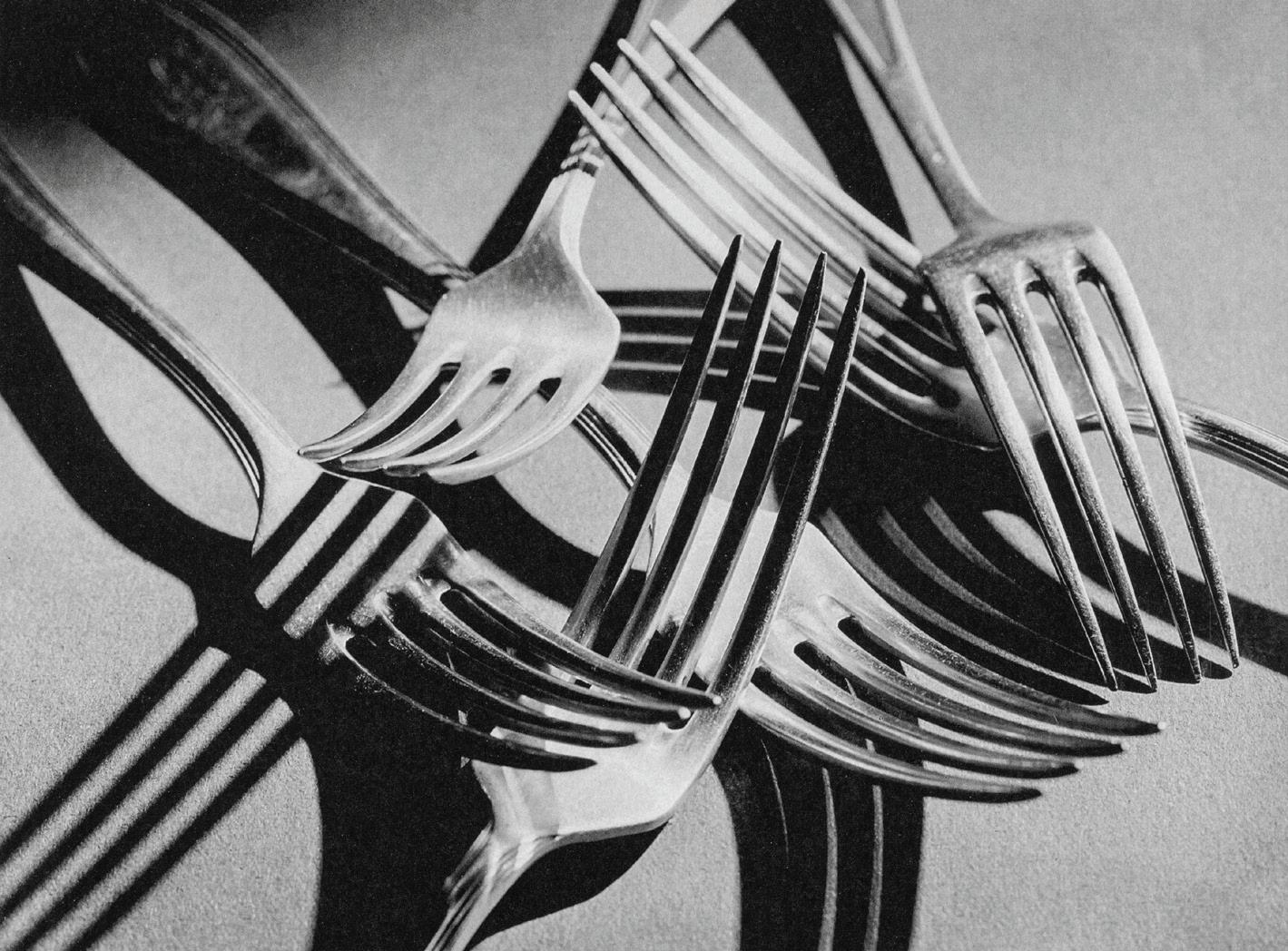
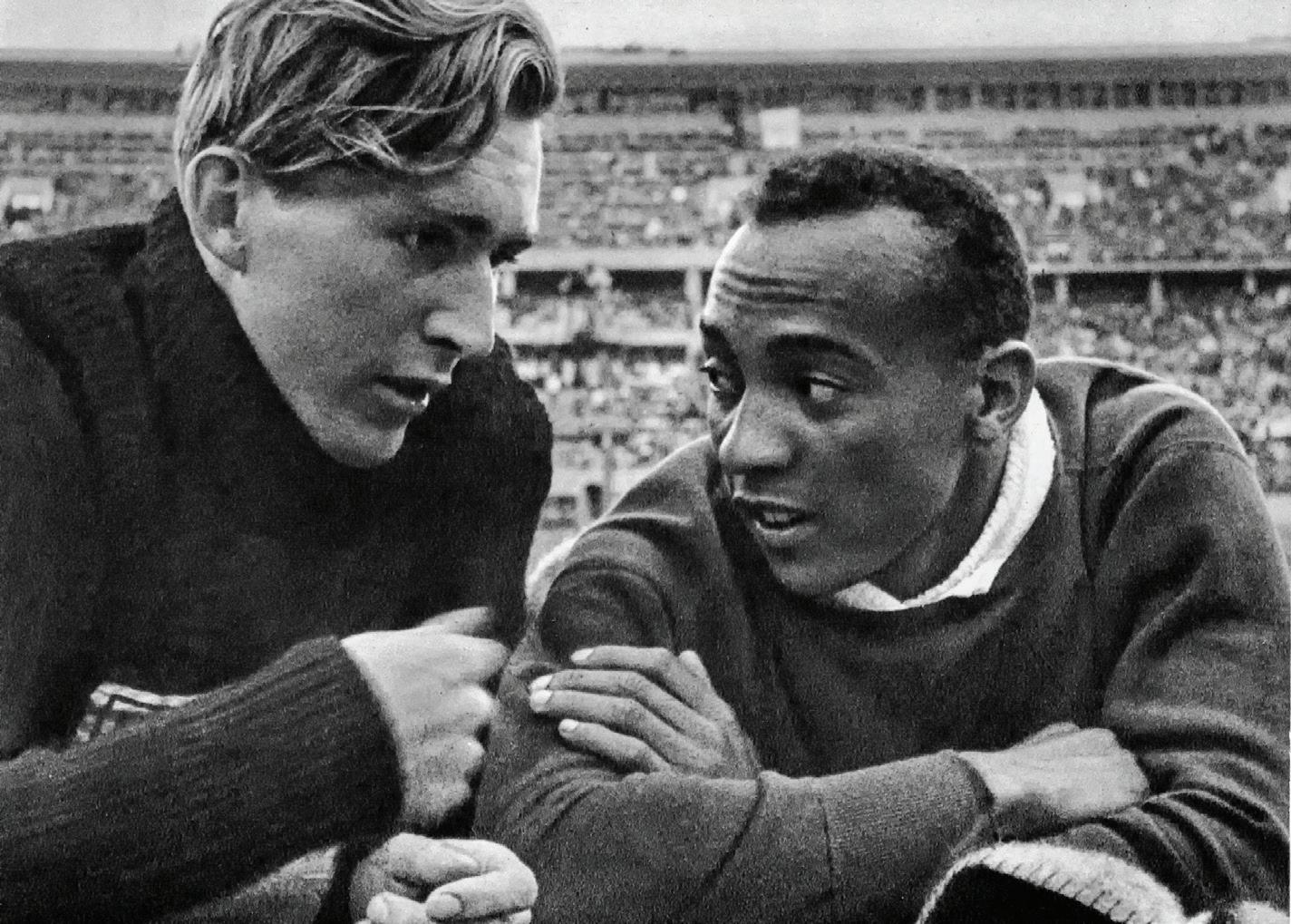
Ed also reviews one of the most anticipated books in years, on the life of Dr. Paul Wolff, Pioneer of the Leica, and his work partner, Alfred Tritschler. Editor Hans-Michael Koetzle’s book is massive, running 464 pages and weighing nearly six pounds. It is beautifully presented and illustrated; I ordered my copy as soon as it became available. I can highly recommend this book to the serious
Leica historian and anyone interested in the life of the original Leica pioneer. On a personal note, my dad met Dr. Wolff post-war in Germany and always held him in high regard, and I have one of Dr. Wolff ’s lenses in my collection. My dad would have loved this book! Ed also reviews a book about one of the pioneers of modern optical design, Ludwig Bertele. Bertele was responsible for such landmark designs such as the Zeiss Sonnar and Biogon lenses. The book was ably translated into English by our own Rolf Fricke and his son Oscar.
I feature the work of Rosalynn Tay of Singapore in this issue as well. I became aware of Rosalynn’s work on Facebook in one of the Leica User Groups, when the Leica Gallery Singapore was hosting her show on Siberian Reindeer herders. I began a correspondence with her, and she sent me over 125 of her images from her travels around the world. I was bowled over by the quality of her images. They reminded me of the classic images of the golden days of National Geographic. I encouraged her to write about her Leica journey, and you can see the result here in this issue. Rosalynn was so excited about LHSA and Viewfinder that she made arrangements to join us in Boston for our annual meeting a few weeks ago. I know we will be sharing her work in the journal in the near future.
Speaking of the Boston meeting, we have coverage by two enthusiastic, young LHSA members in this issue. Justin Smith and Hamilton Hollett offer a fresh perspective on our annual meeting. It’s great to see the younger generation taking an interest in our Society and what we have to offer. Takes me back to my first meeting in 1983 at the tender age of 27!
Tom Campbell writes about the work of another great Leica and Magnum photographer, Ernst Haas. Tom worked with Haas’s daughter Victoria on his article, and I have had the honor of corresponding with her as well. As Tom relates it, Haas made a huge impact on his own photography. I remember quite well seeing Haas’s work in LIFE magazine and Leica Photografie, as well as various photo books. His use of color was breathtaking and broke new ground. He strongly influenced a whole generation of young photographers.
Horst Gienapp has written a beautiful tribute to Jim Lager on his fifty years of membership in the LHSA, presented here as a letter to the editor. We have two of Jim’s articles in this issue. One on the variations of the ELNY ADFIK and FIKUS lens hoods and another on the Non-Standardized Leica C with its matching lenses.
Of course, we have a couple of articles on Tips and Techniques. Dick Gilcreast talks about using slow speeds hand-held with a Leica Screwmount camera. Bill Royce shows how to use Silver Efex Pro II to achieve fantastic results with your black and white images.
Bis nächste zeit! - Bill
A LETTER TO THE EDITOR
JIM LAGER: 50 YEARS WITH LHSA by HORST GIENAPP
year marks the 50th anniversary of LHSA, The International Leica Society. As the society moves on to the next 50 years, it is fitting that we remember the founders like Al Clarke, Rolf Fricke and Julius Foris and celebrate the contributions they made to reach the half century mark. They helped set the course for the society and enabled us to celebrate the 100-year anniversary of the Leica brand in Wetzlar, Germany.
The founders developed an appreciation for the historical contribution Leica made to record the important events in world history since the 1920’s but also the incalculable role Leica has made to photojournalism.
By the end of the 1960’s many of the founding members began collecting cameras, lenses and accessories. Like most early photo gear enthusiasts, they were on the ground floor of camera collecting when prices and availability of gear were at their best and some amassed large and often specialized collections. As more Leica enthusiasts joined in the hunt for artifacts of this world class brand, questions of who, what, when, where, and the value began.
One member of this founding alumnus, Jim Lager, who is celebrating his 50 years with LHSA, stepped in to fill this information void. Jim was single minded in his pursuit of documenting everything about Leica cameras, lenses and accessories.
Jim was working on his master’s degree in Geology at the Ohio State University (OSU), when he met Al Clarke, a Sociology Professor, and the others and the chemistry between them brought about this lasting Leica Society. The first meeting of the group took place in April 1969 on the OSU campus.
Jim’s singular interest and passion for anything Leica was so great that when he returned to his hometown Toledo, Ohio he did not pursue a career in Geology but instead his love of the Leica took him to Leitz Rockleigh, New Jersey as a consumer representative.
Early on Jim began his research endeavors writing articles for the LHSA Viewfinder began to appear. To date more than 300 have appeared in the magazine. Jim’s passion about the Leica saga did not end with research, articles and correspondence
with a Leica collectors and staff of Leitz, Wetzlar; it resulted in his first publication of the Leica Illustrated Guide in 1975. This was followed by Guides II and III, and in 1980, a book on Leica Literature. These guides are referred by some as Jim’s “Little Red Books”. If that was not enough, LHSA members drafted him as president for two terms.
By the 1980’s Jim had established himself and “Mr. Leica and became the go to person for accurate information about anything Leica and what you thought was a rare Leica camera, lens or accessory.
Even with these accomplishments, Jim’s Leica passion was not abated, and he began the yeoman’s task of documenting and photographing equipment that came to his attention.
This was immeasurably enhanced when he took a position with Ken Hansen Camera in New York city in 1983. Hansen Camera was a world class dealer and Jim remained with him 11 years honing his knowledge and increasing his contacts with Leica enthusiasts around the world. Jim was never a Leica collector but working in the store allowed him access to launch the next chapter in his Leica quest.
By the 1990’s he accomplished what I and many Leica enthusiasts feel is a Magnum Opus of Leica literature. In 1993, he self-published Leica an Illustrated History Volume 1 – Cameras ; in 1994, a superb Volume II – Lenses ; and finally, in 1998, Volume III – Accessories . These books are impeccably researched with delicious black and white and color plate illustrations. They should be on every Leica enthusiast’ self.
When most of us Leica users and collectors are relegated to the dust bins of history, these books and the name, James L. Lager will be remembered.
Of the 50 years Jim has been a member of the Leica family, I have been fortunate to rub shoulders with him, Al Clarke, Julius Foris, and of course, Rolf Fricke; my town, Columbus, Ohio where it all started.
I have known Jim for some 30 years; our friendship has deepened, and I can say that Jim deserves the name Leica “Mensch”.
- Horst Gienapp, LHSA member since 1983
USING BARNACK CAMERAS AT SLOW SHUTTER SPEEDS HANDHELD
Before the M cameras and their faster lenses, or today's astronomic digital ISO numbers, photographers had to contend with the same low light conditions as now, but with slow film speeds and lenses with smaller apertures. Yet they did pretty well with their older cameras. One of the ways they did this was by steady handholding at slow shutter speeds.
The older model SM Leicas had slow speeds which were quiet and smooth in action, and the smaller camera bodies allowed the backs of both hands to be held close together tight against the face. Without a large viewing window to be avoided at the left end, or a winding lever sticking out on the right, the smaller camera bodies allowed more ways for the backs of the hands to be pressed tightly against the face to keep the camera just as steady as the head could be held still. 1/20th of a second was a normal handholdable speed with a normal lens in those days. On the earlier cameras there was a gap between 1/2oth and a less hanholdable 118th, which often meant a small tripod.
However later SM cameras from the 1940 Ille onward had smooth intermediate slow speeds of 1/3oth, 1/2oth, 1115th, and 1110th selected by clickstops on the front slow speed dial which could be changed and reset by feel while shooting in low light. That smooth 1/10th speed was a very useful speed for the slow short focal length 28 and 35mm lenses of the day, and made those lenses effectively a full stop faster hand held than they had been with the older cameras at 1/20th. But those slower speeds were also useable in low light with 50mm lenses, as seen here.
For horizontal framing, right or left eye, glasses or not, just find a way to press the backs of both hands or thumbs firmly against the face while releasing the shutter. It can be a particularly steady handhold when using an accessory finder in the central shoe. For vertical framing a good hold is with the camera's winding end down, which keeps both arms low, and with the right thumb on the shutter release.
If I can press my luck and hold an exposure of 1/10th at f/2 steadily, I will get about the same exposure as I used to get with my big old black M3 and Noctilux combination at 1/30th! Yet the Illc with collapsible f/2 lens which made these pictures is usually carried around in a little belt case in the car, or in a pocket.
by DICK GILCREAST
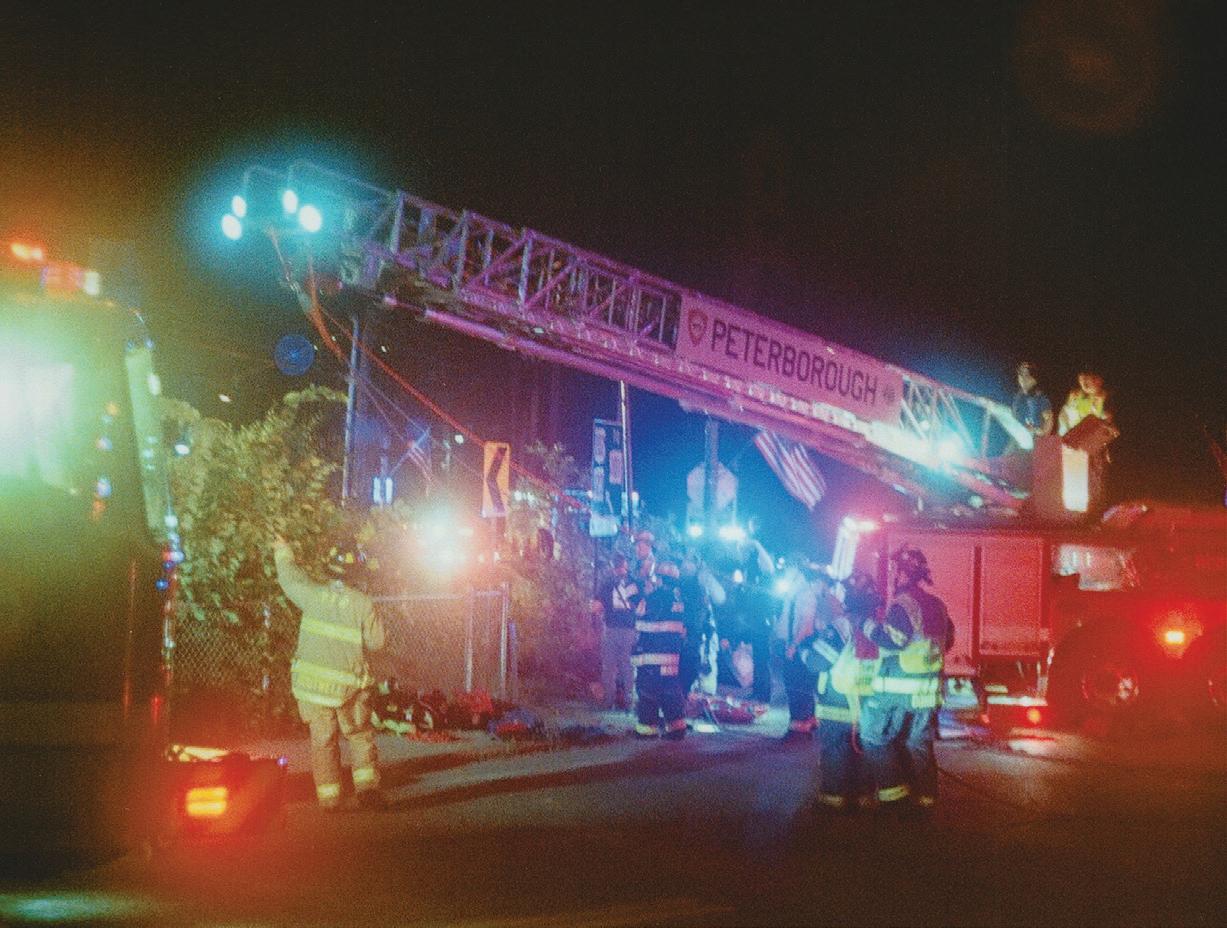
(below) This sort of spot news situation - in even more extreme low light - is an example of steady handholding being able to get pictures during a local roadside emergency rescue operation. Again, it's the Ille with Summar f/2 combination. Started at 1130th, then hanged to 1/15th for this picture, trying to dig a little deeper into the shadowed areas. The fire truck's extended ladder was reaching out over a short cliff in order to lower personnel down, and then winch a litter with the relatively uninjured driver up from where his car had gone over into a stony brook. Included in the dim scene are some very bright light sources, and this particular Summar lens - coated, but not super clean, as can be seen by the halos around the bright lights - was still able to give usable image quality wide open. The color negative film was then able to combine these extremes of illumination into a single frame with no manipulation or post processing needed.
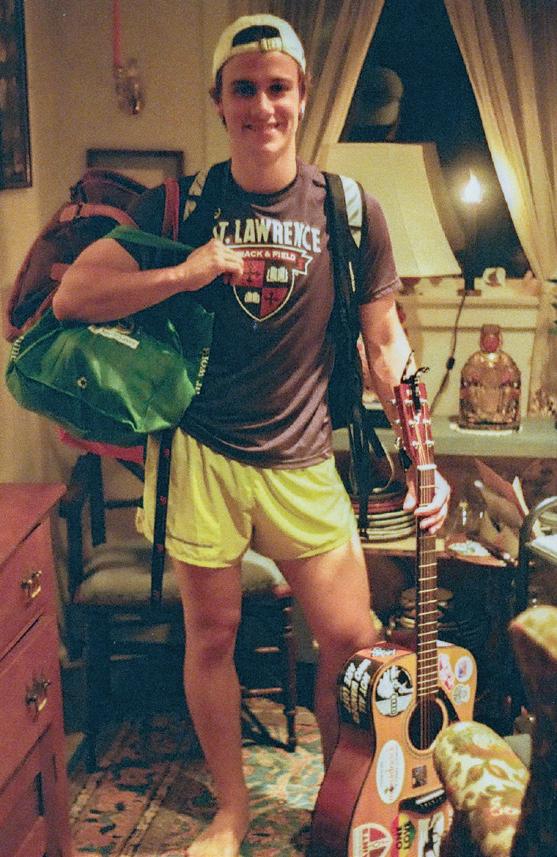
(left) A recent low light snapshot of a grandson in his college regalia, just packed and leaving for the next semester. It was quickly made in dim living room light using a Leica Ille with 50mm Summar at a 30th at f/2, quickly pulled from its belt case. The smaller Summar is favored because the full frame is unobstructed in the camera's viewfinder. Film was Kodak Ultramax ISO 400 color negative.
by BILL ROYCE
USING SILVER EFEX PRO II
Silver Efex Pro II (SEPII) is a market-leading monochrome conversion plug-in that works well with both Lightroom and Photoshop. This article discusses how you can launch this program from both Lightroom and Photoshop CC and also covers how you can return to the application to start where you left off with additional edits.
If you are editing your images in Lightroom, you will need to launch SEPII by doing as follows:
1. Select the image you wish to convert using SEPII.
2. Right click on the image and select Edit In > Silver Efex Pro
3. Select one of the following in the dialog box: Edit a Copy with Lightroom Adjustments
. Edit a Copy
Edit Original (This option is not selectable for raw files.)
4. Select Edit
5. After SEPII launches, complete your editing with the presets and edits as desired.
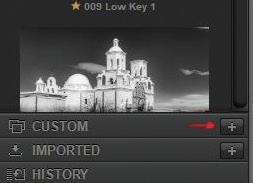
6. Before pressing the Save button on the lower right, to preserve most of the edits you made, select the “+” button on the CUSTOM panel on the lower left side panel of the PRESET LIBRARY column. (Figure 1)
7. Name the custom preset that you create and press OK. This preset has recorded all your edits except the Control Points you added to your image.
8. If you wish to return to the edits you have made on this image proceed as follows:
Select the original (color) image you edited the first time (not the edited version).
Launch SEPII as discussed above and select Edit a Copy with Lightroom Adjustments.
Once SEPII has launched, in the CUSTOM panel of the PRESET LIBRARY, click on the preset you previously created
. This will automatically include all your edits previously recorded in your custom preset. Note: selecting a preset moves the editing sliders in the adjustment panels on the right side. These sliders can then be moved to add to or revise previous edits.
When the new revisions are complete, select SAVE. The revised image will have a “-Edit” appended to the file name.
If you start with Photoshop CC (the full version) you should proceed as follows:
1. Open the image in Photoshop (PS). If the image is a raw image, you will need to select OPEN IMAGE once Adobe Camera Raw is open.
2. From the drop-down menus at the top of the PS window, select Filter > Convert for Smart Filters. This will convert the open image layer to a smart object.
3. Select Filter > Nik Collection > Silver Efex Pro 2. This will launch SEPII as a smart filter.
4. Edit the image using SEPII and select OK to save edits.
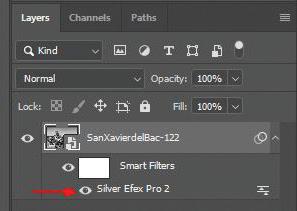
5. In the layers panel Silver Efex Pro 2 will appear under the smart object as a smart filter. (figure 2)
6. If you wish to begin editing again in SEPII, simply double-click the smart filter and SEPII will launch again exactly where you left off. In contrast to the Lightroom discussion above, all edits including Control Points will be preserved and be editable when using SEPII as a smart filter.
7. When you save the image, save it as a .PSD (Photoshop document) or a .TIFF to preserve the layers so you can return to the image later and start SEPII where you left off.
8. If you save the PS image as a jpeg, all layers will be flattened and cannot be individually accessed again.
In summary, it is possible to add to SEPII edits later by re-launching the application.When launching SEPII from Lightroom, you must create and later use a preset to duplicate basic edits. The preset you create when launching from Lightroom does not record Control Points, so those edits must be manually added or re-created after applying the preset. When editing in Photoshop CC, converting the image to a smart object and adding SEPII as a smart filter allows you to re-launch SEPII exactly where you left off.
(figure 1)
(figure 2)
BOSTON
THE LHSA ANNUAL MEETING • OCTOBER 2019
by JUSTIN SMITH & HAMILTON HOLLETT
Editor’s Note: LHSA – The International Leica Society held its annual convention in Boston, from October 18-19, 2019. Justin Smith and Ham Hollett, two of LHSA’s newest members, share their impressions of the meeting.
Justin: I’m Justin Smith and I’ve been lucky enough to turn my childhood passion into my career. I’ve been shooting photography for a living my entire adulthood, mostly with a LEICA. About 3 years ago, my best friend Hamilton Hollett became interested in photography and I quickly noticed that he wasn’t just another millennial with a camera. He was studying the art and he was practicing out in the real world for himself, not for “likes” on social media. Seeing how serious he was, I recommended that he purchase some serious gear. Thus, here we are a year later at our second LHSA meeting in Boston, Massachusetts.
Ham: Hi. I’m Hamilton (Ham) Hollett, and I attended my first LHSA meeting back in April of 2019. It was an awesome experience. Since that time, I married my fiancé a couple of months ago, and while I wanted to attend the Boston trip, funds were tight after the wedding. Lo and behold, my wife with the help of my best friend Justin, secretly set me up with a flight and tickets to the LHSA fall meetup in Boston. I’m a lucky guy.
[ DAY ONE ]
Justin: We departed Charlotte and were greeted upon arrival in Boston with a “Bomb Cyclone” (Side note: Don’t use the term “Bomb Cyclone” in the airport) . We had some time to kill before the meet and greet that night, so we did what any Leica enthusiast would do: dropped off our bags and headed to the
Boston Leica store to get a peek at the cases before our peers! Upon entering the store, we were immediately greeted by the staff, Enrique and Sawyer. They showed us around and talked to us about our plans for the weekend, gave us a couple of recommendations for shooting locations, and then showed us the gallery, which was incredible. We were able to leave without purchasing anything (more on that later), and we headed to their recommended lunch spot, Parish, and ate some absolutely ridiculous sandwiches. If you are ever in Boston and are looking for a great lunch spot, this is it. After lunch and a quick walk around Beacon Hill, we attended a short meet and greet on Thursday night. Afterwards, we headed to Chinatown to grab a hot pot before turning in early. We snuck in a few shots along the way.
[ DAY TWO ]
Ham: Day 2 began with us waking up super early to be the first to hit the Leica-on-loan table where Justin snagged the new 75 Noctilux for the day. He was pretty stoked. Justin uses the 50 Noctilux regularly but this thing is a beast. I picked up a 50 Summarit, something I’ve never tried before. That lens was crazy sharp for how tiny it is. Our morning sessions consisted of talks from Adobe Instructor Bill Royce, New Jersey’s Leica Rep, Antonio Di Benedetto, and LHSA President Alan Weinschel. Bill went over how to use Adobe Camera Raw to quickly and easily edit your photos. Antonio covered some of Leica’s upcoming products and shared some of his long-exposure work. LHSA President Alan Weinschel then gave a “state of the union” regarding LHSA. We wrapped up the morning sessions and Justin began testing the 75mm. We snagged lunch with a couple of fellow LHSA members, Bill Royce, James Rice, and Keith Sbiral. The afternoon sessions began with an LHSA history lesson, and what better way to
learn about the history of the LHSA than from one of its founding members, Jim Lager. Jim’s stories were inspiring, and his collection of Leica memorabilia would make any Leica nerd jealous.
Justin: After finishing up, we attended a cocktail hour at Leica Store Boston. After an internal battle, Ham pulled the trigger on a pretty clean Summicron 50 that was in the used case. Seeing my best friend purchasing his first Leica lens is right up there after the birth of my children, my wedding and attending my first Prince concert. Something also caught my eye, but I’ll get to that later…
[ DAY THREE ]
Justin: We began our meeting with a discussion on the photography of Ed Keating by the man himself. As someone who got their start in journalism, listening to Mr. Keating was an honor. He was followed by Sean Reid who showed us some of his images following Motorcycle Rallies. Sean’s work documented his fascination of motorcycle weekends across the country and how they illustrate the culture clash and current political climate. To close out the day, the lights went off and a Photography God appeared. Costantine Manos, a Magnum photographer, showed us a small collection of his life’s work. Absolutely stunning. He opened his presentation with the first images he took of Daufuskie Island, South Carolina, 1952 and jeez, I just don’t have the words. Just do yourself a favor and click the previous link! Mr. Manos continued by showing the transition of his work from black and white into color.
If you remember a moment ago, I mentioned that something caught my eye at the Leica store. It was an M6 Classic at a hell
(above) Images by Justin Smith. From left to right: LHSA President Alan Weinschel, Jim Lager, Doug Drumheller & Stanley Shire. (opposite page) Images by Justin Smith.
of a price. Between Mr. Keating, Mr. Reid and Mr. Manos, my gut, my heart, my brain, all of it said pull the trigger and I did. After the class and the third Leica Store Boston purchase, we departed for the Boston Harbor. Once we were on the Harbor Cruise, I tried to concentrate on capturing images of my fellow LHSA members. I snapped a couple of images of other passengers and landscapes as well. My focus was playing with the light. I really enjoy harsh, direct light. It creates a tension and emotion that resonates with me on a personal level and I try to showcase that through my imagery.
Ham: I used the Harbor cruise as an opportunity to get familiar with my new Summicron. The upper deck was pretty busy, so I snapped a couple shots of the interior and simultaneously managed to find the bar where a Boston Lager helped me find my sea legs. After the cruise we had an evening banquet to close out the trip. After a quick outro by our amazing host and Executive Director of the LHSA, Richard Rejino, Alan Weinschel, LHSA President, followed with his closing statement, and then the recipient of the 2019 LHSA Pho-
tography Grant Scott Brennan, showcased his ongoing project, Indigenous Autonomy and Resistance in Mexico. Scott’s work was inspiring to say the least. After Scott’s presentation, again… the lights cut and Andreas Kaufmann (the owner and chairman of Leica) closed out the meeting with a presentation of what’s ahead for the brand in the years to come.
As two of the youngest members of the LHSA, we are beyond blessed and grateful to be a part of this community and to have the support of our fellow members. Justin and I value the inspiration, the community, and the friendships we have made through this society. With all this being said, we highly recommend you looking into the LHSA. You don’t have to attend the meetings, you don’t even have to own a Leica. But what you get is access to an amazing network of passionate photographers just like you. For more information on the joining the LHSA, visit www.lhsa.org.
(this page) Images by Hamilton Hollett.
Ernst Haas, Leica & Me
by TOM CAMPBELL
article will serve the dual purposes of explaining how I came to use Leicas, but more importantly, to remind us of the centenary of Ernst Haas’s birth on 2 March 2021, and why we should be interested.
When I opened a copy of his landmark book, The Creation , published in 1971, my jaw dropped involuntarily, and it stayed that way as I perused it. Of course, I bought it. Seeing those photographs that Ernst Haas took with Leicas, and the photo on the rear cover fold by Gigi Minke of him holding a Leicaflex SL with 400/6.8 Telyt slipgrip lens, I knew that eventually I would trade my Nikon kit for Leicaflexes and their lenses. After finishing college, doing two years in the Peace Corps and a year of grad school, I finally bought my first Leicaflex SL and 180/3.4 Apo-Telyt lens. I started filling out my lens collection after I entered Naval Officer Candidate School. Eventually, I carried two or three reflex cameras and various lenses from 21mm to 400 mm focal lengths. The kit changed with newer camera models and some upgrades in lenses for over thirty years.
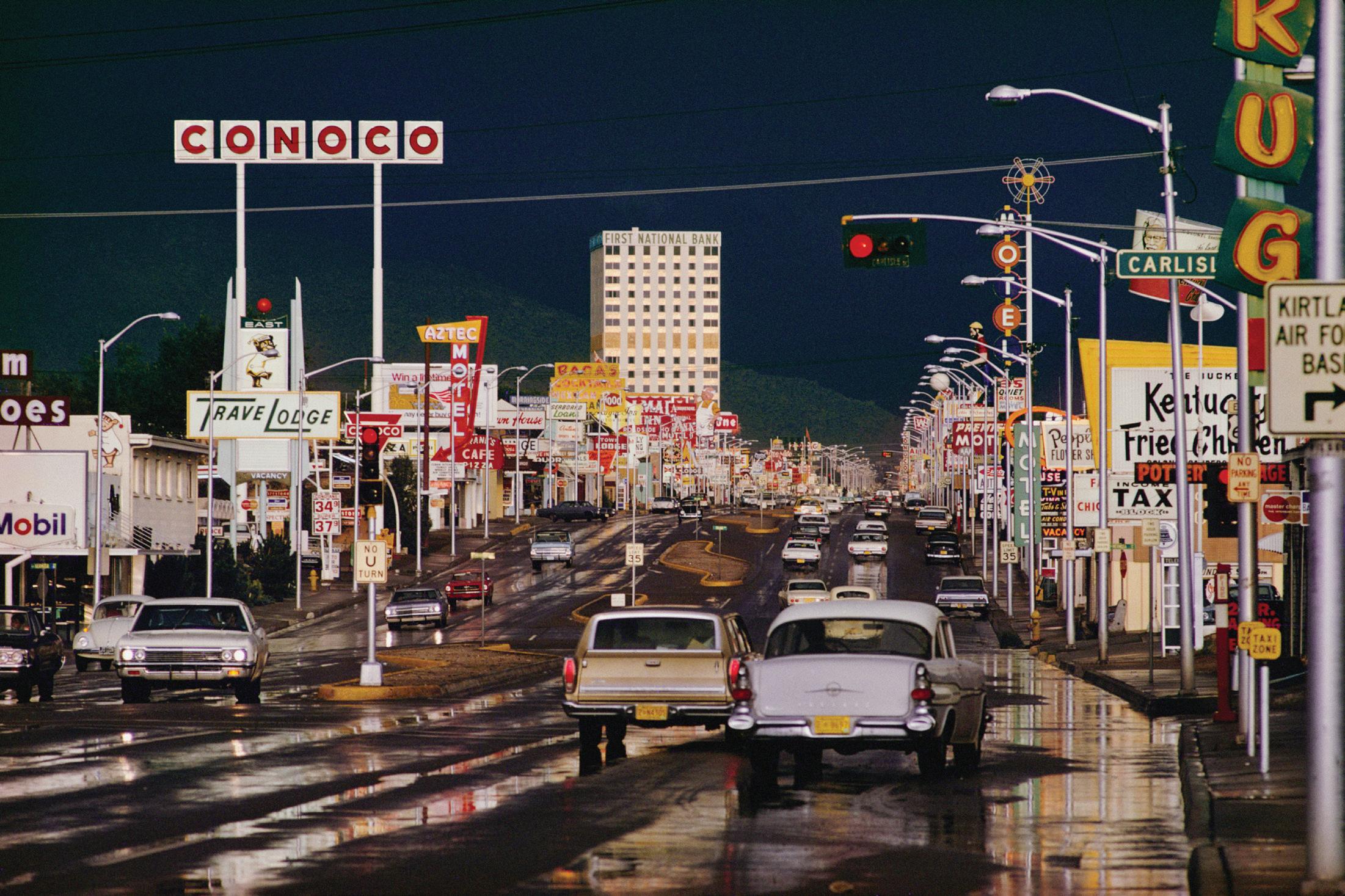
Route 66 Albuquerque, New Mexico 1969
Now to move on to Ernst Haas, in my mind, a singular Genius of Seeing, and, for all intents and purposes, the inventor of small format color photography as we know it today.
Haas grew up in Vienna, Austria and experienced the aftermath of World War I (WW1), the Great Depression and rise of Fascist and National Socialist politics, and World War II (WW2) and its aftermath. With some Jewish ancestry and having stayed in Austria throughout the Hitler years, his education, world view, and creative development were heavily influenced by all that happened during those years. He was well acquainted with the changes in the visual arts that erupted after World War I as Cubism, Favism, Dada, and all of the European abstractionist movements, to Surrealism. He made his first abstract photographs before the end of WW2. While teaching photography after the end of WW2 at an American Red Cross post, he realized a link between poetry and photography and also made the connection between photography and Surrealism from looking at photographs by Edward Weston in the post library.
the USA. He continued to use B&W well into his career in the USA for portraits, films, essays, advertising, and other projects.
Sometime shortly after arriving in the USA and basing himself in New York City (NYC), he started experimenting with Kodachrome I, an ISO 8 film, in his Leicas. This is where and when he created a new direction in the History of Photography.
"ERNST HAAS, IN MY MIND, (IS) A SINGULAR GENIUS OF SEEING, AND, FOR ALL INTENTS AND PURPOSES, THE INVENTOR OF SMALL FORMAT COLOR PHOTOGRAPHY AS WE KNOW IT TODAY."
As nascent artists throughout the 20th Century had been inspired to discover new creative directions in the skyscraper canyons, the qualities of light, movement, juxtapositions, and other visual stimuli in NYC, so too did Haas with his Kodachrome filled Leicas. In two years, in 1953, LIFE published its first ever color photo essays, “Images of a Magic City" (New York) in two issues, that reset how generations of amateur and professional photographers would think about color photography and fine art. LIFE would follow with another double essay on Motion, and several other essays on Paris, Venice, and many others. Other magazines published more essays and free-lance work.
After WW2, Haas acquired a Rolliflex camera, and his reputation took off with his documentation of returning Austrian prisoners of war, published in Heute and LIFE magazines in 1949. He joined Magnum at Robert Capa’s invitation. In close concert with and encouraged by Capa, Cartier-Bresson, and Werner Bischof, he continued developing his own photographic vision and started using Leicas.
His first trip to the USA was in 1951 on assignment with Magnum and resulted in his being appointed vice-president of Magnum’s American operations. Up to this point, most of his work was black-and-white (B&W), although there is some evidence he experimented with color film before coming to
Along with Eliot Porter for scenic and nature photography, Haas taught photographers how to see artistically and produce images that thentofore had been the realm of painters. Color photography before Haas had been pretty much relegated to snap shooting, fashion, and National Geographic-type reportage. The manner in which Haas visualized his subjects, used the film frame, and manipulated Kodachrome created new standards of what was possible in photographic art. He redefined what it meant To See. Edward Steichen recognized Haas’s break-through photography as Fine Art and gave him the Museum of Modern Art’s first ever solo color photography exhibition in 1962.
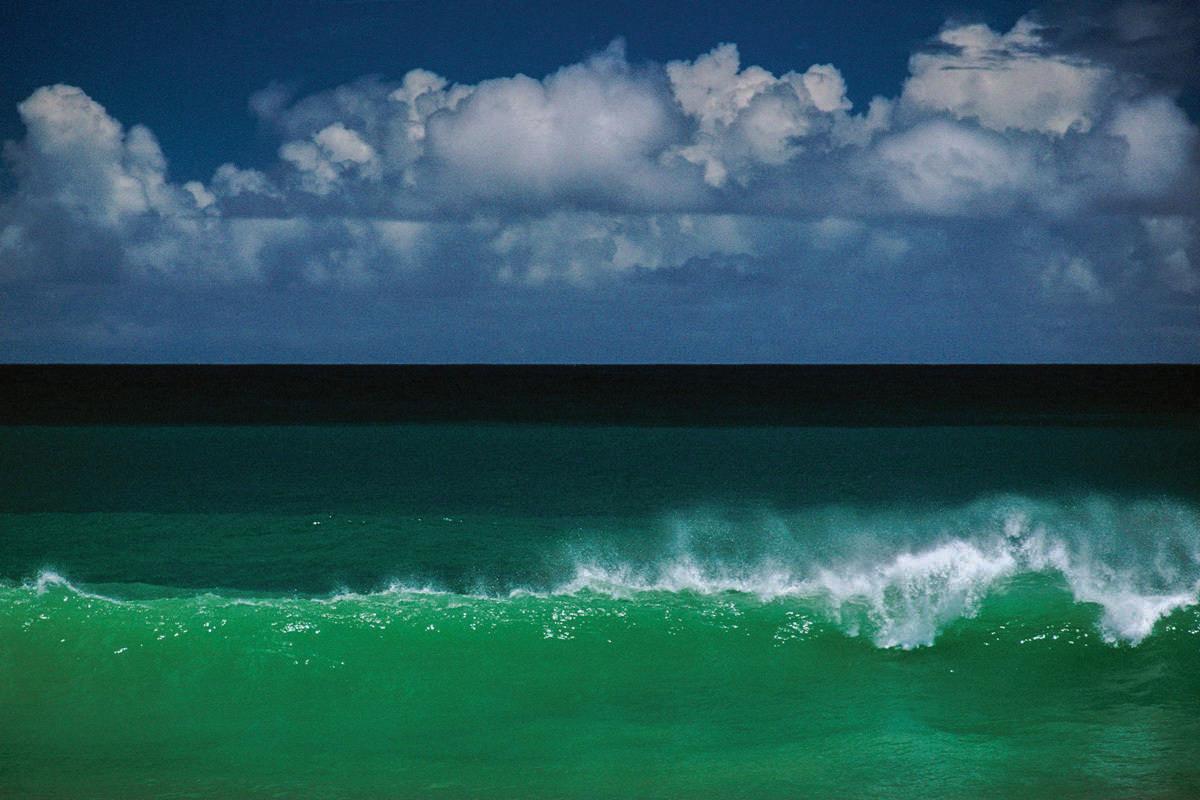
Tobago Wave, Caribbean 1968
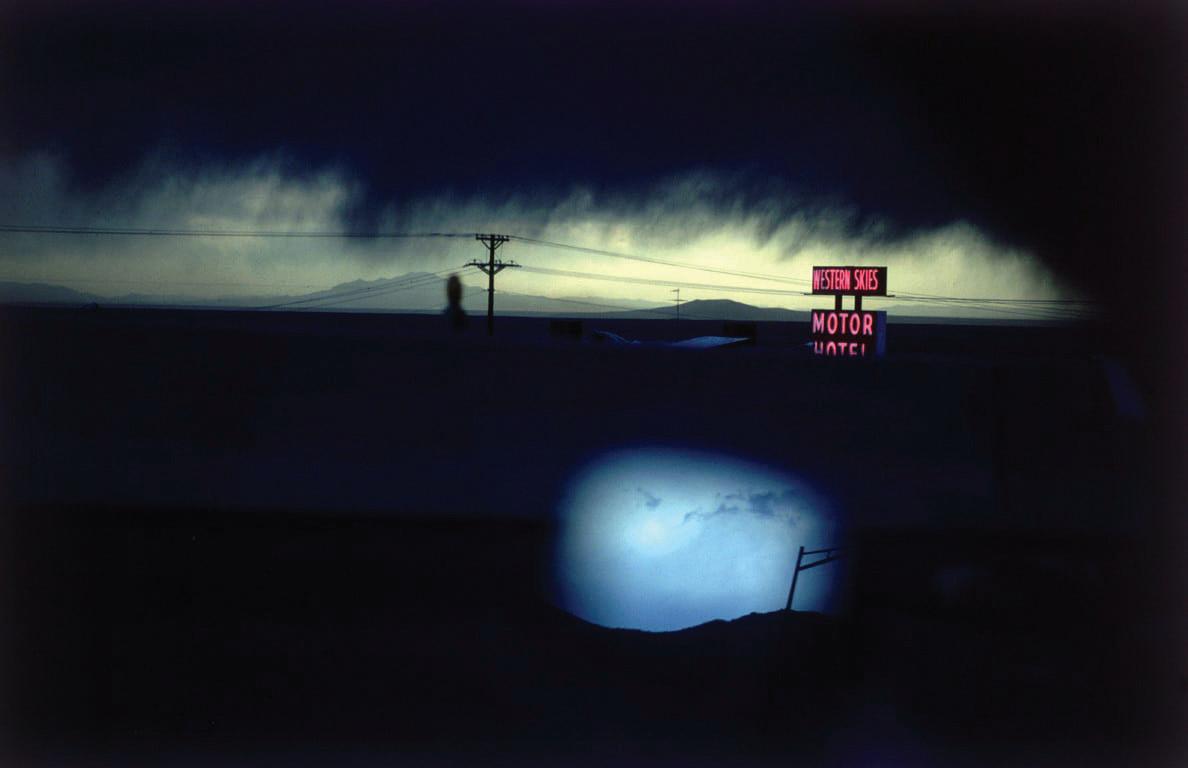
Western Skies Motel, Albuquerque, New Mexico 1977
Haas’ creative contemporaries in NYC were the “New York School” of painters, sculptors, poets, and playwrights, and another “New York School” of photographers, who mostly produced B&W social reportage. Haas understood the European and Abstract Expressionist arts and, using color, went in a very different direction from those photographers. He brought all of those ways of thinking and seeing into his photography and made them his own: his famed film stills, Marlboro Man advertisements, essays, books, and, most of all, his personal work, best shown in Colour Correction , published by Steidl in 2011, sold out, and reprinted in 2016.
Color Correction is one of the most important photography monographs published in several decades. This book shows an aspect of his visualization not documented before. Haas’ eye could free associate anything into something else. Using a slow shutter speed, he made a ballerina’s continuous pirouette into a vertical gamma ray emission from a black hole’s event horizon. A costume jewelry display becomes a Hensonian puppet strangled by a golden snake. Suds going down a sink drain are no longer banal but become an intriguing abstract design.
My generation, the Post War Baby Boomers, were probably too young to have found inspiration in Haas’ magazine essays of the 1950s. But The Creation was certainly one of our sources of inspiration to take up photography and to use the viewfinder in the modern way.
Haas continued to publish and garner awards, among which are the Hasselblad Award and the Leica Medal of Excellence in 1986, and his induction into the International Photography Hall of Fame and Museum in St. Louis in 2016, thirty years after his untimely death. His children, Alexander and Victoria Haas, manage the Ernst Haas Estate and his archive. They and several curators are working in that archive to document further how Haas used his inner eye and his impact on today’s visual artists.
I recommend Ernst Haas be inducted into the Leica Hall of Fame in 2021, not only for what he accomplished, but also for Leica’s role in facilitating those accomplishments.
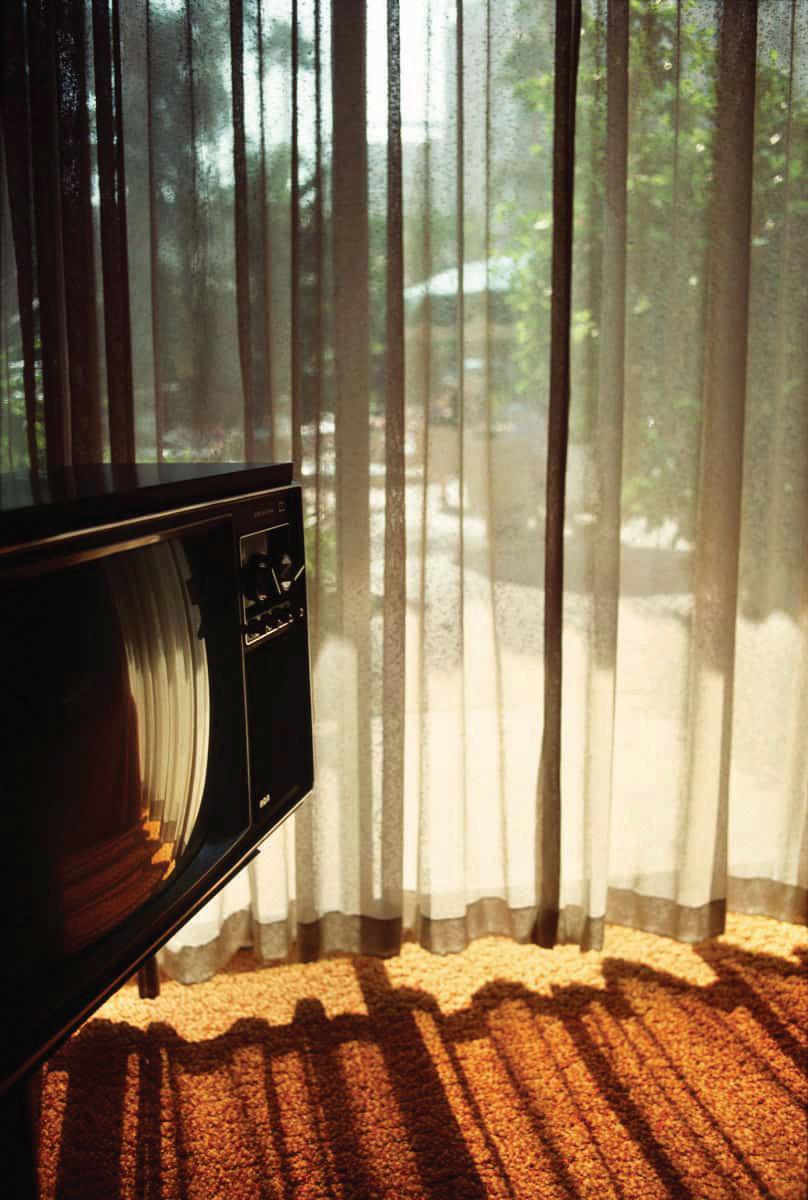
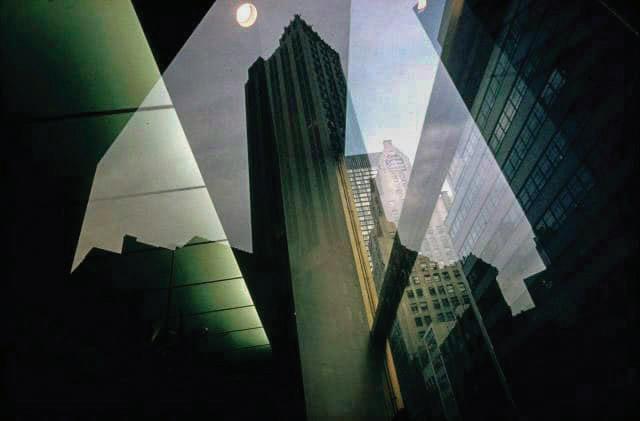
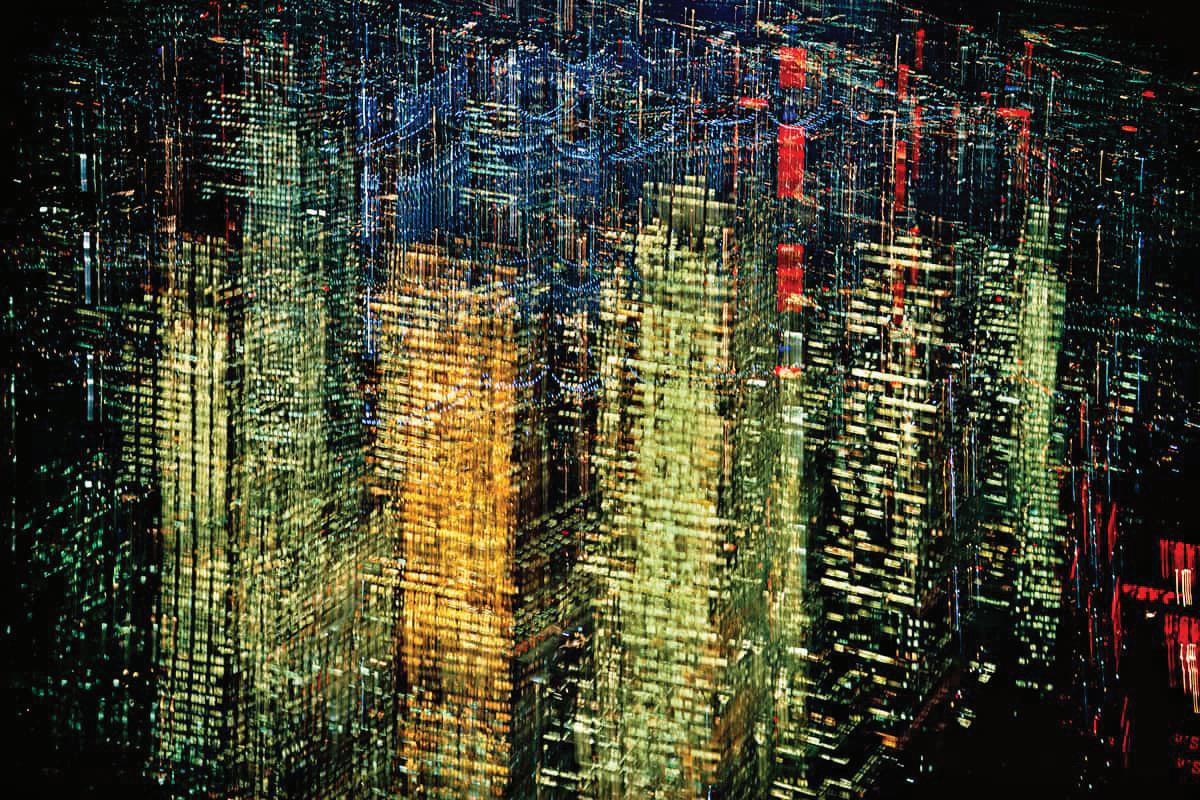
(left) California 1978 (right, top) Reflection, Revolving Door, NY 1975 (right, bottom) Lights of New York City, NY 1972
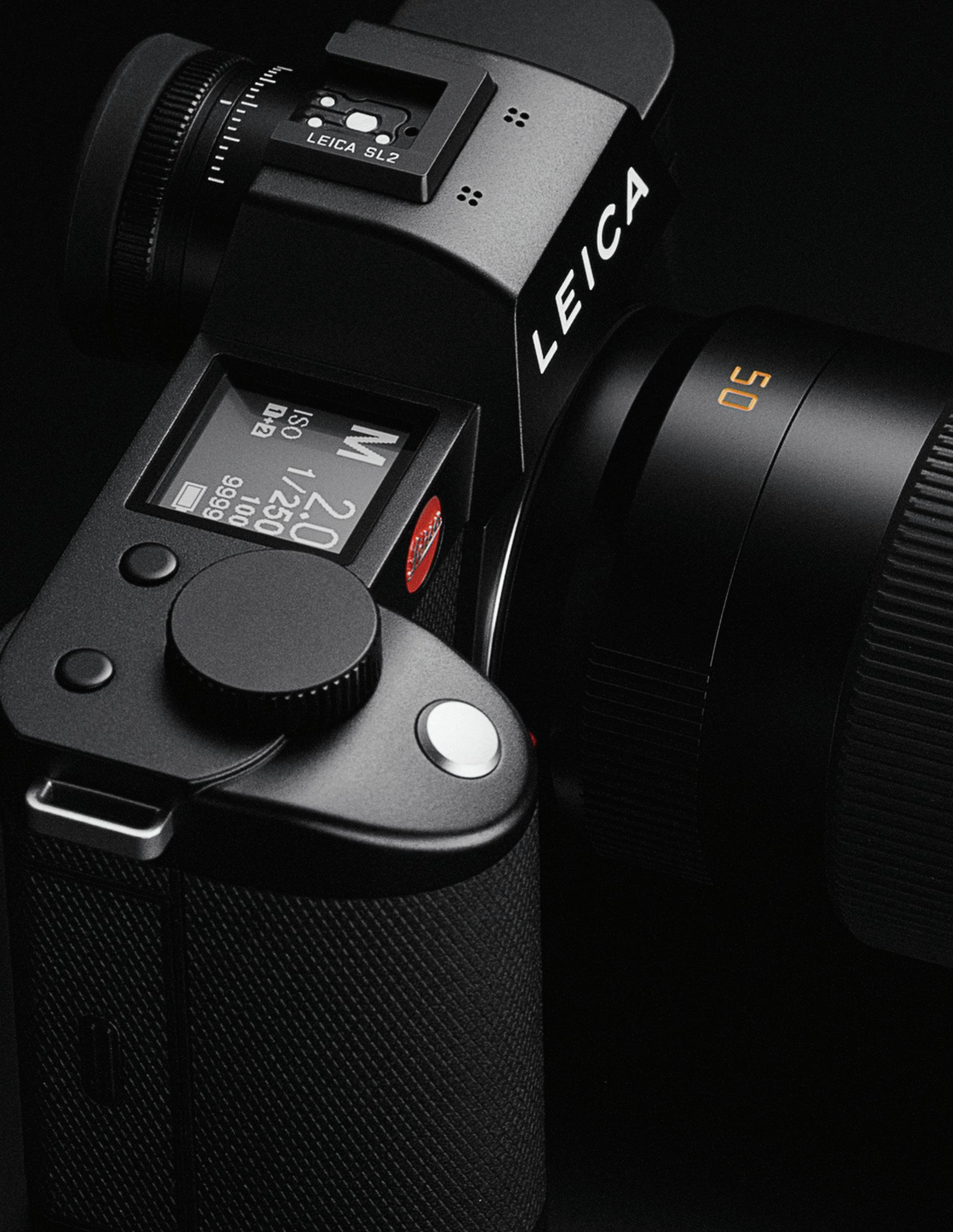
THE LEICA SL2
by JONATHAN SLACK
SOhere we have Leica’s upgrade to the SL, or so I thought, but it isn’t quite that simple.
I have been looking back at my Lightroom catalogue and it seems that I first shot with the Leica SL on June 1, 2015. Since then, I’ve shot lots of events, seven weddings and hundreds of landscape, environmental and wildlife images (and even some street photography)
Nearly four and a half years on, my camera has been through hell and high water, rain and sweat and dust; it’s been banged against walls and pulled onto the floor by children. It has performed flawlessly, and I know it better than any camera I have ever used. I have no idea how many pictures I’ve taken with it, but I have around 20,000 saved images (and I’m really very brutal about culling) . I would estimate well over 200,000.
The SL still fulfills all my requirements, and I’m still in love with the interface. So why would I want something different, and let’s be honest - how often does one really NEED 47 mp. Added to which the strap lugs on the SL2 stick out, and it only has three buttons on the back (rather than the four on the SL) . And they have writing on them! Worse than that, they’ve replaced the beautiful Bauhaus brutalism with a kind of soft edged version, all the edges smoothed out and finessed.
But it’s my job to test these cameras, so I have, and my thoughts are below. As usual, I should stress that my job is to test cameras, not to write reviews, and if I find something wrong, then my duty is to tell Leica about it (not you) ...And I certainly do tell Leica! Having said that, I would never knowingly miss out a fault (like the sticking-out strap lugs) , and I will do my very best to convey my honest feelings about the camera. Leica never tries to influence my writing, although they do have the opportunity to fact check what I write.
Sadly, I’m not a video photographer, but I’m going to spend more time on the video features as they seem to be much more significant in the SL2.
I really hope you enjoy this article. I have perhaps been a bit more descriptive than normal about the functions / operation and menus as I feel that there are quite a lot of innovations and that they’re worth the time and effort, and I’m hoping that the article will be a good companion for those who have just received the camera (or are waiting for it) .
BODY & DESIGN
The design of the SL was a bit ‘Marmite’, some people (including me) loved it for its functional brutality and nod to the Bauhaus. Others were not so impressed and simply thought
it was ugly (and uncomfortable) . Many thought it was too big and heavy and there was some discussion that the SL2 might be a lot smaller:
• The SL is 147mm wide, 104mm high and 39mm deep, weighing 860 grams
• The SL2 is 146mm wide, 107mm high and 42mm deep, weighing 928 grams
So it actually isn’t any smaller than the SL, although it does seem to look quite a lot smaller. The slightly higher viewfinder lump and a deeper grip, together with the softer lines make it kinder on the eye and feel lighter in the hand! I don’t think the actual 68 grams weight difference is going to make much difference to anyone (weights include battery)
I’m aware that some people felt that the sharp edges of the SL made it difficult to carry for long periods. Personally, I never did find this a problem, but Leica has addressed these concerns with the SL2. The corners are now slightly rounded off and the grip is deeper, with an indent on the inside for the fingers to rest. It definitely doesn’t hurt so much when I whack my hip with the bottom corner! The SL2 is more conventional looking than the SL and I think that most people will consider it to be a handsome camera.
CONTROLS & ERGONOMICS
I have to confess to loving the four button rear layout on the SL. However, it’s clearly sensible to standardise the interface across all the Leica system cameras, and the three button layout of the SL2 is another step in this direction.
The Short Press / Long Press methodology of the CL and the SL has been retained, but with the SL2 there doesn’t seem to be a menu option to limit the long press option for the individual buttons (all options are shown with the Long Press) . At first this seemed like a step backwards, but actually it isn’t something one wants to change all that often, and it’s nice to have all the options available without having to go back into the Customize Menu.
There are six function buttons. I currently have them set as follows:
• The rear Fn button toggling Info Display (like the bottom right on the SL).
• The top left Fn button is set to Exposure Metering.
• The top right Fn button is set to ISO.
• The front top Fn button is set to Magnification.
• The front bottom is set to AF Mode.
• The EVF button is set to change EVF/Display mode (still the best in any camera I've seen).
THE CAMERA BACK Superficially the rear of the SL2 looks very similar, but now there are three buttons on the left of the display marked:
• Play • Fn • Menu
The Play button works the same way as the SL, the Fn button is described above.
The Menu button has three press settings:
• 1 st Press brings up the Status Screen (more later) .
• 2 nd Press brings up the Favorites Menu (configurable in the menu section)
• 3 rd Press takes you to the Main Menu (more later) .
If you have been in the main menu in the current session then the 3 rd press will take you to the last selected option, if not it takes you to the first page.
There are no buttons on the right hand side, but just like the SL there is a dedicated EVF / Display mode selector button and the same excellent joystick.
The rear Display / LCD panel has had its resolution increased from 1,040,000 to 2,100,000 pixels and is touch screen as per the SL. The EVF has also had a hike in resolution to 5.76 mp at 120 frames per second (the SL was 4.4 mp ) . The magnification is now 0.78x. This is a significant improvement all-round and Leica seems to have reduced the contrast a little so that the shadows don’t block out so easily.
THE TOP PLATE The SL2 has lost the plastic GPS lump on the left hand side of the viewfinder, and this is now plain metal. The right hand side has the same 1.28-inch excellent monochrome LCD (but this still shows the Exposure Compensation as + or - rather than a specific value. The top plate still has two function buttons (but they are black rather than silver)
THE FRONT PLATE The SL2 has two function buttons aligned vertically, rather than the single button on the SL - which makes up for the loss of one of the four buttons on the back plate.
THE RIGHT SIDE The SD card door seems to be the same as that on the SL (Nothing wrong with that!) . However, the SL2 now supports two UHS II type SD cards. You can choose various options for the second SD card (Backup / JPG / Continuation).
THE LEFT SIDE There are two rubber covers, the top cover reveals Audio In and Audio Out 3.5mm jack sockets together with an HDMI 2.0b socket. The small lower socket has a USB 3.1 Gen 1 Type C (USB-C) socket which can also be used for charging the camera.
THE BASE PLATE The base plate is not identical to the SL due to a different body construction. The shape is slightly different and the positioning and construction of the contacts is different due the space limitations inside the camera. This means that there is a different handgrip for the SL2.
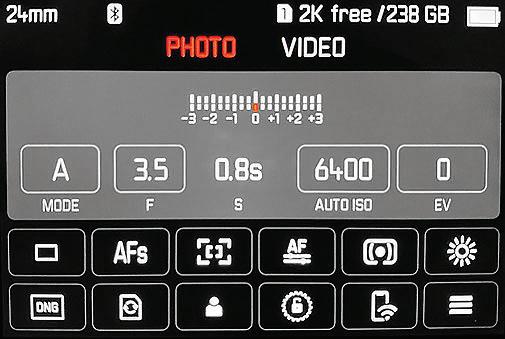
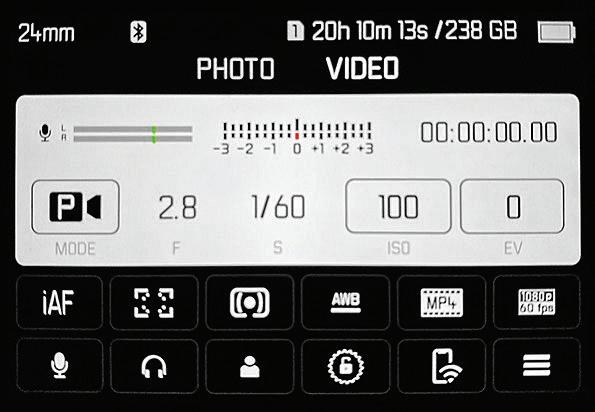
THE STATUS SCREEN
The Status Screen is a quick menu which comes up automatically on the first press of the menu button. This is really nicely thought out and has links to all the most frequently used functions on the camera. It also controls switching between Photo and Video.
The top part of the screen shows the current settings whilst the lower section is touch enabled. You can use touch to pick the settings, but I’ve found that it’s better to tap the function you need and then select the option using the rear dial. Alternatively, you can use the joystick to navigate the menu and select the options. Each of the settings in the lower two rows has a description of the chosen setting above it.
IN PHOTO MODE
The options in the top row are:
• PMAS Mode
• Shutter Speed
• Exposure Compensation
• Aperture
• ISO
The Shutter Speed and Aperture become enabled or disabled depending on which PMAS mode is chosen: Program, Manual, Aperture Priority or Shutter Priority.
• File Type (DNG and/or JPG: Large 46.7 mp, Medium 24 mp or Small 12 mp )
• User Profile (Default plus six User Profiles with up to ten character names.)
• WiFi / Bluetooth connection shortcut for connection to Leica Fotos App.
Some of these options are worth further description.
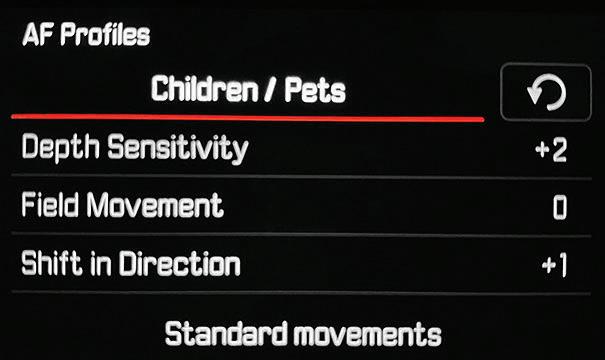
(top) The Status Screen in Photo Mode (center) The Status Screen in Video Mode (bottom) The AF Profiles Screen
(previous page, top) ISO 100, f/2.8, 1/5000 sec.
Sigma 14-24mm F2.8 DG DN Art
(previous page, bottom) ISO 100, f/2.8, 1/640 sec.
Leica APO-Summicron-SL 75mm f/2 ASPH
DRIVE MODE Options are:
• Single Shot
• Continuous - Low Speed, 3 fps
• Continuous - Medium Speed,6 fps
• Continuous - High Speed, 12 fps (No AFc, AE or AWB)
• Continuous - Very High Speed, 20 fps (Uses Electronic Shutter - No AFc, AE or AWB)
• Self Timer, 2 sec.
• Self Timer 12 sec.
• Interval shooting • Exposure Bracketing
FOCUS MODE Options are:
• iAF (Intelligent AF) (Switches between modes depending on subject. )
• AFs (AF Single) • AFc (AF Continuous)
• MF (Manul Focus)
AF MODE Options are:
• Multi Field
• Field
• Tracking
• Spot
• Zone
• Face / Eye Detection
AF PROFILES This is an interesting new concept for AF. There are a series of Focus Profiles, each of which can be configured to suit your individual requirements.
The profiles are:
• Children / Pets (Standard Movements)
• Teamsports (Fast and unexpected change of direction.)
• Runner (Constant Movements)
• Wildlife (Sudden appearance and change of direction.)
For each of these four profiles you can change three components:
• Depth Sensitivity • Field Movement
• Shift in Direction
Each component can be shifted from 0 (Fixed) to + 2 (Responsive). I’ll deal with the implications of these settings in the focusing section below.
IN VIDEO MODE The options in the top row are:
• PMAS Mode
• Shutter Speed
• Exposure Compensation
• Aperture
• ISO
The Shutter Speed and Aperture become enabled or disabled depending on which PMAS mode is chosen (Program / Manual / Aperture Priority/Shutter Priority).
• Resolution, Formats & Frame rates (See video section below.)
The options in the bottom row are:
• Microphone Level • Headphone Volume
• Lock • Main Menu
• User Profile (Default plus six User Profiles with up to ten character names.)
• WiFi / Bluetooth connection shortcut for connection to Leica Fotos App.
Clicking the Menu button a second time will bring up a userconfigurable Favorites Menu which works in just the same way as the SL (if one has been configured ). Otherwise it will take you straight to the six-page menu section, as will a third click if it has been configured.
THE MENU SYSTEM
One of Leica’s unique selling points is their constant effort to keep menus simple, and to offer what you need rather than allowing menus to expand into impenetrable and complicated mazes. It really is a unique point as well - other manufacturers' menus are either more or less well designed, but without exception they are huge and confusing.
Having worked with them for 10 years, I realize that it’s very difficult to listen to customers on the one hand and to keep things simple on the other. Many other companies pride themselves in listening to customer requests, and implementing them. This might seem good theoretically, but it does end up with too many options, some of which are contradictory, and many others badly thought out.
I get many many emails from photographers requesting their own personal feature, some of these ideas are good, lots of them reflect on their not having fully understood the options already available and even more suggest that they haven’t applied lateral thinking to their particular issue (This is a speciality of mine!)
However, Leica does listen - and they do implement sensible changes. For example, the two most commonly requested features I’ve had with respect to the SL are: the ability to switch off acceleration for manual focus on L-Mount AF lenses, and the option to switch off Long Exposure Noise Reduction (Dark Frame Subtraction). Both of these have been implemented in the SL2.
There are six pages of menu options - the layout is very similar to the SL, CL and M10. I’m not going to go through all the details (I’m sure the manual will do a better job.) but as with the Status Screen above, I will go into a few options which caught my attention.
AUTO ISO SETTINGS Leica has always been very good with Auto ISO settings, and I’ve always been very fond of the option to set the maximum exposure time as 1 / focal length , 1 / (2 x focal length ). The SL has options:
• Maximum ISO
• Maximum ISO with Flash
• Shutter Speed Limit
• Shutter Speed Limit with Flash
What has changed is the Shutter Speed limit - the options are a list of Shutter Speeds and Auto. The argument is that with In-Body Image Stabilisation the Auto option will choose the best shutter speed in any situation, but of course, IBIS cannot judge the amount of movement in the subject. I would very much like to see the 1/f and 1/(2f) options back again, having found them invaluable when shooting weddings and especially concerts.
CAMERA SETTINGS This option is on the fifth page of the menu and has some interesting changes. The options (which cover three pages) are:
• Capture Assistance (with sub menu)
• Touch AF in EVF (On/Off)
• AF Assist light (On/Off)
• USB Charging (On/Off)
• EV Increment
• USB Mode (Mass Storage, PTP or Select on Connection)
• Edit File Name (Irritatingly, like the SL, you can only change the first letter.)
• Touch AF (On/Off)
• Focus Limit (Macro)
• Power Saving (with sub menu)
• Lens Profiles
• Distance Unit
• Date & Time (with ‘Via Smartphone’ option)
• Reset Image Numbering
CAPTURE ASSISTANCE ...is interesting. There are four separate info profile settings, each of which can be switched on and off, and each of which can contain any of the following (with On/ Off switches):
• Info Bars
• Clipping / Zebra
• Level Gauge
• Grid
• Focus Peaking
• Histogram
I think this is useful and elegant, however, of course, you have to assign one of the function buttons to “Toggle Info Levels” as the camera no longer has a dedicated info button (bottom right on the SL!).
POWER SAVING ...is also relevant. There are two options:
• Auto Power Off • All Displays Auto Off
The SL2 uses the same battery as the SL, it uses the Maestro III processor rather than the Maestro II, and it has 47 mp rather than 24 mp. My recommendation is to leave on the default limits for Auto Power Off and All Displays Off. I’ll discuss this further below in Battery Life .
BATTERY LIFE I like to be able to shoot immediately, and so the first thing I do normally is to turn off “Auto Power Off” and to turn “Auto Display Off” to the longest period, and that’s what I did with the SL2 when I first got a body.
Initially I was horrified with the battery life, and on a long walk (about four hours) I only managed to take 176 shots before the battery needed replacing. I complained about this to Leica, and it was pointed out that the faster processor and bigger files together with the stunningly fast write times made this inevitable.
Then I got to thinking harder about this, and reset the power saving settings. I then spent a few hours taking pictures in batches (as you might do at a wedding or event) . In this perfect situation I managed to get 1,085 images from a single charge. Which of course is fine.
My current feeling is to leave the defaults for power saving (see above) , set ‘Pre-Focus’ to off. Under such circumstances, I would expect to get about 350 images on a hike or country walk, and perhaps 650 images when shooting an event or a wedding, and more if shooting a sports event (not that I often do that!)
VIDEO
The Leica SL2 offers really excellent video facilities:
• MOV files for all formats, MP4 for 4K and Full HD
• All formats support frame rates of 29.97 fps, 25 fps and 23.98 fps to cover PAL and NTSC.
• At all but 5k it also supports frame rates of 59.94 fps and 50 fps
• Slo Motion is available for Full HD at 180 fps, 15o fps, 120 fps and 100 fps
• Audio Format for both MOV and MP4 is 2ch 48khz / 16bit
• 5k at a resolution of 4992 x 3744 / 200 mbps at 4.2.0 / 10 bit directly to SD
• Cine 4K at 4096 x 2160 & 4K (UHD) / 24 fps, 25 fps and 30 fps / 10 bit at 400 mbps 4.2.2 directly to SD card / 8 bit at 150 mbps (60 &50 fps) 4.2.0 directly to SD / 10 bit 4.2.2 is also supported but on an HDMI recorder only
• 4k at 3840 x 2160 / 4.2.2 / 10 bit directly to SD card
• Full Hd 4.2.2 / 10 bit directly to SD for all but the 100fps and above (8 bit).
This is much more impressive than the Panasonic S1R. Indeed it includes everything in the paid update for the S1 except the waveform display. The logic for this is that anyone likely to need this would be using an external HDMI display.
Also, there is only one standard Look Up Table. However if a movie maker has already defined the ‘Look’ of the movie, it is possible to make a specific LUT.
The SL2 improves on the S1 in allowing bitrates up to 400 mbps (directly to SD card as well as via an HDMI recorder) . One might argue that it’s more in the range of the new Panasonic S1H for shooting video.
Manual focusing with the SL2 allows you to change the behaviour of the ‘focus by wire’ focus rings on most modern L mount lenses (by Leica, Panasonic and Sigma) . You will be able to choose whether these operate by ‘acceleration’ (in the same way as the SL) so that if you turn the ring faster the focusing is incrementally increased. Or ‘Static’ in which case there is a linear relationship between turning the focus ring and the change in focus. This may not be implemented in the initial firmware as it also requires some changes to the firmware of the Leica lenses, but it should be available very shortly afterwards and it already works with at least some Panasonic and Sigma lenses.
FOCUSING
I have to admit to being easily confused by AF options on digital cameras, but I’ve found the new AF options in the SL2 to be easy to understand and quite logical. I think that the new options for Depth Sensitivity, Field Movement and Shift in Direction, together with the AF profiles are a really good idea. For example, I was finding that shifting from a snap of the dog on a walk, to shooting a plant close up, sometimes the camera was reluctant to go so close. Increasing the Depth Sensitivity sorted out this problem.
Choosing Wildlife Mode and then Tracking has proved to be a good solution to shooting birds in flight. Sadly I’ve not had any sports events to shoot, so I haven’t been able to try out the Sports Mode.
In more general terms I’ve found that the AF is very fast, and more importantly is very accurate, whichever mode you choose. It also works very well with the Panasonic and Sigma lenses I’ve tested with the SL2.
IN-BODY IMAGE STABILISATION ( IBIS )
This is one of the big attractions with the SL2, but it’s rather difficult to talk about! The zooms I generally use with the SL already have Optical Image Stabilisation and I didn’t find too much trouble with the SL. The little TL 55-135mm actually is a real gem on the SL2, and of course the IBIS is a great help here. I’m sure that it will be an asset with all the TL lenses.
Lots of Leica users I know have the SL for use with the Leica Noctilux and Summilux M lenses. Of course the SL2 will work just as well (better as the EVF behaves better in low light) and of course it is a real asset to have IBIS for use with these M lenses.
What I can say is that I haven’t had any real issues with camera shake with the SL2, and I’ve shot a lot in really poor light. So I think IBIS must be working well!
IMAGE QUALITY
I haven’t done many detailed tests of image quality, but the SL2 images are attractive with good dynamic range, the high ISO seems to be a slight improvement over the SL when examined at 100%, but of course this translates to quite a big improvement when you consider the extra resolution. I didn’t encounter any problems with the higher resolution (above a requirement to be a bit more careful to avoid camera shake).
TThings were more complicated by the fact that Adobe did not yet have specific support for the SL2 DNG files; this was added on the December 10 th update. You should bear this in mind when looking at the images here. My experience is that
the DNG files look great using the Adobe standard profile, the detail is stunning and the color accurate and good.
If this section seems short, it’s because I feel that image quality is really a given with modern cameras - I’m sure that lots of others will do exhaustive tests at 5.3 metres of a carefully consistent scene, at all ISO levels, and of course DxO will do their sensor test.
I’m certainly not criticising this useful information, but I do feel that whilst extremely important 10 years ago it’s beginning to look increasingly like examining angels dancing on the heads of pins, and that the scene you’re photographing and the lens you are using together with your technique and post processing is going to have a much bigger effect on your images.
L-MOUNT LENSES
I have thoroughly tested the SL2 with the following L-Mount lenses:
Apart from the fact that the Accelerate / Linear manual focus option is not available yet pending lens firmware updates. All of these lenses worked really well, producing images sharp to the corners at all apertures.
The SL Summicron lenses, which are so perfect on the 24 mp SL lose nothing on the SL2. Indeed, the zoom lenses don’t seem to reveal any vices with the higher resolution.
I was also very impressed with the two non-Leica lenses, and I’m planning to write a bit more about them at another time. They don’t draw the same way as the Leica lenses, but they are both very sharp with fast AF. I think it bodes very well for the future. Personally I’d prefer to use Leica lenses, but for lesser used focal lengths, it’s great to be able to have a lighter, more economical option.
More than that, the AF worked well and consistently with all the lenses, and there really didn’t seem to be any downside to using the lenses from Panasonic and Sigma.
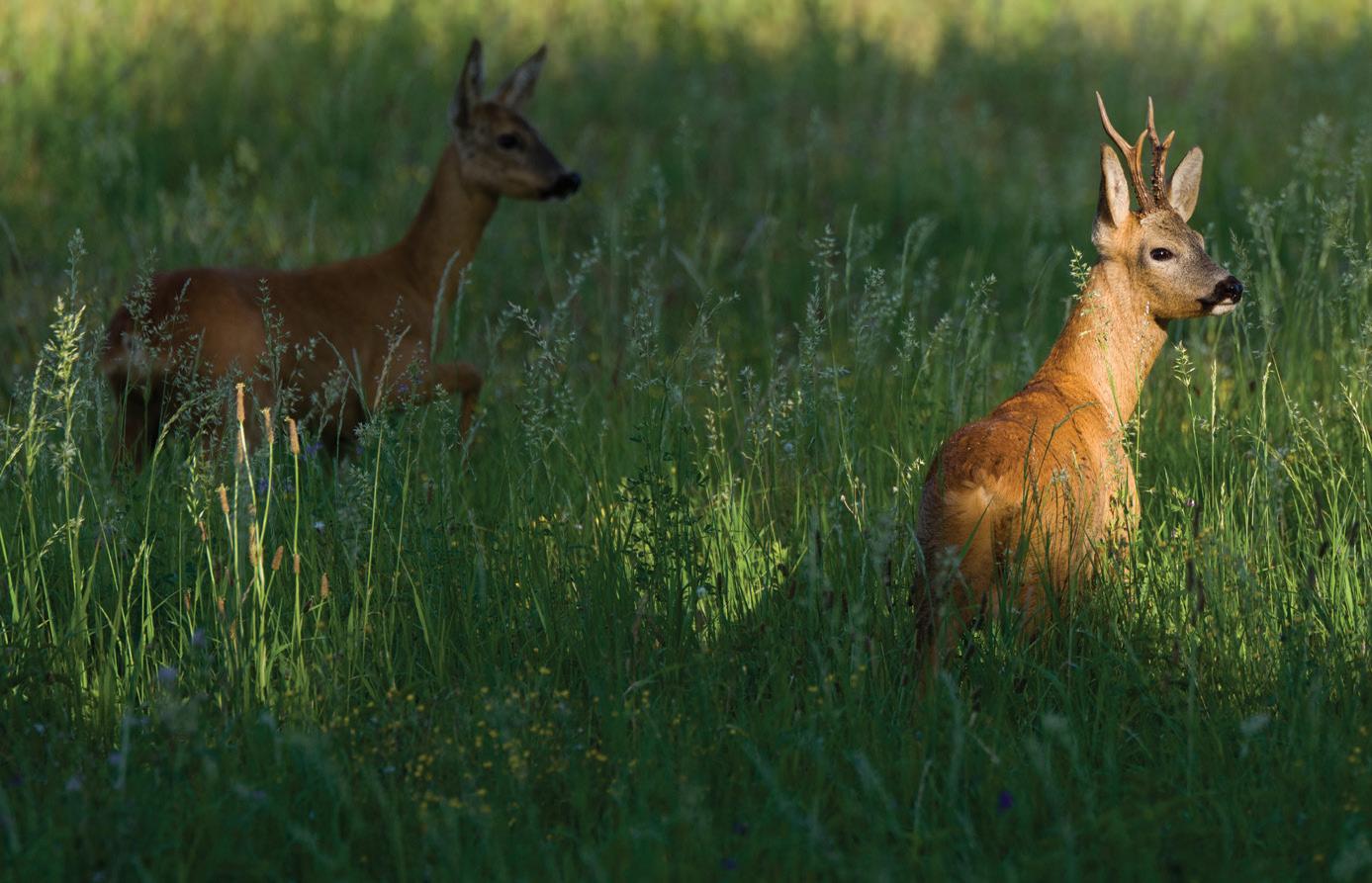
(left, top) Handsome Stag. ISO 320, 1/800 sec.
Leica Vario-Elmarit-SL 90-280mm f/2.8-4.0 ASPH
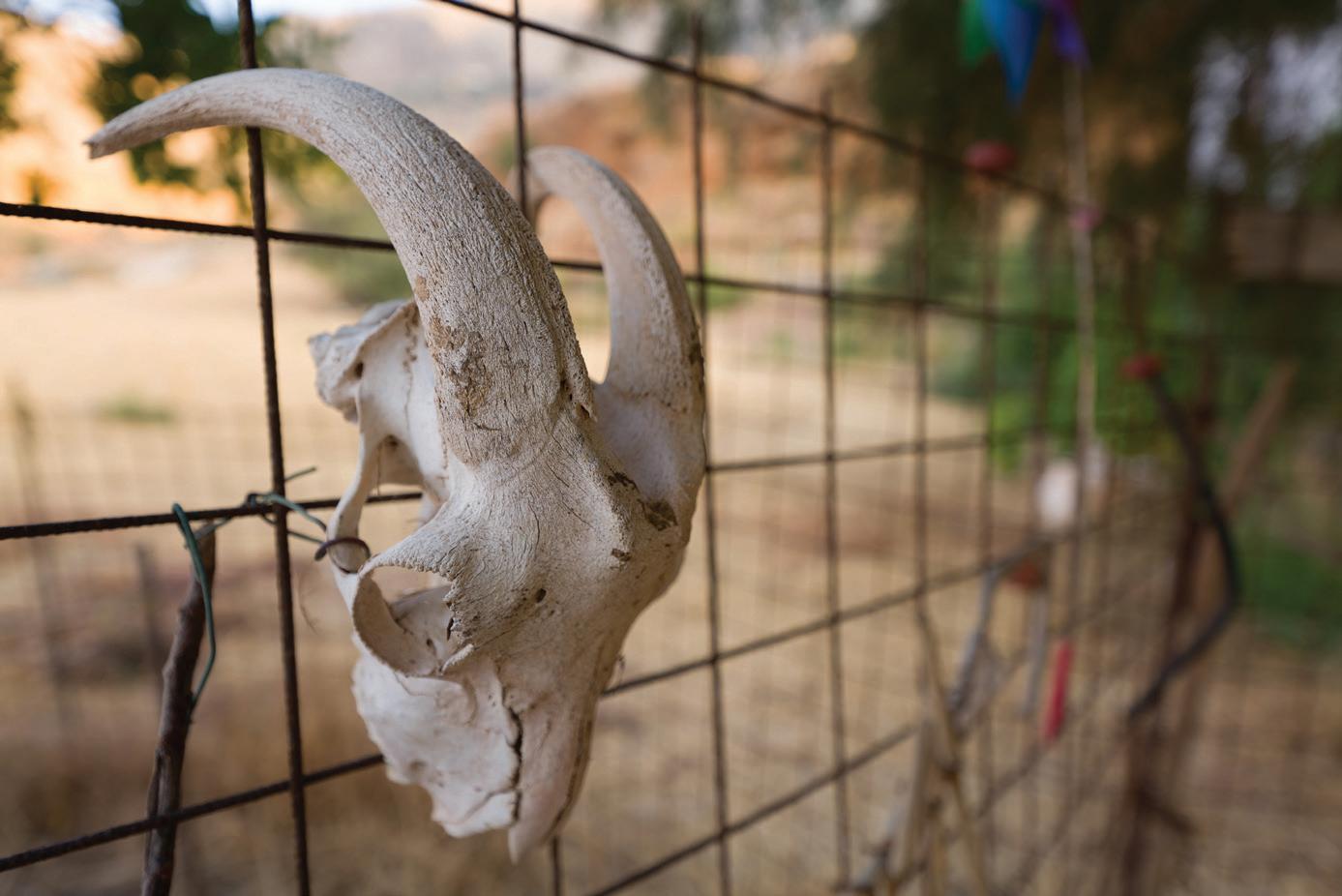
(left, bottom) Goats Head. ISO 100, f2.8, 1/80 sec.
Sigma 14-24mm F2.8 DG DN Art
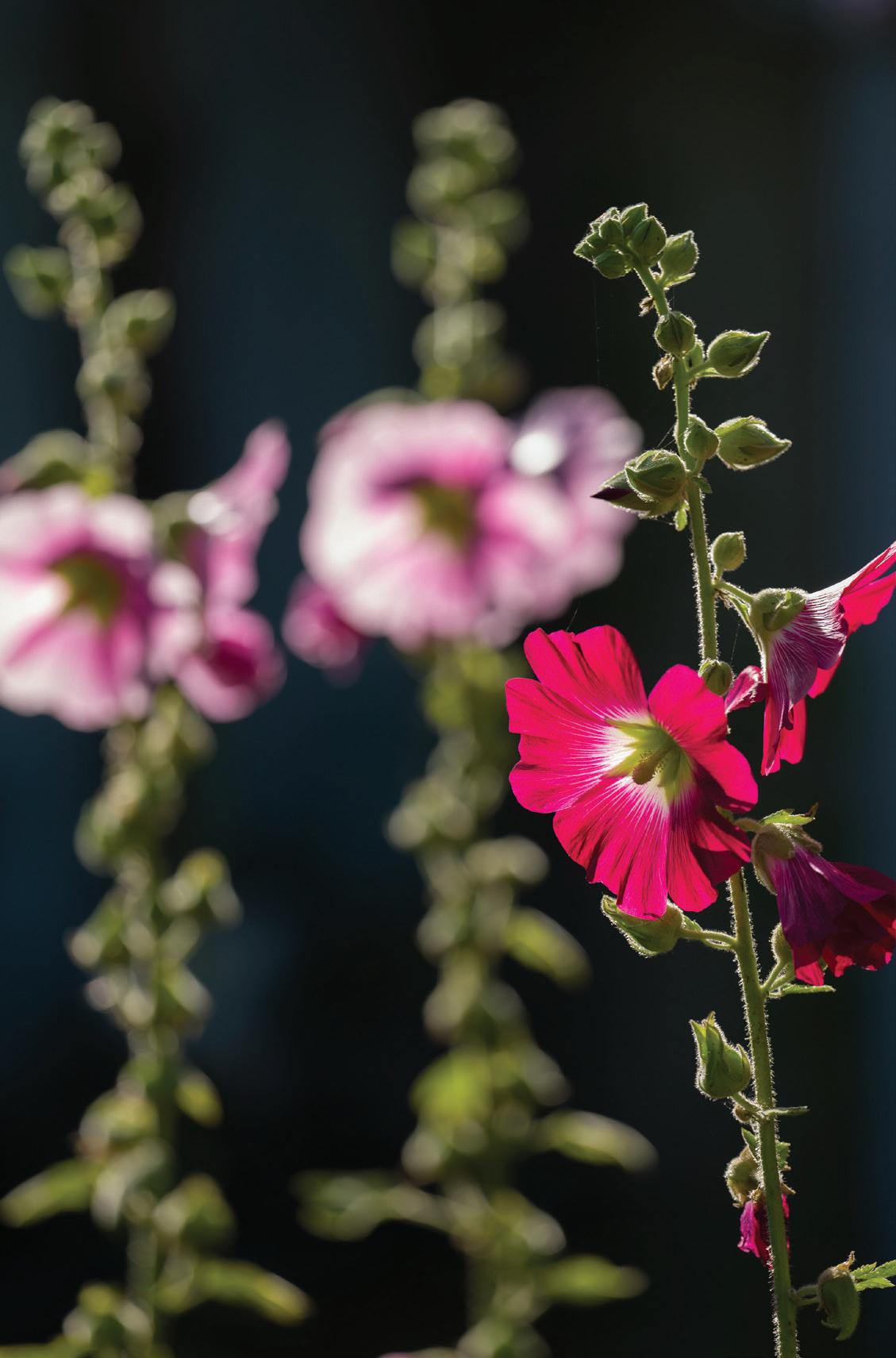
(right, top) Guelder Rose. ISO 100, f/2, 1/2000 sec.
Leica APO-Summicron-SL 75mm f/2 ASPH
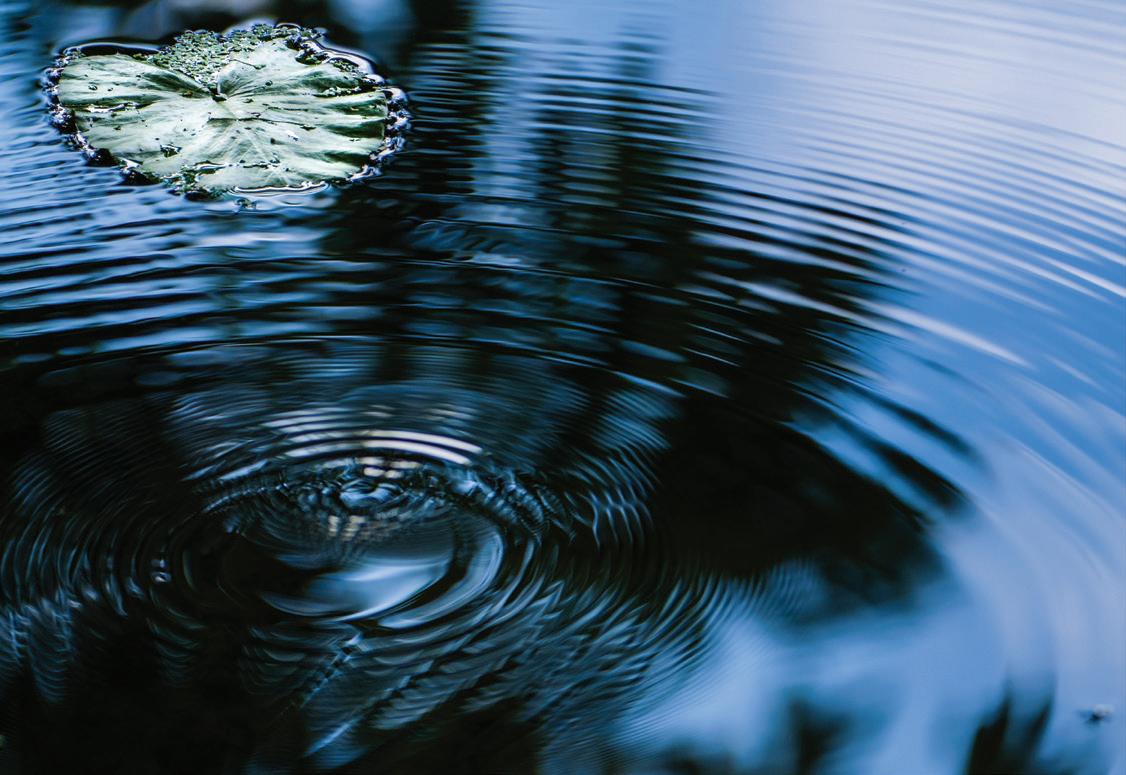
(right, center) ISO 125, f/4, 1/400 sec.
Panasonic Lumix S PRO 70-200mm f/4 O.I.S. Lens
(right, bottom) ISO 100, f/3.5, 1/800 sec.
Leica Vario-Elmarit-SL 90-280mm f/2.8-4.0 ASPH
(top) ISO 200, f/5.6, 1/125 sec. Leica VarioElmarit-SL 24-90mm f/2.8-4.0 ASPH
(center) Cornish Street (Looking over Pedney) ISO 100, f/6.3, 1/800 sec. Leica Vario-Elmarit -SL 24-90mm f/2.8-4.0 ASPH
(bottom) Dignity. ISO 6400, f/2, 1/60 sec. Leica APO-Summicron-SL 75mm f/2 ASPH
M-MOUNT LENSES
I used the SL2 with the following Leica M-Mount lenses:
I also used the Leica Macro-Elmarit-R 60mm f/2.8 with the R-Adapter-L. Everything worked as it should, and the results for all of these lenses were excellent, but I didn’t have any of the older and more troublesome wide angle lenses to test, and I guess that as with the SL, they will not do quite so well as they do on the M10. On the other hand, I would imagine that all the very fast mid-focal length lenses would be great (Noctiluxes etc.)
However the SL2 has two major advantages over the SL when using M lenses:
1. IN-BODY IMAGE STABILIZATION This is a real bonus with the SL, making handholding possible at much slower shutter speeds.
2. ZOOMING IN FOR FOCUSING With the SL, when you zoomed in and moved about, it always returned the zoom point to the centre of the screen. What's more there was no pointer in the viewfinder to move around. This was my biggest problem using M lenses on the SL, and so much of a problem I had basically given up. With the SL2, there is a square you can move around with the joystick, and when you zoom in it zooms in at that point. The position of the square is retained between shots (and even when you turn off the camera) . This is going to change the lives of many people using M lenses.
All the 6-bit coding was picked up properly and adjustments were made (apparently correctly) . I didn’t have a chance to use the camera with any non-Leica M lenses, but I would imagine that it would perform just the same as the SL.
LEICA FOTOS APP
At the time of writing I’m using beta versions of Leica Fotos, but the connection to the SL2 is straightforward and works very well. It also seems to be well-remembered, so that all you need to do is to turn on the camera and open Fotos on your phone and reconnection is effective and simple.
The Low Power Bluetooth option for tagging images with GPS information is not yet ready, but having used it with both Fuji and Panasonic with success, I’m sure it’ll work well with the SL2 (but I’ll still miss the built-in GPS of the SL)
I’m aware of exciting new developments with Fotos, which Leica is taking very seriously, these advances also rely on future updates with Lightroom for Android and iOS. Personally I’ve spent a lot of time developing a workflow using Lightroom on an iPad pro for initial selection and editing of images and I’m pretty sure that Fotos will become an integral part of this workflow
WEDDING/EVENT PHOTOGRAPHY
When shooting any event, I try to get a selection of images up on to the web the same evening, before people start thinking about anything else! This means that it’s vital to be able to select and process images fast, and to push them up to the internet, even with a mediocre connection.
For the last year I have been using Lightroom on an iPad pro; it works really well. You can do the initial selection fast and create galleries using smart previews while the DNG files are pushed up to Adobe cloud more slowly. When you get home they will download to Lightroom Classic for printing / books etc.
To my mind the Leica SL was the perfect camera for this, I have been using it together with an M camera for more than four years for weddings and events. The AF is good, and the 24 mp DNG files hit the perfect balance between resolution and manageable file size and post processing speed.
I was very worried that the SL2 would spoil this by having so much more resolution. It isn’t so much the issue of the file size, but 47 mp makes processing in the current version of Lightroom much slower than 24 mp files. Obviously it’s good to have the extra ‘crop-ability’ of the 47 mp files, and the SL2 does offer slightly better high ISO than the SL, but that doesn’t really help when trying to get a first batch of images out quickly.
Then I broke the habit of a lifetime (well, 10 years feels like a lifetime!) . I experimented with using JPG files. My first reaction was rather an epiphany: the 24 mp JPG files looked really really good, especially in the kind of low light situations one is so often forced to shoot in. Trying to do extensive postprocessing on the JPG files rather moderated my enthusiasm, but I have worked out a really good modus operandi for event shooting with the SL2:
• Shoot DNG on one card and 24 mp JPG on the second card
• Import the JPG files to the iPad pro for selection and minor processing
• Create Lightroom gallery / push files to Lightroom for fast internet use
• When I get home, import the DNG files to Lightroom Classic for more serious work.
This involves a little more work, but it has advantages in that the big DNG files don’t take up space on Adobe Cloud, and you have the opportunity of using the higher resolution files for the final images of the event.
LANDSCAPE PHOTOGRAPHY
I can’t claim to be a formal landscape photographer, my allergy to tripods and hanging around for hours on chilly dawns makes me a bad candidate! On the other hand, I am often around at dawn (usually with the dog) , and I very often shoot ‘landscape’ images.
The SL2 really excels here, the Image Stabilisation works excellently for those of us not using tripods and the higher resolution almost moves the camera into Medium Format territory, with the added advantage of smaller body and more versatile lenses.
One of the criticisms of the SL (and some other Leica cameras) was the inability to turn off Long Exposure Noise Reduction (Dark Frame Subtraction) . This has been rectified in the SL2.
TRAVEL & STREET PHOTOGRAPHY
I have always loved shooting the SL on my travels, usually with the 24-90m Vario-Elmarit-SL to cover all bases and a standard prime for low light work in the evenings or indoors, perhaps with a Wide-Angle-Tri-Elmar (WATE) tucked in the bag for the rare moments I need something wider.
Since traveling with the SL2, I’ve found myself much more likely to carry one or two of the SL Summicron primes together with the WATE and perhaps the 28mm Summilux-M. The extra crop-ability makes carrying a zoom less important, and of course it makes the load a lot lighter.
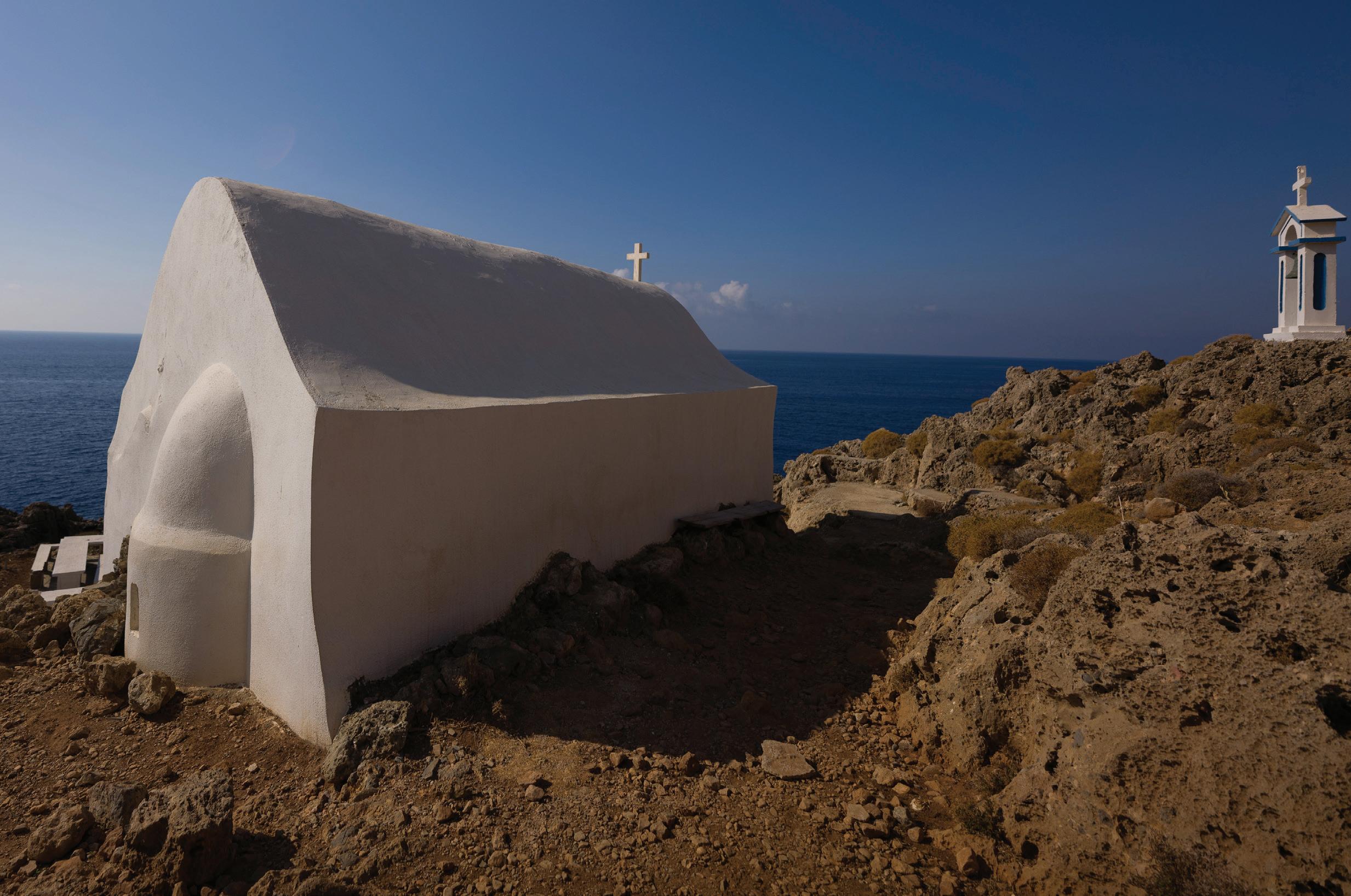
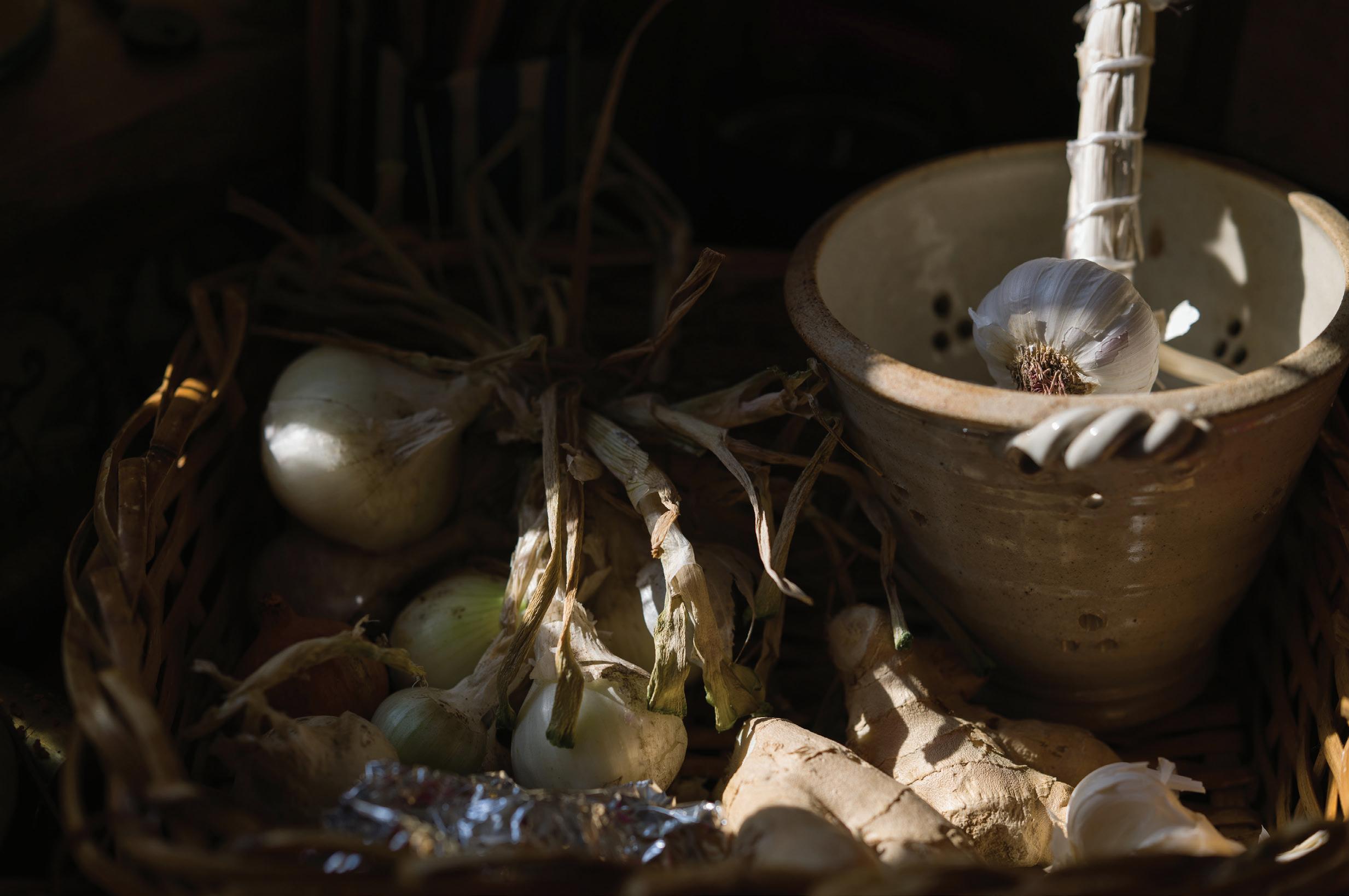
This autumn on our trip to Crete we managed three weeks with only Ryanair hand luggage! I was really pleased with the results from the SL2. My most used lens was the 50mm f/2 Summicron-SL, in fact I used only three lenses:
• Sigma 14-24mm F2.8 DG DN Art
• Leica APO-Summicron-SL 50mm f/2 ASPH
• Summilux-M 28mm f/1.4 ASPH
CONCLUSION
So this isn’t really an ‘upgrade’ of the SL, it’s a complete rethink with reference to four years of customer feedback and an infinity of discussions and meetings, both internally and with photographers and film makers, and with the wisdom that competitors' releases confer. My satisfaction with the SL really isn’t the point in this context but it’s taken quite a big effort of will on my part to take a step back.
The competition seems to have decided that there should be two (or three) full frame mirrorless cameras specialised for different situations:
• Lower Resolution for photojournalism or events (That’s me!)
• Higher Resolution for landscape and enthusiasts
• Video directed camera for serious movie shooters.
This philosophy is reflected in the recent offerings from Sony, Panasonic and Nikon (and to a lesser extent Canon) .
With the SL2, Leica has decided to roll these three cameras into one versatile camera which can cover all the needs of every serious photographer, and in my opinion they have very largely succeeded. Personally I’m even tempted to delve into the world of video!
Of course, Leica cameras have a reputation for being prohibitively expensive, but the SL2 is being launched at a price €1,000 less than that of the original SL. Certainly it’s more expensive than the direct competition, but when you consider it’s really three cameras rolled into one, and you look at the secondhand prices for the SL, it begins to look like a real bargain.
The SL2 is a ‘no-nonsense’ camera which seems to me to deliver on every level, whether you are a videographer, a landscape shooter or a serious amateur. The Status Screen is a real joy to use, the images are excellent and the menus are minimal whilst still containing everything you need.
(top) Peaceful Easy Feeling. ISO 100, f/2.2, 1/6400 sec. Leica APO-Summicron-SL 50mm f/2 ASPH
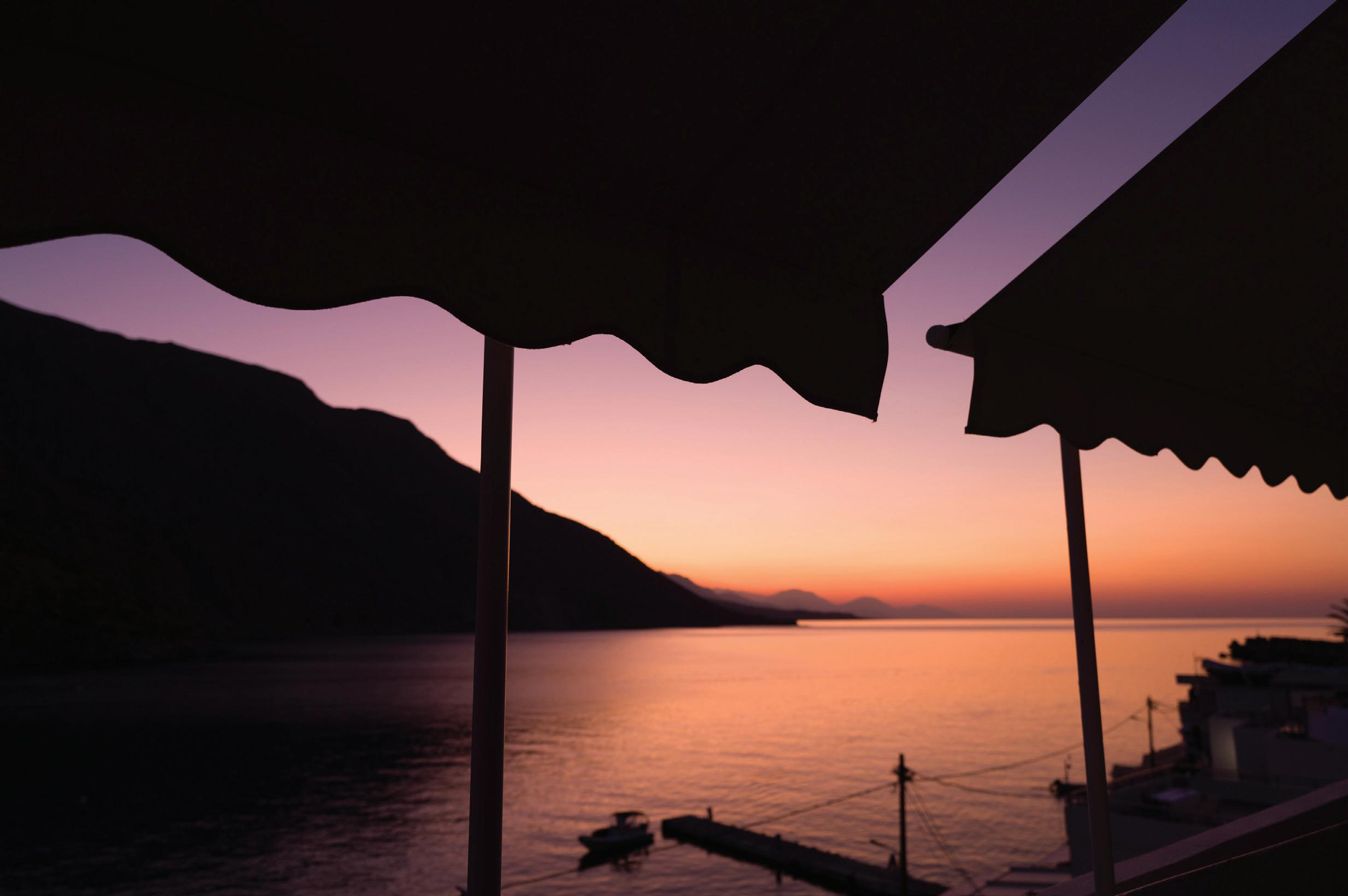
(bottom) Sfakian Dawn. ISO 250, f/3.2, 1/40 sec. Sigma 14-24mm F2.8 DG DN Art
my Leica Journey
by ROSALYNN TAY
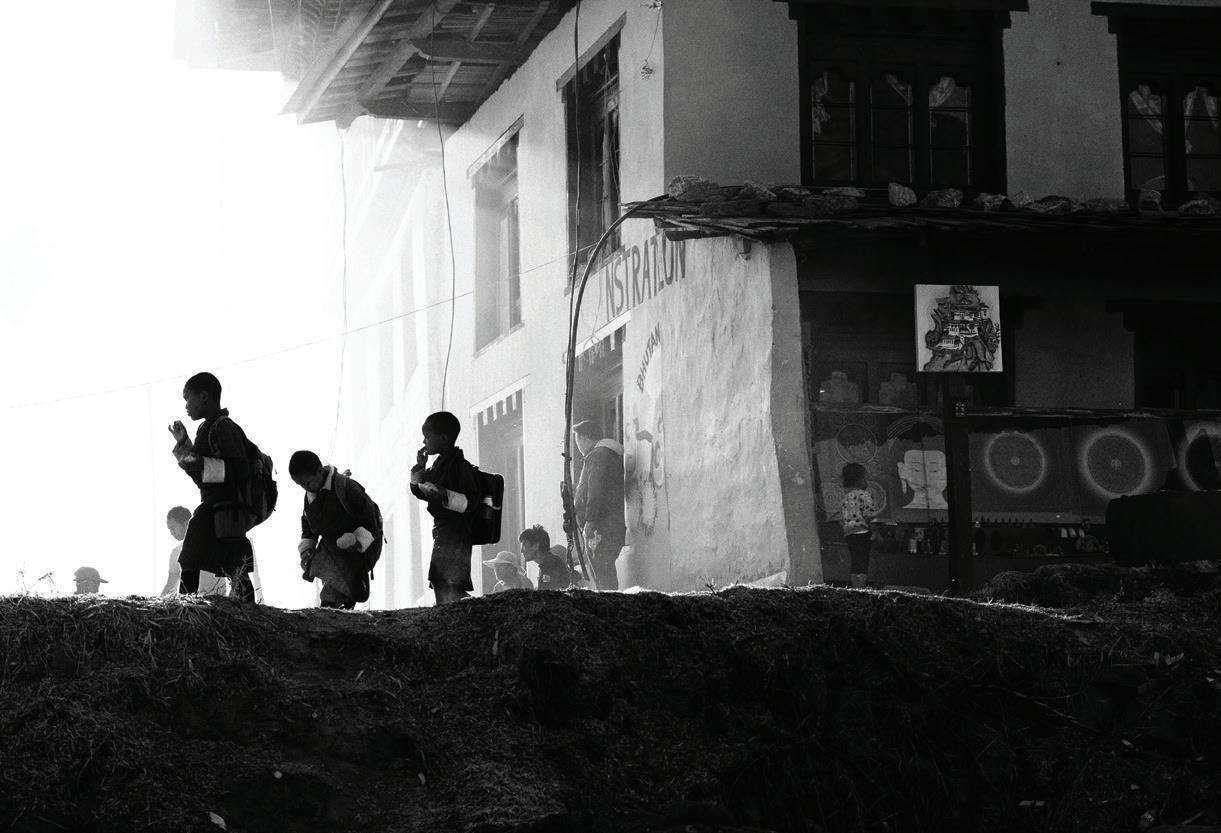
Icame to photography a little late in life, I am a self-taught photographer, was a keen ballroom dancer (danced competitively in international competitions) and a former journalist. After suffering a knee injury, I turned my energies and passion to travel photography, which marries my love for travel and creativity. I love capturing different cultures (especially those fast disappearing tribes and nomadic people) and foreign landscapes, and to learn more about the beauty of other cultures while sharing them with others who might not have the opportunity to witness them in person. I also strongly believe that photography is a powerful way to document, present, and preserve the historical and cultural heritage of this fragile planet.
Five years ago, I purchased my very first camera, a Leica M240 with a Summilux 35mm lens. Since then, I have traveled the world non-stop with my camera. Two months after I bought my camera in April 2014, I visited Ethiopia for the first time on a near-month-long trip, during which I took over 13,000 photos. In May 2016 I was invited by Leica to exhibit my works - it was the first time Leica has held a solo exhibition for a female photo enthusiast. I also released my first photographic book entitled “Ethiopia” together with along side my solo photographic debut of the series with Leica of the same name at the Leica Galerie in Singapore.
Courage, humility, curiosity and empathy are some things I draw upon for my ventures into travel photography. I enjoy examining the curiosities of the world through the beauty of photography and this sometimes takes me to highly remote places with few creature comforts.
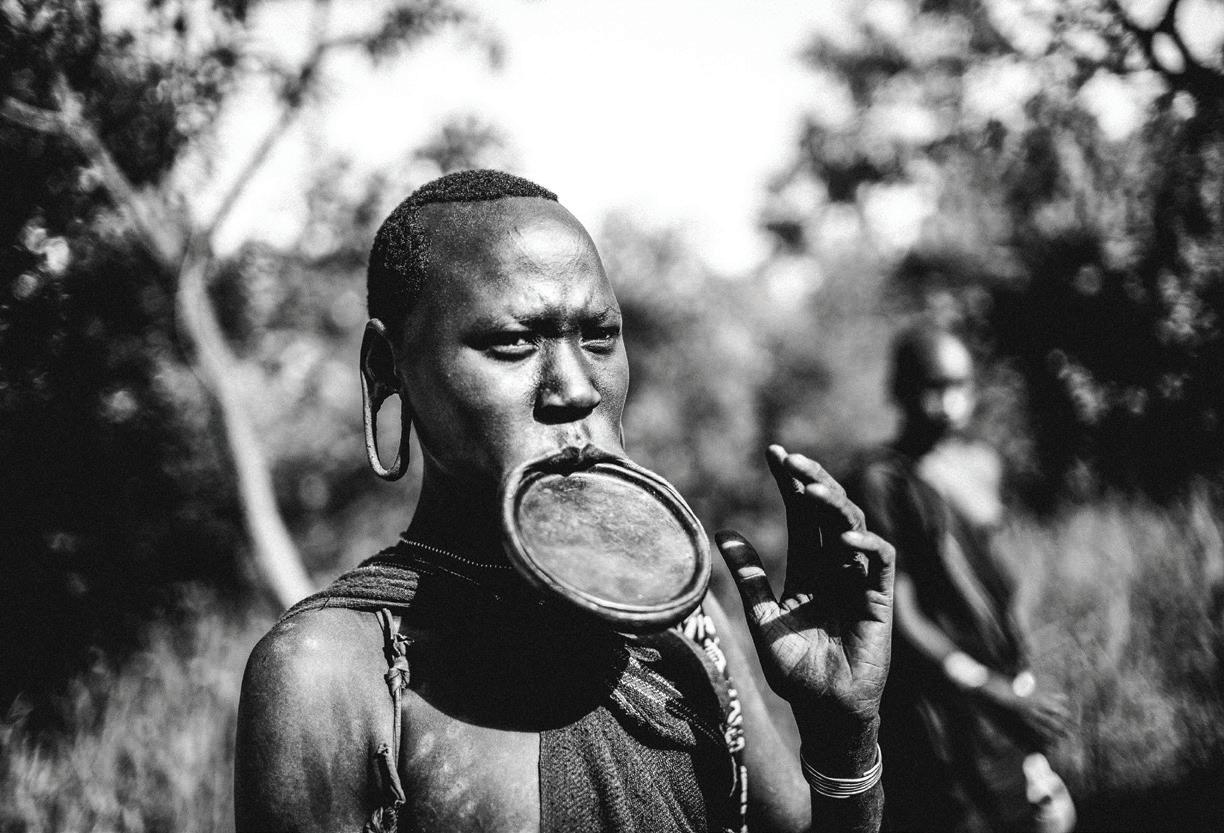
While each place is unique, my trip to Ethiopia left the deepest impression on me. It was also the most challenging photography trip. The one moment that I will never forget was when my 4x4 vehicle was stuck in the mud for nine hours in the middle of nowhere. I traveled through North and South Ethiopia for almost a month, capturing the customs of the Surma people, including their culture of tattooing and scaring their women’s bodies as a means of adornment. A sad fact I found was that the tribe, which welcomed its first foreigner just 30 years ago, “is fast succumbing to modernity and commercialism”. A clear sign of this is how almost every Surma man owns a Kalashnikov rifle, not a spear.
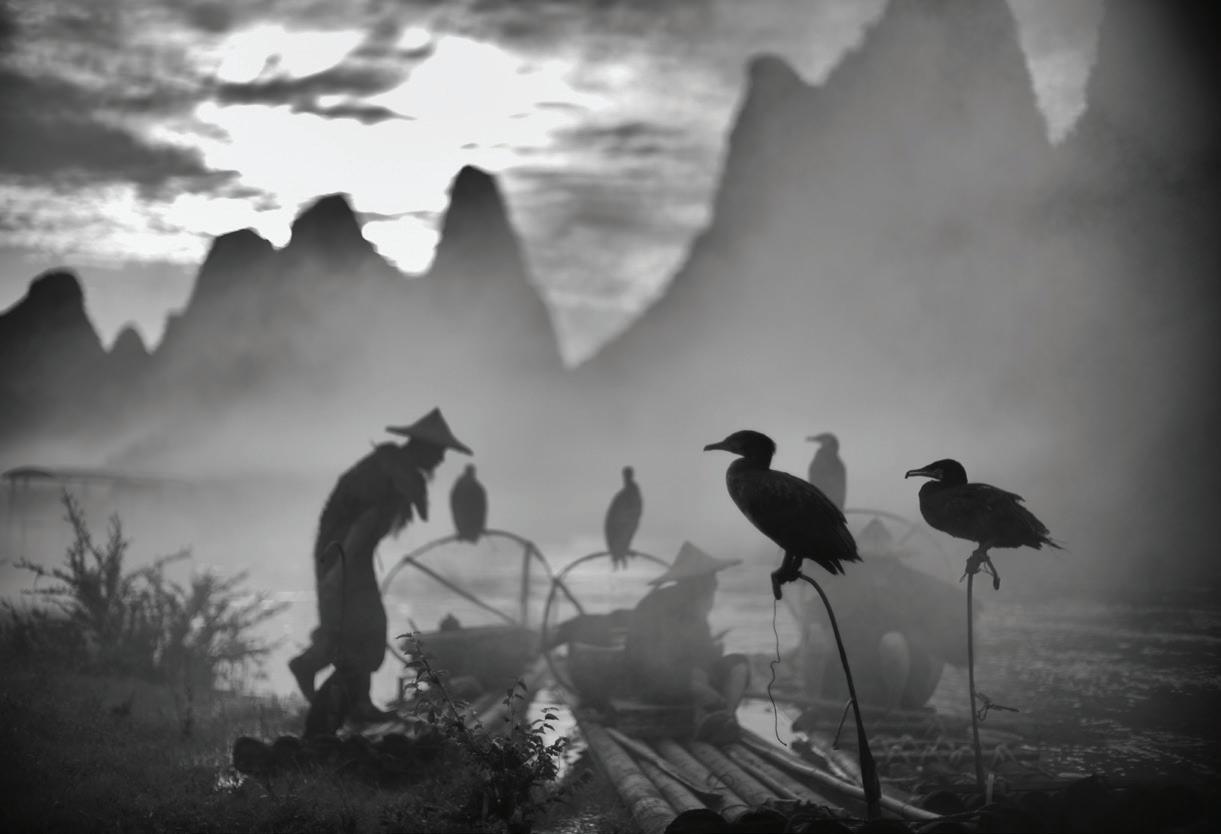
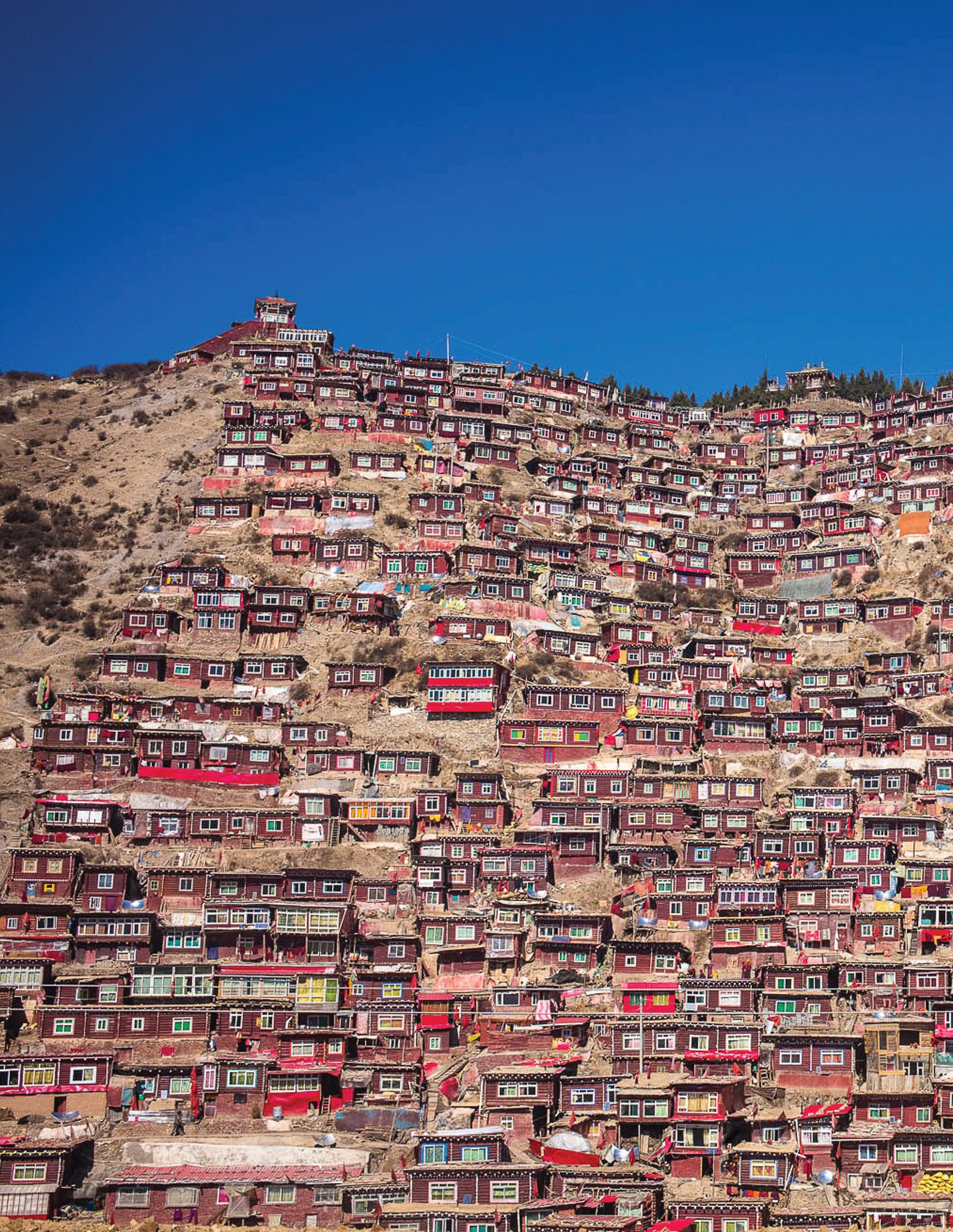
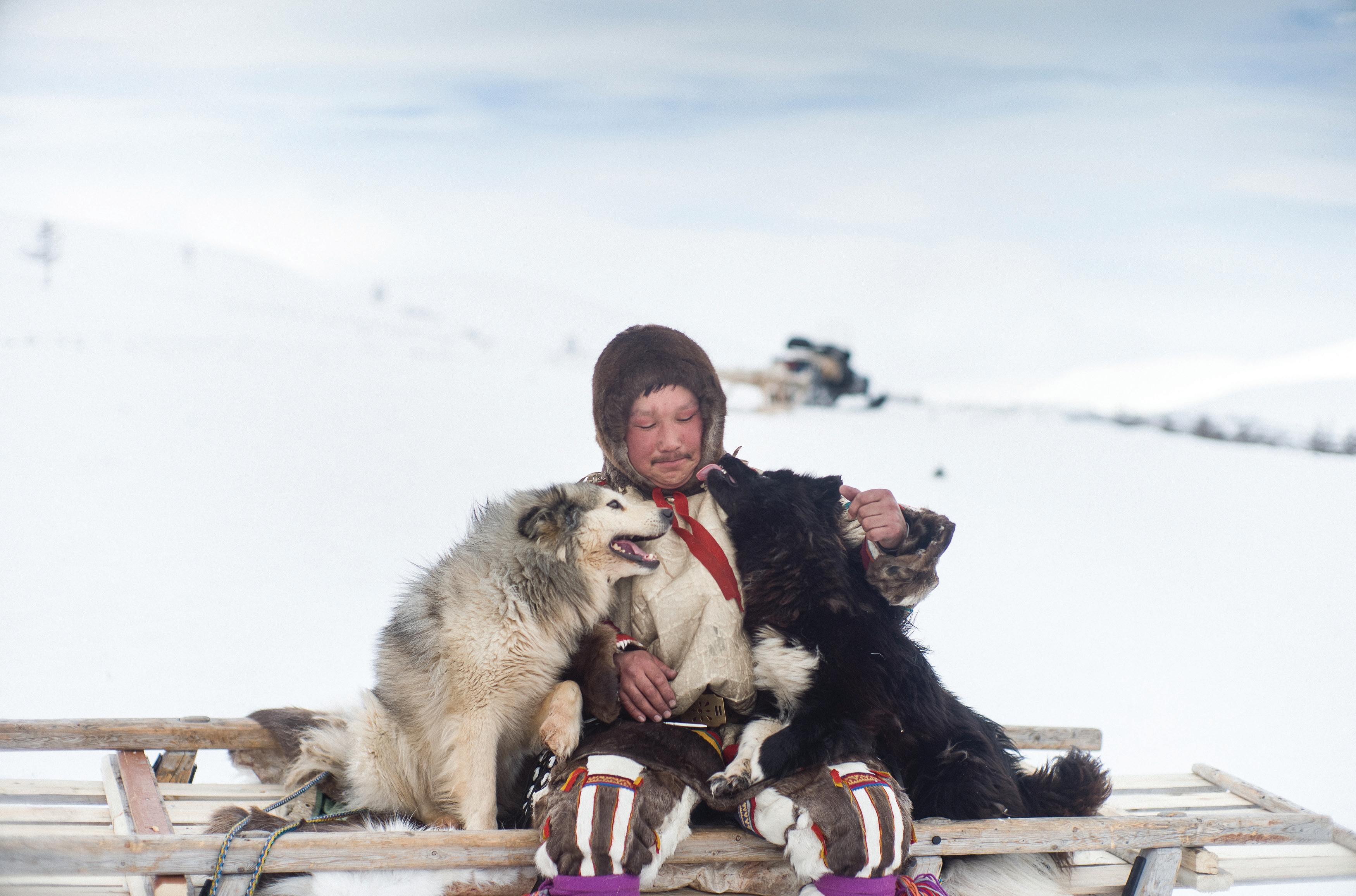
There are many other photographic journeys that left their mark on me which includes including the Larung Gar Buddhist Academy in Sichuan, the great natural expanses of Kamchatka, Siberia and the last surviving nomads of the world, the Rein -
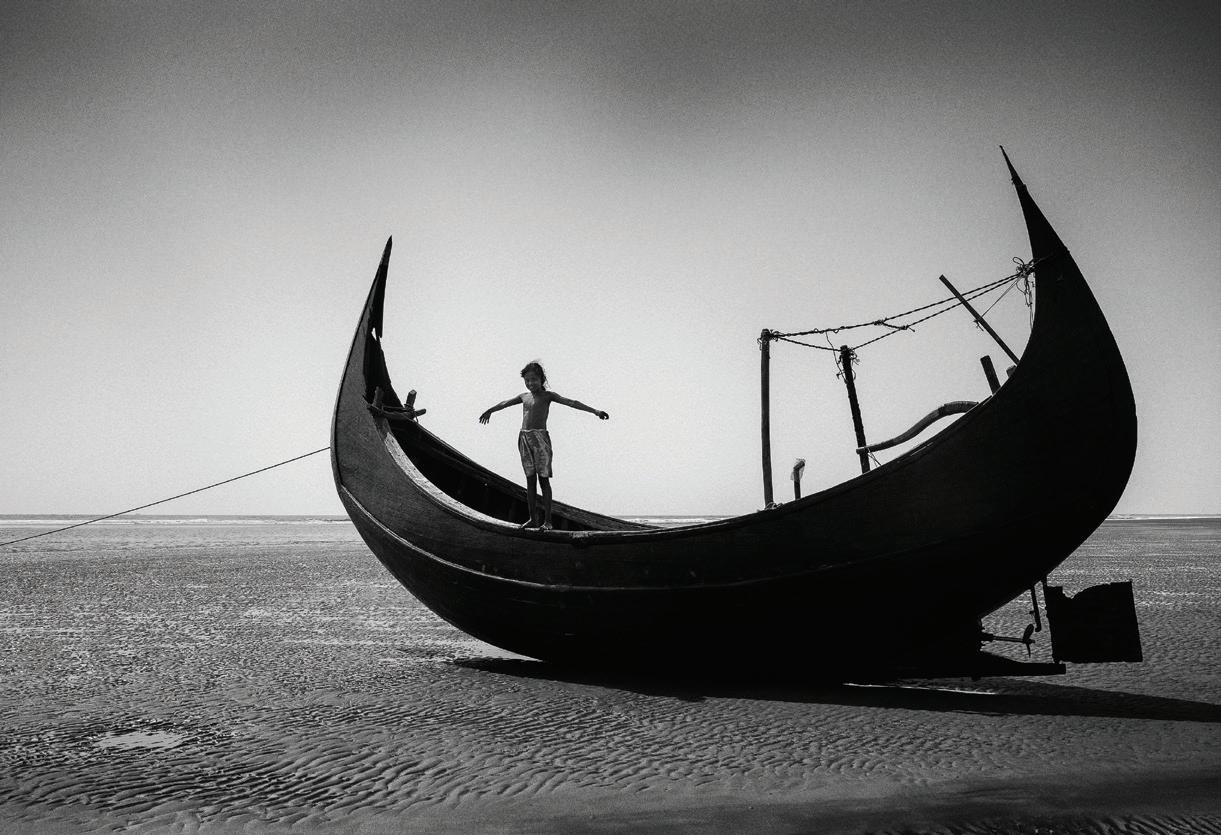
top: Cox's Bazar, Bangladesh
center: Thimpu, Bhutan
bottom: Yangshuo, China
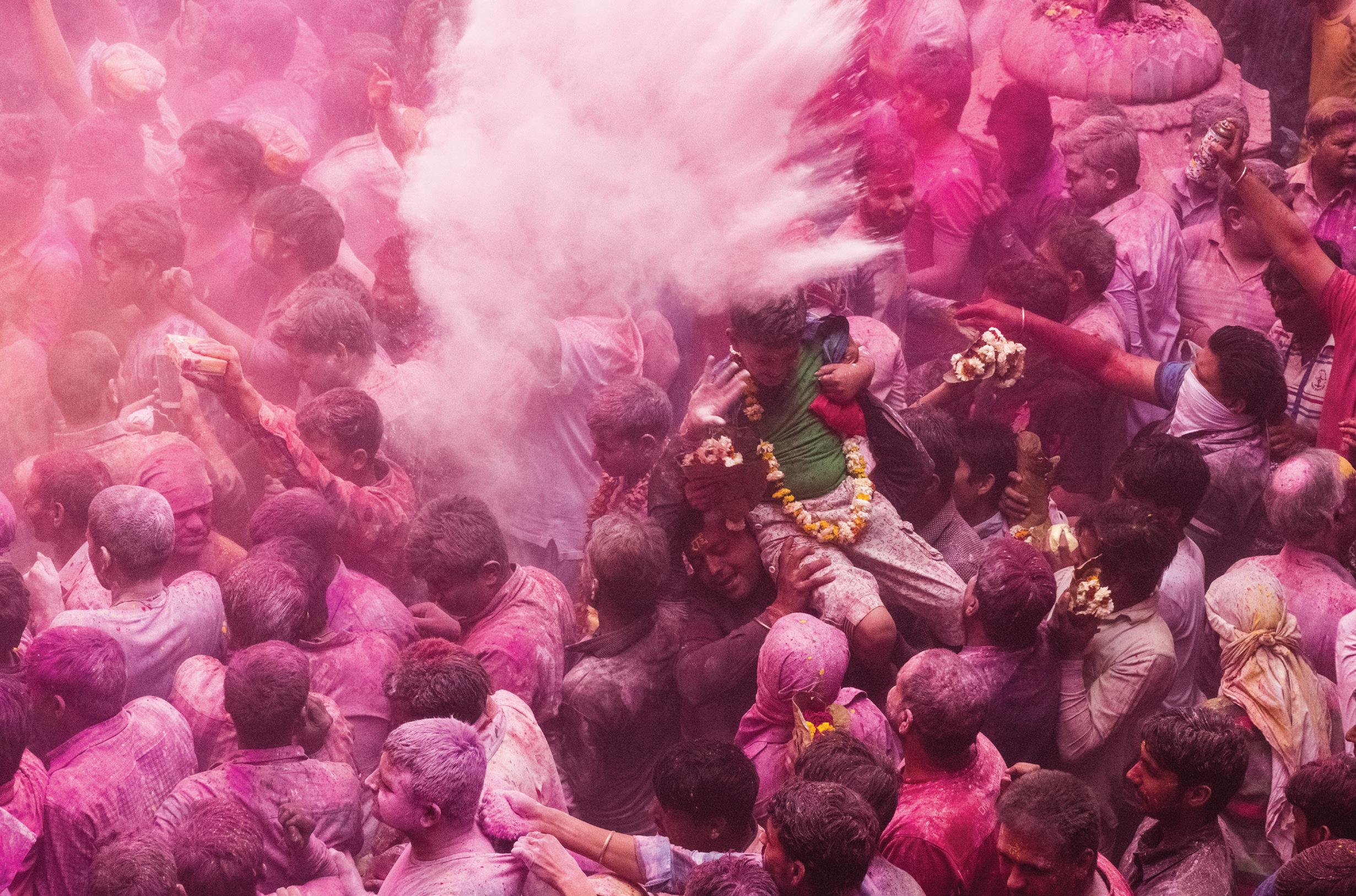
deer Herders of Siberia. The Kumbh Mela, a spiritual festival in India is equally fascinating and captivating.
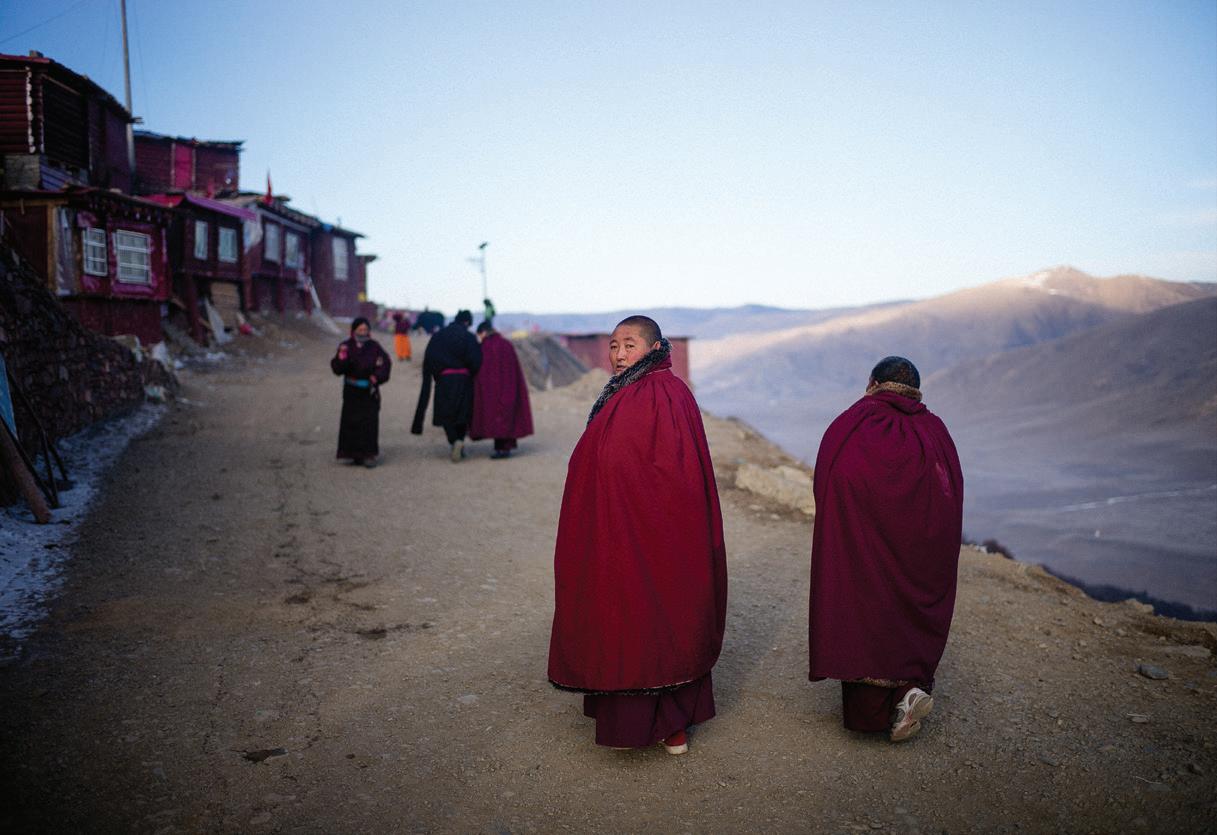
The Central government of China has demolished a big section of the buildings at Larung Gar, one of the largest centers of Buddhist learning in the world. I am glad I took some images before the demolition. These beautiful images of red box houses, where the monks and nuns resided, are a gem to me now.
To further hone my skill, I attended a one-year professional photography course at the Spéos Photographic Institute in Paris 2016, where I was a student of Dominique Issermann, a top French fashion photographer.
I feel so fortunate to be able to travel the world and to capture its beauty. So far, I have been to all six continents including the Arctic and the Antarctic, and witnessed and captured the diminishing tribes and cultures of the world. At the same time, I tried to be in one with nature, in the wilderness, and to appreciate the best of nature.
My three month long exhibition in Leica Galerie Singapore just ended in mid-August, it was a collaboration with The New York Times Style Magazine: Singapore. My photo series was titled “Dream a Little Dream” inspired by soft, lyrical vignettes. It is a series that echoes the poetic hues created with the Leica M camera and the vintage Noctilux f1.0 lens.
I have the habit of always wearing my Leica around my neck and often see more interesting things with it around. When I walk, I just photograph anything that piques my interest, when I start clicking, my creative engine will start to warm up. And when I’m in the “flow” of shooting in the streets, I totally forget about everything else. Photography is both meditative and an adventure to me, the same as life itself, and every image that I take has an individual feeling in it which is worth expressing. I intuitively shoot scenes of everyday life with no preconceptions. To me, photography is the art of freezing instants that can never be exactly repeated. Nothing else (even painting) quite matches the veracity and longevity of an honest photograph. Photography is a lasting medium of expression, capturing a fleeting moment anchored in a well-composed frame.
Many of my friends commented that my photos reflect the nature of my personality, so there is lots of truth in “every photograph we take is a self-portrait,” reflecting them,
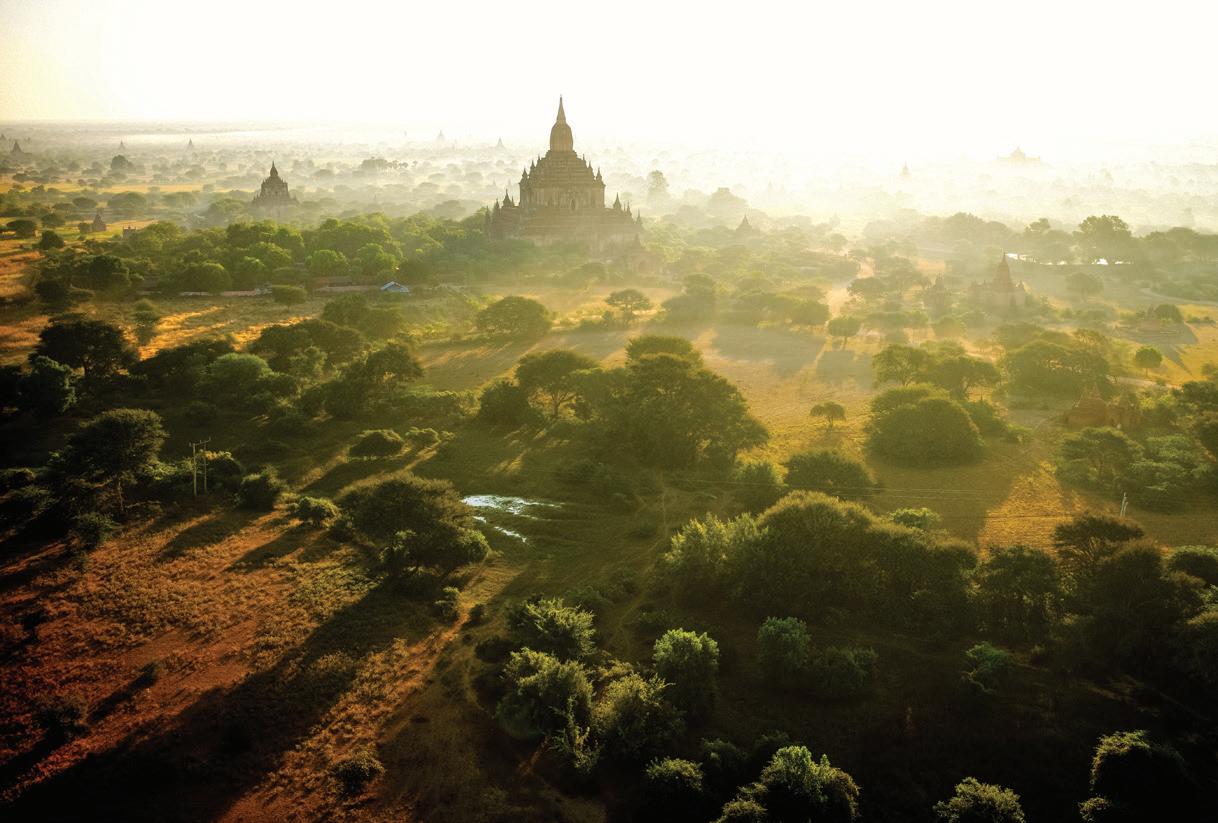
center: Sertar, China
bottom: Bagan, Myanmar
top: Bali
previous page: Larung Gar, Sertar, China above: Ethopia
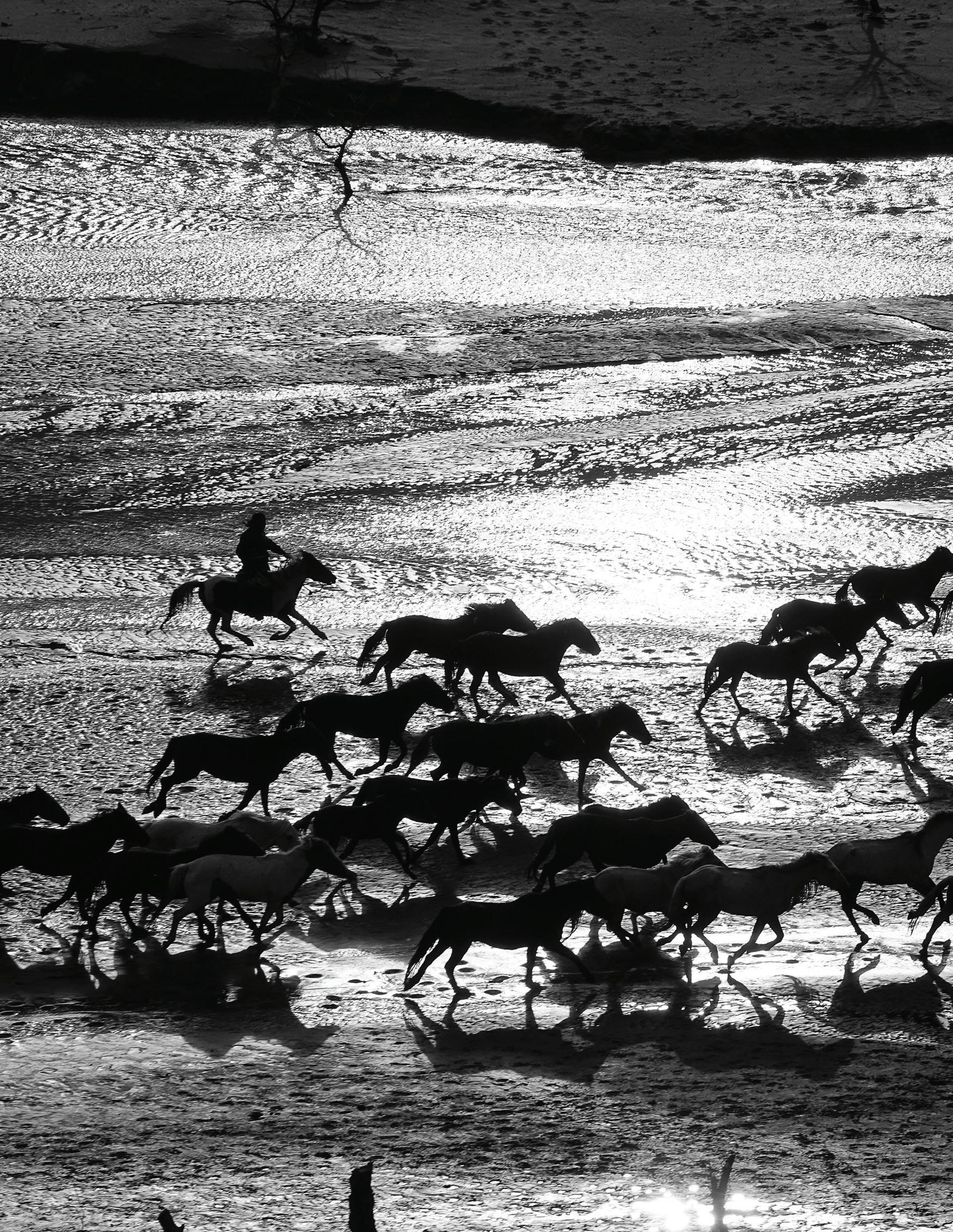
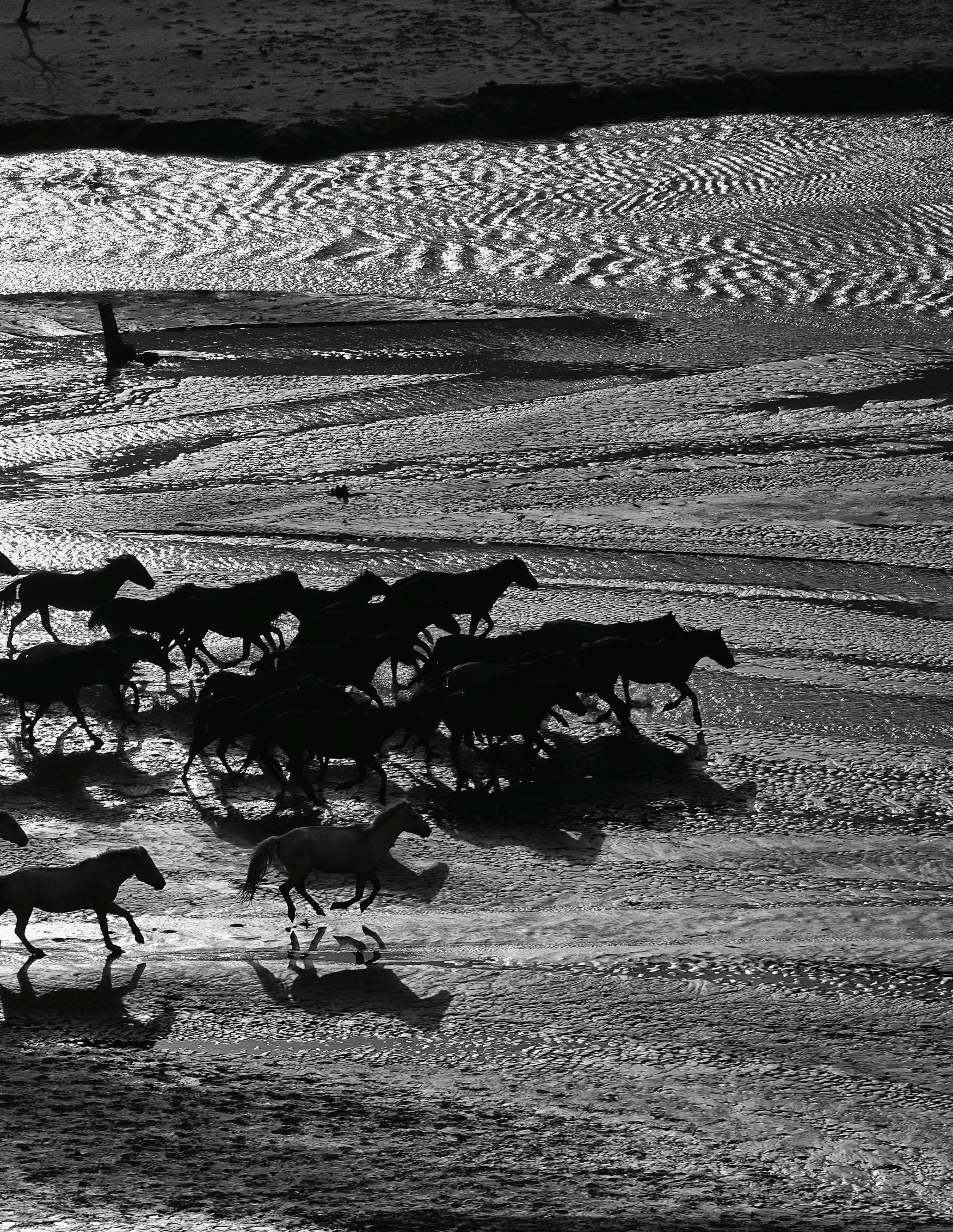
oppositepage, top: Holi Festival, India opposite page, bottom: Siberia, Russia
because each contains information about the person who made it. Its visual contents metaphorically represent what was important enough to the photographer’s eye at the moment that they chose to freeze it permanently. I am drawn to humanity (its tenderness and wit) moody lighting, happy emotions, flowers, animals that are docile and elegant (horses in particular) , beautiful landscapes, and some of the surreal effects of people walking in the rain, snow and fog. Also, I love reflections on windows and water.
Most of all, I love emotions, colours, rhythms, patterns, and sense of form. I am basically living my life through photography, or you might say the other way round. To sum it all up, I am the visual story teller of optimism.
I have much to be thankful for and have been very fortunate to find my passion in photography and to own the most exquisite instrument: that is the Leica camera, known for its optics, and an array of it’s legendary lenses.
The Leica rangefinder is able to act and react fast, quicker to focus, less noisy and smaller than other cameras. Hence it has the non-intrusive, feminine touch, and it feels more intimate which I love as compared to other a bulky DSLR.
Lastly, the childlike wonder of roaming around an unknown place entirely on my own is invigorating. I can easily integrate into the banal, nondescript scene of daily life, which I am all about on the road. I love the moments with people along the way. I also love the element of surprise and spontaneity when wandering, and then stumbling on something unique and different, something that attracts me in a very sub-conscious but personal way. It’s always a voyage of discovery. My photography is about myself and expresses what I live.
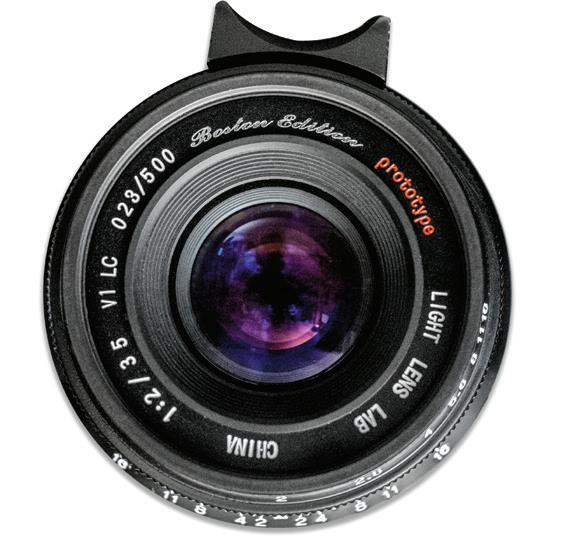
Close up of the engravings on the new lens, here showing “prototype” and “Boston Edition”. Nice touch.
A NEW OLD 8-ELEMENT 35/2 SUMMICRON from China
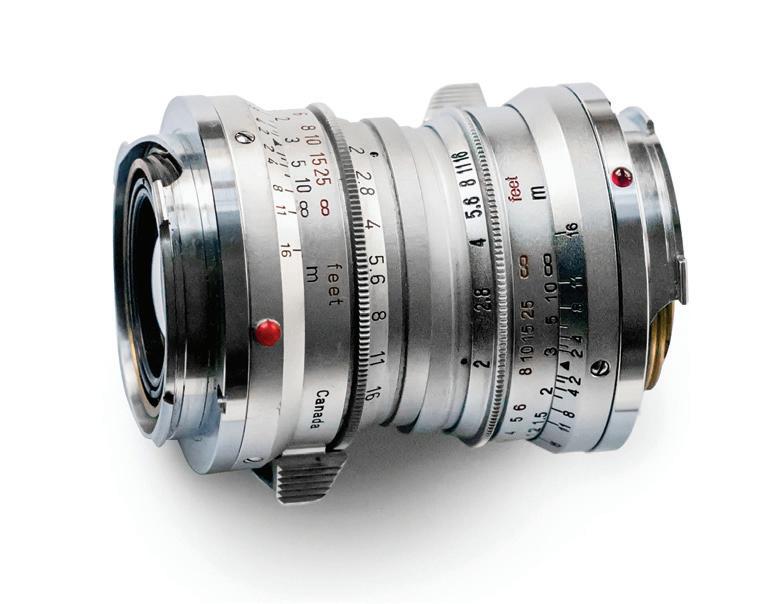
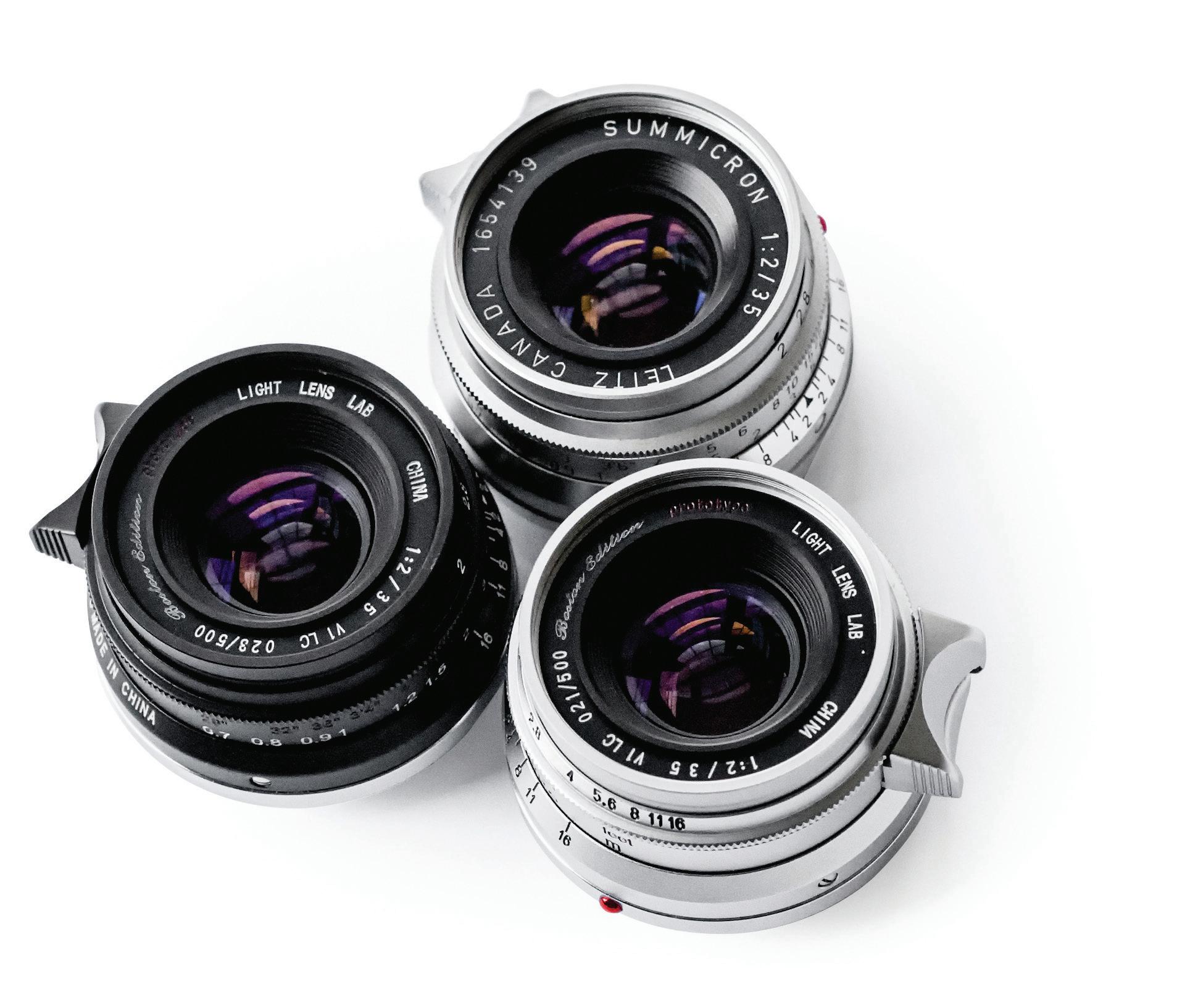
The old and new lenses, front-to-front. One sees the difference in the aperture scales – old lens stops are equidistant, new ones are not. One also sees that the “red dot” on the new lens is actually a synthetic ruby.
by ED SCHWARTZREICH
original 8-element Leitz 35 f/2 Summicron from 1958 is a classic lens, still coveted for the “Leica glow” of its images and its lack of distortion, and as a now-pricey collectible. It comes in a variety of models –for SM, for the M3 with goggles, with a factory-fitted SM → M adapter, M-mount from ELC as well as ELW, and in black as well as chrome. It is a symmetrical double Gauss design, and physically quite small.
Recently, Leica aficionados on the internet have been abuzz with news and tantalizing images of and from a new version of this lens, still in prototype but nearing production. And, unlike the Thambar and 28mm Summaron reissues from Leica itself, this new / old lens is from China. Kevin-Xu (Instagram: kevinxbegin), spokesperson for those developing this lens, has kindly let LHSA test the new 35 f/2 Summicron copy; he sent us both a black and a chrome prototype, and spoke with Bill Rosauer and this reviewer about it at the recent Boston Annual Meeting. There was hardly time, however, to talk at length, and Kevin subsequently has spent much time answering questions by email about the lens’s development and manufacture. This reviewer has used one of the prototypes both for shooting in Boston and for slightly more rigorous testing at home. What follows is an interrogatory, based upon questions we asked Kevin about the lens, and then images having to do with our testing.
Two new lenses, black and chrome, together with the old 35 f/2. One can see that the lenses themselves, as well as the reflections from lens coatings, look very similar. It should be noted here that the new lenses weigh slightly over 230 grams, whereas the old Leitz lens weighs a bit over 163 grams, the difference likely due to use of more brass in the replicas.
LHSA Kevin, whose idea was the project, and what is your role in it? It is a great idea IMO, but technically difficult. Leica of course has “copied” two of its old lenses (Thambar and 28 f/5.6 Summaron), but their learning curve and production capabilities were likely far advanced compared to what you have attempted.
KEVIN The leader of the project is named "Mr. Zhou." He is a Leica enthusiast and a businessman. There is a team behind him, including technicians at an optical manufacturing plant, and other Leica enthusiast friends. He has a connection with the people who work in the lens industry in China. So that's why he thought perhaps he could work this out. It's been two years since he started this project.
Back in July of this year, I was very excited when I first heard that someone in China was trying to make a replica 8-element. I love classic Leica lenses. I have three Summicron 35mm f2 V1 in my collection. I wanted to compare the replica with my original Leitz Summicrons. I got in touch with the people who started this project, but unfortunately, at that time, I could not get my hands on the prototype because I was not living in China right then. But Mr. Zhou very kindly shared information with me about the project and sent me some test shots taken with this lens. So, I volunteered to become his messenger to promote his project to the rest of the world. And subsequently, he is thinking I might also become a distributor to help him sell the lens overseas.
Nowadays, Leica rarely remakes their old lenses, even though they have far more technical experience to do this. But I guess they want to keep moving forward to make tremendous modern lenses. I think it's a good opportunity for the Chinese lens maker to step in to bring back those good old classic lenses to the Leica fans.
LHSA How did the reverse engineering proceed? How did you determine glass types, such that you could use similar formulae? Did you find glass “off the shelf” for this lens? I know from personal experience that there is at least one cemented pair of elements in the original lens which is difficult to separate (for analysis or whatever). Were there problems with such things?
KEVIN About the reverse engineering: they broke down the original 8-element (an early model, serial number #17xxxxx made in 1960) and sent the glass to an optical glass factory for analysis. For example, they used radiation exposure and mass spectrometry to analyze the elements that had been used in the original glass. The maker was then able to find glasses in China that matched the original ones. They then broke down two original lenses and analyzed all the coatings on each element. The maker says the original lens used two types of single coating. And so, with the results of the analysis, they were able to reproduce exactly the same coatings as the original.
Please note that leaded, or so-called flint, glass has been used in this replica. The original 8-element uses two flint-glass elements. To make this lens perform as closely as possible to the original one, flint glass will be used in the first batch. But the maker cannot guarantee the flint glass will be used in the next batch. Flint glass (leaded) is hard to find now, even in China.
LHSA What is the explanation for the different spacing of the f/stops between the original lens and the replica? Many older lenses (let’s say, prior to 1960) used non-equidistant aperture spacing like your lens, but switched to equidistant apertures when LV coupling became common, so I am guessing that this was the simpler option for your lens.
KEVIN Here is the answer from Mr. Zhou: it has nothing to do with the difficulty of production. Reason one: it is related to the lens installation method. Because we have different installation methods from the original lens, the fourth and fifth element spacings are the same as the original one, but the spacing between the metal parts is different; that is, the thickness of the aperture parts is different. Reason two: It is related to the meniscus-shaped nature of the aperture blades. In order to retain the bokeh from a round shape to the aperture from f/2.0 all the way down to the smallest opening, the current replica 8-element is using meniscus-type aperture blades. The original aperture blade is a straight-edge type, so that the aperture blade movement distance will be different. The above two reasons determine whether the aperture position is equal or gradual. [N.B. close examination of the shape of the apertures of the two lenses as they closed down showed that the replica kept a rounder shape than the original; both diaphragms have 10 blades.]
LHSA Were construction of both the metal and glass elements done with CNC? Was there much hand-work involved?
KEVIN Yes, most of the metal and the lens elements are done with CNC. In the infinity-lock mechanism, there is a spring that is hand-bent, and of course, a special tool is created to bend this manually. The assembly of the lens, checking the of the rangefinder coupling, and the final factory inspection require the operation of a technician.
LHSA Are MTF curves available for your lens, or will there be such?
KEVIN I have attached two pictures of the MTF data. One is at f/5.6, and one is at f/2.0.
LHSA I have Leica’s MTF curves published for the original lens, but I wonder whether you have access to MTF curves for the old lens that were done on the same equipment that did the ones for your new lens. It can be difficult to compare curves done at different times on different equipment. In this case, the Leica curves and Mr. Zhou’s curves look slightly different.
KEVIN We did also test both lenses on the same piece of equipment, and the replica is slightly better than the original, especially the degree of coincidence and the control of dispersion. The machine we used for this test however was simply used to compare lenses and not specifically for accuracy, and because of this, we do not think these results should be published at this time.
LHSA Did you think there might be legal issues copying the 8-element Summicron, and how was this addressed? Have you heard from Leica about this?
KEVIN The maker believes that all the Leica patents are expired. He had done research and asked a lawyer before he started the project. So, I think it's ok to make the replica right now.
LHSA Cannot think right now of more to ask, Kevin. Thank you so much for these very interesting answers. And further, we at LHSA thank you for the opportunity to evaluate your lenses.
A search will find images taken with this replica lens, at times side-by-side with some from the original model, currently available on the internet. LHSA did its own testing, using an M10.
Two grab-shot images taken with the new lens from the Boston Annual Meeting are shown first. One is an instructive B&W conversion @ f/2, shooting into open electric lights surrounding fellow LHSA’ers at dinner in a restaurant. There is blooming around the bulbs themselves and related loss of contrast on the nearest person’s hair and forehead, but not objectionable flare or spurious reflections away from the bulbs; what is depicted is natural looking and conveys the mood of the occasion well. Few more modern lenses could circumvent such an issue completely. Sharpness is reasonable, as otherwise is contrast. The second image is a street shot,
top
(left) MTF curves for new lens at f/2.0
(right) MTF curves for new lens at f/5.6
bottom
(left) MTF curves for the old lens at f/2.0
(right) MTF curves for old lens at f/5.6
about 1/3 of the actual image, f/5.6. It shows good sharpness and nice color rendition.
A note about handling: tactilely and ergonomically, the replica lens performed identically to the original lens, with the minor exception of the differing aperture rings. The lenses were like identical twins, albeit twins separated by 60 years.
For more specific testing, there is a pair of images with about ¼ of the disc of the sun in the center of each, at f/4.5, which show little flare in either the old or the new lens. Slightly different metering / exposure likely explains why the underside of the roof has more detail for the new lens here.
Following this is a pair of images at a similar aperture showing specular highlights on a truck, again with little difference between the lenses and good behavior all around. Kevin has recently written that Mr. Zhou has further perfected the flare performance of the new lens, so that it is even better than the original.
Two tripod shots wide open of Christmas-type lights looking for coma are next; only the lights near the edge of the frame are shown. It must be said that neither lens is stellar here, but both seem about equal. The 35 f/2 Summicron V1 has been noted historically to have “a healthy amount” of coma at f/2, gone by f/8.
Vignetting was tested for at f/2.0; both old and new lenses looked approximately the same, so one felt no need to show this. In Hove’s Leica Pocket Book, 7th Edition, 1984, Erwin Puts writes about the 35 f/2 V1: “Vignetting is high with 2.6 stops…The high vignetting was said to improve corner performance”. Over 2 stops of vignetting was consistent with what was observed with both lenses.
In a simple examination of possible curvature of field with both lenses at f/2.0 focused at a target at ∞, the lenses behaved quite similarly with more nearby objects near the edges of the frame.
Two other possible issues: 1. pincushion or barrel distortion is said to be non-existent with the original lens, and was not tested for with either. 2. Potential focus shift on stopping down was another variable not specifically investigated in the comparison between the lenses, but there seemed informally to be little evidence of such.
Bokeh: To go out on a limb somewhat, bokeh as a concept was not even likely thought of at the time the original lens was fabricated. Leitz’s goal was reportage, and state of the art performance by balancing or eliminating residual aberrations. And this reviewer has read differing thoughts about the bokeh of this particular lens; the received opinion is that it is not a “bokeh king”. Performing a rough comparison of OOF areas between the original and the replica at f/2.0 and f/4.0 reveal only very minor differences: perhaps the new lens is slightly less harsh in its bokeh due to the new construction of the diaphragm blades, but mostly the two are very similar.
Finally, we have the series of pictures of a still life at different apertures. The reviewer’s M10 was mounted on a tripod and images of a curio cabinet were made at click-stopped apertures from f/2.0 to f/5.6 in series, one lens after the other using a cable release. Cropped sections near the center and at the corner were made for comparison. Only the f/2.0 and f/5.6 shots are being shown here, for simplicity. One should be aware that the reviewer’s original lens is 60 years old, #165****, quite early, and has also been professionally worked on to remove fungus. Also, one should appreciate that the new lenses are prototypes, not part of a final production run. Nonetheless, all differences would appear to be due to minute variations in focus (which was done by rangefinder), rather than any major discrepancies. Both lenses seem similar.
The reviewer’s informal opinion: the new lens is a decided success. Mr. Zhou plans next to replicate the rare 50/1.2 Noctilux, with its two aspherical surfaces.
Prices for this lens will start at $500 depending on tariff and customs.
Two images of Christmas-type lights at the edge of the frame at f/2.0, to look at coma; edge is to the left as viewed. Both lenses are similar, and not that good. Past reviewers of the original lens have commented on the “healthy amount” of coma at f/2 (but gone by f/8), so the current findings are not really surprising.
Two shots taken at the Boston LHSA meeting with the new lens. (top) Low light at f/2.0 in a restaurant. (bottom) Street scene, about 1/3 of the original image, likely f/5.6.
(top: Old Lens , bottom: New Lens )
(above) Two sets of shots looking at flare. In one set 1/4 of the sun’s disc is in the middle of the frame. In the other, there are specular highlights on the truck. (below) The lens tests proper, first showing the curio cabinet used as a target, then each lens at f/2.0 and f/5.6 – both center and corner.
Old Lens
New Lens
Old Lens, f/2, Corner
New Lens, f/2, Corner
New Lens, f/5.6, Corner
Old Lens, f/5.6, Corner
New Lens, f/2, Center
Old Lens, f/2, Center
New Lens, f/5.6 Center
Old Lens, f/5.6, Center
DR. WOLFF’S TIME HAS COME THE DR. PAUL WOLFF & TRITSCHLER STUDIES
by ED SCHWARTZREICH in
1999, LHSA published a special supplement to Viewfinder (Vol. 32, No. 4) entitled “Dr. Paul Wolff, Pioneer of Leica Photography”. This supplement was the brainchild of then-president of LHSA Roy Moss, together with Dr. Cyril T. Blood of the British LHS and this reviewer, and included several articles plus a partial bibliography of Dr. Wolff’s books. Roy felt that Dr. Wolff was an important Leica pioneer and teacher whose reputation had somehow waned and needed new emphasis, and both Cyril and this reviewer had been amassing bibliographic data on Dr. Wolff, and shared Roy’s feelings. Other LHSA members who expressed their interest and contributed writings to the supplement included Joe Brown, Will Wright, and Bill Rosauer.
In our introduction, Cyril and this reviewer expressed the opinion (actually more of a hope) that what we were doing in promoting Dr. Wolff’s photography would lead to something larger. That prophesy appears to have been at least somewhat correct, now twenty years on. A major book on Dr. Wolff has just been published, with an associated exhibition at Leitz Park in late June, 2019. There is at least one Ph.D. thesis being written on Dr. Wolff currently as well.
That book is Dr. Paul Wolff & Tritschler: Light and Shadow - Photographs from 1920 to 1950 [German Edition Paul Wolff & Tritschler - Licht und Schatten ], Kehrer Verlag, Heidelberg, edited by Hans-Michael Koetzle of “Leica – Augen Auf” fame. It has texts by Sabine Hock, Randy Kaufman, Hans-Michael Koetzle, Kristina Lemke, Günter Osterloh, Tobias Picard, Gerald Piffl, Shun Uchibayashi, and Thomas Wiegand. It is a hardcover book of ca. 464 pages, with ca. 600 color und 300 Duplex images. The book states as its purpose that it is: “the first comprehensive book on Wolff and Tritschler [that] recapitulates the work and careers of both photographers against the backdrop of a politically, socially, and artistically turbulent period and thus closes a gap in the discourse on photography in the 1920s to 1940s”. The book is readily available, often at a discount, at the time of this writing.
Disclosure: This reviewer had a discussion of books titles from his own work with Mr. Kaufman regarding his new bibliography here, and a philosophical and historical dialogue with Ms. Lemke about Wolff and the Nazi’s after she made her contribution to the volume, but otherwise no input into this publication.
the reviewer’s opinion that this rather heated question has both held back real discussion and appreciation of Dr. Wolff’s work, and yet will basically never be fully answerable. Even someone known to this reviewer whose family was close to Dr. Wolff during the 1930’s recently asked for my opinion about this; he himself apparently had no comfortable answer from what he had been told, and was as much conflicted about the available evidence – or lack thereof -- as anyone else.
Dr. Wolff chose, to the degree he had a choice, to remain in Germany during the Nazi period and work at his profession. So did the Leitz family for their business, and while they were dutifully otherwise producing cameras and other optical items for the Wehrmacht, they made hidden heroic efforts to help Jews and others. We know only belatedly of these actions. While it is doubtful that Dr. Wolff did anything remotely as heroic as this himself, there is no information other than the most circumstantial of evidence what the degree of his willing cooperation with the regime may have been, or how he viewed things. Such evidence as exists cannot take into consideration what he might have been forced to write or include by the
Upon receipt of Mr. Koetzle’s book, the first impression was how BIG it is. This is not so much its physical size by coffee table book standards but rather the scope of its subject matter. When Cyril and this reviewer started our bibliography, we really had no idea how very large the material was going to prove to be, and here we have not only the small corner of Wolffiana that we looked at, but everything Wolff and Tritschler were involved with. Their career coincided with the technology explosion of the middle third of the 20th Century (airplanes, automobiles, and the Leica camera), political turmoil of a major degree, popular culture, movies, radio, picture magazines, the Bauhaus movement, and so on. Wolff and Tritschler became Germany’s foremost photographers of their era with the largest output of any of their colleagues. However, by 1950 their reputations had dimmed.
Part of the salient yet ambiguous backdrop to Wolff and Tritschler careers has been, and continues to be, the degree of their relationship with the Nazi regime. It has long been
A previously unpublished factory shot from the Niehues & Ditting cloth making concern. A playful and striking image.
censors to get his books published, or what Nazi conventions he needed to conform to in order to remain in business. We do know that the U.S. Army administration hired Dr. Wolff for his work fairly immediately after the war, at least by mid1946, (circumstantially) showing that it did not consider him a political risk. We know fairly conclusively that Dr. Wolff was never a Party member. We also know that Nazi ideas and tropes are at times present in Dr. Wolff’s books and speeches, that some of his images were used or repurposed as propaganda, and that Dr. Wolff belonged to a few Nazi-sponsored professional associations. Kristina Lemke’s chapter in Koetzle’s book offers a reasonable and balanced assessment of this topic. It is interesting that some other well-known photographers of the period had definite Nazi connections, yet were not pilloried for collusion the way that Wolff was posthumously. Lemke says in summary (p. 356): “Everybody who remained in Germany and wanted to work without harassment was under obligation to comply with the authorities' orders. During a time when daily life was politically influenced in all areas, an unpolitical demeanor was impossible. Wolff's images deferred to the visual vocabulary and culture of the period, and had a share in their development at the same time. As an arbiter of photography, Wolff was unique—both before and during National Socialism”. Adding to this: Wolff and Tritschler’s vision of “lively photography” was indeed new and unique. This vision was partly a biproduct of the then-new Leica camera’s ability to render things in such a manner, and the compelling new images lent themselves readily to propaganda purposes, for good or for ill. The famous image from the 1936 Olympics of Jesse Owens and German athlete Luz Long – close up, tightly cropped, and visually powerful as only a 35mm camera coupled with Dr. Wolff’s vision could have made it – illustrates such propaganda possibilities and ambiguities.
Due to the growing popularity of the Leica camera and Wolff’s didactic books about it, he had readers not only in Germany, but in England, Japan, and the United States as well in the early 1930’s. Then the Nazi era and the War cut them off from all but local appreciation for many years.
There are likely several reasons other than their location in Nazi Germany why this famous pair lost their notoriety after the War. Wolff and Tritschler employed a variety of photographic styles, and while much of it involved portraying the homeland sympathetically, there is modernism similar to several schools of aesthetics to be found in their work. But their photography, while easily recognizable, is not that easily classifiable and therefore not subject to certain people’s collecting tastes or desires. Further, Wolff and Tritschler focused on and were among the first to publish industrial photographs, mostly for anniversary books, and the majority of these were published in fairly small, private editions.
Actual prints – art prints especially – from the duo are not that common, and indeed such was not what concerned them commercially: rather, they made books and ran a stock agency for the publishing trade. As a result, almost all renowned Wolff and Tritschler images reside in books, magazines, or ephemera, and most of these were published only in Germany owing to the political circumstances of their times. In addition, all of Dr. Wolff’s early glass plate negatives were destroyed in the War.
Finally, photography had moved on to more obviously provocative subject matter – less “lively” and more personal or documentary -- around the time of Dr. Wolff’s death in 1951. To a degree then, Wolff’s vision seemed old fashioned at that point. And what Wolff and Tritschler had done with their labors popularizing the Leica format and making it user friendly was gradually subsumed into the common shared knowledge base among photographers, so that by 1970 it barely registered as innovative.
Koetzle’s book attempts to do what all of us who revere Wolff’s work have also struggled to do: to remedy the decline in the reputations of Wolff and Tritschler; to “close a gap” with discussions on their place in photo history and the nature and importance of their output; and in general to bring them back within the canon of great photographers.
Wall placard from the Leitz Museum exhibition which accompanied this book. Wolff is quoted, with an English-language translation that appears to minimize the vehemence of Wolff’s feelings. Note that when Wolff says he had not “learned” photography, he meant that he was self-taught and therefore felt he was not being taken seriously. His learned profession was medicine.
Examining the book itself, the chapters are filled with many images by Wolff and Tritschler, not always fully relevant to the adjacent texts perhaps, but almost dazzling in how they immerse the reader in the Wolffian aesthetic of “lively photography”. Mr. Koetzle contributes a long and interesting chapter on Dr. Wolff’s history from boyhood on, including his relationships with publishers and with his partner Tritschler, how his firm operated, and his focus on such subjects as advertising, periodicals, and books for industry. Paul Wolff’s life story is, by necessity of a lack of source material, somewhat conjectural and incomplete at points, open to differing interpretations, and more than occasionally enigmatic. There is not only the question of Wolff’s involvement, or not, with the NSDAP, as above. There are the difficult issues of his leaving Alsace after WWI and relocating to Frankfurt, not having medicine readily available to him as a profession, and his fairly prolonged attempts once there to develop his career as a photographer. These issues appear to have taken a psychological toll on Wolff, and it is not clear if Wolff’s behavior later in his career -- in his needs for fame, financial security (Wolff charged an almostoutrageous amount for his work), and control over his subjects – are causally related to these difficulties. The Leitz Park Gallery show had on the wall Wolff’s own words about this period, taken from an autobiographical sketch published in 1935: “Immer wieder versuchte man, mir Knüppel zwischen die Beine zu werfen”. Translated roughly into English, this would be something like “Again and again people tried to trip me up” or perhaps “they always tried to throw a monkey wrench into the works”. [See the image from the exhibition and its benign English translation]. If Wolff actually felt this way concretely rather than just using colorful language, then he might be viewed as having what we today call “anger issues”. And a stance like this may have affected his basic outlook on the world as well, not to mention how he related to his employees, his publishers, his photo subjects, or his family. Wolff treated his close associate Tritschler rather oddly and subordinately, and the consensus has been that they were not really friends. He also had two failed marriages, a mental breakdown after his home and glass negative collection was destroyed in the War,
and a drug problem near the end of his life. Possible chronic unhappiness and character issues would have seemed foreign to the avuncular persona he presented to the world in his writings, and would have needed to be kept private – and so on. We just don’t know the details. But despite such caveats, this is a very useful chapter to get to know the man, and it contains information which was new to this reviewer, some of it quoted from third parties who knew Wolff. In a good summarizing paragraph, Koetzle states (p. 90): “In Paul Wolff's own eyes, he was literally a guide and a teacher when it came to the Leica. In respect of the industry, he was an apolitical service provider, capable of documenting the manufacture of felt cloth and the production of armaments with equal ease and flair. He was also a contact partner to an illustrated press that looked beyond the day's current images for its optical fodder. An artist he was not, which did not prevent him and employee Alfred Tritschler from even reconstructing the dictates of a New Vision again and again...”
This chapter is followed by one on Wolff’s photography of the city of Frankfurt, written by Sabine Hock. Covered are Wolff arrival in Frankfurt and his attempts to get employment there, his associations with several individuals who helped him, most notably historian and city promoter Fried Lübbecke, and his portrayals through the years of both the medieval and new city with both plate camera and Leica. Wolff’s many books on Frankfurt are also discussed and illustrated.
Following this are two chapters about Wolff and the Leica camera, the first again by Koetzle, recounting first the story of Dr. Wolff’s first Leica, allegedly won at a competition, his actual belated use of the Leica (starting only in 1927 in earnest), and then his relationship with the Leitz company and the many books that he published
A plate camera illustration of forks, circa 1927. This shows Wolff’s playful “lively” photography, even before he turned more exclusively to the Leica.
which benefited both parties. Typical of the enigmatic issues with Dr. Wolff raised here, no one can find evidence of his winning a Leica, even though Wolff, and later his first wife, stood by this story rather vehemently. Wolff had known Oskar Barnack and his work since 1921 (or 1923, depending on what one reads) and there are two Model I(a) Leicas marked for delivery to Wolff in the 1926 Leitz shipping ledgers, so the prize story, if apocryphal, was really not necessary except for Wolff’s selfnarrative. Again, typically confusing are differing shadings about the degree of Tritschler’s influence upon Wolff in his choosing the Leica and on their working relationship. Enigmatic also is the difficulty of actually establishing the size of enlargements which Wolff and Leitz exhibited worldwide in 1933/ 34 in their show “Meine Erfahrungen mit der Leica”; one would have thought, wrongly it turns out, that this would be easy to discover.
The second chapter centering on the Leica is written by Leica historian Günter Osterloh and covers much about the early Leica system that will be familiar to LHSA, organized around the difficulties Wolff and others had coming to terms with its early limitations.
Following is a chapter on Dr. Wolff’s reception in Japan, by Shun Uchibayashi. Here we learn of the interest in Wolff’s fresh new manner of photography and the excitement at his Leica exhibitions and several books just for the Japanese home market, followed once war started by an attempt to use Wolff’s books as propaganda. Japan was probably second only to Germany as a country where Wolff was esteemed and appreciated in the 1930’s.
Next up is a presentation by Thomas Wiegand of the backbone of Wolff and Tritschler’s business: the industrial photographs and books. Covered here are the authors, designers, and publishers with whom Wolff usually
worked, the difficulties of publication under the regime, especially into the war years, and Wolff’s often prima donna-ish behavior to get his way with recalcitrant company officers, who wanted only traditional overviews of their work halls. “According to all my inclinations, I am not the man of the static image, but of the animated picture plucked out of reality. After all, the fact that I see things differently, and in a lively way as well, than factory photographers do, for example, has made me famous and brought me many enthusiasts... I can only adhere to reality, and cut out of this reality the 'part that represents the whole,' the quintessential feature that I recognize after many decades of practice… I still believe that it is more valuable to live a little bit dangerously ...than to sit at a desk, smoking a pipe, and philosophizing over 'amateur complexes'. That way we are of no use at all to the next generation of our profession.” (pp 293-4) Once again in this chapter there are many well-chosen examples of these publications.
Following Kristina Lemke’s writings on Wolff and the Nazi regime, cited earlier, we get an interesting short chapter by Gerald Piffl on what can be gleaned from the back side of Wolff & Tritschler prints. More than just origin and copyright reside here in 1930 prints sent out for publication. There may be a brief often handwritten synopsis of the title and reason for the shot, and stamps relating to where the photo has resided, or in the later 1930’s a government censorship notice, directing return of the image once it had been used. In this reviewer’s own work on the Wolff photos used by Photographia zu Wetzlar, such stamps offered information about how that enterprise organized and sold its offerings.
Finally, we get a valedictory chapter on Wolff in Frankfurt during and after the War by Tobias Picard. Picard’s chapter is a quite well-documented history, a blow-by-blow account of Wolff’s activities – both solo and as requested by Hitler – to document Frankfurt before its likely destruction by the Allies, then of Wolff’s depression when his home and much of his collection was destroyed in a bombing raid, and finally of Wolff’s mostly futile attempt to regain his status until a combination of ill health and economic / social realities made this impossible. There are many color images here, few of which this reviewer had seen previously.
Image from 1936 Olympic Games: Jesse Owens and Luz Long (from Wolff’s Olympic books).
At the end of the book there is a year-by-year summary of historical happenings in Wolff’s life - which includes biographical information not otherwise presented in the chapters - and bibliographies by book category of the Wolff / Wolff & Tritschler books by Randy Kaufman, and of other Wolff materials by Mr. Koetzle. These expand upon this reviewer’s own bibliographic work, and add a new category to it, respectively. Reference notes and an index follow. ----------------------
Impressions of this book: As mentioned at the start, the subject of the book – Wolff and Tritschler – is huge, yet deceptively manageable. What we are given here is a bird’s eye overview of a gigantic landscape, with descent into several areas of interest in various chapters for a closer look. Interspersed are images of books and their contents, many of the duo’s iconic images, and bibliographical information.
In 2015 this reviewer pulled together bibliographical, biographical, and historical / analytical material on Dr. Wolff and finally published an arbitrarily-limited annotated Wolff bibliography. From the book’s back cover blurb: “the author decided to find and collect the totality of Dr. Wolff’s photo books, little appreciating at the time that this quest would take him over 20 years. Along the way, he had to immerse himself in 1920’s and 1930’s German history, bone up more specifically on the history of the Leica camera and the E. Leitz company, and cultivate relationships with historians and antiquarians”. What Mr. Koetzle and his crew have done here, with obvious enthusiasm and affection one should add, is to try to take this quest up another notch. Have they succeeded? The answer for this reviewer is: both mostly yes and somewhat no. There is much more fascinating detail available from their researches than ever before, and in places the picture of Wolff in his milieu is clearer than what has been put forth previously. The many images, some seen essentially for the first time, are intriguing and often beautiful. Picard’s chapter succeeds best in this dimension, owing to good source material and a circumscribed subject matter.
The downside is that the Wolffian landscape becomes increasingly complex the closer we get to it. It is an inside joke among Wolff bibliographers that while one can currently publish a spiffy bibliography, new and unknown Wolff titles will continue to turn up ad infinitum, such that we can never get a complete list, a catalog raisonné if you will. Similarly, as a much needed first approximation to the full Dr. Paul Wolff and Tritschler story, this book has succeeded quite well, but important data is likely lurking in the shadows and will need to be found and brought forward. There are still the enigmatic issues raised earlier regarding several key points in Wolff’s history, and more generally the task of trying to understand
the elusive man behind the photographer. Wolff’s autobiography, written in 1950, is quoted many times in the book, but has never been published; one wishes this would happen so that others could work with it. It may be noteworthy also that Wolff’s descendants do not figure here with any biographical material or images they might possess. So, there is likely more, perhaps much more, to know.
Koetzle’s book also, likely of necessity, has a discontinuous quality as several scholars all try to add bits and pieces to the story, to understand Wolff’s complex character, motivations, and full output. Thus, the book has about it the aspect of an anniversary volume or Festschrift rather than the single-mindedness of a monograph by one or two scholars. A chronicle with more obsessive detailing and continuity will be required at the next levels of this mighty endeavor. But overall, as a Wolff researcher, this reviewer applauds the effort here and would not want to be without this book; it is recommended highly to our membership.
Just as in 1999, it is with hope for the future that this reviewer considers the rich endeavor here, Koetzle’s book, to be part of an ongoing “Dr. Paul Wolff & Tritschler Studies” program. One expects there will be more to come.
WETZLAR THE TOTAL EXPERIENCE
May 31 - June 5, 2020
You are invited to join Bill Rosauer, LHSA Viewfinder Editor and President Emeritus, on a personal guided tour of Wetzlar and Leitz Park. This is the Leica enthusiast’s trip of a lifetime to the home of the Leica.
Highlights will include:
Tour of Leitz Park, including the Factory, Customer Care Department and Museum. In addition, we have many special events planned at Leitz Park, including meeting with Stefan Daniel and Peter Karbe, Head of Lens Design at Leica. President Emeritus Jim Lager will participate in a special extended visit to the Leica Archives with Gunter Osterloh at Leitz Park. Leica AG will also provide loaner cameras and lenses to our group during our visit.
In old Wetzlar, you will stand on the very spot where Oskar Barnack took one of the first images with the Ur-Leica. We will visit the old Leitz factory Hochhaus and adjacent Administration Building, the historic Hausertor Werke where the Leica was originally made, and also the site of the historic Board Meeting of 1924 when Ernst Leitz II made the fateful decision to take the risk to make the Leica. A visit with Lars Netopil, VP of Leica Historica is planned at his shop and gallery in Wetzlar.
Exclusive for our tour, we will be the special guests of Knut Kühn-Leitz, grandson of Ernst Leitz II for a personal guided tour of Haus Friedwart, the Leitz family home.
The tour is scheduled for the week of May 31 to June 5, 2020, with our home base being the Hotel Ernst Leitz at Leitz Park. A fall tour is being planned for September 2020. The tour includes six nights double occupancy lodging (single at additional cost), all meals (alcohol not included) and transportation when required to tour locations. Participants are responsible for their own air fare and transportation to Leitz Park.
LHSA members will receive an additional $500 discount off the regular tour price. Our group will be limited to a maximum of fifteen participants. If you are interested in joining us, see all the details at our website derleicamantours.com or please email me at derleicaman@gmail.com.
derleicaman@gmail.com • www.derleicamantours.com
THE NON-STANDARDIZED LEICA C & MATCHED LENSES
by JIM LAGER
Normally a lens matched to the non-standardized Leica C is engraved with the last three numerals of the camera serial number. The illustrations show a 3.5cm Elmar engraved 585 on camera 53585. Camera 49107 is fitted with a 5cm Hektor engraved 107.
The earliest non-standardized Leica C is occasionally fitted with a lens engraved with the entire camera number. Lens 37309 is fitted to camera 37309. Lens 39910 was mounted to camera 39910 (present whereabouts unknown).
The non-standardized Leica C evolved into the standardized model to be followed by the Leica D in early 1932.
Leica C 49107 with 5cm Hektor 107.
Leica C 53585 with 3.5cm Elmar 585.
Lens 37309 on camera 37309.
5cm and 13.5crm lenses engraved 585.
Lens 39910 for camera 39910.
ADFIK & FIKUS LENSHOODS
by JIM LAGER
The March 1947 E. Leitz New York instruction sheet 1320-3 discusses the operation of the #66742 ADFIK Adjustable Lens Sunshade and Filter Holder. 34mm unmounted filter glasses could be mounted into the divisible assembly. The ADFIK is engraved Leitz New York, uses millimeters (mm) to denote focal length, and was catalogued as late as November 1951.
The Leitz Wetzlar FIKUS is usually marked in centimeters (cm). The Viewfinder Volume 33, #4, 2000, page 17 shows a very late specimen engraved mm . Leitz New York also made the FIKUS with mm markings. The illustrations show the Leitz New York ADFIK and FIKUS. Editor Rosauer and I welcome your comments.
ADFIK apart.
Ludwig J. Bertele
A Pioneer of Geometric Optics
BY ERHARD BERTELE
TRANSLATED BY ROLF FRICKE & OSCAR FRICKE
A BOOK REVIEW by ED SCTHWARTZREICH
Acouple of months ago I received an email from member Oscar Fricke asking whether I might like to review this book, which he had helped his father, our Founder and President Emeritus Rolf Fricke, to translate. It turns out that I had previously noted the book on line and it had piqued my interest – but unfortunately too many books do so to be practical. Yet given the offer and the added fact that Rolf had managed once again to translate an important book of photohistory, an affirmative answer was easily made.
The German original had been published in 2016, written by the son of the famous lens designer. The English-language edition was published earlier this year in 150 hard copies, plus an eBook. As I am writing this, many of the hard copies have been snapped up, but that should not deter those of us interested in optics or the history of lenses for miniature cameras from locating a copy one way or another, for this is a fascinating and well written story about Bertele the man as well as a look into optical development from the 1920’s to 1950’s. While it is not mentioned specifically, it also dove-
Leitz New York FIKUS.
Chrome ADFIK.
Black ADFIK.
Leitz New York FIKUS.
tails somewhat with the story of the Leica camera and its own lens development, a history likely to be more familiar to us at LHSA. Bertele’s contribution to the development of camera lenses was enormous – think the Ermanox camera with its fast Ernostar lens in the early 1920’s to the various Zeiss Sonnars and Biogons. And there is much more, in areas of photogrammetric lenses, and wide-angle flat-field oculars for microscopes and other instruments.
The book alternates between Bertele’s personal history and the history of his lens designs, with early chapters also covering the history of lenses back into prehistory, and the development of optics since the beginning of the photographic record. Bertele (1900-1985) was an autodidact from a poor family who never went formally beyond secondary school, and was self-taught in mathematics and the Seidel Imaging Errors and formulas and their corrections. He went well beyond these concepts in his innovative designs – more or less as a pathfinder of new formulas and ways of conceptualizing what was needed for specific optical purposes. Unfortunately, the book does not address the actual process of his daring deviation from accepted thinking in much detail, but there are in the book reproduced patents and technical information, as well as many images taken with his lenses. It should be said, moreover, that Bertele often did not get along, nor fit in that well with his bosses, likely due to his innovative thinking more than his personality. As such, he worked for a series of companies through his career before settling down finally at Wild Heerbrugg for his last years. The list of companies he worked for includes Ernemann, Zeiss Ikon, Steinheil, and finally Wild. It helped that early in his career there was a move towards the inventor, rather than just his company, being listed on new patents, and indeed Bertele at least once moved to a new job with his own latest lens patent application in hand.
Much of the latter half of Bertele’s story concerns his very specialized lenses for mapping, military, and scientific purposes. These are described in some detail, along with appropriate images when applicable. For example, there is the account of how the extraordinarily detailed stereoscopic imaging of the giant Buddha statues in the Bamiyan Valley of Afghanistan that had been performed in 1974 using Bertele’s photogrammetric lenses recently allowed a contour map of the statues (with contour lines every 20cm) to be generated. Even though the statues had been destroyed by the Taliban, with these maps their rebuilding might be possible. We are
shown a contour map of one of the statues as an illustration. And in a heading on lens computations, we are shown both actual log tables and hand written sheets for ray tracing, as well as a picture of a MADAS calculating machine which was the successor to the logarithms and precursor to an early digital computer in such tasks. Further, in an epilogue near the end of the book, the author covers new developments in optics that have accrued since his father’s time, such as aspheric grinding technology, gradient optics with a continuously varying index of refraction, and rapid focusing or lens zooming via electroactive polymers within a lens element.
Bertele was a secular humanist who mostly eschewed political action except when it was important to show his convictions. He left the Catholic Church over both antisemitic remarks he heard from the pulpit and also the Pope supporting Italy in the Ethiopian Campaign of 1935-36. During the Third Reich, he rehired, over considerable protest from management, a valued worker who had been imprisoned for political activities. He helped disabled persons find employment in his department, as well supporting organizations devoted to the protection and well-being of animals. “When he was asked about his worldview, he once commented that he considered himself to be a leaf on the ‘tree of humanity.’ A leaf, which by means of his activity made a small contribution to the development of the tree, of the culture, but which at some point would fall off, in order to make room for a new generation. His scientific worldview had no room for the God he came to know from his Catholic upbringing.” (pp. 59-60)
The book is chock full of photographs: almost every area of interest covered in the text has its corresponding images, and these are well chosen and well reproduced. The translation is skillfully done and flows naturally, not the easiest thing to accomplish as this reviewer knows from personal experience working with other writers’ texts. Extensive picture credits and references are listed as befits such a scholarly work.
The Hardcover Book is 10 x 8.5", 122 pages ISBN-10: 3728139556, ISBN-13: 978-3728139559.
Published by: vdf Hochschulverlag AG an der ETH Zürich. The hardcover book as available is about $75.00.
The eBook in English can be purchased through links from vdf at: https://vdf.ch/ludwig-j-bertele-english-e-book.html. CHF 48.00, Euro 46.00.