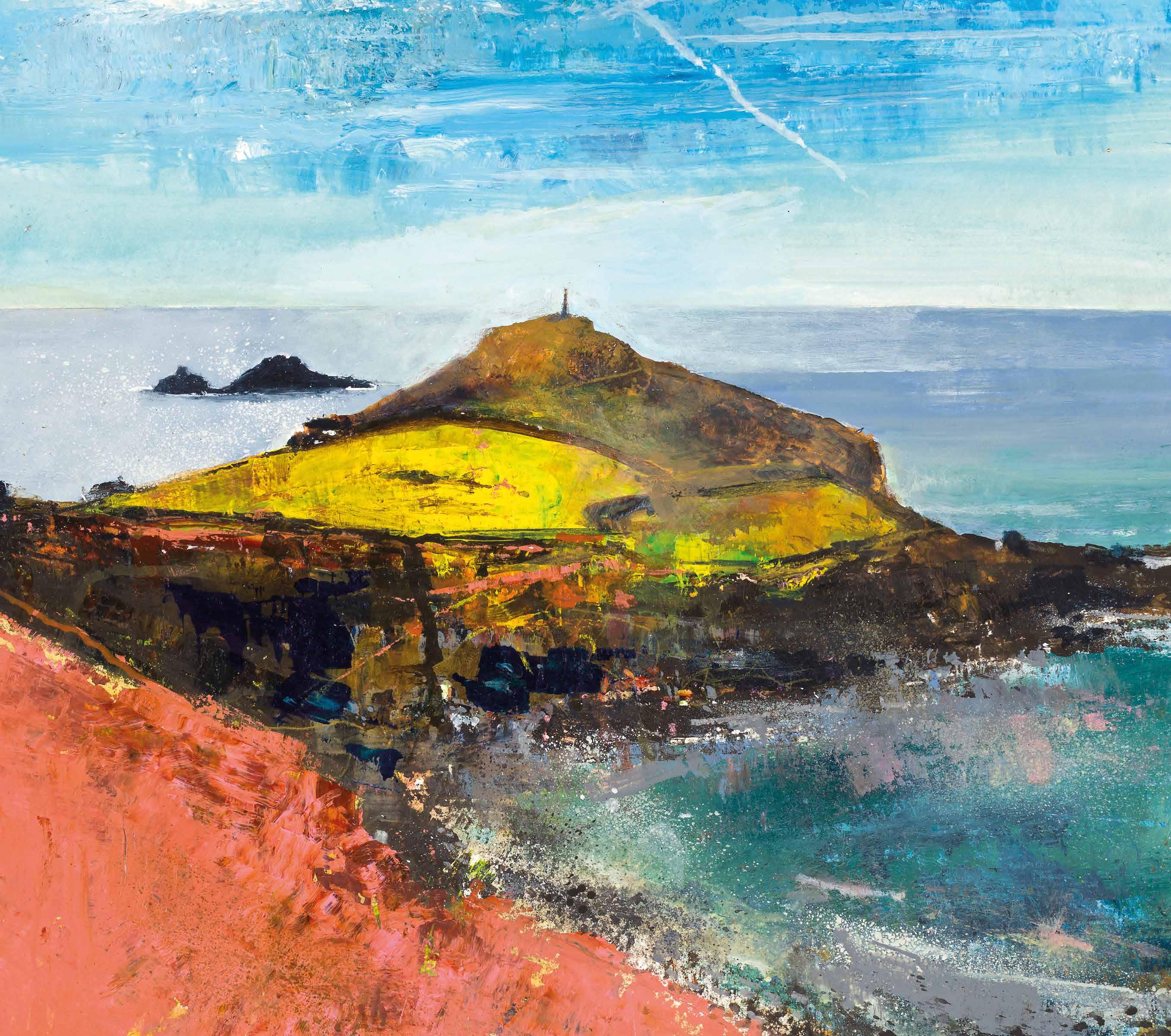
The Cape Kurt Jackson
KURT JACKSON Editions 2026
The Cape Kurt Jackson
for Caroline
‘I’ve stood on Cape Cornwall in the sun’s evening glow...’
Opening line to the song, Cornwall My Home by Harry Glasson
When was a teenager, I took a train north on the continent to the end of the line and then hitched and walked to the North Cape, the Nordkapp, the most northerly point of mainland Europe in the Norwegian Arctic.
There I was wowed by the isolation, the vastness of the sea and skies, the beauty of the wild. Little did I know that I would eventually end up living next to another cape, here in Cornwall.
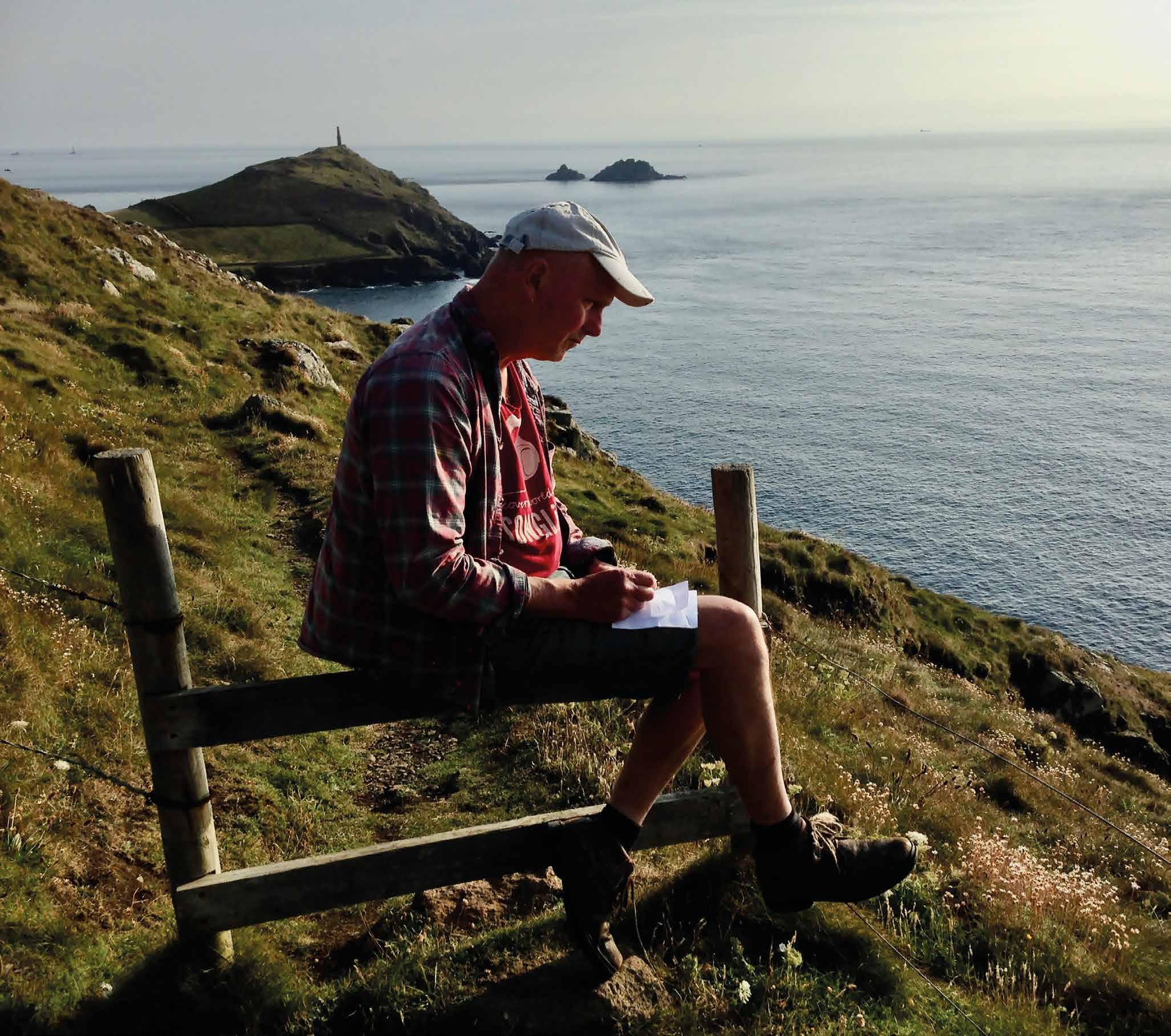
In St Just, Cape Cornwall is “the Cape”, a destination, a place to spend time or live; it refers to the headland, the coves and the land and houses around it. There is only one cape in Cornwall, in fact in the UK there are only two, one in Scotland and our Cape Cornwall.
Geographically a cape is a place at the meeting point of two or more seas; in this case the Atlantic, the Channel and the Bristol Channel. A headland, a promontory, (from the Latin caput — ‘head’).
On the continent, when you follow the coast south,
you encounter dozens of capes, little and large; in France, Spain, and Portugal they are common and numerous. But we have just this one ‘the Cape’.
Originally in Cornish it was known as “the goose back of St Just” — Kilgooth Ust. For many years, the Cape was thought to be the most westerly point in the UK south of Scotland, until Lands End took that place with its extra few meters.
On one side of the Cape is Priest Cove where I have the use of a fisherman’s hut as a rough sort of studio.
Priest Cove is from the Cornish, Porth Ust, ‘St Just’s Cove’, nothing to do with priests. On the other side of the Cape is Porthledden, ‘the Wide Cove’. Offshore, two islands, the Brisons, sit with their seals and nesting seabirds (from brisant, the French for a reef).
Others know the Cape as a place to swim or rockpool, to launch a punt from, to sit in the car and watch the sun sink behind the Brisons, or for the golf course, or the walk up to the old mine chimney: that ‘ketchup bottle on the hill’. The Cape was owned by the Heinz sisters before they donated it to the present owners, The National Trust.
have worked for many years around the Cape, painting and drawing; my earliest sketch can find of Cape Cornwall is from the early 80s.
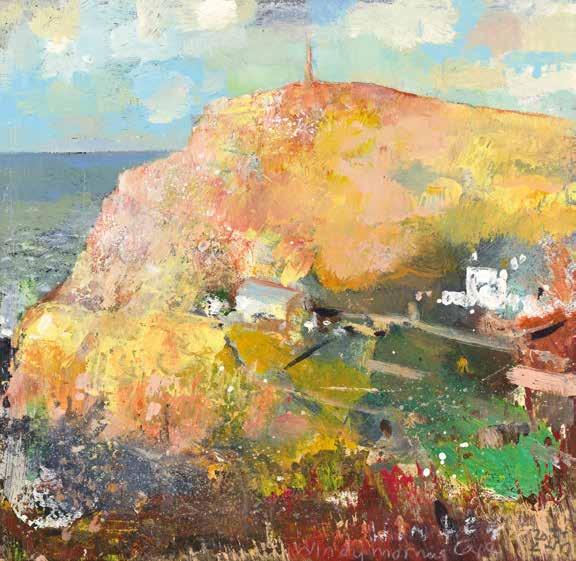
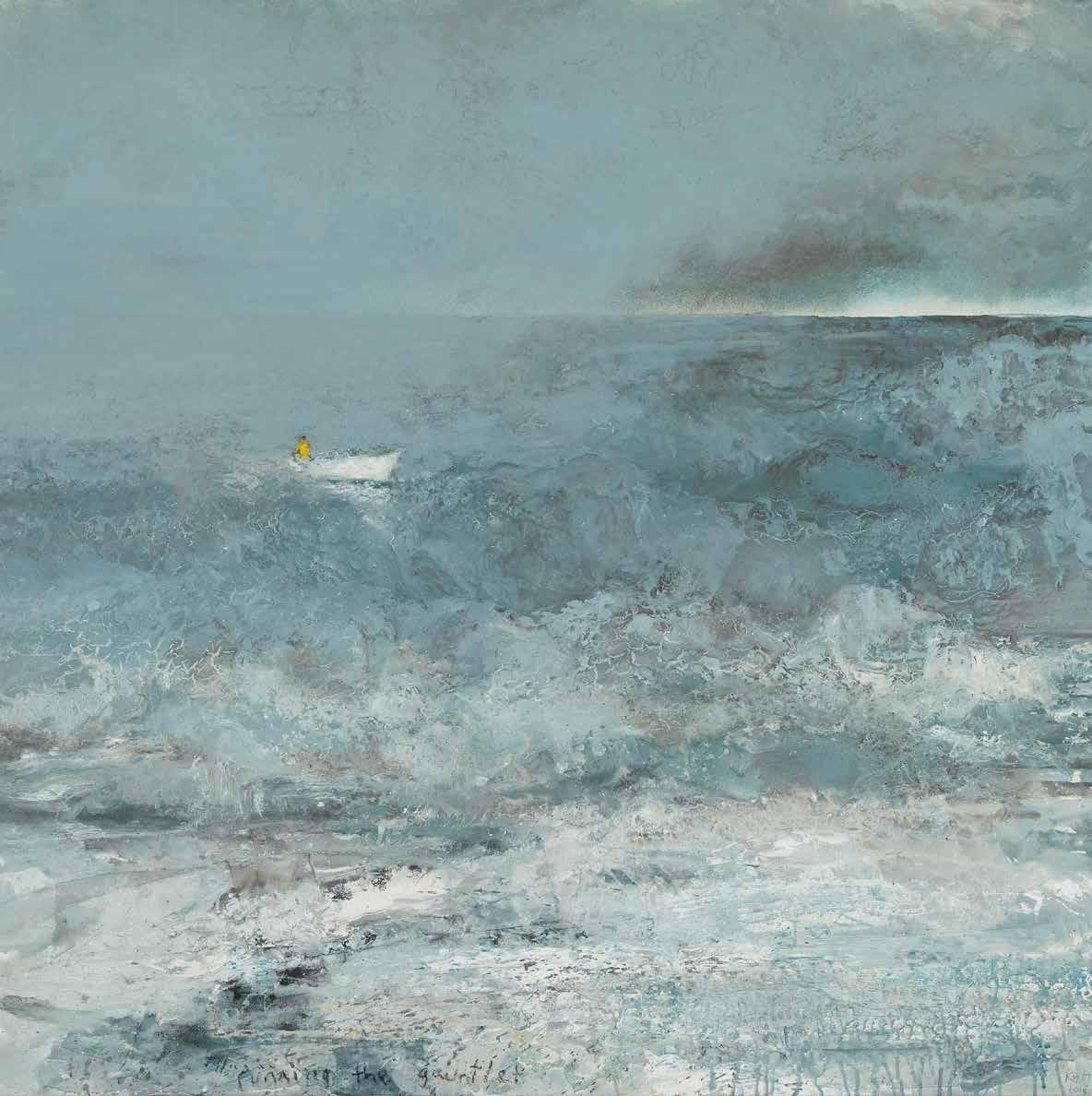
Once we had settled in St Just, finding this readily accessible, relatively wild, ‘unspoilt’ stretch of shore that had its very own character was exciting and important to me. It gave me a helpful push in my working practice. It was the incentive that inspired new exploration and creative discoveries. Priest Cove became a focal point for much of my coastal work from the late nineteen eighties to the present day; it became personal.
When I first discovered Priest Cove for myself three or four decades ago, I would perch on the rocks, sit amongst the pebbles or stand beneath the cliffs to paint, trying to make sense of, and make art with, the complicated geology, the comings and goings of the fishing folk, the birdlife, the sealife and the topography of the Cape.
This outdoor studio space was eventually upgraded to the use of a cave – in reality a short length of mine adit cut into the cliff above a rock ledge. Here for 10 years, I had a lookout tucked away, out of the weather but slightly at the mercy of the highest tides. I was also limited to sitting on the floor underneath the low ceiling and only working up to a stretch of a meter or so.
Then I was offered the use of a boat hut (or at least the ruin of one), the stumpy remains of walls that needed rebuilding. Steve the fisherman helped; carrying up rocks from the foreshore, digging out the
floor and finding reusable timbers and driftwood so that my hut blended in with the other ramshackle sheds spread out at the back of the cove.
For over 20 years I’ve worked from this place above the shoreline where the door faces out towards Land’s End and the sea, to the horizon, but is only a pace of two from the edge of the flowercarpeted cliff. At highest water in the winter storms, the waves beat on the door and rattle the corrugated roof, but it gives me shelter from the worst weather and from curious onlookers. Choughs perch on the roof, shrews and mice share the space with me, wrens and robins nest in the eaves and spleenwort ferns grow from the inside of the walls.
Here, I can be totally immersed in the routines of the cove, the tidal rhythms, the fauna and flora and the inhabitants. Here, I’m left alone to work at my own leisure. In this damp, saltencrusted, rodentfrequented place I’ve created so many works. Nothing can be left long or overnight, it is a very temporary daytime workspace only, but a place I’ve become very fond of, a bolthole at the sea’s edge. A place that has treated me well, spoiled me with this privileged access into the shore life, the marine and maritime world, and I’m aware of how lucky have been.
It has also featured heavily in our family life; the beach with our kids, my father painting alongside me and now our children take their children ‘down Cape’; the cove’s magic continues.
For this latest body of work, I’ve crept out of my hiding place to perch around the cove, above and on
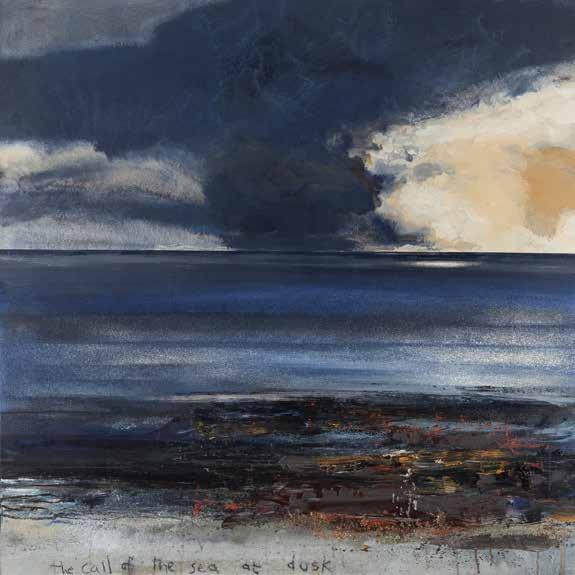
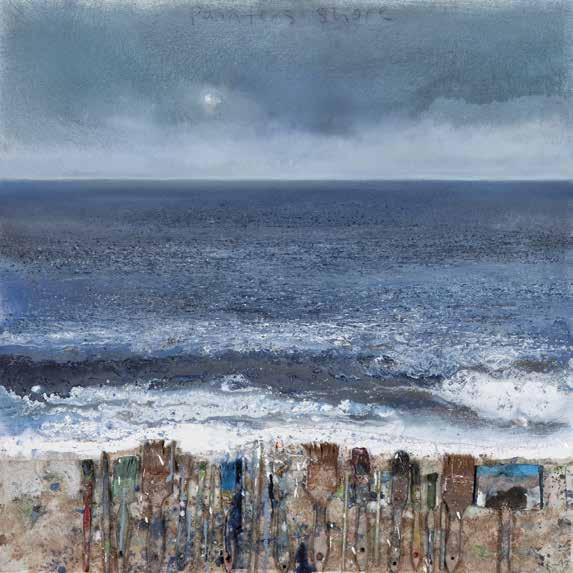
the other side of the Cape. I aimed to catch and capture this familiar landmark from every angle. To celebrate the different sides to life on this one small Cornish promontory. To try and see it with fresh eyes. Now when I look back over the nearly 40 years of working on the Cape, the almost daily visits to the Cove, especially in the autumn and winter months, with the sheer amount of time invested in this location, I realise how vital this place has been to me and my working practice. Much of the resulting works have been topographical, tied to the actualities of the locale, but then much has also been as a result of just being by the sea, of using it as a metaphor, as a motif, a symbol of the world at large; the sea globally, this habitat in general; the tidal, diurnal, seasonal and meteorological changes, indeed environmental dynamics all along the margins of this island we live on.
Wild day
Out here, exposed and vulnerable
The world is buffeted, battered
All is in motion
Waves, cloud, land
The Cape rolls in response
Shedding its soaking
Doglike
Water off a duck’s back
Draining away and down
Each storm blast shakes the foundations
With tremor and judder
Every rock and bramble trembles in shock
At this afront
This assault of the elements
Only the steady red hawks
Balanced on their own rare composure
Delight in a dance of denial
November 2024
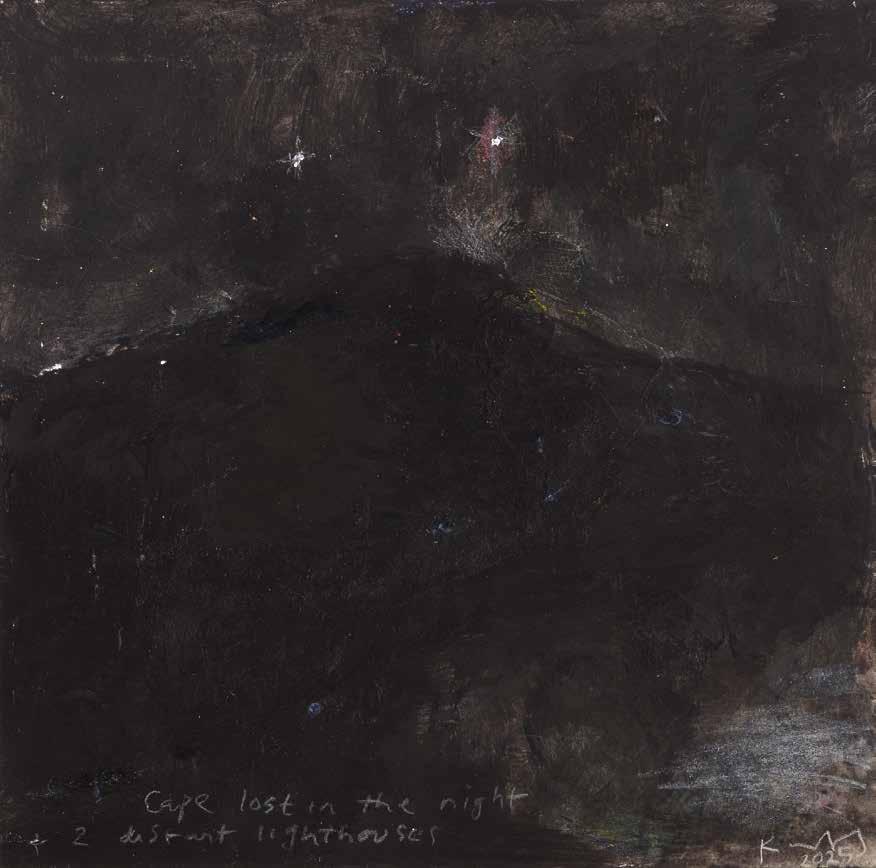
Night time, Wheal Call.
I look out of the window expecting to see the Cape’s bulk rising before me but there’s nothing.
It’s as if the hill has been removed, slid away, floated away out to sea, leaving just blackness.
But then I see two brief dots of light and then a third –the lighthouses winking out to sea and on Scilly. As my eyes gradually adjust to the dimness, I can just make out the edges of Cape’s form from the sky and the sea surrounds.
The sea is loud below me, roaring down along Porthledden. And just above the mordros I can hear a few crickets singing in the bracken; the insects’ last tunes of the year, slightly feeble now as though they’re gradually winding down as the month plays out.
September 2025.
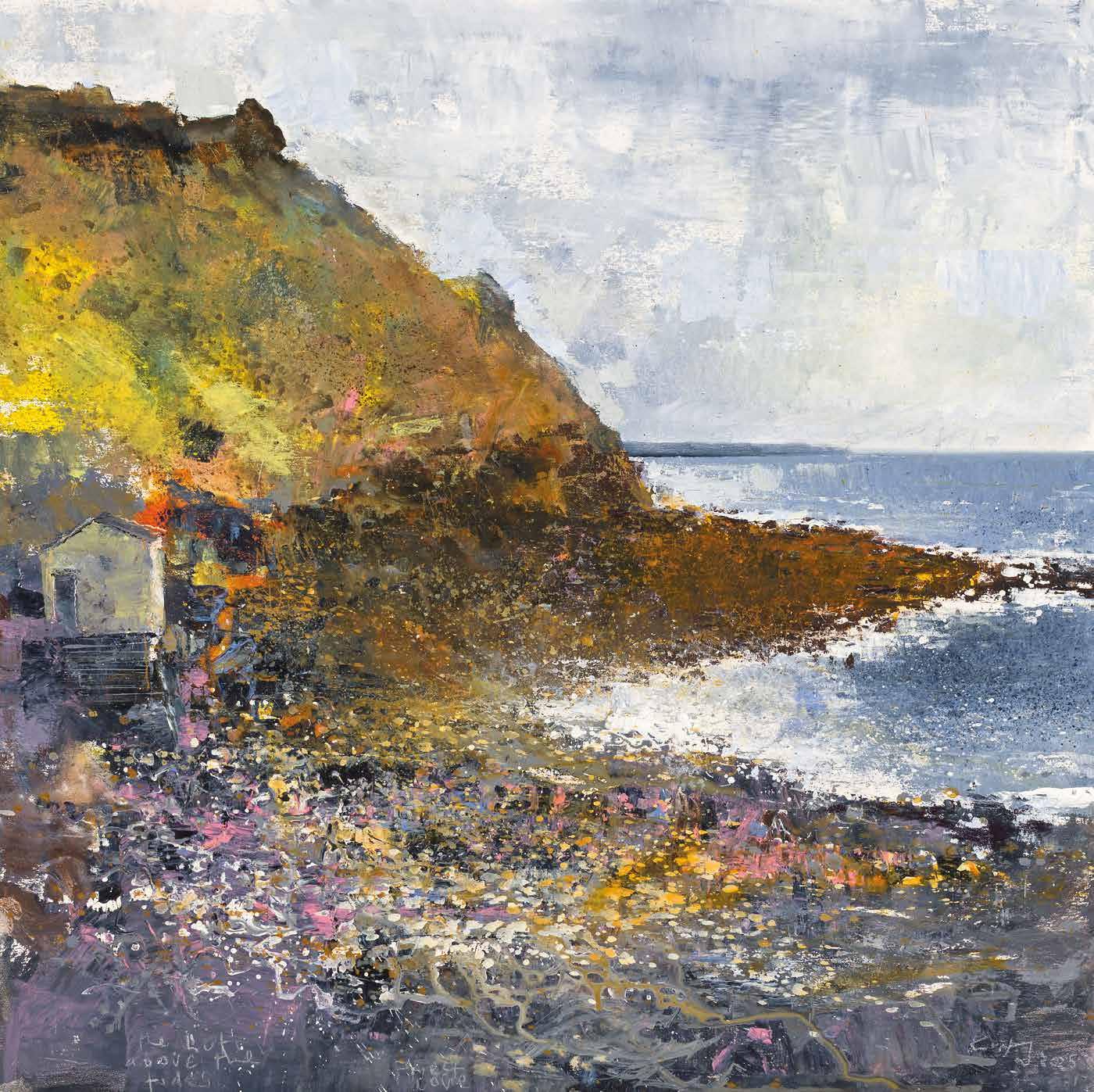
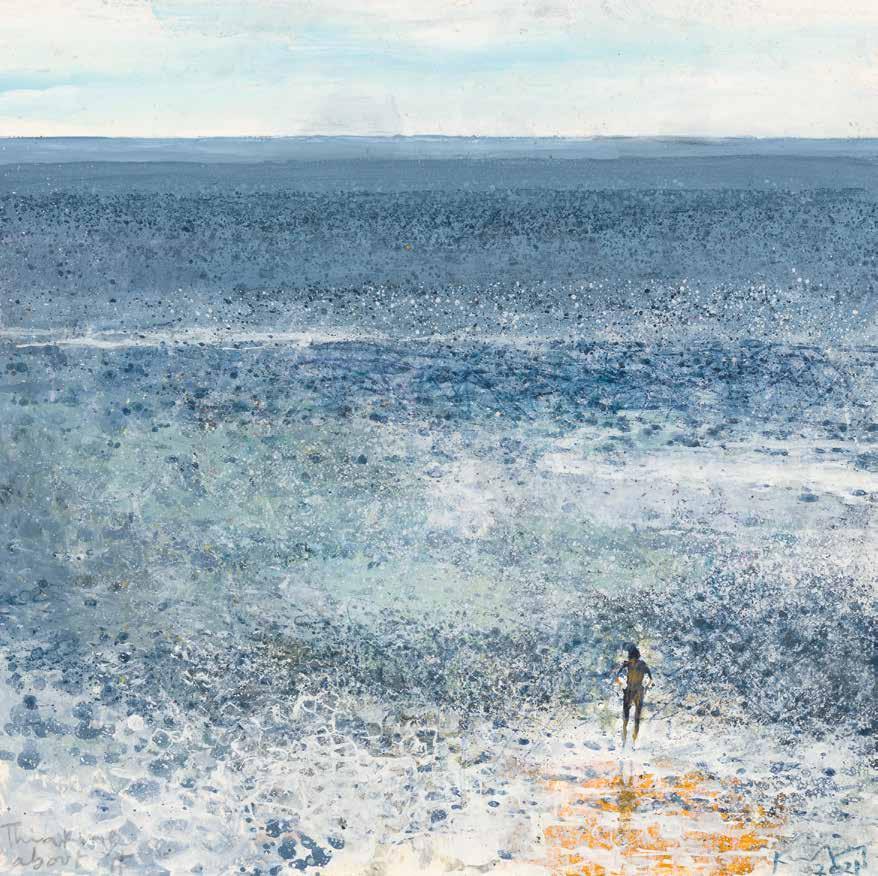
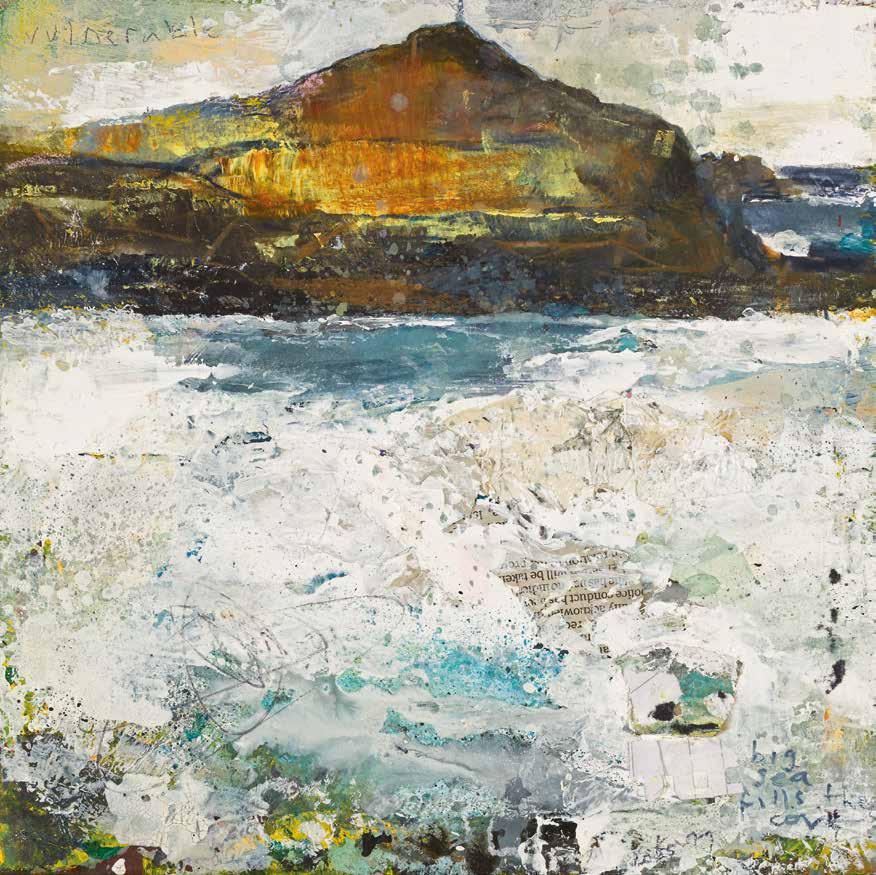
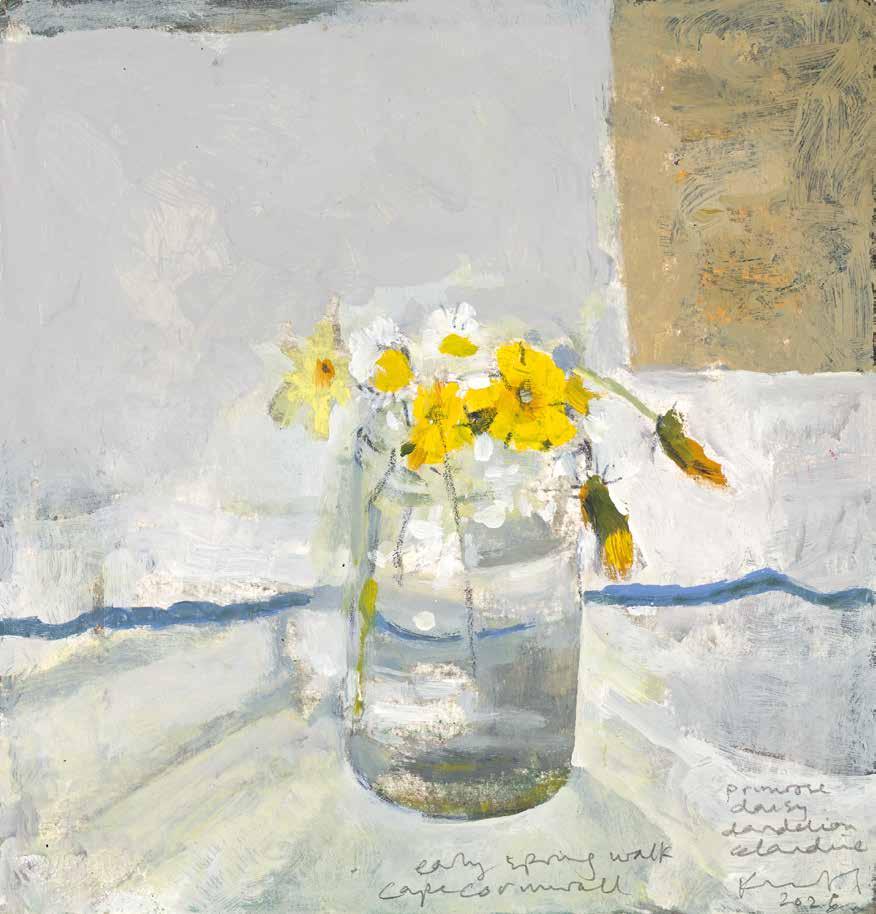
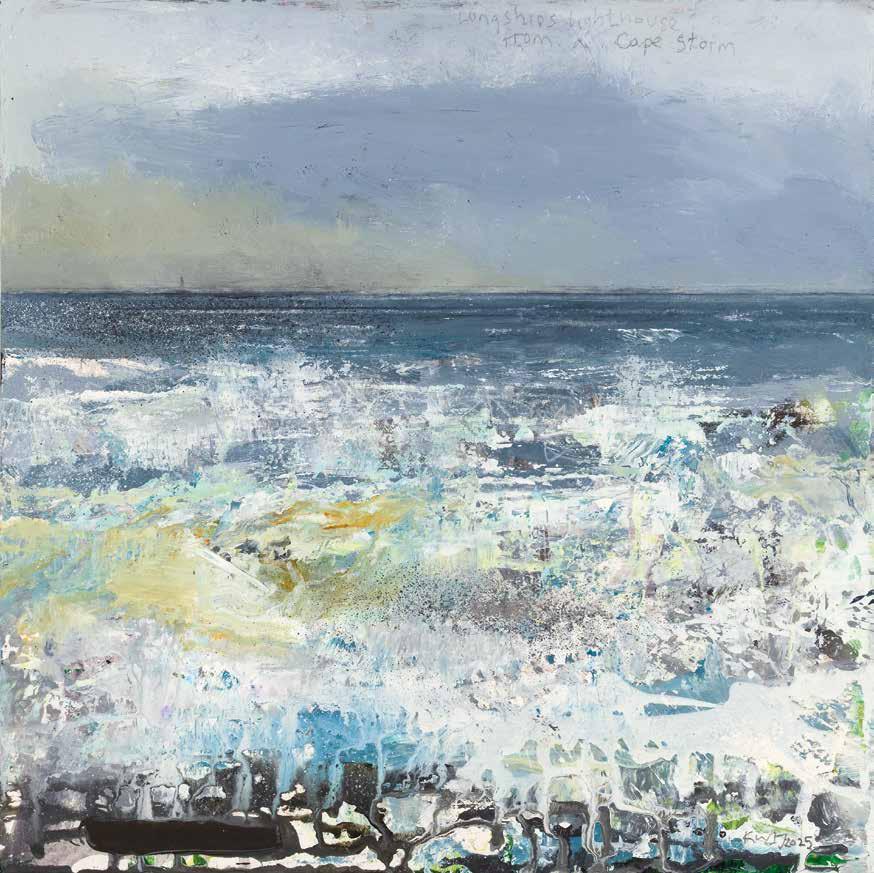
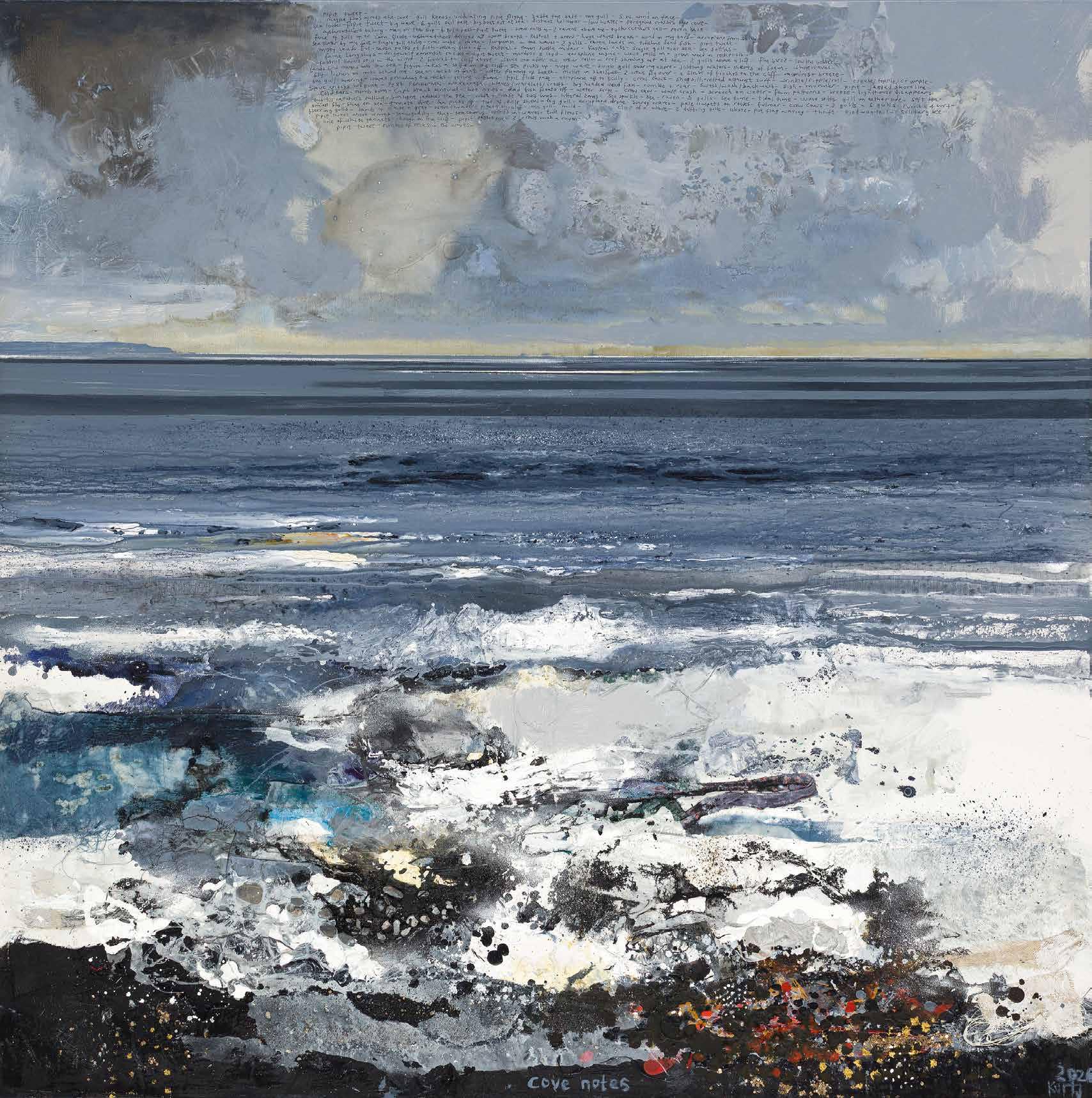
Today Priest Cove was hectic; chaotic with a mass of sunlit crystalline white surf fighting with itself.
Waves were charging every which way, pounding and churning the waters into a cauldron of bottledup energy, full of froth and foam, lashing the cliffs, ramming into the rocks, scouring the slip as though trapped and trying to escape.
I tentatively stepped down the terraces using that long eroded set of stone cliffedge steps seemingly at the mercy of the waves, to access the boat hut. The door was wet with spume, my studio today was almost too close to the sea for comfort; breaking waves cast fleeting shadows from this highest of tides, but once inside and peeking out from the doorway, I felt safe enough.
The roof rattled and rumbled, the sea’s vibration travelled through the very cliff beneath me, the air itself seemed to move with the sea’s pressure. Deafeningly loud. The cove felt under attack. April 2026
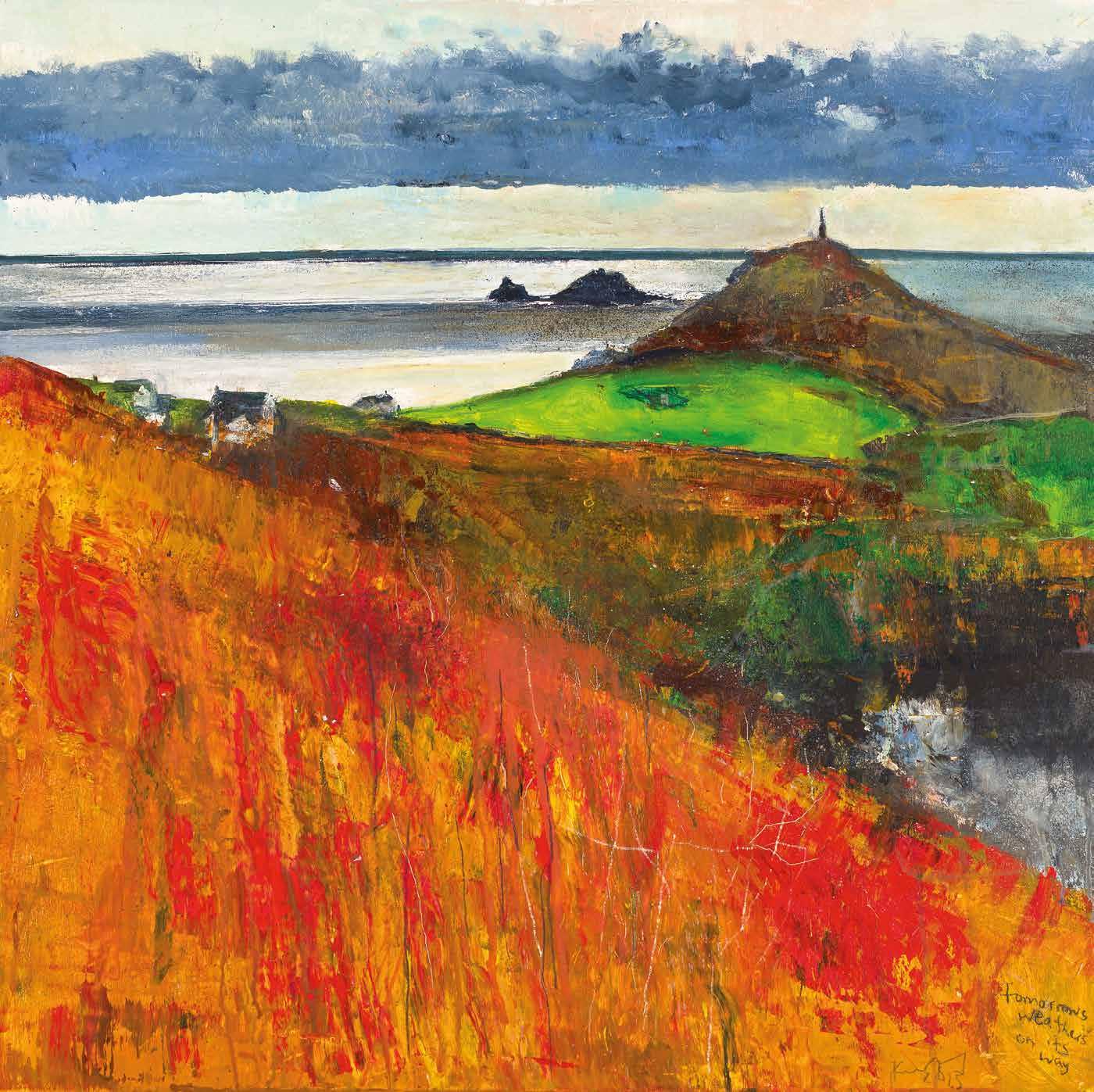
Porthledden
The sun is on the Cape
Rusted bracken flows downhill
Molten gold trickling seawards
Onto rocks, black as type
With their foam fringe of broken sea
The plants twitch and fidget
Silent in contrast to the ocean’s mutterings
The cove alters in shape and size
Breathing with the waves wash and backwash
Pushing out and contracting in rhythm
Alive
Loud
Vital but not threatening
Brightly coloured under sunlight
The sea is content almost relaxed
Stroking and washing the shore
With her daily bathtime ritual
Slowly shaping the coast and the Cape above
With feeling
September 2025
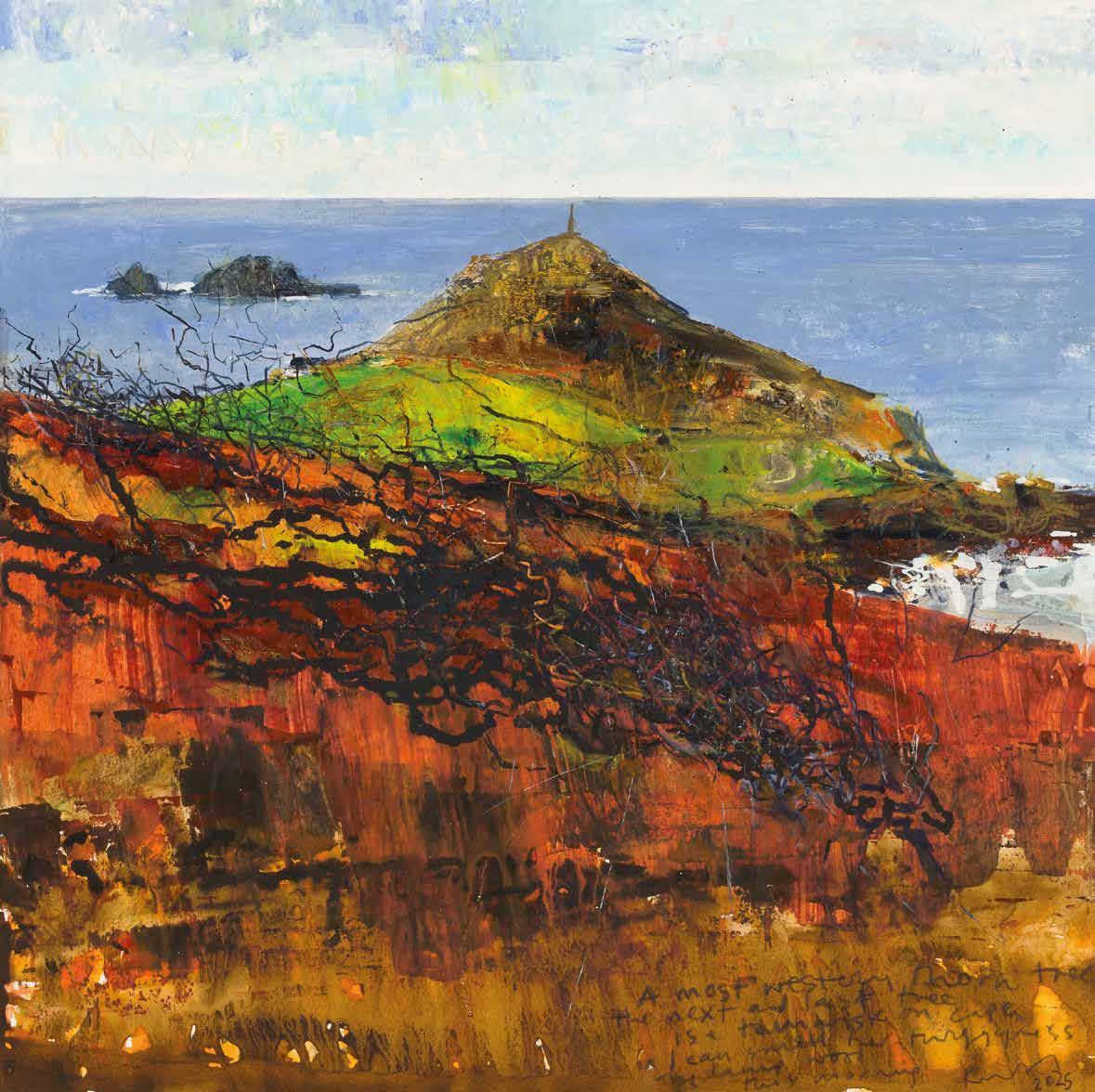
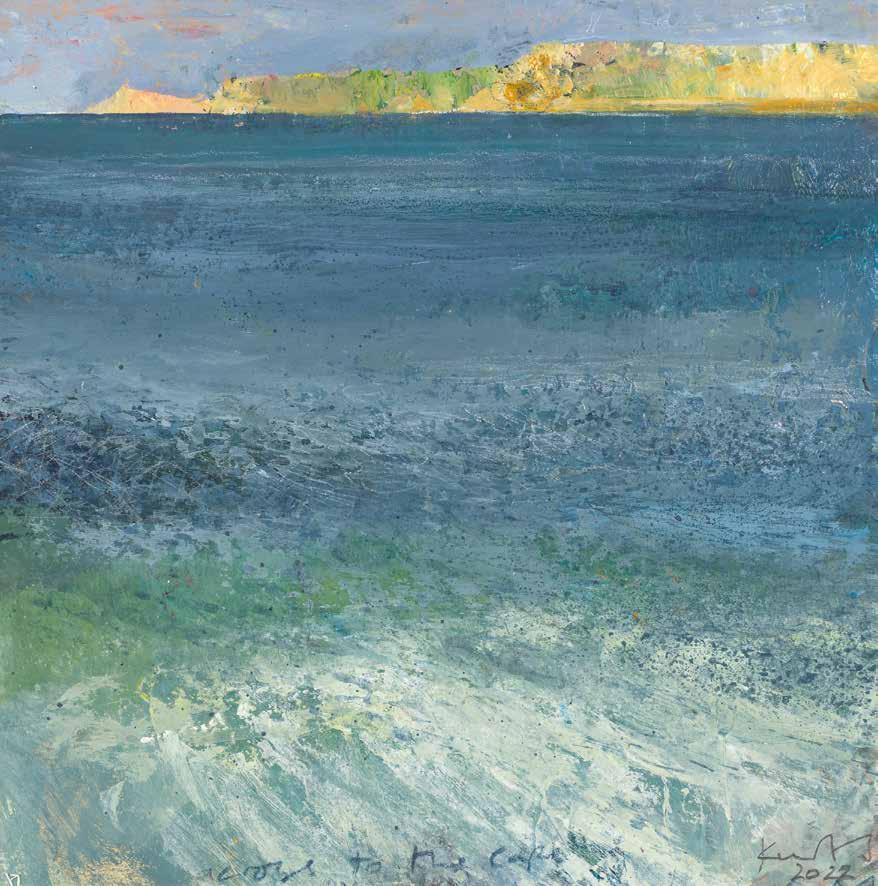
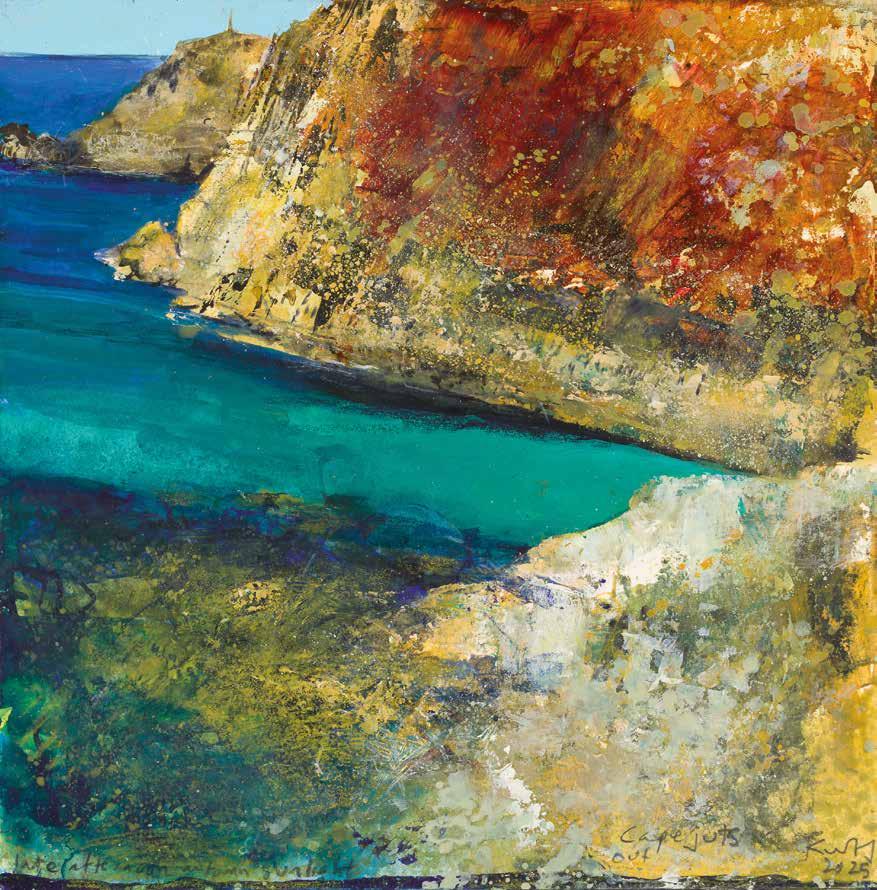
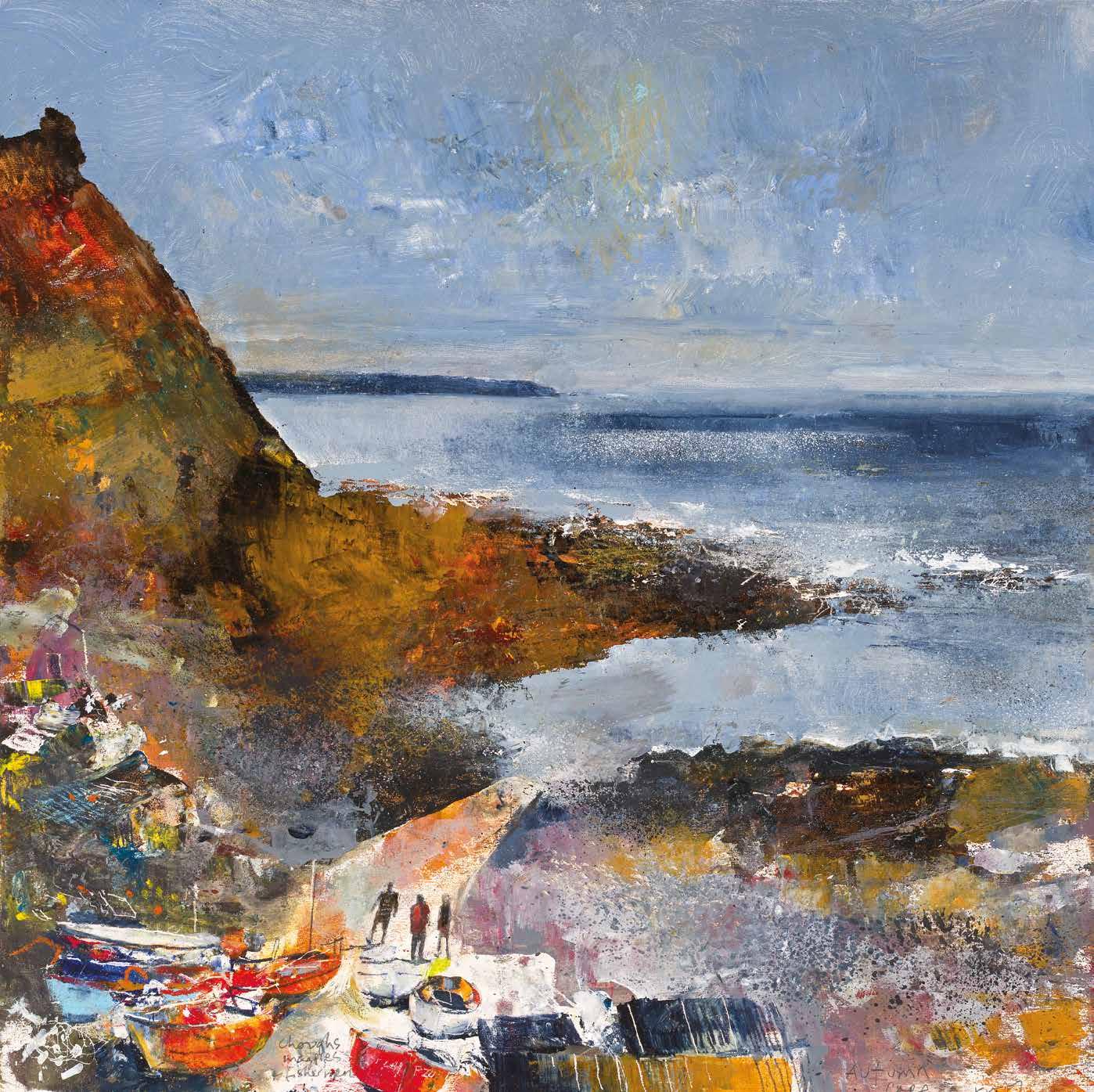
Choughs, magpies, fishermen. 2025
Today the choughs welcomed me into the cove with their excited calls as they swooped and tumbled above the cliff.
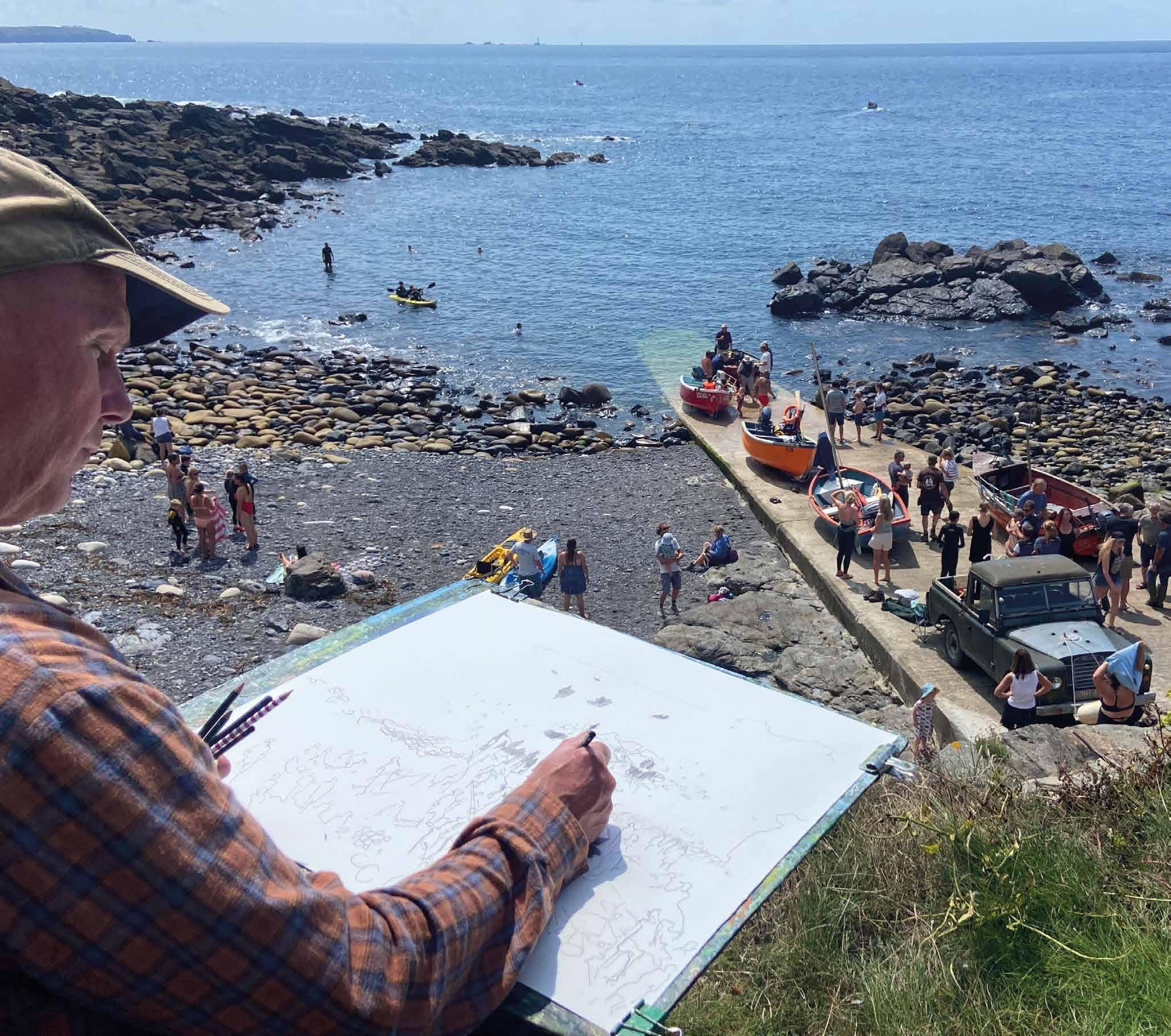
had permission from the owners of Cape Cottage to sit and work in their overgrown clifftop gardens. Here the ground was covered in a thick layer of springy turf growing right up to the stone wall at the edge. I sat on the wall with my legs hanging down; perched right above the boat huts and the boats pulled up on the slip below; it gave me a bird’s eye view – a chough’s view of the cove.
The grey seas were at low water, spread out under an overcast sky, with Land’s End long and dark on the horizon. The boats jumbled together at the top of the slip were the only real colour in the cove – bright red, orange, blue, yellow and white contrasting with the subdued brown and black rocks.
A few fishermen wandered around on the slip, moving and repositioning their punts, dragging them up and down the slip, with screeching stone and metal on concrete noises. The choughs continued to provide their comments and the winds picked up.
was battling with a painting board on my lap that the wind kept trying to grab. My hat blew off and my bags rolled around in the grass. It became challenging. There was no shelter at all and as the winds grew stronger my task felt hopeless. Then the sun came out briefly giving me a way through my painting – a means of a resolution, a way to lift the dullness of the paint and resolve the lack of focus.
The tide turned, providing a white lace to outline the water’s edge and delineate the cove while the bit of sunlight brought out colour in the rocks – orange and yellow ochre. I finished my attempts and let the wind blow me back up and out of the cove with relief.
The next time I chose to paint in that spot, I would make sure of stiller conditions beforehand.
September 2025
The sun is low now
But still warm,
Here on the seawall beneath me
The ants dance across every surface
The rocks fizz with them
The turf teeming with their busyness
Dark as their shadows
They never cease their hectic fuss,
Oblivious to the rising tide
That brings light into the cove
The waves carry the sun on their backs
Crumpling, collapsing, heads down
To disrupt the stillness
Throwing themselves on the slip
All is suddenly in motion
On this headland
And around
The choughs slide over
To twirl and twist
Filling the space above
And jackdaws
Dragging their noise with them
Their surprise and excitement
This place is now alive
A dance hall of activity
And light
Above, below and out front
Where the sun’s glare
Shifts past the Brisons
Blinding the west
Creating a flickering path of absence
To the horizon
September 2025
A environmentalist and true polymath, Jackson’s holistic approach to his subject seamlessly blends art and politics providing a springboard to create a hugely varied body of work unconstrained by format or scale.
Jackson’s artistic practice ranges from his trademark visceral plein-air sessions to studio work and embraces an extensive range of materials and techniques including mixed media, large canvases, print-making and sculpture.
The son of artists, Jackson was born in Blandford, Dorset in 1961. While studying Zoology at Oxford University he spent most of his time painting and attending courses at Ruskin College of Art. On gaining his degree he travelled extensively and independently, painting wherever he went before putting down roots in Cornwall with his wife Caroline in 1984.
Jackson’s focus on the complexity, diversity and fragility of the natural world has led to artist-inresidencies on the Greenpeace ship Esperanza, the
Eden Project and for nearly 30 years Glastonbury Festival which has become a staple of his annual working calendar.
Over the past forty years Jackson has had numerous art publications released to accompany his exhibitions.
Six monographs on Jackson have been published by Lund Humphries depicting his career so far; A New Genre of Landscape Painting (2010), Sketchbooks (2012), A Kurt Jackson Bestiary (2015), Kurt Jackson’s Botanical Landscape (2019), Kurt Jackson’s Sea (2021) and Kurt Jackson’s Rivers (2024). A Sansom & Company published book based on his touring exhibition Place was released in 2014.
Jackson regularly contributes to radio and television and presents environmentally informed art documentaries for the BBC and was the subject for an awardwinning BBC documentary, A Picture of Britain. He has an Honorary Doctorate (DLitt) from Exeter University and is an Honorary Fellow of St Peter’s
College, Oxford University and an Honorary Fellow of Arts University Plymouth and a Bard of the Gorsedh Kernow (Cornish Gorsedd). He is an ambassador for Survival International and frequently works with Greenpeace, Surfers Against Sewage, Friends of the Earth and The Wildlife Trusts. He is a patron of human rights charity Prisoners of Conscience. He is an academician at the Royal West of England Academy.
Kurt Jackson and his wife Caroline live and work in the most-westerly town in Britain, St Just-in-Penwith where in 2015 they set up the Jackson Foundation. Kurt and Caroline have three grown children and eight young grandchildren.
The Cape August 2026 – February 2027 price list
f. cover Brisons sailing high. 2025
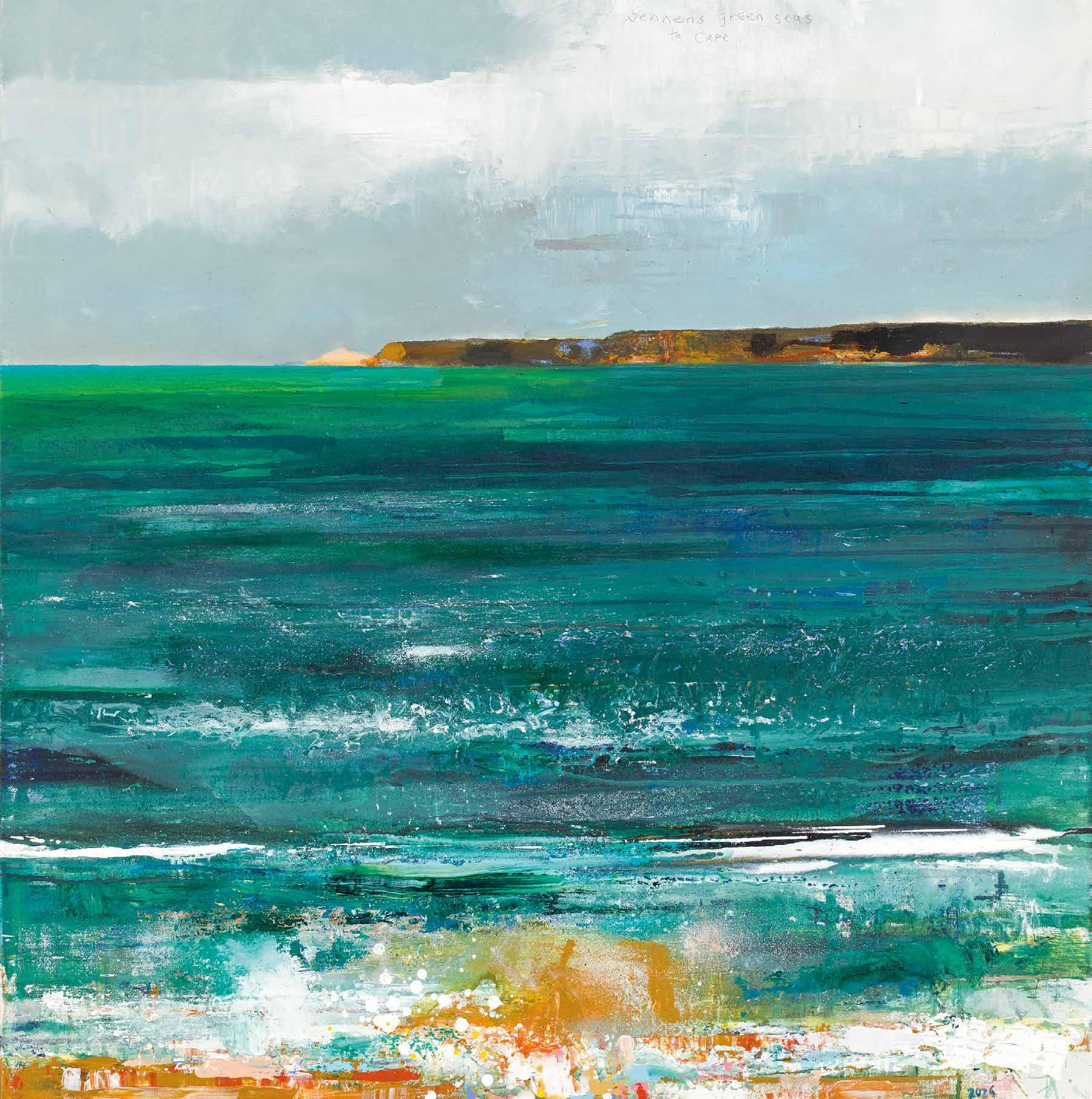
2 Sennen’s green seas to Cape. 2026
3 Winter, windy morning. 2025
4 Running the gauntlet. 2014
5 The call of the sea at dusk. 2013
5 Painter’s Shore. 2011.
on canvas
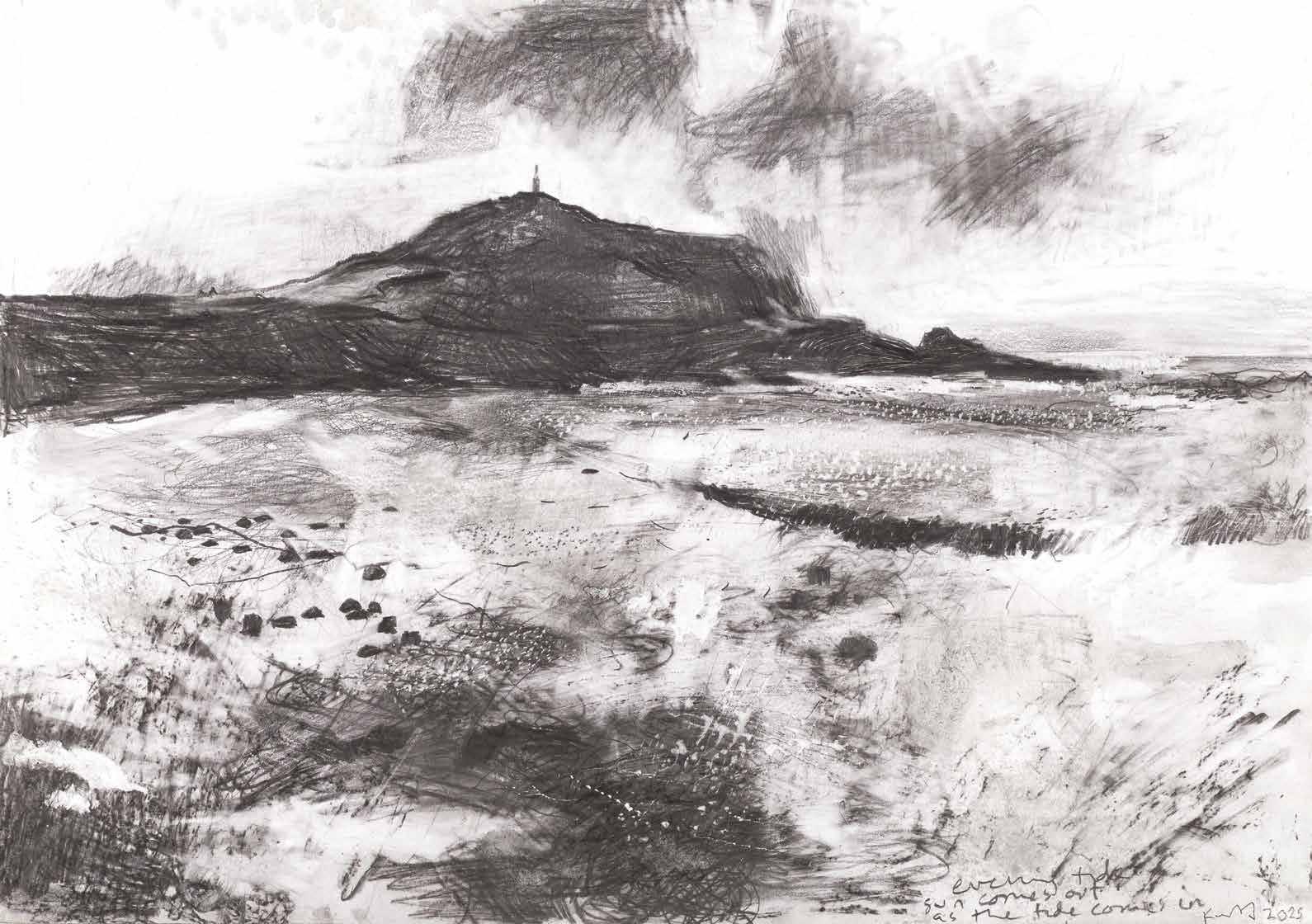
6 Evening tide, sun comes out as the tide comes in. 2025 pencil on paper
7 Longships lighthouse from a Cape storm. 2025
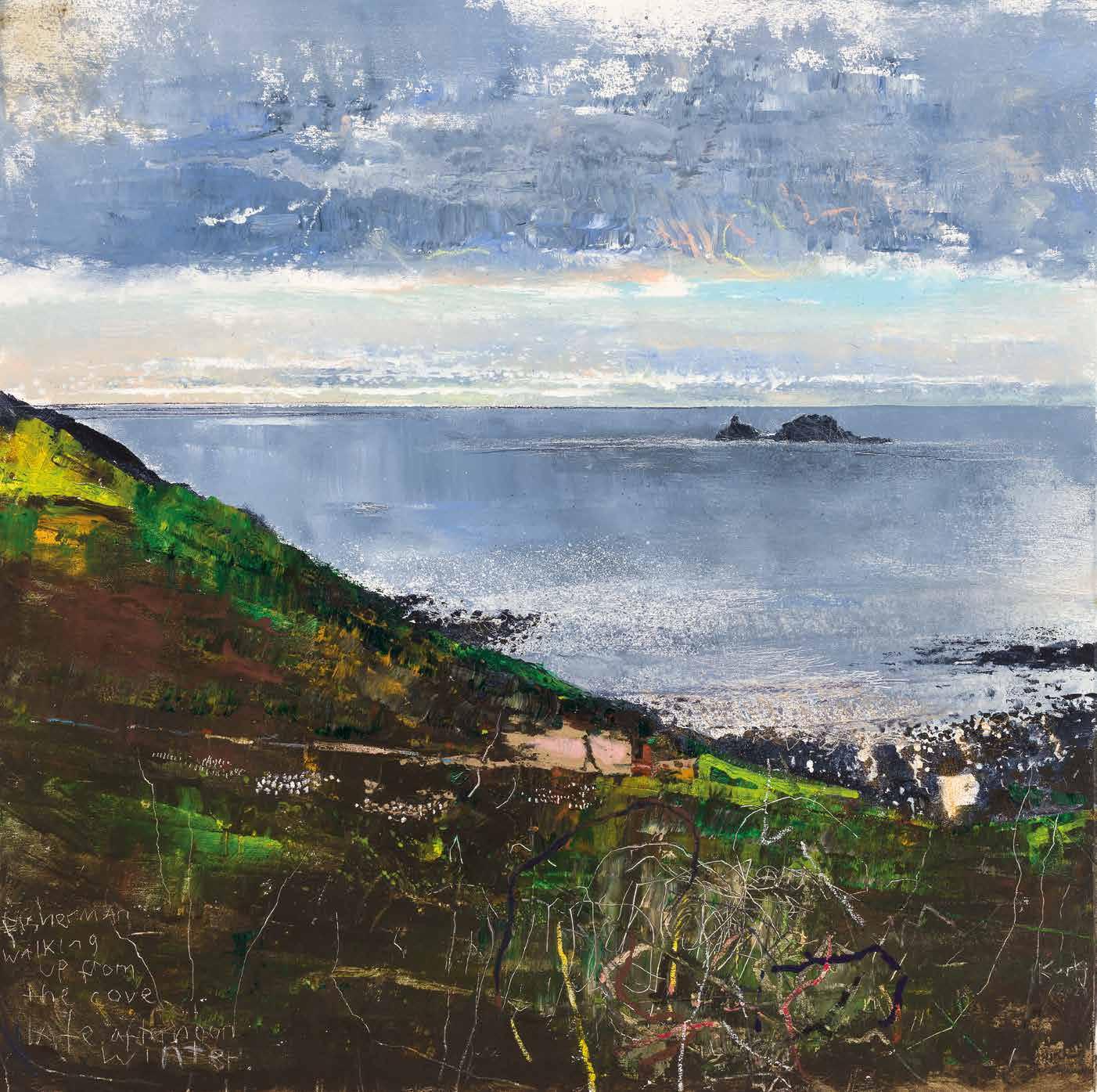
8 Fisherman walking up from the cove
2023
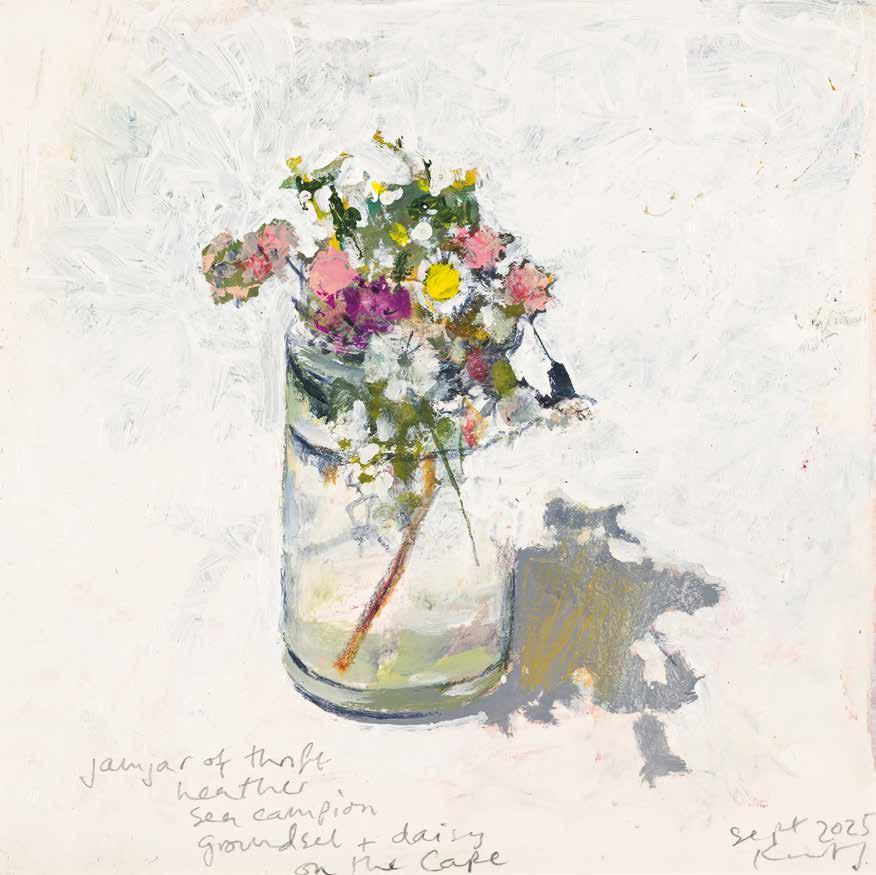
9 Jam jar of thrift, heather, sea campion . . . 2025
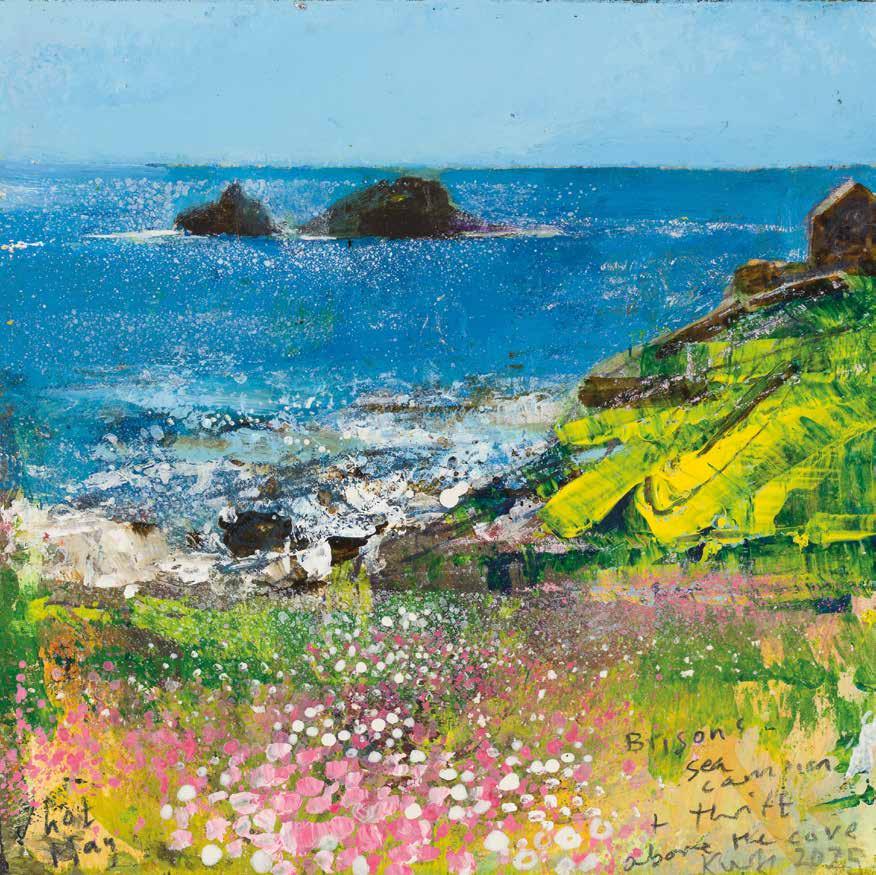
9 Brisons. Sea campion and thrift above the cove. 2025
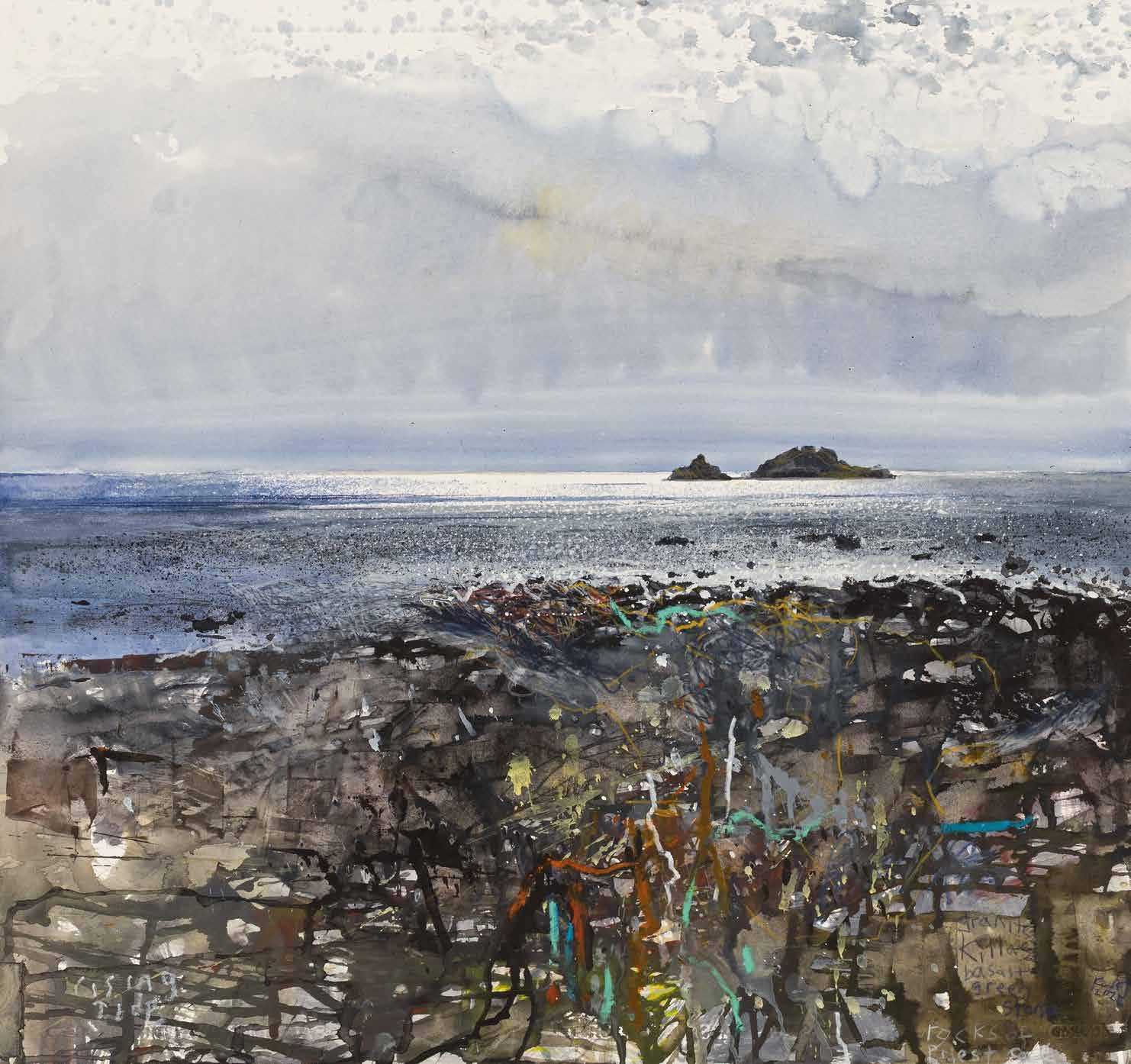
10 Granite, killas, basalt and greenstone. 2026
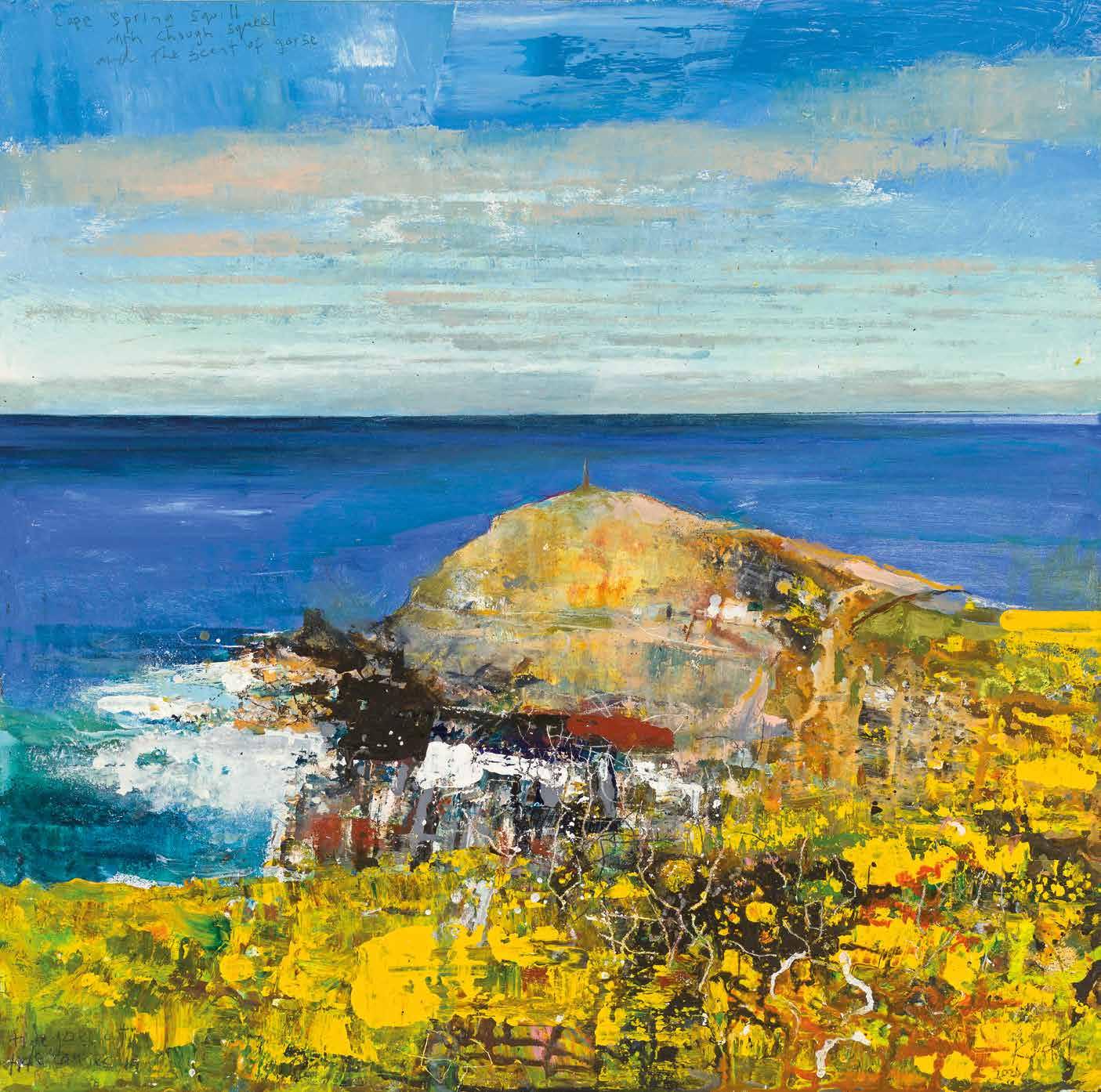
11 Cape Spring squill with chough squeal . . . 2026
media on wood
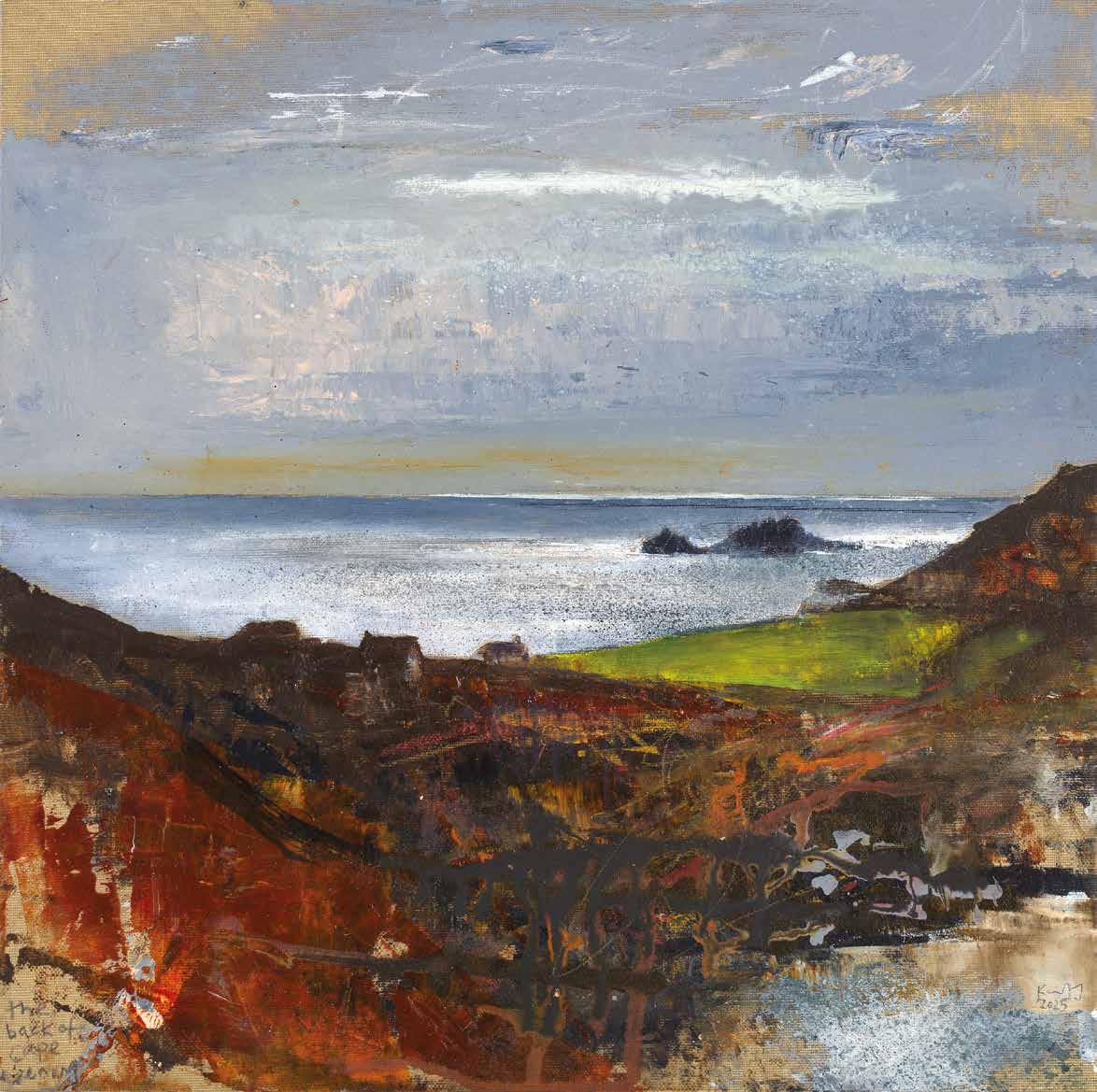
12 The back of Cape, evening. 2025
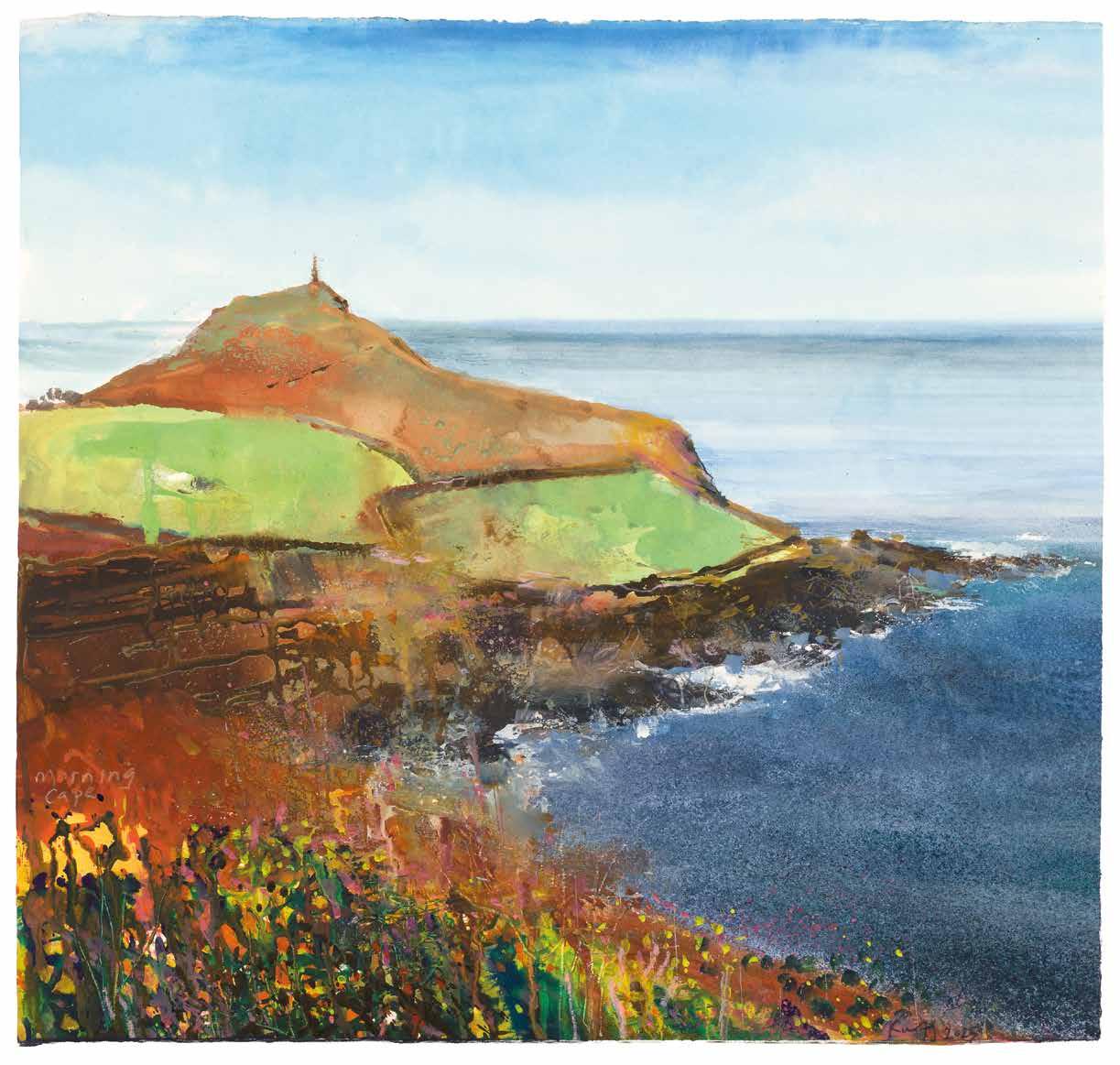
13 Morning Cape. 2025
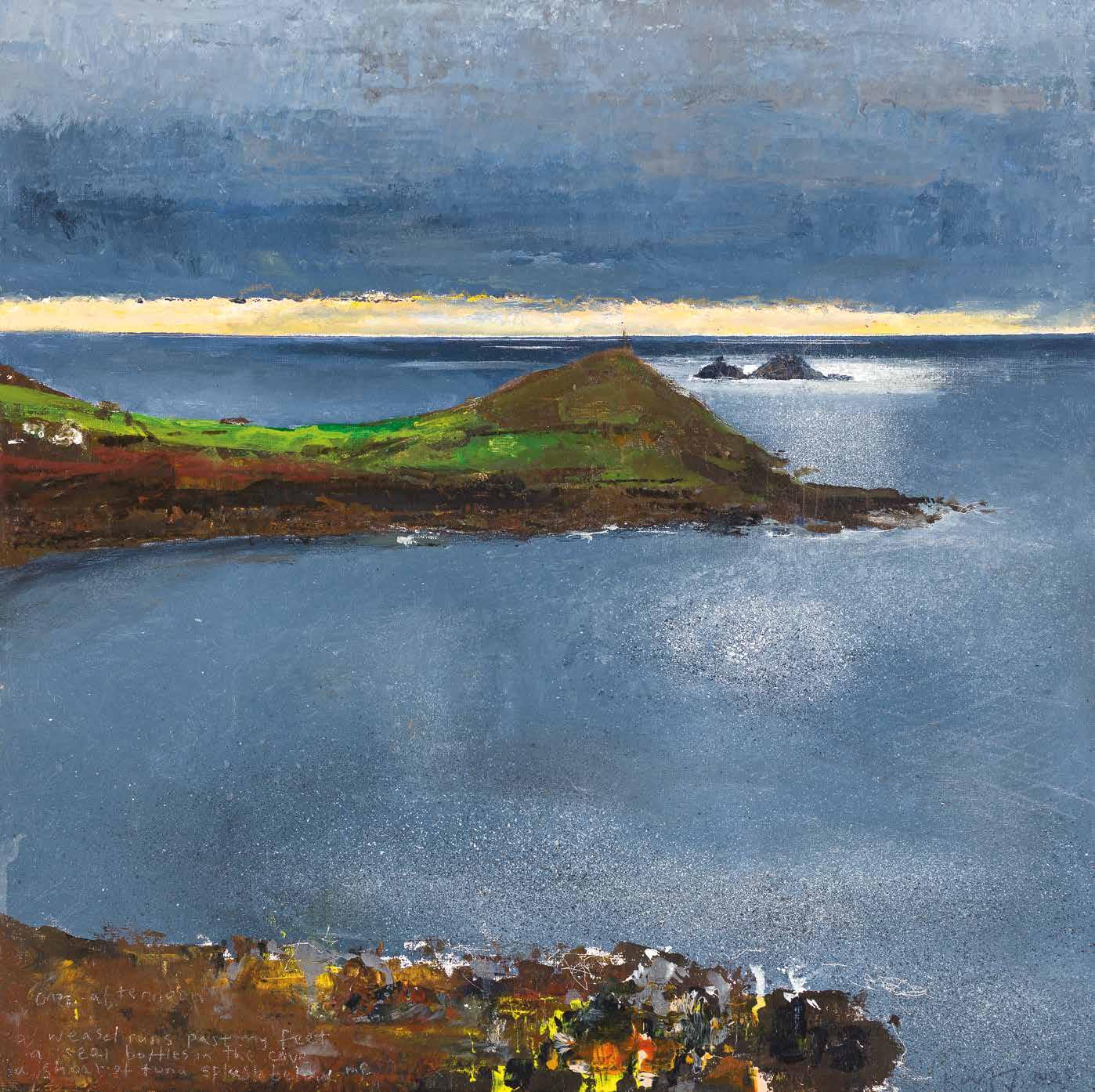
14 Afternoon. A weasel runs past my feet . . . 2025
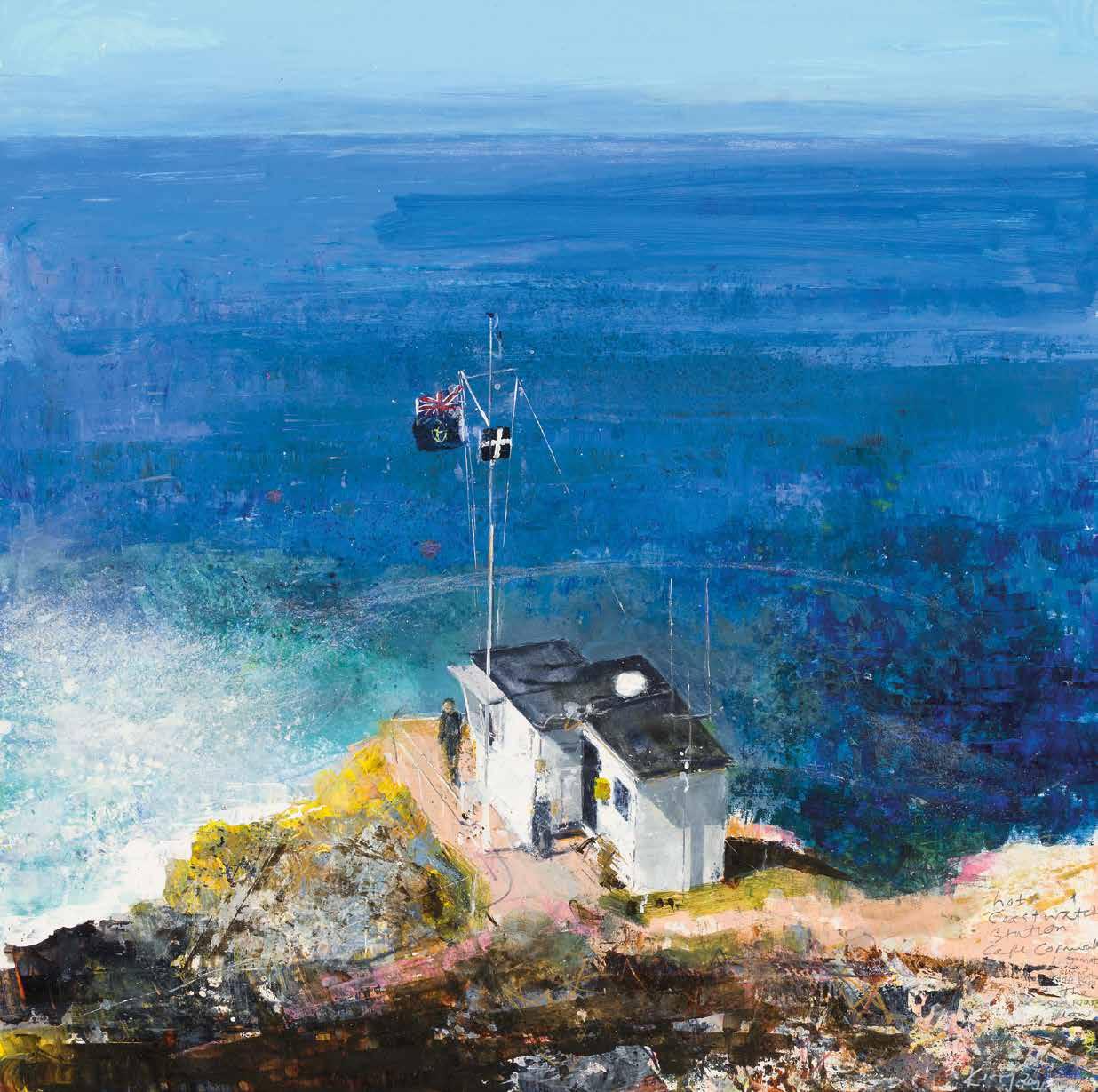
15 Hot Coast Watch station, Cape Cornwall .
2026
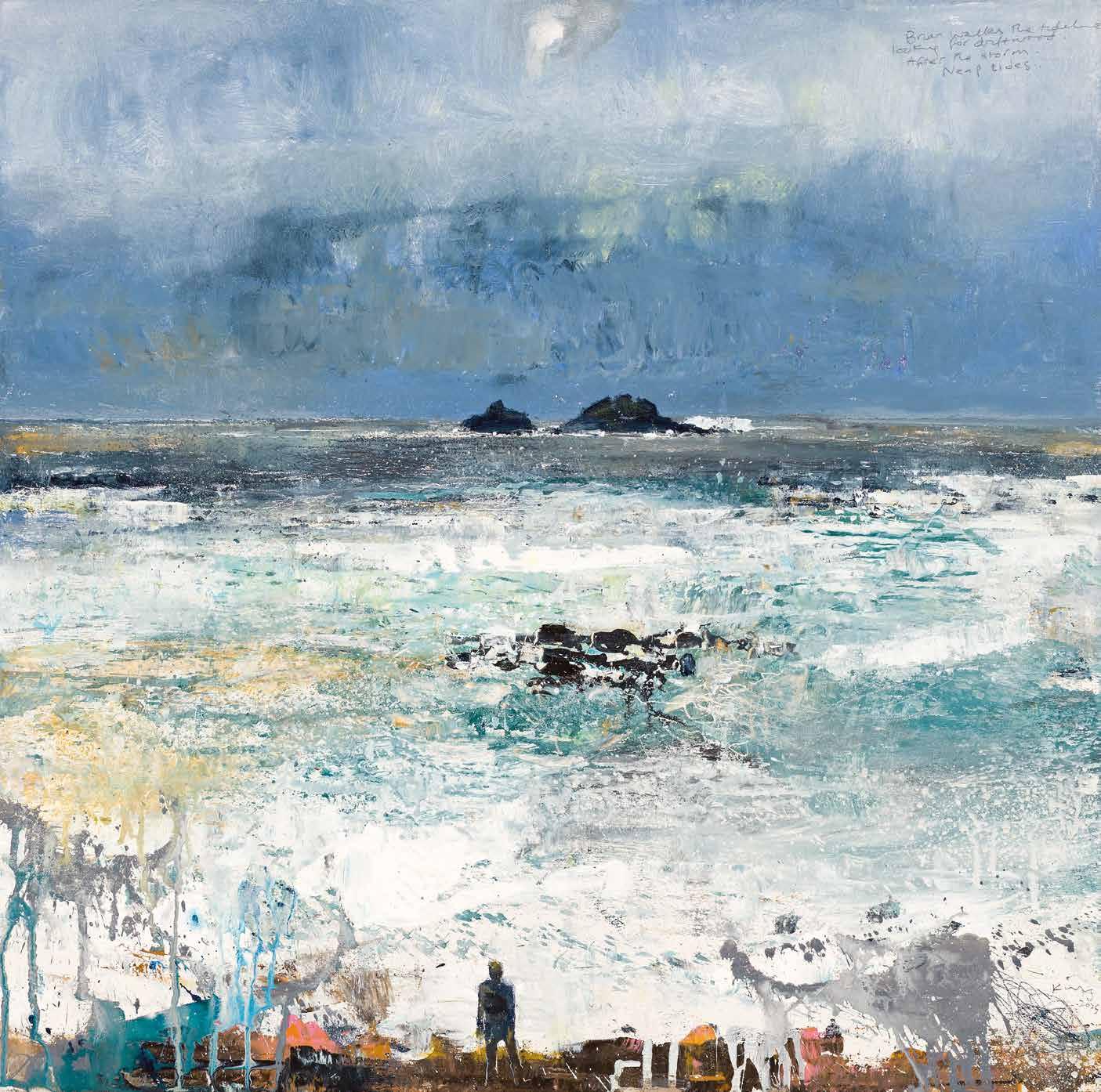
16 Brian walks the tideline looking for drift wood . . . 2025
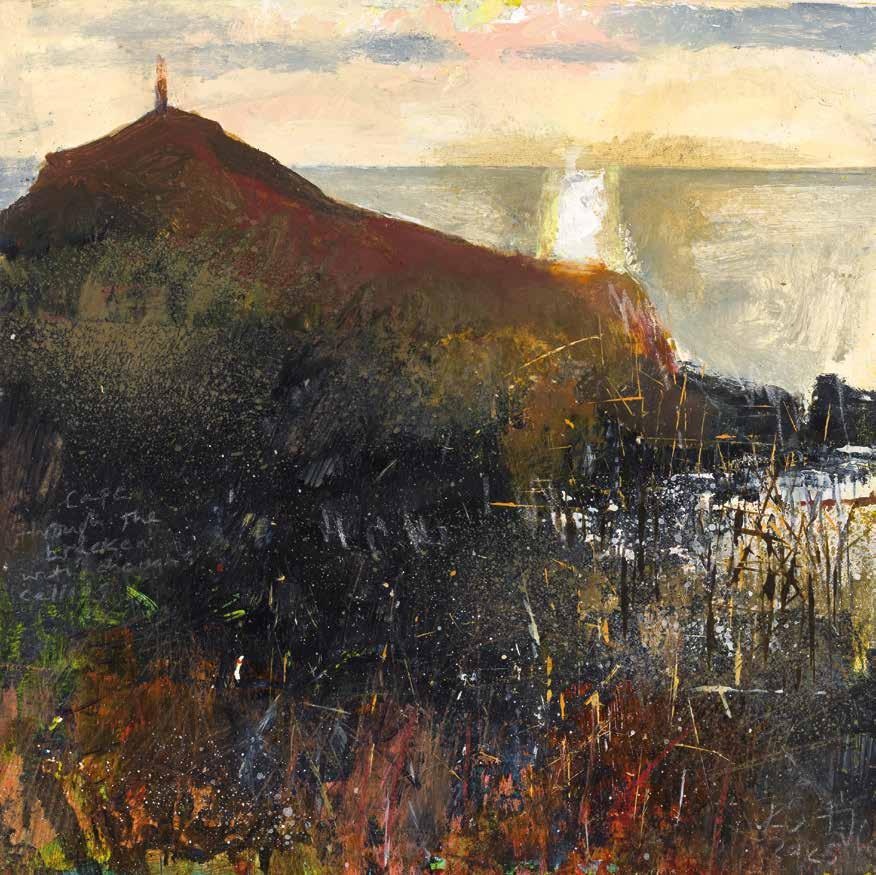
17 Cape through the bracken with choughs calling. 2025
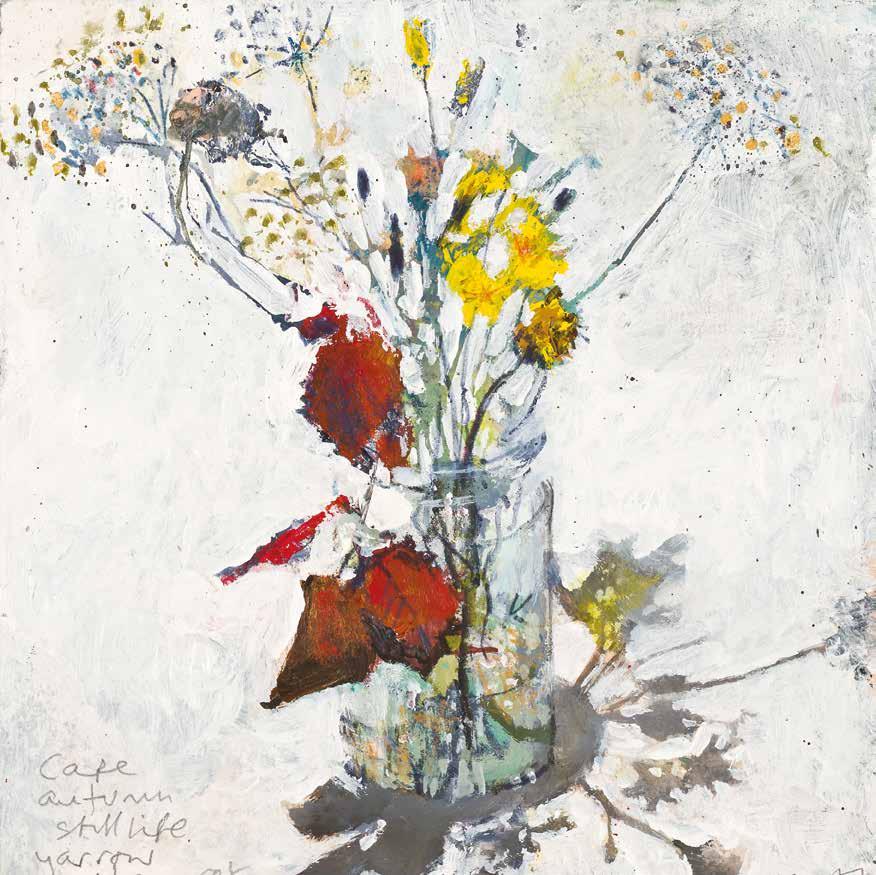
17 Cape Autumn still life. Yarrow, wild carrot . . . 2025
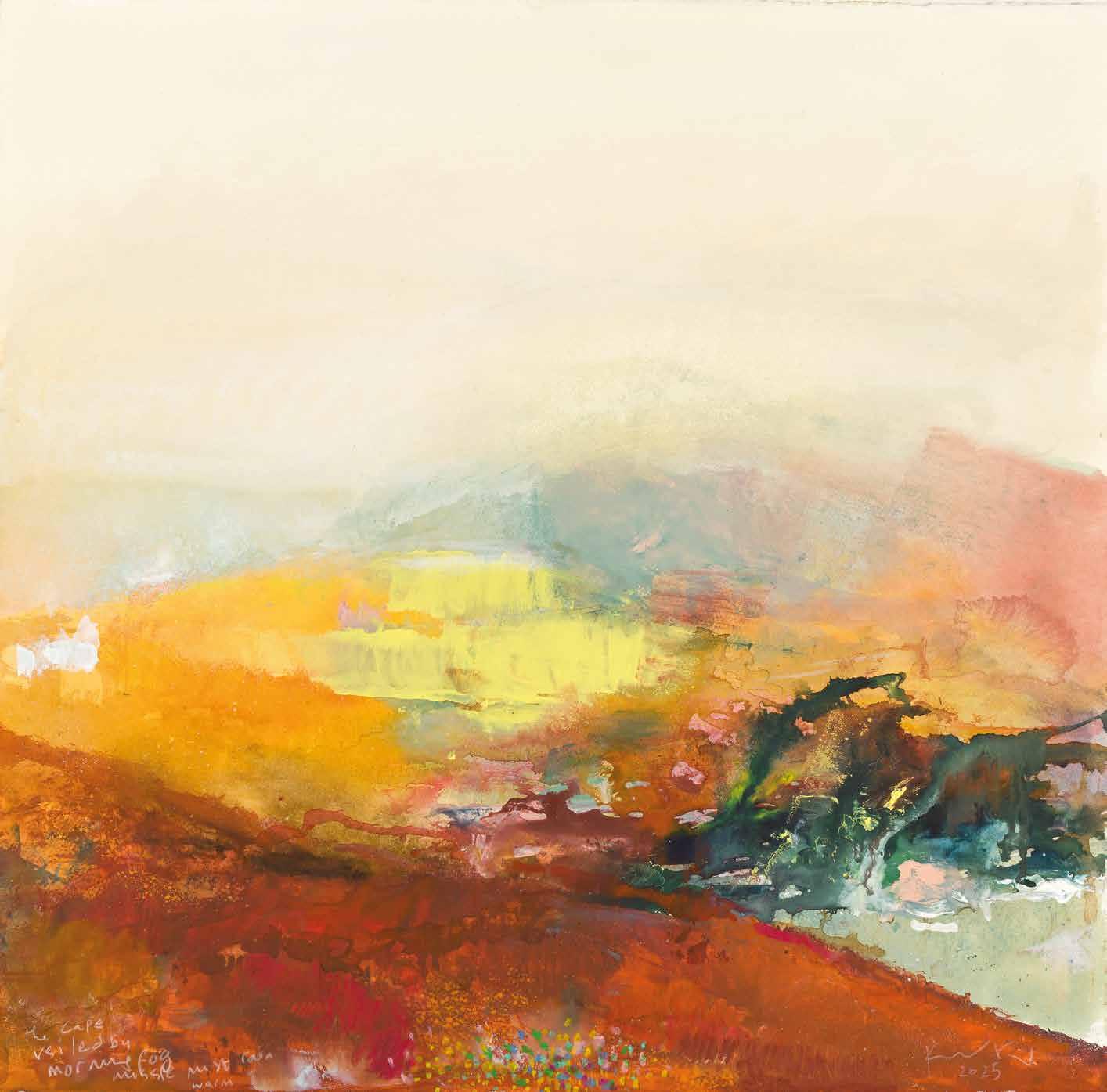
18 The Cape veiled by morning fog. 2025
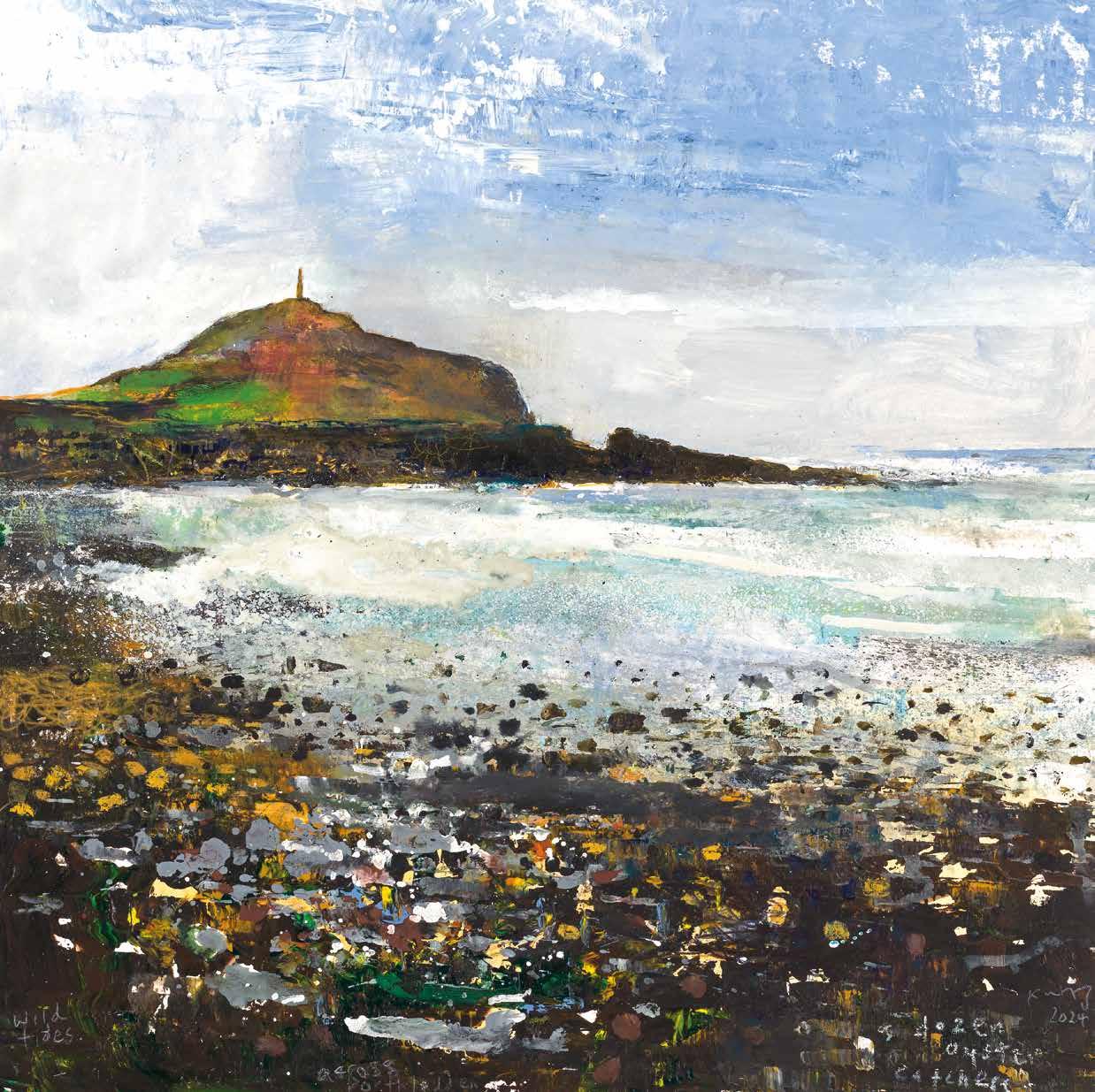
19 A dozen oystercatchers, wild tides cross . . . 2024
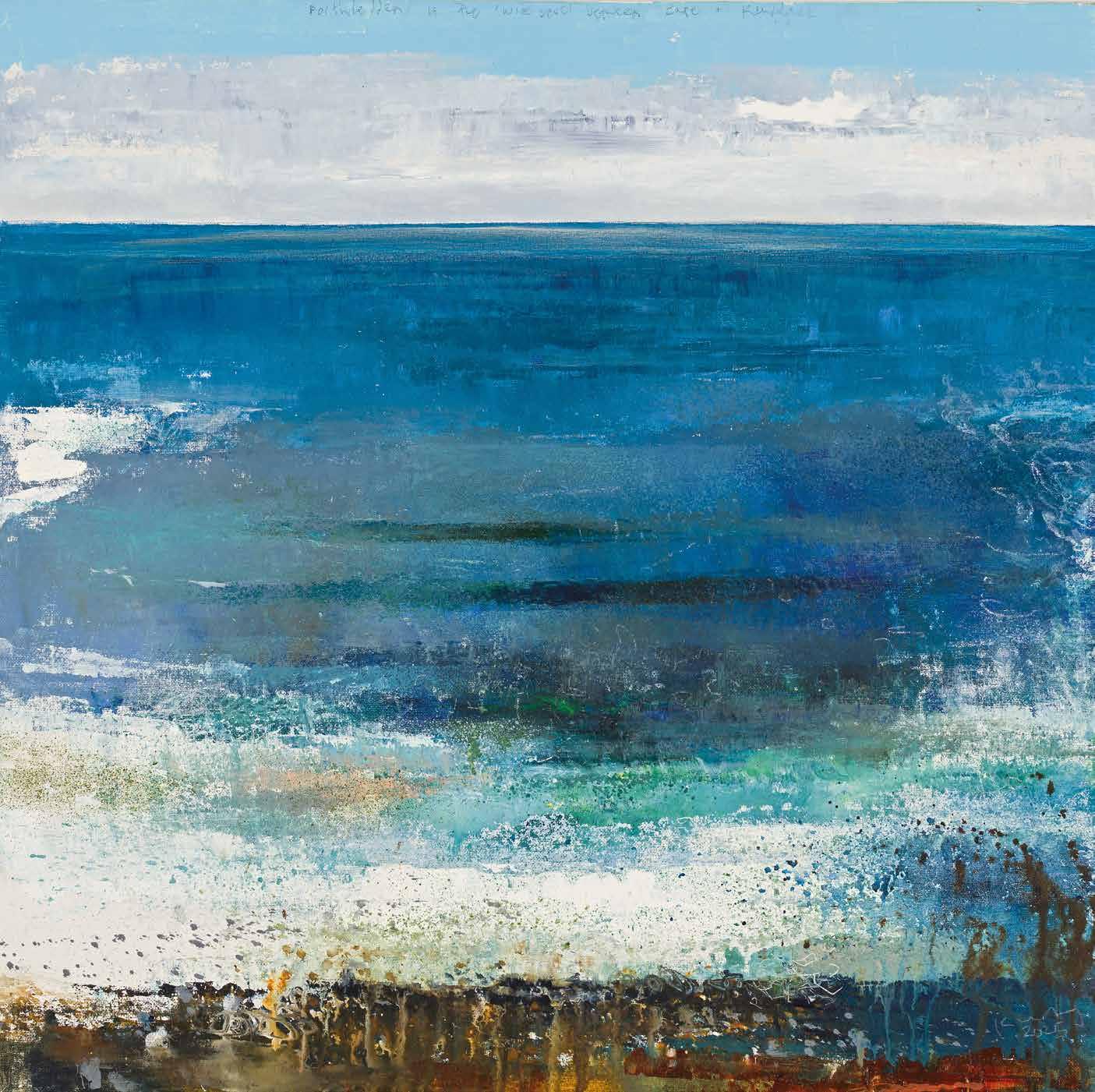
20 Porthledden is the ‘wide cove’ between . . . 2025
21 Cape, lost in the night and two distant lighthouses. 2025
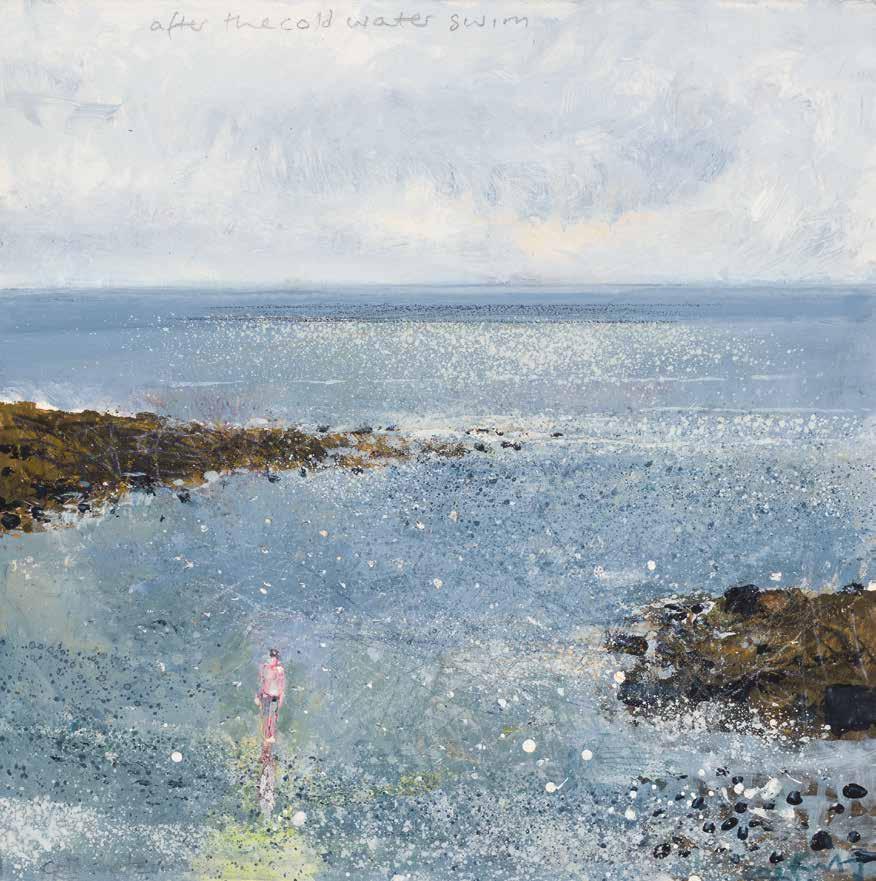
22 After the cold water swim. 2023
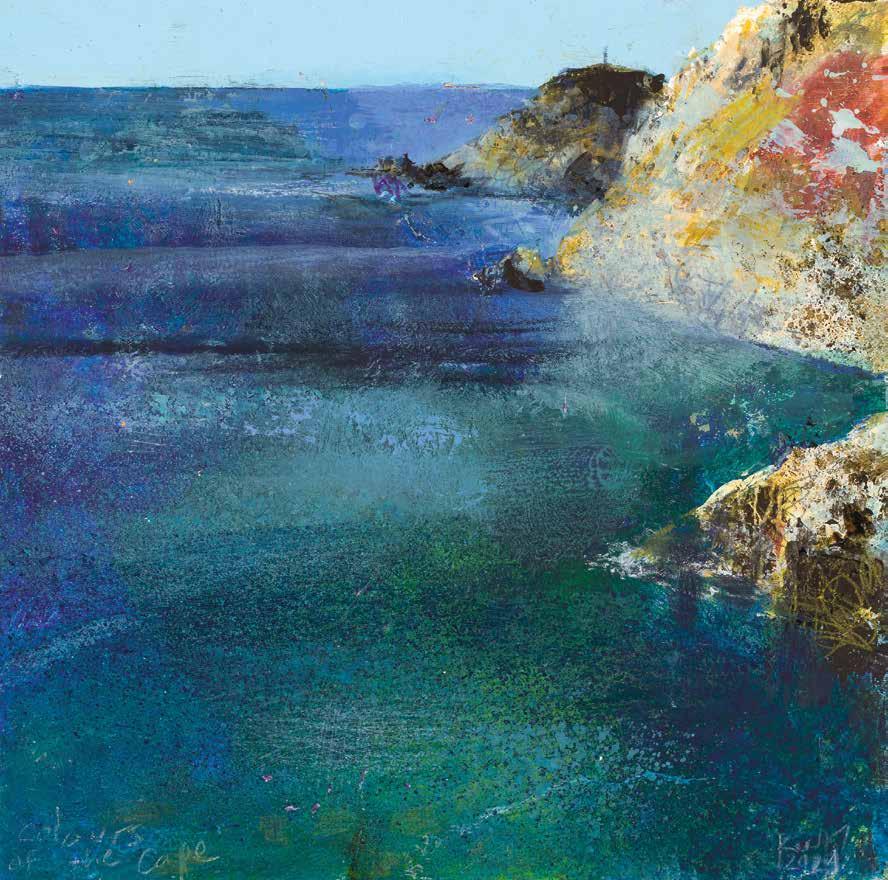
22 Colours of the Cape. 2024
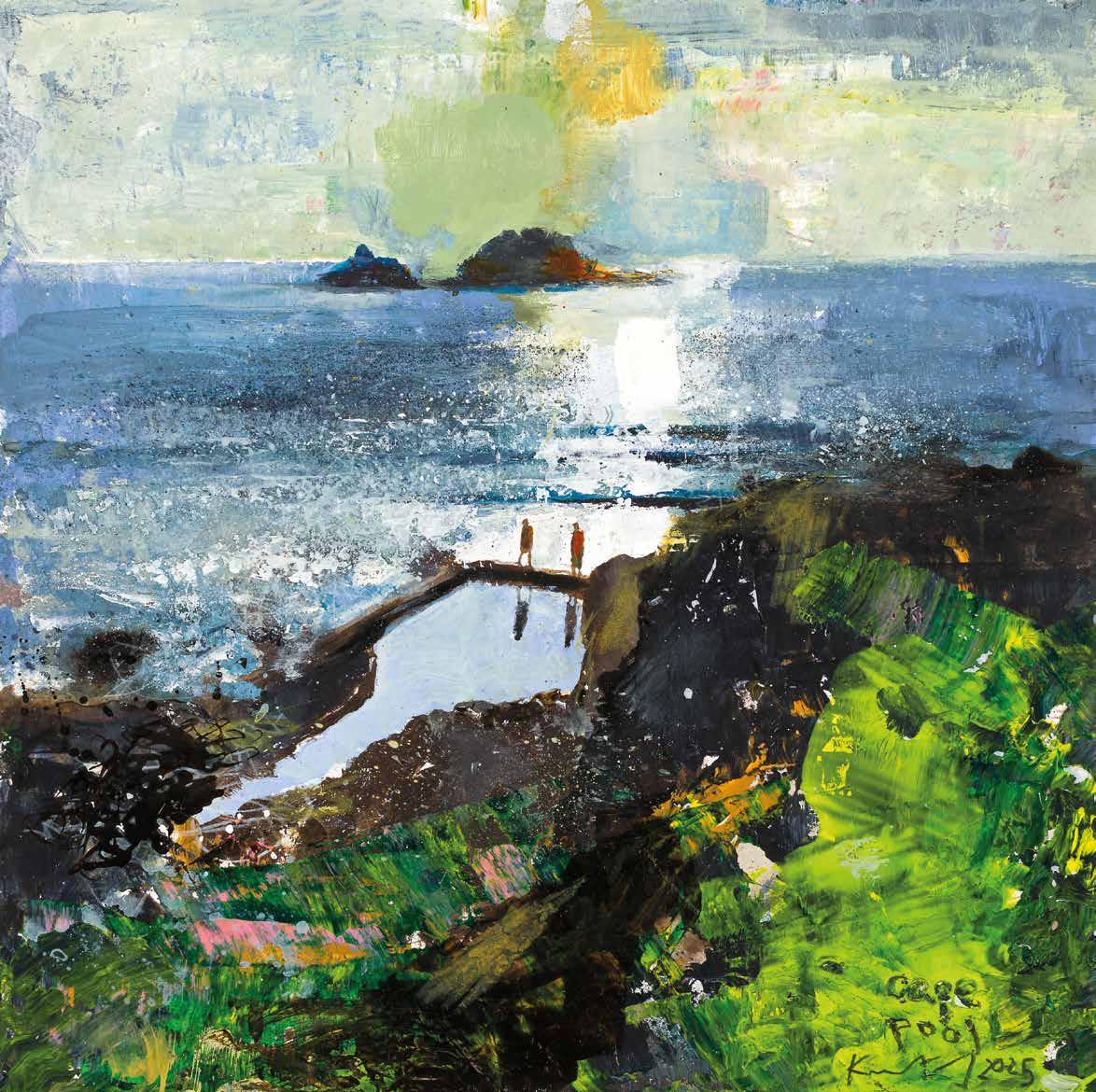
23 Cape pool. 2025
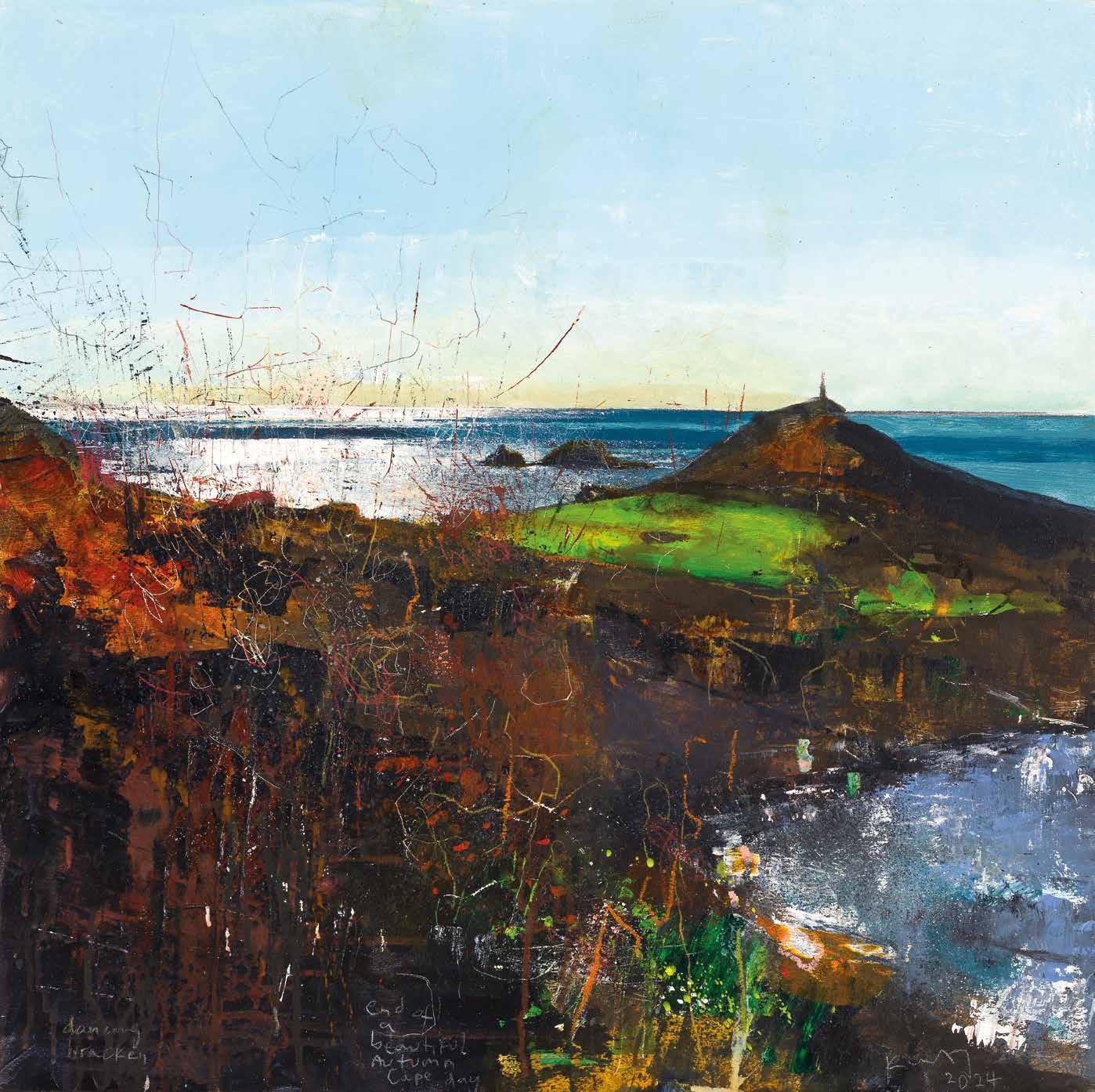
24 End of a beautiful Autumn Cape day. 2024
media on wood panel
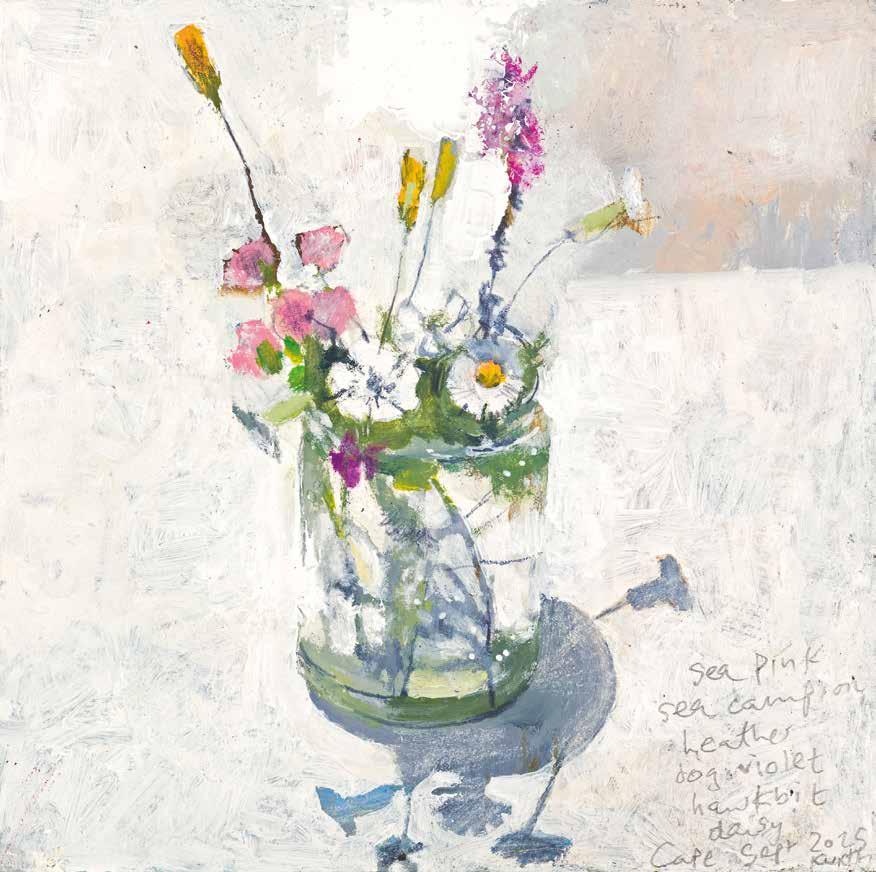
25 Sea pink, sea campion, heather, dog’s violet . . . 2025
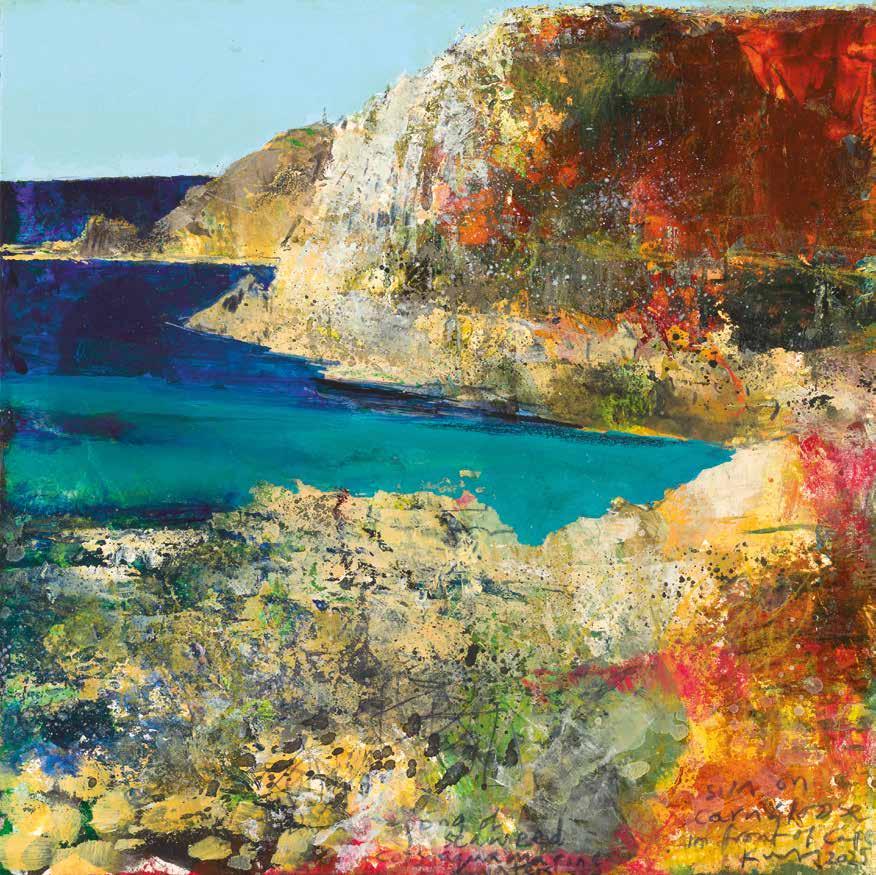
25 Sun on Carn Gloose in front of Cape. 2025
26 The hut above the tides. 2025
media on wood panel
27 Thinking about it. 2023
27 A big sea fills the cove. 2025
media and collage on museum board
28 Early Spring walk, Cape Cornwall. 2026
29 Cove notes. 2026
media and collage on canvas
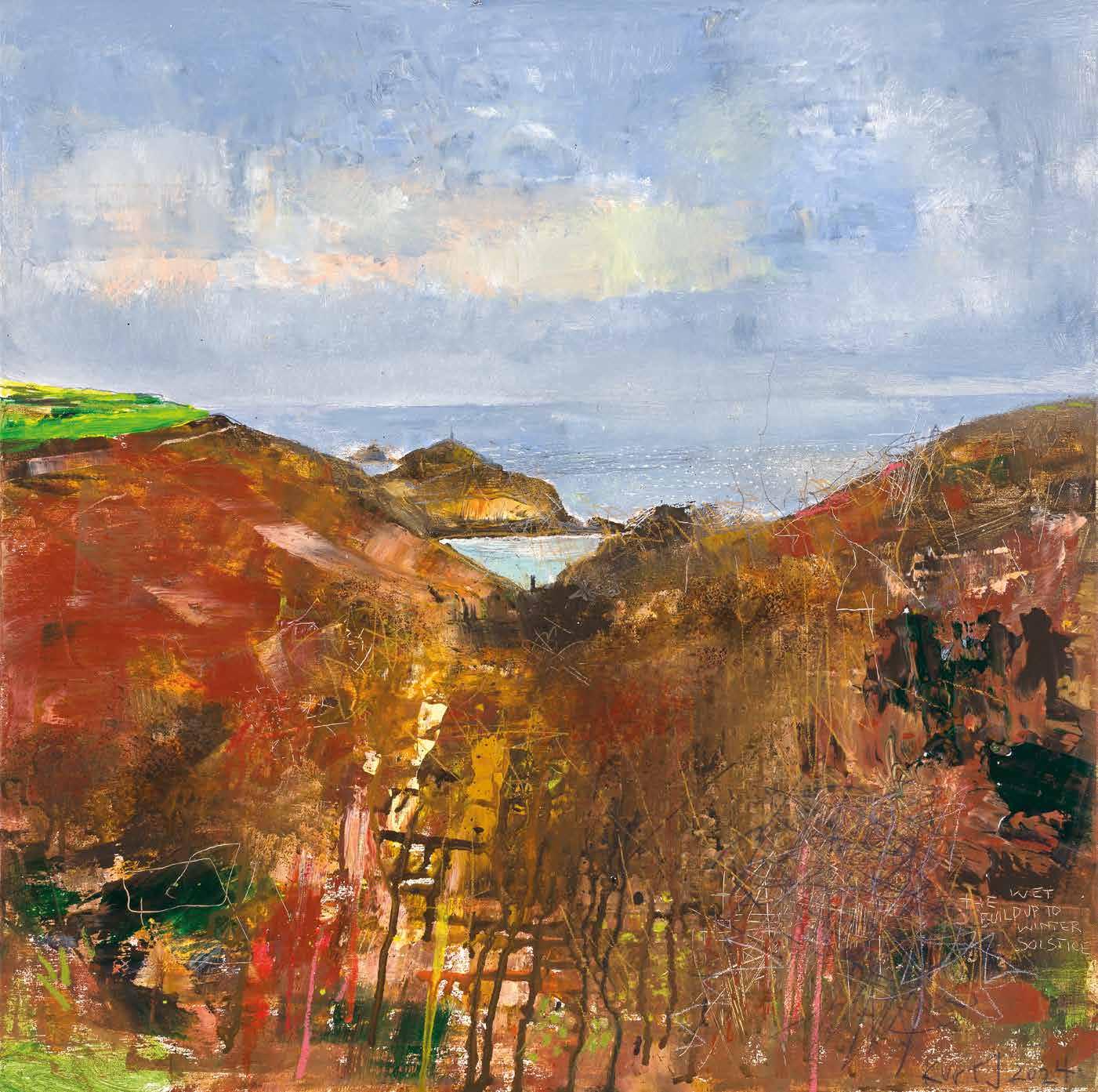
30 The wet build up to Winter Solstice. 2024
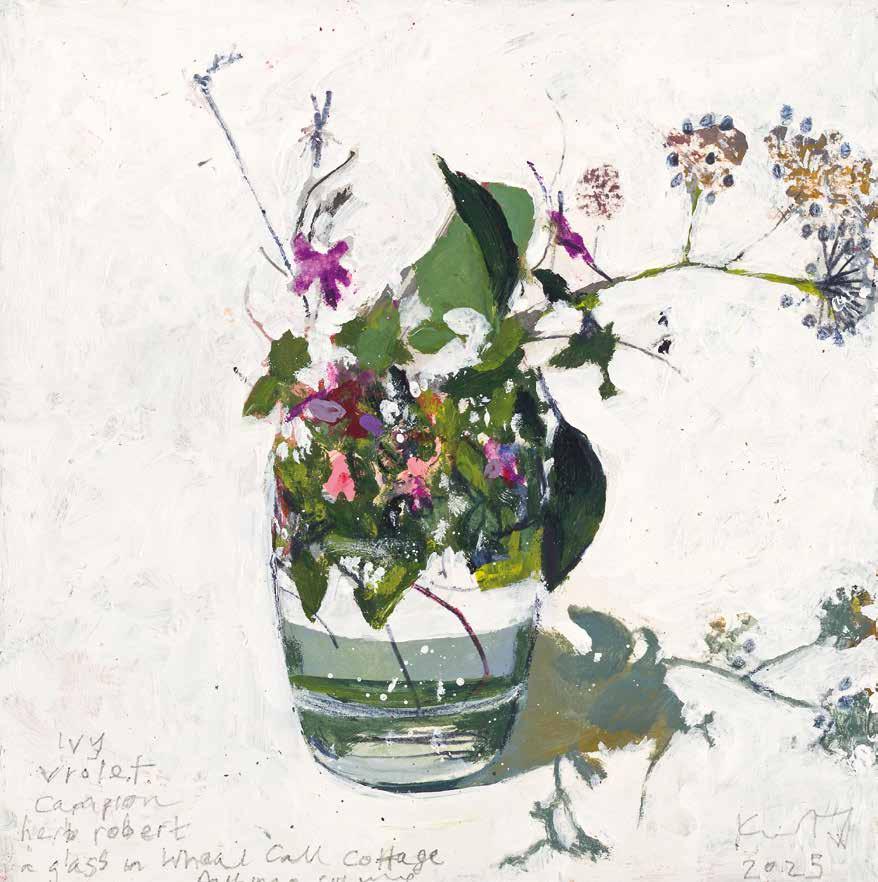
31 Ivy, violet, campion, herb robert in a glass . . . 2025
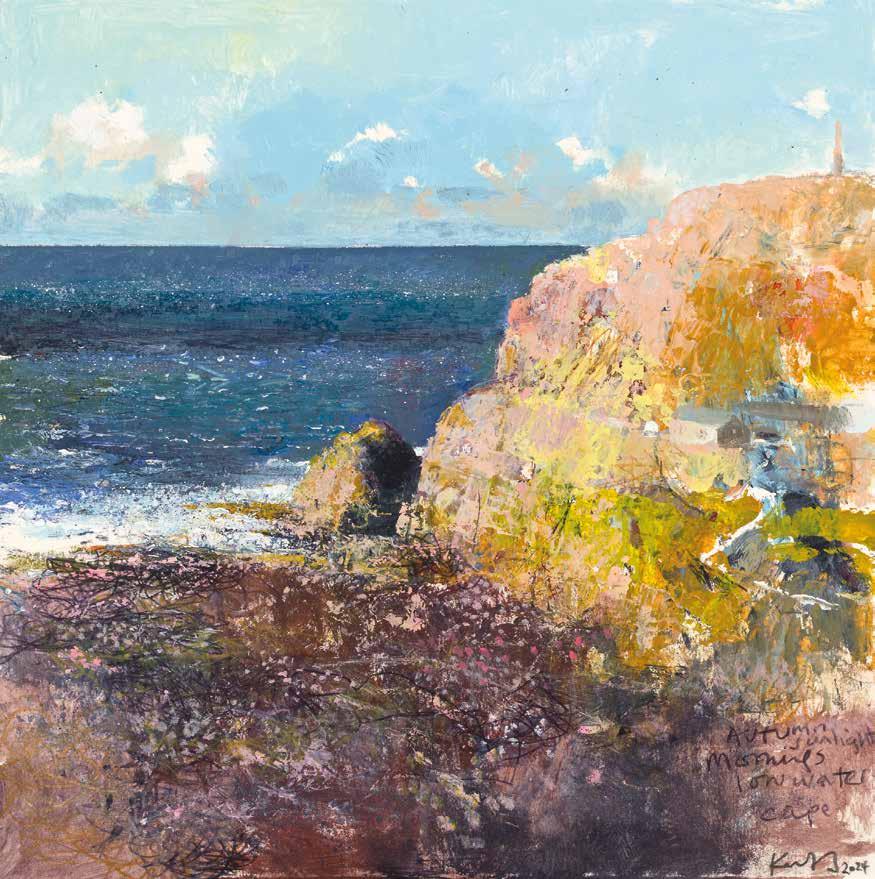
31 Autumn sunlight, morning’s low water, Cape. 2024
media on museum board
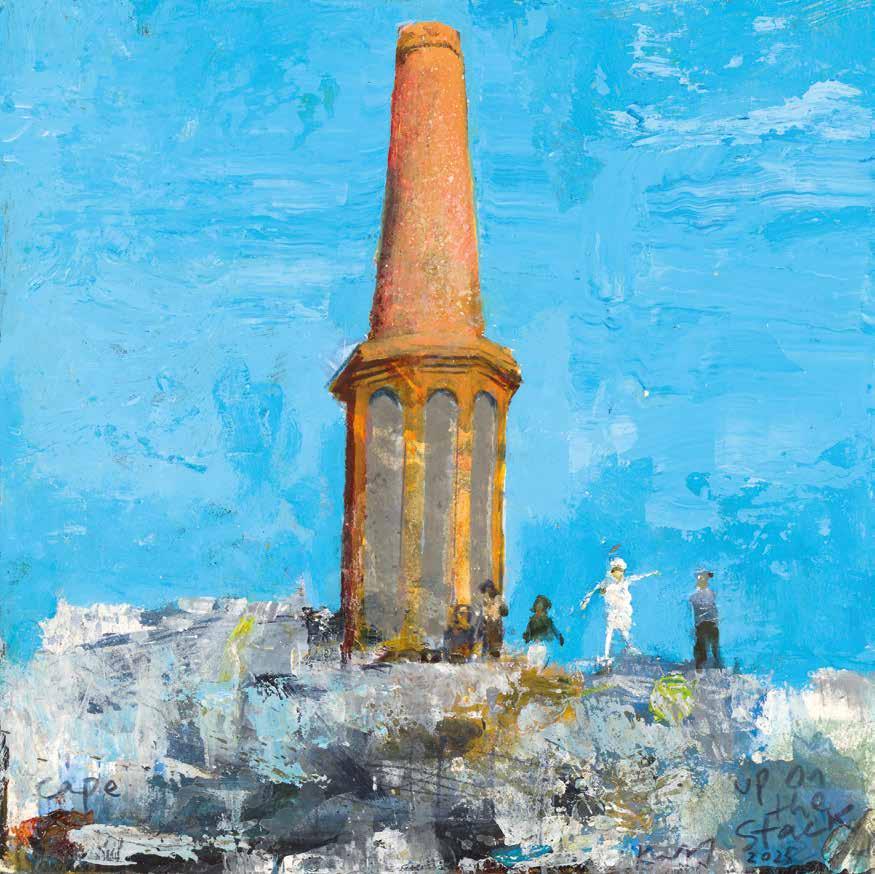
32 Up on the stack. 2025
media on museum board
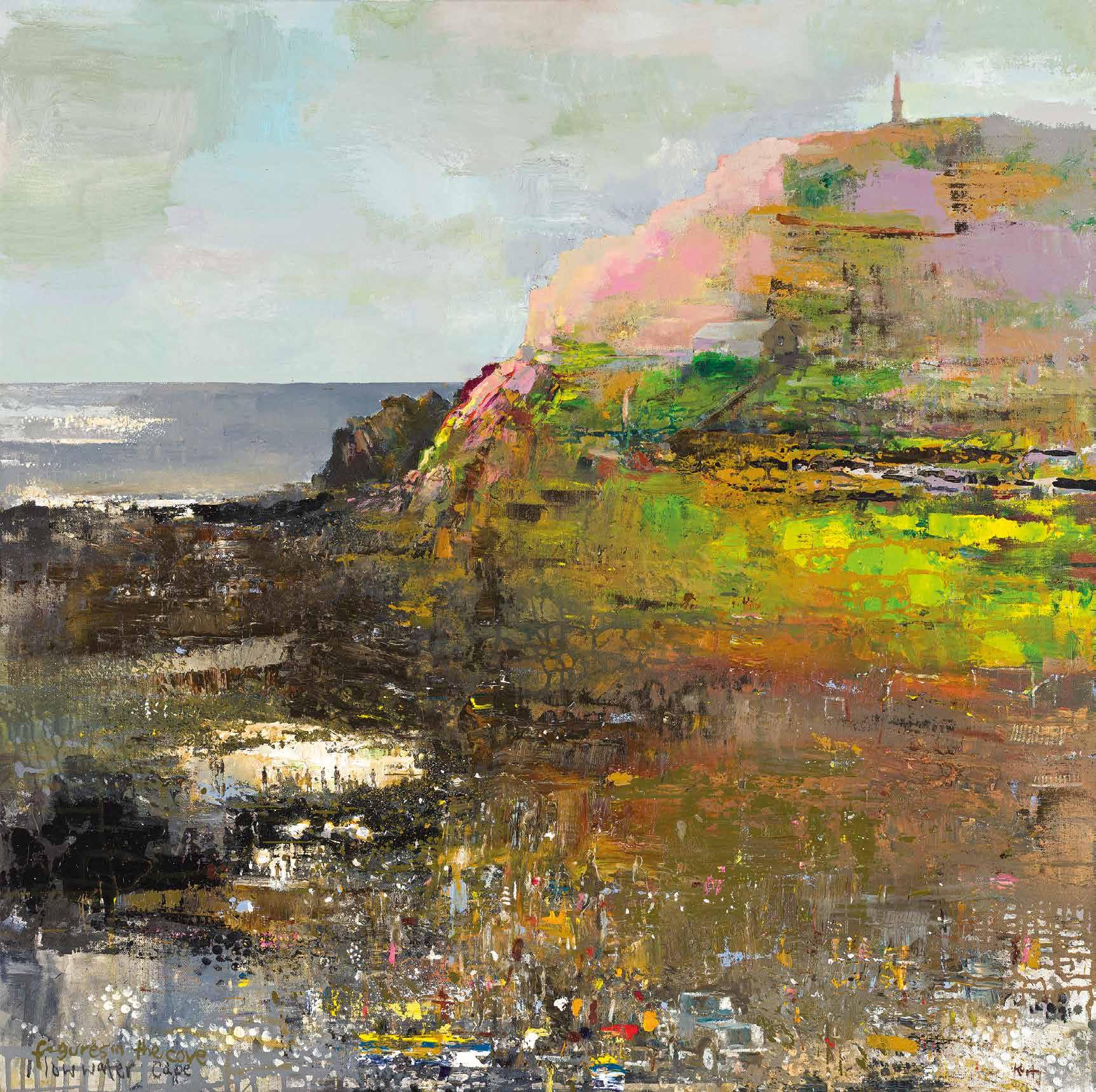
33 Low water, Cape. Figures in the cove. 2026 mixed media and oil on canvas
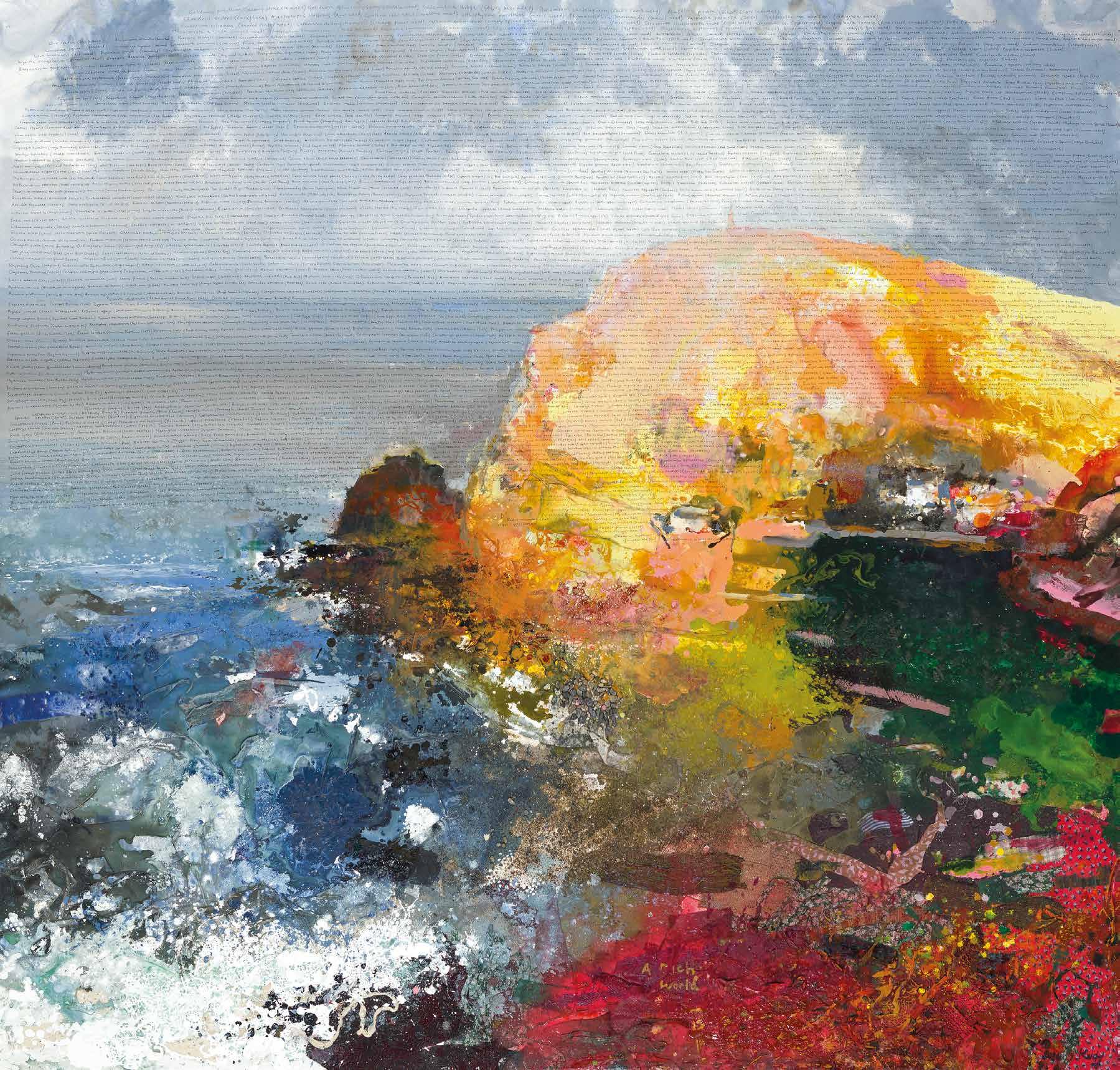
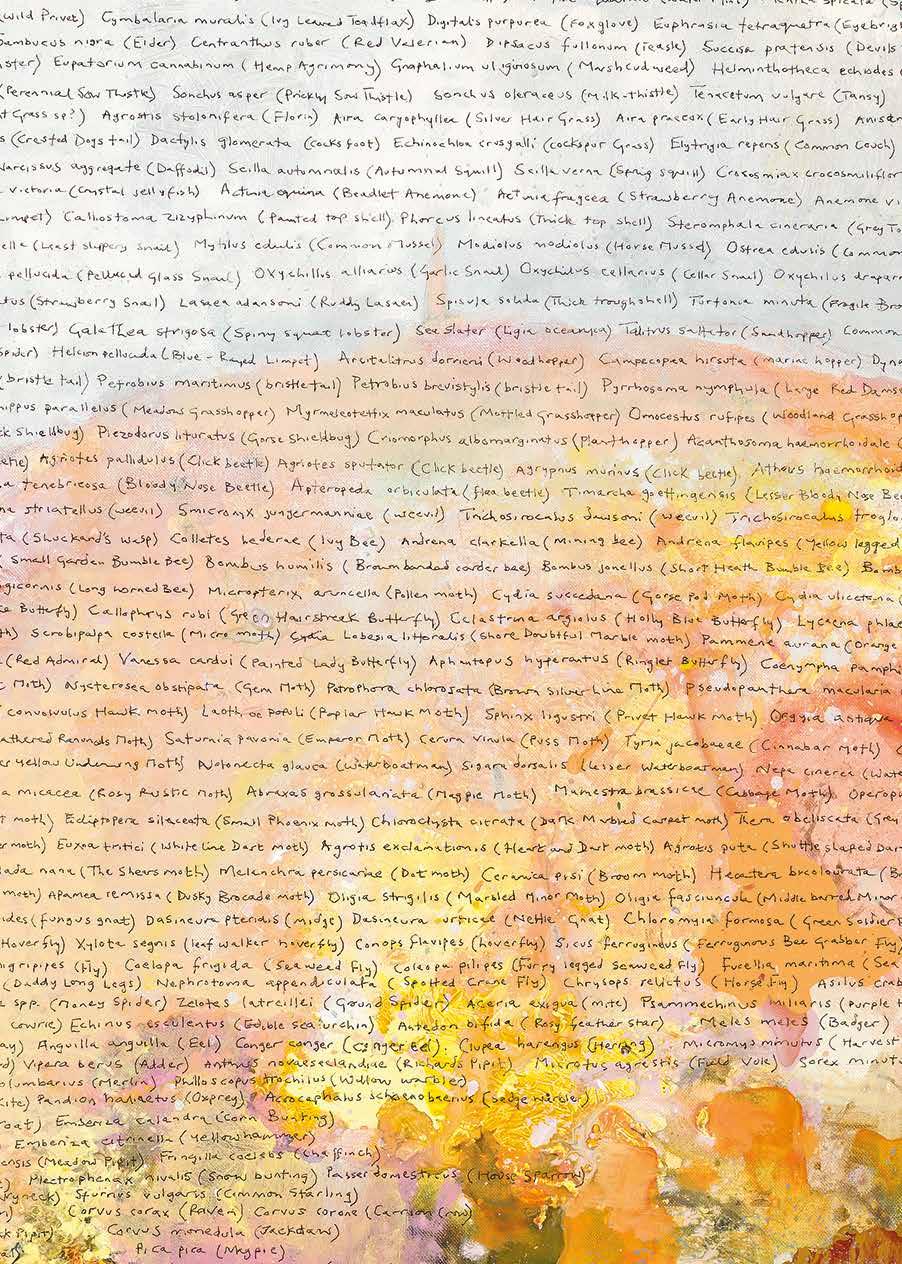
34–35 A rich world. 2025–6
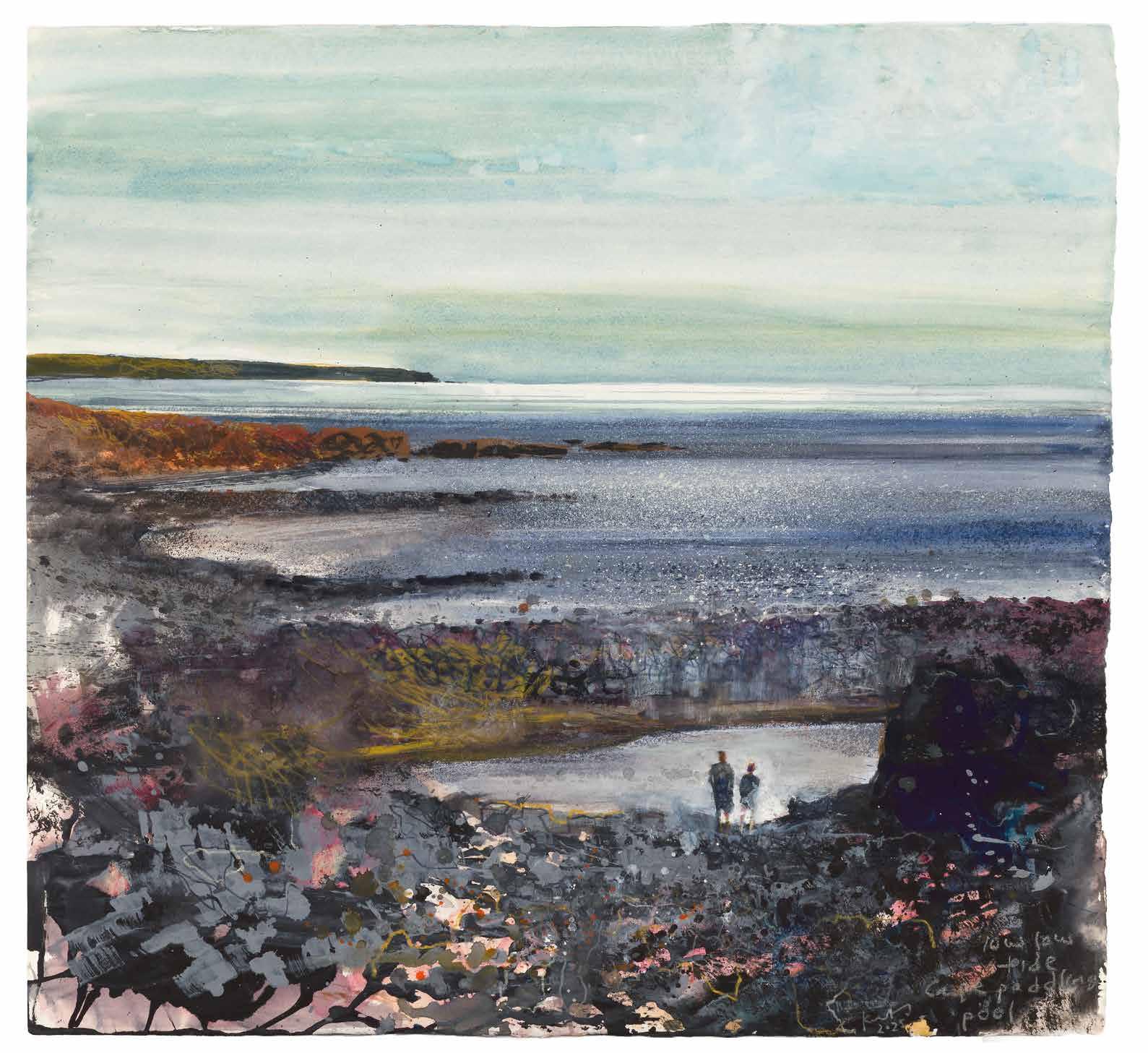
36 Low, low tide, Cape paddling pool. 2025
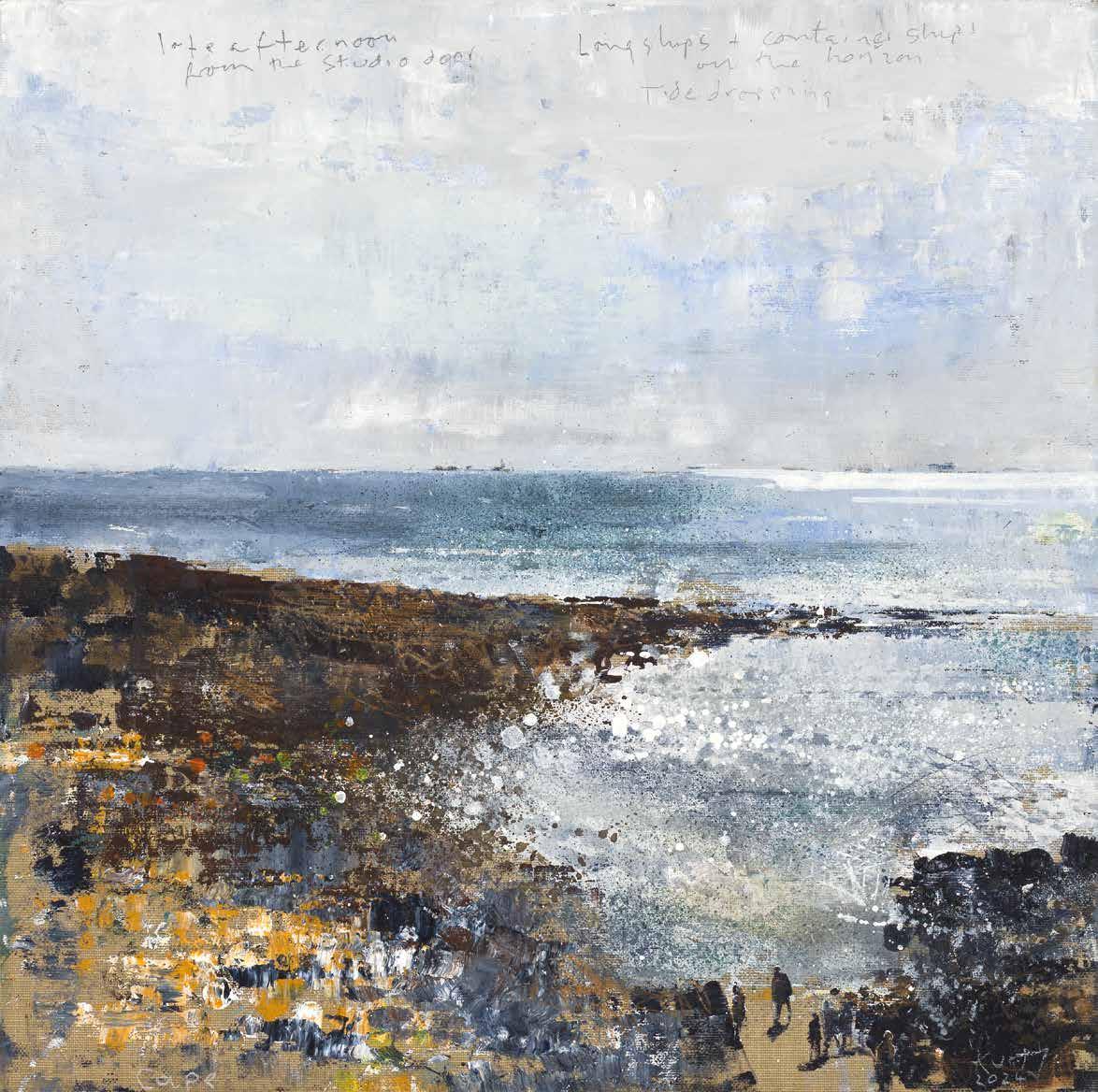
37 Late afternoon from the studio door . . . 2025
on canvas board
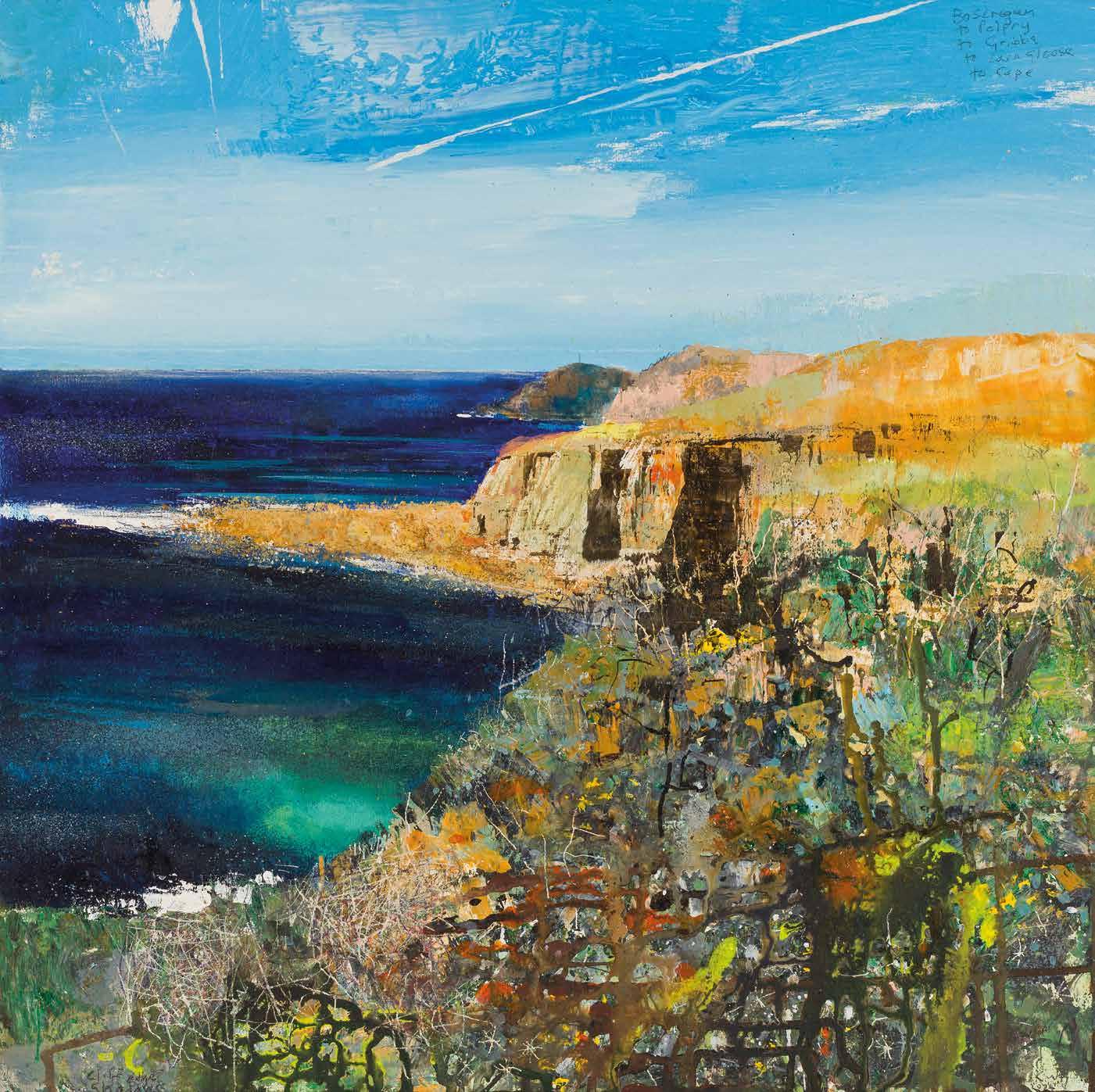
38 Cliff edge shadows. Boscregan to Polpry . . . 2024
media on wood panel

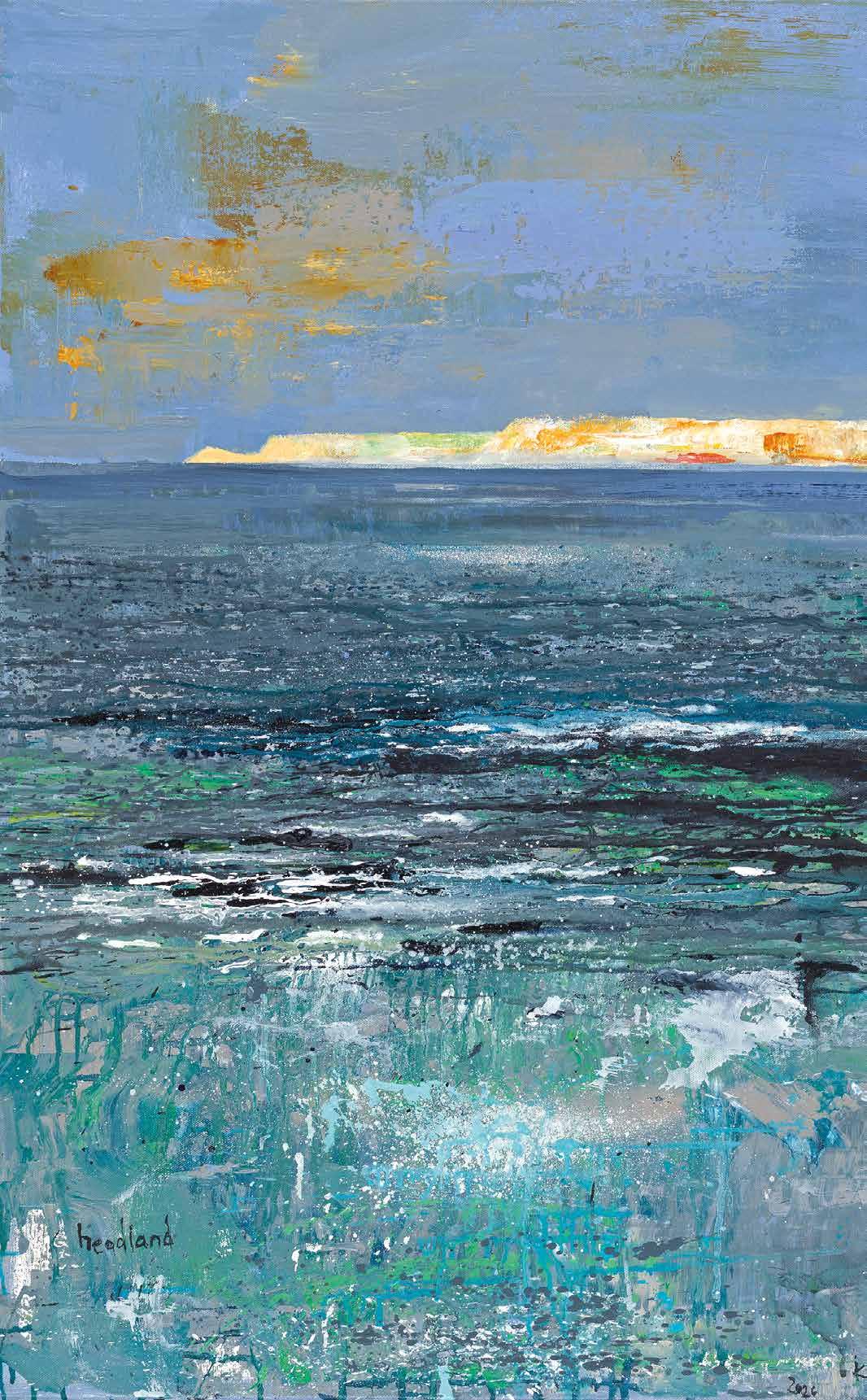
39 Headland. 2026
40 Tomorrow’s weather on its way. 2025
41 The most westerly thorn tree . . . 2025
42 Across to the Cape. 2022
42 The Cape juts out. 2025
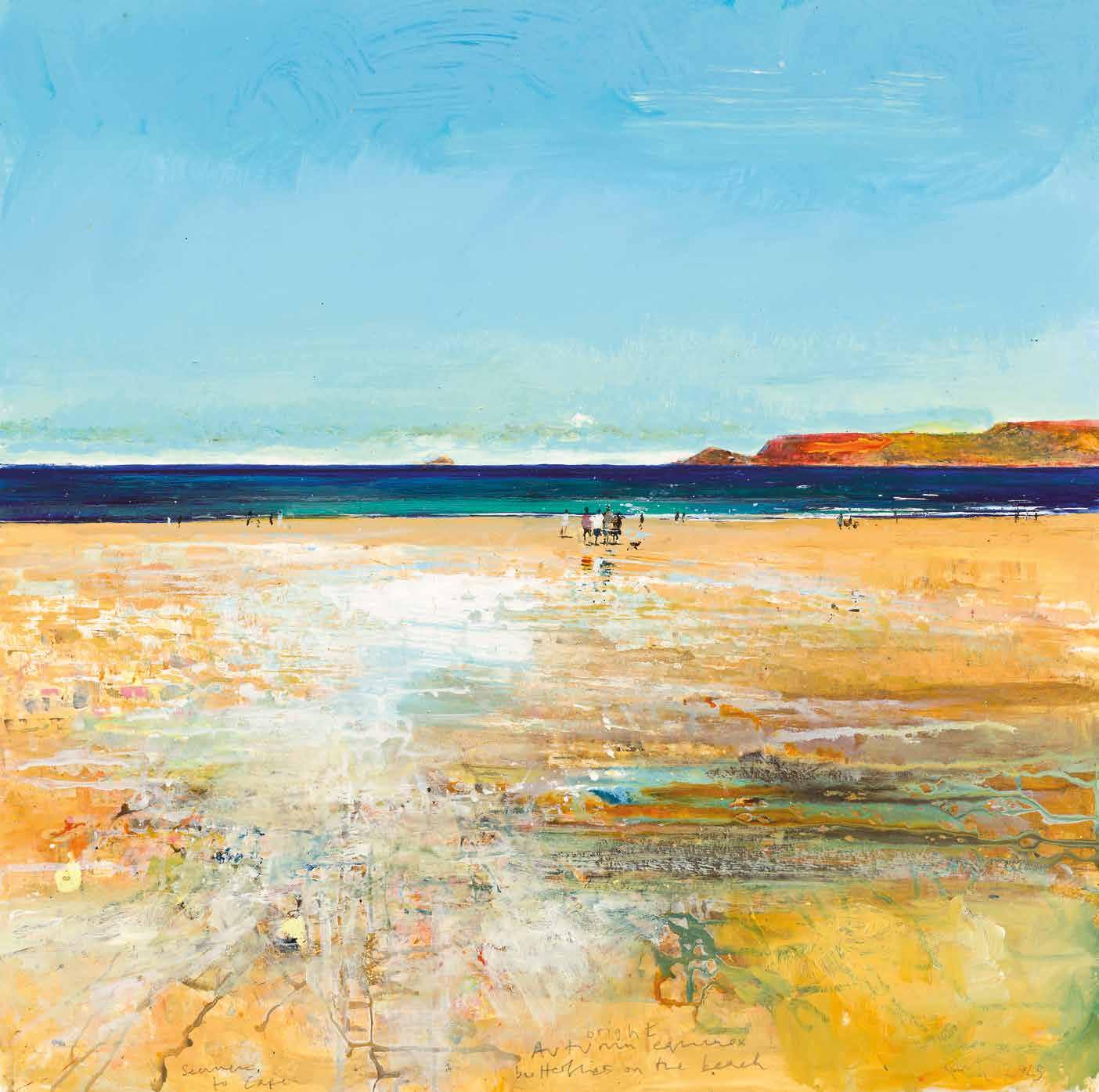
43 Sennen to Cape. Bright Autumn equinox .
2025
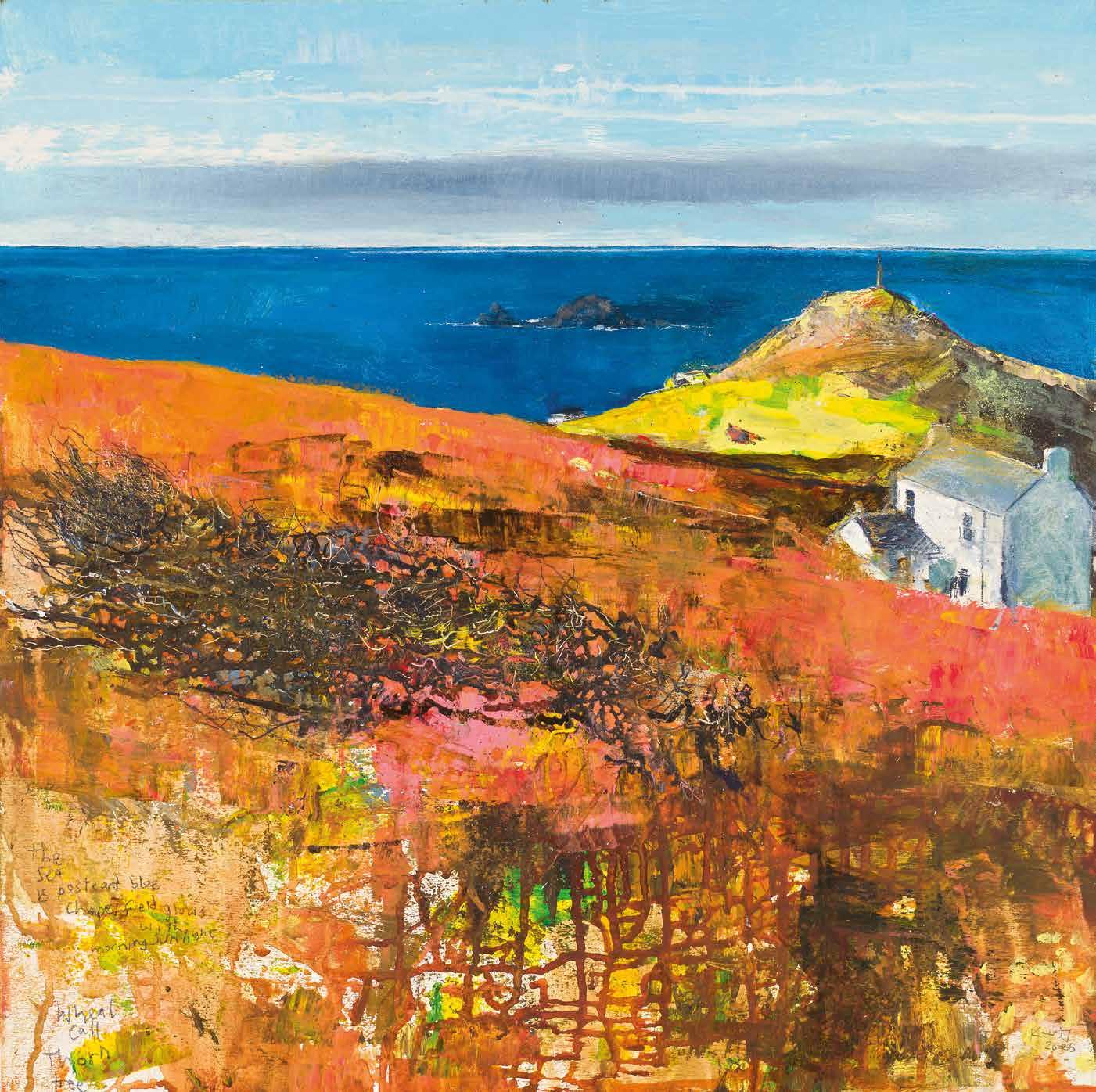
44 Wheal Call thorn tree. The sea is postcard blue . . . 2025
on wood panel
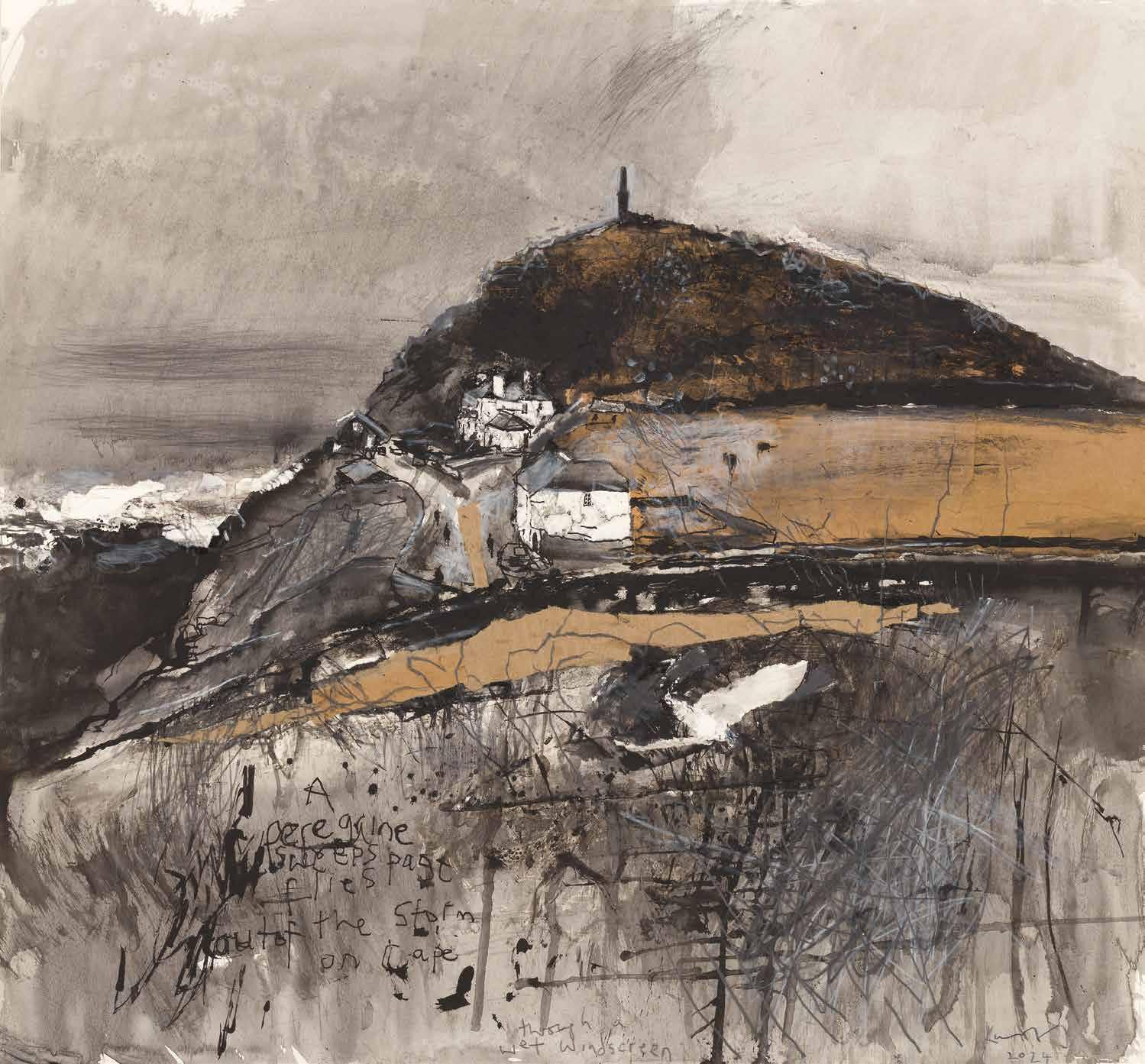
45 A peregrine sweeps past, flies out of the storm . . . 2024
and collage
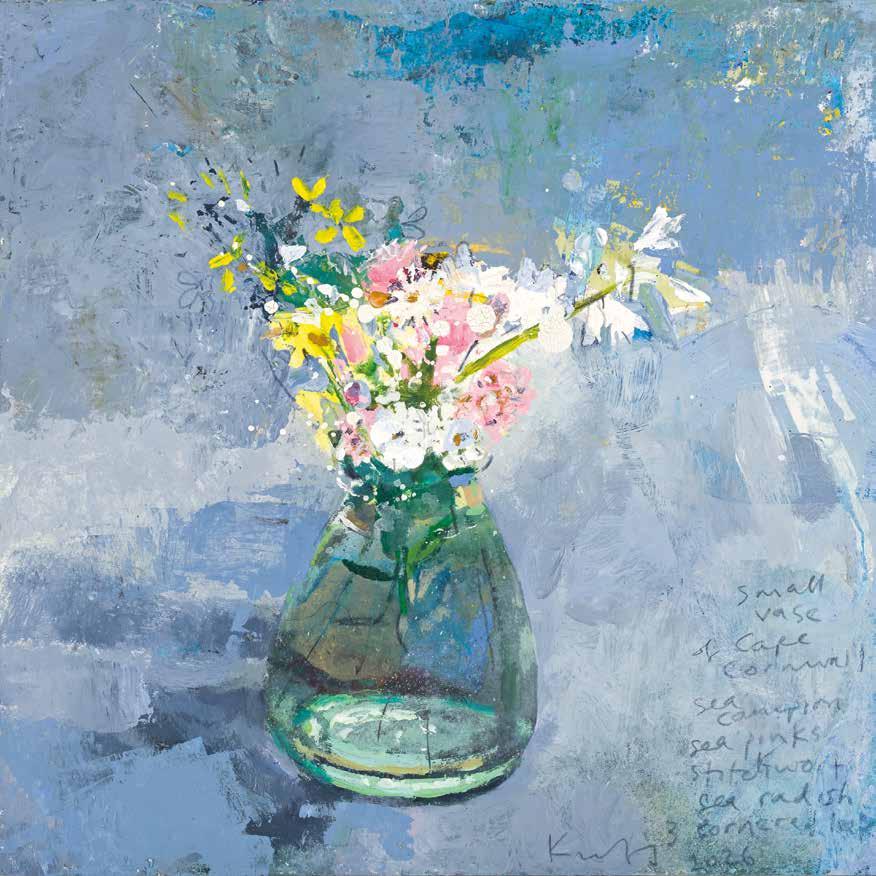
46 Small vase of Cape Cornwall sea campion . . . 2026
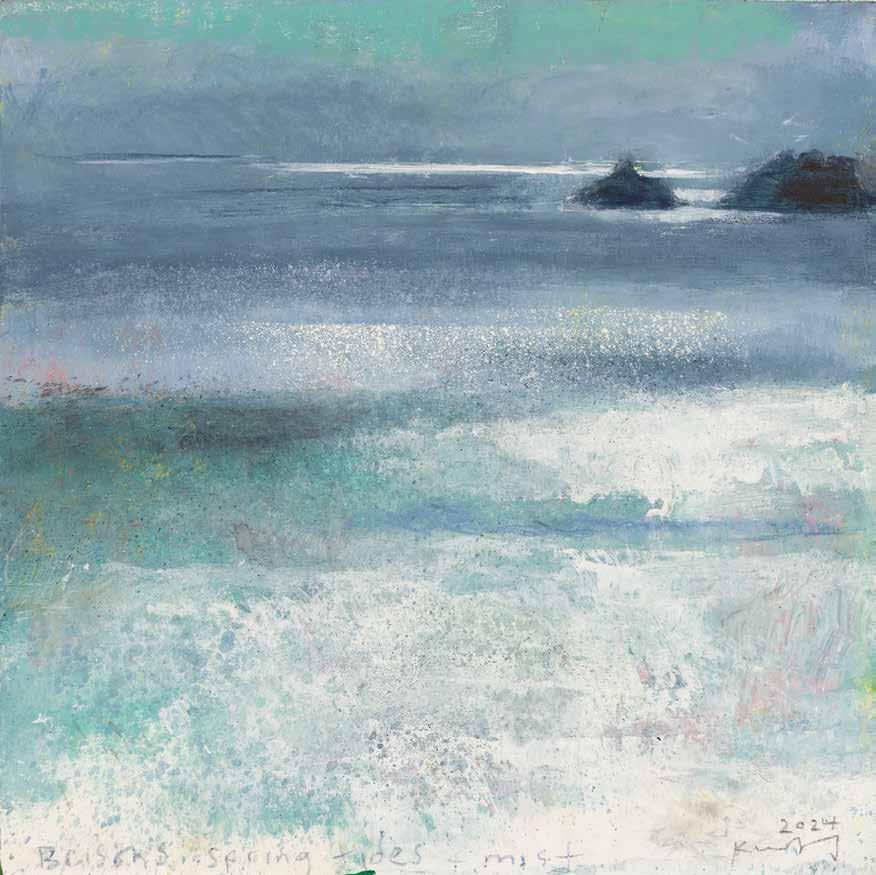
46 Brisons, Spring tide, mist. 2024
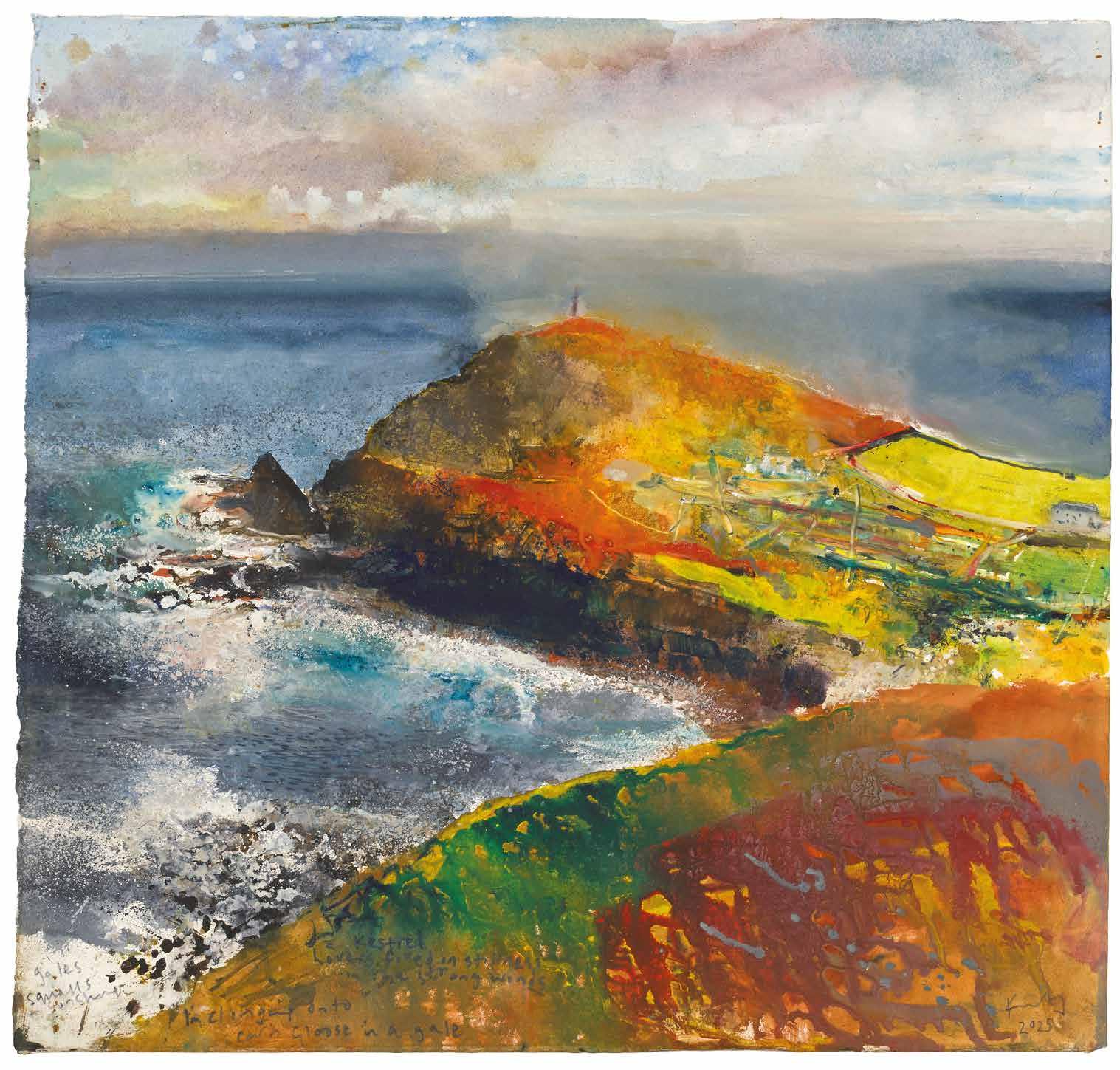
47 I am clinging on to Carn Gloose in a gale. 2025
48 Choughs, magpies, fishermen. 2025
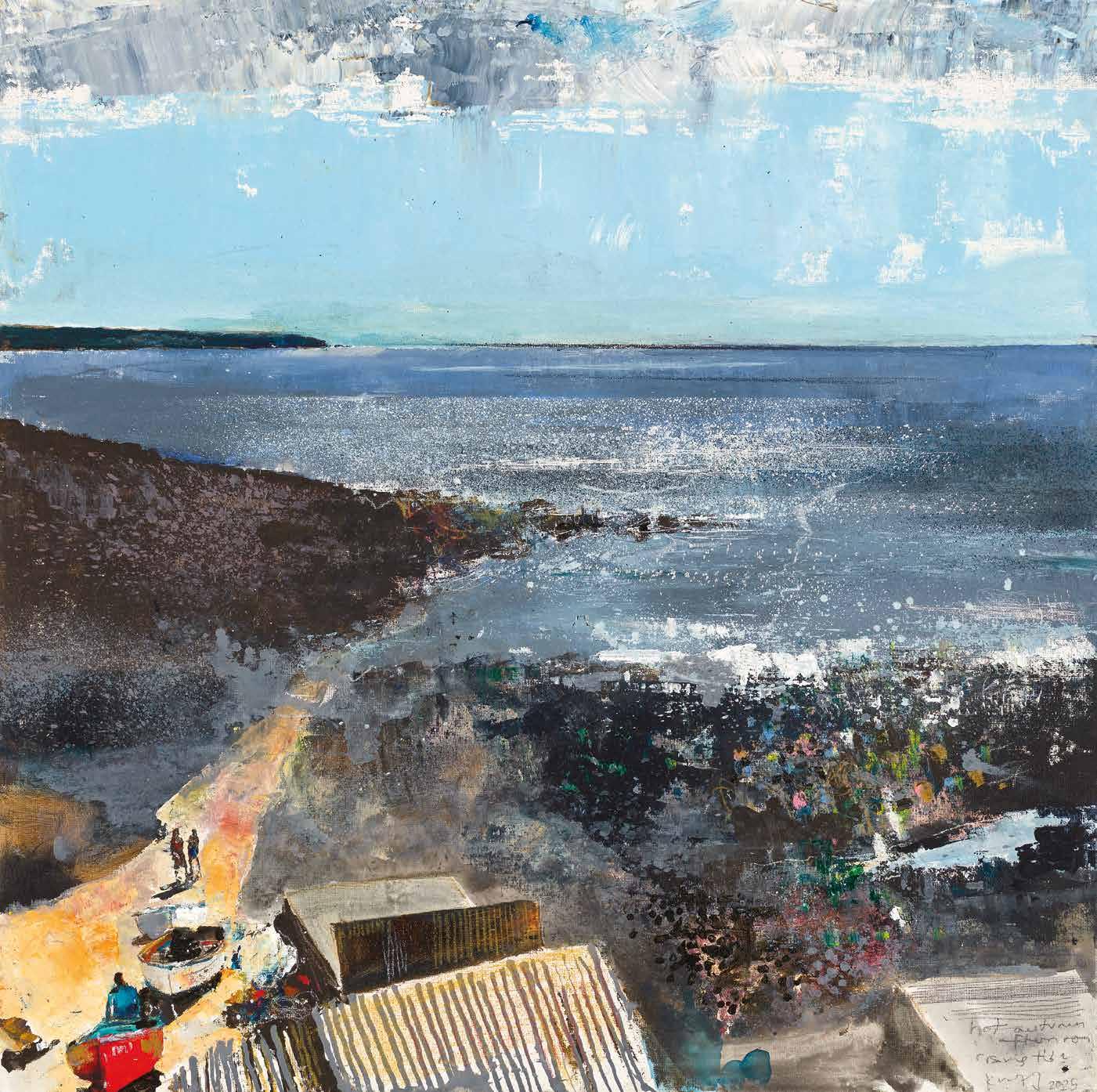
50 Hot Autumn afternoon, rising tide. 2025
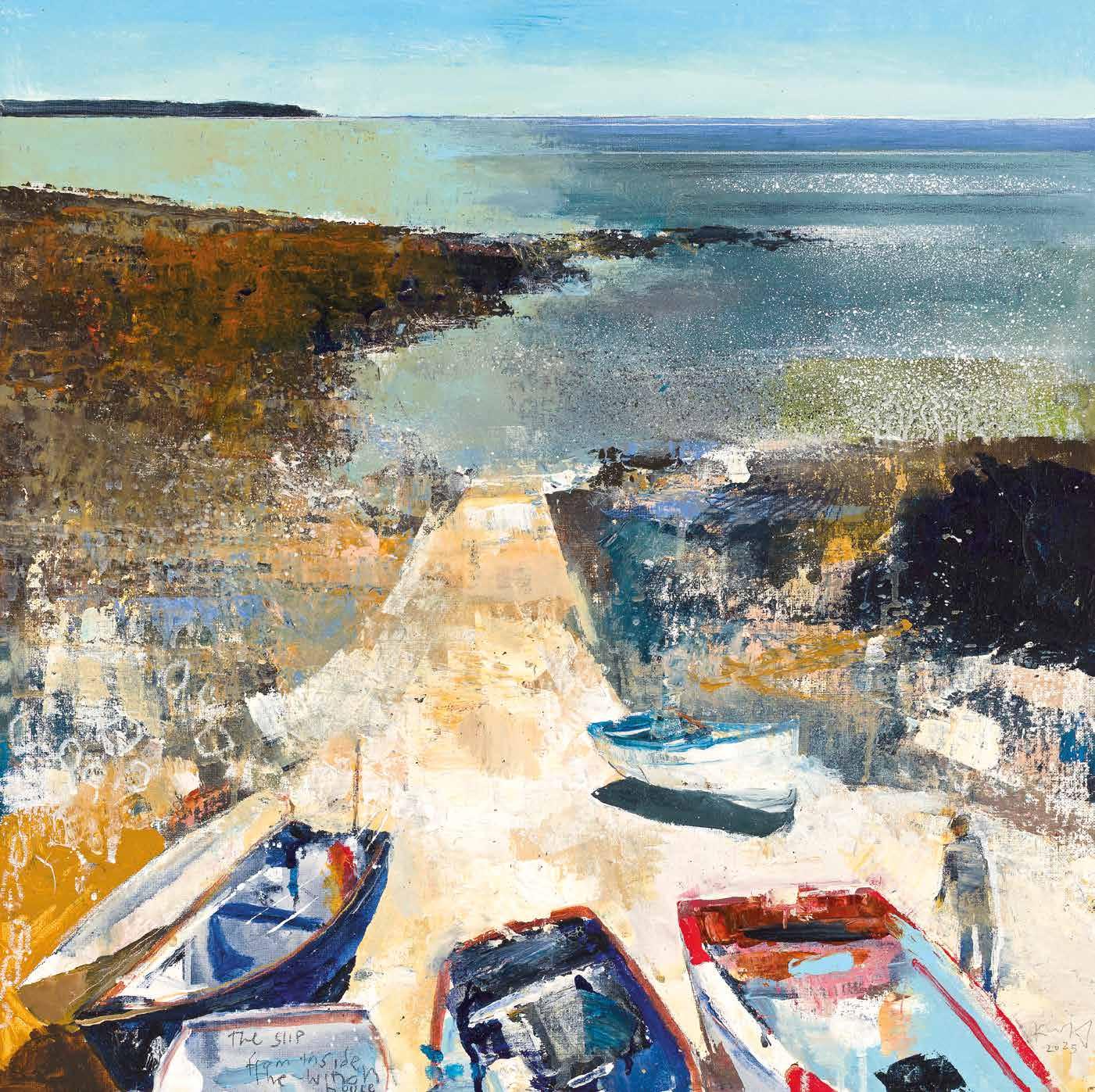
51 The slip from inside the winch house. 2025
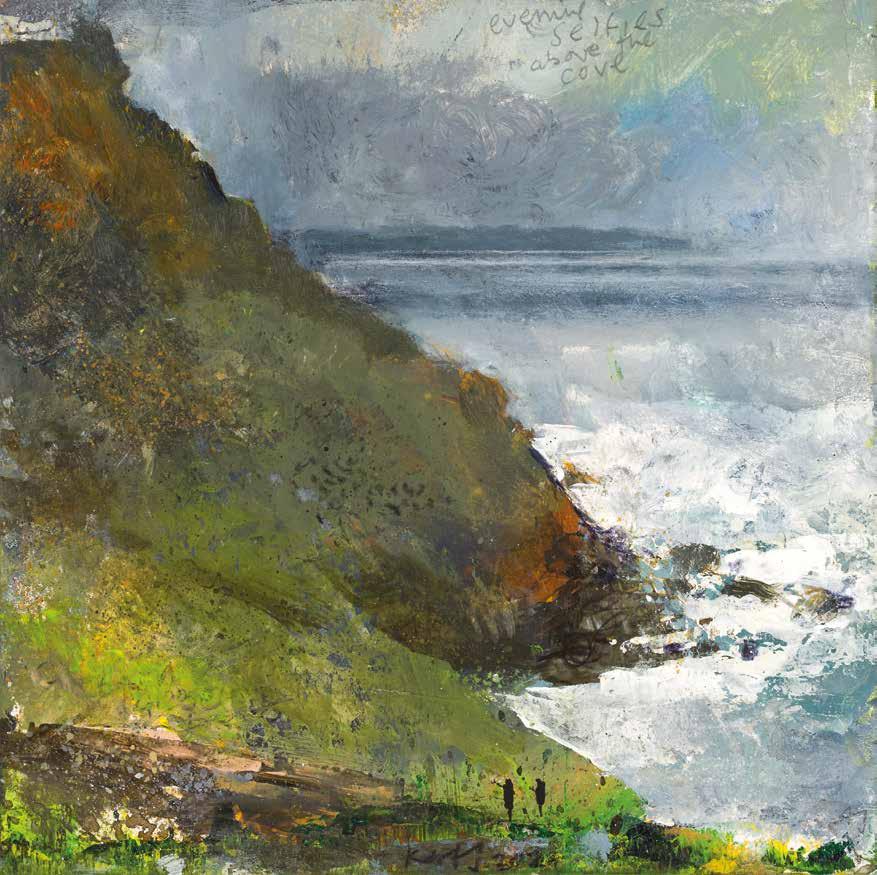
52 Evening selfies above the cove. 2022
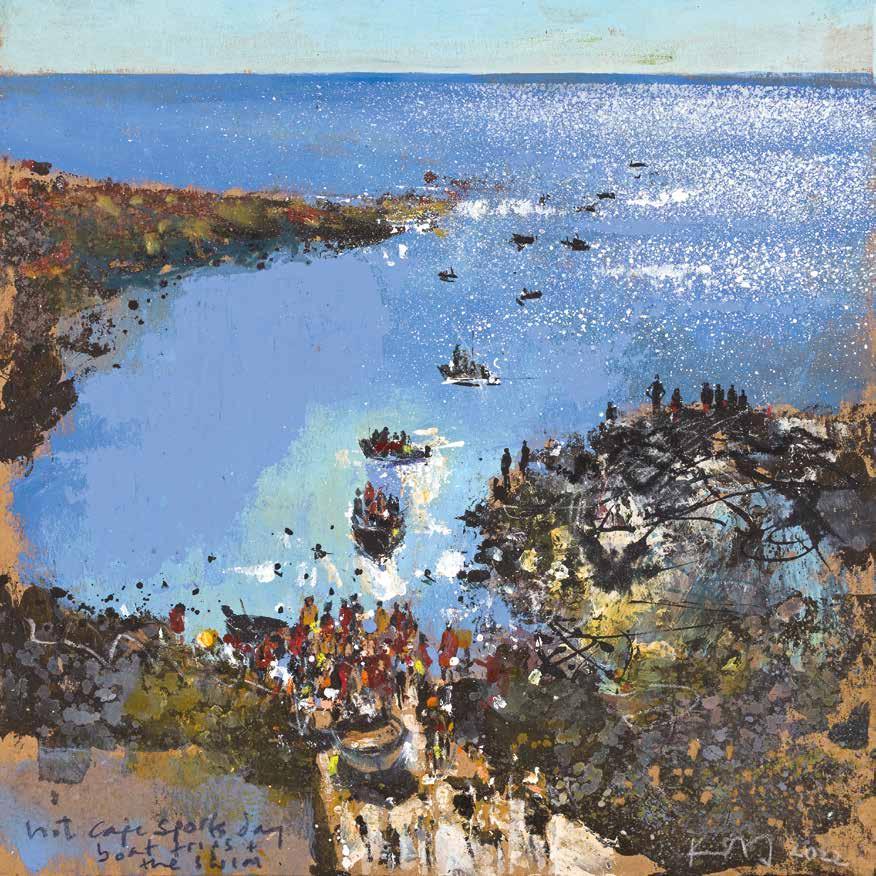
52 Hot Cape Sports Day, boat trips and the swim. 2022
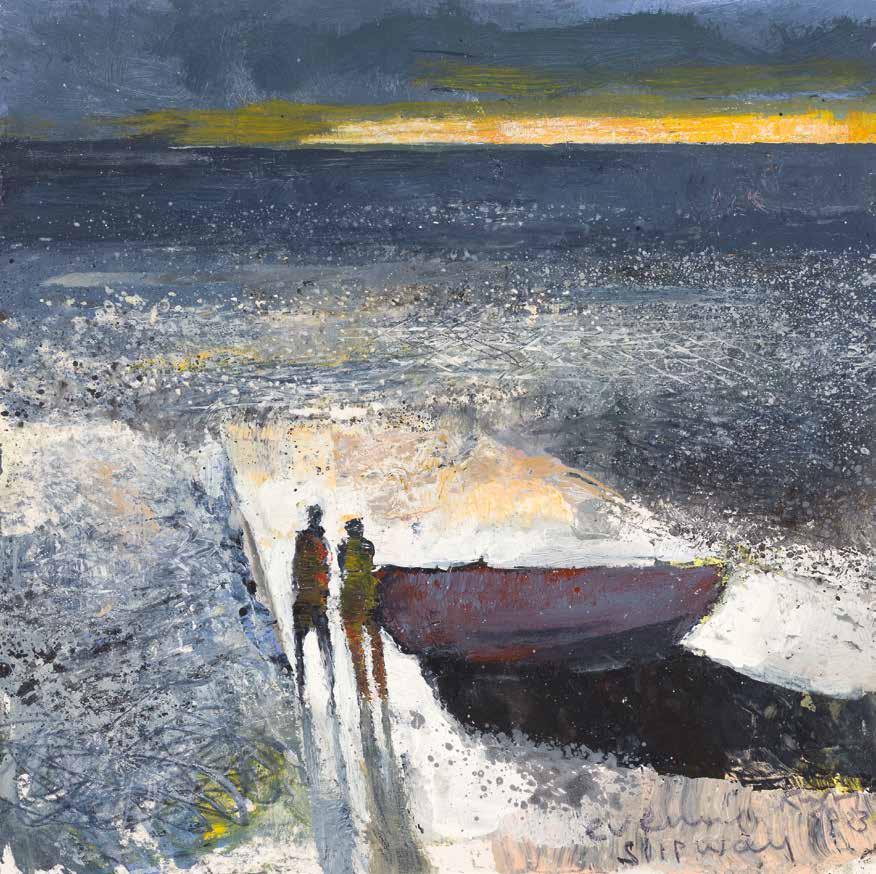
53 Evening slipway. 2023
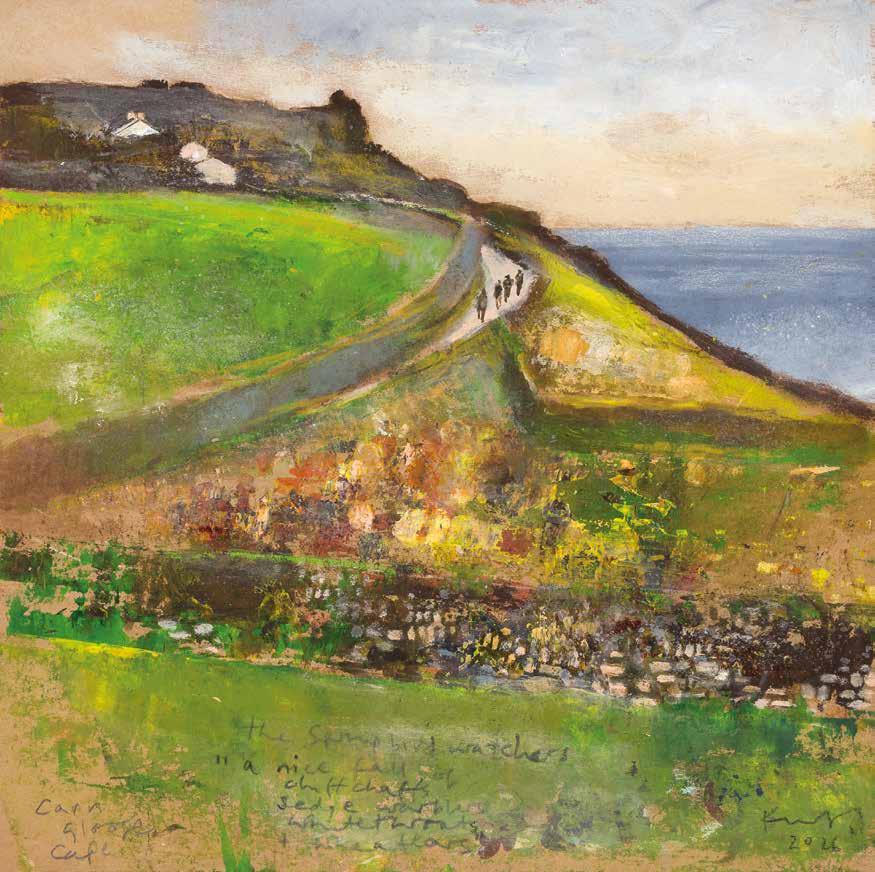
53 The Spring bird watchers, Carn Gloose. 2026
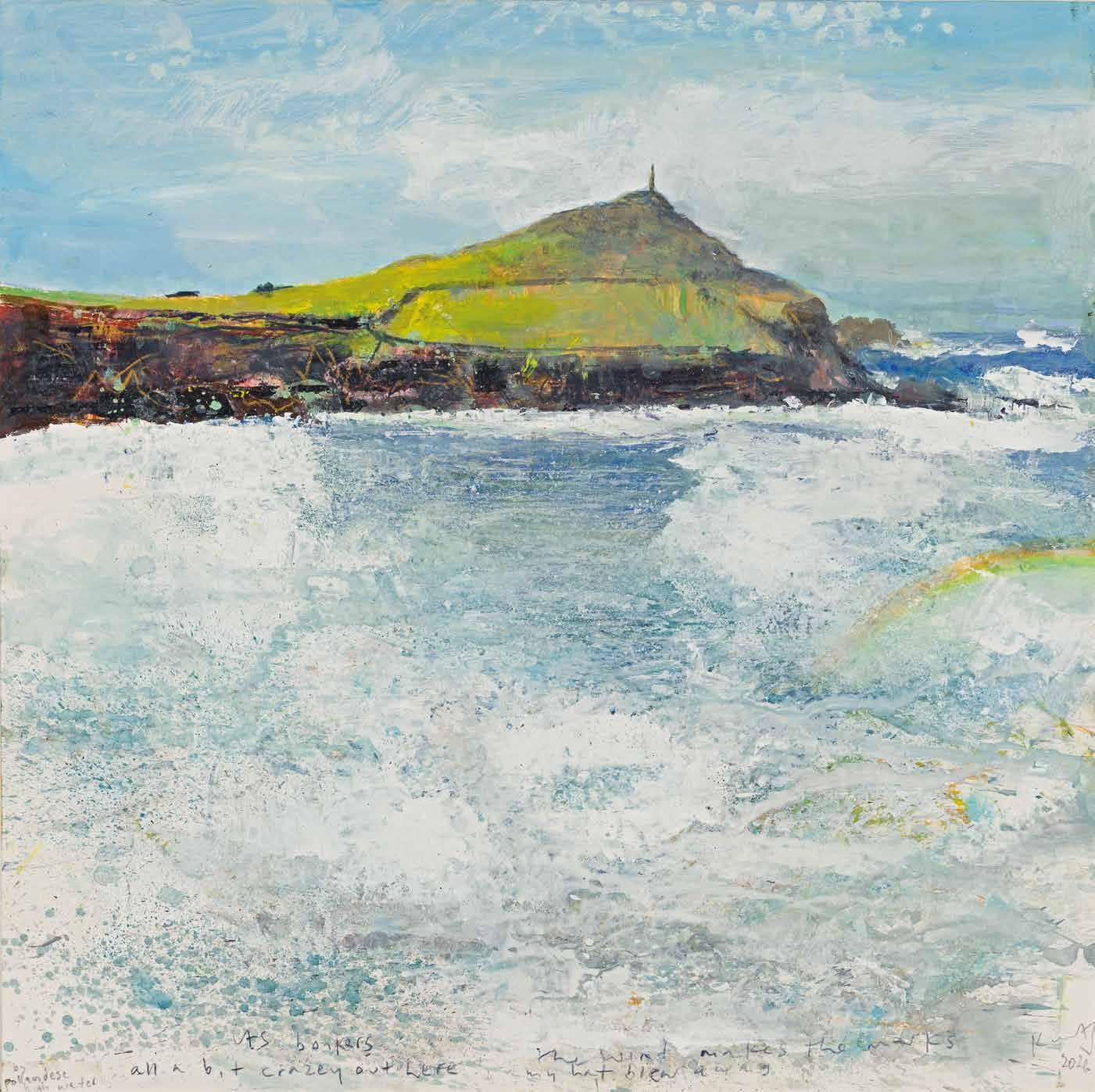
54 It is bonkers, all a bit crazy out here . . . 2026
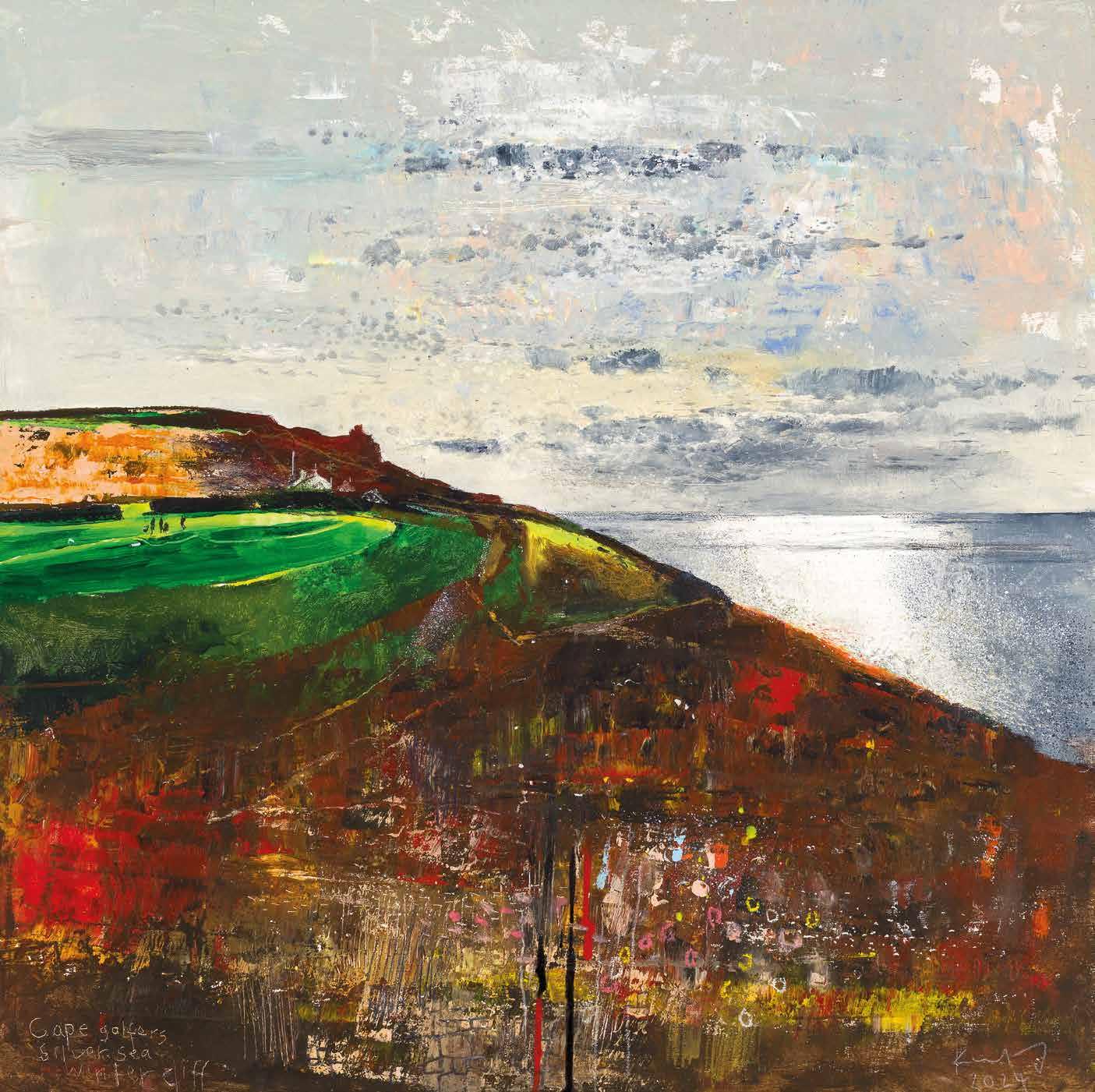
55 Cape golfers, silver sea, winter cliff. 2024
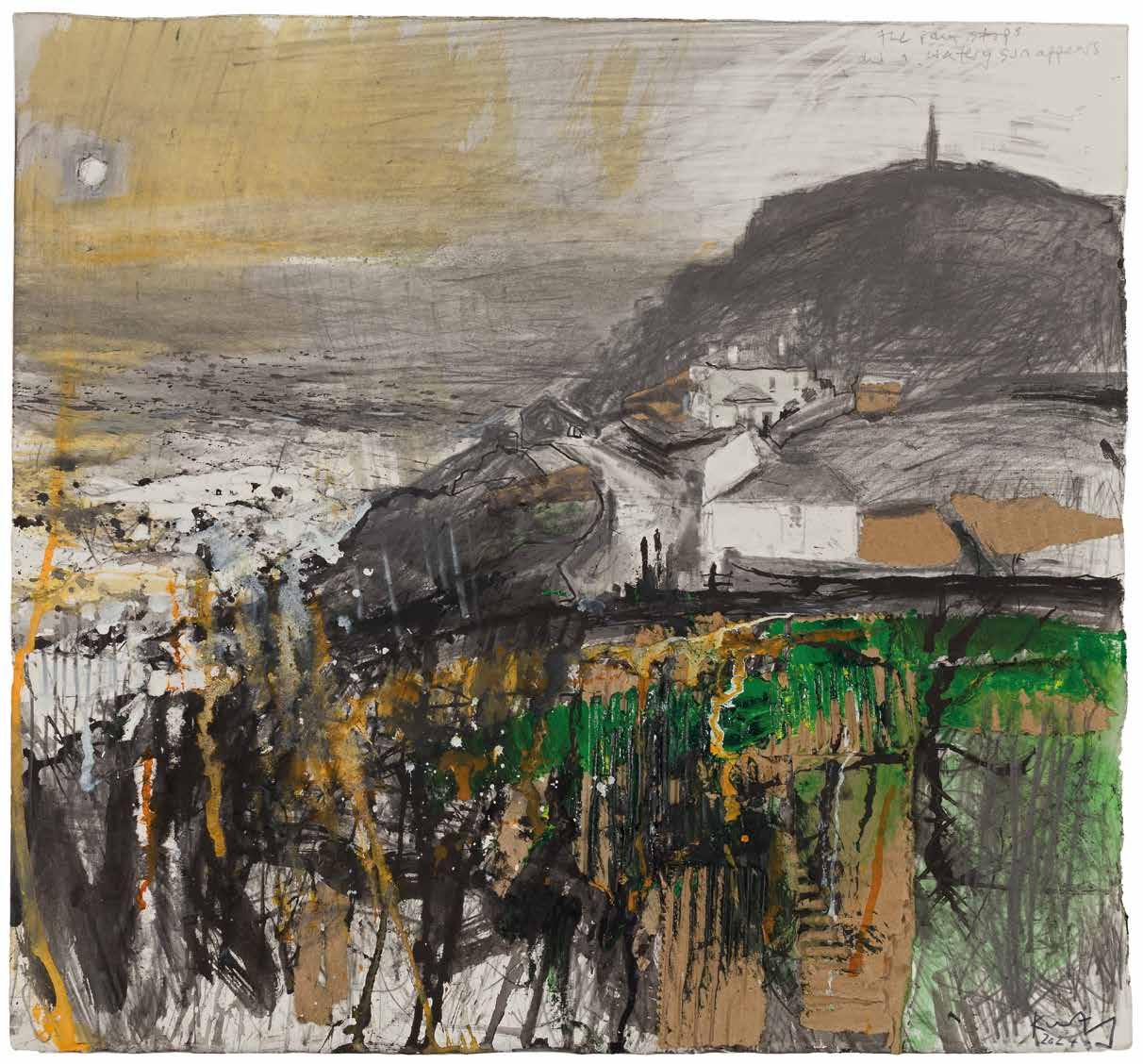
56 The rain stops and a watery sun appears. 2024
and collage on paper
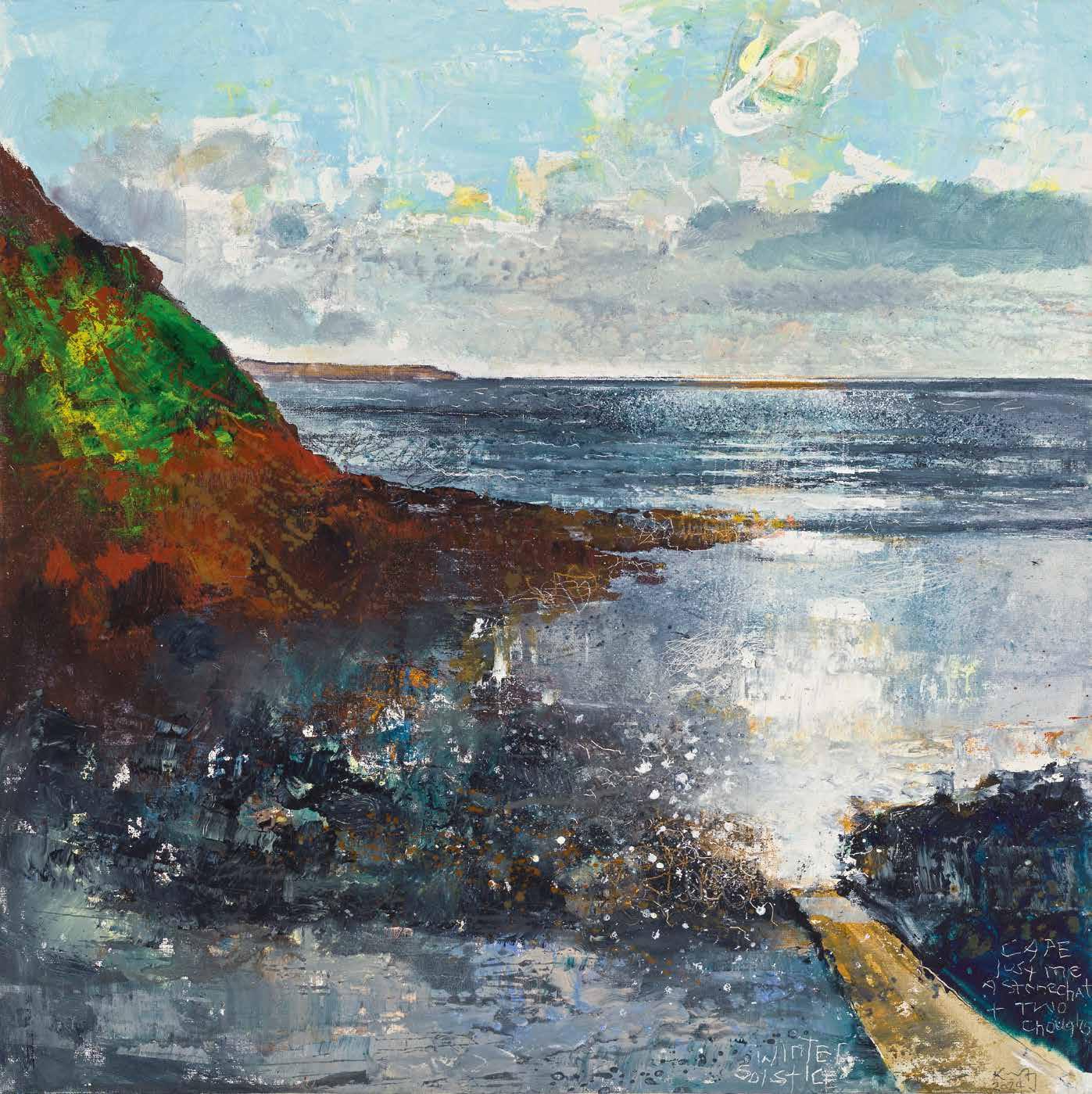
57 Winter solstice. Cape, just me . . . 2024
JacksonFoundation
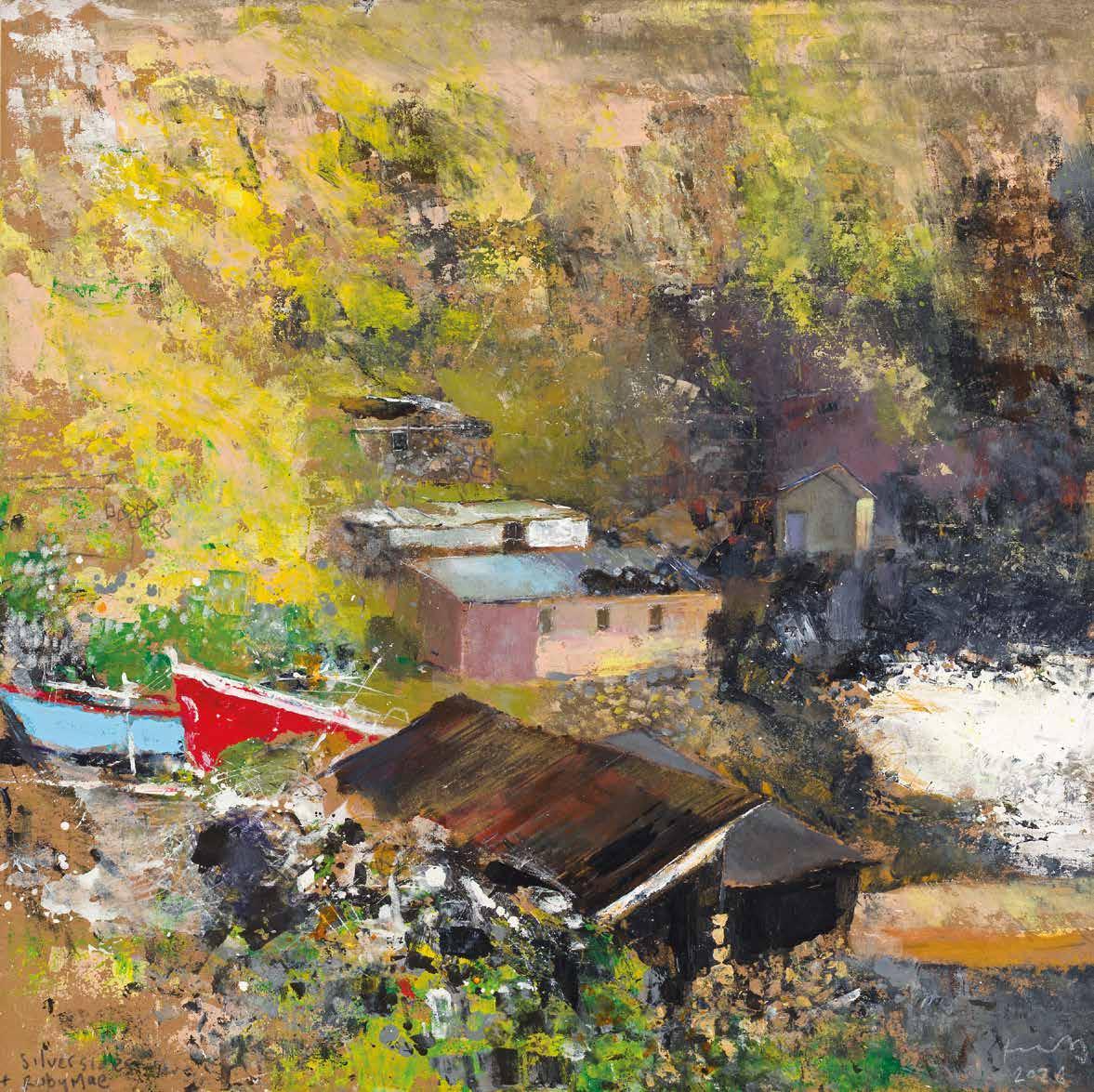
58 Silversides and Ruby Mae. 2026
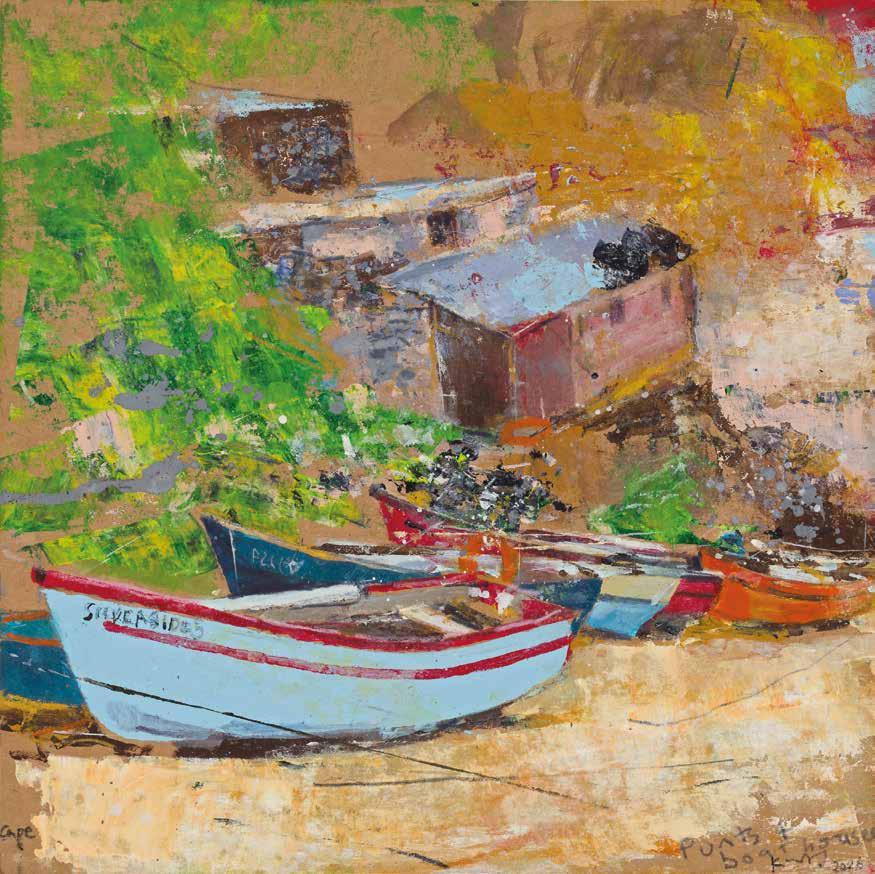
59 Punts and boathouses. 2026
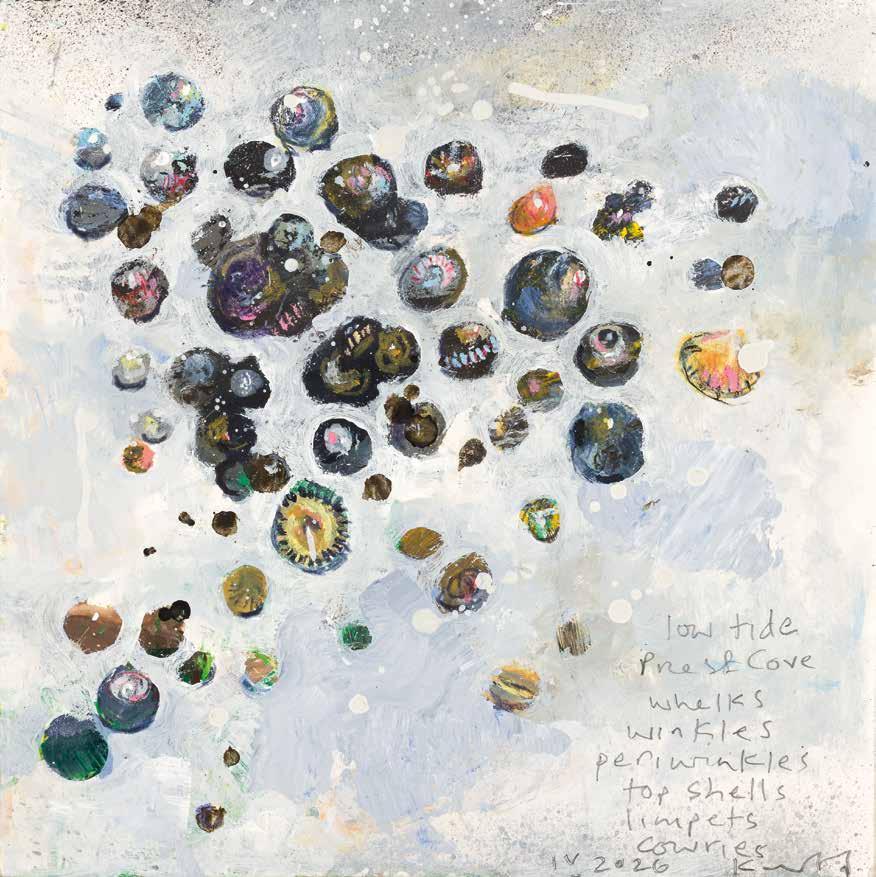
59 Low tide Priest Cove, whelks, winkles . . . 2026
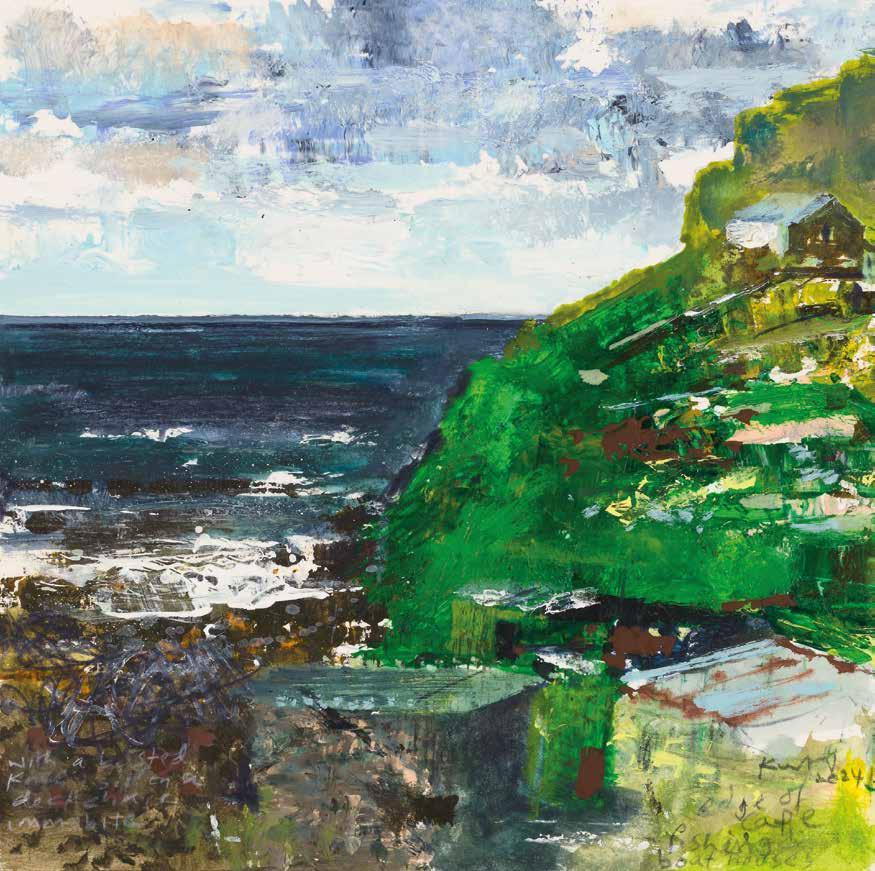
60 Edge of Cape, fishing boat houses. 2024
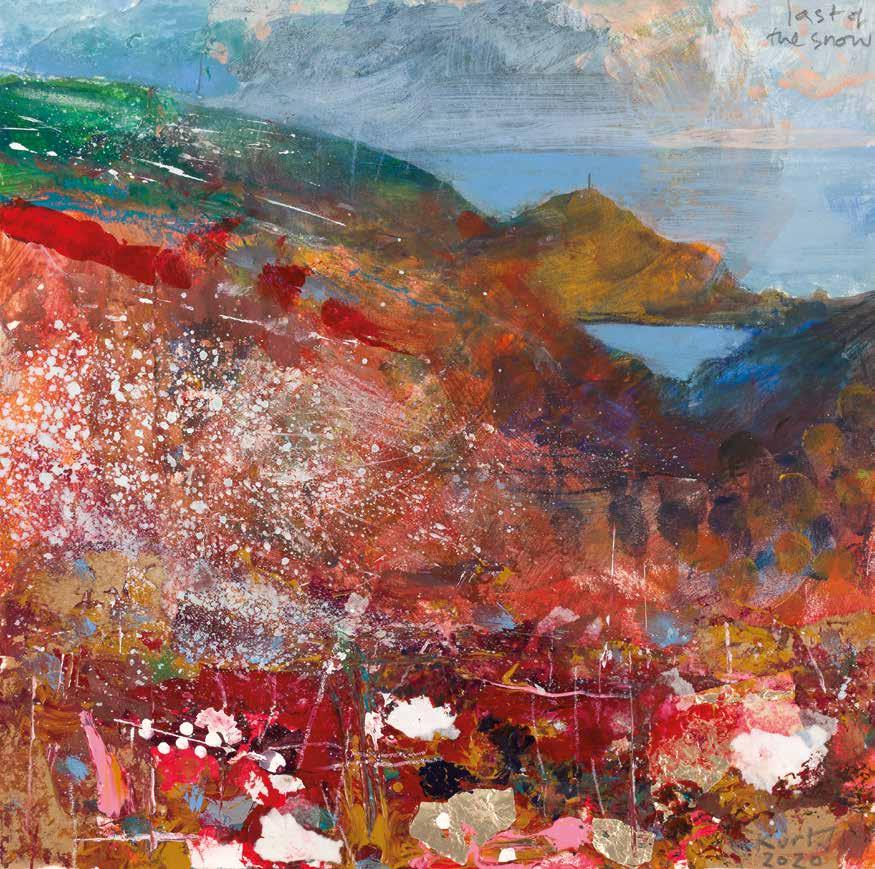
60 Last of the snow. 2020
and collage on
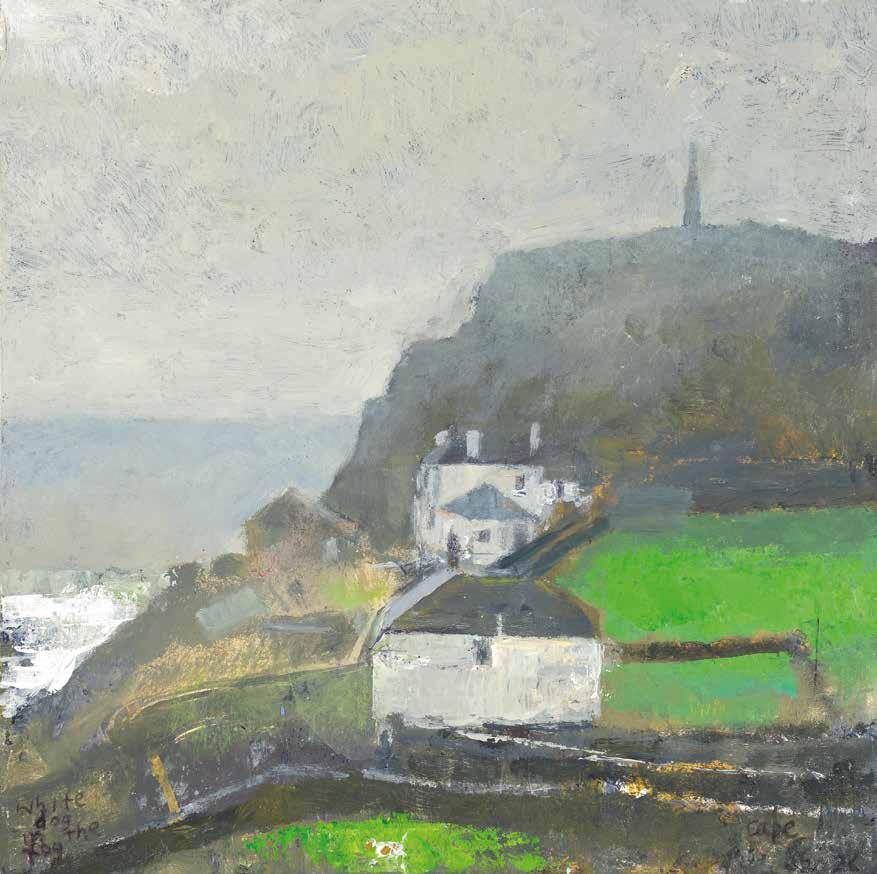
61 A white dog in the fog. 2026
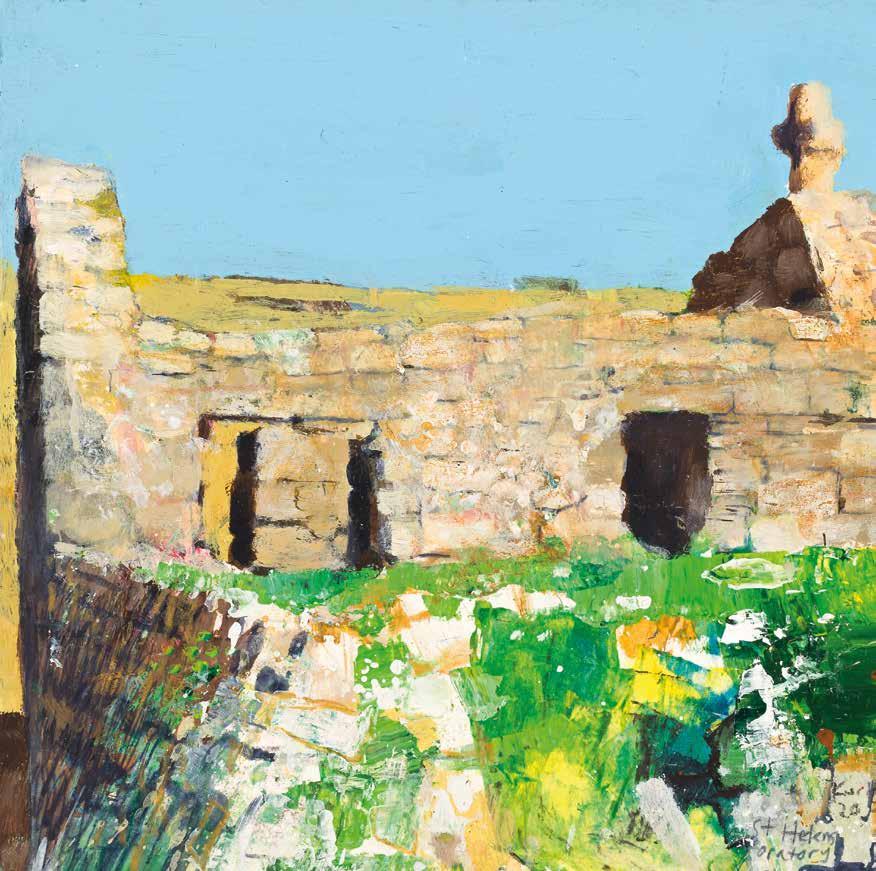
61 Saint Helen’s Oratory, Chapel Field, Cape. 2024
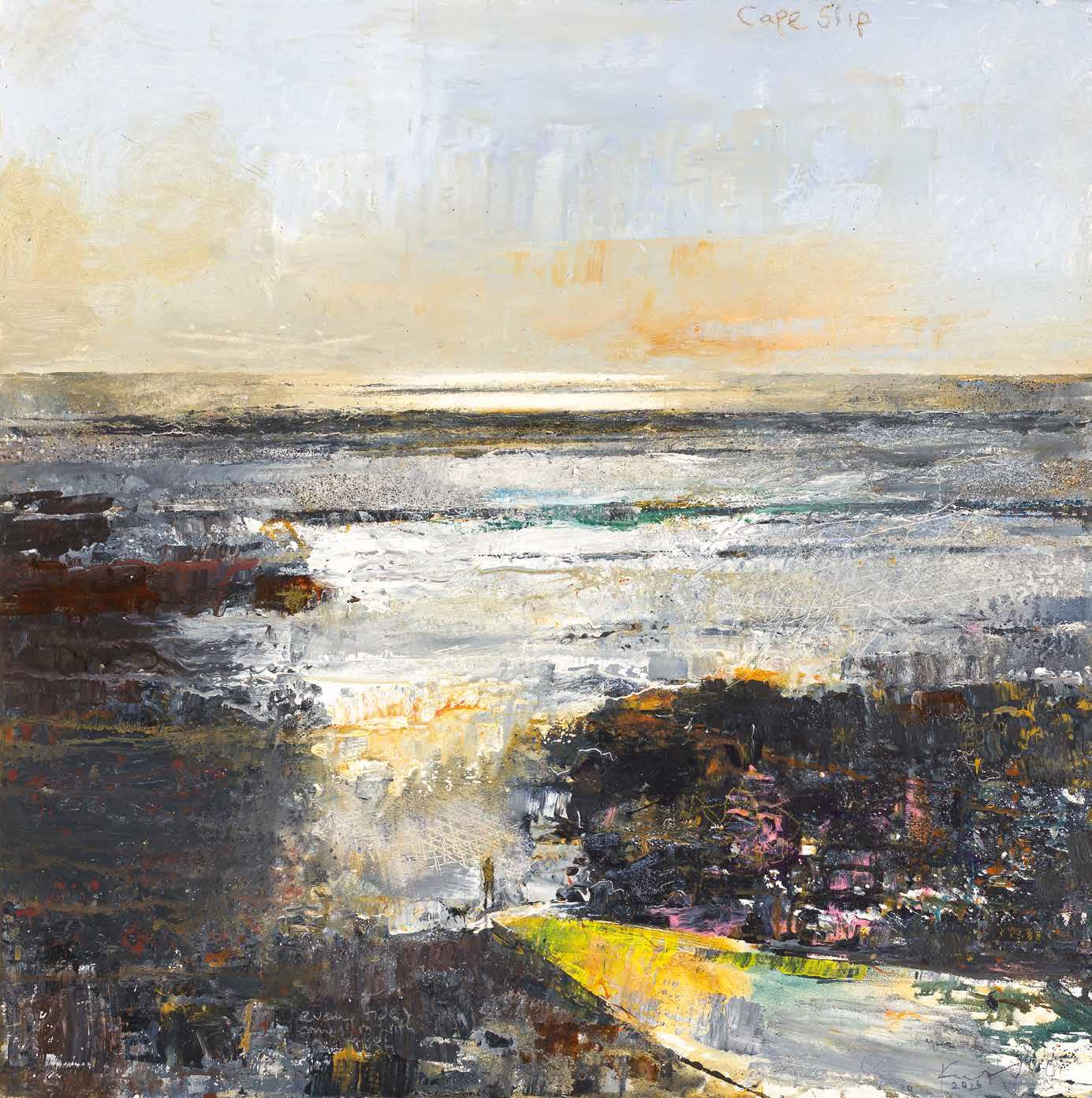
62 Cape slip. 2026
media on wood
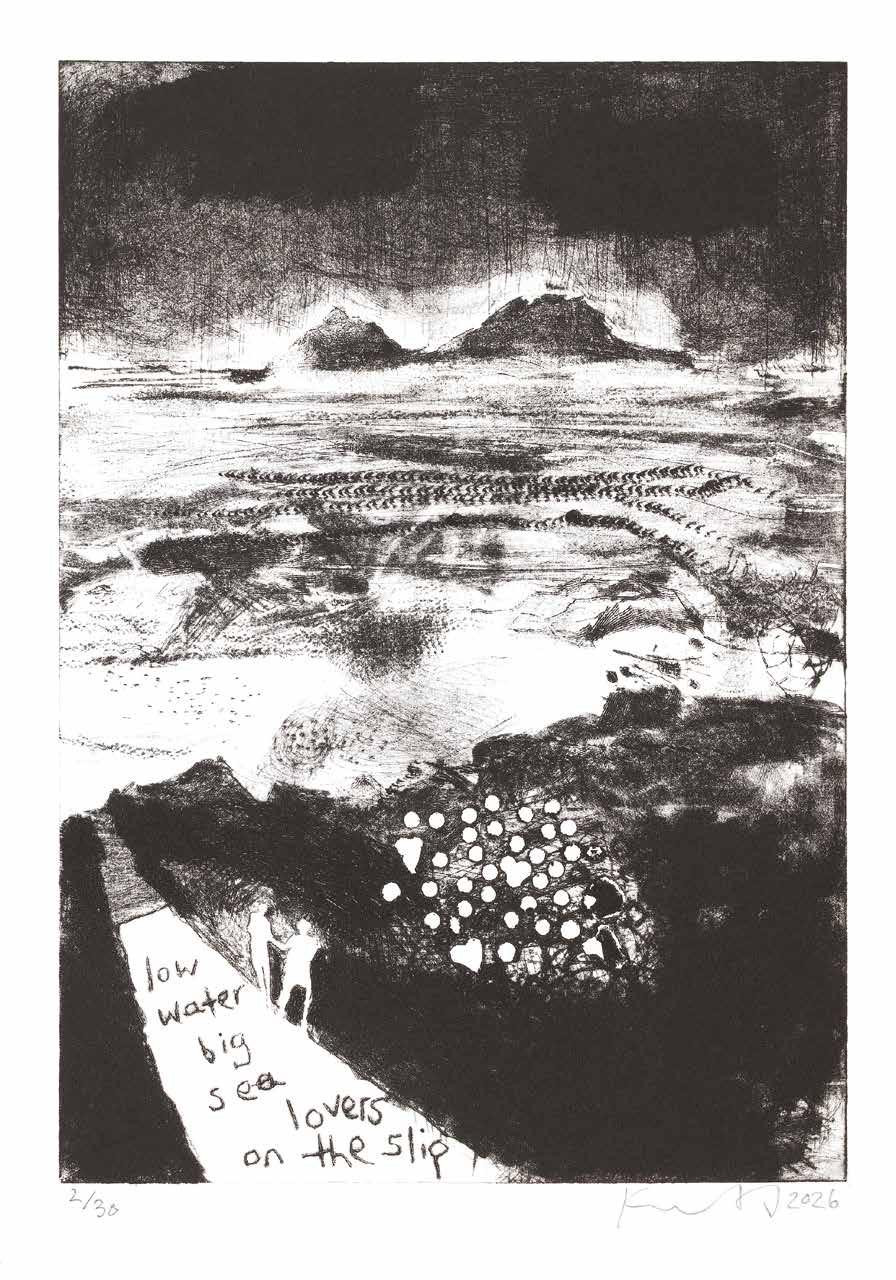
63 Lovers on the slip. 2026 (unframed) drypoint, edition of 30
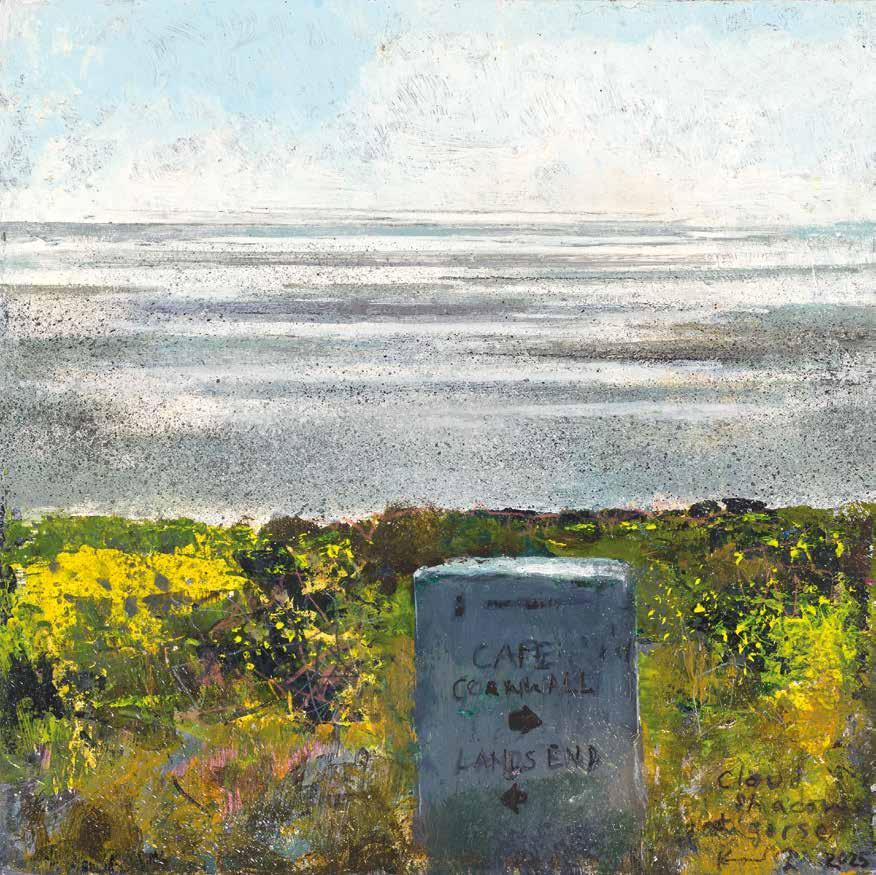
64 Cloud shadows and gorse. 2025
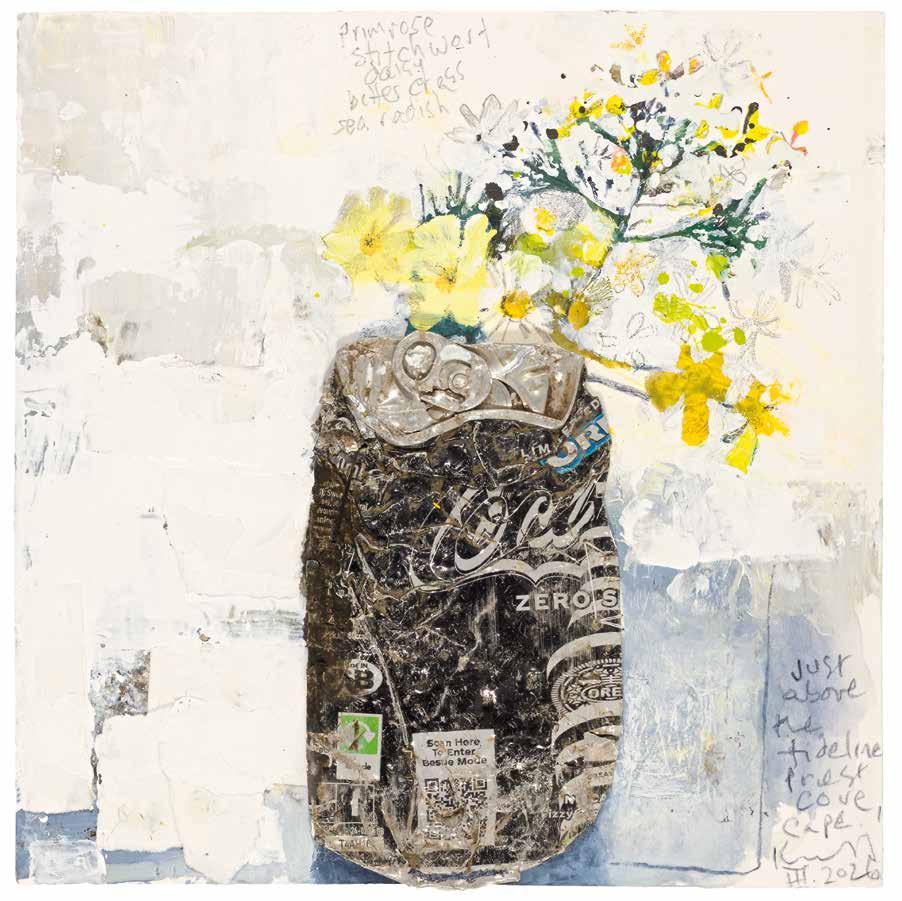
64 Just above the tideline, Priest Cove, Cape. 2025
and collage on
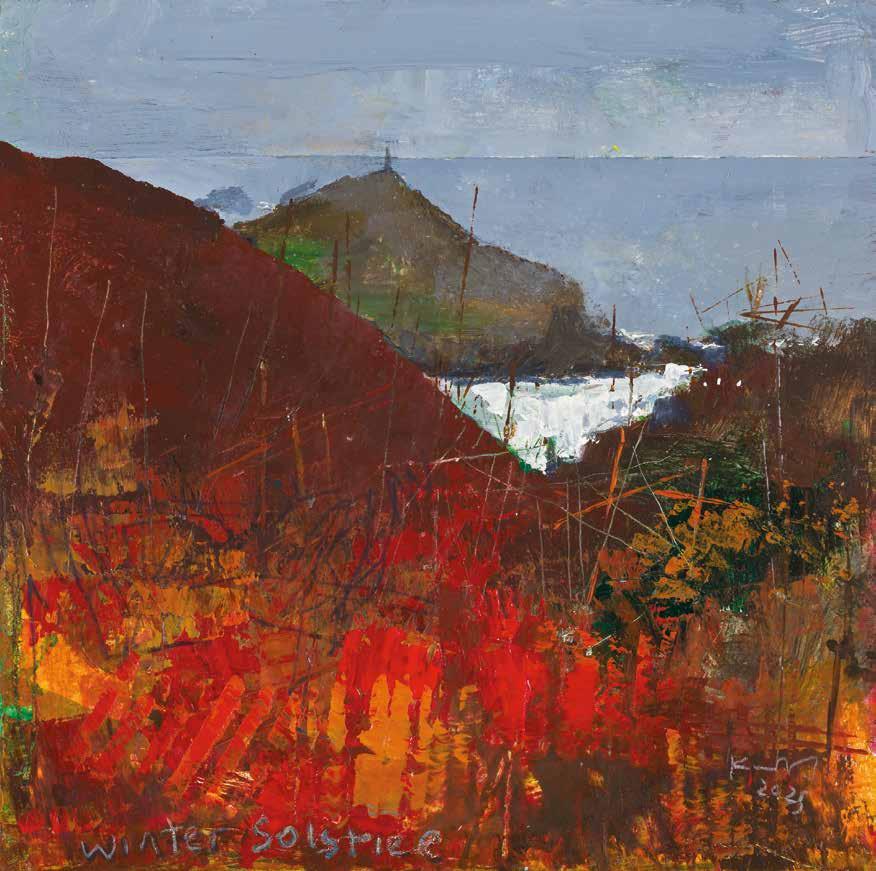
65 Winter solstice. 2025
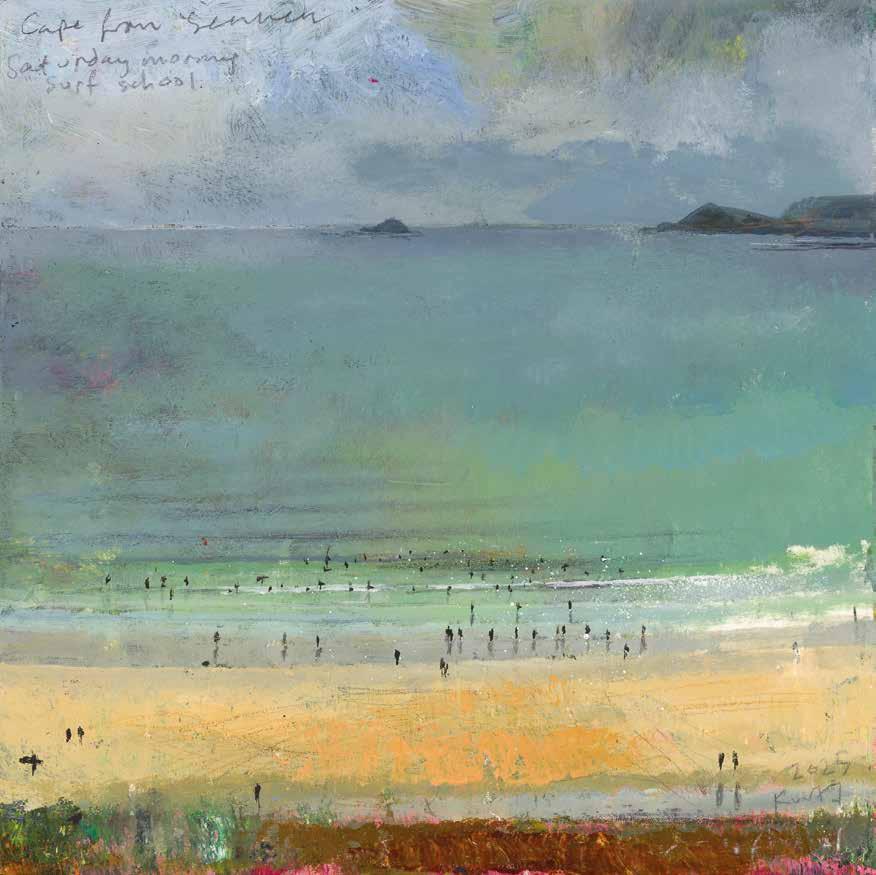
65 Cape from Sennen. Saturday morning . . . 2025
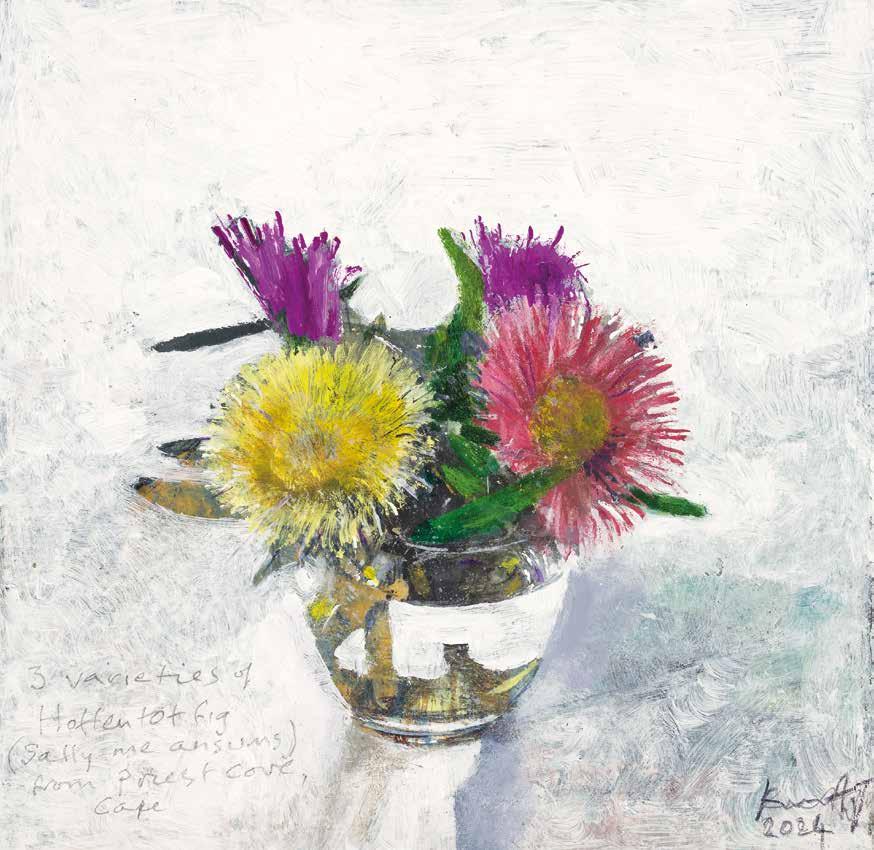
66 Three varieties of hottentot fig . . . 2024
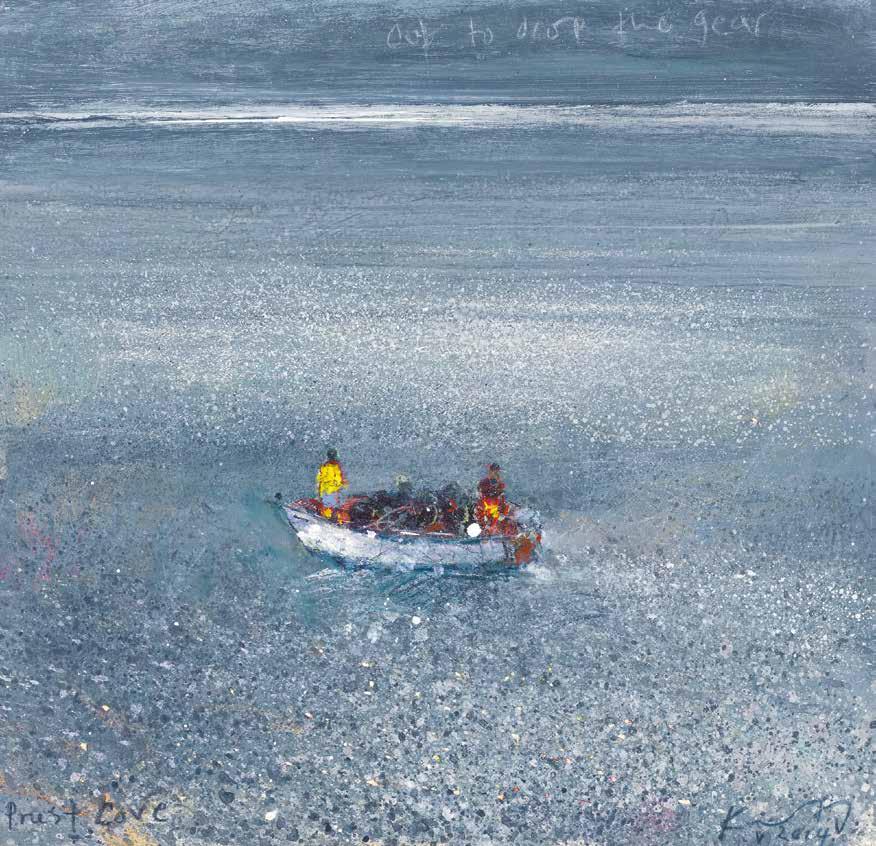
66 Out to drop the gear. 2014
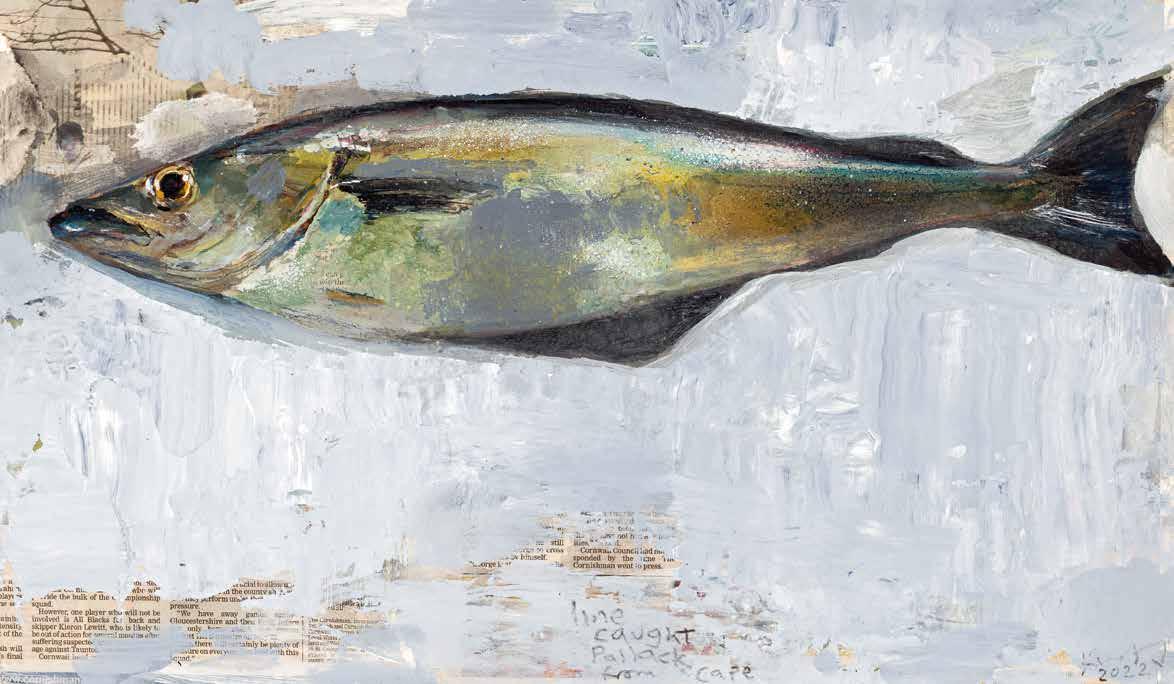
67 Line caught pollack from Cape Cornwall. 2023
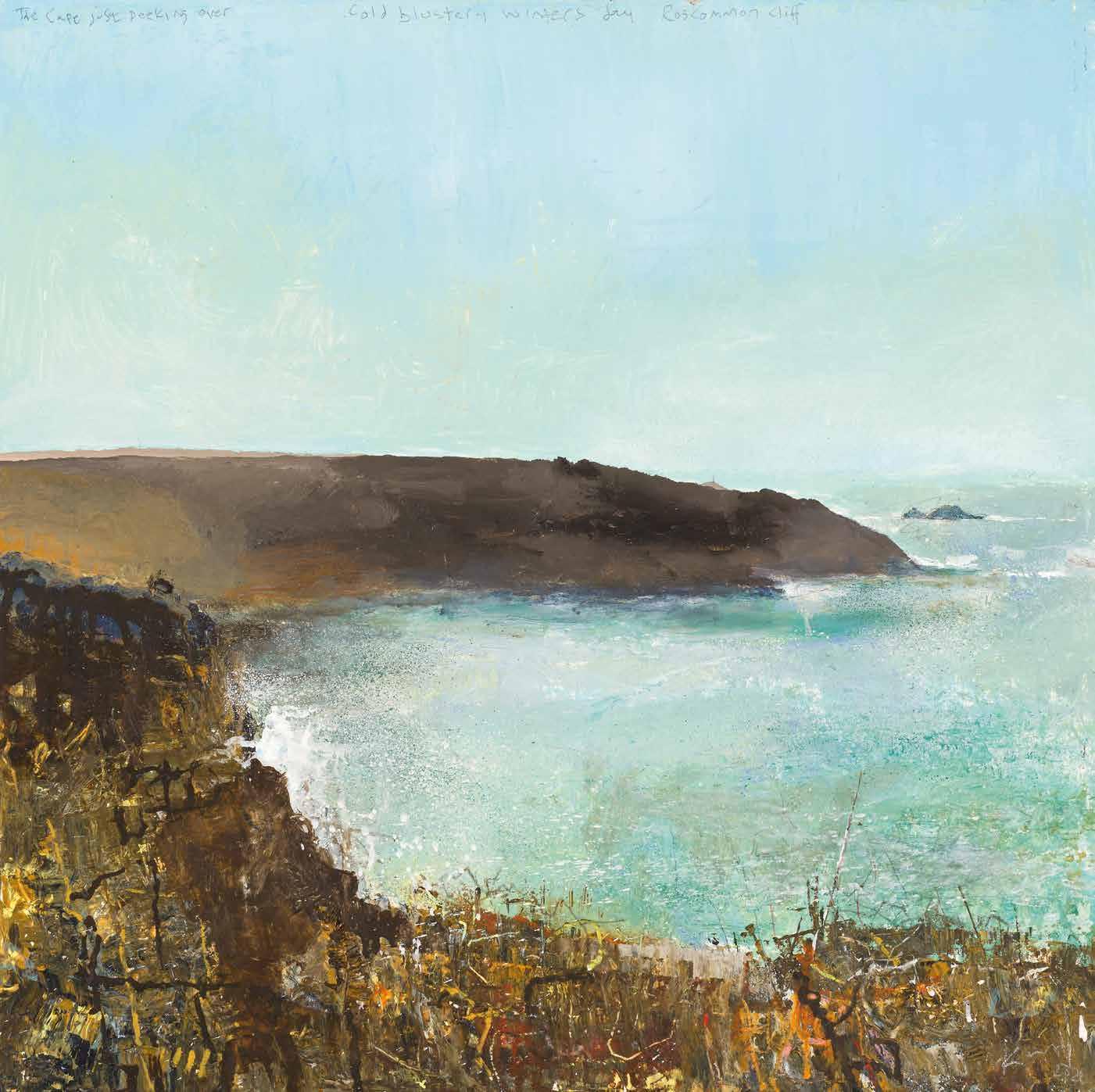
68 Cape just peeking over. Cold blustery . . . 2026
media on museum board
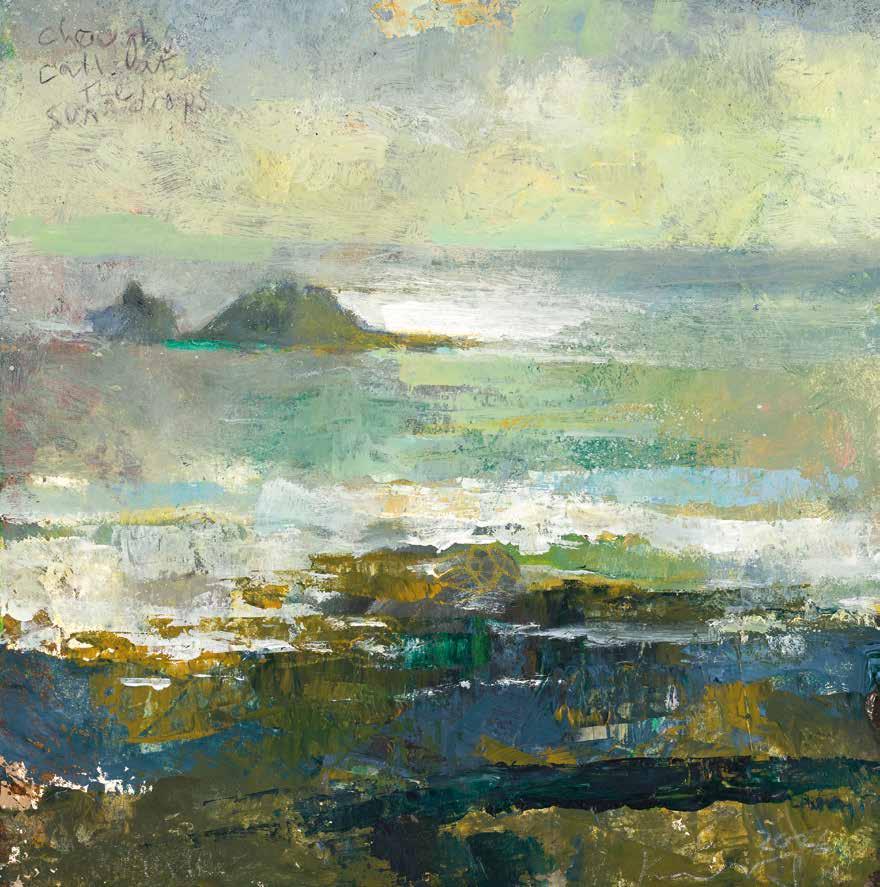
69 Choughs call as the sun drops. 2025 mixed media on museum board
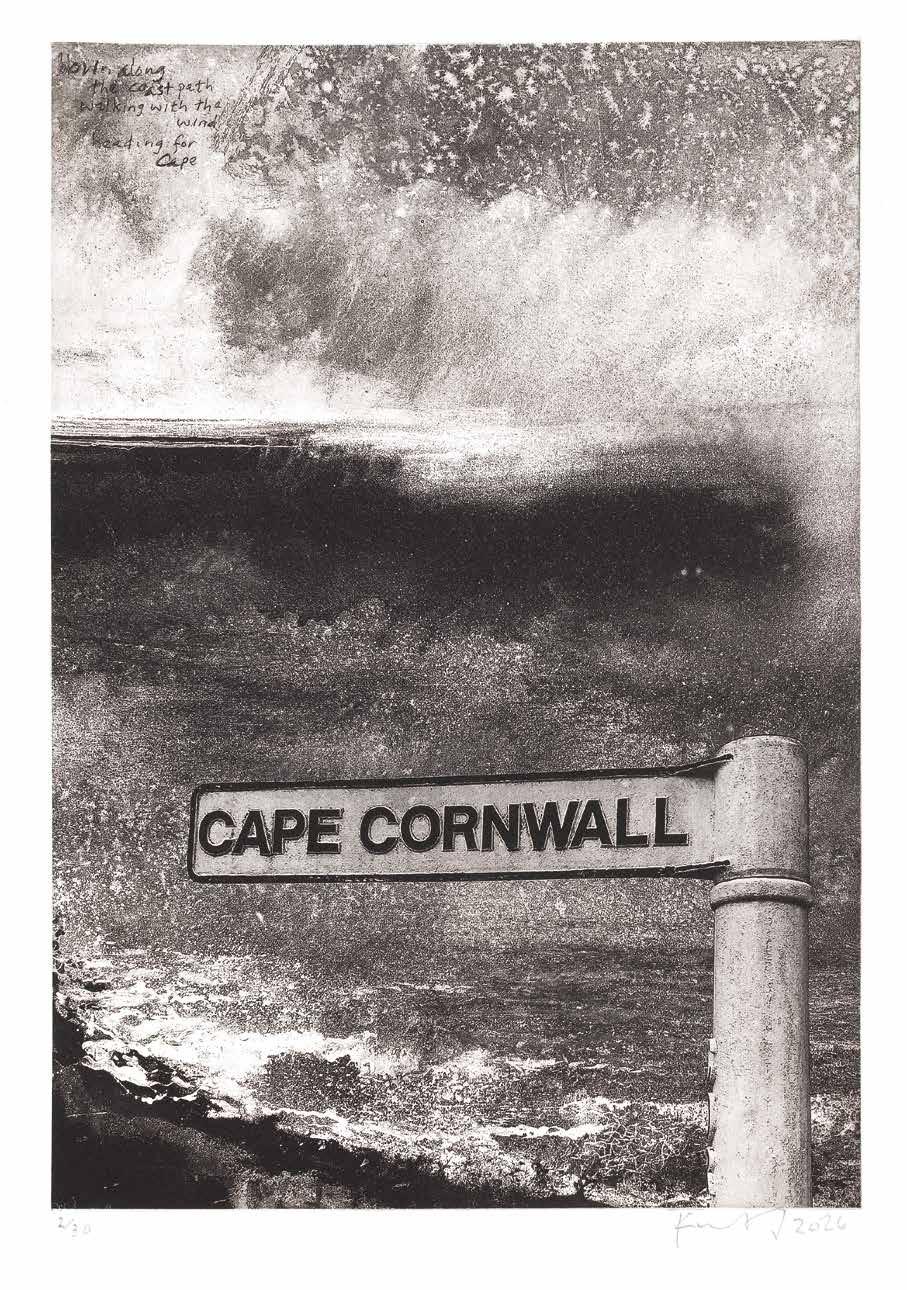
69 To Cape Cornwall. 2026 (unframed) etching, edition of 30
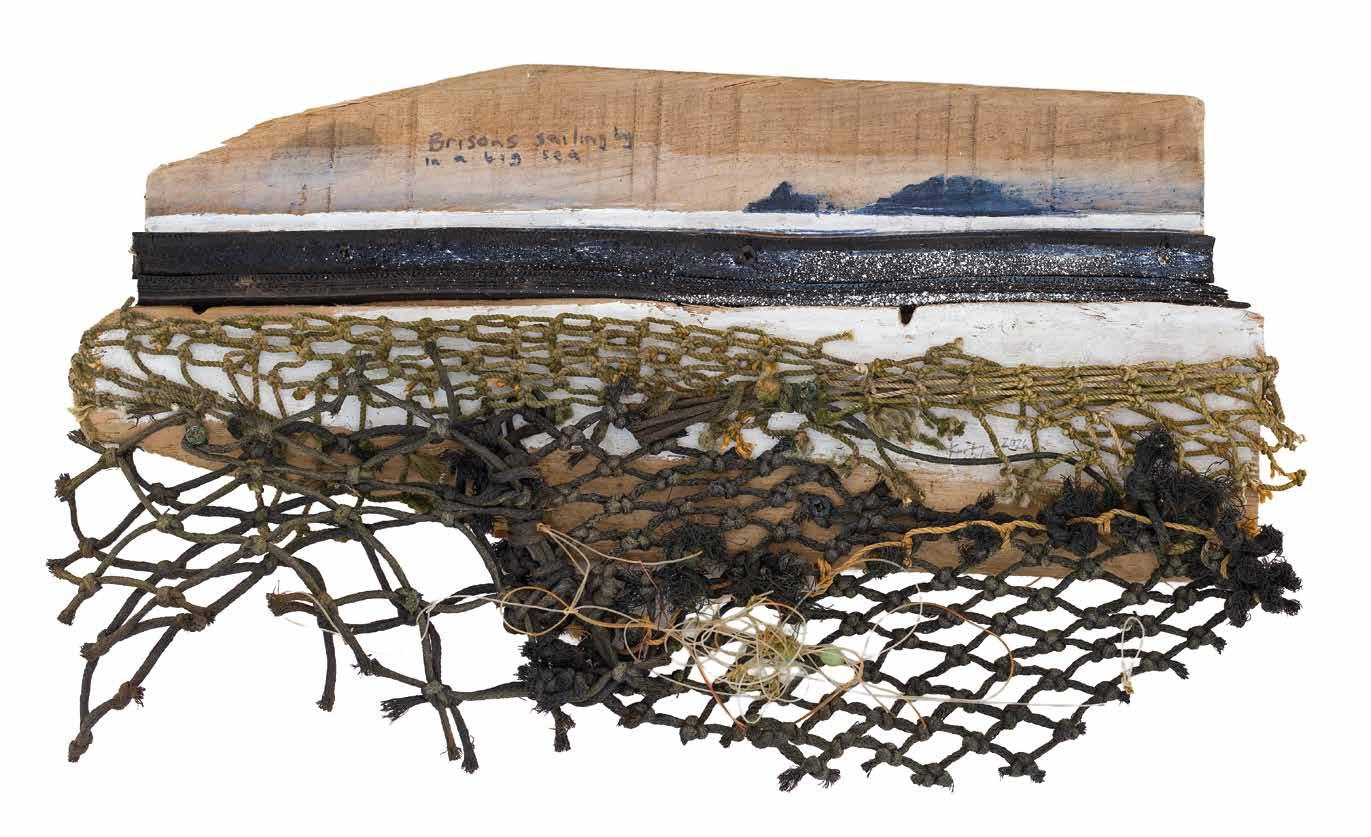
70 Brisons sailing by in a big sea. 2026 mixed media, driftwood, mackerel line, crab pot netting
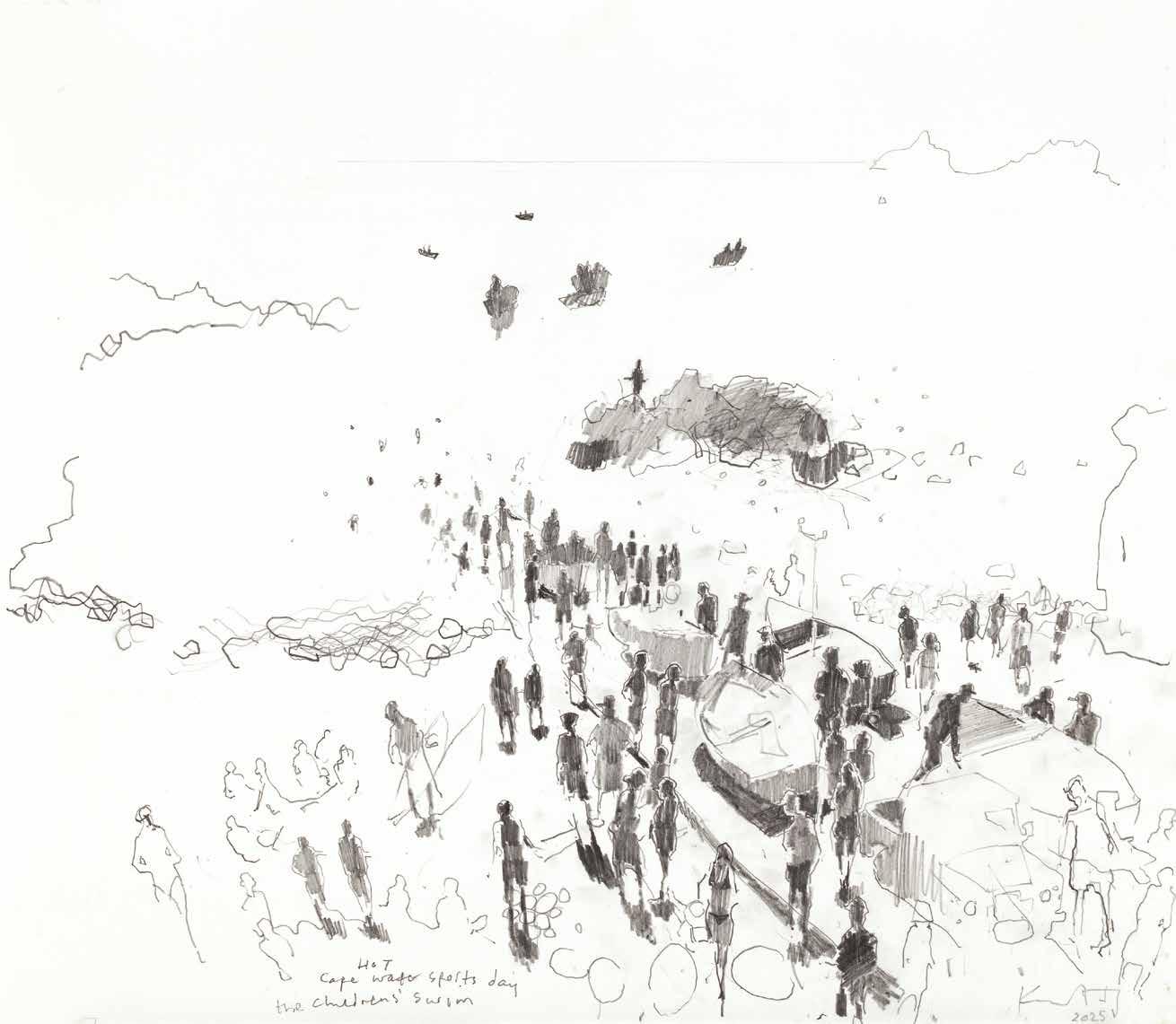
71 Hot Cape water sports day. The children’s swim. 2025 pencil on paper