Volume 3 | Issue 8
KEEPING UP WITH
August 2019
K E N S INGTON LETTER FROM THE
CEO
KENSINGTON Q&A: BONE MINERAL DENSITY
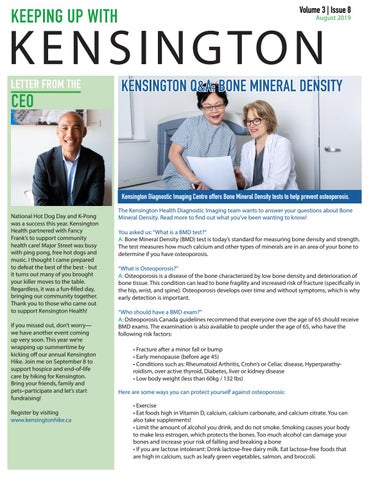
Kensington Diagnostic Imaging Centre offers Bone Mineral Density tests to help prevent osteoporosis. National Hot Dog Day and K-Pong was a success this year. Kensington Health partnered with Fancy Frank’s to support community health care! Major Street was busy with ping pong, free hot dogs and music. I thought I came prepared to defeat the best of the best - but it turns out many of you brought your killer moves to the table. Regardless, it was a fun-filled day, bringing our community together. Thank you to those who came out to support Kensington Health! If you missed out, don’t worry— we have another event coming up very soon. This year we’re wrapping up summertime by kicking off our annual Kensington Hike. Join me on September 8 to support hospice and end-of-life care by hiking for Kensington. Bring your friends, family and pets–participate and let’s start fundraising! Register by visiting www.kensingtonhike.ca
The Kensington Health Diagnostic Imaging team wants to answer your questions about Bone Mineral Density. Read more to find out what you’ve been wanting to know! You asked us: “What is a BMD test?“ A: Bone Mineral Density (BMD) test is today’s standard for measuring bone density and strength. The test measures how much calcium and other types of minerals are in an area of your bone to determine if you have osteoporosis. “What is Osteoporosis?” A: Osteoporosis is a disease of the bone characterized by low bone density and deterioration of bone tissue. This condition can lead to bone fragility and increased risk of fracture (specifically in the hip, wrist, and spine). Osteoporosis develops over time and without symptoms, which is why early detection is important. “Who should have a BMD exam?” A: Osteoporosis Canada guidelines recommend that everyone over the age of 65 should receive BMD exams. The examination is also available to people under the age of 65, who have the following risk factors: • Fracture after a minor fall or bump • Early menopause (before age 45) • Conditions such as: Rheumatoid Arthritis, Crohn’s or Celiac disease, Hyperparathyroidism, over active thyroid, Diabetes, liver or kidney disease • Low body weight (less than 60kg / 132 lbs) Here are some ways you can protect yourself against osteoporosis: • Exercise • Eat foods high in Vitamin D, calcium, calcium carbonate, and calcium citrate. You can also take supplements! • Limit the amount of alcohol you drink, and do not smoke. Smoking causes your body to make less estrogen, which protects the bones. Too much alcohol can damage your bones and increase your risk of falling and breaking a bone • If you are lactose intolerant: Drink lactose-free dairy milk. Eat lactose-free foods that are high in calcium, such as leafy green vegetables, salmon, and broccoli.