Bitcoin and Blockchain
The hype of cryptocurrencies has invaded the internet in the last few years, and even though it has been around for more than a decade, it's still new to many people. What are cryptos, how do they work, and is the gate to entry highly guarded?

I would first like to define each of these functions and then explain how they are connected.
What is bitcoin?
Bitcoin is a digital currency, so there are no bills to print. It's decentralized, so no government, financial institution, or other authority controls it. Bitcoin is a peer-to-peer electronic payment system where individuals can anonymously transfer bitcoins without the hindrance of a third-party authority( like a bank or government).
Bitcoin is just one of many other digital currencies, and Cryptocurrency networks are powered by blockchain technology. Indeed though Bitcoin uses blockchain technology to
trade digital currency, blockchain is a technology capable of changing the landscape of many industries.
People who own Bitcoin in the system are anonymous—no account numbers, names, social security numbers, or other identifying features that connect Bitcoins to their owners. Bitcoin uses blockchain technology and encryption keys to connect buyers and sellers. And, just like diamonds or gold, Bitcoin gets mined and is limited in quantity. In addition to mining bitcoin, we can earn bitcoin by accepting it as a form of payment and making interest when you lend it, you can earn from trading bitcoin, but this requires excellent specialization and understanding of the "how." You can also invest in bitcoin by saving it, which is also known as "HODL" you don't trade it or exchange it but hold it for an extended period if you believe or trust that its value will increase. Recently, bitcoin futures were launched as a legitimate asset class, so there is another way of earning from bitcoin. You can quickly open a digital wallet and safely store your bitcoin or any other digital currency.
As with any great opportunity, there are risks involved, and there are certain risks involved with Bitcoin. While it has been appealing to criminals due to its anonymity and lack of regulation, there are many benefits to all of us if you accept some risk to jump into the Bitcoin marketplace. Since there is no governing body, it can be challenging to resolve issues if Bitcoins get stolen or lost. That is the downside of bitcoin and all other digital currencies out there.

What is blockchain?
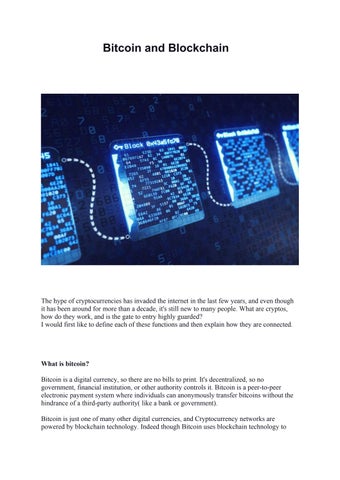
In plain language, a blockchain is a computer file for storing data. In a more technical language, It's an open, distributed tally( database), which means the data contained within the blockchain is distributed( duplicated) across numerous computers and is, thus, decentralized. , decentralized. This decentralization makes blockchain so transformative and revolutionary, unlike a traditional, centralized database – where records are processed by one central administrator ( a company or government). The entire blockchain is transparent, and data is verified by user
consensus. Despite this transparency, blockchains are highly secure because there's no one central point of attack for hackers to target.