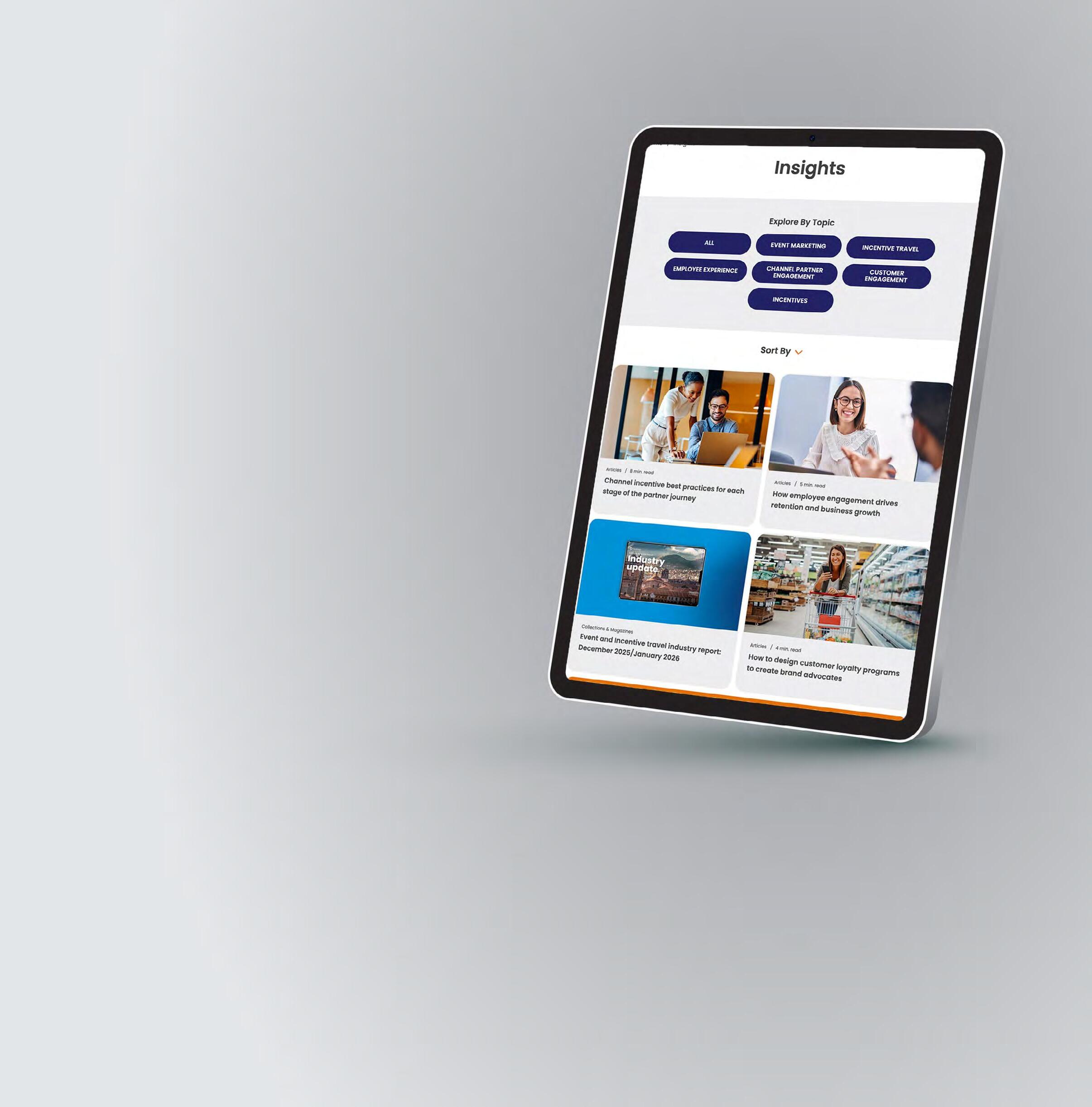

INSIDE THIS ISSUE
AI employee engagement ideas
How core values serve business goals
Recognition writing examples
HR’s guide to inclusion

AI employee engagement ideas
How core values serve business goals
Recognition writing examples
HR’s guide to inclusion
How we engage teams has never been more important—or more challenging.
Our diverse workforce requires us to listen closely. It’s the unique needs across many employee segments that (should) drive how we adapt our tools and approaches, and tailor what we offer. Along with how we communicate and train the leaders who serve as employees’ best advocates. It’s no small task, even for tenured and prepared HR leaders who have “seen it all” in the last five years.
Yet this year, the challenge to engage everyone is an incredible opportunity to be proactive. While you work to elevate employee engagement and retain top talent, ask your teams for feedback. Applying their feedback and personalizing engagement strategies based on your unique employee segments will preserve the culture you’ve worked so hard to build.
When I think about what we face in employee engagement, I’m reminded of my fitness journey’s recent lesson: staying engaged requires adaptability. As I get older, my diet and exercise impacts my body differently—energy levels, body composition and recovery time.
To keep progressing, I’ve had to shift from doing what’s worked for years. Hello, weighted vest walking and weightlifting! By listening to my body’s signals and making intentional changes, I’ve stayed motivated and connected to my goals.
The same principle applies to how we engage employees. HR leaders can use insights and tools (e.g., recognition, sense of purpose, employee sentiment) to personalize employees’ experience. The articles in this magazine share strategies that help us meet employees where they are today. They’re highly interested in well-being and belonging, less so in unforgiving environments that don’t invest in their career development.
Adaptability—whether in fitness or people-based leadership—is what keeps us all moving forward. I invite you to make progress on how to create spaces for connection, belonging and total well-being.
Tanya Fish Sr. Manager, Employee Experience




PAGE 04
How to leverage AI in your employee engagement strategy


PAGE 10
Why core values are important



PAGE 18
Employee recognition examples (with writing prompts)

PAGE 26
The HR professional’s guide to diversity and inclusion

BY: MITCH STEARNS, ANALYTICS ADVISOR, EMPLOYEE EXPERIENCE
I have a growing sense that HR professionals feel overwhelmed with AI. Leadership continues to encourage employees to use Generative AI (GenAI) to streamline processes, but every day, we see updates from big tech offering new features that fundamentally change the landscape.

While 93% of Fortune 500 CHROs are adopting the new technology according to Gallup, most workers use GenAI tools, like ChatGPT or Copilot, like a search engine. Never fully unlocking its more impactful capabilities.
HR teams primarily use GenAI for fundamental processes. For example, 64% use it during talent acquisition to write job descriptions, and 43% apply it to learning and development to create curriculum.
However, emerging AI tools are becoming more specialized to support efforts like analyzing employee metrics, predicting outcomes and proposing effective measures. All of which can increase employee retention and create a more connected company culture.
Embracing next-level AI starts with bringing the right questions and prompts. And who better than HR teams, who know their organizations’ nuances best, to craft the questions that result in the best data?
We’re all learning when it comes to AI. If you feel like you’re not getting the most effective answers from AI, you’re not alone.
Shortly after ChatGPT was released, I was having a conversation with my dad about the evolution of technology in business. After he asked several great questions, I decided to have him try it out. My dad is a long-time farm kid, so his prompt looked something like, “What was the average yield for corn in Iowa in 2021?”
Dad didn’t agree fully with ChatGPT’s response, which looked a little low to him. He proceeded to hit the delete key and simply added the county name of where he grew up.
That small change, yet impactful detail, yielded the results to his expert satisfaction. Proof, that, in his own words, “It’s always been about asking the right questions.”
Your expertise and knowledge before AI is an incredible asset and, ultimately, what these models continue to source their data from.
By working collaboratively with internal and external partners, HR teams can deploy their knowledge and make a bigger impact on their organization’s success.
Popular GenAI tools like ChatGPT and Copilot pull from large, open-source data around the web. The results can be general but are only as good as the prompt written by the user. With the rise of Agentic AI and the integration of Large Language Models (LLMs), organizations need to move beyond using AI as a search engine. Agentic AI builds on GenAI, so it doesn’t need complete data to offer results.
Paired with your employee engagement metrics, sentiment surveys or HR systems, AI can help your team glean unique takeaways. Results can help your team preempt potential issues and discover new opportunities in your employee experience.
Employee attrition often indicates the health of your organization’s work culture. When employees feel fulfilled or recognized at work, they’re more likely to stay. Higher employee retention results in cost savings, better productivity and increased customer satisfaction.
Instead of reacting to employee turnover too late, predictive HR analytics can help organizations identify the key factors to prevent churn.

How teams review churn without AI
Conducting exit interviews, reviewing sentiment surveys or hosting focus groups.
How teams review churn with AI
Analyzing employee metrics for other indicators. Reviewing years in current role, years with their current manager and years since last training, much like IBM’s AI-based attrition model.
Using AI, researchers can determine more accurate indicators influencing retention. With these takeaways, AI can then support building programs specifically tailored to optimizing the negative predictors and maintaining the positive ones.
Team bonds and work purpose keep employees engaged long term. However, 20% of U.S. employees feel lonely at work, according to Gallup’s State of the Global Workplace: 2024 Report. That lack of connection can impact employee performance, overall morale and employer brand perception.
Connection happens on a humanlevel. And while technology can’t replace that interaction, employee engagement platforms, like ITA Group’s Cooleaf platform, can enable large, diverse organizations to carve out employee programs.
Our platform can help managers engage employees no matter where they are, creating connections through recognition and online activities. These resources help teams gather relevant data such as participation or peer recognitions issued or received. HR teams can pair these metrics with AI tools to help create effective programming for an individual’s strengths and needs.
LLMs can process and analyze data from text, images or audio, along with user interactions. The broad data helps business leaders set up opportunities for impactful connection.

HR teams and admins can use AI to match up mentors to new hires, creating a more fulfilling onboarding that meets the new employees’ needs or goals.
Managers can track
department engagement, recommend changes in training or manager coaching to support an individual’s preferred learning style.
Current and predictive employee sentiment scores via pulse surveys simply alert leadership to necessary adjustments for employee experience initiatives. With AI, managers have support to better analyze the results and take action.
AI can notify managers of wins beyond business results, like when a team member is recognized for a company core value, prompting the managers to issue their own follow-up recognition.
Several factors can influence employee sentiment, from leadership support to growth opportunities. Pulse surveys are a great way to routinely check in on morale.
Exit interviews or focus groups offer nuanced data, which approaches like natural language processing (NLP) can summarize.
NLP can examine context, “positive” or “negative” keywords, colloquialisms and tone to help HR teams categorize sentiment, especially with large, global-spanning teams.
NLP can help teams understand the nuances in different departments or locations, so HR teams can optimize surveys for better analysis.
I hope my examples can inspire you and your team to further investigate ways to incorporate AI into your culture planning. Here are best practices for getting started.
AI-infused analytics questions will be much more fruitful when all of your data is consolidated in a centralized location and model. Strategic consolidation efforts often precede this.
Think engagement benchmarks, annual employee surveys, customer or employee satisfaction, or feedback forms. The “closer” these data domains live together, the more likely (and more quickly) you’ll find a consistent trend or theme to help your team find answers and strategize.
Be intentional when it comes to using these new tools to ensure the quality and validity of your results. Yes, venture into new spaces and methods you never thought you could before, but don’t trick yourself into thinking the AI will always output the correct answer. Consciously evaluate results with internal partners and subject matter experts.
Your knowledge and experience with your organization and in your role will work with AI to get the most accurate and useful results.

AI’s rapid advancement and adoption give HR leaders new tools to shape employee engagement strategies for their team’s needs. HR teams have a wealth of experience and understanding they bring to AI.
Remember how my dad was able to get the best response from ChatGPT because of his deep knowledge of Iowa agriculture? Understanding the nuances of a company’s culture can help us craft the right prompts and questions to get the results critical to our organization’s success.
We can turn around retention, improve work performance and create a more consistent customer experience.
Shift your approach with AI by finding and pursuing the partners committed to helping you scale your knowledge and understanding of your organization.

A committed and constantly learning member of the social sciences community, Mitch thrives when he uncovers prevailing stories found within data. Mitch leans into the mantra “remember the names in the numbers” through his unique blend of collaborative research, advanced analytics, experimental design and post-secondary interpersonal education in his role as Employee Experience Analytics Advisor at ITA Group. Personally, Mitch is blessed by his incredible wife and two constantly conspiring kiddos. Mitch holds a B.A. in Psychology from Central College and an M.S. in Clinical Mental Health Counseling from Drake University.

BY: TANYA FISH, SR. MANAGER, EMPLOYEE EXPERIENCE
Core values aren’t just words on your website or company swag. These tenets are the heart of your organization. They define how you’ll shape company culture, how your employees will engage with work and how you’ll accomplish your brand mission.
Think of core values as a shared belief system for your organization. Shared values help employees build relationships, trust and healthy collaboration through value-driven behaviors. They rally employees behind your company’s mission and strategic goals.
How leaders help employees embody your core values is critical. It can make the difference for employee satisfaction or work performance. It can also impact employee retention and how the public sees your brand. Here are examples how.
Core values establish shared beliefs and actions in your organization. They foster relationships, bringing teams together and creating a sense of belonging at work. This feeling of community is crucial to employee happiness. It increases work satisfaction and instills a deep sense of purpose, motivating employees to do their best. This boosts employee retention and attracts others to join your organization.
When employees feel like they belong, they bring their most authentic, unique selves to their work, increasing their confidence and performance. It leads to a stronger workplace experience and increases employee engagement.
Employee recognition is a performance management tool that empowers workplace leaders and peers to acknowledge one another. ITA Group’s employee engagement platform makes it easy for employees to tag recognitions with a key value. When you recognize individuals for embodying your organization’s values, it encourages those key behaviors and gives other team members an example of that core value in action.
Entrusting employees to reward and recognize others for living your company’s values empowers coworkers to celebrate one another’s wins. Those values become more tangible and easier to embrace and repeat.
Clear values set the standard for how your organization approaches business. This might look like employee behaviors, the customers you target and even the goals you set as a team.
Your values should weave seamlessly into your business strategy, answering the “why” and the “how” for your teams: “Why this goal?” or “How will we achieve it?” This gives your team a rubric to measure against when making decisions for the organization: Would this next step be aligned to a core value? Does this priority tie back to a key tenet?
Seeing how your organization applies core values to big decisions shows your team how important these words are. Plus, it gives employees an example of ideal behaviors.


SHARE EXAMPLES OF CORE VALUES IN ACTION DURING MEETINGS
Bring core values into your meetings. For example, in your next department meeting, invite your leadership team to share business updates in terms of a certain value. Or, start the meeting by having team members recognize examples of recent employee actions or wins that align with a key value.
By explaining how your company lives up to your values, along with the ways you’re working to improve or achieve wins, you show employees how important these tenets are.

Core values inspire your people to act and make decisions on their own. By encouraging employees to embody these values every day, organizations build a sense of trust with their people. Employees can work independently but still within the brand's mission.
When employees feel like they can bring their own experience and interpretation to their work, you see more innovation and pride in what they do. This also builds up your employer branding. When people love where they work, they become brand advocates and are more likely to stay.
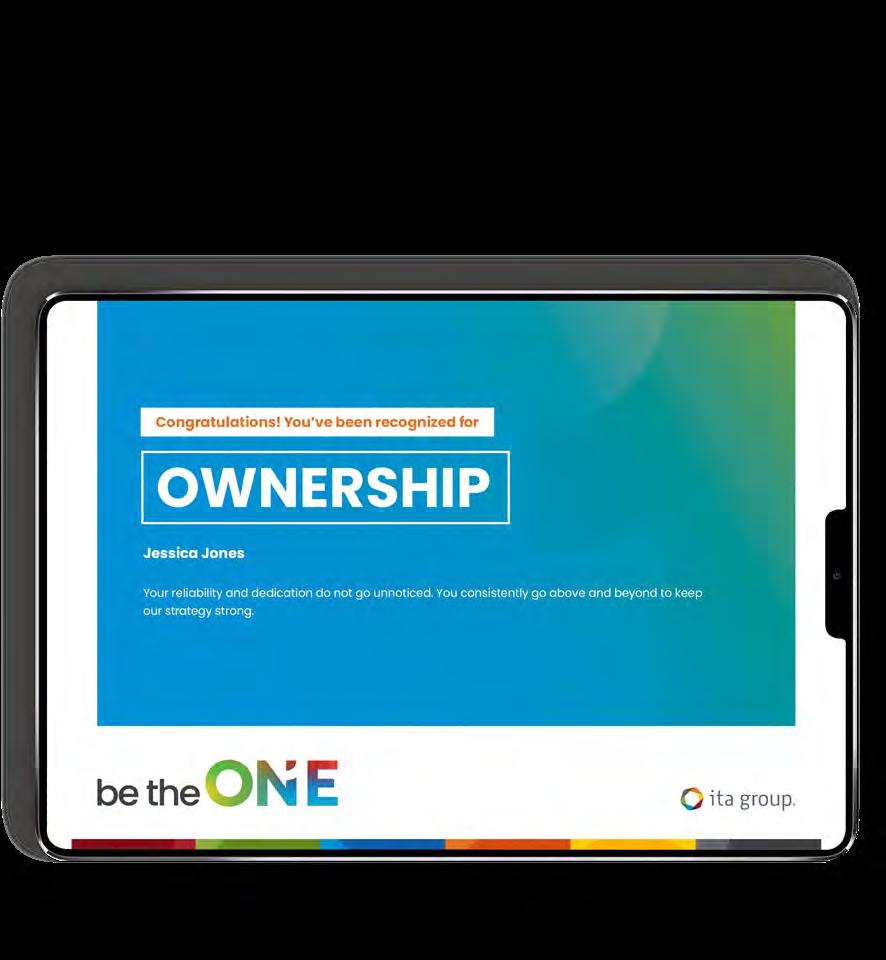
ITA Group’s core value “Act Like Owners” shows our trust in team members. We want our people to feel how they impact our organization, our clients and one another. Team members feel safe and comfortable to ask questions, owning their roles and wins.
When employees “Act Like Owners,” they can bring their authentic selves to their roles and critical discussions. We encourage questions and feedback for everyone at all levels, and that consistency benefits the whole organization. As a result, our company is stronger and our culture is more welcoming.
Core values build a consistent, aligned approach for employees and leadership, but also for customers. According to Harris Poll, 82% of customers say they want to buy products and services from companies that have a purpose that resonates with their values and belief systems.
Think of an eco-friendly consumer purchasing from a B Corporation or a neighbor supporting a company that gives back to the local community.
As companies consistently act on their values, they build trust and respect with their customers. This increases customer loyalty and brand awareness.
Your core values drive employee behaviors and that includes front-line or customer service teams.
Give examples of how customer-facing teams can embody your core values.
For example, during our “ Love your people” podcast with CAVA’s HR leader Kelly Costanza, Kelly shared how they train and give tangible examples of their foundational values to their front-line staff. They also highlight a value each month in their employee communications and meetings, keeping values top of mind.
Listen on demand:
info.itagroup.com/podcast

Kelly Costanza Chief People Officer CAVA
By embracing core values, your organization stands out. With your organization’s values driving the “how” and the “why” of your business, you create a unique approach in your industry’s niche. And as your people embody those values, their work, ideas and collaboration set your brand apart in the pack.
Help employees immerse themselves in your core values by bringing them into the employee journey, from hiring and onboarding to ongoing development and retention. Aligning engagement and tying everything within the employee journey like onboarding or learning and development reinforces your messaging and ethos, helping employees embody your “how” and “why” as they grow with the company.
Hiring managers should list company values on career pages and evaluate new job candidates based partly on your company values (e.g., Are they authentic? Do they work well in a team?). Guiding your hiring practices with your values ensures consistent or compatible work styles and motivations.
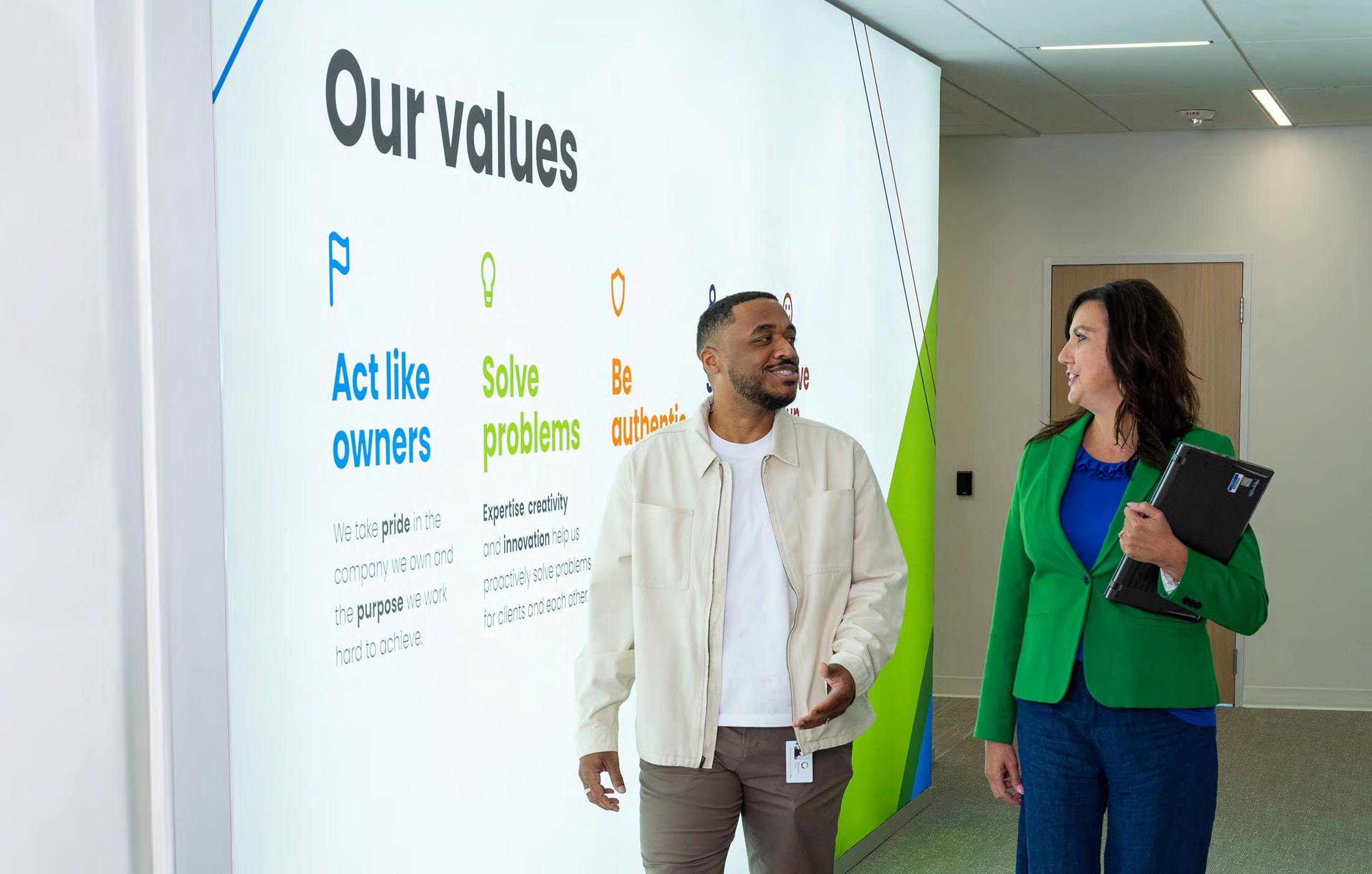
It’s important to remember that core values are about both collective and individual behaviors. Shared core values are a powerful reminder that no single individual can achieve everything on their own.
In any organization, core values offer a road map that helps teams collaborate and individual employees contribute.
When you bring your core values to life through recognition, communication and ongoing development, you cultivate passionate and committed employees who shape their company culture and grow into their roles.

Tanya Fish is the Leader of Employee Experience Solutions for ITA Group. She drives the insights, strategy and evolution around employee experience for the organization while offering advisement for client engagement and employee programs. Tanya loves inspiring passion in people, something she believes impacts the individual, the organization and the community. Tanya’s past work and studies on organizational leadership in business, employee health and well-being, culture and health insurance guide her unique perspective on organizational health and success. Tanya is energized by achievement, learning and empowerment and balanced by time with family and friends and being outdoors. Bonus points if it’s by a body of water.
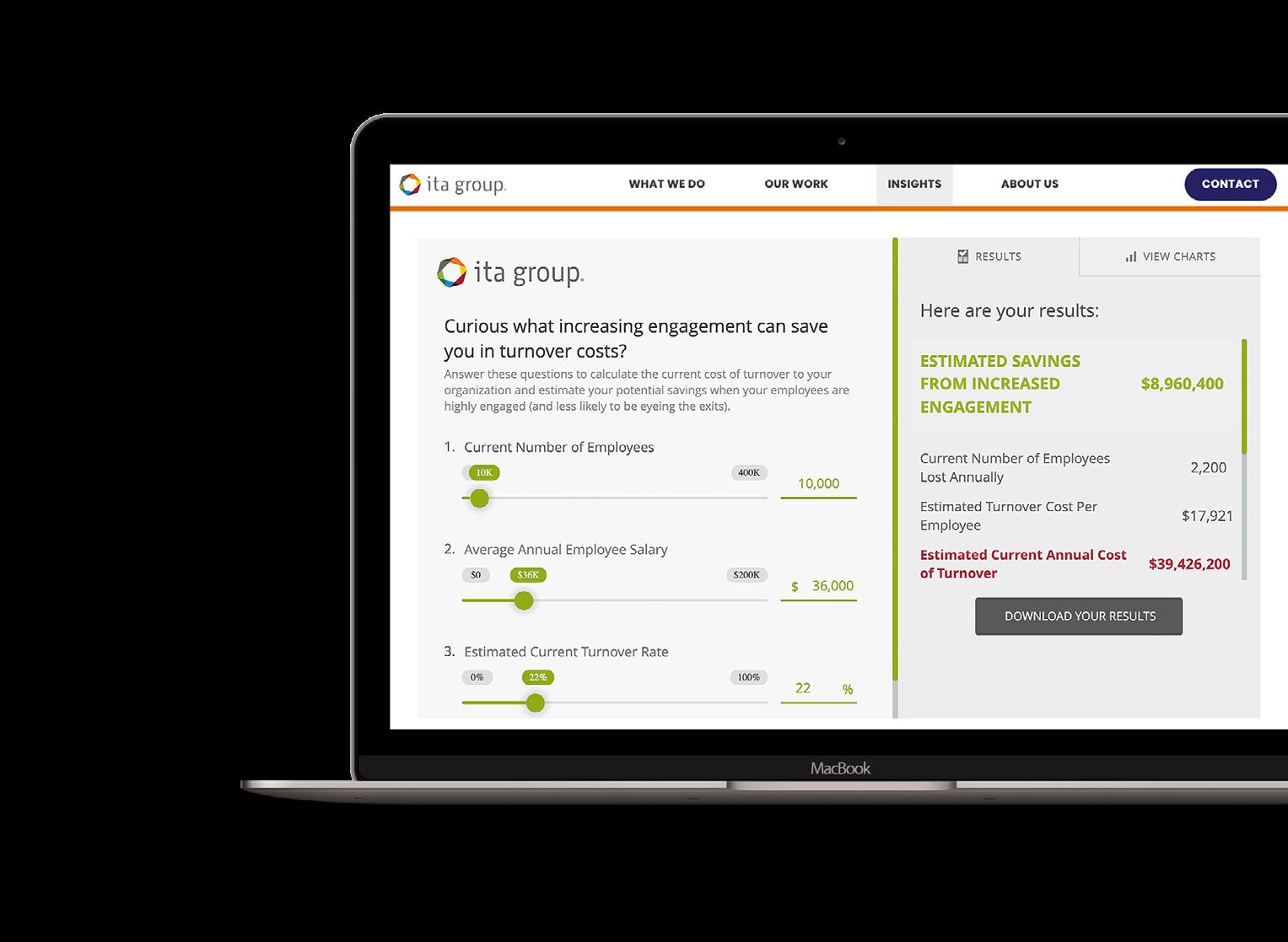
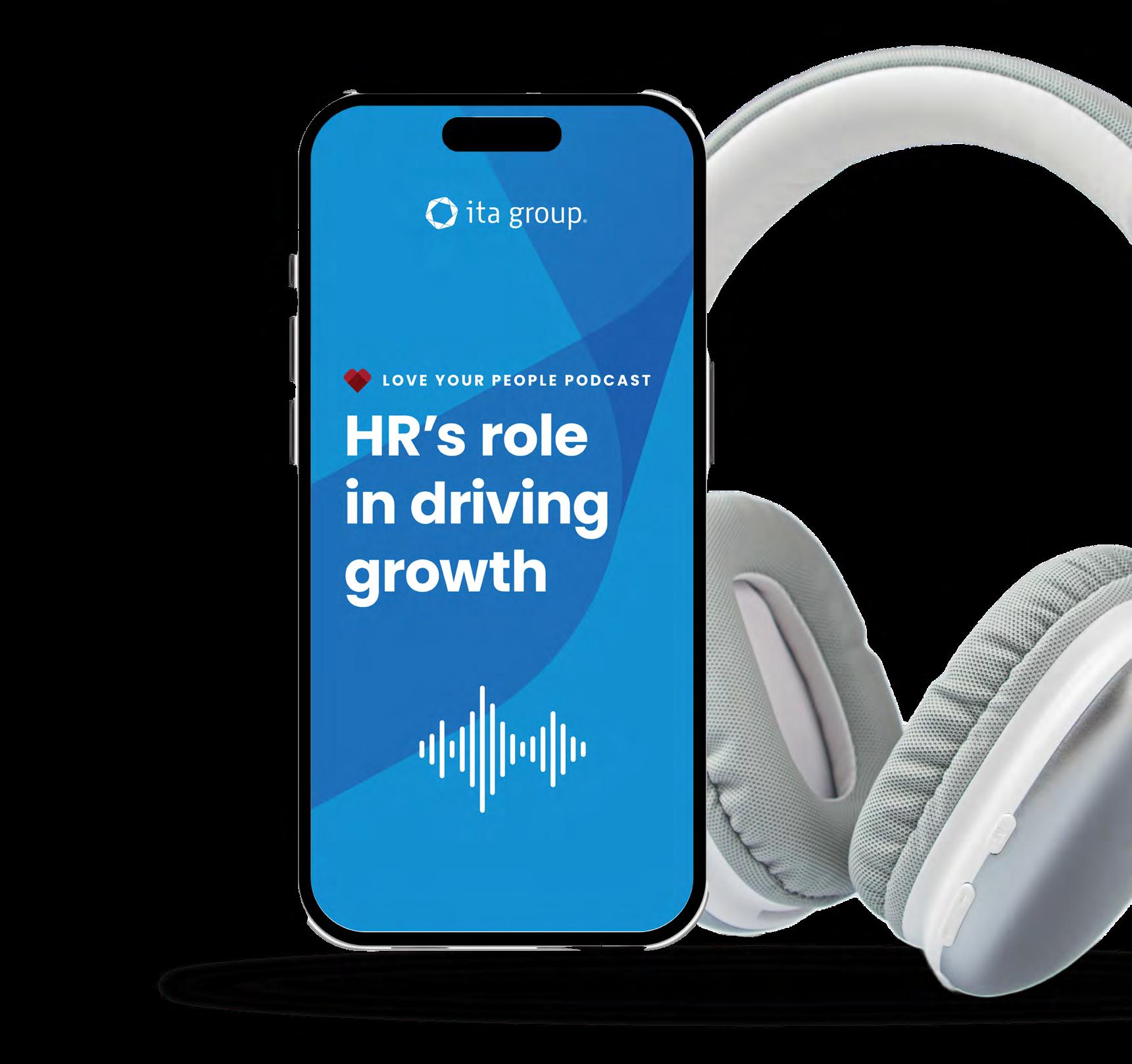
We cover people-based strategies and successes relevant to employee engagement. Led by host John Duisberg, Strategy Team Leader for Employee Solutions, we invite HR leaders whose learnings and culture speak for themselves.
Swap insights with those driving progress and delivering significant organizational impact.

info.itagroup.com/love-your-people


BY: TIM SCHIEFFER, INSIGHTS & STRATEGY LEADER, EMPLOYEE EXPERIENCE

Writing a note of appreciation is hard. Even more so when it feels formalized through an employee recognition platform. While a simple “thank you” is always better than none, adding specific details creates a lasting impact.
Recognizing an employee or coworker for a job well done goes beyond a compliment. Appreciation builds bonds, makes teams feel seen and increases employee engagement. Better engagement leads to stronger retention, lower absenteeism and stronger performance.
Thanks to built-in employee engagement platform features like AI and tools like the TIPS method, more employers can help their teams in sending personalized recognitions that feel rewarding and encouraging. Here are writing prompts you can share with your team on setting a standard within your employee recognition program.

Effective recognition should:
Otherwise known as TIPS. It’s a handy guide to help you gather your thoughts and write something meaningful. If you’re not sure where to start, ask yourself, “What do you really mean when you say, ‘good job’?”
Answering that question can help you better prompt AI.
Enable AI assistance on your employee engagement platform
Many recognition tools, like ITA Group’s employee engagement platform, offer AI assistance capabilities to help team members develop recognitions with TIPS in mind. If you’re using your favorite AI tool like ChatGPT or Copilot, use these as a guide for what to include in your recognition.
Being recognized should feel special, and that starts by writing beyond a general note of thanks. To make it easier, here are examples of how to elevate different types of recognition with the right prompting.
Using the TIPS method to write employee recognitions TIPS is shorthand to help us write meaningful recognitions. It ensures we stick to the details that make recognition more memorable to the receiver:
Recognize the team member soon after they exemplify a behavior. Seeing that immediate feedback helps them feel seen. If you send a recognition later, allude to the moment—why were their actions so important or memorable at that time?
Appreciation is a very human feeling, so sending out a thank you should feel genuine. Bring your perspective and explain why that action or behavior stood out for you.
Highlight the effect that the employee’s behavior had on the company, the project or even just your approach or attitude. Yes, recognize the big wins, but also give a shoutout to those smaller achievements. Small acts often have rippling effects that lead to big wins.
Details matter. They make the individual receiving the recognition feel special and seen. Spotlighting what they bring to their responsibilities or tasks tells them you see what they uniquely bring to the table.
The TIPS structure serves as a jumping-off point that helps you gather your ideas and add notable details specific to the receiver, so your recognition feels empowering and encouraging.
You can also take your recognition to the next level by understanding the different types. Whether it’s a work anniversary or a core value, knowing the type of recognition and using TIPS as a guide will help you focus on the most important aspects of a team member’s action or behavior.

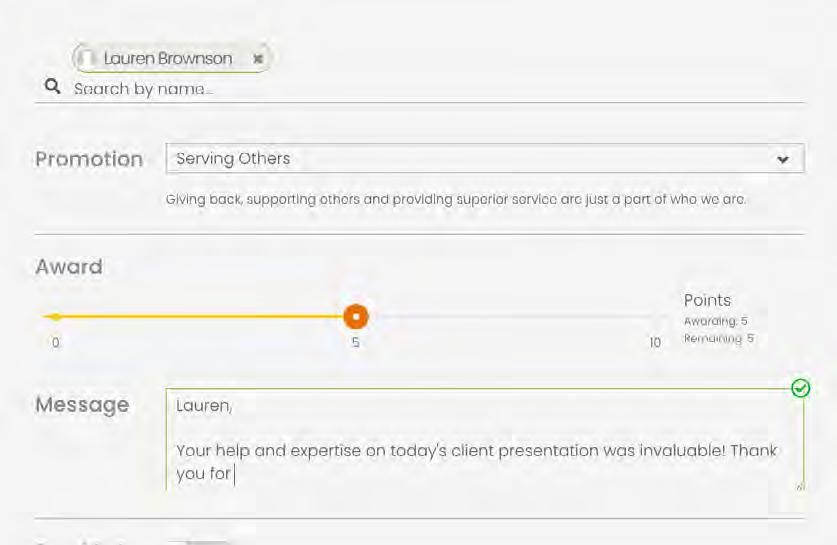

A values-based recognition ties back to the organization’s core values, mission and goals. As an example, a manager might recognize an employee for delivering a huge campaign before a big deadline. That means the team member was very organized with project management, communicated with collaborators to bring it all together, and exemplified values like “Act Like Owners”—yes, this is one of ITA Group’s values.
If you’re writing: “Thank you for working so hard on that project!”
Instead, use TIPS to add detail: Be timely. Values-based recognition can happen at any time, so it’s important to recognize someone as close to the achievement as possible to reinforce the effort.
Prompts to ask yourself:
Why was this work, reaction or behavior impactful today? When did it happen? Why did it stay with you as the one recognizing?
You can issue a values-based recognition any time you see your company’s core values in action. It not only encourages the behavior but also gives other employees an example of how that value shows up in their everyday work.

According to Harvard Business Review, manager recognition can increase employee engagement by 40%—which also increases their team’s confidence and retention. However, since managers oversee entire departments, sometimes smaller wins, like ongoing skill development, can be overlooked compared to results-based achievements, like sales or customer satisfaction scores.
If you’re writing: “Thank you for knocking it out of the park!”
Instead, use TIPS to add detail: Consider impact and be specific. Connect the recognition to a person’s overall effort to the result or meaningful outcome.
Prompts to ask yourself:
Why is this behavior or action so important to highlight as an example for the team? How did this impact my team or our goals? Why did it have such an influence on XYZ?
When used effectively, managers can use recognition to nurture growth, encourage development and re-engage their employees.
We rely on our peers every day. We build connections with jokes during downtime and get support when we’re stressed or have questions. When we recognize our coworkers and collaborators, we build bonds, instilling a deeper sense of camaraderie and trust.
If you’re writing: “Thanks for the help!”
Instead, use TIPS to add detail: Personalize your recognition. Connect the recognition to their effort and how it resulted in a meaningful outcome for you.
Prompts to ask yourself:
Was there an important memory attached to this support? How did you feel when your coworker offered help? What did it mean to you when your peer offered guidance?
We chat with our peers regularly and they often know us best. Personalizing our peer recognitions helps us build team bonds and reinforces positive company culture.
Work anniversary awards or milestone recognitions acknowledge an employee’s contributions to an organization. This form of recognition shows your employees that you’re invested in their professional growth, along with how they feel at work. Go beyond a simple acknowledgment of X number of years and get into those big wins or milestones during their tenure. Remember, their development coincides with the growth and changes of your organization too.
If you’re writing: “Thank you for your service!”
Instead, use TIPS to add detail: Get specific anecdotes and wins. Highlight wins, reflect on where they started and acknowledge what progress they’ve made.
Prompts to ask yourself: What has changed since this employee first started? What have they achieved (big or small) in the time they’ve been with your organization? How has it impacted the overall team?
Tenure says a lot about your employer brand and work environment. By being specific with employee recognition, you highlight the impact one employee can have on your team or company, showing how your organization values its people.


Employee recognition is a powerful tool. Expressing gratitude shows you’re aware of that team member’s skill, hard work and efforts. Yet in the moment, it can be difficult to know what to write to express meaningful appreciation.
Crafting effective recognition starts with our personal experience in our organizations, our relationships with our peers and our knowledge of our day-to-day. Tools like AI shouldn’t replace our important connections, but they can enhance how we consolidate all of that information so we can recognize each other more meaningfully and often.

Tim is the Employee Experience Insights & Strategy Leader for ITA Group.
With 20+ years of experience serving clients in multiple industries, including e-commerce, communications and finance, he offers a unique perspective on how to attract and retain top talent. His passion for delivering personalized employee engagement strategies helps create cultures centered on empowering people. Outside of work, you’ll find him cheering on the Green Bay Packers as a proud part-owner. Go Pack Go!


BY: TANYA FISH, SR. MANAGER, EMPLOYEE EXPERIENCE

Team members live out diversity and inclusion every day when they arrive at work or log online. Our beliefs and identities define our human experience, and celebrating and supporting those individual strengths and perspectives at work make for more agile teams and stronger leadership. A people-first approach to work builds an organizational culture where people thrive.
In 2025, many organizations dismantled programs that focus on diversity, equality, inclusion and belonging (DEIB). If those organizations could so easily disassemble their programs, maybe their support of diversity and inclusion wasn’t embraced fully to begin with.
When organizations proactively celebrate and understand diversity, HR teams embolden the employee experience with understanding and belonging. It attracts and retains talent, increases your employee value proposition and creates a healthy company culture. Who doesn’t want to join and perform their best in these circumstances?
Your employees are your biggest asset and differentiator. It’s no surprise that companies committed to diversity and inclusion significantly outperform those that aren’t.

DEIB is a strategic employee value proposition (EVP) for any thriving organization. Your organization’s set of values, benefits and offerings that attract and retain top talent make up your EVP.
Strong company culture is part of your EVP.
Employee growth and trust is part of your EVP.
Employee gratitude and recognition makes up your EVP.
Employer brand and company pride are also part of EVP. You get the idea. EVP sets your brand apart against your competitors. It attracts job seekers and engages employees long term. When employees feel aligned to your EVP, they’re more committed to your organization.
HOW DO EMPLOYEES BENEFIT FROM DIVERSITY AND INCLUSION?
EVP includes employee benefits, but it goes beyond a list of perks. Many employee benefits create a safe, supportive workplace for diverse communities. If you’ve ever experienced any of the below, you’ve benefited from inclusive practices.
> Remote work
> Home office stipends
> Virtual mentorships
> Pet-related benefits and insurance
> Flexible work schedules
> Return-to-work phases
> Paid maternity/ paternity or adoption leave

> Bereavement leave
> Fertility consultation
> ERGs or internal networks (parents, elder caregivers, etc.)
> Employee assistance programs (EAPs)
> Education stipends or assistance programs
> Family injury and insurance stipends
> Sponsored subscriptions to healthcare apps
> Employee wellness programs
> Lactation rooms
> Meditation classes
> Office ramps
> Diverse holidays off
A diverse and inclusive EVP offers support and resources for everyone. When you engage all members of your team effectively, you create a more cohesive, dynamic organization.
Organizations invest time and resources into diversity and inclusion to increase employee engagement. It cultivates a stronger organizational culture and business. More importantly, it starts with seeing your employees as people first.
“Allyship is about bringing intersectionality into the forefront. Every[thing] from how decisions are made in the organization [to] how people’s careers are discussed when they are not in the room and how people feel about the value of their work.”
—YOLANDA SEALS-COFFIELD, CHIEF PEOPLE & INCLUSION OFFICER, PWC
Because diversity represents all the ways we differ, inclusion harnesses those elements productively. When organizations create a space where different beliefs, backgrounds, talents, capabilities and ways of life are supported and seen, employees can focus and work together to achieve the company mission, vision and values.
Organizations that commit to diversity and inclusive behaviors see sustainable, long-term success both financially and, more importantly, collaboratively. Talking the talk and walking the walk of diversity and inclusion feeds into employee morale, creating an attractive employer brand that people want to be a part of. We simply want to love where we work.
Nothing signals a successful workplace more than employee tenure and a strong employer brand. It benefits financially too. According to Built In, turnover costs organizations an average one and a half to two times an employee’s salary.

DEIB emboldens employee experience, because work doesn’t exist in a vacuum. It’s an extension of our everyday lives. When we make the workplace a more accessible, equitable environment, underrepresented perspectives can collaborate more effectively. Team members can personally connect. They can belong and offer value. They can perform at their best.
According to a McKinsey Diversity Matters report, organizations with more women executives tend to outperform those with less diverse leadership by 30%. The same study shows that organizations with more diversity have an average 27% more revenue than those without.


Different backgrounds and unique perspectives bring more innovation and creative thinking to teams. Equitable workplaces empower employees to challenge the status quo. Belonging encourages employees to bring new ideas, which exposes others to new ways of thinking and learning.
By leading individuals with an effort to create belonging, organizations create a more understanding and effective team. It trickles down to all decision-makers.

> Deepening connection and communication with diverse customer populations
> Speaking effectively to a growing conscious-consumer base
> Diversifying suppliers and consultants
> Engaging and increasing involvement with local communities and economies
> Diversifying marketing and innovation, leading to increased shareholder value
How your company’s mission and vision translate through to your culture is your company’s foundation. But it has to be intentional. You can’t mandate your culture; you need to live it.
Make your values come to life through people-first initiatives: recognition, learning and development and employer branding. Investing time and energy in these employee engagement programs shows your people your commitment to your organizational purpose. Engage leadership to set the tone.


This gives everyone an opportunity to emotionally and personally connect with your mission and one another. It builds employee purpose, a valuable tool that helps everyone come together and feel empowered with how they show up at work.
You know you’ve achieved alignment when they’re putting their hearts into their work (and your numbers reflect it).
Intentionally aligning your culture is what gives your people a unified purpose to stand behind in times of disruption and challenge, and times of success.

In Leaders Eat Last, Simon Sinek wrote, “If you take care of your people, the numbers will take care of themselves.”
It’s true. When people’s diverse backgrounds are respected, they feel included and seen. They’re prepared to emotionally connect with your cause. But before you hang that poster and roll out your next motto, take a step back.
Start from the beginning and consider each employee’s role and their purpose for joining the cause. Look to focus groups and surveys to objectively gauge what is most meaningful to your people as it relates to organizational culture.
Different people are moved by different things, so really listen. Even if you disagree, hearing the feedback lays the groundwork for respectful debate, and ultimately, a powerhouse culture.
Leverage the takeaways to design intentional employee-focused employee engagement programs. Make it accessible for everyone using an employee engagement platform. Take it one step further and use them to create an enhanced brand strategy that supports those initiatives. Whatever you do, do it intentionally in an effort to take your cultural transformation to a new strategic level.
Your people are what set your organization apart in a competitive marketplace. Several top organizations recommitted to DEIB because it reflected the diverse lifestyles and perspectives in their teams.
Certified Great Place To Work®, Hilton recommitted to DEIB this year, like many organizations within travel and hospitality. It reflects the global community of people these companies employ and service every day.
“Our businesses, by definition, are very diverse businesses, meaning about the quarter billion people we serve per year,” said Hilton’s CEO Chris Nassetta. “Our objective has been to make sure that the teams that we’re building corporately or at the properties are able to deliver what our customers want and the best experiences that relate to their needs.”



Corporate initiatives are more successful when built on a foundation of strategic inclusion. Without it, they’re more prone to be approached with apprehension and trepidation. Saying you support diversity and inclusion is one thing, but action is necessary to show your true support of DEIB.
Strategic inclusion means fully committing to diverse practices, creating an inclusive environment and taking a people-first approach at work.
We motivate teams engage customers and activate channel partners with experiences that drive growth.