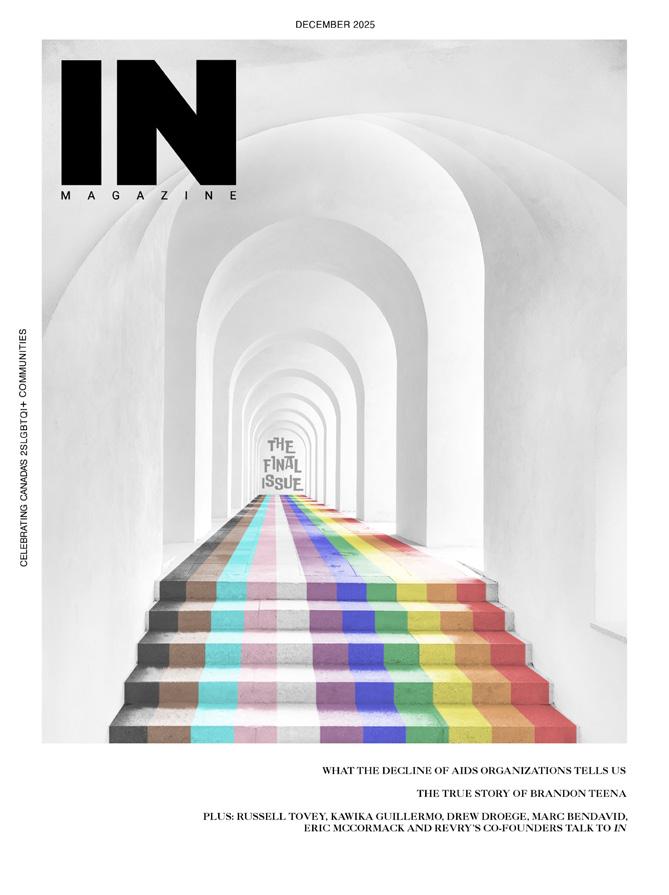
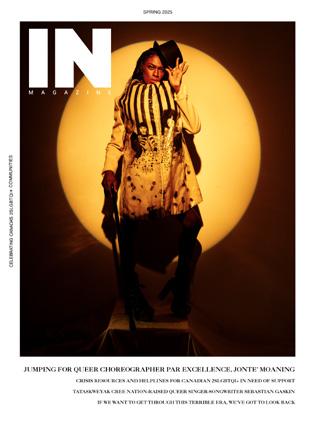
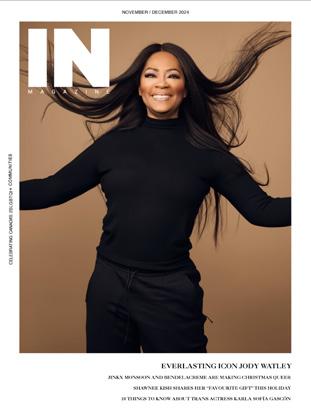
The Final Issue

WHAT THE DECLINE OF AIDS ORGANIZATIONS TELLS US
THE TRUE STORY OF BRANDON TEENA
PLUS: RUSSELL TOVEY, KAWIKA GUILLERMO, DREW DROEGE, MARC BENDAVID, ERIC MCCORMACK AND REVRY’S CO-FOUNDERS TALK TO IN


WHAT THE DECLINE OF AIDS ORGANIZATIONS TELLS US
THE TRUE STORY OF BRANDON TEENA
PLUS: RUSSELL TOVEY, KAWIKA GUILLERMO, DREW DROEGE, MARC BENDAVID, ERIC MCCORMACK AND REVRY’S CO-FOUNDERS TALK TO IN


PUBLISHER
Patricia Nicolas
EDITOR
Christopher Turner
ART DIRECTOR
Georges Sarkis
COPY EDITOR
Ruth Hanley
SENIOR COLUMNISTS
Paul Gallant, Doug Wallace
CONTRIBUTORS
Jesse Boland, Matthew Creith, Adriana Ermter, Shane Gallagher, William Koné, Karen Kwan, Elio Iannacci, Stephan Petar
DIRECTOR OF DEVELOPMENT
Charlie Smith
COMMUNITY RESOURCE NAVIGATOR
Tyra Blizzard
ADVERTISING & OTHER INQUIRIES (416) 800-4449 ext 100 benjamin@elevatemediagroup.co
EDITORIAL INQUIRIES (416) 800-4449 ext 201 editor@inmagazine.ca
IN Magazine is published six times per year by Elevate Media Group (https://elevatemediagroup.co). All rights reserved. Visit www.inmagazine.ca daily for 2SLGBTQI+ content.
180 John St, Suite #509, Toronto, Ontario, M5T 1X5

ON THE COVER:
06 | WHAT THE DECLINE OF AIDS ORGANIZATIONS TELLS US ABOUT MOVING PAST OUR TRAUMAS – AND OUR SUCCESSES
The end of Canada’s oldest HIV service agency should be a cue for today’s 2SLGBTQI+ activists to start again, this time hopefully from a place of less fear and ignorance
08 | GET LIT
Choosing Canadian-made candles goes beyond setting a festive mood this season
11 | CLOSING THE GAPS
Winnipeg’s CIN and Nine Circles Community Health Centre are reimagining care, and turning advocacy into action
13 | THE PROTEIN CRAZE
How much of this macro do we really need?
14 | KAWIKA GUILLERMO ON QUEERNESS, GAMES, AND FINDING SELF IN DIGITAL WORLDS
The author of Of Floating Isles talks to IN about turning games into stories of queerness, breaking stereotypes, and survival
16 | MARC BENDAVID EXPLORES THE POWER OF MEMORY AND TRANSFORMATIVE BONDS
In his debut novel The Sapling, the Canadian actor beautifully shares the profound, lifealtering friendship he formed with his teacher
18 | LOOKING INSIDE THE QUIET DISCRIMINATION OF “LOOKISM”
There’s a certain kind of prejudice in this world, and it isn’t pretty…
20 | DINNER WITH FRIENDS AND THE GROWING PAINS OF ADULTHOOD
The feature film debut of CSA winner Sasha Leigh Henry not only challenges the conventions of the “hangout” story, but sheds light on a Black queer narrative rarely seen in Canada
23 | RUSSELL TOVEY HOPES FLIRTING ISN’T OVER
IN Magazine talked with the Looking actor to discuss what drew him to play a closeted American man in Plainclothes, plus the danger of public sexual interactions, and the loss of queer signalling during the Grindr age
26 | THE IMPORTANCE OF BEING MESSY
A conversation with actor/writer Drew Droege about his newest play, which takes a stab at unhinged white gays on the loose
30 | REVRY’S CO-FOUNDERS REFLECT ON A DECADE OF BRINGING QUEER JOY TO THE WORLD
Co-founders Damian Pelliccione and Christopher J. Rodriguez chat about the streaming network’s early days, the success of King of Drag and what viewers can expect in the future
32 | STEAMY SAUNA
Queer love heats up in this foreign drama, an intimate reimagining of Romeo and Juliet
34 | 20 YEARS LATER AND BROKEBACK MOUNTAIN IS STILL IMPACTFUL
Brokeback Mountain premiered in 2005 during a very different era for gay rights, but its legacy lives on through its indelible characters
38 | ERIC MCCORMACK HEADS BACK TO SCHOOL IN MIDDLEBRIDGE MYSTERIES
The Canadian actor talks about joining the new Audible Original podcast, while reminiscing on the legacy of Will & Grace
40 | HOW BRANDON TEENA’S MURDER CHANGED HOW WE TALK ABOUT GENDER AND JUSTICE
His 1993 murder exposed the dangers of living authentically in a world not ready to understand. Three decades later, Teena’s story continues to shape how North America talks about gender, justice, and who deserves protection
46 | SNOW GLOBAL
From mountain hut revelry to drag queens on skis, Arosa Gay Ski Week in southeastern Switzerland proves that the Alps have never looked this fabulous
50 | FLASHBACK: DECEMBER 25, 1977 IN 2SLGBTQI+ HISTORY
Beverly LaSalle is murdered on All In The Family
The end of ACT, Canada’s oldest HIV service agency, and other AIDS organizations, should be a cue for today’s 2SLGBTQI+ activists to start again, this time hopefully from a place of less fear and ignorance
By Paul Gallant
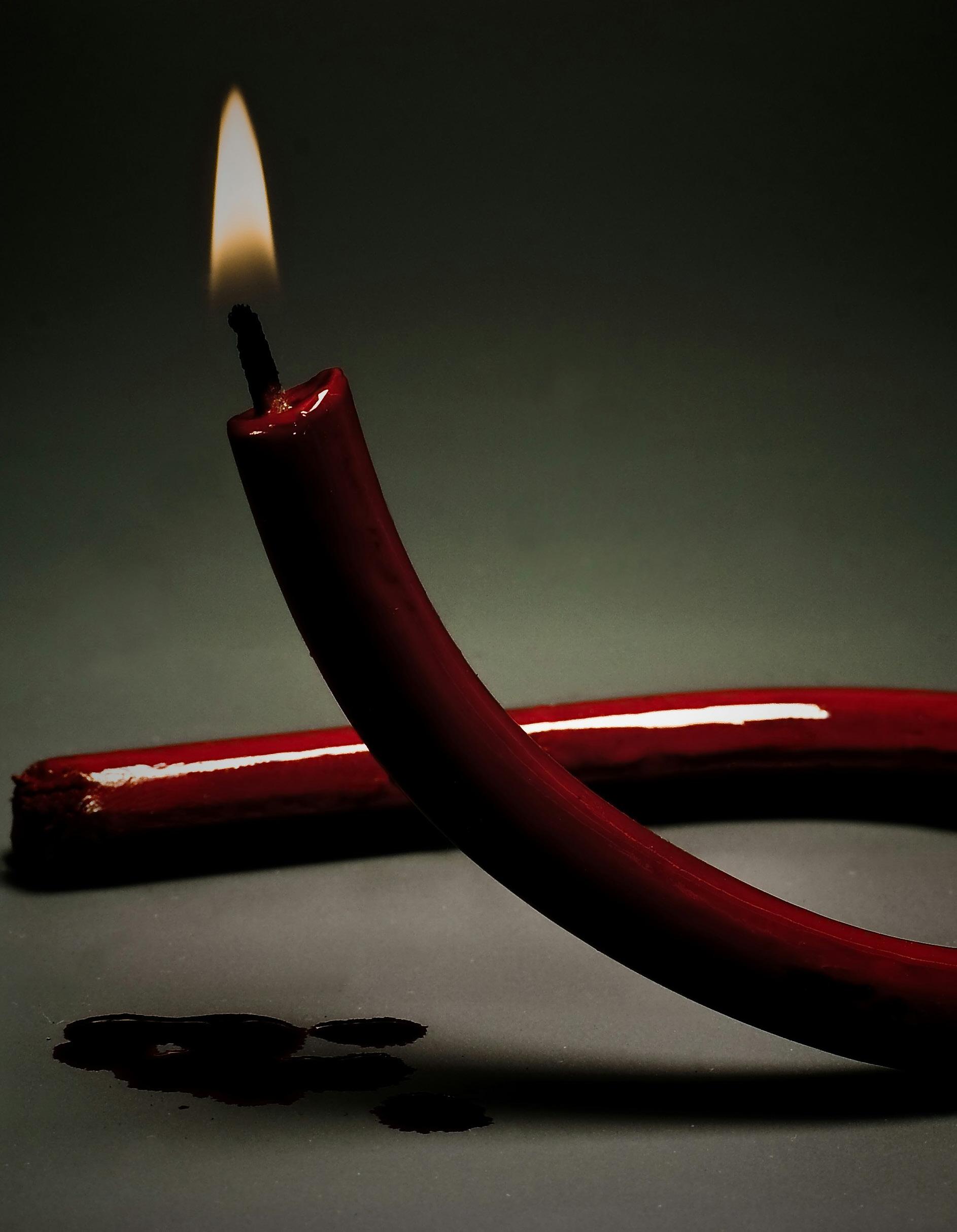
In this season of the hilarious FX TV comedy The English Teacher, the titular gay English teacher is quietly delighted when his high schoolers decide they want to perform Angels in America , Larry Kramer’s epic two-part play about, among other things, the HIV/ AIDS crisis in the 1980s. But then Mr. Marquez, played by out show creator Brian Jordan Alvarez, is thrown for a loop when his students want to adapt the landmark work into a performance about their own experiences of COVID-19.
“I mean, this stuff all happened, like, 90 years ago,” declares one student.
“Why didn’t the gay guys just stop having sex? Wouldn’t that have solved the problem?” asks another.
“That’s not possible for those people, no offence, queen,” replies the first student, looking knowingly at Mr. Marquez.
“You have to understand,” the teacher tells his class. “They didn’t know what AIDS was. They didn’t know where it came from. There was so much fear and so much misinformation.”
“Like with COVID?” says the student who gets the last word.
Since the summer of 1981, when the Centers for Disease Control and Prevention in the U.S. reported a rare pneumonia and Kaposi’s sarcoma in five young gay men in Los Angeles, the fear of HIV/AIDS – or the denial of that fear – has been intrinsically connected to the lives of gay and bi men. First, it was a mystery disease. Then it was a disease caused by sex, especially gay sex. Fear of AIDS became as much a part of being gay as coming out. My own coming out in the 1990s was paired with buying a large box of condoms, and having my GP tell me I needed to get myself into a monogamous relationship ASAP. That’s what gay life was: being casual and sometimes greedy about who we have sex with. But also being diligent in how that sex unfolded. The management of bodily fluids was a matter of life and death.
“If only we live to see the day when homophobia, transphobia, racism and poverty no longer require vigilance and attention – now that will be a peace dividend.”
AIDS was a societal crisis, an emotional crisis and a spiritual crisis as much as it was a health crisis. And it struck the gay community just as we were asserting ourselves on the wider social and political stage, particularly in North America and Europe. More people were coming out, more bars and saunas and other gay-oriented businesses were opening, more mainstream entertainment was referencing gay life, more politicians were acknowledging 2SLGBTQI+ people. It should have been pure euphoria. But it wasn’t, because there were also, at the same time, more funerals for men who were dying very young. The most vivid memories for many gay men who are over 50 today was of friends’ unexpectedly quick, painful deaths.
Prevention strategies improved: first, the wider use of condoms, then PrEP (pre-exposure prophylaxis) in the form of daily prevention pills and now injections. Treatments improved dramatically after a decade of being as toxic as the virus itself.
But that first decade of HIV/AIDS inflicted a wound on our psyches, our sense of ourselves, of what it meant to be a good gay. For the religiously inclined, there was a sense that AIDS was a punishment for the sin of homosexuality. I knew gay guys who, right up until the 2010s, believed they were probably HIV-positive but avoided getting tested, and therefore avoided treatment, because they could not come to terms with the weight of being HIV-positive. Though highly active antiretroviral therapy (HAART) came onto the market in 1996, allowing HIV-positive people to live long and healthy lives with fewer side effects, and PrEP started being prescribed in 2012, the story that a certain generation of gay and bi men told ourselves about HIV/AIDS did not change very much. In the early years of the epidemic, we were neglected and ignored. Sometimes anger seemed like the only way to get results.
Forty-four years later, our institutions are finally feeling the pressure to reframe the issue, to let the facts of HAART and PrEP, rather than our collective trauma, inform decisions. Next spring, Canada’s oldest HIV service organization will close after 42 years of leading the charge against the disease. The AIDS Committee of Toronto (ACT) is not the only HIV/AIDS organization that is acknowledging the new world we live in, a world that seems to be shifting away from progressive thinking and empathy. In the U.K., NAM aidsmap, a long-running HIV information charity, closed up shop in 2024, transferring its assets to the Terrence Higgins Trust and National AIDS Trust. AIDS Fund Philadelphia shut down in 2024, while the San Francisco AIDS Foundation went through a dramatic downsizing in June 2025.
This is mostly good news. When a societal problem is mitigated or solved, there is no sense in directing community resources towards it. If only we live to see the day when homophobia, transphobia, racism and poverty no longer require vigilance and attention – now that will be a peace dividend. Organizations other than ACT are still doing good work. But few victories are clear-cut. The AIDS “solution” has primarily been a pharmaceutical one, one delivered by corporate entities beholden to shareholders. Reduced HIV infection rates, and healthy lives for those who are positive, are in the hands of big business, government funders and regulators…not the most dependable friends.
Though grassroots campaigns to get gay and bi men to use condoms were perhaps less effective in the long term than pills and injections, there’s a loss of a sense of community, a loss of empowerment in handing over our health to big pharma. Our well-being has been commodified. Our community’s crisis has become one of a thousand demands on the healthcare system. Even for the gay community, monkeypox and drug-resistant syphilis have become tougher nuts to crack. ACT was founded in 1983 by a group of concerned community members, all volunteers and activists. Toronto’s Hassle Free Clinic, founded in 1973, also had humble grassroots origins. But they’ve been overshadowed by the slick efficiency of the self-check-in terminals at Toronto’s HQ, a hub for “cis guys into guys and two-spirit, transgender and non-binary people.” Funded by the provincial government as well as by donations from companies like Gilead Sciences, which makes the HIV treatment drug Biktarvy and the HIV prevention drug Descovy, HQ is a remarkable service. But it has less heart than its predecessors.
It’s hard to find a way forward after an emotional and monumental event. There’s an urge to fight the last war again and again. That’s true not only for HIV/AIDS and other horrors. Our community’s cockiness about the successful campaign for equal marriage, which was legalized nationally 20 years ago, has probably made us less effective in fighting the current backlash against our community, particularly in defending trans rights. Today’s issues are more about attitudes, health spending and educational policy than the legal rights we advocated for during the marriage debate. Organizations that were built to win court cases haven’t shown themselves to be great at other forms of advocacy.
The AIDS crisis did teach us something: how to start from scratch, from a place of fear and ignorance, to build something that saves lives and maybe changes the world. The end of ACT and other AIDS organizations should be a cue for today’s 2SLGBTQI+ activists to start again, this time hopefully from a place of less fear and ignorance.
Choosing Canadian-made candles goes beyond setting a festive mood this season – they are a thoughtful way to celebrate craftsmanship, support local industries and bring home scents that tell a uniquely Canadian story
By Adriana Ermter
As the days shorten and winter wraps itself around us, candles become more than decoration – they become a ritual. A flickering flame can soften the edges of a cold night, turn an ordinary room into a warm refuge and anchor us during the busiest season of the year. On the cusp of the holidays, candles are everywhere: glowing on dinner tables, nestled into gift boxes and filling homes with cozy, heart-warming scents like pine needles, spices and wood fires. This year, however, what we choose to light matters.
“There’s a whole movement for keeping the dollars close to home right now,” explains Michelle Kalman, founder of The Go-To, a public relations company focused on representing Canadians and their brands. “Canadians want to back Canadian brands, financially and personally.”
Sure, a candle may seem like, well, just a candle. But buying Canadianmade reshapes how we support local craftsmanship, entrepreneurship
and economic sustainability. Every purchase helps fuel local farms, sustains beekeepers, supports essential oil producers, strengthens small businesses and protects the ecosystems that make these candles possible.
“It’s important for people to support the brands that are helping support the economy in which they live,” says Victoria Mierzwa, the cofounder of LOHN Candles, based in Toronto. “It benefits everyone: manufacturers, wholesalers, the employees of wholesalers, the suppliers of raw materials.… Buying a candle from one brand doesn’t just benefit that brand: it benefits everyone that’s connected to that brand, and that can make a huge impact in supporting all types of businesses.”
Which makes the choice to shop Canadian-made more relevant than ever. A 2025 study from Food Processing Skills Canada (FPSC) found that 81 per cent of Canadians are motivated to buy Canadian. While ongoing U.S. tariffs may have ignited this shift, the outcome is
undeniably positive: it supports communities, protects the environment and celebrates locally grown ingredients.
A well-lit advantage
“Homegrown candles are very high-touch products,” affirms Mierzwa. “You know you’re going to get a small batch candle that is handmade, and the quality is impeccable. There’s no automation. It’s all about the hand mixing of the wax and the fragrance, the hand pouring and packaging by hand. It’s about keeping the business within Canada and supporting the Canadian industry.”
This industry blends the agriculture and scents of our landscape – soy fields in Ontario, cedar groves in British Columbia, golden beeswax from Prairie hives and more. Each ingredient tells a story tied to the land and the people who cultivate it.
Homegrown ingredients
Start with soy wax. Canada’s soybean fields stretch across Ontario, Quebec and the Prairies. According to Statistics Canada, 1.6 million acres of soybeans were planted in Manitoba alone this year. With nearly 200,000 working farms across the country, buying soy-based candles supports Canadian farmers and reinforces the shift towards renewable, plant-based resources.
When harvested and pressed, those soybeans produce a clean, creamy wax that burns slowly and evenly. The wax has a smooth, buttery texture and a subtle, natural scent that doesn’t compete with fragrance oils. Brands like SOJA&CO in Montreal, and Homecoming Candles and the Canvas Candle Company in British Columbia, rely on 100 per cent hand-poured soy wax, creating candles that last longer and emit fewer toxins than paraffin alternatives.
“A 2025 study from Food Processing Skills Canada (FPSC) found that 81 per cent of Canadians are motivated to buy Canadian.”
While not plant-based, beeswax is another Canadian treasure. Sourced from hives scattered across British Columbia and Alberta, it is golden, warm and rich with a natural honeyed aroma. It burns cleanly, releasing negative ions that help purify the air. BC Candles in Richmond, B.C., is one of many companies harnessing this ingredient’s purity. And beekeeping is on the rise. Statistics Canada notes nearly 15,500 of these buzzy professionals in 2024, marking six years of steady growth. Supporting beeswax production sustains both the candle industry and the pollinators vital to Canada’s ecosystem and food supply.
Coconut wax, while not locally grown, plays a starring role when blended with soy for a smooth, clean burn. Canadian brands like Hollow Tree Candle Co. in the Pacific Northwest source ethically produced coconut wax and blend it locally. What makes their candles distinctly Canadian is how this wax becomes a vessel for homegrown
scent stories – forest floors after rain, cedar cabins, mountain air – all transformed by Canadian craftsmanship.
And then there are the essential oils. Canadian forests and fields provide an abundance of aromatic botanicals, from spruce, pine, cedar and fir, to lavender, peppermint and clary sage. These oils are extracted from leaves, needles and flowers, capturing the pure essence of nature. Vancouver-based Woodlot builds its plant-based aromatherapy blends around these materials, creating scents so evocative that opening the packaging to one of their candles feels like stepping into a West Coast forest and taking a deep breath of crisp air, damp earth and resinous woods. Supporting brands like Woodlot means supporting the growers, distillers and harvesters who make these ingredients possible.
The impact of choosing Canadian candles reaches far beyond the checkout counter. Economically, it keeps dollars circulating nationwide among farmers, beekeepers, essential oil producers, artisans and retailers. Ethically and culturally, it strengthens identity and pride.
“When you live in Ontario, buying a candle that was made in Newmarket, like one from The Market Candle Company, just feels authentic,” says Kalman. “It makes you feel good, too, because you know it supports the local maker. It’s like a rebellion against generic buying. It’s Canada strong – a way to check that box to promote and remind ourselves to be Canada proud.”
That pride is often rooted in a sense of place – moments like camping in Tofino or summers in Muskoka. Many Canadian brands weave these inspirations into their scents. B.C.’s Homecoming, for example, is known for its clean, modern fragrances that echo West Coast sea air and towering evergreens. LOHN crafts poetic scent narratives inspired by journeys and rituals, transporting you to windswept lakeshores, snowy trails and sunlit kitchens.
“We like to create scents with our candles that feel a little more personal, like our fir and cypress tree scent ‘Evergreen,’ a juicy red wine ‘Bordeaux,’ and a wild ivy called ‘Snowdrop’ that’s super, super magical,” enthuses Mierzwa.
Scents and sensibility
For consumers, candles offer hyper personalization – a way to align purchases with values while supporting Canadian artisans and sustainability. Mala, based in Vancouver, plants a tree for every candle sold, and recently partnered with Veritree to verify their reforestation impact. Vigyl Candles blends light with art through gender-fluid, photography-like inspired packaging, creating a shared cultural experience. Wild Flicker in Hanover, Ont., which began as a side hustle and a counter to migraine-inducing scents, has evolved into a thriving vegan, clean-burning brand.
After all, says Mierzwa, candles are “the first and the last piece of the puzzle. You’ve come home, you’ve maybe unloaded your groceries, you’ve taken off your shoes, you’re ready to enjoy your space. The ritual of lighting a candle signifies something’s about to happen. Maybe you’re entertaining or maybe you’re going to relax.”
Either way, when you light a Canadian candle, it’s always a small act with a big impact.
Inside the fight for equity — and how Winnipeg’s CIN and Nine Circles Community Health Centre are turning advocacy into action
Across Manitoba, the numbers tell a story that demands attention. HIV incidence rates in the province are now more than three times higher than the national average, making Manitoba a focal point in Canada’s ongoing HIV response. It’s a situation shaped not only by viral transmission, but by systemic inequities – and by the persistence of social, economic and racial barriers that have allowed a public-health crisis to deepen quietly in plain sight.
Behind the statistics are communities facing overlapping challenges: poverty, stigma, substance use, and the lingering legacy of colonialism that continues to affect Indigenous health outcomes. While the rest of Canada has seen gradual progress, Manitoba’s rates are rising. That reality has become a rallying cry for a network of advocates determined to change the narrative.
A province confronting inequity
While sexual contact remains the leading cause of HIV transmission across Canada, Manitoba’s epidemic looks markedly different. Here, injection drug use is the primary driver: a reflection of how inequitable access to health care, harm-reduction tools, and prevention education has left certain communities disproportionately vulnerable.
According to Mike Payne, Executive Director of Nine Circles Community Health Centre and co-strategic facilitator for the CIN (Collective Impact Network), health disparities are the true engine behind the province’s growing HIV rates. Factors such as a lack of awareness of HIV risk, limited access to PrEP and PEP, structural racism, and stigma have all contributed to the alarming rise in new diagnoses.
Payne notes that HIV is significantly impacting First Nations and Indigenous people and communities in Manitoba – an outcome that Nine Circles believes is a direct result of long-standing structural racism.
“Nine Circles and its broad community partners have established a clear provincial HIV strategy,” Payne tells IN Magazine, “and our advocacy efforts push our community, regional, provincial and federal leadership to acknowledge, co-lead and accept shared accountability with the community to raise awareness of HIV and opportunities for prevention, to reduce stigma around HIV, sexual health, substance use, mental health and homelessness, and to take direct action to address the underlying causes.”
Building a network for change
Amid these challenges, the CIN has emerged as one of Manitoba’s most forward-thinking advocacy coalitions. Co-led by people with lived experience and guided by collaboration among service providers, researchers and health-system leaders, the network aims to bridge the gaps between policy, practice and lived reality.
“We have been at the forefront of bringing new community-led research and innovation,” says Payne. “Our advocacy struggle is gaining regional, provincial and federal commitments to sustain innovations beyond the pilot or research stage. We work to evolve new ways of working together for collective impact.”
The CIN was born from a recognition that Manitoba needed a more coordinated strategy: one that treated HIV not just as a medical issue, but as a social and structural challenge requiring partnership at every level. Through advocacy, consultation and research, the network has been pushing for long-term solutions rather than temporary or project-based fixes.
Payne emphasizes that there are unique challenges in different communities across Manitoba, and distinct solutions to those challenges are required at the regional and community levels – solutions that take time, skill and resources to build.
From advocacy to action: The example of Nine Circles
At the centre of the CIN’s work stand community organizations like Nine Circles Community Health Centre, a Winnipeg institution that exemplifies what the Network is striving for province-wide. It integrates clinical
services, harm reduction, education and social support into a seamless model that treats health not as a transaction, but as a relationship.
“Nine Circles envisions a future where all Manitobans who live with, or are vulnerable to, HIV and other STBBIs [sexually transmitted and blood-borne infections], receive equitable health and social services that fully meet their needs,” says Payne.
The centre’s philosophy is grounded in compassion and non-judgmental care. Its clinicians work in partnership with clients, addressing the social conditions that make treatment adherence difficult – whether that’s unstable housing, food insecurity or trauma.
Harm reduction as health justice
Nowhere is Nine Circles’ impact more visible than in its Pit Stop program, which offers safer drug-use and safer-sex supplies, take-home naloxone kits, a needle exchange and drug-checking services. The goal isn’t just to prevent HIV infection resulting from shared needles or overdose; it’s to affirm that every person deserves dignity and safety, regardless of circumstance.
But the work doesn’t stop at direct services. Nine Circles also acts as a hub for education and community connection, offering workshops, peersupport spaces and opportunities for leadership development. Through these efforts, people with lived experience are empowered not only as clients, but as advocates and educators.
The road ahead
The path forward will require continued advocacy, collaboration and sustained funding. While Manitoba’s community sector has been innovative, it cannot sustain progress without stable policy support and investment. Advocates are calling for an integrated provincial HIV strategy that unites health regions, Indigenous leadership, and community organizations under a shared framework of accountability. That framework would prioritize harm reduction, prevention, testing access and culturally appropriate care – but just as importantly, it would prioritize people with lived experience as equal partners.
Across Manitoba, organizations like Nine Circles and networks like CIN are demonstrating that community-led innovation can lead the way. What they need now is consistent commitment from decision makers to maintain the momentum.
A blueprint for change
As the landscape of HIV care evolves, Manitoba offers a powerful case study in what’s possible when communities lead with compassion and courage. The CIN’s collaborative advocacy is reframing what public health can look like – less about bureaucracy and more about partnership. And at the heart of it all, Nine Circles Community Health Centre remains a living testament to those ideals. It’s where the policy meets the person, where advocacy becomes action, and where care extends far beyond the clinic walls.
For the thousands of Manitobans living with or at risk of HIV, that kind of holistic, inclusive and justice-driven care isn’t just life-changing –it’s lifesaving.
For more information on Manitoba HIV/STBBI Collective Impact Network, visit www.cinetwork.ca. For more information on Winnipeg’s Nine Circles Community Health Centre, visit www. ninecircles.ca. For more information on the Manitoba HIV Program, visit www.mbhiv.ca.
ViiV Healthcare Canada supports the HIV/AIDS community through various initiatives across the country, including the evolving needs of Nine Circles. To learn more about ViiV Healthcare Canada, visit www.viivhealthcare.ca.
This content is sponsored by ViiV Healthcare Canada.





How much of this macro do we really need?
By Karen Kwan
Everyone seems to be obsessed with getting more protein into their diet: from adding cottage cheese in every type of recipe to foods pumped up with the macro (everything in the grocery store – from ice cream to candy – is loaded with more protein these days). But is this just a fad? And is there a maximum to how much protein you should be consuming?
This macronutrient has gotten a ton of attention in the past few years, thanks to its association with building muscle and losing weight (compared to fat and carbs, both of which people associate with being at the root of weight gain). Protein is key to our health, as it’s the only macro that contains nitrogen (which the human body does not produce). The amino-acid proteins we get from the foods we eat benefit not only our muscles, but also our bones, hair, nails and immune systems.
How much protein do we actually need?
The recommended daily allowance (RDA) is 0.8 grams of protein per kilogram of body mass. So, for example, if you’re 140 lbs. (63.5 kg), you need a minimum of 51 grams of protein daily. Your needs may be different, though, depending on your age, physical activity level and weight. For example, if you’re 40 years or older (which is when we start to lose muscle mass as we age), you should aim for 1-1.2 g per kilogram of body mass. If you exercise regularly, you have greater protein needs as well. If you’re an adult who works out regularly, you’ll want to try to get 1.1-1.5 g per kilogram of protein daily (70 g if you weigh 140 lbs.). And finally, if you’re overweight, a doctor or dietitian can best help you assess what your protein needs are.
The irony about today’s protein craze is that while many of us are scrambling to get more protein into our diets, many experts say North Americans meet or even exceed our protein needs; according
to 2015 data from the UN Food and Agriculture Organization, the average person in the U.S. and Canada gets a full 90 g a day.
Once you’ve calculated how much protein you actually need, you might be wondering how to best approach getting that protein. If you’re not already getting your RDA of protein, experts recommend you take small steps and add a little more protein to your meals and snacks throughout the day, rather than primarily adding it all into your breakfast, for example.
Also, you don’t have to resign yourself to having protein shakes all the time (although if you’re busy, a protein shake is a convenient way to hit your protein target). Ultimately, you should aim to get your protein from a variety of sources so that you’re consuming micronutrients from a variety of whole foods rather than a steady diet of protein shakes.
The body can’t store protein – so if you consume protein beyond what your body needs, it just gets used as energy or stored as fat; it doesn’t, as many may hope, translate into developing more lean muscle (you need to do additional strength training to help you build muscle). Getting too much of this macro hasn’t been shown to poorly impact health, though. That said, there have been some findings that people with kidney disease might be putting excess stress on their already compromised kidneys with a protein-heavy diet. As well, studies have shown that, given that many highprotein foods are also high in total and saturated fat, consuming too much protein over an extended period of time may lead to elevated blood lipids and heart disease. It’s always best to speak to your doctor about your dietary needs if you have pre-existing conditions and have any concerns about your protein intake.
The author of Of Floating Isles talks to IN about turning games into stories of queerness, breaking stereotypes, and survival
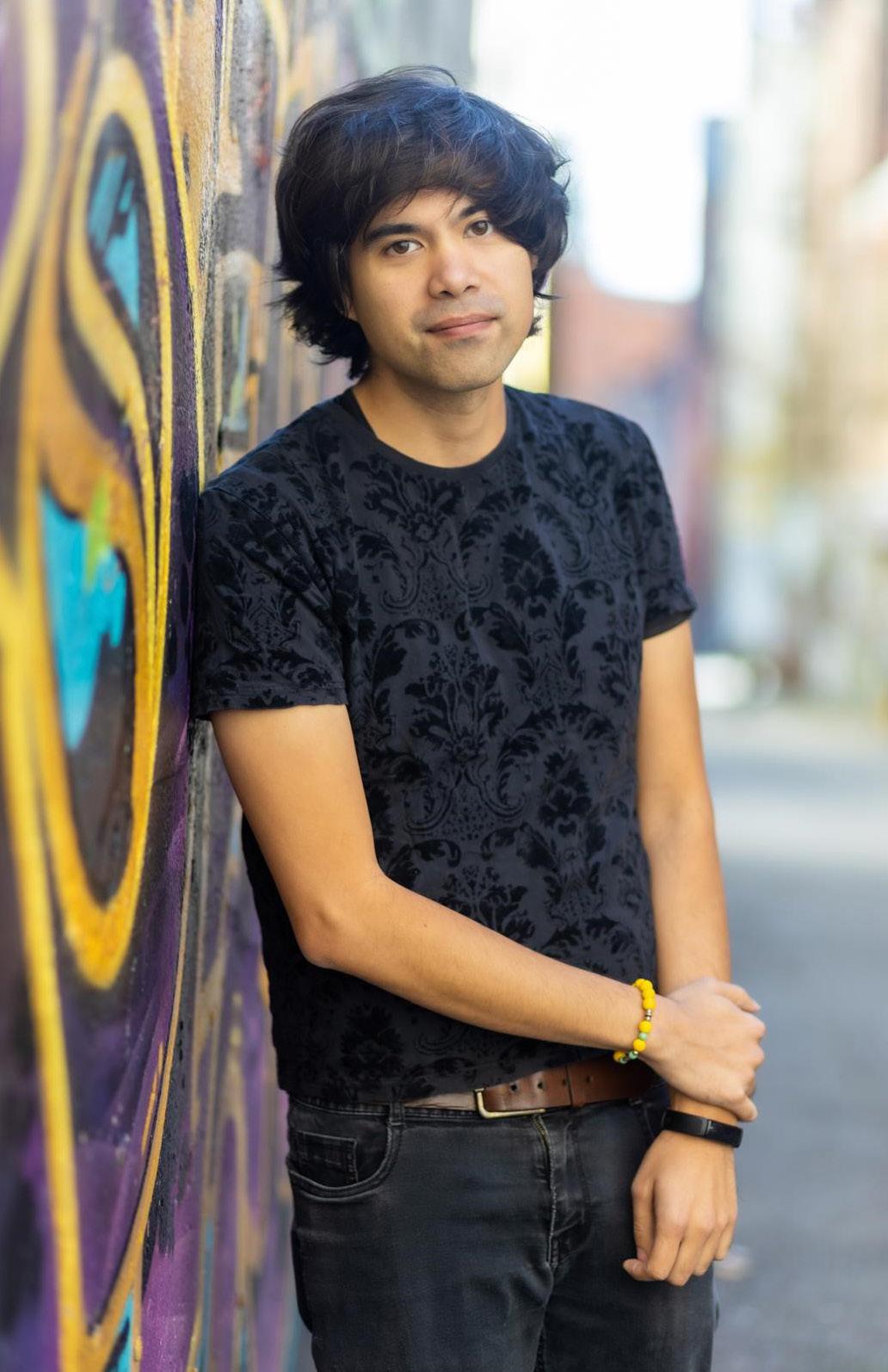
Vancouver’s Kawika Guillermo isn’t just a gaming expert; he’s an established author with a pretty notable career. His debut novel, Stamped: an anti-travel novel, won the 2020 Association for Asian American Studies Book Award for Creative Prose, and his second novel, All Flowers Bloom, won the 2021 Reviewers Choice Gold Award for Best General Fiction/Novel. His latest release, Of Floating Isles, is a collection of essays that use video games as a creative way to explore deeper themes of identity, belonging and community, especially for marginalized individuals.
In Of Floating Isles , the award-winning author and professor explores how video games served as both a compass and a mirror throughout his life. As a games scholar and a queer, mixed-race person, he dismantles the stereotype of gaming as a space for a single type of person, revealing it as a profound landscape for self-discovery.
IN Magazine recently sat down with Guillermo and talked about how games, far from being an escape, helped him understand his own sexuality and find solace in times of hardship. We also explored how video games can lead us to a deeper understanding of ourselves.
Why write about queerness and video games? How do they relate in your life as a gamer?
Games have been unfairly assigned this boogeyman of cis-heteronormyness, which in my experience couldn’t be further from the truth. I mean, games are about role-playing, about hitting our unseeable pleasure-buttons, about playing with others in often impassioned, unhinged ways – screaming, jumping for joy, intensity, laughter. As soon as you boot up Street Fighter
or Mortal Kombat , the first thing you do is decide what kind of gendered – or agendered – person you want to squash your friends with. Games also give us these strange pleasure-shocks of self-recognition when we find ourselves playing dress-up, or romancing a character we didn’t think we’d be attracted to.
I think the way we have thought of games as anti-queer is something invented by big companies who want to sell games as children’s toys, and restrict their meanings for their own benefit. Of Floating Isles confronts this question I’ve wondered all my life: how can we have this daily habit involving play, interaction, pleasure and experimentation, and not see it as queer?
You return to queerness throughout the book, though the book is also about growing up very religious, as Filipino American, and facing many hardships, including the loss of loved ones. How do you see queerness formed through all these moments? Some chapters focus on sex, gender and queerness, but you’re right that I don’t isolate queerness as one form of difference in my life. I think that’s because I’m ‘queer’ from what we see as ‘normal’ in a multitude of ways, and they are all part of being queer, too: I am neuroqueer (as neurodivergent people are often read as queer), I am Asian-queer (as Asian men in North America are particularly read as effeminate and queer), and gender-queer as well. I think for those of us who have multiple ways of diverging from the norm – and being excluded, othered – our queerness becomes invisible, as people tend to centre on other things, like our poverty, our immigration status. But for most queer people in the world – non-white, non-Western – queerness is rarely an isolated identity we get to claim. And for me, video games really spoke to that ambiguity, that mixture of otherness that we have
a hard time explaining to others. Video games have always been queer, as the game scholar Bo Ruberg writes, but they have also always been meaningful as a space where participants don’t need to declare their identity at the door, or even have it all figured out.
Can you give examples of ways games helped you understand your own sexuality?
Chapter 2 of the book contains intimate moments I had with chatroom role-players, where, years before I even had my first kiss, I experimented erotically with anonymous people playing characters from the game Final Fantasy 7 – I was the pony-tailed hot mess, Reno. Later in the book, in Chapter 8, I talk about the term ‘player-sexual,’ which explains how in some games, the player can romance almost any significant character, no matter their gender or sexuality. I think of how ‘player-sexual’ can make us think differently about the cycles of being bisexual – the ‘bicycle’ – and how bi-erasure often comes from a fear of bisexual ambiguity, of uncertainty, which can make bisexual/pansexual people seem a threat to both straight and gay people. Yet in many modern role-playing games, bisexuality is almost a default, and it’s a given that you as a player can go any which way, that you could respond to anyone’s ‘dire warning about the yonder dragon’ with a salacious flirt. I found that this resonated with my sexuality and helped me understand my own attractions.
Much of Of Floating Isles focuses on your experience with suicidal ideation, including moments when you sought to end your own life. How did video games relate to these feelings? Would you say they rescued you in some way? No, I try to be clear that it was people and community and acceptance that rescued me, and then knowledge, learning, love and friendship that helped me find reasons to live. Games cannot rescue us – I try to be clear about that, as I don’t want anyone to walk away from this book thinking games will save us from anything. But when we talk about these things that do rescue us – community, love, support, self-acceptance, knowledge – games are not irrelevant, either. In the fifth chapter I write about how, during a year of suicidal ideation, the game Elder Scrolls III: Morrowind helped me learn to survive by travelling and connecting with others, and by understanding myself better. And many games since Morrowind have helped me understand devastating atrocities and wars around the world, and helped me seek out the political will and solidarity to find hope in those moments – hope that is crucial to our own survival. Still, I don’t want readers to think that games could ever do all the work of saving or condemning us: that’s work only we can do for ourselves. But when we leave games out of these conversations about health, spirituality, meaning and death, we exclude so much possibility for growth and understanding, and in the end we only hurt ourselves.
Your eighth chapter focuses on the different concepts of gender formed through games, focusing on the work of trans designers and scholars. What did this work mean to you in your life experience with games?
In 2016, I started playing the game Overwatch, a game full of heroes who are diverse in just about every conceivable way: nationally diverse, neurodivergent, racially diverse, gender diverse, queer. I played Overwatch nearly every day for seven years, becoming so familiar with each of my favourite characters (almost all
queer women) that my bodily habits, style and attitude began to transform. I use the concept of ‘blueprinting’ from the scholar and artist micha cárdenas to explore how games like Overwatch don’t just offer positive representation, but help us enact different ways of imagining our own desires, beliefs and habits.
One of my main Overwatch heroes, Pharah, is still, I believe, the only lesbian Arab woman in all of mainstream gaming. In a time when Arab peoples are so often depicted as anti-queer radicals, or ‘terrorists,’ Pharah’s presence really means something, not just because we see her, but because we perform her – we enact her missions, we dress her, and after many hours of playing as her we come to see ourselves through her eyes. For me, the power of video games is in these transformative moments, and I hope Of Floating Isles helps us come to terms with games, and with our messy, queer, gender-bendy selves that games help us create.
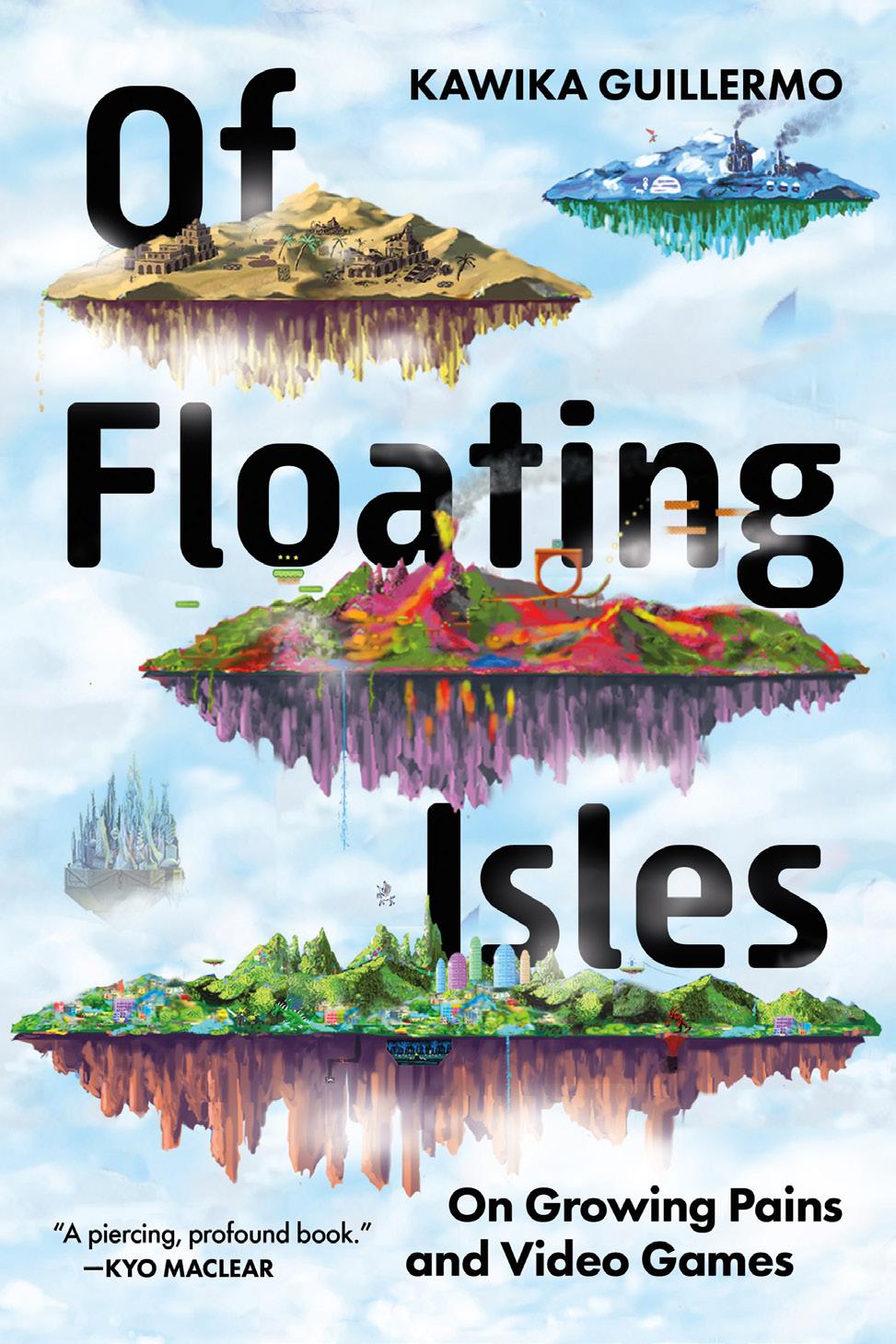
Of Floating Isles by Vancouver author Kawika Guillermo is available in select bookstores across the country now.
In his debut novel The Sapling, the Canadian actor shares the profound, life-altering friendship he formed with his teacher
By Stephan Petar
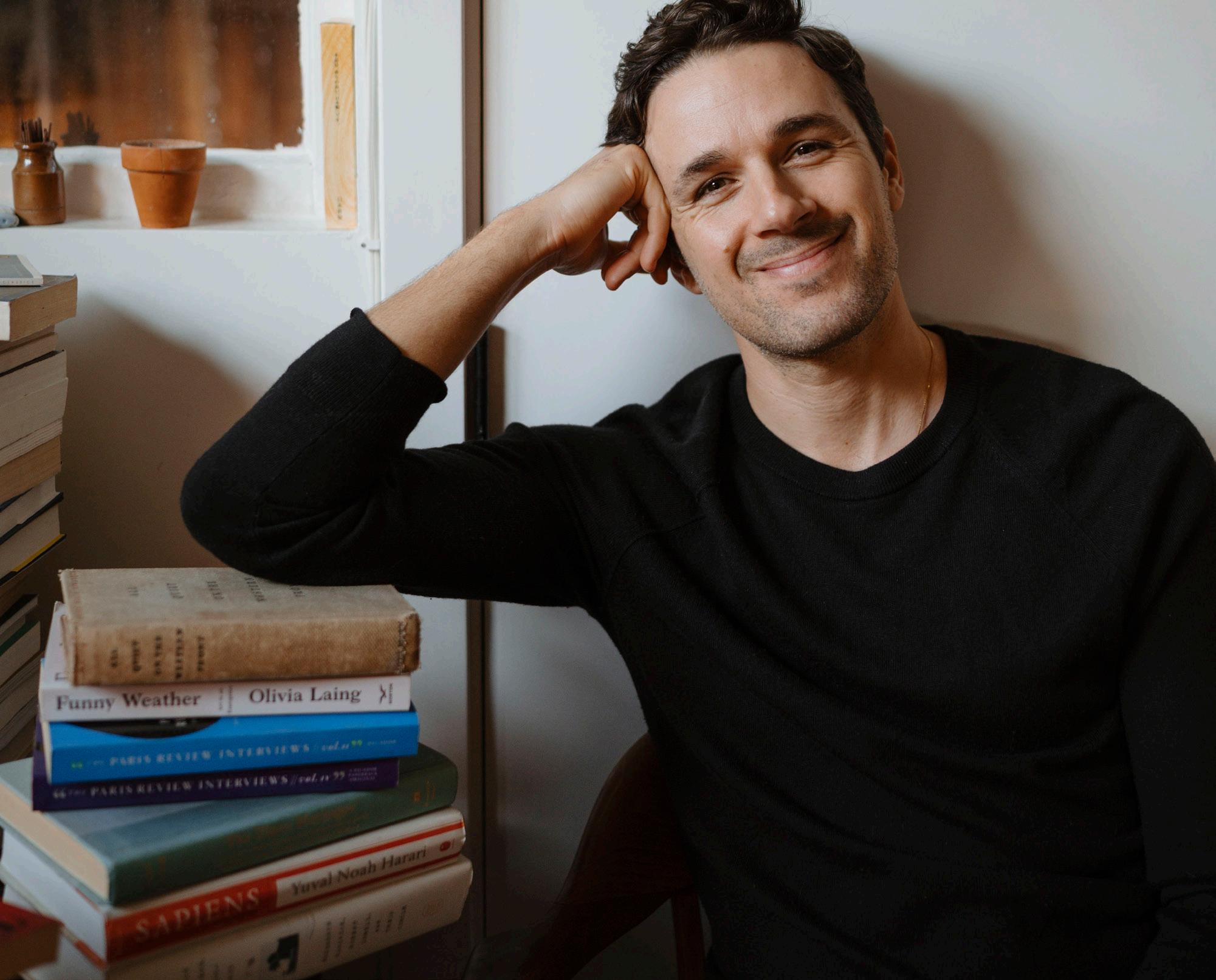
Everyone has stories. Some are publicly shared and others remain exclusive to a person or a small group of people. Some stories are snapshots of one’s life, reflecting a single moment. Others can stretch a lifetime.
Actor Marc Bendavid ( Reacher, Dark Matter ) has held a transformative story for more than two decades, and it’s one that altered his life. It’s a story about a platonic intergenerational friendship between him and his teacher, Klara. The friendship blossomed during a life transition for Bendavid that saw his home dynamic change and the realities of adulthood begin to take shape. It’s a narrative those closest to the performer have only heard or experienced snippets of.
When he learned Klara was dying, the realization that his memories of this delicate relationship could be lost dawned on him. “I felt this sudden pressure that I was now the sole caretaker of all these very special memories; that on the approach of Klara’s death I would be the only one to have them,” he shares. “I wanted to write them down, so as not to forget them myself.”
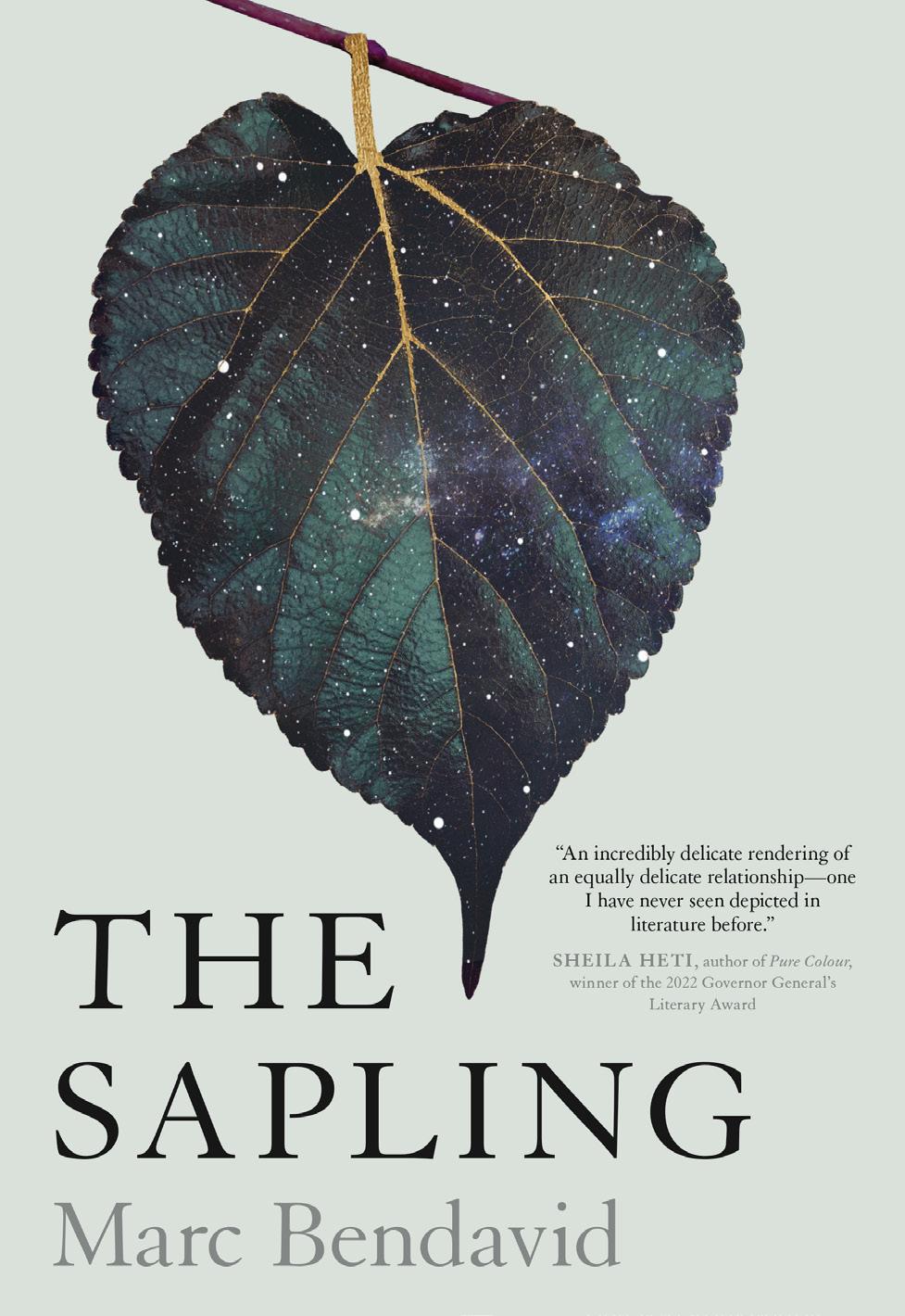
He wrote down a collection of moments between the two as he was grieving. These eventually became the subject of his debut novel, The Sapling. The autobiographical fiction has been described as “incredibly delicate” and “tender.” It’s not only a tribute to their friendship, but a tale illustrating the fragility of memories.
Bendavid met Klara when he was in the sixth grade. He was 11 years old, and she was 43. Klara, an immigrant from South
Africa, was an art teacher at his school. The book documents their connection, which involved lengthy phone calls, letters exchanged and photography excursions into nature.
As the tale progresses, readers witness the evolution of their friendship. It becomes infrequent as Bendavid moves to high school, to university and into adulthood. When he learns Klara is dying, the narrative explores his coming to terms with her impending death, the moments they shared and his grief. Providing a glimpse into an unusual bond, its loss and the questions it raises.
When we sat down with Bendavid, he explained how he unlocked these memories and what writing process he adopted to complete the book.
memories…
“So many questions now, all rushing headlong into the same answer: I don’t remember ,” Bendavid writes in The Sapling The sentence illustrates how fragile our memory can be; how it can begin to fade over time. Throughout the text, Bendavid isn’t afraid to contemplate these lost moments. He even poses questions, which seem to be prompts to help him potentially regain them.
While the author did recall key moments, other details about the decades-long friendship re-emerged when he least expected. After learning from Klara’s daughter that Klara was dying, Bendavid began experiencing vivid dreams that he mentions in the novel. He describes them as “very intense” and appearing every night for a few weeks.
“I would wake up in the middle of every single night for two weeks with these memories,” he says about that section of the book, noting it wasn’t an exaggeration. “ It was as though once I fell deep enough asleep, pages of a book were held in front of me and I could just take notes.… It was that vivid.”
He jotted down details over months, documenting whatever began flooding back. “I would remember a conversation or an outfit or a piece of art,” he shares. “I would write them down and a lot of times they were a couple of lines or a paragraph handwritten on a piece of paper.”
Given the distance, and being closer in age now to the adults around him at the time, it seems Bendavid re-evaluates moments from his past through a different lens. In one recollection, he recalls a family acquaintance raising suspicion about the friendship. He admits the moment made him feel shameful and horrible at the time. “If it seems obvious today, even commendable, that an adult might feel obliged to ask this of a child in my circumstance, I simply couldn’t believe it then,” he writes in the book.
Even when he believed every stone had been turned, new memories emerged during the editing process. “I think because I forced myself to be in the space of this story for so many days, hours and months that things just wafted up through the floorboards.”
The way Bendavid recounts these moments and illustrates the influence it had on him will no doubt have readers evaluating and exploring the bonds they hold or have held – reminding them to value every moment as well as encouraging them to share their histories. While the book is now in stores, it’s likely the author will continue excavating memories of this time in his life for years to come.
Turning life fragments into a story…
Though The Sapling is Bendavid’s first book, he’s been writing poems, short stories and essays his whole life. But those works never went anywhere. “I never really finished anything properly.… I would just abandon things,” he reveals, noting he did finish a novella. “I have this graveyard of unfinished projects around me and I wanted to finish something to the end with this.”
To prevent The Sapling from ending up with his other projects, he entered a strict writing routine. “Monday to Friday, four hours every morning. I’m locking myself up in a little office,” he says about his writing process. “If I can’t write or am too tired or unfocused, then I read. I have to be with written words in some way or another.”
His partner, actor François Arnaud (Midnight Texas, Yellowjackets), played a major role in helping him focus. “He was an essential part of my discipline,” Bendavid shares, noting he gave Arnaud strict parameters not to disturb him unless there was an emergency. “He kind of shepherded me when I was reluctant, or told me to get back to work.”
Bendavid credits his writing discipline partly to his acting profession, noting an actor’s persistence and endurance. When asked if his passion for gardening helped, he agrees that it did, although he admits he had never thought about it before.
“What you do in a garden is you go back. You keep going back to the same part with the same plants and do the same thing.… You trim or you feed or you water or you transplant,” he explains. “You’re always going over a landscape that’s more or less the same to observe the little changes.” He likens this repetitive gardening practice to reworking chapters during the editing process.
When it came to choosing a title, he had a list of options. In the end, The Sapling felt right. It encapsulates his passion for gardening, his love of nature, and a specific memory. It is also a nod to the moment in his life when he met Klara, as “sapling” also means a young person.
The book introduces an unconventional friendship that many may not agree with. “These kinds of friendships can occupy a potentially powerful position and that’s also why they’re potentially dangerous. It is essentially a power dynamic that’s out of whack,” Bendavid says. “If the adult in that dynamic has your best interests at heart, it permits you to grasp a sense of identity and self-possession that can be more powerful than what we give kids at 13 and 14.”
Overall, the book is a contemplative read. It may have readers examining the relationships in their life, searching for memories and seeing them from a new perspective.
There’s a certain kind of prejudice in this world, and it isn’t pretty…
By Jesse Boland
If nobody today told you that you’re beautiful, it’s probably because you’re not.
If that statement was upsetting for you to read, then you should probably just close this tab now, because the rest of this article is about to get really ugly. And, yes, I will be using the word “ugly” frequently – because the phrase “not conventionally attractive” is
simply too delicate to properly limn the significance of what will be discussed, as well as because I’m on a word count here. When we use words like “beautiful” and “ugly” to describe people, we are referring to the polar ends of the spectrum of attractiveness as well as the beneficiaries and victims of lookism. And if that term is a new word for you, get ready for a journey of perspective as we jump into the deep end of the pool of superficial shallowness.
Lookism refers to the prejudicial, discriminatory bias of people based on their level of physical attractiveness. It is one of the underlying discriminations of other types of intolerances such as racism, misogyny and ableism, as well as their subbranches such as featurism, colourism and fatphobia. Yet despite being such a fundamental foundation of so many forms of oppressive intolerances, lookism is rarely mentioned in either academic studies or HR anti-discrimination training. And that’s for one major reason: it’s ugly to talk about ugliness. Acknowledging that somebody, or even yourself, is unattractive is perceived as being shallow and superficial when, really, it is simply addressing the wildebeest in the room that everybody with two eyes can see.
Being considered ugly is deemed as being the most horrendous appellation a person can be, so much so that it has even morphed the actual definition of the word. The original etymology of the word “ugly” stems from the Norse word ugga and then uggligr, which means “to be dreaded,” whereas “beauty” comes originally from the Latin word bellus, meaning “to do, show favour, or revere,” before they both eventually evolved into the words they are today being qualitive terms for physical attractiveness. Now, with the knowledge that being ugly is perceived as such a hindrance that it literally means “to be dreaded,” and being beautiful is such a virtue that it is synonymous with reverence, is it not safe to say that a person’s level of physical attractiveness may determine their lived experience in society? If we can acknowledge that being pretty is a privilege, would that same logic not deduce that being ugly is handicap?
The thing about beauty and ugliness is that it is so difficult to discuss, because we like to pretend that beauty/ugliness is in the eye of the beholder, when deep down we know that is not the case. Beauty is technically subjective, much like art, where it is open to interpretation and cannot be specifically defined, and therefore there are truly no “good” or “bad” looking people. But let’s be real with ourselves. Similar to art, there reaches a point of universal acceptance that something is good or bad despite its subjectivity. The Godfather is a good film, Katy Perry’s “Woman’s World” is a bad song, and any other opinion is void.
The same can be said for a person’s perceived level of attractiveness, which can be understood in something I have coined the “’90s Sitcom Blind Date Test.” Imagine an episode of Friends where Ross is supposed to go on a blind date with somebody that Phoebe set him up with; he goes to the door to greet his date and sees her for the first time. If the door were to open and the woman on the other side were to be played by either Cameron Diaz or Kathy Bates, we would immediately know, from the initial visual alone, exactly what the joke is and what the following story of the episode is going to be. If the door opens on Cameron, then Ross scored big but is probably going to mess this up; if it’s Kathy, then he is in trouble and we gotta see how he’s going to get out of this one. Hotness and ugliness are objective signifiers in visual mediums so much so that actors are sometimes literally credited as “Hot Guy” and “Ugly Friend #2” in castings. At a certain point, denying a recognition of someone’s blatant level of attractiveness is akin to saying, “I don’t see colour.”
Still not convinced? Think of the ways in which particular behaviour is either tolerated or punished based on the person who is doing
so, and why that might be. Confidence may be considered the true test of beauty, but the true measure of ugliness is audacity. For people who are not fully secure in their appearance, it may be daunting to put themselves out there by posting a selfie or wearing a sexy outfit in public, but we as a society have at least been taught to celebrate people for being “brave” in pushing themselves out of their comfort zones and not say anything mean about them…as long as they’re nice. But when an ugly person has the audacity to be rude, mean or aggressive, the gloves come off, and we are seemingly given the green light to say the quiet part out loud and tell them what we’ve been holding in since we first laid eyes on them.
Lizzo was celebrated as the body positive queen of self-love for years because her image was that of a kind, funny, empowering person, so much so that we forgave her for not being conventionally attractive because of her weight and teeth. But the moment allegations were made in 2023 by her former dancers and creative director that she had created a toxic and emotionally abusive work environment, the public perception of the endearing fat woman went out the window, and people felt they were vouchsafed permission to hit ‘send’ on the nasty drafts they had been writing in their heads for years.
You have to pick a struggle; be ugly on the inside or the outside, because if your spirit matches what we see in front of us, you will be put in your place. And best believe, there is an unspoken place for people who look the way you do.
If reading this has maybe hit a little close to home for you because you’ve realized you are either a victim or a perpetrator of lookism –good. The first step in combating this discrimination is to accept that it does in fact exist systemically, and that we are all hegemonically complicit in it. But just as addressing our subconscious racism or internalized homophobia is integral to unlearning our unconscious biases, the same can be done for dismantling lookism. Questioning why we approach certain strangers at parties and not others, reevaluating who we follow on Instagram and how that shapes our perceptions of what the average person is supposed to look like, and unpacking if someone is actually a nice person or if they’re just hot and smile when they speak – these are just some of the ways in which we can begin to combat our own prejudices and overcome the oily, wrinkled skin barrier of ugliness to recognize the human underneath it.
If you’re still reading this, I can only assume that you’re ugly –because a hot person would likely have been distracted by now by a DM from someone asking to have sex with them, but you weren’t. Accepting that beauty isn’t one of the gifts your parents left for you under the genetic Christmas tree is a tough pill to swallow, but it only proves that every other gift you have is a gift that you have earned. If people say that you are funny, kind, intelligent, charming or cool, you know they actually mean it, because they’re certainly not saying that just to sleep with you. Ugliness isn’t a curse, but it is a struggle, and it’s one you somehow manage to overcome every day, because it doesn’t define you that you don’t have the unfair privilege of beauty. If nobody today told you that you’re beautiful, it’s because you’re so much more than that.
The feature film debut of CSA winner Sasha Leigh Henry not only challenges the conventions of the “hangout” story, but sheds light on a Black queer narrative rarely seen in Canada
By William Koné
I love friendship stories. For me, they’re the most compelling films and television series because they invite writers to explore themes surrounding the human condition through multiple lenses. Friendship stories create conversation by showcasing different characters navigating emotional challenges in their own unique way. It’s a narrative tool that encourages you as a viewer to hold empathy for what these characters endure, even if you don’t relate to them. This normalizes our lived experiences onscreen. It’s the reason films like Waiting to Exhale, First Wives Club and The Best Man continue to resonate with people today.
“Hangout” stories elevate the genre by depicting quality time among friend groups within a specific setting. This was evident in TV with The Golden Girls, Living Single, Friends and Sex and the City as these characters mingled in their homes or at a local
eatery. Conversations among these friends ranged from career aspirations to sex, to aging, to life satisfaction. The locations where the conversations took place became characters themselves. A connection was built between the viewer and the characters as the viewers watched these intimate exchanges strengthen, or hinder, the friendships.
Unfortunately, hangout stories have declined in recent years, despite the longevity they achieved decades earlier. Cultural historian Bob Batchelor has noted that streamers are less invested in the genre, as it takes longer for audiences to latch onto them. This is evident with the string of Black American hangout series that have been cancelled after three seasons or less, such as Run The World, Harlem, Grand Crew and South Side . In Canada, hangout content is even scarcer: Bellefleur is the only current
scripted example on air. Meanwhile, hangout stories centring Black folks remain a rarity in our country. This creates a visible gap among new generations seeking stories centring the highs and lows of friendship.
Having said all that, when I attended the Toronto International Film Festival this year, it brought me great joy to learn that Sasha Leigh Henry’s feature film debut, Dinner with Friends, is, in fact, a hangout drama! I have admired Henry’s work since her short film Sinking Ship and the CSA-winning Bria Mack Gets a Life; her humanistic writing style often showcases the humanity of Black Canadian life.
Drawing from classic hangout films like The Big Chill and Diner, Dinner with Friends follows a group of Torontonians as they grapple with the pressures of adult living and the growing fractures within their bond. Through the course of many years, they convene at different dinner parties where difficult truths about their evolving identities and their wavering friendship emerge.
What distinguishes the film from its predecessors is its predominantly Black cast. In casting Dinner with Friends, Henry said, “The motivation was to create roles that would untether Black people from the strife of our identity. We don’t get to exist [onscreen] without it being some conversation about our race. What can I offer into the canon of storytelling that tells you something about us, while broadening the scope of what’s possible for us?”
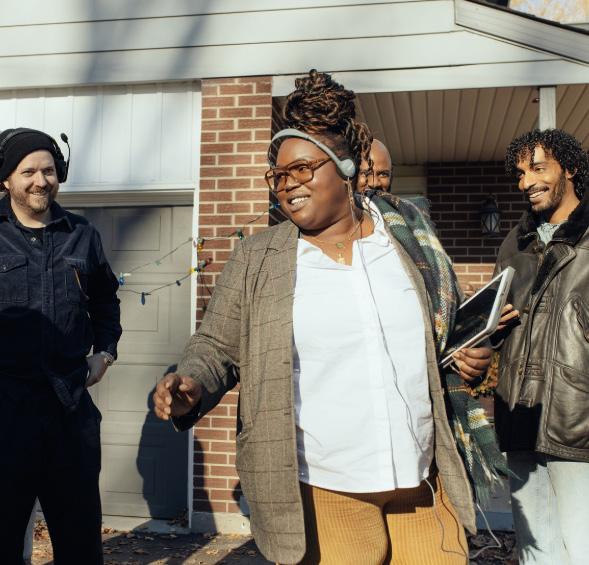
In depicting queerness in Dinner with Friends, Henry’s intentions were different. “It was important [to include queer characters] because there are eight friends in the film,” says Henry. “Most of my friend groups have at least one queer person in them. We just don’t have enough decent representations of Black queerness that aren’t about their coming out story. I wanted to offer that freedom for those performers when we cast Josh and Ty.”
“ DRAWING FROM CLASSIC HANGOUT FILMS LIKE THE BIG CHILL AND DINER, DINNER WITH FRIENDS FOLLOWS A GROUP OF TORONTONIANS AS THEY GRAPPLE WITH THE PRESSURES OF ADULT LIVING AND THE GROWING FRACTURES WITHIN THEIR BOND.“
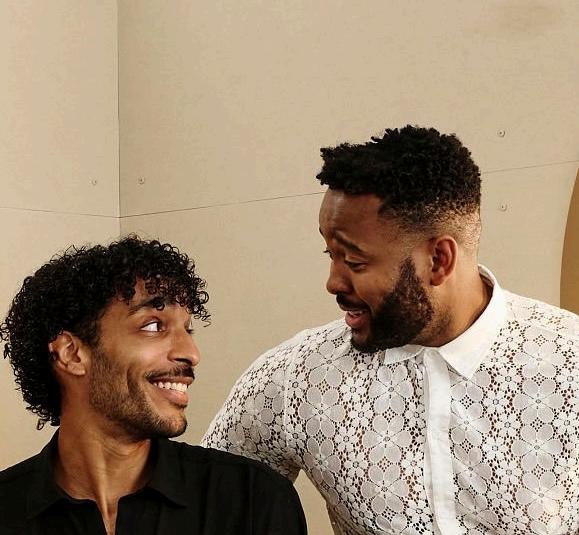
Henry and her screenwriting partner Tania Thompson expanded that thought further by including Black queer characters in the film. Josh and Ty (played by Leighton Alexander Williams and Michael Ayres) are a couple within this predominantly straight friend group, but their characters aren’t reduced to the “gay best friend” stereotype. Their relationship and their perspective carried as much emotional weight in the narrative as their hetero counterparts. This was quite refreshing to see, as hangout films historically didn’t feature queer characters in the core friend group. For example, Matthew Laurance’s character Ron in St. Elmo’s Fire was Demi Moore’s flamboyant neighbour, but his character lacked a point of view. Ron served as a comedic gag and an eventual plot device to confirm Andrew McCarthy’s heterosexuality.
In playing Josh and Ty, Leighton Alexander Williams and Michael Ayres stress that very point. “It’s always been my dream to play fully realized characters, regardless of their sexuality,” Williams states. “Being trusted to bring a strong queer character like Josh to life was truly a gift. While Josh can be sharp-tongued, hotheaded and cantankerous…he’s also hilarious, loyal, honest and charismatic. Those are my favourite types of characters!”
“It was so rejuvenating to be a part of this film,” Ayres shares, “to play a queer character who isn’t defined by a struggle with their queerness. Ty’s and Josh’s queerness and their Blackness is a fact rather than an issue, which is kind of subversive.”
What drew me to Dinner with Friends was the exploration of grief surrounding fractured friendships. Grief Theory describes loss in two ways. Primary losses describe the event that elicits a devastating change to one’s life, such as a death or a breakup, while secondary losses are the residual changes surrounding that event, such as a change in identity or a change in beliefs. While hangout stories often follow friendships thriving over time, Dinner with Friends challenges that trope by highlighting the pain of estranged bonds. This is especially true with Josh and Ty’s story, as they contend with the disconnect between their aspirations as a queer couple and the aspirations of their straight friends. As the only characters without desires for parenthood, both question whether there’s a place for them in the group as they continue to pivot from heteronormative milestones. It’s a harsh reality that many 2SLGBTQI+ folks contend with, but such a nuanced perspective often isn’t considered in stories featuring predominantly straight characters.
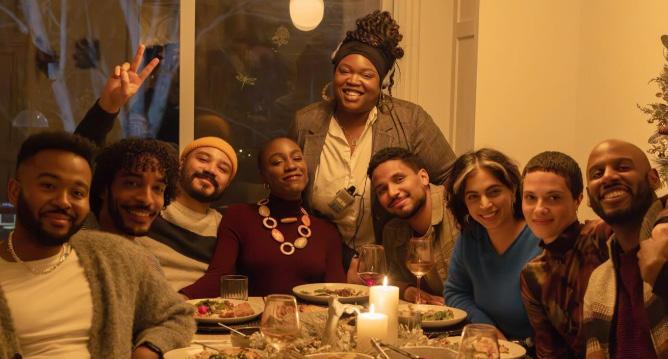
“The film hits close to home because I’m in that phase of my life right now,” says Ayres. “I’m on a totally different trajectory than many of my friends, not just because I’m queer but because I’m living as an artist. You don’t always get to take everyone with you when you move into new chapters of your life. It gets harder to close the distance between you and the people you thought you would always be in proximity to.”
Williams drew from his own experiences to portray this emotional conflict in Dinner with Friends. “I’ve had friends who I loved deeply, but life pulled us in different directions because our values no longer aligned. As a result, those friendships came to an end. Losing friends in real life helped me fight to hold on to the ones Josh had [onscreen],” Williams notes.
Showing these characters contend with the isolation of queer life, I argue, elevates hangout stories by unpacking what is needed for 2SLGBTQI+ folks to be seen as their authentic selves within straight spaces. This is a need that I believe is fundamental for any lasting friendships, regardless of sexuality.
True-to-life characters
As characters, both Josh and Ty are compelling. Beyond the playfulness they present onscreen, what I appreciated most was their ability to be unapologetically feminine and masculine in their gender expression without judgment from their peers.
“Yes, their environment in this film is extremely straight, but it’s still a safe space for Josh and Ty to move through,” says Ayres.
“They’re never in danger among their friends, which is nice.” As a couple, Josh and Ty’s dynamic carries a yin-and-yang quality. While Josh possesses a simmering yet sensitive bravado, Ty is quietly perceptive based on his observations of those around him.
This is highlighted during the film’s climax, when an altercation finds Josh and his straight friend Joy (played Tattiawna Jones) exchanging verbal blows because of their conflicting lifestyles. It is Ty who consoles and challenges Josh after the fight, allowing viewers to witness the loving nature of their relationship. “It’s one of my favourite scenes I shot with Michael,” Williams states.
“Their [Josh and Ty’s] argument exhibited emotional intelligence and a great deal of listening from both men. We can see why they
work as a couple and why they have the strongest relationship in their friend group.” Ayres seconds his scene partner’s remarks.
“The two of them are the sturdiest pair out of all the couples in this film. You can really feel how much they love and support one another, even as they disagree and get on each other’s nerves. It’s aspirational without being unrealistic. Their relationship is kind of a dream.”
Ayres’ point was one of my key takeaways as I left the Dinner with Friends screening. I was reminded that film has the power to be impactful and aspirational at the same time. It’s a temporary escape into a world of possibilities that can instill hope within our lives. As a screenwriter and as a Black gay man, I’ve been longing for stories like Josh and Ty’s to legitimize a queer way of being that offers compassion through our personal journeys. When you don’t see images of yourself reflected in media, a sense of despair persists as you question whether there’s a place for you to thrive in life. It felt inspiring to witness Henry successfully fight to make a film that not only advocates for Black folks’ triumphs and pains within friendships, but also spotlights love among Black queer folks as they stand firmly within their authenticity.
“I hope we see a variety of stories including Black queer bodies. That our characters experience joy, love and success. I’m ready for a renaissance of storytelling where Black queer characters exist in different stories. We deserve light-hearted romcoms, more queer folx falling in love, and badass Black queer superheroes,” Williams comments. Ayres, in discussing his hopes for Black queer storytelling, also strives for diverse representation. “I want to see complicated and unlikable Black queer characters onscreen, who are allowed to be messy and make mistakes. I want to see myself reflected in the entirety of my experience as a person. There is space for different kinds of struggles beyond identity. There is space for stories where we don’t have to be on our best behaviour.”
As the fate of hangout stories continues to loom, Dinner with Friends stands as a welcomed addition to the canon. The film reminds us that in maintaining curiosity for new perspectives within friendships onscreen, there’s room for the legacy of the genre to grow and to be celebrated.
IN Magazine talked with the Looking actor to discuss what drew him to play a closeted American man in Plainclothes, plus the danger of public sexual interactions, and the loss of queer signalling during the Grindr age
By Matthew Creith
by
NEOSiAM
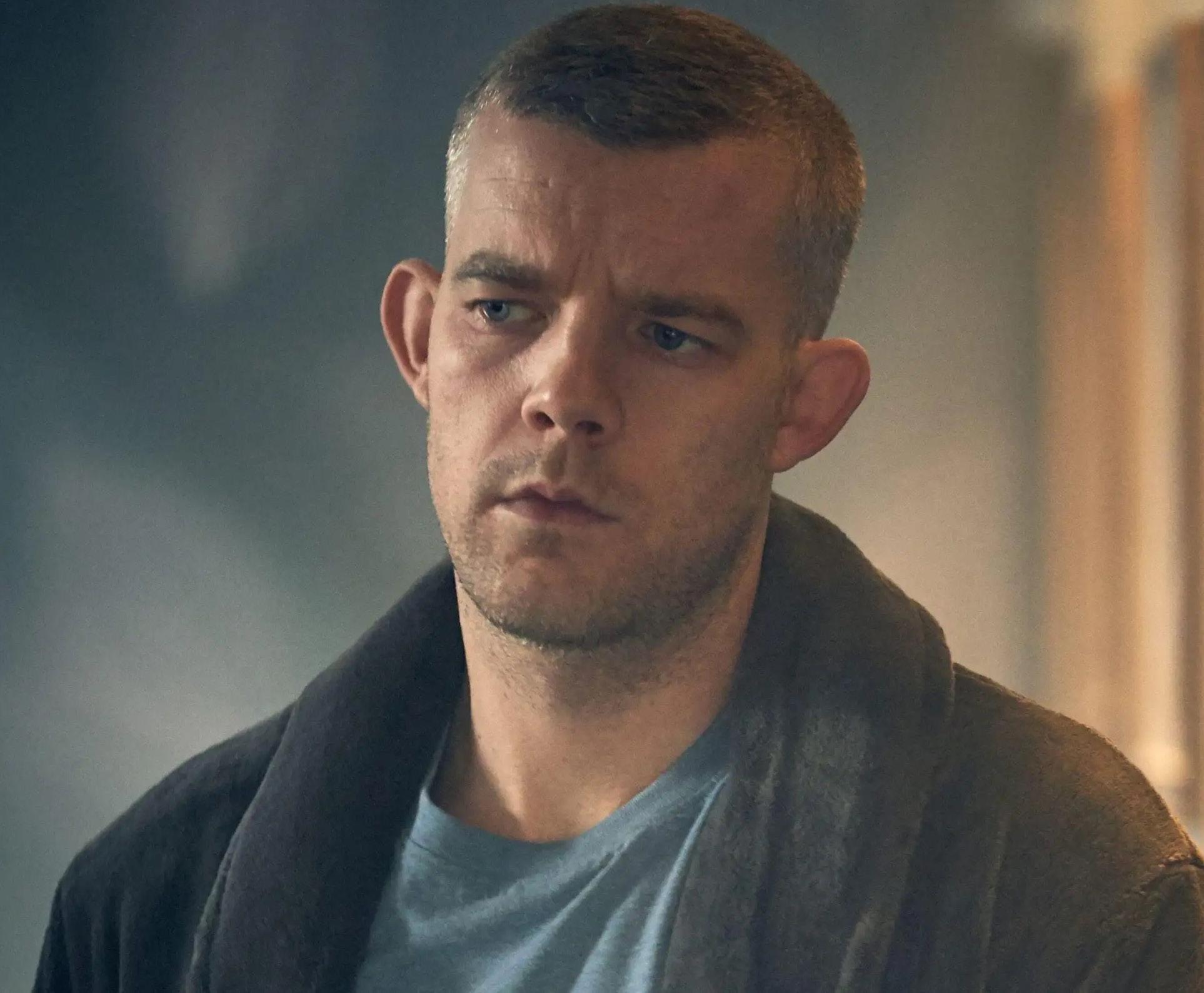
As awards season is fast approaching, Russell Tovey’s name might be at the top of many insiders’ lists to not overlook. In Plainclothes, which premiered at the Sundance Film Festival earlier this year, the Looking heartthrob delivers a quietly powerful portrayal of a closeted New Yorker named Andrew who is navigating desire, vulnerability and survival in 1990s America. This was a time when undercover police were often tasked with entrapping gay men in public situations when they sought connection with other men, behaviour that was criminalized.
Directed by Carmen Emmi and co-starring Tom Blyth as Lucas, an undercover officer tasked with entrapping gay men, Plainclothes is an erotic thriller that lingers long after the credits roll. Lucas finds himself drawn to Andrew, a man who not only must steer away from societal danger but also offers tenderness and care during what might be Lucas’s first experience of love, lust and intimacy.
IN Magazine had the opportunity to talk to Russell Tovey when the film premiered theatrically this fall, to gain his insight into the experience of making such a unique movie and what modern gay dating is like compared to 1990s-era America.
I had the chance to watch Plainclothes at Sundance, and I’ve been wanting to talk to you ever since. Before dating apps, gay men often faced real risks just to connect with other gay men. What drew you to Andrew as a character navigating that world?
What drew me to Andrew, and what always draws me to a script, is the dialogue. Within a few pages, I was like, ‘I need to say these words. I want to inhabit this person.’ I’ve always had a slightly romantic notion of Syracuse [where the film was shot]. We had a very beautiful time there, and I was just very excited to be filming upstate in an area where the writer-director was from. He was working with all his family and friends who were up there, and there was something really wholesome and special about that.
I’m very much drawn to queer stories, and Andrew was unlike anyone I’d played before. His struggles, his need for connection, and the way he navigates the world I found fascinating, enthralling and exciting. I loved the idea of being a character that is enabling or facilitating someone else’s first experience, and how you approach that, and the responsibility of that.
It felt beautiful. I really pushed for this: Andrew makes sure that Lucas has a very loving, kind, generous first experience. It was fundamental to me that the first experience was safe, that sex was safe, that the communication was safe, and that he was very clear with him. There was no ghosting, as we’d say now. They wouldn’t have said that then. But in this relationship, however long it lasted, I felt like Andrew wanted to give Lucas something that he wouldn’t be traumatized by. So many people’s first experiences are very traumatic, very selfish, and this was something that I found beautiful.
You’ve played several queer roles, and I’d be remiss if I didn’t mention Looking. That show was transformative for me personally. I wasn’t out when I first started watching,
but I came out during its run, and I don’t think that was a coincidence. Seeing gay men in relationships and friendships that evolved over time really mattered. How did Plainclothes feel distinct in its depiction of gay men’s experiences?
Well, when safe spaces are taken away and representation is minimal, queer people are pushed to the margins into dangerous scenarios. This isn’t that dangerous a scenario that they’re in, but because of society, because of timing, there isn’t freedom for living authentically. People are pushed into these dangerous places. I feel like this film is indicative of that. It’s based on a true story of gay men being targeted. That’s shocking, and it feels like it should be a historical piece. But the way the world goes, it’s cyclical. The conversations that are happening here [in the United Kingdom], versus over where you are, are quite frankly terrifying.
I don’t think when we were making this film that we realized the enormity of what it is. It doesn’t feel like a historical piece; it feels contemporary.
“ I LOVE THE WAY QUEER PEOPLE INTERACT IN SAFE SPACES. IT’S A BEAUTIFUL THING. FLIRTING, CONNECTIONS, MEETING STRANGERS, STARTING CONVERSATIONS. THAT’S BEAUTIFUL. IN MY LIFE, THAT ISN’T LOST. I’M NOT SOMEONE DEEP INTO APP CULTURE.”
Especially for younger audiences who didn’t live through that era, how important is it to revisit that history?
For me, as Russell, knowing our history is imperative. Knowing the shoulders of giants that I can stand on. Especially trans women and trans people, I feel like I have a responsibility with my platform to amplify their stories, to cite sources, and to pay homage to them. I’m only here because people did this work before me. I hope people will watch this and learn, and want to go off and know more, and want to know about their history.
I feel like we, as a community, have an inherited trauma, and we need to know what’s happened, and what is happening, to understand it. What mistakes were made in the past, how they were overcome, and where we’ve got to now. It doesn’t feel like there has been an opportunity for that education to stick.
I hope people also feel that this film is beautiful, and it’s a universal story about unrequited love, and the need to police one’s feelings because of society. I want people to feel touched. I’ve had a lot of people who have seen the film say these characters live beyond it with them. They care about them. They want to know if they’re okay. They want to make sure they’re happy. It’s a beautiful story.
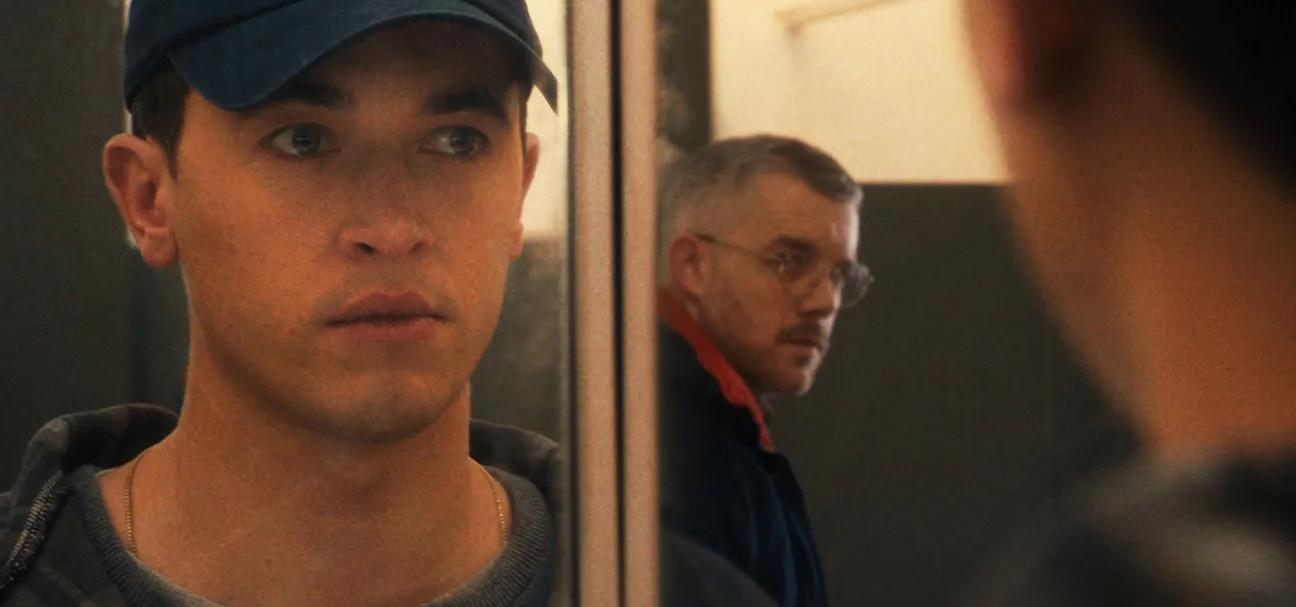
The film also captures the paranoia and coded signals of cruising culture: silent exchanges, glances, gestures. I remember that myself from going out, and it feels very different from today’s swipe culture. Do you think something’s been lost with dating apps replacing public spaces and bars?
I think IRL is so important. But a lot of those things still exist. I still really trust the two-and-a-half-second, three-second rule: look back, and then it’s on. I love that. I’ve always been fascinated by that. I love the way queer people interact in safe spaces. It’s a beautiful thing. Flirting, connections, meeting strangers, starting conversations. That’s beautiful. In my life, that isn’t lost. I’m not someone deep into app culture. It’s impossible for me to a certain extent, but I love IRL connections for sure. I hope we don’t lose the ability to flirt.
Absolutely. What do you hope audiences, gay and straight alike, take away from Plainclothes, especially about the risks gay men faced just a few decades ago?
There are many things I want people to take away. I want people to discover Carmen Emmi as a brand-new talent. I want people to discover independent films. This was made for hardly anything, by people who believed in it and were passionate about it. It’s having such a beautiful response and impact. I want people to be inspired by that and get behind independent film and storytelling of this level.
I want people to see representation of themselves on screen, to see possibilities, to see characters that allow them – like you said you had with Looking – to find their authentic truth. I want people to be entertained. People ask a lot about the sex scenes, but I feel like the sex scenes here are universal. It’s the human condition. The things I’m drawn to are stories that, especially in today’s climate, help us find similarities rather than differences. I want people to watch this film and see similarities in these characters that they feel in their own lives. We all feel the same things. We all long for the same things. We all desire and need and deserve the same things, however we feel about other human beings, whoever we’re attracted to. I want people to see the similarities in these characters in their own lives.
It really is such an erotic thriller with a lot of heart. In today’s Marvel-heavy film landscape, having an independent film like this break through feels rare and refreshing. Thank you. But you see, for example, with Plainclothes, we’re so fortunate to get a theatrical release. Then it’ll end up somewhere
online, on a streamer. But the real stories, the places where we find the realities of life, are in independent film. I’m proud to be part of this season of independent films that are coming out. There are so many brilliant voices, performances and storytellers. It’s really exciting, but it’s also very important that we support that.
Looking beyond Plainclothes , I’ve noticed you’ve been promoting The War Between the Land and the Sea on social media. What can you share about that?
This is written by Russell T. Davies. It’s a new five-part series for Disney and BBC. It’s a Doctor Who spin-off, so it exists within that umbrella. It will be out at the end of the year or the start of next year. I play a character, Barkley. He’s someone very lowly in an office, booking people’s taxes, overlooked and slightly ignored. He’s a drifter, going through the motions. Something happens, and he’s given the biggest responsibility ever.
I loved it. I’m really proud of it. I’m really excited about it. It feels exciting and important, and it has an important message, which I’m not allowed to read or talk about yet. But I’m incredibly proud and excited.
That sounds fantastic. Russell, thank you so much for your time, and good luck with Plainclothes. I’m excited for more people to experience it.
I’m really moved that you felt Looking changed you, because it changed me as a person and as an actor. I’m proud of that, and that’s the show I can watch, even though I’m in it, as a fan. That doesn’t happen a lot. Those characters still live with me. Doris! Where’s Doris?
I love her. Any time she pops up, I can’t wait to see what she does.
Why isn’t she the biggest fucking thing on the planet? She is just amazing. She’s an amazing artist as well. She makes great paintings. Lauren [Weedman, the actor who portrays Doris] is heaven, and I didn’t have enough scenes with her. I kept saying to [Executive Producer] Michael Lannan, ‘Please put me in more scenes with Doris. There’s no need for me to hang out with Doris, but please!’
We can only hope for a reunion of sorts! Thank you for speaking with me today, Russell! Cheers!
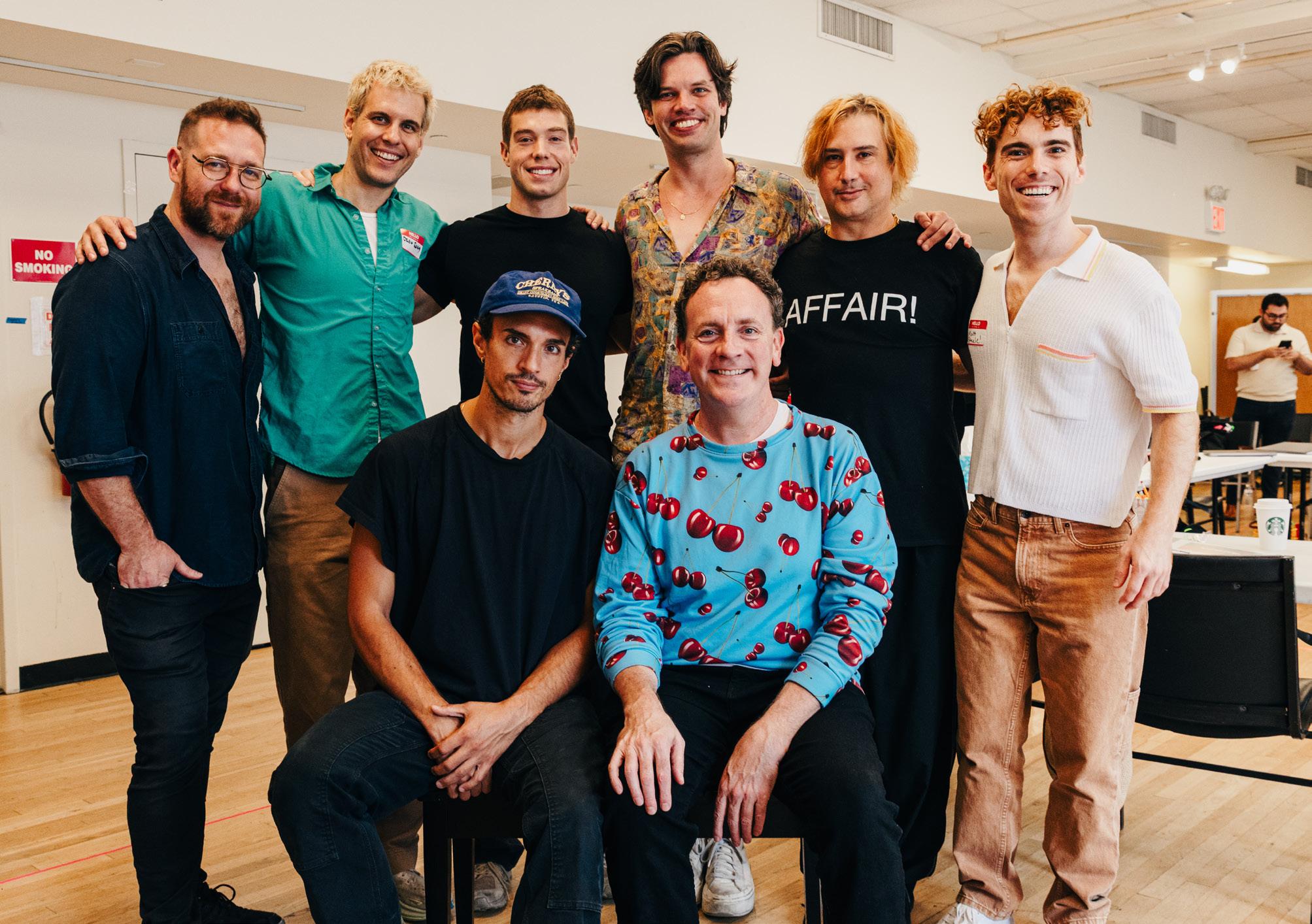
A conversation with actor/writer Drew Droege about his newest play, which takes a stab at unhinged white gays on the loose
By Elio Iannacci
Drew Droege was born to be invited to brunch. His stories about being raised in the American South, living in Los Angeles and surviving the rigours of La La Land’s casting chaos are best heard over mimosas or Caesars (that’s Bloody Marys in America). His addictive storytelling is partly how so many queers – me included – got through the pandemic: we listened to his podcast Minor Revelations , with guests ranging from Bowen Yang to Fortune Feimster, or hopped onto YouTube to watch clips of him embodying the pretensions and peculiar wisdoms of actress Chloe Sevigny (with a swarthy yet cutting “Good Evening America”). For TV fans, his slew of credits includes Hot in Cleveland and Grey’s Anatomy
His cameo in Luca Guirdinin’s Queer reintroduced the South Carolina–born talent to Hollywood’s always-slow-on-the-uptake casting directors. Theatre audiences, however, already knew what kind of brilliance he brought with the biting, witty and prescient plays he wrote and starred in, such as Happy Birthday, Doug and Bright Colors and Bold Patterns – both exposing modern gay life as fragile, radical, hysterical and histrionic.
His most news-inducing production, Messy White Gays (now in New York City until December), plays to his strengths once again. The cast includes the just-as-sharp Pete Zias, the gorgeous Derek Chadwick, and the always-beguiling James Cusati-Moyer and Aaron Jackson. Each is well chosen to blow up the twisted gay archetypes Droege writes, down to smithereens. The show’s set-up says it all, as it begins with a throuple that goes from three to two when one pair kills the odd man out. The press release for the play is already one for the books, stating:
“It’s Sunday morning in Hell’s Kitchen. Brecken and Caden have just murdered their boyfriend and stuffed his body into a Jonathan Adler credenza. Unfortunately, they’ve also invited friends over for brunch. And they’re out of limes! Feel bad for them! They’re MESSY WHITE GAYS!”
It makes sense that brunch is the backdrop, because Droege’s best work (whether on stage, screen or podcast) has the same flavour: sharp gossip, unfiltered honesty and boozy outrageousness, best savoured when the world is still a little hungover.
From his home in L.A., via Zoom, Droege reflected on the importance of diffusing drama on stage when the world is already facing so much of it off stage.
Your new play, Bright Colors and Bold Patterns, touches on how there’s often this chokehold of ‘legislation’ on how gay men should behave, and we’re the ones laying down these laws. Why do you think so many of us act like Bridezillas at weddings and mimic our worst straight counterparts? We’re raised in a heteronormative society. A lot of us grew up around the other girls, so we can’t help do what they do. The irony is lost on most of us. You fight so hard to be queer, to be yourself, and then you get into a community that just expects you to fall in line with heteronormative rules and basically be heteronormative again and play by the same rules we are supposed to be breaking. We are now getting the questions that our girlfriends hated: when are you going to get married? When are you buying a house? When are you getting a dog? When are you going to have a child? All those things are great, of course, if you want them, but they have to be like personal wants and needs versus just expectations. We have a lot of work to do to love ourselves as ourselves and not feel we are wrapped up in someone else’s society.
Do you believe there is such a thing as a safe space?
I don’t believe there’s such thing as a safe space, and I certainly don’t feel emotionally safe at a wedding! Every time someone calls something a safe space, I immediately feel otherwise! I’m kidding, of course. I don’t think I’ll be killed at a straight wedding; however, there is often a lack of taste with weddings, so I question why people from our group feel that there’s safety in mirroring the heterocentric. It takes up a weekend out of your life, thousands of dollars, and you continually have these aggressively boring best-friend-of-the-groom, brother-of-the-bride speeches. Then the mandatory dancing! That’s just always so awful! I love dancing, but don’t make me do it, you know? All the organized fun of it all. It’s a lot.
What do you think of queer spaces being swallowed up by non-queer people?
Straights are copying us – they are all going to Palm Springs and marrying at Stonewall! Every time I go to Stonewall, it’s full of bachelorette parties! We do need our queer spaces to remain that way, but I don’t have the answer.
You dealt with gay wedding rules and regulations in Bright Colors and Bold Patterns…how did you deal with the draconian laws of gay brunch in Messy White Gays?
I thought about murder and how we sort of dispose of each other easily. It’s a comedy, so I also wanted to make murder into caper – feel Clue. Feedback when I was first working on this was that it was really dark – Party Monster dark. So I turned it into people who are so privileged. They forgot that they had invited people over for brunch before they went ahead and murdered one of their throuple.
How does privilege and a strong sense of entitlement appall, inspire and disgust you as a comedian and writer?
I think a lot of people have good intentions and they want to be on the right side of history, and they want to say, ‘I stand with the trans community, I stand with the BIPOC community, and with women’s causes’ – all of that is absolutely what we all should be doing. It’s just that they – myself included – centre themselves in
the narrative. You want to be support, but you also have to know it’s not about you right now.
What humours you the most about people with privilege?
I’m fascinated by those who think they’re doing the work and think they’re evolved. They make a real point to mention trans people, to mention pronouns with a, with a kind of a nervousness. I do believe that as gay men, we carry trauma – and I’m not to, sort of, belittle any of that – I try to be respectful even in our own community. But the performed wokeness is too much.
How were you able to tackle different points of view from different gay generations?
Well, my character, Carl, is in a different category when it comes to nightlife and popularity and the rest of the characters and, you know, the sexiness of being gay. He’s the at-home, bitter betty nosy neighbour – Carl is not in the throuple. It’s implied that my character is older – there are age jokes in there – but I didn’t want to make a comment about how young gays nowadays are killers and stupid and awful. I wanted [to show that] all of us are problematic and we can all do better. We have so much to learn from younger people. Carl is very much like locked into a lot of heteronormativity: there’s a lot of ‘I’m not the bad guy’ and ‘How dare you? I’ve been through this before, honey!’ and ‘Don’t come at me with all the new queer stuff.’ I check myself if I find myself doing anything askew. If I think, ‘that was racist of me to think that way,’ or ‘that was transphobic of me,’ I forgive and course-correct. You don’t have to be cancelled. You don’t have to be the devil or a pariah in the community if you’ve been mistaken or need educating.
“YOU FIGHT SO HARD TO BE QUEER, TO BE YOURSELF, AND THEN YOU GET INTO A COMMUNITY THAT JUST EXPECTS YOU TO FALL IN LINE WITH HETERONORMATIVE RULES AND BASICALLY BE HETERONORMATIVE AGAIN AND PLAY BY THE SAME RULES WE ARE SUPPOSED TO BE BREAKING.”
What is so brilliant about your podcast, Minor Revelations, was your monologue at the top of the show, which went from furious to hilarious when talking about headlines or art. Did you find that that podcast was a vehicle to self-correct? It was very helpful that way. When you start putting things out there, you realize that ranting can be a form of self-awareness. At a certain point, you figure out if I was just bitching or if I turn around a conversation or a judgment. Maya Angelou was a teacher of mine in college, and I was really harsh about her. I was a fan of her work and not of her as a human in a room. She told her students not to ‘assume familiarity’ when addressing her. I realized that I was also an asshole, because I was assuming that we would be best friends! It was my first interaction with a famous person for an extended amount of time. The older I get, the more I’m like, Maya Angelou. So many people remind me of that story.
As campy as it sounds, you are not going around saying, ‘Please let’s not assume familiarity,’ right?
Oh no.
You’re such a John Waters fan: what works from John Waters hold up the mirror to where we’re at right now?
I would absolutely demand people watch Serial Mom. It is an evisceration of that ’90s decade and our obsession with crime of the OJ, Menendez brothers, Amy Fisher kind. All that was happening when the movie came out so he couldn’t have predicted all of it, but he was close. Then the scenes and the lines are classic: don’t wear white after Labour Day, don’t steal my parking spot at the grocery store – I love the extreme of that. Kathleen Turner should have been nominated for an Oscar for that performance. It’s impeccable.
Is there a specific John Waters character that you relate to the most?
My favourite character in any John Waters movie is Peggy Gravel in Desperate Living – she’s Mink Stole’s character. It’s the most unhinged. I hope I don’t relate her, but it’s the most panicked, suburban, awful white woman who has learned all the wrong lessons in life, who cannot be satisfied.
Which scenes in Messy White Gays were the toughest for you to finish?
The beginning. I have characters coming in about every 10 pages. The first 10 pages with it, with our main couple, were tricky because – as a flow rule – the play gets funnier as it goes. It opens with a murder, so you’re slowly getting into who these people are. So I had to really calibrate. I didn’t want it to be too wacky out of the gate, and I wanted you to believe what’s happening. That said, I’ve just rewritten an ending for Carl that I think is satisfying.
One of the first people you cast was Pete Zias, who says Hollywood is both askew and crumbling. Do you agree or disagree?
I 100 per cent agree. Pete is also one of the funniest people on the planet, and he knows how to dole out the truth and make you laugh at the same time.
Tell me more about Carl and his background and where he would likely grab a drink.
Carl has a Black husband and loves telling people that fact. He loves to work it into conversations, so he feels a little bit superior to his white friends with white husbands – he feels more woke yet there are important things that he’ll never understand about his husband.
Where would your other Messy characters go for a drink?
Whatever the newest bar would be opening that night. And then they would never go back there again and never be seen in there again. Thacker is definitely at the Monster waiting for Lady Bunny to DJ, or at the Limelight, still trying to make that happen. Caden would definitely be going to Julius but trying to teach younger queers about gay history.
Which musical divas would your Messy characters worship? Brecken would definitely be into Renee Rapp. Caden would
be in the world of, like, Chappell Roan. Addison would love Blackpink. Thacker would be Madonna, dancing with Labubus and watching Wendy Williams all day. Carl would love Sylvester and all the ’70s disco stuff.
You’re a fan of Alfred Hitchcock and Rope. What would you say are the best moments from the film?
When the alpha gay character says, “The lives of inferior beings are unimportant,” which, I think, is like so much. It’s so cruel. That’s the spine of that film. A lot of Hitchcock is queer coded –Strangers on a Train is so queer, Psycho blatantly so. The lesbian undertones in The Birds are so wild. He kind of saw the world as one big kink. None of the people he writes are okay. Tippi Hedren’s character is lunatic: she takes birds to Bodega Bay to pull a prank. She’s unwell.
Do broken people make for great writing?
Listen, when you get the note that the characters have to be likable, ignore it. It’s so lazy. If the actor is good, and likable, the character can be a mess. I don’t like likable characters, you know? I don’t like Mrs. Maisel – I find her dull. I relate to Valerie Cherish in The Comeback. I love a broken messy lead, because that’s who we are. Let’s see people who have lost all sense of artifice.
I find it so funny when you talk about how certain family members cherish mild-tasting food and art as if that is something to be celebrated.
There’s a whole market for mild, and thank God we have a counter market. Everyone’s so scared to say anything right now. We should all be empowered to speak our minds, yet for some people, mild is comfortable, and mild is acceptable and politically neutral. I don’t need to eat spicy food every day, but I’d rather talk about spicy food than about mayonnaise.
What has been the messiest thing you’ve ever witnessed on stage or off from a white gay?
I did see a solo show where somebody was basically talking the entire time about how hot and desirable they were and how everyone was mad at them because of it. The stories ended up being about how great they were in bed…but the big reveal at the end was, they took off a toupée and said, ‘I’m actually losing hair,’ and we were supposed to feel bad for them.
You’re making queer theatre at a moment when lawmakers [in the U.S.] are literally, like, chiselling letters off Stonewall and introducing insane bills designed to erase 2SLGBTQI+ people. How do you see live performance pushing back against this erasure?
Good theatre comes from a place of rage. We all have to deal with that. I write comedy, but I also wrote a play that has more on its mind and does make people think. Maybe to be better people or not to be these people? Or to realize… has this been me? We can all laugh in a room together.
I’m so excited to join a community of queer artists in New York with O Mary and Prince Faggot and Death Becomes Her. Julio Torres is doing a show, and Ryan Rapherty – there’s so much queer art that’s happening in the city, and I know we’re all going to help lift each other up. There’s a strength in numbers.
Co-founders Damian Pelliccione and Christopher J. Rodriguez chat about the streaming network’s early days, the success of King of Drag and what viewers can expect in the future
By Stephan Petar
It’s been a decade since Toronto-born Damian Pelliccione (they/ them) bought an Apple TV in 2015 and was disappointed they couldn’t find any LGBTQ+ apps. “That’s when the light bulb went off,” they say.
That moment sparked a desire to create Revry, the world’s first global queer streaming network. The company was co-founded by Pelliccione, alongside Christopher J. Rodriguez, Alia J. Daniels and LaShawn McGhee in 2015. From Day 1, its mission was clear: create a destination with a diverse array of queer content.
Revry officially debuted at San Francisco Pride in 2016. The team did everything to get the word out, including handing out flyers in Mission Dolores Park. Then, an interview with Mac World changed everything. “We instantly saw 5,000 downloads,” says Pelliccione, the company’s chief executive officer. “Press outlets from around the world in multiple languages wanted to write about us. It was overwhelming and exciting.”
Today, Revry has been downloaded in more than 140 countries and has 6.8 million monthly active viewers. It has grown into a team of 35 people and, in 2021, started creating original content. This year, it launched King of Drag, the world’s first drag king competition series and one of the network’s biggest shows.
We spoke to co-founders, and life partners, Rodriguez (he/him) and Pelliccione over Google Meet from Seattle, where they were attending the third annual Emerald City Kings Ball. In the conversation, they shared their vision for Revry, the response to King of Drag and what’s next.
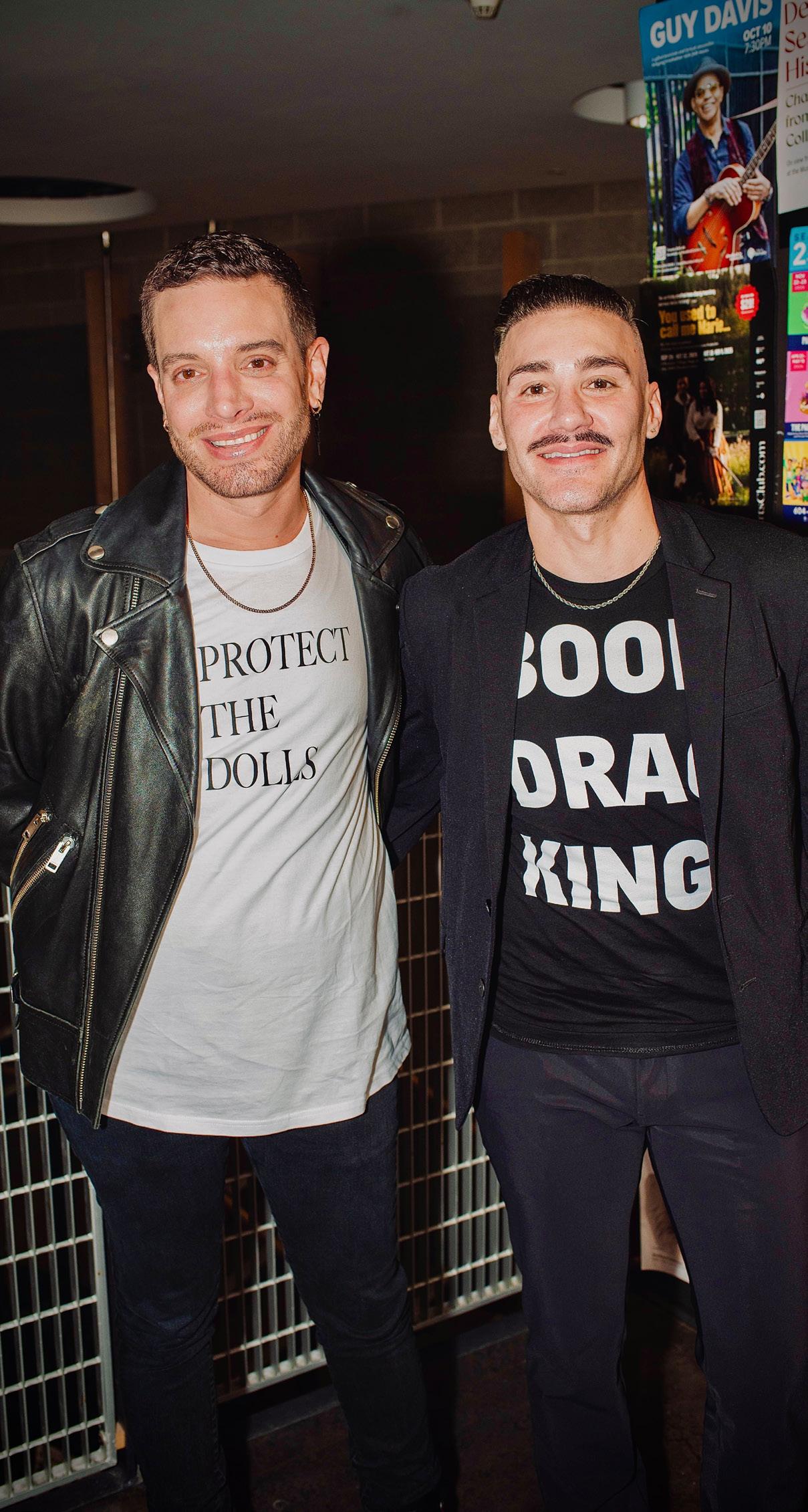
The co-founders believe in using media to amplify meaningful queer stories that create “long-lasting acceptance” for LGBTQ+ people. “Media has the ability to change hearts and minds,” Pelliccione explains. “We’re able to introduce our culture and introduce different terminology.…”
Building a network for queer joy without barriers
“We try to always come from a place of queer joy with everything we do,” says Pelliccione. “We want to uplift and empower.” Not only does Revry’s content uplift, it’s truly diverse. It’s multicultural, highlights a variety of sexual and gender identities, and challenges age-old tropes.
“ WE TRY TO ALWAYS COME FROM A PLACE OF QUEER JOY WITH EVERYTHING WE DO,” SAYS PELLICCIONE. “WE WANT TO UPLIFT AND EMPOWER.”
A way to ensure people have access to these stories is by making the streaming network free for viewers. ”This was part of our thesis from the beginning, wanting to remove barriers to access,” says Rodriguez, the company’s chief creative officer.
Revry’s logo proudly states “Free Queer TV,” though there is an option for a paid subscription. “Ninety-five per cent of our users are watching in a free model," Pelliccione says, noting that paid subscribers are usually superfans who don’t want ads. “We are democratizing the ability to see your stories on screen.”
“Seeing yourself represented can save lives, change lives and change people’s perspectives on how they view members of our community,” Rodriguez adds.
The streaming network has changed lives, as evident in the letters the company gets from around the world, from countries such as India or Saudi Arabia. “There have been moments in the history of this company where we’ve seen such a positive and impactful response for what we’re doing,” Pelliccione shares.
When asked who a majority of their audience is, the pair say they cannot assume. “We can’t quantify that they’re all LGBTQ+,” Pelliccione tells IN. “We see that as a positive that our audience is not necessarily all queer – that people are coming to watch because they’re drag fans, an ally to the community, or want to watch something good and exciting.”
Introducing the world to drag kings
The world is now very aware of what a drag queen is, thanks to 80 seasons of Drag Race and other drag queen-related content. But, while drag kings have been around for centuries, Revry quickly noticed a lack of understanding of these performers. “Believe it or not, one of the biggest challenges in making King of Drag was having to educate everyone on what a drag king is,” Pelliccione shares. “Drag kings have been part of our culture and part of drag artistry for a really long time.”
For Revry, drag kings have been cast in several of their programs over the years. Then, three years ago, it came up with the concept for a drag king competition series. “There is so much drag queen content out there.… At the end of the day, drag kings are not drag queens,” Rodriguez says. “King of Drag wasn’t just, ‘Hey, this is an untapped market;’ it was genuinely what was next.”
Pelliccione recalls bringing King of Drag host Murray Hill to the network’s 2024 Newfronts, where Revry presents its upcoming programming slate to advertisers. Hill’s role was to educate the audience on what a drag king is.
Advertisers didn’t immediately hop onto the project, so Revry invested the small profits it had accumulated in 2024 to make it themselves. Then, in the weeks prior to shooting, e.l.f. Cosmetics came on board. “We made an even bigger show with that money, but it was not planned in that way,” Pelliccione admits. “We truly believe that if you make it, they will come.”
The series has become a phenomenon and a major flagship for the streaming network. “There were 212 watch parties between
Taiwan and South Africa, all organic!” Pelliccione says with excitement, noting L.A. alone had four watch parties. “It’s such an amazing moment to witness the crowd’s reaction and to see how excited they were.”
In the first 90 days of its global release, the show garnered more than 30 million impressions globally. For those wondering if a second season is in the cards, Rodriguez and Pelliccione remain tight-lipped. But with numbers like that, it would be surprising if the show was not greenlit for Season 2.
“ SEEING YOURSELF REPRESENTED CAN SAVE LIVES, CHANGE LIVES AND CHANGE PEOPLE’S PERSPECTIVES ON HOW THEY VIEW MEMBERS OF OUR COMMUNITY.”
What’s next for Revry in 2026?
With the rise of anti-2SLGBTQI+ rhetoric and attempts of erasure across the world, specifically towards trans people, the co-founders believe viewers need to continue seeing stories of queer joy – and that’s what they’ll continue to deliver. “When times get dark, people want to have a reprieve from that,” Rodriguez shares.
“There is enough depressing information in the news that we see on a daily basis to keep ourselves down,” Pelliccione adds. “We need things to lift ourselves up.”
The pair say there is a need to continue telling refreshing queer stories and present LGBTQ+ experiences in different ways. “Not just the coming-out stories and not the sad stories where all the lesbians die at the end, which is unfortunately a common trope,” Rodriguez says. He notes that audiences need interesting, entertaining and fresh content that continues to bring people together.
As for specific content coming soon to Revry? The pair say, get ready to laugh and vogue. “We’re going to be doing some fun stuff with comedy,” Rodriguez says. “We have a couple of projects that we’re super excited about, but they’re very early in development.”
Pelliccione then teases the return of the International Vogue League (IVL), which focuses on the ballroom community and sees legendary houses battle it out with fierce and iconic performances.
Whatever’s next for the streaming network, it seems they’ll continue to deliver joyous, diverse and unique narratives to viewers worldwide.
STEPHAN PETAR is a born and raised Torontonian, known for developing lifestyle, entertainment, travel, historical and 2SLGBTQI+ content. He enjoys wandering the streets of any destination he visits, where he’s guaranteed to discover something new or meet someone who will inspire his next story.
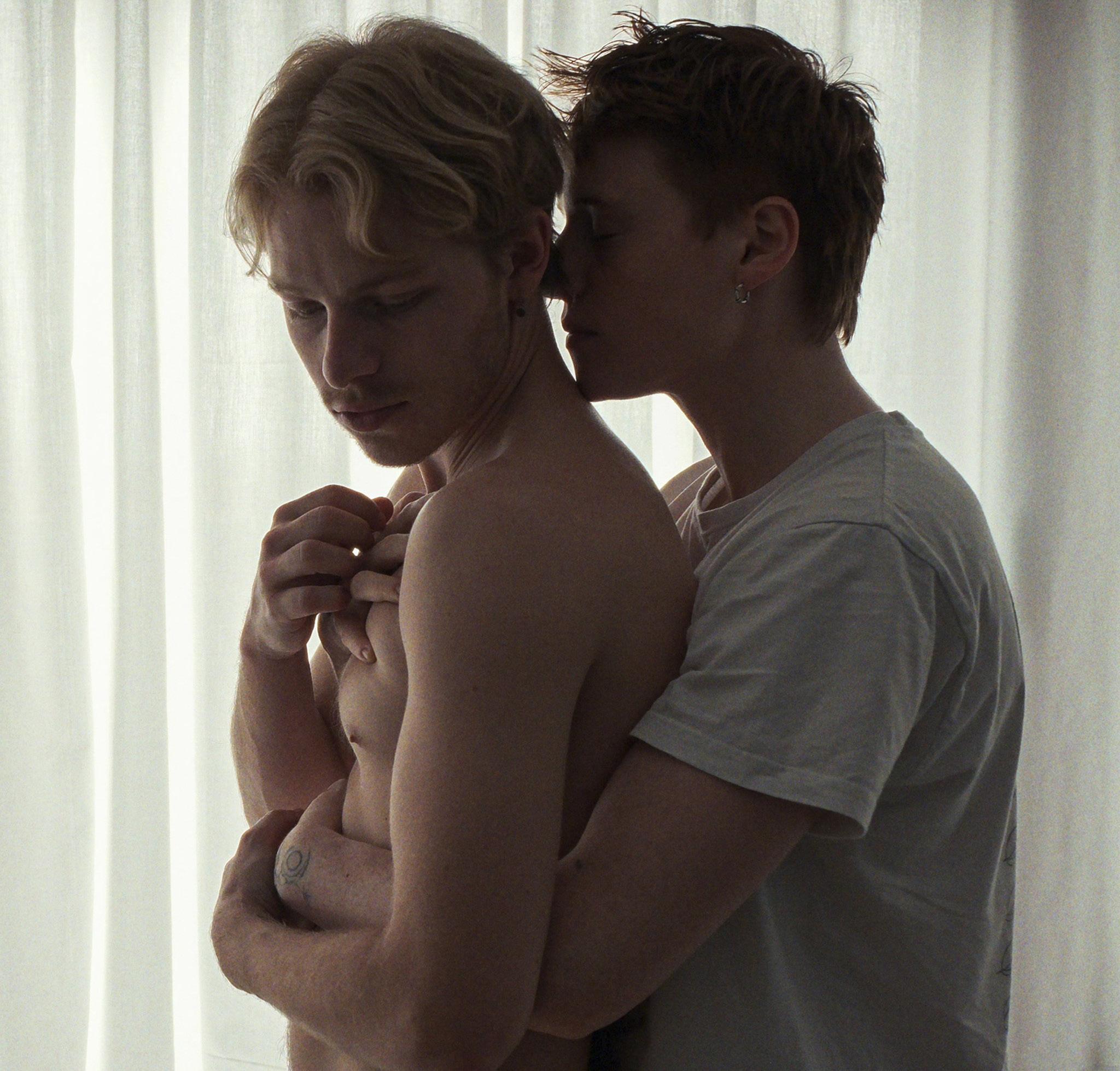
By Shane Gallagher
Sauna, the highly anticipated debut feature from director Mathias Broe, makes history this month as the first Danish film to cast a transgender actor in a leading trans role. Adapted from the acclaimed book by writer and activist Mads Ananda Lodahl, the film offers an intimate reimagining of Romeo and Juliet, exploring themes of love, belonging and identity within Copenhagen’s queer community. At its heart is the story of Johan, a gay man yearning for connection, and William, a trans man embracing his gender transition. What begins as a Grindr hookup blossoms into a relationship that both heals and challenges them, unfolding within the charged, transformative space of a gay sauna. Starring Nina Rask as William and Magnus Juhl Andersen as Johan, the film brings a fresh and deeply human perspective to queer storytelling.
Nina, what did it mean to you personally to step into the role of William?
Nina: I’m extremely proud! I’ve mostly played characters that had a specific function in a film. It was a humbling experience to create a more complex character that was far away from my own personality.
What specific qualities did you like about William?
Nina: In William, I found a person with a lot of power. But in his meeting with Johan, he holds back. Whether it’s about control or self-protection, I’m not sure. I was very drawn to his ability to observe the world.
Magnus, what drew you to the character of Johan?
Magnus: What I thought was really interesting about Johan was the vast hole of loneliness inside of him. The ‘anti-hero’ aspect of him. The wanting to do good, but in the pursuit of doing so, doing wrong. I thought it was very interesting to look at Johan as someone who is just desperate to be loved and accepted. It’s something I think we all can relate to.
The director, Mathias Broe, has said that when you two met in the casting room, the chemistry was undeniable.
Magnus: We actually had met in another production: a Danish series called Carmen Curlers. We hadn’t played in any romantic scenes before, but we knew each other from being on set.
Nina: At the casting for Sauna, they tested our sexual and romantic chemistry, which I think surprised us both!
Magnus, how did you internalize Johan’s relationship to the sauna?
Magnus: Personally, I saw the sauna as a symbol of endless possibilities for Johan. Behind every corner, there might be someone who can finally love him. I found it interesting how he uses himself as sexual currency, thinking that by offering his body, he may get the love and attention that he craves.
What was the most challenging scene for you to film emotionally? Nina: I remember the breakup scene being pretty difficult emotionally.
Magnus: For me, it was the scene in the sex swing! I was naked, except for a very small modesty garment, and I was surrounded by a bunch of naked male extras. I felt vulnerable. It made the scene crazy intense. I was emotionally drained when we finished.
On the flip side, what was the most joyful or affirming moment you had during production?
Magnus: The whole film was a pleasure to shoot, from start to finish. By the end of the production, I think we all could feel that we had made something special. The response from the queer community has made it worth every drop of sweat.
Both of your characters are written as beautifully flawed. How important was it for you to show imperfection in queer love stories rather than polished ideals?
Nina: I think it is important that we move from queer characters always being the saints or ‘the good guys.’ Queers can be selfish and lovable at the same time!
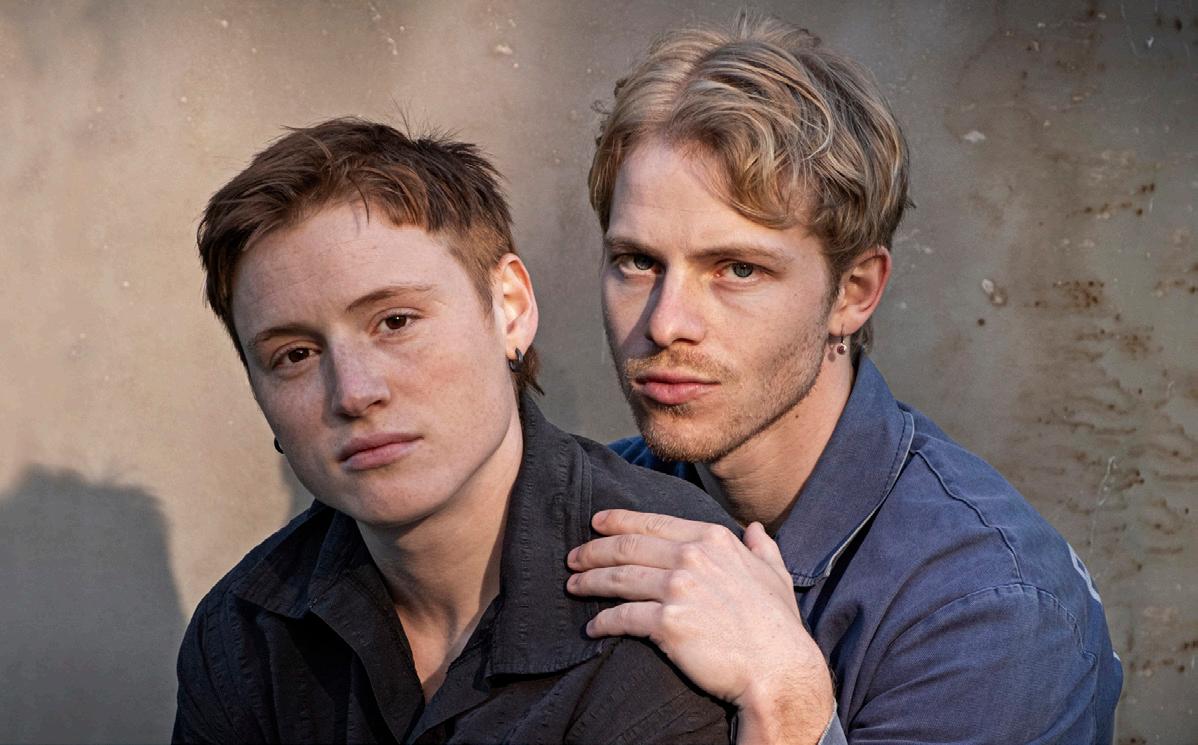
Magnus: All relationships, queer or straight, are incomplete and flawed. It’s never the Disney fairy tale we dream of and, honestly, I think that kind of story is boring. Showing love as it really is –messy, imperfect and full of struggle – makes it powerful. That’s what makes us cheer, cry, and really care when we watch a good love story.
What conversations do you hope Sauna sparks among 2SLGBTQI+ audiences, and also with mainstream audiences who may not be familiar with these experiences?
Magnus: For queer audiences, I hope it sparks recognition. That feeling of, ‘yes, this is me, this is us, this is complicated but it’s real.’ For mainstream audiences, I hope it opens the door to empathy. Even if the details of queer life are unfamiliar, the emotions of love, shame, desire and forgiveness are universal.
Nina: I hope the film helps to broaden the horizon of queer cinema. There’s a younger group of filmmakers entering the industry at the moment, and they bring new and exciting perspectives to the table. Hopefully, they will create the next chapter of stories that are even more diverse and aren’t afraid to break the norms.
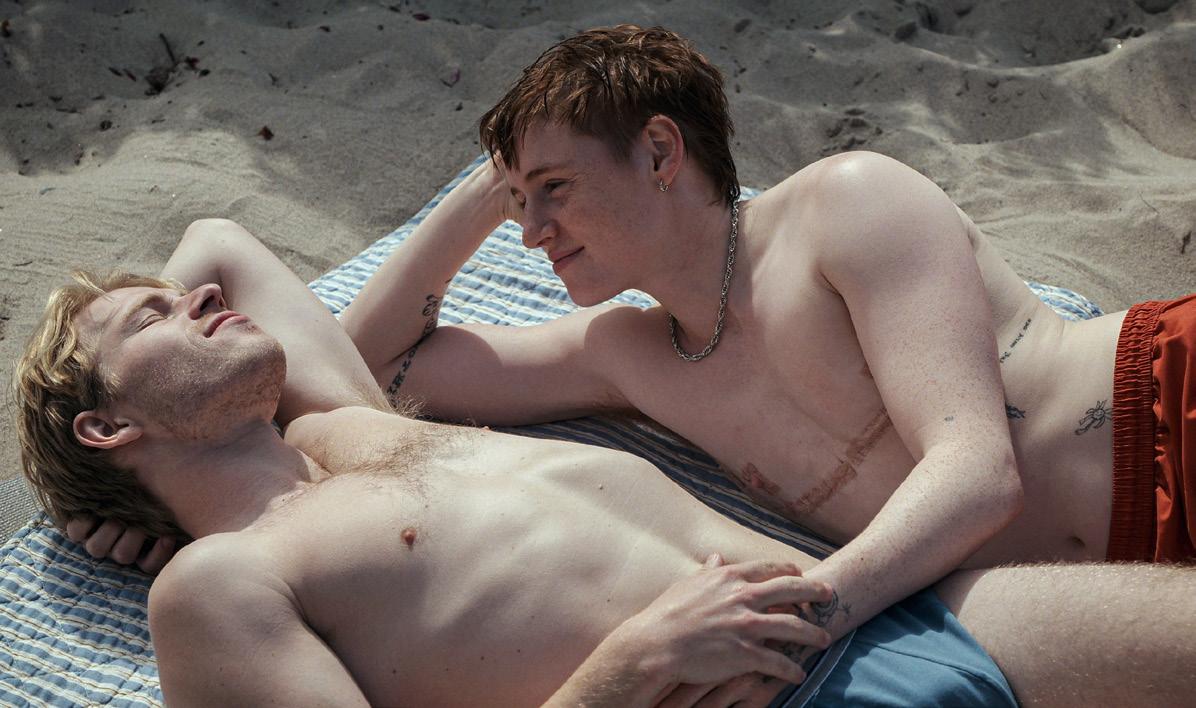
Sauna is available to rent or own on all major digital platforms now.
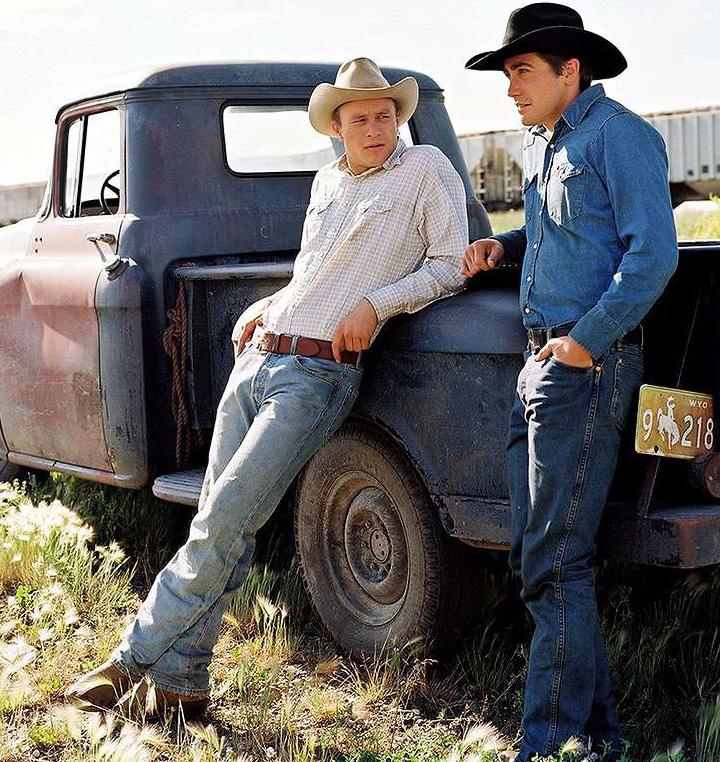
Brokeback Mountain premiered in 2005 during a very different era for gay rights, but its legacy lives on through its indelible characters
By Matthew Creith
This year marks 20 years since Brokeback Mountain arrived in theatres and challenged what mainstream cinema could show and feel about love between members of the same sex. Director Ang Lee’s heart-wrenching adaptation of Annie Proulx’s short story did what few studio-backed pictures had done by the mid-2000s: it put a tender, messy and uncompromising queer love story at the centre of a major motion picture.
Set in 1960s Wyoming, Brokeback Mountain features cowboys Ennis Del Mar (Heath Ledger) and Jack Twist (Jake Gyllenhaal) as they navigate an attraction for one another while herding sheep one summer. Their attraction grows into sexual encounters during a homophobic time in the United States, leading both of the men to marry women (Michelle Williams and Anne Hathaway) to keep up appearances. But distance makes the heart grow fonder, and Ennis and Jack’s love for each other cannot be contained.
Brokeback Mountain is the quintessential example of cinema’s attempt to bring queer love stories to the mainstream, to great success. The film grossed close to $180 million worldwide, went on to see Ang Lee crowned with the Best Director Oscar, and made bona fide movie stars out of its talented cast. However, the film’s legacy truly endures through its cultural significance, as it highlights the trajectory of the progress the LGBTQ+ community has made since its release.
Part of the movie’s power lies in its expansive landscape, as the mountain itself becomes a memory and a safe space for Ennis and Jack. Brokeback Mountain was filmed almost entirely in Alberta, although it is set in Wyoming. The film showcases some familiar landmarks such as the Kananaskis Range near Canmore, campsite scenes filmed at Goat Creek, Upper Kananaskis Lake, Elbow Falls and Canyon Creek, and some sequences filmed around Cowley, Fort Macleod and Calgary.
The Canadian geography, with its rocky ridgelines and prairie towns, helped make the film feel both specific and fantastical.
Two decades on, Brokeback Mountain might be best remembered for its risk-taking abilities and emotional honesty, which are often seen as a tipping point for major Hollywood studios to shift gears towards more expansive queer representation. In the years following the film’s release, a noticeable increase in movies and television series featuring complex LGBTQ+ relationships has emerged. Plot lines in subsequent projects, such as Moonlight;
Red, White & Royal Blue; Fire Island and this year’s Pillion, are less queer-coded and more upfront in terms of sexuality than the mainstream had previously allowed.
The world that Brokeback Mountain entered in 2005 looked very different from the one 2SLGBTQI+ people live in today. In Canada, 2005 was a pivotal year, as the federal Civil Marriage Act made same-sex marriage legal nationwide. Since then, Canada has continued to secure protections for queer folks, including the 2017 addition of “gender identity or expression” to the Canadian Human Rights Act.
Canada is viewed by many countries as a global leader in protecting the rights of its 2SLGBTQI+ citizens, even as pushback exists at the local level and in other countries. The United States made same-sex marriage legal in 2015 with a landmark Supreme Court case, Obergefell v Hodges. But since then, there has been a fierce political backlash in many states, targeting trans youth with bans in sports and limiting what teachers can discuss in classrooms regarding 2SLGBTQI+ history. The legal landscape today is a mixture of federal protections and state-level contestation, creating legal hurdles and a sense of despair amongst queer couples.
So why does Brokeback Mountain still matter today? The movie’s continued relevance lies in the fact that we receive reminders of how closeted gay people used to live. We witness the stakes of lives lived partly in secrecy, while love and sexuality are stigmatized. The human costs are massive as public debate about pronouns, identity and 2SLGBTQI+ rights grows louder and more polarized in our current environment.
The film’s assertion to lean towards empathy feels more necessary now than ever.
Twenty years after its release, Brokeback Mountain can be viewed through an intersection of art and gay rights activism. The film serves as a poignant reminder that queer representation matters in mainstream studio projects, and that progress is fragile without consistent and vigilant public support. Brokeback Mountain does not answer all the questions it raises, but it insists on presenting a love story through the viewpoint of two male characters who are unwilling to let themselves be who they are because of societal pressure and the dangers of criminality.
One can only hope that we don’t return to that path again.
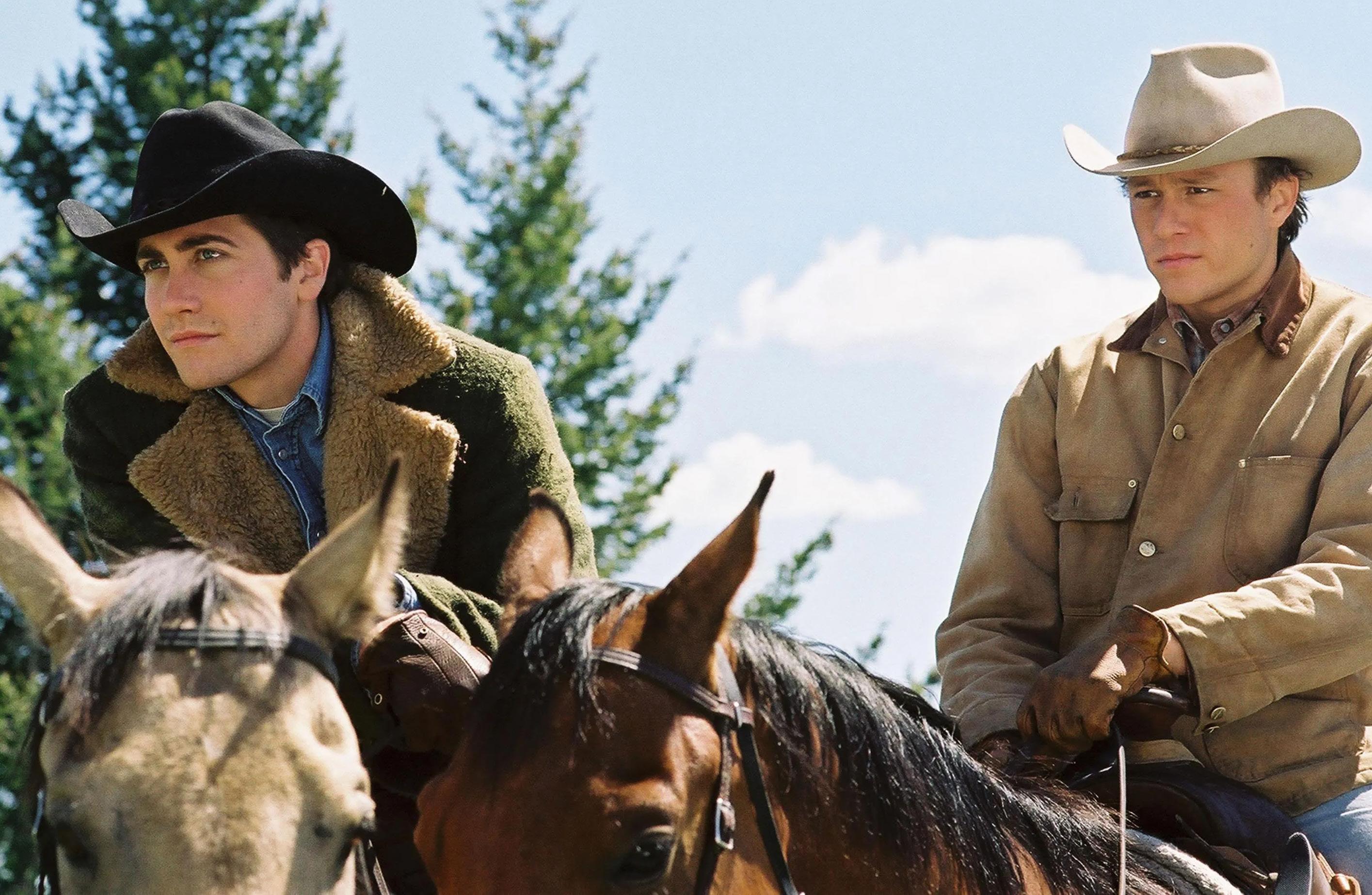
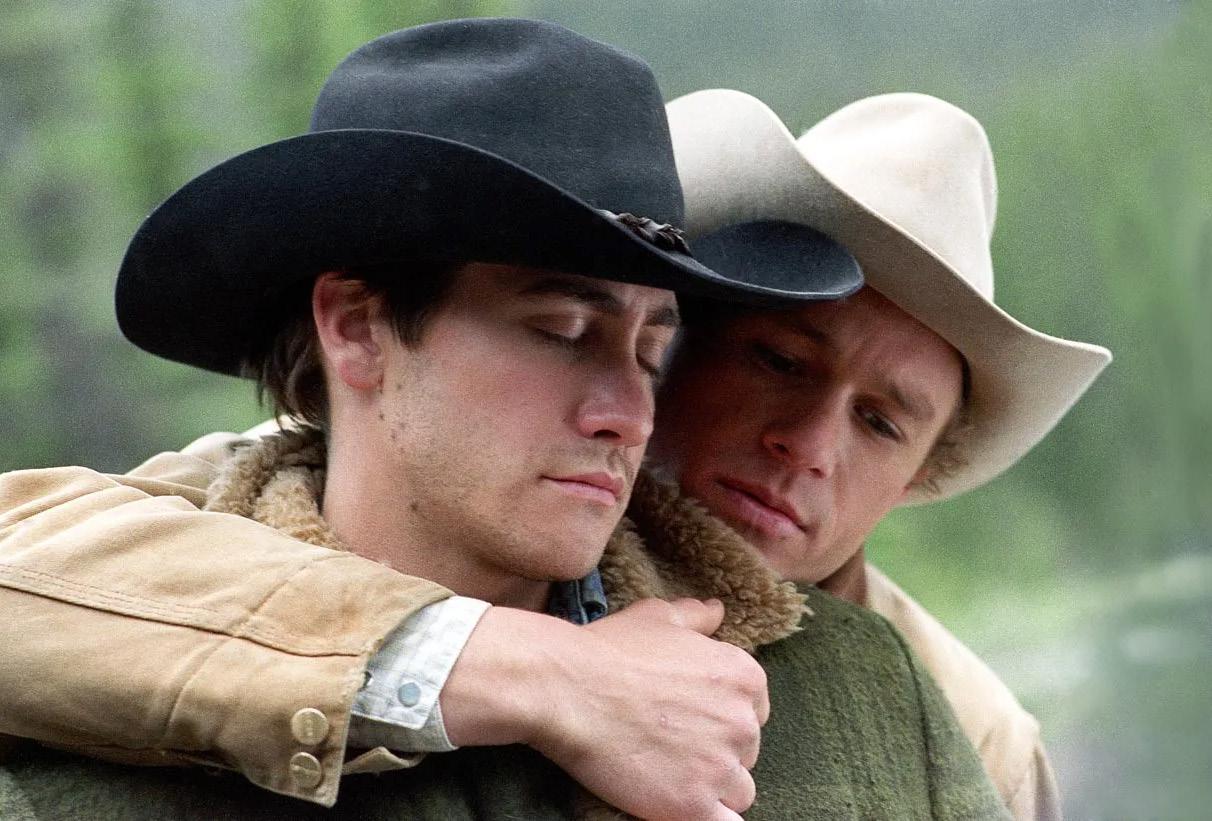
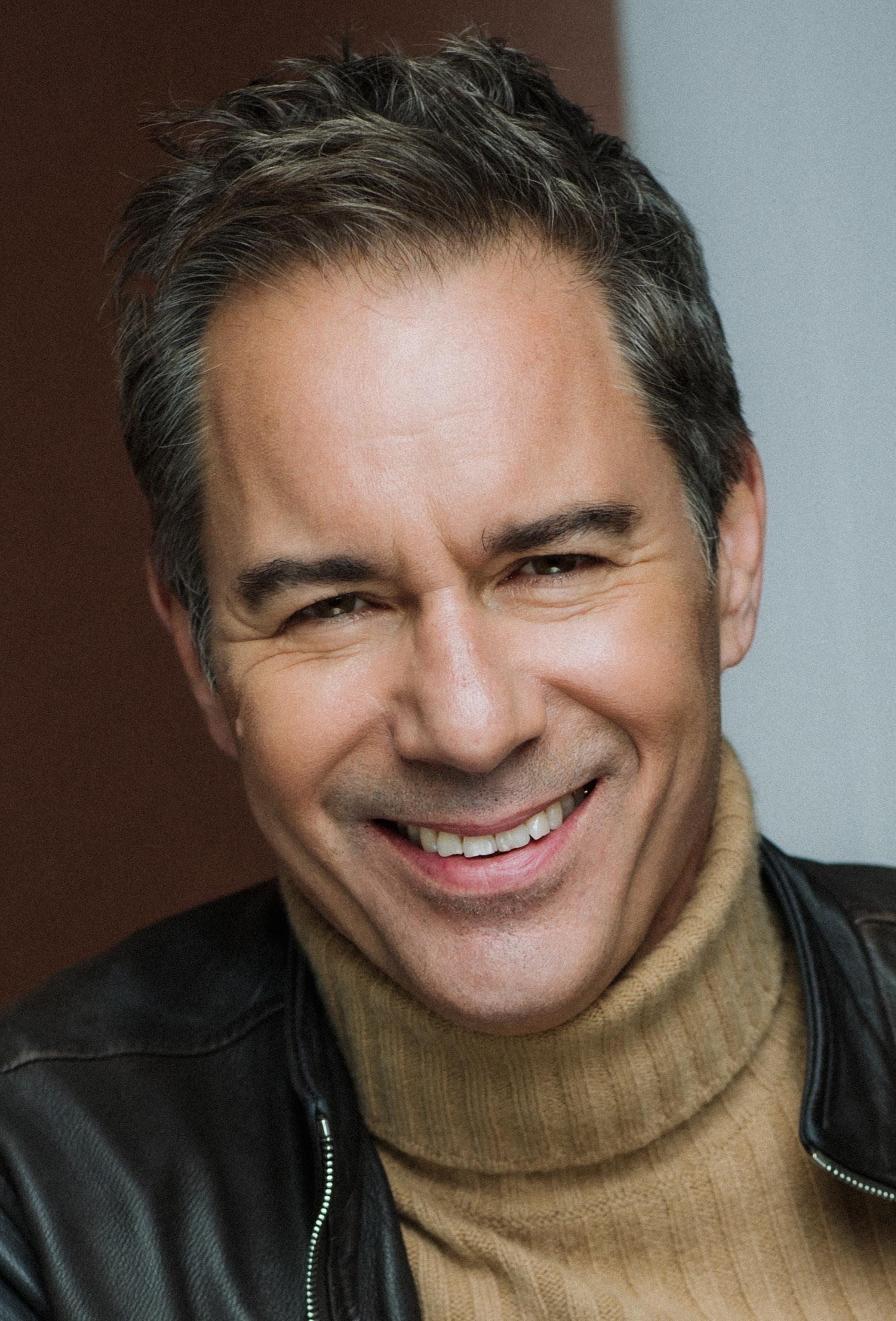
By Stephan Petar
In November 2022, the Audible Original Mistletoe Murders captivated worldwide audiences with the mysterious murders in the fictional town of Fletcher’s Grove. Starring Cobie Smulders (How I Met Your Mother), Raymond Ablack (Ginny & Georgia) and Anna Cathcart (XO, Kitty), the cozy-mystery holds an almost perfect rating on Audible’s site. The podcast is now in its fourth season and was adapted into a TV series by Hallmark.
Given the podcast’s success, it’s no wonder Audible is expanding the universe with Cathcart’s character, Violet Wilner. Middlebridge Mysteries follows Violet as she heads to university to study criminology. As she adapts to her new environment, she is instantly drawn to the mysterious circumstances occurring at Middlebridge. “Violet has always been a great character and loved by the listeners,” says creator Ken Cuperus. “It made sense to see what her life would look like outside of Fletcher’s Grove as she comes of age.”
Teaching her criminology is the renowned, but demanding, Professor Bellows. The role is portrayed by Will & Grace star Eric McCormack, whom Cuperus has been wanting to work with for some time. Professor Bellows is both a mentor and an obstacle to Violet. He sharpens her instincts, keeps her on her toes, and carries secrets that tie directly into her investigations.
In a Zoom interview with IN Magazine, McCormack shared more details about the show. “Here’s a guy that actually pushes her buttons, but he knows she’s smarter than the work she’s putting in,” he explains. “She’s ultimately his favourite student, but he’s got to kick her ass a bit. He sort of gets dragged down her crimesolving path, but he cares enough to do that.”
This isn’t the first time McCormack has played a lecturer. For three seasons, he portrayed Professor Daniel Pierce on Perception. He also pulled a bit of inspiration for his Middlebridge role from Professor Charles W. Kingsfield Jr., a character on the 1970s series Paper Chase. “It took place in a law school, and the teacher was played by John Houseman. We’d be glued to him,” he says, pronouncing Houseman’s name in an English accent.
While known for his television roles, McCormack is no stranger to the audio format, despite this being his first scripted podcast series. He smiles as he recalls a stint at Toronto radio station CHUM, when he was 14 years old, and at CBC Radio. He even narrated the audiobook version of Armistead Maupin’s Sure of You from the book franchise Tales of the City
One difference between recording an audiobook and a podcast series, he points out, is that the podcast allowed him to channel one character, as opposed to voicing multiple characters. Recording the series also required a lot of imagination. He compares the experience to actors starring in a dinosaur movie who know the prehistoric creatures will come to life in post-production. “The fun of the job is coming up with all the other elements in your head, knowing that they’re going to be there later,” he says. “When I listen to this, it’ll be like, ‘Oh God, that sounds like it’s really on a campus.’”
When asked how Will, Grace, Karen and Jack from Will & Grace would do if confronted with a Middlebridge-type mystery, the
actor admits it would be chaotic. “It’s actually kind of a funny idea,” he says. “It would be very funny because the only person focused on trying to solve the crime would be Will.”
Reflecting on the legacy of Will & Grace
McCormack’s most iconic role was Will Truman in the NBC sitcom Will & Grace. The original series ran for eight seasons between 1998 and 2006, and in 2017, it was revived for three additional seasons. Throughout that run, Will & Grace received 83 Primetime Emmy nominations, with trophies awarded to each cast member. The series was a trailblazer, with many sitcoms building upon its legacy.
McCormack occasionally rewatches the show if it’s airing, and reveals that he is still surprised by some episodes. “The show was very alive, as scripted as it was, but on show night they’d throw the script out a lot and write new lines for us,” he explains. “A lot of the stuff that made it to air, the lines that became iconic or memorable, are lines we had never said before.”
With the revival, the streaming of episodes and the maturing of its original audience, the actor is noticing a shift in his dialogue with fans. “Years ago, it was, ‘My girlfriend really likes your show.’ Then within a few years, it was, ‘My wife and I watch your show together,’” he shares. “Now it’s 20-year-old gay guys going, ‘Oh my God, my grandmother, she’s dead now, loved your show!’”
When the original series aired, McCormack remembers the reception from the gay community being generally positive. However, he did note some criticism, with feedback that “he’s not gay enough. He doesn’t have enough boyfriends,” he recalls.
He says the best compliment he gets is when gay men tell him they were more like Will Truman than they thought. “I think it took time for young men to grow up and go to college and maybe become lawyers,” he says. “Like Will, they want to find someone, they want to find a husband, they want children.”
He acknowledges that the most common piece of feedback is how the show helped fans come out. “It’s not people going, ‘That show is funny.’ It’s people saying that it helped them with their mother or grandmother.… That’s my favourite thing.”
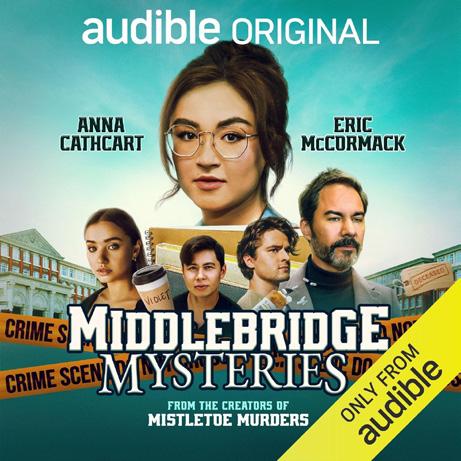
Listen to Middlebridge Mysteries and a new season of Mistletoe Murders on Audible.ca.
His 1993 murder exposed the dangers of living authentically in a world not ready to understand. Three decades later, Teena’s story continues to shape how North America talks about gender, justice, and who deserves protection
By Christopher Turner
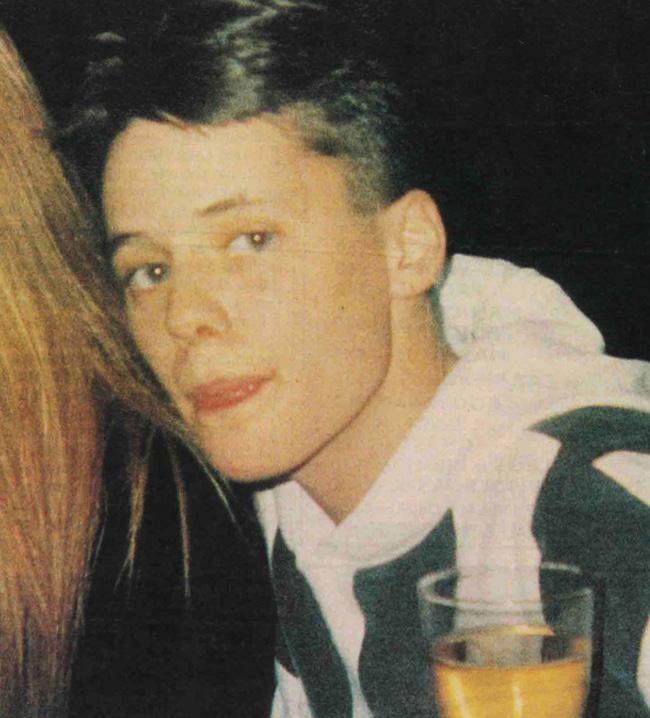
On New Year’s Eve, 1993, in a quiet farmhouse outside of Humboldt, Nebraska, three people were murdered: Brandon Teena, a 21-year-old transgender man with big blue eyes; Lisa Lambert, a 24-year-old mother who had offered him refuge; and 22-year-old Phillip DeVine, a friend of Lambert’s who was visiting with his girlfriend for the holidays. The murders would go on to shock far beyond the small town. In both Canada and the United States, the shocking hate crime would eventually help reshape how we understand identity, safety, and the right to be believed.
The killers – two local men, John Lotter and Tom Nissen – had raped Teena just days before the New Year’s Eve murders. When Teena went to the police following the assault, he named both of his attackers and asked for help. The police did nothing. What happened next would not only expose devastating institutional failures but would ripple across North America, influencing hate-crime laws in both the United States and Canada, inspiring award-winning films, and reshaping how the world talks about gender identity.
During Teena’s lifetime (1972–1993), there was almost no awareness about trans – or any kind of gender-variant – people in the small town of Humboldt, especially in Teena’s family and circle of friends. More than 30 years on, Teena’s story isn’t just one of violence, and one that is part of queer history – it’s a mirror. His courage to live authentically, and the indifference that met his decision, still challenge us to ask: whose lives are we willing to protect?
Here’s a look back at the events surrounding the tragic 1993 murder of Brandon Teena.
Brandon Teena was born biologically female on December 12, 1972, in Lincoln, Nebraska, to single mother JoAnn Brandon. She was widowed eight months before he was born, after Teena’s father died in a car accident in Lancaster County, reportedly as a result of alcohol-related circumstances. Shortly after birth, Teena (who was then called Teena Ranae Brandon) and his older sister, Tammy, went to live with their maternal grandmother; they would stay with her until their mother reclaimed them after she remarried in 1975 (when Teena was three years old and Tammy was six). The impoverished family then resided in the low-income Pine Acre Mobile Home Park in northeast Lincoln. The family wasn’t a particularly happy one, and the marriage didn’t last long; the pair divorced in 1980.
Teena had a difficult childhood that involved not fitting in, conflict and extensive sexual abuse. As young children, both siblings were sexually abused by their uncle for several years; Tammy reported this to their grandmother but was ignored. Teena eventually sought counselling for the abuse in 1991, when he was 19.
But, before those counselling sessions, Teena struggled. From a young age, feeling like a boy but living in a girl’s body, Teena gravitated towards boyhood, insisting on short haircuts and wearing boys’ clothes to school (first St. Mary’s Elementary School, followed by Pius X High School in Lincoln). In high school, he was assaulted by a classmate, but he dropped the charges after reporting the crime. His junior year, he attempted suicide by antibiotic pills and he spent time in the Lincoln Crisis Program, which diagnosed him with a personality disorder and in 1992 labelled him “transsexual” – a term that is now considered incorrect and outdated.
Teena began using the first name “Brandon” as a teenager and began openly living as a man, a decision that alienated some in his conservative community but gave him a sense of self that he had always craved. He fully embraced a male identity and frequently used masculine variants of his dead name (a term for the name a trans person was given at birth, or the name they used prior to transitioning). These variants included Billy Brinson, Billy Brandon and, as we use in this story, Brandon Teena. As a teenager he bound his chest with Ace bandages, wore baggy shirts to further hide his chest and, when he started to date, stuffed a sock in his pants, using the bulge to convince local girls that he was indeed a boy.
Teena reportedly told his various girlfriends several different stories about himself, including that he was born intersex, that he had had gender-reassignment surgery, or that he was at the beginning of the surgery process.
While Teena did find some acceptance in those early years living as a boy, his mother admittedly struggled to understand and rejected his male identity, continuing to refer to him as her daughter –something she continued to do after his murder.
“As she was growing up, she was ornery and full of life,” Teena’s mother said in 2000. “She was a prankster, and she was a tomboy.”
Without a support system, Teena began skipping school, received failing grades, and was ultimately expelled from Pius X High School in June 1991, just three days before graduation. So, he enlisted in the United States Army shortly after his 18th birthday, hoping to serve a tour of duty in Operation Desert Shield. However, he failed the written entrance exam because he listed his sex as male. After that, Teena continued to present as male and largely supported himself with menial jobs and some petty crime. Following a number of convictions for cheque fraud that resulted in sentences of probation, Teena made the move to the Falls City region of Richardson County, Nebraska, in November 1993.
In Falls City, Teena found shelter with a young single mother, Lisa Lambert, with whom, by some accounts, he also had a brief romantic relationship. They lived in a dilapidated farmhouse in a rural area, along with Lambert’s baby from a previous relationship. He made friends and charmed nearly everyone he met – especially young women. Friends, who all purportedly assumed Teena was a biological male, described him as “sweet,” “kind” and “funny.”
Teena, almost immediately, began dating Lambert’s friend, a 19-year-old woman named Lana Tisdel, and fell in with a group of young people that included John Lotter (Tisdel’s ex-boyfriend) and Marvin T. Nissen, both of whom had criminal records and long histories of violence and instability.
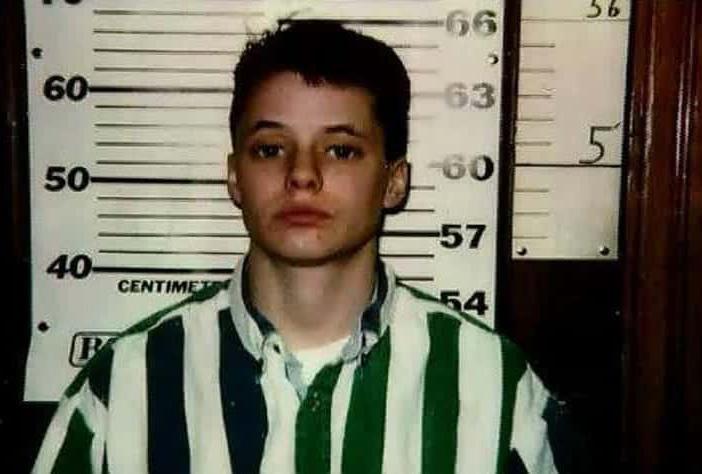
“Brandon was nicer and looked better than any boy I’d ever been with,” Tisdel later told journalist Donna Minkowitz in the original Village Voice article that launched mainstream awareness of Teena’s story. “With a lot of guys around here, it [doesn’t] matter what the woman wants, but Brandon wouldn’t tell a woman to do anything – he asked. He knew how a girl liked to be treated.”
Things were going well for Teena, but that only lasted for a few weeks. On December 19, 1993, he was arrested once again for forging cheques. A court appearance and subsequent notice in the local newspaper revealed his birth name and thus his biological sex.
The night everything changed
On the evening of December 24, 1993, Teena attended a Christmas party with Tisdel and their circle of friends, which included Lotter and Nissen. When rumours began to circulate about Teena’s gender identity – thanks to local police revealing his birth gender in the newspaper report of his court appearance – the tension in the room shifted.
According to The Atlantic, “Upon discovering Brandon was a biological female, Lotter and Nissen became obsessed with proving his anatomy to Lana, forcibly disrobing him in a bathroom on Christmas Eve, and hours later, raping him.”
After Teena was indecently and involuntarily exposed in the bathroom at the party and later sexually assaulted by Lotter and Nissen, he was treated at the local hospital and tested positive for traces of semen. Tisdel convinced Teena to file a police report, though Nissen and Lotter had warned Teena that they would kill him if he did so. Still, following his release from the hospital, Teena went to the Richardson County Sheriff’s Office, where he met Sheriff Charles B. Laux – a man who would later become infamous for his cruel and demeaning treatment of Teena.
Instead of offering compassion or protection, Laux interrogated Teena with hostility and disgust, fixating on his anatomy rather than on the assault that had happened hours earlier. His interview tape, acquired from the Richardson County Sheriff’s Department and later made public by documentary filmmakers, revealed a shocking lack of empathy. “Do you run around once a month or something?” the sheriff asked Teena. The recording would become one of the most chilling examples of institutional transphobia ever caught on tape.
“He didn’t fondle you any, huh. Didn’t that kind of amaze you? Doesn’t that kind of, ah, get your attention somehow that he would’ve put his hands in your pants and played with you a little bit?”
Although Teena named both of his attackers and there was ample evidence, no arrests were made. In fact, the sheriff told Lotter and Nissen about the report – effectively warning them. Within days, Teena’s attackers returned to finish what they’d started.
“What kind of a person was she? The first few times we arrested her, she was putting herself off as a guy,” Laux told Minkowitz in the original Village Voice article.
One week after the sexual assault, Teena was at Lambert’s farmhouse in Humboldt waiting for news about the case. Phillip DeVine, a young Black man who was an ex-boyfriend of Leslie Tisdel, was staying there as well. Lambert’s young son, Tanner, was also inside the home that night.
According to a later report by Tisdel, Lotter told her, “I feel like killing someone,” shortly before he did.
Around 1:00 am on December 31, 1993, Lotter and Nissen drove to Lambert’s house and broke in. The pair found Lambert in bed and demanded to know where Teena was, but Lambert refused to tell them. After Nissen searched the farmhouse and found him, Teena was shot. Nissen later testified in court that he had noticed that Teena was twitching, and he asked Lotter for a knife, with which he stabbed Teena to ensure that he was dead. Nissen also later testified that he shot Lambert in the stomach at this point. After leaving the room to find DeVine, and then returning with him, Nissen shot Lambert a second time. The two men then took DeVine into the living room, sat him on the couch, and shot him twice. Nissen then returned to the bedroom, where he shot Lambert again. The two men then left, threw their weapons and gloves onto a frozen river, and returned to Falls City.
Lambert’s mother discovered the three dead bodies the following day, all shot “execution style” as reported by the Village Voice Lambert’s infant son was also still there and was not harmed. DeVine was slumped over the couch in the living room, having sustained two gunshots to the head. Lambert sustained three shots to her chest and head. Teena was shot twice under the chin and then stabbed in his liver.
When police arrived, they treated the scene with shocking indifference. It would later emerge that Laux’s office was careless at the crime scene and had ignored repeated warnings that Teena’s life was in danger. The murders were not a surprise: they were the tragic consequence of deliberate inaction.
Lotter and Nissen were arrested that afternoon, after which Nissen told deputies that he had witnessed Lotter shoot three people to death in Humboldt. Police went to the river, where they retrieved the gloves and weapons, including the knife’s sheath marked with Lotter’s name, tying them to the crime.
After both men were arrested and charged for the slayings of Teena, Lambert and DeVine, Nissen turned on Lotter. He testified against him in court as part of a plea deal, saying that Lotter was the mastermind in the Humboldt farmhouse that night. In exchange for his co-operation and testimony, Nissen was given a sentence of life imprisonment. Lotter, who was tried after Nissen, received the death penalty in Nebraska, a sentence that remains in place more than 30 years later.
The trials drew national attention – not only for the brutality of the murders but for what they revealed about the deep-rooted prejudices within small-town law enforcement and media. Court transcripts showed the sheriff’s negligence in chilling detail, and
advocates across the country began calling for change. That change came, but not immediately.
In 2001, after years of legal battles, Teena’s mother won a civil suit against Richardson County and Sheriff Laux. The Nebraska Supreme Court ruled that Laux had “failed to protect” Teena and “exhibited extreme indifference” to his rights. It was one of the first rulings in the United States to explicitly acknowledge law enforcement’s mistreatment of a transgender victim. The damages awarded to Teena’s mother – just under $100,000 – were small, but the verdict was enormous. For the first time, a court publicly affirmed that what had happened to Teena wasn’t just a crime of two violent men; it was a failure of an entire system.
As for those two men: Nissen rescinded his testimony against Lotter in September 2007, admitting that he was the primary assailant and that Lotter was merely his accomplice. In 2009, Lotter appealed his conviction, using Nissen’s new testimony to assert a claim of innocence. That appeal was rejected by the Nebraska Supreme Court, which held that since (even under Nissen’s revised testimony) both Lotter and Nissen were involved in the murder, the specific identity of the shooter was legally irrelevant. In the years that have passed since the original trials, all appeals and requests for re-hearings have been denied at all levels of the legal system.
Today, Lotter is at Tecumseh State Correctional Institution, while Nissen is at the Lincoln Correctional Center.
How the media told (and distorted) Brandon Teena’s story Teena’s murder became national news almost immediately, but the early coverage was rife with sensationalism and transphobia. Reporters misgendered Teena repeatedly, referred to him as “a woman who lived as a man,” and framed the case as one of deception rather than violence.
It was a different time and there was little awareness about trans or any kind of gender-variant people, but the framing of Teena’s story was deeply influencing public perception. To mainstream audiences, Teena’s story was not that of a trans man fighting to live authentically – it was a “tragic impostor” tale. The nuance of his identity and humanity was erased.
That transphobic narrative began to change with the release of The Brandon Teena Story (1998), a documentary directed by Susan Muska and Greta Olafsdottir that used police interviews and local footage to restore some of that humanity. But it was Boys Don’t Cry (1999) – Kimberly Peirce’s Oscar-winning film – that cemented Teena’s story in cultural memory. Boys Don’t Cry memorably starred Hilary Swank as Teena and Chloe Sevigny as Tisdel. For their performances, Swank won, and Sevigny was nominated for, an Academy Award.
Swank’s performance was widely praised; she also won the Golden Globe and numerous other accolades. Yet, as trans advocacy grew in the 2000s and 2010s, Boys Don’t Cry faced growing criticism for casting a cisgender woman in a trans man’s role and for omitting DeVine entirely from the story. The film, while groundbreaking, was also emblematic of Hollywood’s blind spots: celebrating empathy while erasing intersectionality.
Still, Boys Don’t Cry shifted something in pop culture. For many, it was the first time they had seen a transgender character portrayed with dignity and depth, not as a caricature. It opened doors for conversations about representation, about who gets to tell whose stories, and about the cost of visibility in a world that still punishes difference.
From Nebraska to North America: The legal and cultural ripple effect
In the United States, Teena’s murder became a rallying cry for federal hate-crime legislation. Although Nebraska itself resisted change for years, national advocacy groups cited his case and Matthew Shepard’s 1998 murder as proof of the urgent need for legal reform. Sixteen years later, in 2009, the Matthew Shepard and James Byrd Jr. Hate Crimes Prevention Act expanded federal hate-crime laws to include crimes motivated by sexual orientation and gender identity.
In Canada, both Teena’s and Shepard’s stories resonated deeply. In the late 1990s, Canada was undergoing its own reckoning with queer and trans rights. However, it wasn’t until 2017 that Bill C-16 formally added “gender identity and gender expression” to the Canadian Human Rights Act and Criminal Code – an achievement won through decades of activism that was, in part, fuelled by stories like Teena’s.
Remembering the victims: Beyond a single narrative
It is impossible to talk about Brandon Teena without also naming Lisa Lambert and Phillip DeVine. Lambert, a 24-year-old single mother, had offered Teena a place to stay when he feared for his life. DeVine, a 22-year-old Black man, was in the wrong place at the wrong time – but also the victim of a system that rarely recognizes intersecting forms of prejudice.
For years, Lambert’s and DeVine’s names were left out of the retellings. DeVine’s complete omission from the story, particularly in Boys Don’t Cry, was not incidental – it reflected how stories of Black victims, especially those adjacent to queer narratives, were often sidelined in mainstream media.
Writer and director Kimberly Peirce penned Boys Don’t Cry after reading the previously mentioned Village Voice piece about Teena. Peirce herself claimed that she “fell in love with Brandon” and needed to tell his story. She did heavy research; however, in the process of telling his story for the big screen, she admitted thinking that “the story [grew] stronger as she deleted material and altered facts.” In doing so, the filmmaker inadvertently angered many people involved with the true story, and became the centre of lawsuits after the award-winning film was released in theatres in 1999. The real Lana Tisdel (played in the film by Chloe Sevigny) sued the filmmakers and Fox Searchlight Pictures, “alleging that because of the film, friends and family members now scorn her as ‘a lesbian who did nothing to stop a murder,’” according to a Los Angeles Times report.
The legacy of Brandon Teena
Three decades later, Brandon Teena’s name remains a shorthand for both tragedy and change. His murder forced conversations that few were ready to have: about how gender is policed, how the
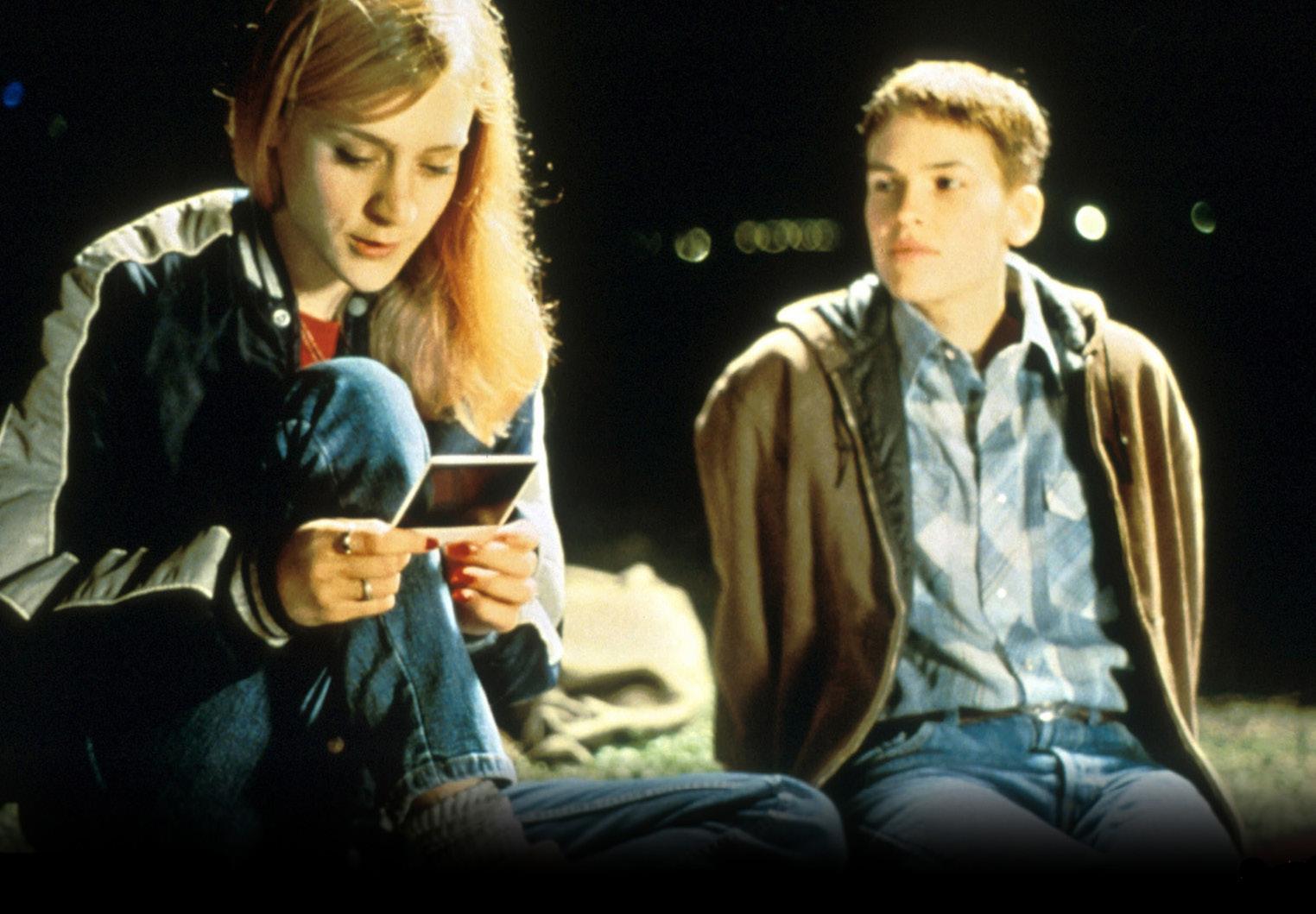
media shapes empathy, and how justice systems fail those who don’t fit their expectations.
Today, in both the United States and Canada, his story still informs policy debates, from hate-crime protections to trans healthcare access. Advocacy organizations such as the Human Rights Campaign, Trans Equality Canada and Pflag Canada continue to cite his case as an inflection point in the fight for trans rights. And yet, as anti-trans legislation and violence rise across both countries, Teena’s story feels newly urgent. It is no longer only a story from 1993 – it’s a mirror reflecting how far we’ve come, how far we’ve stepped backwards, and how far we have left to go.
Teena was not a symbol when he lived. He was a young man who doodled hearts around Tisdel’s name and was trying to figure out love, identity and belonging. He was full of hope. That hope was stolen by hate, but his courage – his decision to live as himself – endures. It endures in every law rewritten to protect trans lives, in every journalist who now asks for a person’s pronouns before writing their story, in every trans youth who finds strength in seeing someone like Teena remembered with dignity, even when dignity isn’t always shown.
It’s worth noting that Teena is buried in Lincoln Memorial Cemetery in Lincoln, Nebraska. His headstone is inscribed with his deadname, and the epitaph reads daughter, sister, & friend
The story of Brandon Teena is, ultimately, about more than a murder. It is about the value of being seen – and the moral cost of looking away.
• December 25–26, 1993: Brandon Teena is raped by John Lotter and Tom Nissen; Teena is treated in hospital and then reports the rape to the Richardson County Sheriff’s Department; the sheriff’s office fails to promptly arrest suspects.
• December 31, 1993: Brandon Teena, Lisa Lambert and Phillip DeVine are murdered at Lambert’s farmhouse near Humboldt, Nebraska.
• 1997–1998: Nissen receives a life sentence; Lotter is sentenced to death; appeals follow.
• 1998/1999: The documentary The Brandon Teena Story (1998) and feature film Boys Don’t Cry (1999) bring national attention and help change the narrative around the case.
• 2001–2002: The Nebraska Supreme Court holds Sheriff Laux liable for failing to protect Brandon and for abusive treatment; damages are set at just under $100,000.
• 2025: Lotter remains on Nebraska’s death row; repeated appeals are denied. Nissen is still in jail.
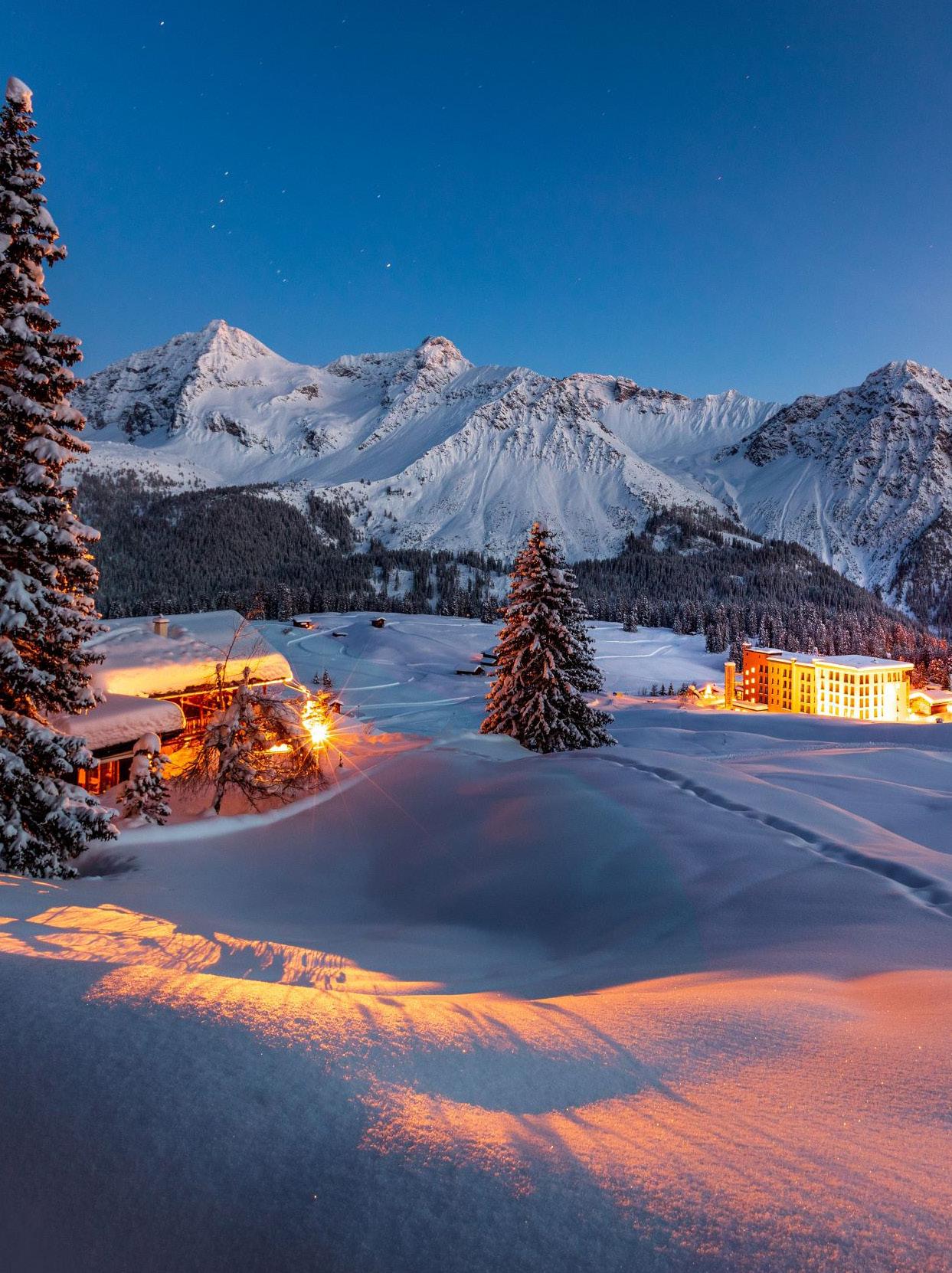
From mountain hut revelry to drag queens on skis, Arosa Gay Ski Week in southeastern Switzerland proves that the Alps have never looked this fabulous
By Doug Wallace
Thankfully, the lights at the pool at the Faern Altein Hotel have been dimmed. My partner is in full-on unicorn-patterned bikini swim trunks, but I’m playing it more low-key. Not five minutes after wading in, we are sloshing around the pool’s lazy river channel with dozens of fit men. It’s a warm welcome, and a little bit handsy – which sets the tone for the week at the 20th annual Arosa Gay Ski Week in the Swiss Alps.
I’ve been here before, maybe 10 years ago, and I well remember the moonlit snowshoeing, après-ski flirting, spa time and easy skiing – all excellent reasons for a return visit. “It becomes more fantastic every year – the energy is incredible,” says festival director Alex Herkommer. “This past year, more than 900 people came from all over the world, with a big increase in the number of guests from North America. They get to discover European culture while enjoying world-class skiing in the Swiss Alps.”
Guided skiing helps you make friends from Day 1, with groups heading up the chair lifts and gondolas each morning, organized according to ski skills. Lunch meet-ups on the mountain take in the various huts and pit stops, before après-ski parties and group dinners back in town fuel the furnace. Music performances (mostly classical) take place in the early evening, followed by a themed bash of some kind each night. “We balance the parties with the cultural events, the classical music,” Herkommer says. “But you don’t have to do everything. People can just do what they like.”
Herkommer has been running the show with a team of organizers and volunteers for the past 15 years. The Arosa group is a non-profit, with the money going back into the festival itself to help with marketing initiatives and talent bookings. Unlike some of the larger, more commercial gay ski weeks in Europe, Arosa offers more free events, lower prices and a more intimate experience. “The mountains, the
charming Alpine village and the mix of luxury and laid-back mountain vibes make it really special,” Herkommer says.
Arosa is reachable by winding highway, but we take the train, a twoand-a-half-hour journey south from Zurich to the Graubünden region of Switzerland. Although it has a population of only 3,000, Arosa manages to hit multiple price points in terms of accommodations and restaurants, with lift tickets well below the prices of premium resorts like Zermatt and St. Moritz, as well as those of Austria and France.
The ski hill merged with neighbouring Lenzerheide in 2013 to create a double-whammy ski offering linked by a giant peak-to-peak gondola. Well-groomed slopes deliver 225 kilometres of terrain – from 1,230 metres to almost 3,000 metres – with four aerial tramways, four gondola lifts and 18 chair lifts ferrying everyone around. Visitors can add in cross-country skiing, sledding runs and winter hiking…if the skiing and snowboarding don’t play you out first.
We collapse into wooden lounge chairs covered with wool pillows and blankets at the famed Tshuggenhutte halfway up the hill, and case the patio for a waiter and a lunch menu. A few drag queens and shirtless models in cool ski gear flit about, posing for pictures. The sun is so bright, most people are wearing their goggles; all the better to peoplewatch (i.e., stare), while sharing bottles of wine and charcuterie platters, and smoking. Whenever is Europe going to stop smoking? The Swiss are so famous for their tiny little glasses of goodness – tulip-shaped glasses of monk-made beer, shots of schnapps, cordial glasses of eau de vie. I’m sitting beside someone in a Balmain ski suit, which makes me feel like I look even more homeless than I normally do. It’s definitely a scene and we are eating it up, along with a giant bowl of french fries. I half expect James Bond to show up any minute.
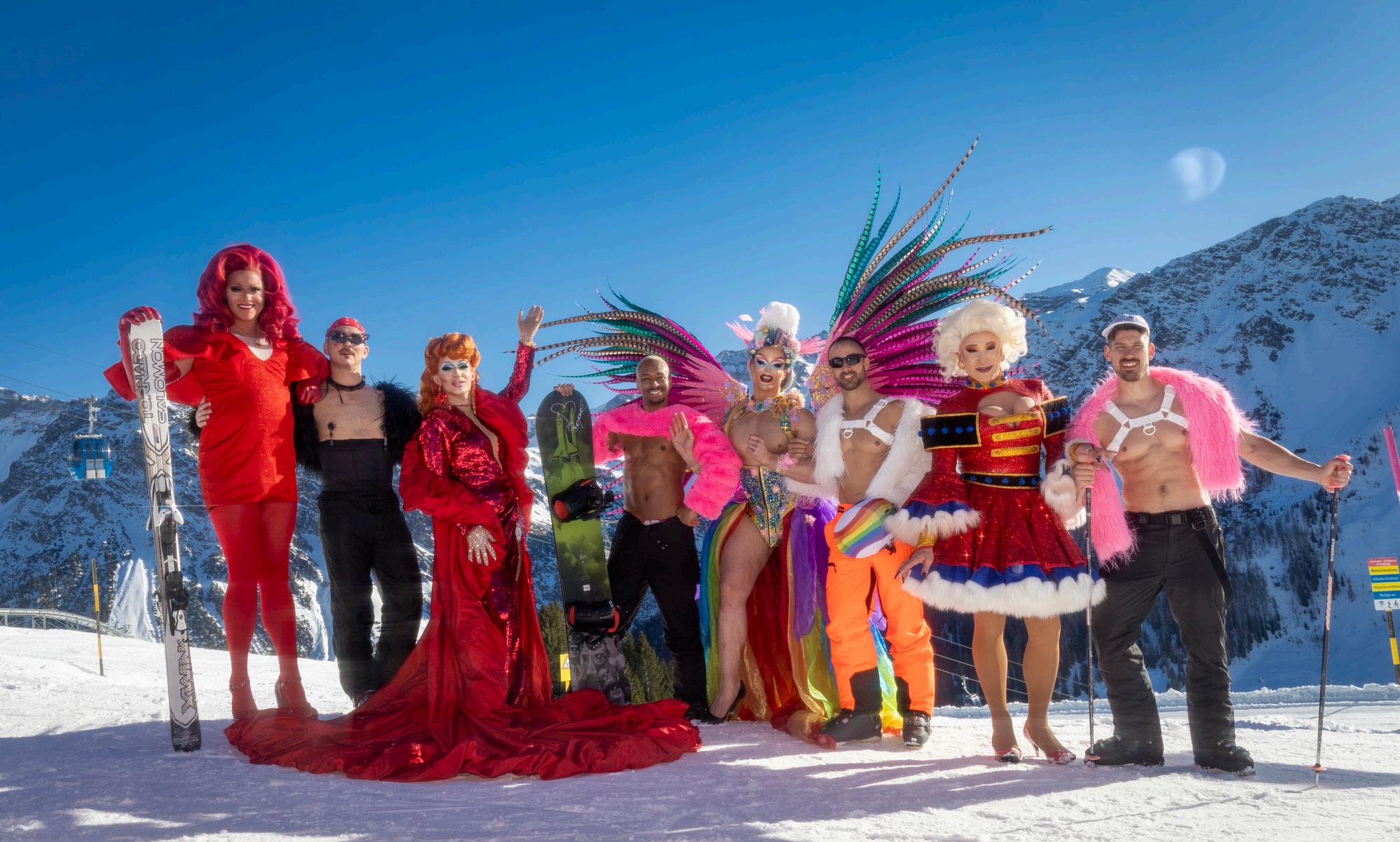
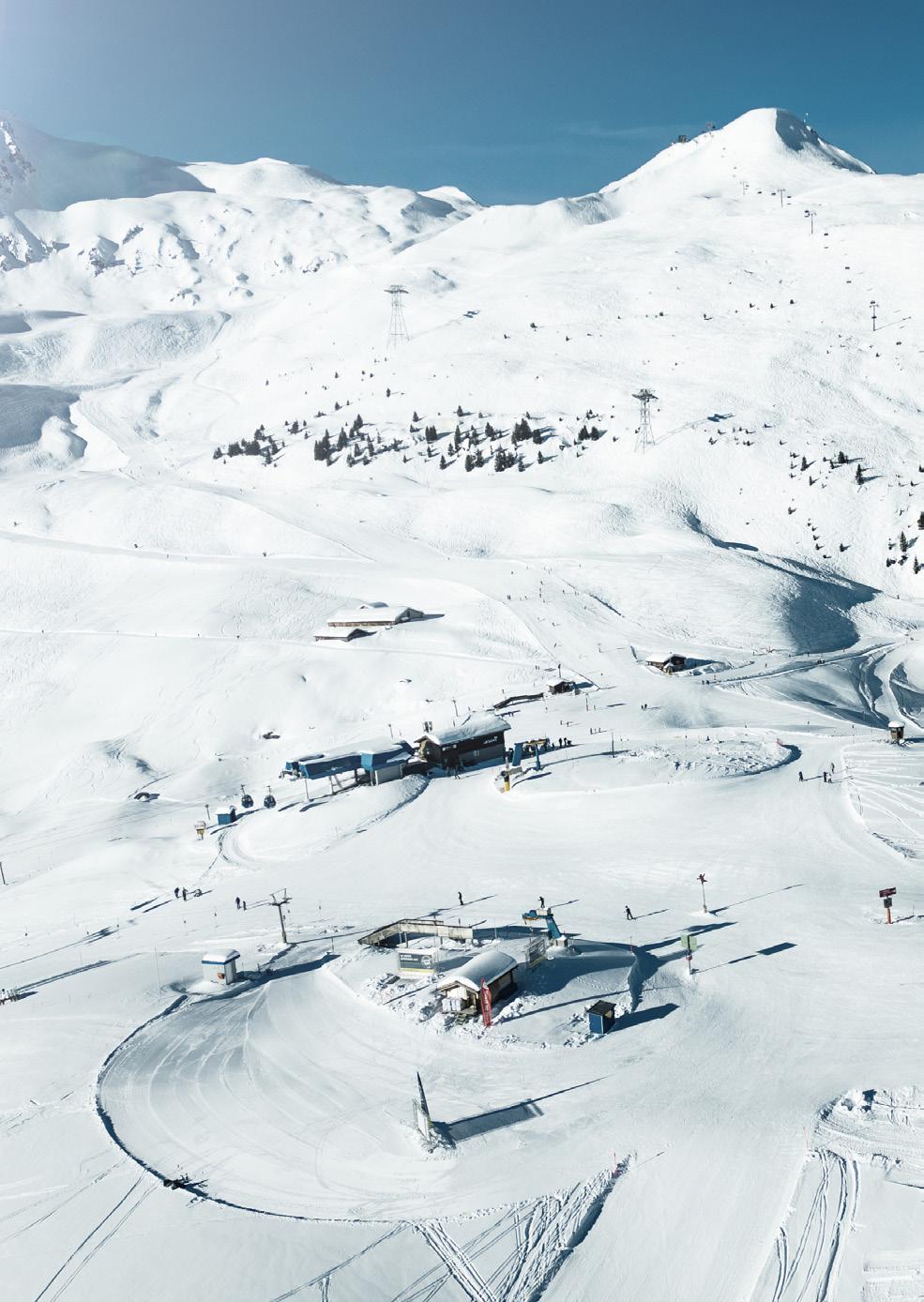
With each touchpoint throughout the event agenda, we meet more and more people, and on it goes. The après-ski crowd late-stayers cross over with the early cocktail-hour folks, a seamless transition like ships in the night. Me, I need a disco nap in order to keep up with all the revelry, and then I need meat and potatoes. And cheese, lots of cheese.
At the 30- and 40-seat group dinners, participants wander into whichever restaurant is hosting that night, and find a chair, turning strangers into pals long before the food arrives. “I spoke with a couple who said they had met at Arosa Gay Ski Week,” Herkommer says. “They sat beside each other at a group dinner, and now they’re married.”
At Aifach restaurant (yes, sound it out!), family-style platters of exquisitely simple food are gone in a few minutes with eight hungry men around the table. After asking if we are still hungry, the server brings second helpings – a gesture that couldn’t be more welcoming or more demonstrative of Arosan hospitality. This is all washed down with Swiss wine, of course – labels we’ve never heard of, as not enough of it is made to export. This is an exclusive party, indeed.
One of the more eccentric of the Arosa ski week events sees everyone in leather shorts – no, it’s not what you think! We take a taxi to the bottom of the hill, then catch a 10-person snow coach that takes us up a snowy trail to the Alpenblick mountain hut for the Schlagernacht. Translation: an evening of kitschy German songs (schlager means “hits”) with catchy melodies and sentimental lyrics that everyone knows. Informed that the dress code is either plaid shirts or lederhosen
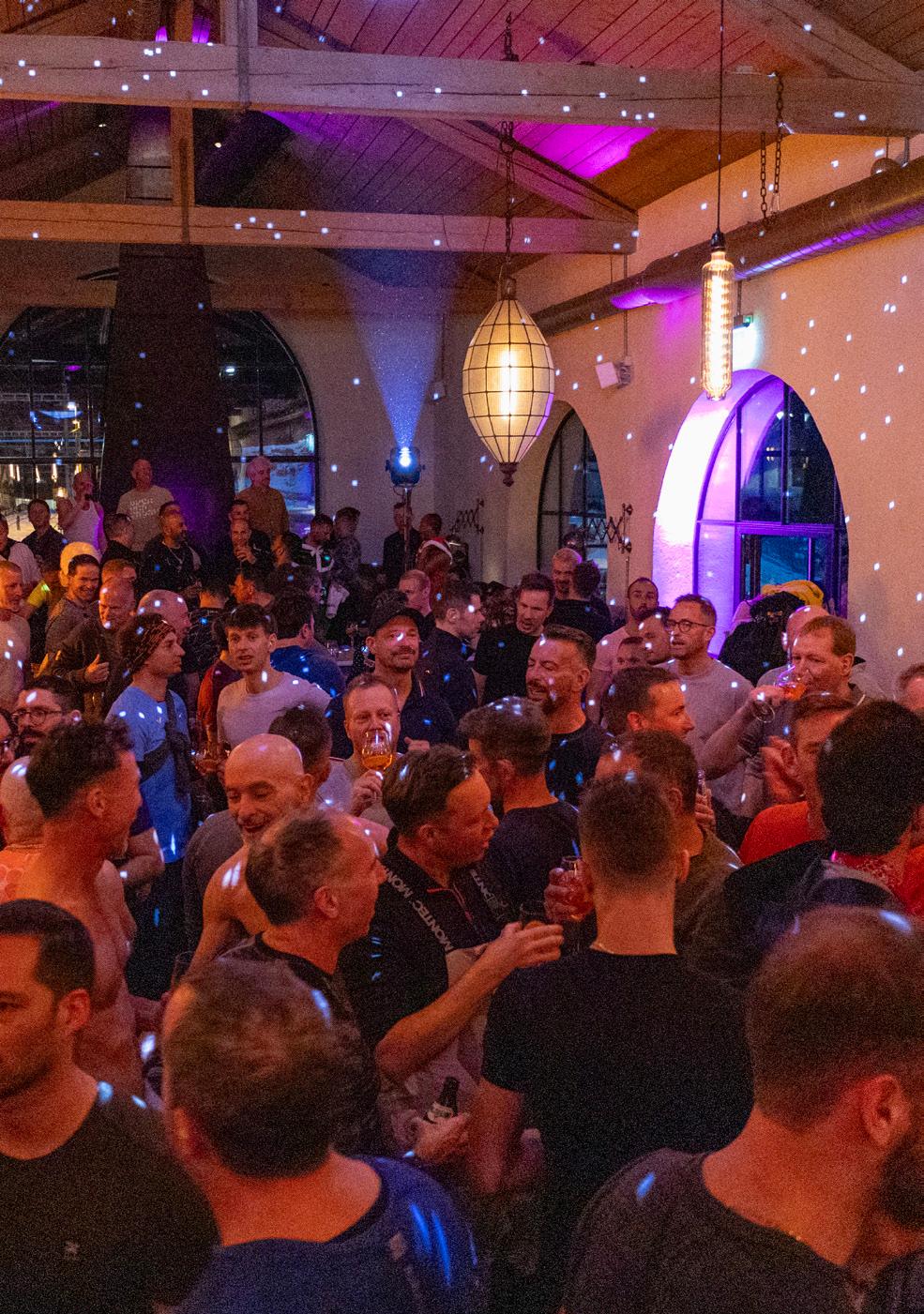
(traditional Bavarian leather breeches), we show up in matching red plaid flannel shirts with Canadian flags sewn onto our sleeves. Cue the giant mugs of beer and the singing along. The party songs ring in our heads all the way back down the mountain. I muse that I haven’t gone to a party on a snowmobile in decades.
Like Alpenblick, the businesses in town pull out all the stops for Arosa Gay Ski Week. “The local businesses and hotels go out of their way to make our guests feel at home,” Herkommer says. In fact, the city council is in the process of applying for the Swiss LGBTI-Label, a stamp of approval for organizations based in Switzerland. It’s a bestpractice standard showing that a company is genuinely committed to inclusion. “The fact that an entire Swiss resort town supports and celebrates LGBTQ visitors is a powerful statement about inclusivity in tourism,” Herkommer says. “I think we can be a good example for other ski resorts, to get others open to diversity.”
On our final full day on the slopes, we join the festivity at Carmennahütte mountain restaurant, where everyone has gathered along with the regular ski crowd to witness the Drag Race, an “Alpine Glam Competition,” featuring anyone who has a fabulous outfit and wants to participate. A white gala dinner at the top of the Weisshorn peak at 2,650 metres brings the festivities to a head with a black-lit smorgasbord of traditional Swiss gastronomy and, of course, more singing. The fun continues back in town with the White SnowBall, with outfits that are exceedingly more skimpy than they were at dinner. The Boy Band Project belts out everyone’s favourite ’90s boy-band songs with gusto. I know all the words this time.
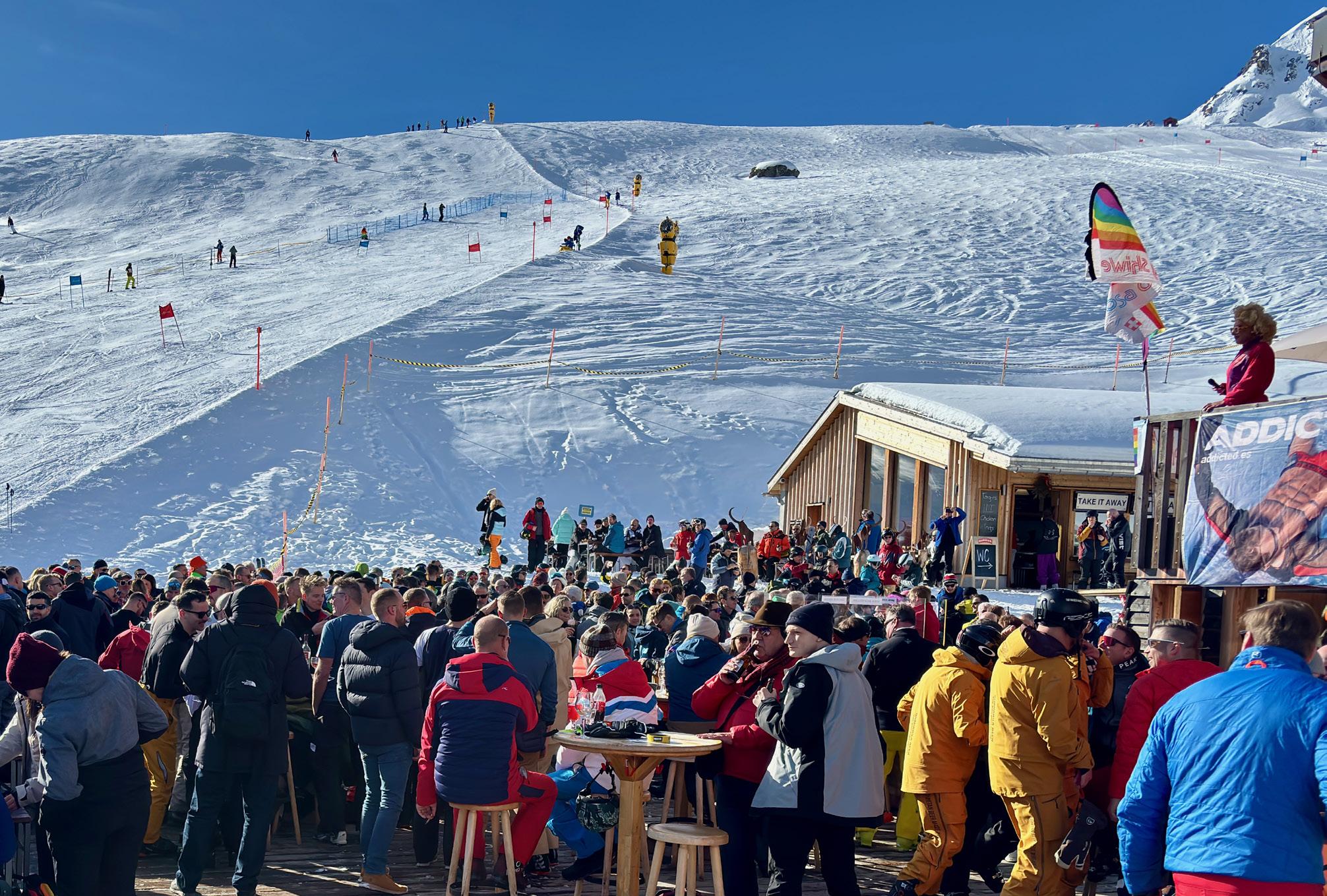
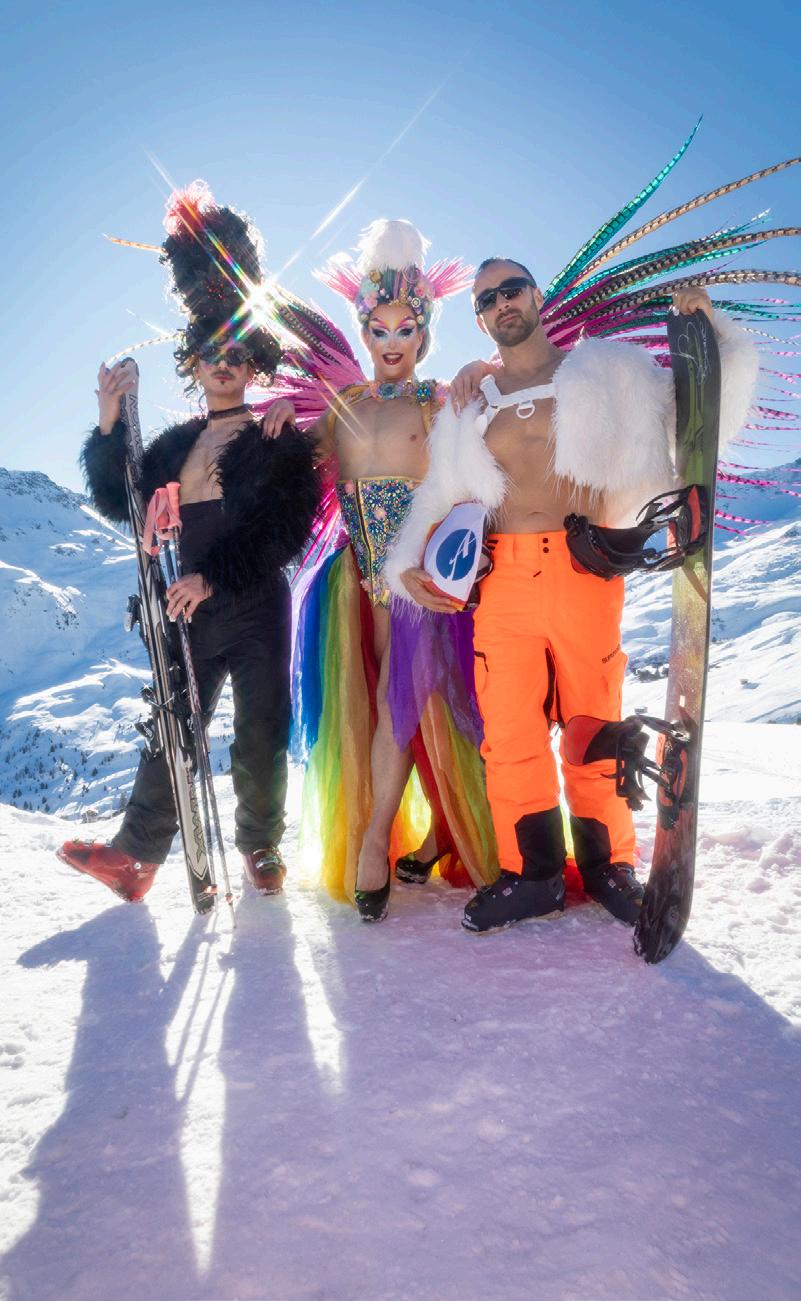
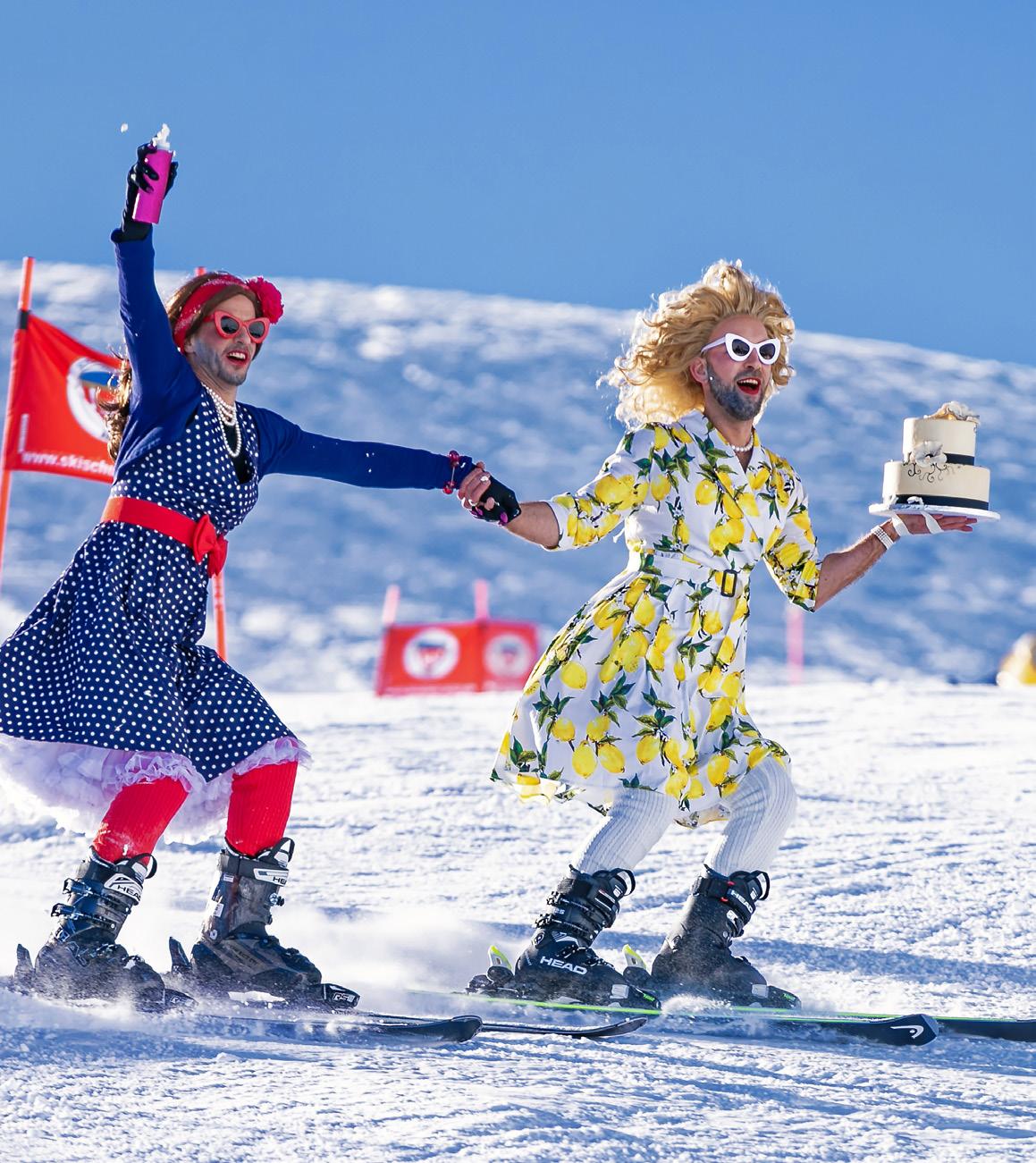
Beverly LaSalle Is Murdered On All In The Family (December 25, 1977)
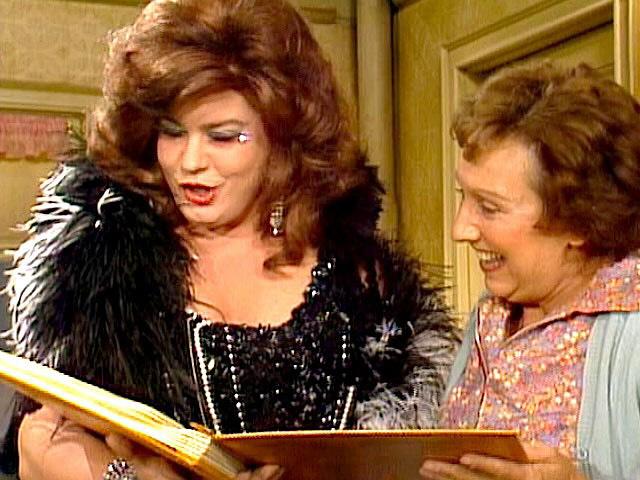
All in the Family shook up television in 1975 with the first trans character that was not used as a comedic relief. Beverly LaSalle, who was played by an actual female impersonator and actor known as Lori Shannon, became a recurring character after Archie Bunker saved her life one night when he performed CPR on her in his cab in the Season 6 episode “Archie the Hero.” Beverly would teach both Archie and his wife, Edith, about accepting and loving queer people through her unwavering acceptance of herself. Of course, the Bunkers bumbled through using pronouns and understanding Beverly, but they still cared for her.
Beverly appeared on three different episodes of All in the Family. Her third and last appearance was in Episode 13 of Season 8, “Edith’s Crisis of Faith: Part 1,” which was directed by Paul Bogart, and originally aired on CBS on Christmas Day, December 25, 1977. In that episode, Beverly, who has
no surviving family members, has Christmas dinner with the Bunkers. Just prior to her departure from the Bunker home, the audience is, for the first (and only) time, able see a glimpse of Beverly dressed as a man. After leaving the Bunker home, Beverly (dressed as a man) and Mike are attacked and beaten up as they walk together to a subway station. Beverly risks her life to save Mike, and ultimately suffers fatal injuries.
Later, Mike notes that he didn’t think the “rotten kids” who attacked them were after their money, with the rest of family also accepting that their intent was to harm Beverly.
Edith is left to grieve and must come to terms with the violent and senseless death of her friend at Christmastime. Her faith is shaken and she curses God because she can’t grasp how someone so loving could be murdered.
IN Magazine is grateful to our corporate and community partners who together, through their generous financial and in-kind support, contribute to our mission of celebrating and elevating Canada’s 2SLGBTQI+ communities 365 days a year.
PRESENTING SPONSOR