
25th November 2025
25th November 2025
• DMC aspire to a redevelopment of the Site for a commercial / light industrial end use
• The site is in metropolitan greenbelt which presents a challenge under NPPF. DMC believe Very Special Circumstances apply
• DMC first approached LBH in 2018 with proposal but have been repeatedly rejected until 2024
• Re-development will include remediation of the Site that will provide permanent, lasting improvement and eradication of fires
• Major constraint is sites designation as metropolitan greenbelt
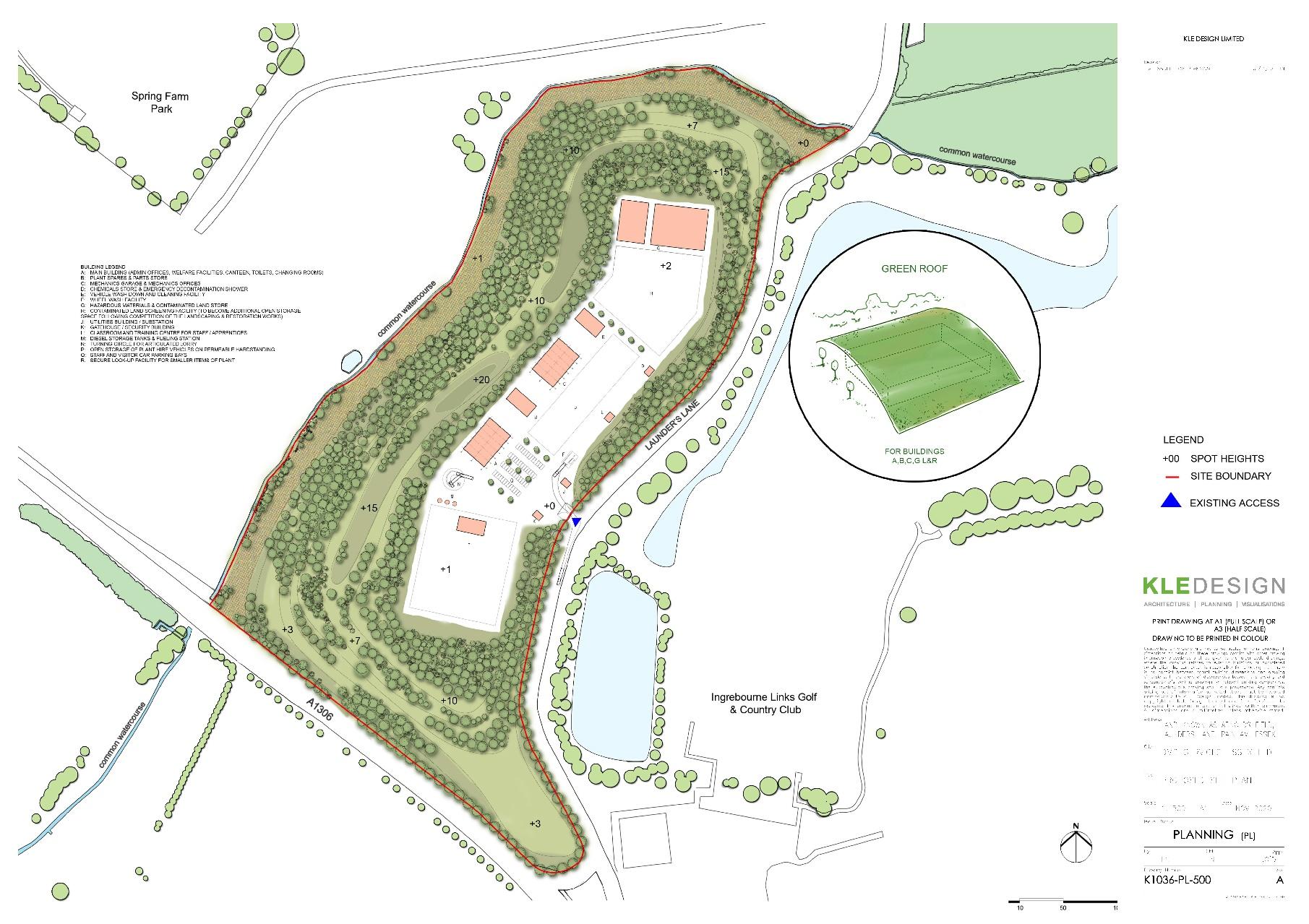
• DMC currently preparing a scoping report to submit to LBH, including air quality, ecology, ground conditions, etc.
• JR, & Contaminated Land Determination have diverted resources away from Scoping Report
• Some of the reports that were previously prepared now need to be updated as submission delayed due to Cont. Land Determination.
• Remediation Proposals first submitted to LBH October 2022, involving:
• Vegetation clearance and topsoil strip;
• Waste, sorting, screening, segregation;
o Recover useable materials e.g. concrete, metals bricks, ceramics
o Remove deleterious material e.g. plastic, paper, combustibles
o Off-site disposal of unacceptable materials
o Recycle inert materials to produce soils and aggregates
• Waste Compaction / Stabilisation (Earthworks)
o Strip off-restoration soils where present
o Compact / stabilise underlying waste
o Installation of geomembrane over waste, where required
• Site re-profiling / Cut and Fill (Earthworks)
o Reduce elevation in central area, fill in voids and remove steep slopes / uneven ground
o Create development platform
o Soil treatment to remove contamination (by recognised methods)
• Removal of Dangerous Waste
o e.g. LPG cylinders, putrescible wastes
• Backfilling of Excavations / Voids
• Excavations / voids created by the removal / treatment of wastes will be backfilled and compacted appropriately, to prevent settlement (and fires ..)
• Construction of Restoration / Capping Layer
• Final layer of soils will be suitable for use and will meet commercial end use criteria
• Layer will be of sufficient thickness to provide a capping layer to waste below
• Foundations
o Piled due to waste thickness
• Buried Services
o To be constructed of protective materials
• Backfilling of Excavations / Voids
• Excavations / voids created by the removal / treatment of wastes will be backfilled and compacted appropriately, to prevent settlement (and fires ..)
• Construction of Restoration / Capping Layer
• Final layer of soils will be suitable for use and will meet commercial end use criteria (not contaminated)
• Layer will be of sufficient thickness to provide a capping layer to waste below
• Installation of gas protection measures
• All buildings will be constructed with gas protection measures
o Polymer / cement coating applied by broadcast spray
o Not used previously in this application
o Typically used as daily cover on landfill sites so very temporary
o Will require vegetation to be stripped and will look like a grey mass of cement (check out the website) . https://halcyonenvironmental.com/posi-shell/
o May require importation of 300mm of subsoil (equiv. to @ 45000m3 of soil), permit required or purchase as primary resource
o No guarantee of success at prevention of fires in this scenario
o Does not provide a permanent solution
• Polymer / cement coating, supply only to cover 75% site £375,000 equiv. to @1875 tnes waste removal
• Cost of application (unknown) estimate ~£4.0 /m2 @ £600,000 equiv. to @3000 tnes waste removal
• Cost of vegetation strip ~1.20/m2 equiv. to @702 tnes of waste removal
• Cost of disposal of green waste ~£30/tne @£1.75 million equivalent to @8750 tnes waste removal
• Cost of import (without waste permit) of 300mm sub-soil ~£30/m3 £1.35 million equivalent to @6750 tnes waste removal
• Environmental permit for import if using waste @£30,000 equivalent to @150 tnes waste removal
• Monitoring / Testing /Consultants / Reporting @£30,000 equivalent to @150 tnes waste removal
• LBH estimated expenditure to date ~£1.0 million equivalent to @5000 tnes waste removal
• Approx. 5000 tnes of waste could have be removed for the LBH expenditure to date
• The cost of the proposed spray cover is equivalent to ~21,397 tnes of waste removal (estimated total quantity waste 47,385 tnes)
• Planning permission would allow the site to be a viable proposition for DMC and provide long-term income to support remediation and site development
• Requires recognition of VSC under NPPF and co-operation from LBH
• Planning permission would include amenity facilities for use by residents
• Provides a long-term sustainable approach and end to fires