By Arthur Miller



GUIDE 2025/2026 Season
Directed By
Melia Bensussen

By Arthur Miller
GUIDE 2025/2026 Season
Attending live theater is a unique experience with many valuable educational and social benefits. To ensure that all audience members are able to enjoy the performance, please take a few minutes to discuss the following audience etiquette topics with your students before you come to Hartford Stage.
• How is attending the theater similar to and different from going to the movies? What behaviors are and are not appropriate when seeing a play? Why?
• Remind students that because the performance is live, the audience affects the performance. No two audiences are exactly the same and no two performances are exactly the same—this is part of what makes theater so special!
• Theater should be an enjoyable experience for the audience. Audience members are welcome to applaud when appropriate and laugh at the funny moments. Talking is distracting to other audience members and the actors on stage. Theaters are constructed to carry sound efficiently!
• Any noise or light can be a distraction, so please remind students to make sure their cell phones are turned off. Students should not text, or take photos or video during the performance.
• Students should sit with their group as seated by the Front of House staff and should not leave their seats once the performance has begun.
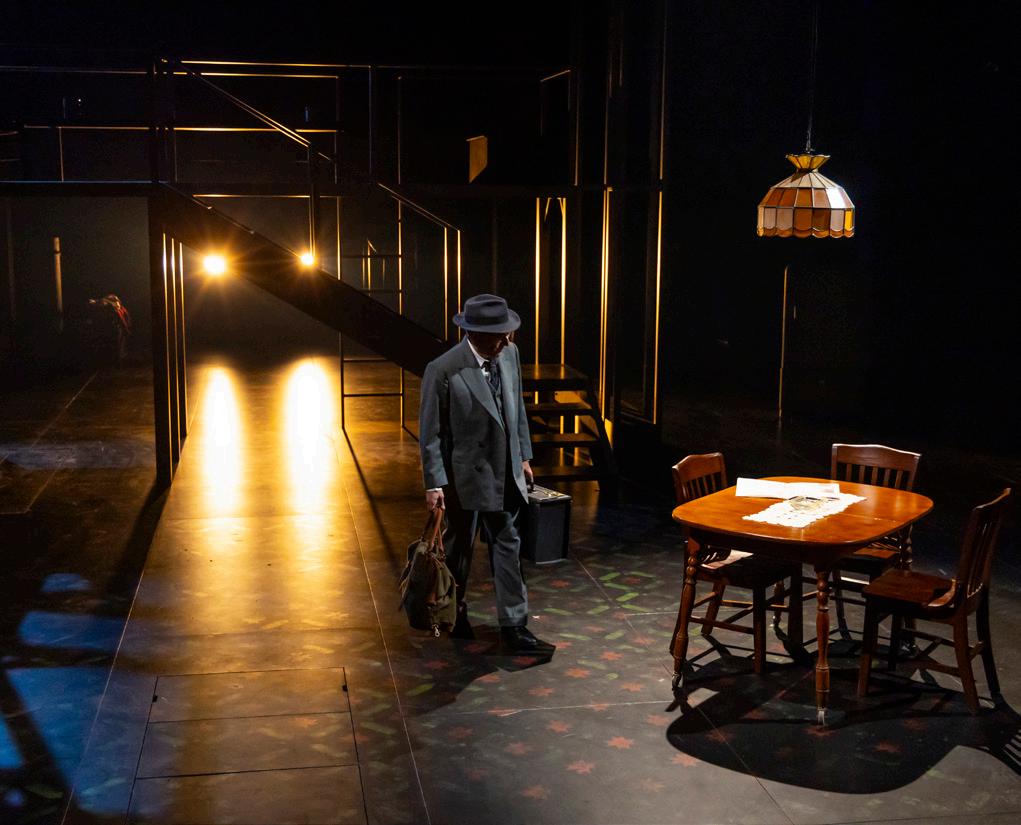
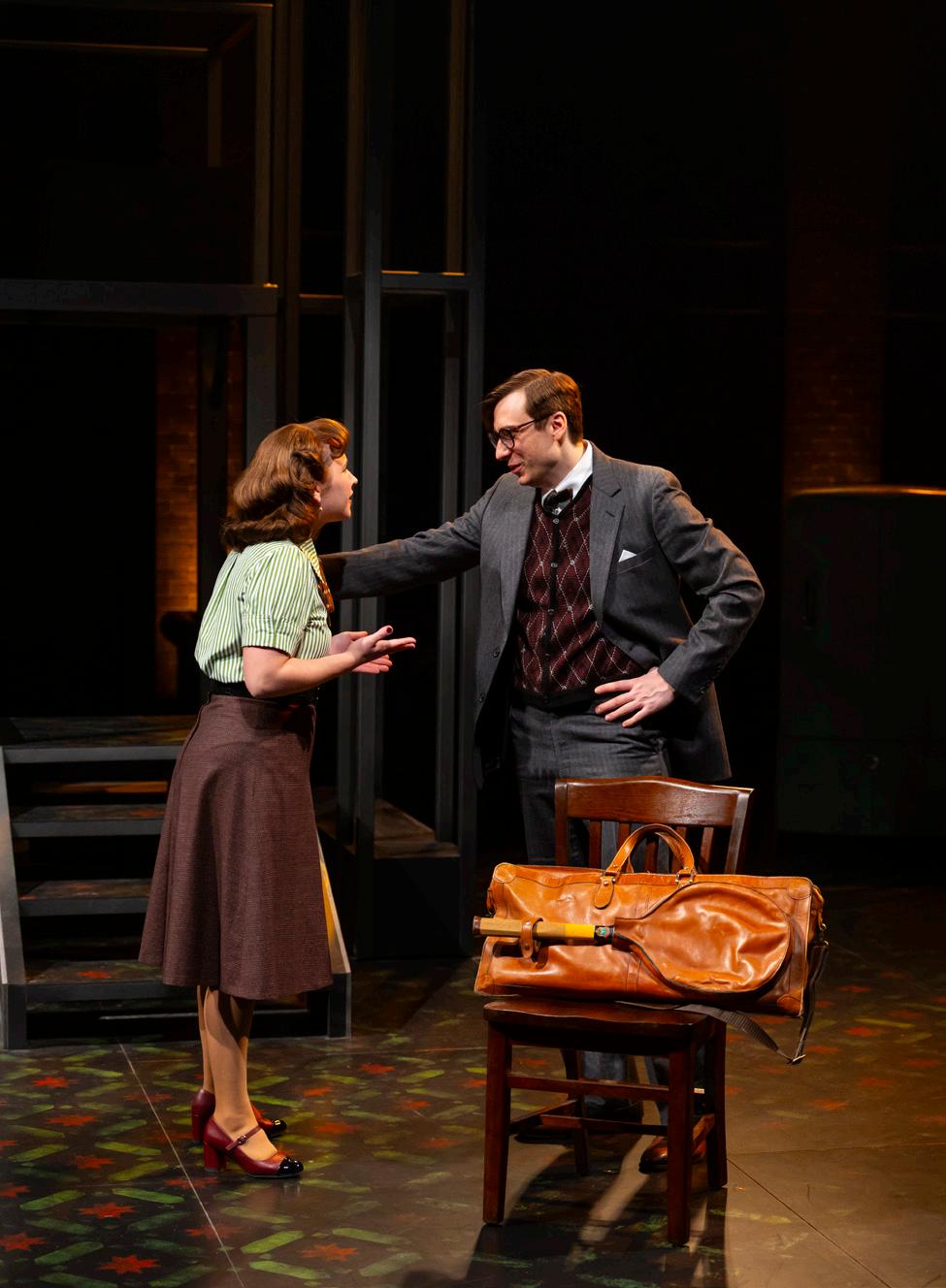
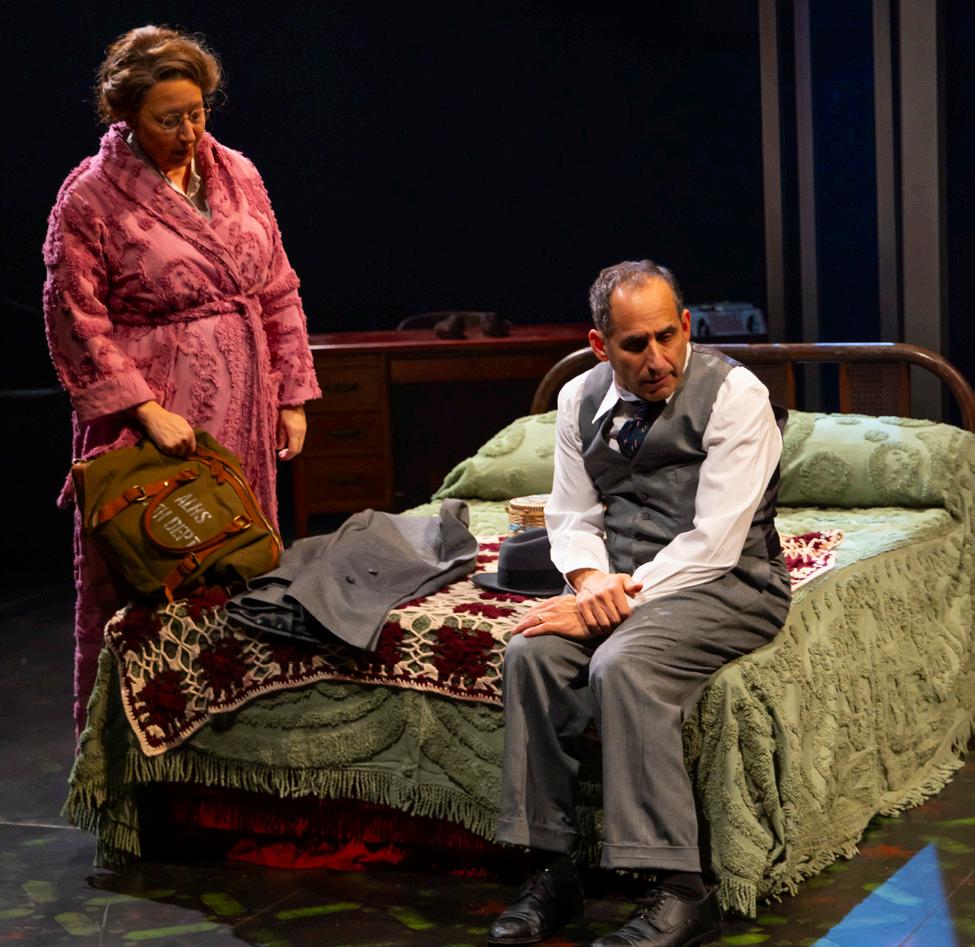
Death of a Salesman is a memory play: it takes place in the present and in the past. The action begins in Brooklyn at the home of Willy Loman, an aging salesman who has just returned from a road trip. Willy is having difficulty remembering events and distinguishing the difference between the present and the past. Seeing Willy‘s exhaustion, Linda, his wife, suggests that he request a job in New York rather than travel each week to Boston.
Biff and Happy, their sons, are awoken by Linda and Willy conversing. The scene shifts to them and they discuss their lives and whether or not they have been successful. Happy brags that he has had many women. Biff wonders why Willy is so hard on him. Happy tells Biff that many times when Willy talks to himself he is usually talking to Biff. Biff admits that he isn‘t sure what he wants from life, but believes that something is out there for him. He brings up the idea of going to see his old boss, Bill Oliver, and asking him for a loan in order to buy a ranch out West. Happy and Biff overhear Willy talking to himself. The boys decide to go to bed and the lights shift to Willy in the kitchen.
As Willy makes a sandwich, he speaks with Biff in the past and we go back to a time when Biff is getting ready for a football game. Willy tells
Biff and Happy about his trips as Bernard, their neighbor‘s son, comes in. Bernard is a meek and mild young boy with his mind constantly on school. Bernard tells Willy that Biff is failing math and will not graduate unless his scores improve. Unfortunately, Willy dismisses this important news because Biff is well-liked and Bernard is not. After Bernard leaves, Willy and Linda discuss how much Willy made from sales. They realize that it‘s not quite enough to pay the bills, but know that they will get by somehow. Linda continues to talk, but Willy‘s memories begin to blend together and The Woman enters. We see a brief encounter between The Woman and Willy. We hear snippets of Linda, Bernard, and The Woman laughing until Willy is brought back to the present when Happy comes down the stairs.
As Happy checks in on Willy, Charley, their neighbor comes over to check on Willy. Charley sends Happy back to bed and Charley suggests that he and Willy play a game of cards. While playing cards, Uncle Ben appears to Willy and he relives an old conversation with Ben while simultaneously talking with Charley. Willy becomes confused by the two different discussions and accuses Charley of cheating. Charley leaves and Willy continues to speak with Ben. We go into a flashback when Willy introduces Ben to Linda, Biff, and Happy and they talk about Ben‘s enterprise in Africa. Willy, jealous of his brother, tries to show off by sending Biff and Happy to a construction site to steal materials to rebuild the deck right in front of Ben. Willy asks him to stay for a few days, but Ben leaves to catch a train.
We come back to the present as Linda interrupts Willy‘s dream. Willy asks Linda about his diamond watch-fob and she tells him that he pawned it many years before to put Biff through a radio correspondence course. Willy decides to go take a walk and leaves the kitchen. Biff and Happy come down the stairs and ask Linda what is going on. Linda tells them not to worry too much, but also says that it would be good for Willy if they both settled down. Linda tells them
that Willy is on straight commission and has been borrowing money from Charley in order to pay the bills. She also tells them that Willy is suicidal and has been keeping a rubber hose attached to the water heater. Biff is appalled by this, but also realizes that he may not have been the best son.
Willy overhears his wife and sons talking and comes back to the kitchen. Biff states that people have been laughing at Willy for years and Willy tells Biff to go back West. Happy tries to calm the situation and tells Willy that Biff has a plan to open his own business and to visit his old boss. Willy is overjoyed by this initiative and tells Biff how to act during the meeting. They all begin believing that things are starting to look up until Biff yells at Willy for treating Linda poorly. Willy and Linda head to bed to discuss their hopes for Biff‘s future. Meanwhile, we see Biff remove the rubber hose that Willy has hidden.
We begin Act Two the next morning with Willy preparing to visit his boss, Howard. Willy realizes that he is getting old and he wants to get a job selling in New York. Linda tells Willy that Happy and Biff would like him to meet them for dinner at Frank‘s Chophouse at six o‘clock. We see Willy leave and then enter Howard‘s office. Howard shows Willy a wire recorder, a new technology that records sound, and plays various things for him, including his daughter whistling and his son reciting the capitals of states. Willy confronts Howard about traveling and says that he is not able to do it anymore. Howard says that he has no job in New York for Willy. Willy persists and reminds Howard that he named him and that he was a very successful salesman when he worked for Howard’s father. Howard says that things must move forward and fires Willy.
As Willy tries to comprehend what has happened, Ben comes to him in another memory. Ben offers Willy a job in Alaska. Willy wants to do this; however, Linda enters and feels that it isn‘t the right thing to do. Willy, believing that Biff will be successful enough on his own to support the Lomans, turns down Ben. We transition to another memory of the Lomans
getting ready for Biff’s last football game. While packing up, Charley comes over to see what all the hustle and bustle is about, even though he knows they‘re getting ready for the big game.
The memory fades into reality as Willy arrives at Charley‘s office. Bernard is there visiting Charley before he leaves for Washington, D.C. While waiting, Willy and Bernard discuss why Biff has problems committing to a job. Bernard tells Willy that Biff changed right after high school when he visited Willy in Boston. Bernard questions Willy about what happened in Boston and Willy becomes defensive. After Bernard leaves, Willy speaks with Charley; he has come back to ask for more money to pay the bills. Willy tells Charley that Howard fired him and Charley offers Willy a job. Willy again refuses and leaves.

We then travel to Frank‘s Chophouse where Happy is waiting for Willy and Biff. While there, he speaks with Stanley, a waiter, and flirts with a young woman. Biff joins Happy and tells him that Oliver did not remember him and that he stole a pen from the office. Before Willy arrives, Happy tries to persuade Biff to tell Willy that things went well; however, Biff wants to tell the truth. After Willy arrives, he tells his sons that he has been fired. Biff tries to tell Willy what happened earlier in the day, but Willy keeps misunderstanding the truth. Biff gets angry with him and explains he stole Oliver‘s pen and
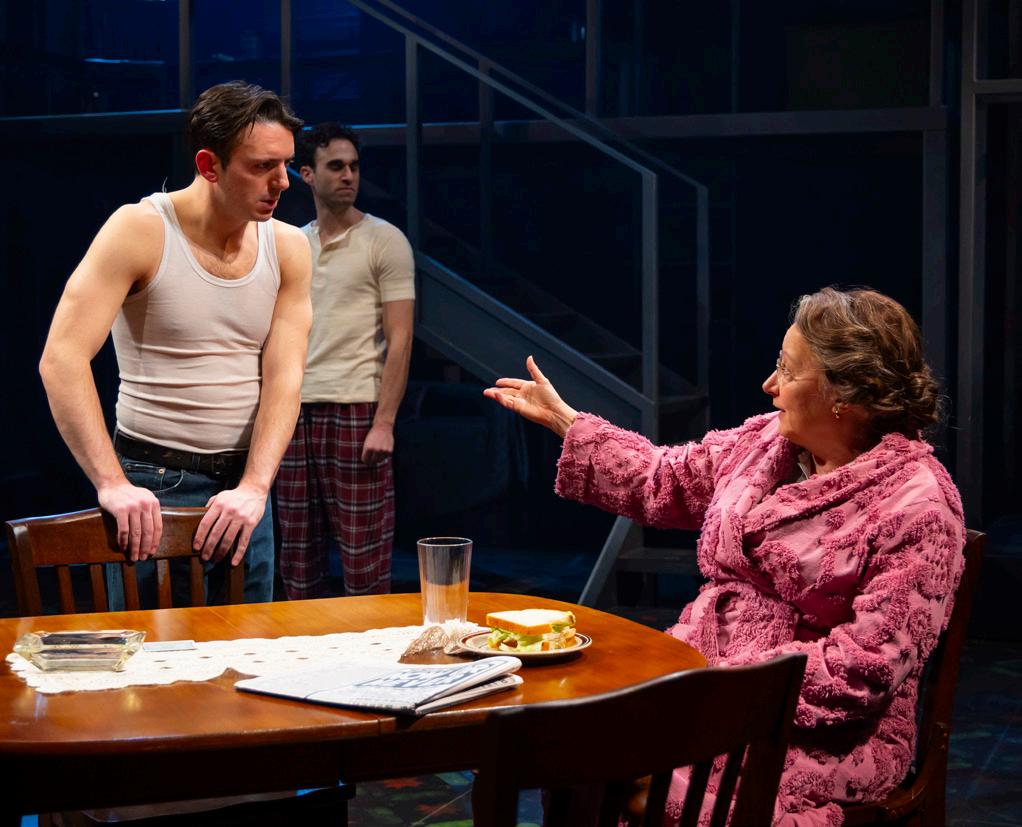
didn’t meet with him. Willy once again blends the present with the past and remembers the time when Bernard told Linda that Biff had failed math and would not graduate. Willy remembers when Biff came to Boston and as Willy comes to the present again, he leaves the table and goes to the bathroom. Biff and Happy argue about whose fault it is that Willy is having these problems and Biff storms out. Happy casually walks out with two young women.
In the bathroom, Willy relives Biff‘s surprise visit. After failing math, Biff went to Boston to tell Willy that he would not graduate from high school unless they could convince his teacher to pass him. During this Willy attempts to hide The Woman in the bathroom, but she comes out while Biff is in the room. Biff leaves immediately and calls Willy a fake. Willy comes back to the present and Stanley tells him that his sons have left and will meet him at home. Willy asks Stanley where he can buy seeds to plant a garden and leaves.
Biff and Happy get home later that night and Linda questions them about where they were. Happy tries to explain that they met two girls, but she yells at them for leaving Willy at the restaurant. Biff comes to his breaking point and decides to confront Willy. Linda tells him that Willy is planting a garden and Biff fully realizes that Willy has lost his mind. While working on the garden, Willy imagines Ben again.
During this memory, Willy does not remember a conversation with Ben, but makes up a new conversation instead. They discuss his plan to commit suicide, and Ben warns Willy that the insurance company might refuse to pay a settlement if he does this, and Biff might never forgive him. Biff comes outside and tells Willy that he is leaving home for good. Biff and Willy argue and Biff confronts Willy with the rubber hose, saying he will not pity him if he commits suicide. Biff believes that the Lomans have never been truthful with one another or themselves and that they are just ordinary people who can be replaced. Finally, Biff breaks down crying and tells Willy that he will leave in the morning. At that moment, Willy realizes that Biff always loved him. As Linda tries to get Willy to bed, Ben reappears and reminds him of the insurance policy that would be left behind if he dies. With this Willy gets in the car, drives away and crashes the car. We are taken a few days into the future where we see the Lomans, Charley and Bernard together at Willy’s grave. Linda
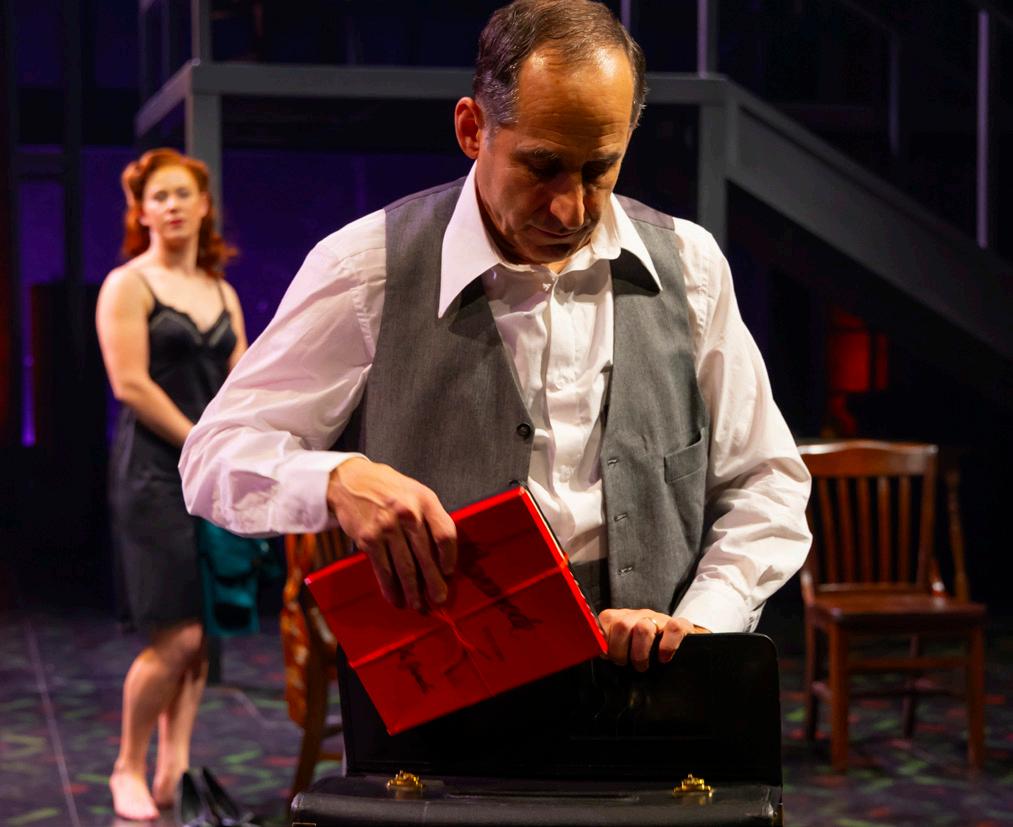
comments that there weren‘t a lot of people at the funeral, but Charley reminds them all that Willy was a great man. We are left with Linda telling Willy that the house is finally paid off and that they are finally free.
Reprinted courtesy of Milwaukee Rep.
Costume design illustrations by Harry Nadal.
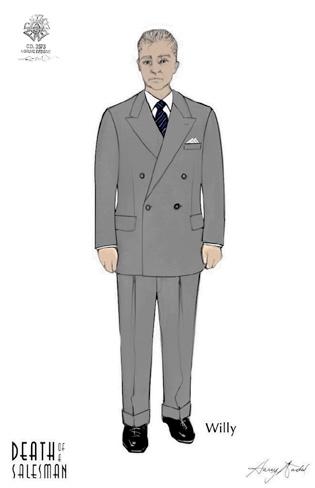

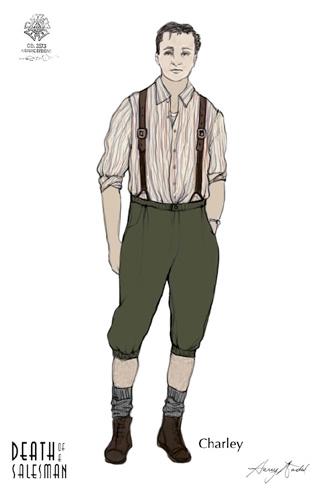
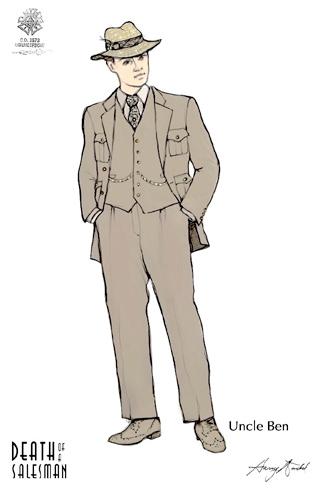
Willy Loman
An aging, traveling salesman battling mental decline and financial debts while nevertheless remaining committed to “the American Dream.”
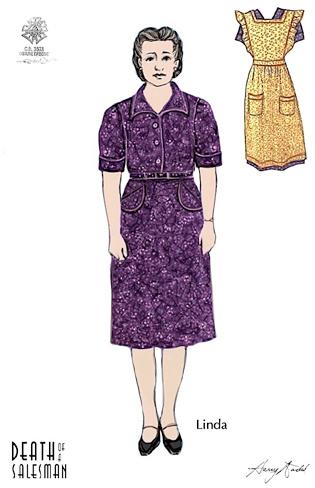
Willy’s wife, who stays devoted to him despite his shortcomings and setbacks.
Loman
Willy and Linda’s 34-year-old son, who has returned home after several years of working ranching/farming jobs in the West. Biff was a high school football star who never went to college.

Willy and Linda’s 32-year-old son who works a steady job as assistant to an assistant buyer in a department store. Happy has an apartment and devotes his energy to cars and women.
The Lomans’ neighbor. Charley is successful in business while Willy is not. He is perhaps Willy’s only real friend.
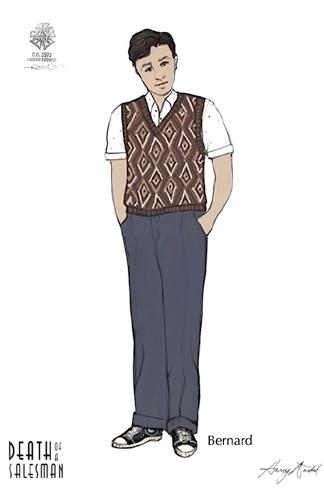
Charley’s son and a former classmate of Biff’s in high school. While Biff was popular then and Bernard was not—Bernard is now a very successful lawyer.
Ben Loman
Willy’s older brother who appears only in memories or hallucinations. Willy sees Ben as living the life of adventure and success that Willy’s experience did not offer him.
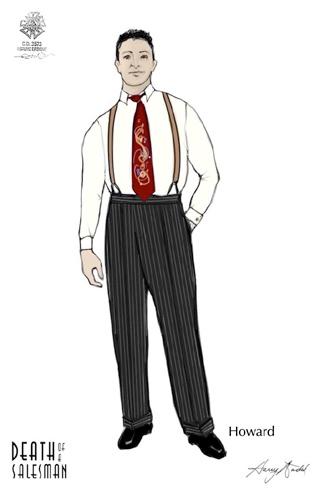
Willy’s boss—a young man and the son of Willy’s previous boss—Willy has known Howard all his life and remembers well the day he was born and being a part of naming him.
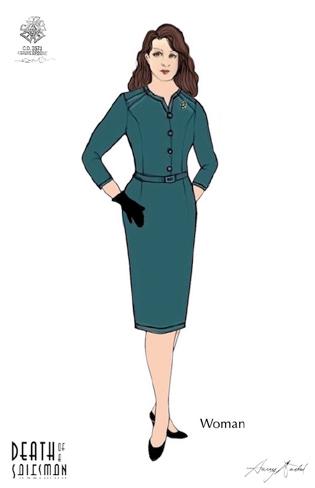
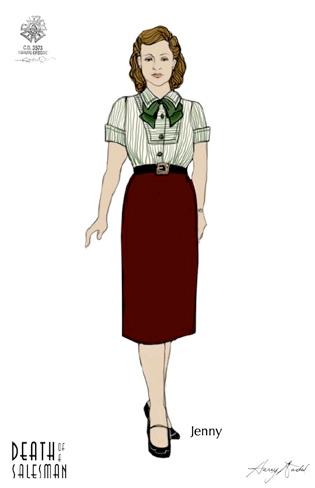
The memory of a person Willy had an affair with on his frequent sales trips to Boston.
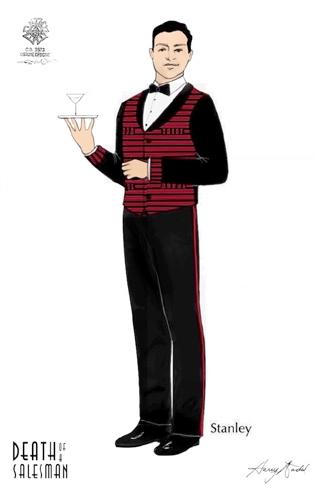
Charley’s office secretary.
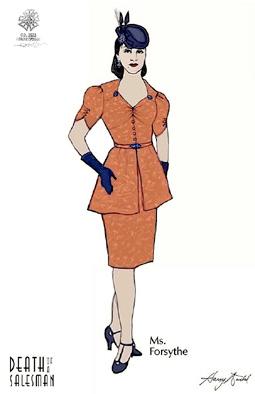

• Pompous: having the attitude of people who speak and behave in a very formal and serious way because they believe that they are better, smarter or more important than other people
• Anemic: not strong or impressive; weak
• Remiss: not showing enough care and attention
• Watch-fob: a short chain attached to a pocket watch
• Philandering: having sexual relations with many women
• Valise: an old fashioned small suitcase
• Undercurrent: a hidden feeling or tendency that is usually different from the one that is easy to see or understand
• Crestfallen: very sad and disappointed Spiting: deliberately annoying, upsetting or hurting someone
• Saccharine: a type of sweetener
• Red Grange: a famous football player for the Chicago Bears
• Carte blanche: permission to do something in any way you choose to do it
• Louse: a bad or cruel person
• Imbue: to cause (someone or something) to be deeply affected by a feeling or to have a certain quality
• Ignoramus: an insult calling someone ignorant or stupid
Reprinted courtesy of Milwaukee Rep.

Arthur Miller was a prominent figure in American literature and cinema for over 61 years. Born October 17, 1915, Miller is considered one of the greatest American playwrights of all time. He was raised in Harlem, New York City until 1929 and then moved to Brooklyn with his family.
Shortly after graduating from high school in 1932, Miller attended the University of Michigan and worked several small jobs in order to pay for tuition. He first majored in journalism and became a reporter and night editor for The Michigan Daily, the student paper. During this time he also wrote his first work, No Villain, for which he won the Avery Hopwood Award. After receiving the award, Miller switched his major to English in order to further study ancient Greek dramas as well as the works of Henrik Ibsen. While studying English, Miller wrote Honors at Dawn which also received the Avery Hopwood Award.
After graduating in 1938, Miller joined the Federal Theater Project, a New Deal agency established to provide jobs in theater, despite being offered a job as a scriptwriter for 20th Century Fox. He felt it important to support the working man during the re-establishment of the American economy. With the Red Scare
and Communism becoming more threatening, Congress shut down the project and Miller began working in the Brooklyn Navy Yard while continuing to write radio plays. Two years later, he married Mary Slattery, the daughter of an insurance salesman and his college sweetheart.
The next several years were difficult for Miller. In 1944, he wrote The Man Who Had All the Luck which won the Theater Guild‘s National Award, but only ran for six performances. He also published his first novel Focus and adapted George Abbott and John C. Holm‘s Three Men on a Horse for the radio. Both were opened to little acclaim. Toward the end of the 1940s things started looking up for Miller. In 1947, All My Sons was produced at the Coronet Theater and ran for 328 performances. It was directed by Elia Kazan, with whom Miller would continue his professional and personal relationship, and it won the New York Drama Critics Circle Award as well as two Tony Awards. Despite its success, many believed it was unpatriotic.
In 1948, Miller built a small studio in Roxbury, Connecticut. This became his getaway, as well as his future home, and he wrote many pieces here including Death of a Salesman, which premiered in 1949 at the Morosco Theater in New York City. It was also directed by Kazan and was a huge success, winning a Tony for Best Play, a New York Drama Critics‘ Award, and a Pulitzer Prize. It ran for 742 performances.
Soon after, Kazan was brought before the House Un-American Activities Committee (HUAC) and, in 1952, named eight people from the Group Theater who, in the 1930s, and along with himself, had been members of the American Communist Party. After Miller spoke with Kazan about his testimony, he ended the friendship fearing he may also be brought before the committee. Miller then went to Salem, Massachusetts, to research the witch trials of 1692 and wrote The Crucible, a parable play in which he compared the situation with HUAC to the witch hunts in Salem. The Crucible opened at

the Beck Theater on Broadway in 1953, but was considered unsuccessful at the time. However, today it is one of Miller‘s most frequently produced plays.
In 1956, Miller and Mary Slattery divorced and not even a month later, he married Marilyn Monroe with whom he‘d had a brief affair several years prior. HUAC saw this and took advantage of the publicity and subpoenaed Miller to appear before the committee. Before appearing, Miller asked the committee to not ask him to name names and the chairman agreed. At the hearing, Miller gave a detailed account of his political activities during the 1930s and was then asked to reveal names. Miller refused to do so and he was found in contempt of Congress. He was fined $500, sentenced to 30 days in jail, blacklisted and his US passport was revoked. However, less than a year later his conviction in 1957 was overturned by the court of appeals which found that Miller was misled by the chairman of HUAC. After this, Miller began working on The Misfits, a film starring Monroe and Clark Gable. Shortly after the premier, Monroe and Miller divorced and a year later Miller married his final wife, photographer Inge Morath.
Seven years later, After the Fall was produced. This play reflected Miller‘s own experiences
during his marriage to Monroe and reunited him with Kazan. The show opened at the Anta Theater in Washington Square Park. In 1965, Miller was elected International PEN‘s (an organization dedicated to promoting literature in society) president, the organization‘s first American president. He held this position for four years and is often credited as the one who changed PEN from a mere literary group to, what he called, the conscience of the world writing community.
During the 1970s, Miller experimented a lot with theater, producing many one act plays including Fame and The Reason Why. He also traveled with his wife quite often and in 1983 went to China to direct Death of a Salesman at the People‘s Art Theatre in Beijing. The play was very successful and in 1984 Miller wrote Salesman in Beijing, a book about his experiences in China. Three years later, Miller published his memoirs and autobiography Timebends: A Life
In the 1990s, Miller produced three new plays and in 1997 a film of The Crucible opened. Miller spent much of 1996 working on the screenplay for the film. In 1999, Death of a Salesman was revived on Broadway and was once again a huge success, winning a Tony for best revival. Three years later Miller was awarded Spain‘s Principe de Asturias Prize for Literature as the undisputed master of modern drama.
In 2004, Miller opened his final play, Finishing the Picture, at the Goodman Theatre in Chicago. A year later he died at his home in Roxbury. In his lifetime Miller won seven Tonys, an Olivier Award, an Obie Award, the John F. Kennedy Lifetime Achievement Award, the National Book Award, and the Jerusalem Award. Despite the hard economic and societal times Miller wrote in, he continued to write and produce works that have been studied for decades and considered some of the greatest plays in American history.
Reprinted courtesy of Milwaukee Rep.

Arthur Miller knew the two opening lines of his next play before he knew how the work would evolve: “Willy?” and “It’s all right, I came back.”
From this beginning would emerge the now iconic work that is Death of a Salesman When I began preparing to direct this play, I was struck by Miller’s initial thoughts when writing, as well as one of his original stage directions, which Elia Kazan, the play’s original director, mentions in his memoirs:
“The stage direction in the original manuscript that Art [Arthur Miller] gave me to read directly after he’d finished it does not mention a home as a scenic element. It reads, ‘A pinpoint travelling spot lights a small area on stage left. The Salesman is revealed. He takes out his keys and opens an invisible door.’”
Miller’s original title was The Inside of His Head, and he imagined the entire set looking like a man’s skull, illuminating Willy’s mind, his memories, his losses. We witness how he feels his life unraveling, his own self discarded, and his great fear that he is leaving nothing of meaning or substance behind.
This journey of loss Willy experiences is made all the more painful because of his deep sense of rootlessness. We know from Miller that the Lomans’ Jewishness was a part of this equation:
“As Jews light-years away from religion, or a community that might have fostered Jewish identity, the Lomans exist in a spot that probably most Americans feel they inhabit—on the sidewalk side of the glass looking in at a well-lighted place...”
As you get to know Willy, listen for this sense of alienation that he feels. His missing of his own family history and not knowing his father leads
him to a kind of personal mythmaking, weaving together his fantasies along with his realities until he doesn’t know where one ends and the other begins.
For me, this aspect of the play and of Willy’s character became a core tenant of the production; how we mistake our imagination for our memory, how our past merges with our present, and how the narratives we tell ourselves become truer than the facts they are loosely based on. The novelist Lorrie Moore put this more succinctly: “Time is linear only out of convenience, not as a result of perception.”
Willy’s perception is also heavily influenced by his reading of the American Success story, which warps his thinking, his parenting, his life. He never feels he is enough; he needs to become a Big Shot, “A man has to add up to something,” he says over and over. In the end, this need to be bigger than average, to be a Leader of Men, leads in part to his ruin.
When Salesman first opened on Broadway, this fall to ruin was discussed, in the context of how tragedies required a greatness in the hero for the audience to appreciate his collapse. Here is where Miller brilliantly captures this falsehood; Linda Loman says, “A small man can be just as exhausted as a great man.”

Today, as a Jewish woman with immigrant ancestors on every side, as a daughter who has watched parents struggle with the “American Dream,” and as a mother who hears the next generation sound not unlike Biff in their disillusionment, the play feels as alive to me now as if it had been written yesterday, and not over
70 years ago.
This production focuses on this relevance, the core emotional story of father and son, husband and wife, at the heart of the play. Years after Salesman premiered, Miller wrote:
“Being human—a father, mother, son—is something most of us fail at most of the time, and a little mercy is eminently
in order given the societies we live in, which purport to be stable and sound as mountains when in fact they are all trembling in a fast wind blowing mindlessly around the earth.”
And so indeed, attention should be paid to how we love, and care, and what stories we tell ourselves about our own lives.
By Zoë Golub-Sass

Zoë Golub-Sass: How did you get into sound design? What’s your sound origin story?
Darron L West: I originally went to college to study sound for animation. I was in the broadcasting department at Western Kentucky University, and I got asked to do the sound design for a play called Foxfire. It needed to have a studio recording of a song and I was basically the only guy who knew how all the gear worked at college, so I became a theater minor and by the time I graduated, I’d already designed 20-something productions. So the career definitely found me rather than I went searching for it.
ZGS: How is sound design for animation different than sound design for theater?
DLW: It’s all very, very similar. It’s coming up with a fiction that supports whatever the action is, whether it’s an actor or whether it’s a cartoon animal or whether it’s a documentary film. The principles of what I do don’t really change from discipline to discipline.
ZGS: I love that. The “coming up with a fiction that supports the action.”
DLW: That’s how I come at it. I’m a designer who does a ton of research going into a project, I mean a ton of research. And I’ll come up with maybe four or five
different ways to design the production. And then the show is a little bit like a block of marble. You just start chipping away at it and if you’re attentive it will reveal what it wants to be, which is why I spend a lot of time in rehearsal. To put myself in the hot seat at the same time as the actors and develop the ideas of the design while we’re rehearsing the play.
ZGS: In Death of a Salesman, you’re balancing the past and the present. How are you approaching the separation and the merging of these worlds?
DLW: I divide it all up into “Oh, this is possibly diegetic sound in the scene. Somebody runs through, we hear a dog bark and a police whistle,” that’s actually real in the moment. And then there’s this layer of—I don’t call them flashbacks, I just call them Willy’s memory moments, and the scoring of all of those moments in the piece.
Usually, I would want to put a musical frame around the entire play, but I’m not doing that with this one. The soundscape is really all coming out of Willy’s state because I took, quite literally, that Miller’s original idea for the title of the play was The Inside of His Head. So I’m coming at it from that perspective most of the time, thinking about what Willy’s hearing in his head and what are the textures of that? And then you have to ask: Is this scene in present time? Is this in flashback? And then plot through how you can lead the audience from one moment to the other. It could be the trigger of an elevator bell, it could be the sound of a woman’s laugh. There are some triggers Miller has written into the play already that you have to mine out of it as you work through it.
Repetition is also big in the design. Using really colloquial sounds and letting the play redefine the meaning of them from moment to moment. Repetition creates history for the audience; they hear something in Act One and when it returns later to be recognized by the audience again you’ve made history for them. They recognize for instance in Act Two that this is a return of the same woman or the same situation as we saw in Act One. I like to think a good design creates a ribbon for the audience to hold onto, that pulls them through the event.
“Repetition creates history for the audience; they hear something in Act One and when it returns later to be recognized by the audience again you’ve made history for them.”
ZGS: I know the creative team is thinking a lot about the original title— The Inside of His Head. Can you talk more about the concept for this production and how that’s playing out in your design?
DLW: The first thing I thought was: I didn’t want Willy’s musical world to be emotive. It’s been done a thousand times for this play, and I wanted to get away from that. I didn’t want to spoon-feed the audience what he was feeling. I wanted the audience to have the same question as some of the characters in the play as to what is going on. Charley has that line, “What’s going on in your head, Willy?” I remember bracketing that line in my script during the first read thru, thinking this is a really, really important line. Also in the first read through, I noticed how many times Willy talks about people laughing at him and how he’s haunted and embarrassed by that. So, I knew laughter was something that was going to be part of the design and that it could be used as a bridge from one time period to another.
ZGS: That’s a great way to get the audience in on the questions of the play, that we’re not supposed to be completely inside Willy’s emotions. But rather that we’re with him—and we’re part of this group of people trying to understand what’s going on with him.
DLW: Right. And you have to create a cool distance for the audience to be able to see him unravel as the show progresses. The thing that’s interesting to me about Willy is how he can’t see the forest for the trees, with regard to himself.
There’s an innocence that you have to make sure you allow for the audience when they’re watching it. No one is lying in this play at any moment. Everyone is telling the truth. They all have different perspectives on the same event, in most cases. So you can’t score it cinematically in a way that says, “Oh, this is what you should feel in this sequence.” It’s just too dangerous to do.
ZGS: Right. You’ll pick a side. You’re using a lot of deconstructed piano music in the design. How did you land on piano as your instrument?
DLW: I felt like it wanted to be something that was percussive that gave you a flexibility of melody or not. You can do a lot of different things with a piano that you can’t do with, say, a guitar. It just means something different. I like the weight of the piano. It feels like it’s a parlor instrument that would’ve existed in the Loman household, or households around that neighborhood at the time.
The soundscape is constantly moving in and out of time, so storytelling-wise, with Linda’s music or Willy’s music—any of that internal scoring —has to be diametrically opposite to what music you need going to the football game for instance. The design is doing some heavy lifting to make sure the audience understands the rules of the event.
ZGS: How would you describe the genre of the play? Arthur Miller talks about the play as a tragedy of the common man—but it was somewhat subversive to posit the common man as a tragic hero of a drama.
DLW: Well, there’s something “everyman” about Willy. It’s really a pretty straight play, but it has these flights of fancy. I don’t think there’s much of a difference between this play and Jose Rivera’s Marisol or Sarah Ruhl’s plays—they’re magical realism. It feels familiar to me. That was the era that I came up in, that late postmodern work. Salesman feels like a postmodern play to me.
ZGS: How do you approach building such an expansive world for an audience?
DLW: Every time I work in a rehearsal hall, I have this artistic and creative mindset, but I’m really watching it as an audience member. I’m looking to figure out where meaning needs to be for an audience, to take them to this place or that place, or underscore this emotional moment. I’m thinking about the audience a lot when I’m working and how things are going to be received. I’m not beholden to an audience by any stretch of the imagination, but I do think about them and their journey a lot.
I think you have to make what you feel is good work, and work you enjoy. And hopefully other people will enjoy it as well. It sounds simplistic, but it’s a lot harder to do than we think it is.
ZGS: That’s why we rehearse. To be clear on the story we’re telling and to invite the audience into the fiction. To enter in and be inside it.
DLW: Absolutely. It’s a special art form the theater, it gives us a chance to sit together in the dark and breathe with one another. It’s a little like going to church.
Hartford Stage Education Programs are supported by
The BFA Endowed Fund at the Hartford Foundation for Public Giving
Connecticut State Department of Education
Connecticut State Judicial Branch
Enterprise Foundation
Ensworth Charitable Foundation
Mr. & Mrs. William Foulds Family Foundation
Greater Hartford Arts Council
Hartford Foundation for Public Giving
The George A. & Grace L. Long Foundation
The MorningStar Fund at the Hartford Foundation for Public Giving
SBM Foundation
Scripps Family Fund for Education and the Arts
The Michael E. Simmons Foundation
Talcott Resolution
Travelers Foundation
The University of Saint Joseph
Executive Production Sponsor
The John & Kelly Hartman Foundation
Production Sponsors
Wesley & Chloe Horton
Sally Speer
Student Matinee Sponsor
Post-Show Discussion Sponsor
This production is supported in part by a Grant from the National Endowment for the Arts.

Special thanks to Milwaukee Rep for permission to reprint parts of their study guide.
For more information about education programs at Hartford Stage, please call 860-520-7244 or email education@hartfordstage.org.