Read National Haemophilia online https://www.haemophilia.org.au/ national-haemophilia
Who’s new at AHCDO
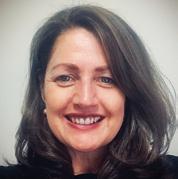
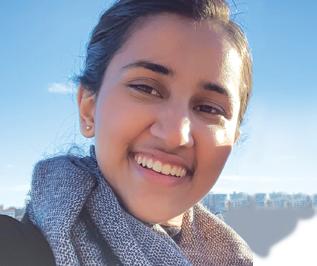
The Australian Haemophilia Centre Directors’ Organisation (AHCDO) is pleased to welcome Jenny Morgan as the
With over 20 years’ experience as an allied health professional and health educator across public, private, and not-for-profit sectors, Jenny has supported allied health and medical professionals in both primary and hospital care settings.
Her career includes diagnostic imaging roles at the Royal Melbourne Hospital, Epworth Health and Peninsula Health, and education and program officer
positions at Chisholm TAFE and the South Eastern Melbourne Primary Health Network.
In her new role, Jenny will coordinate and deliver AHCDO clinical advisory services to stakeholders, including HFA, manage AHCDO clinical guidelines, and support AHCDO clinical advisory committees.
Outside of work, Jenny enjoys spending time with family and friends, walking and being at the beach as much as possible.
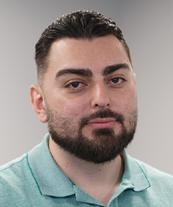
Alan Dursun President, Haemophilia Foundation Australia
As we move into 2026, my focus as President is: strengthening unity across our national and local Foundations, preparing our community for the evolving treatment landscape, and ensuring lived experience remains central to every decision we make. Our strength has always come from collaboration between all stakeholders, including foundations and Haemophilia Treatment Centres, and as therapies advance and expectations shift, it is vital that we remain connected, informed and proactive so that every person living with a bleeding disorder in Australia feels supported, represented and empowered.
I hope everyone has had a positive and energising start to 2026. The HFA team has begun the year with strong momentum, focusing on our strategic objectives and priority projects. It has been encouraging to see peer support groups, camps and community events taking place so early in the year. These gatherings are the heart of our movement and a reminder that connection remains one of our greatest strengths.
WOMEN AND GIRLS
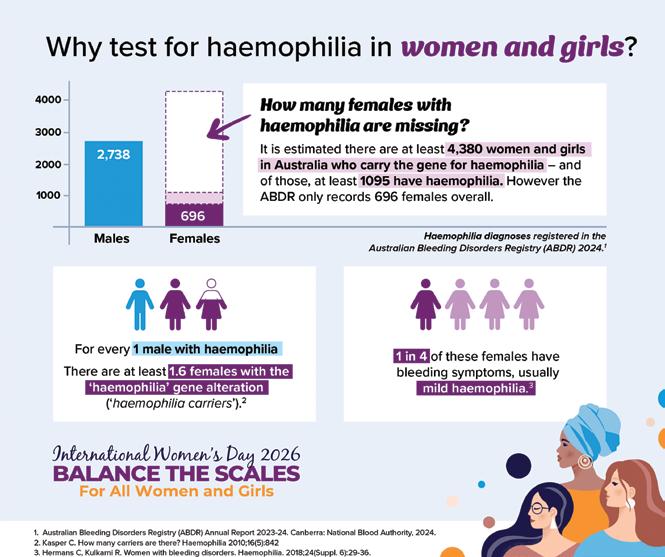
The Women and Girls Advisory Group met virtually in early February to map out events and education resources aligned with their goals of education, equality and engagement. A priority for 2026 is improving awareness and understanding of diagnosis for women and girls with bleeding disorders.
DAMON COURTENAY MEMORIAL ENDOWMENT FUND (DCMEF)
In February, the fund distributed 11 grants supporting a diverse range of practical and empowering initiatives. These included assistance with a new computer, a gym membership, and vocational training such as heavy rigid truck and forklift licence.
Established in 1994 with the generous support of the late Bryce and Benita Courtenay in memory of
From the President
their son Damon, the DCMEF has helped individuals build independence, confidence and opportunity for more than three decades and continues to represent an enduring legacy of community support.
GENE AND EMERGING THERAPIES (GETS)
The GETs Hub continues to grow as a trusted resource for information on new and emerging therapies. New fact sheets and video content are available, including an interview with Professor Cedric Hermans discussing emerging treatments and a personal story from Steve about his experience with gene therapy. Additional resources will be added over the coming months.
At its November 2025 meeting, the Australian Government Medical Services Advisory Committee recommended funding for Hemgenix® (etranacogene dezaparvovec), a gene therapy for haemophilia B, subject to price negotiation. This is currently progressing through government processes and we remain hopeful that access in Australia will follow.
EDUCATION RESOURCES
We continue to update and expand our education materials. A refreshed newly diagnosed haemophilia kit, commonly known as the ‘red folder’, is expected to be available around May. Ensuring information remains accurate, practical and accessible is a key priority.
WORLD HAEMOPHILIA DAY
World Haemophilia Day on 17 April is fast approaching, with many landmarks across the country confirmed to light up red. These moments of visibility are powerful reminders that our community is united worldwide. We encourage everyone to share photos and stories from local events, and further details can be found in this issue. >>
WFH TWINNING
HFA and the Cambodia Hemophilia Association are pleased to announce a four year Foundation Twinning Partnership supported by the World Federation of Hemophilia. This collaboration will focus on strengthening organisational capacity to better support people with haemophilia, von Willebrand disease and other bleeding disorders. We look forward to learning from one another and building sustainable impact together.
WFH WORLD CONGRESS, MALAYSIA APRIL 2026
The WFH World Congress, taking place from 19 to 22 April 2026 in Malaysia, is the most comprehensive
international bleeding disorders event. Australia will be strongly represented, with nine Australian speakers covering a range of clinical and community topics.
Delegates will include nurses, physiotherapists, psychosocial workers, HFA staff, Council representatives and nine young people, as this is an important way to invest in our next generation. Many attendees have received external funding support. I will be participating in the WFH Youth Leadership Program prior to Congress and attending the WFH General Assembly. Claudio Damiani, HFA Vice President, will represent Australia at the General Assembly as second delegate and attend the Global National Member Organisation training. We look forward to sharing insights and reflections in the June 2026 edition of National Haemophilia.
First step to care
World Haemophilia Day 2026
Every year on 17 April, people around the world mark World Haemophilia Day. It is a time to raise awareness about haemophilia, von Willebrand disease, rare clotting factor deficiencies, inherited platelet disorders and other rare bleeding disorders.
In 2026 the global theme of Diagnosis: first step to care underlines the critical importance of diagnosis. Knowing you have a bleeding disorder and having an accurate diagnosis is essential as a first step in getting the right treatment, care and support.
The World Federation of Hemophilia (WFH) estimates that more than three-quarters of people with haemophilia worldwide have not been diagnosed. Even more people with other bleeding disorders are also undiagnosed. This means hundreds of thousands of people globally are missing out on basic care and support.
Women and girls are a special focus. A recent WFH survey shows the challenges women and girls with bleeding disorders face, delaying their access to diagnosis, specialised treatment and care. The greatest challenge is a lack of awareness – among health professionals, the women themselves and the general public.1
World Haemophilia Day is an opportunity to raise awareness and provide education on bleeding disorders - including in women and girls - sharing stories from our community and encouraging everyone to come together in support of people with bleeding disorders. World Haemophilia Day began in 1989 and is organised by WFH. The date 17 April was chosen to honour the birthday of the WFH founder, Frank Schnabel.
GET INVOLVED
You can be part of World Haemophilia Day and help raise awareness for all bleeding disorders. Get the whole family involved with our print-at-home colouring-in sheet or test your knowledge with our bleeding disorders quiz. You can also update your social media profile pic to show your support.
Visit our website for resources and simple instructions on how to take part.
LIGHT IT UP RED
On 17 April, landmarks in every state and territory in Australia – and around the world – will light up red in support of World Haemophilia Day.
Check our website for a list of locations near you, and don’t forget to share your photos on our social media pages. #WHD2026
1. Coffin D, Colle Y, Kulkarni R, et al. Key findings from the World Federation of Haemophilia National Member Organization Survey on Women and Girls with Bleeding Disorders. Haemophilia, 2026; 0:1–7. https://doi.org/10.1111/hae.70213
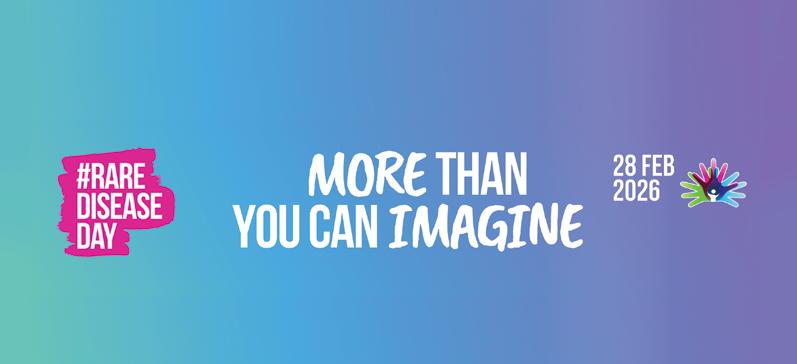
Rare Disease Day was celebrated worldwide on 28 February 2026 to raise awareness and generate change for people with rare diseases.
Globally more than 7,000 rare diseases have been identified, but each rare disease affects only small numbers of individuals. Diagnosis and access to appropriate treatment and care can be slow and challenging. Rare Disease Day unites this diverse group of 300 million people worldwide in a community with a single purpose.
Rare Disease Day strives for equity in social opportunities, healthcare, and access to diagnosis and therapies for people living with a rare disease.
The 2026 theme of More than you can imagine highlights that there are more people with rare diseases than we realise and many more opportunities in life for people with rare bleeding disorders - if they have access to support when they need it.
3 more rare bleeding disorders
3 more people affected
3 more ways to support people with rare diseases
3 more things people with rare diseases can do with the right support.
Rare Disease Day reminds us how important it is to come together and connect as a community. We join together to share personal stories, acknowledge the challenges for our community members who live with a rare bleeding disorder and advocate for equity.
WHAT IS A RARE DISEASE?
In Australia, a disease is considered rare if it affects less than 5 in 10,000 people (i.e., 1 in 2,000).
Around 8% of Australians (2 million people) live with a rare disease.
About 80% of rare diseases are genetic. Diagnosis can often take time because these conditions are complex and doctors do not see them often.1
More than 5,200 Australians have a bleeding disorder that is considered a rare disease.2
Haemophilia is considered rare. Approximately: 1 in 6,000 males has haemophilia A 1 in 30,000 males has haemophilia B
Researchers are gathering data on how many females are affected by haemophilia.
Some bleeding disorders are very rare.
For example, factor X (10) deficiency only affects 1 in a million people.
Overall, von Willebrand disease (VWD) is not considered rare: it is estimated that 1 in 1,000 people or more have a form of VWD that will need medical treatment during their lifetime.
However, Type 3 VWD is the rarest form of von Willebrand disease, occurring in 1 in 500,000 people in countries like Europe and the USA. 3,4
Sometimes there are more people affected than you might expect. Even though it is a very rare bleeding disorder, there are more than 390 people who have been diagnosed with factor XI (11) deficiency in Australia.2
EQUITY
Why is the Rare Disease Day campaign striving for equity?
Equity means promoting fairness through treating people differently, depending on their need.
In 2026 the Rare Disease Campaign calls for action to ensure people living with a rare disease have the same opportunities to fully participate in family life, work, study and social activities.
What does that look like?
You can see this in the examples of special arrangements negotiated for Grace and Alan to participate at university and school. Adam also gives an example of how Scouts enable children with bleeding disorders to participate in mainstream activities.
Grace is a teenager with Glanzmann thrombasthenia, a very rare inherited platelet function disorder. Managing school so that she can participate as fully as possible, it has been important to work with the school to align what everyone thinks is acceptable. For Grace, this this has been very positive - streamlining her treatment so she doesn’t feel like she is missing out on her classes or feeling like ‘the odd kid who is sitting there with an icepack’. For example:
• A red flag on her file and emergency plans and strategies in place
• An ice pack in the staff freezer with her name on it
• Quiet places she can go to ice or treat her bleed or injury
• A first aid kit in Grace’s bag and a first aid kit for her in the office.
Alan has severe haemophilia. In the week before the start of his course, Alan spoke with his university’s disability team to discuss his haemophilia and what could be done to assist him. This is a confidential service that will talk with you about your needs and what they might be able to put in place to give you the best chance at success. For Alan this talk lead to access to a room where he could treat himself privately during the semester, and a private room for treatment during exams.
Adam has VWD Type 3. He describes how the supportive approach of Scouts enabled him to join in the fun and challenge of adventure activities with others of his age.
‘I joined Scouts at a very young age, which was where I got my love and interest in doing adventurous outdoor activities - bushwalking, sailing, abseiling, rock climbing, caving, canyoning, all that sort of thing. Activities you would not normally think you could do. Scouting has been really good because it’s about responsible risk taking. It gave me a chance to be part of the mainstream and develop a level of resilience that helped me to get through those early years.’
TREATMENTS
Treatment equity is a constant challenge. With very rare diseases where numbers are small, the development of new and highly effective treatments can be slow. There may even be no treatment that specifically targets that condition. For example, although there have been big steps forward in innovative haemophilia therapies, there is not yet a specific clotting factor concentrate that is suitable to treat factor V (5) deficiency and fresh frozen plasma may be used for treatment instead. >>
PERSONAL STORIES
Sharing personal stories is an important way for people with rare diseases to connect. It also helps the wider community to understand what it is like to live with a rare disease.
You may have seen some personal stories for Rare Disease Day on our social media platforms. We are grateful to our community members with rare bleeding disorders who have shared their experiences and strategies for living well.
In this issue of National Haemophilia we feature Carly’s story of living with Glanzmann thrombasthenia (My platelets are like bricks without cement) and Simoni and Javonte speaking in the Factored In youth section about ‘being blessed in a different way’.
Many people with rare diseases speak of feeling isolated. They may never have met another person with their condition. If they are the first in their family with the condition, it may have taken a long time for them to be diagnosed.
‘Living with a rare disorder can be quite isolating as nobody you know is like you and can understand what everyday life can be like for you. This is why it is important to have a supportive network of people around you - and share with the people who are close to you so they can also understand and support you in all you do in life.’
Allison, who has Glanzmann thrombasthenia
Mistaken beliefs in the community can also be painful – such as, that your parents must have been closely related for you to have a rare genetic bleeding disorder. Women and girls with haemophilia also report not being believed because of the common assumption that only males have haemophilia.
HOW CAN YOU HELP?
You can help to raise awareness by sharing the stories of people with rare bleeding disorders through your personal networks.
Do you have a story of your own about living with a rare bleeding disorder you would like to share?
Visit the SHARE YOUR STORY section on the HFA website to tell us morewww.haemophilia.org.au/shareyourstory.
For more information on Rare Disease Day, visit: www.rarediseaseday.org
REFERENCES
1. Australian Government. Department of Health. What we’re doing about rare diseases. https://www.health.gov.au/healthtopics/chronic-conditions/what-were-doing-about-chronicconditions/what-were-doing-about-rare-diseases Accessed 11 February 2026
2. Australian Bleeding Disorders Registry (ABDR) Annual Report 2023-2024. Canberra:National Blood Authority, 2024. https://www.blood.gov.au/australian-bleeding-disordersregistry-annual-report. Accessed: 11 February 2026
3. Orphanet: the portal for rare diseases and orphan drugs. https://www.orpha.net/ Accessed 11 February 2026
4. Seidizadeh O, Cairo A, Baronciani L, Valenti L, Peyvandi F. Population-based prevalence and mutational landscape of von Willebrand disease using large-scale genetic databases. NPJ Genomic Medicine 2023;8(31). https://doi.org/10.1038/s41525-023-00375-8
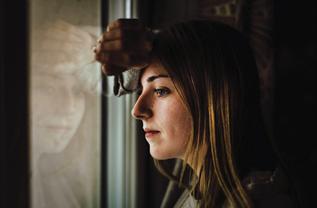
My platelets are like bricks without cement
My name’s Carly, I’m 22, and I have a rare bleeding disorder called Glanzmann thrombasthenia - which basically means my platelets are like bricks without cement. They’re all there, but they can’t hold anything together. Because of this, I am extremely susceptible to bleeds and bruising. My symptoms range from bruises splattered all over my body like an abstract work of art to gum bleeds that have lasted 120 hours. And although some of those incidents may be because I walked into a door handle or ate a hard carrot, most of the time I wake up with a giant red welt on my face or a mouth full of blood.
Now, I’m a teacher, right? And when you wake up with said giant red welt on your forehead, you just know you’re going to get comments. First period on a Monday morning, I’m blessed with my Year 9 class - isn’t that bloody lovely? We’re half an hour into the lesson, and I’m going around helping my students with their work when one of them says, ‘Miss, did you see the fight last night?’ Now, although I’m not an avid UFC watcher, I usually keep up to date with the big fights that happen. But I stopped and thought about it - I couldn’t remember seeing a fight on my Instagram feed the night before. So, I said, ‘No, I didn’t. What fight?’ Then, with that prompting tone, they said, ‘Miss, are you sure you didn’t see the fight?’ By then, I realised I’d walked right into their little trap - and it was me who had been in the fight.
TREATMENT CHALLENGES
Anyway, as a result of my symptoms, I’ve had quite a bit of treatment. Because of the nature of Glanzmann’s, most bleeds don’t just stop on their own - they either need pressure, tranexamic acid, NovoSeven® (recombinant coagulation Factor VIIa), or
a combination of all three. Now, that’s for nose or gum bleeds - but what about periods?
Unbeknownst to some, you can’t put pressure on a period.
Well, my body has never known a life post-puberty that was without hormone treatments. Over the past 11 years, I’ve tried the never-ending options of pills, progesterone, IUDs, and combinations of those. And although they have definitely helped with the main symptom - bleeding — like the old saying goes, you cut the head off the snake, and two more heads come out. While being on hormonal treatment, I’ve experienced all the symptoms under the sun - from mood changes and weight gain to bloating and fatigue. But while innovations and research have definitely improved, we still have a long way to go.
Because of my platelets, I’ve had some troubles growing up, but through those challenges, you wouldn’t believe how much I’ve learnt. So, I’m here to give some pieces of advice I wish I knew when I was younger. >>
Carly’s* story
*Carly is not her real name
Now, people with bleeding disorders will know how much it takes from your life - it takes time, effort, and planning. Every ‘normal’ activity requires extra thought. On top of managing my bleeding disorder, like many others, I work a full-time job, I’m a full-time student, I take on extracurriculars, and I try to have some sort of social life. I don’t know about you, but that’s a lot to take on! Luckily, I’ve never had to tackle it all on my own.
SUPPORT IS IMPORTANT
My first piece of advice is about the importance of support systems — the people who lift you up, listen without judgment, and remind you that you’re not alone. I’ve been lucky to have incredible support throughout my life, though I’ll admit I haven’t always appreciated just how much they’ve done for me.
I didn’t appreciate my school friends enough for never going ice skating just because I couldn’t go. Or my sisters, for wrestling with me like they would with any other sibling (even though I bear those scars for two weeks). Or my parents, who never complained when they had to drive me to the Emergency Department at 11pm on a Saturday night.
So, Step 1: Find people who accept you for you
LIVE YOUR LIFE
Step 2: Live your life - don’t let your fears and anxieties hold you back. If you take all your necessary precautions and your doctor says it’s okay (please don’t go against your doctors’ and nurses’ orders — we love them), then do it!
A fun fact about me: I’m actually quite an active girl. I train four times a week ranging from Pilates, strength training, conditioning, and Muay Thai. If you told tenyear-old me - the girl who only did swimming lessonsthat she’d one day be throwing kicks and elbows, she’d be absolutely gobsmacked. I owe a huge thank you to my trainer of the past eight years for helping both me and my mum overcome our fears around training. Now, it’s my favourite part of the week.
So, don’t let health anxiety hold you back from living your life. You’ll be surprised by what you’re capable of when you stop letting fear take the lead.
Step 3: Let me set the scene. I’ve just been through one hell of a year - Year 12. I’ve sat all my exams except one, and that last one is the day after tomorrow.
Then I’m done! I go to sleep that night, ready for one more torturous day of study. It’s 2am, and I feel something leaking on my lip. I have no tissue next to me, so I wipe it and try to go back to sleep - but it’s still there. In fact, it’s on my chin now. It feels sticky and hot. It’s a nosebleed.
I turn my lamp on, sit up, and instantly my nose turns into a bloody waterfall - literally. Fast forward six hours later, my nose has doubled in size and the blood has only just started to slow. All I could think about as the hours passed was how all the effort I put into studying for a good ATAR was going down the drain - which is a big reason why we didn’t go to emergency straight away, ultimately worsening my condition. I hated going to the hospital and tried to avoid it at all costs, but in the end, that only hurt me more.
PUT YOUR HEALTH FIRST
So, the most important piece of advice I can give you is this: put your health first. A bleeding disorder affects every part of your body, and most illnesses or injuries take longer to heal and need more care than usual. It can feel like you’re always at the doctor’s, always taking medication, and that it’s taking over your lifebut please, promise me you’ll never forget this: your health always comes first.
You can study again, you can train again, you can make new friends, and you can rebuild your life as many times as you need — but you only get one body, and it deserves your care.
Stock images: Freepik
Growing older: understanding care needs and support available
Monique Manzanera
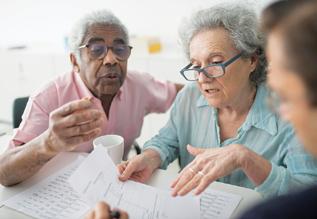
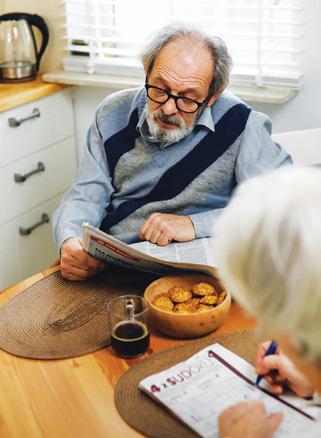
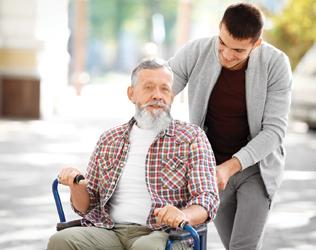
Getting older may mean that day-to-day activities become harder to complete, for yourself or someone you care for. For people with a bleeding disorder, long-term joint issues, pain, or fatigue may add extra challenges over time.
When this happens, you may need extra help from family, friends, or support services to assist with day-to-day activities such as showering, household cleaning, grocery shopping or carrying heavy items, transport to medical appointments, or social support. You may also be interested in allied health support such as physiotherapy, occupational therapy, podiatry, and other services.
Accessing support is about maintaining your independence, safety, and quality of life. Many people find that putting supports in place early allows them to stay at home and continue doing the things that matter to them for longer.
If you are aged 65 years or older, an Aboriginal or Torres Strait Islander person aged 50 years or older, or are homeless or at risk of homelessness and aged 50 years or older, you may be able to access help through My Aged Care
HTC social workers can also assist people and families to navigate My Aged Care or Carer Gateway, eligibility for the National Disability Insurance Scheme (NDIS), help with referrals and paperwork, and advocate alongside you to ensure services are appropriate for your individual needs. The following information is a snapshot taken from the My Aged Care and Carer Gateway websites. Follow the links to these websites for more information.
A SUMMARY OF MY AGED CARE SERVICES
Commonwealth Home Support Programme (CHSP)
What is it?
Entry-level support to help you maintain your independence and safety while living at home.
What services can I get?
Meals, personal care, nursing care, allied health and therapy, respite (at home, in a day centre, or in an aged care home for a short break), home modifications, home maintenance and repairs, domestic assistance (cleaning, shopping, laundry), equipment and products, transport, social support, community engagement, and more.
Cost
Costs depend on the type of support and the service provider. These services are subsidised by the Australian Government, which generally makes them more affordable than private services. It is important to discuss costs directly with your service provider.
Choosing a service provider:
You can choose your own service provider, or you can ask My Aged Care to choose one for you.
Support at Home
If entry-level supports are not enough to meet your needs, or your needs are more complex, you may be eligible for a Support at Home package.
What is it?
Tailored support to help you live at home for longer. This may include clinical support (such as nursing care, occupational therapy, or podiatry), help with independence (showering, medication support, transport, and respite), everyday living supports (cleaning, gardening, shopping, meal preparation), case management (someone to coordinate your services and review your ongoing care), nutrition support, home modifications, equipment, and products.
There are eight classifications of support, each providing a different level of funding. The level of funding allocated to you is determined during your assessment.
Wait times:
There are wait times for Support at Home packages. It is often helpful to explore options early, as you can usually access entry-level supports through the Commonwealth Home Support Programme while waiting for a package to be allocated.
Cost:
There is a contribution cost for these services. You can complete an income and assets assessment through Services Australia to determine your contribution.
Residential Aged Care
If support services at home are no longer enough to meet your needs, and you would like to live somewhere that provides 24-hour care, you can access residential aged care on a temporary (respite) or permanent basis.
What do I get?
Furnished accommodation, services to meet day-to-day needs, personal care (such as bathing, eating, help with medications, and social activities), and clinical care (including nursing, therapy, and specialised equipment if required).
Costs
There are costs associated with both respite and permanent residential care. It is important to discuss fees directly with the aged care home.
Financial advice
You can contact Centrelink and request to speak with the Financial Information Service, or seek independent financial advice.
Support for carers
Caring for a loved one can be overwhelming at times. You may worry about leaving them at home alone while you attend to your own appointments or daily activities. You may need help with some of their care needs, or you may simply need someone to talk to. Balancing caring responsibilities with your own wellbeing is important.
Carer Gateway (www.carergateway.gov.au) provides support for carers, including:
• Tailored support packages to assist with practical day-to-day care needs
• Equipment and planned respite to give you or your family a break
• Cooking and cleaning services
• Assistance with shopping and transport to medical appointments
• Counselling for carers
• Financial support
• Planned and emergency respite
If you are under 65
If you are under 65, speak with your social worker or counsellor at your Haemophilia Treatment Centre. They can help determine whether you may be eligible for other supports, such as the National Disability Insurance Scheme (NDIS).
USEFUL WEBSITES AND CONTACT DETAILS
Carer Gateway
www.carergateway.gov.au
T: 1800 422 737 Monday to Friday, 8am to 5pm
My Aged Care www.myagedcare.gov.au
T: 1800 200 422 Monday to Friday, 8am to 8pm. Saturday, 10am to 2pm
Haemophilia Foundation Australia –Getting Older Hub Services for getting older www.haemophilia.org.au/getting-older-services
Understanding disability and aged care services www.haemophilia.org.au/disability-and-aged-care
This article, written by social workers Alex Coombs and Jane Portnoy, explains more about financial support available and the NDIS.
Monique Manzanera is Social Worker Haemophilia at the Royal Prince Alfred Hospital in Sydney, NSW.
Stock images: Freepik; Kampus Productions, Leish for Pexels.com
The National Blood Authority
Jo Cameron
At the Australian Bleeding Disorders Conference in 2025, Jo Cameron from the National Blood Authority spoke about the role of the NBA in relation to product funding, Horizon Scanning and MyABDR. We invited Jo to write an article from her presentation for people who weren’t able to make the Conference.
WHO IS THE NATIONAL BLOOD AUTHORITY?
The National Blood Authority (NBA) is a statutory agency established by the National Blood Authority Act 2003 (Cth). We manage and coordinate arrangements for the supply of blood, blood products and blood services in Australia. Under the national blood arrangements, our role is to deliver an uninterrupted supply of blood and blood products to Australians in need. These products and services
are funded by the Australian and State and Territory governments, so that they may be provided at no direct cost to patients.
Our work:
• secures the supply of blood and blood products
• improves risk management and blood sector performance
• promotes the safe and efficient use of blood and blood products.
We collaborate with suppliers and stakeholders across the blood sector. The National Blood Authority works closely with, and provides some funding for, Haemophilia Foundation Australia (HFA) and the Australian Haemophilia Centre Directors’ Organisation (AHCDO) to ensure people with bleeding disorders can get the best possible treatment to suit their needs.
WHAT PRODUCTS ARE SUPPLIED UNDER THE NATIONAL BLOOD ARRANGEMENTS?
The National Blood Arrangements cover a range of products including fresh products such as red blood cells, platelets and plasma, as well as many products that are manufactured from blood or are used instead of products made from blood such as recombinant clotting factors, immunoglobulins, and albumin, to name a few. A complete list of products funded under the National Blood Arrangements can be found on the National Product Price List (www.blood.gov.au/ blood-products/national-product-price-list).
HOW DO NEW PRODUCTS GET ADDED TO THE NATIONAL BLOOD ARRANGEMENTS?
There are several pathways that can be used for the introduction of new products proposed for government funding. These include the Pharmaceutical Benefits
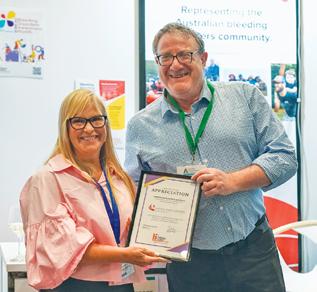
Jo Cameron with Gavin Finkelstein, former HFA President, at the 2025 Conference.
Scheme (PBS), Medical Benefits Scheme (MBS), the National Health Reform Agreement (NHRA) and the National Blood Arrangements, managed by the National Blood Authority (NBA).
Changes and additions to the products available under the national blood arrangements are subject to an approval process. The NBA uses a multi-criteria analysis framework to assess any proposed changes to publicly funded products or services. We may also refer proposed changes to the Department of Health, Disability and Ageing’s Medical Services Advisory Committee (MSAC) for further assessment.
Any changes or additions to publicly funded products or services can be proposed by:
• a member of a patient group
• a product or service supplier
• another type of interested party.
Those proposing changes or additions will need to provide evidence to support the proposal. This includes an evidence-based evaluation of the product or service.
Because there are many steps in the assessment process, it can take up to a couple of years for a new product to be approved for funding. The NBA works hard to ensure this process is as efficient as possible.
WHAT IS THE ABDR AND MYABDR? WHY USE THIS?
The NBA also manages the Australian Bleeding Disorders Registry (ABDR) and the MyABDR applications.
The Australian Bleeding Disorders Registry (ABDR) is a database used to collect information on bleeding disorders. It includes information like patient diagnosis, treatment details, hospital admissions and administrative information, details on ordering, supply and use of clotting factor products. Haemophilia Treatment Centre (HTC) staff use the ABDR to manage how they treat bleeding disorders in patients and understand bleeding disorders and their rates in Australia.
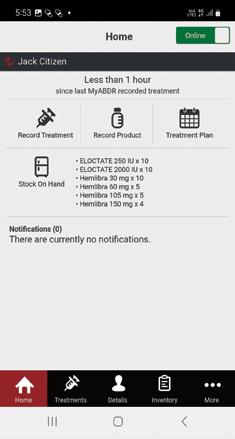
The MyABDR app is a free and secure way for patients or carers to record information in the ABDR. Through MyABDR patients or carers can record information about treatments and bleeds, manage stock, view treatment plans and share information with HTCs to assist them to care for people with bleeding disorders.
Recording information in the ABDR and MyABDR supports staff in HTCs to manage treatment and care more comprehensively. It also supports governments to
be able to manage Australia’s supply of critical products used to treat bleeding disorders, and to learn about bleeding disorders to be able to improve future treatment and care for all people with bleeding disorders.
Maintaining patient privacy and appropriate confidentiality is a top priority to us and strict security rules are in place to guarantee patient privacy is maintained at all times. Only authorised staff from your HTC, the NBA and AHCDO can directly access patient data. Information is kept on the ABDR database which is physically located in a secure data centre in Australia. These procedures protect the information from misuse, unauthorised access, interference, alteration, loss and/or disclosure.
FIND OUT MORE
For more information, visit the NBA websitewww.blood.gov.au
Jo Cameron is Director, Research and Product Review, National Blood Authority
New and emerging treatments for von Willebrand disease (VWD)
Von Willebrand disease (VWD) is a lifelong bleeding disorder caused by problems with a blood protein called von Willebrand factor (VWF), which helps blood clot properly. Current treatments are effective for many people, but researchers around the world are working on new therapies that may offer more options in the future, especially for people with more severe or complex forms of VWD.
VWD. But at the Blood 2025 conference there was a good session on VWD and particularly the presentation by Prof Frank Leebeek from Erasmus University Medical Centre in the Netherlands on Treatment options for von Willebrand disease in the near future.
Below is an overview of novel and emerging treatments currently being studied. Most of these are experimental and not yet approved for routine use, but they show promising directions for future care.
TREATMENTS AIMED AT IMPROVING CLOTTING FUNCTION
In recent articles I have concentrated on novel and emerging therapies in haemophilia, with less on Efanesoctocog alfa (BIVV-001)
How it’s given: Intravenous (into a vein).
How it works: Increases levels of clotting factor VIII(8), which works closely with VWF.
Current stage: Early clinical trials (Phase 1) in people with VWD type 2N and type 31
What this means for patients: This treatment may help people with very low factor VIII levels, but results are still awaited.
How it’s given: Subcutaneous injection (under the skin).
How it works: Acts like factor VIII using a laboratory-made antibody.
Current stage: Approved for haemophilia A, but not approved for VWD.
What this means for patients: Some doctors have used it ‘off label’ (prescribed but not yet officially approved for that condition) in selected VWD cases, but it is not yet a standard VWD treatment.
Ashley Fletcher
TREATMENTS THAT TARGET VON WILLEBRAND FACTOR DIRECTLY
VGA0393
How it’s given: Subcutaneous injection.
How it works: A monoclonal antibody that affects a natural blood protein (protein S) to improve clotting.
Current stage: Phase 1 studies in healthy volunteers and people with VWD.
What this means for patients: Very early research but shows potential as a new way to reduce bleeding.
Rondaptivo pegol (BT200)4
How it’s given: Subcutaneous injection.
How it works: Binds to part of the VWF protein to improve how it works.
Current stage: Clinical studies in people with VWD types 2A and 2B
What this means for patients: One of the more advanced experimental treatments specifically designed for certain VWD subtypes.
Nanobody KB-V13A125
How it’s given: Subcutaneous injection.
How it works: Links VWF to another blood protein (albumin) to keep it working longer.
Current stage: Animal studies (mouse models).
What this means for patients: Promising science, but still far from human use.
HIGHLY EXPERIMENTAL AND FUTURE THERAPIES
Synthetic Nanoparticles
How they’re given: Intravenous.
How they work: Help VWF bind to blood vessels and platelets.
Current stage: Animal studies only.
What this means for patients: Early research exploring completely new treatment concepts.
siRNA (Gene Silencing Therapy)6
How it’s given: Subcutaneous injection.
How it works: Turns off problem genes that cause abnormal VWF
Current stage: Preclinical studies in mice with VWD type 2B
What this means for patients: A potential way to target the genetic cause of disease but not yet tested in people.
Gene Editing (CRISPR/Cas9)
How it works: Directly edits DNA to correct or switch off problem VWF genes.
Current stage: Animal studies (dogs) and laboratory cell studies.
What this means for patients: A possible long-term or permanent treatment in the distant future, but still highly experimental.
WHAT DOES THIS MEAN FOR PEOPLE WITH VWD?
• Most of these treatments are not yet available outside research studies.
• Some may eventually offer less frequent dosing, better bleed control, or new options for difficultto-treat VWD types.
• Ongoing research is essential, and progress is being made step by step.
If you are interested in new or experimental treatments, talk to your Haemophilia Treatment Centre or haematology specialist. They can explain what is currently available and whether any of the clinical trials may be suitable for you.
Research continues to bring hope for more personalised and effective treatments for people living with von Willebrand disease.
RECOMMENDED READING
To find out more, there is an excellent overview of current and emerging therapies as potential treatment for people with von Willebrand disease, which one of our HTC Directors, Assoc Prof Jennifer Curnow, co-authored with her Westmead Hospital colleagues pathologist Prof Emmanuel Favaloro and haematologist Dr Leonardo Pasalic. If you would like to read the full article and don’t have access via a university library, speak to your state library about their interlibrary loan service, where they provide single journal articles for a fee.
Favaloro EJ, Pasalic L, Curnow J. Current and emerging therapies as potential treatment for people with von Willebrand disease. Expert Review of Hematology. 2024;17:917-933.
https://doi.org/10.1080/17474086.2024.2429611
REFERENCES
1. Susen S, Trossaert M, Zilberstein M, et al. A phase 1, open-label study to assess the pharmacokinetics, safety, and tolerability of a single intravenous injection of efanesoctocog alfa in adults with type 2N or type 3 von Willebrand disease. Journal of Thrombosis and Haemostasis. 2026 Jan;24(1):79-87. https://doi.org/10.1016/j.jtha.2025.07.013
2. LeMaistre FI, Chiang E, Streiff MB, Yui JC. Efficacy of emicizumab therapy in two adult patients with type 3 von Willebrand disease. Blood Coagulation & Fibrinolysis. 2024;35:206-208.
https://doi.org/10.1097/MBC.0000000000001298
3. Millar CM, Raheja P, Wheeler AP, et al. A Phase Ia study of VGA039, a protein s–targeting monoclonal antibody, in individuals with von Willebrand disease demonstrates concentration-dependent increases in thrombin generation and potential for subcutaneous prophylactic dosing. In: 66th American Society of Hematology Annual Meeting and Exposition. Orlando, FL: American Society of Hematology; 2024.
4. Ay C, Pabinger I, Kovacevic KD, et al. The VWF binding aptamer rondoraptivon pegol increases platelet counts and VWF/FVIII in type 2B von Willebrand disease. Blood Advances. 2022;6:5467-5476. https://doi.org/10.1182/bloodadvances.2022007805
5. Peyron I, Casari C, McCluskey G, et al. A bispecific nanobody for the treatment of von Willebrand disease type 1. Blood. 2025;146:2597-2607. https://doi.org/10.1182/blood.2025029401
Ashley Fletcher is the AHCDO Australian Bleeding Disorders Registry (ABDR) Senior Research Fellow.
6. Barraclough A, Bar I, van Duijl T, et al. Rewriting the script: gene therapy and genome editing for von Willebrand disease. Frontiers in Genome Editing. 2025;7:1620438. https://doi.org/10.3389/fgeed.2025.1620438
Stock images: Freepik
Behind the scenes of haemophilia care
Insights from a Nurse Preceptorship
Nikki Waters and Rhiannon Staveley-Smith
As paediatric haematology nurses at the Sydney Children’s Hospitals Network, our day-to-day work is focused on children and their families. We support families through early diagnosis, teach medication administration, and help young people and families build confidence in managing their condition. We often talk with families about ‘the future’, including protecting joints, building independence, and preparing for adult life. But until recently, we had limited opportunity to see what haemophilia care looks like once young people leave paediatric services.
TRANSITION FROM PAEDIATRIC TO ADULT CARE
In December 2025, we were fortunate to attend a two-day haemophilia nurse preceptorship in Brisbane. This experience gave us the chance to step away from our usual roles and spend time with both paediatric and adult haemophilia teams. For the bleeding disorders community, these opportunities are important because they help ensure nurses across Australia are learning from one another and strengthening the care we provide to people at every stage of life.
The preceptorship was shared between Queensland Children’s Hospital and the Royal Brisbane and Women’s Hospital, with one day in the paediatric Haemophilia Treatment Centre (HTC) and one day in the adult HTC. This structure allowed us to see
how care evolves over time and how both services work closely together behind the scenes to support people with haemophilia as their needs change. One of the strongest messages from both teams was that transition from paediatric to adult care is not a single appointment or sudden change. Instead, it is a gradual process that starts years earlier. Health professionals work together to help young people slowly build confidence, understand their condition and treatment, learn to manage their own treatment, and take increasing responsibility for their care. This preparation is key to helping young people feel supported, rather than overwhelmed, when they eventually do move to adult services.
PREPARING FOR ADULTHOOD
Spending time in the adult HTC was a powerful and eye-opening experience. We saw firsthand the long-term impact haemophilia can have, particularly when joint bleeds occur over many years. Meeting adults living with chronic joint disease reinforced why early education, bleed prevention, and treatment adherence during childhood and adolescence are so important. These experiences directly shape how we talk with families and young people about long term health and why certain aspects of care matter so much.
One particularly meaningful moment during the preceptorship was a conversation with a young man living with haemophilia, who shared how his priorities had changed over time. As his lifestyle, independence, and responsibilities evolved, so too did his approach to treatment and decision-making. Observing the discussion between the patient, nurse, and doctor highlighted how care works best when decisions are shared by balancing medical needs with what matters most to the person living with haemophilia. This kind of partnership is central to providing care that truly fits people’s lives.
Another highlight was meeting a young person who had recently transitioned from paediatric to adult care. Hearing directly about what worked well, what was challenging, and what made the process easier provided valuable insight. His experience reinforced the importance of strong relationships, clear communication, and gradual preparation, which are messages that continue to guide how we support families in our own service.
THE VALUE OF TEAMWORK
We also had the opportunity to sit in on haemophilia team meetings focused on planning for surgery and coordinating complex care. While patients may only see a small part of this process, these meetings are where nurses, doctors, and allied health professionals carefully plan treatment, share information, and anticipate risks to keep care safe and seamless.
Seeing this teamwork in action reinforced how much coordination happens behind the scenes to support people with bleeding disorders.
Overall, this preceptorship reminded us that high quality haemophilia care relies on strong collaboration between paediatric and adult teams, ongoing learning, and listening closely to the experiences of people living with bleeding disorders. Opportunities like this help ensure that care continues to improve and remains centred on the needs, goals, and voices of the community.
We are very grateful to the Brisbane paediatric and adult haemophilia teams for their generosity and willingness to share their knowledge and experience. The lessons learned from the experience will continue to shape how we support people with bleeding disorders and their families, both now and into the future.
Nikki Waters is Clinical Nurse Consultant Haematology at the Sydney Children’s Hospital, NSW.
Rhiannon Staveley-Smith is Clinical Nurse Specialist Haematology/Haemophilia at The Children’s Hospital at Westmead, Sydney, NSW.
Stock images: Freepik
Blessed in a different way
I’m Simoni, I have von Willebrand disease Type 3 and I’m 22 years old.
My name’s Javonte, I’m 18 years old, and I’ve got severe haemophilia A.
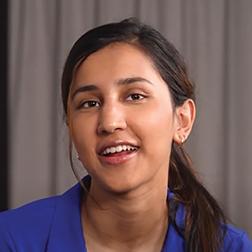
Simoni and Javonte caught up at the Australian Bleeding Disorders Conference and interviewed each other about growing up with a bleeding disorder.
Javonte and Simoni were both diagnosed with their bleeding disorder at a young age, Javonte with severe haemophilia A, Simoni with Type 3 von Willebrand disease (VWD) which is a rare and severe form. They had no family history of bleeding disorders.
They chat about growing up, and the difference in their treatment experiences. Although there have been some big advances in haemophilia treatments in the past few years, VWD treatment is still catching up. They also explain why it’s so important for young people with bleeding disorders to share their stories.
Tell us a little about you?
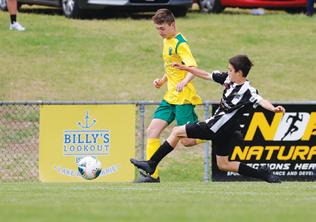
Javonte: I play soccer. I’m a very sporty, active man. I surf and work. That’s pretty much me. How about you?
Simoni: I’m studying medicine. I’m in my fourth of six years, so it’s a pretty long course.
I’m a very sporty, active man. That’s pretty much me.
When were you diagnosed?
Javonte: I was diagnosed at ten months. My parents would pick me up, and then I just had bruises, and there were no answers to it. And then we eventually got that answer.
Simoni: It was pretty much the same for me. I was diagnosed after me and my parents migrated over to Australia. Probably when I was about two and a half,
three years old. I went to daycare and the people were like, ‘why does she have so many bruises?’ You know how it goes. You go to the hospital and they run some tests, and you find out.
Does it run in your family?
Javonte: No. I think it kind of just spawned in me. Mum’s obviously the carrier, but we have no clue where it came from.
Simoni: Yeah. I think mine’s some sort of a weird, wacky mutation somewhere as well, because not many people in my family have it at all, actually.
Javonte: We got blessed.
Simoni: Yeah, [laughs]. Blessed in a different way.
Haemophilia kind of just spawned in me. We have no clue where it came from.
How was it growing up with a bleeding disorder?
Javonte: You get people saying just keep them in bubble wrap their whole life. But my parents went the complete opposite path, and I’ll forever be grateful for that. They didn’t let me do stupid stuff, but they allowed me to do some stupid stuff [laughs]. I’ve had my fair few injuries, obviously, but my parents supported me in a really good way. Just let me make my mistakes. But I know my consequences of playing sports and I’m okay with that.
Simoni: Having a bleeding disorder, I was very overprotective of myself as well as my parents, and then I kind of grew up like that. Every time I started sports, it was just injury upon injury. So, I think I imposed limits on myself. Mostly because I was scared of getting hurt, because once you get hurt you kind of know what it feels like. And you know how long the recovery takes and the bunch of extra needles you have to get. Like, I don’t want that again.
But if I could tell my younger self anything, it would be to be less scared. Be less fearful about what’s going to happen to me. Just do the runs, do the sandpit jump, because there are people around you to help and support you.
Javonte: Yeah. Go do your fun things. Go do your stupid things. Make mistakes. Just don’t let it stop you from doing anything.
If I could tell my younger self anything, it would be to be less scared.
What’s your treatment been like?
Javonte: I had a couple of stages where I was doing treatment twice a day. And then I went every day. And then I went every second day. And about three or four years ago, my treatment changed to every second week, which was amazing. Changed my whole life. Didn’t have to stress about doing needles before school or anything like that.
Simoni: I would love something like what they treat haemophilia with. Something that’s just once a week and you’re off, instead of every second day.
Why do you think it’s important to share your story?
Seeing people gives you confidence that you’re not the only one living with this, and real life exists beyond a bleeding disorder.
Simoni: Growing up, your whole life is defined by when you’re going to take your treatment and what you’re going to do. ‘Can I go skateboarding tomorrow, or do I need to wake up at 5am to do my treatment first?’
As a child, you don’t really know what’s going on with you and seeing people - even if it’s just online - it gives you confidence. Confidence that you’re not alone, that you’re not the only one living with this, and that real life exists beyond a bleeding disorder.
Everything else is the same. You just have a bit of an extra step before you go about doing anything risky.
Simoni and Javonte
Javonte: Especially for young kids getting into the high school ages, because I’d say that was probably the hardest transition.
Simoni: Exactly. Just knowing older people that have been through it is pretty nice to know. And that if you want to reach out, you can, knowing that everyone wants to help you.
If you have aspirations to become a skydiver, you can go do that. Don’t let anyone tell you you’re limited.
What would you say to other young people with bleeding disorders?
Simoni: I would say that life doesn’t stop just because you have a paper cut. Just keep going. If you have aspirations to become whatever - a skydiver, a lawyeryou can go do that. There’s nothing stopping you. Once you have your treatment, you’re off. You’re ready to go. So don’t let anything limit you, and don’t let anyone tell you or let you believe that you’re limited.
Javonte: Don’t let it stop you from doing anything. Have your treatment, don’t be too stupid, go have your fun.
Simoni: Yeah, fun with a little bit of common sense.
Javonte: Exactly. [Laughs]
Watch the video of the interview https://tinyurl.com/Sim-Jav-BDvideo
Images: photos supplied by Simoni and Javonte reproduced with permission.
Interview photo: HFA; Stock photo: Yuri Arcurs for Freepik
CALENDAR ACKNOWLEDGMENTS
World Haemophilia Day
17 April 2026
wfh.org/world-hemophilia-day
WFH World Congress 2026
Kuala Lumpur, Malaysia
19-22 April 2026
wfh.org/congress
Bleeding Disorders Awareness Month October 2026
www.haemophilia.org.au/BDAM
Haemophilia Foundation Australia (HFA) acknowledges funding grants received from the Australian Government. We thank the individuals, service clubs, philanthropic trusts and businesses that have made donations to HFA. We acknowledge the education and awareness grants and/or conference sponsorship from the following pharmaceutical companies:
CSL BEHRING | NOVO NORDISK | PFIZER AUSTRALIA ROCHE | SANOFI GENZYME | TAKEDA
NATIONAL HAEMOPHILIA is a publication of Haemophilia Foundation Australia. Every effort is taken to ensure accurate and relevant content, however opinions expressed in NATIONAL HAEMOPHILIA do not necessarily reflect those of the Foundation or the editor, nor is any information intended to take the place of advice from a qualified medical practitioner or health professional.
Haemophilia Foundation Australia does not endorse or assure the products, programs or services featured in NATIONAL HAEMOPHILIA and does not make specific recommendations for any products, programs or services.
We welcome reproduction of articles or quotations from NATIONAL HAEMOPHILIA on the understanding that acknowledgement is made of NATIONAL HAEMOPHILIA as the source.
Haemophilia Foundation Australia acknowledges the Traditional Owners and Custodians of Country throughout Australia, the land, waters and community where we walk, live, meet and work. We pay our respects to Elders past, present and emerging and extend that respect to all Aboriginal and Torres Strait Islander peoples.