Greens farms academy magazine special centennial issue
As
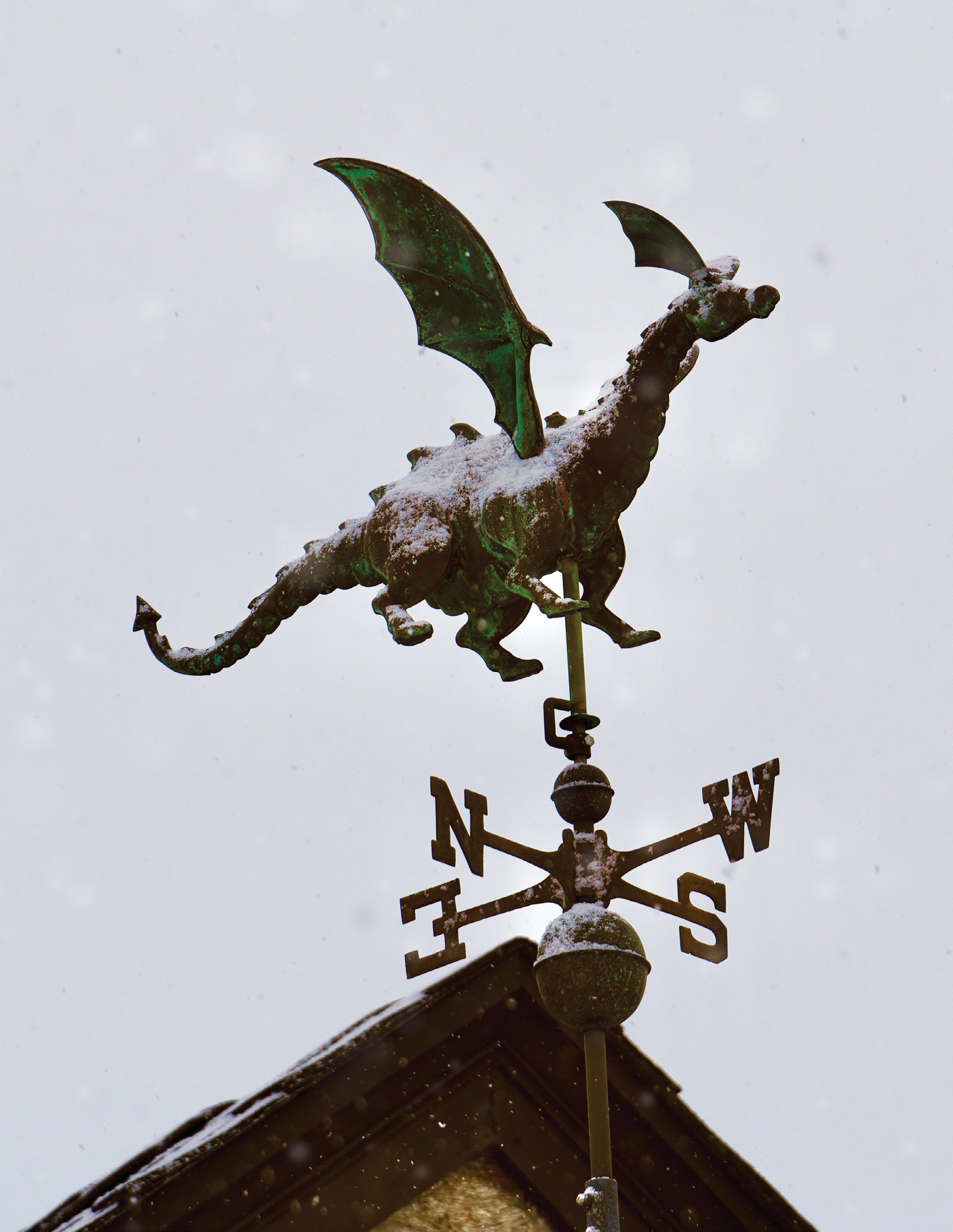
Keep your eyes peeled— dragons are hidden throughout the pages of this magazine!
Can you spot them all?
EDITOR
Linsey Peterson Alvarez
DESIGN
Bria Mangione, Bria Loves Design LLC
CONTRIBUTORS
Linsey Peterson Alvarez
Yoon S. Byun
Andrea Carson
Samantha Casamento
Meghan Chew
Joe Flynn
Ana Holwell
Drew Meyer
John Nash
Lindsay Russo
Joe Sinnott
Lauren Weller
Bob Whelan
Editor’s Note: A special thank you to the 1995-97 Archives Committee: Nancy Fishkin, Karen Hoffman, Barbara Horwath, Nan Ruben, Jane Selden, and Meredith Von Kohorn. Their work on the 1997 Exhibit—Greens Farms Academy, A Celebration of the First 75 Years— served as an invaluable resource for this publication.
Greens Farms Academy does not discriminate against any person in admission, financial aid, program involvement, employment, or otherwise because of sexual orientation, race, religion, age, gender, national origin, or disability.
A hundred years cannot be captured on a single timeline, nor contained within these pages.
What follows is not an exhaustive history, but a glimpse into the life of a school that has grown, adapted, and thrived for a century. Each snapshot reflects a thread of continuity— the ways teaching, learning, and community have carried forward, reshaped by each generation yet always recognizable.
As you turn the pages, we hope you see traces of the GFA you know and love, alongside echoes of the past that shaped it. More than anything, we hope that you are reminded that while time changes details, the heart of GFA—the relationships, the spirit of Each for All, the sense of belonging—remains the same.
Celebrating 100 Years of GFA
Open to view milestones
From 1925 to Today 100 Years of GFA
1925
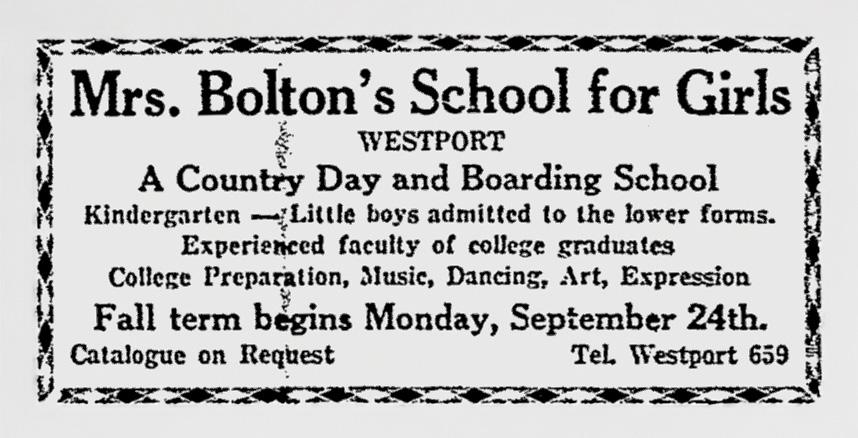
Mrs. Bolton’s School for Girls (Bolton) opens on Church Lane with four students. Mary Bolton is the first head of school.
1926
Kathleen Laycock, Mrs. Bolton’s sister, arrives to help run the school. Bolton moves to East State Street.
1929 Bolton moves again to King’s Highway and Wilton Road.
1936 Bolton expands to serve PreK through Grade 12, and the first seniors graduate.
1959
The school purchases and renovates the Vanderbilt estate at 35 Beachside Avenue. In November, 71 students and 9 faculty move in.
Read more about our move to Beachside Avenue on the right
1960
Mrs. Bolton agrees to incorporate her lower school. Grades 1-5 move to Beachside Avenue, and Laycock now serves girls Grades 1-12.
1963
Miss Laycock retires; William Posey is named the third head of school.
1950 Bolton celebrates its 25th anniversary.
1957
Mrs. Bolton retains ownership of the nursery and lower school on Wilton Road; Miss Laycock incorporates Grades 6-12 as the Kathleen Laycock Country Day School (Laycock), where she serves as headmistress.
The
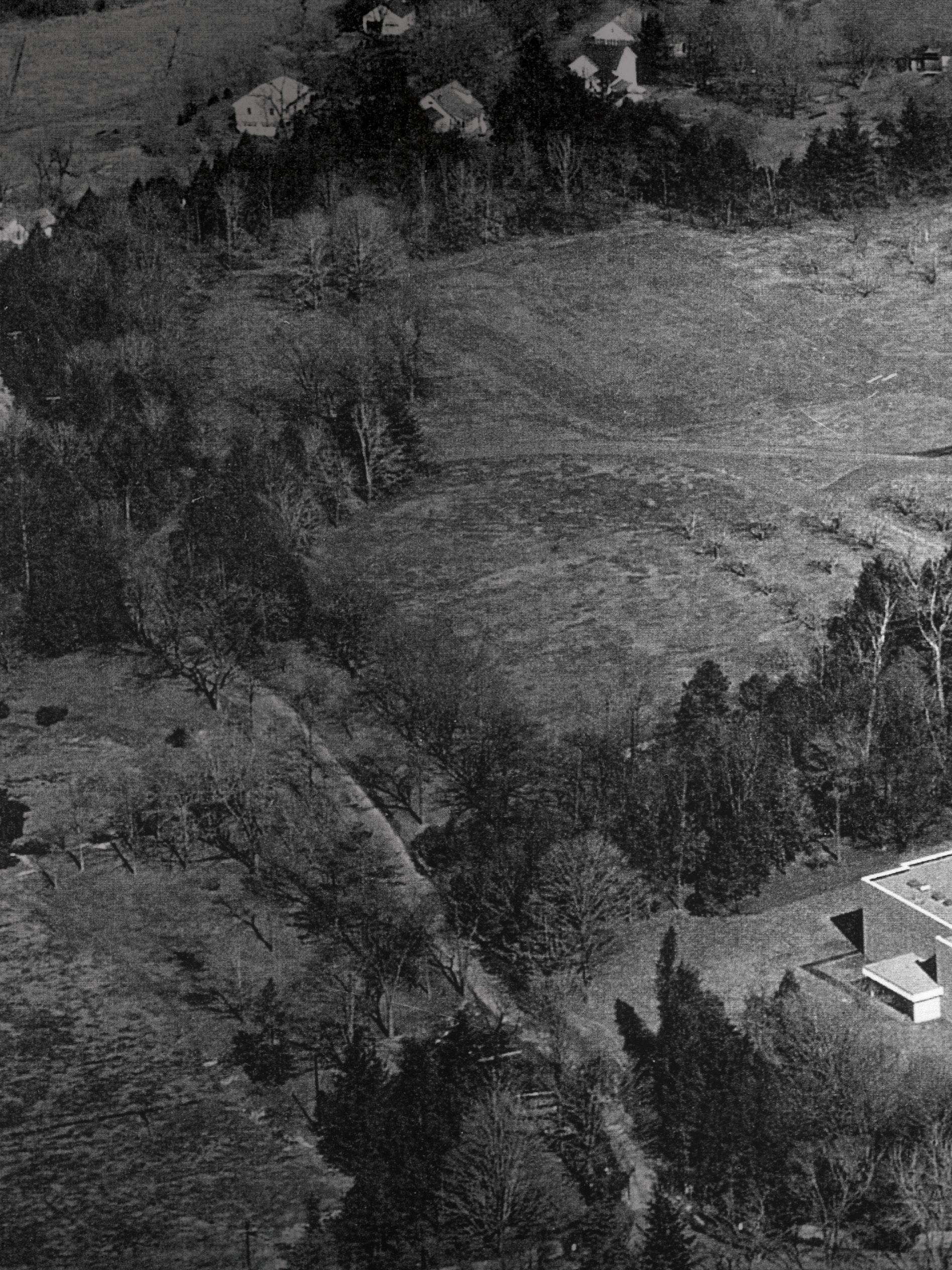
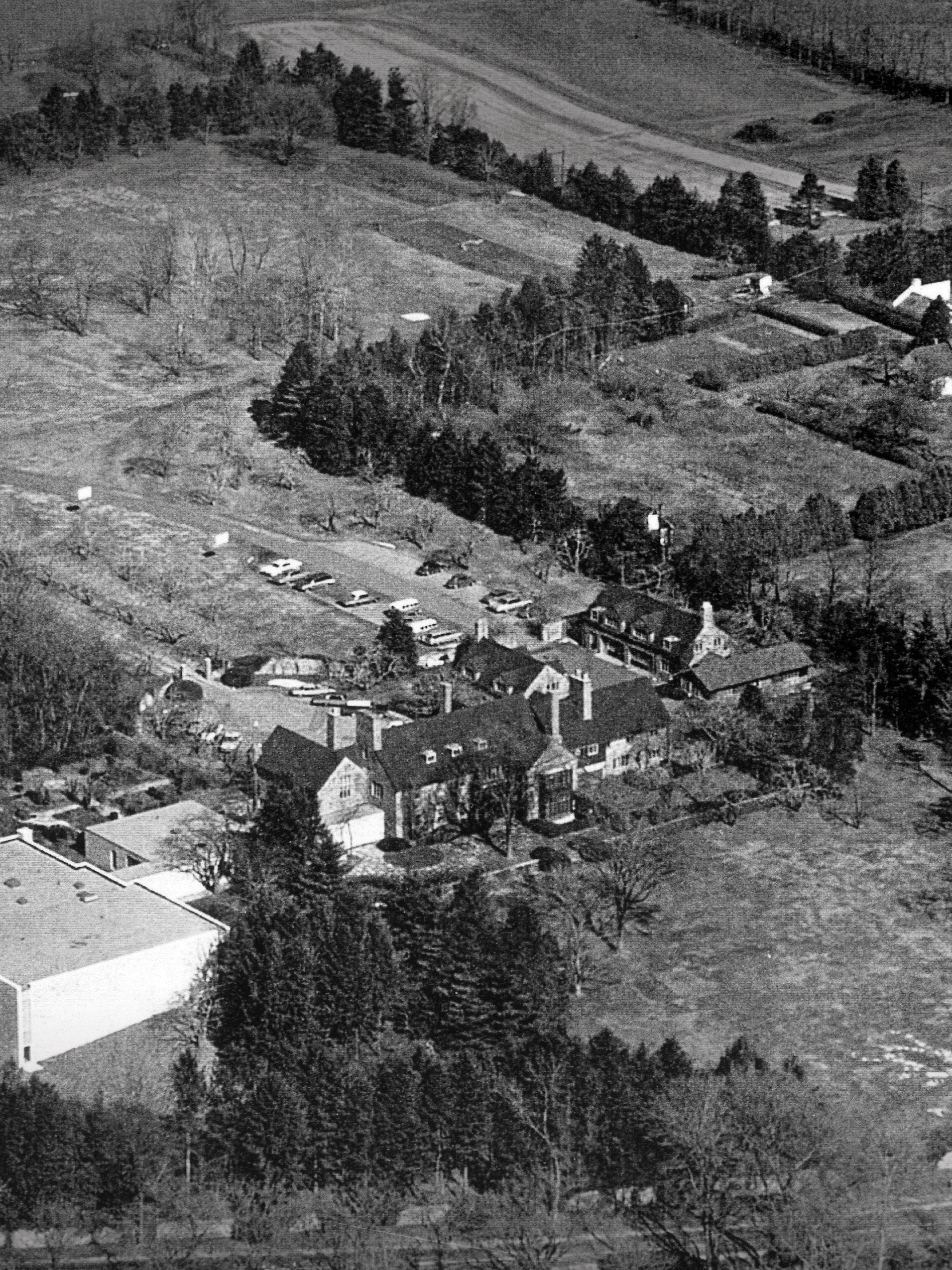
By 1950, the Kathleen Laycock Country Day School was ready to expand, and a search began for a property that could accommodate its growing enrollment with minimal renovation. The R.T. Vanderbilt estate on Beachside Avenue, with its main house, outbuildings, and more than 27 acres—including waterfront frontage— was on the market for $325,000. For the school’s trustees, the price seemed daunting. “We had zero money, so that looked awfully heavy, even though in today’s terms it’s an absolute steal,” recalled John D. Upton, one of the school’s founding trustees.
Working directly with the Vanderbilt family, the school negotiated a practical solution. Since the most valuable waterfront section was not required, the property was subdivided, allowing the school to purchase the house
and approximately 26 acres north of Beachside Avenue for $250,000.
The deal provided the school with immediate access to spacious buildings, ample land, and a setting that could grow alongside its programs.
The acquisition was transformative. It not only provided classrooms, offices, and gathering spaces, but also anchored the school physically and symbolically in its current location. The Vanderbilt house and surrounding grounds became the heart of campus life.
This strategic purchase laid the foundation for decades of growth, creating a campus that could support generations of students, all while preserving a connection to the storied landscape of Beachside Avenue.
Adapted from the 1997 Exhibit: Greens Farms Academy A Celebration of the First 75 Years
My school, like any other home, has its faults and values. I put up with its moods—it puts up with mine. In spite of our differences, we get along pretty well. We should by now, we’ve grown up together...
Amazingly enough, I like it. As a matter of fact, I like it quite a bit!
1964
1971 Yearbook, Nina Cuccio Peck ’71
Nancy Lauber ’51 is named the fourth head of school. Enrollment stands at around 250 students, with 30 faculty members.
1970
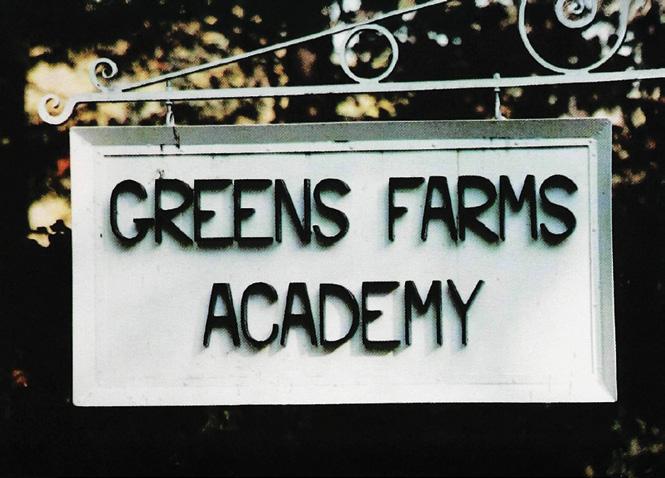
The Board of Trustees votes to become coeducational; 23 boys are admitted. The school is renamed Greens Farms Academy (GFA).
1971
Boys are enrolled in all grades for the first time.
Move to 35 Beachside
1972
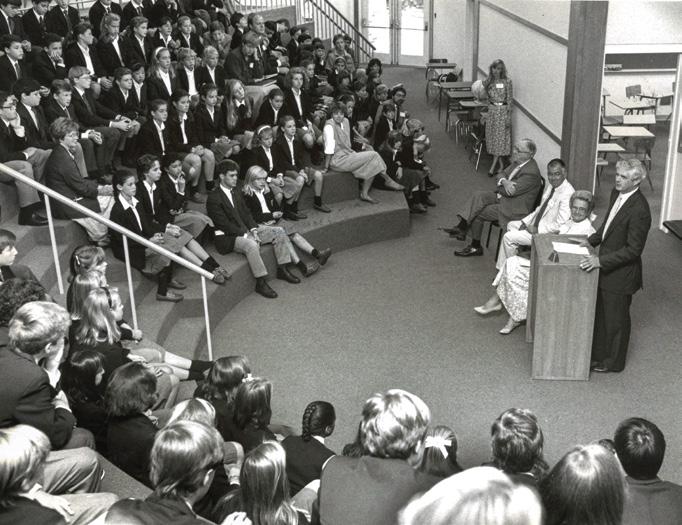
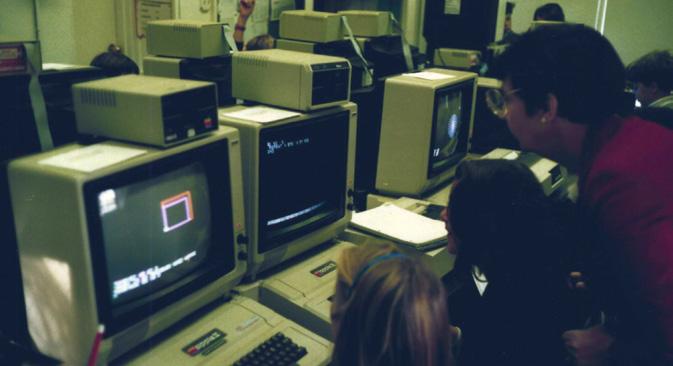
Jim Coyle is named the fifth head of school. The campus begins a period of rapid growth, with new academic wings, a library, language labs, computer rooms, and a large gymnasium added.
1998
Mr. Coyle retires after 26 years; Peter Esty becomes the sixth head of school.
1998-1999
Mr. Esty partners with Hoby and Sally Kreitler to establish Horizons at Greens Farms Academy.
2000 GFA celebrates its 75th anniversary.
1981-1988
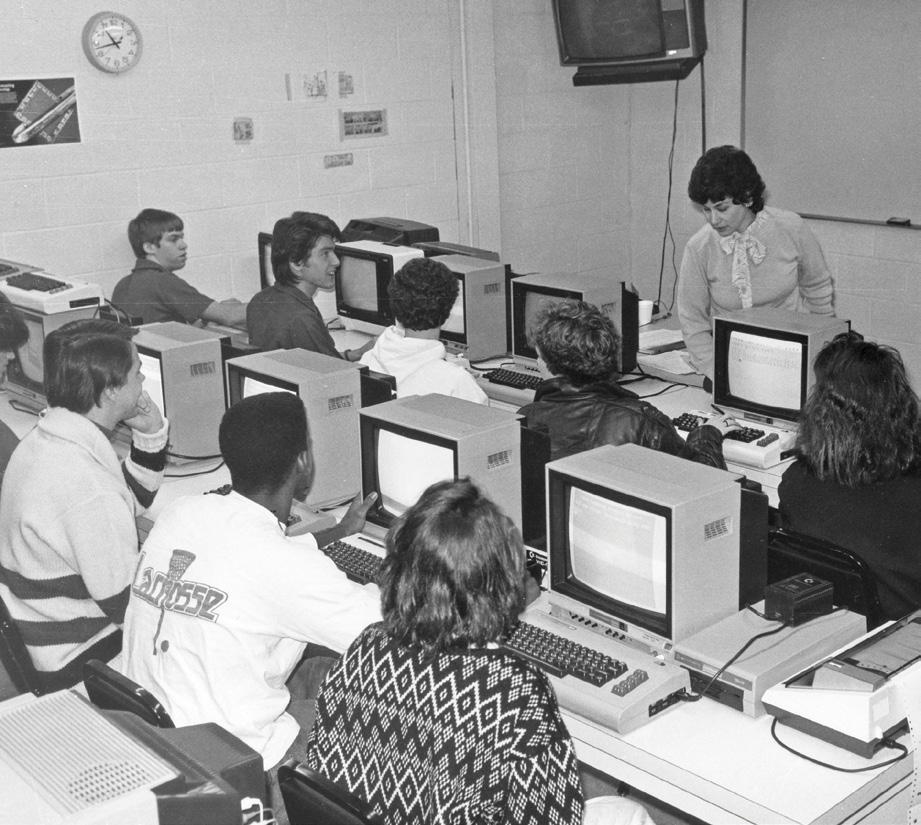
Key facilities are added: Gillian Scholey Colhoun Library (1981), Bernhard Academic Wing (1982), tennis courts and a new playing field (1985), The Lynne A. Warren Lower School Wing (1987), and The Lucie B. Warren Middle School Wing and Taylor Forum (1988).
2003
The Lower School is expanded, and the head of school house is built. Janet Hartwell becomes the seventh head of school.
2018
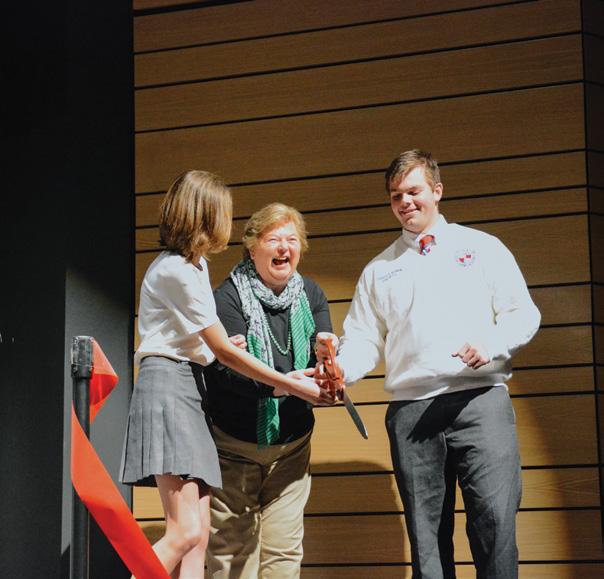
The Fitness Center was built, concluding the Lead with Excellence campaign. Janet Hartwell retires, and Bob Whelan is named the eighth head of school.
2019
New turf fields, a warm-up field, and half-track are constructed.
2020
The Upper School phases out Advanced Placement courses to better align with GFA’s mission and core values.
2021
1975
GFA celebrates its 50th anniversary.
1994-1997
A new arts and academic wing encloses the historic Cookman Garden. Additional classrooms, a language lab, a larger gym, and enhanced library and art spaces are added.
2006-2007
The Upper School Science and Performing Arts wing is built, and classroom wing expansions follow, complete with Harkness tables.
2009
A new turf field, tennis courts, and organic garden are added.
2015-2017
The Janet Hartwell Performing Arts Center, McGrath Gallery, and Global Studies Center are completed (2015), followed by the squash facility (2016), and the softball/field hockey field and wrestling gym (2017).
The Board of Trustees approves Lives of Purpose, a new Strategic Direction to guide future growth and fundraising.
2023
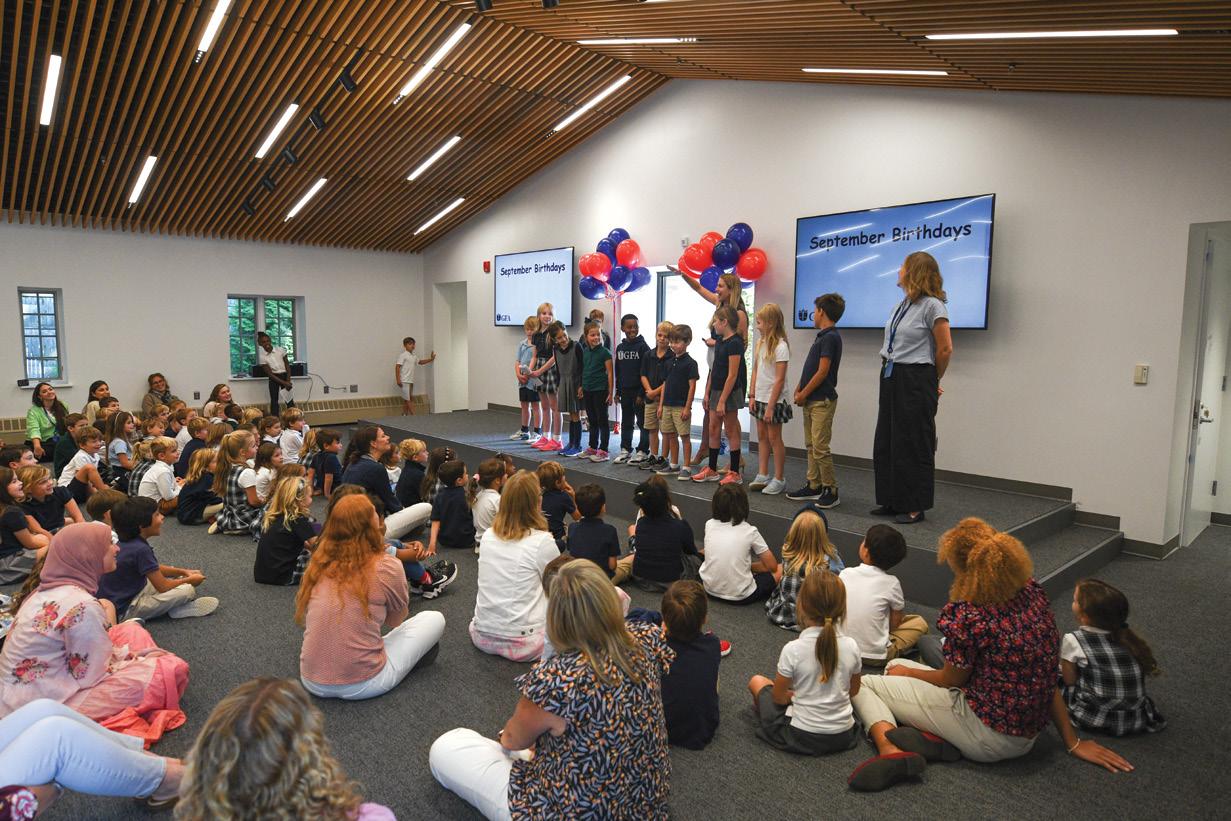
The Lower School Dining and Student Commons is completed, and the Lower School Assembly Room is renovated.
2024
Construction begins on the Athletics & Wellness Center, and upgrades are made to the baseball field.
A Century of Academic Innovation
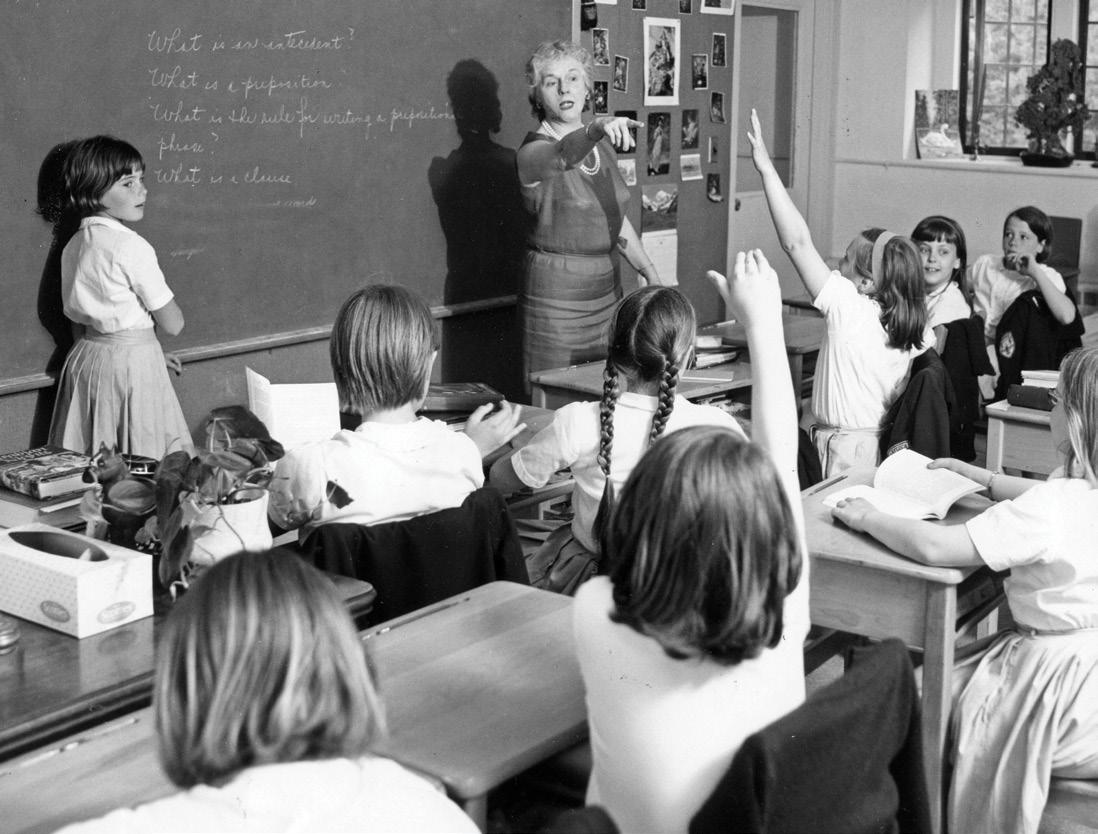
Throughout its history, GFA has refined its academic program with purpose—never changing for novelty’s sake, but adapting thoughtfully to better serve students. Each generation has reimagined learning in ways that reflect both its era and the school’s enduring values.
2025
GFA celebrates its Centennial year!
From its early days as Laycock the curriculum challenged students, cultivated originality, and fostered a spirit of inquiry. In the 1960s, humanities courses encouraged students to move beyond rote memorization to active analysis and discussion of literature, history, and the arts. Amid a national wave of educational reform, the Interdepartmental Activities program (IDA) allowed faculty from all divisions to speak on philosophy, art, music, and current events. Students were given the space to explore ideas across disciplines—a bold reimagining of what school could be: a place
grounded in curiosity, dialogue, and independence of thought.
Decades later, the same principle guided the decision to move beyond Advanced Placement courses in 2020, allowing students to pursue original research and inquiry under the mentorship of world-class faculty. Guided by GFA’s mission, the change was less a break from the past than an evolution of it—an affirmation that deep inquiry and authentic engagement inspire students to reach their highest levels. Today’s advanced courses and inquiries continue that legacy, inviting students to follow questions that matter and share their discoveries with the world beyond Beachside Avenue.
Across a century of growth and transformation, GFA remains a place where students are empowered to ask questions, explore deeply, and chart their own path toward a life of purpose.
FUN FACT
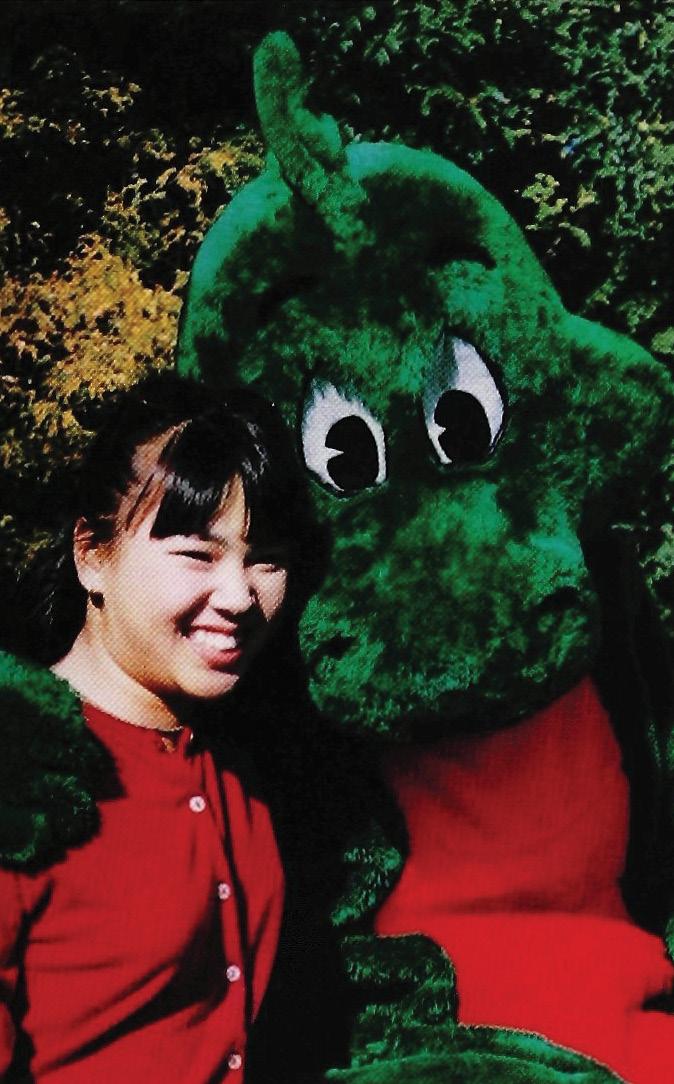
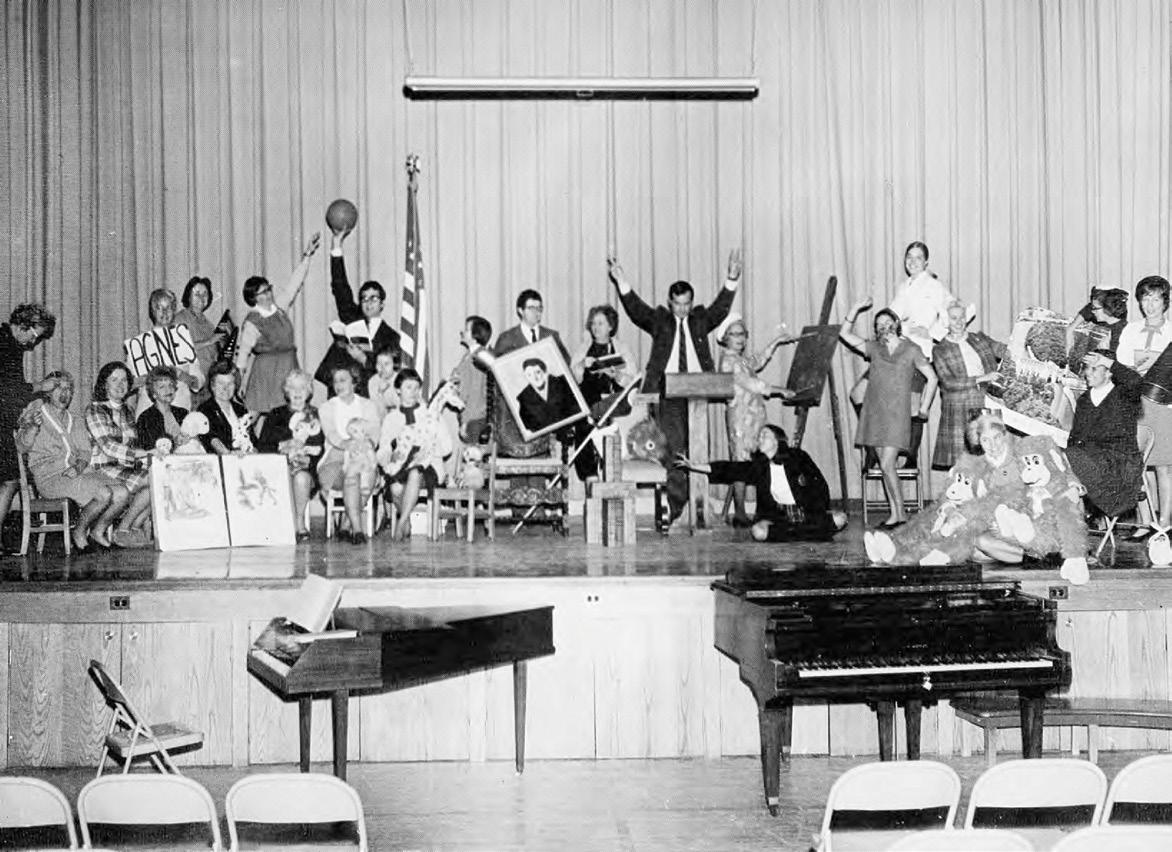
The school had no mascot until 1979, when the senior class voted to become the Dragons. Lynne Warren, James Bradley, and Taffie Taylor in Middle School Forum, 1988
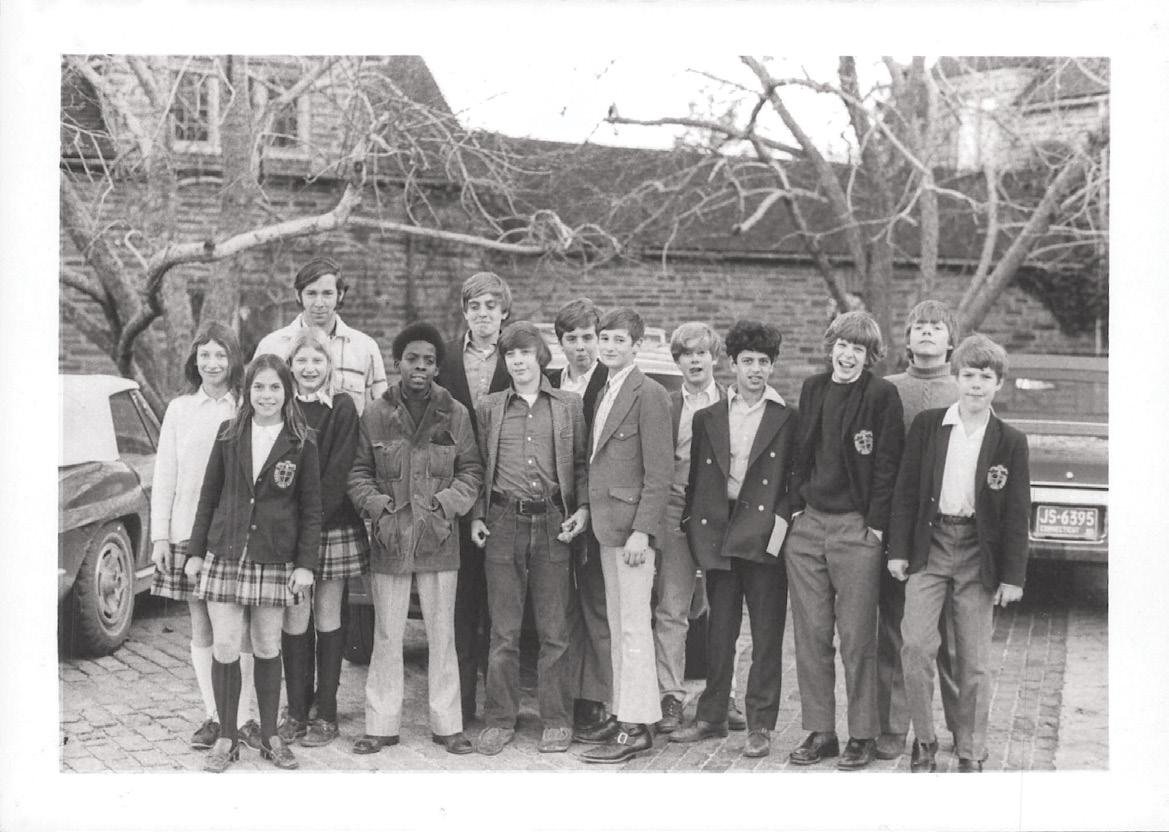
Boys and girls alike sport the new GFA crest in 1970
Read more about the Athletics & Wellness Center on page 61
Throughout GFA’s histor y, our heads of school have shaped not only the institution but the lives of generations of students. Here, we recognize the leaders whose vision and dedication
GFA and its community.
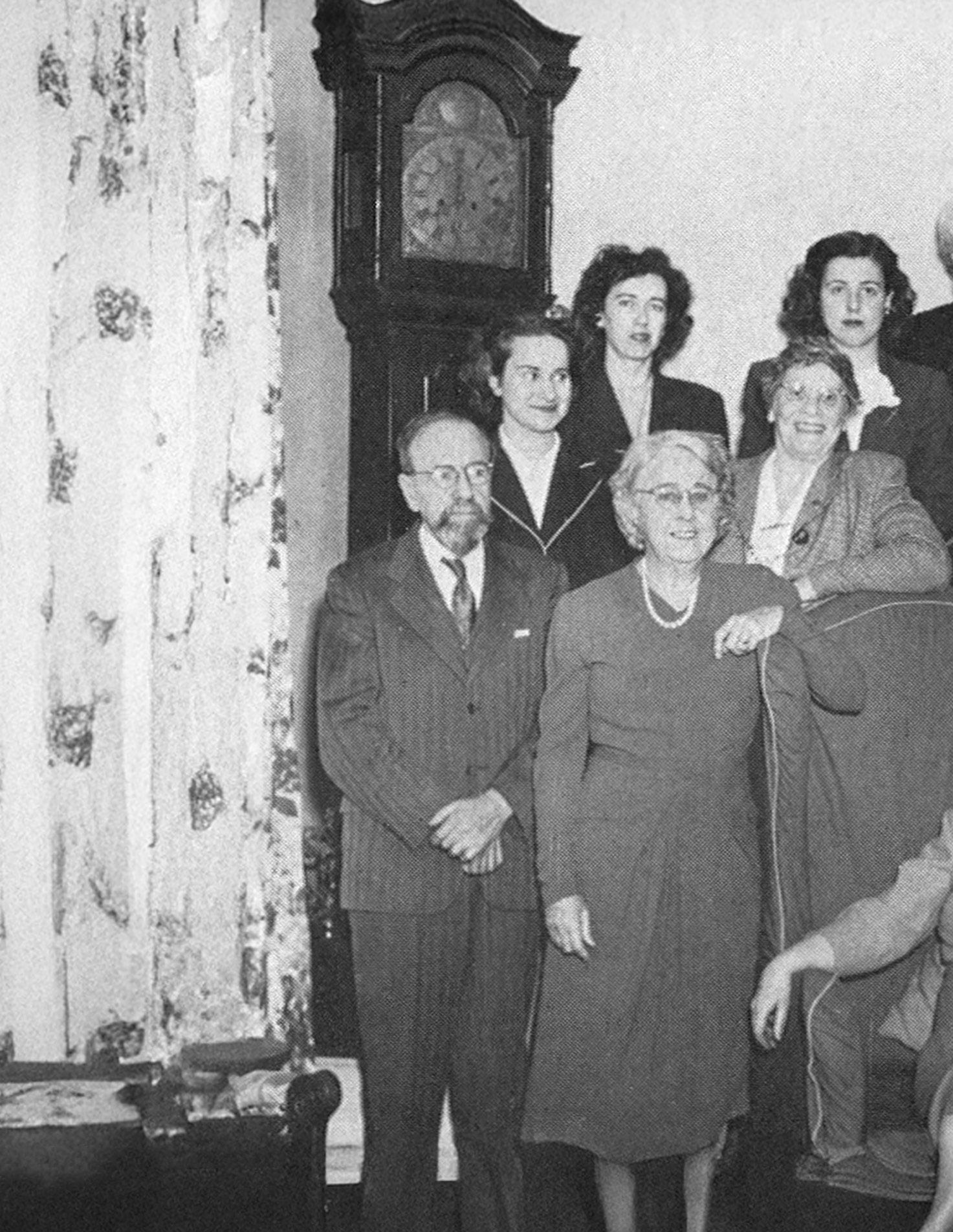
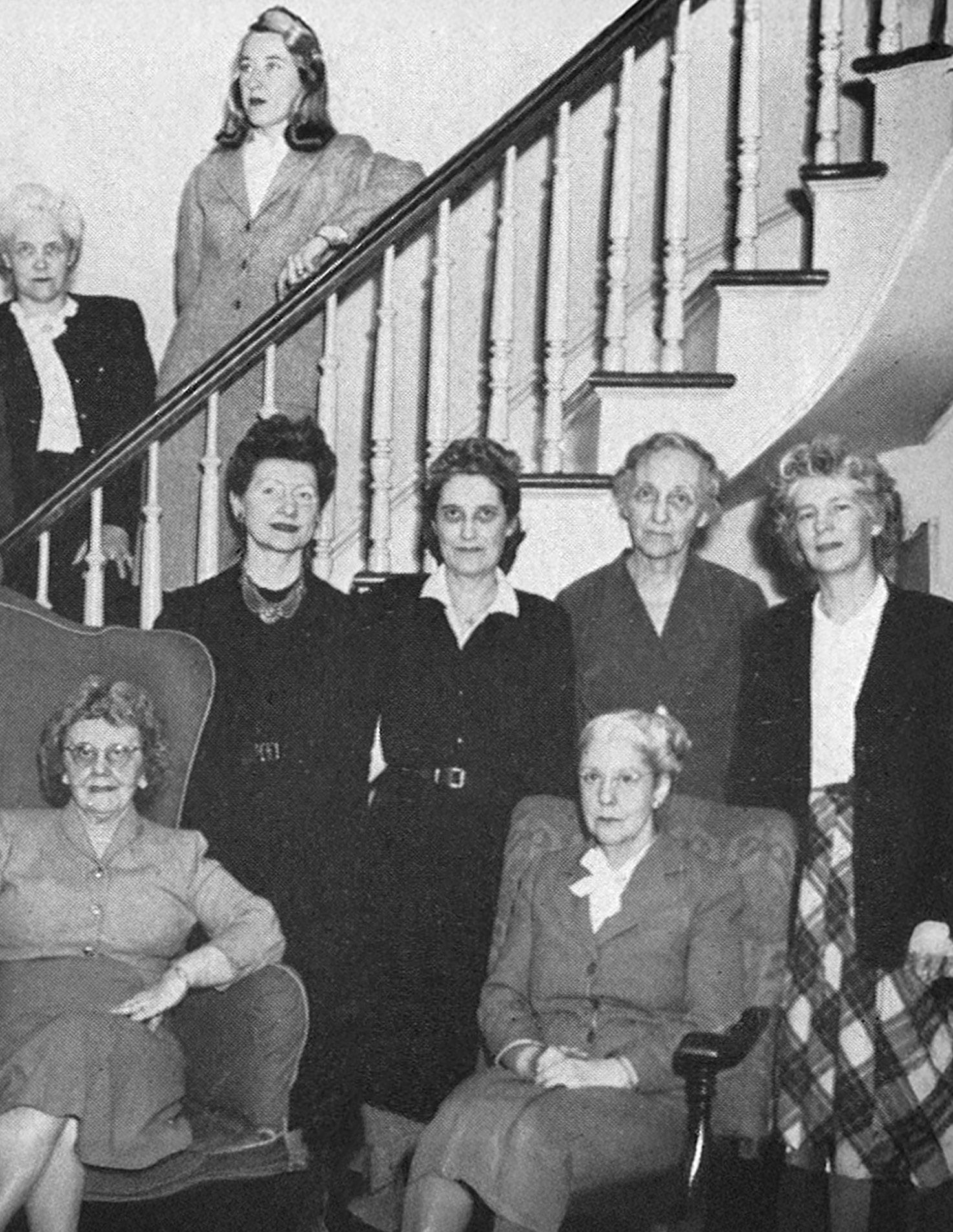
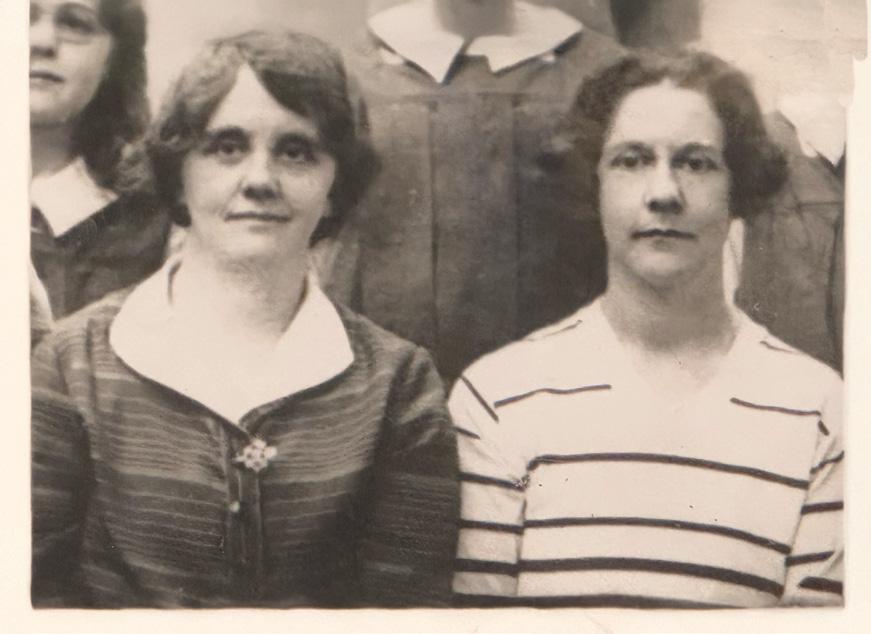
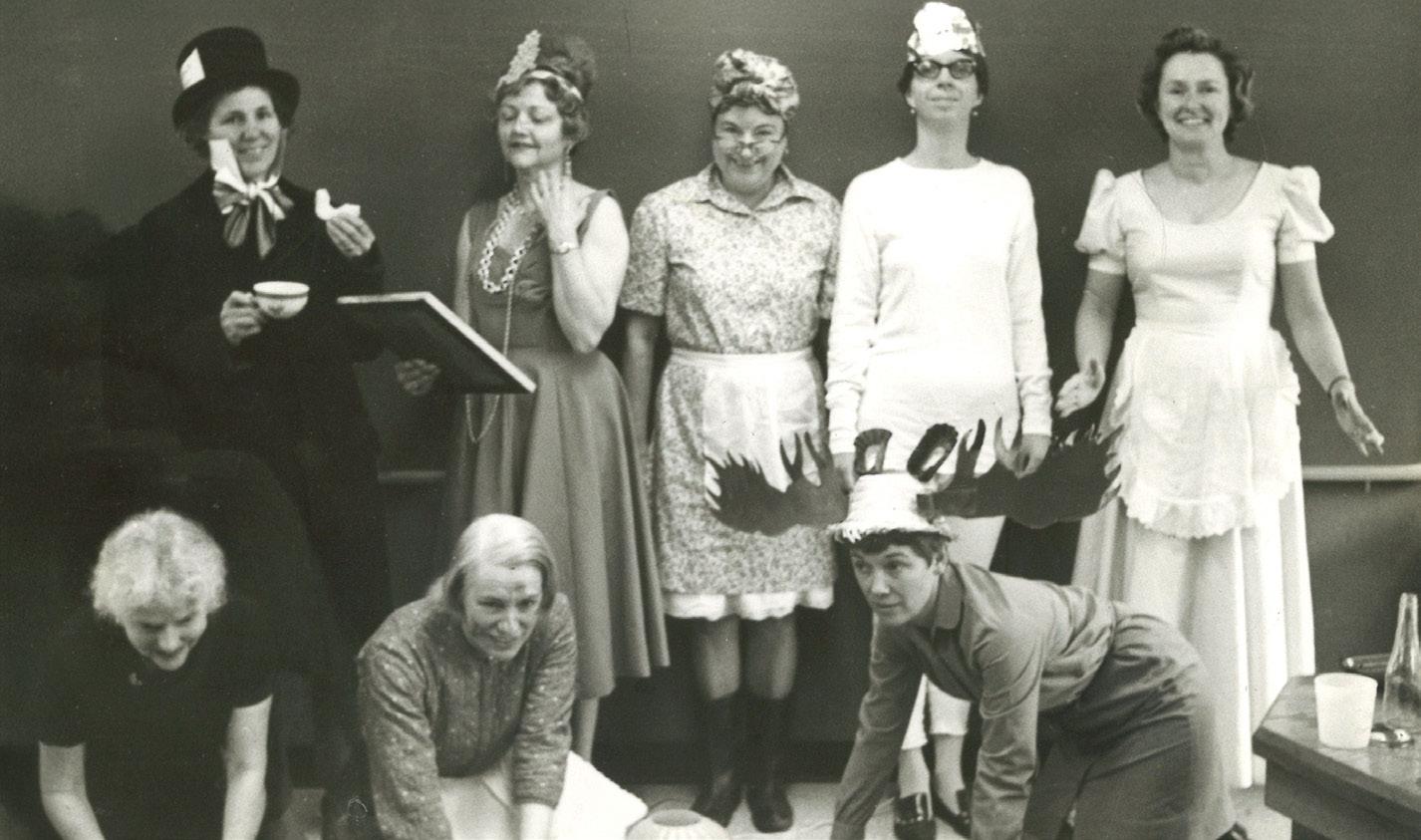
Pictured: Faculty standing behind Mary Bolton (left) and sister Kathleen Laycock (right), 1948
Mary Bolton A Vision Begins
Head 1925-1960
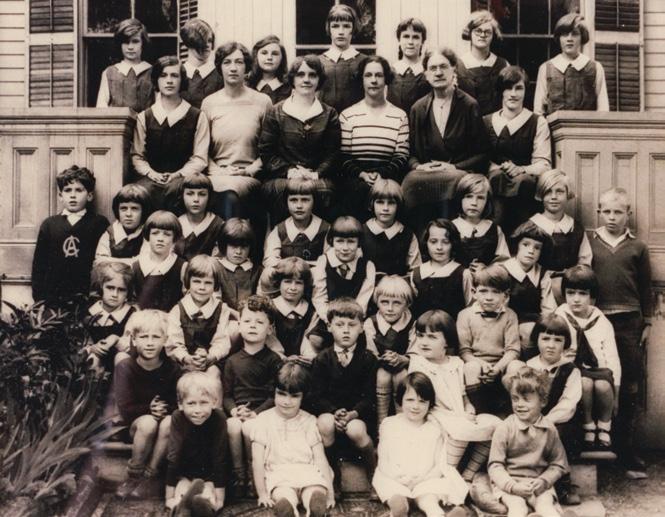
Mary Bolton was “a lady of education and culture”. A mother with two young daughters, she moved from England to Westport in 1925 with a desire to create a new kind of school—one inspired by the best traditions of English education. Though completely unknown in the local Westport community, she opened Mrs. Bolton’s School for Girls that fall to begin educating her daughters. Two other girls enrolled, and by the end of the year there were 18 total students at Bolton. The school added a new grade each year as her eldest daughter Betty advanced in age—a personal, purposeful approach to growth.
From the beginning, Mrs. Bolton emphasized both academic rigor and the cultivation of character. Known for her warmth, patience, and high expectations, she taught with extraordinary care, ran the school with gentle authority, and instilled thoughtful manners in each child.
Her sister, Kathleen Laycock, joined to help manage and grow the school, creating a partnership that strengthened its early culture. For nearly three decades, Bolton thrived, earning a reputation for excellence and a focus on educating the “total girl.” Mrs. Bolton didn’t simply found a school; she established a tone of intention and care that shaped its character for generations. Her legacy lives on at Greens Farms Academy, reflected in the school’s enduring commitment to the holistic development of every student.
Mrs. Bolton is a lady of sound judgement and tactful manner, is closely devoted to her work, and her personal charm and gracious qualities have gained for her many warm and loyal friends in Westport.
History of Fairfield County 1639-1928, Volume III
Mary Bolton and Kathleen Laycock, c.1927
Kathleen Laycock The Steadfast Leader
Head 1926-1963
Younger sister to Mary Bolton, Kathleen Laycock brought strength, grace, and dedication to the school she helped build. Miss Laycock’s early years were spent as a nurse during World War I and then a teacher in England, France, and Mexico—experiences that shaped her deep compassion and global perspective.
In 1926, she joined her sister in Westport and quickly became crucial to the school’s growth. Confident and energetic, Miss Laycock taught Latin and current events, directed plays, coached field hockey, and served as
a firm yet caring disciplinarian. When the school expanded to older grades, she became headmistress of the Upper School.
A skilled multitasker, Miss Laycock even managed the school’s finances herself, embodying the hard work and resourcefulness needed to sustain the school’s early years. In 1957, she helped incorporate the Upper School as The Kathleen Laycock Country Day School, securing its future with a new campus on Beachside Avenue.
Described in the 1963 yearbook as loving, gentle, and understanding, Miss Laycock inspired respect and affection alike. The 1997 Exhibit shared, “She drilled her students in rigorous academics, exacted from them proper behavior, and instilled in them good values and high ideals.” Retiring in 1963, Miss Laycock remained a beloved figure until her passing in 1973. Her legacy continues through the school’s commitment to fostering close, supportive relationships between faculty and students.
Miss Laycock was well liked by the upper school faculty because she allowed them the freedom to teach what they individually felt necessary and in a manner which suited them best. Consequently, the school attracted good faculty members who in turn attracted a good student body for a school of its size.
Deirdre Kidder
’71
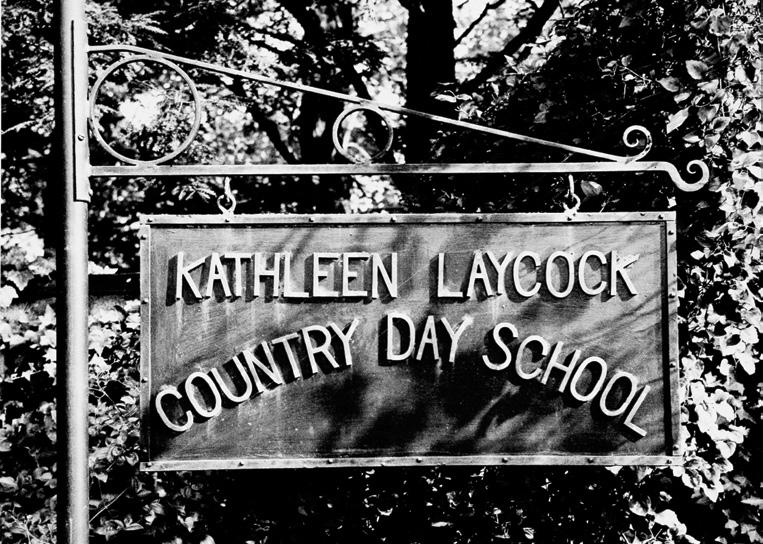
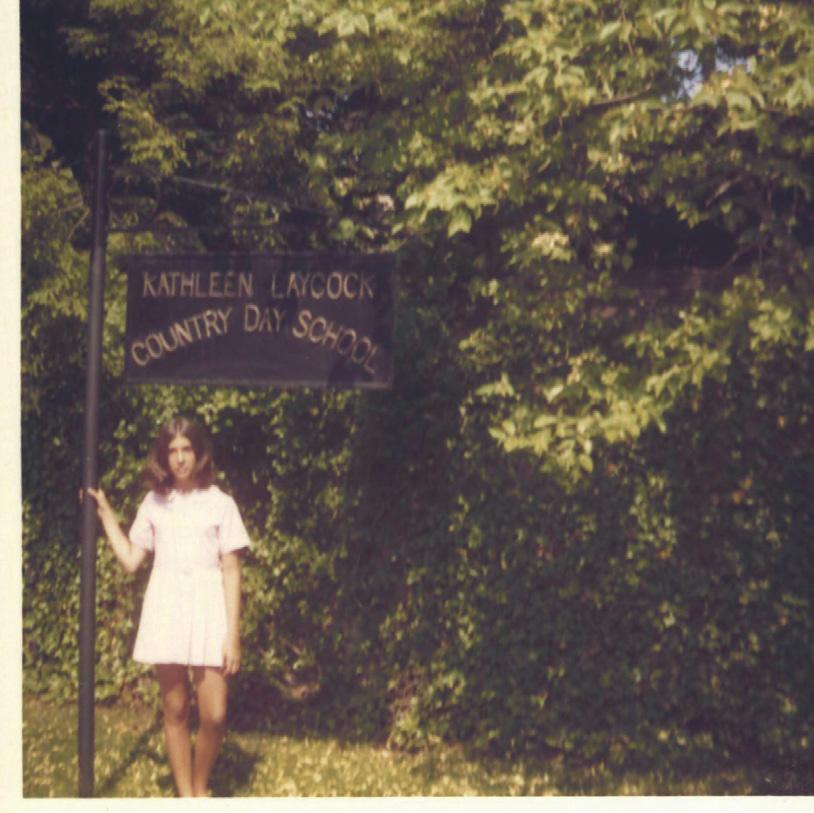
Laycock student with school sign, 1970
William Posey Laying the Foundations
Head 1963-1964
When Miss Laycock retired in 1963, the Board of Trustees looked beyond the school community and appointed William Posey as headmaster. A Yale graduate and experienced educator, Mr. Posey brought fresh energy to Laycock during a pivotal time of transition—from a somewhat informally yet efficiently run school to a larger country day school poised to stand alongside its peer institutions.
Though his tenure lasted just one year, Mr. Posey initiated several key changes: strengthening the faculty and improving benefits, reorganizing the curriculum into broad academic areas, increasing student involvement, and launching the school’s first major building project.
During his one year at the school, he has been able to substantially strengthen the faculty and enrich the curriculum. In addition, his enthusiasm and determination were major factors in pushing forward our building program.
Lucie B. Warren, Former Chair of the Board of Trustees
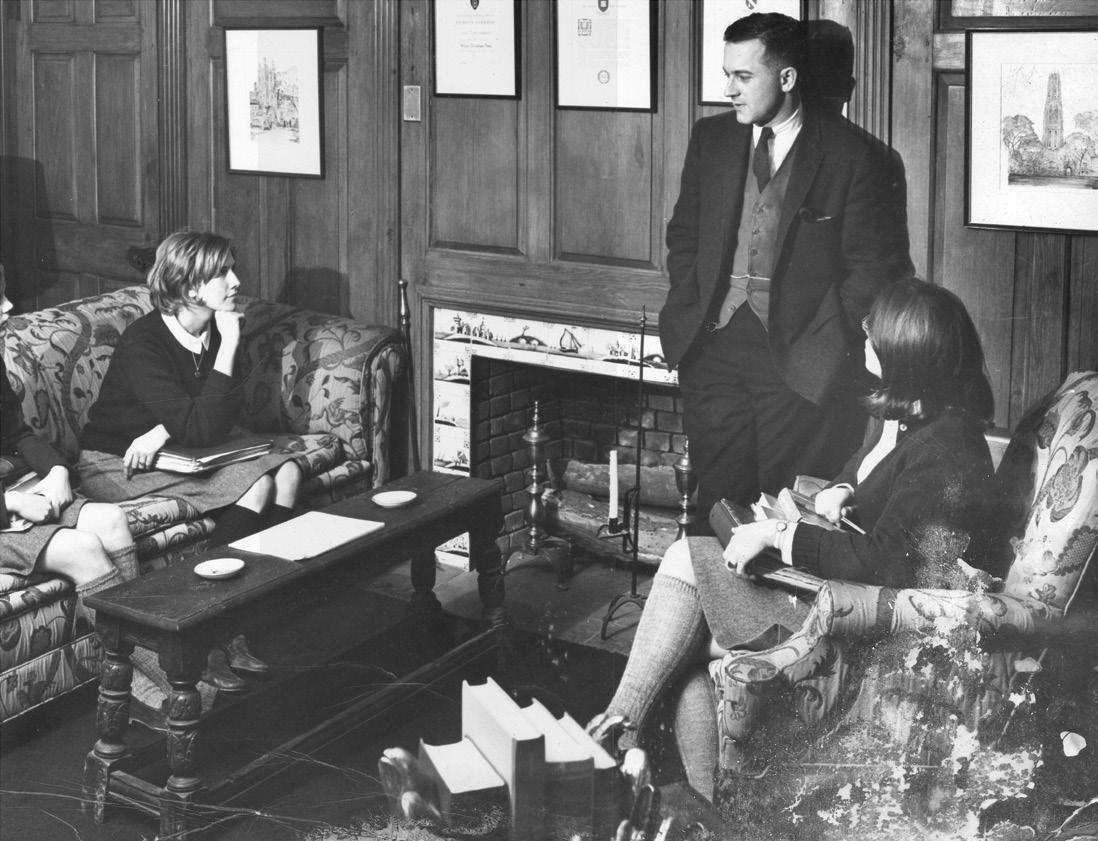
William Posey with students, 1963
Nancy Lauber ’51 A Head Ahead of Her Time
Head 1964-1972
Nancy Lauber’s time as head reflected a balance of rigor, vision, and care that guided the school through a critical era of change. A 1951 graduate of Bolton, she returned in 1955 as a math teacher and coach. In 1964, after a year as assistant to the headmaster, she was appointed headmistress of the Kathleen Laycock Country Day School.
Over the next eight years, she guided the school through significant growth: doubling enrollment, adding the first kindergarten class, and overseeing the completion of a new lower school building, a gymnasium, cafeteria, classrooms, and athletic fields. Her tenure included one of the school’s most pivotal moments: the 1970 decision to transition from an all-girls school to the coeducational Greens Farms Academy. While her own education had been singlesex, she believed students should be prepared “for the world they were going to live in.” During this transition she hired Ed Denes, which she later described as one of the best decisions she made, enhancing an already dedicated faculty.
Miss Lauber was committed to preparing students for lives of purpose, long before that became the official mission of GFA. She sought to create a school where students could learn from both successes and challenges, and have the autonomy needed to develop academically, personally, and socially.
Even after her departure in 1972, Miss Lauber remained a loyal supporter of GFA. In 2024, the Nancy E. Lauber ’51 Head of School Fund was established in her honor, ensuring endowed support for the school’s leadership and preserving her enduring legacy.
I think I spent 26 years as a student or faculty member and head, and those were some of the happiest years of my life. I loved being head of Greens Farms Academy. I loved teaching there. I was very happy as a student, and I just had a great experience.
Nancy Lauber ’51
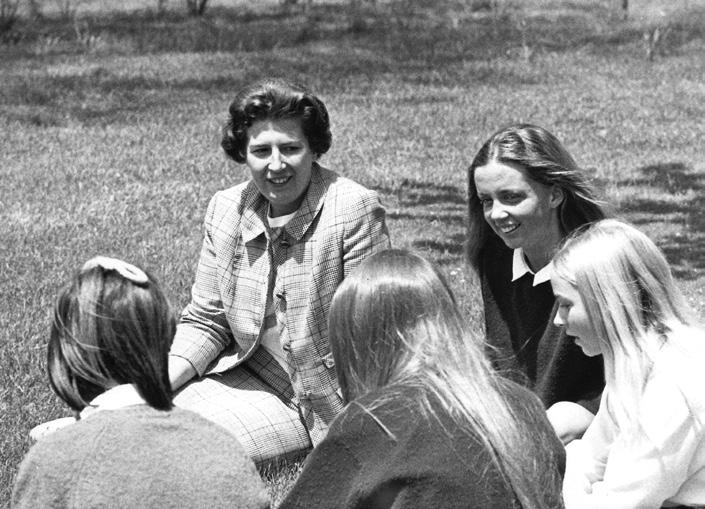
Nancy Lauber with students, 1960s
Jim Coyle Building a Legacy
Head 1972-1998
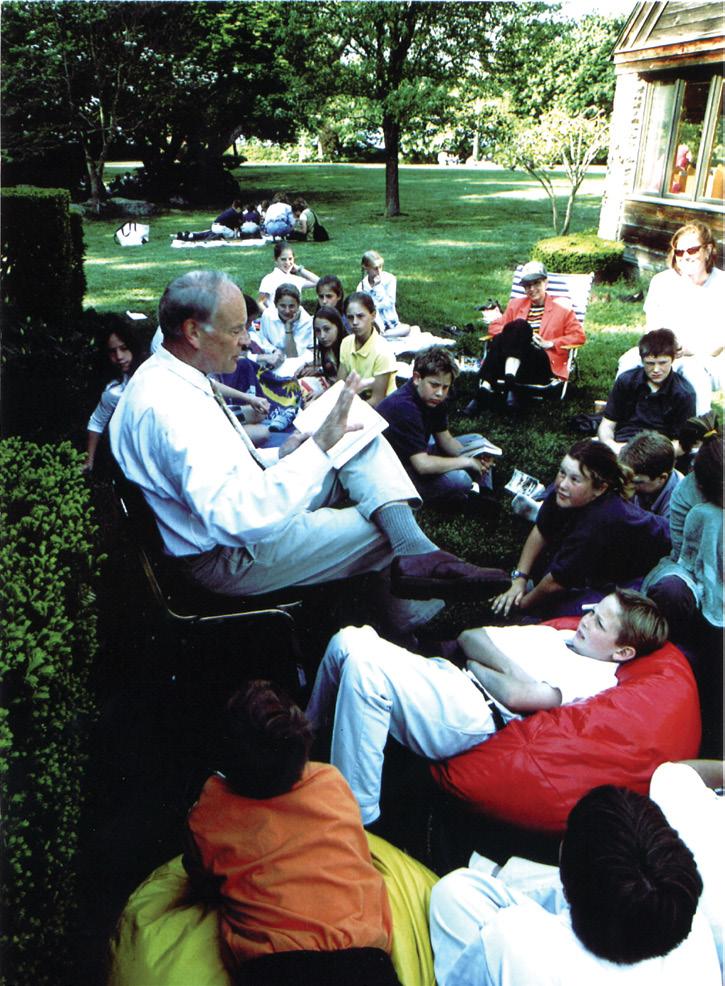
When Jim Coyle became Head in 1972, the school was navigating its early years of growth. A 1956 Yale graduate with a degree in history and a veteran of the U.S. Army Counter Intelligence Corps, Mr. Coyle brought intelligence, steadiness, and a personal sense of care to his role.
Over his 26-year tenure, he strengthened the faculty, expanded academic programs, and oversaw major campus projects, including the construction of the athletic center that would later bear his
name. Mr. Coyle emphasized not only rigorous academics but also civility, respect, and responsibility. Under his leadership, community service became a hallmark of the GFA experience, with students tutoring in Bridgeport and volunteering in New York City, reflecting his belief that character and learning go hand in hand.
Mr. Coyle's presence was both commanding and approachable. Alumni remember his dry wit, his crewcut, and his fairness—whether negotiating a test extension or supporting students on the playing field or in the arts. He described his role as “a little like being a parent,” recognizing the weight and joy of shaping young lives while fostering laughter and camaraderie throughout the halls.
When he retired in 1998, he left behind a school strengthened in mission, community, and spirit. His legacy endures in the thousands of students he guided, inspired by a leader whose vision, integrity, and warmth continue to shape GFA today.
Faculty wanted to teach under and with Jim, and students wanted to come to school. Jim Coyle’s magical presence was seen in the classroom, in the hallways, on the athletic fields, and in the way people interacted with each other. It was my privilege to be there during his tenure. Indeed, he orchestrated his time at GFA to be ‘magical!’
Ed Denes, Former Faculty
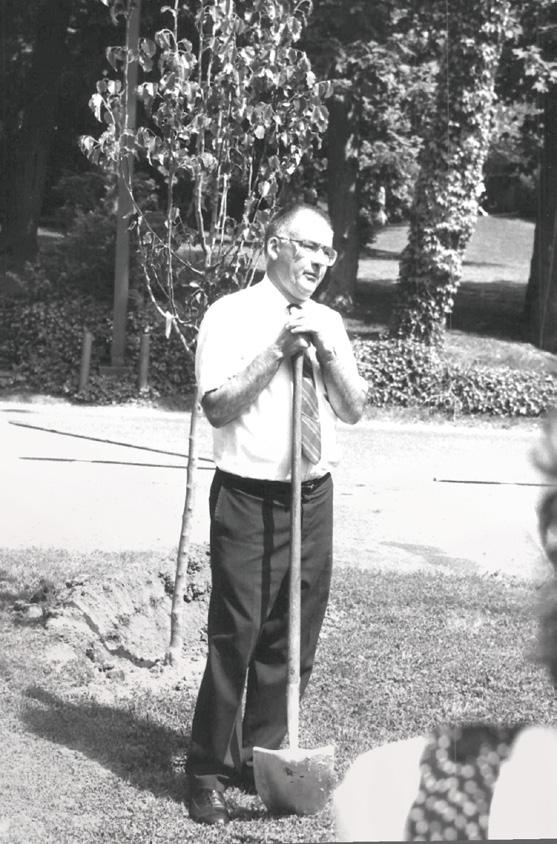
Jim Coyle, 1992
Peter Esty A Leader for a New Era
Head 1998-2003
Peter Esty arrived at GFA in 1998, bringing with him national recognition as an educator and school leader. Known for his warmth, humor, and forward-looking vision, he strengthened GFA’s traditions while guiding the school toward a more global and engaged future.
Students and faculty quickly connected with Mr. Esty's approachable style, and he had a gift for making those around him feel seen and supported. Among his most lasting contributions was the introduction of the Harkness method, which transformed classrooms into collaborative spaces for dialogue and critical thinking. He also established Horizons GFA, opening the school’s doors each summer to students from Bridgeport and deepening GFA’s role as a community partner.
Though his tenure lasted only five years, Mr. Esty’s leadership came at a pivotal time, helping to elevate GFA’s reputation among peer schools. The Peter T. Esty Walkway, adjacent to the Main Courtyard, honors his contributions and reflects the lasting spirit he brought to GFA.
Peter was open, welcoming, and joyful with an unfailing sense of humor. He displayed the courage and confidence to take on difficult issues irrespective of the consequences. The nationwide respect he enjoyed helped to solidify GFA’s reputation within the independent school community.
Henry Von Kohorn P ’93, ’96, Former Chair, Board of Trustees
Peter Esty with students, 1999
Janet Hartwell Expanding Possibilities
Head 2003-2018
When Janet Hartwell became GFA’s seventh head of school in 2003, she brought equal measures of academic vision and steady leadership. Over her 15-year tenure, she guided GFA through a period of remarkable transformation: strengthening the school’s academic program, expanding its campus, and fostering a culture that emphasized intellectual curiosity, social responsibility, and personal growth.
Early in her leadership, Mrs. Hartwell recognized that GFA’s academic ambitions required new and better spaces. Working closely with trustees, faculty, and families, she oversaw the expansion of campus facilities, including a Performing Arts
Center, Global Studies Center, new classrooms, athletic fields, and a squash court facility. The opening of these state-of-the-art spaces brought new light and energy to campus, creating room for both academic innovation and community connection.
Mrs. Hartwell’s leadership reflected a belief that education should prepare students not only for college, but for engaged and meaningful lives, and under her leadership, the school embraced initiatives that reflected her commitment to sustainability, global awareness, and innovative teaching practices. In her work, she nurtured a culture of intellectual curiosity and social responsibility, and created opportunities for students to explore the wider world—all while maintaining rigorous academic standards and supporting the growth of each individual.
Mrs. Hartwell was named an honorary “lifer” by the Class of 2017, a testament to her connection with those she had shepherded from kindergarten through graduation. By the time she retired in 2018, GFA had grown to more than 700 students, with strengthened programs, a modernized campus, and a community prepared to carry its mission forward.
Of everything that I will miss, it is the students most of all. I am immensely proud of them, and they reach me in profound ways through their energy, honesty, and authentic ways of being.
Janet Hartwell
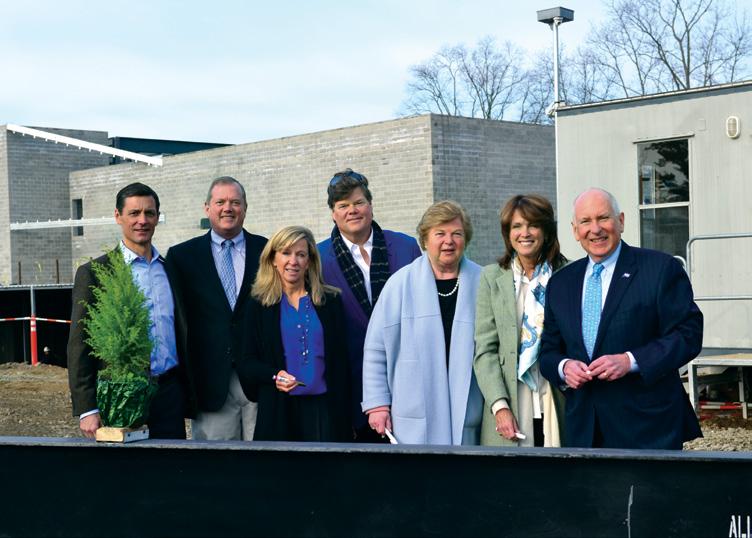
Topping off ceremony for the Janet Hartwell Performing Arts Center, 2015
Bob Whelan Inspiring the Next Century
Head 2018-Present
When Bob Whelan became GFA's eighth head of school in 2018, he brought with him a deep appreciation for the school’s mission and a forwardlooking vision for its future. Building upon the strong foundation established by his predecessors, Mr. Whelan has guided GFA through a defining era of innovation, connection, and purposeful growth.
Under his leadership, GFA navigated the challenges of a global pandemic, moved beyond the AP curriculum, and launched Lives of Purpose, a strategic plan that reaffirms the school’s enduring values while charting an
ambitious course for the future. Mr. Whelan has championed initiatives that align space, program, and mission—ensuring that every aspect of campus life reflects GFA’s commitment to community, relationships, and intellectual engagement.
Most recently, Mr. Whelan has overseen the launch of the school’s Centennial Campaign, a bold effort to invest in the people, programs, and spaces that will define GFA’s second century. His leadership during this milestone moment reflects a steadfast belief in the power of education to inspire integrity, independence, and meaningful contribution.
As GFA enters its next hundred years, Mr. Whelan continues to lead with both vision and care— honoring the school’s storied past while shaping a future defined by purpose, possibility, and promise.
GFA, at its heart, is about relationships—people connecting with one another and with ideas. Those connections are what brought me here, what keep me inspired, and what make this community so special.
Bob Whelan
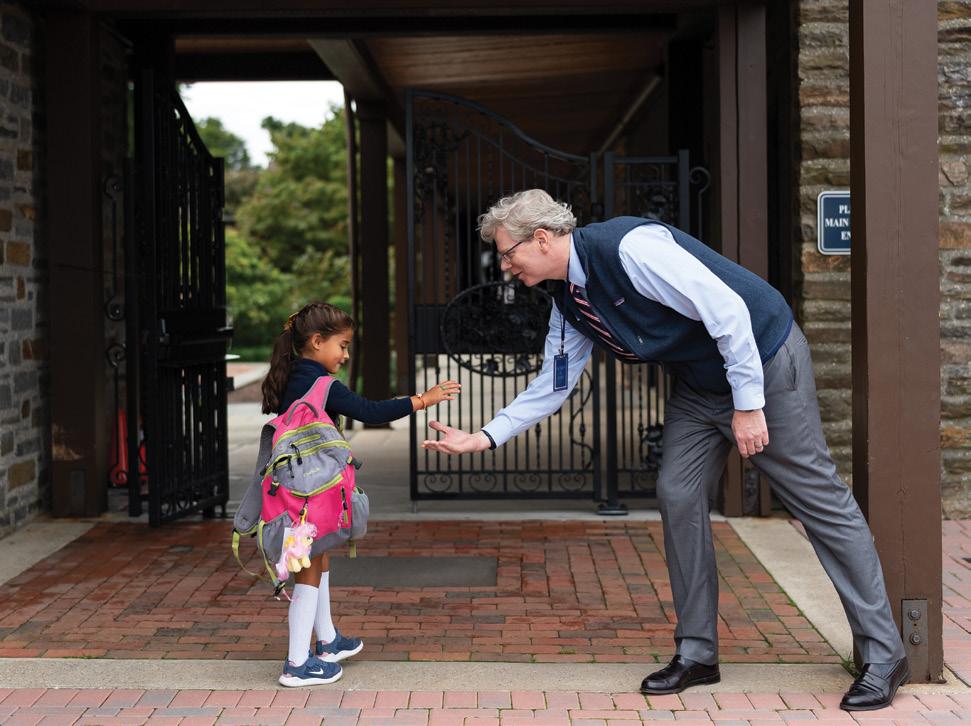
Bob Whelan at drop-off, 2018
just A few of the faces from across Generations
For a century, GFA has been defined by the dedication, guidance, and passion of its faculty. From the classroom to the playing field, from laboratories to art studios, our faculty have inspired curiosity, challenged minds, and helped students find their voices. The faces on these pages offer a glimpse at the educators who have left a lasting impact on generations of students.
FUN FACT
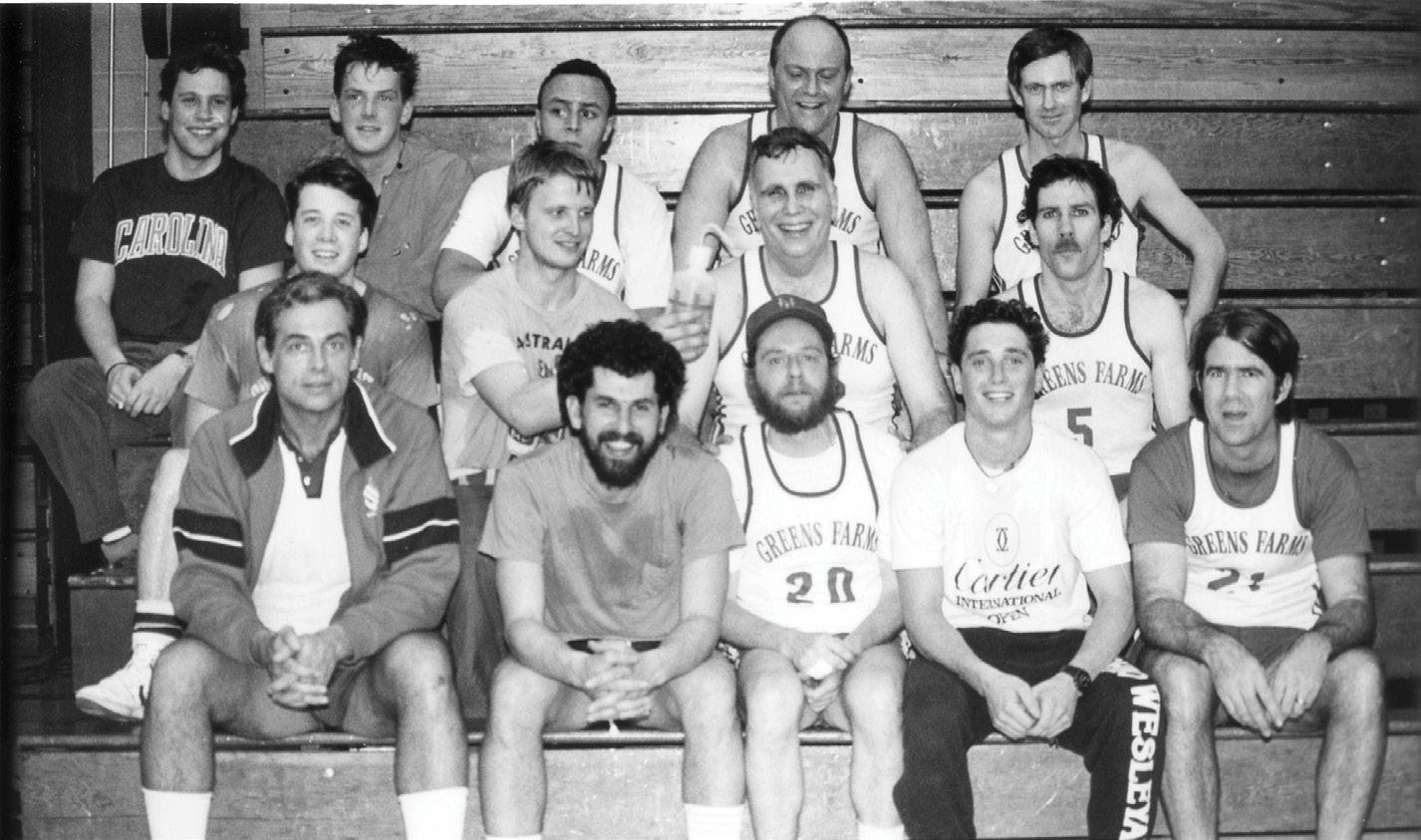
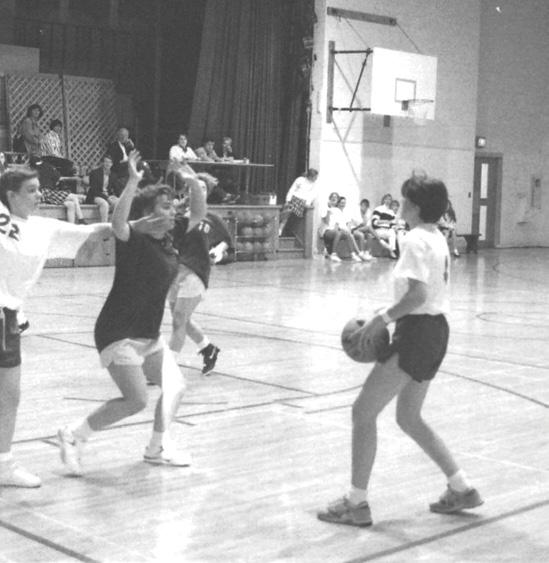
Each spring, faculty trade lesson plans for layups in the Ed Denes Classic, a spirited showdown with the senior class.
Pictured left: Ed Denes Classic, 1989
When I arrived, I was schooled in ‘the GFA way’ by mentors like Ed Denes and Charlie Dietrich. They emphasized to me that although mathematical relationships are important, they aren’t nearly as important as the relationships between the teachers, the students, and our community. I suppose I can paraphrase that as:
‘U + I > X + Y.’
Jon Matte, Mathematics
Traditions connect generations: some shift, adapt, or fade over time, but the themes of connection and belonging continue to shape our community in ways that feel unmistakably GFA.
Yea rb oo k D e dic atio n Ce rem o ny, 20 02
A Century of Close Community
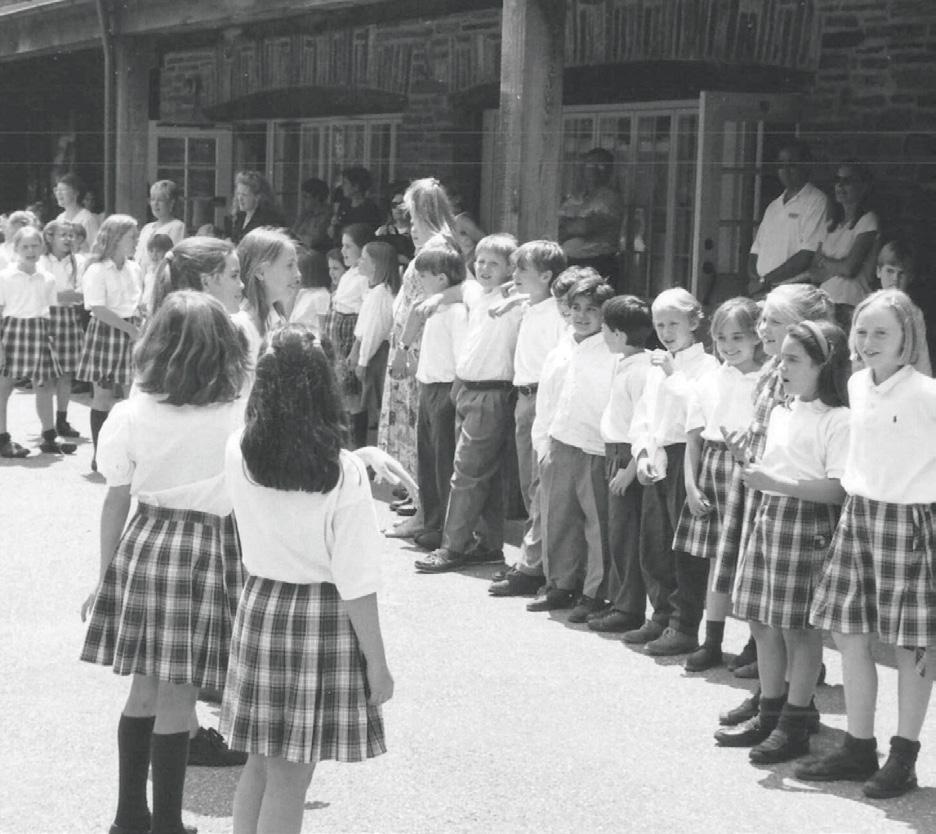
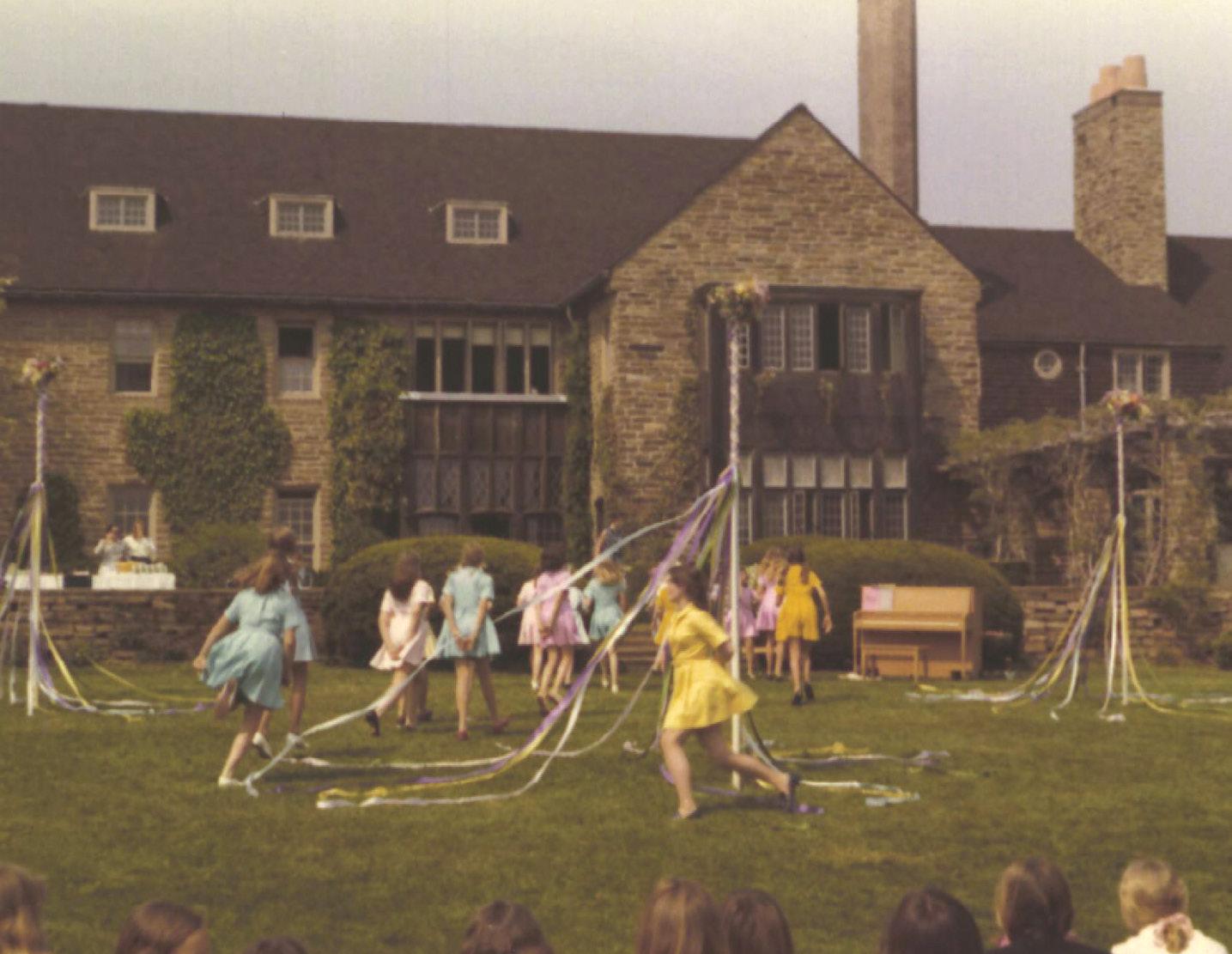
Gathering together has always been part of GFA’s story. At Bolton, May Day was a moment to pause and enjoy the spring season: students dressed in pastels, acted out fairy tales on stage, and made a flower arch for lower schoolers to pass under, symbolizing their move up to Middle School. In 1975, Family Fun Day replaced the May Day Festival and the annual event was moved to September. Over the years, our community has found new ways to mark the start of each school year and celebrate being together.
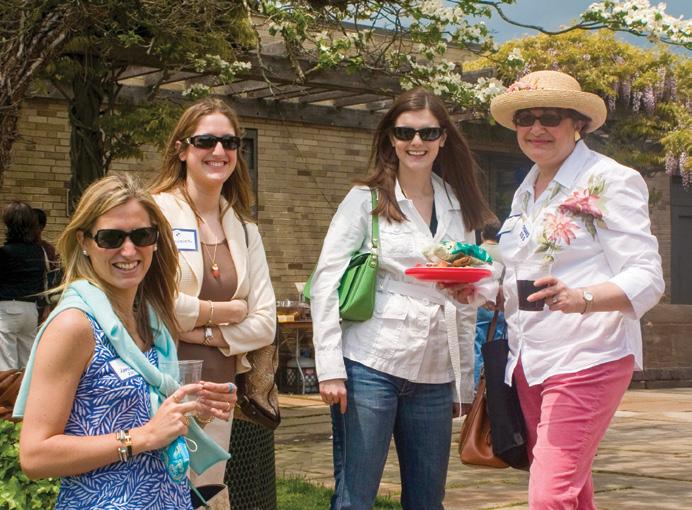
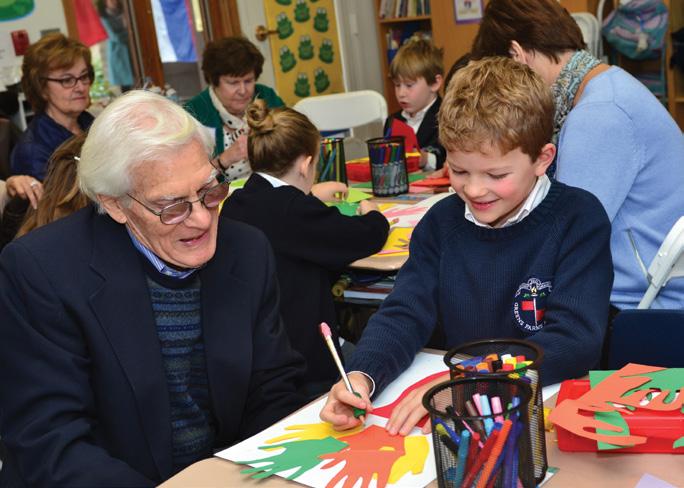
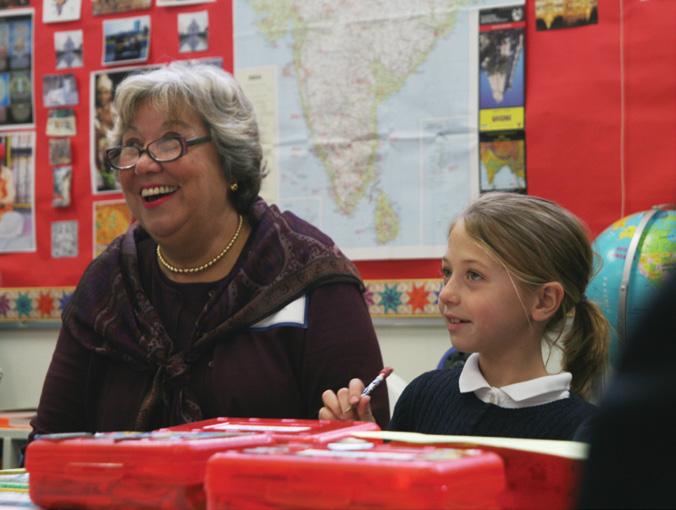
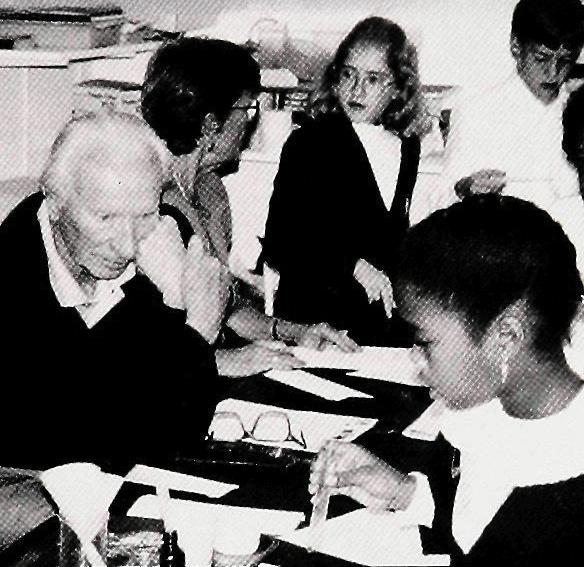
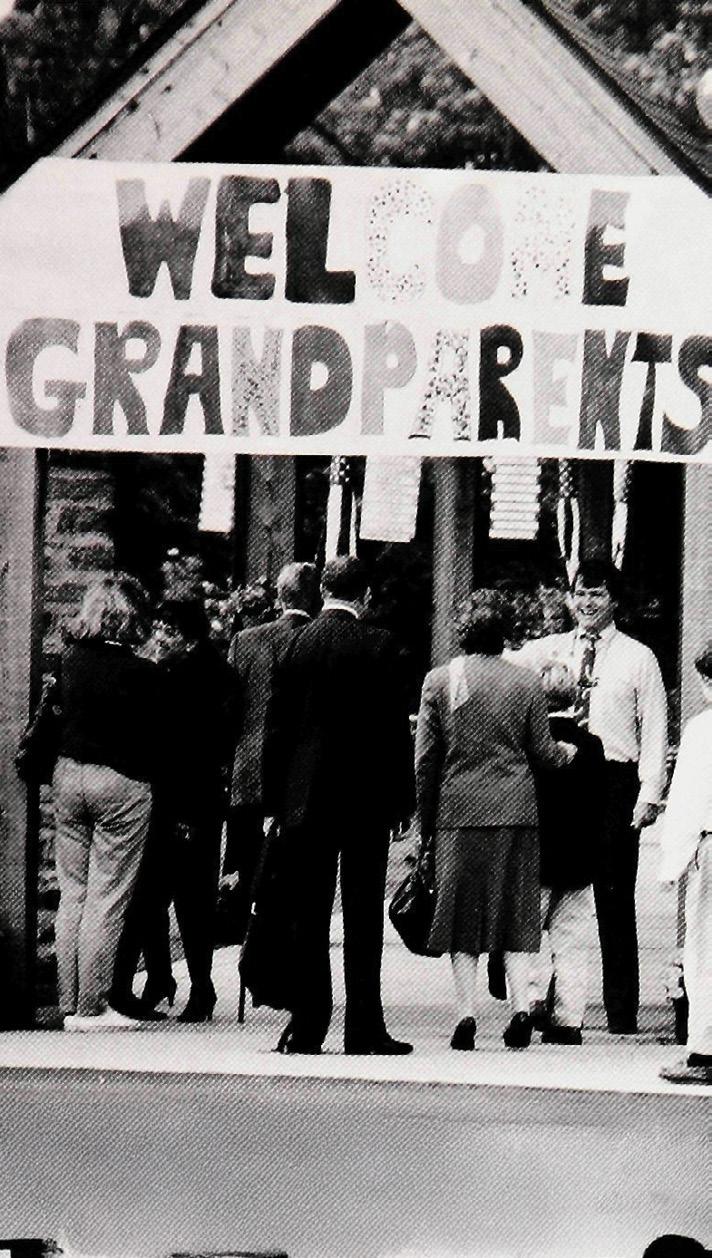
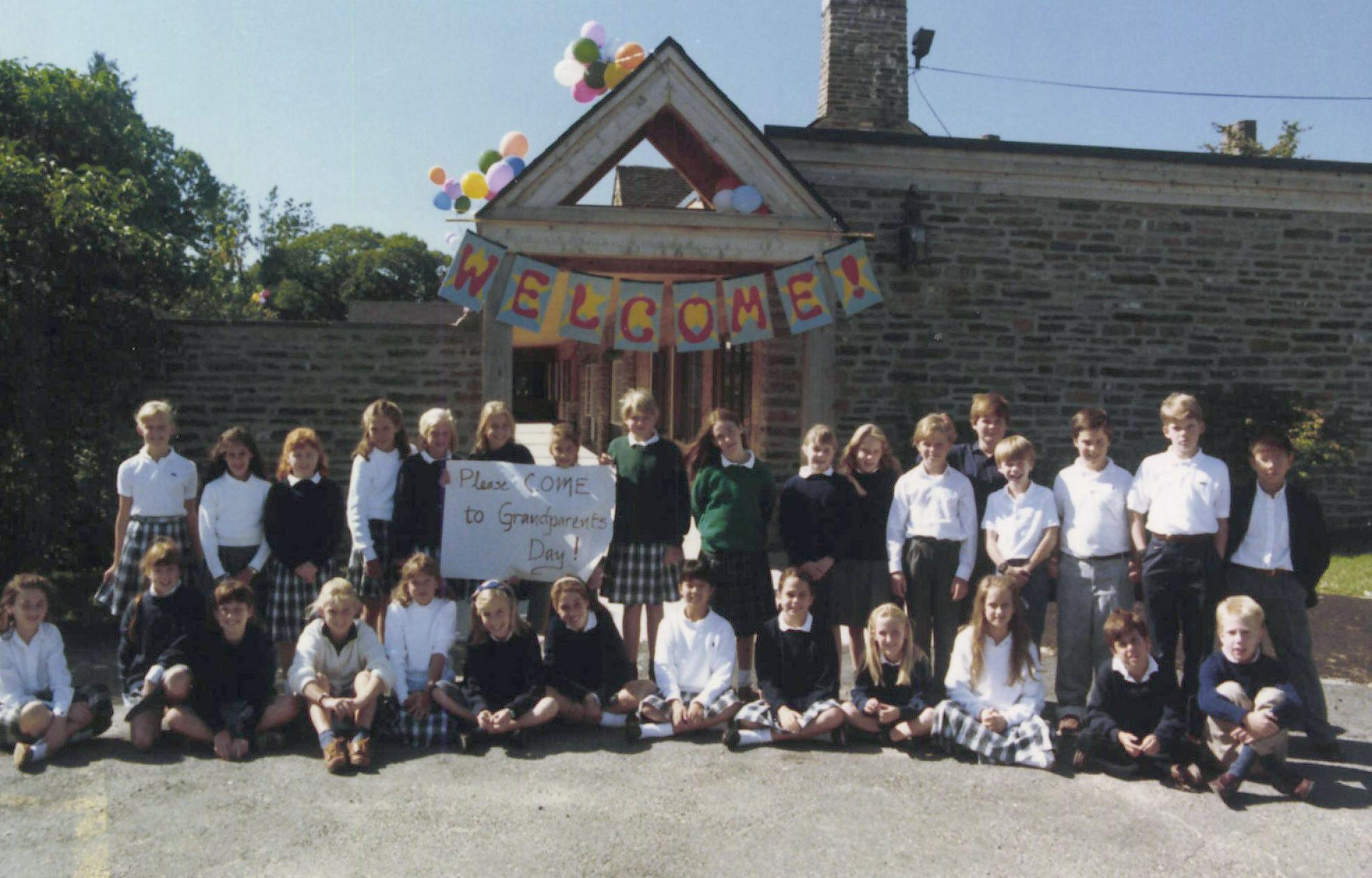
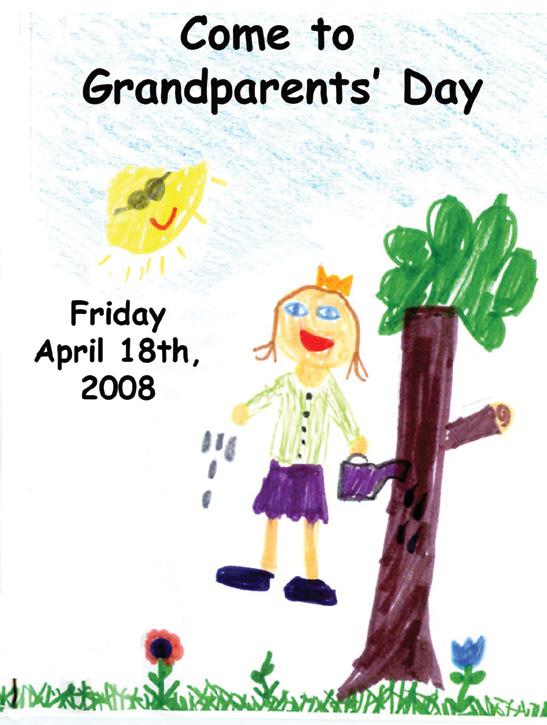
Today, families, alumni, and friends continue to gather and reminisce at events like Dragon Fair, Reunion, Grandparents & Special Friends Day, and more. While some events have passed on, the joy, laughter, and sense of connection that have long defined GFA’s community events remain. In those moments, the students of 1925 and 2025 might feel surprisingly close, united by the shared experience of being together.
Reunion
Bolton/Laycock/GFA sponsored innumerable events over the years. Most were hard to categorize, not being strictly artistic or athletic or academic, involving only faculty or students or parents, exclusively Lower School or Middle or Upper. They were just events that brought the school community, or parts of it, together.
Family Fun Day
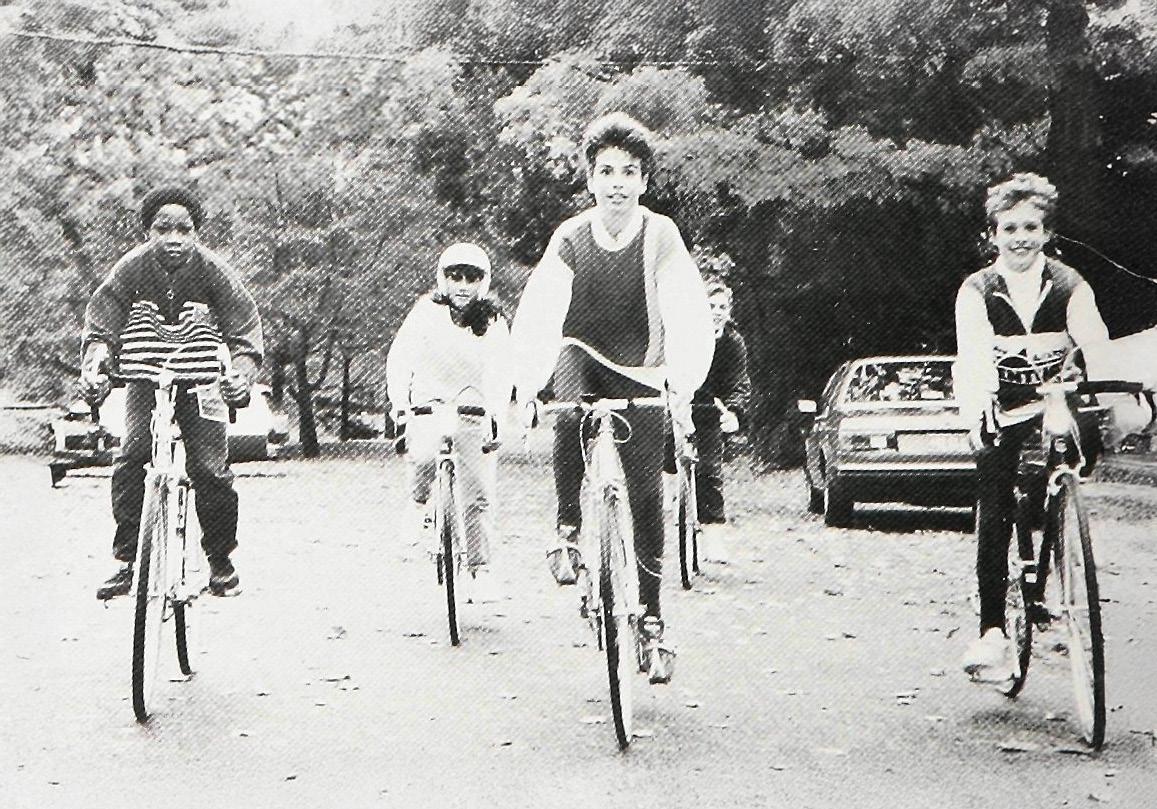
Bike-A-Thon
May Day
Grandparents & Special Friends Day
Mentors and friends
Connection Across Generations
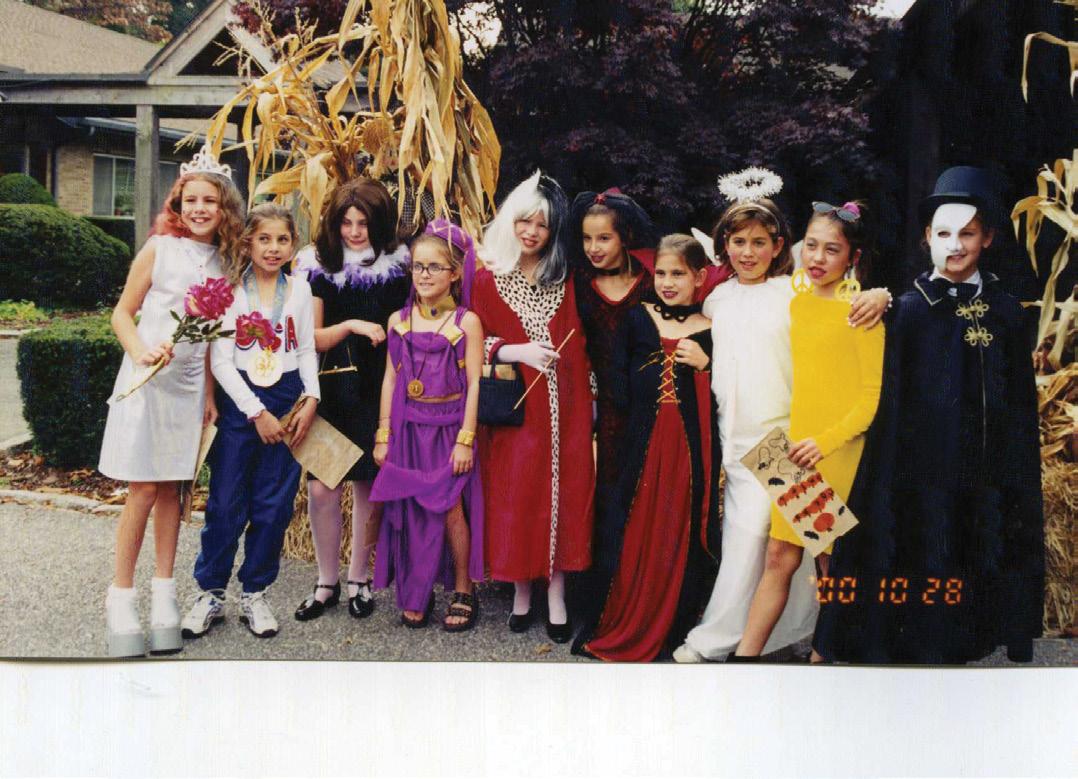
From its earliest days, the school has encouraged students to reach across grade levels, forming bonds that extend far beyond their own classrooms. At Bolton, the small size of the school meant friendships easily stretched across grades, and older students often tutored or organized activities for the younger ones. At Laycock, even as classes grew larger, students still found ways to connect— through Halloween parties, tutoring, and other moments that bridged the grades. That spirit only deepened when the school became GFA.
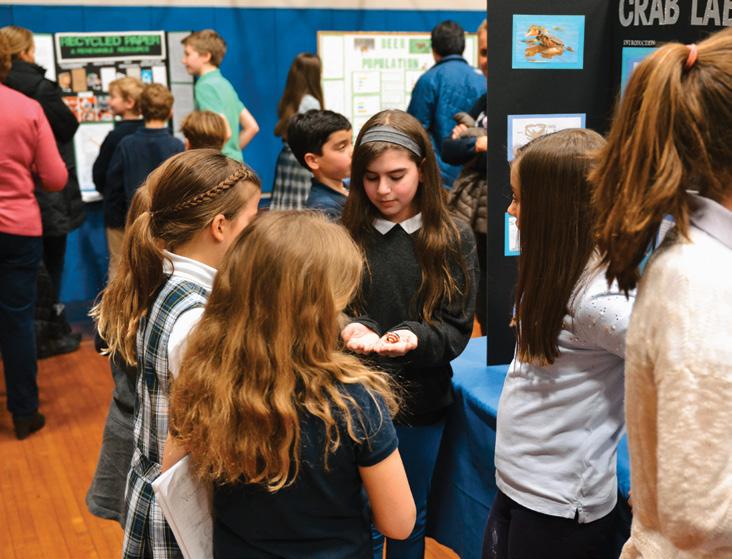
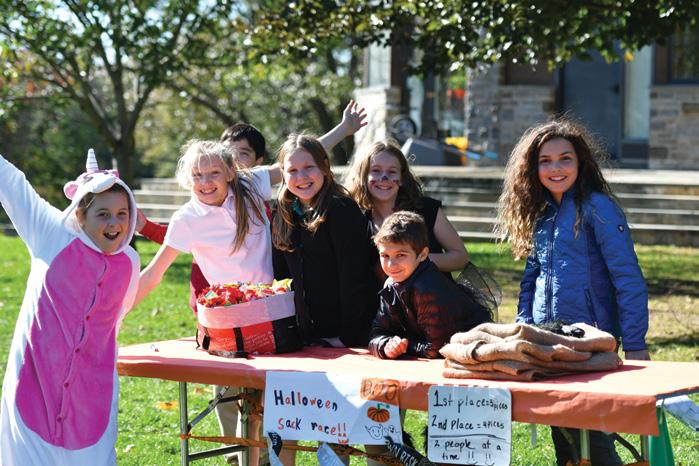
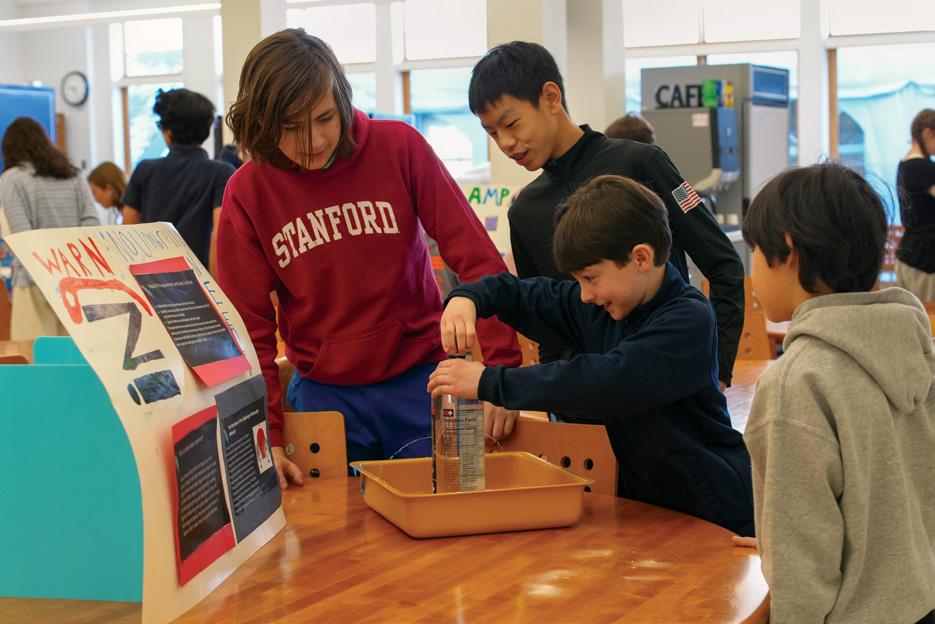
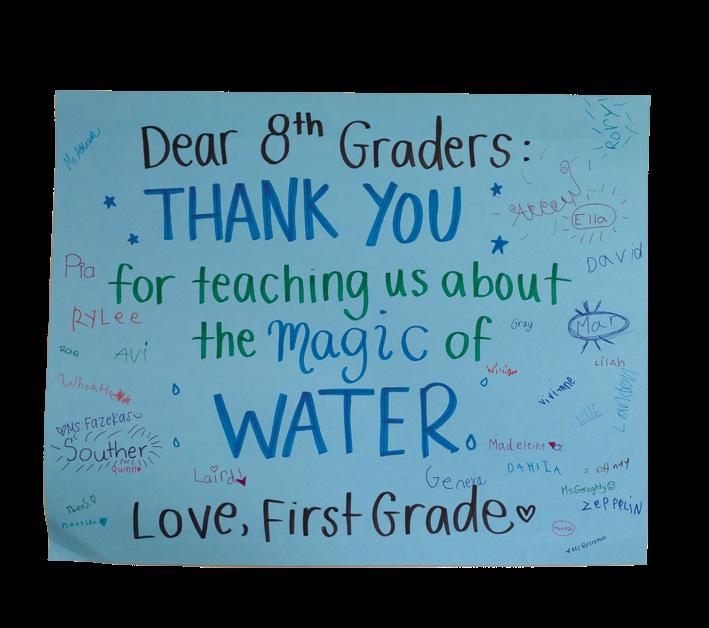
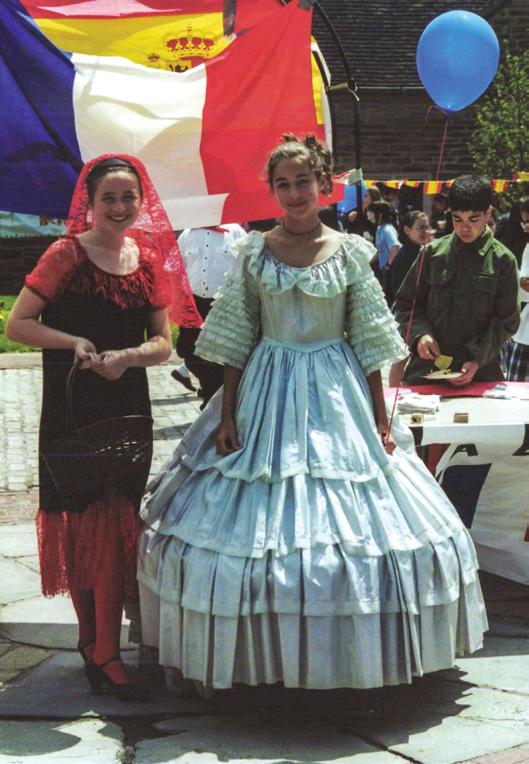
Upper schoolers joined the sixth-grade whale watch, hosted game nights, and staged chemistry experiments for younger grades. In the late 1980s and 1990s, middle school language students brought French and Spanish culture to life for their peers through the Fete Francaise and Fiesta Espanol, which included everything from traditional dances and a “Running of the Bulls” to a Tour de France on tricycles. Middle schoolers also staged science expos, carnivals, and celebrations designed especially for lower school students, creating traditions that still continue today.
Connected by curiosity
Shared spirit
For me, seeing students make connections across divisions is the highlight of teaching. Watching both older and younger students work together makes it all worth it. In those PreK–12 moments—when they're just being kids together—their age-gap makes no difference.
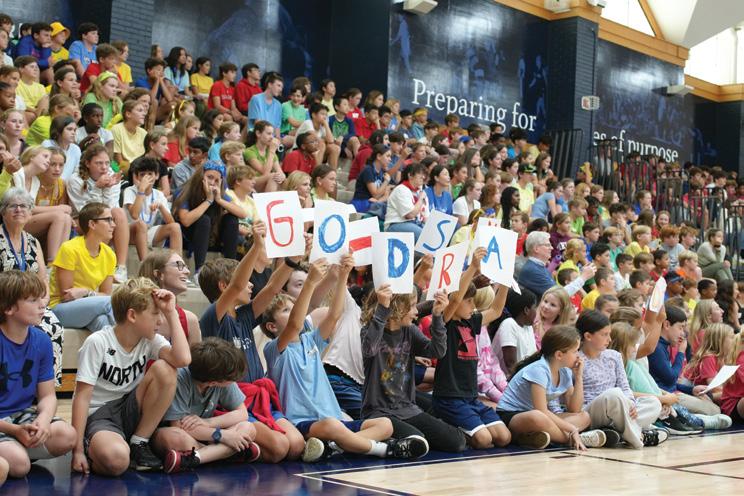
These are just a few examples of the many ways GFA students have built connections across divisions. Today, middle schoolers still host an annual Halloween Carnival for lower schoolers, the whole community gathers for special events like Convocation and Earth Day, and students across divisions continue to look for ways to learn with and from each other.
Sofi Kurtz, Lower School Science
Traditions continue
Learning Beyond the Classroom
From the start, GFA has championed the belief that students learn more about the world by extending their education beyond the classroom walls. As early as the 1930s, Miss Laycock took students into New York City for operas, plays, and museum visits, convinced that experiencing art and culture firsthand was as vital to an education as what happened on campus.
By the 1970s, monthly excursions introduced students to museums, historic sites, and workplaces that broadened their perspective on the world. Seniors briefly enrolled in college courses at places like Skidmore
and Bucknell, immersing themselves in new academic settings.
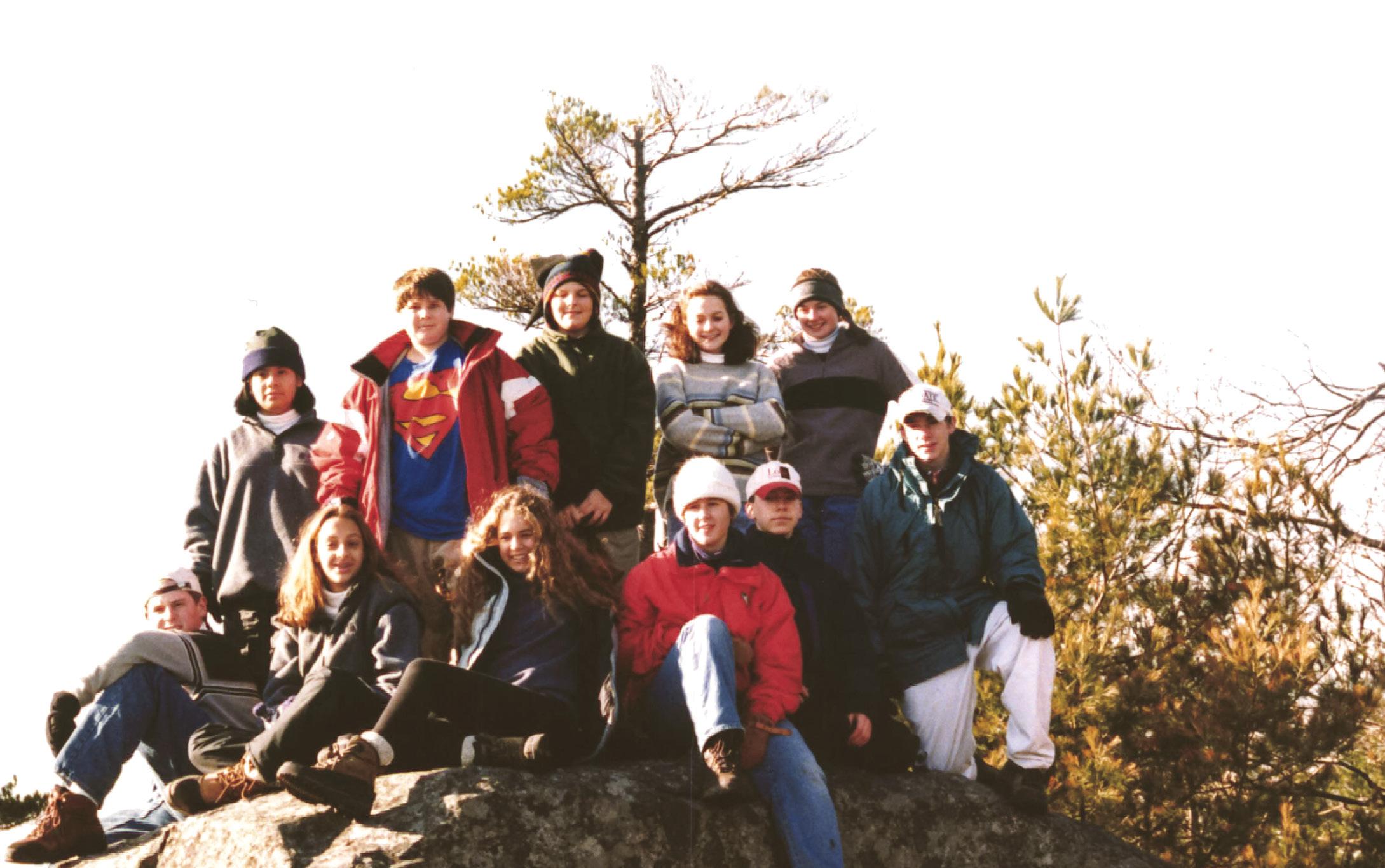
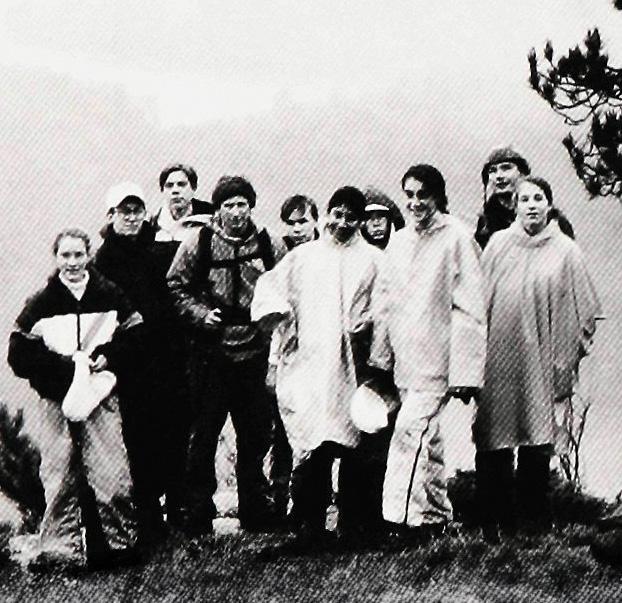
By the 1980s, class trips were a wellestablished tradition. Head of the Middle School Marion “Taffie” Taylor spearheaded distinctive camping trips in the Middle School, sending sixth graders to Cape Cod and Provincetown for whale watching, and seventh and eighth graders on outdoor adventure expeditions at Camp Hemlocks, Camp Winona, Camp Mariah, and Camp Chewonki, to name a few.
Where in the world does GFA go?
New York, New York
Washington, D.C.
Boston, Massachusetts
Newport, Rhode Island
Cape Cod, Massachusetts
Provincetown, Massachusetts
Saratoga Springs, New York Lewisburg, Pennsylvania
Montreal, Quebec, Canada
Quebec City, Quebec, Canada
Leningrad (St. Petersburg), Russia Moscow, Russia and more!
FUN FACT
The 2025-26 Class Trip destinations were Camp Hazen (6th), New York City (7th), Washington, D.C. (8th), Camp Jewell (9th), Camp Hidden Valley (10th), Newport and Boston (11th), and Camp Timber Tops (12th).
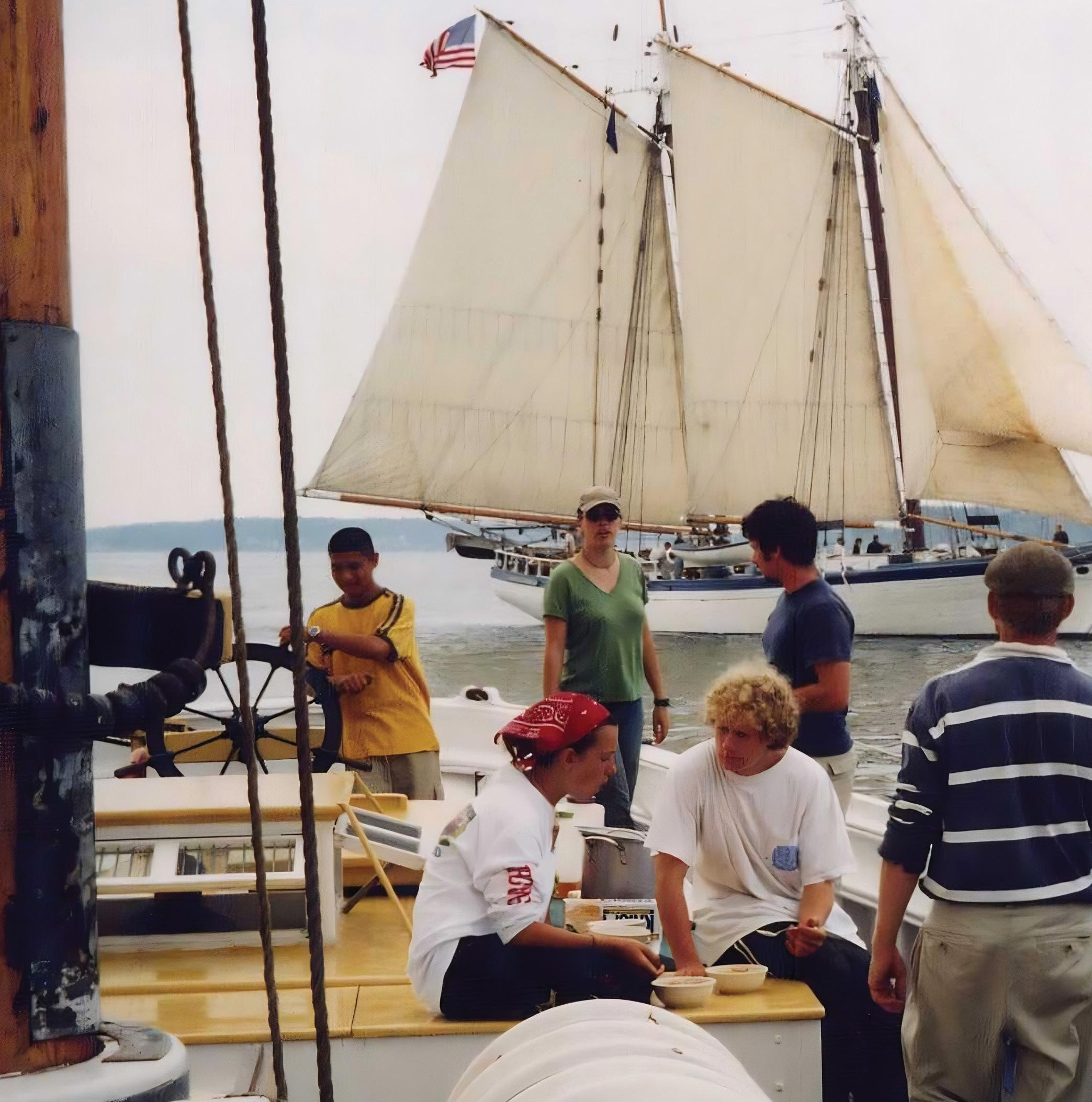
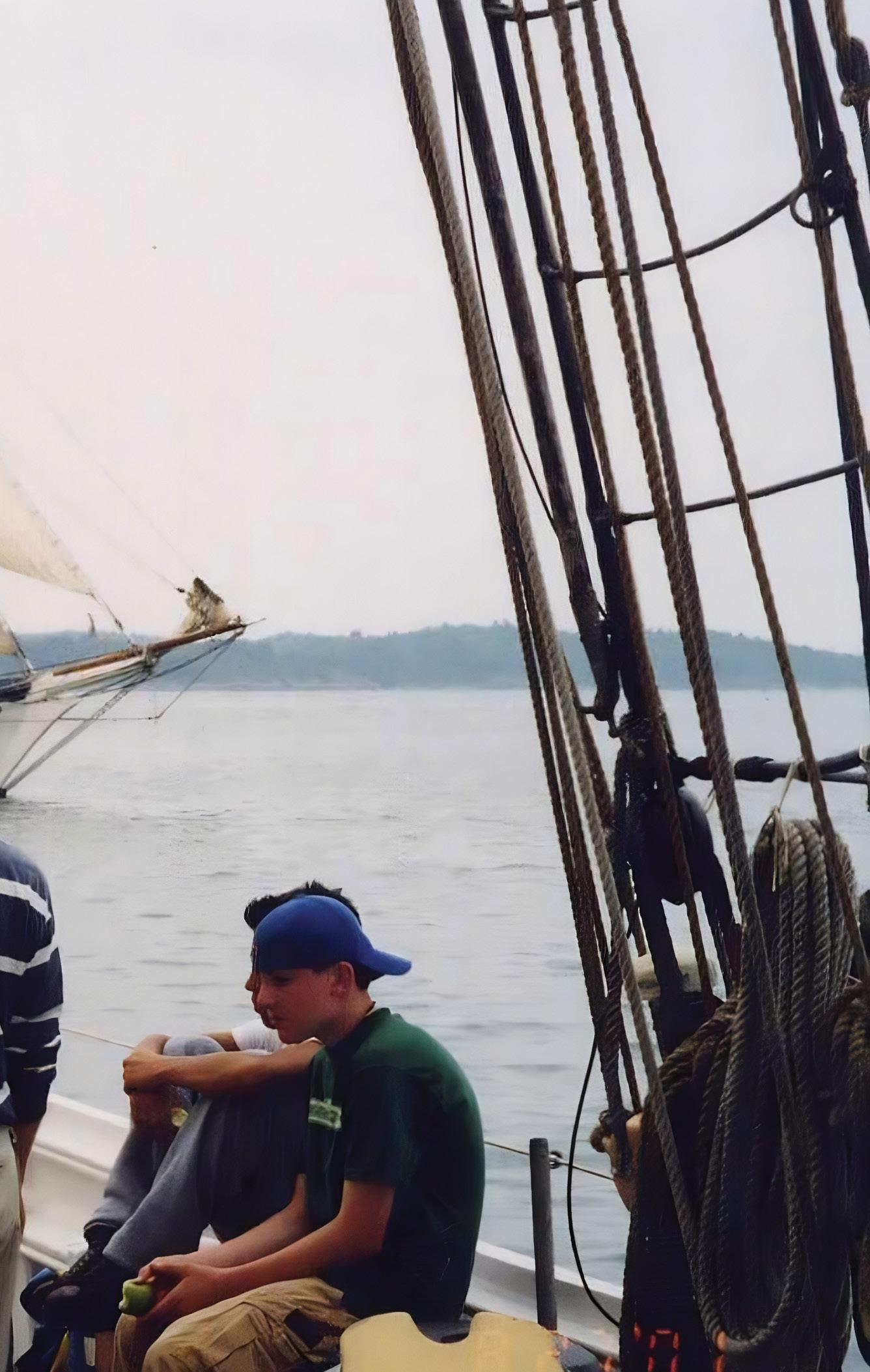
In the Upper School, students looked forward to the sophomore schooner trip, juniors and seniors visited Washington, D.C. and Boston, and freshmen camped across New England. Language immersion trips took students to Montreal, Quebec City, and eventually farther abroad, including a remarkable journey to Leningrad and Moscow at the height of the Cold War.
Each trip, whether a day in New York or a week in the wilderness, offered the same lesson—that growth comes from stepping into new environments and engaging with different perspectives. That mission remains clear today. Each fall, GFA sends all middle and upper school students on a class trip. The destinations sometimes change, but the tradition endures: class trips continue to help GFA students see the world, and each other, more fully.
From Orchard to cider A GFA Tradition
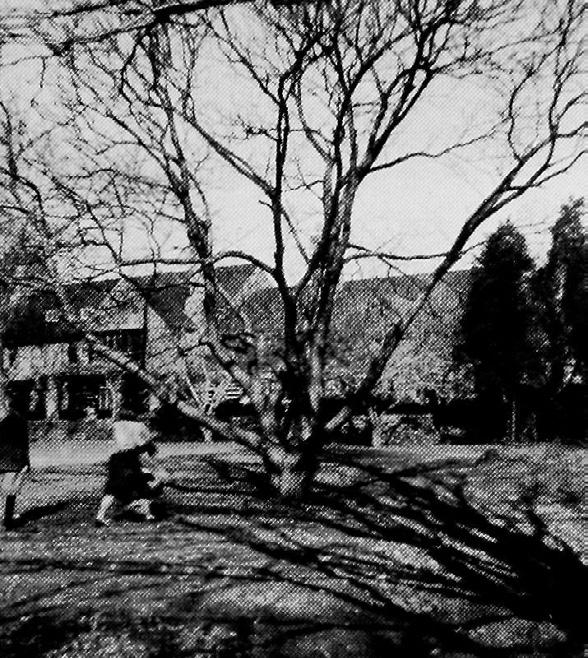
For decades, the apple trees have stood at the heart of campus, marking the rhythm of the school year. In the 1930s, Swiss horticulturist Alfred Schmid cared for the mature trees on the Vanderbilt’s estate, harvesting apples as each variety ripened and storing them through the winter in sawdust-filled barrels.
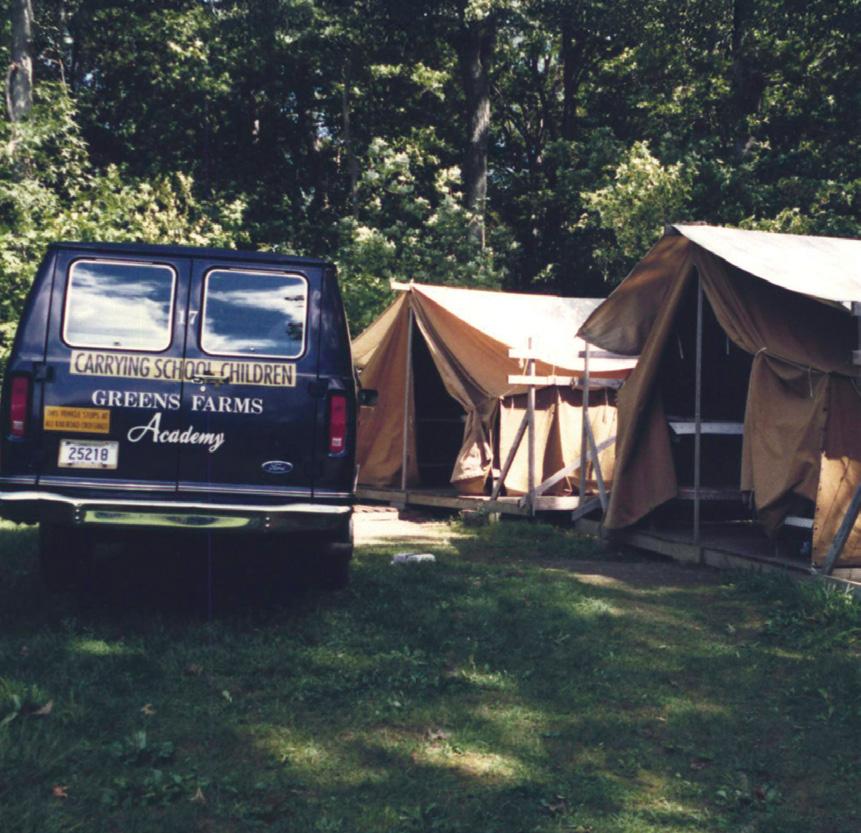
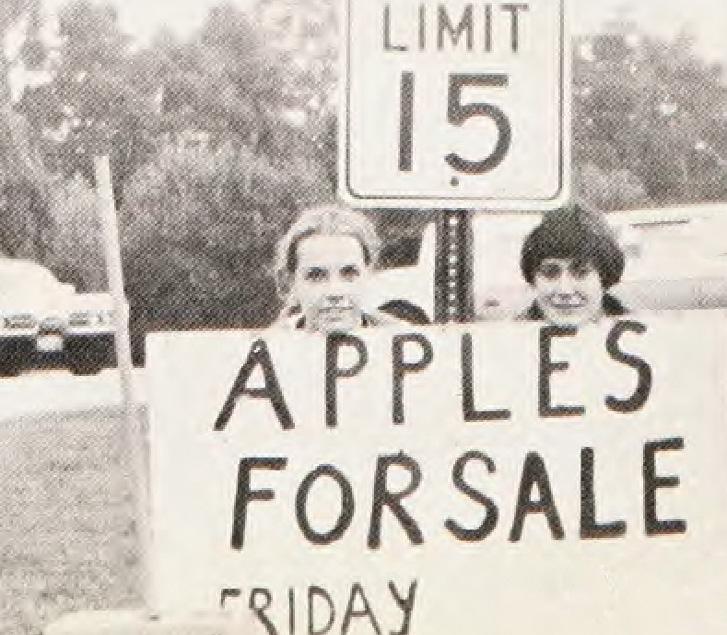
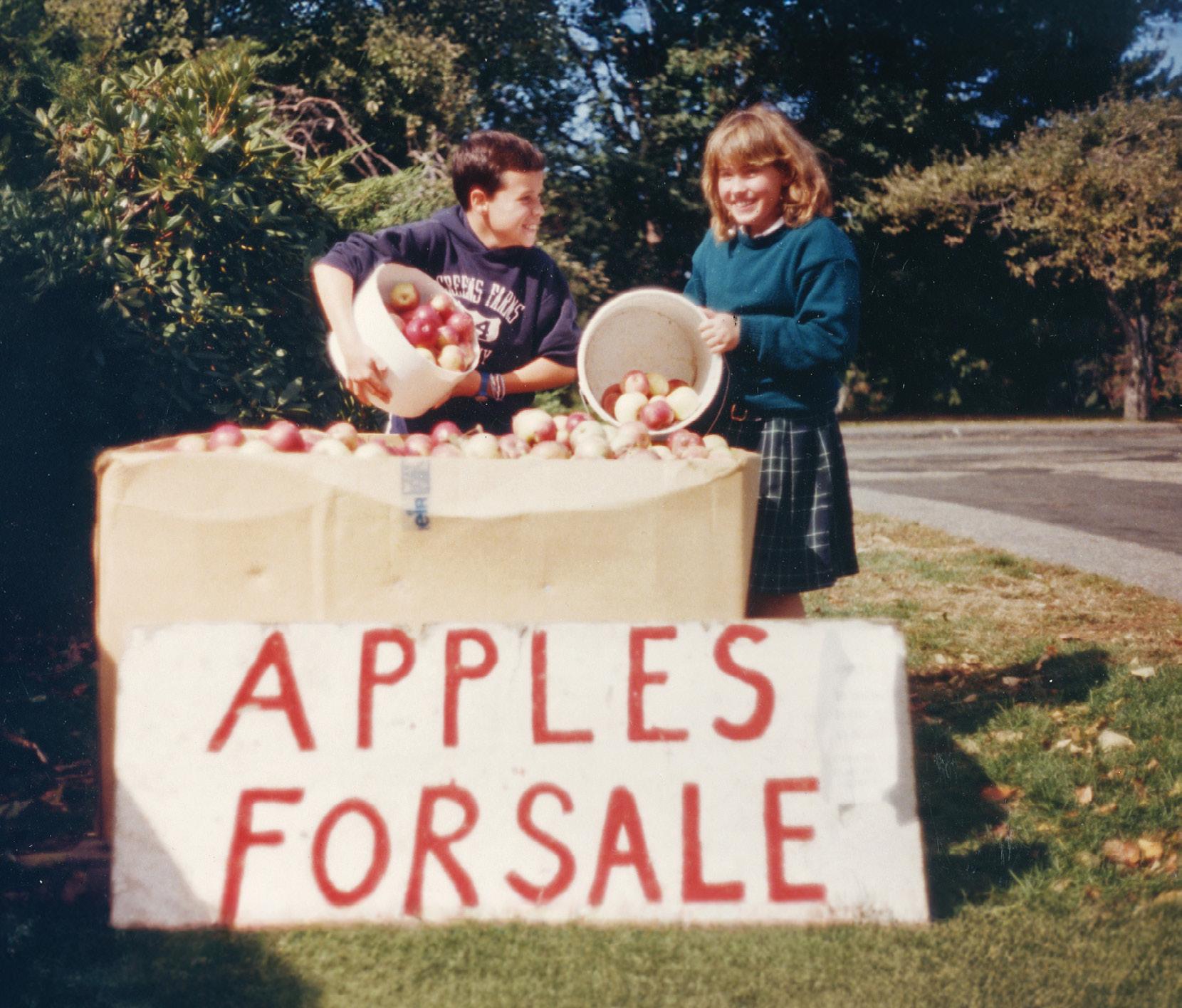
In the 1960s, Laycock girls spent recess in the orchard, though they were prohibited from taking apples for themselves. Instead, the fruit was sold to parents to support the orchard’s upkeep. By the 1980s, student councils, yearbook staff, and other classes held apple sales, and baked pies, cakes, and muffins for fundraisers. Eventually, students learned the proper way to pick apples—“twist, don’t pull”—and orchardmen like Schmid, and later grounds manager Joe Everard, would set apples near the doors in the fall so students could grab one as they hurried to their cars or vans in the afternoon. In recent building projects, GFA has taken care to preserve these trees, honoring them as a key part of the school’s story.
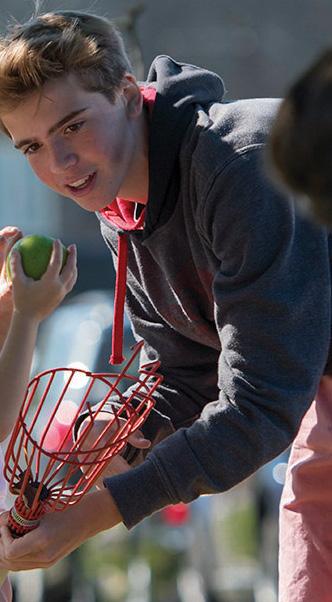
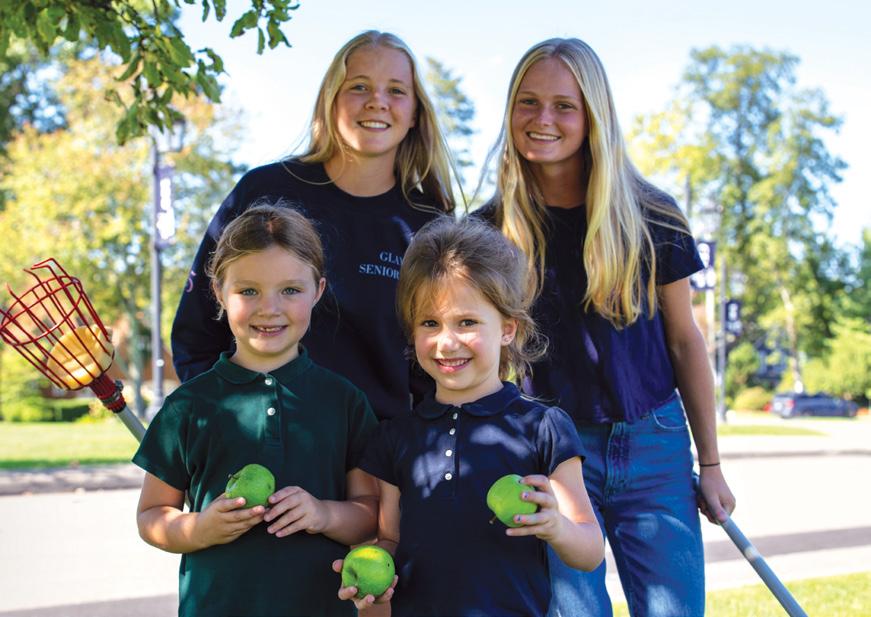
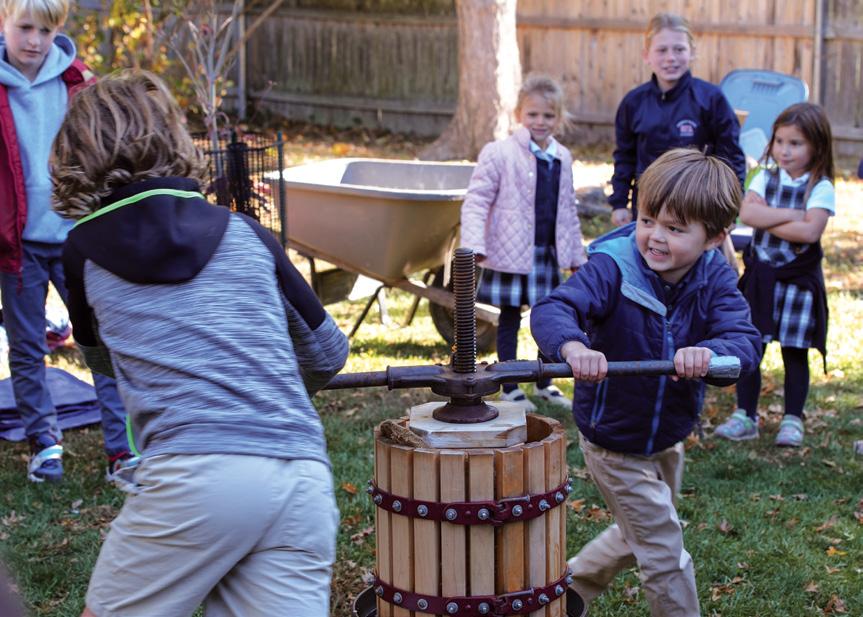
Today, that tradition continues with kindergartners, who pick apples alongside 12th grade buddies and make cider under the guidance of lower school science teacher Sofi Kurtz. For Ms. Kurtz, the event is deeply personal: as a child, she helped her father, a furniture maker, turn neighborhood apples into fresh cider using a hand-built press. When she arrived at GFA, the orchard inspired her to start a similar tradition on campus. Her father rebuilt the old press, and together, they began sharing cidermaking with students. Each year, the Kurtz family sets up the press and shows kindergartners how to wash, grind, and press the apples into cider to share with the community.
The apple trees that line campus today are a living link to the land’s farming past and to the generations of students who have gathered beneath their branches. From Schmid and Everard’s careful cultivation to the Kurtz family press, the apples tell a story of tradition, connection, and the sometimes simple rituals that make GFA home.
I will never forget being a senior walking out after practice or a game in the fall, and watching the sun come down through the apple trees. For some reason, that is the touchstone feeling of fall. Picking apples while leaving the school with a few friends—it adds a certain magic to growing up here.
Emily Von Kohorn ’96
Rallying for Red and Blue
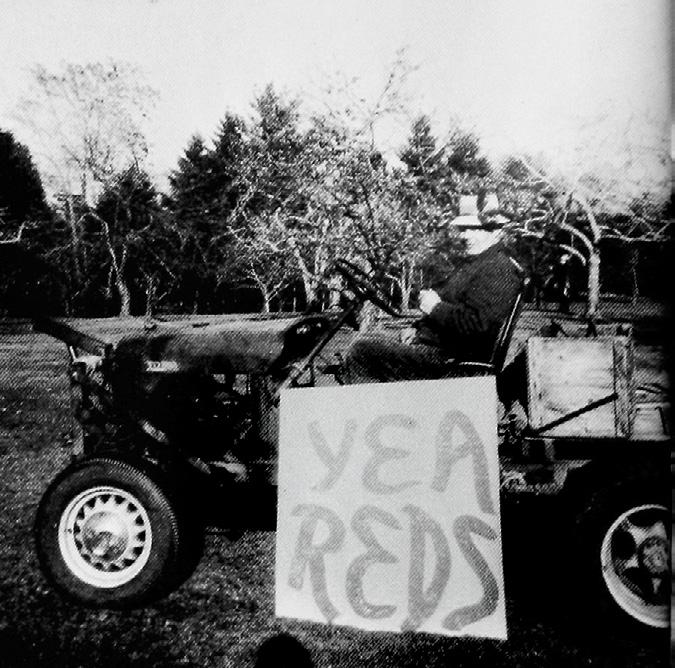
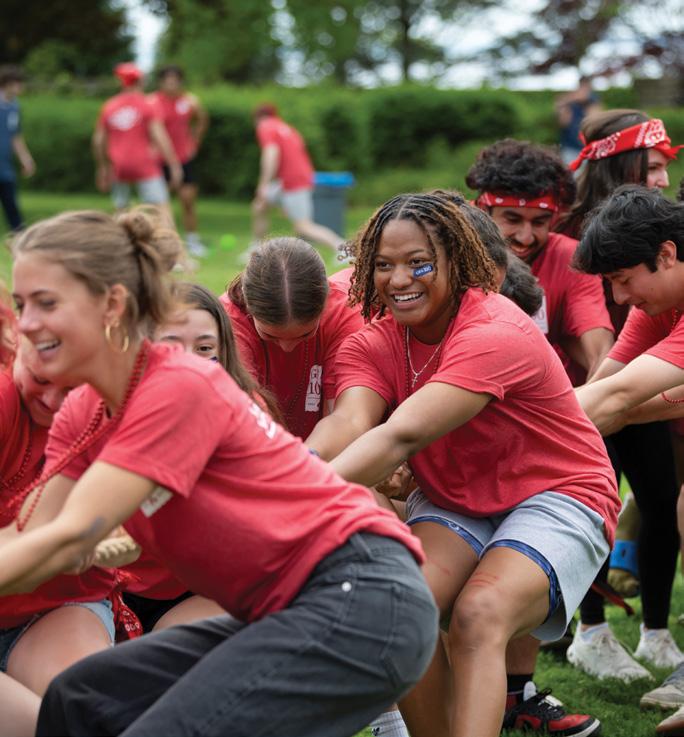
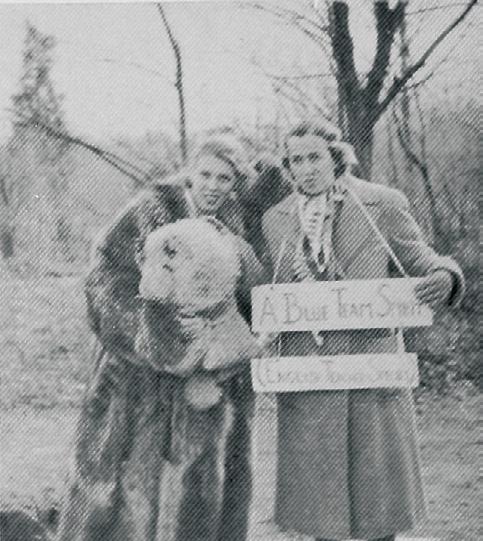
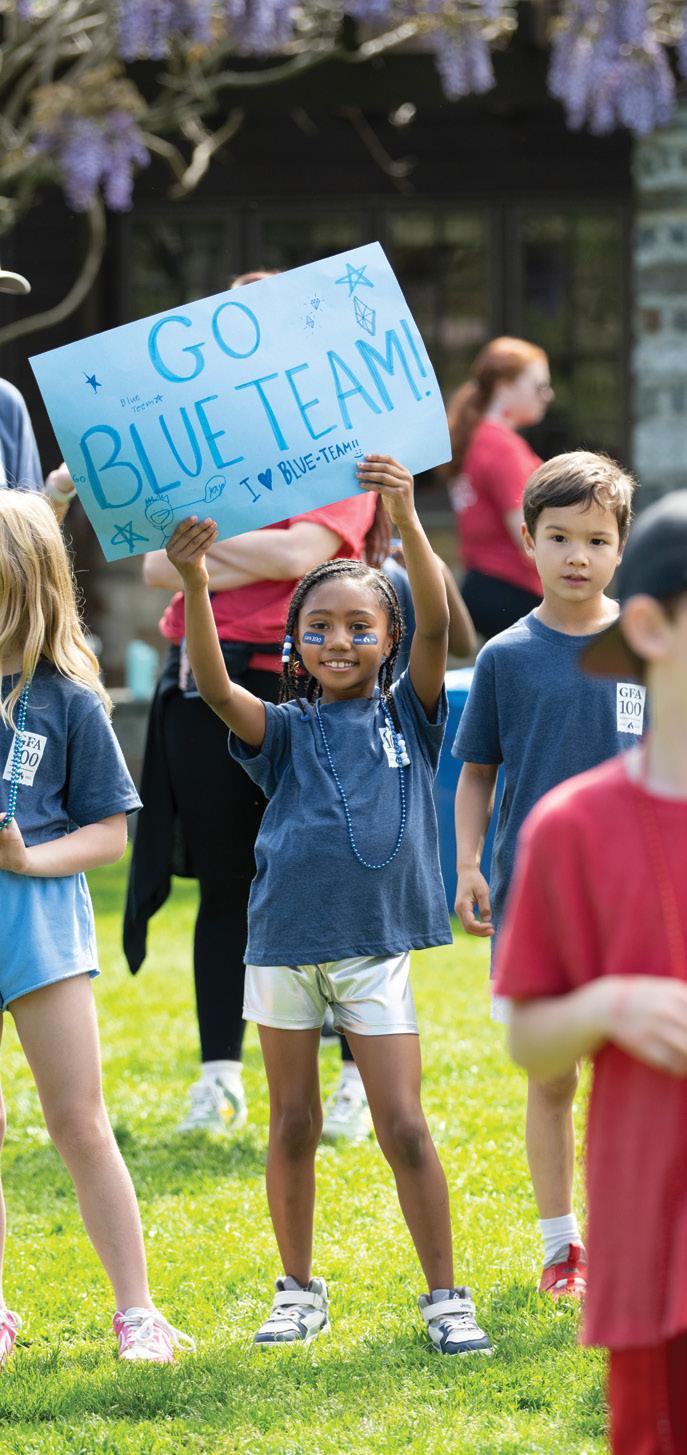
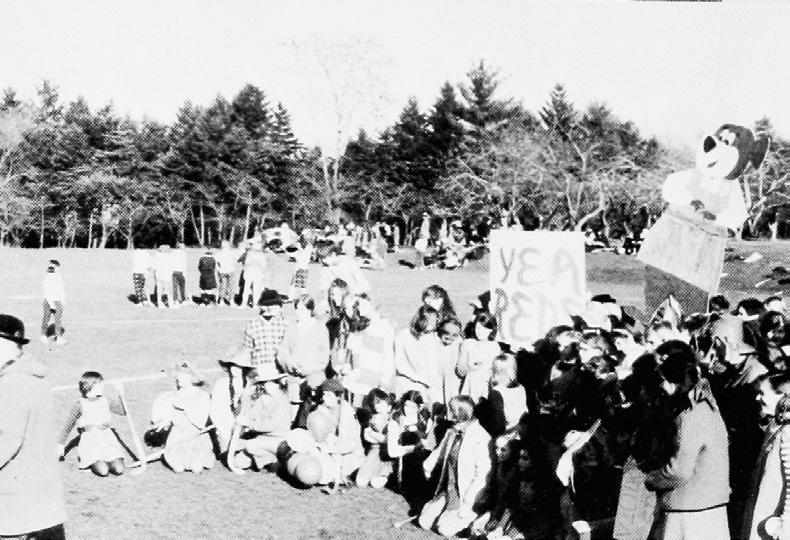
For much of GFA’s history, the Red and Blue houses defined school spirit. Students plastered campus with banners, dressed in elaborate costumes for the opening parade, and cheered on their teams in games that ended around a bonfire with hot dogs and cider. The rivalry was good-natured, designed to encourage citizenship, camaraderie, and pride in belonging.
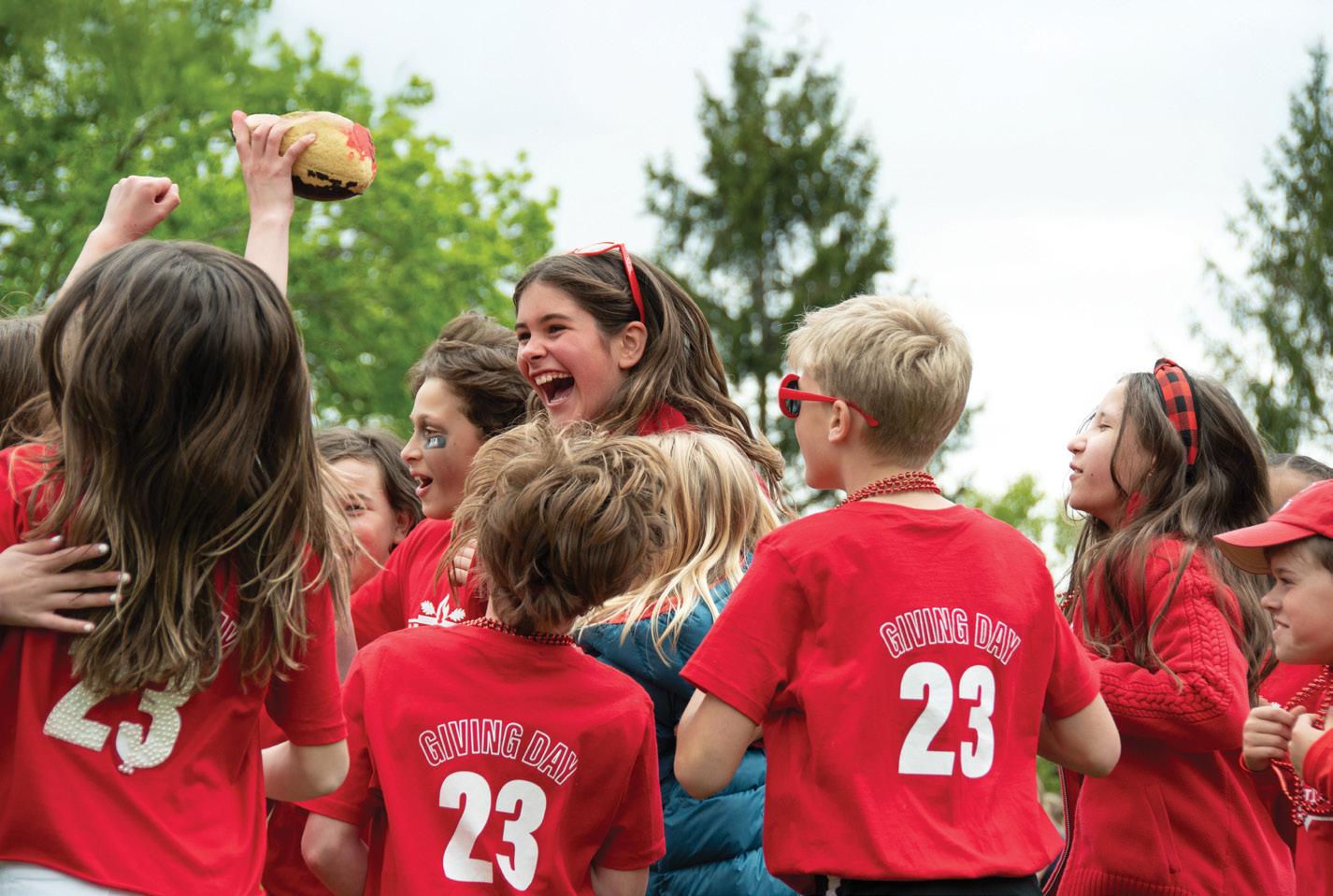
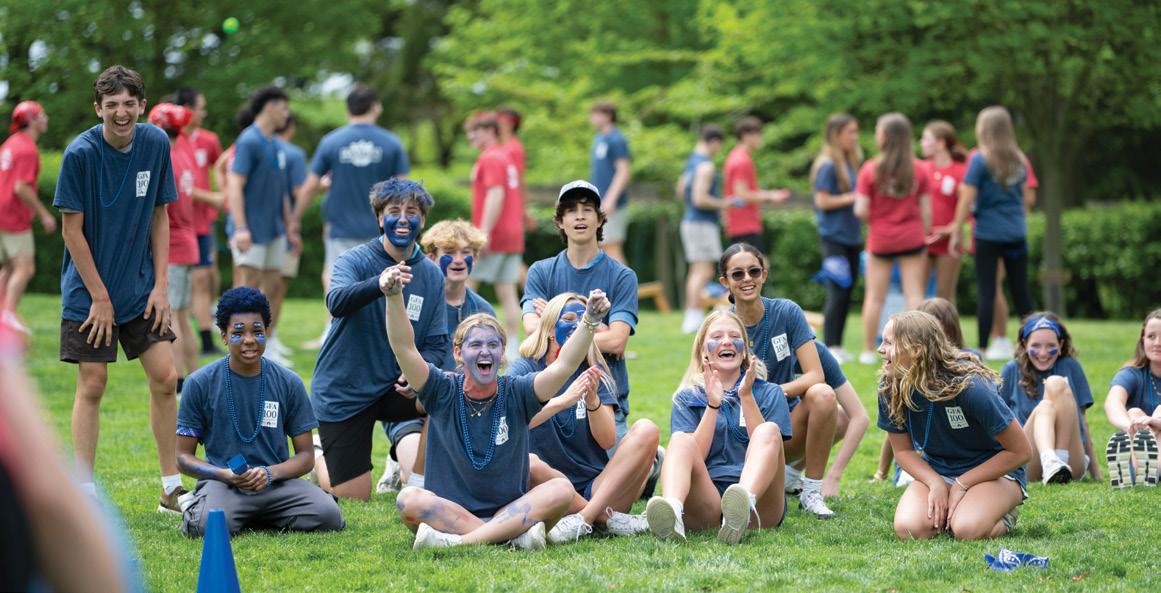
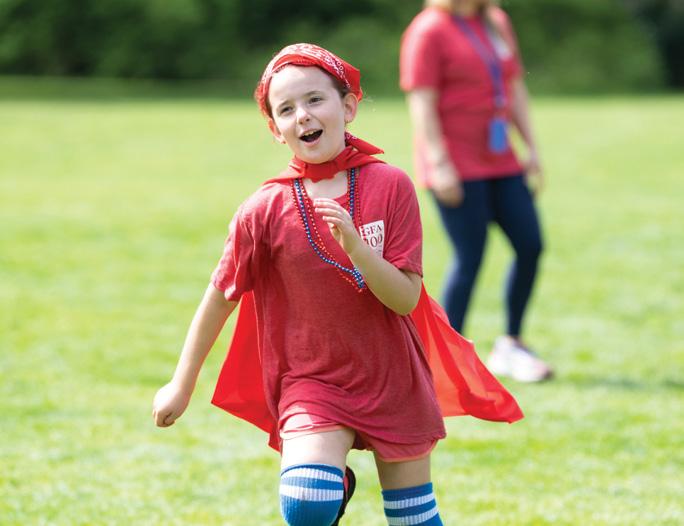
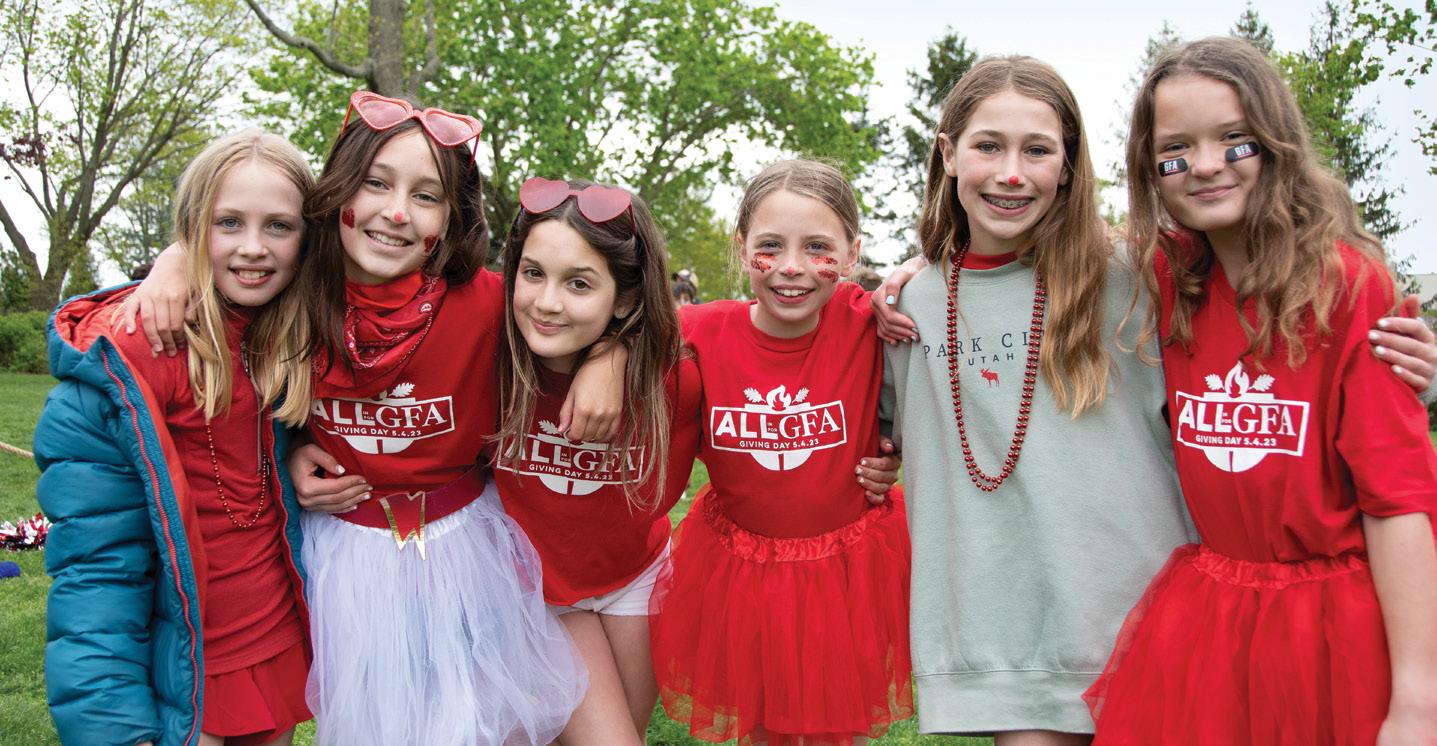
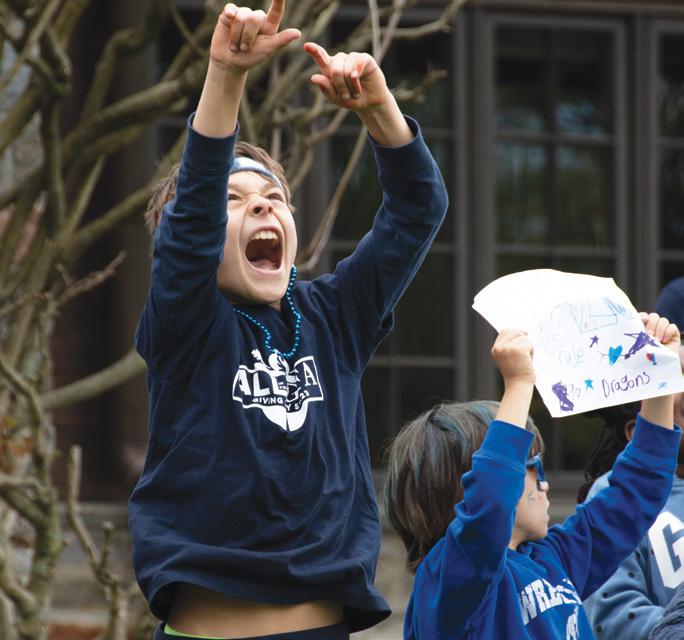
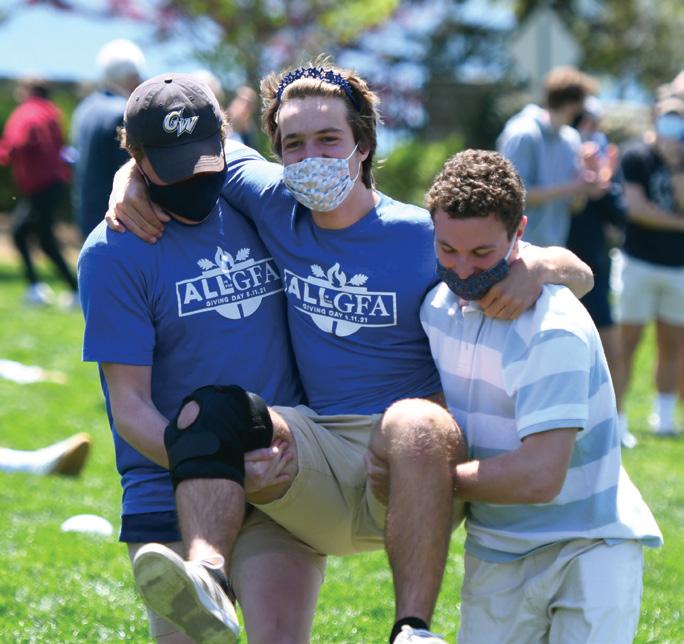
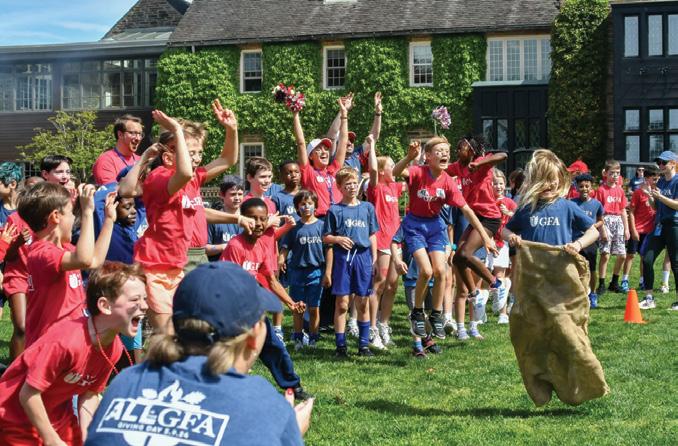
Though the Red-Blue competition retired briefly in the 1980s, its spirit has been revived through Giving Day. Each spring, students once again take the field in Red and Blue, vying for the coveted Giving Day Sweater, while alumni, families, and friends join in with gifts to the GFA Fund. The details may have changed, but the tradition of coming together—with joy, pride, and a shared sense of community—remains unmistakably GFA.
Celebrating Student Voices
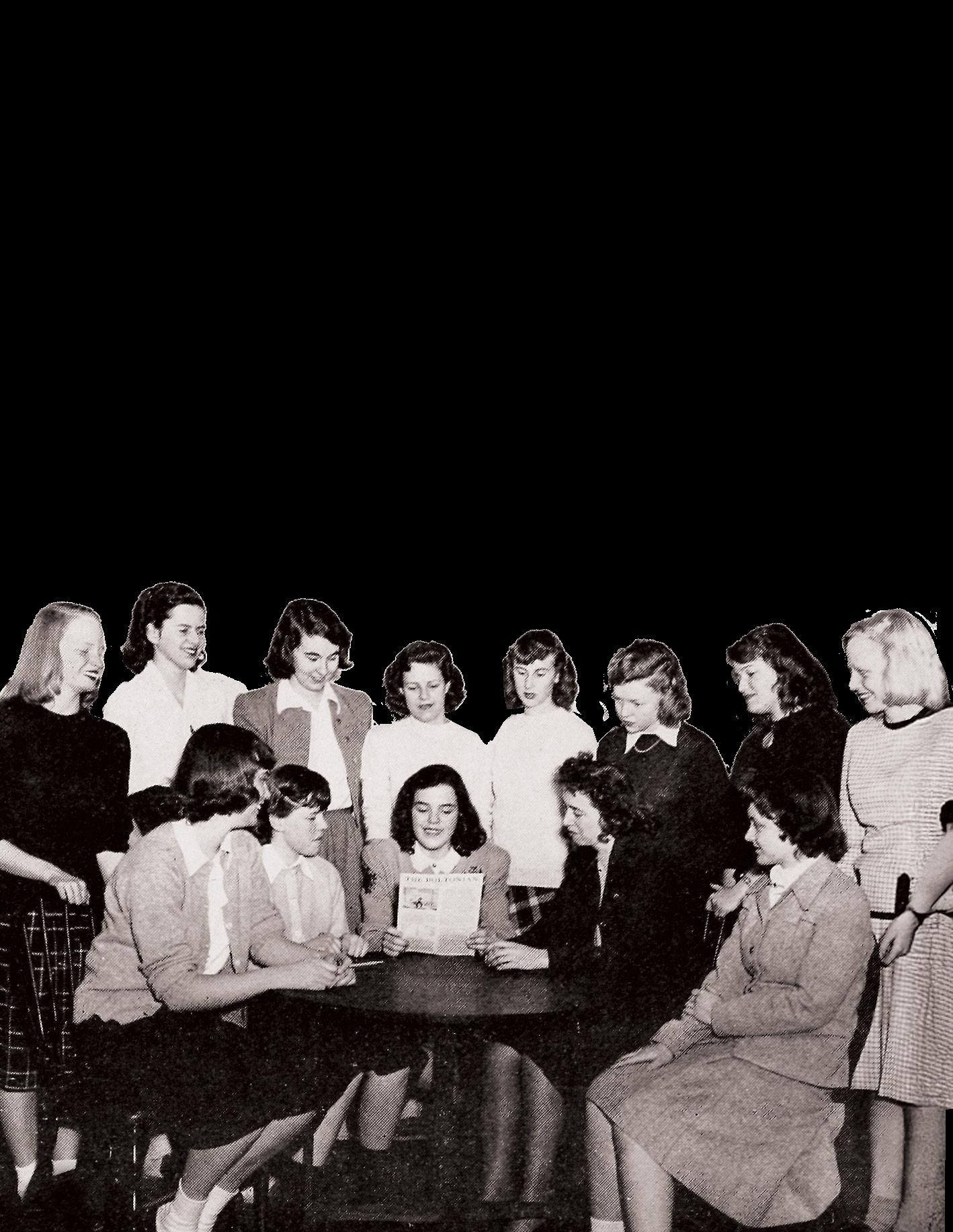
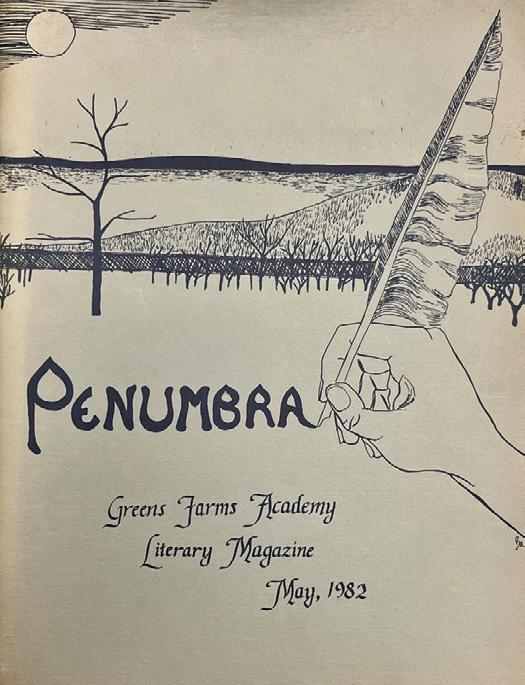
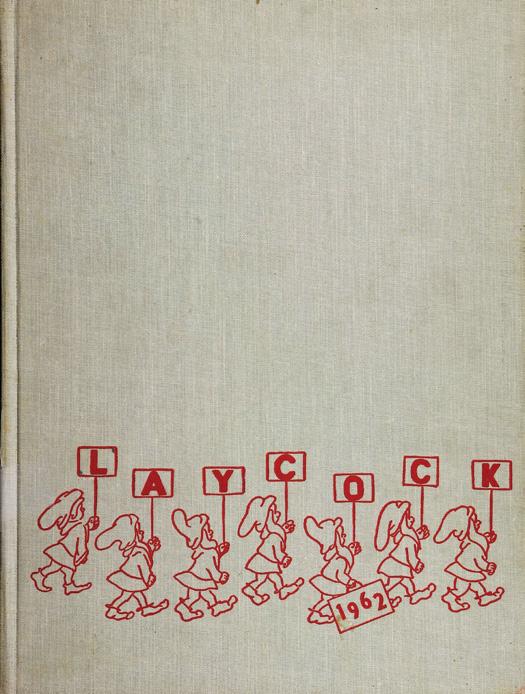
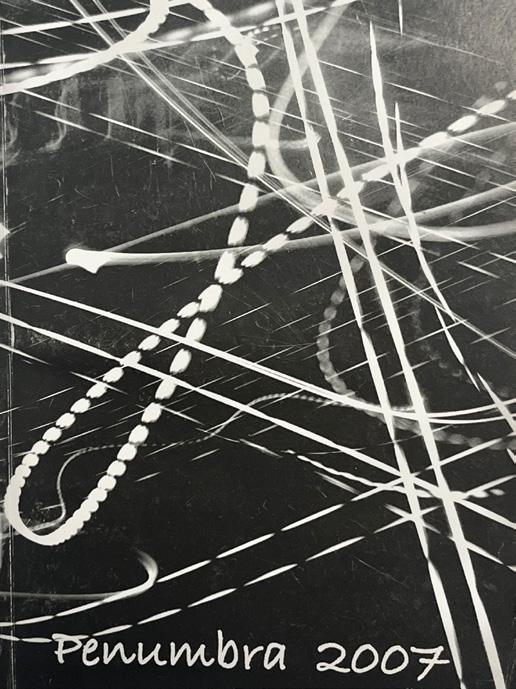
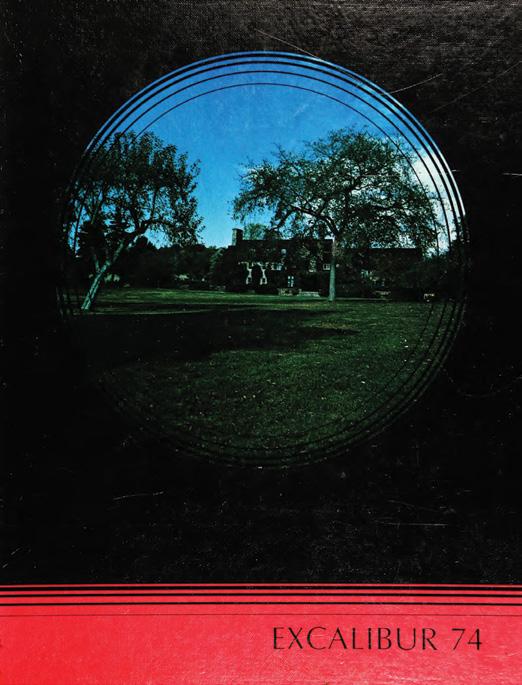
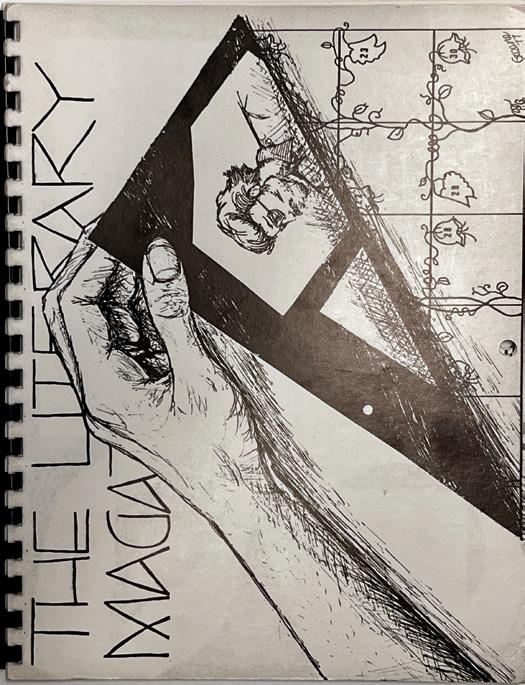
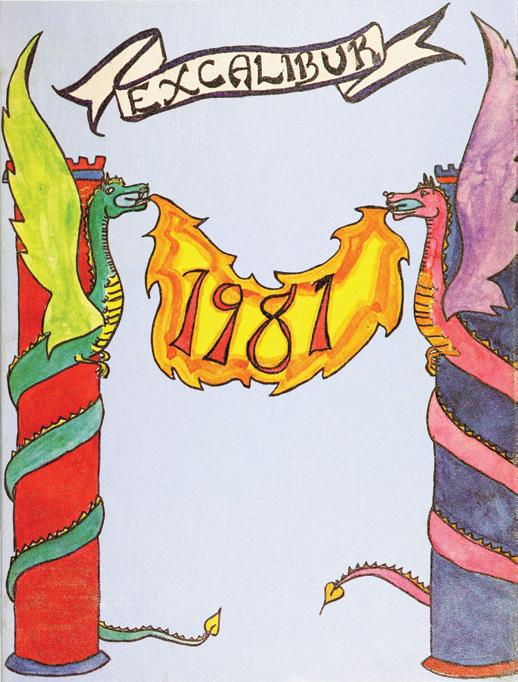
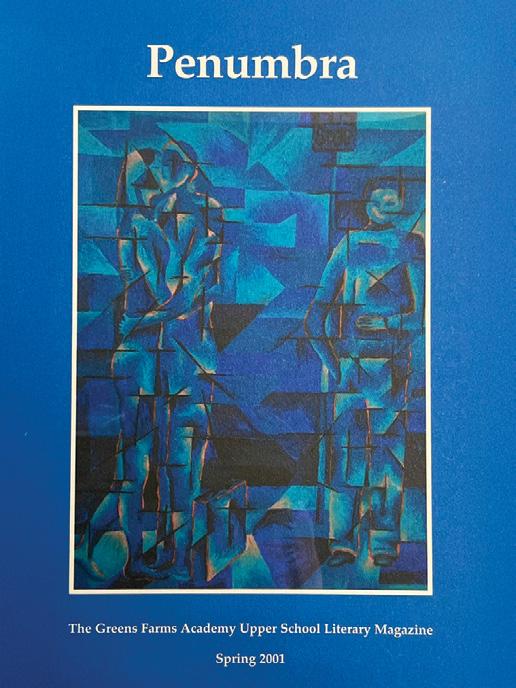
For a century, GFA students have shared their voices through a variety of newspapers, yearbooks, and other various publications. Early papers like the Boltonian captured the formality and curiosity of the 1950s, while later publications—Katydid, Pro Omnibus, and The Greener Side—reflected changing times, student viewpoints, and lively debate. Literary magazines, from the Laycock Literary Review to
Penumbra, offered a space for poetry and creative storytelling.
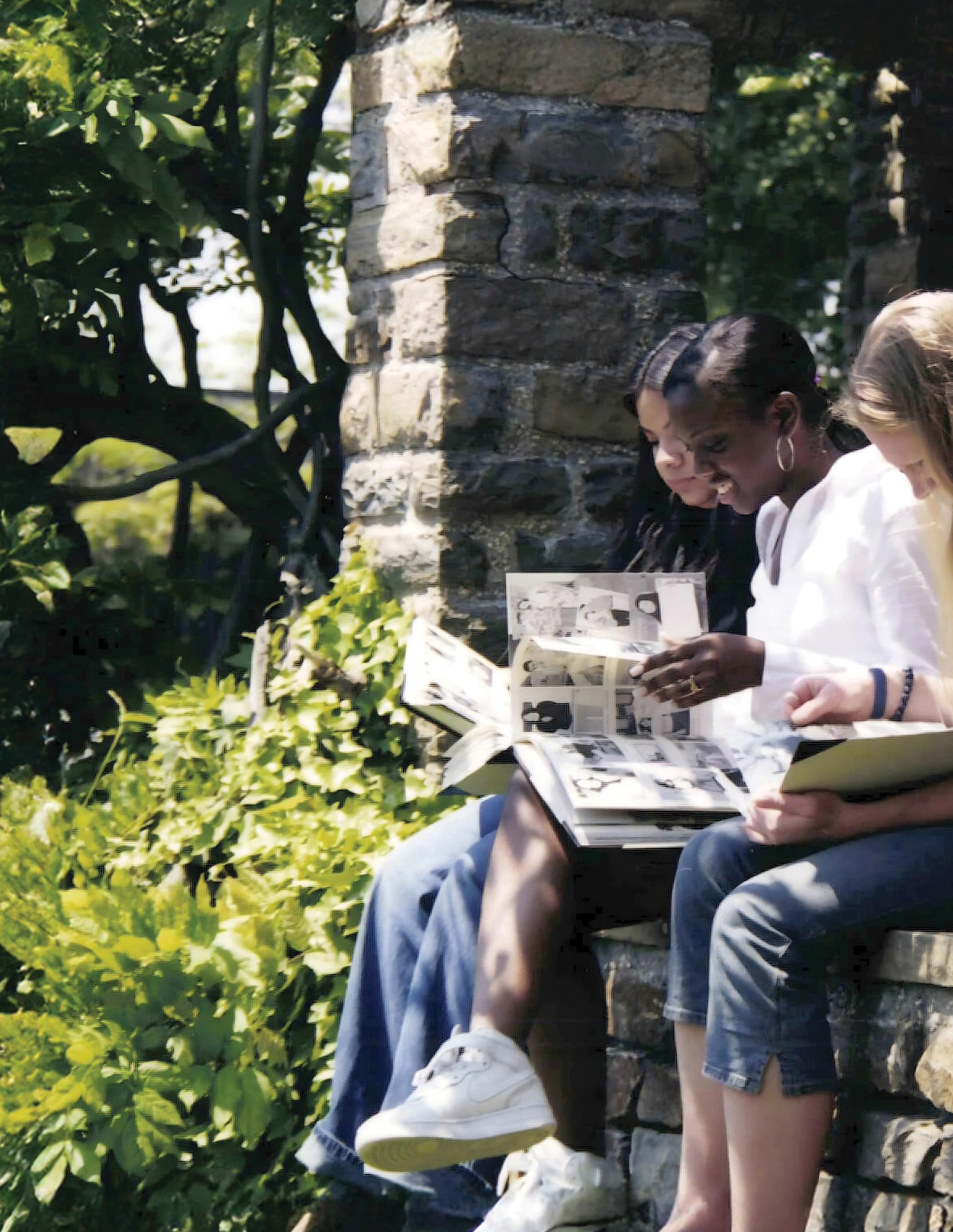
The school yearbook has similarly chronicled student life, from the first Boltonite to today’s Excalibur. Whether reporting on school events, exploring ideas in editorials, or sharing imaginative work, GFA publications have long provided a platform for students to leave their mark and have their voices heard.
Pictured above: Boltonian Board, 1948
Right: Various Yearbook and Literary Magazine covers
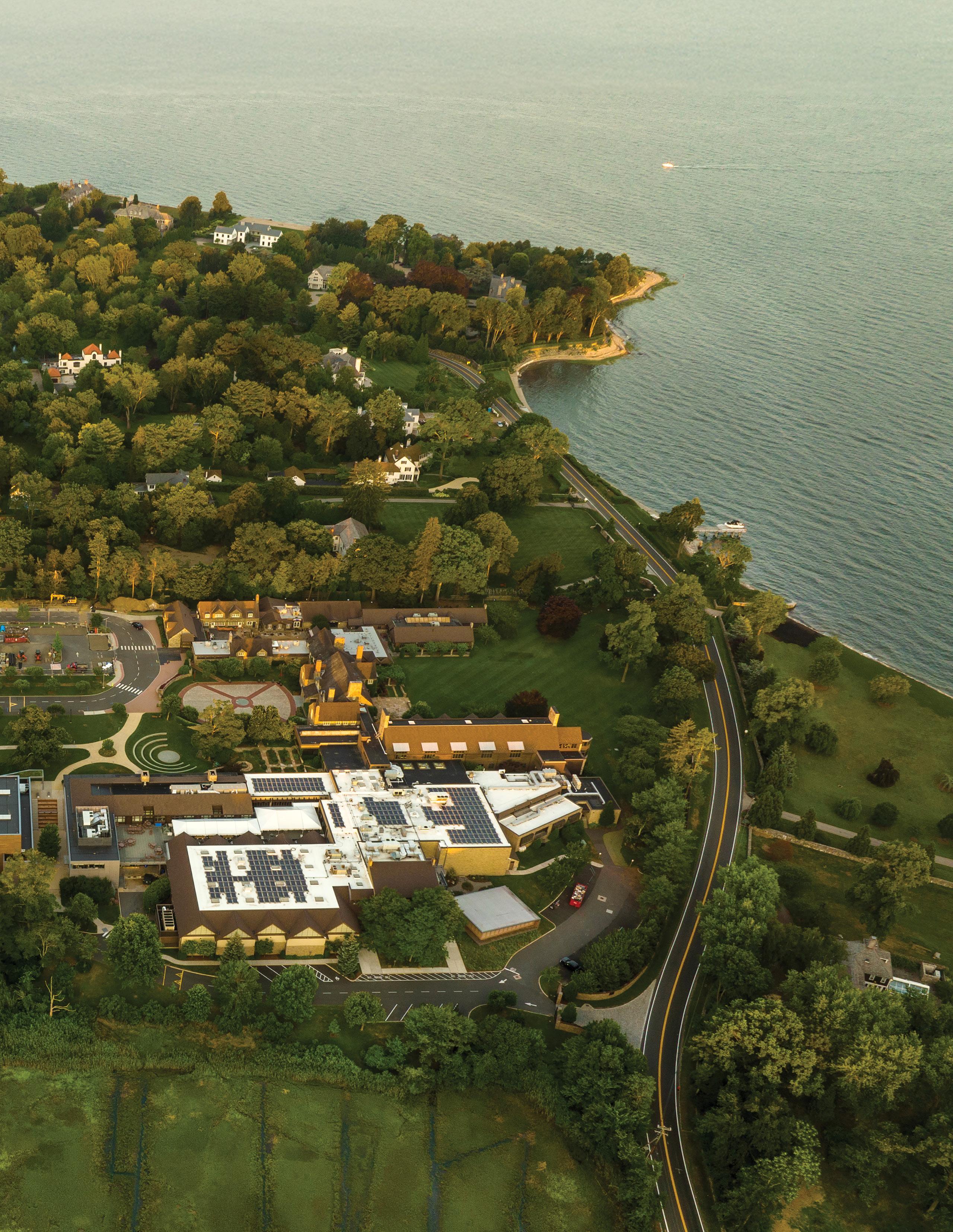
Our campus is more than buildings and cherished historic halls to ne w, dynamic learning environments, GFA’s spaces hold the stories of generations past and provide the backdrop for the growth, discover y, and connection at the heart of our community.
orchard
At the heart of campus, the orchard recalls the estate’s earliest days, when apple trees lined the driveway. Though its layout has changed, the trees remain a quiet link to the property’s past, offering a glimpse of the landscape that shaped GFA’s original footprint.
audubon
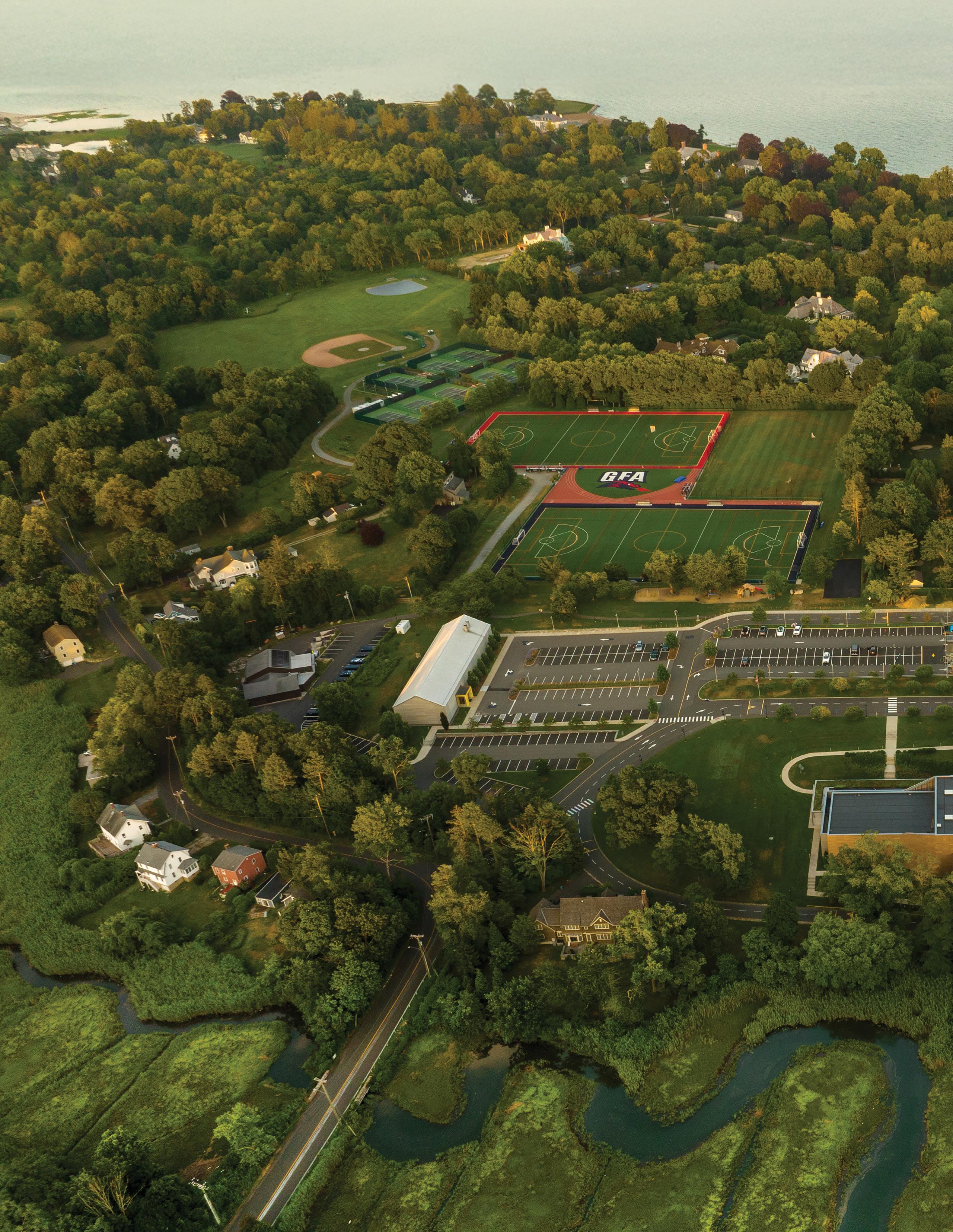
Beyond GFA’s playing fields, the Audubon woodlands are part of a broader conservation effort to protect birds and the habitats they rely on. Students explore its winding trails to observe local species, study ecosystems, and engage directly with principles of biodiversity and environmental stewardship.
marsh
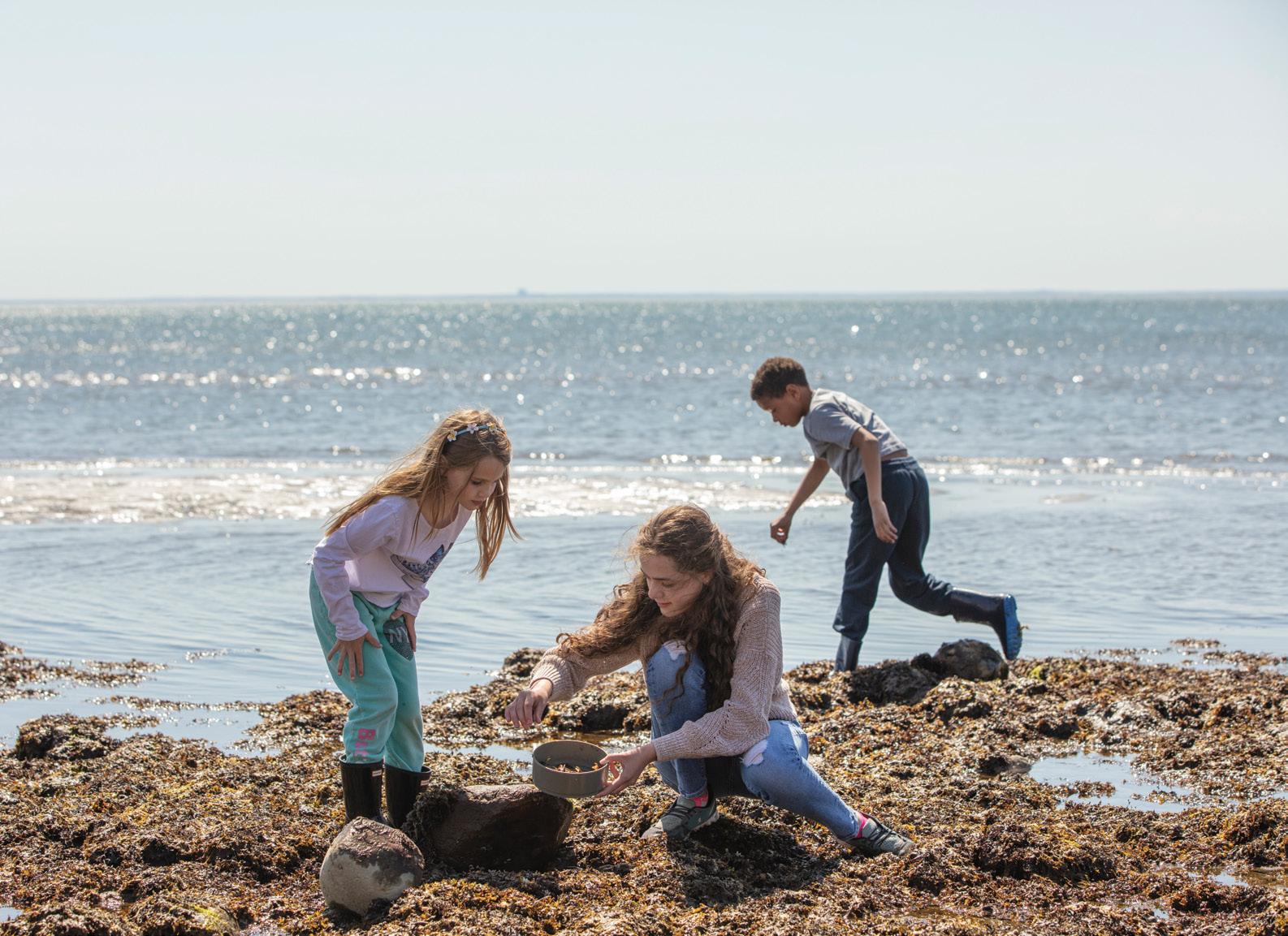
Adjacent to campus, the salt marsh reflects GFA’s coastal setting and supports a variety of native plants and wildlife. Its changing tides, grasses, and mudflats create a living laboratory where students investigate ecology, water cycles, and the relationships between organisms and their habitats.
Four Ecosystems, One Campus
sound
Just across the street, the Long Island Sound stretches across the horizon, visible from the Front Lawn and campus paths. Its shifting tides and shoreline support marine science research while offering a constant, visible reminder of the school’s connection to the local coastal environment.
School Home From Seaside Estate to
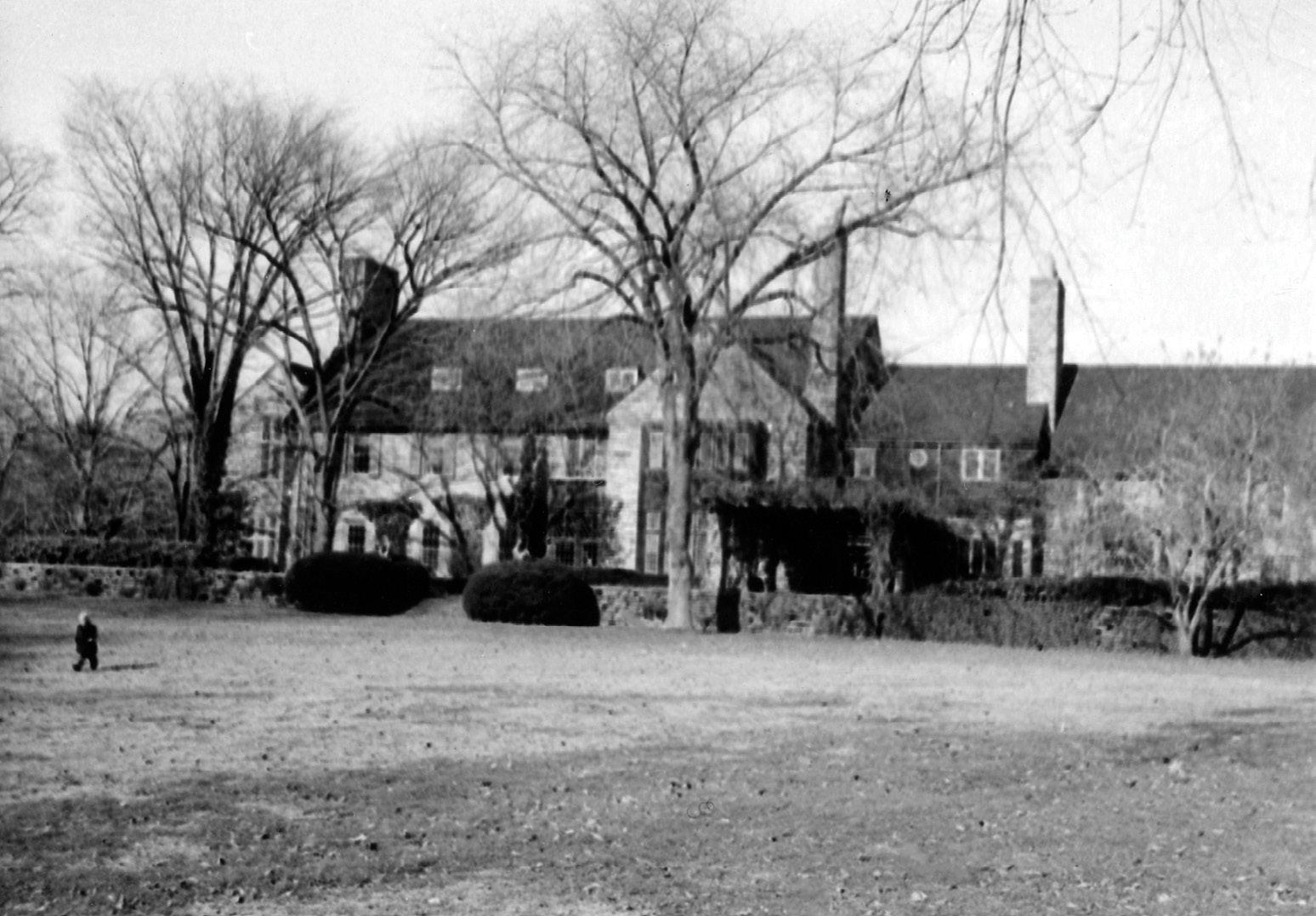
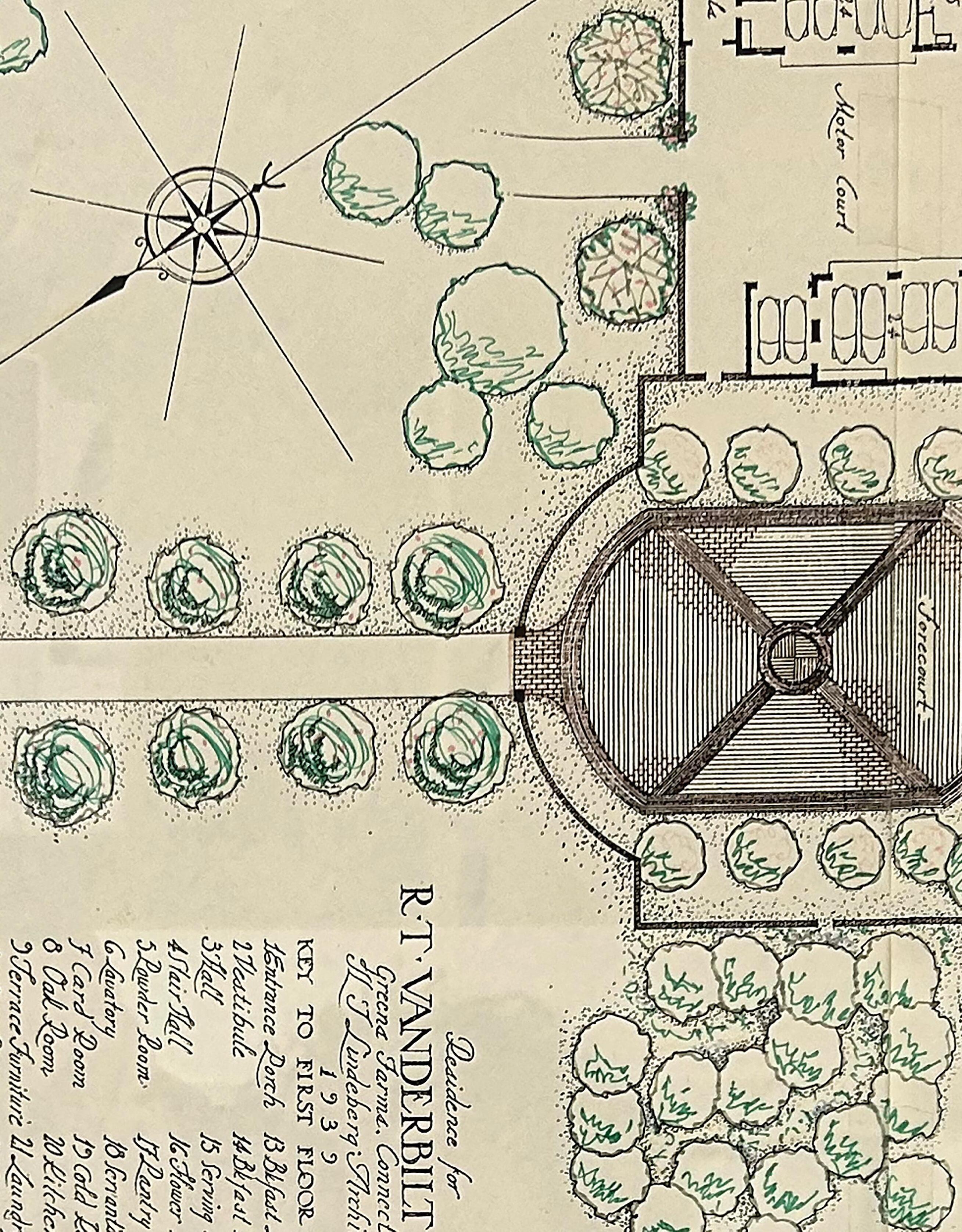
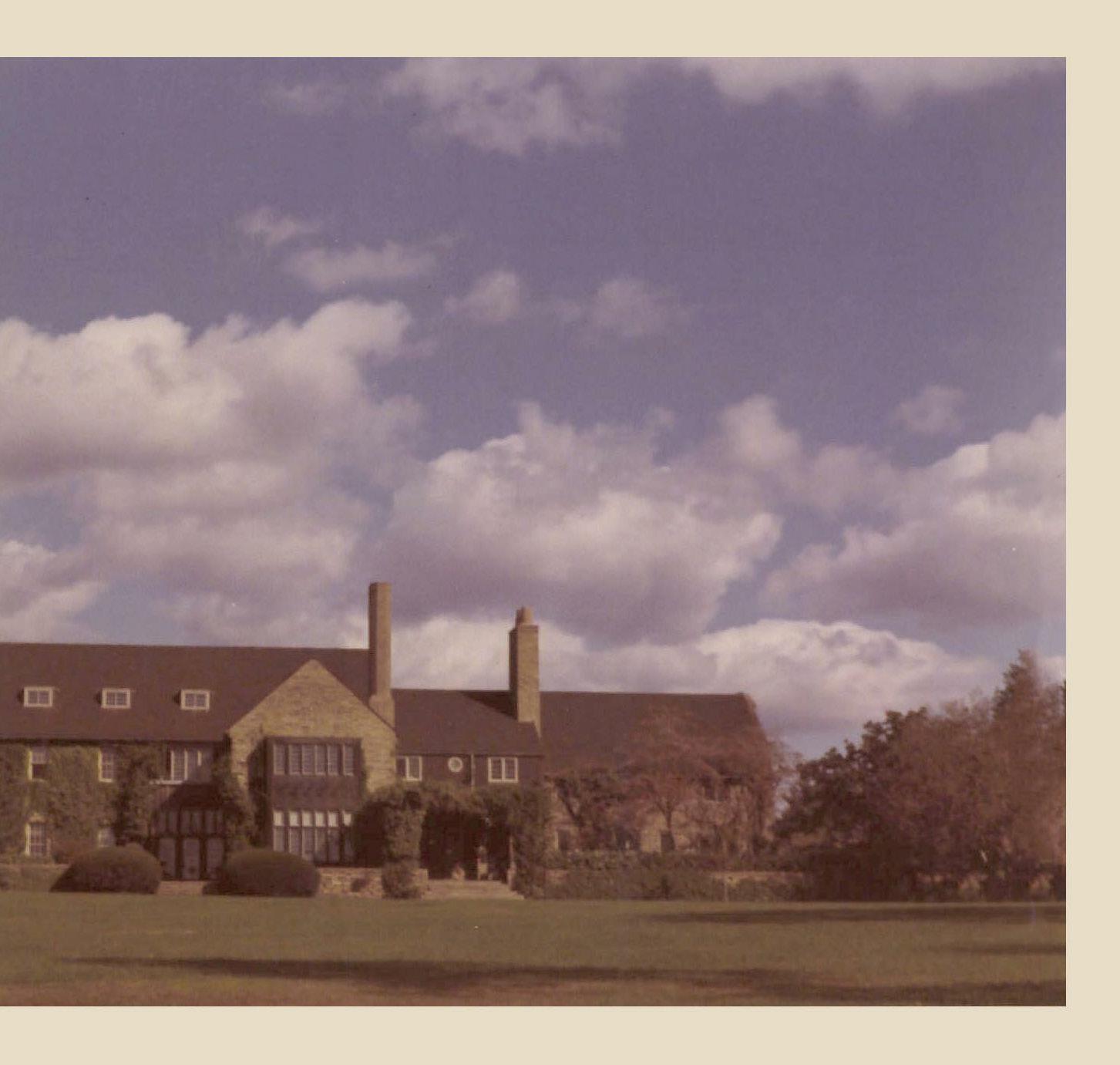
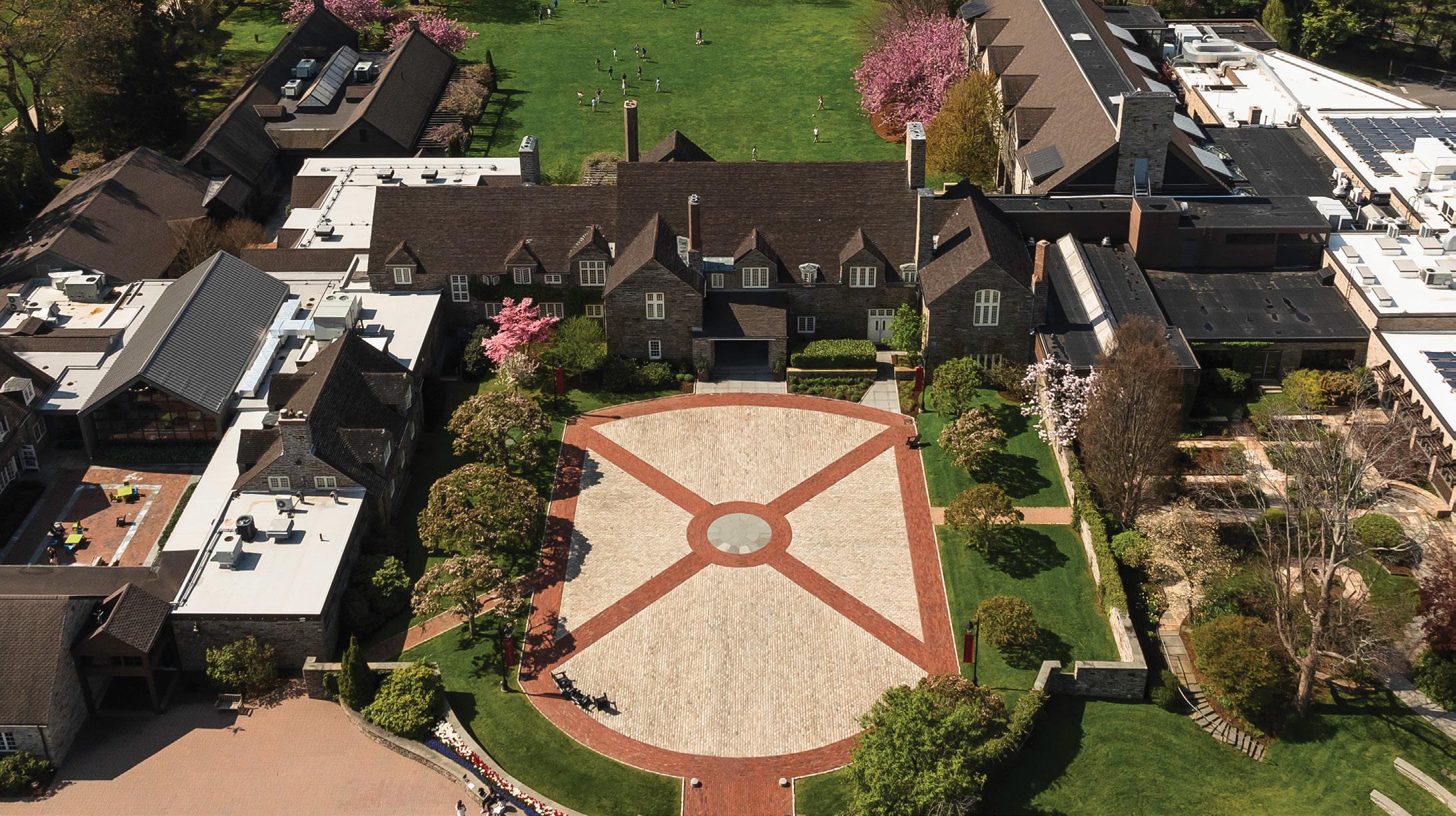
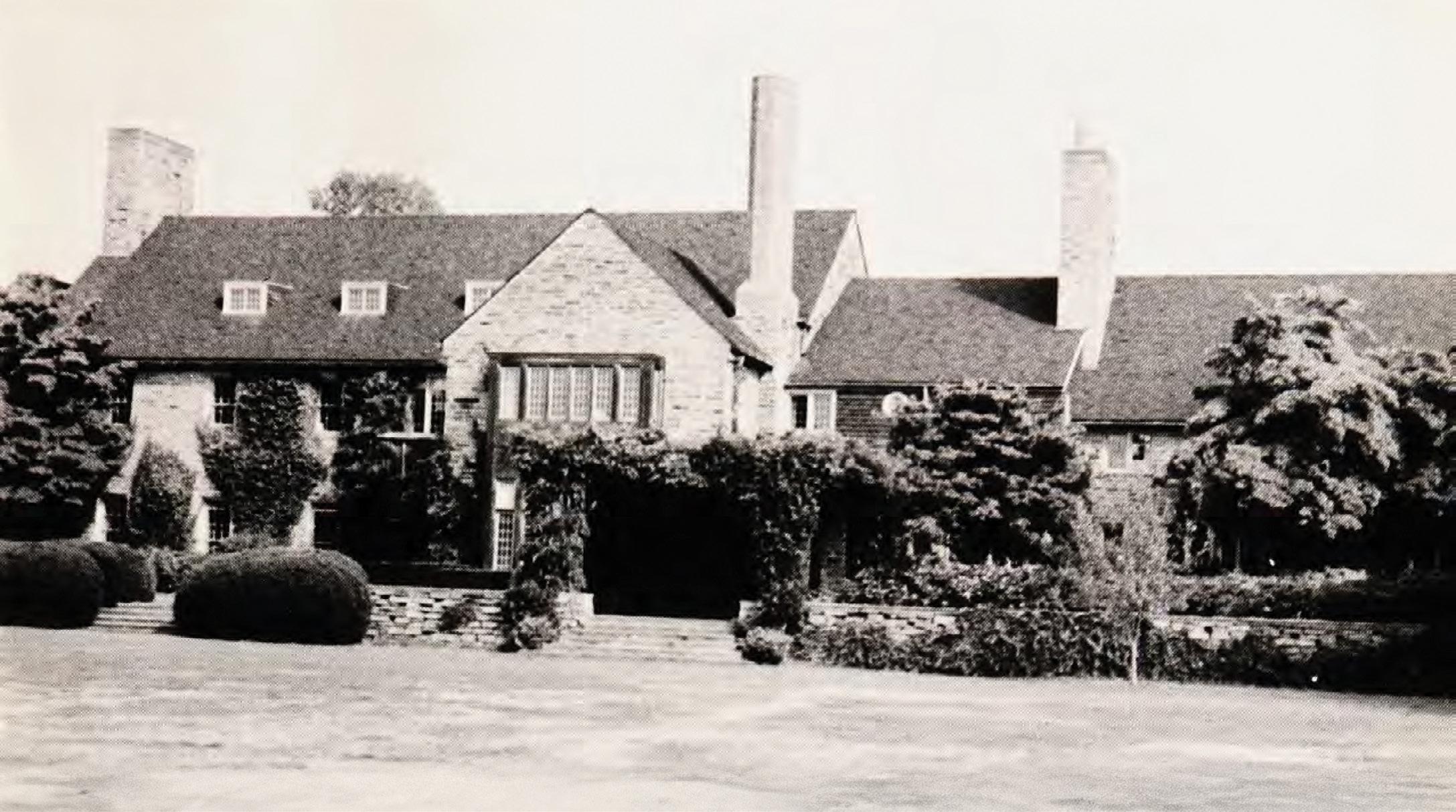
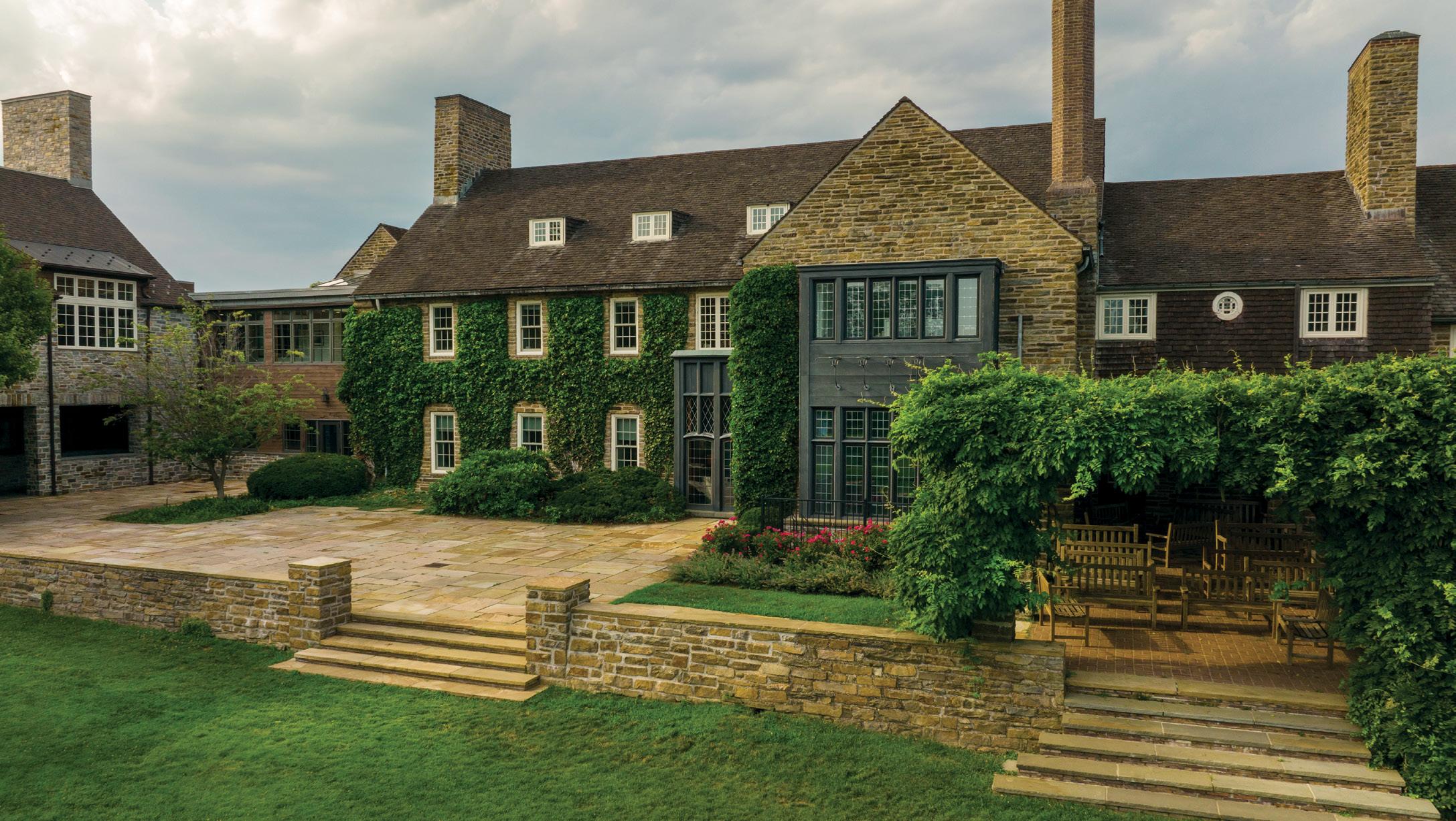
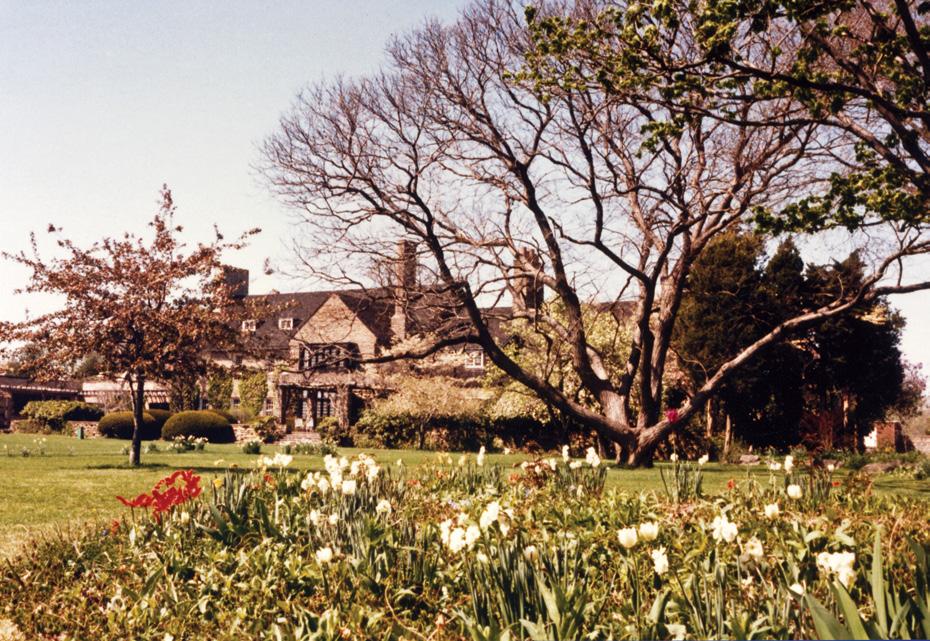
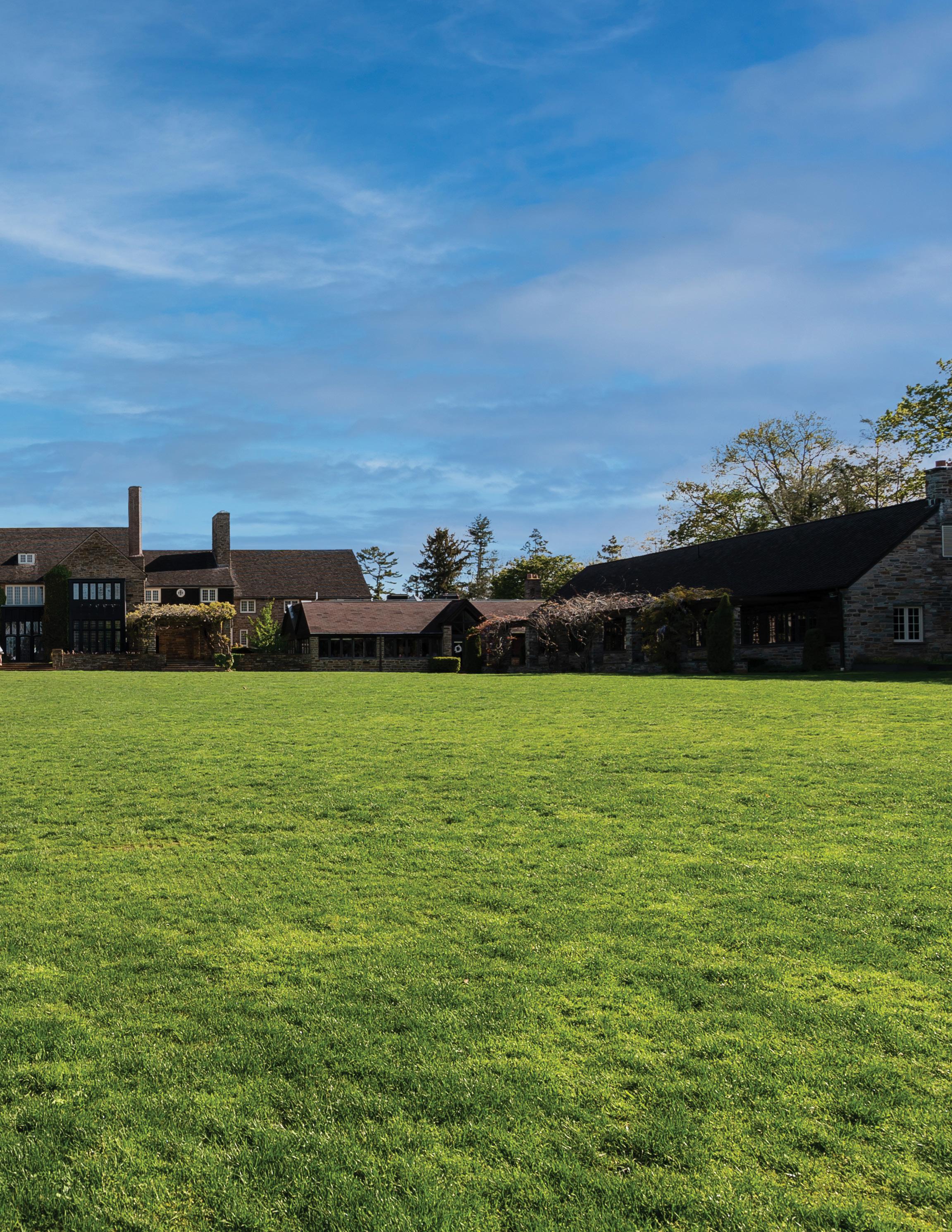
At the center of campus stands the home of Robert Thurlow Vanderbilt. Built around 1934 on the site of the family’s former summer home, High Elms, this new house continued the legacy of seaside estates established by Robert’s father-in-law, F.H. Bedford, who had already shaped much of Beachside Avenue. Vanderbilt commissioned Harrie T. Lindeberg, a leading residential architect of the time, to design the home in an elegant English-American style.
When GFA purchased the property in 1959, teachers and students were thrilled to move into such spacious, “very lush, very English” quarters. The house was adapted to fit the rhythms of school life, and though classrooms and offices filled the former living spaces, the home’s character and charm remained. Over time, new buildings have grown up around it, yet the Vanderbilt house remains the school’s anchor—a tangible link to the families and history that shaped the school and the distinctive character of Beachside Avenue.
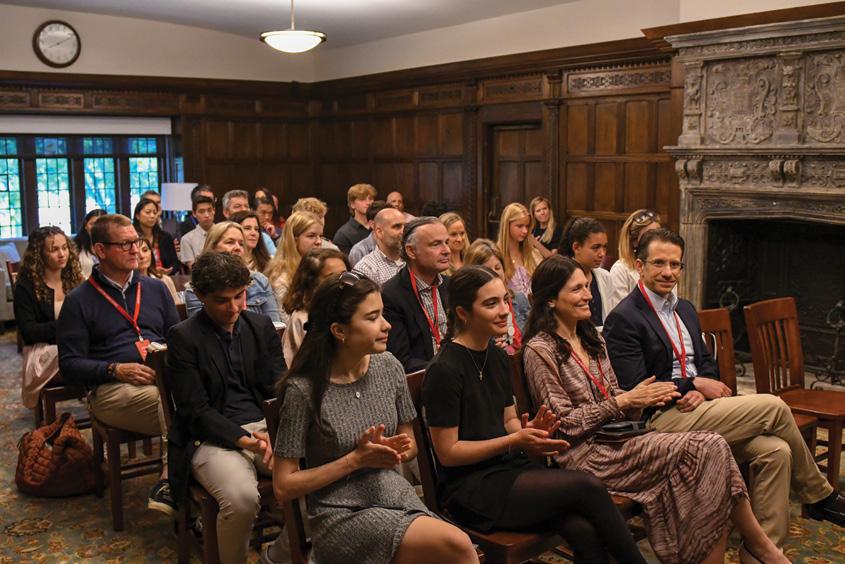
The Oak Room
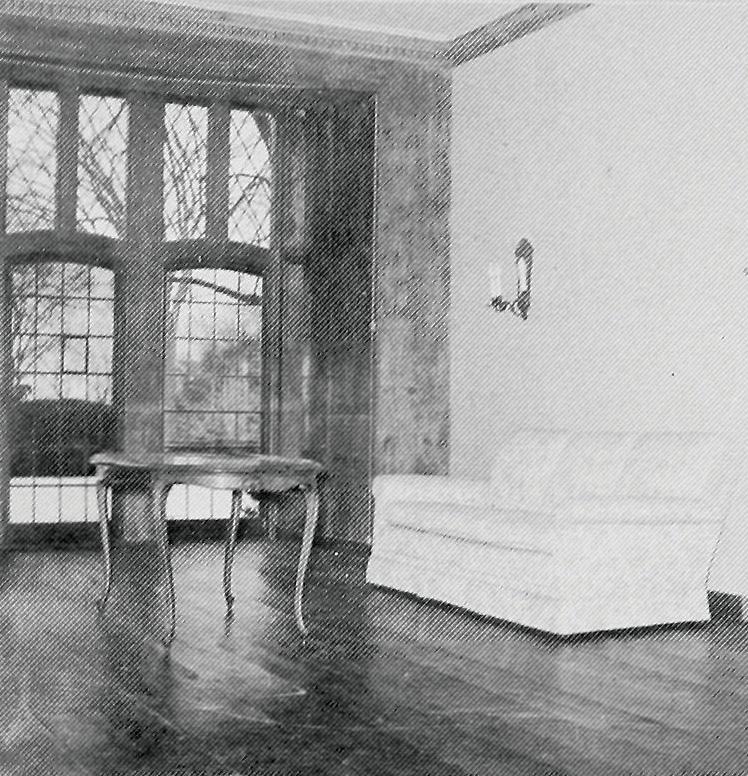
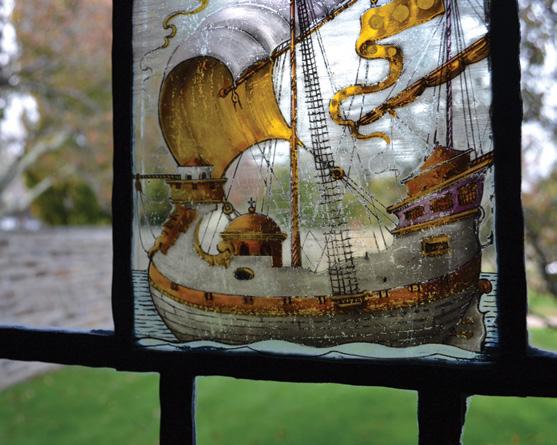
Originally designed as the dining room for Robert Thurlow Vanderbilt's estate, the Oak Room reflects the elegant English-American style of the original Vanderbilt home, with antique paneling dating to the 1700s, German leaded-glass windows etched with ships, and a stone fireplace inscribed with the Latin, “May you lead that you may be useful.”
While much of the estate’s paneling was sold in 1959 to fund school renovations, the Oak Room remained intact—a rare preservation of the past. Over the decades it has welcomed students as a music room, assembly hall, library, and gathering space. Today, the Oak Room continues to support campus life—hosting meetings, guest speakers, award presentations, and other gatherings that bring people together.
The cookman garden
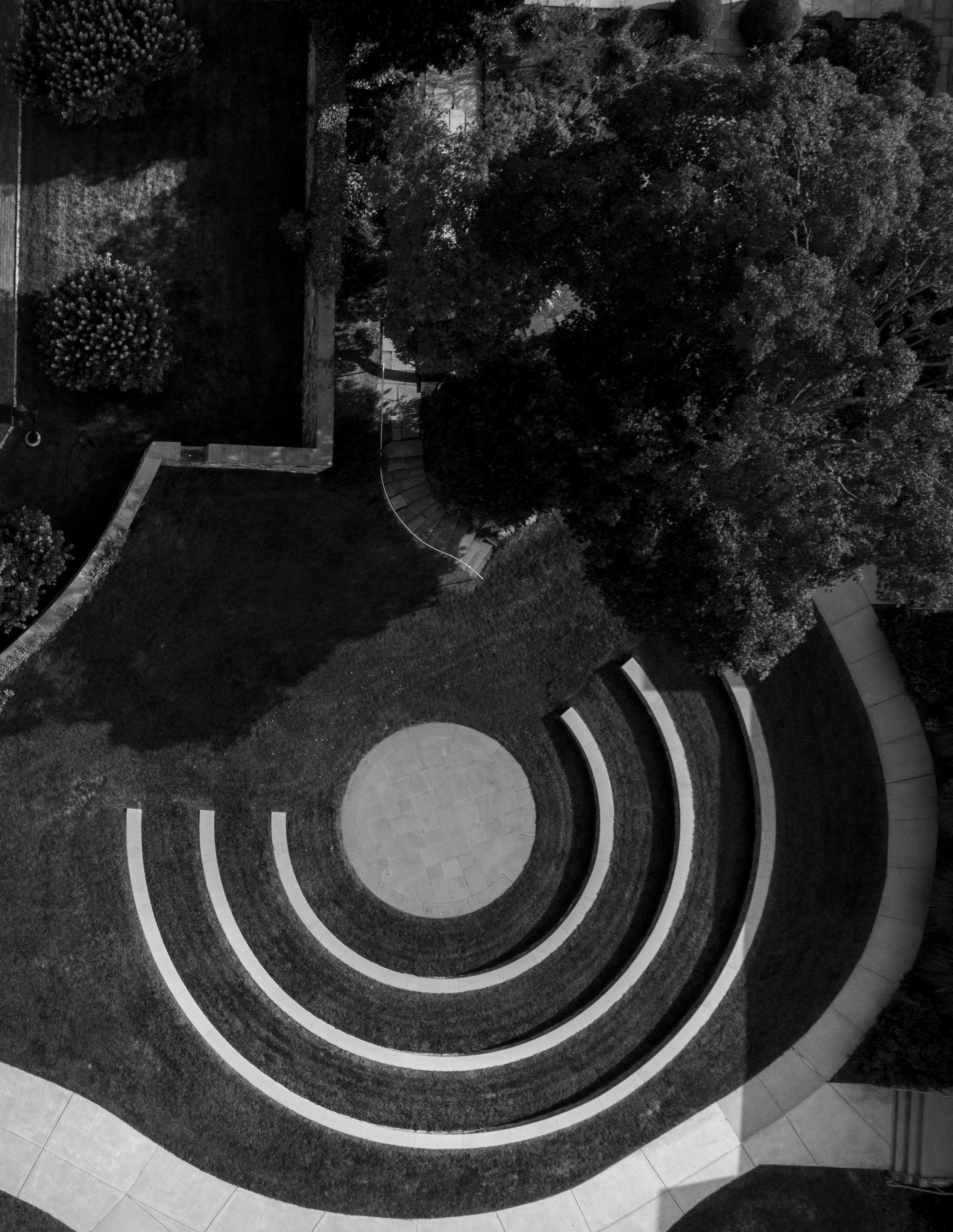
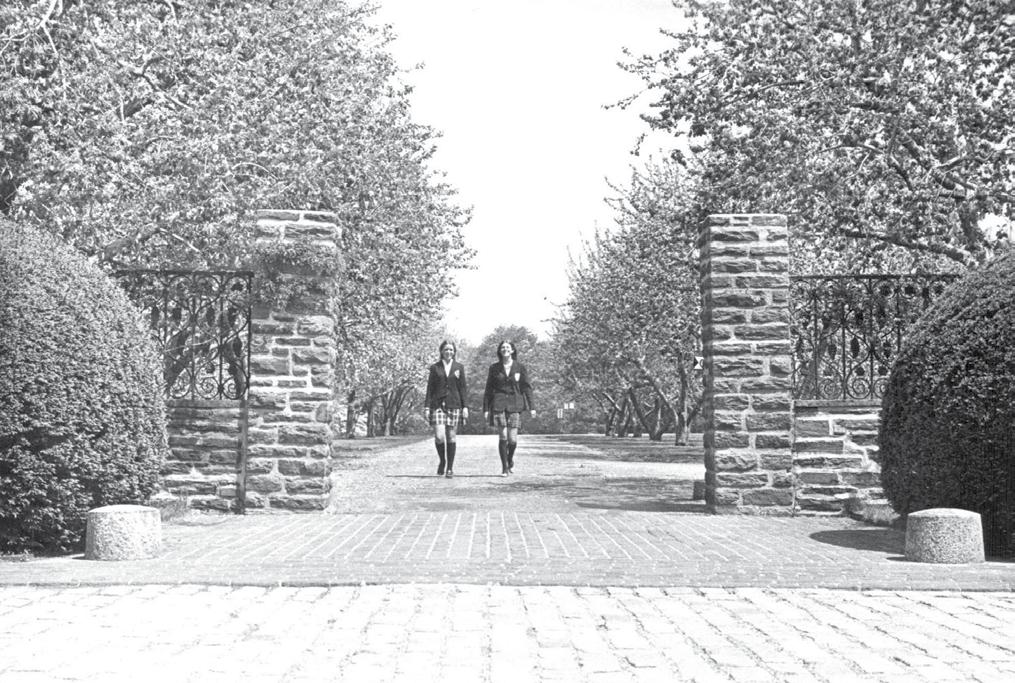
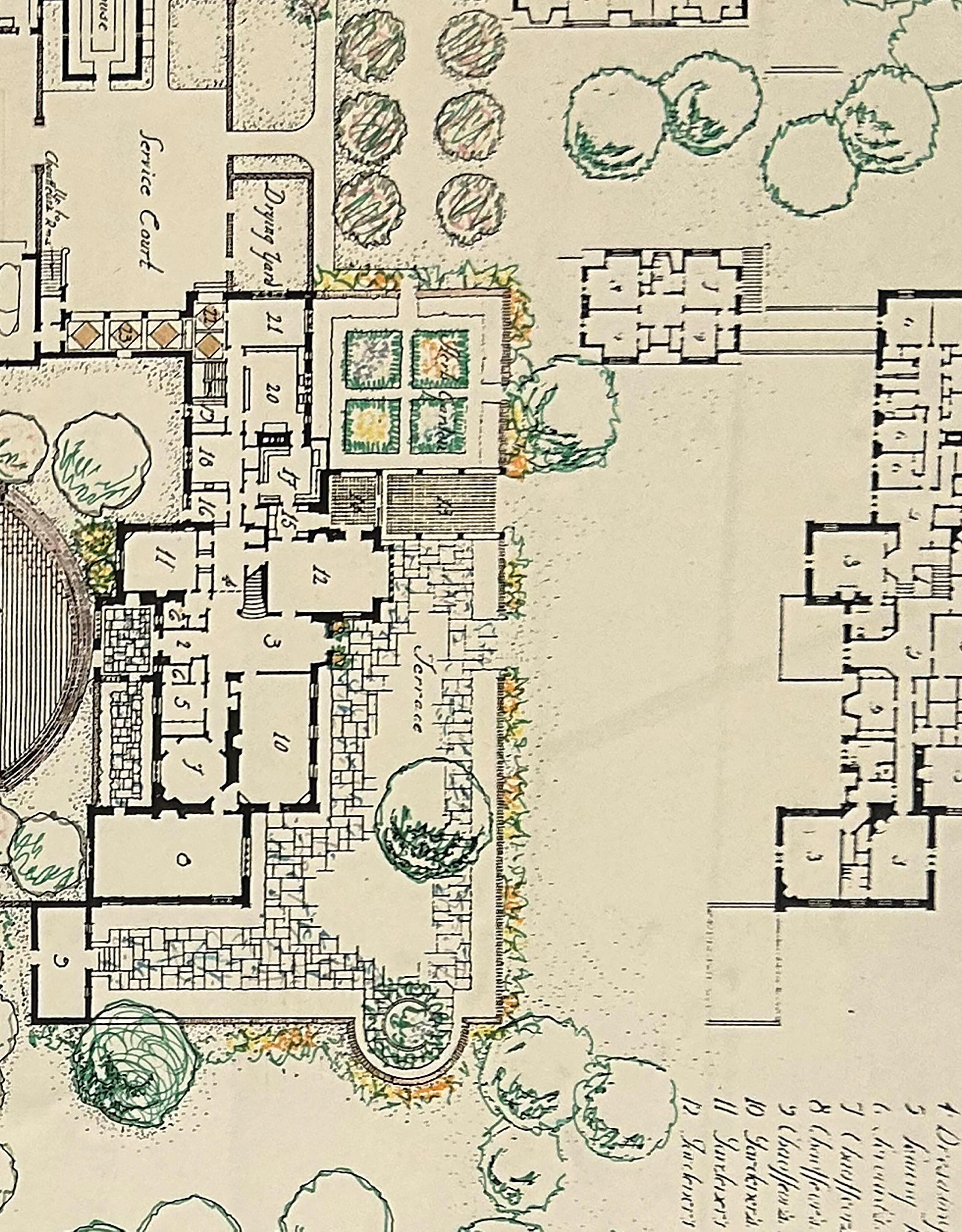
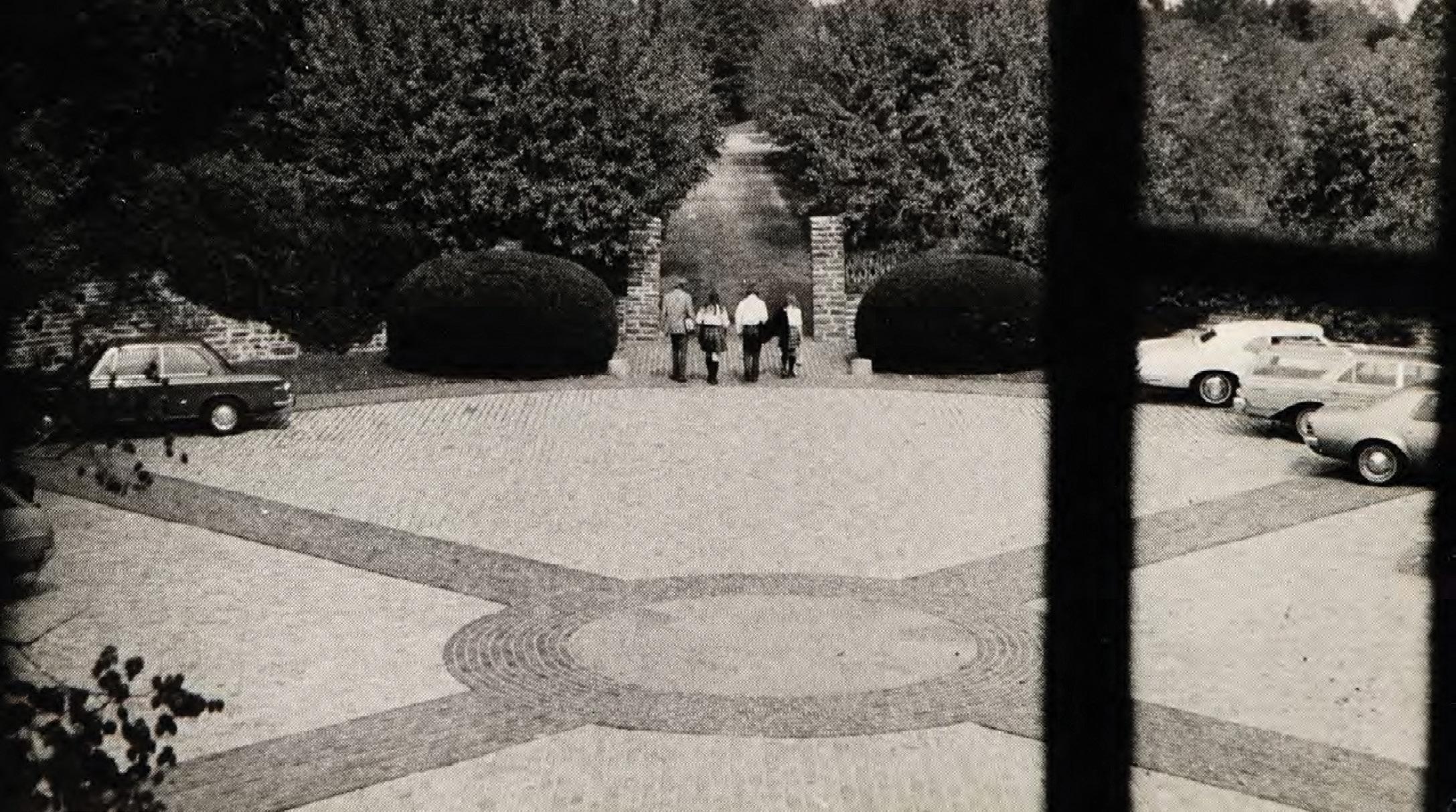
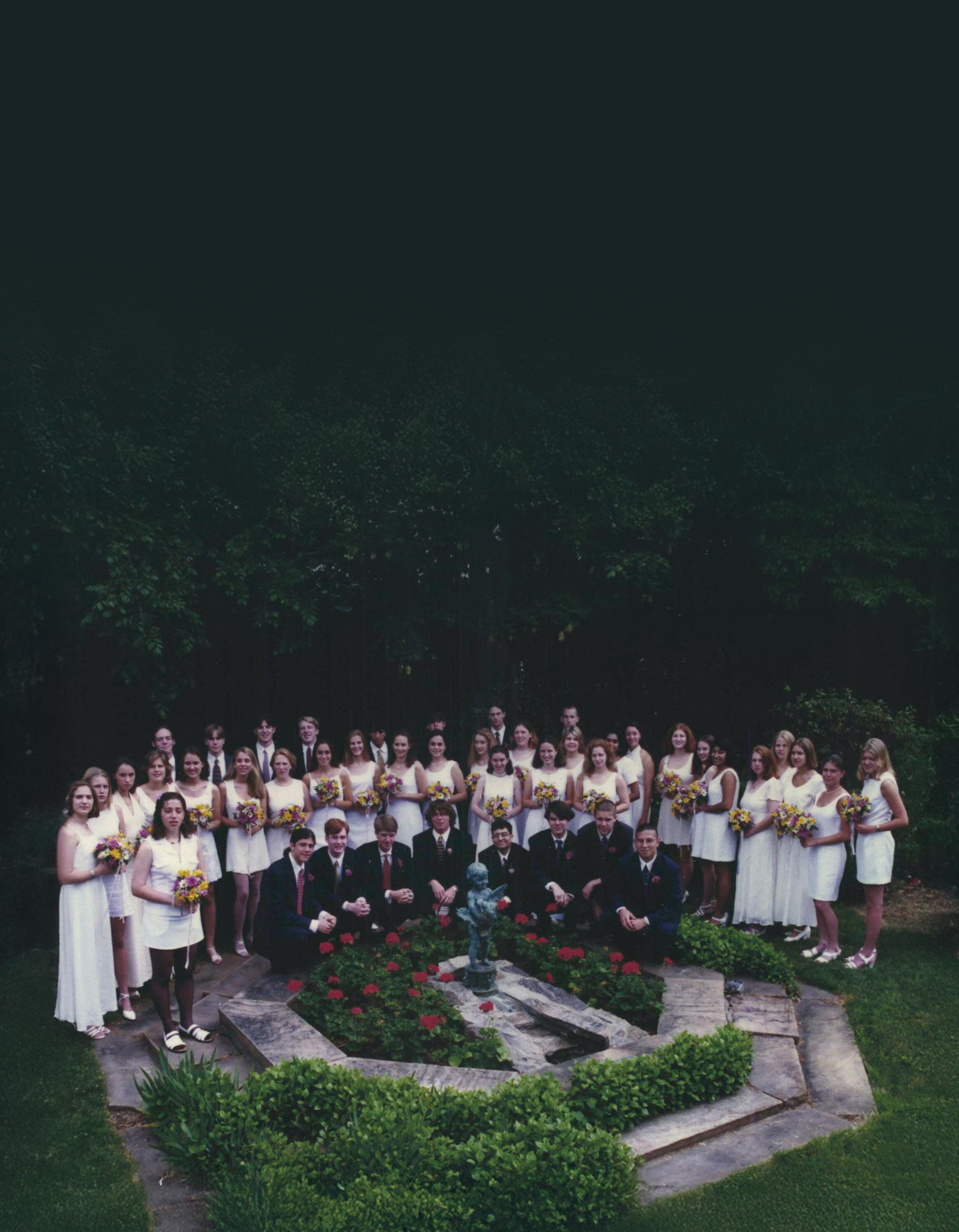
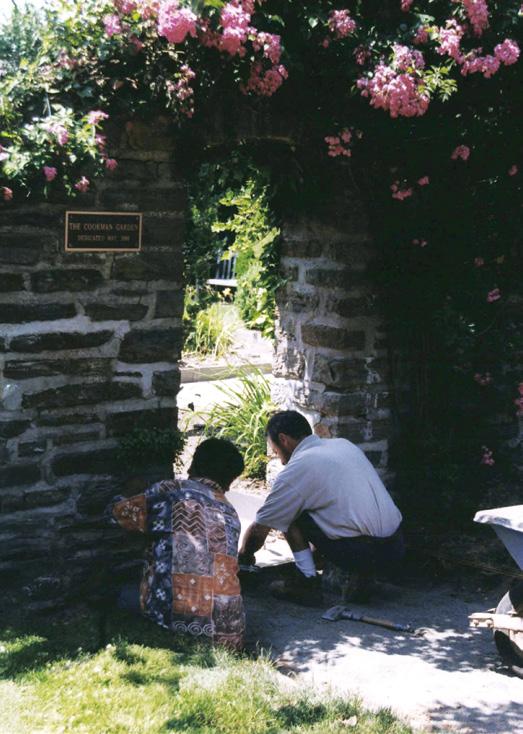
The Cookman Garden, designed in 1940 by renowned landscape architect Ellen Biddle Shipman, has long been a hidden treasure on campus. In 1988, the garden was dedicated to Prentice “Corky” Cookman, GFA’s longtime director of maintenance and designer of the wroughtiron gates on Beachside Avenue, and his mother, Ramona, assistant to headmistress
Nancy Lauber. Between 1968 and 1971 the Mother’s Club (a precursor to the Parents Association) restored the gardens using Shipman’s original plans. Briefly serving as a main thoroughfare during the 2021 entrance renovation, the garden was again rediscovered by the community as a peaceful setting for reflection and connection.
Seniors in the garden, 1996
Lower school garden
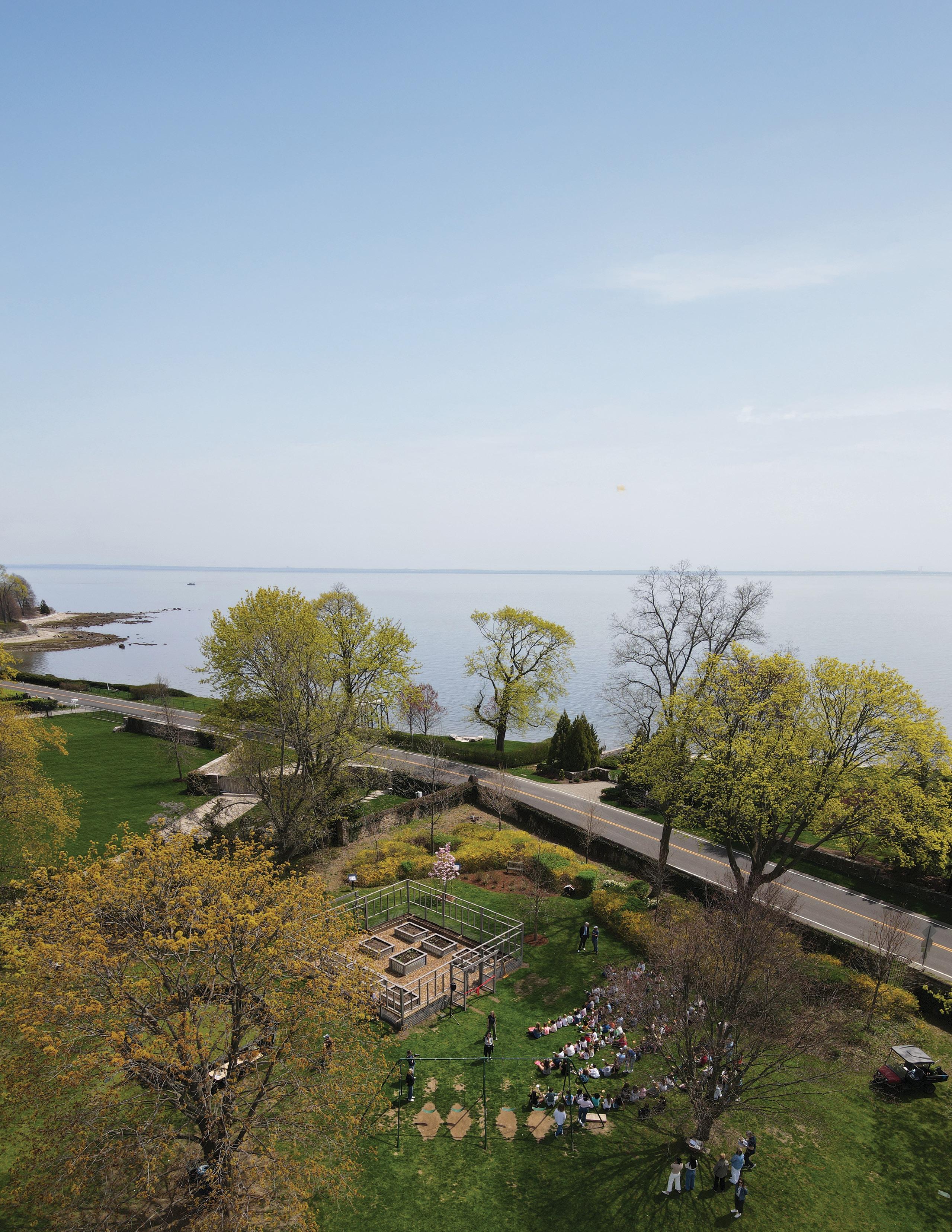
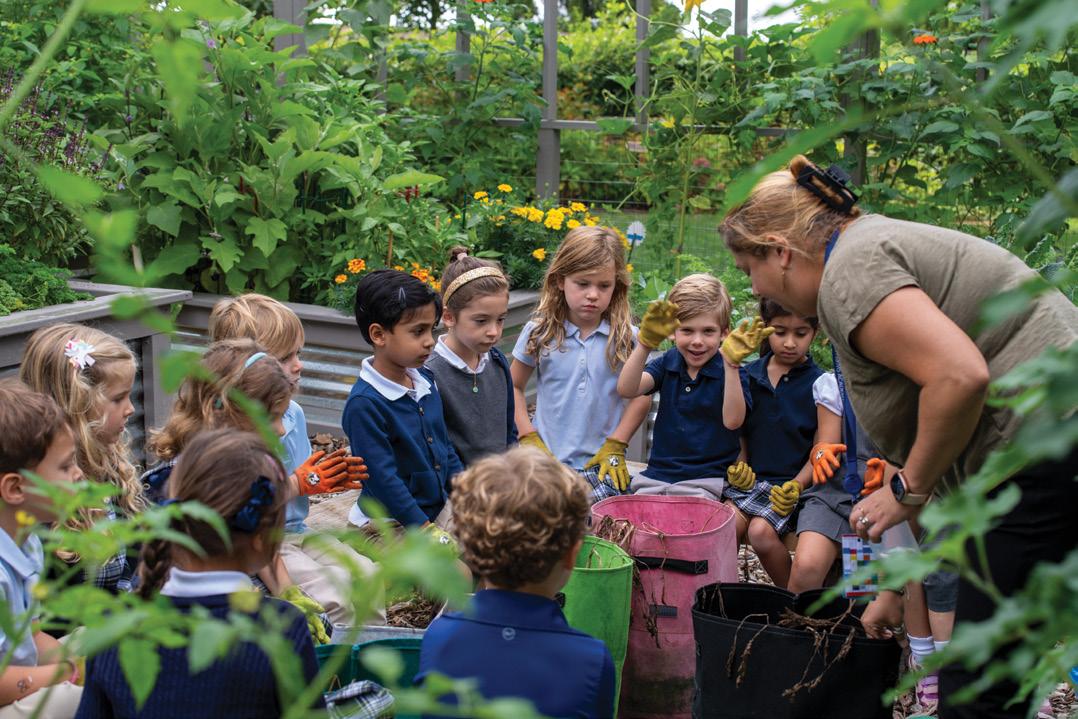
GFA has long maintained an organic garden, a hands-on space for students to learn and grow. When construction on the Athletics & Wellness Center required a new access road that disrupted the garden path, the space found a new home. For Earth Day 2025, students and teachers relocated the garden to the Front Lawn, making it accessible to learners of all ages.
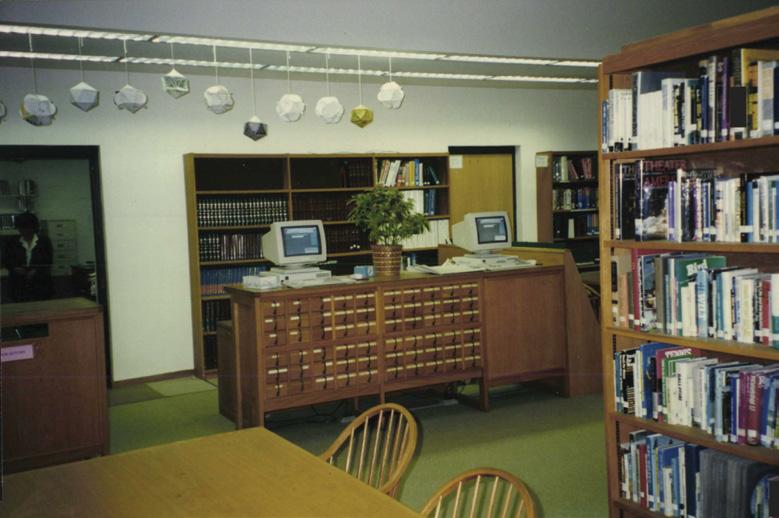
Gillian Scholey Colhoun Library
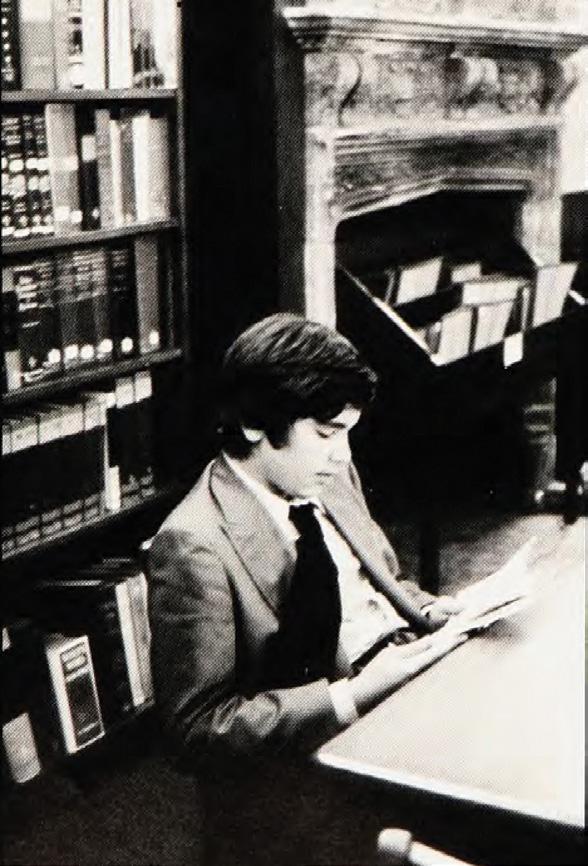
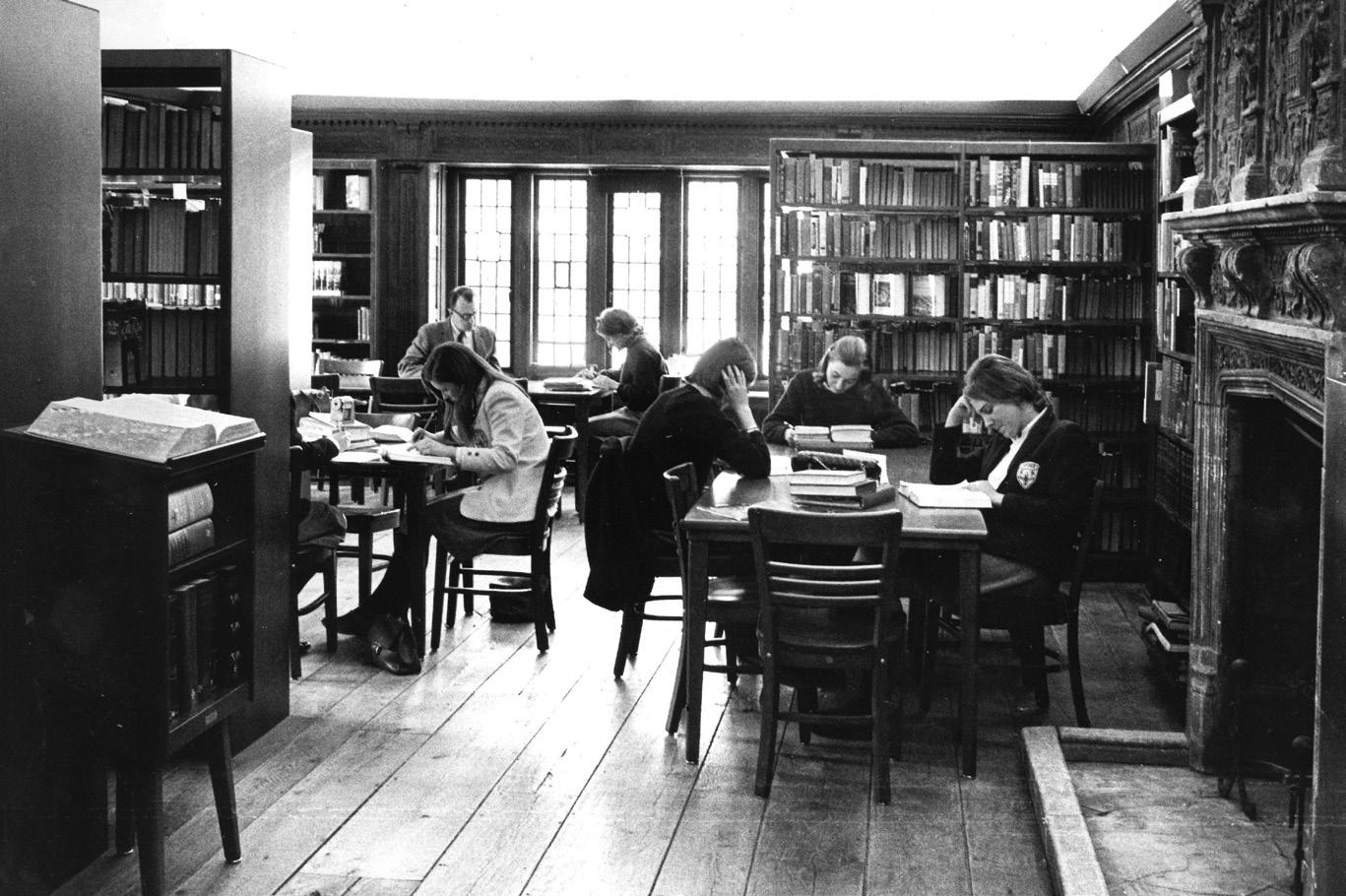
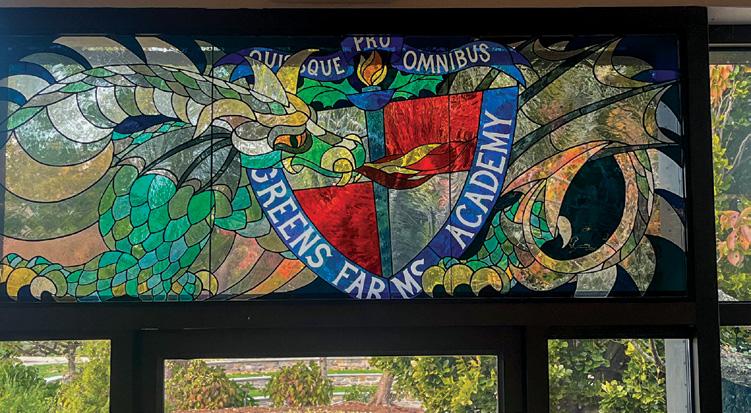
Opened in 1981, the Gillian Scholey Colhoun Library was designed by Philadelphia architect Mark Thompson and named in honor of the wife of trustee and parent Stephen Colhoun. A stained-glass window above the garden door—crafted by lower school head John Buckley-Heath and gifted by the Class of 1994—adds a note of whimsical artistry to the space.
Expanded in 2008 through the efforts of dedicated volunteers, the library also carries the legacy of longtime librarian
Lynne Laukhuf, honored with a globe inscribed with the words of Mary McLeod Bethune: “The whole world opened to me when I learned to read.”
In GFA’s Centennial year, the Colhoun Library endures not only as a center for scholarship but as a place where generations of students have discovered the joy of learning and the quiet connections found in shared space.
Architecture should be brought to complement existing themes and fabric and to reinforce the sense that institution has of itself.
Mark Thompson, architect
Where Campus Comes Together
For me, the lawn represents both sides of the GFA experience: stillness and reflection, plus community and celebration.
Dorothy Vickery ’10
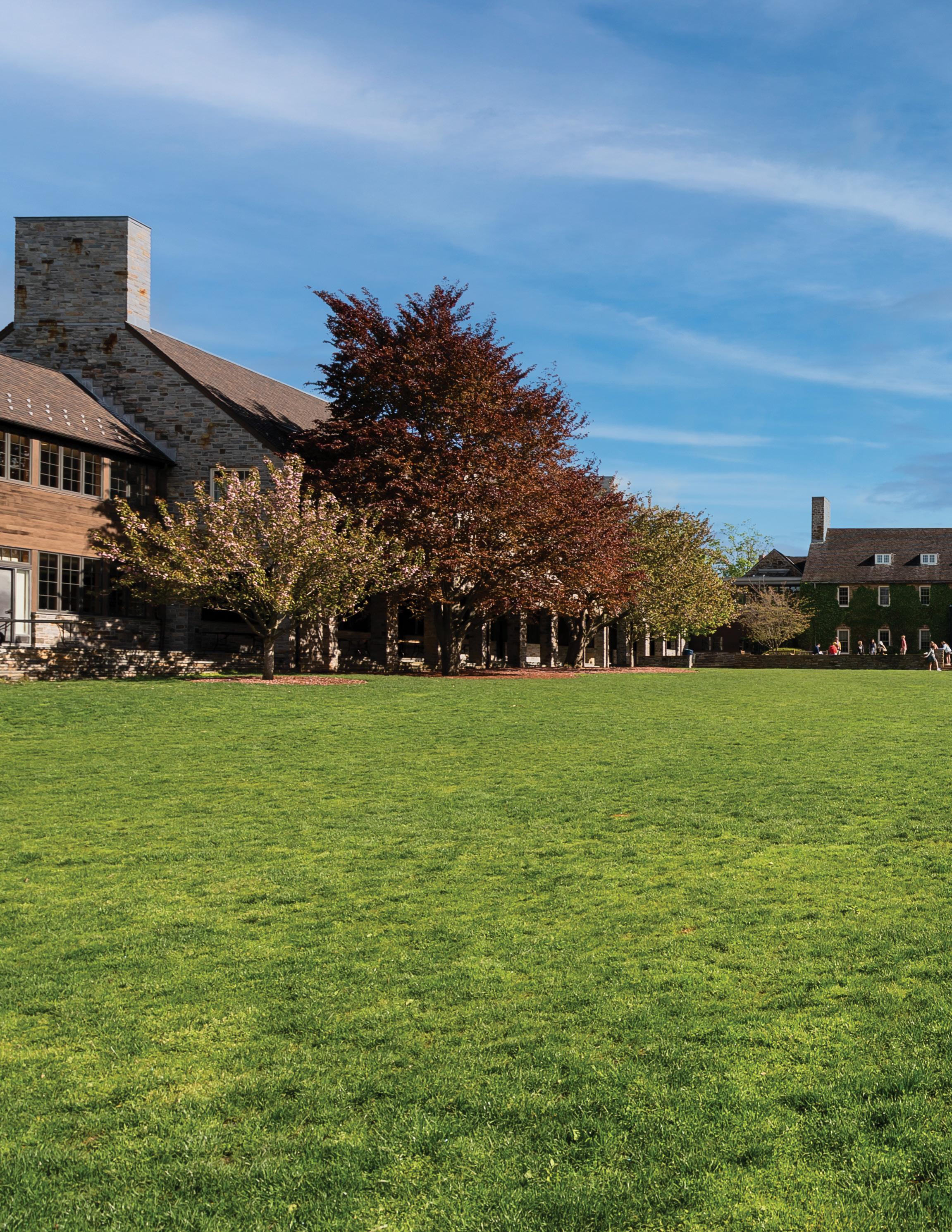
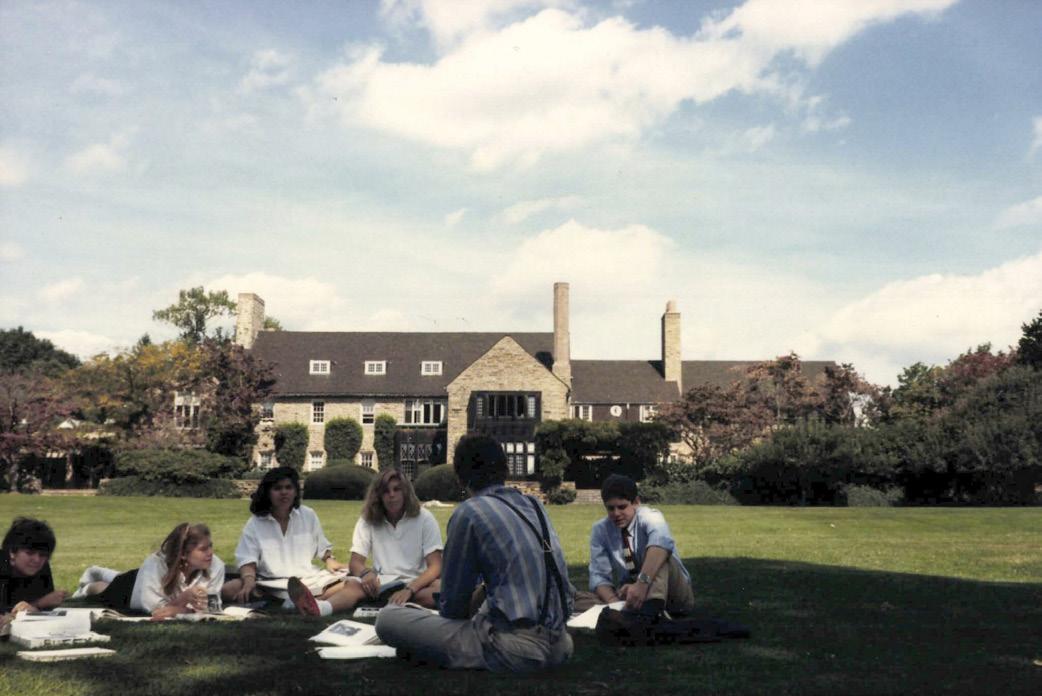
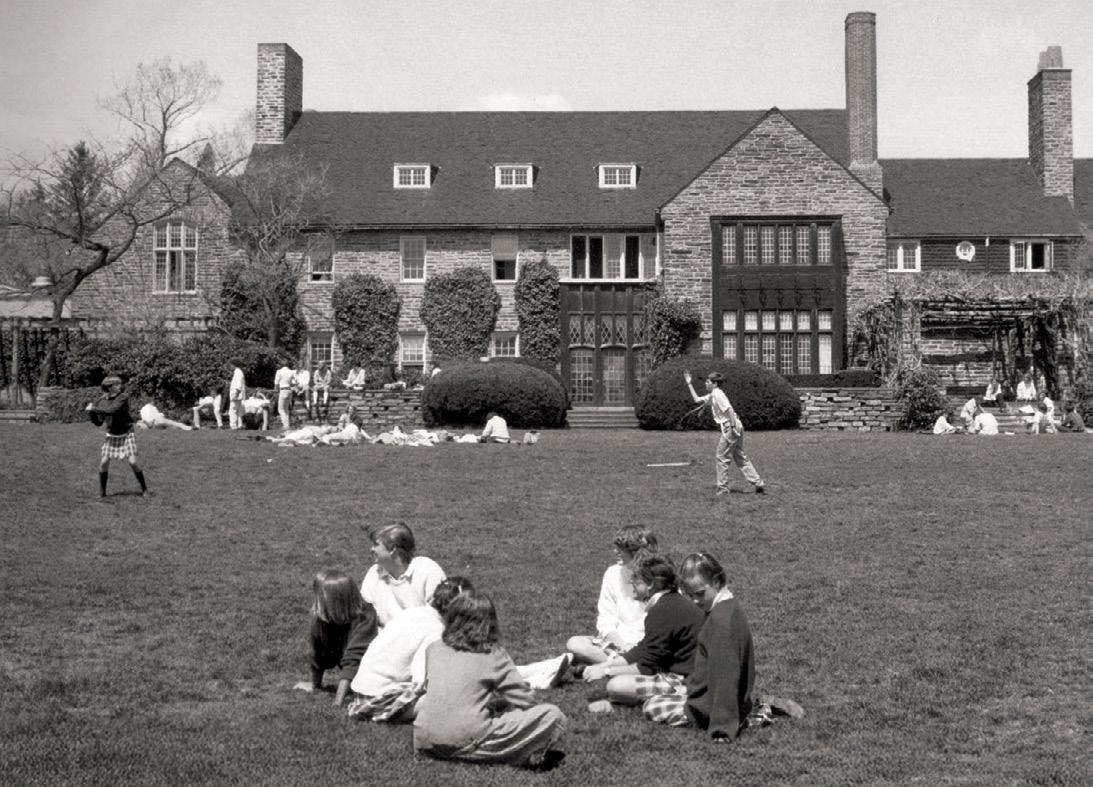
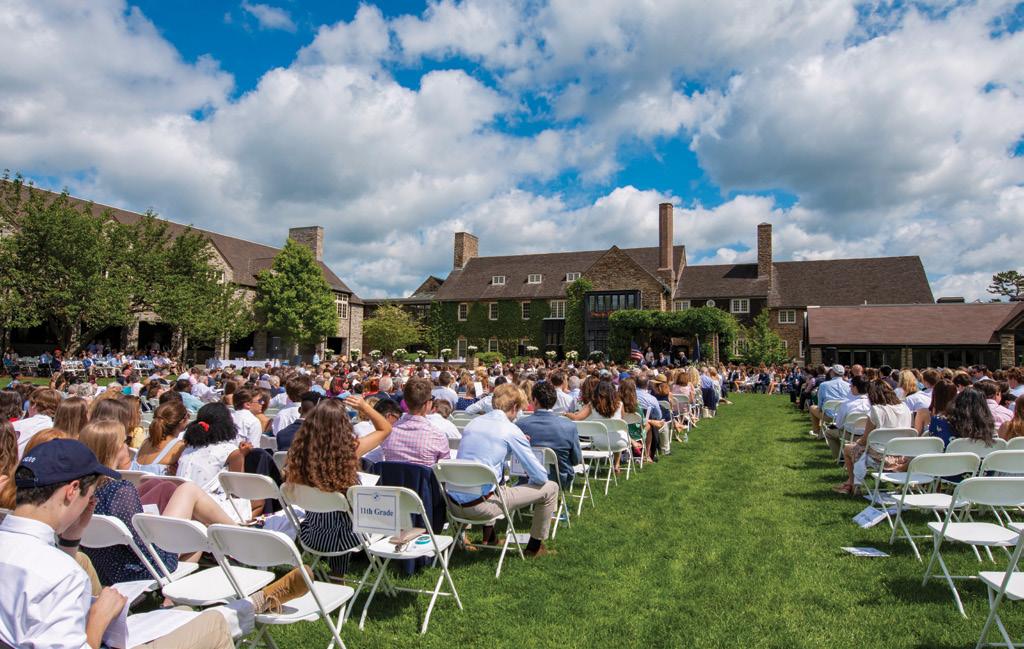
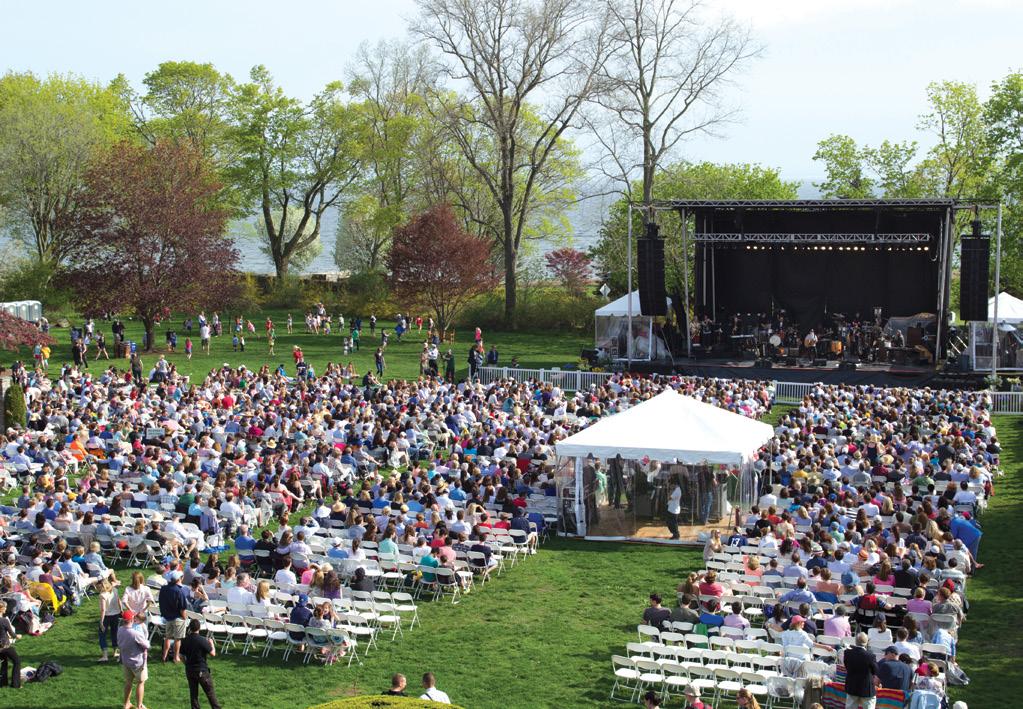
The Front Lawn holds a memory for nearly everyone who has spent time at GFA. Sunlight spills across the wide expanse of grass, the mansion rising at one end and ivy-clad walls framing the edges. On a clear day, the Long Island Sound glimmers just over the top of the wall. Students gather
here to laugh, learn, read, or simply watch the world go by. The lawn has hosted celebrations, outdoor classes, graduations, galas, concerts, and countless other gatherings. Yet for many alumni, it was simply a place to pause, breathe, and enjoy a quiet afternoon—feeling at home at GFA.
FUN FACT
In 2014, the GFA community had front-row seats to a very special event: a Paul Simon P ’13, ’16 concert right on the Front Lawn!
The Center of Middle School Life
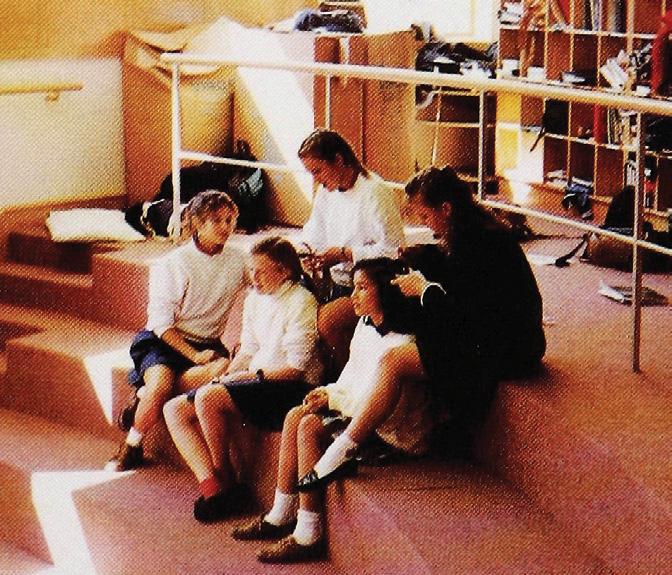
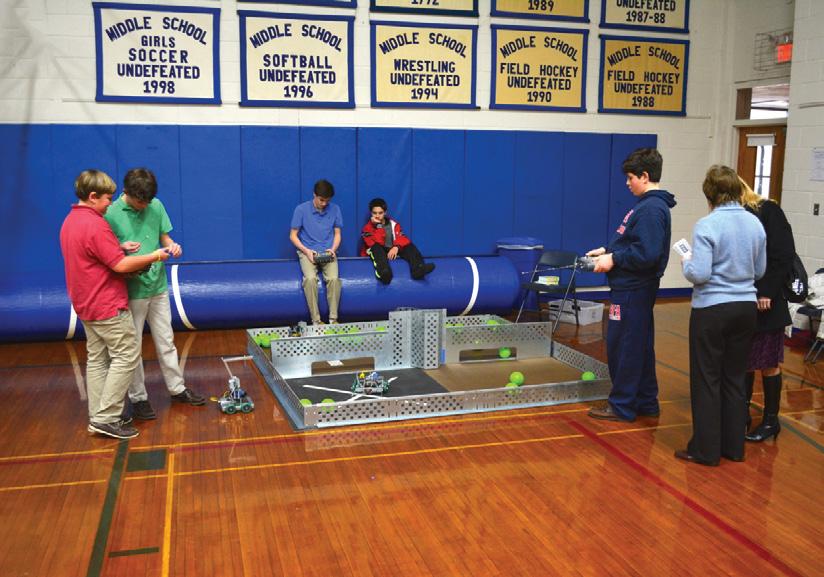
Built in 1988 as part of the Lucie B. Warren Middle School Wing, the Taylor Forum quickly became the heart of the Middle School. Designed as an open, flexible space where students could gather, perform, collaborate, and celebrate, the Forum embodied the energy and curiosity that define the middle school years.
It was named in honor of Marion Taft “Taffie” Taylor, founding head of the Middle School from 1980 to 1994, whose joyful approach to education shaped the division’s earliest years. Known for her green-pen notes, sense of humor, and belief that students could do remarkable
things, Mrs. Taylor brought the Forum to life each day—leading dances, encouraging laughter during assemblies, and using the space as a launchpad for creativity and community. Here, middle schoolers planned their own field trips, hosted bagel sales, performed skits, and found their voices, quite literally.
The Forum remains the central gathering place for the Middle School, carrying forward Mrs. Taylor’s legacy of warmth, engagement, and possibility. It is more than a physical space—it’s a reflection of a belief that young adolescents thrive when they feel seen, supported, and inspired to lead.
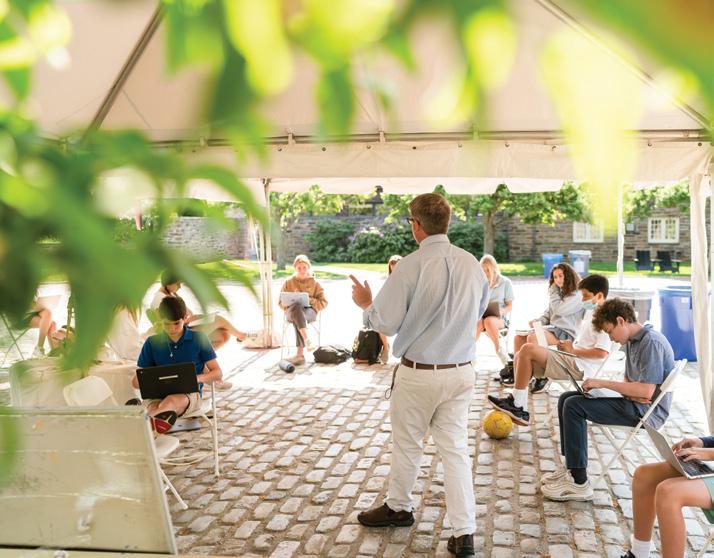
In response to COVID-19, tents across campus provided safe, openair spaces for classes and community gatherings.
Resilience by Design
During the pandemic, GFA was faced with the challenge of maintaining school life while keeping students safe. To keep routines as “normal” as possible, outdoor tents went up across campus, providing additional multipurpose space where students and faculty could interact safely, celebrate milestones, and engage with one another.
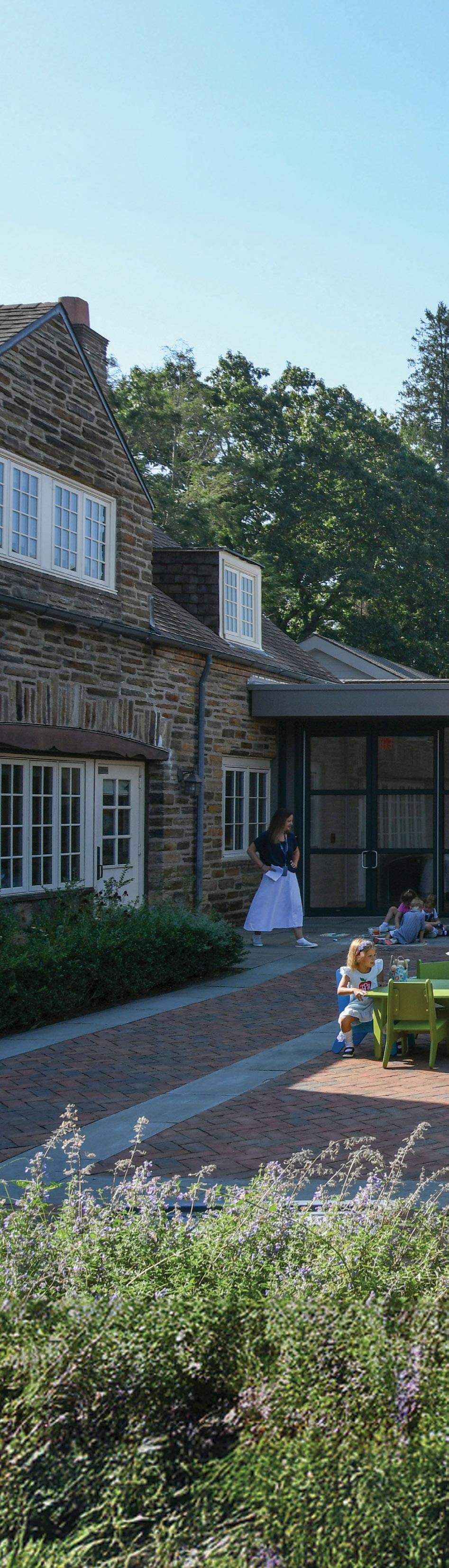
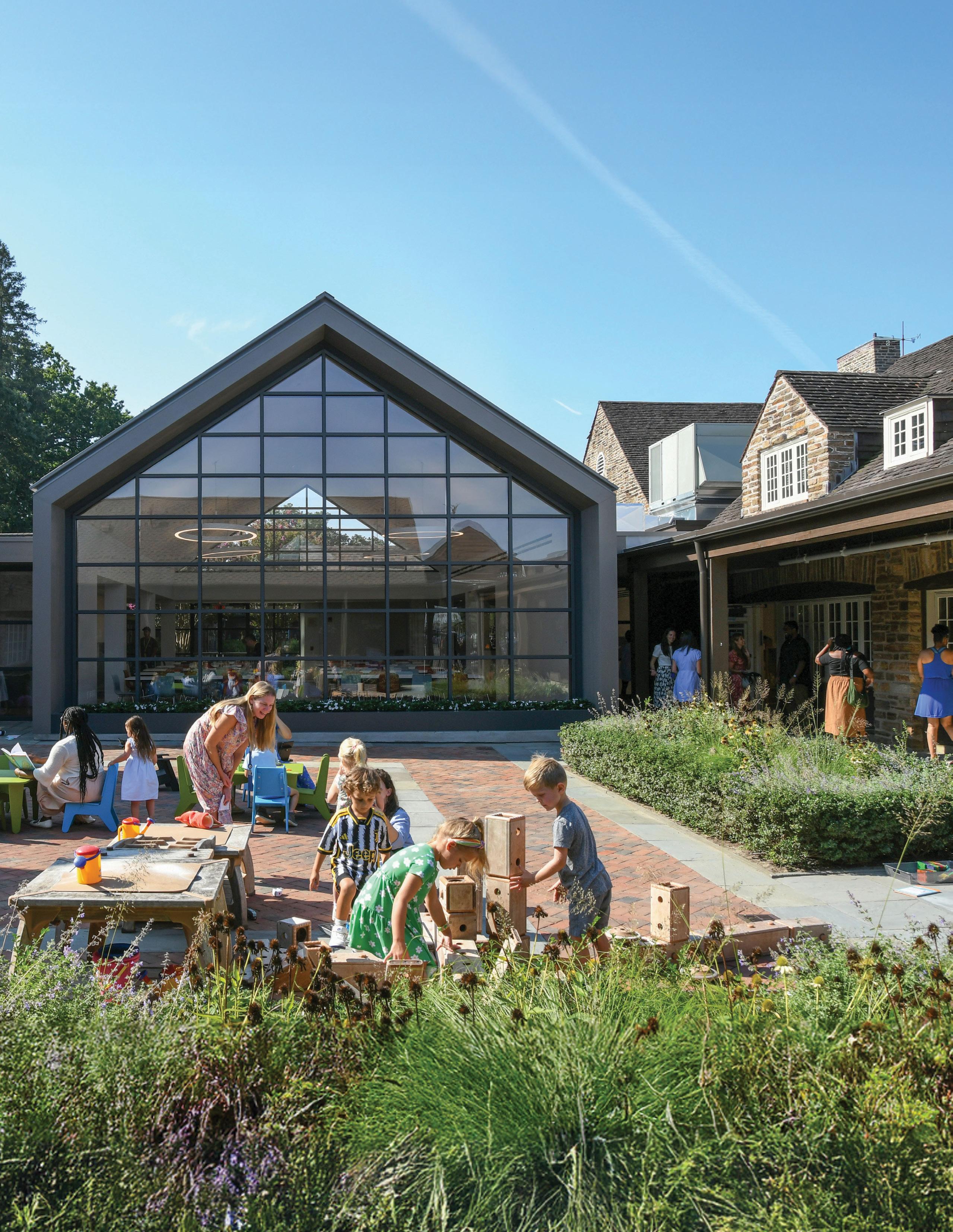
These temporary spaces revealed how thoughtful design can support both learning and community, and the spirit of adaptability that was built during this time directly informed future master planning, including the new Lower School Dining & Student Commons, as well as the renovations to the Lower School Assembly Room. Every design choice—from the flow of the rooms to the light-filled corners—echoed the adaptability and ingenuity that guided the school through the pandemic and continues to shape the everyday experience of students today.
FUN FACT
All materials for the new Dining Commons were sourced within a 500-mile radius of GFA, cutting down on shipping emissions. Inside, finishes are made with materials that are, on average, 20–25% recycled.
Left: Lower School Assembly Room
Above: Lower School Dining & Student Commons
A Stage for Every Kind of Performance
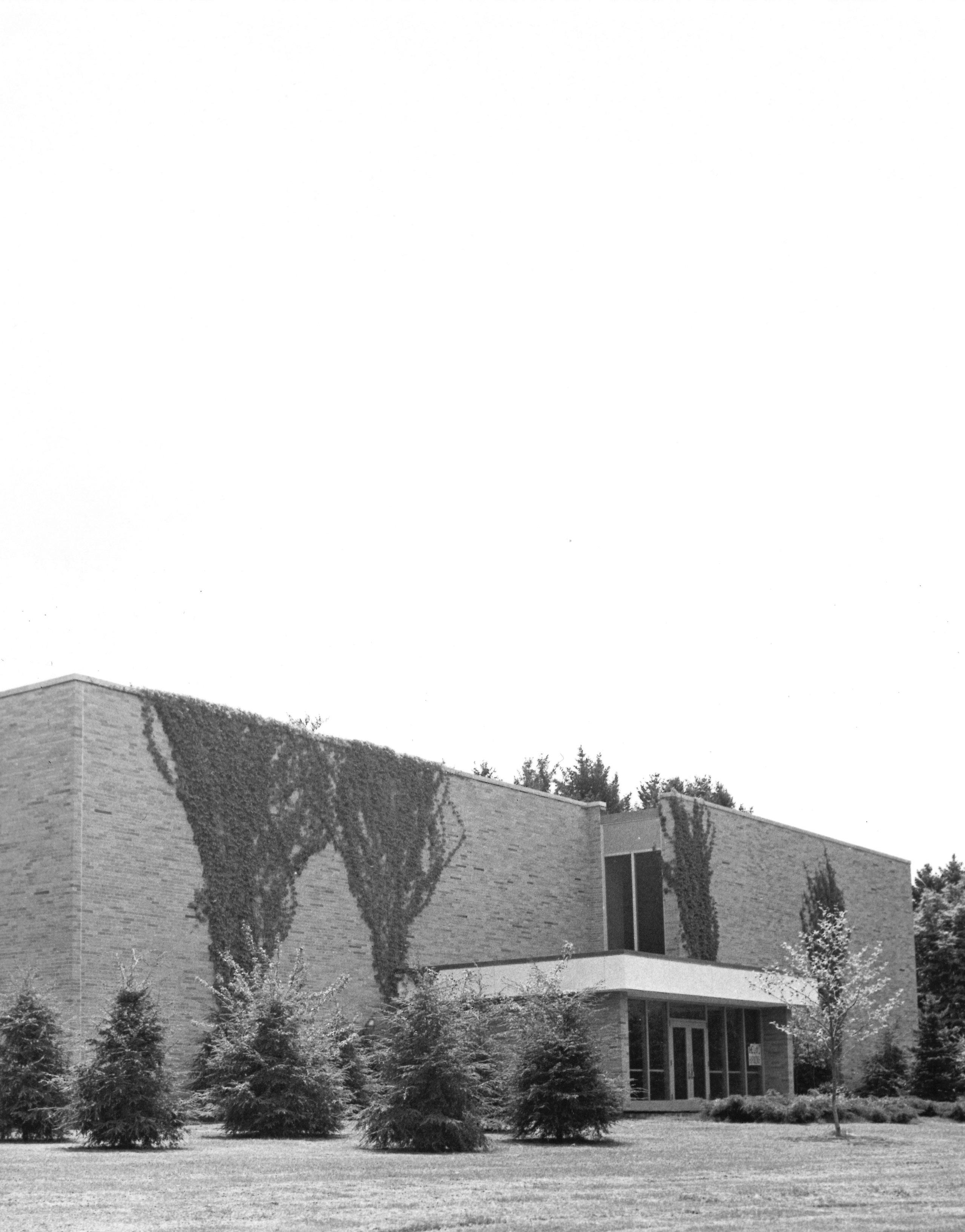
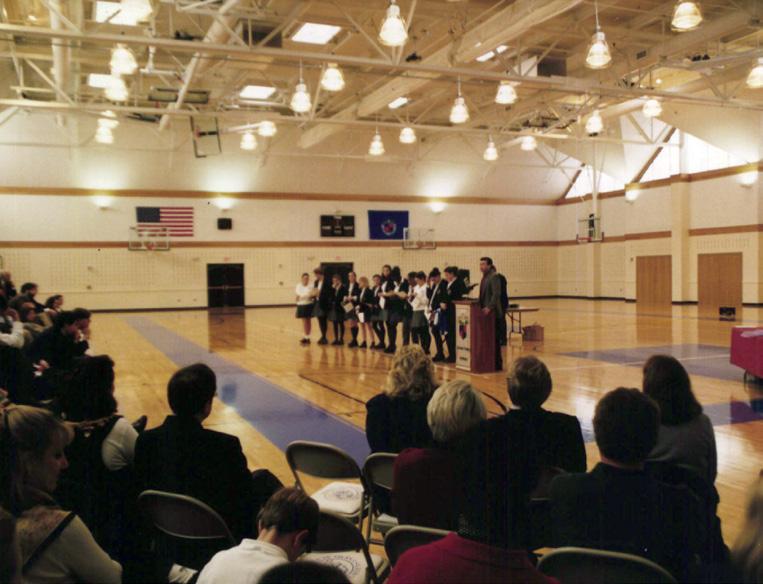
When it opened in 1963, the Bedford Gym (named in honor of Frederick T. Bedford, father of longtime Board Chair Lucie Bedford Warren) quickly became one of the most dynamic spaces on campus: a place where athletics, arts, and community converged.
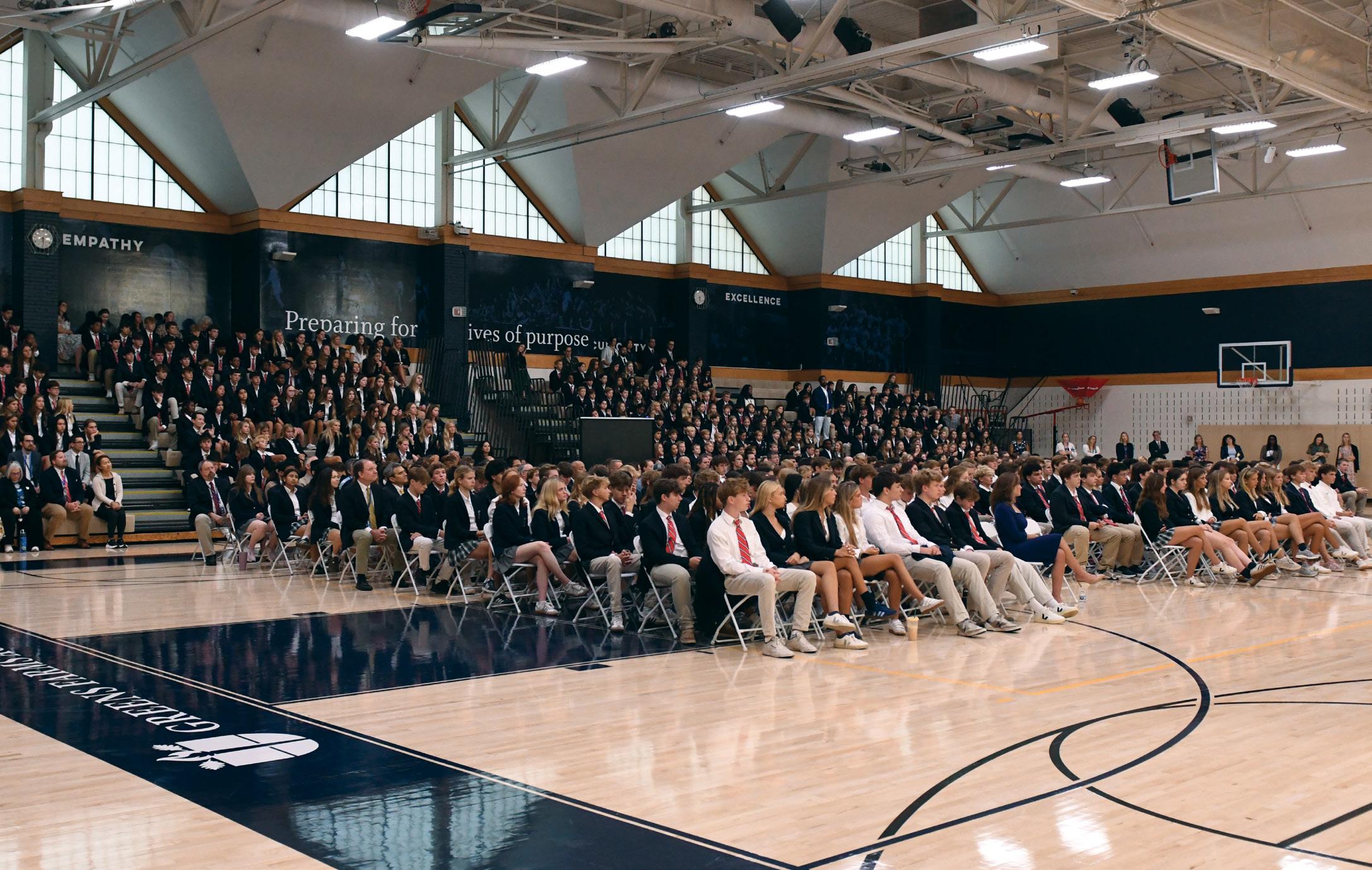
For decades, the Bedford became a familiar backdrop for student milestones and moments of celebration. Serving as both gymnasium and auditorium, it hosted practices, games, assemblies, theater productions, art exhibitions, and spirited talent shows. Students cheered from the bleachers one day and took the stage themselves the next—a true multipurpose heart of school life.
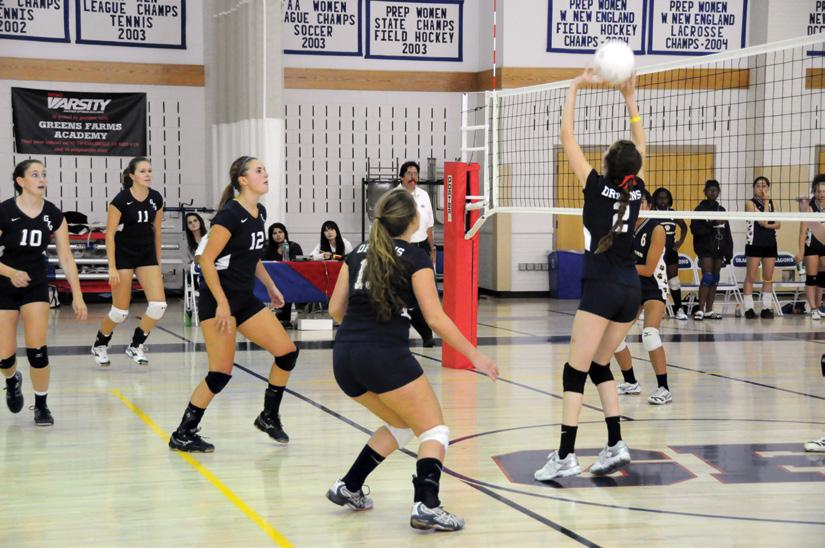
By 2012, as many as 20 performances filled the Bedford’s calendar each year, a testament to its central role in the community. When the Janet Hartwell Performing Arts Center opened in 2015, the Bedford’s stage area became part of the cafeteria, returning the gym fully to the athletic program. Today, the space is used for P.E. classes, recess, and middle school and JV sports (and a few non-athletic events, as well!).
A Modern Classic
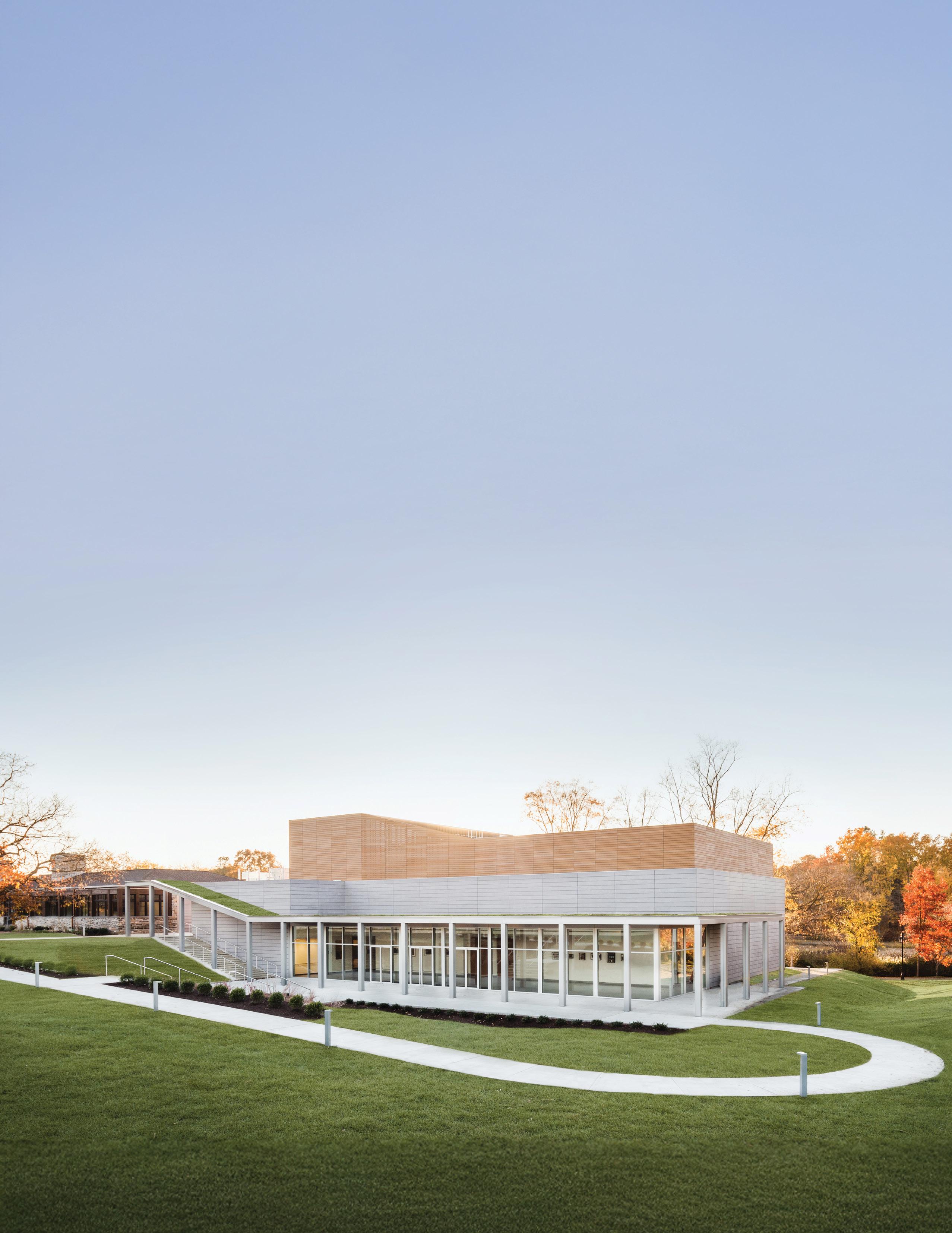
Opened in 2015, the Janet Hartwell Performing Arts Center (PAC) marked a defining moment in GFA’s evolution— introducing a modern, purpose-built home for the arts that still feels entirely at home on Beachside Avenue. Designed by Roger Ferris + Partners, the 21,000-square-foot building was carefully integrated into the existing landscape and architecture, with its colonnade, brickwork, and hillside setting echoing the traditional character of campus.
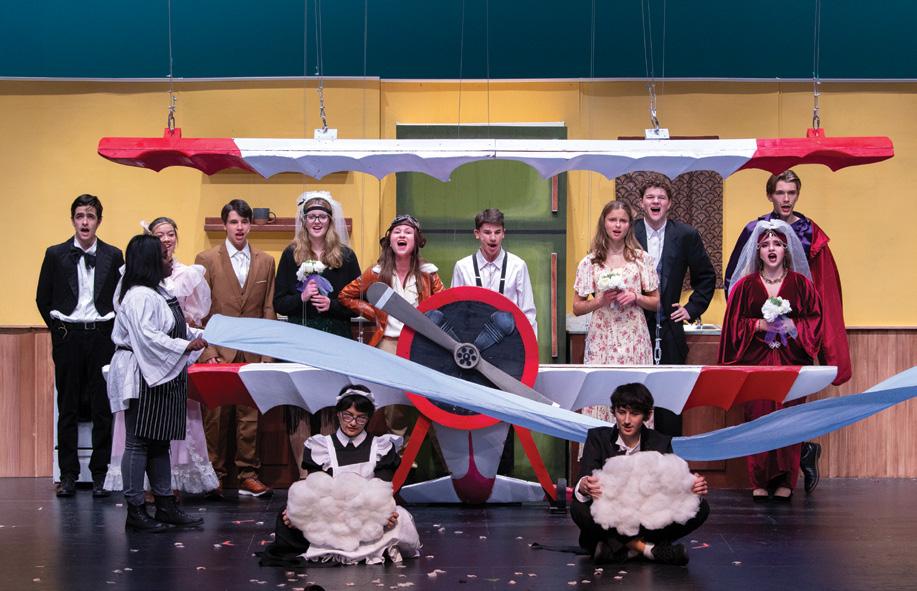
Inside, the theater’s state-of-the-art acoustics, lighting, and seating created space for performances that matched the caliber of GFA’s growing arts program. The addition of a Scene/STEAM shop, the McGrath Gallery, and Global Studies classrooms reflected a broader vision: to make the arts a central and connected part of students’ learning experiences.
Built with sustainability in mind—from its solar panels and recycled materials to its living roof—the Performing Arts Center reflected GFA’s forward-looking approach to stewardship.
Nearly a decade later, it continues to host concerts, plays, assemblies, receptions, and exhibitions that bring the community together, standing as a symbol of how new ideas can take shape in ways that honor both GFA’s history and its future.
FUN FACT
The PAC’s living roof isn’t just for looks—its various sedum species act as pollutant filters and restrict the amount of rainwater flooding the drainage system, to sustain the local salt marsh ecosystem!
A new era for GFA athletics
When the James M. Coyle Gymnasium (Coyle Gym) opened in 1998, it marked an important next step in the evolution of athletics at GFA. For years, the Bedford Gym had served the community, but as programs grew and teams multiplied, space became increasingly limited. The Coyle Gym brought expanded courts, updated equipment, and dedicated spectator seating—creating a home court that matched the strength and spirit of GFA athletics. The gym quickly became a central gathering place, hosting practices, games, assemblies, and celebrations that brought the community
together under one roof. More than just a new building, the Coyle Gym reflected the school’s commitment to providing students with the space and resources to continue
Building a Space for the Next Century
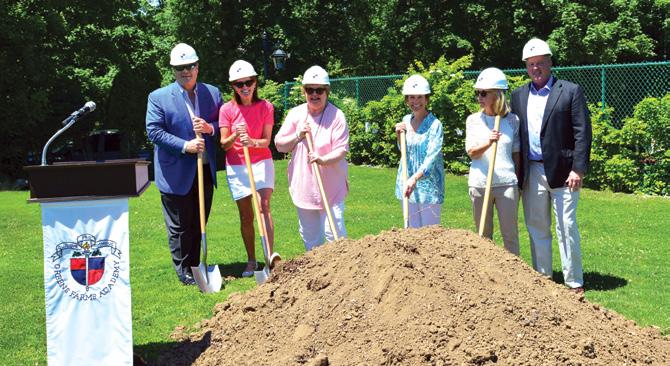
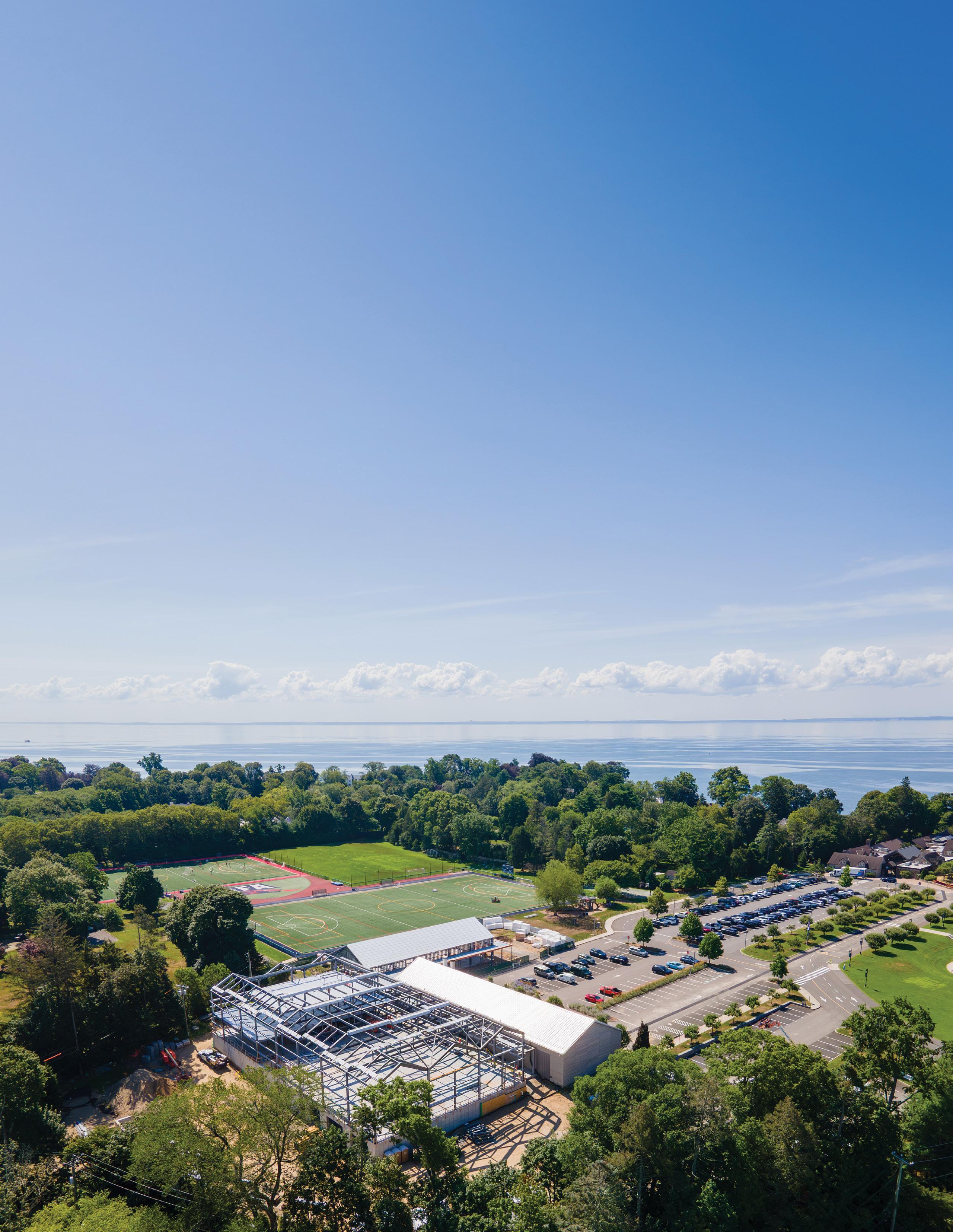
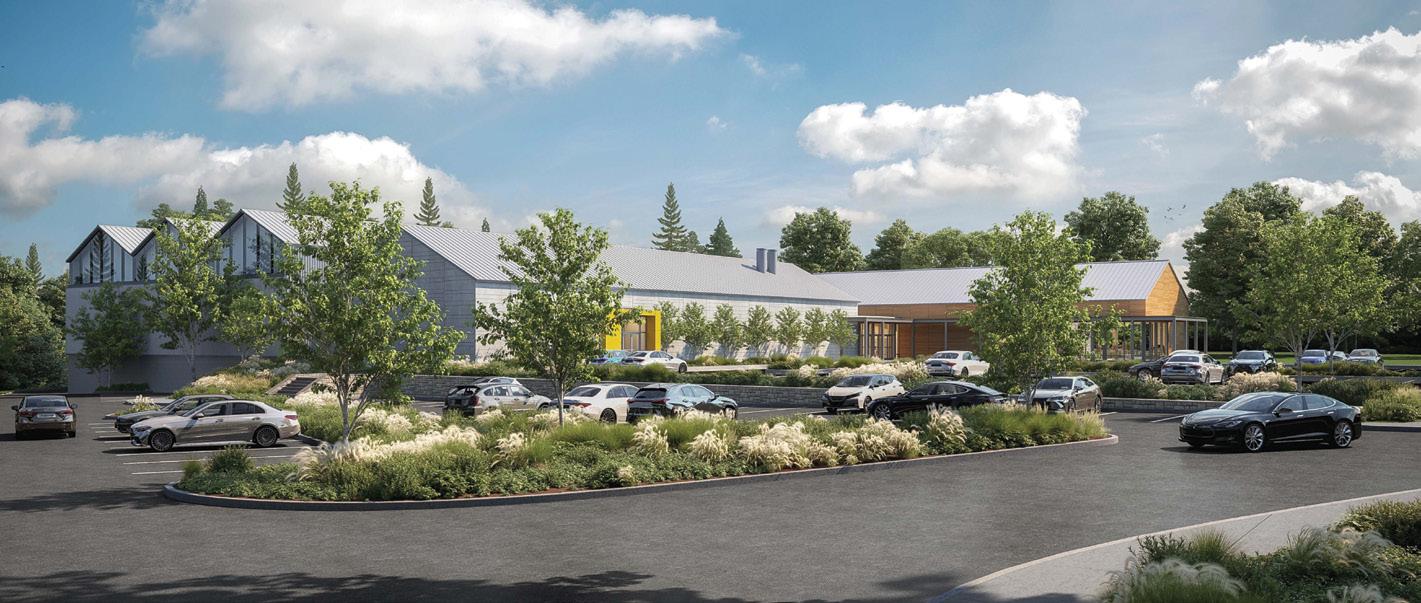
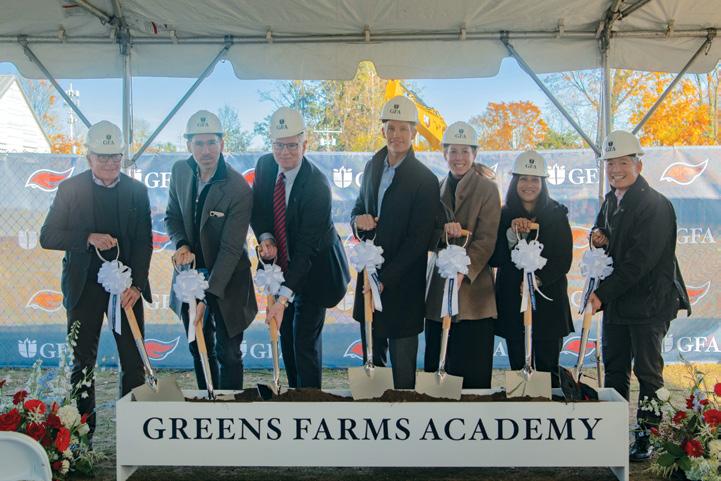
In November 2024, GFA broke ground on the new Athletics & Wellness Center (AWC), a transformative addition to campus designed to support the full breadth of student growth—athletic, social, and emotional. Scheduled to open in the spring of 2026, the 30,000-square-foot facility reflects the school’s commitment to developing well-rounded, resilient students.
The AWC will feature a flexible field house for a variety of sports and year-
round physical education, two additional squash courts with viewing galleries, a two-mat wrestling room, a Division I-caliber high-performance training area, a 17,000-square-foot fitness center, and a sports medicine suite for hydrotherapy and injury rehabilitation. Funded through Lives of Purpose: the Centennial Campaign for GFA, the AWC will offer students a space to challenge themselves, build resilience, and cultivate teamwork.
Our milestones mark moments of vision, growth, and change—points in time when our community came together to support the school. Together, they tell the stor y of a school unafraid of what lies ahead, guided by the same values across a centur y.
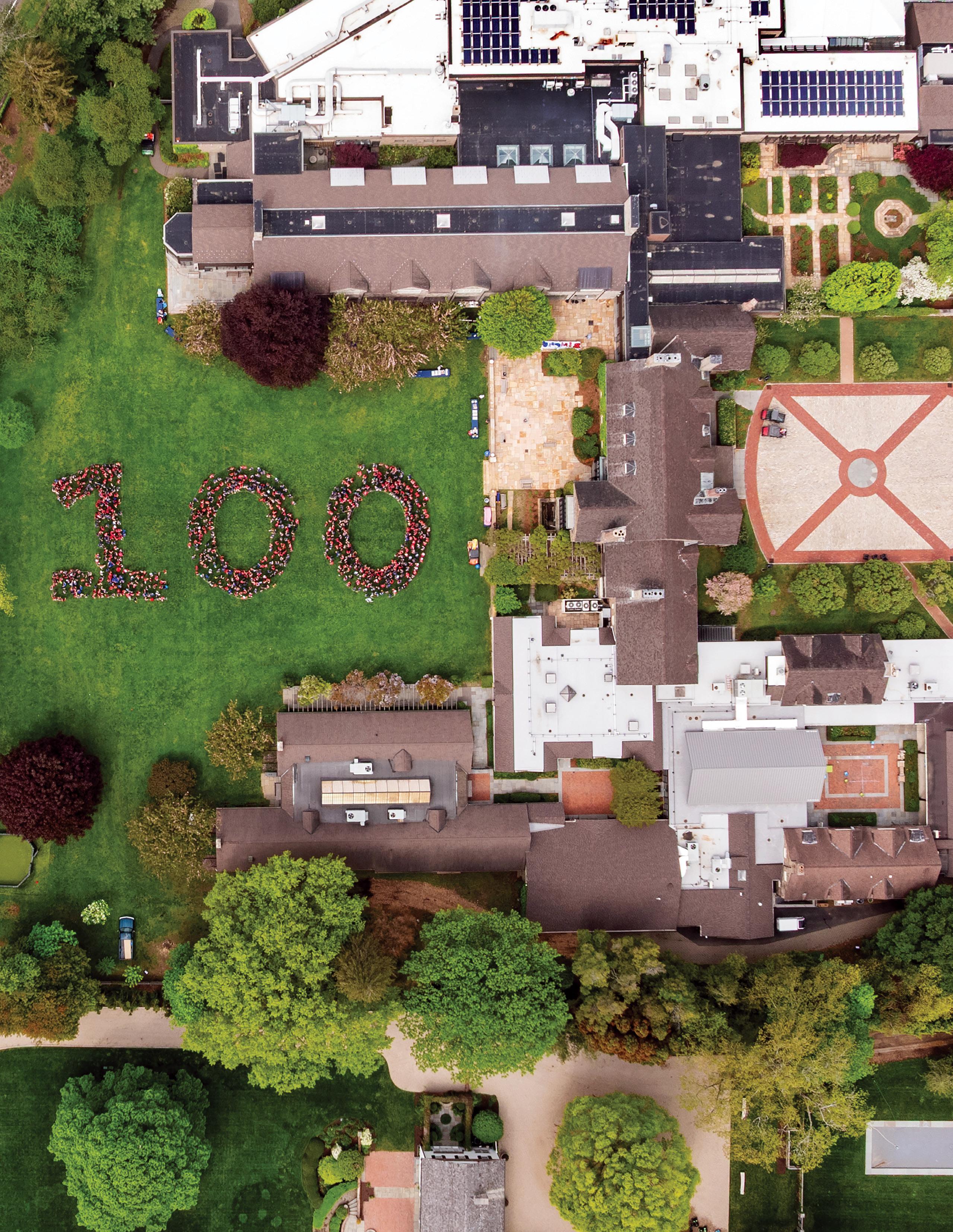
Th e G FA co m m u nit y g athe re d o n
Ce nte n nia l G ivin g Day to fo rm a gia nt “ 1 0 0,” size d u sin g c a lculatio n s
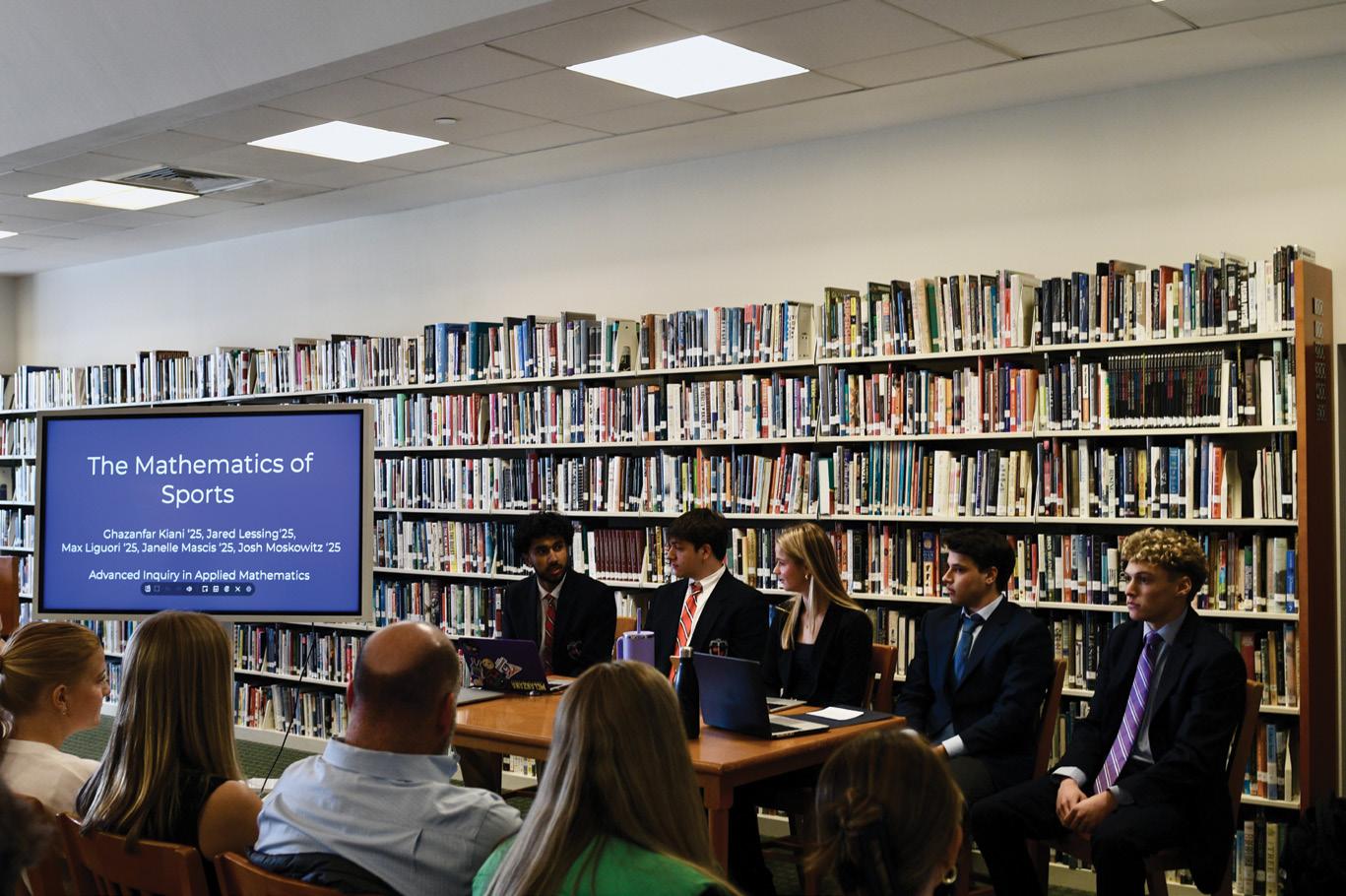
f ro m th e I n q uir y in Pro ba bilit y a n d
Co m bin ato ric s cla ss
Where It All Began
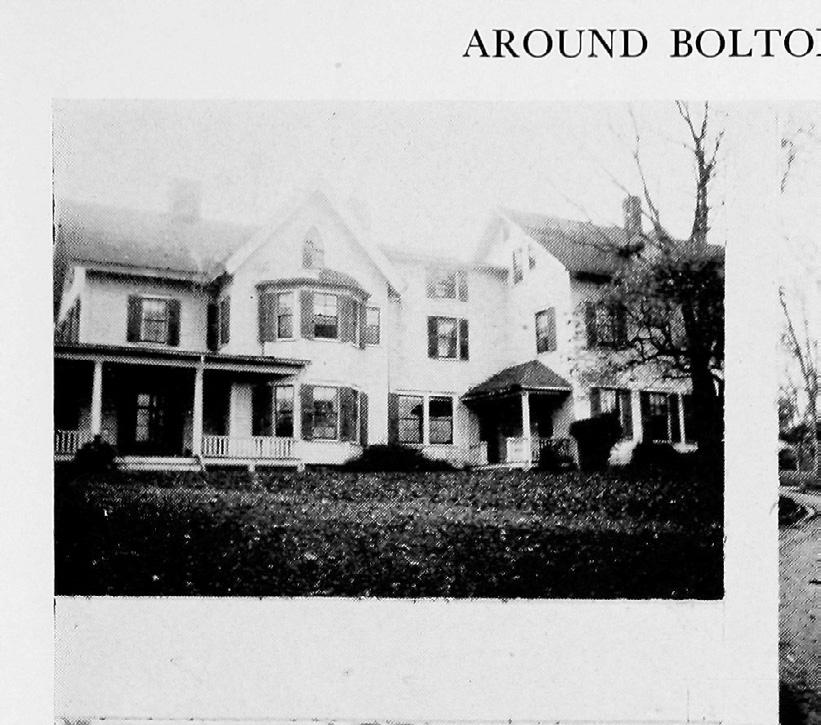
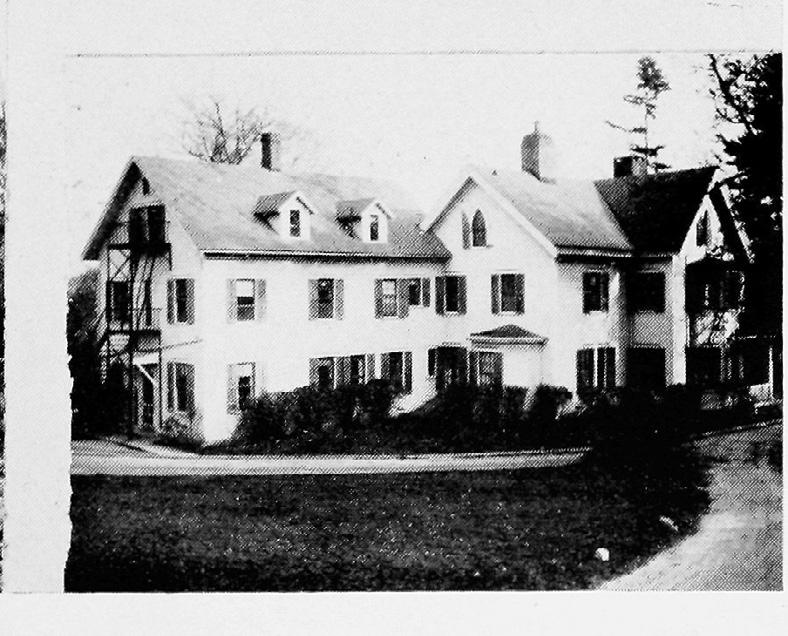
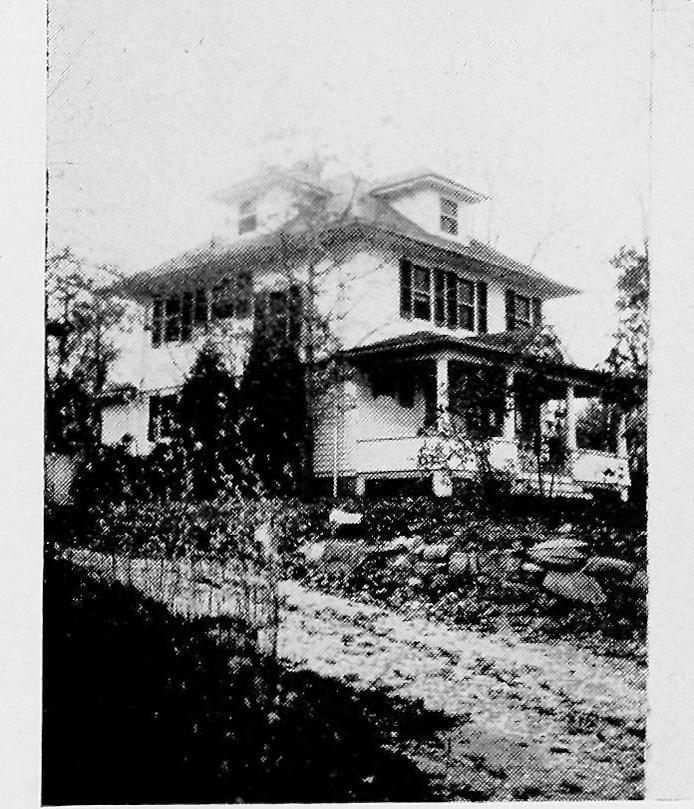
The story of Greens Farms Academy begins in 1925, when Mary Bolton brought her vision for a small, independent girls’ school to Westport, Connecticut. Inspired by the town’s charm and her English education, she opened Mrs. Bolton’s School for Girls with just four students in a three-story house on Church Lane across from Christ and Holy Trinity Church.
The school quickly flourished, and as enrollment grew, the school moved first to a Greek Revival house on
East State Street (present day Post Road East). In 1929, Bolton moved again to a Victorian farmhouse overlooking the Saugatuck River, on the northeast corner of Kings Highway and Wilton Road. By 1936, the school expanded to serve PreK through Grade 12 and graduated its first senior class. Mrs. Bolton and Miss Laycock built a place known not only for high standards, but also for their emphasis on curiosity and community—qualities that would become central to GFA’s identity in years to come.
FUN FACT
The house on Church Lane wasn't just a school—it was also home for Mrs. Bolton and her daughters Betty ’36 and Ann ’38, who lived there year-round.
A School Reinvented
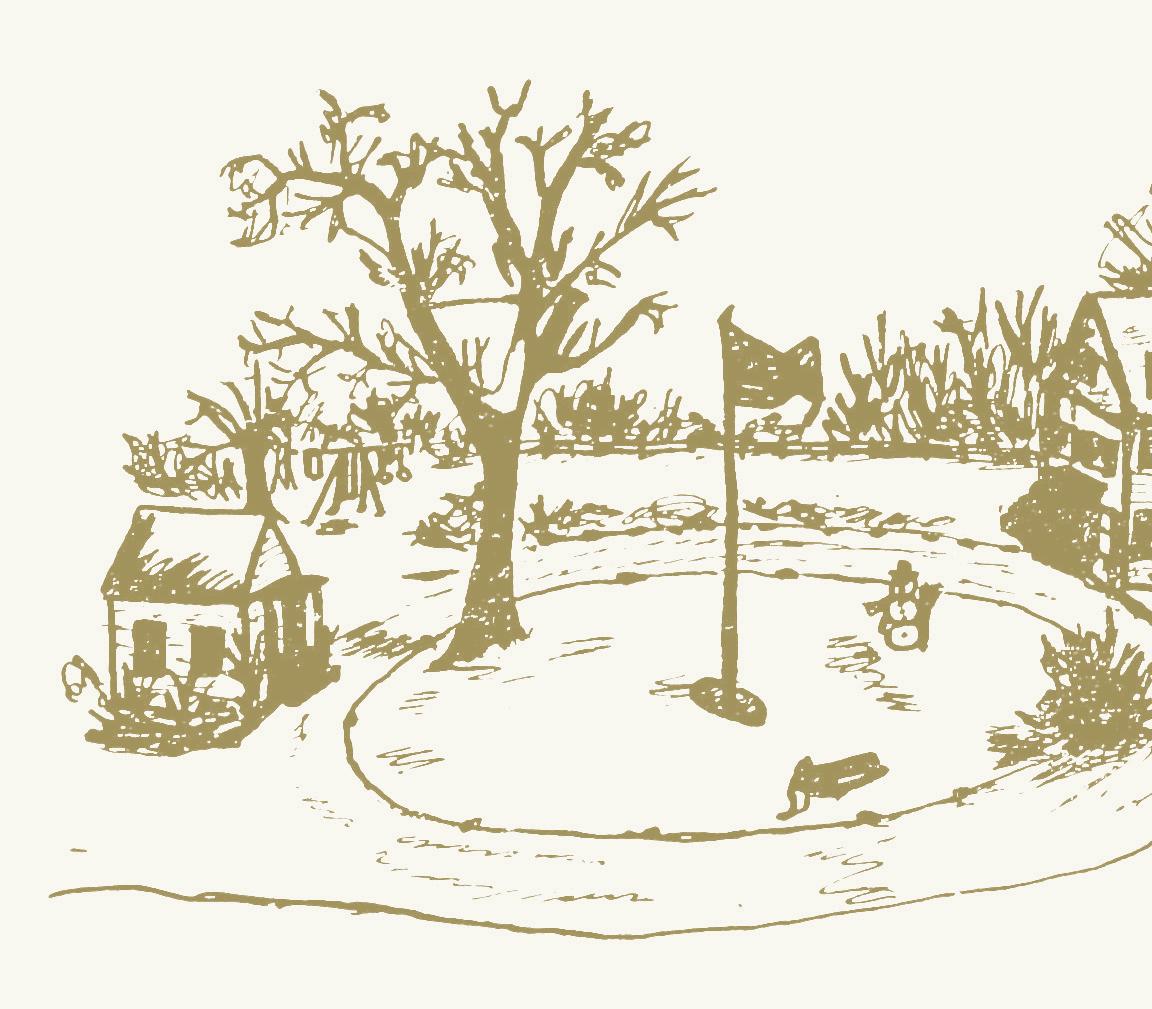
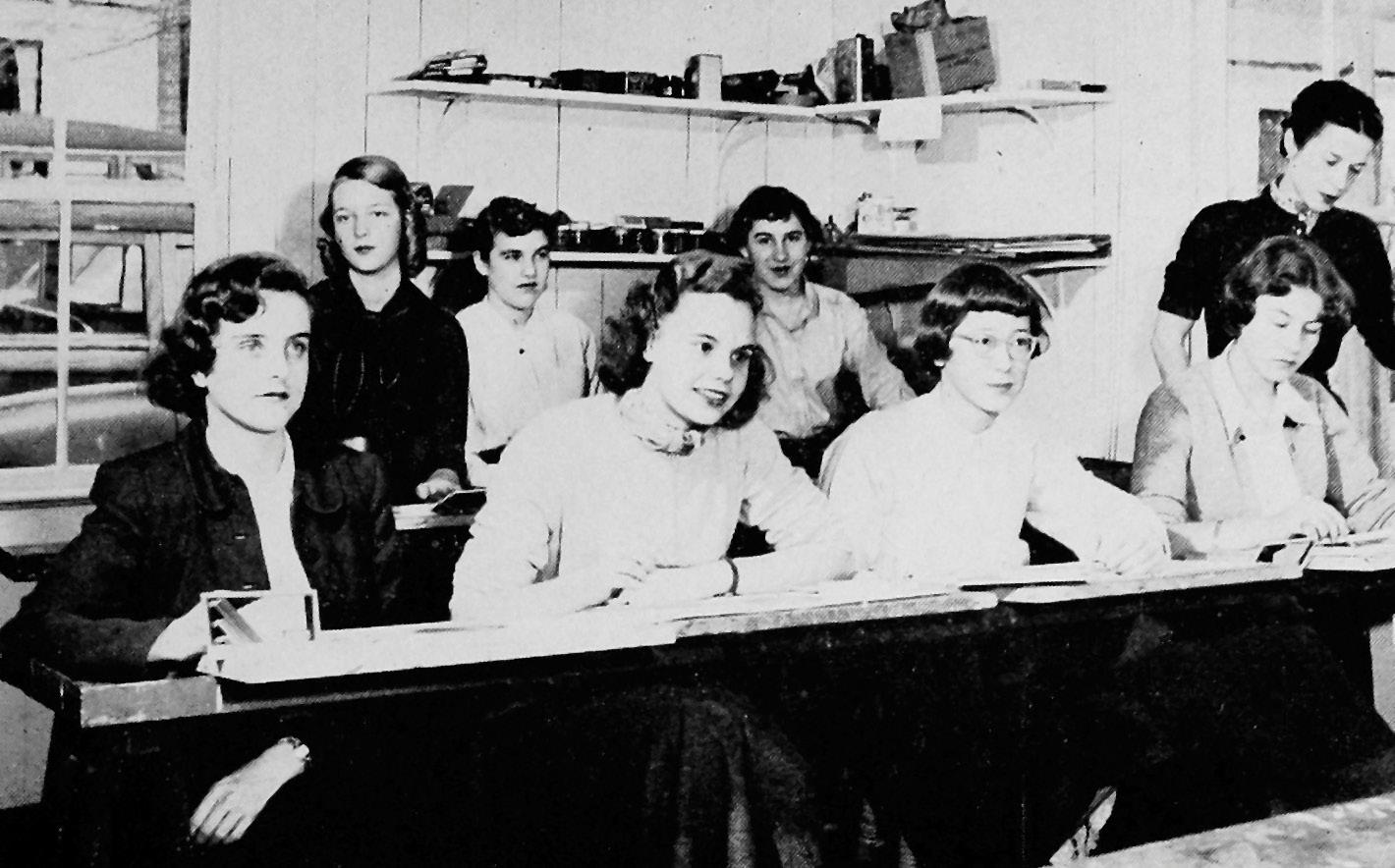
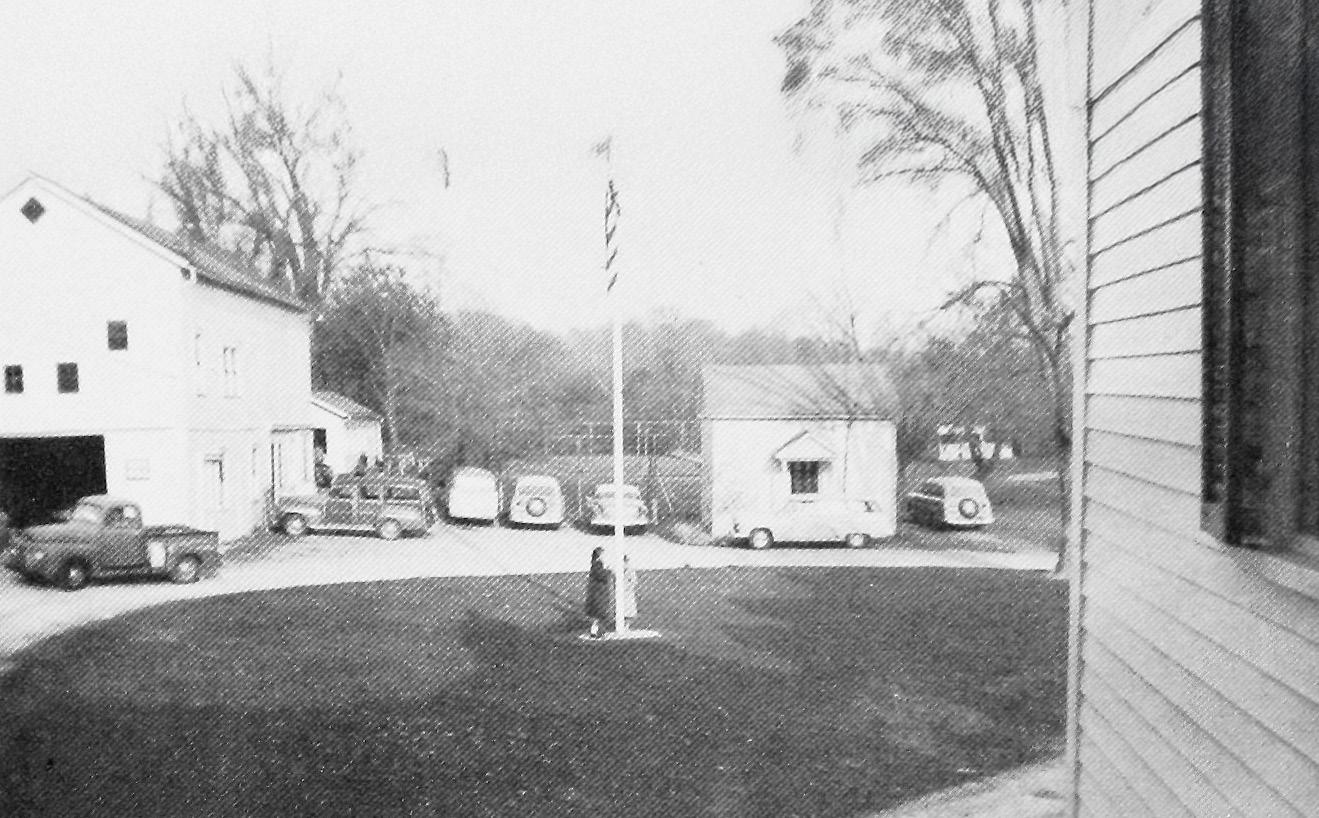
Life at the early school was closeknit and lively: students practiced calisthenics indoors during winter storms, juggled for morning presentations, and learned in spaces that doubled as classrooms, laboratories, and art studios—even the barn and former potting shed were pressed into service. The Oval, a grassy area with a flagpole, was the center of both play and strict discipline, remembered fondly by alumnae decades later.
By the mid-1950s, the school had celebrated its 25th year anniversary. Enrollment continued to grow and the school buildings began to show their age, and so attention turned to the school’s future on King’s Highway. Parents Lucie B. Warren, John D. Upton, and William Reeves worked with Miss Laycock to incorporate the Kathleen Laycock Country Day School, creating a stronger foundation for governance and growth. This milestone marked not just a change in name, but a renewed commitment to the school’s culture and the “Each for All” spirit that had guided it from the start.
FACT
In the following decades, this spirit of resourcefulness and dedication lived on, thanks to the families and faculty who considered the school their home. The 25th anniversary set the stage for a pattern that would define Greens Farms Academy for generations: a school guided by the values and vision of its community, always advancing while honoring its roots.
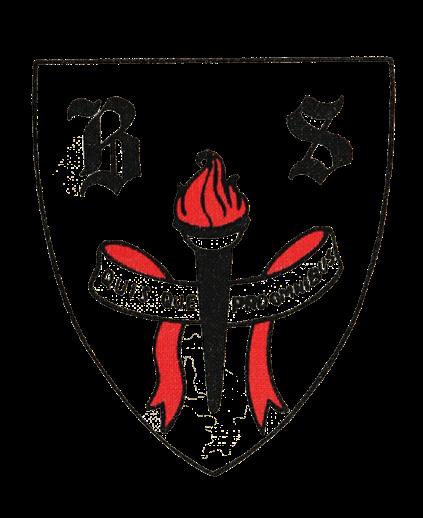
Bolton School crest
Art Class at Bolton, 1953
“The Oval,” 1955
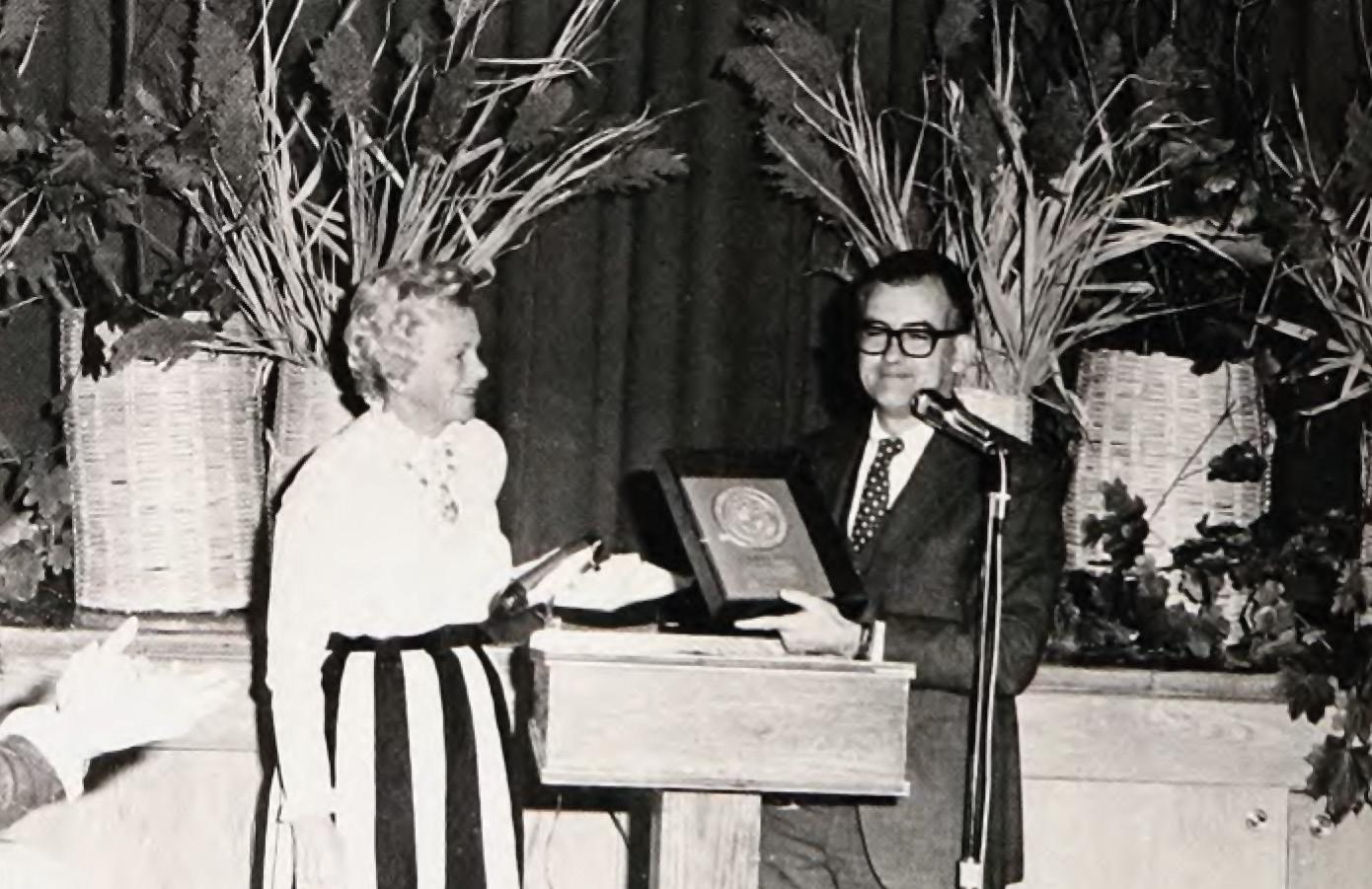
Jim Coyle presents gold medal to Lucie Warren during the 50th anniversary celebration
Marking the Milestones
GFA’s 50th and 75th anniversaries offered moments to reflect, reconnect, and celebrate the evolving identity of the school.
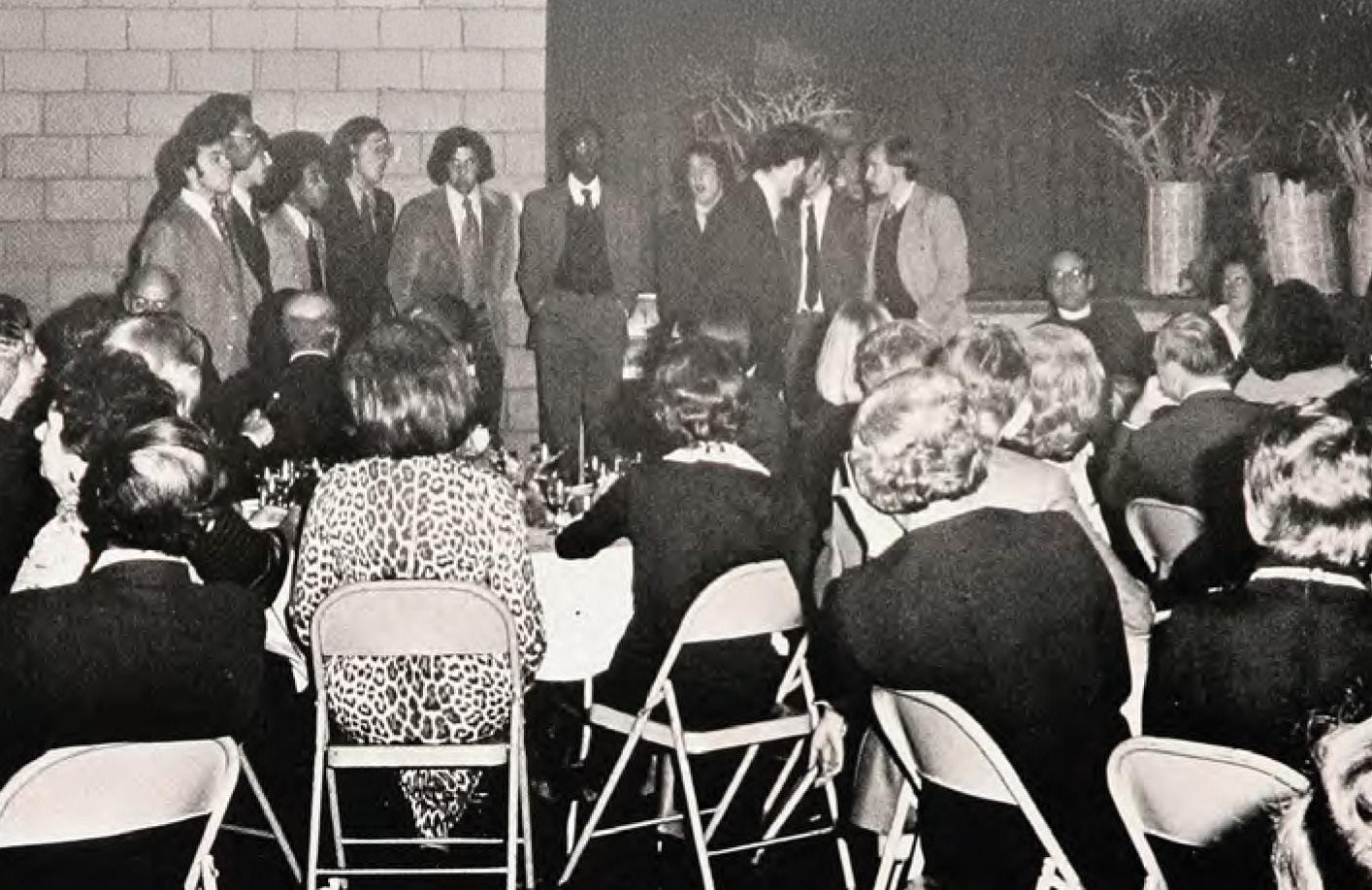
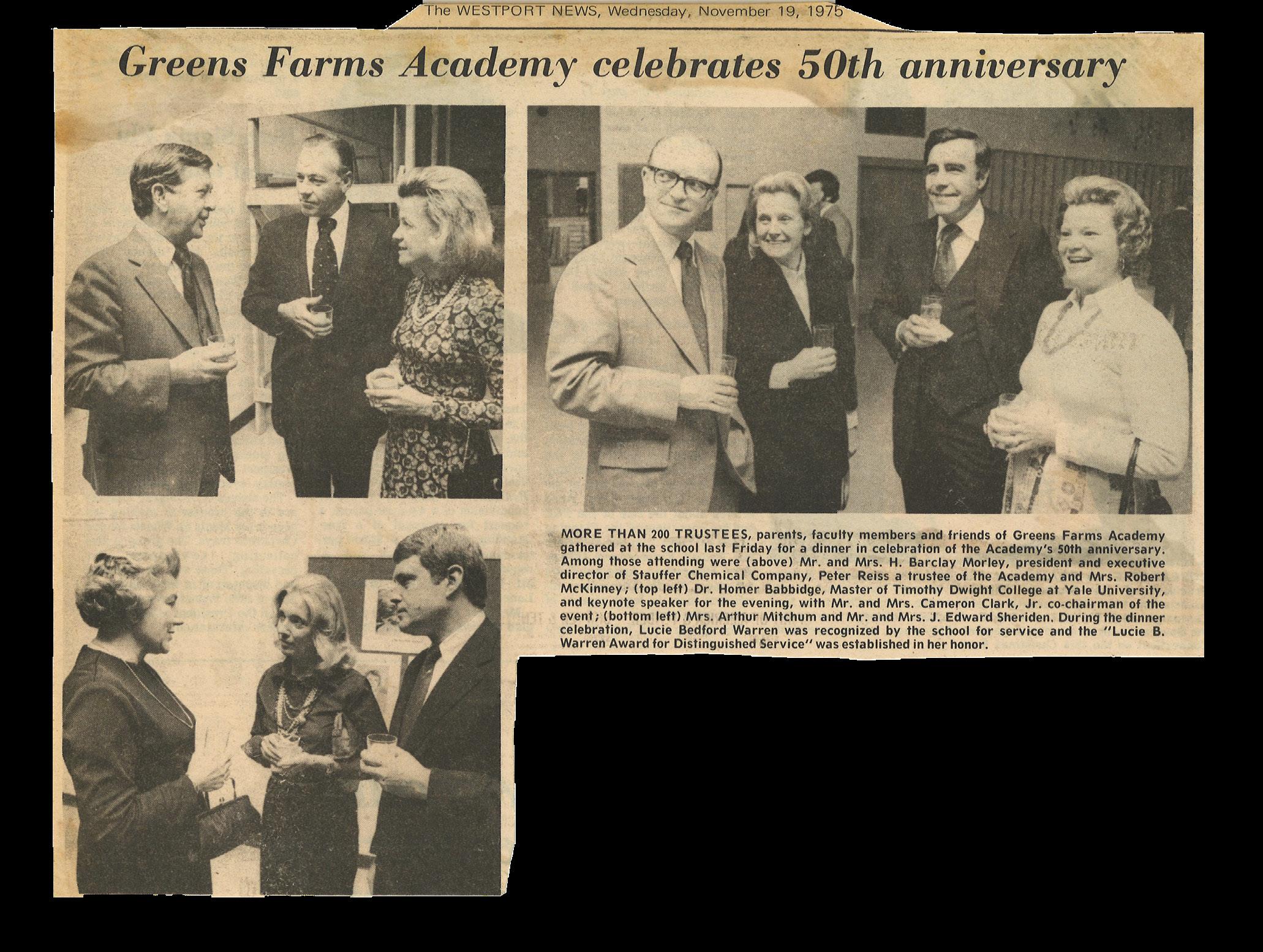
At the 50th, a candlelit dinner in the gym brought together alumni and friends for an evening including remarks from Yale’s Homer Babbidge on the future of independent schools, performances by The Baker’s Dozen, and the introduction of the Lucie B. Warren Award. Beyond the dinner, the school hosted a student art exhibit, a garden club tour, and a spring theater workshop—all open to the broader community.
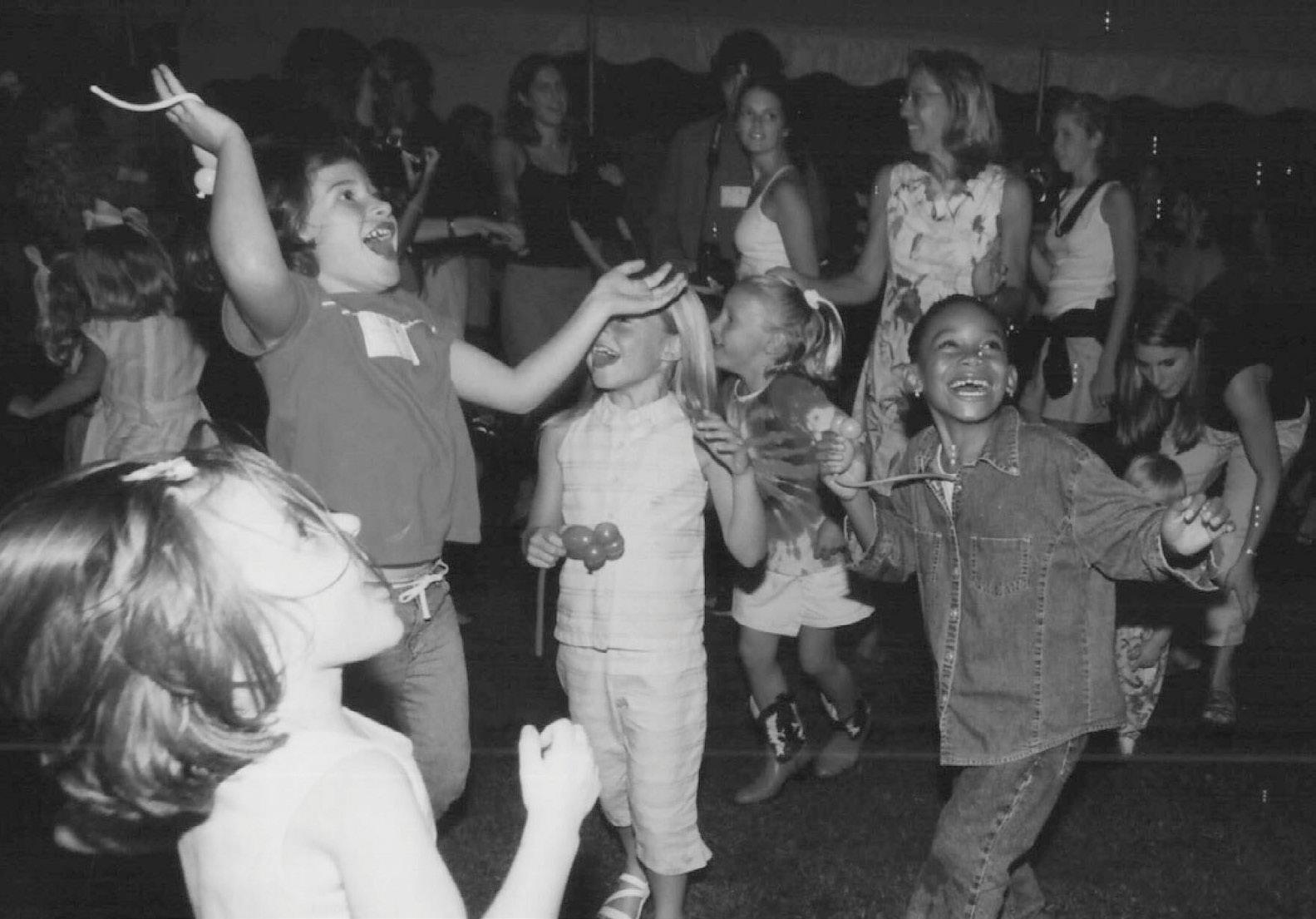
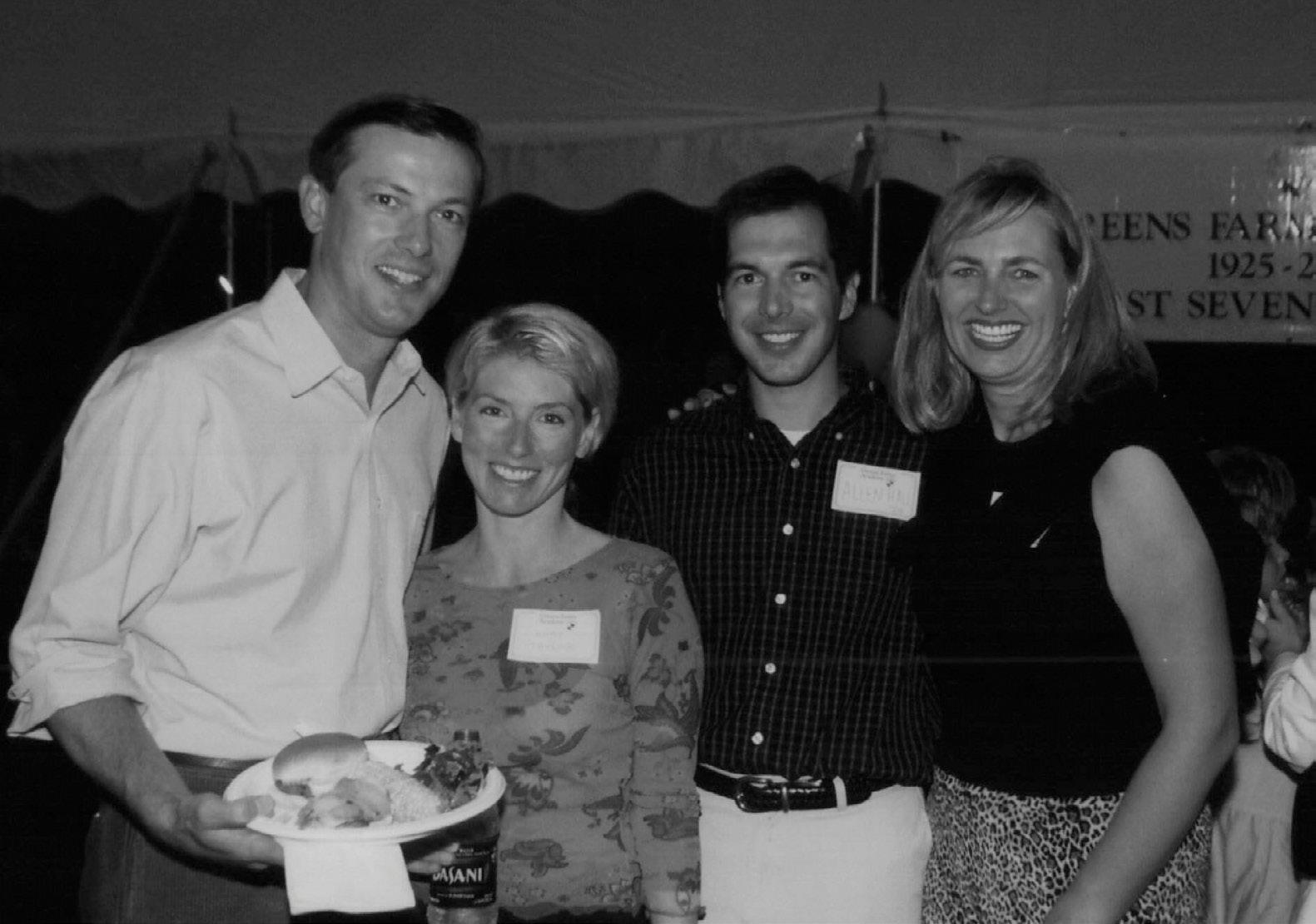
The 75th celebration took on a more festive tone. Organized by the Board of Trustees and Alumni Association, the all-ages clambake featured dancing, fireworks, clowns, and family-style tables designed to spark new connections.
During this time, a group of volunteers formed an Archives Committee, gathering and preserving much of what now forms the foundation of GFA’s historical record. Their carefully curated exhibits—displayed in shadowboxes throughout campus— filled the halls with stories from the school’s past.
Each milestone reflected the spirit of its time—and each deepened GFA’s sense of tradition, community, and belonging.
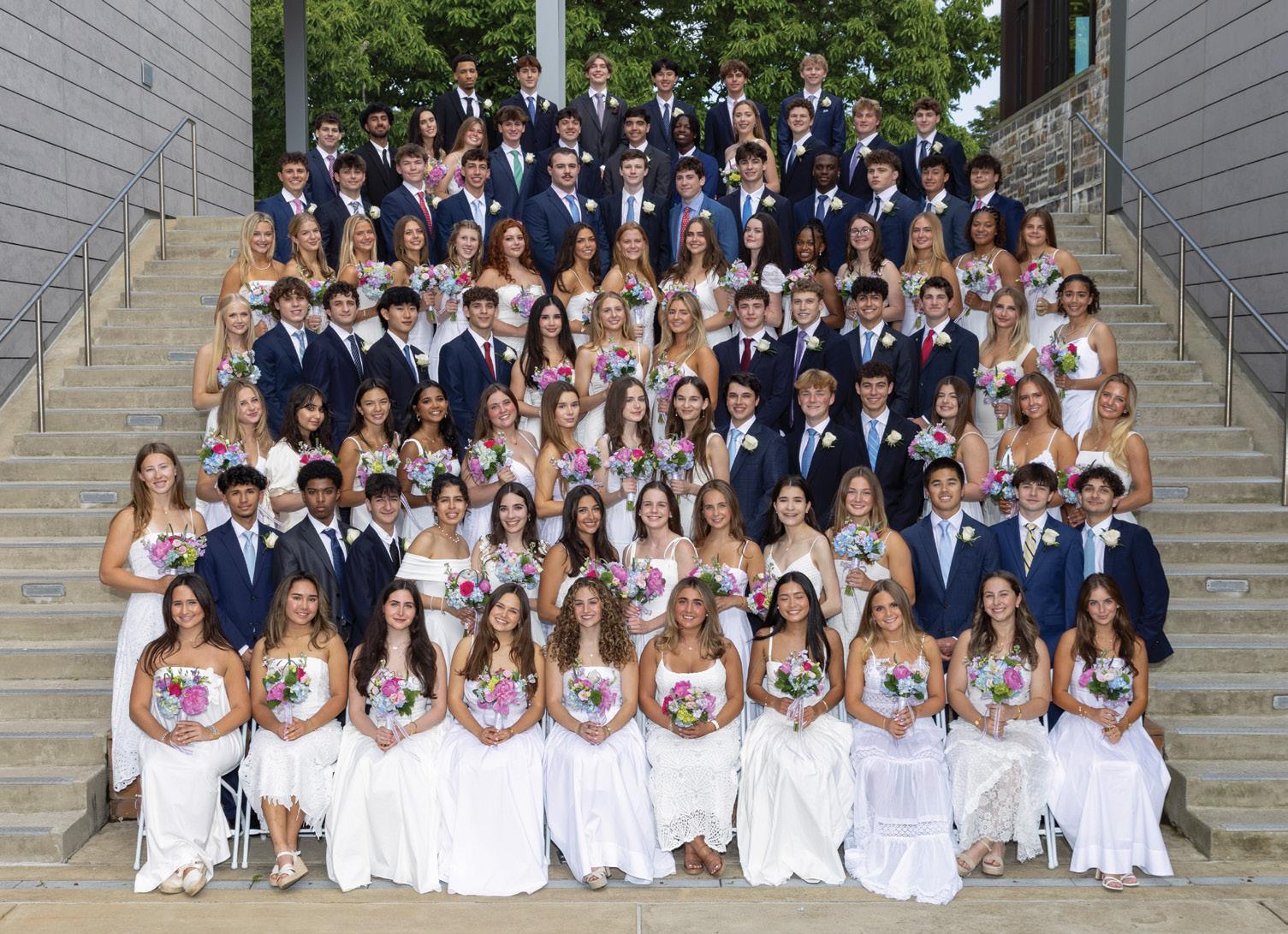
A milestone year for GFA also marks a milestone for the Class of 2025, GFA’s Centennial seniors. Here, the Class of 2025 shares what this place has meant to them, and what they’ll carry forward from their time on Beachside Avenue. From moments of discovery to lifelong friendships, their words capture what makes GFA not just a school, but a place to call home.
GFA made me a more independent person, a stronger and more confident leader, and has given me the courage to be authentically myself without fear of judgement.
What I love about the GFA community is the support from teachers—even teachers that never even taught me who still WANT to support me.
GFA has helped me become a better student, athlete, leader, and overall person.
We our GFA family
GFA has taught me to go after the questions, not always the answers, and to never let anything take away your joy in learning.
everythingThanksfor :)
Keep
the GFA dream alive.
I wouldn’t be who I am if I hadn’t gone to school here.
Never forget: Class Meetings, Friday Speaker, music at drop-off, US Dodgeball, Pack the House, Yondr pouches, and of course the Holiday Screamalong!
If GFA Got a Senior Superlative…
“Best Family.”
“Most Likely to Produce Winning Kids.”
“Best Well-Rounded Education.”
“Couldn’t Be Without: Students engaging as partners.”
In the next 100 years, I hope every student feels connected to at least one person in the building because that’s what makes GFA special.
How We Measure
Core Values & Mission
1
GFA engages students as partners in an innovative, inclusive, and globally-minded community to prepare them for lives of purpose. core values
mission statement
campus & legacy
Academics & Service
students participating in community service weekly
1 faculty member when the school began vs 124 now
Measure 100 Years
26 years volunteering at Elder House
100% 6 64
chicks hatched in Grade 3 classrooms buildings in Grade 2’s Quadrilateral City
just for fun
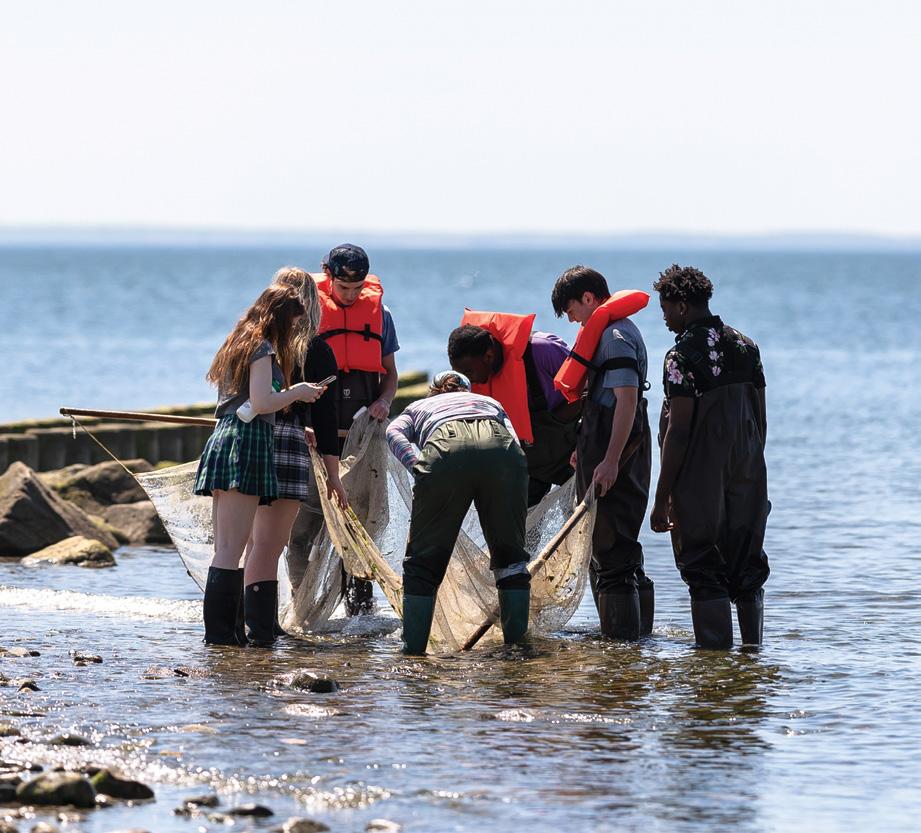
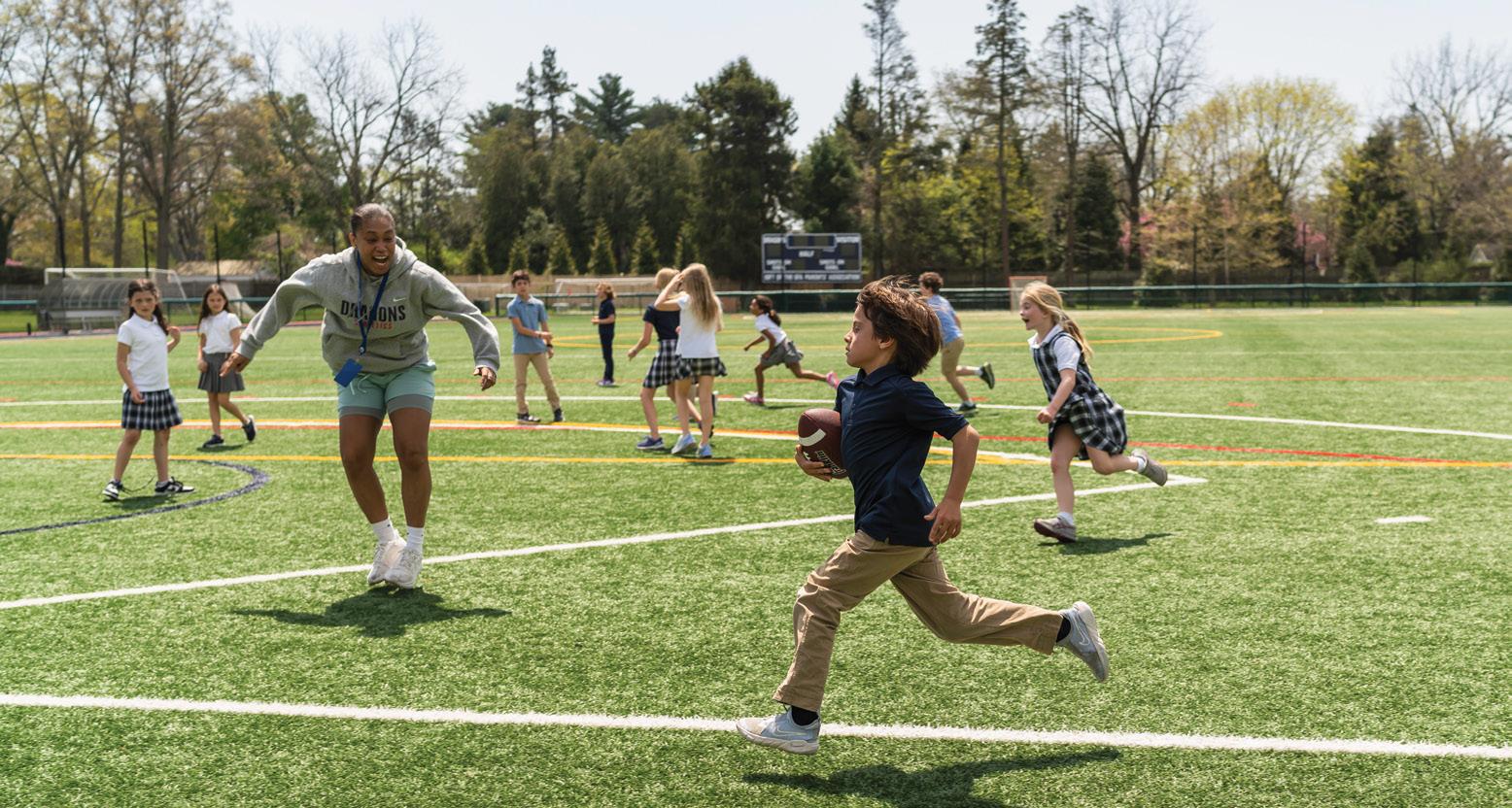
35 pairs of waders OF LOWER AND MIDDLE SCHOOL STUDENTS PARTICIPATE IN PE AND ATHLETICS
team sports offered now
47% 15 31 360 gallons of cider produced from GFA apples
booths on PreK Market Day, representing foods grown on campus
dragon spirit
47% upper school students are multisport athletes
2 movies filmed on campus
Countless Memories Made
9 dragons hidden
Can you find them all?
Celebrating 100 Years
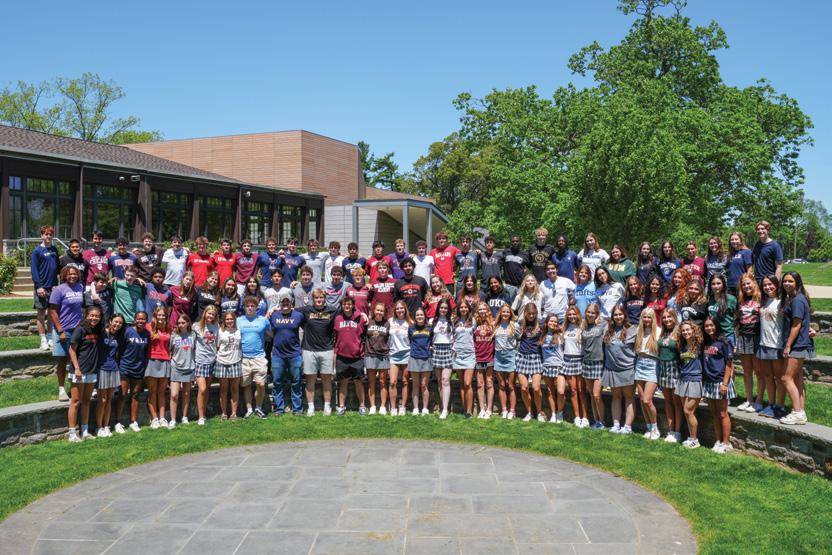
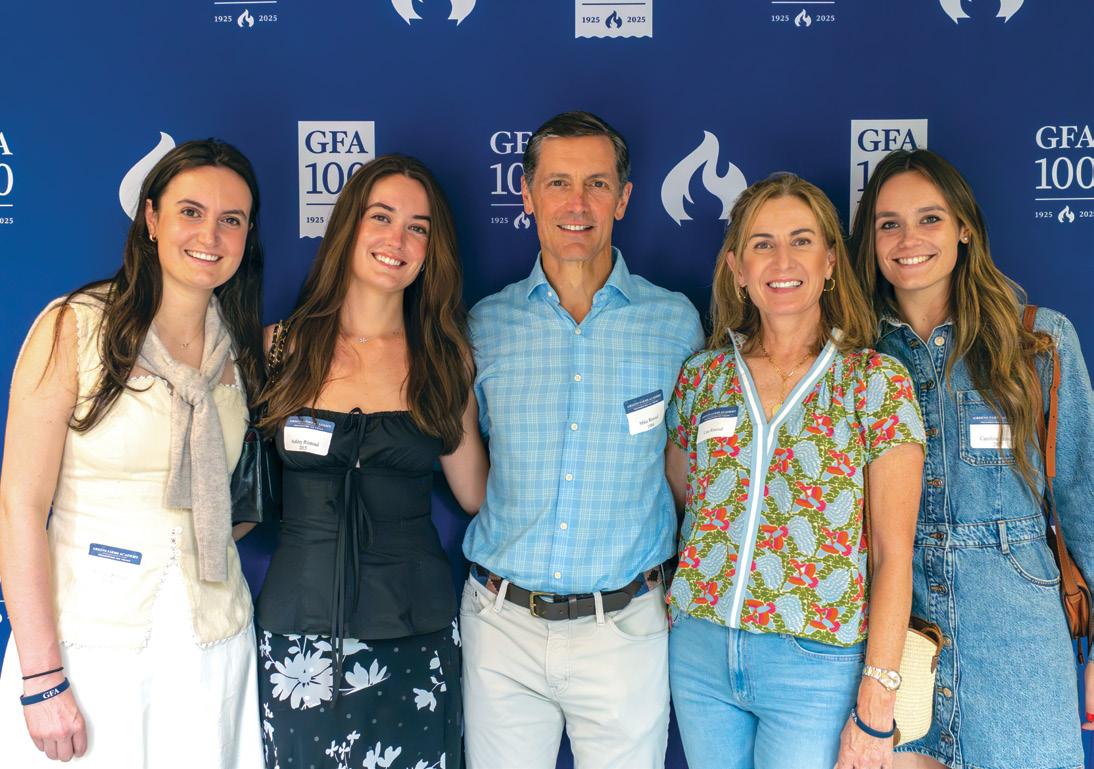
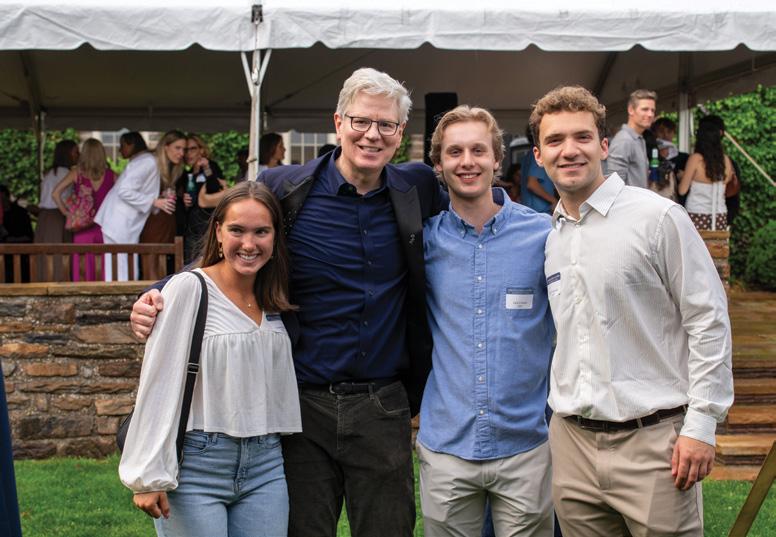
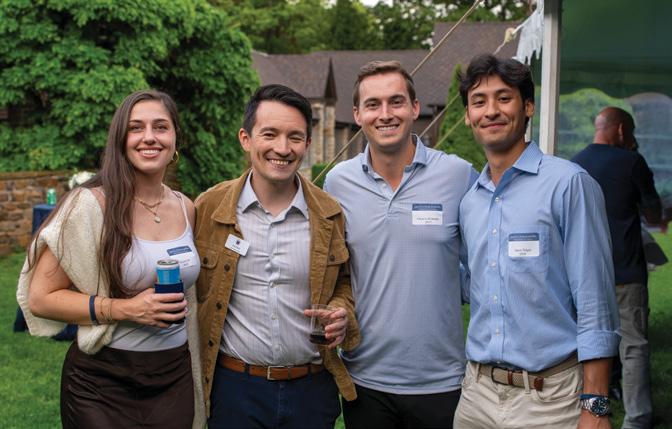
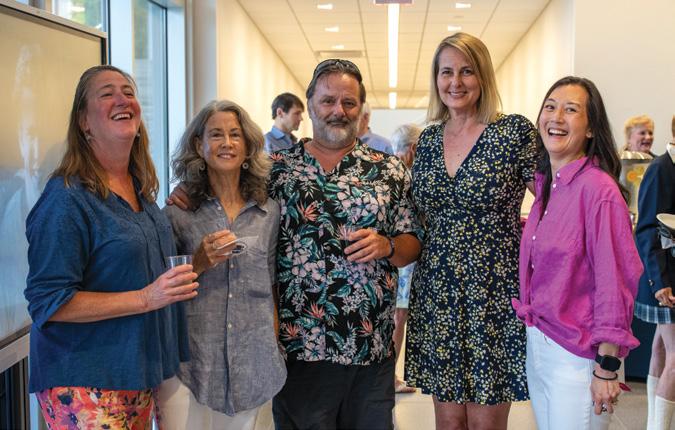
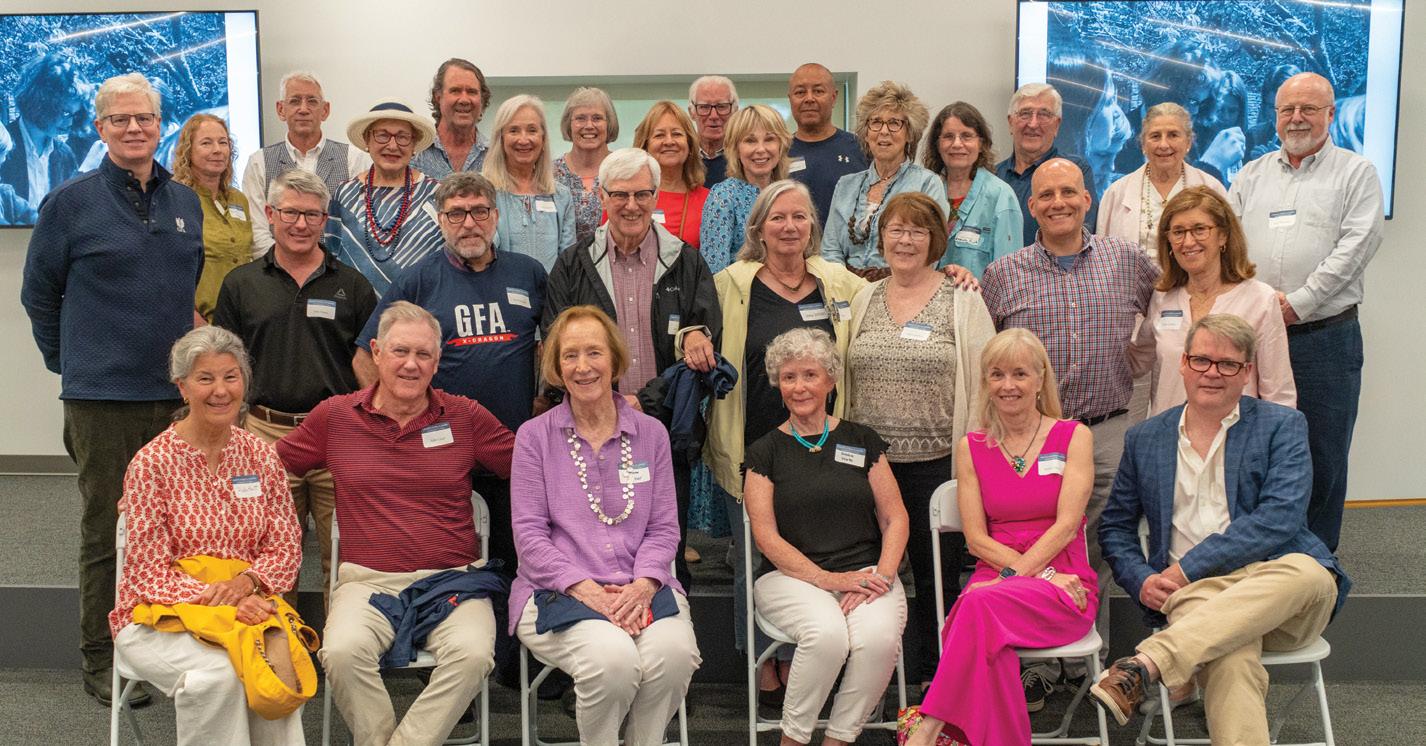
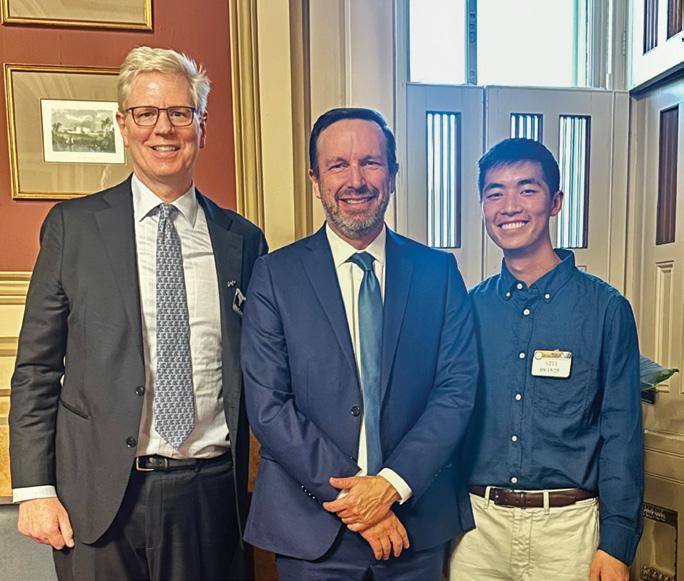
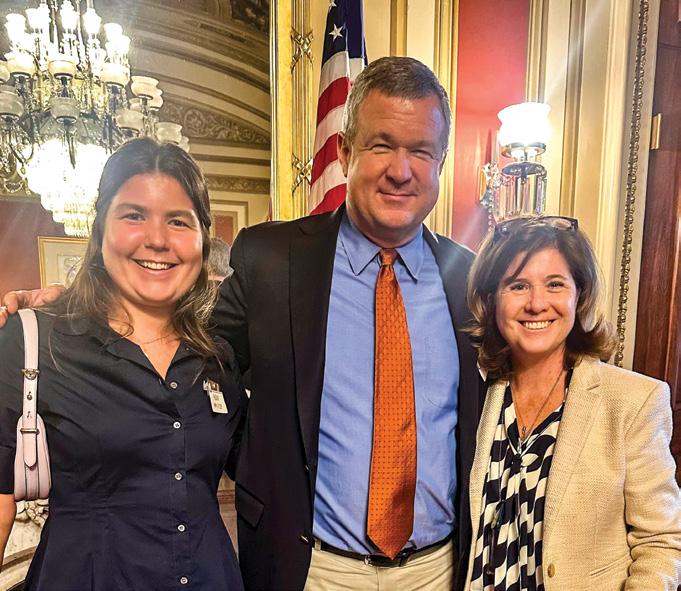
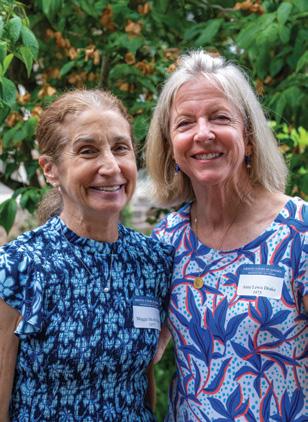
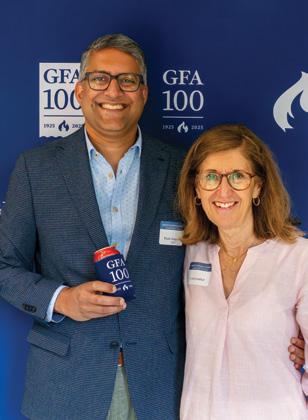
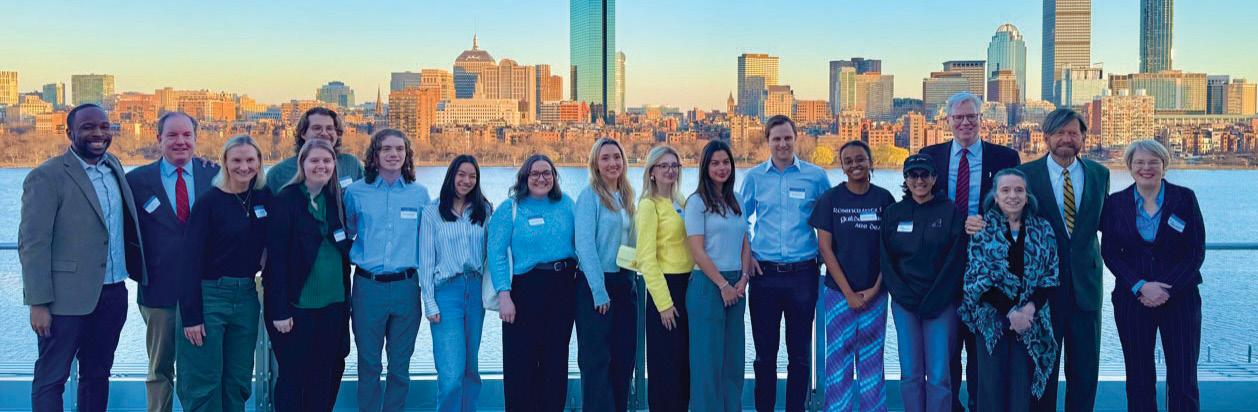
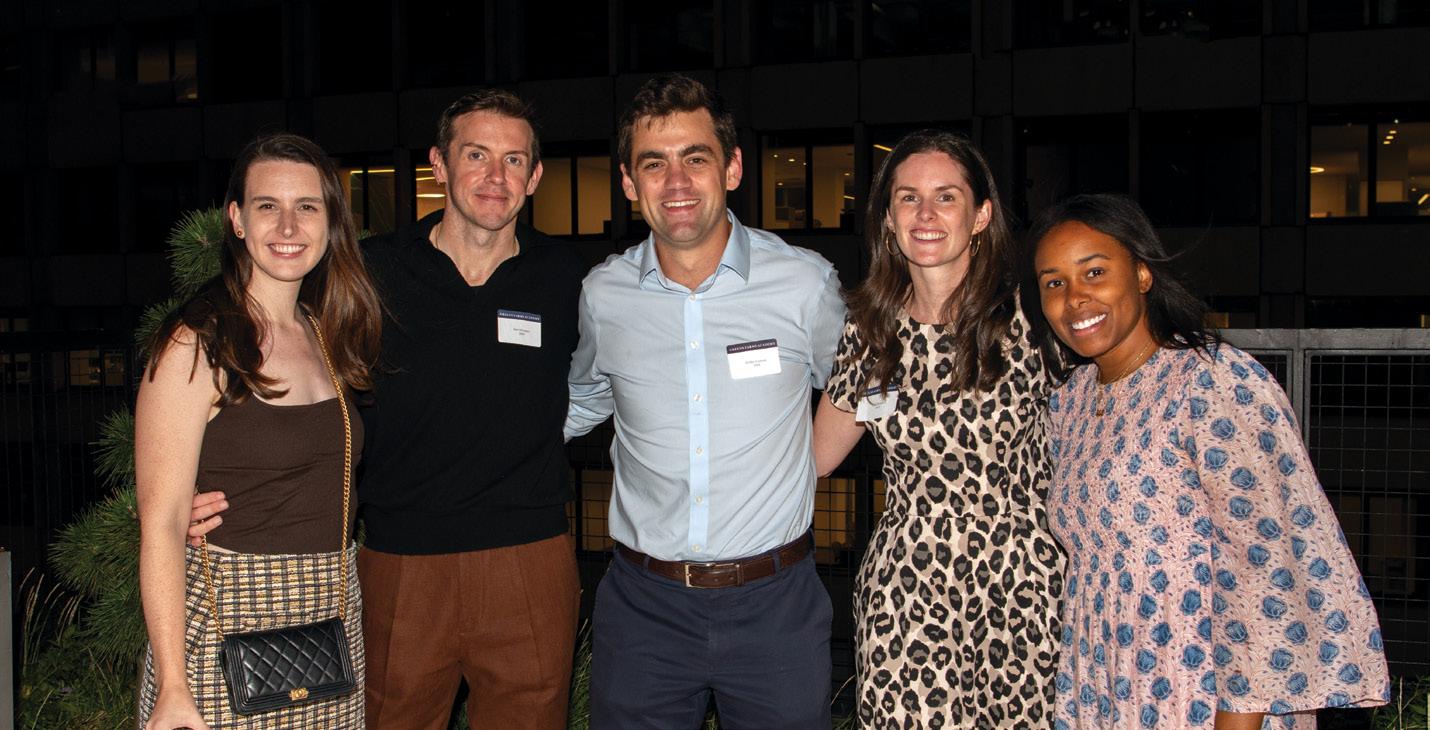
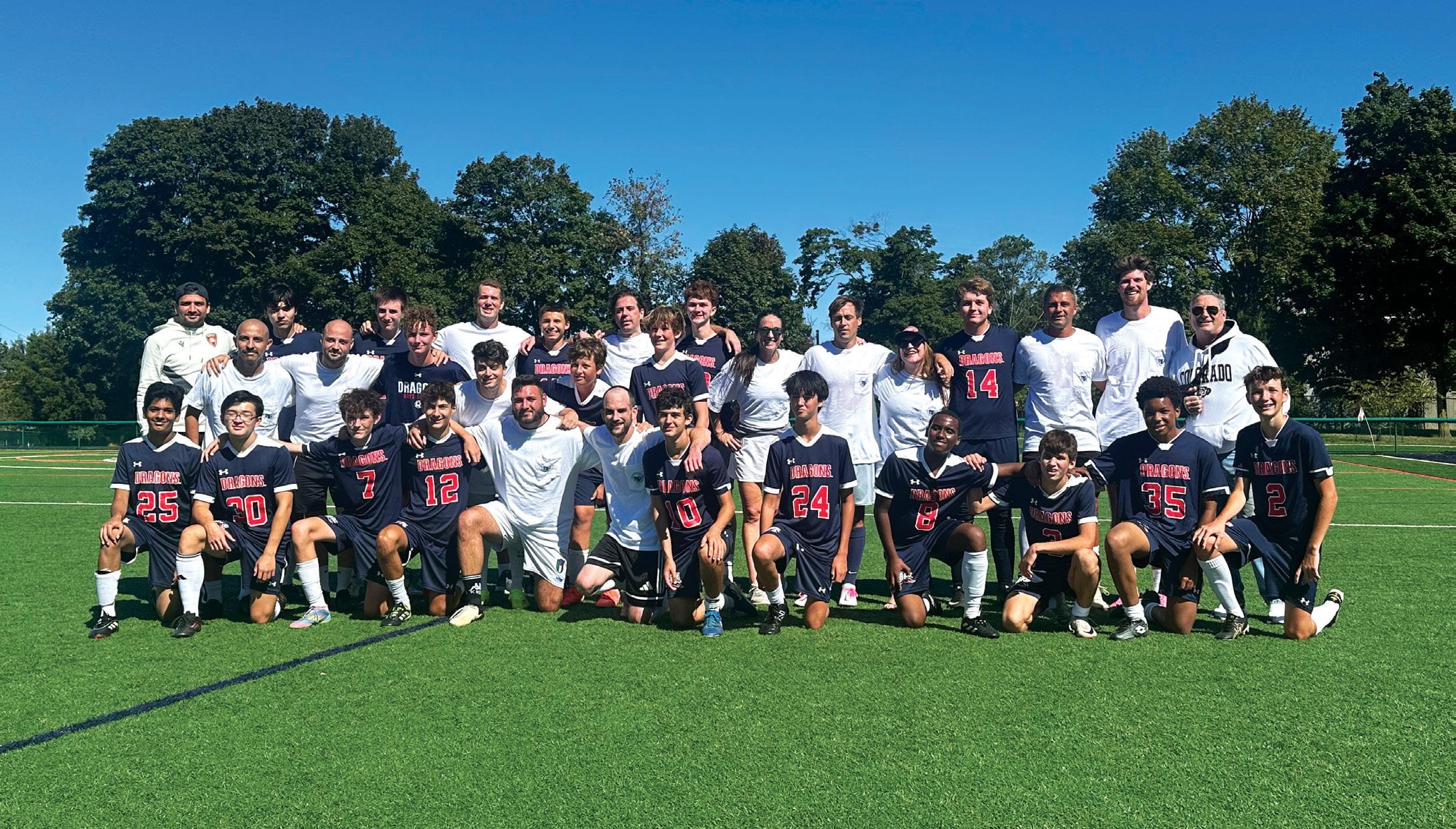
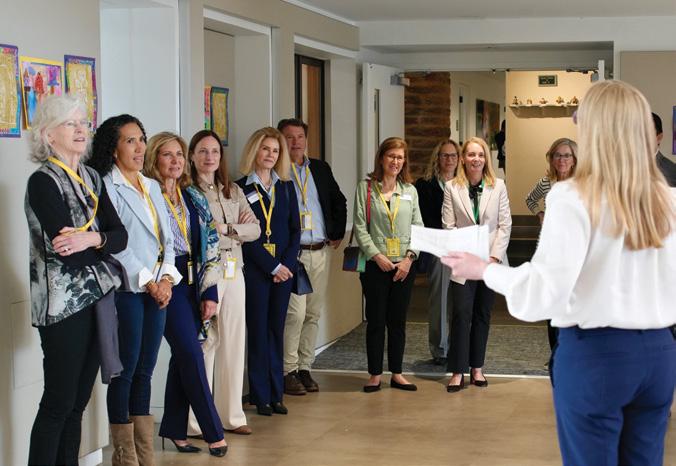
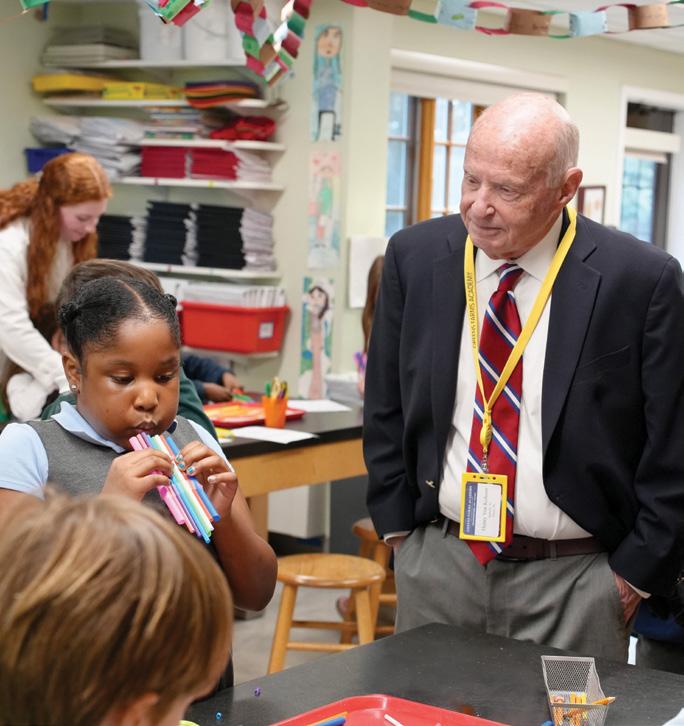
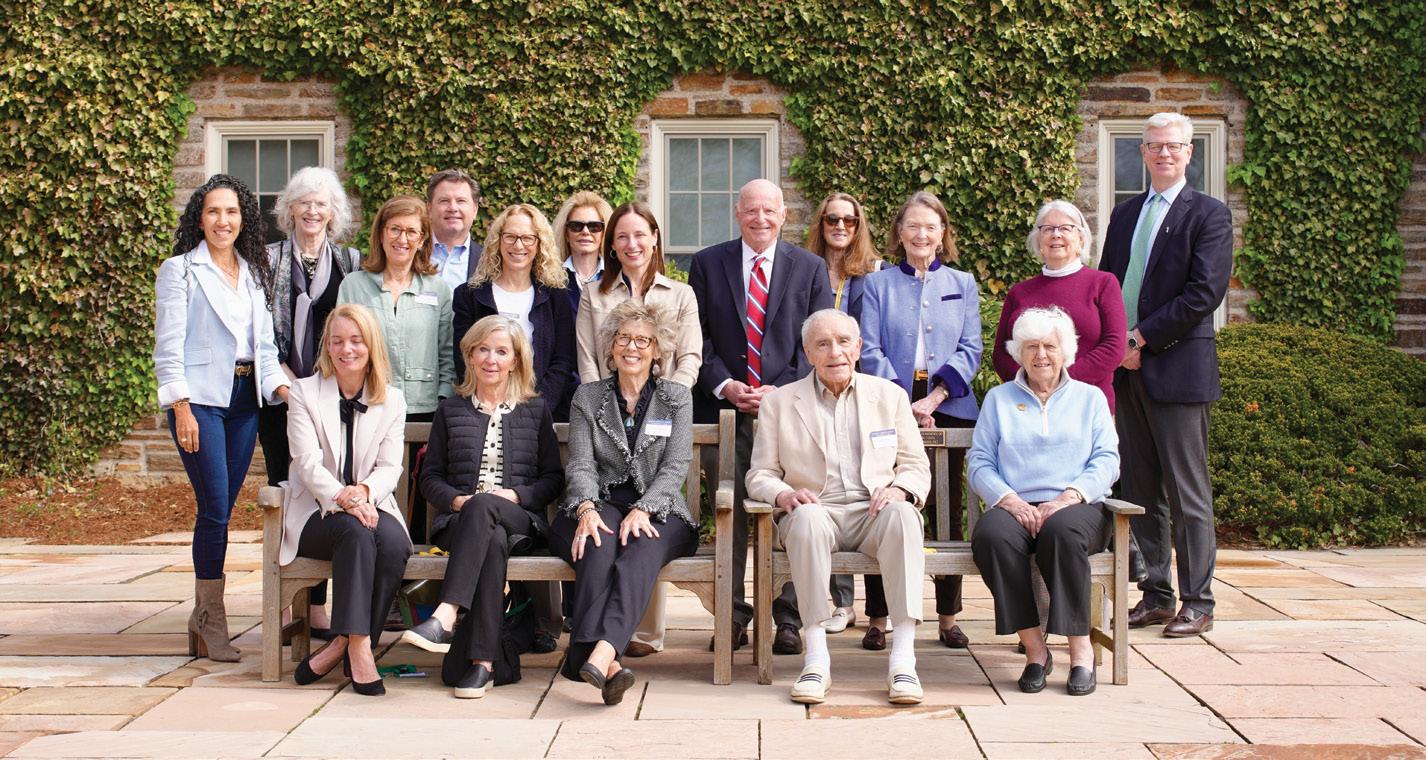
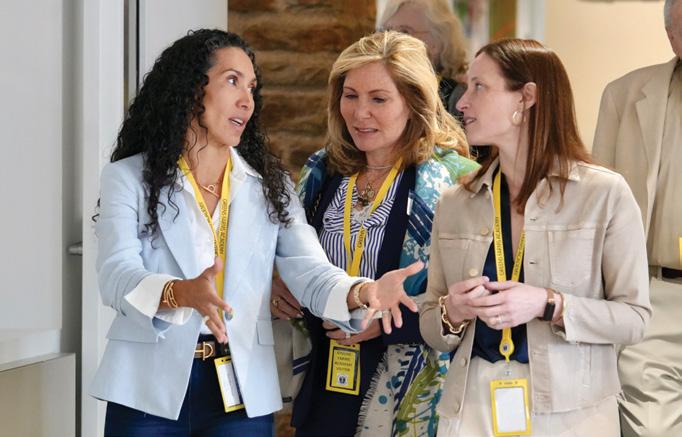
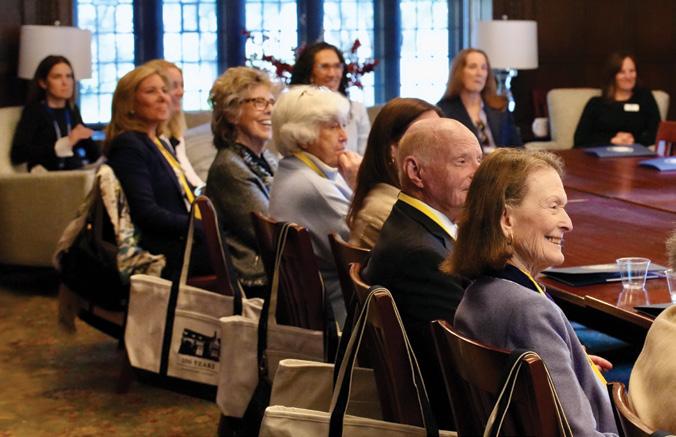
The Centennial year brought GFA’s community together to celebrate the school’s history and the people who make it extraordinary. Alumni returned for the Centennial Reunion, reconnecting with old friends and faculty. Across the East Coast, alumni gathered in Boston, New York, and Washington, D.C. for Centennial Receptions, while former trustees returned to campus for a visiting day, to see firsthand how the school has grown and evolved over the decades.
These events were a reminder of what makes GFA special: a community bound by shared experiences and a shared vision for the future. From the earliest students to today’s Dragons, each member of the GFA family is part of a living legacy.
A century ago, GFA began as a vision. Today, it is a thriving, dynamic community with its eyes on the future. Happy 100 years, GFA!
Centennial Reunion
Centennial Alumni Receptions
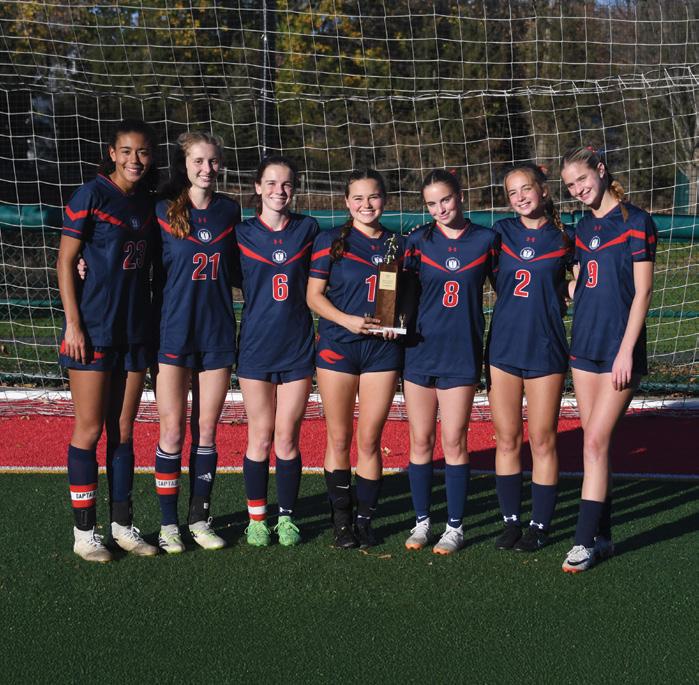
Homecoming Alumni Soccer Game
Former Trustee Visiting Day
Centennial Gala
A Night to Remember
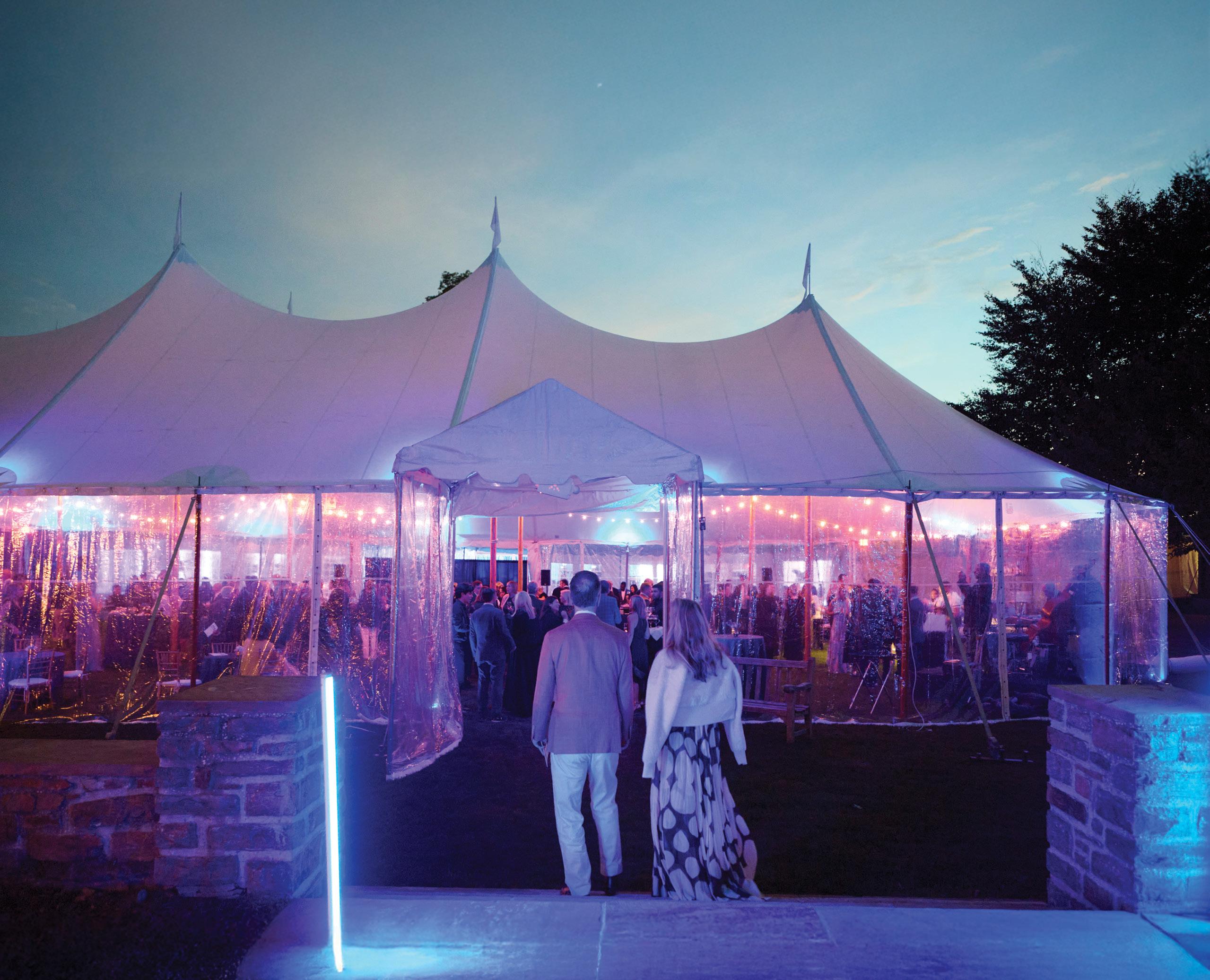
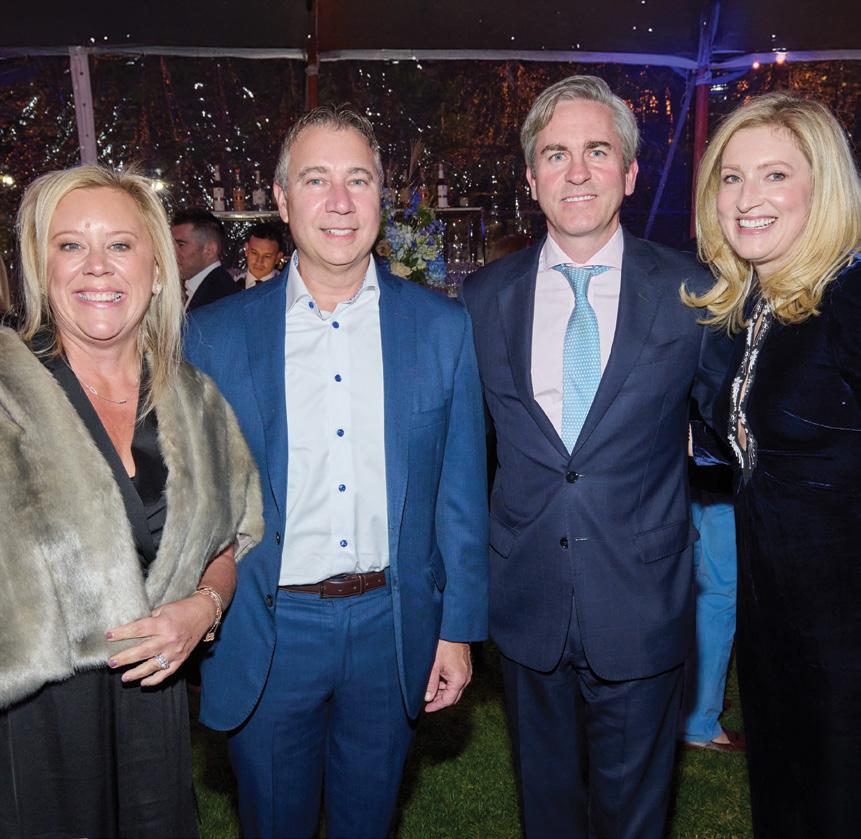
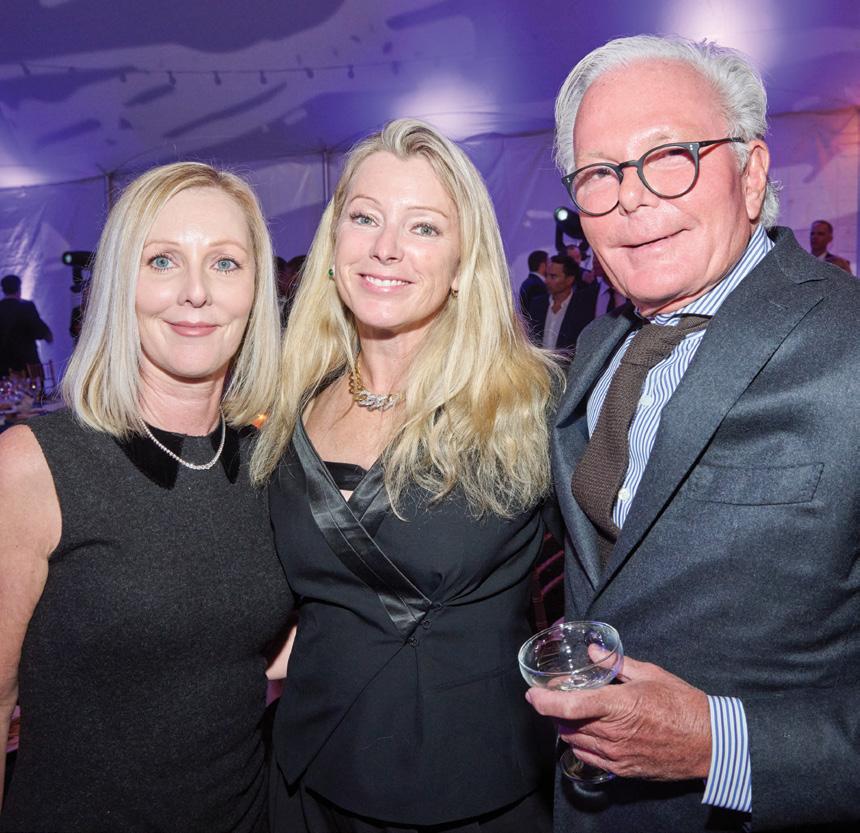
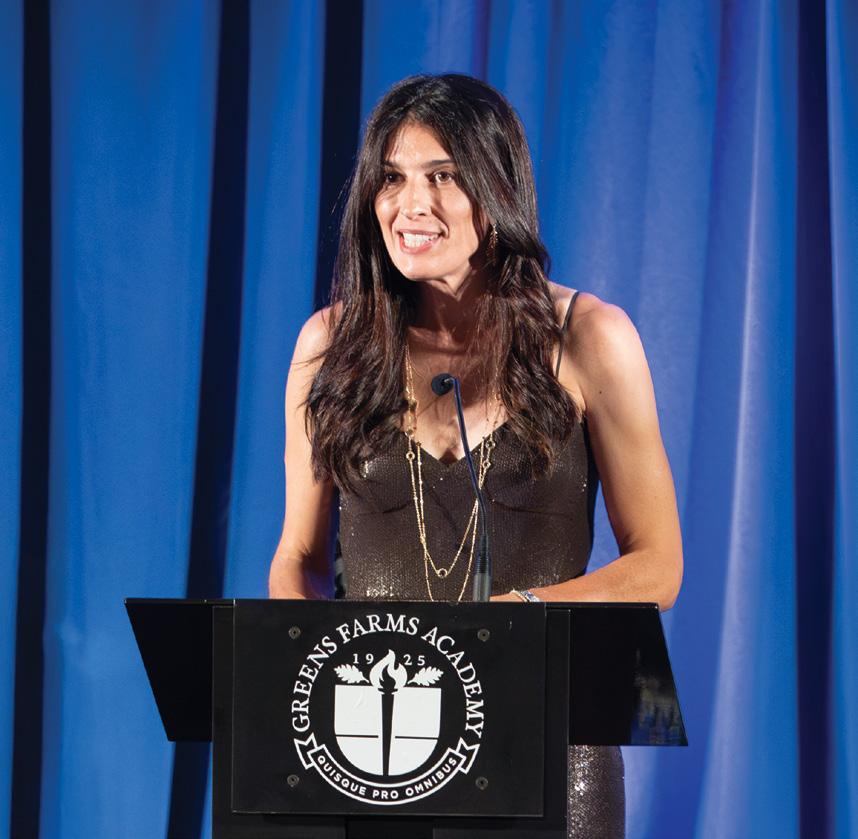
On October 18, 2025 more than 400 members of the GFA community gathered on the Front Lawn to celebrate a century of purpose and possibility. The evening marked the official launch of Lives of Purpose: The Centennial Campaign for GFA.
The celebration included short films highlighting the people and places that make GFA unique, followed by a spirited paddle raise in support of the Centennial Fund for Faculty Excellence. As the night continued with conversation, dancing, and song, the Gala reflected both the strength of GFA’s past and the promise of its next chapter.
For 100 years, generosity has shaped GFA’s story. Now, as we step into our second century, we invite you to be part of the next chapter.
Together, we
create lives of purpose.
Lives of Purpose: The Centennial Campaign for GFA
Everything we enjoy at GFA today exists because someone before us believed in a dream they might never fully see realized. Now, it’s our turn to build on that legacy.
Lives of Purpose: The Centennial Campaign for GFA is a comprehensive effort to strengthen our school for its second century, focusing on three priorities:
1
Campus Renewal
Create inspiring spaces where students and teachers to connect, excel, and thrive
2
Endowment Growth
Secure lasting funding for financial aid and faculty development
3
The GFA Fund
Sustain the annual fund that powers every aspect of school life
Even before its public launch, the campaign had already made an impact: a new science lab, the Lower School Dining Commons and Assembly Room, and 15 new endowed funds. It also increased the GFA Fund from $1.8M to $3.4M, and allowed us to break ground on the Athletics & Wellness Center.
Behind every space and program are the teachers who bring learning to life. As we look ahead, the recently established Centennial Fund for Faculty Excellence ensures they continue to grow, lead, and inspire for decades to come.
For 100 years, generosity has shaped GFA’s story. Now, as we step into our second century, we invite you to be part of the next chapter.