GREAT MINDS WIT & WISDOM® K GRADE MODULE 4 THE CONTINENTS
Great Minds® is the creator of Eureka Math® , Wit & Wisdom® , Alexandria Plan™, and PhD Science® .
Published by Great Minds PBC greatminds.org
© 2023 Great Minds PBC. All rights reserved. No part of this work may be reproduced or used in any form or by any means—graphic, electronic, or mechanical, including photocopying or information storage and retrieval systems—without written permission from the copyright holder.
Printed in the USA A-Print
979-8-88588-710-6
Handout 8A: Passport Journal
Handout 9A: Opposite Describing Words
Handout 21A: Sentence Expansion
Handout 31A: Natural Features Map
Handout 32A: Sentence Improvement
Handout 34A: End-of-Module Task Checklist
Volume of Reading Reflection Questions
Wit & Wisdom Family Tip Sheet
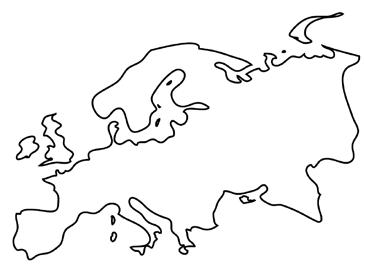
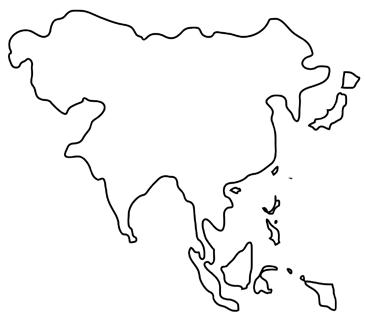
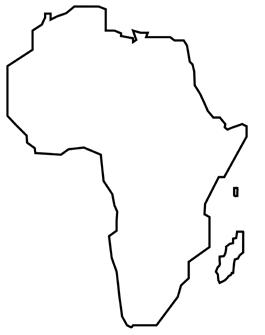
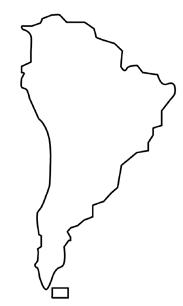
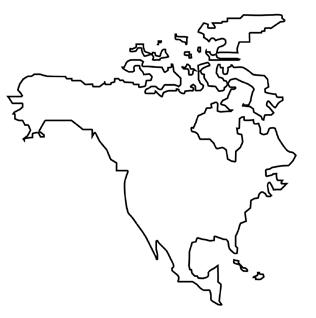
Directions: Write your name and home continent on the lines provided on page 1. On pages 2–8, draw and label one detail about the continent pictured in the top right corner.
Student Picture GK M4 Handout 8A • WIT & WISDOM® Page 1 of 8





Directions: In the top box, draw a picture of an animal from the story. In the middle box, write a complete sentence that tells the animal’s name and what it is doing. In the bottom box, expand the sentence by adding a describing word and telling where or when it happened.



Part 1
Directions: On the first line, answer “Who?” by writing an animal name. On the second line, tell what the animal is doing. On the third line, write the complete sentence.
Who? Does What?
Complete Sentence:
Directions: Improve your complete sentence. Begin your sentence with a capital letter. Expand your sentence by adding a describing word or telling where or when your sentence happened. Decide if your sentence is a telling sentence, a loud and exciting sentence, or an asking sentence. End your sentence with the correct punctuation mark.
Directions: Circle Yes or Not Yet to answer each prompt.
I used words to find evidence about the continents.
I used illustrations to find evidence about the continents.
Yes Not Yet Yes Not Yet Yes Not Yet
Yes Not Yet Yes Not Yet Yes Not Yet
I wrote an opinion statement.
I wrote two supporting reason sentences for my opinion.
I wrote an opinion conclusion by stating my opinion again.
Yes Not Yet Yes Not Yet Yes Not Yet
Yes Not Yet Yes Not Yet Yes Not Yet
Yes Not Yet Yes Not Yet Yes Not Yet
I drew pictures to add information to my travel brochure.
Yes Not Yet Yes Not Yet Yes Not Yet
I used capital letters at the beginning of sentences.
Yes Not Yet Yes Not Yet Yes Not Yet
I wrote complete sentences that tell “who, did what.”
Total number of
Yes Not Yet Yes Not Yet Yes Not Yet
Student Name: Text: Author: Topic: Genre/Type of Book:
After reading your book, share what you learned. Draw a picture or tell your teacher your answer to each question.
1. Wonder: What do you notice about this book from the front and back cover of the book? What questions do you have about this book?
2. Organize: What main ideas are discussed in this book? Point to the key details that you noticed.
3. Reveal: What information in this text is similar to information learned in a class text? Point to the part of the book that has similar information. How is the information different from our class text?
4. Distill: What big idea did the author want you to learn about in this book?
5. Know: What new information do you now know about other continents or countries? Share the new information that you learned.
6. Vocabulary: Find two words in the text that have opposites. Act out the word in the text and its opposite. (For example, if huge is in the text, act out both the words huge and tiny.)
1. Wonder: What are you noticing in this story?
2. Organize: What happens in this story? Tell how the illustrations help to add important details to the story.
3. Reveal: Illustrations help to fill in more details in stories. Tell how an illustration adds details to the setting of this story.
4. Distill: Do any of the characters in this story learn a lesson? What lesson do they learn? Is it a lesson you could use in your life today?
5. Know: What have you learned about life in other places by reading this book?
6. Vocabulary: Find an illustration that helps you understand a word that was new to you. Draw the object and tell how the illustration helped you.
Wit & Wisdom is our English curriculum. It builds knowledge of key topics in history, science, and literature through the study of excellent texts. By reading and responding to stories and nonfiction texts, we will build knowledge of the following topics:
Module 1: The Five Senses
Module 2: Once Upon a Farm
Module 3: America, Then and Now
Module 4: The Continents
In the fourth module, The Continents, we will study characteristics of the seven continents to learn more about the world and understand the similarities and differences amongst the continents. As we explore each continent, we ask the question: What makes the world fascinating?
OUR CLASS WILL READ THESE BOOKS:
Picture Books (Informational)
Africa, Rebecca Hirsch
Antarctica, Rebecca Hirsch
Asia, Rebecca Hirsch
Australia, Rebecca Hirsch
Europe, Rebecca Hirsch
Introducing North America, Chris Oxlade
South America, Rebecca Hirsch
World Atlas, Nick Crane; Illustrations, David Dean
Picture Books (Literary)
Moon Rope, Lois Ehlert
The Story of Ferdinand, Munro Leaf; Illustrations, Robert Lawson
Why Mosquitoes Buzz in People’s Ears: A West African Tale, Verna Aardema; Pictures by Leo and Diane Dillon
OUR CLASS WILL READ THIS ARTICLE:
“5 Reasons Why Animal Moms Are Awesome,” April Capochino Myers
OUR CLASS WILL EXAMINE THIS PAINTING:
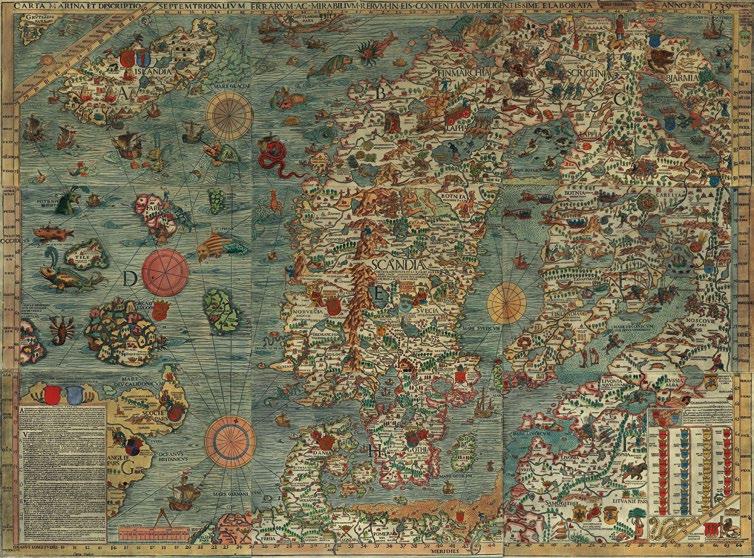
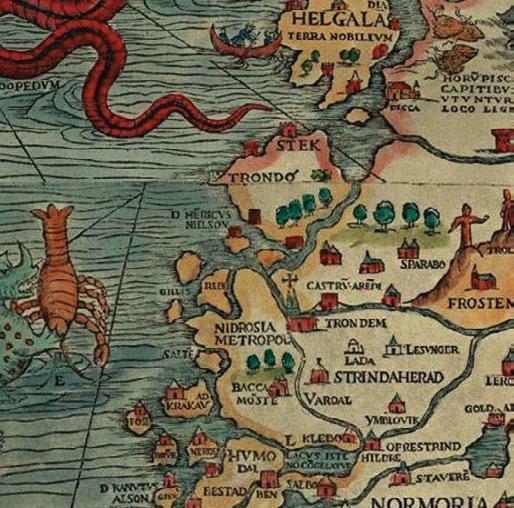
Carta Marina, Olaus Magnus
OUR CLASS WILL VISIT THIS WEB PAGE:
“Americas—Fact Files,” Go Wild
OUR CLASS WILL READ THIS POEM:
“Lions Roar,” CanTeach
OUR CLASS WILL LISTEN TO THESE SONGS
“Penguin Song,” Preschool Education
“Where in the World Is Carmen Sandiego? from Smithsonian Folkways,” Smithsonian Folkways
OUR CLASS WILL WATCH THESE VIDEOS:
“Antarctic Sights and Sounds,” James Napoli
“Burkina Faso: Music,” Our Africa
“Explore Views of the Burj Khalifa with Google Maps,” Google Maps
“The Seven Continents Song,” Silly School Songs
“Storm-Proofing the World’s Biggest Mud Building,” BBC Earth
“Traditional Chinese Dance—‘Flowers Contend in Beauty’ by Li Qian, Lin Chen…”
OUR CLASS WILL VIEW THESE PHOTOGRAPHS
Earth from Space, Stöckli, Reto, et al., National Aeronautics and Space Administration
“Patterns of Chinchero,” Descendants of the Incas
OUR CLASS WILL ASK THESE QUESTIONS:
What interesting things can people do in Europe and Asia?
What interesting natural features can people see in Africa and Antarctica?
How can a story transport you to a different place?
What amazing animals can people see in South America and Australia?
Why might people want to visit North America?
As you read with your Kindergarten student, ask:
How does this text build your knowledge of the continents? Share what you know about the continents.
Koala Lou, Mem Fox; Illustrations, Pamela Lofts
Ganesha’s Sweet Tooth, Sanjay Patel and Emily Hanes, illustrated by Sanjay Patel
Life Story, Virginia Lee Burton
Animal Architects: Amazing Animals Who Build Their Homes, Daniel Nassar and Julio Antonio Blasco
Follow the Dream: The Story of Christopher Columbus, Peter Sís
Tikki Tikki Tembo, Arlene Mosel
The Barefoot Book of Animal Tales, Naomi Adler
Introducing Antarctica, Anita Ganeri
Introducing Asia, Anita Ganeri
Introducing Australia, Anita Ganeri
Emmanuel’s Dream: The True Story of Emmanuel Ofosu Yeboah, Laurie Ann Thompson
Wee Gillis, Munro Leaf
Charles Darwin’s Around-the-World Adventure, Jennifer Thermes
Visit a natural history museum and circulate through aspects of different cultures and continents. Ask:
What do you notice and wonder about the animals, art, and artifacts of this continent?
How does life in this place seem similar to and different from your life?
Imagine visiting this place in person. What might you do if you went there? What things would you like to see? What animals would you like to see? What questions do you have about this place?
Great Minds® has made every effort to obtain permission for the reprinting of all copyrighted material. If any owner of copyrighted material is not acknowledged herein, please contact Great Minds® for proper acknowledgment in all future editions and reprints of this module.
All material from the Common Core State Standards for English Language Arts & Literacy in History/Social Studies, Science, and Technical Subjects © Copyright 2010 National Governors Association Center for Best Practices and Council of Chief State School Officers. All rights reserved.
All images are used under license from Shutterstock.com unless otherwise noted.
For updated credit information, please visit http://witeng.link/credits.
The following writers, editors, reviewers, and support staff contributed to the development of this curriculum.
Karen Aleo, Elizabeth Bailey, Ashley Bessicks, Sarah Brenner, Ann Brigham, Catherine Cafferty, Sheila Byrd-Carmichael, Lauren Chapalee, Emily Climer, Rebecca Cohen, Elaine Collins, Julia Dantchev, Beverly Davis, Shana Dinner de Vaca, Kristy Ellis, Moira Clarkin Evans, Marty Gephart, Mamie Goodson, Nora Graham, Lindsay Griffith, Lorraine Griffith, Christina Gonzalez, Emily Gula, Brenna Haffner, Joanna Hawkins, Elizabeth Haydel, Sarah Henchey, Trish Huerster, Ashley Hymel, Carol Jago, Mica Jochim, Jennifer Johnson, Mason Judy, Sara Judy, Lior Klirs, Shelly Knupp, Liana Krissoff, Sarah Kushner, Suzanne Lauchaire, Diana Leddy, David Liben, Farren Liben, Brittany Lowe, Whitney Lyle, Stephanie Kane-Mainier, Liz Manolis, Jennifer Marin, Audrey Mastroleo, Maya Marquez, Susannah Maynard, Cathy McGath, Emily McKean, Andrea Minich, Rebecca Moore, Lynne Munson, Carol Paiva, Michelle Palmieri, Tricia Parker, Marya Myers Parr, Meredith Phillips, Eden Plantz, Shilpa Raman, Rachel Rooney, Jennifer Ruppel, Julie Sawyer-Wood, Nicole Shivers, Danielle Shylit, Rachel Stack, Amelia Swabb, Vicki Taylor, Melissa Thomson, Lindsay Tomlinson, Tsianina Tovar, Sarah Turnage, Melissa Vail, Keenan Walsh, Michelle Warner, Julia Wasson, Katie Waters, Sarah Webb, Lynn Welch, Yvonne Guerrero Welch, Amy Wierzbicki, Margaret Wilson, Sarah Woodard, Lynn Woods, and Rachel Zindler
We are grateful for the many educators, writers, and subject-matter experts who made this program possible.
David Abel, Robin Agurkis, Sarah Ambrose, Rebeca Barroso, Julianne Barto, Amy Benjamin, Andrew Biemiller, Charlotte Boucher, Adam Cardais, Eric Carey, Jessica Carloni, Dawn Cavalieri, Janine Cody, Tequila Cornelious, David Cummings, Matt Davis, Thomas Easterling, Jeanette Edelstein, Sandra Engleman, Charles Fischer, Kath Gibbs, Natalie Goldstein, Laurie Gonsoulin, Dennis Hamel, Kristen Hayes, Steve Hettleman, Cara Hoppe, Libby Howard, Gail Kearns, Lisa King, Sarah Kopec, Andrew Krepp, Shannon Last, Ted MacInnis, Christina Martire, Alisha McCarthy, Cindy Medici, Brian Methe, Ivonne Mercado, Patricia Mickelberry, Jane Miller, Cathy Newton, Turi Nilsson, Julie Norris, Tara O’Hare, Galemarie Ola, Tamara Otto, Christine Palmtag, Dave Powers, Jeff Robinson, Karen Rollhauser, Tonya Romayne, Emmet Rosenfeld, Mike Russoniello, Deborah Samley, Casey Schultz, Renee Simpson, Rebecca Sklepovich, Kim Taylor, Tracy Vigliotti, Charmaine Whitman, Glenda Wisenburn-Burke, and Howard Yaffe
The following early adopters provided invaluable insight and guidance for Wit & Wisdom:
Bourbonnais School District 53 • Bourbonnais, IL
Coney Island Prep Middle School • Brooklyn, NY
Gate City Charter School for the Arts • Merrimack, NH
Hebrew Academy for Special Children • Brooklyn, NY
Paris Independent Schools • Paris, KY
Saydel Community School District • Saydel, IA
Strive Collegiate Academy • Nashville, TN
Valiente College Preparatory Charter School • South Gate, CA
Voyageur Academy • Detroit, MI
Design Direction provided by Alton Creative, Inc.
Project management support, production design, and copyediting services provided by ScribeConcepts.com
Copyediting services provided by Fine Lines Editing
Product management support provided by Sandhill Consulting