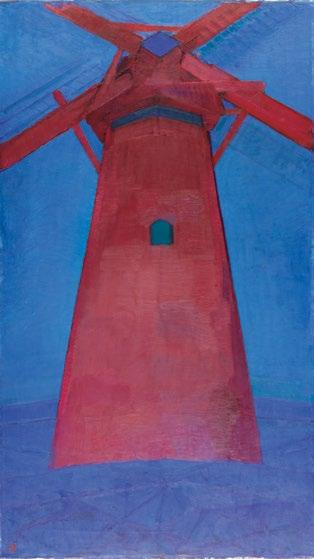
GREAT MINDS WIT & WISDOM® 1 GRADE MODULE 3 POWERFUL FORCES
Great Minds® is the creator of Eureka Math® , Wit & Wisdom® , Alexandria Plan™, and PhD Science® .
Published by Great Minds PBC greatminds.org
© 2023 Great Minds PBC. All rights reserved. No part of this work may be reproduced or used in any form or by any means—graphic, electronic, or mechanical, including photocopying or information storage and retrieval systems—without written permission from the copyright holder.
Printed in the USA A-Print
979-8-88588-720-5
Handout 1A: Fluency Homework
Handout 1B: Shades of Meaning Chart
Handout 3A: Buttons and Boxes
Handout 3B: Wind Illustration
Handout 5A: Research Evidence Organizer
Handout 7A: Topic Sandwich Chart
Handout 7B: Informative Writing Checklist
Handout 8A: Fluency Homework Handout 10A: Write a Problem Handout 11A: Feelings Story Map
Handout 12A: Narrative Writing Checklist Handout 12B: Shades of Meaning Chart Handout 13A: Fluency Homework Handout 15A: Gilberto and the Balloon
Handout 16A: Word Cards
Handout 17A: Fluency Homework Handout 17B: Verb-Tense Chart
Handout 18A: “The Guest” Story Map Handout 18B: Focusing Question Task 3 Story Map Handout 18C: Root Words
Handout 19A: Narrative Writing Checklist
Handout 21A: Fluency Homework Handout 22A: Brave Irene Story Map Handout 23A: Brave Irene Scene
Handout 23B: Word Cards
Handout 24A: Brave Irene Evidence Organizer Handout 26A: Fluency Homework Handout 27A: Key Events
Handout 27B: A Scene about William Handout 28A: The Boy Who Harnessed the Wind Evidence Organizer
Handout 28B: Prefixes
Handout 32A: End-of-Module Task Story Map Handout 33A: Story Element Icons Handout 34A: Narrative Writing Checklist
Handout 35A: Socratic Seminar Self-Assessment
Volume of Reading Reflection Questions
Wit & Wisdom Family Tip Sheet
Name:
Directions: Read the text for homework. Have an adult or peer initial the unshaded boxes each day that you read the passage.
Feel the Wind, Arthur Dorros
Wind is moving air. Air is what we breathe. It is everywhere around us, even though we can’t see it. We can’t see air. And we can’t really see wind. But we can see the wind move things. Wind pushes clouds across the sky. Wind flutters leaves of trees and makes ripples on the lake. 55 words
Dorros, Arthur. Feel the Wind. HarperCollins, 1989. Student Performance Checklist: Day 1 Day 2 Day 3 You Listener*
Read the passage three to five times.
Read with appropriate phrasing and pausing.
Read with appropriate expression.
Read at a good pace, not too fast and not too slow.
Read to be heard and understood.
*Adult or peer
Name:
Feel the Wind, Arthur Dorros
Wind is moving air. Air is what we breathe. It is everywhere around us, even though we can’t see it. We can’t see air. And we can’t really see wind. But we can see the wind move things. Wind pushes clouds across the sky. Wind flutters leaves of trees and makes ripples on the lake.
55 words
Dorros, Arthur. Feel the Wind. HarperCollins, 1989.
Read the passage three to five times.
Read with appropriate phrasing and pausing.
Read with appropriate expression.
Read at a good pace, not too fast and not too slow.
Read to be heard and understood.
*Adult or peer
Directions: Place the verbs from the poem on the chart from least strong to strongest.
Name:


Directions: Cut on dotted lines. Say a detail and place a button in the box.
Name:
Directions: Study the illustration to answer the question, “What can I learn about wind from studying this illustration?”

Directions: Circle Yes or Not Yet to answer each prompt.
I have a topic statement that names my topic.
I have two or more facts or details to support my topic statement.
I have a conclusion.
Yes Not Yet Yes Not Yet Yes Not Yet
Yes Not Yet Yes Not Yet Yes Not Yet
Yes Not Yet Yes Not Yet Yes Not Yet
I use capital letters at the beginning of sentences and proper nouns.
ABC
Yes Not Yet Yes Not Yet Yes Not Yet
Directions: Choose one of the text options to read for homework. Have an adult or peer initial the unshaded boxes each day that you read the passage.
Option A
Name: *Adult or peer
“Whiskers,” Aliki
Girl: Whiskers died. Boy: Oh, poor Whiskers. You had her so long. I’m sad for you.
Girl: She was old. She was sick. She had to die sometime. My heart is broken.
Boy: She was silly. Girl: She was funny. Both: We’ll miss you, Whiskers. 46 words
Read the passage three to five times. Read with appropriate phrasing and pausing.
Read with appropriate expression.
Read at a good pace, not too fast and not too slow.
Read to be heard and understood.
*Adult or peer
“Your Attention, Please,” Aliki
Mom: Look at Adam run. Girl: I can run faster.
Mom: Look at Adam build. Girl: I can build higher.
Mom: Listen to Adam. Girl: Listen to me.
Mom: Adam can read. Girl: I can read more.
Mom: Ha Ha Ha Ha. Adam is funny! Girl: Ha Ha Ha Ha. I am funny, too.
Mom: Where is Adam?! Girl: Where am I?
Mom: Adam is hurt! Girl: I’m hurt, too.
Mom: Look at Adam! Girl: Look at me!
Mom: I see you, dear. You’re wonderful.
Read the passage three to five times.
Read with appropriate phrasing and pausing.
Read with appropriate expression.
Read at a good pace, not too fast and not too slow.
Read to be heard and understood.
*Adult or peer
Directions : Complete each sentence frame. Write a character’s name, setting, and a problem to complete the partial story.

. Suddenly,
. © 2023 Great Minds PBC
Name: G1 M3 Handout 10A • WIT & WISDOM® Page 1 of 2

Directions: Draw a picture or write to show the elements of the story.


Directions: Circle Yes or Not Yet to answer each prompt.

Structure Self Peer Teacher
I have characters.
Yes Not Yet Yes Not Yet Yes Not Yet
I have a setting.
Yes Not Yet Yes Not Yet Yes Not Yet
I have a problem.
Yes Not Yet Yes Not Yet Yes Not Yet
I have time order words to sequence two or more events.
(One day, Suddenly, Then)
I have a resolution.
Yes Not Yet Yes Not Yet Yes Not Yet
Yes Not Yet Yes Not Yet Yes Not Yet
I use capital letters at the beginning of sentences and proper nouns.

I use end punctuation. . ? !

I use complete sentences.
I use words to describe the character’s feelings.
Yes Not Yet Yes Not Yet Yes Not Yet
Yes Not Yet Yes Not Yet Yes Not Yet
Yes Not Yet Yes Not Yet Yes Not Yet
Yes Not Yet Yes Not Yet Yes Not Yet
Directions: Write the words from the class chart from sad to heartbroken.
Name: sad heartbroken
Directions: Read the text for homework. Have an adult or peer initial the unshaded boxes each day that you read the passage.
Gilberto and the Wind, Marie Hall Ets
I hear Wind whispering at the door. “You-ou-ou,” he whispers. “You-ou-ou-ou!” So I get my balloon, and I run out to play.
At first Wind is gentle and just floats my balloon around in the air. But then, with a jerk, he grabs it away and carries it up to the top of a tree. “Wind! Oh, Wind!” I say. “Blow it back to me! Please!” But he won’t. He just laughs and whispers, “You-ou-ou-ou!”
75 words
Ets, Marie Hall. Gilberto and the Wind. Viking, 1963.
Student Performance Checklist:
Read the passage three to five times.
Read with appropriate phrasing and pausing.
Read with appropriate expression.
Read at a good pace, not too fast and not too slow.
Read to be heard and understood.
*Adult or peer
Day 1 Day 2 Day 3 Day 4
You Listener* You Listener* You Listener* You Listener*
Name:
Directions: Read the text for homework. Have an adult or peer initial the unshaded boxes each day that you read the passage.
“The Guest,” Arnold Lobel
Page 5
Narrator: Owl was at home.
Owl: How good it feels to be sitting by this fire. It is so cold and snowy outside.
Narrator: Owl was eating buttered toast and hot pea soup for supper.
Narrator: Owl heard a loud sound at the front door.
Owl: Who is out there, banging and pounding at my door on a night like this?
Narrator: Owl opened the door. No one was there. Only the snow and wind.
Page 13
Narrator: The snow whirled up the stairs and whooshed down the hallway.
Owl: Winter! You are my guest. This is no way to behave!
Name:
Lobel, Arnold. “The Guest.” Owl at Home, HarperCollins, 1975.
Student Performance Checklist: Day 1 Day 2 Day 3 Day 4 You Listener* You Listener* You Listener* You Listener*
Read the passage three to five times.
Read with appropriate phrasing and pausing.
Read with appropriate expression.
Read at a good pace, not too fast and not too slow.
Read to be heard and understood.
*Adult or peer

Directions: Draw a picture or write to show the elements of the story. “The Guest”
Directions: Find the ending and cut apart each card to find the root word.
Directions: Circle Yes or Not Yet to answer each prompt.
I have characters.
Yes Not Yet Yes Not Yet Yes Not Yet
I have a setting.
Yes Not Yet Yes Not Yet Yes Not Yet
I have a problem.
Yes Not Yet Yes Not Yet Yes Not Yet
I have time order words to sequence two or more events.
(One day, Suddenly, Then)
Yes Not Yet Yes Not Yet Yes Not Yet
I have two or more ways a character responds to the problem.
Yes Not Yet Yes Not Yet Yes Not Yet
I have a resolution.
Yes Not Yet Yes Not Yet Yes Not Yet
I use capital letters at the beginning of sentences and proper nouns. ABC
I use end punctuation. . ? !

I use complete sentences.
I use words to describe the character’s feelings.
I use present-tense verbs.
Yes Not Yet Yes Not Yet Yes Not Yet
Yes Not Yet Yes Not Yet Yes Not Yet
Yes Not Yet Yes Not Yet Yes Not Yet
Yes Not Yet Yes Not Yet Yes Not Yet
Yes Not Yet Yes Not Yet Yes Not Yet
Directions: Read the text for homework. Have an adult or peer initial the unshaded boxes each day that you read the passage.
“It Fell in the City,” Eve Merriam
It fell in the city, It fell through the night, And the black rooftops
All turned white.
Red fire hydrants
All turned white. Blue police cars All turned white.
Green garbage cans All turned white.
Gray sidewalks All turned white.
Yellow NO PARKING signs
All turned white When it fell in the city All through the night.
Merriam, Eve. “It Fell in the City.” Blackberry Ink, 1985.
Read the passage three to five times.
Read with appropriate phrasing and pausing.
Read with appropriate expression.
Read at a good pace, not too fast and not too slow.
Read to be heard and understood.
*Adult or peer
Directions: Draw a picture or write to show the elements of the story. Brave Irene
Directions: Use sensory and feeling words to complete each sentence in the scene.
The wind pushed Irene to the ground. She was and . Irene stood up. She felt . Irene yelled, “Get out of my way!”

Directions: Circle a scene from Brave Irene to write about.
Choice 1: “the wind drove Irene along so rudely …” Choice 2: “the ill-tempered wind ripped the box open …”
Write sensory and feeling words to describe: • what Irene saw, heard, and felt during the scene • how Irene felt, in terms of her emotions, during the scene

Directions: Read the text for homework. Have an adult or peer initial the unshaded boxes each day that you read the passage.
I can get through a doorway without any key, And strip the leaves from the great oak tree, I can drive storm-clouds and shake tall towers, Or steal through a garden and not wake the flowers. Seas I can move and ships I can sink; I can carry a house-top or the scent of a pink. When I am angry I can rave and riot; and when I am spent, I lie quiet as quiet.
Reeves, James. “The Wind.” Lower School Poetry Archive, Web. Accessed 15 Sept. 2016.
Student Performance Checklist: Day 1 Day 2 Day 3
You Listener* You Listener* You Listener*
Read the passage three to five times.
Read with appropriate phrasing and pausing.
Read with appropriate expression.
Read at a good pace, not too fast and not too slow.
Read to be heard and understood.
Student Performance Checklist: Day 4 Day 5 Day 6
You Listener* You Listener* You Listener*
Read the passage three to five times.
Read with appropriate phrasing and pausing.
Read with appropriate expression.
Read at a good pace, not too fast and not too slow.
Read to be heard and understood.
*Adult or peer

Directions: Cut apart the key events cards. Sequence the events and retell the story.
Directions: Fill in the blanks with sensory and feeling words to complete the scene on page 15 from The Boy Who Harnessed the Wind.
In the junkyard, pieces appeared like treasures in the grass. William felt .
Directions: Write sensory and feeling words to describe the scene on pages 21–22 from The Boy Who Harnessed the Wind.
• What William saw, heard, and felt during the scene.
• How William felt, in terms of his emotions, during the scene.
A word to describe how William felt during this scene:


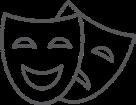
Directions: Cut out and glue these icons to End-of-Module Task writing paper to help plan your story.

Directions: Circle Yes or Not Yet to answer each prompt.
I have characters.
Yes Not Yet Yes Not Yet Yes Not Yet
I have a setting.
Yes Not Yet Yes Not Yet Yes Not Yet
I have a problem.
Yes Not Yet Yes Not Yet Yes Not Yet
I have time order words to sequence two or more events.
(One day, Suddenly, Then)
Yes Not Yet Yes Not Yet Yes Not Yet
I have two or more ways a character responds to the problem.
Yes Not Yet Yes Not Yet Yes Not Yet
I have a resolution.
Yes Not Yet Yes Not Yet Yes Not Yet
I use capital letters at the beginning of sentences and proper nouns. ABC
I use end punctuation. . ? !
I use complete sentences.
I use words to describe the character’s feelings.
I use sensory words.
Yes Not Yet Yes Not Yet Yes Not Yet
Yes Not Yet Yes Not Yet Yes Not Yet
Yes Not Yet Yes Not Yet Yes Not Yet
Yes Not Yet Yes Not Yet Yes Not Yet
Yes Not Yet Yes Not Yet Yes Not Yet
Directions: Use one of the letters below to describe how often you performed each action during the Socratic Seminar.
A = I always did that.
S = I sometimes did that.
N = I’ll do that next time.
I followed our class rules for the seminar.
I asked and answered questions to gather or clarify information.
I spoke in complete sentences.
I readied my body to listen.
I listened with my whole body.
Powerful Forces, Grade 1, Module 3
Student Name: Text: Author: Topic: Genre/type of book: Share what you know about the wind by sharing the answers to the questions. Draw, write, or tell your teacher your answers.
1. Wonder: What do you notice when you look at the title and illustrations on the cover of this book? How is this book different from a story?
2. Organize: What does the author tell you about wind in this book? What are the main ideas of the text?
3. Reveal: How does the illustrator or photographer show you more about the wind? Find one place in the text where you learn an important detail from an illustration. What is the detail that you learned?
4. Distill: What is the most important idea about wind that you learned by reading this text? Draw a picture showing this idea and explain your drawing to your teacher.
5. Know: What new information do you now know about the wind? Explain how this information compares to a different book about wind. Is it the same or is it different information? Explain.
6. Vocabulary: What new word from this book would you like to learn to use? What clues in the text or illustrations might help you know what it means? Ask an adult to help you figure out the meaning. Create a drawing and a sentence that shows the new word and its meaning.
1. Wonder: Look at the title and illustrations on the cover. What do you wonder about the story? How is this book different from an informational text?
2. Organize: What happened in this story? Act out the story focusing on how the character feels. Be sure your face looks like the character feels during the beginning, middle, and end of the story.
3. Reveal: How does the author use sensory details to tell us more of the story? Find one sensory detail and explain how you learned more about a story part because of the detail.
4. Distill: Did any of the characters in this story learn a lesson? What lesson did they learn?
5. Know: How do the characters in this story tell you more about people’s feelings? What made their feelings change?
6. Vocabulary: What are three words or phrases that suggest feelings? Make up motions to go with each feeling or draw faces to show the expression that goes with the feeling. Be sure to write the words or phrases with your picture.
Wit & Wisdom is our English curriculum. It builds knowledge of key topics in history, science, and literature through the study of excellent texts. By reading and responding to stories and nonfiction texts, we will build knowledge of the following topics:
Module 1: A World of Books
Module 2: Creature Features Module 3: Powerful Forces
Module 4: Cinderella Stories
In Module 3, Powerful Forces, students discover the capacity of wind and the emotions it evokes. We will ask: How do people respond to the powerful force of the wind?
Brave Irene, William Steig
Owl at Home, Arnold Lobel, “The Guest”
Gilberto and the Wind, Marie Hall Ets
The Boy Who Harnessed the Wind, William Kamkwamba and Bryan Mealer
Feel the Wind, Arthur Dorros
Feelings, Aliki
“The Wind,” James Reeves
“It Fell in the City,” Eve Merriam
“This Windmill,” Amy Ludwig VanDerwater
OUR CLASS WILL WATCH THESE VIDEOS:
“William and the Windmill,” Toronto Star
OUR CLASS WILL READ THESE ARTICLES:
“Wind at Work”
“What Makes the Wind?”
OUR CLASS WILL READ THIS SHORT STORY EXCERPT:
“Owl and the Moon,” Arnold Lobel
OUR CLASS WILL EXAMINE THESE PAINTINGS:
The Red Mill, Piet Mondrian (1911)
Oostzijdse Mill with Extended Blue, Yellow and Purple Sky, Piet Mondrian (1907) Windmill in the Gein, Piet Mondrian (1906–7)
OUR CLASS WILL ASK THESE QUESTIONS:
How is wind a powerful force?
What are feelings?
How do characters respond to the powerful force of the wind?
How does Irene respond to the powerful force of the wind?
How does William use the powerful force of the wind?
As you read with your Grade 1 student, ask:
What is the essential meaning, or most important message, in this book?
The Wonderful Wizard of Oz, L. Frank Baum
Alexander and the Terrible, Horrible, No Good, Very Bad Day, Judith Viorst
Coppernickel Goes Mondrian, Wouter van Reek
Time of Wonder, Robert McCloskey
Katy and the Big Snow, Virginia Lee Burton
A Small Tall Tale from the Far Far North, Peter Sís
Hurricanes!, Gail Gibbons
Tornadoes!, Gail Gibbons
The Wind Blew, Pat Hutchins
Visit a nearby park or go for a walk together on a windy day. Sit near an open window to feel the breeze. Take a trip to the beach if you live nearby.
What do you know about the wind? What does the wind feel like? What does the wind sound like? Can you see the wind? How does this weather make you feel?
What activities do you like to do on a windy day? What can the wind help you do?
Great Minds® has made every effort to obtain permission for the reprinting of all copyrighted material. If any owner of copyrighted material is not acknowledged herein, please contact Great Minds® for proper acknowledgment in all future editions and reprints of this module.
All images are used under license from Shutterstock.com unless otherwise noted.
All material from the Common Core State Standards for English Language Arts & Literacy in History/Social Studies, Science, and Technical Subjects © Copyright 2010 National Governors Association Center for Best Practices and Council of Chief State School Officers. All rights reserved.
Handout 21A: “It Fell in the City” from BLACKBERRY INK by Eve Merriam. Copyright © 1985 Eve Merriam. All Rights Renewed and Reserved. Used by permission of Marian Reiner.
Assessment 17A: “Wind at Work” from When the Wind Blows, Click magazine, March 2012. Text copyright © 2012 by Carus Publishing Company. Reprinted by permission of Cricket Media. All Cricket Media material is copyrighted by Carus Publishing d/b/a Cricket Media, and/or various authors and illustrators. Any commercial use or distribution of material without permission is strictly prohibited. Please visit http://www.cricketmedia .com/info/licensing2 for licensing and http://www.cricketmedia.com for subscriptions.
Assessment 31A: “What Makes the Wind?” from When the Wind Blows, Click magazine, March 2012. Text copyright © 2012 by Carus Publishing Company. Reprinted by permission of Cricket Media. All Cricket Media material is copyrighted by Carus Publishing d/b/a Cricket Media, and/or various authors and illustrators. Any commercial use or distribution of material without permission is strictly prohibited. Please visit http://www.cricketmedia .com/info/licensing2 for licensing and http://www.cricketmedia.com for subscriptions.
For updated credit information, please visit http://witeng.link/credits
The following writers, editors, reviewers, and support staff contributed to the development of this curriculum.
Karen Aleo, Elizabeth Bailey, Ashley Bessicks, Sarah Brenner, Ann Brigham, Catherine Cafferty, Sheila Byrd-Carmichael, Lauren Chapalee, Emily Climer, Rebecca Cohen, Elaine Collins, Julia Dantchev, Beverly Davis, Shana Dinner de Vaca, Kristy Ellis, Moira Clarkin Evans, Marty Gephart, Mamie Goodson, Nora Graham, Lindsay Griffith, Lorraine Griffith, Christina Gonzalez, Emily Gula, Brenna Haffner, Joanna Hawkins, Elizabeth Haydel, Sarah Henchey, Trish Huerster, Ashley Hymel, Carol Jago, Mica Jochim, Jennifer Johnson, Mason Judy, Sara Judy, Lior Klirs, Shelly Knupp, Liana Krissoff, Sarah Kushner, Suzanne Lauchaire, Diana Leddy, David Liben, Farren Liben, Brittany Lowe, Whitney Lyle, Stephanie Kane-Mainier, Liz Manolis, Jennifer Marin, Audrey Mastroleo, Maya Marquez, Susannah Maynard, Cathy McGath, Emily McKean, Andrea Minich, Rebecca Moore, Lynne Munson, Carol Paiva, Michelle Palmieri, Tricia Parker, Marya Myers Parr, Meredith Phillips, Eden Plantz, Shilpa Raman, Rachel Rooney, Jennifer Ruppel, Julie Sawyer-Wood, Nicole Shivers, Danielle Shylit, Rachel Stack, Amelia Swabb, Vicki Taylor, Melissa Thomson, Lindsay Tomlinson, Tsianina Tovar, Sarah Turnage, Melissa Vail, Keenan Walsh, Michelle Warner, Julia Wasson, Katie Waters, Sarah Webb, Lynn Welch, Yvonne Guerrero Welch, Amy Wierzbicki, Margaret Wilson, Sarah Woodard, Lynn Woods, and Rachel Zindler
We are grateful for the many educators, writers, and subject-matter experts who made this program possible.
David Abel, Robin Agurkis, Sarah Ambrose, Rebeca Barroso, Julianne Barto, Amy Benjamin, Andrew Biemiller, Charlotte Boucher, Adam Cardais, Eric Carey, Jessica Carloni, Dawn Cavalieri, Janine Cody, Tequila Cornelious, David Cummings, Matt Davis, Thomas Easterling, Jeanette Edelstein, Sandra Engleman, Charles Fischer, Kath Gibbs, Natalie Goldstein, Laurie Gonsoulin, Dennis Hamel, Kristen Hayes, Steve Hettleman, Cara Hoppe, Libby Howard, Gail Kearns, Lisa King, Sarah Kopec, Andrew Krepp, Shannon Last, Ted MacInnis, Christina Martire, Alisha McCarthy, Cindy Medici, Brian Methe, Ivonne Mercado, Patricia Mickelberry, Jane Miller, Cathy Newton, Turi Nilsson, Julie Norris, Tara O’Hare, Galemarie Ola, Tamara Otto, Christine Palmtag, Dave Powers, Jeff Robinson, Karen Rollhauser, Tonya Romayne, Emmet Rosenfeld, Mike Russoniello, Deborah Samley, Casey Schultz, Renee Simpson, Rebecca Sklepovich, Kim Taylor, Tracy Vigliotti, Charmaine Whitman, Glenda Wisenburn-Burke, and Howard Yaffe
The following early adopters provided invaluable insight and guidance for Wit & Wisdom:
Bourbonnais School District 53 • Bourbonnais, IL
Coney Island Prep Middle School • Brooklyn, NY
Gate City Charter School for the Arts • Merrimack, NH
Hebrew Academy for Special Children • Brooklyn, NY
Paris Independent Schools • Paris, KY
Saydel Community School District • Saydel, IA
Strive Collegiate Academy • Nashville, TN
Valiente College Preparatory Charter School • South Gate, CA
Voyageur Academy • Detroit, MI
Design Direction provided by Alton Creative, Inc.
Project management support, production design and copyediting services provided by ScribeConcepts.com
Copyediting services provided by Fine Lines Editing
Product management support provided by Sandhill Consulting