4 minute read
Integrated air and space traffic management

Prof. Sameer Alam, ATMRI explains to Kasia Żmudzińska the Southeast Asia coordination challenge
The ASEAN (Association of Southeast Asian Nations) region is experiencing a double boom.
Air traffic is expected to double in the next decade, and the routes in the Singapore - Kuala Lumpur - Jakarta triangle are amongst the busiest in the world. Additionally, the Singapore Flight Information Region (FIR) and adjacent FIRs are experiencing significant congestion. At the same time, the region is demonstrating growing interests in developing space launch capabilities. An increasing number of space launches are seen in Japan, South Korea, India, New Zealand, and Australia. Indonesia, Malaysia and Singapore are also considering space-related opportunities in the near future. Singapore, Malaysia and Indonesia’s proximity to the equator makes the region a favourable location for space launches. Since the Earth’s rotational speed is highest there, launching rockets eastward provides an additional speed boost, saving fuel and increasing payload capacity. Such coastal locations make them suitable for the use of offshore floating launch pads.
Regional characteristics/operational realities
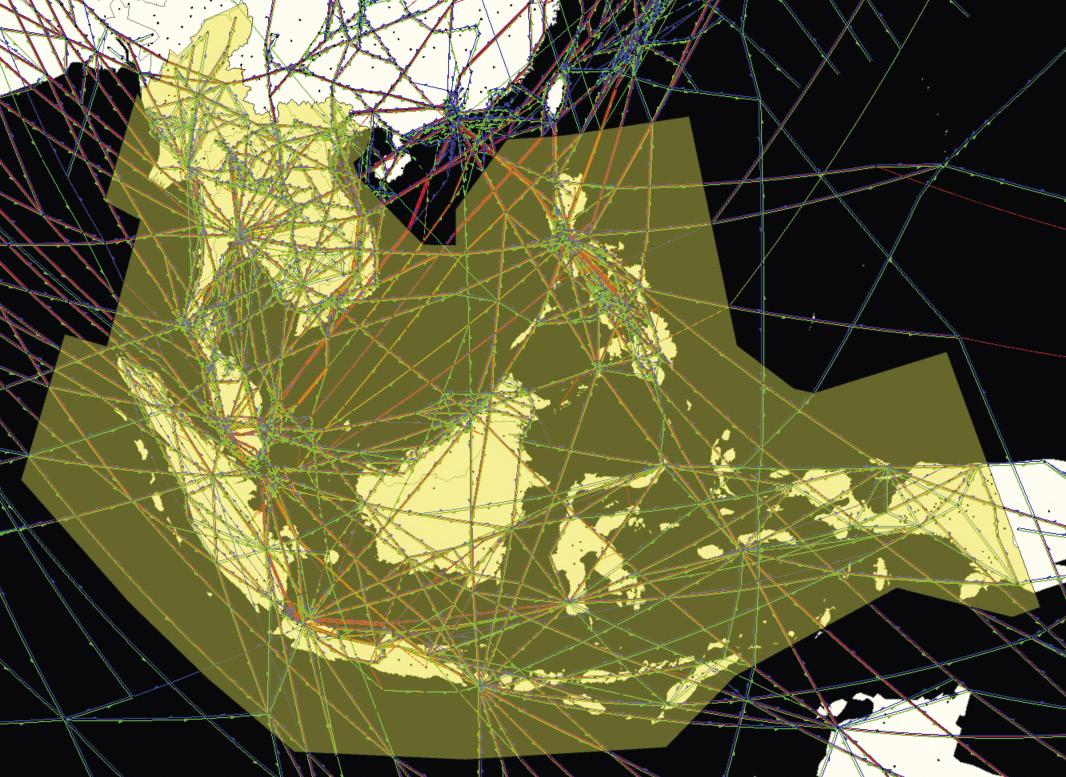
In the ASEAN region, the airspace is fragmented, every country has its own Air Navigation Service Provider (ANSP) that oversees their respective FIR with limited coordination. Europe has a similar characteristic, but it has the EUROCONTROL Network Manager, which optimises traffic flows within the continent. In Asia there is no equivalent organisation.
The ICAO Asia-Pacific Air Traffic Flow Management (ATFM) Steering Group has developed a framework for collaborative ATFM among states in the region, which encourages ANSPs to share air traffic data and to collaborate on traffic flow management initiatives. Real-time, cross-border decision-making and flow management activities are crucial for further building the environment for space launches and developing these activities remains a major challenge for the region.
Implications beyond the skies
Singapore is internationally recognised as a leading maritime hub, with sea routes passing through the Straits of Singapore, the Malacca Strait, and the South China Sea. Because so many vessels navigate through this region, any space launch programme will significantly affect maritime activities. Agencies coordinating future space launches should work closely with the port authorities of Singapore, Malaysia and Indonesia. This cooperation will be essential to keep vessels clear of launch sites and to protect them from potential falling debris that could cause disruptions to shipping schedules. situation as time progresses.
Ensuring safety of space launch operations will require careful consideration of the territorial boundaries of neighbouring countries along with related diplomatic efforts. The flight paths of space launch rockets and spacecraft may intersect with those territorial limits, requiring operating clearances to be obtained prior to launch.
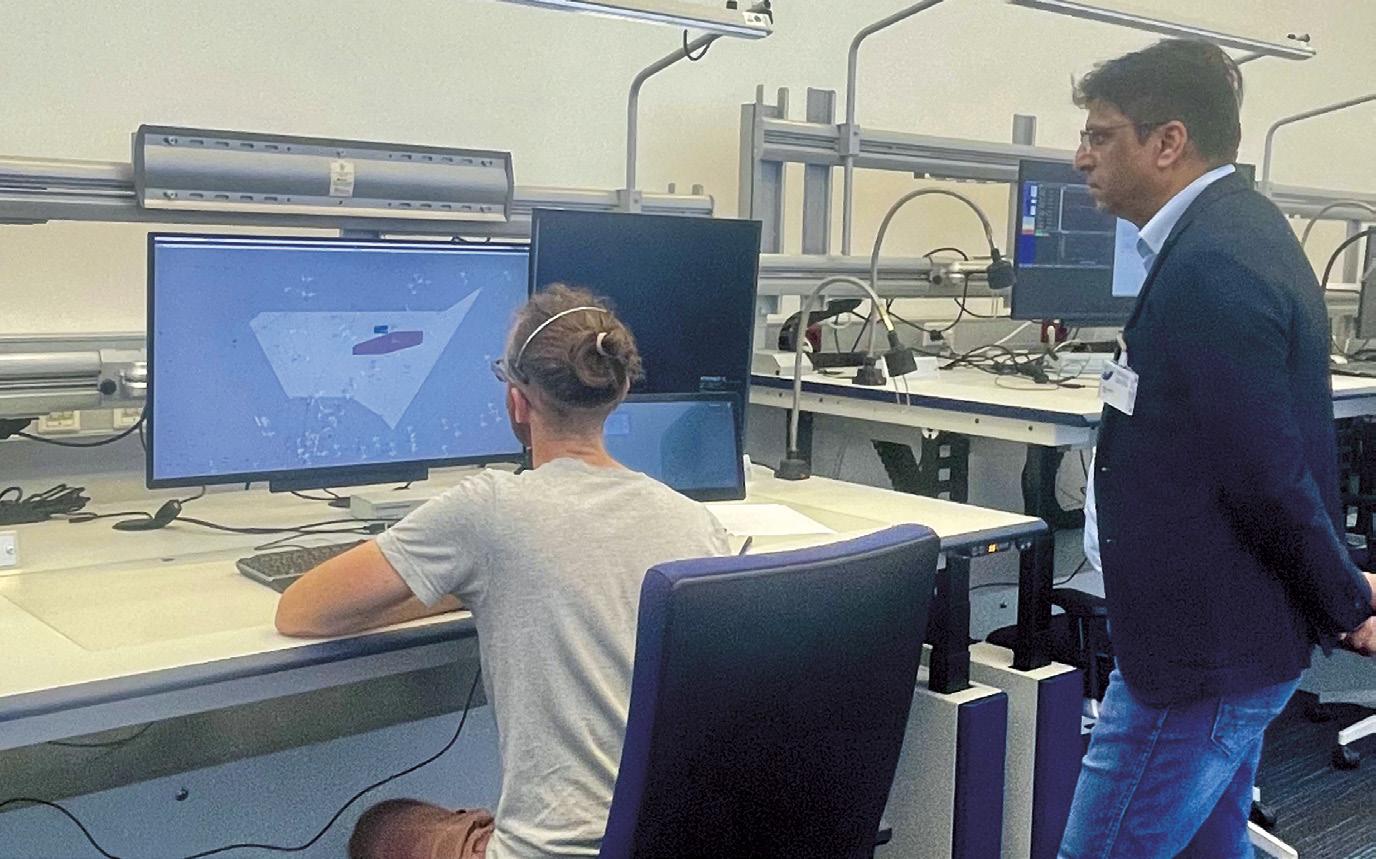
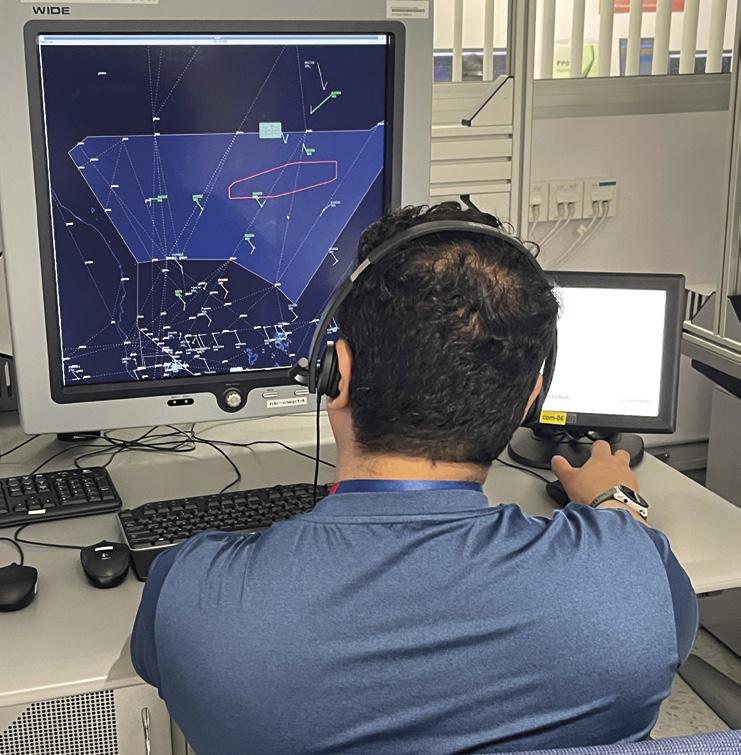
The research team experimented with different kinds of launches, various potential debris profiles, different air traffic volumes, and diverse air traffic control (ATC) parameters. Several scenarios were examined, including launch failures at different stages and the creation of a hazard corridor. The experiments involved rerouting traffic around the hazardous area and calculating the additional fuel consumption, delays, and extra workload for ATCOs that such events cause. The purpose of the study was to explore the possibility of conducting space launches with the smoothest possible coordination with ATC, while accounting for various emergency scenarios.
Exploring solutions through research
The Air Traffic Management Research Institute (ATMRI) at the Nanyang Technological University, Singapore in cooperation with German Aerospace Center (DLR) developed a research paper collating best practices for integrating space launch activities with air traffic management (ATM) adopted from India, New Zealand, Europe, Japan and South Korea. On this basis, the consortium created a mixed airspace Concept of Operations (CONOPS), tailored to the Singapore FIR. In 2024, ATMRI conducted a major study together with DLR under the leadership of Prof. Sameer Alam. Scientists, air traffic controllers (ATCOs), pilots, and human factors experts worked together to carry out a series of experiments and simulations of rocket launches in the Singapore FIR. The study assumed the creation of a dynamic space corridor, a section of airspace reserved for the rocket launch, which adapts to the evolving
The study demonstrated that rocket launches in the Singapore region are feasible, and that the concept of a dynamic space corridor enables ATC to manage traffic effectively during such events, including in the case of failure or falling debris. The research was supported by the Office of Space, Technology and Industry, Singapore (OSTIn), Singapore Economic Development Board (EDB) through the National Research Foundation (NRF) of Singapore grant under the Space Technology Development Programme.
With research proving feasibility, Southeast Asia now has the opportunity to become a model for integrated air and space operations.

Sameer Alam
Sameer Alam is a Professor of Aerospace Engineering and the Director of the Air Traffic Management Research Institute (ATMRI) at Nanyang Technological University, Singapore.