INHERITING FARMLAND? DON’T OVERLOOK THIS HIDDEN SOIL TAX DEDUCTION
PG. 11 & 12
45Z IS ALMOST HERE
PG. 13 & 14
WHAT FARMERS SHOULD KNOW ABOUT LLCS AND TRUSTS TO PRESERVE THE FAMILY FARM - AN ATTORNEY’S PERSPECTIVE
PG. 15 & 16
BAMX WEATHER UPDATE
PG. 17 & 18
BECOMING A GOOD ANCESTOR: WHAT HAWKINS FAMILY FARM TEACHES US ABOUT SUCCESSION AND THE FUTURE OF FAMILY LAND
PG. 19 & 20
LOOK BACK AT 2025 & MARKET ANALYSIS
PG. 21 - 28
MARKET UPDATE
LAND VALUES Journal has a lot to offer you, as a landowner, throughout the year with stories of local farmers, the latest in maximizing the value of your land, smart farming, the great outdoors, and features about landowners just like you Keep your smartphone handy while you read to scan QR codes that allow you to discover more online & access special content
YOU! Thank FEATURED ARTICLE
Buying or Inheriting Farmland?
Don’t Overlook this Hidden Soil Tax Deduction.
READ THE STORY ON PAGE 9
HERE WE COMMENTARY GROW.
THE VALUE OF STAYING GROUNDED.
How policy updates, strong land values, and succession lessons are shaping the conversation across the Midwest
Thank You for Taking the Time to Visit With Us In The LAND VALUES Journal.
As we move through the second quarter of 2026, agriculture continues to offer a mixed picture. On one hand, producers and landowners are still navigating tight margins, policy uncertainty, and caution about the year ahead. On the other hand, the land market itself has continued to show resilience, and that matters USDA’s February forecast said 2026 net farm income is expected to dip slightly from 2025, while net cash farm income is projected to rise and farm real estate assets are expected to increase again. At the same time, Purdue’s March Ag Economy Barometer showed farmer sentiment improved modestly in February, even while longer-term expectations continued to soften
That balance of challenge and opportunity is reflected throughout this issue of the LAND VALUES Journal.
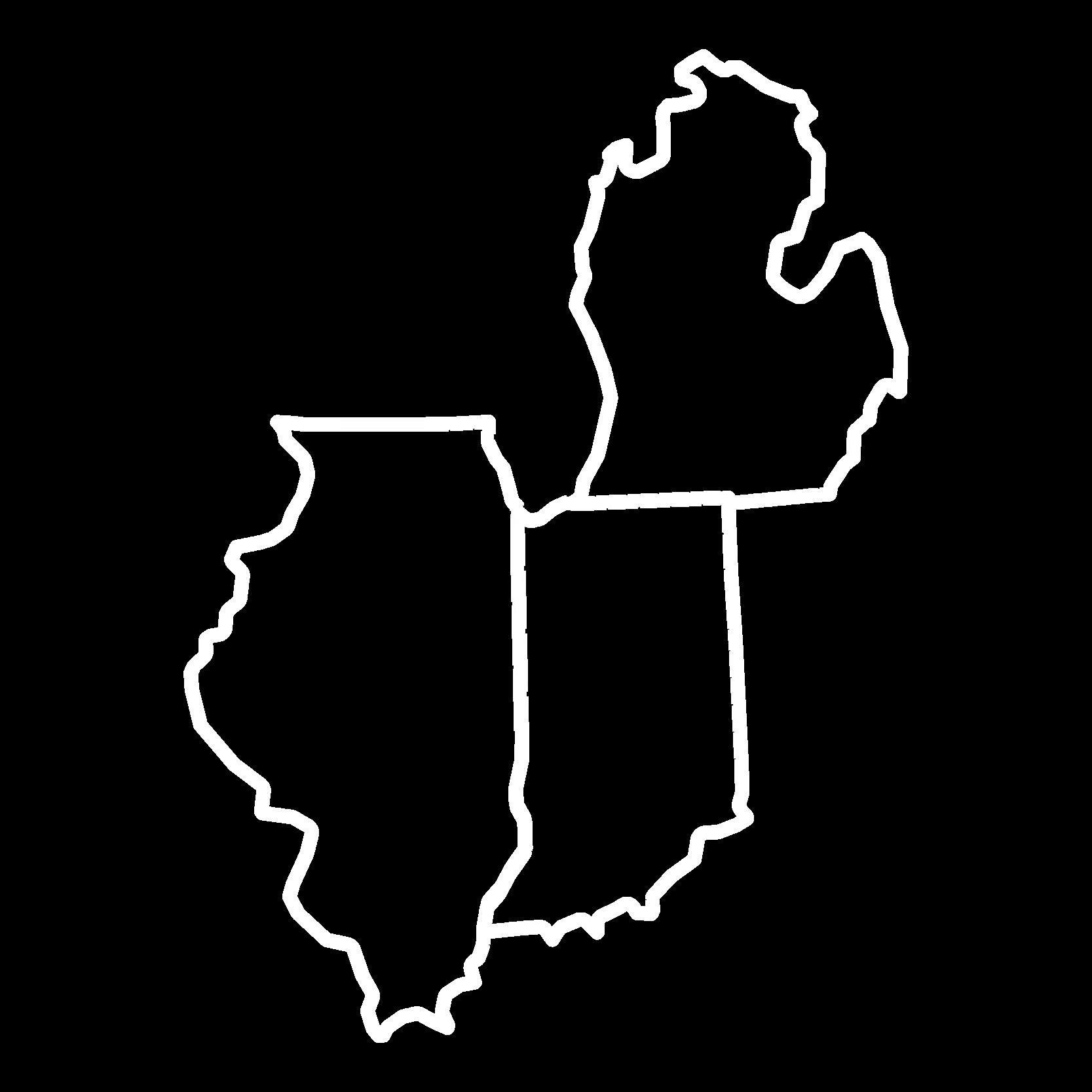
In these pages, we take a broad look at the forces shaping decisions across Illinois, Indiana, and Michigan We review important 45Z developments, revisit opportunities tied to soil fertility deductions, and provide a fresh county-bycounty look at land values focused on price per acre across our region. We also step back from the numbers to consider the long view through a review of the short documentary Hawkins Family Farm and the lessons it offers about succession planning, legacy, and preserving the family farm.
This issue truly has something for everyone. For landowners, it offers perspective on value, timing, and the importance of understanding what your land may be worth in today’s market
For farmers, it touches on policy, profitability, and the longterm decisions that shape both working capital and legacy. For investors and advisors, it offers another lens on why quality land continues to matter, even in uncertain times.
The broader backdrop remains important. Recent headlines continue to center around biofuels, trade, farm profitability, and acreage decisions. In early February, Treasury issued a proposed rule for the 45Z clean fuel tax credit, a major development for ethanol, biodiesel, and soybean-based fuels. Meanwhile, USDA’s next Prospective Plantings report is scheduled for March 31, 2026, which will give the market another important signal on producer intentions heading into the growing season.
Even with uncertainty still in the air, the land market remains notably firm in many areas. That does not mean every farm is the same, or that every buyer sees value through the same lens. It does mean that high-quality land, well-positioned tracts, and properties with strong fundamentals continue to draw attention. In our world, that reinforces something we believe deeply: local data, careful positioning, and thoughtful guidance still matter.
That is why we continue to build this journal the way we do more than a market update, but as a resource designed to help landowners, families, farmers, and advisors make informed decisions with confidence.
We hope this issue gives you both practical value and meaningful perspective.
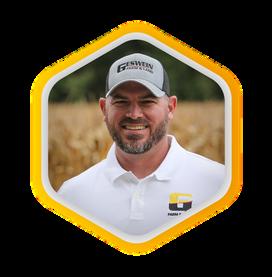
Co-Owner & Principal Advisor Author of American Family Farmland
“Genuinely cared about ensuring the transaction went smooth.”
I worked with Jeremy Thompson to purchase a property he had listed and had a great experience. He was very responsive, knew the market well, and genuinely cared about ensuring the transaction was smooth from start to finish.
Dan, 89 Acres
Iroquois County IL
Great to work with. Gave attention to every detail.
Absolutely great to work with They gave attention to every detail Johnny was with me side-by-side, even during difficult finalization Kudos to him and the company If I had more farmland, they would be the ones to sell.
Shelby Family, 432 Acres
Montgomery County IN
I was extremely satisfied with Jake handling the sale of a tract of recreational land. He was easy to talk to, helpful and informative. The sale went smoothly and I couldn’t be more pleased with how he handled everything.
Pajor Family, 166 Acres
Starke County IN
Matt Rhodes was a huge answer to our prayers. Thank you for all that your and your company did to assist with selling our farmland. A huge answer to our prayers.
Miller Family, 77Acres
Shelby County, IL
FEATURED AUCTIONS
Nearly
Surety
Strong
Contact Auction Representative: Craig Stevenson at (574) 870-4383 or email at auctions@gfarmland.com
A Look into the Beauty of the Land and Those Who Have Dedicated Their Lives to it
Stories of Stewardship is an ongoing docuseries
(scan the QR code at the bottom of this page) that takes the viewer on an intimate look in the lives of those who make their living, earn their keep, and work tirelessly to preserve land for the next generation.
From farm families to non-operating landowners, this video series showcases a variety of family farms, crops, and conservation properties throughout the Midwest
Like you, we value the land. Yet, the greatest value of all are the people that steward the land today and prepare to pass it on to the next generation.
Follow along as these landowners, farmers, and those that love the great outdoors share their stories, their passions, and their purpose
EPISODE 6
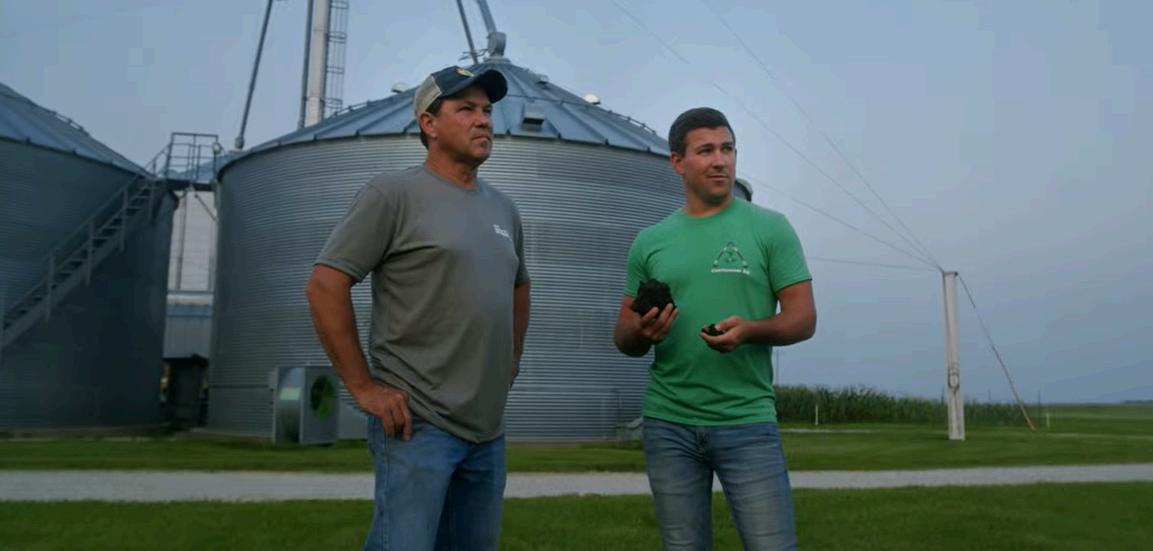
Sustainable & Profitable - Hora Family Farm & Continuum Ag | Brian & Mitchell Hora
Scan this QR Code to Watch & Listen to Sustainable & Profitable Story of Stewardship in Episode 6
WATCH THE ENTIRE SERIES
“Land
Values to me is being able to carry on that family tradition being seventh generation, that’s a pretty cool deal and if we ’ re going to be here for another seven generations we have to be able to take care of it for the long haul.”
Mitchell Hora
7th Generation Hora Family Farm
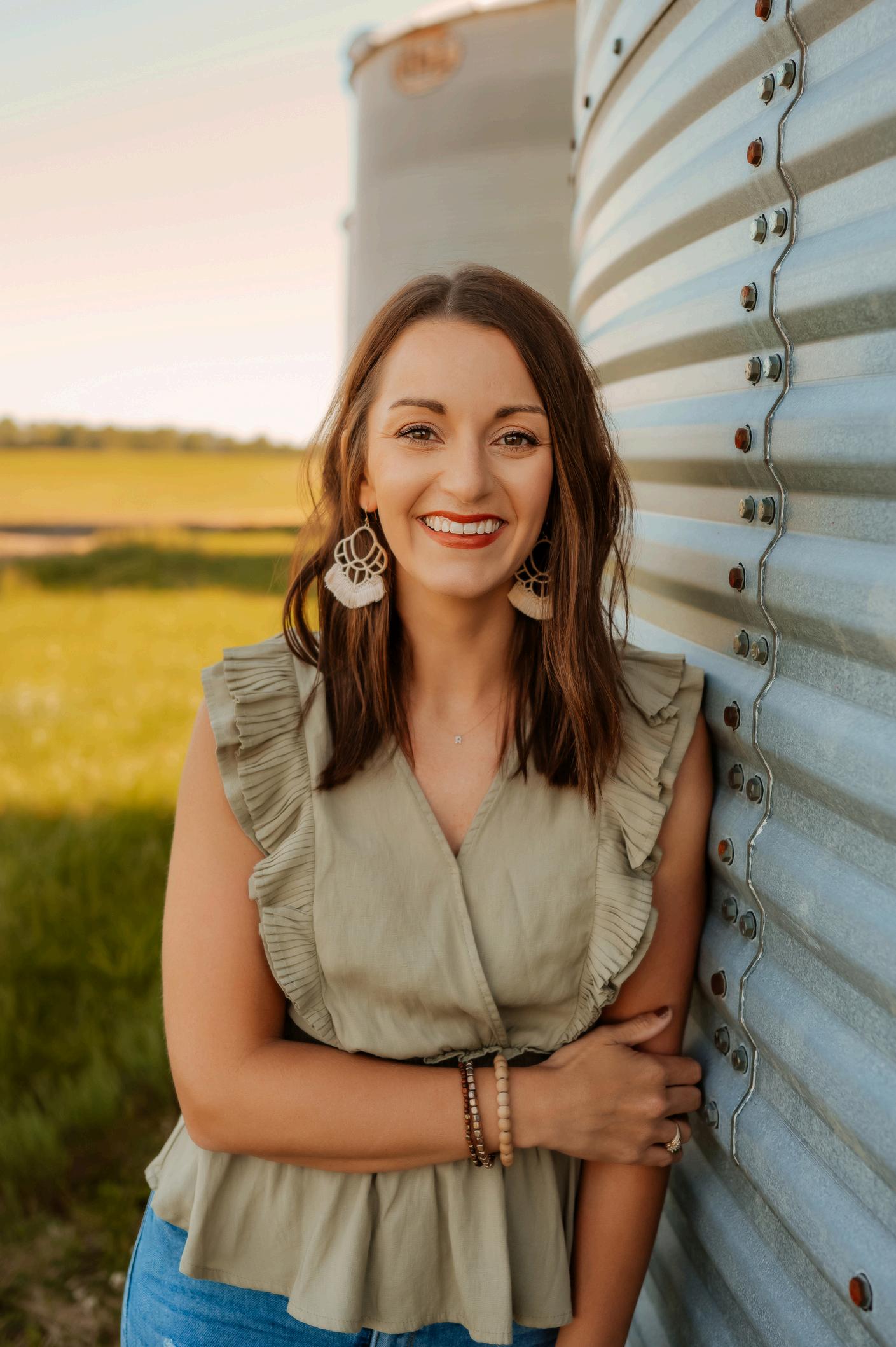
MEET KYLIE EPPERSON
We encourage you to learn more about these stories by scanning the QR code here.
READ STORY HERE
IN AG Women
Emerging Leaders.
Empowering the Next Generation. Breaking Down Barriers. Forging New Paths.
Helping Others Succeed.
These are Women in Ag.
Every month, we feature stories about women in agriculture.
Impacting and improving our local communities and the world at large, these women in ag take the time to tell us their stories, offer advice, and set tremendous examples for anyone with an interest in agriculture and the great outdoors.
In this Special Edition of the Land Values Journal, we’re proud to share with you: Kylie Epperson
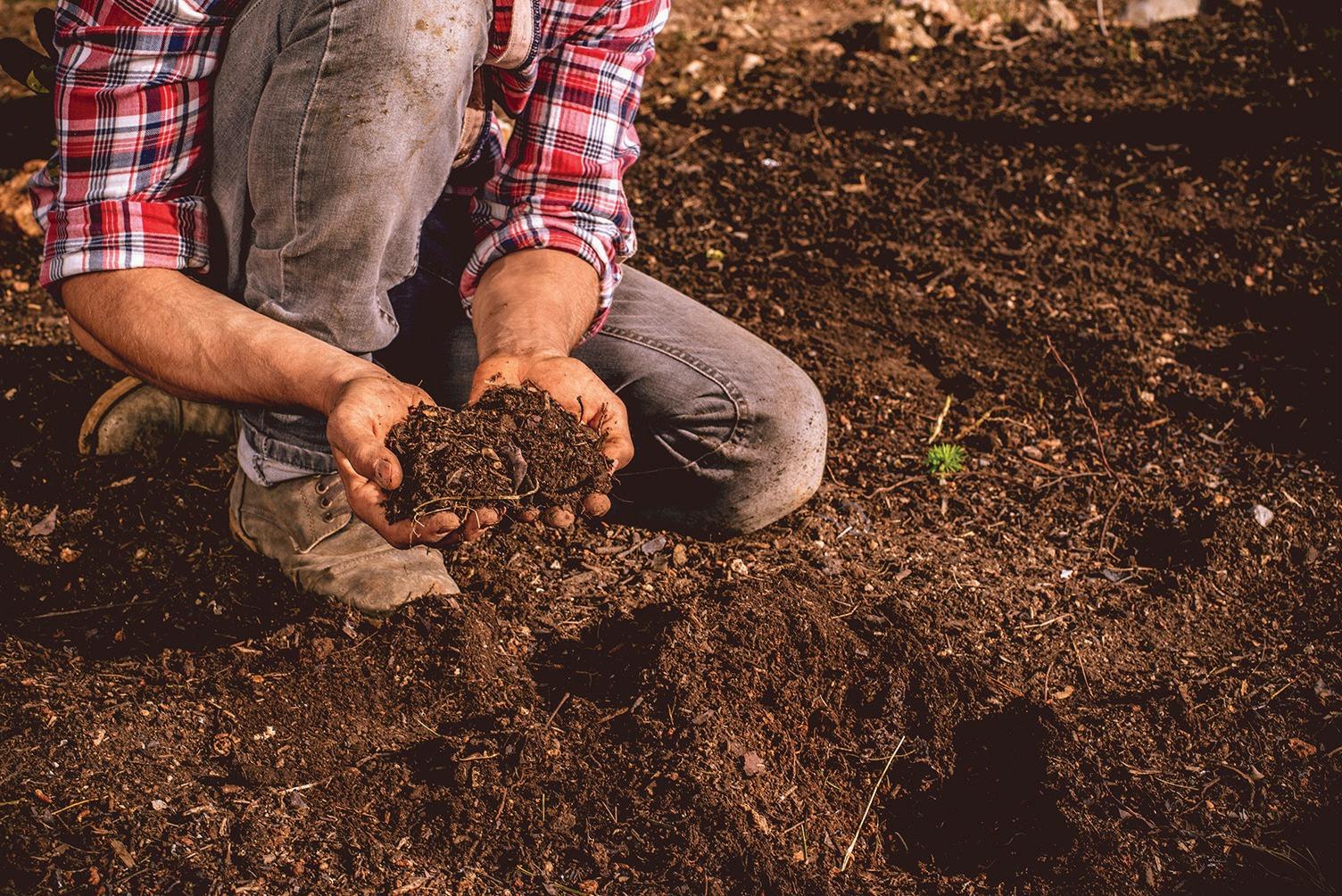
INHERITING FARMLAND? DON’T OVERLOOK THIS HIDDEN SOIL TAX DEDUCTION
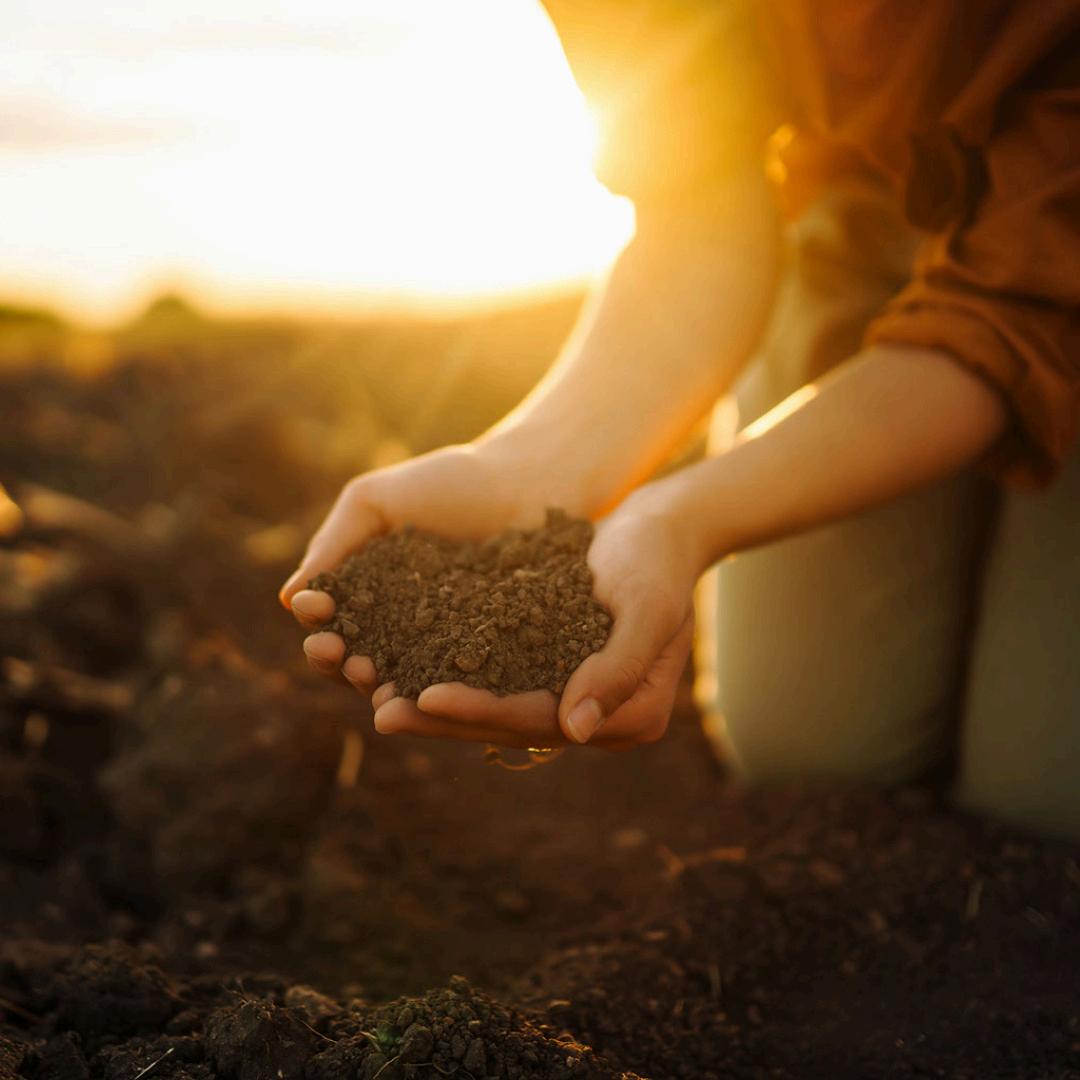
The soil beneath your inherited farm could be worth a major tax break
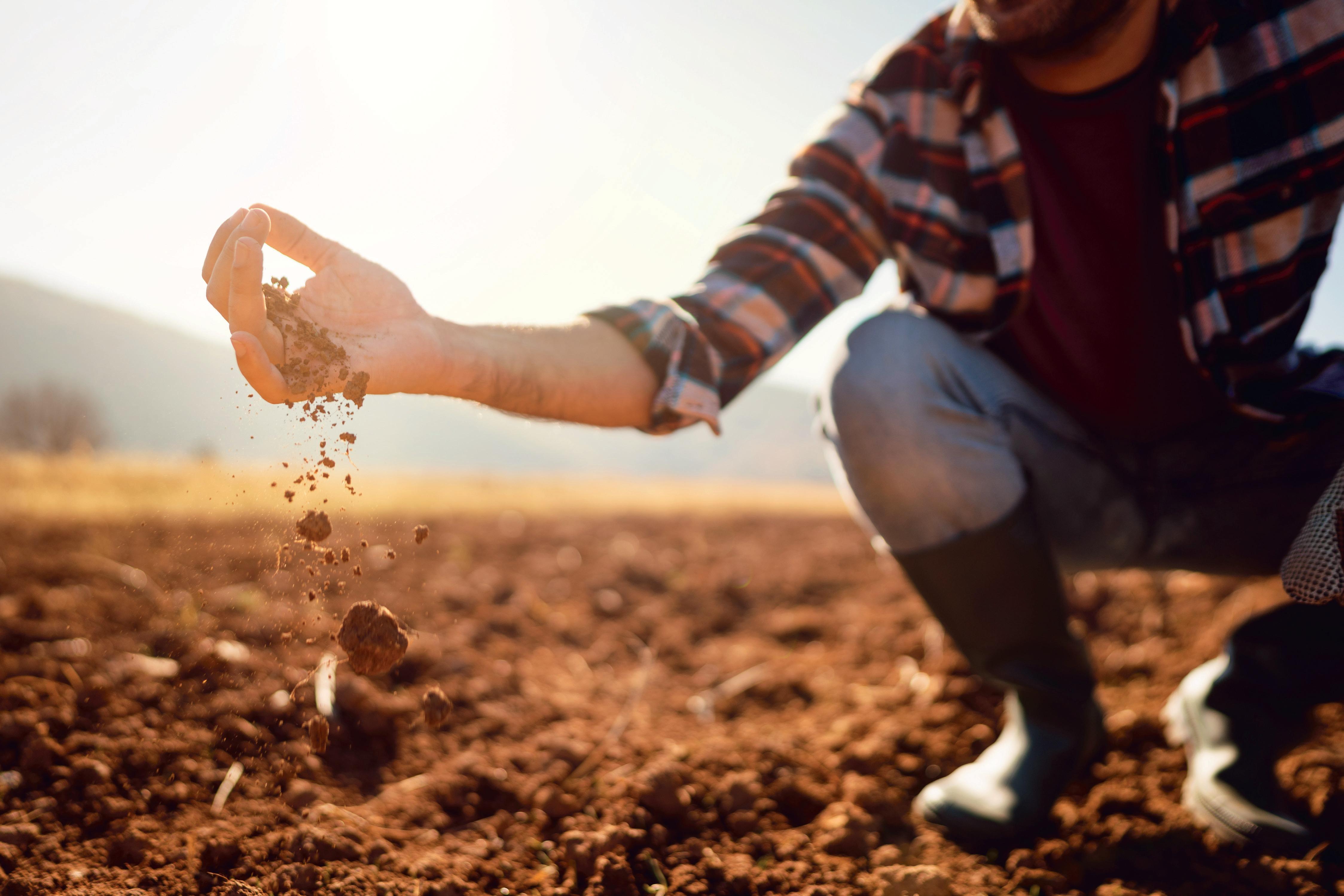
When farmland passes from one generation to the next, the majority of heirs focus on land values, rental rates and estate taxes. However, one of the most overlooked assets are the nutrients already stored in the soil. Enter the soil fertility tax deduction, which allows new buyers of farmland to deduct the value of residual or excess soil fertility, such as nutrients P and K, as a depreciable asset.
Basically, this tax break is for new landowners who buy or inherit row crop or pasture farmland with the proper documentation and timing. And it can become an important part of their tax strategy because many farms carry high residual fertility levels that were built up over decades, equating to real dollars invested in the soil that can range from tens to hundreds of dollars per acre.
“It gives farmers the ability to take a deduction off of farmland that’s similar to when you take deductions off of tile or write off improvements when you buy a farm,” explained Dave Stamp, Boa Safra Ag’s Referral Partner Regional Manager and an Iowa landowner.
When land changes hands through a sale or inheritance, that overlooked stored fertility can become a hidden beneficial harvest.
“It’s a huge opportunity for family farms in need of some tax credit or that need some tax breaks and deductions when they are inheriting ground and maybe coming into some taxable
events,” explained Mitchell Hora, a seventh-generation farmer and founder of Continuum Ag. “Anybody who has bought or inherited farm ground in the last five years should absolutely look into this.”
Here’s how it works
Soil samples are collected across the property, typically using grid or zone sampling to capture variability in soil conditions.
“Our test is on seven macronutrients, which are nitrogen, phosphorus, potassium, sulfur, sodium, calcium and iron, as well as seven micro-nutrients that we figure in our calculation,” said Stamp.
After an agronomic analysis is performed to determine the quantity and replacement cost of those nutrients, agronomists translate lab results into pounds of plantavailable nutrients and calculate what it would cost to replace them using current fertilizer prices to establish the soil fertility value.
“The best time to document soil fertility is immediately after inheritance or before a sale,” noted Hora. Waiting can reduce a landowner’s eligible deductions, eliminate documentation and create IRS substantiation issues later on.
Once that value is documented in a formal soil fertility study, which includes sampling methods, lab reports, calculations and pricing assumptions, tax professionals allocate part of the land purchase price to soil fertility, separating it from non-depreciable land value. The allocated amount is typically deducted or amortized, depending on the buyer’s tax strategy and business structure with most choosing to allocate the soil fertility tax deduction over multiple years, following IRS guidelines.
It's important to note that keeping a copy of the study completed as well as detailed records is critical should the IRS question the deduction and choose to review or audit the farm.
Further, Stamp noted that “deductions depend on what tax bracket you’re in.”
“It can add huge value to those family farms that may be in tough times,” added Hora. “It’s a way for a thousand dollars or more in tax deductions and benefits.”
Interested in seeing what your soil fertility tax deduction could be? Boa Safra Ag and Legacy Soil offer a soil fertility analysis service and partner with CPAs and other experts to assist in the process from beginning to end. With specific questions, please contact your CPA for guidance as tax deductions and tax law are complex issues.
“It gives farmers the ability to take a deduction off of farmland that’s similar to when you take deductions off of tile or write off improvements when you buy a farm,”
Dave Stamp, BoaSafra
What’s the value of my land?
Whether you are passing your family land to heirs, planning for retirement, need to know the value based on death, or have an undivided interest....
Planning & preparation are the best next steps in land ownership & estate planning.
FIND OUT WHY MORE SUCCESSFUL LANDOWNERS TAKE THIS NEXT STEP
45Z IS ALMOST HERE
Why farmers should start preparing now to capture the value of carbon intensity scoring
After months and months of feet dragging, the long-awaited 45Z tax credit appears to be moving forward. On Feb. 3, the Department of Treasury officially released its Notice of Proposed Rulemaking for the 45Z Clean Fuel Production Credit, signaling a major milestone in this highly anticipated tax credit that could boost American farmers’ bottom line.
While a step in the right direction, the operational details were delegated to the U.S. Department of Agriculture – and the final guidelines have yet to be released, but they’re definitely on the immediate horizon.
“I was in Washington, D.C., last week and met with some of the key people very involved in this matter,” said Mitchell Hora, a seventh-generation Iowa farmer and founder of Continuum Ag. “They told me that their intent is to have things done before planting season.”
The 45Z tax credit, created under the 2022 Inflation Reduction Act, aims to boost U.S. production of low-emission fuels like ethanol. The credit would apply to fuels produced between 2025 and 2029, and is calculated using the U.S. Department of Energy’s 45ZCF-GREET model.
The 45ZCF-GREET model converts emissions across the entire biofuel supply chain into a single carbon intensity (CI) score per gallon. Lower CI scores translate into larger tax credits. A farm’s
CI score is determined from production through delivery of the crop to an ethanol plant. A CI score of zero is considered carbon neutral and the higher the score, the worse it is for the environment. Farmers able to offer corn with a CI score lower than the current national average will become sought after by biofuel manufacturers once 45Z is fully operational.
However, the 45Z credit will not rely solely on existing carbonintensity calculators. Instead, the IRS has announced plans to develop a new, program-specific tool known as the 45Z CF FDCIC.
The calculator will build on the U.S. Department of Agriculture’s existing framework, integrate ongoing research from the DOE’s GREET model, and be tailored specifically for 45Z. It’s expected to account for practices like cover crops, reduced tillage, and improved nutrient management, though the precise impact of those practices has not yet been defined.
“I feel like it’s going to be a combination of the tools that are already existing from the Department of Energy and from the USDA,” said Hora. “We know that they are collaborating to come up with a 45Z specific calculator. In the IRS rule, they specifically included soil health practices many of us already have in place.”
While farmers wait for the final guidelines to be released by the USDA, the bottom line is that they need a CI score to be considered – and to do that, Hora advised to get their data ready.
“We now know that we’re going to have a seat at the table,” he said. “We just don’t know the details yet. Get your data organized about your 2025 crop, your 2024 crop, and start preparing to document everything in 2026.”
Continuum Ag offers a way to determine a farm’s CI score at continuum.ag/carbon-intensity.
“You can use our software or just manage your own records,” said Hora, stressing that “it's all about the data. That’s the real message. 45Z is absolutely happening and, to be included, it’s going to require that data.”
“We know they are collaborating to come up with a 45Z specific calculator. In the IRS rulke, they specifically included soil health practices many of us already have in place.”
- Mitchell Hora
WHAT FARMERS SHOULD KNOW ABOUT LLCS AND TRUSTS TO
PRESERVE THE FAMILY
FARM
For many farm families, estate planning isn’t just about dividing assets, it’s about protecting a livelihood, preserving land and ensuring the operation can survive for the next generation. It’s also a way to pass down not just land and equipment, but values, traditions and a way of life. However, it takes some foresight to ensure everything from land and machinery to livestock, grain and operating loans are organized to help future heirs.
“Using strategies like gifting, LLC ownership structures and special-use valuation under IRS code 2032A, families can significantly reduce the taxable value of farm estates, often allowing land to be valued well below market rates,” said John Schwarz, II, a farmer and attorney known as “The Farming Lawyer ”
Careful estate planning helps farm families decide who will own, manage and benefit from the operation in the future. Further, a clear plan can reduce taxes, prevent conflict, protect land from forced sales and provide a roadmap for passing leadership from one generation to the next Without a clear plan, heirs face potential legal battles, financial strain and the painful possibility of selling land that has been in the family for generations.
Why All Farms Should Be Limited Liability Companies
Schwarz advises farmers to establish Limited Liability Companies (LLCs) when operating a farming business. While it can require some extra effort and expense initially, it allows a farmer to keep business assets and personal assets separate.
“From a planning standpoint, it’s a no-brainer to put farm ground in an LLC,” said Schwarz. “From a liability standpoint, it doesn’t take a whole lot of acres nowadays to be worth millions of dollars.”
In fact, your family farm shouldn’t be in just a single LLC –there should be several that fall under a holding company so that assets remain clear and divided. Schwarz recommends dividing a farm into at least four separate LLCs under the holding company that include:
Land LLC – the land on which the farming occurs
Machinery LLC – the machinery used to farm
Trucking LLC – the trucks used for hauling commodities
Farming LLC – the crops
“That way, if you ever get sued, there’s not that massive amount of assets for someone to chase after,” noted Schwarz. For example, if a farmer got into a vehicle crash while driving a semi (usually without a CDL license because
they’re not required to have one), that crash won’t wipe the farm completely out because the Trucking LLC will be the entity sued.
Establish a Family Trust as the Holding Company to the LLCs
When LLC interests are owned by a trust (as a holding company), they can transfer seamlessly to heirs without going through probate. This saves time, legal costs and potential conflict, which is especially important for farms, where uninterrupted operations are critical. Trusts allow families to set clear rules for management, distributions and decision-making. This helps prevent land from being split up, sold off or mismanaged when ownership passes to multiple heirs.
“A trust can be used as an estate planning tool,” said Schwarz, adding that trusts can facilitate valuation discounts, gifting strategies and long-term tax planning, which can significantly reduce estate tax exposure, making it easier to pass large, high-value farm assets to the next generation.
Trusts can also balance the needs of on-farm and off-farm heirs by defining income distributions, voting rights and management roles, reducing the risk of family conflict – a topic covered in-depth in the book, “American Family Farmland: Preserving Values and Creating Wealth,” by Johnny Klemme.
The bottom line? For the future of your farm: Set up LLCs and a trust.
After 20 years as an agriculture attorney, Schwarz believes the message is simple. No one regrets setting up their farms as LLCs; they only regret not doing it sooner. Farming always carries risk and, eventually, something will go wrong. Getting the right legal structure in place won’t prevent those moments, but it can keep them from becoming catastrophic.
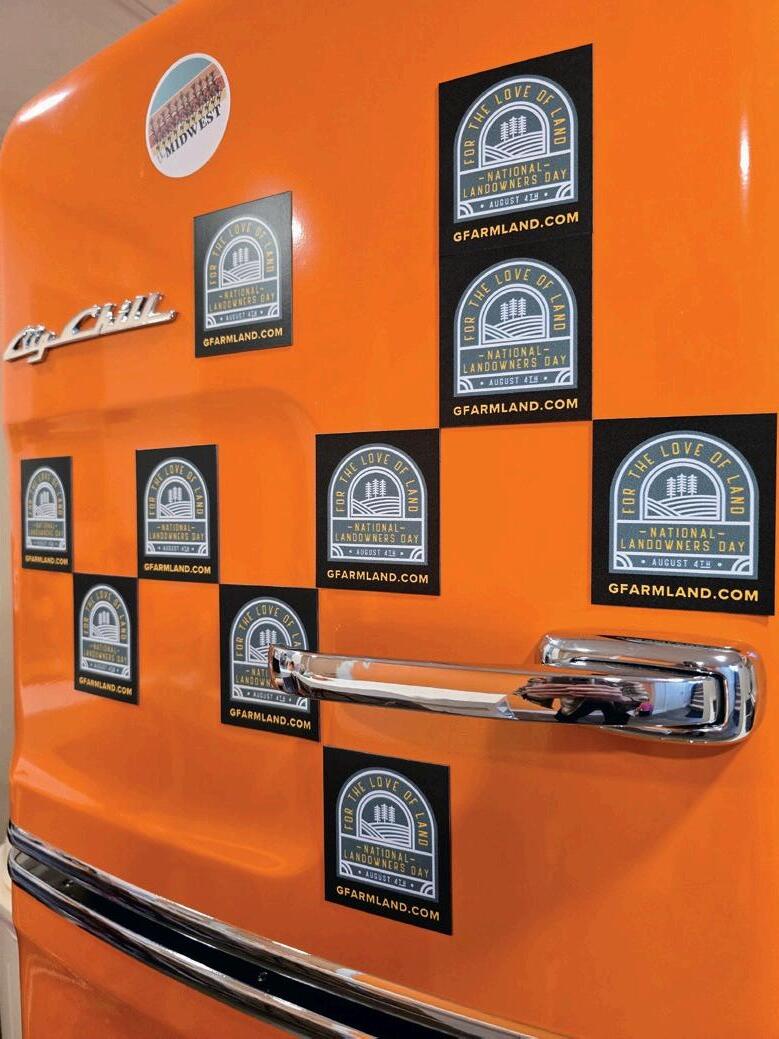
National Landowners Day FREE GIFT
As a special “THANK YOU” for being a loyal reader, get your complimentary “National Landowners Day” magnet in the mail today.
Whether you place it on the fridge, your tool box, or in the tractor cab, we appreciate you!
Special form on GFL site to get a FREE MAGNET. SCAN QR CODE BELOW!
Get the FREE GIFT!
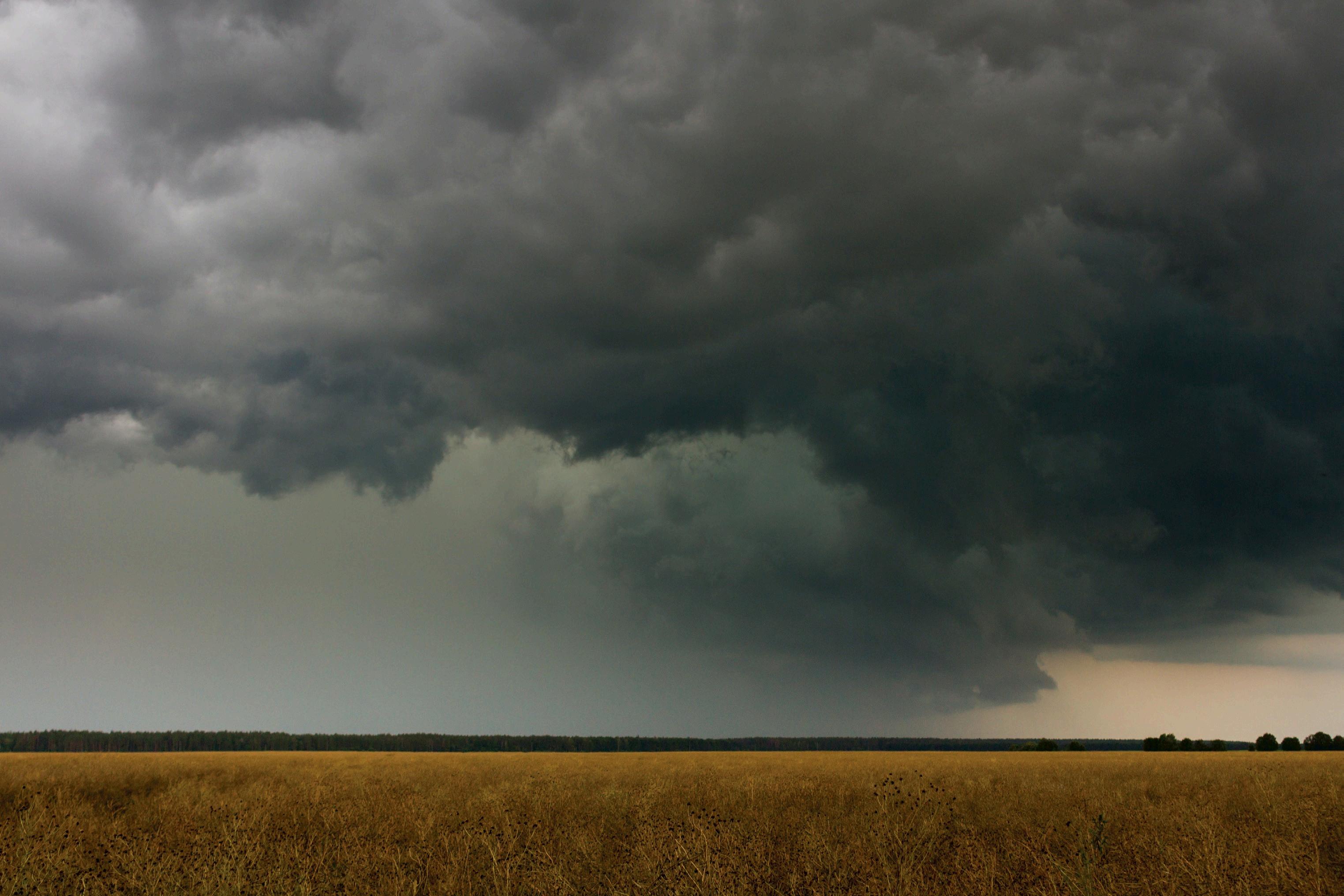
BAMX WEATHER UPDATE
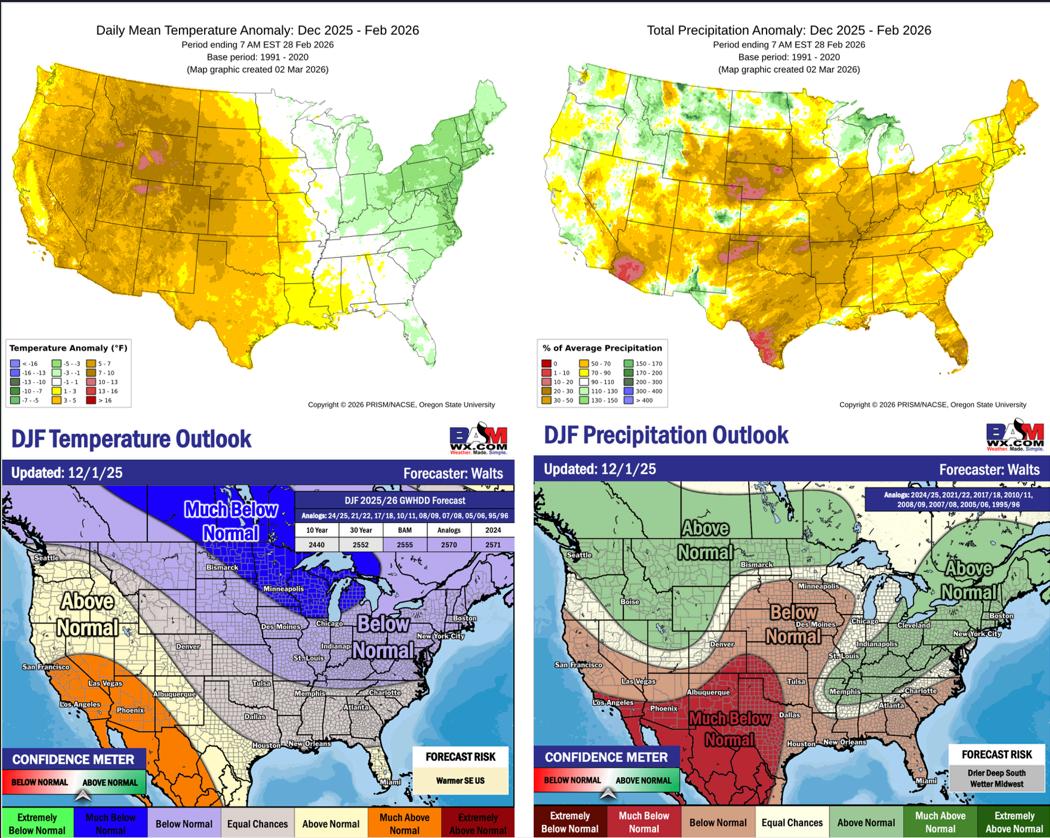
Courtesy of Bret Walts, Senior Meteorologist
Here’s the summer outlook:
Overall, the orientation of the temperature outlook verified very well; however, it was slightly warmer in the Plains with the core of the coldest air settling in a bit further east into New England versus the Upper-Midwest. While the storm track idea, which predicted above-normal precipitation, verified well in terms of snow for the Ohio Valley to New England, a lack of moisture even with snow storms led to a more widespread drier-than-normal conditions this winter.
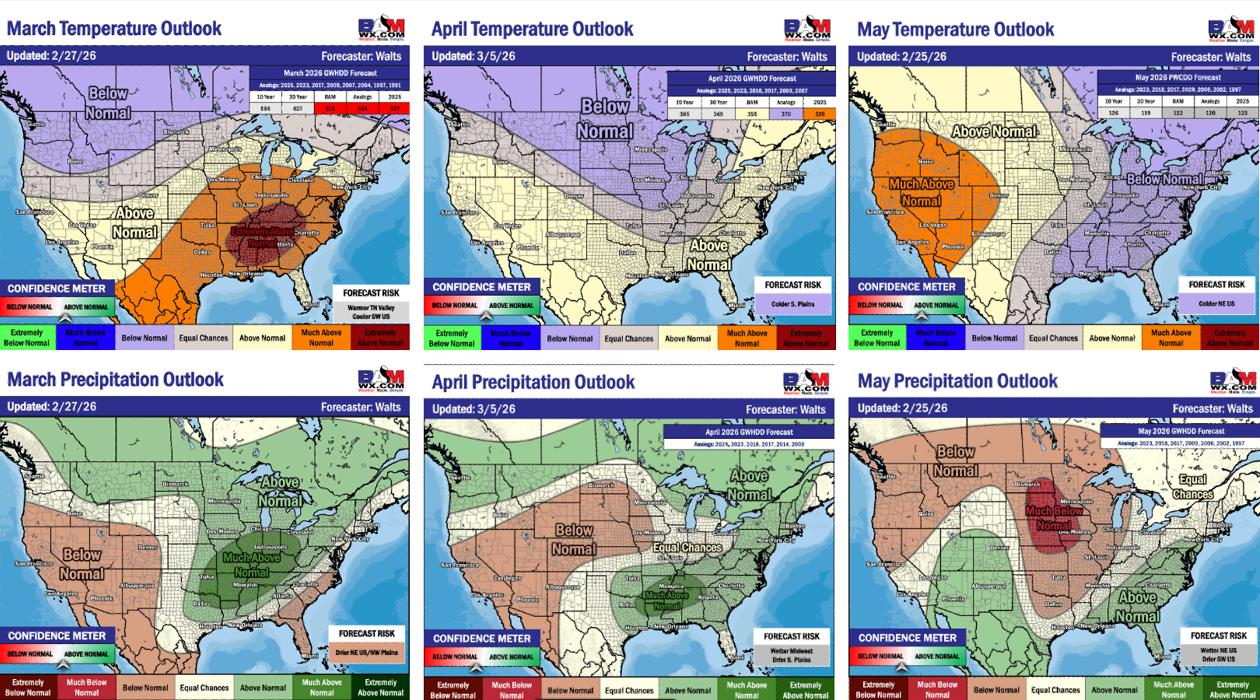
Here’s the spring outlook:
March through May:
We expect March to continue to run very mild overall with heavy rainfall potential across the Eastern Ag Belt. Some volatility in temperatures expected for the northern U.S., especially in the Northern Plains and Upper Midwest.
Into April, mild air will continue to dominate the southern tier of the U.S., with shots of colder air possible in the north-central U.S., especially into midApril. This can suppress the heaviest rain potential further south into the lower Mississippi River Valley, but
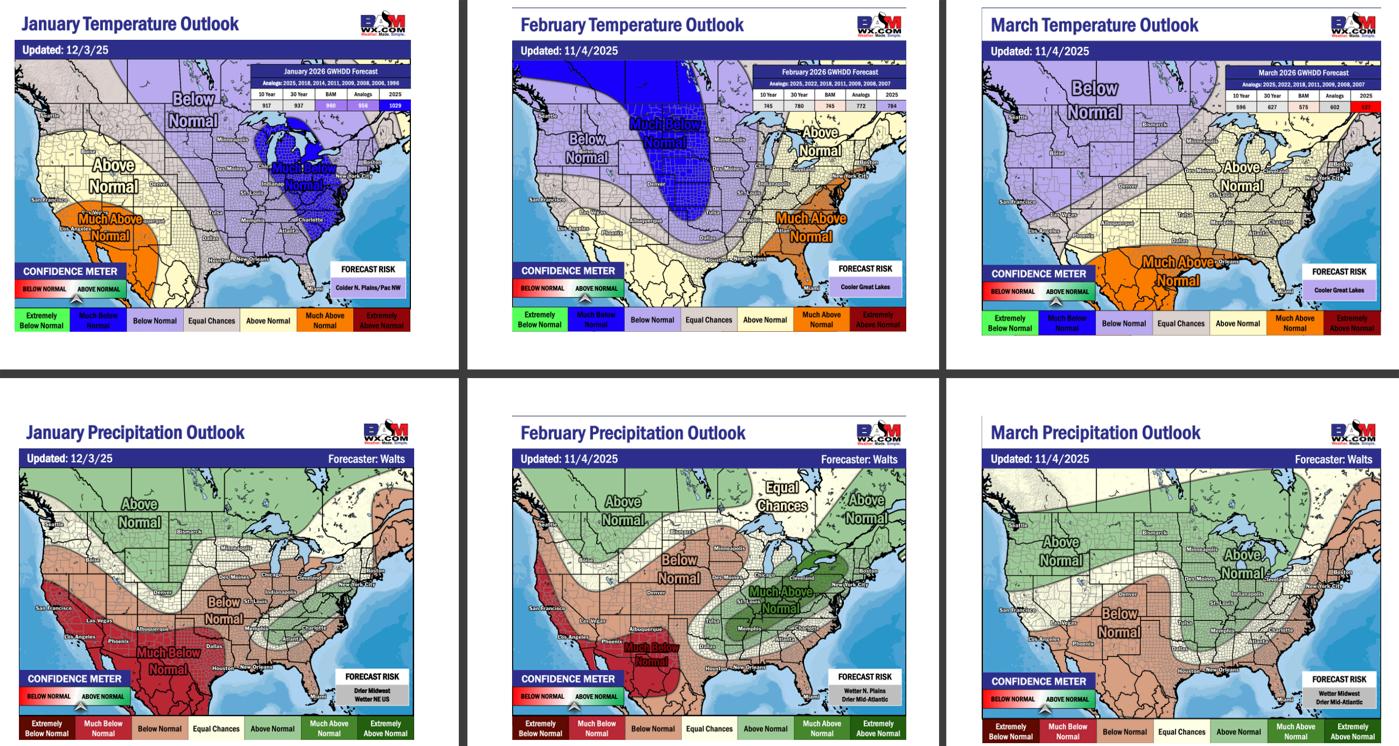
Here’s the outlook for fall harvest:
not expecting a “dry” pattern for the Eastern Ag Belt. The best chance for drier risks are in the Central Plains.
As we head into May and El Niño begins to pick up, warmth will have the tendency to shift to the West Coast with late season colder air in the East. This can pose a late frost risk for Ohio and points east. This temperature set up will allow for a quieter pattern with drier than normal conditions across the central U.S. May should offer up dry time to finish off planting, though drought conditions likely do not improve in the Plains.
BECOMING A GOOD ANCESTOR WHAT THE DOCUMENTARY FILM “HAWKINS FAMILY FARM” TEACHES
US ABOUT SUCCESSION AND THE FUTURE OF FAMILY LAND
Klemme reflects on the short documentary film “Hawkins Family Farm” that you can watch now for free by scanning the QR code, Johnny discusses how successful succession planning starts early, grows through trust, and helps families prepare the next generation to care for both the land and one another.
As the author of American Family Farmland, I’m often drawn to stories that put real faces around the questions farm families often carry: What does legacy mean? How do we prepare the next generation well? And what does it look like to be a good ancestor?
What I noticed quickly is that the Hawkins Family Farm doesn’t look like every operation represented in our readership. Their mix of vegetables, livestock, and direct-to-consumer model may differ from the corn, soybeans, or row-crop acres many of you or your tenant’s farm. That’s okay. We’re highlighting this story not because of the specific enterprises they run, but because of the way they think and talk about succession, responsibility, stewardship, and being “good ancestors” on their land. These themes apply whether your farm grows corn and beans, includes livestock, or is rented to a neighboring farmer.
Early in the documentary, Jeff Hawkins says something that captures the heart of the film: “What does it mean to be a good ancestor is a question I live with.” He also says, “Part of my job description is to be a good ancestor.” That line matters because it moves legacy beyond sentiment. It turns it into responsibility.
That is one reason this story stood out to me. In my consulting work with farm families, I see these same questions surface again and again.
While the operations may differ, the deeper concerns are often the same: trust, timing, communication, stewardship, and whether the next generation will be prepared not just to inherit land, but to lead well.
The Hawkins family offers a healthy picture of succession as a living process, not a one-time event. Jeff says, “This farm has evolved. That’s in keeping with what nature does. Nature works by succession.” That may be one of the simplest and most insightful lines in the film. Succession is not a disruption of the farm’s story. In many ways, it is part of the farm’s natural story.
Too often, though, succession planning is delayed until it becomes urgent. Jeff reflects on older farmers who never really let go, and then “when they die, it’s a mess.” I see that often in my own work. Many families care deeply about the land and about each other, but they postpone the harder conversations until age, health, or family tension forces decisions that could have been handled more clearly years earlier.
One of the strongest themes in the documentary is trust. Jeff says candidly, “From my observation, it’s usually the old guy that’s the problem in large part because of an unwillingness to trust the next generation, unwillingness to let go.” It is a blunt line, but an honest one. In many family transitions, the issue is not whether the next generation is capable. The issue is whether the current generation is ready to share leadership, trust new ideas, and make room for change.
BECOMING A GOOD ANCESTOR
WHAT THE DOCUMENTARY FILM
“HAWKINS FAMILY FARM” TEACHES US ABOUT SUCCESSION AND THE FUTURE OF FAMILY LAND
CONTINUED
Jeff then offers the better path: “For me and Zach, by and large, the most important thing is I trust him and I respect him. He’s a smart guy. He’s a caring guy, and he pours himself into his work, into this farm. It matters to him. I expect to learn from Zach.” That is what healthy transition looks like The older generation stays engaged, but it also makes room for the younger generation’s strengths, ideas, and growth.
That principle reaches far beyond the Hawkins family’s specific farm model. The crops and enterprises may change from farm to farm, but the questions are often the same: Who is this land for? What do we owe each other? How do we put our intentions into words and plans so the next generation is not left guessing?
That is where the LAND VALUES Framework connects naturally to this story In American Family Farmland, I encourage families to look beyond a single definition of value. Farmland certainly has economic value. But it also carries emotional value, stewardship value, and what I call Life and Purpose Value. In other words, the deeper question is not only, What is this farm worth? It is also, What kind of life is this farm helping us build?
In my experience, families often get stuck because they are talking only about acres, rent, ownership percentages, or tax outcomes while avoiding the deeper questions underneath. The LAND VALUES Framework from my book helps bring these issues into the open so families can move from assumption to clarity.
CURIOUS ABOUT THE FILM?
WATCH IT FOR FREE BY SCANNING THE QR CODE
USE COUPON CODE: 4SUCCESS
practice. Jeff says, “Part of my what’s it mean to be a good ancestor is to lay good plans for the future.”
That sentence forms a strong bridge between inspiration and action Being a good ancestor is not just about caring deeply. It is about making thoughtful decisions while you still can.
That is why this documentary belongs in this section of LAND VALUES Journal. Even if your operation looks very different from Hawkins Family Farm, the core message still applies. The details may change. The enterprises may differ. But the call to become a good ancestor through wise planning, shared trust, and intentional stewardship reaches across almost every kind of farm.
In the end, that may be the real question this film leaves with all of us:
Not simply who gets the land next.
But whether we are doing the work now to leave that next generation something better than uncertainty
WATCH THE FILM FOR FREE BY SCANNING THE QR CODE
USE COUPON CODE: 4SUCCESS
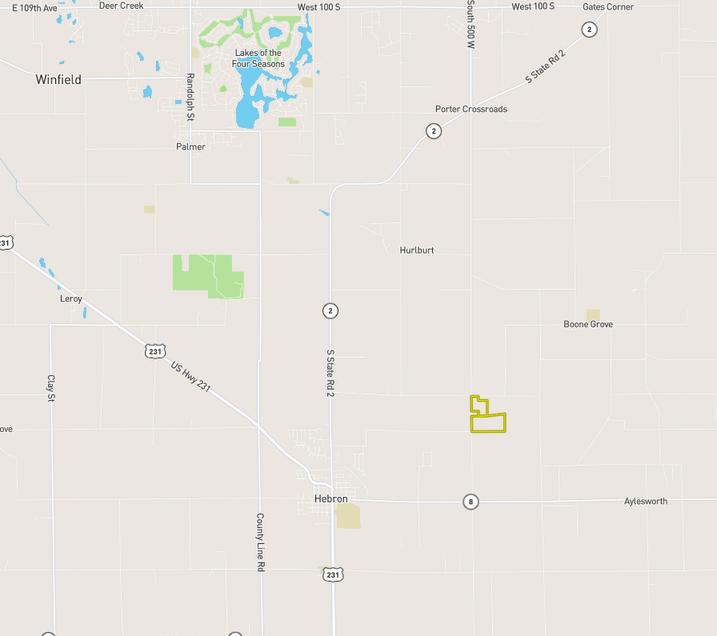
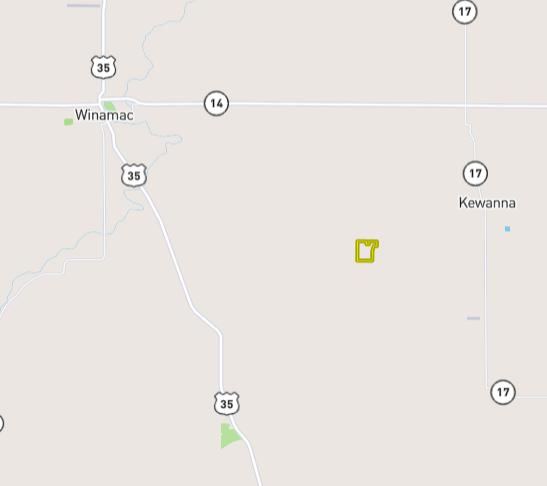
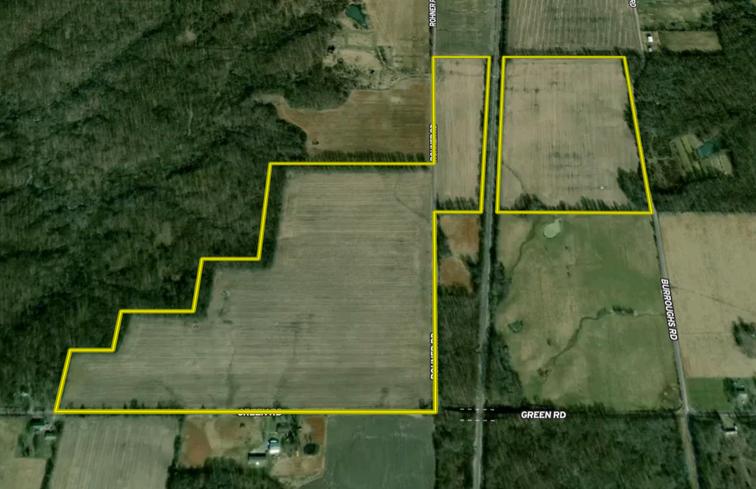
Geswein Farm & Land
75,000
3
*Total Acreage of Appraised Farmland & BPO/BOVs in 2025
122 STATES TOTAL ACRES APPRAISED + VALUATIONS COUNTIES
$501M
TOTAL ACREAGE SOLD
TOTAL VOLUME 2024 & 2025
*Total # of Counties Visited for Appraisals & BPO/BOVs in 2025
$100M
AUCTION TRANSACTIONS
TOTAL VOLUME 2024 & 2025
25,000+
TOTAL NUMBER OF ACRES SOLD IN 2024 & 2025
54% INCREASE IN VIDEO VIEWS 90%
INCREASE IN SOCIAL MEDIA FOLLOWERS
*Total increase over 2024
*Total increase over 2024
THE IMPORTANCE OF UPDATED APPRAISALS & LAND VALUE REPORTS
In today’s dynamic farmland market, accurate and timely appraisals and land value reports are essential.
Whether you’re a landowner contemplating a sale, a farmer expanding your operation, or an investor exploring new opportunities, current market knowledge is critical. Regular updates reflect shifts in commodity prices, interest rates, and local market trends, helping you stay informed and competitive.
For farmers and landowners, updated appraisals are key to successful planning during significant transitions such as retirement, renewals of operating lines, estate settlements, or succession planning Investors rely on precise land value insights to guide smart decisions and achieve strong returns.
At Geswein Farm & Land, we deliver reliable, data-driven appraisals and market insights to empower you with clarity, confidence, and peace of mind.
North Eastern Indiana: Farmland Price Per Acre by County
Transactions shown are
To request a Land Values report on a specific county or a market analysis for your own property, visit landvalues.com/report or Scan QR CODE with your smartphone
North Eastern Indiana Continued: Farmland Price Per Acre by County
Transactions shown are a sample of farms & land that are at least 75
the
and
. While there are many
Dekalb
Northern Indiana: Farmland Price Per Acre by County
Transactions shown are a sample of farms & land that are at least 75% tillable from January 2025 - 2026. While
prepare a Land Values Report just for you
To request a Land Values report on a specific county or a market analysis for your own property, visit landvalues.com/report or Scan QR CODE with your smartphone
Northern Indiana Continued: Farmland Price Per Acre by County
sale, or if your
, we can prepare a Land Values Report just for you $
Transactions shown are a sample of farms & land that are at least 75% tillable from January 2025 - 2026. While there are many factors that affect the value and price per acre by county and region, if you’d like to know more about a
is not
South Western Indiana: Farmland Price Per Acre by County
Transactions shown are a
To request a Land Values report on a specific county or a market analysis for your own property, visit landvalues.com/report or Scan QR CODE with your smartphone
South Eastern Indiana: Farmland Price Per Acre by County
a sample of
.
West Central Indiana: Farmland Price Per Acre by County
Transactions shown are a sample of
.
To request a Land Values report on a specific county or a market analysis for your own property, visit landvalues.com/report or Scan QR CODE with your smartphone
Central Indiana: Farmland Price Per Acre by County
Transactions shown are a sample of
the
. While
Carroll
Clinton Fountain Hendricks Montgomery
Parke
Putnam
Tippecanoe
Vermillion
Warren Tipton White Wayne
Northern Illinois: Farmland Price Per Acre by County
Transactions
To request a Land Values report on a specific county or a market analysis for your own property, visit landvalues.com/report or Scan QR CODE with your smartphone
West Central Illinois: Farmland Price Per Acre by County
Central Illinois: Farmland Price Per Acre by County
Transactions
$
To request a Land Values report on a specific county or a market analysis for your own property, visit landvalues.com/report or Scan QR CODE with your smartphone
Eastern Central Illinois: Farmland Price Per Acre by County
Champaign
Southern Illinois: Farmland Price Per Acre by
County
To request a Land Values report on a specific county or a market analysis for your own property, visit landvalues.com/report or Scan QR CODE with your smartphone
Southern Illinois Continued: Farmland Price Per Acre by County
, if you’d
,
Southern Michigan: Farmland Price Per Acre by County
Transactions shown are a
To request a Land Values report on a specific county or a market analysis for your own property, visit landvalues.com/report or Scan QR CODE with your smartphone
Southern Michigan Continued: Farmland Price Per Acre by County