As graduation approaches here at Georgia Southwestern State University, many undergraduate students are asking a question that echoes across campus… Am I ready?
Today’s college seniors experienced their late high school and early college years in front of a computer screen as classes were only available online. This shift to online learning, full of isolation and uncertainty, left lasting marks not only on academic habits but also on students’ confidence and social skills. And despite mastering virtual tools and learning to adapt quickly, many students feel that the pandemic robbed them from growing, both personally and professionally, for the future.
COVID ANNIVERSARY
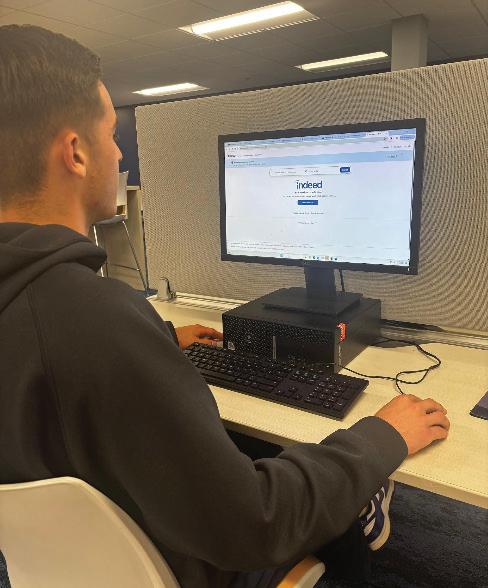
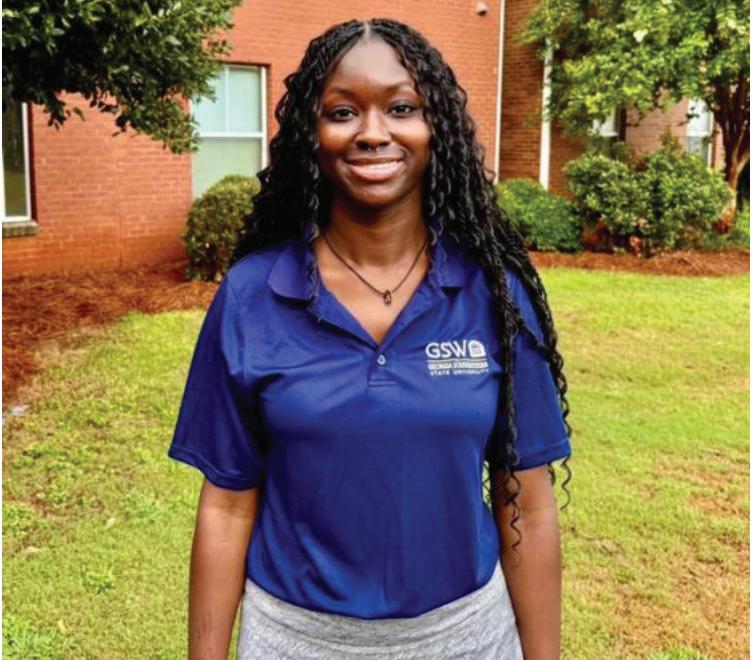
Senior business management major, Axel Gravel, looking for jobs to apply to.
According to the American Association of Colleges and Universities, less than half of U.S. students feel “highly confident” about entering the job market. The chaos of pandemic life made students more resourceful and flexible, but those strengths often mask deeper insecurities, especially as they transition into the workforce.
Many students, like Axel Gravel, a senior business management major, believe they’re missing real-world experience, not academic knowledge. Gravel believes students lack the internship and real-world experience needed to be ready for a job connected to their studies.
“I think most college students are not ready to enter the workforce after college. Why? Because college doesn’t teach you how to work in a professional environment,” said Gravel. “College gives you knowledge and information, but college does not give you professional experience, and unless you use your time in college to do internships[sic]; you have no idea of what the work environment is like, and what it requires.”
Relying solely on classroom learning limits students’ future opportunities. According to Gravel, this lack of professional experience can only be strengthened through internships or networking events. These events teach students soft skills, which cannot be taught in the classroom.
A former high school teacher who wants to remain anonymous explained that soft skills have become key factors in hiring criteria. Young graduates must demonstrate that they are good team players, able to work well under pressure, and have strong interpersonal skills to face the new challenges of the professional world.
This former teacher adds that by developing these strategies and keeping an eye out for professional opportunities, young graduates will be able to improve their employability and adapt to the new realities of the post-COVID job market without dwelling on their choices for the future.
Continued on Page 2
Continued from Page 1
Still, there’s optimism here at GSW. Students recognize the same challenges that made their education difficult also taught them how to adapt. Even if the students gain professional experience or learn soft skills on their own, they are making the effort to adapt. And in a postpandemic world, adaptability may be the most valuable skill of all.
As the class of 2026 prepares to take their next step, one thing is clear: readiness now means more than grades or a diploma. It’s having the confidence to face uncertainty, something they have been doing since the world stood still five years ago.
WHAT’S GOING ON WITH THIS ISSUE?
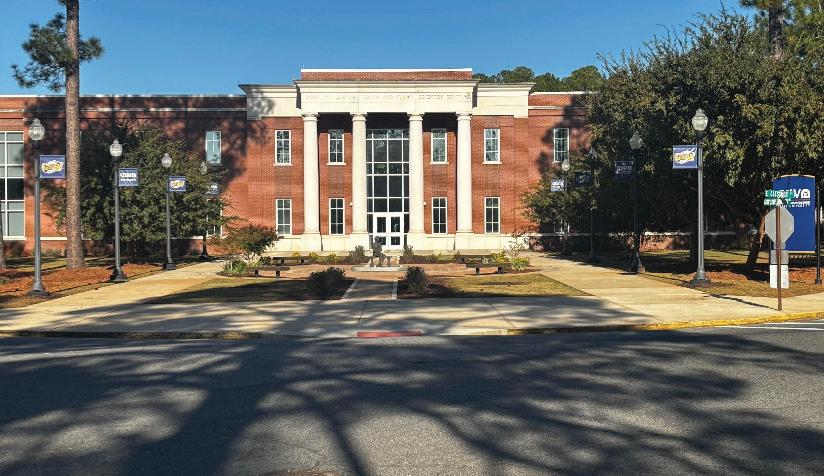
The Rosalynn Carter Health and Human Sciences Complex at GSW.
This special issue of the Sou’Wester newspaper takes a deeper look at the COVID-19 pandemic and its lingering effects through the eyes of student journalists. Many of the writers in this issue were transitioning between middle school and high school when the pandemic hit. This milestone in life is difficult enough as it is, so I could not imagine what it was like with the added pandemic.
The pieces in this issue reflect on the pandemic and our “new normal” with frustration and hope. COVID was something we all experienced and even though it no longer dominates our headlines, we have not yet fully recovered. But we are healing.
I want to thank the COMM 3200: Journalism students and the Sou’Wester staff for their contributions to this special issue.
Elizabeth Shiller, Ph.D. Faculty Advisor
FINDING VALUE IN (DIS)CONNECTION
Madison Vickers Journalism Student
Before COVID, high school hallways were full of energy and anticipation, but that quickly changed when schools went online. The pandemic not only interrupted our daily routines, but it also permanently reshaped how we learn, connect, and understand the people around us.
Jeffery Bryan, a senior Exercise Science major at Georgia Southwestern State University, remembers this shift vividly.
“COVID-19 hit my junior year, and at first it was pretty cool having two weeks off,” Bryan said. “But then it hit me, my baseball season was over. I didn’t get to spend that time with my friends like I thought I would.” Rachel Tippens, a nursing major who was also in high school when the shutdowns began, echoed Bryan’s feelings adding that remote learning intensified this disconnect.
“School felt carefree before COVID,” Tippens said. “Suddenly everything was online, and staying connected with teachers and friends felt impossible.”
According to Bryan, this disconnect created a motivational decline more students turning in homework late and attention spans falling off. The thought of rolling out of bed only to stare at a computer all day made learning feel both distant and optional.
For Bryan, this lack of in-person support changed how seriously he approaches school now.
“Taking AP Calculus online made everything harder,” he said. “Not having hands-on help showed me how much I actually depend on being in class with classmates and teachers. If possible, do in-person classes. Go to class. Just being there can keep you from falling behind.”
This renewed craving for connection extended beyond traditional classrooms as well. At Griffin Bell Golf Course, also part of Georgia Southwestern State University, golf professional Rocky Roquemore watched how the pandemic changed the community’s relationship with the sport.
“People felt safe coming out to the course because it was outside,” Roquemore said. He noted that even with the pandemic restrictions such as having glass barriers in the pro shop, bleaching the golf carts, and implementing single-rider rules, rounds played rose from 12,000 to 17,000 during COVID.
The main challenge Roquemore faced was adapting how he taught golf during the pandemic. Instead of adjusting a swing physically, he found himself explaining movements multiple times or pointing at parts of the club from a distance. He noticed attention spans drop, which he believes resulted from social distancing and students not being around people enough.
“It became tough when nothing could be hands-on,” Roquemore said.
Tippens adds that while the pandemic made learning difficult, she found value in that experience and feels it prepared her for a career in nursing.
“I learned that everyone has something they’re carrying,” Tippens said. “Communication sometimes means just listening.”
The pandemic may have been temporary, but we still feel the effects to this day. The forced disconnect from social distancing and online learning didn’t stop us from learning, it made us value the connections we took for granted. One thing is certain, as education continues to evolve post COVID, it has become more intentional, more patient, and more human.
REFRAIN FROM SONG: POST-PANDEMIC PRODUCTIONS
Zac Monnier Reporter
Georgia Southwestern students have long enjoyed cabarets, choirs, and concerts on campus. Even a global pandemic could not stop the music.
COVID may have shifted live performances in Jackson Hall to a virtual stage, but GSW continued to showcase musical talent from across the nation for students, faculty, staff, and community members to virtually attend.
Looking back at the 2021 Spring Choral Concert livestream, the singers performed in the house, where the audience usually sits, standing four chairs apart per social distancing guidelines. This recording is available on Georgia Southwestern’s YouTube page.
Now, in 2025, the arts are firmly back on campus with in-person events. Outside of the Chamber Concert series, GSW offers many musical events like Jammin in The Pods! that features a live DJ, and the Silent Headphone Party in the Intramural Gym during this semester’s Welcome Week.
Whether in person or virtual, music is vital to campus life here at GSW.
To learn more about upcoming concerts, visit gsw.edu/community/events
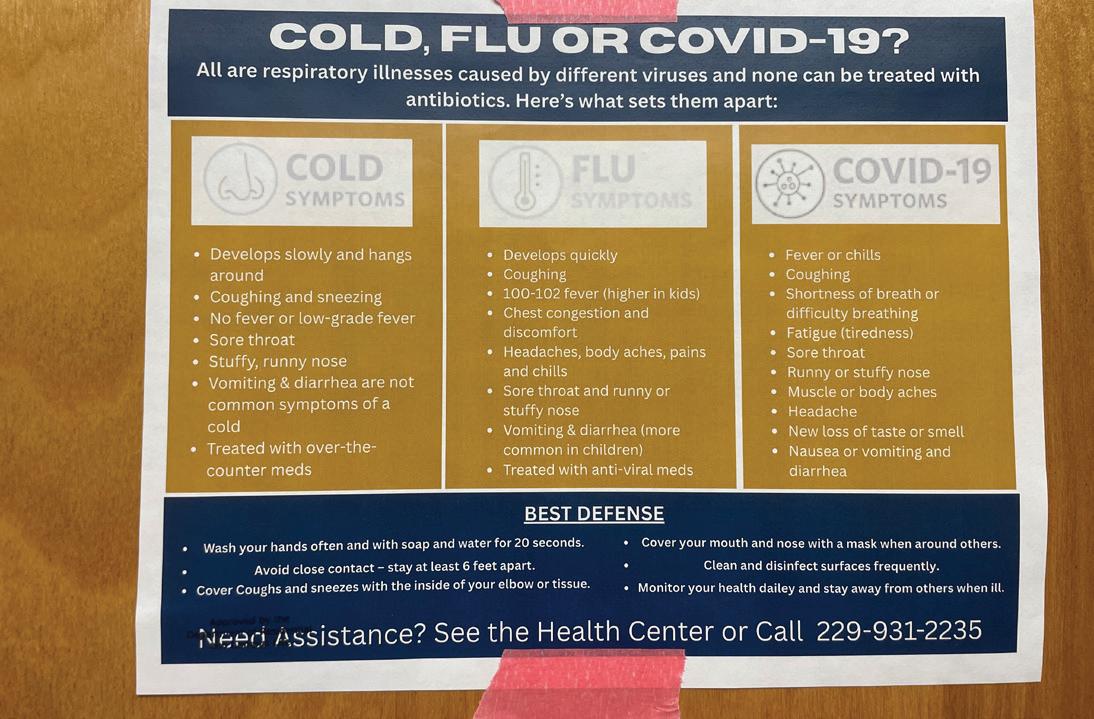
A poster from Collum Hall detailing the symptoms of COVID, Flu, and Common Cold.
TIME TO LET OUR GUARD DOWN?
Dylan Scott Journalism Student
When the COVID-19 pandemic first started, updates appeared nearly every day with constant new protocols to follow. Now, people no longer feel the need to wear masks, vaccinate, or isolate themselves when sick. So, does this mean COVID is a thing of the past?
According to the CDC, COVID is no longer considered a pandemic; it is now endemic, meaning that it is now a part of our lives, like the flu or strep throat.
“It’s definitely endemic. It’s just something we know is out there and is tested for then treated by the symptoms,” said Hailey Dunford, a respiratory nurse at Elevation Pulmonary.
So, should we be concerned? Even though COVID is no longer in pandemic status, it is still good to be cautious.
Being cautious means prioritizing your health and safety. You can do this by masking up during outbreaks, avoiding contact with other people if you test positive, and staying up to date with your vaccinations.
“Getting [COVID] shots is still a good idea in the same way that getting flu shots is a good idea,” said Dr.
Jonathan Carter, Communication and Emerging Media professor here at GSW.
Dunford notes that while there are reasons to hope, with symptoms decreasing and our immune systems adapting to variants, COVID is still here.
“COVID is constantly spiking with the peak of each season,” said Dunford.
According to the John Hopkins Bloomberg School of Public Health, COVID peaks twice a year, once in the summer and again in the winter. These peak periods bookend GSW’s fall semester and kick off the spring semester. This means that when GSW students are at peak interaction with other students, COVID is at its peak as well.
So, don’t panic, be cautious.
STAYING SAFE FROM COVID VARIANTS ON CAMPUS
Ariyanni Raymon Journalism Student
Five years after the height of the COVID-19 pandemic, Georgia Southwestern State University has returned to a lively and familiar rhythm. Students fill classrooms, events are back in full swing, and campus life feels much like it did before 2020. Yet, with new COVID variants still appearing, health experts continue to remind the community that the virus has not disappeared.
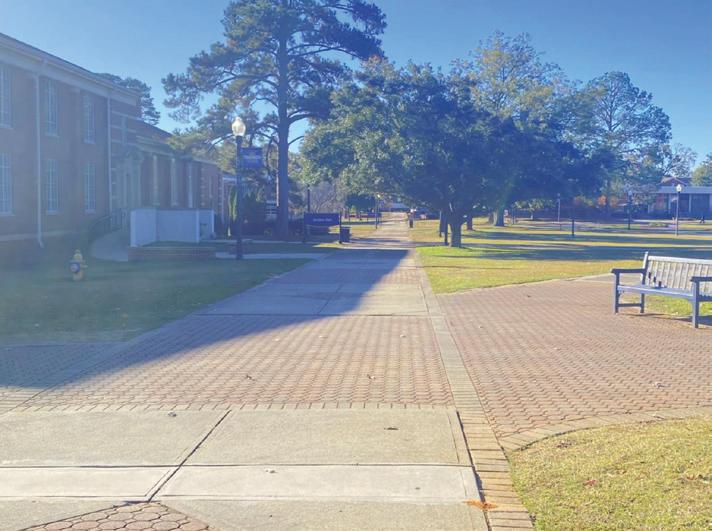
Morning sunlight casts long shadows across the main walkway near Jackson Hall.
“It’s easy to forget about COVID now, but it’s definitely still around,” said sophomore Physical Education major Javon Ingram. “A few people in my classes have gotten sick this semester, so it’s a reminder that we still need to be careful.”
Although social distancing and mask mandates have ended, students are still responsible for protecting themselves and others from illnesses. According to the Centers for Disease Control and Prevention (CDC), COVID now follows seasonal trends similar to the flu, so we are all encouraged to take preventative actions such as washing out hands regularly, staying home when sick, covering our mouths when we cough, and staying up to date on vaccinations.
GSW’s Herschel A. Smith Health Clinic recommends that everyone receives the flu and COVID vaccine or booster. According to the clinic’s website, vaccines will be advertised when they become available and with be given by an experienced medical professional.
GSW Campus health officials also stress that early testing is one of the most important ways to reduce spread.
Symptoms such as fatigue, congestion, or mild coughing can easily be mistaken for a cold or allergies, but testing helps confirm whether COVID is the cause. The clinic offers free testing to students throughout the semester.
Continued on Page 6
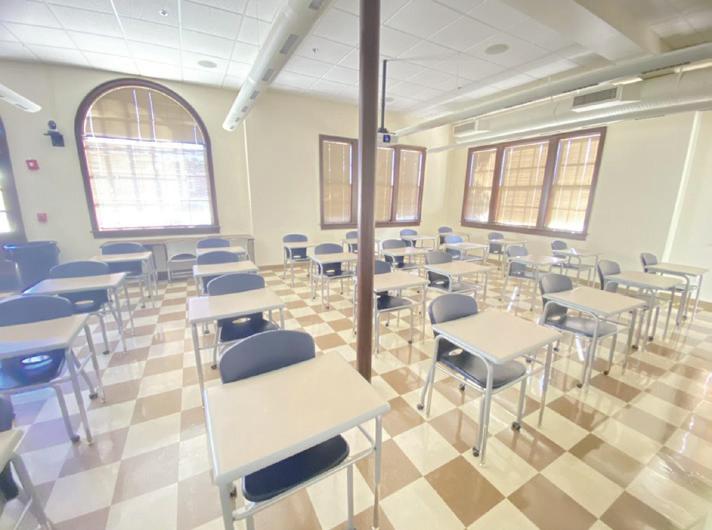
Desks remain spaced apart in a classroom. This setup was introduced to promote social distancing.
Continued from Page 5
GSW prioritizes the health and safety of students. If you are experiencing COVID-19 symptoms, contact the health clinic at (229) 931-2235 to schedule an appointment. The health clinic also accepts walk-ins.
As life continues to move forward, GSW’s approach reflects the lessons learned over the past five years: prevention is easier than recovery. Staying informed, maintaining good hygiene, and supporting a culture of care are the keys to keeping campus safe and thriving.
LOOKING BACK AT COVID
Savannah Lowell Journalism Student
Few could have predicted the lasting changes that followed lockdown in March 2020. The COVID-19 pandemic forced people all over the world to exchange our regular lives for ones with masks and isolation as schools closed and grocery shelves emptied.
“It felt weird,” said Durbin Frazier, who was a student at Schley County school at the time of the pandemic. “We were told that we would be out for the next two weeks and it ended up being a year out of school.”
We all know that unexpected shift. Restaurants transformed into takeout only, and we could only celebrate graduations and birthdays via Zoom. During the quarantine, there wasn’t anything else to do, so a lot of us picked up new hobbies. Our daily routines soon became all about food preparation, working out at home, and streaming movies.
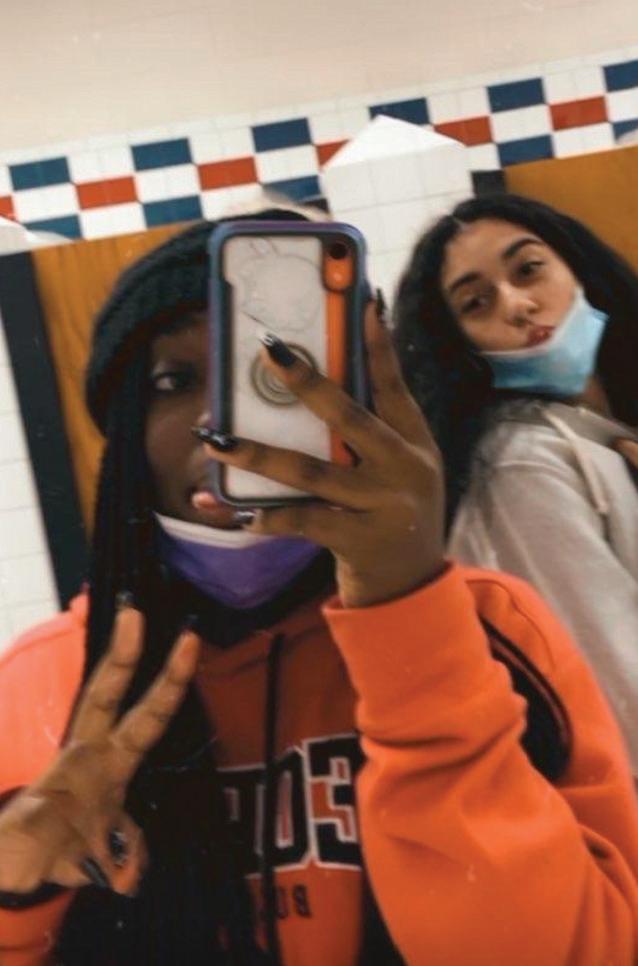
Amya Hawkins and a friend snap a mirror picture with a mask on capturing what the pandemic was like.
“When I first moved here it was depressing, I couldn’t do anything because COVID was a thing,” said Amya Hawkins, a sophomore nursing major. Amya had just moved to Georgia when COVID emerged. Needless to say, her first time in Georgia didn’t go as planned.
“The pandemic was so bad. It was a very sad year,” she added.
COVID changed everything for us.
I was in my eighth-grade English class when the announcement came over the loudspeaker. “Hello Furlow Falcons, we will not hold the middle school dance tonight because COVID is going around. We will be out of school for the next two weeks.”
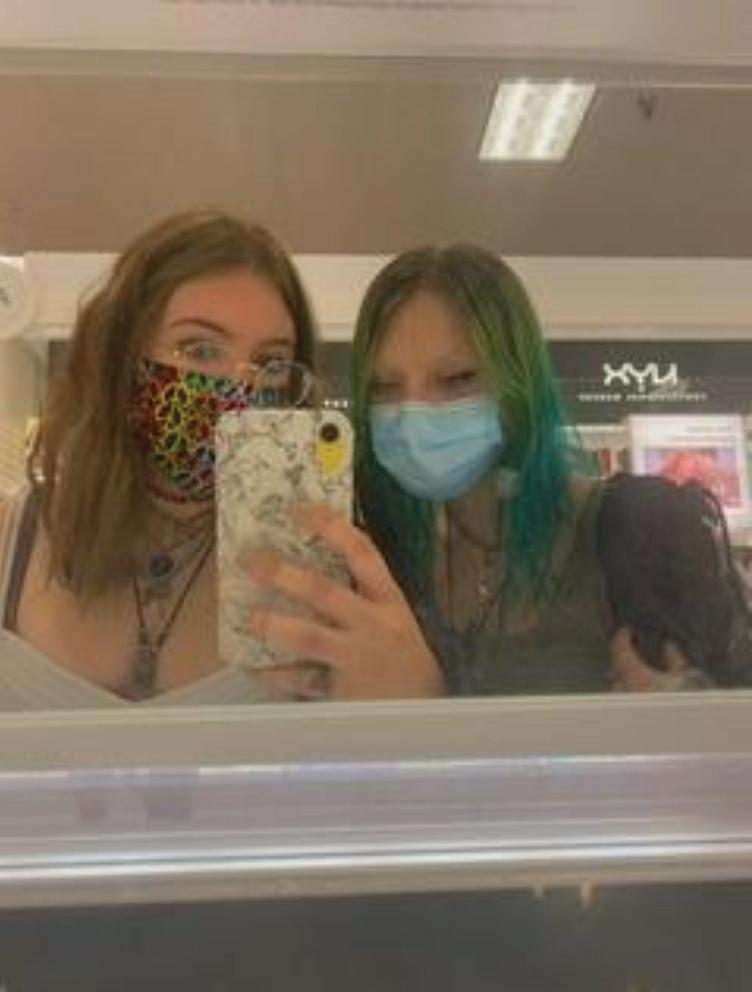
Durbin Frazier and a friend shopping at Ulta Beauty during the pandemic.
I was so upset! That night we were supposed to have our last middle school dance. I couldn’t wait to go, and now it was canceled. I was so disappointed. I was thinking they would reschedule the dance, but they never did.
During the two weeks off, the teachers would post updates and give us work to do, but I didn’t take any of this seriously. I didn’t believe something like this would shut the school system down. I was just happy that we were out of school for two weeks.
But then the two weeks were over, and we eventually had to go back. School looked very different. My school was a K-12 school, and with so many students, we had to alternate days. I would go to school in person on certain days, and I’d be online for the other days.
I didn’t like online school. It was difficult for me. I was used to the handson schooling and where I’m from, the service was bad anyways so being on a Zoom called barely worked for me. When it did work, I was so distracted because everyone had to have their cameras on and everyone would be doing something while on camera. I remember one girl kept sliding down her steps while on the call.
We were online for at least a year. It was not a good year. But I was glad that I got to take the GA milestone virtually. That’s one test I hated the most.
It felt weird being back at school and seeing everyone after being virtual for so long. Things were so different. People actually kept their distance in public areas, and we still had to wear masks and if we didn’t wear our masks properly, we’d be written up. I hated wearing masks—they broke my face out.
COVID changed our lives drastically. We all got through it together, but I feel like we missed out on so much. I missed my last middle school dance and my first homecoming among other things.
It feels like COVID is following us. I didn’t even get COVID until my first day of college. It was bad. And now there are still other strands going around? I’m not sure when it will ever end, but I think it’s time.
POST-PANDEMIC PROFESSOR PRACTICES
Rebecca Jones
Journalism Student
In spring of 2020, the COVID-19 pandemic swept through American educational institutions, wreaking havoc on the traditional learning structures and leaving behind lingering effects on students and educators alike. COVID-19 presented new challenges that still impact the way Georgia Southwestern professors teach today.
Dr. Ellen Cotter and Dr. Judy Grissett, professors in the Department of Psychology and Sociology, say the virus affected many classroom aspects, such as attendance and student engagement, technology, and lecture structure.
Continued on Page 8
Continued from Page 7
As COVID-19 forced classes online, professors scrambled to upload the remainder of their classes’ content online as quickly as possible. Cramming all of their classes into GeorgiaVIEW, GSW’s virtual learning platform, demanded a great amount of effort over their extended spring break.
Even as students returned to in-person classes, they still relied on the
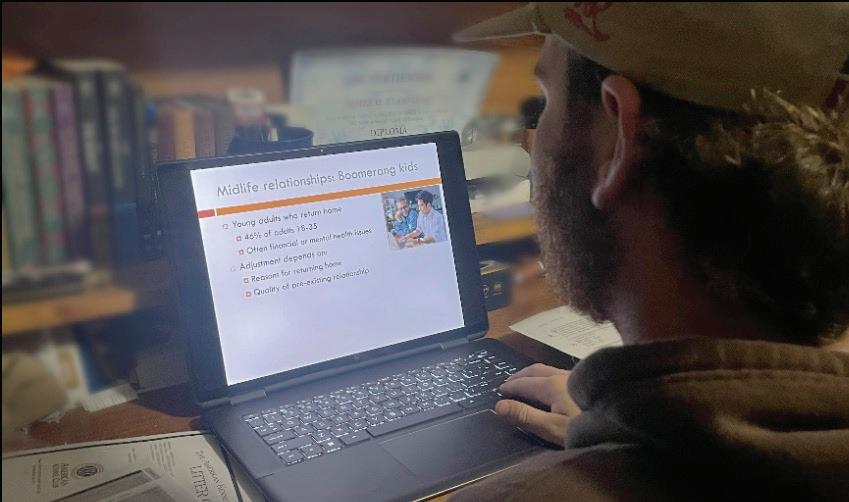
One of Dr. Cotter’s students studying a lecture PowerPoint. technological class modifications that COVID-19 demanded. Professors saw this reliance and continued to make their courses virtually accessible. Dr. Cotter, for example, continues to upload her lecture PowerPoints online, something she did not do before.
This virtual accessibility brought its own challenges. Since returning to campus, Dr. Cotter has noticed a drop in work ethic in her post-pandemic classrooms.
“Some students will access [lecture slides] and follow along with them during class and use them for note taking, but some students will rely on those and use them as a crutch,” said Cotter.
Dr. Cotter also believes that the virtual accessibility of resources has created an expectation that everything in class will be online, making attendance feel less mandatory than it did before the pandemic.
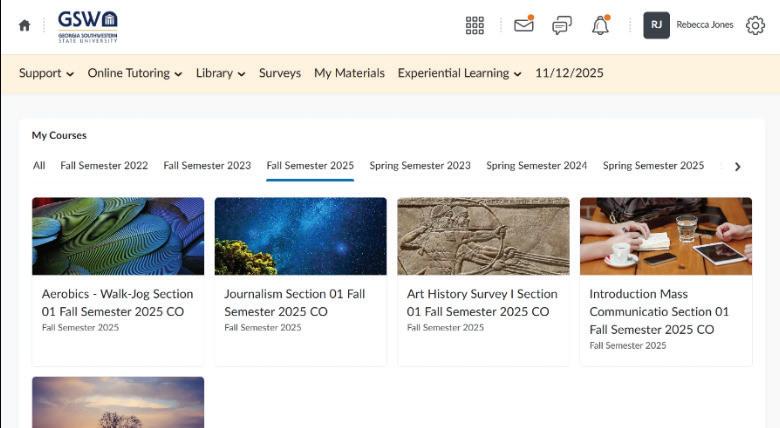
Professors and students use Georgia for in-person and virtual class access.
Dr. Grissett faced similar issues with student engagement. She observed a dip in in-class engagement between 2021 and 2023 but says that now students seem to be returning to normal engagement.
“We were all so detached and now we are coming back together,” said Dr. Grissett, noting that students want to feel connected and engaged in class. To foster this connection, Dr. Grissett structures her lectures to be more captivating through discussions, conversations, and examples.
Despite these negative challenges, both professors agree that these new teaching practices have produced some positives outcomes as well. One positive outcome is that universities like GSW now offer more classes and programs online, giving more people access to education and the opportunity to earn a degree.
COVID may have changed the way educational institutions operate, but the changes are here to stay.
IMPROVING OUR MINDS: MENTAL HEALTH CARE GROWS ON CAMPUS
Gabrielle Foster Journalism Student
The COVID-19 pandemic may no longer be a focal point of the news anymore, but we are still feeling its effects. It reshaped the way we connect, socialize, learn, and work by forcing us to adapt to virtual spaces and adjust to lifestyles that we were not ready for. This quick shift in reality reminded us of the importance of prioritizing our mental health through resilience and community.
Mental health meant something different pre-COVID. It was not something that was openly discussed or
supported. But, when the pandemic hit, the isolation forced us to feel our emotions and face them head-on. Except for this time, we were on our own.
Before COVID-19, society made vulnerability a sign of weakness, causing people, particularly young adults, to struggle with expressing their emotions. Society was very adamant on “being strong” and “pushing through” which made the idea of wanting to share your feelings, personal struggles, or feelings of anxiety seem embarrassing.
Oneil Lewis, a GSW alum and Software Solutions Management Specialist for the university, says he did not know much about mental health or how to deal with problems such as ADHD, stress, and anxiety when he got to GSW. Because mental health was not talked about, no one knew how to cope with these new issues.
Many of us struggled with the loneliness of quarantining for long periods of time and switching from inperson classes to now fully online classes. This switch, along with the uncertainty of our futures, intensified emotions and mental fears. We moved away from the social support we were so used to for college, and now COVID has taken away the social support that we had created here on campus.
“Coming into a new environment was a big shift, as they weren’t able to truly come into contact with students around campus, so it felt like a separation barrier,” said Lewis.
Without the in-person comfort of our friends, many of us turned to social media because platforms like Instagram and TikTok gave us a space to openly discuss what we are feeling. We found community and support through virtual means. Social media created a space for students to truly feel their emotions and helped us find ways to cope and keep ourselves energized such as journaling, exercising, going to online therapy and creating self-care routines.
Since returning to campus, GSW students have more mental health resources and social support than ever before. Not only did we get our campus support back, GSW added some positive changes to the campus.
Esther Coulibaly, a junior here at GSW, says that access to mental health resources on campus has rocketed, creating a livelier campus and instilling a feeling of growth within students.
“Before the pandemic, mental health wasn’t talked about enough, and numerous resources weren’t as readily available as they are today,” said Coulibaly. “A positive change that my university underwent after COVID was a lessened stigma around mental health and having conversations about mental health were less taboo.”
Since 2021, GSW has improved its mental health resources by adding both in-person and virtual counseling options. Students now have access to the Student Health & Counseling Services, located in the Herschel A. Smith Health Clinic as well as to the Peer Connect organization and many student-run events centered around therapy and how to find your calm space.
Isolation, reclusion, and quarantine best describe the lifestyle COVID-19 gave us. But the pandemic also made us slow down, giving us time to focus on our mental health. Now we are bouncing back stronger and more connected than ever.
Esther Coulibaly, Junior.
REDEFINING COLLEGE BASEBALL
Trey Clinton Journalism Student
The 2020 baseball season was cut short due to the COVID-19 pandemic, but college baseball programs, like Georgia Southwestern’s, are back at bat stronger than ever.
“Coach told us the season was over after we had just finished practice,” said Cooper Sain, GSW senior pitcher. “Everyone quietly packed up. When or if we would play again, was a mystery. It didn’t seem real.”
This sudden strike out forced players to reflect on what the sport means to them.
“It really changed my perspective,” said Sain. “I began to enjoy the small things, like team lifts, practices, and even simply hanging out in the locker room. I became aware of how important baseball is to our identity when it was taken away. I no longer take any game for granted.”
COVID changed college baseball in many ways. Many of the digital resources used when everything went online during the shutdown are still essential. Player progress is monitored digitally, online recruiting videos and demonstrations are still crucial, and games continue to be livestreamed for fans all over the world to watch.
“COVID forced us to rethink how we do things. We had no other option, so we implemented online meetings, virtual scouting, and video breakdowns. These days, we use those tools on a daily basis. We are now more productive and data-driven thanks to what began as a backup plan,” said Josh McDonald, GSW head baseball coach.
The pandemic also changed the way athletes approach their mental health. GSW’s athletic department offers sports psychology services and frequent team check-ins to support players with their motivation, managing stress, and balancing their schoolwork with practice.
“We discovered that performance isn’t just about physical ability. Connection, appreciation, and mental toughness are equally important. We are emphasizing that more than ever,” said McDonald.
Despite losing the 2020 season, GSW baseball is ready to hit any curveball thrown their way.
THE SOU’WESTER STAFF
Emily Crenshaw Digital Media Design ecrensh3@radar.gsw.edu