3 minute read
Tipping the Scale

Scale
Tipping the Scale in your Favor
No, not that scale! Let’s take a look at Scale as a design principle. Scale refers to how the size of a design relates to the area in which it is placed. In floral design, scale refers to the relationship between the physical dimensions of a composition compared to its immediate surroundings. If your arrangement is not in scale with its setting, it can appear out of place.
We tend to judge the size of objects by our own experience based on human proportion. For example, if a photo shows a child playing with a kitten, and the photograph shows the child is bigger than the kitten, that size relationship between the two is familiar, and what we experience in real life; both seem to be in harmony. Technically speaking, scale is a kind of proportion, but it only applies to the size, area, or venue surrounding the design.


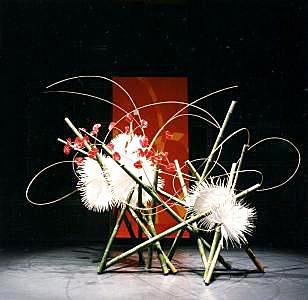
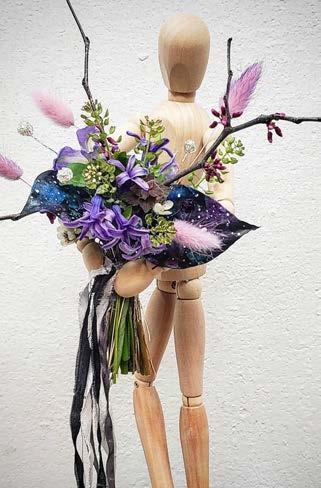
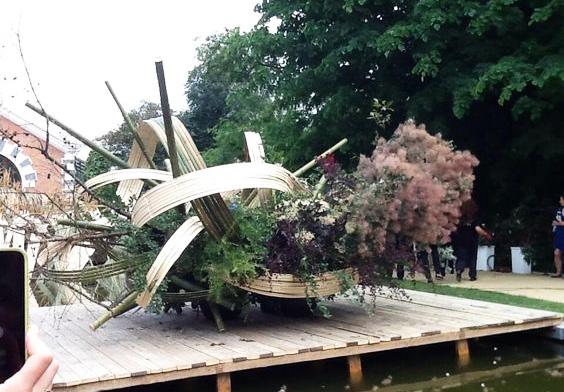
Because we know the size of an object such as the Ikea 9-inch wooden artist model, we can objectively look at the floral arrangement and know it is in scale with the model. In the photo above, we know the size of a Sharpie is 5 inches, and know that it is not in scale with the area in which it has been placed. The same concept in reverse is true for the giant cup. Basically, a single object has no scale until it is seen in comparison with its location. In floral design, we tend to experience scale by comparing the designs size to the size of the space in which the design is placed. In the photograph below, an outdoor floral display by Tetsunori Kawana appears smaller because it is in a larger area. Compare a similar display (left) in a large indoor space with humans in the background for reference, and you have a better concept of the massive size of both exhibits.
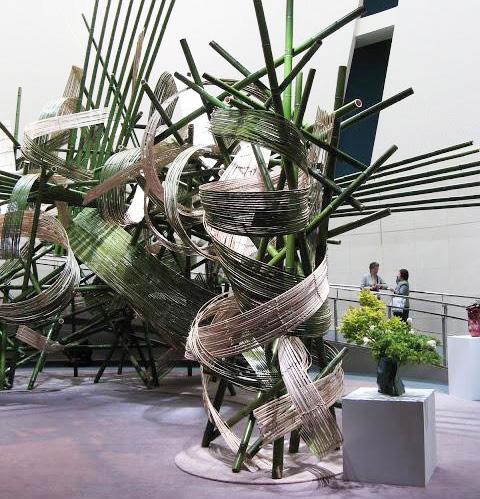
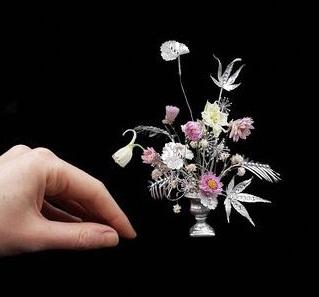
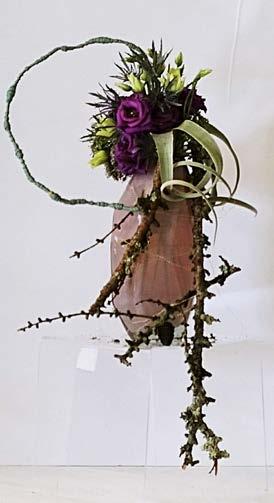
One way to train your eye to assess a space’s size is to look at photographs of designs without a comparative element and imagine what size the area was in which the designer was working. The design below (left) could be an 8-foot by 10-foot floor display, or a 5-inch by 6-inch petite design. Can you tell which it is? Not really. The design is entirely in scale with its surrounding area; it would work well in either space, whether a large area or a niche. It is easier to recognize extreme size comparisons. You would most likely not put a large traditional mass arrangement on a coffee table, just as you would not put the design below as a centerpiece on your dining table.
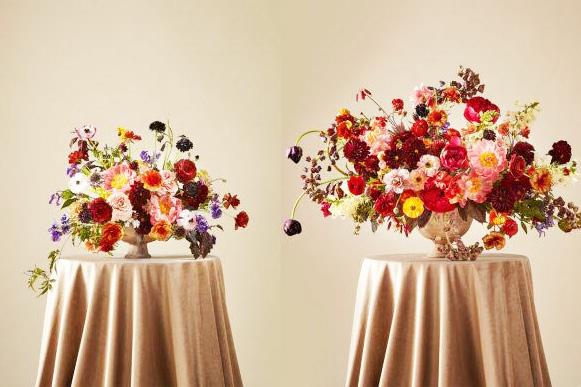
What happens when the size comparison is a bit more subtle? In this photograph (right), the table size, the cloth color, and containers are identical; however, one design is smaller with fewer flowers than the other? Which do you choose? They are both lovely and in scale to the relationship of the tabletop, but would either one work? No, because we do not know the room size in which the designer will place the arrangement.
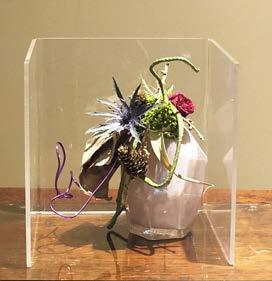
Studying how scale impacts your design is simple but extremely important. Nothing beats practice! Working within a niche (or box) is an easy way to understand how much your components make a difference in the area to which you are relating. The photographs below were taken at the Zone V Floral Design Workshop last January. The workshop coordinators Mary Jo Strawbridge, Ginnie Tietjens, and Coordinator of the Floral Design Workshops, Wendy Mahoney Russell, created and tested these designs specifically to teach scale and proportion. They introduced a miniature and a small design using an acrylic stand as the perimeter for both. “Scale-up” your skills by trying these at home!