Sustainability Report 2025
Chairperson’s letter to the stakeholders
Dear Stakeholders,
For Galdi, 2025 marks an important milestone in our journey: forty years of history that represent not just a landmark, but a solid base from which to continue growing. Four decades of experience, relationships and expertise that have enabled us to become what we are today and, above all else, to look forward with confidence to the challenges that lie ahead.
Over the course of the year, we have taken a further step forward on our road to development. Our new visual identity is not merely a superficial change, but the tangible expression of a broader vision: that of Galdi as a trusted partner, capable of supporting our customers with complete and integrated solutions, thereby generating lasting value. The integration of Artema Pack falls within this same vision, strengthening our ability to operate in an increasingly complex and interconnected market environment.
2025 was also a year in which we further strengthened our commitment to ESG issues. We firmly believe that growth cannot be separated from responsibility: towards the environment, towards people, and towards the entire supply chain. For this reason, we have intensified our dialogue with our partners, fostering opportunities for feedback and discussion with the supply chain, in the knowledge that only shared growth can generate genuine and lasting value.
Looking to the future, 2026 represents an opportunity for us: to continue growing by building on what we have achieved, whilst also setting our sights on new goals. We want to continue steadfastly along the path we have taken, carefully measuring our impact and constantly improving our performance, so that our contribution to the Sustainable Development Goals becomes ever more tangible and structured.
This fourth Sustainability Report has been drawn up precisely with this aim in mind: to transparently share not only our results, but also the rationale behind our actions and the direction we have chosen
In conclusion, I would like to extend my sincere thanks to everyone at Galdi, who, every day, with their expertise and passion, make this journey possible, and to our partners, with whom we share the responsibility and ambition to build long-term value. Together, we continue to shape Galdi’s future.
Antonella Candiotto President and CEO

COMPANY PROFILE
For over 40 years, Galdi has been developing technological solutions for food packaging in recyclable multi-layer containers made predominantly from FSC-certified paper, supporting customers from concept development through to products on the shelf.
2. Company profile
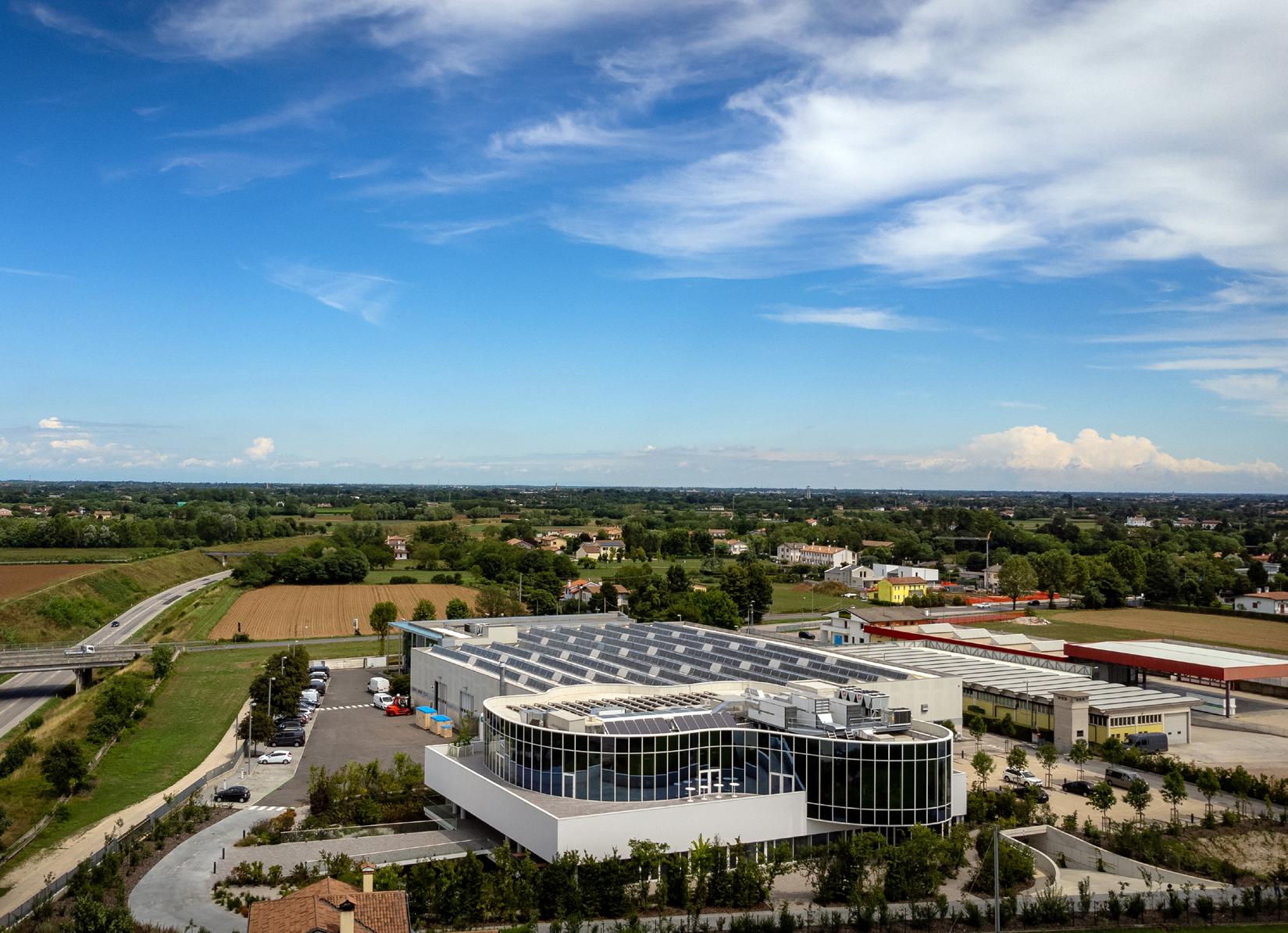
Galdi S.r.l., [“Galdi”, “the Company” or “the Organisation”] hereinafter referred to in this document, has specialised for over 40 years in the design and manufacture of food packaging machinery. The Company develops high-tech solutions, offering production lines dedicated to the packaging of liquid foodstuffs in recyclable multi-layer containers, comprising over 70% FSC-certified paper, known in the industry as “Gable Top”. According to the Global Industry Classification Standard (GICS), Galdi S.r.l. falls within the “Industrial Machinery & Supplies & Components” category.
The company positions itself as a strategic partner for its customers, offering not only solutions for filling and primary packaging, but also integrated engineering services for the creation of complete packaging lines, including secondary packaging systems and end-of-line solutions.
Galdi works with companies of various sizes, from start-ups to multinationals with offices around the world, supporting them in achieving their desired business objectives. These are organisations with differing needs, which Galdi addresses in a diversified manner using specialist expertise, ranging from packaging design and management consultancy, through technical packaging solutions, to engineering and project management skills – the latter being particularly suited to well-established organisations aiming to increase the efficiency of their production processes.
Galdi offers its customers an after-sales technical support service, developed over the years with the aim of supporting customers across the globe by means of supplying spare parts and maintenance services tailored to each customer’s production requirements. The Help Desk service is flanked by the After-Sales division, which comprises teams of specialist technicians in Italy and abroad.
In particular, the company has recruited local technicians in the areas where Galdi’s “Strategic Business Units” are located.
A strong appetite for innovation – an integral part of Galdi S.r.l.’s corporate culture and fostered since its foundation in 1985 by Galdino Candiotto – has driven the on-going evolution of its products and the company’s digital transformation process.
With the aim of reducing the environmental impact of packaging technologies and optimising plant operating costs, Galdi has developed a digital platform capable of monitoring system performance and providing end-users with information and tools useful for improving operational efficiency and simplifying the management of packaging lines.
In order to maintain a high level of innovation in its products and services, the company works together with local universities and schools, offering students opportunities for work placements, dissertations and
PhDs, with the aim of introducing them to the company and familiarising them with its operations with a view to future recruitment.
Galdi’s commitment to the local area is reflected, first and foremost, in its search for qualified local suppliers and partners, with the aim of helping to build a robust and loyal supply chain.
The company also aims to involve its partners not only in the growth initiatives necessary to tackle market challenges, but also in the adoption of practices consistent with ESG principles and the Sustainable Development Goals.
In 2022, Galdi became a Benefit Corporation. Benefit Corporations represent a business model which, in the course of their activities, combines the aim of generating profit with the pursuit of one or more objectives for common benefit, operating in a responsible, sustainable and transparent manner towards people, communities, the local area and the environment.
Galdino
GALDI
2.1 ESG profile
ENVIRONMENT
Purchase of electricity which derives from renewable sources, by means of guarantee of Origin
A company-wide power management system is in place to monitor energy consumption in real time across the various business areas
Photovoltaic systems for own energy generation
CO₂ emissions resulting from the use of natural gas are offset through the purchase of 100% Compensa CO2 Gas
Galdi Village is LEED Gold certified
A constructed wetland system for wastewater treatment is in place
Use of the Too Good To Go platform in the company bistro to prevent food waste
Purchase of FSC-certified corrugated cardboard for the transport of spare parts
ISO 14001 certification
ISO 45001 certification
Family Audit certification
Welfare platform
Local events organised at Galdi Village
Support for the local community and schools through dedicated projects
Company gym available for employees
GOVERNANCE
Galdi is a Benefit Corporation
Silver Medal in the EcoVadis ESG rating
Two women on the Board of Directors
Supervisory Body and “Organisation, Management and Control Model” pursuant to Italian Legislative Decree No. 231/2001
A Sustainability Team (cross-functional team) is in place
ISO 9001 certification
Code of Ethics
Supplier Code of Conduct
Annual corporate event dedicated to the supply chain with active participation of suppliers
ESG assessment of suppliers using a dedicated tool
At least 5% of turnover is reinvested in R&D
Veneto Region “Compra Verde” Award, awarded in the categories of green revolution and ecological transition, energy saving and renewable energy sources, food waste reduction, cohesion and inclusion
TOP 75 ESG award, Integrated Finance Sustainability Award 2025
3. Galdi is a Benefit Corporation

In 2022, Galdi became a Benefit Corporation.
This legal form envisages the integration, within the company’s corporate purpose, of objectives relating to common benefit alongside the aim of generating profit, with a commitment to produce positive effects or reduce negative ones on people, communities, the local area, the environment and other stakeholders.
In line with current legislation, Benefit Corporations operate according to principles of transparency and accountability, reporting annually on the results achieved, progress made and future goals by means of an impact report drawn up in accordance with recognised standards.
The responsibility of a Benefit Corporation lies in the conscious management of the impacts generated by its activities, with the aim of creating long-term value for all stakeholders.
3.1 Common benefit objective
Galdi’s purpose is to pursue the four objectives for common benefit described below:
1. A constant focus on innovation and the sustainability of processes to create products that are ethical, high-quality, safe and effectivei;
3.2 Impact Manager
Galdi has identified the responsible parties to whom to entrust functions and tasks aimed at pursuing the objectives of common benefit envisaged in the Articles of Association, in accordance with the provisions of Italian Law No. 208/2015 (paragraph 380). To this end, an Impact Manager has been appointed within the company, who also fulfils the role of facility manager. The Impact Manager is responsible for coordinating impact initiatives and monitoring the achievement of the defined objectives.
IMPACT MANAGER
Responsible for coordinating impact initiatives and monitoring the achievement of the defined objectives
2. A tangible and transparent commitment to protecting the environment ;
Managing the impacts generated by its activities, with the aim of creating long-term value for all stakeholders.
3. Ensure the well-being of employees, their families and the community through the development of initiatives that promote skills development, awareness and the adoption of healthy lifestyles, as well as the principles of respect and diversity;
4. Promote a culture of beauty and aesthetic appreciation, also guaranteeing support for cultural and social initiatives, and the enhancement of the local area.
In particular, in this role, the Impact Manager ensures the involvement of the various company units in implementing the plan to achieve the objectives of common benefit, supports the directors in gathering and processing the information and data necessary for the preparation of the annual report, and furthers transparency regarding the results achieved, ensuring their dissemination via the company website and other communication channels deemed appropriate.
The Impact Manager is supported by an ESG team which meets regularly to monitor the progress of activities, assess the achievement of the objectives and define new initiatives and projects. The ESG team is made up of the Impact Manager and five other company staff members.
ESG TEAM
Meets regularly to monitor the progress of activities, assess the achivement of the objectives and define new initiatives
3.3 Assessment of the Impacts generated
Galdi has adopted a structured approach to measuring and reporting on the ESG impact of its business activities using the following internationally recognised tools:
EcoVadis sustainability rating
SDG Action Manager
ECOVADIS RATING
EcoVadis operates an assessment platform that enables companies to monitor the sustainability performance of their suppliers throughout different countries worldwide. The platform is structured around a questionnaire covering various ESG topics. In particular, it addresses ethical/social, environmental, corporate governance and supply chain aspects.
The rating achieved by Galdi in 2025 corresponds to the Silver medal, with an overall score of 71 out of 100, which corresponds to the 86th percentile. The Environment category was found to have the highest score.
The following graph shows the trend in Galdi’s EcoVadis score for the three-year period 2023–2025.
EVOLUTION OF THE ECOVADIS SCORE BY ASSESSMENT AREA
ANALYSIS OF THE SUSTAINABLE DEVELOPMEN T GOALS WITH THE SDG ACTION MANAGER TOOL
The Sustainable Development Goals (SDGs), also known as the 2030 Agenda, represent 17 interconnected goals that the United Nations has defined as a global strategy for promoting a more inclusive future for all. It is an action programme that recognises the close interconnection between human well-being, the health of ecosystems and the global challenges shared by all countries. Galdi has adopted the SDG Action Manager tool to measure its own impacts and the company’s contribution to the 2030 Agenda Goals. The company team was involved in this analysis, which enabled the identification of the SDGs most relevant to the company and the related areas for improvement
INTRODUCTION OF THE SDG ACTION MANAGER
The SDG Action Manager is an international tool, introduced by the United Nations Global Compact Network in collaboration with B Lab, which integrates the B Impact Assessment (BIA) framework by extending the criteria for measuring corporate impact to the 17 Sustainable Development Goals (SDGs) set out in the 2030 Agenda, in line with the 10 Principles of the Global Compact.
This tool enables companies to obtain a detailed self-assessment of their level of contribution to each SDG, expressed as a percentage. Thanks to this analysis, companies can both measure their contribution to each Sustainable Development Goal and compare their results against an international benchmark, which represents the average performance of companies in the same sector and the same country.
The SDG measurement process, using the international SDG Action Manager tool, was divided into the following steps.
KNOWLEDGE AND UNDERSTANDING OF THE SDGS
During 2024, Gald i organised a training event for employees on Sustainability issues. The aim of the event was to foster an understanding of the general ESG principles and to provide dedicated training on the Sustainable Development Goals (SDGs).
The training event was attended by 75 Galdi staff members who, at the end of the training session held at Galdi Village, took part in a workshop aimed at identifying the priority SDGs in relation to the company’s business model. Out of 17 Goals, 13 were identified as priorities, classified into three levels of importance. In 2025, this work continued with a detailed analysis of the SDGs using the SDG Action Manager tool, carried out by the ESG Team.
IDENTIFICATION OF GALDI’S PRIORITY SDGS
The ESG tea m, together with Galdi’s Chief Executive Officer, assessed the level of importance of each SDG, identifying those that might be considered priorities given the company’s business context: out of 17 Goals, 12 were identified as priorities. Each SDG was assessed on a scale from 1 (relevant) to 5 (highly relevant). Based on the score assigned to each SDG, the goals were divided into two categories: strategic and highly important.
MEASUREMENT OF THE CONTRIBUTION WITH RESPECT TO EACH SDG
Having identified the priority SDGs for its business, Galdi was able to measure its contribution towards these goals using the SDG Action Manager’s self-assessment tool. Based on the responses provided, a score ranging from 0 to 100 was calculated for the contribution to each SDG. This score reflects the contribution of the measures and best practices adopted by Galdi in relation to each of the Sustainable Development Goals identified as priorities for the company’s business.
ANALYSIS OF THE RESULTS
The table below shows the score achieved in 2025 for each SDG, alongside the benchmark relating to the country and sector, providing an overview of the company’s performance with respect to the Sustainable Development Goals.
MATERIALITY ANALYSIS
4. Double Materiality Analysis
Throughout 2025, Galdi continued to integrate ESG factors into its business model and corporate decision-making processes, in line with the principles set out in Directive (EU) 2022/2464 (“Corporate Sustainability Reporting Directive” – CSRD) and the European Sustainability Reporting Standards (ESRS), even in the absence of specific regulatory obligations for the Company.
In this context, Galdi has adopted the principle of double materiality as a methodological framework for identifying and assessing relevant sustainability issues. This principle requires the joint consideration of:
• impact materiality, relating to the positive and negative impacts, whether effective or potential, generated by the company on people, the environment and society throughout the value chain;
• financial materiality, relating to ESG risks and opportunities that may influence economic and financial performance, the equity position and the ability to create value over the short, medium and long-term.
The Double Materiality Analysis is the main tool via which Galdi identifies the ESG topics relevant to its business, supporting the integration of sustainability into corporate strategy, risk management and decision-making processes.
In 2025, Galdi updated its previous Materiality Analysis carried out in 2023, in order to reflect changes in the corporate, regulatory and market context, as well as the expectations of its stakeholders. The analysis was performed in accordance with the ESRS and the “EFRAG Implementation Guidance 1 – Materiality Assessment”.
The process took into account:
• an inside-out perspective, aimed at identifying the impacts generated by the Company on the environment and people;
• an outside-in perspective, focused on identifying the ESG risks and opportunities that could potentially influence Galdi’s business model and economic and financial performance.
The assessment covered the activities directly managed by the Company and the impacts, risks and opportunities associated with the upstream and downstream value chain, including suppliers, business partners, customers and other relevant stakeholders. The Double Materiality Analysis process is divided up into the following stages:
CONTEXT ANALYSIS
The first phase involved analysing the internal and external context, with the aim of identifying the key ESG issues potentially relevant to Galdi This work included an analysis of the business model and corporate activities, an assessment of the commercial relationships and the value chain, a review of the main applicable standards and regulatory frameworks, and an analysis of ESG trends relevant to the sector in question.
The starting point for the activities was the Material topics identified in the 2023 Materiality Analysis, which were subsequently updated and reviewed with company management so as to render them more consistent with Galdi’s operational and strategic context.
The analysis made it possible to identify the main positive and negative impacts, whether effective or potential, as well as the risks and opportunities associated with the relevant ESG issues.
STAKEHOLDER ENGAGEMENT
Stakeholder engagement was a key element of the Double Materiality Analysis process, in line with the requirements of the GRI, the ESRS and the main international guidelines on due diligence.
The stakeholders involved were selected on the basis of the significance of their relationships with the Company and include:
• Employees;
• Customers;
• Raw material suppliers;
• Packaging suppliers;
• Service providers;
• Other suppliers;
• Banks and insurance companies;
• Local authorities, institutions and associations;
• Other relev ant parties connected with the Company’s activities.
Stakeholder engagement was carried out by means of an ESG survey designed to gather assessments, expectations and priorities regarding the identified sustainability issues. In practical terms, stakeholder engagement took on the form of an ESG survey, in which stakeholders were asked to rate, on a scale of 1 to 5, the significance of the Material topics on which Galdi has an impact.
A total of 66 stakeholders responded to the questionnaire; the percentage breakdown is shown in the chart below.
PRIORITISATION OF MATERIAL TOPICS AND DEFINITION OF THE IMPACTS
The results emerging from the stakeholder engagement process were combined with the Company’s internal analyses in order to define the level of priority of the ESG issues and assess the significance of the associated impacts. The assessment of the impact materiality was carried out by considering:
• the magnitude of the impact;
• the scope of the impact;
• probabilit y of occurrence, in the case of potential impacts;
• irreversibility of the impact, where applicable.
STAKEHOLDERS
4 5
IDENTIFICATION OF THE RISKS AND OPPORTUNITIES
In 2025, Galdi also launched a financial materiality assessment , aimed at identifying ESG risks and opportunities that could potentially influence its business model, economic and financial performance, and its ability to create value over time.
The assessment was carried out using a structured methodology based on the combined analysis of:
• probability of occurrence;
• magnitude of the fi nancial impact expected over the short, medium and long-term.
Both parameters were assessed according to a five-level qualitative scale. The combination of these assessments made it possible to assign a level of financial materiality to the identified risks and opportunities.
The analysis was carried out in accordance with the principles of the ISO 31000 standard and the methodological guidance provided by the ESRS and the EFRAG guidelines on materiality assessment. The assessment also took residual risk into account, considering the control and mitigation measures already adopted by the Company. The IROs (Impacts, Risks and Opportunities) emerging from the process were shared with Head Office and company management, who confirmed their strategic materiality.
LINKING OF THE IROS TO THE MATERIAL TOPICS
At the end of the Double Materiality Analysis process, the identified impacts, risks and opportunities were linked to the Material topics relevant to Galdi, categorised into the three ESG dimensions: environmental, social and governance.
The scope of the assessment covers both the activities directly managed and controlled by the Company and the impacts, risks and opportunities associated with the upstream and downstream value chain.
Table 1 Material topics and the related impacts, risks and opportunities (IRO)
Impact
Opportunity
Positive Current
Short-term timeframe
Ethics and Business culture
Risk
Impact
Short-term timeframe
Positive Current
Short-term timeframe
Opportunity
Research, Development and Innovation
Risk
Management of supplier relations Impact
Risk
Medium-term timeframe
Medium-term timeframe
Long-term timeframe
Integration of ESG principles into the corporate strategy and the Benefit Corporation model, with positive effects on the dissemination of responsible governance practices, organisational culture and the creation of sustainable value for stakeholders.
Strengthening of the governance, internal control and risk management system by means of the development of the 231 Model, the adoption of structured financial policies and the introduction of specific safeguards against key financial and customs risks, with potential positive effects on the ability to prevent and mitigate risks, on the robustness of business processes and on stakeholder confidence.
Geopolitical risk linked to the instability of international markets, particularly in non-EU countries, which could lead to the introduction of tariffs, trade restrictions or consequences arising from geopolitical conflicts, with potential negative impacts on exports, the continuity of installation and aftersales support activities, as well as on cash flows and the company’s operational stability.
Technological innovation in packaging systems aimed at optimising production performance, operational efficiency and functional continuity throughout the life cycle of the plant.
Development of innovative packaging solutions that comply with regulatory developments regarding recyclability and the content of recycled material, including the provisions envisaged by the PPWR, with potential positive effects on strengthening competitive positioning, accessing new market segments and driving revenue growth over the medium to long-term through product innovation.
The integration of artificial intelligence-based solutions into packaging systems, with a view to developing increasingly automated and user-friendly machinery, offering potential benefits in terms of operating efficiency, simplified operation and maintenance, and reduced reliance on highly specialised staff.
Developments in the regulatory framework governing multi-material packaging, with potential negative impacts arising from the need to adapt production facilities, increased costs and a possible reduction in operating margins.
Stricter regulatory requirements regarding energy efficiency in the cold chain and volatility of energy costs, with potential negative impacts on development costs, product competitiveness, sales volumes and margins.
HIGH
Privacy and cybersecurity Impact
Risk
Positive Current Furthering of ESG practices throughout the supply chain by involving suppliers in processes to assess, monitor and align with the sustainability principles adopted by the Company, thereby helping to strengthen the resilience and accountability of the supply chain. LOW
Negative Potential
Short-term timeframe
Possible permanence of ESG risks throughout the supply chain due to suppliers’ practices that do not fully comply with the standards adopted by the Company, partly because due diligence and document verification processes are still being consolidated.
Risk of disruption to business continuity arising from issues in the supply chain, particularly care of small-scale subcontractors, who may face suspensions or stoppages in their operations following accidents or serious health and safety non-compliance, with potential adverse effects on production continuity, delivery times and the reliability of supplies.
Exposure to business continuity risks arising from the concentration of the supply chain on strategic suppliers who may experience business disruptions due to financial or strategic reasons or external events, with potential adverse effects on production capacity and the reliability of supplies.
Positive Current Promotion of cybersecurity and digital skills amongst the workforce through training initiatives and awareness-raising tools on cyber risks, thereby contributing to the organisation’s ability to prevent and manage cyber incidents and strengthen the organisation’s resilience.
Negative Potential
Short-term timeframe
Risk that the cybersecurity of systems and customer data connected to Galdi machinery may be compromised, including in the context of remote support activities and digital services, with potential negative effects on service reliability, data protection and stakeholder confidence
Risk of disruption to business continuity as a result of cyber-attacks, with potential operational impacts and reputational damage.
LOW
MODERATE
LOW
HIGH
HIGH
LOW
Impact
Negative Potential
Risk
Health and safety
Opportunity
Impact
Training and skills development
Opportunity
Short-term timeframe
Medium-term timeframe
Workers may be exposed to residual health and safety risks arising from operating and production activities, even where structured systems for risk management, control and prevention are in place.
Risk of serious injuries or accidents at work with potential negative impacts on employees’ health and safety, which could lead to legal consequences, fines, operational disruptions and reputational damage, with adverse effects on business continuity, company costs and stakeholder confidence over the short to mid-term.
Opportunity to extend ISO 45001 certification and voluntary practices to new local units, thereby improving health and safety standards, reducing operational risks and strengthening the corporate culture.
Positive Current Continuous development of employees’ skills through training programmes that keep pace with technological and market developments, thereby fostering adaptability, professional growth and organisational resilience.
Medium-term timeframe
Enhancement of human capital management by means of the introduction of structured performance appraisal systems and individual development plans, with potential positive effects on the development of skills, employee engagement and retention, and the strengthening of organisational capabilities in support of innovation, operating efficiency and corporate competitiveness.
Impact
Positive Current
Negative Potential
Work conditions
Risk
Opportunity
Short-term timeframe
Medium-term timeframe
Impact Positive Current
Impacts
linked to the local area
Opportunity
Medium-term timeframe
Adoption of organisational practices focused on wellbeing and work-life balance, including flexible working arrangements, employee benefits and remote working, which have a positive impact on the quality of working life, staff engagement and the Company’s ability to attract and retain talent.
Increase in staff turnover due to a failure to consolidate initiatives aimed at organisational wellbeing and staff retention, with potential implications for the continuity of the company’s know-how.
Risk of difficulties in recruiting qualified staff willing to work away from home, which could limit the company’s ability to guarantee installation and after-sales support services in a timely and effective manner, with potential negative impacts on customer satisfaction and business continuity. LOW
Opportunities to strengthen diversity and inclusion policies by increasing the number of women in the company through dedicated initiatives
(e.g. projects with schools, the promotion of STEM subjects, inter-company collaboration), which can help expand the talent pool, improve the organisational climate and stimulate innovation, with positive effects on productivity, the company’s attractiveness and competitiveness. LOW
Contribution to the development of local communities through collaborative activities with schools, universities and local organisations, promoting training, guidance and social participation initiatives that have a positive impact on human capital and the local socio-economic framework. LOW
Opportunities to develop strategic partnerships with local organisations (both for-profit and non-profit) to carry out joint sustainability projects and enhance the company’s appeal to new talent. LOW
Impact Positive Current
Climate change mitigation
Opportunity
Medium-term timeframe
Reduction of climate-changing emissions by means of the procurement of certified electricity from renewable sources, on-site energy generation from photovoltaic systems, and the offsetting of emissions associated with natural gas consumption, thereby contributing to the decarbonisation of the company’s activities and the mitigation of climate impacts.
Opportunities to increase self-generation of energy from renewable sources via the installation of new photovoltaic systems, which can reduce dependence on external energy sources and the volatility of energy prices, helping to lower operating costs and greenhouse gas emissions, with positive effects on energy efficiency, environmental sustainability and economic and financial stability over the medium to long-term.
Waste and the circular economy
Impact
Positive Current Development of measures to improve the energy efficiency of business processes and to monitor energy consumption in real time, with a view to using energy resources more efficiently.
Short-term timeframe
Risk
Opportunity
Medium-term timeframe
Physical risk associated with extreme weather events, in particular hailstorms, which could damage the company’s photovoltaic systems, leading to a temporary interruption in on-site energy generation and the need for repairs or replacement of the systems, with consequent negative impacts on operating costs and energy continuity.
Risk of rising energy prices linked to volatility in the energy markets and changes in the regulatory context, which could lead to an increase in operating costs and a consequent reduction in the company’s profit margins, with negative impacts on profitability.
Water resource
Impact
Medium-term timeframe
Opportunities to join renewable energy communities to make the most of surplus self-generated energy (e.g. during periods of inactivity such as at weekends), thereby optimising the use of installations, generating additional revenue from the sale of energy and improving the overall efficiency of the company’s energy system.
Potential increase in the environmental impacts associated with waste management if practices relating to prevention, recovery and the circular economy are not strengthened.
Risk of process water spillage resulting from non-optimal management of the company’s waste and effluent, which could lead to environmental contamination and non-compliance with current legislation, resulting in penalties, clean-up costs and potential negative impacts on business continuity and the company’s reputation.
Current Adoption of measures to reduce water consumption and improve the efficient use of water in business processes.
Long-term timeframe
Risk of disruption or reduction in the availability of water resources, which could jeopardise the testing of machinery, leading to disruptions to business continuity and delays in deliveries.
Below is a histogram illustrating the double materiality analysis, which is the outcome of the assessment carried out.
MANAGEMENT OF SUPPLIER RELATIONS
ETHICS AND BUSINESS CULTURE
RESEARCH, DEVELOPMENT AND INNOVATION
PRIVACY AND CYBERSECURITY
TRAINING AND DEVELOPMENT OF HUMAN CAPITAL
WORK CONDITIONS
HEALTH AND SAFETY
IMPACTS LINKED TO THE LOCAL AREA
WASTE AND THE CIRCULAR ECONOMY
WATER RESOURCE MANAGEMENT
ENERGY
CLIMATE CHANGE
FINANCIAL MATERIALITY
IMPACT MATERIALITY
5. Governance
Galdi is an Italian single-member limited liability company, incorporated in Italy and registered care of the Treviso-Belluno Companies’ Register. In order to respond effectively to the interests of its stakeholders, Galdi has adopted a collective management system, whilst the body responsible for financial oversight is a single-member body. The management body currently in office is the Board of Directors, whose term of office runs until the approval of the financial statements as at 31 December 2025. The BoD is responsible for the day-to-day and extraordinary management of the company and sets out strategic guidelines, assesses the adequacy of the organisational, administrative and accounting structure, and carries out a general assessment of the company’s performance.
The structure of the corporate bodies as at 31 December 2025 comprises the Board of Directors, consisting of six members: a Chairperson, a Deputy Chairperson and four Directors. The Company has a Sole Auditor responsible for the official audit of the accounts in accordance with the applicable legislation. The Board of Directors is responsible for the strategic direction and supervision of the management of the company, acting in accordance with current legislation and the Articles of Association. The members of the Board are appointed by the Ordinary General Meeting of the shareholders in accordance with applicable legislation and the Articles of Association. The professional expertise, managerial experience and the suitability of the candidate’s profile in relation to the Company’s needs is assessed in the appointment process. Information regarding the positions held by members of the Board in other companies is available care of the Companies’ Register.
The Board of Directors is responsible for overseeing the main economic, environmental and social impacts generated by the Company and annually approves this Sustainability Report, which also serves as the Impact Report prepared in accordance with Italian Law No. 208/2015 on Benefit Corporations as attached to the annual financial statements.
The Impact Report illustrates the objectives of common benefit pursued by the Company, the initiatives implemented, the results achieved, and any obstacles encountered during the reporting period. The impact assessment is carried out using the external standards described in the previous chapters, in accordance with applicable legislation. The management body also adopts the resolutions envisaged by current legislation and makes the amendments to the Articles of Association required by the provisions of the law.
The annual Report is produced by means of a process involving various corporate units and external stakeholders, through the collation, analysis and validation of data relating to the Company’s activities, business relationships and the impacts it generates. Members of the Board of Directors are regularly involved in the processes for identifying, assessing and managing the economic, environmental, social and governance impacts relevant to the Company, includ -
Galdi has adopted principles and rules of conduct aimed at preventing and managing conflicts of interest , as set out in the Company’s Code of Ethics. Directors and the relevant corporate units ensure that information is regularly provided to the Board of Directors regarding the adequacy of the Company’s organisational, administrative and management setup and its overall performance. During the reporting period, no significant issues relating to the management of the impacts or situations involving conflicts of interest were formally reported to the Board of Directors. COMPOSITION
ing the analysis of material topics, whilst monitoring key information relating to the impacts generated by the organisation and the objectives of common benefit it pursues.
The composition of Galdi’s Board of Directors, broken down by gender and age group, is set out below. Women account for 33% of the Board’s members.
5.1 Research, Development and Innovatione
Thanks to the integration of digital technologies and the adoption of a service-oriented model, Galdi is able to provide not only high-tech packaging solutions but also bespoke services that simplify and optimise production management. The company is not merely a supplier of technology, but a strategic partner that translates its engineering know-how into tangible value for the customer, through intuitive, efficient and accessible solutions. In Galdi’s packaging systems, this is reflected in intuitive human-machine

interfaces right from the very first use, as well as technical and digital solutions designed to optimise the work of operators and maintenance staff.
With this in mind, in 2025 the company developed its own artificial intelligence system with the aim of increasing production efficiency and improving the operator’s experience and interaction. GAIA (Galdi Artificial Intelligence Agent) is an AI agent deeply integrated into the architecture of Galdi filling machines, designed to analyse operational data in real time and support day-to-day activities in an intuitive and effective manner, whilst also reducing waste. Thanks to its connection to Galdi’s proprietary IIoT platform, GAIA constantly analyses the filling machine’s operational data, monitoring operating parameters, process conditions and the machine’s overall status. This continuous flow of information enables the AI agent to promptly identify critical situations, prevent inefficiencies and suggest targeted actions to optimise performance.
Over the course of the year, the Company began developing solutions for the automatic updating of products, with the aim of simplifying software update processes and operating systems and making them more efficient. This approach enables the optimisation of time and resources for the customer, whilst strengthening cybersecurity standards and furthering the increasing integration of digital services.
One of the key principles of Galdi’s research and development process is, in fact, to develop technological solutions that are increasingly energy-efficient, whilst at the same time boosting production performance.
Galdi’s innovation activities are geared towards developing solutions capable of optimising the TCO (Total Cost of Ownership) of packaging systems throughout the entire life cycle of the plant , reducing operating costs, energy consumption and waste, and maximising production efficiency. With this in mind, the Company adopts an approach based on modular and flexible platforms, which allows for the introduction of progressive improvements and technological upgrades without compromising installations already present on the market. The RG270 platform, for example, allows some of the updates developed to be implemented on machines from the same series that are already installed, with the first benefits expected from 2026 in terms of greater efficiency and optimised maintenance.
At the same time, Galdi is investing in the development of digital technologies and artificial intelligence that improve usability, production stability and the ability to anticipate potential machine downtime, thereby reducing the need for urgent measures and facilitating remote support. This approach helps to increase operational reliability and reduce running costs for customers. It is within this context that the RG280 platform comes into play; thanks to its high hygiene performance and the optimisation of the washing and filling stages, as well as the use of water, chemical solutions and product waste, it ensures high operational standards that exceed market norms.
In 2024, GALDI expanded its portfolio with the new RG480, a dual-line packaging machine developed for packaging half-gallon formats and designed for highly competitive markets, such as the US one. The model combines high production performance with operational flexibility, allowing the two lines to operate independently or in unison.
The design was guided by a human-centred approach, with particular attention paid to ease of use, the operator experience and optimised maintenance. Thanks to an intuitive interface and wizard mode via HMI, the RG480 ensures operational efficiency, regardless of staff experience levels.
The OEE (Overall Equipment Effectiveness) indicator for packaging machines is also crucial for reducing TCO. The MME (Machine Mechanical Efficiency, in accordance with the DIN 8782 standard) index measures production efficiency, whilst the OEE index also takes into account all auxiliary times (maintenance, format changeovers, cleaning, etc.), representing an improvement aimed at increasingly aligning Galdi’s KPIs with those of the customer. With Galdi’s latest packaging solutions, customers can monitor the production indices of the entire line – not just the packaging machine – with OEE data updated in accordance with the new EN 415-11 standard. Increasingly, through new packaging solutions and AI technologies, Galdi aims to deliver packaging solutions that enable customers to achieve the highest possible OEE, thereby reducing auxiliary times in relation to production.
For these reasons, Galdi uses telemetry data collected from packaging systems and complete production lines to inform customers and work with them to develop strategies for improving efficiency, aiming for production lines that are increasingly high-performing yet rigorously controlled, so as to reduce their operational and environmental impacts.
CONTINUOUS IMPROVEMENT PROJECTS
In recent years, Galdi has embarked on a structured programme of continuous improvement aimed at enhancing the efficiency of its production and organisational processes by means of the application of Lean Manufacturing principles. To support this programme, a dedicated operational team for Continuous Improvement was set up in 2024. The activities mainly involved the testing and assembly departments, where the review of operational workflows, improvements to the supply chain and the strengthening of cross-functional coordination made it possible to reduce testing times by 20% and assembly times by 10% compared with the previous year.
In 2025, measures focused on the RG80 and RG270 filling machine series. Further improvements were achieved for the RG80 line, with a 10% reduction in assembly times and a 25% reduction in testing times compared with 2024. For the RG270, a technical redesign project was launched, the results of which will be monitored in 2026. The efficiency improvement programme also involved the warehouse, where the installation of two Modula automated storage systems led to a 53% increase in hourly productivity in logistics operations and the redeployment of some staff to higher value-added activities.
In 2026, Galdi plans to continue its continuous improvement activities on the RG270 and RG280 series and to launch a project to replace the company’s ERP system, with the aim of further increasing the efficiency, traceability and measurability of business processes.
DIGITAL SERVICES
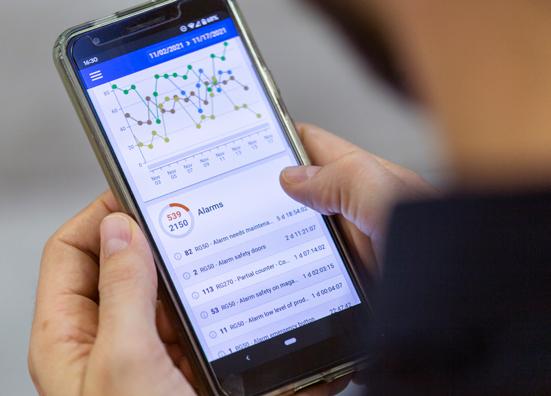
Throughout 2025, Galdi continued to develop and roll out its digital services, with the aim of improving the customer experience, enhancing the efficiency of managing the installed machine fleet, and raising the quality of the work carried out by service technicians at customers’ production sites. Key initiatives included the commercial launch of Galdi RemoteCare, a service based on a dedicated ticketing platform designed to improve the traceability of support requests and resolution times, as well as the introduction of the PMP+ tool for the digital management of checklists and maintenance activities at customer sites
The Company also continued to develop condition-based maintenance systems and the IIoT upgrade process for its installed machine fleet , with the aim of supporting predictive maintenance models, operational continuity, remote connectivity and cybersecurity.
By 2025, 53% of packaging systems equipped with IoT infrastructure were connected to Galdi’s digital services
ECODESIGN
In 2017, Galdi carried out LCA analysis in collaboration with the University of Padua on two packaging systems, focusing on the Carbon Footprint and Water Scarcity Footprint. The study highlighted that the end-user phase accounts for the greatest environmental impact, thereby guiding subsequent design decisions towards improving the environmental performance of the machines. Galdi directs the development of its packaging solutions towards improving environmental performance, with a particular focus on reducing consumption and food waste by extending the shelf life of packaged products and improving hygiene standards during the packaging process.
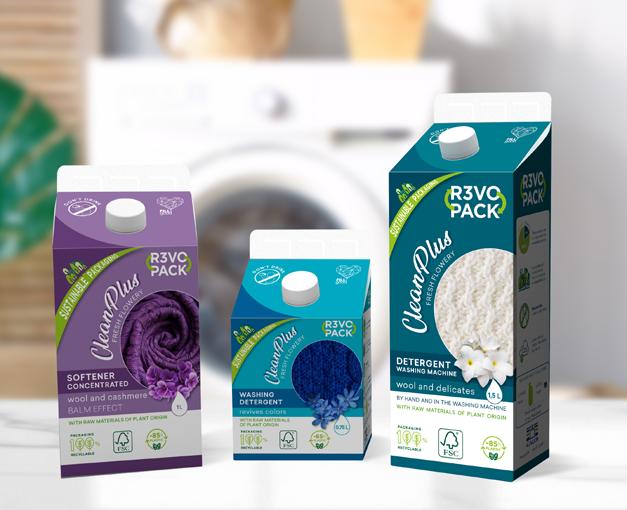
In 2023, the packaging division commissioned an LCA study on Gable Top packaging used in the nonfood sector, with the aim of assessing its environmental impact compared with other solutions available on the market. The preliminary results, currently undergoing validation, have supported the continued development of the project with the aim of gathering further information during the design and development phase of a cardboard packaging solution specifically for nonfood products, to assess whether the solution developed so far could be improved. The initiative was also nominated for the 2024 Packaging Oscar and was shortlisted as a finalist.
The company works actively with its packaging suppliers to develop innovative solutions that meet production requirements and are designed to reduce environmental impacts throughout the packaging’s life cycle.
Galdi also promotes the principles of the circular economy through the revamping and refurbishment of used packaging systems, aimed at recovering, regenerating and reusing components that are still fit for purpose, thereby extending the useful life of the machinery.
5.2 Ethics and Business culture
Galdi carries out its business activities in accordance with the principles of integrity, transparency, fairness, loyalty and professionalism, whilst complying with current legislation and the principles of fair competition. The furthering of ethical behaviour is essential for creating sustainable long-term value and for strengthening the trust of customers, investors, employees and local communities.
In 2024, Galdi adopted an Organisational, Management and Control Model pursuant to Italian Legislative Decree No. 231/2001, aimed at preventing various types of offences, including those relating to health and safety in the workplace, environmental protection, corporate offences and offences against the Public Administration Authorities. The Supervisory Body, established in accordance with the same decree, is responsible for overseeing the effectiveness, adequacy, implementation and updating of the 231 Model. Four verification and audit activities are carried out during the year, the results of which are shared with Management and the relevant units. At the end of each financial year, the Supervisory Body draws up an annual report summarising the activities carried out and the main findings that have emerged.
Furthermore, the Procedure for reporting violations, Whistleblowing, sets out the procedures for reporting any violations of national or European Union regulations that harm the public interest or Galdi’s integrity. The Whistleblowing Procedure is available in the “Legal Info” section of the company website, where detailed information is provided on who can report violations, how to make a report, what can be reported, how reports are handled, what protective measures are guaranteed, and how the personal data
provided is processed. It should be noted that, as at 31 December 2025, no reports had been received via this channel
To translate its commitment with regard to integrity, ethics and transparency into tangible, shared principles, in 2023 Galdi adopted a corporate Code of Ethics to serve as a guide for conduct, decision-making and business activities. Galdi’s approach to sustainability is inspired by key international standards and guidelines, including the Conventions of the International Labour Organisation (ILO), the United Nations Sustainable Development Goals (SDGs) set out in the 2030 Agenda, and the Universal Declaration of Human Rights. In particular, the Code of Ethics enshrines the company’s commitment to combating all forms of discrimination, harassment, forced or compulsory labour and child labour, whilst promoting respect for human dignity, the celebration of diversity and equal opportunities, including through continuous training programmes.
The document is a fundamental tool for the implementation of the company’s ethical, social and environmental responsibility, defining rights, duties and responsibilities towards all stakeholders and contributing to the dissemination of a corporate culture based on integrity, accountability and ethical behaviour.
The Company operates in compliance with current regulations in all areas of its business, pursuing the principles of integrity, transparency and corporate ethics. This commitment is reflected in its desire to ensure fair and responsible relationships with customers, business partners and all stakeholders, in full compliance with applicable laws and regulations. Galdi constantly monitors the regulatory compliance of its processes and, where necessary, adopts corrective and preventive measures aimed at the on-going improvement of the corporate compliance system.
As envisaged by the Code of Ethics, Galdi adopts a zero-tolerance policy with regard to any form of corruption, unlawful favour or collusive behaviour. Therefore soliciting, offering or accepting, directly or indirectly, personal advantages or undue benefits for oneself or for third parties, in contravention of the principles of fairness, honesty, respect and professionalism that guide the company’s operations, is prohibited These principles and provisions are set out in the company’s Code of Ethics, which serves as the benchmark for fostering conduct in line with the organisation’s values.
During the reporting period, Galdi confirms that no incidents of corruption were identified. No employees were disciplined or dismissed on grounds of corruption, and it was not necessary to terminate or not renew contracts with business partners due to violations relating to incidents of corruption. Furthermore, no public legal cases concerning corruption were brought against the organisation or its employees during said reporting period.
Galdi recognises free competition, provided it is fair, as a key factor for growth and continuous business improvement, and further confirms that during the reporting period no legal proceedings were initiated concerning anti-competitive behaviour or breaches of competition law in which Galdi was identified as a party. Finally, no instances of discrimination were identified within the organisation during the reporting year.
2025 SUSTAINABILITY AWARD
In 2025, Galdi was included in the TOP 75 ESG Integrated Finance 2025 Sustainability Award, an accolade dedicated to companies that stand out for integrating ESG principles into their corporate strategies and governance processes. The selection is based on a structured analysis of ESG performance and on organisations’ ability to develop solutions capable of generating economic, environmental and social value over the medium to long-term. The Sustainability Award, now in its fifth edition and conceived by Kon Group and promoted in partnership with ELITE, Azimut and Open-es, is an accolade that recognises Italian companies capable of distinguishing themselves through excellence in sustainability.
5.3 Management of supplier relations
Galdi’s main suppliers are companies that manufacture custom-designed stainless steel components (metalwork, CNC machining, etc.), electrical switchboards, and electrical, electronic and mechanical components, as well as suppliers of wooden packaging. Aware that the values it upholds can only be fully respected if shared with all its business partners, in 2024 Galdi drew up a Supplier Code of Conduct to better define its expectations and guidelines for conduct in the ESG sphere, which suppliers must adhere to in order to maintain business relations with the Company. The Supplier Code of Conduct has been drawn up in line with international standards, including the conventions of the International Labour Organisation. Galdi also has a Sustainable Procurement Policy aimed at integrating environmental, social and governance (ESG) criteria into its procurement processes, guiding the selection, assessment and monitoring of suppliers in accordance with the sustainability principles.
With regard to the proportion of expenditure allocated to local suppliers in relation to Galdi’s procurement activities, the Postioma di Paese (TV) plant in Veneto – which is also the company’s headquarters – has been designated as the centre of significant activities. To define purchases by “local area”, the company has decided to use the 80 km radius surrounding the company’s headquarters as the measurement criterion.
All suppliers of direct materials – that is, those directly involved in the manufacture of the product – who were active during the financial year in question were selected for the analysis. The table below shows the percentage of the value of purchases from suppliers located outside the EU, within the EU, in Italy, and within 80 km of the Postioma di Paese (TV) site.
PERCENTAGE OF PROCUREMENT
VALUE
BY SUPPLIER GEOGRAPHICAL AREA GEOGRAPHIC
for these suppliers, during 2026 Galdi will assess the implementation of specific improvement actions and supporting measures aimed at strengthening their operational and ESG performance.
The following paragraphs describe the main regulatory scenarios in the field of sustainability that affect Galdi’s supply chain, the activities aimed at engaging suppliers through the Supplier Meeting, and the supplier ESG assessment system adopted by Galdi, together with the relevant monitoring KPIs.
SUPPLIER MEETING
During 2025, Galdi also developed and implemented a vendor rating system for strategic suppliers, which was presented and shared at the end-of-year Supplier Meeting.
The vendor rating system is based on the analysis of three main parameters:
• ESG score obtained via a dedicated platform;
• score for on-time delivery;
• score for non-compliance.
Each parameter contributes to the overall rating according to a specific predefined weighting. The resulting vendor rating classifies suppliers into four categories (A, B, C and D), enabling Galdi to monitor supply chain performance and to define any improvement action or mitigation measures based on the level of risk and the critical issues identified. As at 31 December 2025, 47% of suppliers assessed under the vendor rating system were classified in categories A and B, indicating an overall positive performance with respect to the assessment criteria adopted. By contrast, 11% of suppliers fell into category D;
Galdi recognises the value of its suppliers as indispensable partners along the road to its success. In most cases, these are long-standing supply relationships governed by orders and multi-year contracts or framework agreements
In 2024, Galdi organised its first event dedicated to suppliers, entitled “Sustainable Supply Chain: winning relationships”, with the aim of strengthening collaboration with its supply chain on sustainability issues. The initiative, held at Galdi Village on 21 November 2024, involved 35 of the company’s main direct suppliers and provided an opportunity to share the sustainability journey undertaken by Galdi and the initiatives aimed at promoting best practices throughout the value chain. During the event, topics such as reducing environmental impacts, optimising supply chains and the importance of collaboration between companies in achieving common sustainability goals were explored in depth. The ESG assessment tool used by Galdi to analyse the maturity level of its supply chain in terms of sustainability was also presented.
Through testimonials, discussions and the sharing of best practices, the meeting helped to raise awareness of the strategic role of the supply chain in Galdi’s ESG journey.
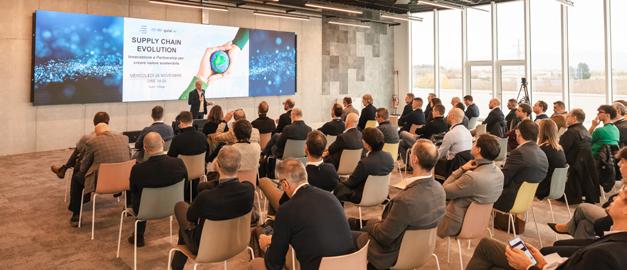
In 2025, the company repeated the initiative, expanding its format and organising its first corporate Supplier Meeting, which was attended by 58 individuals representing 38 suppliers.
The event opened with an introductory session focused on Galdi’s strategic objectives and the priorities shared with its supply chain. Participants then took part in five thematic roundtable discussions, including one specifically dedicated to sustainability issues, with the aim of fostering dialogue, active participation, and direct discussion with suppliers. On conclusion of the event, the key insights and outcomes from the roundtable discussions were shared with all participants. The initiative served as an important opportunity for feedback, collaboration, and the exchange of ideas, further strengthening the supply chain’s involvement in the company’s growth trajectory.
During the 2025 Supplier Meeting, Galdi also presented certificates of acknowledgment to suppliers who, across five main product categories (manufacturers, retailers, custom-designed mechanical components, transportation, and packaging), achieved the best results within the sphere of the company’s vendor rating system.
ESG ASSESSMENT OF SUPPLIERS
In the final months of 2024, Galdi took a significant step towards increasingly integrated sustainability management within its supply chain by introducing the Sustainability Maturity Level (SML®) supplier assessment tool. The tool enables the analysis of suppliers based on environmental, social, and governance criteria, providing a summary rating for each assessment area. This approach enables the company to measure and monitor the sustainability performance of its supply chain in a structured manner, identifying potential risk areas and opportunities for improvement. Through the SML® tool, Galdi is able to assess the ESG risks and performance of its suppliers in a structured and objective manner, while promoting continuous improvement and collaboration on sustainability issues.
DESCRIPTION OF THE ASSESSMENT TOOL USED
The tool assigns each supplier an ESG risk level and a score expressed as a percentage, which summarises the degree of compliance and maturity with respect to the main dimensions of sustainability. The assessment is based on the analysis of qualitative and quantitative information collected within the sphere of four main areas:Certifications, Governance, Social, and Environment
Firstly, the certifications area concerns the possession of formal sustainability-related accreditations, both in terms of environmental and social management systems and product certifications, including ESG ratings such as EcoVadis. The governance area focuses on the organisation’s structure and management, considering compliance mechanisms, the composition of the decision-making bodies and supply chain management.
The social dimension analyses the company’s impact on people and the local area. It includes the structure of the workforce (internal and external), recruitment and retention policies, diversity and inclusion initiatives, and activities that benefit the local area. Finally, the environmental dimension assesses the impact on the environment, taking into account consumption and greenhouse gas emissions, water use, the adoption of circular economy practices, and the protection of biodiversity.
Compared to other ESG assessment tools available on the market, SML® does not require suppliers to upload supporting documentation. This decision reflects the company’s desire to adopt a flexible tool that can be customised to its specific needs and is consistent with the characteristics of its supply chain. The approach adopted aims to create a simple, fast, and accessible data collection system, taking into account the presence within the supply chain of suppliers with varying sizes, organisational structures and resource availability. In this way, Galdi intends to encourage wider involvement of its business partners in the ESG assessment process, while reducing the operational complexity associated with completing the assessment.
At the end of the assessment, each supplier receives an overall score, weighted based on the various areas analysed, which allows Galdi to assign a ranking according to the level of ESG maturity identified. The platform operates by collecting information provided directly by the assessed companies through a self-reporting mechanism; therefore, the reliability of the collected data is closely linked to the degree of transparency and accuracy of the information submitted by suppliers. Once the assessment is completed and submitted, the supplier can download a summary report showing the weighted score achieved and its correlation with the United Nations Sustainable Development Goals most relevant to the areas under assessment.
MAPPING OF THE SUPPLIERS
As at 31 December 2025, via the ESG assessment tool adopted, Galdi had completed the assessment of 46 direct suppliers, including one supplier operating in the logistics sector. These account for 72.9% of the total value of supply expenditure for the 2025 financial year. This figure highlights a significant level of coverage of the assessment process across Galdi’s supplier base, with particular reference to strategic partners and suppliers with the greatest impact on the company’s business.
The map shows the geographic distribution of the suppliers assessed as at 31 December 2025.
RESULTS OBTAINED
As mentioned previously, as at 31 December, Galdi had assessed 46 of the 64 direct suppliers involved. The table below shows the KPIs relating to suppliers in terms of certifications and ESG ratings, as well as practices adopted in the areas of governance, social responsibility and the environment. These are expressed both as a percentage of the total number of suppliers who responded to the assessment questionnaire and as a percentage of the value of expenditure incurred in the years 2024 and 2025 in relation to suppliers.
CERTIFICATIONS AND PRACTICES ADOPTED BY SUPPLIERS
In 2025, the KPIs highlight a gradual improvement in the ESG performance of Galdi’s supply chain. The prevalence of ISO 9001, ISO 14001 and ISO 45001 certifications is growing, as is the number of suppliers publishing sustainability reports, monitoring CO₂ emissions and using electricity from renewable sources. There is also a marked increase in the adoption of the EcoVadis platform and a rise in the number of suppliers obtaining ESG ratings through EcoVadis.
Overall, the data confirms a growing integration of ESG criteria throughout the supply chain, although there remains room for further improvement in certain environmental and reporting aspects.
The table below shows the average level of ESG maturity among the suppliers assessed, broken down by turnover bracket. This analysis allows the ESG performance of individual suppliers to be assessed in relation to their company size, providing a useful benchmark for comparing results.
As can be seen from the table above, more structured companies tend to have higher levels of ESG maturity on average. Suppliers belonging to the larger size categories do indeed have higher overall average scores than smaller firms, highlighting a greater capacity to manage ESG issues in a structured manner.
Furthermore, the ESG assessment tool made it possible to analyse various quantitative KPIs relating to suppliers, including with a view to an integrated and multivariate interpretation of the data collected.
With regard to greenhouse gas (GHG) emissions generated throughout Galdi’s supply chain, the analysis shows that companies in the metal products manufacturing sector have, on average, higher emission levels than the overall sample of suppliers assessed. In particular, the indicator relating to CO₂ emissions per employee – calculated as the ratio of tonnes of Scope 2 location-based CO₂ equivalent to the number of employees – stands at 3.66 for companies in the metalworking sector, compared with an average value of 2.25 recorded across the entire panel of Galdi suppliers.
This figure confirms the higher energy and emissions intensity typical of the metalworking sector and represents a key factor for the purposes of monitoring and engaging suppliers on issues relating to the decarbonisation of the supply chain.
With regard to health and safety, an analysis of the questionnaires completed by the 46 suppliers assessed reveals that 59% of companies did not record any workplace accidents during 2025. By contrast, 37% of suppliers declared the occurrence of one or more accidents, whilst 4% did not provide this information. Among the companies that reported accidents, the average accident rate – calculated as the percentage ratio of the number of accidents that occurred to the number of employees – stands at 2.43%. The data highlights a generally positive level of attention to health and safety issues, whilst confirming the need to continue monitoring the supply chain in relation to these aspects.
curement processes and the management of products placed on the market.
The CBAM is a border-adjustment economic mechanism designed to mitigate the risk of carbon emission leakage to non-EU countries. In 2025, Galdi carried out a preliminary analysis of the potential implications of the regulation, with a particular focus on imported goods. The work involved checking the categories of goods handled against Annex I of the Regulation and assessing the applicability of the “de minimis” exemption, envisaged for cases where the total net mass of imported goods subject to the CBAM does not exceed the threshold of 50 tonnes per year.
REGULATORY SCENARIOS AFFECTING THE SUPPLY CHAIN
As part of the European Green Deal, the European Union has established a strategic framework aimed at fostering the transition to a competitive and resource-efficient economic model. Among the key regulatory instruments affecting Galdi’s operating context, the “Carbon Border Adjustment Mechanism” (CBAM) and the “European Union Deforestation Regulation” (EUDR) are of particular significance
During 2025, the Company therefore launched specific analysis and monitoring activities aimed at assessing the potential impacts of these provisions on its operating model, with particular reference to pro -
An analysis of the five-year period 2021–2025 revealed that, as things stand, none of the goods imported by Galdi fall within the scope of the Regulation. Furthermore, even in the event of future imports of goods falling within the relevant categories, the likelihood of exceeding the “de minimis” exemption threshold has been assessed as extremely low. Although there are no direct impacts, Galdi continues to monitor regulatory developments and potential changes within its supply chain, in order to proactively manage any future risks and ensure timely compliance with regulatory requirements.
With the EUDR Regulation, the European Union has introduced new provisions aimed at combating deforestation and forest degradation linked to the placing on the European market of specific raw materials and related derivative products.
In the case of Galdi, the main areas of focus identified during 2025 relate to rubber products and test samples used in operating activities. These categories, both incoming and outgoing, were the subject of an initial analysis aimed at identifying products that might fall within the scope of the regulation. In particular, for rubber articles, the Company has initiated a process to monitor incoming and outgoing flows, supported by requests for declarations and information from suppliers, with the aim of verifying the compliance of the materials handled with EUDR requirements.
In 2025, the company launched an analysis to assess which rubber products it handles fall within the scope of the EUDR. Of the rubber articles identified:
IL 57% ARE NOT SUBJECT TO THE EUDR
IL 36% ARE PENDING FURTHER CLARIFICATION
IL 7% ARE NO LONGER IN PRODUCTION
5.4 Privacy and Cybersecurity
In 2025, Galdi strengthened its cybersecurity and data protection management system by launching a structured programme to comply with the requirements of the NIS 2 Directive, under which the company is classified as a “key operator”.
The measures implemented focused both on strengthening technical prevention and monitoring measures and on raising internal awareness of cyber risks. Throughout the year, periodic vulnerability assessments were carried out, alongside OSINT analysis to monitor any data exposures or thefts on the dark web, and a 24/7 external monitoring service. The company’s infrastructure is also supported by redundant backup systems, both internal and external, on immutable devices, with the aim of ensuring business continuity and data resilience.
In 2025, a pilot training programme on the responsible use of artificial intelligence (“AI Capito?”) was also launched, aimed at promoting informed behaviour in the management of company information and data.
INDICATOR DESCRIPTION
During 2025, the Company launched specific analysis and monitoring activities aimed at assessing the potential impacts of EUDR and CBAM.
With regard to test samples, the focus is primarily on the documentation of origin and on the supply chain’s ability to provide adequate evidence regarding the provenance of the products, in accordance with regulatory requirements.
During 2025, following the approach taken for the CBAM, Galdi therefore undertook a structured internal assessment aimed at understanding the level of exposure to the regulation and defining the actions necessary for the gradual adaptation of the business processes. This process will continue in 2026, with the completion of the ongoing audits and the consolidation of the system for monitoring the information gathered throughout the supply chain.
At the same time, Galdi has invested in ongoing awareness and training programmes for employees, with a particular focus on preventing phishing attacks and the responsible use of digital technologies. In 2025, simulated phishing tests were carried out alongside dedicated training sessions, which helped to significantly reduce the vulnerability rate among the users involved: the percentage of employees who “fell for” the phishing tests fell from 22% in March 2025 to 8% in October 2025
To further strengthen the culture of cybersecurity, the company has introduced training programmes dedicated to cybersecurity and, at the company’s Christmas dinner, presented an award to employees who distinguished themselves through their speed and accuracy in handling attack simulations.
Percentage of employees who “fell for” phishing tests 8%*
* Last test year 2025, relating to the month of October
With regard to privacy, every employee signs a privacy disclosure in accordance with Article 13 of Regulation (EU) 2016/679 (GDPR) relating to the protection of personal data. The company’s privacy policy is also published on the company’s website.
As at 31 December 2025, no substantiated complaints had been received regarding breaches of privacy or the loss of customer data.
With regard to 2026, the company aims to draw up a corporate policy on the use of artificial intelligence, designed to ensure the protection of information confidentiality and the safe and responsible use of AI tools.
“NIS2: FROM REGULATION TO ACTION” EVENT
On 3 October 2025, Galdi hosted an event at Galdi Village dedicated to the NIS 2 Directive, organised in collaboration with ClubBit – a professional community of IT managers established by Unindustria Treviso – with the participation of representatives from the National Cybersecurity Agency (ACN) and the Postal Police.
The event, which focused on cybersecurity issues and the evolution of the European regulatory framework, provided an important opportunity for dialogue between institutional stakeholders, businesses and industry professionals, facilitating the exchange of views on current scenarios, regulatory obligations and cybersecurity measures. Among the speakers, Galdi shared the company’s experience in managing cybersecurity, explaining how data protection is not merely a technical necessity but a genuine corporate value that guides strategic decisions and the development of technological solutions.
DIGITAL EVENTS
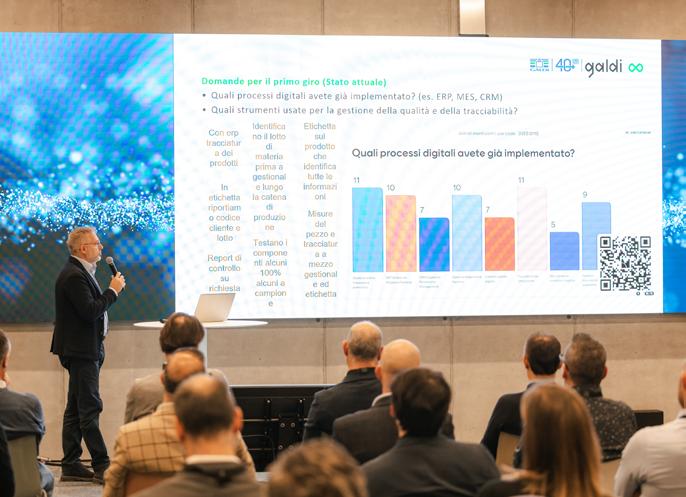
As it has done every year since 2023, in 2025 Galdi organised two events as part of DIGITALmeet, Italy’s largest festival on digital literacy for citizens and businesses.
DIGITALMEET – DIGITAL SKILLS FOR THE BUSINESSES OF THE FUTURE
The event explored the IT skills that are becoming crucial for businesses and identified the skills that are truly essential today for targeted training, creating tangible value for the business, with the aim of supporting digital transformation.
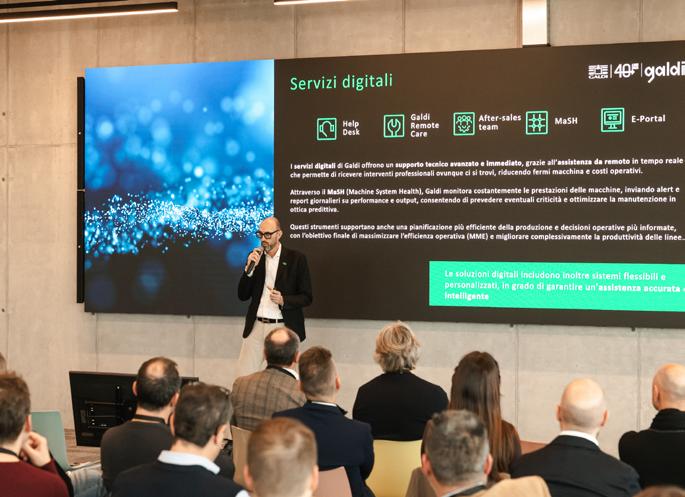
DIGITALMEET
ARTIFICIAL INTELLIGENCE AND SERVITISATION: COMPETING IN THE DIGITAL AGE
A round-table discussion between companies on how artificial intelligence is now fundamental to the development of product-related services. Through practical examples and real-world applications, the session offered insights and new perspectives on tackling the challenges of competitiveness in the digital age.
6. People
The Human Resources Department splays a strategic role in Galdi’s success by promoting skills development through dedicated training initiatives, fostering internal relationships aimed at creating a fair, inclusive and collaborative working environment, and supporting the processes of attracting and selecting new talent in line with the company’s values. The Department also ensures the accurate management of staff administrative matters in compliance with current legislation.
The Italian labour market is currently undergoing a period of transformation, influenced by factors such as digitalisation, sustainability and demographic changes. In this context, new challenges are emerging, but so too are significant opportunities to promote youth employment and the development of innovative and specialist skills.
With this in mind, Galdi recognises the importance of retaining the know-how and experience gained within the company, by facilitating the transfer of knowledge from more senior staff to junior staff, as this is considered essential for maintaining operational continuity and ensuring quality and efficiency.
Analysing the data, overall, during the three-year period 2023–2025, Galdi recorded an increase in its workforce, whilst retaining 100% of its employees on permanent contracts. In 2025, the proportion of female staff increased and the average number of training hours per employee rose again (17 hours on average), confirming the company’s focus on job stability, skills development and the enhancement of its people. Staff turnover, however, was higher than in previous years.
129 EMPLOYEES
127 EMPLOYEES
EMPLOYEES
6.1 Work conditions
Among the material issues identified by the company, working conditions are a key aspect, both in terms of their impact on people and Galdi’s ability to maintain high levels of expertise, innovation and operating continuity.
The company furthers an approach focused on the protection of workers, safety and professional development, in line with its sustainability values and principles
All Galdi employees in Italy are covered by the National Collective Labour Agreement (CCNL) for the metalworking sector, ensuring fair working conditions in line with sector regulations and guaranteeing appropriate remuneration based on each individual’s level, skills and responsibilities.
With regard to non-permanent staff employed by the organisation, during the reporting period Galdi recorded an average of one temporary worker employed in the production area. During the year, the company also hosted interns, including students from local technical colleges as part of work-study programmes and university students, confirming its commitment to promoting training, career guidance and skills development for the younger generation.
* (employees who left during the reporting period / total number of employees as at 31 December) * 100 ** (employees as at 31 December - employees on the payroll 12 months earlier) / employees on the payroll 12 months earlier
For students undertaking a compulsory or curricular work placement (whether at sixth-form college or university level), a training programme is drawn up in collaboration with their school or university tutor, and they are given the opportunity to use the company canteen free of charge on the days they are present on site.
In total, 168 hours of paid leave were granted in 2025 for activities relating to blood donation. The tables below show the breakdown of professional categories at Galdi by job grade and diversity, with particular reference to gender and age, for the threeyear period 2023–2025.
The analysis shows that the majority of employees hold clerical roles, whilst the most represented age group is that between 30 and 50 years of age (65.1% of employees). Women account for 17.8% of the total workforce
During the three-year reporting period, there were no employees on a non-guaranteed working hours basis within the workforce. It should be noted that the figures below are based on headcount, i.e. as at the end of the reporting period, 31 December. BREAKDOWN OF PROFESSIONAL CATEGORIES BY AGE BRACKET
Galdi has procedures in place for human resource management, Company Regulations and a C ode of Ethics, published on the company website, which sets out the company’s commitments regarding the protection of human rights and workers. In particular, Galdi promotes compliance with labour legislation, fair pay, freedom of association with trade unions and the fight against all forms of child labour, forced labour or discrimination, ensuring working conditions characterised by fairness, inclusion and the protection of the individual.
Thanks to Metasalute, the Supplementary Healthcare Fund for workers in the metalworking industry, Galdi employees in Italy can access supplementary healthcare services in two ways: direct and indirect healthcare. Members of the fund who choose to use the Direct Healthcare service can book a medical appointment at one of the affiliated healthcare facilities. Coverage under this fund for new members begins in the fifth month following the probationary period. All employees are enrolled in the Fund, whether on fixedterm or permanent contracts, and whether working full-time or part-time.
In addition to the healthcare programme, Galdi promotes initiatives aimed at fostering the well-being and work-life balance of its employees. With this in mind, the company offers various welfare schemes and organisational flexibility, including flexible start and finish times and the option for new parents to return to work on a part-time basis, designed to help them balance family commitments with their working lives.
Further initiatives and benefits available to employees include:
Company Smart Working policy. This policy envisages the possibility of working remotely one day a week, and two days a week for employees living more than 30 km from the company, for those with children under the age of 12, for employees with specific care needs for vulnerable family members, and for employees who regularly participate in competitive sport.
The 2021–2024 renewal of the National Collective Labour Agreement for the Metalworking Industry has confirmed the disbursement of Euro 200 per year in flexible benefits, which can be accessed via the Galdi4U online portal introduced by the company to enable employees (with at least three months’ service) to access various special agreements, discounts, gift cards, travel deals and other offers designed to facilitate the purchase of goods and services. Furthermore, for 2025, an additional sum of money was paid out to all employees at Christmas, which can be accessed via the Galdi4U platform.
Company offices designed according to an open-plan model, with flexible workstations and technologically equipped meeting rooms, in order to encourage the sharing of ideas, interdisciplinary collaboration and interaction between different company departments.
Opportunities to take part in events organised at the company’s headquarters and open to the local area and community.
Informative sessions on topics not strictly related to the workplace, aimed at raising awareness amongst employees and their families about emerging or particularly important issues. In 2024, a session was held with a nutritionist, focusing on aspects linked to nutrition. In 2025, Galdi also launched a training programme dedicated to employees through cookery classes organised with the chef from the company bistrot. The initiative, which focuses on the seasonality of produce and healthy eating, will continue into 2026 as well, with the aim of promoting wellbeing and raising awareness of healthy lifestyles. To encourage socialising, sharing and the strengthening of internal relationships, in August the company also organised the “Chill before Out of Office” initiative, a company drinks reception held just before the Summer break and holiday period.
Over the years, Galdi has established numerous agreements with local businesses. These include tyre-changing , bodywork and garage services near the company’s premises at discounted rates. Furthermore, some of Galdi’s regular suppliers offer a dedicated discount to direct employees, such as when booking holidays through the travel agency with which the company has established a long-standing partnership over the years. In addition, in 2024, a new agreement was introduced for employees, allowing them to benefit from preferential rates on banking services. Pink Park , a car park reserved for expectant or new mothers returning to work, and Easy Park , a car park reserved for those who temporarily require preferential parking near the entrance.
YEAR END GIFTS
In 2025, continuing the tradition of previous years, Galdi organised its traditional company Christmas dinner, bringing together employees and associates for an occasion dedicated to sharing and strengthening internal relationships. During the event, the company also presented awards to employees who had reached certain milestones in their length of service at Galdi, in recognition of their commitment and the contribution they have made over the years. The awards were presented in recognition of the following lengths of service: 5, 10, 15, 20 years and over 20 years of service.
As at 31 December 2025, 38.8% of the company’s employees had been with the company for more than 10 years, of whom:
• 34 people in the 10–20 -year category,
• 16 people in the over-20 -year category.
FAMILY AUDIT
As a company committed to the wellbeing of its staff, Galdi decided in 2019 to embark on the “ Family Audit ” certification process. This scheme, promoted by the Autonomous Province of Trento and now extended nationwide, aims to certify the commitment of a public or private organisation to adopting measures designed to promote work-life balance, equal opportunities and, more generally, organisational wellbeing amongst its staff.
In 2023, at the end of the three-year process, Galdi achieved the Family Audit Executive certification, which has also been confirmed for 2025.
Compliance with the Family Audit standard has, over the years, fostered the development of initiatives aimed at improving work-life balance, through the direct involvement of the internal Family Audit Committee, made up of company staff. The Committee acts as a link between the workforce and senior management, gathering employees’ proposals, needs and suggestions and contributing to the definition of the related operational and strategic decisions.
Key initiatives implemented over time include flexible working hours, partnerships with local businesses, initiatives dedicated to the wellbeing of staff and their families, as well as opportunities for professional and personal training and development.
GALDI VILLAGE - FITNESS AREA
Galdi cares deeply about the physical and mental wellbeing of its employees and, for this very reason, provides them with a fitness area within Galdi Village. The fitness area is freely accessible, and the company offers a range of classes, such as Pilates, functional training and a programme based on Mindfulness. These classes allow anyone who feels the need to train both mind and body. During the gym’s main opening hours (12.00–14.00), a personal trainer is on hand two days a week to guide people through personalised training programmes or freestyle floor exercises as part of the Pilates/Postural gymnastics course. Also twice a week, during the evening session (17.15–18.45), a personal trainer is on hand to lead functional training sessions, tailored to individuals’ needs. The Mindfulness project, launched in 2022 to offer an alternative to traditional fitness training, has continued into 2025 as well.
The objectives set out in 2024 and in the previous report were achieved by means of:
• An incr ease in staff membership of the company gym. On average throughout 2025, the gym had 16 members, peaking at 22 employees in March – an increase compared with 2024. This initiative was particularly well received by new recruits;
• Renewal of the gym’s equipment . In particular, Pilates rollers were added, and the dumbbells were updated to include 12 kg, 14 kg and 16 kg weights;
• Organisation of table ten nis and table football tournaments, with prize-giving for the winners followed by drinks and snacks.
GALDI VILLAGE - BISTROT
A focus on the health and wellbeing of staff also extends to nutrition; for this reason, right from the design phase of Galdi Village, the company Bistrot was conceived with a kitchen that allows all meals for Galdi staff and visitors to be prepared and cooked on site. The catering service provider offers a varied menu that takes nutritional guidelines into account, as well as the specific dietary requirements of certain employees. All staff have access to the Bistrot and can purchase meals at a reduced rate. In 2023, Galdi introduced the “Too Good To Go” foodwaste prevention platform, thanks to which 279 meals were salvaged in 2025, an increase from the 99 salvaged in the previous year. The Company has also promoted initiatives focused on healthy eating and the responsible use of resources, including the introduction of a menu booking system designed to reduce food waste. Throughout 2025, the company bistrot expanded its initiatives by promoting activities focused on staff wellbeing, social interaction and the promotion of mindful lifestyles. Particular attention was paid to promoting healthy eating, including through the introduction of options with a lower environmental impact and special menus, such as those for Paella Day, Poke Day and Green Food Week. As from the end of the year, cooking classes led by the company bistrot’s chef were also launched, with the aim of fostering opportunities for learning, sharing and work-life balance. Overall, the initiatives carried out have helped to raise awareness of issues relating to wellbeing, sustainability and food awareness.
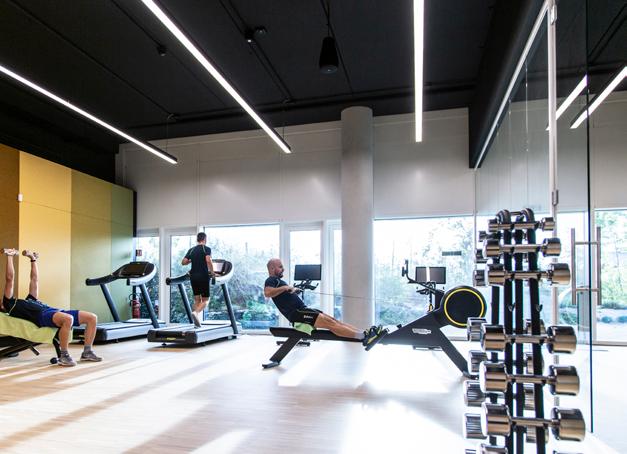
6.2 Training and skills development
Galdi recognises training and skills development as strategic elements for personal growth and for maintaining the company’s long-term competitiveness. In a context characterised by technological change, digitalisation and a growing focus on sustainability issues – including in the regulatory sphere – the ongoing updating of skills is a key factor in supporting innovation and the organisation’s evolution. The company promotes training programmes for its employees with the aim of strengthening technical, managerial and cross-disciplinary skills, whilst fostering professional growth, employee engagement and the promotion of a corporate culture focused on continuous improvement. Training activities are developed in line with the organisational and professional needs identified by the company and include initiatives focused on health and safety, the development of soft skills, innovation and ESG issues.
Galdi is also implementing an employee performance appraisal process, developed in collaboration with department heads and Management, with the aim of supporting professional growth and career development within the organisation.
For new recruits, there is an onboarding programme designed to facilitate effective integration into the company, promoting employee engagement and the sharing of corporate values right from the early stages of their career.
As part of the “Chimica Positiva” project, in 2023 Galdi carried out an internal satisfaction survey using an anonymous questionnaire addressing employees. The survey focused, in particular, on staff satisfaction and engagement levels, and on the company’s degree of maturity as a positive organisation. The findings were subsequently shared with the entire workforce, confirming the company’s commitment to internal dialogue and the continuous improvement of the organisational climate.
The training data highlights Galdi’s ongoing commitment to developing its employees’ skills, albeit with varying levels of intensity across professional categories and genders.
In 2025, the average number of training hours per person stood at 17.0 hours, an increase compared with 2024 (13.4 hours). Training activities involved office staff and middle management to a greater extent, confirming the company’s focus on strengthening technical, organisational and managerial skills. There was also a significant level of female participation in training programmes, with an average of 28.1 hours in 2025 compared with 14.9 hours for male staff. Among white-collars, in particular, women benefited from the highest average number of training hours.
Blue-collars
White-collars
Middle managers
Executives
Apprentices
AVERAGE TRAINING
Galdi promotes training programmes whilst fostering professional growth, employee engagement and the promotion of a corporate culture focused on continuous improvement.
During 2025, Galdi continued to invest in developing its staff’s skills, providing a total of 2,386.2 hours of training. Of these, 436 hours were devoted to compulsory training on health and safety in the workplace in accordance with Italian Legislative Decree No. 81/2008, whilst 1,950.2 hours were dedicated to non-compulsory training programmes.
The company furthers opportunities for professional development both through in-house training initiatives and external courses, with the aim of supporting the continuous updating of technical, organisational and cross-disciplinary skills.
Overall, 93.6% of employees took part in training activities during the year.
It should also be noted that only 18.3% of the training hours delivered in 2025 were attributable to regulatory health and safety requirements, confirming the company’s commitment to promoting professional development programmes that go beyond the legal requirements.
The remaining training activities focused on onthe-job training and initiatives aimed at developing cross-disciplinary skills, including, for example:
training on sustainability, communication and Benefit Corporations;
training on customs and trade issues; development of technical skills (for example in R&D, software, IIoT and production);
training on soft skills;
language training in groups for English and German;
training on cybersecurity;
targeted training on the impact of new technologies linked to artificial intelligence (AI) through the “AI Capito?” training programme, and AI training tailored to each individual’s role, covering the associated benefits and risks.
Furthermore, with regard to sustainability topics, during 2025 Galdi took part in round-table discussions and the Sustainability Week organised by Confindustria Veneto Est, an event during which the company shared the main initiatives and projects it has implemented in the ESG field.
* Compulsory
6.3 Health and safety
Galdi recognises the protection of workers’ health and safety as a priority for the sustainability and continuity of its business. The company believes that achieving high standards of occupational health and safety depends on the active contribution of the entire organisation; for this reason, it furthers an approach geared towards continuous improvement, in line with the requirements of the ISO 45001 standard. The achievement of ISO 45001 certification confirms Galdi’s commitment to adopting a structured occupational health and safety management system, aimed at risk prevention, the protection of people and the improvement of the company’s H&S performance. To support this commitment, the company has adopted a specific Health and Safety Policy and implemented dedicated internal procedures, accompanied by training and awareness-raising activities for staff, with the aim of promoting responsible behaviour and fostering a culture of prevention at all organisational levels. The company’s organisational chart also identifies the individuals responsible for managing occupational health and safety matters, as well as the relevant support teams, with formally defined roles, responsibilities and duties.
Galdi is constantly committed to promoting and consolidating a culture of health and safety in the workplace, by raising awareness of risks through appropriate resources, training, information and instruction. Training on health and safety in the workplace is planned annually and delivered in accordance with legal requirements and the specific nature of the work carried out by each individual employee. In accordance with Italian Legislative Decree No. 81/08, mandatory periodic medical examinations are carried out by the company doctor for all employees, in order to assess their fitness for work.
By means of a careful risk assessment using the Risk Assessment Document (DVR), which is updated periodically, it has been possible to identify all potential sources of danger for company staff, enabling the implementation of appropriate measures to prevent, reduce and mitigate potential risks, such as the correct identification and management of chemicals and periodic maintenance and inspection of plant and equipment. Where necessary, external experts are involved in the process to support the company in carrying out instrumental surveys and inspections aimed, for example, at assessing risk levels for different areas and units within the company. The company also has a Interference Risk Assessment Document (DUVRI). This document is made available to external contractors commissioned by the organisation to carry out work at its premises. Specific health protocols based on risk analysis have also been drawn up, setting out periodic health monitoring for employees according to the level of risk associated with their roles, depending on their individual duties.
Galdi carries out a periodic review of health and safety matters, both through meetings with the dedicated team and via internal audits, which aim to identify associated risks and any corrective action to be implemented. During 2024, a system for discussing safety issues was implemented through meetings with team leaders. As a result of these meetings, internal reports on the subject and related improvement measures undertaken are recorded.
Galdi provides personal protective equipment (PPE) to staff working in areas where it is required. Hazards posing a risk of serious injury are analysed and listed in the Risk Assessment Document (DVR), and mitigation measures are identified and implemented by the relevant managers.
The tables below show accident data for employees and non-employees for the three-year period 2023–2025. Accidents have been calculated in accordance with the guidelines set out in GRI 403-9, using a multiplier of 1,000,000. Specifically, the workplace accident rate has been calculated as the number of accidents divided by the total number of hours worked.
The severity accident rate includes workplace accidents with serious consequences, whilst the fatality rate comprises the number of deaths caused by accidents at work. The same denominator and multiplier, namely 1,000,000, are used for all indicators.
During 2025, there were two workplace accidents involving company employees, both of which were classified as contusions – to a hand and a shoulder respectively.
Analyses carried out on these incidents did not reveal any recurring causes or critical issues attributable to the safety requirements of machinery or plant, but rather factors linked to operational behaviour. Although there were no significant structural issues, Galdi deemed it appropriate to step up health and safety awareness and training activities, with the aim of consolidating a culture of prevention and promoting increasingly proactive involvement of employees in the management of workplace safety.
Overall, 16 working days were lost due to employee accidents in 2025. No accidents were reported among non-employees during 2025. The total number of hours worked by employees in 2025 was 208,953.
The table below shows the trend in hours lost due to accidents compared with the hours worked by Galdi employees, together with the related monitoring indices. During 2025, the indicator showed a decrease compared with the previous year. * Serious Consequences = An
EMPLOYEE HEALTH AND SAFETY KPI DESCRIPTION
Hours lost for accidents compared to hours worked
Galdi recognises the protection of workers’ health and safety as a priority for the sustainability and continuity of its business. The Company is constantly committed to promoting and consolidating a culture of health and safety in the workplace, by raising awareness of risks through appropriate resources, training, information and instruction.
6.4 Impacts linked to the local area
Galdi recognises the central importance of its relationship with the local area, on which it has an economic, social and environmental impact, helping to create value for the community in which it operates. Its focus on the community takes on the form of a range of partnerships aimed at supporting organisations committed to social issues.
This commitment is also formalised in the Company’s Articles of Association, which identify the promotion of culture, beauty and the enhancement of the local area – including through support for cultural and social initiatives – as objectives for the common good. From this perspective, Galdi views its relationship with the community as a strategic lever for making a tangible contribution to the social progress of the local area.
The approach adopted is based on a desire to create positive, measurable impacts over time, strengthening ties with local stakeholders and fostering the growth of the system in which the company operates. In line with this approach, the following sections outline the initiatives and events in which Galdi has participated or which it has directly promoted.
248 STUDENTS 28 TEACHERS 176 PARTICIPANTS SCHOOL VISITS DIGITAL AND ESG EVENTS
RICREARTI: ONGOING AND EVOLVING COLLABORATION
The Ricrearti project brings together companies committed to sustainability, promoting the creative reuse of waste so that it can be transformed into new resources in the form of artistic, handcrafted or functional objects. To produce the prototypes, Ricrearti involves local associations and organisations that support people facing various forms of disadvantage, offering them opportunities for training and active participation. The project breathes new life into materials no longer usable in industrial production, as well as obsolete communication materials such as catalogues, brochures or PVC advertising hoardings.
Galdi has been working together with Ricrearti since 2022 through the “Eco-Rete sostenibile” project, designed to combine art, social initiatives and industry in an innovative and transversal approach. Throughout 2025, Galdi continued its activities focused on sustainability and the circular economy, using PVC materials recovered from exhibition stands used in previous years to produce gadgets for corporate events. By means of this initiative, the company was able to offer visitors products that combine environmental value with social impact, whilst promoting the reuse of materials and raising awareness of sustainability issues.
DENTRO LA SFIDA, OLTRE SE STESSI
(Taking on the challenge, pushing beyond one’s limits)
An in-house event, open to company staff and their families and friends, aimed at strengthening the organisation’s social and cultural fabric. Through the accounts of two colleagues’ sporting experiences – which led them to discover how much determination and self-awareness can change the way we view things – parallels with the professional context were highlighted, helping to foster a corporate culture focused on individual growth.
OTHER COMPANY VISITS
In 2025, the company took part in the “Safety in the Workplace” project, which brought together teachers from primary and secondary schools and vocational training institutions in the Province of Treviso. The initiative, organised by Confindustria Veneto Est in collaboration with SiRVeSS (the Treviso Provincial Schools Network), aimed to raise awareness of a number of companies in the Treviso area. It sought to analyse key organisational and technological innovations, commercial strategies, professional roles and in-house skills, with specific focus on aspects of workplace safety.
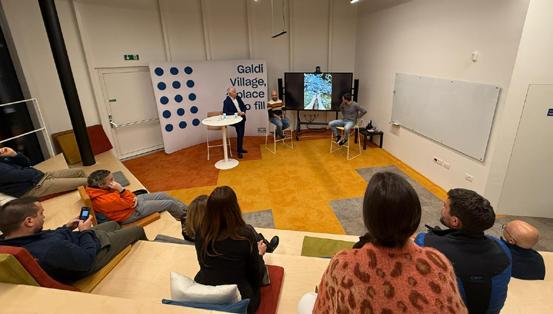
PROJECTS WITH SCHOOLS AND UNIVERSITIES IN THE LOCAL AREA
Galdi promotes the exchange of ideas, experiences and skills as a driver of growth for its staff and young people in the local area. With this in mind, the company takes part in projects and initiatives aimed at students and employees, fostering opportunities for shared learning, school visits to explore career options and partnerships with universities, with the aim of strengthening its ties with the community and supporting the education of new generations.
In 2025, Galdi hosted 248 students from five local schools on a visit to its factor y. Also during the year, Galdi hosted a group of Year 5 pupils from the IIS Einaudi-Scarpa in Montebelluna for a factory tour and an interview with the company’s Chair and founder, as part of the pupils’ participation in the Cappeller Prize.
The Prize, which gave the students the opportunity to recount Galdi’s history and current situation – for which they were awarded first place – confirms the value of collaboration between business and the education sector.
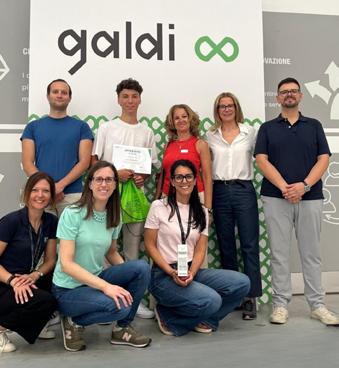
Galdi’s commitment to the “EUREKA! FUNZIONA!” project continued for the 2024–2025 school year. Promoted by Federmeccanica, the project aims to foster an interest in technical and scientific culture among children in Years 3, 4 and 5 of primary school. Now in its thirteenth edition, the central theme explored by the pupils was magnetism.
The project concluded between April and May 2025 with each participating school presenting their work to “panels” made up of representatives from the Education Division of Confindustria Veneto Est and entrepreneurs from local metalworking and mechanical engineering firms.
Galdi took part in the assessment of the projects carried out by two classes from Istituto Comprensivo di Paese (TV). The company had the opportunity to meet and engage with 45 pupils from the “Guglielmo Marconi” Primary School in Padernello.
Now in its ninth edition in 2024–2025, the Mechatronics Talent Olympics is a team competition designed to stimulate ingenuity and develop interdisciplinary skills, as well as an aptitude for teamwork. The project, promoted by the Metalworking Group of Confindustria Veneto Est, involved 152 students from 21 technical colleges, vocational schools and science-focused upper secondary schools specialising in “applied sciences” in the provinces of Padua, Rovigo, Treviso and Venice. Galdi contributes to the project by helping to design the competition and serving as a member of the judging panel. The company also took part in the tenth edition of the Mechatronics Talent Olympics, which began in November 2025 and will conclude in March 2026.

For the third consecutive academic year, in 2024–2025, Galdi confirmed its participation in the Girls Code It Better project: a digital creativity and entrepreneurship club aimed at introducing secondary school girls to STEM skills, which are still largely regarded as male-dominated today. For this edition of the project too, the company has collaborated with the revamped club at the Liceo Flaminio in Vittorio Veneto (TV), which has been joined by 17 female students in their third and fifth years of secondary school.
The challenge set by Galdi for the girls was to imagine the ideal human-machine interface for Galdi’s packaging machines, focusing on the needs of those using the machine to understand what information and innovative features to incorporate, right through to the possibility of revolutionising the very way people interact with the systems, thereby simplifying and optimising customers’ work. The students focused on solutions that would ensure intuitiveness, interactivity and improved readability, identifying a number of innovations, including interface icons and an AI assistant to support the operator working on the machine. As it does every year, Galdi has once again confirmed its participation in the project for the 2025–2026 academic year, trialling a new form of collaboration with Girls Code It Better through “Step Up”, an advanced and even more challenging programme for the girls.
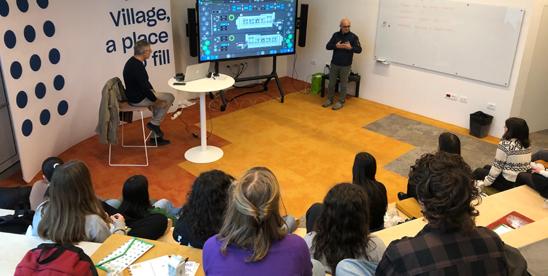

The project, organised by Confindustria Piccola Industria, aims to introduce the younger generation to the world of manufacturing, offering students the opportunity to gain first-hand insight into business operations, professional skills and the role of businesses in creating value for the local area. As part of the 2025–2026 edition, in November 2025 Galdi hosted 25 students from a Year 10 class at the Istituto Comprensivo di Trevignano e Istrana (TV)
#GenNext
For the first time, in 2025 Galdi took part in the “ Imprenditori #GenNext ” project, as part of the more extensive Talent Week initiative promoted by the Padua Chamber of Commerce and the Veneto Regional Authority. The event brought together more than 200 students from all eight universities in the North-east. The “Imprenditori #GenNext” project, organised by UniCredit, enabled students to meet entrepreneurs and managers, putting themselves to the test with real-world challenges. As part of this, Galdi participated by guiding the students in tackling a challenge common to manufacturing companies: safety in the workplace. Galdi will continue to participate in the project in 2026.
SUSTAINABILITY WEEK
Since 2022, the year the project was launched, Galdi has been actively participating in Sustainability Week, featuring as one of the speakers. The topics covered over the years have varied, ranging from product sustainability and environmental sustainability to employee welfare. Organised by Confindustria Veneto Est, the 2025 event saw Galdi share details of its initiatives relating to environmental, social and supply chain activities. The company will renew its commitment and participation in the 2026 edition of the project as well.
In 2025, Galdi played an active role in devising and managing events involving staff, partners and the local community, fostering the exchange of knowledge and discussion on governance and social issues. Below is a summary of the events organised, co-organised or supported by Galdi.
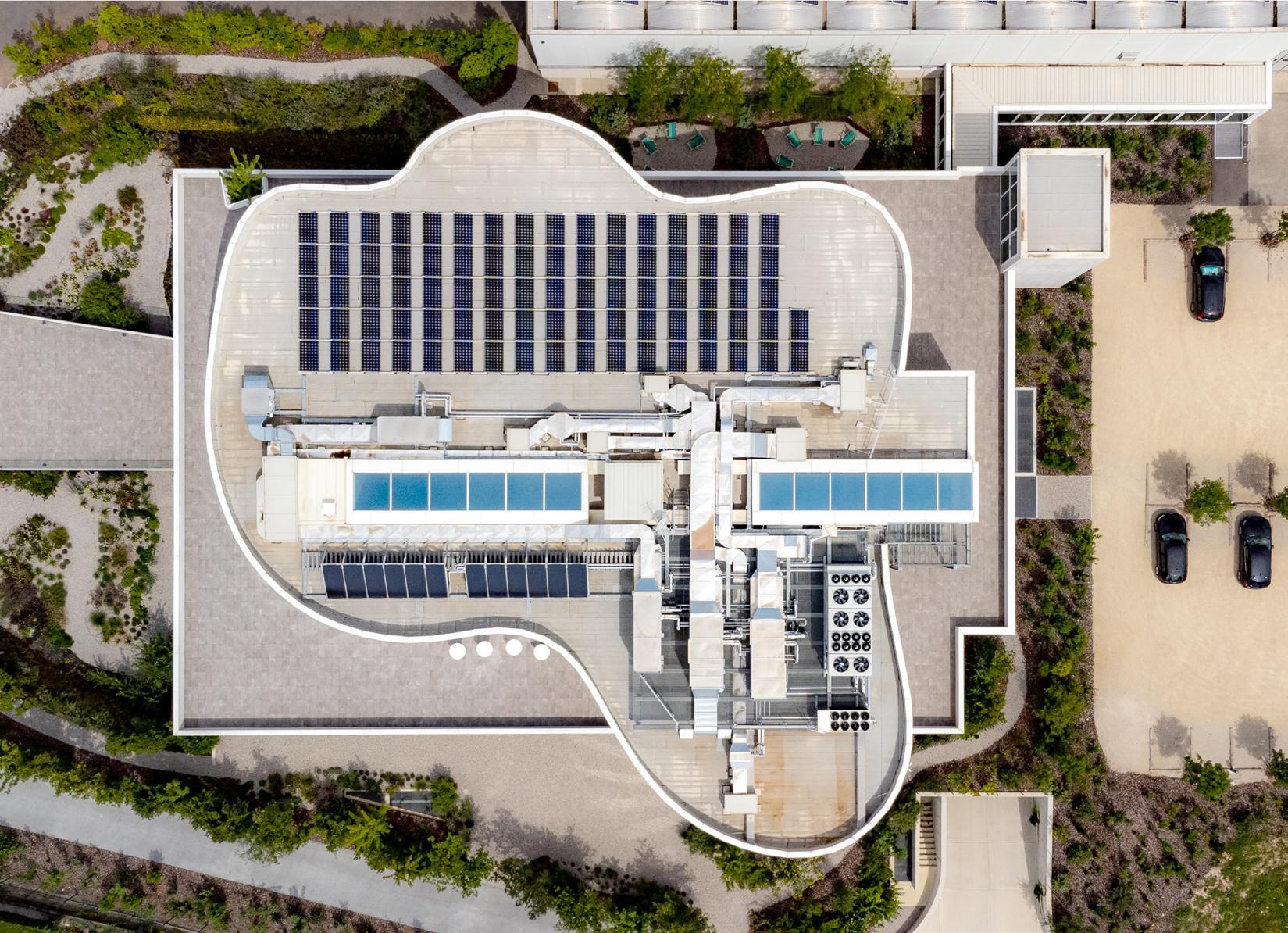
7. E NVIRONMENT
Continuous improvement is a core principle for Galdi, particularly in managing and reducing its environmental impact. The company’s commitment to monitoring and improving its environmental performance is reflected in its adoption of a management system certified in accordance with the ISO 14001:2015 standard Galdi considers it essential to contribute actively to environmental protection by adopting measures and
initiatives aimed at preventing and mitigating the environmental impacts generated by its activities. The company has an Environmental Policy, and its commitment to the environment is also set out in the company’s Code of Ethics and in the Articles of Association, under the second objective of common benefit. The table below provides an overview of some key highlights relating to environmental performance for the year 2025.
7.1 Energy management
Digitalisation is a strategic factor in improving energy efficiency. The integration of smart devices into electrical systems and the use of digital energy monitoring systems make it possible to optimise processes, improve the monitoring of energy performance and help identify opportunities for efficiency improvements.
In this context, during 2023, Galdi installed a power management system developed by Schneider Electric, designed to strengthen the monitoring and management of the company’s energy consumption. In particular, the system enables the company to:
monitor the energy consumption of buildings through daily readings at 15-minute intervals;
promptly identify any abnormal consumption;
support the adoption of measures aimed at improving energy efficiency and reducing the costs associated with energy consumption.
The main energy sources used by Galdi include electricity, used in production processes and offices; natural gas, used for heating premises during the winter; and fuels such as diesel and petrol, used to power the company’s vehicles.
The company also generates part of the electricity it consumes through solar panels installed at its premises, thereby helping to reduce reliance on traditional energy sources and improve overall energy efficiency. The table below shows the organisation’s internal energy consumption in gigajoules (GJ) for the years 2023, 2024 and 2025, broken down by type of energy source. The data includes consumption of natural gas, petrol, diesel and electricity purchased from the grid, as well as self-generated electricity.
In 2025, Galdi’s total internal energy consumption stood at 4,235.7 GJ, a slight increase compared with 2024 (+0.6%) but still significantly lower than the figure for 2023 (the base year). Analysing the various energy sources used by the company, in 2025 electricity purchased from the grid increased by 12.9% compared with 2024, whilst natural gas consumption fell by 22.6%.
The decrease in natural gas consumption is mainly attributable to the particularly mild weather conditions recorded during the reporting period, which allowed for a review of the switching-on and switching-off times for heating systems with a view to improving energy efficiency and reducing consumption.
-5,8%
2025 VS 2024 FUELS FROM NON-RENEWABLE SOURCES
*Source: conversion factors used for the fuels: Defra UK GHG
The following histogram shows the breakdown of the Organisation’s energy consumption, categorised into electricity (purchased from the grid, self-generated and consumed internally), natural gas (used for heating), and fuels (diesel and petrol) used to power company vehicles. Electricity remains the Organisation’s main energy source, accounting on average for around 57% of total energy consumption over the three-year period in question.
BREAKDOWN OF THE INTERNAL ENERGY CONSUMPTION
With regard to energy efficiency improvement activities, during 2023 Galdi replaced a traditional compressor with a new machine equipped with inverter technology, thereby improving the plant’s energy performance. At the same time, the company carried out a modernisation of the compressed air distribution system, involving the inspection and testing of connection points to identify any leaks. These measures made it possible to reduce the number of times machinery is switched on and the wastage of compressed air, resulting in a 20% reduction in the plant’s specific energy consumption.
I n 2024, Galdi also launched an in-house project , supported by power management software, aimed at optimising the switch-off procedures for lighting and machinery not in use, with the aim of further reducing energy wastage. At the same time, a further project was implemented to prioritise the use of electricity during the F2 and F3 time bands, promoting greater efficiency in consumption management and the optimisation of energy costs. This approach was consolidated during 2025.
During 2025, the solar panels installed at the company’s premises enabled Galdi to generate and consume 27.3% of its total electricity usage, contributing towards reducing its reliance on external energy sources. During the same period, the company also completed refurbishment work on the production plant and offices in Montebelluna, including the replacement of the insulated roof, the upgrading of the electrical plant with LED lighting systems, and the installation of heating and cooling systems using heat pumps. The works also included the installation of a new 100 kW photovoltaic system and an electric vehicle charging point
To support the energy and environmental initiatives undertaken, during 2025 Galdi furthered internal awareness-raising activities on the topic of energy saving as part of the “M’illumino di meno” initiative, held on 17 January to mark National Energy Saving Day. The initiative involved taking tangible steps to reduce consumption and waste, including optimising lighting in the workplace, reducing paper usage, promoting an environmentally friendly lunch, and encouraging the use of personal water bottles. The activities were also accompanied by an educational webinar, aimed at raising awareness and encouraging people’s involvement in topics relating to energy efficiency and environmental sustainability.
In the next few years, work will begin on expanding the production area, with the installation of an additional photovoltaic system with a capacity of approximately 100 kW, which will increase the proportion of self-generated energy with regard to the total.
The table below shows the trend in the organisation’s total energy consumption (GJ) placed in relation to turnover in millions of Euro and hours worked.
A steady downward trend can be observed over the three-year period for both indicators, highlighting the positive impacts of the measures adopted by Galdi to improve its energy performance.
KPI: ENERGY INTENSITY IN RELATION TO TURNOVER AND HOURS WORKED IN THE THREE-YEAR PERIOD 2023-2025
7.2 Climate change mitigation
Galdi recognises climate change as one of the main environmental challenges at global level and is committed to helping mitigate its impacts through initiatives focused on energy efficiency, reducing consumption and using renewable energy sources. The company furthers an approach focused on the continuous improvement of its environmental performance, progressively integrating technological and management solutions aimed at reducing greenhouse gas (GHG) emissions generated by its business activities. To mitigate its climate impact, Galdi has adopted a number of initiatives aimed at reducing emissions and improving energy efficiency, including:
self-generation of energy from renewable sources, by means of photovoltaic systems that enable the generation of electricity from clean sources, thereby reducing dependence on traditional energy sources;
purchasing certified electricity from renewable sources , guaranteed by Guarantees of Origin issued by the Energy Services Operator (GSE), which certify that the energy comes from renewable sources;
implementation of energy efficiency measures , through investments in innovative technologies, systems and processes aimed at optimising energy consumption, improving operational efficiency and reducing waste; full electric and mild hybrid cars within the company vehicle flee t.
This section includes the information on the greenhouse gas (GHG) emissions generated by Galdi, as well as the methodologies adopted for accounting for direct Scope 1 and indirect Scope 2 emissions. Total emissions are expressed in tonnes of CO₂ equivalent (tCO₂eq), calculated using specific conversion factors indicated in the methodological notes and below the tables. Scope 1 emissions stem mainly from the company’s vehicle fleet fuel consumption and the use of natural gas for space heating, whilst Scope 2 emissions are associated with the electricity purchased and consumed by the organisation.
During 2025, the solar panels installed at the company’s premises enabled Galdi to generate and consume 27.3% of its total electricity usage.
use of natural gas that is 100% offset in terms of CO₂ emissions , by means of offset mechanisms based on the purchase and cancellation of carbon credits derived from sustainable development projects certified according to recognised international standards, including VERRA and the Gold Standard;
Overall, CO₂ emissions show a reduction in absolute terms even compared with the base year 2023, confirming the company’s commitment to implementing energy efficiency initiatives and measures aimed at progressively mitigating climate impacts. In particular, in 2025, Scope 1 and Scope 2 emissions fell by 5.6% under the location-based reporting approach and by 0.3% under the market-based approach.
Scope 2 market based*
*Source: the sources of the factors used to calculate location-based and market-based Scope 2 emissions are Terna and the AIB European Residual Mixes report, respectively. The factors required for the calculation of Scope 1 are derived from the Defra UK GHG conversion factors. For the calculation of fuel emissions, the Gross CV was used; where this was not available, the Net CV was used.
The following chart shows the percentage breakdown of CO₂ emissions for the three-year period 2023–2025, calculated using the location-based methodology, distinguishing between Scope 1 emissions, associated with the consumption of fuels and natural gas, and Scope 2 emissions arising from electricity purchased from the grid.
In 2025, the portion of emissions associated with purchased electricity – amounting to 53.3% of total CO₂ emissions calculated using the location-based approach – was offset through the purchase of electricity backed by Guarantees of Origin (GO), in accordance with the mechanisms envisaged by the European energy market.
For the purposes of reporting Scope 2 emissions according to the market-based approach, this procurement contributes to reducing the emission factor associated with the electricity consumed.
Galdi’s emission intensity indicators for the three-year period 2023–2025 are illustrated below. In particular, considering the location-based calculation approach, the ratio of CO₂ emissions to turnover in 2025 shows a reduction of 21.1% compared with 2024. Likewise, the indicator relating to the ratio of CO₂ emissions to
hours worked also shows a decrease of 10.5% compared with the previous year.
The emission intensity indicators calculated according to the market-based approach also show a downward trend over the period in question.
Galdi furthers an approach focused on the continuous improvement of its environmental performance, progressively integrating technological and
(GHG)
Electricity Fuels for
GALDI VILLAGE LEED GOLD CERTIFIED
The company’s headquarters reflects Galdi’s commitment to integrating environmental sustainability criteria into the design and management of its operational spaces. The multi-purpose building, with a surface area of approximately 2,000 m², achieved
LEED v4
BD+C:New Construction – Gold level certification in 2021, with an overall score of 65 points.
LEED (Leadership in Energy and Environmental Design) certification is an international standard for assessing the environmental performance of buildings and takes into account aspects such as energy efficiency, water management, indoor environmental quality, materials used and site sustainability. The building was designed and constructed using technical solutions aimed at improving energy performance and indoor environmental comfort, including:
air conditioning units fitted with high-efficiency heat recovery systems;
outdoor air flow rates compliant with the ASHRAE 62.1:2010 standard;
sanitary fittings designed to reduce drinking water consumption;
a rooftop photovoltaic system;
roofing materials and external finishes with a high solar reflectance index (SRI);
an energy-efficient building shell;
LED lighting systems with dimming capabilities that adjust to the level of natural light;
responsible management practices for construction waste and monitoring of indoor air quality during the construction phase;
interior spaces designed to maximise access to natural light and external views;
use of materials containing recycled content and with low emissions.
Furthermore, the green outdoor spaces at Galdi Village have been designed to prioritise plant species with low water requirements, with the aim of reducing the water consumption associated with site maintenance.
7.3 Water resource management
Galdi’s water consumption relates mainly to two company sites: the head office, which houses production facilities and most of the offices, and Galdi Village, a building dedicated to management and support functions, comprising offices, the company bistrot and the fitness area. At Galdi Village, water is used predominantly for domestic and sanitary purposes, including toilets, the company bistrot and the showers in the fitness area. At head office, in addition to domestic uses, water consumption is also associated with operating and production activities, in particular the machinery testing phases.
Analysing water consumption enables the company to monitor usage linked to its various business activities and to identify potential opportunities for improving water usage efficiency.
Galdi has implemented measures aimed at optimising water usage during the testing of machinery prior to shipment to customers. In particular, the Company has improved the water recovery and recirculation system by upgrading the water supply system, pipework and dedicated pumps. The testing facility, which serves seven operational bays, is configured as a closed-loop system: the water used during testing of the packaging machines is collected, filtered and returned to the system for subsequent reuse. The process includes water filtration and quality control systems, including the dosing of chlorine dioxide to reduce bacterial load, as well as a continuous recirculation system designed to maintain the plant’s operating efficiency even during periods of inactivity.
The solution adopted makes it possible to reduce water withdrawal from the mains supply and increase the efficiency of water use during production and testing activities. Within the production processes, water is also used to cool and lubricate the conveyor chains of the packaging machines via fine-spray systems. To manage any lubricating oil residues present in the circuit, the company has installed a dedicated oil-removal and filtration system. The water used is collected in a dedicated tank and subsequently treated via a system comprising pumps, tanks and sand and activated carbon filters, before being channelled into the final storage tank. This configuration improves the management and reuse of water within the production process.
Water is sourced from third parties via the ATS water supply network, and a further check is carried out inhouse – particularly on test water – with respect to its chemical and physical parameters. The table below shows water consumption figures for the threeyear period 2023–2025, which indicate, in absolute terms, a gradual reduction in water withdrawal.
Analysing water consumption enables the company to monitor usage linked to its various business activities and to identify potential opportunities for improving water usage efficiency.
Galdi is situated in Postioma di Paese (TV) and is located in an area classified as having medium-to-high water stress (20–40%) according to the internationally recognised tool, the Aqueduct Water Risk Atlas, the use of which is recommended by the GRI standards. For the purposes of this analysis, it has been decided to consider only areas classified as having “High” and “Very high” water stress. For this reason, the area where the Galdi plant is located is not considered to be under water stress.
Galdi Village is home to a construction wetland system designed for the biological treatment of wastewater and the subsequent discharge of the treated water back into the environment in accordance with current legislation. The system combines mechanical pre-treatment with an aerobic purification process based on the action of bacterial colonies that develop on the drainage substrate and on the roots of the plant species present in the system.
The phyto-treatment takes place within a waterproofed basin fitted with filtering materials and an intermittent distribution network that encourages oxygenation of the system. The constructed wetland system is populated by specific plant species, which serve to partially absorb the effluent and encourage the development of the bacterial colonies responsible for the treatment process. Distribution takes place across the surface of the system via a network of perforated pipes, with intermittent feeding to promote oxygenation of the environment. The system is also designed to minimise heat loss and the formation of odours. The solution adopted reduces the environmental impact associated with water discharges, ensuring the treatment of wastewater through natural and controlled processes
In 2025, Galdi continued its efforts to monitor and optimise water consumption, including through the optimised management of irrigation for the company’s outdoor green spaces, tailored to the actual water requirements of the plant species present. During the year, checks and maintenance work were also carried out on the sprinklers to prevent leaks and water wastage. At Galdi Village, flow meters have also been installed at water supply points with the aim of limiting consumption during use.
The graph below shows the index relating to the ratio between Galdi Village’s water withdrawal and the number of hours worked. The trend shown in the graph indicates a steady decrease in the index over the three-year reporting period in question.
The reduction in water consumption recorded in 2025 compared with 2024 is also influenced by the different composition of the testing activities carried out on the various types of machinery produced during the reporting period.
OF WATER WITHDRAWN TO TOTAL HOURS WORKED
7.4 Waste and the circular economy
For Galdi, waste management and the circular economy are key factors in reducing the environmental impact of its business operations. The company furthers initiatives aimed at preventing waste generation, recovering materials and using resources efficiently, through the monitoring of waste flows, separate collection and the adoption of practices geared towards reuse and recycling.
Furthermore, the Gable Top is a packaging format with a “gable-top” closure, traditionally used for fresh milk and for premium fresh and ESL products. Made from individual pre-formed sheets, which are filled and sealed directly by packaging machines, it offers a lightweight and versatile solution, now also used for other food categories such as fermented products, liquid eggs and powdered products.
With regard to the initiatives adopted in the field of the circular economy, Galdi furthers practices aimed at material recovery, waste reduction and decreasing the use of single-use plastic. In particular, Gable Top cardboard resulting from test & inspection waste is sent for recycling to specialised paper mills, contributing to the production of recycled cellulose-based materials which are also used for in-house products. The company has also installed drinking water dispensers available free of charge to employees, with the aim of encouraging the use of reusable water bottles and reducing the consumption of plastic bottles. In line with this approach, the water dispensed via vending machines and that provided to customers and visitors is packaged exclusively in FSC-certified Gable Top cartons.
Galdi has also continued to bring its packaging into line with the provisions of Directive (EU) 2019/904 on reducing the impact of certain plastic products on the environment. At the same time, a number of company representatives have visited paper mills specialising in the recycling of polylaminate materials, with a view to gaining a deeper understanding of how used packaging is managed and recovered, and to identifying further opportunities to improve the company’s environmental performance.
Since 2023, Galdi has participated in the Too Good To Go scheme to recover surplus food from the company’s Bistrot. The initiative helps to reduce food waste by channelling unsold meals to consumers via the digital platform, thereby also contributing to a reduction in emissions associated with the disposal of organic waste.
The company uses FSC-certified packaging for the shipment of filling machines and spare parts. Galdi has launched a project dedicated to the management and recycling of waste from gable-top containers, which involves handing the materials over to a specialist supplier responsible for subsequently sending them to an authorised paper mill for recovery and recycling. With regard to the gable-top containers disposed of by the company, the table below sets out some key figures.
In line with its ISO 14001-certified Environmental Management System, Galdi regards waste management not only as a regulatory fulfilment, but also as a key factor in improving the efficiency of production processes and reducing waste.
The company has mapped the main waste flows generated during its operating and production activities, establishing specific areas for separate collection and storage both inside and outside the plant. The waste produced consists mainly of scrap metal, electronic components, paper-transformation materials and water resulting from functional testing of machinery. Galdi monitors the quantities of waste produced via dedicated records and ensures that the documentation required by current legislation is kept. Waste management and treatment are entrusted to qualified external operators, who are subject to periodic checks to ensure compliance with regulations and contractual obligations.
In 2025, the company complied with the requirements of the National Electronic Register for Waste Traceability (RENTRI) and stepped up staff training on separate collection and the correct handling of waste. From 2026 onwards, a limited proportion of waste will be managed by the municipal company
Contarina and will no longer fall within the scope of classification and reporting under the RENTRI system.
Galdi has reinforced waste management in its offices through a system of separate collection by waste type and by means of an ESG training programme, carried out in 2024, addressing employees, with the aim of furthering the correct separation and subsequent recycling of materials.
In 2025, Galdi generated a total of 151.7 tonnes of waste. Of this, 63.1 tonnes were sent for disposal, whilst 88.6 tonnes were sent for recovery.
The increase in waste recorded in 2025 compared with 2024 is mainly attributable to the rise in production activities, both in terms of the number of new machines manufactured and the associated packaging materials and testing activities linked to production processes. By contrast, the significant change in the quantity of hazardous waste generated in 2024 compared with 2025 is mainly attributable to extraordinary maintenance work on the rainwater drainage networks. These measures resulted in the production of greater quantities of hazardous waste, in particular oily water, as well as non-hazardous waste arising from the maintenance and cleaning operations carried out.
WASTE (T)
The table below indicates a number of KPIs relating to waste management for the three-year period 2023–2025, including the percentage of waste sent for recovery as a proportion of total waste generated and the proportion of hazardous waste out of the total produced. Over the three-year period 2023–2025, the percentage of waste sent for recovery remained
above 50% of total waste generated. The indicator relating to total waste generated as a proportion of turnover remained essentially stable over the threeyear period, averaging 4.1; this highlights an essential consistency in the efficiency of waste management with respect to the volume of economic activities generated.
WASTE KPI s
The following graph shows, for the three-year reporting period, the percentage breakdown of waste generated by type (hazardous and non-hazardous) and by final destination, distinguishing between waste sent for recovery and waste earmarked for disposal.
BREAKDOWN OF WASTE BY CATEGORY
earmarked for recovery
HAZARDOUS earmarked for disposal
NON-HAZARDOUS earmarked for recovery
NON-HAZARDOUS earmarked for disposal
Among the main measures implemented by the company to reduce waste, it is worth noting the use of an enzyme-based parts washer, introduced several years ago, which has made it possible to eliminate the use of hazardous, polluting or flammable chemicals. The system uses a VOC-free (Volatile Organic Compounds) cleaning compound, which acts biologically by breaking down grease and residues, whilst ensuring high standards of cleanliness and being less harsh on the materials being treated. The company has also gradually replaced certain products used in machine cleaning operations; in particular, thinner
has been phased out in favour of acetone, which is considered a safer alternative, including for the health of operators.
Further waste-reduction measures involve the reuse of materials used in operating activities: cleaning rags are washed and reused, thereby reducing the consumption of paper destined for unsorted waste. Similarly, the absorbent mats used during the testing phases of the filling machines to prevent oil spillage are washed and reused. The washing and reconditioning of these materials is carried out by a specialist supplier.
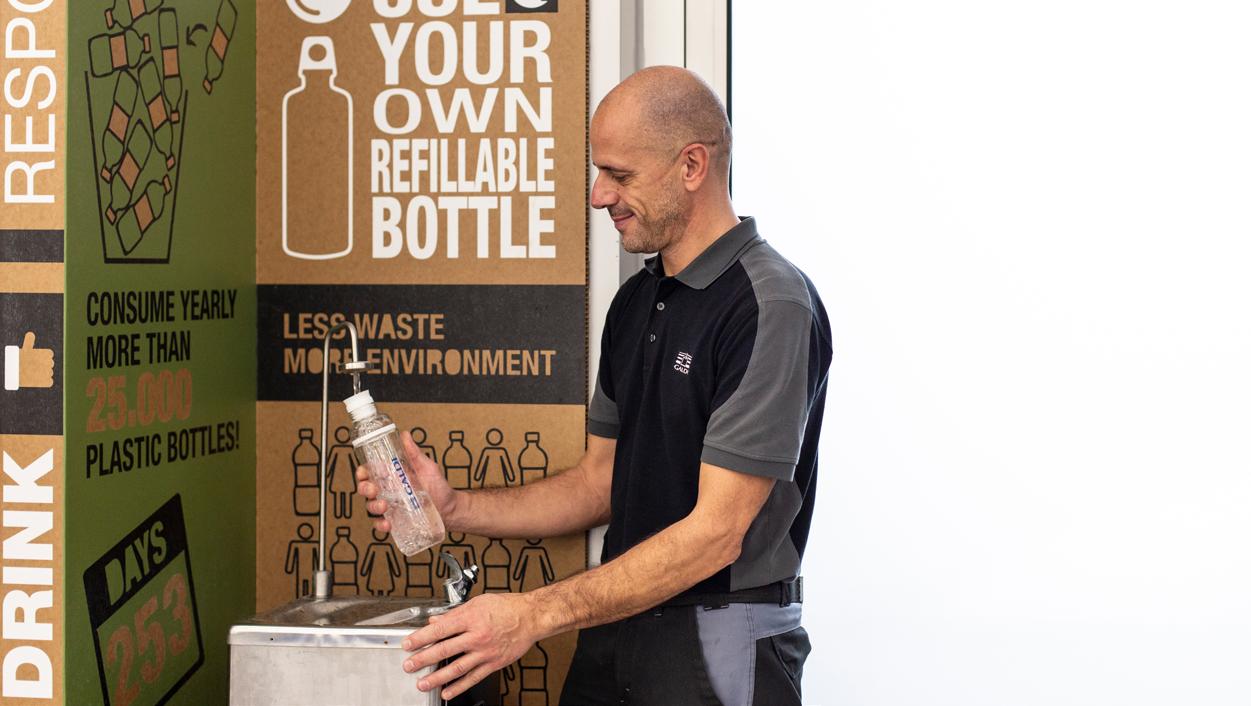
8. Qualitative objectives with respect to the objectives of common benefit
The table below summarises the qualitative objectives that Galdi aims to achieve by the end of the coming years, in line with the objectives of common benefit included in the Articles of Association, reflecting a tangible commitment to furthering continuous improvement in its corporate sustainability practices.
Common benefit objective: A TANGIBLE AND TRANSPARENT COMMITMENT TO PROTECTING THE ENVIRONMENT
OBJECTIVE
Replacement of at least one gas boiler with a heat pump
Completion of the project to expand the production area, including the installation of a 100 kWp photovoltaic system aimed at increasing self-generation of energy from renewable sources
Increase of 100 kWp for the realisation of the new photovoltaic system
Achieved at end of 2025, Montebelluna plant Start of calculation of Scope 3
Creation of a new plant in Paese by means of the refurbishment of a building, including energy efficiency improvements, with a view to relocating the metalworking operations. (new 2025 objective)
Joining an energy community for the plant at the Montebelluna site, with a view to promoting the sharing of energy from renewable sources and encouraging greater energy efficiency.
Training and awareness-raising on correct energy saving practices during the 2025 M’Illumino di Meno event
Common benefit objective: A CONSTANT FOCUS ON INNOVATION AND THE SUSTAINABILITY OF PROCESSES TO CREATE PRODUCTS THAT ARE ETHICAL, HIGH-QUALITY, SAFE AND EFFECTIVE
OBJECTIVE
Review of the general terms and conditions of purchase and contractual arrangements for direct material suppliers
Organisation of the Supplier Day event
Extension of ESG assessment to new (strategic) suppliers
Progress of the process digitalisation programme via the project to implement the new ERP system, with a focus on standardising and optimising business processes. (new 2025 objective)
Establishment of a new laboratory dedicated to Research and Development (R&D) activities, aimed at supporting product and process innovation. (new 2025 objective)
Definition of a company policy on the use of artificial intelligence, aimed at ensuring the protection of the confidentiality of information and the safe and responsible use of AI tools. (new 2025 objective)
Common benefit objective:
PROMOTION OF A CULTURE OF BEAUTY AND AESTHETIC APPRECIATION, ALSO GUARANTEEING SUPPORT FOR CULTURAL AND SOCIAL INITIATIVES AND ENHANCING THE LOCAL AREA
OBJECTIVE
Maintenance of at least four projects supporting the local community and the local area
Common benefit objective: ENSURE THE WELL-BEING OF EMPLOYEES, THEIR FAMILIES AND THE COMMUNITY THROUGH THE DEVELOPMENT OF INITIATIVES THAT PROMOTE SKILLS DEVELOPMENT, AWARENESS AND THE ADOPTION OF HEALTHY LIFESTYLES, AS WELL AS THE PRINCIPLES OF RESPECT AND DIVERSITY
OBJECTIVE
Resumption of training activities on cybersecurity
Continuation of English, German and, in addition, French language courses
Training on the topics covered by Law 231, with a particular focus on anti-corruption and the Code of Ethics
Expansion and refurbishment of the bathroom facilities in the production department, aimed at improving the workspaces and the well-being of workers. (new 2025 objective)
Introduction of 10 dynamic yoga sessions as part of the out-of-work activities dedicated to staff wellbeing. (new 2025 objective) 2026
Organisation of new cookery classes with the chef from the company bistrot (new 2025 objective)
OBJECTIVES trasversali:
TRANSVERSAL TO THE FOUR COMMON BENEFIT OBJECTIVES
Re-evaluation of the company’s impact through the B Impact Assessment
Improvement of the EcoVadis score
Not Achieved
8. Quantitative objectives with respect to the material topics and the objectives of common benefit
The table below sets out the progress made towards the quantitative objectives set by Galdi for the 2025 financial year, as well as the goals envisaged for subsequent years, in line with the objectives of common benefit established in the Articles of Association.
The model for monitoring progress towards these objectives is explained below. The “Status” column indicates the level of achievement for each 2025 objective, using a progressive scale that shows both whether the target has been met and any deviation –positive or negative – from the expected value.
The assessment scale used comprises five levels:
OBJECTIVE STATUS DESCRIPTION
Far from being achieved Result more than 15% below objective
Nearly achieved Result up to 15% below objective
Achieved Objective achieved, with a deviation of between 0% and 3%
Consolidated Result up to 15% above objective
Surpassed Result more than 15% above objective
Research, Development and Innovation
Common benefit objective:
A CONSTANT FOCUS ON INNOVATION AND THE SUSTAINABILITY OF PROCESSES TO CREATE PRODUCTS THAT ARE ETHICAL, HIGH-QUALITY, SAFE AND
Management of supplier relations
Number of connected packaging systems as a proportion of the total number of plants
Monitoring of the average MME (Machine Mechanical Efficiency) of connected packaging systemsACHIEVED Not reproposed
Creation of a dedicated indicator to monitor process efficiency improvements
Productivity of the goods-into warehouse process
Additional efficiency improvement of 10% in the assembly process and 15% in the test & inspection process
Common benefit objective:
Common benefit objective:
ENSURE THE WELL-BEING OF EMPLOYEES, THEIR FAMILIES AND THE COMMUNITY THROUGH THE DEVELOPMENT OF INITIATIVES THAT PROMOTE SKILLS DEVELOPMENT, AWARENESS AND THE ADOPTION OF HEALTHY LIFESTYLES, AS WELL AS THE PRINCIPLES OF RESPECT AND DIVERSITY
Common benefit objective:
The following pie chart shows the percentage breakdown of the levels of achievement of the 2025 objectives, providing an overview of the company’s progress with respect to the commitments undertaken in relation to the objectives of common benefit envisaged by the Articles of Association.
METHO DOLOGICAL NOTE
This methodological note provides the essential tools for interpreting the contents of this fourth Galdi S.r.l. Sustainability Report and aims to equip the reader with the necessary resources to navigate the report, which includes metrics and indicators identified, developed and explained in accordance with the GRI standards adopted for the drafting of this document. In particular, it includes the principles set out in GRI 1: Foundation, GRI 2: General disclosures 2021 and GRI 3: Material Topics 2021.
The aim of this Sustainability Report is to report on Galdi’s performance with regard to the three ESG areas (Environment, Social, Governance) and, in particular, to report on the material topics identified by means of a materiality analysis carried out by considering the economic, environmental and social impacts generated by the organisation, as well as the main ESG risks and opportunities relevant to the business, in accordance with an approach inspired by the principle of double materiality, and the specific objectives of common benefit set out in the Articles of Association.
Furthermore, at the end of this document, there are two tables: one setting out the qualitative objectives and the other the quantitative objectives that the Company aims to achieve, including in relation to the fulfilment of the Common Benefit objectives set out in the Articles of Association.
This document covers the reporting period from 1 January 2025 to 31 December 2025. Where possible, the information contained in the Sustainability Report has been provided alongside a comparison with the years 2023 and 2024. The scope of reporting is the company’s Headquarters, located at Via Enrico Fermi 43/b – 31038, Postioma di Paese (TV), Italy. The organisation operates in Italy, where it has its sole production site, and is present in the markets of the United States, Morocco and Russia through three “Strategic Business Units”. The company prepares and publishes the Sustainability Report annually, and the reporting period coincides with that of the financial statements. Galdi declares that this Sustainability Report has not been subject to an assurance process by external competent bodies. The “GRI Content Index” table provides evidence of the coverage of the GRI indicators associated with each sustainability topic reported in this document.
The document has been prepared in accordance with the GRI Standards and follows the core principles for reporting set out in GRI 1: Foundation: Accuracy, Balance, Clarity, Comparability, Completeness, Sustainability Context, Timeliness, Verifiability. To quantify environmental impacts, conversion factors provided by DEFRA UK were used, whilst to assess energy using both market-based and location-based approaches, information provided by Terna and the AIB European
Residual Mixes report was utilised. For calculations relating to accident rates, a multiplication factor of 1,000,000 was used.
Any revisions or restatements of data compared with previous editions of the Report are duly indicated within the document. In particular, data relating to waste for the years 2022 and 2023 has been restated with respect to that published in the previous Sustainability Report. This restatement was necessary following the adoption, with effect from 2024, of an accounting method based on the quantities actually transferred to authorised third parties, replacing the previous approach based on quantities taken charge of. In order to ensure the historical comparability of the data, the same method has been applied retrospectively to the years 2022 and 2023 as well. This Sustainability Report has been approved by the Board of Directors of Galdi S.r.l..
For any enquiries regarding the contents of this document, please contact the Impact Manager at the following e-mail address: info@galdi.it
GRI Table of Contents
Statement of Use: Galdi has submitted a report in accordance with the GRI Standards for the period from 1 January
to 31 December 2025 GRI 1 used GRI 1: Foundation 2021
Relevant GRI sector standards: To date, there are no relevant industry standards for Galdi
GRI Table of Contents
tion due to
omitted. As Galdi is a private company, we do not consider it appropriate to share