
gair rhydd
est. 1972

Check out our Instagram for news and updates
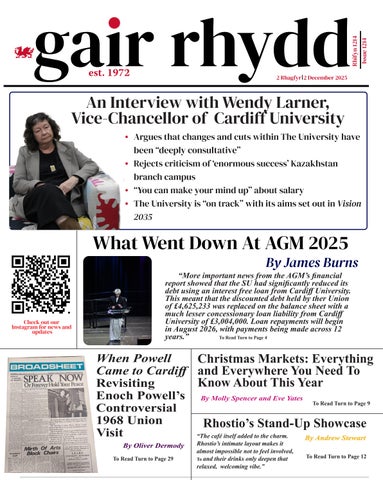
An Interview with Wendy Larner, Vice-Chancellor of Cardiff University
• Argues that changes and cuts within The University have been “deeply consultative”
• Rejects criticism of ‘enormous success’ Kazakhstan branch campus
• “You can make your mind up” about salary
• The University is “on track” with its aims set out in Vision 2035
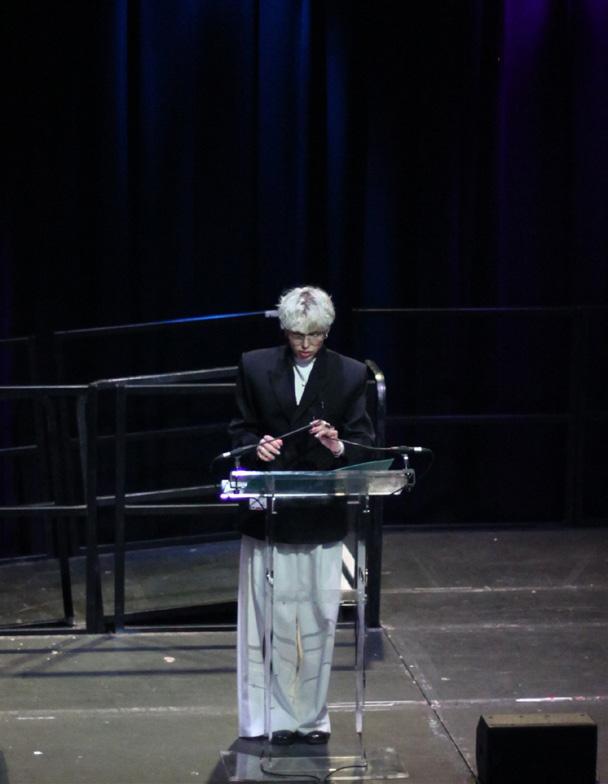
What Went Down At AGM
2025
By James Burns
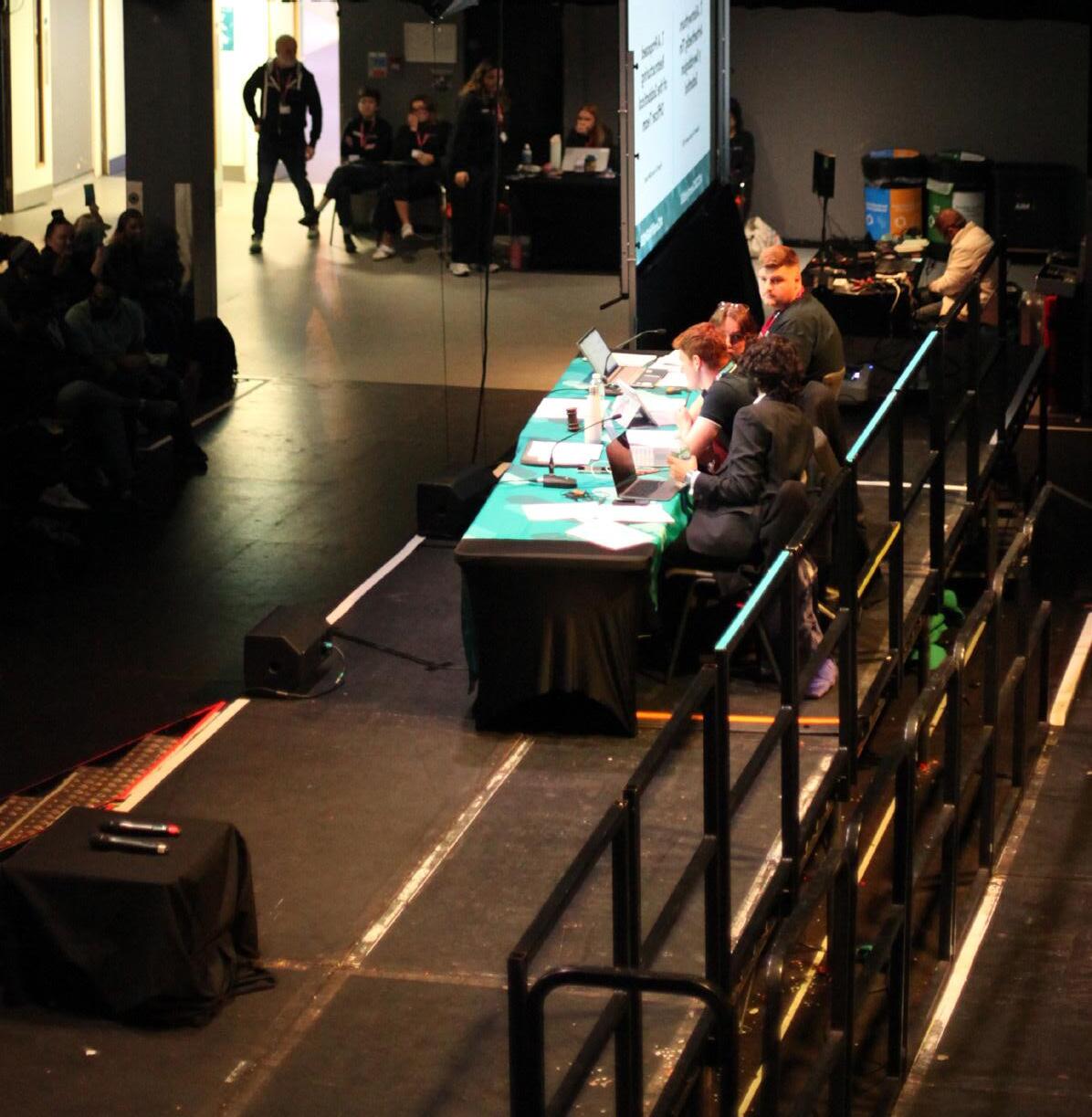
“More important news from the AGM’s financial report showed that the SU had significantly reduced its debt using an interest free loan from Cardiff University. This meant that the discounted debt held by ther Union of £4,625,233 was replaced on the balance sheet with a much lesser concessionary loan liability from Cardiff University of £3,004,000. Loan repayments will begin in August 2026, with payments being made across 12 years.” To Read Turn to Page 4
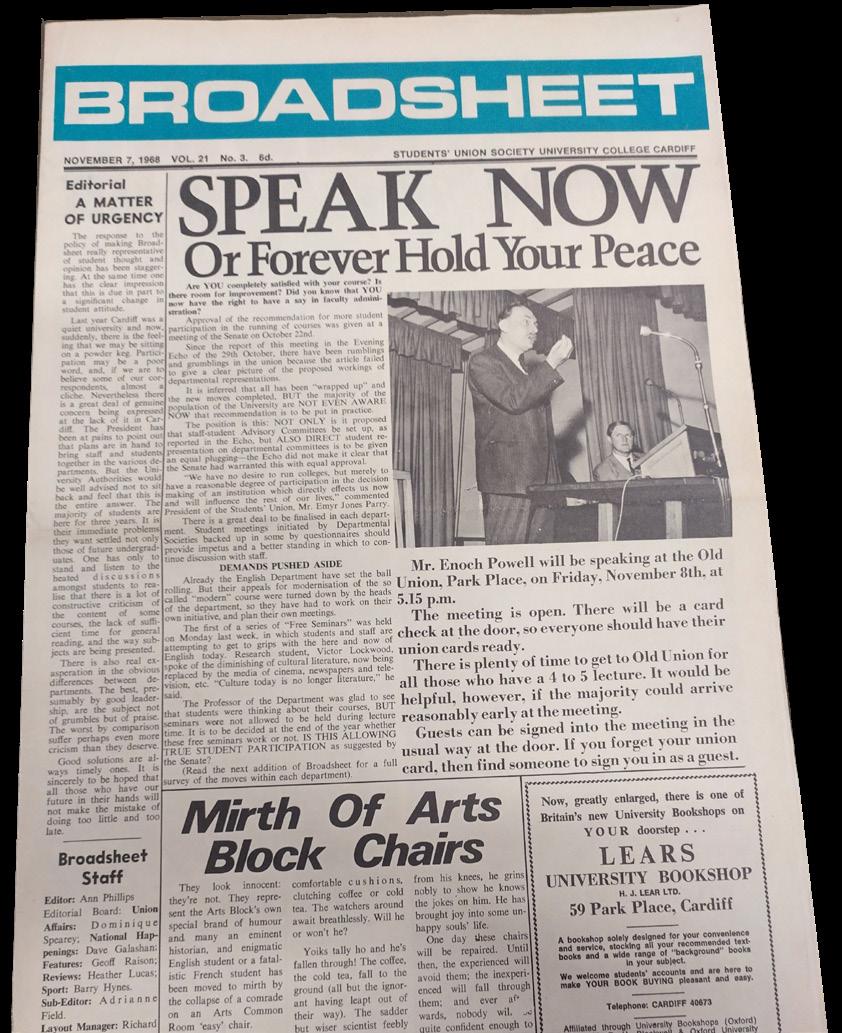
By Oliver Dermody
By Molly Spencer and Eve Yates
“The café itself added to the charm. Rhostio’s intimate layout makes it almost impossible not to feel involved, To and their drinks only deepen that relaxed, welcoming vibe.”
A New Era for Welsh Rail As The King Opens New Taff’s Well Depot
Ella Simons Head of News
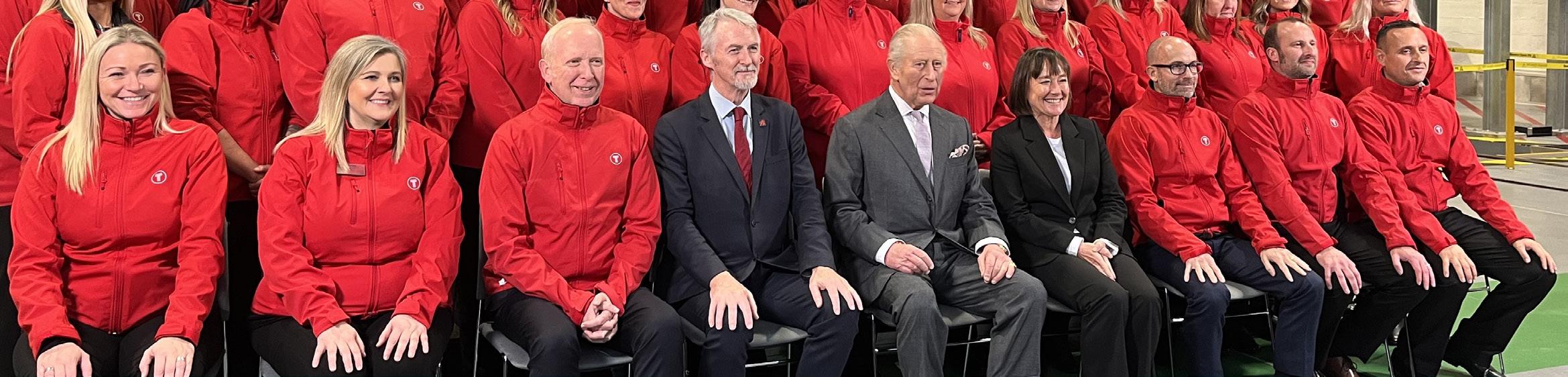
Finally, the wait is over. The new Transport for Wales depot is here after starting upgrades began in 2020. The £100 million depot located in Taff’s Well South Wales, just opposite the town’s Transport for Wales train stop, will provide 400 jobs and will maintain a fleet of 36 new tram-trains, set to transform transport across South Wales. According to Transport for Wales, they are “leading the South Wales Metro” where they are “delivering one of Wales’ biggest infrastructure projects, electrifying 170km of railway, which brought electrified rail services to South Wales, for the very first time last year”.
The service aims to bring faster, more accessible and more environmentally friendly travel to Wales with hopeful upgrades reaching the North of Wales from next year. The depot forms a key part of the South Wales Metro project, a project from Transport for Wales and the Welsh Government, designed to improve reliability and expand sustainable travel options for communities across South Wales.
Gair Rhydd’s Head of News was welcomed to the event which included speeches from Transport for Wales’ CEO James Price, Transport for Wales Chair Vernon Everitt and the Welsh Deputy First Minister Huw Irranca-
Davies. This was followed by a tour of the depot, watching his majesty King Charles III take a small journey on one of the new tram-trains and finally, an unveiling of the depot bythe King himself.
At the opening, CEO of transport for Wales James Price thanked the patience of locals after an almost six-year project, saying “anyone who lives in the village, a big thank you for putting up with this.” He shared that the depot is a major step to “transform rail travel across Wales and its borders.” He praised “the communities we serve” adding “a big diolch from me!” Price homed in on the fact that the project proves that in Wales “it can be done efficiently and effectively” describing an exciting moment for Welsh transport. Price highlighted the step forward into new travel in Wales saying “every journey is an opportunity” showing the power of Wales, Welsh community and what we can achieve when we work together.
Chair of Transport for Wales, Vernon Everitt, also spoke to the room. He shared his gratitude for the support of the community and the staff. Everitt described the depot as a “new chapter in Welsh public transport.” He went on to say that “transport is an essential enabler of sustainable economic growth, higher productivity and access to homes, jobs, education, better health and opportunity for everyone” which means “tackling inequality in all of its forms.”
He said that better rail, buses, and active travel where customers and businesses of Wales come first are vital to Transport for Wales’ mission. Everitt highlighted that the new depot and the new trains offer a strong return on public investment, noting that “every pound is returned at five in social and economic value” and argued that Wales is performing “far better than anywhere else in the country.” He said that the depot is now better than ever, delivering the modern Wales everyone wants. A Wales that is innovative and inclusive. A Wales built to support future generations for many years to come.
The event also welcomed Deputy First Minister of Wales Huw Irranca-Davies. His speech was clear, a true celebration of what Wales can achieve and truly displaying the capacity of Welsh innovation. The Deputy Minister said that this is a “key milestone” for Wales. Adding “just say to doubters, we can do this”, that Wales can turn “vision into reality”. Irranca-Davies shared that he feels “real pride to show what Wales can do”. The speech highlighted the scale of the development, “real transformation in action” and “one of the biggest, most ambitious projects” in Wales and whilst this is “the next big milestone” it is “definitely not the last!” The Deputy Minister said to the event that this work from Transport for Wales is “transforming people’s lives” and “it’s not just what we have built but the opportunity we are creating.” He added that

the project is “more than transport, but about community and people” which is the beating heart behind the project. He ended by saying “Wales is on the move, and we’re only just getting started!”
Later in the event, as Gair Rhydd’s Head of News, I was invited to watch King Charles III take a small drive in one of the new tram-trains. His majesty was surrounded by Transport for Wales staff, marking a moment in history where Welsh innovation was at the forefront of what our country can offer and how far we can truly go. Not only did the King meet with staff at the depot, but he was able to celebrate Welsh achievement with three local primary schools who attended the event. A moment of history happened on November 14th . It was a day to recognise the hard work of Welsh communities and the staff at Transport for Wales. And despite it being a day for the history books, it also showed the innovation and opportunity to come, for the future of Wales.
Rising Costs for Welsh Universities
Advait Gangawanwale Contributor
Wales might be entering a difficult era for higher education, as rising tuition fees coincide with a nationwide cost-of-living crisis. For students, especially newcomers, financial pressure is mounting and many say government support still falls short.
From August 2025, Welsh universities will be allowed to charge up to £9,535 in undergraduate tuition fees. This was announced in a written statement by Vikki Howells MS, the Welsh Government’s Minister for Further and Higher Education. Howells, while defending the move said, “the increase will provide additional income to Welsh institutions to reflect the increased costs of education and help safeguard provision and investment in the student experience.” Although, maintenance support will rise by 1.6% for 2025/26, many think it is not enough. The inflation (Consumer Price Index) forecast average for 2025 was revised upwards to 3.2%.
In the Welsh Government’s own announcement, Howells said “living costs should not be a barrier to studying at university. I
want to be clear that this small increase in fees should not dissuade anyone from Wales considering applying for university. An increase in fees will not increase their monthly repayments as graduates.”
Yet student unions are warning that reality is harsher than government statements suggest. NUS Wales President Deio Owen pointed to the data showing that 58% of Welsh students are skipping meals. “These findings provide a stark insight into the state of student housing in Wales. It’s simply unacceptable that so many students are struggling to afford necessities like food and rent,” said Owen. He added that “around a quarter of students are left with less than £100 a month after housing costs alone. Once we take into account the costof-living crisis and ever-increasing prices, it demonstrates how students need support now.”
A separate NUS Wales survey also revealed that 8% of students in Wales experienced homelessness during the cost-of-living crisis, with half of those going without a stable place for more than a week. Owen said the figures should be a ‘real red flag’ for the Welsh Government.
Some students have spoken directly to the media about how financial hardship is
affecting their lives. In an ITV Wales interview, Orla Tarn, then President of NUS Wales said. “money troubles, housing issues and poor work-life balance have become more pronounced for many students.” These student hardships are happening as universities themselves grapple with severe financial strain. Cardiff University announced plans to cut 400 academic jobs and shutter courses such as nursing, music and modern languages to plug a substantial budget gap.
The vice-chancellor, Prof Wendy Larner, had defended the decision and said, “it is no longer an option for us to continue. We have worked diligently to create initial proposals for a slightly smaller university and ready to leverage new academic opportunities.”
For those applying now, these developments raise serious questions. The higher tuition cap means potentially more debt long-term, even if repayments don’t start until after graduation. But the bigger worry is the cost of living, with many students reporting deciding where to study could come down to affordability more than academic prestige and quality of education. Student leaders are calling for stronger protections in form of better regulation of rent, expanded hardship funds and more transparent
financial planning from universities. Deio Owen said, “We’re seeing a generation of students being failed as they study, with insufficient housing, concerns around their tuition fees, less money in their pockets and uncertainty about their futures.”
The Welsh Government had said that the fee rises and maintenance increase are necessary steps to protect the higher education sector. But for many students, especially those from low-income backgrounds, these changes might hamper their start at the university due to the existing cost-of-living crisis which threatens to undermine who can realistically afford to go to university and how well they can manage their lives as they study.
Ryan Greenhall Contributor
Cardiff Students and Families Turn to Foodbanks this Christmas
As Christmas approaches, the streets of Cardiff are filled with beautiful lights, decorations, and markets. Yet behind this lies a harsher reality, thousands of families across Wales are turning to foodbanks to make it through December. For many, Christmas is a time of abundance. However, for those struggling with the cost of living crisis, it is the season of anxiety. The pressure to provide for loved ones has now collided with the devastating reality of empty cupboards and dwindling finances.
According to Cardiff food banks, one in five adults in Wales now face food insecurity, where real families and students skipping meals and quietly struggling to afford groceries. As a student in Cardiff, I see first-hand how many of my peers are struggling financially. Food insecurity is not just about hunger; it is about the daily anxiety of not knowing if there will be food on the table tomorrow, or whether Christmas dinner will even be possible.
Cardiff foodbanks have provided 20,158 emergency food parcels in 2024; a 37% increase compared to five years ago. The growing demand is putting a lot of strain on foodbanks. As shelves empty faster than they
can be restocked, volunteers face the painful reality of falling donations. Foodbanks rely on public generosity to continue their work, but when so many households themselves are struggling to budget rent and buy food themselves, giving becomes harder. Families who once donated are now seeking help, and the cycle keeps continuing. This strain is mostly in December, the festive season forces parents to carry the weight of wanting to give their children joy knowing they may not be able to provide even the basics.
Yet even in this difficult time, small acts of kindness can make a profound difference. If you would like to donate, Cardiff foodbanks encourage residents to donate food or household items by late November, ensuring supplies are available in time for Christmas. For those unable to give in person, items can be purchased online and sent directly to foodbanks. Every tin of soup, every packet of pasta and every box of cereal helps ease the awful situation families experience. To bring children into this spirit of giving as well, Cardiff foodbanks have launched a special initiative called the ‘Christmas Mission.’ Available to download from their website, it encourages families to involve their children in collecting items around the house to donate.
It is both a lesson in compassion and a practical way to support others, helping young

people understand that generosity is not about grand gestures but about sharing what we can. This is also a reminder that foodbanks are not simply about charity, they are about community. They remind us that in times of hardship, solidarity matters. They show us that people can come together even in small contributions and create a safety net strong enough to catch those who are falling. The statistics may pull on your heartstrings, but they also highlight the power of collective action and the nation’s kindness.
Despite the growth in the number of food parcels provided by Cardiff’s Trussell Trust network of foodbanks and even by independent providers, more than two-thirds, 74%, of those experiencing food insecurity have not reached out for food aid and therefore haven’t received any food aid. This means foodbank use does not represent the entirety of need across the country, but only those who have been able to access this form of support. Many more individuals are facing these problems quietly with no help, highlighting that visible statistics are only the tip of the iceberg to a much larger crisis. As Cardiff’s streets sparkle and markets fill up with shoppers, it is worth pausing to remember those who are struggling this festive season.
Russell Group University Financial Crisis Causes Course Cuts
Gabriela Hunt News Editor
The University of Nottingham has recently proposed a closure of 48 of its courses, resulting in the end of the Music and Modern Languages department, as well as a drastic reduction in the number of Nursing courses. Students, staff and former alumniincluding composer Sam Watts - have opposed the Universities proposal, petitioning to save the courses following the announcement of the suspension.
According to the BBC, the University released a statement saying how it needs to “make tough decisions based on changes in student demand, the cost of delivering courses, and competition from other institutions offering similar courses.” Staff related to the courses in question have stated their intention to lobby the university’s governing body alongside student efforts to launch petitions to protect their education.
Lonán Ó Briain, head of the Department of Music, said staff were “shocked” when the announcement was made, with staff being “very worried about their (students) wellbeing,” as well as being worried about their community partnerships across the East Midlands region as they are “embedded in the local community” working with a wide range of partners.
Further issues arose when students stated that they had found out about the proposed cuts via the BBC article, not through the University, as there was a delay in an emailed update.
Universities across the UK have reported financial struggles, with Nottingham reporting to have been “seriously affected in a fall in revenues and rising costs.” A large number of factors have contributed to this, including a growing failure to recruit non-UK students. This has resulted in a decreasing income from international students, due to factors such as government policies regarding immigration figures cut and strained relations post Brexit. Another is due to a lack of funding across the
country and a rise in inflation in recent years. Nottingham reported that the courses chosen for the proposed cuts were assessed on criteria including “market share, projected demands from employers and estimated revenue.”
It has become increasingly obvious in recent years that Universities are starting to look less as a place of nurtured learning and more like profit-driven businesses. With employability as the main selling point behind degrees, there is a loss of education simply for the sake of it. Every course now needs to prove economic worth to survive, causing the extinction of education for the sake of passion and creativity. The proposals regarding the safety of the courses will be sent to the university council on 25th November.
Other courses being suspended include theology and religious studies, social work, architecture design and build, animal nutrition, plant biology, mathematical physics, agriculture, and two of the university’s nursing courses.
Back in January of this year our own University had announced proposed budget cuts, including 400 full-time jobs and multiple courses. Later in May they backtracked on this slightly, deciding to continue offering Music and Modern Language, a month after a U-turn was made regarding the controversial proposal to axe nursing courses. However, Vice Chancellor Wendy Larner said to achieve this music would have revised entry targets
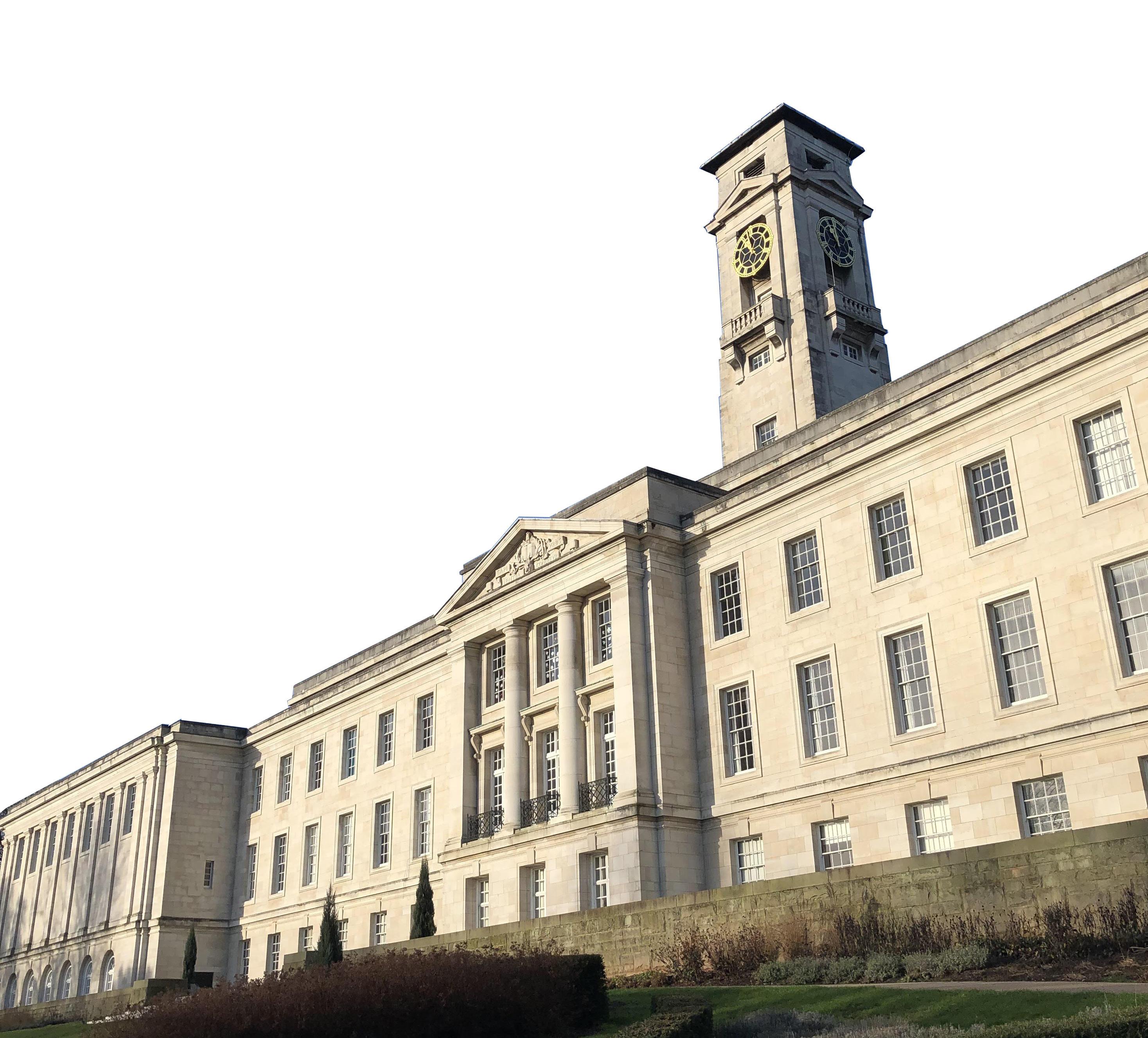
and modern language programmes would have smaller cohorts to be able to continue. Plans to close Ancient History and Religion and Theology are to go ahead subject to final approval. Jobs cuts have been updated to 138 from 400 after changes to savings plans and voluntary departures of dozens of staff. Final plans will be signed off on 17 June. There is an apparent danger that universities are becoming institutions of profit rather than places of educational nurture. This shift risks undermining the core academic values that prioritise intellectual growth and the wellbeing of students. Students are now treated as numbers that generate profit, rather than individuals whose achievements and development are genuinely valued.
Image: Greentreepenci, via Wikimedia Commons
What went down
TJames Burns News Editor
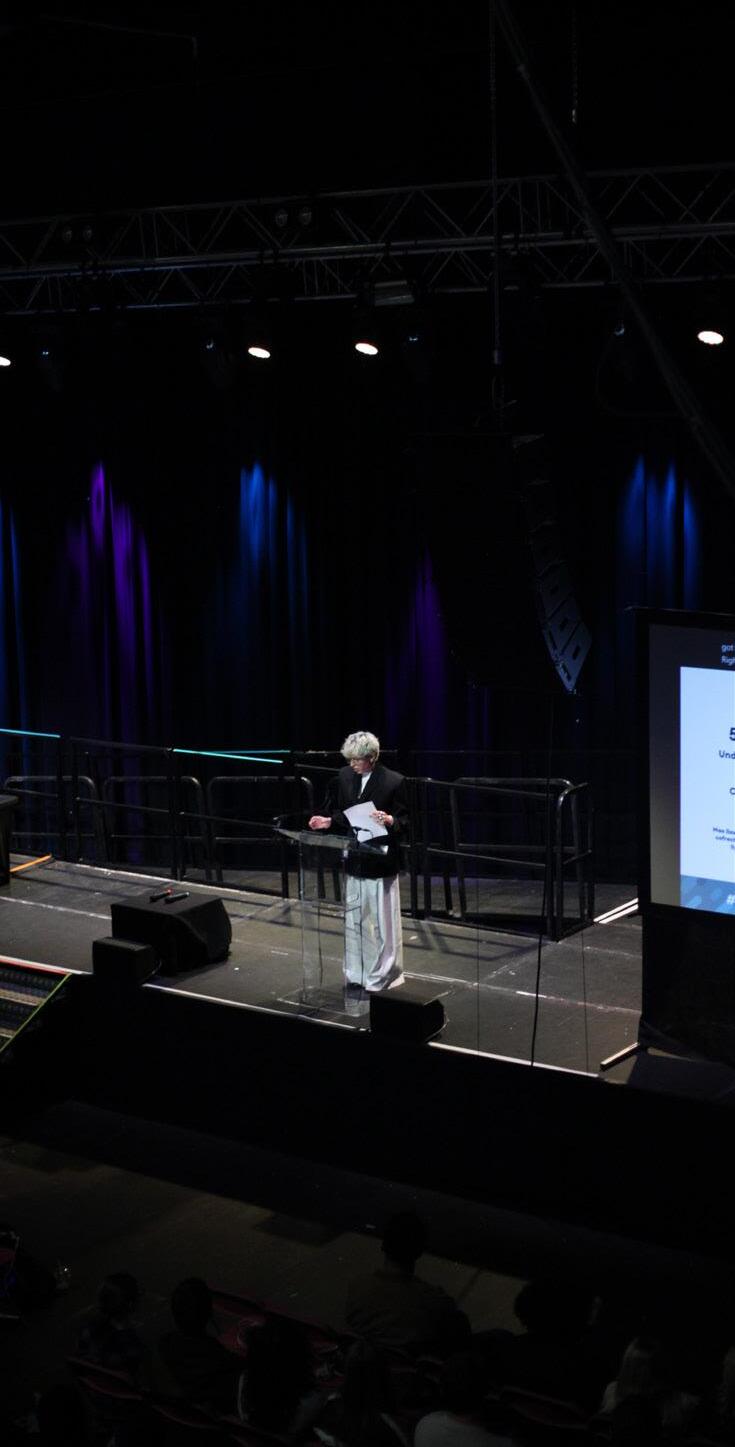
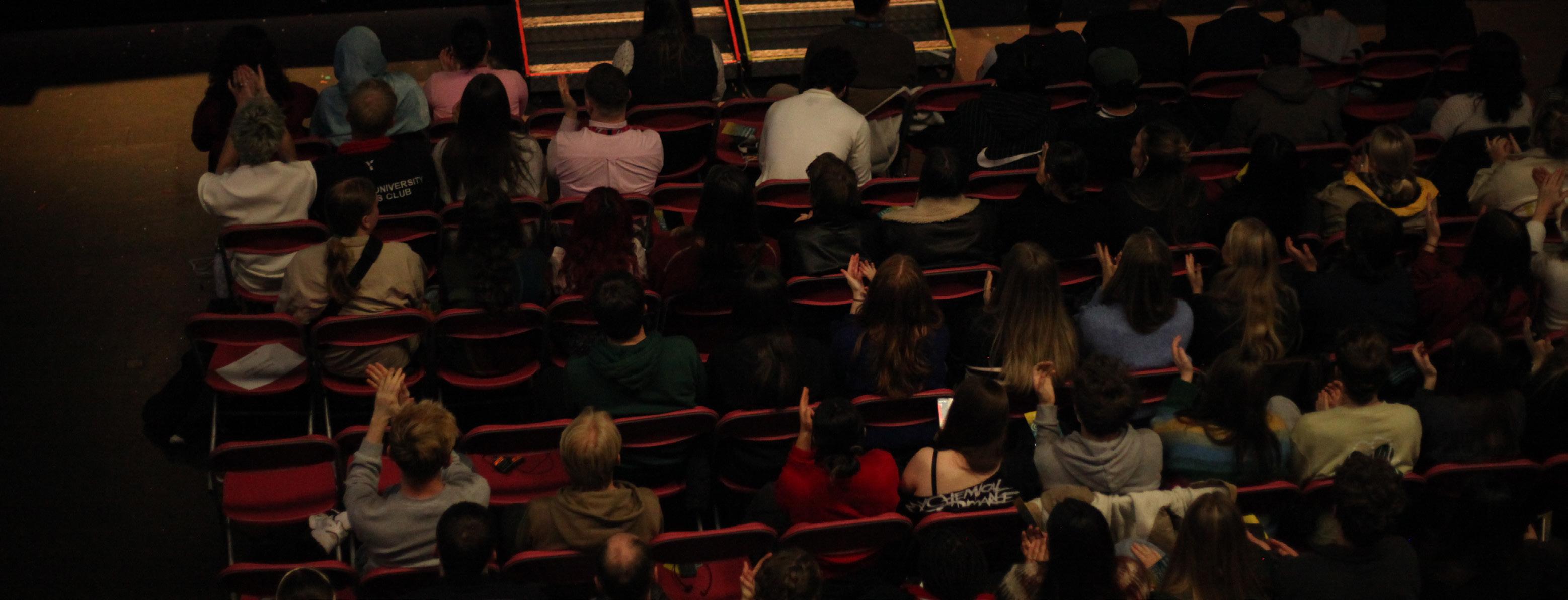
he annual event that sees students vote on important motions and actions of the student union took place on the 20th of November. Students gathered in their hundreds in the great hall to give their say on the Union’s affiliations, vote for or against four submitted motions, and get the lowdown on the Student’s Union’s finances as the union’s CEO opened the books.
The 2025 edition commenced with a rundown of the expected behaviour of the evening’s meeting, as well as vote for an acceptance of the minutes of the meeting from the previous year, merely tasks of necessary admin before inevitable debate.
SU president, Maria Pollard, kicked off the meeting with a look at the thriving engagement of the SU offers. With a 21% increase in voter engagement in the spring elections, 25,000 students expecting to engage with the SU and more than 114,000 people expected to attend the SU’s Wednesday club night, YOLO, Cardiff’s SU seems to have earnt its place as in the top 2 student union for 4 years on the trot. From an engagement point of view at least, Cardiff’s SU appears to be doing well.
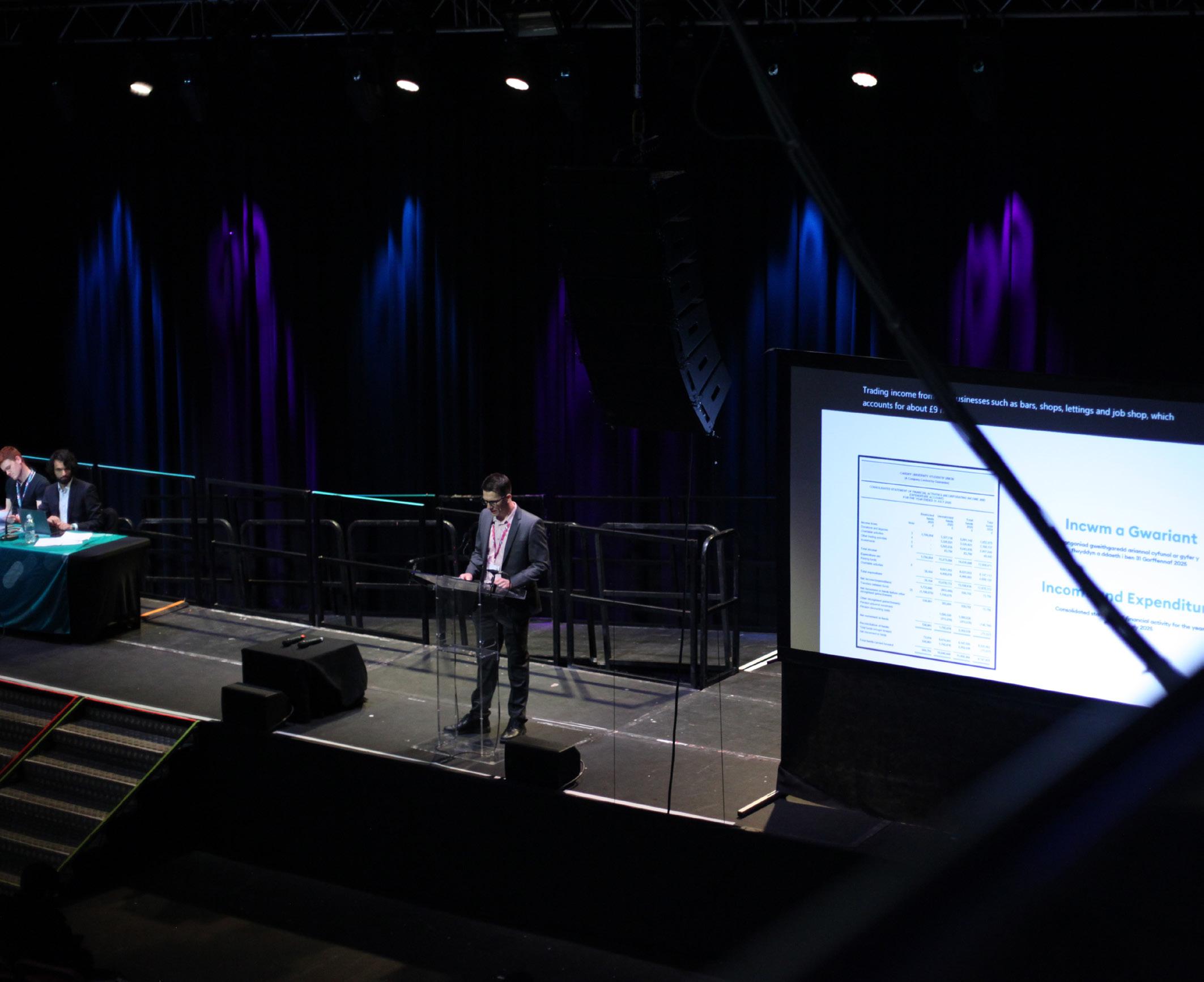
The meeting then turned to logistics, welcoming the Student Unions CEO, Daniel Palmer to the stage. Palmer informed students that their SU is in a good financial state, noting increased income and a reduction in debt.
The AGM offers a look behind the books to be transparent with students on where funds are acquired and distributed across their student union. The 2025 edition of this practice saw, as Daniel announced, a fair improvement on 2024 figures, with income rising from £12.9 million to just over £14 million. This has enabled more spending, with a total spend of £13.1 million instead of the previous £12.8 million in the preceding year.
Palmer told the audience of students
that the expenses had been used to finance much needed infrastructure projects such as installation of a second passenger lift, commencing work on replacing the building’s roof and a new look to the food court area.
More important news from the AGM’s financial report presented that the SU had significantly reduced its debt using an interest free loan from Cardiff University. This meant that the discounted debt held by the Union of £4,625,233 was replaced on the balance sheet with a much lesser concessionary loan liability to Cardiff University of £3,004,000. Loan repayments will begin in August 2026, with payments being made across 12 years.
Moving on from the integral statistics that define the SU’s spending, the meeting put the affiliations of the Students Union to the vote of its attending audience. First up was BUCS, the national governing body of university sport, who unsurprisingly retained their affiliation to the SU with a landslide vote. On a more unexpected note, after a rebate from two speakers, students voted narrowly following a confirming vote count to end its affiliation with the NUS. The NUS is an organisation which represents UK students by campaigning for issues like free and lifelong education, fighting for student rights, and providing support through its member unions.
At least this is according to them, Cardiff students weren’t quite convinced with one opposing speaker proclaiming: “we need to be affiliated with an organisation that does not suppress student voices… NUS ran a decolonisation campaign and then deleted it. What is the point of you, if you are not going to uplift student voices.” Another speaker also noted their response to student protests against the war in Gaza, and while elected officer Joshua Tandy suggested “We must endeavour the NUS to do better.” The arguments of the two opposing students prevailed, and after a long tense wait, the NUS and SU’s affiliation is no more.
The meeting then progressed on to open questions to its sabbatical officers. Stand outs from this part of the agenda consisted of the VP Cymraeg, Cynwal ap Myrddin calls for all Welsh accommodation blocks to help build a stronger Welsh community, as well as pledges to appoint a specialist in visa matters to help students who might be migrants or asylum seekers.
Maria Polard also shared her gripes with the continued timetabling issues, a sentiment she acknowledged is shared amongst all students. She admitted the handling had been “totally unacceptable”, and that it has affected student’s prospects at gaining part-time work due to their lack of knowledge surrounding their availability. She also noted the problems it may have caused “Neurodivergent students who need to plan and schedule for their lives”.
Maria promised the audience that “the students union has been in consistent conversation with the Cardiff university council to make sure this does not happen again.” The agenda then moved to the submitted motions section of meeting, where the top four voted proposed motions were put to the audience to accept or deny the passing of such motions.
Up first was Time to Act, the motion to protect students to protect sexual violence at the university. Becca Rumsey took to the stage surrounded by her fellow members proclaiming the universities’ ‘broken system’. She stated “the lack of mandatory consent and bystander training across the university and Students’” as contributing factors. The Time to Act team noted that “62% of students will experience sexual violence at universities in the UK”.
“Everyone should feel safe in their student community, and it should not become the normalised part of the student experience.” When put to the vote, the motion was passed with flying colours, with Becca and the team departing the stage with cheers of victory.
Photos by Mael Le Paih
Newyddion
At AGM 2025
The next motion saw a similar result. My Scrubs, My Choice: Equality in Healthcare Dress Code saw students campaigning for their right to be able to dress more modestly in healthcare environments.
NHS Employers’ Uniform and Workplace Guidance states that dress codes must be justified, nondiscriminatory and sensitive to religious and cultural expression. Two healthcare students discussed the motion, Lara Al Najjar, a fourth-year medical student and Ayaat Ashi, a first-year nursing student. They stated the “NHS already has the solutions all that is missing is the will from this university.”
Students are “choosing their degree over their own comfort”. They concluded that “My Scrubs, my choice is not just a slogan, it’s a reminder that we don’t get left behind”. Ilhan Mazhar, a first-year medical student, was welcomed on stage and announced that “The current scrubs policy treats a whole group as an afterthought and makes people feel uncomfortable”. He stated that the NHS already has the solutions and that the university are behind, and that they need to implement appropriate scrubs in schools if it’s already offered by NHS employers nationally. He states that “we don’t need to hear anymore but to hear enough” from the university. The motion, like the last was passed with no sign of refute, and the Students’ Union will now start to advocate for Cardiff University to provide appropriate scrubs for healthcare students.
The third motion was not met with the same unanimous thinking. The motion to campaign for, and support, pro-choice was the most debated motion of the evening. The AGM’s official pro-choice stance was adopted three years ago, with a passing of the motion needed to re-confirm the stance. The side arguing for the renewal of adopting a pro-choice stance proclaimed that “neutrality is not an option” in the debate surrounding an official stance. They retained that while abortion remains a legal right in Wales, “issues of accessibility” persist, as women continue to be plagued with a “fear of judgement and stigma”, as well as the “misinformation” that clouds the process of abortion.
The AGM members asked those who opposed the motion to raise their hands, and up went the hand of Greg Owens, who then took to the stage offering the first refute of the night. Owens noted the importance of the SU’s obligation to retaining free speech and suggested the motion “strays into an area of non-inclusivity.” He affirmed that “if the university is to achieve its vision of inclusivity it must remain neutral on contentious issues like this.”
Owens then departed the stage to jeers and boos around the Great Hall, with the pro-choice side biting back, clarifying that pro-choice stance “leaves openness for the debate”, whilst still retaining the importance of individual choice.
The next speaker, rejecting the motion, retorted “that we cannot accept ideological suppression.” The speaker departed the stage to silence after the crowd was reminded not to boo speakers.
In the summary the speakers remined the audience that that as a union “we are inherently political, as a union we are allowed a stance” and that the individual choice over women and their bodies is a paramount priority. The motion went to the vote, and while not a complete sweep, the motion was passed with a heavy majority, and cheers echoed around the hall.
The meeting went into its final motion, making Cardiff a safe space for trans students. The speaker supporting the motion affirmed the importance that “trans rights are human rights”, as they called for an increased awareness of the struggles trans people must go through to feel accepted. When put to the audience, a sole member offered a rebate, taking to the stage he went on a bizarre rhetoric surrounding a potential moment of
PTSD related to a family member, and how a right to fear surrounding trans people should not necessarily be shunned. The crowd was struck to silence and the speaker slowly walked of the stage, and what looked to be out of the hall.
When put the vote, like the first two motions, a landslide passing vote prevailed, and an emotive audience raised to a standing ovation to cap off the 2025 edition of the AGM. Overall, we saw a shock detachment from NUS proving the importance to of organisations getting it right when it comes to responding to protests, and how even not picking a side can have great repercussions.
The motions while undoubtably worth while causes, were obvious in their result, and with a look back to last year’s AGM, and its passing of a similar campaign against sexual violence, it puts into question how much progress can truly be made on issues that may always have their perpetrators and opposers.
Only time, and statistical and visceral examples will prove to what extent social issues like those passed this year will see progress, and whether similar or even the exact same motions will be selected as the final four submissions in AGM 2026.
Photos by Mael Le Paih
Storm Claudia Brings Chaos to Welsh Towns
Abby Neve Contributor

These grants only include damage to the inside of the house—gardens are excluded.
Jayne Bryant, the cabinet secretary for housing and local government, said: “This funding will support costs with everything from evacuating people and supplying food to removing household waste and the hire of additional vehicles and machinery.” For some residents, the grants from the Welsh government are not enough to rebuild after the devastation caused by the floods. Many businesses have been forced to close since their premises were damaged by the water.
Andrea Sholl, a Monmouth resident, who had opened up a new bar a week before the floods happened, told the South Wales Argus: “It’s going to cost between £35,000 and £50,000 to replace it all, and we’ve just found out this morning as well our insurance doesn’t cover us for the flood damage.”
The community of Monmouth has banded together to get through the difficult time. Bar 125 in Monmouth thanked the volunteers who helped clean the bar up on Facebook. On the 23rd of November they shared on a Facebook post: “This week has been the most challenging week of our lives, but we have pulled through with the help of friends, family, staff, and incredible selfless volunteers… an opening day could be announced very shortly.”
Locals posted shocking images of the devastation and clean-up on social media. Ange Anderson (@angeanderson.author) posted an Instagram carousel showing the devastation left by the floods in Monmouth. The images showed wreckage in popular stores in Monmouth centre. The caption reads:
“The clean-up is in operation in Monmouth. Security guards stayed at M&S overnight. Look at all the drugs on the floor in the chemist—that’s the power of the water. In Waitrose, however, you can see 3 boxes of cider in a pathway to the door, as if someone was going to steal them but changed their mind or had it changed for them. The river has called her waters back home.”
Former Monmouth MP David TC Davies has called for a flood defence scheme to protect the residents of communities who are at risk of flooding. Monmouth County Council will begin working with the Welsh government on a review of their flood protection measures.
First Minister Eluned Morgan told Nation.Cymru: “We can, and we do, try and prepare for situations like this, but when you get five inches of rain in five hours you get a situation that was much worse in Monmouthshire than even the storms of Bert and Dennis.”
Councillor Mary Ann Brocklesby said in an interview to ITV News: “We may no longer be news after next week, but for people living in Monmouth, and Skenfrith, and the other communities affected by the flood, it’ll take months and maybe years for some people to really process the impact of such a devastating event.” These cases show the chaos and aftermath of the devastation.
UCU Fears Redundancies As 1000 Staff Told Jobs Are At Risk
Alicia Tariq News Editor
Over 1000 staff at Cardiff University have received notice that their roles are at risk. On Thursday November 6th, a formal S188 notice of risk of redundancies were issued to the three campus trade unions. The UCU stated that “Cardiff University has now put at least 41% of their overall staff at risk of losing their current jobs in a single year”. Cardiff university has said they want to completely avoid compulsory redundancies in the new year, but the new restructures of professional services “remove and downgrade many jobs and open a voluntary redundancy scheme for those staff”.
In September, we saw Cardiff UCU hold a consultive ballot for a new strike due to unfair pay and high-pressure workloads for university staff. The ballot ran from October 13th to November 17th. As a result, the consultative ballot had a higher turnout in comparison to the previous consultative ballot in November 2024, with 87% of UCU members voting for strike action and 88% for action short of a strike.
A senior professional services staff member has said this new notice has “created significant stress, particularly as the decision falls so close to the Christmas period, a time that should be spent with my family rather than facing uncertainty about employment and income”.
A UCU union representative said it is “cruel” to leave university staff uncertain to whether they’ll return to their jobs after Christmas and that “staff have been breaking their backs to keep this institution running”.
Cardiff UCU’s independent financial analysis of the case for the cuts found that Cardiff University currently has in excess of £188 million in accessible cash, and “this can be used to turn things around positively… and would negate any argument for the need to cut jobs and pose zero risk to the institution”. The opening of the university’s new campus in Astana, Kazakhstan surely did not help with the its budget deficit, and has been heavily criticised since its opening in September. The university’s own risk-assessment policies admit that a new campus involves “significant investment in staff and facilities to replicate what happens at Cardiff”.
Many staff who are at risk of redundancies were unable to speak out against the cuts because of a widely reported “climate of fear” by senior managers. However, there have been many supporters, including celebrities such as Ed Sheeran, Sir Elton John, Harry Styles, and Stormzy, as well as numerous MPs and MSes across parties, and public figures such as Former Labour Leader Neil Kinnock.
The Cardiff Branch of UCU is currently preparing for a legal ballot for strike action to prevent compulsory redundancies
and prevent work overload. However, students may face disruption to their studies in the new year. The UCU is committed to stand against compulsory redundancies from January 2026 to protect academic staff still at risk and to keep pressure on senior management to remove staff redundancies.
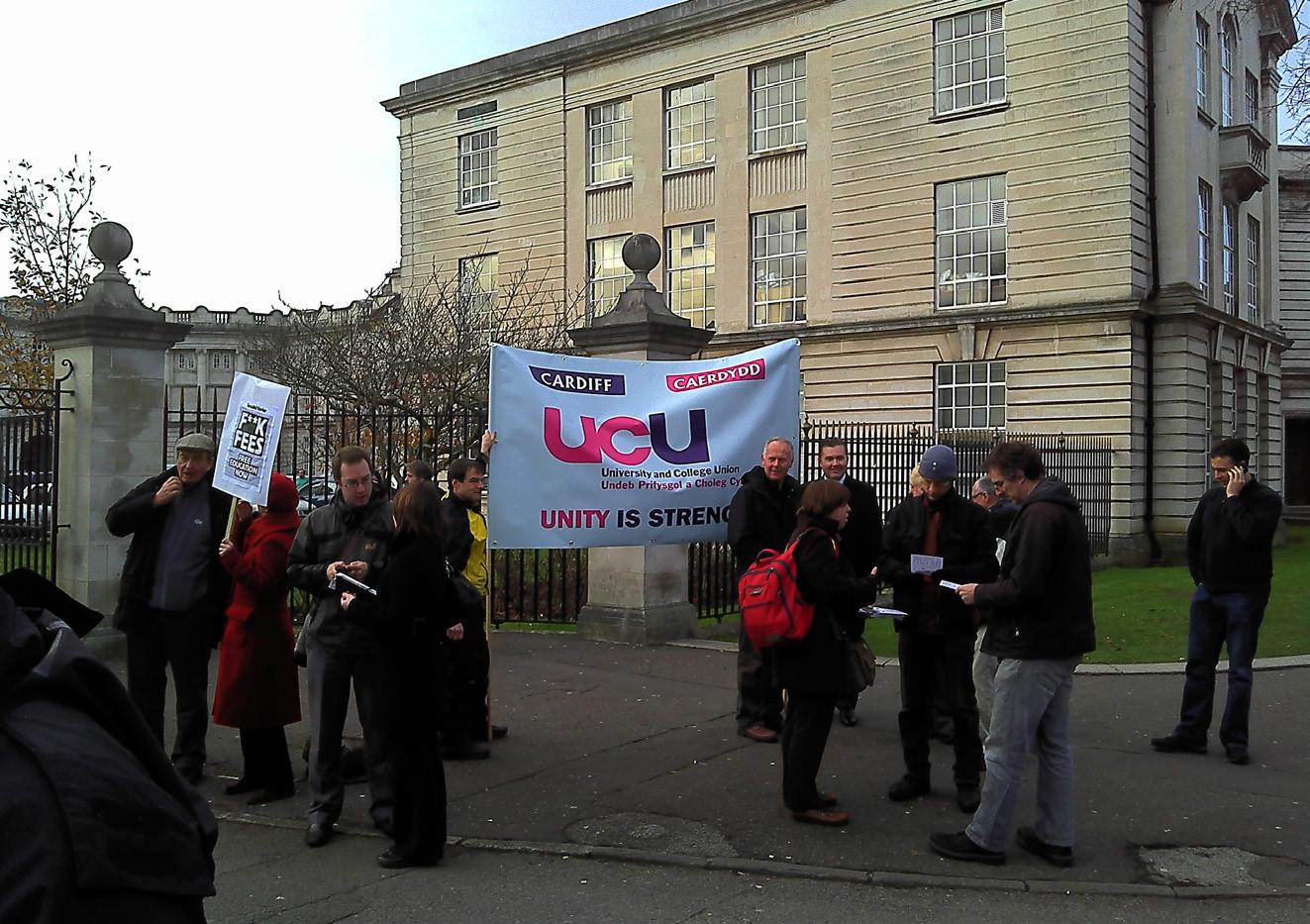
Image (Right), Dominic Nelson, via Wikimedia Commons
The Cardiff Photographer Making Strangers Smile One Photo at a Time
James Burns News Editor
If you ever walk the streets of Cardiff, and see a smiling face approaching you, uttering the words “My name’s Tom, I’m a photographer”, you may find yourself walking away with a beaming smile and a newfound sense of confidence. If this occurs, then there is a high chance you’ve just been snapped by photographer Tom Wilkins.
Tom Wilkins is on a mission to make the people of the Welsh capital feel that little bit more loved. He approaches with kindness and a warm sensitivity and, he looks for the “cool” in every stranger that stumbles through the streets of Cardiff.
Yet for Tom, coolness is “not a beauty contest”, it’s about finding that uniqueness we have the power to control, he explains his theory best, saying: “I don’t focus on the things people are born with. It’s not saying this person is beautiful so I’m going to take a picture of them. I focus on the decisions people have made.”
“Whether its hair colour, whether its tattoos or piercings, whether its clothing choices. Anything that is them saying something about how they want to look.” He goes on to say: “That is for me the coolest thing ever, and that’s what I’m trying to capture.”
The street photographer, who is originally from Southampton, has lived in the Welsh city for three years. He praises Cardiff as his creative playground, and a base that aligns with his welcoming message to people from all walks of life. Wilkins shared views on the cpital: “Cardiff’s an immense city. I think Cardiff is such a powerfully accepting city. You have got people who fit into so many different categories, and everyone is accepted no matter who you are.”
What makes Tom’s photography endeavours even more impressive is that back in April, he had not yet picked up a camera. He managed to book a few model shoots, and it
was on the walk home from one of these early shoots that the desire to take strangers’ portraits was born. “I was walking back towards town, and I saw the most incredible punk woman walk past. I knew I had to take her picture.”
“So, I walked up to her and asked to take her picture, and told her she had an insanely cool look. Afterwards I was like, Oh my god, that was one of the nicest feelings I’ve ever had. Seeing her light up, and seeing how she came out of her shell. I wanted to experience that again, again and again, so I started looking into that. I realised the positive impact it can have on other people. So, my ethos is to normalise the act of giving compliments to strangers, which is massively lacking in today’s society.”
While this pivotal moment could make one presume that giving compliments comes naturally to Tom, in fact, the opposite of this is closer to the truth, with the practice of talking to strangers, a barrier that the power of the camera helped overcome. “I would have absolutely never approached a stranger in the past. I’ve suffered with social anxiety to an extreme level, and it this time last year I couldn’t go into town if it was a busy day. Through doing this, I have developed those skills, and now I can approach anyone in any scenario. It’s something I hadn’t foreseen; I feed of the adrenaline of it.”
Tom’s story proves how creative visions, much like his own can improve the lives of both the creator and their subjects. From single smiles to overcoming consequential personal issues, creativity acts as a tool in which we can overcome, and if Cardiff can act as an accepting background to such endeavours, then the city can only continue to thrive in this department.
Tom leaves us with: “I think my photos tell a story about how everyone is different, but also the same. Whether they are old, wearing colourful clothes or a bloke with a beanie and full face of tattoos, they still want to be complimented, they still want to have that positive interaction with society. Cardiff is this—these people are part of the furniture and Cardiff accepts that.”

Parking for Students Is at Risk: What Does This Mean?

SKani Abdullah News Editor
tudents have declared that the parking change in Cardiff will make things “impossible” for them. This is because students could be stopped from applying for parking permits due to Cardiff Council’s proposal to overhaul parking to reduce the number of cars in the city centre. This proposal is likely to have a huge impact on Cardiff’s large student population, commuters, visitors, and residents. Multiple students have expressed that their cars are “crucial” for their studies, especially for placements that are required on their courses. Student-only properties are also not
eligible for parking permits under the proposals. Cardiff University, along with Cardiff Students’ Union, stand together to express the serious concerns of excluding students from applying for parking permits over Cardiff Council’s proposal. Both institutions conveyed that they support the idea to take environmental action, but that this proposal is not an effective solution.
This proposal risks damaging Cardiff’s reputation as a student-friendly city. It can further risk Wales’ ability to train and retain healthcare professionals. A group of students that are quite worried about the proposal are medical and healthcare students because their courses often require them to go out for placement.
A fourth-year medical student in Cardiff University stated that “I’m fortunate to be able to have my car here and I take three or four other students to placement every day. Without my car, we wouldn’t be able to get to our placements. There are no other arrangements—the medical school expect us to be able to get there ourselves. It would literally be impossible to do my degree without a car.” She is quite worried about this proposal, as the changes will be made in Cardiff in autumn 2026.
A year on, after the initial risk to parking, the worry is still lingering.
The question remains: “Is parking for students at risk?”
Photo Reproduced Courtsey of Tom Wilkins
Newyddion
Beyond the Byline: In Conversation With Former Gair Rhydd Editor Meirion Jones
Ella Simons Head of News
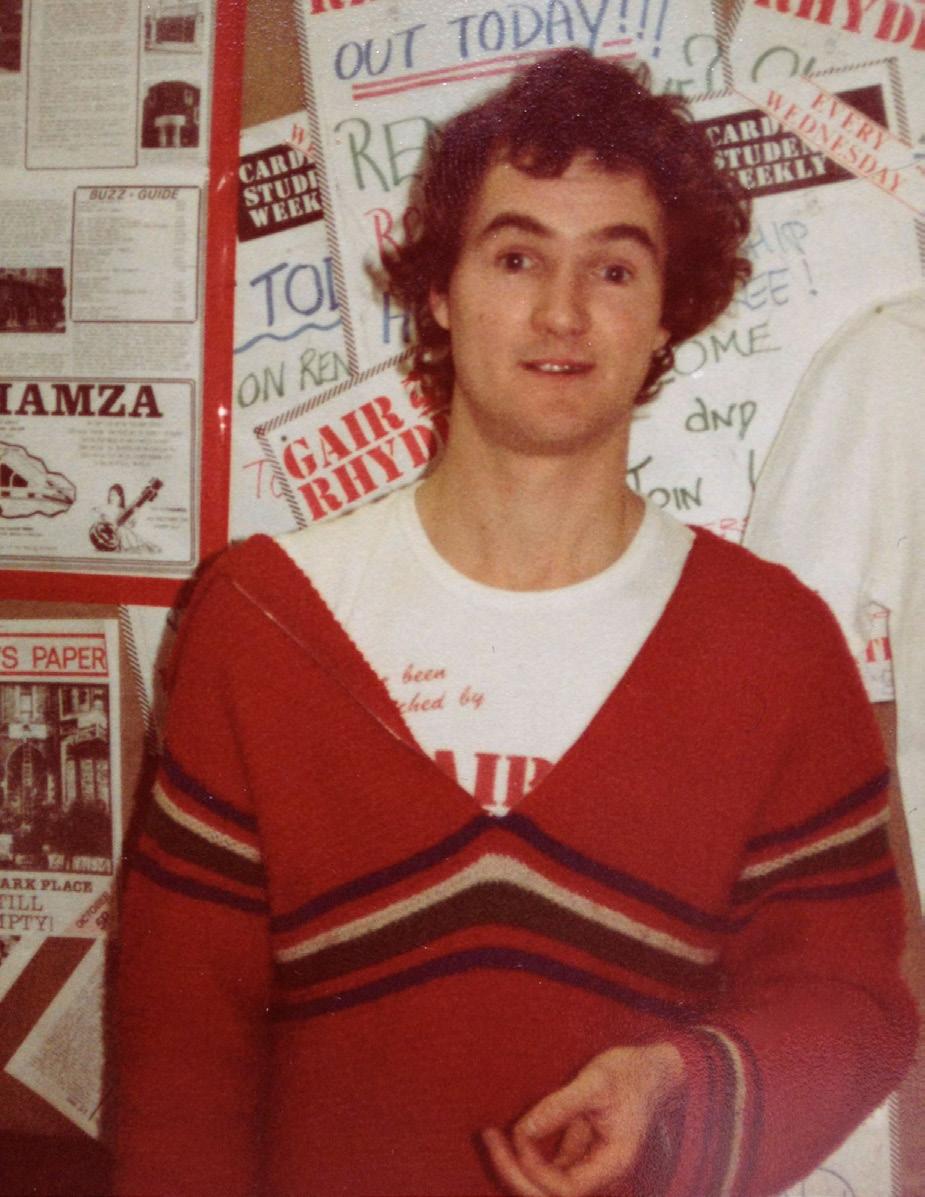
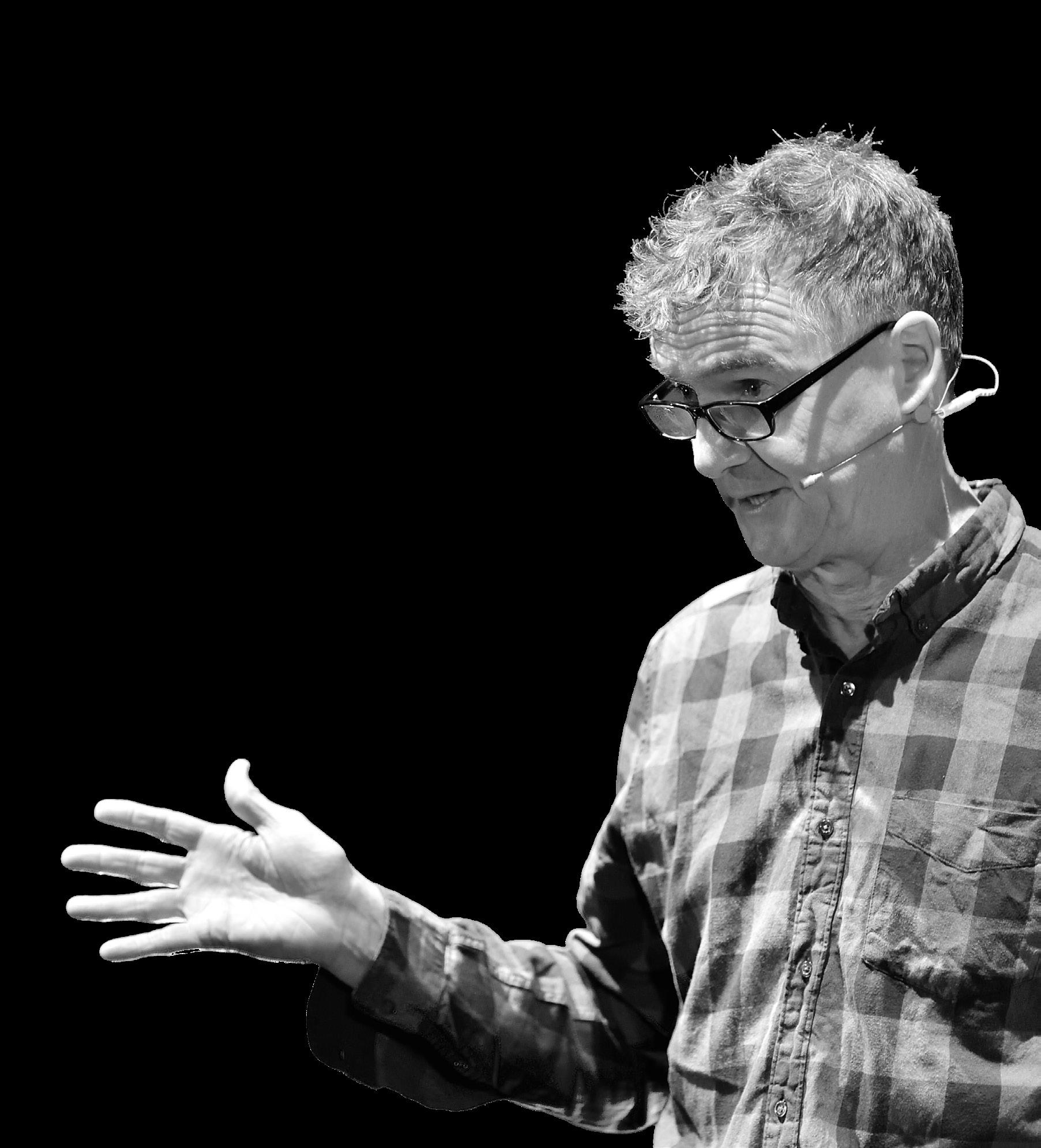
Welsh investigative journalist Merion Jones was the first full-time editor of Gair Rhydd, back when it was a sabbatical role in Cardiff University Students’ Union which ran from 1980–1996. The former Gair Rhydd editor has spent decades holding institutions to account, moving from university corridors to national newsrooms. Gair Rhydd’s Jones is an award-winning investigative reporter, whose career began in Cardiff’s student newsroom. Gair Rhydd and Jones reflect on the stories that catapulted his career and what he believes today’s young journalists must do to build a strong portfolio to break into the industry.
Looking back, what first pushed you towards investigative journalism, and was there a particular moment early in your career that confirmed it was the right path? And can you share with Gair Rhydd some of the highlights of your career after leaving university?
Meirion shared the opportunity and the power that comes with being a part of student media and its ability to truly prepare you for the industry. “Well, I mean, I really loved my time on Gair Rhydd because it allowed me to make mistakes without huge penalties.” Jones said that moving into his career of investigative journalism was no easy feat, with him working at a computer magazine, saying that “there were no jobs at that time in journalism. It was a very, very tough time, as it is at the moment, and the only jobs you could get were on the new computer.” Jones moved on to New Scientist, where he built up a niche, a specialism, which finally led him to his long-lasting job at BBC before the Bureau of Investigative Journalism. Jones shared that early in his career, he found building networks and contacts was key to him finding success: “If you’re the person in the newsroom who knows most about it, you’re the expert, and you gradually develop these expertise areas which allow you then to be the first person people will go to if a story comes up in that area. That then allows you also to go deeper, spend time on it, and create successful investigations and stories that leads to new and exciting opportunities you never thought you would take.”
Did working at Gair Rhydd shape your approach to investigative journalism later in your career? And do you remember a particular story or edition from your editorship that still stands out today?
“Oh, yeah, yeah”. Jones shared that when he was successfully elected to be sabbatical editor of Gair Rhydd he made the decision to create a bi-weekly paper. He suggested that the story that sticks with him the most is the story of the “ultimate bad landlord”. He told Gair Rhydd that in his editorialship a story came up where there was a landlord who wanted the tenants out so bad he took a “portable electric ring and he put a small bottle of camping gas on the top of the ring, turned it on and then left the house. Now I think he thought that there would be a smaller bang than there was, but it blew the roof off the house. It blew all the ceilings in. The police turned up and, obviously, they searched the premises to see if anyone had died and they also searched the garage out the back. They found the garage was full of stolen goods that the landlord was hiding. That was one of my favourite stories.” Really shows how bad landlord stories will never fail us as a student paper, no matter the time!
Your investigations have exposed powerful institutions and individuals. How do you manage the personal and professional risks that come with that? And what lessons from your investigations do you think young journalists should take with them?
“Probably don’t try to take down your employer. As with the Jimmy Savile scandal. I mean, investigative journalism is a very tough path. If you go down it, it is, you know, because a lot of the time your work will not get out there, either because of legal problems or because you can’t quite stand it up. You can put in huge numbers of hours into something, and it won’t get there.” Jones went on to say: “Despite what happened to me—you know, I was basically forced out of the BBC—I’m still a supporter of the BBC, but when they do things that are wrong, I say so. You know, I’m a critical supporter of the BBC, but I think overall it’s a fantastic institution.”
How have cal risks?
Meirion shared that “the first time you get a legal threat, it’s really worrying. And like, I would have a young journalist working with me, really sweating it out and not sleeping be cause, you know, the letter from a solicitor that’s come in” but he shared that it is “almost always a scare tactic, but it can occupy a vast amount of your time”. He went on to offer further advice: “Obviously, it becomes more serious the more senior you get, but if you do go in for investigative journalism, you’ve got to be aware and you’ve also got to be really sharp on the law.” Jones shared that he probably gets legal threats weekly at the Bureau of Investigative Journalism and a lot over the last few years of his time at the BBC’s them that sets you apart from the rest.
With so much disinformation circulating today, what methods do you rely on to verify sources and evidence? What advice would you give student reporters looking to carry out meaningful investigations on campus?
“So, the good thing about that is that when I joined the Bureau, we were absolutely the strongest in Britain, on both fact checking and right to reply. So, surprisingly, a lot of the national papers are not that good on either of those... So, very often, a long article might have 500 fact checkpoints on it. On every name, every fact there would be a footnote with what the source was. Also, really good media lawyers can make the changes, and they make it legally safer. But to an ordinary reader, it’s a stronger story”. Jones understands this is not as readily available to student journalists, but with every opportunity to work on media law or any similar training, he suggests taking it. He shared that as a journalist you never want to go over the line, but you can be just sat on it. “You’re very unlikely to get sued for libel as a student paper, so, you know, it’s much better to make mistakes at that level than later on, you know?”
If you were starting out now, entering journalism in 2025, is there anything that you would do differently?
“No. ‘No’ in the sense that I just had to take the path that was open to me. There’s no point sitting there hoping for the best possible thing to come along. The only way you ever make it in journalism is by taking what’s available and then working from
(Right), Alasdhair Johnston, via Wikimedia Commons
Christmas Markets: Everything and Everywhere You Need To Know About This Year

TMolly Spencer and Eve Yates Spotlight Editors
he time is finally upon us. The Christmas lights have been switched on along St Mary’s street which can only mean one thing. Time to start preparing for Christmas! It is now officially December so I won’t accept anything other than Christmas joy and the best way to get it started is with all the Christmas markets that can be found in and around Cardiff.
Starting off strong Pontcanna Christmas market 15th Nov - 21st Dec) is now up and running everyday Saturday (10am-2pm) and Sunday (10am4pm). On Kings Road Yard, just a short walk across Bute Park, you’ll find Christmas in full swing with food, hot drinks and crafts for that perfect Christmas present. It’s never too early to be prepared! If you are a fan of mulled wine, warm pastries and all things Christmas buzz then I definitely have to recommend Pontcanna for all your Christmas goodies and to get a change of pace from the bustle of Cardiff city centre.
Cardiff Bay of course cannot be forgotten with various events happening throughout December. Whilst there has been no announcement yet – Cardiff Bay usually hosts a Christmas trail with previous themes featuring reindeer and gingerbread so keep an eye out as there will hopefully be a new trail released soon! Keep the 11th December free if you fancy something to release your inner child, as there is an adult only event happening at Techniquest involving a Christmas- themed live science show and other magical science demos. Tickets are £17 and you must be ages 18+ in order to attend. Tickets include a whole evening of fun with a welcome drink at arrival followed by a Christmas trail, star tours in the planetarium and other Christmas events.
(13th Nov- 23rd Dec) Closer to town you’ll find the market stalls and artists promoting their crafts and selling their work. Open Monday to Saturday from 10am-6pm and Sundays 10am-5pm, leaving plenty of hours for everyone to explore the stalls no matter their schedule. Throughout the festive quarter there are over 200 individual businesses selling a wide variety of diverse arts and crafts alongside
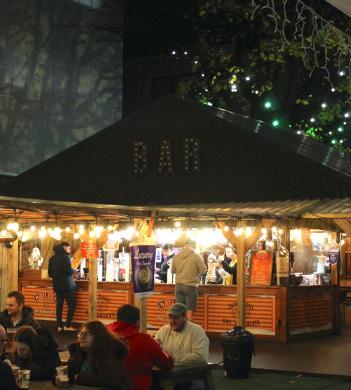
seasonal food and drink, such as the crowd favourite: Yorkshire pudding burrito. Both alcoholic and non alcoholic drinks are available throughout the market to purchase whether you fancy a pint, some mulled wine or simply a hot chocolate with extra whip cream and marshmallows.
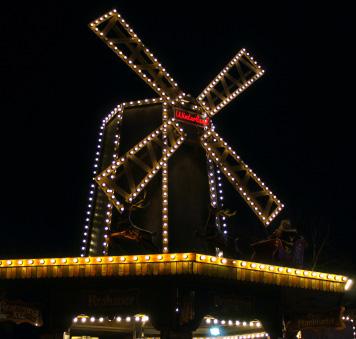
Of course I have to finish off with Cardiff’s own market and winter wonderland (13th Nov - 4th Jan). The epitome of Christmas joy and winter markets in the centre of Cardiff, you’ll find carnival games, rides and marshmallows to toast. Everyone’s favourite pirate pendulum ride and snow storm waltzer returns alongside bumper cars to keep you entertained all evening. If you cross over the road and head towards the castle you’ll find the perfect space for some ice skating through the castle grounds but make you sure you pre book tickets. Students do not fear as they have remembered our bank accounts with student prices available.
No matter where you venture throughout Cardiff, the season is just beginning, and the winter markets are a fabulous day out with plenty to explore. Although watch your bank balance as you might find a homemade trinket and a hot chocolate hard to resist!
Despite Cardiff being well-known for its Christmas markets, there are so many more festive activities and markets to see right on your doorstep. Only a train journey away you can see some of the best Christmas markets in the UK and have your own Christmas market crawl. And only 50 minutes away is one of the UK’s biggest Christmas markets; Bristol has lots of unique Christmas activities, setting it apart from other markets across the UK (7th Nov - 23rd Dec). With over 40 festive stalls selling unique gifts, crafts and seasonal treats, this market in the heart of Bristol city centre is a must visit. If you’re going with some friends, you could book a private gondola or hot air balloon (both of which are stationary). You can enjoy a cheese fondue, charcuterie board or drinks package to get into the festive spirit. The Bristol Christmas Village also has lots of attractions on offer, such as live music, food and drinks, curling, Christmas escape rooms and a rollahub. Bristol has lots of unique Christmas activi-
ties for you to enjoy this year if you’re looking for a fun festive day out.
For less than £10 for a return ticket (with a railcard), Swansea is an accessible stop to visit this year for its Christmas market (29th Nov - 22nd Dec). The main streets of Swansea city centre are filled with local stalls selling lots of festive treats, such as gifts, crafts and food. With an Alpine bar area and a carollers cabin, visiting the Swansea market is a great way to get into the festive spirit. They also have a Waterfront Winterland, with ice skating, a live music stage, food and drink, a Christmas tree maze and fairground rides. They’re even selling the infamous Yorkshire pudding wrap. Swansea has spared no expense this year when it comes to the variety of rides and attractions on offer, If you fancy a change from Cardiff this year, Swansea is a great place to mix things up.
For less than £5 and only 15 minutes away on the train, Newport is so close to visit the Christmas market this year (22nd Nov - 23rd Dec). With the traditional Winter Wonderland having an ice rink, rides, and stalls selling festive food and drink, Newport is a great city to visit. The Kingsway centre will be transformed into a festive wonderland, with local traders, independent food stalls and crafts.
Despite it being a bit further away, Bath was awarded the best Christmas Market in the UK last year. The Christmas market (27th Nov - 14 Dec) “wanders through the heart of Bath’s historic city centre” and has the cathedral as a backdrop. Selling clothes, crafts, food, gifts and jewellery, Bath has 250 independent stallholders and caterers. There is also live music and an ice rink to enjoy. If you’re looking for that perfect, picturesque, cosy Christmas feel, Bath might have what you’re looking for.
To sum up, while Cardiff at Christmas has lots on offer across the city centre, which might be everything you’re looking for, why not branch out this year and explore some of the Christmas markets close by. Not only will you be supporting more local businesses, but it’s also an opportunity to see some cities you might not have visited before. And you can never have too many Yorkshire pudding wraps.
Ffotogallery: Art Amongst the Student Streets
Eve Harris Spotlight Editor
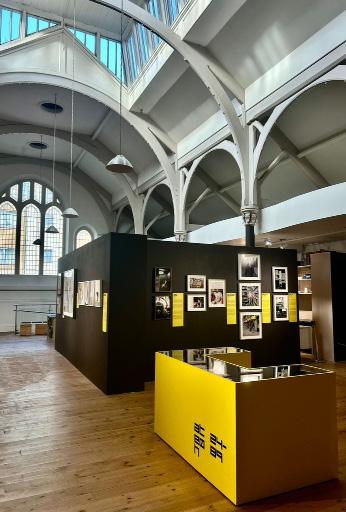
Situated within the busy neighbourhood of Cathays, we can find a quiet place for reflection on art, culture and photography. Ffotogallery, located inside the former Methodist Sunday School, is a hub for all things related to the visual arts. From exhibitions to workshops and talks, the gallery offers a plethora of events and resources for those interested in the creative sector. Since its formation in 1978, Ffotogallery has been “at the forefront of encouraging public understanding and its deeper engagement with photography and its value to society’’. Based only 100ft away from my student house, I stopped by the gallery to explore the two current photography
exhibitions on display.
The first exhibition inside the Hayward gallery, upon entering, explored the use of photography and visual arts in reflecting working class culture and everyday life across Britain.
“After the End of History: British Working Class Photography 1989-2024”
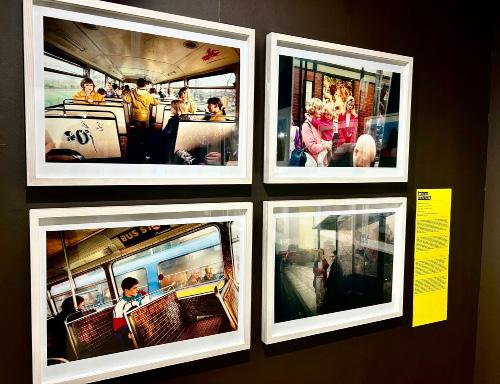
This proved to be a thoughtful exhibition in investigating perceptions and lived experiences of working class life in Britain. The simplicity of the majority of the images on display left a lot open to interpretation, perhaps encouraging viewers to project their own narratives into the photographs. I was particularly taken by the work of photographer Tom Wood, presenting a series of images that ‘reflect an intimate and diverse portrait of Liverpool and its people taken from the various bus routes that criss-

cross the city’. His use of old film stock creates a grainy and dream-like aesthetic, capturing the nostalgia and familiarity of everyday life in the late 1980s.
The second exhibition, ‘Cwm Here Now’ by Rhys Slade Jones, explores the intricacies of life in the Welsh Valleys. Presenting images of the striking landscapes of the Valleys, Jones encourages us to reflect upon ‘fragmented histories, both material and imagined’. Both exhibitions thoughtfully inspire us to think about relevant social and cultural issues, through the use of visual art and expression. As someone who has always had a passion for art and photography, I found my visit to Ffotogallery inspiring, as it allowed me to re-engage with the importance of the arts, which is easily forgotten throughout the fast pace of student life.
Planning Your Christmas Dinner? We’ve Sorted It
Rachel Bedding Head of Spotlight
If last week’s cold snap has put you in the mood for some Christmas cheer, then Cardiff is the place to be as it’s welcoming the season with open arms and doors to some of the most popular places on the High Street. As the 70th anniversary comes to a close, what better way to celebrate the city than by expanding your culinary horizons past the markets, and maybe discovering a new favourite. Independent and Welsh businesses have been the focus of the City of Arcades campaign this year, highlighting the spirit and culture within the city. Here’s a list of the best places you could find a meal this December, whilst seeing what the food scene in Cardiff is really all about.
“Eli Jenkins”
Promising the “best Christmas atmosphere on the high street”, Eli Jenkins is the hit for students looking for good food and vibes – offering a set menu from £18.95 and a menu of classic Christmas drinks, this long-standing Welsh favourite will not let you down.
“Giovanni’s Restuarant”
Cardiff’s longest established Italian family restaurant, Giovanni’s Christmas menu offers Italian flavours with a festive twist, designed to delight and inspire your tastebuds. With lunch and dinner menus tailored to your seasonal needs, Giovanni’s has you covered.
“Zerodegrees Microbrewery”
To pair with an extensive drinks menu, Zerodegrees Cardiff is offering specially curated Christmas dishes. Famous for mouth-watering woodfired pizzas and live music, they promise a night to remember this December
Seven Standen Design Deputy
In the Mercure Hotel, tucked down a quiet side street in Newport’s city centre, comic book fans of all ages gathered for the third Kelly’s Comic Fair of the year. Opening at 10:30am, the adjoining lobby rooms were busy within the first hour and stayed so consistently, lulling only around lunchtime. Around 20 passionate traders brought their collections of comics and collectibles to an audience estimated to be 10x that size. Though less crowded than bigger and more diverse events, such as Cardiff Comic Con, the atmosphere was warm and friendly. “If you’re passionate about comics, you want to talk about them. You’re excited to talk to other people who share your interest.” Paul Haynes, who runs Cardiff’s only independent comic shop, told me. Nothing rang more true when I visited Kelly’s Comic Fair on the 15th of November. Whether trader or customer, newcomer or lifelong collector, small child or wizened elder, everyone was united by a shared love. Passion transcended all barriers and I soon found myself talking to total strangers as if they were friends.
Kelly’s Comic Fair is organised by Paul Kelly, who has been collecting comics since 1963. He holds a History degree from Cardiff University but struggled to find work in the field. Instead, he decided to delve into what he truly loves: comic books. Mr Kelly has hosted the popular Newport event for three years now, although the location has changed to accommodate the fair’s increasing size. Originally based in Newport Market, the first fair featured 8 to 10 traders. Now, it has more than 20 from England and Wales.
As one of my favourites on the list, Tiger Yard brings food with the experience. Their Winter Wunderyard has a range of activities, vendors and music on various weekends in December, promising entertainment alongside their gourmet stalls and vibrant atmosphere perfect for an afternoon with friends, flatmates, or to bring that special someone.
“Tiger Yard” “Potted Pig”
One to consider if you have relatives visiting this season, The Potted Pig is perfect for cozy nights, serving warming food in a secluded corner in the heart of Cardiff. They offer a perfect winter menu, mixing classic meals with a hearty Christmas twist.
“The Daffodil” “Pasture Restuarant”
Welsh flavours meet in this gastropub on the way to Cardiff’s High Street. Highlighting local produce and flavours in their menus, they are incorporating the season into their drinks and their food, creating a dining experience to remember.
Showcasing a classy atmosphere, the Pasture restaurant is on the higher end of this list, for those who want to feel impressed by what Cardiff can offer. Their chic atmosphere includes late-night entertainment to accompany food full of fresh local produce, and craft drinks available. Their seasonal menu is a mouth-watering mix of dishes to celebrate the end of the year
Cardiff has all of these on offer and more, if you want to venture beyond the Taf’s tatty’s this winter. As Christmas draws closer, check ahead to pre-book and enjoy discovering what Cardiff can bring to your table.


Kelly’s Comic Fair Keeps Traditions Alive and Brings The Community Together “We’re definetly on the up!”
Previously, comic fanatic Terry Gay organised regular fairs in Newport Market. He owned and operated his stall, The Negative Zone, there for over 30 years. When Mr Gay retired, it seemed a decades old tradition was fated to disappear forever. Mr Haynes reflected: “There was a void when Terry retired and the Newport fairs ended.”
However, Mr Kelly successfully revived the fairs and they continue to grow more popular, making them likely to continue for years to come. Mr Kelly informed me this is the biggest fair so far, even being sponsored by American Dream Comics. As Mr Haynes said:
Jacob’s Antiques Market, has been a cornerstone of the city and wider comic community since 1978. Mr Haynes says: “Some people have been coming here for decades now and you build real relationships over that time.” This was evident in the way Haynes greeted each customer by name and knew exactly what they were interested in. At the fair, he recognised people from prior events and made everyone feel welcome.
Despite the tight-knit crowd, there is no sense of elitism among collectors. Mr Haynes says there’s no snobbery, only excitement at someone else with the same interest. He has noticed a recent rise in younger people joining the comic scene, something he encourages.
talking or forming friendships in there. You just pick up your comics and leave.”
The old-fashioned approach at Kelly’s Comic Fair is what draws most fans. There’s no wall of Funko Pops, graphic t-shirts, or pop culture b-listers to distract from the authentic art of digging through boxes bursting with comics. Mr Haynes says his store will always be about comics, not collectibles, and other traders echoed this sentiment.
In a struggling industry, where comic shops are being forced to downsize or close completely, it is crucial to keep local events afloat. The fair provides a fantastic opportunity for independent businesses to sell to old customers and meet new ones. Mr Haynes says he considers it a successful trip, if he only gains one more customer.
In such a niche field, many salesmen would feel threatened by the competition and strive to outdo fellow traders. However, Mr Haynes says this is far from the case: “As the old saying goes, rising tides lift all boats.” Not only do the traders share customers, they are part of the same tight-knit community and work with each other to satisfy clients. Many of the business owners have been friends for years, so there’s a strong sense of camaraderie.
Community is what people find at Kelly’s Comic Fair, as well as at the stores themselves. Cardiff Comic Shop, located upstairs in
“Pick up something that takes your interest.” He advised people who want to get into comics, “Comics are a huge genre with all types of stories. It’s not just superheroes, especially from independent publishers.”
At the fair, I saw firsthand how Generation Z was taking a greater interest in comics. Some were there with fanatic parents, indulging in their shared hobby, but I saw more dragging bewildered family members around. The presence of online stores, resources like Comic Geeks, and social media “hype” makes comics more accessible to a young audience.
However, this shift limits stores to being solely based on the internet. The owner of Monkey Rocks, an online shop based in Cardiff, said: “My dream is to own a comic book shop.” Sadly, this is a pipe-dream for many independent businesses, competing with corporations like Forbidden Planet, as well as the cost of living crisis. Although Mr Haynes has a positive relationship with Forbidden Planet, he feels it lacks the familiarity of a ‘real’ comic shop: “There’s no
The amount of material available to purchase can be intimidating. Initially, I did feel overwhelmed by the options. But the vendors were eager to help, asking customers what they were interested in and helping find what they wanted. I spent a long time chatting with Andrew and Sharon Waygood from Sin City Comics as they searched their stock on my behalf.
“We’ve been up since 4am getting ready.” Mr Waygood told me cheerfully. Kelly’s Comic Fair was like show-and-tell for grown ups. Everyone was keen to share their favourite part of their collections, including attendees bringing comics from home to show off. Some sales included trading rare items. It was a special bonding experience I felt lucky to be part of, even as a relatively new comic collector. Whether you own a thousand comics or none at all. I recommend Kelly’s Comic Fair for a unique experience and the chance to meet kind, passionate people. It’s free to enter and there’s no expectation to be an expert, making it a great day out for anyone interested in comics. The next fair is due to take place on Saturday 28th February 2026 at the Mercure Hotel.



The UK’s oldest comic shop is more than a piece of history
Seven Standen Design Deputy
Around the corner from Cardiff Central Station, a hidden gem is tucked away from the hustle and bustle of high street shops. Despite being small and compact, Cardiff Comic Shop is a cool oasis of calm compared to the busy city centre. Since opening in 1978, the shop has packed brand new releases and a vast collection of classics into the upstairs nook of Jacob’s Antiques Market.
“Today, it also stands as a cultural landmark as the oldest independent comic shop in the UK”
Owner Paul Haynes says working in the shop is “the best part of his week”. In addition to running Cardiff Comic Shop from Thursday to Saturday, Mr Haynes works for the Welsh Government. His passion for comics transformed him from a regular customer at the store to taking it over in 2021.
Mr Haynes says: “I always knew owning this shop was in my future.”
Dave Bath and Pete Watts launched the shop in the 1970s, after successfully selling comics in a local newsagents. They decided to start the first shop in Cardiff dedicated to comics, so they could share their passion with others. Today, Mr Haynes is firmly determined the shop is “always going to be comics” instead of diversifying into other books and collectibles.
“I did change the look and organise things a bit.” Mr Haynes admits, “That’s the ex-retailer in me.”
He worked in several stores before taking over Cardiff Comic Shop, including being a manager at Tesco. After Mr Bath sadly passed away from a brain tumour and Mr Watts decided to step away from running the shop, there was a concern the doors might shut for good. Mr Haynes says:
“The idea of the shop closing felt like a death”
He remains determined to keep the shop open and makes enough money to do so, although it isn’t profitable enough to make

a living. But Cardiff Comic Shop is more than a business. For many people, it is a valuable source of community. Customers spend hours in the shop, chatting with Mr Haynes, Mr Watts (who still visits regularly), and other comic fans. There is an incredibly friendly atmosphere about the place, which provides a more fulfilling experience than the isolation of ordering comics online. Mr Haynes says, “Some people have been
“I can’t imagine this place without the people ”
coming here for decades and we’ve all built up relationships over time.”
Although the shop relies on regulars, Mr Haynes has noticed an uptick in new ones. Many of them are young, signalling a new generation might keep the comic industry alive. He says Marvel and DC movies have made people more aware of comics, but doesn’t feel they promote reading.
Instead, Mr Haynes credits DC’s ‘Absolute’ series with increasing customers.
“You can get into the series without feeling left out. You don’t need to know what’s happened in DC for the last 80

years.” He explains.
While Mr Haynes’s favourite comic is definitely Frank Miller’s Daredevil, comics are about more than cartoon superheroes. They can provide escapism, as well as entertainment and a good story, and they span all genres of fiction. Horror and fantasy are particularly popular, although many comics tell realistic stories too. Mr Watts pointed to The Death of Captain Marvel as a good example, in which the titular hero develops cancer and passes away like a regular man.
“Even almost 50 years after opening, Cardiff Comic Shop still brings joy to its customers.”
A mum brought her son to the shop, explaining he was very shy and didn’t talk much but loved comics. Mr Haynes says: “We started talking to him about comics and he just lit up, coming out of his shell, chatting with everyone. His mum looked at me and mouthed ‘thank you’.”

The Running Man (2025)
“Give
the People What They Want!” R
Thomas Cunnick Review Editor
Much has been said and written recently around The Running Man, including Stephen King’s original novel (1982), the initial film adaptation (1987) and the remake movie of 2025. These are all different adaptations of the same story, but one that resonates for the times that we’re currently living in.
This new film adaption is true to the original plot, in that it charts the story of blue-collar worker, Ben Richards (now played by Glen Powell, previously played by Arnold Schwarzenegger) and his efforts to save his wife and young child from poverty by participating in a popular and dystopian game show to win a cash prize.
This game show is titled The Running Man, and it involves contestants trying to win financial and societal redemption by evading capture for 30 days. To win a purse of $1 billion they must ultimately avoid death by the “hunters” (who are as dangerous as they sound), all under the gaze of a public audience who are encouraged to help track down these contestants.
The Richards character stands for the downtrodden masses, a victim of corporate greed in a near future where America is governed by an authoritarian media network— they pump out trashy and exploitative content to placate the masses. Richards, through his own agility and ability manages to evade capture and “wins” the show, despite the network persuading him to join their side as a “hunter”. All the while, he’s rising up against this authoritarian rule.
The film has performed semi-well at the box office, but critical response and indeed much of what has been written about this new adaptation of the story, is that in the current political climate, such tales of a dystopian future feel too much like real life: too familiar and too now.
Some of this coding is deliberate; the original novel was set in 2025 and to remake and re-release it this year is a statement, no doubt. The director Edgar Wright being British and the principal filming being set in the UK also add a documentary grittiness that was not so present in the original movie adaptation. The theme of surveillance through technology and ever-present screens runs continually through changing narratives that reference our deepfake, AI-driven culture. The nullification of the masses fed on lowbrow and continuous content seems all too familiar.
Questions remain, though, around how much of the original novel’s message has been altered. This is, after all, mainstream cinema, and like its predecessor, both films have been made by major Hollywood studios. These studios could be seen and read as major media conglomerates that have designs on the modern world.
This altering is evident with aspects of the film having been changed from the much darker book to a more feel-good narrative for cinema—most notably the ending. The original book, then, is better, as it shows the original version of the story that hasn’t been altered or been made “safer” than the two films would have you believe.
Rhostio’s Stand-Up Showcase
Andrew Stewart Review Editor
hostio’s monthly comedy night proved once again why it’s becoming one of the city’s most reliable spots for up-andcoming stand-up. Hosted by Joe Dehuai, the evening unfolded in three fast-paced sections featuring four acts. Each brought a distinct voice and an ability to turn the cosy café set ting into something that felt surprisingly electric. Dehuai was central to that energy. His crowdwork was exceptional, peppering the room with questions and warming up even the shy corners of the audience. He lit up the room with an ease that set the tone for every act that followed.
The café itself added to the charm. Rhostio’s intimate layout makes it almost impossible not to feel involved, and their drinks only deepen that relaxed, welcoming vibe. Their matcha–vodka cocktail sounded questionable on paper but turned out to be a standout surprise, and the sticky toffee pudding and lemon drizzle cake showed a level of care and consistency beyond my expectations. It’s the kind of venue that retains its
charm well after the event has concluded.

The night opened with a comedian whose self-deprecating, autobiographical humour set the tone for the evening’s theme of identity-driven comedy. He played with the everyday absurdities of life in a wheelchair, constantly circling back to dating disasters and even exploring what sex might look like between two wheelchair users. His mixed background allowed him to play with racial language in a way that felt conversational— reminiscent of a friend musing over the quirks and contradictions of daily life. His set was relaxed but sharp and the audience warmed to him immediately.
The second act was a queer comedian whose set revolved around graphic sex jokes, intertwined with commentary on modern identity and the contradictions of “woke culture”. Much of her material drew on familiar Cardiff experiences, giving even the raunchier moments a relatable edge. Her brisk pacing and confident delivery offered a lively counterpoint to the opener and maintained the room’s energy.
The third act, a Mexican woman, brought some of the night’s biggest laughs
Kit’s
through a mix of cultural humour and dating comparisons. She joked about growing up in Mexico, played with the tired stereotype of immigrants “stealing jobs”, and likened it all to navigating romance. Her delivery was confident and she added another layer to the evening’s unintentional theme: each act speaking from a distinct identity without it ever feeling forced or tokenistic.
The headliner, Jack, tied the night together with an animated, story-driven set. Self-aware and effortlessly in command of the room, he demonstrated a talent for spontaneous reactions—genuinely quick-witted rather than scripted. Jack clearly knew how to build a narrative and lean into the crowd’s energy, capping off the night with a confident charisma that elevated the whole evening.
Before wrapping up, Dehuai awarded a prize to the audience’s favourite crowd member. This was a small but charming gesture that added to the sense of community that Rhostio seems to cultivate so naturally.
Overall, the comedy night delivered far more than its modest setting suggests. It was diverse and energetic, with a host who kept the atmosphere vibrant and performers who weren’t afraid to dig into their own identities for material. If you’re after laughs that actually land, it’s easily one of the best-value nights out in the city.
Classic Corner
The Age of Innocence (1993)
An outstanding tale of heartbreak between two kindred souls, torn apart by the vicious innocence of their time
Kit Robertson Review Editor
This is not a standard period piece costume romance. It is, as the man himself described, Martin Scorsese’s “most violent film”. An absolutely devastating adaptation of Edith Wharton’s classic novel about the collision between unrelenting custom in the high society of Victorian-era New York and the clandestine temptation felt by a doomed, yet inevitable, romance.
Two souls are attracted by a longing for an escape from the elaborate, suffocating ceremony of their extravagant and oppressive background. What tears this blossoming bond apart is not only the antiquated rituals and theatre of the habitat that they so resent, but their perceptions and inadvertent enforcement of them. Sycophancy and indecision in moments of ultimatum and opportunity consign them to a fate where the wounding sacrifices they made to uphold tradition and avoid scandal in the past age become irrelevant and purposeless after society’s progression into the next. Eventually, happiness and companionship are denied not because of any external expectations or intervention but, rather, a stubborn, sentimental adherence to old fashions and tastes. The characters resort to rigid patterns and superstitious stipulations as a method of sustaining the allure and aching heartbeat of their union, which, once the dust has settled and they are forced to reflect and regret, can seem nothing but futile.
The aforementioned complexity and nuance of the themes and ideas explored by this film are what grant it such an enduring, timeless resonance. As a fairly reserved, unemotional Englishman, I wouldn’t refer to myself as an ardent enthusiast for period
romances (at all). This film, however, moves and unsettles me, in all the right ways, every time I watch it. Featured is some of the strongest directing of Martin Scorsese’s entire career and a wistful, heartbreaking story, which is both beautifully methodical and brilliantly written. Pair these outstanding strengths with raw, vehement performances, and the result is a message and artistic identity that are univer sally accessible.
The film’s effortless portraiture of remorseless custom and dogma in nineteenthcentury New York high society, in the produc tion, directing, tour-de-force performances, wardrobe, and set design is utterly breathtak ing. Intimacy and emotion are communicated to mesmerising effect and with a restraint and humanity that require generational mastery of the art form by director Martin Scorsese. Without hyperbole, Michael Ballhaus’s cin ematography is some of the most gorgeous I have ever witnessed. With regard to the perfor mances, Daniel Day-Lewis, Winona Ryder, and Michelle Pfeiffer, in particular, deliver three of the most resonant, underrated performances of the decade as Newland Archer, May Welland, and Countess Ellen Olenska, respec tively. The flagrant omission of Michelle Pfeiffer among the 1994 Academy Award nominations in either of the two categories for Best Actress might be, in my view, the single most memorable and deplorable acting snub in the history of the Academy Awards.
Without question, it is one of the greatest and most underappreciated films in Scorsese’s resume. Scorsese
produces something here that is engrossing and genuinely poignant. It’s quite difficult to comprehend how he achieved this. As a trigger warning, the profundity of the ending lingers as a numbing sadness for some time after the film’s conclusion. The first couple of times I watched it, there was a still, contemplative

pointment and the burden of expectation with complete the best films ever will see.
Adolygiadau
Stella Donnelly Shines With Newfound Space in Love and Fortune
Marcus Stevanoski Contributor
One of the most honest and charming songwriters of her ilk, Stella Donnelly’s music has always painted an intimate scene. The Welsh-Australian’s essential 2019 debut Beware of the Dogs was lyrically dense, exploring many difficult topics—domestic violence, toxic masculinity, power imbalances, dodgy employers, and even awkward Christmas lunches—atop jangling guitars and the impassioned, sometimes cheeky delivery of a young singer with the world at her feet. After stepping back through the pandemic, her second album Flood was a stark sonic departure, swapping lively strumming for moody synths and muted horns for a less witty, but still captivating effort.
Love and Fortune, released on November 7th, is Donnelly at her most restrained, writing as she mourned the loss of a close friendship. It’s a gentle and refined listen, with a small palette of instruments that accompany her controlled voice. She tosses and turns in regret and self-blame, but comes out the other side more content than she started. The album loosely follows Donnelly stepping through the
stages of grief. “Feel It Change” begs for her friend’s return, or at least a sign of life, as she yearns: “I made a wish upon a satellite / That you’d come over, tell me I was right / That I’m the perfect friend who does no harm / That you still love me, we could carry on.” In the piano ballad “Friend”, the singer contemplates if she’s better without them, but can’t help but wonder what they’re up to nowadays in the devastat ing “Year of Trouble”, when she accepts the breakdown was entirely her fault.
Her emotions boil over on “W.A.L.K.”, a slow burner in which Donnelly tries to strut forward and outline a new mission: “Take back my little life and push you away / I set myself on fire for someone else’s flame.” A truly remarkable lyric, a realisation of a onesided relationship that hits nauseatingly close to home. A climax of beautiful layered vocal harmonies accompanies, making for one of the most exciting musical moments on this other wise minimalistic album.
And that is perhaps my only gripe with Love and Fortune. Donnelly is an energetic, funny performer on stage, constantly quipping and dancing with her bandmates. This persona complements her earlier, wittier music, but perhaps her 2026 shows will take a simpler ap
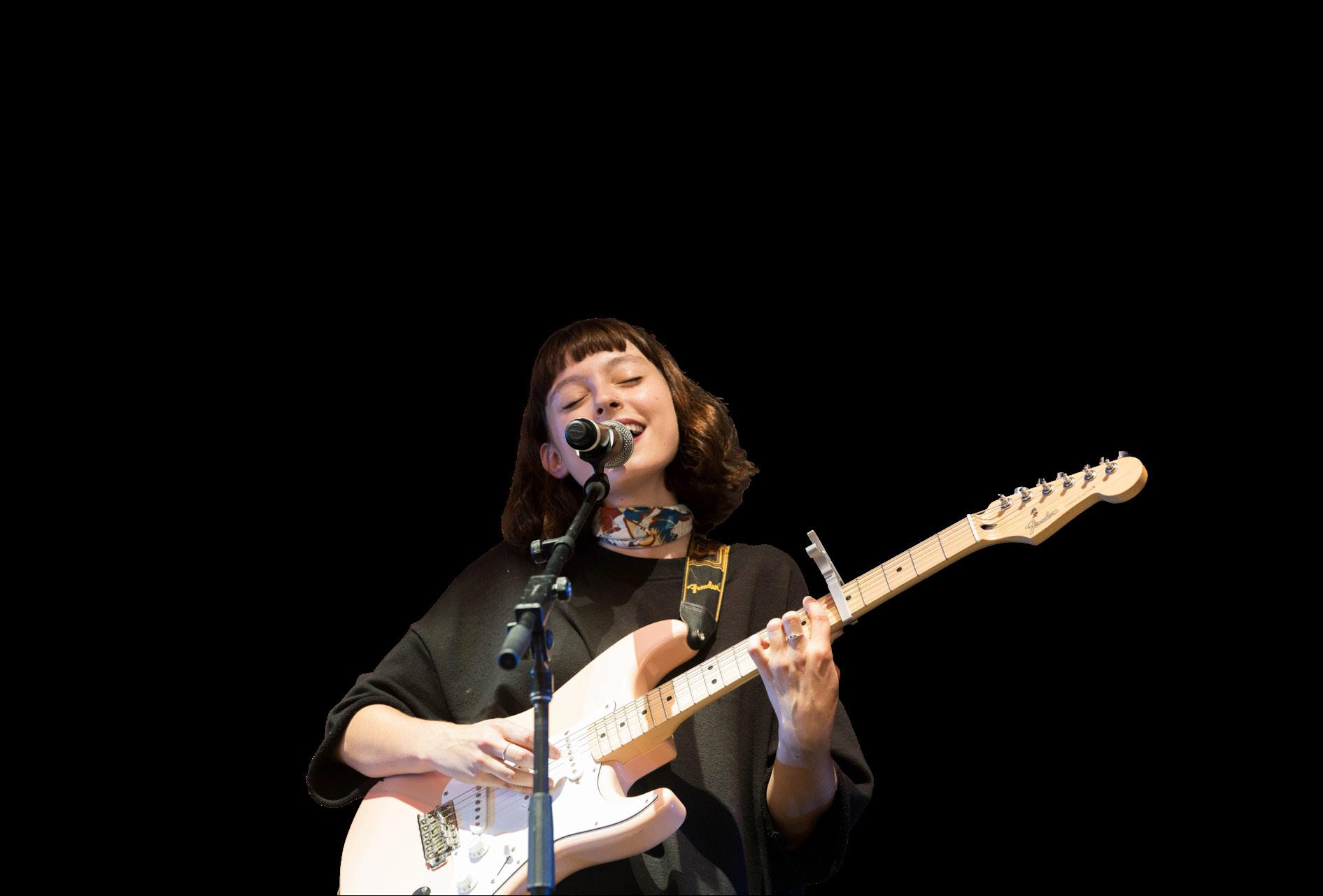
Now You See Me: Now You Don’t ‘We All Need Magic Now More Than Ever’
played to excellence.
IMartha Doherty Contributor
llusion, glamour and a brand-new heist—but has the widely anticipated threequel lost all its magic?
The movie exhibits the well-loved four horsemen, with three younger additions to the group: Bosco (Dominic Sessa), Charlie (Justice Smith), and June (Ariana Greenblatt). The unlikely three found each other in a magic shop and bonded over their gifts of illusion and the hardships they had collectively experienced that brought them there. In a captivating turn of events, Bosco, Charlie and June meet J Daniel Atlas (Jesse Eisenberg) and eventually, in a witty and long-awaited reunion, the remaining members of the infamous magical group. They are brought together to complete the task the set before them, entailing stealing “the heart”—a diamond possessed by Veronika Vanderberg (Rosamund Pike) and exposing her corruption and money laundering to the world.
Off the bat, the dynamic between the original Horsemen remained completely intact.
J Daniel Atlas with his dry sarcasm, Merritt Mckinney (Woody Harrelson) donning a more openly witty style of humour, Jack Wilder (Dave Franco) has playful one-liners, and Henley Reeves (Isla Fisher) brings a sass and empowered liveliness to the group. The familiar actors slipped immediately back into their characters and dynamic.
The younger generation of Horsemen’s dynamic, however, felt lacklustre. Moments between them felt forced and over rehearsed leading to a robotic onscreen dynamic. Separately, the actors shone, but together, bond and connection were lacking, especially for a group that calls themselves a “family”.
Dominic Sessa utterly excelled in his role and presented a true outstanding range of his acting ability into the film. His impressions are debatably unmatched; the interesting character exudes a sense of teenage nonchalance that is performed wonderfully. Charlie (Justice Smith) was one of the most interesting characters of the franchise, quietly conniving. Despite the issues of the plot, the infamous twist was
June (Ariana Greenblatt) was not an overall enticing character, yet her dynamic with Jack Wilder (Dave Franco) was endearing. In fact, significant interesting moments involved the connections between the original five and newer additions, with one of the most interesting plot points being the utter underestimation of the younger generation. The original Horsemen give the younger three an image to aspire to and learn from, yet the older Horsemen had some must-need advice from the younger three also. Perhaps the biggest trick was underestimating the younger generation.
The villainous aspect of this film was brought to life by the acclaimed Rosamund Pike. Her subtlety in the playing of Veronika Vanderberg created an especially discreetly terrifying character. She donned a South African accent, which many state is the real plot twist of the film, in her role as a stylish heir to a diamond empire.
The main irritation with the film was a tangled, tousled plot to make way for fight scenes and action. The plot of the film roamed around and shifted on a multitude of occasions for an action sequence, e.g. a brawl or chase. Though the classic action sequences are absolute necessities when it comes to the Now You See Me franchise, it was in some instances unessentially done at the cost of a substantial and consistent plot.
As well as this, the film deals with comedy, action, and thriller-like aspects as well as it being a heist movie. It attempts to be a lot of things, and succeeds in many comedic and escapist aspects, yet not in terms of a congruous plot. This film was a moment of cinematic enjoyment, not genius. However, enjoyment in the cinema is increasingly fundamental. Now, arguably more than ever, cinema is needed for enjoyment and to escape into the world of film to learn, escape, sit back, and enjoy—this film does just that. One of the most impressive aspects of this film is the actors learning and appreciating real tricks, illusions, and magic. As is wonderfully summarised by Jack Wilder (Dave Franco) in this certainly entertaining threequel: “We all need magic now more than ever.”
Wicked:
For Good Exposes The Very Worst Of Our World
WHolly Osbaldeston Contributor
icked: For Good, the second instalment of the Wicked films was released on the 21st November 2025.
Directed by Jon M Chu and starring Cynthia Erivo and Ariana Grande, it follows Elphaba and Galinda’s journey almost immediately after the end of the first film.
The sets and costuming create an atmosphere, where you can, if you truly wanted to, forget about the messages of the film and focus on the same things that the people of Oz focus on. There were many points that stood out, often continued motifs from the previous film that were given more context: issues like animal cruelty and racism are present throughout the whole visual narrative.
The animal abuse that is used in order to build the yellow brick road shatters the childlike wonder that we have been taught to associate with the road in the 1939 film The Wizard of Oz. Not having the same contexts that we do in this narrative, everything felt like it was perfectly fine. It also feels now like that older film is the interpretation that the people of Oz would have had of the events. Having fallen so far into the propaganda machine, Madame Morrible ensures that they, the Ozians, cannot see anything more than what she is showing them, just like the viewer when watching the older film.
Racism plays a role in this film like it did in the first installment of this duology. This time it feels more poignant, as we are exposed to the propaganda being pushed and the degree with which it has been circulated. The way that it is described and shown feels very reminiscent of historical racist propaganda, especially from World War II. The ways in which the flyers with Elphaba’s face are distributed highlight the complete control that the way a person looks
has over the narrative for them in Oz. This is also seen in the reactions to the good witch, Galinda. She starts the film just sort of being a puppet for the Wizard and Madame Morrible. It is through conversations with Elphaba and Fiyero that she begins to question how Oz operates and how people need to be helped, though they do not realise that they do. Galinda is treated so well just because she fits in an agreeable colour palette and she has a good reputation. The way that other characters interact with her is almost cult-like: everything she does they must know about and emulate. This is why it is so important that she starts to emulate Elphaba and do things that are actually good, not just societally good, towards the end of the film. It is unfortunate, however, that change cannot come from Elphaba and that it has to come from Galinda, because she is palatable to the public enough that they will actually listen. A scene that I find very visually striking and politically interesting is the wedding scene that is intersliced with the scene of Elphaba finding the animals in cages. The wedding is framed as a distraction—it is the coming together of the two people in Oz that are the most socially important outside of the Wizard. They act as a distraction for the people so that they have something else to occupy them that will stop them from thinking critically of the world around them.
In contrast, Elphaba discovers the full extent of the Wizard’s lies and deception in finding exactly what Ozians are being distracted from. The fact that when the animals are released the people do not question why they are there outside of the context, shows just how far the social conditioning goes.
Overall, it is an incredibly well made film that touches on many important topics in a way that is both visually appealing and emotionally striking.
Gair Rhydd Interviews Wendy Larner, Vice-Chancellor of Cardiff University
We grill her on the recent course cuts, Kazakhstan, and her own salary
Vice-chancellor, when you took over two years ago, you said: “Leaders are much more effective when they work collaboratively. That’s certainly my style.” Is it still your style?
Absolutely. I’m a great believer in participatory leadership. I think, unsurprisingly, that it’s a challenging time for universities, and leadership styles vary according to the context that you are in. But yes, collaboration is my preferred way of doing things.
Some members of your staff have said to the media that the opposite is true. They’ve described you overruling Senate rulings. They’ve said that your cuts have not come with enough consultation. How do you respond to the charges that you are pushing through these changes, whilst not collaborating enough with staff?
So, we’ve been through two phases of a deeply consultative process. So, my first year there was Y Sgwrs Fawr [The Big Conversation], where we engaged with students, we engaged with staff, and we engaged with stakeholders. I brought a longer copy of the strategy today. You’ll remember that while we were doing that, of course, the storm clouds were gathering, the financial pressures on universities—not just this university, but universities more generally—were gathering. So, yes, we are having to make very difficult decisions. But again, the consultation process that we went through around the Academic Futures consultation document, ninety days of robust consultation, and the document, the plans that went to Council did change because of that consultation. Those documents, that engagement, included Senate. We engaged with Senate a number of times on the way through. The final advice of Senate went to Council, along with the final plans. So there’s been a huge amount of consultation right the way through.
You rely on the Vision 2035 document. Is it not a contradiction to cite a document which endorses cultural enrichment, not only in Cardiff, but the whole world, then to decide to cut Ancient History, which is the cornerstone of so much of our cultural life?
So, again, the work that we did through the Academic Futures document took a good hard look at our portfolio, which is very broad. Cardiff is a comprehensive university. We made and consulted around some areas that are genuinely challenging for us in terms of student demand.
That was not a reflection on the quality of the staff that we have in those fields. But the decision that we made is to wind Ancient History into broader Humanities programmes. So, there’ll still be Ancient History modules, but no, we will not offer a named programme in Ancient History, in part because the student demand for that named programme just simply isn’t there any more.
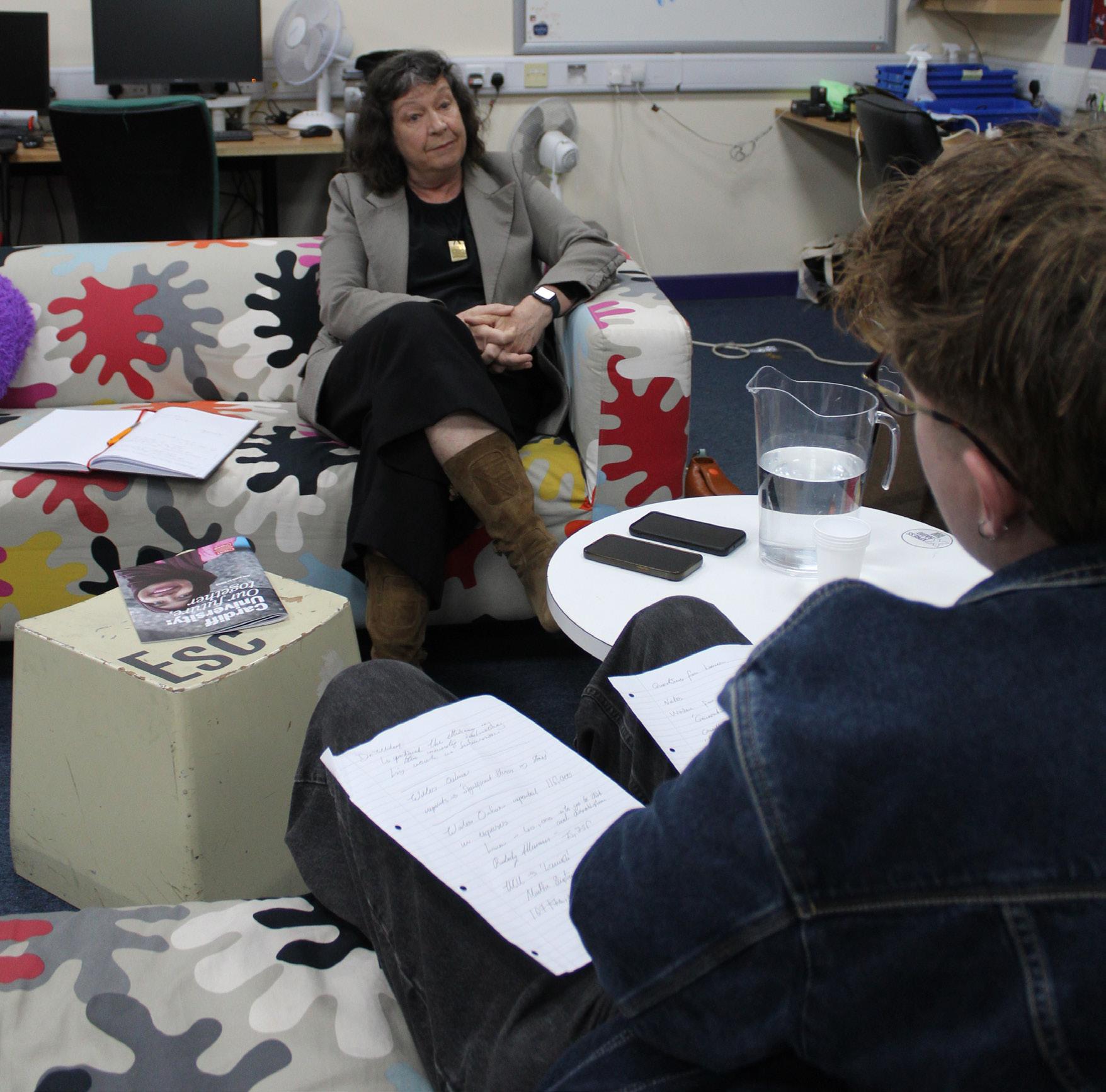
And yet we saw a protest outside the main building led by a senior academic, Dr Lloyd Llewelyn-Jones. Are you sure that your assertion that it will not be sustainable is true?
The work done around the Academic Futures process was very robust, it was very evidencebased. I absolutely understand for colleagues working in those disciplines how challenging the last year has been for them, and I have listened carefully. I have been into that school personally, I have had those conversations myself, with impacted colleagues, as have a large number of the other leaders in the University. I absolutely understand how challenging these decisions are.
Returning to the theme of collaboration, you’re reported in Nation Online as having sent to colleagues emails describing their reporting (based on staff informers) as fake news. We’ve also had reports, not just to this paper but to other papers as well, of mental health strains on staff. Is that in line with what you say in Vision 2035? You talk about the University making an ethical impact on Wales and Cardiff.
So, there are two points there. The first point being about some of the media coverage of the Academic Futures process last year, some of which was better informed than others. When genuine misinformation was being shared, we did our best to help people understand and set the record straight. In terms of mental health and well-being, yes, of course the university has been through a very stressful time. I understand that. We had been monitoring that as we always do, right the way through the process. You’ll know some of the discussion again around that that has taken place. This continues to be actively monitored. There is a Joint Working Group in place between senior leadership and the unions where we are doing our best to manage—as well as we can—a very stressful time. There are all
sorts of support processes in place for staff, both within the University and beyond. We are doing as much as we can to work through that process with integrity.
You’ve very correctly pointed out that the University is experiencing serious pressures. However, as a paper, we have had a couple of anonymous members of staff tell us that while the approaches are being made to find resolutions to problems, these resolutions are often being dictated from top down rather than from bottom up. Many have mentioned the Senate votes being overruled, and others have pointed to a lack of cooperation with the views of staff. What would you say to allegations that the process towards finding a resolution has been more top down rather than being led by the community, in which Cardiff University aspires to be?
So, it goes back to the opening question. Participatory leadership is not the same as running a university by consensus. In the end, decisions have to be made. Sometimes those decisions are very challenging decisions, as you have noted. You know, we are not the only university having to make really challenging decisions.
“Let me set the record straight: at no point was Senate overruled. Senate’s role was to offer advice to Council. Senate offered that advice to Council, entirely appropriately. That advice was robustly engaged with by Council. There is nothing untoward in terms of the process that was followed.”
Almost as controversial as the course cuts have been your endeavours in Kazakhstan. What material benefits will this project bring to stu-
dents in Wales?
So, one of the reasons I brought a copy of the strategy was to remind you that a small number of well-chosen, deeply reciprocal transnational education initiatives was something that came out of Y Sgwrs Fawr. It’s something that we collectively as a university said; “Yes, we should do this.” The initiative in Kazakhstan is an enormous success. In less than a year, we have stood up a branch campus that has 318 amazing students registered. They’ve begun their studies in a fit-for-purpose building. We have enormous support from the UK ambassador, from our partners there, from the Kazakh government. I myself had the opportunity just a few weeks ago to meet the president of Kazakhstan at a forum where the forty international universities who are present in Kazakhstan attended. We were all invited to that because Kazakhstan is putting a huge emphasis and investment into building those international partnerships that will reposition Kazakhstan for the future.
“So, to be honest, I struggle with the criticisms of the Kazakhstan branch campus because, yes, there are challenges. There are challenges in every TNE [transnational educational] relationship.”
You think about all the other TNE partners that UK universities have in places like Egypt and Saudi Arabia and India, places that are also culturally and politically positioned very differently to the UK. That’s what transnational education looks like. We learn from each other. There are 600,000-plus students now studying with UK universities through transnational education arrangements. Transnational education is absolutely part of the future for UK universities, and I’m very proud of what we’ve done in Kazakhstan.
Vice-chancellor, those are good aspirations. We all understand the importance of being transnational. I think that’s a charitable interpretation of the political climate in Kazakhstan. But what material benefits will your time in Kazakhstan bring to Cardiff? It was reported in WalesOnline that some of your £40,000 expenses bill was taken up in flying you to Kazakhstan. It has taken time out of your schedule to go to Kazakhstan. What will those visits bring? What will that university bring back to Cardiff?
“Already we can see the benefits that are coming as we both learn from Kazakhstan and Kazakhstan learns for us. The New Futures curriculum, for example, has been piloted with the Kazakh students.”
We will learn from them in terms of the work that they’re doing We’ve just signed up to a United Nations initiative again that we’ll pilot in Kazakhstan and then bring it back here to Cardiff University. More widely already, we have, through the UK ambassador, begun to explore some of the wider opportunities for Cardiff and Wales that will arise through our relationship in Kazakhstan. Businessto-business opportunities, organisation-toorganisation opportunities. This is putting us on the map as a university, as a city, and as a country. Enormous benefits that will accrue as we begin to expand not just from educational offers, but also as we begin to build research connections, as we begin to build those civic engagement connections. So, there’s everything to play for here.
Would it be correct to infer from the choice to follow down this route whilst also continuing department cuts and restructuring, that the university and yourself are taking a position in which the internationalist side of the
And as an integral part of the University, it will have to respond to the new law in that country which is attempting to criminalise socalled “homosexual propaganda”. You speak a lot about the benefits of Cardiff University Kazakhstan, but doesn’t it pose serious reputational risks if you’re getting involved in effectively a post-Soviet authoritarian state?
Kazakhstan has not been part of the Soviet orbit of influence since its independence. And like devolution in Wales, what Kazakhstan is working towards is its own sense of identity in terms of language, culture, and economy. But just like Wales and England, sometimes there are complex relationships, with entities based in different kinds of political settings. So, absolutely, I, like you, am looking in at that law. I have already expressed my concern about that law with the UK ambassador, with the minister for science and higher education, who is going to take it to the Council that— again—he chairs, that brings together all the international universities who are present in Kazakhstan. It has not been passed yet. You will understand that there are many groups in Kazakhstan itself who again would not want to see that law passed. Laws get passed in all countries through contested political processes, and that law is part of a contested political process.
Would you say, then, that the “anti-homosexual propaganda” law is part of a process of discovering Kazakh identity?
No, of course I wouldn’t.
Returning to your point on the comparison between Wales and England in the UK and Kazakhstan’s position. Would you like to reiterate that the relationship between Kazakhstan and perhaps Russian influence and the developing position of the state, can be compared to Wales’ relationship with the rest of the UK?
I’m not trying to say that. The point that I’m trying to make is that Kazakhstan is a country
than we did. I, then, was involved in some travelling, but Maria and I did sit down as soon as my calendar permitted. We continue to have regular meetings. She has regular meetings not just with myself, but with a number of other UEB [University Executive Board] members, including the pro vice-chancellor for students for education and student experience and the chief operating officer. Yes, I’m very aware that Maria did say that it did take a little bit of time, but I am confident that those meetings are in place, they’re happening regularly and we are—as we should—sharing good robust information from both of our perspectives.
Vision 2035 describes digital innovation and flexible delivery as a goal of the University. Despite that goal, it has taken some students up to two weeks to receive their timetables. Are you sure that the University is keeping up with its aims?
“I think we all understand that the timetable was not what it should have been at the beginning of this academic year. We have a vast array of proof-of-concept work going on at the moment in the digital space. We have a new chief digital and information officer and that is part of the work that he is leading. We do need to take advantage of new technologies when they allow us to do things better.”
The student app is a really good example of that. It’s a good app; it can be much better. What sort of work do we need to do to really improve the way in which we deliver services both for students and staff? We’re a bit behind
we were in September. But this is just one example of the many investments we are making into digital systems. At the same time, we were rolling out a new system around our research function without any issues whatsoever, which significantly improved the experience for all the staff involved. We all know in big complex organisations like this one, sometimes things don’t go according to plan—but there’s some great success stories as well—but the timetabling issue is well known. We’re working really hard to address that, and we will be continuing to improve that experience for both staff and students in the coming years.
Looking ahead to the next year, is there something that we should be looking forward to in particular?
Well, I think the introduction of the Hwbs [Hubs] has been a very positive experience in terms of ensuring students can get responses to questions. We are investing very significantly. This is what the current professional services restructuring is about—moving to being a student-centred organisation. We’re very clear about that. That’s part of the work that we’re currently doing to ensure that the student experience here at Cardiff University, which is already very strong, continues to improve. I’m really proud that it continues to do so.
What other cost-cutting measures do you think will be necessary?
I’m not sure what you mean by cost-cutting measures. What we are trying to do is position this university successfully for the future. That involves us being different for the future. I’ve said that repeatedly during my time here. We are having to reposition ourselves. What we are not trying to do is just do the same with less, which is what many universities are trying to do. What we are trying to do is reposition ourselves in ways that will make us hugely successful for the future, building on what we already have: an amazing university, full of amazing students and staff, and a terrific city, in a small and ambitious country. But how do we need to be different in the context of a world that is moving very quickly around us? We have to be different for the future. We have to keep adapting to those pressures as they emerge. Who knows what the Westminster budget is going to bring this week? Will it require us to make further adaptations, make further changes? We don’t know. Again, we cannot stand still if we wish to be successful
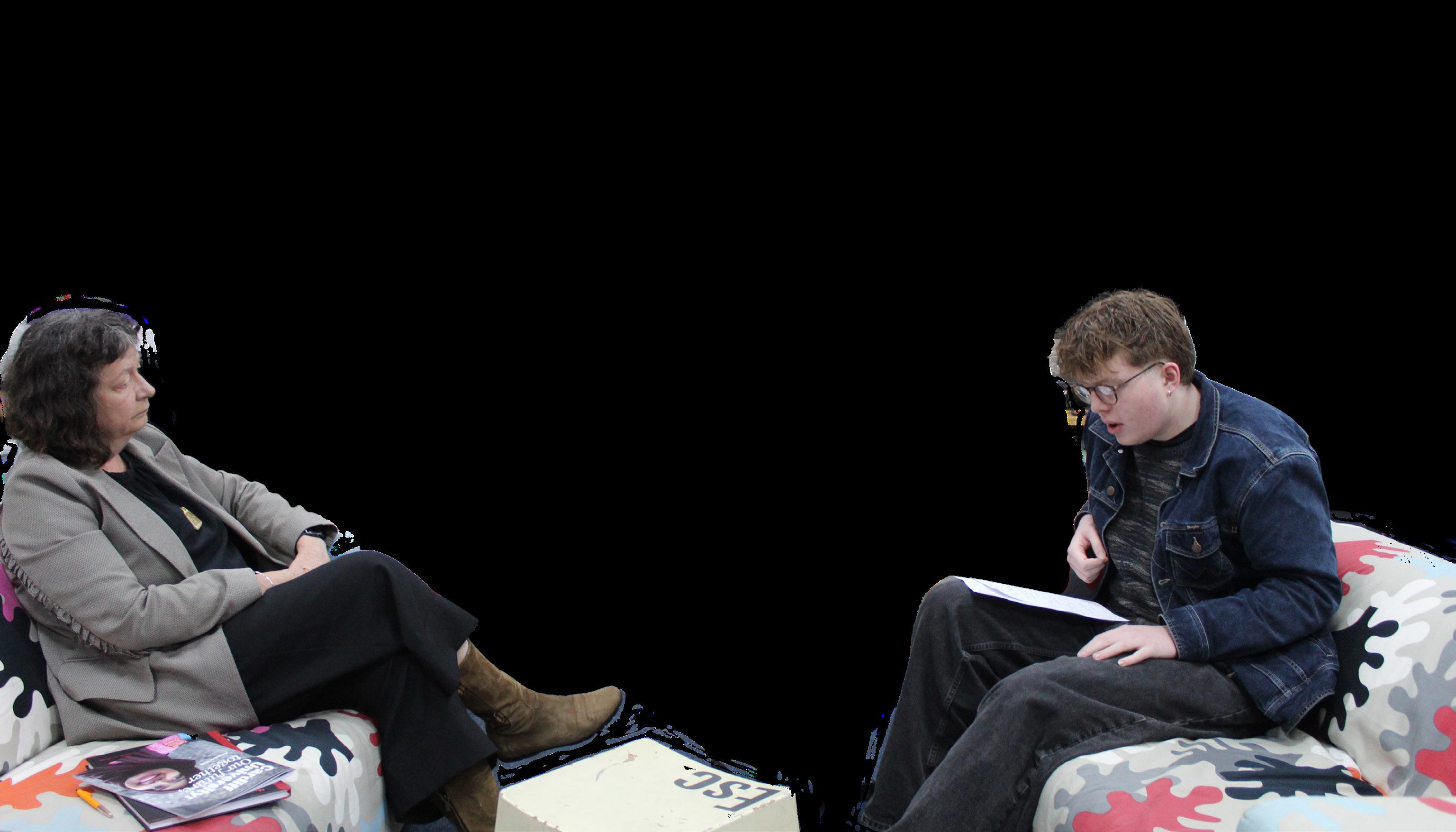
And looking ahead to the next year, is there something that we should be looking forward to in particular?
Well, I think the introduction of the Hwbs (Hubs) has been a very positive experience in terms of ensuring students can get responses to questions. We are investing very significantly. This is what the current professional services restructuring is about–moving to being a student-centred organisation, we’re very clear about that. That’s part of the work that we’re currently doing to ensure that the student experience here at Cardiff University, which is already very strong, I’m really proud that it continues to improve.
What other cost-cutting measures do you think will be necessary?
I’m not sure what you mean by cost-cutting measures. What we are trying to do is position this university successfully for the future. That involves us being different for the future. I’ve said that repeatedly during my time here. We are having to reposition ourselves. What we are not trying to do is just do the same with less, which is what many universities are trying to do. What we are trying to do is reposition ourselves in ways that will make us hugely successful for the future, building on what we already have, an amazing university, full of amazing students
and staff, and a terrific city, in a small and ambitious country. But how do we need to be different in the context of a world that is moving very quickly around us? We have to be different for the future. We have to keep adapting to those pressures as they emerge. Who knows what the Westminster budget is going to bring this week? Will it require us to make further adaptations, make further changes? We don’t know. Again, we cannot stand still if we wish to be successful for the future.
Would there be a point at which, in terms the restructuring of the university, if say tomorrow there are increased financial pressures from Westminster, when your own salary would come into question regarding whether it is an effective use of university money, especially considering the fact that you live in a university house in which you don’t pay rent?
I have no say over my own salary. I think if you look at Vice-Chancellors across the UK, all of whose salaries are in the Public Domain.
“You can make your own deci-
sion about whether I’m value for money.”
But I’m asking you, Vice-Chancellor, whether you think, as the Vice-Chancellor of this university, whether the money that you are earning is justified in a period of restructuring, and when you might have to make cuts across the university?
Well, I think you are joining up two things that aren’t necessarily connected. I am paid to lead this university, as well as I can, to that successful future that we all wish to have for this university. Part of that involves understanding how we need to be different for the future and leading on what are sometimes really challenging decisions, as we reposition ourselves for the future. That’s the work I understand myself to do.
So, would I be correct to say that you decline to comment on whether your salary is an effective use of university money?
No, I think I have just answered that question by saying this is what I am paid to do. As the Vice-Chancellor my job is to lead this university through extraordinarily challenging times.
And you are also reported as living in a house that’s reportedly worth around a million, which was described as “grace and favour” in the media. Would you consider selling the house
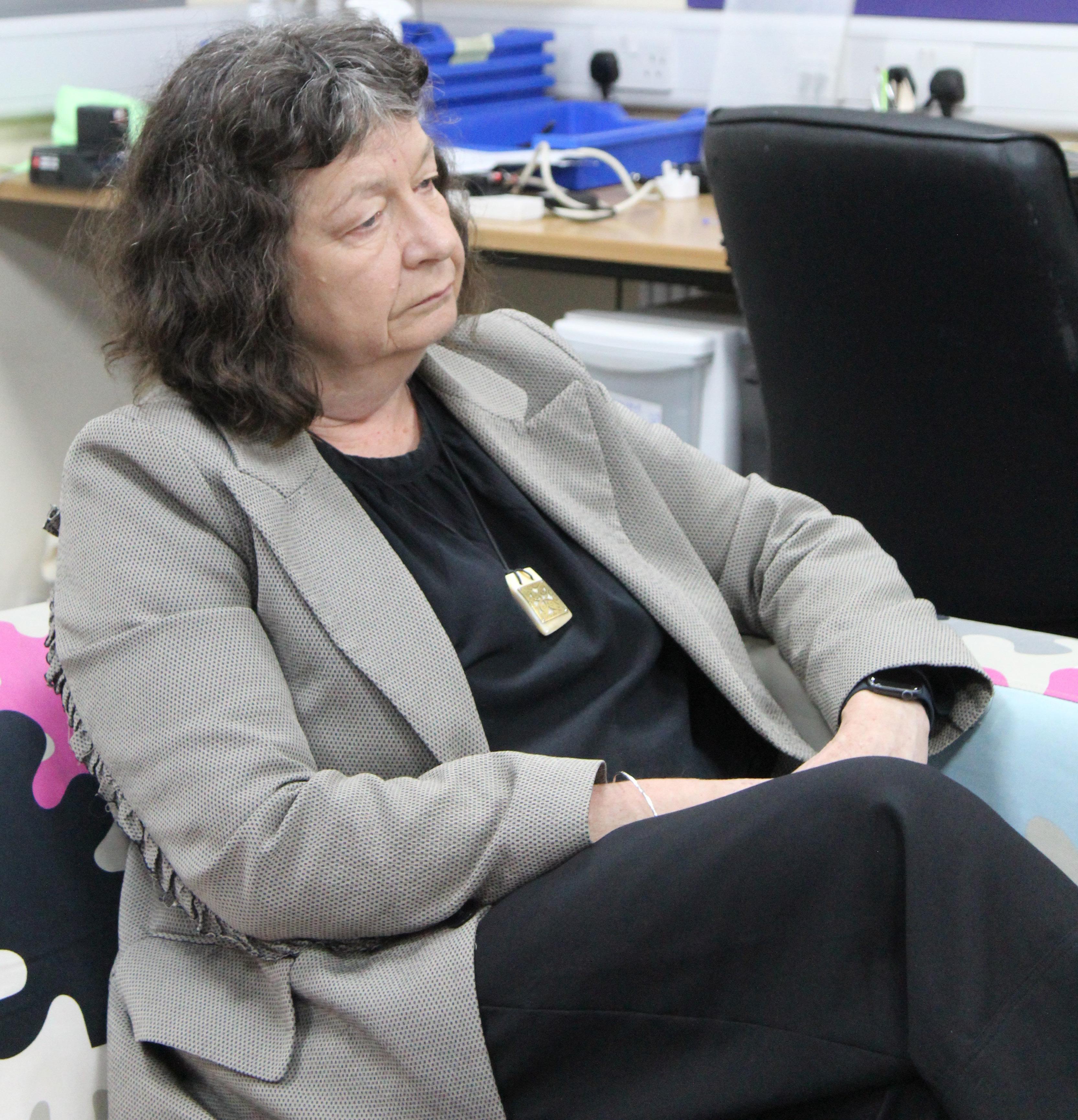
or getting the university to sell the house to raise money?
So it is a university property. It predates me. The university has owned it for a long time.
“I do pay all the bills in that house as well as paying tax on that part of my package, so the idea that I live there, “grace and favour”, and free is simply not true.”
All of this is in the public domain. As good journalists, you should do your homework and understand.
Well, Vice-Chancellor, we have done the homework on the topic of the house. You are right to point out that you do pay the bills and you pay tax on the property, but that doesn’t necessarily extrapolate towards the normal living costs that might, say, be putting pressure on academic staff here whose salaries are greatly, greatly smaller than yours.
Yeah, I accept that the cost of living is impacting absolutely everyone, staff, students, and, actually, the university more generally. For example, the money that it costs for this university to heat the buildings and keep the lights. I absolutely understand that cost of living is impacting everyone.
And finally, Vision 2035, are you on track and do you think that it’s working?
“I think we have made significant progress towards those Horizon 1 activities that we always knew would be the very hard, challenging activities. How is it that we retain academic and financial sustainability? The university will continue to make operating deficits. The annual report for this year is not out yet, but it’s not surprising, perhaps, we continue to run a deficit.”
We are working hard towards being in a situation where we are delivering on the aspirations as set out in that. I think we’ve made good progress on Horizon 1, and we’re beginning to see good progress- on some of those Horizon 2 activities, transnational education, the New Institute for Flexible Lifelong Learning, the New Futures curriculum, some of the things that we’ve touched on in the conversation that we’ve had. So yes, there’s still work to do. We’re not out of the woods yet. But are we heading in the right direction? Yes, we are.
Thank you very much. Thank you.
Interview by
James Roberts and Ruaidhrí Gillen Lynch
Fuoch chi ‘rioed yn dawnsio? Dawnsathon
Trystan ac Emma
AFflur James Cyfrannwr
r ddydd Iau, 13eg o Dachwedd, fe ddawnsiodd cyflwynwyr poblogaidd BBC Radio Cymru am 24 awr yn ddi-dor er mwyn codi arian tuag at elusen Plant Mewn Angen. Daeth y 24 awr i ben ar eu rhaglen radio, fore Gwener y 14eg o Dachwedd am 11yb. Mae rhaglen radio Trystan Ellis-Morris ac Emma Walford ymhlith y rhaglenni mwyaf poblogaidd yn arlwy BBC Radio Cymru. Roedd y cyfan yn cael ei ffrydio’n fyw ar BBC iPlayer ac S4C Clic yn ogystal â BBC Radio Cymru 2, fel nad oedd neb adre’ yn colli munud o’r 24 awr. Nod yr her 24 awr hwn oedd codi arian i elusen Plant Mewn Angen yn ogystal â chodi ymwybyddiaeth o’r elusen.
Fe ymunodd wynebau cyfarwydd gyda’r pâr ar hyd y 24 awr, gan gynnwys Caryl Parry Jones, Huw Stephens, Non Parry a Rachel Solomon. Roedd cyflwynwyr eraill BBC Radio Cymru hefyd yno i’w cefnogi,
gydag Ifan Jones Evans a Shân Cothi yn galw heibio i leihau’r baich. Fe wnaeth enwogion lu ddanfon eu dymuniadau gorau i’r double-act hoffus, drwy fideos a gafodd eu dangos drwy gydol y dawnsathon, gan gynnwys Tess Daly a Claudia Winkleman, cyflwynwyr Strictly Come Dancing. Ymunodd corau, aelwydydd, ysgolion, grŵpiau a chymdeithasau gyda’r ddau, i helpu gyda’r dawnsio. Teg dweud nad oedd ‘na un llygedyn sych pan ddaeth teuluoedd Emma a Trystan i ymuno â nhw ac roedd hynny’n tanlinellu yr holl ymroddiad. Fe ‘sgwennodd yr Archdderwydd a’r Prifardd, Mererid Hopwood, englyn i’r ddau- ac fe lethodd hynny’r cyflwynwyr, â’r ddau dan deimlad wrth glywed y geiriau o gefnogaeth mewn barddoniaeth.
Roedd hi’n bosib hefyd i’r gwylwyr adre’ ymuno yn yr hwyl wrth ddawnsio’r macarena gyda’r criw, ar yr awr, drwy’r dydd a drwy’r nos. Roedd yr her yn rhan o ymgyrch flynyddol y BBC i godi arian tuag at Blant Mewn Angen. Fuoch chi’n dawnsio gyda nhw?
Dechrau Blwyddyn Heriol i Reform UK
Ifan Meredith Golygydd Taf-Od
Siom a dau sgandal sydd wedi achosi pryder i blaid Nigel Farage dros y ddeufis diwethaf, a’r tri o rain yn gysylltiedig
â Chymru!
I ddechrau, ym mis Hydref, methodd y blaid â chipio sedd Caerffili yn Senedd Cymru, sedd oeddent wedi gweithio a buddsoddi yn galed ynddi i’w hennill.
Daeth yr ymgeisydd, Llŷr Powell yn ail i ymgeisydd Plaid Cymru, Lindsay Whittle. Roedd 3,848 o bleidleisiau yn gwahanu’r ddau ar ddiwedd y cyfri- llawer mwy na roedd y polau piniwn yn ei ragdybio.
Ym mis Tachwedd, gwelwyd unig aelod Senedd Cymru o’r blaid, Laura Anne Jones yn cael ei gwahardd am bythefnos wedi iddi wneud sylwadau amhriodol mewn grŵp Whatsapp ym mis Awst 2023.
Mewn datganiad emosiynol ar lawr y Senedd ar ôl dysgu am ei gwaharddiad, dywedodd y cyn Aelod Senedd Ceidwadol a symudodd i Reform ynghynt yn 2025, fod yr archwiliad wedi cael ef faith mawr ar ei hiechyd meddwl.
Ni fydd gan yr aelod dros Ddwyrain De Cymru yr hawl i gamu ar dir y Senedd na chymryd rhan mewn pleidleisiau tan iddi ddychwelyd ar y 3ydd o Ragfyr. Serch hynny, bydd hawl ganddi i weithio o’i hetholaeth.
Efallai mai’r mwyaf arwyddocaol ydy bod cyn arweinydd y blaid Reform yng Nghymru, Nathan Gill, wedi ei ddedfrydu i 10.5 mlynedd o dan glo ar ôl iddo bledio’n euog i wyth cyhuddiad o lwgrwobrwyo.
Yn ystod ei gyfnod fel Aelod Senedd Ewrop dros y blaid UKIP yng Nghymru, bu Nathan Gill yn derbyn taliadau gan Rwsia am iddo rannu negeseuon oedd yn gefnogol o’r wlad. Credir iddo dderbyn tua £40,000 am gyfweliadau teledu ac anerchion tra’n Aelod Senedd Ewrop.
IElen Morlais Williams Golygydd Taf-Od
lawer o fyfyrwyr, mae’r Gaeaf yn gyfnod heriol. Mae’r tywydd oer, dyddiau tywyll a phwysau academaidd yn aml yn arwain at straen, blinder ac iselder. Yn ôl Young Minds UK, mae nosweithiau a boreau tywyll yn ei gwneud hi’n anodd i fyfyrwyr fod yn gynhyrchiol ac, i rai, mae’r tasgau lleiaf yn teimlo’n heriol. Wrth i’r dyddiau fyrhau, mae ymchwil diweddar yn awgrymu bod agwedd gadarnhaol tuag at y Gaeaf yn gallu helpu pobl i ymdopi yn ystod y cyfnod hwn.
Ar y 29ain o Hydref, cyhoeddodd elusen iechyd meddwl Mind adroddiad newydd o’r enw ‘Young people are falling through the gaps
- Making care before crisis a reality’. Dywedodd Jemima Olchawski, Cyfarwyddwr Effaith Gymdeithasol yr elusen Mind: “The nation is facing a mental health crisis with Young people bearing the brunt”. Mae’r adroddiad yn rhybuddio bod pobl ifanc yn aml yn methu cael y cymorth sydd ei hangen arnynt cyn cyrraedd pwynt argyfwng. Mewn ymateb i hyn, dywedodd Sarah Murphy, Gweinidog Iechyd Meddwl a Lles Llywodraeth Cymru: “Gall ymyrraeth gynnar atal pobl ifanc rhag cyrraedd pwynt argyfwng o ran eu hiechyd meddwl.” Wrth ymweld â chanolfan ieuenctid ‘The Hangout’ yn Barri, pwysleisiodd y Gweinidog bwysigrwydd cefnogaeth i bobl ifanc a mynediad ar unwaith i’r adnoddau sydd ei hangen arnynt.
Mae’n glir bod myfyrwyr ymhlith y rheiny sydd yn dioddef yn ystod y gaeaf. Er nad yw’n
Wrth ymddangos o flaen llys yr Old Bailey yn Llundain i’w ddedfrydu ddiwedd mis Tachwedd, dywedodd y farwnes, Mrs Cheema-Grubb fod gweithredoedd Gill yn “fradychiad” i ymddiriedaeth yr etholwyr.
Dywedodd Heddlu Met Llundain y bydd yr ymchwiliad yn parhau er mwyn sicrhau “a oes unrhyw unigolion eraill wedi cyflawni troseddau [o lwgr-wobrwyo].”
Gydag etholiad ar y gorwel yng Nghymru, mae’r achosion yma yn codi’r cwestiwn, a fydd enw da’r blaid yn cael ei ddifrodi neu a fydd etholwyr yn parhau i droi at Reform?
Un peth all fod yn sicr, mae’r blaid yn un broffesiynol erbyn hyn, yn gwbl wahanol i’r blaid
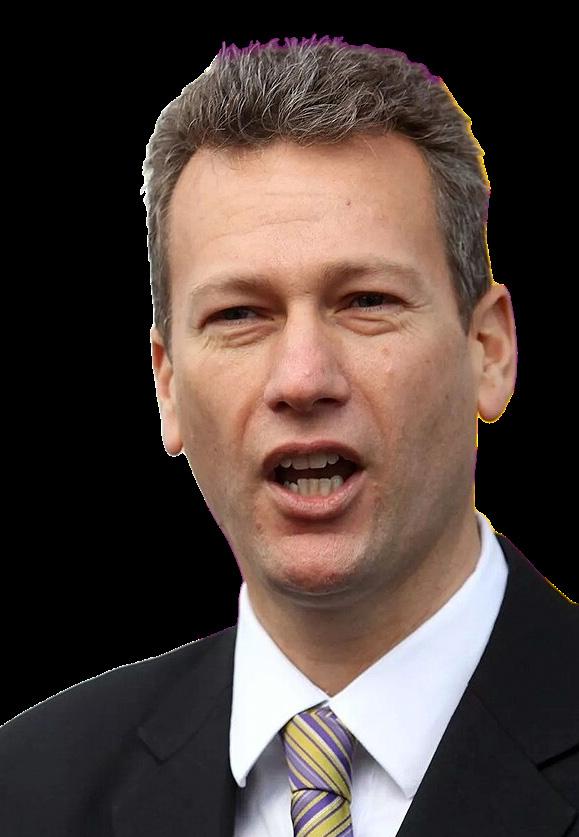
ymateb uniongyrchol i’r adroddiad sydd dan sylw, sylwodd pwyllgor Undeb myfyrwyr Cymraeg Caerdydd ar yr angen am fwy o weithgareddau cymdeithasol. O ganlyniad, penderfynodd y pwyllgor sefydlu clwb rhedeg newydd o’r enw “Nerth Dy Draed” gyda thua 20 o fyfyrwyr yn mynychu’r sesiwn gyntaf. Mae’r clwb yn cynnig modd o gymdeithasu heb alcohol, sy’n aml yn ffactor mawr mewn digwyddiadau prifysgol ac mae’n annog myfyrwyr i ddod ynghyd, rhedeg, sgwrsio, symud a gadael y tŷ yn ystod misoedd tywyll y gaeaf. Dywedodd Gwenno, myfyrwraig yn ei thrydedd flwyddyn sy’n rhan o’r clwb newydd: “Mae’n brofiad hyfryd bod yn rhan o’r clwb rhedeg, ma’ fe’n rhywbeth rili neis i wneud ar fore Sadwrn. Fi’n bendant yn meddwl bod digwyddiadau cymdeithasol fel hyn yn bwysig iawn i iechyd meddwl myfyrwyr.” Ategodd hi: “Nath
mynd i’r clwb rhedeg godi fy nghalon i achos ma’ mis Tachwedd yn fis tywyll, diflas gyda lot o asesiadau ‘mlan. Ond, ‘odd y sesiwn yn seibiant braf i dynnu’r meddwl bant o’r gwaith a chael ‘chydig o awyr iach. ‘Odd e mor braf gallu cymdeithasu gyda phobl wahanol mewn ffordd wahanol ‘o’n i heb wneud o’r blaen.” “Byddwn i’n bendant yn dweud wrth unrhyw un sy’n ystyried ymuno i beidio meddwl dwywaith, ymunwch! Mae naws mor gyfeillgar yna, does dim ots os chi heb arfer rhedeg. Ni’n mynd ar gyflymder digon hamddenol i bawb, ac mae’n naws croesawgar iawn. Byddwch chi ddim yn difaru.” meddai Gwenno. Wrth i’r gaeaf fynd yn ei flaen, mae ‘Nerth dy Draed’ yn mynd o nerth i nerth ac yn dangos bod modd i fyfyrwyr gymryd camau bach i ofalu am eu llesiant.
Aberystwyth yn Ennill Statws Dinas Llên UNESCO
Rhodri Jenkins Cyfrannwr
Bu dathlu yng Ngheredigion yn niweddar wedi i Aberystwyth ennill statws Dinas Llên UNESCO.
Cafodd UNESCO, neu ‘United Nations Educational, Scientific and Cultural Organization’ ei sefydlu yn 2004 er mwyn adnabod a hyrwyddo cydweithrediad rhwng dinasoedd sy’n defnyddio creadigrwydd a llenyddiaeth fel ffactor strategol er mwyn datblygiad trefol cynaliadwy. Er mwyn ennill y teitl hwn, rhaid i’r ddinas gwrdd â phwyntiau meini prawf gan UNESCO sy’n cynnwys ansawdd, niferoedd ac amrywiaeth o lenyddiaeth yn y ddinas, y digwyddiadau a gwyliau sy’n cael eu dal yn y ddinas a bodolaeth llyfrgelloedd a chanolfannau diwylliannol yn y ddinas. Erbyn
heddiw mae dros 50 o ddinasoedd wedi ennill y teitl yma, gydag Aberystwyth yn ymuno â nhw ar yr 31ain o Hydref.
Mae’r cyflawniad yma wedi bod yn y broses ers 2021 gyda sefydliad ‘Dinas Llên’ i baratoi ar gyfer cyflwyniad y dref i UNESCO ym mis Mawrth eleni. Dyma bartneriaeth rhwng nifer o sefydliadau yn Aberystwyth a Cheredigion megis y Cyngor Sir, Prifysgol Aberystwyth a Llyfrgell Genedlaethol Cymru i hybu arferion a thraddodiadau creadigol a llenyddol yr ardal, sydd bellach wedi profi yn deilwng.
Aberystwyth ydy’r ddinas gyntaf i ennill y teitl yma yng Nghymru, a bellach y mae’n cael ei hadnabod ymysg dinasoedd megis Barcelona (Sbaen), Seattle (Unol Daleithiau America) a Rio de Janeiro (Brasil). Er nad yw Aberystwyth yn cael ei hadnabod fel dinas yn draddodiadol, mae
hi’n ardal gyfoethog mewn llenyddiaeth, prifysgolion, a llyfrgelloedd gan gynnwys y Llyfrgell Genedlaethol, sydd yn ddigon i gael ei hadnabod fel Dinas Llên yn ôl UNESCO. Wrth edrych ar hanes y dref, mae ganddi gysylltiadau i dros 300 o feirdd, yn cynnal nifer o wyliau megis yr ŵyl ddarllen, gŵyl y castell a’r ŵyl gomedi, ac yn dathlu ei threftadaeth gyfoethog ddiwylliannol a llenyddol yn aml. Mae llawer yn sôn fod hwn yn garreg filltir nid yn unig i Aberystwyth, ond i Geredigion a Chymru gyfan gan fod diwylliant cryf o lenyddiaeth y Cymry yn cael ei adnabod ar lwyfan genedlaethol.
Dywedodd Eluned Morgan, Prif Weinidog Cymru fod ennill y teitl yma yn “hollol haeddiannol” a’i bod yn “gyffrous i weld cyfleoedd newydd i dref wrth iddo ffynnu fel Dinas Llên Cyntaf Cymru”.
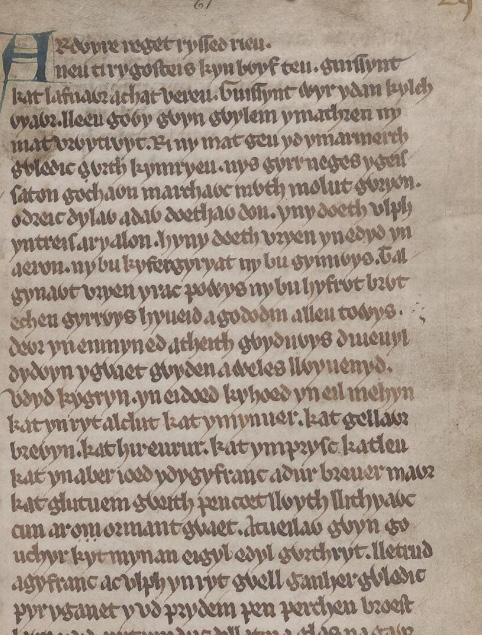
Caerdydd i Gynnal gêm Agoriadol Hanesyddol Euro 2028
Beca Hughes Cyfrannwr
Cafodd cyhoeddiad cyffrous gan UEFA ei wneud yn ddiweddar, yn cadarnhau y bydd gêm agoriadol Euros 2028 yn cael ei chynnal yng Nghaerdydd. Bydd y bencampwriaeth yn cael ei chyd-gynnal gan bedair gwlad sef Lloegr, yr Alban, Cymru a Gweriniaeth Iwerddon, gyda’r gêm gyntaf yn Stadiwm Principality ar 9 Mehefin 2028. I gyd, bydd chwe gêm yn cael eu chwarae yng Nghymru, gan gynnwys rownd 16 ac un o’r rowndiau wyth olaf.
Pwysigrwydd hanesyddol i Gymru Mae hyn yn garreg filltir arbennig i’r genedl, gan nodi’r tro cyntaf i Gymru gynnal gemau yn
rowndiau terfynol twrnament pêl-droed rhyngwladol mawr. Mewn datganiad a ddyfynnwyd gan y BBC, pwysleisiodd Prif Weithredwr Cymdeithas Bêl-droed Cymru, Noel Mooney, natur gyffrous y newyddion yma:
“This will be the first time that ‘The Red Wall’ our passionate Wales fans will experience a major international tournament on home soil.”
Ychwanegodd mai digwyddiad “truly historic” fydd hwn, un a fydd yn uno cymunedau, ac yn dangos gorau pêl-droed a diwylliant Cymru ar lwyfan byd-eang.
Cyfle i ail-ddiffinio hunaniaeth Gymreig
I lawer, mae Euros 2028 yn gyfle i wneud i’r byd sylwi ar Gymru fel gwlad ar wahân i Loegr. Mae’r awdur chwaraeon a cholofnydd Pêl-droed Phill Stead yn pwysleisio bod angen i’r Gymraeg
fod yn weladwy yn y cyfle yma; “Pan mae pobl dramor yn meddwl am Gymru, maen nhw’n gweld y stadiwm, ond nid pawb yn sylwi nad ydym ni’n rhan o Loegr.”
Gan fod Saesneg yn brif iaith UEFA, mae pryder y gallai’r Gymraeg lithro i’r cefndir. Yn ôl Phil, mae hyn yn codi “cyfrifoldeb ar awdurdodau Cymru i sicrhau bod yr iaith yn bresennol ar arwyddion” yn y cyfryngau ac ar strydoedd y ddinas. “Mae digwyddiad fel hyn yn dod â channoedd o dimau cyfryngol ac influencers i’r ddinas. Os fyddan nhw’n dysgu hyd yn oed ychydig o eiriau ac yn cydnabod bod iaith arall yma, gall hynny hybu’r Gymraeg ac ein hunaniaeth.”
Buddion economaidd sylweddol
Nid canlyniadau chwaraeon yn unig sy’n bwysig. Fel y nododd un cefnogwr o’r enw Caio
Hughes. Mae twrnament fel hyn yn “ddathliad cymdeithasol sy’n llenwi’r strydoedd â phobl o bob cwr o Ewrop, pobl sy’n bwyta, yn yfed ac yn mwynhau’r ddinas, gan gyfrannu’n uniongyrchol at yr economi leol.” Mae tystiolaeth o ddigwyddiadau tebyg yn awgrymu potensial enfawr. Yn Ewro 2024, amcangyfrifodd UEFA fod y digwyddiad wedi cynhyrchu tua €7.44 biliwn o effaith economaidd i’r dinasoedd roedd yn ei chynnal.
Gyda Chaerdydd yn barod i groesawu degau o filoedd o gefnogwyr rhyngwladol, mae disgwyl i fusnesau lleol, o westai i dafarnau a hefyd y sector twristiaeth ehangach fanteisio’n sylweddol ar y llif.
Sut i lenwi’r wythnosau olaf yng Nghaerdydd cyn y Nadolig
Ela Rhys
Golygydd Taf-Od
Wrth i’r dydd fyrhau ac wrth i’r tywydd oeri, mae’r Nadolig yn wir yn agosáu. Gyda dim ond ychydig wythnosau’n unig nes y byddwn ni fyfyrwyr yn ymadael â’r ddinas ac yn swatio adref dros gyfnod yr ŵyl, beth sydd gan Gaerdydd i’w gynnig i’n trochi gydag ysbryd y Nadolig?
Gŵyl y Gaeaf:
Un o’r llefydd mwyaf amlwg i ymweld os nad ydych chi eisoes wedi gwneud hynny’n barod yw Gŵyl y Gaeaf (‘Winter Wonderland’). O dir Castell Caerdydd, i lawntiau Neuadd y Ddinas, i Barc Bute mae Gŵyl y Gaeaf at ddant unrhyw un. Beth am sglefrio dan do ar dir y Castell neu fentro i’r ffair ar lawntiau Neuadd y Ddinas? Llwglyd a sychedig? Nid oes angen gofidio gan fod bar y caban sgïo alpaidd, Sur la Piste ac ystod eang o stondinau bwyd Nadoligaidd. Wedi iddi dywyllu,
mae Llwybr Goleuadau Parc Bute hefyd yn gyfle perffaith i weld y Ddinas yn ei holl ogoniant. Am fwy o wybodaeth ac am yr amseroedd: www.croesocaerdydd.com/nadolig
Marchnad Nadolig Pontcanna:
Os ydych chi awydd newid o brysurdeb y ddinas dros y penwythnos, beth am ymweld â Phontcanna? Pob dydd Sadwrn a Sul hyd at y 21ain o Ragfyr bydd ‘Kings Road Yard’ dan ei sang gyda stondinau amrywiol i chi gael y blaen ar eich siopau Nadolig a digon o fwyd a diod Nadoligaidd i fynd â’ch bryd. Heb os, dyma un o’r llefydd fwyaf delfrydol i fwynhau ysbryd yr ŵyl.
Lleoliad: Kings Road Yard, 183A Kings Road, Caerdydd, CF11 9D7.
Pa bryd: Pob dydd Sadwrn 10yb-2yp, pob dydd Sul 10yb-4yp.
Mwy o wybodaeth: @pontcannamarket (instagram).
Cyngerdd Nadolig Aelwyd y Waun Ddyfal: Bydd Eglwys Dewi Sant, Caerdydd yn cael ei
swyno gan leisiau aelodau Aelwyd y Waun Ddyfal ddechrau mis Rhagfyr. Yng nghwmni Brigyn, bydd yr aelwyd yn perfformio eu cyngerdd Nadolig a bydd yn gyfle hyfryd i ddechrau dathliadau’r ŵyl. Mae’r drysau ar agor i unrhyw un a bydd yr arian a godwyd yn cael ei roi i Elusen Ambiwlans Awyr Cymru. Dewch yn llu!
Lleoliad: Eglwys Dewi Sant, Caerdydd, CF10 3DD.
Pa bryd: Nos Wener, 5ed o Ragfyr am 7:30yh. Pris: Ticed oedolyn - £10, ticed plentyn - £7.
Mynd i’r sinema i wylio Wicked: Mis Tachwedd llynedd roedd sinemâu ledled Caerdydd yn orlawn wrth i’r seddi gael eu llenwi gan y sawl oedd yn awyddus i wylio’r ffilm fyd-enwog, Wicked. Blwyddyn yn ddiweddarach ac wedi mawr aros, mae hi bellach yn amser i’r ail ran gael ei ryddhau. Felly, mae’n amser i chi fachu eich ticedi a’ch hoff ddanteithion yn barod ar gyfer ymgolli yn niweddglo dramatig y cymeriadau hoffus, Elphaba a Glinda. Os ydych chi awydd noson gysurus gyda chwmni da a chuddio
rhag ysbryd yr ŵyl am ysbaid, y sinema yw’r lle i chi. Am fwy o wybodaeth am leoliadau ac amseroedd: www.odeon.co.uk, www.cineworld.co.uk, www.everymancinema.com.
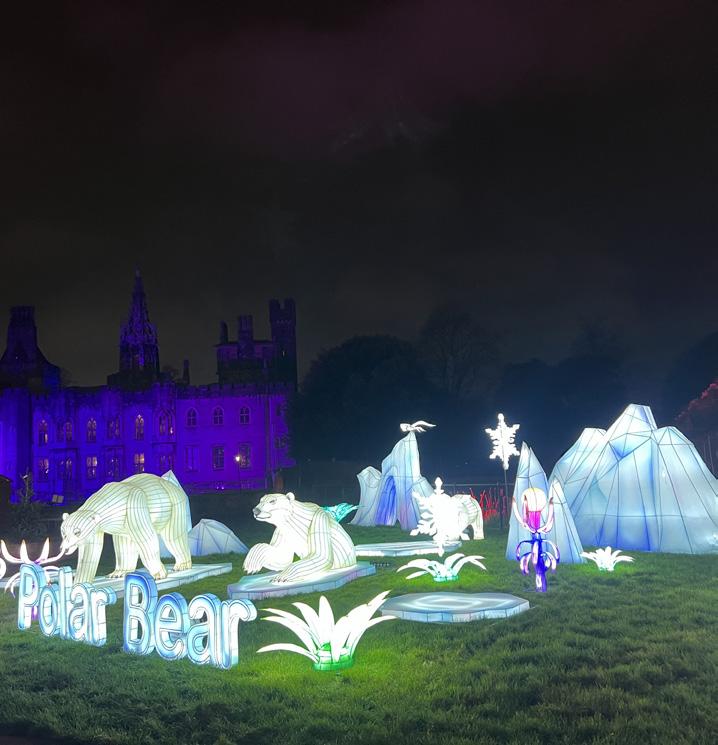
Cynhadledd FelMerch
Ella Thomas Cyfrannwr
Fel Merch yw prosiect newydd yr Urdd i hybu menywod a merched ifanc i gymryd rhan mewn chwaraeon a phethau sydd yn ymwneud â chwaraeon.
Fe wnaeth yr Urdd gynnal Cynhadledd Fel Merch ar Ddydd Iau y 13eg o Dachwedd yn Stadiwm Caerdydd i dros 250 o ferched dros Gymru. Siân Lewis, prif weithredwr yr Urdd, wnaeth groesawu pawb i’r gynhadledd ac roedd hi’n bleser gallu siarad â hi hefyd am bwysigrwydd y digwyddiad yma, dywed Siân mai pwrpas y diwrnod oedd grymuso menywod ifanc ac i roi llais i fenywod yn chwaraeon. Dyma ei 3edd gynhadledd Fel Merch ers ei datblygiad yn 2021.
Cefais y fraint hefyd o allu cyfweld â menywod enwog yn y byd chwaraeon gan gynnwys Rhian Wilkinson, Heledd Anna a Begw Elain. Tair menyw gyda phrofiad gwahanol yn y maes chwaraeon. Dywedodd Rhian Wilkinson taw ei hysbrydoliaeth fwyaf yn tyfu lan oedd ei mam, gan ddoedd dim merched yn bennaf yn y maes
chwaraeon gan fod y mwyafrif yn ddynion. Yn ei hysgol gynradd doedd dim tîm pêl droed i ferched felly cafodd ei gorfodi i ymuno â thîm y bechgyn. Er hyn, erbyn iddi adael yr ysgol cafodd tîm ei sefydlu. Mae Heledd Anna wedi bod yn gweithio yn y maes am dros 10 mlynedd bellach ac mae ganddi obeithion i weld bechgyn yn dod i’r cynadleddau gan ei fod yn bwysig i fechgyn weld pa mor bwerus yw e i fod yn ferch yn y byd chwaraeon. Er mai dim ond 20 mlwydd oed yw Begw Elain mae hi’n gweithio fel is-gadeirydd ieuenctid FAW, ac yn ddiweddar y mae wedi cael swydd ar BBC Radio Cymru. Yn ei chyfweliad dywedodd os oes gennych chi awydd am rywbeth dylech chi ei ddilyn, cyngor da i unrhywun â gobeithion sydd eisiau mynd mewn i’r maes chwaraeon. Byddwn wir yn cynghori i unrhyw ferch ifanc â diddordeb yn y maes chwaraeon i fynychu un o ddigwyddiadau Fel Merch yn y dyfodol! Yn sicr dwi wedi elwa o’r diwrnod yma wrth ddysgu am brofiadau nifer o fenywod llwyddiannus yn y maes a chael adborth, cyngor a chefnogaeth trwy gydol y dydd. Rwyf yn gyffrous i weld dyfodol Fel Merch a beth sydd i ddod.
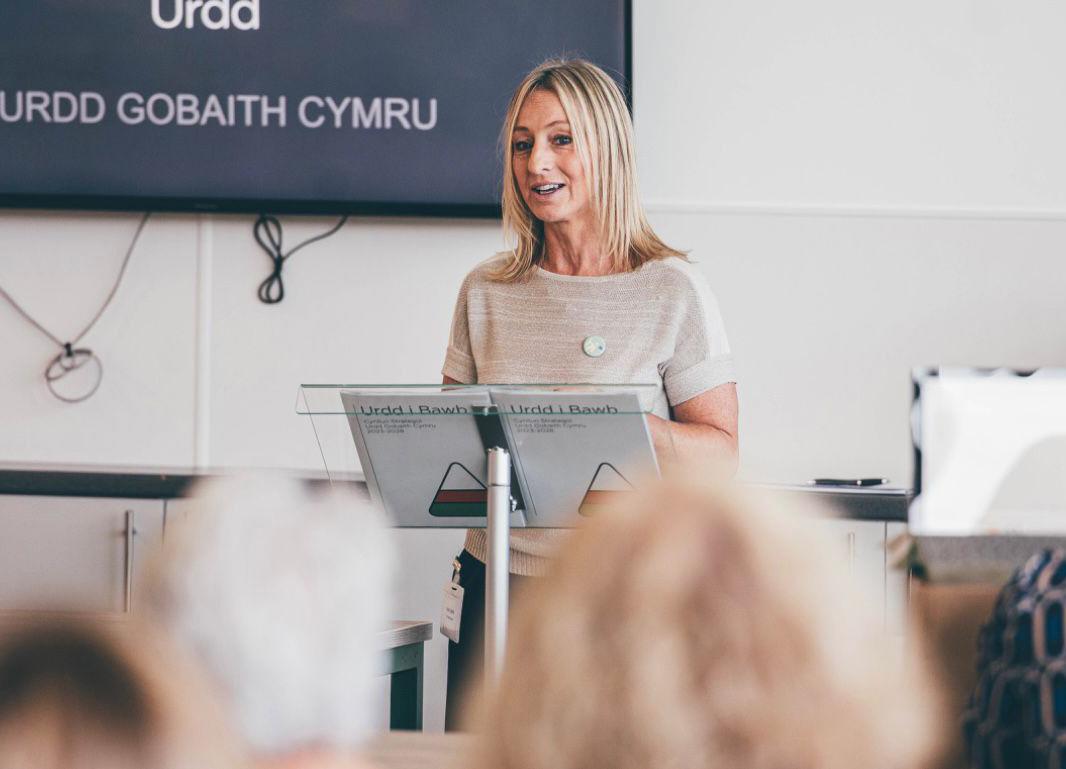
Y Ddawns Ryng-gol wedi mynd a dod am flwyddyn arall
Hannah Williams Pennaeth Taf-Od
Rhwng yr 21ain a’r 23ain o Dachwedd, heidiodd myfyrwyr Cymraeg y wlad i Aberystwyth ar gyfer y Ddawns Ryng-golegol flynyddol, ac roedd hi’n sicr yn benwythnos llawn hwyl a sbri!
Beth yw’r Ddawns Ryng-gol?
Mae’r Ddawns yn cael ei threfnu yn flynyddol gan UMCA (Undeb Myfyrwyr Cymraeg Aberystwyth), ac mae’n un o uchafbwyntiau’r calendr academaidd i fyfyrwyr Cymraeg Cymru. Mae’n benwythnos prysur, llawn gwahanol weithgareddau, ond y prif ddigwyddiad bob blwyddyn yw’r gig sy’n cael ei gynnal ar y nos Sadwrn yn Undeb y Myfyrwyr. Eleni, yr artistiaid fu’n serennu a’n diddanu’r myfyrwyr oedd Maes Parcio, Buddug a Bwncath.
Ymgasglodd y myfyrwyr mewn crysau llachar i gynrychioli eu gwahanol brifysgolion a’u cymdeithasau Cymraeg. Roedd môr o liwiau’n llenwi Undeb y Myfyrwyr, gyda Chaerdydd mewn crysau glas tywyll, Aberystwyth mewn glas golau, Bangor mewn pinc, ac Abertawe mewn du, i enwi ond rhai. Ar gefn y crysau, roedd gan bob prifysgol ei limrig chwareus, a ddyfeisiwyd gan ambell fyfyriwr mentrus!
Yn ogystal â’r gig, cynhaliwyd llu o ddigwyddiadau eraill yn ystod y penwythnos, yn gyfle i fyfyrwyr o wahanol brifysgolion gymdeithasu ynghyd! Treuliodd y myfyrwyr eu nos Wener yn nhafarn Yr Hen Lew Du yng nghanol y dref, ble cafwyd hen ddigon o garioci i dwymo lan ar gyfer y gig mawr!
Wedyn, yn syth i’r cae pêl droed ar y bore dydd Sadwrn ar gyfer ambell gêm gyfeillgar rhwng y gwahanol brifysgolion.
“siawns i’r Cymry ifanc gysylltu a hybu’r iaith”
Dywedodd Teifi Mead, llywydd Y GymGym (Cymdeithas Gymraeg Prifysgol Caerdydd) eleni, “Ni di cael penwythnos llawn hwyl! Mae’n bwysig iawn fod y prifysgolion Cymraeg yn dod ynghyd oherwydd mae’n siawns i’r Cymry ifanc gysylltu a hybu’r iaith a’r gymuned Gymraeg.”
“Fi’n edrych ymlaen yn fawr at y digwyddiad rhyng-gol nesaf, yn enwedig gan ei fod adref i ni yng Nghaerdydd am y tro cyntaf mewn blynyddoedd.”
Yr Eisteddfod Ryng-gol
Y Ddawns yw un o ddau ddigwyddiad rhynggolegol a gynhelir yn flynyddol. Yr Eisteddfod Ryng-gol, yn ystod semester y Gwanwyn, fydd y cyfle nesaf i’r myfyrwyr ddod ynghyd i gymdeithasu ac arddangos eu doniau. Eleni, bydd yn cael ei chynnal yng Nghaerdydd, ac mae Cynwal Ap Myrddin, Is-Lywydd y Gymraeg yn Undeb Myfyrwyr Caerdydd, a rhai o fyfyrwyr y Brifysgol eisoes wedi dechrau trefnu’r digwyddiad, ac yn edrych ymlaen at groesawu pawb i’r Ddinas mewn maes o law!
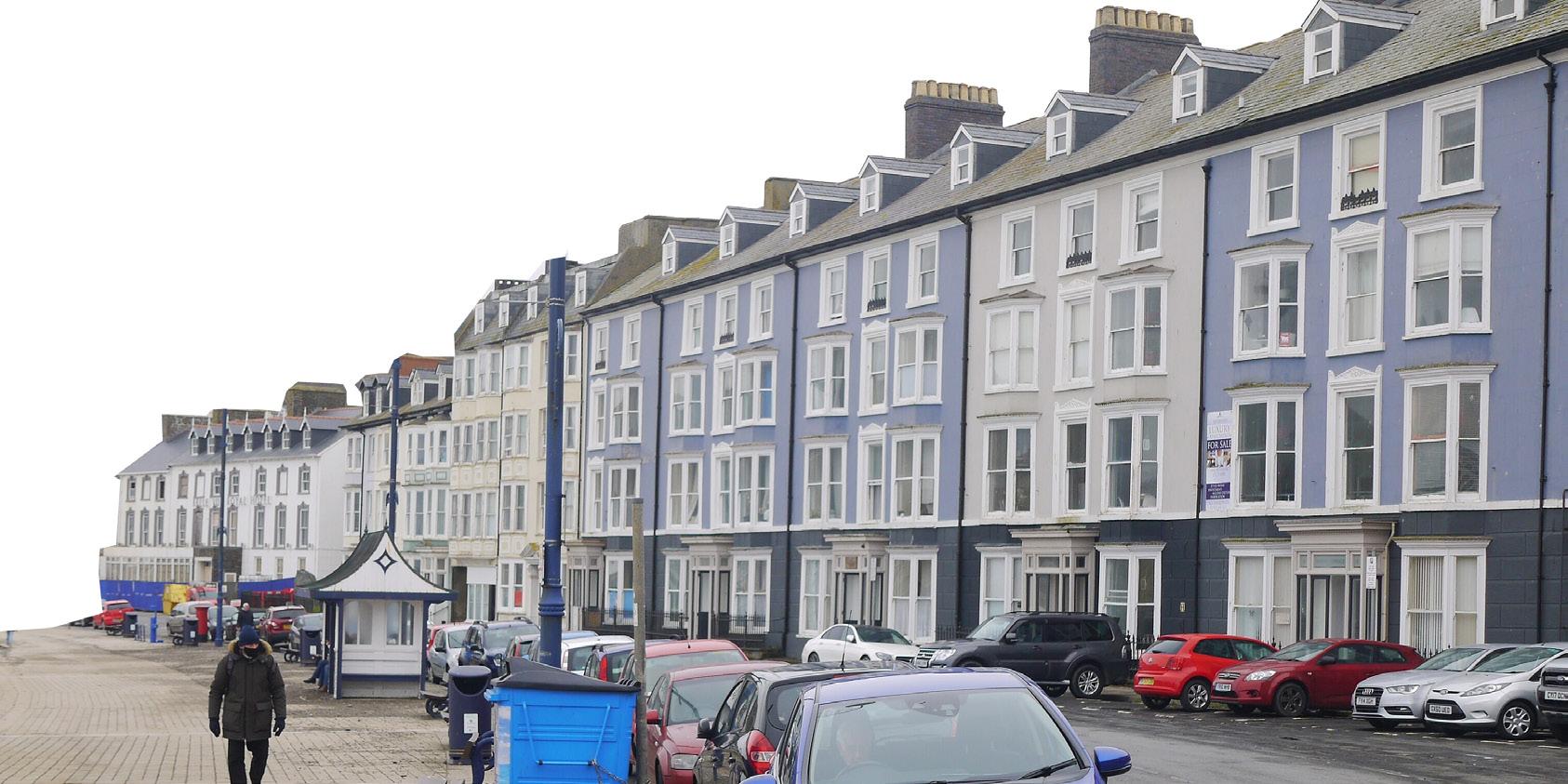
Helynt y BBC: Ble Mae’n Gadael S4C?
Erin Davies
Golygydd Taf-Od
Mae’r BBC wedi wynebu un o’i chyfnodau mwyaf heriol yn y misoedd diwethaf, gyda phwysau dwys ar ei harweinyddiaeth a’i hygrededd. Ymddiswyddodd y cyfarwyddwr cyffredinol, Tim Davie, a phennaeth newyddion y BBC, Deborah Turness ar ddechrau’r mis ar ôl i raglen Panorama gamarwain y cyhoedd ynghylch araith gan Donald Trump. Yn ogystal, mae’r sefydliad wedi wynebu beirniadaeth ychwanegol o ragfarn bosibl yn ei adroddiadau ar y rhyfel rhwng Israel a Gaza. Mae’r tensiynau wedi cynyddu o ganlyniad i fygythiad cyfreithiol gan Donald Trump, sydd wedi bygwth erlyn y BBC am filiwn o ddoleri. Ymddiheurodd y BBC am bennod Panorama a
olygodd araith Trump o’r 6ed o Ionawr 2021, mewn modd a wnaeth iddo ymddangos fel pe bai’n annog ei gefnogwyr i weithredu’n dreisgar yn ymosodiad Capitol Hill. Yn ôl Donald Trump, roedd yr araith yn cynnwys apêl i’w gefnogwyr gadw’n heddychlon.
Dechreuodd y cyfan pan anfonwyd neges at fwrdd y BBC, a oedd yn codi pryderon am ragfarn asgell-chwith mewn adroddiadau sy’n ymwneud â Donald Trump, y gwrthdaro Israel a Hamas, a materion trawsrywiol. Cafodd y neges hon ei rhannu wedyn â’r Daily Telegraph, gyda’r BBC yn cymryd wythnos lawn i roi ymateb swyddogol. Oedi a wnaeth tanio beirniadaeth a chodi cwestiynau pellach ynghylch cywirdeb golygyddol y gorfforaeth. Mae’r helynt hwn yn codi cwestiynau
newydd am sefyllfa S4C, fel darlledwr sy’n cael ei lywodraethu ac yn cael ei hariannu drwy ffi drwydded y BBC. Er bod y BBC dal i dderbyn incwm sylweddol drwy ffi drwydded arian pobl y DU, yn ogystal ag incwm masnachol, mae’r model cyllido hwn dan bwysau cynyddol. Mae nifer y bobl sy’n talu’r ffi drwydded wedi bod yn gostwng yn gyson.
O ystyried bod Siarter Frenhinol y BBC i’w hadnewyddu yn 2027, mae Llywodraeth y DU wedi cyhoeddi y bydd yn cyflwyno opsiynau ar gyfer model cyllido amgen erbyn diwedd eleni. Daw hyn ar adeg pan fo’n fwy anodd cyfiawnhau’r ffi drwydded draddodiadol, gan fod cynulleidfaoedd yn symud tuag at lwyfannau ffrydio fel Netflix, Amazon Prime a Dinsey+.
O safbwynt S4C, mae’r newid hwn yn achosi
pryder, os yw incwm y BBC yn parhau i ostwng, neu os fydd y llywodraeth yn penderfynu moderneiddio neu ddisodli’r ffi drwydded, gallai hyn gael effaith uniongyrchol ar ddarlledwyr Cymraeg, nad oes ganddo’r un capasiti i gynhyrchu refeniw masnachol â’r BBC.
Mae’r sefyllfa’n tanlinellu pa mor fregus yw’r berthynas ariannol rhwng y ddau gorff, ac yn codi cwestiynau am ba mor gynaliadwy yw cyllid gwasanaeth cyhoeddus yn y tymor hir.
Er mai’r BBC yw’r ffynhonnell newyddion sy’n cael ei defnyddio fwyaf gan gyhoedd y Deyrnas Unedig, ar-lein ac oddi ar-lein. Mae’r sefyllfa hon wedi codi trafodaethau sy’n gallu tanseilio hyder y cyhoedd yn y gwasanaeth.
Opinion 20 Is Heath Park An Afterthought?
Oliver Hanlon Opinion Editor
In a surprise to many at the AGM, the Students’ Union proposed and passed a change to the sabbatical officer structure that will see the VP for Heath Park axed and replaced with a VP Undergraduate Officer. Heath will be relegated to having two campaign officers, unlike a sabbatical role—campaign officers are an unpaid position, which is unlikely to work for Heath students. This is because that portion of the student body is almost entirely composed of healthcare students, who are unlikely to have the time or energy to effectively or actively represent students at Heath Park in an unpaid position. This is part of the reason that the role is being axed; the union struggled to find candidates to run, eventually resulting in a by-election, which saw Joshua Tandy elected as VP Heath.

This poses the question:
‘Halo’ing
Rightly, the answer to that question is “no”, but by proposing to axe the VP Heath, the Union is effectively showing they consider Heath students an afterthought. It also brings into question whether the Students’ Union is acting as a union for all students. Heath students’ representation is already questionable. Of all the people, Heath students would have expected to be speaking on behalf of this proposed reshuffle. Their own representative and the VP for Heath, Joshua Tandy, would not have been high on this list. It is ludicrous that Tandy was the one speaking on behalf of this, the person supposed to represent Heath, advocating for Heath to lose its sole representative. Whoever considered the optics of this move—likely nobody—miscalculated greatly, as this is not the first time the Union has flip-flopped on whether or not to have an Undergraduate or Heath VP.
This change has been made before, and if it didn’t work when it happened last, what makes the Students’ Union think it will work this time?
Arguably, these are two of the most important sabbatical roles. Most of the student body is made up of undergraduates, and in the AGM this year, Heath was central with the “My scrubs, my choice” motion being
Until We Are Taken Seriously
Bethan Jones Opinion Editor
Sky Sports recently faced significant backlash after launching their new female-targeted TikTok channel, Halo. Fans labelled it as “sexist” and “patronising” towards women, who have worked so hard to be taken seriously in a male-dominated field. Within days, all content was removed, and a statement was issued.






Many fans were looking forward to the possibilities of this channel, expecting serious spotlight on female sports and a platform away from the male-dominated one to encourage and empower women. However, the first five posts out of eleven focused on male athletes and even their relationships. One post featured a men’s football game, with the caption “How the matcha + hot girl walk combo hits” in pink glowing text. The
considered and passed. Heath Park students face vastly different issues from students studying on the Cathays campus, so they deserve and need a dedicated representative. A union should ensure that it is representing all students effectively, no matter how hard it is to find students to stand. Both an Undergraduate VP and a Heath VP are vital, but an Undergraduate VP is unlikely to be able to deal with the distinct, specialised issues faced by Heath students.
“This structural flip-flop has already been proven to fail. The Union is betting on the same flawed model that struggled previously, while simultaneously ignoring the current crisis of trust created by the VP Heath advocating for his own role’s removal.”
This is not governance; it is a repetition of failure at the expense of students. The purpose of a union is to represent all students, ensuring that minority voices and distinct concerns are not drowned out by the majority. By sacrificing the VP Heath role, the Union has clearly prioritised convenience over adequate representation.
Image (Right), Alan Hughes via Wikimedia Commons
account seemed to jump on the bandwagon of infantilising “girly” trends that we’ve seen recently, labelling things like “girl dinner” or “girl maths”. Sky Sports’ aims of luring in “new young female fans” with what they deem interesting completely missed the mark and failed existing fans’ expectations, instead making a mockery of women. Comedian Carey Marx said on GB News that “it had all the energy of a divorced dad, living alone, trying to decide what girls like”. In their released statement, they claimed they are “committed as ever to creating spaces where fans feel included and inspire”, but they already have a platform with over 4.5 million followers. Why was there a need to create a separate channel?
I question how many women were actually involved in the making of Halo. Its tone-deaf, degrading approach to increasing female engagement, is not a solution but a surrender.
Female sports have gained major recognition over the last ten years, as well as a significant increase in female fans. The audience is there. In a survey, it reports women drop out of sports at a much higher rate due to social expectations, lack of investment, and quality of programmes. The page could have been used as a positive tool in finding more accessible ways to include women in the conversation about sport. Instead, the content was reduced to completely unrelated stereotypical trends that diminish existing female fans. I find these decisions from Sky Sports ironic, as women are able to express themselves with a lot more variety and bravery than what this portrays. With the targeted audience being young girls, I find the message concerning and inherently damaging. With the rise of “red pill” content, we are seeing a troubling trend of belittling women. It forces women to make a fuss and
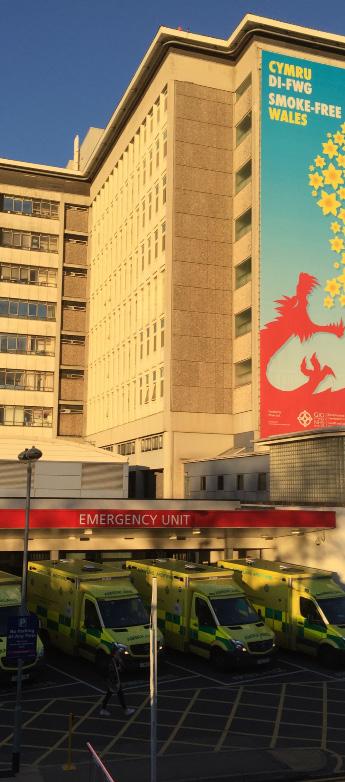
stand up once again to say this isn’t fair. And yet, there is still a response of “there is no pleasing you”. It is especially disappointing to see this from such a mainstream broadcaster such as Sky Sports. They have obviously tried being progressive, but instead it’s condescending. These kinds of posts may not be in malice, but contribute towards the silent undermining of women, when all we ask for is to be taken seriously. This only sets us back. Stop dumbing us down.
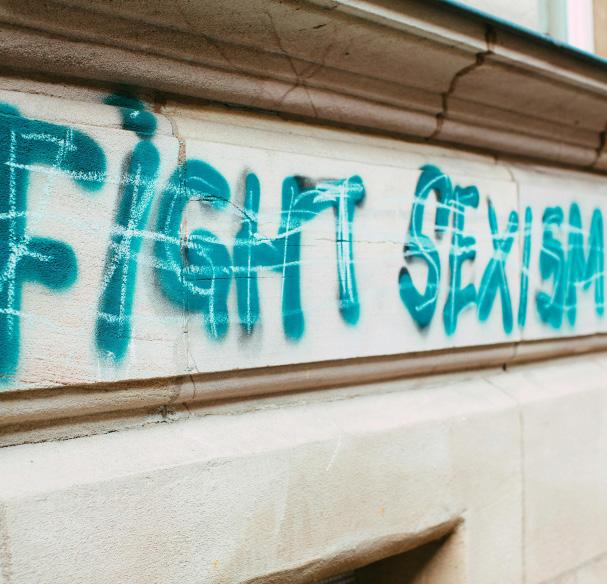
Image (Left), Mick Lobb via Wikimedia Commons
Impartiality, Bias and Media Rivalry
Helen Turnbull Opinion Editor
The fallout from The Telegraph’s exposé of BBC’s Panorama, resulting in a Trump lawsuit and the resignation of Tim Davie and Deborah Turness, poses uncomfortable questions. Is bias intrinsic, and has the competition betw een news sources descended into political feuds?
The Telegraph’s article centred around Michael Prescott’s memo, which outlined that the BBC’s Panorama docu-
“Trump: A Second Chance?”
mentary titled had edited parts of Trump’s speech; to give the impression he had explicitly encouraged the Capitol Hill riot of January 2021. The exposé of the editing blunder resulted in major backlash: Trump threatened the BBC with a $1bn lawsuit, Boris Johnson labelled it as “a disgrace”, and Tim Davie (BBC Director general) and Deborah Turness (BBC Head of News) resigned on the 9th of November.
Watching Panorama’s edited version of Trump’s speech alongside the original broadcasted version unequivocally confirms that the edits of Trump’s words and manipulation of footage create a distorted (or biased) impression of Trump. However, whilst I am not defending this editing blunder, it appears the force of this condemnation is politically charged. Sensationalist headlines from right-leaning publications such as “The BBC must change before it’s too late”, as well as the depiction of the BBC as “one of the very worst sources of disinformation and distortion in news media” (The Telegraph) is a step too far. The scandal clearly signals a departure from BBC’s longstanding claim of centrality and impartiality—yet it never really was, and this merely confirms it. Therefore, is this editing mistake being blown out of proportion to fuel the “war on the BBC”? What do the words really mean in an inherently politicawl world of journalism? To me, they should be taken with a pinch of salt. Whilst journalists strive for neutrality and objectivity, the process of journalism is a human process. In the words of David S Broder: “Journalism is a partial, hasty, incomplete, inevitably somewhat flawed and inaccurate rendering of some of the things we’ve heard about in the
past 24 hours.” The BBC has made mistakes, but so have numerous other news outlets. In August, The Telegraph published a front-page story relying on incorrect statistics that distorted the number of migrants living in London. In addition, following their exposé, Trump thanked The Telegraph on X for “exposing these corrupt journalists”, and The Telegraph responded by publishing an article highlighting his praise. For me, this is where the real concern lies. The relationship between politicians and the press should be uncomfortable, where journalists scrutinise and inspect political figures. This back-patting between Trump and The Telegraph feels undignified, even troubling. It raises the question of whether competition between news outlets has deteriorated into a childish tit-for-tat, one that prioritises point-scoring over integrity.
Although I question the motivation of condemning the BBC, I believe the BBC should be criticised for their denial of bias. In her resignation speech, Deborah Turness stated “I want to be absolutely clear—recent allegations that BBC News is institutionally biased are wrong”. Transparency and accepting accountability would serve the
“Bias exists everywhere in journalism,”
BBC far better than insistence on purity. and no news outlet is truly impartial. Transparency on bias is key in a moment when trust in the media is already fractured. Recognising bias and political agendas of news organisations, as well as reading widely, are essential to interpreting the news.
“‘centrality’ and ‘impartiality’”

Barn 21
HCan Halloween Costumes Be isrespectful?
Megan Warren Contributor
alloween, as we know it today, is often seen as an American holiday, a night to dress up as ghouls or superheroes, knock on doors, and shout “trick or treat!”. Yet the roots of the celebration run far deeper. The tradition stems from the Celtic festival of Samhain, brought to the United States by Irish and Scottish immigrants. While much about Halloween has changed, one thing has remained constant: the costumes.
Dressing up to scare, entertain, or simply escape reality has always been at the heart of the holiday. But beyond the fun and fright, Halloween has become a cultural battleground where questions of respect, identity, and offence take centre stage. In recent decades, the innocent joy of dressing up has taken on a more controversial tone.
Each year, discussions resurface about “cultural appropriation”: the adoption of another culture’s symbols, dress, or traditions without understanding or respect. What was once dismissed as harmless imitation is now recognised as potentially harmful stereotyping. Costumes depicting Native Americans, for example, often rely on exaggerated headdresses and face paint, turning cultural heritage into caricature. Many argue these depictions trivialise painful histories and reduce identities to costumes for entertainment.
This kind of controversy is hardly new. There are endless ways to offend with a costume, intentional or not, and all it really takes to avoid doing so is a bit of
critical thinking and practising compassion. Yet, time and time again, even public figures fall into the same traps.
In 2001, Justin Trudeau, then a teacher and later Canada’s prime minister, was photographed at a school gala wearing an Aladdin costume, complete with turban and darkened skin. These photos resurfaced years later, sparking outrage, calling his integrity into question—especially when he admitted he couldn’t recall how many times he had done blackface…
In 2005, Prince Harry was pictured at a friend’s party wearing a Nazi uniform, complete with a swastika armband. Although he apologised, many wondered why he had ever thought it acceptable in the first place.
More recently, this year, a man was physically pushed out of a bar by patrons for wearing a Nazi uniform on Halloween. The incident divided opinion online. Some believed his costume choice justified the public reaction; others argued that physical violence is never the answer, no matter how offensive the outfit. These examples show how what seems like a joke or tribute can carry deep historical pain or reveal how little thought some people give to the message their costume sends. And this is the heart of the issue: offence and disrespect are unquantifiable. No fixed line makes one costume acceptable and another disgraceful. Society doesn’t run on hard data alone. It runs on empathy, respect, and ethics—values that should guide how we choose to present ourselves, even on Halloween.
Perhaps the holiday doesn’t need new rules or restrictions. It just needs a reminder that behind every
Kim K Beats Around the Bush
Ffion Perkins Opinion Editor
Kim Kardashian’s brand Skims recently launched a new type of underwear—thongs with faux pubic hair. Costing £34 a pair and currently being sold out on her website, the question must be asked as to where this idea came from. Is it an authentic attempt at subverting patriarchal views on body hair? Or is it just a lazy cash grab?
For decades, women have been shamed and essentially forced into shaving, waxing, or lasering off any hairs that dare appear on their skin. This sudden and almost radical change in tune from someone such as Kim Kardashian is quite a shock, given her notability for enforcing conventional beauty standards. For this reason, I find it incredibly hard to believe in the authenticity of such a product.
The symbolism of pubic hair (in this instance, a “bush”) is historically associated with feminist, queer, and lesbian culture. In times of such uncertainty for these groups of people all across the world, there is something disingenuous in a woman whose net worth is over $1 billion to profit from a symbol of a liberation movement for the marginalised. Such a tasteless product deriving from such a historically rich symbol makes it hard to see this launch as anything more than a humorous cash grab.
Historically, the merkin garments were used as a way to shame women—predominantly sex workers and poor women—who had to remove the hair on their body
due to disease or infestation. It allowed these women to continue to work and saved them from absolute poverty. More recently, it was claimed by feminist and queer liberation movements as a reclamation of our bodies and autonomy.
The difference between various liberation movements’ reclaiming of the bush and Kim Kardashian’s is all about what purpose it serves. Feminists, queer people, and lesbians alike are taking what was once used to hurt and ostracise and making it theirs. There is a lack of authenticity with Kim doing this, knowing she has relied on Western beauty standards to keep herself relevant.
No matter how progressive or liberating Kim Kardashian paints this campaign to be, that’s what it is—a campaign. Whether it’s waxing, laser hair removal, or a thong with fake pubic hair, it all serves the same purpose in a culture built up on dictating how women ought to look. Kim Kardashian has done nothing other than offer another example of the commodification of the female body and its natural growing hair to put more money in her pocket.
Image,
Eva Rinaldi via Wikimedia Commons

Is your Degree worth the debt?
Advait Gangawanwale Contributor
Benjamin Franklin said in the 18th century “rather go to bed without dinner than to rise in debt”. Little did he know what the students in the UK will do three centuries later.
While it is a bit difficult to assess how many students in the UK go to bed without dinner, it is fairly clear that more than two-thirds of the students take on debts in this country. According to the ONS, 68% of students are receiving student loans while 90% are reporting an increased cost of living in the last few years.
This situation compels us to think whether the degree is really worth the debt that students are accumulating. To answer this, we can look at it from two angles: first, is the value of the degree, and second, is the worthiness of its debt.
For the sake of this article, “degree” refers to a standard three-year undergraduate course at a recognised university in the country. Famous English economist John M Keynes said “the value of an investment depends on the present assessment of future prospects”. When
looking at graduate earnings fifteen months after completing a degree, a clear pattern emerges.
Junior doctors and dentists typically earn about £10,000 more than graduates from other streams annually, according to the latest study by HESA. The average salary for these subjects was £37,924, compared to the national average of £28,500. Graduates from these subjects were in high-skilled jobs 97% of the time. This is compared to 49% for agriculture- and food-related subjects, which had the lowest rate of skilled employment.
So, there is a good chance that your degree is worth the time, efforts and money if you are looking at it purely from a financial lens. Additionally, it has been found that graduates from other streams such as STEM and business courses earned £31,000 on an average, while media and literature graduates earned one of the lowest salaries fifteen months after graduating, amounting to just £25,000 per year.
While it is absolutely essential to take up a formal education and training over the years to work in certain life-saving fields such as medicine, surgery, law, modern technology, etc., it could prove to be a better economic decision for graduates in other fields if they
Don’t Let Student Politics Bite
Lillia Walne Contributor
This year, only 25% of students voted in the student spring election, but many of us are quick to vote for our society’s next social secretary. Why is this?
Students often feel alienated by student politics, blinded by its density. What often goes unnoticed is its importance regarding the real world and democracy that awaits us outside of our endless partying and dreaded 9:00am lectures. Engagement is crucial in resolving university issues. Without your input, the Union cannot recognise the problem you’ve been complaining about since Freshers’ Week. So, participate. It’s the most impactful thing you can do!
Partaking in student politics creates a sense of unity, which amplifies your university experience by engaging with problems that affect you personally and shape your everyday campus experience. Without your participation in student politics, the YOLO queue will get longer each week, as the Union needs more guidance on events and nightlife. To put it plainly, involvement encourages proper action. It slightly baffles me that students do not attempt to speak up about issues when they’re paying £9,535 a year, with some students paying over £30,000 annually. It makes little sense to pay thousands of pounds a year only to stay silent about the issues you’re experiencing, making student politics essential for all students to maximise the benefits of their degree.
Student democracy provides a safe space to shape policy and practice civic habits such as voting and debating, necessary for postuniversity politics. As the turnout of the last UK general election was only 59.7%, according to the House of Commons, we can infer that confidence in voting is decreasing. Therefore, as young people, we must act. Engaging in student
politics is a great training ground for political engagement, increasing confidence for real-world voting, shaping democracy further. Even simply joining the debate society strengthens your ability to discuss wider issues, which is especially useful when trying to explain to your younger sibling why voting for Reform UK after seeing Nigel Farage on TikTok isn’t as entertaining as it seems with no knowledge of his manifesto.
“Student politics is the backbone of campus life. Without it, who would raise awareness about issues affecting us all?”
Without student politics and the influence of the Union, we would be left with university authorities to shape our experience without any meaningful input from us. Even sharing an Instagram post on your story is a form of student politics, using your voice, however small, to spark change and challenge thought. In my opinion, this helps keep our rights alive.
Some argue that despite mass effort, issues never appear to be resolved, making political action appear pointless. But positive changes sparked by the Union go unrecognised, like the introduction of the CSL and refurbishment of the SU building. If it appears ineffective to you, that is exactly why you should get more involved. You may be the one person to change it all!
Student politics is necessary in all aspects of student life, affecting you most of all, a lot more than you realise. Don’t let other people determine your experience for you and don’t let yourself feel like your money is going to waste. So, post that story. Get involved in the debate society. Vote in the student elections. Make democracy yours today.
could find apprenticeships, work experience, or internships in their desired field of work, instead of taking up student loans.
Now, let’s focus on the
“‘worthiness of the debt’”
Economists evaluate whether a debt is worth it to the borrower by comparing benefits versus costs over time. In case of student loans, that would be if the degree increases future earnings or that increase is larger than lifetime loan repayments. There’s also the opportunity cost, which means that not taking the loan could result in a bigger loss, like missing out on bet ter job opportunities or higher future earnings.
Beyond these financial calculations, some economists also view student debt as an investment in human capital. It can help build the skills and qualifications that increase a person’s productivity and employability. Debt, in this sense, is not just a burden but a way to access higher future earnings, much like a
business taking a loan to grow. The value of the debt depends on how effectively the degree improves long-term prospects, not just earlycareer salaries.
But the worthiness of student debt shouldn’t be measured only in money. Many degrees lead to careers with social, cultural, or personal that wages don’t capture. Fields such as arts, education, media, and public service may offer lower financial returns yet provide purpose, creativity, or community impact. Here, the judgement becomes more subjective. The debt may not maximise income, but it can still be “worth it” if the degree enables a meaningful or otherwise

In summary, whether to take a student loan depends on your expected earnings and your long-term goals. The important thing is to make a decision that aligns with both your financial situation and the direction you want

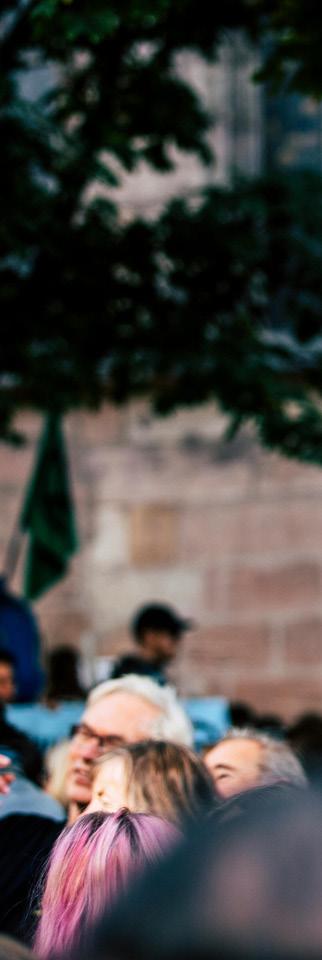
Do you have a passion for sharing your point of view? Are you opinionated? Do you turn the pub into a debating society after a few pints? Or is there something you need other people to hear?
E-mail opinion@gairrhydd.com to submit your opinionated articles. The spicier the
Barn
Ozempic: Skinny Never Really Went Out of Style Hot Topic Of The Month
Bethan Jones Opinion Editor
That’s right, ‘heroin chic’ is back. Models and celebs have swapped out the curves for hollowed cheekbones and dark under eyes, reminiscent of the 90s. But this time, the look isn’t echoing the gaunt appearance linked to heroin use, but instead a new pharmaceutical on the scene, and it’s one you can buy from basically any online pharmacy – Ozempic.
Founded in 2017, Ozempic was originally used to treat type 2 diabetes, but with the discovery of a major side effect – weight loss - it was quickly nabbed by pharmaceutical companies, selling to healthcare providers and anyone with a spare buck (or £150 a month, to be precise). With a bit of cash, and if you’re not squeamish of jabbing yourself with a needle every week, thinness can now be bought.
The short-lived body positivity trend that we saw skyrocket only a few years ago has quickly died down, met with plus size models struggling for work and celebrities shrinking in size. The likes of James Cordon and Rebel Wilson, who were once known for their size, are now the ones using and advocating for this drug. Of course, I’m not condemning them for
losing weight, but it is no coincidence that the sudden surge in slimmed down celebrities is happening just as Ozempic is sparking in use.
Thinness has been commodified, repackaged and sold back to us as ‘diet culture’, ‘clean eating’ and now, weight loss drugs – but was it ever really gone? Whilst we preached inclusivity, the fatphobia that seeped deep into our culture never fully went away. Yes, it may have been more acceptable to be on the bigger side, but that was never perceived as the end goal – skinny always came out on top. The expectations we put on larger people was still tied to a thinness-first mentality we never truly let go of.
We are now seeing people like Lola Young, who exploded onto the music scene last year, being met with huge backlash. And it’s not her music people are criticising her for, but instead aiming their comments at her body and unconventional look.
Realistically, if she’d gotten popular six or seven years ago, we wouldn’t hear half as much about her looks as we do now, representing the shifting of our beauty standards once again.
Due to their current craze, 2024 saw global shortages of Ozempic and other GLP1s. Diabetics, who desperately needed them, couldn’t get a hold of a drug essential to their health, which reduces the risk of heart attack and strokes. The shortages
NThe Rise of Nationalism in the UK: Nation Pride or Spreading Hate?
Lola Batters Contributor
ationalism has crept back into the heart of British politics and identity - but this time, it carries a sharper edge. With the surge of violent right-wing pro tests, Reform UK boasting over 260,000 members and a Labour Government talking more about immigration than ever, what once felt like innocent patriotism has evolved into something much more sinis ter. As this movement gains momentum, one question looms: is Britain rediscover ing its identity, or creating a discrimina tory, damaging environment?
With Starmer making unsettling echoes of Enoch Powell’s Rivers of Blood speech by describing the UK as an “island of strangers,” political figures push a hardened rhetoric that frames im migration as the greatest threat to modern Britain, casting migrants as scapegoats for deep-rooted social and economic problems. Conservative leader Kemi Badenoch even claimed on X that mi grant men “lurk in bushes” and “harass” schoolchildren. These narratives distort and weaponise fear, leading the public to believe that British identity is some thing we need to ‘guard’ as opposed to celebrate through the diverse culture of our country.
Britain’s new wave of national ism is most visible in its flags. From slapdash St George’s crosses on rounda bouts to Union Jacks littering every lamppost, it seems no town has been spared the patriotic makeover. Once symbols of pop-culture pride, think Geri Halliwell’s 1997 Brit Awards dress or a St George’s cross draped over pub tables during the Euros, the flag no longer feels as nostalgic or spirited. In 2025, flying a Union Jack outside
also meant that some diabetics were forced into buying it privately.
Ozempic is just another plaster over the sore wound of our society. Our obsession with appearance distracts us from the real drivers of rising obesity rates. Cheap, ultra processed foods fill supermarkets, and poor work-life balance leaves many people with tle time or energy to prepare healthier meals.
This quick fix is just another way to put the blame on the individual for what clearly must be tackled as a systemic issue. And all too often, the results don’t last – stop the injections and the weight returns, proving once again that there are no shortcuts through a problem baked into our society.
And so, the pendulum has swung back, making you wonder - was body positivity ever truly about change or was it just a brief trend before society returned to its old habits?
Weight loss drugs, like

of your house reads more of a statement than a celebration.
This sudden explosion of flags has stirred fierce debate. Whilst many recognise the hateful truth behind the sheer white and red fabric, far-right groups have launched cam-

risks being mistaken with right-wing alignment. Yet, in Cardiff, a different picture emerges. Students are comfortable expressing their alignment with Wales, painting dragons for rugby games and wearing red for Varsity. Their enthusiasm suggests that nationalism itself isn’t the problem, but that English nationalism is what people are associating with racism, hatred and division. Hoisting Union Jacks and the St George’s Cross has come to mean more than simple patriotism. It speaks louder than God Save the King and Princess Diana plates on a mantlepiece. Today, it signals sympathy with groups like Reform UK, attitudes rooted in racism, anti-immigration
Nationalism has shifted from pride in one’s country to a thinly veiled excuse for excluding the very people who enrich
big ideas...
Tax Wealth, not Work: The Path to a Stronger United Kingdom
Oskar Hyams Contributor
As the 2025 budget approaches, it is becoming increasingly clear that the burden of an underfunded NHS, underappreciated education system, and an undervalued social care system will be felt most, yet again, by the working- and middle-class taxpayers. In the 2022/23 fiscal period, the poorest 10% of households paid on average 48% of their income to tax, compared to billionaire James Dyson who paid just 0.68% of his total wealth in tax in 2024. It does not have to be this way. For too long the burden of our public services has been forced on the working people, squeezing them of their cash and their hope. To quote the pressure group Patriotic Millionaires: “The country deserves proper investment; what better way to do this than through taxing the richest people?”
Billionaire wealth surged three times faster in 2024, with the world on track for at least five trillionaires within a decade. It is a total disgrace and a damning indictment on the state of this country that such wealth can be accumulated whilst our public services crumble. Why is it only the rich who are getting richer whilst our poorest citizens see their living standards consistently fall? Simply applying a 2% tax on assets over £10 million could raise up to £24 billion a year for our public services. To put that into perspective, that is £1.4 billion less than the government thinks it would take to deliver an extra 40,000 NHS appointments a year, which would reduce waitlists and save lives. Moreover, this tax increase would only affect the wealthiest 20,000 people—or just 0.04% of the UK’s population. With such a small number of people affected, and with such great benefits to the country, one must ask, is it that the government is scared to lose investment or is that Starmer is scared that this will not be consistent with his pandering to the far right? I firmly believe it is the latter. However, some argue that the idea of a wealth tax is just leftist idealism taking over, and not an economic necessity. One strand of this argument is that if you implement a wealth tax, millionaires will leave this country and take their investments elsewhere. Often, people on this side of the argument will point to the “exodus” of millionaires in 2024, when it was widely reported that 9,500 millionaires left the UK due to Labour’s changes of the non-dom tax rules. Firstly, one can point to this argument as disputed, as this only represents 0.03% of millionaires (hardly an exodus), and when one, again, considers the fact that 65% of UK millionaires support a wealth tax of 2%. This argument is also increasingly being shown as more of a media narrative than a true “exodus”, with the Tax Justice Network finding that seven high-profile millionaires leaving the UK were mentioned three times more in the media than the pro-tax millionaire campaigns, which represent hundreds of millionaires. Finally, the exodus of millionaires can be disputed by the
fact that just 0.01% of the richest households left Norway, Sweden, and Denmark following the introduction of a wealth tax in those countries.
Practicalities aside, there is clear and obvious hunger among both the general public and political parties to implement a wealth tax, which would create both equity and well-resourced public services in this country. Leading the charge, Green Party leader Zack Polanski is fighting relentlessly for a 1% tax on wealth over £10 million and 2% over £1 billion, which will aim to raise £14.8 billion a year. He also argues for aligning rates of capital gains tax with income tax, so that work is not taxed more than wealth, which they state will raise at least £12 billion a year. These tax rises alone could raise a quarter of the funds needed to nationalise the water industry, which could save £3 billion a year, allowing for the prices that consumers pay to be lowered, alleviating the cost-of-living crisis. Polanski rightfully states that “bold choices” like these will positively affect the lives of ordinary people as people are “angry” and “deserve better”. Surprisingly, though, when polled, 61% of people who are considering voting for Reform UK support a one-off tax on households with a wealth greater than £10 million. In fact, 75% of Britons support the same wealth tax reforms that the Green Party are advocating for. This is further supported by the pressure group Patriotic Millionaires, who are a collective of 80+ British millionaires who argue they want to be taxed more to fund public services. Clearly there is political hunger for a wealth tax, so why does Rachel Reeves feel that repeating the recipe for disaster that is austerity will help this country? A wealth tax is the only way for us to ensure we still have a free-at-thepoint-of-access NHS, and it is the only way we can stop private enterprise from ruining our public services in the same way they did with PFI hospitals.
Austerity has failed. This is evident in its forcing of 2.6 million children into absolute poverty in just the UK alone. In 2022, even 57% of Tory voters believed it had failed. In stark contrast, however, there appears to be a cross-party consensus among voters that a wealth tax is the future, with 61% of Reform, 93% of Green, 70% of Conservative, 87% of Labour, and 80% of Lib Dem 2024 voters all supporting a wealth tax. My message and, it appears, the majority of voters’ message to this Labour government is simple: introduce a wealth tax. Use these funds to improve our public services. How can a country be expected to prosper if its education and healthcare systems are on their knees? Choose your legacy: the government who continued politically enforced poverty through austerity or the government who secured our United Kingdom’s future through a wealth tax. Tax wealth, not work, and help wealthy and working people alike flourish through well-funded public services and economic equity.
Racism in 2025, Where we are and Where we must go
Bhamini Khandige Deputy Editor
Multiculturalism is undoubtedly on the rise, and cultures are not only coexisting, but becoming a conglomerate. Despite this, racism has been far from eradicated, with recent reports leading us to believe that racism is increasing.
Cardiff University medical school professor, Dr Sarju Patel recently spoke to the BBC on his experiences with racism: “I was spat at in the ’70s because of my colour—those days are back.” Dr Patel has shared how he fears we are seeing a return to the overt racism he experienced as a child. Home Office figures show that hate crime offences have risen by 2% compared to the previous year, with almost 116,000 reported hate crime offences. To be part of modern society is to be surrounded by different cultures and people from all walks of life, so why are we regressing as a society when it comes to racial inclusivity?
In a world fuelled by “woke” and “cancel culture”, the line between being “too woke” or racist is blurred. Race has always been a difficult subject to discuss or navigate, given how it can differently impact people. Due to this, conversations surrounding race sometimes cease to exist, or the topic is touched on very lightly, so as to avoid any potential disruption or unease. These could all be contributing factors to the increase in racism in our society today.
Not only is society diminishing the severity of racism, but society oftentimes adds to the maltreatment of people of colour and immigrants. Race Equality First’s chief executive Aliya Mohammed says: “People feel that it’s now permissible for them to spout racist hate crime and hate speech because they’re seeing this on their TVs.” She shares how we’re seeing politicians blaming asylum seekers and refugees for problems like unemployment and the rise of NHS waiting times despite these problems being the results of long-standing failures in infrastructure and government policy. Regardless of political views, we as a community are not hearing enough counternarratives to the racist and divisive rhetoric that seems to be constantly appearing on our screens.
From politicians stating that they would impose “ideological screenings” on all immigrants, to speeches with anti-immigrant and racist undertones, the world is progressively
becoming more open in its racism. A point has to be made that when prominent figures in society are openly perpetuating hatred, it is difficult to expect any different from the rest of society. Racism is becoming normalised in 2025 and goes beyond hate speech and discrimination, as people of colour and immigrants have also clearly been held to a different standard as compared to their white counterparts. With an increase in inclusivity and emphasis on representation in media, it has become increasingly clear how minorities and their white counterparts are held to different standards. It is quite common for ethnic minorities to not speak out against racism or being treated differently, as Dr Patel has found amongst his cohort. There is an attitude or mindset of not wanting to get involved, in worries of their efforts going against them. Dr Patel explain: “If you’re from a minoritised group, you’re more likely to be disciplined than one of your white colleagues, you’re less likely to be promoted—these are the realities. For people who have grown up in racist communities, there is a cumulative damage that comes from years of dealing with racism which ripples through generations. Being an ethnic minority, there are certain decisions that you must make, you can either do what they want you to do and cower—let yourself be put in a box and stay there—or you fight back. But you’ve got to be really careful how you fight back, because you’re quickly labelled as the angry or aggressive ethnic person, or the troublemaker.” It’s become a standard and almost an expectation for people of colour to have to deal with racism and become powerhouses of quiet resilience. Is this really the way forward? Younger people are always consuming media from which they adopt their mindsets. For this reason, we must change the rhetoric in the media, hence why increased conversations about racism, no matter how uncomfortable they may get, are the way forwards and would help equal the playing field, as Dr Patel puts it. A perspective change is needed. Open conversations are needed. Most of all, an understanding that systemic change takes time, but that recent generations have built a strong foundation for longterm progress is needed.
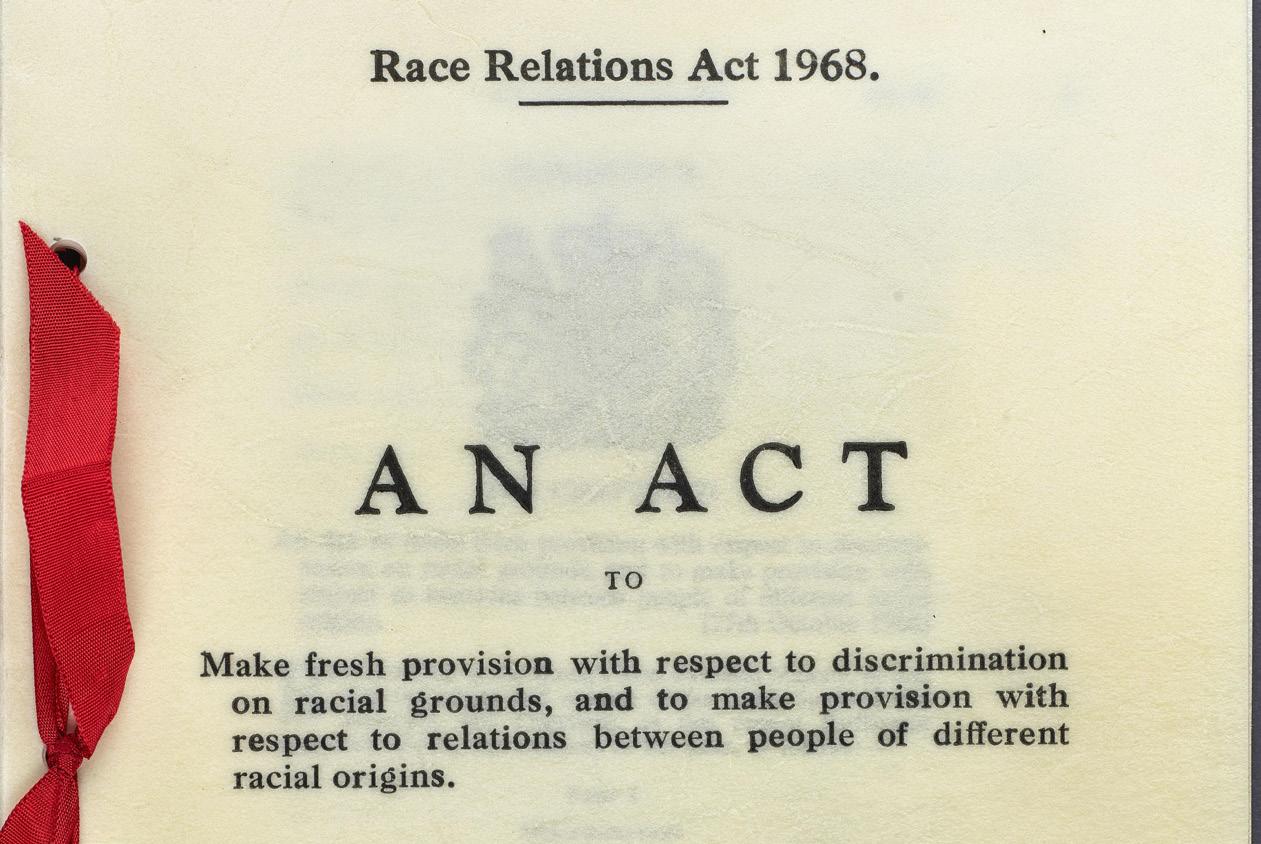
Gwleidyddiaeth
Former Bangladeshi PM Sentenced to Death, Student Protests Validated
Jasmine Comanescu Contributor
Sheikh Hasina, former prime minister of Bangladesh, has been sentenced to death in an absentia trial that took place in the country’s capital, Dhaka. Hasina first took on the role of prime minister in 1996 under the political party Awami League. On November 17th, 2025, she was tried at the International Crime Tribunal (ICT), which found her guilty of crimes against humanity across five charges. These charges came from the former prime minister’s violent crackdown on the student protests that took place during the summer of 2024.
The 2024 protests in Bangladesh started in July in Dhaka University, and were triggered by a recent reinstated quota by the High Court the previous month, which would reserve 30% of the country’s public service jobs to the descendants of fighters of the Bangladesh Liberation War. Whilst this decision acted as the trigger, it was not this single isolated event that caused public discontent with the Awami League government, but rather years of grievances that had built up for working-class citizens. One song that became popular amidst the protests emphasises this: “Those who are privileged, keep getting more [...] Those who are honest, have nothing to eat.”
These grievances of economic inequality fuelled the protests, which began as peaceful; however, as they spread across the country, government action taken to shut them down became increasingly violent. This included police helicopters and the Rapid Action Battalion (Bangladesh’s premier counterterrorism police unit) being used to intimidate students from the air, and military rifles loaded with “lethal metal pellets” being used on protesters. The United Nation Human Rights Investigation on the crackdown found that up to 1,400 people had been killed, 12–13% of these being children. 11,700 others had also been detained or arrested, and the Bangladesh police reported that 44 of its officers had also been killed.
The protests came to an end on August 15, 2024. Towards the end of the protests, Hasina fled to India, where she has been in
exile since, and the quota that had sparked up the protests was deemed invalid on August 5th. An interim government, led by Nobel Prize winner Muhammad Yunus, has been put in place to lead Bangladesh through its recovery. One of the interim government’s key promises to the Bangladeshi people was the prosecution of Sheikh Hasina, who was tried at the Independent ICT, which was originally set up by her in 2010 for investigations into crimes against humanity during the Liberation War. During her time in power, Hasina was criticised for utilising it for politically motivated purposes by human rights organisations.
The five charges Hasina was tried for were orchestrating mass killings of protesters, ordering or authorising lethal force from the air and ground, murdering specific individuals, incinerating and disposing of bodies to hide evidence, and coordinating killings and persecutions of demonstrators in specific areas. She was issued with three categories of punishment by the tribunal across these charges, two of which resulted in the death penalty.
The tribunal’s decision of the death penalty has been criticised by the United Nations. In a statement delivered by spokesperson Ravina Shamdasani, they recognise that Hasina’s verdict is an important moment for the victims who have lost their lives because of her lethal and violent actions against protesters, many of whom were students. However, they reiterate that they regret the imposition of a death penalty, stating that it is something they “oppose in all circumstances”.
Despite the tribunal’s verdict, Hasina remains in New Delhi, which geopolitical analysts have commented on, theorising that they doubt the likelihood of India returning Hasina to Bangladesh to face the death penalty. Dhaka’s Ministry of Foreign Affairs has said that it is the “responsibility” of India to ensure that Hasina is returned to face her sentence, calling it a “disregard” for justice to continue letting Hasina take refuge in New Delhi. However, Bangladesh’s rising tensions with India leaves the outcome of Hasina’s death penalty uncertain.
Image, Rodrigoanfor via Wikimedia Commons
Understanding the Climate Crisis: What is Happening in Antarctica?
Daisy Davies Contributor
There has been more evidence regarding the risks of climate change and the irreversible effects of global warming, primarily with the unusual weather patterns and the increase in global temperatures. The current concern on the minds of scientists and world leaders is regarding what will happen to the coldest part of the planet when then rising temperatures melt away the ice and destroy the habitats of the different animals that reside there. Antarctica is home to the largest ice sheet on Earth—14 million square kilometres—with the average temperature of -40°C causing any snowfall to build up over millions of years and form the massive ice sheet. However, scientists have warned that there has been a 3°C rise in Antarctica since the 1950s, which can trigger a collapse on the vast ice sheet and increase the sea levels by around 4.5 metres. If these temperatures continue to increase, then the rising sea levels will not be the only concern for the world; scientists are also concerned about the trapped gases in the ice that will be released into the atmosphere. When snow falls, the air pockets in between each snowflake fuse into bubbles that dissolve under intense pressure and infused the ice with gases such as nitrogen, oxygen, carbon dioxide, etc. The increase in greenhouse gases in the atmosphere will lead to a higher global temperature and disrupt the natural weather patterns, which we have already seen more of over the past few years.
As we try to slow down the effects of the increased temperatures in Antarctica, there have been conservation efforts that have been trying to bring more attention to the different wildlife that will likely be lost due to climate
change because of a loss of their habitat. One species that is often overlooked is Antarctic krill, which play a critical role in storing excess carbon dioxide in the seabed through their waste, and they rely on the ice sheets for protection and nutrients. Krill larvae feed off the algae under the ice and use it as a shield from predators. Unfortunately, with the change in sea levels and currents, these krill larvae are less likely to survive to adulthood and will change how carbon dioxide is stored in the ocean. An article by James Ashworth explains why we rely on a stable krill population to reduce greenhouse gas emissions, saying that they eat photosynthetic plankton—which consume the gases in the ice and atmosphere before they sink to the bottom of the ocean and excrete dense pellets that hold the greenhouse gases and bury them on the seabed. By ignoring the increased temperatures and the melting ice sheets, we also ignore a species that we rely on to reduce our carbon footprint and slow down the effects of climate change.
The question that we now ask ourselves is what we can do to reverse these effects, or if there is any way that we can save a part of the world that we have started to destroy. The hope that scientists currently have is that studying glaciers in Antarctica to analyse weather patterns from millions of years ago will help us understand them better now. An article published by National Geographic details how we can develop computer models to capture the effects of increased greenhouse gases and accurately forecast how they will play a part in the climate crisis. Until we can properly understand these effects and how to reduce them, we need to start taking personal action to reduce our own carbon footprint, considering what changes we can make to our

Ukraine Confronts Survival and Dignity Amid Trump’s Ultimatum
Reuben Badman Contributor
Kyiv’s defence against the illegal fullscale invasion by Russian forces will reach its fourth year in February. Over these years, international pressure has grown, demanding a settlement at a crucial moment in this conflict.
As the conflict has stagnated without a clear victor, global powers have pushed for a diplomatic resolution to limit human, material, and economic loss. The international community, once unified, is now split. One side advocating to prolong the fighting at huge cost, the other calling for a deal which falls short of Kyiv’s hopes: Donald Trump’s 28-point plan. At the core of the recent urgency to find resolution, is Trump’s ultimatum, forcing Zelenskyy to accept his 28-point plan or face withdrawal of US funding. Zelenskyy described the US president’s threats as either losing dignity, or risking losing a key partner. We must ask, what does the deal look like to cause such a reaction?
The proposal includes Ukraine accepting “territorial realities”, allowing Russia to
keep control of the lands it has taken through invasion. Consequently, regions such as Crimea, Donetsk, and Luhansk would belong to Russia.
Trump’s plan would cap Ukrainian armed forces to 600,000 personnels, block Ukraine’s admission to the world’s largest defence organisation NATO, and would prohibit NATO from stationing any troops in Ukraine. This places Kyiv’s defence in an incredibly vulnerable position.
To add to Zelenskyy’s “loss of dignity”, the plan will reintegrate Russia into the global economy. Zelenskyy described Trump’s demand to accept the plan by Thursday as “one of the most difficult moments in our history”.This all raises a crucial question, why do Trump’s threats carry such weight?
Throughout the war, the United States has remained the backbone of Ukraine’s war effort, providing advanced weapons such as the artillery rocket system HIMARS and anti-aircraft system Patriot. 45% of Ukraine’s military funding has come from the US, and a similarly large 35% of total funding has come from the US. This all totals to €115 billion being sent to Ukraine over the four years of war.
However, the idea Trump commonly
voices that “America is carrying the burden” simply does not hold. While the US spends the most in terms of cash, many nations contribute a far larger share of their GDP. Denmark has spent 3.39%, Estonia 3.27% , and Germany 1.02%, compared to the United States’ 0.56%.
Nevertheless, in raw financial terms, no country comes close to matching the scale of American support, a reality giving Washington’s threats undeniable weight.
These threats are not only statements either; earlier in the year, Trump froze all military aid to Ukraine immediately for about a week. Partnered with statements to the press such as “if he doesn’t like it, he should just keep fighting, I guess”, it is clear Trump is ever willing to withdraw funding entirely.
European leaders are now scrambling to react to US pressures, working around the clock to put together an alternative proposal to the US-led 28-point plan.
Zelenskyy’s assertion to not betray Ukraine has been reiterated by European leaders. Keir Starmer stressed the need to find a solution that meets Ukraine’s needs: “All matters about Ukraine must be determined, in the end, by Ukraine.”
At the G20 summit, boycotted by both Trump and Putin, world leaders reinforced the importance of cooperation within conflict resolution. They made clear that elements of the 28-point plan relating to NATO and the European Union need approval from Europe. President Macron agreed, stating the plan “cannot simply be an American proposal”. European officials now head to Geneva, drafting a deal that will favour Ukraine and Europe, while keeping Moscow in check. In my view, Ukraine will be deeply affected by Washington’s ultimatum, not only in the immediate crisis but in the longterm picture. I believe Kyiv will increasingly seek financial and strategic support elsewhere, as this plan has likely damaged trust in the United States as a dependable partner. Trump’s impulsive actions may strain relationships with Europe, isolating the United States. It is clear the plan has polarised the globe.
As deadlines loom and pressure rises, Ukraine must weigh survival against dignity, navigating a fast-moving diplomatic storm where Trump’s demands shape the stakes and Europe scrambles to respond.
Before Smartphones Listened, Ornaments Did....
Arielle Melamed Contributor
Inside the carved wooden eagle gifted to the United States embassy in Moscow was a device. Passive, and without needing its own power source, it hung in the ambassador’s residential study at Spaso House for seven years before it was discovered by accident. Because it had no power, the technology at the time was unable to detect it. The internal cavity and diaphragm inside the bug vibrated with sound in the room. These vibrations modulated the reflection waves, allowing Soviet agents to pick up all that was being said in that room.
The brains behind this ingenious invention had already become a household name long before “the thing” had been discovered. Russian inventor Leon Theremin, born in 1896, had noticed that when developing an electronic device for measuring the density of gases, the sound it made changed depending on the position of his hand. This discovery led to the invention of the theremin, an electronic musical instrument that is played by gestures in the air without any physical contact. With a distinct, beautiful, and almost haunting sound, the theremin can be found in music such as the Beach Boys’ “Good Vibratio1938, Leon Theremin vanished from the US under mysterious circumstances. There is some evidence to suggest that he was forced to return or even abducted by Soviet authorities. He was branded as a counterrevolutionary and sent to a sharashka (secret research prison laboratory) where he contributed to a myriad of surveillance projects, most notably “the thing”. After being presented
in a wooden great seal to the United States’ embassy, it listened to American secrets for years before its existence was discovered. Not only did this give the USSR an edge on surveillance techniques, it also sparked a shift in intelligence methods moving away from wholly human spies and embracing technology.
While Leon Theremin has mostly been forgotten, his story parallels issues that remain relevant to this day. In a time where governments and corporations are in constant competition for control over our data, Theremin’s work prefigures the logic behind smartphone tracking, clandestine microphones, and various other forms of state-sponsored espionage. Much like how “the thing” hid an advanced piece of surveillance equipment inside an innocuouslooking wooden ornament, today’s modern technologies often hide sophisticated systems inside devices that we willingly bring into our homes. How often has anybody questioned their Alexa?
Technological innovation becomes a source for power, with talent being quickly absorbed for national security agendas. Theremin’s story also raises ethical questions which trouble scientists to this day. How much responsibility can a creator bear for the ramifications of their creation? Both the uses and the misuses. In an era of AI, highly advanced surveillance tools, and autonomous weapons, the boundary between creative innovation and political instrument becomes increasingly blurred. Theremin’s story is a classic example that this tension is not new, rather just louder in an increasingly globalised age.
Time to Teach: Creating Informed Democracy
Sophie Scott Politics Editor
How do you get your news? Do you turn on the TV at 9pm to watch the evening headlines? Do you use websites to check what is happening around the world? Or do you solely use social media? According to YouGov polls, 47% of 18–24-year-olds get their news from social media. That is 12% higher than 25–49-yearolds, so it is safe to assume that for people under 18 it will be even higher. This statistic should make us pause. It tells us something important about how the next generation is learning about politics, forming opinions, and understanding the world: largely through a system that has no gatekeepers, no accountability, and no obligation to tell the truth. We need to take an active interest in the habits of those younger than us and how they will have been impacted by a life in front of screens.
This is not an attack on young people—it is actually far from it. They are so used to operating in the digital world that was placed into their hands earlier than any of us would have been. And there are so many positives to it as well: platforms like Instagram, TikTok, and X can stimulate political conversations and give ordinary people a voice that they may not be able to find anywhere else; and, social media can be excellent at picking up information that is too controversial for mainstream news media and to share experiences in ways that journalists may be restricted from. However, we need to find a balance.
BBC News, The Guardian, the Daily Mail; whilst these are all institutions with historic examples of controversy, there is an advantage to having so many eyes on them: stricter rules, higher levels of scrutiny and, as a consequence, better standards for delivering the truth. They are not perfect, but they try to find the truth and face consequences when they mislead. If they get something majorly wrong, they are challenged in Parliament, investigated by Ofcom, or forced to issue formal corrections. Social media has none of this.
Instead, social media is a cesspit of useful information, damaging misinformation, and an army of videos telling you what you should believe with no reason or evidence. When the
line is as blurred as it is on social media, should we be trusting it as our main source of news? If these platforms are where young people are learning about politics, then we have a responsibility to make sure they have the tools to navigate it safely. And that is where we have a gap that a political education could help fill in.
At the moment, political literacy in the UK is inconsistent and largely ignored, whilst 18-year-olds are expected to understand election campaigns, referendums, online debates, and increasingly polarised political discourse with no formal preparation. You would never let someone drive a car without lessons, yet we expect teenagers to find their place in a political system they have never been taught to navigate.
We need children to be given the skills so they know how to research, check, and verify the information they are being told. Political education is not about telling young people what to think, it is about giving them the tools to think critically. How do you spot a biased headline? How do you fact-check claims you see online or hear people repeating? What rights do you have? How does the electoral system work? Who holds the government to account and how? We should not leave another generation guessing.
A standardised political education in schools would empower young people, not indoctrinate them. It would close the gap between those who grow up surrounded by political conversation and those who do not, and it would protect students from the misinformation and manipulation they are constantly surrounded by in online spaces now. Most importantly, it would build a generation that feels confident participating in democracy and doesn’t just watch from the sidelines.
Young people are not apathetic. They care about climate change, housing, healthcare, education, racism, and inequality. They sign petitions, attend marches, argue about policy online, and try to make sense of the world they are inheriting. The least we can do is give them the education to let them create real power.
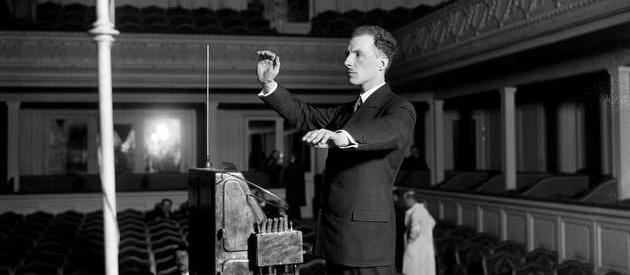
Gwleidyddiaeth
Study Finds Welsh Children Suffering Across Metrics
Kyle Bright Contributor
Wales’ most extensive study of primary school children to date shows a third of Welsh pupils suffer emotional difficulties, though they occur most often among learners from low-income families.
Half of 7- to 11-year-olds reported being bullied at school, even fewer ate fruit or vegetables daily, and most learners had troubles sleeping. To the Welsh cabinet secretary for education, Lynne Neagle, the findings made “sobering reading”: “It is important that we hear directly from children and young people to better understand how they are feeling and what is impacting them for us to shape future work we do.”
The School Health Research Network (SHRN), responsible for the study, is a partnership between Cardiff University, Welsh Government, and Public Health Wales. They describe this research as the most comprehensive of its kind—surveying more than 50,000 children, across 42% of Wales’ state primary schools.
Particularly eye-opening are the trends among children from poorer families. Disproportionately, they face worse outcomes across a variety of metrics, including (but not limited to) mental health, healthy eating, exercise, worries over high school, and social media use.When coupled with greater context over poverty in Wales, the future looks disheartening, to say the least. While overall poverty figures have remained largely stagnant, children have consistently faced the highest poverty rates for thirty years.
Crucially, though, more of these people are being pushed into the deepest, harshest forms of poverty. A third of those in poverty
were in the deepest forms of poverty in the late 1990s, but now in the 2020s, that has risen to nearly half of all people living in poverty. To put this level of poverty into perspective—after housing is sorted, these people have around £100 to spend a week. A food shop alone could easily take up half of that budget, and that is without considering other essentials that fami lies need to survive.
itly linked to the worse outcomes highlighted in this report. Take the study’s findings about healthy eating, for example: children from the lowest affluence families were 15% less likely to eat fruit or vegetables every day compared with those from wealthier backgrounds. Healthy eating ranked high in terms of inequality due to family income, only being surpassed by exercise and digital device ownership, where the divide was even wider.Previous research backs that food insecurity is more common in households with children. As a result, it is no surprise that a previous survey by the children’s commissioner for Wales found that 45% of primary-school–age children worry about hav ing enough to eat.
the SHRN study found worse out comes for pupils from low-income families was regarding vapes. The study found that vaping is “emerging” among pupils in Year 5 and 6, experimenting with vap ing. The Welsh school in spectorate Estyn reported similar vaping trends in secondary schools and colleges earlier this year.
says the key purpose of this report is to inform schools of their findings to
Iincrease school standards and the well-being of students. Case in point, Cogan Primary School in the Vale of Glamorgan have introduced a support programme based on SHRN data. Tom Lewis, the health and well-being lead at the school, said it has allowed them to design an
the reason behind Scotland having the lowest poverty rates of any UK nation, by financially supporting families in poverty.
The Welsh government is already investing £13m annually into its “whole school approach” to mental health. On vaping, the
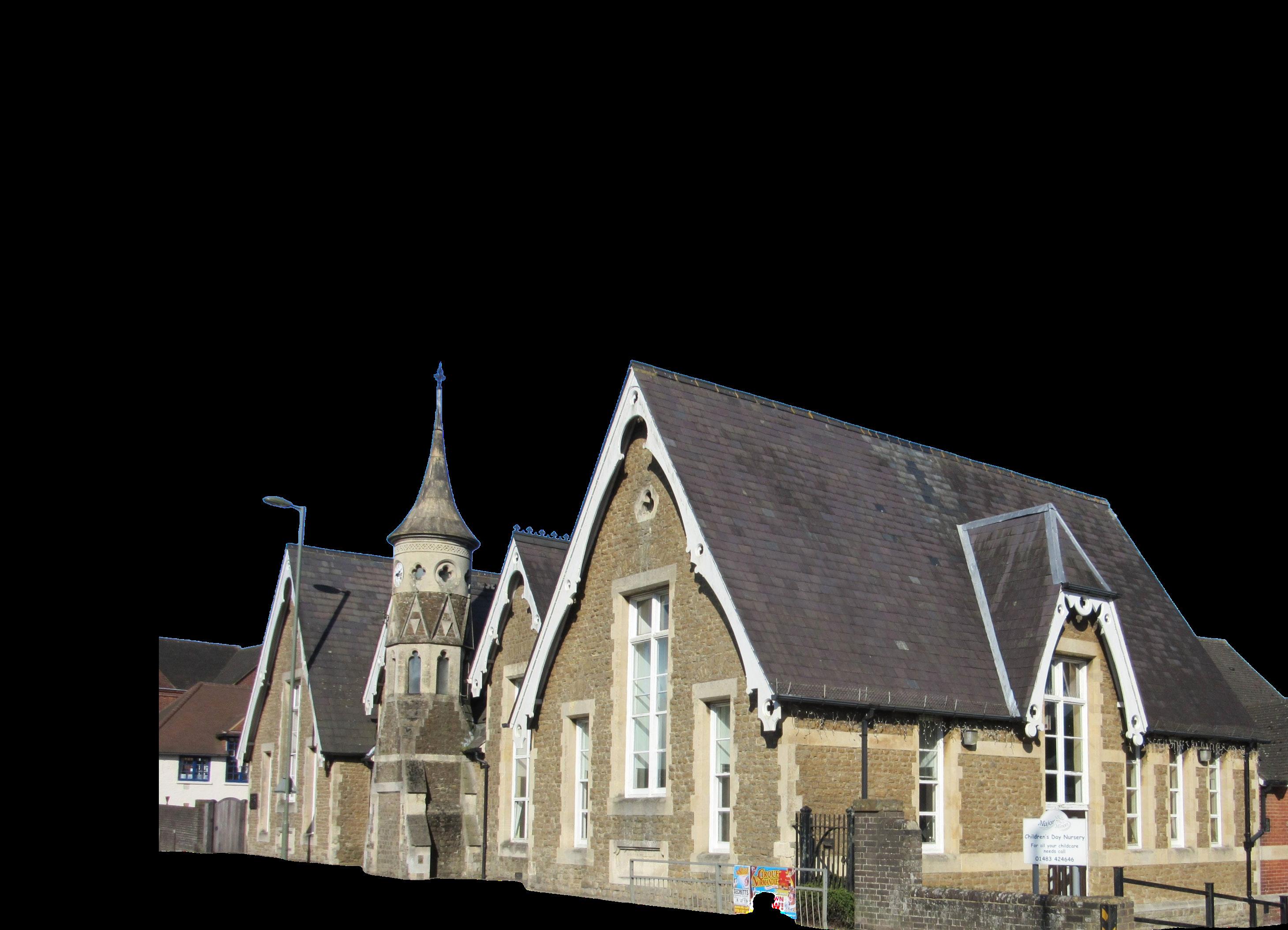
Jake Hopper Contributor
n what seems to be a Budget that has been pushed to the last possible moment to release, Chancellor of the Exchequer Rachel Reeves is at a crossroads. High inflation and an estimated £30 billion fiscal shortfall is said to be putting immense pressure on Reeves. However, the chancellor is tasked with closing this shortfall, either by increasing taxes or cutting spending to close this gap.
In what seems to be a bit of positive news, inflation has fallen to 3.6% for the first time in seven months. However, the run up to the Budget looks dim, with Reeves calling on everyone to “do our bit for the security of our country”. Economists are adding extra pressure on the chancellor, stating that the UK economy is not growing fast enough (0.3% growth April to June, then back down to 0.1% in September). This low level of growth and productivity is leaving the chancellor with hard decisions to make.
Firstly, she is considering capping pension contributions, limiting how much people can put in their pensions at £2,000 a month, in hopes of keeping this money in the economy. Secondly, proposals to increase landlords’ National Insurance payments (affecting tax bands F, G, and H). Thirdly, another potential rise could come from the tourism sector, whereby the chancellor could implement a nightly tax on hotel stays.
Along with this, a policy backed by former Prime Minister Gordon Brown, the
chancellor could implement a gambling tax. Rachel Reeves is under immense pressure by left-wing critics from the Green Party—who are overtaking Labour in various polls—and even critics in her own party who are calling for a wealth tax. Under this pressure, there are talks of the chancellor implementing a so-called “exit tax” that would impose a 20% levy on unrealised gains from a business asset when a resident leaves the country. An exit tax like this could create £2bn in revenue a year, helping the chancellor to close the £30bn shortfall. With all these rumours about the Budget, what taxes should actually go up?
Left-leaning advocates argue for a wealth tax on unrealised assets, as well as an annual wealth tax, to bring the burden off the working- and lower middle class and close the fiscal gap. They also back an increase in windfall tax on energy companies. This leads on to the problems that left-leaning individuals are having with this current Labour government, whose left-wing rhetoric clashes with their reluctance to implement these policies.
For example, Reeves stated that those with the “broadest shoulders” should pay a “fair share” of tax, yet the Labour government seem reluctant to introduce some form of a wealth tax despite calls from fellow MPs. Right-leaning parties could see “useless” spending cut to try and close this fiscal shortfall. We are seeing a glimpse in how the right wing utilises spending cuts in local county councils, with the Reform-led Lincolnshire County Council warning of spending cuts to save £25 million.
Conservative Party leader Kemi Bad-
enoch stated that they could save £47 billion through welfare reform, cutting oversees aid, and reducing civil service size. She has also proposed abolishing stamp duty, exemplifying the traditional Conservative standpoint of reducing taxes. However, Kemi Badenoch’s policy would depend heavily on finding very large spending cuts, and could encounter the very problem Reeves is experiencing with cutting spending, as, politically, it is very contentious point, especially amongst the One Nation Conservative wing. Furthermore, austerity rhetoric is extremely unpopular, and is one of the main things Labour utilised against the Conservatives in the 2024 general election. However, since then, Labour have dropped significantly in the polls. This Budget is, therefore, extremely important; not only for the country, but for Reeves herself, with the prime minister’s position being questioned. Just last week, Number 10 issued a statement warning potential challengers like Wes Streeting that the PM would fight for his position. MP Clive Lewis stated he would be willing to give his seat up to allow Manchester Mayor Andy Burnham to challenge Keir Starmer, showing how divided the party really is. The chancellor’s Budget not only leaves the party’s future uncertain, but also the country’s.
Labour’s Shift on Immigration: Where Are We Going?
Madaeleine Bette-Bennett Contributor
Home secretary Shabana Mahmood’s new policy, entitled Restoring Order and Control, will undoubtedly do the opposite. The Home Secretary hopes that these harsher controls will deter more people from crossing the Channel in small boats and reduce the number of “false” asylum claims. Designed as a response to the immigration crisis, which Mahmood states is “tearing apart our country”, the new rules are a political gamble, a bureaucratic nightmare, and a moral failure of duty to the most vulnerable.
Based on the Danish model adopted in 2019, under Labour’s new approach, refugee status will be made temporary and require mandatory review every 30 months. Refugees may be waiting up to 20 years to achieve permanent settlement, and family reunion will not be possible if the claimant did not utilise a work or study route to the UK. Moreover, Labour’s government will axe the 2005 legislation that requires support to be provided to asylum seekers who cannot afford housing. This, coupled with Mahmood’s consistently alienating rhetoric, reflects the home secretary’s sacrifice of moral duty in favour of combatting the highly-polling Reform UK. Immigrants have been made the scapegoat of this political dogfight to sway the British public, often through disinformation. Immigration is not tearing apart our communities; rather, it is the manipulation of the issue that is creating unfounded division. Zeena Luchowa, chair of the Law Society’s immigration law committee, said “these changes
seem perverse, unreasonable. and punitive on individuals who are genuinely seeking asylum”.
Not only divisive in society, the policy has also been controversial within Labour, with many MPs raising complaints about the stark language and the deportation of children with their families. If Mahmood wishes to reduce division, alienating the more left-wing of La bour’s government contradicts attempts at unit ing against Reform UK. This is crucial, not just symbolically but technically, because the gov ernment will have to legislate to bring in some of the changes, hence there will be votes in Parliament. Any opposition, especially within the Labour Party itself, will determine whether the package becomes law. It is disheartening to see the parallels between Labour’s plan and Theresa May’s “hostile environment” policy.
Mimicking the opposition will not sway Reform voters, and will simply lose many Labour votes. What is more, the implications of this plan on the bureaucratic caseload of the Home Office will be disastrous, hindering the purpose of the policy. Requiring review of each asylum case every 30 months will impede the underfunded body from processing and adequately assessing individual claims with the care and scrutiny they deserve. If the chronic austerity immiserating the British public has allowed for misplaced anger at immigrants, surely by further burdening services, the vi cious cycle of blame will continue to weaken public trust in government.
Modest attempts at alternative solu tions were suggested in the package—such as helping French authorities to crack down on smuggling gangs, encouraging student visas
for countries at war, and prolonged waiting times to allow for integration—none of which have historically been effective. It seems the Home Office is more concerned with flaunting
pedestal of playing God and judging individuals’ characters. By creating this hierarchy within a vulnerable minority, we allow fundamentally racist statements
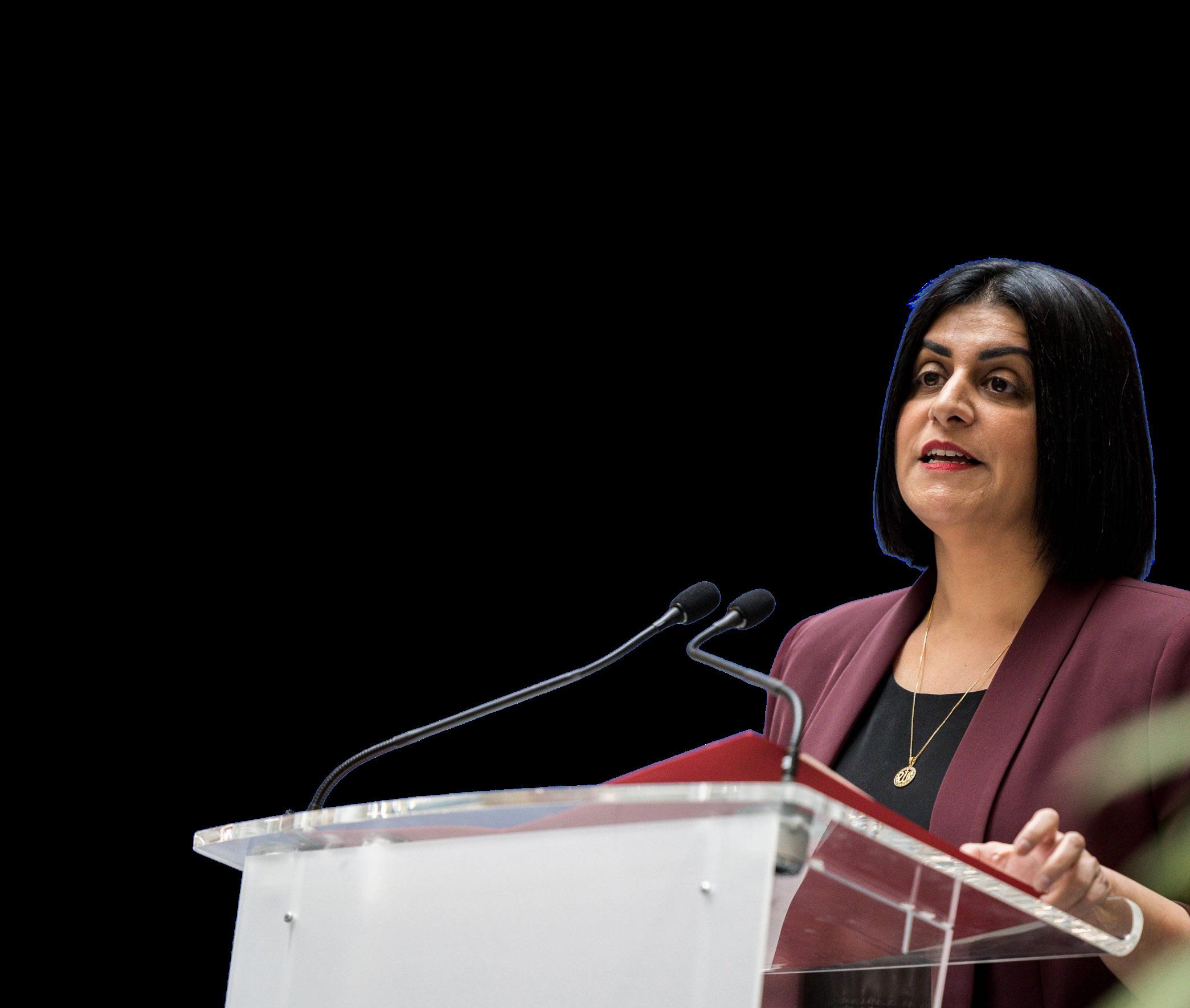
Is It Time to Rethink Prisons?
Rowan Stanger Politics Editor
UK prisons are at their limit. Last year, the Labour government aimed to address overcrowding with an earlyrelease scheme, allowing prisoners freedom after completing 40% of their sentence. This resulted in the wrong release of 37 people who
a prison population growing by 45,000 each year, cells are filling up faster than they can be built. In 2024, 60% of prisons were reported to be overcrowded, with inmates sharing rooms designed for one. A significant amount of this growth comes from non-violent criminals serving short sentences for crimes such as theft and drug offences—sentences that have been shown to be less effective at reducing reoffending than community-based alternatives.
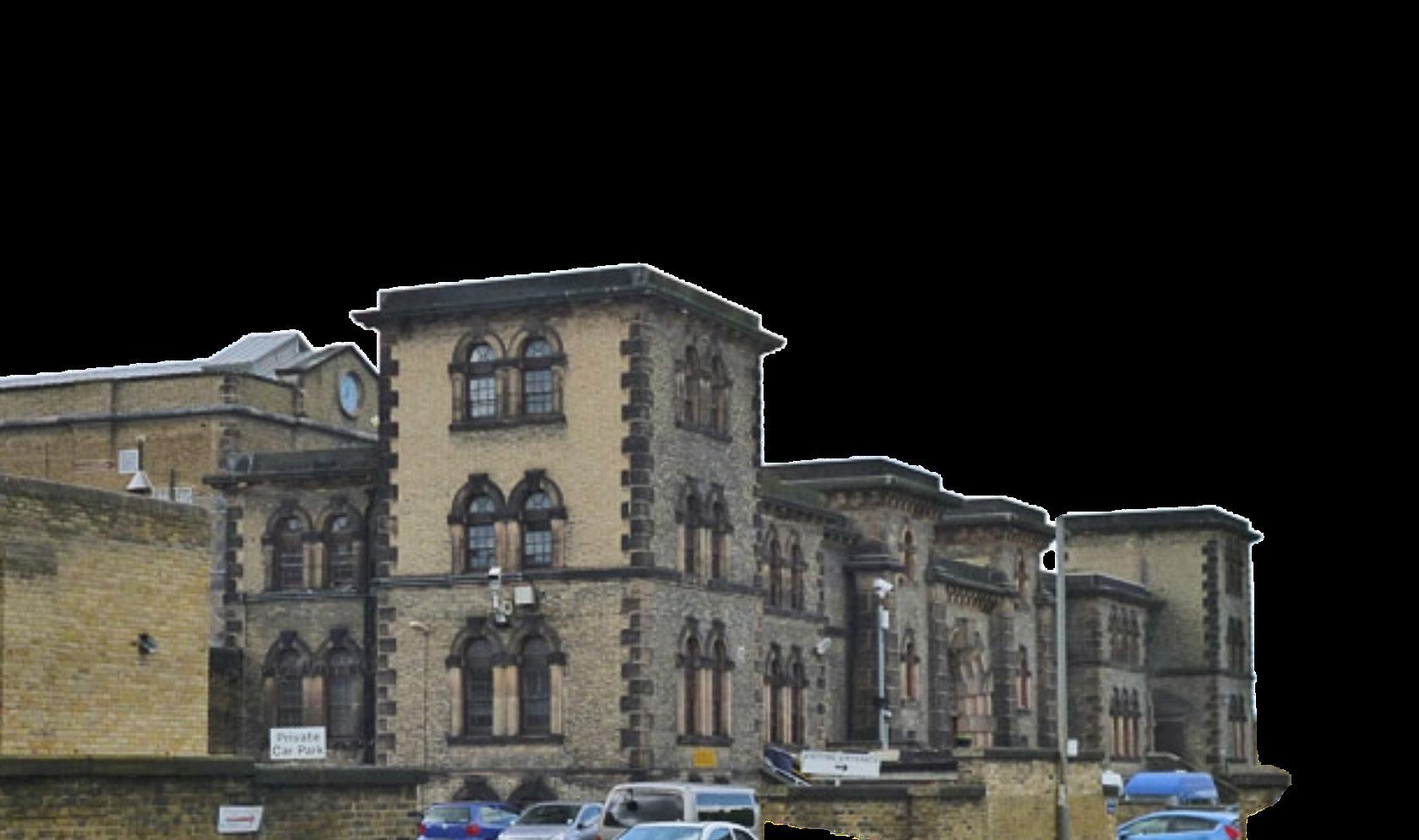
women. Inmates often cannot leave their cells for more than a few hours a day, with only 6% of women being able to engage in regular purposeful activity. Maintenance is also often delayed to avoid taking cells out of use, creating unsafe and unsanitary living standards. The consequences of these conditions are expressed in the mental health crisis we see in prisons, with suicide accounting for a third of all deaths in custody. Around a fifth of incarcerated women develop a drug or alcohol problem while in prison, and an average of six self-harm incidents per prisoner are reported each year. This is a direct result of not only overcrowding and underfunding but a culture with little inter-
This becomes even more apparent in the fifteen private prisons across the UK, as profit becomes a priority over prisoner safety and rehabilitation. These institutions consistently report higher rates of violence and structural issues. Even in state prisons, collecting £51108 from British taxpayers per prisoner, the money is largely spent on building more prisons and keeping up appearances than supporting those
Beyond being actively harmful, our system fails to fulfil basic functions of rehabilitation and crime prevention. Governments have consistently failed to address this, focusing instead on a strategy of building more prisons and pushing the problem of overcrowding further down the line. In 2021, the Conservative government promised to build an extra 20,000 prison
spaces in England and Wales. Starmer’s government also pledged to continue this work to meet the target.
UK prisons are far from meeting their after-release targets, as they are not equipped with facilities to support prisoners for life after prison. Of the 112 prisons in the UK, 49 failed to meet their targets for first-night accommodation, and 89 did not have the majority of their prisoners in employment after six weeks. With reoffending rates at 26.5%, and going up to 56% for short sentences, the support being offered clearly is not enough. For these reoffenders, prison is a familiar environment rather than a deterrent for crime, providing a level of security not guaranteed on release. From a safe, middle-class background the prospect of prison can be enough to avoid committing crime but, as we face the worst cost of living crisis in decades, a meal and a bed every night is hardly a worst-case scenario for many. This can be seen in prison demographics, with the poorest in society vastly overrepresented—the gap widening for women and people of colour. As we have seen, the state of our prisons is shameful, but it is better than being homeless.
Focusing on punishment, fear, and humiliation, our prisons are far from effective in preventing crime and keeping people safe, instead facilitating a cycle of reoffending. It is time to start looking at the structural issues in our justice system and look for solutions beyond building more prisons.
Image, Robin Webster via Wikimedia
When Powell Came to Cardiff Revisiting Enoch Powell’s Controversial 1968 Union Visit
Oliver Dermody Politics Editor
It has been 57 years since Enoch Powell, described by some as the “best prime minister his country would never have” and by others as a racialist provocateur, made his eventful Cardiff University visit and speech. So, what can the events of November 1968 tell us, and are we currently seeing a reincarnated Powell sneaking his way to electoral victory in the UK?
Prior to his visit to Cardiff, Powell made his most famous speech that April: the “Rivers of Blood” speech, in which he spouted inflammatory remarks against Commonwealth immigration, immediately leading to racist heckling of the then Kenyan ambassador to the UK, as well as racial violence across the UK. This backdrop of tension led to anger at his plans to speak at Cardiff and caused the Cardiff University Conservative Society chairman to resign and eventually be replaced by a pro-Powell figure. Articles written by Broadsheet (precursor to Gair Rhydd) and letters to the newspaper were overwhelmingly negative about Powell, but they generally stressed the need for students to allow him to speak and to oppose him positively in a non-violent manner.
His visit, however, would not be received warmly by many students. From the outset, a sit-down of a dozen or so students blocking Powell’s car from entering resulted in an appeal from the Union to move being met with a cry of “sod the bloody Union”. Windows were then broken and shoving ensued when people became frustrated with not being allowed entry to the speech hall. When Powell was finally able to gain entry and began speaking, around 100 students, mostly from the Third World Society, performed a walkout and left the hall. Powell was also forced to cancel his later meeting because protesters prevented his exiting of the building by surrounding the doors. All this was capped out with the chief inspector of police calling the Union and informing them that they had received an anonymous call reporting a bomb on the site, which was later found to be a hoax.
Responses to these protests seen in Broadsheet ranged from stat-
ing that this was “responsible opposition” and “morally justified” to “exhibitionism” that satisfied only “the more moronic amongst us”. The Western Mail labelled protesters as “unruly students” until changing to a more neutral tone—of course, leading to accusations that the paper was fickle.
Powell’s visit draws comparisons to today, with Jacob ReesMogg being “chased by protesters” and “hounded off campus” after speaking to the Cardiff University Conservative Society in April 2024, being met with pro-Palestinian supporters whilst exiting, with one individual pressing themselves to the front of his car before being removed by security (to note, Rees-Mogg did state that this protest was lawful and “the proper traditions of adversarial debate were upheld”). However, the more important comparison would be to seemingly incoming PM Nigel Farage, the most popular politician in the UK if polls are to be believed.
Described just this month by Labour Minister Peter Kyle as “today’s incarnation of the politics of Enoch Powell”, it is easy to see why Farage is painted as a Powell reincarnation. Farage shares both Powell’s ability to resonate with large parts of the working class whilst coming from the upper echelons of society and his ability to generate divisive views of either hatred or adoration depending on who you ask. Whilst Farage has never spoken at Cardiff University, and may never do so, I imagine that a protest similar to that of November 1968 would not be out of the question if he attempted to do so.
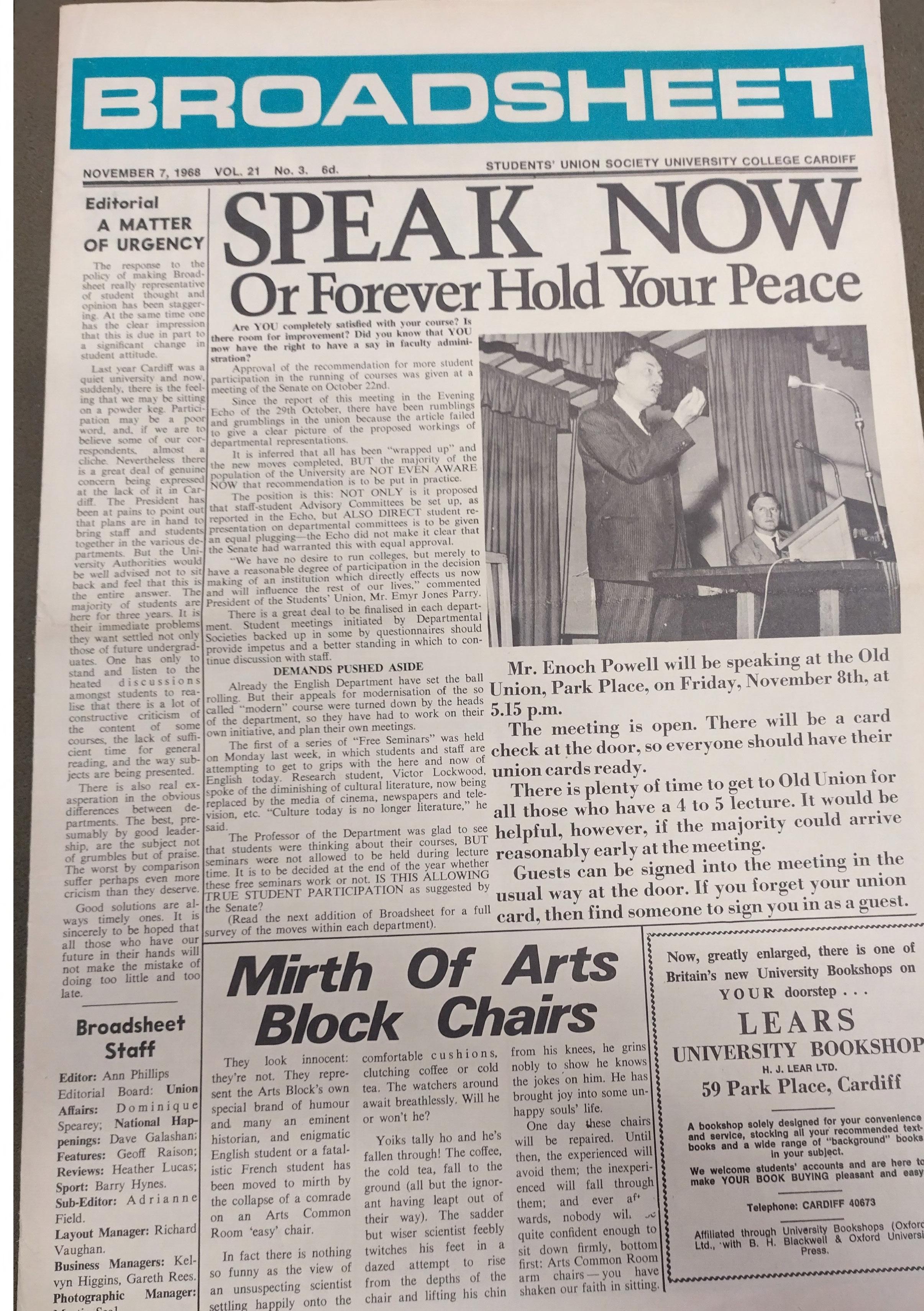

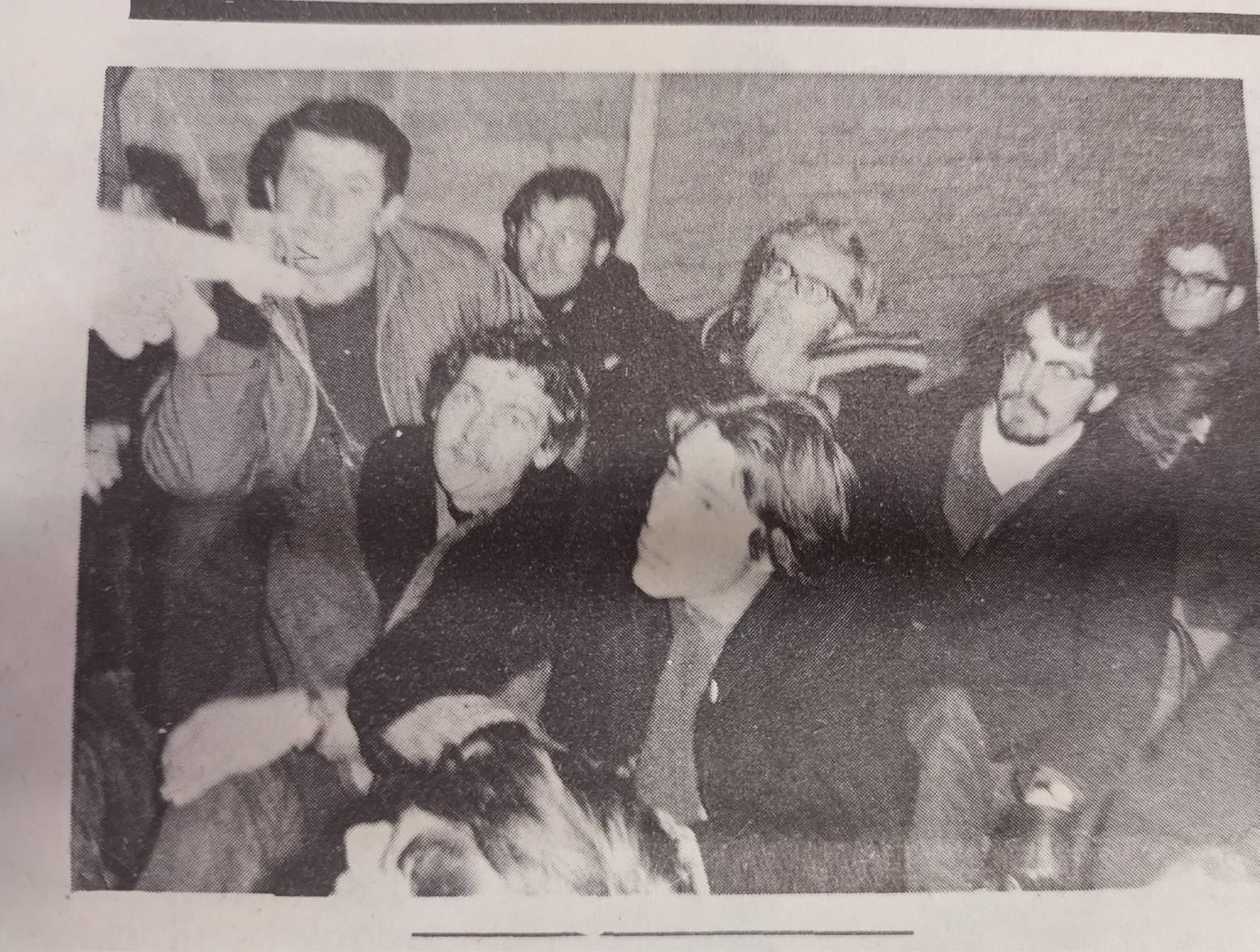
30 Politics
Vietnam Rocked by Typhoons
TAz Kim Contributor
yphoon Yagi, Wipha, Kajiki, Ragasa, Nongfa, Kalmaegi, Matmo, and Bualoi—just some of the typhoons that have ripped through Vietnam in the past two years and left severe flooding behind. These typhoons do not care about laws, urban planning, or infrastructure, but their wreckage reveals the deficits in all three.
Vietnam experiences a lengthy typhoon season every year, with its long coastline, major river deltas, and tropical location providing prime conditions for typhoons to form. While these storms are natural, the precipitously destructive flooding is a direct consequence of irresponsible sovereignty. As more of the country falls underwater, we need to call for action from political stakeholders and ask how much more damage to the infrastructure and economy the nation can take.
Super Typhoon Yagi was the strongest storm to hit Vietnam in seven decades, making landfall in Quảng Ninh province and Hai Phong City on September 7, 2024. Just a week after its arrival, more than 50,000 people were forced to evacuate, over 190,000 homes were
flooded, and 329,000 structures were ravaged. Reports from the International Federation of Red Cross and Red Crescent Societies quoted 26 missing people and 325 deaths in Vietnam alone, with 844 total deaths across Vietnam, Myanmar, Laos, Thailand, and the Philippines. Việt Nam News reports the total economic damage caused by the typhoon at around 2.3 billion GBP (equivalent to 81 trillion VND).
Over 280,000 hectares of crops, fruit trees, and rice were submerged, with around 5.6 million livestock killed. This left devastating ramifications for communities that rely on their agricultural yields.
The Ministry of Planning and Investment reported that in spite of “urgent and coordinated efforts from the entire political system [...] Typhoon Yagi caused extensive damage”. Still, no amount of sandbags can cover up systemic and widespread infrastructure gaps. Despite learning from Yagi that Vietnam lacks the capacity to withstand natural disasters, especially as global warming intensifies wind speeds and rainfall, government officials made little to no effort to sanction tangible changes before the 2025 typhoon season.
As of November 23, 2025, the death toll is again up to 90 and rising, with more than 12 people missing after days of heavy
rain and landslides. Typhoons Kalmaegi and Bualoi hit Vietnam within weeks of each other, overwhelming the sewage system and leaving relentless flooding, mirroring the wreckage of Yagi.
235,000 houses have been flooded, and 80,000 hectares of crops have been damaged. Water levels in the Ba River in Đắk Lắk province surpassed a 1993 record—the government estimating that the flooding has cost the economy over 260,000,000 GBP (9 trillion VND) in losses. Undoubtedly similar to the ruin caused by last year’s typhoon season, this raises the question of how the government has allowed this to happen again.
At a forum on “Smart, Sustainable, and Inclusive Development” held on November 5, Nguyen Duy Hung (Vice Chairman of the Central Policy and Strategy Commission) spoke on the failures of the government’s urban development process. He reasoned that the irreparable flooding was merely an outcome of infrastructure that had not kept pace with the rapid growth of urbanisation. In stark contrast, Antoine Mougenot, urban development specialist at the French Development Agency, revealed that many urban plans in Vietnam are based on outdated climate data. This data no longer accurately reflects the extreme rainfall
and rising sea levels. In the era of the Anthropocene—where human activity exacerbates, if not causes, climate disasters—it is imperative that the government, especially that of a country prone to typhoons, acknowledge the changing climate reality. Hung called for reform of the legal framework, including revision of laws that govern planning, infrastructure development, and integration of technology. Simply changing the framework will not remedy the landscape and millions of lives that have been permanently affected. Risk identification must be at the forefront of reform, and the government cannot continue to ignore its direct complicity in this disaster.
Between January and October of this year, the floods have resulted in 279 people dead or missing in Vietnam and caused more than 1.5 billion GBP in damage. These people are not just bits of data to analyse as part of a larger statistic — it is 279 families, businesses, and communities that have been harmed by the failure of the Vietnamese government. How many more are going to die before the government decides to make a change?
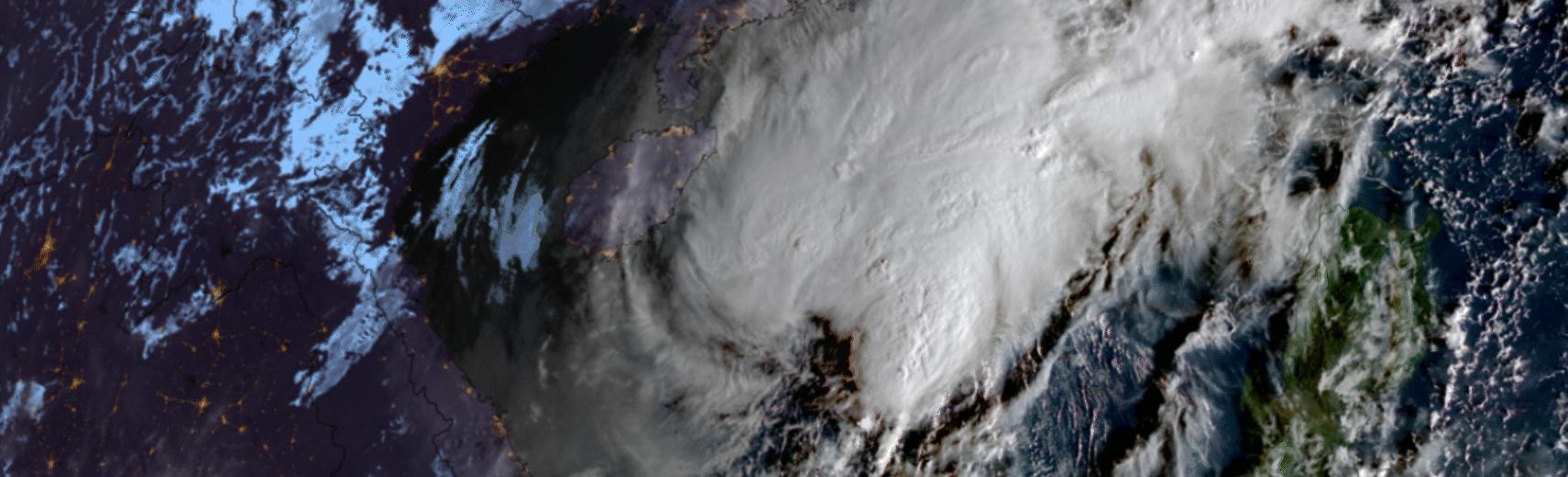
Storm Claudia and Climate Change in Wales
Megan Warren Contributor
Storm Claudia drenched Wales with heavy, persistent rain two weeks ago, soaking communities and causing widespread flooding across the country. Southeast Wales and Powys were hit hardest, with Natural Resources Wales recording 81.8mm of rainfall at Tafalog in Gwent between Thursday evening and Friday alone.
Just 30 miles away in Monmouth, the downpours proved devastating. Flooding was so severe that a major incident was declared after the River Monnow burst its banks, forcing dozens of residents to be rescued or evacuated.
Cardiff avoided a similar fate. But only because of the large flood defences at Cardiff Bay, which act as a final barrier for the River Taff. Last year, during Storm Bert, those same defences failed, causing the river to spill into Blackweir, Pontcanna Fields, and parts of Bute Park. Flood-prevention measures stopped the damage from spreading, but the incident served as a warning of how vulnerable the capital remains. Officials later admitted that
the failure exposed weaknesses in Cardiff’s flood management strategy, prompting calls for urgent review and investment. Pontypridd was not so fortunate during Storm Bert either. The town received more than 50–100% of its usual November rainfall in just 48 hours. The scenes echoed past floods that have repeatedly battered the Taff valley.
But meteorologists warn that neither Storm Claudia nor Storm Bert were isolated weather events. Instead, they reflect a pattern of increasingly extreme weather that scientists link directly to human-driven climate change. As the atmosphere warms, it is able to hold more water vapour. This gives storms more “fuel”, resulting in heavier downpours when the rain finally falls. According to the Met Office, intense rainfall events are expected to become more common as the climate continues to warm. Wales, with its steep terrain and densely populated river catchments, is particularly exposed, meaning even moderate increases in rainfall can result in disproportionate impacts.
Rapid analysis by leading climate scientists shows that human-caused climate change made rainfall in recent UK and Irish
storms about 20% more intense than it would have been in a pre-industrial climate. Weather that once represented a 1-in-50-year extreme could now occur roughly every five years. And if global heating reaches 2°C above pre-industrial levels, models suggest that storm rainfall will grow even heavier and more frequent.
New research from Newcastle University and the Met Office also warns that storms combining extreme rainfall with strong winds are likely to become more severe as the climate warms. These so-called “compound events” pose a greater threat to infrastructure, increasing the risk of damage to buildings, powerlines, and transport networks. Experts say these conditions could lead to more riverbank erosion, landslides, and prolonged power outages—issues rural Wales is already vulnerable to. For Wales, the implications are stark. Flood risk is rising, and storms like Claudia are more likely to unleash intense rainfall on ground that is already saturated. This increases flooding in both small streams and major rivers, a particular challenge in Wales’ steep valleys and densely built-up towns.
The pressure on Welsh infrastructure is growing too. More frequent storms strain flood
defences, roads, rail lines, and emergency services. Scientists warn that Wales cannot rely on reacting to each storm in turn. Instead, long-term adaptation is essential: improved flood planning, expanded use of wetlands and natural flood plains, and major upgrades to drainage and rivermanagement systems. Several councils have already warned that without increased funding, they cannot maintain or upgrade existing defences fast enough to keep pace with the rising risk.
Ultimately, the responsibility for strengthening Wales’ resilience lies with the government. A stronger push is needed from both the Senedd and Westminster to invest in climate adaptation and to cut the emissions driving these storms in the first place. Storm Claudia is the latest reminder that the costs of inaction are rising. If current trends continue, events once considered exceptional may soon become the new norm, reshaping communities and forcing governments into having to make ever more difficult political decisions.
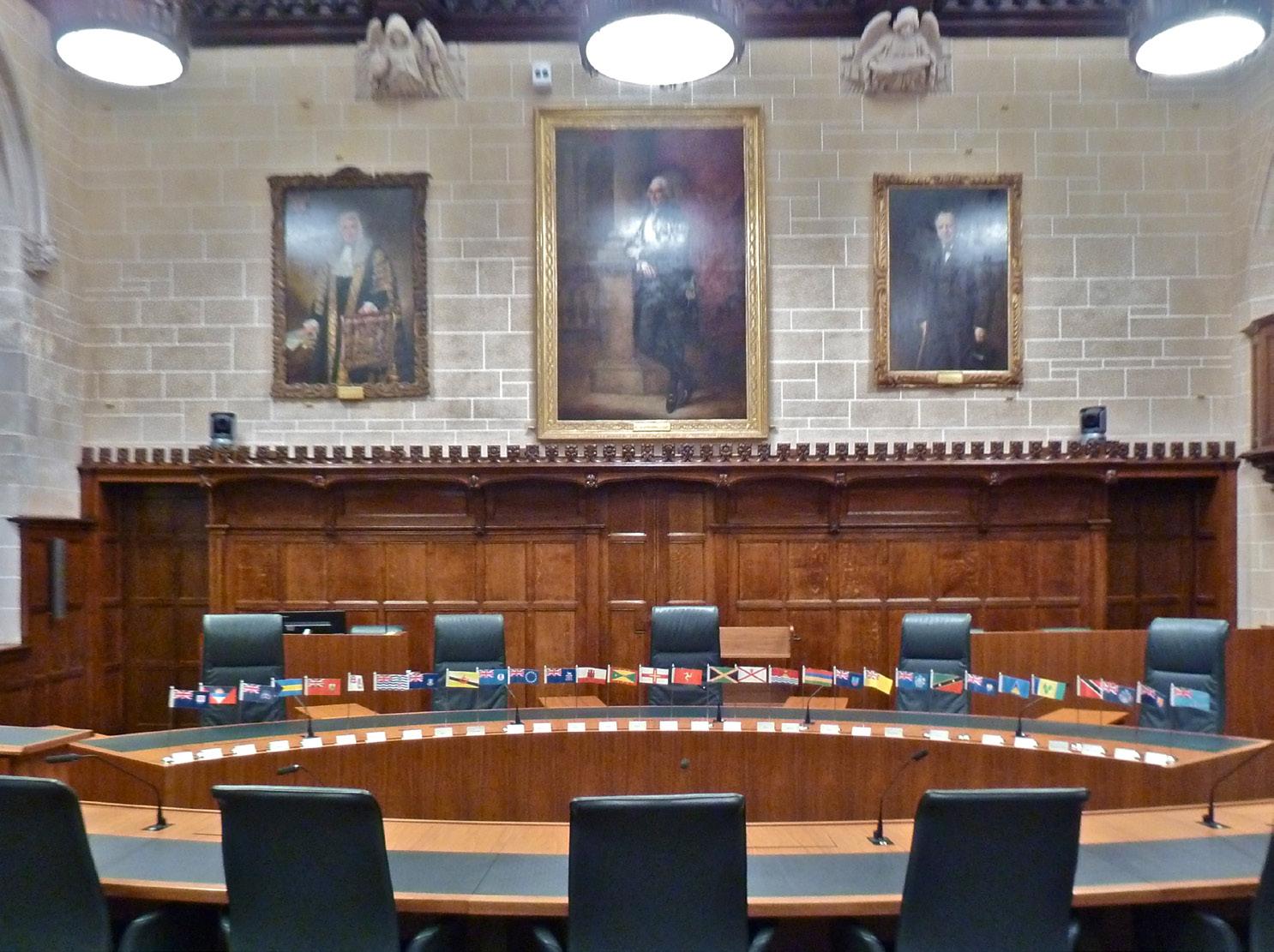
Transgender People Face Legal Challenges in the UK
Seven Standen Design Deputy
In April, the UK Supreme Court ruled a woman is “defined by biological sex” under the Equality Act 2010. Although the act still protects transgender people from discrimination and harassment, the ruling was seen by many as a step backwards in terms of equality. Following the decision, people who hold gender recognition certificates (GRCs) can be barred from single-sex spaces and sports. It also means that cases involving “gender critical” biases may be reviewed in court. Eight months later, how have things changed for transgender people in Wales?
Guidance for schools, promised by the Welsh government two years ago, has still not been published. In January 2025, Wales Centre for Public Policy said guidance would be informed by the research of the Rapid Research and Appraisal Lab (RREAL) at University College London. RREAL found transgender children are more vulnerable to poorer well-being and educational outcomes than their peers. Evidence suggests “affirmative” policy and practice approaches (such as letting trans children use preferred names and clothing) improves these outcomes.
The Welsh government has stated firmly they do not intend to remove genderneutral spaces, including toilets, from schools. Uniforms have been gender-neutral since 2019, with children in Wales being permitted to wear whichever items of clothing they like.
The EHRC has pushed for the NHS to update its policies regarding trans people. Current guidance says trans people should be accommodated according to the way they dress, their names, and their pronouns. They do not need to undergo medical gender reassignment treatment or live continuously as their respective gender to receive this support. Ironically, the “Equality Act” would reverse this guidance. Even people with GRCs, who have received diagnoses of gender dysphoria and lived as their preferred gender for two years, would be misgendered. Although the NHS states their policy is under review, no
Al-Sharaa, Uni Drop-Out, Terrorist and Now Tyrant
Alex Portman-Ross Contributor
Almost a year ago, on December 8, 2024, Hay’at Tahrir al-Sham (HTS) forces captured Damascus, Syria, the capital and centre of the Assad regime’s power for over fifty years. The civil war began when Bashar al-Assad who had trained as a doctor in London was targeted by children, influenced by the Arab Spring, graffitiing “it’s your turn, doctor” on a wall in Daraa. Assad had these children tortured, sparking riots across the country which soon evolved into a complex thirteen-year-long civil war. But a year on, tensions in Syria are still unsettled.
these killings happened in a region where Assad’s regime once committed similar crimes makes it seem that Al-Sharaa is as tyrannical as his predecessor. While, Al-Sharaa’s condemnation and judicial proceedings against these groups would not have been brought by Assad’s government, this positive move is too little, too late for hundreds of dead civilians.
formal changes have been made.
Despite this guidance, Healthwatch found 18% of trans people were misgendered in NHS written communications. When it came to gender-affirming care, 39% rated their GP services as “poor”. Overall, transgender patients had worse experiences with GP care than the average population. Al though it is already difficult for trans people to access quality healthcare, the changes to the Equality Act intend to introduce barriers rather than remove them.
In Wales, transgender women have been barred from competing in cricket and football. Transgender people are extremely unrepresented in sports at all levels and very few dominate the fields they compete in. Interestingly, a study in the Sports Medicine face several disadvantages when compet ing against cisgender peers. Sports scientist Joanna Harper points out other athletes hold advantages which are not policed. For exam ple, left-handers are usually better at sport. Moreover, weight categories are used to make the events fair because bigger boxers will nearly always beat smaller boxers.
Updating the Equality Act 2010 has allowed organisations, such as the Football Association, to legally exclude transgender people. It follows a growing trend in UK legislation legitimising discrimination on the basis of gender identity, such as ruling Maya Forstater should not have lost her job for voicing “gender-critical” beliefs. The rights and freedoms of transgender people are being continuously eroded by the government and condoned by the law.
The arbitrary decision to divide people by “biological sex” does nothing to ensure women’s safety, as its advocates might claim. Instead, it offers a limited view of gender (for both trans and cis people) and insists on policing how gender is expressed. Biological sex is not binary. But these changes to the Equality Act 2010 make it possible to legitimately harass and exclude transgender people in Wales, purely on the basis of their gender identity.
Worries that Syria has replaced one tyrant with another persist, because prior to new president Ahmed al-Sharaa rubbing shoulders with podcasters and world leaders, he was dropping out of university to join al-Qaeda. After completing this apprenticeship in terrorism, he was sent by an early iteration of ISIS to open an al-Qaeda franchise in Syria. Eventually al-Sharaa broke up with ISIS, who he felt were too internationally focused, sparking infighting within the opposition forces. Despite this split, it is hard to forget that under the pseudonym al-
The former regime’s forces, whose attacks sparked these murders, are loosely tied to Iran, highlighting the pressures al-Sharaa faces on the global stage. It is not just the Iranians who have interests and ties to fighting in Syria. The US, Israel, Türkiye, and Russia are all heavily invested. Israel has long claimed the Golan Heights, near where al-Sharaa’s family lived until Israeli forces displaced them under a range of justifications, including that they were defending the Druze minority. While killings of Druze people reinforce this narrative, the mountainous Golan Heights suspiciously provides the perfect location for radar, which is especially important in the era of drone warfare. Can al-Sharaa really accept any justification for the occupation of his home by a state he had been violently opposed to in his past careers?
Turkish and US concerns revolve around the Kurds. Al-Sharaa seemingly holds a grudge against Kurdish fighters who are rep-
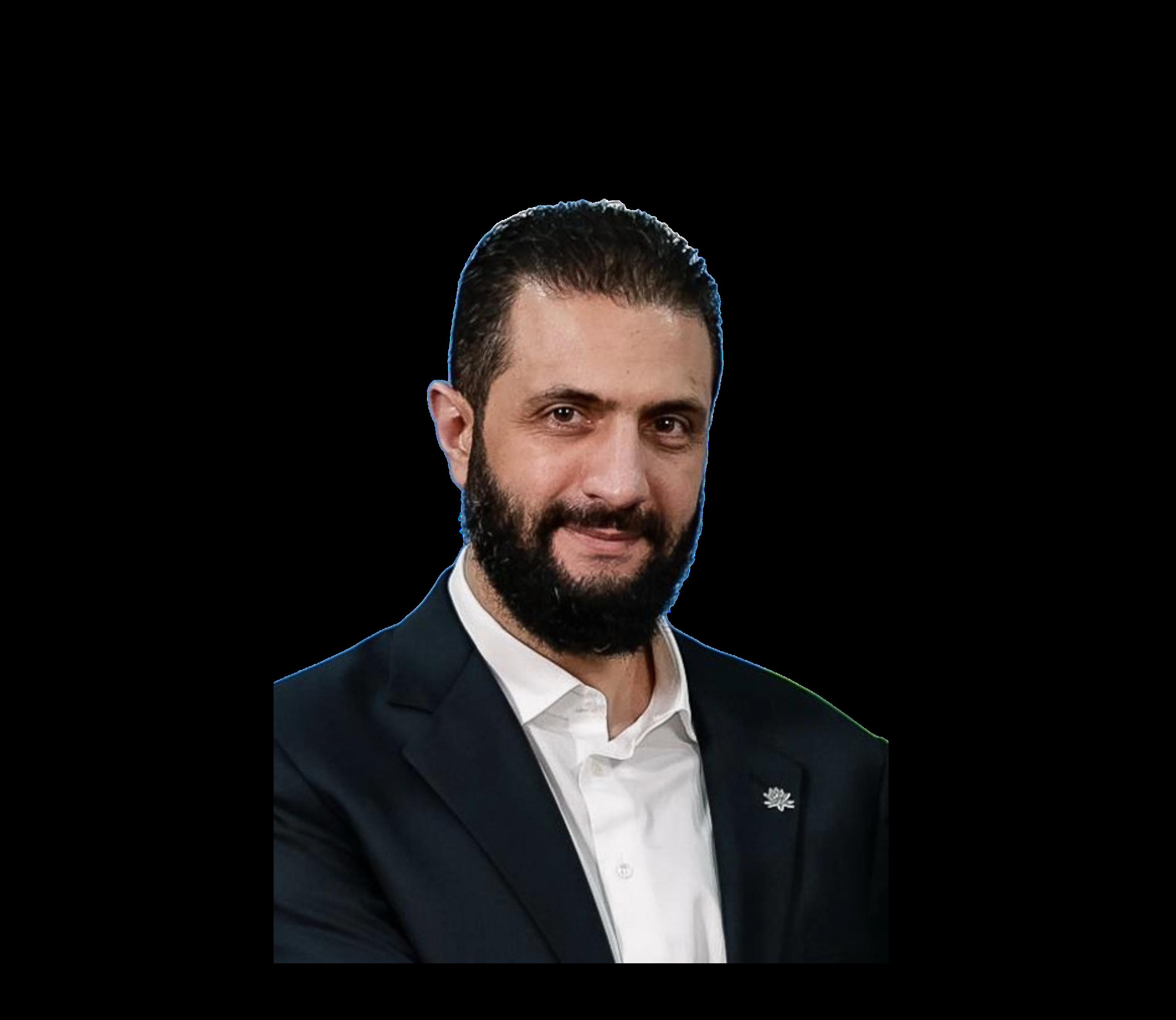
Image (Above), Anthony O’Neil via
Sky Sports Halo: The Short-Lived Catastrophe to Women’s Sport
Rosa Simkin Contributor
We live in a sporting era, witnessing unprecedented growth of women’s sport on a global scale. In the UK, this was kickstarted by the Lionesses’ 2022 European Championship victory on home soil, which saw a record 87,192 watching at Wembley and a further 17.4 million tuning in on BBC One. In cricket, India’s first Women’s World Cup victory a few weeks ago, saw viewership records tumble in India, as the 185 million viewers on JioHotstar equalled the record set by the 2024 Men’s World Cup final, also won by India. The 2025 Women’s Rugby World Cup in England saw 444,465 tickets sold and 5.8 million tune in to the final, the most watched women’s rugby match in the UK ever.
You can imagine my surprise, therefore, when I came across the Sky Sports launch of their new platform Halo. In their now deleted launch post on X, the broadcaster labelled the platform as a dedicated space for “all sports” and for “championing female athletes”. The broadcaster’s intention was to provide women a space within sport. Instead, the project’s launch centred around criticism, labelled as patronising and sexist, as it appeared to completely disconnect from the very audience it was attempting to empower. Sky shut it down within days, issuing a brief admission that they “didn’t get it right”.
Her Game Too, the campaigning organisation dedicated to tackling sexism and supporting female sports fans, welcomed the removal of Halo. However, it stressed the issue couldn’t simply “be brushed under the carpet”, vowing to contact Sky Sports directly to highlight where the launch went wrong and how the broadcaster must commit to real improvement.
The meltdown was fast, albeit not surprising. The brand was kickstarted by the now
infamous line “lil sis to Sky Sports”. This was instantly problematic, positioning the platform and women’s sport as secondary to the main Sky Sports brand. In an era where women’s sport has fought for decades to be treated with the same respect as men’s sports, the framing of the platform as the “little sister”, reinforced the exact hierarchy fans are trying to dismantle.
“What stood out most to many was the content.”
Five of the first eleven now deleted posts featured men’s athletes, leaning on trends, filters and pink text. For a platform promoted as a space to “champion female athletes”, the early output sent the opposite message. Instead of elevating women’s sport, Halo appeared to recycle generic TikTok tropes and place sport-shaped content inside them, often without women at the centre. It became apparent that this space was not just dedicated to platforming the women’s game, but instead segregating female fans from Sky’s main accounts.
As someone who covers women’s sport day in day out, what struck me most was how instantly obvious the disconnect felt. I could not recognise myself, or the communities I spend so much time in, anywhere within Halo’s aesthetic. Halo seemed built on an outdated assumption, that women in sport need content to be softened before they can engage with it. In an age where female fans are consuming in-depth analysis and long-form journalism with the same enthusiasm as male fans, this stereotype went beyond being outdated.
“It was baffling.”
Halo highlighted a fundamental truth, that visibility without understanding is not progress. Halo’s attempts felt less like representation, and more like a caricature of what someone
Awho does not follow women’s sport imagines women want.
Charlotte Ashton, a women’s cricket journalist and creator, echoed this sentiment when we spoke. Her immediate reaction to Halo’s launch was disbelief. “I was shocked to be honest. I thought it was a bit of a joke—I didn’t think it was a real account. I had a look through and was really confused... It seemed really inconsistent from a marketing and comms perspective, but also from a fan’s perspective; it was just bizarre.” It wasn’t simply the tone of Halo’s content that worried Charlotte, but what it revealed about how women’s sport is still perceived inside the biggest media organisations in the country.
“They’ve tried to dumb it down,”
“We all enjoy a funny joke and a meme online... but to infantilise everybody like that and use every post in the same manner was very strange. It felt very much like we were going back twenty years in perception of women with this very 2000s pink aesthetic”. Ashton pointed out how odd it was to see content like “hot girl walks” and trending audio used as placeholders for actual sport. “You could line up six different women who look nothing alike, who have very few things in common, but all love sport. We’re all interested, we’re all passionate, so it’s weird their content wasn’t even related to sport in a sense.”
The frustration cut deeper, because for so many women working in sport media, the disconnect Halo embodied is something we have felt long before its launch. You learn quickly in this industry that being a woman in press boxes, newsrooms, or mixed zones means navigating a level of scrutiny and dismissal that rarely touches your male counterparts.
So, when Charlotte said “They don’t listen to fans, they don’t engage with it... there’s
How Did the Home Nations Perform?
Luke James Sports Editor
nd so, it ends, with all bar one match complete at the time of writing. Wales are to face the Springboks in Cardiff. After a fantastic weekend of rugby, what can be taken away? Which home nation has been the most consistent, and who have blown hot and cold?
Scotland have not had the easiest Autumn Series. Despite thumping the US 85–0 and Tonga 56–0, they snatched defeat from the jaws of victory against Argentina, and conceded costly early tries to lose to the All Blacks. Their Nations Series has been dampened by poor execution in the final 20 when facing Tier 1 opposition, but much can be taken from their large victories, and elements of their losses. Their running rugby and ariel game has continued, and Scotland’s attacking shape looks threatening at times. All in all, around a 5/10 series.
England have had a fantastic Autumn Series. George Ford has been allowed to play his natural game, and it has worked incredibly. The rugby IQ to take drop goals when something doesn’t seem on has slowly eroded from the sport, but he is forcing it back. The performance against New Zealand was probably the best we have seen Steve Borthwick’s men play all year, and although Argentina ran them close, England seemed confident and had the skill to show it. The dismantling of a previously improving Australia was far from expected. There is quite a comfortable argument that England is the secondbest side in the world right now. England have had a 9/10 series.
Ireland will not be happy. Having won only two matches—Japan and Australia—their Autumn Series closed with a defeat like no other. Their loss to New Zealand at the start of the series in Chicago felt like the tide was turning against Andy Farrell’s men, but their loss to the Boks confirmed it. Ireland
no representation there in the big broadcasters”, it landed with a weight that goes beyond one poorly judged campaign. Because she’s right. Halo is exactly what happens when decisions about women’s sport are made in rooms where women are present but not in roles of influence. For me, Halo did not just feel misguided, it felt eerily familiar. It reminded me of the many occasions where I’ve been the only woman reporting from a domestic fixture, and have had to work twice as hard to be taken seriously. These experiences are not headlinegrabbing, but they build into a quiet fatigue that sits under the surface of nearly every woman working in this industry.
“Halo promised representation.”
Halo, unintentionally, brought all of that to the surface. Charlotte articulated the standard that so many of us have been asking for: “Good, respectful coverage of women’s sport looks like coverage on par with men’s sport... don’t infantilise the women.” The ask is not complicated. It’s not revolutionary. It’s simply equality of tone, depth, and respect. “Yeah, we can have a funny question”, she said, “as long as it’s the same funny question you would ask a man in sport”. What women’s sport doesn’t need is segregation. What it certainly does not need is sugar-coating. What it needs is serious journalism, investment, curiosity, and ambition. And treating women equally. What it delivered, however briefly, was a reminder of how easily women’s sport can be misrepresented when those pulling the levers fail to engage with the communities they claim to serve.
seemed to lose their edge in the Soldier Field test only in the second half, and managed to survive an early deserved 20-minute red card period by scoring a try, and only conceding one. Their discipline was mostly okay. The Aviva was completely different. A record-tying five cards, including another 20-minute red, coupled with decimation at the scrum showed the true underlying issues. Where the Australia and Japan game were tidy, complete performances with little pressure, the big-stage fixtures against the All Blacks, and especially the Springboks, showed that desperation brought out ill discipline and highlighted heavy front-row weakness. The 6-minute period at the end of the Springbok match, where they were camped on the Bok 5 metre and failed to score summed it up perfectly. Ireland were in the fight but failed to convert when necessary. Ireland’s Autumn Series has been a 4/10.
Wales have had a good Autumn Series considering where they started. Four tries against Argentina, an awesome first half performance against the All Blacks, and their first win at home since the 2023 Six Nations, all with new Head Coach Steve Tandy, should be celebrated. Despite being blown away in the last 20 in both the Argentina and New Zealand fixtures, Wales showed guts and never gave in. Tomos Williams was brilliant, and Tom Rogers became the first Welshman—and the fourth player ever—to score a hat-trick against the All Blacks. Dan Edwards showed himself key, especially in the victory over Japan, and looks to be the future for the Welsh 10 jersey. Jarrod Evans kept his cool to nail a difficult penalty to claim the win and displayed that Wales are performing under pressure. Although, at the time of writing, Wales are yet to play South Africa, there is good evidence that this has been a good recovery series for them. Many gave them little chance, and they stood up and took opportunities when possible. The scrum in particular showed significant improvement, as did the lineout and back line plays. Wales looks electric when the ball is loose and will be targeting a win in the Six Nations. Considering prior expectations, this has been a 7/10 Autumn Series for Wales.

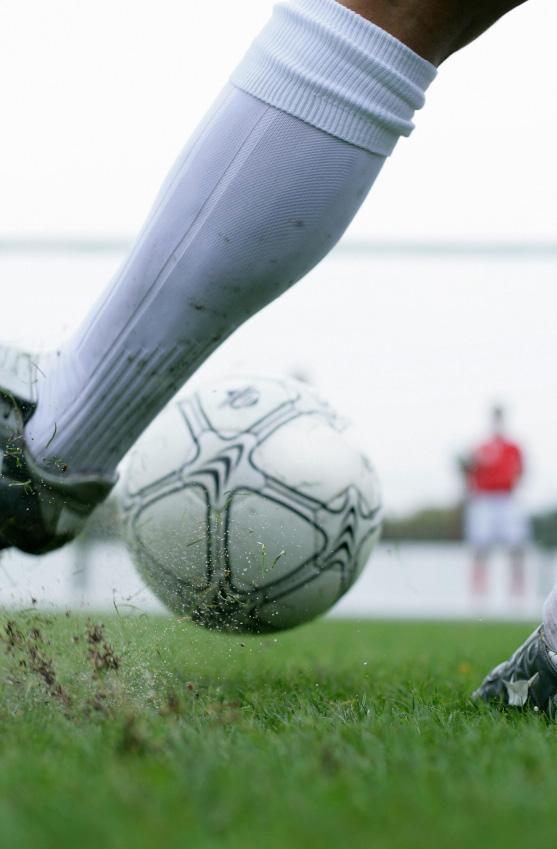
T33 Chwaraeon
Welsh Capital Named Host for Euro 2028 Opener
George Jones Head of Sport
he next Euros will take place in 2028 and are being hosted by the UK and Ireland. The footballing festivities will take place over one month, from June 9th, 2028, until July 9th, 2028. Nine cities across the hosting nations of Wales, England, Scotland, and Ireland have been chosen to host matches across the competition. Earlier this month, UEFA announced that
Olympic Selection Policy Scru-
tiny: A Sport Ethics
Jess Hyland Contributor
In July 2024, United Kingdom Athletics (UKA) came under intense scrutiny regarding their Paris Olympic Selection Policy.
To qualify for the Olympics, World Athletics suggested governing bodies like UKA to implement a 50/50 qualification strategy, meaning fifty percent of athletes would qualify through a qualification standard set by World Athletics, and the rest would qualify through world ranking points.
The scrutiny UKA faced, was largely caused by their decision to enforce an additional B standard for athletes who qualified through world ranking points. The standard aimed to enhance the level of athletes qualifying through world ranking, ensuring they were close to the World Athletics qualification standard. Specifically, UKA’s aim was to “maximise both the number of medals won, and top eight placings achieved”. This situation presents a useful case study of sport ethics, a sector that typically flies under the radar.
UKA chair Ian Beattie defended the decision by stating that “an athlete getting to the Olympics with little chance of qualifying from their heat or pool, does not have a significant impact on inspiring the nation, and therefore does not merit public funding”. If the public are funding the athletes, their point of view and best interest should be considered. British sprinter Derek Redmond tore his hamstring mid-race in the 1992 Olympics and continued to finish with the help of his father, placing last. Despite not winning a medal, Derek’s legacy lives through charity ambassador roles, serving and inspiring the public. In addition, evidence suggests medal winning brings a temporary national pride that is often negligible, revealing a weak relationship and discrediting UKA’s reasoning for high achievement focus.
Looking elsewhere, it is important to consider the opportunities for athletes to reach this B standard. For steeplechase athletes, there were no World Athletics level events located in Great Britain within the Olympic qualification period. Requiring athletes who are often self-funded and work
Cardiff, Wales’ only city included, will have the responsibility of hosting the opening match of the competition, on June 9th. The opening match will contain two teams from Group A, one of which is likely to be a host nation. One would imagine that providing Craig Bellamy’s side qualify, the opening match should involve Wales.
On the topic of participating host nations, unlike the usual protocol whereby the host nation of an international football competition automatically qualifies for the tournament, for 2028, UEFA have decided that automatically qualifying all four host nations is unreasonable and unfair for all other European nations. As a solution to this, Wales, England, Scotland, and Ireland will go through group stage qualifying prior to the start of the tournament as per usual; but UEFA have reserved two qualification spots for the best-performing host nations that do not qualify via the group stage. Consequently, from a Welsh perspective, if we do not qualify in the groups and if any
Lens
alongside their sporting endeavours to travel abroad for a suitable competition level to meet this additional standard, which can be seen as unethical.
Whilst UKA’s top eight potential may seem effective, considering there was a high medal total in athletics at the Paris Olympics, the hyperfocus on Olympic success and medals risks limiting future success by failing to foster a pathway for developing athletes. 2012 Olympic champion Mo Farah, failed to make the final in Beijing 2008; even Usain Bolt failed to advance past the first round of the 200m in his first Olympics. These are some of the greatest athletes sport has seen, and even they required the opportunity to develop. There may be smaller developmental opportunities outside the Olympics; however, the magnitude will never be at the same level as the Olympics. If UKA desires future success, they need to ensure their athletes have the opportunity to develop and experience competing on major stages. Since Paris, UKA had one of their worst World Championship campaigns in 2025, failing to win a single gold medal, potentially pointing to the concerns above as a contributing factor.
And, of course, in sport, outcomes can often be unpredictable. For all UKA knows, an athlete ranked outside the top eight may have a chance of securing a medal. There are countless examples of this occurring, such as marathoner Molly Seidel who ranked 20th based on personal bests in Tokyo 2020 but won bronze.
Since this policy is created for the purpose of selecting athletes for the Olympics, it is reasonable to suggest that the policy should act in accordance with Olympic values. This opens the floor to a more complex and extensive analysis, that I invite the reader to consider contemplating, in order to explore a niche yet important aspect of the sport industry. As an overlooked discipline at the best of times, selection policies are rarely considered in the sport ethics landscape, but have significant impact on athletes’ livelihoods, highlighting the importance of their research.
two from the three other host nations qualify, we will automatically qualify due to the reserved spots from UEFA.
Cardiff’s selected venue is, of course, what is currently known as the Principality Stadium, which is situated right in the heart of Cardiff city centre and boasts a capacity of nearly 75,000 seats. That said, the stadium will be having a name change prior to hosting Euro 2028 and will be renamed the National Stadium of Wales. The stadium itself was initially built in 1999 and opened in a celebratory commemoration to the turn of the new millennium. Since its opening, the stadium has been home to the Welsh Rugby Union of which Wales Men’s rugby fixtures. It has also hosted both the FA Cup and League Cup finals, whilst the new Wembley Stadium was under construction in the early 2000s, as well as the Champions League final in 2017, which saw Real Madrid smash Juventus 4–1.
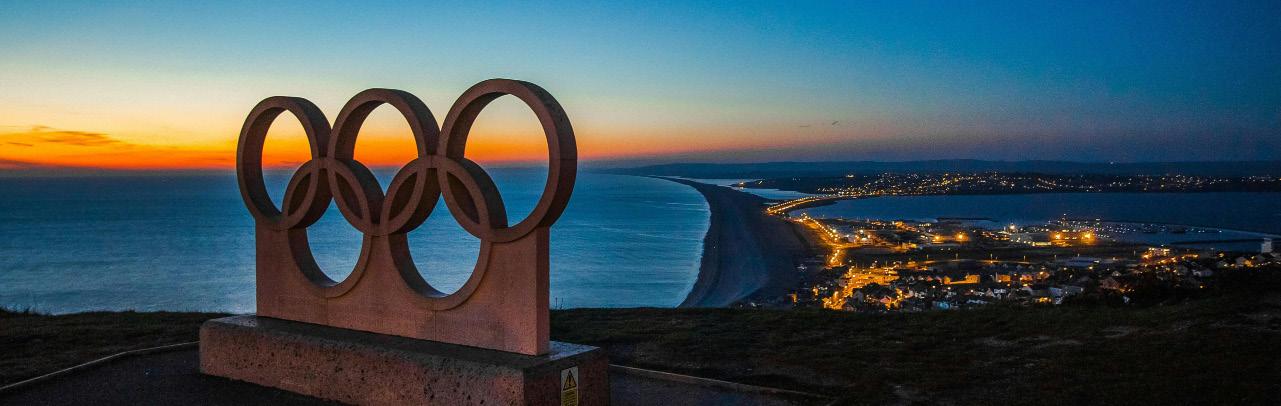
Lightning LRZ Returns
the team until earlier this year as a free agent.
Sport fan or not, the name of Louis Rees-Zammit will most definitely be familiar to most. Rees-Zammit left the Wales Rugby Squad in early 2024 and crossed over the pond to America, to further pursue his American football career—an announcement coming as a shock to many. Shortly after jetting over the Atlantic, LRZ was quickly noticed by many teams, including the likes of the Jacksonville Jaguars and the Kansas City Chiefs. However, his time over there was cut short when Rees-Zammit returned to his native waters and began a season-long rugby contract with Bristol Bears earlier this summer. Rees-Zammit is now set to rejoin the Wales Squad this Autumn Internationals, which begin early November.
The 24-year-old winger went overseas with hopes of joining the NFL (National Football League), he participated in the IPP (International Player Pathway) programme, which secured him with a signing from the Kansas City Chiefs. However, the happiness did not last long with Rees-Zammit failing to secure himself a place within the 2024 season squad of 53. Through this failure, LRZ earned a spot on the Jacksonville Jaguars 2024 season training team as a wide receiver, and continued to progress with
The news that LRZ was leaving American football and returning to rugby did not come to a surprise to many. Due to his very well publicised 18 months of hardship and lack of progression overseas, many thought that he was simply “wasting his talents.” American football is one of the most competitive sports, and to truly “make it,” it takes years of hard work and practice. Considering Rees-Zammit had already “made it” in rugby and become a household name, his time in America still holds a mystery to many. Following his return to the UK in August, LRZ signed a season-long rugby contract with Bristol Bears over the summer. So, now that Wales’ golden boy is back, what can we expect?
Steve Tandy made his debut as Wales Head Coach on the 9th of November against the Argentinian Pumas, as part of the Autumn Internationals. Included in his squad, Rees-Zammit is set to return to the thrilling atmosphere of the Principality Stadium despite having a minor toe injury during his Bears season. According to LRZ, his toe is feeling “great,” and he is ready to return to the game once more. Assistant Coach, Danny Wilson, seemed to confirm this, saying: “There are a few boxes left to tick, but he is moving in the right direction.” Rees-Zammit may be rusty from his time out of rugby; however, a player of such passion and dedication surely will
be able to rise from the pressures of being Wales’ golden boy once again. With Wales’ lack of success in the past seasons of play, perhaps LRZ is the piece of the puzzle that has been truly missed from the Welsh.
Danny Wilson, ex-coach of Dragons, Scarlets, and Ospreys and now assistant coach of Wales, has hopes that Wales will return to former glory and carries high expectations from the Welsh side this Autumn Internationals. “If you close your eyes, you will be able to see and able to describe how Wales will play with the identity and game model that we want to create”, said the assistant coach.
With brand new management, and the return of lightning winger LRZ, can Wales enter a golden era? The pressure of success falls heavily on the shoulders of many, however Steve Tandy and Louis Rees-Zammit must prepare themselves for the fiery intensity of what it is to hold responsibility of both excellence and expectation—the hope of a new Welsh Rugby golden age lingers. Cymru fans are desperate for a chance of victory, but have the Welsh Dragons prepared enough, in order to return pride and passion to the nation? Can LRZ help secure a golden future for Wales? After playing a role in much improved Wales performances so far in the Quilter Nations Series, there is hope for a bright future for both Wales and Louis Rees-Zammit.
Gracie Bradley Contributor