Ga. allocated $531 million for Helene block grants
2025 GEORGIA FARM BUREAU FARM DOG
Rooster
pages 6 & 7
Avoiding H-2A visa pitfalls
pages 8 & 9
Details of cotton & peanut programs emerge
pages 10 & 11
Cattle herder extraordinaire named GFB Farm Dog
pages 12 & 13
Georgia agriculture shines at Sunbelt Expo
Want to subscribe? Join Georgia Farm Bureau to receive GFB News four times a year. Your membership supports farmers & agriculture while giving you access to more than 300,000 discounts. Visit gfb.ag/join.
Central-Carroll, ABAC win Advocacy in Action contests
USDA allocates $531 million to Ga. for Helene block grants
Kay joins GFA staff
Ga. lawmakers join 4-H, FFA for livestock show
Departments
4
25 Ag in the Classroom View from the Field
Kenny Burgamy Director
Jennifer Whittaker Editor
Jay Stone News Reporter
GFB News Staff pages 26 & 27
Ga. Foundation for Agriculture
Jared McGukin Graphic Designer
Logan Thomas Photographer
Georgia families honored for farming a century
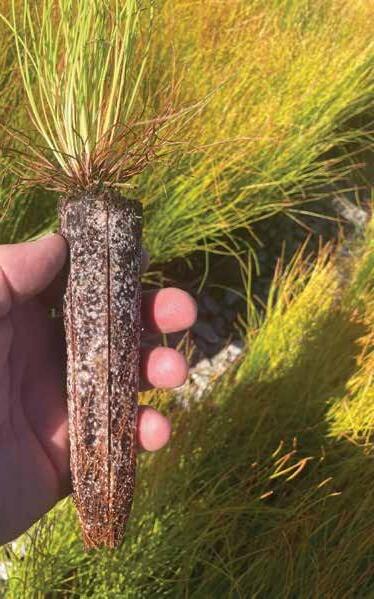
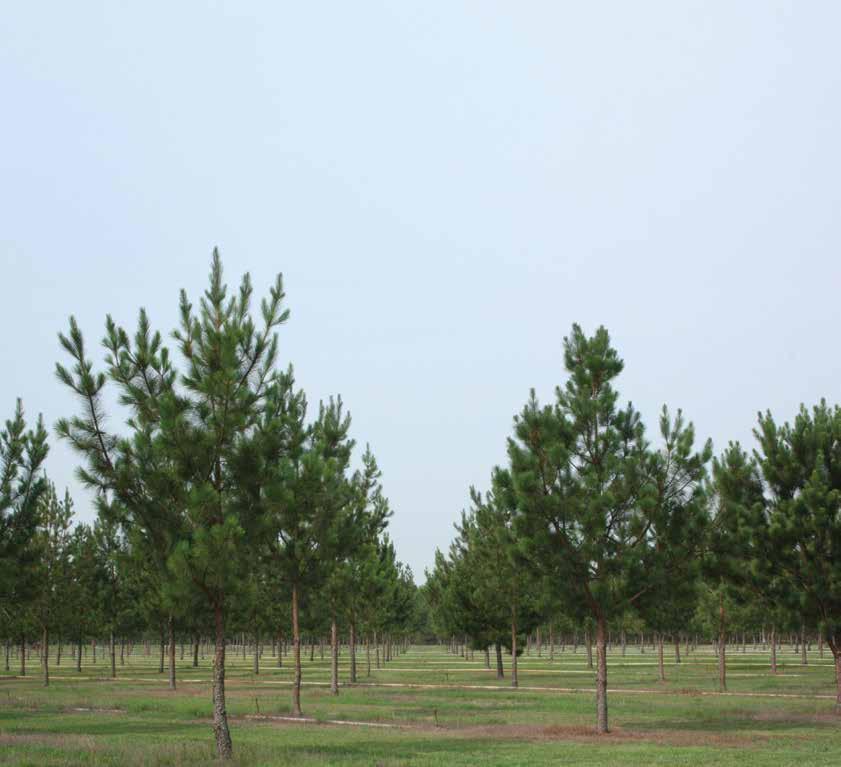
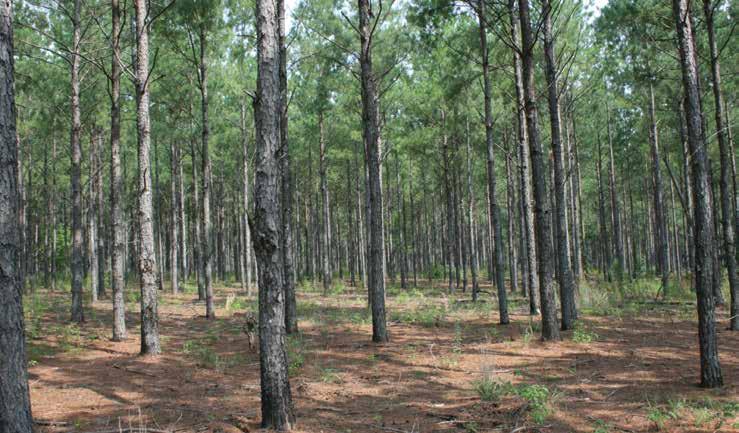
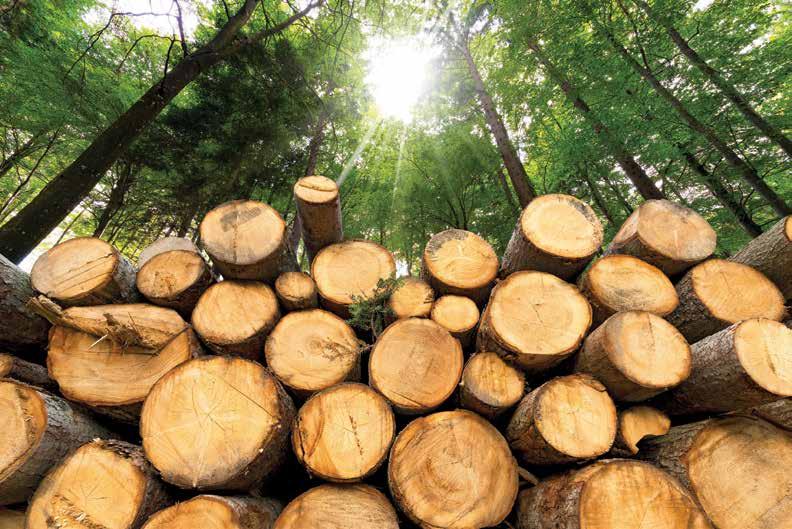
Timber industry reeling from mill closures
& 21 pages 23 & 24 page 30
GFB accepting entries for art & bookmark contests
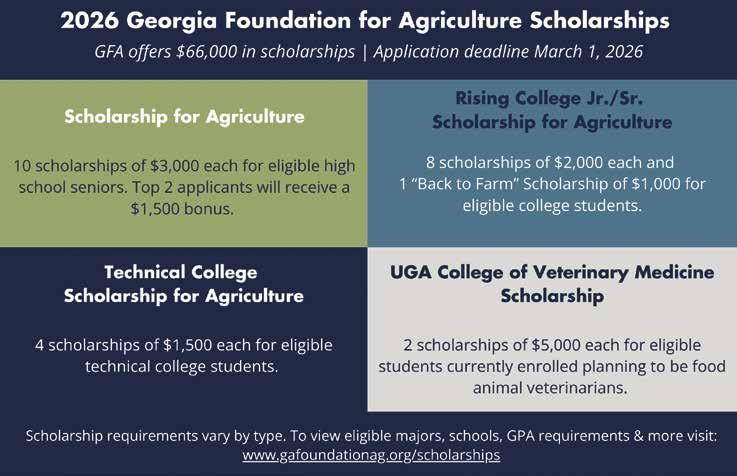
GFA scholarship deadline is March 1
FOLLOW US ON THESE PLATFORMS @ GAFARMBUREAU
Farmers & Ranchers On The Cover:
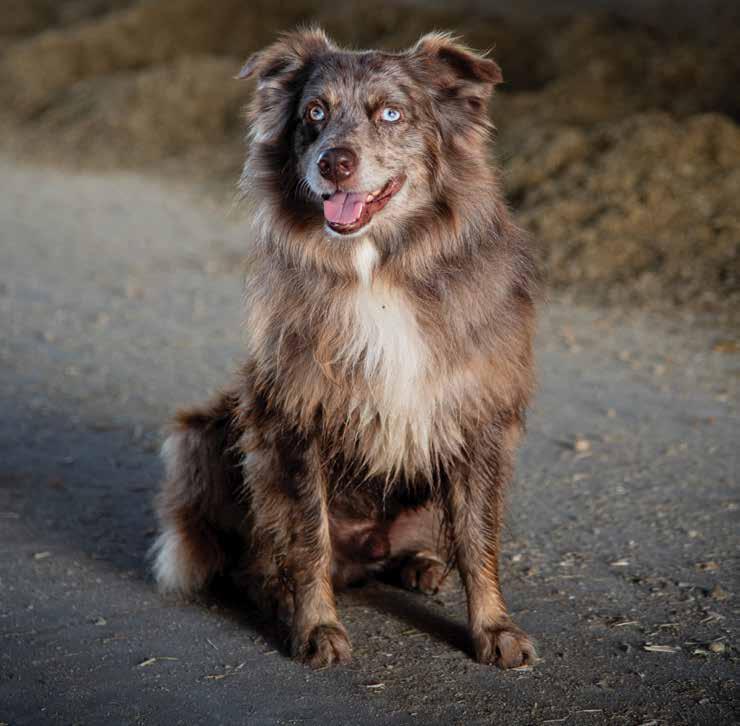
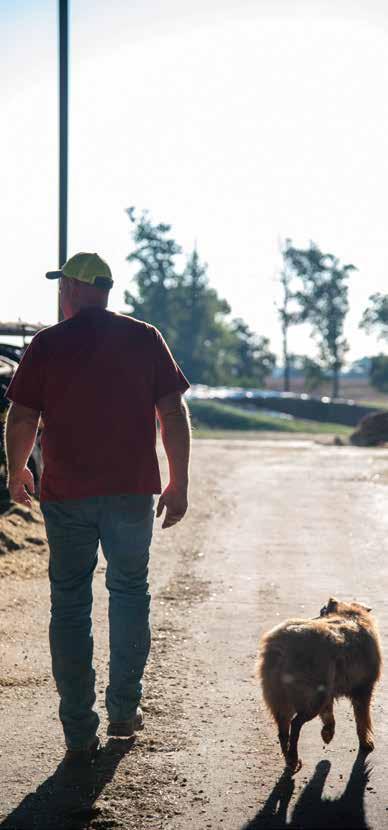
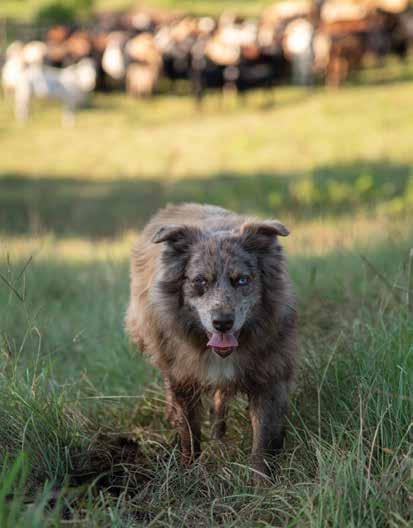
There’s nothing like the bond between a devoted farm dog and its human. Rooster, a red merle Australian Shepherd, was recently named the 2025 Georgia Farm Bureau Farm Dog for the help he provides working cattle.
For information concerning advertising, contact Wendy McFarland at 334-6529080 or mcfarlandadvantage@gmail.com. For questions about your membership or member benefits, call 1-800-633-5432. For questions regarding editorial content call 478-474-0679, ext. 5334 or e-mail jawhittaker@gfb.org.
Photo by Logan Thomas
View from the Field
Tom McCall, GFB President
Farm families across Georgia are facing one of the toughest stretches we’ve seen in years. Record-high input costs and weak commodity prices have created an environment where even the best managers are struggling to make ends meet. For many, the math simply isn’t “mathing” right now.
Across nearly every sector — row crops, livestock, timber and specialty crops — costs have climbed while prices have dropped. Fertilizer and chemical expenses have more than doubled compared to a few years ago. Equipment parts are harder to find and more expensive when they do show up. And all the while, commodity prices have fallen to levels that make it difficult to cover those costs, much less turn a profit.
Farmers understand that agriculture runs in cycles. There are good years and bad years, and most of us have learned to plan for both. But what we’re facing now feels different. It’s a combination of prolonged low prices, higher interest rates and inflation that touches every corner of the operation.
These pressures aren’t just numbers on a balance sheet; they weigh on families and communities. They test our patience, our faith and our hope for the future. But if there’s one thing I’ve learned about Georgia farmers, it’s that we don’t back down when times get hard.
Despite the challenges, there’s no shortage of determination and grit among producers in this state. You keep showing up before daylight, finding a way to get the crop in and get the job done. That spirit of perseverance is what keeps rural Georgia strong and agriculture our largest industry.
Georgia Farm Bureau will continue to fight for you - pushing for policies that reduce costs, open markets and protect family farms. Farming has never been easy, and it never will be. But if we stay true to our values, stand together and keep our faith, we’ll find our way through - just as those before us always have.
Tom McCall, GFB President
OFFICERS
President
TOM McCALL, Elbert Co.
1st Vice President &
South Georgia Vice President
DANIEL JOHNSON, Pierce Co.
North Georgia Vice President
BERNARD SIMS, Catoosa Co.
Middle Georgia Vice President
RALPH CALDWELL, Heard County
General Counsel
DUKE GROOVER
Chief Financial Officer, Corp. Treasurer
RACHEL MOSELY
Chief Administrative Officer
JEFFREY HARVEY
Corporate Secretary & Senior Counsel
JEANNA FENNELL
DIRECTORS
FIRST DISTRICT: Bill Bryan, Chattooga Co.; Wesley Hall, Forsyth Co. SECOND DISTRICT: Gilbert Barrett, Habersham Co.; Russ Moon, Madison Co. THIRD DISTRICT: Chad Carlton, Polk Co.; Brad Marks, Newton Co. FOURTH
DISTRICT: Skeetter McCorkle, McDuffie Co.; Russ Wilburn, Barrow Co. FIFTH DISTRICT: Matt Bottoms, Pike Co.; Leighton Cooley, Crawford Co. SIXTH DISTRICT: James Malone, Laurens Co.; James Emory Tate, Jeff Davis Co. SEVENTH
DISTRICT: Gary Bell, Evans Co.; Ben Boyd, Screven Co. EIGHTH DISTRICT: Scotty Raines, Turner Co.; Don Wood, Wilcox Co. NINTH
DISTRICT: Lucius Adkins, Baker Co.; Paul Shirah, Mitchell Co. TENTH DISTRICT: David Lee, Bacon Co.; Lamar Vickers, Berrien Co. YOUNG
All advertising accepted subject to publisher’s approval. Advertisers must assume liability for content of their advertising. Publisher maintains right to cancel advertising for non-payment or reader complaint about advertiser service or products. Publisher does not accept per-order, political or alcoholic beverage ads, nor does publisher prescreen or guarantee advertiser service or products. Publisher assumes no liability for products or services advertised in the Georgia Farm Bureau News. For advertising rates and information, contact Wendy McFarland at 334-652-9080 or mcfarlandadvantage@gmail.com. Georgia Farm Bureau News was established in 1937. Copyright 2025 by the Georgia Farm Bureau Federation. Printed by Panaprint, Macon, Georgia.
Public Policy Update All Politics Are Local; GFB Ensures Your Voice Is Heard
By Alex Bradford
In today’s political climate, voters often feel lost in the shuffle, wondering if those elected to represent them understand the issues they face. For elected officials, it can be difficult to manage competing priorities and act before attention shifts. Timing is important to achieve results. With the right messaging, focus, and strategy, the opportunity for change can be created.
Georgia Farm Bureau strives to facilitate opportunities for policy change. Our greatest asset is our members, and that is where change begins. Each year, GFB members have the chance to participate in our policy development process, which establishes our positions on issues.
These policies are submitted by our county Farm Bureaus and our GFB Commodity Advisory Committees. The GFB Policy Development Committee reviews and refines the submitted policy, which is debated and approved by GFB voting delegates at our annual convention. This process ensures GFB’s policy positions reflect agriculture’s ever-evolving needs.
There are few truly grassroots organizations, and none more effective in unifying behind a common goal than GFB. While GFB has staff at the state and national capitols advocating for its policies, success depends on our member engagement. Although GFB’s Public Policy, Public Relations, and Field Services staff help coordinate these efforts, it is the work of our county leaders, state directors, advisory committees, YF&R and Women’s Leadership Committee who implement change through their advocacy.
This is why GFB invests in developing future ag leaders by supporting FFA and 4-H, the Sunbelt Expo Advocacy in Action contest, collegiate YF&R chapters, and our newly launched Leadership GFB program.
As we approach the 2026 legislative session and a significant election year, GFB encourages members to engage with candidates to ensure they know our priorities. Whether it is attending campaign events, inviting candidates to your farm or county meeting, or sending an email through the GFB Action Center on our website, now is the time to make your voice heard.
GFB is committed to maximizing our members’ advocacy efforts.
In 2026, GFB will host numerous events to help you interact with your legislators. On Feb. 10, please join us in Atlanta for Farm Bureau Day at the Capitol. In March and April, county leaders and YF&R members will participate in fly-ins to D.C. In the spring, we will host regional County Voices, Capitol Choices events to bring candidates together with members statewide.
We encourage you to attend these events, read our weekly legislative reports and engage with those who want to represent you.
There is the potential for significant political change next year and the ability for your voice to guide agriculture’s future through policy and those you elect. The key to cultivating success for the future of agriculture is you.
Alex Bradford is director of the GFB Public Policy Department. He may be reached at 478-474-0679, ext. 5287 or atbradford@gfb.org
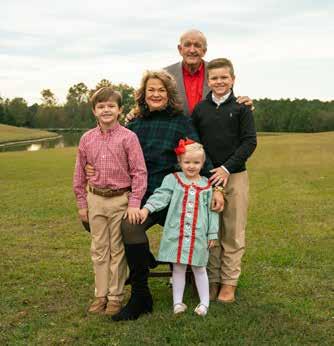
GFB President Tom McCall with his wife, Jane, and grandchildren, Wilkes, Winn and McCall.
Photo by Camdyn Moon Photography
Photos by Logan Thomas
AVOIDING H-2A VISA PITFALLS
By Jay Stone
The H-2A visa program for temporary agricultural workers is a crucial tool for farmers, allowing row-crop, fruit and vegetable, and livestock operations access to labor required to produce and harvest their commodities.
It is also, as many have experienced, fraught with costly potential pitfalls.
During the 2025 Agricultural Labor Relations Forum, held Sept. 16 & 17 in Tifton, Ellen Hendley of másLabor walked attendees through some key ways to make sure they stay on the right side of the migrant worker visa process. másLabor is a consulting firm that helps employers access labor under H-2A and H-2B migrant worker programs.
“It’s really important to be watching what’s happening,” Hendley said, “to have documentation, to have contracts in place and to make sure everybody, on your team and working with you, knows the rules and regulations and that you’re keeping documentation to ensure you’re going down the right path.”
The stakes are extremely high. For example, Hendley said, if a worker files a complaint that he or she was charged a fee prohibited under H-2A rules, multiple government agencies, including U.S. Citizenship and Immigration Services (USCIS), can launch an investigation. If violations are found during the investigation, the agency may revoke the employer’s H-2A approvals and require all workers – not just the individual workers who paid or had fees collected - to return to their country of origin. Until the investigation is complete, the agency could block future H-2A contracts. The costs can quickly escalate into tens of thousands of dollars, in either direct fines or opportunity costs.
AVOID PROHIBITED FEES
Prohibited fees include recruitment fees charged to workers (i.e., fees to “get on the list”), or employers passing along to workers program participation costs (for example, agent or attorney fees) that are, under the regulations, the employer’s responsibility. Failure to properly reimburse workers for their travel costs could also qualify as a fee violation.
“If you’re found to have charged a prohibited fee, whether you knew it or not, if somebody working on your behalf did it, then you have potential [labor visa] denial from USCIS for that year and then a potential three years after,” Hendley said.
She pointed out that under new regulatory requirements, employers are obligated to promptly reimburse workers in full for any prohibited fees they paid out of pocket. If employers fail to comply, USCIS may block the employer’s use of the H-2A program and could even bar program usage for several years.
Another key issue for employers of migrant workers is uniformity between practices in place for foreign workers and domestic workers. For example, if there is a standard that a U.S. worker have experience performing specific tasks, the same standard must be required of foreign workers. Employers are also prohibited from giving preferential treatment to foreign workers, including on matters related to pay.
“If you have a requirement in your job order, let’s just say all workers have to have a particular CDL license or all workers have to have a pesticide certificate, whatever that is needs to happen equivalently on the U.S. [worker] side and the foreign worker side,” Hendley said.
MEETING H-2A QUALIFICATIONS
To qualify as an H-2A employer, agricultural businesses must have a temporary or seasonal labor need, demonstrate there are not enough U.S. workers willing to fill their seasonal job positions, and show that employing foreign nationals will not affect working conditions or wages of similarly-employed U.S. workers. Only after satisfying the criteria can employers obtain a temporary labor certification from the U.S. Department of Labor (DOL), the first hurdle before moving to the USCIS stage of the process.
Hendley recommends that employers make sure they have documentation that each of these items was addressed, and not assume another party, such as a recruiter, is handling it on their behalf.
“Make sure everyone receives a copy of the work contract disclosure and that you have proof that you gave them a copy,” Hendley said.
“You want to keep some kind of evidence.”
According to másLabor, requirements employers must meet include:
• Contractual prohibitions against recruitment agents seeking/ receiving payments from prospective employees
• Providing a copy of the job order to H-2A workers before the worker applies for a visa
• Offer same benefits, wages & working conditions to U.S. workers offered to H-2 workers
• Offer wage that meets or exceeds the highest of a DOL-mandated Adverse Effect Wage Rate (AEWR), a state prevailing wage rate, the agreed-upon collective bargaining wage, or federal or state minimum wage
• A notice in the job offer of the frequency of pay and earnings statements
• A guarantee of employment equal to three fourths of the workdays for the total period of employment
• A notice of how transportation, meals and lodging for travel to and from the work location will be paid. The employer will either pay these expenses in advance, arrange travel directly, or reimburse the worker for their out-of-pocket costs.
• Housing at no cost to all non-local workers. These are workers who are not reasonably able to return to their residence on the same day. The employer is required to provide three meals per day or furnish free and convenient cooking and kitchen facilities so they can prepare their own. If the employer provides meals, the job offer must state the charge, if any, to the worker for the meals.
• Deductions from workers’ paycheck as required by law.
Hendley said required documentation like job description and requirements, work location(s), pay notices and other items should be provided to the workers prior to their visa appointments.
“Whoever is working with you during that part of the process needs to have a copy of that job contract, and they need to make sure that they’re giving a copy of that contract to every worker prior to that visa appointment,” she said.
KEEPING WORKERS SAFE
Hendley reviewed practices aimed at protecting workers’ safety and security.
These include: establishing who is authorized as a recruiter; ensuring job requirements are met and necessary training is received; clearly communicating when and where workers are to go and what documentation to bring; making arrangements to minimize amount of cash workers have to carry; disclosing exact work locations; and ensuring workers have access to their personal documents like passports at all times.
The Ag Labor Relations Forum, for which Georgia Farm Bureau was a presenting sponsor, featured two days of presentations covering foreign labor certification, wage and hour inspections, the OSHA heat initiative, regulatory movement on farm labor topics, ag labor research, software platforms and more.
The presentations included updates from the U.S. Department of Labor’s Office of Foreign Labor Certification and Wage & Hour Division, UGA and North Carolina State University researchers, OSHA, the UGA Extension Behavioral Health Team, the OSHA Training Institute Education Center at Georgia Tech, and the Georgia State Patrol Motor Carrier Compliance Division. Visit https://gfb.ag/25AgLaborForumresources for resources from all the forum’s presenters.
Details of Cotton & Peanut Programs Emerge in OBBBA
Story & Photos by Jennifer Whittaker
The One Big Beautiful Bill Act (OBBBA), signed into law July 4, will affect cotton and peanut farm bill programs.
Georgia cotton growers attending one of eight educational meetings held statewide in September had a chance to hear details regarding changes in cotton programs from National Cotton Council (NCC) President and CEO Gary Adams.
UGA Ag Economist Amanda Smith discussed the updated peanut farm bill provisions in the OBBBA during the Hot Topics session of the annual Georgia Peanut Tour Sept. 16.
Adams said cotton industry leaders worked about three-anda-half years to get the legislation updating the cotton programs passed and are fortunate that essentially all the industry’s priorities were addressed.
New cotton farm bill provisions in OBBBA:
• An increase in seed cotton reference price to $0.42/lb
• Payment limits increased & indexed to inflation
• Marketing loan increased & modernized
• Creation of an extra-long-staple loan similar to upland
• Supplemental Coverage Option changed to be more like STAX
• Basic & Optional Unit insurance premium subsidy increased
• Pima Trust Fund restored
• Textile mill assistance increased to highest level ever Peanut provisions in the OBBBA include:
• Farmers will receive the higher of Price Loss Coverage (PLC) or Agriculture Risk Coverage (ARC) for the 2025 crop without having to do anything.
• Beginning with the 2026 crop, the PLC reference price will increase from $535/ton to $635/ton.
• ARC revenue guarantee will increase from 86% to 90% and the maximum payment will increase from 10% to 12% of benchmark revenue.
• Both PLC and ARC are allowed with Supplemental Coverage Option and Enchanced Coverage Option (ECO).
• Starting in 2031, reference price will increase by 1.005% up to 113% of the statutory reference price.
Payment limits increased, indexed to inflation
Adams said payment limits for cotton ARC and PLC payments will increase from $125,000 to $155,000 per entity and will index to inflation in future years.
“[With] two-and-a-half to three percent growth per year, by the time you get to say 2030 that $155,000 probably looks a lot more like $175,000 to $178,000 if that’s the kind of inflation we’re going to continue to see,” Adams said.
Smith said peanut growers will continue to have a separate payment limit for their peanut crop that was increased from $125,000 to $155,000 per entity. The payment limit for peanuts will also be annually adjusted for inflation based on the consumer price index.
Certain business entities, such as S-Corporations and LLCs, will be treated the same as general partnerships regarding the structure of payment limits for cotton and peanuts.
Marketing loan changes
Beginning with the 2026 crop, the marketing loan rate for upland cotton will increase to $0.55/lb. The maximum storage credit rate for upland cotton will increase from the current $2.39 to $3 in Georgia. Another change is the marketing loan repayment rate for upland cotton will be the lowest 30-day prevailing market price beginning on the date the loan is repaid. This is expected to have an average benefit of 1.2 cents/lb.
The adjusted world price (AWP) used to determine loan rates will be calculated using the three lowest Far East quotes instead of the current five quotes. This is expected to have an average benefit of 60 cents/lb.
“If we stay where we are on prices, this is going to add some support, in time, to low prices,” Adams said. For peanuts, Smith said that beginning with the 2026 crop, the peanut marketing loan rate will increase from $355/ton to $390/ton.
Allocating new base acres
U.S. ag policy uses the concept of base acres for row crops that are covered by support payments in the farm bill. The number of base acres a farm has are determined by its historic plantings of eligible crops such as cotton, peanuts, soybeans, wheat and others. Farmers haven’t had a chance to update their base acres since the 2014 farm bill, Smith said.
“For producers that planted crops in 2019 through 2023, if they have no base, they can add base to their farm. Those producers that planted more than the base that they currently have, they could potentially increase the base on their farm,” Smith said.
Starting with the 2026 crop, farmers may claim new base acres predicated on their planting history of eligible crops from 2019-2023.
Adams offered the NCC’s interpretation of how the allocation of new base acres will work, cautioning it may change once USDA issues final regulations. The OBBBA farm bill provisions allow no more than 30 million new base acres to be created on farms nationwide. If farmers submit more than 30 million acres nationwide, then USDA FSA will prorate all submitted acres to get the nationwide total down to the 30 million cap, Adams said.
“Whatever the current base on your farm is, whatever it’s assigned to – cotton, peanuts, corn, soy, wheat, or any other covered commodity, those acres are going to stay unchanged on a farm,” Adams explained. “Did you plant a covered commodity from 2019 to 2023? Did you plant more acres on average than what you have base for the covered crop? If you answer yes to both of those questions, then based on the legislative language, you should be eligible for a base update. If you grew eligible non-covered commodities (specialty crops/vegetables) during the same period, you will be allowed to add the number of acres of these crops as additional base acres if the total does not exceed 15% of the total acres on your farm. If your specialty crop acreage on a farm is greater than 15% of your total acres, they're only going to allow you to count 15% of those.”
Rooster, CATTLE HERDER EXTRAORDINAIRE, NAMED GFB FARM
DOG
Story by Jennifer Whittaker
Rooster turned eight in November. You wouldn’t guess it looking at him. The red merle Australian Shepherd moves spry as a puppy, but more intentionally, which comes from training and years of herding cattle with his human, Shawn Raff.
Shawn and his wife, Nikkole, own a beef farm in Putnam County where Rooster helps Shawn work about 150 head of Brahman, Simmental and crossbred cattle. Rooster also accompanies Shawn to his job at Sunrise Dairy, near Eatonton, where the inseparable pair manage a large herd of milking cows and replacement heifers owned by Phil Harvey.
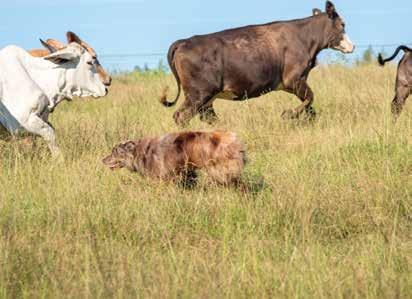
“Rooster is used to thinking on his own. This dog wakes me up at 4 a.m. every morning and is with me until about nine p.m. at night. I don’t even set an alarm,” Shawn said. “He is a workhorse. It’s not unusual for him to move 700-800 head of cattle in an hour and a half when we’re shifting the dairy cows on pastures. He replaces several men.”
Shawn says Rooster is used for just about any job you can think of involving the livestock on both farms.
“He sorts cattle, drives and fetches cows, moves cows up the alleyway into the chute, moves cattle during grazing rotations, and works alongside my horse to bring cattle into catch pens for vaccinations or other reasons,” Shawn said.
HERDING IS REWARDING
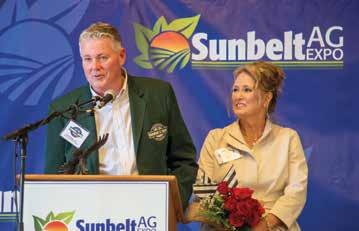
In recognition of his stellar work ethic and charming personality, Rooster received the 2025 Georgia Farm Bureau Farm Dog of the Year award during the Willie B. Withers Sunbelt Expo Luncheon on Oct. 14.
Before being called onstage with state dignitaries, Rooster discreetly enjoyed two of the delicious grilled pork chops served at the lunch, reliable sources said. Even Gov. Brian Kemp was impressed with Rooster and recorded the award presentation with his phone as GFB President Tom McCall introduced Rooster.
“This award is not only about recognizing a dog’s ability to help around the farm. It’s also about honoring a loyal friend who is with its farmer and farm family daily and is a symbol of unwavering dedication on the family farm. The bond between a farmer and their dog is deep, built on trust and countless hours of shared labor around the farm,” said McCall. “Rooster, this year’s recipient of this prestigious award, embodies the essence of what it means to be a farm dog—devotion beyond measure, intelligence that aids in daily tasks, and a heart that lives for his next assignment.”
As the winner of the second annual contest, Rooster and the Raffs received a $500 gift card. Rooster, who stands 21 inches tall and weighs about 45 pounds, was chosen from nearly 100 canine entries by a panel of judges with knowledge of farm dogs.
ON THE FARM
“Rooster is our family dog, but he has picked Shawn as his person. They are two peas in a pod, and Rooster follows Shawn everywhere. Rooster is Shawn’s right-hand man,” Nikkole said.
“Shawn doesn’t have to watch to see if Rooster is there, he’s always within two feet of Shawn no matter where he’s at.”
When Rooster, named for the John Wayne film Rooster Cogburn, isn’t working or competing, he loves to go for rides in the truck to check cows or to get a pup cup at the local coffee shop with the Raffs’ daughter, Dalaney. Rooster loves to run with the Raff's son, Kaleb, who is serving in the U.S. Army. Rooster also loves to cuddle and watch television to unwind after a long day of work.
As a hobby, Rooster and Shawn compete in herd trials and belong to the Rocky Branch Working Australian Shepherd Club in Forsyth, Ga. Shawn is the club’s president.
Rooster has received training from Jessica Saura with Pawsitive K9 Connections in Metter, Ga., and from Devona Pierce for herd trialing. Rooster came from Pincie Creek Australian Shepherds owned by Roger Stevens.
“Rooster would not be the herding dog he is today if it wasn’t for Devona’s help, and Roger Stevens was instrumental as well,”
Shawn said. “Billie Richardson and Kellie Hunter were a very big help in developing Rooster and my herding trial skills, too.” Georgia Farm Bureau is known for its love of dogs as Lucky, also an Australian Shepherd, has served as the GFB mascot since 2021. Visit https://gfb.ag/FarmDogContest to learn more. Look for details to enter the 2026 contest next spring.
Photos by Logan Thomas FARMDOGWINN
Georgia Agriculture Shines
AT SUNBELT AG EXPO
Compiled by Jennifer Whittaker
Every Sunbelt Ag Expo is special, but the sun seemed to shine a little brighter at this year’s show held Oct. 14-16 in Moultrie Maybe that’s because Georgia had the honor of being the 2025 Expo Spotlight State. It could also be attributed to Colquitt County vegetable farmer Kent Hamilton being named the Sunbelt Ag Expo Southeastern Farmer of the Year. If you couldn’t attend this year’s show, we hope these shots make you feel you were there!
Congratulations to Kent Hamilton of Colquitt County for being named the 2025 Sunbelt Ag Expo Farmer of the Year! Hamilton, with wife, Pam, is CEO of Southern Valley Fruit & Vegetable, Inc., a family farm based in Norman Park. Southern Valley grows green beans, cabbage, trellis cucumbers, a variety of peppers and squash, sweet corn, trellis pickles and eggplant. The Hamiltons also own 100 head of cows. The farm cultivates more than 8,500 acres in Georgia, Tennessee, Florida, and the Yucatan Peninsula of Mexico. Kent is a former president of the Georgia Fruit & Vegetable Growers Association. Kent received $15,000, the use of a Massey Ferguson tractor for a year and other prizes.
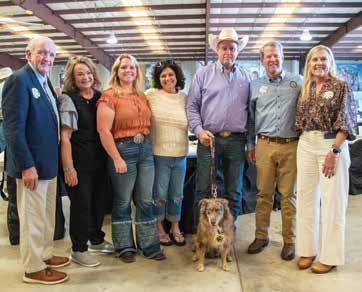
Australian Shepherd Rooster was named the 2025 GFB Georgia Farm Dog at the Wilie B. Withers Luncheon. From left, GFB President Tom McCall & his wife, Jane, congratulate Rooster’s family, sister, Dalaney, mom, Nikkole, & dad, Shawn Raff, on the award along with Gov. Brian Kemp & First Lady Marty Kemp.
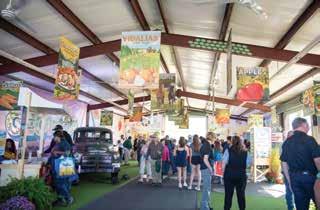
For the fourth time since 1981, Georgia was the Sunbelt Ag Expo Spotlight State. A coalition of Georgia ag organizations, including Georgia Farm Bureau, supported the Georgia Department of Agriculture’s leadership in creating the “All Roads Lead to Georgia Grown” exhibit.
by Logan Thomas
Photo by Logan Thomas
Photo by Logan Thomas
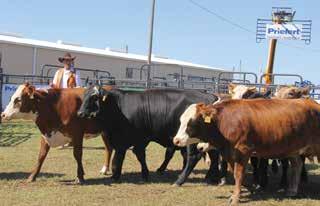
Curt Pate, one of the nation’s most respected cattle handlers, gave daily demos teaching cattle producers how to move their cattle using techniques to minimize the cattle’s stress.
Photo
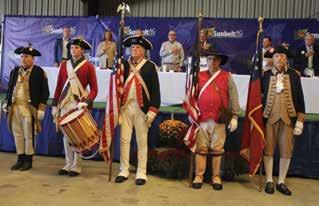
Members of the Georgia Society, Sons of the American Revolution present the flags during the Willie B. Withers Expo Luncheon.
Photo by Jennifer Whittaker
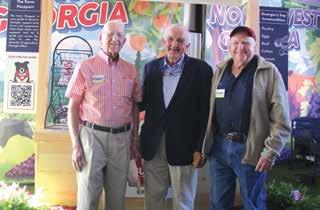
Georgia Farm Bureau President Tom McCall, center, visits with former GFB Presidents T.M. “Mort” Ewing, left, and Gerald Long.
Photo by Jennifer Whittaker
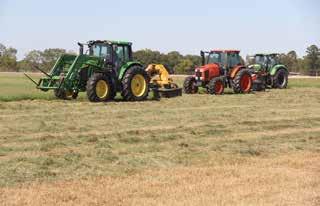
Sunbelt Ag Expo hay cutting demos were a big draw at the 2025 show.
Photo by Jennifer Whittaker
NASCAR driver Ross Chastain, an eighth-generation watermelon farmer, stressed the importance of wearing seat belts. Chastain spoke at a press conference urging motorists and farm vehicle drivers to take steps to prevent catastrophic accidents.
Photo by Jay Stone
Photo by Jennifer Whittaker
Advocacy in Action
CENTRAL - CARROLL, ABAC TEAMS WIN CONTEST
By Jay Stone
Teams from Central High School of Carroll County and ABAC won top prizes in the 2025 Advocacy in Action competition held Oct. 15 at the Sunbelt Ag Expo in Moultrie.
The competition consists of high school and college divisions with students from around the Southeast. The event is a platform for students to showcase their knowledge of ag issues and advocacy skills. This is the fifth year Georgia Farm Bureau has sponsored the contest.
In the final round, the top three teams in each division –high school and college – made policy pitches to three judges: state Rep. Jaclyn Ford, former state Rep. Clay Pirkle and Georgia Forestry Association Vice President for Government Affairs Jake Matthews. Each team was paired with a Georgia lobbyist who coached the team onsite.
During the final round, students discussed legislative and industry solutions to challenges the forestry industry is facing, including shrinking demand, global competition and compliance with government regulations.
“I think they are learning to be comfortable with asking for help and arguing for their cause,” Ford said.
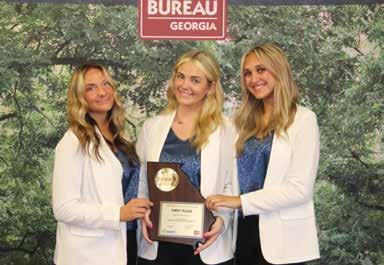
Central, coached by Leanna Brown of the Metro Atlanta Chamber of Commerce, took top honors in the high school division for the second straight year. Students Frankie Kelly, Kali Merrill and Sophie Drummond competed for Central.
Second place went to the Florida 4-H Youth Development Team of Timmy Hawes, Summer Wayne and Tommy Hawes. They were coached by Meredith Stinson, a Georgia EMC government relations representative.
The Bronson (Fla.) High School team of Kevin Arrangeli, Carson Meeks and Tegan Barber finished third. National Federation of Independent Business State Director Hunter Loggins coached the team.
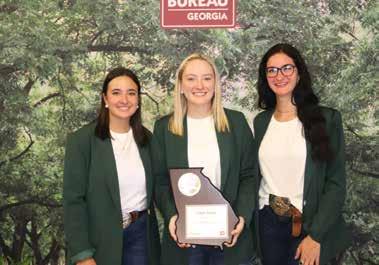
The ABAC team of Lydia Hill, Carlye Green and Cassidy Barnett won the college division. ABAC was coached by Jaci Martin, a policy advisor with the office of Gov. Brian Kemp.
The Auburn University team of Caleb Mills, J.B. Rhodes and Audrey Garrett finished second. The University of Georgia team of Ela Grace Ash, Amiyah Elam and Georgie Simmons took third. Auburn was coached by GFB National Affairs Coordinator Ben Parker. UGA was coached by Georgia Agribusiness Council Director of Public Affairs Jake Tench.
The first-place team in each division received a $1,000 prize and an invitation to the 2026 GFB Day at the Capitol. Each second-place team received $800 cash. The third-place teams received $600.
The contest drew 34 entries – 27 high schools and seven colleges. For the initial round of competition, each team submitted a video detailing farmers’ efforts to protect natural resources.
Visit https://www.gfb.org/advocate/competition to learn more.
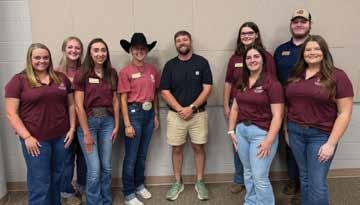
The Central High team won the Advocacy in Action high school division. From left are Frankie Kelly, Kali Merrill and Sophie Drummond.
Photo by Jay Stone
The ABAC team won the Advocacy in Action collegiate division. From left are Carlye Green, Cassidy Barnett and Lydia Hill. Photo by Jay Stone
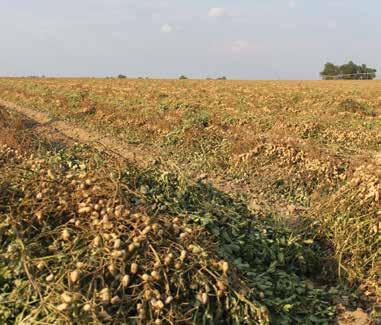
USDA TO ISSUE $531 MILLION TO GA FOR HELENE BLOCK GRANTS
and U.S.
Agriculture Brooke Rollins announced Georgia will receive approximately $531,236,000 in federal funds for the Hurricane Helene Block Grant Program. Georgia’s Block Grant Program will cover future economic losses, infrastructure losses and timber losses caused by Hurricane Helene in Georgia’s more than 100 disaster-declared counties.
“Farmers and ranchers in Georgia have been hit hard and suffered significant economic losses during 2024. USDA is working closely with the state of Georgia to ensure those impacted have the relief they need,” said Rollins.
This funding is part of the $30 billion for agriculture that Congress passed in December 2024 and former President Biden signed into law that month to address the economic issues and disaster losses farmers suffered.
“This funding is absolutely essential to help our farm families bounce back from Hurricane Helene,” Harper said. “Our team
invested hundreds of hours into the negotiation process to secure the maximum possible amount of federal funding for our state and our producers.”
GDA continues to work with USDA to finalize administrative details in the state’s block grant agreement and corresponding work plan. The federal government shutdown delayed implementation of the program. Monitor www.fsa.usda.gov and www.agr.georgia.gov for updates on how to apply.
The USDA is accepting applications for the second stage of its Supplemental Disaster Relief Program (SDRP) for farmers recovering from natural disasters. Eligible producers have until April 30, 2026, to apply for both Stage One and Stage Two assistance.
USDA’s Farm Service Agency (FSA) is delivering more than $16 billion in congressionally approved SDRP assistance. This is in addition to $9.3 billion in Emergency Commodity Assistance Program (ECAP) assistance to over 560,000 row crop farmers and $705 million in Emergency Livestock Relief Program (ELRP) assistance to more than 220,000 ranchers. Stage Two of SDRP covers eligible crop, tree, bush and vine losses not covered under Stage One program provisions, including non-indemnified (shallow loss), uncovered and quality losses. Visit https://fsa.usda.gov/sdrp for Stage Two program details.
The first stage, announced in July, remains available to producers who received an indemnity under crop insurance or the Noninsured Crop Disaster Assistance Program (NAP) for eligible crop losses due to qualifying 2023 and 2024 natural disaster events.
The Milk Loss Program provides up to $1.65 million in payments to eligible dairy operations for milk dumped or removed from the commercial milk market, without compensation, due to a qualifying natural disaster event in 2023 and/or 2024.
Producers who lost other eligible harvested commodities stored in on-farm structures in 2023 and/or 2024 due to a qualifying natural disaster event may be eligible for assistance through the On-Farm Stored Commodity Loss Program, which provides for up to $5 million to affected producers. Covered crops include corn, grain sorghum, hay, oats, peanuts, seed cotton, soybeans and wheat. Jan. 23, 2026, is the deadline to apply for milk and on-farm stored commodity losses. Information and fact sheets for both programs are available at https://fsa.usda.gov/mlp for milk loss and https://fsa.usda.gov/ofsclp for on-farm stored commodity losses.
KAY JOINS GFA STAFF
Kim-Cora Kay has joined the Georgia Foundation for Agriculture staff as an educational program assistant with the Georgia Ag Experience mobile classroom. Prior to joining the GFA staff, Kay was the McDuffie County Farm Bureau county coordinator for six and a half years.
The GAE mobile classroom, created by the GFA, is housed in a 36foot trailer that gives third through fifth-grade students and consumers a chance to virtually visit a cattle, cotton, fruit, peanut, pecan, poultry, and vegetable farm as well as a horticulture nursery and timber stand.
Colorful farm photos, interactive technology and displays of products made from various ag commodities highlight the importance of Georgia agriculture to our daily lives.
Kay has a passion for connecting people, especially young people, with the importance of farming and where their food comes from. She looks forward to sharing the story of agriculture in fun and meaningful ways through the mobile classroom.
She is originally from Prince Edward Island, Canada, but Georgia quickly won her over with its beautiful landscapes, friendly people and strong agricultural roots.
Kay and her husband, Colin, love spending time outdoors. The couple has one son, Dane. Whether they’re fishing, exploring, or taking care of their small pecan orchard, they always find ways to enjoy nature and stay
As of May, the Georgia Ag Experience has visited every Georgia county
On Sept. 30, Georgia Agriculture Commissioner Tyler Harper
Secretary of
GA Lawmakers Join 4H, FFA for Livestock Show
By Kate Walker
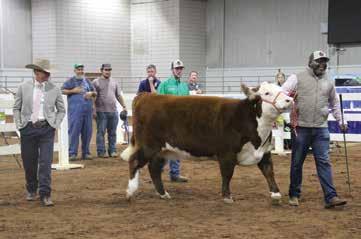
On Oct. 3, Georgia legislators traded their blazers for boots at the Georgia National Fair’s Legislative Livestock Showdown. The annual competition, organized by the Georgia Department of Agriculture, pairs members of the Georgia House and Senate Agriculture & Consumer Affairs Committees with 4-H and FFA students. Together, they learn the ropes of showing livestock and the value of Georgia’s youth agriculture programs firsthand.
A fair tradition since 2011, the showdown returned after last year’s cancellation due to Hurricane Helene, with legislators showing beef cattle. While some legislators are farmers themselves, for others it was their first encounter with cattle outside of a dinner plate.
“I'm always trying to get folks that may not have grown up with an ag background or live in rural areas to see how much of an impact FFA and 4-H have on the lives of our young people,” said Sen. Russ Goodman (Dist. 8, Homerville), Senate Agriculture & Consumer Affairs Committee chairman.
Divided into teams of senators and representatives, Rep. Teddy Reese (Dist. 140, Columbus) earned first place in showmanship, while the Senate claimed the team trophy for the third consecutive year.
Before entering the ring, student coaches taught legislators showing techniques and shared details about their animals. Rep. Bethany Ballard (Dist. 147, Warner Robins) had a deeper appreciation for livestock programs after being paired with Perry FFA member Stella Wood.
“They're going to grow up, and they're going have a great work ethic,” Ballard said.
For Wood, it was encouraging to see legislators experience exhibiting an animal.
“It means a lot because they're going to learn a lot about agriculture,” Wood said.
Sen. Sheikh Rahman (Dist. 5, Lawrenceville), competing for his third year, was coached by Emanuel County 4-H member Lexa Jukes.
“Participating in this show has always been a great experience. It doesn’t matter what I show, I love it,” Rahman said. Jukes, who has shown cattle for four years, said she enjoyed working with him.
“I love teaching other people about showing cattle,” Jukes said. As legislators exhibited their animals, students offered lastminute coaching while judges Clayton Walsh and Mesa Kutz, of Wisconsin, scored pairs on showmanship and quizzed them on livestock knowledge.
Reese (Dist. 140, Columbus), who had never worked with cattle before, credited Franklin County 4-H member Hess Fowler for his win.
“There’s an old cliche that says you can't teach an old dog new tricks,” Reese said. “Well, I had a young man with me today who taught an old man some amazing stuff.”
Fowler enjoyed introducing Reese to the agriculture industry.
“It's really important that [legislators] get to see this side of agriculture so it can impact the decisions they make for our state,” Fowler said.
Rep. Teddy Reese was the 2025 Legislative Showdown Showmanship Champion during the Georgia National Fair. Franklin County 4-Her Hess Fowler, green shirt, coached Reese on showing his heifer, Matilda.
Kate Walker, a senior at Georgia College & State University, interned this fall in the GFB Public Relations Department.
Photo by Jennifer Whittaker
GEORGIA FAMILIES HONORED for Farming a Century
By Jennifer Whittaker
Another crop of Georgia families, whose farms have survived wars, the Great Depression, crop failure and bad weather, received the Georgia Centennial Farm designation this fall.
“Reaching a hundred years is not a small thing. It’s about generations of hard work, perseverance and faith,” said Georgia Farm Bureau Chief Administrative Officer Jeffrey Harvey. “Georgia Farm Bureau understands that kind of commitment. Our organization was founded in 1937 for farmers, by farmers, and we’re still here today. We’re proud to stand beside family farms and to advocate on their behalf at the state and federal level.”
Since 1993, the Georgia Centennial Farm Awards program has recognized about 650 farms for operating at least 100 years. This year, another 14 were celebrated during a ceremony held Oct. 8 at the Georgia National Fair.
“This is absolutely my favorite event of the whole year,” said Georgia Department of Community Affairs (GDCA) Commissioner Christopher Nunn. “Nothing good happens without a lot of hard work and partnerships. I’m delighted to work on these awards with other organizations that support this program and farmers.”
The Historic Preservation Division of the GCDA administers the program with support from Georgia Farm Bureau, Georgia EMC, the Georgia Department of Agriculture, the Georgia National Fair and UGA Extension.
2025 Centennial Heritage Farm Awards
This award honors farms owned by the same family for 100 years or more that are listed in the National Register of Historic Places (NRHP).
• Ash Farms, Effingham County
2025 Centennial Family Farm Awards
This award recognizes farms owned by members of the same family for 100 years or more.
• Beck Farm, Madison County
• Carl J. Ray Farm, Tift County
• Fielding Tall Pines, Thomas County
• Hays Farm, Jackson County
• HD Bailey Family Partnership, Dawson County
• Home Place Farms, Hancock County
• Jenkins Family Historic Farm, Talbot County
• Jordan Farm, Washington County
• Lil’ Slice O’ Paradise, Dade & Walker Counties
• Pendergast Hay Farm, Grady County
• P.K. Moore Farm, Lowndes County
• Stanford Farm at the Martin Homeplace, Coweta County
• Striplin Lands LLC, Gordon County
Two families’ stories
In Grady County, the Pendergast family traces the history of its farm back to 1871 when Patrick Pendergast married Civil War widow Margaret Parker. They grew sugarcane, and as they cleared land, switched to growing watermelons, present owner Mike Pendergast said. Through the years, Mike’s ancestors have grown cotton, peanuts and soybeans.
“In recent times we swapped fully to raising about 300 acres of grass hay. My son, Cole, talked me into planting about 30 acres of perennial peanut hay last year,” said Mike. “We also run about 30 head of commercial cattle. There’s always been some cows on the property since the ancestors.”
Cole, the sixth generation of the family to farm, teamed up with his mom, Marlene, to research the family’s history and apply for the award to surprise Mike.
“It took a lot of time to research our deeds, and my mom did most of that. By applying for this award, I learned a lot of family history that I didn’t know growing up,” Cole said. “The knowledge we’ve gained through this process means the world to me and I can pass it on to my daughter.”
In Madison County, Jerry and his late wife, Henryetta Smith Beck, continued the farming legacy dating back in her family
to the 1800s when her ancestors William M. and Martha Patsy Smith owned the farm.
The Smiths’ son, James Obadiah Mitchell Smith, founded Piedmont Pedigreed Seed Farm and developed the award-winning Cleveland Bill Gold cotton variety.
After James died, his widow, Bessie, owned and ran the seed farm for 25 years with their son, Henry (Henryetta’s father). Jerry and Henryetta bought the farm and once grew row crops.
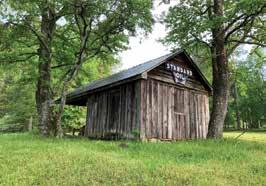
This scenic outbuilding is located at Home Place Farms in Hancock County. Photo courtesy of GDCA
Today, Jerry is semi-retired producing pasture-raised pigs and selling the meat straight to consumers. His daughters, Debra and Cyndi, are farming the land.
Debra runs about 36 head of Brangus cattle. Cyndi manages the greenhouses where the family grows the vegetable plants for a wide variety of produce they raise and sell at multiple farmers markets. The family also raises perennials.
photo from 2003 shows David Stanford baling wheat straw with sons Thomas and Tyler on the family's Coweta County farm.
Photo courtesy of GDCA
“If it hadn’t been for Daddy our farm wouldn’t have continued,” Cyndi said. “We’re honored to receive this award.”
How to nominate a farm
For more information, to nominate a farm, or to download an application, visit www.gfb. ag/centuryfarmsapply or email outreach@dca.ga.gov. The postmark deadline for applications is May 1 of each year.
The Centennial Farm program offers a third award, the Centennial Farm Award, for farms without continual family ownership but are at least 100 years old and listed in the National Register of Historic Places.
Members of the 14 farm families that received a Georgia Centennial Farm designation. / Photo by Nick Vassy
This
Timber Industry Reeling from Mill Closures
By Jennifer Whittaker
Georgia’s timber sector is still recovering from Hurricane Helene last year, which destroyed timber across Southeast Georgia from Valdosta to Augusta. Then in May, Georgia Pacific (GP) announced it was closing its Cedar Springs containerboard mill in Early County by Aug. 1. According to GP, the plant employed about 535 people until all operations ceased by the end of August.
“Various factors influenced this decision, and we do not believe that the mill could continue to competitively operate. This decision had nothing to do with the quality of work of our Cedar Springs employees,” GP said in a released statement.
A report compiled by retired ABAC President David Bridges, who is now a consultant, estimates the annual economic loss of the plant to be $182 million to the local economy. In addition to payroll and direct and indirect spending, this also includes tax revenue for local schools and governments and the effect on foresters who supplied the mill. Bridges counts 87 Georgia timber companies within 100 miles of the closed mill.
On Aug. 21, International Paper (IP) announced it was closing its plants in Savannah and Riceboro by the end of September.
The company said the combined changes will result in a net reduction of its annual containerboard capacity by about one million tons.
The closure of the Savannah containerboard mill, the Savannah packaging facility, the Riceboro containerboard mill and Riceboro Timber and Lumber are estimated to have affected about 1,000 employees at the Chatham and Liberty County plants.
When IP announced the closure of these Georgia facilities, it said it plans to convert a portion of its facility in Selma, Ala., to produce containerboard. Published media reports have speculated IP’s decision may have been influenced by the value of the company’s 450 acres located next to the Georgia Ports Authority terminal in Garden City.
The closings of both the GP and IP plants will have a direct economic impact of $1.7 billion and an indirect impact of $845 million, Georgia Forestry Commission (GFC) Utilization Chief Devon Dartnell told the Georgia House Rural Development Committee during a September meeting. The effect due to lost wages will be $318 million.
Photo by Jay Stone
On Nov. 6, Canadian company West Fraser Timber announced it is closing its Augusta lumber mill by the end of this year. In a released statement, the company said the decision is due to timber supply challenges and soft lumber markets. The mill employs about 130 employees.
Looking for solutions
IP’s announcement was made on Aug. 21, the same day state leaders spoke at the annual Ag Issues Summit held in Perry.
Georgia House Speaker Jon Burns, whose 159th District adjoins Chatham County, emphasized the job losses likely will not be limited to just those at the IP plants.
“The Georgia Department of Labor currently estimates three to four indirect job losses could occur for every direct job lost at the International Paper facilities. These estimates do not account for the timber growers who are facing the loss of their livelihoods due to this unforeseen and devastating blow to Georgia’s timber industry,” Burns said.
For Georgia’s timber sector to retool and survive, one part of the solution is for government to create a regulatory environment so the existing industry can thrive, F&W Forest Services President Marshall Thomas said at the Ag Issues Summit. The timber industry also needs to get into producing bio energy products, such as biodiesel, to meet the growing demand for green energy.
“Last year a new bio products mill opened in Finland on a site that was previously a pulp and paper mill for 100 years,” Thomas said. “It’s fossil fuel free. It doesn’t even use electricity off the grid because it produces its own electricity. It will produce a
million and a half tons of tall oil turpentine from softwood and hardwood. You can make biodiesel out of tall oil turpentine. Two and a half percent of Finland’s energy requirements will come out of this bio products mill. Instead of closing down papermills, why aren’t we doing this?”
Thomas, who travels the world visiting forests with his job, said Georgia has some of the greenest natural forests in the world, an existing industry in place, a great workforce and infrastructure of roads and loggers to get the trees to plants and the markets.
“All we have to do is shift the products we’re making along with continuing what we’re making,” Thomas said. “We’ve got everything in this state to become one of the leading providers of green products in the world. If we do that, we’re going to provide jobs, tax base and all kinds of economic opportunities to the citizens of our state.”
Thomas commended Georgia legislators and the Senate study committee that is looking into sustainable aviation fuel and other products that can be made from Georgia timber.
“We’ve also got to figure out why we’re being replaced [paper mills]. Why is the industry leaving the U.S. going to other places?” Thomas said. “It’s not just South America and China. The industry is also going to countries like Finland.”
On Sept. 10, the GFC announced that Gov. Brian Kemp has charged the state agency to lead a task force to address the challenges facing the state’s forest products industry. GFC Director Johnny Sabo is working with other state agencies, academic institutions and industry partners to develop a strategic plan.
GFB awards $6,000 in grants for ag classroom projects
Georgia Farm Bureau’s Ag in the Classroom program has awarded $500 grants to 12 elementary school teachers to help them fund innovative agricultural projects. These teachers, who maintain close ties with their county Farm Bureaus, were selected for their commitment to teaching students about agriculture in fun, hands-on ways.
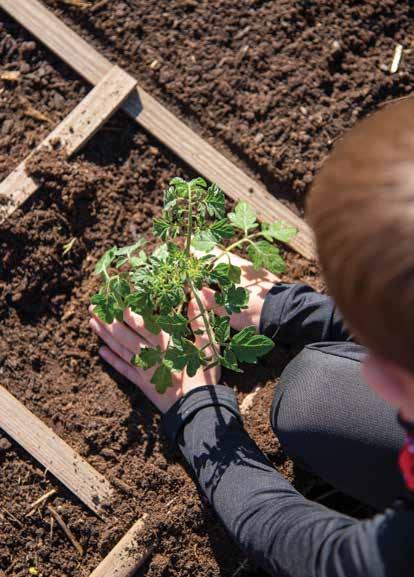
The grants will support projects focused on composting, school gardens, and hydroponics, giving students a chance to actively engage with farming, sustainability and how food systems work.
These projects not only educate but also foster curiosity and a deeper appreciation for agriculture, which contributed more than $91.4 billion to Georgia’s economy in 2023 and provided more than 381,200 jobs statewide according to the UGA College of Agricultural & Environmental Sciences.
Despite its importance, many students do not fully grasp how agriculture impacts their daily lives. These hands-on projects will teach students how agriculture affects everything from the food they eat to the natural resources they depend on.
Students will also explore environmental responsibility and sustainability. Whether it’s learning to reduce food waste through composting or discovering modern growing techniques like hydroponics, these projects will provide students with a deeper understanding of how agriculture can help address environmental challenges.
The school gardens, for example, will allow students to grow fruits, vegetables and herbs while also teaching them about pollinators, local food production, and the nutritional benefits of fresh produce. These activities help develop life skills such as teamwork, problemsolving and environmental stewardship.
Georgia Farm Bureau is excited to support these teachers in making agriculture a relevant and engaging part of their students’ curriculum. By funding these projects, Farm Bureau hopes to inspire a lifelong interest in agriculture and encourage students to become informed citizens who understand the vital role agriculture plays in their communities.
Congratulations to the following teachers in the following counties for their dedication to bringing agriculture into their classrooms:
Carroll: Christina Flores/Providence Elementary
Clarke: Jerry Taylor/Prince Avenue Christian
Effingham: Kristian Jerome/Springfield Elementary
Habersham: Lauren Bonner/Level Grove Elementary
Hall: Jessica Baker/Friendship Elementary
Henry: Mary Allen/ Unity Grove Elementary
Henry: Hannah Bowden/Unity Grove Elementary
Monroe: Kera Davis/Samuel E. Hubbard Elementary
Oglethorpe: Satilla Mathews/Oglethorpe Children’s Academy
Contact Clay Talton at 478-474-0679, ext. 5128 or cstalton@gfb.org for more information about GFB’s Ag in the Classroom program. Contact your county Farm Bureau if you’d like to volunteer with its AITC program.
A report released by the Georgia Foundation for Agriculture (GFA) in September reveals the challenges Georgia farmers faced in the first 72 hours following Hurricane Helene, the deadliest U.S. storm since Hurricane Katrina. Based on a rapid-response survey of 147 farmers from 44 counties in Helene’s path, the “Stabilizing After the Storm” report paints a sobering picture of widespread system failures, delayed recovery and unmet needs across Georgia’s agricultural communities hit by the storm on Sept. 27, 2024. The report highlights that 99% of farmers surveyed lost power, 93% lost internet and cellphone coverage, and 71% lost access to water for livestock and crops. In many cases, these critical systems failed simultaneously, leaving farms completely isolated and unable to begin recovery efforts.
“This wasn’t just about power outages. Farmers lost access to water, roads, communications – everything that makes a farm run,” said Lily Baucom, GFA executive director. “The recovery didn’t stall because farmers weren’t prepared. It stalled because the systems they rely on failed all at once.”
KEY FINDINGS FROM THE REPORT
• Power outages affected 99% of survey respondents, with 88% still without power five days later. It is important to note that Helene damaged power grids in many parts of the storm’s path so severely that the grids had to be completely rebuilt, which required more time. The GFA acknowledges that power companies restored power as quickly as possible and thanks all the linemen, many from other states, who worked so hard to restore power.
• Road blockages prevented 84% of farmers from reaching their barns or fields.
• Communication failures meant 60% of respondents could not call 911 or connect with family.
• Water access was lost by 71% of respondents, severely impacting livestock care and sanitation.
• Financial strain was a top concern, with many spending thousands of dollars on generators, fuel and repairs.
The report elevates farmer-led solutions, calling for low-cost, community-based strategies like wiring wells for generator use, organizing volunteer chainsaw crews, and creating fuel and equipment-sharing networks.
“Resilience doesn’t always mean high-tech,” said Dr. Stephanie Basey, co-author of the study from The HIVE Research Collective. “What worked were things like a printed emergency contact list, a neighbor with a chainsaw, or a barn already wired for backup power.”
POLICY & PLANNING IMPLICATIONS
The report calls for stronger county-level emergency planning that includes:
• Prioritized power restoration for livestock corridors
• Funding for shared-use equipment and generator wiring
• Local communication alternatives when cell towers go down
• Mental health check-ins alongside physical aid
The report also identifies alignment opportunities with USDA, FEMA and rural infrastructure grant programs to build longterm resilience.
“We cannot continue to respond to rural disasters with one-sizefits-all plans,” said report co-author Dr. Anne Montgomery of the Georgia Rural Health Innovation Center. “This report shows that early, local, physical support is what keeps farms afloat in those first critical days.”
The report includes data, farmers’ quotes and recommendations to guide emergency managers, funders and policymakers. Download the full report at https://www.supportgeorgiafarmers.org.
Lily Baucom is executive director of the Georgia Foundation for Agriculture. She may be reached at lrbaucom@gfb.org or 478-405-3461. Visit www.gafoundationag.org to learn more about the foundation or to make a tax-deductible donation.
CareSource Invests in Farmer Mental Health
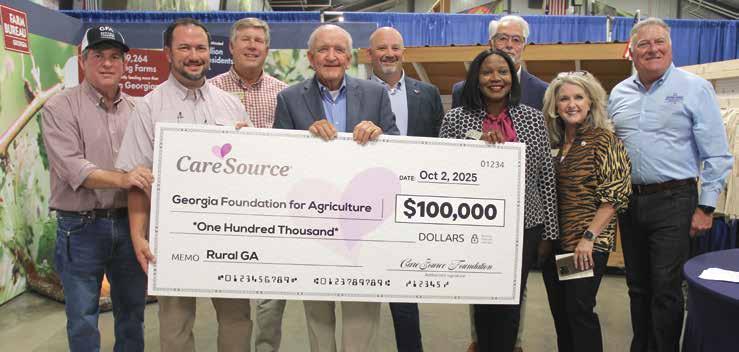
On Oct. 2, CareSource, a nonprofit, managed care organization that offers comprehensive health insurance plans, made a $100,000 investment to help the Georgia Foundation for Agriculture (GFA) expand farmer mental health programs statewide. CareSource’s investment will fund programs offered through the GFA, Georgia Farm Bureau networks and the Georgia Agricultural Wellness Alliance (GAWA) to deliver peer support, youth-focused wellness pilot programs, and community leader training designed to meet the unique mental health challenges farmers face.
“Georgia farmers feed our families and fuel the state’s economy, yet their own health and well-being are too often overlooked,” said Jason Anavitarte, senior director of strategic community partnerships and account management, CareSource Georgia. “Through this investment, CareSource aims to ensure every farmer has access to the care and resources they need to thrive.”
Georgia farmers face some of the highest levels of stress and isolation in the nation. A statewide survey conducted in 2022 by the GFA, the Georgia Rural Health Innovation Center and Mercer University School of Medicine found 42% of farmers surveyed reported suicidal thoughts the prior year. More than 60% of first-generation farmers said they had considered suicide.
Nearly 60% of farmers reported lacking access to basic medical care. Most said they could not access a psychologist either inperson or virtually. Visit https://gfb.ag/gfafarmermentalhealthstudy to read the study.
Following the survey findings, the GFA led a coordinated effort to build long-term support systems for farmer mental health.
“Farm families face enormous pressures, from financial stress to weather, and too often that burden takes a toll on their mental health,” said GFA Board Chairman & Georgia Farm Bureau President Tom McCall. “Thanks to CareSource’s commitment, we can continue to build a strong, trusted network to ensure no farmer has to face these challenges alone.”
CareSource’s $100,000 investment will support GFA to:
• Train hundreds of community leaders across Georgia in partnership with the Georgia Agricultural Wellness Alliance
• Launch Georgia’s first youth-focused mental wellness training programs in agriculture with 4-H & FFA members
• Build a stronger statewide safety net through trusted, local peer networks
• Equip counties to innovate while staying connected to a unified, data-backed strategy
“With partners like CareSource, we’re building a stronger safety net for Georgia’s agricultural community,” said Lily Rolader Baucom, GFA executive director. “This partnership is part of a strategy to embed care into the daily fabric of Georgia’s farming communities by equipping trusted peers with tools they can use immediately.”
As farmers continue to navigate financial uncertainty, climaterelated disasters and isolation, Georgia’s farm stress response has grown from a small coalition into a statewide movement. CareSource’s investment will help to further scale the work of the GAWA and GFA to reduce stigma and increase access to mental health resources for farmers. The Georgia Department of Agriculture and UGA Extension have also partnered with GFA to address farmer mental health issues.
“We’re investing $100,000 toward addressing mental health and suicide prevention in our rural, farming communities because rural Georgia is the central nerve system of our state,” said Jason Bearden, president of CareSource’s Georgia Market.
“It’s scary out there for farmers right now. I think last year was a wakeup call with Hurricane Helene and the challenges rural Georgia faced.”
CareSource makes health care accessible to 430,000 Georgians. The nonprofit offers health insurance plans including Medicaid, Health Insurance Marketplace and Medicare to its members.
CareSource leaders Jason Anavitarte, second from left, & Jason Bearden, fifth from left, presented a $100,000 donation to the Georgia Foundation for Agriculture accepted by GFA Board Chairman Tom McCall, fourth from left. State legislators and officials who represent rural communities that will benefit fro m CareSource’s investment joined the presentation.
Photo by Jennifer Whittaker
District meetings provide community ABAC & UGA YFR Chapters thriving
By Heather King By Levi Davis
The Georgia Farm Bureau Women’s Leadership Program has provided women opportunities for growth and community all year.
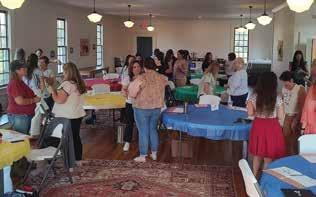
This fall, GFB WLC district chairwomen hosted meetings for ladies in their districts to network while learning about GFB and agriculture. GFB District 2 Chairwoman Anna Strickland facilitated a personality assessment workshop to help attendees learn to utilize their strengths. Panelists Caroline Lewallen, Kalie Hall Blevins and Heather Cabe discussed building a brand and life/w ork balance. Attendees made flower arrangements with fresh flowers from Bold Spring Blooms.
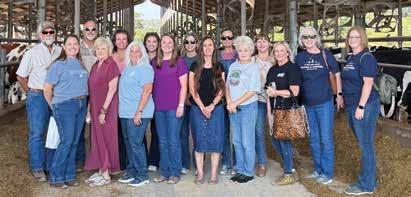
GFB District 9 Chairwoman Julie Hardy’s meeting was all about dairy! Dr. Paul Johnson, veterinarian and owner of Providence Dairy, discussed misconceptions about the dairy sector. A tour of Providence Dairy followed, providing insight into daily opera tions and the dairy supply chain. The event wrapped up with lunch, door prizes and ice cream.
GFB District 8 Chairwoman Alicia Berry’s event at Barnard and Thompson Christmas tree farm included a farm tour, presentation from Oliver Farm Artisan Oils and a farm-to-table lunch provided by Peacock Farms.
GFB District 10 Chairwoman Lindsey Morgan hosted a brunch, during which Rep. Angie O’Steen discussed farming, faith and being a state legislator. Attendees made Christmas t-shirts.
Morgan graduates from AFBF Comms Boot Camp
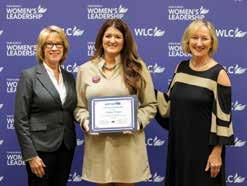
Congratulations to Georgia Farm Bureau Women’s Leadership Committee member Lindsey Morgan, center, for graduating from the American Farm Bureau Federation (AFBF) Women’s Communications Fall Boot Camp on Oct. 30! AFBF Women’s Leadership Chairman Isabella Chism, left, & AFBF Vice President of Communications Terri Moore offer congratulations. Morgan was one of 13 Farm Bureau members from across the U.S. to complete an intensive four-day course that included hands-on sessions focused
on public speaking, working with the media and ag messaging.
Lindsey works full time as a high school history and American government teacher. She and her husband, David, grow peanuts and cotton on their Ware County farm.
Applications open in December for the 2026 spring session of AFBF’s Women’s Communications Boot Camp slated for April 2026. / Photo courtesy of AFBF
Georgia Farm Bureau Women’s Leadership Programs Coordinator Heather King may be reached at hcking@gfb.org or 478-4740679, ext. 5232. Contact your county Farm Bureau if you’d like to volunteer with your local Women’s Leadership Committee.
Georgia Farm Bureau (GFB) is excited to have a presence at Abraham Baldwin Agricultural College (ABAC) and the University of Georgia (UGA). Both have collegiate GFB Young Farmers and Ranchers (YF&R) chapters on campus. These programs exist to support college students engaged in the agriculture sector, enhance the members’ education, and develop future leaders for Farm Bureau and Georgia’s agricultural industry.
Another primary purpose of the collegiate YF&R program is to engage these students who are interested in agriculture by offering opportunities for professional development, personal growth and agricultural outreach.
GFB YF&R Program members continue to educate and develop our collegiate chapters. Houston County’s Cason Anderson spoke at ABAC earlier this year about overcoming challenges first generation farmers face. Founding ABAC YF&R member and ABAC alum Walt Pridgen shared his experiences with the group in early September.
In Athens, the UGA YF&R program contributes to its members’ professional development by hosting meetings discussing topics such as, Agriculture: Georgia’s No. 1 Industry, Georgia Farm Bureau’s crop insurance products, farm financing opportunities, and resume building workshops.
Members of both collegiate programs attended GFB’s YF&R Summer Leadership Conference in July on Jekyll Island, where they learned about new opportunities in the GFB Young Farmers and Ranchers Program for them after they graduate.
The collegiate YF&R Program is open to any college student at ABAC or UGA who is interested in serving as a voice for agriculture.
GFB Young Farmers & Ranchers Coordinator Levi Davis may be contacted at ledavis@gfb.org or 478-474-0679, ext. 5233. Anyone ages 18-35 involved in any aspect of agriculture is encouraged to contact your county Farm Bureau to join your local YF&R program.
The GFB 2nd District meeting was held at Strickland Mercantile. / Photo by Anna Strickland
The GFB 9th District meeting was held at Providence Dairy. Photo by Stacey Merritt
Houston County Farm Bureau Director Cason Anderson, center, with members of the ABAC YF&R Chapter.
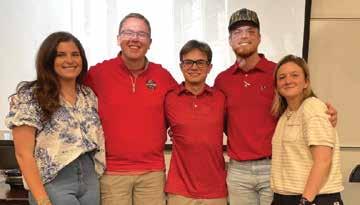
The UGA YF&R Chapter officers are, from left, Ela Grace Ash, Joey Blackstock, Jesse Cronic, Thomas Gurr and Georgia Simmons.
Coffee County Farm Bureau YF&R Chairman Walt Pridgen with members of the ABAC YF&R Chapter.
Lindsey Morgan, center, graduated from the AFBF Communications Boot Camp. Photo courtesy of AFBF
GFB accepting entries for middle & high school art contests
Middle School Bookmark Contest
• Open to students in 6th - 8th grades
• Previous state winners are not eligible to re-enter
• Contestants will be provided with a blank bookmark & asked to create a design illustrating Georgia agriculture
• 10 district winners each receive $100
• State winner receives an additional $150
High School Art Contest
• Open to students in 9th -12th grades
• Previous state winners are not eligible to re-enter
• Artwork must be on 8.5x11-inch white paper
• Artwork must be created in the colors black, white & gray
• 10 district winners will receive $100 each
• State winner receives an extra $250
IMPORTANT INFO FOR BOTH CONTESTS
• Contact your county Farm Bureau to enter & for deadline to submit entries for both contests to local Farm Bureaus
• Visit gfb.ag/contests for contest details
• Both contests are open to homeschool, private & public-school students
• Students are encouraged to watch this video about Georgia agriculture for inspiration gfb.ag/video