The ‘Consequence of Non-Compliance’ campaign Page 28
Home life safety
Understanding fire safety rules for social housing Page 30 Power tools
The technologies changing the industry Page 36
Heat pumps & RCDs
Type B RCDs in heat pump installations Page 44 What did we learn about the net zero journey this year?
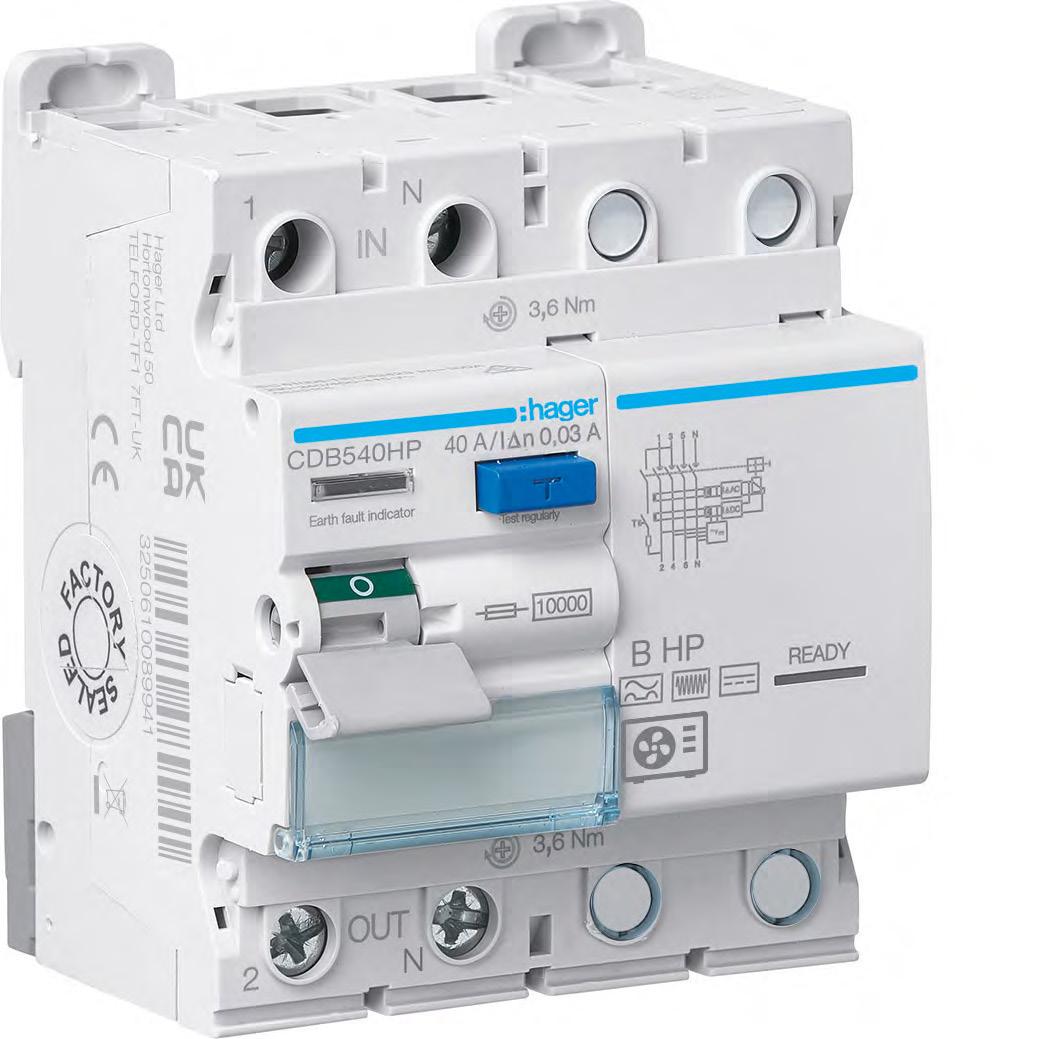
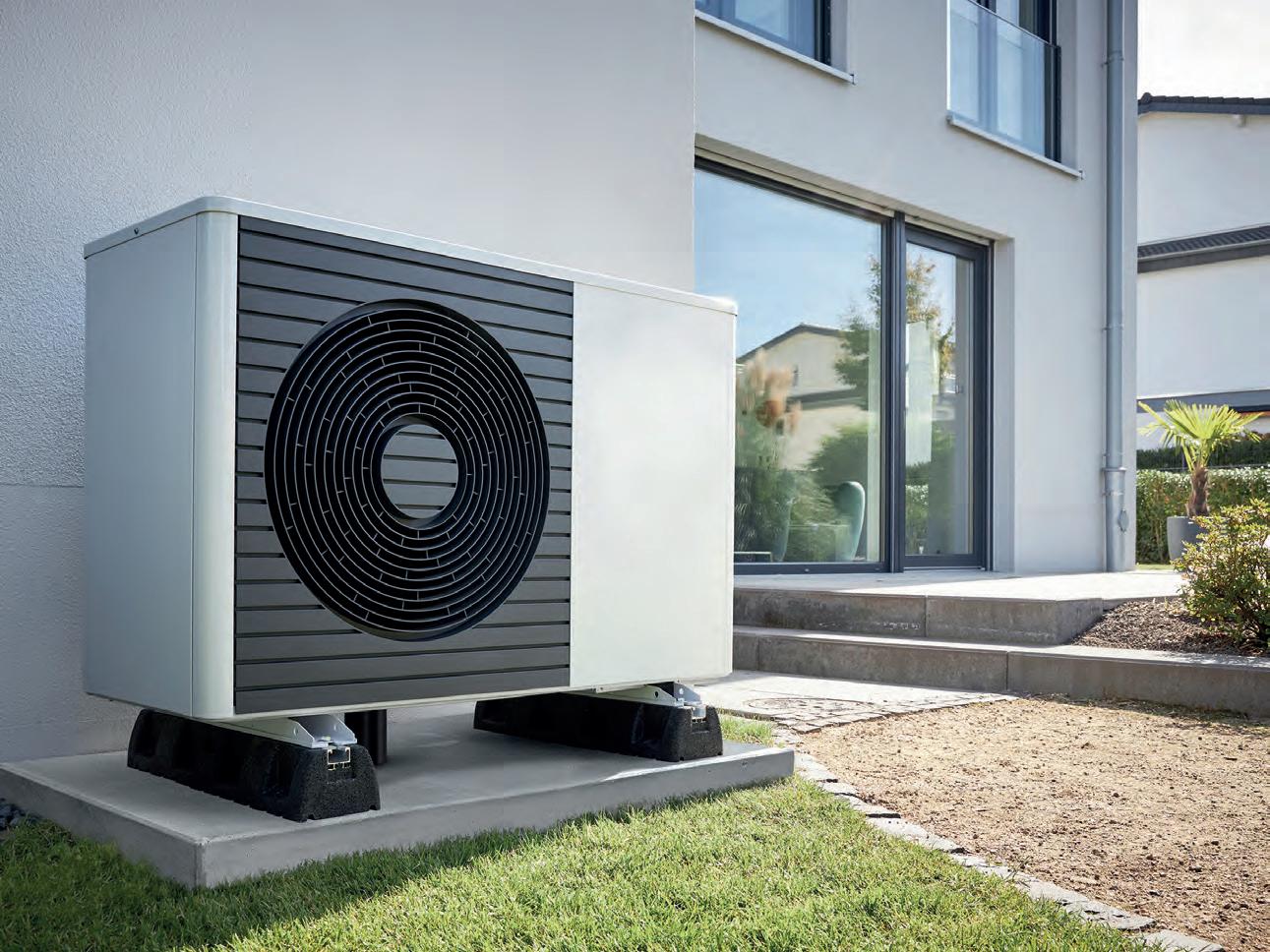
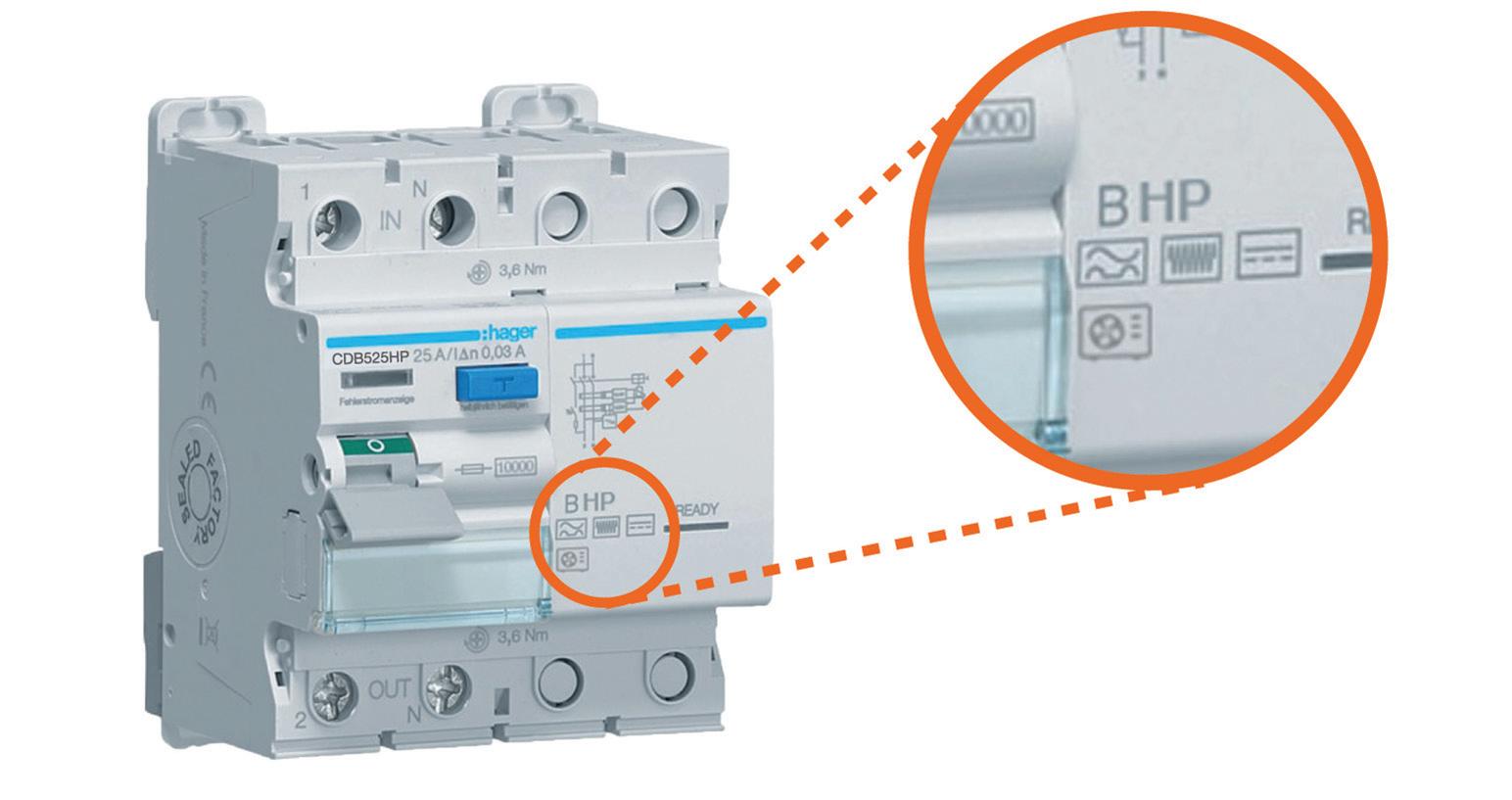
Hager Type B HP RCCB – The RCD designed specifically for Heat Pump systems.
• Overcomes the limitations of standard Type B RCDs
• RCD functions at frequencies greater than 20kHz
• Critical high level DC leak protection
• Correct circuit protection for the complete system
• Ensures safety and reliability for the homeowner Scan Here! To watch our video!
The choice is clear.
CDB525HP - 25A Type B HP - RCCB
CDB540HP - 40A Type B HP - RCCB
CDB563HP - 63A Type B HP - RCCB
Hager provides the proven solution to protect heat pumps, ensuring seamless, uninterrupted performance.
News & views
08-12 Industry news
14-15 ECA Industry Awards 2025
16-18 The journey to net zero in 2025
20-21 Review of the year
Interview 22-25 Andy Reakes, JIB and ECS
Ask
Features
Heat pumps & Type B RCDs
From the Editor
As 2025 draws to a close, we find ourselves in a reflective mood. Our roundup of the year’s industry news on pages 20-21 reveals a year of significant policy reform, clean energy investment and a renewed focus on skills. As Mark Krull of LCL Awards and Logic4training puts it, “The UK’s transition to net zero has reached a critical turning point – we need to learn from what’s been and look to the future, focusing on well-thought-out policy backed up by a suitably skilled workforce.” Mark reflects on the lessons learnt in 2025 on pages 16-18.
The demand for skilled workers has remained a pressing issue this year, bringing with it the importance of raising competence standards. It’s a topic close to the heart of the JIB and ECS’ Andy Reakes, who we speak to in this issue’s ‘The Interview’ on pages 22-25. “The expectation now is that competence must be demonstrable and maintained,” he says, explaining how the JIB and ECS are “helping industry move from ‘qualified once’ to ‘competent always’”. This idea of driving up professional standards is also the subject of our ‘Ask the expert’ article, which ponders the question: Is it time electricians embraced the individual, competence-based system that our gas counterparts did years ago? Find out what CEF’s Darren Staniforth thinks on page 26.
Finally, we’re pleased to be ending the year with some festive fun and invite you to join in with our 12 Gifts of Christmas giveaway. Details of how to take part and the prizes up for grabs are on pages 4-5. Christmas will come early for 12 of our lucky readers –good luck everyone!
On that note, have a wonderful Christmas and New Year. We look forward to catching up with you in 2026…
Editorial Director Carly Woodhead
News
Editorial Director
Carly Woodhead carly.woodhead@lylamedia.co.uk
Design & Production
Sophia Kerby design@lylamedia.co.uk
Advertising & Subscriptions
To request a free regular copy of Electrotechnical News or speak to a member of the sales team email: info@electrotechnicalnews.com
Director Nathon Woodhead nathon.woodhead@lylamedia.co.uk
LinkedIn
Disclaimer
The opinions expressed in editorial material do not necessarily represent the views of Electrotechnical News. Unless specifically stated, goods or services mentioned in editorial or advertisements are not formally endorsed by Electrotechnical News, which does not guarantee, endorse, or accept any liability for any goods and/ or services featured in this publication.
Electrotechnical News
Lyla Media Ltd, Hoo St Werburgh, Rochester, Kent, ME3 9UY
Newsroom
Clean energy will bring 400,000 extra jobs by 2030
Backed by record government and private sector investment, the clean energy economy is sparking a boom in demand for good industrial jobs in all regions and nations of the UK – with 31 priority occupations such as electricians, plumbers and welders particularly in demand.
For the first time, government has published a comprehensive national plan to train up the next generation of clean energy workers, with employment expected to double to 860,000 by 2030, ensuring jobs are high quality and well paid.
Setting clear workforce estimates for the first time will galvanise industry, the public sector and education providers to work together to deliver one cohesive strategy to invest in training for specific in-demand occupations.
“Communities have long been calling out for a new generation
of good industrial jobs. The clean energy jobs boom can answer that call,” said Energy Secretary Ed Miliband. “This is a pro-worker, pro-jobs, prounion agenda that will deliver the national renewal our country needs.”
ECA welcomed the plan but urged greater industry engagement. “It’s encouraging to see plumbers, HVAC engineers and electricians acknowledged as priority occupations where a major boost to recruitment and training is now required,” said Andrew Eldred, Deputy CEO of ECA. “However, ECA is concerned that the plan has very little to say about how that is going to happen. To date, there has been no sustained UK government strategic engagement with the engineering services organisations which will be primarily responsible for training and employing this workforce.”
gov.uk
Government requirements on payment tighten again
As of 1 October 2025, companies bidding for government contracts over £5 million from central government departments, their executive agencies and non-departmental public bodies, must now demonstrate that they pay invoices within an average of 45 days, down from 55 days. This requirement was brought in following representations of ECA to government.
Suppliers bidding for government contracts over £5 million must also continue to pay at least 95% of invoices within 60 days (90% if an action plan is provided), otherwise they will be excluded from bidding.
Guidance to PPN 018 confirms that companies must meet both metrics in at least one of their two previous six-month reporting periods under the Reporting on Payment Practices and Performance Regulations.
eca.co.uk
Heat pump sector to unite as HPA UK
Marking a pivotal move for the UK’s low carbon heating industry, members of the Heat Pump Association (HPA), Ground Source Heat Pump Association (GSHPA), and Heat Pump Federation (HPF) have officially committed to merge into a single, unified heat pump trade body – Heat Pump Association UK (HPA UK).
Launching in January 2026, this organisation will bring the sector together to provide one powerful voice. Combining decades of expertise, the new body will provide:
• Strong, consistent representation to government and stakeholders.
• Clear messaging and greater visibility for heat pumps.
• Streamlined governance and enhanced services for members.
• A single point of contact for industry collaboration and engagement.
heatpumps.org.uk
Government to make charging EVs at home easier
Electric car owners will find it easier and cheaper to charge their vehicles at home under new plans designed to make it fairer for renters and those without a private driveway.
As the government bolsters its drive to make it simpler than ever to plug in wherever you live, it will consider cutting red tape for EV drivers without driveways to make it easier to install cross pavement charging solutions, speeding up applications, and putting money back in drivers’ pockets by saving them up to £250 in application fees.
The plans would also mandate chargepoints in new covered car parks.
gov.uk
Significant changes to emergency lighting standards
The electrotechnical sector is set to benefit from major updates to emergency lighting standards following a comprehensive review and revision of three key British Standards. The last of these changes came into effect on 29 October with the publication of the updated BS 5266:2025 Emergency Lighting of Premises: Code of Practice.
The new updates complement amendments made in 2024 to BS EN 1838:2024 Lighting Applications –Emergency Lighting for Buildings and BS EN 50172:2024 Emergency Escape Lighting Systems. All the updates aim to enhance safety and compliance, as well as provide clearer, more consistent guidance for the design, installation and maintenance of emergency lighting systems in public and commercial buildings.
The revised standards address critical areas including system verification, illuminance requirements, circuit integrity under fire conditions, and documentation protocols.
eca.co.uk
Solar report analyses skills challenges ahead
Following ambitious solar power targets set by government earlier this year, and publication of the Clean Energy Jobs Plan in October, TESP has issued a report which responds to the skills challenges these present and examines the practicalities in scaling up the workforce.
The Solar Roadmap, launched by Energy Secretary Ed Miliband, commits to delivering 45-47 gigawatts (GW) of solar power capacity by 2030. Recognising the importance of a skilled workforce in delivering this target, the roadmap also lists various skills challenges that must be addressed.
In its report Powering the UK’s Future, TESP looks at each key skills theme raised in the roadmap and details where the electrical contracting industry can support delivery, exploring areas where we already have relevant initiatives or technical capacity in place that can be scaled, supported or leveraged by DESNZ and Skills England.
the-esp.org.uk
Sector Lead Group to raise competence standards
A new Sector Lead Group (under SLG10 – Installation & Maintenance) focused on Power Distribution & Control has been established. This marks a significant step in strengthening industry competence in line with recent regulatory reforms under the Building Safety Act.
The Building Safety Act 2022, plus its related legislation and regulations, place fresh emphasis on competence across all involved in design, construction, installation, maintenance and refurbishment. Individuals in such roles must now demonstrate appropriate skills, knowledge, experience and behaviours alongside technical ability.
Industry-wide efforts are underway, via SLG10, to codify competence frameworks and ensure that safety-critical roles are carried out by suitably qualified people with up-to-date knowledge.
ecscard.org.uk
EAS changes to periodic inspection and testing
The Electrotechnical Assessment Specification (EAS) has been updated and now includes additional requirements related to periodic inspection and testing and the installation of low carbon technologies.
The EAS now requires qualified supervisors and employed persons that carry out periodic inspection and testing under their certification to:
• Hold core technical competence and qualifications, including a Level 3 award in the Periodic Inspection and Testing of Electrical Installations.
• Have a minimum two years’ evidence of relevant experience.
• Show evidence of ongoing CPD.
As part of the EAS update, four new low carbon installation work categories have also been added:
• EV charging equipment installation.
• Solar PV systems installation.
• Electrical energy storage systems (EESS) installation.
• Micro wind turbine installation.
eca.co.uk
More funding for Great British Energy solar panels
Multiple military sites, around 50 more schools and over 70 further NHS sites will save money on their energy bills thanks to up to £75 million in funding from Great British Energy.
Hospitals and schools across England are already cutting their energy bills thanks to a £180 million investment from Great British Energy and government announced in March.
In total the expanded scheme will be worth up to £255 million, supporting around 250 schools, over 270 NHS sites and around 15 military sites across the country. This includes a new partnership between Great British Energy and the Ministry of Defence which will see technologies such as solar panels and micro wind turbines deployed across a range of military sites.
gov.uk
Updated pathway to replace Level 3 NVQ
TESP has been working with City & Guilds and EAL on a new industry qualification pathway which will replace the Level 3 Diploma in Installing Electrotechnical Systems and Equipment (Buildings, Structures and the Environment) EAL 501/1605/8, C&G 501/2232/0 (2357-13/91), and the City & Guilds Level 3 NVQ Diploma in Electrotechnical Services (Electrical Maintenance 501/1624/1) (2357-23/92).
A new route for non-apprentice learners will be introduced within the existing Level 3 Electrotechnical and Electrotechnical in Dwellings Qualifications. This will deliver parity and up-to-date content across the three recognised industry routes (apprenticeships, Experienced Worker Assessment and self-funded/non-apprentice learners), in line with industry competence and Building Safety requirements, to ensure all learners are being assessed to the same standard.
The AM2 will take place after achievement of the qualification, as is the case for other industry training routes.
the-esp.org.uk
Electrotechnical excellence
Talent and achievements in the electrotechnical industry were recognised with prestigious accolades at the ECA Industry Awards 2025, held on Friday 10 October at the Hilton London Bankside.
The awards ceremony, which showcased the excellence and innovation across the electrotechnical and engineering sectors, was hosted by comedian and actress Ellie Taylor, alongside compere Alan Dedicoat – the voice of Strictly Come Dancing and The National Lottery
Joint headline sponsors:
Congratulations to this year’s winners and highly commended runners-up…
Best Client Partnership, sponsored by Legrand Winner: West & West
Highly commended: Geoffrey Robinson
Best Fire and Security Project, sponsored by Espire Winner: Early Birds Fire Protection
Best Health, Safety and Environment Initiative, sponsored by Milwaukee Winner: Midwest Mechanical and Electrical Services
Best New Business, sponsored by DiLog Winner: BSN Electrical
Highly commended: Lifetime Electrical Services
Best Supply Chain Partnership, sponsored by Europa Winner: Source Electrical Services
Highly commended: Powercor
Best Sustainability Net Zero Project, sponsored by CEF Winner: F B Taylor Cable Contractors
Contractor of the Year (up to £1 million turnover), sponsored by Electric Center
Winner: O’Connor Electrical
Contractor of the Year (up to £5 million turnover), sponsored by EAL
Winner: North East Installations
Highly commended: EME Electrical
Contractor of the Year (up to £15 million turnover), sponsored by NVC Lighting Winner: West & West
Highly commended: Vic Coupland
Contractor of the Year (up to £45 million turnover), sponsored by Edmundson Electrical (London) Winner: Elecomm
Highly commended: Midwest Mechanical and Electrical Services
ECA Large Contractor of the Year, sponsored by Luceco Winner: SES Engineering Services
Excellence in Apprenticeship Training, sponsored by JTL Winner: Geoffrey Robinson
Highly commended: Ceetech and Grays Electrical Engineering
Outstanding Contribution to Fire Detection and Alarm Industry, sponsored by Aico Winner: Paul Turner, Lead Auditor, BAFE
Outstanding Contribution to Security Systems Industry, sponsored by Fire and Security Association
Winner: John Davidson, Approval Schemes Manager, NSI
Major Contribution to the Industry Winner: Martin Bailey
A look back: the journey to net zero in 2025
As we reach the end of a year that marked Labour’s first full term back in office and a renewed national push towards decarbonisation, Mark Krull, Director of LCL Awards and Logic4training, reflects on the lessons learnt in 2025. While progress has been made, we must not stop the momentum – for the UK’s journey to net zero and the success of our sector.
TMark Krull Director of LCL Awards and Logic4training
he UK’s transition to net zero has reached a critical turning point. Labour’s first year in government has been marked by an ambitious mix of policy reform, public investment and renewed focus on skills, but also by scrutiny of whether plans will deliver in practice.
The latest House of Commons
Library report shows that the UK’s greenhouse gas emissions fell 413.7 million tonnes – a 50% reduction since 1990. While a significant milestone to celebrate, the Climate Change Committee (CCC) warns that only 61% of the reductions needed by 2030 are backed by credible plans, meaning the rest (almost two-fifths) remain uncertain or with no clear action.
To close the ‘unplanned’ gap, we need to learn from what’s been and look to the future, focusing on well-thoughtout policy backed up by a suitably skilled workforce, without whom net zero ambitions will fall flat.
As we come to the close of 2025, here are five lessons this year taught us.
1. Skills are the backbone of the green transition
The UK’s drive towards net zero is creating opportunity but also exposing a critical shortage of qualified people to deliver it. Labour’s Warm Homes Plan and Clean Energy Mission have mobilised billions in investment, yet the skills gap remains one of the biggest barriers to meeting installation targets.
In response, 2025 saw the launch of Skills England’s regional green hubs, designed to connect training providers with employers and local
“Labour’s Warm Homes Plan and Clean Energy Mission have mobilised billions in investment, yet the skills gap remains one of the biggest barriers to meeting installation targets.”
authorities – a welcome step towards coordinated workforce planning. The CCC has also called for a national green skills strategy, noting that more than 80% of remaining emissions cuts must come from labour-intensive sectors such as buildings, heat and industry.
Bridging that gap means making retraining and upskilling far more accessible. Electricians, plumbers and heating engineers already have the foundation skills the transition depends on; what’s needed is consistent funding, flexible learning pathways and clear messaging that low-carbon technologies are not niche – they’re the future of the trade.
At the same time, apprentices and new entrants must not lose sight of the basics. A solid grounding in gas engineering remains essential, given that gas is still the dominant heating fuel in the UK. These core skills give engineers the versatility to work across both conventional and lowcarbon systems, helping businesses stay resilient and ready to meet the changing consumer demands as the energy transition gathers pace.
2. Solar plus storage is a tried and tested solution
Since 1990, most emissions cuts have been achieved by the solar sector, and the publication of the Solar Roadmap in early 2025 reaffirms the central role solar plays in decarbonising the UK’s power network with a clear goal – 70 GW of installed capacity by 2035.
Easier planning for rooftop and agricultural installations, faster grid connection reforms and the spread of co-located battery storage have unleashed new investment. Commercial rooftops, schools and carports are turning unused surfaces into mini power stations. For households, high electricity prices and smart tariffs are making solar plus storage a practical energy security solution.
Training and accreditation underpin this growth. The Solar Roadmap’s focus on consumer protection and installer competence has raised the bar across the industry. By aligning qualification standards with these expectations, we can ensure rapid expansion doesn’t compromise quality.
“Labour has so far held firm on key requirements, including mandatory solar panels on new homes, but debates continue over heat pumps, water efficiency, wood-burning stoves and whether to leave the door open to hydrogen.”
The revision of the Carbon Budget and Growth Delivery Plan, unveiled in October 2025 after a High Court ruling, will test how well the Solar Roadmap dovetails with the wider decarbonisation strategy. Keeping policy coherence will be vital to sustain investor and workforce confidence.
3. The Future Homes Standard must draw a line under poorly built homes After years of delay, the Future Homes Standard (FHS) is hopefully expected to be published in autumn 2025 – and not a moment too soon. By 2028, all new homes must be ‘net zero ready’, with high fabric efficiency and low-carbon heating such as heat pumps or heat networks.
The FHS is not just another policy milestone; it’s a long-overdue correction. In 2015, the previous government scrapped the zero carbon homes regulations, a move that allowed developers to build cheaper, less efficient properties. Around 1.5 million homes have since been constructed to such poor standards that many will now need retrofitting at an estimated £20,000 per property. The FHS aims to end that shorttermism for good.
For housebuilders, the new rules bring both challenge and clarity. Labour has so far held firm on key requirements, including mandatory solar panels on new homes, but debates continue over heat pumps, water efficiency, wood-burning stoves and whether to leave the door open to hydrogen. Despite industry pressure to dilute standards, the government insists the next generation of homes must be fit for a net zero future.
If successful, the FHS will mark the end of ‘build cheap, fix
later’ – replacing it with quality, efficiency and long-term savings for homeowners. The lesson is clear: the homes we build today will decide how much catching up we have to do tomorrow.
4. Policy stability is building confidence – but consistency is key One year in, we’ve seen more coherence in climate policy than in the previous decade, sticking to the plan is now essential for ongoing confidence from the market. The Department for Energy Security and Net Zero (DESNZ) has delivered clearer messaging and greater policy consistency than we’ve had in years.
Key developments in 2025 included:
• The Great British Energy investment strategy, prioritising renewables and grid upgrades.
• The end of new oil and gas exploration licences.
• The reintroduction of onshore wind support through Contracts for Difference (CfD) auctions.
• Accelerated investment in carbon capture, utilisation and storage (CCUS) projects in Teesside and Humberside.
These moves have rebuilt some of the trust lost through years of mixed signals, a foundation from which, I hope, investors, developers and training bodies can now plan with greater confidence.
However, stability must endure beyond a single parliamentary term. Long-term delivery depends on crossparty consensus and continuous communication between government, industry and education. The net zero mission is a marathon, not a sprint –and it cannot afford another cycle of political U-turns.
5. Technology and data are transforming how we work With most of the ‘easy’ emissions reductions in power generation already achieved, future progress depends on innovation in the tougher sectors. Digital tools are now central to that effort.
AI-driven design software is helping installers model optimal heat pump systems, improving accuracy and cutting waste. Many training providers now blend hands-on with simulation-based learning
“With most of the ‘easy’ emissions reductions in power generation already achieved, future progress depends on innovation in the tougher sectors. Digital tools are now central to that effort.”
that lets trainees practise complex installations virtually before stepping onto site, boosting both safety and confidence.
Smart monitoring platforms give engineers real-time performance insights, allowing fine-tuning and fault detection that enhance consumer trust. As homes and businesses add battery storage and EV charging, the ability to integrate and manage these assets digitally will define the next generation of installers.
Beyond buildings, the CCC highlights the need for business models to
support engineered carbon-removal technologies. This is a glimpse of the next frontier and one that will create fresh demand for advanced technical and data skills.
Technology is no longer an optional extra; it’s the bridge between policy targets and tangible performance.
Looking ahead
While it might seem like the UK’s journey to net zero has entered a new phase, we are not out of the woods yet. Emissions are falling, renewables are scaling, and skills infrastructure is catching up, but progress is uneven. The Commons report reminds us that credibility and capability must go hand in hand.
Commitment to equipping the workforce will make net zero a reality – engineers who can design, install and maintain the technologies powering Britain’s clean energy future.
If 2025 taught us anything, it’s that the race to net zero has moved beyond party promises; it’s about delivery. And delivery depends on skilled people, stable policy and smart technology working together for the long term.
lclawards.co.uk
logic4training.co.uk
Now available in the Deco Plus, Deco and Definity Ranges...
Review of the year
From record-breaking renewable installations to bold government pledges on clean power and workforce challenges, 2025 has been a year of big moves and even bigger ambitions for the UK’s electrotechnical and energy sectors. Investment has poured into the likes of fusion energy, solar, hydrogen and carbon capture, as the drive towards net zero continues. Here, Electrotechnical News looks back at some of the year’s biggest news stories.
January
ECA, SELECT and Unite the Union collaborated to implement new apprentice rates of pay, which came into effect from 6 January 2025.
MCS announced that 2024 was a record-breaking year for small-scale renewables with more than 260,000 certified installations in UK homes and small businesses.
Following consistent advocacy by ECA, the amendment to Reporting on Payment Practices and Performance Regulations was approved.
Researchers developing cutting-edge fusion energy received a record £410 million investment.
February
As the electrical industry celebrated National Apprenticeship Week (10-16 February 2025), research from NICEIC found of the firms not currently hiring apprentices, the admin involved (36%) as well as the difficulty
of recruiting apprentices (17%) were cited as significant obstacles.
Leaders from major businesses, civil society and local authorities backed the government’s pro-growth and clean energy superpower missions following a meeting of the relaunched Net Zero Council, with a plan to help sectors accelerate to net zero and support thousands of jobs.
March
£1.8 billion in government support was allocated to local authorities and social housing providers, with up to 170,000 homes in England set to benefit from energy efficiency upgrades.
The latest quarterly Building Engineering Business Survey revealed that, for the 12th quarter in a row, the biggest obstacle to growth in the sector was a shortage of skilled electricians.
The Chancellor announced £600 million worth of investment to
train up to 60,000 more skilled construction workers to help build 1.5 million homes.
April
The Energy Secretary told industry, unions and trade bodies that the government will work with them to build a clean power army to hit ambitious targets for clean power by 2030.
Eni finalised a deal with government which will see them award around £2 billion in supply chain contracts for their Liverpool Bay Carbon Capture and Storage Project.
May
A report from JTL revealed the electrical workforce had declined by over 26% since 2018, and without urgent action, could shrink by another 32% by 2038.
Ruth Devine MBE became the 112th President of ECA, and the second female President in ECA’s 124-year history.
June
The government made several announcements, including confirmation that new build homes will have solar panels by default; the publication of its Clean Energy Industries Sector Plan; the unveiling of its new Industrial Strategy; and the launch of the Construction Skills Mission Board.
The Warm Home Discount was expanded, meaning six million households will receive £150 off their energy bills this winter.
The government announced a £14.2 billion investment to build Sizewell C nuclear plant. Two major carbon capture projects in Aberdeenshire and the Humber also received funding to progress.
July
Government announcements included the launch of the first ever onshore wind strategy, and confirmation that 10 projects from the first phase of its flagship hydrogen programme – Hydrogen Allocation Round (HAR1) – can begin construction.
The government confirmed reforms to the national pricing electricity market that will create a fairer, cheaper, more secure and more efficient energy system.
August
ECA welcomed the publication of Skills England’s Assessment of Priority Skills to 2030 report, which confirmed that electricians and electrical
engineers are two of the careers expected to see the most growth in the next five years.
State-of-the-art Technical Excellence Colleges were unveiled to support more than 40,000 future electricians, plumbers, builders, bricklayers and carpenters to gain cutting edge skills to get Britain building.
The government extended the plug-in van and truck grant to at least 2027.
September
The Energy Secretary set out his vision for Great British Energy, detailing his expectations for how the UK’s publicly-owned clean power company will deliver on the government’s clean energy superpower mission.
EDF agreed a partnership with Fidra Energy, backed by EIG, to manage and optimise two large battery storage units at Thorpe Marsh in Yorkshire, part of the UK’s largest battery project.
The Electrical Industries Charity celebrated EIC Day, marking its 120year anniversary.
October
The government published a comprehensive national plan to train up the next generation of clean energy workers, with employment expected to double to 860,000 by 2030.
Tillbridge Solar Farm was given
the green light, marking the 17th nationally significant clean energy project approved by the government since July 2024.
The Carbon Budget and Growth Delivery Plan was published.
November
Chancellor Rachel Reeves is set to deliver the Autumn Budget 2025 on 26 November. Last year’s Autumn Budget saw industry welcome increased funding for the Boiler Upgrade Scheme, investment in the Warm Homes Plan, and incentivised EV uptake. However, some questioned why the commercial and industrial sectors were not treated with the same amount of prominence as residential decarbonisation. So, what does this year’s offering hold? We’ll soon find out!
December
At the time of going to press, we await the publication of the Future Homes Standard, which the Department for Energy Security and Net Zero confirmed will be in autumn 2025. The government has already said that, as part of the standard, new build homes will have solar panels by default, along with low-carbon heating and high levels of energy efficiency. With the final standard expected by December, we eagerly await the full details.
electrotechnicalnews.com
interview The
Meet Andy
Andy Reakes joined the JIB in 2012 and held a range of senior positions before being appointed Chief Operating Officer in January 2025. In his current role, Andy is responsible for driving the strategic direction of the JIB and ECS, overseeing initiatives that strengthen workforce competence, digital verification and professional standards across the electrotechnical and wider built environment sectors. Andy also serves as Secretary to the ECS Steering Committee, supporting investment in skills and innovation for the industry, the JIB Skills Development Fund (a registered charity), and is a director at The Electrotechnical Skills Partnership (TESP). He represents the JIB and ECS on numerous national working groups, including acting as the Electrotechnical Function Lead for Sector Lead Group 10.2. Andy has chaired the Construction Skills Certification Scheme (CSCS) Smart Check Delivery and Implementation Group since 2021 and was appointed Vice President of the Electrical Industries Charity (EIC) in 2024.
Sit down with: the JIB’s Andy Reakes
Electrotechnical News speaks to Andy Reakes, Chief Operating Officer at the Joint Industry Board (JIB) and Electrotechnical Certification Scheme (ECS), about the importance of aligning competence, safety and workforce supply at a time of rapid technological and regulatory change in the industry.
Since joining the JIB in 2012, Andy has worked across almost every part of the organisation – from industrial relations, employment and skills, to membership, operations and strategic development. He has led initiatives focused on good employment relations, collective bargaining, workforce competence, digital transformation, and the integration of certification and verification systems across the industry. “My career has been shaped by the belief that long-term industry strength comes from high standards, fairness and investment in people,” he comments.
He says the most meaningful change he’s witnessed during his time with the JIB has been the sector’s shift towards digitalisation and competence-led regulation.
“ECS has evolved from being a traditional card scheme into a data-driven competence framework, integrated with systems like CSCS Smart Check.
“We have also seen growing collaboration across industry bodies, regulators and government, with initiatives like the Building Safety Act, reforms for company certification (through EAS), and TESP partnerships helping align technical competence, education and safety. The result is a sector that is much more joined-up, transparent and focused on quality outcomes rather than just compliance.”
Competence and safety
Appointed Chief Operating Officer earlier this year, Andy now focuses on the strategic direction
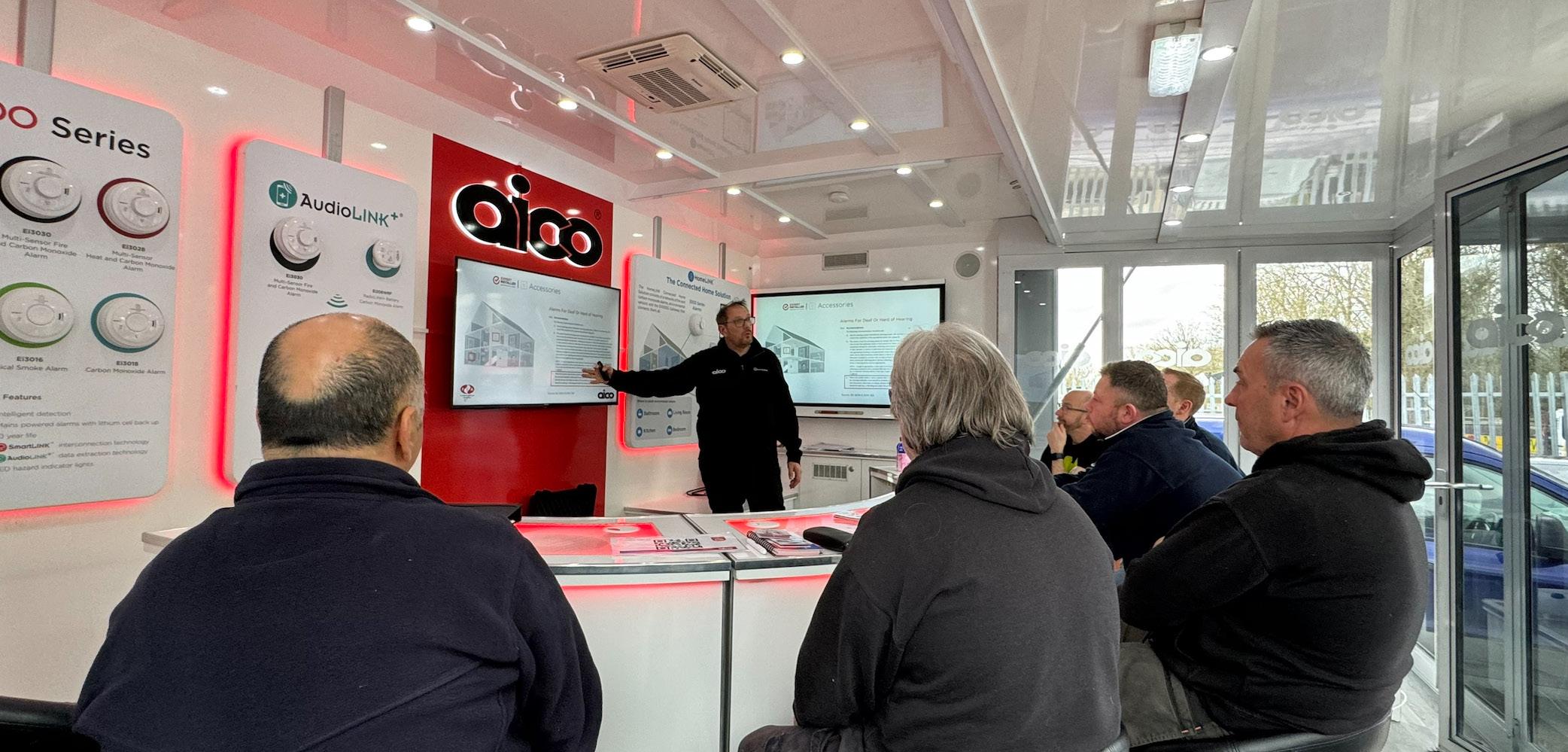
BECOME AN AICO EXPERT INSTALLER
Aico’s free, award-winning Expert Installer training scheme is FIA CPD accredited and is designed to make sure installers have all the information they need to correctly install domestic home life safety systems, including Fire and Carbon Monoxide alarms and Environmental Sensors.
Scan here and sign up today
Join our connected community
Connect with fellow professionals Learn new skills to earn points and receive prizes Rewards for members every month
Members of the community are eligible to participate in Aico’s free-of-charge City & Guilds Assured Training - Domestic Fire & CO Alarm Systems.
of the JIB and ECS at a time when, in his words, “aligning competence, safety and workforce supply during rapid technological and regulatory change is the biggest challenge, but also our greatest opportunity”.
As the industry continues to move quickly with new technologies and new systems introducing more complexity, Andy says traditional qualifications alone can’t always capture the level of competence needed for emerging roles. “That’s why digital skills passports or competence schemes like ECS are so important. They provide a structure for ongoing assurance that goes beyond a single qualification, but include employer endorsements on grading, employment history, health, safety and environmental awareness, fire safety awareness, ID verification and CPD.
“We’re helping industry move from ‘qualified once’ to ‘competent always’, ensuring people are continuously verified, trained and supported as technology and regulation evolve. There is a lot more to ECS than just a plastic card.”
“There is a lot more to ECS than just a plastic card.”
He stresses that competence and safety aren’t just compliance issues; they’re about people. “Every system we help design, every card or framework we manage, ultimately protects someone’s life or livelihood,” he says, adding that raising standards and providing clear career pathways creates not just safer sites, but also better careers and stronger businesses.
“Seeing how technical competence and fair employment standards directly impact quality of work, wellbeing and pride in the profession is what drives my passion for this area.” It’s also why he is so passionate about the work of the EIC, which provides support to those who need
it in the industry. “It is all of our responsibilities to help ensure that people go home to their families at the end of the day,” he comments.
Workforce supply
In addition to competence and safety, Andy highlights workforce supply as another challenge facing the industry. “One of the biggest challenges we face isn’t attracting people to the sector; it’s creating enough opportunities for them,” he says. “Every year, thousands of motivated individuals complete college only courses, or apply to training providers for apprenticeship vacancies but can’t secure an employer placement. That’s a loss of potential talent the industry simply can’t afford.
“For many small- and mediumsized employers, the intent to take on an apprentice is there, but the process can feel too complex or costly.” He emphasises the need to make it easier for SMEs to play a bigger role. “That means updating the Apprenticeship Levy so it works better for smaller firms, increasing
funding and incentives to offset training and mentoring costs, and cutting administrative burdens that make it difficult for employers to navigate the system.”
There’s also huge potential to modernise through digitisation, he notes, streamlining how apprenticeships are managed, matched and tracked, making it simpler for employers to connect with candidates who are ready and qualified to start.
“Bodies like the JIB and ECA already provide vital employment support, guidance and frameworks that help firms onboard apprentices confidently and compliantly. By expanding that model, combining local engagement, employer support and clearer funding pathways, we can help thousands more people begin their careers in the electrotechnical industry, while strengthening the skills base for the future.”
Qualifications and training
As new technologies such as renewables, greater connectivity and smart infrastructure evolve, Andy highlights the need to balance innovation with assurance, ensuring that industry has the right people with the right qualifications and ongoing training. “The rate of change in our sector means that learning can’t stop at qualification, and it has always been the JIB’s position to encourage career progression through upgrading. From emerging and updated standards
in EV charging, battery storage and renewables, to updates under the Building Safety Act, the expectation now is that competence must be demonstrable and maintained.
“Training and education should therefore be seen as an investment, not a cost, both for individuals who want to stay employable and for employers who want to stay competitive.”
ECS and JIB are helping to ease the process through recognition of CPD, modular upskilling routes, and digital tracking of training records for ongoing competence assurance. “This will become more relevant than ever with the forthcoming updates for selfcertification bodies and requirements to sign off work in low carbon areas with employed persons doing the work needing to be qualified to an ECS gold card as a minimum, with the relevant upskilling qualifications as well,” he says.
When it comes to selecting training and education, quality and recognition should always come first, Andy stresses. “People should look for training that’s aligned to industry-recognised standards such as through ECS, EAS or TESP.
“Short online modules can be useful for refreshers or product-specific updates, but they should complement – not replace – structured learning and assessment. Ultimately, good training builds confidence and competence, not just certificates, and that’s what both employers and clients
value most. If it seems too good to be true, it usually is. The same is true with people claiming to get people ‘qualified’ in a matter of weeks. These routes do not lead to recognition by JIB/ECS, EAS or other industry bodies, and lead to frustration and wasted money for the learner.”
Plans for 2026
Looking ahead to next year, Andy says the focus will be on raising competence standards, strengthening member support, and enhancing operational efficiency across the JIB and ECS.
“A major priority is the continued development and implementation of competence frameworks across the electrotechnical industry, ensuring that standards remain aligned with modern technologies, regulatory expectations and employer needs. Through ECS, we’re advancing digital verification and real-time data solutions that provide clearer, more consistent evidence of competence, helping employers, clients and regulators alike.
“We’re also investing in datadriven systems and automation to improve decision-making, reduce administrative burdens, and enable faster onboarding and smarter support for our members.”
Ultimately, he explains, the aim is to ensure that the JIB and ECS continue to lead the way on employment, competence, compliance and collaboration, “providing trusted, modern frameworks that help employers and individuals succeed in a fast-changing industry”.
Andy concludes by highlighting that industry is built on collaboration – between employers, trade associations, unions, awarding organisations, training providers and certification bodies. “The challenges we face, from skills to safety to sustainability, can only be solved together,” he says.
“I’m incredibly proud of how far we’ve come, and excited for what’s ahead. With the right partnerships and shared commitment to competence and fairness, the electrotechnical sector can continue to lead by example across the whole built environment.”
jib.org.uk ecscard.org.uk
Ask the expert Individual competence
Darren Staniforth Head of Electrotechnical Solutions, CEF
Whether you’re navigating complex installations, troubleshooting challenging systems, or looking for guidance on the latest industry standards and technologies, Darren Staniforth, Head of Electrotechnical Solutions at CEF, is here to help.
Get the answers you need to complete your projects with confidence and precision. Ask away, and let our expert support you in delivering top-notch electrical solutions!
Need some technical advice?
Darren is here to help! Send your questions to: info@electrotechnicalnews.com
Is it time electricians embraced the individual, competencebased route that our gas counterparts did years ago?
We recently saw the Electrotechnical Assessment Specification (EAS) change. These changes will require those that are registered with a scheme provider to prove they hold a qualification in the area they are working in, but is our sector ready to go further? For years, the electrical industry has debated whether it should mirror the gas sector’s model of individual, competence-based registration – the system used by Gas Safe, where every engineer is personally certified rather than simply working under a company’s umbrella approval.
A personal registration scheme could drive up professional standards and accountability. It would ensure that only genuinely competent individuals can undertake electrical work. This could help eliminate unskilled or out of date electricians operating under another firm’s registration, and offer consumers confidence that any person entering their home is fully qualified and monitored.
However, there are challenges. The electrical industry is far larger and more diverse than the gas sector, encompassing domestic, commercial, industrial and emerging technologies.
Administering a universal individual licensing scheme would be complex and expensive. Current schemes already provide third-party certification for companies, with defined technical assessments. Proponents argue these arrangements, combined with Part P of the Building Regulations, already offer reasonable consumer protection when properly enforced.
Electricians have historically resisted full personal licensing because of fragmentation and overlap between schemes, and the absence of a single statutory authority like the HSE’s role in gas safety. Implementing one now would require political will, industry consensus and clear legal backing – none of which currently align.
So, is it needed? Many believe that tightening enforcement of the existing competency schemes, rather than rebuilding the system entirely, could achieve the same aim more efficiently. The recent changes to the EAS will move us closer than ever to an individual, competence-based system. I wonder how it would be received if a line in the sand was drawn making all of us prove competence with qualifications. I know lots of electricians that openly say they haven’t completed a regs course for years now. Surely this would need to change?
cef.co.uk
LV switchboard safety
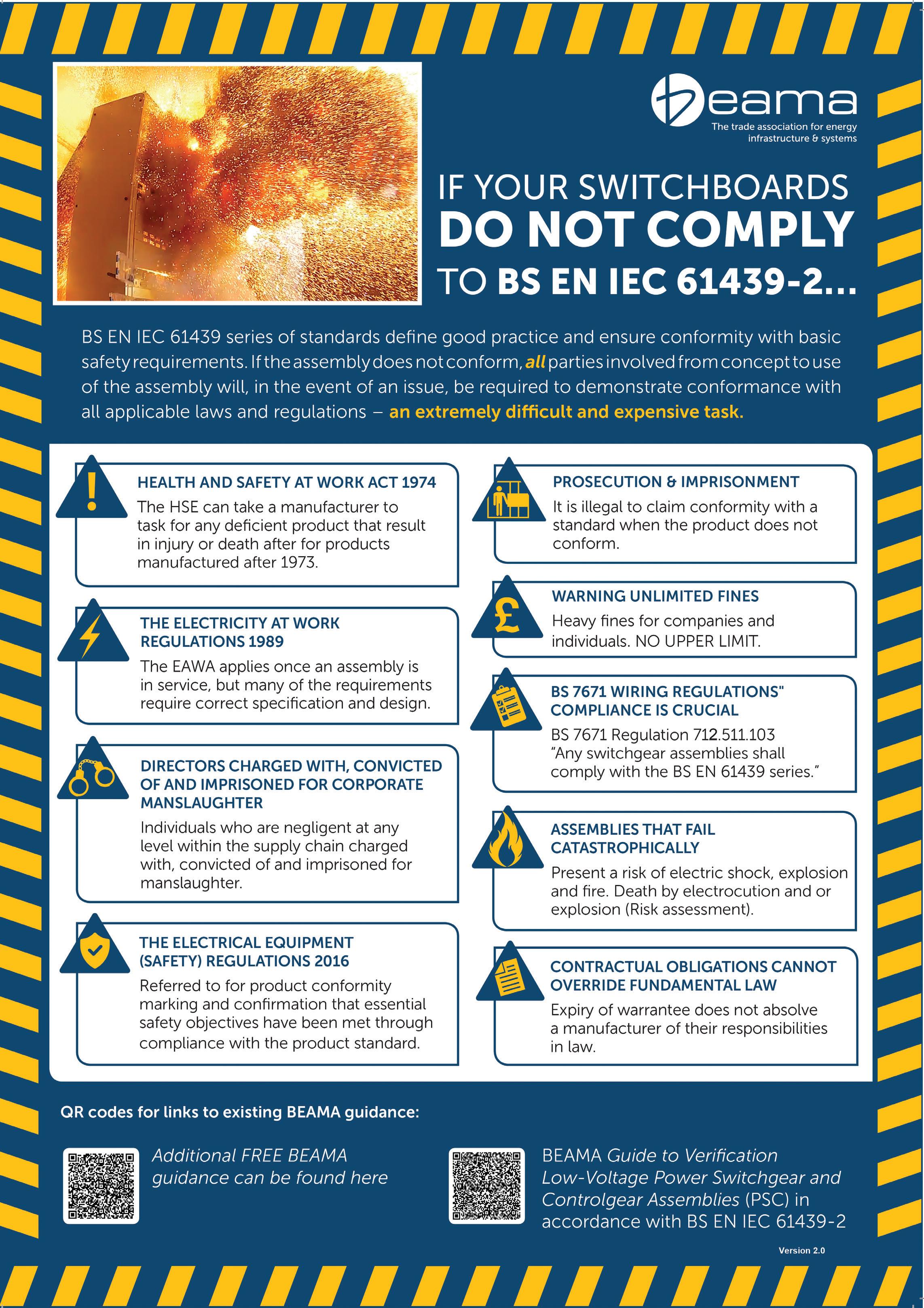
In a decisive move to raise awareness and improve industry standards, BEAMA’s Low Voltage Switchboard and Busbar Systems (LSBS) Group has launched a new safety campaign to educate professionals on the critical importance of product conformity to BS EN IEC 61439-2 throughout the lifecycle of low-voltage (LV) switchboards.
The BS EN IEC 61439 series of standards define industryrecognised good practice and ensure conformity with essential safety requirements for lowvoltage switchgear and control gear assemblies. If an assembly fails to meet the correct standards, all parties involved – from initial concept and design through to installation and operational use – may be held accountable in the event of a failure or safety incident. Compliance provides confidence that assemblies are safe, reliable and fit for purpose.
The BEAMA LSBS Group ‘Consequence of Non-Compliance’ initiative comes at a critical time as heightened regulatory scrutiny, increasingly complex system requirements and rising safety expectations emphasise the need for full conformance with all relevant standards.
Demonstrating compliance with all relevant laws, regulations and safety requirements retrospectively is often a highly complex, time-consuming and costly process. The Group aims to ensure that LV switchboard designers, manufacturers and installers understand and implement the necessary BS EN IEC 61439-2 conformity assessment protocols at every stage, from concept to commissioning.
Designed to provide clear guidance and access to technical resources, the central campaign asset is an eye-catching poster supporting the industry in implementing best practices (see page 29). It summarises the strict legal and safety standards that UK electrical manufacturers and suppliers are required to meet. It also highlights the technical resources BEAMA’s LSBS Product
Group has developed, including a Guide to Verification for Low-voltage Power Switchgear and Controlgear Assemblies (PSC) in accordance with BS EN IEC 61439-2:2021.
‘Consequence of Non-Compliance’ campaign
Nick Hayler, Head of Building Electrical Systems at BEAMA, explains, “Conformity is not just a regulatory requirement, it’s fundamental to safety, reliability and trust across the supply chain. With regulatory scrutiny intensifying, systems becoming more complex, and safety expectations rising, it has never been more critical to ensure that every stage of the switchboard lifecycle, every moment, from design and specification through to installation and commissioning, must be in full conformance with the relevant standards.
“Through our ‘Consequence of Non-Compliance’ campaign, we are
equipping industry professionals with the clarity and BS EN IEC 61439-2 resources that they need to implement conformity protocols effectively and consistently. We aim to raise awareness across the industry, while also providing practical access to guidance through our eye-catching poster and technical documents, which support professionals in embedding best practice.
“By promoting a culture of conformity, we are strengthening the long-term resilience, safety and quality of low-voltage switchboard systems –outcomes that benefit businesses, their customers and, ultimately, society as a whole, while also supporting regulatory compliance and reducing operational risk.”
beama.org.uk/ switchingonsafety
Cut out and keep
Understanding fire safety rules for social housing
Good electrical practice has always been central to effective fire safety, and this is no different within social housing, explains Phoebe Beddows, Marketing Executive at Aico. With regulations tightening and expectations rising, electricians are increasingly at the forefront of protecting lives and ensuring compliance. A strong understanding of current fire detection requirements and standards is essential when working with local authorities, housing associations or landlords managing multiple properties, to follow best practice guidelines.
Social housing across the UK ranges from post-war flats to new developments. Many residents are more vulnerable due to age, health or mobility, which makes effective fire protection vital. Older electrical systems, shared corridors and inconsistent maintenance regimes all add to the challenges and risks.
For electrical contractors, minimum compliance is not necessarily enough. A system may meet the minimum law yet still fall short of providing real system reliability and reducing the potential extent of harm in the event of a fire. The right alarm grade, careful positioning and reliable interconnection could make all the difference.
The legal framework
The Smoke and Carbon Monoxide Alarm (Amendment) Regulations 2022 apply to all rented homes in England, including social housing. They require at least one smoke alarm on every storey of living accommodation, a carbon monoxide alarm in any room containing a fixed
“The right alarm grade, careful positioning and reliable interconnection could make all the difference.”
combustion appliance (excluding cookers), and the prompt repair or replacement of faulty alarms once reported.
Phoebe Beddows Marketing Executive at Aico
These rules set the legal minimum but do not specify the alarm grade, interlinking method. That guidance can be found in the form of a recommendation within BS 5839-6:2019 +A1:2020, the key British Standard for domestic fire detection systems.
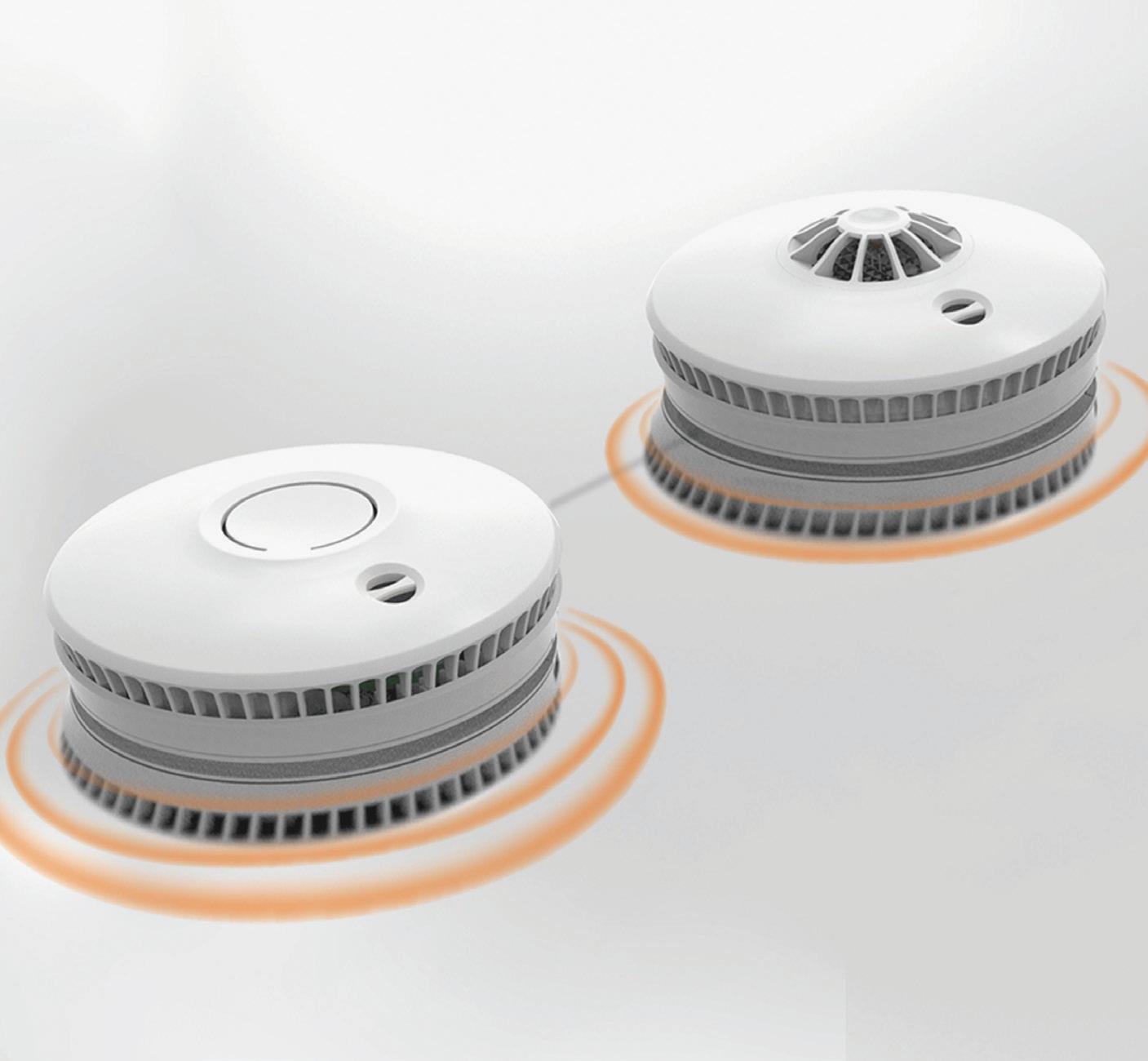
For social housing, the recommended specification is Grade D1, Category LD2 – mains-powered alarms with tamper-proof backup batteries, smoke alarms in escape routes and main living areas, and heat alarms in kitchens. All devices should be interlinked so that when one activates, they all sound.
Although the Building Regulations (Approved Document B) set a minimum of Grade D2, LD3, most social housing providers now opt for LD2 systems to deliver higher levels of protection that allow for an earlier warning and peace of mind.
The electrician’s role
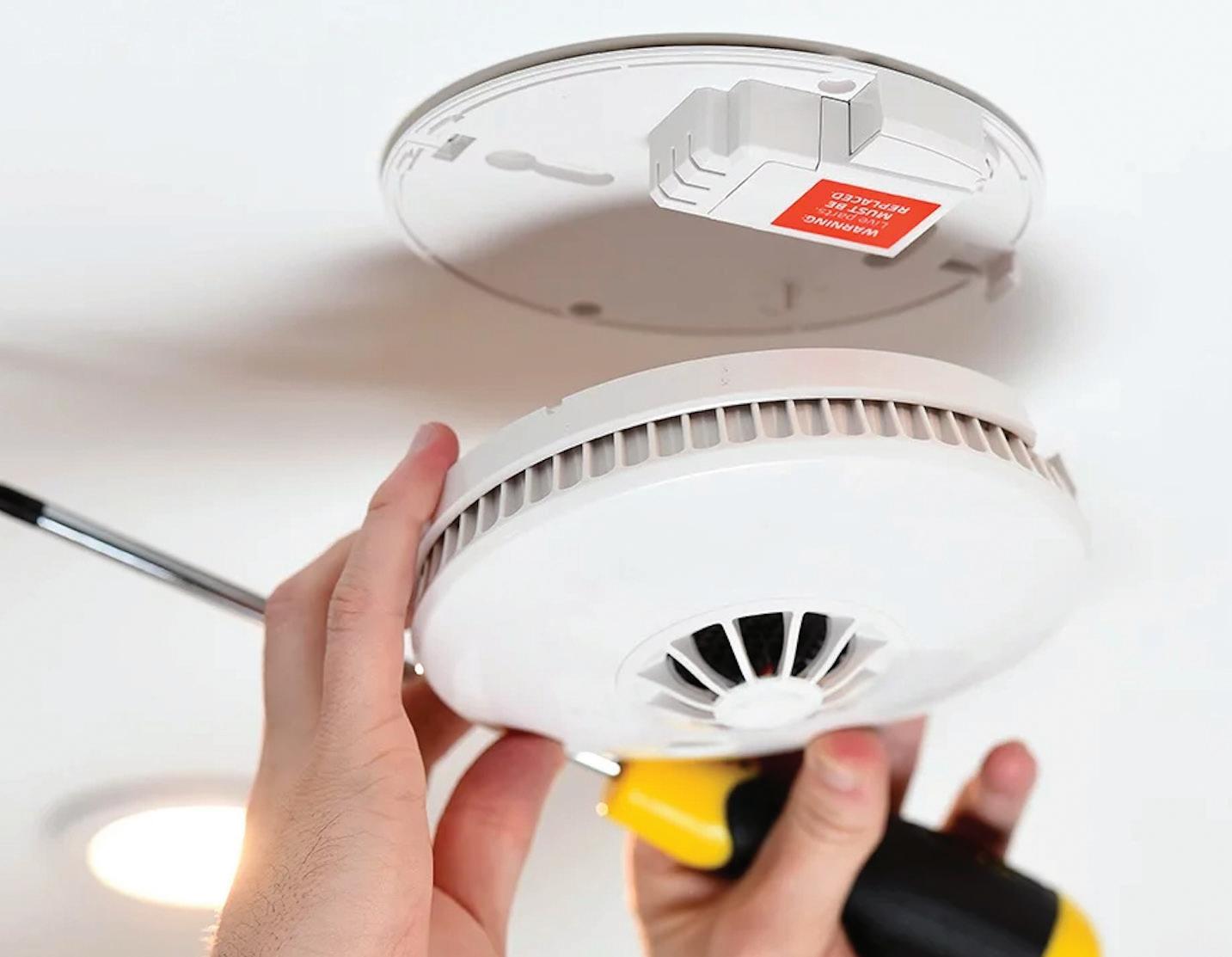
Installing alarms is not just about fitting devices to ceilings. Each property requires a system designed to suit its layout and occupancy. Electricians should focus on selecting appropriate alarms, ensuring correct placement and spacing, using mains-powered units with a reliable backup, and testing thoroughly after installation.
Equally important is clear documentation. Installation
certificates, layout plans and testing logs are vital for both compliance and accountability. Good recordkeeping protects the landlord and the installer.
Embracing connected technologies
Connected fire alarm systems are changing the way landlords manage safety in social housing. Many now use gateways that allow remote monitoring of alarm status, power supply, battery condition and fault reports.
For electricians, understanding how to install and configure these smart networks adds real value. Connected systems can reduce maintenance visits through digital diagnostics and ensure faults are identified quickly. As this technology becomes more common, knowledge of integration and data monitoring will become an important part of every electrician’s toolkit.
Avoiding common issues
Even experienced installers encounter recurring problems –alarms positioned too close to vents or light fittings, incompatible brands in the same system, missing heat alarms in open-plan kitchens, or incomplete handover documentation.
Taking extra care at the planning stage prevents faults and compliance failures later. Accurate siting, brand consistency and full
“Although the Building Regulations (Approved Document B) set a minimum of Grade D2, LD3, most social housing providers now opt for LD2 systems to deliver higher levels of protection that allow for an earlier warning and peace of mind.”
interconnectivity checks should always be standard practice.
Supporting clients and residents
The job doesn’t end once the system is installed. Landlords rely on professional advice to ensure alarms are maintained over time. After installation, electricians should advise on routine testing and replacement schedules, explain operation to residents and flag any wider electrical or fire-safety concerns they notice on site.
A short handover or tenant briefing can make a real difference, helping residents understand how the system works and what to do in an emergency.
Raising standards in home life safety
The drive for safer homes has never been greater. Lessons from recent incidents have reshaped expectations across the housing sector, and electricians are central to this change.
By keeping up to date with legislation, following BS 5839-6 guidance and embracing connected technology, installers can help create homes that are genuinely safer to live in.
aico.co.uk
Lithium-ion battery fires: what installers need
to know
Modern homes are packed with more battery-powered devices than ever before. From e-scooters and bikes to tablets, cordless tools and smart home gadgets, lithium-ion batteries are at the heart of this growing trend. But while they offer convenience and flexibility, these batteries also pose a significant, and growing, fire risk. Jay Singhera, Fire & Rescue Services Account Manager at FireAngel, explores how installers can help mitigate the danger.
Jay Singhera Fire & Rescue Services Account Manager at FireAngel
UK Fire and Rescue Services have identified lithiumion battery fires as one of the fastest-rising causes of domestic callouts. Data shows a 46% increase in lithium-ion batteryrelated fires in 2023 compared to 2022 (britsafe.org), underlining how important it is for safety standards and detection systems to keep
pace. For installers, this is a critical moment to assess whether the systems being installed are equipped to deal with these modern risks.
Understanding the unique nature of lithium-ion fires
Fires involving lithium-ion batteries behave very differently from more familiar types of domestic fires. They can erupt suddenly, reach extremely high temperatures in seconds, and emit toxic gases. Unlike traditional fires, there’s often no slow build-up of smoke or heat – just a sudden onset of flames caused by a process known as thermal runaway, which is a chain reaction that occurs within a lithium-ion battery when it becomes mechanically damaged, electrically overcharged, or subjected to elevated ambient temperatures.
Fires are likely to start during charging, especially with nongenuine or damaged chargers, and tend to occur in locations like bedrooms, hallways or garages. These areas are often out of sight or used during nighttime hours, making early detection even more crucial.
Installing smarter fire safety solutions
To counter this threat, it’s essential that detection systems are specified with these modern fire risks in mind. Heat alarms, in addition to traditional smoke alarms, should be considered in rooms where charging commonly happens, such as utility spaces, garages and bedrooms.
“Unlike traditional fires, there’s often no slow build-up of smoke or heat – just a sudden onset of flames caused by a process known as thermal runaway.”
“If a fire breaks out in a remote part of the home, an interconnected system ensures the alarm sounds across all areas, giving everyone more time to react.”
Interlinked alarms offer another layer of protection. If a fire breaks out in a remote part of the home, an interconnected system ensures the alarm sounds across all areas, giving everyone more time to react. This is especially important in larger homes or multi-occupancy properties, where a single alarm might go unnoticed. For retrofit projects or where wiring isn’t practical, battery-powered interlinked alarms provide an easyto-fit and cost-effective solution.
Combining technology with awareness
While upgrading alarm systems is an important step, it’s equally vital to combine this with education. Installers and contractors have a key role to play in highlighting safe usage and charging practices to occupants, particularly in properties where vulnerable individuals live. Simple messages such as avoiding overnight charging, using only manufacturerapproved chargers, and not charging devices on soft furnishings can go a
long way towards preventing serious incidents.
Where budgets and infrastructure allow, connected systems that enable remote monitoring are increasingly being explored by landlords and housing providers. These technologies can flag alarm faults, low battery warnings or even activation alerts in real-time, making them particularly valuable in homes occupied by people at higher risk, such as the elderly, those with mobility issues or tenants with additional support needs.
Staying ahead in a changing market
The risk of battery fires is expected to keep rising as more devices, and transport options, rely on lithiumion power. For installers, this means staying informed not only about fire safety regulations but also about the evolving technologies that can improve early warning and response.
Installers aren’t just fitting alarms; they’re shaping safer homes. By combining expert product selection with smart installation choices and clear advice to residents, they can play a frontline role in preventing batteryrelated incidents and saving lives.
NEW for LiGHT 25 – Introducing the… TECHNICAL ZONE
Discover the latest in Urban Lighting, Commercial Lighting, Control Systems, Components/OEM, Lamps & Gear, Emergency Lighting, and more.
Connect with industry experts, expand your professional network, and spark fresh inspiration.
The evolution of power tools and the technologies changing the industry
Innovation in power tool technology is increasing the scope of modern cordless tools. Here, Kevin Brannigan, Marketing Manager at Makita UK, looks at some of the recent advancements that make a significant impact on performance and user experience.
Kevin Brannigan Marketing Manager at Makita UK
High voltage – with added safety and freedom of movement
Over the last 10 years the power capabilities of cordless tools have improved considerably. Where corded machines would previously be required for some high-drain tasks, today, higher voltage cordless tools offer comparable or even improved performance. As a result, cordless impact drivers, drills and saws now offer the power necessary to get the job done quickly and effectively, without the hassle of finding a power source and ensuring the cord is not causing a potential health and safety risk.
Improved batteries to take you further
Cordless tools have gone through many battery iterations since they were initially launched to market, from nickel-cadmium and nickelmetal hydride to the current lithiumion batteries that are found in the majority of the tools today. However, more recently the focus has been on increasing the combination of voltage plus the capacity of batteries. This is with the aim of enabling professionals to tackle more demanding tasks, and work for longer on a single charge. For example, this year Makita has launched two of its highest capacity batteries to date. For the 18V LXT range, the new 9.0Ah and 12.0Ah batteries were introduced, with the tabless 8.0Ah for the 40VMax XGT platform.
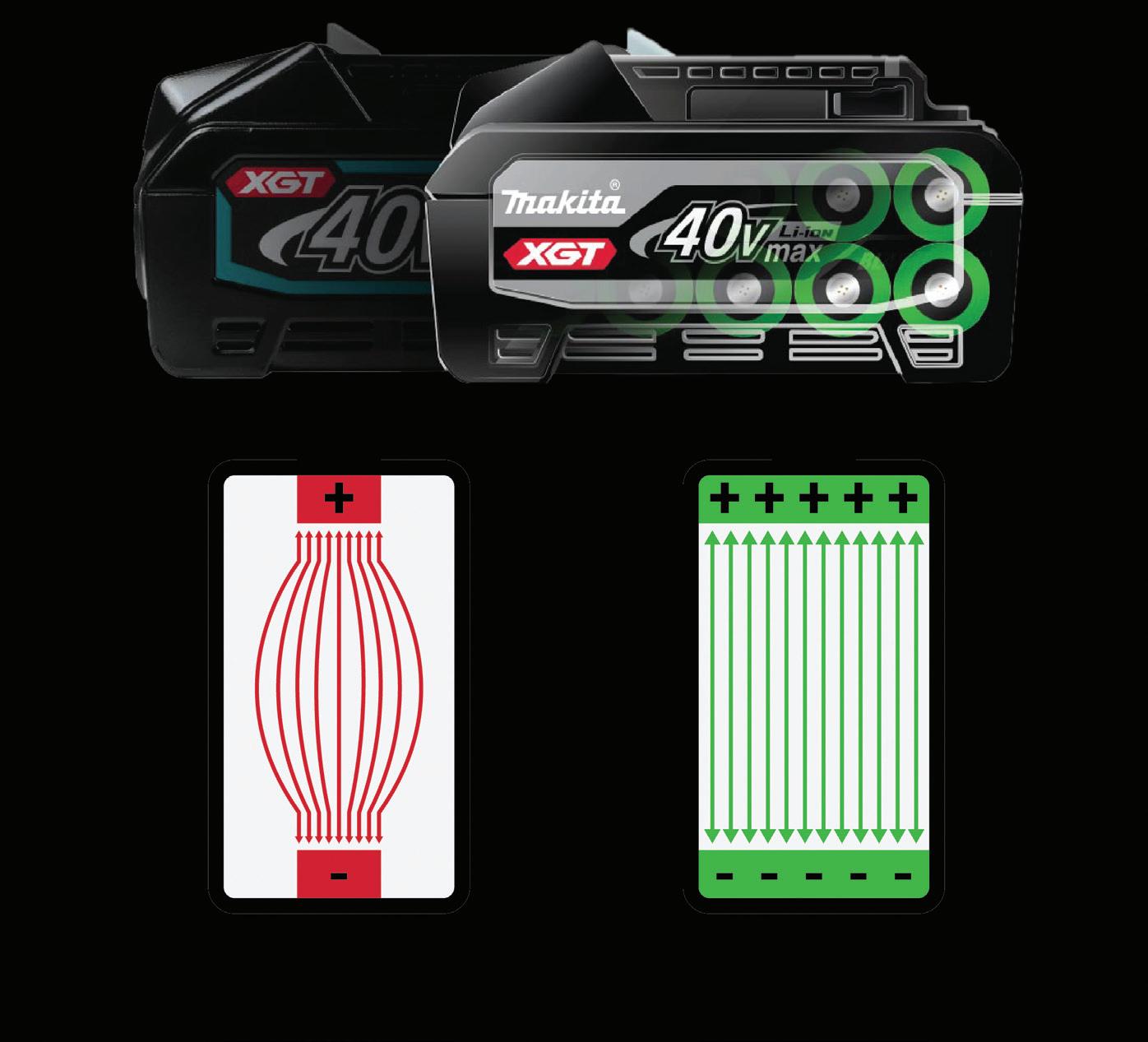
Tabless batteries such as the new 8.0Ah option represent an increasingly important area of development. Unlike traditional tabbed options, the cells in a tabless battery connect directly to the terminals, enabling the current to flow more easily. This ensures better energy transfer, longer runtimes and a cooler delivery for very high demand applications. Makita’s tabless 4.0Ah BL4040F battery, for instance, delivers up to 36% longer runtimes and operates 32% cooler compared to the standard 4.0Ah BL4040 – all whilst delivering the same 2.1kW maximum output.
“Unlike traditional tabbed options, the cells in a tabless battery connect directly to the terminals, enabling the current to flow more easily.”
BL4040F
Looking ahead, the need for high capacity, high output batteries is only going to increase as demand in the tool industry and other sectors continues to drive innovation.
Efficient motors
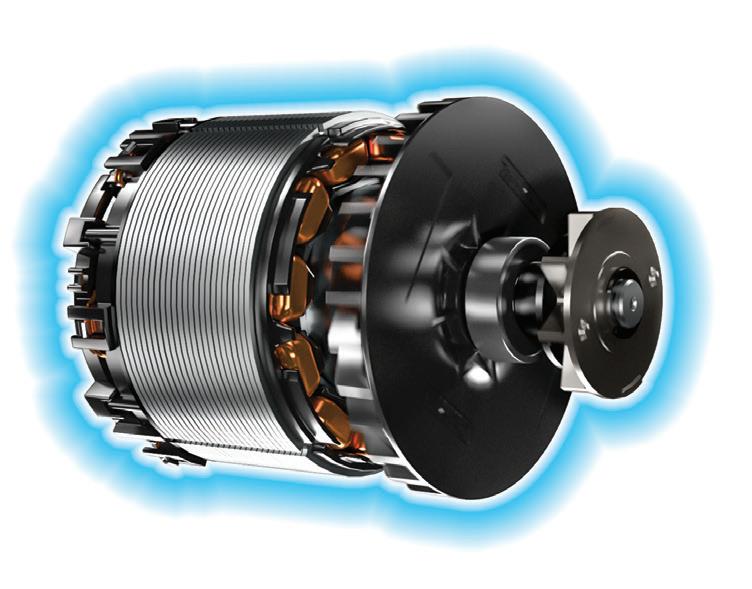
Brushless motors are another key innovation that has helped to make cordless tools more powerful and efficient. By utilising a different design that eliminates the need for carbon brushes, a brushless motor reduces internal friction, which increases torque whilst reducing energy consumption. These types of motor are becoming increasingly common in all power tools because the efficiency gains can have such significant benefits. Evidence suggests that a tool with a brushless
motor may have an extended run time of 50% per battery charge, aiding efficiency and reducing the potential hassle of having to swap out batteries.
Furthermore, with usability and the freedom to move being one of the main advantages of cordless tools, the compact design of brushless motors is also enabling manufacturers such as Makita to develop tools that are smaller and easier to handle, without compromising on power or torque.
Thoughtful technology
It’s not just the batteries and motors that have improved in cordless tools; there is now greater emphasis on including additional technology to improve tool performance and enhance user experience.
For example, Makita has developed its digital communication system alongside its battery capacity and output. This allows the battery to communicate with the tool to protect against overload, over-discharge and overheating. By enabling this connectivity, the life of both the battery and the tool can be extended, and chances of having to book in tools for potentially costly services are reduced.
Speed and impact control is another addition to cordless tools that
significantly enhances usability. By specifying the tools’ power output, professionals are able to conserve battery and ensure safety is maintained, tailoring the output to the job at hand.
When combined, these features and developments work together to create tools that are more versatile and more capable, enabling professionals to work more productively and more efficiently. makitauk.com
BL4040
BL motor
Throwing light on electrical work in the shadows
With traditional power often unavailable, standalone lighting and power generation tools can bridge the gap, highlights Darren Binns, National Sales Manager at Jefferson Tools.
IDarren Binns National Sales Manager at Jefferson Tools
n the everyday world of electrical installations and maintenance, electricians often encounter the challenge of working without direct access to power. This not only hampers efficiency but also poses significant safety risks. Shining a light on this issue is Jefferson Tools, whose extensive ranges of on-site lighting and power generation tools can prove indispensable.
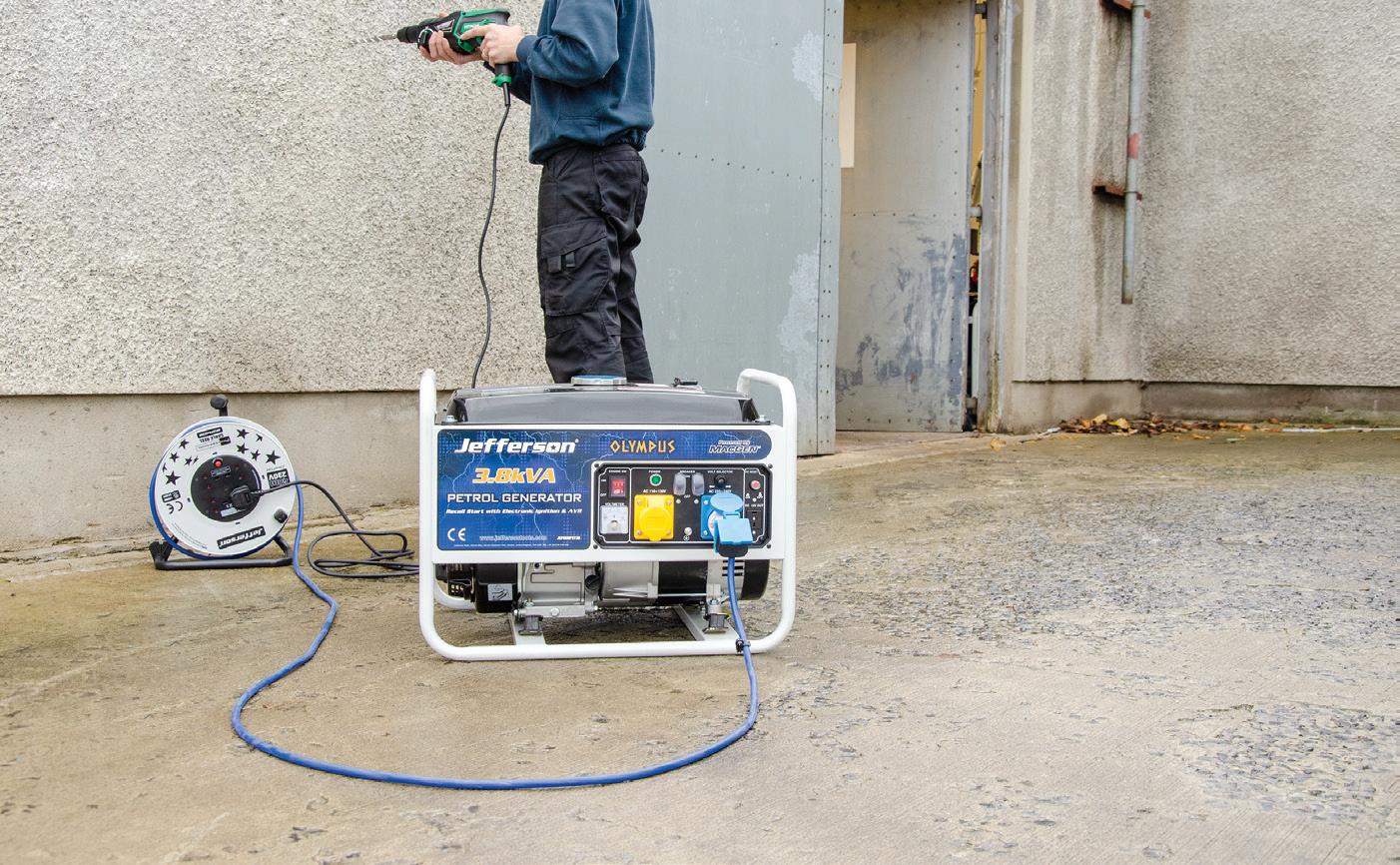
Smart solutions to the rescue Lack of direct power access on new installation sites or during maintenance work is a common issue that electricians face, significantly limiting productivity and causing delays. Poorly lit environments can increase the risk of accidents, affecting both project timelines and worker safety. Fortunately, there is a solution. Jefferson Tools recommends having a power generator on-site, with the 2.8kVA Petrol Generator being an essential tool for any professional electrician.
“With its robust MacGen 5.5HP engine, this generator delivers reliable power, offering both 230V and 110V sockets to cater to a wide range of power needs onsite,” says Darren Binns, National Sales Manager at Jefferson Tools. “Our focus is on creating solutions
that not just meet but exceed the expectations of professionals in the field, and this model is a prime example of this.”
Adding to this line-up, the Dynamo 430A Starter Charger emerges as a useful tool for keeping essential equipment charged and ready. Suitable for a range of battery sizes, it features a variable charging rate, a large ammeter display, and safety features such as a dash-mounted fuse and polarity protection. This makes it indispensable for maintaining the flow of work without interruptions.
Complementing the power solutions, the Lumens LED Rechargeable Work Light is a versatile lighting option for various electrical tasks. Made from durable thermoplastic, this compact and lightweight work light ensures reliable illumination wherever needed. With its 360° reflex
angle and three working modes, it enhances functionality and safety on-site. It includes a built-in lithiumion rechargeable battery, providing up to three hours of continuous light, and comes with a 1m USB recharging cable, making it a convenient solution for any project.
In addition, the 200lm Rechargeable Headlamp with Motion Sensor offers an unprecedented level of convenience and efficiency. Its hands-free operation and adjustable lighting angles are invaluable for tasks that require both precision and mobility, allowing electricians to focus on their work with both hands.
Safety first
Ensuring safety on-site is crucial for electricians working with power generation equipment. Firstly, it’s essential to familiarise oneself with the operation and maintenance
procedures outlined in the product manuals for each tool. Proper training on how to safely use, handle and store these tools goes without question.
“When using portable generators, it’s crucial to place them on stable, level ground and keep them away from flammable materials to reduce the risk of fire,” adds Darren. “Regular inspections of tools and equipment for any signs of damage or malfunction should be conducted, and faulty items should be promptly repaired or replaced. Lastly, maintaining a clean and organised work environment can minimise tripping hazards and enhance overall safety on the construction site,” he concludes.
What’s next in electrical work?
As we cast our eyes towards what’s next in electrical work, it’s evident that a practical yet smart approach to power and lighting supply is key to enhancing both the safety and productivity of worksites.
Advanced power generators and
lighting tools, designed to meet the high demands of modern electrical projects, play a crucial role in overcoming the challenges posed by sites without direct power access. By integrating such technologies, electricians can ensure projects
proceed uninterrupted, safeguarding against delays and enhancing on-site safety.
jeffersontools.com
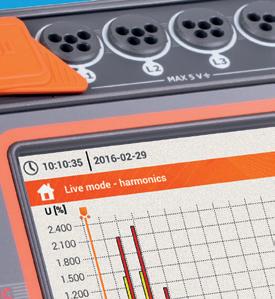
• Specialist in Power Quality and Energy Surveys with Test Equipment products and solutions from Sonel and Electrex
• Complete range of Power Quality and Harmonic Surveys, EN50160 Compliance Reports and Energy Load Profiling Surveys
• Developer of Harmographic Analysis. The harmonic frequency visualisation technique for current and voltage assessment
• Power Quality Clinic for remote power quality consultancy and harmonic analysis with our Power Quality Health Check reports
• Renewable Energy test equipment specialists for Solar PV and transformer fault loop
meters for 690V and 800V
Power generator
Heat pumps explained
With air source heat pumps (ASHPs) becoming a familiar sight on UK properties, more electricians are being called upon to support installations. Rob Dyer, Technical Sales Support Engineer for Grant UK, explains the essentials every electrician should understand when working with heat pumps.
Rob Dyer Technical Sales Support Engineer for Grant UK
What are ASHPs and what part do electricians play in installing heat pumps?
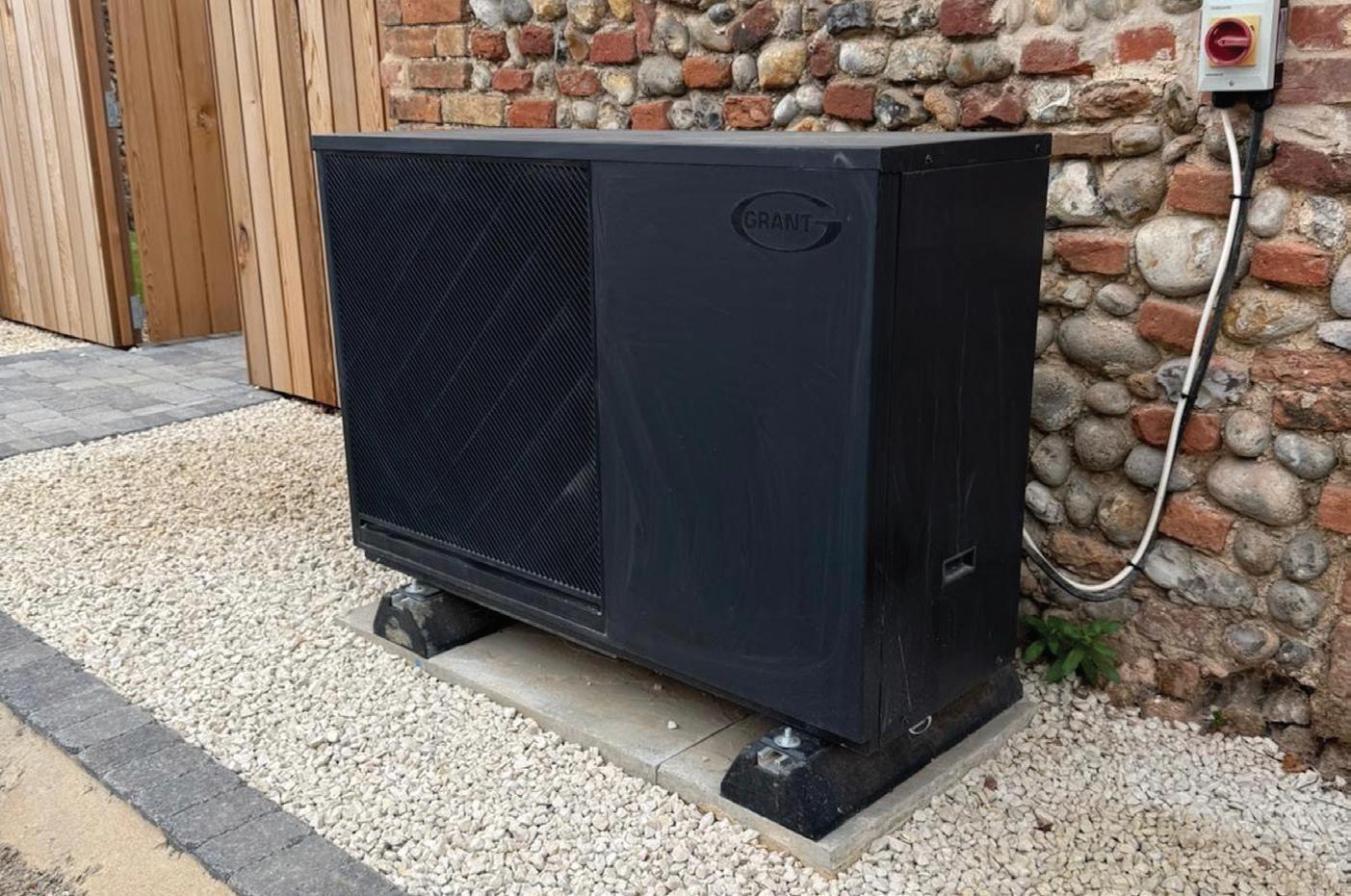
ASHPs draw energy from the outside air and convert it into usable heat for a wet heating system by using the vapour compression cycle. This cycle involves key components including the compressor (the hardest working part of the unit) and the evaporator fan, which moves air across the heat exchanger.
While heating engineers manage the plumbing, cylinder replacement and commissioning of the system, an electrician’s role is to ensure the heat pump and controls are safely connected to the electricity supply, compliant and correctly wired. Their time on-site may only be half a day to a full day, but their role is essential to ensuring the heat pump operates efficiently and reliably.
What are the main responsibilities for electricians?
Electricians have two key roles in a heat pump installation. The first is connecting the heat pump to the power supply using an appropriate size of cable which will typically be a 16A to 32A supply. A heat pump requires a dedicated power supply
with a correctly sized circuit breaker. The final connection must run through a weatherproof, lockable isolator positioned outside the property, with the cable either armoured or run in flexible conduit between the isolator and the heat pump.
The second step is connecting the heat pump with the controls and wiring centre fitted inside the property. The heat pump controller acts as the system’s brain, managing pumps, valves, thermostats and temperature settings, with its display showing operational data so the installer and homeowner can see what’s going on. Most heat pump systems are similar to a W-plan, and if you understand a Y- or S-plan heating system, you will understand
20° Tilt Angle 360˚ Axis to tilt
“Most heat pump systems are similar to a W-plan, and if you understand a Y- or S-plan heating system, you will understand a W-plan.”
a W-plan, which is in essence a hot water priority system with a 3-port diverter valve.
How important is the controller setup?
The controller is crucial because correct configuration is essential for reliable operation. Most system issues stem from incorrect setup rather than faults elsewhere. Grant’s Aerona Smart Controller simplifies the initial setup through its built-in configuration assistant that asks clear questions to guide the installer or electrician, allowing them to check each system component is set up and working properly.
What should electricians keep in mind during installation?
One of the most common misunderstandings is that a 10kW heat pump requires a 50A supply. In reality, the 10kW rating refers to the heating output not the electrical demand. Confusing the two could
lead to unnecessary oversizing, for instance, using a 10mm cable when a 2.5mm might be ok.
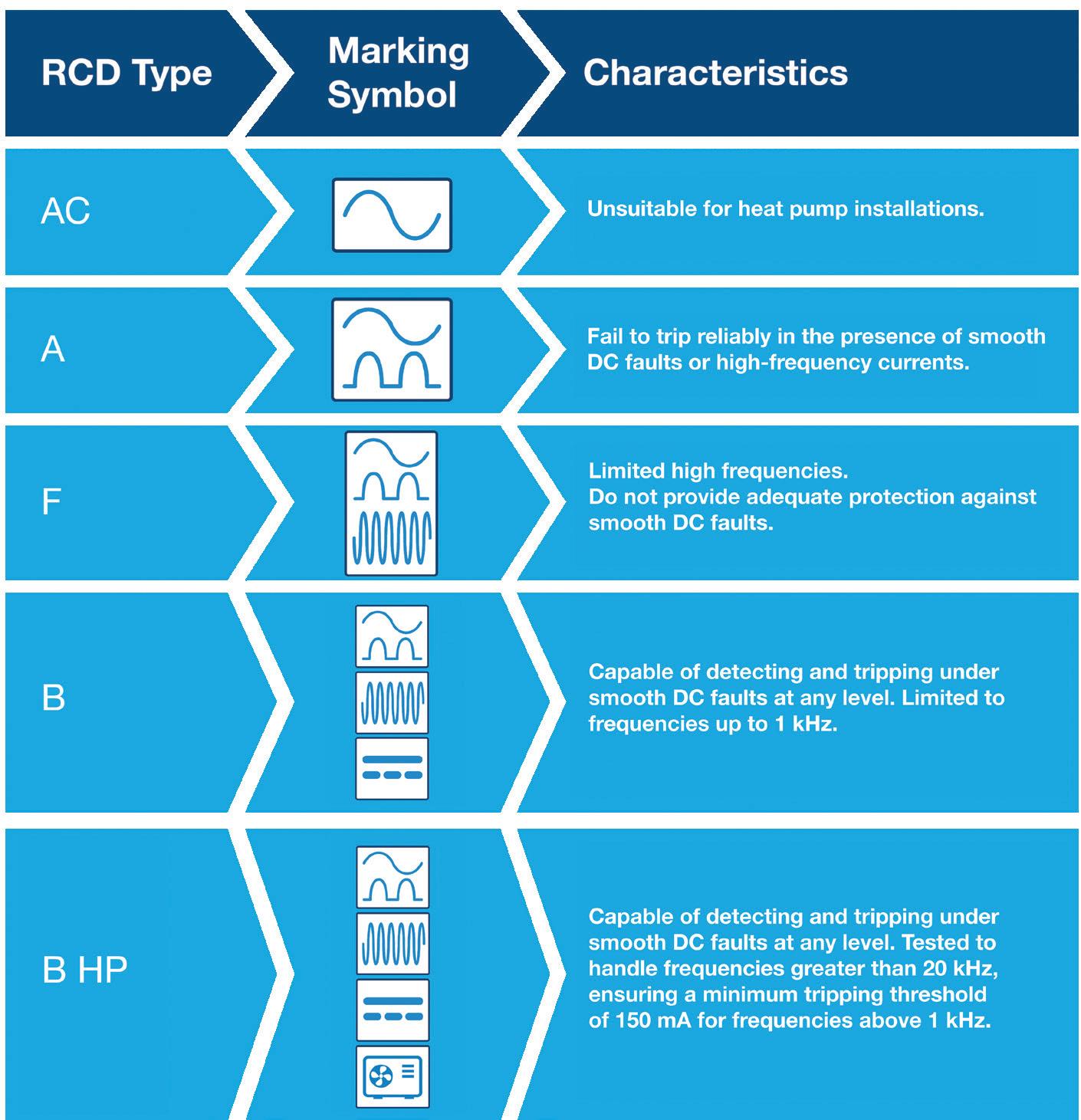
It is also important to use the correct RCD protection. Most heat pumps are inverter-driven, meaning Type B or Type F RCDs are suitable but Type A or AC RCDs are not. Electricians should also be aware that R290 refrigerant models have restricted safety zones around the unit where isolators or switches cannot be installed.
Before installation begins, either the installer or electrician must confirm that the property’s electricity supply can support the heat pump. This check is made through the ENA Connect Direct Portal, which links to the local Distribution Network Operator (DNO). If the criteria is met, installation can proceed under a ‘Connect and Notify’ process and the DNO can be informed after commissioning. Grant’s Aerona³ and Aerona 290 heat pumps are fully compliant with this process.
Are any tools or equipment particularly useful for heat pump electrical work?
No specialist tools are needed, but some make the job much easier. Bootlace ferrules, for instance, are helpful for connecting small-core cables to terminals and shielded twisted pair or Cat 5/6 data cable is handy for the wiring. A multimeter is always useful to have on the van as it helps with fault-finding and checking sensor resistance.
What qualifications do electricians need to work with heat pumps?
Electricians must hold a formal electrical qualification to complete the electrical connections and to sign off work to Building Control. They should be qualified to the latest version of BS 7671 and ideally should be members of a Competent Person Scheme (CPS) such as NICEIC. A strong understanding of heating system wiring is also important and familiarity with hydronics and plumbing helps too.
What support does Grant UK offer for electricians?
Grant UK has lots of resources that support electricians working with heat pumps. Our Training Academy offers dedicated wiring sessions as part of the Aerona³ and Aerona 290 ASHP Installer Courses, allowing electricians to gain hands-on experience with heat pump systems.
We also have heat pump specialists available on the phone and in the field to provide technical assistance, offer wiring diagrams for different scenarios, and our eLearning Academy has a free webinar which is specifically for electricians. It explains how ASHPs operate and explores the electrician’s role in completing installations. Electricians can access the Grant eLearning Academy at grantelearning.com, registering for an account using the enrolment key GUKWEB0820 and then enrolling onto the Heat Pump Q&A Webinar.
Why should electricians consider expanding into heat pumps?
The move towards low-carbon heating is opening up real opportunities for electricians. Although electrical and plumbing trades are distinct, both can expand their skills with the right training and qualifications. Many electricians are already taking this route, adding renewable heating to their skillset as demand for heat pump installations grows.
As the UK continues its shift towards cleaner energy, there is every reason to get involved in this expanding sector.
grantuk.com/professional
Type B RCDs in heat pump installations
The electrical industry is experiencing rapid technological advancements and growing regulatory complexities, especially with the push towards renewable energy solutions such as air source heat pumps (ASHPs). With the increasing adoption of these systems, ensuring safety and compliance in electrical installations has never been more critical, explains Mark Kimberley, UK Market Manager at Hager.
Mark Kimberley UK Market Manager at Hager
ASHPs operate differently from traditional electrical systems. These devices often utilise inverter driven compressors to convert AC power into DC and back again, generating high frequency currents during the AC-DC switching process. These currents can include smooth DC and high-frequency residual currents that exceed the capabilities of standard RCDs.
Type B RCDs are uniquely suited to handle this complexity, as they detect and protect against AC, pulsating DC, and smooth DC residual currents. For heat pump installations, this capability is crucial. Without appropriate protection, RCDs can become magnetised in the presence of DC components, compromising their functionality. This phenomenon, known as RCD blinding, leaves the system unable to detect earth faults, significantly increasing the risk of electric shock.
Hager’s Type B HP RCDs go beyond the standard Type B capabilities. These devices are specifically engineered to function at frequencies greater than 20 kHz, ensuring a minimum tripping threshold of 150 mA for frequencies above 1 kHz. This precision is critical for addressing
the unique safety challenges posed by modern heat pump installations.
High-frequency protection
Not all Type B RCDs are created equal. While many are tested to handle frequency residual currents up to 1 kHz, heat pumps often generate high-frequency currents far beyond this range. Standard Type B devices
“While RCD Types AC, A, F and B serve specific purposes, they fall short in handling the unique challenges posed by heat pumps.”
may trip unnecessarily at these frequencies, leading to nuisance tripping and potential system downtime.
Hager’s Type B HP RCDs are designed to operate effectively at high frequencies, providing robust protection against residual currents at frequencies greater than 20 kHz. This ensures reliable operation even under the demanding conditions of heat pump systems, eliminating the risk of unnecessary disruptions.
Misconceptions around RCD types
There is often confusion among installers regarding the suitability of different RCD types for heat pump applications. While Types AC, A, F and B serve specific purposes, they fall short in handling the unique challenges posed by heat pumps. The advanced capabilities of Hager’s Type B HP RCDs set them apart, offering enhanced protection at higher frequencies that are critical for heat pump applications.
Ensuring compliance
Regulations play a pivotal role in ensuring the safety and reliability of electrical systems. BS 7671
Regulation 531.3.3 emphasises the need to select RCDs based on their behaviour in the presence of DC components. This ensures that the chosen protective device can tolerate DC currents without becoming magnetised and compromising its functionality.
Hager’s Type B HP RCDs align perfectly with these requirements. Designed to detect and protect against smooth DC faults, they operate effectively at frequencies far beyond the capabilities of standard Type B devices. This compliance ensures that installations meet regulatory standards while providing robust protection against electrical faults.
Additionally, Regulation 134.1.1 requires that electrical installations use proper materials and adhere to manufacturers’ instructions. By choosing Hager’s Type B HP RCDs, installers can confidently meet this
“Not all Type B RCDs are created equal. While many are tested to handle frequency residual currents up to 1 kHz, heat pumps often generate high-frequency currents far beyond this range.”
VDE standard, are suitable for heat pump applications. However, it is essential to note that Type B+ is not recognised under BS 7671. This misunderstanding underscores the importance of selecting devices specifically designed and tested for compliance with UK standards. Hager’s Type B HP RCDs meet these stringent requirements, providing peace of mind for installers and end users alike.
The future of electrical safety in renewable energy
As the adoption of renewable energy technologies continues to grow, the electrical industry must adapt to new challenges. Heat pumps, with their complex electrical characteristics, highlight the need for advanced protective devices like Hager’s Type B HP RCDs. These devices not only ensure compliance with evolving regulations but also address the unique safety risks associated with modern installations.
requirement, ensuring the safety and reliability of their heat pump installations.
Type B+ vs BS 7671
Some installers mistakenly believe that Type B+ devices, a
By offering high-frequency protection and robust performance in demanding conditions, Hager’s Type B HP RCDs set a new standard for safety and reliability in the electrical industry. For installers and specifiers, the choice is clear – when it comes to heat pump applications, Hager’s Type B HP RCDs are a reliable solution.
hager.com/uk
Major energy savings for grammar school
Bradford Grammar School (BGS) has partnered with NVC Lighting to transform its estate and achieve savings of over £65,000 annually on energy costs.
BGS, a high-performing independent grammar school, has been working closely with NVC Lighting on a major lighting upgrade, replacing its outdated and inefficient fluorescent and incandescent lighting with high performance LED solutions.
This extensive project involved installing commercial LED lighting throughout the school, from the historic Price Hall to a range of traditional and modern classrooms, cutting-edge sports facilities and the theatre. The upgrade has also encompassed all corridors, stairwells, kitchens, workshops, laboratories and outdoor areas such as pathways and car parks.
NVC Lighting additionally provided all the emergency lighting required,
all fully integrated into the school’s building management system.
Ian Clint, Head of Estates at BGS, says, “This project has been a great success and one I’m extremely proud of. By working closely with NVC Lighting’s expert team, site surveys and assessments demonstrated the significant benefits of the scheme, addressing rising energy costs and the opportunity to reduce our carbon footprint, while also enhancing the learning environment to improve student performance and wellbeing.
“It was a no brainer; I recommended the project, and it was approved by the senior management team and governors.”
Reduced energy costs
The result for BGS has been
outstanding. With NVC Lighting’s high-quality solutions installed, integrated with smart lighting control technology, the school has made a 34% saving in its energy costs, over £5,500 per month.
“The buildings at BGS are architecturally stunning, and the entire school community is extremely proud of them,” Ian continues. “We now have a lighting scheme across the estate that exceeds the standards of a highperforming educational facility.
“I’d like to thank NVC Lighting for their exceptional support. They’ve gone above and beyond – not only providing superior, cost-effective lighting solutions, but also excelling in product availability, delivery times and customer service throughout the project.”
“The educational sector is a demanding environment, with so many different room types that all have their own lighting needs and requirements.”
As a leader in the education sector for LED lighting, NVC Lighting offers schools and colleges a complete end-to-end service, from site surveys and assessments right through to technical support and design services. The company’s LED lighting solutions are high quality, easy to install and maintain, and can be integrated with smart lighting control technology to maximise energy savings and positively impact student and staff performance.
Added value
Allister Szczepanski, Regional Sales Manager for NVC Lighting, comments, “BGS is such a prestigious school, so we were delighted to have been specified for this project.
“We have worked in partnership with Ian and his team throughout the whole process, developing a fantastic relationship to deliver a lighting upgrade scheme that adds real value to the school.”
As part of the scheme, a range of products from NVC Lighting’s extensive range of commercial LED lighting solutions were installed, including the company’s popular YALE PRO (surface and suspended lighting solution), along with STERLING PRO (ENEC approved LED panels), DENALI (IK10 and IP65 rated circular bulkhead for amenity spaces), WESTMINSTER (IP54 rated low glare downlight) and WASHINGTON (IP54 rated wide beam recessed downlight).
YALE PRO is a robust luminaire and benefits from UGR<19 low glare, which is particularly useful in schools, colleges, classrooms and office environments, where better glare control is required. Complete with IP40 and IK10 ratings, YALE PRO is ideal for use in corridors, circulation areas and communal spaces including areas of leisure and increased physical activity. Available in three sizes (4ft, 5ft and 6ft), YALE PRO is power selectable, allowing a choice of four different outputs that can be selected during installation.
Every product in NVC Lighting’s PRO range is L80, 100,000 hours rated and comes complete with a comprehensive seven-year warranty that not only applies to all fittings, but also to emergency batteries.
Demanding environments
“There are so many benefits of installing high-quality LED lighting systems in schools, particularly when it comes to the learning environment and improving academic performance,” says Allister.
“Another key driver is the energy efficiency of LED lights, consuming significantly less electricity compared to traditional incandescent or fluorescent fittings. LED solutions also offer a longer lifespan, further reducing ongoing maintenance and replacement costs.”
NVC Lighting understands that the educational sector is a demanding environment, with so many different room types that all have their own lighting needs and requirements.
For those responsible for the specification of lighting within the education industry, the company’s ‘Lighting in Education’ guide provides information and support on everything a specifier will need to know — from compliance and the best solutions for inside a facility, to outdoor spaces and the importance of emergency lighting. nvcuk.com
LiGHT 25 introduces Technical Zone
LiGHT 25, the UK’s only trade show dedicated to high-end lighting specification, is set to return to the Business Design Centre in Islington, London, on 19-20 November 2025.
Following its success in 2024, which welcomed over 5,500 visitors, the upcoming LiGHT 25 exhibition promises even more innovation, education and networking opportunities, with a major highlight being the introduction of the new Technical Zone.
This year, exhibitors will have the chance to be part of the Technical Zone, a dedicated space for brands focused on shaping the future of urban lighting, commercial lighting, control systems, components and OEM, lamps and gear, and
emergency lighting. As lighting controls, emergency systems and advanced components continue to play an increasingly important role in sustainable and human-centric design, the Technical Zone will offer an invaluable platform for both exhibitors and visitors to connect with industry experts, explore the latest products and gain insights into technical advancements.
Programme of activities
LiGHT 25 continues to attract thousands of architects, interior designers, lighting designers, engineers and specifiers, all eager to see the latest product innovations and launches from hundreds of architectural and decorative lighting brands. Organised by [d]arc media, the event offers a rich programme of activities beyond the exhibition floor.
The renowned [d]arc thoughts talks programme in collaboration with Lutron will once again take centre stage, bringing together leading voices from the industry to discuss the latest trends, technologies
“The Technical Zone is a dedicated space for brands focused on shaping the future of urban lighting, commercial lighting, control systems, components and OEM, lamps and gear, and emergency lighting.”
and challenges in lighting design. Moderated by editors from industry magazines arc and [d]arc, alongside guest moderators, the talks provide valuable insights into the future of lighting. The dedicated Associations Lounge will also return for a second year, offering an exclusive platform for professional organisations and featuring a dedicated splinter talks programme, supported by Studio Due.
LiGHT 25 is more than just an exhibition – it’s a hub for industry connections. Visitors can network at the late-night drinks party on 19 November, engage in insightful conversations at the networking brunch, or collaborate in the dedicated co-working space.
Free visitor registration
Don’t miss your chance to explore the latest lighting innovations, connect with industry leaders, and enjoy a packed programme of inspiring talks and networking opportunities – all for free.
Register today via the ‘Ticket’ section on the new look website.
Wholesaler
ZERO COMPROMISE.
ABSOLUTE SAFETY.
Solar installations are booming.
But with growth comes risk: overheating, faulty connections, and arc faults are leading causes of PV-related fires. You need confidence that safety is built in, not added later.
Europa Solar Guardian + Fanton Fast Connect (PV Connectors) The ultimate defence against PV fire risk.
DC line automatically turns off when AC is turned off.
Preventing dangerous DC voltage being present should allow first responders safe access to the roof
Up to 1500V DC / 55A –Robust, TUV SUD certified protection
50% faster installation with Fanton Fast Connect
No crimping errors, which removes a second potential cause of arcing
IP66/68 rated
Built for every environment
Automatic shutdown at 70°C
Prevents overheating & reduces fire risk
Unique to the Solar Guardian
Secure locking system
Prevents arc-based fires by ensuring plug and socket cannot be left partly connected, which removes one of the potential causes of arcing.
Smart monitoring option
Track performance, cut costs
Protect what matters
Prevent arc-based fires
Smarter. Safer. Faster.
With Europa’s Smart Solutions, safety isn’t optional - it’s built in.