Sample Portfolio
Edwin Maliakkal


Bartlett, UCL - 2017-’20
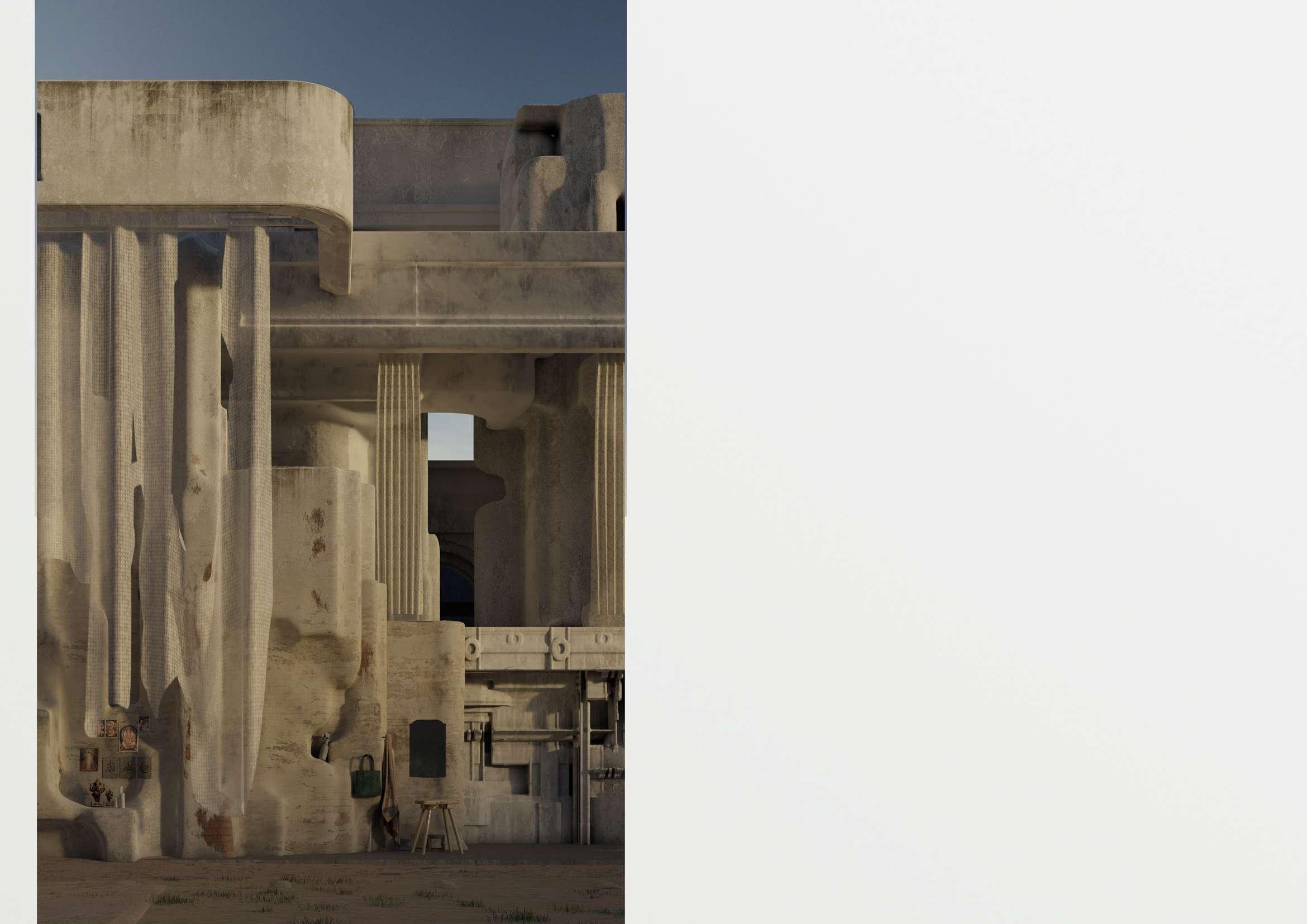
My master’s work focuses on revitalizing derelict and abandoned buildings that once played a significant role in the development of their urban surroundings. Many historically rich buildings are left unused and neglected. In our post-capitalist society, we face numerous challenges, one of which is the widespread gentrification of neighborhoods. This process displaces local communities and traditional practices, leading to the devaluation of traditional crafts, which are overshadowed by the relentless drive for economic efficiency under the capitalist system.
My architectural investigation aims to understand and inspire alternative attitudes towards preservation and conservation. It explores methods to intertwine traditional and contemporary crafts and construction techniques, fostering a symbiotic relationship between them. Through this process, my architectural proposal seeks to redefine the value of existing buildings, creating new taxonomies of public spaces and institutions.
“The Art of Forgetting” by Adrian Forty explores how architecture and urban design shape collective memory and the deliberate acts of forgetting. Forty argues that societies use buildings and urban spaces to preserve historical narratives while also engaging in intentional forgetting to foster new identities and progress.
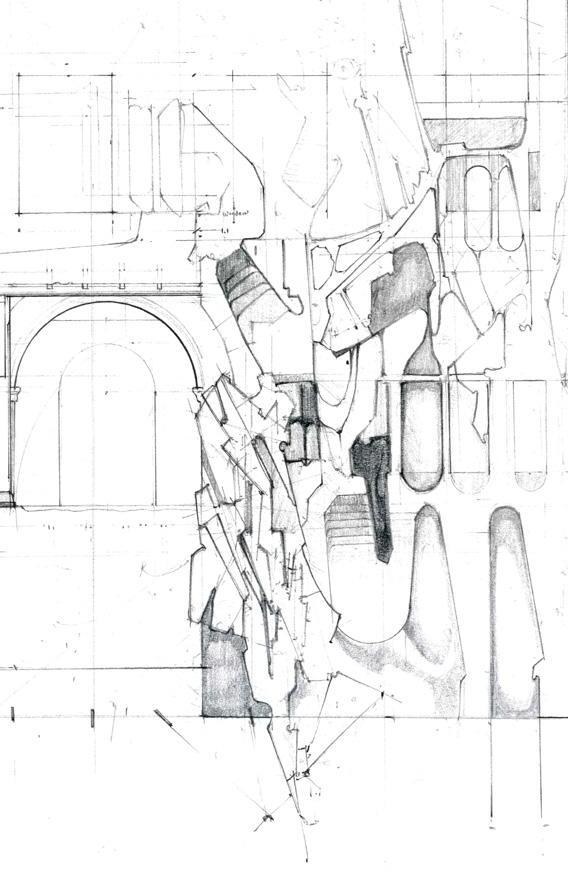
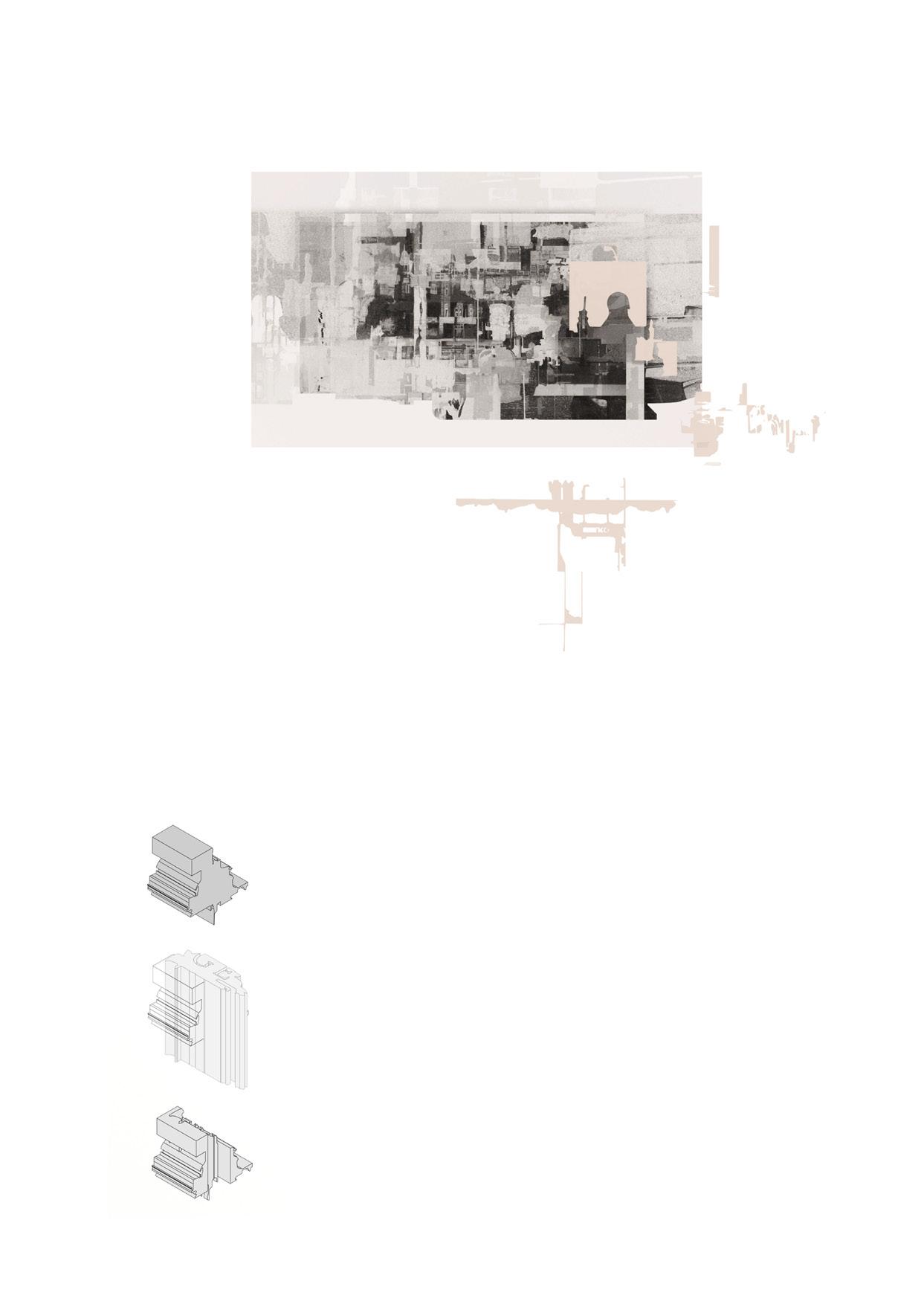
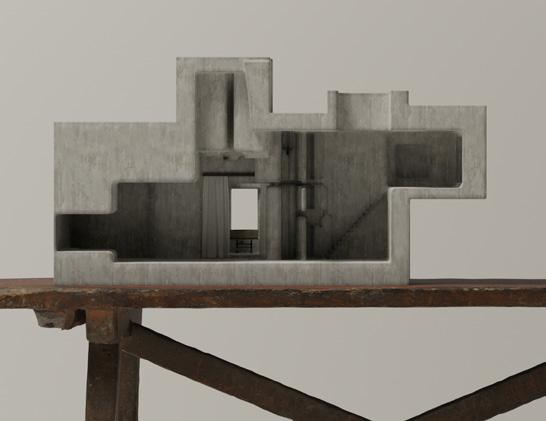
Through developing a new methodolgy or approach to design, I try to train intuitive thinking within the designer, using blackout technique used by Mark West. This uses existing fragments of building comining it with unfamilar digital elements to create a familar yet distant vision, allowing and stimulating the observer to begin a dialogue with the architecture.
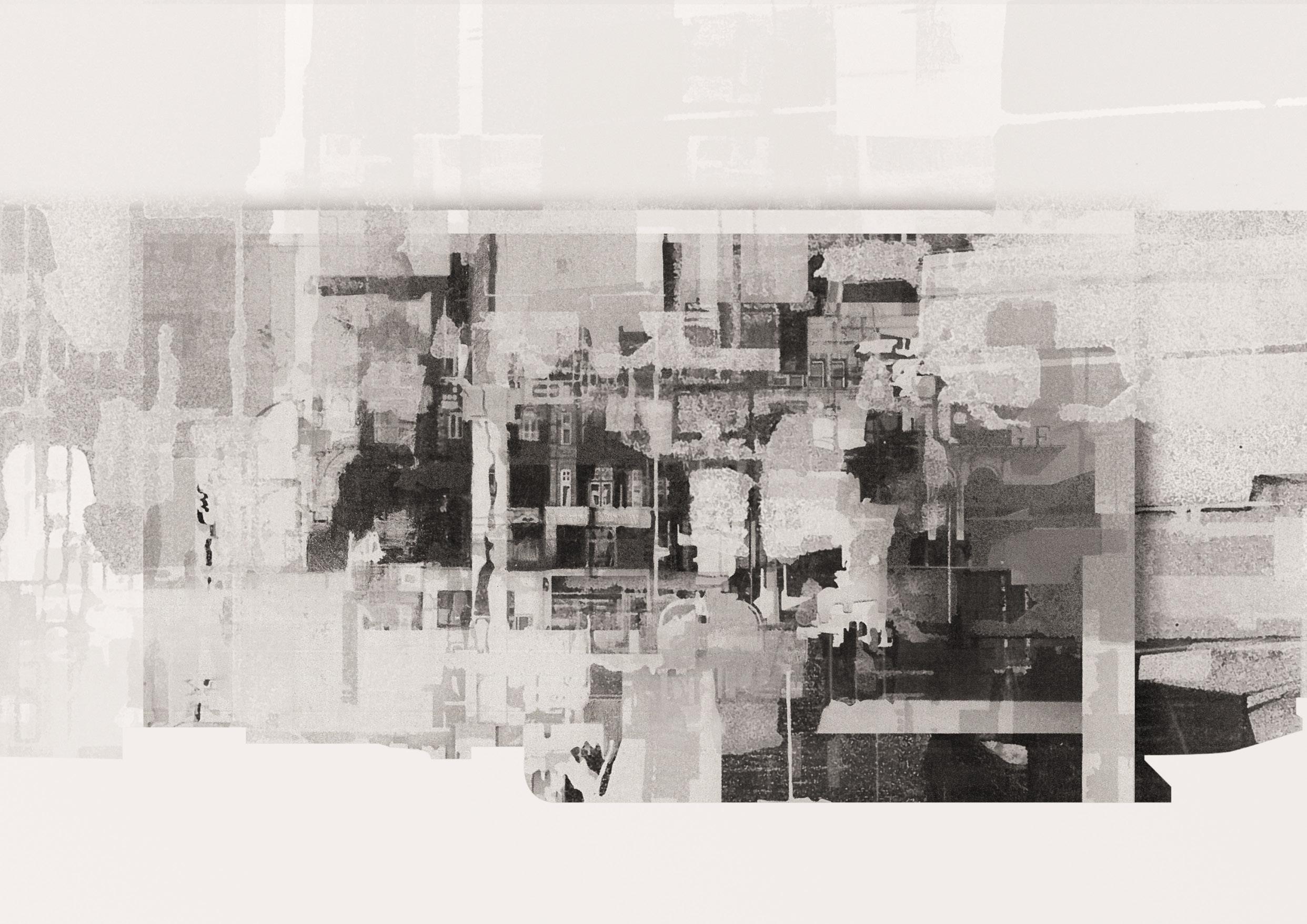
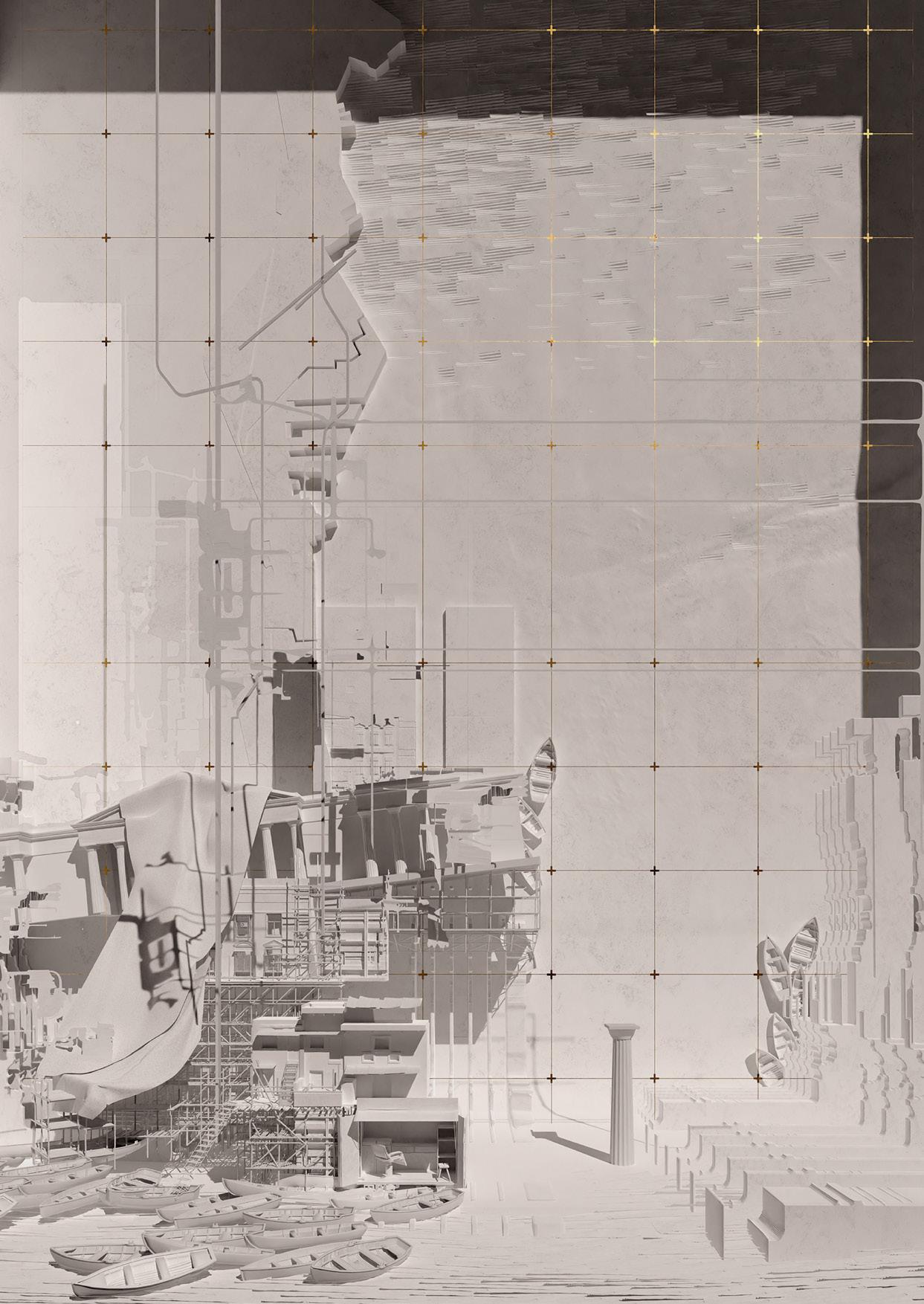
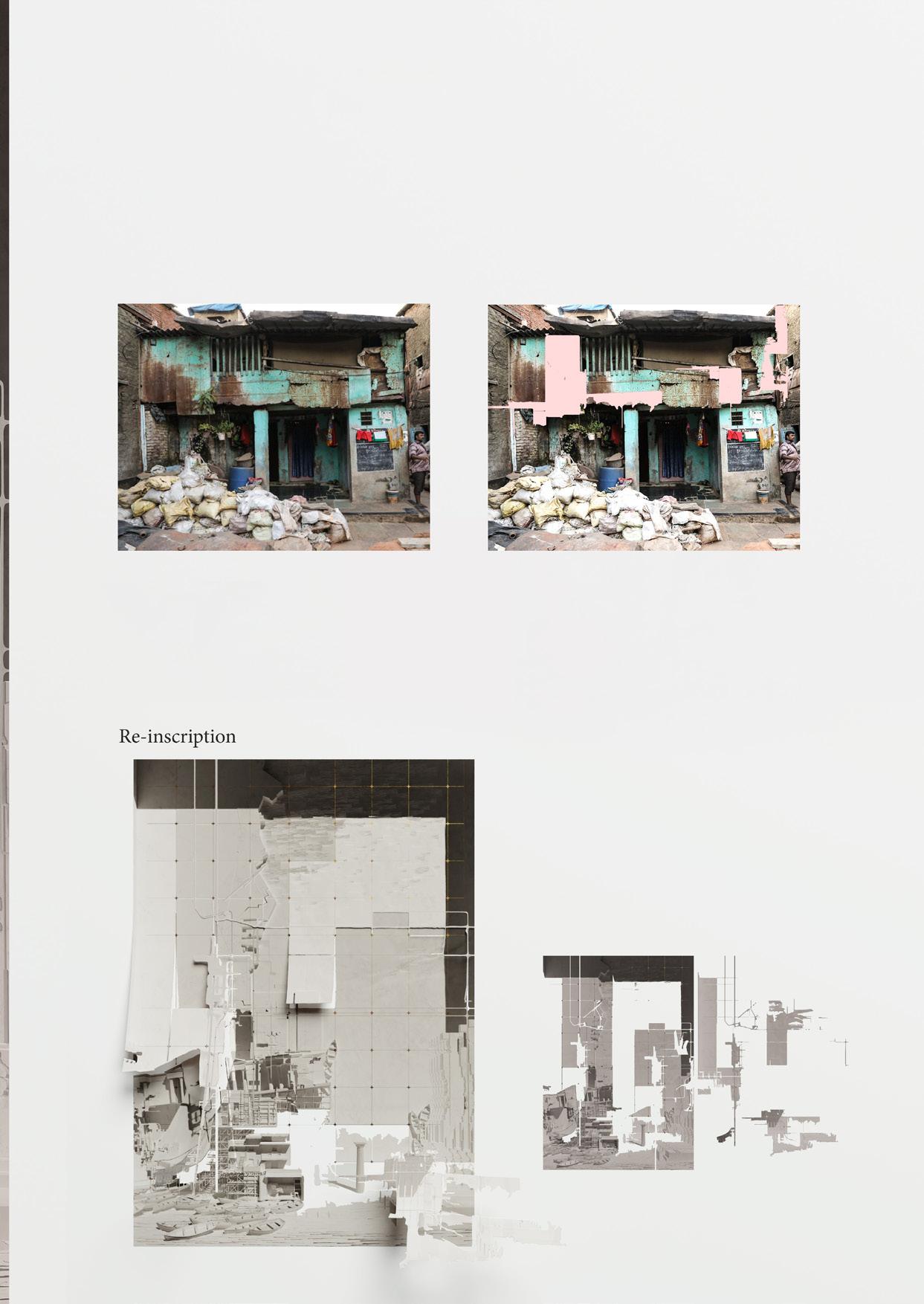
Each material holds a trace of time. By the outlining the age in the material I start to erase away my drawings.
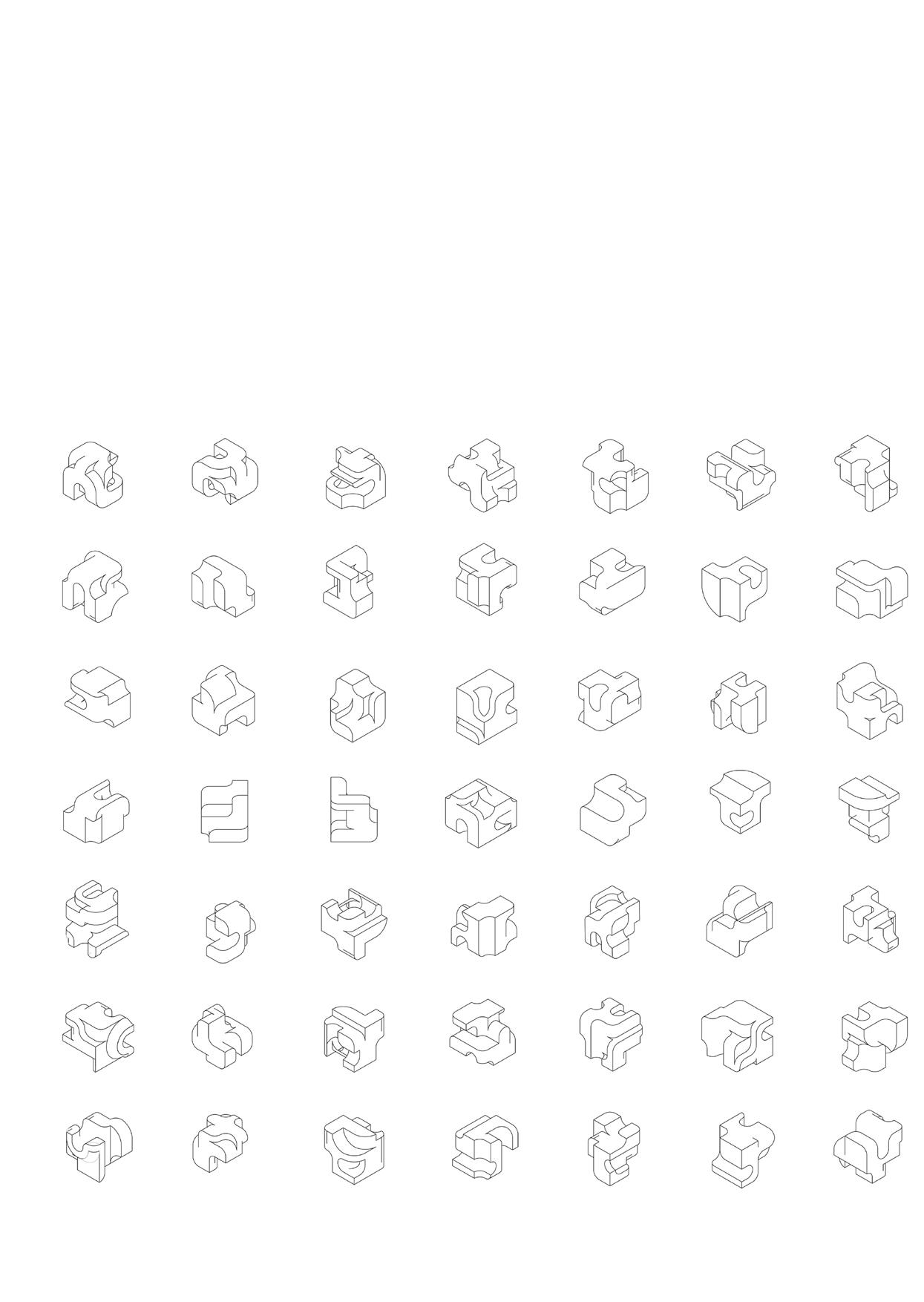
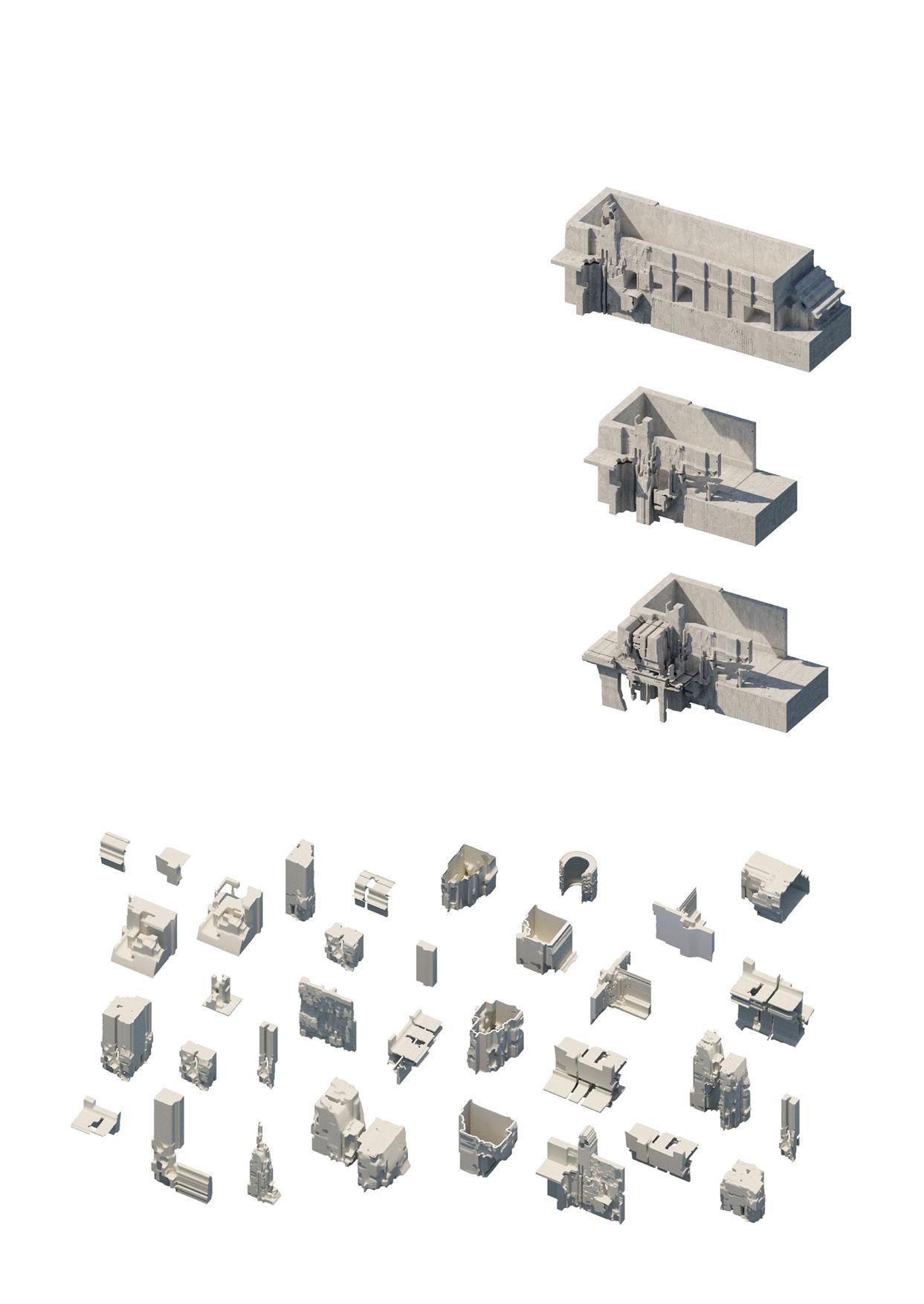
Influenced by Cedric Price’s theory on polyvalent forms and the theory of Object-Oriented Ontology, I have created hyperobjects that serve as spatial chunks for users to appropriate. These forms lack predetermined functions, exploring various potential uses.
Guided by these principles, I have outlined a set of rules for creating these forms, establishing a new language to express my architecture.
Constructing the letter
1. Volume should fit within a shere or cube.
2. The forms shall be constructed mainly through the use of translational geometries.
3. There should be no evidence of scale.
4. They must be solids.
5. Boolean substraction of shapes are not allowed.
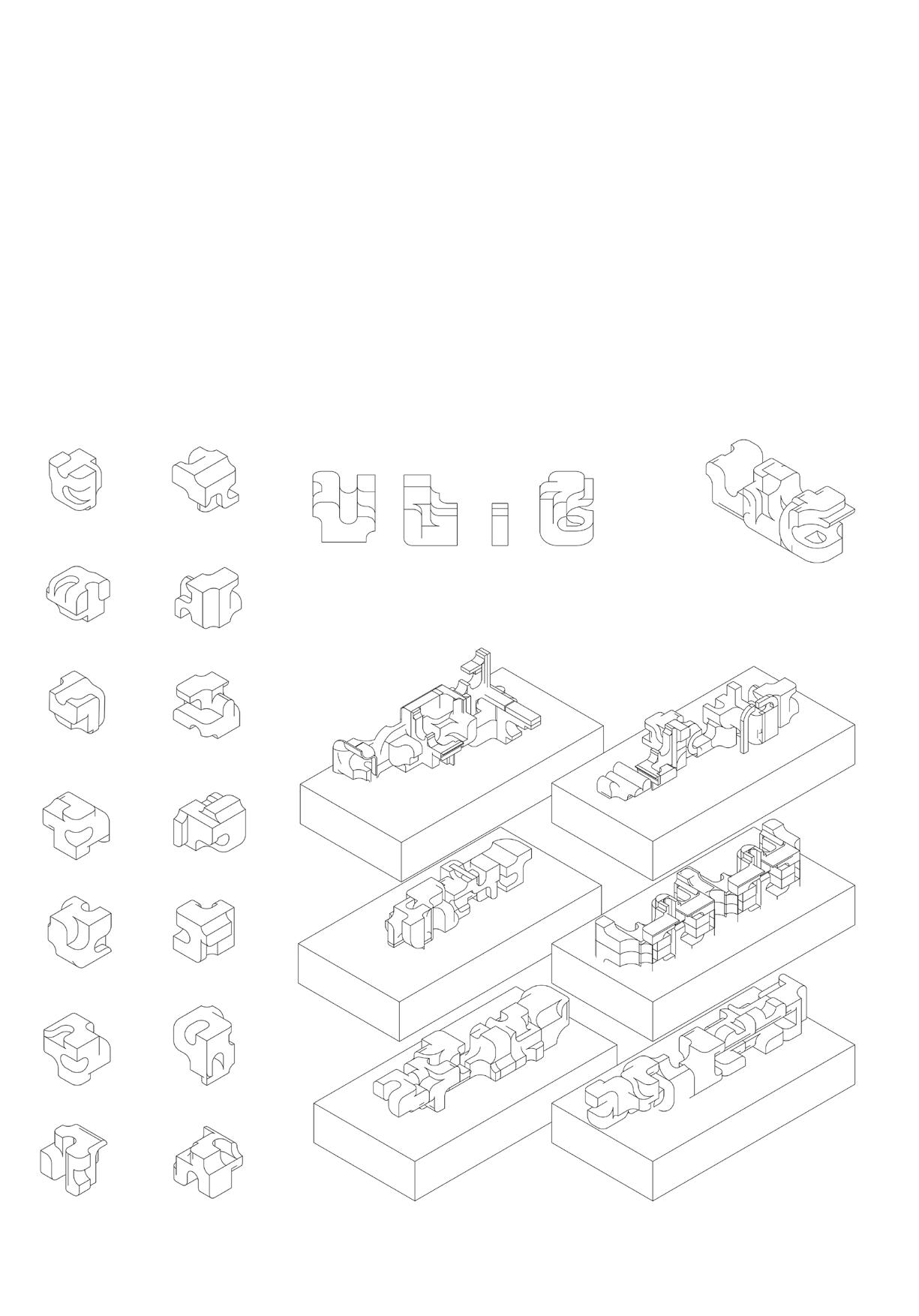
The Grammar
1. Addition
2. Subtraction
3. Intersection
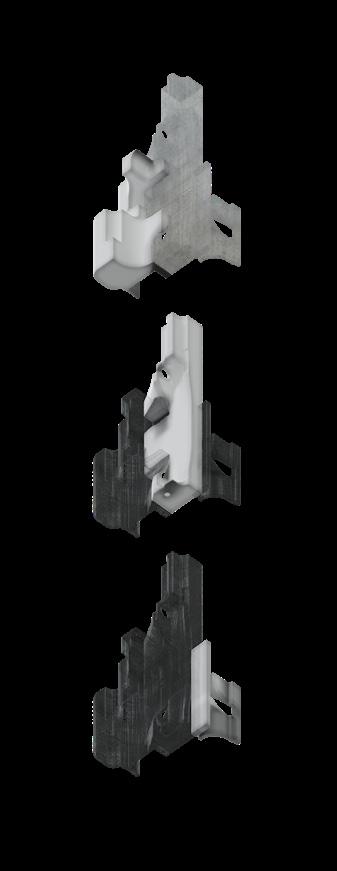
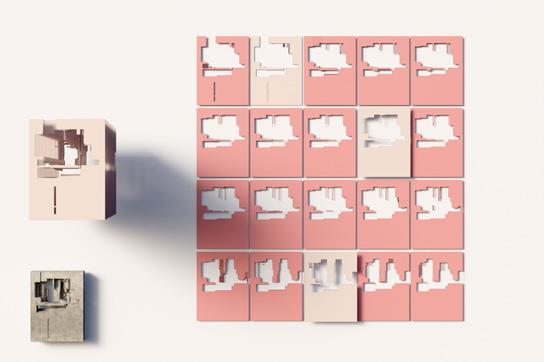
The forms developed through the previously discussed methods are combined to create spatial chunks without predefined functions. These chunks are intended to be appropriated and given meaning by their inhabitants, allowing for adaptation and transformation based on user needs and preferences. This concept is influenced by Cedric Price's idea of polyvalent forms, emphasising the flexibility and adaptability of architectural elements. By avoiding fixed purposes, these spatial chunks encourage dynamic interaction between space and users, promoting a versatile and user-centered architectural experience.
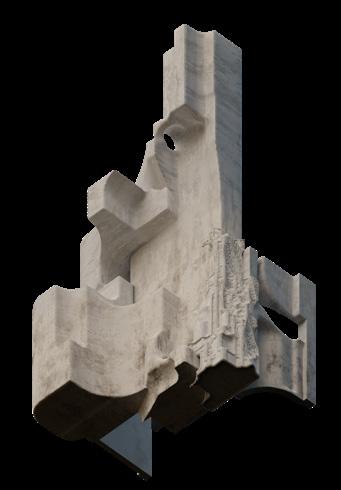
Designing through Negative
The Language
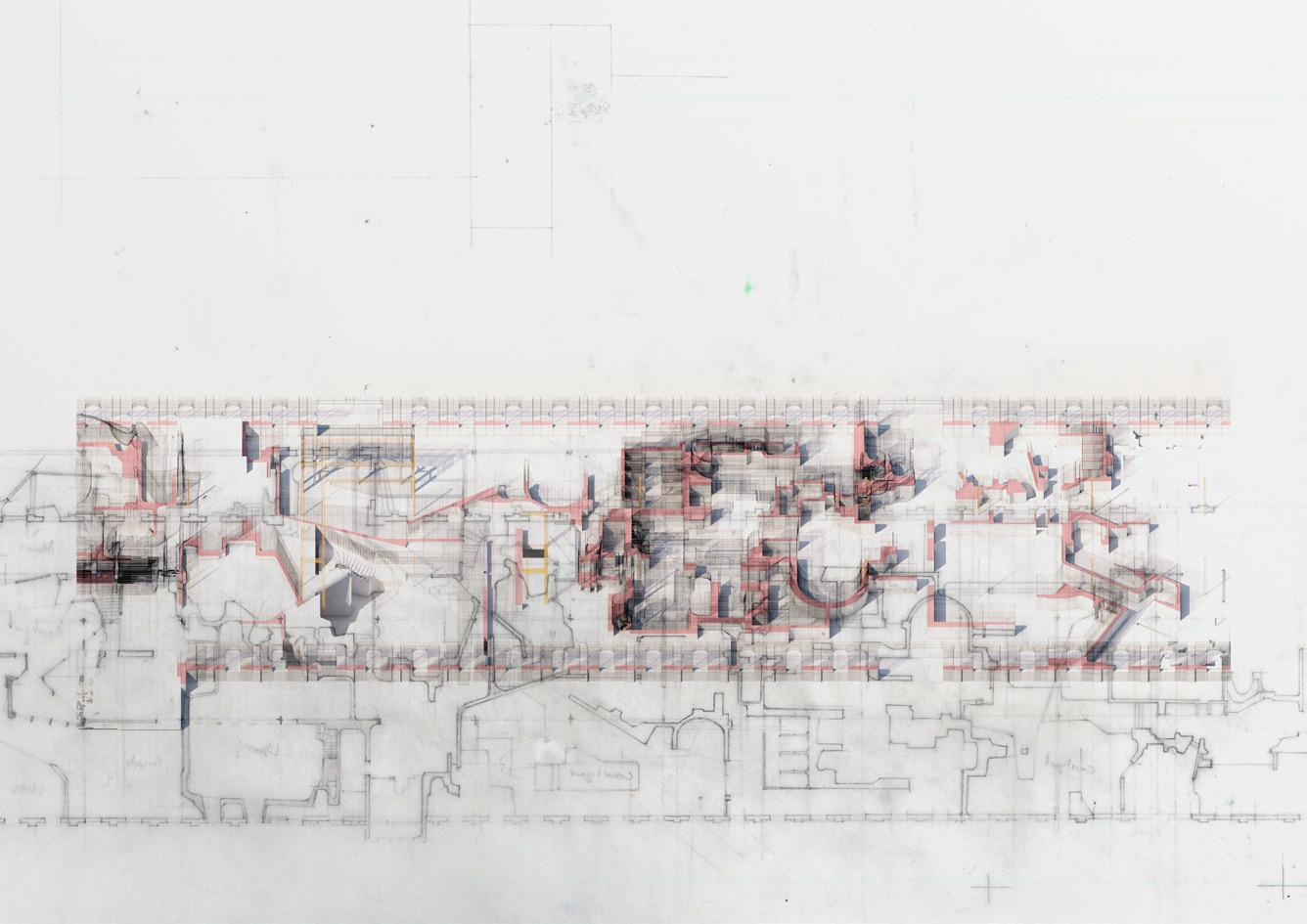
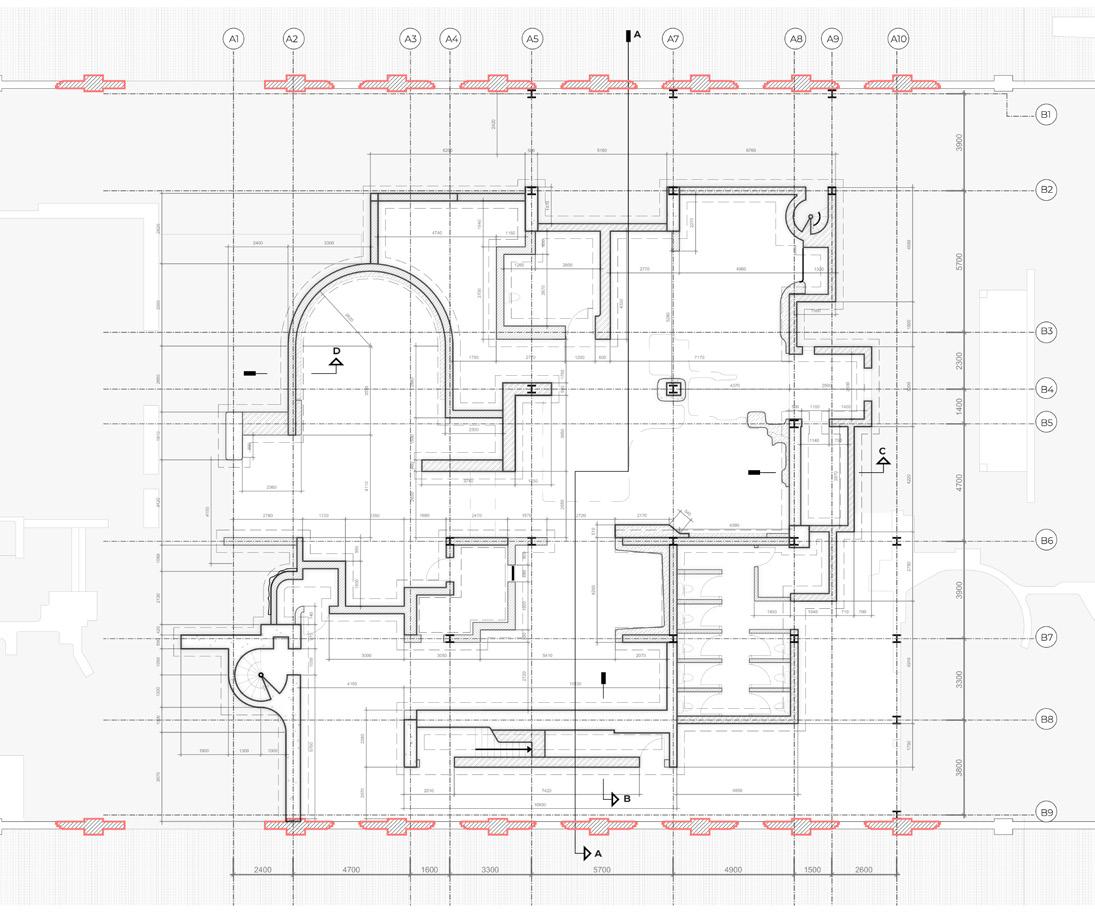
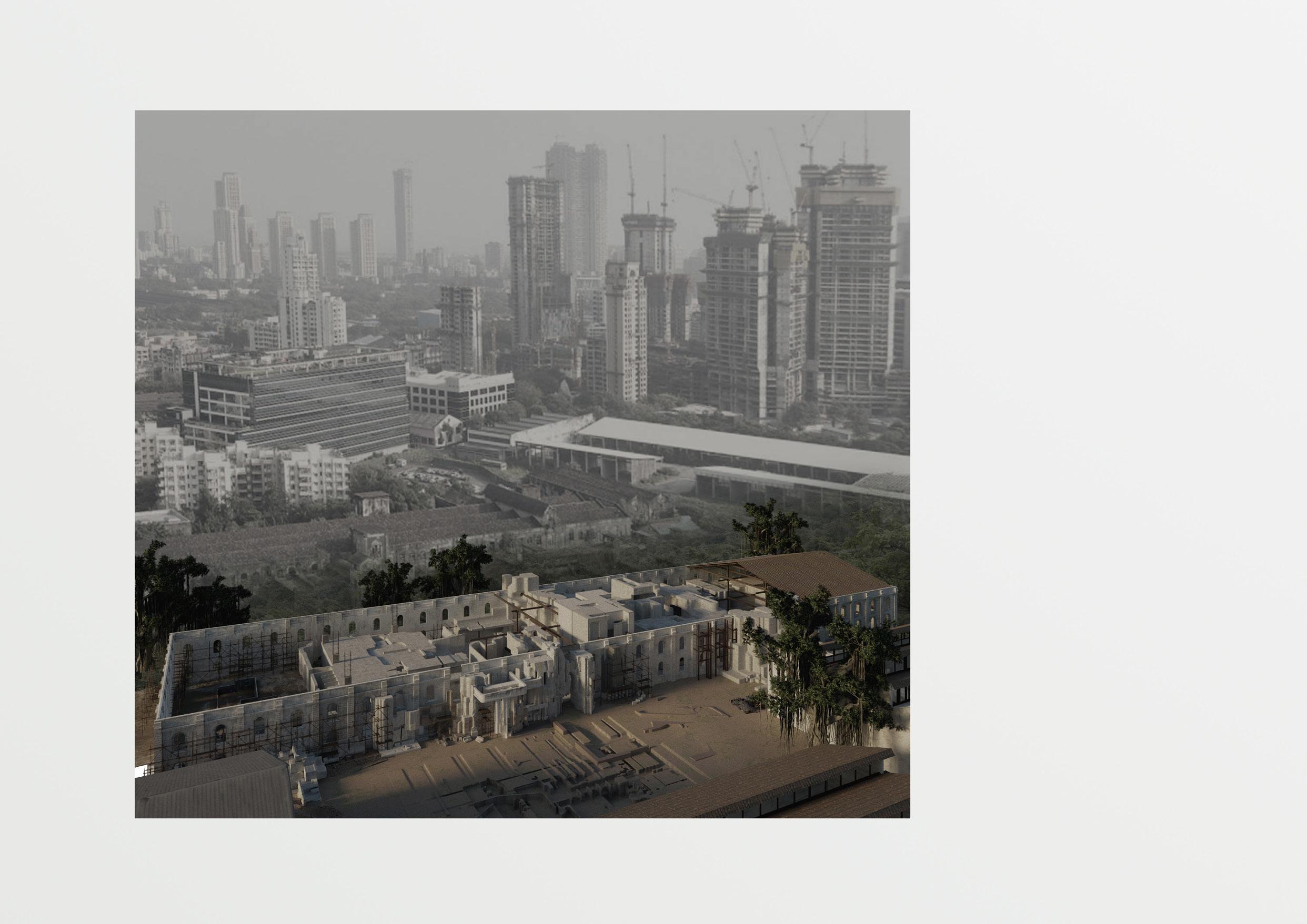
The site is always in a state of flux, constantly being constructed, deconstructed, memories embedded, and fragments forgotten.
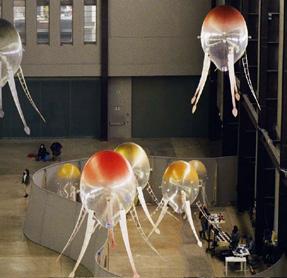
Anicka Yi’s floating devices exhibit at the Tate Modern explores the transience of life through a series of floating sculptural installations that incorporate living organisms such as bacteria, plants, and flowers. The exhibit challenges the conventional notion of art as static and fixed, encouraging viewers to contemplate the interconnectedness of all living things.
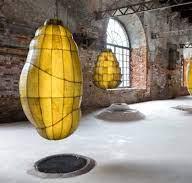
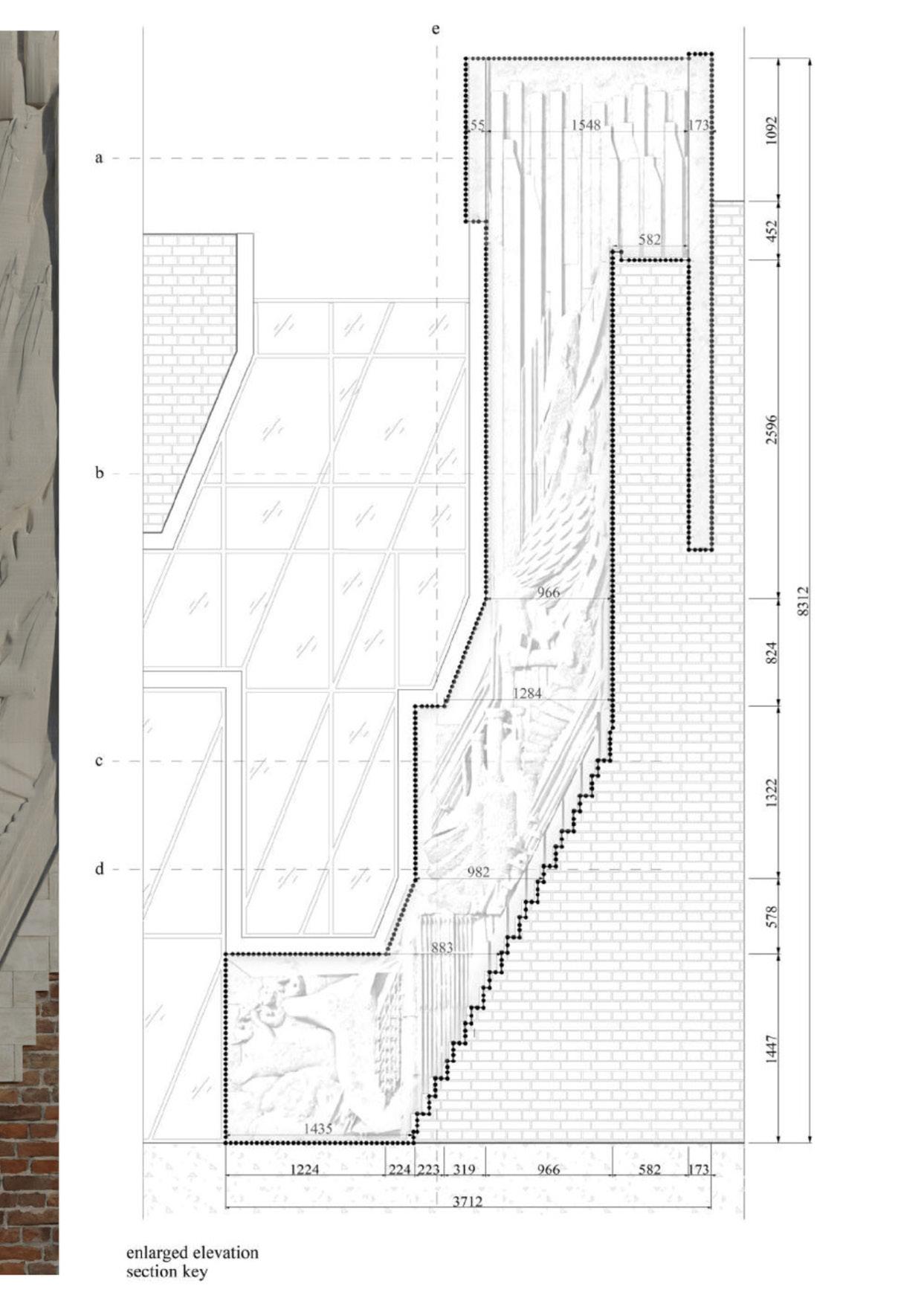
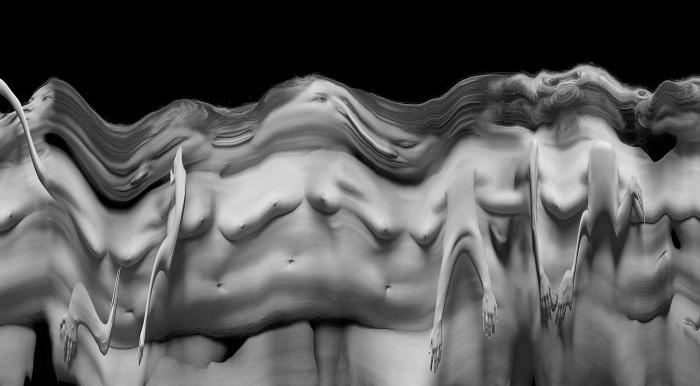
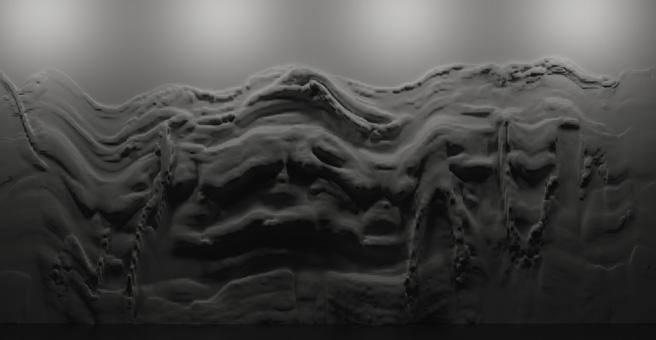
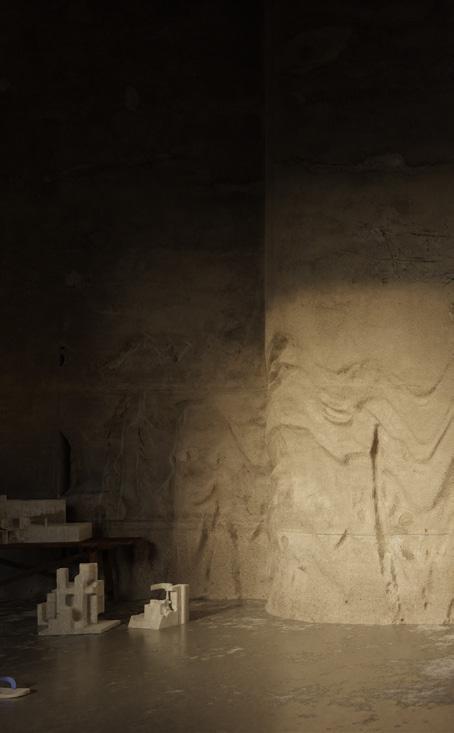
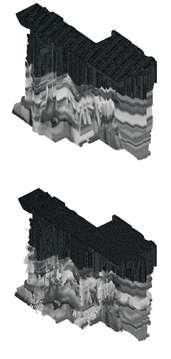
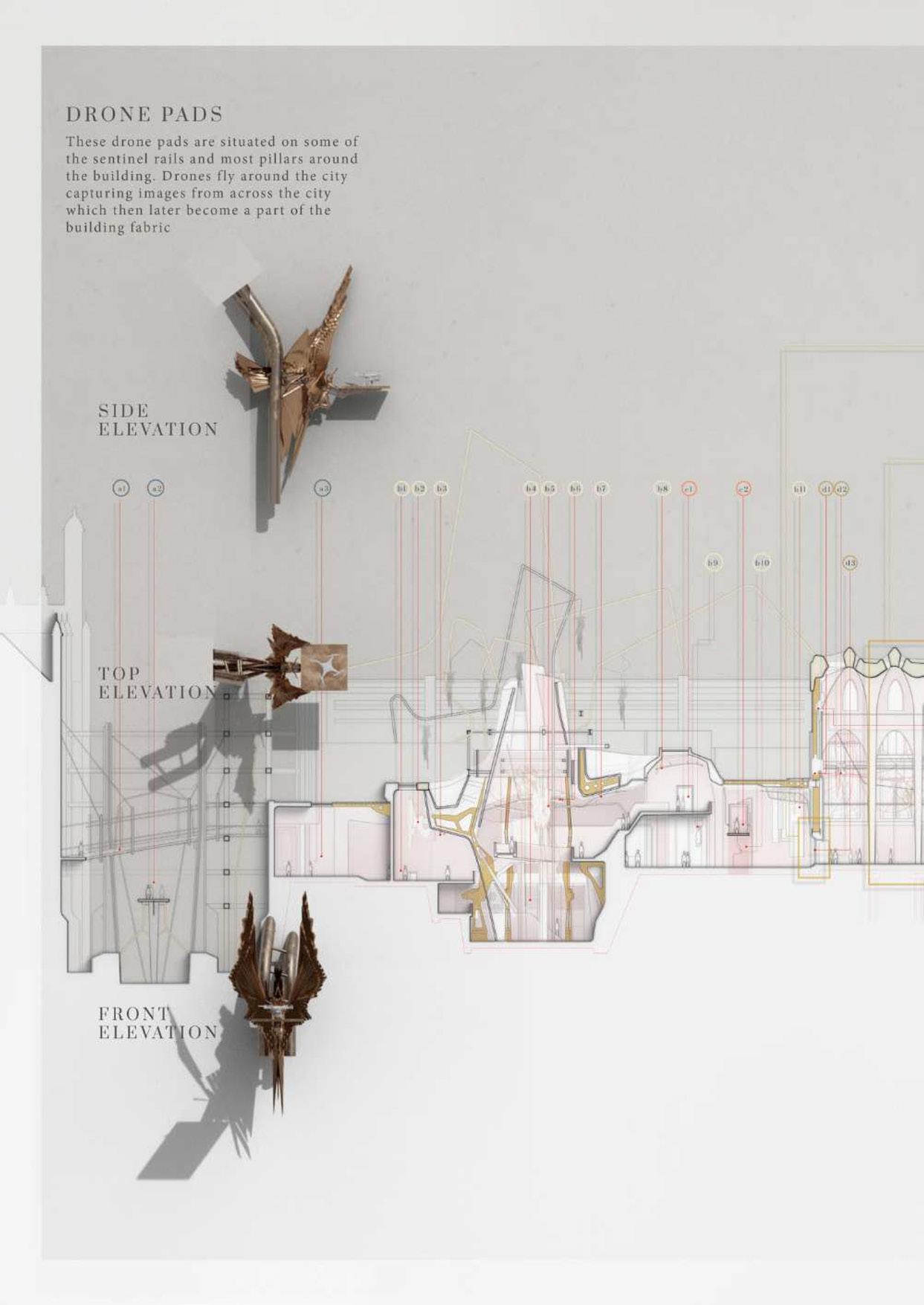
Drawing inspiration from Anicka Yi’s work, I have conceptualized floating devices that contain slit-scan cameras. These devices follow individuals and capture their movements as they interact with their surroundings. The resulting images are then converted into threedimensional reliefs that can be added to existing architecture or sculpted away from it. This innovative approach to ornamentation offers a unique way to enhance and transform buildings.
Stage 01.
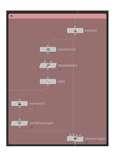
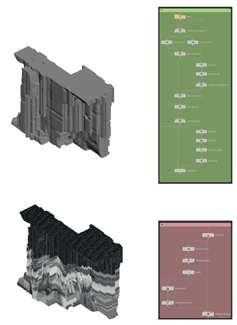
This part of the script partially facilitates intuitive decisions to be able to extract the form to be built, as mentioned in section 01
01. part of the script partially facilitates intuitive decisions to be extract the form to be built, as
script is to methodology repeatable and provides a control enabling overall their it is not a process, but collaborative effort machine.
Phase 03
Pouring Concrete
Concrete poured in stages of 1-1.2m high layers
Stage 03.
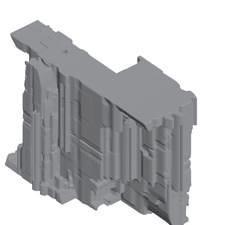
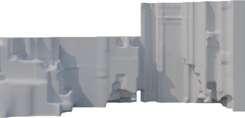
Once the form is processed, it is converted in a clean mesh that can be exported into a CAD software for programming the toolpath of sculpting.
3d-scan the final cast Stage 01
The aim of this script is to develop a methodology that is both repeatable and innovative. It provides a significant level of control to the designer, enabling them to sculpt the overall form according to their vision. Therefore, it is not a fully automated process, but rather a collaborative effort between man and machine.
Choosing the right formwork strategy based on hieght of final pour
Alternate Phasing Experimental Moulding
Phase A
Create Mould
Phase 01
In this scenario the mould are sculpted instead of the final cast concrete
Erecting the formwork
Programming the robot
Data from the scan is used to program the robot for sculpting
Sculpting Concrete
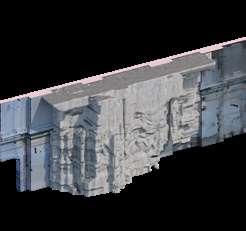
Mould is created in a way that it modular
Phase B
3d-scan the mould
Phase C
Programming the robot
Phase D
Sculpting the Mould
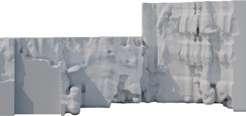
Choosing the right formwork strategy based on hieght of final pour Mixing
Data from the scan is used to program the robot for sculpting
Follow Phase 01 - 03
Modularity of the moulds allows for combing sculpted and non sculpted moulds
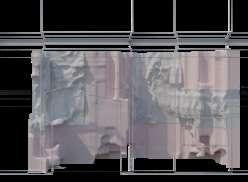
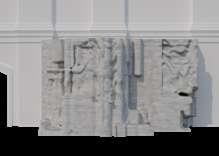
This can be followed by Phase 04 - 06, creating a cyclical process
Phase 02
Scenario 1
Scenario 2
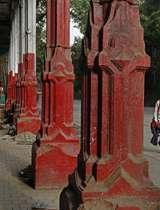
Creating moulds from existing building with rich cultural heritage that are under threat of being demolished. Manual process by people Manual process by people
Sculpt initial the positive Form
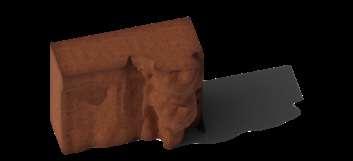
Create mould for casting the negative
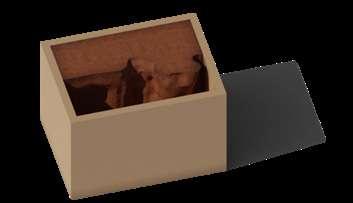
Expert mould makers create moulds in a manner similar to that done for the V&A Cast Courts.
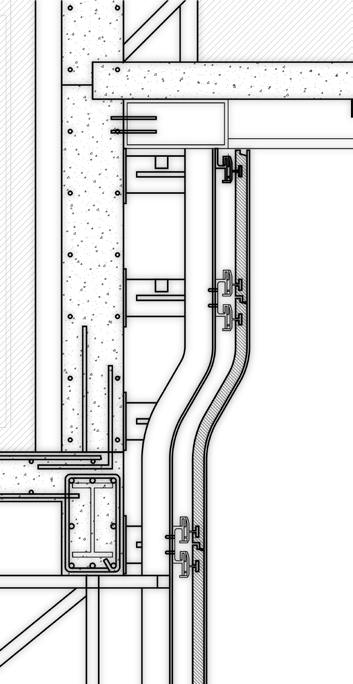
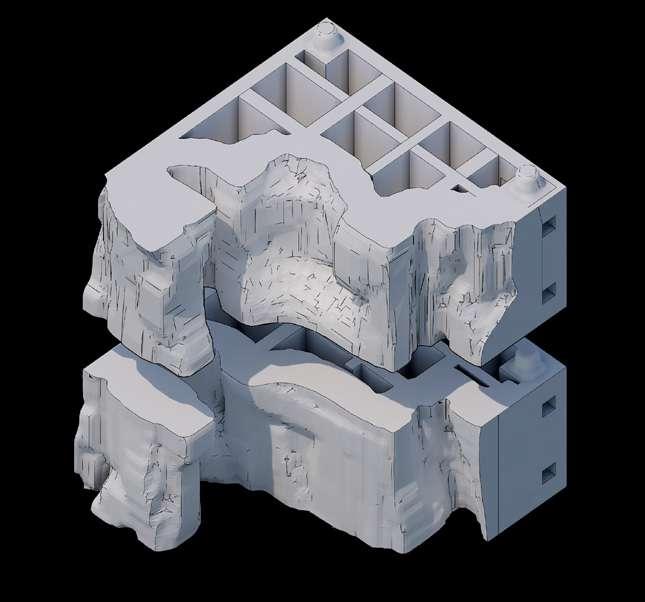
In some instances the 3d-printed are to be form a part of the architecture. As show in example to the right.
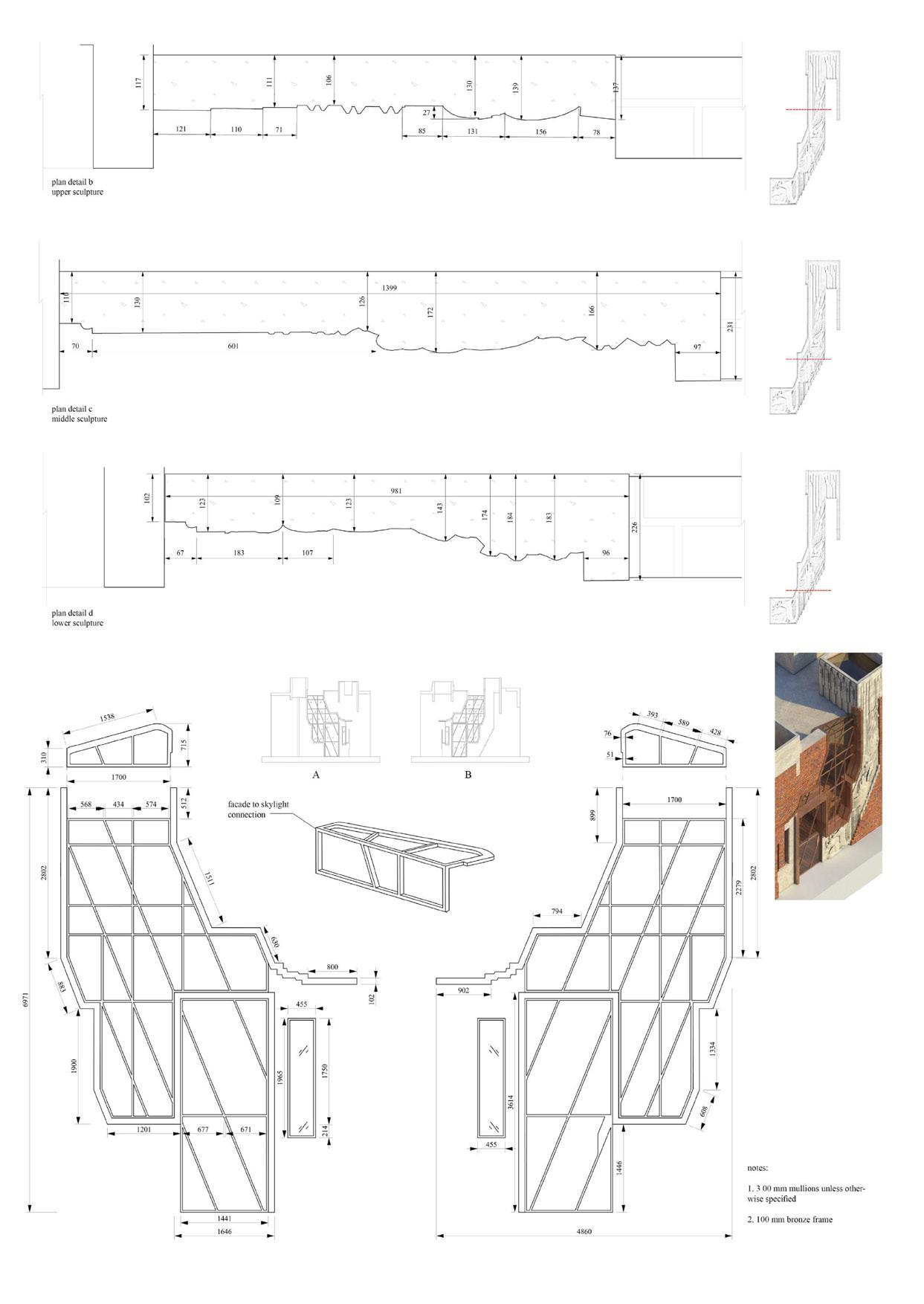
Drawings to right and below shows the considerations to be taken 3d-printing the forms when they be assembled as part of the architecture.
Initially done by machines complete by humans
In this scenario, the positive forms are 3d printed.
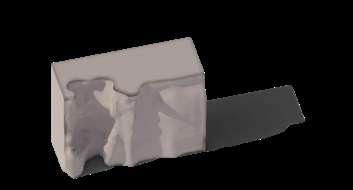
Cast the negative which then can be used as mould to cast the positive in concrete
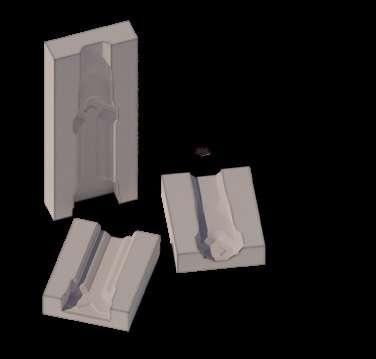
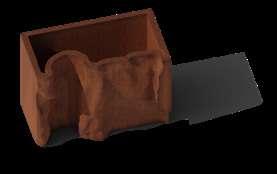
Initial moulds are made from plaster which will then be recreated in architectural jesmonite to make it ready for casting concrete.
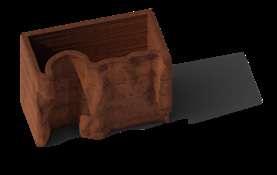
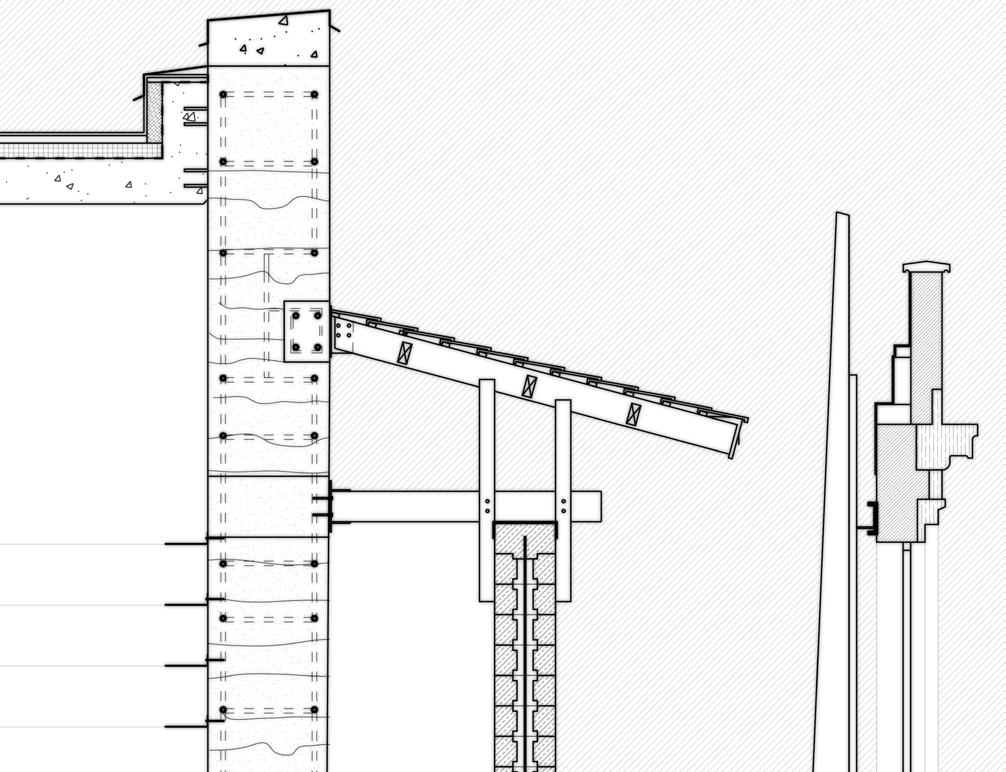
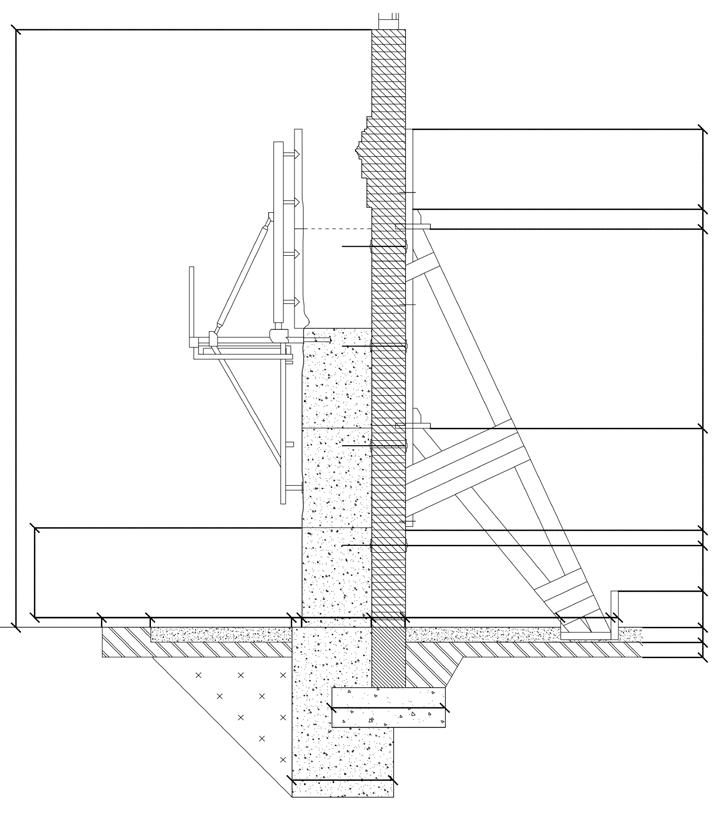
Different formwork strategies are used depending on the size of the pour.
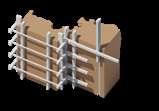
Vertical and horizontal bbracing holds the moulds together in place
Aluminium formworks pannel are replaced with the moulds that are created.
The moulds will be supported by rakes
Height of final pour <3m Height of final pour >3m
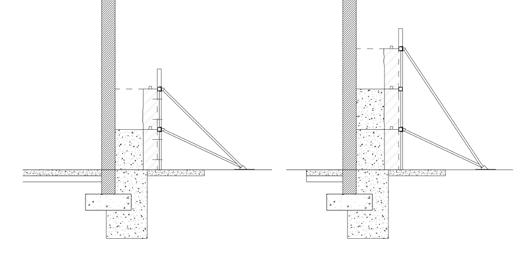
The jump formwork will be adapted to accomodate the moulds.
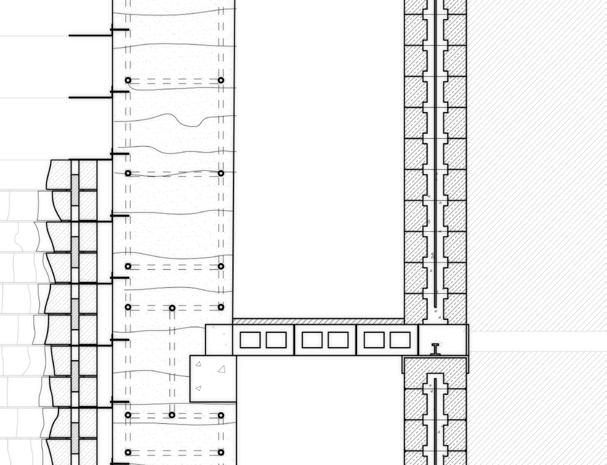
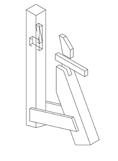
Instead of using the formwork panels, the mould will be created in a way that it can be clamped onto the vertical walling
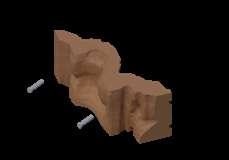
Anchoring systems to attached onto the mould
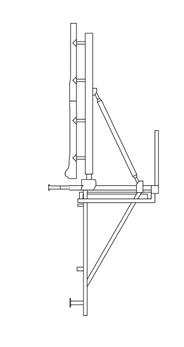
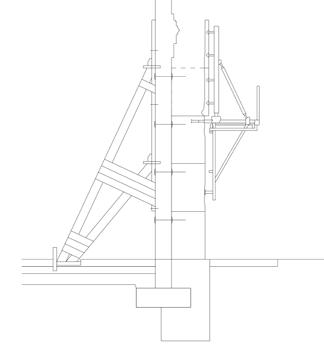
After each pour the formwork system will climb upwards by anchoring on the poured concrete
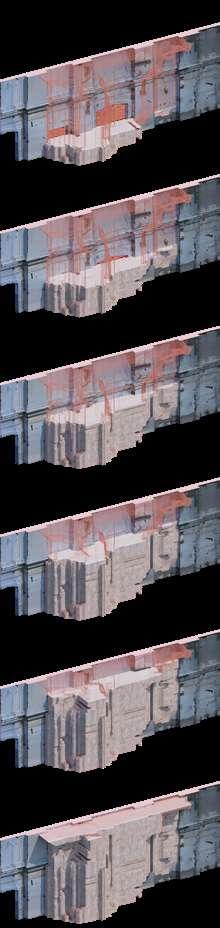
Sculpting must happen in a top-down appraoch Masonary can collapse due structural instability
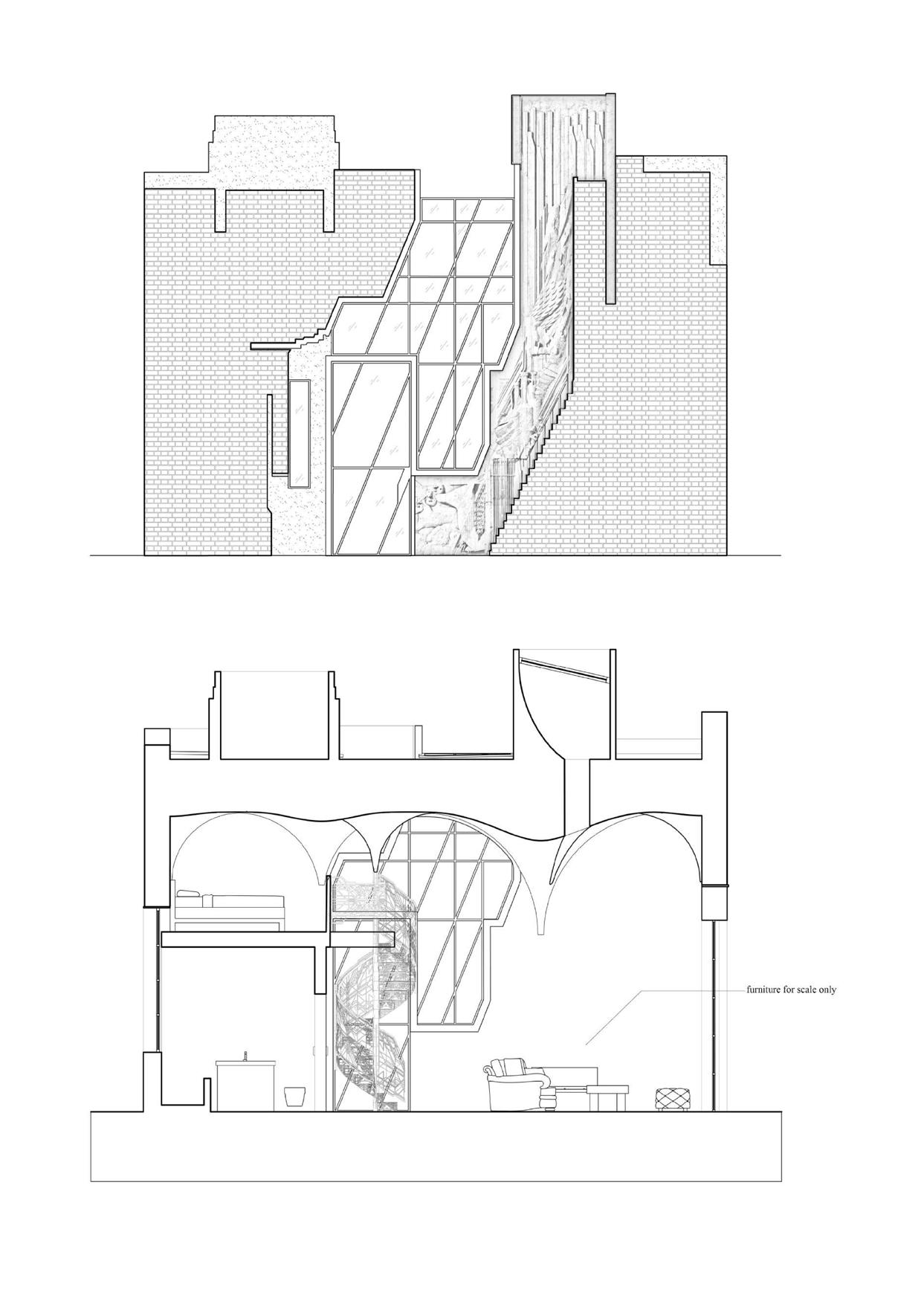
The sculpting path will be fully programmed before the robot commences sculpting the concrete surface. In case the finished sculpt in the tool path has significant cantilevers, extra support should be added to prevent the existing masonry wall from collapsing.
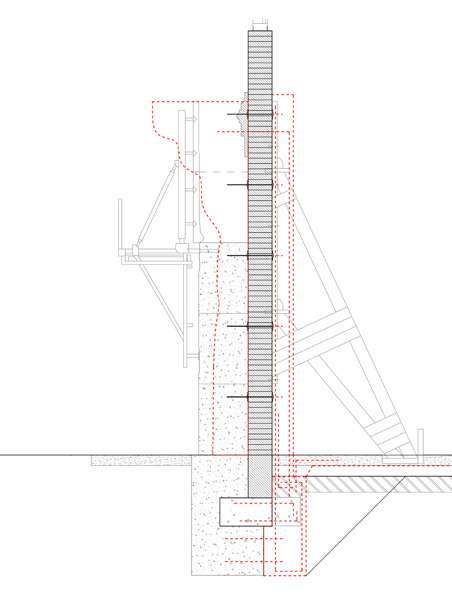
Unstable forces
Resistance offered by reinforced wall
3d-printed forms architecture. right. shows while they are to architecture.
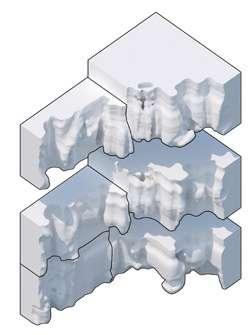
After the 3D printing process, skilled artisans take over to add intricate details and patterns to the surface of the forms. These finished forms then go through a series of processes (01-03) to create a mould that will ultimately be used for casting the final product in concrete.
In light of the experimental nature of this project, and for the purpose of discussion, it is assumed that the structural integrity of the existing building is both stable and sound.
The load is transfered to the reinforced concrete wall that then transfers the load in the new foundations
Ties into existing foundation of the building and the newly poured foundtion for the
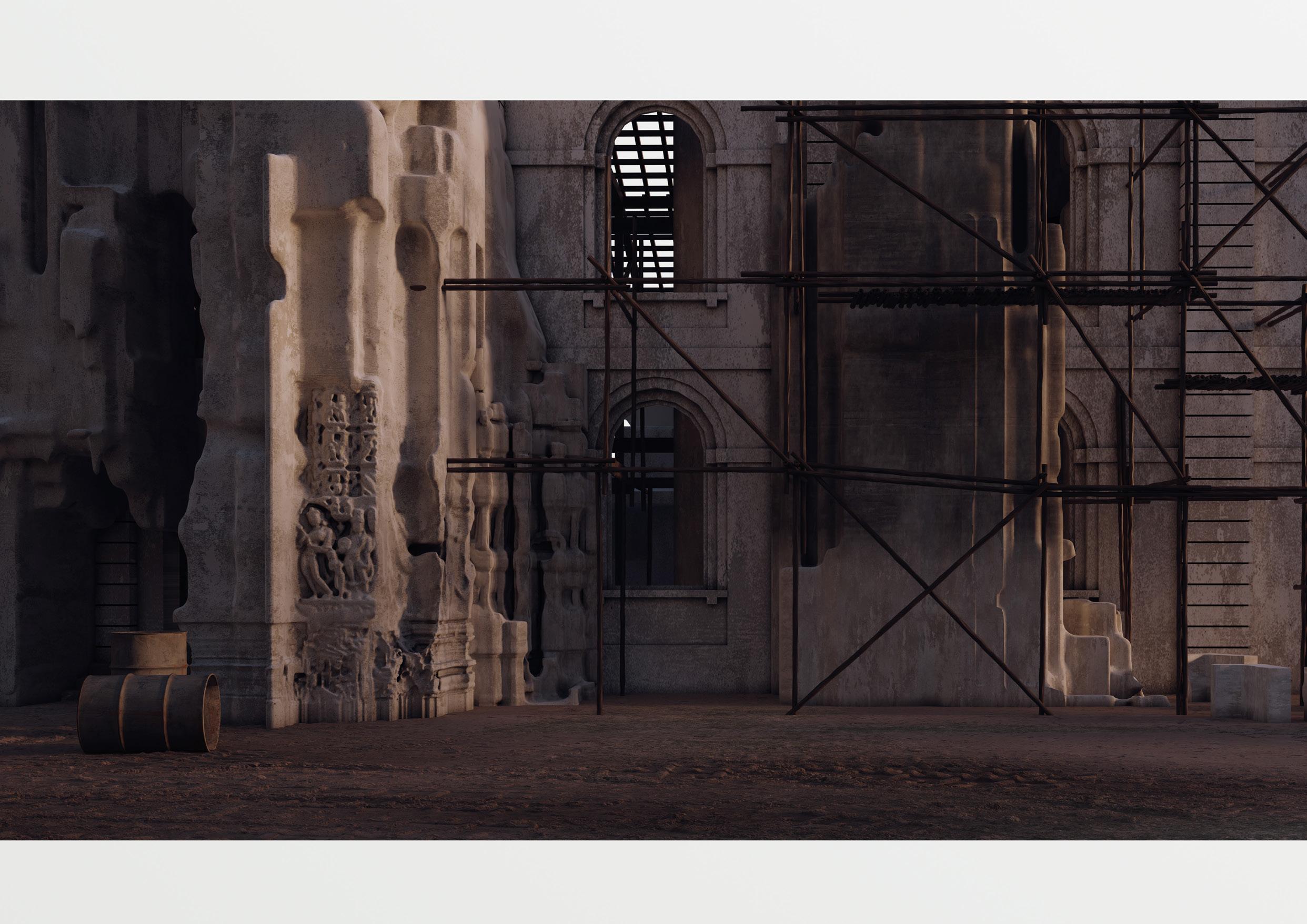
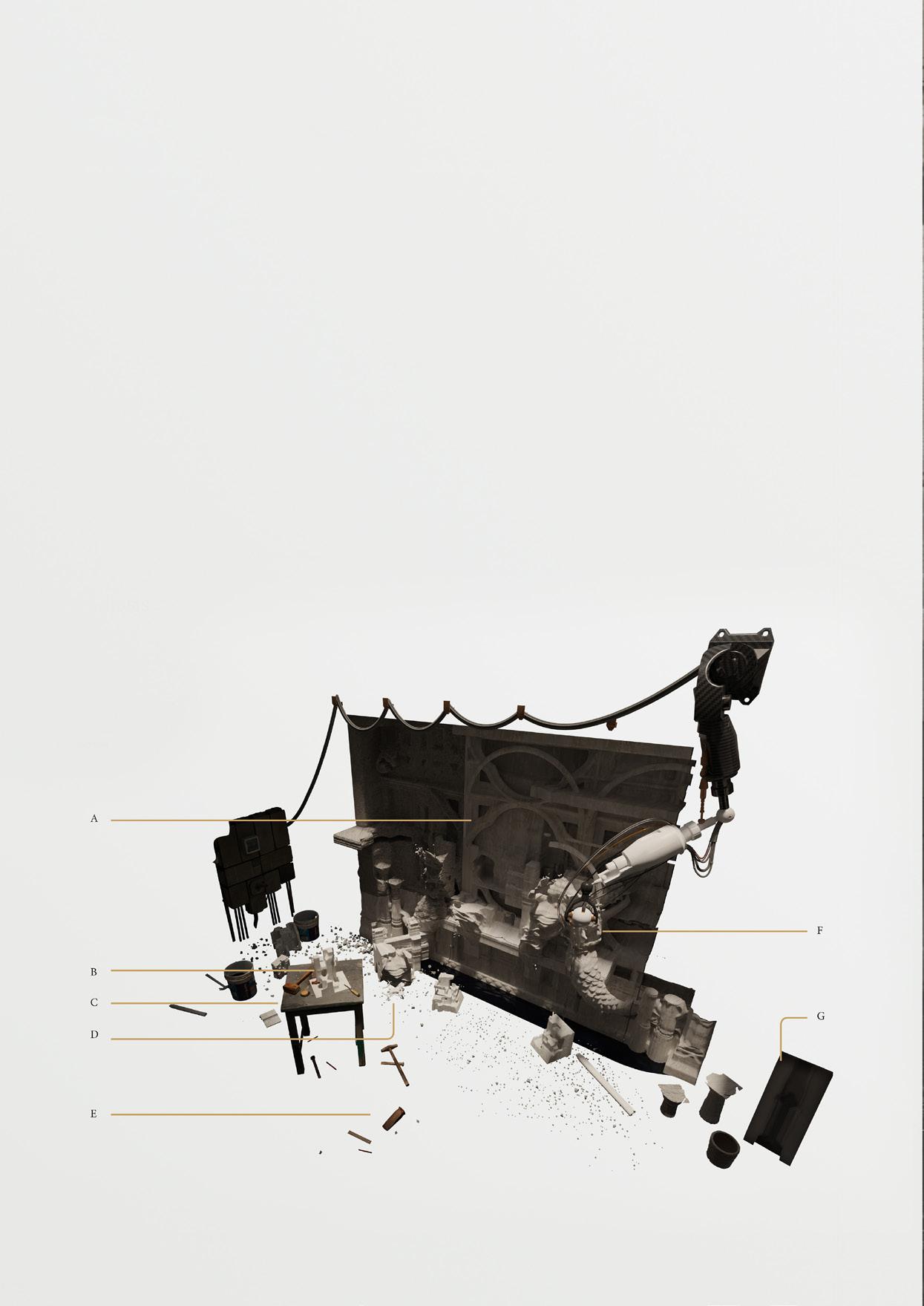
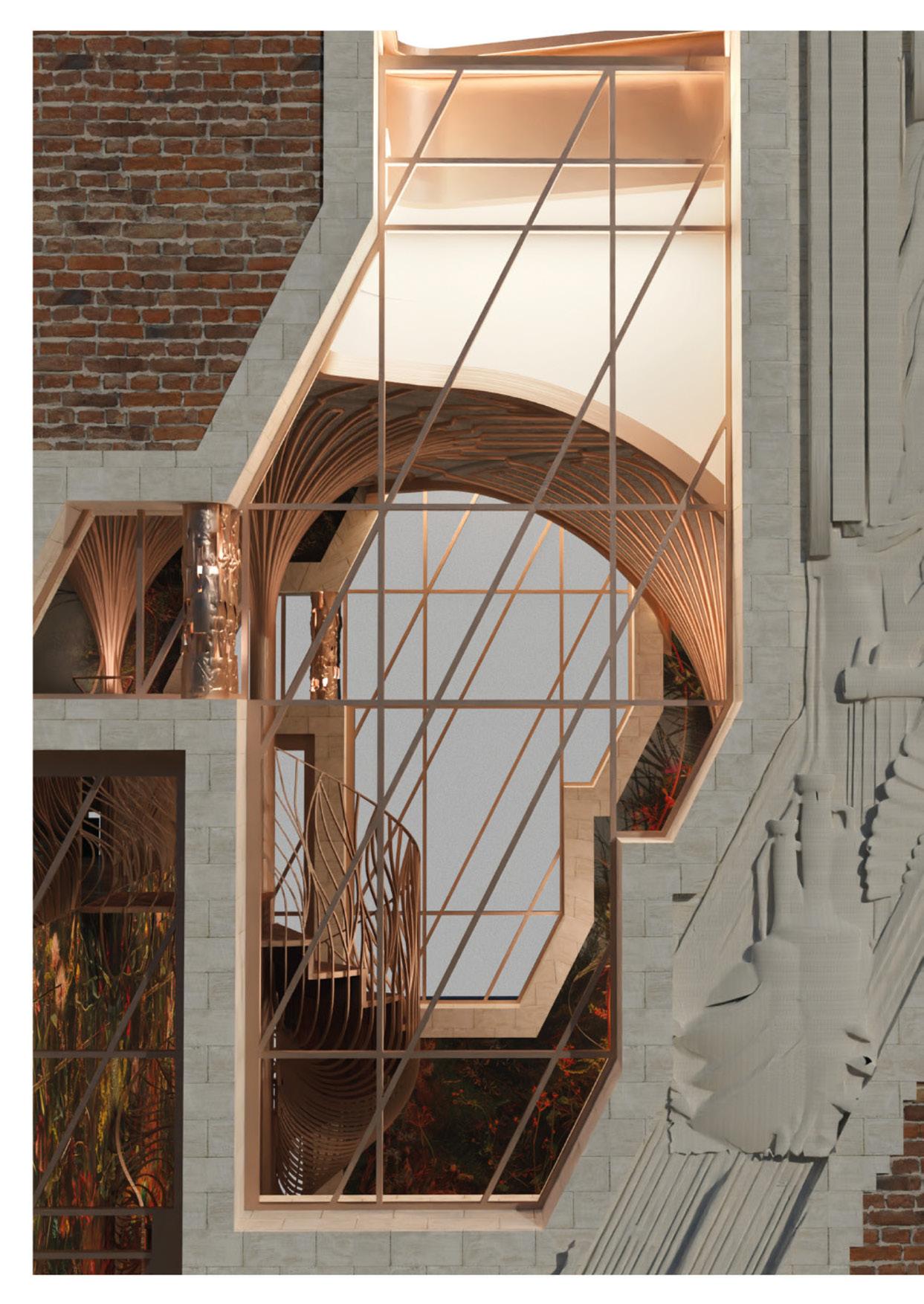
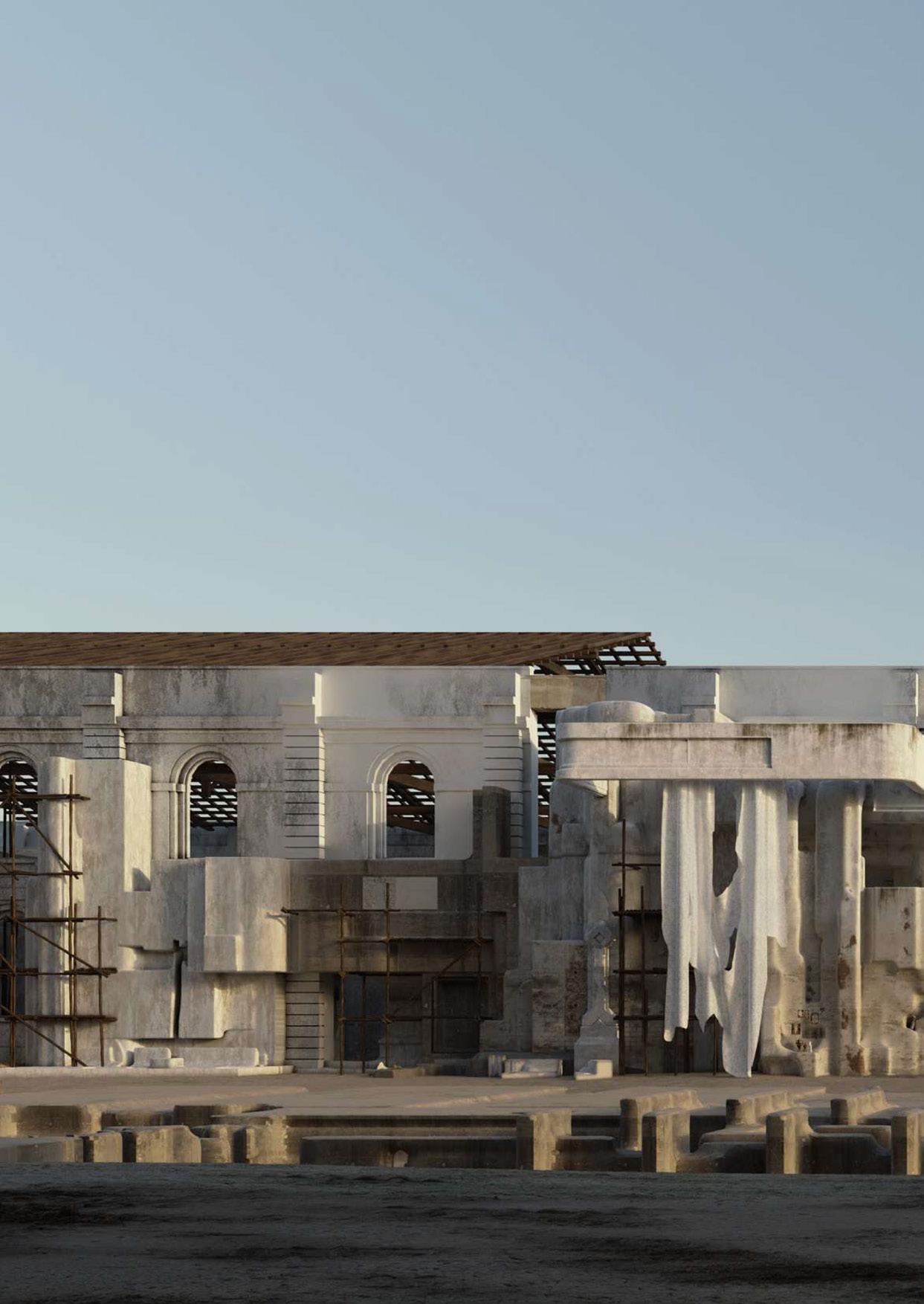
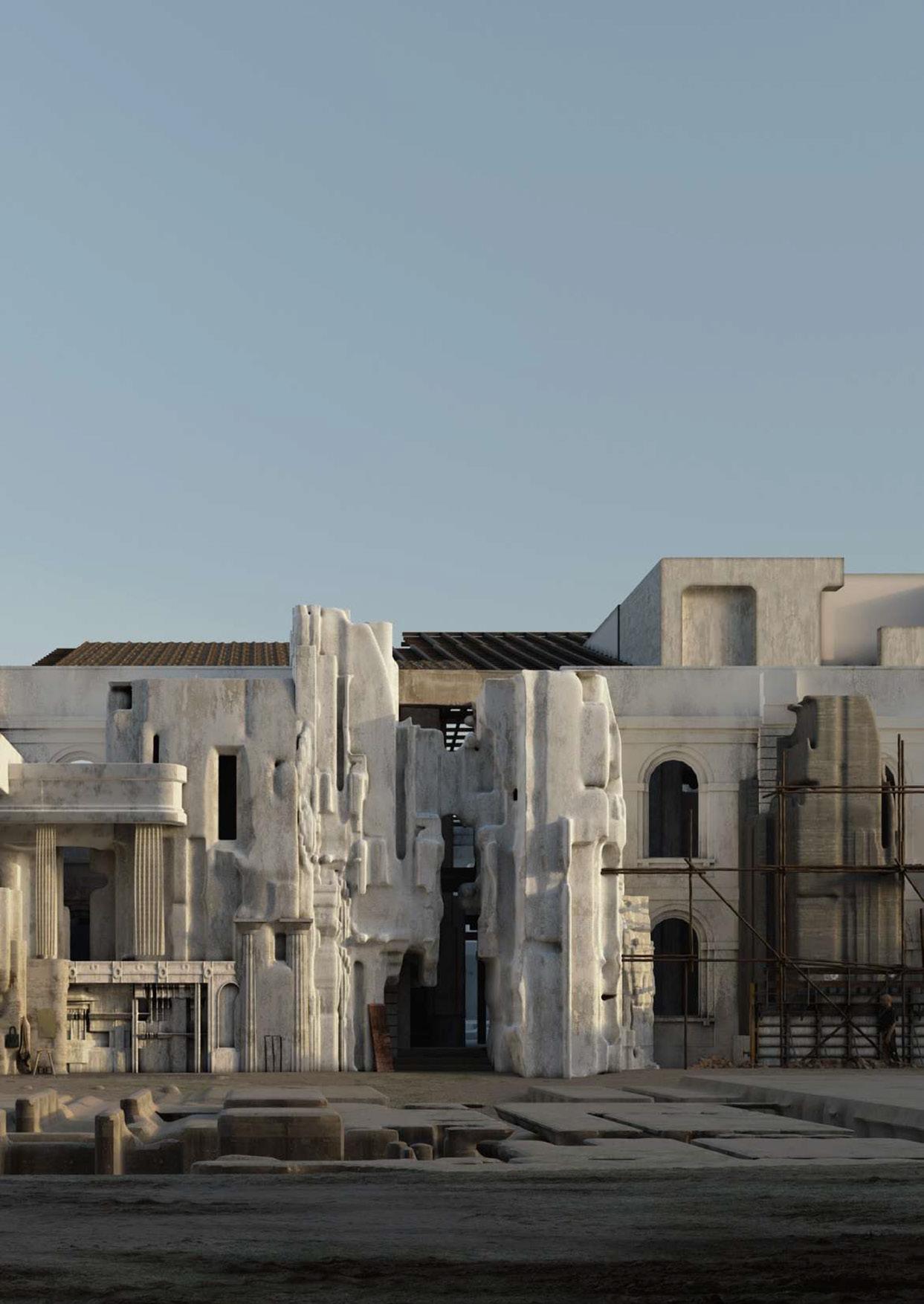
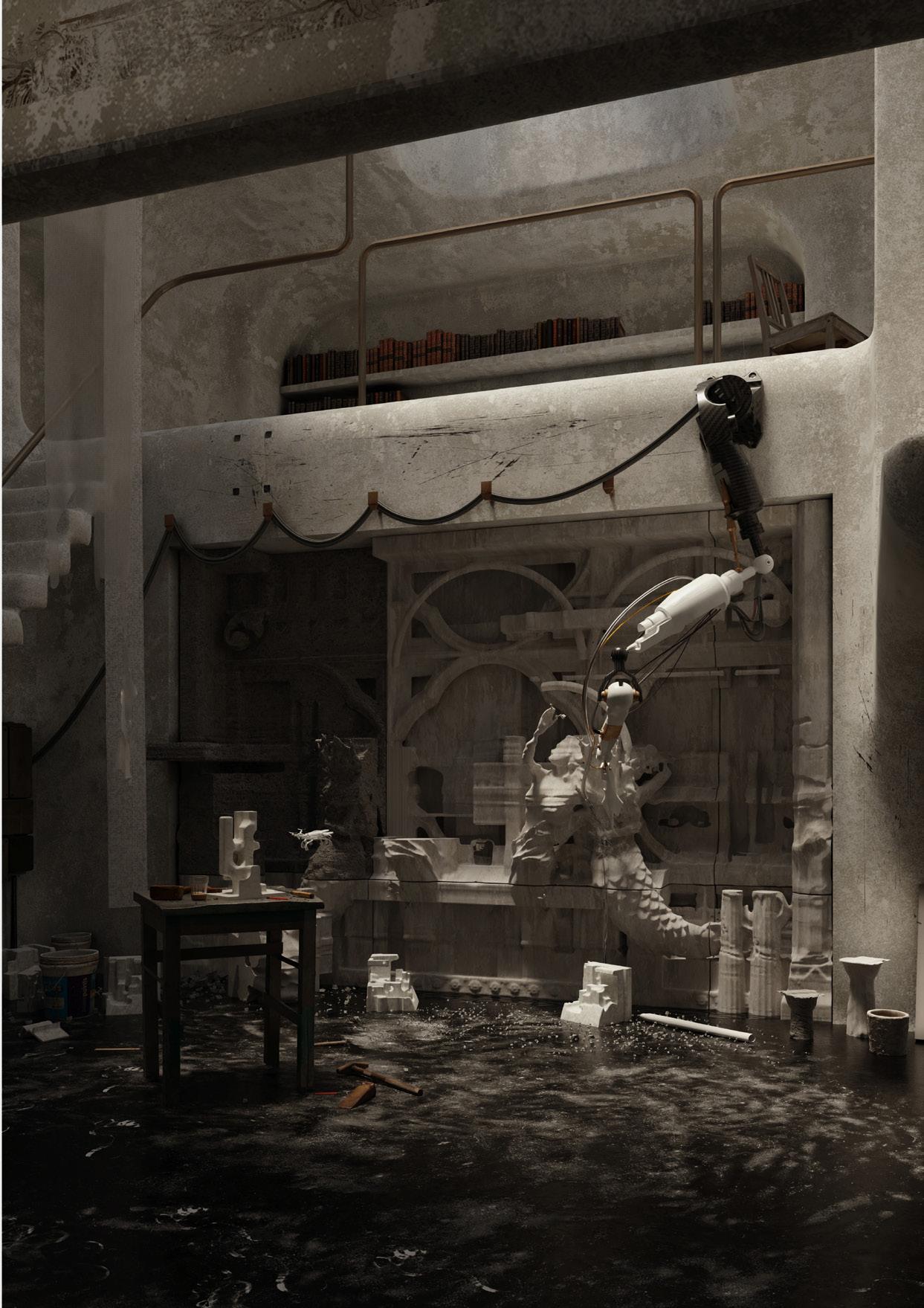
Within the very tapestry of architecture, fragments of memories find their dwelling, interwoven with the intricate ornamentation. The craftsman, carefully sculpts objects that embody the essence of space. These objects are embedded within the architectural fabric entrusted with the duty of preserving the memories of the site.
Yet, like the ethereal dance of memories, their forms gradually evolve, taking on unfamiliar hues under the touch of the robotic arm. The more we interact with these objects and the architecture, the more unfamiliar it becomes. In this delicate interplay between human interaction and mechanized influence, the very nature of familiarity becomes elusive. Memories are constructed and ‘un’-constructed. The objects and architecture enter a state of para-fiction, where, only fragments hold memories of it’s true form, the rest, lives within the mind of the perceiver.
And thus, the dialogue begins.
To remember we must forget.
Cast Architectural Elements
Sculpted Formal Study Hand Sculpting Table Drone to 3d scan hand sculpted foms Sculpting Tools
Robotic Scultping Cast Objects
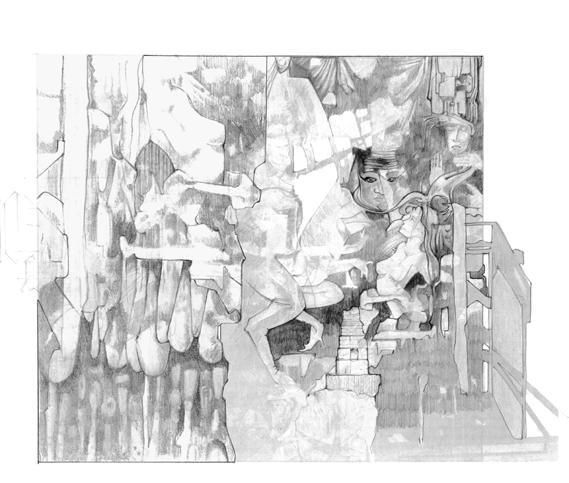
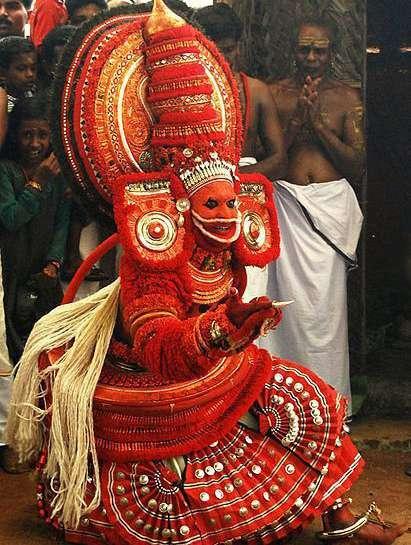
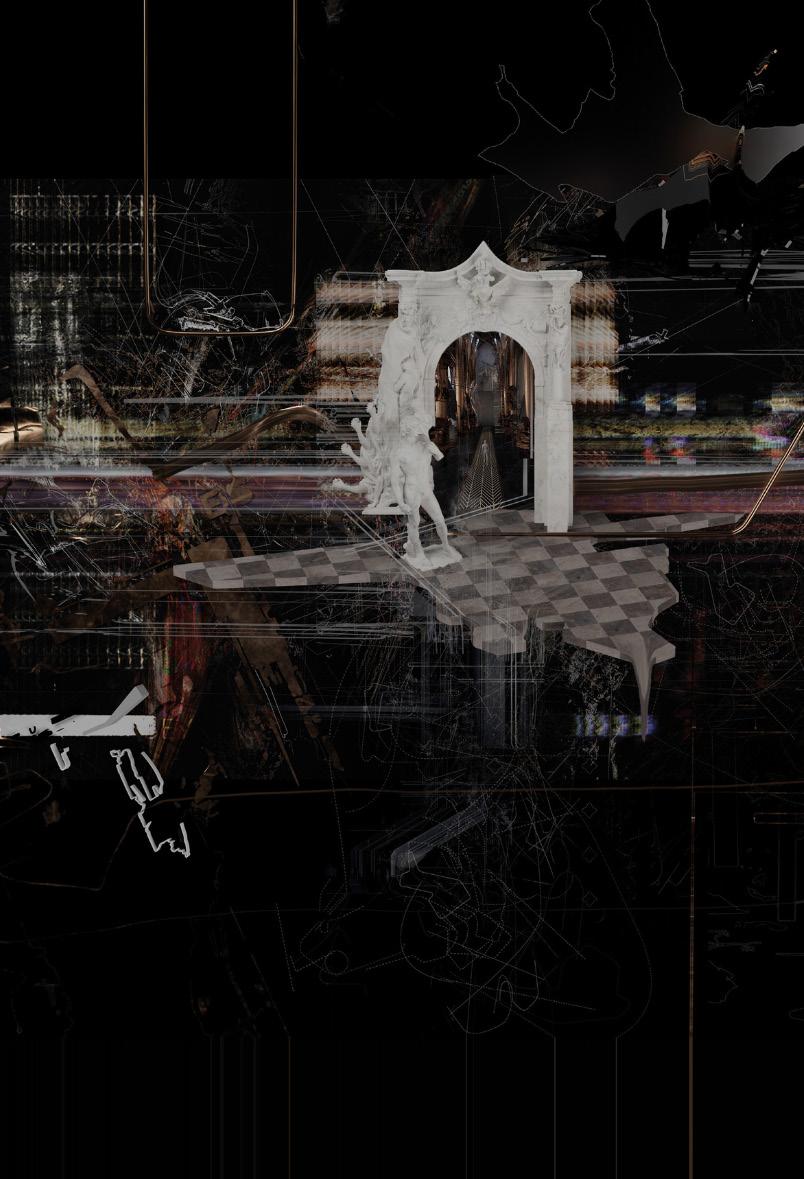
In Keralan culture, myths have a profound influence on various aspects of life, especially in the realm of crafts. The state’s rich tapestry of legends and folklore deeply intertwines with its artisanal traditions, inspiring craftsmen and artists. One significant mythological figure is Vishvakarma, the divine architect, who is revered by the state’s skilled carpenters, metalworkers, and builders. Temples and traditional homes (known as “tharavads”) often feature intricate wood carvings and murals that depict scenes from epics like the Mahabharata and Ramayana, reflecting the cultural reverence for mythological narratives. Additionally, the legends of Parashurama, the warrior sage credited with reclaiming the land of Kerala from the sea, symbolize the harmonious blend of nature and craftsmanship that defines Keralan artistry. These myths not only provide spiritual and aesthetic inspiration but also reinforce a sense of cultural identity and continuity among the artisans of Kerala.
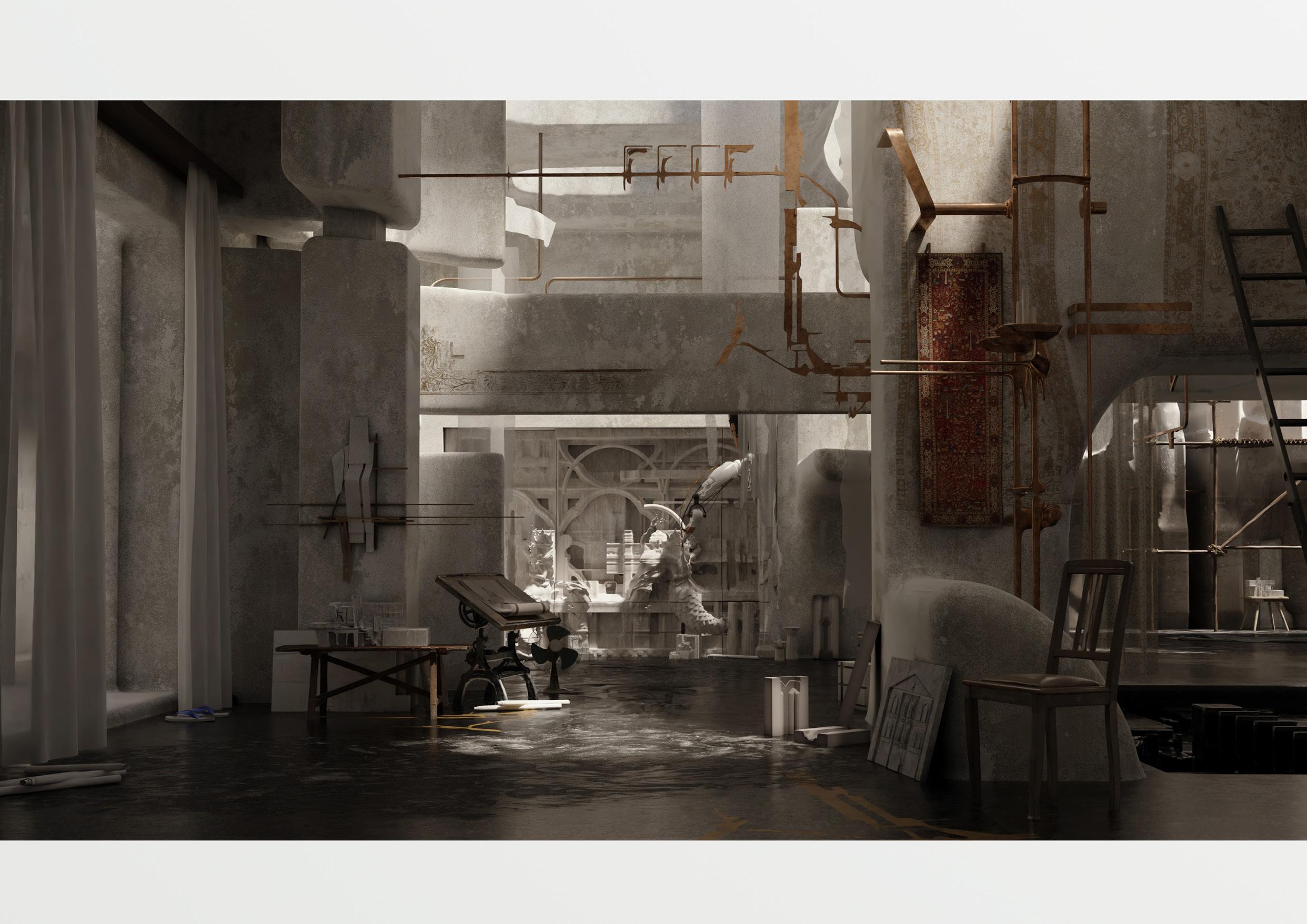
This drawing explores the concept of merging mythological fragments to narrate stories about both culture and context. By blending elements from mythology, fictional characters, and the built environment, the drawing aims to envision an architecture that embodies these narratives.
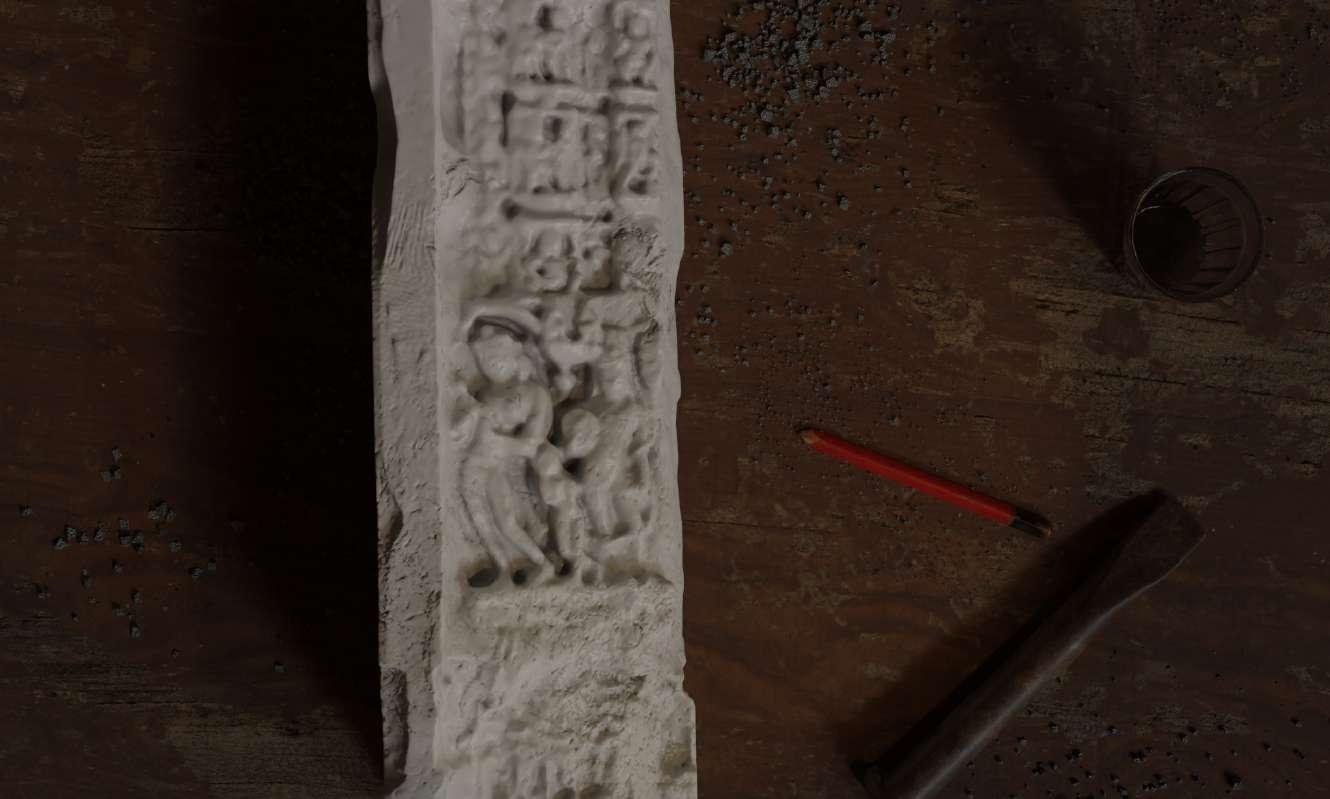
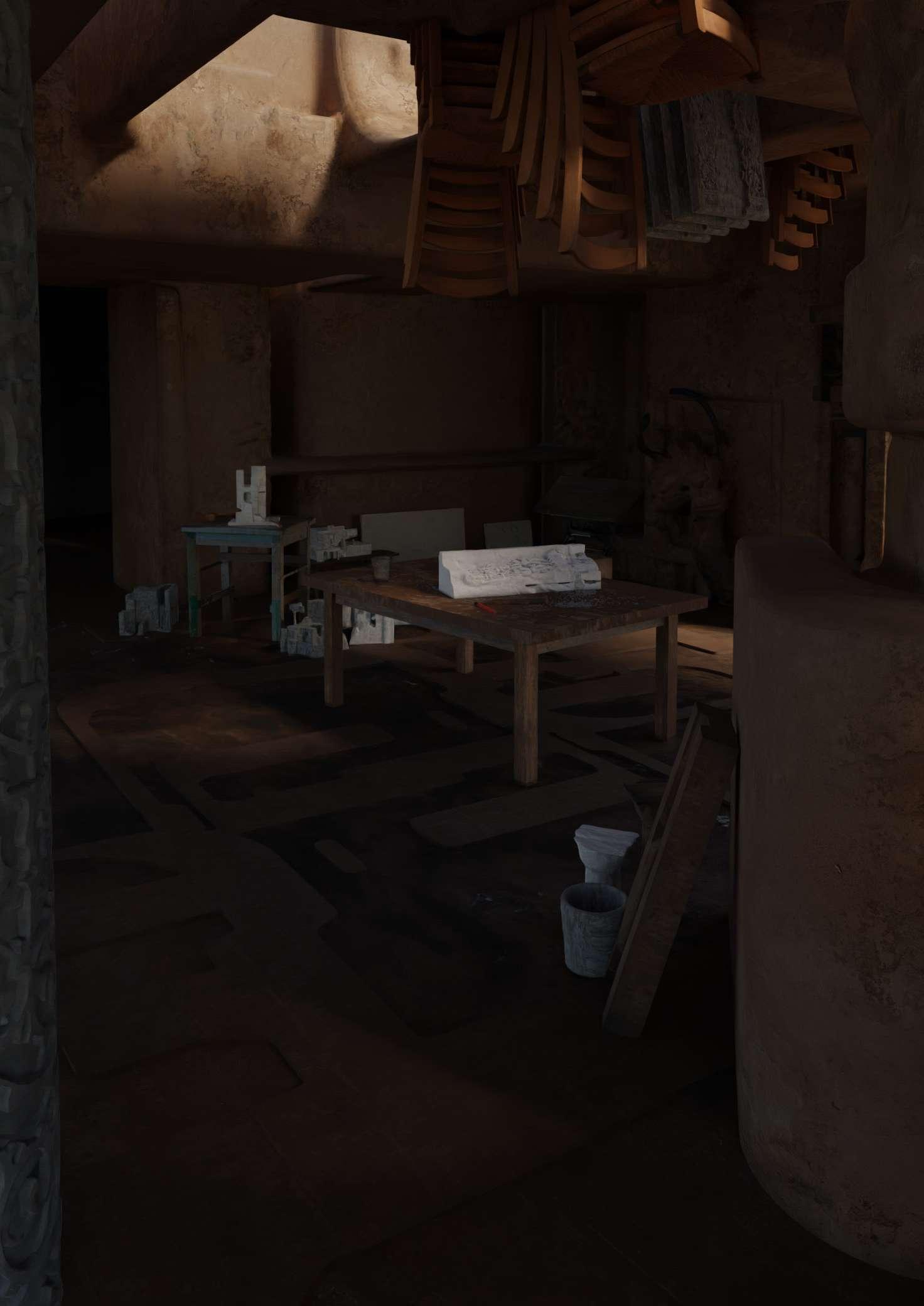
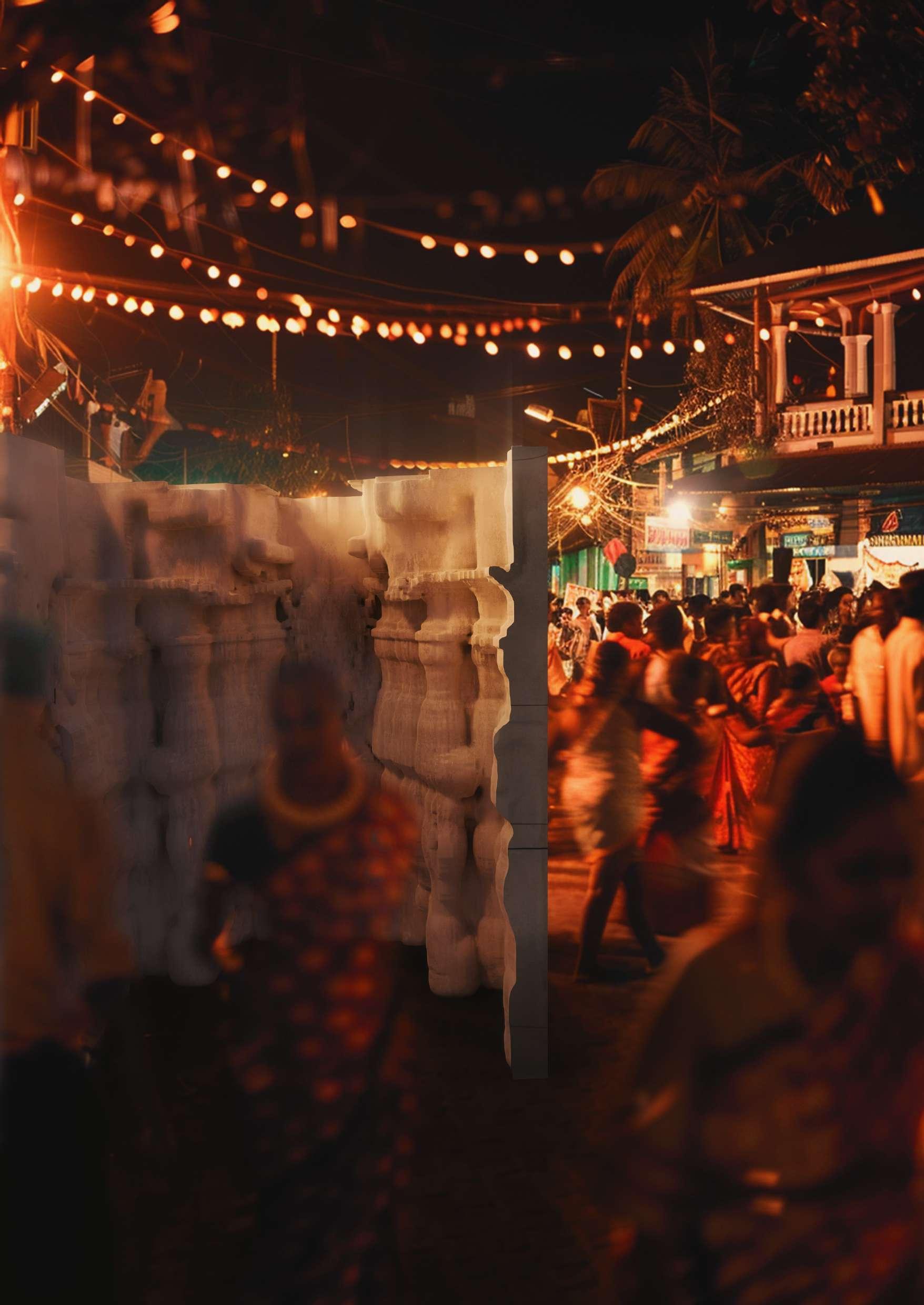
The carefully crafted objects within the building serve as temporary stages both inside the building and throughout the city. These objects metaphorically represent the building’s heritage and history. Moving through the city only for a moment to capture the memories. They then are reassembled within the building, which then becomes the architecture itself.
During festivals, the objects are placed on the streets, creating temporary stages and spaces for people to move through and interact with.
During festivals, the objects are placed on the streets, creating temporary stages and spaces for people to move through and interact with.
University of Nottingham - 2017-’20
RIBA Serjeant Award 2020
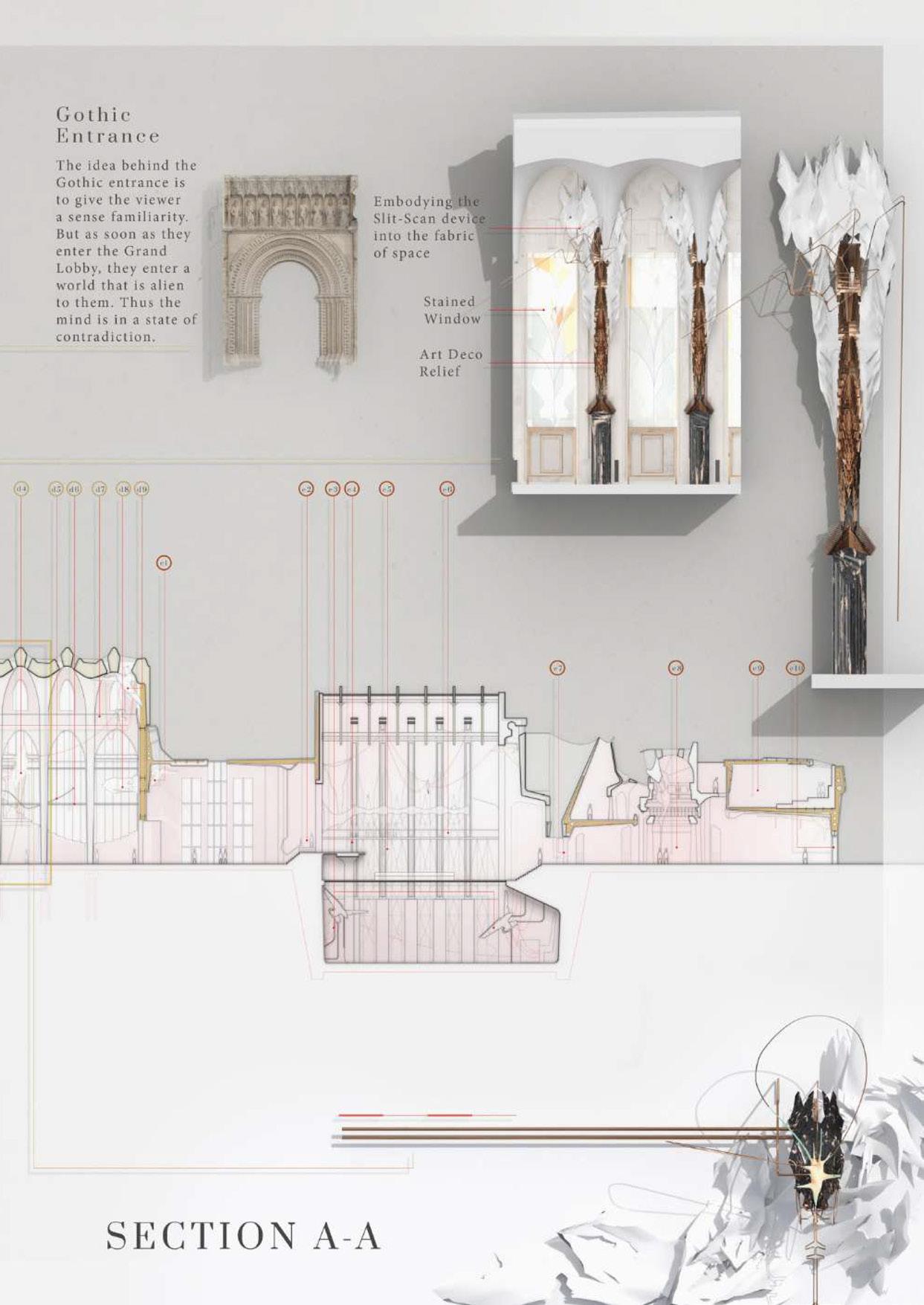
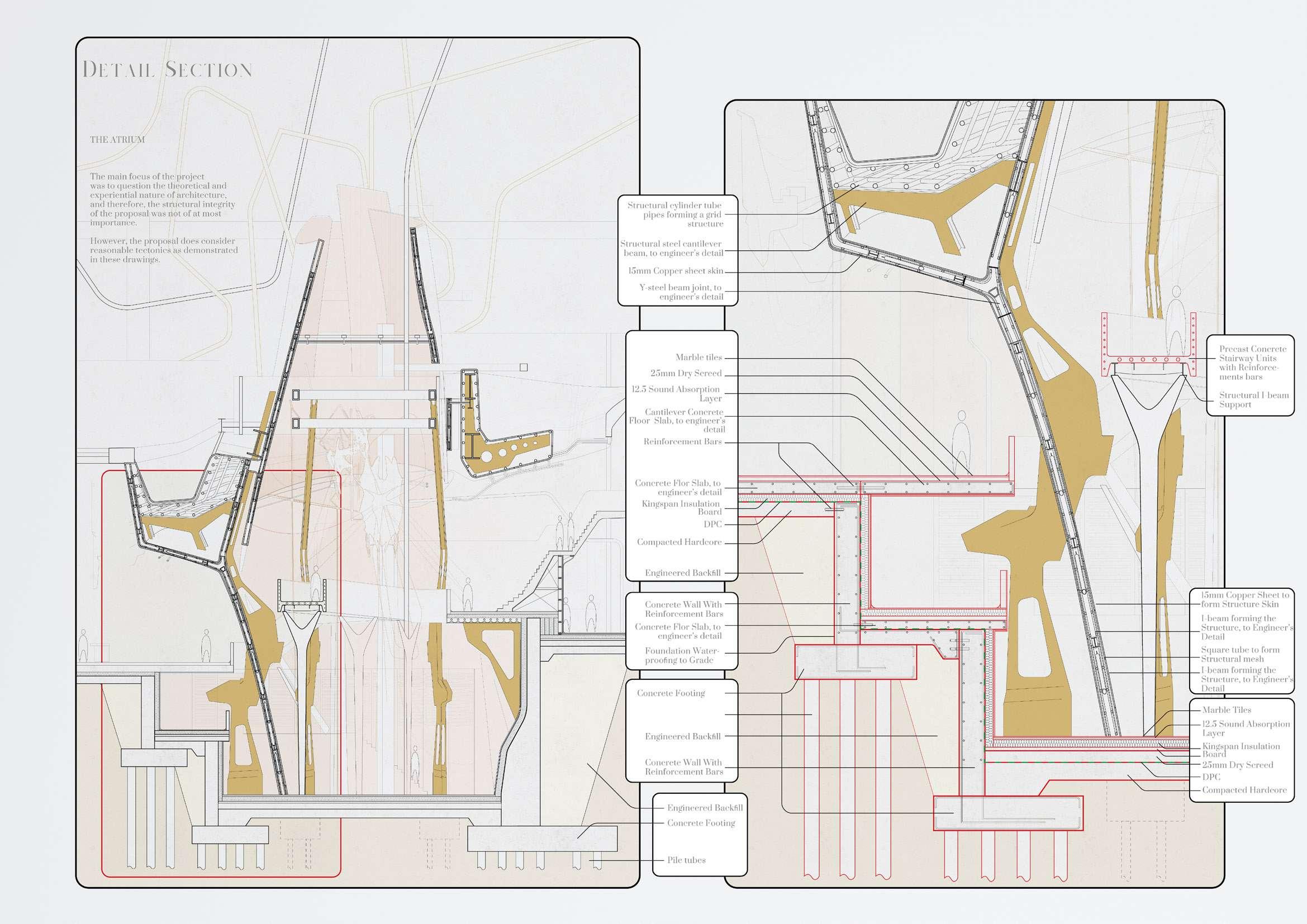
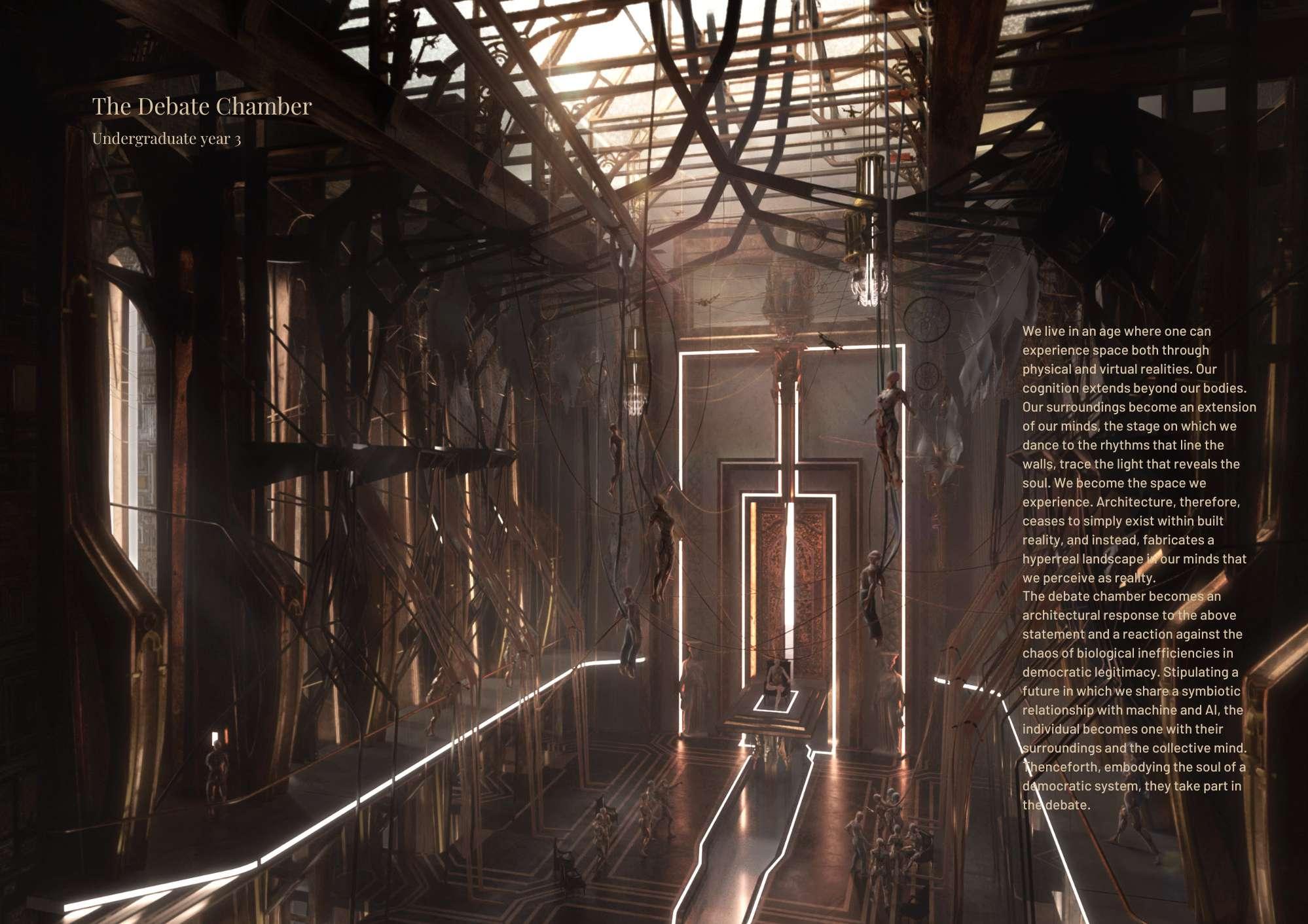
We stand on the verge of a significant revolution in architecture, driven by emerging technologies that challenge our understanding of physical existence. My work delves into how contemporary technological advancements shape our perception of reality. Augmented Reality (AR) and Virtual Reality (VR) profoundly impact architectural experiences, raising critical questions about how we engage with architecture and how these experiences are redefined within our hyperreal world.
This project envisions a future where we coexist symbiotically with Artificial Intelligence. It integrates concepts from previous projects to create speculative architecture that evolves and transforms as one navigates through it. This dynamic interaction between the observer and the observed is captured through an architectural lens.
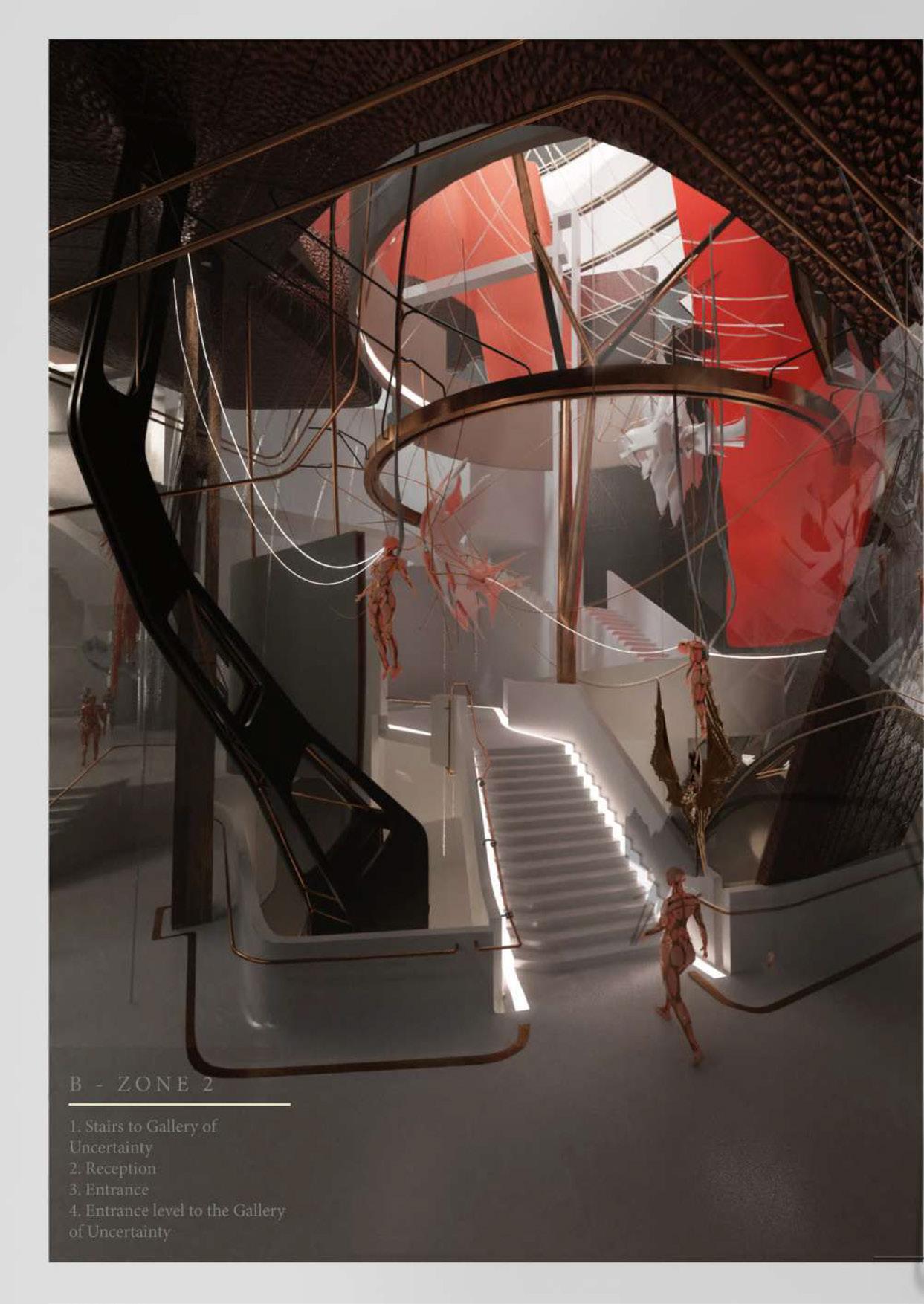
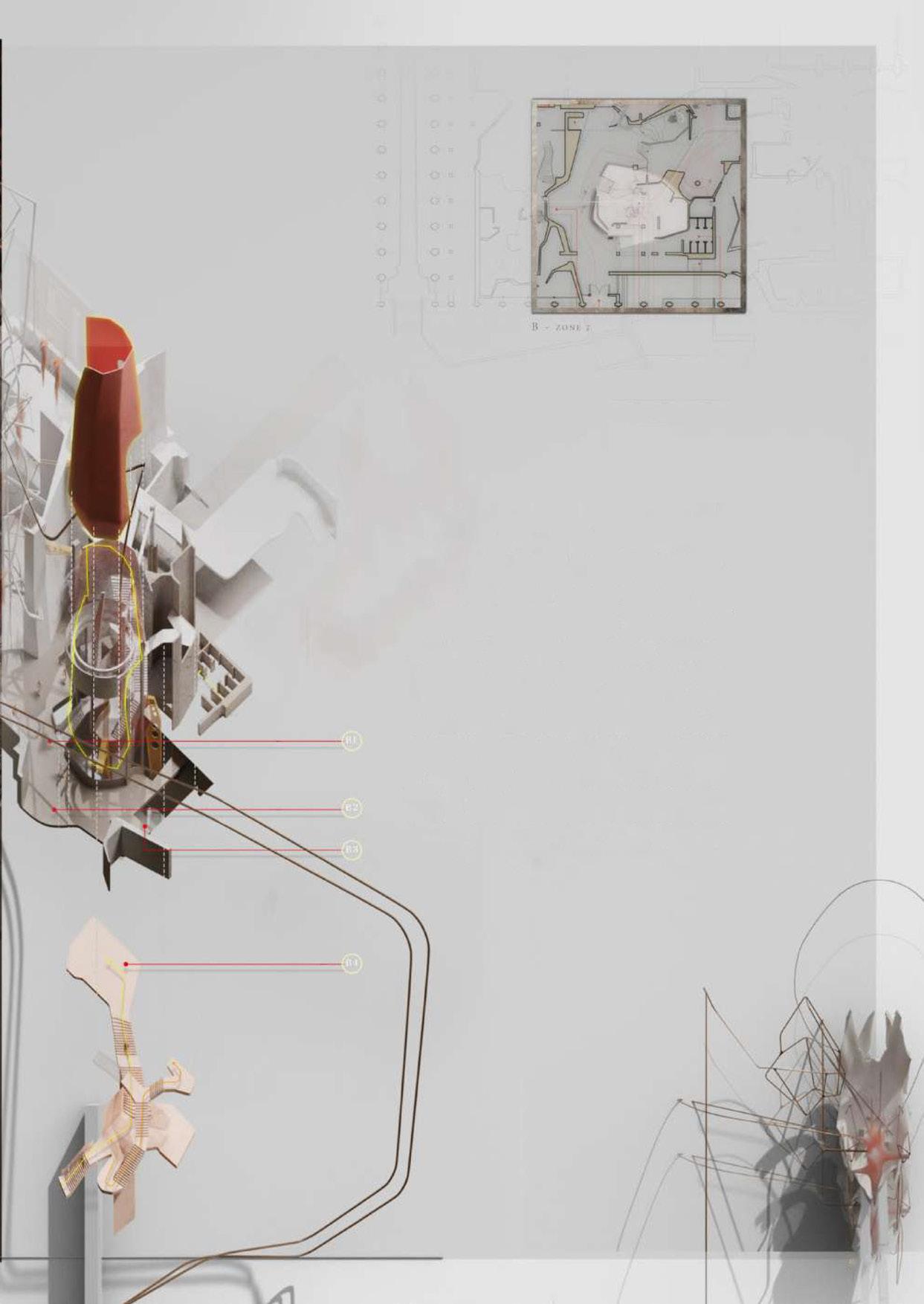
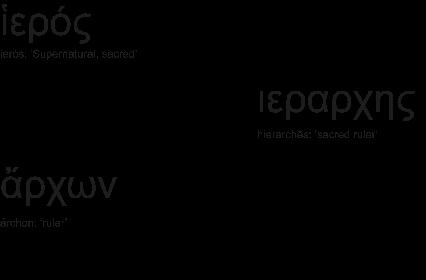
Hierarchies have a central place in nature. In a world where the resources are finite, organisms have to cooperate and compete with other organisms of their type to ensure their survival. In such situations, it is but inevitable for such organisms to arrange themselves into a hierarchical system. And such a process has been around for more than a million years. If we look at the life of a lobster, they have been around for about 480 million years, and their systems of life primarily depend on hierarchies. The place it holds in the hierarchical system indirectly dictates its chances of survival. Our nervous systems have adapted to hierarchies as if they are a fundamental element of existence.
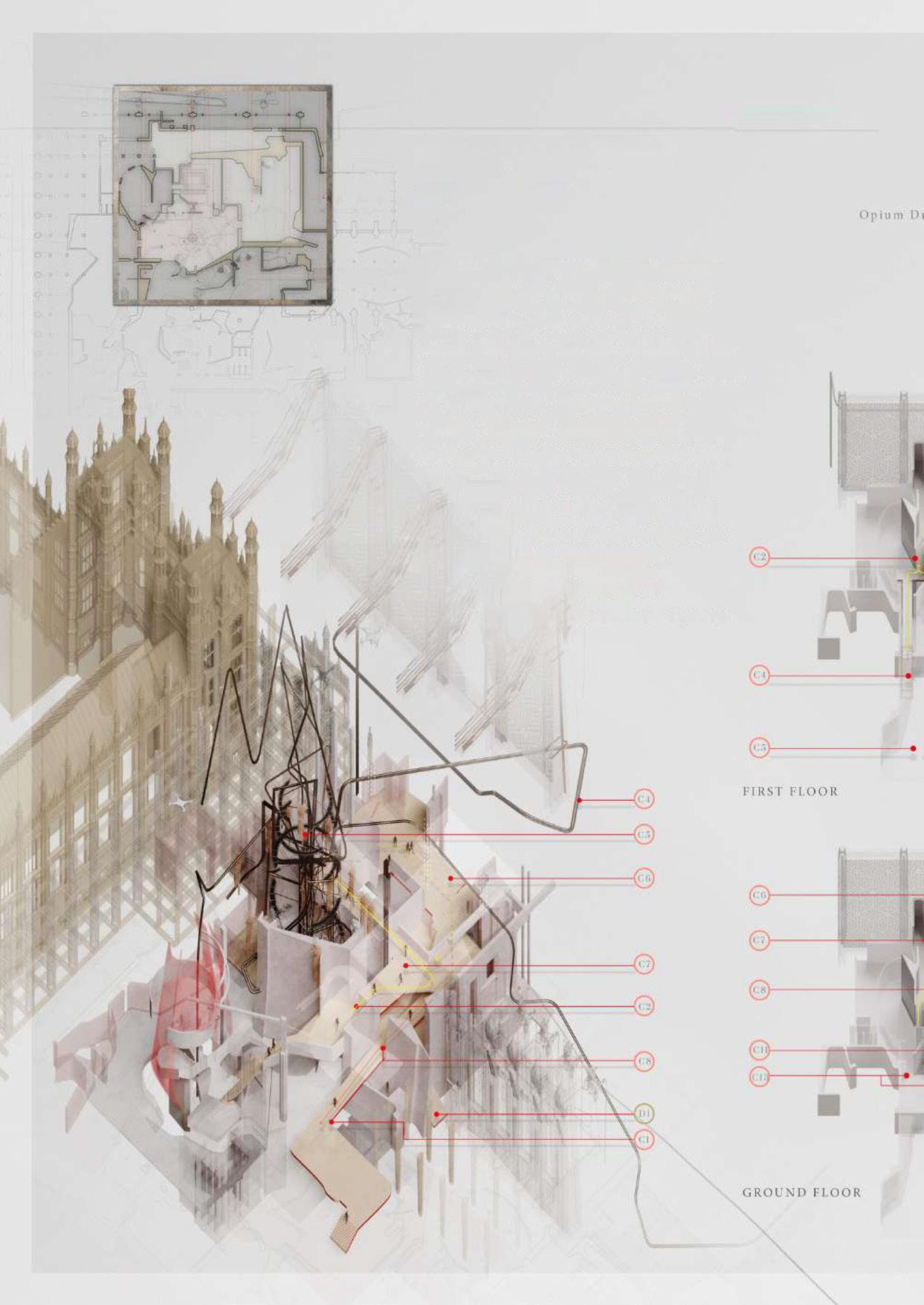
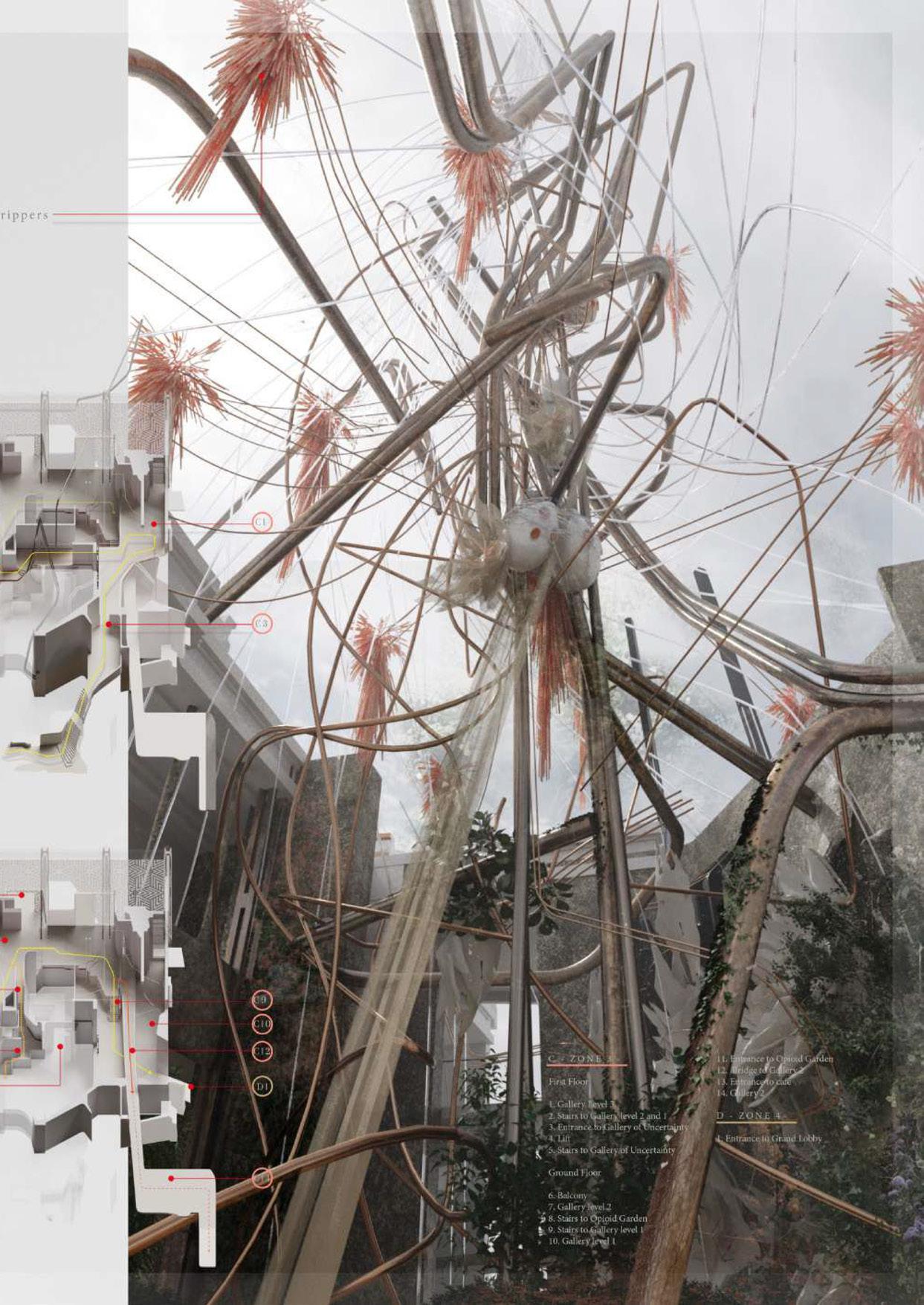
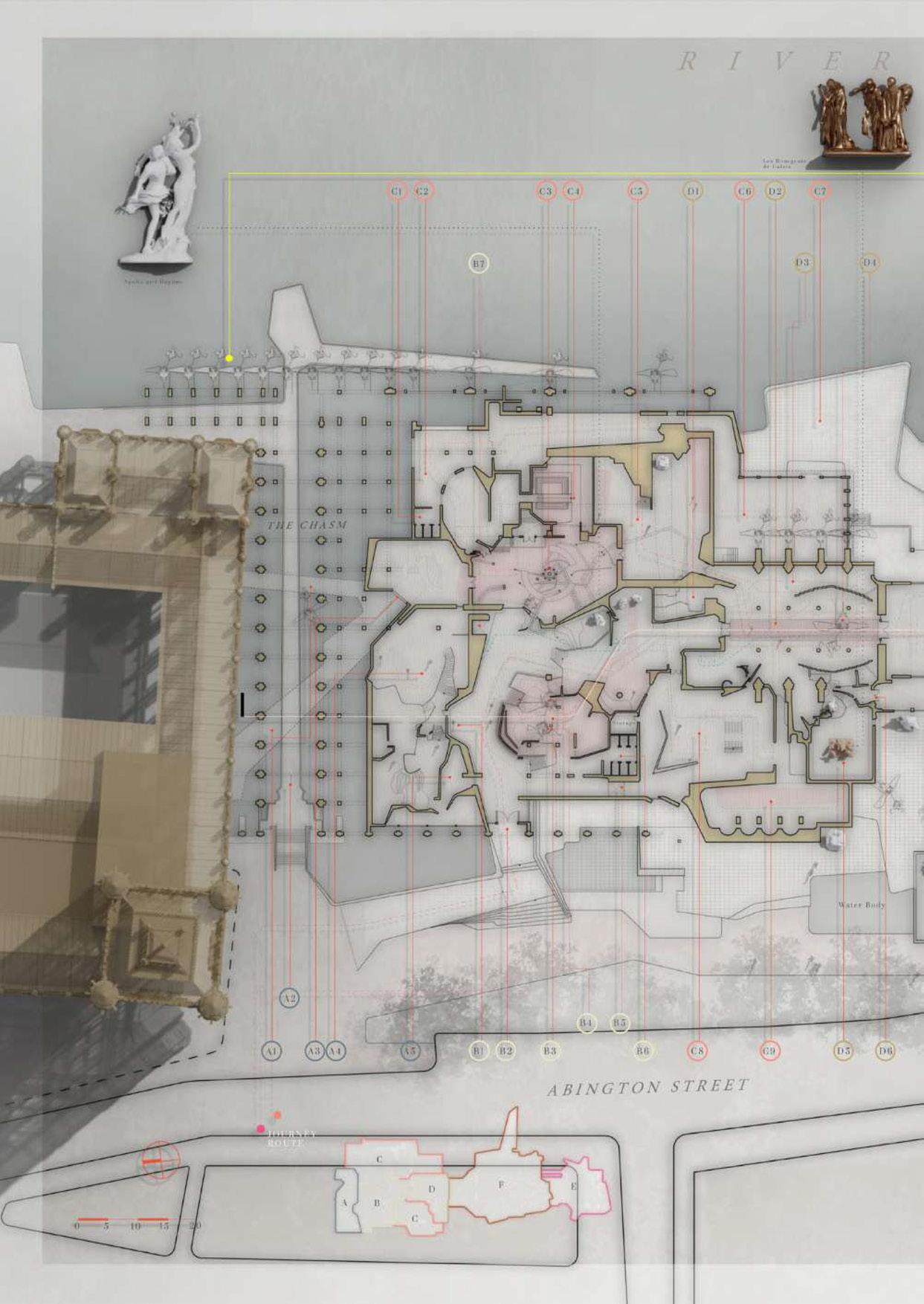
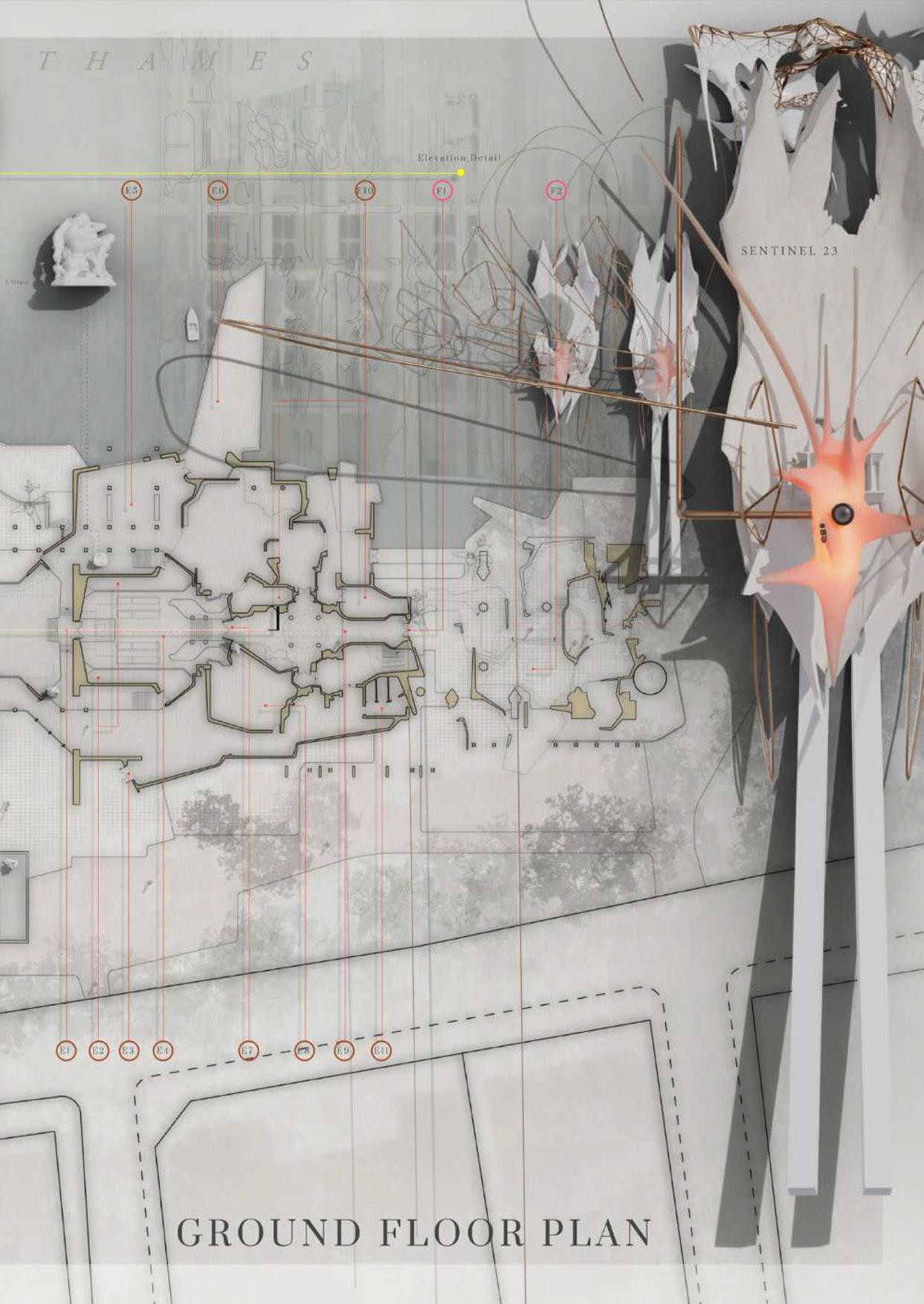
The space we move through is constantly calibrating itself to accommodate the endless shifting sensations and moods of the perceiving subject. The “opioid Garden’ creates a moment of escape, where people forget their pain and their senses are enhanced. Architecture most of the time is not only about the visual stimulus, however, we are also an ocular centric society, and most of our perception highly depends on visual stimulus. Therefore, it is only natural to design with a visual aesthetic in mind. In this garden, I’ve tried to use traces of opium and liquid LSD (Lysergic acid diethylamide) which is released into the air to enable the occupants to experience the intricacies of architecture through all their senses. Thereby, calling for a bodily experience of space.
Joseph Kemish Architects - 2020-’21
Type of project:
Mainly Small-scale residential
Key responsobilties:
• Creating Construction drawings
• Detailing
• Drafting spec sheet
• Visualisation
• Maintining company website
Mark Foster Gage Architects - 2021-’22
Type of project:
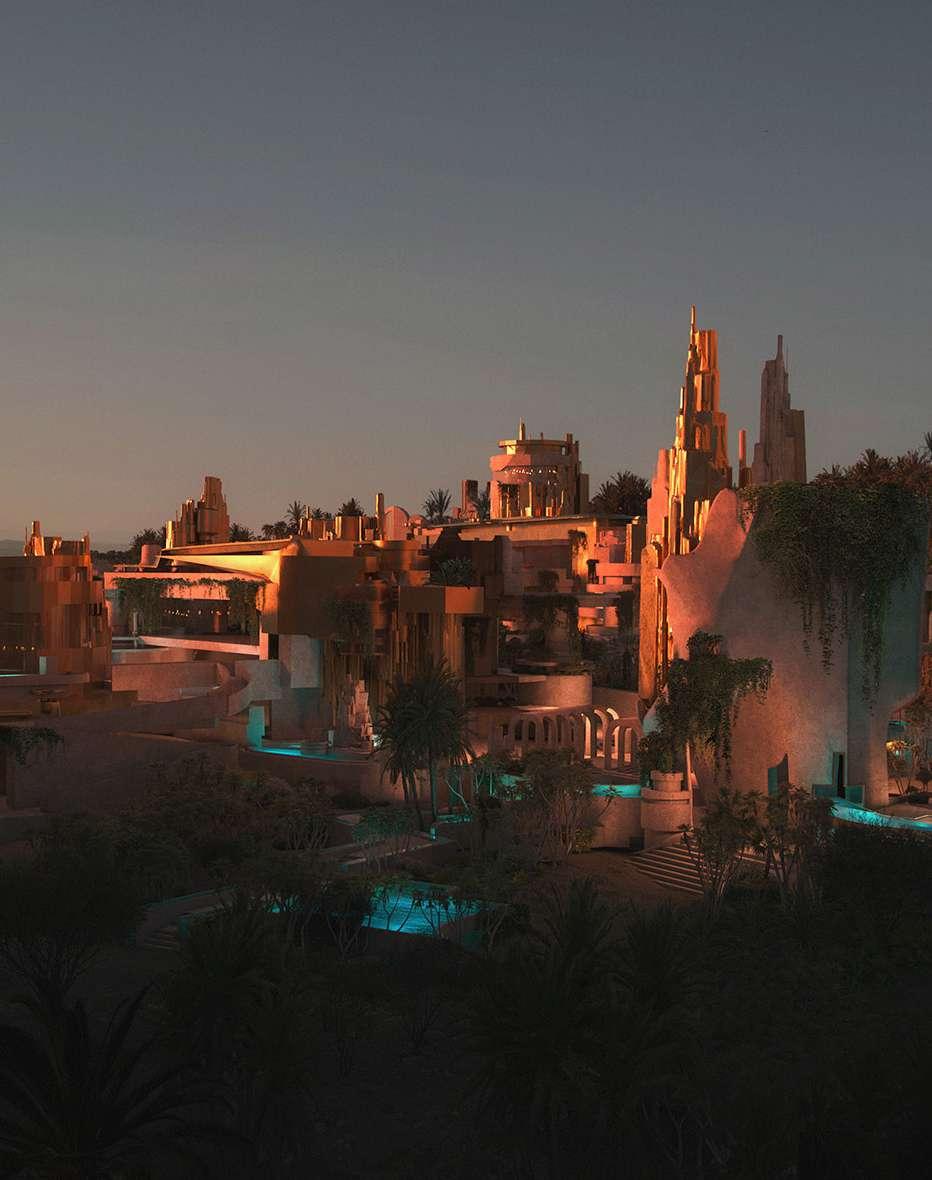
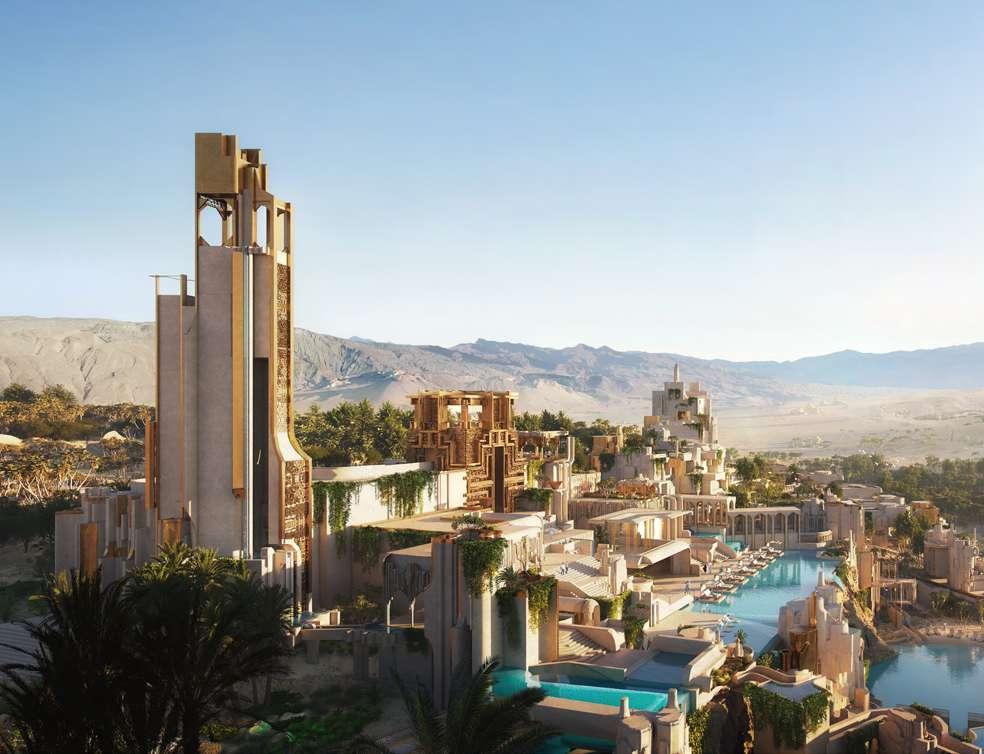
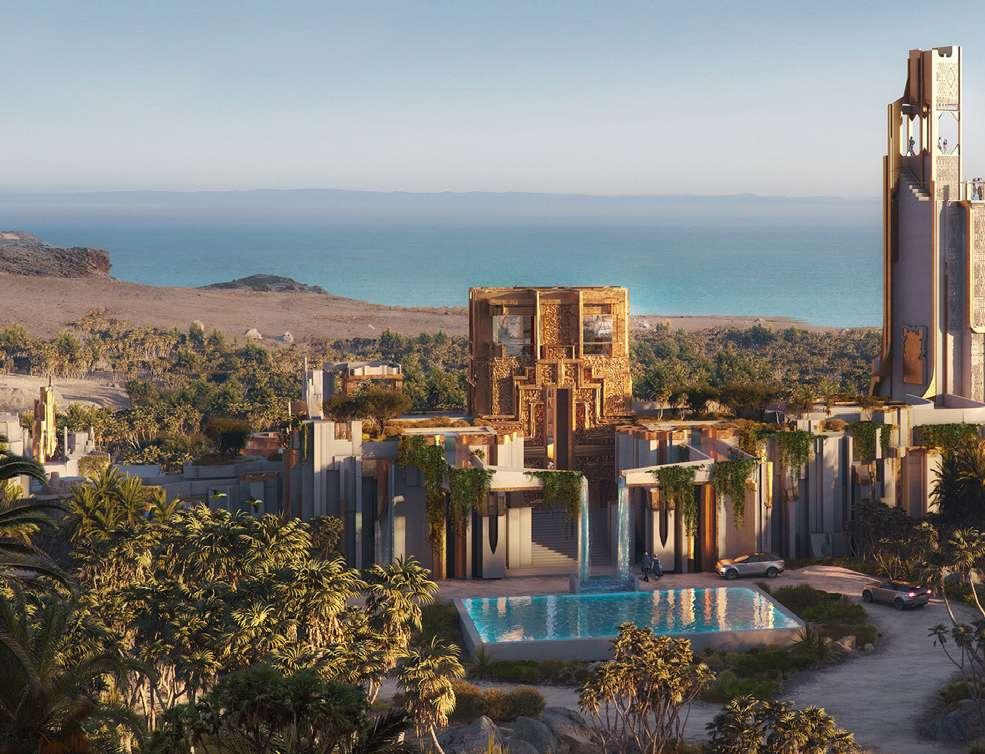
Residential, Hospitatlity, Commercial
Key responsobilties:
• Lead designer
• Concept designer
• Visualisation
• Basic Managerial Office Tasks
1
2
3 All
4
2
3
4
5
5
1
MR & MRS NICHOLSON
BUTTS MEADOW, FARNSFIELD.
01636 816
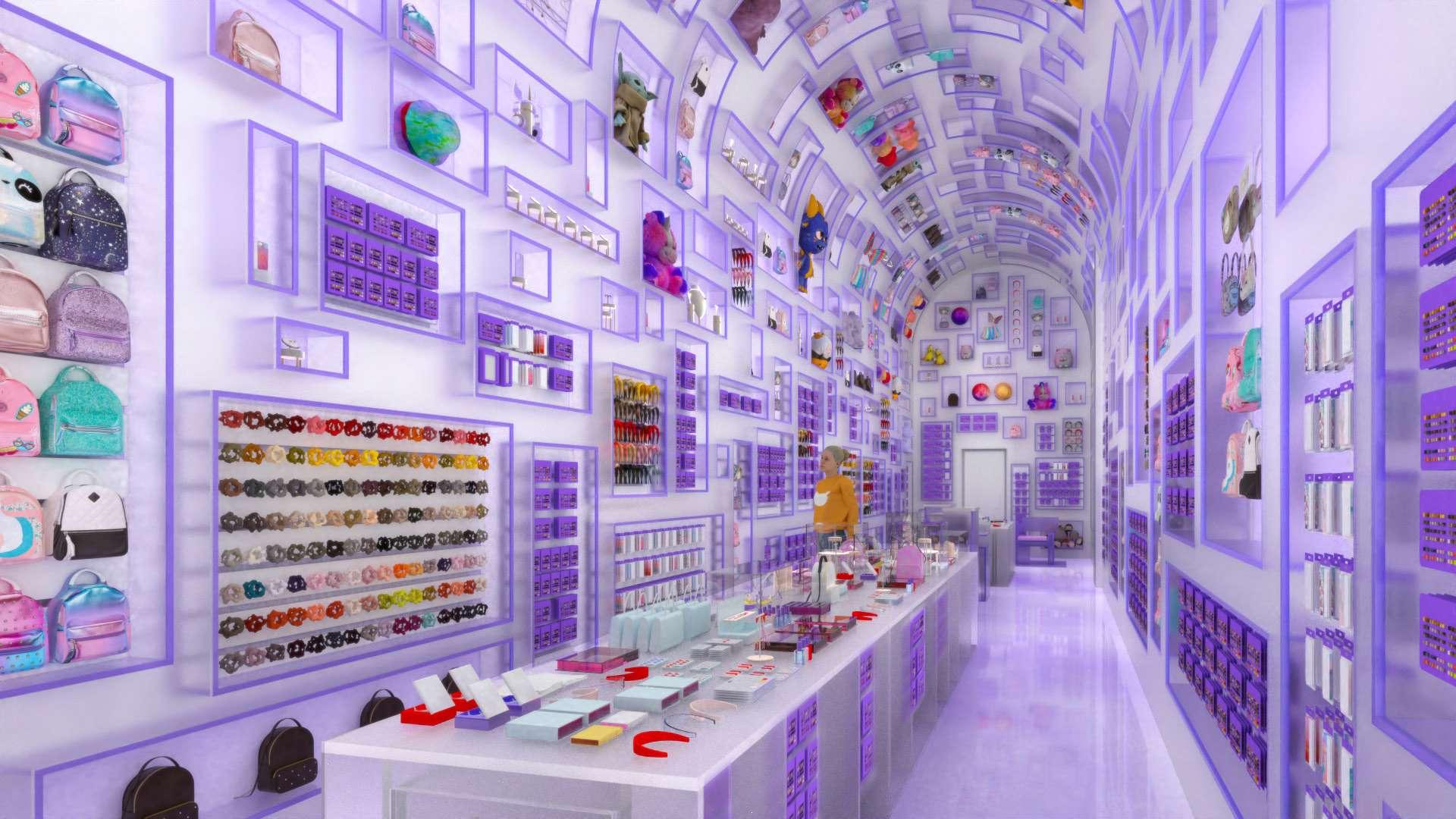
Retail Store Interior Design
Lead DesignerMark Foster Gage Architects
(Concept)