Copyright Rolls-Royce Motor Cars NA, LLC 2025. The Rolls-Royce name and logo are registered trademarks.
SEVEN SEAS CRUISES
EXPERIENCE THE UNRI VA LED
The newest member of The World’s Most Luxurious Fleet® arrives Winter 2026
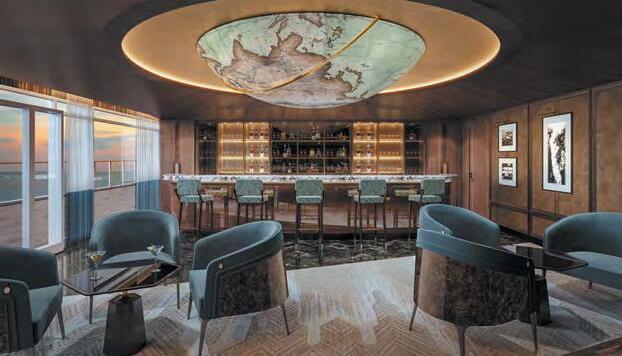
With beautifully appointed social spaces and all-balcony suites, Seven Seas Prestige ushers in a new era of all-inclusive, ultra-luxury ocean travel and Heartfelt Hospitality™ for Regent Seven Seas Cruises. Choose from 12 spacious suite categories, including the nearly 9,000-square-foot Skyview Regent Suite — the largest, most inclusive suite at sea.
CRUISE IN ALL-INCLUSIVE, UNRIVALED LUXURY ™
CALL 1.855.573.1973 OR CONTACT YOUR TRAVEL ADVISOR VISIT RSSC.COM/PRESTIGE
Lose yourself in the views. Find yourself on the water.
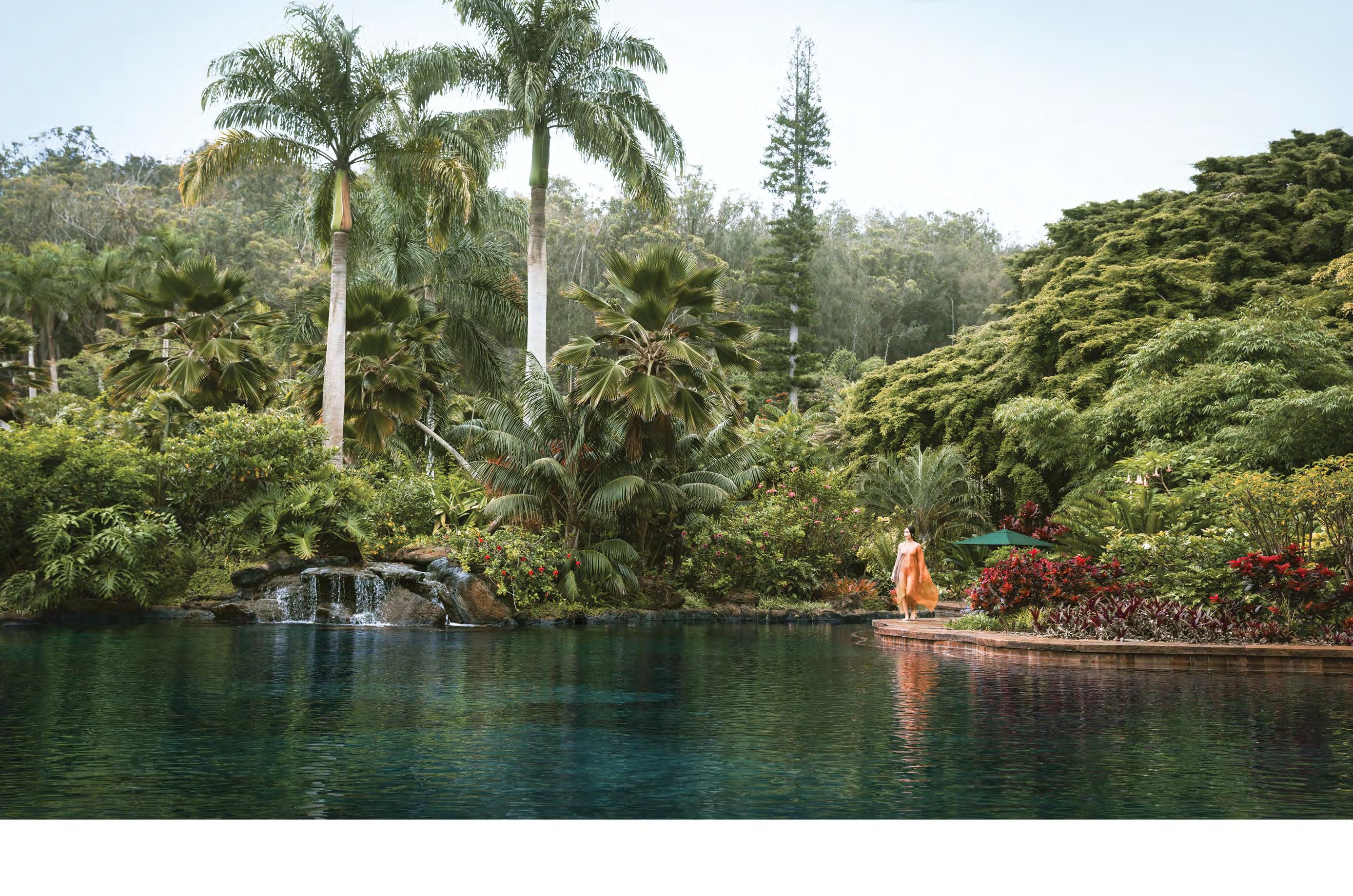
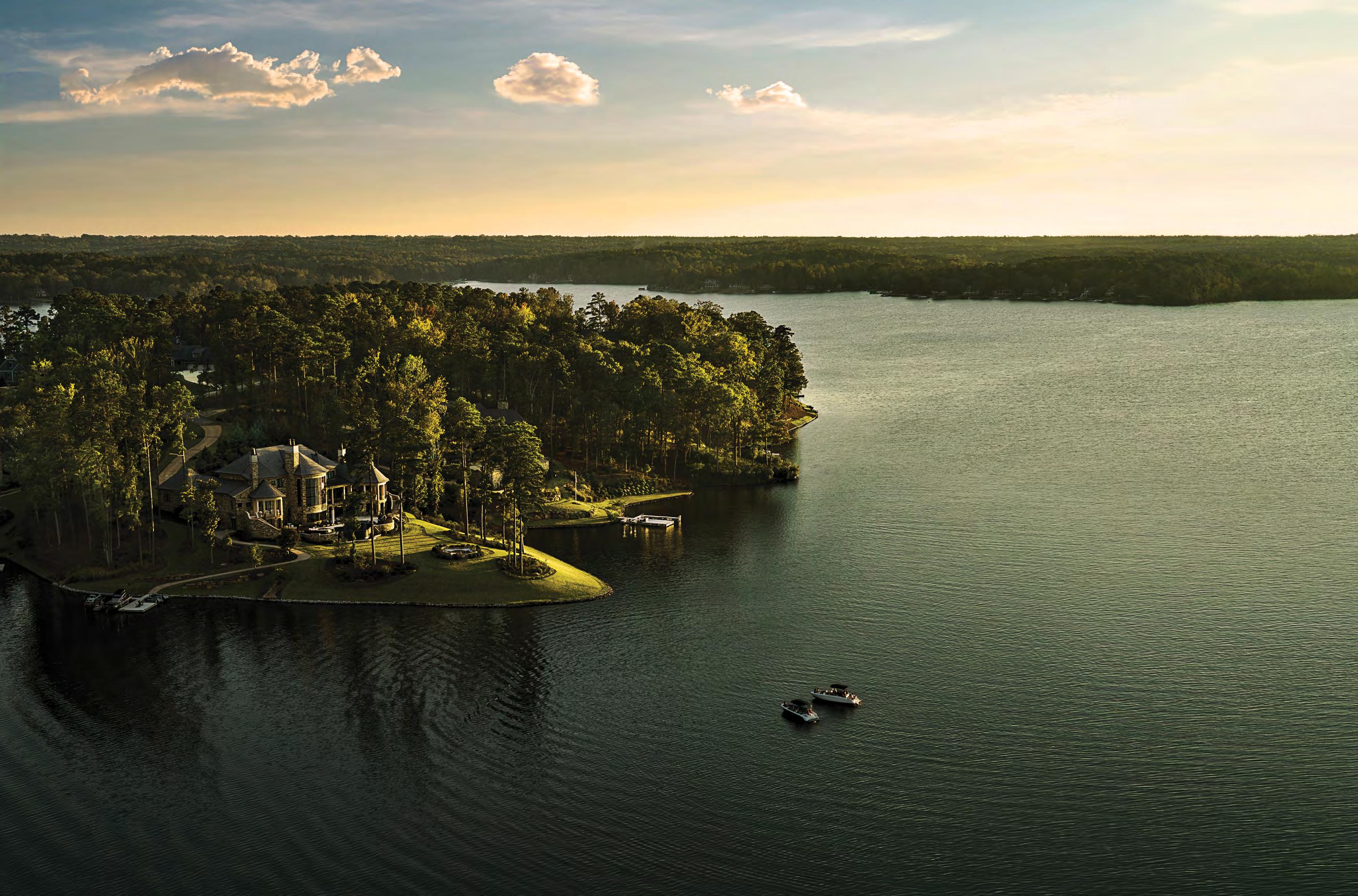
Just east of Atlanta, and one flight from just about anywhere, Reynolds Lake Oconee has welcomed Members from around the country for nearly four decades. Whether a weekend cottage or a home for the generations, Reynolds has a special magic all its own.
For those interested in Real Estate and Membership, preferred rates in our cottages or The Ritz-Carlton® are available. reynoldslakeoconee.com/dossier | 855.316.2866
ALPINE EAGLE 41 XPS
Epitomising the pure and sophisticated aesthetics of the Alpine Eagle collection, this ultra-thin 41 mm-diameter model with integrated bracelet is crafted in Chopard’s exclusive high-quality Lucent Steel™. Its chronometer-certified L.U.C 96.40-L movement is wound by a gold micro-rotor and equipped with Chopard Twin technology’s two barrels ensuring a 65-hour power reserve. Proudly developed and handcrafted by our Artisans, this exceptional timepiece showcases the finest expertise and innovation cultivated within our Manufacture. CHOPARD BOUTIQUES NEW YORK 730 Fifth Avenue – MIAMI Bal Harbour Shops – COSTA MESA South Coast Plaza 1-800-CHOPARD www.chopard.com
There is no corner of this planet so remote that we are not connected to one another.
This summer, my daughters both headed off to camp in France while my stepson packed up for Maine, where he spent two months working as a camp counselor. Consequently, my husband and I found ourselves — for the first time in 15 years — with two entire weeks without children. When this incredible space appeared in my schedule (or, more accurately, rolled out in front of me like a red carpet), I knew immediately where I hoped to spend it: Africa.
Africa is somewhere I always find myself looking to return to and explore (beyond the eight countries I have already visited). I have been particularly eager to get to Botswana to see the incredible sustainable impact work Wilderness is doing in the Okavango Delta, so that topped my list. I also arranged a visit to Kisawa Sanctuary, in a wildlife preserve on an island off the coast of Mozambique, and, in between, a quick stop in Johannesburg, South Africa, with a stay at Satyagraha House, a small museum with guest rooms in Mahatma Gandhi’s former home. The trio of stays unintentionally underscored the variety of culture, ecology, and hospitality experiences available on our planet’s second-largest continent.
While the incredible diversity of Africa is real, one of its major draws for me, as for many, is its phenomenal swaths of great wilderness. A native of the urban jungle, I am at home in cities, the bigger and messier the better. But, equally, I find myself when I visit places that are far-flung, remote, deeply and profoundly wild.
“True solitude,” author Wendell Berry wrote, “is found in the wild places, where one is without human obligation.” While that feels precise to me on a personal level — those places allow me to feel still, and profoundly humbled — the opposite holds true when I consider human beings on a greater scale. Visiting wild places intensely underlines the enormity of the impacts people can have collectively, for good and bad, and the obligation that carries.
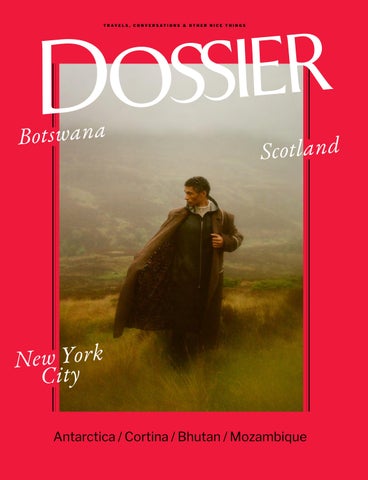
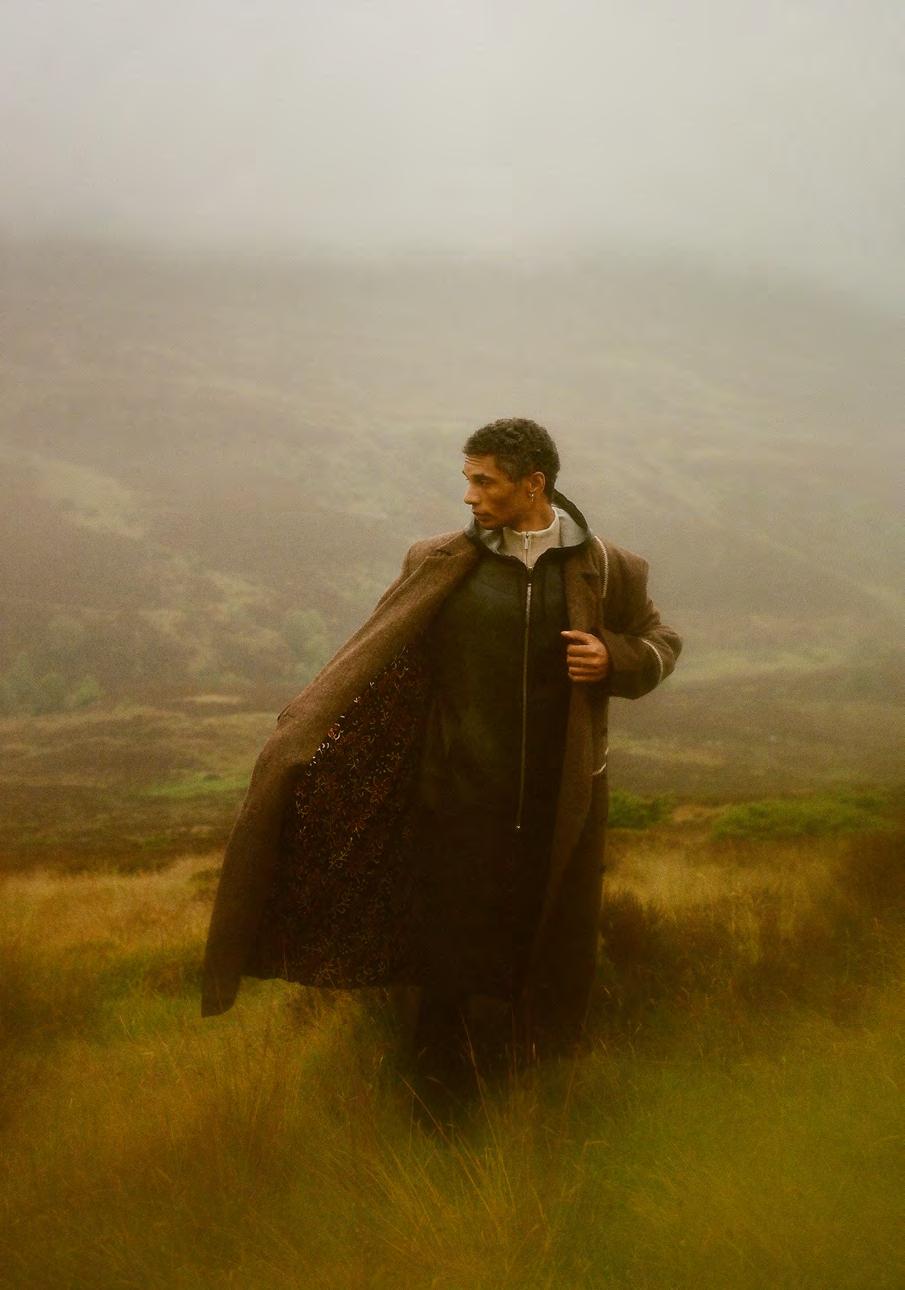
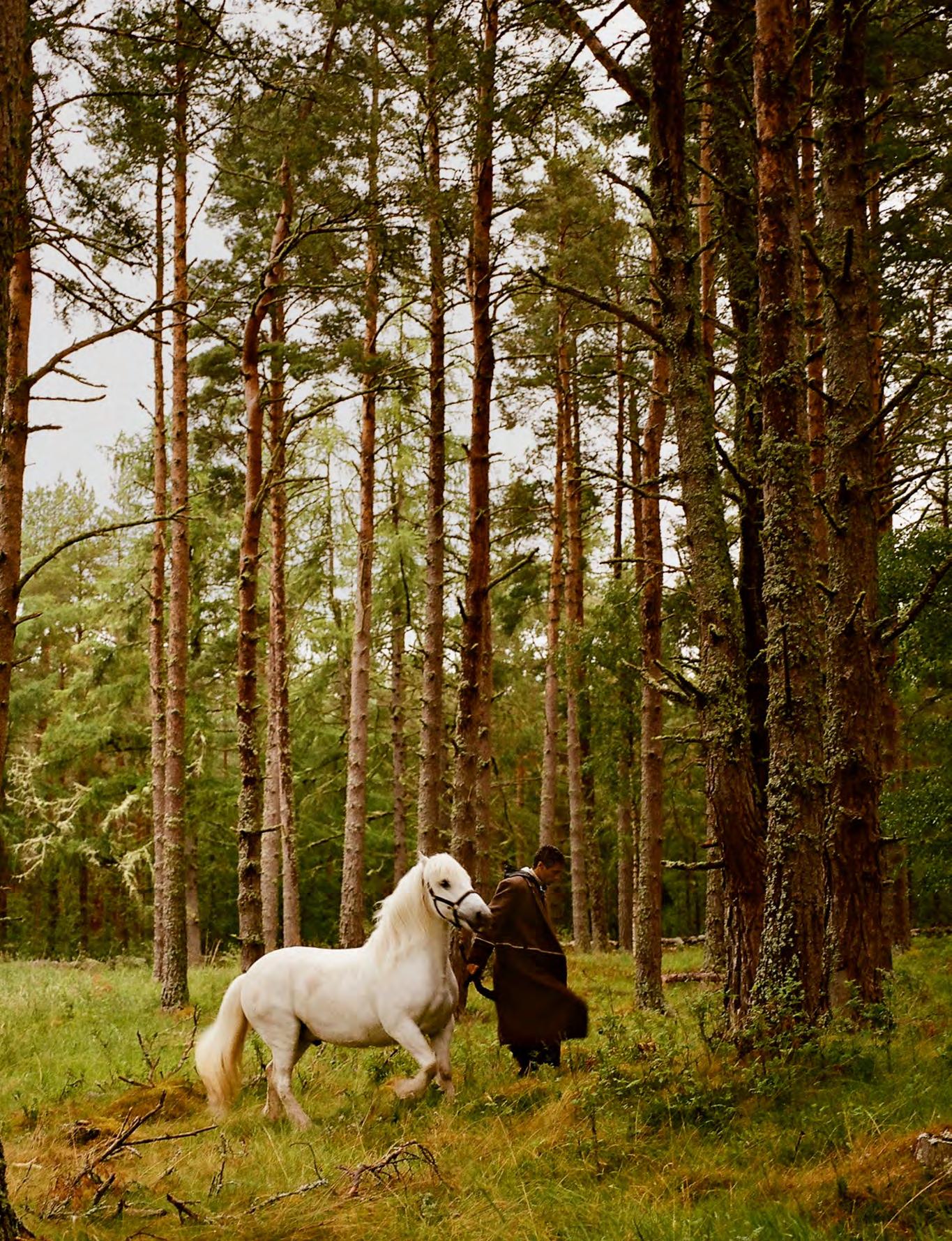
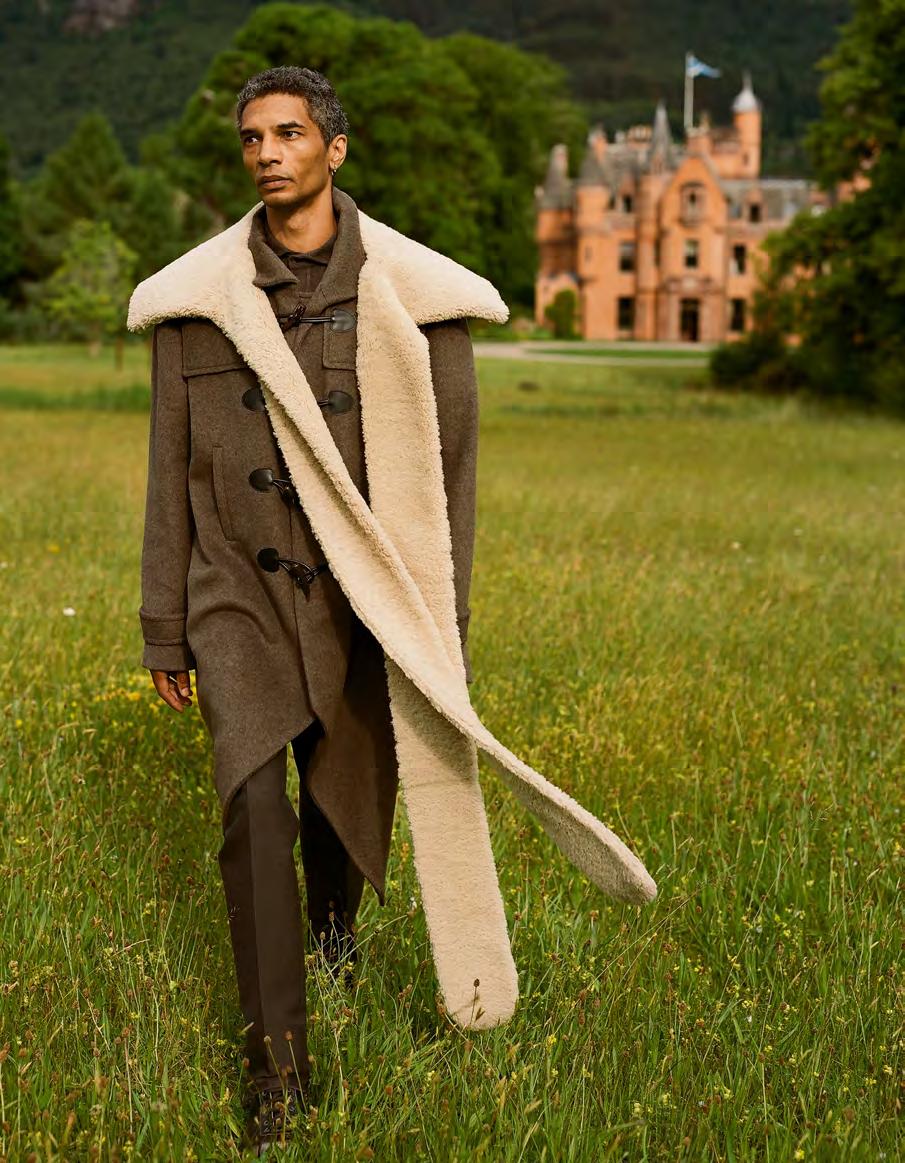
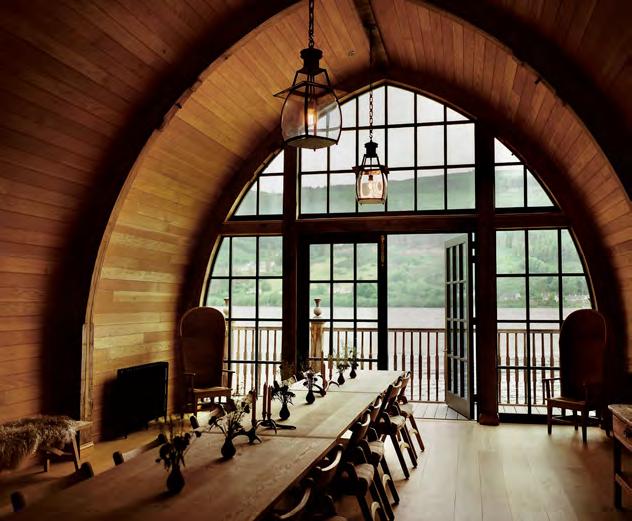
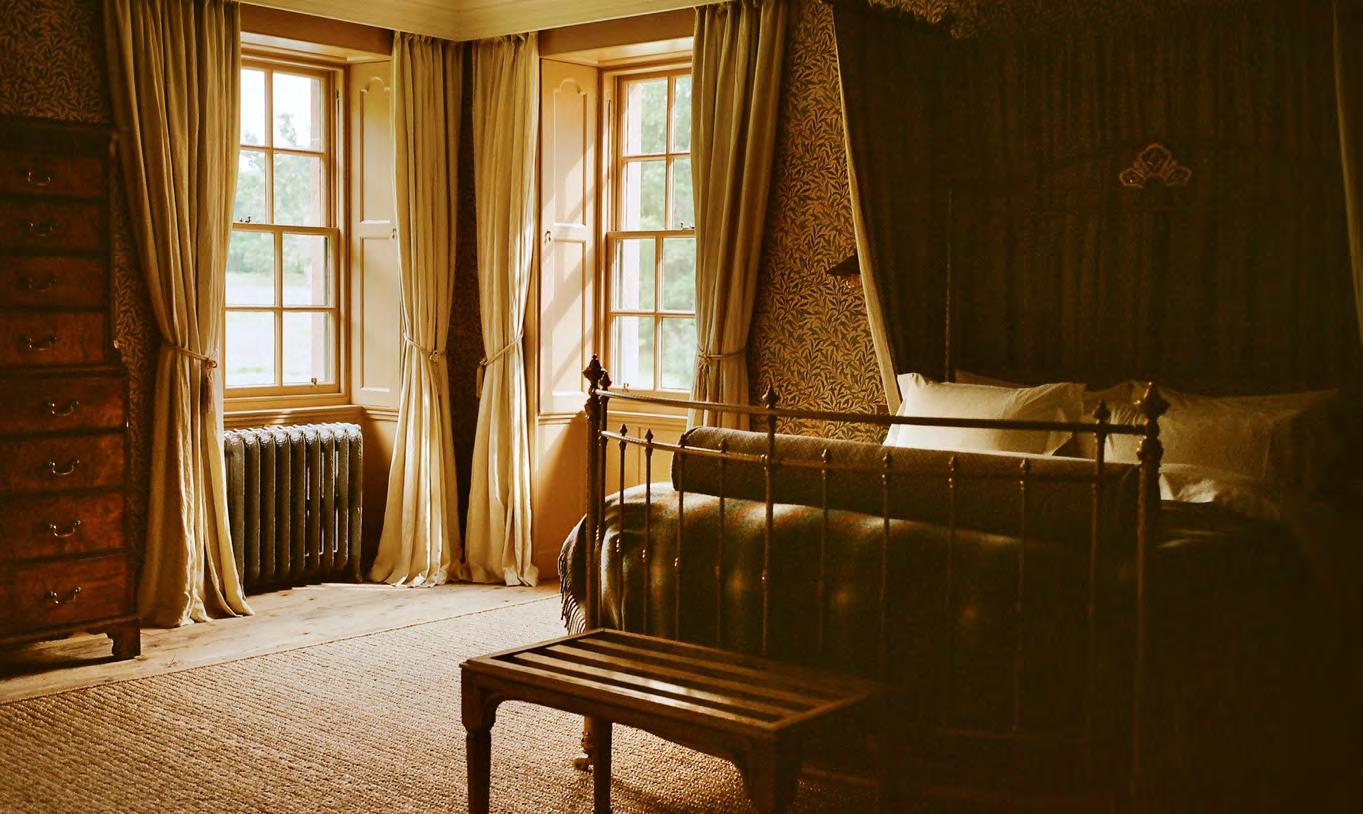
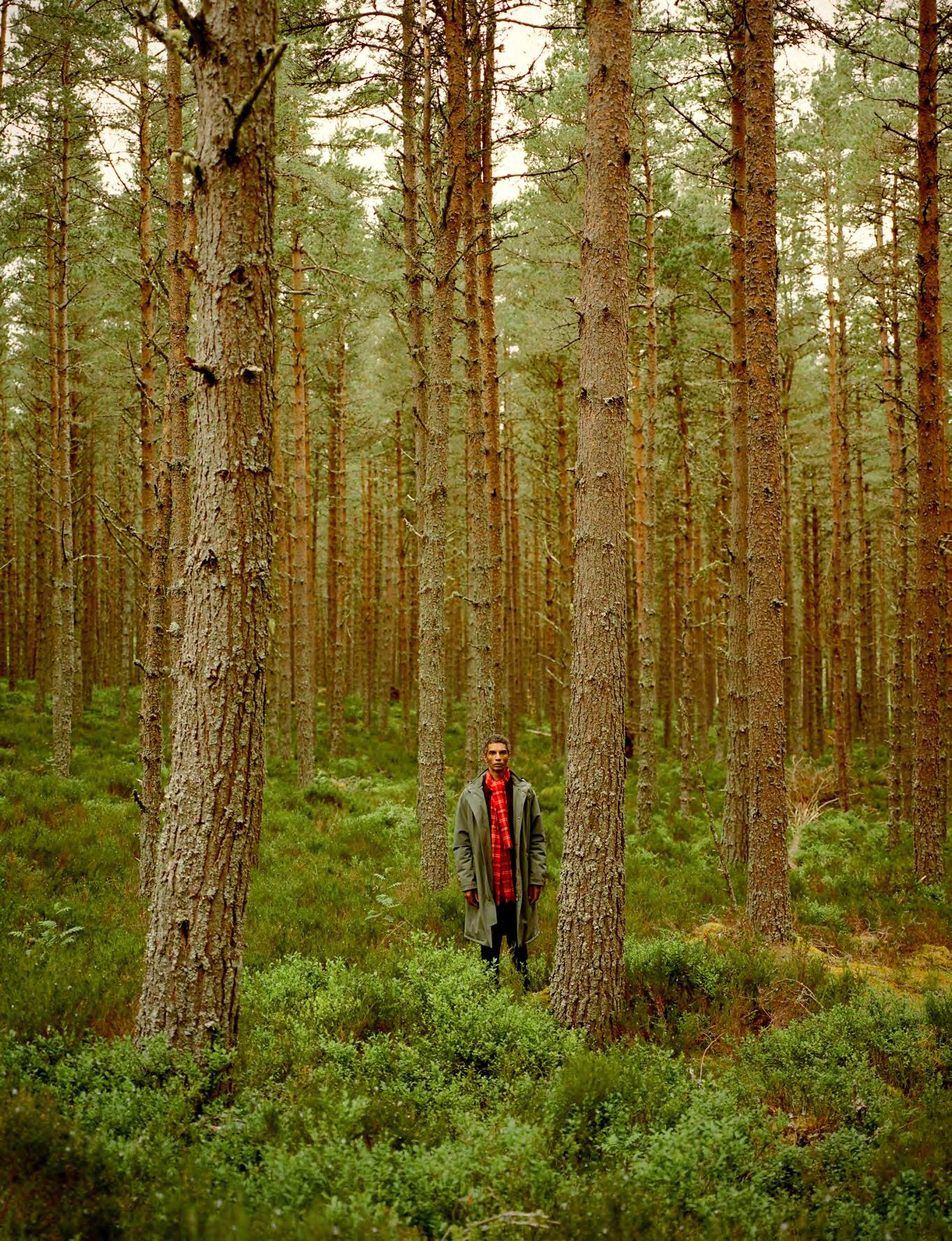
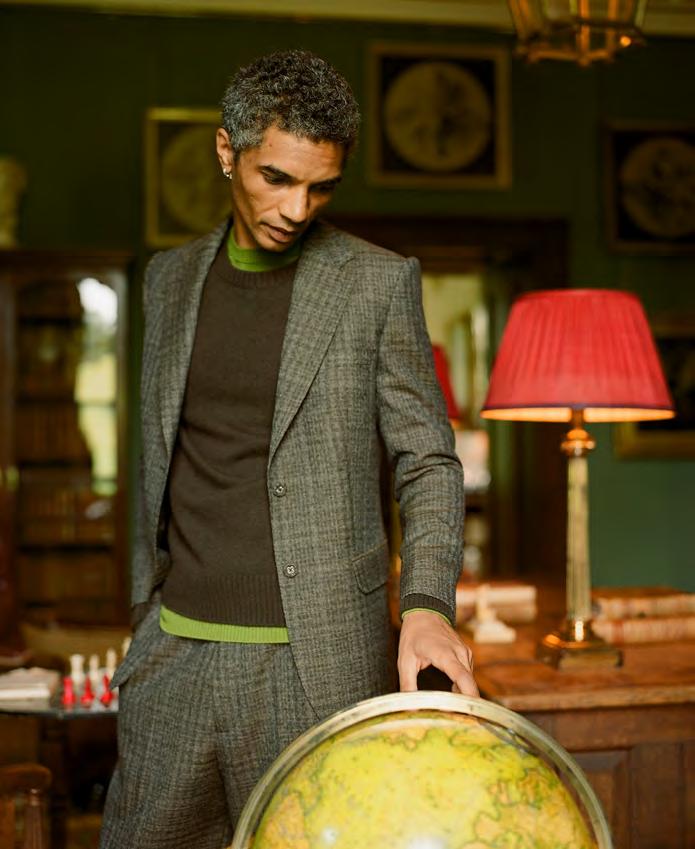
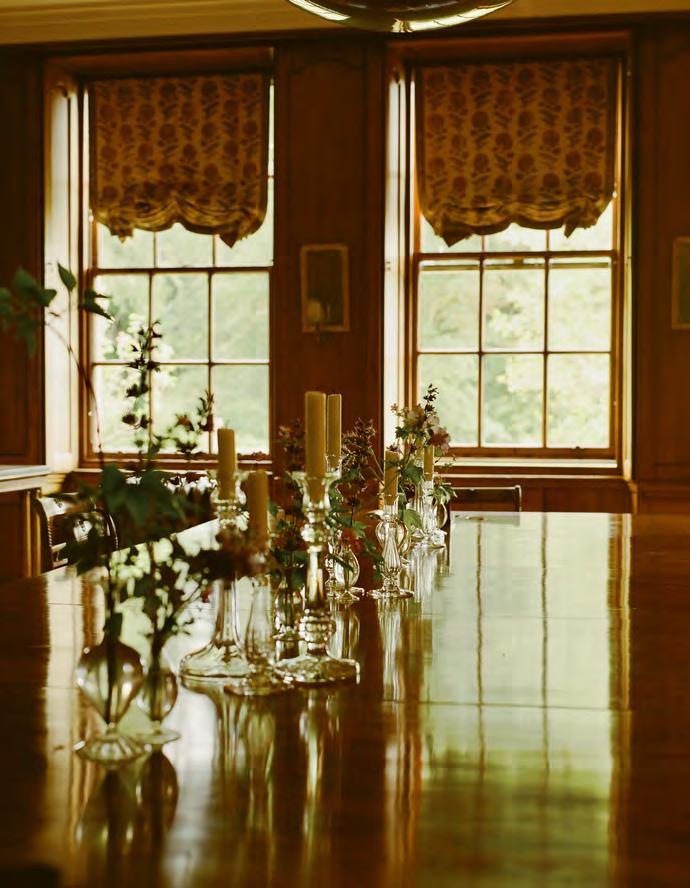
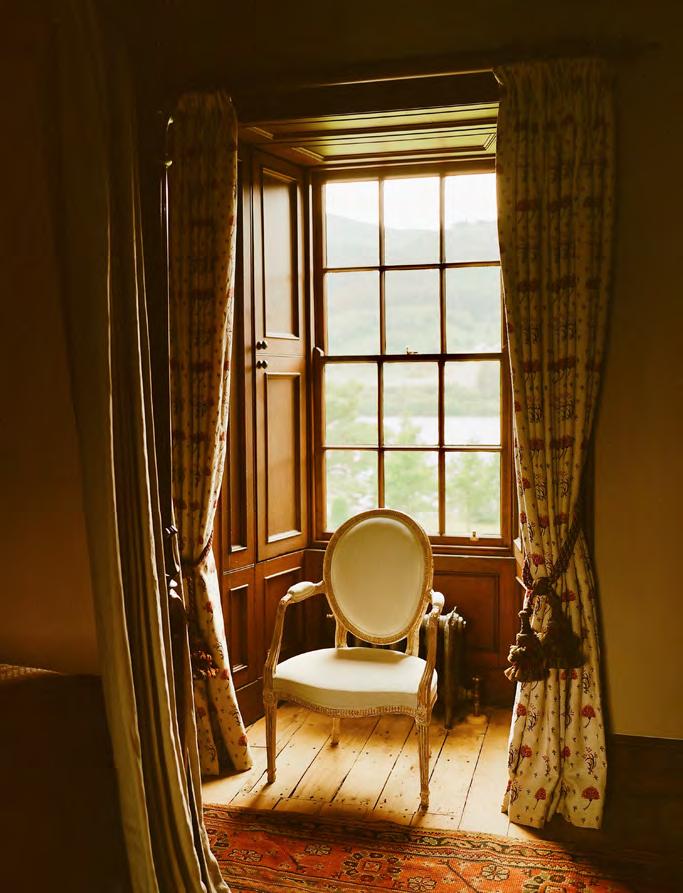
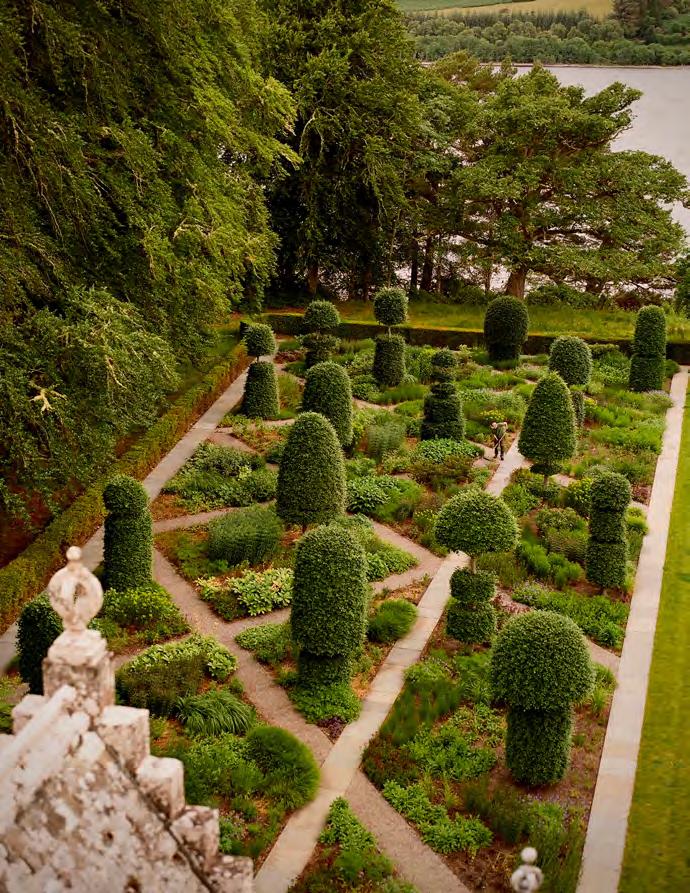
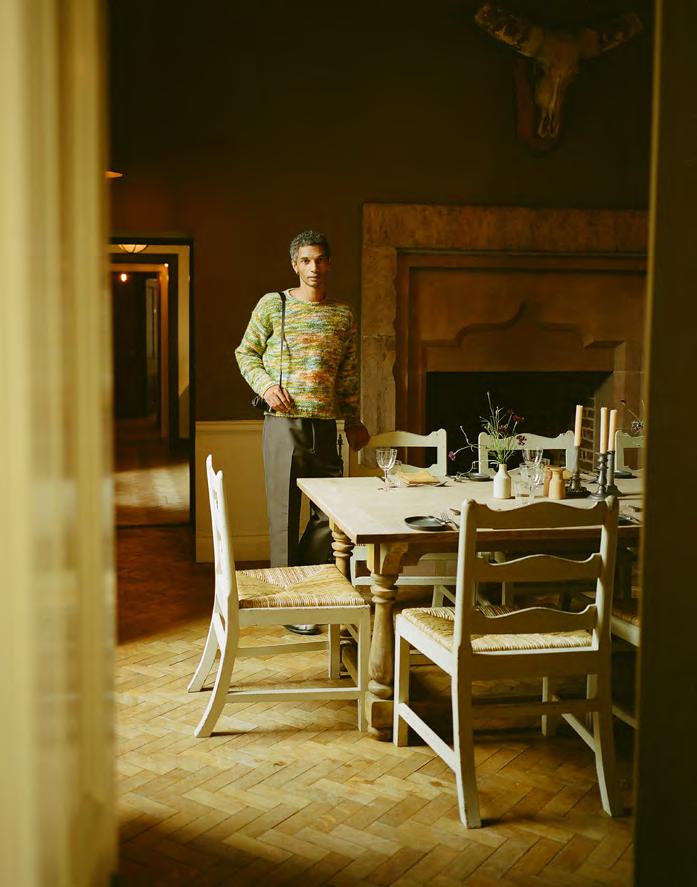
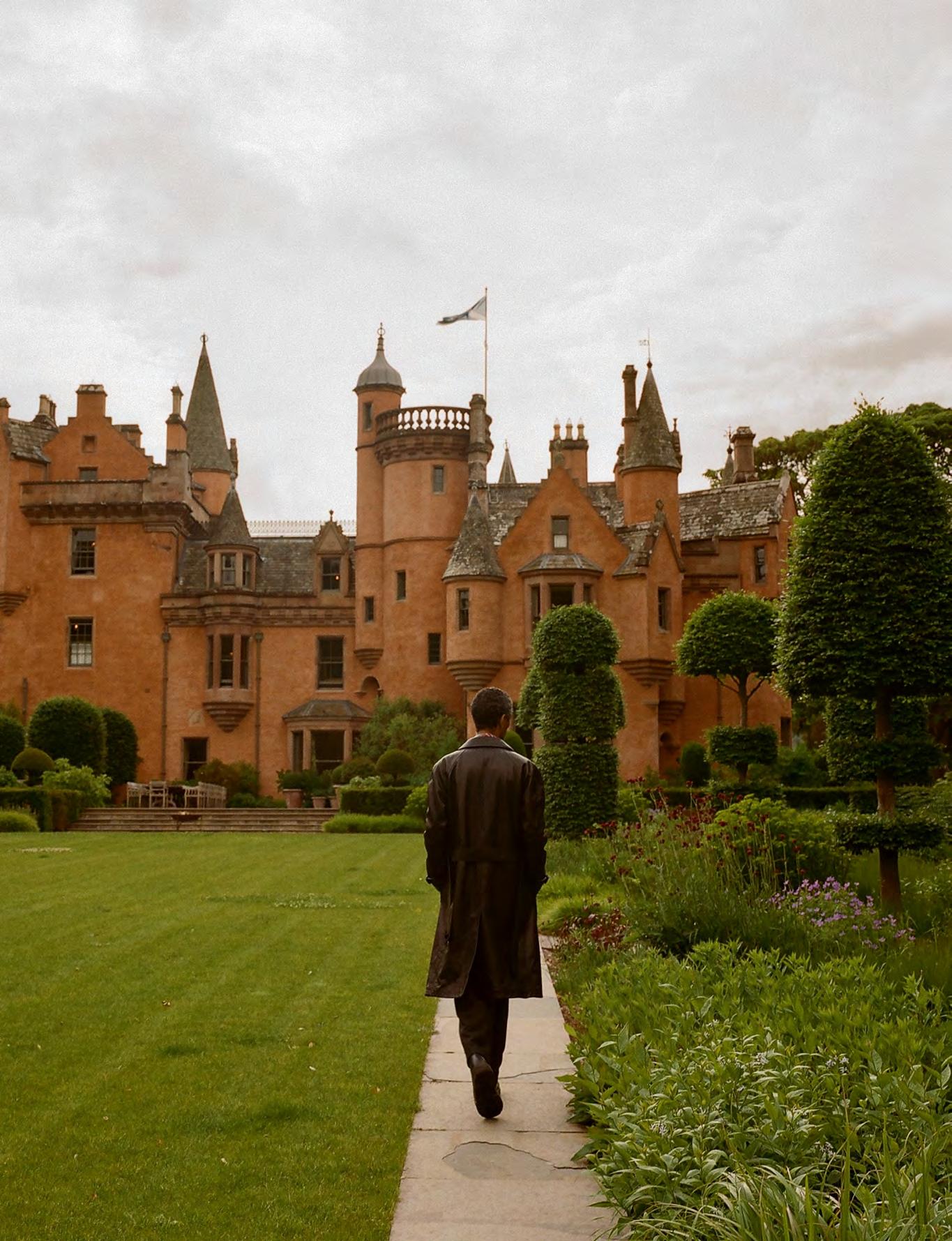
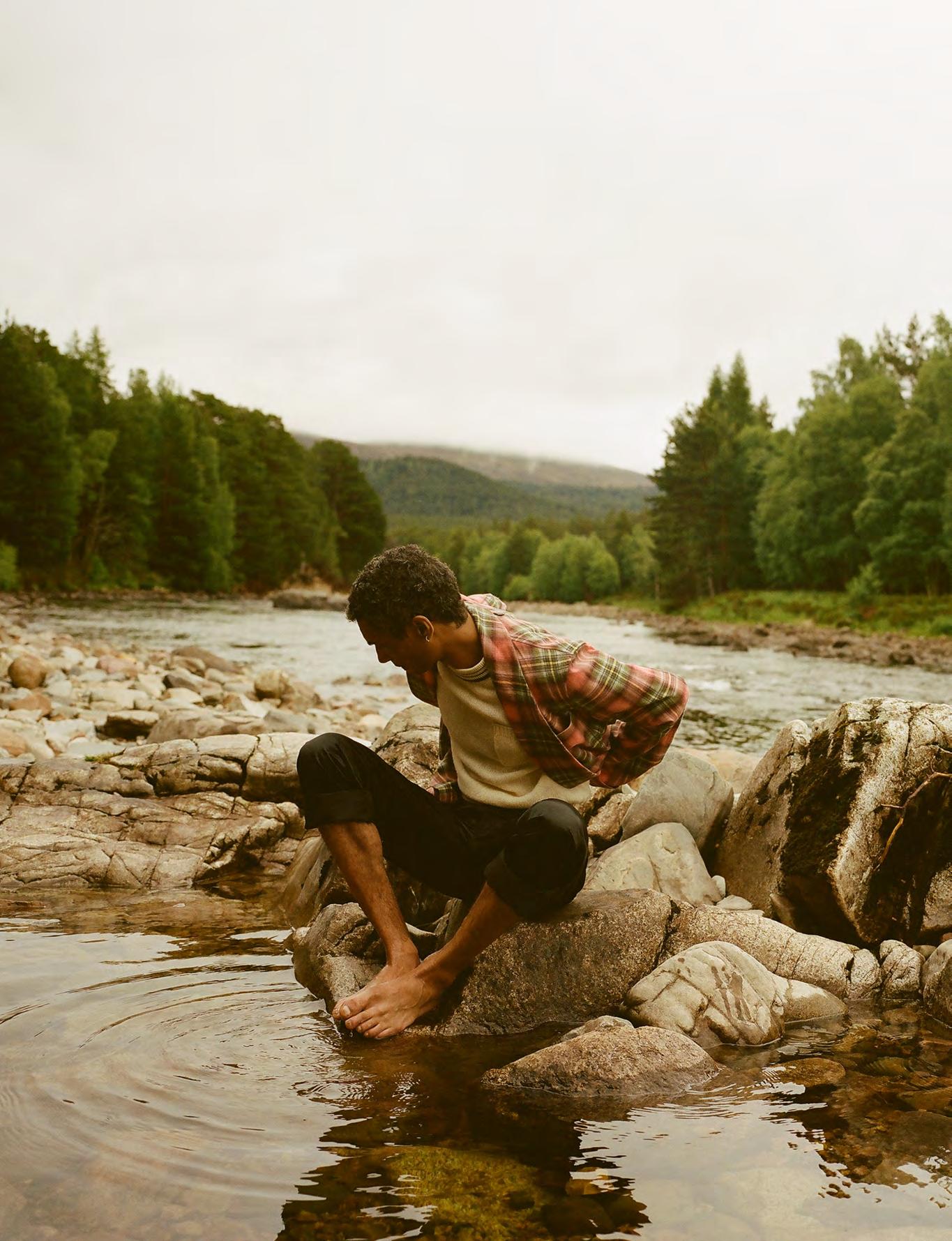
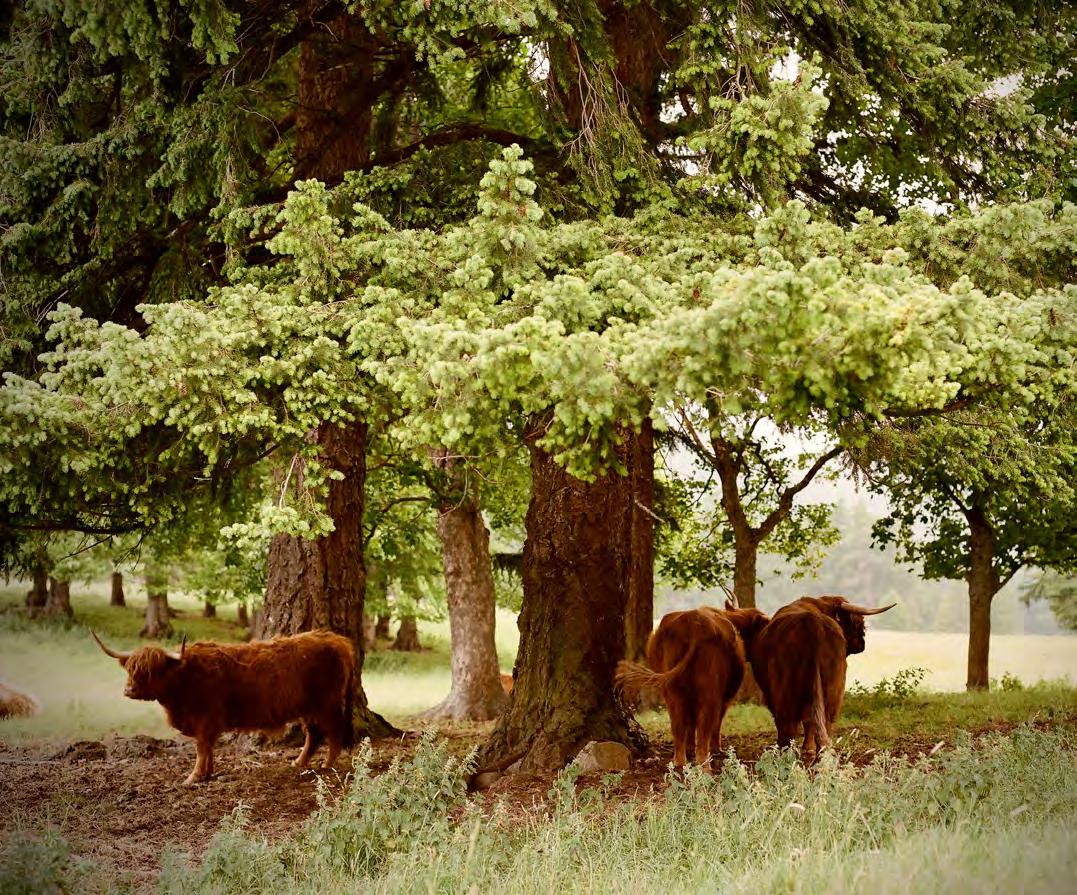
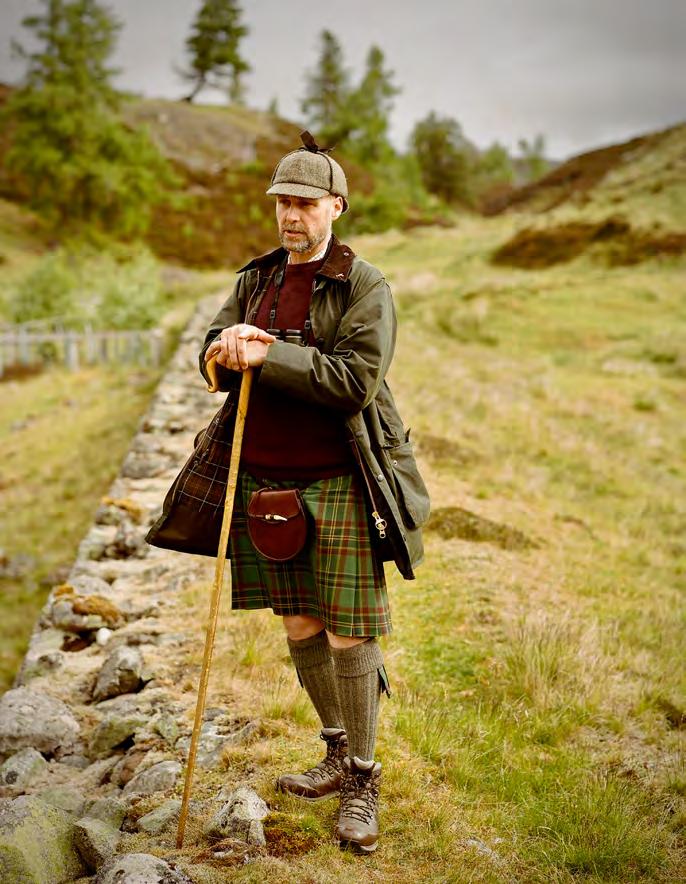
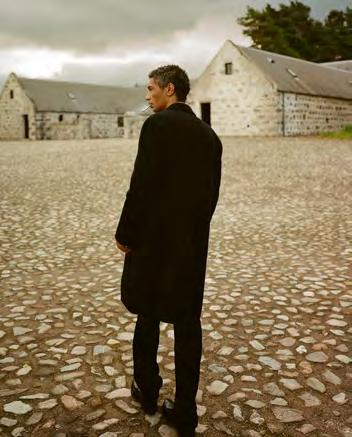
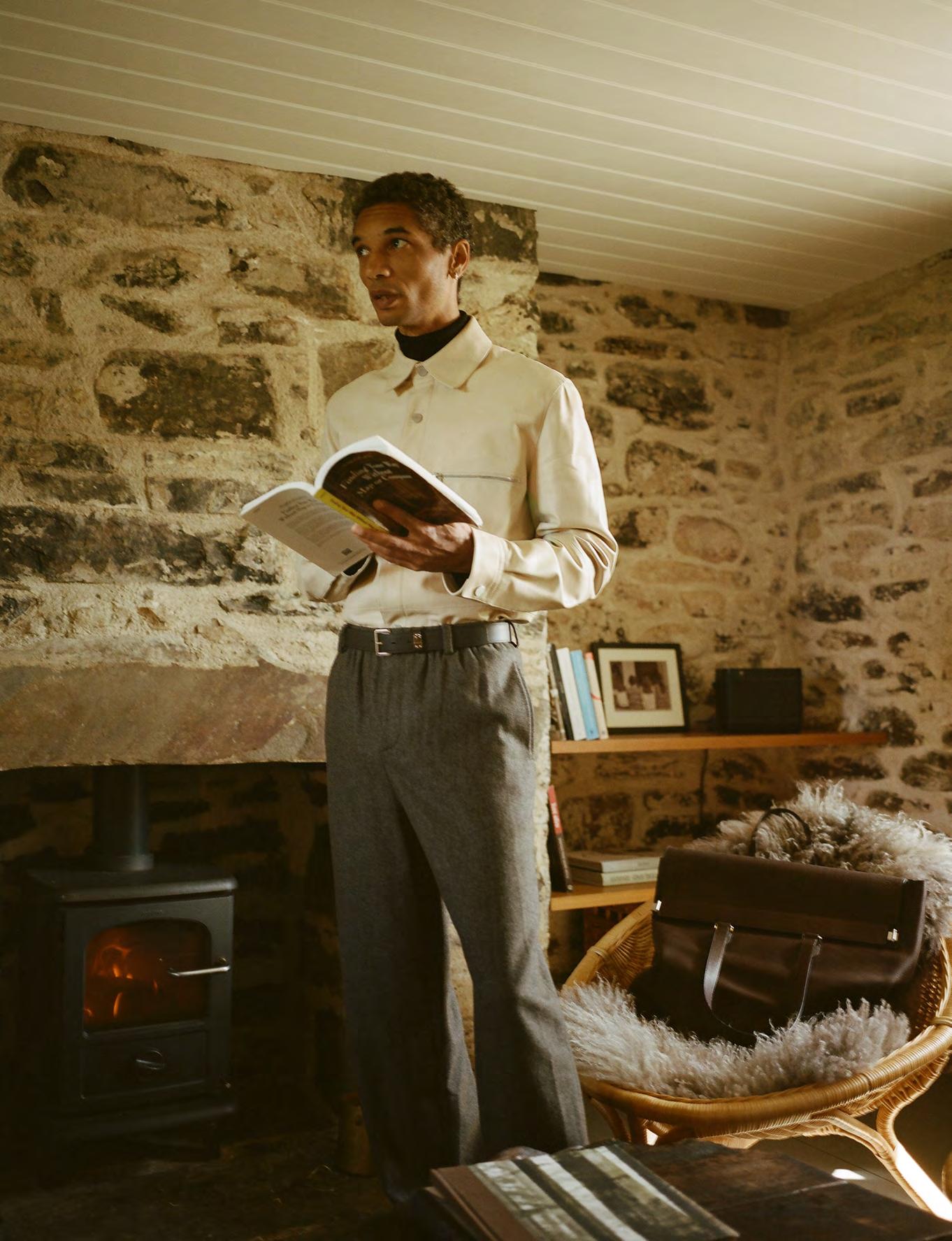
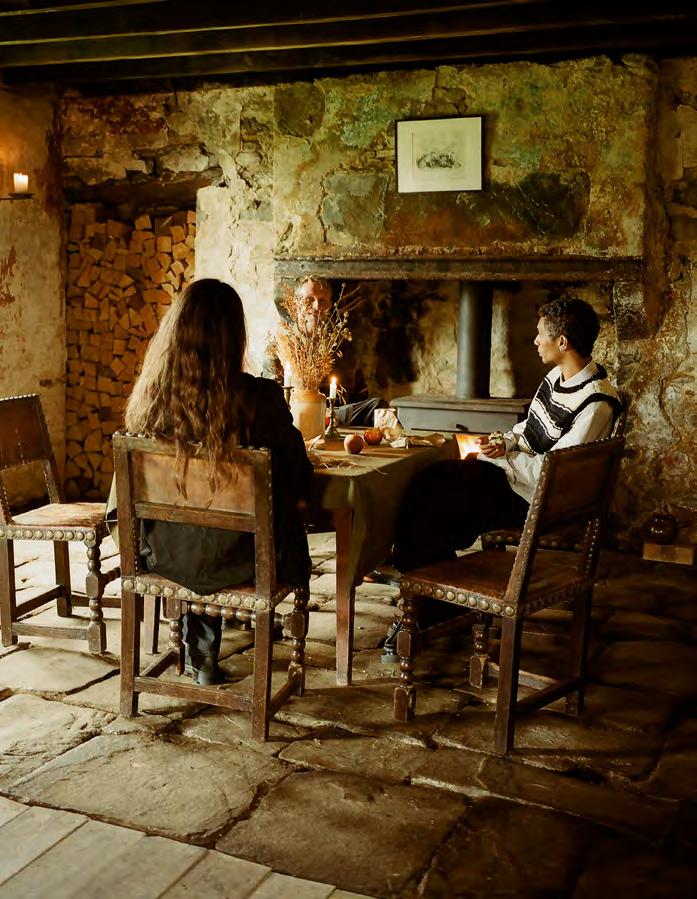
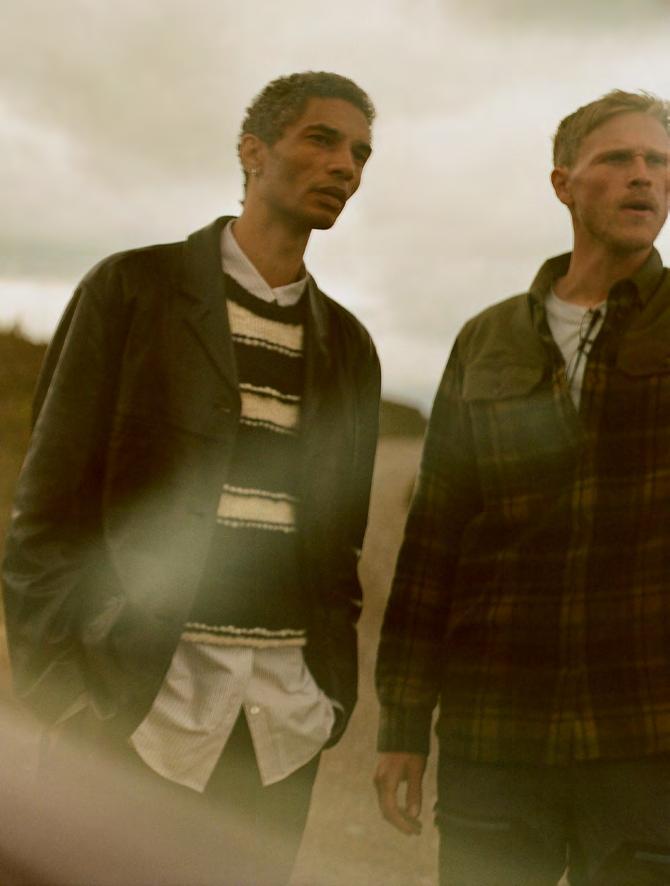
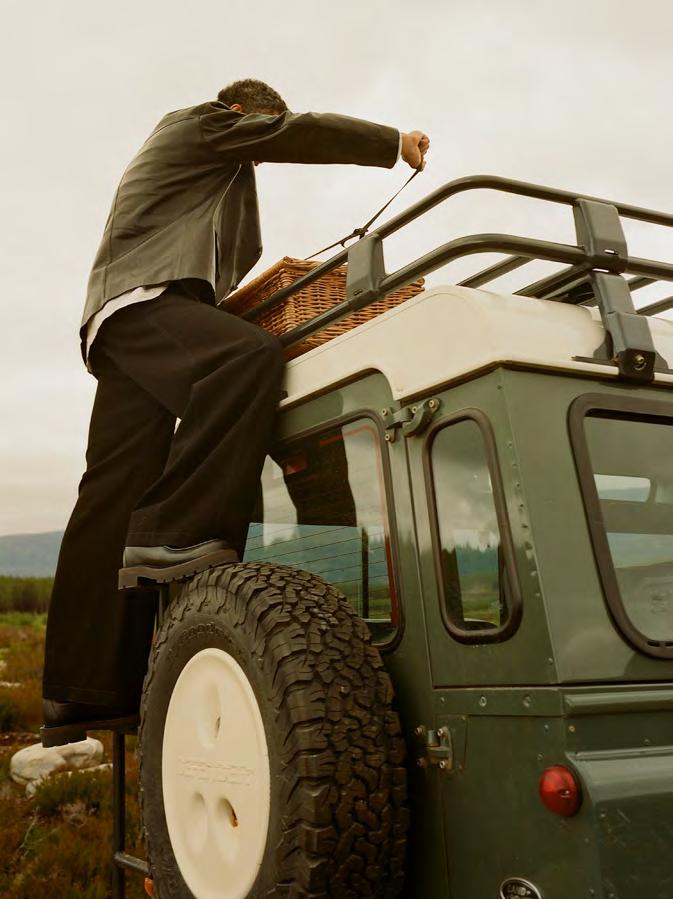
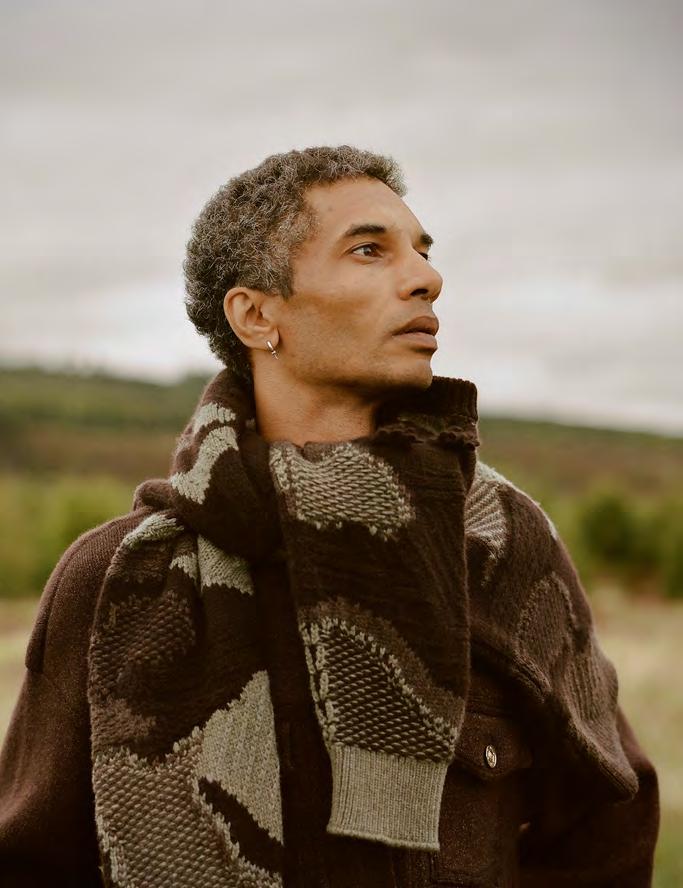
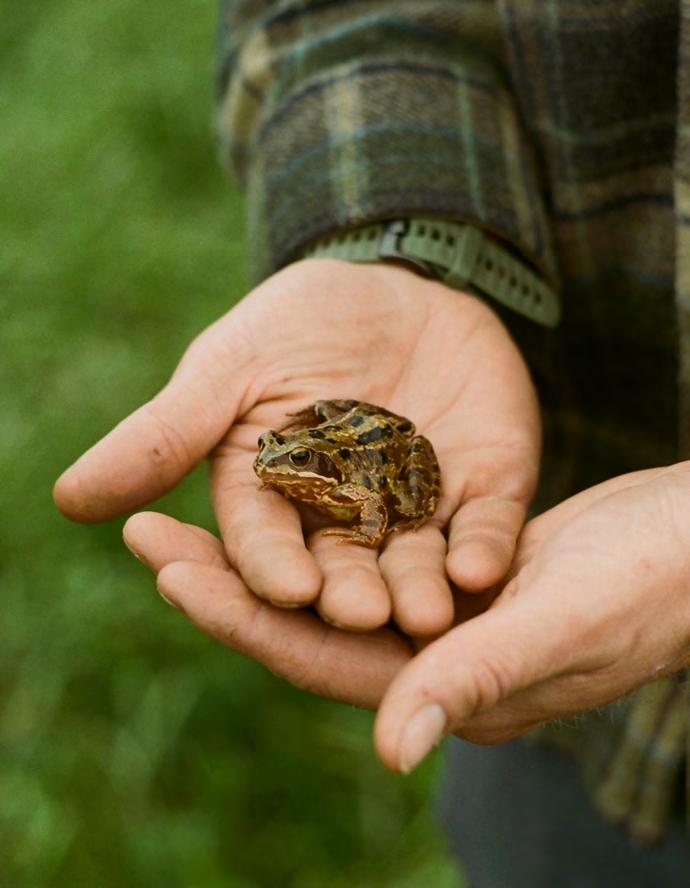
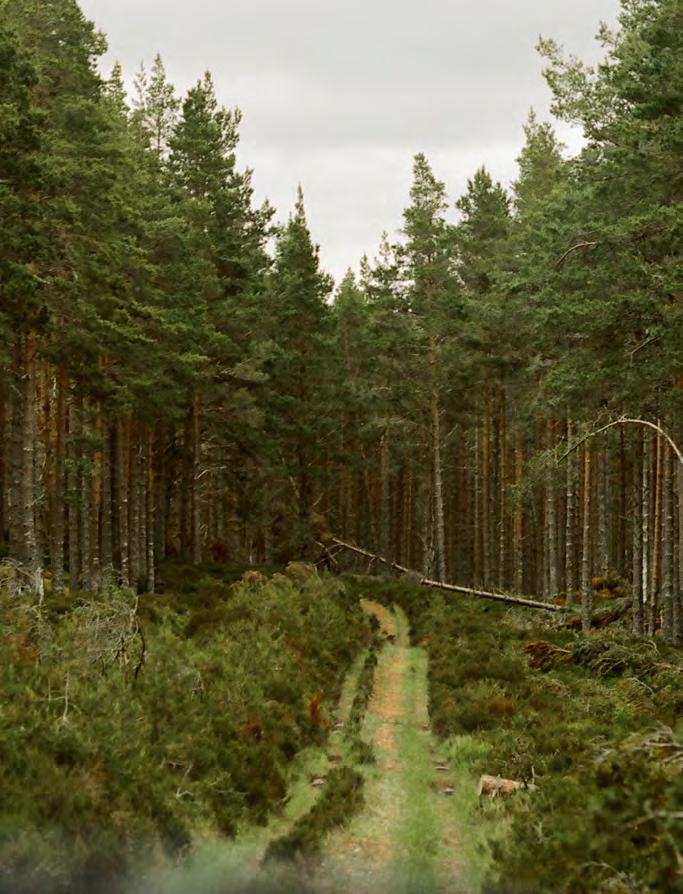
This issue’s cover story was shot in Scotland, on the grounds of several properties operated by Wildland, a rewilding project with a lofty 200-year vision of landscape conservation of the Highlands. That includes projects as diverse as collaborating on reintroducing beavers to the Cairngorms, producing the first wild-born kits in Scotland in 400 years; and restoring The Dores Inn, a beloved local pub in Loch Ness. About 5,700 miles away in the small village of Eretsha, Botswana, I visited a local nonprofit called Life With Elephants, which works with farmers to reduce conflicts with herds, protecting the animals, the people, and precious crops. Standing outside the organization’s modest headquarters, with its corrugated steel roof, set along a road of ocher dirt, I stared at a sign that listed one of the sponsors of the organization as USAID — now a former sponsor, as the agency shuttered in July. It was a reminder of how meaningful our choices can be and how easily the balance of their impacts can be shifted. There is no corner of this planet so remote that we are not connected to one another. That is always true, but it’s a particularly inescapable reality when you stand in the wild places.
–Skye
Parrott, editor-in-chief
Land of Myth and Legend: Wander the forests and Highlands of Scotland, where woodland creatures and spirits roam and sunbeams chase raindrops, where stones hold stories and bottles hold memories.
Human Nature: In the Scottish countryside, Wildland proposes a farsighted conservation and hospitality project aimed at healing the land and its inhabitants.
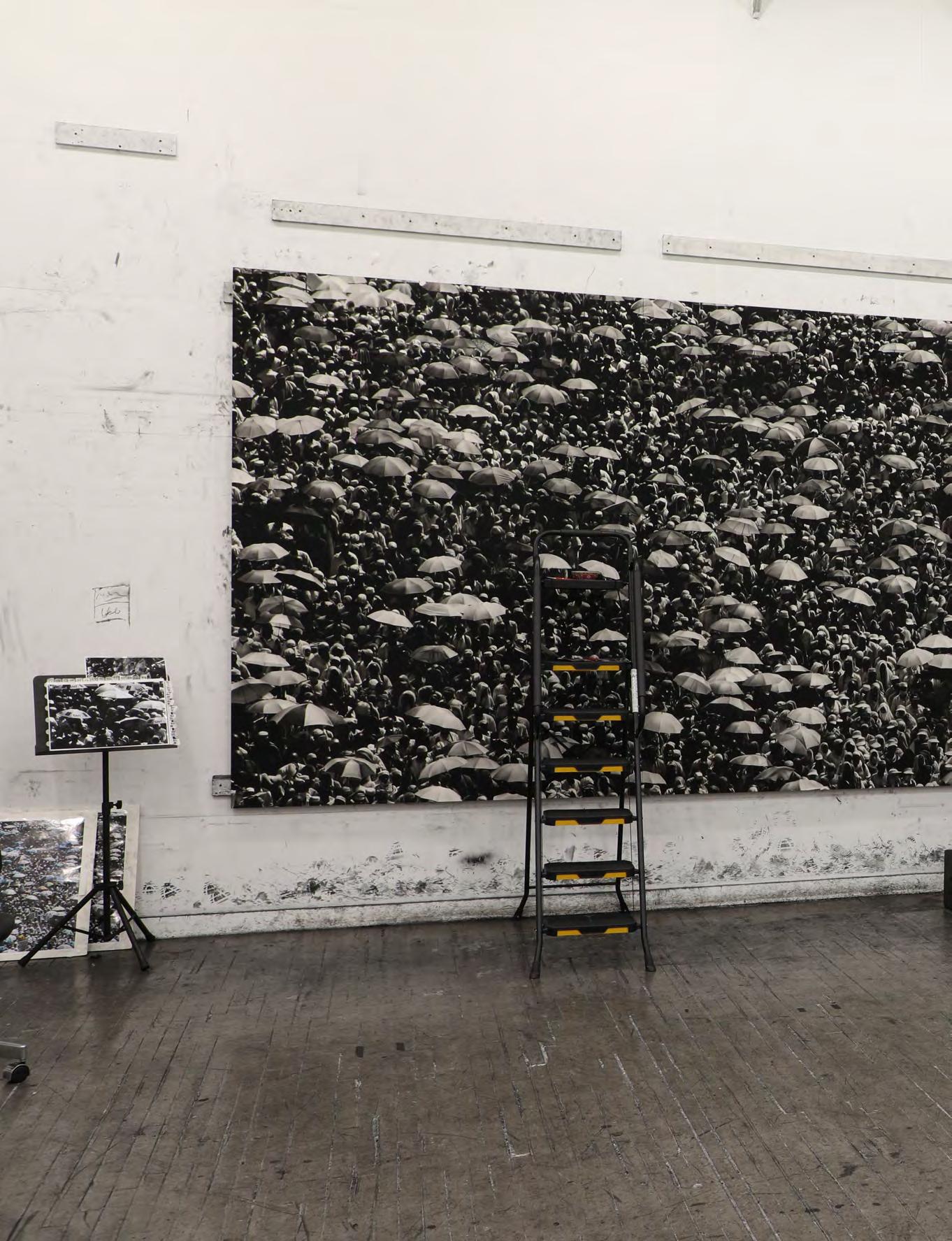
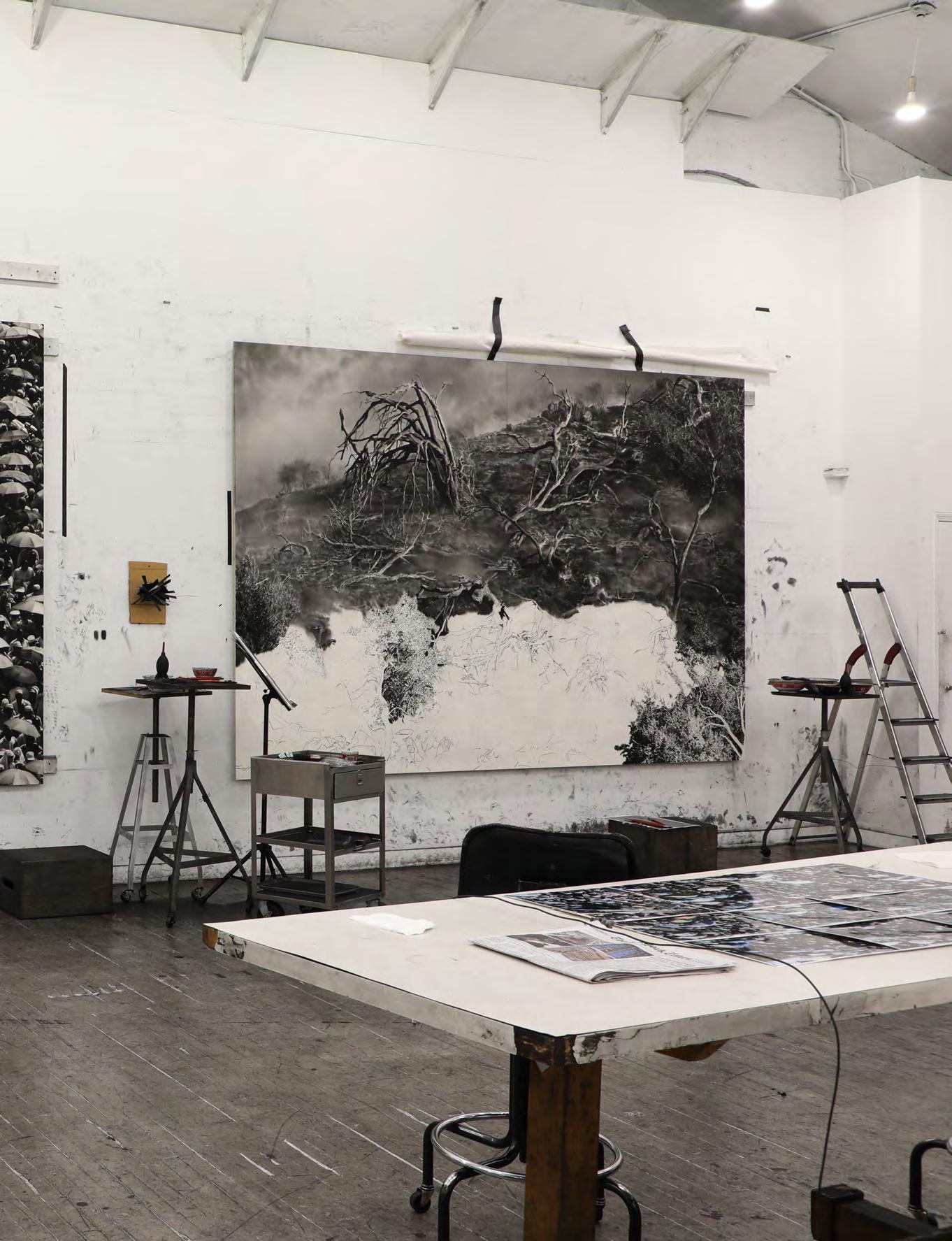
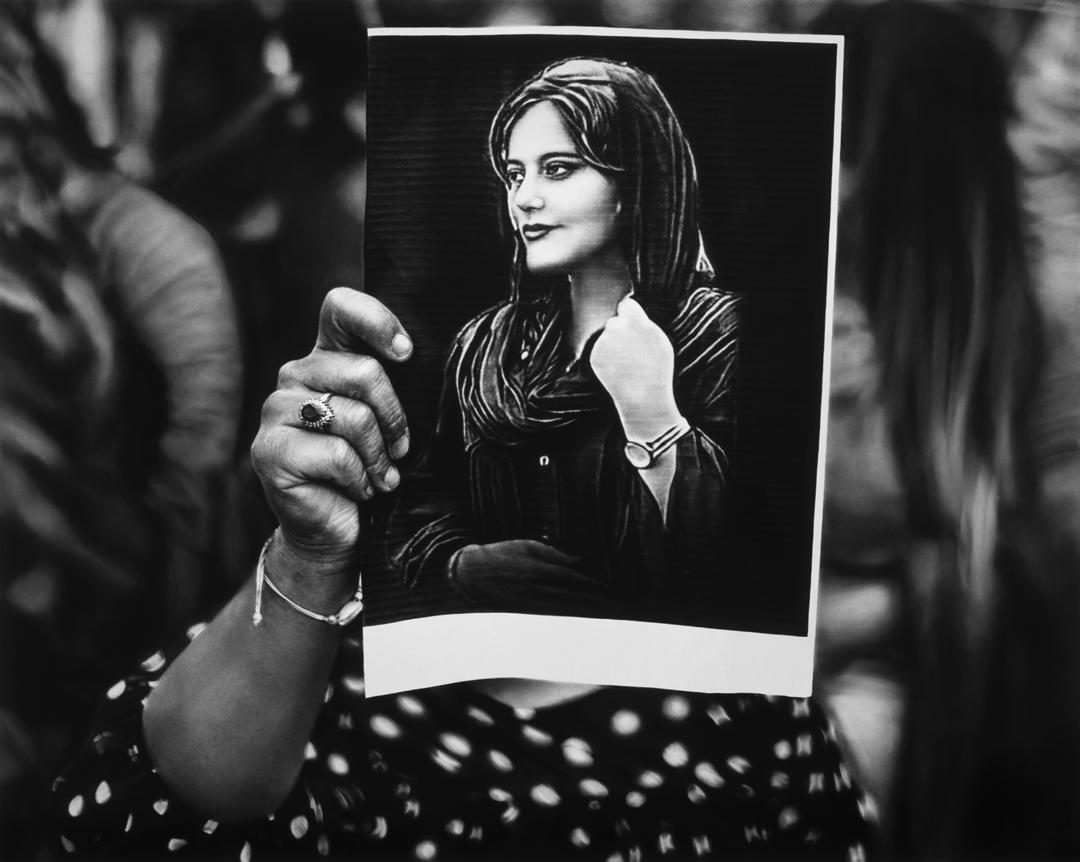
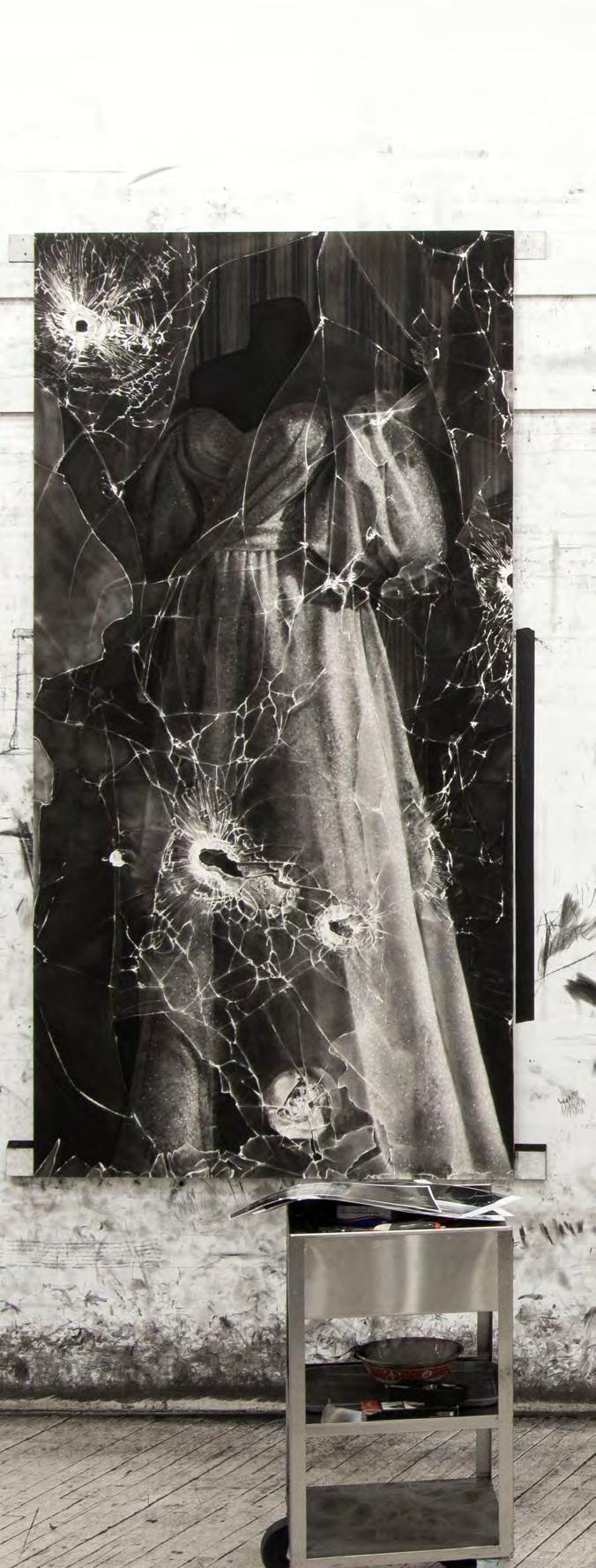
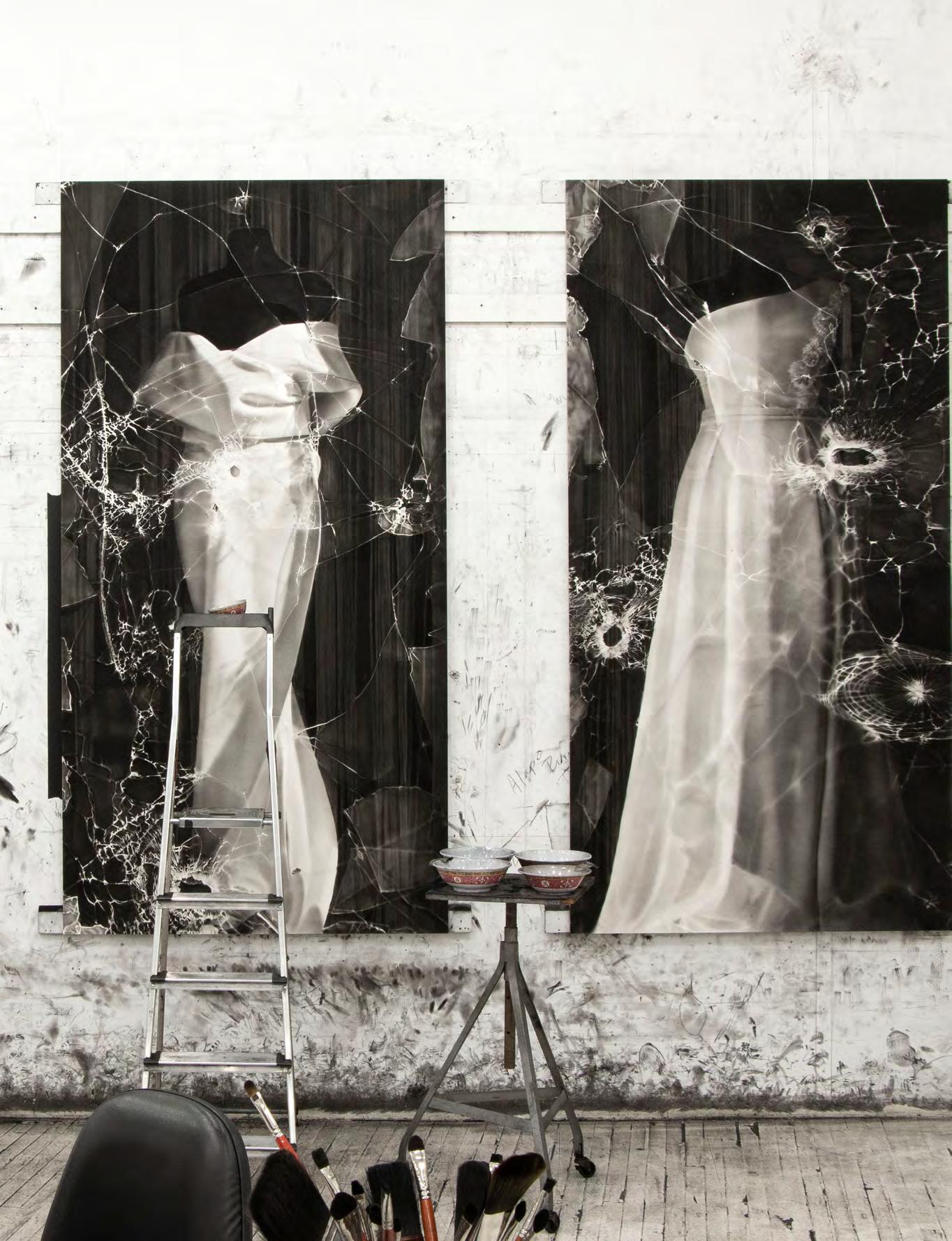
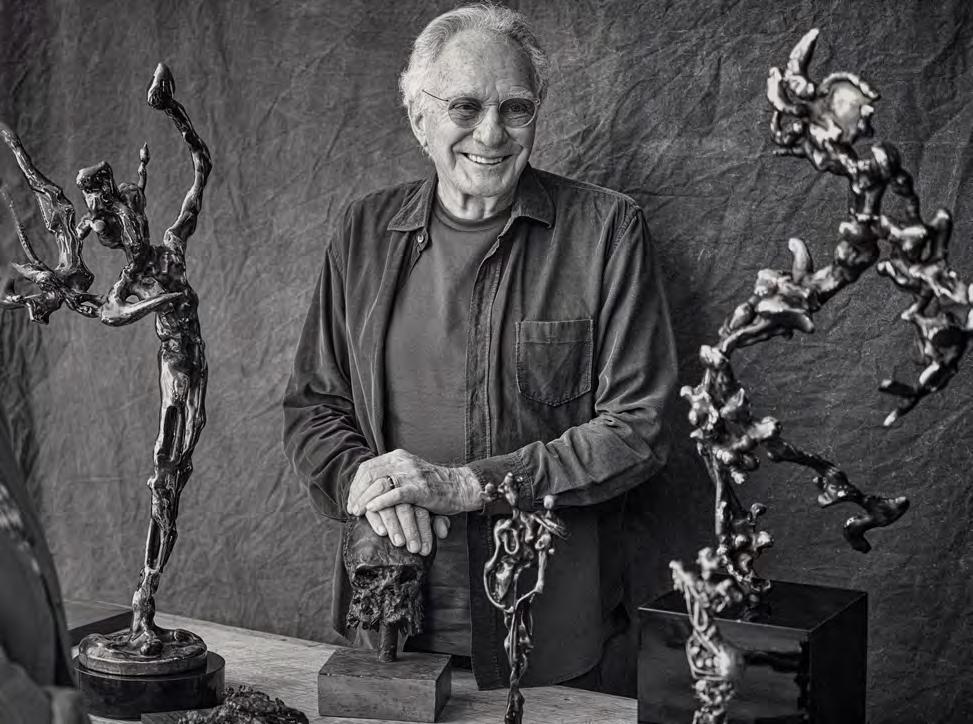
In Focus: Robert Longo is a legend in the art world — but his creative eye remains trained on the present.
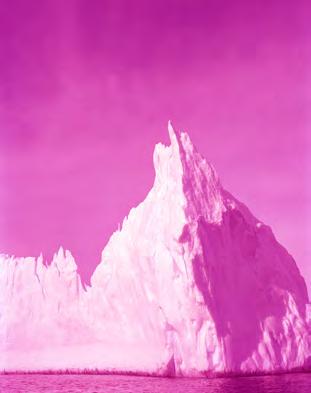
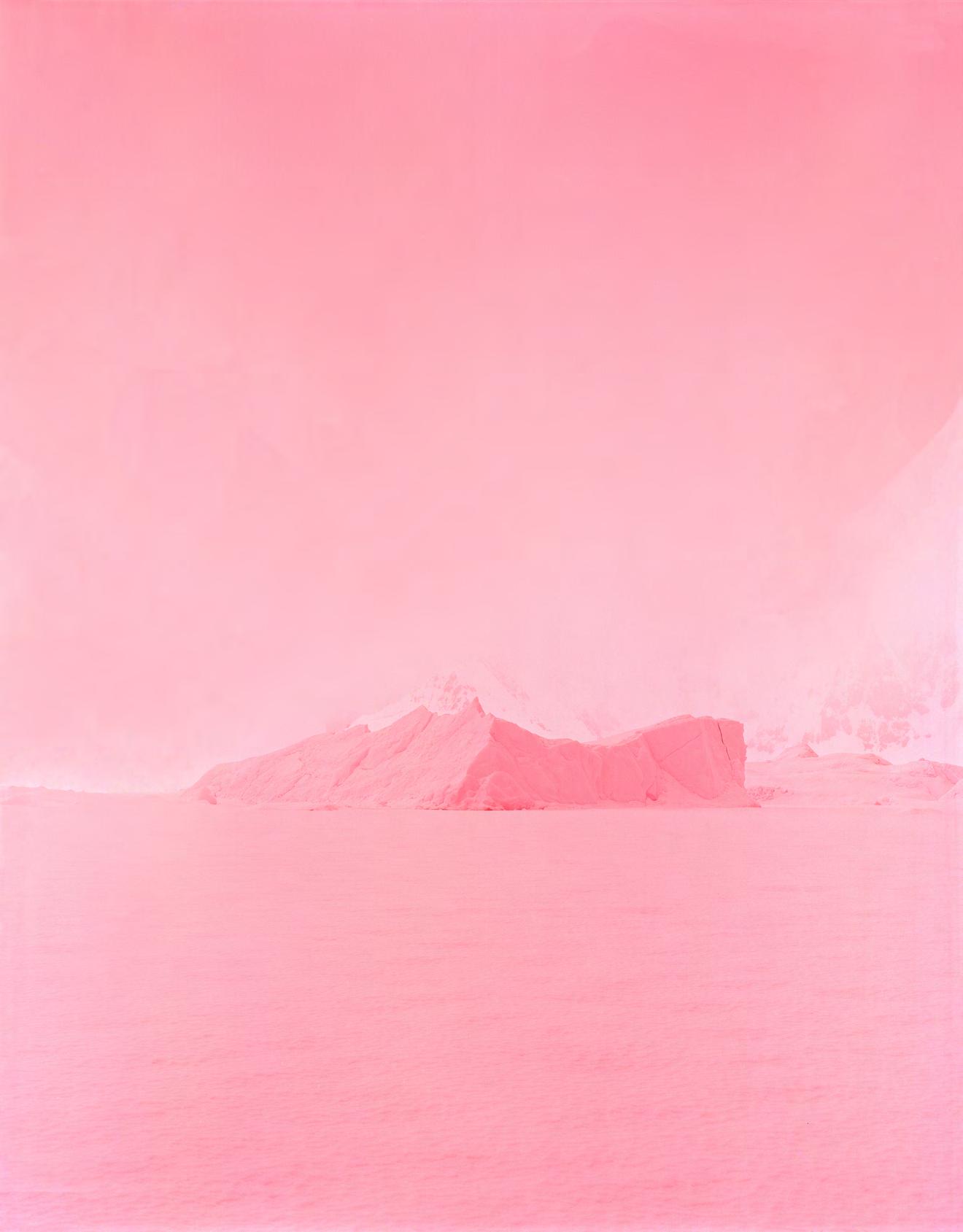
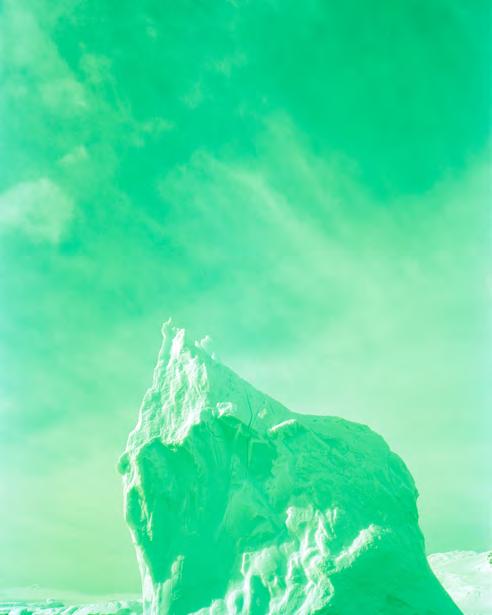
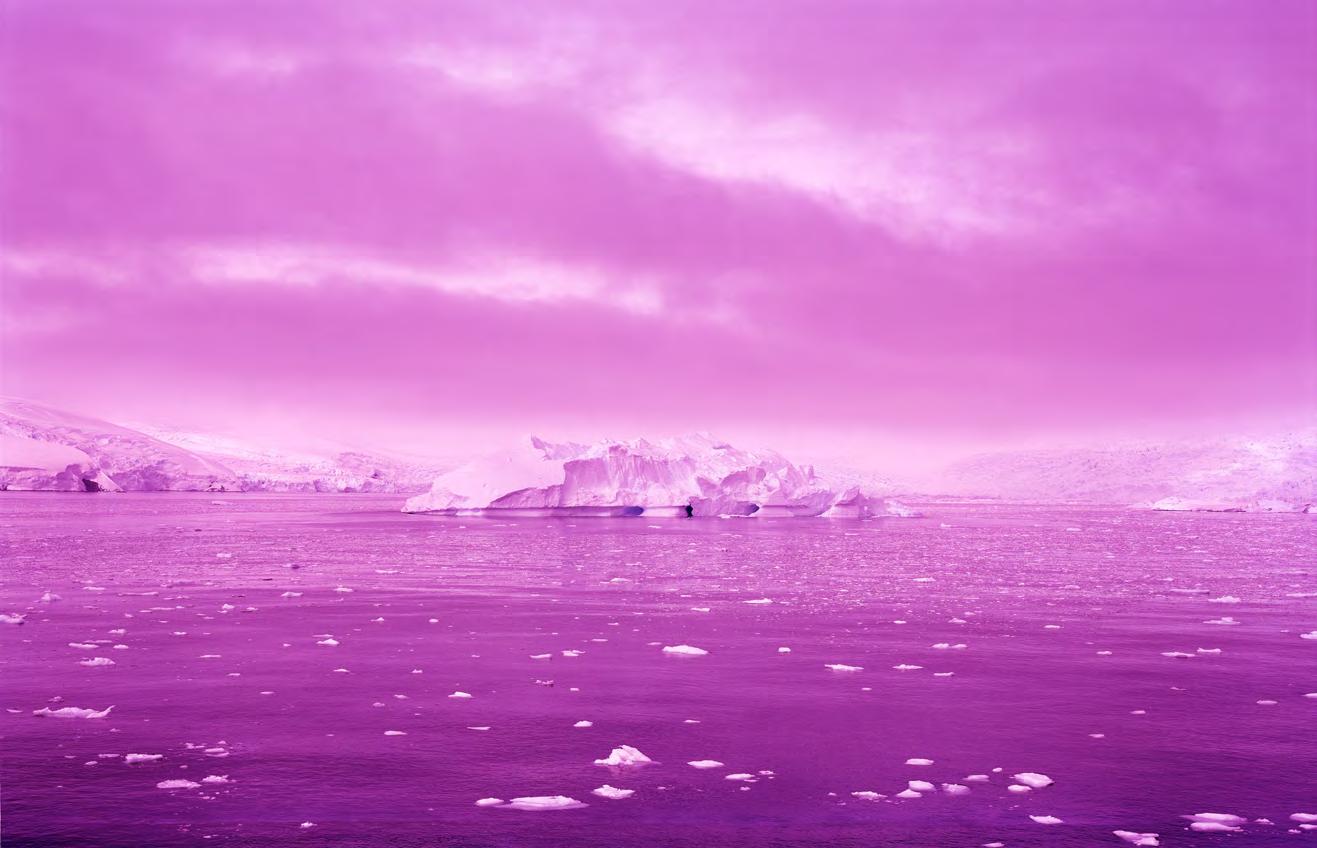
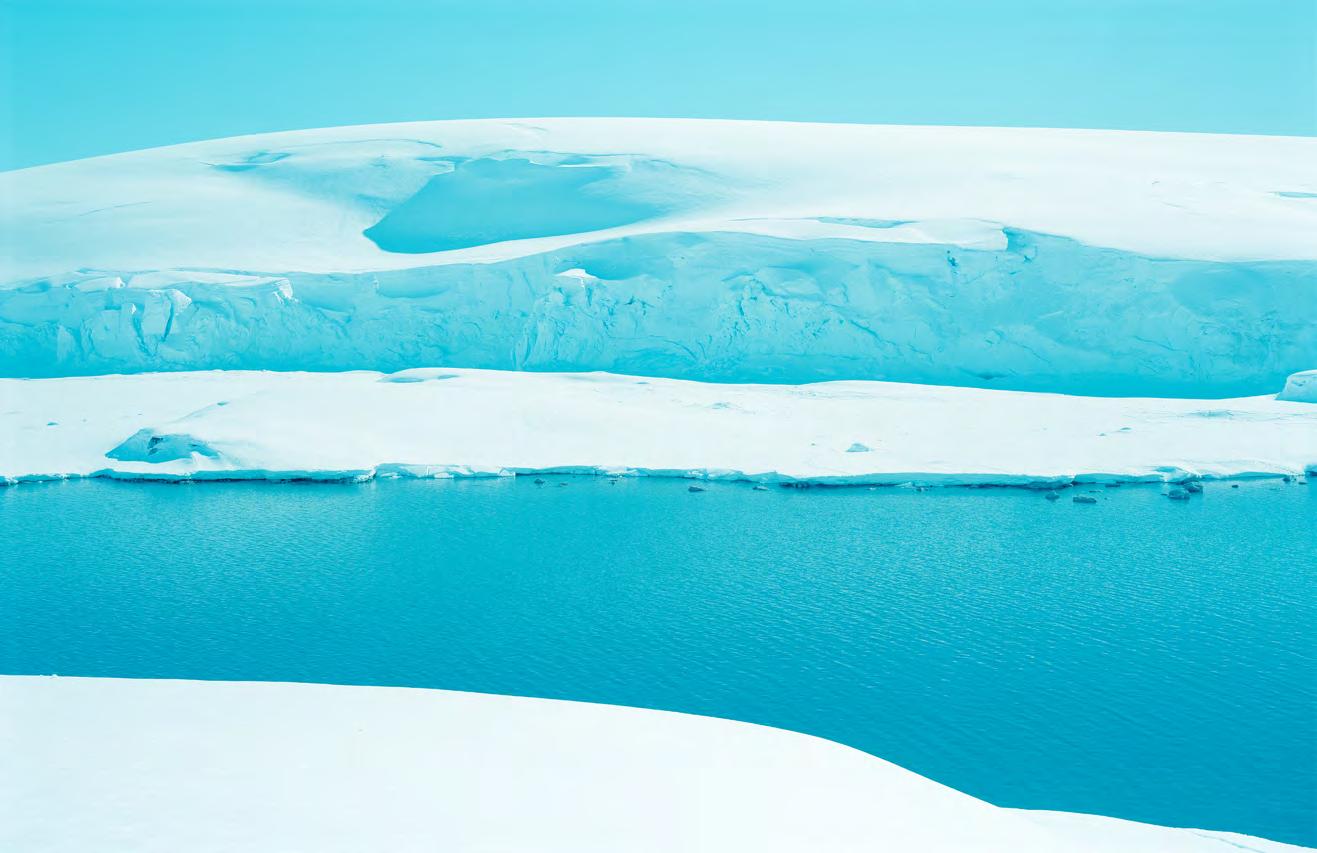
Shadow Worlds: An expedition to the northernmost reaches of the Antarctic Peninsula places the remote continent’s dramatic landscapes and trumpeting penguins within reach, almost.
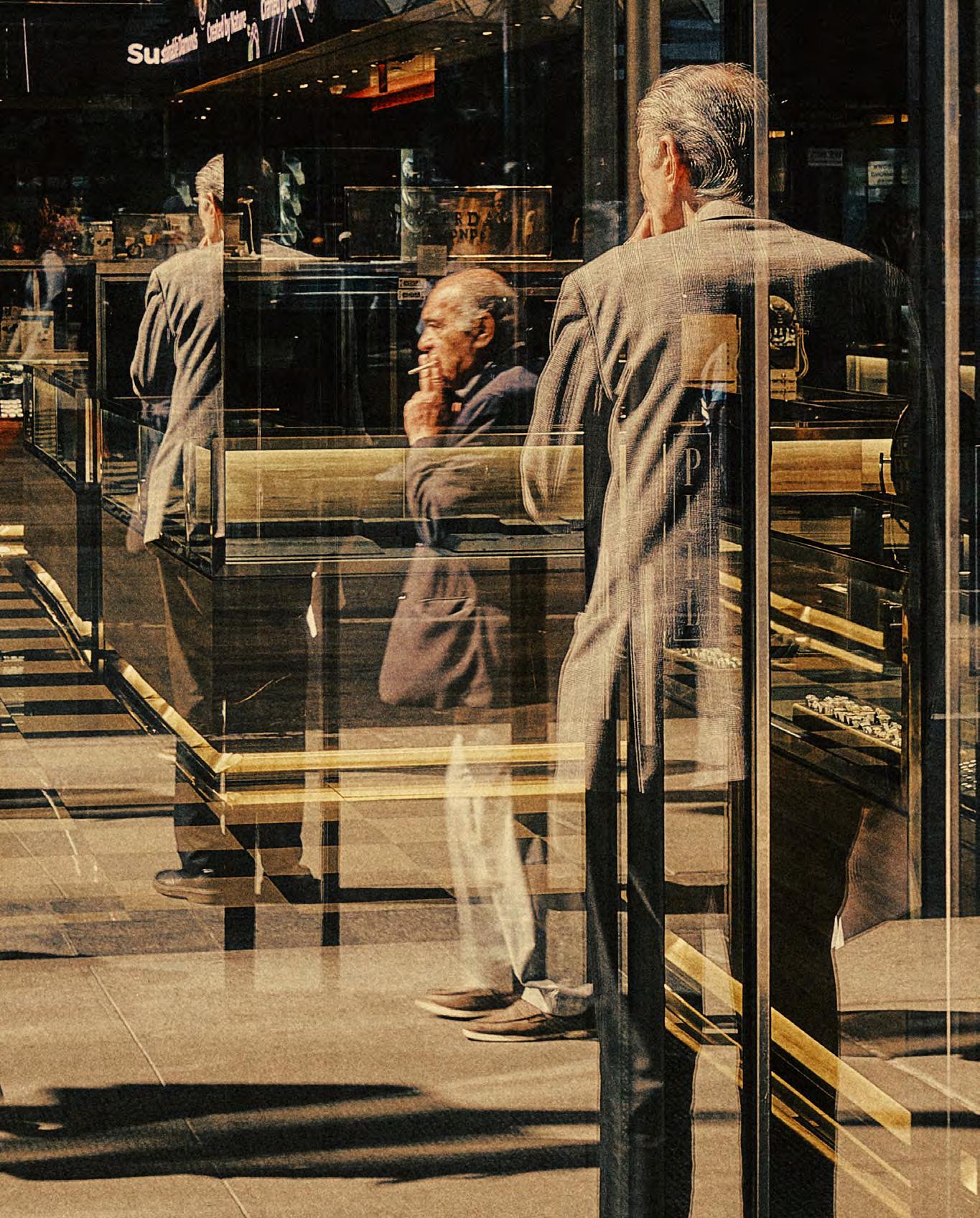
The Grand Illusion: Photographer Aleksandr Babarikin’s work evokes a world more stratified than meets the eye.
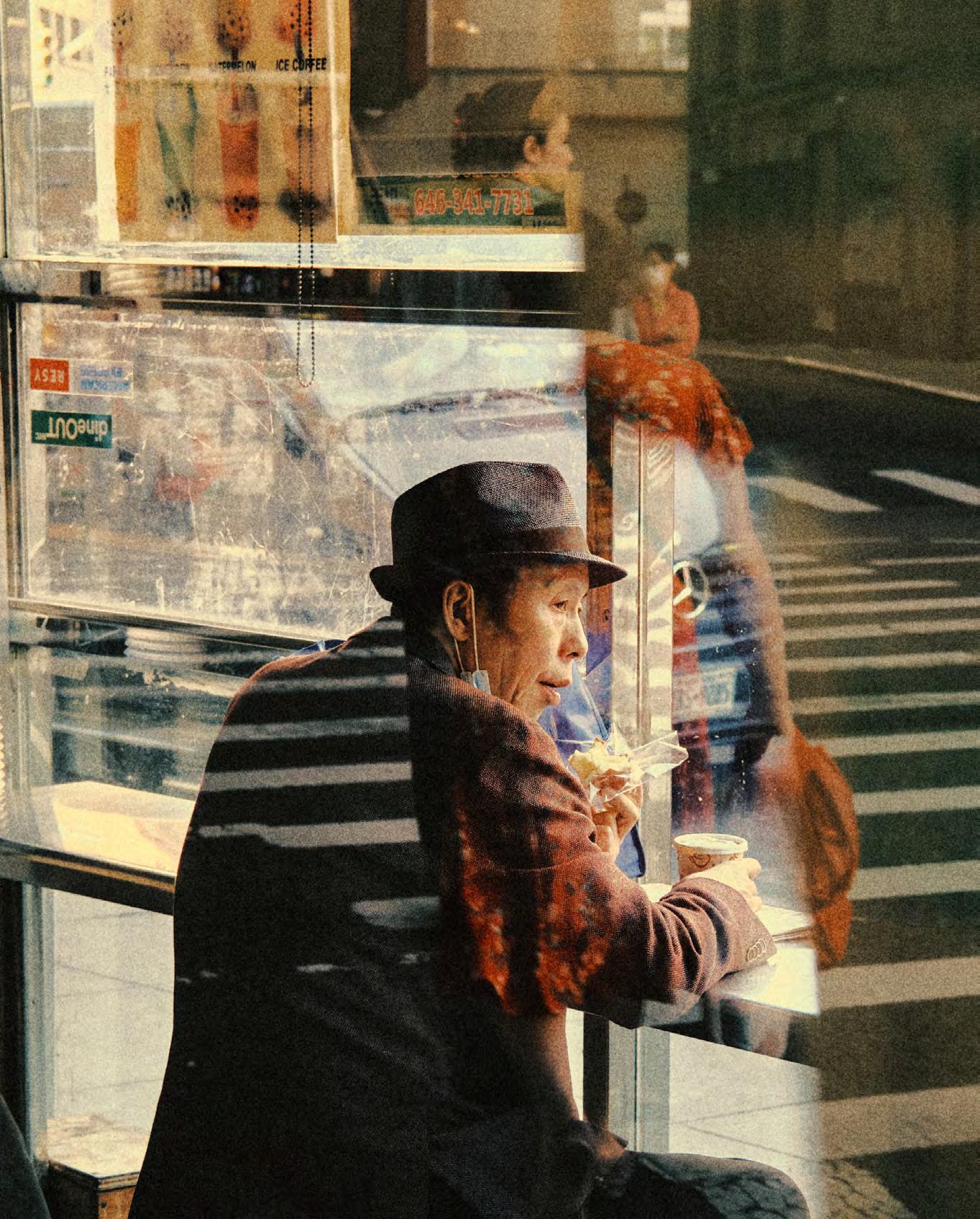
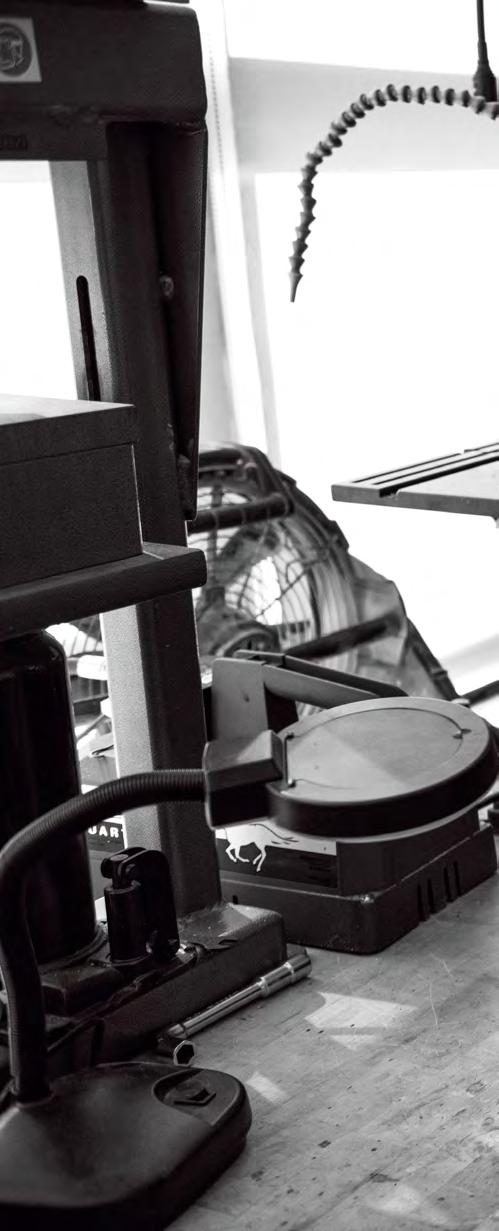
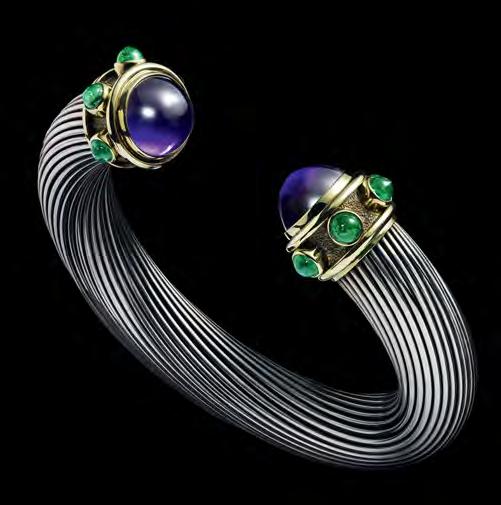
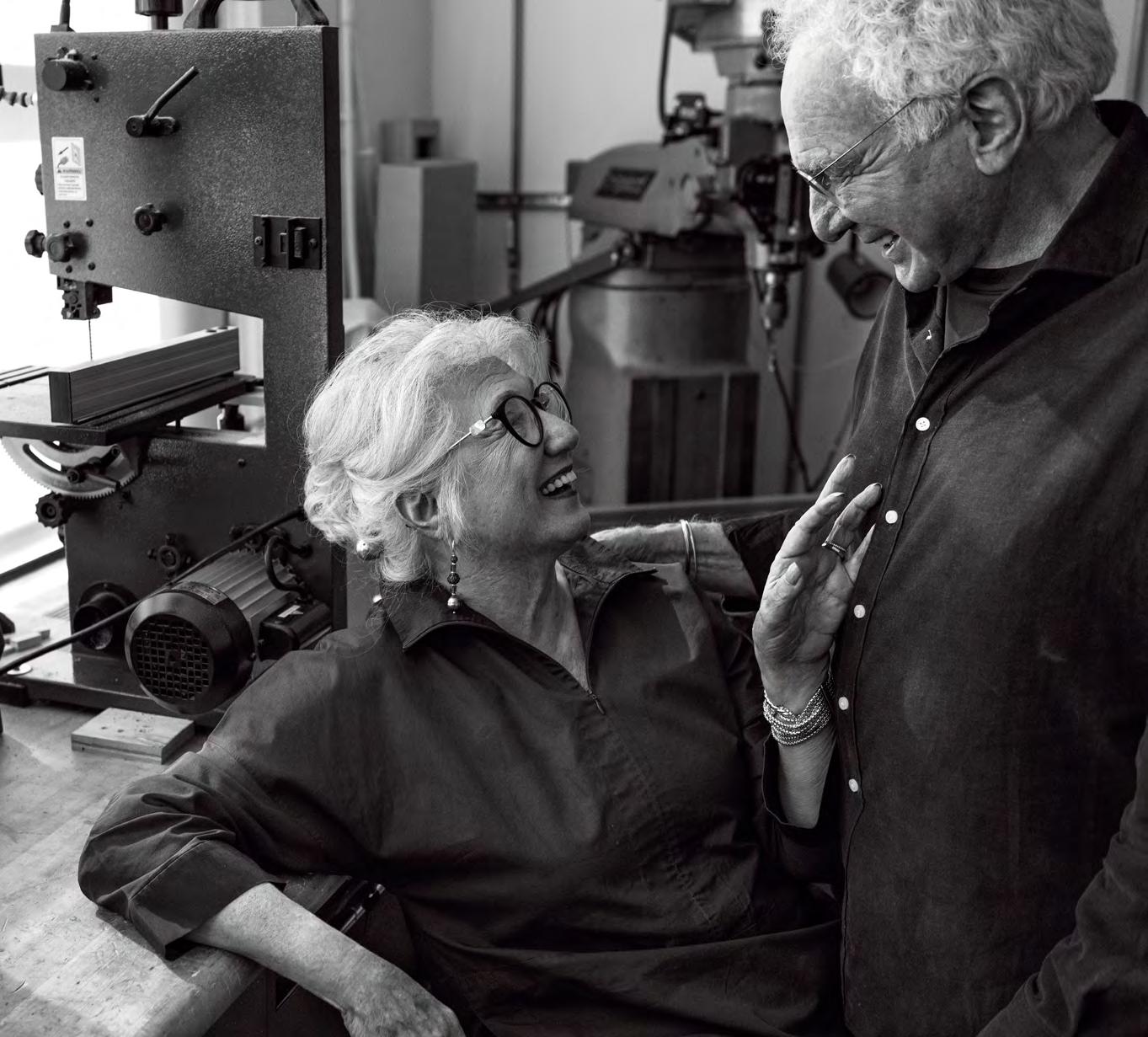
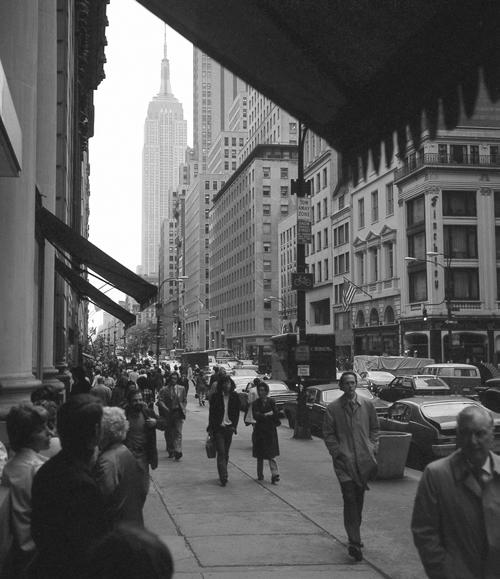
Talkin’ New York: David Yurman recalls formative places in the city that shaped him.
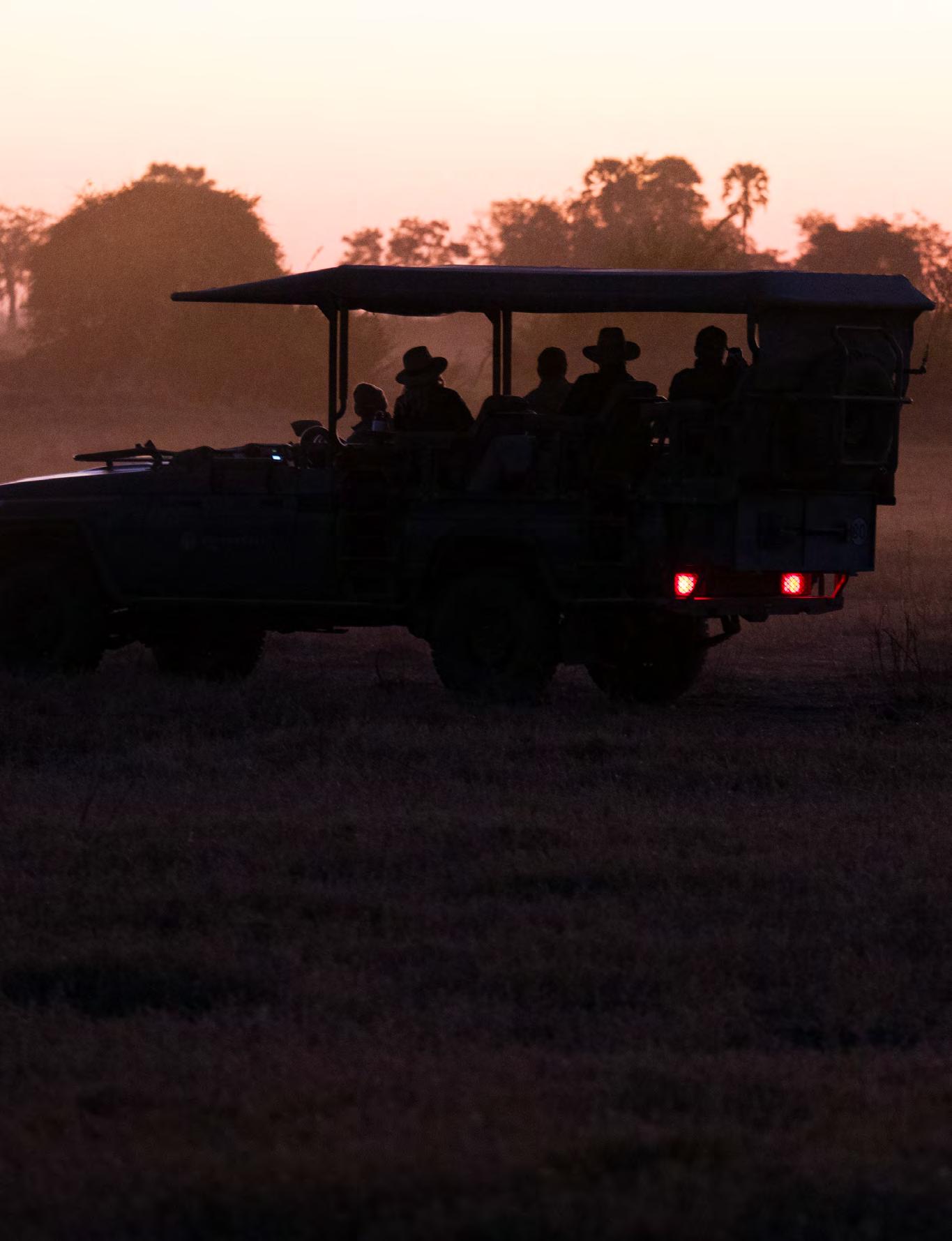
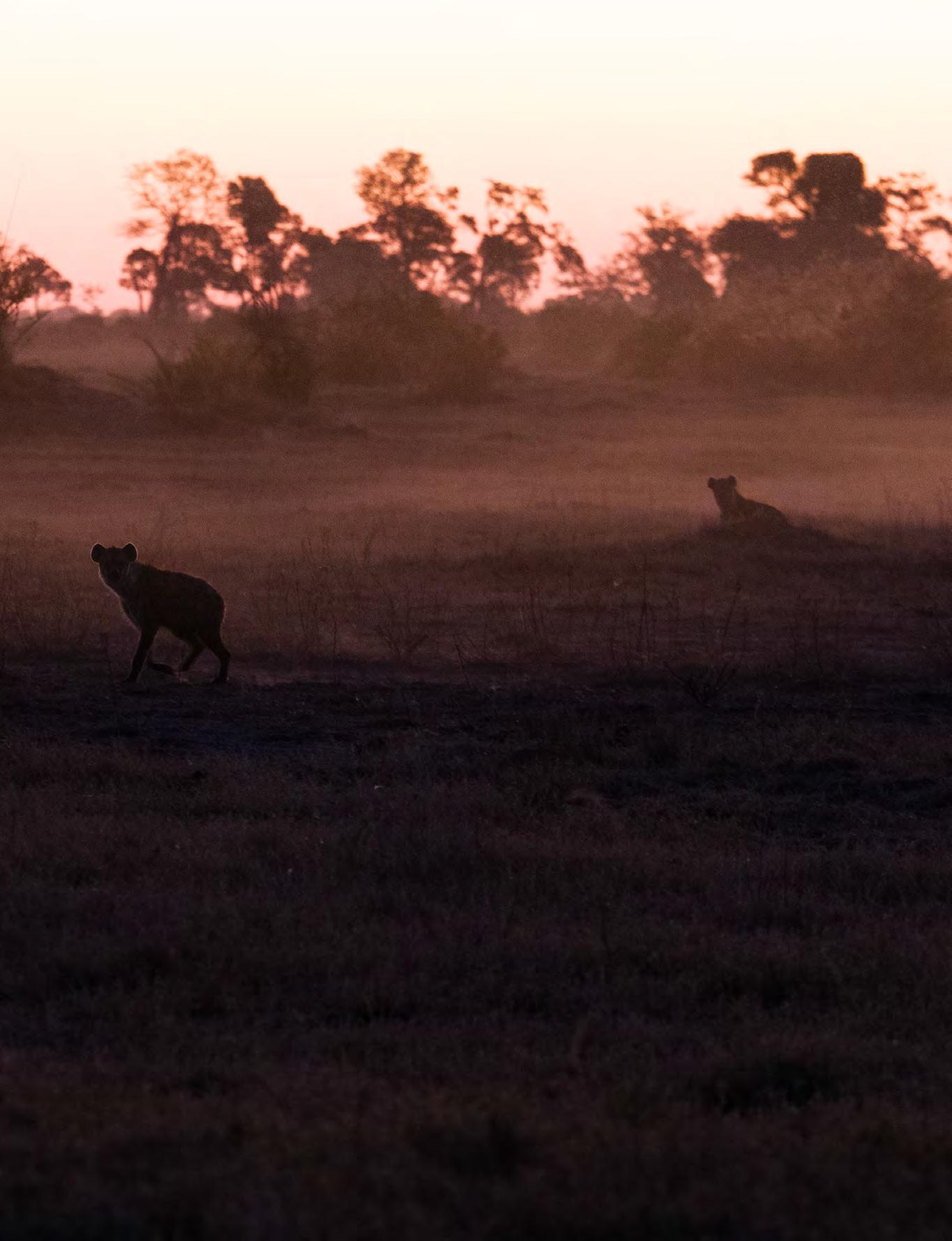
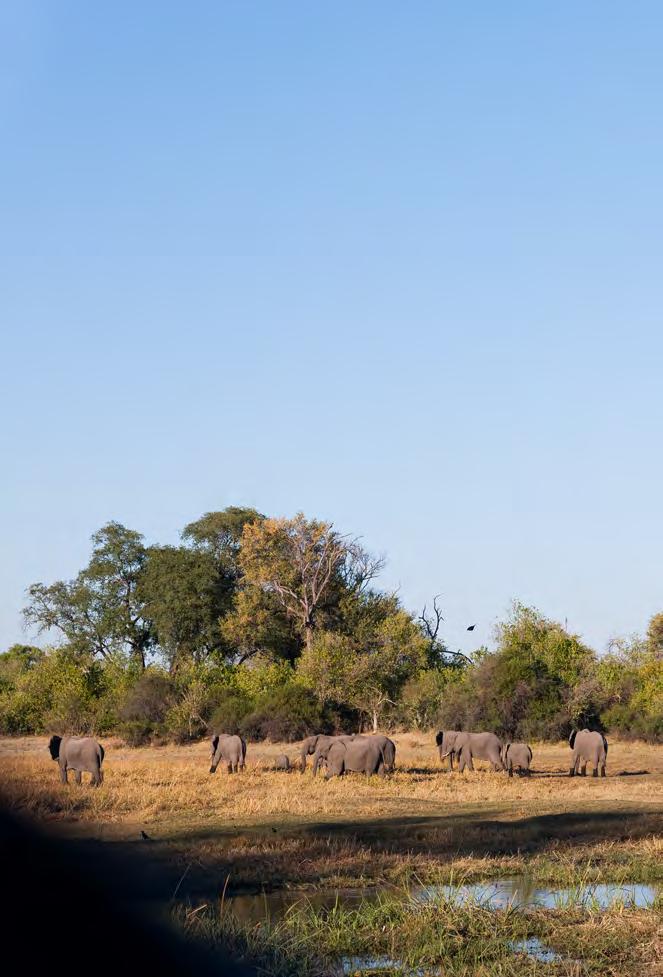
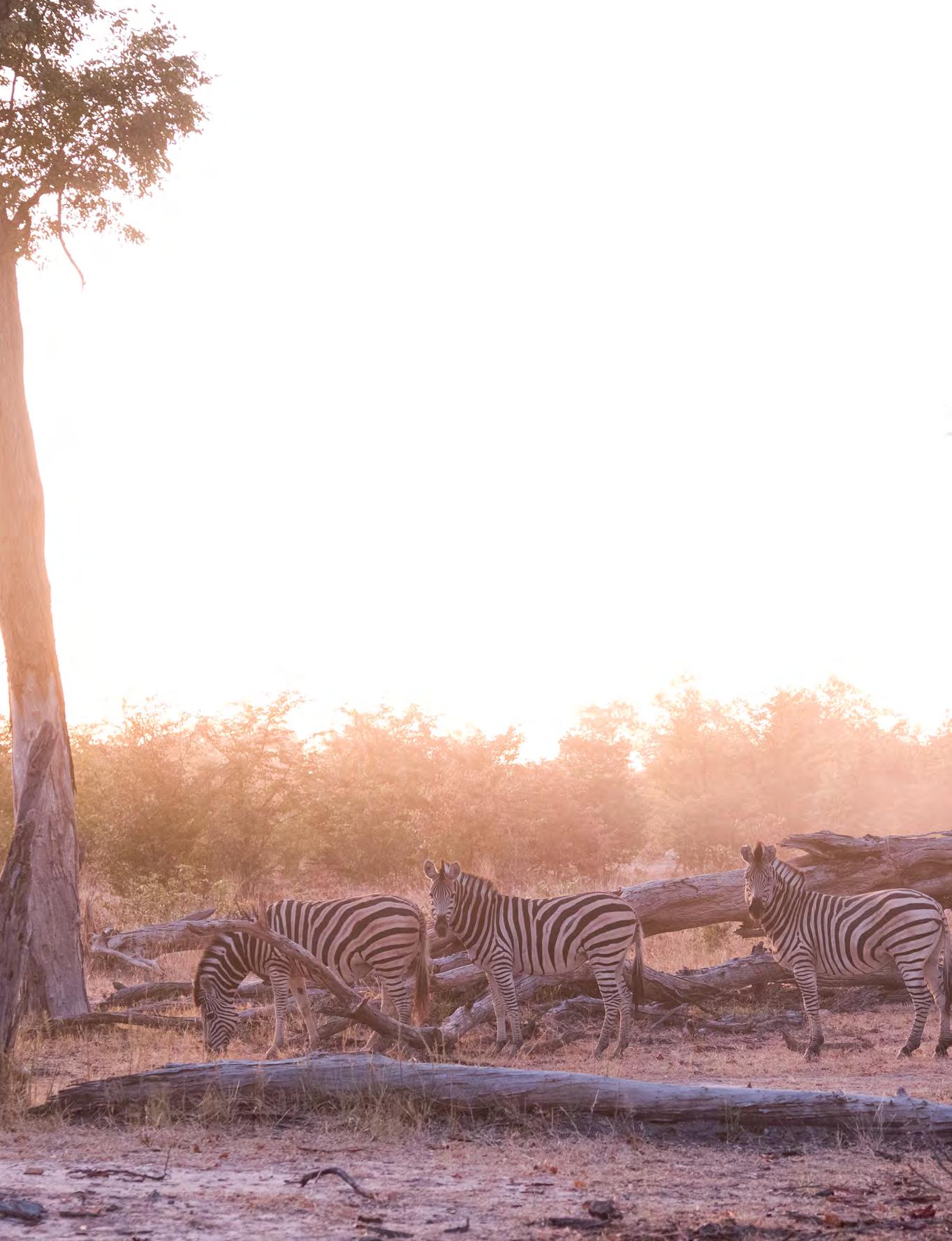
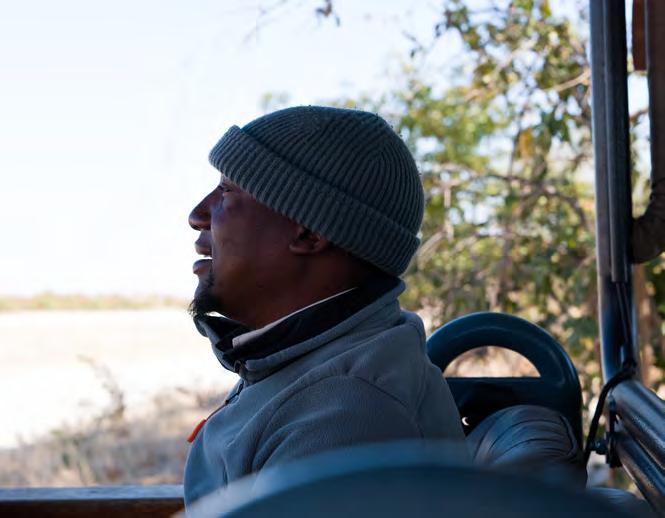
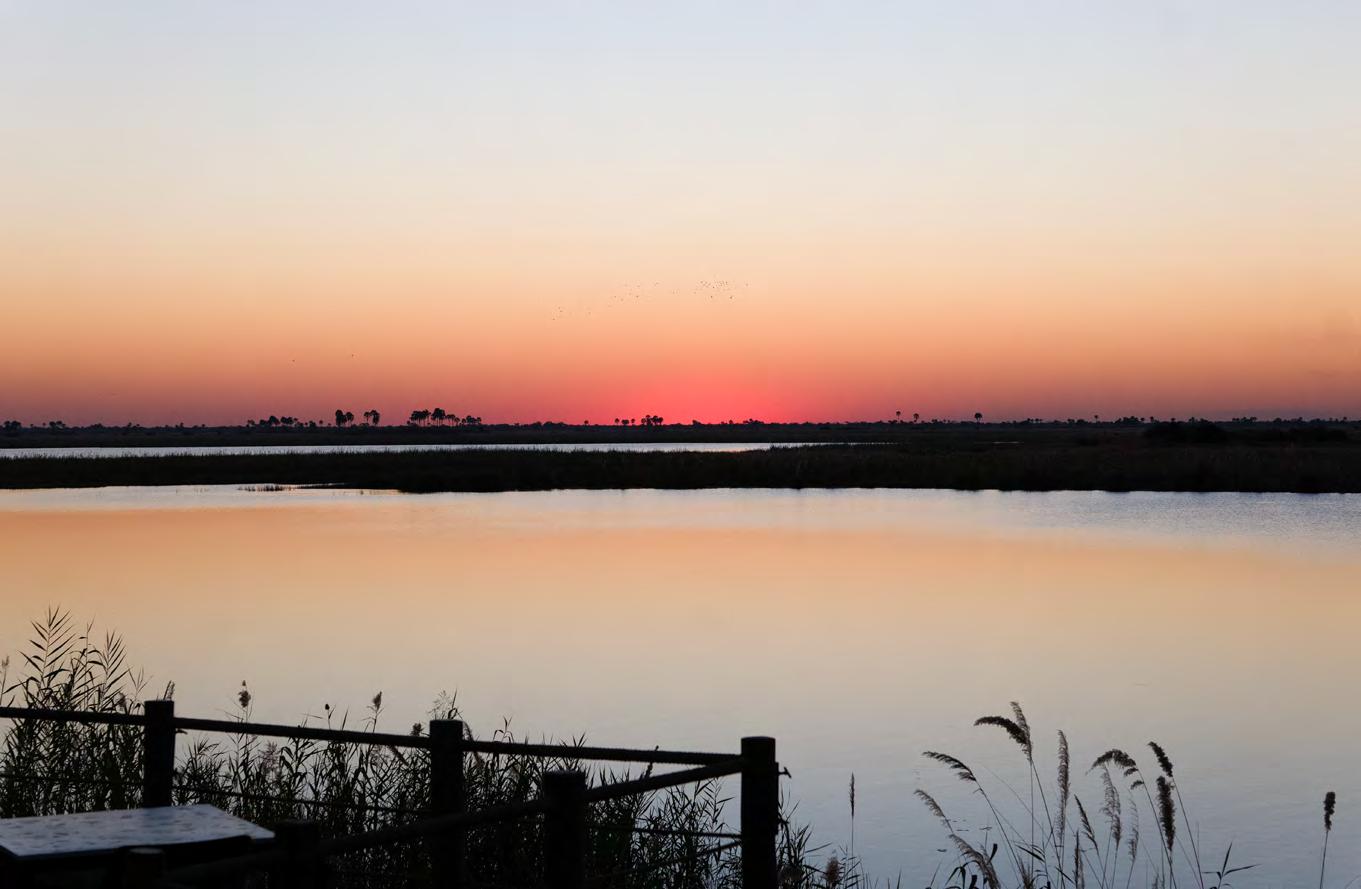
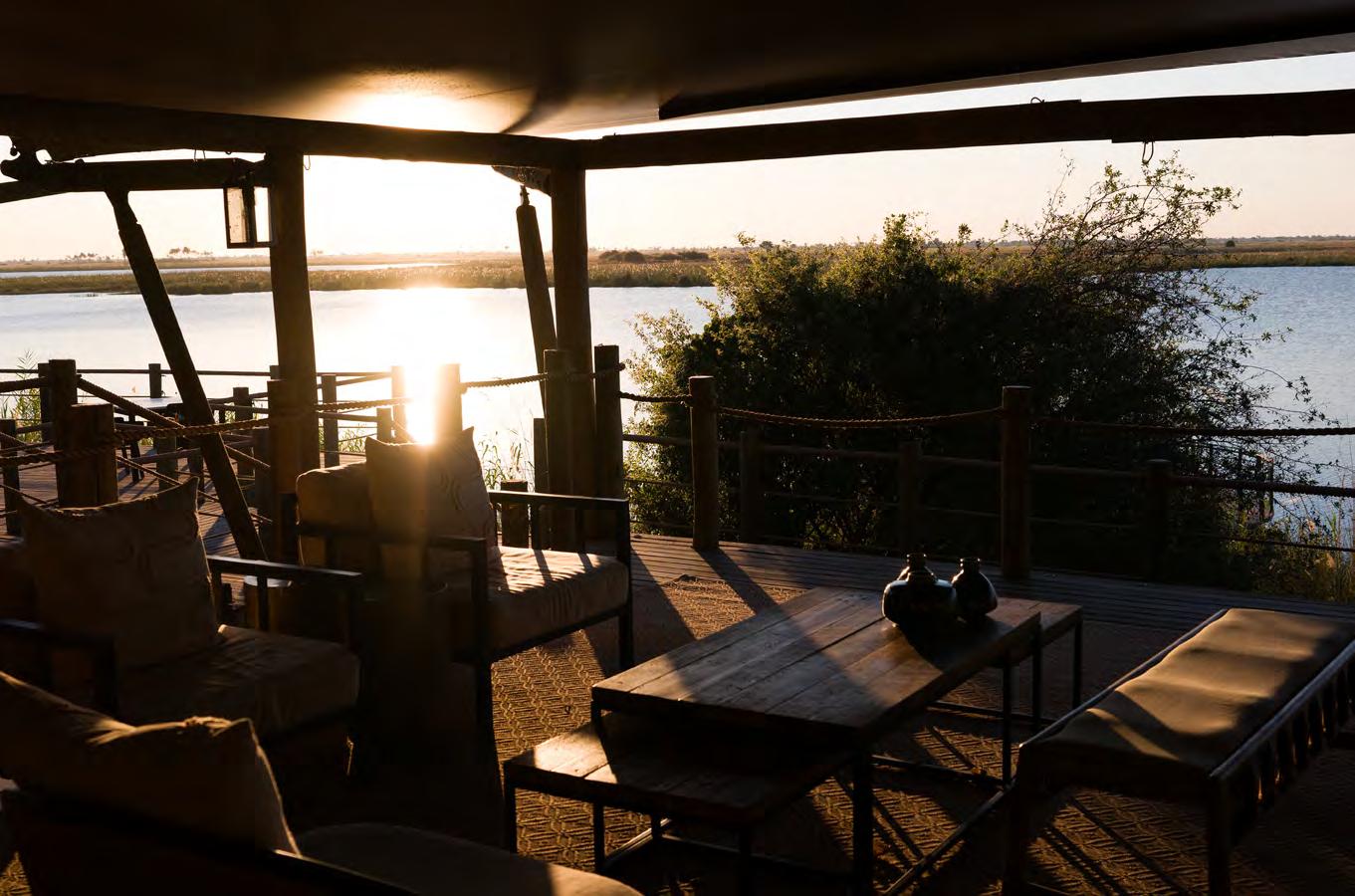
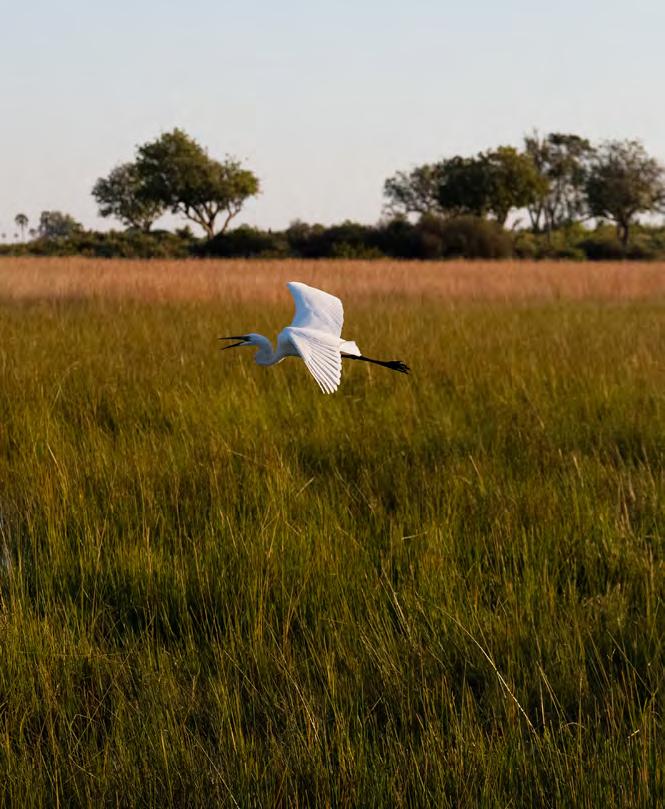
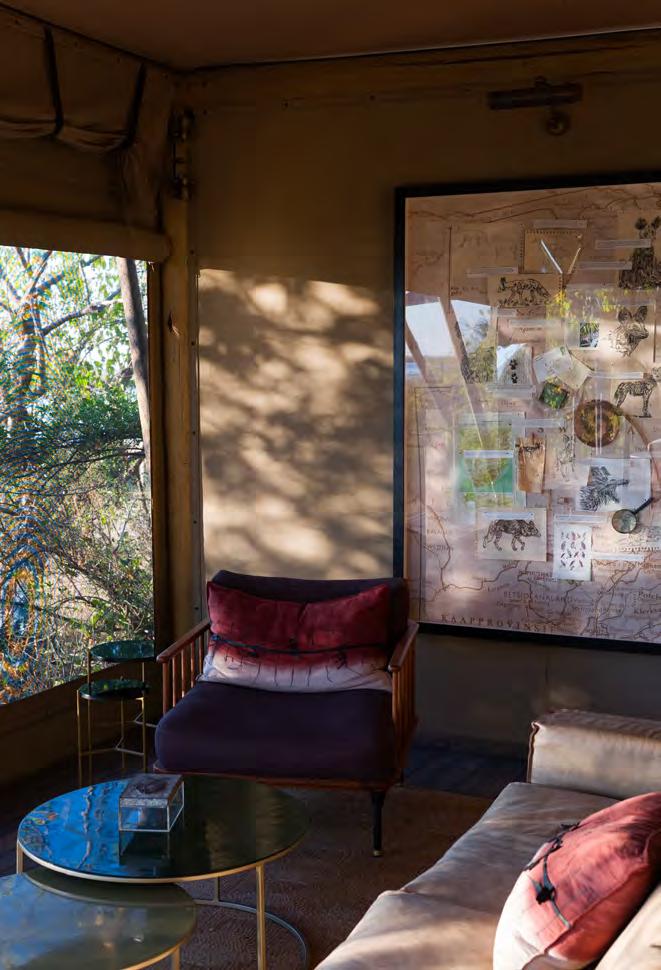
Above and Below: A photographic safari through Botswana’s Okavango Delta places humans and wildlife in the same frame.
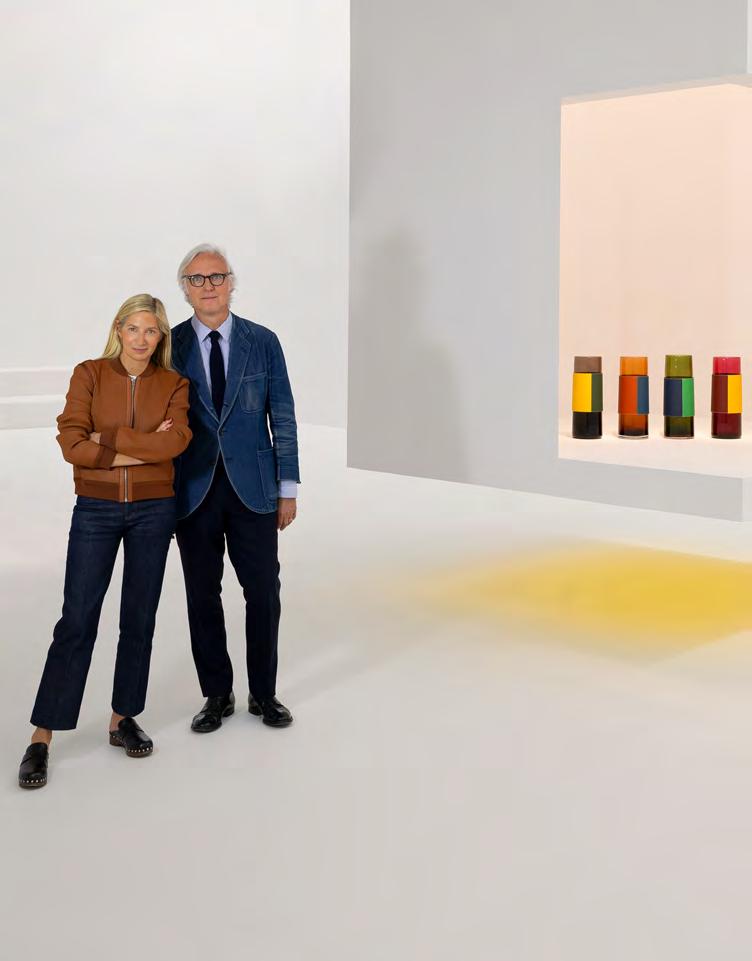
In the Spirit: Imaginative objects with lively auras make for a fantastical trip through the Hermès Home universe.
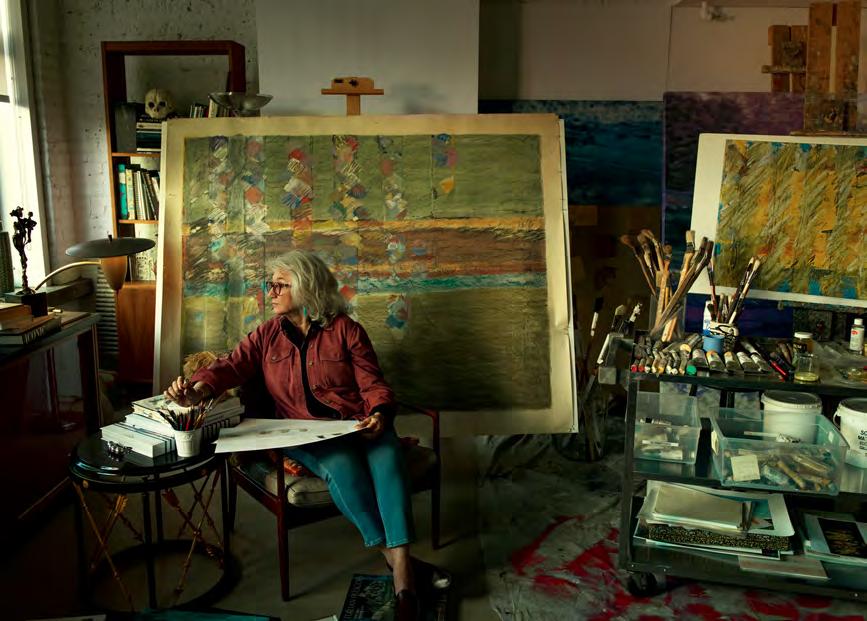
From the Ashes: Interior stylist Kate Martindale’s home was a living autobiography, until it was lost in the Palisades Fire.
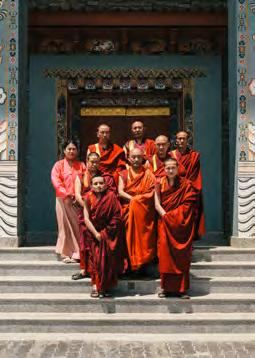
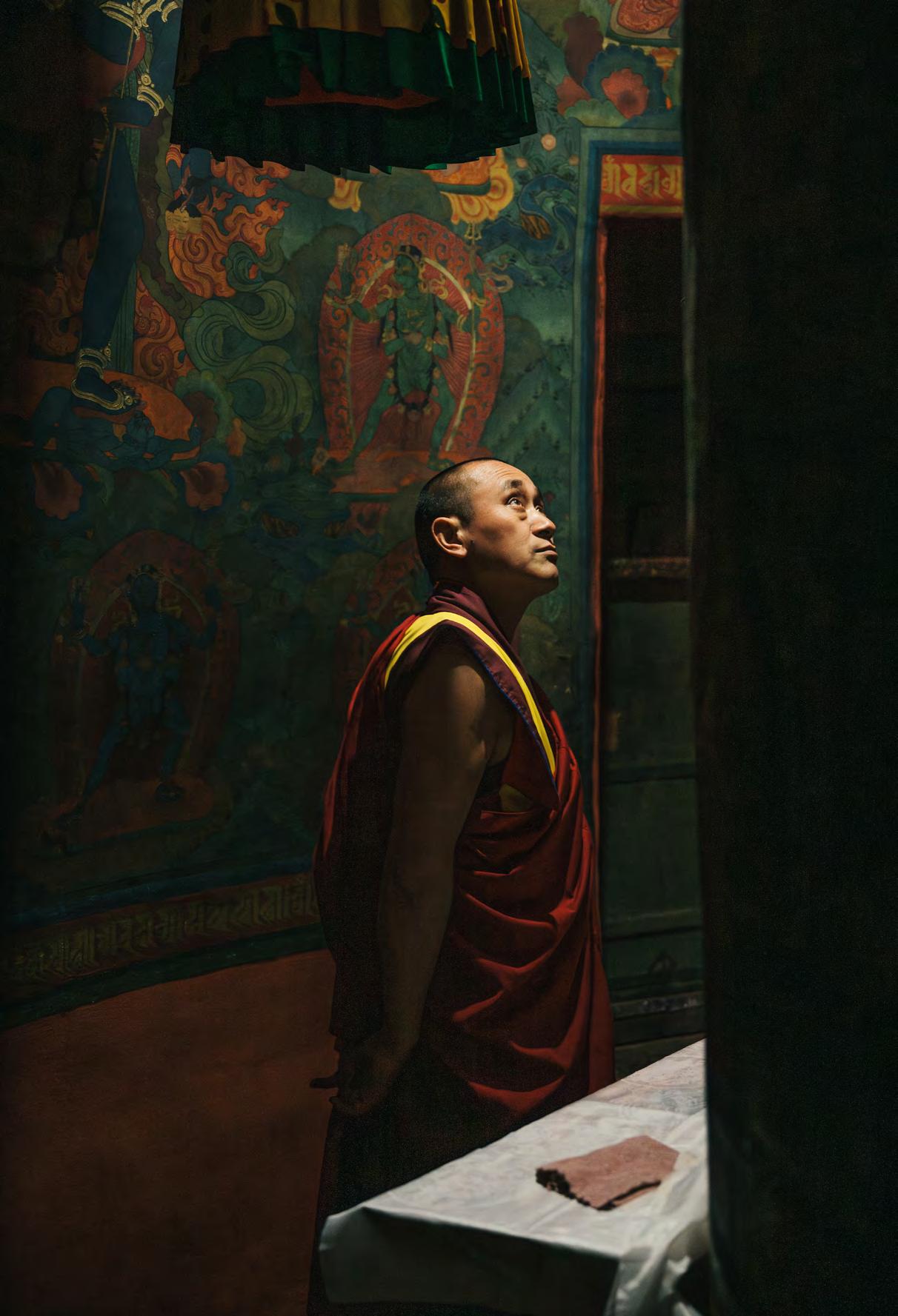
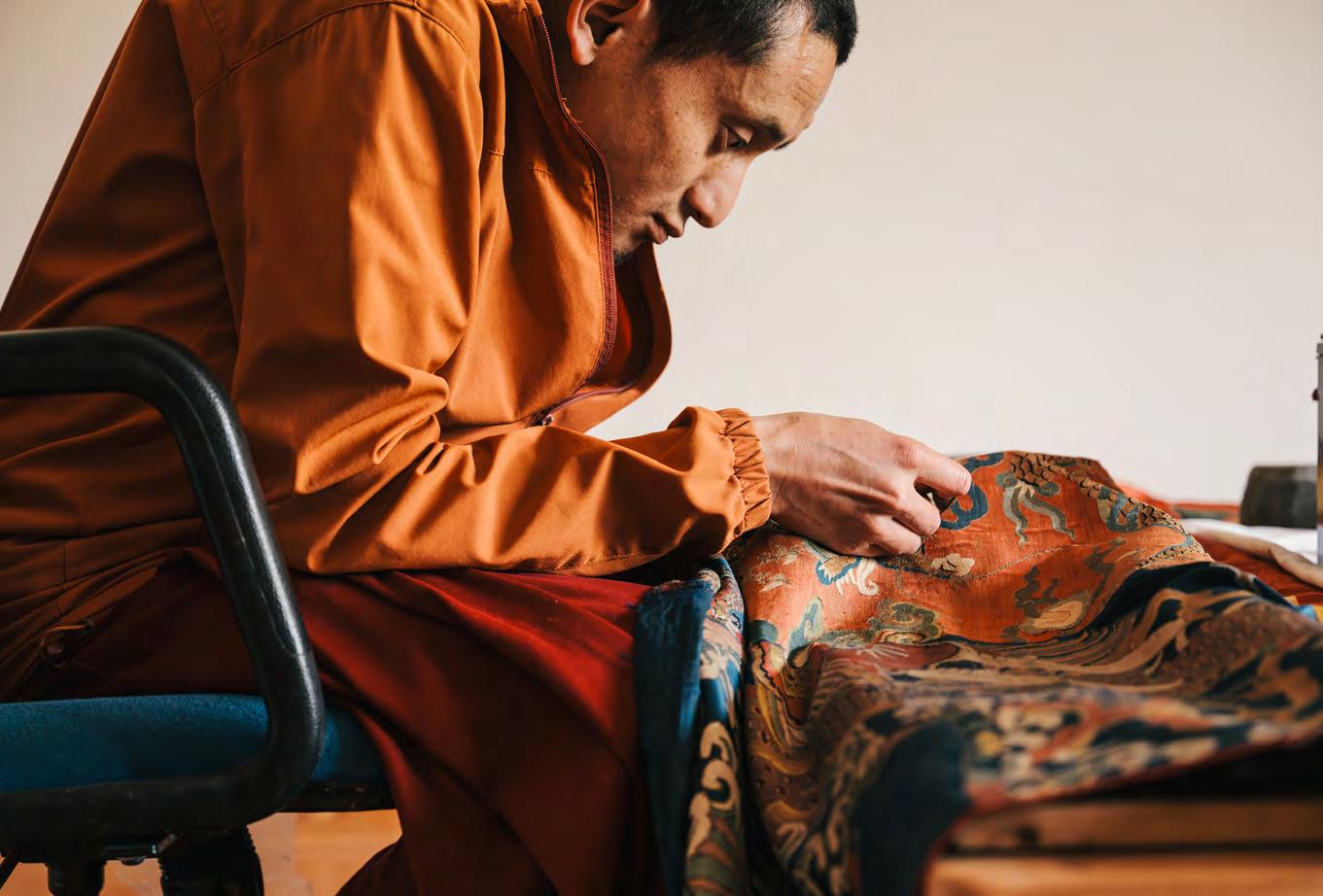
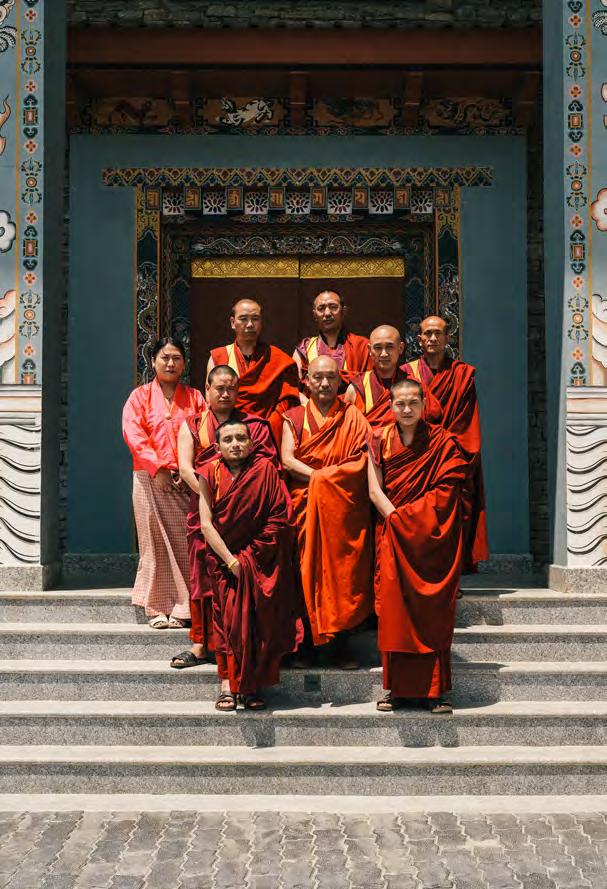
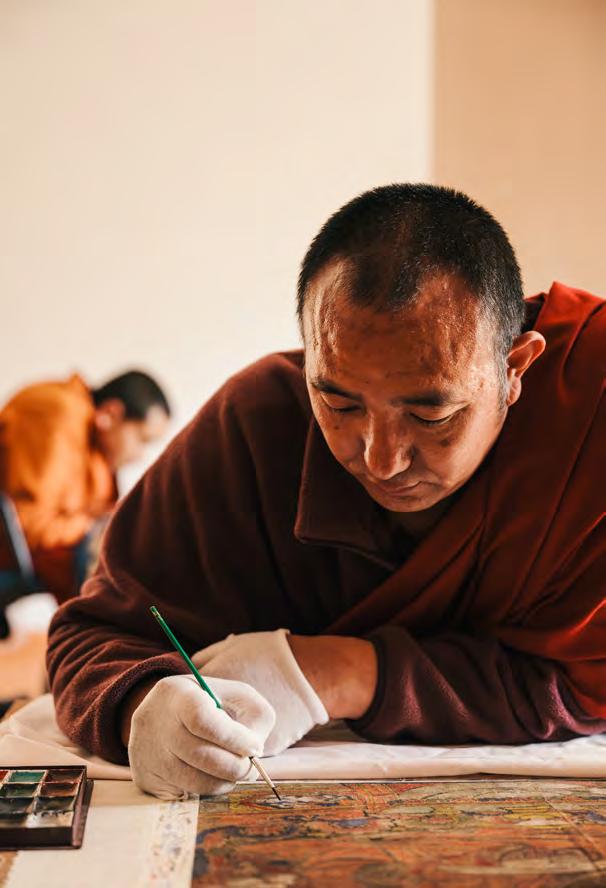
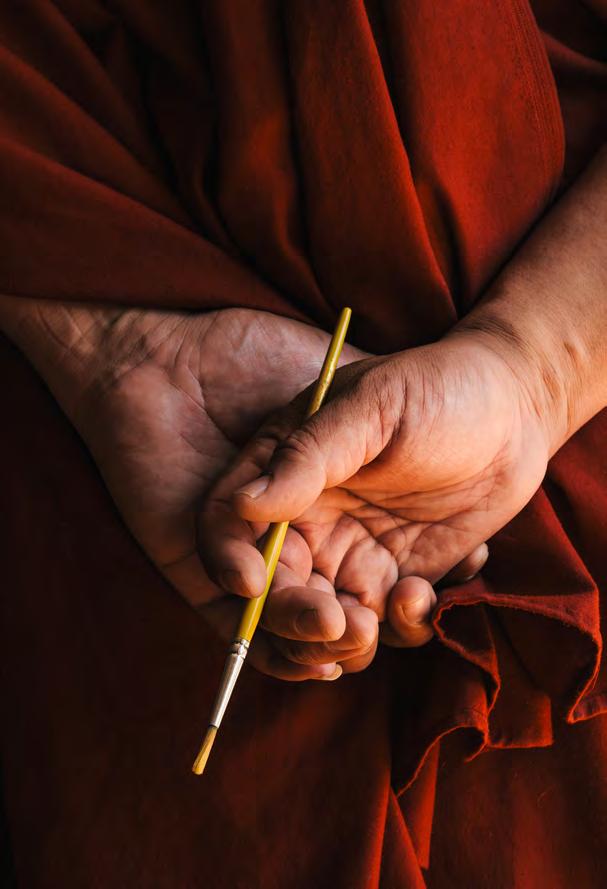
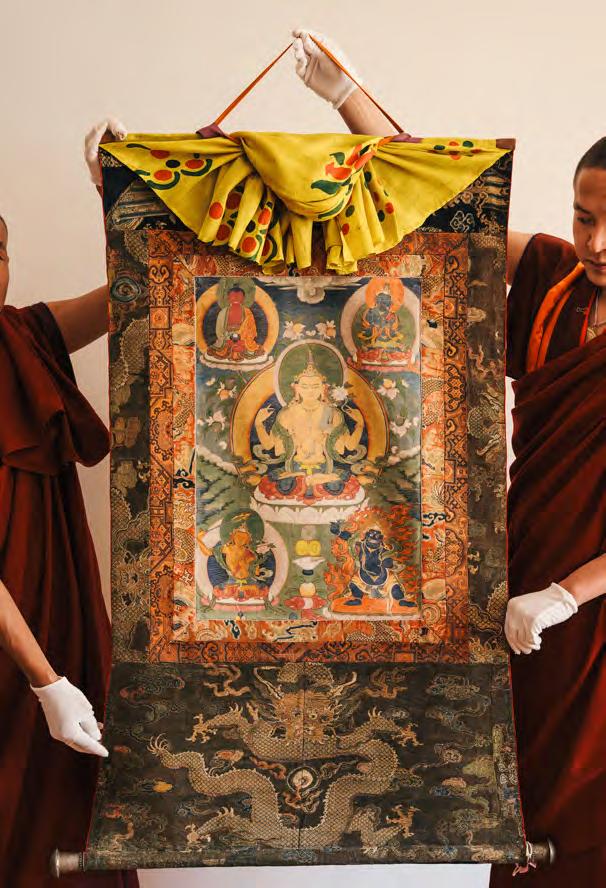
Divine Intervention: In Bhutan, a small team of monks serves as custodians of the Himalayan country’s great spiritual heritage.
Back to Base: A journey through the wilderness of British Columbia reorients a family’s inner compass.
Modern Relics: The season’s characterful accessories rendered black and white transcend the moment.
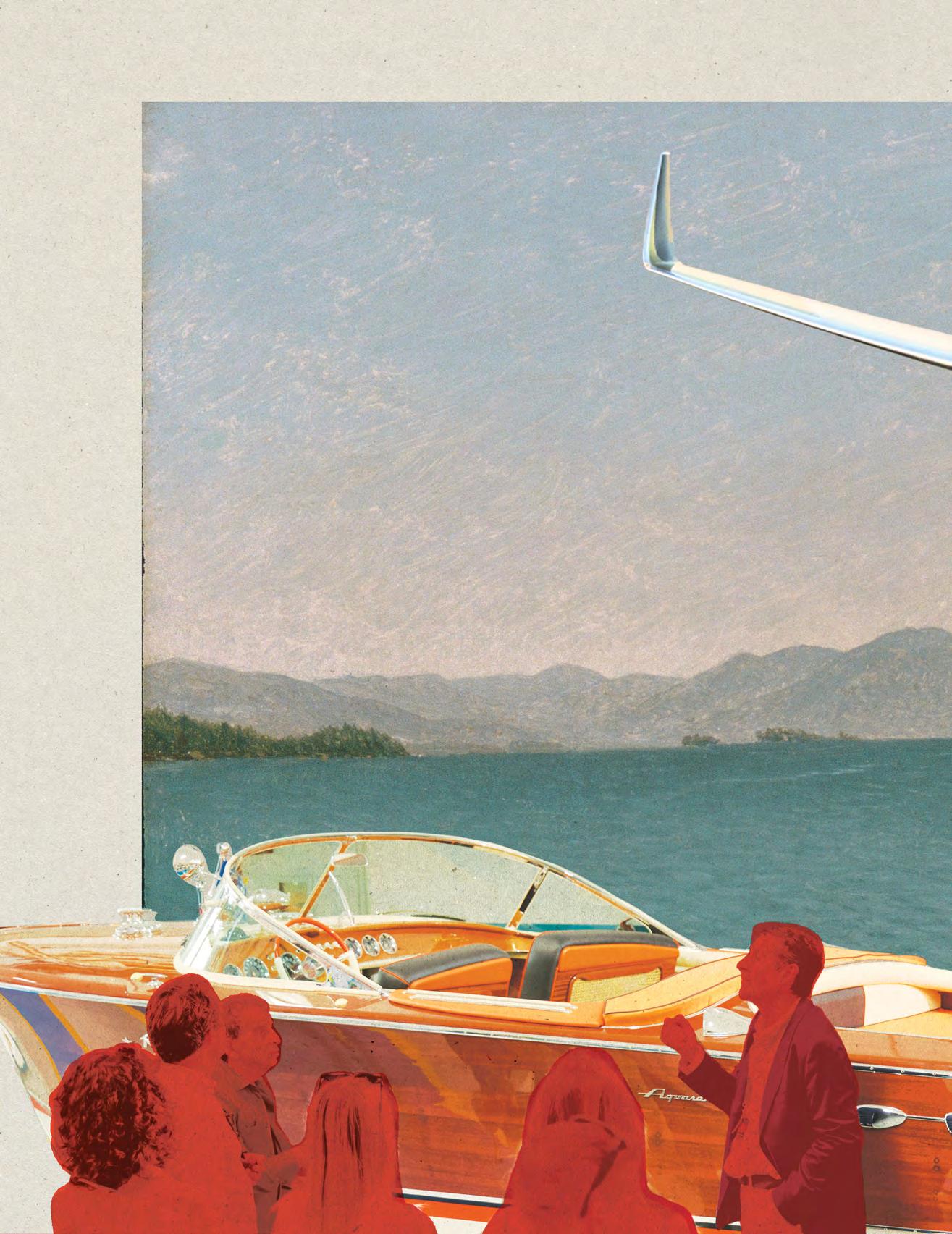
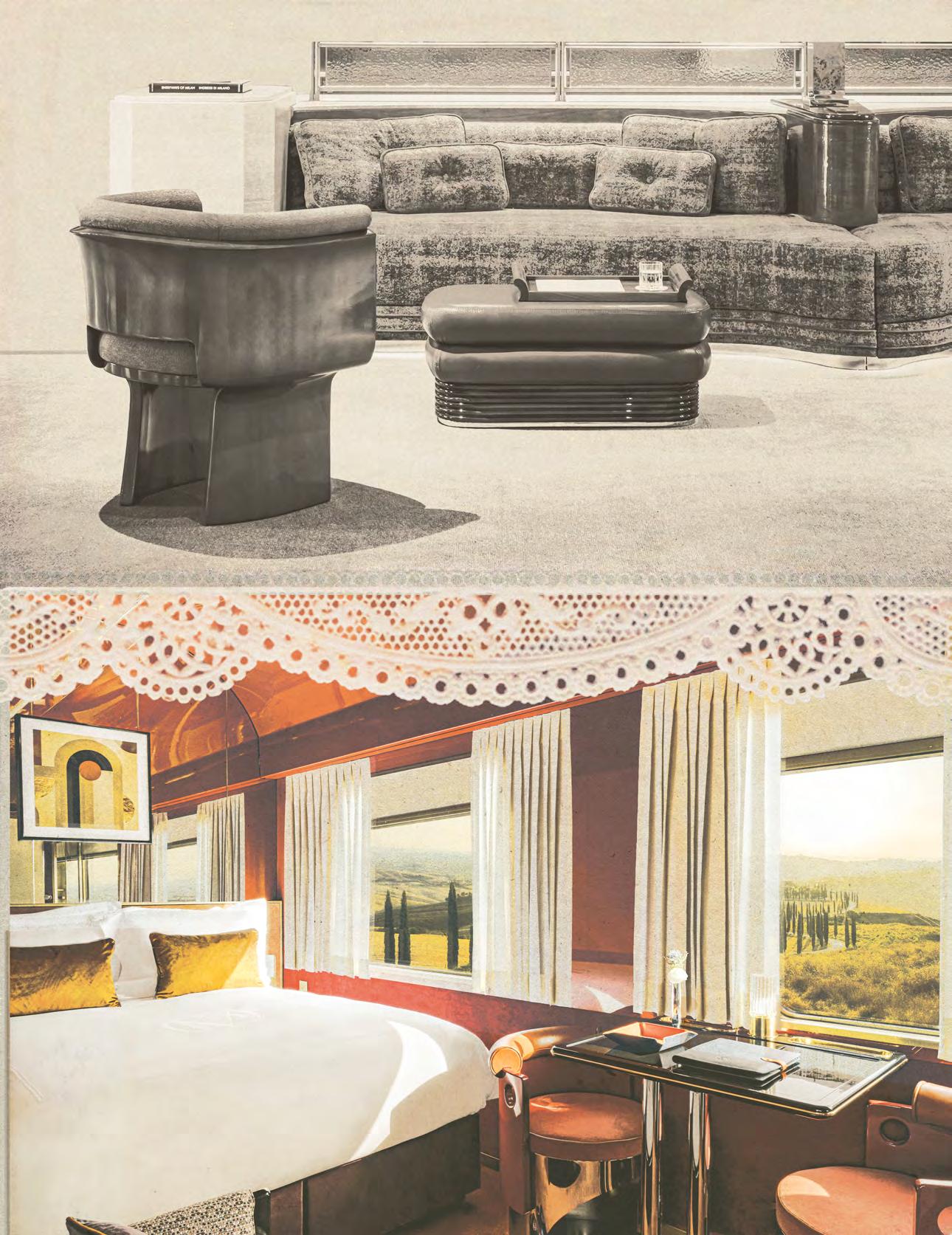
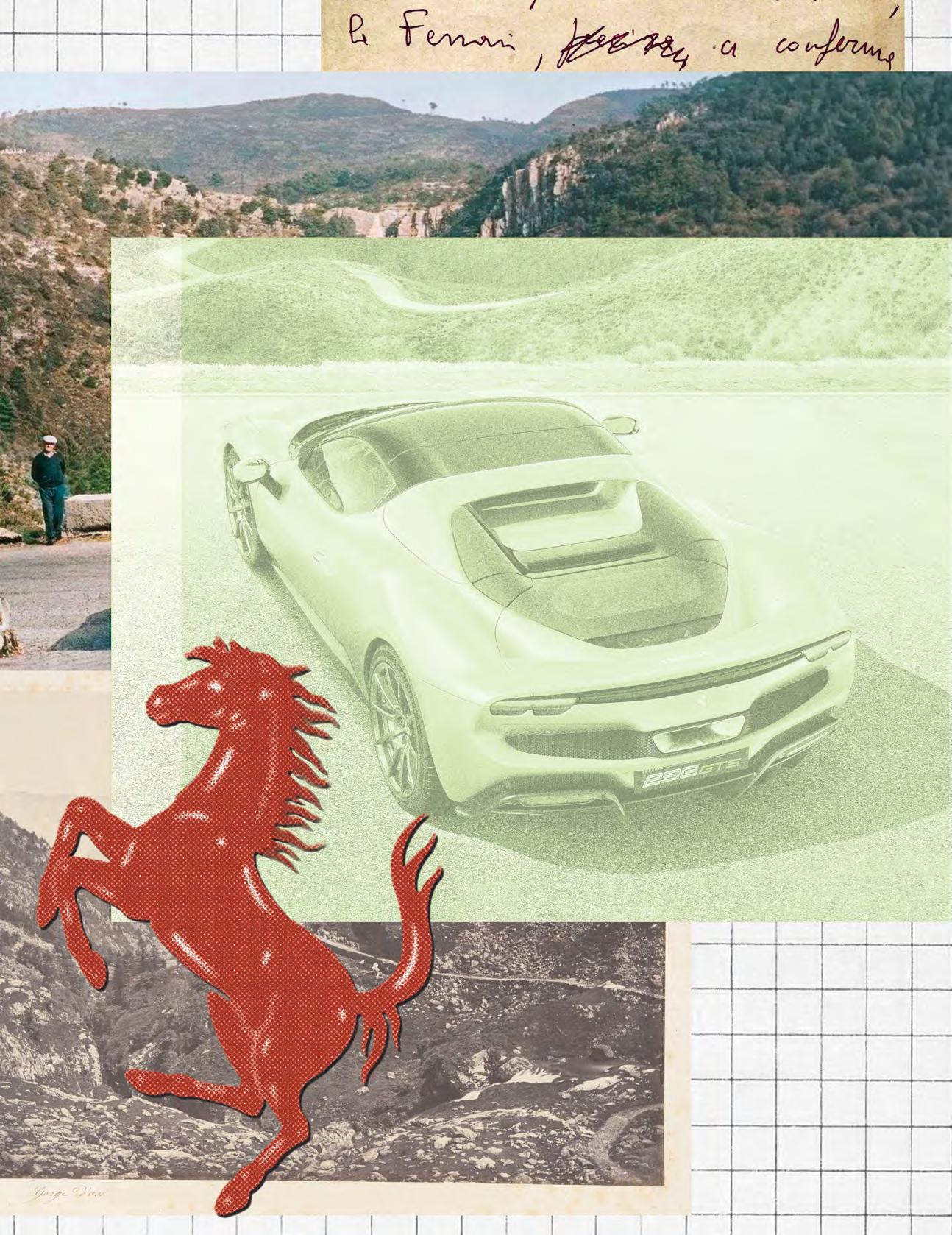
Aerei, Treni, and Automobili: Italy’s legacy passion for speed and craft lives on in an unerringly chic fleet of modern machines.
For What It’s Worth: Vivamayr Maria Wörth aims to address the root of what’s really going on in your body.
The Dossier: A collection of thoughts, ideas, recommendations, and discoveries from all over the globe.
Away From It All: From a ranch resort in Montana to a sanctuary in Mozambique to a ship in French Polynesia, these experiences offer serenity and adventure steeped in their unique surroundings.
Just Like Home: Legacy guests share why the newly renovated Hotel del Coronado in San Diego draws them back to its sunny shores, year after year, generation after generation.
Breaking the Mold:
Model-turned-designer Armando Cabral reveals the influences and places that inspire his ever-evolving creations.
Well-Versed: Musician and composer Arooj Aftab considers the books that have fueled a life of musical thinking and sonic exploration.
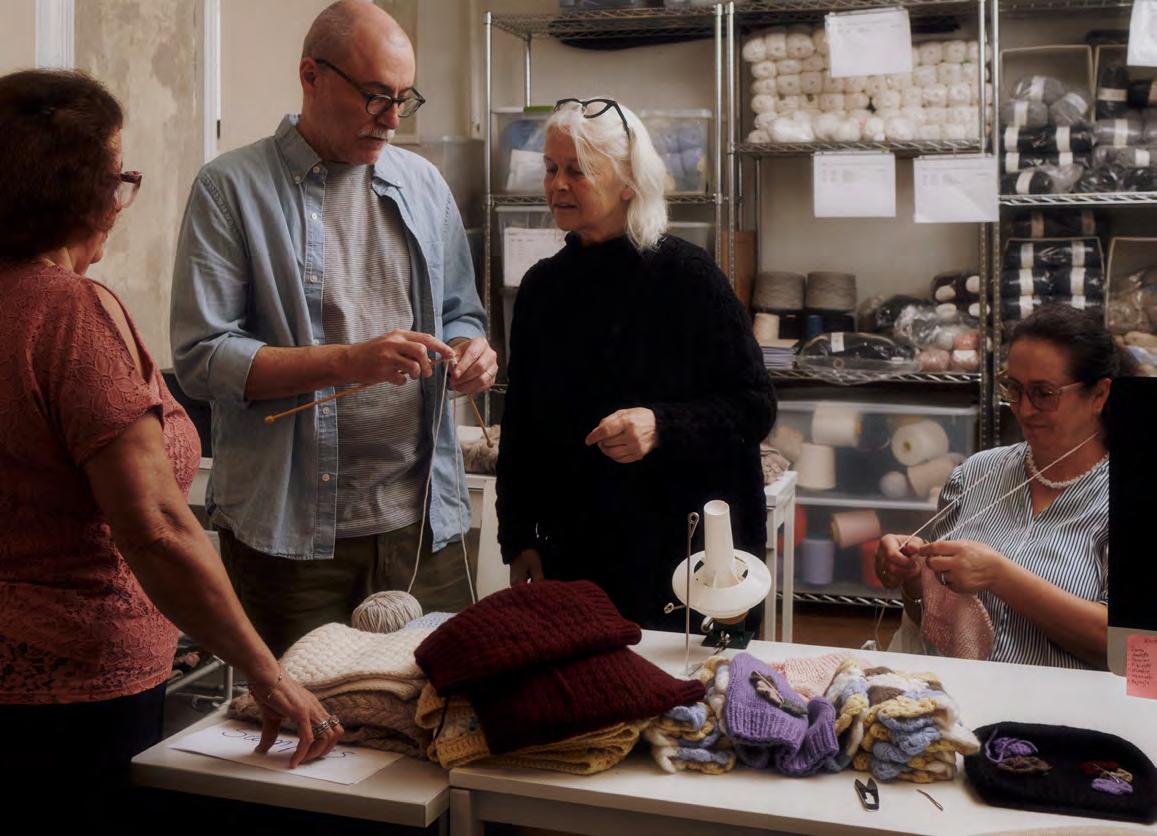
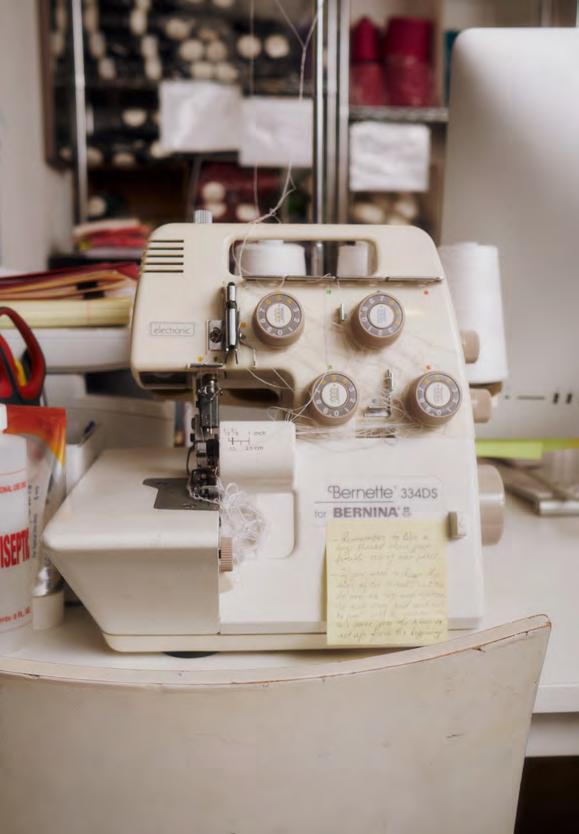
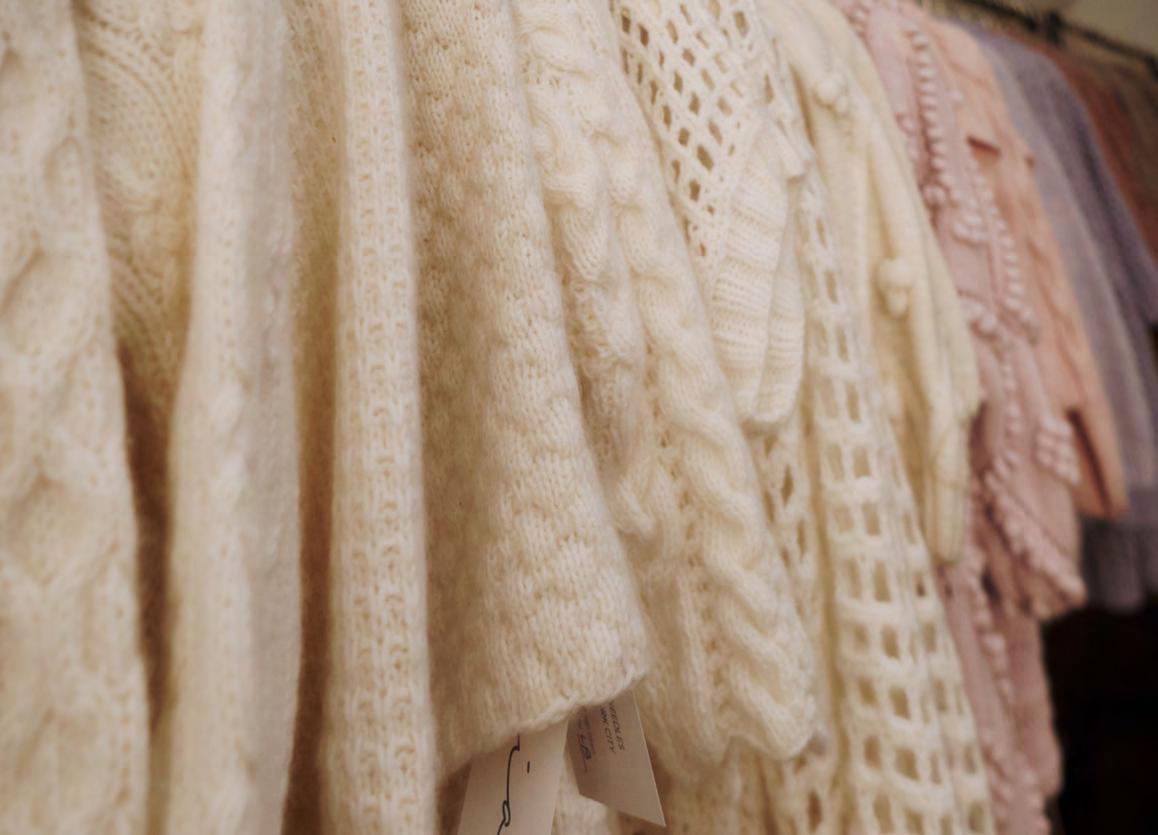
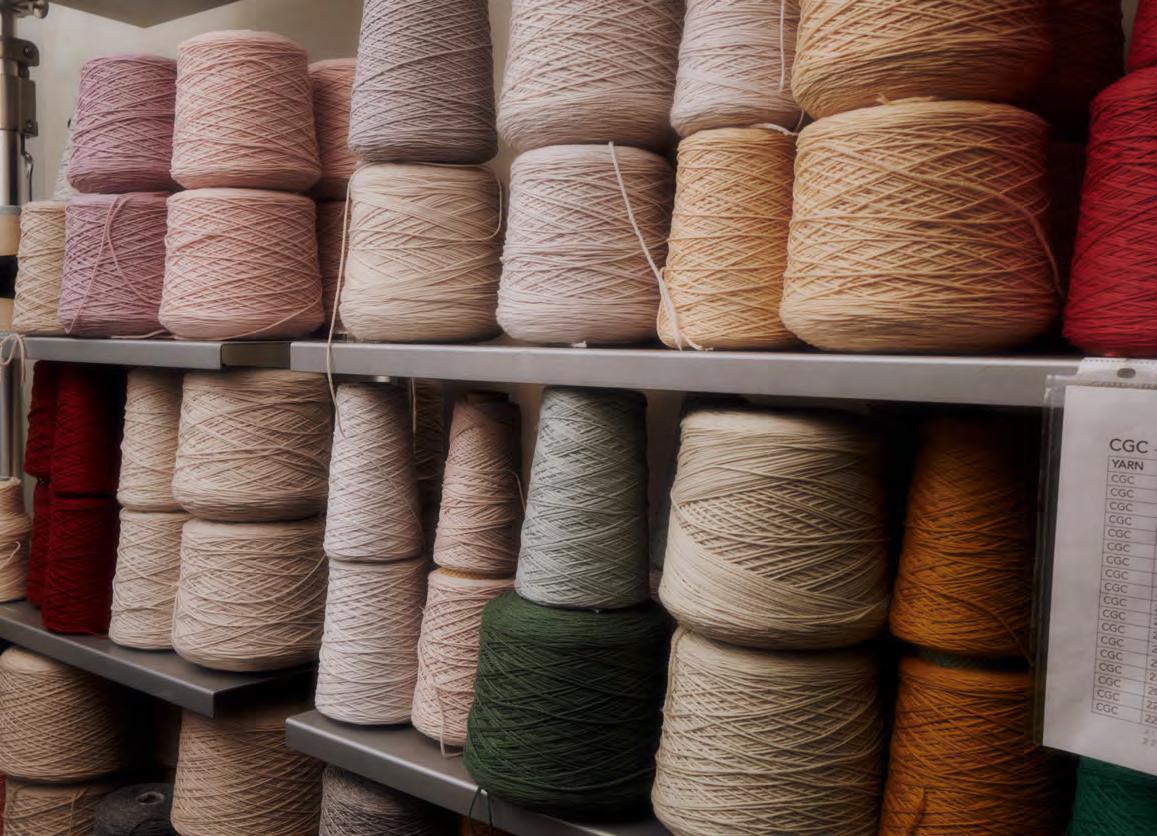
Stitch by Stitch: Hania creates luxury goods imbued with a distinctly human touch.
Between Two Bridges: A highly personal, after-hours profile of Manhattan’s “It” Chef.
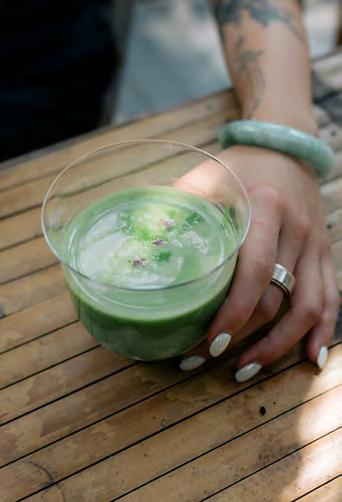
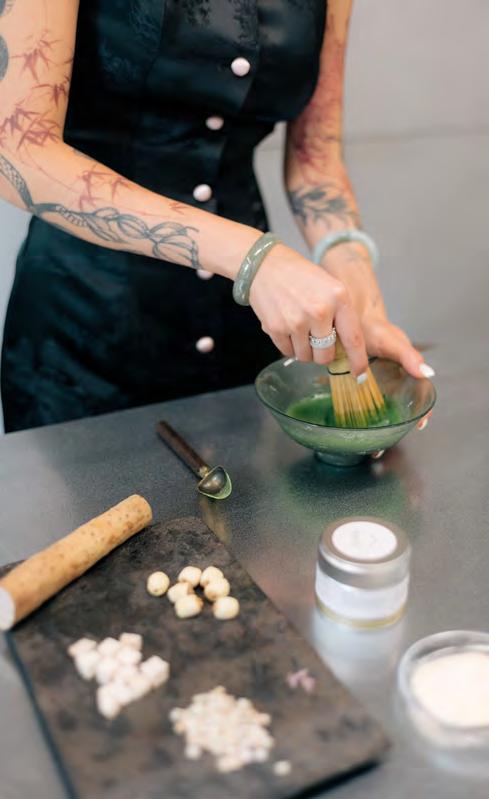
Home Soil: Traditional Chinese Medicine practitioner Zoey Xinyi Gong is on a global mission to establish the ancient system as a practical guide for modern life.
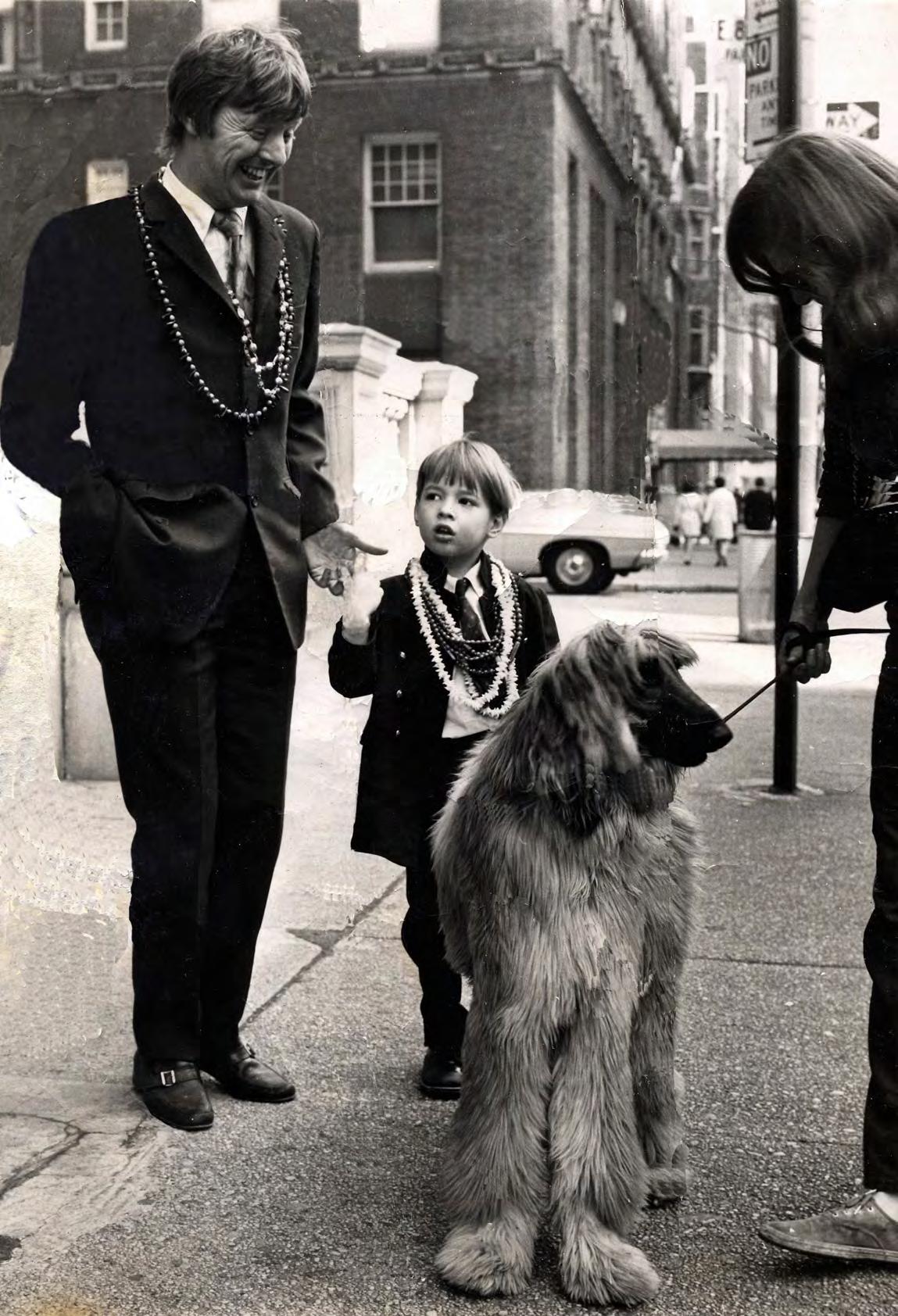
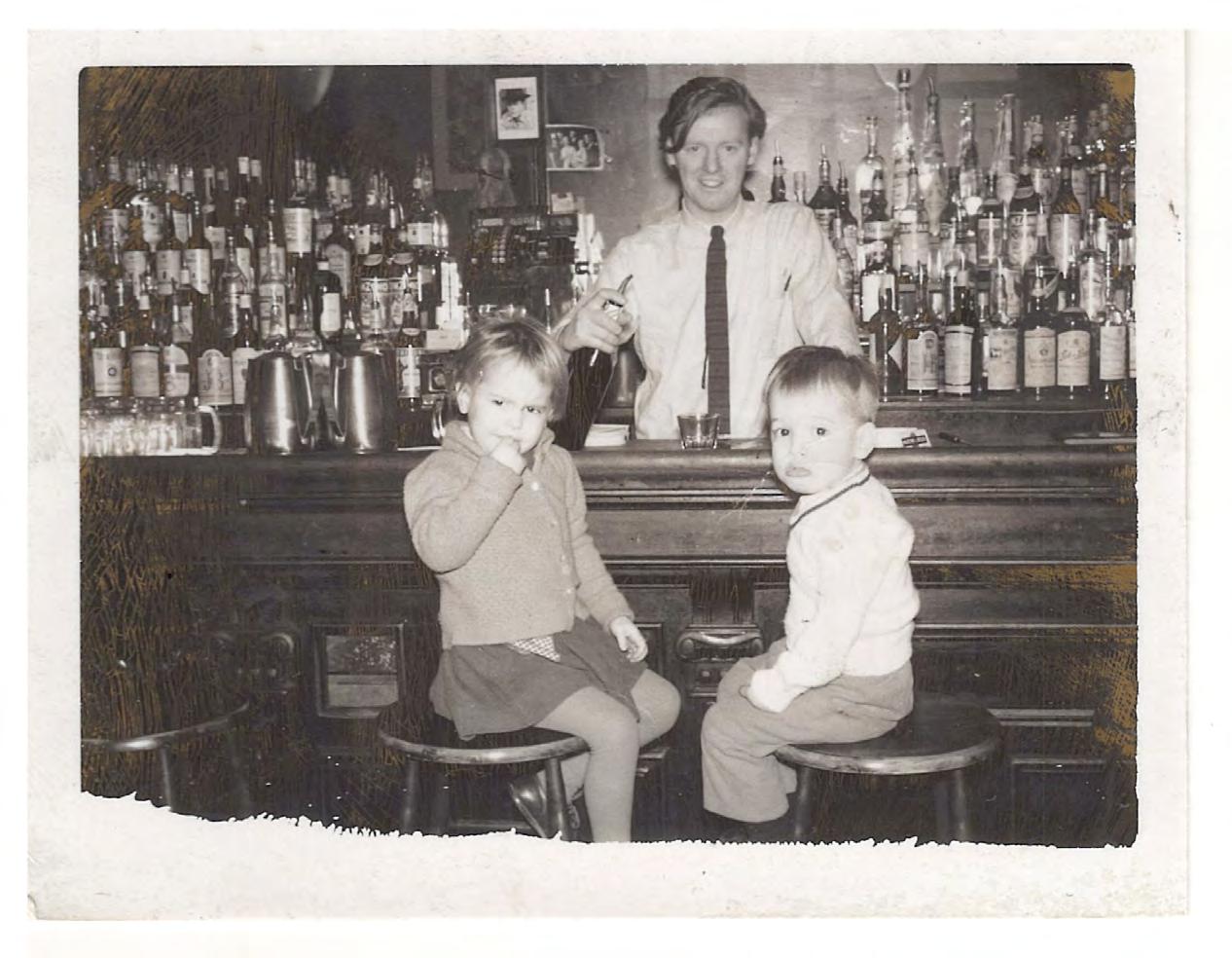
Talk of Many Things: Donal Lardner Ward reflects on a childhood spent shuffling underfoot at one of New York’s most iconic restaurants, alongside legends of the city’s midcentury arts and culture scene.
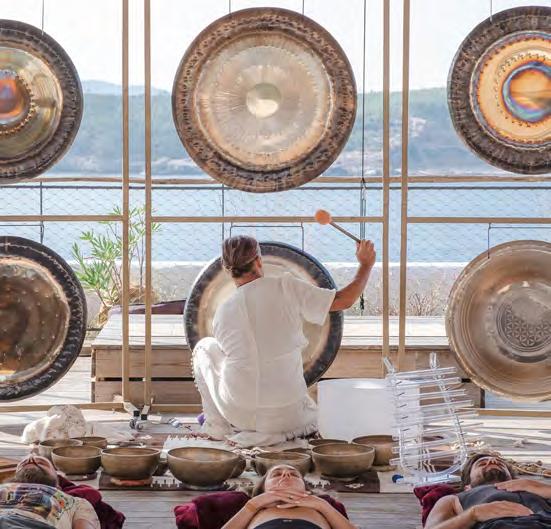
It’s Ee-beats-a: A festival of spiritual enlightenment pushes even its most skeptical attendee out of his head and into the flow.
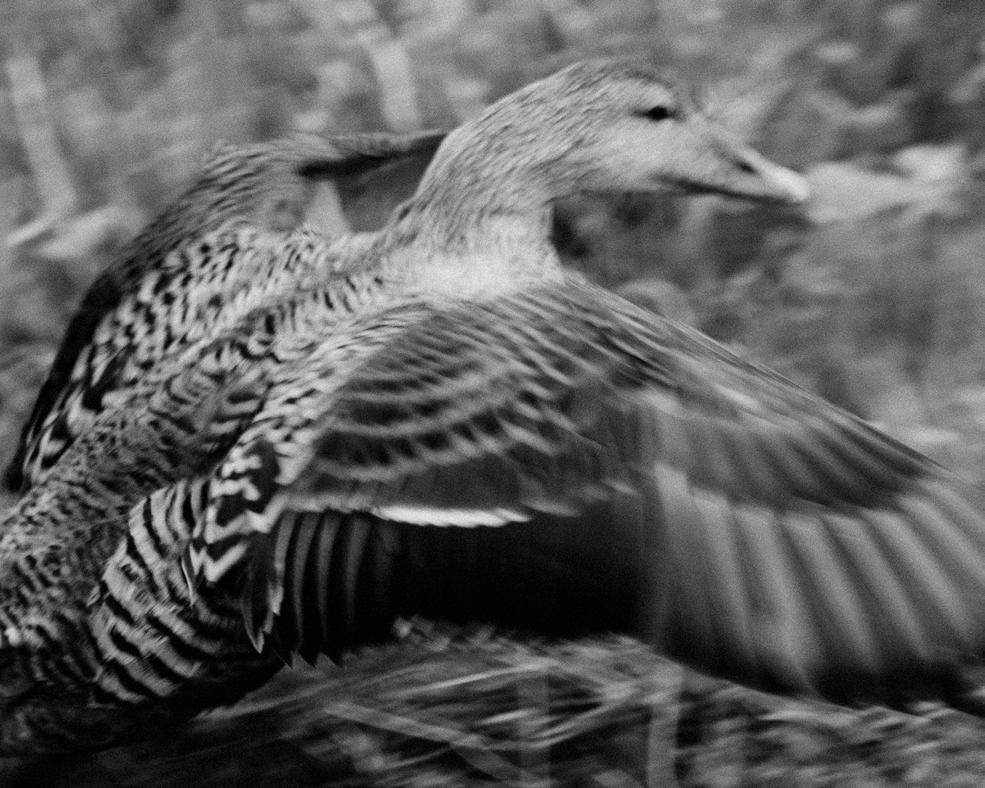
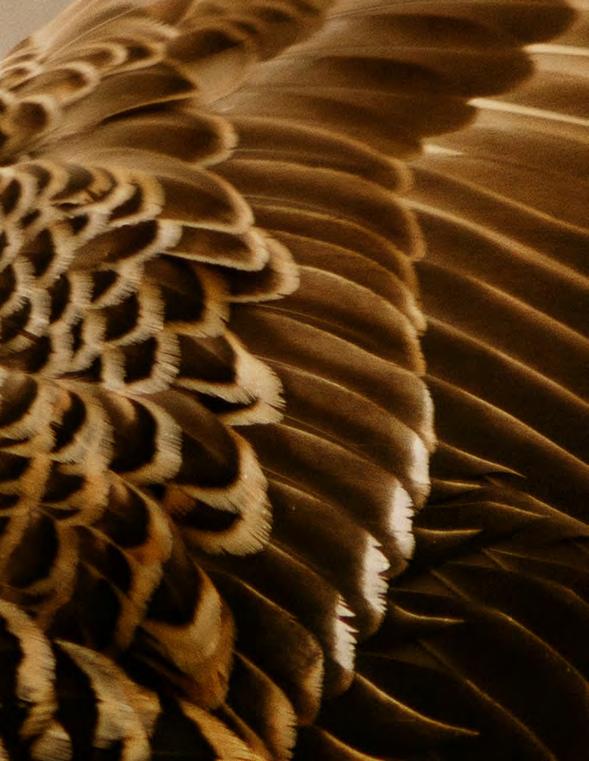
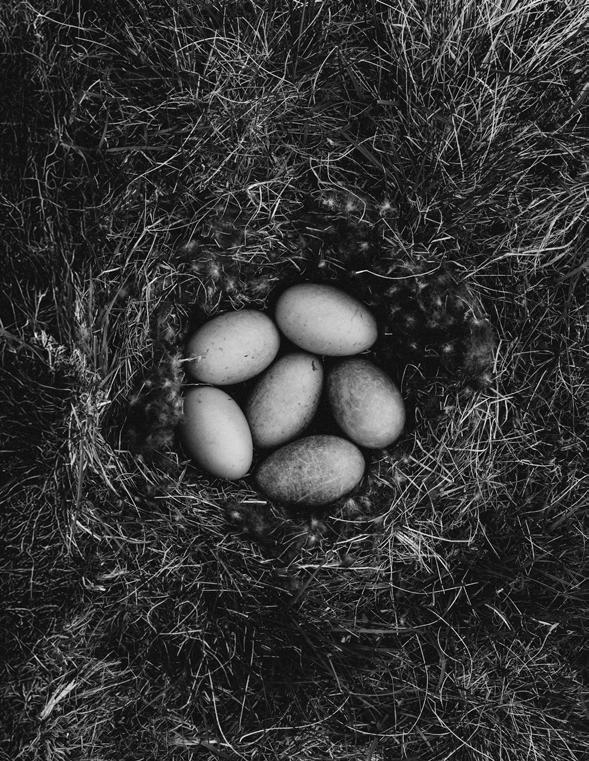
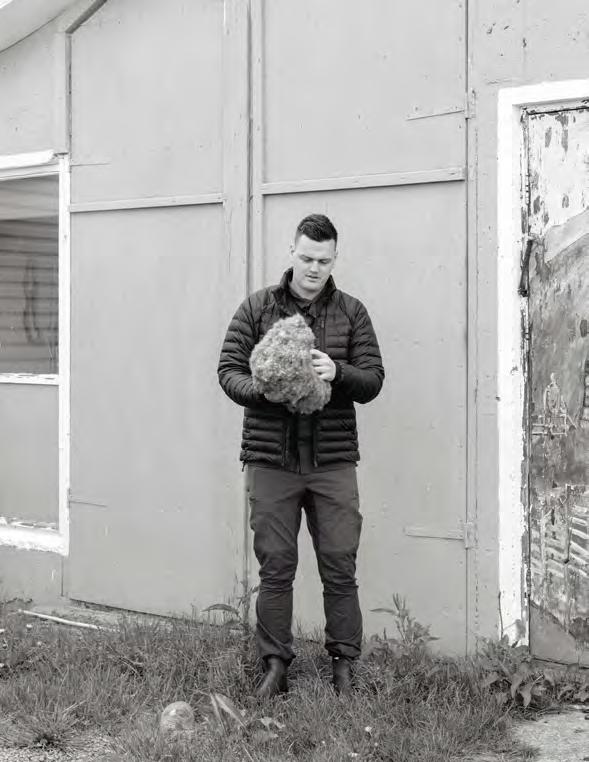
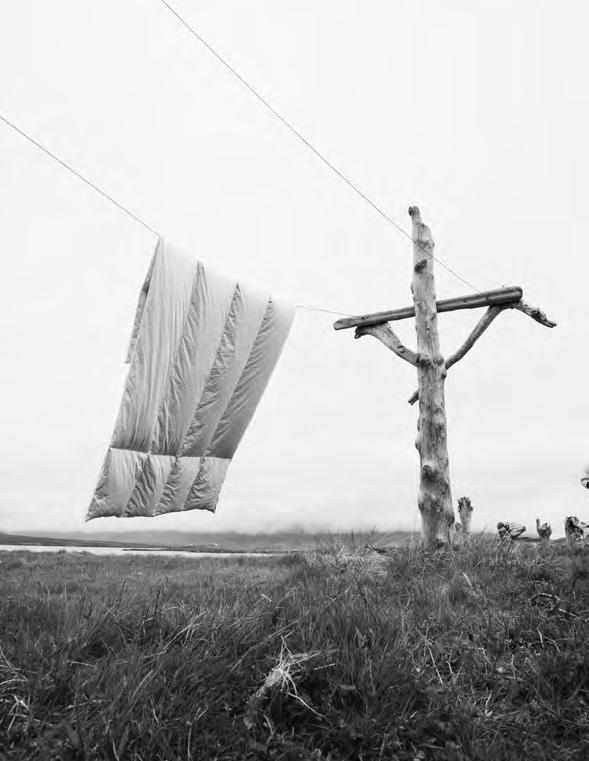
Nest to Bed: A trip to Iceland uncovers the qualitative results and quantitative processes of an eiderdown duvet that takes 8,900 hours to complete.
Everyday Fantasies: From a hillside home in Japan to a storybook cottage in Sweden, a writer extols the pleasures of making a mental move.
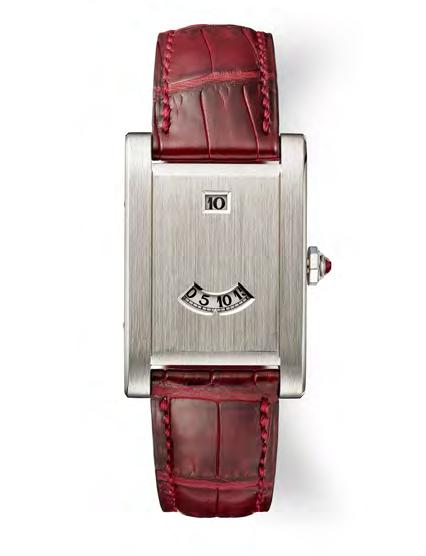
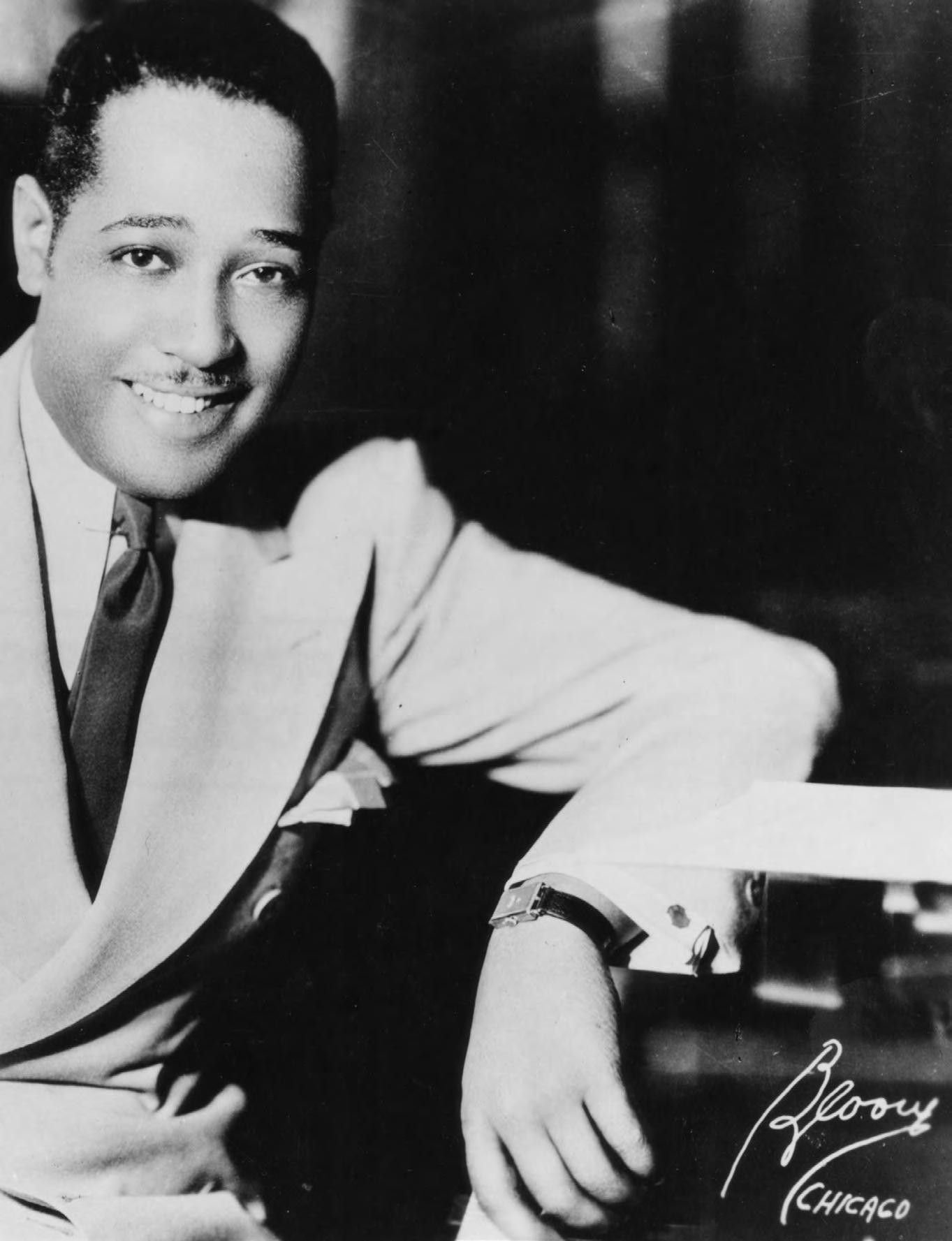
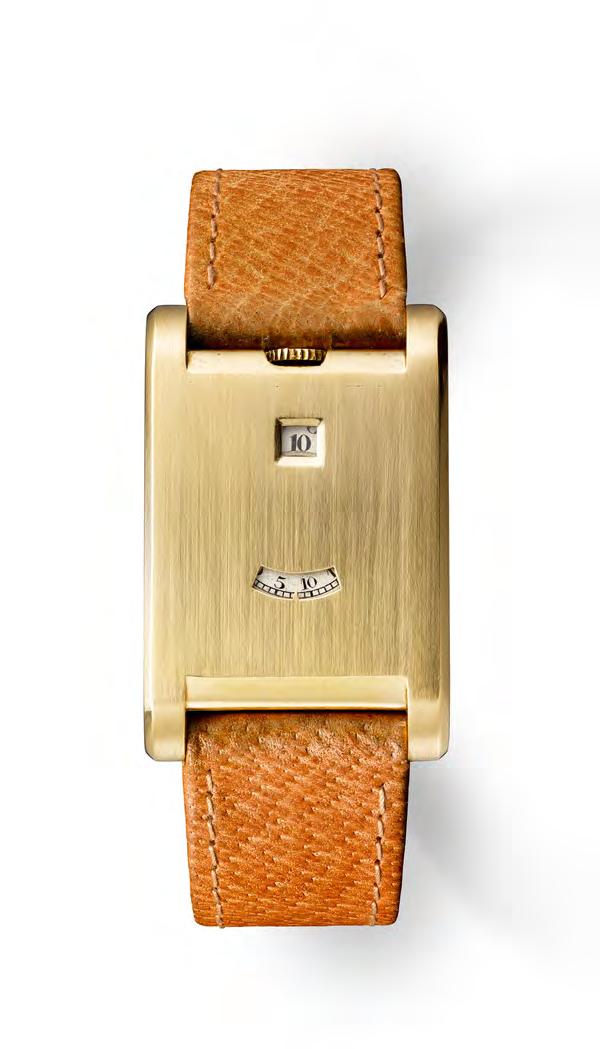
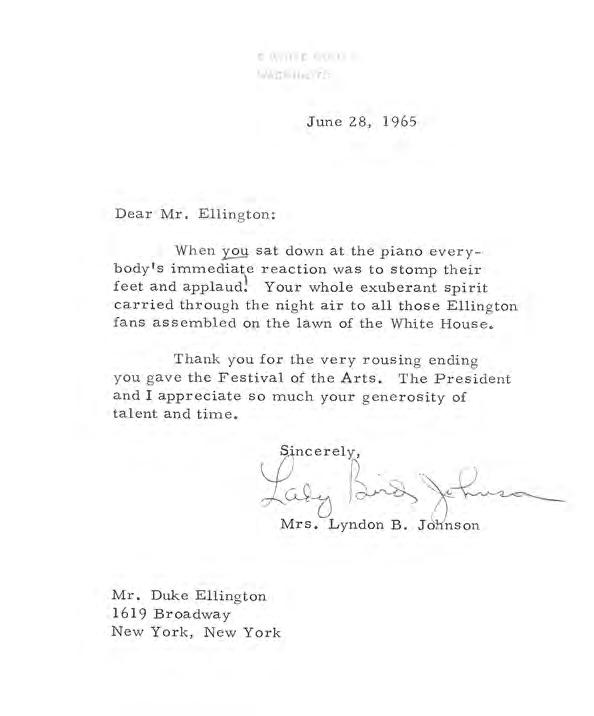
Keeping Time: The return of a rare Cartier watch syncs up with a renewed focus on the legacy of one of its original owners, Duke Ellington.
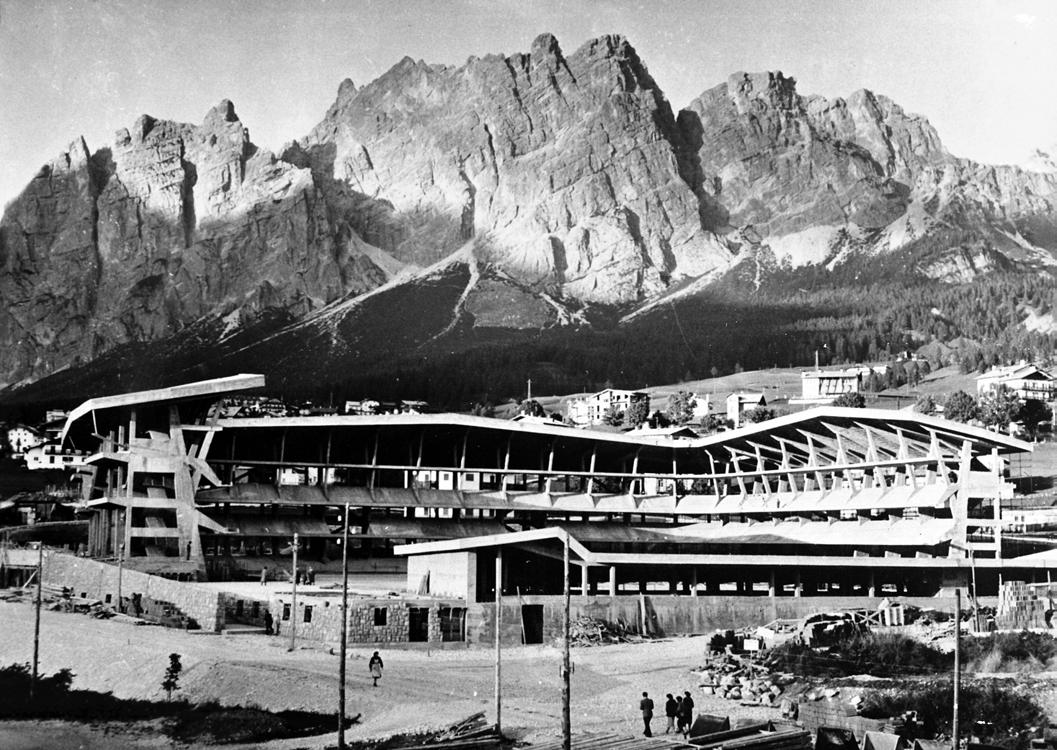
Moving Mountains: The mythical topography and culture of the Dolomites reveals the region’s otherworldly frequency.
Riding the Wave:
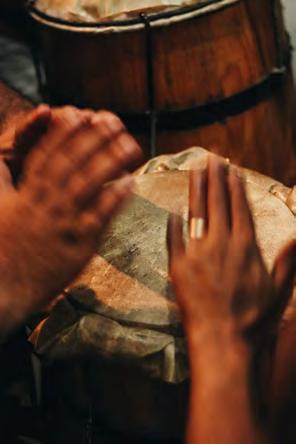
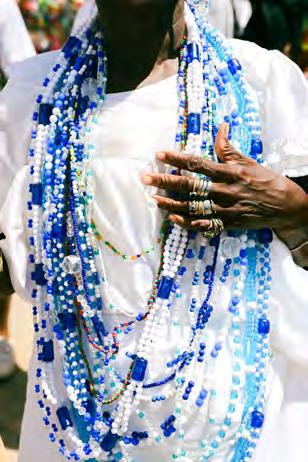
As night descends on Salvador’s tangled streets, the swell of drums and chanting voices alights.
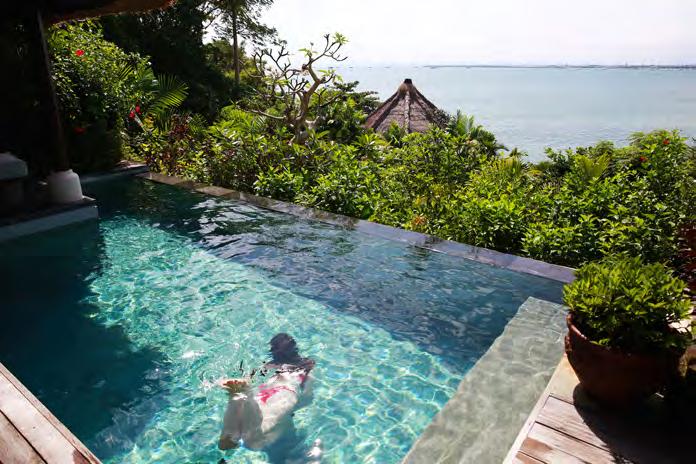
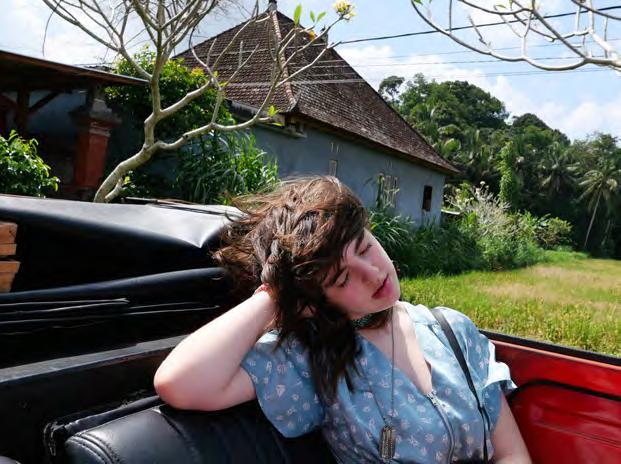
Present Perfect: A mother-daughter trip to Bali provides a lesson in staying in the moment.
To Each Their Own: From elemental fine jewelry to first-rate hotel mementos to sleep-enhancing objects, there’s something for everyone in this season’s selection.
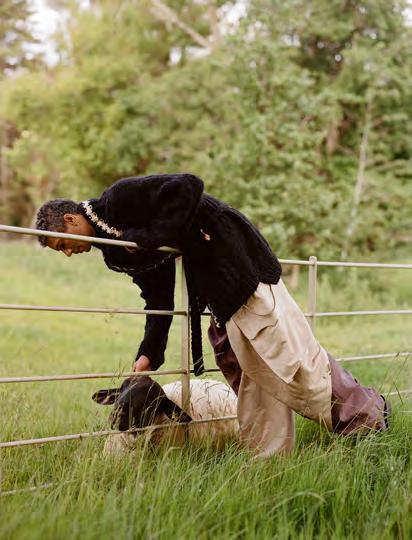
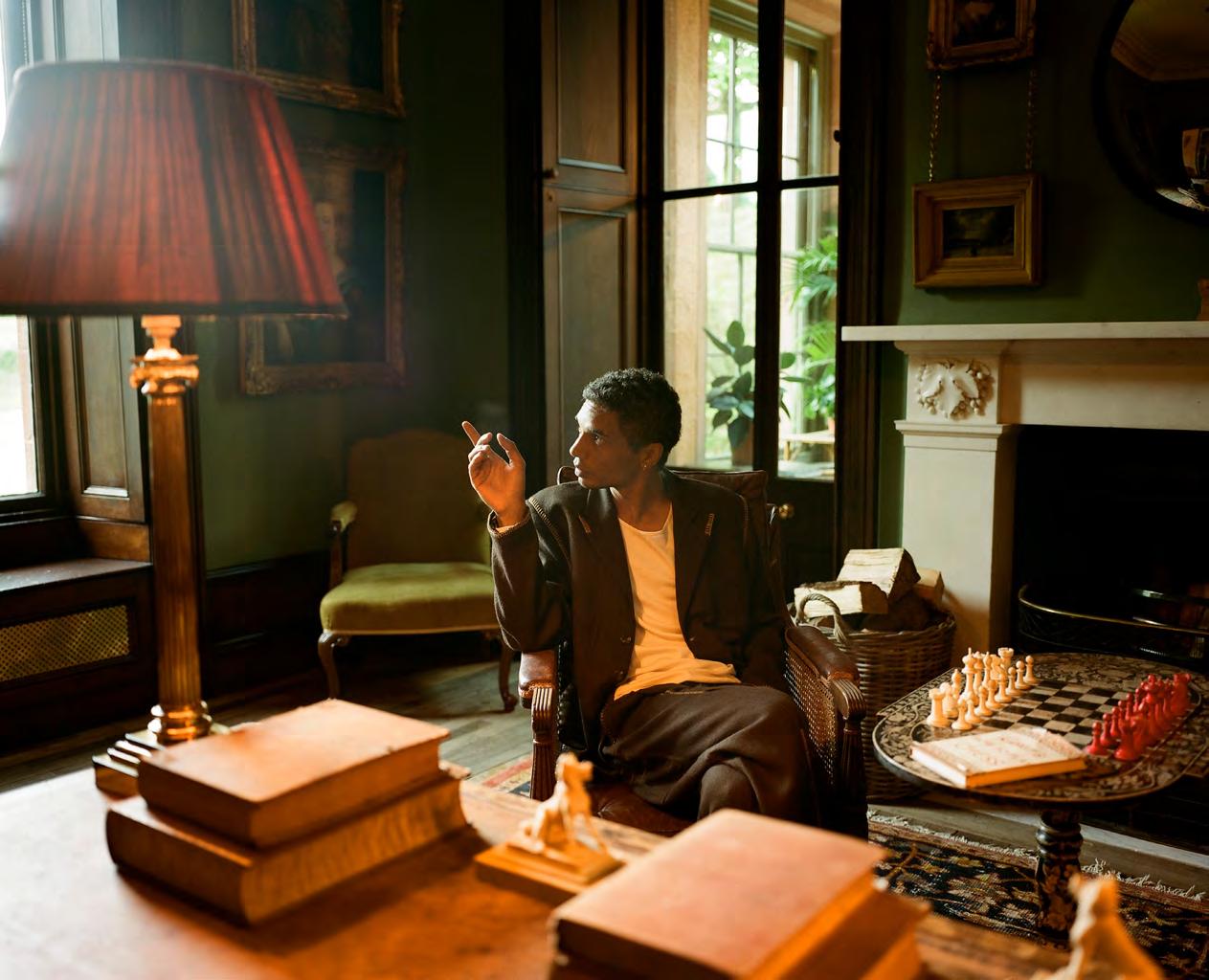
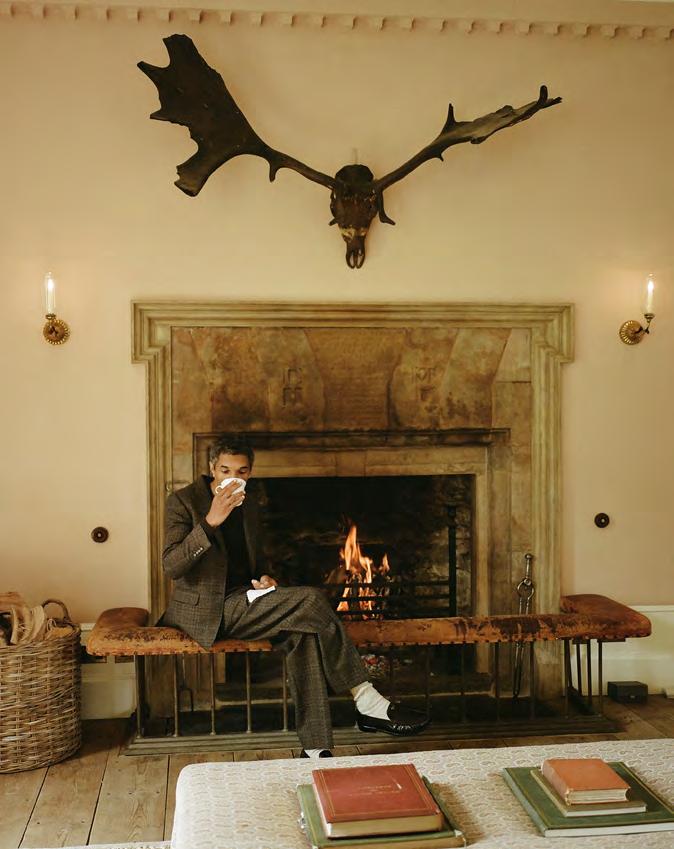
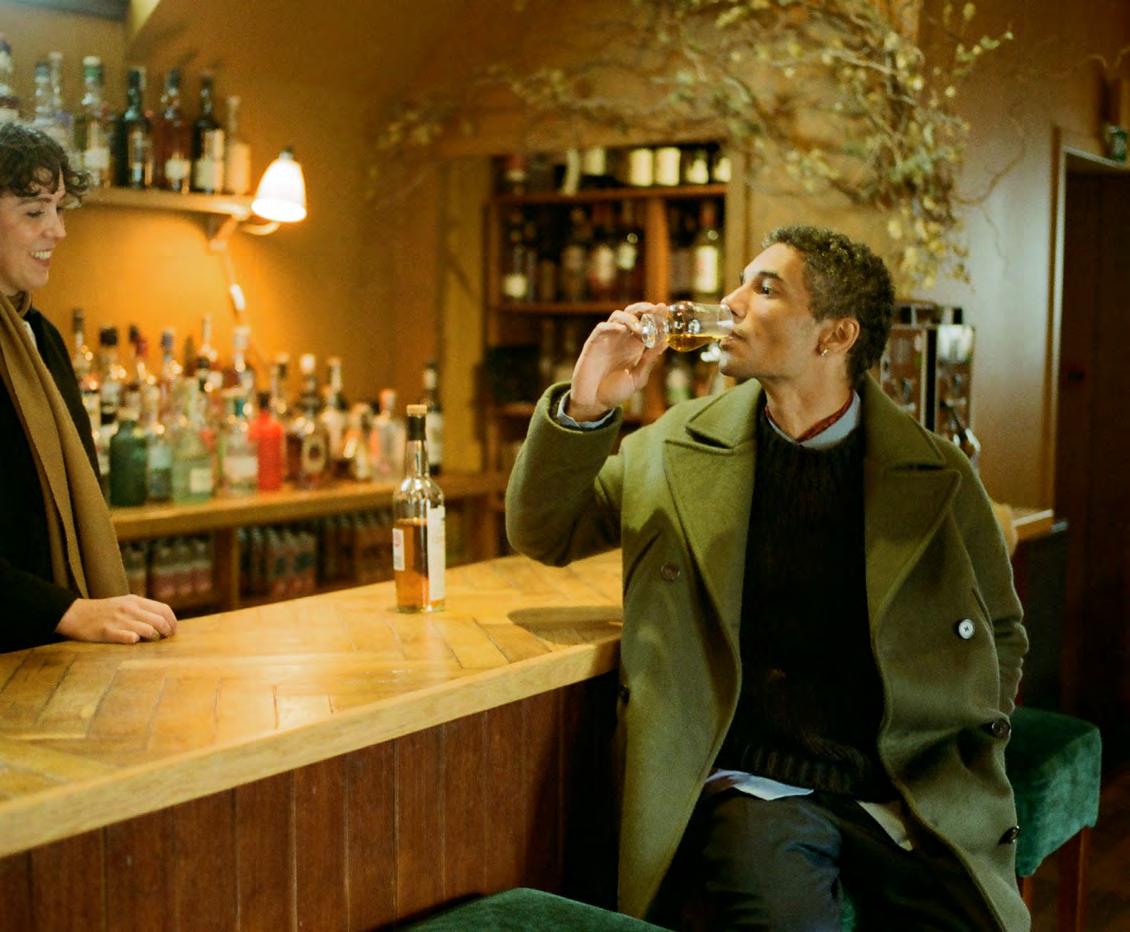
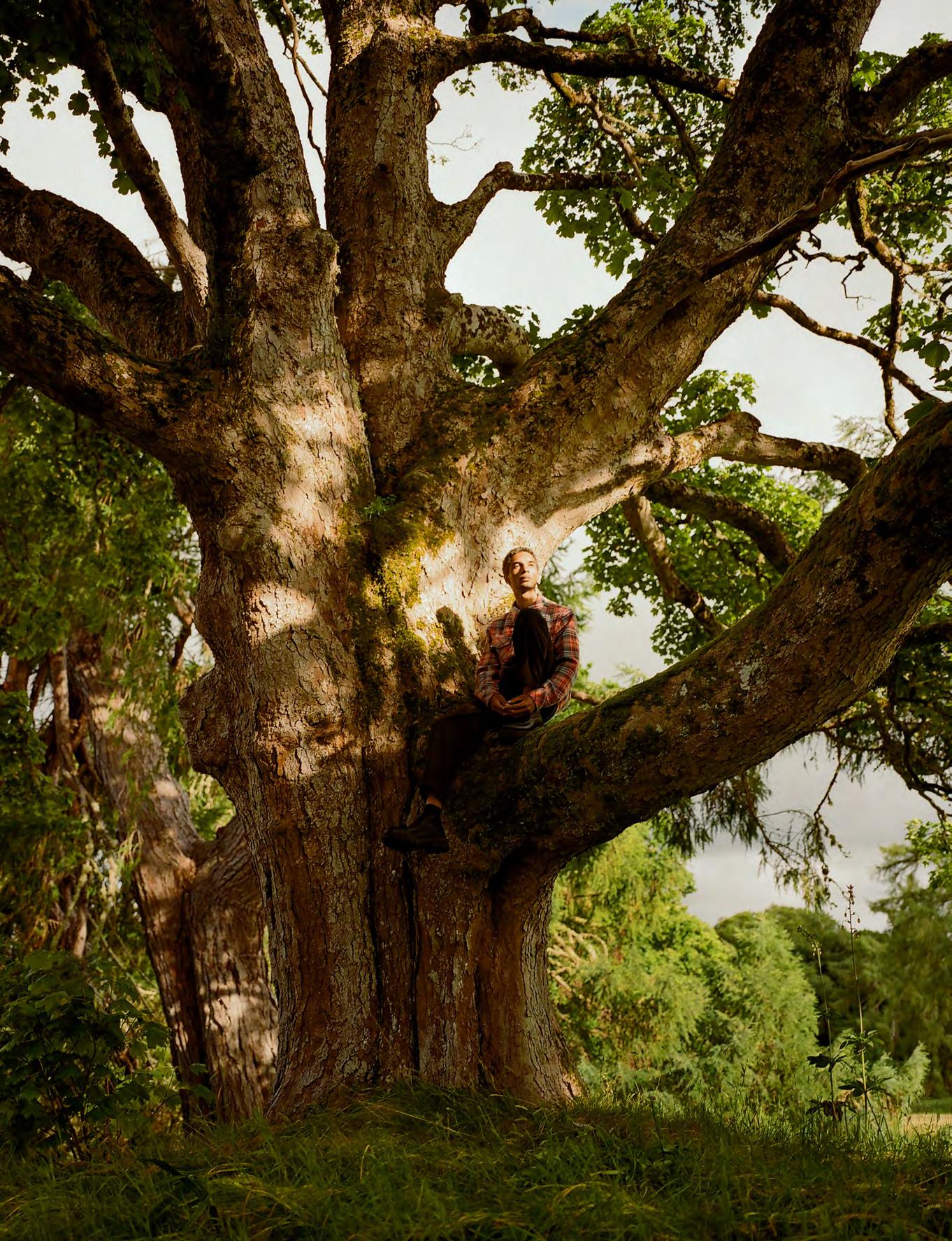
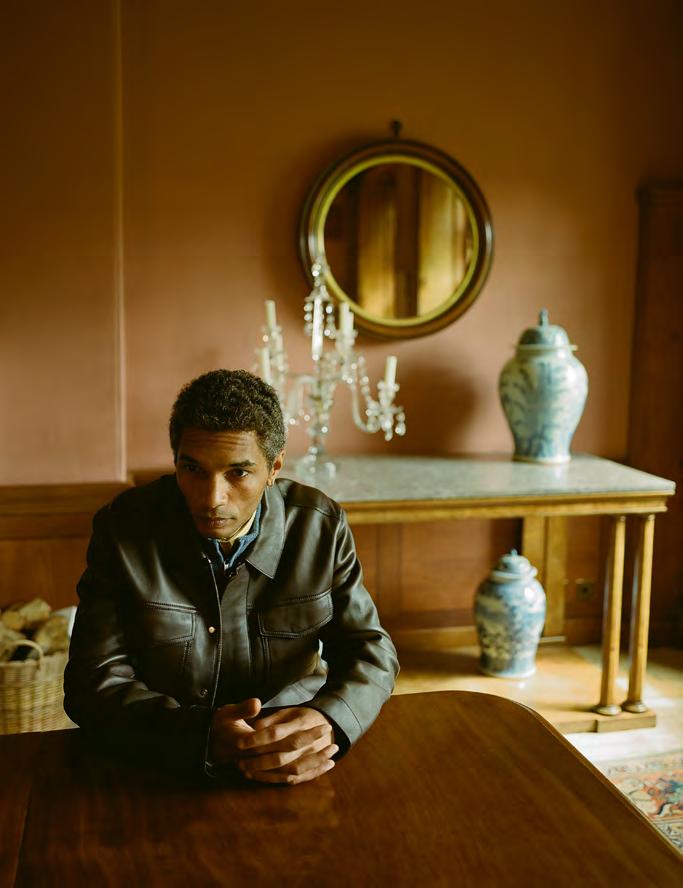
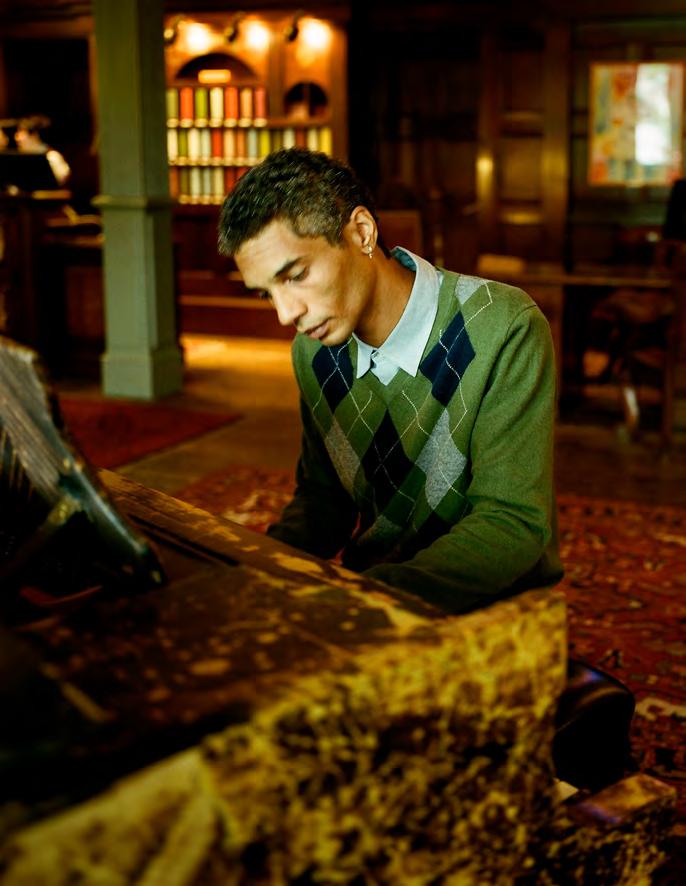
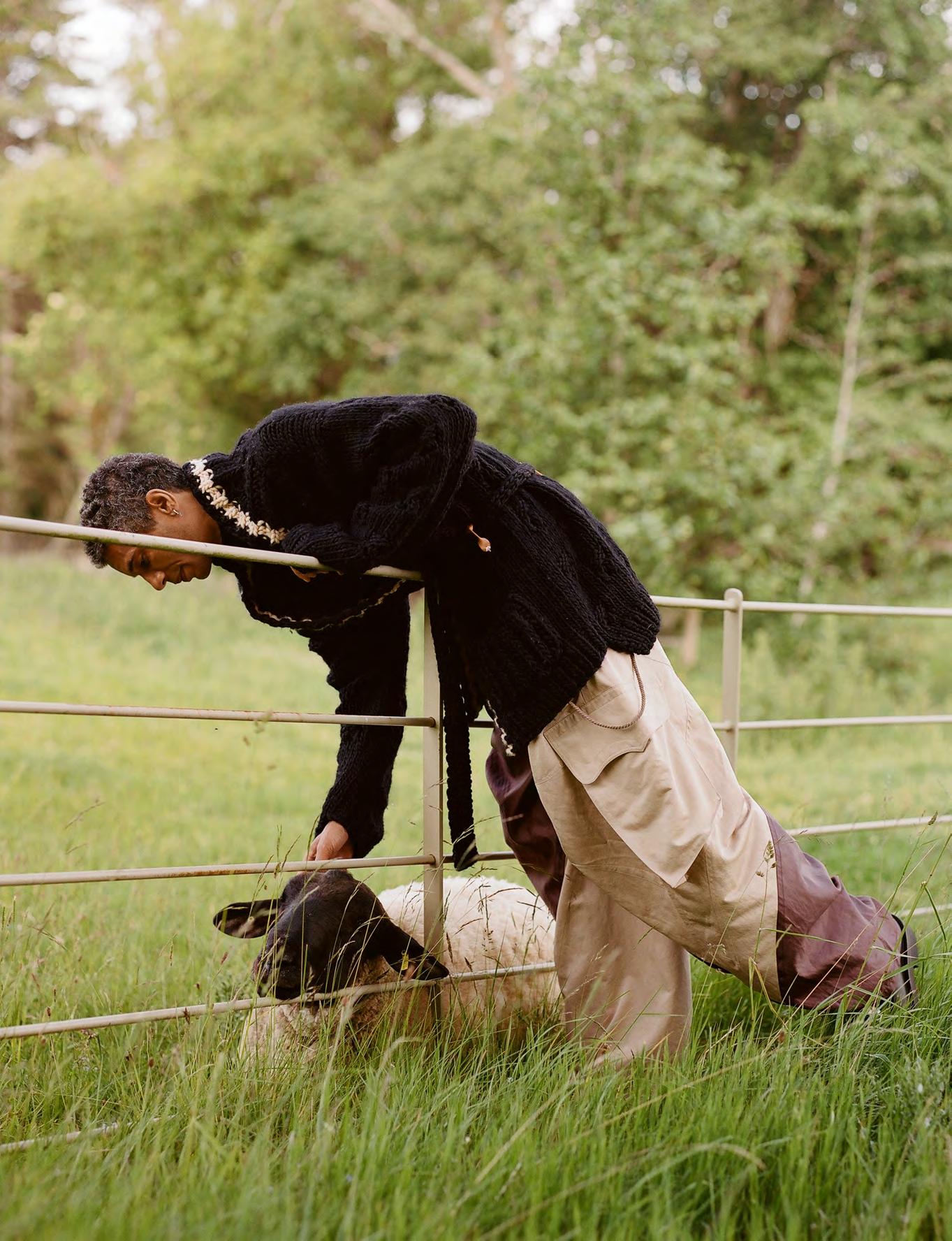
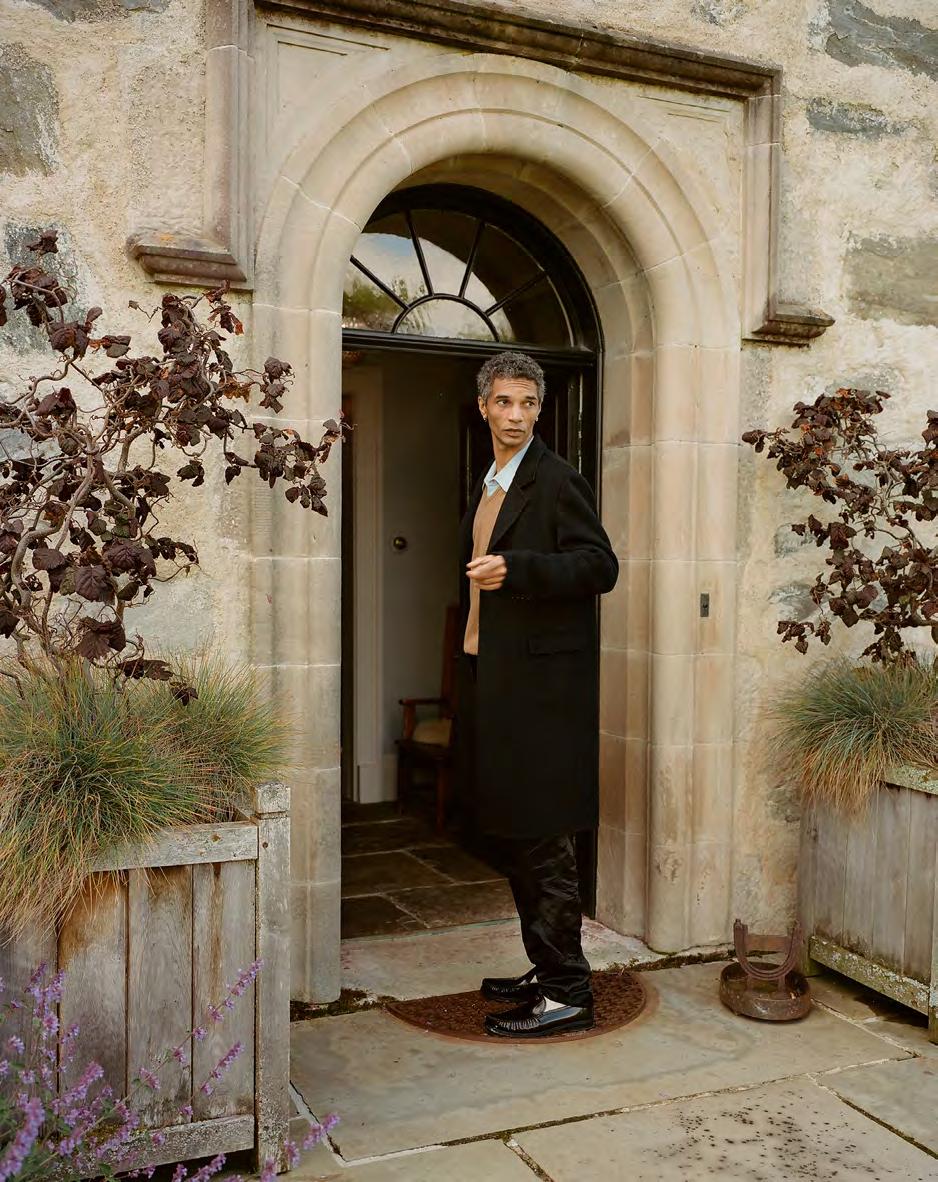
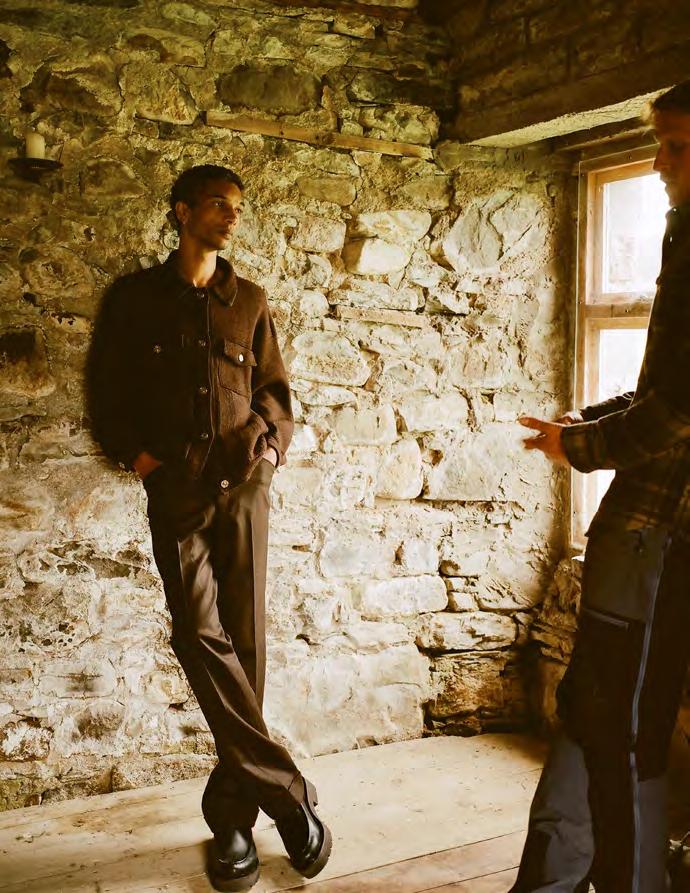
Cover: Sweater, Pringle of Scotland Jacket, Yves Salomon. Coat, Kartik Research. Pants and shoes, Gabriela Hearst. Location: Killiehuntly Farmhouse and Cottages, Wildland. Photography by Emma Hardy. Styling by Joséphine Dorval. Model: Filip Roséen.
What’s the best gift you’ve ever received (aside from your amazing family, friends, and pets)?
One of the loveliest gifts I’ve received is a white enamel heart on a gold chain, given to me by my godmother. I think it’s from the 19th century. It’s a bit chipped, and I’ve dropped and cracked it a few times as well. As the beautiful old white enamel leaves the edges of the heart, the gold is revealed underneath. It’s been uniquely reshaped by life.
I love the winter coat my partner, David, got me last Christmas, the Carhartt WIP OG Santa Fe coat in Deep Lagoon. Its aesthetic straddles the line between heritage prep and “alternative.” I’m Gen X, so that latter label has always been important to me, despite presenting as fairly normie. The color is all I ever want to wear, and how often do we find a handsome, warm, non-puffer jacket that’s not black? Also, I happen to live in Santa Fe, and the coat features a bit of Western flair that would be irresponsible not to embrace here.
I am, admittedly, not a huge gift person. I’m notorious for losing small trinkets and knickknacks, and my mind goes instantly blank when I’m asked what I want for Christmas. What I will keep, however, are words and images. Every letter, card, or CVS-printed photo I’ve ever received is stuffed into a bursting metal tin in the back of my closet. My closest friends know this. A few years ago, for my birthday, they co-conspired with my roommate to sneak into my apartment and decorate my room with letters and photos hung from the ceiling. To be known is to be loved, they say.
A gift often comes wrapped in paper, but it is always enclosed within a moment. On my ninth birthday, my younger sister and I walked barefoot
through the morning grass, eyes focused on the surprise placed under the cherry tree: a big-boy bike. I do not recall much about the bike, except that it was yellow. But I clearly remember my sister grabbing my hand and softly whispering, “Yellow bikes are fast.” Among all the gifts I have been blessed to receive are moments I will never forget.
Martien Mulder, Jagger Stanglmayr, and Natasha Stanglmayr photographers and writers, Back to Base
The best gift Martien ever received was her camera — and her darkroom supplies — when she was a teenager. Her parents often gave her presents that encouraged a new interest or hobby, and this one sparked something lasting. That camera opened the door to her love of creating images and, ultimately, set her on the path to a lifelong career.
Jagger says the best gift she ever received was a trip to Paris for her 14th birthday. She stayed for three days with her family and a friend she brought with her from New York. There, she discovered her love of fashion, the thrill of exploring a new city with a friend, and her natural urge to explore. In her words, “It opened my eyes!”
And Natasha’s ultimate gift? A ticket to Prince’s Sign o’ the Times tour stop in Vienna, when she was 16. It was her first major concert, and she even ended up dancing on stage with him.
Shaw Bowman writer, Shadow Worlds
Emma Hardy photographer, Human Nature
Isabelle Zhao photographer, Stitch by Stitch
Filip Roséen model, Human Nature
What’s the best gift you’ve ever received (aside from your amazing family, friends, and pets)?
An industrial-sized tin of Cantabrian anchovies from Conservas Olasagasti. My boyfriend oh-so-conveniently works as a chef, which allows me access to restaurant-grade, large-format products like, say, olive oil, wine vinegar, and oddly enough, oysters. I wrote the last chapter of my first book, Grape Juice, sustained, entirely, by an absolutely mortifyingly large quantity of anchovies.
Once in San Francisco, I ran into Terry Tempest Williams — my favorite writer and a kindred spirit. We hugged on the street and, without a word, she placed a piece of dusty-pink sandstone in my hand. It has stayed with me since then — by my bed, in my palm as my father passed, against my dog Wizard’s body as he healed. It is the most sacred gift I’ve ever received, a reminder of what endures beyond us and of my own fleeting time.
The feeling of groundedness. Growing up, I constantly felt afloat while desperately searching for a sense of belonging. After the lockdown in Shanghai in 2022, it took me some time to connect and reconnect with myself. I encountered that feeling for the first time in my life — and it changed everything.
The incredible room fragrance from SB Winemaker’s House & Spa Suites in Mendoza. Made by the hotel’s owners, mother-and-daughter duo Susana Balbo and Ana Lovaglio Balbo, and Buenos Aires perfumery Dolores BA, it perfectly represents the region, with rugged leather and wood tones woven through white flowers and bright citrus.
A camera from my mother’s friend, who happened to be a wedding photographer in Columbia, South Carolina. What I didn’t understand immediately is how it would be a tool that transported my awareness of my personal potential. In many ways, it was a litmus test as to how the world is filtered through my eyes, emotions, and decision-making.
A baby-blue handbag with black lining and a zippered inner pocket, designed and knitted by my mother. She loved to knit as a young woman and has been able to devote herself to it in retirement, so I’ve been the lucky and hapless target of her zillion projects — my closet is crammed with bags, sweaters, scarves, and dresses. The blue bag was one of her first gifts to me, though, and I get mushy thinking about the moment she finished it and how sweetly proud and excited she was.
David Benjamin Sherry photographer, Shadow Worlds
Karen Yuan writer, Home Soil
Eliza Dumais writer, Between Two Bridges
Lanxin Zhao photographer, Home Soil
Frank Frances photographer, From the Ashes
Adam Erace writer, Aerei, Treni, and Automobili
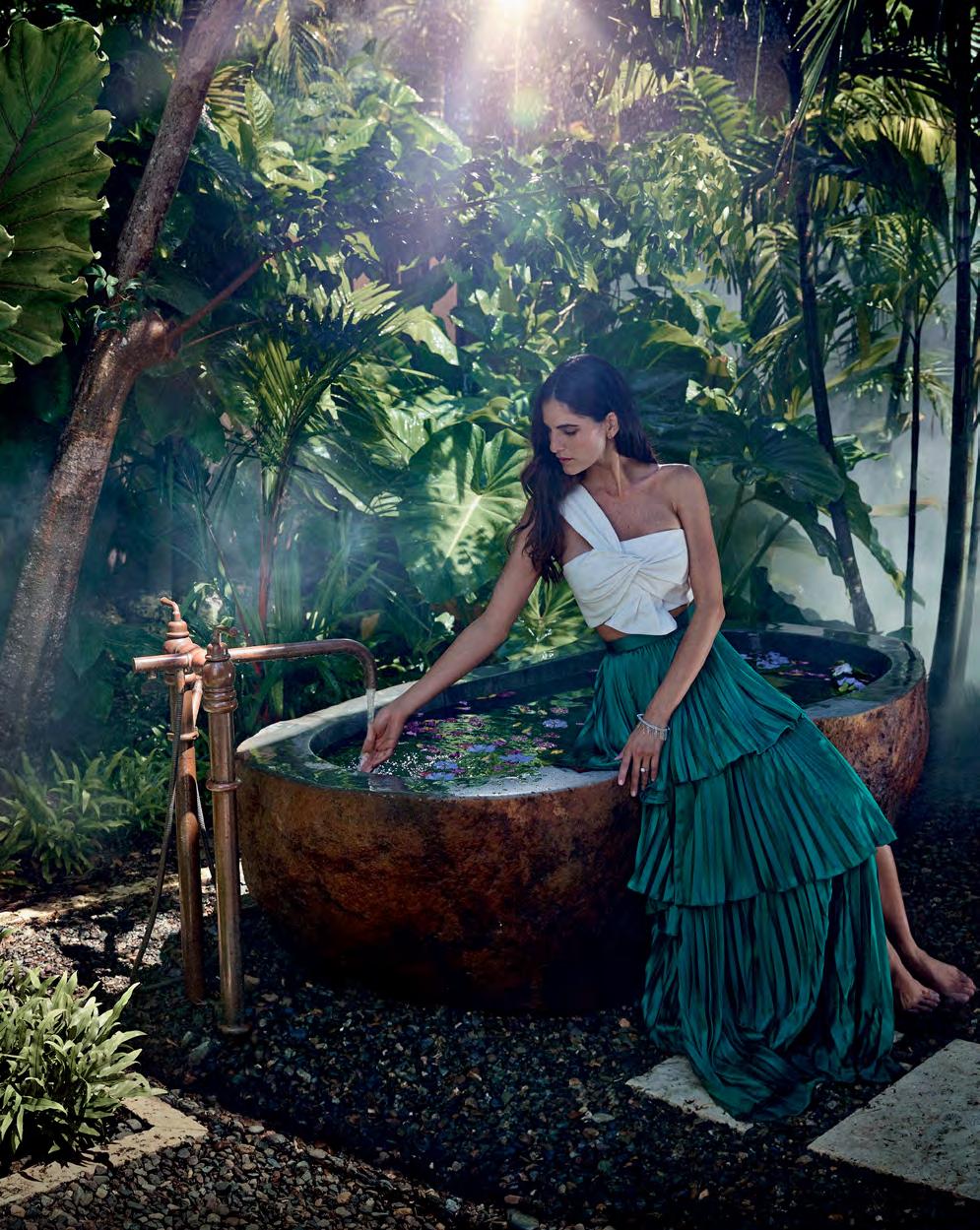
SERENITY BEGINS where CIVILIZATION ENDS
Here, sound baths echo through rainforest sanctuaries. Ancient rituals ground you, and nature restores. And where coquí frogs serenade you to sleep. Welcome to your home at the ends of the earth.
EDITOR-IN-CHIEF
Skye Parrott
EXECUTIVE EDITOR
Erin Dixon
EXECUTIVE CREATIVE DIRECTOR
Alex Wiederin
HEAD OF PARTNERSHIPS & COMMISSIONING EDITOR
Elysha Beckerman
DESIGN & VISUALS DIRECTOR
Lisa Lok
ART DIRECTOR, PRINT
Michael Ricardo
HEAD OF PRODUCTION
Elissa Polls
EDITOR-AT-LARGE
T. Cole Rachel
DEPUTY EDITOR, PRINT
Sophie Yun Mancini
MANAGING EDITOR
Shivani Somaiya
SENIOR EDITOR, JEWELRY & ACCESSORIES
Shannon Adducci
SENIOR PRODUCER
Alexandra Brodsky
DESIGNER
Nishi Patel
EDITORIAL OPERATIONS ASSISTANT
Anna Kaplan
DEPUTY EDITOR, DIGITAL
Jackie Risser
SENIOR EDITOR
John Chuldenko
EDITOR, ARTS & CULTURE
LaTonya Yvette
SOCIAL MEDIA MANAGER
Alessandra Berge
COPY EDITOR
Leah Angstman
NEWSLETTER CONTENT MANAGER
Hassan Ali
CONTRIBUTING EDITORS
Annelies De Rouck, Alex Frank, Khira Jordan, Annie Lin, Jeremy Malman, Maggie Morris, Marc Weinhouse, Karen Yuan
CONTRIBUTORS
Nina Renata Aron, Aleksandr Babarikin, Shaw Bowman, Seth Caplan, Elinor Carucci, Valentina De Santis, Joséphine Dorval, Eliza Dumais, Matt Dutile, Geoff Dyer, Bret Easton Ellis, Adam Erace, Frank Frances, Marco Galloway, Zoey Xinyi Gong, Emma Hardy, Ryan Johnson, Jung Kim, Emeril Lagasse, Rich Marot, Claudio Meli, Martien Mulder, Celeste Noche, Enrique Olvera, Jennifer Pastore, Dorian Proust, Isabel Ramos, Siobhan Reid, Filip Roséen, Richard Rozewski, Jess Rotter, Andy Roddick, Wuiga Rubini, David Benjamin Sherry, Mehr Singh, Marzena Skubatz, Amy Smilovic, Steven Soderbergh, Lisa Sorgini, Jagger Stanglmayr, Natasha Stanglmayr, Alice Tye, Donal Lardner Ward, Colin Webber, Isabelle Zhao, Lanxin Zhao
ADVERTISING DIRECTOR
Guglielmo Bava
ADVISORY BOARD
VICE PRESIDENT, PARTNERSHIPS
Caren Kabot
Shira Sue Carmi, Geoff Cottrill, Steven DeLuca, Demetria White
PRINTING
Hemlock Printers
SPECIAL THANKS
Claudia Haspedis, Virginia Scott
Dorian Prost, photographer
The DOSSIER : A collection of thoughts, ideas, recommendations, and discoveries from all over the globe.
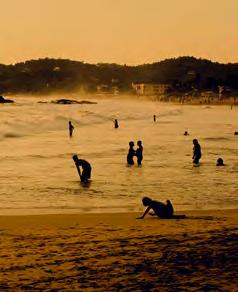
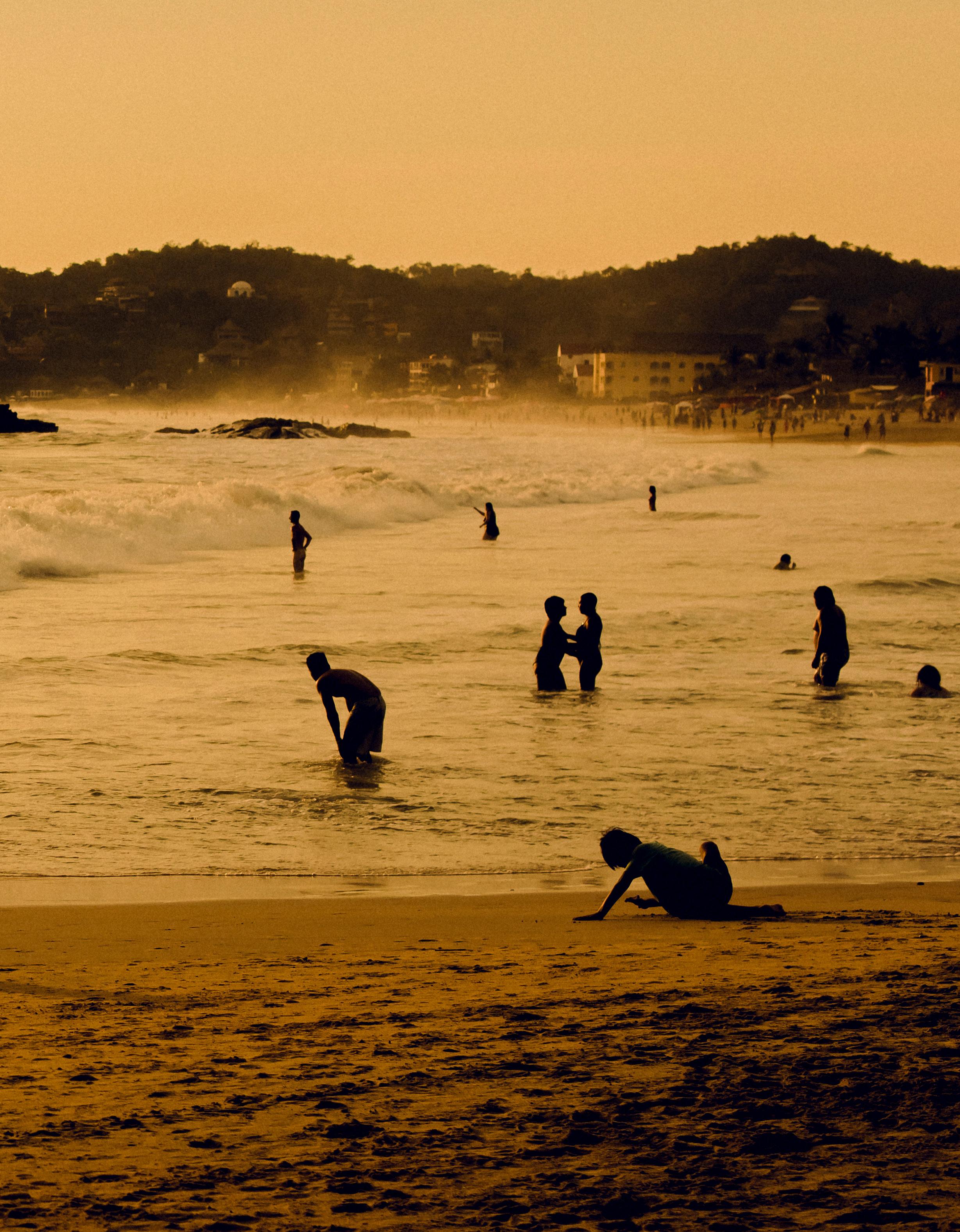
Oaxaca
Taken on Playa Zipolite during a family trip, this photo means everything to me: a suspended moment, a kind of dolce vita, where the lateafternoon sun gently envelops the landscape and people with its soft warmth. It’s as if that particular golden-hour light came to crystallize and make this memory and place eternal. After a day at the
beach, we walked along the shore, the sun set, and the light gradually became more and more orange, like a fire. Little by little, everyone on the beach stopped whatever they were doing to contemplate the show. Looking at this photo now, I can still feel the exact moment, the sounds, the smells: pure and rare happiness.
Blaze of Glory
Philippines
Giving Shelter
Celeste Noche, photographer
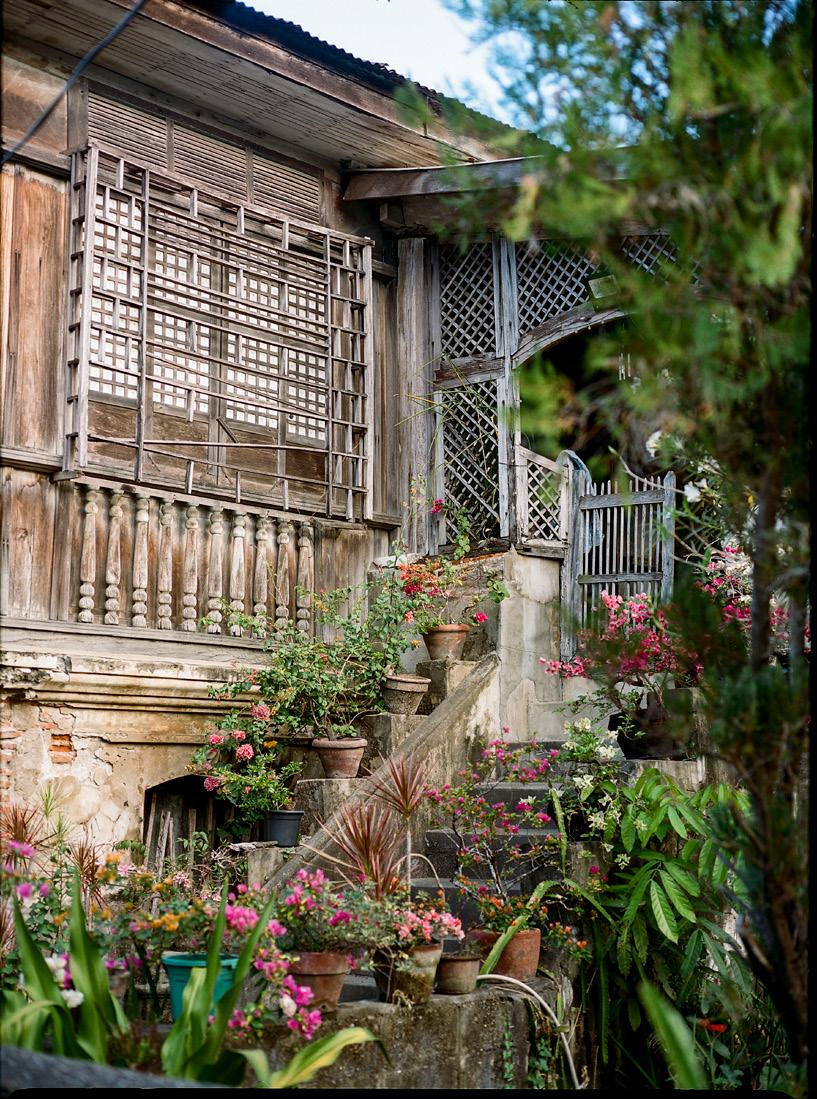
My mother would tell me stories about Ilocos when I was growing up — mainly that her uncle lived there, and, during her last years living in the Philippines, she’d take 12-hour bus trips every other week to visit my sisters, who were also living there. I didn’t understand it then, but Ilocos was a safe haven for my mother and sisters as they were fleeing a dangerous living situation. Earlier this year, I visited Ilocos for the first time. It was still dark when I arrived at 3 a.m. on the bus. As the sun rose, I began to see everything around me more clearly: an
early 1800s Spanish colonial home high above the ground, dark-wood walls spotted with light glowing through capizshell windows. I could see and hear chickens pecking below through the wood-slat kitchen floor while my tita Annie and her helpers, Nora and Medi, set rice, fried eggs, longanisa, and bananas fried in sugar on the table. Outside, laundry hung on a line and bougainvillea of all colors lined the stone stairs. The neighborhood was still quiet when I stepped out to look, in gratitude, at the house standing before me.
Spirited Away
Steven Soderbergh, director, writer, and producer
I was with the [Bolivian] vice president at a dinner once and said, “I’m of Swedish descent, and the Swedes are known for having a certain kind of reserve. They play things close to the vest. I feel that the Bolivians are the same way, in a way that’s very familiar to me.” I asked him, “Am I out of my mind?” He goes, “No, absolutely
Bolivia
not. Bolivians do not selfpromote in the way that some other cultures do — could be because we’re landlocked. We’re [one of] the only landlocked [countries] in South America.” Bolivians have an incredibly wide variety of plants. So they have a very interesting food and beverage culture. They just don’t get a lot of play on the world stage. Singani [the country’s national spirit, which comes from the muscat of Alexandria grapes] is something they do that is world-class, that now people are starting to know about.
View Finder
Isabelle Zhao, photographer
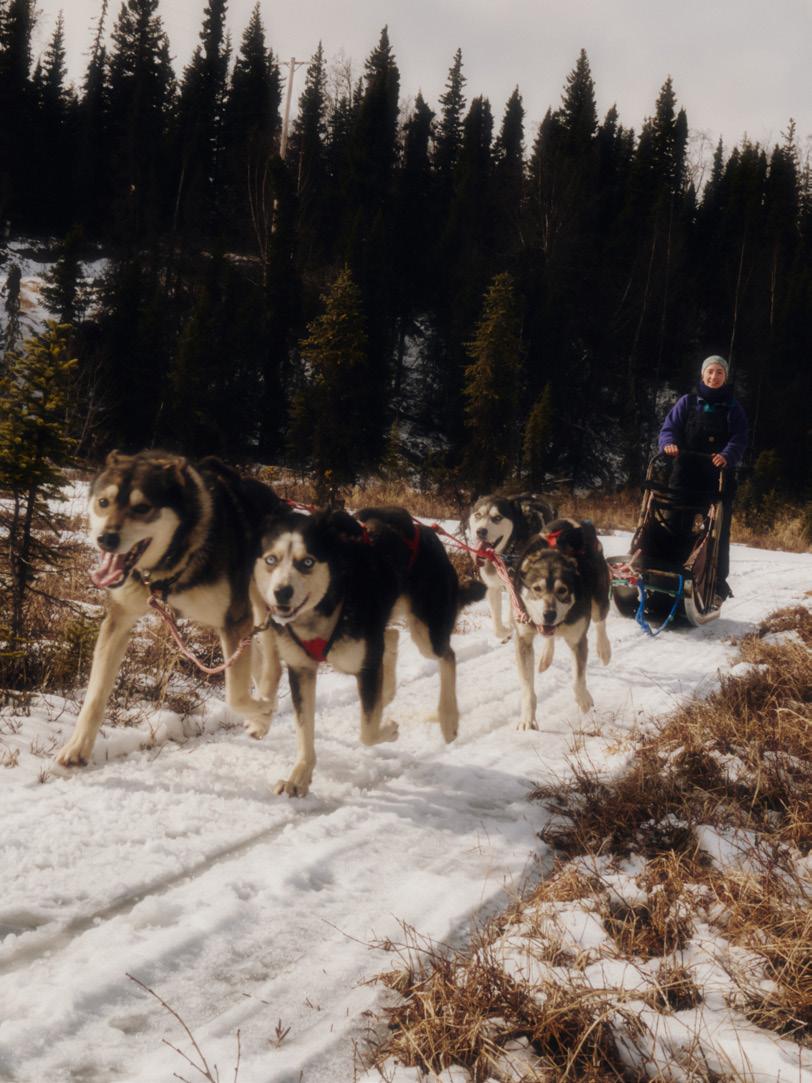
After flying into Anchorage, the quickest way to reach Alaska’s Kenai Peninsula is by way of a 12-seat puddle jumper. The front seat of one of those planes is where I leaned over with my camera, rapt with awe. I think of every image I take as a portrait: There’s a personality to every mountain, a whole map of history and memory embedded in sharp and softened edges.
Alaska
This flight bookended a monthlong farm stay with a mushing family in Soldotna, a town of fewer than 5,000 inhabitants that dots the western edge of the peninsula. Looking for respite from city life, I found my days in Alaska gorgeously slow — mornings with the dogs, drives down to the pebbled beach, walks through iced-over swamps, and wood-fired pizza parties with neighbors amid snow banks.
Kuala Lumpur
Geoff Dyer, writer
I was in Kuala Lumpur for a month in December a couple of years ago, and it reminded me of just how great and how crazy it is to be in Southeast Asia for all those same cliched reasons people talk about when they go to London or New York. As soon as you go to these Asian powerhouse cities, you realize: Oh, actually they’re not spending all their time wishing they were in New York, because there’s a real sense of that futuristic, fantastic energy right here.
Lake Como
Point of View
Valentina De Santis, chief executive officer of Grand Hotel Tremezzo and Passalacqua
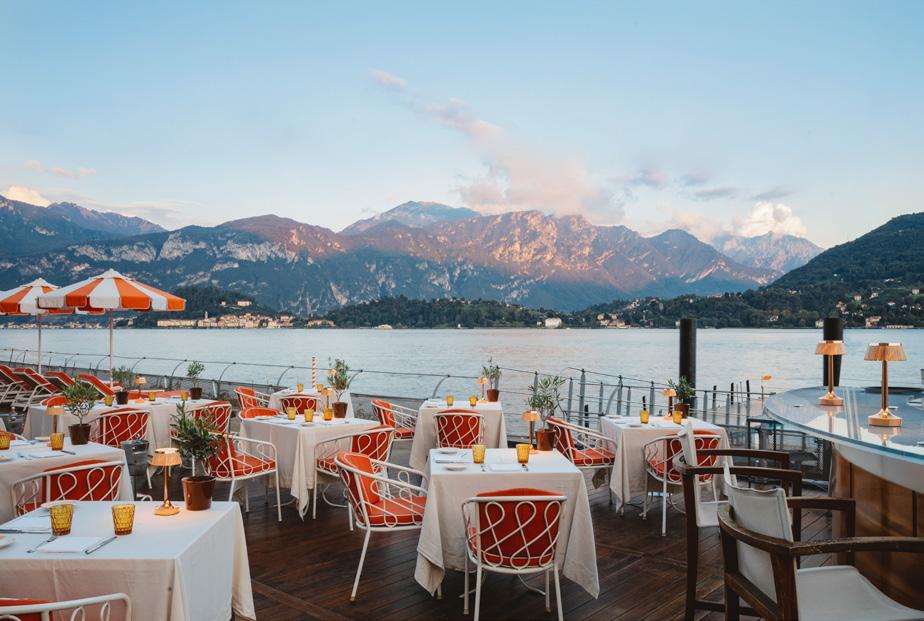
Something to taste … Da Giacomo al Lago, one of our beloved restaurants at Grand Hotel Tremezzo. Its atmosphere evokes the glamour of the 1960s Italian Riviera. The cacio e pepe tortelli with raw prawns has become iconic, and tastes even better when paired with the mesmerizing lake view.
Strong Currents
Seth Caplan, photographer
Rio de Janeiro
Rio de Janeiro is a city of movement. Its very geography undulates, with dramatic mountains sloping down into ocean waves. Footvolley players dive in the sand, and dancers’ hips samba in the clubs. Cariocas call Tijuca National Park the “lungs of the city,” but Rio itself feels like it’s always inhaling and exhaling. I took these photos
Something to take home … A stop at Moresi on Via Vittorio Emanuele II is a must for beautifully crafted knitwear. If you’re looking for something truly special, Gioielleria Gabaglio: its collection ranges from contemporary designs to rare antique jewels. Of course, no visit would be complete without experienc -
on a recent visit to the city with friends during Carnaval, when Rio was at its peak, bursting with energy and flow. Even within quiet moments, movement abounded.
We took a cable car to Pão de Açúcar. The mountainside rushed toward us and dramatic views of the harbor emerged while a group of birds circled and salty air streamed in through the windows. I also roped a few friends into taking an archi -
ing our world-renowned silk. For centuries, this precious fabric has been woven with grace and artistry, embodying the timeless elegance and beauty that define our territory.
Something to see … Villa Balbianello’s lush gardens, private museum, and cinematic loggia, which seems to float above the lake. For a stylish night out, Teatro Sociale in Como is a jewel-box theater that recalls the timeless
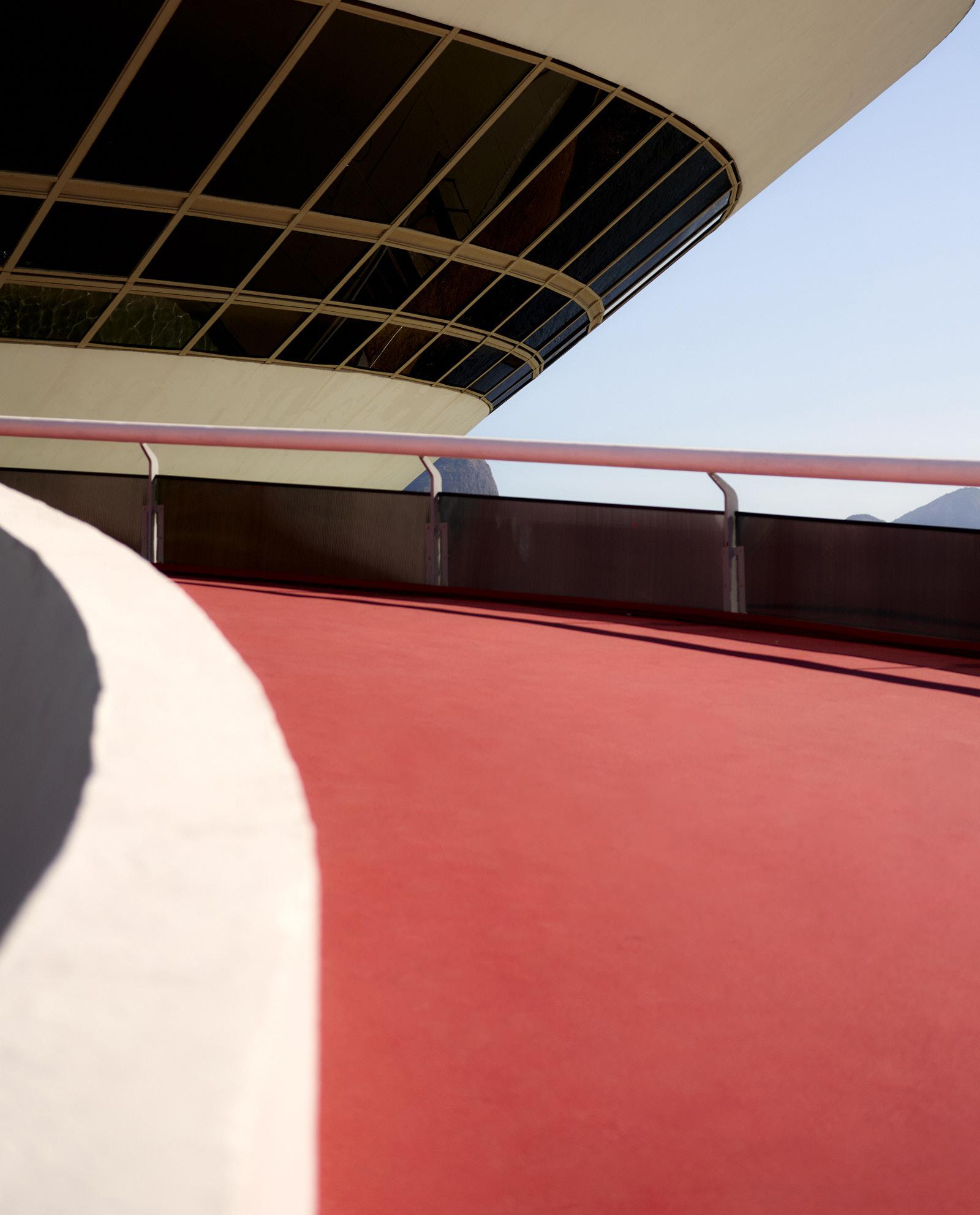
tectural excursion to the Museu de Arte Contemporânea, designed by architect Oscar Niemeyer. A twisting, red pathway leads up to the museum’s floating rotunda, which sits upon a column inside a reflecting pool overlooking Guanabara Bay. Pure, round, white forms stand starkly against the landscape’s rugged, organic shapes, highlighting Niemeyer’s vision of Brazilian modernism. We relished all the sublime views.
charm of a “Little La Scala” but on a more intimate, magical scale. After the curtain falls, you can continue the evening at Ristorante Sociale or Ristorante in Teatro, both just a short stroll away.
A secret place … If you climb to San Martino, you’ll find a small church that looks as though it were gently placed on a ledge of rock by a divine hand. Breathtaking lake and mountain views stretch as far as the eye can see.
Turks and Caicos Islands
Onward and Upward LaTonya Yvette, arts and culture
editor of Dossier
The year began strangely. January blurred into March, and I found myself stepping off a plane in Turks and Caicos with my friend Danielle. Our destination was The Shore Club, where the manager greeted us with welcome drinks and a seafood spread that bordered on the divine. The next day, we found ourselves under a wide-brimmed, hatlike canopy at Si Si, a new restaurant at The Palms, which debuted as part of the nearby resort’s seismic renovation — a complete reimagining of the property
That word stuck with me: reimagine . To redefine. Or maybe, to pause before continuing. To see the old
shape and decide it’s time for something else.
I don’t believe a trip can solve everything, least of all the quiet griefs we drag into a new year. But this one helped. By the time dessert arrived on the second night, the internal pressure I’d carried for months had begun to ease. The following morning, I received my first massage in far too long.
As I exchanged stories with the masseuse (she an artist, I a writer), I considered the property’s holistic approach to wellness. Everything was local: ingredients, practitioners, philosophies. The space felt intentional, crafted by people who knew the island and how to hold space for others.
I’ve always considered shifts to be brief tilts.
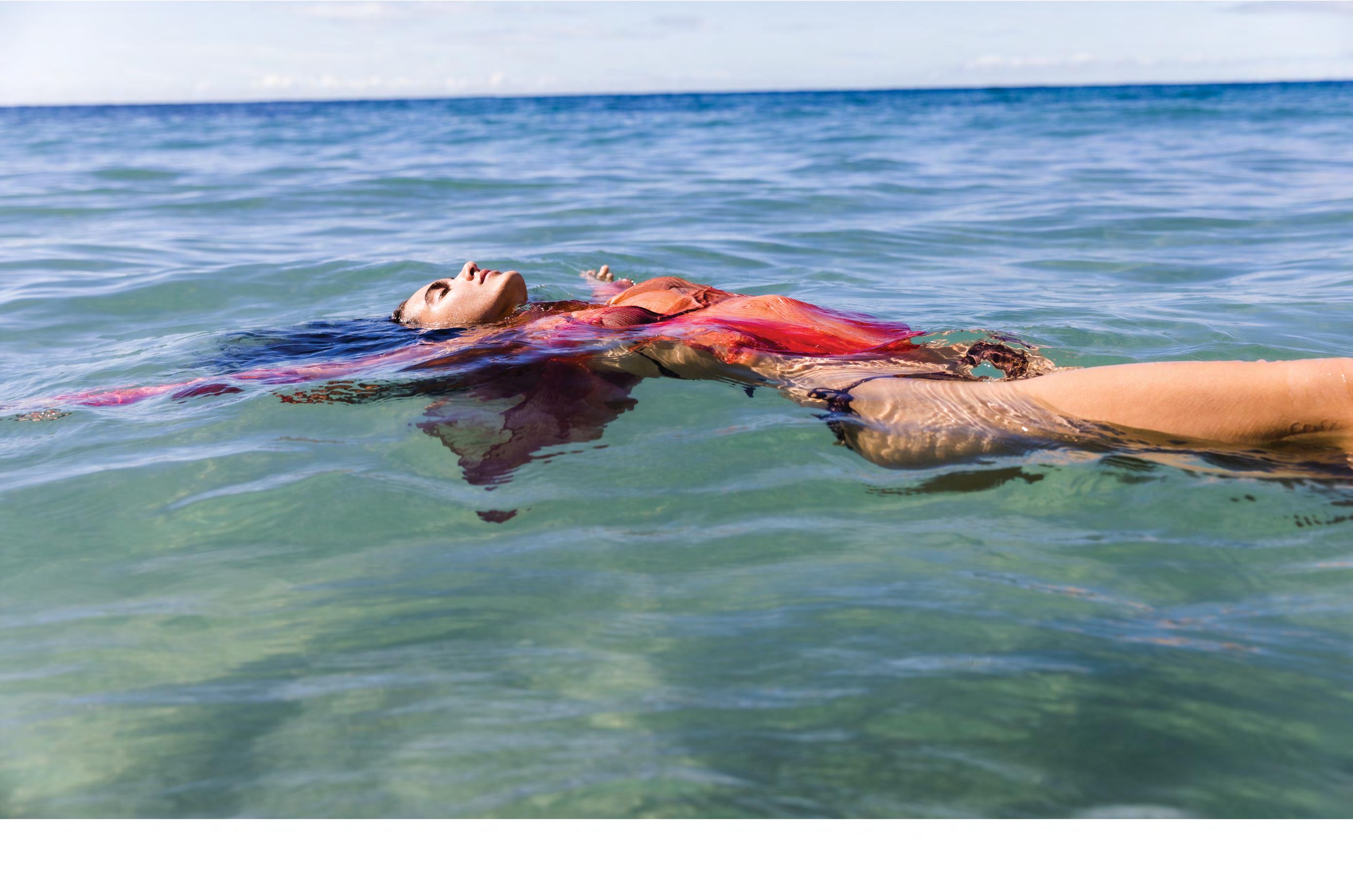
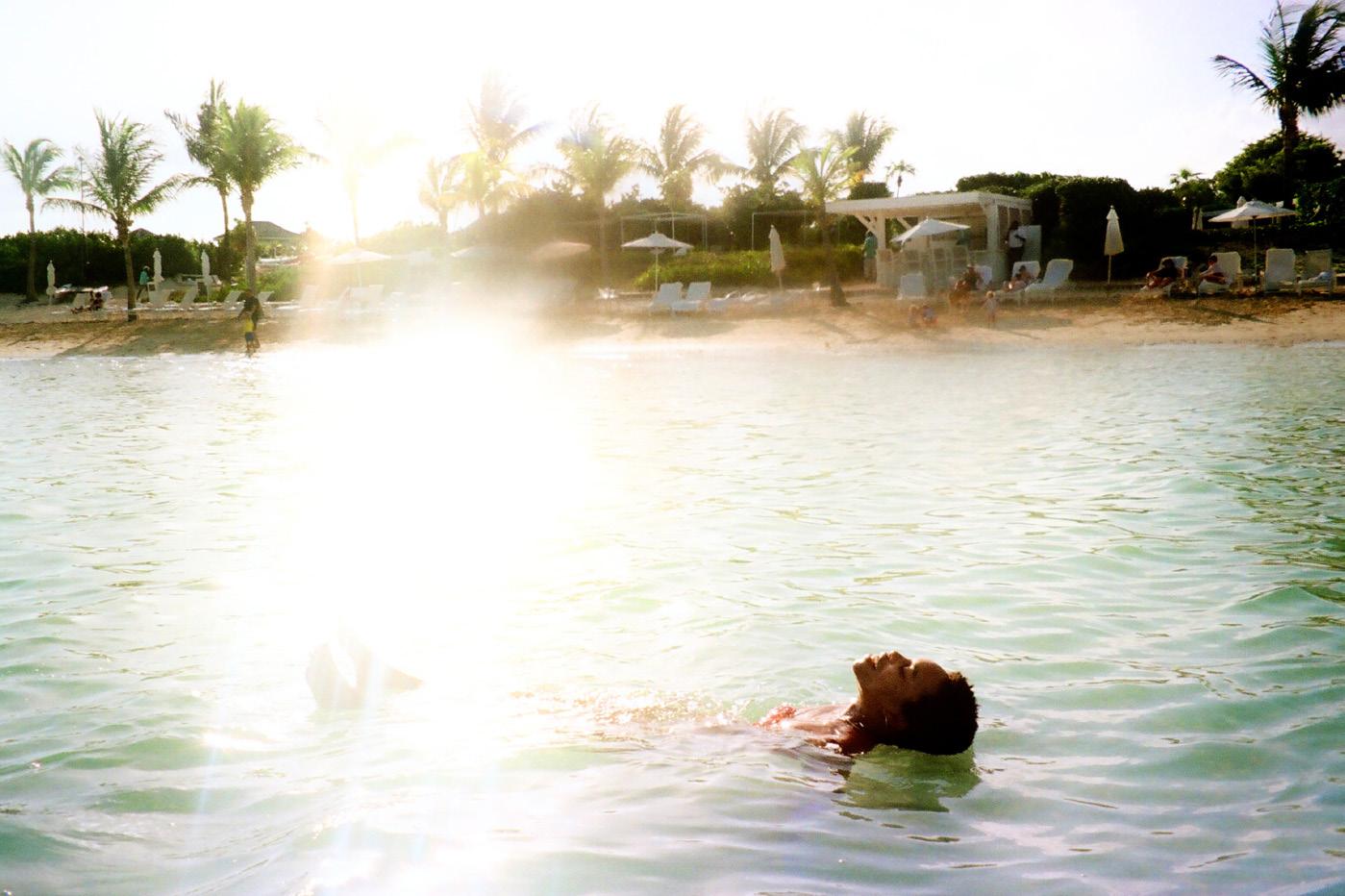
On our last day, Danielle challenged me to float in the Atlantic. “Dip your head back. Spread your legs. Now your arms,” she coached gently. Each time I tried, my knees buckled beneath me. “I can’t do this,” I muttered. “Let go,” she said.
I thought again of tectonic shifts and how they ripple across the ocean floor, reshap-
ing its ridges. And there I was, suddenly aware of my smallness. How minor my worries felt in the vastness of it all. Before I knew it, I was floating. The Shore Club and its palms drifted behind me along with many of my worries. Arms out. Ears submerged. Fingers splayed like a starfish. Letting the stillness carry me forward, quietly, into the new season.
A Golden Age Skye Parrott, editor-in-chief of Dossier
For my husband’s last birthday, my 8-year-old daughter suggested we take him to dinner. “I know, Mama! Let’s go to Le Tout-Paris,” she brightly proposed.
It took me a minute to process — because Le ToutParis is a Michelin-starred restaurant, and what 8-yearold would suggest that? Mine. My daughter is aware of the Michelin Guide because it’s part of my work, and I certainly didn’t do anything to assuage the situation by taking her to dine recently at Le Tout-Paris. It was her birthday, and she had joined
me for a stay at Cheval Blanc Paris, the hotel it sits atop.
Cheval Blanc opened in 2021 after seven years of restoration and immediately received entry into Palaces of France, a coveted designation the country awards properties that are fivestar — but even more so. Cheval Blanc presents a lustrous and very specific concept of luxury, one that is in active conversation with the rest of its owner LVMH Moët Hennessy Louis Vuitton’s portfolio, particularly with its fashion brands.
The hotel is jaw-dropping. Its interiors, designed by Peter Marino, are bursting
with art. Many guest rooms feature terraces perched above Pont Neuf, generally considered to be the most iconic of Paris’ many beautiful bridges, and Le Tout-Paris is but one of the 72-room hotel’s two Michelin-starred restaurants. In the Dior spa, along with a hammam, sauna, and ice shower, there’s a massive pool with a digital projection of the Seine flowing past.
I was invited to experience the hotel with my daughter because Cheval Blanc is also quite family friendly. We were not the only mother-daughter duo dining at Le Tout-Paris, and she was far from the youngest guest. While
impeccably chic, the environment was also remarkably relaxed.
After 24 hours at Cheval Blanc, I wanted to remind my daughter of her normal life, so when the staff offered to call a taxi, I demurred. Instead, we walked across the street to catch the metro. Back to normal — or so I thought. A week later she had a sleepover at a friend’s house. The following day, we heard from her friend’s parents that when they rolled out a mattress for my daughter, she sat on it, gave a little bounce, and nodded her approval before declaring: “Comfortable, but not as comfortable as at Cheval Blanc.”
True Stripes
Elysha
Beckerman, founding partner of Dossier
The Monte-Carlo Beach Club has defined a uniquely European brand of seaside escape since 1929. Its opening cemented Monaco —
already a magnet for continental royalty of both the crown and stage variety — as the Mediterranean’s most refined summer destination.
The following century saw all genres of global headliners grace its sprawling pool deck and spring off its iconic art deco-style diving board, from Mick Jagger to Farrah Fawcett to Johnny Hallyday. This year, there was a new protagonist in town.
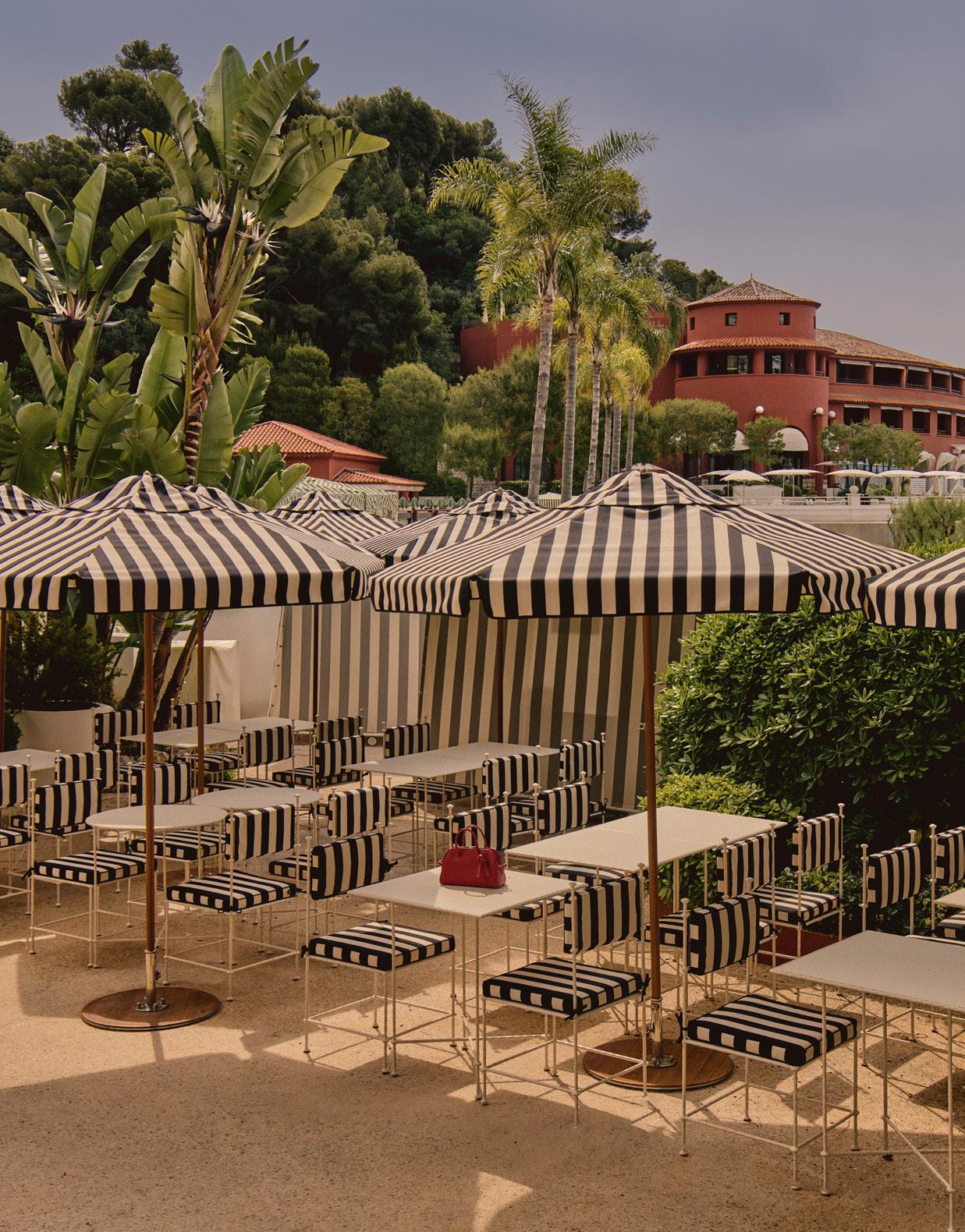
Umbrellas, chairs, and towels, striped in banana yellow, coconut-milk white, and black lines, placed around the pool’s edge and on the club’s pier signaled Monte-Carlo Société des Bains de Mer’s first riviera takeover in collaboration with French fashion brand Jacquemus.
The destination’s transformation into the Jacquemus Beach Club was an impressive sleight of hand, exemplifying the effortless interchange of legacy and modernity that the city plays so well. You could credit this dexterity to the landmark Casino de Monte-Carlo, but it turns out Monte Carlo’s
ability to stylishly balance glamour with heritage and national identity with global appeal is fundamental to its magnetic character, as exemplified by Hôtel de Paris Monte - Carlo, one of my homes on a recent visit.
The hotel sits on the cobblestoned Place du Casino, which on the weekends is encircled by McLarens and vintage Alfa Romeos with custom interiors. Inside the property, marble floors, mirrored elevators, and crystal-refracted lighting recall its prestigious pedigree. But my favorite facet of the hotel was sitting on the private balcony of my thoroughly renovated yet still classical suite, sipping an espresso, and, looking out past the elegant Hôtel Hermitage Monte-Carlo at Port Hercule, I observed hundreds of freshly inaugurated yachts bobbing, with the Circuit de Monaco’s notorious curves just beyond.
Ahead of the Game
Andy Roddick, entrepreneur and former World No. 1 tennis player
United States
I’m a bit of a romantic about golf courses. That whole West Coast, Carmel, California, region is just absurd. Outside of Hawaii, it’s probably the prettiest earth that we have in the country. And the magic of Sweetens Cove [golf club near Chattanooga, Tennessee,] is you have all the benefits of private golf, the architecture and beauty, but it’s without a lot of the stereotypes that can sometimes be intimidating in the golf world.
Abu Dhabi
the Rush Skye Parrott, editor-in-chief of Dossier
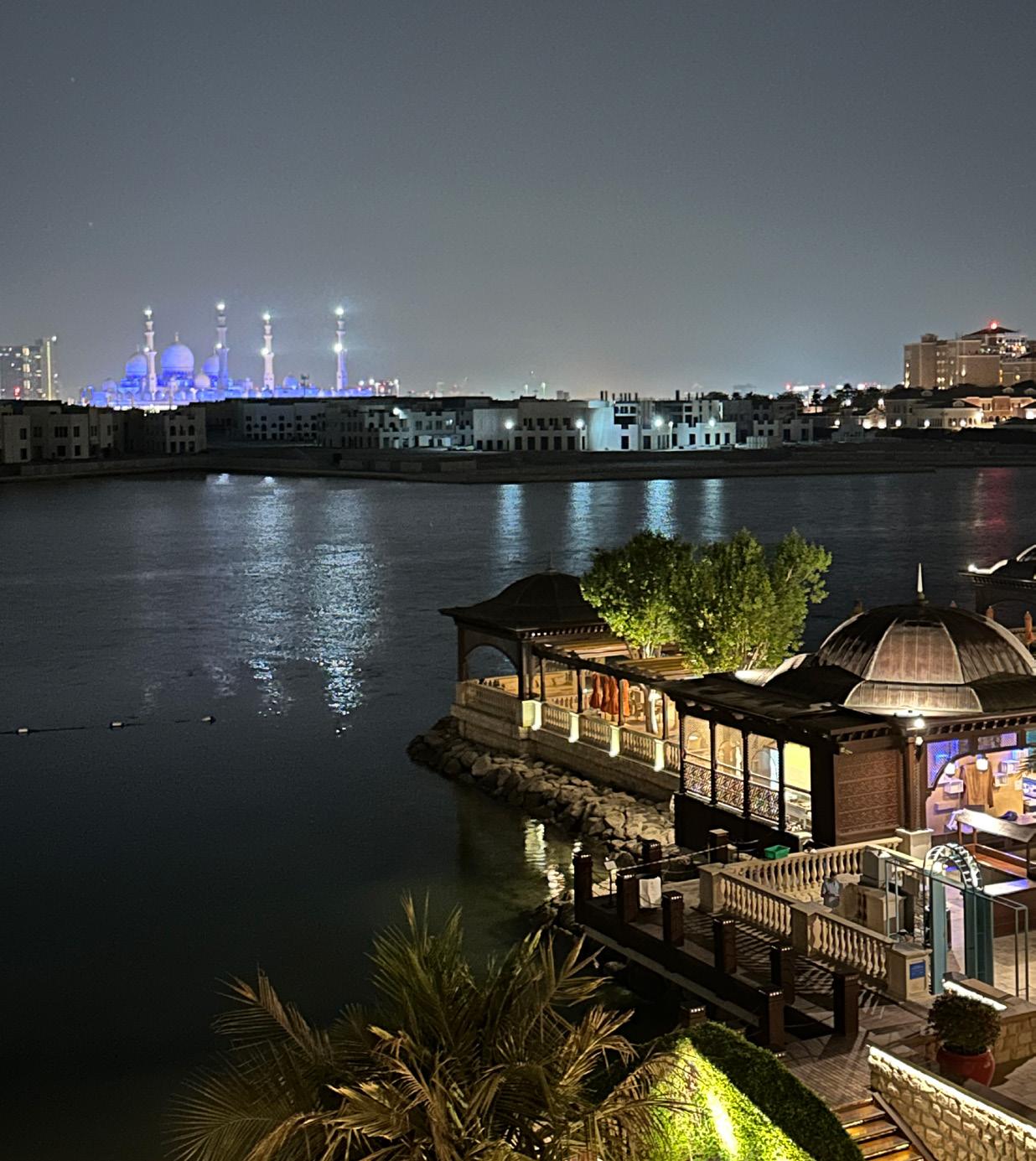
A missed flight connection had an upside: It grounded me for the night in Abu Dhabi, where I stayed at ShangriLa Qaryat Al Beri, Abu Dhabi. Arriving close to midnight, my daughter and I were quickly swept through the hotel’s palatial lobby to our room, an equally sprawling space with a bathroom roughly the size of my first New York apartment. With only 24 hours in the city, we were torn on how to spend our time — the hotel’s facilities won. After savoring a vast breakfast spread spanning two rooms, we opted for a swim. Shangri-La has more than half a mile of private beachfront, but, given the heat, we headed to the pool, hitting our lazing limit around brunch time. Offering an even more extensive buffet, the meal drew a local crowd, with multigenerational families passing the afternoon by listening to live music and helping themselves to dishes from French, Italian, Middle
Over and Out
Jeremy Malman, writer
Eastern, Indian, Japanese, and Chinese stations, which sat alongside multiple carving stations, an oyster station, an ice cream cart, and — just in case anyone had saved any space — a chocolate fountain.
We needed to move our bodies after these rich meals, so we took a taxi to see TeamLab, an international art collective. Founded in Japan, it now has a permanent space in Saadiyat Cultural District, the neighborhood housing Abu Dhabi’s museums. Phenomena , the multimedia installation we saw, uses architecture, light, projections, and water to create a sensory explosion that truly bends perceptions and ideas of space.
By the time we returned to the hotel, it was almost time to leave for the airport … but not before we were fed once more. High Tea in the lobby included chilled teas, petits fours, and Middle Eastern pastries — a perfect cap to a whirlwind stay.
I’ve made a lot of bad decisions. When I was 15, for instance, I got caught “borrowing” my mother’s white Pontiac Trans Am while my parents were on vacation. I ordered my friend Gus to get rid of it, which he took to mean “drive it to Queens and leave it unlocked in the left lane of the highway.” Such actions are called externalizing behaviors — outward projections of one’s inner turmoil. While I mostly no longer engage in such antisocial conduct, as I sat in the back seat of a demilitarized L-39 Albatros highperformance jet executing a vulgar, high-speed barrel roll, I wondered if I had inadvertently relapsed.
This exclusive adventure with the Baltic Bees is part of Kempinski Hotels’ You Only Live Once series: a curated collection of bucketlist adventures. I could have gone truffle hunting or bear watching. Instead, I chose what was rightfully billed as “the thrill of a lifetime” with Grand Hotel Kempinski Riga, joining the Latvian jet team on an adrenalinefueled, 20-minute journey.
As I struggled to lift my arm to reach for the vomit bag, I swore that I would never do it again.
Back on the ground, I realized my experience wasn’t over. I was chauffeured back to the hotel, which — with its 141 rooms and suites — was undoubtedly grand, and scheduled for a 90-minute Latvian pirts (sauna ritual). I spent the following morning exploring Riga’s churches, followed by another decadent spa session and a backstage tour of the Latvian National Opera and Ballet house, where, for less than the cost of a bottle of Veuve Clicquot, you can enjoy a world-class performance from the hall’s presidential box seats. In between, I ate at Stage 22, the hotel’s Michelin-recommended, Asian-fusion restaurant. During my last meal there, I reflected on what I would take away from the trip. I was rewarded with a story that I’ll have forever — one that most people wouldn’t, which made me smile. As I basked in the exclusivity of that childish notion, enjoying my third bowl of ramen in as many days, I thought to myself, Mission accomplished.
Feel
Thailand
Be Here Now
Jennifer Pastore, creative director
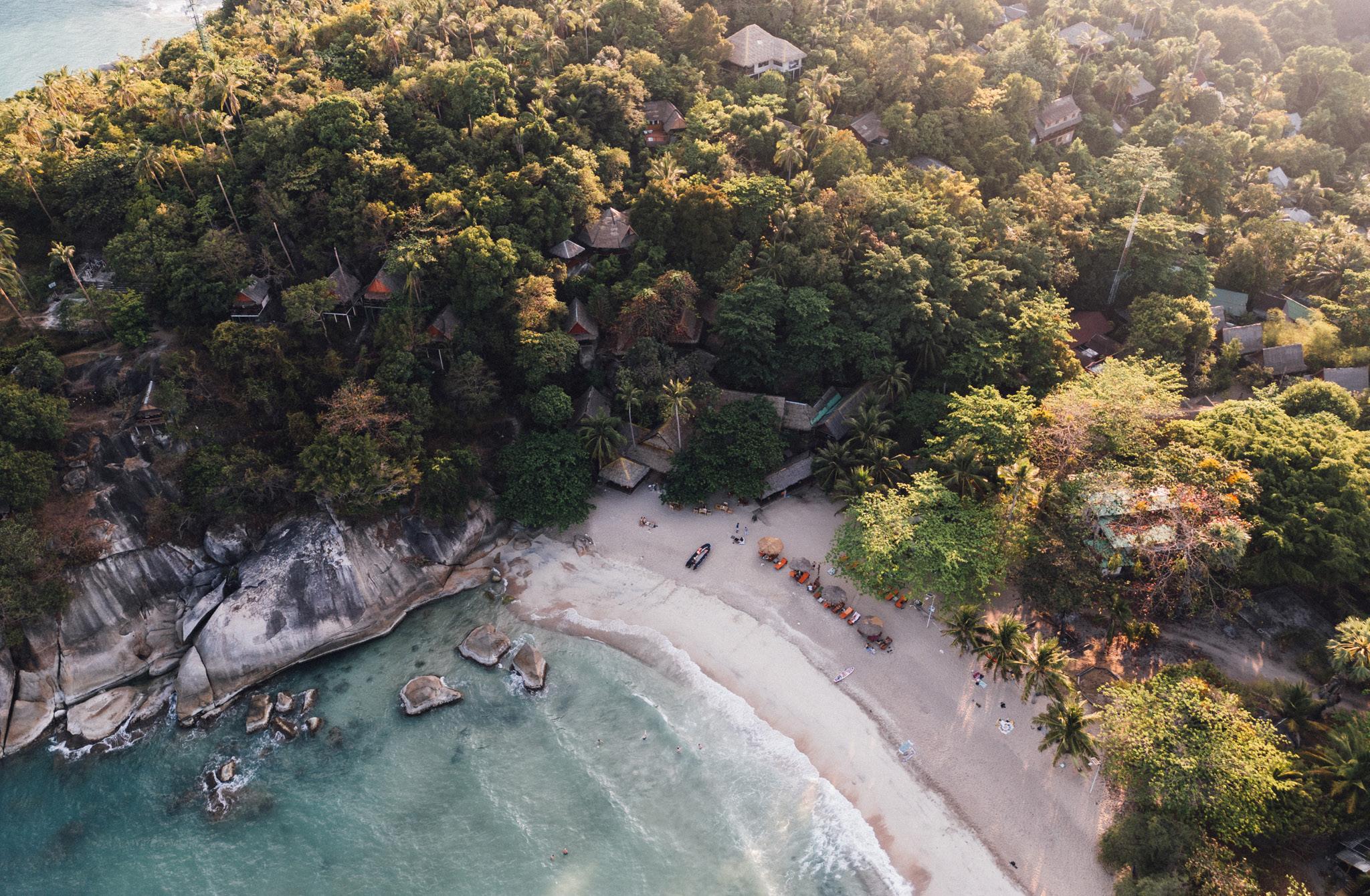
It’s not particularly easy to reach The Sanctuary Thailand from New York City. My journey included a plane, ferry, and jungle truck. But it is clear to see why people keep coming back here — and, sometimes, never leave. The pull is strong. The energy is feral, in the best way. Time is elastic. Days feel like weeks, slowed by the constant thrum of jungle sounds: birds,
Passion Project
Erin Dixon, executive editor of
Dossier
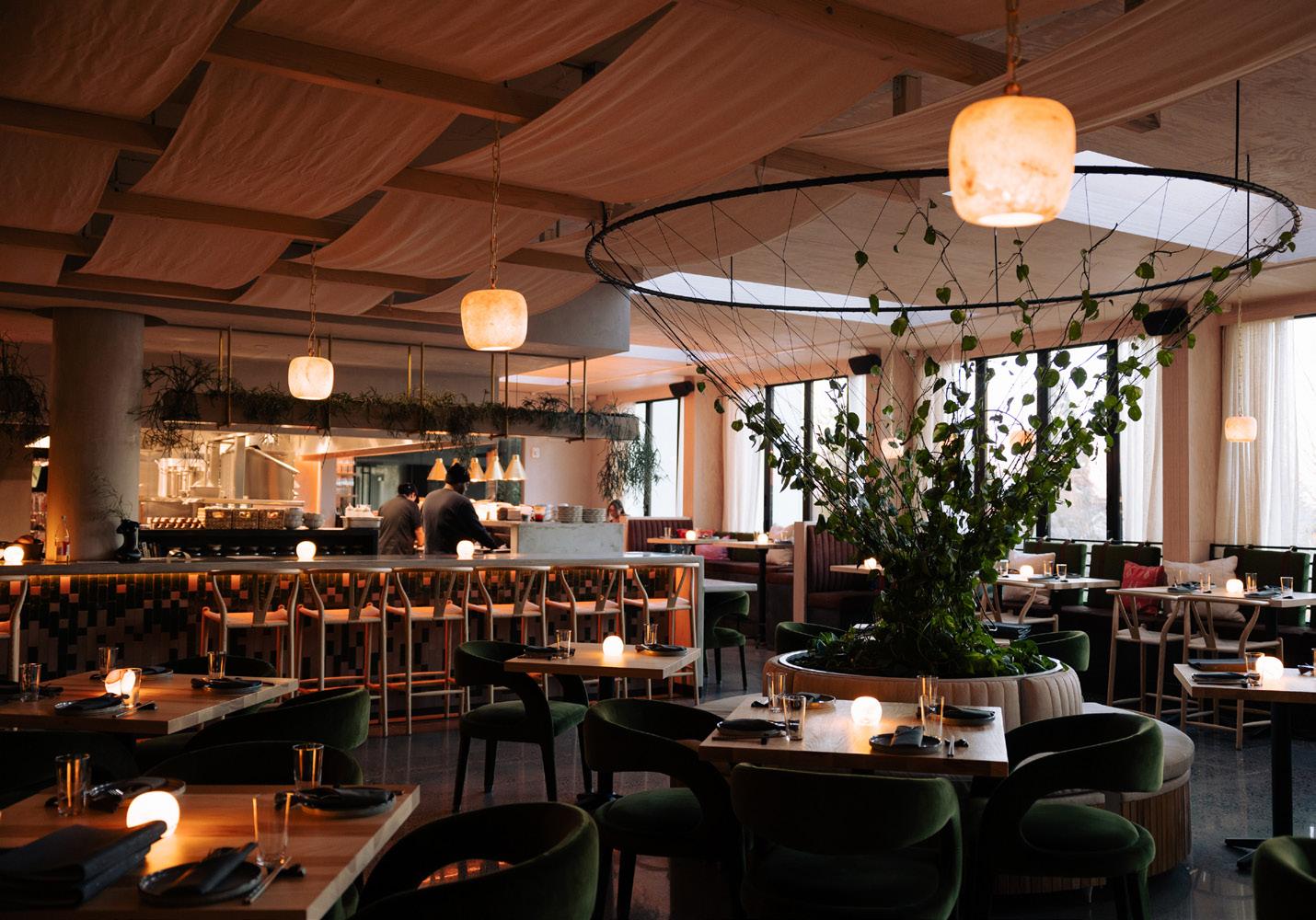
Portland, Oregon, can be a weird place. Anyone who has spent time in the city knows Portlandia is barely a spoof: Portland residents are genuinely passionate — about their city, about birds as decor, about the origins of the ingredients on their plates. ... It can be a bit much, but it also accounts for the ways in which the city shines. Its food and coffee scenes are fantastic, and few would argue against its ardor for preserving the nature that envelops and invades the city, sustaining a robust community of outdoor enthusiasts. At Cascada Thermal Springs + Hotel, the city’s newest hospitality offering, these
insects, monkeys, and, of course, the water.
The Sanctuary is run on generators. Its rooms are extremely comfortable and well-appointed, but many are cooled by fans (some offer air conditioning), so communing with the jungle heat is central to the experience. Here, magnificent natural beauty and soulfulness take center stage — the result of the staff’s years of build -
strengths combine with the city’s signature fervor.
The Sanctuary — the hotel’s underground, expansive springs — offers a therapeutic circuit featuring four mineral pools, a Finnish sauna, and a hammam-style steam room. A floor above, in the Conservatory, a swimming pool is wrapped by a living wall, rare plant species, and glass; and the adjacent, outdoor Secret Garden offers hot pools and a sauna alongside a rainfall walk and firepit. From the property’s restaurant, Terra Mae (order the Hanami Corpse Reviver cocktail and Mentaiko Udon), to its “smart”
ing relationships with healers, yoga instructors, and members of the global wellness community who regularly pass through. After arriving and drinking the first of many chilled, fresh coconuts on the beach, I met with the wellness team to discuss my participation in the Balance program, which was billed as a way to recover from physical, mental, and emotional exhaustion. I said yes to everything they suggested, including subtle dietary shifts, customized elixirs and teas, yoga, and daily spa treatments.
Evenings consisted of steam baths and cool shower circuits followed by 90-minute candlelight yin nidra yoga classes. Chi
Nei Tsang, a traditional Chinese treatment, coupled hot stones with abdominal massage, placing me into a trancelike state. Because The Sanctuary is a magnet for healers of all kinds, a wide array of modalities are on offer. I also tried ecstatic dance in a cacao ceremony; received a Human Design reading, which combines astrology and Kabbalah to create a personalized energy blueprint; and practiced TRE (Tension and Trauma Releasing Exercises), a series of body movements that induce a natural tremor response in the body.
By the end of my stay, I was gliding around the grounds convinced that the untamed spirit of these people and this place would call me back, inviting me to reconnect again with relaxation, joy, and myself.
Portland
yet human-driven guest rooms (each has a concealed washer and dryer, induction countertops, balcony, and city-specific details, including Cascada bath amenities and locally produced snacks) to its sustainability features,
which designate Cascada as the world’s first LEED Platinum-certified mass timber hotel, it’s a destination that’s proudly of Portland but a future-forward version of it — and a feat that could only be achieved with true zeal.
When in
San Sebastián
,
Everything All at Once
Elysha Beckerman, founding partner of Dossier
I always go for pintxos at a small bar
in the Parte Vieja and walk along
La Concha because the way the sea and mountain converge there — the dialogue
of simplicity and precision — deeply resonates with the cooking
Opposites Attract
I strive to make.
Feel the Vibe
John Chuldenko, senior editor of Dossier
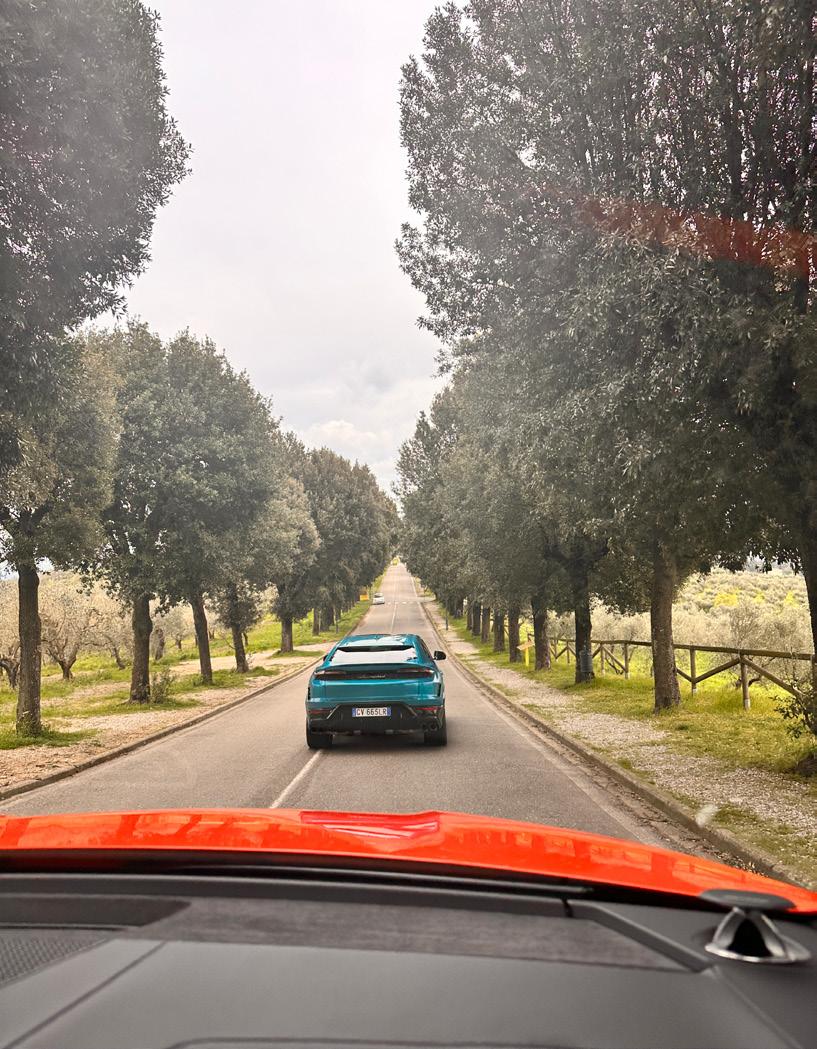
I was 12 years old, skateboarding home on a summer night, when I saw my first Lamborghini. The LM002, Lamborghini’s ’80s SUV, was an anomaly: angular, architectural, and imposing, a rolling embodiment of Italian brutalism — not to mention exceedingly rare, with only 301 examples produced. I remember that moment with vivid clarity. So, when Lamborghini asked me to join them in Bologna to trial the Urus SE, their latest super-SUV and first plug-in hybrid electric vehicle version, I was curious. When they said I’d also have an opportunity to drive an LM002, my inner 12-yearold replied with an exuberant
Enrique Olvera, chef
burst of childhood wish fulfillment.
I picked up my bright orange Urus SE just outside Bologna and aimed it south toward Florence, chasing both a Lamborghini test driver and the remaining days of colder weather. The wind whipped through trees still dormant from winter and past the gorgeous views around Lago di Bilancino. The Urus SE is an assertive blend of Italian sharpness and V-8 power with the added oomph of an electric motor and rearwheel steering that allows for just enough slide to feel exhilarating.
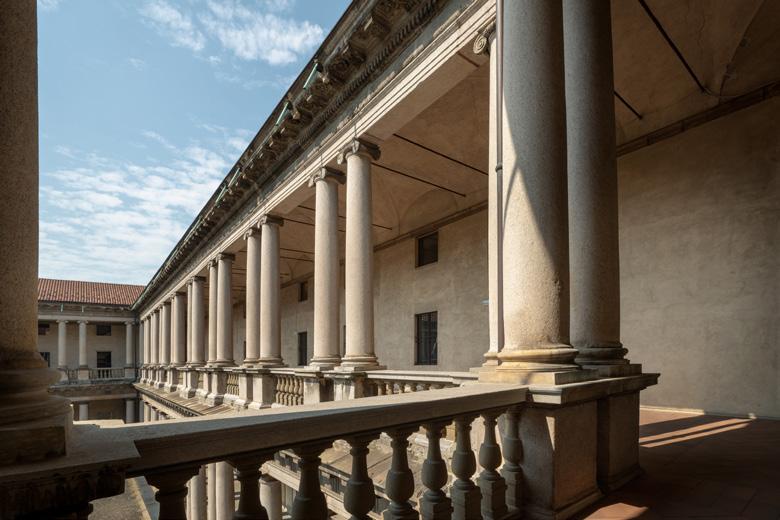
Threading the needle of location (access to the destination) and locale (an authentic experience of it) is an age-old traveler’s dilemma, which the Portrait Milano hotel has solved, at least in the Italian fashion capital. Located in a 460-year-old palazzo — formerly the Archiepiscopal Seminary, a library, a printing shop, and a school — the hotel both embraces and sits apart from the bustle of its surrounding neighborhood, the swank Quadrilatero della Moda district.
Milan
Portrait Milano’s internal piazza, the largest square
in Milan’s fashion district, is home to boutiques and dining venues, including the property’s own bars and restaurants, which offer a mix of innovative and classic Italian cuisine. I’m not alone in coveting the daily breakfast spread. Served at the atmospheric 10_11 restaurant and bar, it has been called the best in Italy. And Milan native Lucrezia Buccellati (co-creative director of fine jewelry company Buccellati) claims the hotel’s Negroni sbagliato is among the city’s top aperitivo offerings.
Bologna
At my final destination
— the impressive Tenuta di Artimino, a Medici residence known as “the Villa of a Hundred Chimneys” — an LM002 idled in the courtyard. Painted an intimidating black, it rumbled with intensity and smelled of exhaust
and fuel. Vincenzo, chief mechanic for Lamborghini’s heritage vehicles, greeted me in the cramped cockpit, pointing to two unmarked levers beside my seat, then at the leathertrimmed dogleg shifter mounted high on the console. He waved his hands to mimic clutch and throttle pedals, then muttered, “OK. Andiamo !” The LM002’s heavy, mechanical clutch had the resistance of gym equipment, and my left calf started to quiver before sending the V-12 screaming through the landscape. Upon our return, Vincenzo turned to me and remarked, “Super.” It was all the validation I required to justify a second glass of postdinner limoncello.
Sneak Attack
Jackie Risser deputy digital editor of Dossier
I was standing in Cairo’s Egyptian Museum behind a group, about three people deep, huddled in front of a replica of the Rosetta Stone, one of more than 100,000 artifacts on display. As soon as the group moved on, I heard, “Uh-tak, uh-tak” through my headset. It was my Egyptologist, Hazem Khalaf, whispering to “attack,” or fill the empty space as quickly as possible. I stepped up to the stone and chuckled.
This was my first day on the Uniworld Boutique River Cruises Splendors of Egypt and the Nile journey, which is designed to be the trip of a lifetime. All the ingredients were there to make it so: an itinerary that packed 5,000 years of history and 12 UNESCO World Heritage sites into 12 days, exceptional Egyptologists, four nights at Four Seasons Hotel Cairo at Nile Plaza, and the bespoke S.S. Sphinx, featuring the brand’s destination-inspired interiors and fine dining.
From the vibrancy of the Temple of Esna’s original paint and the solar alignment of Abu Simbel to the ship’s hand-carved wood accents to the chef’s airy falafel, my fellow passengers were as humbled as I was. “I’ve been wanting to see this since I was 6 years old” was a line I overheard at the pyramids, where my inner child was equally delighted.
A Rose by Any Other Name
Sophie Yun Mancini, deputy print editor of Dossier
“Of all the great things that the English have invented and made part of the credit of the national character,” wrote American author Henry James, “the most perfect, the most characteristic [...] is the well-appointed, well-administered, well-filled country house.”
Not to disregard the historic villas of Italy, or the châteaus of France, but few structures have mythologized themselves as strongly as the British country home, enshrined in so much fiction and film as to become as foundational as brick.
were married to you, I’d drink it.” Her swan-necked, gimleteyed portrait by John Singer Sargent hangs in the grand room.
Egypt
Such unscripted moments delivered Uniworld’s promise: Khalaf calling us “habibis” (“dear ones” in Arabic); our captain’s family cheering for him as we sailed past their village; the jeweler who translated my name into hieroglyphics and said his preferred translation of “C” was not “family” but “likes shopping”; the cat who led me to her kittens at Philae Temple (dedicated to Isis, goddess of motherhood); the glee of new friends after I sand-surfed the Sahara; the guard at Tutankhamun’s tomb who made sure I didn’t miss the missing toe on the boy-king’s mummy; chocolates and jewelry left in my room. … These joyful scenes paired with the country’s magnificent sites shaped an unforgettable adventure.
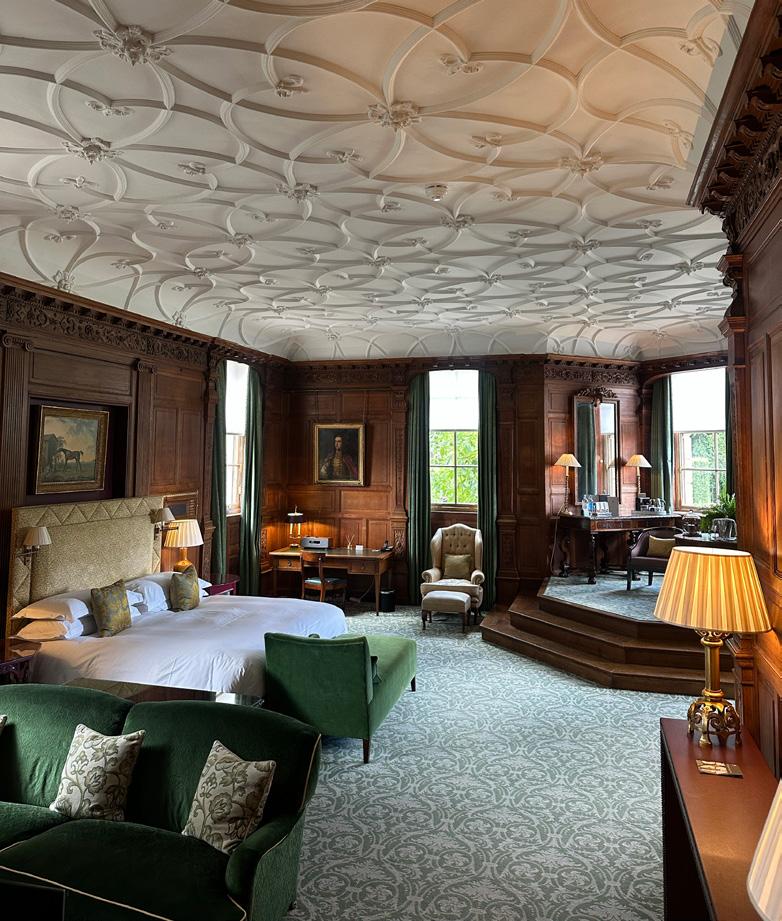
I visited a few of these homes recently, with one a wild standout: Cliveden House. In 1666, the 2nd Duke of Buckingham built this house for his mistress, the infamous Countess of Shrewsbury, then killed her husband in a duel. The lovers’ powdered portraits hang side by side in the house’s grand room, a soaring hall as sultry and ornate as a Venetian mask. The property’s 19th and 20th centuries were marked by the American Astor family, who transformed Cliveden into a salon for the political elite with Nancy Astor as its bold leading lady. Hotel myth recounts her telling Winston Churchill, “If I were married to you, I’d poison your tea.” To which he allegedly replied, “If I
England
The property’s ghosts are almost as evocative as its grounds; its famous gardens feel like slices of Elysium, drawing tours from around the world, while its parterre (a ground level, formal garden) is one of the largest in England. Cliveden’s 47 guest rooms and suites are equally impressive, but my heart remains in the Mountbatten Suite. Named after the British statesman and naval officer (who was also Prince Philip’s uncle), the room was formerly the billiards hall. Its scoreboard remains fixed above an enormous, sumptuous bed set among green velvet furniture and ornate wood-paneled walls. And while, devastatingly, I could not stay in every room, I spotted a detail across each door that perfectly summed up the Cliveden world: its current guest’s last name, printed with a flourish, and set in brass. To be yourself written into the wild Cliveden history, even if just for a night or two — who could resist?
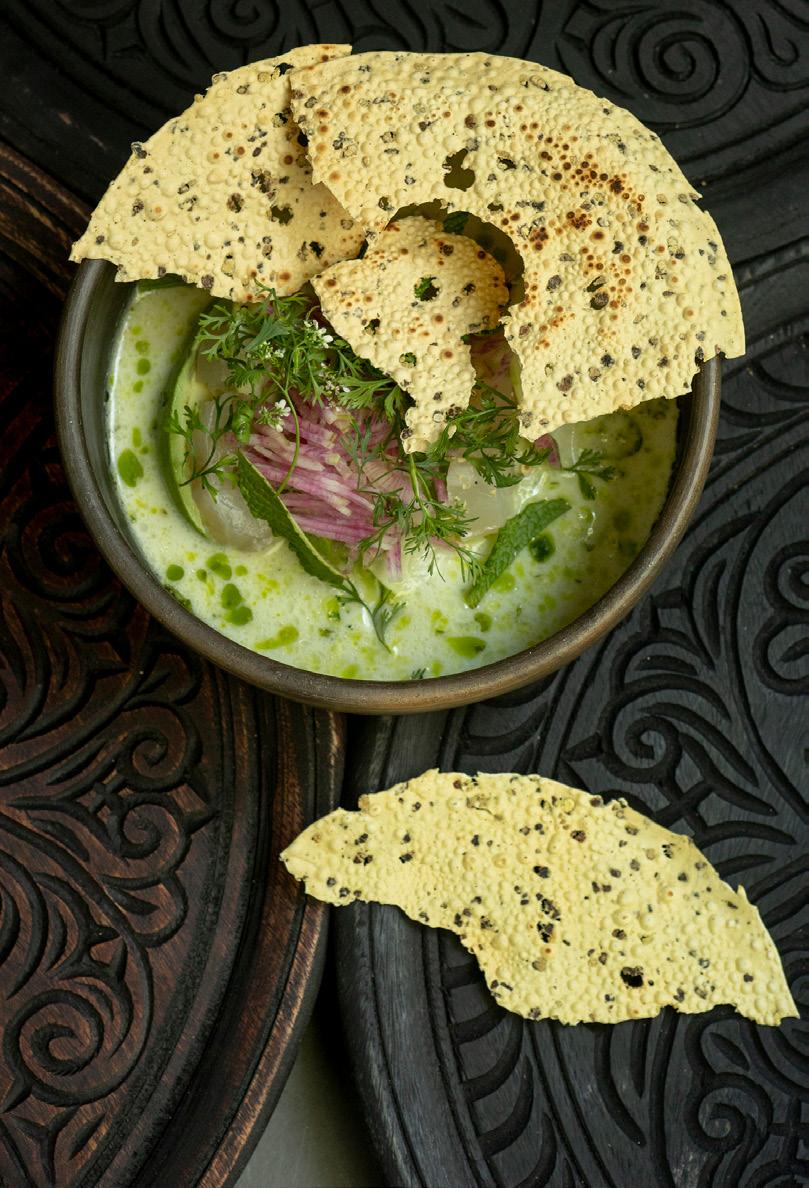
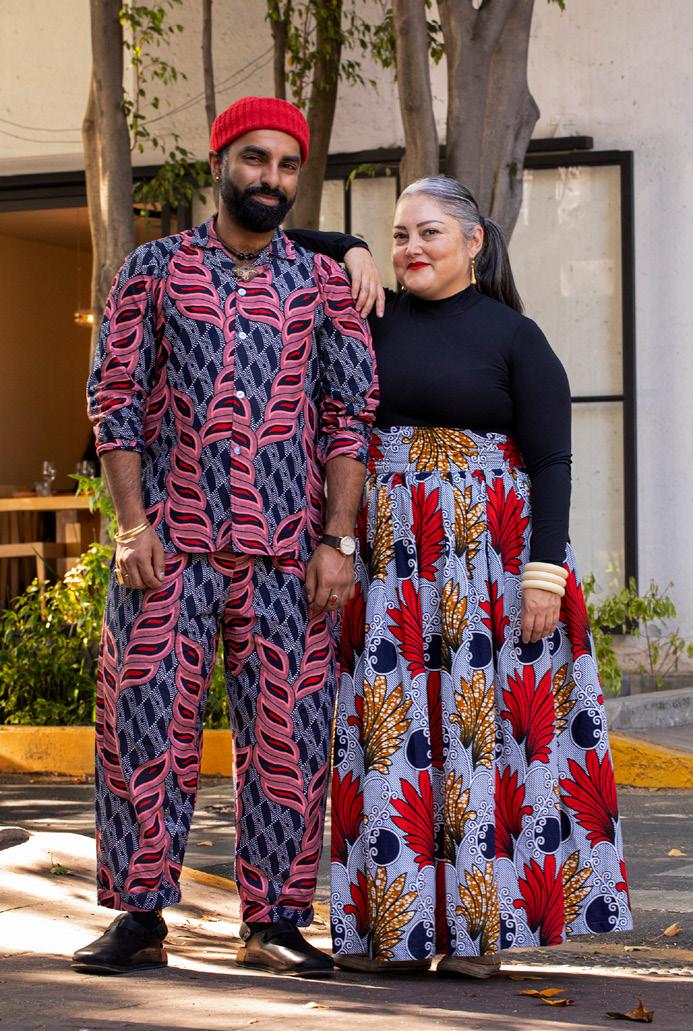
Chefs Norma Listman and Saqib Keval cook as though they’re writing a manifesto. Their acclaimed Mexico City restaurant Masala y Maíz blends Mexican, East African, and Indian flavors to embody mestizaje , food that draws from the migration of people, ingredients, and culinary techniques, and makes sense in more than one cuisine. Last year, the restaurant earned a Bib Gourmand and was
Mexico City
featured on Netflix’s Chef’s Table ; this year, it was awarded its first Michelin star. Masala y Maíz is renowned not only for its food but also for its ethos. To Listman and Keval, that spirit is inseparable from Mexico City, the place they now call home and describe as “bohemian, anarchist, free-spirited.”
Here are a few of their favorite discoveries within it.
Something to eat and drink … NL: Expendio de Maíz Sin Nombre. Its chef, Jesús Salas Tornés, runs an anarchist farming project in Guerrero, his home state. We also love Comal Oculto, which does garnachas [street-style fried corn tortillas slathered with refried beans and other toppings]. Ticuchi has my favorite margarita program in the city. Bar Nino, from the team behind Hugo wine bar.
SK: We go to Máximo Bistrot for fancy meals. Eduardo “Lalo” García, the chef, makes a delicious plantain brioche with crème fraîche and caviar. Then there’s a Korean Mexican restaurant called Jowong that is starting to get recognized. Tlecān has one of the best collections of Mexican distillates. Of course, there’s amazing tequila and mezcal, but it also has more obscure and delicious spirits.
Something to see … NL: The Mathias Goeritz architectural route [“the Friendship Route”], with site-specific architectural sculptures by multiple artists scattered throughout the city. We also have some of the best art galleries, including Kurimanzutto and Proyectos Monclova, which represents Poni [Hilda Palafox], my favorite Mexican artist.
SK: Diego Rivera’s Museo Anahuacalli. It’s
like this massive volcanic stone structure that houses an immense private collection of Mexican crafts. A lot of people who come to Mexico City don’t make it to the south; they just stay in the trendy neighborhoods. But there’s so much to see [in Coyoacán]. A secret place … NL: Salón Los Ángeles. Visit on Sundays for day drinking and dancing. It’s a big salon, the music is great, and you see very welldressed older couples who dance very well.
Creative Fuel
Mehr Singh, writer
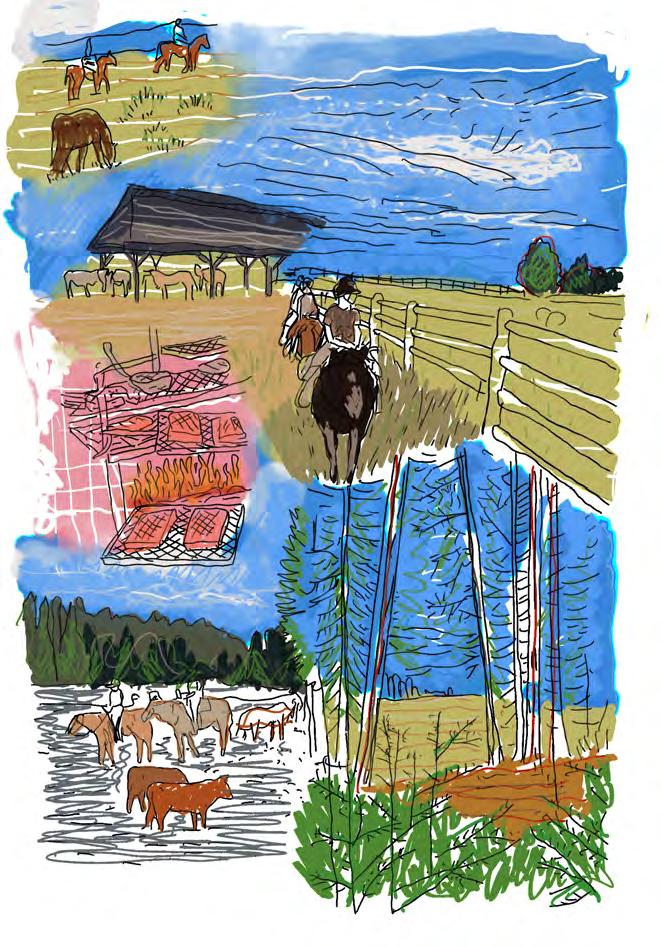
Paws Up Montana
Words by Erin Dixon
In the language of the canine kingdom, “Paws up,” means welcome — at least it does at Paws Up Montana, which takes its name from its founders’ dogs’ predilection for throwing their paws into the air to celebrate their owners’ return. During my visit to the Greenough property, Paws Up reflected this inspiration by extending a similarly effusive brand of hospitality to guests of mixed ages and origins: multigenerational families from San Francisco, Chicago, and London; horseloving couples from Nashville; a father and young son from San Diego. Wranglers from South Carolina, Hawaii, Vermont, and nearby Missoula, Montana; waitstaff members from Peru, China, and Colombia; and deer, bison, bunnies, cows, and horses made up the lively welcoming committee.
Like the abundant fauna that resides on the resort’s grounds, these varied visitors each discover their own place, with plenty of personal space. Paws Up sits on 37,000 theatrical acres bisected by the twisting Blackfoot River — nestled between two evergreen tree-topped mountain ranges — and offers accommodations to suit all types. There are more-than-modern private homes (mine was a sprawling twostory, three-bedroom log cabin outfitted with a hot tub) and six “glamping” camps with fully furnished tents, dining pavilions, butlers, and immersive views of the resort’s humbling Big Sky Country. For those seeking even more peace, Green O, an adults-only hideaway, offers sanctuaries tucked under towering Ponderosa pines.
Up’s choose-your-own-adventure approach to elevated Western ranch life. Its everyday dining offerings range from fine dining at Pomp to casual all-day dining at Trough to alfresco lunches at Shed, just steps from the horse arena. Activities involve all-terrain vehicle tours (my family’s favorite non-horse activity), flyfishing, and even a proper cattle drive. Paws Up is, after all, a working cattle ranch and rightfully turns around its wranglers — led by the resort’s equestrian manager Jackie Kecskes, whose inspired program left my 7-year-old son and mother discussing where they might find their next ride.
This unlikely intersection of rough-andtumble adventure and refined amenities differentiates Paws Up from a classic dude ranch, yet the property remains firmly rooted in its surroundings and their history. We have the hand-tied flies, smelted wall hooks, and jaw-dropping landscape photos to prove it.
by Richard Rozewski
My son, mother, and I broke astoundingly good milk bread rolls with guests across this spectrum at the Bounty on the Blackfoot dinner — an annual event that truly celebrated the region’s gifts, from extended summer nights punctuated by bald eagle flights to storied craftsmanship, by way of a blacksmith forging iron sculptures and a watercolor artist capturing the area’s plentiful trout. A live band played country ballads as we dined on bison, Copper River salmon, grilled vegetables, and s’mores. Although it only occurs once a year, the dinner exemplified Paws
Illustrations
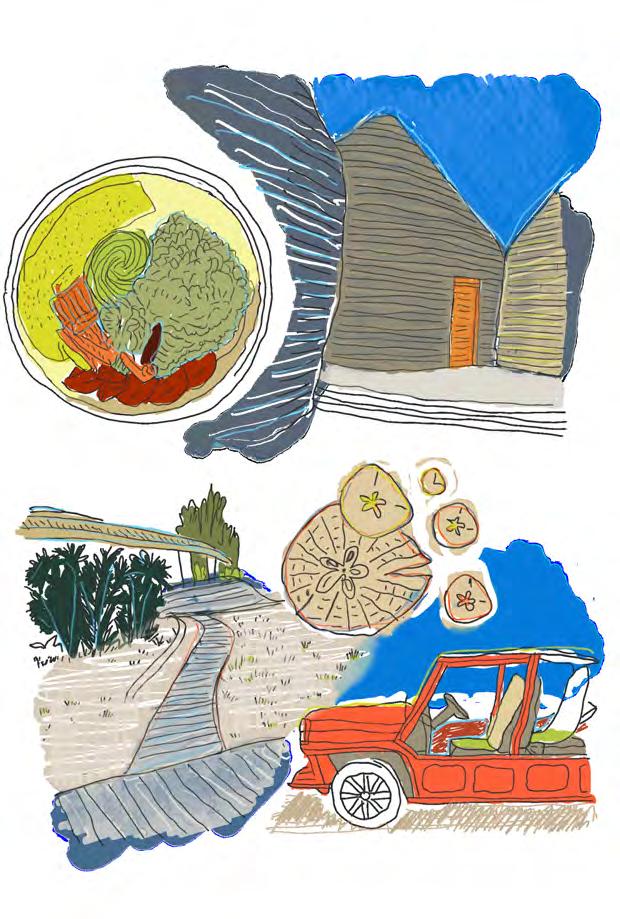
Kisawa Sanctuary
Words by Skye Parrott
The only way to reach Kisawa Sanctuary is by crossing the ocean. The property is properly remote, set on the southern tip of Benguerra, one of the five islands that make up the Bazaruto Archipelago in southern Mozambique. To get there, my husband and I flew to Vilankulo, disembarked, exited, then immediately walked back through the security checkpoint of the tiny airport to board a helicopter that would carry us the remaining 9 miles across the Indian Ocean. The water below was an otherworldly blend of turquoise and blues, with the swirling white of sandbars evoking a van Gogh.
At the helipad, we were met by the hotel’s general manager, Nazik Amrani, who handed us the keys to our bright-orange Moke, the open-topped, electric vehicle we’d be using to get around the island. Kisawa is set within a 741-acre sanctuary, a tiny fraction of which has been developed, creating a level of privacy unlike anything I’d previously experienced. The property’s eight villas are sprawling and open onto the beach, and spaced far enough apart that neighbors are entirely invisible. Each villa, staffed with a butler, has its own pool and dining areas, so nothing requires you to leave, though the hotel does have common spaces: three restaurants, an extensive spa, and a fitness center. While we were there, the occupancy was 70%. And although we visited the gym every day and the spa twice and ate at each of the restaurants, we only saw other guests two times, both from a distance. It created the delightful sense of being the only ones there.
This is a very sparsely populated corner of the world: The population of the archipelago is about 7,000. Most earn their living from fishing or commute to find work on the mainland. Tourism has only recently begun to take hold, and Kisawa focuses on hiring locals to provide career opportunities that allow them to stay close to home, while training them to provide a level of service that allows them to work anywhere. Kisawa — along with Benguerra’s three other tiny properties (in total they have fewer than 60 guest rooms) — has contributed to building new schools and the island’s first hospital, which means women no longer have
to travel to the mainland to give birth. While Benguerra is sparse in terms of human inhabitants, it more than makes up for that in wildlife. There are 180 species of birds, 45 kinds of reptiles, lots of duiker antelope (a tiny, very cute relative of the deer), freshwater crocodiles, and monkeys along the archipelago. I don’t dive, but I was told several times that East Africa’s best diving is here, its reefs hosting an incredible diversity of fish, sharks, rays, and dugongs (an endangered sea mammal closely related to the manatee).
The island’s tides are dramatic in wintertime, and its climate is temperate. Each day we woke to an expanse of white sand, where the sea had receded into the far distance. We spent every morning walking out to the water’s edge, a journey that took half an hour, longer as I kept stopping to collect sand dollars. Some crows followed us, and a few times we saw local fishermen, far in the distance. But aside from that, the beach was entirely empty, and delightfully, deliciously silent.
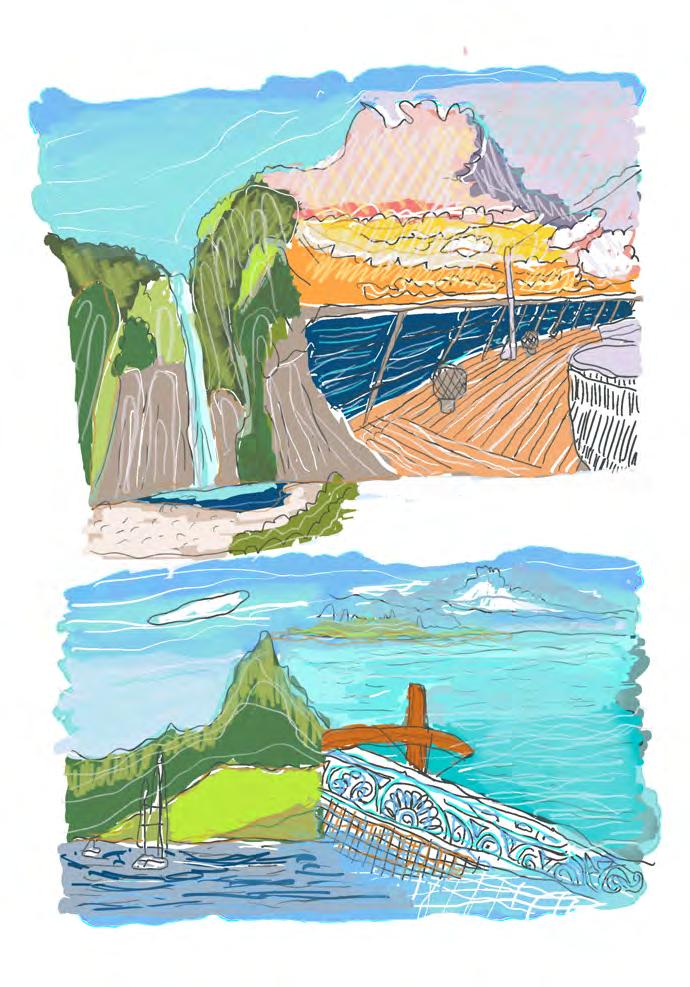
Le Paul Gauguin
Words by T. Cole Rachel
At least once a day while on board the Paul Gauguin, an intimate ship known as a feather in the cap of luxury cruise operator Ponant’s ever-evolving fleet, I heard someone say, “You have to come see this” or “No, really, this time you won’t believe it.” This usually happened at dusk, when people slowly gravitated toward the upper decks in anticipation of what became a daily ritual: watching the sun slip below the horizon. We were floating in the crystal-clear waters of French Polynesia, which is famous for kaleidoscopic sunsets, and the ship provided an always-perfect vantage point of both the nightly show and a nonstop parade of Jurassic Park-like tropical islands.
Before leaving on this trip, I pondered the notion of Paul Gauguin, an artist whose depictions of French Polynesia are still globally ubiquitous, a Technicolor romanticization of a place and people fixed within popu lar consciousness. And while his reputation as both an explorer and a colonizer are a matter of debate, images of his work were found everywhere on our seven-night trip, which ferried us through what are known as the Society Islands — the most famous being Tahiti, Huahine, Raiatea, Taha ‘ a, Bora Bora, and Moorea — but a small sampling of the 121 islands that make up what we know as French Polynesia.
Awakening each morning in our cabin, we saw a new island looming outside our window. While all the islands share azure waters, lush green views, sparkly beaches, each held its own charms in the form of small beach towns, volcanic hikes, and hidden coves. Every day we were invited to choose our own adventure or opt for no adventure at all, though it was impossible to resist the allure of going ashore.
The group excursions were plentiful and varied — everything from off-road, four-wheeler explorations on volcanic islands to private catamaran sailings to the somewhat terrifying underwater “walks” that required the modern-day version of a diving helmet. My husband
and I mostly stuck to the classics: swimming with blacktip sharks and stingrays, visiting a pearl farm, and snorkeling among coral reef gardens.
We also visited islands populated only by exotic birds and coconut crabs roughly the size of small dogs. When no excursions were planned, we took a small boat to the nearest island and explored on our own. On Bora Bora, we found ourselves caught on a mostly empty stretch of beach during a brief but intense rainstorm. Standing in the warm water during the torrential downpour, it became impossible to see where the ocean ended and the sky began. For a few minutes, it felt like visiting the surface of an alien planet. I tried to imagine what it must have been like for a French painter from the other side of the world to see these same views for the first time in 1891. More than 130 years later, they have not lost
luxury Explore more
Valletta
Just Like Home
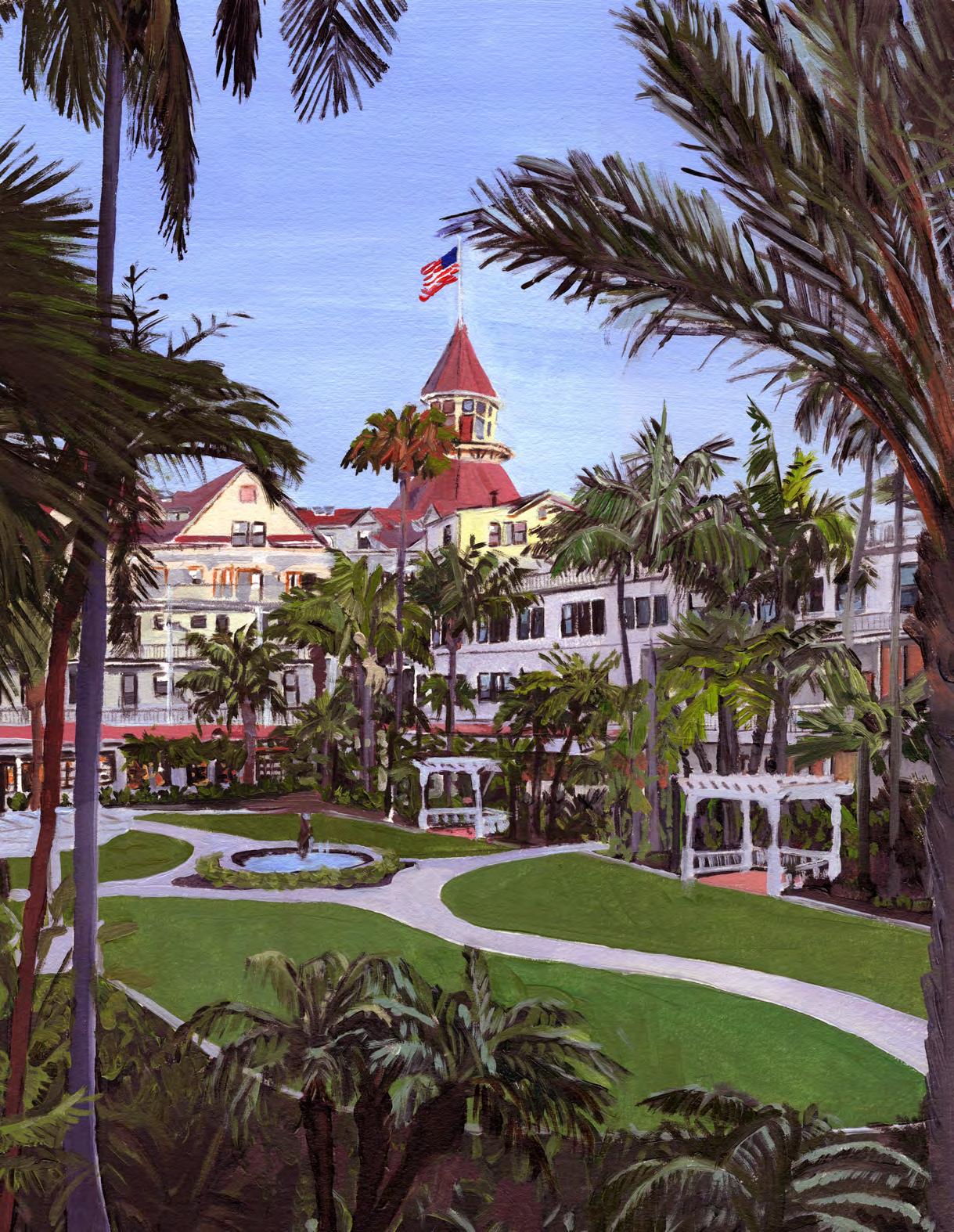
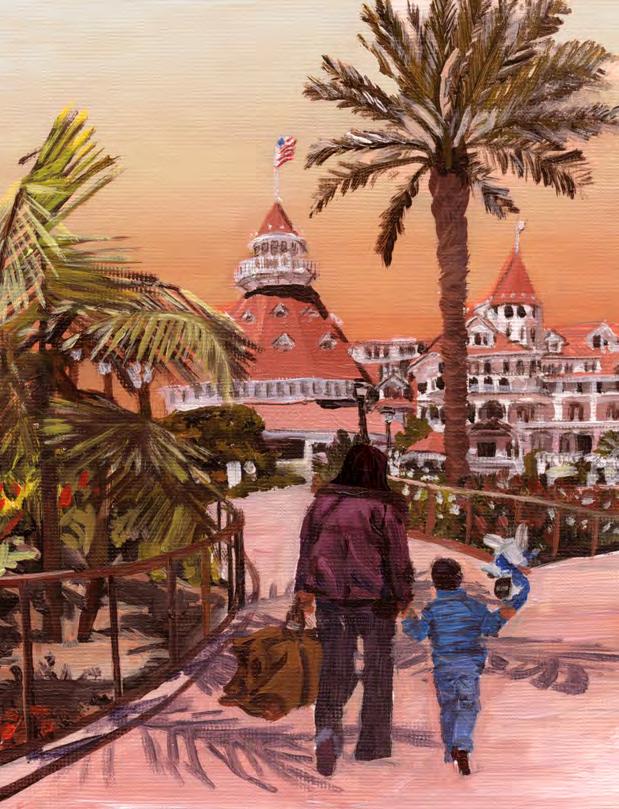
Legacy guests share why the newly renovated Hotel del Coronado in San Diego draws them back to its sunny shores, year after year, generation after generation.
by John Chuldenko
Words
Tye
As temperatures in the Northern Hemisphere drop, a ray of warmth beams from the West Coast of the United States — just as it has since 1888. The Hotel del Coronado is an enduring beacon of light and belonging, with memories made under San Diego’s year-round sunshine warming both body and soul. It seems every visitor to this grande dame property has a tale to tell: a moment they cherish, a connection that keeps them returning year after year, generation after generation.
Illustrations by Alice
Guests come to The Del to commemorate milestones, gather for holidays, or simply recharge. Now, more than ever, there’s cause for celebration: the completion of The
Del’s six-year-long reimagination — one that has transformed every corner, from its iconic porch and pool to its guest rooms in the landmark Victorian neighborhood and storied ballrooms. With this rejuvenation comes new experiences in private poolside cabanas, at Beach Roast Bonfires, in the Ocean Explorers kids club, and during world-class surf lessons. As the sun sets, movies screen on the beach, complete with cozy blankets and s’mores. And for the holidays, there are Skating by the Sea, Beach Igloos, and the hotel’s stunning decor, with thousands of twinkling lights. The mere mention of The Del elicits heartfelt joy and, invariably, a story — as evidenced by these legacy guests’ recollections.
Holly and Jolly Brian and Debra R. Rancho Santa Margarita, California Guests since 2010
After hip surgery, I decided to grow out my beard. My brother said I looked like Santa Claus, and he was right. We’d had a tradition of visiting The Del during the first week of December, so, one year, we thought we’d lean into the whole Santa thing and dress in red and green. Well, people loved it! They started approaching us on the beach and asking to take pictures with us. Now it has become an annual tradition. We’ll walk around the ice rink and people come up with their kids, even teenagers, to take a photo. Last year, we probably took 400 or 500 pictures. People recognize us year after year; we’re like celebrities. We have fun with it. I feel like a semiprofessional Santa — I’m having a new Santa suit made for this December. The Del is our home and our heart. It’s a real privilege for us to do this, to be a part of someone’s memories. The Del takes you back to a simpler time, like Christmas; it brings out the beautiful things in people.
At Our Best
Doug and Adrienne D. Scottsdale, Arizona Guests since 2009
We’ve been visiting The Del since 2009, and we go there once a year. For us, it’s the history and the personality. It’s almost like it has its own vortex: You arrive and instantly feel relaxed. We miss it when we’re not there, so our family observes “Del Day” at our house. We put on our Hotel Del T-shirts, bring out the pool toys we got at The Del, cook the meals we’d eat there, and play Hotel Del trivia. I put on my Hotel Del playlist, and it takes us right back. Then we watch Some Like It Hot. I even bought a maroon-colored car that reminds me of The Del every day. When I get to The Del, I have a saying: I love me here
A Wish Your Heart Makes
Norma D. San Diego Guests since 1989
We didn’t have a lot of money when I was growing up. So, when I was a child, I took a photo of The Del and thought to myself: Someday, I’m going to be successful enough to stay there. The Del became a dream I carried in my heart. Many years later, it came true. Now, I stay at The Del once a month, and I share it with family and friends. I have a very stressful job, so I need my sanctuary. That place is The Del. One of my most cherished memories is when I brought my grandson, who was 5 at the time, to The Del for his first overnight trip with me. In the evening, he said to me, “Grandma, I love you, and I really like your big house.” I smiled and told him that it wasn’t my house. He said, “Yes, it is! When we got out of the car, the man said, ‘Welcome home, Mrs. Diaz.’” I felt tears in my eyes. Not only was his logic adorable, but it was the first time he told me, unprompted, that he loved me. The Del may not be my house, but it is, without a doubt, my home.
Passing the Torch
John S. Atlanta, Georgia Guests since
1963
My grandmother brought my mother to The Del back in the 1920s, when guests could stay in tents and they had a saltwater pool called The Plunge. When my mom was in college, she’d visit with her girlfriends, staying in rooms with multiple beds that were almost like dorms. When she met my dad, they’d visit together as well. I first visited The Del with my mother in the summer of 1963; we had to take the ferry across from downtown San Diego. It’s always been very magical for me. The first time I brought my daughter Emily there was like passing the torch. I have a photo of her looking at me in total amazement. It has been a special place for our family for four generations; repetition creates resonance. The Del stores memories, like an heirloom passed on from generation to generation. For us, it’s like being home.
Breaking the Mold
Model-turned-designer Armando Cabral reveals the influences and places that inspire his ever-evolving creations.
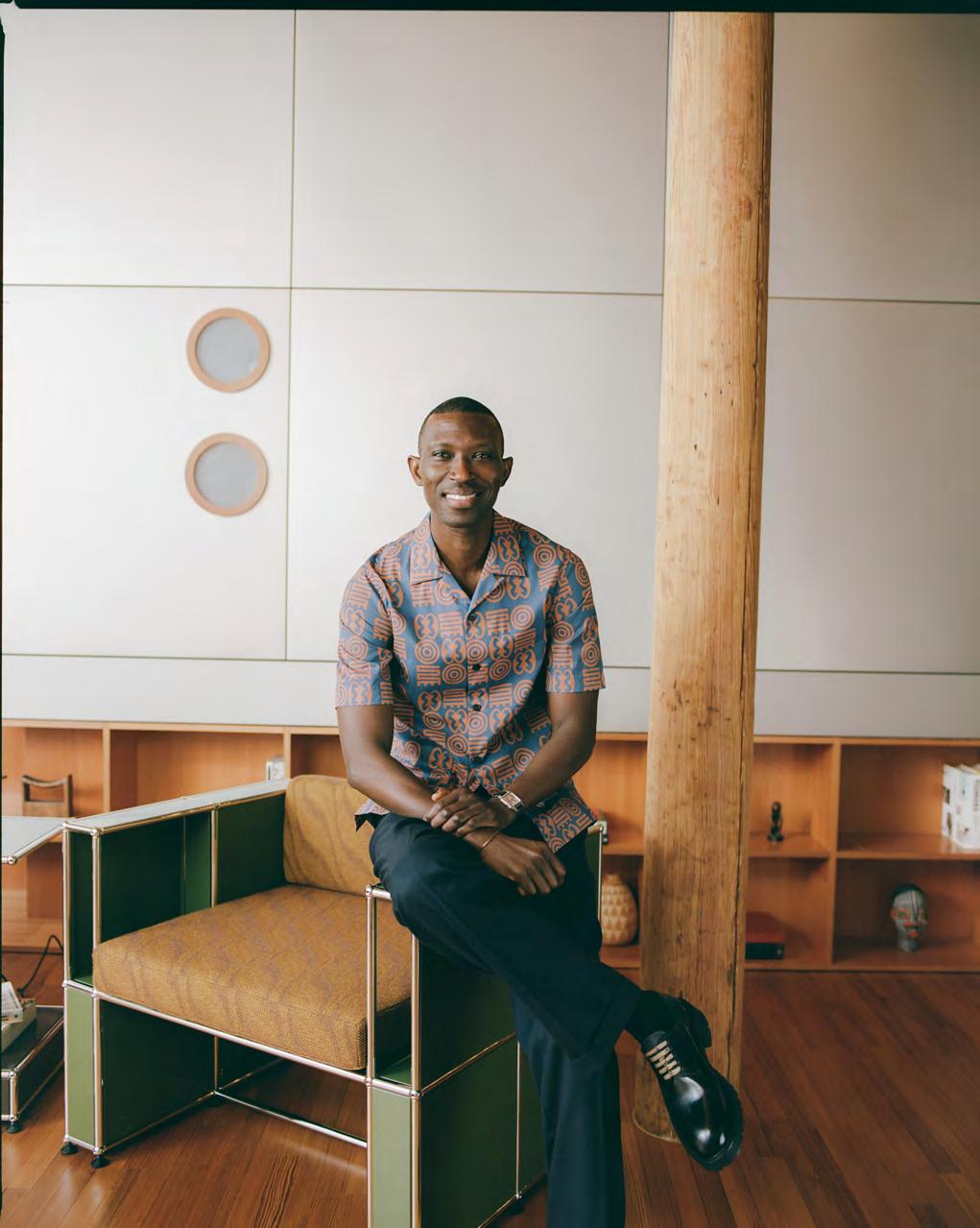
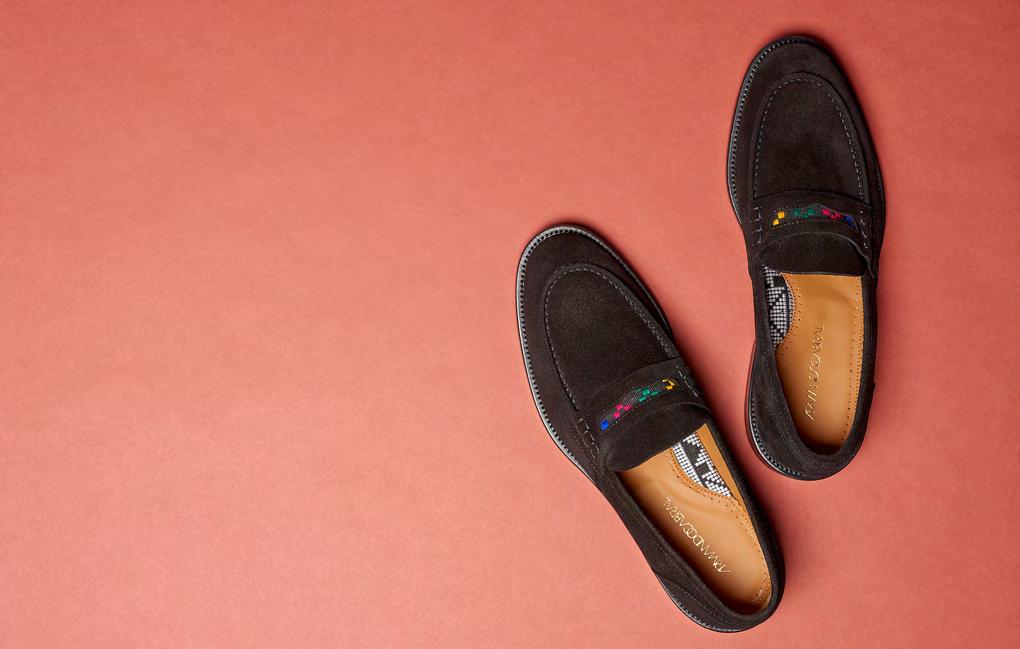
Armando Cabral’s first act in the fashion world was as a model, showing up in campaigns and on runways for brands such as Calvin Klein, Dries Van Noten, Louis Vuitton, Thom Browne, and J. Crew. Today, it’s his work behind the scenes that’s earning him global recognition. Launched in 2008, his eponymous brand is a celebration of African heritage and European craftsmanship brought to life through a broad, meticulous range of fine leather footwear (from supple woven derbies and streamlined sandals to hardy lug boots and ergonomic travel slippers), breezy shirts printed with West African motifs, a home line entitled A Casa, and a custom fragrance. His creations directly reflect his multicultural background: He was born in GuineaBissau, raised in Portugal, educated in England, and is now rooted in New York City. Here, Cabral discusses the magic of Lisbon, craft as cultural connector, and the importance of understanding your roots. He also hints at a third act: a foray into hospitality.
Sophie Yun Mancini: What is your perfect day in Lisbon?
Armando Cabral: A perfect day in Lisbon would start at Pastéis de Belém, where they make all the Portuguese tarts. That area is where the presidential palaces are. There’s a monastery next door. It’s just so beautiful. And they have
a beautiful park right in front. Then, I would go for lunch at Clube Naval, overlooking the river and the bridge. What I love about these places is they’re still very much for locals. They allow you to take a walk outside the restaurant and sit right by the bay. Later, I would take a stroll downtown where there are a lot of new art galleries. Then, I’d have a drink on one of the rooftops. I love to go to this mini boutique hotel called Memmo Príncipe Real. Their patio that overlooks the city — it’s incredible. The sunset in Lisbon is magical. I think it’s because of the reflection of the sun on the water and over the terra-cotta roofs. I’d probably end with dinner at Sud Lisboa Terrazza. It’s right by the water, with beautiful food, live music. If I felt like I wanted to dance, I would probably go to Lux Frágil, which is one of the biggest clubs in Europe, with all these famous DJs. You could be there until 6 a.m.
SYM: New York, Lisbon — you understand both of these places so well. You have this kind of global citizenship. What are the cultural qualities that you admire about each?
AC: One of the things I love about Lisbon is the sense of family, sense of friendship, sense of home. In Portugal, people stop time. You go to a grocery store, you go to pay, and if you know the locals, it’ll be, “Armando, you’re back! How are you? How’s everything? Oh, I saw this. Oh, have you heard
about this? Congratulations!” Mind you, there’s people waiting in the line. And no one minds. People don’t rush in Portugal. Time adapts to them, not the other way around. So everything is kind of slower, a little more melancholic. I always say that, in the U.S., it’s easy to make friends. In Europe, it takes you longer to make friends, but they are your friends forever.
What I have to say about New York is the optimism of Americans. It doesn’t matter how bad things are. It’s like, “We gotta do this,” and then it ends up happening! That optimism brings about the courage to go after whatever it is you really want. Europeans are a little bit more pessimistic, very superstitious. In New York, if you dream it, you can achieve it. But you have to give much of yourself. To achieve the things that I’ve done wouldn’t be possible in Lisbon.
SYM: Optimism is a poetic way of describing the New York spirit, the American spirit. I, in a far more pejorative way, would have said delusion or intensity. But I love your reframing.
AC: I’m telling you! When you talk to people here in Europe, you’re like, “I’m gonna start a company,” and they’re like, “Wait, have you thought this through? Do you have enough money? It’s gonna cost millions for you to do this. I’m not sure. A friend of mine tried this before. Be careful.” And America’s like, “Totally, dude!” They’re like, “I’m in! I’ll add another X amount and be a partner!”
“In the U.S., it’s easy to make friends. In Europe, it takes you longer to make friends, but they are your friends forever.”
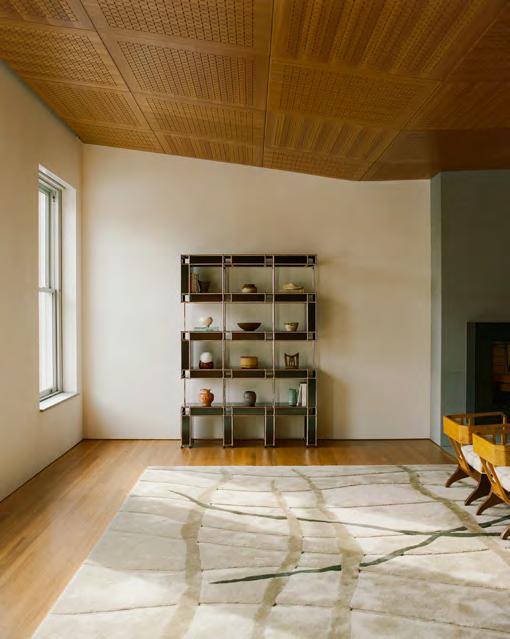
Armando Cabral with the USM x Armando Cabral collection.
SYM: What are you working on right now?
AC: I have a very interesting project that really bridges Portugal, America, and design in a concept related to hospitality. It should be launching next year. We have a long way to go, but it’s very exciting — the heritage, the craft, and bringing those two worlds [together] in a way that I think will have everybody talking about Portugal. Besides that, the USM collection [a furniture collection Cabral designed in partnership with the Swiss modular furniture brand USM] we did has a second edition that’s launching next year in Portugal, that we’ll bring into the [MAAT, the Museum of Art, Architecture and Technology in Lisbon].
SYM: You started in fashion but have expanded into interiors and are now exploring this hospitality space. How do you think about a shoe versus thinking about a space and the objects within it versus thinking about an experience?
AC: I left Portugal for London to study architecture. I wanted to be an architect; I’ve always loved design. I got to London — vibrant city, beautiful, melting pot of people — and was like, “I don’t have six, seven years to study.” So I switched and went to business school. Then I got into modeling and had the privilege of traveling the world. So design was always inside of me, but it was amplified by traveling, staying in some of the best hotels, going to these beautiful locations. I earned some great money with modeling and thought: Now I need to invest it. So I started [my brand] as a shoe company, but I’ve always viewed
it as a lifestyle. There are all these beautiful things I love — experiences and places and things — and the company is my interpretation under one umbrella. I’ve always had a dream to own my own boutique hotel, to bring in the great things some hotels have, and the things they don’t have.
People really care about things that give them some sort of a heritage connection. They’re like, “Oh my God, I watched my grandmother doing this.” There’s something about that that brings us home. We’ve all been to beautiful places, but beautiful places need to reflect something that has some sort of emotional connection. This is where all of these things tie together. Obviously, I don’t work alone. It takes a team to achieve great things, but the vision is really about putting my experiences into place.
SYM: It’s like character development.
AC: Yeah. It is also about valuing things that are not just objects but that add something to you. Same thing with the designs that I did for USM. In the 13th century in Africa, they created all these symbols of life that mean something: gratitude, greatness, dynamism. One of the symbols that was part of the collection is called nkyinkyim It’s a symbol of community, dynamism, and adaptability. So when you’re looking at that piece, you don’t just say, “What a beautiful bookshelf.” You ask, “What is that?” This creates a conversation, creates connection, and, even in difficult times, it’s a reminder to adapt.
SYM: Are there any additional hidden motifs or hidden backstories in the USM
“People really care about things that give them some sort of a heritage connection.”
collection that a buyer maybe wouldn’t immediately know, but the secrets are kind of woven into the piece?
AC: The first motif that I used, it’s called nkonsonkonson, which is like a symbol of unity we embroidered in one of the shoes. It was a message reflecting the time when we were coming out of the pandemic. It’s important for us to always unite your health and my health, that one individual plus another individual creates a community.
I remember studying how, back in the day, the weave of African fabrics was also currency. Different patterns had different meanings. They created patterns for newlyweds, wishing them well. For a newborn, there was a pattern to wrap the kids within. So I use all of that stuff as part of our designs.
SYM: That’s definitely an aspect of craftsmanship that we’ve lost in modern times.
AC: I think design and fashion are having a moment of crisis. It’s fast; it’s not much about process. There’s no point in collecting and just accumulating things when they have no meaning. I don’t want to contribute to that.
SYM: How do all of your backgrounds live within you?
AC: Growing up here, I only identified with Portugal. Later on, I came to understand that I cannot be this without that; I cannot be that without this. This is where I started really getting into African history. How beautiful to say this is also part of me? Accepting it added even more value to everything. I think my parents did a great job. Even being in Portugal, we knew our origins. That’s what I’m trying to do with my kids. They’ve been coming to Portugal since they were 3 months old. I travel with them because I know what traveling gave me. We haven’t gone back to Guinea-Bissau yet, but we’re building something there. So once that is done, I want them to start experiencing that to feel like this is part of who you are. Yes, you were born in New York. You’re privileged that you have that. You have a home in New York, you jump on a plane. You have a home in Lisbon, but you also have to look at where you come from.
Bolama Slip-On Loafer, Armando Cabral
Well-Versed
Musician and composer Arooj Aftab considers the books that have fueled a life of musical thinking and sonic exploration.
by
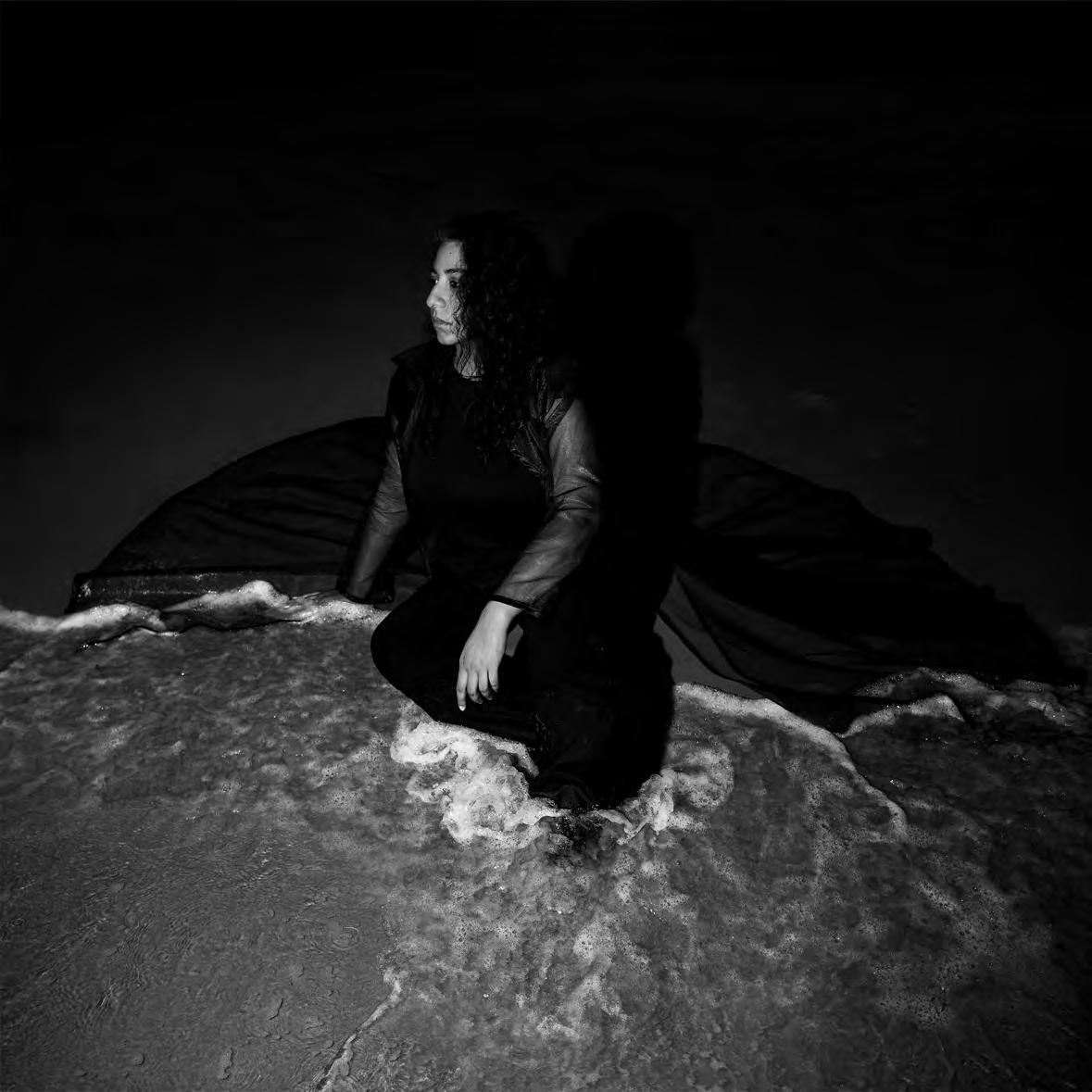
Trying to describe Arooj Aftab’s music to someone who has never heard it is sort of like trying to explain a beautiful dream in the moments just after waking. Her songs are at once minimal and distinct but also ephemeral and sonically vaporous. And while the Pakistani American singer and composer is frequently described as a jazz musician, the songs on her most recent album — 2024’s Night Reign — pull at the seams of traditional jazz conventions, drawing on classical references, interpolating verses by Rumi and the work of 18th-century poet Mah Laqa Bai Chanda (the first woman to publish a collection in Urdu), and the reimagining of Joseph Kosma’s 1945 classic song “Autumn Leaves.” Given the meditative, expansive nature of her work (work that, in 2022, made her the first Pakistani artist to win a Grammy), it’s not surprising that Aftab’s taste in books would be equally sprawling. Here, the artist does a deep dive into the books that have informed both her life and her music.
T. Cole Rachel: I feel like I missed out by never getting into fantasy books when I was a kid. I was busy reading stuff that was totally inappropriate. I should have been reading things like the Dragonlance Chronicles
Arooj Aftab: When I was around 12 years old, I got very into reading the Dragonlance Chronicles. My older brother would finish one, and he would pass it to me. By the end, we had an entire bookshelf full. The
world within the books was so vast. It gave me permission to imagine and explore. The stories also weren’t always so war-oriented or hypermasculine, which was unusual. Reading these books at such a formative time really fueled my creativity, while also helping me learn how to write prose informed by this poetic sensibility. Plus, they gave me a sense of the diversity of the world and all the ways in which different kinds of friendships can exist.
TCR: You are the second musician I’ve met recently who mentioned Vikram Seth’s novel An Equal Music. What makes it such a powerful statement about music making?
AA: It’s a shockingly accurate depiction of what it feels like to be a musician, which is refreshing to read. I read it when I was just about to leave for Berklee [College of Music]. Musicians often have this tumultuous relationship with their music and their writing and their personal lives and their love interests and their desire to travel in order to explore more kinds of music — all of which frequently makes them have to sacrifice things and leave people behind. Often the only thing that keeps you stable and sane is music, which becomes the nucleus of your life and the only constant. Also, the person who wrote this book is not actually a musician, so I always wonder: How did he do that?
TCR: I have never read Babyji by Abha Dawesar, but now I feel like I must.
AA: When I got to Berklee, I started
hanging out with all these women’s gender studies majors from Harvard [University]. I was very, very lazy and nonchalant about the queerness of my life, and these feminists were like, “You need to read this book.” I was really surprised. It’s a very well-written book about this brown woman to whom I very much related. There are these common tropes of being South Asian as a queer teenager and being in India or in Pakistan. Maybe you have a crush on your friend and then there’s some older woman who’s either unhappy in her marriage or divorced who is hitting on you inappropriately, or you meet someone in the service industry who is also queer. There are these three tiers of queer women, and they’re all hidden and they’re all in your periphery, but it’s all very veiled. In this book, that’s just the whole story. My mind was blown. I was so sheltered. I thought I was all alone in the world, so it was nice to read that.
TCR: It’s hard to pick a favorite Toni Morrison book, but I love that you picked Sula
AA: I also read this one in my 20s, and it had a huge impact on me. Toni Morrison writes so powerfully about control — being controlled, controlling someone else, understanding what controls you. In this case, it’s about how the community controls you and how society controls women in all of these different ways: patriarchy, religion, race. It’s essentially the story of the friendship between these two women — one goes out into the world and does
her own thing, never gets married, achieves all of the goals she has worked for. The other, who stays put, conforms to societal standards, gets married — all of the expected things. This felt so much like my life in so many ways. I was watching all of my friends get married or sort of let go of their dreams, while I was the one who was made to feel crazy for doing this thing that had no future and made no sense and was risky. When you are the one going against expectations, often you have no support. You can only depend on this insane belief in yourself.
TCR: It’s been so gratifying over the past couple of years to see so many people discover Octavia E. Butler. Her books are so amazing and so wild. Just try describing the plot of Wild Seed to someone who has never heard of it before.
AA: It’s an insane book. But like you were saying, so many people are rediscovering her work. As someone who read The Lord of the Rings and A Game of Thrones and those kinds of books, mostly by all white writers, I found reading sci-fi work by Octavia Butler so mind-blowing. She changed the whole genre. She elevated it. Her work also offers an important message. She’s giving a warning to people that if you have power, if you have a gift, if you have magical properties, people will come for them. They will be taken away or something will happen and they will get corrupted.
TCR: I love a celebrity memoir and I love Viola Davis, so Finding Me sounds like a win-win. Lots of people I know love this book.
AA: I suggest listening to it if you can. I’ve been listening to it while I’m working in the kitchen or when I’m on a plane, and her story, plus her voice, is so powerful. Listening to her talk about the entertainment industry has been really comforting, and enraging, and affirming. It feels similar to the way my life has changed in the last few years and how I’m navigating the industry, facing so many of these atrocities of being a woman and being a woman of color. There aren’t enough safe, uplifting spaces in our industries. One day you’re just this unsuccessful Indian musician
making your tunes and living your life, and it’s simple. When you break past that, you’re like, “Oh, shit, it’s evil out here, and I’m in the middle of it.” So this book felt very healing.
TCR: Give My Regards to Eighth Street is a great book for anyone who doesn’t know about Morton Feldman’s music, but it’s also just a fascinating book.
AA: It really touched me to learn about the history of Brooklyn and the relationships between these (now iconic) artists back when they were busted and crashing illegally in loft spaces and warehouses in Williamsburg [a neighborhood of Brooklyn]. Feldman’s friendships with Philip Glass and [Mark] Rothko are fascinating — also, the way he describes his approach toward composition. When I was reading it, I was earmarking different passages, using it as a tool to better understand his work.
TCR: I honestly didn’t know much about Henry Threadgill until you recommended Easily Slip Into Another World
AA: Henry Threadgill is not somebody that people are like, “Yeah, we need to make a documentary about that guy,” but he is so important and, of course, overlooked and such a powerful, key person in the history of American jazz music. I’m so glad this book exists and it’s so well-written and that we have access to another really important piece
of history that involves these incredible artists, just like the Morton Feldman book. It’s a reminder that, in an artistic community, everybody’s fueling each other. Artists are not ever moving in a singular way; they are all affecting each other and informing each other’s work. I don’t really know if that’s happening right now.
TCR: As someone who has spent much of their career writing about music, I love that you included Quantum Listening by Pauline Oliveros on your list. Her take on deep listening — this larger cosmic experience of listening to music — is so incredible.
AA: The book was totally reamplifying things in a way that was organized and made sense to me. Truly deep listening. It made me think about when I first told my dad I wanted to study music. He was like, “Listen, you’re confusing yourself, a lover and listener of music, with the people who make music.” I was like, “No, I’m actually not doing that. I am both of those things and also more. I am a musician.” That was the first time that this idea, this critical investigation into the two sides of musicianship and loving music, came up for me. This book is so important. It is a highly irresponsible thing when music writers and music listeners and music makers — anyone who cares about music — has not read this book. This book is our guide.
“She’s
giving a warning to people that if you have power, if you have a gift, if you have magical properties, people will come for them.”
Stitch by Stitch
With a network of knitters spread across New York City, Hania creates luxury goods imbued with a distinctly human touch.
I spend a disproportionate amount of my time in Midtown Manhattan, but there are few places within this stretch of the city I might refer to as an oasis of calm. That being said, walking into the showroom of Hania New York — a luxury knitwear brand tucked onto the fourth floor of an unassuming building on West 56th Street — I am struck by a feeling of peace. The bright, airy space is populated with racks of beautifully rendered sweaters in mostly monochromatic hues. Tables are piled with pillowy cashmere in the form of hats, sweaters, and scarves, accompanied by the occasional bowl of fresh flowers. It is quiet, but I can hear voices and the faint click of knitting needles reverberating from a nearby room.
Hania is the longtime passion project of Anya Cole, and this space — in addition to being a showroom for buyers and private clients — is the central hub for a creative community she has
helped foster for the better part of two decades. Having grown up as a trained ballet dancer in Poland during the height of the Cold War, Cole filed for refugee status in the late 1980s in order to emigrate to the United States. Arriving with only a few suitcases and her young daughter in tow, she was determined to plot her own course.
“I was a single mother, and I wanted my daughter to have a better life,” she recalls. “I eventually got a job as a fashion merchandiser because I knew how to make things look nice. Growing up behind the Iron Curtain, I could never buy anything. Someone would bring us a magazine with pictures of all of these beautiful clothes and sweaters, and I would figure out how to make my own version of them. I always just had to create. Growing up in Poland taught me how to be resourceful. You learned to take whatever you had and make it look pretty.”
Cole was determined to turn her
personal creative pursuit into a business that would not only speak to her own passions but also, ultimately, benefit other women like herself. This dream led to the creation of Hania, a knitwear business that drew on her own design skills and catered to clientele looking for special, one of a kind pieces. Faced with orders from department stores that she could not fulfill on her own, Cole found an unlikely recruitment source at her own front door. “Many of the doormen in my building were Albanian,” she recalls. “Some of them had wives who were struggling to find work. Turns out, many of them knew how to knit.” This set in motion what would become the business model for how Hania still operates — employing women across the five boroughs of New York City and paying them a fair wage for their work.
What began with just a handful of knitters grew into dozens. In a position now to help other women from similar circumstances, Cole wanted
to make sure knitters were paid justly, given benefits, and made to feel that they were part of a supportive community. Over the next decade, Hania would engage with over 100 freelance knitters, each working from home and taking on as much or as little work as individual schedules would allow.
“I very much relate to these women,” explains Cole. “I was that same person — a refugee, an immigrant. Many of them don’t speak English; some have full-time jobs while others are caregivers at home. This work helps subsidize their income, but it also gives them a connection to other people.”
While the showroom at Hania is itself a thing of beauty, it’s the workroom that most excites me. For a novice knitter such as myself, being surrounded by some of the most luxurious yarn in the world is its own kind of thrill. For its sweaters, Hania uses only the finest ethically sourced cashmere fibers, working with the same companies that provide yarn for the world’s most exclusive luxury brands. Hania offers free repair on all of its sweaters and will launder them if a customer is wary of accidental shrinkage. Additionally, if a sweater no longer fits or a customer no longer wants to wear it, Hania will unravel it and repurpose the yarn for a new piece. Looking through bins of feather-light Mongolian cashmere, I understand the company’s ethos even more: Given the care and craft with which Hania’s garments are made — not
to mention their exquisite materials — they are anything but disposable.
The workroom is also where knitters come to pick up or drop off orders and, depending on the day and time, to sit, socialize, and, of course, knit. On the day of my visit, Fatime Belliu, a knitter who also serves as Hania’s office manager and unofficial right hand, greets me. Originally from Kosovo, Belliu frequently serves as the conduit connecting Hania’s Midtown operation with the tight-knit community of Albanian women in the outer boroughs who take on much of the knitting. As she explains it, these women regularly meet at a park in the Bronx to sit and knit together, often sharing work or delivering pieces to and from the office for one another. The work is valuable for the money it provides, but for many in the group, the connection to community proves just as important.
“I was working as a teller at Bank of America in my neighborhood in the Bronx,” Belliu explains, “and one of our knitting ladies, she still works here, came to cash a check. I asked her where she was working, and she gave me Anya’s phone number. Lots of women I knew were looking for work, so I thought maybe I could help some of them. I started here just as a knitter, but Anya offered me a full-time job. That was over 13 years ago.”
I also meet Hindire Tetaj, another longtime Hania knitter, who is known for her advanced technique and tackling some of Hania’s more complicated
“Our hands tell the story. That’s what makes these pieces so special. It’s not just that they are beautiful; they are filled with everyone’s stories.”
designs. Tetaj comes into Manhattan in the evenings to work as a cleaner in Midtown office buildings, but her daytime hours in the Bronx are spent knitting and making jewelry. She speaks little English, so Belliu steps in to translate. When I ask if it’s hard to juggle a night job with Hania’s projects, Tetaj — who is constructing a delicate cashmere sleeve while we talk — only smiles and shakes her head.
“If you love to make things, you’ll find a way to do it — even if it’s not for work,” she says. “Making things relaxes you; it’s good for your mental health. Also, I just can’t go without knitting. If I have a spare moment, I’m knitting. I can’t go to sleep at night unless I do some knitting. Even if I didn’t need the extra money, I would still do this.”
When I mention that I, too, am a knitter, albeit a fairly amateur one, Belliu immediately presents me with two bamboo knitting needles and a skein of heavy cashmere yarn. The three women gather around as Cole commands, “Okay, show us how you knit.” Under the watchful eye of these three master craftspeople, I manage to knit a few rudimentary rows. Even though my work is clumsy, everyone is exceedingly kind. “We could hire you,” laughs Belliu. “If you can do a simple knit and purl stitch, we can teach you how to make a sweater.”
Looking at all the work in progress happening around the room, Cole explains why this work and business remain joyful for her. “This is why handmade things are so wonderful,” she explains. “There is no wrong way to do it. I knit a certain way; some people do it differently. Everyone holds their needles a different way, works in a different way, at a different speed. After working together so long, I can tell who made something just by looking at the work. And when you really know someone well, you can look at the work and tell if they were happy or sad — or if maybe they were stressed or tired, just by looking at the stitches. Our hands tell the story. That’s what makes these pieces so special. It’s not just that they are beautiful; they are filled with everyone’s stories.”
Writer Eliza Dumais and Sam Lawrence, chef of New York City restaurant Bridges, in their Brooklyn kitchen.
Between Two Bridges
A highly personal, after-hours profile of Manhattan’s “It” Chef.
Here are some things Sam has taught me about flavor: Skinned knees taste like cherry pits, panic tastes like key lime pie, kissing tastes like Champagne on an empty stomach. For well over a year, we’ve kept a list: “Things that taste like other things,” it’s titled — our best way of explaining to each other what it is to stomach the world from our separate vantage points.
For the sake of editorial propriety, I should mention Sam has a last name: Lawrence. He is a rather important chef with a rather important restaurant in his custody. He is also the man with whom I happen to be in love — which makes me the best or the worst person to write this piece, depending on whom you ask.
Bridges, the restaurant in question, operates in New York City’s Chinatown neighborhood, with a chrome-lined dining room and a steady wait-list of unimaginable length. Sam describes his menu as “European cooking,” which I often tell him is a vague and lazy editorial descriptor for food that tastes like an epiphany, but he’s not bothered by the lack of specificity. He makes food that tastes like other things — cultures, time periods, places visited — each dish like some piped-in salad of souvenirs. The man grew up in Australia,
cooked in Paris for years, obsesses over Basque country cuisine, adores the culinary culture of Chinatown. He reads cookbooks like novels and dredges inspiration from minute-rice and bodega pickles.
At home, I hate watching him wield a knife. I am well aware of his technical proficiency — but you try watching someone you love slice vegetables at the speed of light and tell me the relentless, quadruple-time click of the blade doesn’t terrify you. When we moved in together, I brought too many books. He brought too many knives.
“He reads cookbooks like novels and dredges inspiration from minute-rice and bodega pickles.”
he comes home toting bags of stone fruit and tomatoes, the likes of which he lines up on the dining room table. In the winter: leafy greens, duck breast, oysters. If I go to bed before he arrives home, I leave him paper notes to say good night. He leaves me produce to say good morning.
Sam can make dinner out of anything — and I mean anything: Greek yogurt, green onions, frozen peas, saltines. He can wring music out of browning garlic. At the grocery store, he’s useless — drawn too eagerly toward novelty items or tantalizingly ripe produce to successfully corral the items he intended to purchase upon arrival. Frankly, there is no discernable difference between accompanying him to a vegetable market and an art museum. In both circumstances, he is a pillar of awe.
In the summer, when service finishes,
On certain Sundays and Mondays, Sam’s days off, we visit the farmers market in Union Square — downtown’s nucleus of chef-ly activity. In each stall, gentlemen with large, coarse hands remind me that they’ve known Sam for over a decade — since “the Estela days,” when he was clean-shaven and unsullied by the city. They ply me with flowers and peaches and assure me that he has good taste in capsicums.
“You know, I’ve spent more time here than just about anywhere else in Manhattan,” Sam told me once, carefully parsing through an array of Japanese eggplants. It’s funny: I was born and raised here, but Sam keeps on reintroducing me to New York. Still, neither one of us can properly pronounce the subway stop HoytSchermerhorn.
I learned to shuck oysters on Bridges’
dining room floor before it was a restaurant — before the team had installed the bar, or wired the electricity. About two months prior to opening, I was preparing to leave for a vineyard in Austria for six weeks. I’d miss the soft opening, so Sam threw me my own.
In the center of the space, still mottled with construction dust and sheathed in brown paper and painter’s tape, he laid out several beach towels, lit by a halfmoon of candles. On the so-called picnic blanket: martinis fresh from the freezer, oysters, a tuna crudo dish, tomato salad, anchovies, potato chips, caviar, steak cooked in butter, and last but not least, homemade carrot cake — my favorite.
By shaky, flickering light, he demonstrated how to wedge the oyster knife under the lip of each shell, clicking it open and slicing the tendon. He sat patiently while I attempted my own — before insisting I try another, and another, and another. When I first succeeded, he spooned the mignonette he’d made onto the shell. “What does it taste like,” he asked, “the first oyster you’ve ever shucked yourself?”
While he does this, I write, relishing in the nonverbal human company, the metronome click of his knife against a cutting board or the tick of gas exhaling from the stove top.
When I’m working — working well — I become immune to signs of life around me. I have a tendency to slip into some subearthly fugue state, typing frantically to meet a journalistic deadline or rearranging the plot points of a personal essay. Always, when I come up for air, I’ll find tidily arranged plates of sliced tomatoes and marinated feta, crackers and anchovies, sliced peaches, or peeled clementines placed beside me. Always, the kitchen smells more like heaven than any South Brooklyn walk-up ought to.
“Always, the kitchen smells more like heaven than any South Brooklyn walk-up ought to.”
“Like skinny dipping,” I told him. He wrote it down.
For the whole of that summer, Sam and I were simultaneously engaged in the projects of “writing a book” and “opening a restaurant” — two prerogatives that are delusions at best … and, more often, flat-out lies. For weeks on end, we sat in rooms together, humming with a synchronicity that lived somewhere beneath language. I wrote, and he cooked — testing recipes for Bridges’ menu. We rarely spoke save for the intermittent “Taste this,” or “What’s another word for … ?” To me, this is not so different from saying I love you
We still fold ourselves into this particular tableau with frequency: Sam cooking, arranging thoughts, sketching the scaffolding of new recipes into his notebooks.
Sam likes to say that his brain is at its most astute in the shower. In the early afternoons, while I eat eggs, answer emails, read in bed, I’ll often hear a shout from the bathroom — something like: “Parsnip cake and blue cheese: write that down! Tuna belly and dates: remember that for me!” I do, of course — then days later, I’ll arrive at the restaurant to find some three-dimensional incarnation of his shower ingenuity on offer — typically some improbable marriage of items that fuse so naturally I can hardly believe I’ve kept them apart all my life.
Without fail, every morning, I make coffee. Every morning, Sam washes out our mugs. If you ask me, that’s another way of saying I love you
Admittedly, I do not enjoy cooking — I’ve always lacked some intuitive sense of how things ought to taste, how to augment flavor. Even more prominently, I am without the patience — or perhaps, the pleasure center that derives joy or even a sense of calm from the involved, delayed gratification of preparing a meal. Somewhat nonsensically, however,
being in the kitchen is my drug of choice: sitting on the counter while Sam tests pastry crust or cooks mussels, slices herbs, fucks me, feeds me fresh slices of cucumber and rich, earthy BrillatSavarin cheese.
Most nights, we eat on the floor — even when Sam has made sole, butter sauce, green salad, gratin. Even when the food merits a table. I’d like to think there’s some poetic logic here about groundedness, rapport with the floor boards, but more likely, it’s just a force of habit.
Late nights, returning home from bars or friends’ houses, we’ll often have a nightcap — vin jaune, amaro, whatever it is — sitting cross-legged on the tiles of our prohibitively small kitchen, pantsless, with our backs against the cabinets. There’s no logic to this, either — we have countless more practical places to sit. It can be explained only by our chemical draw to the kitchen.
When Bridges’ first New York Times review came out, I read it aloud to Sam in Fort Greene Park. The piece was glowing — so much so that I found myself standing up involuntarily midread, propelled by the helium charge of my enthusiasm. Sam, however, remained seated. Everything, for him, conveys some plausible cry for improvement. Any given success will always feel quieter than the siren call of revision.
In any case, each time I read an article about the restaurant, I find myself disarmed by the odd and obvious realization that Sam cooks for hundreds of other people every day — many of whom understand and celebrate the nuances of his dishes in ways that I will never entirely comprehend. But what all the critics and industry impresarios don’t know is that Sam’s scrambled eggs will change your life. That plain old tomatoes taste sacramental when he slices them.
This November, my first book will be published. The release party will be held at Bridges. As it turns out, these things — the novel, the restaurant — were neither lies, nor delusions. Not anymore, anyway.
Plain old tomatoes taste sacramental when Sam slices them.
Reishi Hot Chocolate
Words by Zoey
Xinyi Gong
This is a perfect treat to cozy up with during the cold months. Reishi is a powerful ingredient that not only boosts immunity but also balances the mood and spirit. Its slightly bitter flavor and brown color pair perfectly with cacao, another superfood filled with antioxidants. Make this recipe at home, and you will not be disappointed. I love to keep the longan fruit and jujube dates in the hot chocolate so that when I get to the bottom of the cup, I can have them as a sweet surprise!
Preparation time: 15 minutes
Serves 1
1 ½ cups soy milk or another nondairy milk
1 small pinch (0.5 grams) saffron
4 pieces (10 grams) longan fruit
1 piece (5 grams) jujube date
⅔ palm-sized piece of vegan dark chocolate bar, broken into pieces
(or 2 Tbsp dark chocolate chips)
2 Tbsp cacao powder
1 tsp reishi powder*
1 Tbsp honey (or to taste)
⅛ tsp ground cinnamon
In a saucepan, combine the soy milk, saffron, longan fruit, and jujube date. Place over medium heat until the mixture reaches a boil; reduce heat to low, and simmer, covered, for 10 minutes. Turn off the heat, and add the chocolate to the warm milk. Whisk until the chocolate dissolves completely. Add the remaining ingredients. Whisk until it’s well combined, with no lumps. Taste and adjust sweetness.
Serve warm. You can eat the longan and jujube date!
*Reishi powder works best here. However, if you wish to use dried reishi, use 1 piece (5 grams) and add it to the saucepan along with the soy milk in Step 1. Fish out the piece, and discard it before you start Step 2.
Zoey Xinyi Gong at Silver Root Apothecary in central Shanghai.
by
Home Soil
Traditional Chinese Medicine practitioner Zoey Xinyi Gong is on a global mission to establish the ancient system as a practical guide for modern life.
Adaptogenic tonics are having an American moment, packing beverage aisles from New York City to Los Angeles. Their labels list mushrooms such as reishi, lion’s mane, and cordyceps — all promising stress relief or a mood boost. For Zoey Xinyi Gong, these fungi are neither novel nor exotic. “These trends are usually taken from a tradition somewhere,” she says wryly.
A globally reputed chef and practitioner of Traditional Chinese Medicine, Gong treats these ingredients as part of a discipline she studies, practices, and cooks with, one that predates modern wellness fads by millennia. She’s determined to show that the practice is for everyone. “People often misunderstand Chinese medicine, thinking you have to do this or that, or do acupuncture,” she explains. “But the core of it is guiding us to live as close to nature as possible.”
After living nearly a decade in New York, Gong has recently returned to her hometown of Shanghai to continue pursuing her goal. This summer, she opened Silver Root Apothecary, a sun-drenched studio in the city’s historic French Concession that advocates for TCM as a storied yet living practice. It’s the culmination of a long-delayed homecoming.
During her time in New York, Gong was busy becoming a registered dietician, interning in hospitals, publishing The Five Elements Cookbook: A Guide to Traditional Chinese Medicine with Recipes for Everyday Healing, and co-founding Red Pavilion, a TCM-inflected nightclub in Brooklyn. (At one point, it served partygoers bone broth.) But, eventually, the city, once electric for her, began to dim. “New York stopped inspiring me,” she states plainly. “I was like: I’m not learning much anymore.”
Due to pandemic restrictions, she also hadn’t visited her parents in China since 2019, and she missed them. The decision to return to
Shanghai coalesced after she was finally able to return in early 2024. “It just felt right,” she confirms. “Everything was so comfortable.”
There’s more at play than nostalgia. TCM’s profile is rising in the United States: Jade rollers, gua sha facial massage, and mushroom lattes circulate TikTok and Instagram; celebrities from Gwyneth Paltrow to Tom Brady have sung praises for cupping and acupuncture. But the trends are often divorced from their origins. In China, too, Gong says, TCM is ubiquitous but still misunderstood. While clinics and hospitals specializing in Chinese medicine are common, the younger generation often views the practice as archaic — until they encounter its repackaging overseas. “People who’ve been abroad see how their own culture is being practiced by a non-Chinese person,” Gong muses. “And then this kind of younger person starts to be more proud of their own culture.”
shop lined with herbal ingredients sourced with care. The she gan (blackberry lilies), for instance, come directly from a small farm in Gansu, a province known for producing the red-speckled flower, which is used in TCM for its cooling and soothing properties. “Every single kind of herb I source for the apothecary comes from a supplier I know personally,” Gong says.
“It’s not just about health or nutrition. It’s a philosophy.”
For Gong, food is the most accessible gateway to TCM. Rather than prescribe, she prefers to coax her students and clients into a new way of relating to ingredients. “I don’t like to tell people exactly what to eat or what medicine to get, but rather guide the relationship you should have with your diet.” The approach draws on her experience as a private chef as well as her disillusionment with the food industry’s excesses. One of her favorite ingredients, dang gui (angelica root), is used in teas to promote women’s reproductive health. It tastes “motherly,” she says. The descriptor captures TCM’s emotional role. “It’s not just about health or nutrition. It’s a philosophy,” she says.
Silver Root encourages this revival. In a time when culture is so often flattened for export or diluted into trend, Gong hopes to show that TCM is neither decorative nor arcane. TCM is, she simply explains, about taking cues from nature on how to live. “All these treatments you’re doing are to bring your body back to harmony, to balance,” she says. “Nature is really good at balance.”
Gong’s new space itself expresses this philosophy. Tucked into a compact footprint, Silver Root’s concrete walls frame vintage furniture and a narrow garden where Gong grows 20 types of medicinal plants, including ginger, saffron, and mosquito-repellent blooms. Upstairs, there’s a light-filled little room for acupuncture and other treatments; downstairs, a table for cooking classes (herbal deep dives, facial gua-sha workshops) and a
Chinese ingredients make up most of the U.S.’s supplements industry, Gong notes, and China is the world’s largest producer of mushrooms. But the culture behind these wellness products is often left uncredited. “When you’re drinking mushroom coffee, China probably is not the first thing that pops into your head,” she says. One of her long-term goals is to make a documentary that traces TCM’s historical arc and present-day resonance.
For now, her focus is local and immediate: the apothecary, the garden, her two cats (Titan and Truffle) who nap among the planters. It feels good to be home. “I want Shanghai to be my home base,” she says. “New York, I’ll always be back.” After checking off many markers that define success, especially in a city like New York — book deals, press coverage, a stylish nightlife venture — Gong is drawn now to something less quantifiable. She wants to return to the root of things: how an herb is grown, how a tea is steeped, how a culture’s story is told.
Donald Edward Ward and Donal Dionysius Lardner Ward.
Talk of Many Things
Donal Ward reflects on a childhood spent shuffling underfoot at one of New York’s most iconic restaurants, alongside legends of the city’s midcentury arts and culture scene.
My earliest memories of Elaine’s are of the cellar, its heavy, clanging, black, diamond-plate doors split wide, the worn cement steps down to the mingling smells of stale puddle water, fresh linens tied together in stacks, onions piled in mesh bags, freshly ripped cardboard. And, of course, the walk-in: the frigid wonderland of plenty. I vividly recall my handsome, young father squatting in his crisp suit and shiny loafers, demonstrating for my sister and me, in deadly serious tones, how to escape from those frigid confines should we be accidentally shut in. We took turns pushing on the cold, dull metal plunger that released the latch on the outside, the scent of the damp wood walls, kegged beer, a hanging veal leg, and fresh strawberries tickling our noses. If for any reason the latch became stuck, we were instructed to shut the levered valves above the scarred and dented aluminum kegs feeding the beer taps upstairs, drawing a bartender down to investigate. My sister and I were probably 4 and 3 years old, respectively. Our father was teaching us how to save ourselves, a lesson he never quite learned for himself. By this time, my parents were already divorced, with Elaine’s (and Tinker’s, the first bar my father opened at 74th Street and Second Avenue, with two of his brothers in 1961) contributing to many of the irreconcilable differences. My sister Karin and I spent most weekends with Dad, which generally began with him picking us up in a cab at the Work & Play Preschool across from Mom’s new apartment on West 82nd Street and, in later years, at P.S. 87 on the way to “the store,” where we’d wander about entertaining ourselves while he and Elaine led the set-up for the night. I can easily summon visions of Elaine lumbering about, a floral print flowing around her like a slackened sail, faux pearls spilling down into the abyss of her bosom as she placed “reserved” signs beside bright yellow, Ricard-embossed ashtrays on the first few tables. I can still smell the heavy scent of powder when she scooped me up into her squishy lap after settling at a front table to recount the register bank, while my father sprung around behind the bar restocking liquor and small wooden crates of tiny soda bottles.
A restaurant prepping to open has its own sense of time and rhythm, tasks performed at a smooth, steady clip in an atmosphere of anticipatory quiet, adrenaline slowly rising as
it gets closer to proverbial curtain time. It is a form of theater, a nightly performance accentuated with lighting and music, each evening following the same script, but never duplicating events exactly. My father and Elaine were the show’s impresarios and lead characters. My sister and I were supporting players, but Dad always made sure we felt like an integral part of the scene. When a best-selling author, Broadway playwright, or Park Avenue princess made the usual polite inquiries upon being introduced to me, “How old is your son?” “Where does he go to school?” Dad would promptly reply, “Ask him yourself; he’s standing right in front of you.”
Other times, witnessing my discomfort at being mistaken for a little girl due to my smooth, soft face and long, blond hair, he’d advise, “Just pull down your pants and show them your joint!”
Even if my face was warm with embarrassment advancing to mortification, my child brain somehow intuited that he was trying to instill his own defiant boldness in me, and I wished his effort had been more successful. It would take me decades to understand how much of his persona was protective or the vulnerabilities it strove to defend.
As darkness fell, my sister and I would eat at one of the big, round tables, Dad cutting up our veal Milanese, served with a squeeze of fresh lemon and salty french fries, made especially for us from fresh potatoes pressed through the intimidating steel cutter bolted to the oily butcher block in the noisy kitchen awash in harsh fluorescence. When we were a little older, but not much, we might be allowed a tiny bit of watered-down wine with dinner, “Like all the kids in Europe,” my father would confirm to anyone who questioned the custom.
Dad was big on inclusion, in all its forms. For better and for worse. His approach to parenting, influenced by newly popular, antiestablishment ideology, involved treating children with the respect afforded adults, hiding nothing from them, paired with the belief that a less-restrictive approach to alcohol and marijuana experimentation would prevent abuse later on. Sharing my father’s theory never failed to get me a robust laugh in recovery meetings decades later.
When Dad took his place at the door, bowing deeply to kiss the hand of an eastside social queen or bracing himself to catch
ballet dancer Rudolf Nureyev as he leaped across the threshold into Dad’s arms, my sister and I were set loose to scurry about a forest of adult legs, grubbing “house quarters” — coins brushed with a splotch of red nail polish to differentiate them from revenue when the coin box was emptied — from Ray the bartender to feed into the glowing Seeburg jukebox.
The jukebox was the altar at which we worshipped. Its bright colors and rectangular, plastic buttons that clicked in with a sturdy push, the heavy clunk of the coins dropping in, the shiny black 45s whirring by until the mechanical arm identified the song we’d chosen by memory: G4, B7, or F9. We loved “Downtown” by Petula Clark and Nancy Sinatra’s “These Boots Are Made for Walkin’,” which we pantomimed along to. But it was the Beatles who got the vast majority of our red-quarter plays. In those early days, it was “She Loves You,” (“She lubs you, yeah, yeah, yeah, yeah, yeah …” was how my first attempt at a song emerged from my lips, according to my father), “I Want to Hold Your Hand,” or the flip side, “I Saw Her Standing There.”
As John Lennon’s driving rhythm guitar and jubilant, melodic howl (“As I held her hand in mi-iiiine!”) infused the room with an electric charge, I watched my father ascend to another form on that 6-square-foot patch of floor at the restaurant’s entrance. He became a blur of finely choreographed movement, red hair flying, paisley necktie swinging, cufflinks twinkling, warm hugs, hearty handshakes, delicate hands kissed, shouts out to waiters Elio and Nicola in perfect Italian, “ Attenzione!” “Andiamo!” funneling the inhabitants of New York newsrooms, publishing houses, film sets, photography lofts, recording studios, and society luncheons toward the back, where Elaine policed proceedings while trading bon mots with playwright Jack Richardson and writer Bruce Jay Friedman, making sure checks were paid and tables turned, and stuffing wads of bills into her massive bra.
when he drank, but he was fiercely loyal to Dad and protective of us. We found him to be hilarious. Before we could make it to the cab, however, we had to face the front table gantlet, my father insisting we say a proper good night to those favored customers seated at the first few tables. Journalist David Halberstam was easy enough, giving us a kind smile and wink during a pause from a deep conversation about corruption in the National Security apparatus. Comedian Tommy Smothers might offer a pat on the head and a funny face, but if I spied actor Shelley Winters near the door, I braced for the squishy hugs and sloppy kisses we knew would come.
“In my young eyes, my father was the bright sun in a constellation of stars.”
In my young eyes, my father was the bright sun in a constellation of stars, loved by all, wanted, needed, desired — a prince of the greatest city in the world at its midcentury zenith. When it got late and raucous enough that it was time to go home, even for kids as precocious as we were, my father would pull a 20 from the register, put us in a cab, and tell the driver to keep the change from what was probably a $4 fare. He’d phone ahead to his Riverside Drive apartment, asking for us to be met downstairs by the live-in housekeeper and part-time “manny,” whom everyone knew as Sherbert. A wire-thin Trinidadian Black man, 120 pounds soaking wet, who moved like a spooked cat, Daniel Danielle allegedly earned his nickname by describing himself to a potential romantic interest as “chocolate sherbert.” Years later, I learned from my Uncle Kevin that he’d found Sherbert in St. Thomas looking for a job and sent him up to New York to work as a porter at Tinker’s, where Sherbert slept in the basement till my father took him in.
Sherbert had a dramatic nature prone to emotional extremes
My father’s apartment was on the seventh floor of a corner, prewar building, a “Classic Six,” with two bedrooms, a maid’s room off the eat-in kitchen, a formal dining room, and a living room with a pair of large bay windows offering sweeping, southwesterly views of Riverside Park and the Hudson River. The apartment had come to him through a girlfriend he’d moved in with sometime after my parents’ divorce, a bright, gentlevoiced, petite blonde named Andrea, who made a living as a hair model. She’d grown up in the apartment, and when she and my father split up, she opted to leave the $165 a month, rent-controlled apartment to him, perhaps having something to do with her artist father having leaped to his death from one of its living room windows some years before. I don’t remember how old I was when I learned about Andrea’s father, but young enough to be confounded by the concept of killing oneself. When first hearing the word “suicide,” I mashed it up in my head with a dish from our local Chinese restaurant, Hunan Balcony: “suey-cide.” He committed “suey-cide.” To this day I am terrified of heights. The master bedroom was just off the entrance, its space dominated by a rare-for-the-period California King bed resting on a custom-built, 3-foot-high platform. We all called this the “Big Daddy Bed,” and it was where we slept when we spent weekends at Dad’s place, though I eventually came to understand the bed’s expansive acreage made it attractive for less wholesome activities at the group level. As often as not, my father would bring whoever was left in Elaine’s at closing time, along with the cabdriver, home to continue the party. Occasionally, the distant murmur of excited conversation, laughter, and music at the far end of the apartment would wake me and incite my curiosity. Following the jangly tambourine and swirling Hammond organ of Bob Dylan’s “Like a Rolling Stone” down the 50-foot-long hallway to the living room, I’d pass the primary bathroom to find mountains of ice- and frost-coated, green Heineken bottles occupying the long, deep tub where my sister and I could almost swim around each other during bubble baths. Tiptoeing past Sherbert’s room, I’d conceal myself at the kitchen entrance to the dining room, peeking across it through the grand arch to the living room.
Among a couple dozen chattering grown-ups, I’d spot my father on the long, low sofa, his tie gone, shirt unbuttoned to
the navel, with a beer in hand and a Marlboro burning in the other. A girlfriend who may have been Julianna or Vivianna — there had been both at one time or another — sat beside him in a low-cut, animal-print silk dress, her bralessness the outfit’s dominant feature, telling a story in either a Spanish or Italian accent between tokes on a small, silver pipe.
In the corner was a 4-foot square box with a plexiglass face, illuminated from within by colorful light patterns that seemed to change with the beat of the music. A pixie blonde in a miniskirt who looked like, or could easily have been, the model Twiggy would be twirling to the music in the center of the room, wine glass raised above her head. A Black man with an Afro that resembled musician Sly Stone’s, wearing a dashiki and yellowtinted sunglasses, could be found rolling a joint on the cover of Highway 61 Revisited, beside an unidentifiable couple entwined in an oversized chair. A guy with horn-rimmed glasses and a rumpled blazer leaned against the bookcase examining Dad’s book collection like Owl Eyes in The Great Gatsby, a character I’d eventually learn was based on my great-grandfather, writer Ring Lardner. But unlike Jay Gatsby’s, Dad’s books were genuine, an eclectic assortment including: signed first editions from author friends; giant art books; a whole shelf crammed with Encyclope-
dia Britannica volumes; an ancient, faded, gold-colored dictionary fraying at the binding that I’d use as a step stool to reach the magical Robert Louis Stevenson volumes — Treasure Island or Kidnapped — with their striking N.C. Wyeth illustrations; or my favorite book of all, Lewis Carroll’s Through the Looking-Glass My father had read it to me so many times that I’d memorized a couple of stanzas of “The Walrus and the Carpenter” and would pretend, most notably to myself, that I was able to read at age 3. When finally discovered, my father would scoop me up, saying, “What are you doing out of bed, my fine, fat son? Let me tuck you back in, my beautiful child-ine.” Down the hall we went as he continued, “Do you know that I love you more than anything else in the whole wide world … ?” But I didn’t really want to leave that room. It was the side of the looking glass on which I always felt most alive.
“The time has come,” the Walrus said, “To talk of many things: Of shoes — and ships — and sealing-wax — Of cabbages — and kings — And why the sea is boiling hot — And whether pigs have wings.”
Donald Edward Ward, Karin Leslie Ward, Donal Lardner Ward at Elaine’s, 1964.
It’s Ee-beats-a A festival of
spiritual enlightenment pushes even its most skeptical attendee out of his head and into the flow.
I clicked on the link for the Alma Festival’s website, where an artsy video of beautifully fit young people played. Wearing wide-brimmed hats and drinking from oversized, unglazed ceramic chalices, they danced spasmodically, waving their arms above their heads like those wacky, inflatable tube guys in front of tire shops. The third-annual, four-day festival, which is held at the luxury resort Six Senses Ibiza, was described as a “blend of wellness workshops, insight-packed talks,” and “transformative healing sessions.” This would make for a really funny piece, I told my editors. It would be about the attendees, how New Agey and White Lotus-y this self-proclaimed “festival of a different frequency” seemed.
Landing in Ibiza, I was eager to get to the resort but maybe more eager to confirm the proper pronunciation of Ibiza. In movies, fancy people pronounce it with a “th” (Ee-bee-tha). But my driver confirmed what I suspected, “Yes, this is how people say it, but they’re wrong. It’s pronounced ‘Ee-beats-a,’ with a double ‘z’ sound in the middle, like pizza.”
As I walked up to the gigantic doors marking the entrance to Six Senses, I was greeted by Martina Anzel, who invited me to reconnect to the earth via my heart. She was barefoot and wearing a feather-armored breastplate. Everything, she assured me, was going to be okay. “Welcome home,” she concluded, as she placed a crystal necklace over my head.
The 20-acre resort’s mountaintop, teeming with rosemary bushes and olive trees, reminded me of a frittata recipe I had seen in the New York Times . The suites are
built into the cliffs of the northern tip of the Spanish island, depositing guests at the water’s edge, with panoramic views of Xarraca Bay. Specifically, my enormous one-bedroom suite looked like heaven: burrowed into the mountainside and flooded with light — an apt setting for a festival of spiritual enlightenment.
This transformation conversely started in the dark, with the low rumble of a gong prompting us to join what was billed as a post-dinner Cosmic Meditation. Even though it was dark, I could see enough to know that I was in trouble. There was a large fire burning on the deck just below The Orchard restaurant, and everyone seemed to know what to do. Yusi, a dark-haired woman in a cowboy hat and fringed leather skirt, told us that her voice was for healing and instructed us to dance. I did my best, but it wasn’t exactly a dance — more of a slow shuffle coupled with some light flapping. I struggled to be present, but when I closed my eyes, I remembered unselfconsciously prancing around the empty dance floor of a girlfriend’s Sweet Sixteen party, then started to cry.
The following morning, after a grueling gym session and a gorgeous merguez sausage shakshuka breakfast at The Farmers’ Market cafe, I made my way to RoseBar. Six Senses Ibiza’s renowned “longevity club,” the clinic aims to activate your healing system and optimize vitality via a host of biohacking treatments. Invited to take my pick, I chose an hourlong stint in a hyperbaric oxygen chamber. It was like being buried alive with duck-down pillows and a hand-tufted memory foam mattress. But instead of dying, the opposite happened. In this 6.5-foot tube, I received
100% pure, medical-grade O2. The pressurized oxygen purportedly increases blood flow, promoting the growth of new blood vessels and resulting in, I believe, my ability to live forever.
Next came an event called Your Sexual Energy Is Medicine, which I’d describe as part lecture, part orgy. Within 10 minutes, I was dancing again — awkwardly stepping from side to side, then toe to heel, with my hands up as if I were attempting to surrender. I pushed myself to keep up, and when we were instructed to close our eyes, I began to cry, again, as I thought nebulously about aging.
That evening, the opening slide at the Science of Longevity seminar prepared me for another doozy of an event: The New Frontiers of Stem Cells presented by Christian Drapeau, a Canadian neurophysiologist who has been at the forefront of stem cell research for the past 20 years. Drapeau projected a Power Point featuring a gray mouse that had been spatchcocked, its tiny, drab heart exposed. I watched, mouth open, as a godlike hand delicately reached into the cavity to administer some sort of life-juice with a glass pipette: the liquid, we later learned, contained stem cells. After the dropper made contact with the miniature organ, we watched the heart start beating again. I’m not a scientist, but I have read Pet Sematary, which is why I was left wondering how the experience might affect the creature’s personality, seeing as it was now, technically, a zombie.
Drapeau was clearly an expert. So when he mentioned to us that anxiety may be associated with just about every disease from Parkinson’s to Alzheimer’s, I considered abating some of my own anxiety by skipping the next day’s big event: the Sanctum hike. The previous night, however, I had (through gritted teeth) promised Kat — a member of Sanctum, a self-defined mindful movement community — that I would not only attend but that I’d also “let go” and give in to what the occasion offered. The Sanctum hike had been described to me as a sort of techno walk: a multidisciplinary, transformative movement experience designed to unlock human potential via personal isolation within a collective energy experience. For many, this was the highlight of the weekend. To me, it sounded like the stuff of nightmares.
Walking out of the lobby, I heard Sanctum co-founder Luuk Melisse’s voice through the glowing, sensory-deprivation
Sanctum-branded headphones we were all wearing, which made us look like participants in some sketchy Black Mirror episode, playing an ill-advised game of follow-the-leader. Melisse was our guide for the hike. Talking over calming atmospheric music, he informed the 100-plus folks on this journey that he started Sanctum because “movement is his medicine.” “I had a lisp,” he said. “I couldn’t talk, but I could move.” I was crying, again.
Melisse ordered us, “Follow the flow and get out of your fucking minds!”
I wanted to. I was really trying, but I couldn’t stop thinking about … I’ll call her Carla. She was a graduate of New York City’s prestigious LaGuardia High School, and, although we were dating back when I knew her, I can say — in hindsight, with complete confidence — that she did not like me. This realization came to me one night when I was at a party with her, dancing by myself. After the song ended, I made my way over to her, out of breath. “What was that?” she asked archly. “Um … dancing?” I replied. “But you were all hunched over and sort of skipping backward?” Even now, recalling this moment, I’m flooded with hot, burning dread.
“What do you want to leave behind today?” Melisse asked. So much, I thought.
At the end of the hike, we formed a circle around our guide and raised our hands in the air. We were one entity — a collective consciousness, a single cellular structure — and Melisse was the nucleus, not Carla. As instructed, we hugged whoever was standing next to us, promising to tell them the truth. Even if I was lying, I felt fantastic.
The next day, on my way to the airport, I reflected on the festival and realized I’d had it all wrong. I had imagined a caustic but funny piece about “them.” Little did I realize that it would be about me — how bound up and hypercritical I am, how I convert old slights into narratives, and how narratives become identity. This narrative was really about how hard it can be to let it all go. But, thanks to some new friends and a clearer understanding of the value of my sexual currency, I was ready to reintegrate, to flow back into the general population knowing that just behind my eyebrows lies the intuition I’ll need to succeed.
At least that’s what Yusi told me.
It’s pronounced you-see.
Nest to Bed A trip to Iceland uncovers
the qualitative results and quantitative processes of an eiderdown
duvet that takes 8,900 hours to complete.
After a full day’s journey from Los Angeles to the tip of Iceland’s Troll Peninsula — 12 miles south of the Arctic Circle — I couldn’t wait to go to sleep. Yes, I was tired, but also aware that waiting for me on my bed at the Sigló Hotel was an UMŌ Paris eiderdown duvet, the impossibly warm, limited-edition product behind my trip here.
I am used to sleeping under a heavy comforter in pitch darkness. In this part of Iceland in May, it was light outside past midnight. My hotel room was chilly, so I curled up under the soft duvet, which, at a little over 1.5 pounds, felt lighter than a sheet. I closed my eyes for a moment and considered ringing the concierge for heat and blackout shades. Weightless warmth enveloped me. After what felt like minutes, I got up to call the front desk. The clock on the nightstand read 9 a.m. — I’d slept through five alarms, as though drugged in a cloud of Ambien. I felt restored, transformed, as if by a fairy tale-like spell. Could I chalk all that up to a duvet?
UMŌ Paris, which takes its name from the Japanese word for “down,” was founded in 2024 by global entrepreneur and polymath Binith Shah. Having developed several luxury brands over the course of his career, he wasn’t planning to launch the world’s most sustainable luxury bedding brand. But after a life-changing sleep under eiderdown, he was rapt. Like I did, he felt something shift in that tranquil night — something so transformative it sparked obsessive research into the wild origins and science of eiderdown. It led him to Árni Örvarsson, the third-generation steward
of one of Iceland’s most renowned eiderdown sanctuaries, and, ultimately, to a fifth-generation B Corporation-certified atelier in Chablis, France, where each UMŌ duvet is hand-sewn.
The result of his journey? A duvet that takes 8,900 hours to complete, from nest to bed.
Fully rested and still a little spellbound, I climbed into Örvarsson’s Land Rover. The 30-something former pro-football player (and dead ringer for actor Alexander Skarsgård) married into a family with eiderdown sanctuaries, sparking an unexpected passion for the craft. He’s one of the youngest eiderdown stewards in Iceland, he tells me. “It’s a dying industry,” he says. “Not a lot of young people are joining in. It’s hard work — brutal when weather is bad and yield is low. But eider ducks are a passion of mine. It’s something I have to do.” The road we took cut through a massive corridor of craggy, obsidian mountains, giving way to empty, spring-green hills that rolled below to the water stretching north. It felt like the edge of the world. Up here, there are no crowds of people, only clusters of newborn sheep stumbling to keep up with their mothers.
As we sped toward his sanctuary, Örvarsson explained the symbiotic relationship between humans and eider ducks. As early as the ninth century, Viking settlers protected nesting sites, so they could carefully collect the down left behind each spring, relying on the material for warmth in the harsh climate. This form of environmental stewardship has remained largely unchanged for over a thousand years. Eider ducks are sea divers, not migrators. They return to the same sanctuary year after year, sometimes
for more than a decade. In early May, the females pluck the down from their breastplates to line their nests. It’s an evolutionary gift, which insulates the seafoam-green eggs during their 25-day incubation and forms the basis for one of nature’s most extraordinary materials. Eiderdown is naturally hypoallergenic, hydrophobic, and impossibly light. Each filament is barbed with microscopic hooks that allow it to cling to itself and hold loft, without the need for baffles or bulk. Its warmth floats, envelops, and lasts for decades with proper care, making eiderdown duvets family heirlooms — and such an intrinsic part of the culture here that, in 1847, the Icelandic government declared the eider duck a fully protected species. Disturbing their nests remains a punishable offense.
Örvarsson’s sanctuary sits on a spit of land spilling into the sea. By this time of year, snow and ice have receded, and moss and grasses blanket the knobby lava rock in thick emerald tufts. It is spongy underfoot, laced with crevices that make ideal nesting sites. As we began walking, Örvarsson motioned downward. Nestled in the grass, inches from my boots, sat the most immobile duck I’d ever seen. She appeared alert but calm, her mottled brown feathers perfectly camouflaged in her down-lined nest, which was hidden in the tall grass. Within the week, Örvarsson explained, her ducklings would hatch and head to sea. Only then is the down gently gathered by hand, a process that takes place during the country’s 24-hour sunlight from May to June. No birds are touched. Down is not taken prematurely.
But this is not a calm, sacred nursery. It’s a bustling scene that never rests, a place where each inhabitant plays a role in protecting the community. Scores of black-and-white males — picture penguins in duck form — shuttled to and fro in the icy waters surrounding the nesting ground, their calls low and wooing. Over-
head, arctic terns screamed warnings in tight circles, a phenomenon Örvarsson explained was a kind of security system. When the terns’ calls become shrill, grating screams, he knows predators, such as foxes and minks, are nearby. What struck me most was the balance of this remote, wild ecosystem, one that evolved in sync with humans. Nature dictates the pace while weather and climate determine whether the next generation of ducklings survives: A spring snowstorm can take out a chunk of the season’s eggs. It’s not fabricated scarcity; it’s natural rarity. This is luxury that refuses shortcuts.
Even so, gathering the down is just the beginning. Once collected, it is washed, cleaned, and hand dried. Only then does it travel to Chablis, where UMŌ partners with an atelier that has been producing fine linens for over 150 years. There, the duvets are measured, cut, and hand sewn, without the stiff grid of baffles found in everyday down comforters. Shah worked with the atelier to design a minimal baffle structure that maximizes warmth and airflow. Every detail is intentional, down to the cotton sateen bourdon stitching and finely embroidered eider-wing logo, added by hand in the final stage.
The atelier’s B Corp certification isn’t a marketing badge — it’s a commitment to purpose beyond profit. Each duvet that emerges from the workroom is not just a product but also a gesture toward nature, toward craftsmanship, toward longevity. Eiderdown duvets should last for 40 years or more when cared for properly.
The final product is rarer than diamonds, in terms of source. Seventy-five percent of the world’s eiderdown comes from Iceland, and UMŌ’s duvets are among the only ones made from 100% Icelandic eiderdown. I may not have known that the first night I slept under one, but I felt it.
“Nestled in the grass, inches from my boots, sat the most immobile duck I’d ever seen.”
Árni Örvarsson is the third-generation steward of one of Iceland’s most renowned eiderdown sanctuaries.
Everyday Fantasies
From a hillside home in Japan to a storybook cottage in Sweden, a writer extols the pleasures of making a mental move.
Once, when I was a girl, entranced by the sight of lit windows on a nighttime walk, I asked my father how long he thought it would take for me to look inside every home on Earth.
“How long would you stay?” he asked. Bless him for always taking me seriously.
“I’d just take a quick tour,” I said.
He did the math. There were then about 5 billion people on the planet, and some lived together, so he estimated around a billion households. At roughly five minutes a pop?
“More than a lifetime,” he told me.
I wasn’t sure I believed him. At the time, I felt like I’d live forever. But even if I couldn’t manage to see every domicile on the planet, it seemed like a good way to spend my days.
It still does. Thanks to the internet, I’m now able to see into many people’s homes — the ones for sale, at least. And I spend more and more time doing this. When depressed, bored, or overwhelmed, I travel the world and fantasize about life elsewhere. Not about vacations —
that’s a different kind of dreaming — just about the maintenance of daily life in another place. I find a spot that looks beautiful and mentally transport myself (and my belongings) to it. Umbrellas in a stand by that door, fruit in a bowl on that counter, an afternoon spent with a trowel in that struggling little patch of grass.
The practice could be described simply as scrolling — or, looked at differently, as a form of inner emigration. The basic idea is: By flying away in our minds, we can vacate a difficult reality. The term “inner emigration” is originally German and was used to describe the compartmentalization of those who
disagreed with the Nazi regime but stayed in the country anyway. It was repurposed in the Soviet era to describe the practices of dissidents who managed totalitarianism by mentally opposing the regime and cultivating rich interior lives. Though inner emigration is easy to romanticize as a subtle form of resistance, it can also be cast as capitulation. I like the phrase for the ways it encompasses this ambiguity, because I don’t know how to characterize my own habit of mentally transporting myself — it could be a harmless escape or a compulsion, a form of refusal or of complicity.
Whatever it is, lately, I need these dreams more than ever. As the news grows more nightmarish, and seemingly more unavoidable, I’ve taken to spending more and more time cultivating alternate lives. Aided by algorithms, I follow international real estate and design accounts on Instagram and bookmark sites on my browser. I find a house I’d love to call my own and then learn about the surrounding area. When modern life feels overwhelming, I use these modern tools to escape. Here are some of the places I go.
An apartment in Durrës, Albania.
In Durrës in the heat of summer, warm air off the Adriatic Sea blows through the sliding door’s screen. From my place on the fifth floor, I have a clear view to at least a strip of sea, a ribbon of sapphire that ends at the horizon, where another blue begins. I sit in the glossy white kitchen with its white tile floor. I use a moka pot on the stove to make coffee, though many mornings I choose to take an espresso at a neighborhood cafe. There, I read the news on paper. I hear the sounds of Albanian, and Italian too. I live among Italian retirees whose children take the boat over from Bari to visit. When people come to visit me, I take them to the Roman amphitheater, which once hosted gladiator fights for an audience of more than 15,000. But now our pocket of the world is calm and hot, set to the quiet rhythms of the waves.
A hillside home in Hida-Takayama, Japan
Takayama is in the Japanese Alps, which is good because I like to hike. In autumn’s cool air, I depart my house just after dawn in good boots, with a walking stick, and climb through the lush forest. Then I head into town to make my way to a morning market — this area of Gifu prefecture is known for them — where I procure ingredients for dinner. I take the bright red Nakabashi Bridge across the Miyagawa River. Since it’s fall and the leaves are changing color, I stand on the bridge to observe for a few minutes. After work, I’ll head to the onsen, the natural hot springs, for a
relaxing soak, then return home to cook with the local mountain vegetables I procured and brew a fresh pot of tea.
A rowhouse in Bradford-on-Avon, England.
I’ve long imagined living in a quaint English hamlet, so I feel perfectly at ease walking along the river in town, taking in the Georgian architecture. Built with pale Bath stone, the house is inconspicuous from the outside. It looks like all the others: a bit shabby at 250 years old. But inside it’s a colorful warren, everything slightly crooked, cracked, or winding. At the farmers market, I buy a bunch of wildflowers, sheep’s milk cheese, and a loaf of bread, which I carry in a large tote. The men at my local pub give me guff for rooting for Liverpool, my favorite team. The city is far to the north of us, and my septuagenarian drinking buddies tell me there are plenty of perfectly good football teams between here and there — but it’s all in good fun. After a pint, I walk home, illuminate the orange lamp in the living room, and slump into my reading chair. As soon as I’m still, holding a book, my cat jumps onto my lap.
A thatched-roof house in Tomelilla, Sweden.
Yes, the roof looks like nature’s shag rug, but this is typical of 19th-century farmsteads in Skåne County, southern Sweden. And inside, the house is like something out of a fairy tale. Its beamed ceilings, wide-plank wooden floors, vintage stove, and floral wallpaper are a study in coziness. And the large doors in the living room open out onto my lovingly maintained garden. I may be far from the country’s capital, but I’m only an hour’s ride from Malmö, which is where I go when I want to sit in a cafe or visit a bookstore. In winter, I’m glad I bought so many books, because my garden is buried beneath a heavy layer of storybook snow and, apart from a few bracing walks, I’m stuck indoors by the wood-burning stove.
Do I actually need to move or is digital wandering enough? I recently read an interview with the individual behind a popular Instagram account that showcases rural properties for sale in far-flung corners of the globe. In spite of having posted hundreds of houses, he reported that he knows of only a handful of people who’ve purchased one and made the move. Will I be one? Friends love to remind me that every place has its nuisances and downsides, that people are basically the same no matter where you go. That may be true. “Sure,” I reply defiantly, “but I won’t understand what they’re saying.” For a time, until I’ve integrated more fully, I won’t get the nuances of local politics, won’t know the long-standing challenges of a particular bureaucracy, or who’s at the center of town drama. And maybe that’s what the dream is really about: a withdrawal from the familiar webs of responsibility, networks of accountability, and, ironically, life online. A withdrawal from noise. Maybe beyond the pleasures of perusing other places, trying on lives like articles of clothing, this longing has a larger purpose: to remind me to keep reaching for the beautiful, ever more rare experience of being a keen but passive observer.
Keeping Time
The return of a rare Cartier watch syncs up with a renewed focus on the legacy of one of its original owners, Duke Ellington.
Picture this: New York City, 1928. The Roaring ’20s are reaching their crescendo; the Harlem Renaissance is in full swing. Uptown, at 142nd Street and Lenox Avenue, Duke Ellington is a year into his tenure at the Cotton Club, his famed orchestra acting as the house band for the legendary nightspot.
Photographs of the jazz pianist and composer from this era, in the prime of his music career and cultural ascendency, offer a bounty of lush details. First, there is the Cotton Club, with its marquee lighting, dancers, and revelry. There is the physical arrangement of Ellington’s band, members symmetrically lined up onstage, behind a cascade of staircases, or fanned out around the bandleader sitting at a baby grand piano, leaning in. Then there is Ellington himself: arms draped; long, elegant fingers perched on the keys; wearing a doublebreasted suit or tuxedo cut so perfectly that not a single patch of fabric is taut or wrinkled — every inch sits just right (perhaps the true genesis of the term “drip”).
Duke Ellington wearing a Tank à Guichets watch, circa 1940. Opposite page: Cartier Privé Tank à Guichets 150th Anniversary Limited Edition, 1997.
But it’s a minute detail on Ellington’s soigné wrist that requires a swipe of the fingers to zoom in for closer inspection: a wristwatch from Paris, by Cartier. It is a brand new watch from the French jeweler, and only a handful were made. One of the first went to the Maharaja of Patiala, Sir Bhupinder Singh, in British India, whose storied extravagance includes placing the largest single order that Cartier has received to date (the Patiala necklace, with 2,930 diamonds including a center stone weighing nearly 235 carats, all worth the equivalent of $2.5 billion in 2023 — a piece that was also ordered in 1928).
After the maharaja, Ellington became one of the inaugural owners of the Cartier Tank à Guichets, sometime in the 1930s. At a glance, the wristwatch is visually undistinguished, its dial obscured by a thick plate of brushed metal, time visible only through two small apertures sitting top and bottom. But behind this outer shell — and beyond its famous owners — sits a timepiece with inner and outer peculiarities that have made it a sought-after collectors’ piece for nearly a century.
This is undoubtedly why Cartier decided to reissue the Tank à Guichets this year, adding a limited-edition update to the timepiece as part of its ongoing Cartier Privé collection. In the new version, the jeweler and watchmaker opted to stay truer to the original, slimming down the case to nearly the exact size of the 1928 version (previous versions from 1996/1997 and 2005 were notably thicker, reflecting watch trends of those years).
fastidious about his clothing, about the way he looked, about the way the band looked,” recalls Mercedes, the oldest grandchild and a dancer and choreographer who runs the Duke Ellington Center for the Arts in New York. “Even [with] his own son. When my father [Mercer Ellington, Duke’s only child] was in the band, he began to turn gray. My grandfather was so upset because he wanted my father to dye his hair. [My grandfather] did his own straightening process on his hair and put it in a little ponytail. And so my father and my grandfather had this little fight because while [my grandfather] wanted my father to dye his hair, my father wanted [my grandfather] to cut his ponytail!”
“He was very fastidious about his clothing, about the way he looked, about the way the band looked.”
The watch is most prized for its jumpinghour function, part of the maison’s 9755 MC mechanical movement. Put simply, this means instead of hour markers slowly and steadily moving from one number to the next on a dial, the marker quickly jumps from one number to the next the very second the hour arrives. For the Tank à Guichets, the function takes its form in an hour window located at the top of the watch. At the bottom, another curved window displays “dragging” minutes that steadily show that measurement of time.
These window apertures explain why Cartier named it the “Guichet,” which loosely translates to “ticket office.” How fitting for a bandleader such as Ellington to have chosen a timepiece that replicates the experience of going to a show: wearing a tiny box office on his wrist.
Famous musicians and their watches have long been a mainstay in the watch-collecting world. Aside from having the access and purchasing power, a music artist might gravitate to a timepiece with complications and novelties, an echo of how time signatures in music notation can be simple or compound, complex, mixed or with irrational meters. That Ellington also owned a Patek Philippe Ref. 1563 split-seconds chronograph reflects this harmony.
When Mercedes Ellington accompanied her grandfather on a U.S. Department of State-sponsored tour through the Soviet Union in the early ’70s, antique watches were souvenirs that band members commonly picked up during their travels. But ultimately, what they wore on stage was up to the bandleader. “He was very
Ellington’s image and legacy has recently come back into focus in a number of ways. The Metropolitan Museum of Art’s Costume Institute exhibition Superfine: Tailoring Black Style highlights how the jazz musician’s image was crucial to the history of Black dandyism. And at this year’s Jazz at Lincoln Center gala, comedian Dave Chappelle (himself an amateur jazz pianist who attended the Duke Ellington School of the Arts, a public high school in Ellington’s hometown of Washington, D.C.) hosted a commemoration of Ellington’s 125th birthday. Next year, Duke’s youngest grandchild, Paul Ellington, will try to bring the Duke Ellington Orchestra back to the Newport Jazz Festival to celebrate the 70th anniversary of the band’s seminal show there in 1956. The thirdgeneration Ellington has overseen the band since his father, Mercer, died in 1996. Paul has also recently gained back the rights to a biopic of his grandfather that he developed while enrolled in New York University’s graduate film program (the script had been optioned by MGM and Amazon).
Paul is also the executor of Duke Ellington’s estate, responsible for keeping track of the musician’s personal effects and memorabilia. While much of it was donated to the Smithsonian after Duke’s death in 1974, Paul still has a storage unit full of his grandfather’s wardrobe, which includes tuxedos with ruffles, ornate shirts of fine silks with pattern inlays, oversized collars, and those impeccable suits. “I was 7 or 8 when I first saw the wardrobe, before I realized who my grandfather was, and how important he was,” says Paul. “As a kid, I looked at it like something a prince would wear.”
As for the Cartier watch? Neither the museum nor Paul knows the whereabouts of Duke’s Tank à Guichets, a fact that likely has the most ambitious of watch collectors in a hot but elusive pursuit.
Paul points to another one of his grandfather’s timepieces as much more sentimental, an antique wristwatch with a maroon suede strap, silver bezel, and rounded glass crystal, which he keeps in a safe in New York. “It’s engraved ‘To Duke from Swee’ Pea.’ Swee’ Pea was Billy Strayhorn,” says Paul, speaking of his grandfather’s longtime writing partner, who met Duke in 1938. Paul guesses that Strayhorn gave Duke the watch a year or two after meeting, when the duo was just getting started on their nearly 30-year working relationship.
“It’s by far the thing that I cherish the most,” Paul adds.
Letters from The White House thanking Duke Ellington for his international tours through the U.S. State Department.
Moving Mountains
The mythical topography and culture of the Dolomites reveals the region’s otherworldly frequency.
Deep in the Dolomites, celestial deities danced to the rhythmic click of the ancient Ladin people’s looms as they wove moonbeams into a galactic tapestry that would bind their prince’s true love, a cosmic princess, to her terrestrial twin flame. The clouds heralded the royal couple’s coronation by encircling the full moon in a fluffy, white crown, stars prancing on its midnight-dark edges.
According to the Ladins, who have lived in the Dolomites for thousands of years, the princess-bride’s lunar blanket remains stitched to the mountain range’s jagged peaks, accounting for their otherworldly glow. Whether the story is true is of little importance because, like most myths in the Dolomites, the tale is real. To this I can personally attest because I witnessed the previously described scene unfold
above the infinity pool of my suite at Forestis.
Forestis, a hotel and spa located 5,905 feet above sea level in the South Tyrol province on the northernmost edge of the Dolomites, was the final stop on a weeklong journey, one that became more and more surreal the farther I drove into the mountains, exploring their bleached faces and shadowy crevices — from Cortina d’Ampezzo to Olang to Brixen. With each stratospheric layer and interaction, the lines separating past from present, ascent from descent, fact from fantasy seemed to vibrate, then dissolve.
Perhaps it was the altitude. Here, the sky appears within arm’s reach even as precipitous valleys seem to carve to the center of the Earth, their old-growth forests said to be home to Salvan (Ladin
gnome) burrows. Maybe the burrows are hidden under fallen spruce trees that, these days, become wood chips burned to fuel hotel saunas and hot tubs. The mountain bikers, climbers, hikers, and skiers who travel the region’s slopes have come to expect such amenities, just as they anticipate the local speck ham, schiava wine, and canederli dumplings. Cuisine is the common language of this former Austro-Hungarian territory, which only became part of Italy in 1919. But such distinctions are neither here nor there because the Dolomites are a dimension unto themselves. This is a place legitimately regulated by its own rules. This is where the cow landed after it jumped over that fabled moon. Just listen: You can hear its bell ringing from slopes and pastures across these incredible lands.
Cortina d’Ampezzo. The gasp that escapes me as I exit the cable car at Cima Tofana is part lack of oxygen (I’m at 10,643 feet above sea level) and part terror (the ride to the top of the rock face is petrifying), but mostly it’s the view. All around me, an ocean of peaks rolls out to the horizon. Below, an emerald valley unfurls, cradling the Dolomites’ most pedigreed town.
Cortina d’Ampezzo is a dramatic beauty but not a vain one. It wears its age with pride by way of traditional Austrian Venetian alpine architecture and crests painted on the Old Town Hall, which assert the continued reign of the regolieri, the heads of historic Ampezzo families who still manage the territory according to ancient laws.
Which isn’t to say that the town’s afraid of a little nip and tuck. Construction cranes are busy raising new buildings and what looks to be a thrilling bobsled track ahead of the 2026 Milano-Cortina Olympic Games.
being the
word
The heritage hotel reopened in 2022 with an architectural wellness focus that informs everything from its raw materials and electromagnetic field blockers to its rooftop wellness center, home to mountain views, top-notch facilities, and excellent massages.
Hotel de Len. Here, I find a natural aesthetic — len
Ladin
for wood.
Azienda Agricola Foradori. Elisabetta, who still leads the company’s long-term vision, isn’t physically present during my visit, but her presence looms large — in the azienda’s daily practices and in its bottles: Each wine is a distinct expression of its land, environment, and grape.
Mezzolombardo. I’ve wanted to visit Azienda Agricola Foradori since I first tasted its signature red wine made from the native teroldego grape. The family’s secondgeneration winemaker, Elisabetta Foradori, was among the first to cultivate the varietal with an eye for quality, bottling and exporting the results beginning in the 1980s — to international acclaim.
Myrtha Zierock, Elisabetta’s daughter, who runs the azienda’s hospitality (as well as its excellent vegetable program), leads my tour of the property’s vines, gardens, and cellars with unhurried passion. Her brother, winemaker Emilio Zierock, stormily conducts an entourage of pickers and pumpers in the flush of a too-early harvest. A third sibling, Theo Zierock, educates me on Foradori’s biodynamic, slow-growth philosophy, peppering in his own revolutionary theories about agriculture, globalization, and modern life (which he also shares in his excellent semiannual print publication, Bromio, focused on food and wine culture in Italy).
Hotel Ancora Cortina. The most notable “glow up” I find in Cortina is at Hotel Ancora. Located in an 1826 landmark building, the legacy hotel reopened this summer after receiving a top-to-bottom facelift from its new owner, Italian fashion entrepreneur Renzo Rosso, with the help of interior designer Vicky Charles, known for her work at Soho House.
The property looks good from a distance, certainly, but as anyone with a discerning eye knows, expertise is in the details: intentionally international luxe decor — shearling upon velvet, marble upon gold, with no two rooms alike — and a wellness center with all the accoutrements. There’s also a boutique carrying Rosso’s brands (Marni, Margiela, Diesel), a subterranean nightclub with flattering lighting and a strict no-phone policy, a glossy lobby bar with rare spirits, arguably the town’s most prestigious terrace, and an unerringly smiling staff.
Olang. I’m already questioning my sanity after encountering the hallucinatory crystal-green waters of Lake Landro en route to Olang when another mirage appears: a cluster of men in lederhosen-esque costumes lifting a massive tree trunk (with a tiny wooden man on top of it) to stand in the center of Olang’s town square.
“Ah, of course. Quite normal,” responds hotelier Markus Gasser, when I describe the scene to him over lunch at Hotel Hubertus, a wellness-centered hotel in South Tyrol, located just up the mountain from town. The “mirage” is actually part of an annual festival, during which said tree trunk is raised before being given away in a lottery; the winner customarily uses it for heating fuel in the coming winter. Gasser, the second-generation owner of his family’s hotel, plans to attend the festivities the next day — for the community as well as a roasted half-chicken and beer.
Hotel Hubertus. Following an exhilarating spin through Heaven and Hell (the hotel’s impossibly suspended sauna and whirlpool structure), a dip in the Sky Pool (a cantilevered miracle with an equally shocking view), and an invigorating Thai massage, I’m back in town, watching a multigenerational orchestra oscillate between traditional ballads and orchestral renditions of Adele’s hits.
Gasser tells me that I should also ride the Kronplatz gondola up to Kronplatz mountain, home to world-class skiing, hiking, and mountain biking as well as Zaha Hadid’s amorphous Messner Mountain Museum, the Lumen Museum of Mountain Photography, plaques recalling Ladin legends, and (on a sunny Sunday) paragliders careening off the mountain’s edge.
I opt to hike back down, through a fairy-tale forest, passing rifugi (mountain huts) and grazing cows with tinkling bells. Four hours later, I’m sipping a Negroni sbagliato on the panoramic deck at Hubertus, watching a sunset that would make Giorgio de Chirico cry.
Brixen. Enveloped in darkness, I buzz the outer gate to Forestis. It is secreted away on the Plose mountain in a dense forest that exudes a magical aura. In the hotel’s woodand light-filled lobby, I’m presented with a stone chalice of pine syrup-laced water and a steaming hand towel topped with a pine sprig. Every aspect of the property is meticulous, an homage to its environment.
Forestis’ terraced restaurant ensures every seat faces the landscape that inspires its hypnotic menu. My two-floor penthouse suite presents a terrace with an infinity pool, a Finnish sauna wrapped in glass, and a front row seat to the clouds. Hand-rolled chocolates are waiting, paired with forestberry tea and millesimato sparkling wine. A communal indoor-outdoor stone swimming pool holds the mountain’s purifying waters. Saunas emit the calming, healing essences of their wood and host a nightly ritual that sears bergamot, lavender, and pine into my pores; cleanses emotional blocks; and attunes me to the property’s transcendent energy. A sculptural cold plunge crystallizes the transformation.
Forestis. At the hotel’s cave restaurant, Yera, a primordial dining room wraps around an open fire, where executive chef Roland Lamprecht and his team prepare an 18-course tribute to forest cuisine. Celebrating what the property describes as “the return of the knowledge and richness of an Alpine cuisine that has developed over thousands of years,” it possesses all of the pomp and passion of a multiple Michelin-starred restaurant, with none of the pretense. Forest broth is followed by hazelnut caviar. Rye sourdough bread is served alongside freshly churned goat butter dusted with roasted yeast. Lamb served three ways honors the animal’s sacrifice.
It’s like being inside a womb, complete with rust-colored walls and an aural heartbeat of drums and birdsong. Yera’s flames, earthen flavors, and fermented beverages create a high that feels ancestral. Without phones to distract me, I’m engaged in an intimate exchange with the restaurant’s creators and their collaborators: local wood weavers, potters, brewers, chef Lamprecht’s beekeeper father, and sous-chef Francesco Polla’s foraging grandmother. It is not a resurrection of craft but a continuation of lineage, an expression of collective memory. Like the Dolomites themselves, it feels very much like the past and future at the same time.
Riding the Wave As night descends on
Salvador’s tangled streets, the swell of drums and chanting voices alights.
On our first night in Salvador, Brazil, my husband and I wandered the darkened cobblestones of Pelourinho, the city’s historic center, searching for the Teatro Miguel Santana. We were late — and lost — hoping to catch a 7 p.m. performance by the legendary folk troupe Balé Folclórico da Bahia. As we sprinted past colonial monuments and gilded baroque churches, a series of drumbeats thundered from deep within the maze of alleyways. We followed its slow, steady thump all the way to Terreiro de Jesus square, a few blocks from the theater, where a circle of young drummers rehearsed a hypnotic set, and we slipped into the packed hall just as the lights dimmed.
Inside, dancers burst across the stage in whirlwinds of color, their Afro-Brazilian choreography propelled by the pound of traditional drums, the metallic twang of the berimbau, and haunting melodies sung in Portuguese and the West African language of Yoruba. An older female singer dressed in flowing white robes and beaded necklaces summoned the orisha deities of candomblé — the syncretic Bahian religion forged during Brazil’s transatlantic slave trade — offering a glimpse into sacred rituals typically guarded behind closed doors across the city’s 1,400-some terreiros (places of worship). For the show’s ecstatic climax, barechested men performed a dazzling display of the Brazilian martial art capoeira, kicking, flipping, and spinning like knives through the air while a chorus clapped and chanted around them.
By the time we stumbled back to the streets, my ears were ringing. “Where to now?” I shouted to my husband. The city answered. Percussive rhythms streamed from the Clube do Samba on Terreiro de Jesus square, while, on nearby Rua Direita de Santo Antônio, a turntable had been propped outside a record store, spinning funky beats by the likes of Marcos Valle and Vinícius de Moraes, drawing a crowd that swayed mid-intersection. Before retiring for the night, we paused in São Francisco Square, where young male drummers played with such
ferocity that the mansions and cathedrals seemed to tremble as if the rhythm might shake them loose from the hillside and send them tumbling toward the ocean.
“This is a city of music,” said my guide, Conor O’Sullivan, the next day as we stood on the Thomé De Souza lookout, taking in the views of the vast, boat-filled harbor. He pointed in the direction of the Museu do Samba and the Cidade da Música da Bahia cultural center, where exhibitions tell the story of the Bahian capital through its world-famous composers and rhythms. Not only did Salvador produce some of the country’s leading composers, such as Gilberto Gil and Caetano Veloso, O’Sullivan explained, it also gave birth to genres, including the politically charged tropicalismo, born during the country’s 21-year-long dictatorship; axé, a fusion of traditional musical styles and Caribbean influences; and samba-reggae, combining samba (from Rio) and reggae (from Jamaica).
O’Sullivan, who was born in Ireland and has lived in Salvador for more than 40 years, noted that the city’s music scene builds to a crescendo in February, during the annual Carnaval. Billed as the largest street party in the world, it’s famous for its trio elétricos: massive sound trucks kitted out with speakers, lights, LED screens — even changing rooms for performers. “Imagine millions of people singing and dancing, and the streets going up and down like a wave,” he explained. “It’s powerful … something you have to see once in your life.”
Later, O’Sullivan took us to Pelourinho’s sloping main square, where candy-hued facades mask a brutal past. In 1558, Salvador became the first slave market in the New World, and it was
here that enslaved Africans were publicly punished and sold. It remained a pillory until slavery was abolished in Brazil more than three centuries later, in 1888.
Today, the area is a magnet for tourists who come to see the colonial buildings where Michael Jackson filmed the music video for his 1996 protest song “They Don’t Care About Us,” created in collaboration with the legendary local bloco afro (percussionist group) Olodum. The collaboration with Jackson came about under the vision of Salvador-born visual and Carnaval artist Alberto Pitta, who served as Olodum’s artistic director for 15 years, designing bright, vivid costumes incorporating African and Afro-diasporic symbols. Pitta describes the partnership as “legitimizing,” in that it brought global visibility to the revolutionary genre of samba-reggae that Olodum helped popularize.
But for Pitta, international recognition is secondary to what the music represents for the people of Salvador. As the son of a revered candomblé yalorixá (priestess) and a leading figure in the city’s Carnaval scene who now leads his own bloco afro, Cortejo Afro, Pitta sees music as the “ultimate manifestation, artistically and emotionally, of the people of Bahia,” where roughly 80% of the population identifies as Black or mixed race. Blocos afro have long served as community organizations, transmitting social, political, and spiritual values — many of them rooted in candomblé.
Viviam Caroline de Jesus Queirós — a founding member of Banda Didá, Brazil’s first all-female bloco afro — one of the best ways to get in step with the city’s rhythms is to attend a street rehearsal by female-only groups such as Bloco Afro Bankoma or the Orquestra de Xangô. Queirós’ own all-women ensemble, Yayá Muxima, specializes in sambareggae and hosts Saturday rehearsals at the entrance to their headquarters in Pelourinho, inviting passersby to witness what she describes as “women of different generations coming together around the drum.” While, historically, the bateria (percussive section) have been male dominated, Queirós has made it her mission to place women at the center of the beat.
“Salvador is a matriarchal city,” she says. “A place where yalorixás make history and uphold tradition — where women have always been the great organizers of culture. And percussion is no exception.”
Take Ilê Aiyê (“Big House” in Yoruba). Salvador’s original drumming collective and the first all-Black Carnaval group, it was founded in 1974 by young people from the working-class neighborhood of Liberdade and inspired by the Black Power movement in the United States. (In the 1980s, musician David Byrne of Talking Heads traveled to Salvador to film the 1989 documentary Ilê Aiyê about candomblé and Bahia’s deep musical traditions, featuring appearances by the eponymous drumming group.) Since its founding, the percussion-and-voice band has developed social programs in Liberdade, including primary school education with a focus on Afro-Brazilian history.
To that end, some of the city’s best live music can be found at community-centric cultural spaces such as Solar do Unhão, a 17th-century sugar mill reborn in the 1960s under celebrated Italian Brazilian architect Lina Bo Bardi as a modern art museum, a hillside sculpture garden, and an outdoor music venue — all overlooking the tranquil waters of the bay. Twice a month at sunset, thousands of people gather by the water for Jam at MAM (Museum of Modern Art of Bahia) concerts hosted by the resident band Geleia Solar, whose distinctively Bahian sound blends the styles of baião, samba, frevo, salsa, blues, swing, and jazz. Tickets start at just 10 reais (about $1.89).
According to Salvador-born percussionist and music researcher
Though Salvador has given rise to an astonishing range of musical styles, Queirós sees a throughline in it all: “The city’s cultural fabric is unique because of the drum and its power in candomblé, whose deepest roots are here. I believe the drum carries memory and healing — ancestral arrangements, a way of communicating.”
On our final night in the city, O’Sullivan led us through the bohemian enclaves of Santo Antônio and Rio Vermelho, home to intimate music clubs such as Colaboraê and ABOCA, the Bahian Association and Observatory of Culture and Art. In Rio Vermelho, we strolled past the main square, where vendors, dressed in traditional white candomblé blouses and hooped skirts, had set up dozens of food stalls slinging acarajés, African-inspired fritters made with black-eyed pea dough and stuffed with coconut shrimp. The nutty perfume of azeite de dendê (red palm oil) wafted through the air, mixing with the sticky, salt-licked breeze. Around the corner in Praça Caramuru, bars thump with live music seven nights a week.
“Which one has the best music?” we asked, bellies full and eager to see and hear it all.
O’Sullivan shrugged and smiled. “In Bahia, we say o povo faz a festa — or, the people bring the party.”
And that night, they did. On steamy dance floors and amid dense, quaking street parties, we followed the beat as best we could, pulled forward by the drumline’s hungry heartbeat. Our steps were off, but O’Sullivan assured us that it didn’t matter. In Salvador, the rhythm is a shared current.
Present Perfect A mother-daughter trip
to Bali provides a lesson in staying in the moment.
When my daughter Oona was born, I was working as a commercial photographer. Before I became pregnant, I would state (with a pride I now think borders on deranged) that I had not been home for more than two consecutive weeks in two years. Traveling that way was propelled by the lure of a successful career, and, if I am being honest, my own shortcomings. It was about escape: I didn’t know how to stop and be present.
Caring for an infant swiftly taught me to exist in the moment, as her immediate needs demanded it. But I lacked both the imagination and the humility to envision the many other ways motherhood would require me to change. When Oona was 3 months old, I booked a job in Paris. Since I believed I could do everything all at once, I insistently brought her along. Alone. She was so small that the person who took her passport photo had to stick an arm up the back of Oona’s shirt and hold her in the air, like a puppet.
I’ll spare you the unpleasant details of the flight, except to say that it ended with her stroller gate-checked through to the luggage carousel and me lugging a crying infant, bags that should have been in the stroller, and my tired body with its still-fresh C-section incision through the terminal’s endless corridors. That evening, Oona came down with her first fever, and I spent the entirety of the
night before this big job holding my baby on the shower floor as we both cried. The following morning, when a smiling older woman with an unmistakable air of confidence (the babysitter I had hired) rang the bell, I had never been so happy to see a stranger in my life. If I didn’t throw myself into her arms, it wasn’t for lack of desire.
Undeterred, I took Oona with me everywhere I could in the years that followed. She took her first steps in Norway, modeled on photo shoots in Nashville, and hiked Machu Picchu with me when she was 10. Now, she is 13, no longer small enough to be portable. It had been a few years since we traveled alone together, so when the Four Seasons Resorts Bali invited me to experience the spa programs at their two properties, I asked her to join me. I missed traveling with Oona — and missed Oona, really. I hoped the time would give me a chance to be present with her in a way that can be challenging given her teenage-ness, my (still) relentless work schedule, and the realities of living in a family of five.
(This vague idea of deepening our connection wasn’t what I communicated to Oona. What teenager wants that? Instead, I enticed her with the promise of surfing and missing a few days of school.)
A flight delay caused us to miss our connection in Abu
Above: The flowers that greeted us at Four Seasons Resort Bali at Sayan were so beautiful we didn’t want to sweep them away. Opposite page: Oona spent a lot of her time at Four Seasons Resort Bali at Jimbaran Bay in our villa’s swimming pool, which overlooked the surf beach.
Dhabi, so our already long journey to Bali took two days. By the time we landed, we were feeling pretty wrung out, but as we walked through the airport, Oona was cheerful. Her good spirits reminded me of one of my favorite things about her: She’s game. Whether by practice or temperament, Oona has always been an easy traveler, and, as one of my friends declared after spending the day with her, “She’s a good hang.”
Her upbeat mood only improved as we arrived at Four Seasons Resort Bali at Jimbaran Bay. In our family, we also joke that Oona is a bit of a low-key snob, the kind of person who pretends she’s into anything but, deep down, really appreciates the nicest things. The property is that: lush and green, sprawling over a hillside overlooking the quiet end of the bay, with a wide expanse of blue sky touching an equally blue sea.
It looks not dissimilar to the hotel featured in Season 3 of The White Lotus and was actually in consideration for the show; I was told by a disappointed staff that the Thailand property was selected the week before the show’s production team was scheduled to visit the Bali location. Villas are built in traditional Balinese style, with dark wood, lots of space, and a raised threshold that prevents bad spirits from entering. When we finally got inside, I threw open the doors while Oona flopped on the bed, which the staff had covered in flowers.
hoping she was okay. But after the first few minutes, that concern vanished, along with all others. Drifting in and out of consciousness, being massaged, listening to singing bowls … It was delightful.
As the masseuses left the room, Oona turned to me from the next bed.
“Okay,” she said with a sigh. “You were right. That was amazing.”
She also rolled her eyes a little at me. Because she’s 13.
Antigravity yoga offered another surprise, this time for me. I’m sorry to report that I hated it. The silks cut into my thighs; I felt clumsy and, although I have done yoga for years, totally inflexible. It was a humbling experience that brought me right back to the horrors of middle school gym. Oona, on the other hand, excelled at it, as she does at all physical things. It was a joy to watch her hanging upside down, utilizing her incredible physicality, which does not come from me.
“We could hear the river everywhere; at night, the air was alive with frog sounds.”
She let out a long, satisfied exhale: “Oh, this is really nice.”
Then she drew a hot bath and stewed in it, something she proceeded to do twice a day for the rest of our trip. I find baths painfully boring; I only used the outdoor shower, which she avoided for fear of spiders.
When the properties had proposed our schedule, I had noticed some potential bumps. Often what appealed to one of us didn’t appeal to the other. Every single one of the spa offerings sounded great to me, but Oona wasn’t even sure she was comfortable getting a massage. She was equally unexcited by the antigravity yoga class I was looking forward to. And as soon as I saw The World’s Only Check-In by River Raft on the schedule, I knew it was an adventure she would love and I would hate.
Our first spa experience, scheduled for that afternoon, was a Gemstone Joy Treatment, combining gemstone oils with massage stones and a crystal-wand mini-facial. For me, the biggest thing recommending it was its length: two blissful hours. Despite her misgivings, Oona had agreed to try a massage (and I had agreed to river rafting). But by the time we arrived at the spa, she was resistant. If I’m being generous, I’d say she embarked on the experience begrudgingly, with a push from me.
At the beginning of those two hours, my mind was on Oona,
The following day Oona had a surf lesson scheduled with Tropicsurf. Her instructor, who exuded a very Aussie combination of competence and chill, told me they often take guests out to more dynamic spots, but Oona was happy to surf the resort’s private beach, which meant that I got to lay on a lounge chair and watch. I put my phone down and just listened to the water, appreciating seeing my kid — at home in her body in a way I will never be — surf wave after rolling blue wave. I thought about how hard I had worked when I was younger to keep moving. I felt grateful that, at least for this moment, I could stop and be present in this beautiful place.
I was not able to carry the calm I found on that beach into river rafting. I cannot emphasize enough how much I was dreading this activity, which had been haunting me since I’d agreed to it. Thrills are not something I seek. I dislike amusement parks, roller coasters, and scary movies. I have enough trauma without additional inputs setting off alarms that something bad is about to occur.
As we were dropped off at the Ayung River, I wistfully watched our luggage depart (by car) for the next hotel, wishing I could go with it. Kitted up in a life jacket and helmet, carrying a paddle, I marched down the 200 steps that switchbacked into the ravine. I could hear the river before I saw it, along with the screaming of other rafters. Looking back at Oona, I could see that, just as much as I was dreading this, she was looking forward to it, so I tried to get a grip. The rafting headquarters had displayed an oversized banner featuring photos of former United States President Barack Obama from when he visited; I calmed myself by reasoning that if the Secret Service allowed him to do it, then surely it was safe.
As soon as we got into the raft, I realized I was going to be just
fine. Class IV rapids sounded scary, but they weren’t. The day was hot, and it was a relief to be splashed by the cold water. The gorge the river cut through was beautiful, with high-banked cliffs on either side covered with deep, green jungle. Monkeys were swinging around in the trees. Every so often, there was a small fruit and juice stand along the riverbank, where other rafts had pulled up for refreshments. Our guides were experienced and confidence-inspiring, which certainly helped. But more than that, it was fun. “See, Mom?” Oona said. “I told you it wouldn’t be that bad.” She was right; I had been carrying all this dread for nothing. Just like Oona with the massage, I couldn’t know what I didn’t know without trying it.
The raft took a final turn and pulled up to a dock, depositing us, as promised, at Four Seasons Resort Bali at Sayan, where we spent the second half of our stay. Located near Ubud, the hotel’s main building is modeled after a rice bowl, but from below it looks more like a spaceship that has been dropped into the verdant valley. The whole property is surrounded by water. Between the villas, rice paddies are cultivated by local farmers. We could hear the river everywhere; at night, the air was alive with frog sounds.
The activities and spa programs at both properties have been designed to reflect a core Balinese concept of sekala and niskala. Literally translated, the words mean “of time” and “out of time,” respectively, but in culture they refer to the “seen” and “unseen” in life, the balance between body and spirit. At Jimbaran Bay, sekala is reflected in surfing, watersports, the show-stopper surroundings. In the hush of Sayan, the focus is on niskala. There, I practiced morning yoga on a platform overlooking the rice paddies; enjoyed a spa treatment called Tirta Ening: a twoand-a-half-hour ritual inspired by local customs that involved being massaged, scrubbed, and repeatedly doused in water; and Oona and I experienced a Sacred Nap, which had us wrapped up in hammocks and swaying in the breeze for an hour as a woman with a lilting voice told us a bedtime story.
we brought these to another temple, where we were invited to participate in melukat, a purification ritual. Oona skipped it, watching me instead. Wrapped in a sarong, I kneeled in front of a priest to receive a blessing before queuing up to immerse myself in a communal bath. At each of the seven waterspouts, I was instructed to offer a silent prayer before submerging my head. The day was hot, and the water was so icy that it took my breath away. The shock helped me be present, to let the water overcome me, to wash me clean of the past and anything else I wanted to shed.
Our last night at Sayan, Oona and I ate at Sokasi Cooking School, which offers an intimate chef’s table interpretation of traditional Balinese food cooked over an open flame. I felt pride watching my 13-year-old daughter eagerly try everything on the seven-course tasting menu. (“I’m glad you force me to try different foods,” she’d said earlier in the stay, when she’d overheard a nearby teenager ordering off the kids menu, “or else I would have missed out on so many delicious things here.”)
As we ate, we talked about our trip. My favorite experiences were morning yoga and melukat. Oona told me hers had been a tour of the gardens in Jimbaran Bay, which ended in her adopting a beehive (an activity I had been concerned she was too old for), and the property’s breakfast buffet, which she declared to be one of the best she had ever seen. We both loved the massages and rafting. And she liked antigravity yoga. I asked her what about it she had enjoyed.
“Don’t take this the wrong way,” she said, “but I liked seeing you do something you weren’t good at.”
A concerted effort has been made to introduce guests to Balinese culture off-property as well. An experience called Can You Keep a Secret saw us departing the hotel in an open-topped, bright orange Volkswagen 181 from the 1960s. As we left busy main highways for empty backroads, the often crowded outer face of Bali gave way to something quite different. A tour of an empty local temple (which I was asked not to name or post about on social media to help keep it that way) was followed by a visit to a neighboring family’s home, where we learned to make canang sari, small baskets of daily offerings. Afterward,
There are so many things I’m not good at. I know this now and embrace it in a way I couldn’t imagine when I was young. Humility is an enormous gift of aging, accelerated, frankly, by parenting. I was glad Oona had seen me try something I was so inept at. Often as a parent, you try to be unimpeachable, but it’s not true, and those facades are a barrier to connection. In order to truly connect, you have to let your guard down. Humiliating yourself and conquering your fears are great steps toward doing so.
Stepping off the plane as we arrived back home, I noticed on one side of us two young parents carrying a small, sleeping baby. They looked nervous and unsure, laden down with all of this tiny creature’s accoutrements. On the other side were two girls in their very early 20s, wearing tube tops, neck pillows, yoga pants. They were friends returning from an adventure.
Oona and I were standing right there in the middle. And for now, at least, she was still holding my hand.
Sweater, Pringle of Scotland Jacket, Yves Salomon Coat, Kartik Research Pants, Gabriela Hearst
by Emma Hardy
LAND OF MYTH AND LEGEND
Wander the forests and Highlands of Scotland, where woodland creatures and spirits roam and sunbeams
chase raindrops, where stones hold stories and bottles hold memories.
by Joséphine Dorval
Photography
Styling
T-shirt, Lemaire. Jacket and pants, Kartik Research
“In Scotland, there is no such thing as bad weather, only the wrong clothes.”
–Billy Connolly
Shirt, Barrie. Coat and hood, Sean Suen Pants, Tod’s Shoes, Camper
“Scotland is a land of mountains, glens, and islands, a land of myth and legend.”
–Sir Walter Scott
Shirt and pants, Gal Nell Dahan
Killiehuntly Farmhouse and Cottages
Nestled in the Cairngorms, Killiehuntly Farmhouse and Cottages is one of conservation group Wildland’s accommodations, offering a meticulously restored 19th-century farmhouse with four guestrooms and two self-contained cottages. It’s a world of warm, minimalist design, hearty communal dining experiences, and dramatic Highland landscape views — all supporting a 200-year vision of ecological restoration.
Shirt, coat, and pants, A.P.C. Scarf, Pringle of Scotland
“Here’s tae us. Wha’s like us?
Damn few, and they’re a’deid.”
–A traditional Scottish toast
Green sweater, Hawico Brown sweater, jacket, and pants, Officine Générale
Shirt and pants, Paul Smith Sweater, Tod’s Coat, Officine Générale
“This is my country, The land that begat me,
These windy spaces Are surely my own.
And those who here toil
In the sweat of their faces Are flesh of my flesh, And bone of my bone.”
—Sir Alexander Gray
Shirt, God’s True Cashmere Pants and shoes, Hermès Socks, Pringle of Scotland
Sweater, Pringle of Scotland Jacket, Yves Salomon
Sweater, Peter Wu Pants, Hermès
On the shores of Loch Ness, Wildland’s baronial Aldourie Castle is Scotland’s only habitable castle on the lake. Set within 500 acres of woodlands, wildflower meadows, and gardens, its interiors and 12 individually designed guest suites eschew heavy-handed tartan in favor of fresher, lighter tones that pay homage to the area’s natural palette.
“As soon as she touched down in Scotland, she believed in fairies.”
–Patricia Lockwood
Aldourie Castle
Shirt and pants, A.P.C. Coat, Brioni Shoes, Hermès
The Fife Arms
The Fife Arms in Braemar is an eccentric, opulent blend of Highland heritage and contemporary art. A former 19th-century coaching inn, it was reimagined by art dealers Iwan and Manuela Wirth and opened in 2019 as a now beloved, 46-key retreat brimming with more than 16,000 antiques and artworks.
Top and necklace, Lemaire Pants, Mans. Shoes, Hermès
“The birth-place of Valour, the country of Worth; Wherever I wander, wherever I rove, The hills of the Highlands for ever I love.”
–Robert Burns
Knit top, robe, and pants, Prada
Knit top and pants, Prada Belt, Hermès
Sweaters, Brunello Cucinelli
Shirt, Brunello Cucinelli Sweater, Pringle of Scotland.
Sweater, Pringle of Scotland Pants, Tod’s
“The gloomy hills of Scotland keep my spirit clean.”
–Robert Louis Stevenson
Sweater, Kolor Pants, Pronounce
“The poetic side of me is Scottish.”
–Annie Lennox
Shirt and sweater, Kestin Coat, Gabriela Hearst Pants and shoes, Prada Socks, Pringle of Scotland
Coat, Gabriela Hearst Pants and shoes, Prada
Shirt, sweater, pants, belt, and bag, Hermès
Shirt, A.P.C. Jacket and pants, Lemaire Shoes, Hermès
Shirt, A.P.C. Sweater, Wansie Pants, Lemaire
Shirt, A.P.C. Sweater, Wansie Jacket and pants, Lemaire Jacket, Lemaire
HUMAN NATURE
In the Scottish countryside, Wildland proposes a farsighted conservation and hospitality project aimed at healing the land and its inhabitants.
I’ve tried venison before. But not like this. Soft and mild, kissed with a woody, almost mushroom funk. Blush on the inside, russet on the outside. To the unsuspecting, it might read as a curious beef.
Venison is interpreted across many dishes here at Wildland, one of the largest conservation and hospitality projects in the United Kingdom, spanning 220,000 acres of the Scottish countryside. The meat results from the organization’s efforts to control the region’s overpopulated deer that overgraze the land. The name Wildland reflects the organization’s goal: to rewild vast tracts of Scotland’s rural spaces, from Loch Ness and the Cairngorms to Sutherland’s northern coastline. Mitigating the deer population is the tip of the iceberg. Founded in 2006 by Danish businessman and Scotland’s largest private landowner Anders Holch Povlsen, Wildland has planted 6.5 million new trees, rejuvenated 3,500 acres of peatland, and welcomed endangered species back into their natural homes. On the hospitality side, derelict structures have been reimagined as meticulous accommodations: hotels, lodges, and cottages where travelers can stay and learn about the conservation, in turn providing income streams to support Wildland’s mission.
One such accommodation is Killiehuntly Farmhouse, a stone manor turned four-room hotel in the Cairngorms. Here, I drizzle a brown, savory jus over that glistening slab of venison. For dessert? A glossy poached pear and hung yogurt studded with sweet, earthy crumble. This meal, and almost all to come, opens with fatty homemade butter and luscious bread — as bouncy and porous as the surrounding bog.
The food here hums with life, slain or picked in close proximity. It’s all prepared in the lodge’s open kitchen, which flows into communal dining spaces and living rooms, accented with creamy shearling throws and pale wood. This Scandi-Scot style is seen in many of Wildland’s accommodations, created in partnership with Swiss designer Ruth Kramer, Povlsen’s longtime collaborator.
by Sophie Yun
Words
Photography by Emma Hardy
“The concept of communal family-style dining — starting as strangers, leaving as friends — really resonated with the property,” shares Fiona McCulloch, her sapphire eyes fringed by inky lashes under curly, black bangs. McCulloch is general manager of the Aldourie Castle Estate, another Wildland property (more on that soon). Scottish hospitality is known for dark wood and heavy tartan motifs, which the clean lines of the Wildland properties cut through like a stream of fresh water.
“That design and aesthetic, at the time, was very much unrivaled in the Scottish markets,” confirms McCull -
och. “That’s what led me to the property initially; I’d never seen anything like this in Scotland.”
From my room’s downy, low-profile bed, a pendant lamp emitting the softest glow, I watch the greenery outside blur into a hazy violet as dusk falls. In the shower, signature bath amenities exhale the land’s botanicals: lavender, rose geranium, and tea tree. Underfoot, original pine planks lay unvarnished, soft and worn as wool.
Come morning, activities manager Grant Shorten greets me in the kitchen, sunny walls jittering with the sizzle of venison sausage. Lanky, with a bright, open face, his skin pinkens under that blinding northern sunlight near licking our scalps. We cover great swaths of the property in his Land Rover, passing orange Highland cows with thick Dolly Parton bangs and hills quilted with fluffy trees or bog patches. The sky throws many weather patterns at once: ethereal haze, sunlight piercing through in golden beams, soft rain droplets. Heather bleeds purple across the ground, and tree varieties — blackthorn, willow, birch, and rowan — rise at various heights, crucial for undergrowth. Historically, commercial trees were planted all at once. Over time, dense canopies formed at the tops, blocking sunlight and stunting undergrowth: a wood’s essential carpeting of shrubs, small trees, vines, bugs, and scampering animals. Thinning those commercial blocks and planting young trees is, thus, essential to Wildland’s agenda; a diverse forest is a healthy one.
Looking at a bald area of land, Shorten details what will happen when new trees are planted: species migration. Commercial farming occurred in blocks, with trees for lumber planted in neat squares with little around them. A squirrel in one block would never run across open land to another block. It wants to stay within a woodland corridor. “Part of this vision is to connect habitats through these corridors by planting 6.5 million trees between two parallel glens,” Shorten explains. Wildland also removed around 62 miles of fencing to open up migrational patterns for larger animals, encouraging them to move freely.
Indeed, new life is everywhere. But so, too, is death. Replanting is the spine of Wildland, but allowing what’s passed to stay put is also part of a healthy ecosystem: an old granny pine, twisted and bleached like bone, is left for insect inhabitation; a rotting, knocked-over tree invites endangered birds to nest safely in its roots. Most striking is Wildland’s 200-year vision. This is the timeline the organization is working off to bring these lands back to how they once were. Which is to say: Upon completion, everyone here will be long gone.
“These cyclists?” Shorten says, as he points at two bikers. “They’re not our guests but have rights to roam.” (The public has
a legal right to use public or private open-access land for recreation in all of the U.K.) “And that’s quite cool because they fall in love with the land. They might bring their kids, and their kids might bring their kids. And when we are all dead, it’s they who will fight for this beautiful landscape.”
We stare down at the bog, juicy underfoot. It is made of something increasingly buzzy in today’s climate crises: peat. “Peat is sexy dirt,” clarifies Shorten. It’s excellent for carbon sequestration, pulling the element out of the atmosphere through the peat’s flora cover. When trapped within the wet earth, it preserves the matter — turning the dirt into a sort of fossil. “Peat can develop up to a millimeter [3.28 feet] a year. We’ve got areas of 4 meters [~13 feet] of peat. That could be 4,000 years of peat development. Because it’s anaerobic [without oxygen] and nothing decays, you see fully preserved root systems in the peat from a thousand-odd years ago.” But this waterlogged carbon capture also poses a risk: If the bog dries up, exposing big areas of peat, methane (a greenhouse gas) is released. Restoring the peatland through rewetting and revegetating is a huge Wildland focus, via specific lichens and mosses that lock water retention into the soil. Shorten grabs a clump of sphagnum moss from the ground and squeezes. Out pours a waterfall; this varietal holds up to 20 times its weight in fluid.
Farther west, Aldourie Castle is Wildland’s new crown jewel — a baronial estate on the southern shores of Loch Ness. Near the castle lies The Dores Inn, a historic pub on the loch’s most famed beach, which the organization recently purchased. Renovating the pub, of course, means halting service, so Wildland opened food trucks in its stead. Beneath a tented canopy, locals tuck into warm flatbread wraps stuffed with fluffy fried fish or venison salami, briny and toothsome; homemade dippings, such as hot sauce sweetened with rhubarb and gooseberries; freshly churned ice cream; and pints of local beer.
The castle itself looks like a fan of coral under the sea. At 300 years old, it’s the only habitable castle on Loch Ness, redesigned two years ago by Anne Holch Povlsen (Anders’ wife) in partnership with London design group Jamb. Surrounding Aldourie are 500 acres of gardens, wildflower meadows, and ancient woodland. Inside, interiors mirror the landscape’s mellow hues: sage green and dusty rose. At the property’s edge, the inky waters of Loch Ness glint silver like chain mail. The seven cottages on Aldourie’s grounds live within that same Scandi-Scot design vernacular, with sweet little lamps glowing from their corners, crackling fireplaces and flickering candles, peachy walls, wildflower clusters on tables, burnished gold accents gleaming off gilded mirrors, and pillows so plush they’re like bellies bursting through button downs.
Lunch is served in the Laird’s Room at the castle, a handsome space marked by moss-colored walls and a mounted buffalo skull. A great fire rages within the stone fireplace as the team ushers in a flurry of dishes: barbecued mackerel quick-cured with sugar and salt, drizzled with Aldourie’s signature hot sauce and fringed by shaved fennel; asparagus dusted in parmesan shavings; and that bouncy bread. A distinct airiness runs through it all. Plating is loose, bountiful, unpretentious. Flatware feels earthy
and soft. In the countenance of the team, as well, lies a distinct lightness of being.
Haydn Mortimore, head chef at Aldourie, sums it up well with his three S’s motto: “It’s gotta be simple; it’s gotta be sustainable; it’s gotta be sexy.” He backs the ethos even when challenged by guests — something he views positively in how it starts a dialogue around food and conservation’s interconnectedness. “I am quite strict,” he states. “In the winter, you won’t get berries.”
He speaks animatedly on Wildland’s work reimagining humble venison. Traditionally, the animals coming through a restaurant’s door were unsavory stags. Overhung, they’d produce strong (read: gamy) flavors. By picking the best animals for eating and taking a lighter touch to their hang, Wildland’s venison elevates the category — even making charcuterie.
The misunderstood venison feels like a microcosm of Scottish cuisine, which for many brings to mind fried, beige food. “What we’ve got up here in Scotland is by far better than what they have in England and other places,” says Mortimore. “And that’s coming from an Englishman!” (Mortimore hails from Hampshire). “We have amazing berries, orchards — wild food we can harvest from the sea, the coastline. The shellfish is incredible.” Collaborating with local crofters (small producers, historically from multigenerational farming families) is another point of pride. “Some of the producers up here produce some of the most amazing things in the world,” he expounds. “So it’s about letting them shine as well.”
On a walk through the gardens with head gardener Elliott Forsyth, I pass peonies, tight and round as snowballs, and roses that smell like lemons. Forsyth has been with the team for the past five years, overseeing horticulture across Aldourie’s landscaping. Created by landscape designer Tom Stuart-Smith, the gardens are a mix of formal and naturalistic design. Think classic royal garden mixed with Piet Oudolf-y stretches of hardy perennials and grasses. Bees hum, and each section feels not so much like a distinct division but rather like undulating waves of growth: shrubs rattling in the wind like rushing water.
There’s also a small cemetery on the grounds. To enter, you must pass under a pergola. On the pergola’s inner wall, Forsyth opens two unassuming doors to reveal an enormous triptych. The central bas-relief reveals an angel cradling a tiny child. Above it, an inscription reads: In loving memory of Charles Edward — Dear child of Edward and Edith Fraser Tytler — Died Oct 7 1886 aged three years. “Most people miss this,” Forsyth murmurs before gently closing the doors. The castle’s most notable past custodians, the Fraser Tytlers, lived here from 1776 until the mid-20th century. One hundred and thirty-three years later, the castle’s current owners, Anders and Anne Holch Povlsen, also tragically lost three of their children in the 2019 Sri Lanka terrorist bombings. They came here, to the Scottish Highlands, to heal.
“We’ve tried to employ people with good values,” Forsyth says of the individuals behind this enormous project. “Values like care, inclusiveness, loyalty, kindness, respect — respect for each other and how we relate to each other. That can’t really be managed. You can try to encourage an environment where these are values, but, really, people have to come with them. Because all those values are freely given, they can’t be taken.”
Shirt, Barrie Pants, Kolor Shoes, Hermès
Shirt and sweater, Barrie
IN FOCUS
Robert Longo is a legend in the art world
— but his creative eye remains trained on the present.
Words by Alex Frank Artwork by Robert Longo
Robert Longo’s studio, 2025.
Robert Longo has occupied his vast studio in lower Manhattan since 1984 — a golden era of downtown New York City art in which Longo originally made his name. His space is a window into a past when creative types could afford highceilinged rooms amid the detritus of deindustrialized districts. Today, there are massive works in progress on the wall (Longo is famous for creating on a grand scale), sunken wooden floors painted a weathered silver, books heaped on tables, supplies strewn about, and — important as ever to the artistic process — a full pot of coffee at the ready.
While his space reflects the rusty glamour of a bygone era, Longo does not wade into nostalgia. He is incessantly in the present, focusing his work on the literal here and now, inspired by photographs of current events he finds in newspapers — often from the print copy of the New York Times he buys every single day, as stacks of them all over the studio evidence. He
Untitled (Protest for Mahsa Amini; Iranian Embassy, Brussels; September 23, 2022), 2024. Charcoal on mounted paper, 70 x 88 ¼ inches.
Untitled (Kenny Britt, St. Louis Rams; Hands Up), 2016. Charcoal on mounted paper, 65 x 120 inches.
Untitled (Black Pussy Hat in Women’s March), 2017. Charcoal on mounted paper, 60 x 106 5/8 inches.
“These are recordings of the time that we live in.”
creates huge charcoal renditions of very finite, culture-defining moments. His latest exhibition, The Weight of Hope at Pace gallery, features scenes from the 2017 Women’s March, the war in Ukraine, and the sidelines of a 2014 St. Louis Rams game, with the team’s wide receiver holding his arms up in the “Hands up, don’t shoot” pose. “These are recordings of the time that we live in,” Longo tells me, leaning back in a basic wheeled office chair. “I’m trying to make art that matters — that’s the first thing.”
Longo grew up on Long Island and moved to Manhattan in 1977, with his then-girlfriend Cindy Sherman, who would similarly become a globally celebrated artist. He fell in with the punk crowd, wore an unwieldy mullet of dark hair, played in bands, and made art in stark black, gray, and white that reflected the gritty, undecorated aura of pre-Disney New York. In 1979, he exhibited his breakthrough Men in the Cities series, a string of hyperrealistic graphite and charcoal drawings of figures in film noir-style suits, each suspended in an elegant if frantic pose:
Untitled (Ascending Flag), 2023. Charcoal on mounted paper, 100 x 96 inches.
their arms flailing, their legs bent — all inspired by the dancing he saw at punk clubs and the brutal death scenes in Sam Peckinpah movies, where a character would be blasted with a gun before falling onto the ground. “They were based on this split second turned into forever,” Longo explains of the works. “There’s something a bit Jackson Pollock about it — that splattering of paint, a recording of a split second.”
The work made him a superstar overnight, with selections from the series still exhibited all over the world. Something about the figurative poses has consistently rippled through the collective unconscious, echoing in unlikely places — think of Keanu Reeves’ iconic bullet dodge in The Matrix or David Byrne’s jagged, besuited dancing in Stop Making Sense. “When I was included in The Pictures Generation show at the Met [in 2009], they had three big Men in the Cities drawings. These drawings were, like, 30 years old by then. My young son was there with his girlfriend. And she came up to me and said, ‘Did you get the idea for those drawings from the iPod ad?’” he recalls, referring to the infamous silhouetted dancing Apple commercials that seem directly drawn from Longo’s work. “As an artist, you’re lucky if you get into history books with one picture — mine will be Men in the Cities.”
Longo has never relaxed on that legacy. He’s interested in pulling our eyes to the issues that matter now, in a world in which we’re inundated with information. His blunt, oversized drawings — with deep wells of hypnotic, thickset charcoal — are a way of forcing our focus on what Longo thinks is urgent. “Attention is the highest form of currency. Attention is the gold coin,” he says. “You see all these images when you wake up in the morning — are there images by the end of the day that you remember? I’m trying to understand images that have gravitas, that hang in the air longer, that don’t get just lost in the tide.”
A conversation with Longo can be like a mental jaunt through time and space: He drifts around observations about the fall of the Roman Empire, Artemisia Gentileschi, Moby-Dick, Switzerland’s role in World War II, NASCAR, the California wildfires, Sigmund Freud, the joy of surfing, and the Factory scene that surrounded Andy Warhol, whom he met “a bunch of times” but “never really wanted to know.” Still, there’s something admirably earnest about Longo’s commitment, at the age of 72, to depicting on paper the world we live in at this very moment, without sentimentality. If he’s a symbol of anything, it’s not some vanished “Oz” of New York bohemia; it’s the idea that persistence and perspective will always be at the heart of great art — no matter the year, or decade. “Being an artist means trying to show you how I see. The key element is this desire to share,” he confirms, surrounded by his own images tacked on the wall. “I want you to see how I see.”
“As an artist, you’re lucky if you get into history books with one picture.”
Untitled (The Three Graces; Donetsk, Ukraine; March 14, 2022), 2022. Charcoal on mounted paper. Each panel is 96 x 49 inches.
SHADOW WORLDS
An expedition to the northernmost reaches of the Antarctic Peninsula places the remote continent’s dramatic landscapes and trumpeting penguins within reach, almost.
Words by Shaw Bowman
Photography by David Benjamin Sherry
Antarctica never felt real to me; it was more a rhetorical device for conveying remoteness, extreme cold, and desolation — or an abstract, continent-sized barometer of climate change. On maps, it’s typically an afterthought, all stretched out and chopped in half. It’s Manifest Destiny taken to the extreme: the domain of hubristic adventurers such as Ernest Shackleton and Roald Amundsen, their illfated crews, and the penguins they ate when rations ran out. In more recent years, Antarctica has become a laboratory for only the most hardcore and masochistic of scientists.
Now, the southernmost continent is comfortably within reach for this fairly risk-averse, middle-aged homosexual and his partner, David, because we’d been granted passage to the bottom edge of the map aboard the National Geographic Explorer for the maiden voyage of National Geographic-Lindblad Expeditions’ Antarctica Direct: Sail and Fly the Drake Passage itinerary.
How do you prepare to travel to the physical manifestation of the very concept of coldness? The forecast resembled an average January in Santa Fe, New Mexico, where we live, but I worried that didn’t tell the whole story. Thankfully, Lindblad Expeditions provided a handy packing guide, which basically came down to layering. Also, our cabin would be stocked with a couple of handsome orange parkas (ours to keep) and waterproof muck boots necessary for those wet landings on Antarctic shores. Prep for David was more complicated since he was schlepping his giant 8x10 analog camera with him. But on a Monday morning in mid-November, we embraced our dogs then began our multileg flight to Ushuaia, Argentina (at the bottom of South America on the Tierra del Fuego archipelago) to rendezvous with our roughly 140 fellow passengers and the Explorer, bound for the storied Drake Passage.
That Tierra del Fuego was playing second fiddle to our primary destination felt decadent. At least we were able to experience its splendor for 24 hours or so, mostly from the cushy, commanding vantage point of the Arakur Ushuaia Resort & Spa. After 32 hours of travel and not much sleep, I was fried but managed a morning stroll through the hotel-adjacent subpolar forest of southern beech and peat moss, set against jagged, snowcapped Patagonian peaks. Lindblad also squired
us around Tierra del Fuego National Park by coach, then guided us in Darwin’s wake through the scenic Beagle Channel via catamaran, from which we spotted elephant seals and cormorants — our first glimpses of the regional fauna and our last within the general context of civilization.
Upon our return to port, we piled onto the ship to meet our seasoned staff of naturalists and guides, before popping Dramamine in anticipation of the Drake’s notoriously rough, ship-devouring waters. The Drake’s conditions can either be described as a “lake” or a “shake,” we were told. It was a lake for us, which is objectively preferable, but it did sound fun to be tossed around a little.
While making our way across the Drake, we were trained on usage of the inflatable Zodiac dinghies that would ferry us on our excursions, along with the process by which we would be divided into groups, our landings staggered to avoid exceeding the 100-person limit for each site. We also learned the ins and outs of biodecontamination, which involves vacuuming and sanitizing apparel and accessories that might come in contact with the pristine wilderness. These efforts are to spare the Antarctic and its wildlife any contaminants we might be harboring, especially bird flu, which was recently detected on the mainland. Engaging presentations from our onboard experts, including noted bird guide author and illustrator David Allen Sibley and National Geographic photography expert Jeremy Schmidt, were accompanied by excellent food and free-flowing happy hour cocktails. The remoteness of Antarctica means a lengthy preamble, which certainly heightened the suspense.
David and I got our first glimpse of the continent from the bow — a horizon dotted with distant icebergs. The effect was awe-inspiring and more than a little menacing; they were gigantic, dazzling, and seemingly closing in on all sides. Yet, the fickle seafaring deities continued to smile upon us, so we were able to set foot on Antarctic soil and ice less than 48 hours after we left Ushuaia.
“How do you prepare to travel to the physical manifestation of the very concept of coldness?”
We were technically landing on the South Shetland Islands, just north of the Antarctic Peninsula, where a whole lot of gentoo penguins greeted us with all their attendant sounds and smells. Penguins are noisy, like thousands
of party horns or tiny donkeys, and surprisingly stinky, with notes of rotten fish and ammonia. They were also very cute (duh).
Blue skies and rising temperatures had us shedding our layers or else sweating profusely — I did both most days. Did this conjure the specter of climate change? Obviously. But it was also springtime here, as I kept telling myself. And the penguins helped keep any existential dread at bay; over the 10-day expedition, we encountered thousands of gentoos, lots of chinstraps, and a couple of Adélies. Being in such close proximity to so many penguins never got old, and after a few days, we could appreciate the nuances of their behavior. Everything was adorable: fighting, mating, porpoising, pooping, eating snow, lying on their bellies, slipping and falling, popping out of the water and onto the ice, waddling along their “penguin highways,” napping standing up, and tobogganing downhill — my favorite.
One day, the Explorer, which had been overhauled from a Norwegian passenger ferry and “ice strengthened” for polar expeditions, carved a section of an ice shelf in Charlotte Bay, so we could step directly onto the ice from the ship’s side hatch. Because we weren’t technically on land, we were permitted to wander, unchaperoned, over a huge area. And not too long after our arrival, a group of penguins bounced out of the water and onto the shelf, meandering among us. The mandate to remain at least 15 feet away from them at all times (and not scoop them up in our arms) was a novel kind of torture, but no one wants to be a Bird Flu Mary.
We saw many seals too — mostly Weddells, but also the lizardlike leopard seal, a few crabeaters, and some more southern elephant seals. Our ship was often escorted by racing orca pods, and I did finally witness a humpback breaching after days of reacting just a little too late to shipmates’ gasps. I should note that, for the duration of the voyage, we kept to the northernmost reaches of the Antarctic Peninsula, where biodiversity is greatest and where Antarctica’s dramatic peaks — part of the same uber-chain, known as the American Cordillera, we live alongside in New Mexico — dominate the skyline.
David lugged his ostentatious camera everywhere, and the two quickly became something of an “it couple” among our fellow passengers and crew. Their high-maintenance requirements only seemed
to encourage the dynamic — David even convinced Lindblad’s onboard naturalist, Michael Jackson, to stop the ship entirely at one point so David could get his shot. One night, we screened the Shackleton documentary Endurance by National Geographic Documentary Films, and the next day our compatriots took great pleasure in likening David to Shackleton’s expedition photographer, Frank Hurley, whose equipment really did look just like David’s.
Ship life grew more agreeable every day, especially once we settled on our favorite hangout spots, such as the chart room and the observation lounge, which doubled as a library. I took advantage of the ship’s open-bridge policy a couple of times, though I felt a little shy about bothering the captain at work. We made good friends, we overate, we danced to the Spice Boyz (the all-crew band), we drank a little too much, we schvitzed in the sauna, we ran outside en masse when passing a particularly fetching iceberg, especially if it was during one of the long, spectacular sunsets. We enriched our minds with expert lectures, invigorated our bodies with polar plunges (I found it very uncomfortable; David did it twice), and shared a collective sense of euphoria and disbelief that I may never totally get over.
The adventure did eventually have to end, and because we were flying out of King George Island in the South Shetlands instead of sailing back, that not-believing-we-were-actuallythere feeling is probably even harder to lose. I might’ve benefitted from a more gradual reentry, at the risk of a Drake Passage “shake,” but then we wouldn’t have had the chance to fly in a plane painted like a penguin, courtesy of Antarctic Airways.
“I like to think the majority of Antarctic visitors will come away with the desire to help preserve this last truly wild land.”
I like to think the majority of Antarctic visitors will come away with the desire to help preserve this last truly wild land. This would be the upside of all the additional tourism, but so much trust will have to be placed in the key players of this economy. It is comforting to see how Lindblad seems to live up to its eco-minded values and heritage, both in its relationship with National Geographic and as the inheritor of the legacy of founder Lars-Eric Lindblad, who was a pioneer of ecotourism and of Antarctic tourism, specifically. Striking that balance between public exposure and preservation is the central conundrum of ecotourism, and it’s a situation that’s now admittedly much easier for me to lament — because I already got to go.
THE GRAND ILLUSION
Aleksandr
work evokes a world more stratified than meets the eye.
Words by Alexandra Brodsky Photography by Aleksandr Babarikin Photographer
Babarikin’s
Chinatown, Manhattan.
42nd Street at Grand Central Terminal, Manhattan.
Photography is a unique medium in that the camera’s image serves as both a document of reality and an object shaped by its creator. Every photograph contains information about the world, but its interpretation is subjective. Photographer Aleksandr Babarikin’s work perfectly embodies this intersection.
Born in Russia and raised in Belarus, Babarikin moved to New York City four years ago, a transition that evolved his work: While initially drawn to his home country’s pastoral scenes, Babarikin found that New York’s urban landscape “opened up a whole new world.” The city’s streets “inspired new directions,” and he began creating images that recall New York photographer and painter Saul Leiter’s dreamy, poetic work from the 1940s and ’50s. Babarikin, in fact, cites Leiter as an influence, responding to the way Leiter constructed “something entirely
new out of the mundane, finding beauty in the everyday. Leiter’s focus was less on the subject itself,” Babarikin explains, “and more on feeling, atmosphere, and depth. That approach creates images that carry an emotional weight, almost like an impressionist painting.” Both photographers lean heavily toward the atmospheric, layering dreamlike reflections and mirrors, movement and gesture.
Babarikin often experiments with materials. He places crystals, ointments, and liquids in front of the lens to alter what the camera sees, often combining this practice with slow shutter speeds. Babarikin’s practice is founded on the belief that photography can “move beyond documenting and instead evoke mood, ambiguity, and imagination” — using both fact and attitude to create an entirely unique reality.
Fifth Avenue and 42nd Street, Manhattan.
SoHo, Manhattan.
Diamond District, Manhattan.
TALKIN’ NEW YORK
David Yurman recalls formative places in the city that shaped him.
Cable bracelet, David Yurman
David Yurman is a born-and-bred New Yorker, an identity ever present in his eponymous brand — one of the most recognizable in jewelry today — with 60 stores around the world. But like his hometown and the jewels crowning his creations, David Yurman (the man) is multifaceted. Despite his brand’s stratospheric, star-studded rise, he’s maintained an artist’s spirit, a cheeky irreverence, and an air of mysticism. Above all, he possesses something one might presume dissipates with such global success: soul.
The man loves horses: “They’re very empathetic. I don’t ride. I just go out and hang with them.” He is fascinated by quantum physics: “We’re not lost individuals — we’re connected to everything.” He stresses the importance of the journey: “We’re all spiritual beings so busy wanting
to know the answer before we’ve gone through the process of asking all the questions, and that’s where the information is — in the process, in the doing.” Showing him my own David Yurman pieces — a sparkling necklace and cocktail ring I wear both to weddings and to the grocery store — he smiles wistfully, remarking on the two buyer archetypes: Buy and Show and Own and Own. The first? One who purchases to telegraph something to the outside world: status, belonging, etc. “They don’t keep it to their heart as much; they completed an outfit.” But the second? That’s the buyer whose pieces become a part of them. “You’re wearing David Yurman jewelry not to impress. They’re close to your heart. So you connect to it. You are my ideal customer.”
A David Yurman piece is unmistakable. Like its creator, who has had many incarnations — he’s been a dishwasher, a sandal maker,
Sybil and David Yurman in their New York studio.
a hitchhiker, and more — it possesses grit, glam, and a hardy urban nature that could only come from New York City. Here, he shares some of the places across the city that have shaped his vision.
One City, Many Lives …
I was born in New York, lived in the Bronx, moved to Long Island for high school, then moved right back to the city. I apprenticed as a sandal maker and hung out at the coffee houses back in the beatnik days. I was washing dishes in Gerde’s Folk City because I could listen to music. I heard Bob Dylan’s first songs. I couldn’t stand his gravelly voice. I thought: He can’t hold a harmonica? He’s got this prosthetic thing around him. I love him now, but his first sound was a bit like Dave Van Ronk. [Dylan] was such a snooty little kid. But he was an incredible poet — a poet of the times. He deserves what he’s become. … Anyways, I went to New York University. I apprenticed for the sculptor Hans Van de Bovenkamp on the west side. I went to art school in New York. I hitchhiked to California, and even when I was in California — which I loved, so open and free — New York was like, “Okay, let’s get back to work. You’re not gonna live on abalone and ferns.” I apprenticed with Theodore Roszak, who was [an elected member of the Fine Arts Commission] in New York and a brilliant sculptor. My friend Bob Berg had Farm and Garden Nursery, so I sold Christmas trees there, and then in the spring and summer, we planted gardens in penthouses. I decorated the New York Stock Exchange for Christmas two years in a row. Going in at, like, 7 o’clock at night, you finished at, like, 3 in the morning. Putting garlands over everything. This is it, the bastion of capitalism! We’re making it green.
I’ve lived in [Greenwich] Village. I’ve lived uptown, at The Apthorp, which is this great old building on 79th Street. I had a little penthouse. This is my home. I’m just now realizing it, believe it or not. I’m 82 years old, and only in the last few years have I thought, Yeah, I’m a New Yorker.
New York’s Greatest Qualities … Diversity. We’re all living here together, so many different people
— we coexist. The focus is on entrepreneurship — on making good food, good clothing. It’s creative, industrious. It’s a good place to learn because the marketplace is here. It’s an economic center. It is one of the great cultural cities. The great museums, great plays. It’s a place for all the arts. And the arts are essential for human existence. No art? No culture, no people, no happiness.
The Meals That Made Me …
The two go-tos — I hate to mention this because your readers are going to be disappointed, but not as much as I am — En [Japanese] Brasserie [closed in 2024] and the other one that’s gone is Giorgione on Spring Street. That was my kitchen. I would go there sometimes three times a week. Cavatelli with broccoli rabe and sausage — I probably had that every time. The owner was Giorgio DeLuca, of Dean & DeLuca. He knew produce. How they made food was an art and a craft. The same as Jean-Georges restaurants; if there’s a Jean-Georges anywhere in the world, I eat there. You feel welcomed, and that’s important. The Odeon, it’s just a go-to. It’s still crazy busy. The salmon’s always great. The hamburger’s spot on. Steak’s great. The fries are unbelievable. Notice everything’s walking distance from our loft!
Thirty years we’ve been eating at Omen [Azen]. I do all the pickles and shiso. Rice. The soup is unbelievable. They have a sliced steak. The black cod is as good as, or better than, the one at Nobu. I very seldom drink beer, but I always drink beer [at Omen]. You need that bitter, sharp, bubbly break between the intensity of the taste. It just cleans the palate. I used to go to Fanelli’s years ago. Now I eat at Walker’s when I have a friend in from out of town. It’s fancy.
I like to get most of my pastas at Raffetto’s on Houston [Street]. I also like eating at Cipriani. They do a noodle with a casserole with cheese and ham that is — can I say to die for? To live for? And they would allow me to take my dog in a little bag, so he was okay to go inside. It’s not really a pickup joint, but it’s wealthy, spoiled trustfund babies there. I took my granddaughter there, and my son Evan said, “How did you honestly take her there?!” I didn’t realize!
“No art? No culture, no people, no happiness.”
I took her there for the pasta!
When we go uptown, Sant Ambroeus. The one in the Village is small, intimate. The one uptown, you think you’re in Milan. They still wear the jackets. They’re very proper. And service is great. The little desserts and little sandwiches. How does tuna fish taste so good? And, hey, that’s what makes New York great. It accepts anyone who has the grit to build a business. You just have to be welcoming and all for quality. You gotta be welcoming.
A Neighborhood That Has My Heart …
We’ve lived in Tribeca for over 40 years. Tribeca Park on Greenwich Street — my son Evan took his first steps there. I remember just sitting back and watching him play. There was nothing better on a Saturday or Sunday — one when we weren’t working. When you grow up in a place, you don’t realize that it’s as important as it is in building your character and your family.
Outside our window, this triangle used to be filled up with sanitation trucks and equipment. It’s now a park. The trees are incredible, and birds are now there. That was a change that, actually, the gentleman who runs our archive, Richard Barrett, and a few other people made. There’s a law that says if a place was ever a park and was changed into something else and you want to legislate it returning from the city dump yard, you can [challenge] it. (Ours was a green space back in the 1810s). We marched with placards.
That New York spirit [of community activism] — Lou Reed. Debbie Harry. They were all part of that. The artists were a driving force. Art isn’t just something you hang on your wall. No, no, no. Art is a spirit. You get artists involved? You have a fucking pit bull on your ankle. They do not give up.
Only in New York …
Walking 23rd, 24th, 26th streets, which is a weird place to walk. Funny shops, bead shops, and Singer sewing machine repair shops, the flower district … whole different energies. Inspiration finds me in a place I feel somewhat lost but comfortable. If you have open time, drift down 10th Avenue, with all the
restaurants, Hell’s Kitchen, even 59th Street all the way west. That’s really one of the oddest streets around. There’s no real order, but there are pockets of communities and businesses that serve these communities. Like the Garment District. They still have the racks rolling the clothing around. There’s something nostalgic and real about it. People are doing things. You feel that energy. This is quantum theory. Take a glass of water: If you look at it, the water’s molecular structure would appear a certain way. When you leave, the atoms are different because they’ve been observed. That’s what mystics knew years ago: Everything affects everything.
New York in Milan …
We went to Milan to visit Armani. We went to the workshop. They don’t do tours; I don’t know how we got in. And believe me, Mr. Armani knew we were there. He’s amazing. There’s a picture of him standing in front of a window. Just the way he was standing, I knew he was dressing the window. Someone would say, “What difference would it make?” It makes a lot of difference to Mr. Armani. He’s doing something that means something to him. We went to his shop and saw them working. Someone had purple hair, another had cut-up jeans, the next had gauges in their ears — all doing their thing. They were all kinds of people in the studio that were doing the handwork. It’s craft. And that feeds into everything he does. And we do the same.
Editor’s note: A few weeks after this interview, Giorgio Armani sadly passed away.
My Quiet Place …
The Cloisters. My grandson and I go there quite a bit. There’s a little building attached to it. It’s a hippie kind of lunch place, lots of granola.
Skye Parrott
Words and Photography by
ABOVE AND BELOW
A photographic safari through Botswana’s Okavango Delta places humans and wildlife in the same frame.
Your first view of the saturated Okavango Delta is from above. The floodwater comes from Angola, where the spring rains fall from November to April. It takes months for the floodwater to reach Botswana, but by July, when you visit, the entire landscape is inundated. Flying at 3,000 feet, you can see the snaking tributaries feeding into successively smaller and smaller branches, spreading out like capillaries in the human body. All the rivulets and creeks started as hippopotamus trails, you are later told, the bodies of the large mammals clearing the papyrus to form tracks, which other animals begin to use; water is always looking for the path of least resistance, so it, too, uses these courses, widening trails into streams.
This is a place you have dreamed of visiting for a long time. You suspect you will fall in love with it, as you tend to with wild and remote corners of the world. You always feel something profound sinking your feet into such distant terrain, and here, there are also lions and elephants without the barrier of a zoo’s enclosure. After this trip, you will find it hard to experience a zoo in quite the same way. Once you have seen these animals where they belong, the sadness of seeing them in cages will overwhelm you.
The Maun International Airport is not much more than a landing strip. After touching down on its single runway, you walk down stairs into its three-room terminal and, after clearing customs, are ushered right back through security to board a bush plane and hop back into the sky. You’ll spend a lot of time this week contemplating the landscape from above because, where you’re going, there are no roads. Here, bush planes are a common mode of transportation; a fleet of Cessna 208 Caravans operates like buses. The majority of the staff at the camps you visit are locals. When you ask where they are from, they invariably answer with the name of their village, followed by how long it takes to reach it by bush plane.
Wilderness, the tour company you travel with, began operating out of Maun in 1983. They were a pioneer of “photographic safaris,” catering to guests carrying cameras rather than guns. They’ve grown from their humble start with a single Land Rover and tents: Wilderness now operates more than 60 luxury camps, managing and supporting conservation of over 6 million acres of land across eight African countries. Its charitable arm, the Wilderness Trust, funds numerous initiatives focused on community development, conservation, and anti-poaching, including Children in the Wilderness, which provides environmental education for school kids in the countries wherein Wilderness operates, and CLAWS (Communities Living Among Wildlife Sustainably) Conservancy, a project that works to reduce human/wildlife conflict in the delta.
Premium Gear
For more than 150 years, Leica has made the world’s best cameras, with lenses still ground by hand in its factory in Leipzig, Germany. Though Leica’s most iconic camera system (the M-series) is a rangefinder, the company has also offered Single Lens Reflex cameras since the 1960s. On this trip, our editor tested the SL3, Leica’s newest addition to this latter series. It was incredibly light for an SLR, even with the inclusion of the 90-to-280-millimeter lens. (Telephoto being essential for shooting wildlife.) It was also delightfully intuitive and very quiet, producing delicately detailed images that captured the light in the beautiful way Leica cameras are known for.
Also tested were two of the company’s binoculars: the Ultravid BR 10x25 and the Ultravid HD-Plus 8x32. Though incredibly compact, they are made with the same lenses found in the cameras, providing a viewing experience that blew her (and the guides) away. The guides declared the binoculars to be the best they had ever tested — a ringing endorsement considering how much of the world’s best gear passes through their hands each year.
“Impact and travel, you have come to understand, present a complicated equation.”
This incredible conservation story is why you chose Wilderness. Impact and travel, you have come to understand, present a complicated equation. The balance is particularly sensitive where ecosystems are fragile, animals are endangered, and people’s living comes from the land, putting humans in competition with fauna for meager resources. You believe in the holistic approach Wilderness has pioneered. Its complexity is necessary, you think, if travel is to be a positive rather than depletive force for the places and communities it impacts.
When you deplane at the desolate landing strip of Mombo Camp, the delta is so flooded that you take a fifth flight, a short hop on a Bell 206 helicopter. From there, you and your luggage are loaded into one of the modified, open-topped Land Cruisers you will get to know quite well this week and immediately taken on a game drive. Within 20 minutes of landing, you are looking at a large, male leopard. Though he is less than 15 feet away, he is invisible to you until your guide, Ona, points him out. Your eyes have to be trained, instructed on how to click into this landscape. Suddenly, his spotted shape pops out from the long, yellow grass, where he is resting after tiring himself out from mating.
Ona next drives you to a buffalo carcass that a pride of lions has been feeding on for two days. As you watch the five female cats eat, it is both quiet and not quiet at all. There are no human sounds, but you can hear every scrape of tooth against bone, along with the screeching sounds of the birds alerting nearby animals to the presence of predators. As the sun drops, you head back to camp — just as a pack of hyenas approaches to see if they, too, can scrounge their share.
All three camps you visit have a similar layout: Eight rooms, an open restaurant and bar, and common areas, including a spa and gym, are connected by raised, wooden boardwalks. Nothing is gated, so you are instructed not to walk on these boardwalks at night without a guide — advice that seems particularly sage after that same male leopard comes strolling through camp on your first evening. As spacious and comfortable as the interiors are (“tent” hardly seems an appropriate descriptor), at Mombo, wildlife viewing is the major amenity. It is Wilderness’ flagship for good reason: Situated at the northern tip of the Moremi Game Reserve, Mombo lies in an area enriched by nutrientladen sediments carried in by the annual floods. These fertile conditions fuel lush vegetation growth, drawing herbivores and, in turn, predators, such as lions, leopards, hyenas, and jackals. Before your trip, you were told the wildlife in the Okavango is so abundant that it can spoil you for other safaris. If that statement is true, it seems doubly so for Mombo: On that first game drive, before even setting foot in camp, you have spotted all these animals.
After two nights at Mombo, you take another helicopter to Jao Camp, built on an island amid the vast floodplains. Set high above the water, the camp feels like a collection of dramatic treehouses, constructed of steel and wood using local techniques. The architecture is on a scale so grand that it almost matches the landscape. The opulence of the spaces showcases the luxury experience Jao provides, which is unparalleled by any other camp you visit. Soaring ceilings, lavish outdoor showers and indoor soaking tubs, heavy curtains drawn around your bed at night to keep in the warmth provided by pellet stoves, mattresses topped during turndown with heated blankets rather than hot water bottles. While you (truly) appreciate all the creature comforts available for the discerning traveler, you still find the landscape to be the greatest luxury on offer.
At Jao in July, wildlife viewing is done at water level. By motor boat or mokoro (a traditional canoe), you follow the tributaries and hippo trails, the submerged landscape teeming with birds; close to a thousand species call this area home. Your guide, Rams, is an expert birder. There is not a single call or flap of wings, however brief, that he is unable to identify. As you move through the water, you see crocodiles sunning themselves on small islands. With Rams’ instructions, you easily spot the two rounded ears and tiny nostrils of the hippos, their enormous bulk concealed beneath the surface. A male hippo blocking the pathway under a bridge necessitates a detour. He is nursing an injury; a recent fight has left him with a gaping wound, and he is not expected to recover. It is sad, Rams tells you, but he won’t go to waste.
From Jao, you take a helicopter into the bush to visit CLAWS Conservancy. Focused on protecting lion populations and farmers’ livelihoods, the project collars the cats and sends text message alerts when the lions are going to intersect with livestock, allowing farmers time to move their cattle to safety. CLAWS additionally operates a communal herding program, with human herders and guard dogs protecting the livestock in collective boma (portable enclosures), where the herds also receive veterinary care. In the areas where these programs operate, conflicts have been reduced by half, leading to growth in the lion population and reduced loss of livestock.
At the boma, the herders show you the cattle, accompanied by the scrappy dogs that sound the alarm when lions are near. But it is the theatrical performance you see here that will stay with you. A troop of actors, residents of nearby villages, have trained to educate local farmers about what CLAWS does. Their production includes acting, dancing, and singing. The roles of animals and humans are performed with an intense commitment and verve that makes you think about the origins of theater, how it must have begun with plays like this, with people using their bodies both to entertain and to tell important stories.
The last camp you visit is DumaTau. It is in the Linyanti, a region sandwiched between the delta and Chobe National Park in the very north of Botswana. From the camp, a not-too-distant treeline marks the Namibia border. DumaTau has a similar feel and layout to Mombo but is built along the waterfront of the wide Linyanti River. During the day, elephants wade into the water to eat grasses growing in the marshy land surrounding the river’s channels. At sunset, the herds all cross back together to return to the forests. Inland, the landscape is denser and drier than at the other camps you have visited. It is filled with the scrubby remains of mopane trees. A favorite of the elephants’, many trees have been stripped bare of their leaves.
Your guide, See, tells you how, as a middle schooler, he took part in Children in the Wilderness, the education program supported by the Wilderness Trust. All kids who complete the program get the chance to visit a Wilderness camp as guests, an experience that left its mark on See. Although he went on to study computer engineering, he eventually decided that life at a desk was not for him and returned to Wilderness to train as a guide. On your first drive, he takes you to see the carcass of an elephant, which a pride of lions, including four cubs, has been feasting on for a few days. As you arrive, you encounter a male lion lazing on the road, his belly distended from gorging himself on elephant meat. He is so near that you can feel your breath catch in your chest, experiencing yourself as prey in too-close proximity to a predator. You find you can only look at him directly through the lens of your camera.
Every night of your trip, you have been amazed by the stars. The sky here is so dark that the Milky Way spills across the expanse in a way you haven’t seen since you were a child. Walking between dinner and your room, you keep pausing to throw your head back and gawk. On your last night, See takes you to the edge of camp and uses a laser pointer to show you the constellations, recounting their Indigenous stories. Alpha and Beta Centauri are two lion brothers; the four stars of the Southern Cross are the giraffes that the brothers are chasing. See describes one cluster of stars as campfires, and then a second one. The fact that there are two, he says, speaks to how vital fire is in his culture.
What he says makes you think about something you experienced the night before, returning to camp after seeing the lions. It was dusk, and the sky darkened as you drove. The road snaked tightly between the mopane trees, between which the colossal shapes of elephants kept appearing, like phantoms. Your vehicle startled a herd, and they trumpeted a warning, the sound so enormous it left you shaken. When you finally approached the camp, the smell of the fire smoke provided an immediate and intense sense of relief. It was a feeling of safety and home, a rightness so deep it can only be described as primal.
“The sky here is so dark that the Milky Way spills across the expanse in a way you haven’t seen since you were a child.”
and Alexis
IN THE SPIRIT
Words by Sophie Yun Mancini
by Jess Rotter
Imaginative objects with lively auras make for a fantastical trip through the Hermès Home universe.
Illustrations
Rooted in Hermès’ equestrian heritage, a horse balances on a Pivot d’Hermès side table by designer Tomás Alonso. A nearby green Paddock basket recalls the tartan pattern that traditionally adorns horse blankets — though the cashmere fabric that appears in the background is actually that of a playful Points et Plans throw, designed by artist Amer Musa.
Charlotte Macaux Perelman
Fabry.
The narrative gets wilder the deeper you go. The Pivot d’Hermès side table turns on its side, becoming the circuitous trail of an elephant and her magically besuited companion as they explore a vibrant world decorated with chromatic Striped Dye throw blankets, colorful Casaque mouth-blown glasses, and spellbinding geometric patterns.
A shared passion for objects, know-how, and craftsmanship underpins the inventive work of Charlotte Macaux Perelman and Alexis Fabry, artistic directors of the Hermès home universe, which includes Hermès Home, Hermès Horizons, Saint-Louis, and Puiforcat. But there’s more to their dedication to artisanship than meets the eye: Timelessness is also a north star — perhaps described best as an object’s “aura.”
“You can’t calculate the aura of an object. It’s something that escapes us — this glow, that is something abstract. It’s not quantifiable,” says Perelman. That mystery, that ethereal nature, is where the magic lies. Their latest collection exemplifies this search. “We want to concentrate on what the object itself exudes, what it communicates, in order to be able to last. It is this material quality we’re referring to — it is a material quality that goes beyond classic,” confirms Fabry.
Perelman is trained in architecture and design, while Fabry’s background is in publishing and curation, practices that greatly influence the unique lens through which they view their Hermès work. “Because we have one foot inside and one foot outside of the company, we have an interesting point of view — there are two things we see: What is specific to Hermès is that there is this absolute faith in the importance of content, that the objects be well-made with good intentions,” says Fabry. “Everyone within Hermès — everyone, even if they’re not involved in the actual making of the object — wants to make sure that everything is exactly as it should be,” adds Perelman.
Intention, a certain strain of pureheartedness thus might be considered the magic ingredient in a piece’s true timelessness. Or maybe it’s the independent, unswervable spirit that threads through Hermès. “Hermès, as a family, has been programmed to do things differently,” admits Fabry. “They don’t want to do things as everyone else does them. They often want to do the opposite. They do things differently, not just in image terms. They do this very profoundly.”
Whatever the enigmatic equation, the results are fantastical: vibrant objects with palpable energy. Add another creative mind into the mix, an imaginative illustrator inspired by the collection, and a thoroughly wondrous world emerges.
“You can’t calculate the aura of an object. It’s something that escapes us — this glow, that is something abstract.”
FROM THE ASHES
Interior stylist Kate Martindale’s home was a living autobiography, until it was lost in the Palisades Fire.
Kate Martindale has a peculiar relationship with home decor. As an interior stylist, she has dedicated her professional life to the collection and curation of unique objects. As designers do, Martindale also curated every inch of her home, a dream house in Pacific Palisades that she’d found after 29 years of living in Los Angeles. “I knew this was where we were meant to be. The house was just so special. It felt so vintage, and everything I owned leaned into that. Everybody who walked into that house loved the blue tile [in the kitchen]. It gave it this nostalgic vibe that made people feel comfortable immediately,” Martindale recalls.
Photography by Frank Frances
The space became a tactile autobiography so reflective of her style that she would often grab personal objects from it to style shoots. Her home was more than the items inside; it represented the memories that permeated the space. Undaunted by its diminutive size, Martindale and her husband threw parties that filled the house with joy. “People spilled out to the front yard, the backyard. In my living room, I had 30 people sitting on one another’s laps. It aligned with everything we are,” Martindale fondly recounts.
On the afternoon of January 7, 2025, Martindale was in New York City preparing for a shoot when her daughter called.
Words by John Chuldenko
“She said, ‘There’s a fire; we have to evacuate.’” Charged with emotion, Martindale listed cherished items for her family to grab from the house. “Everybody thought we were going to be coming back; this was just in case.”
The following day, Martindale answered a call from her husband while on set. She could hear it in his voice: Their house was lost.
“I genuinely can’t explain what it’s like to see an entire neighborhood gone. The restaurants, the grocery stores, [my son’s] school. There was just so much gone. It wasn’t just about us; it really was about our neighbors,” she confides.
Martindale emerged from the disaster with a new perspective on what she holds dear. She’s started a new chapter of her life renovating an old home in New Jersey. Strangely, the objects she once thought irreplaceable have found their way back to her.
“I’m finding vintage things I lost. I was recently on a trip, and I found a lamp I had lost in the fire. The joy I felt when I found this lamp: I was like, ‘Oh my God, it’s the lamp!’” While combing through antique stores, Martindale is also acutely aware of what she’s already found.
“It’s gonna sound so cheesy, but it’s community — the people
who support you and who are right there with you. Understanding how life can change in an instant and appreciating what you have is so important,” Martindale affirms. “I cry a lot when I look at the photos that Frank Frances shot [of our home]. I have so much respect for him. I feel extremely grateful. There were really special memories created in that space. I was very proud of living there and what we got to share. After the fire, so many people expressed the moments they shared in that house.”
When asked what the idea of permanence means to her now, Martindale offers words of resilience: “I don’t think I’ll let myself rest in permanence ever again. I have been struggling so much
with the loss, the only way I see out of it is to almost expect it. My husband, my kids, my family — those are the things I really want to hold on to, but anything else … If something happens, it happens. And I’ll survive it because I survived this.”
For information on how you can support the ongoing recovery of Altadena, Pacific Palisades, and Malibu following the 2025 wildfires, visit the California Community Foundation Wildfire Recovery Fund.
Lopen Namgyel Dorji, director of the Department of Antiquity of the Zhung Dratshang Preservation & Antiquities Conservation Center. Opposite page: Kinga Dorji, embroidery specialist of the ZDPACC.
DIVINE INTERVENTION
Matt Dutile
Words and Photography by
In Bhutan, a small team of monks serves as custodians of the Himalayan country’s great spiritual heritage.
In the dim light of the Jangtsa Dumtseg Lhakhang temple, I glimpse a pair of scarlet robes just before they vanish. They disappear behind a circular column painted with bright yellow and orange Shakyamuni Buddha figures seated in the open-palmed lotus position. The whispers of my guides — two Lopen, a title given to mean both teacher and master in Bhutan’s monastic order — coax me forward through the building’s ringshaped center.
The spherical temple, built in the 15th century, is an oddity in the otherwise angular sacred spaces of the Himalayan nation. Tucked into a quiet corner of Paro, surrounded by rice terraces and farmhouses, the temple is unassuming until you step inside. There, three ever smaller and higher concentric stories reveal masterworks of artisan monks created centuries ago. Hundreds of Buddha line the first story; wrathful Mahakala patrolling Bardo, the transitional state between death and rebirth, coat the second; and 84 Mahasiddha, the tantric masters of Vajrayana Buddhism practiced throughout Bhutan, glow in various forms across the third. Some interpret these stories to represent the planes of heaven, hell, and earth.
Legend has it that the temple owes its conical shape to Thangtong Gyalpo, a wandering Tibetan yogi and master engineer of the early 15th century, who demanded the temple be built with a hollow interior to entice a troublesome naga spirit to wrap around it, thus subduing the spirit’s power and bringing peace to the surrounding land. In the 19th century, the 25th Je Khenpo (the spiritual head of the monastic body) Sherab Gyeltsen added a protective 12-pillared octagon and outer temple. The resulting architecture recalls a set of wooden blocks: a cone stacked upon a flat circle on top of a square box.
It is the temple’s latest round of renovations, completed in 2019, that have brought me here, to meet with my robed guardians, Lopen Sonam Tshering and Lopen Namgyel Dorji of the Zhung Dratshang Preservation & Antiquities Conservation Center. Founded in 2003 by a small team of monks, the center is dedicated to the preservation and continuity of Bhutan’s spiritual heritage. Whereas monks once created the sculptures, murals, scrolls, and thangka (religious scroll paintings) of the Himalayan region, they now serve as the artworks’ custodians.
The preservation of culture is baked into Bhutan’s national identity. Indeed, it is one of the four main pillars of Gross National Happiness. The philosophy was developed by Jigme Singye Wangchuck, the fourth Druk Gyalpo (Dragon King) of Bhutan, in the early 1970s as an answer to Gross Domestic Product and guides the governance of the country by prioritizing the collective well-being of its citizens above their economic output.
As we wind our way clockwise down the temple’s steep stairs, their wood worn by the bare feet of devotees, Lopen Sonam pauses to note where his team has completed restorations. As head conservation trainer, he oversaw a team of 15 individuals, from monk conservators to traditional craftspeople. The rotten cores of massive 19th-century wooden pillars were replaced then reclad in their century-old exteriors; murals of some of the oldest and largest representations of Avalok-
iteshvara, the bodhisattva of compassion and mercy, in Bhutan were refreshed; the foundation of the temple was resealed, the stones repositioned exactly as they had been; and a high canal was moved behind a new wall — all of it intended to preserve the temple’s original character. “We aim to bring back 30 to 40% of the colors and details,” explains Lopen Sonam, as I struggle to find traces of their efforts in the murals. “Some elements we bring back to 70% of the original work, but never to 100%,” he demurs.
The next morning, at the newly consecrated ZDPACC building in the capital of Thimphu, Lopen Kencho Gyeltshen, ZDPACC’s conservation chief, invites me to witness restorations in progress. We make our way to the thangka conservation room, removing our shoes and placing them in cubbies before entering. It is here that the monk conservators conduct some of their most incredible work.
Inside, three monks hunch over their tasks. Namgay Tenzin, a painting specialist, helps Sonam Tenzin, the resident object conservationist, clean a set of ritual bowls belonging to the Royal Grandmother. The bowls have been in near constant use for the last 30 years. Utilizing soft-bristle toothbrushes and a mixture of water and ash, the two gently scrub, peeling off layers of soot without damaging the golden decoration.
At the other end of the studio, bent over one of several large, low tables, is Kinga Dorji, an embroidery specialist. With delicate pulls and an almost rhythmic cadence, he repairs the outline of a sinuous dragon on an orange cream soda-colored silk brocade. It frames a nearly 9-by-5-foot thangka from the Tashichho Dzong monastery that is displayed during the annual tshechu, a religious festival featuring masked Cham dancers.
On the series of remaining wood tables, layers of a thin, cotton fabric obscure everything but the outline of the thangka, each no more than a few feet wide. Thangka are traditionally painted on cotton or silk and decorated with religious figures. Intended to aid in meditation, rituals, and teaching, they are then sewn into a patterned silk brocade, covered by a silk-screen cloth, and rolled around a wooden pole for transportation and storage. In their early years, the scroll paintings were carried throughout Bhutan by Tibetan Buddhist scholars and teachers, used in the instruction of monastic students and laity. In fact, the very meaning of thangka is “that which one unfurls.”
Around the room, I see thangka in various states of disrepair. A Buddha and consort face each other — embracing in the traditional yab-yum form, with the consort seated on the Buddha’s lap — on a fiery red background that has nearly fallen apart. Long tears stretch across the artwork where it has dried and cracked.
Where thangka restoration differs from Western conservation techniques is the end goal.
“In conservation, if something is missing, you keep it as it is,” explained Lopen Sonam. “We have to ensure the thangka continues its use in rituals. So the idea of conserving itself is unique. These objects were consecrated by great masters, accomplished masters, and to maintain the sanctity of the object is paramount.”
Monks of the Zhung Dratshang have been the custodians of Bhutan’s sacred objects for centuries, but the formal work of the ZDPACC began a little over 20 years ago.
Lopen Sonam Tshering is head conservation trainer of the ZDPACC, which manages over 800 temples.
BACK TO BASE
A journey through the wilderness of British Columbia reorients a family’s inner compass.
Sonora Island’s wildlife viewing opportunities are endless. After whale watching from an eco-adventure boat, we spotted bald eagles perched high in the fir trees.
From the picture window at Sonora Resort, Jagger scanned the bordering bay for wildlife, spotting many seal pups at play near the dock.
We arrived in Vancouver with the wide-eyed excitement of explorers — a small family of three, curious about the wild edges of Canada’s Pacific Northwest. Our itinerary took us from the Wedgewood Hotel & Spa in the city to Wickaninnish Inn on Vancouver Island to Sonora Resort, tucked into the raw, secluded shores of the Discovery Islands archipelago. In British Columbia, wilderness isn’t a backdrop — it’s the main event.
The vastly different properties were linked by a personalized Routes du Bonheur (Roads to Happiness) itinerary, created for us by not-for-profit association Relais & Châteaux. The organization comprises independent hotels and restaurants, each committed to preserving local culture and sharing it with guests through experiences and gastronomy that reveal the destination’s soul.
Traveling by helicopter, ferry, water taxi, and car, we explored primeval forests and the rocky, evergreen tree-lined coast, observed grizzly and black bears, deer, and red foxes. We watched bald eagles soar over seals and sea lions as they bobbed in and slipped under the water.
Each island had its own rhythm, and we adapted naturally. Instead of moving quickly from one activity to the next, we learned to pause and pay attention, returning to the properties each night to enjoy extraordinary meals, warm ourselves by the fireplace, and stargaze. As promised, our Route du Bonheur gave us more than a trip — it reminded us how time in nature can bring us back to what really matters.
Dinner on the rocks, ocean at our feet, we were completely immersed in nature at the Wickaninnish Inn and remain convinced that it makes the food taste better.
As the helicopter taking us from Sonora back to Vancouver flew over British Columbia’s coastline, we hovered above islands and inlets, spotting hidden beaches and forests.
On the silky waters off British Columbia, our West Coast Aquatic Safaris boat drifted, and we scanned every ripple, knowing a whale could surface at any moment. We were smiling the whole time in anticipation.
suspended above the water and crashing waves serving as the soundtrack.
Cox Bay Beach in Tofino felt cinematic, with mist
After the sun set over the Discovery Islands, the air still felt humid, but occasional blasts of wind made us shiver. The yellow glow of these buildings imparted a feeling of warmth, even from a distance.
Stepping inside the Museum of Anthropology at UBC, we were immediately humbled by the monumental totem poles rising before us.
After a spa treatment at the Wickaninnish Inn, Natasha retreated with a book to our private balcony overlooking the jagged coastline.
The Museum of Anthropology at the University of British Columbia showcases world cultures and highlights the art and heritage of the Pacific Northwest’s First Nations, an influence reflected even in its building, created by architect Arthur Erickson and inspired by post-and-beam architecture.
Chesterman Beach in Tofino truly has it all. We could have stayed all day, surfing the waves, strolling the shore, casting a line, and playing volleyball in the sand. Instead, we hunted for shells and ate a beautiful meal at the Wickaninnish Inn’s beachside Crab Shack.
A beautiful hike on the Wickaninnish Inn’s property leads to an opening in the forest, where wood chips from fallen trees create a picturesque spot upon which one can sit down to rest, or … get married!
The restaurant at the Wickaninnish Inn sits on the cliff, surrounded by wilderness.
The timeless decor and refined details of
create a welcoming yet sophisticated atmosphere.
Wedgewood Hotel & Spa
Kirby at the Wedgewood Hotel & Spa is part doorman, part ambassador of kindness, and 100% unforgettable.
Half Horsebit necklace, printed carré scarf, and Siena bag, Gucci
MODERN RELICS
Characterful accessories rendered black and white transcend the moment. One bottles memory, another captures personality, the next measures forward steps. Together, they define a season — or life chapter.
Maillons gloves, Artificier charm, and Amarrage necklace, Hermès
Vivienne Fashionista bag charms and Summer Mid Wedge boots, Louis Vuitton
Galleria bags, Prada
AEREI, TRENI, AND AUTOMOBILI
Illustrations by Nishi Patel
Italy’s legacy passion for speed and craft lives on in an unerringly chic fleet of modern machines.
Words by Skye Parrott
Flexjet Gulfstream G650 Jet
If asked to think of Italian summertime, an image of a chic wooden speedboat cutting through the water might come to your mind. Whether in Como or Positano or Venice, the boat I am imagining is likely similar to the one you are: It’s a Riva Aquarama. And its high-gloss, rosy wood; white and turquoise upholstery; gleaming chrome accents; and sleek
lines look just as good now as they did when the design debuted in 1962. In the ensuing years, Aquarama has shown up on the world’s most stylish beaches and lakes as well as in movies ranging from GoldenEye to Ocean’s Eleven. But the vessel’s most recent appearance is in an unexpected setting: an airplane. Riva Volare, a custom cabin for Flexjet’s Gulfstream G650, showcases the classic style and craftsmanship of the definitive Italian boat in an ultra-long-range jet.
Kenn Ricci, the chairman of Flexjet, first met Alberto Galassi, CEO of Ferretti Group (which owns Riva), many years ago. At the time, Galassi hoped to sell Ricci some jets but was rebuffed. “I couldn’t afford them,” Ricci joked. It’s unlikely that’s still the case. Ricci has since grown Flexjet into one of the world’s largest fractional jet companies, with more than 2,100 clients and a fleet of 320 aircraft. Now in its 30th year, Flexjet continues to look for innovative ways to evolve its luxury experiences. Its most recent is bringing boats to the sky.
On a visit this June to Sarnico — a Northern Italian town on Lake Iseo, where the Riva family opened its first shipyard in 1842 — I learned how these boats are made. Strips of mahogony are layered with glue and stacked into a mold, many cut into strange configurations and angles to fill out the rounded shape, then compressed and bent. What comes out of the mold is rough and ugly. Following a lot of careful sanding by hand, as well as numerous applications of varnish (Riva uses 24 coats), a beautiful object emerges — its wood shaped, sealed, and protected from the water, gleaming with a mirrored finish.
The Sarnico shipyard is where the first Aquarama was produced, and the locale is still used for building and refinishing the boats. It is also where Riva produced the interiors for Flexjet. The signature cabin’s striped paneling glows with the boat’s familiar glossy varnish; its hand-stitched leather upholstery is blue and white, nodding to the sea; even its china, silverware, and glassware evoke the nautical theme. Two matching Sikorsky S-76 helicopters share the interior scheme, one based in Florida and the other in Milan, standing by to transport guests to the Italian Riviera. Now, they can start that trip while still in the air.
Trieste Venezia Milan Lausanne Dijon Paris Boulogne Calais with connection to Dover and London LEAVES IN 15 MINUTES!”
Michel’s accent molds to the destinations: He hits the Slavic consonants like racquetballs and sings the vowels of the Italian cities. His French rolls like cursive. As Michel dashes between ziggurats of steamer trunks, the camera hummingbirds across our glamorous future suspects — the Guilty 12, also a drink in Bar Car 3647 aboard this movie train’s spiritual heir, the Venice Simplon-Orient-Express — gathered on the platform. Christie, who published her mystery in 1934, and Kenneth Branagh, who directed the 2017 film and stars as detective Hercule Poirot, invites us to consider who among them we might be, which role we’d inhabit. For me, despite his brief cameo, Michel is my fantasy avatar, slipping on languages as easily as one of the vengeful passengers slips on a fox fur or monogrammed silk pajamas. He doesn’t have their nepo wealth or pedigree, but he’s a man of the world. Educated by osmosis, schooled on the rails, the Orient Express is his Oxford.
I watch that scene, and you can read the goosebumps on my arm like braille. It makes me think of all the cities I have and haven’t been to, what I did and what I might do in them, and how travel would have been back then, between World Wars, before iPhones and Instagram. That romance and mystery make a powerful cocktail, and, lately, it feels like everyone’s drinking — in luxurious lounge carriages crisscrossing the globe from the moors of Wales (Belmond Britannic Explorer) to the Vietnam coast (Golden Eagle Silk Road Express), no less.
“Trains always made me in a good mood because of the movies,” says Paolo Barletta, CEO of Italy’s Arsenale Group, which this year partnered with Accor on La Dolce Vita Orient Express, a train that cruises through Italian cities such as Palermo and Portofino. From intrigue (Murder, Strangers on a Train) to romance (Before Sunrise), comedy (The Darjeeling Limited) to action (Bullet Train, Train to Busan), trains in storytelling are not only settings but characters unto themselves. They’re where things happen — where it feels like anything could happen — but also the impetus for things happening.
All my personal favorite travel misadventures and epiphanies involve trains: navigating London on my first trip to Europe; getting lost and accidentally locked outside on a terrace of the Monaco station in the offseason; almost missing the train from Calabria to Sicily on my honeymoon, literally having to jump onto the back of the departing ferry carrying said train, then, flush with adrenaline, closing the curtains and taking advantage of the very empty carriage.
La Dolce Vita Orient Express
In the 2017 film, Murder on the Orient Express, based on the Agatha Christie whodunit of the same name, a conductor named Michel charges through a chaotic Istanbul station yelling out the fabled train’s route in a single, comma-less breath, “... Orient Express with stops in Sofia Nis Belgrade Vinkovci Brod with transfer to Bucharest Zagreb
And even when nothing so dramatic as a love affair or a jewel heist happens, the pleasant, soothing, undemanding mundanity of train travel can be its own treat. Last year, when I had to get from Cannes to Paris, choosing between a 45-minute flight or the five-hour TGV was like choosing between a root canal or a spa day. “Train travel is something so special in the mindset because when you take a train, you are happy to do it,” Barletta says (and said no one ever about commercial air travel). “Even if it’s a regular train, it’s a nice way to do your commuting.”
Custom-manufactured in Brindisi, Puglia, Barletta’s trains
are hardly regular. In case the name wasn’t too on the nose, the rambunctious colors, glossy surfaces, and swinging curves of La Dolce Vita communicate its Federico Fellini-era inspiration, and the designs of forthcoming Orient Expresses will reference their locations: Saudi Arabia (2026), Egypt, Uzbekistan, and the United Arab Emirates (2028). Unlike Belmond’s mythic Venice Simplon-Orient-Express, a 48-hour immersive theater where I (quite contentedly) never disembarked while careening from Venice to Brussels, La Dolce Vita and its future cousins operate as cruise ships, arriving “in port” each morning for daylong excursions, then sliding out of the station as chef Heinz Beck-designed dinners are served on monogrammed china in the restaurant car.
“We are for many people the reason why they’re traveling to Italy, the reason why they’re traveling to Saudi Arabia, but we also want to be the one extra interesting way to discover the country,” says Barletta, who envisions his trains as the terrestrial analog to, say, the Cycladic cruise you might tack onto an Athens-Istanbul adventure. There’s no multilingual Michel charging through the station, but if you close your eyes, inhale the smoke and rosewater, you might just hear him anyway.
to one another, and they’d arrive at nearly identical results.”
Varisco is de Simone’s counterpart in this endeavor. Wearing wire-rimmed glasses and a sharp blazer, Varisco leans in to offer his perspective. “My job is to mathematicize the feeling, to translate Raffaele’s impressions and create mathematical rules — not because we are fond of mathematics but to try and create a connection.” Varisco’s challenge is to convert the physical and emotional feedback from de Simone’s team into data that can be replicated and eventually assembled in the factory just a few buildings away.
Today’s Ferrari vehicles contain incredibly advanced technology, such as brake-by-wire systems, wherein the brake pedal isn’t directly connected to the brakes but, rather, to a series of electronic sensors and actuators providing feedback to the driver. So, Varisco’s role is also crucial to preserving the Ferrari character. “We can create an algorithm that does what Raffaele likes, but it’s never a replacement [for human calibration]. Instead, it allows our test drivers to start with a solid baseline, so they have more time to think about how we can improve the car even further,” Varisco explains. The two keep refining until de Simone feels the car come to life in just the right way. “It’s a coherence between what you do and what you feel,” de Simone adds. “Your body has a sense — the more coherent, the more you can create the connection until you and the car become one; that is a very important landing point.”
Ferrari 296 GTS
There’s a saying: “There are two religions in Italy: the Catholic Church and Ferrari.” Such fervent passion for the manufacturer is understandable. Today, Ferrari is one of the most valuable luxury brands in the world, a $90 billion company whose market capitalization ranks among those of Dior and Prada. At Ferrari’s core are its racing teams and legendary performance cars — cars with an unmistakable character, engineered to instill near-sacred emotions. But despite Ferrari’s stratospheric growth, these vehicles aren’t developed in boardrooms or with the input of focus groups but, rather, through a charming, alchemical collaboration.
I’m in Maranello, in Northern Italy’s Emilia-Romagna region, on a Friday afternoon, seated across from Ferrari’s lead test driver Raffaele de Simone and head of Vehicle Dynamics Stefano Varisco. The two share a shorthand, an almost familial ease, like two fathers co-parenting each model until it’s ready to roll out into the world. De Simone speaks with the composure of a man who may have the greatest job on earth: ensuring every Ferrari feels like, well, a Ferrari. Leading a team of 15 development drivers, he operates at the intersection of emotion and engineering. “It’s strange to say, but subjective evaluation is very objective in my team. We all agree on the Ferrari point of view. We know the right balance in the corner for a Ferrari, and nobody disagrees with that,” de Simone explains. “You can ask any two of my drivers to test a car without speaking
De Simone and Varisco spend weeks debating the interplay between these quantitative and qualitative calculations. Understandably, the men have their quirks. “Sometimes we invent words. Every type of noise we hear, we try to give it an animal name: cats, dogs, wild bears, Bird of the North,” de Simone admits with a laugh. “But I have to be pure. I have to be really pure. We try to find a way to connect with one another. That’s the secret because it’s the point at which we find a compromise. Sometimes it’s better to make a car less fast but more enjoyable. Owners want a car they can have a good time with — on the street and on the track. They want to feel safe, they want to feel confident, they want to feel something more than in any other car. Emotion is perceiving what the car gives when you ask it for something, even if you’re just going to the next town — that emotion through your senses. The drivers, the engineers … we find a way to achieve that together.”
I ask if there’s a point when their work feels less like work. “It’s incredibly satisfying when you know you’ve raised the bar. It’s just like the moment when a father or mother knows what their child’s future job will be. They still have to study, there is still effort, but in that moment, you really understand his future,” Varisco says with an endearing sense of pride.
Returning home to Los Angeles, I took one of their “children” — the hybrid 296 GTS — for a spin on my favorite road. With the pedal feel programmed by Varisco, the steering response honed by de Simone, and maybe a few wild animal sounds, it was a symphony of physics and feeling, full of character. Akin to meeting an artist or an author to discuss their work, my time in Maranello resulted in a deeper understanding and a stronger connection to the car, thanks to the time I’d just spent with its parents.
FOR WHAT IT’S WORTH
Vivamayr Maria Wörth aims to address the root
of what’s really going on in your body.
In his essay “On the Shortness of Life,” the ancient Roman philosopher Lucius Annaeus Seneca wrote, “Vices assail and surround us on all sides, and they don’t allow us to rise again and lift our eyes to the clear discernment of truth. […] It’s never possible for their victims to return to their true selves.” Nearly two millennia later, this prescient meditation springs to mind as I hear Dr. Adriana Fink describe the ailments of modern life.
“Many people are doing somersaults in the wind, always moving, like marionettes,” Fink declares. “Awareness is decreasing because of the influence of social media; people aren’t questioning what they are hearing and seeing. And we are more ill, physically and mentally. That leads us to doing things that aren’t helping us, which means we aren’t connected to our inner selves and cannot hear our inner voices. We’re overwhelmed with information. We struggle to get out and don’t know how.” Just look at TikTok’s promotion of “adult tummy time” or the latest report linking coffee to thriving (or dying, depending on the day) to confirm the veracity of Fink’s assertion. This modern malaise would be disheartening if Fink weren’t part of a team offering a solution.
ing science, has greatly advanced the cure, continuously corroborating Mayr’s findings that the gut is the root system to the human body, its condition inextricably linked to our holistic health.
Today’s MayrPrevent therapies, upon which Vivamayr’s programs are based, comprise four principles: rest, cleansing, training, and substitution. These manifest in personalized medical care, mindful eating, holistic therapies, and individually tailored diets. Read: detoxification of the body and mind through small, sparse meals, lots of water, lots of downtime, and lots of massages, exercise, and other complementary treatments.
“People are spinning so fast these days that they think blue and red are purple and blue and yellow are green.”
Vivamayr adds upscale hotel amenities to the mix: awardwinning alkaline cuisine and plush guest accommodations, crisp, serene sanctuaries with spacious terraces surveying the cinematic mountains or crystalline lake, as turquoise as the Caribbean Sea and so clean — I’m told by the resort’s managing director, Serhan Güven — that you can drink from it. There are also indoor and outdoor saunas, a pool, a lakefront gym, a comprehensive spa, and a nearly 2-to-1 staff-to-guest ratio.
Vivamayr Maria Wörth, where Fink has worked as a general practitioner since its opening 20 years ago, is a medical health resort located in southern Austria, on the shore of Lake Wörthersee. Its stated purpose is to impart its guests with “an unprecedented sense of well-being,” and Fink’s lecture is part of my outtake following a weeklong stay at the resort, during which I’ve undergone a Rebalance & Energy program to return me to my true self, and optimal health.
The program’s roots lie in the F.X. Mayr cure — a fast of milk and stale bread developed by Austrian physician Franz Xaver Mayr at the turn of the 20th century. Intended to give intestines a rest, it also instilled proper chewing practices to aid digestion (hence the stale bread). But Modern Mayr Medicine, based on evolv -
Guests come here from all over the world to set aside life for long enough to reorient their inner compasses (the minimum stay is seven days, though the average is 18, with some guests remaining for three months). “People are spinning so fast these days,” Fink expounds, “that they think blue and red are purple and blue and yellow are green. They are no longer experiencing reality.” Vivamayr’s attempt to halt this kaleidoscopic confusion could account for the resort’s striking white interiors and the matter-of-fact yet jovial medical staff’s all-white ensembles: white jeans and sneakers paired with polo shirts — disrupted only by the hot-pink Vivamayr logo. The neutral surroundings offer a blank slate against which a guest’s true colors can reemerge.
My journey begins with gathering diagnostics (ranging from
baseline blood and urine workups to functional myodiagnostics) to help diagnose my physical and mental state, establishing a baseline for treatment. “You mostly need to relax,” Fink tells me after the intake process. My CardioScan — a machine that measures heart health, stress level, and fitness condition in just two minutes — results confirm it. The carbon dioxide concentration in my breath indicates that, even at rest, my body is in fightor-flight response. It’s a condition brought on by chronic stress, quite common these days, I’m assured by Dr. Werner Zancolo, Vivamayr’s head of the medical department.
Vivamayr’s use of technologies such as CardioScan underscores how seriously the resort takes its “medical” moniker, differentiating it from many wellness resorts; the wellness tourism industry has boomed in the past decade. “We’re not just about wellness and well-being,” Zancolo clarifies. All of the resort’s doctors are GPs with supplementary MayrPrevent certifications, with specialties spanning from nutrition to psychology to sports therapy, and the resort has a full medical lab.
Fink prescribes me a custom program comprising ample massages (lymphatic, reflexology, and craniosacral), exercise (pilates, yoga, qigong, and muscle training with a vibration plate), and detoxification therapies (seaweed wrap, electrolysis footbath, and nasal reflex therapy, which involves Q-tips dipped in essential oils being inserted in my nasal passages). I voluntarily add sauna (infrared and Finnish) sessions as well as swimming, e-biking, walking, and paddleboarding in the later afternoons, as my prescribed treatments tend to conclude after lunch.
tiny sides, such as avocado mousse, beetroot hummus, buffalo mozzarella, or bresaola.
At its core, Mayr Medicine really is as simple as this: a reformation of diet and lifestyle habits. That is, perhaps, why some are quick to dismiss the program. “Some doctors think it’s rubbish because it’s too easy,” Fink explains. “Mayr Medicine is all about natural laws. It’s all out there for us to see, hear, feel. But it’s up to us to see, hear, feel.” Beyond what I feel after my stay — physically rejuvenated, with a returned sense of possibility — the veracity of Vivamayr’s program is evidenced by its guests, who return to the resort at a rate of around 50%.
“If everyone had positive thoughts, the world would be a very different place. Remember, if a butterfly flaps its wings, it’s felt around the world.”
An American CEO tells me he first came to Vivamayr at 49, in anticipation of his 50th birthday. On that visit, he met a fellow guest whom he guessed to be 55 years old but who turned out to be 75, which convinced the CEO to return every year. (He’s now 62 and comes back annually for 10-day stays). Other legacy guests whom I encounter include a South African couple in their 90s, a Londonbased working mother in her 50s, an English couple in their 70s, and a Russian couple in their late 40s. The average age of visitors is 54, but it ranges from 25 to 95. And there are notably some younger guests: an Indian couple in their mid-30s, plus a pair of professional athletes. “The returners understand what it’s about,” Fink confirms, “keeping your feet in the soil and your head in the air.” Every one of the doctors I speak to at the clinic says it’s ideal to do a cure once a year.
Meals aren’t just a note in the schedule at Vivamayr — they’re the main event, intended to correct the cardinal errors of modernday eating: We frequently eat too quickly, a diet that is too acidic, too much, at the wrong times, too often, and when we are tired. These habits tax our digestive system, which can lead to fermentation and inflammation, which in turn can lead to digestive disorders, irritable bowel syndrome, food intolerances, metabolic disorders, joint and back problems, sleep disturbances, and a general reduction in well-being. Vivamayr’s attempt to reverse these bad behaviors makes mealtime at the resort a highly regulated affair. To encourage slow, mindful eating of invariably excellent food, technology is disallowed. Lunch — the largest meal of the day — features dishes such as scallops on fennel-and-carrot puree, or celery fricassee with prawns and pilaf, served after, say, tomato-and-pointed-pepper soup. Other meals star a chewing trainer (a more flavorful version of Mayr’s stale bread) and two
In the outtake seminar, Fink focuses as much on what we need to continue doing after we leave — chew lots, eat tiny evening meals, no raw foods after 4 p.m., rotate foods, eat seasonally and regionally, drink water but not during meals — as on why it’s important: It gives us agency to control what we can in our world and the world.
“Do your best, and then let go,” she encourages. “Make important decisions based on who you would have wanted to be at the end of your life — that is the energy that will impact the world and which will remain after you are gone. If everyone had positive thoughts, the world would be a very different place. Remember, if a butterfly flaps its wings, it’s felt around the world.”
That’s the “bigger work” that’s being done at Vivamayr, Fink tells me: helping people calm their overactive nervous systems to see reality for what it is, so they can be better to themselves and others, and in doing so, make the world a better place. It’s why she stands behind her work here — because, as she says, “A snowball starts with a snowflake.”
To Each Their Own
Classical Elements
Tiffany & Co., a shell brooch in platinum and yellow gold with a green tourmaline and diamonds, from the Blue Book collection.
It was the pre-Socratic Greek philosopher Empedocles who developed the cosmogonic theory of the four elements. Together, earth, wind, fire, and water were seen as the integral components of the entire universe. Later, Aristotle would add a fifth element: aether, also called quintessence. It has often been described as the stuff of the heavens — something each of these high jewelry creations holds.
Van Cleef & Arpels Coquillage del Caño, a clip with emeralds, mauve and blue sapphires, and diamonds in yellow and rose gold.
Verdura Wing, earclips in platinum and diamonds.
Bvlgari Gioco di Forme e Colori, a secret watch with emeralds, sapphires, rubies, garnets, diamonds, and a 12.34-carat tanzanite.
Chopard Haute Joaillerie, earrings in rose gold and titanium with 13.04 carats of opals, and 18.04 carats of sapphires, rubies, and diamonds.
Dior High Jewelry Diorexquis, a floral double ring in yellow and white gold with emeralds, yellow and white diamonds, mother-of-pearl, and an opal doublet on an onyx base.
Chanel High Jewelry Full Swing, a transformable necklace in white gold and diamonds.
Anna Hu Haute Joaillerie Athena Butterfly, a brooch in platinum, yellow, and white gold with two step-cut vivid green emeralds, multicolored sapphires, green tourmalines, and rose-cut and round brilliant diamonds.
Baccarat Rouge 540 Candle, a subtle floral and amber fragrance housed in a gold-plated crystal vessel redolent of the New York City property’s innate sophistication.
Trunk (Hotel) Tabi Socks, a charmingly of-the-place accessory created entirely in Japan by local brand WFW, using traditional Japanese washi fabric.
a wellness essential crafted with sustainable cork that brings the sanctuary home.
Aman Yoga Mat,
Christopher John Rogers x Palm Heights Sarong, a versatile, made-in-Italy garment woven from cotton and silk, in a gradient dot print.
Exit Through the Gift Shop
An exceptional hotel stay is a revelation — an invitation into a tidier, beautifully fragranced life in which towels are matching, sheet corners are crisp, and bedtime comes with slippers and chocolate. The experience may be fleeting, but these signature mementos let the aspiration endure after you’ve departed.
Ritz Paris Women’s Crest Cashmere
Sweater, a finely crafted, tapered staple that’s timeless yet modern, like the property itself.
Hästens Vividus Mattress, an industry-defining bed built on slow-grown Swedish pine, layered with sustainably produced and ethically sourced wool, cotton, flax, and horsetail hair, then hand tufted, stitched, and finished by expert craftspeople.
The Longest Night
Empirical research suggests that getting enough sleep can improve longevity, and anecdotal evidence indicates that a sound night’s sleep makes us better people. In the words of Jan Ryde, the CEO of Hästens (makers of luxurious, life-altering beds), “Sleep is the engine that powers our lives.”
Consider these snooze-enhancing items your fuel.
Yoshitomo Nara Walk On Flip Clock, a cheeky design showcasing 84 original illustrations by its namesake Japanese artist, from the MoMA Design Store.
Pratesi Treccia Splendore Linens, artisan cut, extra-longstaple cotton sateen sheets from the nearly 120-year-old Italian house that are hand embroidered with trace lines inspired by Florentine architecture.
Drowsy Silk Sleep Eye Mask, an essential bedtime accessory with a name that says it all: It’s crafted from 100% washable, skin-friendly silk and features a light-blocking design.
Comme Si Silk Loungewear Set, relaxed yet tailored, 100% silk pajamas that reflect their maker’s dedication to style and function by doubling as a daytime outfit.
Morrow Yara Blanket, a 100% cotton blanket handwoven in India, with an intricate check pattern that takes inspiration from vintage textiles.
DOSSIER
Tibi founder Amy Smilovic’s five never-fail principles on getting yourself together for a trip.
I’m not one to boast, but I’m a packing expert.
I was born in the American Midwest, was raised in the South, lived in Asia, and worked in corporate America before, ultimately, starting my own designer label, Tibi. I’m a mom and a wife, and while I’ve been to Paris 53 times, I also travel frequently to Dubai, Australia, Chengdu, London, Milan, New Orleans, Vancouver, Prague, and (maybe more importantly) to various hockey and junior competitive tennis tournaments around the country as well as to locales like Legoland.
In fact, as I write this, I am overlooking San Francisco, 3,000 miles from my home, New York City. In other words: Trust me.
There’s a certain satisfaction to packing smart. I don’t aspire to fit everything into a carry-on, but it is important to me that, wherever I find myself, I’ve packed enough to address every possible weather/dress code/ terrain without sacrificing personal style, and that I’m at ease in each new environment. This mission requires understanding yourself and your destination. I’ve distilled my learnings here, with some simple ways to ensure you’ll also get it right. Every time.
1. Avoid packing “outfits.”
Instead, pack pieces that will satisfy The Four T’s: Task, Terrain, Temp, and Tone, which is to say: the activities, environment — cobblestone? cement? sand? — climate, and vibe of the destination and events.
2. Prioritize separates with varying color, texture, and shape.
This is my packing spread from a recent trip. I could have sketched 50 more outfits here, but I had to stop somewhere.
Alternating these elements adds dimension to what you’re wearing and will keep you from feeling repetitive while working with a limited wardrobe. For example, I pack bottoms with a wide shape range: pants that are low and tapered, super wide, or jogger style, plus traditional Levi’s and a pencil skirt.
3. Pack not only to layer, but to delayer.
When you take items off, they should be malleable enough to wrap around the waist or shoulders. If delayering requires a coat check or a servant to hold your garments, it’s not pragmatic.
4. Pack items that can be worn at least three ways.
PDW (Play, Dinner, Work) applies to packing as well. Pieces that can carry you between activities while helping you feel appropriate is the goal. For example: A blazer takes me from work to dinner to roaming a city to barre class, slung over my workout attire.
5. Carefully consider your strategic additions.
Accept what you already have, what you really still need to purchase before your trip (again, noting what you already have), and most crucially: what you’ll buy once you’re there. Do a little research on the heritage souvenirs of your destination and hold space for them in your suitcase.