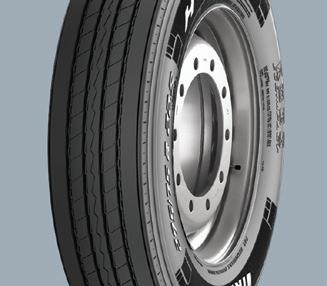
All Maintenance, All Vehicle Classes, All Management, All the Time Tire wear comes in all shapes and sizes. Look inside to see examples, causes, and solutions. Page 14
Equipment
Recall response
As emissions rules tighten and vehicle systems grow more software-driven, recalls and campaigns are becoming more common, with fleets forced to rethink how they track, prioritize, and complete recall work without sacrificing uptime.
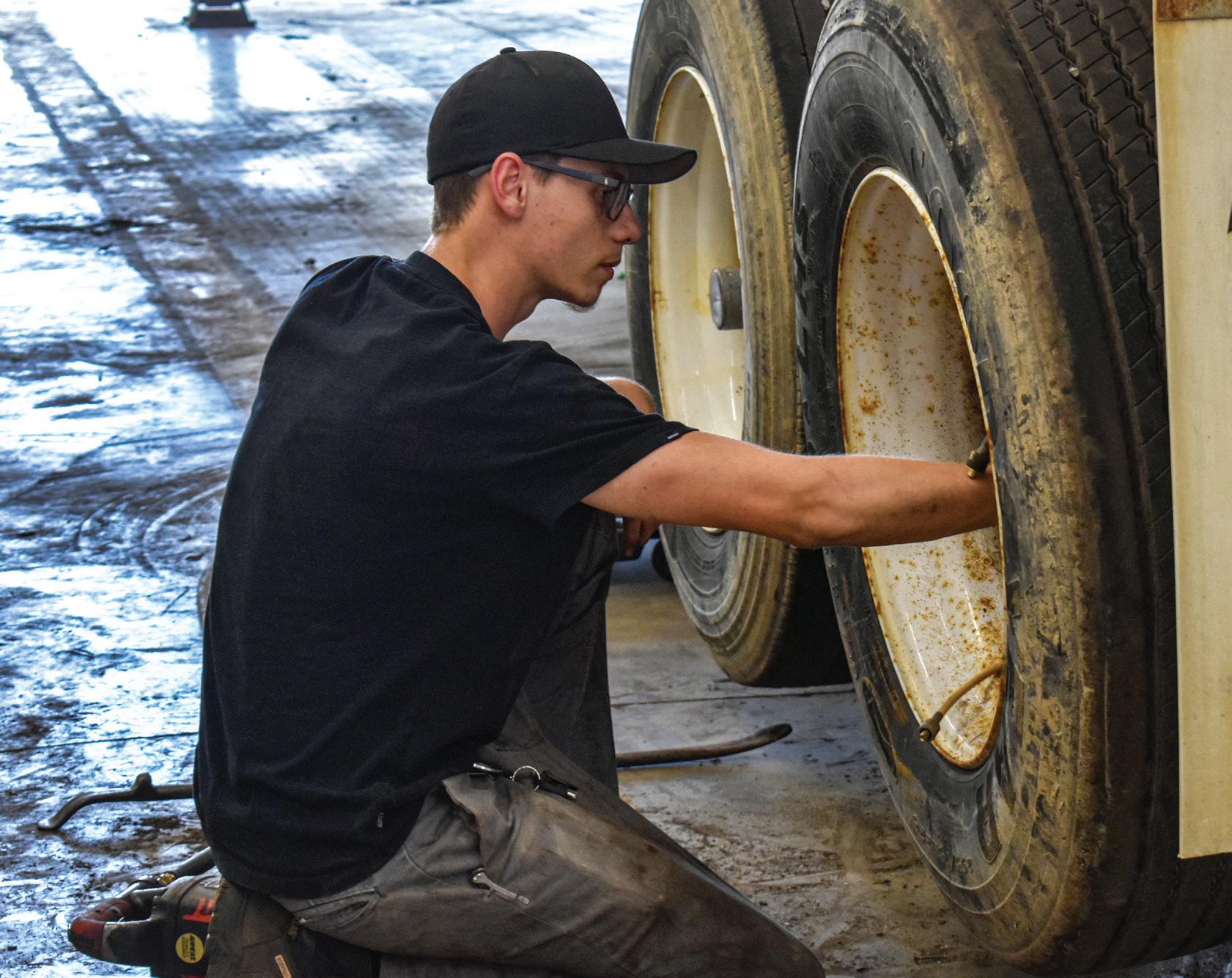
This visual guide will help resolve some of the most common types of commercial truck tire wear, along with a few deeper cuts.
Shop Operations
Learning to lead others requires a constant focus on self-improvement and education—and you don’t need formal training to do it, as evidenced by the four fleet leaders we profiled.
Repairs Wired for success
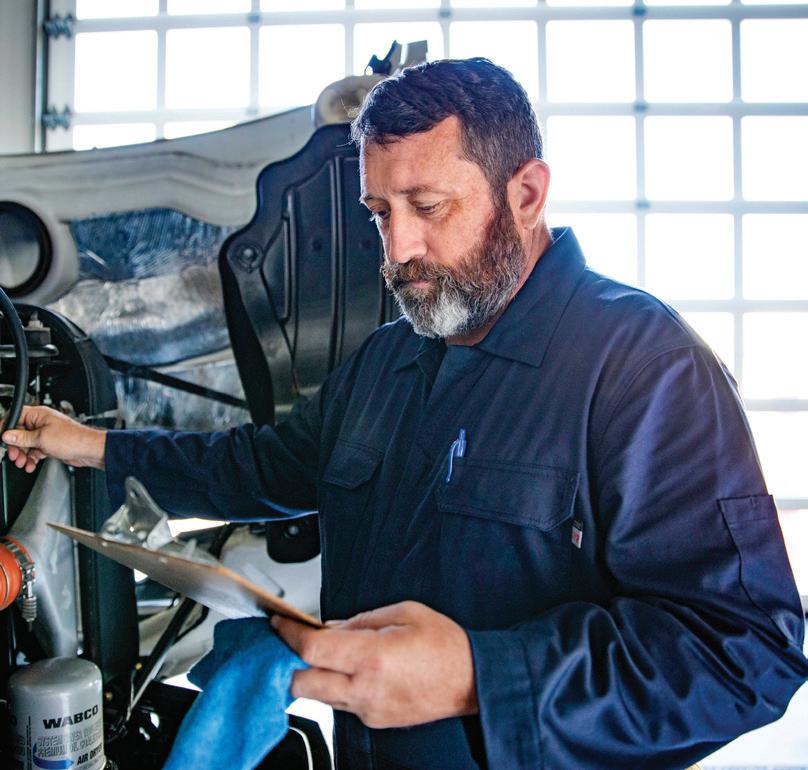
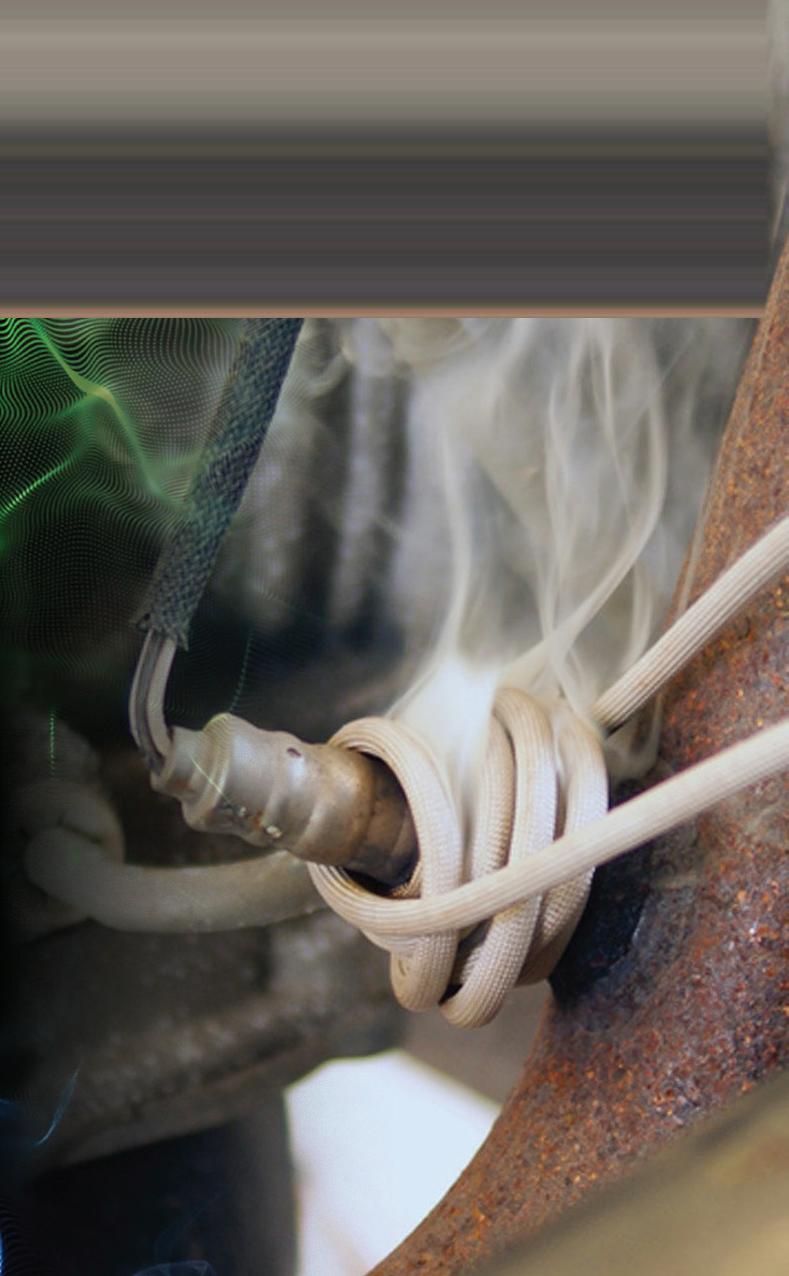
Electrical issues are rarely random, and improper wire repairs can turn a small issue into repeat downtime. Here’s how to get it right the first time.
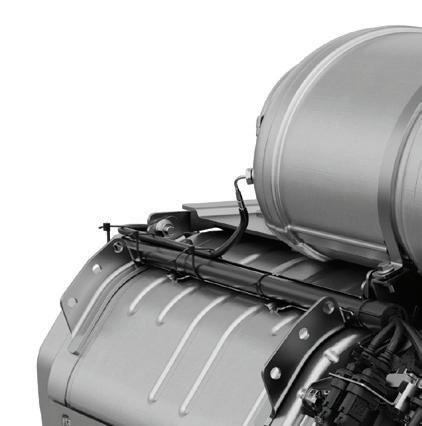
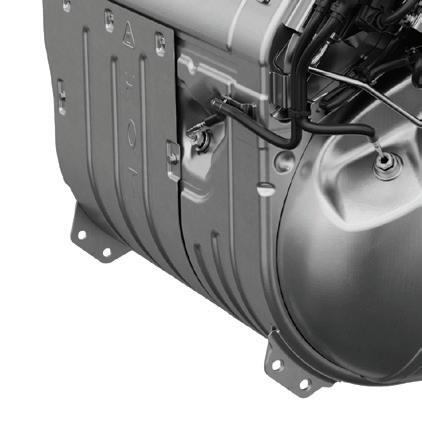
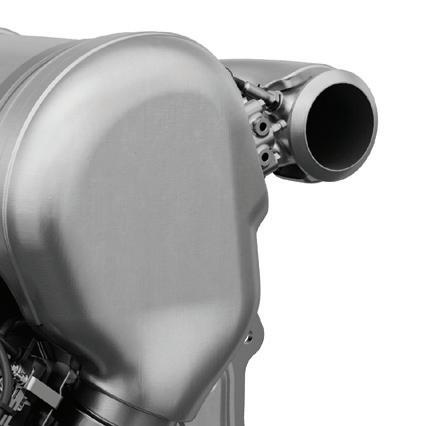
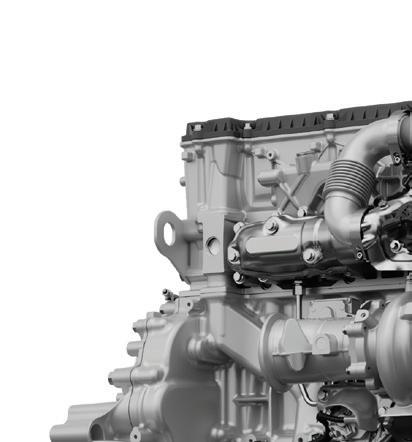
Details around the NOx-compliant Detroit engine set for MY2027 Freightliner and Western Star Class 8 trucks have been revealed, with DTNA confident it will improve efficiency and provide greater value for customers.
Start/stop is billed by OEMs as a modest way to cut emissions, but there’s nothing modest about the backlash from drivers. The big question is if the technology is worth it to fleets.
The Trump administration has announced the final rule to reverse the 2009 Endangerment Finding and the greenhouse gas regulations that followed.
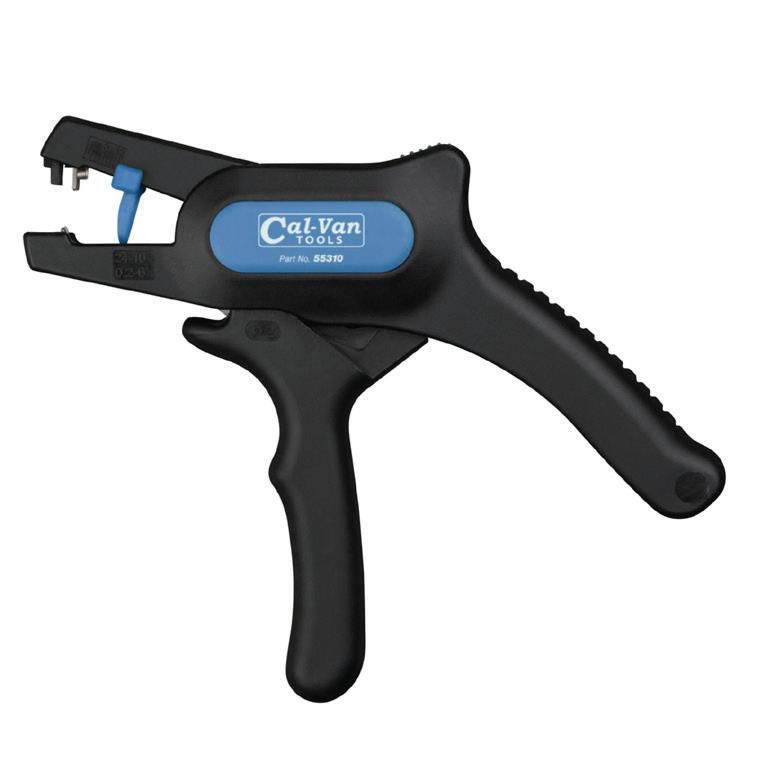
A roundup of the latest tool and equipment offerings.
Contact
ONLINE
EXCLUSIVES
Visit the official website of Fleet Maintenance for more information from stories in this issue, plus online exclusives on pertinent topics in the fleet maintenance management industry.
Stay up-to-date on industry news and events, new product launches, and more. FleetMaintenance.com/subscribe
Podcast: Ford Pro’s take on tech shortage, work truck TCO, and journey to zero downtime
Eric Rice from Ford Pro talks with John Hitch about the latest work truck trends and how Ford is tackling current maintenance challenges.
FleetMaintenance.com/55356166
Autel donates 100 diagnostic tablets to ASE-accredited schools
Through a new partnership with the ASE Education Foundation, the company will supply TS900 tablets to high school automotive programs to support hands-on technician training.
FleetMaintenance.com/55358309
2026 Fleet M&A guide: Advice, predictions, and ‘25 movement recap
Fleet finance expert Chandler Kohn explains the current mergers & acquisitions scene, provides a 2026 forecast, and lists all the major industry shakeups from last year.
FleetMaintenance.com/55354069
The Fleet Lead podcast features EndeavorB2B’s CV journalists and aims to help fleet managers and trucking professionals navigate the industry. It covers topics like new technology, efficiency, and regulations with expert analysis and realworld insights.
Multimedia Account Executive - West Mattie Gorman-Greuel 920-563-1636 | mattie@fleetmaintenance.com
Multimedia Account Executive - East Cortni Jones 920-568-8391 | cortni@fleetmaintenance.com
Production Manager Patricia Brown
Ad Services Manager Karen Runion
Art Director Erin Brown Audience Development Manager Laura Moulton
ENDEAVOR BUSINESS MEDIA, LLC
Chris Ferrell
Patrick Rains
Jacquie Niemiec CALO Tracy
Join the conversation: Facebook.com/ FleetMaintenanceMag
Follow us on X.com/fleetMx
Connect with us LinkedIn.com/ company/fm-mag
Watch our videos youtube.com/@ fleetmaintenance
Rising costs, regulations top list of fleet concerns in Fleetio survey
The latest report highlights challenges from expenses, regulations, and tech shortages, even as AI begins to find a foothold in fleet operations.
FleetMaintenance.com/55359284
Read the digital edition online at
SUBSCRIPTION CUSTOMER SERVICE 877-382-9187; 847-559-7598 Circ.fleetmag@omeda.com PO Box 3257 • Northbrook IL 60065-3257
ARTICLE REPRINTS reprints@endeavorb2b.com
Fleet Maintenance (USPS 020-239; ISSN 2150-4911print; ISSN 2150-492Xonline) is published nine times a year in January/February, March, April, May, June, July, September, October, and November/December by Endeavor Business Media, LLC. 201 N Main St 5th Floor, Fort Atkinson, WI 53538. Periodicals postage paid at Fort Atkinson, WI 53538 and additional mailing offices. Postmaster: Send address changes to Fleet Maintenance PO Box 3257, Northbrook, IL 60065-3257.
Subscriptions: Publisher reserves the right to reject non-qualified subscriptions. Subscription prices: U.S. $77.25 per year; Canada/Mexico $113.30 per year;
Ford Pro
FLEET LEAD THE Spotify Apple Podcasts
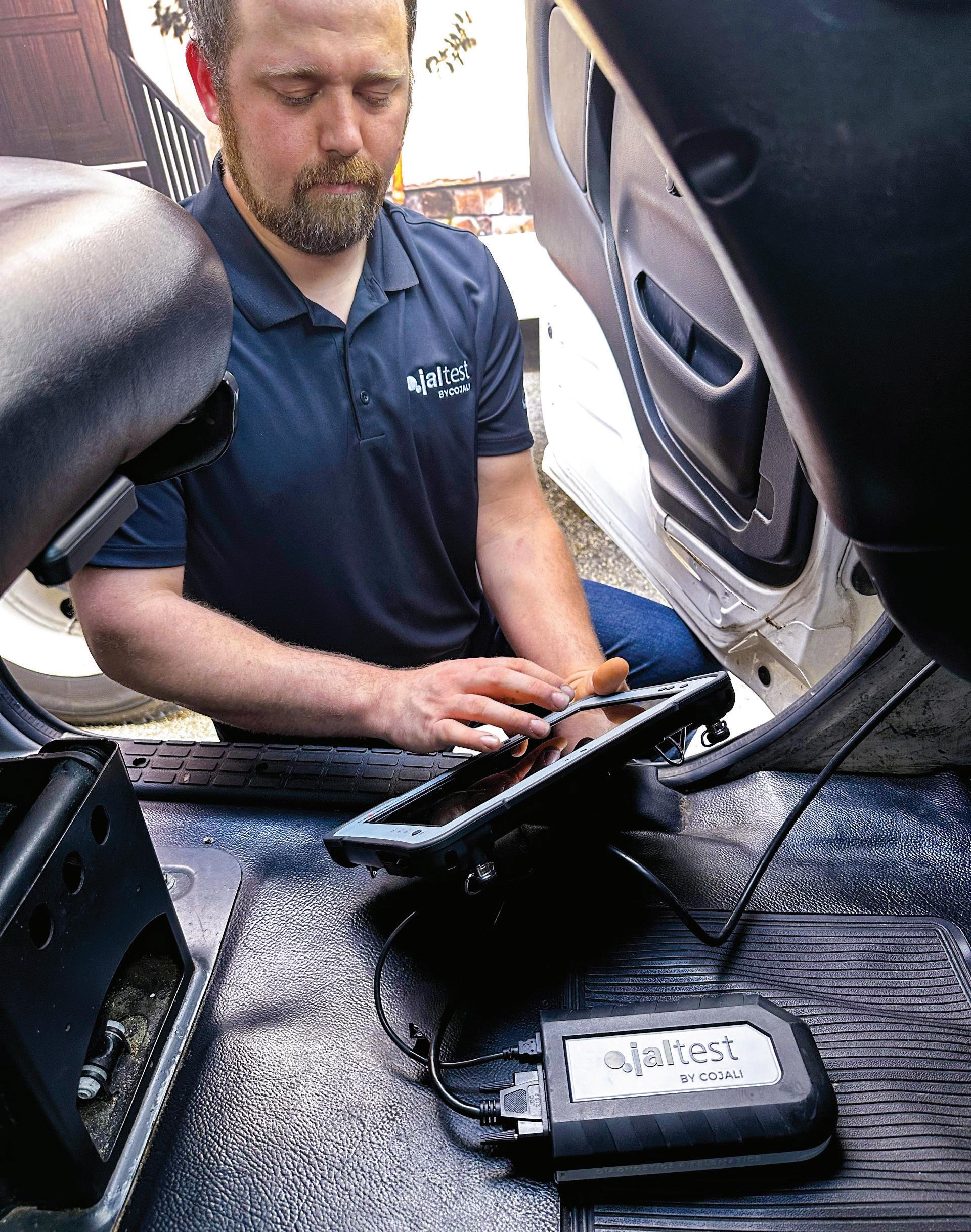
Jaltest Diagnostics enables hands-on service in the shop, while Jaltest Telematics extends maintenance beyond it through remote actions. ce, no essw
Uptime depends on well-executed maintenance, not guesswork.
Leading by the book
While experience and mentors teach a lot about being a leader, some of the most impactful lessons are still found in book form.
By John Hitch Editor-in-chief
No two routes to managing a fleet’s maintenance operation are the same. Some take the college route and learn about spreadsheets and depreciating assets. Many more are born into the trade, diesel embedded in their DNA.
Others take unconventional routes. Roger Penske, for example, started out pumping gas and wrenching engines in Cleveland before going to college and making the obvious pivot to race car champion and truck leasing magnate.
However you wound up managing a shi or department, whether running a four-bay shop or a Fortune 500 logistics company, you had to learn how to lead. ere may be such a thing as a natural-born leader, but I’ve never heard of a natural-born great leader. You pick up skills along the way, su er failures, and bask in victories to understand what it truly takes.
To illustrate this and reveal strategies anyone can repeat, we profi led four impressive leaders in our feature on Pg. 22. We hope their journeys show what it takes to reach the top, or, if you’re already there, what it takes to get even better. Common threads include embracing new technology, staying curious, and sacrificing in the present to reap rewards later.
In my 15+ years interviewing CEOs and industry leaders, I’ve noticed many leaders are also prolific readers. ey’d o en suggest a book that influenced them in their careers, so I asked our subjects to do the same.
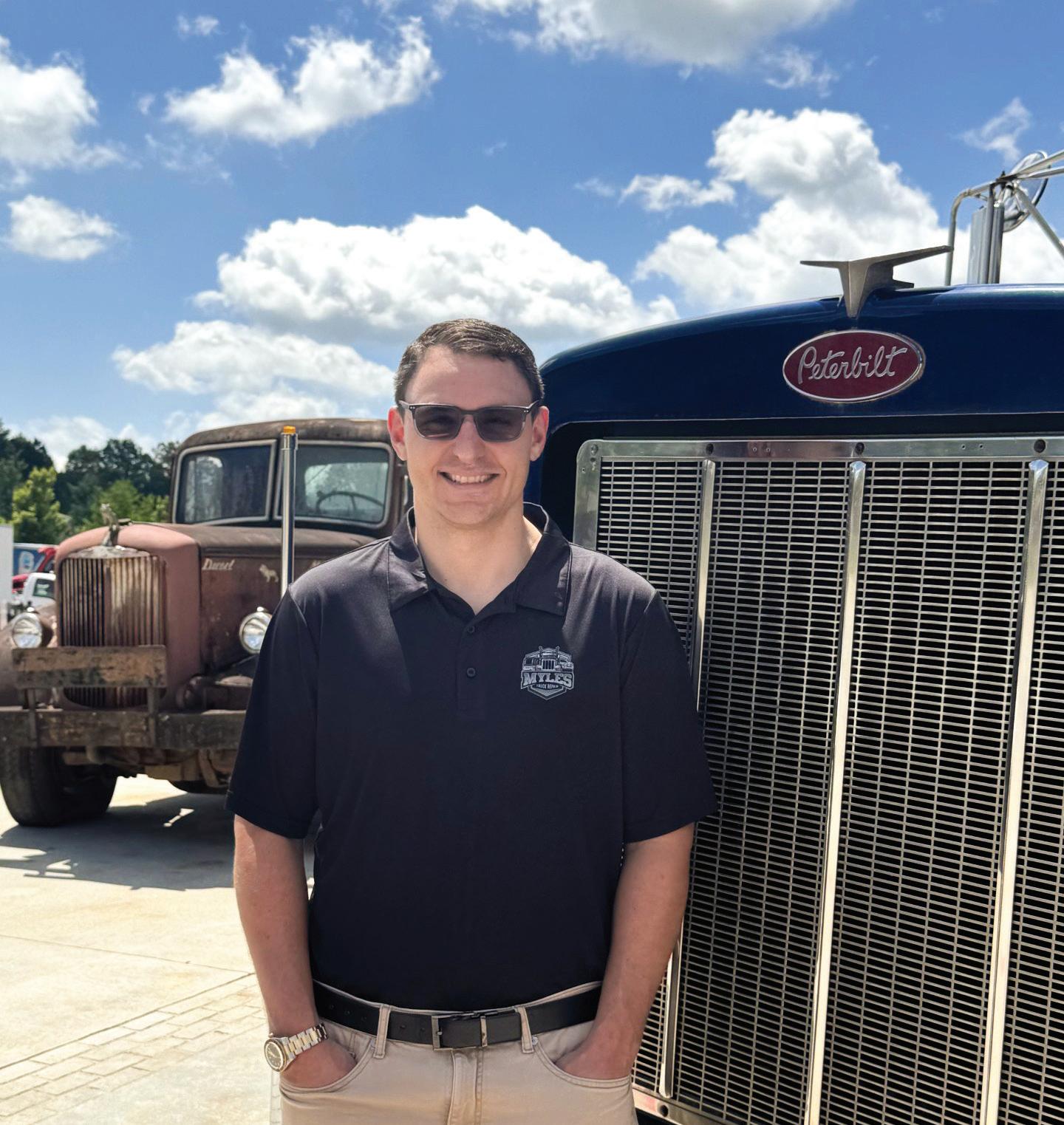
Charles “Chas” Voyles, Jr., associate director of customer service/fleet at International Motors, recommended “ e 7 Habits of Highly E ective People,” which he encourages everyone he manages to read. e habits most helpful to him were No. 1: Be Proactive, and No. 4: ink Win-Win. To him, these boil down to character and accountability: “Say what you’re going to do, and then do what you say.” Voyles, regarded as a top relationship builder in the industry and author of a TMC Recommended Practice on confl ict management, said the book also reinforced a strong end-of-day habit. His “five o’clock rule” is to check in with customers and colleagues about open tasks and questions. “Even if you don’t have an answer, you owe the customer an update that day, so they go to bed knowing your team is still working on the issue,” he said. Vincent Myles, the 33-year-old president of Myles Truck Repair, o ered two books. e fi rst is “Traction: Get a Grip on Your Business,” which outlines the Entrepreneurial Operating System (EOS), a framework built around vision, people, data, process, and
other relevant skills. Myles said the company began its EOS journey last summer, and the book helped implement strategies “to create accountability for every position.”
It also strengthened culture and clarified expectations. “If someone’s negative and bringing down morale, it doesn’t matter how good of a tech they are—we’ve let people go for that,” Myles said. He does try to coach them up fi rst.
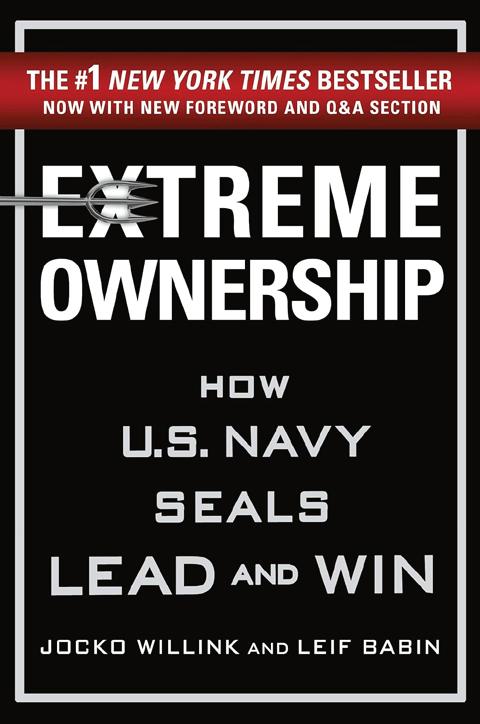
“Extreme Ownership” by former Navy SEAL Jocko Willink reinforced that the buck stops with Myles when mistakes are made. “You have to figure it out and build systems to make sure it doesn’t happen again,” he said.
Another popular book among leaders is “Turn the Ship Around!” by Capt. L. David Marquet. From 1998 to 2001, Marquet transformed the USS Santa Fe from one of the worst-performing submarines in the fleet to a standout, earning the Battle E ciency Award and the Arleigh Burke Fleet Trophy in 2001. e overarching goal: turn followers into leaders by giving them decision-making authority aligned with their expertise.
My boat experienced a similar turnaround on the Atlantic side—winning the Battle “E” in 2000 a er a rough go of things in 1999—so I felt Marquet a kindred spirit. When he released “Distancing,” a book focused on helping leaders make better decisions once they’ve distributed authority, I reached out to get more details.
Marquet related that the core skill is self-distancing, which can become a leader’s “superpower,” one that “cuts through cognitive biases, emotional traps, and situational blind spots.” Wielding these powers grants better foresight and decision-making abilities, he added.
Essentially, we become our own worst enemy, dragging new decisions through a minefield of our past experiences and present anxiety. e former sub captain, used to dealing with pressure, said leaders should step back and resist such urges. at doesn’t come easy and does require practice.
“ e decision-making apparatus that allows you to pause and distance gets short-circuited and even if you are able to summon it, your brain will still try to convince you that you don’t have time for distancing,” he said.
Ultimately, being too close can cloud a leader’s ability to interpret data and analyze root causes. Capt. Marquet o ered that if a fleet manager perceives drivers as “careless about fuel usage,” when fuel costs jump, they might assume drivers are at fault and idle too much or harshly accelerate, though “the actual
problem might be ine cient routing or load management.”
Do yourself and your team a solid by giving one or all of these books a read, or even listen to the audio books. One note: actually reading improves brain power. A 2022 study on literacy and cognition in older adults (published in Frontiers in Psychology) found that older adults in an eight-week reading program outperformed a puzzle-solving control group in working and episodic memory. Who couldn’t use a boost in this area?
Beyond the science, though, the ROI is hard to beat. You can buy all of these books (or whatever you prefer) for about the cost of a Friday pizza party. And they’ll feed your team’s minds for life, while keeping them hungry for more leadership responsibilities.
RESPONSE
As emissions rules tighten and vehicle systems grow more software-driven, recalls and campaigns are becoming more common, with fleets forced to rethink how they track, prioritize, and complete recall work without sacrificing uptime.
By Mindy Long
[ IN VEHICLE ]
It’s no secret that recalls across light-, medium-, and heavy-duty equipment are on the rise. For example, Ford nearly doubled the previous record for recalls with 152 in 2025. But they are not alone.
Victor Cummings, VP of service operations for Rush Enterprises, said recall volume has roughly doubled over the last few years. Rush Truck Centers completes more than 5,000 campaigns and recalls a month. “A lot of it has to do with the technology behind emission systems and how complex the trucks are,” he said.
Resolving recalls o en means taking vehicles out of service and routing them to local shop or dealer, which can disrupt schedules and strain resources.
“[Recalls] o en lead to vehicle downtime, scheduling confl icts and additional administrative e ort,” said Robert Pardo, Jr., director of central fleet for the Boston Public Works Department. “When recalls are unexpected, they can create setbacks in day-to-day operations,
added costs, and driver frustration, ultimately reducing fleet utilization.”
Sara Shaw, corporate service director for Kenworth Truck Sales, noted that recall activity o en increases “when reconfigurations are released to meet new EPA standards.”
And a major reset is on the way with the EPA’s upcoming low-NOx rule, which has motivated OEMs to redesign heavy-duty diesel engines for MY2027. Combine that with advances in safety and emissions technology, and fleets have more vehicle components and systems that may be defective or incorrectly installed.
For fleets, this increase is driving the need for strong tracking systems, structured processes, and partners to help manage the recall process. ese are things fleets should have in place sooner rather than later, along with a triage plan in place to prioritize recalls that a ect safety and uptime, while still fi nding time to address the less severe issues.
» Rush Truck Centers pulls recall and campaign info automatically when a repair order is opened, replacing manual searches by service advisors.
Rush Enterprises
Safety dance
“It becomes a delicate dance of what you get fixed, what you get campaigned, and what you have to let go,” said Gregory Thibodeaux, vice president of maintenance and fleet management at Waste Connections, which operates about 13,000 vehicles daily across the U.S. and Canada. “It’s very difficult to get them all completed.”
Christopher Miller, CEO of Recall Masters, explained recall statistics can also be hard to interpret. “It gets complicated right away as the definition of a recall is a bit fluid,”he said.
Recalls are issued by the National Highway Traffic Safety Administration when the agency determines a vehicle or part has a safety-related defect or does not meet federal safety standards, whereas campaigns are issued by the vendor or factory voluntarily. “Campaigns typically have an expiration or termination date; recalls never expire,” Shaw said.
Recalls also have requirements for how quickly a problem must be addressed. “The pressure on the supplier is higher when there’s a recall. That’s why sometimes they launch voluntary campaigns, even when they know that a recall will come,” said Andreas Haunreiter, associate partner at McKinsey & Company. “They can filter out some vehicles in the field and get a little bit ahead.
Voluntary actions are becoming more prevalent, and Miller said 2024 was the first year that the number of voluntary recalls surpassed the NHTSA-mandated recalls. “You have less enforcement actions, but that doesn’t mean that you’ve got less recalls happening,” he explained.
Stefano Daneri, fleet ecosystem strategist at Fleetio, said the practical takeaway for fleets is that recalls are more common today than in the past. “Whether the year is up or down, fleets still have to figure out what recall applies to which asset, decide what’s urgent, get it scheduled, and keep a clean record that it’s done,” he said.
Software driving more recalls
A growing share of recent recalls are software-related, and these issues drive more than 40% of cases in commercial vehicles, Haunreiter said.
“It’s not always the software itself, but the top five systems driving recalls include telematics, cameras and sensors, infotainment, brakes and hydraulics, and steering systems.”
This rise in software-related issues is linked to broader vehicle integration. “You have many components that are mechatronic—you have a mechanical component that is integrated with a controller and software on the controller,” Haunreiter said. “It is a more complex system.”
Miller noted that software-related recalls and campaigns can still have hardware-related consequences and span drivetrain, emissions, or transmission functionality that, ultimately, leads to mechanical issues. However, growth in software can also provide opportunities.
“NHTSA is tracking that trend, and the 2024 annual report shows that over-the-air fixes are being used by manufacturers across Classes 1 through 8, reflecting a broader industry shift toward software-based solutions across a range
of vehicles,” Daneri said.
Vehicles are also providing more data than they ever have before. “We’re actually very optimistic that the combination of sophisticated on-board technology and improved connectivity and analytics will allow us to become more proactive with early detection processes that can reduce recalls,” said Emily Bishop, head of product safety and certification for Volvo Group North America.
OEMs make every effort to ensure they’re delivering quality products and want to maintain quality in the field, Haunteiter said.
“They first try to eliminate any errors and then they try to make the diagnostic and repair processes better,” he explained. “A recall is a reputational risk for an OEM. That’s why, as soon as they see that there are investigations or there may be a mandatory recall, they start a voluntary campaign.”
Ford Pro, for example, has more than doubled its team of safety and technical experts over the past two years and increased testing-to-failure on critical systems such as powertrains, steering, and braking.
“Ford Pro Intelligence also helps identify issues faster and plan service more efficiently when
recalls affect fleets, leveraging insights from connected vehicles with customer authorization,” said Travis Hunt, general manager of parts and service at Ford Pro.
Technology is also allowing OEMs to adopt remote solutions when possible. When a remedy can be delivered through an over-the-air or software update, it can often be resolved faster, sometimes without a service visit, Hunt said. GM provides software updates via over-the-air delivery. “We’ve introduced a technology for software updates called Vehicle Wide Programming that enables us to update multiple vehicle modules simultaneously,” said Yvonne McKee, service operations senior manager for GM Envolve.
Even still, many recalls require hands-on service, parts, bay time, and coordination with a dealer or certified shop. “For example, some recalls on vehicles like a 2016 Ford Explorer involved more complex corrective procedures rather than simple updates,” Pardo said, citing issues with seat tracks, rear suspensions, and cooling fan relays.
That’s where fleets feel the pinch, according to Daneri. “Now it’s not just, ‘Is there a recall?’ It’s, ‘Is there a resolution available? Can we get an appointment? Can we keep the truck moving while we work through it?’”
» VIN look-ups let techs identify recalls proactively, helping fleets stay ahead of downtime. Rush Enterprises
Taking steps to reduce downtime
Mobile repair capabilities can help minimize downtime. Rush Truck Centers deploys mobile technicians, especially for a reflash or issues that don’t require parts. e company has also invested in training for specific campaigns, including a large-scale NHTSA recall that required a team of 80-plus certified welders and dye penetrant inspectors. e company also got equipment lists and locations, and deployed techs remotely to speed the repair process, Cummins said. ibodeaux said that Peterbilt helped coordinate mobile technicians to address a torque rod failure campaign that a ected about 2,000 of Waste Connections’ trucks. Repair time for each truck dropped to just days, but would likely have resulted in weeks of downtime if the company had to take trucks into a dealership.
Ford Pro’s Hunt said the manufacturer has the largest mobile service fleet of any full-line automaker in the U.S. and, in many cases, services vehicles at customers’ locations.
GM also deploys repairs in the field through its MobileService+. “We are implementing a new process to assist our fleet customers with more robust field action notifications to increase awareness and encourage needed service,” McKee said. “ e new process involves a more refi ned and targeted approach as we inform customers of field actions a ecting their fleets and identify specific vehicles.”
Even with structured processes to alert customers and provide a fi x, recall completion can be a challenge, especially as vehicles age and ownership changes. In the commercial vehicle space across light-, medium- and heavy-duty vehicles, there’s about a 70% to 75% completion rate a er 18 months, Haunreiter said. For medium- and heavy-duty specifically, that increases to about 80%, on average.
Miller estimates that about 80 million vehicles with open recalls are on U.S. highways. Owners are o en aware of a recall, especially if they aren’t the fi rst registered owner, because they may not have received information from the OEM.
Leo Connolly, manager of warranty processing and trend analysis at DTNA, said customer notifications depend on the type of remedial action being done, with recalls having mandated communications while service or warranty campaigns do not. “Customer notification relies on registration and ownership records,” he said, adding that DTNA applies multiple data checks to validate addresses and ownership information. “If initial notifications are unsuccessful, DTNA may use third-party support—within privacy requirements—to help identify updated registration data for follow-up notifications.”
DTNA also monitors recall completion rates and may use additional outreach when customers have not scheduled the remedy. e OEM also supports dealers through ‘Open Campaign’ reports to coordinate outreach and service scheduling. “ ese reporting tools also allow visibility into broader maintenance opportunities across a customer’s fleet,” Connolly said.
In a written statement to Fleet Maintenance, Stellantis said that it uses multiple channels to
How field data, repairs and complaints can identify potential defects
By Mindy Long
Real-world performance data and formal reporting pipelines help equipment manufacturers and government agencies identify potential defects and determine when issues meet recall thresholds.
Across OEMs and service networks, repair activity itself is increasingly a detection input, especially as data sharing becomes more important. “We’re integrating with the OEM to partner and collaborate to complete repairs because they’re more complex,” said Victor Cummings, vp of service operations for Rush Enterprises. “OEMs are collecting data on those repairs, which lead to recalls and campaigns.”
OEMs such as Ford are also using connected-vehicle insights and field monitoring to identify potential issues faster, said Travis Hunt, general manager of parts and service at Ford Pro.
Collecting fault codes, telematics data, and technician observations helps determine whether an issue reflects routine wear or a defect. “Our objective is to spot potential issues before they become serious by consistently monitoring field data and conducting targeted inspections,” said Emily Bishop, head of product safety and certification for Volvo Group North America. “Using data-driven investigations allows us to recognize emerging patterns early on.”
Even with stronger OEM analytics, formal recalls remain grounded in regulatory definitions and reporting obligations once a defect meets recall criteria.
“Daimler Truck North America recall campaigns are governed by federal regulations and designed to support safe, accurate and timely repairs. When a recallable defect is identified, DTNA promptly reports it to the appropriate agency, typically NHTSA for safety-related issues or EPA/CARB for emissions-related issues,” said Sam Geser, product defect investigation engineering manager for DTNA.
DTNA also reviews field reports and customer assistance cases to determine whether a safety or compliance issue exists. When recall criteria are met, DTNA
communicate recall activity to dealers. In addition to mailing fi rst-class letters to registered owners, as required by NHTSA, some Stellantis vehicles display recall notifications on their screens.
files the required reports with NHTSA and corresponding agencies in Canada and other markets,” Geser said.
Christopher Miller, CEO of Recall Masters, said the National Highway Traffic Safety Administration’s Office of Defects Investigation remains a key intake mechanism if fleets believe a safety defect exists.
“Repair centers or owners can issue a complaint,” he said, adding that the office filters through thousands of complaints each year.
In 2024, NHTSA recorded 1,073 safety recalls affecting more than 35 million vehicles and pieces of equipment. Operators and technicians can submit complaints through the agency’s online system, www.nhtsa.gov/ report-a-safety-problem, or by calling its Vehicle Safety Hotline at 888-327-4236.
The agency said complaints help regulators identify patterns that may not be visible from individual repair records.
“Complaints like yours help us investigate possible defects, which could lead to a safety recall. By reporting your problem, you’re helping to keep vehicles—and ultimately our roads—safe,” the agency states on its website.
While regulators and manufacturers assess potential defects, fleets are ultimately responsible for ensuring they’re addressed. Proactive fleets review recalls on a regular cadence rather than waiting for a notification, and they assign clear ownership, so intake, scheduling, and closure aren’t “everybody’s job, which often becomes nobody’s,” said Stefano Daneri, fleet ecosystem strategist at Fleetio.
Daneri said NHTSA’s recall tool, available at NHTSA.gov/recalls, allows fleets to search by full 17-character VIN and is “the source of truth.” Recall information is also available via NHTSA’s SaferCar app.
To help raise awareness of recalls, NHTSA runs national awareness campaigns, such as Vehicle Safety Recalls Week. The event was scheduled for March 2–8, and encourages fleets and drivers to review open recalls and complete outstanding repairs.
Bishop said Volvo uses a structured, multi-layered communication approach to ensure customers and dealerships receive information quickly and with the correct level of detail. “We’ve also
SOME COMBINATIONS MAKE MORE SENSE THAN OTHERS.
The fuel e ciency of CITGARD® Engine Oils and the heavy-duty protection of Mystik® Greases are a smart combination to save you time and money. Let us prove it.
upgraded our VIN look-up tool that gives both dealers and customers better access to recall statuses, even before a remedy is available,” she said.
Technicians at the Boston Public Works Department proactively check VINs through OEM systems. “We also monitor OEM alerts and NHTSA notifications and occasionally receive recall notices directly from dealerships by mail,” Pardo said.
The goal is always to complete as many repairs as possible in a single visit. Fleetio pulls U.S. safety recall information from NHTSA and alerts customers when there’s a new match to one of its vehicles based on year, make, and model, but the key is centralizing this information with other repair needs. “In a real operation, you’re dealing with breakdowns, driver-reported requests, PM schedules, inspections, faults, alerts, and yes, recalls. The hard part is keeping them from living in separate places,” Daneri said.
Whenever possible, Kenworth Truck Sales tries to couple a campaign or recall with regular maintenance and checks for open campaigns or recalls every time the vehicle is checked into any service department. “This also helps us partner with other dealers to complete campaigns and recalls on vehicles that were not sold by Kenworth Sales,” she said.
Rush has integrated with OEM systems and pulls recall and campaign information when a repair order is opened. Prior to the integrations, service advisors would manually search for open campaigns or recalls, Cummings said.
The change has more than doubled the completion rate on eligible campaigns from 30% to 62%. Rush also has dedicated personnel who keep track of open campaigns and alert customers. The dealership sends information out via its Service Connect communication portal and phone, text or email, but customers don’t always act on the alerts.
“Those who ask for the update are the exception,” Cummings said. “Most are either unaware or are pressed for time, and they will still occasionally decline a recall or a campaign, even when we prompt them because they’re concerned about getting the truck back on the road.”
Because downtime is a primary concern, Recall Masters reviews service bulletins and works with the repair facilities and technicians to determine how long a repair will take and the availability of parts. “It’s very manual and it involves us boots on the ground, because the manufacturer may say it is an easy repair and the technician says, ‘Yeah, it is easy after you spend six
“ Unaddressed defects can result in the loss of critical safety functions, which also can cause higher exposure to operational downtime and unplanned costs.”
Emily Bishop, head of product safety and certification for Volvo Group N.A.
hours dismantling the engine,” Miller said. “We try to get to the truth of it.”
Sorting through the noise
Another factor contributing to unaddressed recalls is recall fatigue. “You’re blasting people, and they have a hard time differentiating from what’s important versus what’s not,” Miller said. As new events appear, Recall Masters prioritizes them based on parts availability, the number of vehicles affected, and urgency.
“I don’t believe that all recalls are created equal. For instance, you’ve got recalls because there’s a page in the owner’s manual that describes the operation of the vehicle differently. It would cause confusion, but it’s not a mechanical problem,” Miller said. “We call those nuisance recalls.”
Most fleets triage recalls based on severity first, then operational exposure. “If there is a clear safety urgency, especially anything that carries a strong consumer advisory posture, fleets tend to treat that as a front-of-the-line item. NHTSA tracks recalls that carry ‘Do Not Drive’ or ‘Park Outside’ consumer advisories, and that’s the kind of signal that typically drives urgency,” Daneri said.
After that, fleets assess which assets are mission-critical and highly utilized and plan the rest around the least disruptive windows they can find. To help manage the growing number of
recalls and improve uptime, Waste Connections recently hired a warranty manager, and certifies its technicians to do warranty work in-house and is rolling out Fleetio software across its 306 maintenance facilities.
Waste Connections also handles some issues on its own, even if it doesn’t capture the warranty dollars. “If it is a windshield wiper arm, I’m not going to down a truck for three days for that to go to a dealer. We address it,” Thibodeaux said.
Recalls that are acknowledged or completed should be documented the same way a fleet would document any critical repair, “because teams change, assets move and the only thing that survives turnover is a clean record,” Daneri said.
OEMs said vehicle owners should take every recall seriously. “Failing to act on a recall can expose fleets and drivers to significant safety, operational, and regulatory risks,” Bishop said. “Unaddressed defects can result in the loss of critical safety functions, which also can cause higher exposure to operational downtime and unplanned costs.”
Haunreiter warned that unresolved recalls can cause secondary failures, resulting in significantly more downtime than making an appointment and getting the initial issue fixed.
For related content go to FleetMaintenance.com/equipment
CITGARD & MYSTIK IS THE SIMPLEST, SMARTEST DECISION WE’VE MADE FOR OUR FLEET.
it last you time And money Let us prove it
SOME COMBINATIONS JUST WORK. When you pair the fuel efficiency of CITGARD® Engine Oils and the heavy-duty protection of Mystik® Greases, you’ve got an unbeatable combination that’s made to make it last. Saving you time. And saving you money. Let us prove it. COMBINING
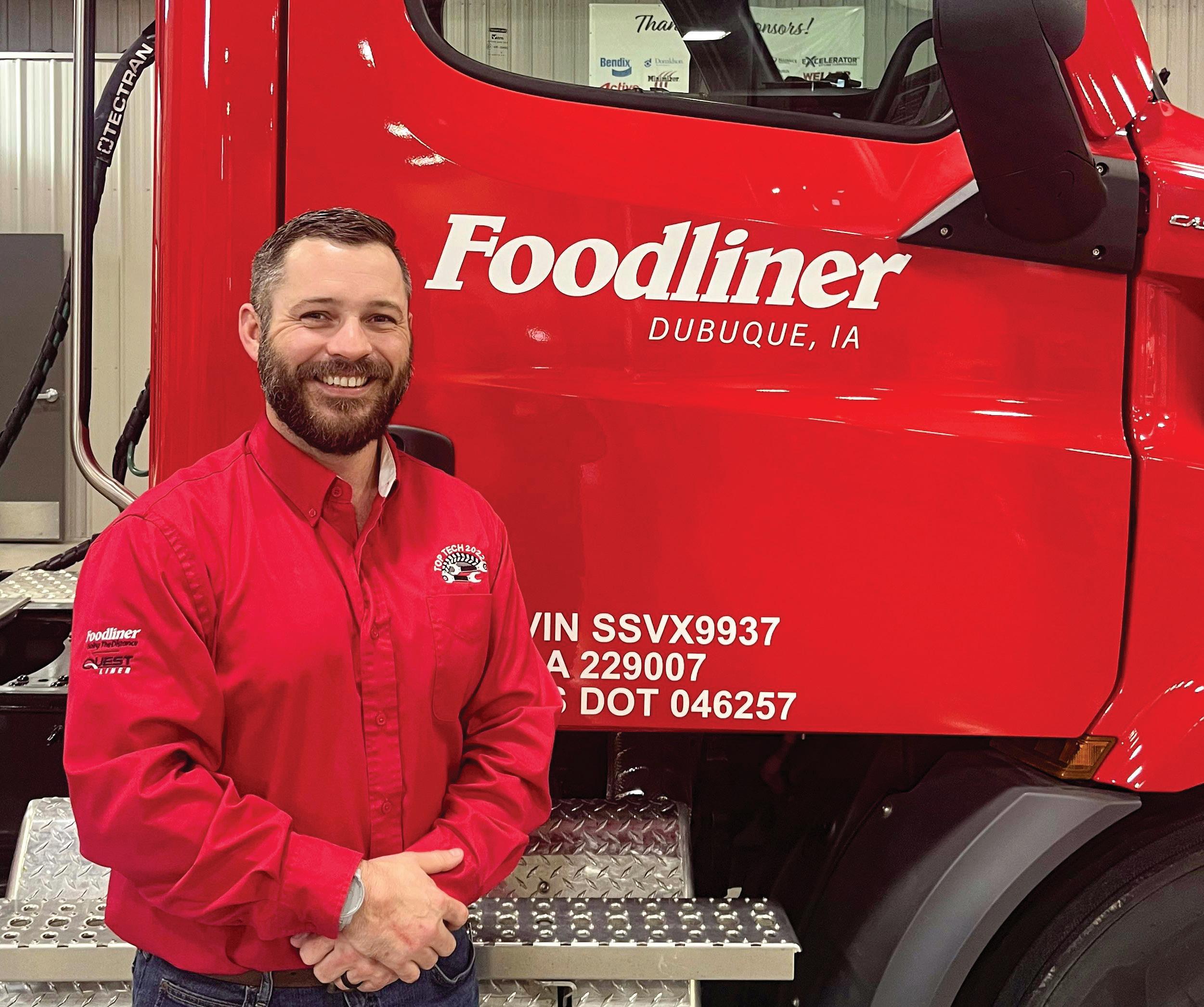
Kyle Neumann, Foodliner
» If doing recall work in-house, note that certain recalls may require certified welders and specialized personnel, such as dye penetrant inspectors. Kenworth
TIRE WEAR
TRIAGE
Here’s a visual guide to resolving some of the most common types of commercial truck tire wear, along with a few deeper cuts.
By Gregg Wartgow
[ TIRES ]
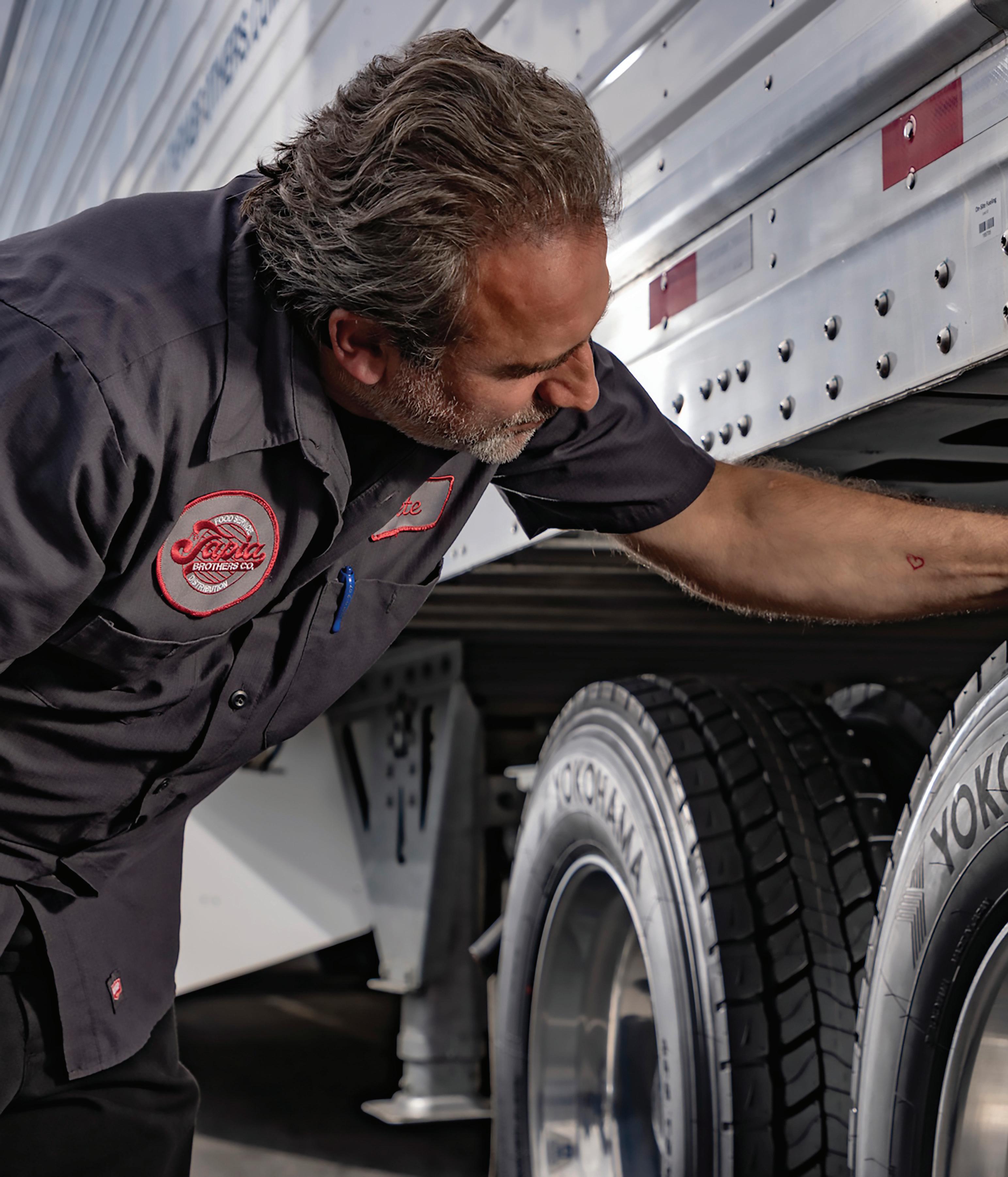
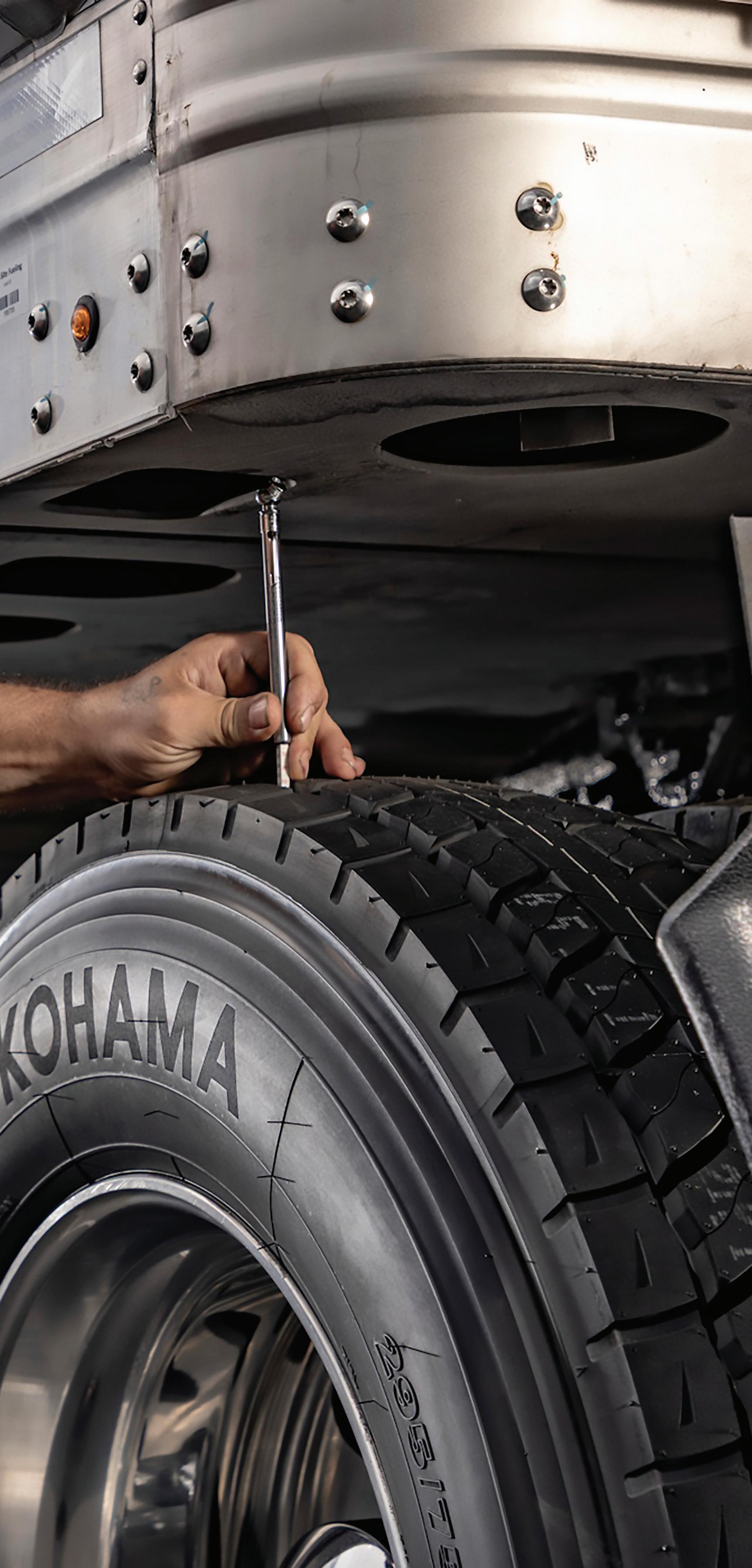
» Checking tread depth is an easy but crucial step in catching premature tire wear before it turns into costly
damage. Yokohama Tire
P
remature tire wear costs fleets money, so catching problems early during pre- and post-trip inspection should be a priority, according to Kevin Rohlwing, chief technical officer at the Tire Industry Association.
Fleets also need a mechanism in place, such as electronic driver vehicle inspection reports (eDVIRs) to quickly communicate issues to the shop.
“If a driver doesn’t notify maintenance personnel, technicians won’t spot the problem until the next preventative maintenance check,” Rohlwing explained. “In most cases, enough time will have passed to permanently damage the casing or create wear issues that cannot be corrected.”
It’s just as important to figure out what’s causing the premature wear so it doesn’t keep happening. The good news is that most root causes are controllable through basic maintenance practices.
“We just need to train personnel on what to look for,” said Tom Clauer, senior manager of commercial product planning at Yokohama Tire.
The challenge for technicians is that tire wear, like tires themselves, comes in all shapes and patterns. There are dozens of different types. A good tire technician should at least know how to spot the most common wear types and what causes them. With the help of our vast network of OE and shop sources, we submit to you the ones you’re likely to see the most, along with a few rarities to increase your own expertise.
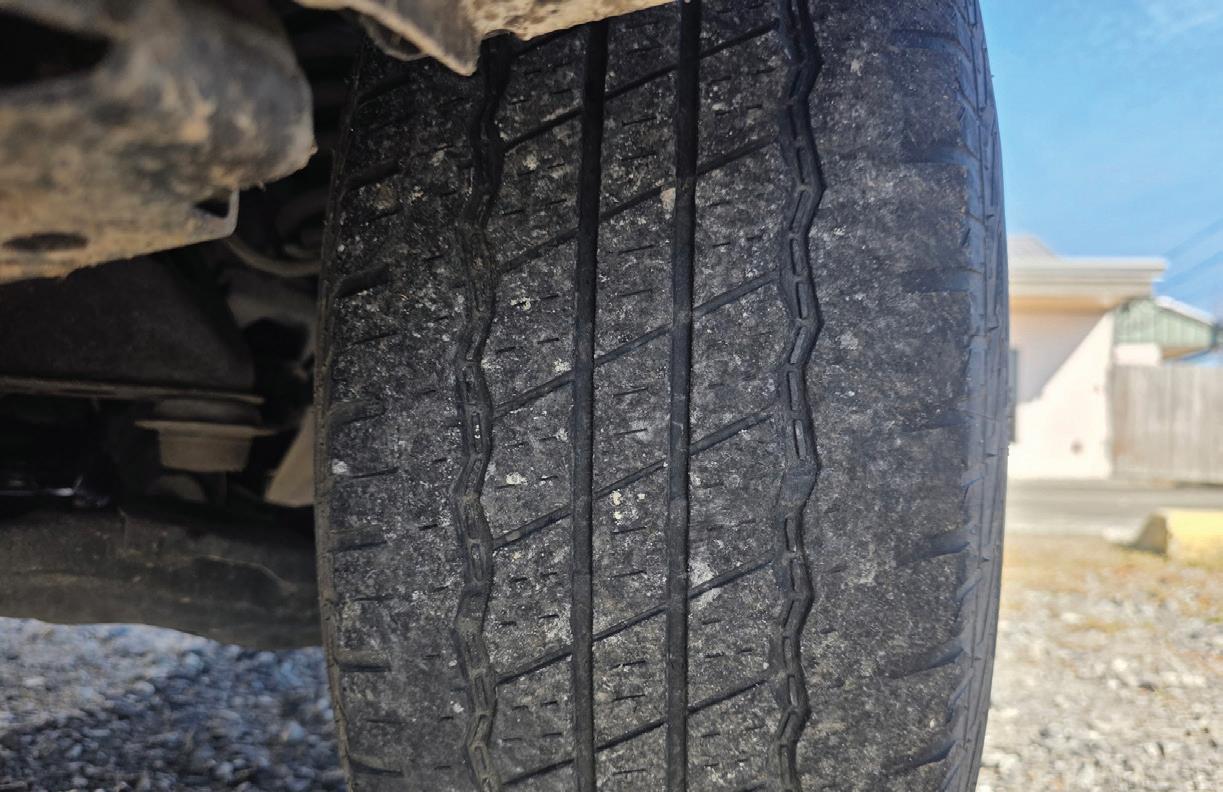
Feathering and edge wear on steer tires
Symptoms and causes:
In this specific instance, the wear was caused by a combination of toe misalignment and underinflation. “You can see how the middle of the tire has tread, but the outside edges don’t have as much tread,” said Jeremy Williams, a Louisiana-based service manager at Coltrain Onsite Fleet Care.
“When tires are underinflated, the weight of the vehicle distributes to the outer part of the tires, as opposed to distributing evenly across the outer and center parts,” Williams continued. “ at’s why underinflation for an extended period is o en the cause of this type of wear. at said, tire toe misalignment could also be the root cause and may require further investigation.”
Vehicles affected:
Williams said he most o en sees this on smaller pickup trucks, though it’s not limited to a specific type of vehicle. “ is type of wear isn’t related to weight load or front tires,” Williams said. “ at’s why I’ve also seen it on everything from cars to heavy-duty trucks that haul loads.”
Corrective action:
Williams said the fi rst step is checking tire pressures. With respect to possible toe misalignment, inspect front-end components, including tie rod ends, sway bar links, shocks, and struts. “Ensure there is no slack in front-end components, and that shocks and struts aren’t leaking,” Williams said. “Also inspect the bushings on all control arms, upper and lower on both sides, for any wear, cracking, or damage. Replace worn components as needed, and perform an accurate full front-end alignment.”
Photos courtesy of Coltrain Onsite Fleet Care.
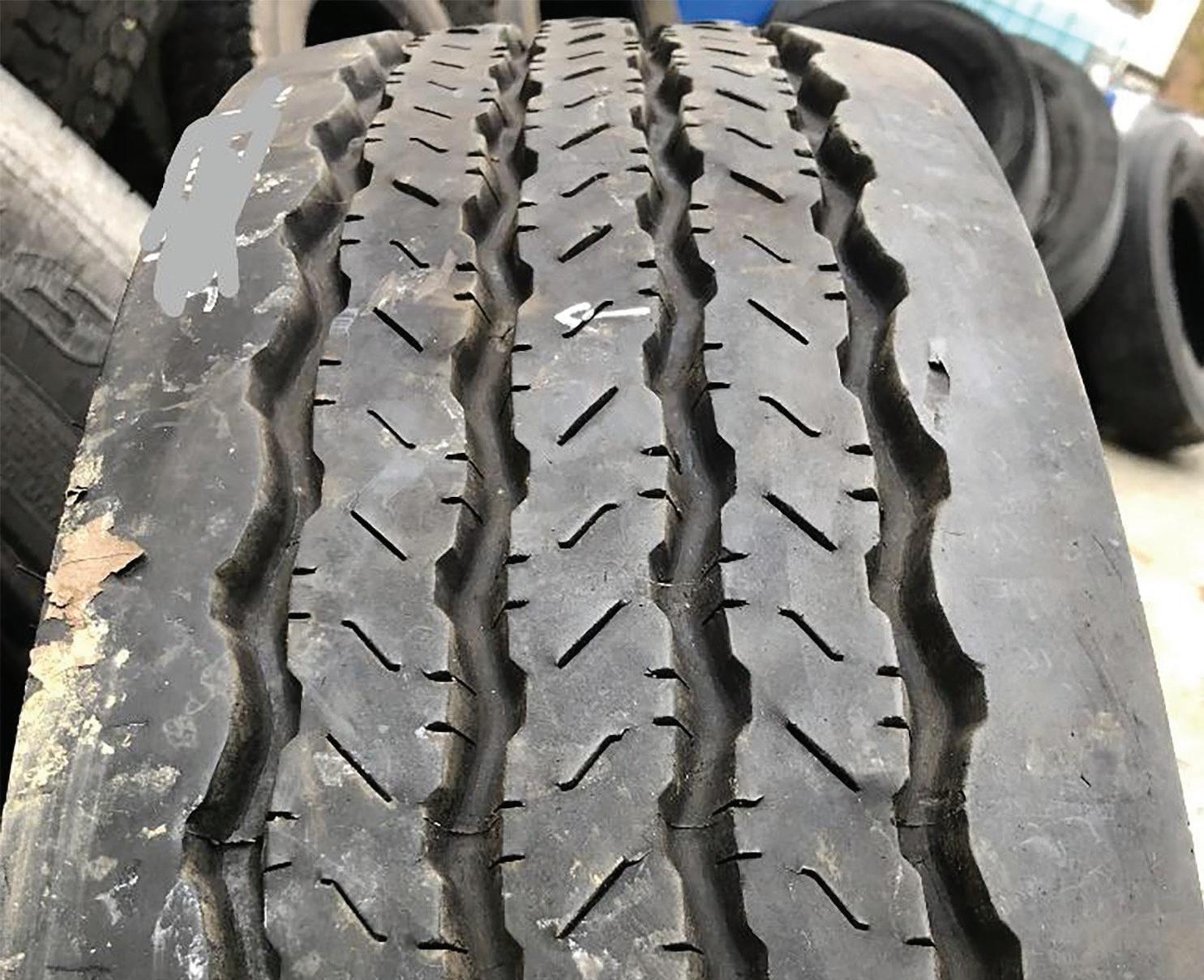
Center depression wear on steer tires
Symptoms and causes:
is shows as one or more inner ribs that have worn below the level of adjacent ribs. It is usually caused by low inflation. TMC RP 219 says other potential causes could be a lack of shock absorber control, binding spring hangers, and non-uniformity such as improper bead seating, improper bearing adjustment, and assembly out of balance.
Vehicles affected:
On Class 8 tractor-trailers, high speeds and light loads can exacerbate this type of wear, as can modern low rolling resistance steer tires. “ ey have a di erent internal construction so they can roll better and achieve better fuel e ciency,” said
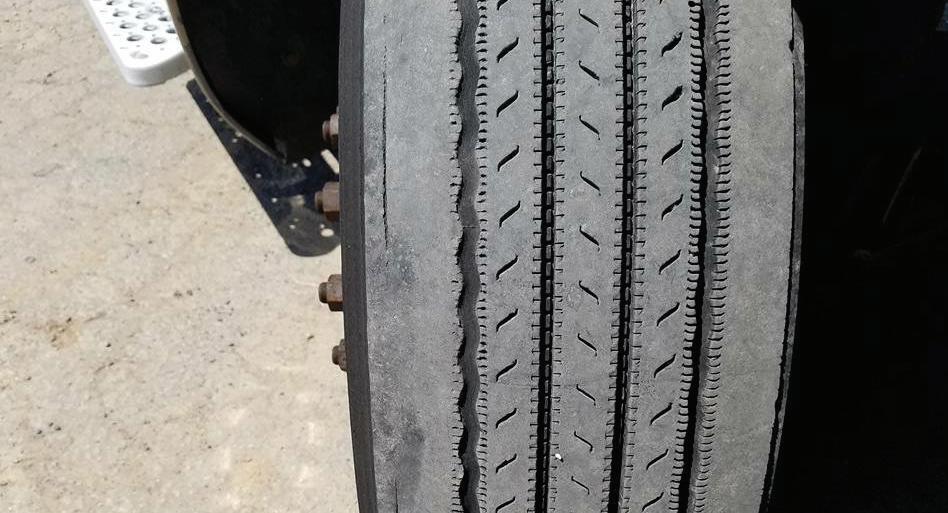
One-sided shoulder wear on steer tires
Symptoms and causes:
is type of wear shows as excessive wear on one side of the tire, extending from the shoulder towards the center of the thread. e most likely cause is misalignment, although TMC RP 219 says worn kingpins and suspension components, improper bearing adjustment, and excessive axle loads could also be the root cause.
Vehicles affected:
“ is wear can apply to all truck classes, but we tend to see it more in Classes 6-8,” Yokohama’s Clauer said. “Regional operations tend to be the hardest hit due to the increased amount of turning versus long-haul. at said, long-haul also contends with this wear pattern. If alignment is o , the amount of miles these trucks travel can accelerate the wear pattern before it’s detected and corrected.”
Corrective action:
While this wear issue is preventable, Clauer said it must be addressed as soon as it appears. “If not, it can advance quickly and wear into the steel belts, which will ruin an otherwise perfectly good casing,” Clauer said. If caught early, tires can o en be rotated or retreaded. Additionally, technicians should confi rm whether or not the steer axle is out of alignment. “It is also a good practice to have your alignment rack calibrated on a routine basis,” Clauer said. “An alignment rack that’s out of calibration will result in incorrect specs being applied.”
Photo courtesy of Yokohama Tire.
Mike Beckett, president of MD Alignment Services. “But when the tire is low on air, the middle of the tire can buckle up and start cupping in the middle.”
Corrective action:
“If the wear is minimal, it’s okay to continue running the tire as is,” said Tim Netzel, senior manager for commercial truck marketing at Bridgestone Americas. “Just keep an eye on it and document the wear level. When wear is more significant, your two options are to rotate or retread the tire.” When you detect early signs, closely monitor for correct pressure every trip, he said.
Photo courtesy of MD Alignment Services.
Outside cupping on right steer tire
Symptoms and causes:
This has historically been associated with toe-in feather wear due to an alignment issue. But another mechanical factor, use of a wide-track steer axle, can also be the root cause.
“These wider axles can turn in farther, up to 55 degrees,” MD Alignment‘s Beckett said. “The unintended consequence is that when the driver steers right, the steering arm swings in toward the axle. When it goes past the normal 40 degrees, the steering arm gets in line with the tie rod, the ball joint loses directional control, and the tire starts wiggling. That doesn’t happen when turning to the left because the steering gearbox is holding the left front tire.”
Vehicles affected:
Class 8 tractor-trailers with wide-track steer axles.
Corrective action:
To determine if this is the root cause, Beckett said a technician can perform a simple test. “One turn of the steering wheel is 20 degrees at the wheel end,” Beckett pointed out. “If the technician can turn it more than two full times, the truck probably has one of these wide-track steer axles. Then the technician can jack up the right side of the truck to see if the right front tire wiggles after it’s turned past 40 degrees. If it does, the fleet has to decide if it’s okay with sacrificing tires for tighter turning angles.”
If the fleet decides it doesn’t need those tighter turning angles, Beckett said a technician could make a simple modification to the right front wheel. A steering stop is located behind that wheel; it’s a bolt that comes out of the brake backing plate. “The technician could back out the bolt so it touches the axle with two turns of the steering wheel, preventing any excessive turning beyond the normal 40 degrees,” Beckett explained.
Photo courtesy of MD Alignment Services.
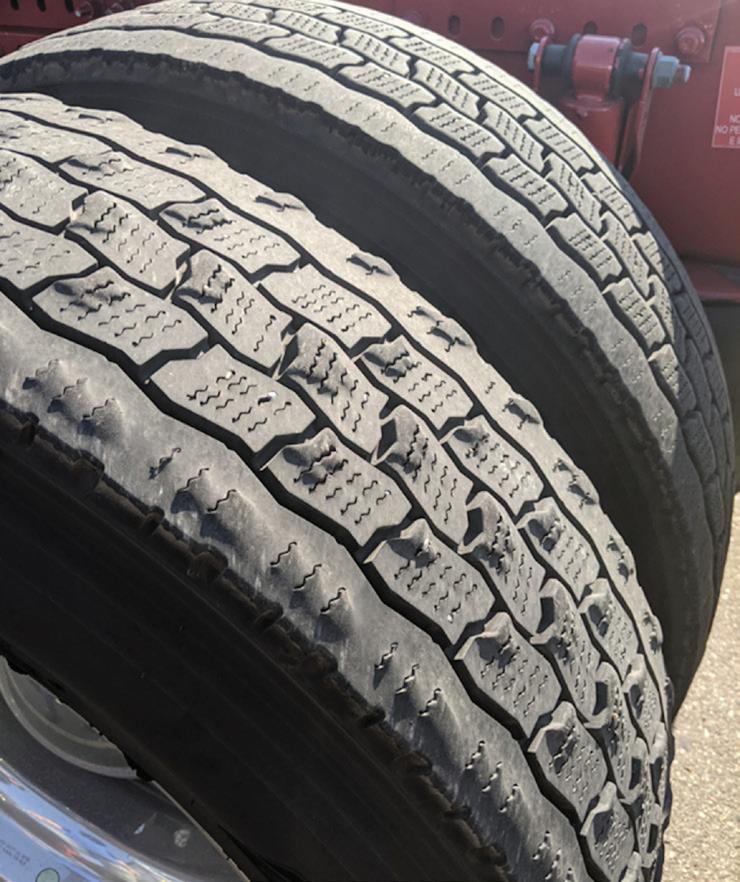
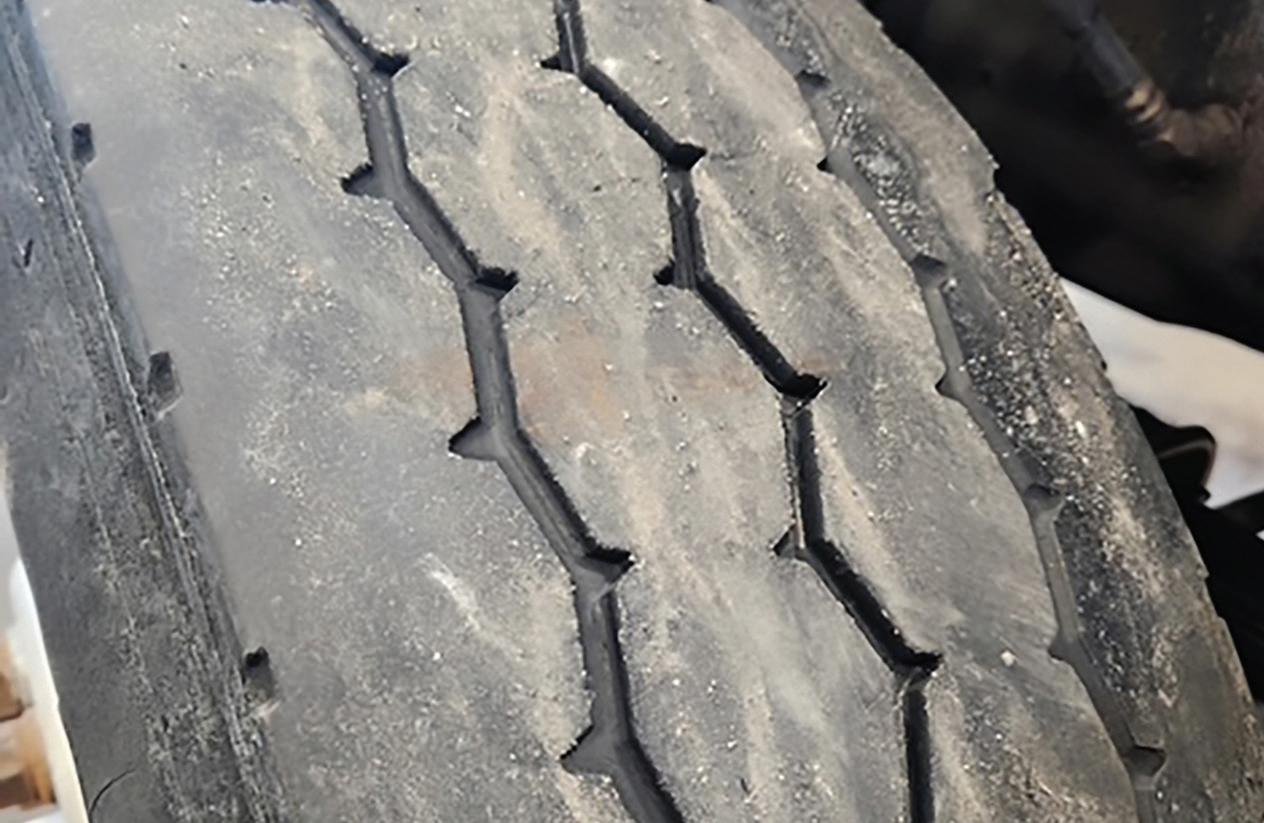
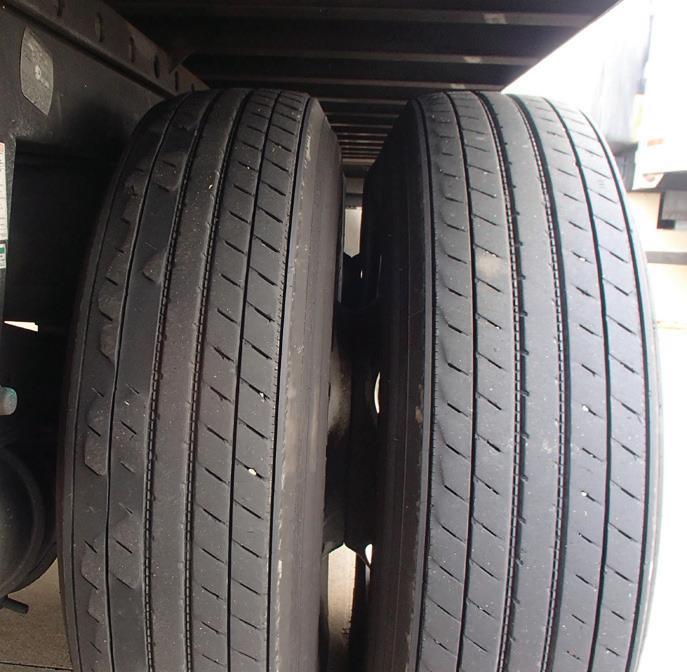
Alternating lug wear in dual-assembly drive tires
Symptoms and causes:
Alternating (i.e. every second or third) lug is worn to a different tread depth all around the tire. It’s most often caused by mismatched inflation pressures and diameters in dual assemblies, perhaps due to an undetected slow leak in one of the tires. “If one tire is underinflated, the accompanying tire takes the brunt of the load,” Yokohama’s Clauer said. “Then the underinflated tire ‘skips’ across the road and creates the abnormal wear.”
Vehicles affected:
Most prevalent in Classes 6-8 where dual configurations and ultra wide-base tires are more common. That said, this pattern can happen anywhere dual
Trailer tire center and adjacent rib depression
Symptoms and causes:
Also called punch wear, the visual indicator is one or more ribs wearing faster than neighboring ribs. According to Rick Fitzpatrick, market quality field engineer at Prometeon, causes include overinflation at light loads, brake skid or lock up, frozen brakes from moisture in the brake system, mismatched duals either by size and/or air pressure (greater than 5 PSI), wheel bearing end play, and worn suspension components or misalignment.
Vehicles affected: Trailers
Corrective action:
Fitzpatrick suggested that fleets wanting to prevent or slow punch wear should match tires on the trailer and ensure dual tires have the same PSI. He noted tires can lose anywhere from 1 to 3 psi in a month. Using tire pressure monitoring systems or a tire gauge can ensure accuracy. (The tire expert with over 40 years of experience will bet you lunch that a tire thumper won’t give you the same accuracy you need.)
He added properly aligned tractors and trailers should also reduce wear. And don’t forget to perform consistent PMs on the air brakes and ABS, which would alleviate brake pulsing. Finally, using a runout gauge during wheel bearing installation will reduce vibration.
Photo courtesy of Prometeon.
assemblies are utilized if inflation pressures are mismatched.
Corrective action:
Monitoring TPMS data is a good practice to stay on top of inflation issues, although Clauer said a tire gauge will always be the ultimate tool. As for tires that are already showing wear, they can continue to be run to the point of needing to be pulled and retreaded.
Photo courtesy of Yokohama Tire.
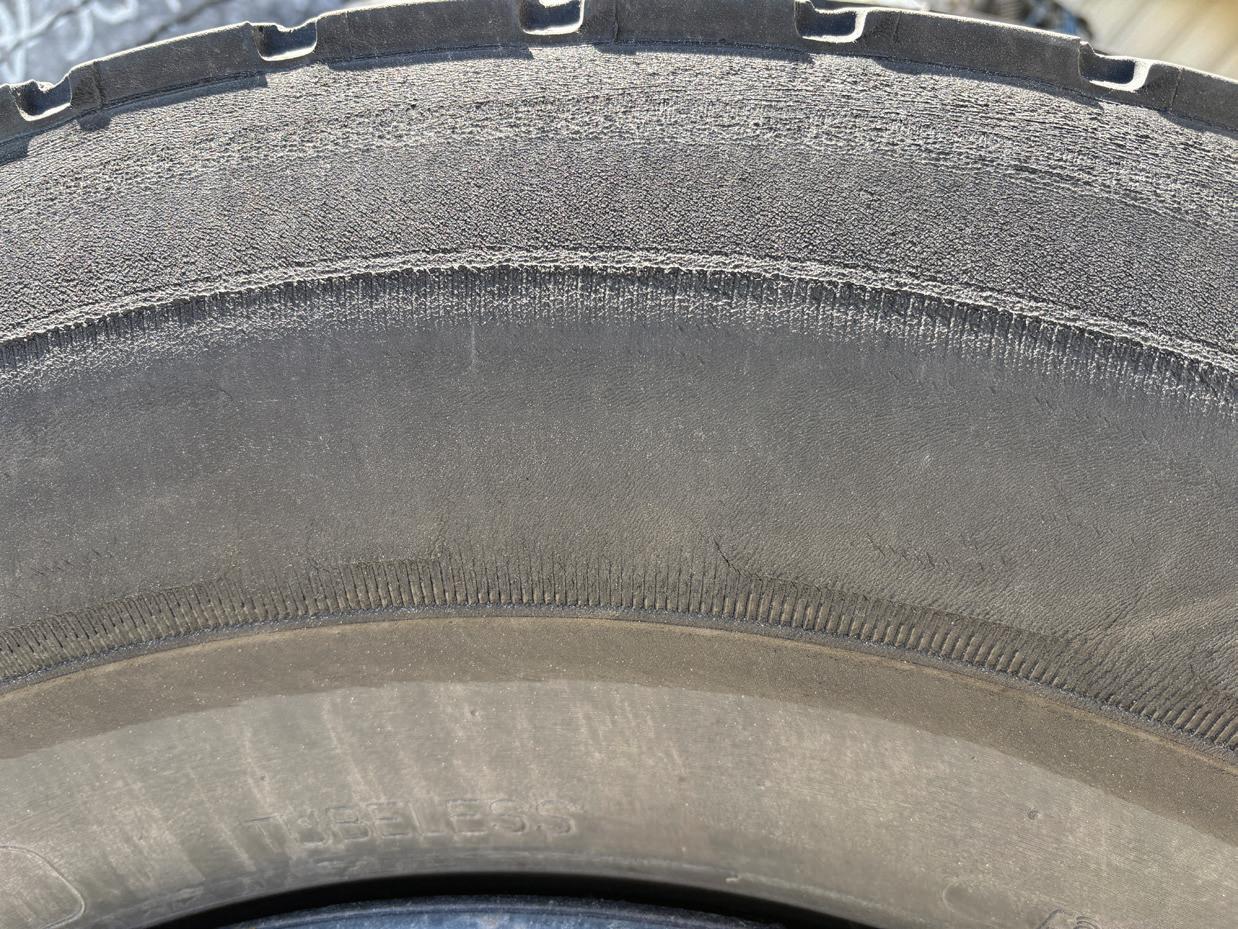
Steer tire edge wear from kingpin wear or play
Symptoms and causes:
Shows as irregular or rapid wear on one edge of a steer tire. Wear will o en return quickly a er an alignment. Other clues are steering wander and poor return-to-center, clunking or popping noises during turns, and visible movement when checking kingpin play during inspection.
Primary causes are worn or seized kingpins, excessive vertical or lateral play in the steering knuckle, lack of proper kingpin lubrication, and high steer-axle loads with frequent turning.
Vehicles affected:
Heavy vocational trucks (i.e. refuse, concrete, dump trucks), linehaul tractors with high steer-axle weights, and 1-ton and medium-duty trucks operating near front-axle limits.
Corrective action:
Di cult to correct with alignment alone, the technician should measure kingpin play during a front-end inspection. Worn kingpins and bushings should be replaced accordingly, and proper lubrication points should be restored. A er kingpin replacements, perform a full alignment.
Photo courtesy of Blaine Brothers.
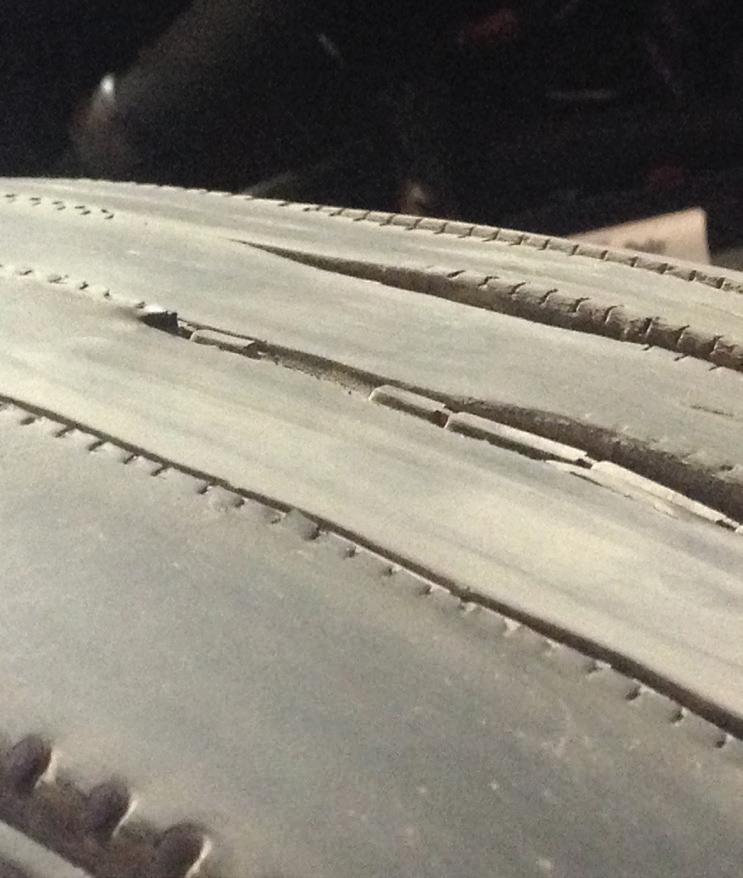
Cupping/scallop wear on steer tires (and trailers)
Symptoms and causes:
Shows as random, localized hollow areas of accelerated wear around the circumference of the tire. Initially seen on the shoulder rib, it can spread to adjoining ribs when operated over an extended period.
“ is type of wear is more di cult to spot and may require a technician to feel the tire,” Bridgestone’s Netzel said. “Upon touch, it will feel as if small portions of the shoulder rib have worn away in a spaced-out pattern.”
Mechanically induced irregularities are likely culprits, ranging from sticky or incorrectly adjusted wheel bearings, poor shock absorber control, defective airbags, loose kingpins and bushings, according to Gavin Broussard, U.S. national sales head at Apollo Tires. “Additional factors such as underinflation and out-of-balance and non-concentric wheel assemblies will also adversely contribute to this type of irregular wear,” he added.
Vehicles affected:
While any commercial vehicle showcasing any of the above-mentioned root causes is susceptible, this is more likely to a ect long-haul Class 8 trucks and regional fleet steer and trailer axles. “Vehicles that travel long distances in straight lines and at steady speeds are particularly prone,” said Jim Garrett, product category manager for long-haul and regional tires at Michelin North America.
Center wear on drive tires
Symptoms and causes:
Excessive wear in the center tread, particularly with wide-base tires. It’s typically caused by torque e ect when driving force is applied to the drive tires, which doesn’t happen with a free-rolling tire like a steer tire or trailer tire. is type of wear is aggravated when a tire is overinflated and/or underloaded.
Vehicles affected:
Any vehicle in a high-torque application, particularly school buses that start/ stop frequently, run at maximum tire pressures, and o en run unloaded.
Corrective action:
If the center tread isn’t worn excessively, the tire can likely be run out. On the other hand, the tire should be removed and retreaded if wear is excessive. Additionally, since this type of wear is typically the result of improper inflation, no further mechanical diagnostics need to be performed. at said, fleets should review their processes for maintaining proper tire inflation. Drivers can also be advised to accelerate less aggressively, when possible. Photo courtesy of Joseph Stain, a Michelin field engineer for on-road customer engineering support in Missouri and Arkansas.
Corrective action:
According to Broussard, a technician must ensure that all suspension parts, wheel end and bearings, shock absorbers, airbags, etc. are in good working condition. “Also follow the specified tire-mounting procedures to ensure compliance with the overall uniformity requirements of the tire and wheel assembly,” Broussard added. “If diagnosed early enough, tire rotation may assist in flattening out the irregular wear over time.”
Photo courtesy of Transport Services.
Heel/toe wear on drive tires
Symptoms and causes:
Lugs around the tire become worn high-to-low from front-to-back, creating a sawtooth feel. Typical root causes include high inflation pressures, mismatched inflation in dual assemblies, tire diameter differences, hightorque environments, and mountainous terrain.
Vehicles affected:
Can be an issue for both long-haul and regional fleets, as well as urban vehicles using lug-type drive tires. School buses and P&D vehicles are especially susceptible because they do a lot of starting and stopping on hills. School buses in particular are at risk because they tend to run tires with more aggressive lugs.
Corrective action:
If wear is significant and the tire is nondirectional, it can be moved to the opposite side to reverse rotational direction, according to Daniel Neal, product category manager for urban tires at Michelin North America. Then, technicians should take steps to standardize inflation pressures, avoid mismatched duals, and verify vehicle alignments. “Fleets may also want to consider tread pattern selection for the vehicle’s application,” Neal added. “In some operations, a less aggressive pattern can reduce heel/toe wear.”
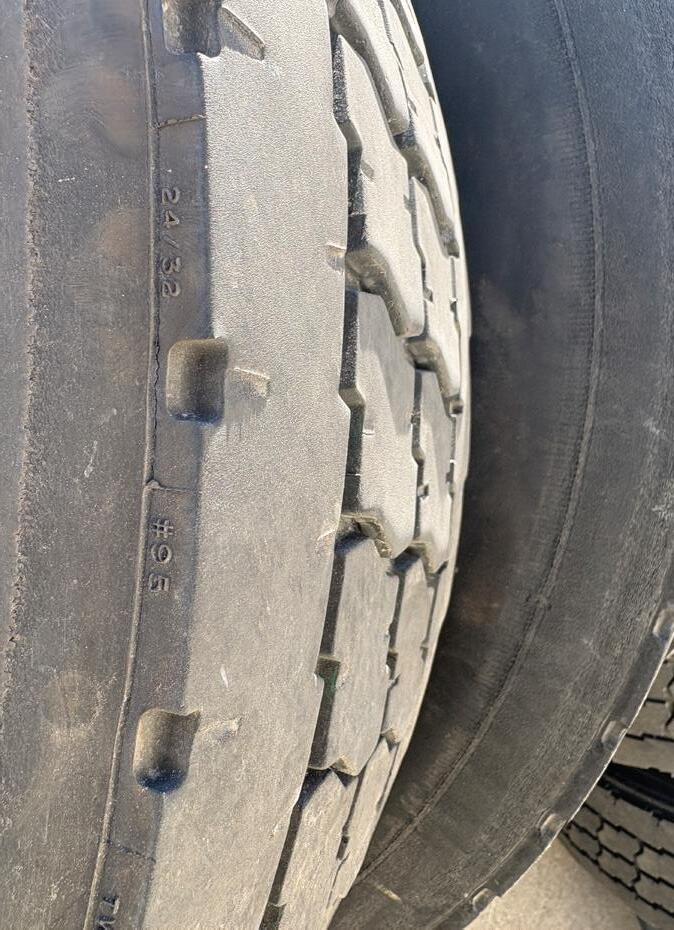
Outer shoulder wear on outside drive tires
Symptoms and causes:
Simply shows as accelerated wear. It can be caused by things like underinflation, mismatched tires, and alignment issues. Heavy loads and frequent turning can also aggravate this type of wear.
Vehicles affected:
Any commercial vehicle can be susceptible if the above root causes exist. Heavy vocational vehicles like refuse trucks are especially vulnerable. “This type of wear is typical for us, and normally happens on the rear-axle outside tires on both sides of the truck,” said Jordan Sinnard, a technician at Uribe Refuse Services in Lincoln, Nebraska. “It’s caused by the constant turning our refuse trucks undergo, with the weight of the truck shifting. The outer shoulders wear down and we’re left with this rigid look.”
Corrective action:
Technicians must closely monitor for accelerated wear on the outer shoulders. When wear becomes obvious, Sinnard removes the rim and flips the tire so the rigid side faces inward. “Doing this allows the tire to wear evenly and last longer, without ruining the casing,” Sinnard pointed out. “We are allowed to wear down to 4/32 per DOT. Once our tires get that low, we peel them off the rim and put new ones on, with the old ones being sent for recap.”
Photos courtesy of Uribe Refuse Services.
ROTORS
Photo courtesy of Joseph Stain, a Michelin field engineer for on-road customer engineering support in Missouri and Arkansas.
Ready to not wear
Let’s face it, tire wear happens. That’s why leading tire manufacturers have come up with unique features to help fleets where it typically hurts. Below are a few examples.
APOLLO ENDUMILE LHFRONT
This dedicated long-haul steer-axle tire features an innovative tread design and cap compound for even wear and high mileage. The durable decoupler groove technology is designed to minimize drop shoulder wear. An optimized contact patch ensures uniform wear.
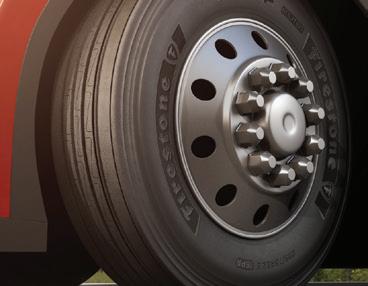
FIRESTONE FS592
Five-rib pattern incorporates defense grooves and an optimized shoulder rib to enhance wear distribution and reduce tearing. Casing is engineered with the company’s ENLITEN technology to deliver added durability, greater retreadability, and improved rolling resistance.
MICHELIN X LINE ENERGY TIRES
Incorporate micro-sipes along rain grooves to help stabilize tread elements, along with directional tread designs, to resist the development of irregular wear patterns. Available for both steer axles and trailers. Pictured is the Z+ model for long-haul steer axles.
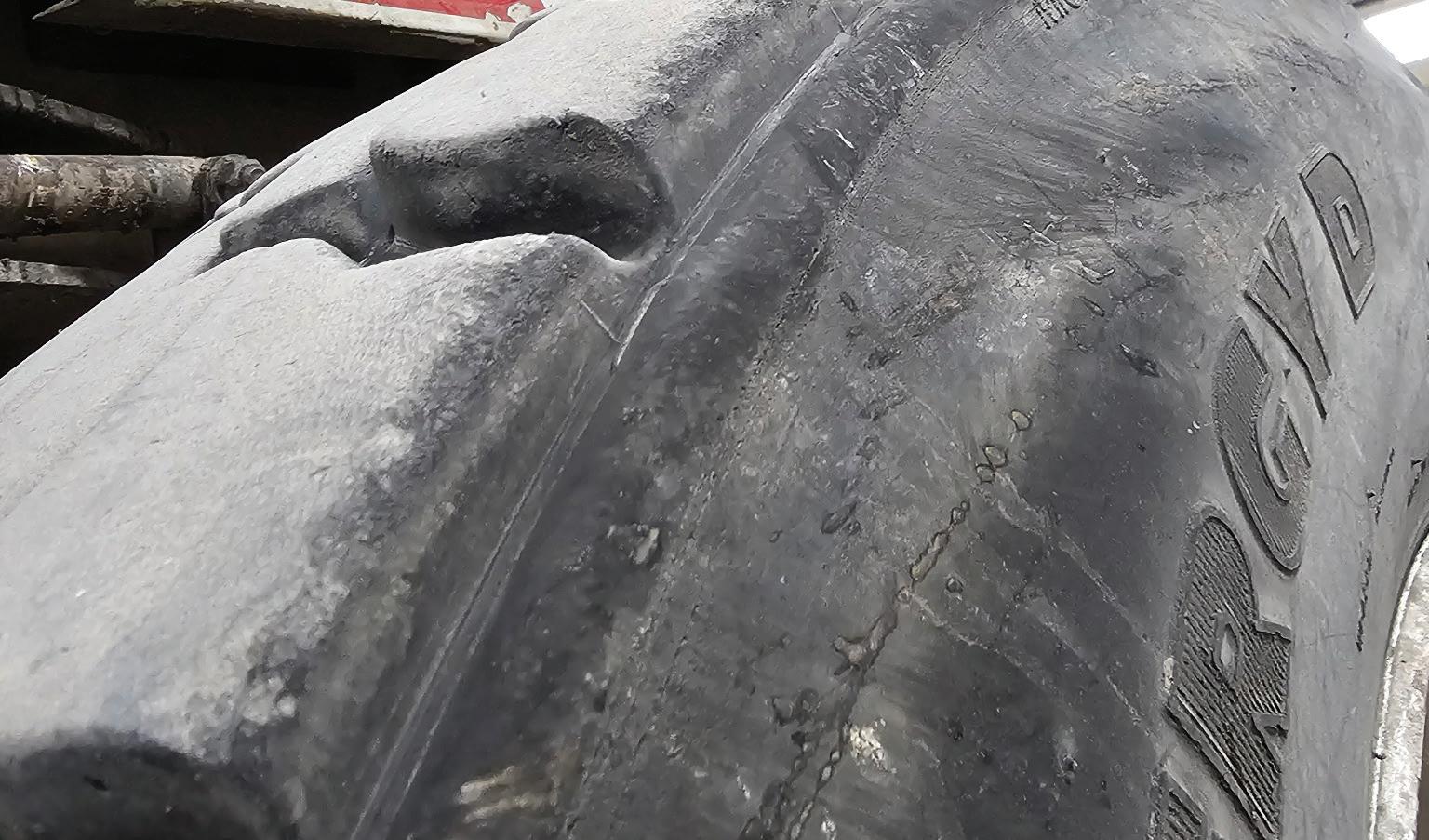
Sidewall scrub
Symptoms and causes:
Simply shows as scu s on sidewalls, typically on the right side of the vehicle.
Vehicles affected:
It’s a common wear pattern in urban applications, such as metro buses and P&D vehicles, where contact with curbs and sidewalks can happen regularly.
Corrective action:
Sidewall scrub usually isn’t a big deal until steel becomes exposed, in which case the technician must remove the tire from service. us, frequent inspections are key. Fleets may also want to review their tire spec’ing. Some tire manufacturers o er tires with reinforced sidewalls, as well as sidewall wear indicators to help technicians know when it’s time to move a tire to the non-curb side of the vehicle to extend its life.
Photo courtesy of Joseph Stain, a Michelin field engineer for on-road customer engineering support in Missouri and Arkansas.
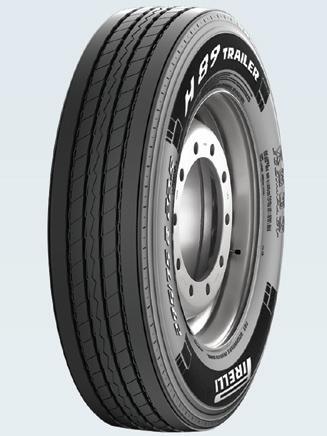
PROMETEON H89 TRAILER TIRE
The 295/75R22.5-sized tire for line haul trailer tandem service has a tread depth of 13/32” and employs decoupling grooves, allowing it to fight the initiation of shoulder edge wear and perform well in free rolling trailer positions.
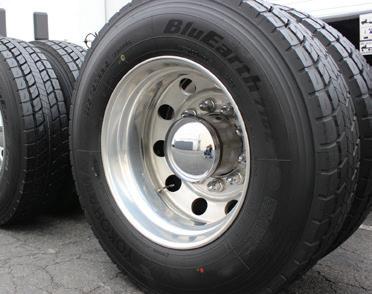
YOKOHAMA BLUEARTH
718L DRIVE TIRE
Designed with an advanced compound and newly developed tread pattern to counter heel/toe wear and axle-end conditions, but still reduce rolling resistance and maximize fuel efficiency in long-haul applications.
Inside wear on wide-base tires or duals on drive axles
Symptoms and causes:
Shows as accelerated wear on the inside of the tire. is has typically been due to a loose wheel bearing. But according to MD Alignment’s Beckett, today’s lightweight drive axles can also be a root cause of this type of wear.
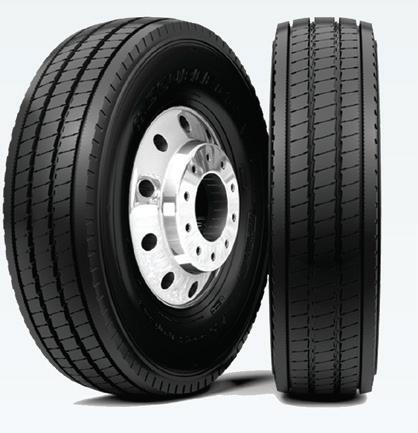
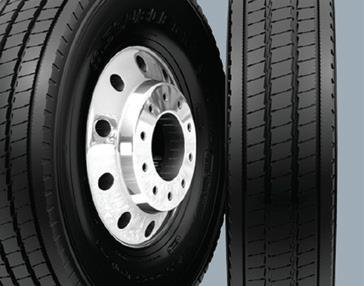
DOUBLE COIN RT606+
The Double Coin RT606+ is a regional/ all-position truck tire that’s designed for the rugged environments of P&D, urban, and regional applications. Built to resist cuts and abrasions, its 5-rib design promotes precise handling, lateral stability and superior traction. Its tread compounds and siping fight irregular wear and provide long life for all regional and all-position tire applications, while the deep 22/32” original tread depth also allows for longer wear in regional high scrub applications.
“When the tractor-trailer hits a bump in the road, the load compresses down on the axle,” Beckett explained. “ e lightweight axle flexes more, causing the tires to slide outside under compression, and then back inward when relieved of the load. is is an even bigger issue with today’s fuel-efficient drive tires.”
Vehicles affected:
Class 8 tractors spec’d with lightweight drive axles.
Corrective action:
Technicians should identify if the truck has a lightweight, 9.5mm drive axle. If it does, Beckett said this type of wear will typically start showing around 70,000 miles. “Technicians can start rotating from outside to inside at 50,000 miles to prevent this type of cupping from really taking hold,” Beckett advised.
Photos courtesy of MD Alignment Services.
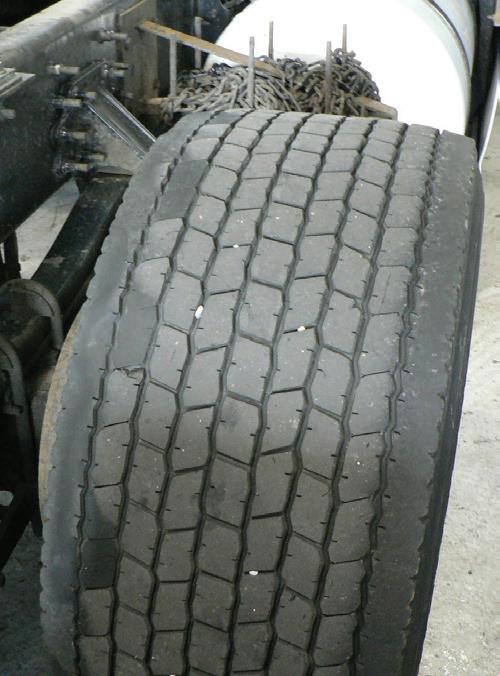
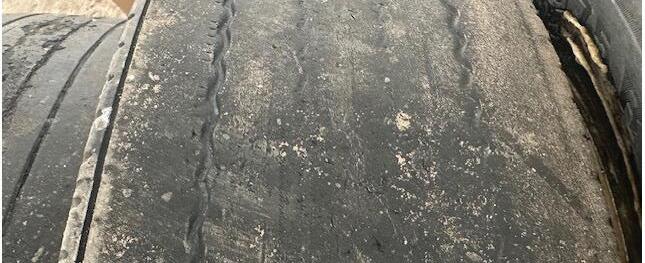
Center wear on trailer tires
Symptoms and causes:
Simply shows as excessive wear down the center of the tire. It’s most likely caused by the tire being overinflated as those tend to bulge and wear more in the center.
Vehicles affected:
Dry vans and reefers.
Corrective action:
If the center tread isn’t worn excessively, the tire can likely be run out. On the other hand, the tire should be removed and retreaded if wear is excessive.
Photo courtesy of Transport Services.
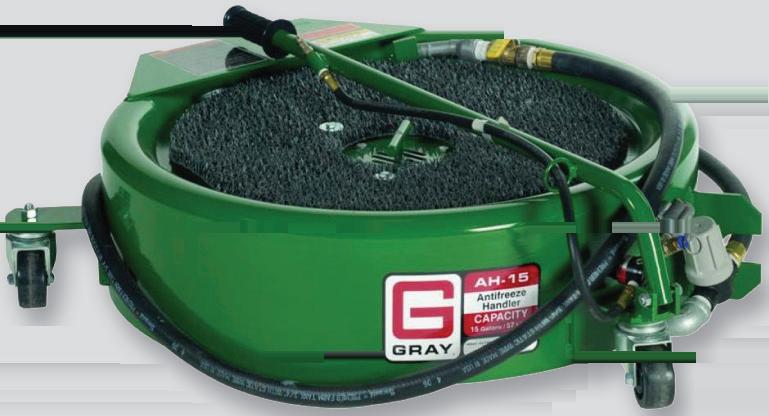
Safety Bulletin PORTABLE AIR POWERED FLUID HANDLERS
Two great tire-wear resources
The Technology & Maintenance Council (TMC) publishes a “Radial Tire Conditions and Analysis Guide” that industry veterans consider to be the bible of tire wear analysis. That guide is also known as Recommended Practice 216. The reference and training aid focuses on radials and helps techs evaluate their condition, understand damage and wear patterns, and guides when a tire should be sent back to the OE or retreader.
To diagnose causes, turn to RP 219, “Radial Tire Wear
Conditions and Causes:
A Guide to Wear Pattern Analysis.” This RP helps service providers detect feathering, cupping, shoulder wear, center wear, irregular wear, and more, while also detailing the root cause. This could be misalignment, incorrect inflation, or suspension issues.
POTENTIAL OUTCOME:
Leadership skill building: DIY edition
Learning to lead others requires a constant focus on self-improvement and education—and you don’t need formal training to do it, as evidenced by the four fleet leaders we profiled.
By John Hitch
CAREER DEVELOPMENT ]
reat leaders know how to delegate. But when it comes to building up your own managerial skillset, as the old saying goes, “If you want it done right, you have to do it yourself.”
No one else is going to care more about which rung of the ladder you end up on, or how fast you get there. Both are dependent on how much e ort you’re willing to put into career development and unlocking your leadership potential.
You may think the only avenues out there are having the company send you to executive training or surrendering your nights (and a small fortune) to some college or university to get a bachelor’s or master’s degree in business management. But why go through all that when you’re already managing a business and the tools and resources you need are all around you? What was once esoteric leadership knowledge taught to the few has been democratized by technology and AI to the many. You can access online management training courses, free webinars, and a plethora of social media options to build skills from the palm of your hand, and if you don’t like the destiny the fates have in store for you, prompt ChatGPT to come up with one.
And there’s always the tried-and-true analog method of reading books.
You really can do it yourself.
Of course, a little help from your friends never hurts, as wise and willing mentors are all around, from the old technician short on time but loaded with knowledge to colleagues and competitors you run into at trade shows and conferences. And always stay on friendly terms with your regular vendors, suppliers, and customers. Even calling them up and spending five minutes to see how their kid’s game went or to rant about some regulatory change is about the best ROI you can get in this relationship-driven business.
And this applies to everyone at every level of your fleet or repair business. Even the junior tech in the lube bay or part-time parts person can learn to better manage their time, expectations, and assigned tasks. And it’s never too early to learn the so skills needed for o ces and boardrooms. When an opportunity for advancement arrives, you want to be ready.
But it’s always better to show than tell, so follow along as we introduce four amazing leaders in the space to inspire you on your climb to the top. ey represent many of the core skills to lead you to success in your current role and all the way to the top, from discipline and mentorship to resourcefulness and entrepreneurship. And don’t forget about good ol’ sweat equity and sacrifice.
“From the bathroom to boardroom”
Charles “Chas” Voyles, Jr., Associate Director of Customer Service and Fleet | International Motors
Some people start out sweeping the shop floor. At 19, Chas Voyles wished he were that lucky. e year was 1984, and he just fi nished vocational school in St. Louis, looking to land his fi rst diesel shop job. He was invited to ADM Trucking’s apprentice training with 19 other people (a rarity for fleets nowadays). e glut of potential hires allowed ADM to drill down for work ethic and attitude in creative ways, Voyles recalled. at’s why he started out with a toilet brush, not a broom.
“Back then, they didn’t care so much about what you knew fresh out of technical school; they wanted to see if you were actually going to work,” Voyles said.
So the 20 got to scrubbing. “It didn’t take long to wean down to two people le : me and another guy,” Voyles recalled. “We were hungry and wanted to learn truck repair, and so we scrubbed toilets.”
A er four months getting face-to-face with commodes and urinals, he was fi nally promoted to sweeping. A er this boot camp, Voyle’s real training began with a grizzled Army sergeant who fought in Korea and Vietnam named Bob Elliott. e war veteran had a reputation for being hard to get along with, but Voyles said they got along great due to the apprentice having a “two ears, one mouth attitude,” meaning he listened twice as much as he spoke.
Elliott became his mentor, teaching him how strip down 9L Detroit Diesel 6V92 engines to the block and put them back together as a soldier would with a rifle.
“I listened to all of his tricks and adopted the way he approached truck repair—and I started getting good,” Voyles recalled.
He soon moved from the engine room to the rebuild facility, which Elliott ran. Voyles learned A/C systems, painting, suspension, and alignment. is is how Voyles learned to hook two wrenches together to get more leverage and bust stubborn bolts.
e secrets to quick and correct electrical troubleshooting and perfect welding techniques were next revealed by Elliott. Voyles could cite a hundred similar examples.
But the time came for Voyles to step out of the shadow.
“One day, he called me into his o ce, and I thought I was in trouble for something, and he just says, ‘Charlie, you’re in charge,’” laughed Voyles. Elliott was going on a three-week trip, and before he did, Voyles learned everything he needed and, though nervous at the start, got the hang of it. He was rewarded with the midnight shi as shop foreman, managing truck and trailer repairs and work orders.
At the end of the shi , with the sun barely up, many of the guys went o to the bar for beers, though Voyles never did. He admits it “felt a little weird, because you kind of put yourself as a little bit of an outsider.”
Voyles had a wife and child at home and, like his mentor, didn’t drink. at military-regimented aspect of Elliott is what Voyles may fi nd most enduring. “He helped me set standards for my life
and taught me discipline I’ve maintained over the course of my career.”
His time with the Sarge taught him the true joy of leadership and mentoring, which he continues to do at International, where he’s been for 16 years, and for the Technology & Maintenance Council. A member since 2004, Voyles earned a Silver Spark Plug Award in 2011 and a Recognized Associate Award and the Distinguished Service Provider Award last year.
“Chas is always willing to help in any way possible and continues to make an impact throughout TMC on behalf of our members,” o ered Robert Braswell, TMC executive director.
Voyles has actually mentored the entire industry in a way: he authored RP 1608 on confl ict resolution and RP 1619 (battery electric vehicle safety). He currently chairs a task force on rebuilding customer relationships a er a repair goes wrong.
He built the very important skill of accommodating customers as a service director for Freightliner dealerships in the 2000s. He volunteered several hours of his time doing tractor-trailer inspections with a JB Hunt executive at an o -site location. While crawling under trucks, Voyles listened to the exec discuss the fleet’s pain points. Hearing how downtime a ected the fleet, particularly the driver trying to make a living, helped Voyles empathize and “develop a di erent mindset,” one where he could be the solution.
“It just started a fi re within me to be more involved with the fleets,” he recalled. Soon enough, he developed a reputation as the fleet guy, and more business came through the dealership.
He then moved over to fleet service manager at the company formerly known as Navistar to handle big accounts for them, moving up the ladder to his current position as associate director of customer service and fleet.
“ I listened to all of [Bob’s] tricks and adopted the way he approached truck repair— and I started getting good. ”
Voyles is now around the same age as Sgt. Elliot was when they met. Unlike his war-weary mentor, Voyles has a lot of optimism regarding the industry’s younger recruits and their curiosity.
“What’s beautiful is that they’ll come to an old salt like me and they’ll ask questions,” he said.
“And I think one of the reasons that I can give good input is because I’m not stuck back in the 80s.”
And this might be Voyles’ strongest skill: leading the way by following up on new trends and technology. He has embraced AI LLM tools such as Claude’s Sonnet and Haiku tools to conceptualize and model engine and tribology data to understand engine oil detergent impact on wear and useful life. Predictive and prognostic maintenance are other areas he’s dove into headfi rst.
“I’m not done growing,” he asserted. “I’m still pretty on fi re, and I got a lot of ideas.”
Chas Voyles
Photo courtesy of Chas Voyles
Legacy of shop smarts
Vincent Myles | President of Myles Truck Repair, Myles Wrecker
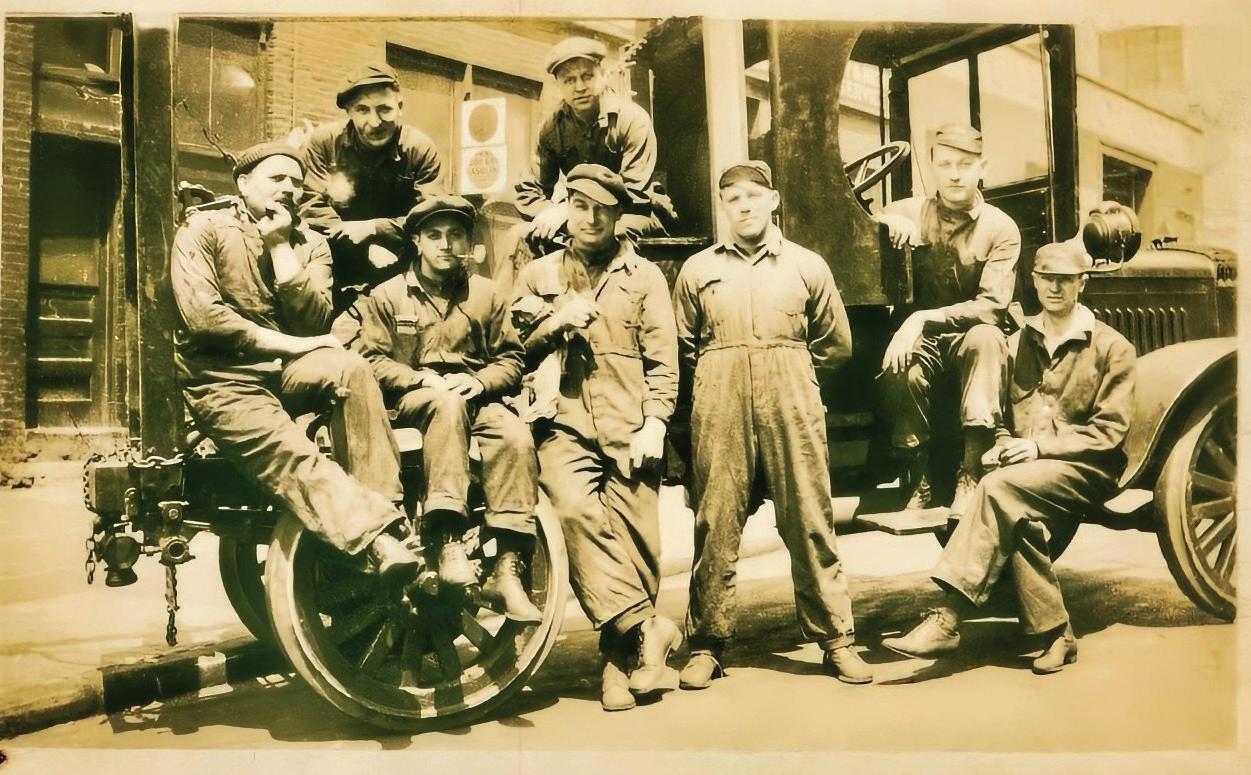
Vincent Myles was always destined to do something in the trucking industry. His great-great-grandfather ran one of the first truck repair shops in Brooklyn, converting his horse and buggy business to service the mechanized contraptions at the turn of the 20th century. Every generation since has been involved in trucking.
As a child, Myles joined his trucker father on furniture deliveries for Rooms to Go, even helping offload chairs. After high school, he gave college a try, but it didn’t compare to the family trade.
“It wasn’t my jam to sit in a class and listen to lectures,” he recalled. “I always watched my dad hustle. He was always doing something with trucks, or buying and selling Jeeps, or fixing stuff. That’s how he supported our family.”
His professors were not nearly as inspiring, so he joined his dad’s new truck repair business in the Atlanta area in 2012. His brother had an accounting degree and handled that side of the business. (Myles acknowledges even hustlers need a “numbers guy.”)
Myles wasn’t even 21, and he admits that at first it was just a 9-to-5; he didn’t really have a stake in growing the business, let alone leading it.
But that changed a few years in. The shop noticed customers complaining about wreckers’ services, stranding them. He saw how much the tow company was billing and thought, “We could do this.” The shop bought a Peterbilt 379 with a detached tow unit and was almost ready.
There was one small snag.
“I had no clue that I was doing,” the 33-year-old laughed. “I bought it and said, ‘Now what?’”
First, Myles put in the work to get his CDL, then, being a digital native, figured out the rest by watching YouTube videos. Facebook also proved a reliable resource for towing full tractor-trailers. One page taught him how to configure the wrecker brake lines so that when it stopped, the trailer brakes would too.
Taking the initiative on building out this business “spurred my entrepreneur spirit,” he said. You’d think Myles would say his dad was his best teacher, but “you get the biggest lessons from the customers,” he said. “They’ll tell you how they feel.” He also advised treating the relationship with fleets as a partnership and not a transaction.
Learning that lesson spurred the creation of the body shop. He’d hear customers complain about long wait times at their current providers, and he saw the prices his subcontractors charged, so again he thought, “Why not do it ourselves?” Given his past success with social media, he found the facility on Facebook Marketplace and turned it into a commercial collision shop, adding in a cross draft paint booth.
Last December, the Myles family took partnerships to a new level by joining True North Fleet Services, a new private-equity backed platform that aggregates smaller fleet repair businesses to gain economies of scale, such as “supercharged” health benefits for employees, and foster collaboration with industry experts. The Myles yielded ownership, but retain their identity and gain equity in the parent company.
“Not only do I have equity, but the education that I’m getting from these people is something I could never have gotten without getting in the room with these guys,” he said. Basically, he gets graduate-level insights without the debilitating student loans.
“It’s not a corporate raider strip-and-gut, try-tosell-everything-off [deal],” Myles insisted. He sees it as highly experienced industry experts teaching each other their best practices and handling the soft skill matters that smaller businesses can’t perfect on their own.
For example, a head of recruiting at the corporate level oversees the tech hiring process—a major pain point for the repair industry. One new workflow is giving potential candidates a video exam prior to the interview. Another is monitoring tech efficiency and providing strategies to upskill those falling behind rather than firing them.
And though Myles never cared for classrooms, the shop doesn’t skimp on training. He noted that the aftermarket dealers, such as FleetPride and NAPA, provide classes, as does Hunter for its alignment systems. This month, they are also bringing in a trainer to go over high-rail system maintenance.
The adherence to continuous education has paid off in developing more leaders. The current VP started as the shop cleaner in 2015, and the general manager came out of the Marine Corps and into the shop as a tech in 2013.
“A lot of their and my path was getting the opportunity and taking the risk,” Myles offered.
There’s just one final snag. He can’t stop learning.
“I never stop thinking about it,” he finished. “How do I make this better? What should we have done here? How do we tweak this?”
Service, & Big Rig Body Shop
» The great-great-grandfather of Vincent Myles was Jim Bruen (top left), owner of Expert Auto & Truck Repairs in Brooklyn. At the start of the 20th century, Bruen pivoted from horse-andbuggy maintenance to trucks. Myles has also continued to evolve with the industry, opening a body shop and wrecker business.
Photo courtesy of Vincent Myles
Photo courtesy of Vincent Myles
Grounded approach to innovation
Neumann,
Director
of Corporate Maintenance | Foodliner & Quest Liner
Tyler Neumman has been around trucks his whole life, with his dad, Kyle Neumann, working as a diesel tech since the ’80s, and his grandfather a truck driver. But he wanted to soar, so when he went to college, he majored in aviation and minored in entrepreneurship.
He accrued about 500 hours of fl ight time and was ready to fi nd a spot at an airline. What he didn’t account for was all the military pilots coming home from Afghanistan and returning to civilian life at the same time. eir resumes boasted 3,000 hours of military-certified fl ight hours, so the twentysomething from Dubuque, Iowa, went to work in a factory.
In 2010, he got an entry-level dispatcher job at the McCoy Group, where his dad worked, and a er a year, he was asked to manage the terminal for the company’s new hazmat subsidiary, Quest Liner. e former flyboy wanted to gain the respect of the drivers, so one of the fi rst things he did was get his Class A CDL.
“It was always good to be able to show them I can drive,” he noted.
He also thoroughly read the NTTC Bulk HAZMAT compliance guide.
“I’ve got Post-it notes through that thing, le and right,” Neumann remarked.
A solid resource turned out to be the company COO, Carl Recher, a fleet veteran with over two decades of HAZMAT experience at the time, who mentored the young manager. Neumann admitted that in his attempt to soak up knowledge, he “probably bugged [his bosses] more a er hours than [he] should have,” but his current title as corporate maintenance director for Foodliner and Quest Liner shows that time paid o .
While Neumann was working his way up, his father was as well. Kyle is currently the bulk food and hazmat fleets’ VP of maintenance, and has worked with Heil, MAC, Polar and STE to innovate food-grade trailer parts such as the Critter Stopper
valve to keep animals from entering the tank, as well as Hendrickson to conceive of the TireMAXX Pro-LB, which adjusts trailer tire pressure based on load weight, helping reduce uneven tire wear.
“Growing up and seeing my father go up the ladder, and seeing what that entails, instilled in me a sense to always want to be better,” Neumann said, adding his mother was equally influential. e leadership takeaway here is not “have awesome parents,” but to seek out any mentor who does things the right way and, like Neumann, learn as much from them as possible.
Neumann has followed in his dad’s footsteps by initiating a beta test with Aperia last year, installing the company’s TPMS sensors to gather data from all tire positions, with Halo inflation devices placed on the tractor’s wheel-ends. e Halo app alerts the maintenance team to psi issues based on severity.
A big benefit is that the devices connect to the valve stem and don’t require tire dismounting, saving in-house and roadside techs time. And because the gateway can be placed on the frame as opposed to wired in the cab, the device is easier to install and gets better cell reception.
He said the fleet’s tire spend dropped 32% YOY, with emergency roadside service costs decreasing by over 250%. In his analysis, he removed accidents and curbing events where the device was not a factor.
Outside of the family and company, Neumann has grown by seeking advice at tradeshows such as the American Trucking Associations’ Management Conference & Exhibition and TMC’s Annual Meeting.
“Some of us are out there as competitors, but at the same time, we all bounce ideas o of each other,” he said. When he knows another fleet (not in direct competition) has experimented with a new product or technology, he’ll send them an email. “And every time, everyone’s always willing to tell us if it worked out well or didn’t.”
“ Growing up and seeing my father go up the ladder, and seeing what that entails, instilled in me a sense to always want to be better.”
Tyler Neumann
Photo courtesy of Tyler Neumann
Tyler
Sacrifice now, party later
Las Piedras is a quaint city in Uruguay about 30 minutes north of the coastal capital Montevideo, surrounded by lush rolling hills and granite quarries. It’s a place most truckers would now find a dream spot to retire.
It’s there that José “Pablo” Bossi was born and raised—but could not rest. The year was 1987, and the South American nation was far from paradise. The country was suffering the aftershocks of economic collapse and a recently toppled mili-
tary dictatorship. His mother warned she “would not have a lazy guy at home,” he recalled. Since he wasn’t into formal education, he realized “that it was going to be very tough to build a future” in the town.
Reasoning that “America is the land of the dreams,” Bossi, then 16, set his eyes on the U.S., and off he went to find success in Elizabeth, New Jersey. That’s more of a Monkey’s Paw wish than a dream, as the crack epidemic reached its zenith
in ’87 and he was just outside the epicenter in Newark and New York City.
But Bossi couldn’t worry about any of that. He had a dream to fulfill. And all he had was one night’s stay at a distant relative’s house and a phone number to a job. No green card or work visa, no English, and his mother’s words echoing in his mind: “Don’t be lazy.”
He made the phone call and got a framing job at a construction company. He lasted three weeks. “You have to work three floors high on a 2x4, and that was not for me,” he said.
He found a job at a tire retreading plant. The room was hot and the tires heavy, but he kept at it, taking English classes in his off time. He also learned Portuguese, because that’s what nearly all the other workers spoke. An American joined the line and helped Bossi learn at least one new word a day.
The young immigrant had one thing going for him: an earnest charm that compelled others to help him. He used this inherent skill to befriend the truckers coming through the loading bay. One took him out for a ride, and Bossi was smitten. His father was already a trucker in the U.S., and Bossi realized owning and operating a truck could lead to his true independence. Maybe he’d own several someday. All he needed was a Class A driver’s license and enough to make a down payment. Bossi knew he would have to take several months off to take the driving classes, so he’d have to earn enough to live on during that time. Not even 20 yet, Bossi was still in an incredible hurry, so he got three jobs at Newark airport: delivering food to the planes, and cleaning both Terminal A
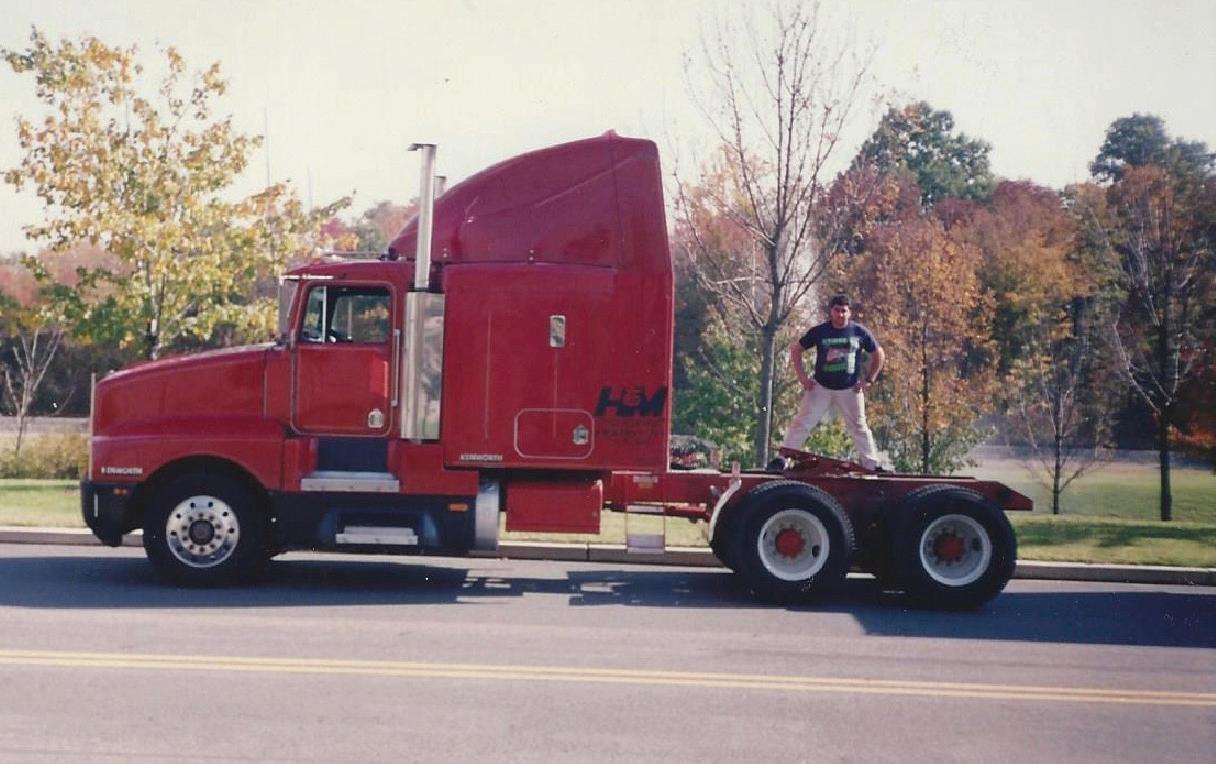
» Pablo Bossi worked hard to get his first Kenworth, a T600, which he bought at age 22. At age 55 now, he owns a fleet of 120 Kenworth trucks. Kenworth Trucks
José “Pablo” Bossi, Owner, VPV Transport
Kenworth Trucks
and B. For three months, he barely slept, working seven days a week, the airport his de facto home.
In 1990, he got his license, working a drayage route. After six months, he could finally afford a 1980 GMC Astro stocked with a Formula 300 Cummins engine and 7-speed transmission. The drawback was no working heat or A/C.
Though saturated in sweat, he said he was still ready to learn from every trucking source, “like a sponge, trying to absorb every single drop of knowledge that I could get in order to apply it later.”
He knew enough about math to know that “if you make $4, but spend $3 on the mechanic, things are not going to work.” Bossi found a shop that would allow him to pay for the repairs and do the work himself, with a tech’s oversight. He would also help around the shop when not driving.
In two years’ time, Bossi saved enough to upgrade to a 1988 Kenworth T600, known for its aero styling, a move that also helped control fuel costs. Money was even more important as he was dating his future wife, Monica, at the time. They got married in 1994, and the dream was truly beginning to materialize.
Next on the list was buying a brand-new truck. That came in 1996 when he bought a chromedout Kenworth W900 with a studio sleeper, 550-HP CAT engine, “and as many lights as you can imagine.” It even had working A/C.
A bigger gift came soon after: the birth of his first of three daughters, Viviana. This only intensified his drive and miles traveled. He admits he missed several holidays and birthdays, driving coast to coast.
But he slowly built his fleet up, hiring new drivers, finding time to get his citizenship, and starting the company VPV Transport (for Viviana and sisters Paola and Valentina) in 2003. He has 110 trucks, all Kenworths, and serves the ports of Newark, Philadelphia, and Norfolk. The fleet does all its own maintenance, too. Bossi, now 55, keeps a set of coveralls in the office so he can climb under the trucks on occasion.
His daughters and son-in-law all work at the company. Viviana is the operations manager, Paola is the safe ty director, and Valentina is the shop manager. Bossi is certainly not a heli copter parent/boss.
“He kind of just threw us out there the way he had to go through it,” Viviana affirmed proudly, clarifying that he will show them first and let them figure out the rest.
Her father also “knows when it’s time to just let us go,” she added.
The family, though, is now closer than ever, catching each other up on industry trends and changes over dinner. Bossi had to miss hundreds of family dinners because of work when his daughters were young, but because of work, he spends more time with them as adults, Viviana noted.
For many, sacrifice may be the toughest leadership skill to master, but Bossi looks at it as another simple math problem.
“Anybody can knock on his door—like a young owner operator looking to start up—and he’ll let them just come into his office and ask whatever they want.”
Viviana Bossi, operations manager, VPV Transport
“Especially at the beginning, you’ve got to give it 100%,” he explained. “A lot of young people say, ‘I’m young, I want to party, I want to enjoy life.’ And I tell them, ‘You’re young, you’re strong. Go to work! When you get older, and your bones and knees start to hurt, then enjoy life.’”
Bossi also pays all the help he received forward by mentoring any young owner-operator who knocks on his door for advice, Viviana said.
Nearly forty years after he left Uruguay, the big
question is whether the sacrifice was worth it.
“I think it was worth it,” Bossi proclaimed without a beat. “Today we can enjoy a quality of life that I could never have imagined back in Las Piedras. My daughters are by my side every day, running this company—and that’s the real reward to me.”
For related content go to FleetMaintenance. com/shop-operations
» The Bossi family has stuck together as a fleet and family: (L to R) Valentina, mother Monica, Viviania, Pablo, and Paola.
Kenworth Trucks
WIRE REPAIRS
» Proper diagnostics, OEM guidelines, and wiring diagrams help techs prevent repeat failures before cutting a wire.
Cojali
Wired for success
Electrical issues are rarely random, and improper wire repairs can turn a small issue into repeat downtime. Here’s how to get it right the first time.
By Lucas Roberto
adds up quickly, and with so many factors that can damage wires, the last thing a fleet needs is a splicing error or bad repair that leads to another preventable failure.
To combat this, you need trusted guides and tools. American Trucking Associations’ Technology & Maintenance Council (TMC) Recommended Practice (RP) 186 on wire and cable repair is always a handy resource. The RP also warns that the incorrect repair of wires leads to repeat failures and more costly repairs.
With this in mind, fleets and shops must train technicians to not just know how, but when, to break out the cutters and soldering iron. For example, TMC RP 186 recommends you replace, not repair, 10-gauge or larger wires and harnesses.
Techs’ diagnostic abilities must also match their repair skills. These will be used quite often in a modern shop.
“Electrical issues are rarely random,” said Al Anderson, VP of sales and marketing at Peterson Manufacturing. He emphasized that many electrical failures don’t happen overnight, but instead develop gradually due to improper repairs, poor installation practices, or environmental exposure.
“They’re usually the result of corrosion, routing problems, or improper repair techniques. When technicians take a disciplined approach to diagnostics and follow recommended practices, they don’t just fix the issue—they prevent the next one.”
Anderson said taking these steps, and employing a modular harness strategy, “can dramatically reduce repeat failures and protect uptime.”
And note that wire repairs are not just about splicing copper and resheathing; strive to restore OEM-level signal integrity and power flow, as well as durability. The repaired wires must survive against extreme temperature, abrasion, and anything else the road throws at it. The following best practices and tool suggestions will put you on the right track.
Accurate repairs start with the diagnosis
Fixing the problem starts with accurate troubleshooting, so before you break out the heat gun and crimpers, you’ll first need the digital repair tools.
“One of the first steps that a technician should take is to review the fault code, followed by the corresponding troubleshooting,” explained Jack Tussing, advanced technical support specialist for Cojali. “Then they should review the power, ground, and signal wire expectations for the fault code, followed by the sensor/component resistance. This can help determine the most likely cause of the fault code and where their diagnostics should start.”
Modern diagnostic platforms can efficiently show you what type of error you’re dealing with, for example, open circuit or short to ground, and where it occurs, such as between the ECU and a sensor. This can “reduce the hours of troubleshooting versus using just a multimeter and test light,” Tussing added.
Kristy Coffman, director of the commercial vehicle group at Mitchell 1, agreed that accurately pinpointing the fault is critical to avoiding repeat repairs. “Misrepairs usually come from ambiguity —which connector, which pin, which ground, which splice,” she said. “Interactive diagrams and linked component info reduce ambiguity and rework.”
Mitchell 1’s TruckSeries platform offers both Interactive Wiring Diagrams and easy access to TMC RPs.
There are also a few distinctions between wiring diagnostics on tractors versus trailers. “While tractors have a dedicated power source and diagnostic port, trailers will typically require the use of an external power source and a power line carrier (PLC) connector,” Tussing continued. “Because of this additional requirement it is always best to start all wiring diagnostics on trailers with making sure that our power and communication sources are clean and secure.”
Chuck Ralston, director of Truck Care Academy and mechanical services at Love’s Travel Stops, also recommends a high-quality digital multimeter to reduce the risk of damaging something else on the truck. Tussing said oscilloscope use is becoming increasingly common as wiring systems become more complex.
The bottom line is that cutting into a harness too early creates more problems than it solves, so proper diagnosis is critical.
Repair or replace?
Once the fault is confirmed, it’s time to decide whether to splice or replace. According to Ralston, there are quite a few factors, along with gauge, that can go into this decision. A lot depends on how much of the harness is damaged.
“Typically, if less than half is damaged, it can be repaired,” he stated. “We also look at the availability of the harness. Some harnesses may not be available or need to be shipped to the location, so that changes how the repair is completed.” He added that the customer always has options and makes the final decision.
If a splice or repair is in order, it must include mechanical strength, soldering, sealing, and final testing as per TMC RP 186. Environmental concerns like vibration, abrasion, flex points, and corrosion should also factor into this decision and drive repair strategy.
Tools for repair and splicing
If it is determined that repairing the wire is the best course of action, the next step is to make to have the right tools for the job (see sidebar).
Ralston recommends solder and heat shrink for most repairs, but said that high-quality heat shrink crimp connectors can be used when solder and heat shrink aren’t available—if the matching crimpers are utilized.
He also noted that it’s important to keep an eye on OEM parts and guidelines.
“At Love’s, we use what we took off,” Ralston explained. “With all of our OEM partners, we have the same terminals and connectors that the vehicle used when it was new. When it comes to all other repairs of wires, soldering and heat shrink is the best method.”
These tools should also have the right features to enable tight repairs. A damaged strand has increased resistance and weakened conductivity, leading to heat buildup and failure over time. According to TMC RP 186, a wire stripper should remove insulation cleanly without nicking the
conductor strands underneath. Side cutters or utility knives can scar the wire and compromise the connection.
Look for self-adjusting wire strippers that sense insulation thickness and strip only the jacket, not the copper.
Especially for non-insulated and heat-shrink connectors, use crimpers with a wider crimping surface to avoid puncturing the heat-shrink sleeve. They should also have a mechanical stop or ratcheting action to prevent over-crimping. Poor crimps reduce sealing performance and increase the risk of moisture intrusion and corrosion.
Making a durable splice
Remember the goal is to restore both mechanical strength and electrical integrity. A repaired wire must be sealed afterwards to protect against moisture, vibration damage, and accidental contact with surrounding metal, or you will be making the repair again down the line. Here are some final tips.
Splicing for inline repairs
TMC RP 186 details the process for twist splices, which involves intertwining the existing wiring. This works well when space is limited. One common method is the J-hook. Before joining, heat-shrink should be slid onto one side of the wire. About ⅜” of insulation is stripped off each wire, taking care not to nick strands. A “J” is then formed with the ends as they are intertwined and twisted together.
Another method is the lineman splice, which is similar but strips ½” of insulation and crosses the wires over each other before intertwining. Both interlock the exposed conductors and wrap them tightly to create a strong mechanical joint. The splice should always be pull-tested for strength so vibration won’t separate the connection later.
Solder for electrical integrity
With the wires mechanically joined, solder will complete the electrical bond. The iron should be properly heated, with the tip placed against the copper, allowing solder to cover the entire area of exposed wire. It can cool naturally before sealing.
Butt connectors for controlled splices
Butt connectors are common when replacing a wire section or when a structured splice is preferred. The connector must match the wire gauge and be crimped with the correct tool so strands aren’t crushed or the insulation punctured. Each side should be pull-tested after crimping.
Seal the repair against the elements
The final step before testing, sealing turns a splice into a long-term repair. Dual-wall heat shrink is commonly used because the outer layer protects against abrasion while the inner adhesive melts to form a moisture barrier. The tubing should fully cover the repair.
A heat gun is then used to completely shrink the tubing, allowing glue to ooze out of the ends, fully sealing the repair area.
Skipping this step is a common cause of wiring failure, Ralston said, as “it causes corrosion intrusion, issues of resistance, or wire damage.”
Splicing and repair essentials
A typical wire splicing and repair loadout includes:
Wire strippers : Should be self-adjusting. Must not nick strands, as damaged strands increase resistance
Crimpers : Have a mechanical stop to avoid over-crimping, piercing heat shrink, or smashing conductors
Soldering irons : Utilize eye protection and other PPE to avoid burns from splatter
• Solder : Never use acid-core solder on vehicle wiring.
• Heat shrink : dual-wall polyolefin, adhesive barrier to seal against moisture
• Heat gun
» Cal-Van Tools’ Low Profile Wire Stripper features self-adjusting stripping blades that automatically move to the proper position, stripping standard or solid insulated wire from 10 to 26 AWG and cutting wire up to 14 AWG.
Cal-Van Tools
Test the repair
Making a clean repair is only half the job—verifying that repair under real electrical load is what determines whether the fault stays fixed or ends up rolling back into the bay.
To confirm that current is flowing, technicians should energize the circuit and measure voltage drop. “It is always important to perform a load test and a test of the appropriate signal/voltage to ensure a proper repair,” Tussing enforced. “Once the wires have been tested, it would also be advisable to test the component in the same real-world conditions that caused the fault code to help determine if this issue is in fact resolved.”
This is where many techs fail, as continuity does not equal a solid repair. The method of testing a repair can also depend on the application and circuit being tested.
“For a light, a simple consumer volt drop test can be performed,” said Ralston. “For higher current draw circuits, other tools may need to be used, such as a carbon pile tester.”
In any case, a wire repair isn’t finished when the splice cools; it’s finished when the circuit survives real operating conditions.
Is Start/Stop technology really that bad?
Start/stop is billed by OEMs as a modest way to cut emissions, but there’s nothing modest about the backlash from drivers. The big question is if the technology is worth it to fleets.
By Seth Skydel
“Everybody hates start/stop technology.”
EPA Administrator Lee Zeldin asserted that on social media last spring, going on to say the technology causes “your car [to die] at every red light, so companies get a climate participation trophy.” He vowed at the time that the EPA “is fixing it.”
Drivers of passenger cars and commercial vehicles alike have expressed annoyance at the intermittent engine shutoffs—typically at red lights and heavy traffic—meant to save fuel and cut emissions. Social media is full of complaints, with one auto technician on X calling start/stop “the most useless modern car feature,” because “it has 10 more additional parts on your car that tend to go out [and] they are all crazy expensive.”
Typically, a vehicle’s operator can simply disable the software by pressing a button on the dash. On a Toyota, you can circumvent auto stops by
applying less pressure to the brake pedal. You can also install aftermarket options such as Autostop Eliminator for a permanent solution.
Regardless, the fix is now in, according to the government. The EPA ended the off-cycle credits OEMs got for installing the start/stop systems, making the announcement when the agency rescinded the 2009 Greenhouse Gas Endangerment Finding. That means auto manufacturers won’t get credits for installing the feature in the future. But let’s talk about the here and now. Is there a fleet business case for encouraging your drivers to use the maligned feature, or is the hate justified because the minimal benefits lead to costly wear and tear over time?
To answer that, it is necessary to examine how these systems work, potential wear and tear and safety issues, and what benefits they can deliver.
How Start/Stop Works
While its driver-facing features are straightforward, start/stop technology is not a single system, but rather a family of approaches. Its implementation varies significantly depending on vehicle class and powertrain.
A Cummins white paper, Fuel economy and CO2 improvement potential of Conventional ICE powertrains, outlines a progression of idle-reduction technologies that form the foundation for modern start/stop systems.
Neutral idle, a feature available on the market today, works by automatically shifting an automatic transmission into neutral when the vehicle stops, explained Derek Kiesler, director, product strategy at Cummins and co-author of the paper.
“When a truck is stationary but still in drive, the torque converter creates additional load on the engine, forcing it to burn more fuel,” Kiesler explained. “By shifting to neutral, that load is removed while the engine continues to run and power accessories such as alternators, HVAC, and air compressors.”
The results are measurable, added Daniel West, director of emissions strategy at Cummins. For example, neutral idle functionality can provide a 4.6% CO₂ reduction for a Class 6 pickup-and-delivery box truck and 6.3% for a Class 8 refuse collection vehicle.
Automatic engine shutdown (AES), the Cummins paper also related, goes a step further by turning the engine off when it is parked for more than 60 seconds, provided that the engine is not required for PTO operation or climate control and that battery charge is sufficient for restart. When combined with neutral idle, noted Naqash Palathamveed, Cummins product strategy leader, AES can produce 9.6% fuel savings for a Class 6 truck and 11% for a Class 8 refuse truck.
Stop/start technology merges the concepts of neutral idle and AES by shutting the engine down even when the vehicle is stationary but still in drive, such as at traffic lights, explained Ben
2150529614 | Boris_Zec | Getty Images
Stuart, platform strategy leader at Cummins. When stop/start and AES are combined, he reported, total savings can reach 14.2% in fuel and CO₂ for Class 6 vehicles and 15.7% for Class 8 refuse vehicles.
Light-Duty Systems
Evan Xiao, Stellantis head of propulsion systems calibration, explained how start/stop technology works in light-duty trucks and pickups. On the Ram 1500, he related, the eTorque mild-hybrid system uses a 48-volt battery and Belt Starter Generator (BSG), which creates a smoother and more responsive start/stop experience than you’d have with a conventional starter motor.
“When the vehicle comes to a stop, the engine shuts off while electrical systems remain powered,” Xiao said. “As the driver releases the brake, the BSG restarts the engine quickly and smoothly, delivering a transition that feels more like electric assist than a mechanical crank. The system also provides a brief torque boost during initial acceleration.”
Stellantis also offers a 12-volt Engine Stop/Start (ESS) system on select vehicles such as the Ram 1500 with a Hurricane twin-turbo I-6 engine. The system automatically shuts the engine off at a full stop and restarts it when the driver releases the brake using a specially designed heavy-duty starter and deep-cycle batteries designed to handle higher restart cycles.
Mark Haener, sales & service operations director at GM Envolve, reported that General Motors auto start/stop systems across the manufacturer’s vehicle lineup are designed to automatically shut off the engine when the vehicle is stopped. “The vehicles restart instantly when the brake is released or the accelerator is pressed,” he said.
Heavy-Duty Innovations
For medium- and heavy-duty vehicles, manufacturers are refining start/stop concepts to match vocational duty cycles.
Allison Transmission’s Neutral at Stop technology, now standard on Kenworth and Peterbilt models equipped with Allison 4700 Rugged Duty Series transmissions, automatically shifts the transmission into neutral when the vehicle stops in traffic or at lights. When the driver accelerates, the transmission re-engages seamlessly.
According to Allison, the technology minimizes the load on the engine, resulting in reduced fuel consumption. As part of Allison’s FuelSense 2.0 package, Neutral at Stop can contribute to fuel savings of up to 6%, the company added.
Volvo Trucks has taken a different approach with a new generation of their I-Roll technology on the European FH cabover that includes an engine stop/start function at highway speeds. Using road topography and curvature data, the system temporarily turns off the engine when a downhill slope is detected.
“While the engine is off, zero fuel is consumed and there are no tailpipe CO₂ emissions, explained Stefan Elfström, global PR and media relations director. “This innovation can reduce fuel consumption by up to 1% on top of other savings from things like aerodynamics.”
Start/Stop benefits
Even marginal gains in fuel reduction can scale into significant cost and emissions reductions, manufacturers noted.
Volvo’s Elfström estimates that I-Roll engine stop/start feature cuts emissions by about 1%.
Stellantis, Xiao noted, reports that fleets operating in city-intensive or stop-and-go conditions may see up to a 2-mpg improvement with the Ram 1500 eTorque system compared with non-hybrid configurations.
Cummins’ data for vocational trucks is even more striking. Depending on how technologies are combined, idle reduction and stop/start systems can produce fuel and CO₂ savings ranging from 4.6% to 15.7%, West noted. Applications with more frequent stops, such as refuse collection and urban delivery, achieve the most benefits.
“As idle time is a major contributor to fleet fuel expense, start/stop systems can help mitigate this cost without additional driver coaching,” GM’s Haener said. “Exact savings are dependent on the vehicle use case but generally customers that operate in dense urban environments such as repair services or utility companies would realize greater benefits than those that primarily use vehicles for highway or long-haul driving.”
Wear and Tear
A frequent criticism of start/stop technology is that repeated engine restarts could increase wear on starters, batteries, and engine components. Manufacturers argue the opposite, asserting that the systems should not shorten component life in normal operation.
Xiao said the Ram 1500’s eTorque system reduces mechanical load on the starter by using the Belt Starter Generator instead of a traditional 12-volt starter. “The reduction in idle time also decreases low-load engine wear over the life of the vehicle,” he added. “For vehicles equipped with heavy-duty starters designed for higher restart cycle counts, deep-cycle batteries, and supporting sensors, software calibration ensures long-term durability.”
Cummins frames start/stop as part of a broader strategy of using mature, familiar systems to cut fuel use without compromising uptime or drivability.
At Volvo, Elfström said that its start/stop feature “does not have a significant impact on the wear and lifetime of other components,” suggesting that maintenance benefits are minimal but that no major penalties exist either.
According to Justin Phipps, a diesel tech and maintenance manager with 20+ years of experience (counting 11 years as an Army mechanic), start-stop can, but not always, cause issues.
“I don’t like [start-stop] because I have personally seen the charging systems go out faster,” he said. “The starters have a half-life in most cases, and the internals don’t last as long as they would if they were run normally.”
The team at ACC Heavy Duty, an aftermarket supplier focusing on recurring part failures, concurs.
“The batteries need to support more engine starts and faster charging as opposed to steadystate charges,” said Richard Darvas, ACC Heavy
Duty VP of global engineering and quality. “This causes more wear and tear on starters and alternators, increasing maintenance costs.”
But how many start-stops that takes in the real world is hard to pinpoint in testing, said his colleague Brett Delp, ACC’s commercial fleet sales manager. He technology should improve over time, though.
“Like any new technology, there is an adoption period and time to work out the kinks,” Delp said. “The intent is there to reduce fuel consumption and emissions, but in a rather unproven way in the long term given the increased component cost and replacement rates.”
The fluid side also causes concern.
“When the vehicle shuts down at a stop, all of the fluids stop being cooled as efficiently as if the engine were running,” Phipps said. “In some cases the temperatures spike drastically. This causes tight tolerances to become even tighter which causes wear upon restart.”
He added the temperature fluctuations can cause plastic parts to become brittle and break off, with pieces ending up in the sump and limits oil flow.
“Pressure will show good but volume isn’t there,” he explained. “This will take out turbos and eventually lead to a spun bearing. With all of this extra heat, it also breaks down the oil faster.”
That means fleets who do use start-stop frequently will want to monitor oil closely and shorten oil drain intervals.
The fleet question: Start or stop
For most fleets, the value of start/stop systems comes down to economics and operational fit.
Volvo’s Elfström argued that any driver concerns—mainly related to air conditioning— have been addressed by activating the feature only when outside temperatures allow. “From our perspective, the business case is clear,” he said. “Fuel savings combined with lower emissions support both profitability and sustainability goals.”
Stellantis takes a pragmatic view. “Each business must evaluate the advantages of technology for their specific use,” Xiao said.
In the Cummins white paper, the company noted that regulatory and market pressures are pushing fleets toward immediate efficiency gains while longer-term zero-emission solutions mature. Idle reduction and stop/start systems are practical tools that can be deployed now, the manufacturer added.
The evidence from manufacturers and suppliers suggests that start/stop systems—whether in the form of neutral idle, engine shutdown, mild hybrids, or predictive downhill engine-off strategies—deliver real, if sometimes modest, fuel savings.
In short, for fleets operating in dense urban or stop-and-go environments, the business benefits often outweigh driver concerns. For long-haul or highway-dominant operations, the payoff may be smaller but there is still value. In vocational and urban duty cycles, those savings can exceed 10%. In long-haul trucking, they may be closer to 1%.
But do these fuel benefits outweigh the potential wear and tear, and subsequent repair costs and downtime? We can’t answer that for you, but it’s a question your team should start to address.
How to safely use a tire bead seater
proper PPE, positioning,
The evolution of bead seaters
Today’s bead seaters have evolved significantly from the large, bulbous tanks with manual butterfly valves that dominated shops a decade ago. Today’s modern designs prioritize operator control and safety through several key improvements. Smaller diameter tanks with ergonomic gun-like grips make units easier to control and less prone to structural failure. Interior anti-corrosion coatings prevent hidden damage that could compromise tank integrity over time. Automatic or semi-automatic trigger mechanisms eliminate the need for manual valve operation that previously required technicians to lose their grip and control during discharge.
ese improvements address the fundamental challenge of managing highly pressurized equipment in busy shop environments. When a tank contains 85-116 PSI of compressed air—energy comparable to a small explosion when released—every design element a ecting control and reliability becomes a safety factor.
Essential operating procedures
Safe bead seater operation begins long before pulling the trigger. Preparation and proper personal protective equipment (PPE) form the foundation of safe practice. While the demand to work quickly in a busy shop is real, taking time to properly prepare prevents accidents that cause far more delays.
Bead seaters put stubborn tires in their place, but improper use can cause injury and property damage.
In fleet maintenance operations, few tools combine raw power and precision quite like tire bead seaters. ese devices use pressurized tanks to deliver explosive bursts of air to seat stubborn tire beads, making them indispensable, particularly for commercial, HD, and agricultural tire service. Yet despite their critical role, bead seaters remain one of the most misunderstood—and potentially hazardous— tools in the shop when proper safety protocols aren’t followed.
e stakes are particularly high in fleet operations where technicians service dozens of tires daily across varied vehicle types. A single incident can result in equipment damage, costly downtime, and serious injury. Understanding
By William Brahler DIRECTOR OF OPERATIONS, GAITHER TOOL COMPANY
William Brahler serves as director of operations for Gaither Tool Company, where he has contributed to the family business since 2012. With seven years of industry experience, he brings expertise to tire service safety and equipment development. Gaither Tool Company manufactures the Bead Bazooka line of tire bead seaters and other specialized tire service equipment.
and implementing proper bead seater safety protocols isn’t just good practice—it’s essential for protecting your team and maintaining operational e ciency.
The hidden danger: When bead seaters aren’t used
Perhaps the most significant safety risk doesn’t come from using bead seaters improperly— it comes from not using them at all. When faced with a stubborn tire that won’t seat, some technicians resort to the dangerous “old school” method of spraying flammable liquid around the bead area and igniting it to create a mini-explosion inside the tire. is practice, while sometimes dramatically e ective, represents one of the most hazardous procedures in any tire shop.
At best, this method can cause fi re damage to wheels and tires. At worst, technicians can su er burns or fatal injuries. e unpredictability of using ether and an open flame makes every attempt a gamble with safety. Modern bead seaters mitigate this risk while providing consistent, controllable results.
Before operation, clear the work area of any debris or materials that could become projectiles when blown by the massive air discharge. Alert nearby technicians that you’ll be using a bead seater so they can don appropriate PPE or maintain safe distance—typically at least two yards from the operation. Hearing and eye protection are non-negotiable for both the operator and anyone in proximity, as discharge noise can exceed that of a gunshot.
During operation, maintain the barrel one to two inches from the wheel rim and tire gap. Many technicians make the mistake of jamming the barrel directly against or into the tire, which not only reduces e ectiveness but increases the risk of slippage and uncontrolled discharge. e powerful air blast works best with slight distance, allowing proper air distribution while maintaining operator control.
Avoiding critical mistakes
ree common errors account for most bead seater incidents.
First:
Never assume a tank isn’t pressurized. Like fi rearms, bead seaters should always be treated as loaded and ready to discharge. is mindset prevents casual handling that leads to accidental discharge—at best creating noise and property damage, at worst causing serious injury.
» » Without
and pressure control, bead seaters can pose serious safety risks
Gaither Tool Company
Second:
Poor maintenance and storage will compromise tank integrity over time. These tools undergo extreme pressure cycling with each use, creating stress that accumulates without proper care. Tanks thrown in corners or left unsecured suffer damage that may not be immediately visible but can lead to catastrophic failure under pressure. Proper wall-mounted storage protects tanks from impact damage while keeping them readily accessible.
Third:
Ignoring manufacturer specifications for operating pressure creates unnecessary risk. While it might seem that more pressure equals better performance, exceeding the recommended pressure range stresses tanks beyond their design limits. Quality manufacturers include pre-configured safety valves that prevent over-pressurization—these safety features should never be modified or removed.
Maintenance and inspection protocols
Every manufacturer specifies inspection schedules and decommissioning dates for their equipment—these aren’t suggestions but critical safety requirements. While schedules vary by manufacturer and construction type, tanks are typically required to be decommissioned after a few years of use, while other high-quality tools can continue to be used after routine inspections. Tank construction materials also affect longevity differently. Steel tanks offer superior strength but require anti-corrosion coatings, especially internally where moisture from compressed air can cause hidden rust. Aluminum tanks resist corrosion but may be more susceptible to impact damage. Wall thickness, weld quality and the number of penetrations all affect structural integrity over time.
Watch for warning signs including visible corrosion, dents, weld cracks, or damaged safety components. Pressure gauges and safety valves must remain fully functional and should be immediately replaced if compromised. Document the commissioning date and maintain inspection records—this isn’t bureaucracy but essential safety management.
The crucial investment in training
Because bead seaters are problem-solving tools rather than equipment that is used every day for many shops,
they’re sometimes overlooked in training programs. This creates dangerous knowledge gaps when technicians encounter stubborn tires requiring bead seater use. Every technician expected to service wheels and tires needs comprehensive training on proper bead seater operation, regardless of how frequently they’ll use the equipment.
Training should cover manufacturer-specific operating procedures, proper PPE requirements, safe positioning and technique, maintenance requirements, and emergency response procedures. The Tire Industry Association (TIA) offers comprehensive training resources and certification programs that establish industry-standard safety practices.
Selecting safetyfocused equipment
When evaluating bead seaters, certain safety features are essential. Quality pressure gauges and safety valves form the absolute minimum—equipment lacking these basics is essentially an uncontrolled pressure vessel. Beyond these elements, look for features that enhance operator control and safety. Consider smaller diameter tanks that are easier to control, trigger mechanisms with safety guards or caps to prevent accidental discharge, anti-corrosion coatings for long-term integrity, analog pressure gauges that don’t require batteries and serviceable components that allow proper maintenance rather than complete replacement. These features represent the evolution of bead seater technology toward inherently safer designs.
The bottom line
Safe bead seater operation requires three fundamental commitments: research, training, and preparation. Research available equipment options to select tools with appropriate safety features for your operation. Implement comprehensive training ensuring every technician understands both the power and proper use of these tools. Establish preparation protocols that prioritize safety over speed in daily operations.
The few minutes invested in proper setup, PPE, and technique pay dividends in accident prevention. In an industry where efficiency drives profitability, remember that nothing delays operations more than a preventable accident. By treating bead seaters with the respect their power demands and implementing systematic safety protocols, fleet maintenance operations can harness these essential tools while protecting their most valuable asset—their technicians.
Details around the NOx-compliant Detroit engine set for MY2027 Freightliner and Western Star Class 8 trucks have been revealed, with DTNA confident it will improve efficiency and provide greater value for customers.
By John Hitch
DETROIT—With about 10 months until the EPA’s low-NOx rule for heavy-duty engines takes effect, Daimler Truck North America’s engine brand, Detroit, has revealed major details regarding its EPA27-compliant engines: the Gen 6 DD13, DD15, and DD16.
These engines will fit the Class 8 on-highway market leader Freightliner Cascadia, as well as the vocational complement, Western Star 47X and 49X. The DD13 and 15 will be available next January, while the DD16 arrives a year later.
Fleet Maintenance was among the media invited to the reveal at the Detroit Manufacturing Plant and subsequent plant tour in mid-February.
The first thing is that the engines will be compliant with EPA’s 2027 rule that lowers the federal NOx standard 82.5%, or from 0.20 to 0.035 g/ bhp-hr. The bigger takeaway is that the Gen 6 lineup was engineered to manage heat transfer and combustion more efficiently, improving power and uptime without adding significant complexity for fleets or technicians.
That means maintenance intervals and most part numbers also carry over from the Gen 5 released in 2021.
“It’s really familiar technology,” noted Greg Brazuinas, Detroit head of powertrain engineering for North America, adding that everything from
the sensor suite and controls to diesel particulate filter remains the same.
He should know, having worked on the platform since 2003, when it was a blank sheet being developed for the 2007/2010 federal emissions standards that ultimately set the 0.20 g/bhp-hr NOx limit for heavy-duty engines.
When the EPA announced this round of NOx cuts at the end of 2022, many in the industry wondered if the OEMs had enough time to meet the new goals. The reveal was more of a victory lap for DTNA’s engineers, who are highly confident they exceeded expectations.
“We’ve made evolutionary steps to improve efficiency, improve performance, and improve reliability—all things that our customers really demand.” Brazuinas asserted.
That confidence is based on state-of-the-art testing at the plant and 8 million real road miles.
“We’ve definitely put this thing through the wringer, and we’ve been developing this product for almost seven years,” he said. “We started even before we knew the final emission regulations.” This included multiple winter trials in -40 degrees Fahrenheit and summer tests up to 130 degrees Fahrenheit, as well as idle testing.
What’s new with the Detroit Gen 6 heavy-duty engine?
Detroit’s engineers tackled this challenge by adding a pre-SCR (Selective Catalytic Reduction) module on top of the 1-box to dose diesel exhaust fluid upstream of the main aftertreatment system.
With this comes an extra NOx sensor, which is not much different than the previous generation. The pre-SCR does add a lot of flexibility based on environment, though.
“In a cold start environment where the aftertreatment system hasn’t quite come up to temperature yet, we can warm up that pre-SCR chamber more quickly, so maybe the primary amount of NOx conversion actually happens in that pre-SCR chamber,” explained Steven Collins, Detroit director of field sales engineering.
While Cummins added a 48-v heater to their new SCR system, Collins said Detroit achieves the same effect using exhaust heat. “At the very simplest and basic, we’re utilizing a slightly smaller box and putting it closer to the heat source, so it heats up more quickly,” he explained.
On the performance side, Detroit added three
» Detroit’s Gen 6 DD15 integrated into the fifth-generation Freightliner Cascadia. Meets EPA 2027 standards and delivers an estimated 3% linehaul fuel economy gain without altering vehicle footprint.
DTNA | Background: AI Generated »
new power ratings. e DD13 now has a 505 HP/1,750 .-lbs. torque rating, which was done for vocational customers not wanting to go up to 1,850 .-lbs. e DD15 now has a 425 HP and 455 HP, both at 1,900 .-lbs. of torque, allowing linehaul drivers to further downspeed for added e ciencies.
“Super-fast axle ratios, like a [2.05:1 rear axle ratio] paired with the direct drive transmission, spin the engine slower and harder, and accomplish additional fuel e ciency savings, while keeping the same seat feel for the driver,” Collins said.
e Gen 6 turbocharger on all engine ratings now uses a ball-bearing design to spool faster, delivering air flow on demand more quickly. e new wastegate has more precise controls as well, boosting performance at high altitudes.
With the help of a thermal control valve, the system also gets hotter faster and should mitigate the need for drivers to perform a manual “parked regen,” according to DTNA.
Speaking of emission-related downtime, Brazuinas noted DTNA has fulfi lled EPA’s 2025 request to update DEF control so ware to ease derates and limp mode for the Gen 5, releasing the service calibrations and fuel maps in January.
e Gen 6 will have those inducement changes baked in, he said.
Improvements to combustion and air controls on the engine side also contribute to heat and power management while enhancing overall performance. ese include an asymmetric intake port, redesigned fuel injectors, and Miller timing on the camsha to reduce the work of compression and increase the compression ratio.
e EPA also demanded that engine OEMs extend useful life and warranty periods—though this part of the rule is subject to change—so the Gen 6 engines were designed not only to be more e cient, but more robust as well.
For example, the high-pressure fuel pump was replaced by an oil-lubricated fuel pump. Lubricating with engine oil reduces sensitivity to varying fuel quality, improving long-term durability, particularly as fleets deal with inconsistent diesel blends.
e updated system now delivers fuel rail pressures up to 2,500 bar, improving atomization and combustion e ciency. In the previous generation, lower rail pressure was achieved centrally and additional pressure amplification occurred at the injector. e redesigned method simplifies injection control and enhances precision.
Barring a few other tweaks, DTNA asserts the engine and a ertreatment systems are basically the same in terms of operation and maintenance.
Popping the hood on other changes
Even with the pre-SCR protruding from the top of the 1-box, the system still fits neatly under the hood of all relevant models, requiring no back-ofcab changes for vocational customers.
“ ere are new part numbers for fuel fi lters,” Collins said, “but in terms of maintenance intervals that technicians would be most commonly looking at, those are all the same. From a technician standpoint, obviously there’s training
Intake Compression Power Exhaust
anytime there are new part numbers or anything like that, but overall, [the new engine has] lots of commonality and familiarity.”
To improve e ciency and reliability, while keeping everything similar enough to not disrupt fleet uptime, the engine had to optimize combustion and air flow, while reducing friction and pressure.
“If we reduce friction, we can get more of the power that the engine produces to the wheel ends, with less parasitic losses,” Collins said.
“ e a ertreatment system really is the star and show, but that simple, low complexity design wouldn’t be possible if we didn’t already have an extremely e cient engine upstream,” he said.
The engine now uses an electronically controlled variable-displacement oil pump, which reduces parasitic losses and improves overall eciency. Lower frictional losses allow more of the engine’s produced power to reach the driveline. e oil separator, which helps reduce crank case emissions, is now driven electronically versus hydraulically.
“ is gives us more control and better separation e ciency at low loads, low speeds, and at idle,” Collins said. “And really, by removing the oil-driven side, we can combine that with the variable speed oil pump to reduce overall oil flow and demand on the pump.”
Fuel quality is also improved with new fuel fi lters. Previously, the system heated fuel returning from the rail. Now a heating element in the module does that, which customers in cold climates should notice will prevent diesel gelling and buildup, according to Collins.
» The aftertreatment system has added a pre-SCR module and has undergone small changes to the substrate. The 1-box shell remains the same from the Gen 5 ATS.
» To achieve improved fuel efficiency, Detroit engineers implemented a Miller cycle camshaft. This timing strategy holds the intake valve open slightly longer at the beginning of the compression stroke, reducing the work of compression while lowering in-cylinder temperatures DTNA
Value for customers
e EPA27 platform “is not just an emissions change,” added David Carson, DTNA’s SVP of sales and marketing. “It goes beyond that, and we are bringing value to the customers.”
Some of that value may be found at the pump, as the new platform can provide a 3% fuel-e ciency increase in certain linehaul situations, he said.
Carson also added the EPA27 engine won’t lead to a “massive price increase,” as some in the industry had previously estimated. Carson did not reveal the new number, but the most common estimate until recently has been $20,000 to $30,000. is should provide some relief to fleets still struggling with what Carson called “the longest freight recession we’ve ever seen in the industry.” is has led to fleets keeping longer than usual. Noregon Research estimated about three-fourths of trucks operating in the U.S. are at least eight years old. In addition, the expected prebuy has also not materialized as customers more closely monitor CAPEX based on freight capacity. at’s not ideal for DTNA or the other OEMs that have sunk several years and untold riches into the greener engines.
“We did see at the end of last year, moving into the beginning of this year, pretty healthy order demand, which is encouraging,” Carson said. “We’re not at the point where we would say that that is a complete recovery, or that it’s necessarily sustainable moving forward.”
But trucks age out, and at some point, fleets will need to buy new trucks. And if they choose Freightliner, which is still the market leader, at least this regulation change looks to be relatively
Miller cam timing to
The engine now uses provide more efficiency.
“We’re actually working the engine less to complete that compression and are able to still maintain and achieve even higher compression ratio, because we’re using a smaller piston hole,” DTNA’s Steven Collins explained.
EPA to end endangerment finding, GHG3 standards
The Trump administration has announced the final rule to reverse the 2009 Endangerment Finding and the greenhouse gas regulations that followed.
By John Hitch
Barring judicial intervention, the 2009 Greenhouse Gas (GHG) Endangerment Finding’s power is no more. A final rule to be issued by the EPA is set to rescind the overarching scientific conclusion that has driven environmental policy for 16 years. This in turn extinguishes “all subsequent federal GHG emission standards for all vehicles and engines of model years 2012 to 2027 and beyond,” the EPA announced on Feb. 12. In the commercial sector, this would remove heavy-duty Phase 1, 2, and 3 rules.
The EPA added that “the almost universally hated start-stop feature” is also on the chopping block.
“The Endangerment Finding has been the source of 16 years of consumer choice restrictions and trillions of dollars in hidden costs for Americans,” EPA Administrator Lee Zeldin stated. “Referred to by some as the ‘Holy Grail’ of the ‘climate change religion,’ the Endangerment Finding is now eliminated.”
The Trump administration has billed this final rule, which was proposed last summer, as “the single largest deregulatory action in U.S. history.”
In particular, the GHG3 rules were seen as an EV mandate due to the increasingly strict emissions rules set on engine manufacturers through
2035, so this move has unsurprisingly gained the support of many trucking organizations, including The Truckload Carriers Association (TCA), American Trucking Associations (ATA), Owner-Operator Independent Drivers Association (OOIDA), and the Clean Freight Coalition (CFC).
“Rescinding Phase 3 is a necessary step toward a more realistic approach that protects both environmental progress and the strength of our supply chain,” stated Patrick Kelly, ATA VP of energy and environmental affairs.
Jim Mullen, newly appointed executive director at CFC, added:
“From the outset, CFC members have expressed serious concerns about the unattainable targets and unrealistic timelines included in GHG3. Left in place, the rule would have imposed high costs on the trucking industry, disrupted the supply chain, and increased prices for goods for families and businesses across the country.”
Why is the Endangerment Finding going extinct?
The scientific finding commissioned during the Obama administration found six GHGs to be so
harmful to the public that regulatory intervention was required. These include: CO2, CH4, N2O, HFCs, PFCs, and SF6.
Ultimately, though, President Trump’s EPA found that those regulations cause more damage to American taxpayers’ bank accounts. By removing the standards and the costly technology that enable emissions reductions, the EPA contends families will pay less for cars, and goods will cost less because the trucks that carry them won’t be so expensive. The estimated savings to taxpayers are $1.3 trillion.
Truck costs, though, are not coming down. NOx is not designated as a direct GHG, so the 2027 low-NOx rules for heavy-duty trucks are not affected by this move. That means heavy-duty truck prices are still expected to rise by a significant margin, upwards of 10%.
Furthermore, OEMs have already built these technologies into vehicles, which typically have seven-year design cycles, so it is unlikely the final rule will have an immediate impact. It does allow manufacturers leeway in future designs, though Trump policies can be reversed by a future administration, or overturned even sooner by any of the judges appointed by Barack Obama and Joe Biden who have stymied Trump on several occasions during his second term.
Will it stand?
The crux of the EPA’s reversal is that only Congress should have the authority to make such sweeping changes to engine emission standards, and the policies set by Obama reached beyond the scope of the Clean Air Act.
The finding is connected to Massachusetts v. EPA, a ruling that said that GHGs are air pollutants as defined by the CAA. But later rulings—West Virginia v. EPA and Loper Bright Enterprises v. Raimondo—have complicated things, as they altered how courts can evaluate the EPA’s regulatory authority.
The EPA also disputes how effective these standards have been to mitigate climate change, citing that “there would be no material impact on global climate indicators through 2100.”
The California Air Resources Board and several other groups, the EPA would call “climate zealots,” have questioned the scientific validity of any such studies.
“EPA’s proposal is based on deeply flawed assertions that rely on unfounded and cherry-picked claims that originate from the oil industry and self-proclaimed climate skeptics while ignoring the overwhelming scientific consensus,” commented CARB Executive Officer Steven Cliff during the comment period for the proposal last August. And he laid it on even thicker throughout his screed.
An overwhelming majority of commenters during the public hearings, many from eco-advocacy groups like the Sierra Club, had similar criticism, but the EPA evidently ignored them.
This fight is far from over. This is a mid-term election year, and climate is one of the Democrats’ major platforms. Fleets should wait until this plays out in the courts before making any business decisions based on this final rule.
» President Donald Trump and EPA Administrator Lee Zeldin make an announcement on rescinding the 2009 Environmental Protection Agency endangerment finding whitehouse.gov
FLEET PARTS & COMPONENTS »
What’s new in products for more efficient fleet operation.
Tested to meet or exceed OEM requirements
PHINIA’s Delco Remy starters and alternators are certified for marine, industrial, forklift, generator, and agricultural applications, with select part numbers meeting SAE J1171 ignition-protection standards. Designed for enclosed engine compartments where fuel vapors may accumulate, these units are built to prevent spark-related explosions and improve operator safety. The starters and alternators are tested to meet or exceed OEM requirements and are engineered to deliver reliable output in harsh environments and at low engine speeds. For fleets maintaining off-highway or specialty equipment, ignition-protected charging and starting systems can help reduce safety risks, ensure compliance, and support dependable performance in demanding operating conditions.
For more information visit FleetMaintenance.com/55357796
Maximizes protection and performance
Royal Purple ’s Duralec Super Diesel Motor Oil is a full synthetic engine oil formulated for diesel engines with 2007–2010 emissions systems, including DPFs, EGR, SCR, and catalytic converters, compatible with ultra-low sulfur diesel. It provides high-temperature stability and low-temperature pumpability to minimize wear during cold starts, while extending drain intervals and protecting against corrosion. Designed for both North American and European diesel engines, Duralec Super supports fuel efficiency, maximizes component life, and helps maintain emissions compliance.
For more information visit FleetMaintenance.com/55358459
Cleans fuel system deposits
Liqui Moly ’s Pro-Line Diesel System Cleaner is a 500 ml additive designed to clean diesel fuel systems, including injectors and combustion chambers. It removes deposits that can reduce engine efficiency, restores proper combustion, and helps improve emissions. Suitable for both preventive maintenance and rapid problem-solving, it supports consistent engine performance and operational reliability across all types of diesel engines.
For more information visit FleetMaintenance.com/55358453
Offers 81,000 Btu/hr electric cooling
Thermo King TE Series
All-Electric HVAC is a rear-mounted, self-contained bus HVAC system designed for fully electric operation. Factory-charged and tested, the unit uses dual hermetic electric scroll compressors that can operate independently or together for two-stage cooling control, delivering up to 81,000 Btu/hr of cooling capacity and 90,000 Btu/hr of heating (at 160°F water, 8 GPM). Powered by 230VAC or 460VAC three-phase service with 24VDC controls, it features IntelligAire II microprocessor management for system monitoring and safety shutdown protection. With no belts, clutches, hoses, or remote compressors, the TE Series reduces maintenance points while supporting consistent performance.
For more information visit FleetMaintenance.com/55359058
Protects fuel system and injectors
Lucas Fuel Treatment with HybridShield is a fuel system additive formulated for hybrid vehicles to remove water, prevent corrosion, and stabilize fuel. It cleans and lubricates injectors, helping restore performance for smoother acceleration, improved fuel economy, and consistent drivability. Designed for stop-start hybrid engines, it protects components even during periods of low engine use, supporting long-term reliability and efficient operation.
For more information visit FleetMaintenance.com/55358456
Centralizes tracking and records
Motive ’s AI-powered Workforce Management platform centralizes driver qualification files, compliance records, and workforce data within its existing fleet management system. The update adds integrated motor vehicle record (MVR) pulls, automated expiration tracking, AI-based document capture, and a driver walkthrough that can restrict duty status or vehicle access if required documents are missing or expired. Drivers can upload licenses, medical cards, and other credentials through the app, with key data fields automatically extracted to reduce manual entry. For fleet maintenance and operations teams, the system helps prevent downtime caused by lapsed credentials, reduces audit risk, and limits the administrative burden of tracking driver compliance across spreadsheets and paper files.
For more information visit FleetMaintenance.com/55358444
Improve electrical grid reliability and safety
Actively removes and prevents deposits
True Brand Engine Maintenance Guard is an 8 oz, full synthetic additive that works with engine oil to remove harmful deposits and help prevent new buildup on internal engine components. It protects against wear, restores fuel economy, and conditions seals and gaskets without altering oil viscosity outside SAE specifications. Suitable for all grades of engine oil, EMG supports extended engine life and consistent performance in diesel and gasoline engines.
For more information visit FleetMaintenance.com/55358455
Fully synthetic and designed to improve fuel efficiency
Bison motorized operators are gear motors designed for switchgear OEMs to improve electrical grid reliability, safety, and efficiency. These motors provide precise, remote-controlled switching with low amp draw and high torque, supporting automation and minimizing manual operation errors. Models such as the DC PowerStar, DC 562 Series, and DC 750 Series offer compact footprints, rugged gearing, hollow output shafts for easy integration, and smooth operation down to -40°F. Tested to deliver 99.99% uptime, Bison gear motors are suitable for auto-transfer systems, padmount assemblies, and submersible applications, helping fleets and utilities maintain dependable power distribution while meeting demanding operational and environmental requirements.
For more information visit FleetMaintenance.com/55357800
Automatic trailer pairing at hookup
Phillips Connect TrailerID automatically confirms which trailer is physically connected to a tractor at the moment of hookup, eliminating manual trailer selection in the cab and reducing downstream errors. Using Phillips Connect’s T/T Pair connector and integrated hardware/software platform, the system detects the tractor-trailer connection and validates it through the company’s Connect1 back-office platform and DriverAssist app. Accurate pairing data supports Hours-ofService logs, trailer inspections, dispatch planning, load security, and billing by ensuring the correct trailer is tied to each move. By removing manual inputs and reducing mispulls, rework, and billing delays, TrailerID provides fleets with verified connection data that improves operational visibility across departments.
For more information visit FleetMaintenance.com/55359065
Eaton ’s XFE 75W-80 axle lubricant is a fully synthetic axle lubricant meant to help increase fuel efficiency and maintain durability across heavy-duty applications. It is an OE-approved formulation that can be used in axle applications under warranty. It can be used for both linehaul and vocational trucks, and according to the company, Mesilla Valley Transportation Solutions found that XFE 75W-80 provided up to 2% improvements in fuel economy compared to standard axle lubricants.
For more information visit FleetMaintenance.com/55344597
TOOLS & EQUIPMENT »
360-degree rotation for increased access
The 1/2” Drive Metric 12-point
Driveline Limited Clearance Universal 9-pc Impact Socket Set , No. 2695, from SUNEX Tools features a 360-degree rotation for increased access at a 30-degree angle. Its radius corner design helps increase fastener engagement and reduce fastener wear. The sockets feature permanent stamped markings, while the black phosphate offers corrosion resistance. Includes driveline sockets for Chevrolet, Chrysler, Dodge, Ford, GMC, and Jeep models. Sizes include 8mm, 10mm, 11mm, 12mm, 13mm, 14mm, 15mm, 16mm, and 17mm.
For more information visit FleetMaintenance.com/55357804
Offers 9,500-lb. load capacity
The GoJak G9516 from Zendex Tool Corp is the latest addition to the GoJak Heavy Duty Series. Designed for increased curb weights, the G9516 features a 9,500-lb. vehicle load capacity suited for full-size trucks and heavy electric vans. The G9516 has a reinforced axle to reduce deflection under heavy loads and a patented cam mechanism for selectable lift cycles, including a standard 3/4” stroke or a 3/8” ratchet cycle for increased leverage under heavy loads. Its updated ratchet doubles the tooth count, and the jack comes with a corrosion-resistant zinc finish and a top-plate swivel with a double ball-bearing raceway for effortless movement, as well as glass-filled nylon wheels with roller bearings.
Low-profile head gives clearer line of sight
The Harbor Freight 20V HERCULES
Brushless Cordless Paddle Switch
Grinder features a new flat head design. This grinder can easily access tight spaces, while the low clearance allows the disc to get closer to the work surface than an angle-head grinder. The low-profile head gives the user a clearer line of sight of their workpiece. Optimized for grinding, cutting, shaping, and other material removal. Other features include an all-metal gearbox, ball-bearing motor, a paddle switch with a lock-on that provides superior control, and an electric brake that can stop the wheel from spinning within two seconds. For added precision, it has variable push-button speed control with a range of 3,000 RPM to 11,000 RPM.
For more information visit FleetMaintenance.com/55358470
1/4”, 3/8”, and 1/2” drive sizes
The Carbyne Tools 114-pc Master Metric & SAE Hex, Torx, and XZN Triple Square Bit Socket Set , No. 3101608, provides technicians with a comprehensive assortment of Hex, Torx, and XZN Triple Square bits across 1/4”, 3/8”, and 1/2” drive sizes. The set features drop-forged, heat-treated S2 alloy steel bits paired with chrome vanadium steel sockets for strength and long service life. Bits feature a zinc phosphate finish for corrosion resistance, while sockets are chrome-plated for durability. Precision-chamfered bit ends aid fastener engagement, and sizes are clearly marked on both the sockets and the heavy-duty molded storage case. The set meets ANSI standards and is backed by Carbyne’s lifetime warranty.
For more information visit FleetMaintenance.com/55357807
For more information visit FleetMaintenance.com/55353207
Features hand-spin operation
The Post-Mount Wheel Balancer, No. AB24M, from APEX by BendPak , is a compact, commercial-accurate, manual wheel balancer. The balancer features hand-spin operation with electronic measurement. The AB24M can be mounted directly to APEX tire changers or installed on a bench, wall, or vertical support. Additional features include an advanced digital measurement system, an integrated manual brake, LED weight placement indicators, automatic weight optimization that calculates the minimum corrective weight needed for efficient balancing, and more.
For more information visit FleetMaintenance.com/55358461
750 lumens of focused light
Carlyle 750 Lumen Worklight delivers bright, focused illumination for inspecting engines, undercarriages, and tight shop spaces. Producing 750 lumens, it features a compact, lightweight design for easy positioning and portability. A magnetic base allows hands-free attachment to metal surfaces, while dust- and water-resistant construction ensures durability in rugged shop environments. The folding version includes a pivoting window for precise directional lighting and folds flat for convenient storage. This worklight helps technicians complete inspections and repairs more efficiently by providing consistent, reliable light exactly where it’s needed.
For more information visit FleetMaintenance.com/55358448
Includes 6 Phillips and 6 slotted screwdrivers
The Phillips & Slotted Magnetic 12-pc Screwdriver Set , No. SXCSDS12, from SUNEX Tools includes 6 Phillips and 6 slotted screwdrivers in a variety of sizes. The magnetic tips securely grip fasteners to improve precision, reduce slippage, and make fastening tasks more efficient and frustration-free. High-visibility end caps display tip type and size, allowing quick and easy tool identification when selecting the right screwdriver. Laser-etched shaft sizes provide durable, permanent markings that ensure reliable identification.
For more information visit FleetMaintenance.com/55358468
Absorbs 5–8 times its weight
Spill Wrangler Eco-Absorbent is a cellulose-based, bioremediating absorbent designed to capture and break down oil, fuel, and other shop fluids. Available in 30-lb. bags, it absorbs roughly 5–8 times its weight, depending on the liquid, and forms clumps that can be screened and reused up to eight times. It handles both oil- and water-based fluids, floats for use on standing water, and contains microbes that accelerate hydrocarbon breakdown into water and CO2. Made without silica or clay, it reduces airborne dust and lowers disposal volume, helping shops save time and manage spills more efficiently.
For more information visit FleetMaintenance.com/55358447
Pinpoint lubrication for tight spaces
WD-40 Precision Pen delivers the classic WD-40 formula with pinpoint accuracy for tight spaces, small areas, and hard-to-reach components. Its pocket-sized design allows for portable, controlled application, making it ideal for lubricating hinges, threads, gears, and other moving parts while loosening rust or stuck components. The formula also protects metal surfaces from corrosion, helping maintain reliability and uptime in the shop or on the go.
For more information visit FleetMaintenance.com/55358460
Wind-resistant turbo torch flame
The Big Buddy Turbo Flame Torch from Blazer Products delivers a 2,500 degree F butane blue, wind-resistant turbo torch flame. It features a lightweight design at just 7 oz and 7” tall, with an outer finish available in a wide range of colors. This tool is ideal for soldering, heat shrink tubing, activating caulking and adhesives, and more.
For more information visit FleetMaintenance.com/55357806
Magnetic loop securely holds air gun
The EXAIR Air Cradle Safety Air Gun Mount is designed to keep safety air guns and similarly sized tools within easy reach at workstations and machine centers. With its strong magnetic loop design, the Air Cradle provides an accessible hang point for safety air guns, improving workflow, minimizing tool misplacement, and promoting a more organized environment. The Air Cradle has a magnetic loop that securely holds a safety air gun or other often-used tools in place. Capable of holding up to 10 lbs.
For more information visit FleetMaintenance.com/55357811
500 lm on high, 40 lm on low
The Streamlight PolyTac 1X is a compact, multi-fuel tactical flashlight engineered for professional performance across multiple environments. Its rugged polymer body has a rocky stipple grip texture for secure handling. The light is powered by a Streamlight SL-B9 USB-rechargeable battery pack, a CR123A lithium battery, or an AA alkaline or lithium battery. When powered by the USB battery pack on high, the light provides 500 lm and runs for 1 hour with a beam distance of 268 meters. On low, the light runs for 8 hours and provides 40 lm of illumination with a beam distance of 63 meters. The Strobe run-time is 1.75 hours.
Ideal for use with 8,000-lb capacity
The Atlas 8-pc Floor Panel Set is ideal for use with 8,000-lb capacity lifts with a 37.25” gap between the gaps and a runway thickness of 4”. The floor panel is sold as a complete set, including all eight pieces required for a full installation. Each piece can also be purchased individually. Features a lightweight design.
For more information visit FleetMaintenance.com/55358462
For more information visit FleetMaintenance.com/55357809
Features corrosion-resistant coating
The Gripedge Tools 32-pc G-FORS 1/4” & 3/8” Deep Socket Extractor Set , No. MX32DS, features the company’s patented non-tapered, bi-directional geometry that delivers full-length grip for maximum extraction power on seized and damaged fasteners. Constructed from high-strength chrome molybdenum steel with premium corrosionresistant coating, each socket is impact-rated and engineered for both removal and reinstallation.
For more information visit FleetMaintenance.com/55358465
One interface to diagnose multiple ZF systems
The ZF Scan consolidates several ZF diagnostic applications, including WABCO TOOLBOX PLUS and ZF Testman. Now, technicians can use ZF Scan to do full vehicle health scans, read and clear fault codes, adjust parameters, and support ECU flashing where possible. The tool features a user-friendly interface and addresses security and update management, and is compliant with current OE cybersecurity standards and Software Update Management Systems. It also works with existing RP1210-compliant third-party adapters for WABCO TOOLBOX PLUS and ZF Testman DPA06 and WABCO DI 2 hardware. For more information visit FleetMaintenance.com/55352810
Enhance protection while maintaining touchscreen sensitivity
Brass Knuckle SmartCut Touch Screen Gloves , No. BKCRT201, combine ANSI A2 cut resistance with touchscreen compatibility, allowing workers to operate tablets and other devices without removing gloves. Made from 13-gauge ultra-high molecular-weight polyethylene fiber, they provide medium cut protection, puncture and abrasion resistance, and dexterity for handling tools and materials. A non-sticky polyurethane coating on the palms and fingers enhances dry grip and durability while maintaining touchscreen sensitivity.
For more information visit FleetMaintenance.com/55357797
Includes 14” screen and octa-core processor
The Platinum 399 from Thinkcar features upgraded hardware that includes a 14” screen, octa-core processor, docking station, and four-channel oscilloscope. Operations include high speed scan with topology, read/clear code, graphing/ recording of live data, full bi-directional communication, and J2354 support for online programming. The new AI assistant accepts voice commands and provides access to common and troubleshooting tips. Coverage includes passenger cars and light trucks up to 1-ton capacity with two years of software updates included. Electric vehicle coverage is included at no additional charge.
For more information visit FleetMaintenance.com/55352819