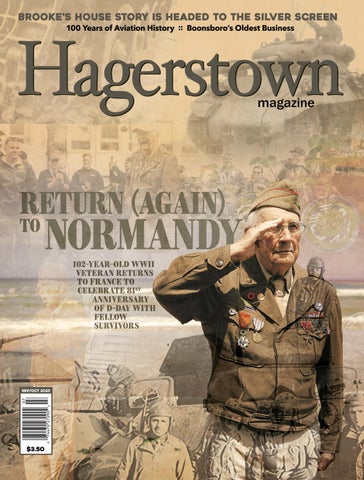
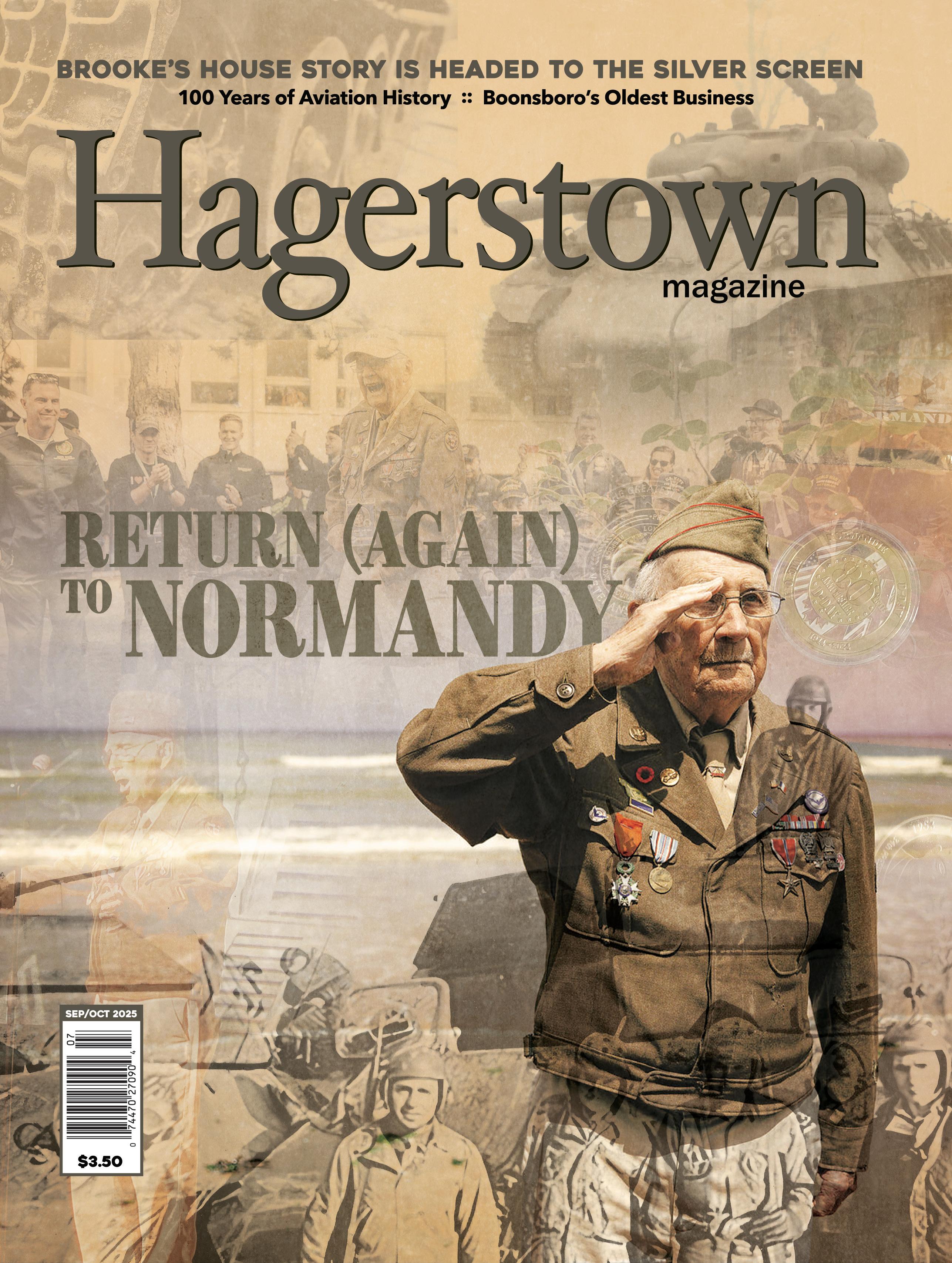
102-year-old WWII veteran returns to France to celebrate 81st anniversary of D-Day with fellow survivors
MANAGING
GRAPHIC
ADVERTISING
BUSINESS & CIRCULATION
Stephanie
CONTRIBUTING WRITERS
April Bartel
PHOTOGRAPHY Mark Youngblood
BUSINESS OFFICE
Hagerstown Publishing 6 N. East St., Suite 301 Frederick, MD 21701
SEND MAIL TO: P.O. Box 2415
Hagerstown, MD 21741
My father recently passed away. What death taxes will I be responsible for?
There are five sets of death taxes that are relevant for Maryland residents:
First, there is Final Personal Income Tax (Federal and Maryland), which refers to the income taxes that the deceased person would have had to pay in the year they died. This is something that most people are already familiar with, as they file their own income tax returns on an annual basis.
The second type of death tax is Estate Tax (Federal and Maryland). These are assessed regardless of whether the estate has been opened or not. If the decedent had assets worth $5 million, then they will be subject to Maryland estate tax.
Under the newly enacted One Big Beautiful Bill Act, the federal estate transfer tax exemption was raised to $15 million per person. Estate Tax returns are similar to Personal Income Tax returns - you need to file at the state and federal level, even if there are no federal taxes to report. Maryland’s estate tax exemption is $5 million per person, which would exclude most families.
Another type of death tax is a Fiduciary Income Tax (Federal and Maryland). This refers to reporting income that has been earned from the date of death until all accounts have been transferred to the beneficiaries. Generally, this type of tax applies to individuals with sizable investment accounts, however please consult with your CPA to be sure.
Maryland is one of the few states that still imposes an Inheritance Tax. Direct family members are exempt from the Inheritance Tax. However, there is a 10 to 11% tax for nieces, nephews, cousins, friends, unregistered domestic partners, and former spouses, among others.
Finally, there is a Gift Tax. The Personal Representative of the Estate and the Trustee of the Trust are responsible for filing the Gift Tax return if the decedent had given any gifts in excess of the annual limit during their lifetime. In 2025, that limit is currently $19,000.00.
Navigating these various taxes can be very challenging, even if someone’ssituation looks simple at the surface level. That is why we strongly recommendconsulting with a Probate attorney, someone like us. If you need help handling MarylandProbate or Trust administration as an Executor, please call us at 301-6960567 orself-schedule at www.lenaclarklegal.com.
Sign up for our monthly newsletter here: bit.ly/LOLACnewsletter
MD 21701
32 Saluting the Greatest
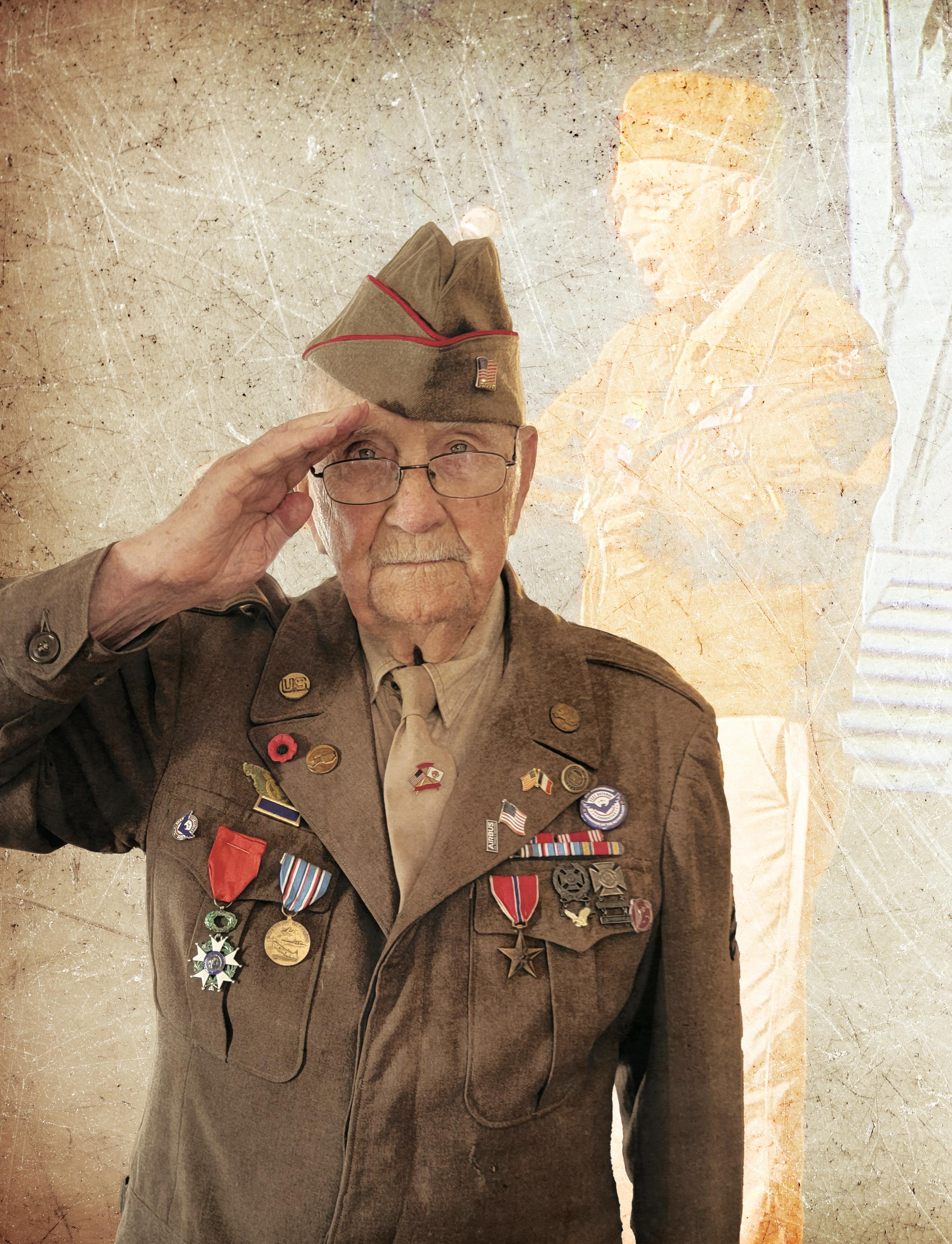
Wilbur J. “Jack” Myers is one of the few left from the Greatest Generation. After returning from the 81st anniversary celebration at Normandy, we spoke with the 102-year-old WWII veteran and Washington County native.
40 “Clean Hands”
The tragic drug-related story of Brooke Simmers and her parents, Kevin and Dana Simmers, is well-known around the world, and it’s about to become even more known. The movie “Clean Hands,” which details the life of the addict (Brooke) and the drug cop (Kevin), is scheduled to be released next year.
A
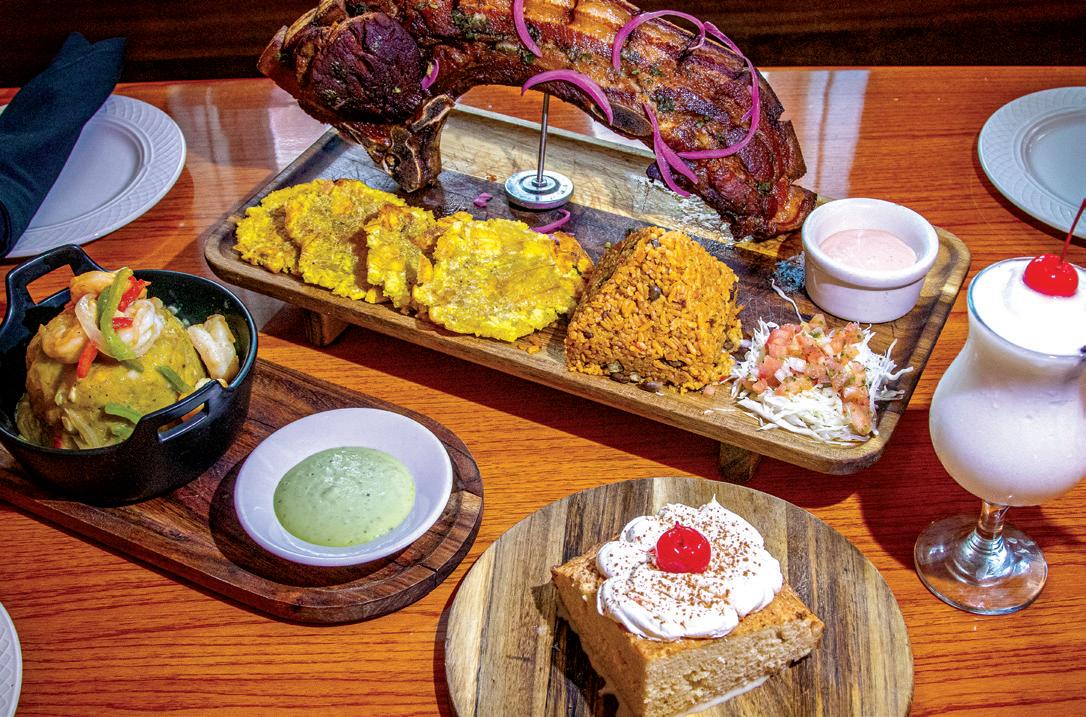
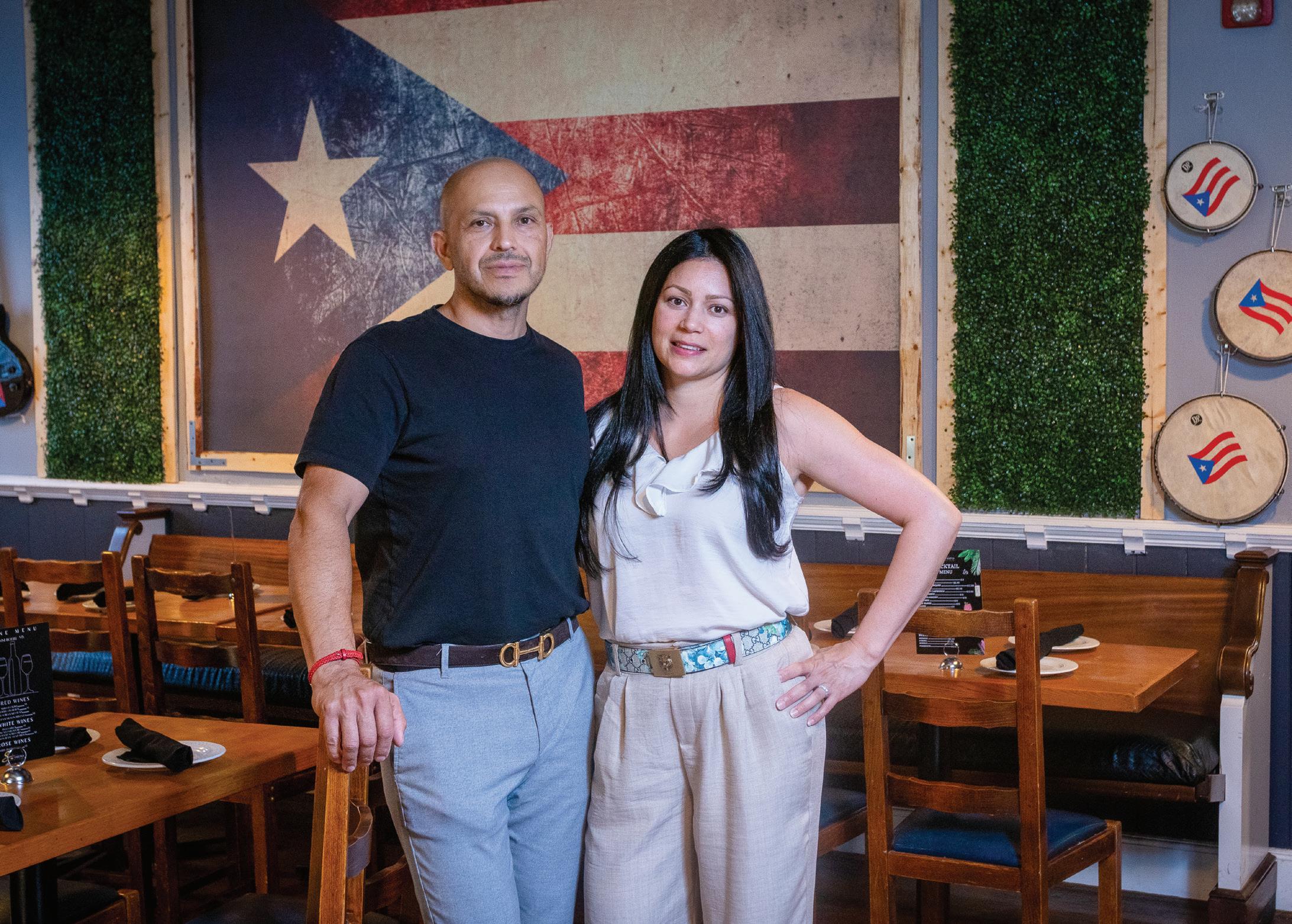
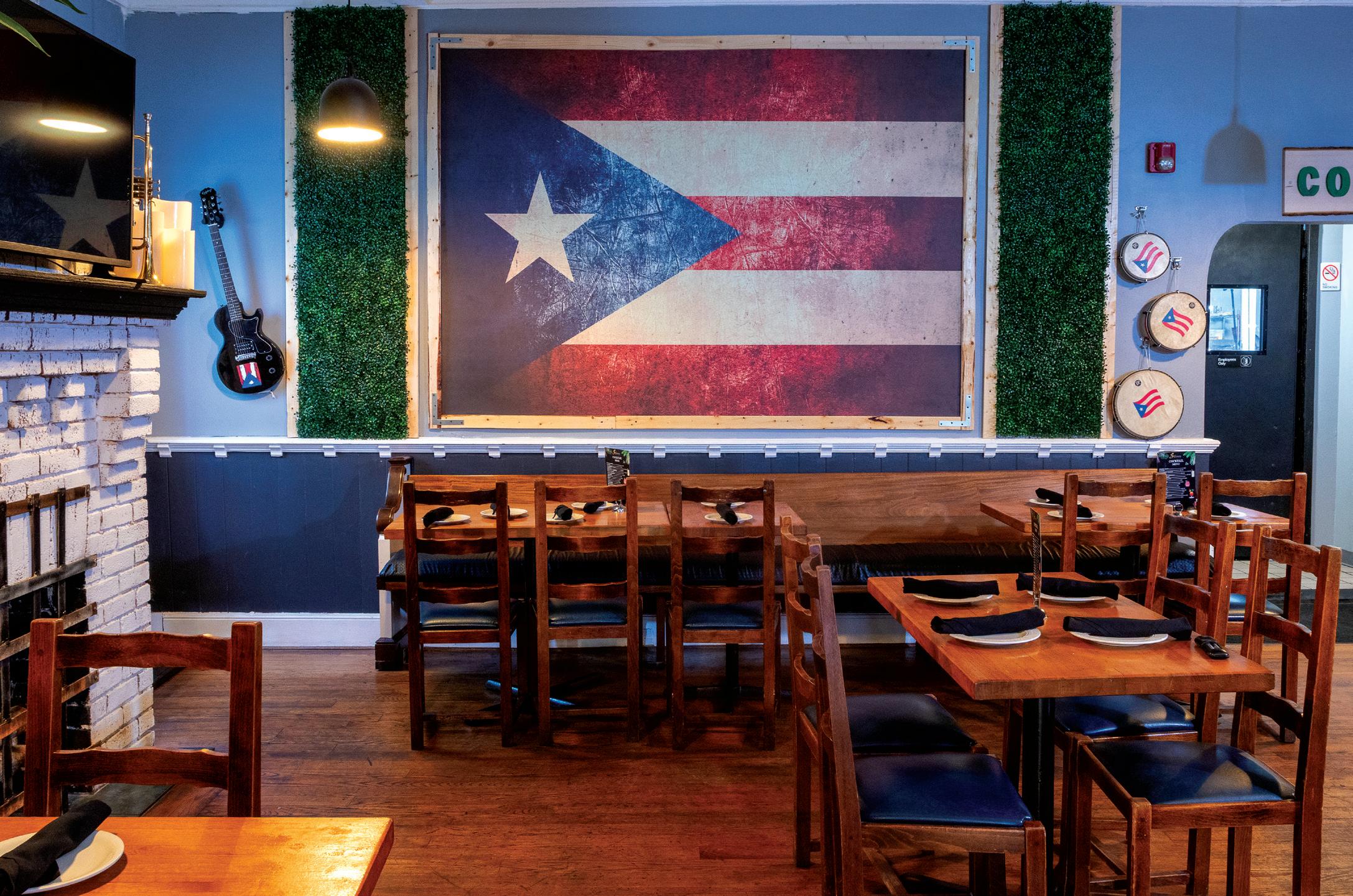
The husband-and-wife team of Jeovanni and Yahaira Diaz has brought the heart of Old San Juan to downtown Hagerstown with a cozy, colorful Puerto Rican restaurant.
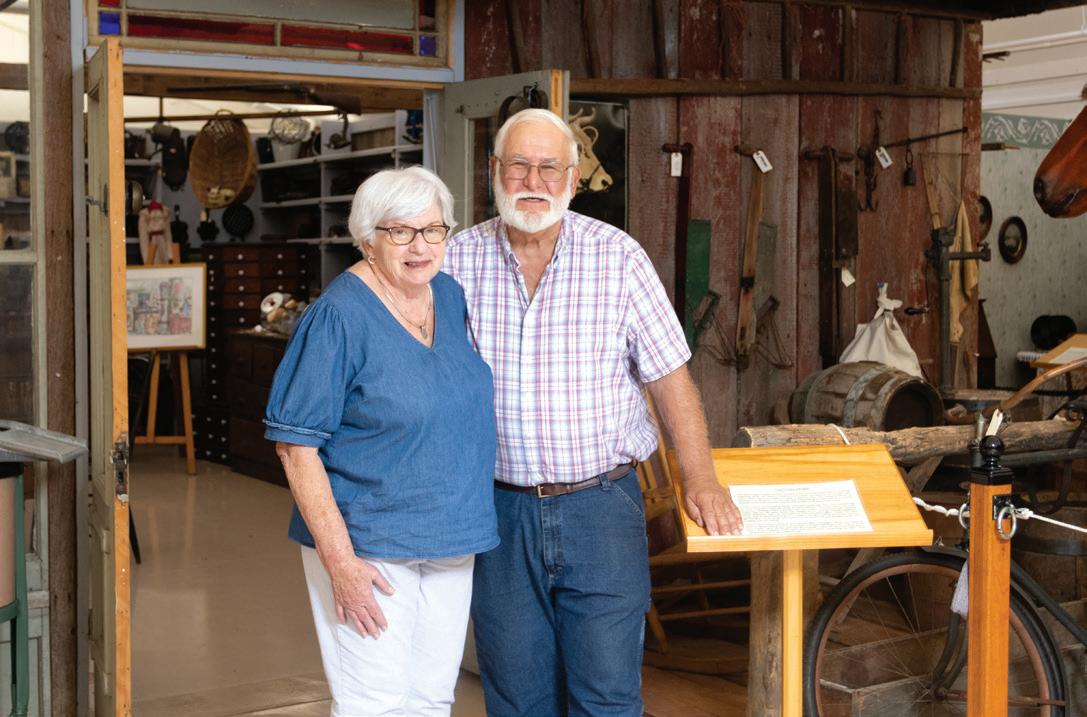
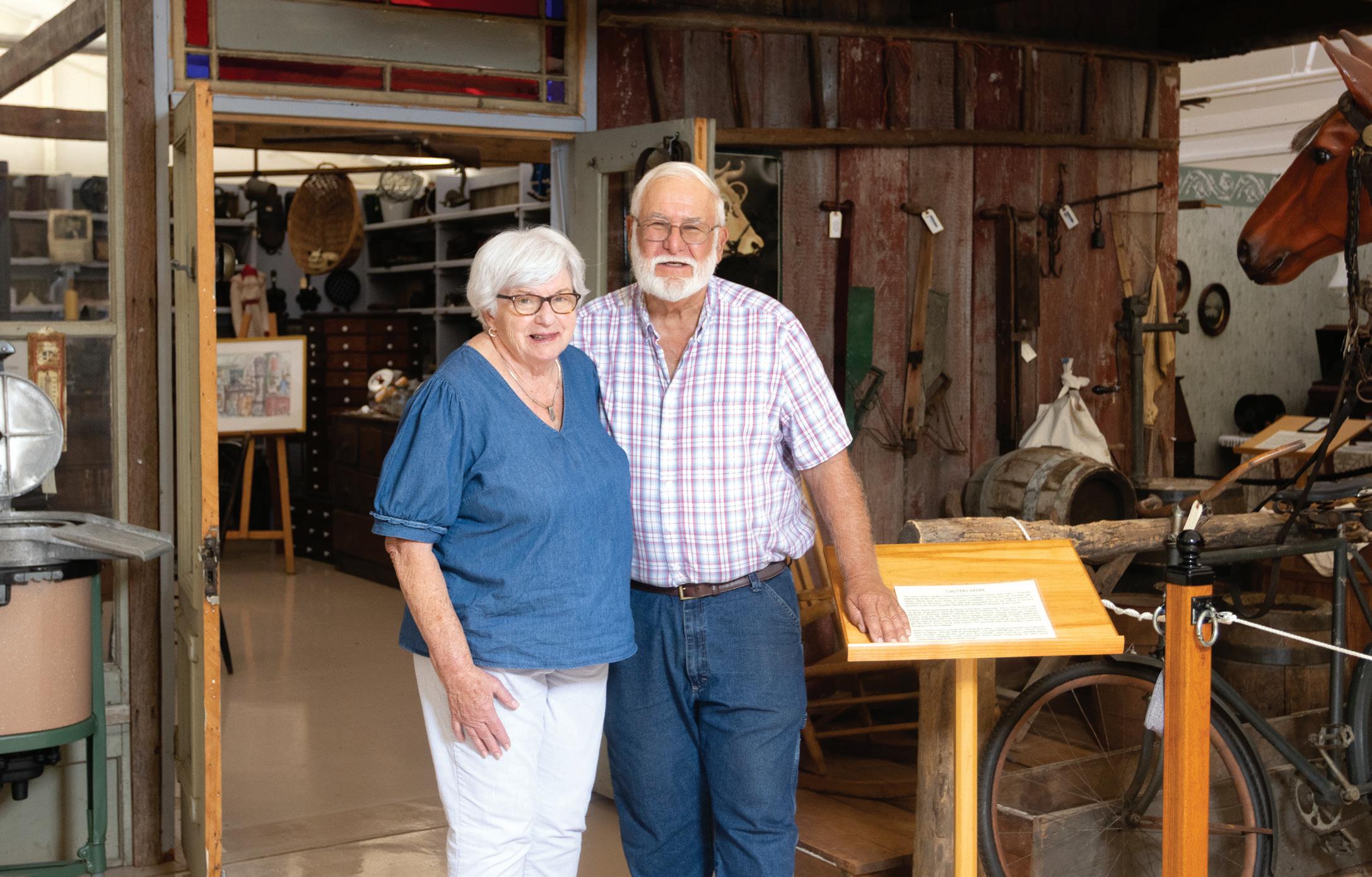
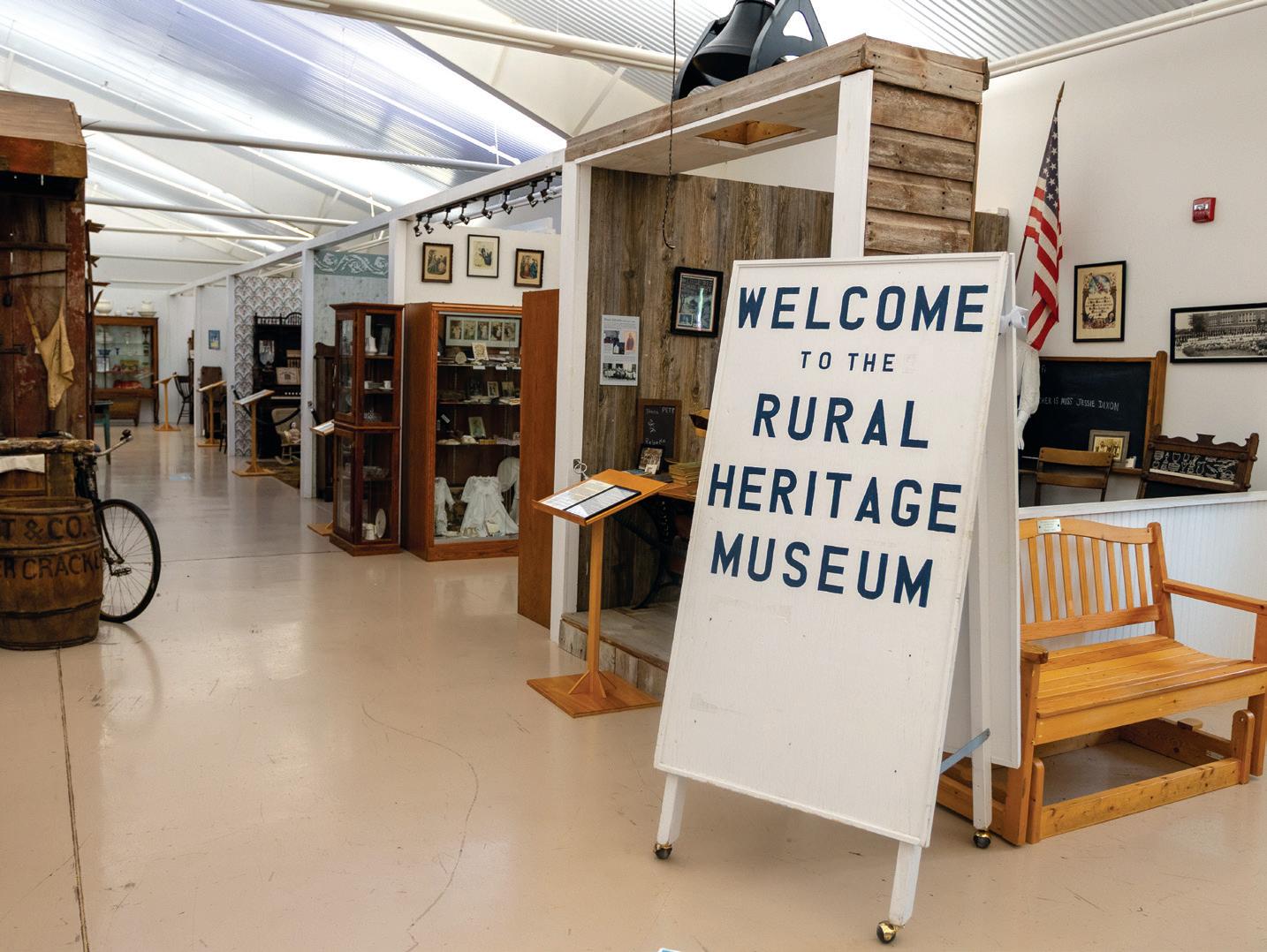
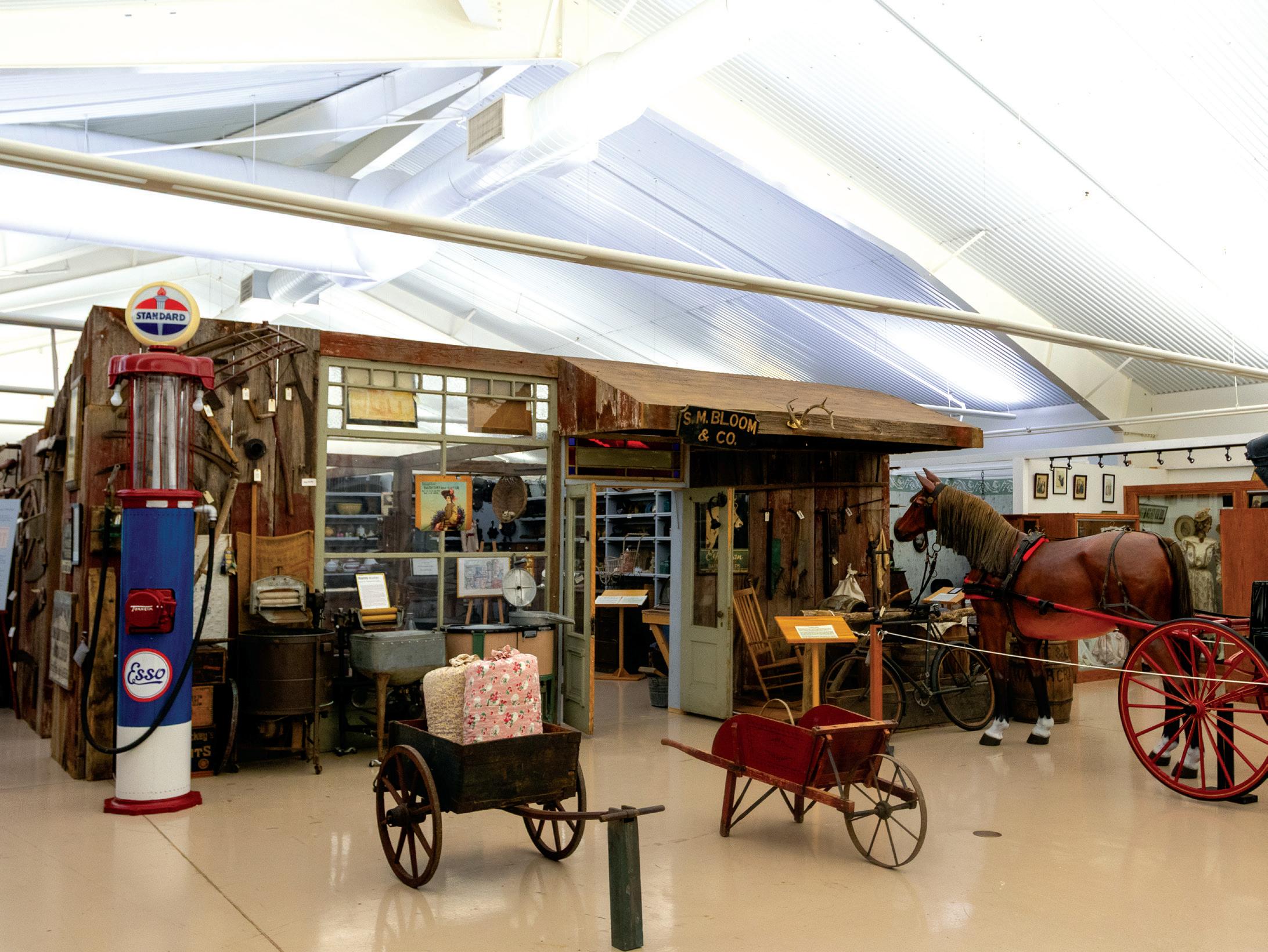
Phil and Charlotte Muritz of Smithsburg help preserve the county’s farming history at the Washington County Rural Heritage Museum.
The Hagerstown Aviation Museum in September presents a celebration of the Hub City’s great and fascinating 100-year-long relationship with American aviation.
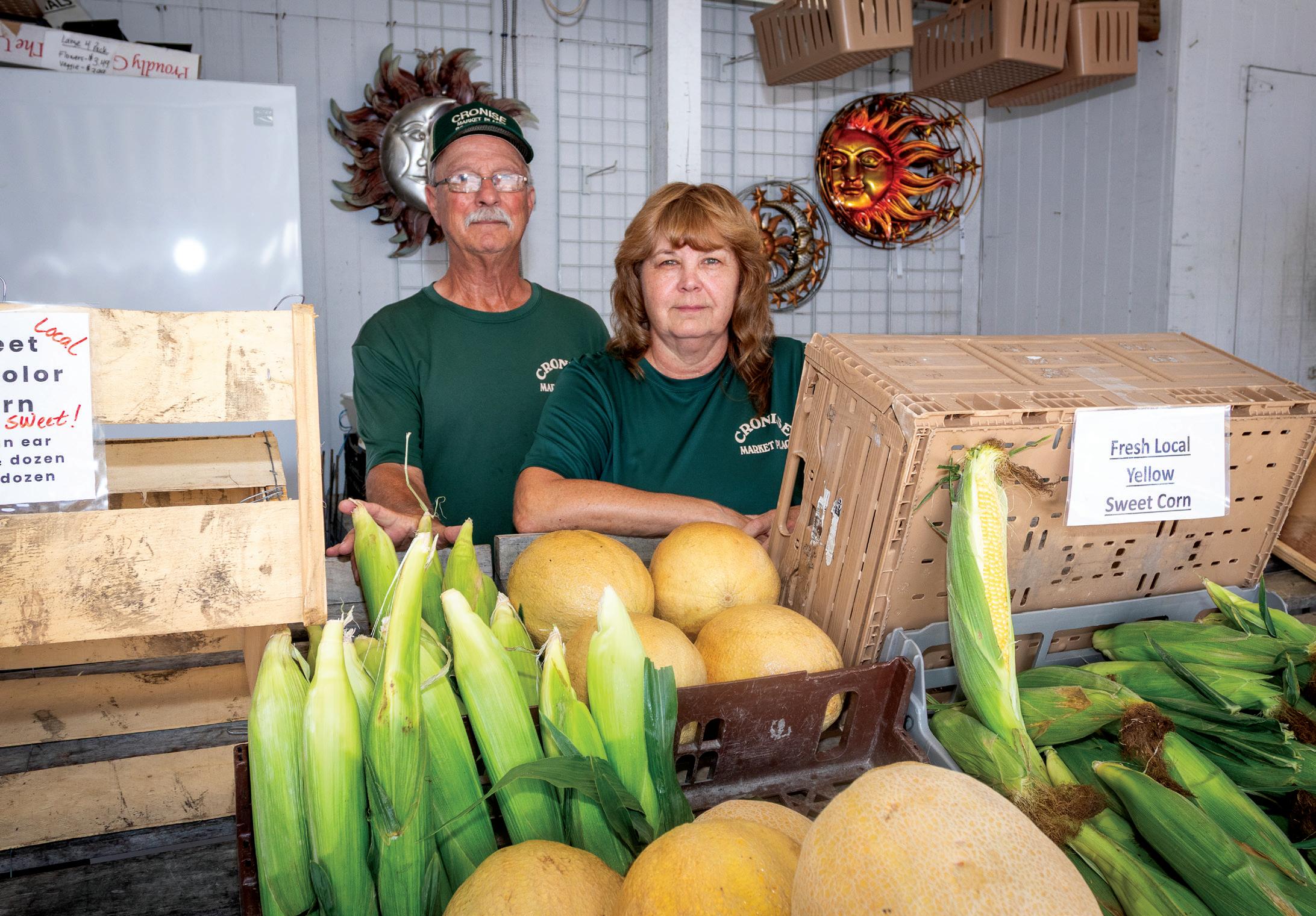
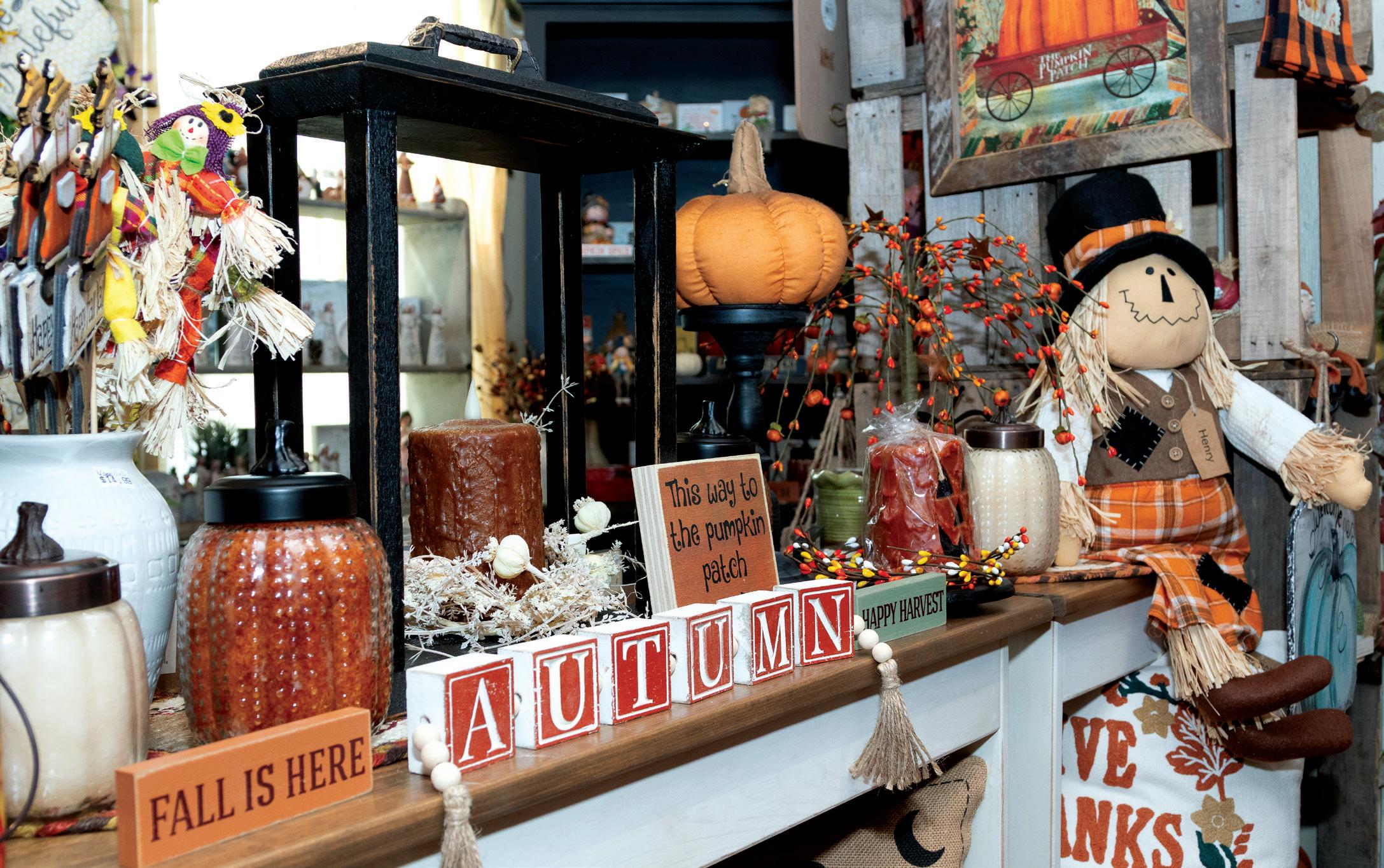
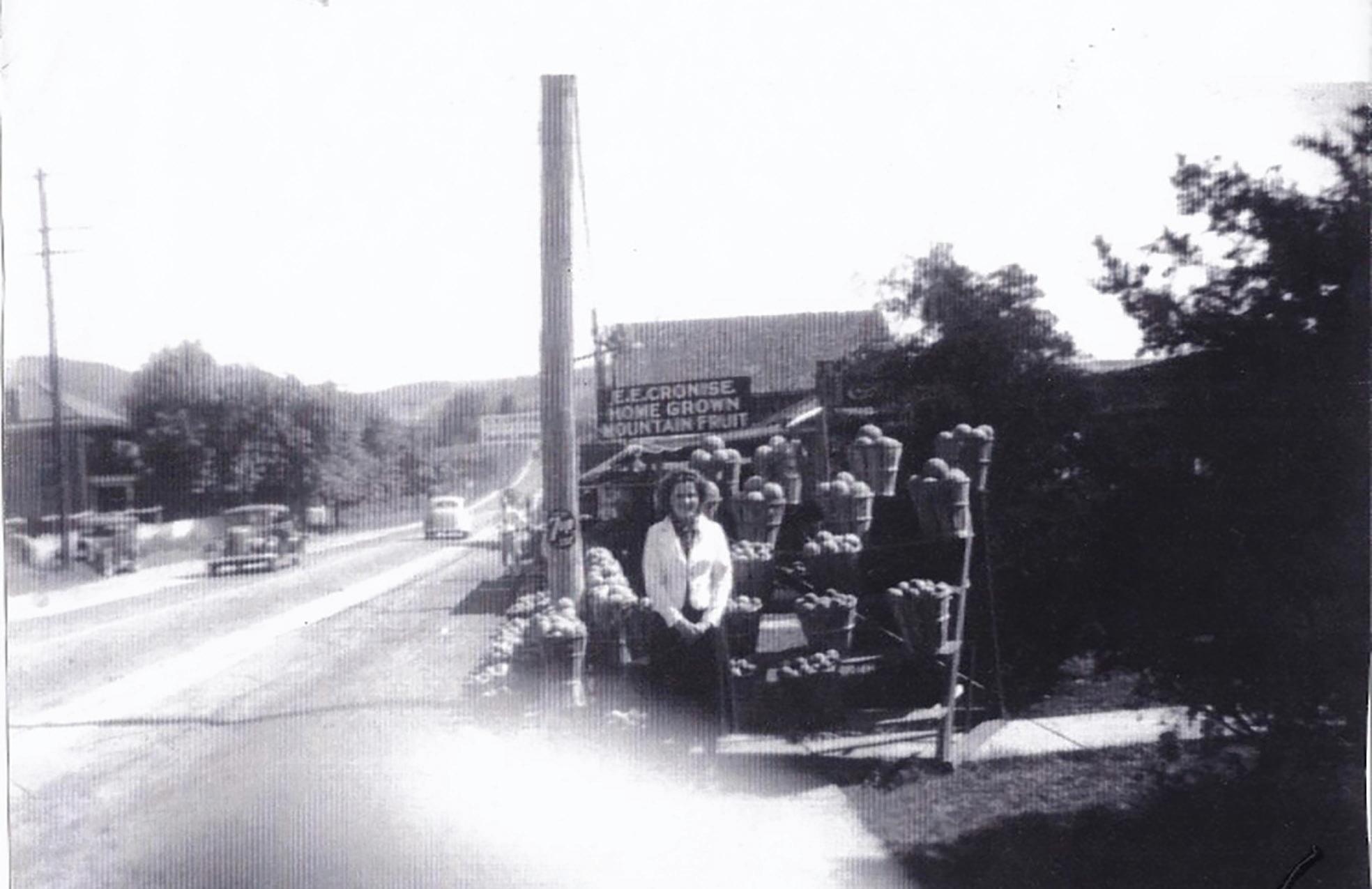
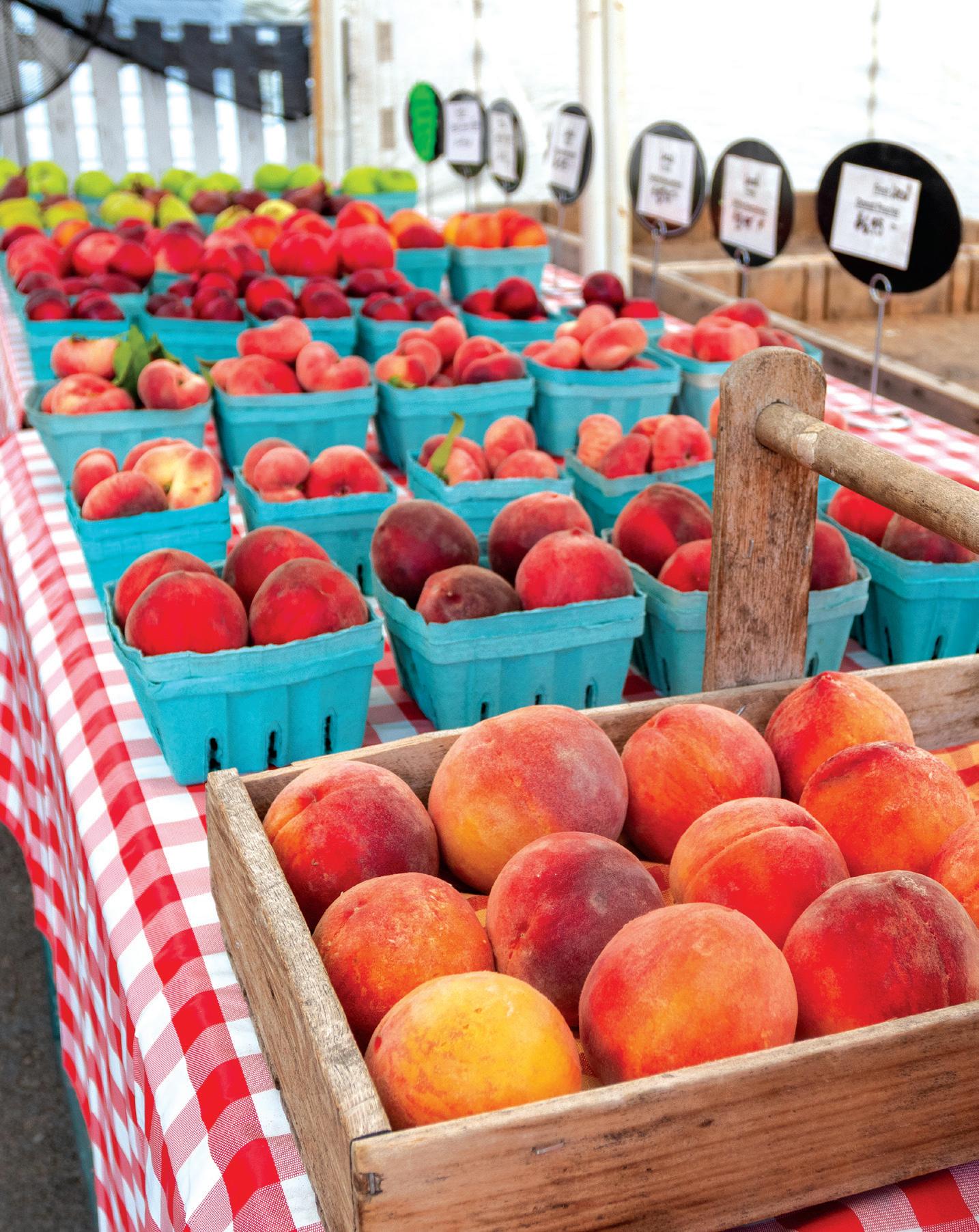
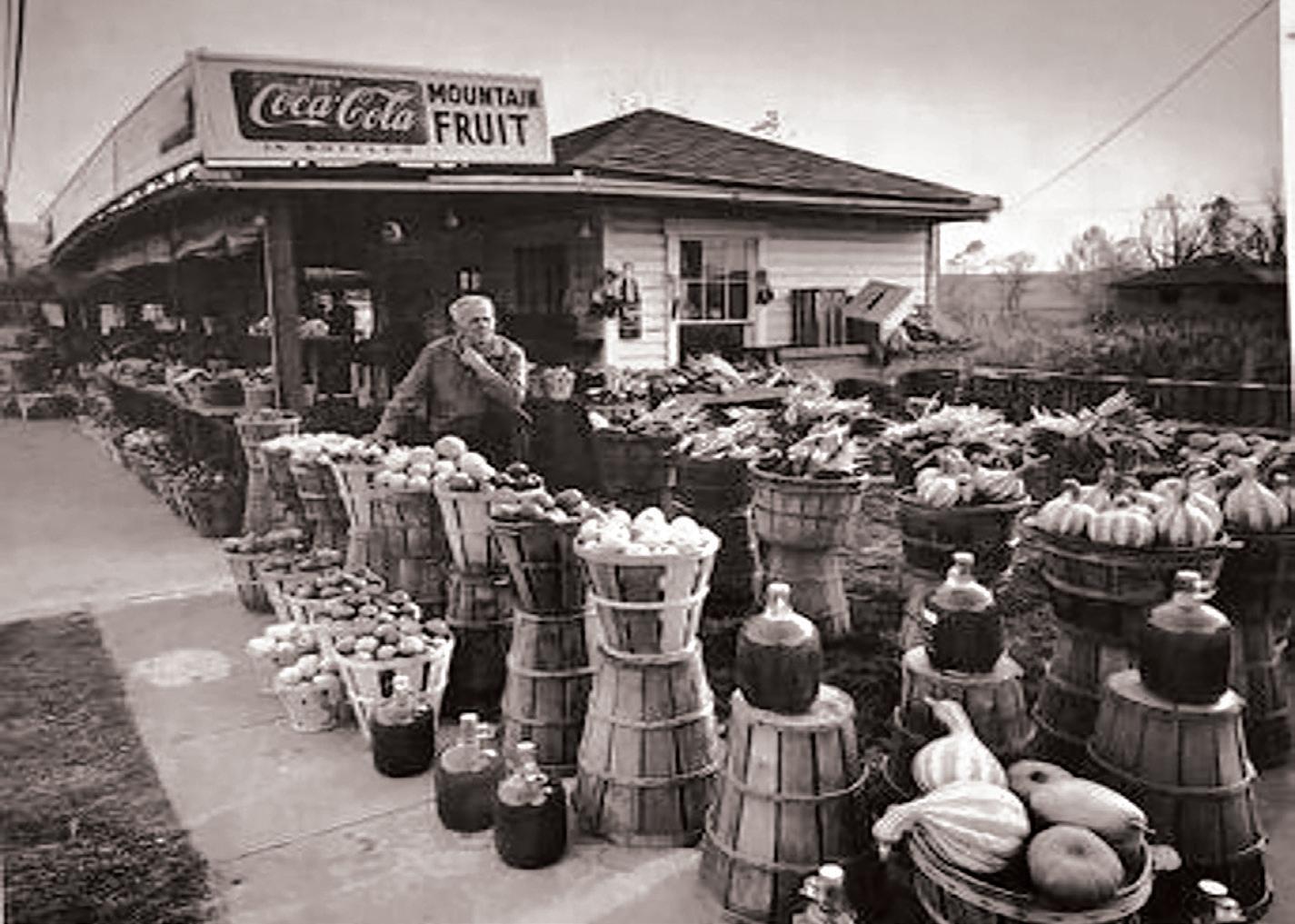
Dating back almost a century, Cronise Market Place and Olde Homestead in Boonsboro deliver a nostalgic taste of the past in a third-generation family business.
The exhilarating and nerve-wracking time when your
THE PAST AND THE PRESENT
I’M NOT SURE WHO OR WHAT AGENCY IS CHARGED WITH NAMING GENERATIONS AND DEFINING WHAT YEARS FALL INTO WHAT TITLES, BUT IT SEEMS LIKE A RELATIVELY AMBIGUOUS PROCESS. I’M A BABY BOOMER (1946-64), MY KIDS ARE MILLENNIALS (198196), MY GRANDCHILDREN ARE GENERATION ALPHA (2010-2025). BUT WHY? IT ALL SEEMS SO ARBITRARY.
There appears to be no rhyme or reason to the beginning year and the end year of each generation, and the years in between sometimes amount to 11 (Generation Alpha, 2013-2024) and other times to 26 (the Greatest Generation, 1901-1926). Like most labels, the titles don’t legitimately define everyone. Did the Silent Generation (1928-45) really not do anything? Didn’t we land men on the moon when that generation was at its peak?
The only aspect of generations that I really find should be set in stone is that those born between 1901 and 1927 are, indeed, the Greatest Generation. They actually saved the world. They were brave. They understood the geopolitics of their time and why things needed to be forcefully changed. They answered the call of duty and ended it, and it was one of America’s greatest accomplishments.
There are very few of this generation still walking the planet, but one of them lives here in Hagerstown and deserves credit for his role in
winning World War II. So, when he returned from France this summer after taking part in the 81st anniversary of D-Day, writer Lisa Gregory sat down with him and talked about his life and his contributions to his generation. At 102 years old, Wilbur J. “Jack” Myers still remembers his days fighting in Europe, aiding the Allied cause. And his story is fascinating.
This issue also looks to the past with a story about the history of aviation in Hagerstown and the celebration of the 100th anniversary of Fairchild Aircraft Company and its predecessors. Events will take place this month at the Hagerstown Regional Airport to commemorate Hagerstown aviation history, which played a huge role in American aviation history.
And looking to the present, we all know the story of Brooke Simmers and her parents Kevin and Dana. But what you might not know is that their tragic story is headed to the silver screen. The movie “Clean Hands” is now in post-production being prepared for a 2026 release. Writer Erin Jones talked with the Simmers, director Jake Allyn, and others involved with taking this story to Hollywood.
Enjoy the issue.
–JeffThoreson jthoreson@hagerstownmag.com
This is Washington County
THE NATURAL BEAUTY OF WASHINGTON COUNTY OFTEN REVEALS ITSELF AT THE ANTIETAM NATIONAL Battlefield. Here, a late-summer storm moves across the historic site. Fall is a popular time for visitors to stroll through the battlefield near Sharpsburg. The battlefield averages about 205,000 visitors each year, although in 1986 a reported 700,000 people visited. Recently there has been a trend toward more people visiting Civil War battlefields, and the renovated visitor’s center at Antietam has helped visitors navigate the site of America’s bloodiest day.
THE ARTS | Music to Our Ears
Maryland symphony expands youth opportunities
THE MARYLAND SYMPHONY ORCHESTRA (MSO) IS hitting a high note with the launch of the full-time Maryland Symphony Youth Orchestra (MSYO), showing its deepening commitment to arts education across the region.
MSYO is an audition-based ensemble for students in grades 9 to 12 from across Maryland, Pennsylvania, and West Virginia. Designed to inspire and nurture musical excellence, the MSO provides rigorous orchestral training, mentorship from professional musicians, and the opportunity to perform in large venues.
Guiding the next phase of the MSO’s educational mission is Brooke Evers, the organization’s first full-time director of education. Evers brings more than two decades of teaching and arts leadership experience, including roles in West Virginia and Maryland public schools, a faculty lecturer position at Shepherd University, and an early career rooted in international arts education as a Fulbright Scholar in Austria.
“As a lifelong musician myself, there is a comfort to being around people who understand and appreciate the tremendous value of classical music in our community and who share my passion for the art form,” Evers says. “To be amongst such high-level professionals and working for an organization that is so committed to promoting music education is truly an honor.”
The educational programming by the MSO is extensive and impressive, reaching a broad range of ages and offering a variety of opportunities for the community.
“Music education is severely undervalued in our society,” Evers says. “Study after study shows the overwhelming benefits of music education—from brain functionality to graduation rates to Alzheimer’s prevention and anxiety reduction and increased empathy.
Brooke Evers is the Maryland Symphony Orchestra’s new director of education.
“I have lived and witnessed these benefits for most of my life as a musician and educator, watching a student develop interhemispheric brain communication as they learn to interpret symbols in two different clefs while getting all 10 fingers of both hands.”
Evers will oversee the MSYO and all MSO educational programming, applying her signature approach to mentorship, curriculum
Where Music Meets Art
To celebrate the new MSYO and the symphony’s 2025-26 concert lineup, the MSO and Washington County Museum of Fine Arts are calling on young visual artists to participate in the Bravo! Program Cover Art Contest. The contest is open to middle and high school students from Washington, Frederick, Jefferson, Berkeley, and Franklin counties.
Participants can create original artworks inspired by the MSO’s upcoming concert themes: five classics concerts, a pops performance, and the beloved Home for the Holidays
development, and student-centered experiences. Her award-winning teaching has been praised by students as “inspirational, encouraging, and one of the biggest influences” on their musical journeys.
“[Evers’] background blends deep instructional expertise with a passion for accessible, high-impact arts programming,” says MSO executive director Kim Bowen. “Her vision aligns beautifully with the MSO’s mission to empower the next generation through creativity and discipline.”
show. Submissions can include painting, drawing, digital illustration, or photography, accompanied by a brief artist statement connecting the visual concept to a specific musical piece.
Winning artwork will be featured on the cover of the MSO’s Bravo! concert program, displayed in the Maryland Theatre’s lobby during concert weekends, and exhibited at the Washington County Museum of Fine Arts. For entry details see www.marylandsymphony.org.
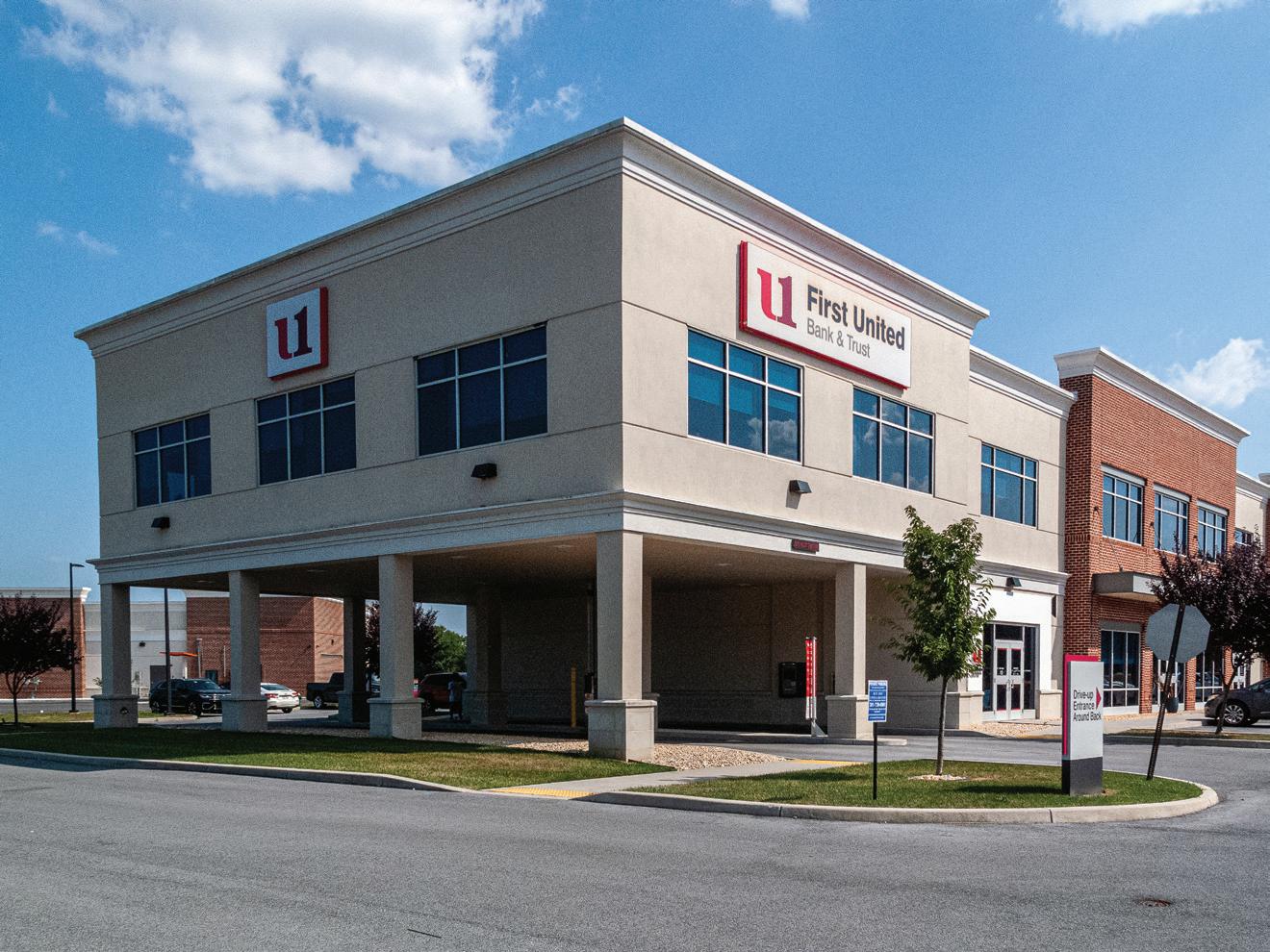
First United Bank & Trust Celebrates 125 Years
IN 1900 THE FIRST NATIONAL BANK of Oakland opened its doors and since then the institution has grown to include 22 branches throughout Western Maryland and West Virginia with more than 300 associates. Still, the business remains rooted in the community.
“We started as a small, trusted place for neighbors to build their futures,” says Carissa Rodeheaver, chief executive officer, president, and chairman of the board of directors. “Our success is deeply connected to the prosperity of the people and places we serve.”
Through generations of change, First United has remained a steady presence, standing beside its customers and communities. The bank continues to blend tradition with innovation by investing in modern tools and technologies, while honoring the values that have guided it for over a century.
“When you walk through our doors, you’re not just a customer you are part of our story,” Rodeheaver says. “And as the world evolves, we’re investing in tomorrow’s tools with the same care we’ve given every handshake for the last 125 years.”
Cold Storage Company to Invest $275 Million
NEWCOLD, THE WORLD’S THIRD-LARGEST REFRIGERATED FOOD logistics provider, plans to invest more than $275 million in a cutting-edge, temperature-controlled automated warehouse in Hagerstown.
The advanced facility will be another boost to the local economy by creating employment opportunities and fostering long-term regional growth.
“This project will create 125 to 150 new employment opportunities for area residents,” says Hagerstown mayor William McIntire. “NewCold’s state-of-the-art, automated facility will require a number
Wellness in Hagertsown
BHAKTI SPIRIT, A NEW YOGA, ACUPUNCTURE, AND WELLNESS community created to support clients in healing, connecting, and living from the heart, has opened on Lincoln Avenue in Hager-
of technology and specialized workers. The new investment and quality, skilled jobs will be a boost to our economy.”
Positioned near the Port of Baltimore, Hagerstown reflects a strategic decision to tap into the region’s robust logistics ecosystem and growing importance in the national supply chain.
“With access to numerous rail lines, interstates, and airports, as well as close proximity to the Port of Baltimore, our Mid-Atlantic location will help NewCold expand its reach throughout the globe,” says said Maryland Department of Commerce Secretary Harry Coker, Jr.
stown. Their programs include yoga, Tai Chi, relaxation, men’s circles, meditations, ecstatic dance, drum circles, acupuncture, reiki, and more.
New Officers at Barbara Ingram School
NEW OFFICERS FOR THE BARBARA INGRAM SCHOOL FOR THE Arts Foundation for 2025-2027 include Laurie Bender, president,
Pam Francis, vice president, Wanda Mounts, secretary, and Al Martin, treasurer.
AEK is focused on providing Sales/Leasing services in the tri-state region. We have been operating in various capacities within the Real Estate industry since 2002. We are here to help. Give Corey a call or stop by. Our doors are always up!
Is Washington County Experiencing a Baby Boom?
MORE BABIES THAN USUAL WERE BORN AT MERITUS MEDICAL Center in the fiscal year 2024, which might lead one to think Washington County is bucking the national trend toward lower birth rates. But officials say other factors likely come into play.
The Meritus Family Birthing Center recorded 2,065 babies born between July 1, 2023, and June 30, says Ellen Curry, nurse manager of the center. Typically, the center sees between 1,700 and 1,900 babies born annually.
While there was a bump this year in the number of families from Washington County, which is Meritus’ primary service area, it was the growth in the number of families from outside the area who came to the facility to have babies, says Dr. Anand Budi, Meritus chief medical officer.
“There were more patients coming from southern Pennsylvania and a fair number from Frederick County, and some from the Eastern Panhandle of West Virginia,” Anand says. “There was a slight increase in Washington County as well, but I’m not sure I would call that a baby boom yet.”
Meanwhile, the fertility rate in the U.S. dropped to an all-time low in 2024 with fewer than 1.6 children being born per woman, according to federal data. In the U.S. each year about 2.1 kids are born per woman, though that number has been dropping lately as more women are waiting longer to have children or never having children.
U.S. News & World Report recently named Meritus a high-performing hospital in maternity care (uncomplicated pregnancy) for 2024.
“We’ve received quality recognitions that put us in a higher class among rural hospitals,” King says.
She noted the birthing center has certified midwives on staff and offers a number of birthing options, plus spacious and comfortable accommodations for parents. In most cases, babies stay in the room with their mothers.
The birthing center also has expert care at the ready should the newborn need it. Meritus has a Level 2 NICU, which has the capability to take care of premature infants and infants with any medical problems that would need specialized intensive care. This eliminates the need to travel outside the area.
The publication’s annual Best Hospitals for Maternity Care ratings also recognized Meritus as one of 118 hospitals that provides maternity services in areas that would otherwise lack access to such care.
“This designation is a testament to the dedication of our skilled team members in our labor, delivery, recovery, and postpartum unit,” says Carrie Adams, Meritus chief operating officer. “Their commitment to our patients truly reflects our mission of improving the health of our community.”
This is the second year that Meritus has been recognized for its maternity care. To qualify, U.S. News included hospitals that were the only ones providing maternity care in their counties, and that had fewer than 60 obstetric providers per 10,000 births. In addition, the publication included hospitals that were the only hospital within a 15-mile radius in a county with fewer than 128 obstetric providers per 10,000 births.
THEN & NOW |
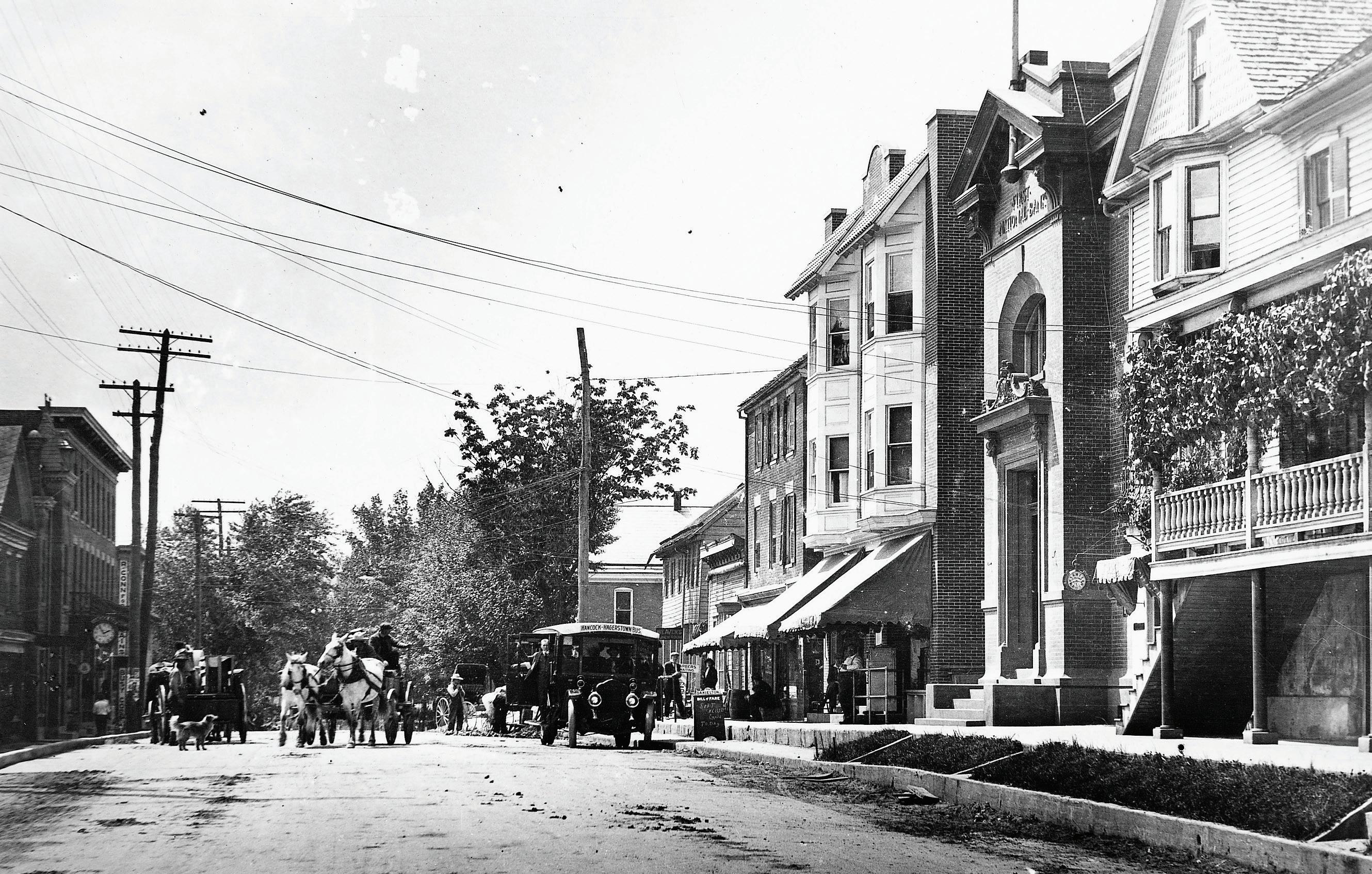
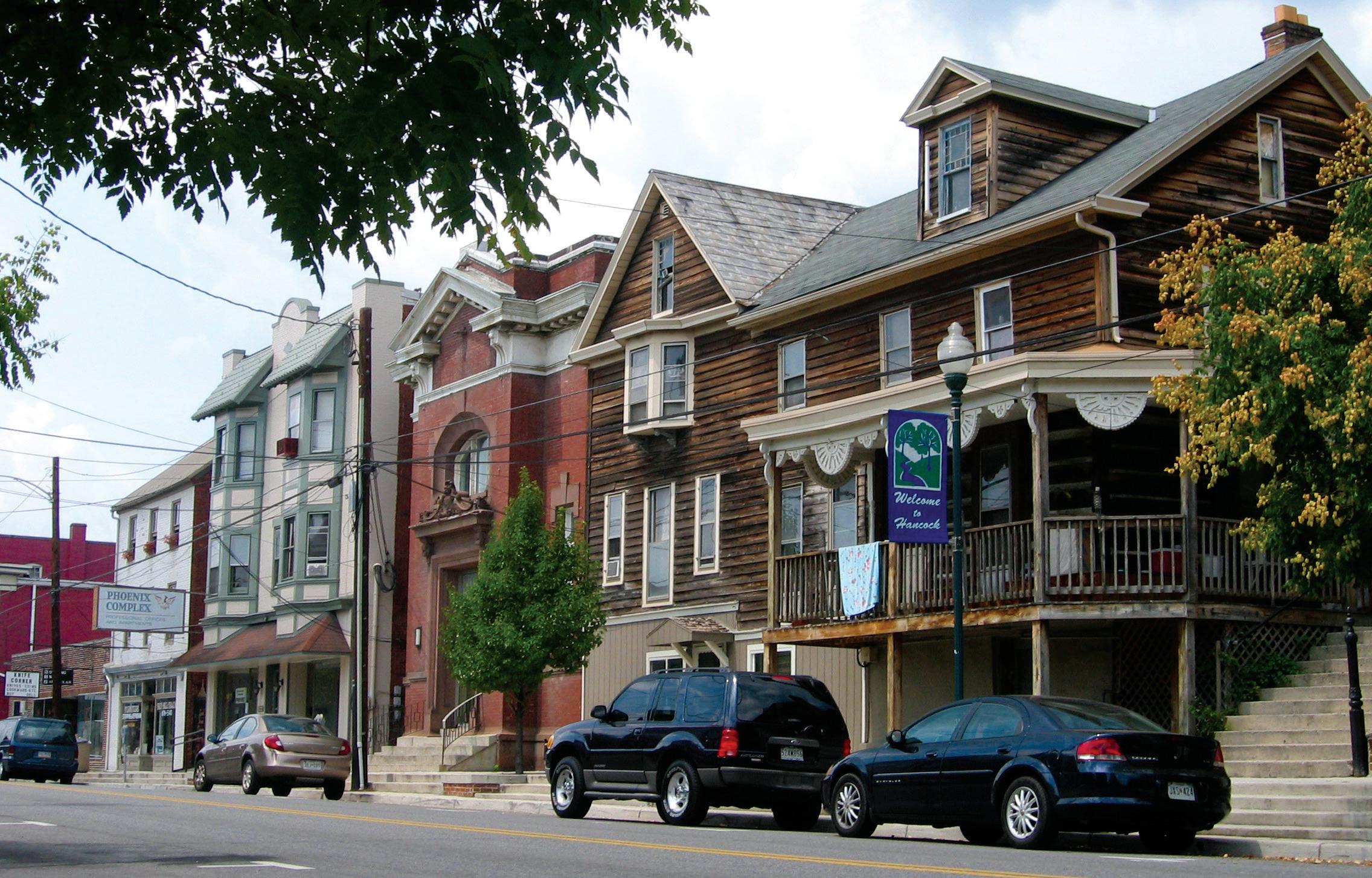
THE NATIONAL ROAD: MARYLAND HIGHWAY 144 ENTERS HANCOCK IN WESTERN WASHINGTON COUNTY AND BECOMES, AS IT always has been, Main Street. This historic image courtesy of the Washington County Historical Society shows the road in 1910. While the horsedrawn carriages and the Hancock to Hagerstown Bus have been replaced by automobiles, the buildings on the north side of the road look very much the same 115 years later. The three-story building on the left of the historic image also still exists, offering Hancock residents a glimpse of the past.
NOW: HANCOCK MAIN STREET AS IT LOOKS TODAY
THEN: CIRCA 1910
R.M.
– Adamstown, MD
Last month, we focused on “Changes that will affect your taxes in 2025” (August), so this month we will focus on “Changes that will affect your taxes in 2026 and later” (September), and next month we will cover “Changes that will affect business owners” (October). (If you would like all of the information now, just contact our office by phone or email, and we can send it to you.)
Changes that will affect your taxes in 2026 and later:
• Estate tax exemption: Federal thresholds are permanently increased— the exemption will be $15 million in 2026 and is adjusted to inflation.
• Tax rates: Rates introduced by the TCJA are made permanent and slight upward adjustments are made to the top of the 10 percent and 12 percent tax brackets.
• Home mortgage interest deduction: The OBBBA permanently extends the limitation on deducting qualified residence interest to the first $750,000 in home mortgage acquisition debt (previously $1 million) and treats certain mortgage insurance premiums on acquisition indebtedness as qualified residence interest. It also confirms the inability to deduct interest on home-equity loans.
• Charitable contribution deduction: A new above-the-line deduction is available for taxpayers who use the standard deduction; charitable contributions can be deducted up to $1,000 for single
taxpayers and up to $2,000 for married couples filing jointly. Itemizers, on the other hand, will face a new limitation; charitable contributions will need to exceed 0.5 percent of the taxpayer’s contribution base to be deductible. The contribution base is defined by the Act as AGI without any net operating loss carryback.
• Itemized deductions: The Pease limitation is removed, however a new limitation has been introduced for 2026. The amount an individual taxpayer can deduct (after deduction-specific limitations are applied) must be reduced by 2/37 of the lesser of 1) the total amount of itemized deductions, or 2) so much of the taxpayer’s taxable income for the taxable year as it exceeds the dollar amount at which the 37 percent rate bracket begins with respect to the taxpayer.
• Miscellaneous itemized deductions: These are permanently eliminated except for unreimbursed employee expenses for eligible educators.
• Qualified Business Income (QBI) deduction: The OBBBA makes it permanent and increases the phase outs for Specified Service Trade or Businesses to $75,000 for single taxpayers and $150,000 if married filing jointly. An inflation-adjusted minimum deduction of $400 is introduced for taxpayers who have at least $1,000 of QBI from one or more active trades or businesses in which they materially participate.
• Alternative minimum tax: The increased exemptions introduced by the
TCJA are made permanent, however it reduces the threshold at which the exemption starts to phase out to $1 million (married filing jointly, with a reduction of 50 cents for every dollar over the threshold).
• ABLE accounts: The increased contribution limits to ABLE accounts and the ability to roll over 529 plans funds to an ABLE account are made permanent and will be adjusted for inflation.
• Trump accounts: The OBBBA creates special IRAs for children under 18. Contributions can only be made in calendar years before beneficiary reaches age 18 and are limited to $5,000 per year (adjusted for inflation after 2027). Distribution of the funds can begin the calendar year the beneficiary reaches age 18 and the account must be fully distributed by age 31. Distributions of basis are tax-free while distributions of income for qualified expenses are treated as net capital gains (qualified higher education, qualified post-secondary credentialing, amounts paid to a small business for which the beneficiary has obtained a small business loan or small farm loan, and amounts paid for the purchase of a first home). A $1,000 tax credit is offered for opening a Trump account for a child born between 2025 and 2028. The bill also allows for employer contributions to Trump accounts. These contributions will not be included in the employee’s income. Investment options for the accounts appear limited to mutual funds and ETFs that track the S&P 500 or another qualified index.
NOTE |
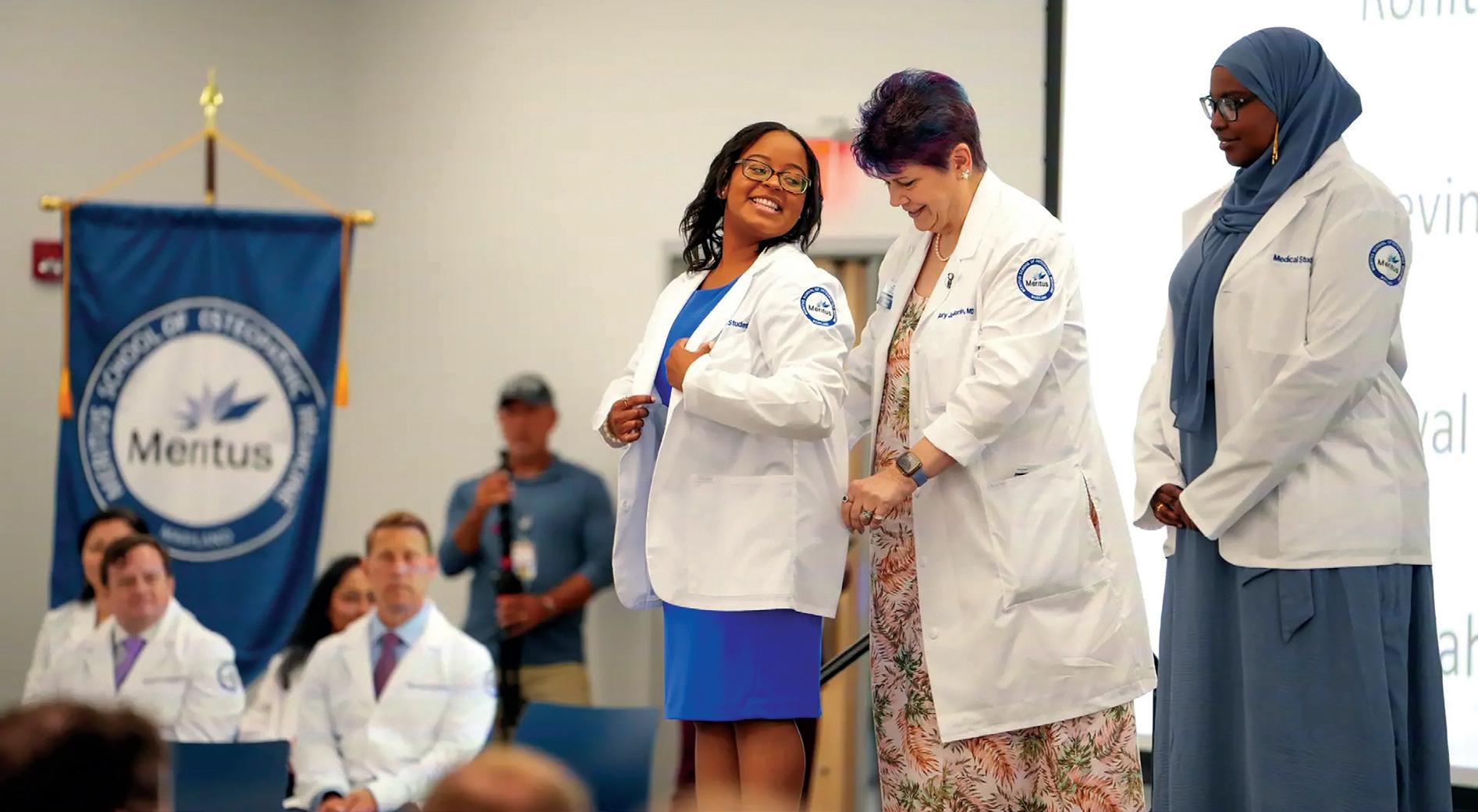
First Meritus Class Members Get Their White Coats
MEMBERS OF THE INAUGURAL CLASS OF THE MERITUS SCHOOL of Osteopathic Medicine marked a milestone in July when they received their white medical coats symbolizing the start of their journey to become doctors of osteopathic medicine.
The ceremony, the culmination of a week of orientation for the students, is a tradition for medical students.
“This ceremony is not only a rite of passage, but also a visible reminder of the responsibility our students are about to embrace,” said Chanté Richardson, associate dean of student services and community engagement.
The class of 97 students were joined by hundreds of family and friends who filled the Alice Virginia and David W. Fletcher Conference Center in the D.M. Bowman Academic Hall.
“I know we all got here because someone helped us,” said Maulik Joshi, president of the medical school. “Be it a parent, a family member, a friend, a spouse, a teacher, a physician. And that help is going to continue on your journey here at MSOM.”
He noted that the students, being the first class of the new medical school, would have upon their graduation the privilege of signing a steel beam that was signed by Meritus staff and communi-
ty members when the academic hall was constructed.
“As the inaugural class, you’re the foundation for the future,” he said. “That steel beam represents the foundation of the academic building, just as all of you represent the foundation of this medical school.”
The beam is on display in the school lobby.
There will be a projected shortage of 124,000 physicians in the United States by 2030. There is a shortage of roughly 50 physicians in Washington County. MSOM was built to help solve the shortage crisis locally and in Maryland. It’s the first civilian medical school to open its doors in the state in more than 100 years.
Meena Seshamani, M.D., Ph.D., the secretary of the Maryland Department of Health, congratulated the students on their achievement and what they are about to become.
“You all will be the epitome of what it means to practice holistic care,” she said. “It will be your faces, hands, and brains driving all of that forward, not only for the state of Maryland, but also for the country.”
Brian Kessler, dean of MSOM, encouraged the students to take to heart what they will learn.
“Go out and change lives,” he said.
Hagerstown YMCA Gets New CEO
ANDRE ELLIOTT HAS MORE THAN 20 YEARS OF EXPERIENCE IN the YMCA movement and is known for expanding access to programs, strengthening community partnerships, and securing major philanthropic support.
He most recently served as senior executive director for the YMCA of South Hampton Roads, leading operations across Virginia’s Eastern Shore and contributing to a successful $5.8
million capital campaign. A native of Cape Charles, Virginia, Andre holds a leadership studies degree from Regent University and is a certified trainer in lifesaving, leadership development, and diversity and inclusion.
He has been deeply involved in YMCA professional development, multicultural leadership, national training programs, and actively serves on multiple community boards.
CALENDAR
september to october
October 11-12
Catoctin Colorfest
Thurmont Main Street
11 WATER STREET, THURMONT
October
4
Quad State Beer Fest: Halloween Hysteria
Washington County Agricultural Center
7313 SHARPSBURG PIKE, BOONSBORO
More than 30 breweries plus wineries, cideries, distilleries, and seltzeries will take part in the 12th annual beer fest. Alcohol samples are included with admission. Take part in games and contests, shop from dozens of vendors, and chow down on scrumptious grub from the best local food vendors. Live music by Super Spreader, Shake the Room, and Triple Rail Turn. Join more than 2,000 others in the Halloween themed festivities. 3 p.m. www.ifg-events.com.
More than 700 arts and craft vendors take part in the Community Park at Catoctin Colorfest. More than 250 well-known artists from the across the country will display their work. Catoctin Colorfest has been recognized in Sunshine Artists Magazine as one of the top 35 shows in the United States. There will be food vendors throughout the town and the Octoberfest Beer Garden at the Thurmont American Legion. 9 a.m. to 5 p.m. 301-271-7533 or www.colorfest.org.
October 25
Mummer’s Parade
Downtown Hagerstown
1 EAST FRANKLIN STREET, HAGERSTOWN
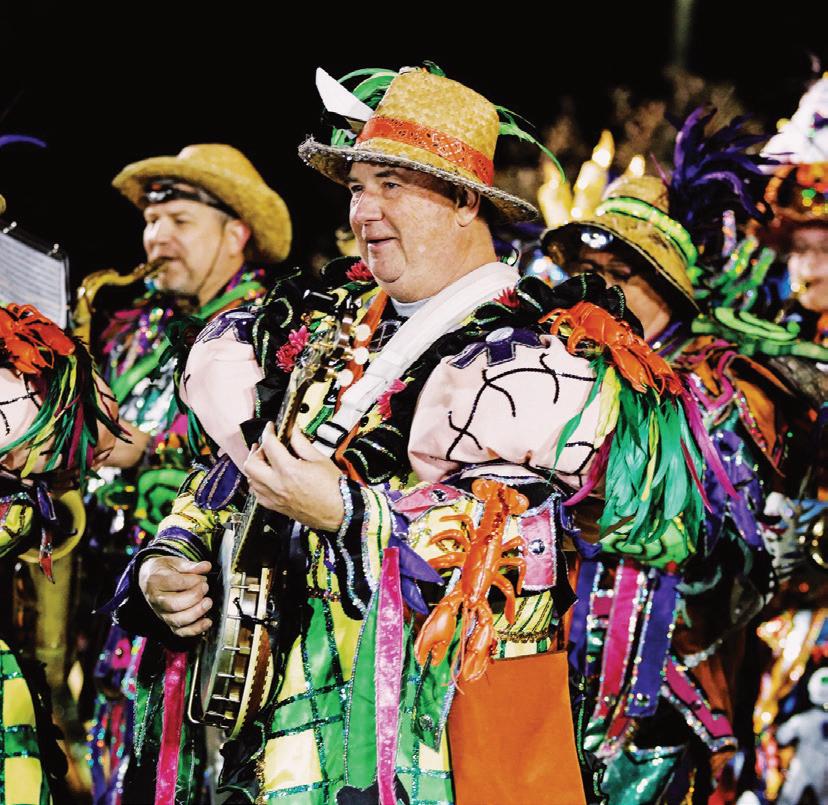
This is one of the largest nighttime parades on the East Coast. Spectators can enjoy the Mummers’ Parade almost anywhere alongside the parade route for free or purchase tickets for reserved chairs from the Maryland Theatre. Come celebrate your group and what they do in our community. We take entries for walking groups/organized bodies, floats, vehicles, fire trucks and EMS, commercial units, and Mummers. 6p.m. to 9 p.m. www.alsatiaclubinc.com.
September 6-7
Boonesborough Days Festival
Shafer Park
241 POTOMAC ST., BOONSBORO
A festival devoted to showcasing handmade crafts. Browse through historic and picturesque Shafer Park and shop for traditional and early American handmade crafts, paintings and unique gifts. Experience various historical demonstrations. Over 160 exhibitors, Civil War display and artifacts, Tri-State Astronomers, great food and more. 9 a.m. www.boonsborohistoricalsociety.org.
September 13
Quad State Cheese Fest
Washington County Agricultural Education Center
7313 SHARPSBURG PIKE, BOONSBORO
Explore the world of regional cheeses and cheese creations like mac ‘n cheese, grilled cheeses, charcuterie, artisan cheese, cheesy pizzas, cheese pairings, cheese burgers, cheese desserts, and more. Take part in numerous games and contests, browse and shop from dozens of vendors, and chow down on even more scrumptious grub from the best local food vendors. Don’t forget to bring your dancing shoes and jam with music by High Street Communion, Bad Influence, and Kelly Bell Band. 12 p.m. www.ifg-events.com.
September 20
Muddy Mamas Mud Run
Washington County Agricultural Education Center
7313 SHARPSBURG PIKE, BOONSBORO
Ready to conquer a 5K mud run packed with 18 muddy and challenging obstacles? Enjoy food trucks, vendors, a live DJ, and more. It’s a fun-filled day for the whole family. Entirely volunteer-run, this event supports Girls Inc. of Washington County, a nonprofit dedicated to helping girls grow up strong, smart, and bold. 8 a.m. www. muddymamasmudrun.com.
September 27
Color Splash 5K Run/Walk Fairgrounds Park
351 N CLEVELAND AVENUE, HAGERSTOWN
Color Splash 5K Run/Walk is a unique family event in which participants run or walk through five color stations, two wet stations, and a bubble station. This “fun run” is geared toward all fitness levels. There will be a clock but no timing chips. Each participant receives a T-shirt and a finisher’s medal. After the race, enjoy a post-race festival with healthy food samples aligned to the USDA MyPlate, and other helpful resources. 9 a.m. to 12 p.m.
www.ymcahagerstown.org/color-splash-5k/ .
September 28
REACH Presents Taste of the Town
Reach of Washington County’s 20th annual Taste of the Town is a celebration of food and generosity. Taste of the Town is one of the largest and oldest tasting events in the area, showcasing the culinary talents of local chefs. All food is generously provided by local restaurants and caterers, so all ticket proceeds go directly to Reach’s programs. Every ticket sold equals one bed night in the shelter, one Bridge to Change shift, or two birth certificates or IDs (for someone to secure employment, housing or for kids to enroll in school). A $55 ticket includes general admission to eat, mingle, and celebrate. Raffles and games will also be available for purchase. www.TasteoftheTownWC.com/restaurants.
October 5
Alsatia Club 4-Wheel Drive Show
Byron Memorial Park
11 PARK ROAD, WILLIAMSPORT
Bring your four-wheel drive vehicles of all types and show them off at this fun community event. Enjoy music from a DJ, connect with fellow enthusiasts, and compete for amazing prizes. The overall winner will earn a special honor: the opportunity to participate in the 98th Alsatia Mummers’ Parade. This event is family friendly and a great way to spend your Sunday afternoon. $10 per vehicle; cash at check in (no preregistration). Rain date: Sunday, October 12, 2025. Noon to 4 p.m. www.alsatiaclubinc.com.
Quad State Cheese Fest
Color Splash 5K Run/Walk
september to october
October 11
Dogtoberfest & Paws 5K
Main Street Park
25 E MAIN STREET, WAYNESBORO
Bring Fido for a day of fun and exercise at this annual Oktoberfest event. The 5k kicks off the day with a walk or run through the scenic park trails. The festival starts at noon where the winners of the race will be announced, plus food, drinks, vendors, adoptable pets, beer tastings, live music, a dog costume contest, and more. 9 a.m. to 4 p.m. www.mainstreetwaynesboro.org.
October 11-12
Heroic Journeys: Torke, Mahler & Strauss
Maryland Theatre
21 SOUTH POTOMAC STREET, HAGERSTOWN
The Maryland Symphony Orchestra opens its 2025-26 season with a celebration of the great orchestrators. Torke’s Bright Blue Music opens with vibrant, expansive sound, capturing the energy of life itself. Mahler’s Rückert Lieder, sung by bass-baritone Joseph Parrish, brings poetry and music together in a deeply emotional exploration of love and melancholy. The concert culminates with Strauss’s Ein Heldenleben, a dramatic and heroic orchestral journey that will captivate audiences with its sweeping narrative and bold sound. 7:30 p.m. to 9:30 p.m. 301-797-4000 or www.marylandsymphony.org.
Dogtoberfest & Paws 5K
October 18
Craft Bazaar
Fort Ritchie Community Center 14421 LAKE ROYER DRIVE, CASCADE
Each craft bazaar features more than 60 vendor spaces, bringing unique items from home decor to holiday gifts, homemade candles, foods, and children’s toys. All craft bazaars are held inside the community center unless weather permits for additional vendor spaces on our patio. 9 a.m. to 3 p.m. www.thefrcc.org/special-events/craft-bazaar/.
October 23
Little Lies—a Tribute to Fleetwood Mac
Live at Hub City Vinyl 28 EAST BALTIMORE STREET, HAGERSTOWN
Little Lies is a high-energy, authentic tribute band dedicated to bringing the timeless music of Fleetwood Mac to life. With a passion for preserving the iconic sound of one of rock’s most beloved bands, Little Lies takes audiences on a journey through the legendary catalog displaying Fleetwood Mac in their prime with a fresh take on their classic vibe. The band also faithfully recreates their greatest hits with precision, power, and heart. 8 p.m. to 10 p.m. www.liveathubcityvinyl.com.
Craft Bazaar PHOTO
On the Road
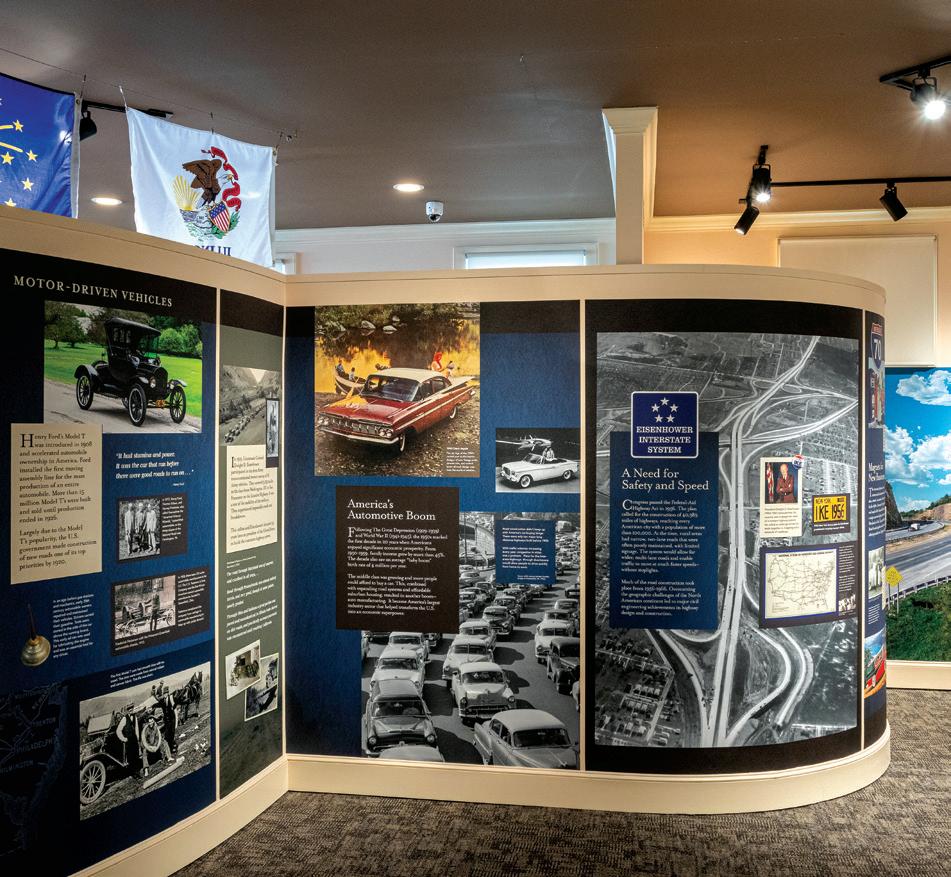
A new museum in Boonsboro pays tribute to the cross-county Route 40: The Road that Built the Nation
Through the heart of Main Street in Boonsboro, Funkstown, Hagerstown, Clear Spring, and Hancock runs a road that carries the history of America in a way few of us recognize. It’s a road that goes by many names on its cross-country trek. In Washington County it’s known as Alternate 40, the Old National Pike, Route 40, Main Street, Franklin Street, and Washington Street. In other parts of Maryland it is known as Scenic Route 40, 40A, and Interstate 68. Across the country it’s known as The Old Trails Road, The National Road, Main Street of America, or The National Turnpike. But, most fittingly, it is known as The Road That Built the Nation.
By Laura Forrest Hopfauf
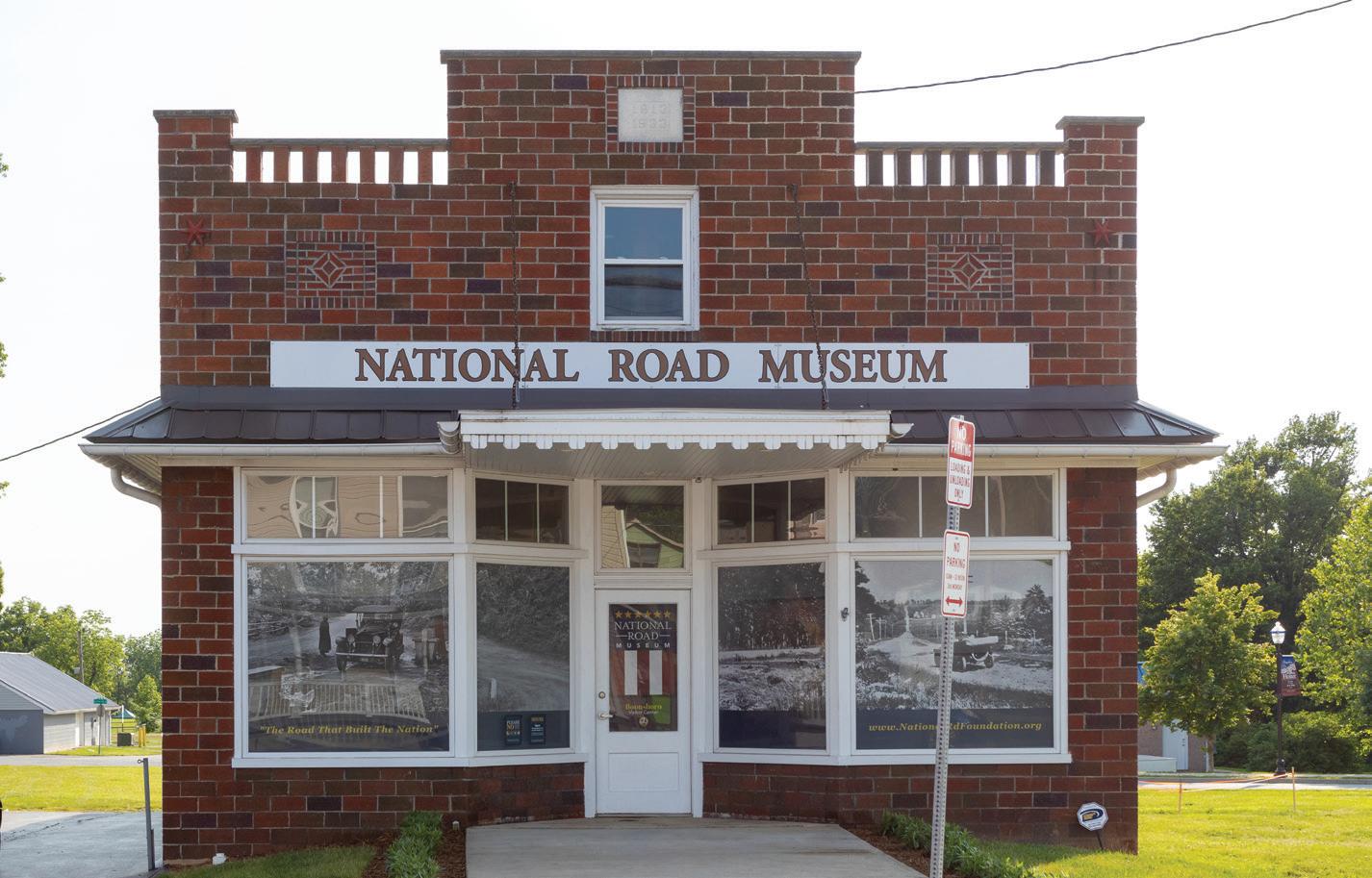
The National Road Museum—the only museum in Maryland dedicated to the road—on Main Street in Boonsboro celebrates a path that has connected not just our county and state but our country for more than 200 years.
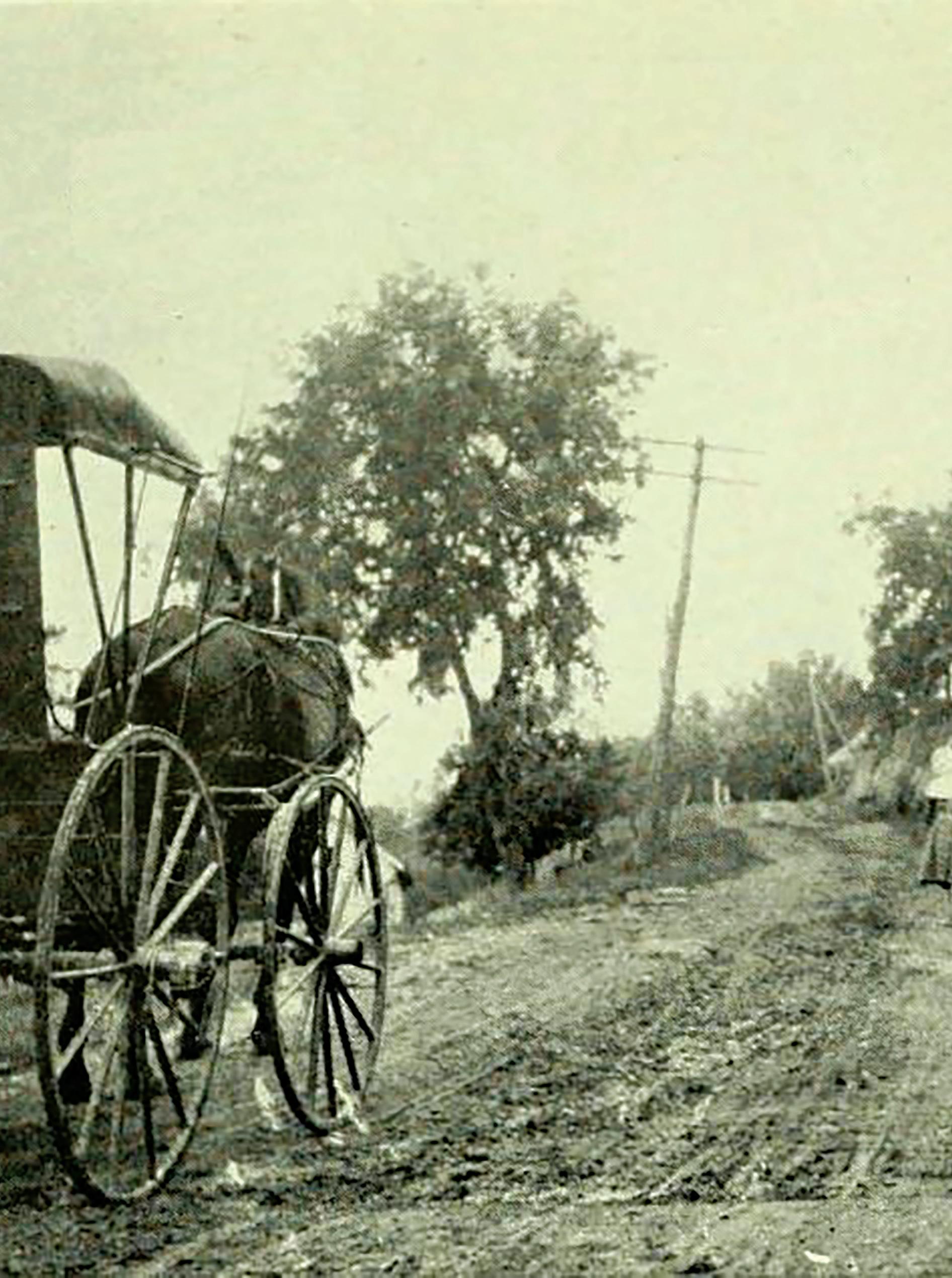
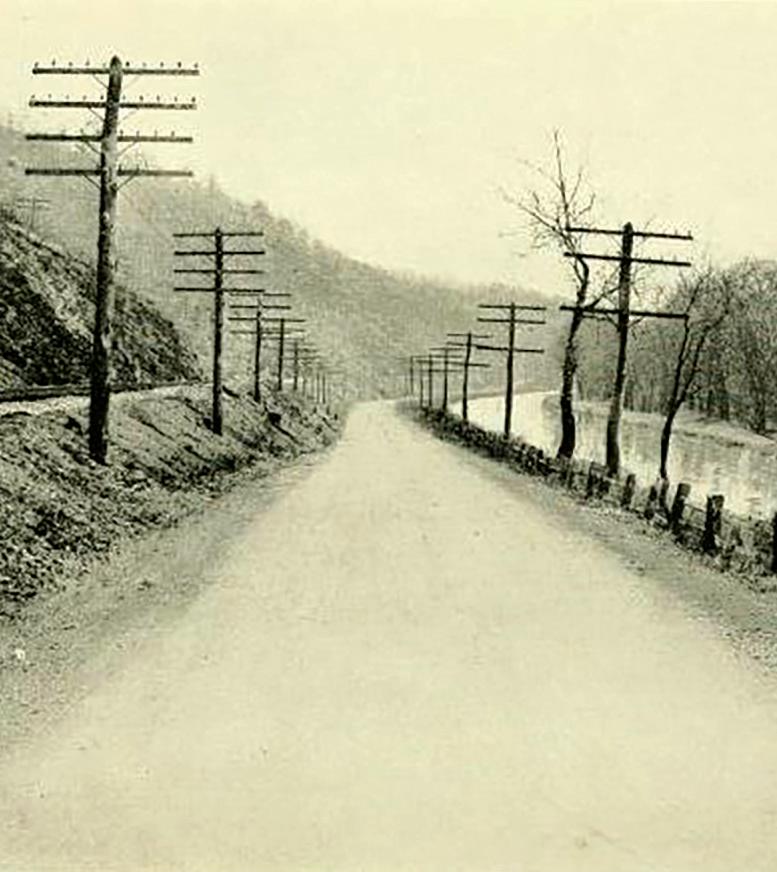
The National Road through Clear Spring in the days before pavement.
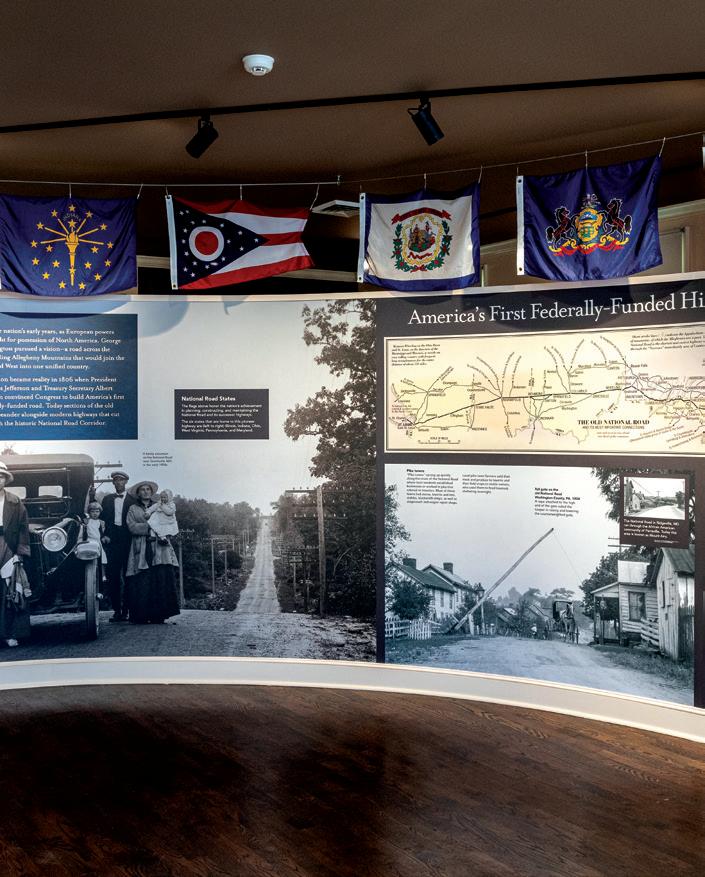
The museum leads visitors through the history of The National Road from its inception to the current day in a thought-provoking and compelling manner. Starting the journey clear back when the road was an American Indian Trail, the museum follows its route to becoming the first federally funded road in 1806 to its role in the Civil War to its fight for relevancy at the invention of the railroad then it’s subsequent resurgence with the car, and most recently its role with the implementation of by-passes and the interstate.
In addition to its historical displays, the museum preserves artifacts such as an authentic Tony Mendez painting and an original mile marker.
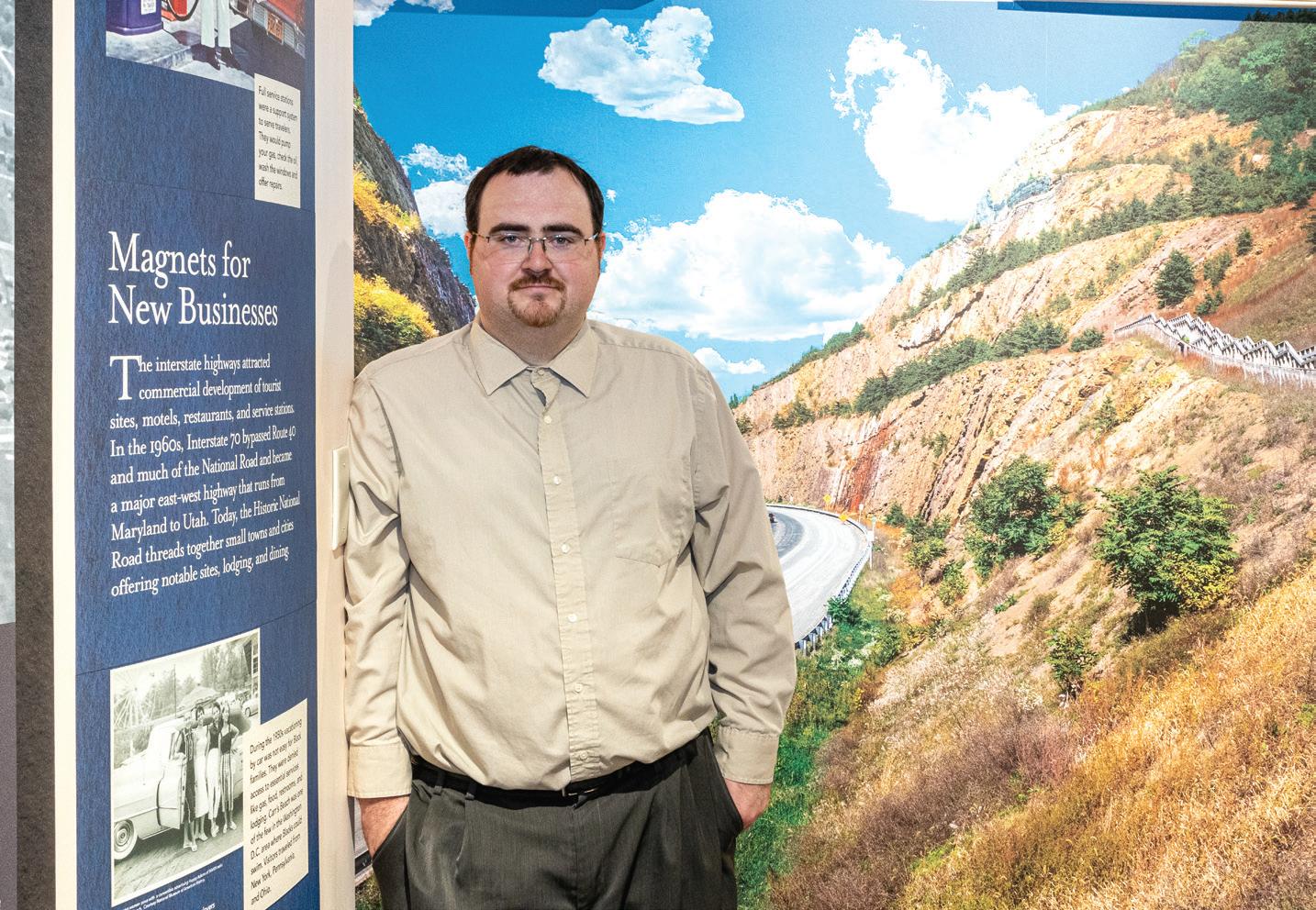
“We maintain all the wayside historical signs along the road. There are 52 that we maintain…including the one out front,” says Reuben Moss, director of The National Road Museum.
Other important emblems of the road such as the Casselman River Bridge and the Madonna of the Trail Monuments are along the route for those passing through today to study.
Although Route 40 isn’t often held in the same esteem as the iconic Route 66 with its tourist attractions and desert wonders, The National Road made the beginnings of western travel possible at a time it was arduous and dangerous.
“[Route] 40 was doing everything 66 did in the 1800s,” Moss says.
In the 1800s, the main streets that were part of The National Road were lined with
THE NATIONAL ROAD MUSEUM
The National Road Heritage Foundation invites visitors to take a historic journey along the first federally funded highway in the United States. A romance between scenic brilliance and stunning history reveals itself along the way.
Address: 214 North Main Street, Boonsboro
Hours: Saturday from 10 a.m. to 4 p.m. and every fourth Sunday from 1 p.m. to 4 p.m.
While You’re There: Visit the Boonsboro Trolley Station Museum next door; treat yourself to a great steak or seafood at Branded Chophouse or fine Italian at Jeovanis Pizzeria; grab a quick bite at Sizzlin’ Fajita or Vesta Pizzeria. Stay overnight at Inn BoonsBoro, an elegant historic boutique bed and breakfast owned by bestselling author Nora Roberts and her husband Bruce Wilder.
The early days of The National Road were rugged and tough-going transportation.
The National Road through Hancock followed the railroad and the C&O Canal.
taverns, stores, and hotels that travelers would need. Today in Washington County, many of those buildings still stand as houses and some remain as local businesses such as Inn BoonsBoro and Wilson Store in Clear Spring.
The National Road wasn’t just innovative in that it was the first road meant to connect our country town to town, it was also contained the first stretch of road to use macadam. In the 1800s the 10-mile stretch of road between Boonsboro and Hagerstown, known at the time as The Boonsborough Pike, was so difficult to travel that it would take stagecoaches up to seven hours to pass through it. Macadam was laid here to shorten that trip, connecting Boonsboro and Hagerstown on a faster, safer path.
Today The National Road, perhaps any road, isn’t held in the regard that maybe it should be. We don’t think of roads as essential to our history, as important as who was president or what technology was invented. In our daily lives, roads are overlooked. Where they came, how and why they were built, what it would be like to live without them are not really part of our collective consciousness. We drive them. We complain when there is work being done to them that slows our travel. We get upset with traffic jams.
But without roads society lacks connection, and little towns are dots on a giant map with no way to get from one point to the next. Without roads, without The National Road—the first road that sought to lead us westward—our county would be disjointed; a body with no veins.
“For much of human existence, the ability to connect with one another, improve our society, and better our lives, has been dependent on travel, in particular trails and roads,” Moss says. “The National Road today seems like just another rural road, but at one time it was the most reliable artery that allowed our 13 colonies to spread west while staying united and has played a part in many of the major events that have shaped our nation.”
The new National Road Museum in Boonsboro features informative exhibits that tell the story of the nation’s first highway. Reuben Moss is the director. Photography by Mark Youngblood
CNB Bank: Community Banking with Deep Roots and a Local Heart
In an era when banking often feels impersonal, CNB Bank stands as a reminder that local still matters. Founded in 1934, CNB has grown from a small-town bank into a trusted financial partner for individuals, families, and businesses across the Tri-State region. Through every chapter, one thing remains constant: a commitment to serving people—not just processing transactions.
Headquartered in Berkeley Springs, West Virginia, CNB has expanded thoughtfully into neighboring communities while keeping its local identity intact. With 9 full-service locations, the bank remains deeply involved in the towns it serves. That presence will grow in late 2025 with a new branch at 13527 Pennsylvania Avenue in Hagerstown, Maryland—reflecting CNB’s continued investment in Washington County.
“Our strength has always come from being present and connected,” says Mark Harrell, President and CEO. “We know our customers by name. We listen, show up, and respond quickly because we live and work in the same communities we serve.”
This personal approach is one reason CNB was voted Best Bank in Washington and Berkeley Counties and Best Investment Firm in
the 2024 Tri-State’s Community Choice Awards. These honors reflect not only CNB’s financial expertise but also the trust and loyalty it has earned year after year.
CNB’s story goes beyond its offices. Employees give back—serving on nonprofit boards, mentoring youth, coaching teams, and volunteering at food drives and events. CNB supports hundreds of local initiatives annually, from school supply drives and financial literacy programs to charity walks, festivals, and scholarships.
“We take pride in being part of something bigger,” says Harrell. “Our employees care deeply about their communities, and that care shows in everything we do—from answering the phone to supporting a local fundraiser.”
CNB offers a full range of banking services— from checking and savings to mortgages, business loans, and equipment financing. Through CNB Wealth Advisors, customers also receive retirement planning, trust services, and investment management—with the personal attention and transparency they deserve.
A of Century
aviation history
A high-flying event will celebrate Hagerstown’s significant impact on
American aviation
by erin jones
The vintage military aircraft flying above Hagerstown this month will ring nostalgic for Hagerstown’s older generations and should pique the curiosity of younger generations. The old planes will fly in commemoration of Hagerstown’s aviation history, which is one of the most significant aspects of America’s aviation history.
The aviation innovation and construction that happened in Hagerstown pushed both commercial and military flight forward and helped win both world wars.
Hagerstown’s aviation history begins even before the Fairchild Aircraft Company was formed. During World War I, Hagerstown-based Maryland Pressed Steel Company supplied weapons and ammunition to the war effort. Wanting to expand into aviation, the company brought on Giuseppe Bellanca who designed and built the first of many airplanes to be manufactured in Hagerstown. The aircraft, called the Bellanca C.D., was intended to be a training aircraft for Allied pilots in World War I, but the war ended before they were put into use.
An employee of Bellanca named Lou Reisner started an airplane repair company in 1921, and along with Ammon Kreider, formed the Kreider-Reisner Aircraft Company. It designed a small monoplane called the KR-Midget, followed by the C-1 and C-2 Challenger biplanes. By 1926 their production was outgrowing their buildings on Pennsylvania Avenue so 60 acres north of Hagerstown was purchased.
Sherman Fairchild founded Fairchild Aviation Corporation in Farmingdale, New York, in
1925. By 1929 he was looking to expand operations and purchased Kreider-Reisner in 1929, just as the Great Depression began.
“Sherman lost control of a lot of the companies that he had controlled in New York, and he retained control of Kreider-Reisner. He basically came to Hagerstown to restart and rebuild the aircraft business,” said Kurtis Meyers, vice president and curator of the Hagerstown Aviation Museum.
By 1931, the Fairchild headquarters moved to Hagerstown. The move was mutually beneficial. The depression had taken Kreider-Reisner’s workforce from 200 to 15. Fairchild brought with him the funds to design and manufacture a new airplane, and with it, employment opportunities.
The Fairchild C-119 Flying Boxcar, circa 1953.
the museum
The Hagerstown Aviation Museum’s Fairchild Aircraft 100th Anniversary Homecoming September 12 to 14 will celebrate aviation, innovation, and community, but aviation history enthusiasts can immerse themselves all year long in the aviation heritage that is celebrated and preserved by the museum.
“All the years that we’ve worked on the museum it’s been really rewarding because there’s so many
says John Seburn, Hagerstown Aviation Museum president and executive director.
families in the community whose parents, grandparents, great-grandparents worked with Fairchild. We’re preserving the family history of their ancestors helping to build airplanes here. Hopefully that group of people will find it nice to come pay homage to all those who helped to build the airplanes,”
The museum’s mission is to preserve Hagerstown’s aviation heritage.The museum may be Hagerstown’s best-kept secret, but the innovation and manufacturing that took place on its grounds left a profound impact on American aviation history.
The museum is at the intersection of two runways at Hagerstown Regional Airport, which means that while visitors learn about Hagerstown’s aviation past, they are surrounded by its present.
The museum has plans to expand to offer more educational resources about the factory, the production process, and the unique role that women played in making it all happen. It also seeks to inspire a new generation with STEM and aviation education and a sense of pride in the aviation heritage of Hagerstown.
“That really started them on the next path—to get them through the 1930s,” Meyers said.
That first plane was the Fairchild 22, which had an open cockpit, followed by the Fairchild 24, which had a closed cockpit. The plane earned a reputation as a sport plane, and the museum notes it was called the “Ca dillac of small private airplanes.”
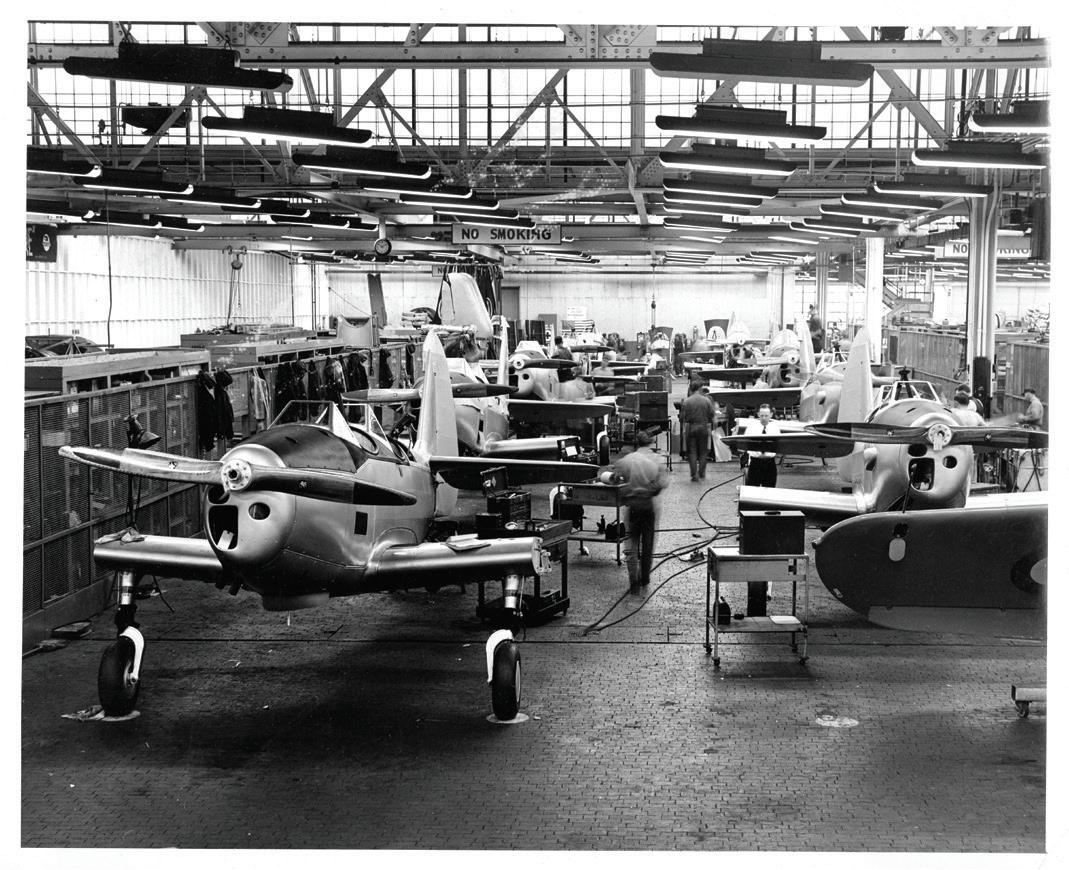
But the time for a greater demand was approaching. As World War II loomed, Fairchild designed a monoplane for training pilots. Fairchild test pilot Dick Henson flew the plane in a competition at a U.S. Army Air Corps testing facility and Fairchild won a contract to manufacture 270 of the aircraft, the PT-19.
“What Fairchild designed was something that had the look and feel of the fighters they would eventually be flying.” says John Seburn, Hagerstown Aviation Museum president and executive director. “The way they designed it, the airplane was very safe to fly for people who had never flown an airplane before…The wings were designed so they wouldn’t stall easily. Then there were other features like the landing gear was very wide and stable on the ground.”
The demand for the planes was high, not just for the U.S. military, but from European allied countries. The company was in the process of expanding its factory space to keep up with the demand when Pearl Harbor was bombed. Overnight the demand for planes was in the thousands.
People flocked to Hagerstown to work for Fairchild, and the community rose to the occasion. In
what became known as the “Hagerstown System,” Fairchild began using local companies to create airplane parts. Furniture companies, machine companies, even Moller Pipe Organ Company, were now part of the war effort, creating airplane parts and delivering them to the factory for assembly.
“They looked at Hagerstown as one single factory because they had trucks and vehicles running and picking up parts here and there and moving them from one place to another,” Meyers says. “That was all orchestrated through Fairchild…and then it all came back here and was put together and assembled.”
Women played a significant role in the manufacturing efforts, too. Iconized by the “Rosie the Riveter” image, women created a vital workforce in the assembly of the airplanes. Other women learned to fly and
The assembly line at Hagerstown Airport factory for the Fairchild PT-19 Trainer, circa 1943.
became Women Airforce Service Pilots or WASPs, delivering the planes to bases upon completion.
By the end of the war, Fairchild had an estimated workforce of 8,000. Beyond the local impact, the Hagerstown community became a model for the war efforts around the United States.
“The Hagerstown System that was developed here…was taken by other companies all over the country and implemented as much as possible in the communities,” Meyers says.
lowed by the C-119, which
Previous military cargo planes had been based on commercial airlines with much smaller side doors. The innovative design of the C-82 and C-119 allowed jeeps, trucks, and heavy equipment to be easily driven in and out of the aircraft. Dropping pallets of supplies out the back with a parachute also became possible.
the event
September 12:Watch vintage airplanes land at the Hagerstown RegionalAirport.The HagerstownAviationMuseumwillofferFairchildHeritageFlightsfora$200donation.
There will be a 1940s Hangar Dance at the museum with Big Band music,dancing,food, and drinks. September 13:The traditionalWings &Wheels Expo highlights the museum’s extensive collection of vintage aircraft,as well as the historic Fairchild FlightTest Dome Hangar and aviation exhibits.There will also be a “cruise-in” showcasing antique and classic cars,trucks,tractors,motorcycles,tractor-trailers,cranes,law enforcement vehicles,SWATvehicles,and more.There will be live music and local food vendors throughout the event. September 14:There will be a speaker series that includes a Ranger Engine Clinic,a Rosie Reception,and anA-10Warthog Roundtable.
As the war progressed, the company sought to expedite production.
“Our understanding was that they were trying to build them as fast as they could because they assumed we would have to do an invasion of Japan like D-Day. Nobody knew about the atomic bomb,” Seburn says. The war ended before the new cargo planes could be used, but in the years that followed they would be used in the Berlin airlift, and aircraft using the same concept would be used in Korea and Vietnam.
“It’s sort of the grandfather of all the military cargo planes ever to load
from the back,” Seburn says.
In 1965, Fairchild purchased Republic Aircraft, which shifted the focus to building fighter aircraft. In response to a call for proposals from the U.S. Air Force, the company developed the Fairchild A-10 Thunderbolt, nicknamed the “Warthog.” Production began in 1976. The contract expired in 1984, the company ceased operations in Hagerstown that same year.
Fairchild had once employed about 10,000 people, but at the time of its closing that number had dwindled to about 400. While the economic effect of the closing was devastating, some of that impact was mitigated by the need for similar work in the Mack Truck Company, which had come to Hagerstown in the early 1960s.
cariously close to being relegated to the past. Seburn and Meyers, along with Richard Henson and Kent Mitchell, created the museum as a non-profit in 1996, but lacked a location for their preservation efforts. The remaining aircraft were housed at Hagerstown Regional Airport, and the group relied on expos and airshows to showcase their history.
In 2008, Meyers published a book called Hagerstown During World War II, which includes many photographs and primary source documents from the era.
In 2019, the museum secured a lease at the original Fairchild property and three years later, purchased the hanger where the museum lives today.
“We couldn’t be in a better place,” Meyers says. “It is our biggest artifact to a large extent.”
“This is where the history happened.” Seburn adds.
The closure put more at risk than jobs, however.
Decades of aviation history on both a local and a global scale teetered pre-
The Fairchild Republic A-10 Thunderbolt II Warthog, circa 1980.
The Fairchild PT-19 Trainer used to train World War II pilots, circa 1943.
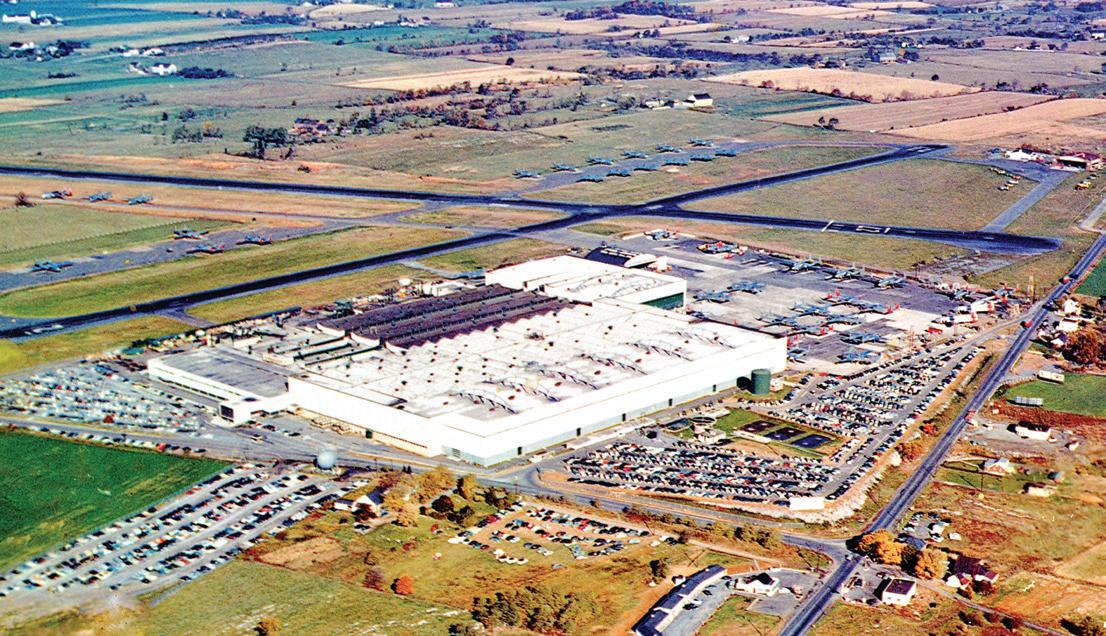
(Above, left) The Fairchild Aircraft factory at Hagerstown Airport, circa 1955.
(Above, right) Fairchild C-82 Cargo “Packet” assembly line at Hagerstown Airport Factory, circa 1945.
duty
honor and
At 102 years old, WWII veteran and Washington County native Jack Myers reflects on his time in combat, returning to Normandy, and the great accomplishment of the Greatest Generation
By Lisa Gregory
Inthe midst of World War II two young men forged a friendship. One was a Native American named Albert “Al” Haschke from Nebraska. The other was Wilbur J. “Jack” Myers from Williamsport, Maryland.
Both were members of the 692nd Tank Destroyer Battalion fighting in Europe. One would make it home from the war. One would not.
“He was a great guy,” says Myers of Haschke. “I loved him.”
Over 80 years later Myers, who was an anti-tank gunner, can still recall the moment he lost his friend as if it was only yesterday. “We took this village in Germany,” he recalls. “I couldn’t traverse my gun because I was hitting trees and stuff, so he got out and started to cut the limbs down. And while he did that, we got a terrific barrage of shells.”
Haschke was hit. “A piece of shrapnel went through his steel helmet and came out the back,” says Myers, who now lives in Hagerstown. “He went down. We went to him, but there was nothing we could do. He was gone.”
Myers pauses, then says with resignation in his voice, “That’s war.”
Despite memories such as these and the pain they continue to cause him, Myers will tell you that even as he acknowledges the bad, he relishes the good. “I’ve had a good life,” he says. “I try to think about the good things.”
That life began in 1923, when Myers was born the sixth of 13 children. “There were seven girls and six boys,” he says. His family loved music and some of his best memories are of them gathered around the family’s organ singing hymns. Even today at 102 years old Myers performs. Recently, he sang “God Bless America” at the Gettysburg Film Festival with its World War II theme to an enthusiastic crowd.
Growing up during the Great Depression, Myers wanted to help out his family. At the age of 16 he dropped out of school and went to work for President Roosevelt’s Civilian Conservation Corps or CCC.
“I read about it and that I could get $35 and give my parents $30,” he says of the monthly pay.
“So, I did it.”
Myers worked at Rock Creek Park camps in Washington, D.C., for six months “building bridges and fences and cutting down trees,” he says.
After CCC he came home and continued to work at a variety of jobs, including Troy Laundry and Dry Cleaning where he made $55 a week driving a pickup and delivery route. In 1942 he married Kathryn “Kate” Kendle. The two met at a local carnival. “The prettiest girl I had ever seen,” he recalls of the dark-haired beauty.
By the time he was drafted in 1943, he and his wife had had their first child, a boy named Ronald. Myers says he had no delusions about what the war would mean for him and his young family.
“I knew we had to do it,” he says of going to war. “And I knew I was part of the young people that were going. We had to make sacrifices to do the right thing.”
He relied heavily on his faith. “I am a Christian, and I know that God didn’t want the world like Hitler wanted it,” he says.
Following basic training at Fort Hood, Texas, he would go on to board
the English ship, Scythia, along with 6,000 other soldiers in August of 1944. We left New York City in a ship convoy,” he says. “Ships as far as I could see.”
Waking up early the morning after boarding the ship, “I went up on deck and went back to the stern to see the New York Harbor lights disappear in the early morning light,” he says. “It was quite an eerie feeling wondering about our future.”
However, Myers took great comfort in knowing that he and his fellow soldiers were in good hands. “I saw destroyers on both sides,” he says.
“The convoy would zigzag to defend against submarine torpedoes and the destroyers would drop depth charges from time to time chasing them away. We knew the subs were out there but thank goodness we were well protected.”
After arriving in Cherbourg, France, “We spent the next few days in Normandy getting organized to go in a motorized column through Paris and Brussels, Belgium, to finally go into combat in Holland in the battle of Antwerp,” he says.
For Myers, the war became very real at that point. “I saw my first dead GI when we first went into combat in Holland,” he says. “It made me feel sorry for him and also made me think about what could happen to us.”
With a victory at Antwerp, he and his fellow soldiers moved on to the Siegfried Line, a line of defense on the German border. His battalion occupied defensive positions along the Roer River during the Battle of the Bulge and supported the 104th Division from the Roer to the Rhine River, helping capture Cologne, a key industrial city.
“We had to knock out pillboxes with our three-inch guns, hand grenades, and flame throwers,” he says of the small, fortified structures which protected Ger-
man soldiers and provided a firing position. Not an easy task. “But after several weeks,” he says, “we broke through and pushed into Aachen, Germany, where we were able to hold our line of defense in the Battle of the Bulge.”
The Battle of the Bulge was Germany’s last major offensive on the Western Front and the eventual Allied victory would be a pivotal turning point in the war.
“When we got to Cologne we celebrated after driving the Germans back across the Rhine River,” says Myers. “I remember some of us going up in a cathedral and we could see the Germans moving across the river.”
But the battalion would pay a high price losing men like Haschke, Myers’s good friend.
“We found out later that his twin brother, Adolph, was nearly killed in the same barrage,” says Myers. Adolph and his commander had stepped away from their jeep momentarily when it was hit by a shell and destroyed.
Myers would experience a close call himself. “We were going through heavy artillery and mortar fire,”
he says. “A shell hit a building above us and shrapnel sprayed our tank destroyer and the open turret.”
A piece of that shrapnel hit his helmet but fortunately did not penetrate it. He took the piece of shrapnel home as a souvenir. “I was lucky,” he says.
And he could be heroic when called upon to do so. Myers received the Bronze Star for firing at an enemy observation post in a church steeple 4,000 yards away, scoring a direct hit and stopping heavy shelling on his fellow soldiers.
“Our men were pinned down,” says Myers. “My leader came over and said, ‘Jack, I think their fire is being directed by someone up in that church temple.’ He told me, ‘I want you to put a high explosive shell in that window and see what happens.’ The gun I had was a 90 millimeter, and I put a shell right in there. It was a direct hit. I felt good because I thought, well, that’s going to help us. We won’t get shot anymore. And we didn’t.”
His battalion would also help to liberate Dachau, one of the first and longest-running concentration camps established by the Nazis. When asked about it,
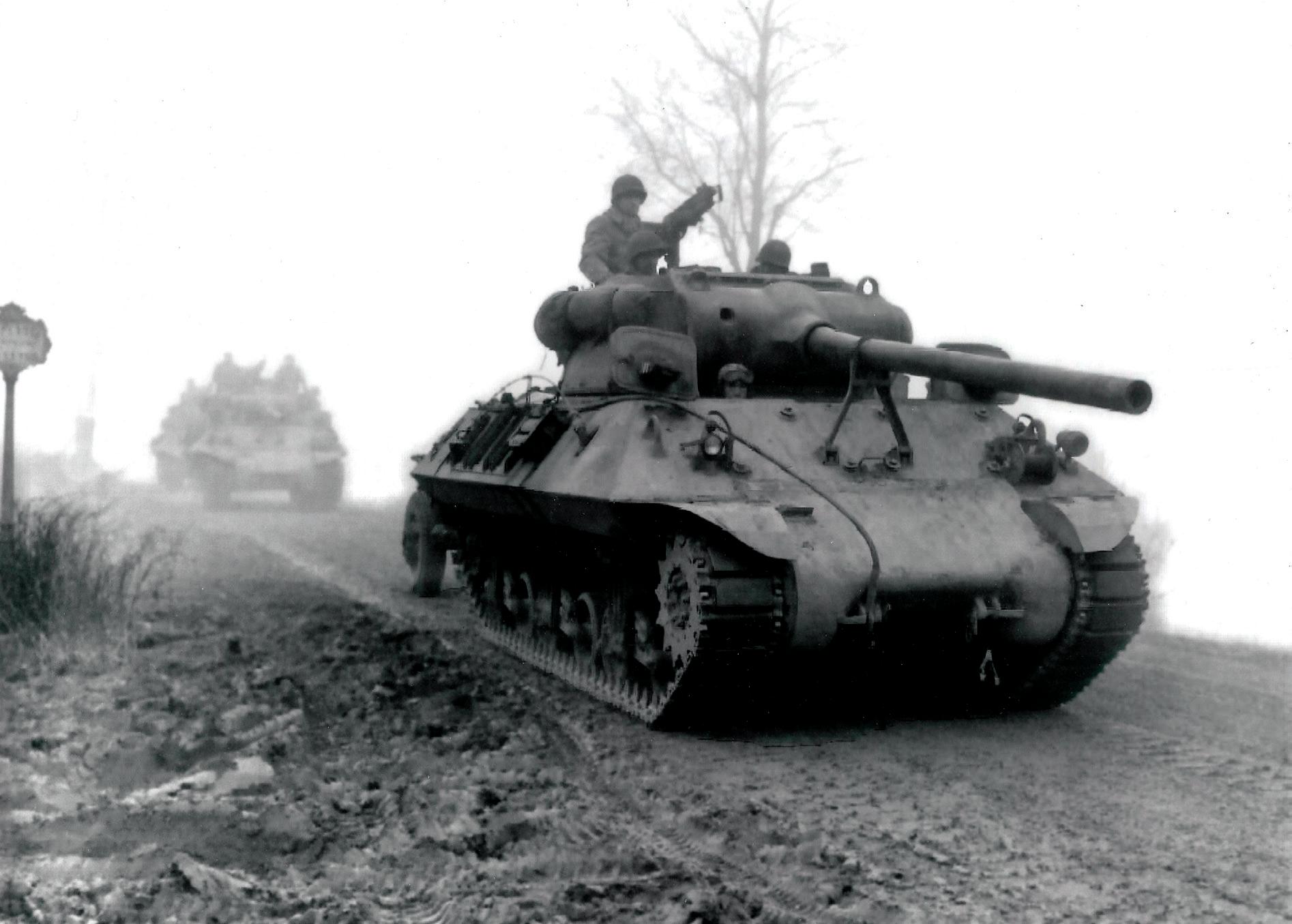
World War II veteran Wilbur J. “Jack” Myers in a tank moving toward the Battle of the Bulge.
the usually chatty Myers becomes quiet. He stares off into the distance for a brief moment deep in thought.
“They were skin and bone,” is all he will say before adding, “How do you treat another human being like that?”
But even among the atrocities, there were moments of simple pleasures. A good pork chop, for example. The two farm boys, Myers and Haschke, knew a good eating opportunity when they saw it.
“One day we came across some hogs,” recalls Myers. “Haschke said if we killed one of those hogs, he would skin it, and we would have some pork. So, we shot the hog and threw it on the tank until we had a chance to eat it. The weather was cold, so it didn’t spoil.”
A few days later the unit was “holed up in a small village long enough for us to skin this hog and have us some pork chops,” says Myers. “It was nice to have something to eat besides rations.”
A taste of home for the two men.
Being away from their home and their loved ones was always challenging, but especially during the holidays. “At Christmastime in 1944,” says Myers, “we got a command to stop firing. They gave us time to go through our cards and just sit there and think about being home. I was longing to be home with Kate and Ronnie. All of sudden across the river the enemy started to sing Christmas carols. We sang with them.”
The soldiers found solace in other ways as well. “One of the men in our company found a friendly dog, brown in color,” says Myers. “So, he called it Brownie.”
The dog and soldier stayed together until the war ended. “I’m sure the dog was a great comfort to him,” says Myers. So much so that after the war, the soldier took the dog back home with him to Wisconsin.
Myers fighting days would end earlier than he wanted or expected following an accident. He had a German soldier surrender to him who had on him “a
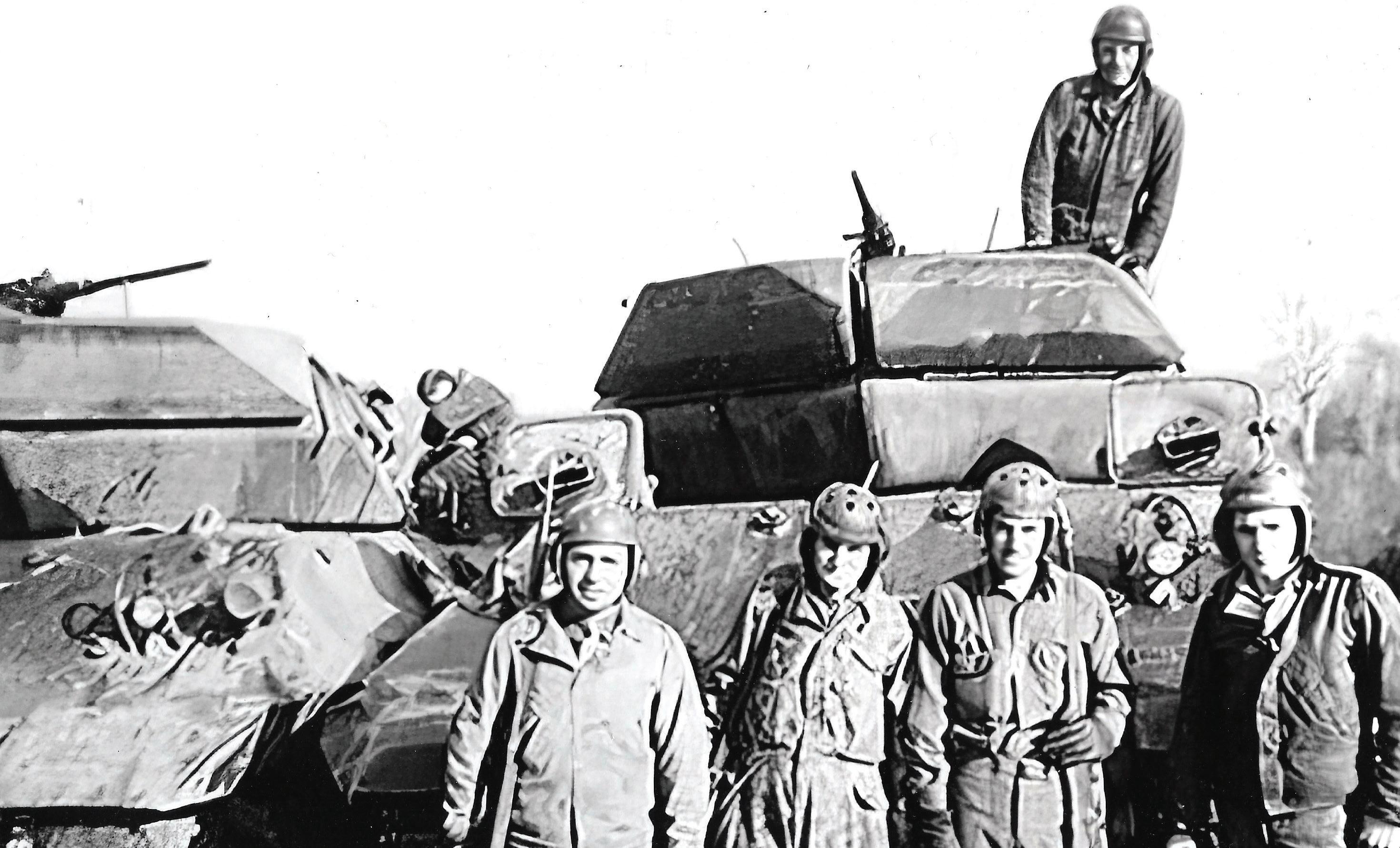
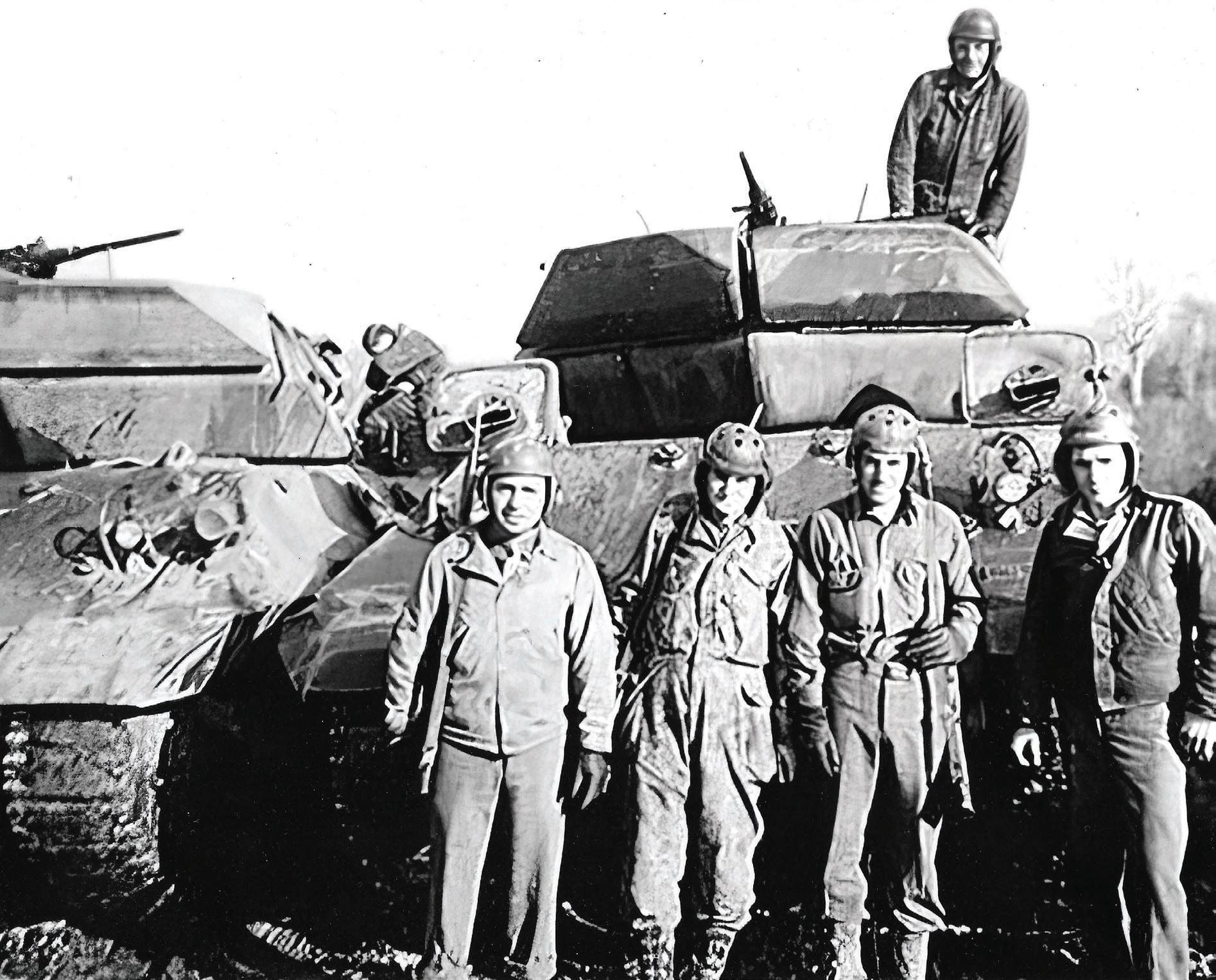
Company B, 692nd Tank Destroyer Battalion. Jack Myers Tank Crew. Sam Fena, Chester Bartoszek, Joseph Kelley, Jack Myers, and Albert Haschke in Tennessee.
beautiful 32-caliber pistol, which I took,” says Myers.
Later showing it to his fellow soldiers, “it accidentally fired going through my left hand,” he says.
“I told them to just put a bandage on it and let me remain, but it was too serious. I was so disappointed and disgusted. I really wanted to stay with my unit until the end.”
He was sent to England for surgery on his hand and would not return to the battlefield.
Myers would eventually return home to Kate and his little boy. A second son had been born while Myers was overseas fighting but died shortly after birth.
“I never got to see him,” says Myers. “But it couldn’t be helped. That was a hard time for Kate and I.”
The couple would have a total of four children, all boys. Today, Myers is not only a proud father, but a proud grandfather, great-grandfather and great-great-grandfather. Including great-grandchildren who are a set of triplets. “They named the boy after me,” says Myers, beaming.
Myers went on to work in the furniture business, and he and Kate made a good life for themselves and their children. Kate passed away after 69 years of marriage.
For most of his life, Myers couldn’t talk about what he had seen and experienced during the war. But, in more recent years he began to share his stories. He has even returned to Germany and France, including this year’s 81st anniversary of the Normandy invasion. “The people there still thank us,” he says of himself and his fellow veterans.
Opening up and talking about the war has also benefitted him in ways he could not have imagined. When Myers was asked to participate in a Zoom presentation on World War II and talked about losing his friend Al, the great-great-nephew of Albert Haschke saw it. He reached out to Myers.
“We’re best friends now,” says Myers. “He looks like Al. He talks like him. He laughs like him. I got my friend back. I got Al back.”
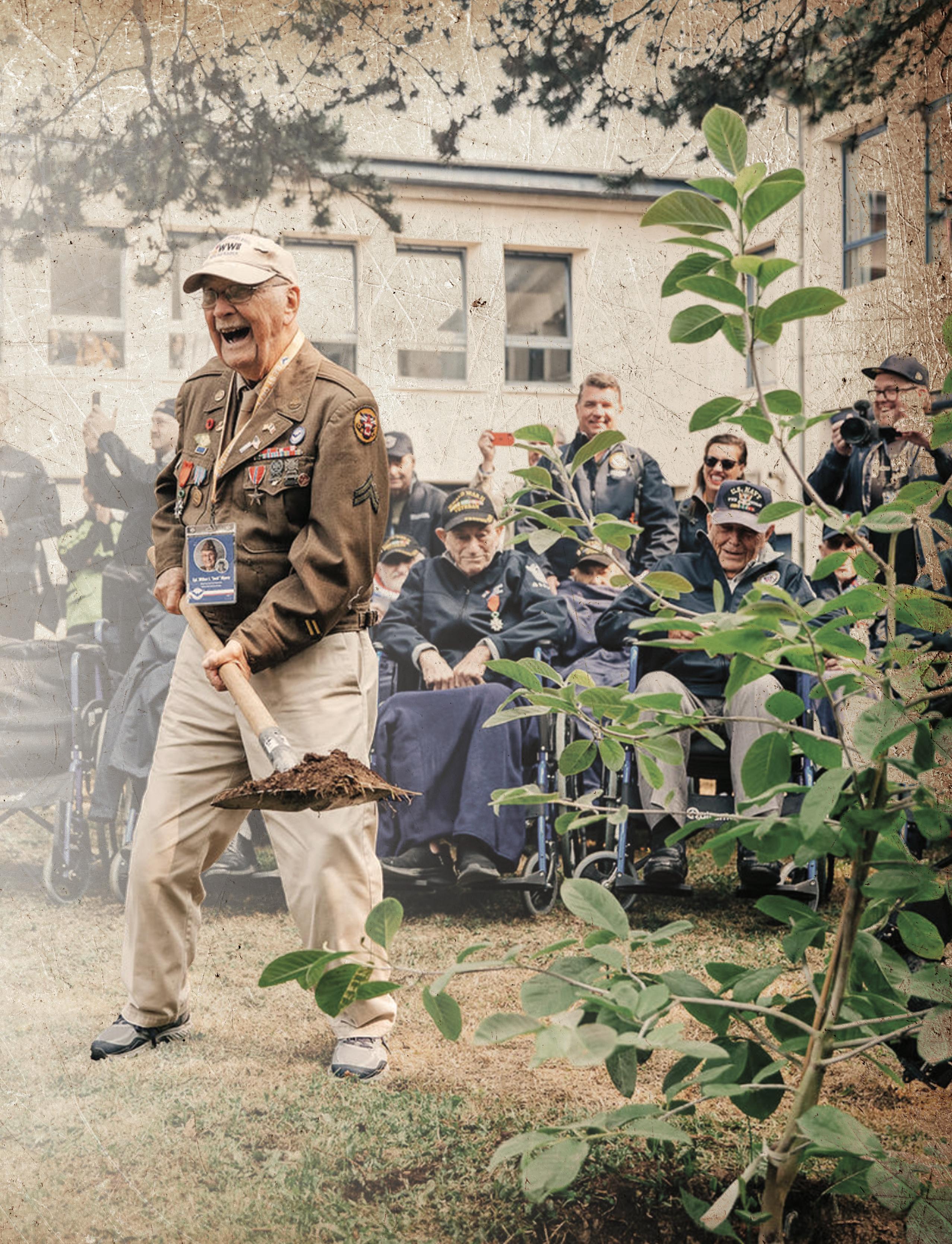
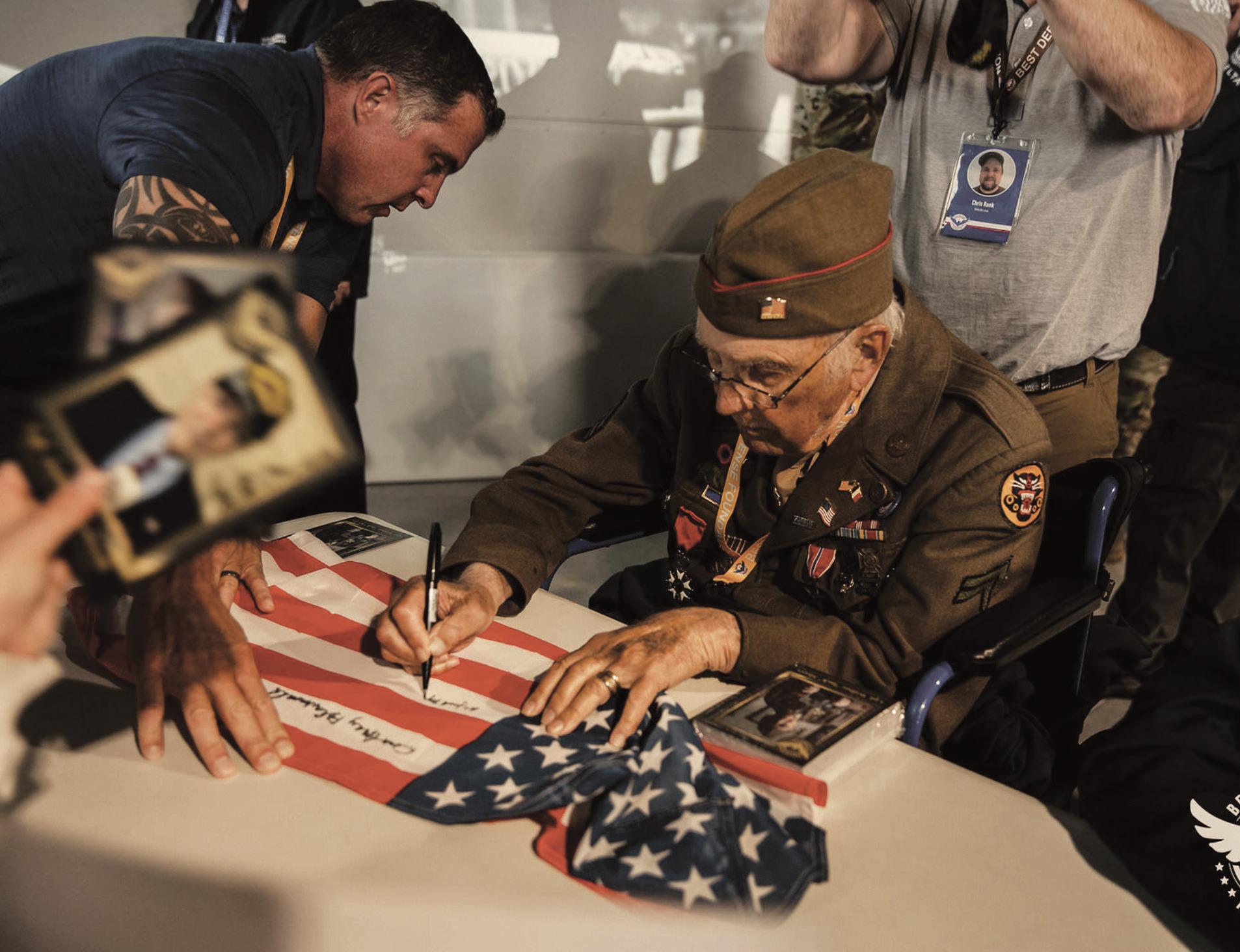
Wilbur J. “Jack” Myers took part in the 81st anniversary D-Day celebration in Normandy, France in June, planting a tree and signing memorabilia. Photo credit: Best Defense Foundation.
It was sometime in 2020 that Naomi Pike hit rock bottom, mired in addiction and helplessly trying to figure out what would come next.
“I had nothing, no one, nowhere else to turn to but God,” she recalls of that dark and desperate period.
She found Brooke’s House, then an upstart addiction treatment center and now known around the world for its success helping women overcome addiction.
“God folded this path in front of me and led me to these beautiful people that opened their hearts to me,” she says. “They did not discriminate or look at me like I was a criminal or an addict.”
Pike is now more than five and a half years sober and is one of many success stories that have come out of well-known story of Brooke’s House. Narcotics police officer Kevin Simmers and his wife Dana lost their 19-year-old daughter, Brooke, to opioid addiction in 2015, and by 2018, fulfilling a request Brooke asked of her father before she died, opened a treatment facility to help women in her situation.
Three months after Brooke’s death, her parents took up the mantle their daughter left them and began to make Brooke’s House a reality. Kevin retired from the police force in 2017. In 2018 construction on Brooke’s House began, and Kevin became its full-time director.
In the years since, Brooke’s House has become a model for successful addiction facilities.
“Kevin’s motto is everyone that comes in this door is just like his daughter and he wants them to be treated
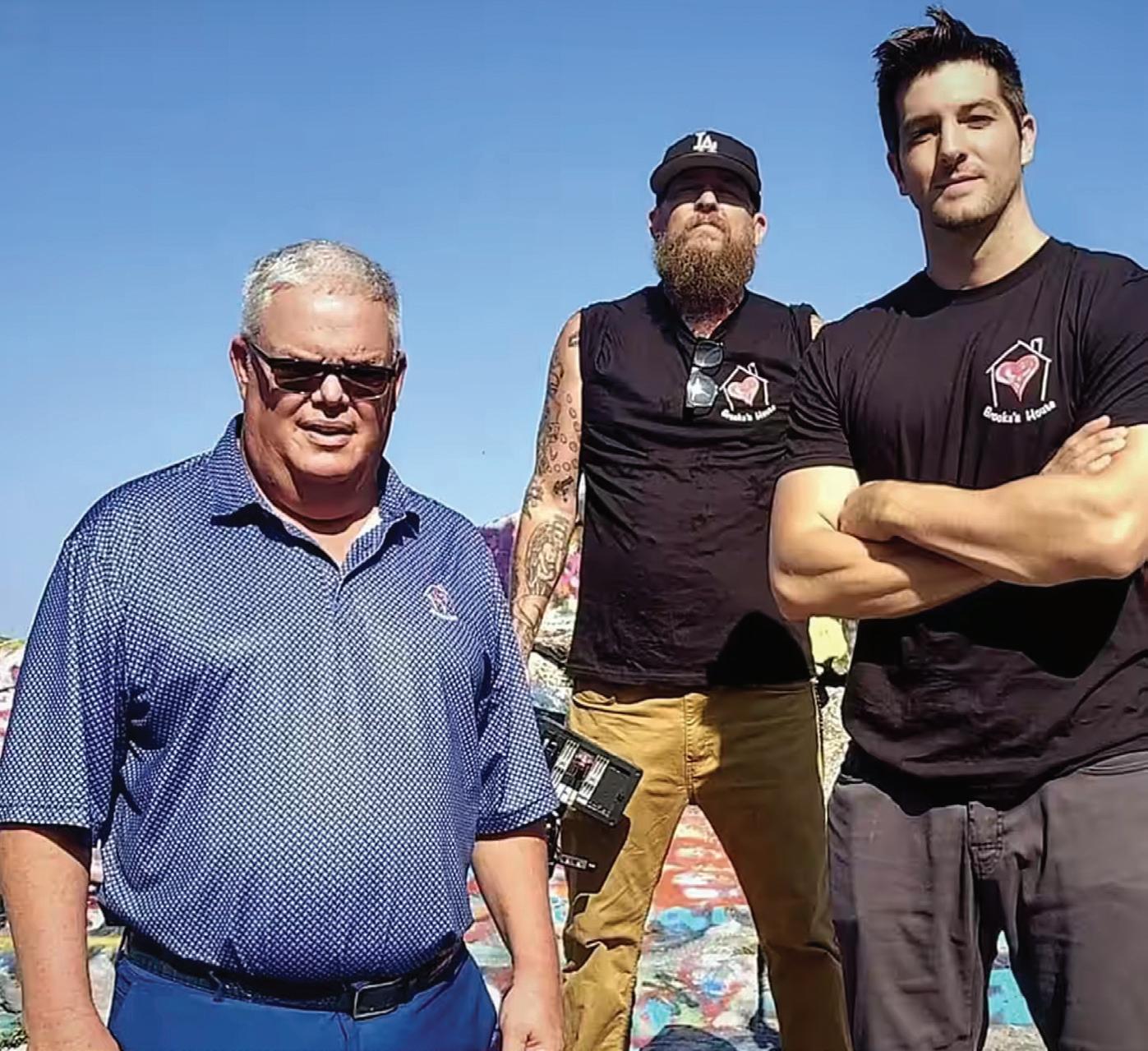
Kevin Simmers with writer and director Jake Allyn.
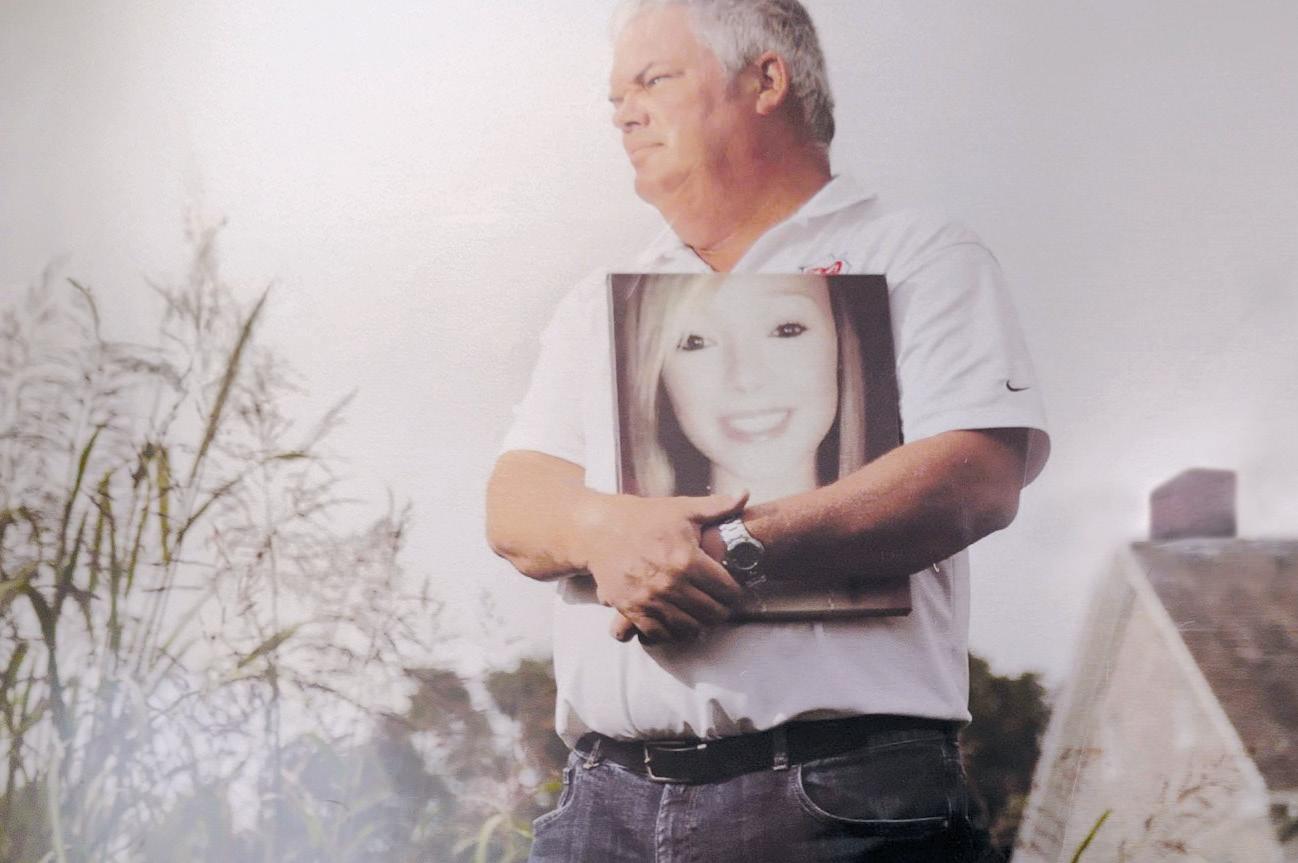
Kevin Simmers with a picture of his daughter Brooke.
accordingly. That’s how I was treated and welcomed,” says Pike, who now works for Brooke’s House as a certified peer support specialist.
Recently, she took on a second role as set decorator for the film “Clean Hands,” which looks at the opposing sides of addiction through the eye of the drug cop and the addict, who in this case are father and daughter.
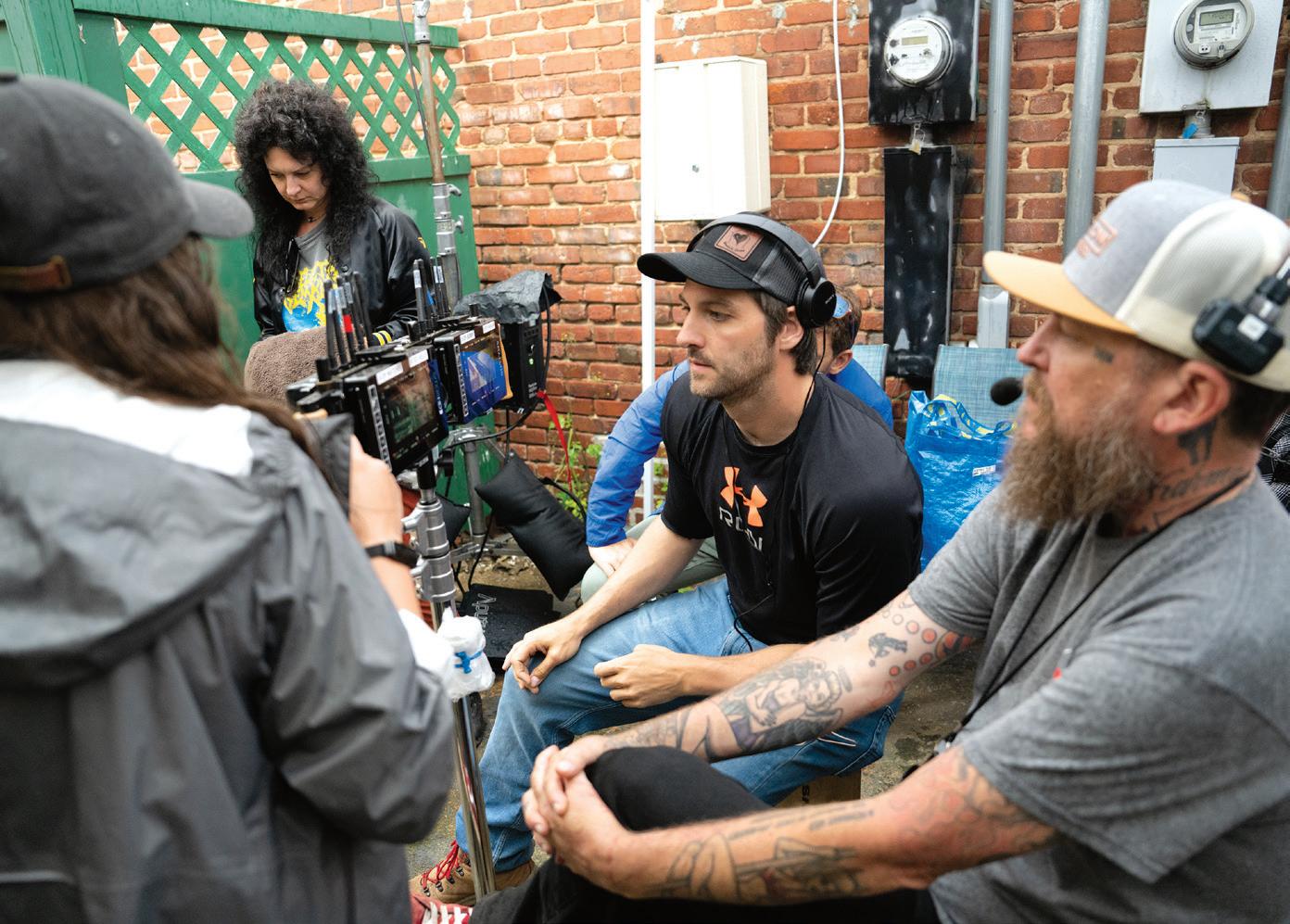
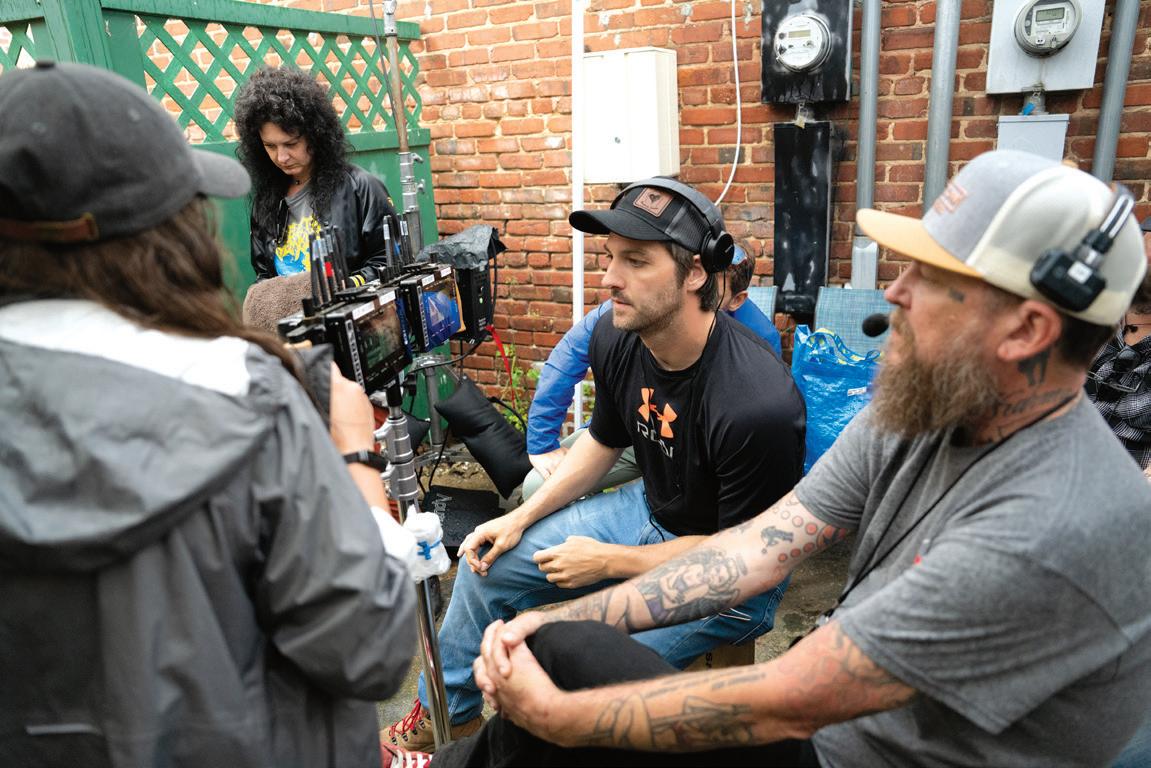
The film, written and directed by Jake Allyn, is now in post-production, and projected to be released in 2026.
Word of Brooke’s House reached Allyn in 2020. He was doing research for another project and sought Simmer’s input. After numerous phone conversations, Simmers invited Allyn to Hagerstown to spend time at the facility.
“He came here and actually lived in one of our properties for a week and worked in our program,” Simmers says.
Allyn remembers being captivated by the story and says the need to tell it on film became clear to him. He approached the Simmers with the idea, and they agreed.
“He will do anything for those girls and for that house and anything to get the message out.” Allyn says. “I think a movie just became the next step.”
It took Allyn two years to write the screenplay.
“Kevin was incredibly involved but also incredibly trusting of me,” Allyn says. “He also very much gave me my space to do what I do.”
Simmers visited Allyn in Dallas where he is based, and Allyn took several trips to Hagerstown. He became close with the Simmers, as well as Pike, who he said
to him, both in the research phase and on the set.
“[Jake] really did his homework on trying to capture the essence and the character of Kevin and Dana, learning about Brooke, trying to capture that and portray that on film,” Pike says.
When the casting process began, finding the right person to play Brooke presented a daunting task, and one that held emotional complexity for the Simmers.
“I felt that nobody could be Brooke that would make me happy,” Kevin Simmers recalls. “And then we met Esther McGregor, absolutely one of the most beautiful people of our life. Not only during the filming was she identical to Brooke, but there’s a lot of unbelievable similarities that she had to Brooke’s personality. She’s very upbeat, very outgoing, very joking…She absolutely will win an Oscar before my lifetime is over.”
Allyn says he initially expected to do a national search for the role, with upwards of 1,000 candidates. McGregor’s was the first tape to come in. “She just flat out blew everybody away,”
Allyn says. “Just smashed her audition.”
McGregor, daughter of Scottish actor Ewan McGregor, became close with Kevin and Dana on set. Allyn particularly cherishes a comment Dana made to him that she felt like he gave her Brooke back for a few weeks during filming.
“All the hard work was worth it for a comment like that,” Allyn says. “I’ll certainly remember it as we release the film.”
Depicting Kevin Simmers also presented a tall order.
“When Kevin walks into a room, he just fills the whole thing up. To have that quality while at the same time have this burning silence that Kevin can have at times, that was a beautiful challenge and one that Zach Braff, who ended up
Writer and director Jake Allyn on the set of “Clean Hands.”
Naomi Pike, once a resident at Brooke’s House and now she works there, served as set direc- tor for “Clean Hands.”
playing Kevin, delivered in spades.”
Braff, most known for his character John “J.D.” Dorian on the ABC sitcom “Scrubs,” worked closely with Simmers, handling the role with care.
“He was extremely professional and compassionate about everything that he did,” Simmers says of Braff. Allyn co-created the production company Margate House Films with his brother Conor, who is producing the film. Margate is named for the street of their childhood home where the pair began making movies as elementary schoolers.
“[Conor] is really the boss. He keeps the wheels running, and allows me to be the dreamer that I am. It’s nice to go stay at a halfway house and write an incredible true story, but that’s only possible if you have something foundational as a company. He’s really the person who gives me the ability to go work in that unique way.”
Allyn’s vision for this film did not stop with him immersing himself in Hagerstown but bringing the film to Hagerstown and Hagerstown to the film.
Local filming locations included the baseball stadium, downtown, and High Rock Mountain. But beyond that, Allyn brought on both Hagerstown police officers to act in the film, both in Hagerstown and in Atlanta, where some of the film was shot.
“Not only did we bring down some of the police officers who served with Kevin to be in the film, but then when we shot in Hagerstown, they really got to be the stars of that shoot. [We] got amazing access with the police department letting us into their world,” Allyn says.
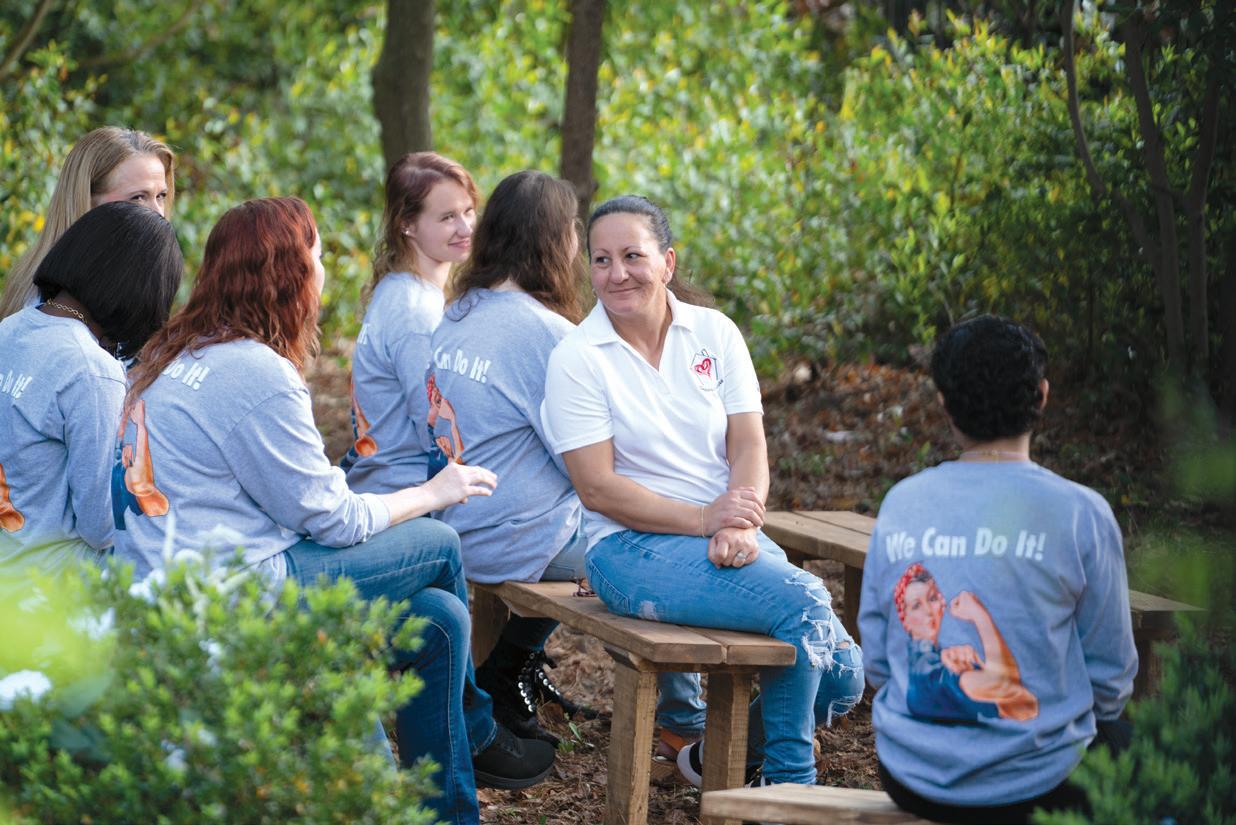
Brooke’s House graduates and staff also maintained an active presence in the process, some serving as extras and some consulting.
The movie set brought together two groups of people who often find themselves on opposing sides.
“Having police officers work with the people who are
down barriers,” Simmers says.
“It’s on both sides because a lot of times girls in the house have a preconceived perception of what police officers are like and police officers have a preconceived understanding of people in recovery. When we were able to bring those two together, we tore down barriers and we’re able to get communication. Both sides of it have a better understanding.”
“Clean Hands” has not only brought together police officers with people in recovery but brought Hagerstown to Hollywood. Allyn hopes to begin selling the film in the fall. He plans to take it first to film festivals and then release it in 2026. Allyn says that much of the profits will benefit Brooke’s House.
Meanwhile, even in post-production, Kevin and Dana Simmers remain close with Allyn.
In his second-floor office, Kevin puts his phone on speaker and makes a call.
Allyn answers: “What’s up boss?”
“What are you doing?” Kevin asks.
“I’m editing your movie.”
The roots of friendship run deep, though the pair is an unlikely team at first glance. Simmers had no exposure to the film industry and admits that before meeting Allyn he might have expected the Hollywood crowd to be arrogant, fake, or prima donnas. Instead, he found the opposite to be true.
“Jake could not be a more down-to-earth and respectful, honest, good human being. He is a good person, a very good person…he treats everybody with the utmost dignity and respect.” Simmers says. “It is really remarkable how we crossed paths, and then he chose to do a story on my life because I couldn’t ask for a better guy to write my story.”
As for Pike, her insights and attention to detail ensured authenticity in recreating some difficult settings like “trap houses” where illegal drugs are sold or rundown rehab facilities. Pike believes the story told in the film will be a powerful tool for change and help even more women change their lives.
“It’s going to help a lot of people, and let them know that they’re not alone, recovery is possible. There is hope.”
A Place For Healing
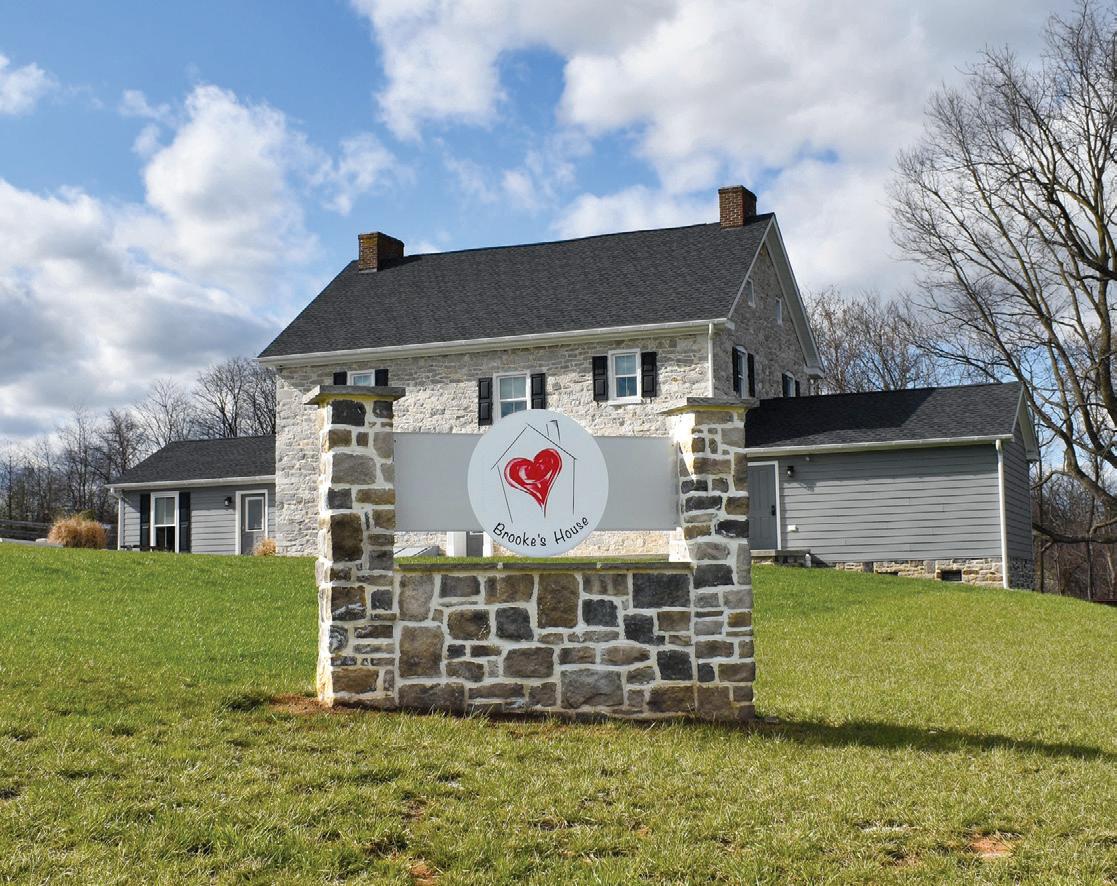
The winding entry road to Brooke’s House is cushioned in green, a serene location for healing. One building houses the residents on their recovery journey. The other building, stately and stone-covered, is a restored 1780s-era home called “David’s Friendship,” now the location for the offices of Brooke’s House.
From his second-floor office, Kevin Simmers has a view like a captain at his helm. Not that he has much time to take in the view. His phone is buzzing, emails pinging, and underlying it all is the urgency of the mission.
Once fighting drugs as a narcotics detective on the streets of Hagerstown, Simmers now advocates for those in recovery. Even before catching the eye of film maker Jake Allyn, the story is one that captivated Washington County and spread around the world via stories in media outlets such as NPR, Fox News, BBC, and the “Today Show.”
Brooke Simmers was a student-athlete, full of life and promise. The warmth and sparkle in her smile still radiates through the photos featured on the webpage of the treatment facility that now bears her name. She was 17 years old when she opened up to her father about her addiction to Percocet. Her parents tried immediately to get her treatment and help, but within months her addiction had escalated to heroin. For the heartbreaking two years that followed, Kevin and Dana discovered the barriers to treatment and systemic limitations that exist while they tried to intervene.
Brooke was eventually arrested on drug-related charges. While incarcerated in early 2015, she confided in father about her vision to create a home for sober living, where she could help other women
overcome addiction.
Her parents promised to build it for her if she could remain sober for a year. While her dream would become a reality, Brooke would not live to see it. She died from a heroin overdose on April 14, 2015, at the age of 19.
Now, Brooke’s House facilitates recovery and equips residents with skills and work experience for a sober life.
“I think all anybody really wants in life is a chance. That’s what we try to do here. We just give people a chance…we try to give them job training, occupational skills, money, transportation, and clear up their criminal matters. If there’s any parole probation or charges pending, we want to take care of that,” Kevin Simmers says. “When you leave here at the end of six months, you should be set up for success. Whether you take it is up to you.”
The organization has several social enterprises like Brooke’s House Coffee Shop and Chocolate Store, which offers women in the program job training and experience. The organization also runs a thrift store and offers junk removal services. Of more than 30 employees, 90 percent are women in recovery.
Viewing every resident as their own daughter manifests in Kevin and Dana’s presence in the day-to-day operations of the business, whether in the chocolate shop, the group sessions, cooking dinner, or hosting cookouts.
“It’s not just a facility. It’s a family. I think that made a difference for me,” says Naomi Pike, a graduate who now works at Brooke’s House.
for your best interest and to set you up for success. And this program will do just that.”
Many facets of the program are informed by the Simmer’s experiences in trying to get help for their daughter and the barriers and roadblocks they encountered. The urgency they felt in getting help for Brooke now translates to their commitment to the residents.
Pike recounts an incident in which Simmers was experiencing a heart attack. On the way to the hospital, he passed a woman who had recently left the program in a precarious situation on the street.
“He made Miss Dana pull over so he could stop and talk to this girl and help…in the middle of his heart attack,” says Pike, who is one of the many success stories that have come out of Brooke’s House.
“This program has changed my life,” she says. “Kevin and Miss Dana are the most wonderful people that I know, they’re my biggest cheerleaders, my biggest supporters.”
Brooke’s influence is not only in the heart that her parents feel for each of the residents but in the organization’s marks of excellence.
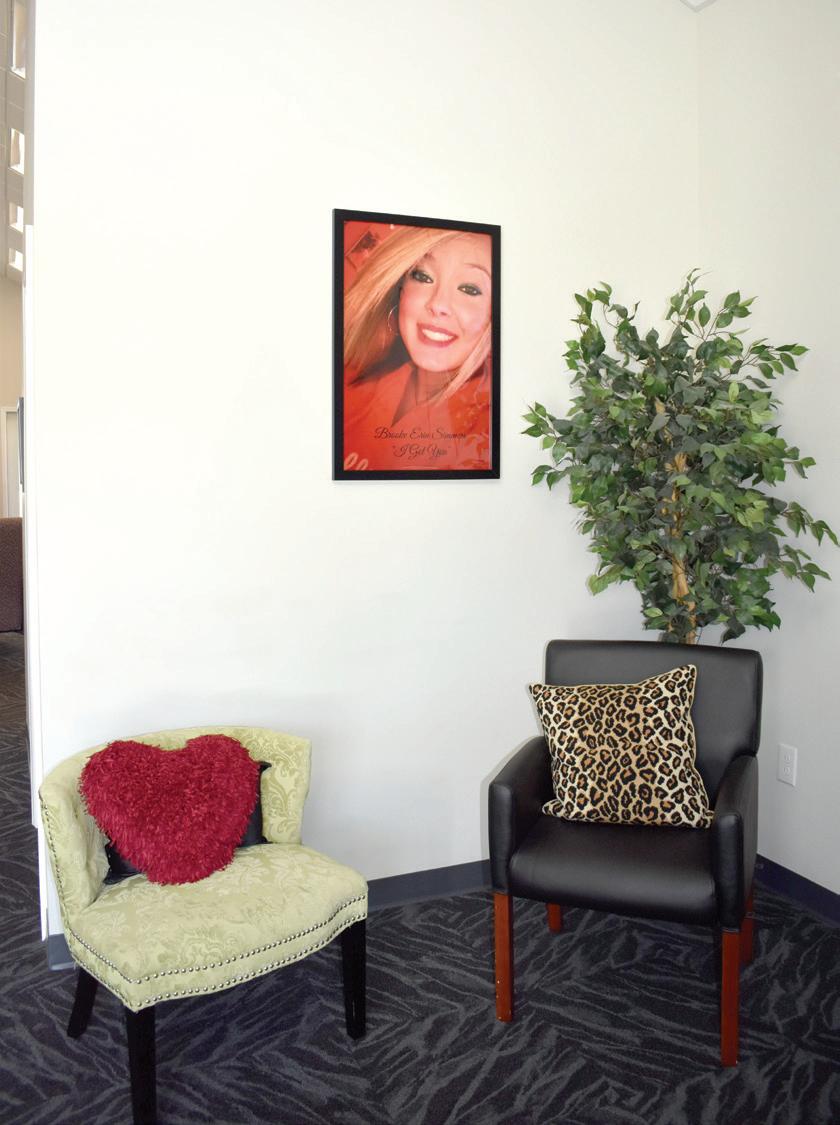
What has become an iconic picture of Brooke Simmers hangs on the wall of Brooke’s House.
“She was very competitive. She wanted to be the best. I would say that aspect of her personality is in Brooke’s House,” Kevin says. “Now we want to be the absolute best rehab facility anywhere in the country. We want to have the nicest facility. We want to be able to treat people better than everybody else does. We want everybody to have chances for success.”
A Taste of Puerto Rico
On East Washington Street, Sofrito brings the heart of Old San Juan to downtown Hagerstown
If the scent of garlic, peppers, and cilantro wafting through the doors of 10 East Washington Street doesn’t catch your attention, the warmth inside surely will. Owned and operated by husband-and-wife team Jeovanni and Yahaira Diaz, this cozy, colorful restaurant has quickly become a destination for those seeking genuine Puerto Rican cuisine—and more importantly, a taste of home.
“We wanted to bring something new to the city, something vibrant,” says Jeovanni, whose enthusiasm for food and hospitality shines through every detail of the space. Open since August 2024, Sofrito is celebrating the start of its second year of serving soulful, scratch-made Puerto Rican fare in one of Hagerstown’s oldest downtown buildings.
By April Bartel
While Jeovanni was born in El Salvador, Yahaira is an island native with deep roots there. What they share are deep personal and culinary ties to the island. Jeovanni lived
Sofrito owners Jeovanni and Yahaira Diaz.
in Puerto Rico for nearly two decades before meeting Yahaira in Philadelphia. The couple moved to Hagerstown about 10 years ago, eventually seizing the opportunity to purchase and restore the historic property that now houses Sofrito. For them, it wasn’t just about opening a restaurant, it was about creating a gathering place.
“When customers come in, we want them to feel at home,” says Jeovanni. “Like you’re at your grandmother’s table.”
That sentiment is woven into the very DNA of the restaurant, starting with the menu. Many of Sofrito’s recipes come from Yahaira’s grandmother, who lived to be 92 in the mountainous town of Corozal. “She would start cooking at six in the morning and expect all the kids and grandkids to come and eat,” Jeovanni recalls. “Rice, beans, mofongo. It was like walking into a restaurant, anytime of day.”
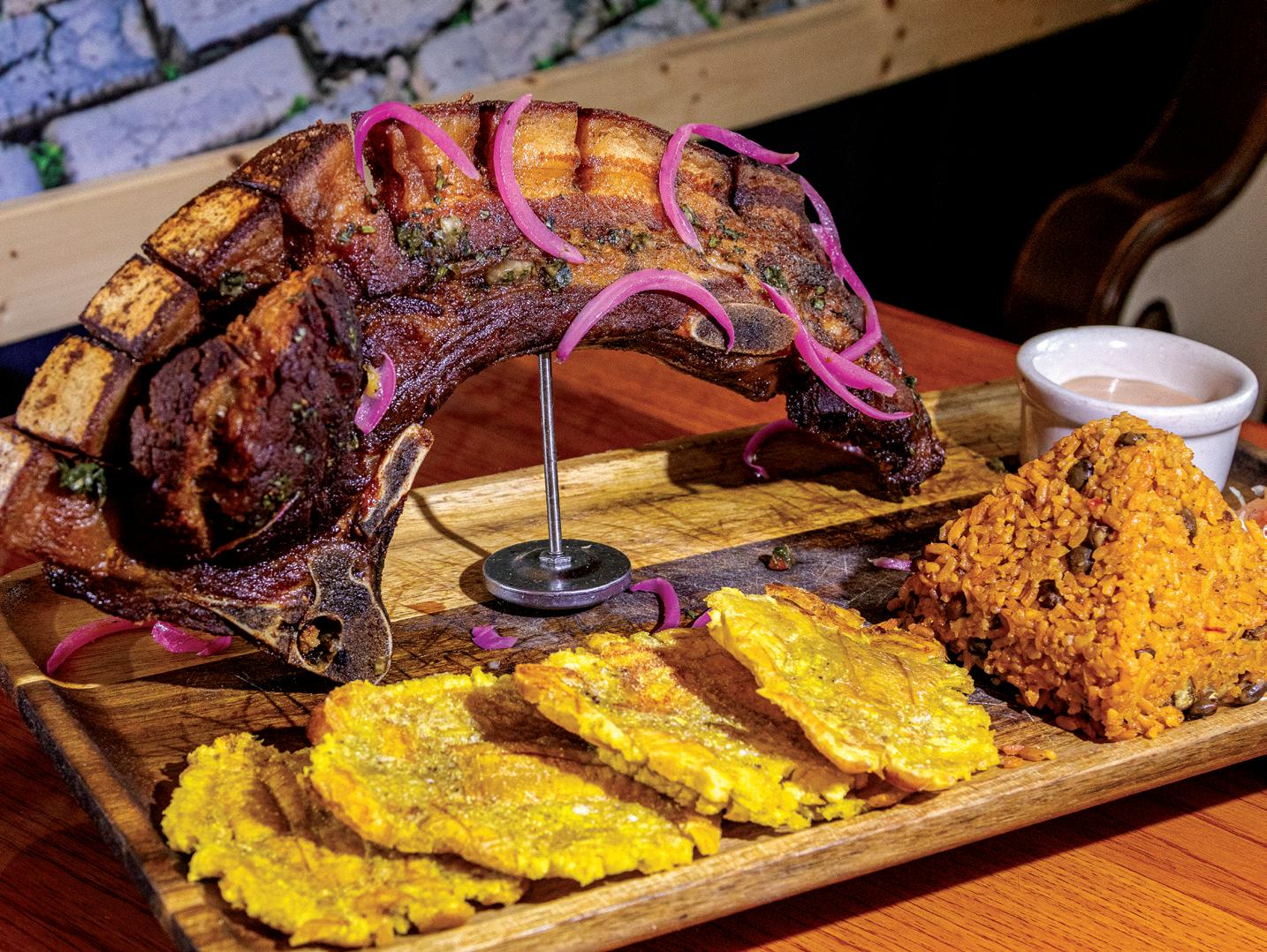
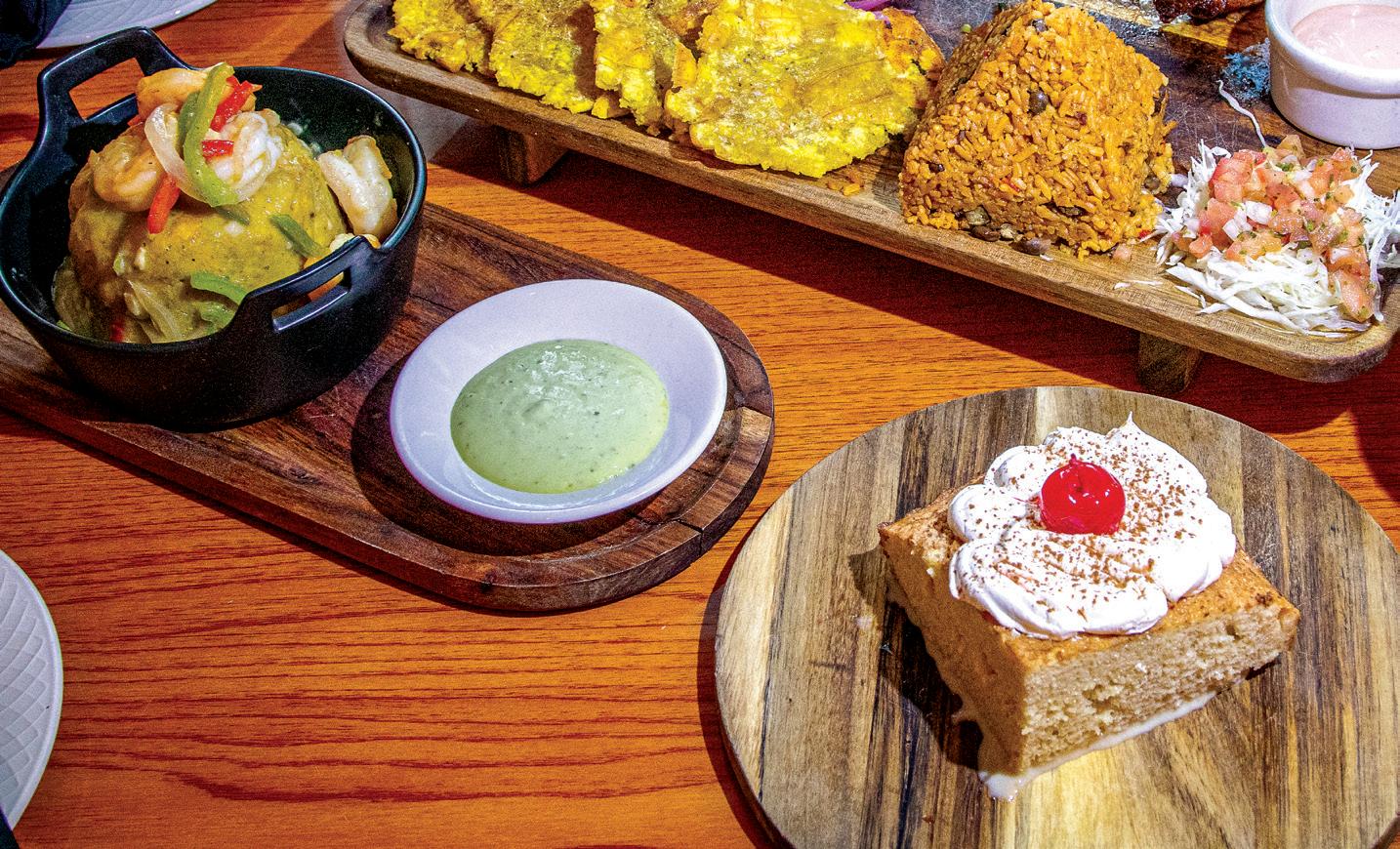
At Sofrito, that legacy lives on in dishes like the signature mofongo—a hearty, volcano-shaped mound of seasoned green plantains, mashed by hand in a traditional wooden pilón and studded with crispy pork.
“We brought that pilón from Puerto Rico,” Jeovanni says proudly. “If you want to make the dish right, it’s not something you can premake. Each order is made fresh.”
Guests can top their mofongo with marinated chicken, beef, or shrimp and a choice of sauces, from garlicky butter to rich tomato criollo and Jeovanni’s favorite, a decadent cheese sauce.
Other menu favorites include rice and beans with either red or black beans, and arroz con gandules, a staple of Puerto Rican celebrations. Sofrito’s Chuleta KanKan is another standout. It is a visually arresting presentation featuring a huge club-shaped pork chop with crackling skin, fried to golden perfection and served with tostones.
“It’s a showstopper,” says Jeovanni. “We probably sell more than 40 of them a week. Once one goes out to the dining room, other tables see it and want it, too.”
Like many dishes on the menu, these entrees are flavored with sofrito, the restaurant’s namesake and the soul of Puerto Rican
A Sofrito specialty is the visually arresting presentation Chuleta KanKan.
cooking. Their house-made blend includes garlic, onions, sweet peppers, cilantro, and tomato sautéed into a fragrant base that enriches nearly every meal.
“At home, even if you’re just frying an egg, you put sofrito on it,” Jeovanni laughs. “It takes the flavor to another level.”
That devotion to flavor and authenticity extends to every corner of the menu. Empanadas are filled with seasoned meats and wrapped in dough made from scratch. Bolitas de yuca are crisp on the outside with a tender beef-filled center. And the alcapurrias—fritters made from green plantain and taro root—are a beloved street food delicacy. Dollops of creamy, garlicky mayo-ketchup are a ubiquitous Puerto Rican condiment.
Even desserts come with a story. Sofrito partners with BoriDelicias, a Puerto Rican bakery in Chambersburg, to offer luscious tres leches cake and silky flan de queso.
“Everything is fresh. We don’t do anything pre-made,” says Jeovanni. Meat is also
sourced from local favorite, Hoffman’s Quality Meats, and produce comes from area farms.
“It’s important for us to use local products wherever we can,” Jeovanni says.
The space itself is a celebration of island heritage layered over historic charm. Murals of Puerto Rican seaside villages and iconic forts adorn the walls, while original hardwood floors, a brick fireplace, and textured wood finishes offer a counterpoint of cultures that are both refined and vibrant. The upstairs dining room seats 49, with another 70 downstairs, including quiet nooks perfect for intimate meals or lively gatherings.
That family-friendly atmosphere is no accident. “We’ve had people come from all over—Virginia, Pennsylvania, even New York— to meet family here,” says Jeovanni. “It’s like a mini reunion. We were hoping for that kind of connection, but we were surprised by how fast it started happening.”
For the Diazes, this is a true family business. Their three children, ranging in age from 13 to
22, are learning the ins and outs of restaurant life—from front-of-house service to kitchen prep and cleaning.
Music is part of that cultural connection. From the carefully curated Latin playlist to live salsa singers who perform monthly, the vibe at Sofrito is festive without being overwhelming. Guests often comment on the welcoming ambiance as much as the food.
And the details matter. Each dish is finished with a tiny Puerto Rican flag. Fruity piña coladas, crisp Medalla beer, and mojitos round out the experience.
“It’s not just a meal, it’s a taste of the island, a piece of our hearts,” says Jeovanni.
As the restaurant prepares to launch its own jarred sofrito sauce this fall, the Diazes are excited about what’s next. But at the core, their mission remains simple: “We just want people to come, enjoy, and feel like part of the family.”
Sofrito isn’t just about food. It’s a love letter to heritage that joyfully welcomes everyone to the table.
The Sofrito dining room displays the flag of Puerto Rico.
Rooted in Tradition
Dating back almost a century, Cronise Market Place and Olde Homestead in Boonsboro deliver a taste of the past
Along the scenic stretch of Main Street in Boonsboro stands a cherished piece of local history—Cronise Market Place and its companion shop, the Olde Homestead. With roots reaching back nearly a century, this third-generation family business has grown alongside the town, evolving from a humble fruit stand to a vibrant destination for seasonal produce, handcrafted gifts, and timeless charm.
By April Bartel
The story begins in 1927 when Esbey and Annie Cronise built a Craftsman-style brick home at the edge of town to accommodate their growing brood. A year later, in 1928, the family opened a fruit and vegetable stand next door. That home, lovingly restored and repurposed, is now the Olde Homestead gift shop. Bonnie Pereschuk, current co-owner with her husband Cliff, fondly recalls working at the market as a girl. The couple took over operations from Bonnie’s uncle in 1996 and opened the decor shop in 2011.
Current owners Bonnie and Cliff Pereschuk at the market. Bonnie is the third generation of the Cronise family to run the market.
“I named it the Olde Homestead because it was our original family home,” she says. Bonnie’s mother, the youngest of 13 Cronise siblings, grew up there. “Cliff and I worked weekends here when I had a different career,” Bonnie says. “Eventually, we took it on full time. It’s grown a lot over the years.”
Though the original Cronise family orchards and farmland are no longer in operation, the market remains true to its agricultural roots, sourcing fresh fruits and vegetables from local growers just five minutes to an hour away.
In the height of fall, visitors can expect everything from late-season corn and plump tomatoes to squash, peppers, melons, and pumpkins. The stand offers more than 20 apple varieties (also available in bulk quantities) and fresh-pressed cider from Ivy Hill in Smithsburg.
“It tastes like liquid apples,” Bonnie says with a smile. McCutcheon’s cider, jams, and sauces—produced by another long-standing local farm family—are available year-round.
Cronise Market is open from spring through Christmas Eve, with peak seasons ahead marked by the arrival of mums and
asters in fall, followed by fresh-cut Christmas trees, handmade wreaths, and roping for the holidays. The market also stocks local milk, eggs, cheese, and honey throughout the year.
Recent additions include Amish pies and cookies, Rice Krispie “cake” treats, and bread from Frederick’s Stone Hearth Bakery. This
year, they even added Windy Knoll ice cream to the lineup.
Behind the market, visitors will find a garden center with heirloom and special variety plants, soil amendments, and decorative flags or cement statues. The stand’s rustic character, open-air charm, and nostalgic feel have
Margaret “Pinkie” Cronise Houpt, one of 13 children in the second generation of Cronise Market. She was 16 years old in this picture from 1938.
remained largely intact—a deliberate choice.
“My goal is to keep it as close to the original as possible so people can see what things were like way back when,” Bonnie says.
The Olde Homestead, which opened in December 2011, has grown into a two-story treasure trove of country/farmhouse, traditional, and eclectic decor. Inside, visitors can browse everything from soy candles and Silver Forest jewelry to handcrafted Meadowbrook gourds from Carlisle, Pennsylvania, Challa handbags, linens, and a host of locally made items. Bonnie, who says she has always had an artistic side, takes pride in the evolving nature of the shop.
“I like when people come in and tell me they know they’ll always find something good here,” she says.
Open year-round, the Olde Homestead also hosts four open houses each year in the spring and fall and two leading up to Christmas. The fall open house is especially popular, coinciding with Boonsboro Days in early September. Guests can expect seasonal sales, door prizes, and a food truck on Saturday. In November, holiday open houses offer festive inspiration; while spring 2026 brings participation in the Hagerstown Community College Flower Show in March, a much-anticipated event that also heralds the market’s official reopening for the season.
As a small, family business, Sundays remain a day of rest—except during special events.
“We try to post updates on Facebook so people know about events and hours,” Bonnie adds.
As the Cronise Market Place approaches its 100th anniversary in 2028, Bonnie is already looking ahead.
“We did a big celebration for the 75th. We’ll definitely do even more for the centennial,” she says. Plans will likely include food vendors, festivities, sales, and the unmistakable sense of hometown connection.
For those who haven’t discovered its treasures yet, Cronise Market Place and the Olde Homestead are more than just stops on a weekend drive—they are a taste of living history. Those who make the trip will find a legacy business greater than the sum of its parts, firmly rooted in community and tradition.
Ross Cronise at the market in 1965. He was in the second generation that ran Cronise Market.
DINING GUIDE
ALEKOS 2 GO
511 Northern Ave., Hagerstown, 240.313.4976
Freshly prepared and cooked Greek food made daily. $
AMERICAN PIE PIZZERIA
17520 Virginia Ave., Hagerstown, 301.582.6281
Family run business that serves not only pizza but several authentic Italian dishes as well. $$
BENNY’S PUB
49 Eastern Blvd. N., Hagerstown, 301.791.5915
Relaxed venue serving specialty burgers and other pub grub, plus bespoke beers in convivial surrounds. $–$$
BISTRO 11
13208 Fountain Head Plaza, Hagerstown, 301.733.2222
Relaxed and refined cuisine. Full menu of specialties, steaks, and seafood. $$–$$$
BJ’S RESTAURANT & BREWHOUSE
17318 Valley Mall Road, Suite C, Hagerstown, 240.513.4040
Handcrafted beer, Chicago-style pizza with a Southern California twist, and Pizookies. $$-$$$
BLACK ROCK BAR & GRILL
17301 Valley Mall Road, Hagerstown, 240.850.3365
An award-winning steakhouse specializing in Certified Angus Beef steaks served and cooked to perfection by you on a 755-degree volcanic sizzling rock. $$-$$$
Breakfast, lunch, and dinner are covered with a wide selection of sandwiches and entrees. $–$$
THE BROAD AXE
28 W. Franklin St., Hagerstown, 301.733.8454
Daily specials featuring top-notch pub fare and a quickly rotating tap list. $–$$
BROTHER’S PIZZA
75 Eastern Blvd. N., Hagerstown, 240.625.9215
Fresh, fast, and affordable pizza, sandwiches, and Italian classics. $–$$
CACIQUE
1101 Opal Court, Hagerstown, 301.739.7207
Fresh, creative, and classic Mexican, Spanish, and Latin American cuisine. $$
CAFÉ DEL SOL
1481 Salem Ave., Suite 1, Hagerstown, 301.739.3072
Gourmet pizza, flatbreads, and pasta with a California twist. $$–$$$
CAFÉ ITALIA
935 Pennsylvania Ave., Hagerstown, 240.420.6677
Classic Italian dishes, and they offer one of the biggest pizzas in town. $–$$
CHIC’S SEAFOOD
300 Summit Ave., Hagerstown, 301.739.8220
Daily specials featuring some of the freshest seafood around. $–$$$
COLONIAL SPORTS BAR AND GRILL
14130 Pennsylvania Ave., Hagerstown, 240.203.6206
The best game-day food at the best prices around. $–$$
THE DOG HOUSE CAFÉ
53 S. Potomac St., Hagerstown, 240.850.2883
Family-owned and operated restaurant that specializes in dozens of unique hot dog creations, great fries, and more. $
DISTRICT PROVISION & SUPPLY CO.
6 Rochester Place, Hagerstown, 301.791.1717
Open for breakfast and lunch, featuring gourmet sandwiches, salads, and soups. $
DOLCE PIZZA GOURMET
792 Frederick St., Hagerstown, 301.745.6300
Italian flavors complemented by Eastern European dishes. $–$$
EL CASTELLO PIZZERIA & TEX MEX
15616 National Pike, Hagerstown, 301.582.4727
Pizza, salads, lunch specials, and a spicy array of Tex Mex. $–$$
EL RANCHERO MEXICAN RESTAURANT
1481 Wesel Blvd., Hagerstown, 240.420.2842
1715 Dual Highway, Hagerstown, 301.797.7589
Fresh, authentic Mexican cuisine using the highest-quality ingredients available. $$
FAJITA GRANDE MEXICAN RESTAURANT
12818 Shank Farm Way, Hagerstown, 240.707.6333
Where the fiesta never ends. $
FOSTER’S ON THE POINT
1437 Salem Ave., Hagerstown, 301.739.7182
Soups, salads, sandwiches, burgers, and a rotating list of entrées and specials offered in an inviting rustic atmosphere. $$–$$$
FRATELLI PIZZERIA AND GRILL
120 E. Oak Ridge Drive, Hagerstown, 301.393.8733
Italian specialties like pasta, pizza, in addition to Mexican options. $–$$
FREE RANGE CAFÉ
520 Northern Ave., Hagerstown, 240.513.6070
Food that makes you feel good! $-$$
FUJI ASIAN FOOD & SUSHI BAR
11205 John F. Kennedy Drive, Suite 205, Hagerstown, 301.393.9099
Authentic traditional Chinese cuisine options and sushi. $–$$
GREENLEE’S FIRESIDE RESTAURANT & LOUNGE
1716 Underpass Way, Hagerstown, 301.733.4800
A full menu of steaks, seafood, and other American specialties. $$–$$$
THE GRILLE AT RUNWAYS
18421 Henson Blvd., Hagerstown, 240.707.6996
Traditional American dining with a quiet and relaxing view of the airstrip. $–$$
HAGERSTOWN FAMILY DINER
431 Dual Highway, Hagerstown, 240.707.6330 Great hidden gem of Hagerstown. $
HOFFMAN’S ALL AMERICAN GRILL
18203 Mason Dixon Road, Hagerstown, 240.707.6600
Casual dining at its finest featuring burgers, steaks, salads, and seafood. $$–$$$
HONG KONG CHINESE RESTAURANT 1075 Virginia Ave., Hagerstown, 301.733.1292
Veteran eatery serving familiar Chinese dishes in an informal setting. $$
HOUSE OF KOBE
757 Dual Highway, Hagerstown, 301.797.6979
Fine dining featuring sushi and hibachi cooking right in front of you. $$–$$$
HUB CITY DINER
190 Railway Ln., Hagerstown, 240.707.6638
Comfort food served hot and fresh in a family friendly atmosphere. $
HUMMUS MEDITERRANEAN GRILL
11205 John F. Kennedy Dr., Unit 108A, Hagerstown, 240.513.6020
A blend of authentic Mediterranean recipes with modern flavors. $–$$
J’S DINER
43 Eastern Blvd N, Hagerstown, MD 21740, 301.745.3091
Innovative breakfast destination for those in search of an unpretentious place to begin the day. Everything they offer is made from scratch, so you can feel good about what you’re eating. $$
LEDO PIZZA
1423 Dual Highway, Hagerstown, 301.766.4900
Creative flavor combinations and lots of sandwich and gluten-free options. $–$$
LOS AMIGOS MEXICAN RESTAURANT
29 N. Burhans Blvd, Hagerstown, 240.420.8000
18330 Spark Dr., Hagerstown, 240.707.6250
The finest authentic Mexican food prepared just the way you like it. $
LOTUS MOON CAFÉ
16 Conococheague St., Williamsport, 240.366.1335 Unique sandwich and salad creations to please any taste. $-$$
MANGO GRILL INDIAN & THAI CUISINE
11205 John F. Kennedy Drive, Suite 201, Hagerstown, 240.707.6220 Experience the flavors of India and Thailand with daily lunch buffet deals. $$
Dine in and carry out Vietnamese cuisine. Small venue but the portions are authentic and large. $
POKÉ & SUSHI
11347 Robinwood Dr. Hagerstown, 301.393.8833
Refreshing Asian alternative. Choose your own ingredients for soups, Poké, rice bowls and sushi. Boba (bubble) tea. $$.
PRETZEL & PIZZA CREATIONS
20 W. Washington St., Hagerstown, 301.733.7795
Calzones, sandwiches, hot dogs, and of course pizza featuring pretzel dough as the star. $–$$
PRIMANTI BROS.
17301 Valley Mall, Hagerstown, 301.228.0933
High-piled sandwiches equipped to quell the heartiest of hungers. $
PURA VIDA COFFEE
14035 Pennsylvania Ave., Hagerstown, 240.707.6540
Costa Rican inspired coffee shop/restaurant featuring craft coffees/teas, onsite baked goods, breakfasts, and lunches. $
RAD PIES
10210 Governor Lane Blvd., Williamsport, 240.366.8634
Unique, wood-fired pizza options for the adventurous. $$
REAL DEAL JAMAICAN RESTAURANT
71 W. Franklin St., Hagerstown, 240.513.6393
A concise menu of classic Jamaican comfort foods & soft drinks amid casual digs. $
RHUBARB HOUSE
12 Public Square, Hagerstown, 301.733.4399
Sandwiches, burgers, wraps, salads, and soups with a unique touch. $–$$
RICE THAI DINING
40 N. Potomac St., Hagerstown, 301.766.9559
A taste of authentic Thailand, without needing a passport $$-$$$
RIK’S CAFE
1065 Maryland Ave., Hagerstown, 301.302.7541
California-inspired contemporary American cuisine featuring sandwiches, hearty soups, small plates, and salads. $$–$$$
ROCKY’S NEW YORK PIZZA
907 S. Potomac St., Suite 1, Hagerstown, 301.791.6810
Great pizza in addition to other classic Italian fare. $–$$
ROCKY’S PIZZA ROBINWOOD
11351 Robinwood Drive, Hagerstown, 301.790.3853
Delicious Italian cuisine at an affordable price $-$$
ROOSTER MOON COFFEEHOUSE
Longmeadow Shopping Center, 1551 Potomac Ave., Hagerstown, 301.790.5040
Fine coffee, espresso drinks, organic teas, with a full breakfast and lunch menu. $
SAKURA JAPANESE RESTAURANT
102 Railway Lane, Hagerstown, 301.393.8680
Part Japanese steakhouse, part sushi bar, featuring hibachi dining. $$–$$$
SARDI’S POLLO A LA BRASA
100 Railway Lane, Hagerstown, 240.382.1214
Casual Peruvian chain serving charbroiled chicken, ceviche, and other traditional dishes. $–$$$
SCHMANKERL STUBE
58 S. Potomac St., Hagerstown, 301.797.3354
Old World-style Bavarian dining with an emphasis on German traditions. $$$
SCHULA’S GRILL AND CRAB HOUSE
11205 John F. Kennedy Drive, Hagerstown, 301.714.1397
Seafood and sandwiches are served in a casual setting with polished wood tables and a bar. $$–$$$
SILK THAI RESTAURANT AND BAR
1580 Wesel Blvd. K, Hagerstown, 240.267.2142
Spreading good vibes of Thai culture by introducing the wonderful food and scenery of the land of smiles. $$–$$$
SITAR OF INDIA
110 Railway Lane, Hagerstown, 301.733.8223
A contemporary atmosphere that complements their traditional Northern Indian specialties. $-$$
STADIUM TAVERN
401 S. Cannon Ave., Hagerstown, 301.714.0849
Crabs and steam buckets, shrimp, and oysters, and don’t forget the wings. $–$$
TACOS CARLITOS
Food Court, Valley Mall, Hagerstown, 240.452.1888
100% authentic genuine Mexican food – the best in town! Daily specials and delivery available. $
TASTE OF REGGAE
40 E Washington St, Hagerstown, MD 21740, 240.513.1101
Authentic Jamaican restaurant specializing in made-to-order Caribbean and Jamaican food. Packed with flavor and cooked the way it is done in Jamaica. $$
TAQUERIA JALISCO AUTHENTIC MEXICAN GRILL
1037 Maryland Ave., Hagerstown, 301.797.2000
Authentic Mexican cuisine with the experience of being in Mexico. $
THE CRAB 99
116 Railway Lane, Hagerstown, 240.452.1937
Tasty seafood dishes with a wide range of flavors. Make your own seafood combinations. $$
VEVA’S ON POTOMAC
38 S. Potomac St., Hagerstown, 301.791.0370
Italian fare; Maryland soul. $$-$$$
The Rural Life
A Smithsburg couple helps preserve the county’s farming history at the Washington County Rural Heritage Museum
Non-profit organizations are experiencing a local and national trend that has many of these important groups struggling with membership and volunteer recruitment. But that’s not the story in Western Maryland where volunteers are the key to operating the local farm museum.
The Washington County Rural Heritage Museum was founded by a group of farmers and supporters in the local community in the late 1990s. The success of the farm museum is largely credited to the county’s volunteers who served on the planning committee, searched for agricultural memorabilia and equipment and who have volunteered their time to help host special events and tours for students and other groups.
Phil and Charlotte Muritz of Smithsburg have volunteered at the museum for a combined 35 years. Phil joined the Rural Heritage Museum committee in 1998 and started volunteering at the museum in 2000 when the first building opened. He also encouraged his wife to start volunteering in 2011 when she retired.
By Rebecca Chaney
Phil is very knowledgeable about the extensive display of farming and household items in the museum, many dating back to the 1800s. He’s quick to share his passion for history with
Volunteers Phil and Charlotte Muritz at the Washington County Rural Heritage Museum in Boonsboro.
all visitors. Any given week, depending on the projects being worked on, he volunteers anywhere from three hours to 30 hours. He turns 80 years old in December and doesn’t have any plans to slow down. There are always jobs to do including grounds maintenance, display updates, hosting tours, and even staffing the gift shop.
There are three buildings featuring hundreds of different home and farming artifacts of days gone by. According to Phil, the exhibits focus on the period from the 1870s through the 1940s. The first building highlights the inside of a country store, a working Moller Organ, antique clothing display, antique tools, toys, stoves, horse-drawn hearse, cameras, phones, kitchen tools, a parlor bedroom, and dining room.
“The museum has two antique tractors, plows, wagons, hay equipment, dairy display, threshing machines from local companies, orchard equipment, potato growing equipment, and grain harvesting equipment,” Phil says. “The third museum has five locally manufactured automobiles as well as other cars, trucks, sleighs, Conestoga wagon, carriages, bicycles, and more.”
In addition to the three buildings, the museum also constructed an old-time village that includes Mount Tabor Church, Dr. Fahrney’s office, a blacksmith shop, a cabinet maker’s shop, Shank Spickler Store, the Glass family log cabin, and a cobbler and broom maker. A reconstructed homestead features the Poffenberger Cabin, a bread baker’s oven, the German Four-Square Garden, the Reeder cabin, and a vegetable fruit-drying shed.
“These museums are important because they preserve our agricultural heritage, connect people with rural life, and teach future generations about the importance of agriculture,” Phil says. “The displays and antique items serve as living testaments to the past, showcasing the evolution of farming practices and tools, and offering hands-on experiences that can foster a deeper understanding of where our food comes from.”
The couple believes the rural heritage museum truly makes an impact on those who
visit. At 81 years old, Charlotte says she enjoys welcoming guests as they arrive.
“Our museum is a hidden gem,” she says. “People attend events at the Washington County Agricultural Center all the time but are unaware of the three museums, village, and homestead (next door). So, when I meet people, I tell them about what they are missing and invite them to visit.”
Phil’s passion for farming began as he was growing up learning about tractors and other farm equipment, as well as his membership in a national tractor club. “In 1992 I helped start a national club for people who collect Ford and Fordson tractors,” he says. “We meet once a year somewhere in the Eastern part of the U.S. and have a tractor show. I take one or two of my antique tractors every year. I have not missed a show since we started. In July my wife and I are taking one of our tractors to the club’s tractor show in Denton, North Carolina.”
The agricultural enthusiast insists he was never a life-time farmer, but he’s been working on and off farms his whole life. Phil was born in Funkstown in 1945 on a small 10-acre farm purchased by his father during the war.
“Both of my parents were raised on farms and they decided to buy a dairy farm in 1951,” he said. “My Dad continued to work at Fair-
child Aircraft and my mother, my two brothers, and I milked the cows.”
When Charlotte injured her back, the family sold the milk cows and only raised heifers, veal calves, and farmed crops. They also had a few show heifers and exhibited them at the Hagerstown Fair.
Phil recalls fond memories growing up sharing a house with his grandparents. “Living with my grandparents I learned a lot about history and my grandfather was a collector of old farm memorabilia that he picked up at farm sales for 10 or maybe 25 cents,” the history enthusiast said. “I received an education on what they were and what they were used for.”
In addition to growing up milking cows, Phil helped his brother and father-in-law on their respective farms. “I graduated in 1964 and worked for some local companies and helped on the farm until 1966,” he says. “In the spring of 1966 my older brother and I were visiting the local savage yard, and we spotted what we thought was an old Case tractor—no, it was a Fordson with a rare tricycle front end. We got it running before I left for the service in the fall of 1966 when I joined the Air Force. That started my career of collecting old tractors, machinery, and displaying them at local shows.”
Displays of rural life in the main building at the Washington County Rural Heritage Museum.
While in the service, Phil and Charlotte married in 1968. “I married my best friend,” he said. “She was raised on a dairy farm too.”
In 1986, the couple was inspired to start farming again. “I rented a couple of acres with a couple of Fordson tractors, some basic antique tillage equipment, and an old corn planter and I went into farming,” he says. “In 1990 my brother retired from farming, and I took over what was left of our then-family farm near Smithsburg. I took on additional ground and was farming 50 rented acres until 2000. Of course, I made a lot of equipment upgrades during those years.”
The Washington County couple also worked full-time off the farm, Phil working for the phone company and Charlotte for a railroad. “When I retired from the phone company in 1998, I started an agricultural-fence company,”
he says. “I did not have the time to do both farming and fencing well, so I quit farming to continue my fencing business. I could still be around the people I loved being around.”
Although farming is still one of his greatest experiences, it’s quite obvious that today, the couple’s greatest love is volunteering at the museum. Special events and guest speakers and historians are featured throughout the year. Some of the most popular seasonal activities include Apple Fest, a toy show, and a Christmas open house. They even host a Spud Fest featuring horse-drawn potato-harvesting equipment allowing kids to fill their buckets with potatoes.
In addition to special events, museum volunteers offer a one-day class in bread baking and a broom-making demonstration. The agricultural group also has yearly fund
raisers selling apple dumplings, potato candy, and chocolate-covered eggs. The museum is great for history buffs, farmers, or anyone with a desire to experience the rich agricultural history in the area. The Muritz’s will be happy to welcome you.
WASHINGTON COUNTY RURAL HERITAGE MUSEUM
7313 Sharpsburg Pike Boonsboro
Open for self-guided tours from April through June on Saturdays from noon to 4 p.m. Special events and admission from July through December is available at www.ruralheritagemuseum.org.
More museum displays of rural life.
SENIOR LIVING CALENDAR
OF EVENTS
Every Wednesday CONTEMPORARY RETIREMENT
9:06 a.m. to 10 a.m., WJEJ Radio
Tune in for topical discussions on issues affecting retirees.
Wednesdays, September 3 and October 1
NEW TO MEDICARE WORKSHOP
1 p.m. to 3 p.m., 6 p.m to 8 p.m. 535 E. Franklin St., Hagerstown
Hosted by the Washington County Commission on Aging. To register call 301.790.0275.
Tuesdays, September 2 and October 7
ALZHEIMER’S SUPPORT GROUP
4:30 p.m. to 5:30 p.m., Somerford Place
Hosted by Somerford Assisted Living and Alzheimer’s Care. For more information, call 301.791.9221.
Tuesdays, September 2, 9, 16, 23 & 30 and October 7, 14, 21 & 28
HEALTH MATTERS RADIO SHOW
9:30 a.m. to 10 a.m., WJEJ radio (1240 am)
Tune in for information on health topics that matter. Call 301.739.2323 during broadcast times with your health questions.
Thursdays, September 4 and October 2
PARKINSON’S SUPPORT GROUP
11:45 a.m. to 3 p.m., Western Sizzlin Steakhouse, 17567 York Road, Hagerstown
Parkinson’s Disease patients and caregivers meet to hear a variety of speakers and enjoy lunch and conversation. Call Judy Fiery at 301.797.7373 or visit www.hagerstownparkinsonsupport.org.
Mondays, September 8 and October 13
CAREGIVER SUPPORT GROUP
2 p.m. to 3 p.m., LIFE Lutheran Services, 840 Fifth Ave., Chambersburg, Pa.
Covers a new topic each week. Free; light refreshments served. Call 717.709.2342.
JACOB | HAGERSTOWN
Mondays, September 8 and October 13
BREAST CANCER SUPPORT GROUP
7 p.m., Breast Cancer Awareness, Cumberland Valley, 12916 Conamar Dr., Suite 201, Hagerstown Call 301.791.5843 or visit www.bcacv.org.
Mondays, September 15 and October 20
SPINAL CORD INJURY SUPPORT
3 p.m. to 4 p.m., Robinwood Medical Center, Suite 201
Education and support for those who have suffered a spinal cord injury and are now adjusting to their disabilities. Call 301.714.4070.
Tuesdays, September 16 and October 21
SMART SENIORS
11 a.m. to 12:30 p.m., Diakon Senior Living Robinwood Campus
Educational forum about topics of interest to older adults; sit-down meal served. $9. For reservations, call 240.420.4119.
Tuesdays, September 16 and October 21
LEUKEMIA & LYMPHOMA
6 p.m., Robinwood Medical Center, Suite 129
Open to those affected by leukemia, lymphoma, Hodgkin’s disease, MDS or myeloma. Call 301.665.4650.
Family and friends of those suffering from dementia are invited to network with others who are experiencing similar situations in a safe, non-judgmental setting. Call 301.733.3353.
Lunch and educational seminar for people ages 55 and UP. $13. Call 301.790.8907.
GROW IT ALL
FINALLY, FALL
It was a tough summer for gardeners, battling heat, humidity, drought, flash thunderstorms, and the resulting mosquitoes. Those memories will fade with cooler fall temperatures, fall colors, and ideal planting conditions.
Lawns in particular had a rough time this summer due to the weather creating ideal conditions for disease. Many lawns have displayed dead and dying patches caused by fungi (dollar spot, leaf spots, blights, patch diseases). These distressed lawns are generally also undernourished and compacted, so when brief rains occur (or shallow irrigation) they are sitting ducks for disease (since surface water spreads fungi).
Additionally, anyone scalping their lawn before vacation significantly weakens turf—along with increasing disease and weeds. (Next year raise the mowing height instead).
Luckily, fall is the best time of year for lawn care. It’s also the ideal time to fertilize, overseed, and aerate, as well as to repair bare spots left by disease. Overseeding thin lawns also prevents weeds, since a healthy, dense turf outcompetes weeds naturally. Try to seed in early to mid-September. Fertilize all lawns at least once (mid-October) or twice (in early September and mid-October). For detailed directions, visit the University of Maryland resource center online.
Along with planting trees and shrubs now, it’s a great time to transplant perennials. Planting perennial plants before the first frost gives their roots a long establishment time during the cooler, moister fall weather, resulting in a stronger, showier plant next year, superior to perennials transplanted in the spring.
By Deborah Smith Fiola
Likewise, seeding perennials in the fall also jumpstarts strong roots and establishment, since many seeds require cold stratification (hence winter weather naturally breaks seed dormancy). By spring, these seeds will grow and have a head start long before any spring seeded perennials. They will be healthier and bloom earlier. Be sure to mark and label your seedbeds so you don’t forget what’s there.
Meanwhile, the shorter days highlight that it’s time to think about bringing houseplants, patio plants, and deck plants indoors. Many tropical plants like citrus, hibiscus, and banana do really well overwintering in a cool basement with sparse watering. It’s best to gradually adapt them in late September towards their upcoming indoor climate, aiming to have them inside by the first frost (or by the time night temperatures reach 50 degrees). Acclimate plants in a shady area before moving them inside to a bright window. Remember to wipe down leaves to prevent hitchhiking pests.
Lastly, have those pretty red-black spotted Lanternfly adults (SLF) bothered you yet? Don’t hesitate, kill them. It will be worse next year. Thousands of SLF all over your trees, patio, or deck will be maddening. Kill these adults before they lay eggs.
Stomp them, crush them, whack them with fly swatters, suck them into a shop vac, or knock them into soapy water. Trap them on trees as they climb with sticky bands or circle traps. (Search online to see how to build a circle trap.) Learn to recognize the 1.25-inch-long greyish flat egg mass (laid on trees, rocks, grills, cars, etc.) through December. Since each egg mass contains 30 to 50 eggs, scrape using a putty knife (or credit card) and drip into a container of rubbing alcohol or hand sanitizer. Use approved contact insecticides or horticultural oils (follow label instructions).
Deborah Smith Fiola is a professional horticultural consultant who lives in Keedysville. A former university professor/Extension agent, she has a B.S. in horticulture and an M.S. in entomology/pest management (from the University of Maryland). Email your questions to: landscapeipm@gmail.com.
My oldest daughter, who is close to being my clone, started school this year. It’s both an exhilarating and nerve-wracking time not just for her but me, too. There’s so much that’s new. So much that’s changing. So much that’s coming. She’s growing up, and I’m not ready. I’m not sure I have prepared her enough or the right way— or at all. But it’s made me think a lot about what I should tell her to prepare her for this next step in her life.
Turns out the list of what I want her to know is a bit longer and stranger than I initially thought.
The highlights of it go something like this:
Be happy over being perfect.
Be kind over getting stuff done.
Never quit your passion, not even when it’s logical or you aren’t any good at it.
Chill out. You don’t need to run the fastest mile, get the best standardized test score, and be homecoming queen. You need to be you.
Whatever you accomplish is nothing compared to who you are. You’ve never got to sleep in bed with a trophy or an A+ paper, but you’ve got to find a way to go to sleep with yourself every night.
It’s really okay if you aren’t good at science. Water will continue to be wet whether you understand exactly how two hydrogens and one oxygen make water or not.
Don’t try to be too much too soon. Be a kid.
Driving fast sounds fun until you crash.
Try to learn as much as you can everywhere you can. That class you hate may someday be the one that gives you insight into the things you come to love.
Stay in your own lane.
If you have a chance to fill people up or tear them down, fill them up.
The kids next to you aren’t your competition. They are your partners in life. The better they do, ultimately the better you will do.
By Laura Forrest Hopfauf
As much as you can, let it go. Hurt feelings. Disappointments. Shame. Life is hard and complicated. You’re going to do things wrong. It doesn’t mean you’re wrong.
Try to believe that we are all good people, but sometimes we do bad things. We can fix bad things. We can stop doing bad things. Bad things are just something we do whereas bad people is who we are. Believe we are not bad.
Have fun doing hard things. I think Hemingway enjoyed writing. I think Neil Armstrong liked walking on the moon. I think Michael Jordan loved flying.
Find someone who makes riding the bus feel like a party and sit with them.
Use everything you’ve been given.
Be grateful and show grace.
Thinking about teaching her these things has made me think about what actually matters as an adult, too. I’m a mom of three. Things get really complicated, busier than I thought possible—and hard.
But when I take the time to think about life in the context of what I want my kid to know as she progresses in this stage of her life, which for her will have moments where it’s really complicated, busier than she thought possible, and hard, it’s simple. It’s knowing that you’re good and living in that good. It’s finding friends and treating them right. It’s working hard and with joy. It’s taking the everyday and turning it into a reason to party. It’s learning, not because someone tells you to, but because curiosity keeps us alive.
The thing this has made me realize is we never graduate school. If we keep ourselves open, humble, and brave, the world will continue to educate us for the rest of our lives. I’ve had times when I didn’t believe that, when I thought I knew enough about the world that I could no longer be taught by it. Those times are gone. I’m a student again, just like my 5-year-old, and when I held her hand outside of that elementary school on the first day, I realized I was going back to school as well.