


Thank you for coming to this HKU MUSE event. To ensure that everyone enjoys the music, please switch off your mobile phones and any other sound and light emitting devices before the performance. Unauthorised photography and audio/video recordings in the Hall are prohibited. Enjoy the concert and come again.
Presented by
Supported by
The concert is part of the official tour of the Winners of the 19th Chopin Competition. Funded by the Polish Ministry of Culture and National Heritage.

Follow us

6 DEC 2025 | SAT | 8PM
7 DEC 2025 | SUN | 8PM
Grand Hall, The University of Hong Kong
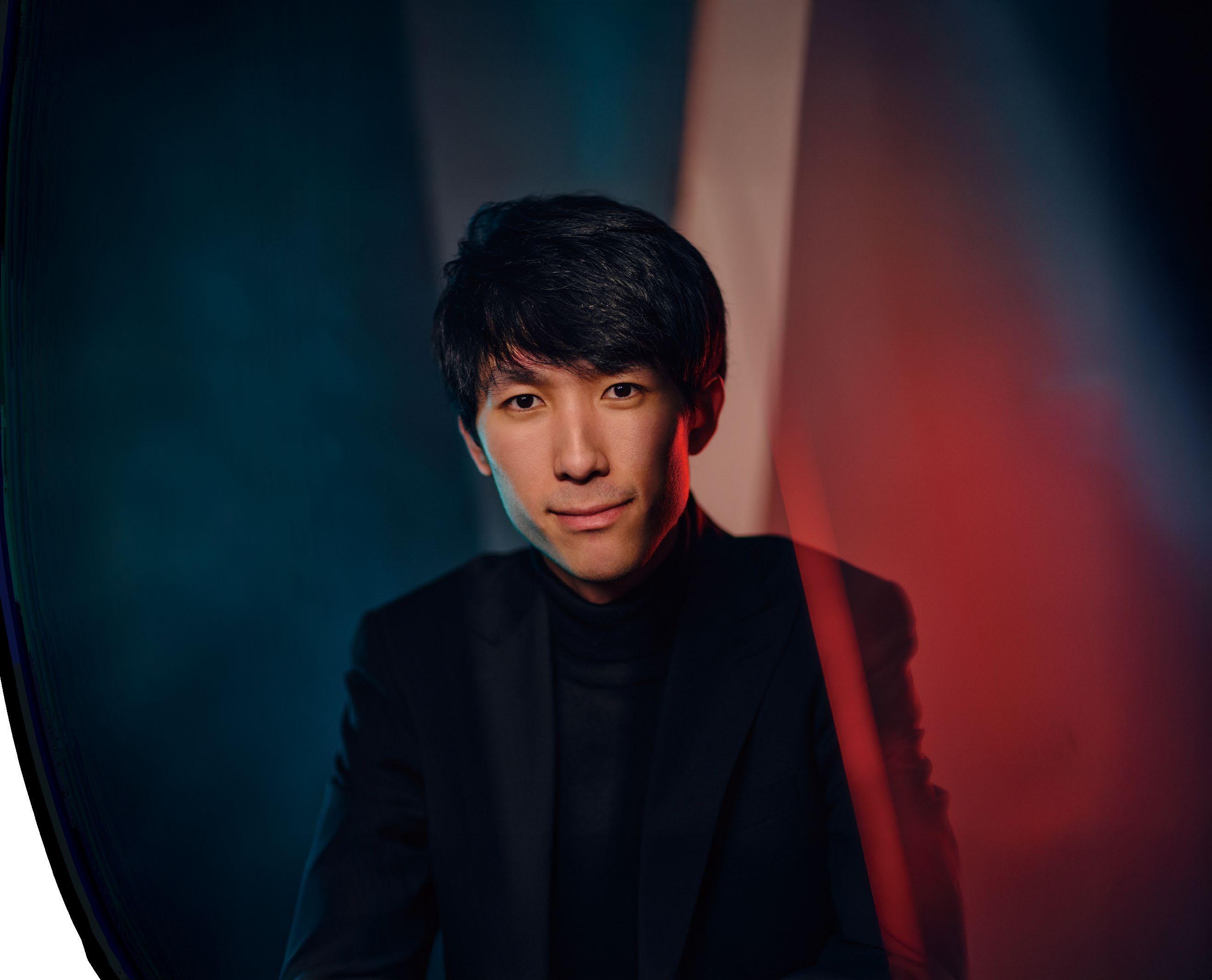
Eric Lu, piano
Nocturne in C-sharp minor, Op. 27, No. 1
Barcarolle in F-sharp major, Op. 60
Polonaise in F-sharp minor, Op. 44
Polonaise-Fantasy in A-flat major, Op. 61
- INTERMISSION -
Polonaise in B-flat major, Op. 71, No. 2
Piano Sonata No. 2 in B-flat minor, Op. 35
Grave. Doppio movimento
Scherzo
Funeral March
Finale. Presto
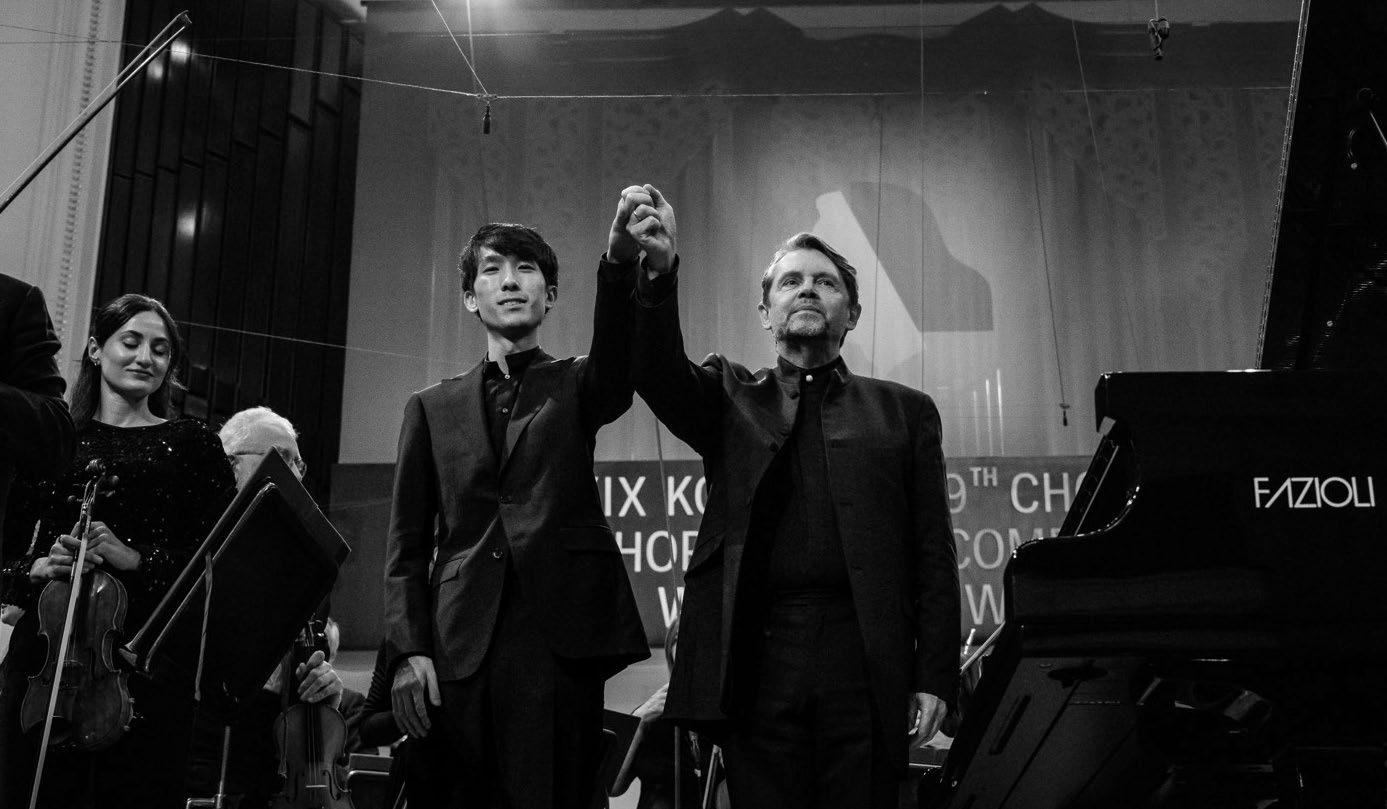
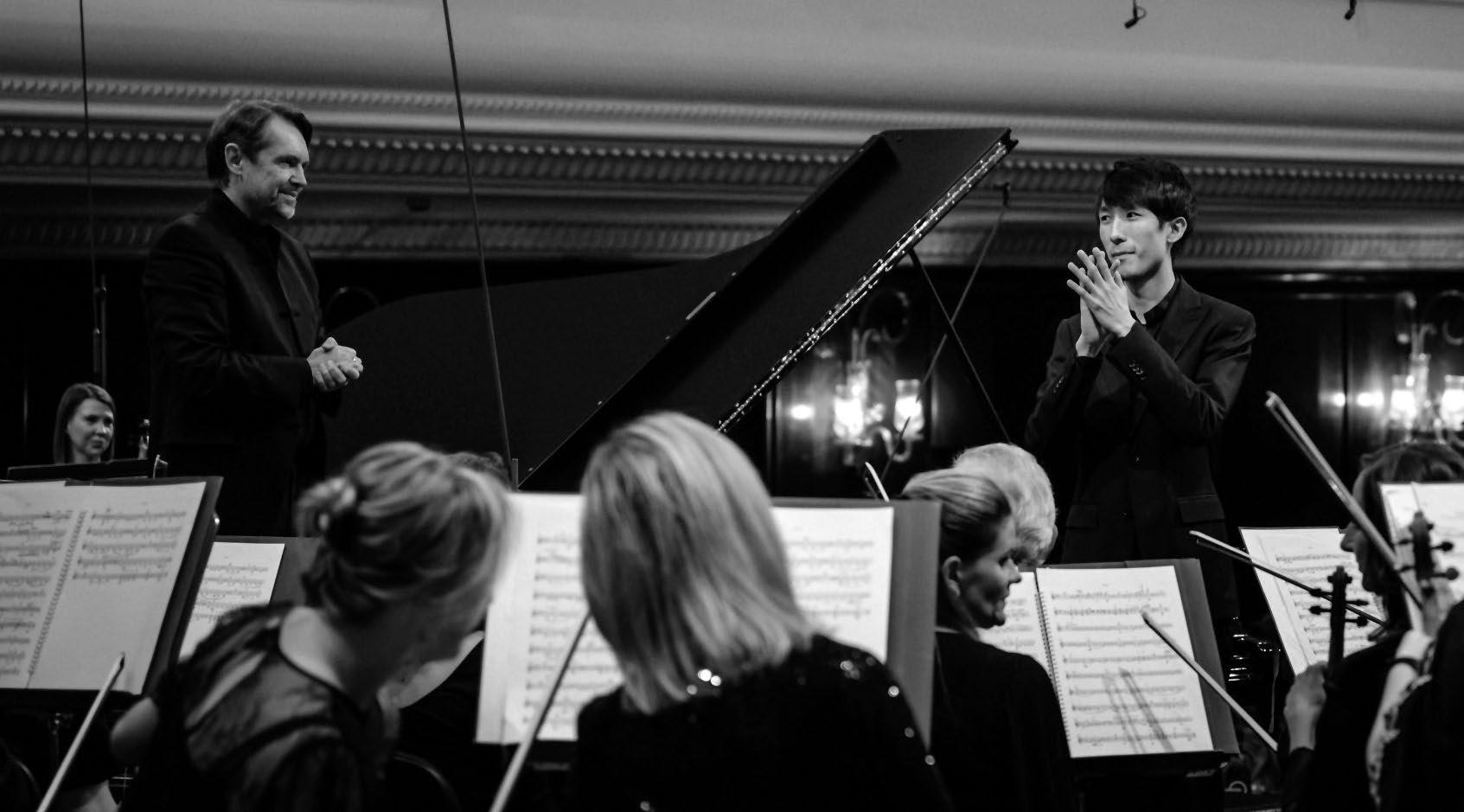
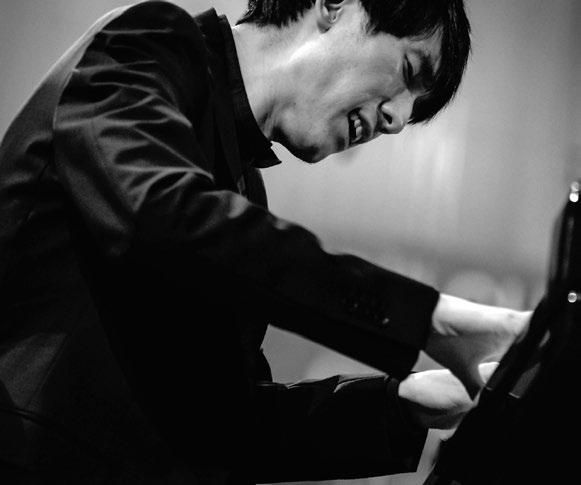
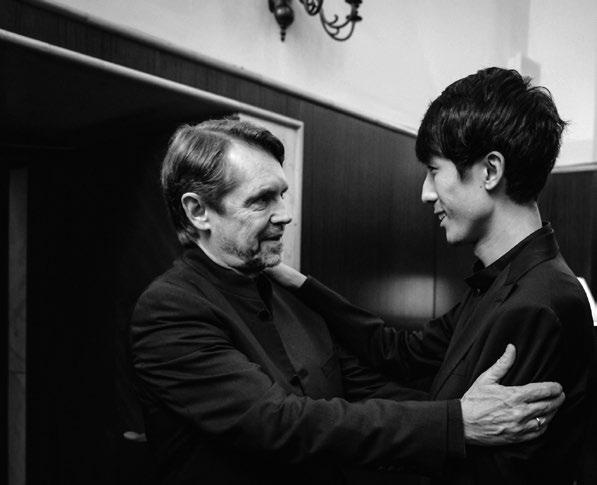
Eric Lu is the First Prize Winner of the 19th International Chopin Piano Competition 2025 in Warsaw. Before that he had won the First Prize at the Leeds International Piano Competition in 2018 at the age of 20. Eric's always thoughtful, poetically imbued and powerful interpretations have already made him one of the most distinctive artists on the international music scene.
Recent and forthcoming orchestral collaborations include the London Symphony, Chicago Symphony, Boston Symphony, Los Angeles Philharmonic, NHK Symphony, Oslo Philharmonic, Finnish Radio Symphony, Orchestre Philharmonique du Luxembourg, Royal Stockholm Philharmonic, Swedish Chamber Orchestra, Helsinki Philharmonic, Royal Philharmonic Orchestra, Scottish Chamber Orchestra, Bournemouth Symphony, Iceland Symphony, Tokyo Symphony, Singapore Symphony, Taipei Symphony, Shanghai Symphony at the BBC Proms, and Yomiuri Nippon Symphony, amongst others. Conductors he collaborates with include Riccardo Muti, Mirga Gražinytė-Tyla, Ryan Bancroft, Edward Gardner, Marin Alsop, Sir Mark Elder, Thomas Dausgaard, Tabita Berglund, Tomáš Netopil, Duncan Ward, Vasily Petrenko, Ruth Reinhardt, Kahchun Wong, Earl Lee, Nuno Coelho, Martin Frӧst, JoAnn Falletta, Daníel Bjarnason, and Eliahu Inbal.
Active as a recitalist, he has performed at Concertgebouw Amsterdam, Queen Elizabeth Hall London, Leipzig Gewandhaus, Elbphilharmonie Hamburg, Wigmore Hall, Cologne Philharmonie, San Francisco Davies Hall, Cal Performances, Aspen Music Festival, BOZAR Brussels, Flagey, Fondation Louis Vuitton Paris, 92Y New York, Seoul Arts Center, Shanghai Symphony Hall, Victoria Hall Singapore, Chopin and his Europe Festival, Warsaw Philharmonic Hall, and Sala São Paulo.
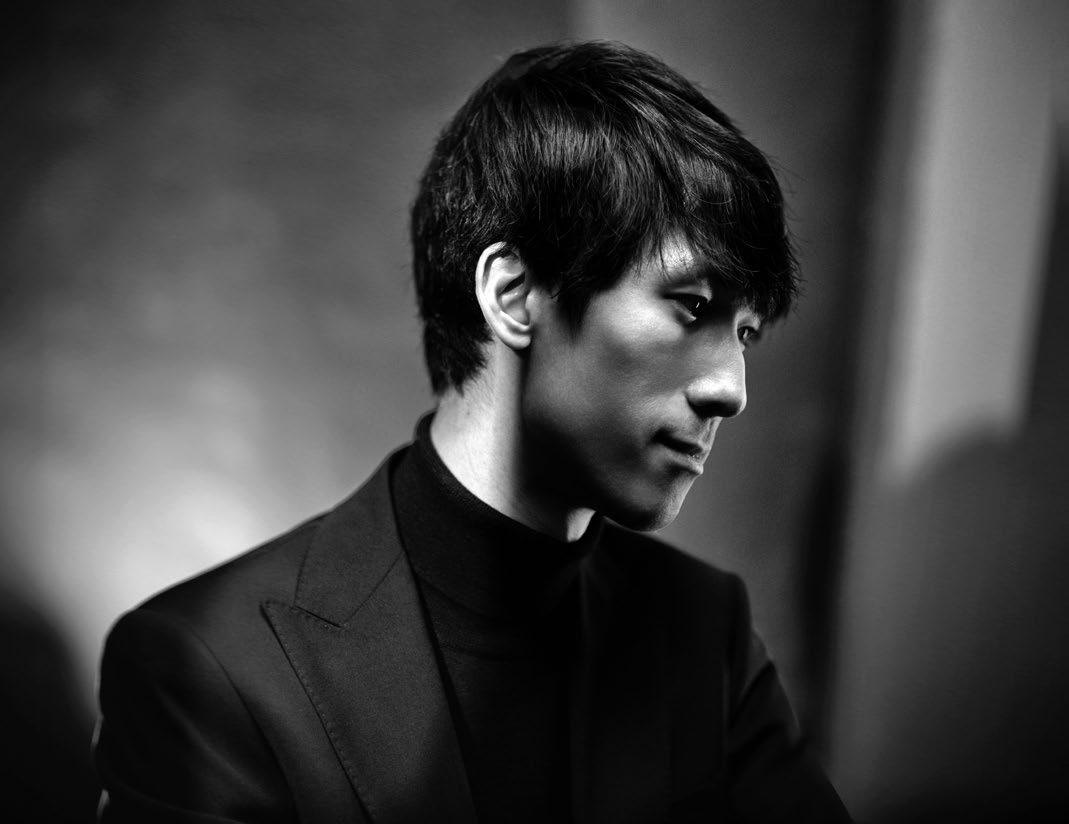
Eric is an exclusive Warner Classics artist. His fourth album featuring the 2 opuses of Schubert's Impromptus will be released in January 2026. His previous albums on Warner Classics were all met with worldwide critical acclaim. His 2022 Schubert album won BBC Music Magazine's Instrumental Choice while his previous BrahmsChopin-Schumann album was hailed "truly magical" by International Piano.
Born in Massachusetts in 1997, Eric Lu first came to international attention as a Laureate of the 2015 Chopin International Competition in Warsaw, aged just 17. He was also awarded the International German Piano Award in 2017, and Avery Fisher Career Grant in 2021. Eric was a BBC New Generation Artist from 2019 to 2022. He is a graduate of the Curtis Institute of Music, studying with Robert McDonald and Jonathan Biss. He also studied with Dang Thai Son and has been mentored by Mitsuko Uchida and Imogen Cooper. He is now based in Berlin and Boston.



5 DEC 2025 | FRI | 7PM
Rehearsal Room, HKU
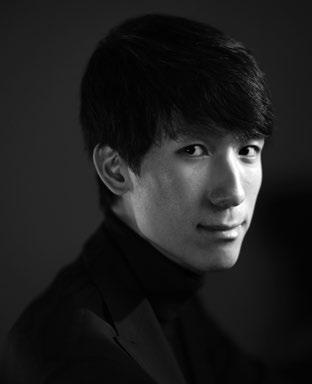
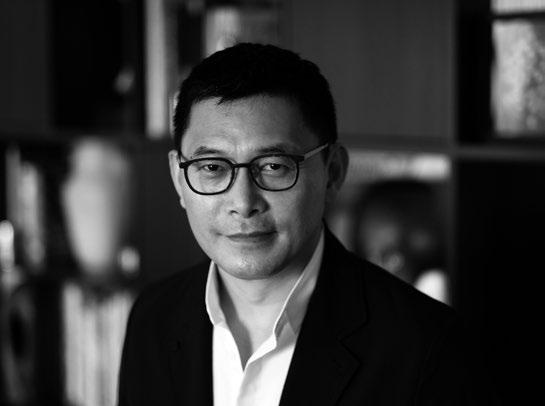
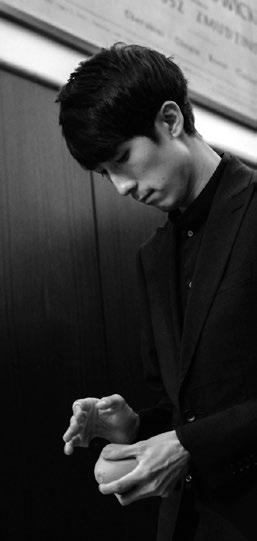
Eric Lu, winner of the 2025 Chopin Piano Competition, reflected on his remarkable artistic journey with Prof. Daniel Chua. Eric discussed the challenges of competing under the global spotlight, shared his insights on what it means to interpret Chopin today, and offerd a glimpse into his plans for the future.
Chopin composed the two Nocturnes of Op. 27 in 1836 and published in 1837. Dedicated to the Countess Thérèse d'a’Apponyi, a salon hostess in Paris, both Nocturnes are enharmonically related. Nocturne No. 1 is set in the sombre key of C-sharp minor and the No. 2, D-flat major. The first Nocturne, marked Larghetto, opens with wide arpeggiation in the left hand although one that omits the third of tonic harmony while the right hand voices a mystifying melody. It seems to settle for neither a major nor minor mode as it alternates between the two. In più mosso, which means "more motion", the music intensifies in restlessness and agitation. Ascending chromaticism eventually transports listeners to con anima in D-flat, a gesture that seems to prefigure the key of the second Nocturne. Music professor Jonathan D. Bellman calls this con anima section a "clarion call for Polish fidelity", suggesting that Chopin has incorporated "pitch-perfect evocations of opera" that include not only aria but also the chorus, duet, scene, recitative, and instrumental interlude, all of which would exceed the powers of a mere melodist. The first theme later returns in measure 84, and the Nocturne ends in a major, reaching an E-sharp that delicately points, again, to the opening of the second Nocturne.
Barcarolle in F-sharp major was composed between 1845 and 1846. Chopin had never visited Venice, but the genre of barcarolle had a root in the songs of the Venetian gondoliers. Chopin's Barcarolle shows typical characteristics of barcarolles, such as a gentle rocking-boat rhythm, which evokes soft undulating waves and a sense of calm continuity, as well as a 12/8 metre. This much-adored work lures with delicate melodic lines, often in thirds and sixths, fashioned by the use of sublime harmonies. As Ravel described in an article published in 1910:
"In the Barcarolle glowing harmonies clothe the subject, flexible, and subtle in thirds. The melodic line is constant. In one moment, the 'melopea' disappears, it is suspended and then re-created delicately, softly, tempted by magical accords. The intensity increases. The new subject erupts, full of splendid lyricism, thoroughly Italian. Everything calms down. From the depth, a quick luminous trail rises and floats shimmering above the refined and tender accords. Some mysterious apotheosis comes to mind."
Chopin himself seemed rather pleased with this composition, since he had performed the piece quite regularly. The form of the Barcarolle can be interpreted as ABA, but according to the music theorist David Kopp, the composition can also be understood as one that employs, rather ambiguously, a "sprawling, idiosyncratic formal plan".
Written in 1841 and dedicated to Ludmila Komar, Princess of Beauvau-Craon, Chopin's Polonaise in F-sharp minor, Op. 44 is often known as the "Tragic" polonaise. Pianist Garrick Ohlsson hears the polonaise as "tragic, compulsive, and complex".
A stately and dignified Polish dance in triple metre and usually a moderate tempo, the polonaise developed from the Polish dance taniec polski of the 18th century, although taniec polski was also partly derived from the 17th century chodzony, that is, "walking dance". Polish scholars have recently reinterpreted the history of the polonaise by arguing that the concept of "kinetic Polishness" accounts for the capability of the polonaise to reinforce national identity through embodied movement. What strikes as peculiar with Polonaise Op. 44, however, is the integration of mazurka. The mazurka section, Tempo di Mazurka, which appears in the middle of the piece can seem to perform stylistically destabilising effects. As Liszt once wrote:
"Chopin's mazurkas distinguish themselves considerably from his polonaises in regard to their expression. Their characters are completely different. They move inside another circle of feeling, into gentle, soft, and richly changing shades, instead of the rich and vibrant colouring of the polonaise."
Liszt discerned a "softer, feminine element" in the mazurka; even if one does not agree fully with his observation, the insertion of mazurka materials still offers a surprising contrast, though they do not at all undermine but rather further accentuate the Polishness of the piece, since the mazurka is a national dance that symbolises Polish identity, just as how the Viennese waltz can signify Austrian identity.
Chopin himself referred to this work as "a fantasy in the form of a polonaise". In August 1841, he wrote to the Viennese publisher Pietro Mechetti, stating: "I have at this moment a manuscript to place at your disposal. It is a kind of fantasia in the form of a polonaise, and I shall call it a polonaise". He also enclosed this letter with another one that he penned to his friend and copyist Julian Fontana, in which he described the music as "a sort of polonaise, but more of a fantasia". In this sense, Op. 44 also seems to hint at Chopin's attempt to write the Polonaise-Fantasy that materialised several years later.
Chopin's Polonaise-Fantasy was finalised in 1846, in the village of Nohant, where Chopin was staying at the country house of his lover and novelist George Sand. The piece underwent several revisions as indicated in the extensive sketches made during a period of 18 months that began a year earlier in 1845. A friend of both Sand and Chopin, the French painter Eugène Delacroix later transported the autographs of Polonaise-Fantasy as well as Chopin's Barcarolle and the two Nocturnes Op. 62 to Paris for publication. Although Liszt described Polonaise-Fantasy as a work of "fevered anxiety", this piece demonstrates Chopin's intent to fuse "fantasy-like" characteristics into the polonaise, something that can be felt early on in the introduction of the piece, where lengthy arpeggios rise freely from the low register of the piano. The key in the introduction shifts continuously and thus prolongs the sense of "fantasy", but dignifying polonaise rhythm finally breaks in, in E-flat octaves, in measure 22. The rhapsodic and at times melancholic rhetoric heard throughout has not diminished at all the noble and heroic character of the polonaise.
Chopin's Op. 71 consists of three polonaises, composed during the composer's early years: Allegro maestoso in D minor, WN 11 (1825–1827), Allegro moderato in B-flat major, WN 17 (1829), and Allegro moderato in F minor, WN 12 (1826–1828). They were published after Chopin's death as posthumous works by Julian Fontana. Chopin's biographer Frederick Niecks once remarked that the three polonaises appear "artistically unimportant" and are only as interesting as "biographical documents". He explained: "… the tyro strives to say something new, but succeeds only very imperfectly; he has an ideal, but as yet cannot attain it". Chopin did not intend them to be published, perhaps also thinking they are not his most mature creations; but No. 2 in B-flat, which takes the form of ABA-CDC-ABA, ultimately reveals Chopin's youthful charm through its bright musicality.

Chopin completed his Sonata No. 2 at George Sand's house in Nohant in 1839. Chopin's Sonata No. 2 was once criticised by Schumann as a work that reveals Chopin "could not quite handle sonata form", but the receptions that came later seem to undermine Schumann's quite negative impression.
The Sonata comprises four movements. The first adopts the sonata-allegro form and opens with Grave , pronouncing solemn and dramatic octaves, and transitions into Doppio movimento, which is much faster, executed with perpetual agitation. The second movement is a fierce Scherzo with strong octaves, leaping chords, and other forceful elements, although the trio of this movement sings a beautiful melody with simple accompaniment.
The third movement is likely the most well-known movement, although it was composed a year or two earlier. The Funeral March, in a three-part form, emits a dark, grim tone while the trio in D-flat in the middle of the movement touches listeners with a consoling tenderness. Frederick Niecks depicts the trio as "a rapturous gaze into the beatific regions of a beyond". Wilhelm von Lenz, who studied with Chopin, once heard Chopin himself play the trio and described what Chopin performed as "indescribable" that "only [Giovanni Battista] Rubini sang like that, and even then only exceptionally". This passage in Lenz's view becomes the site "where you learn whether the pianist performing is also a poet or merely a pianist; whether he can tell a story [fabulieren] or merely play the piano". For Liszt, the movement merits much adoration. He describes the music using heavily spiritualised terms:
"All of most pure, of most holy, of most believing, of most hopeful in the hearts of children, women, and priests, resounds, quivers and trembles there with irresistible vibrations… These sounds, in which the wild passion of human anguish seems chilled by awe and softened by distance, impose a profound meditation, as if, chanted by angels, they floated already in the heavens: the cry of a nation's anguish mounting to the very throne of God!
The appeal of human grief from the lyre of seraphs! Neither cries, nor hoarse groans, nor impious blasphemies, nor furious imprecations, trouble for a moment the sublime sorrow of the plaint: it breathes upon the ear like the rhythmed sighs of angels."
The most mesmerising movement, however, would perhaps be the Finale , often perceived as enigmatic, wind-like, and ghostly. Anton Rubinstein described it as "wind howling around the gravestones". The Chinese-British pianist Fou Ts'ong, who was awarded the Third Prize and the Polish Radio Prize for the best performance of Chopin's mazurkas in the 1955 International Chopin Piano Competition, would begin his daily warm-up routine by playing this movement slowly, gradually increasing his tempo in each repetition. Haunting but also demanding, even though one is supposed to make the playing appear effortless in an uninterrupted manner, this finale is perhaps among the most idiosyncratic few minutes of music Chopin had ever written.
Programme notes by
Keri Hui PhD in Musicology
The University of Hong Kong & King's College London
Please take a moment to complete our 3-minute questionnaire. Thank you for sharing your thoughts! Your responses will be kept confidential and used for internal review purposes only.
You can help us bring more impact, more joy, and more inspiration to the students and the community!
Donate Now
ADVISORY BOARD
Prof. Chan Hing-yan
Prof. Daniel K. L. Chua
Ms. Belinda Hung
Mr. Albert Wong
Legal Advisor
STAFF
Sharon Lu
Programme Director
June Lui
Senior Manager
Christy Law Manager
Steffi Leung
Marketing and Programme Officer
Xinyi Ye
Administration and Programme Officer
Chris Tam
Recording Engineer ▲
2025/26 INTERNS ▲
Caitlin Gillett
Ethan Pak Hei Leung
Mumtahina Maksud
Rosie Thomson
Melody Xue
Claire Zhang