
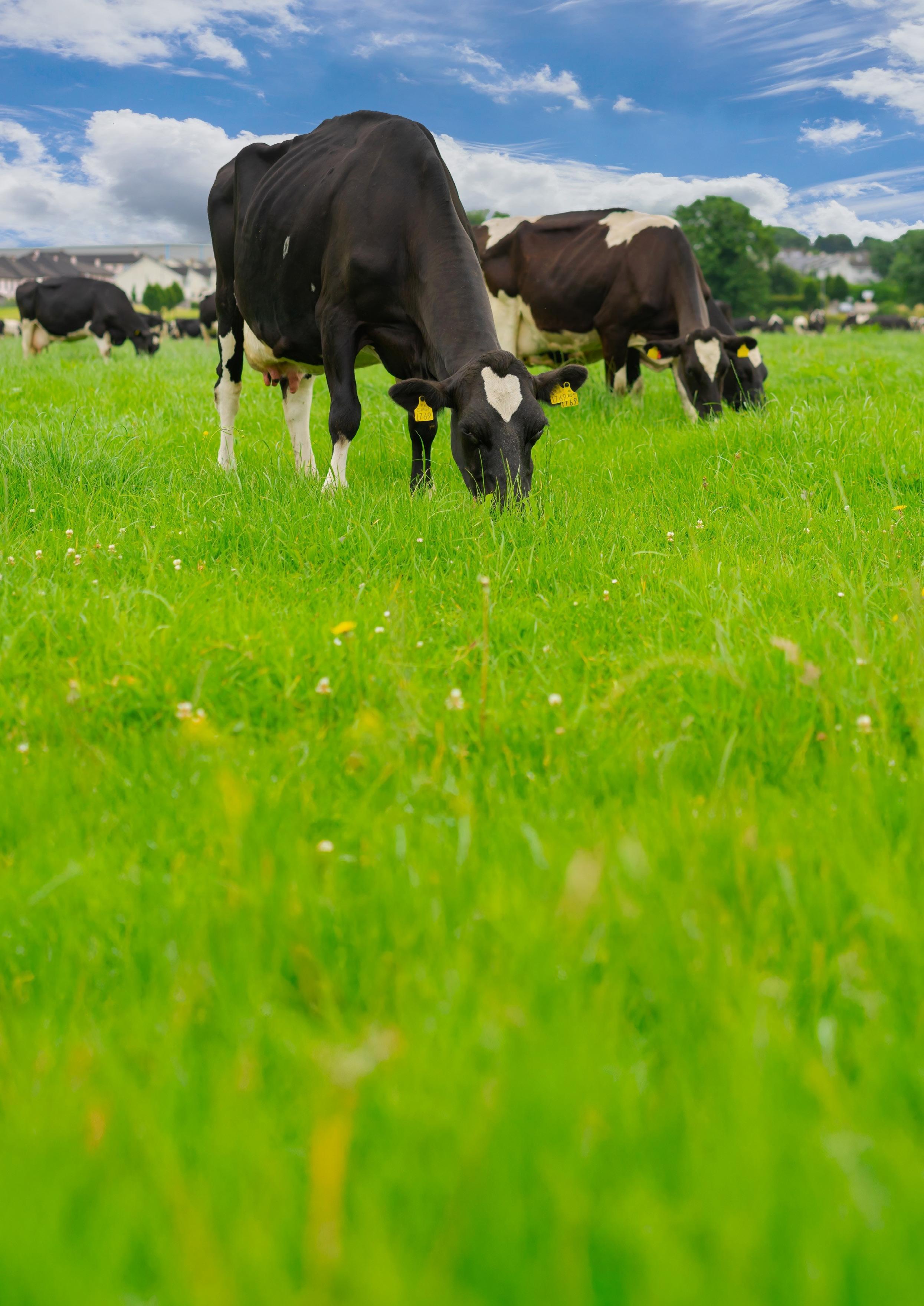
Protecting grassland across the UK
Product portfolio 2026
Trusted plant protection solutions
Founded in 1991, Clayton Plant Protection has nearly 35 years of experience in the agricultural industry and has evolved rapidly to market and distribute a wide range of crop protection products across the UK and Europe.
The company is wholly family owned with an excellent reputation in the industry for trust, building established relationships and highquality products with a known provenance.
Clayton is continuously innovating to provide cost effective product options and uniquely, ensures an alternative choice for customers and growers to the larger multinational Ag businesses.

David O’Mahony Managing Director
Grassland managementThe key to success
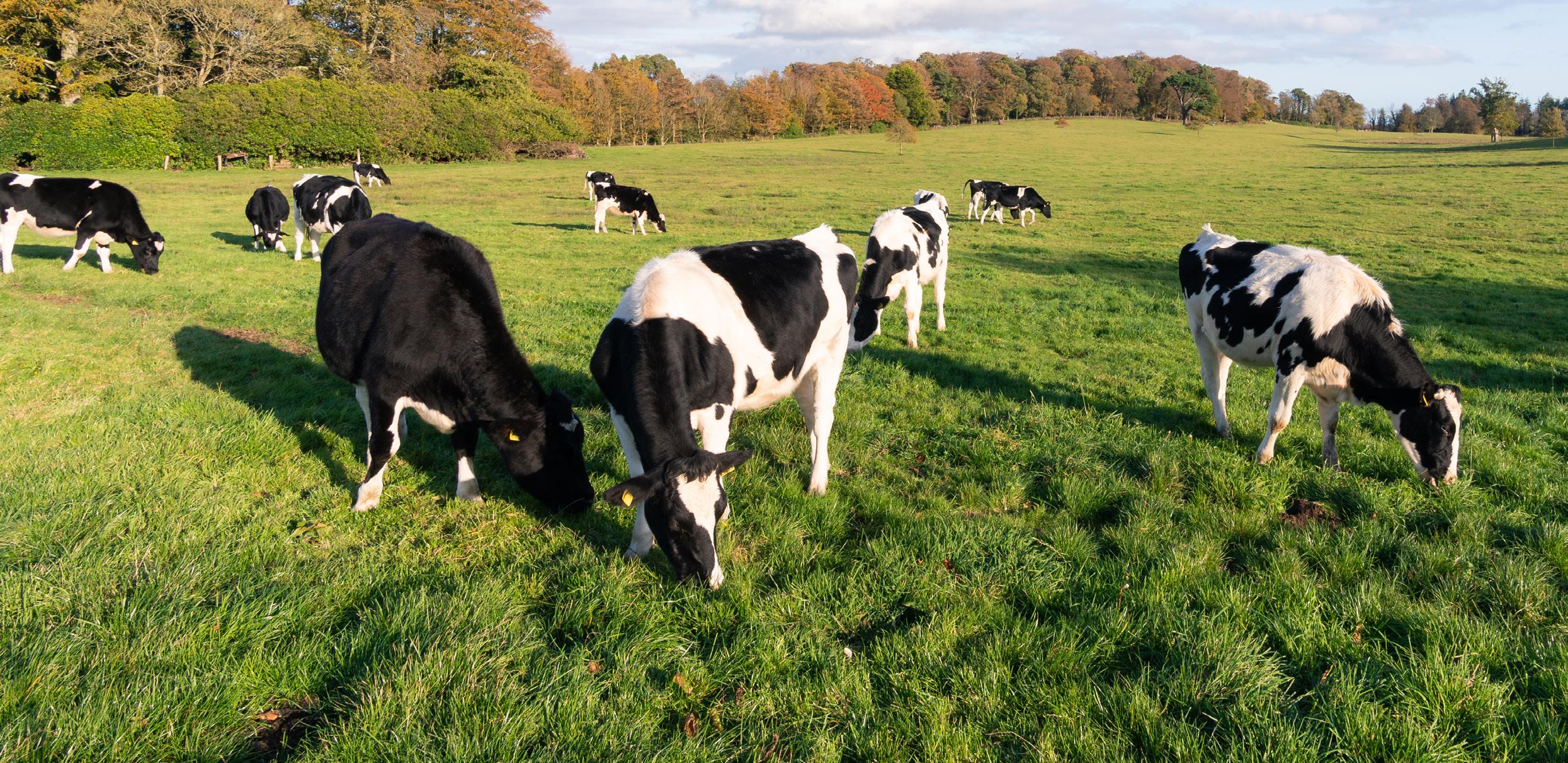
Protecting and getting the most out of grassland is vital for maximising grassland productivity, stock numbers and profitability.
Weeds in particular can compete very fast for space, light, water, soil nutrients and reduce grassland productivity quickly if left to establish.
Ensuring a well-planned, long-term approach to grassland management and weed control is essential to keep productivity high.
Grassland weed control: tackling problem weeds.
Weed control in grassland is a key factor in successful grassland farming and herbicide spray applications should be applied safely, according to the product label and taking care for the environment with a sustainable approach.
For more information on the products in this guide please visit our website. If you require information on compatibility tank mixes, please contact us.
IMPROVE YOUR GRASS YIELDS
Grassland that becomes weedy can easily incur yield losses of 10-20%, so it is important to keep on top of the weeds to protect the yield.
IMPROVE YOUR SILAGE QUALITY
Weeds such as docks and thistles in particular detrimentally affect silage quality.
KEEPING YOUR GRAZING STOCK HEALTHY
Weeds like thistles can spread diseases such as Orf in sheep and lambs.
IMPROVE GRASSLAND UTILISATION
Sheep and cattle often avoid grazing close to or around weed patches (especially thistles) which reduces effective grassland utilisation over time.
PROLONG THE PASTURE LIFE
Weed control ensures less productive weeds and other grasses are kept out and the target grass ley species mix is competitive so pasture renewal is less frequent.
info@claytonpp.com www.claytonpp.com
Problem weeds to watch out for...
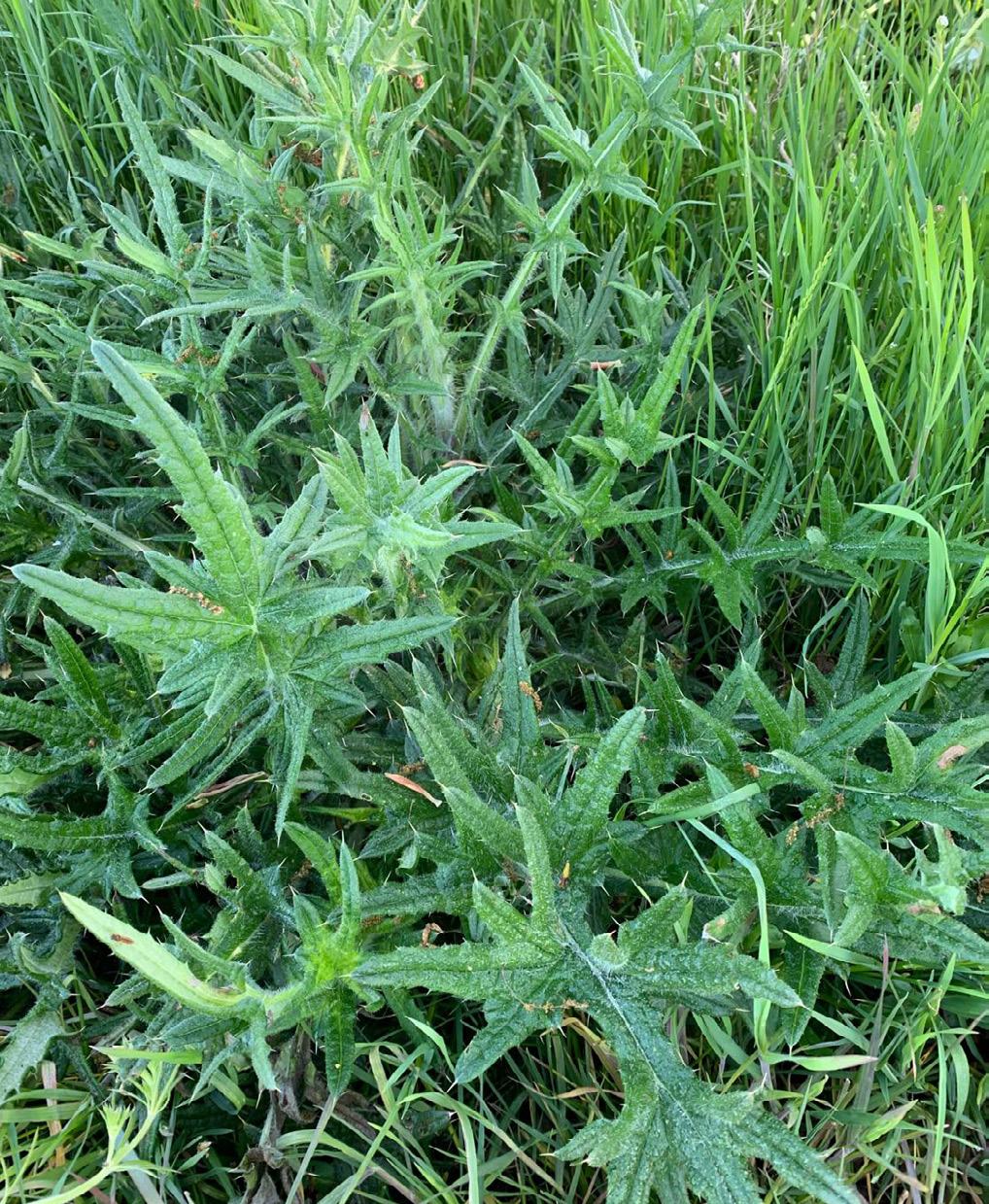
Thistles
Why control thistles: Creeping thistle when established has extensive roots underground and competes very strongly with grass, and as a perennial it grows from seed or portions of root. Spear thistle can spread to cover over a square metre of ground within two years so is a serious threat to grassland productivity and as a biennial growing from seed it is less obvious in its first year but can spread rapidly in its second year.
Timing of control can be difficult as thistles can appear at different times and overgrazing and poor soil nutrition can also both encourage growth of thistles.
Control options and application tips:
Herbicides* containing active ingredients such as fluroxypyr, triclopyr and clopyralid provide useful treatment options. Where thistles are at different growth stages in the pasture, topping 2-3 weeks before spraying is advisable.
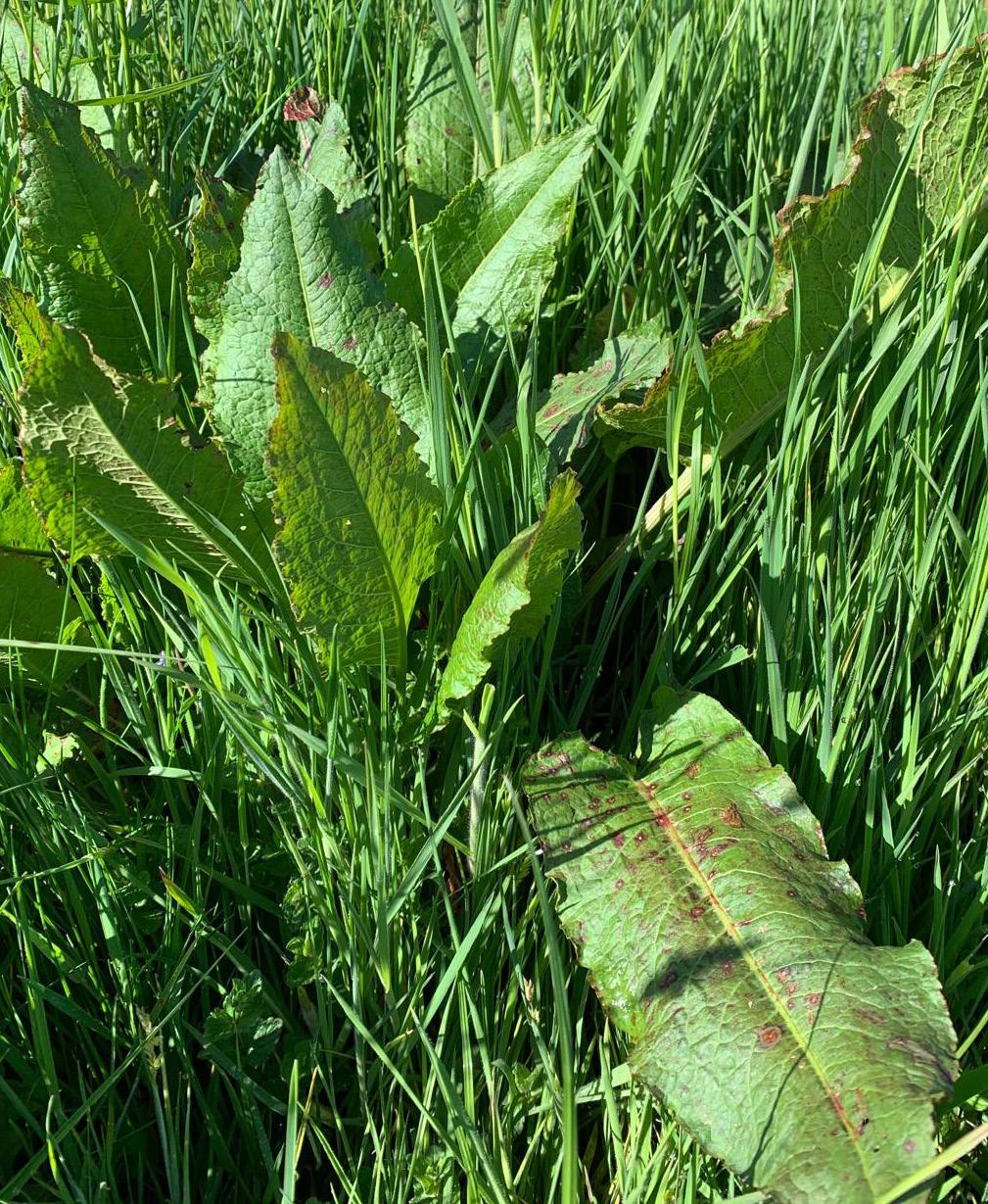
Docks
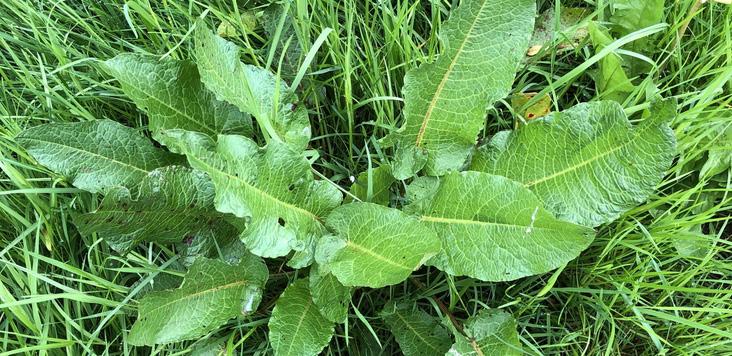
Why control docks: Docks thrive in fertile grassland pastures but compete for valuable space and only provide two-thirds of the feed value of grass from the same area. One dock plant can produce up to 60,000 seeds which can remain viable for many years.
Open swards which can result from poaching, over-grazing or winter kill provide space for docks to establish and infest fields. Docks establish more easily on grazed land and in silage systems and respond well to nitrogen fertiliser.
Control options and application tips:
Herbicides* containing active ingredients such as fluroxypyr and triclopyr provide excellent treatment options. Docks are best controlled at the rosette stage when actively growing and not under stress, and leaves are a healthy green.
Broad-leaved dock (Rumex obtusifolius) and Curled dock (Rumex crispus)
Creeping thistle (Cirsium arvense) and Spear thistle (Cirsium vulgare)
Problem weeds to watch out for...
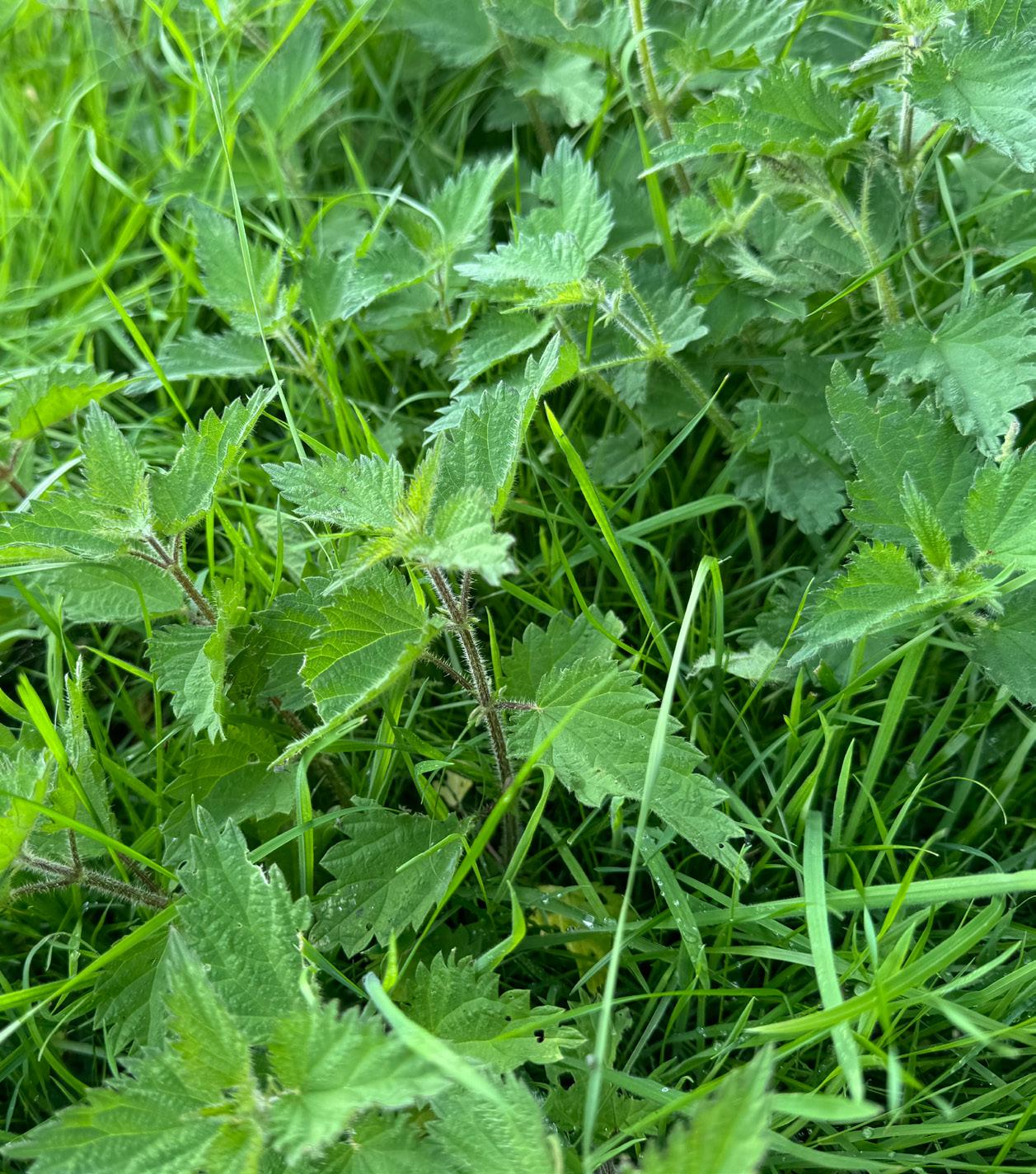
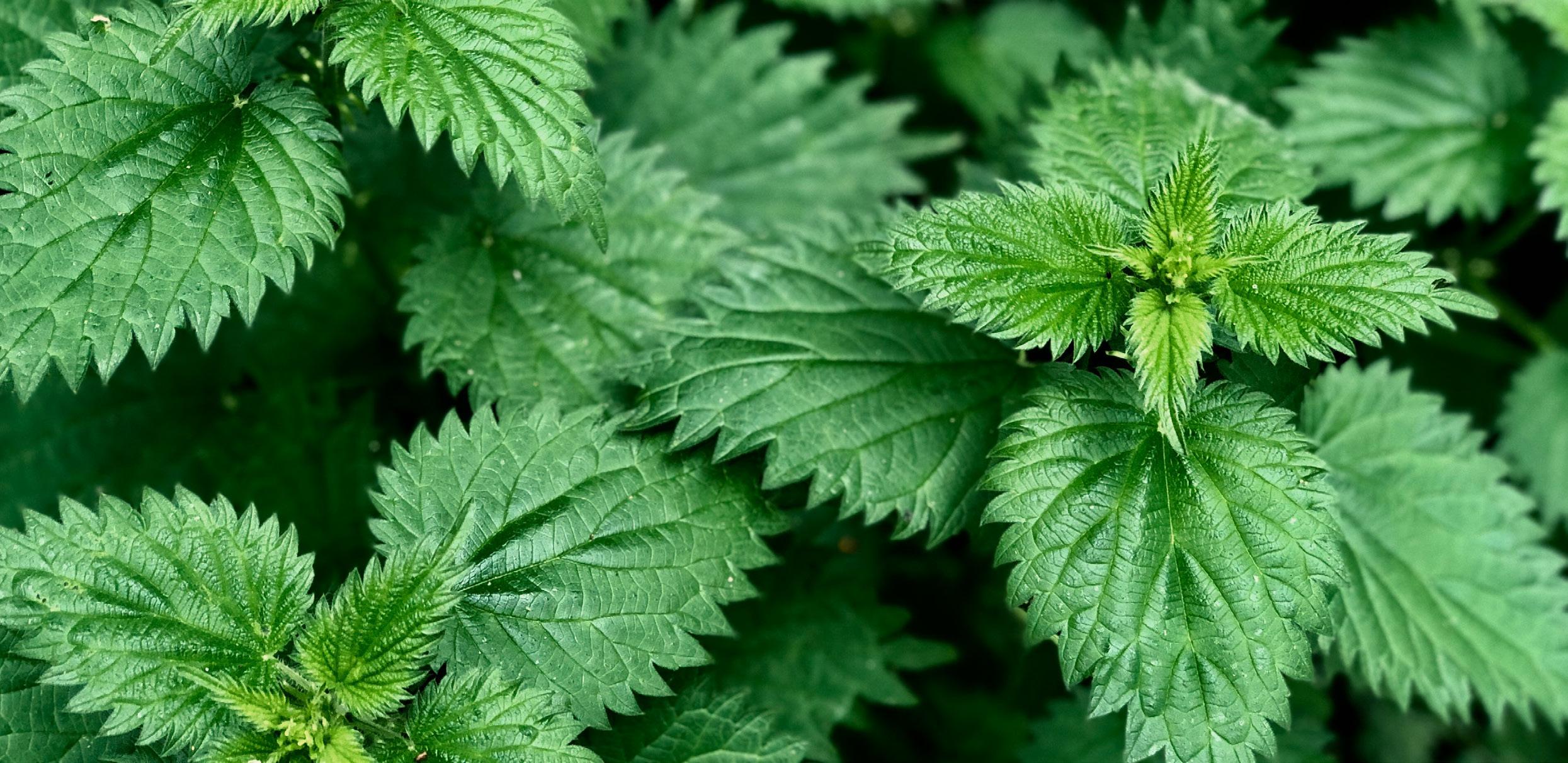
Nettles
Why control nettles: Nettles infestations very quickly spread out and occupy valuable pasture as they grow, making pasture unpalatable and reducing the effective grazing. As a perennial weed they can grow from both seed or root portion so are very invasive.
Poached areas, bare soil, field margins or open swards are ideal areas where nettles will establish.
Control options and application tips:
Herbicides* containing active ingredients such as fluroxypyr, triclopyr and clopyralid provide good treatment options. Nettles are best controlled when young and actively growing at 15-25cm high. Once established, nettles are difficult to control by a single treatment, so regular treatments may be required.
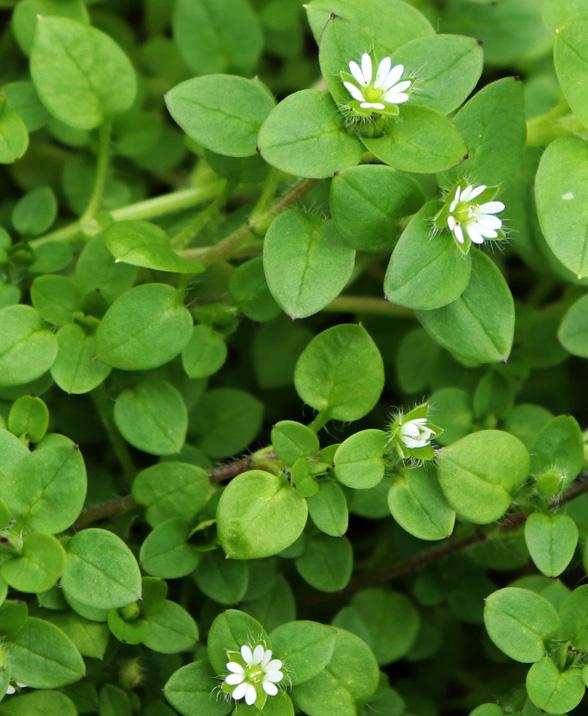
Chickweed
Why control chickweed:
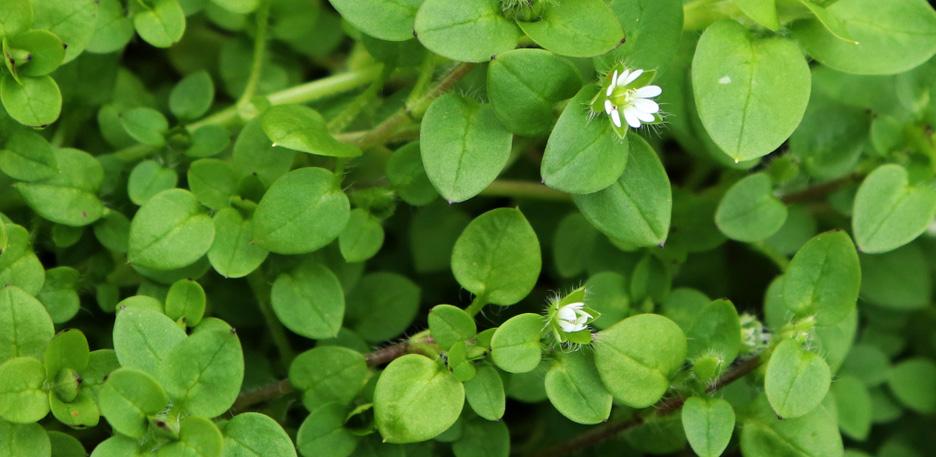
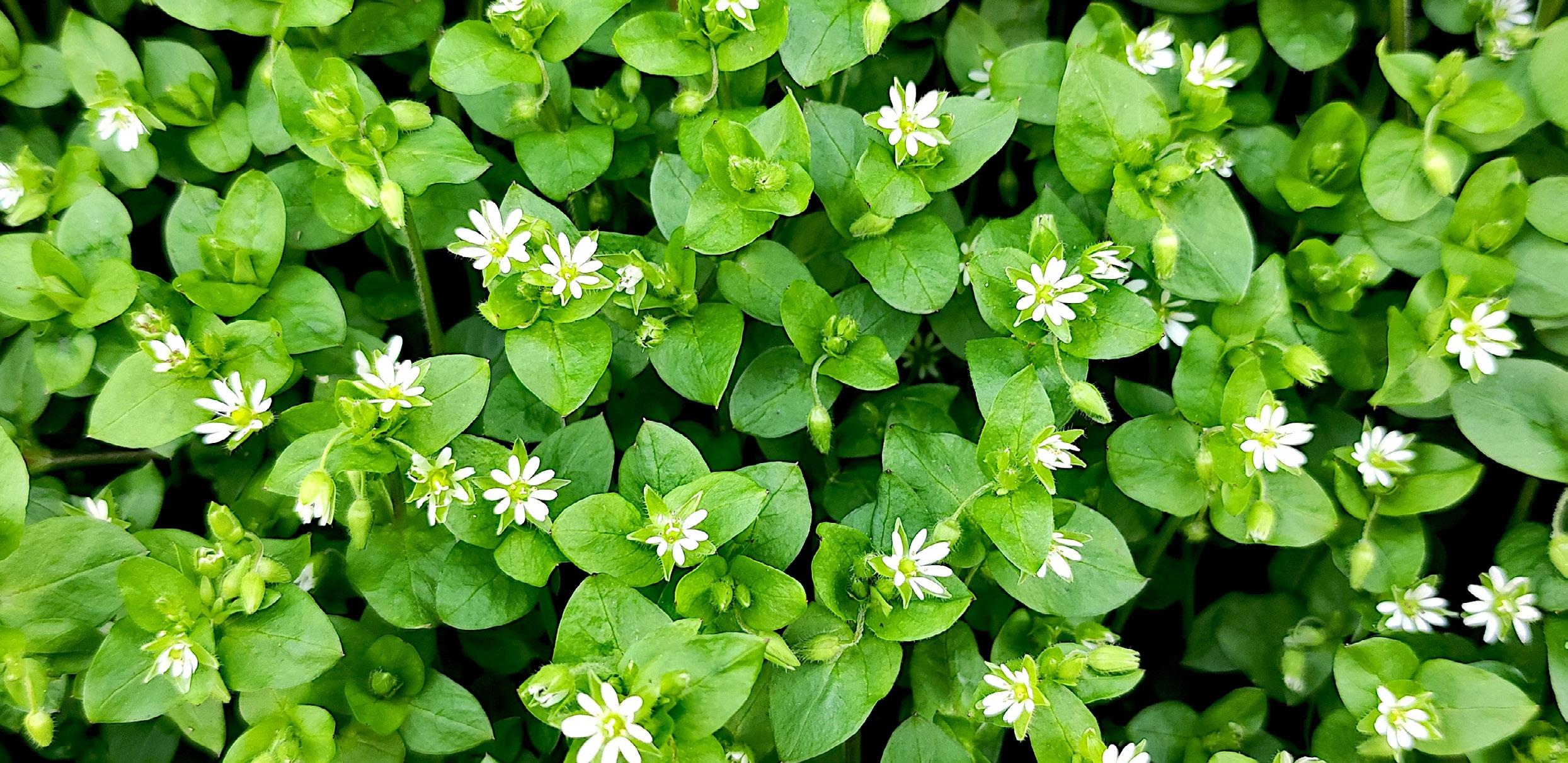
As the most widespread, common annual weed of grassland, its very rapid growth means it competes strongly with grass leading to significant yield losses especially when establishing new grass leys. Often a significant problem in new reseeds, it can also be troublesome in established grassland as it can quickly grow and colonise bare soil areas.
Control options and application tips:
Herbicides* containing active ingredients such as fluroxypyr, triclopyr and clopyralid provide good treatment options. Ensure good, quick establishment of new swards and that seedbeds are clean and weed free. Use of a heavy roll can also help fast establishment when sowing new grass leys to achieve good soil to seed contact.
Nettles (Urtica dioca)
Common chickweed (Stellaria media)
Clayton Cocoon™
Powerful broad-spectrum herbicide for perennial and annual weeds in grassland.
ACTIVE INGREDIENTS
APPROVED CROPS
400 g/L clopyralid
SC Formulation Soluble Concentrate
Established Grassland (grazing only), Cereals, Sugar beet, Oilseed rape, Maize, Field Vegetables
PACK SIZE 2 Litre
KEY FEATURES
• Delivers consistent post-emergence control of a wide range of annual and perennial broad-leaved weeds, including mayweeds, thistles and volunteer potatoes.
• Fits easily into sequential spray programmes, helping maintain clean crops throughout early-season growth.
• A hi-loaded 400 g/L clopyralid formulation means lower product volumes per hectare, reduced handling and efficient tank mixing.
• Controls key problem weeds from seed while also contributing to longer-term suppression of established perennials such as creeping and spear thistle.
Clayton Cocoon™ Product Information
A powerful, broad-spectrum post-emergence herbicide designed to deliver reliable control of a wide range of annual and perennial broad-leaved weeds in established grassland for grazing and selected arable crops. Formulated with a high-load 400 g/L clopyralid, it provides effective knockdown of susceptible weeds such as thistles, mayweeds and dandelion, while also contributing to longer-term suppression of problem perennials. Its low use rate and flexibility make Clayton Cocoon™ an efficient and practical option for maintaining clean, productive grassland when applied in line with label recommendations.
USE RATE & TIMINGS
TARGET WEEDS
Maximum individual dose: 0.5 litres product per hectare.
Maximum total dose: 0.5 litres product/hectare/annum.
Latest time of application: 7 days before grazing or harvest.
Other restrictions apply, please see product label.
Corn Marigold, Creeping thistle, Groundsel, Pineapple weed, Scented mayweed, Scentless mayweed, Smooth sowthistle, Dandelion, Spear thistle (all Susceptible). Black bindweed, Perennial sow-thistle, White clover (Moderately susceptible). Pale persicaria, Redshank (Moderately resistant).
APPLICATION INFORMATION
DO NOT USE ON GRASSLAND which will be grazed by horses or ponies.
CLAYTON COCOON must only be applied to established grassland intended for grazing in the calendar year of application. Where silage, hay or haylage is produced from this area in the following calendar year, any plant material treated with CLAYTON COCOON or manure subsequently produced from animals fed on this must stay on the farm.
This must only be spread onto agricultural grassland, cereals or maize. Under no circumstances should this manure be supplied to gardeners or allotment holders, or commercial compost producers i.e. there must be no off-farm sale or supply, as sensitive plants may be affected by residues of CLAYTON COCOON in the manure. Grass treated with CLAYTON COCOON MUST NOT be cut for hay, haylage or silage within 12 months of treatment.
CLAYTON COCOON can be applied to all species and varieties of grass in established leys or permanent pastures grassland for grazing only following removal of any livestock.
As an overall treatment, CLAYTON COCOON should be applied at 0.5 litre/ha in a water volume of 300 to 400 litres/ha. Application should be made when weeds are actively growing at the 15 to 30 cm rosette stage. If grass has been cut for hay or silage, treat at least 2 to 3 weeks after cutting when sufficient regrowth has occurred.
GRAZING INTERVAL
Exclude livestock during treatment and do not allow livestock to graze treated grassland for at least 7 days following treatment. Where ragwort is present users should consult the Code of Practice on ‘How to Prevent the Spread of Ragwort’
Ragwort plants sprayed with this herbicide are more palatable with higher levels of toxins. Animals should be excluded from treated areas until any ragwort has completely recovered or died and there is no visual sign of the dead weed.
Do not include treated ragwort in hay or silage crops.
Clayton Cocoon
Clayton Docker™
WEED CONTROL
Powerful, foliar-acting herbicide for control of broad-leaved dock and curled dock in established grassland, offering all-star performance and value.
ACTIVE INGREDIENTS 150 g/L fluroxypyr + 150 g/L triclopyr
APPROVED CROPS Established Grassland
PACK SIZE 2 Litre
KEY FEATURES
• Powerful, high efficacy herbicide for dock control.
• Reduces weed competition to improve your grass yields and silage quality.
• Controlling docks improves your overall grassland utilisation.
EC Formulation Emulsifiable Concentrate
• Effective dock control helps prolong the pasture life.
• Compliments our range of other grassland herbicides.
• Added assurance of Clayton’s trusted products and premium service.
Clayton Docker™ Product Information
Making grassland management decisions easier this season with Clayton Docker, a robust, dual formulation herbicide designed to add real value and high level weed control efficacy into your grassland programme. Offering a valuable, alternative choice to protect pastures in spring. Delivering a co-formulation of powerful actives with fluroxypyr and triclopyr, Clayton Docker is a reliable one-can option for controlling docks this spring.
USE RATE & TIMINGS
Maximum individual dose: 2.0 litres product per hectare.
Maximum total dose: 2.0 litres product/hectare/annum.
Latest time of application: 7 days before grazing or harvest.
Weeds
TARGET WEEDS (ON LABEL)
OTHER WEEDS
Time of application to crop
Broad-leaved dock, Curled dock At the rosette stage up to 200 mm tall or across.
Black bindweed (6TL), Chickweed, Cleavers, Cranesbill, Dead-nettle (4TL), Fat-hen (2TL), Forgetme-not (4TL), Hemp-nettle, Nettle (small, 100mm), Black nightshade (6TL), Pale persicaria, Scarlett pimpernel (Good control). Bristly ox-tongue, Charlock (2TL), Corn chamomile, Fool’s parsley, Fumitory (2TL), Knotgrass (2TL), Shepherd’s purse (2TL), Wild radish (2TL) (Moderate control).
APPLICATION INFORMATION
Apply Clayton Docker at 2.0 litres/ha in 300 to 400 litres of water as an overall treatment in the autumn or spring for the control of docks. Use the higher volume of water where the weeds are large at the time of application and where the grass is dense.
Application timing of Clayton Docker is crucial for good control and must be made when the weeds and grass are actively growing to ensure good weed control and minimal check to the grass.
Docks should be treated in the rosette stage and within the size given above. It is important that there is sufficient leaf area for uptake of the herbicide. This is particularly true on well-established docks which will have an extensive tap root, but which early in the spring or soon after cutting may only have a few small leaves.
If the grass (and hence the weeds) has been cut for conservation hay or silage, or has been grazed, leave for 2 to 3 weeks to allow sufficient regrowth to occur before spraying. To allow maximum translocation of Clayton Docker to the roots do not cut grass for 28 days after application.
On large well-established docks and where there is a large reservoir of seed in the soil a further control programme in the following year may be required.
GRAZING INTERVAL
Exclude livestock during treatment and do not allow livestock to graze treated grassland for at least 7 days following treatment.
Where ragwort is present, users should consult the Code of Practice on How To Prevent The Spread Of Ragwort. Ragwort plants sprayed with this herbicide are more palatable with higher levels of toxins.
Animals should be excluded from treated areas until any ragwort has completely recovered or died and there is no visual sign of the dead weed.
Do not include any treated ragwort in hay or silage crops.
Clayton Flurry™
Translocated herbicide for the control of chickweed, dock, nettles and brambles in newly sown and established grassland.
ACTIVE INGREDIENTS 200 g/L fluroxypyr
APPROVED CROPS Established Grassland and Newly Sown Leys
PACK SIZE 1 Litre
KEY FEATURES
• Powerful, single active herbicide for controlling a range of problem weeds.
• Reduces weed competition to improve your grass yields and silage quality.
• Great choice for overall sprays in both newly sown leys or established grassland.
EC Formulation Emulsifiable Concentrate
• A good option for chickweed control, to ensure quick establishment of new swards.
• Compliments our range of other grassland herbicides.
Clayton Flurry™ Product Information
Clayton Flurry contains fluroxypyr, a translocated herbicide taken up by the leaves. It is essential that the target weeds have fully emerged before application and that good spray cover of the weed foliage is achieved when weeds are small and actively growing under warm moist conditions. Ensure grass is vigorous with growth unaffected by frost, pests, disease, nutrient deficiency or moisture stress before treatment. Do not treat waterlogged grassland or grassland under drought stress.
USE RATE & TIMINGS
ESTABLISHED GRASSLAND
Maximum individual dose: 2.0 litres product per hectare.
Maximum total dose: 2.0 litres product/hectare/annum.
Pre-flowering Broad-leaved Dock: In spring at rosette stage but may be applied 14-21 days after cutting when weed foliage has regrown. Repeat if necessary the following year.
Common nettle: up to mid-June when actively growing.
Use Rate: 2.0 L/ha in 300 – 400L/ha water. For spot treatment use 30 ml/10 L water.
Bramble, Broom
Spray in June – August when actively growing but before plant begins to senesce in the autumn. It is essential that particularly with large bushes all the foliage is thoroughly wetted or incomplete kill may result.
Use rate: 2.0 L/ha in 300 – 400 L/ha water.
NEWLY SOWN LEYS
Maximum individual dose: 0.75 litres product per hectare.
Maximum total dose: 0.75 litres product/hectare/annum.
Common chickweed (5cm)
Apply in early autumn when grasses are well established and tillered and weeds are actively growing.
Use Rate: 0.75 L/ha in 150 - 400 L/water/ha.
OTHER ANNUAL WEEDS
Black bindweed (6TL), Cleavers (Flowering), Dead-nettle (4TL), Forget-me-not (Flowering), Fumitory (2TL), Groundsel (2TL), Hemp-nettle (Flowering), Knotgrass (2TL), Mayweeds (2TL), Pale persicaria (2TL), Redshank (2TL), Speedwells (2TL) (Good control).
APPLICATION INFORMATION
Apply with tractor mounted/trailed sprayer in 150-400 litres of water per hectare using a minimum 300 L/ha on established grassland, to give good coverage of the target weeds. The higher volume is recommended on dense crops to ensure good coverage and penetration. Apply as a medium quality spray.
Where overall spraying is not justified, small weed infested areas or individual weeds may be spot treated by knapsack sprayer or hand-lance connected to a powered conventional hydraulic sprayer.
GRAZING INTERVAL
Exclude livestock during treatment and do not allow livestock to graze treated grassland for at least 7 days following treatment.
Where ragwort is present, users should consult the Code of Practice on How To Prevent The Spread Of Ragwort. Ragwort plants sprayed with this herbicide are more palatable with higher levels of toxins.
Animals should be excluded from treated areas until any ragwort has completely recovered or died and there is no visual sign of the dead weed.
Do not include any treated ragwort in hay or silage crops.
Clayton Florin™
Translocated herbicide for the control of chickweed, dock, nettles and brambles in newly sown and established grassland.
ACTIVE INGREDIENTS 200 g/L fluroxypyr
APPROVED CROPS Established Grassland and Newly Sown Leys
PACK SIZE 1 Litre
KEY FEATURES
• Powerful, single active herbicide for controlling a range of problem weeds.
• Reduces weed competition to improve your grass yields and silage quality.
• Great choice for overall sprays in both newly sown leys or established grassland.
EC Formulation Emulsifiable Concentrate
• A good option for chickweed control, to ensure quick establishment of new swards.
• Compliments our range of other grassland herbicides.
Clayton Florin™ Product Information
Clayton Florin contains fluroxypyr, a translocated herbicide taken up by the leaves. It is essential that the target weeds have fully emerged before application and that good spray cover of the weed foliage is achieved when weeds are small and actively growing under warm moist conditions. Ensure grass is vigorous with growth unaffected by frost, pests, disease, nutrient deficiency or moisture stress before treatment. Do not treat waterlogged grassland or grassland under drought stress.
USE RATE & TIMINGS
ESTABLISHED GRASSLAND
Maximum individual dose: 2.0 litres product per hectare.
Maximum total dose: 2.0 litres product/hectare/annum.
Pre-flowering Broad-leaved Dock: In spring at rosette stage but may be applied 14-21 days after cutting when weed foliage has regrown. Repeat if necessary the following year.
Common nettle: up to mid-June when actively growing.
Use Rate: 2.0 L/ha in 300 – 400L/ha water. For spot treatment use 30 ml/10 L water.
Bramble, Broom
Spray in June – August when actively growing but before plant begins to senesce in the autumn. It is essential that particularly with large bushes all the foliage is thoroughly wetted or incomplete kill may result.
Use rate: 2.0 L/ha in 300 – 400 L/ha water.
NEWLY SOWN LEYS
Maximum individual dose: 0.75 litres product per hectare.
Maximum total dose: 0.75 litres product/hectare/annum.
Common chickweed (5cm)
Apply in early autumn when grasses are well established and tillered and weeds are actively growing.
Use Rate: 0.75 L/ha in 150 - 400 L/water/ha.
OTHER ANNUAL WEEDS
Black bindweed (6TL), Cleavers (Flowering), Dead-nettle (4TL), Forget-me-not (Flowering), Fumitory (2TL), Groundsel (2TL), Hemp-nettle (Flowering), Knotgrass (2TL), Mayweeds (2TL), Pale persicaria (2TL), Redshank (2TL), Speedwells (2TL) (Good control).
APPLICATION INFORMATION
Apply with tractor mounted/trailed sprayer in 150-400 litres of water per hectare using a minimum 300 L/ha on established grassland, to give good coverage of the target weeds. The higher volume is recommended on dense crops to ensure good coverage and penetration. Apply as a medium quality spray.
Where overall spraying is not justified, small weed infested areas or individual weeds may be spot treated by knapsack sprayer or hand-lance connected to a powered conventional hydraulic sprayer.
GRAZING INTERVAL
Exclude livestock during treatment and do not allow livestock to graze treated grassland for at least 7 days following treatment.
Where ragwort is present, users should consult the Code of Practice on How To Prevent The Spread Of Ragwort. Ragwort plants sprayed with this herbicide are more palatable with higher levels of toxins.
Animals should be excluded from treated areas until any ragwort has completely recovered or died and there is no visual sign of the dead weed.
Do not include any treated ragwort in hay or silage crops.
Clayton Galley™
Effective, triple-active, selective herbicide for control of a wide range of weeds in newly sown and established grassland.
ACTIVE INGREDIENTS
100 g/L fluroxypyr, 80 g/L clopyralid + 2.5 g/L florasulam
APPROVED CROPS Established Grassland and Newly Sown Leys
PACK SIZE 2 Litre
KEY FEATURES
• Powerful, triple active herbicide for controlling a range of problem weeds.
• Reduces weed competition to improve your grass yields and silage quality.
• Great choice for versatile weed control in newly sown leys and established grassland.
EC Formulation Emulsifiable Concentrate
• Good option for control of buttercup, dandelion, plantains, cleavers, thistles, mayweeds, charlock and seedling docks to ensure weed control in grass leys, new and old.
• Compliments our range of other grassland herbicides. Added assurance of Clayton’s trusted products and premium service.
Clayton Galley™ Product Information
Making grassland management decisions easier this season with Clayton Galley, adding another reliable herbicide formulation to our grassland range, to provide cost-effective weed control in your grassland programme. Delivering an extremely powerful combination of three actives with fluroxypyr, clopyralid and florasulam, Clayton Galley is a great choice for controlling a range of problem weeds this spring in both new or old pastures and grass seed crops.
USE RATE & TIMINGS ESTABLISHED GRASSLAND (GRAZING ONLY)
Maximum individual dose: 2.0 litres product per hectare. Maximum total dose: 2.0 litres product/hectare/annum.
Target weeds: Curled Dock, Common Daisy, Dandelion, Creeping Buttercup, Great Plantain, Ribwort Plantain (all at Rosette stage).
Bramble, Broom
Spray in June – August when actively growing but before plant begins to senesce in the autumn. It is essential that particularly with large bushes all the foliage is thoroughly wetted or incomplete kill may result.
Use rate: 2.0 L/ha in 300 – 400 L/ha water
NEWLY SOWN LEYS
Maximum individual dose: 1.0 litres product per hectare. Maximum total dose: 1.0 litres product/hectare/annum.
Target weeds: Newly sown leys, grass for seed and forage maize: Cleavers* (1TL), Creeping thistle –Moderately susceptible (1TL), Mayweeds (1TL), Charlock (1TL), Volunteer oilseed rape (1TL). *Cleavers which germinate after application will not be controlled.
OTHER ANNUAL WEEDS
Black bindweed (6TL), Cleavers (Flowering), Dead-nettle (4TL), Forget-me-not (Flowering), Fumitory (2TL), Groundsel (2TL), Hemp-nettle (Flowering), Knotgrass (2TL), Mayweeds (2TL), Pale persicaria (2TL), Redshank (2TL), Speedwells (2TL) (Good control).
APPLICATION INFORMATION
01 Feb to 30 Sep for established grassland and grass for seed, 01 Feb to 31 Aug for new sown leys.
GRAZING INTERVAL
Exclude livestock during treatment and do not allow livestock to graze treated grassland for at least 7 days following treatment.
Refer to full product label for all other specific use restrictions.
Clayton Grazer™
A foliar-acting herbicide for the control of nettles, thistles, docks, brambles, broom and gorse in established grassland, offering premium performance.
ACTIVE INGREDIENTS 60 g/L clopyralid + 240 g/L triclopyr
APPROVED CROPS Established Grassland
PACK SIZE 1 Litre
KEY FEATURES
• Powerful, dual active herbicide for controlling a range of problem weeds.
• Reduces weed competition to improve your grass yields and silage quality.
• Great for spot treatments, a costeffective way to target weeds like Spear thistles.
EC Formulation Emulsifiable Concentrate
• Hand-held spraying minimises overall herbicide usage for better environmental stewardship and improved cost margins for grassland weed control management.
• Compliments our range of other grassland herbicides.
Clayton Grazer™ Product Information
Make grassland management simpler this season with Clayton Grazer, a robust, dual-formulation herbicide delivering cost-effective weed control as part of your grassland programme. Ideal for spot treatment, it provides an efficient solution for targeting patches or small areas of weeds using hand-held sprayers, helping protect pastures in spring, with reliable one-can control of a wide range of problem weeds.
USE RATE & TIMINGS
WEED CONTROL
TARGET WEEDS (ON LABEL)
Maximum individual dose: 60 ml of product in 10 litres of water (6 ml product in 1 litre of water). ONLY apply Clayton Grazer using a hand held sprayer.
Maximum number of treatments: One per year.
Latest time of application: 7 days before grazing or harvest. Can be applied from 1st March to 31st October.
The following weeds will be controlled by an application of Clayton Grazer at a rate of 60 ml of product in 10 litres of water (6 ml product in 1 litre of water).
Weeds
Common Nettle
Broad-leaved Dock, Curled Dock
Creeping Thistle
Bramble, Broom and Gorse
APPLICATION INFORMATION
Time of application to crop
Spray when actively growing but preferably before flowering (normally up to mid-June).
Treat in the spring when the docks are in the rosette stage up to 25 cm high. On large well established docks, or where there is a high reservoir of seed in the soil, a second application the following year maybe required.
Spray when actively growing but before flowering spikes are 15 cm high. Application of Clayton Grazer at flowering or during seeding is likely to produce reduced levels of control.
Spray in June-August when actively growing but before plants begin to senesce in the autumn. It is essential that, particularly with large bushes, all the foliage is thoroughly wetted or incomplete kill may result.
The weeds should be thoroughly wetted with the spray solution but spraying until “run-off” will decrease activity. The use of flood jets is recommended to prevent drift. Care should be taken to avoid local overdosing.
If the grass has been cut for hay or silage or grazed leave for 2-3 weeks to allow sufficient regrowth to occur before spraying. Grass and weeds must be actively growing to ensure good weed control and minimal check to the grass.
To allow maximum translocation of Clayton Grazer to the roots do not cut grass for 28 days after application.
GRAZING INTERVAL
Exclude livestock during treatment and do not allow livestock to graze treated grassland for at least 7 days following treatment. Where ragwort is present, users should consult the Code of Practice on How To Prevent The Spread Of Ragwort
Ragwort plants sprayed with this herbicide are more palatable with higher levels of toxins. Animals should be excluded from treated areas until any ragwort has completely recovered or died and there is no visual sign of the dead weed. Do not include any treated ragwort in hay or silage crops.
IMPORTANT
The following weed susceptibility tables and weed control ratings are based on various information sources including label reference, farm experience, anecdotal and limited data and trials reference.
The weed susceptibility tables are for guidance only and are not a recommendation.
As such use of the products listed for control of non-label weeds is the sole responsibility of the user.
ox-tongue
Weed Susceptibility Guide
Cleavers
Corn chamomile
Corn marigold
Cranesbill
Creeping thistle
Fool’s parsley
Hemp-nettle
Himalayan balsam
(small)
(black)
Orache
persicaria
Pineapple weed
Poppy
Scarlett pimpernell Shepherd’s
Smooth
Spurrey Wild
Yellow rattle
Bindweed (field)
Bracken
Bramble
Broom
Burdock
Buttercups
Cinquefoil
Clover/Trefoil
Coltsfoot
Cow parsley
Daisy (common)
Daisy (ox-eye)
Dandelion
Docks
Gorse
Ground elder
Ground Ivy
Hawthorn
Hemlock
Hogweed
Horsetail
Japanese knotweed
Knapweed
Lesser celendine
Mallow
Medick (black)
Mugwort
Nettle (common)
Old man’s beard
Plantain (greater)
Plantain (ribwort)
Ragwort
Rosebay willowherb
Rushes
Self-heal
Silverweed
Sorrel
Sow thistle
Spear thistle
Thistles
White clover
Vetch, tare
Yarrow
Yellow/Flag Iris
Rosette