
Appropriations Budget
City of Wooster, Ohio
For the year ended December 31, 2026

Appropriations Budget
City of Wooster, Ohio
For the year ended December 31, 2026
Bob Reynolds First Term Ends - 01/01/2027
President: Craig Sanders, Fourth Term on Council Expires 12/31/2027
Ward 1: Lukas Gaffey, First Term on Council Expires 12/31/2027
Ward 2: Jennifer Warden, Second Term on Council Expires 12/31/2025
Re-elected; Third Term to begin 01/01/2026
Ward 3: Chris Malta, First Term on Council Expires 12/31/2027
Ward 4: Scott Myers, Third Term Expires 12/31/2025
Tyler Owens elected to begin First Term on 01/01/2026
At-Large: Barb Knapic, Third Term on Council Expires 12/31/2025
Drew Paul elected to begin First Term on 01/01/2026
At-Large: Steven Huszai, First Term on Council Expires 12/31/2025
Re-elected; Second Term to begin 01/01/2026
At-Large: Michael Abernathy, Jr., First Term on Council Expires 12/31/2027
DIRECTOR OF FINANCE
Andrei A. Dordea, CPA – 2 3 years of service
DIRECTOR OF LAW
Andrea D. Uhler – 2 nd year of service
DIRECTOR OF ADMINISTRATION
Joel Montgomery, P.E. – 25 years of service
WOOSTER COMMUNITY HOSPITAL ADMINISTRATOR
Scott Boyes – 26 years of service
WOOSTER COMMUNITY HOSPITAL CHIEF FINANCIAL OFFICER
Jason Rohr – 2nd year of service
The mission of the City of Wooster is to partner with our community to deliver services, conserve resources, protect quality of life, and plan for the future. We will endeavor to accomplish this mission in the most efficient and fiscally responsible manner possible, and in accordance to the City of Wooster’s Core Values.
Accountability – We accept responsibility for our personal and organizational decisions and actions. We will deliver cost effective and efficient services with the objective of doing our work right the first time.We are concerned about our natural, historic, economic and aesthetic resources and endeavor to enhance their sustainability for future generations.
Continuous Improvement – We provide the highest quality service with the resources available by promoting innovation and flexibility to meet the changing needs in the community.
Leadership & Management – We value the importance of serving as a role model and mentor within the organization and community. We make decisions that show responsible management of all our resources.
Respect & Communication – We are honest and treat our coworkers and the public with courtesy and dignity. We promote professional and friendly communication while providing excellent customer service at all times.
Honesty & Integrity – We set high standards for our personal, professional, and organizational conduct and act with integrity as we strive to attain our mission.
Stewardship & Trust – We understand our responsibility to use public funds wisely. We will faithfully deliver services and make decisions that will meet the citizen’s needs. We commit to our core values and will openly communication with the public and solicit feedback in order to achieve our goals.
Safety – We use education, prevention, and enforcement methods to protect life and property in our business and residential neighborhoods. Our safety awareness will maintain our infrastructure and facilities to provide a safe environment in which to live and work.
We endeavor to continually review City policies and procedures for cost-reducing measures while evaluating alternate revenue sources for operations and special projects. To coordinate efforts among City departments/divisions to ensure efficient procedures and effective results in accordance with the goals listed below.
PUBLIC SERVICE: To serve the public in an atmosphere of courtesy, friendliness and respect, consistently treating everyone fairly within the policies, rules and regulations of Wooster. To provide the highest quality municipal services in an effective, creative and fiscally responsible manner.
PUBLIC SAFETY: To assure that residents will be safe in their homes and neighborhoods. To be prepared for disasters and provide for the protection of life and property in such event.
ECONOMIC DEVELOPMENT: To recognize that high quality City services are to a large extent dependent on a strong business community. To provide and further enhance a strong economic base by encouraging revenue-producing, high quality, retail, commercial and industrial development that is compatible with our community.
QUALITY OF LIFE: To provide a pleasing community atmosphere and a level of maintenance of public streets, parks, rights-of-way and other public facilities that is consistent with the level of maintenance our citizens provide to their private property. To recognize and promote individual property rights while ensuring that the rights of others are not infringed upon. To provide quality parks, recreation opportunities, and other information services, and programs to our citizens.
PUBLIC INFRASTRUCTURE: To protect, maintain and enhance the City's public infrastructure. To anticipate the long-term needs of the infrastructure and take prudent steps to provide for those needs.
PUBLIC PARTICIPATION: To educate the community on City programs and operations as well as their role in the governmental process.
Business-type services (Note 2):
Source: City Human Resources Division and Finance Department Budget Offices.
Note 1 - Maintenance and Engineering employees are allocated to transportation services, water, water pollution control and storm drainage based on estimated time worked in that activity.
Note 2 - The City contracts with a private waste hauler for refuse collection and disposal and therefore there are no city employees for that service.
Variance Guide:
A - The 2026 Police budget reflects overlapping positions for pending retirements.
B - 2026 budgets for two (2) 40-hour-per-week medic positions; the budget also contains partial-year overlap for a pending retirement.
C - The 2026 budget reflects minor redistribution of the function and funding of positions in the Public Properties and Maintenance (PPM) Division.
D - A position in Finance has been redistributed from 100% Utility Billing in 2025 to 50%/50% Utility Billing and Income Tax in 2026.
Utility Billing is distributed among Water, Sanitary Sewer and Storm Sewer functions; Income Tax is an Administrative function on this chart.
Please refer to manager-written budget narratives to learn more about these proposed staffing changes. 1-6
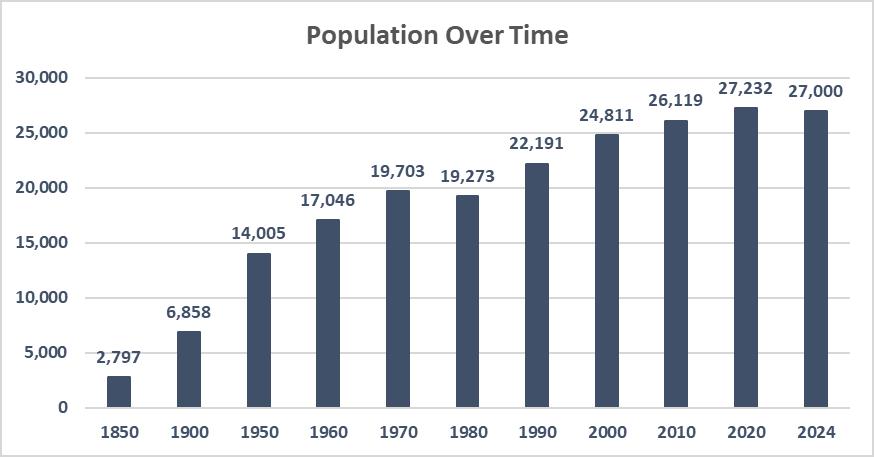
Population: 27,232
Median Household Income: $69,578
Median Home Value: $199,600
Median Monthly Rent: $860
Unemployment Rates (from 2024):
Ohio: 4.4%
Wayne County: 3.9%
Wooster: 3.8%
City Square Miles: 17.54
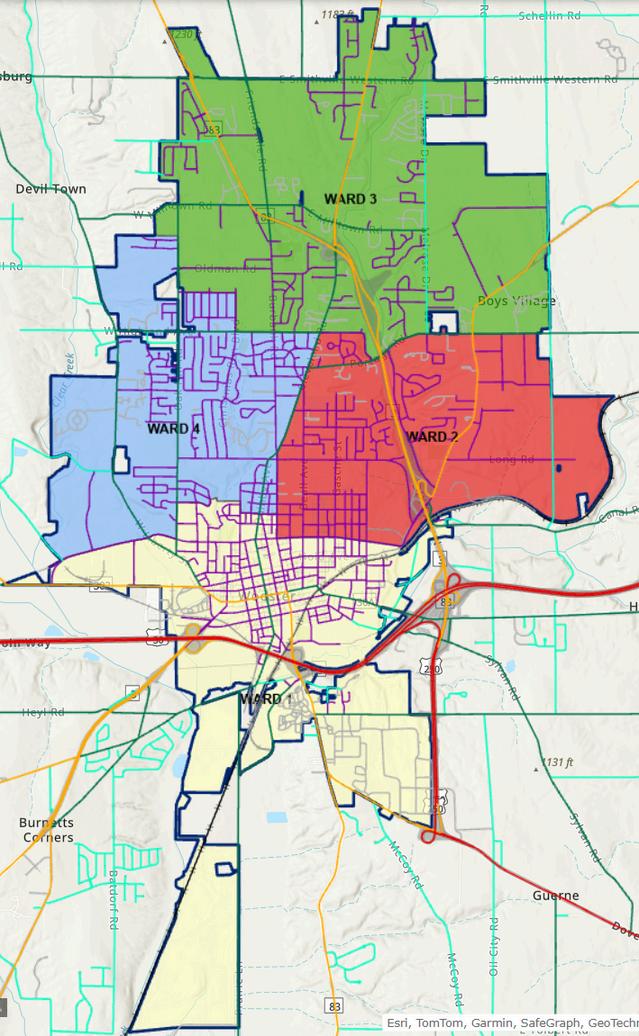
Named after General David Wooster, the City of Wooster is located in Northern Ohio, within Wayne County. The City was founded in in 1808, became the county seat in 1811, and was incorporated in 1817. The City’s 17.54 square mile area is home to a population of 27,232. Wooster is a home rule municipal corporation under the laws of the State of Ohio and, as such, operates under its own charter. The current charter was adopted in 1972 and has undergone five amendments since that time
The city government consists of a Mayor, a seven-member Council and a Council President. All of these officials are elected for four-year terms. The Mayor, three Council members and the Council President are elected on an at-large basis. The four remaining Council members are elected from their respective wards within the City.
The Director of Administration is responsible for the supervision and operations of all City services, except for those associated with Departments of Law, Finance, and Hospital The Director of Administration is appointed by the Mayor The Directors of Law and Finance are appointed by the Mayor with the consent of the majority of the members of City Council.
The City provides a full range of municipal services contemplated by its charter. These services include police protection, fire and emergency medical services, health care (Wooster Community Hospital Heath System), street maintenance, recreation programs (including parks), a transportation program, water and water pollution control programs, storm water management, building standards and permitting, planning and zoning, and general administrative services.
The modified accrual basis of accounting is used for budget preparation. Under the modified accrual basis of accounting, certain revenues are recognized when susceptible to accrual by being both measurable and available.
“Measurable” means the amount of the transaction can be determined.
“Available” means collectible within the current period or soon enough thereafter to be used to pay liabilities of the current period.
Expenditures are generally recorded when the related fund liability is incurred.
There are three scenarios under which the City considers a budget to be “balanced”:
Scenario One: Revenues = Expenditures
Current year revenues are equal to current year expenditures.
Scenario Two: Revenues > Expenditures
Current year revenues exceed current year expenditures, resulting in a surplus.
Scenario Three: Revenues + Surplus Balances = Expenditures
Previous years’ surplus balances added to current year revenues equal current year expenditures. This scenario is used for one-time or nonroutine expenditures which usually fund infrastructure or large capital purchases. Such purchases will not result in on-going expenditures or legacy costs.
For calendar year 2025, the City’s budget is balanced under the third scenario.
Scenario One: Revenues = Expenditures
Scenario Two: Revenues > Expenditures = Surplus
Scenario Three: Revenues + Surplus Balances = Expenditures
This narrative is organized by organizational chart structure. The activities (divisions or departments) under each heading include a mission statement, one or more 2026 objective(s) and significant changes in the personnel and operations portions of the budget. These narratives are authored by the responsible manager. The Wooster Community Hospital is not included in this program narrative.
City services are a valuable piece of what makes Wooster great. Providing those services in the most cost-effective way possible is one of the primary goals of the Administration. Maintaining our infrastructure, parks, and equipment requires a considerable investment every year, and adding the additional costs of catching up after years of capital deferment during the recession makes it even more challenging. The Administration is committed to maintaining these services and protecting our quality of life while staying within our budget.
The City’s administration and staff share a commitment to the City’s Core Values of Stewardship, Trust, and Accountability. We strive to be good stewards of the public's resources, deliver cost-effective and efficient services, and make decisions that meet the needs and desires of our citizens. We continue to fully fund our capital improvements as required by our charter, completing and planning for many capital & infrastructure improvements.
We also continue to be frugal and reasonable with our spending. The Administration and management of the City evaluate every line item in the operations and capital budgets and only proceed with the request or expenditure if deemed necessary for operations and maintaining services. We promised to move forward with balanced budgets, and we intend to keep that promise.
The 2025 budget year saw most revenues exceed those of 2024 through the first three quarters of 2025. Lodging, or bed taxes, showed a slight increase through September compared to the same time last year. This is in spite of a lengthy hotel closure for renovation for much of the year.
Income tax revenue, the primary source of General Fund revenue, was down $1.4M though September, or 6.8% compared to 2025. As noted previously, this variance is
primarily due to record corporate profits last year. The number is still $1.4M above the 6 year average, and the same as 2023. Withholding and individual filings are up 2% and 4% respectively. For context, $1.4 million represents approximately 14 days of cash.
Overall General Fund revenues were 1.6% over budget through three quarters of 2025, and expenditures across all activities were 4.9% under budget for the same period.
We expect the capital and infrastructure needs to continue as the City grows and more housing is constructed. The expected, large capital equipment ($5M for Police, Fire, & PPM) and large infrastructure ($15M for roads, streetscape, & parks) costs for the next 5 years are just over $20M. These are very likely costs, and therefore, if we experience a surplus we would propose transferring additional funds to the Capital Fund in future years in anticipation of these expenditures, thus lessening the need for debt.
Overall, we continue to observe favorable financial performance, with revenues generally exceeding expectations and expenditures remaining under control.
The City as an organization focuses on maintaining services to our citizens, which includes maintaining a high-quality workforce. A continued effort incorporating workforce attraction and retention initiatives has resulted in consistently low staff vacancies, and an all-time low again currently. The City Administration worked with each of our labor unions to come to contract agreements with compensation and benefits that have resulted in high employee retention and facilitate workforce attraction.
Succession planning, talent identification, and leadership training opportunities have been a significant endeavor over the last year and will continue as we seek to “raise the bar” and continuously improve our organization.
The City’s current full-time staff is 209. A transportation Manager was added late in 2024 to meet federal requirements for transportation funding, and a Communications & Marketing Manager is being added at the end of 2025. An historical staffing comparison is shown below:
2020 = 192
2021 = 182
2009 = 193
1994 = 206
1974 = 203
The 2026 budget includes two additional EMS positions (40 hour). These were added to address increased EMS call volume and peak hour needs. Additional justification is included in the Fire narratives that follow.
We have also budgeted for 6 to 9 month overlaps for 3 positions where retirements are anticipated later in 2026. This will result in a temporary increase in head count until the retirements occur.
We have attempted to keep additional staffing to the minimum needed to maintain services, but as the City continues to grow and associated service needs increase, we would anticipate the need for some additional staffing in various divisions across the organization over the next several years.
We have continued to implement strategic plans for organizational and communitywide economic development efforts. The goal was to better serve the needs of residents and businesses as our population and workforce have increased and our economy has grown more diverse and complex. An Economic Development Strategic Plan (EDSP) was completed in 2023 that evaluated demographics and market data, as well as our programming and level of service as a City. Support for Economic Development and associated services is a key part of the City’s budget planning. The budget reflects continued direct allocations of economic development funds to our partners to help further these efforts, as well as dedicated funds to economic development grants for downtown-related projects. This will require Council’s approval to continue as the last authorizations for these funds was for 2 years, though 2025.
Finally, the 10-year update of our Comprehensive Plan was completed in 2024. The Comprehensive Plan is a strategic guide for setting the City’s policies, infrastructure planning, land use planning, and assessing the City’s services. This plan informs organizational operations, staffing, and financial support for the various services and initiatives resulting from the community vision established by the plan. The budget for each City division reflects the resources needed to maintain services and meet the service needs resulting from the comprehensive plan.
In early 2025, the City participated with the WEDC on a workforce housing study for the County, and we are currently facilitating a County-wide land use study related to overall development needs, including housing and industrial land needs. The 10 year Strategic Infrastructure Plan will include projects planned in anticipation of future utility and roadway needs to facilitate the housing and industrial land needs to support workforce, existing business expansion, and potential new businesses.
Related to this planning and budgeting is the use of TIFs to support public infrastructure associated with new developments. In addition to a revenue source for infrastructure extensions and improvements near these developments, smaller parcel TIFs are being planned to capture revenue for more targeted improvement and maintenance projects in specific districts. These TIFs can help further the objectives of the City’s Comprehensive Plan and Focus Area development, allowing for limited debt issuance and/or dedicated debt service funding.
Evaluating current service needs, planning for the future, and feedback from the Comprehensive Planning process have resulted in a long-term focus on strategic, intentional growth, which is seen in the 10-Year Infrastructure Strategic Plan in the budget. This plan includes continued downtown streetscape revitalization and parking improvements, significant improvements to the roads and intersections in the north end of Wooster, significant upgrades to our water and sewer system and treatment facilities, and projects to address aging pool and park facilities.
As always, a focus on capital and service delivery will be primary in all operations and personnel management and budgeting. Our driving purpose is serving the community with stewardship and integrity.
Fire
Mission Statement:
To prepare for, respond to, and mitigate all calls for duty in an efficient and costeffective manner. This will occur by providing an all-hazards approach to emergency services requested by the citizens, visitors, and businesses of the City of Wooster.
To meet this mission, we will aggressively provide fire suppression, emergency medical services, rescue operations, fire prevention, code enforcement, emergency preparedness, and training activities.
Executive Summary:
In FY2025, our staff continued to serve the public with professionalism and a focus on service excellence.
Operationally; we concluded a full year of responding from the newly renovated Fire Station #1. Our staff members participated and multiple hands-on training and advanced courses. This allowed our members to gain new skills and sharpen the tasks that are used daily. We had our long time fire inspector retire from the
Community Risk Reduction Division and have been working on filling the position in the most effective manner.
Administratively, we provided an emphasis on instructor lead fire and EMS training. As well as finishing up multiple technical rescue operations classes to solidify the Wayne County Land Based Rescue Team. The staff successfully acquired and placed in service the highly anticipated new ladder truck and remounted medic unit. These new apparatus will serve the community for years to come.
The GOAL of the FY2026 budget is to continue to enhance service levels and address our growing calls volume. We will continue to look for any gaps in our service delivery and provide the highest level of service we can with the resources provided to us.
FY2026 Personnel:
The Fire Division has multiple staff members that are eligible to retire but have not provided a specific date. To maintain a level of preparedness, we have a valid civil service test for entry level firefighters and lieutenants that is currently in place.
We intend to recruit and hire two additional firefighter - paramedic positions that will be utilized on day shift to address our growing call volume during peak call times. These positions will also have unit assignments that help with public education, community paramedicine, and over dose / mental health activities. With the support of the administration, we plan to recruit and train our Safety Administrative Supervisor- Fire in 2026. So we can have a seamless transition when our current staff member retires in January of 2027.
FY2026 Operations:
To meet our FY2026 goals, the fire division's operations section will focus on three broad objectives. 1) Professional Development, 2) Continuing the Accreditation Process by the Center for Public Safety Excellence, and 3) Identify and correcting gaps in service. These objectives and their related tasks will allow us to continuously improve and serve the public as effectively as possible with the resources provided to us by the citizens.
As the Fire Division continues to see a steady increase in annual call volume, the fire administration will continue to utilize analytics to develop staffing & operational adjustments.
FY2026 Capital Improvement:
The 2026 Capital Improvement plan is significantly smaller than in years past. We intend to replace a ten year old Medic unit and extrication tools this year. The Medic unit will have a multiple year lead time for construction. Making the purchase in 2026 is essential to ensure the fleet is in good working order. These projects are needed to
maintain a safe and effective emergency service and allow our staff to remain responsive to our community.
I continue to look forward to serving the public and City in 2026 and providing the highest level of service possible.
Our mission is to provide lawful police services and develop partnerships to affirmatively promote a feeling of security and safety for every member of our community.
Wooster Police Mission Statement: “Strive for Excellence”
Police strive to preserve life, protect persons and property, and advance a collective sense of security and safety. The public’s trust and support of its police rest on the integrity of agency members to honor their duties, along with social and professional values. In police service, all employees must honor the values and work ethics of the organization. They must be self-disciplined, motivated, and willing to be loyal, subordinate, competent, available, productive, adaptable, responsible, and respectful. All members are responsible and are held accountable for honoring and complying with these directives.
To provide the best possible service to the community with the resources we have.
Educate the public and foster relationships through community involvement and programs like our Citizen’s Police Academy, Badges and Bobbers, and Youth Academy.
Continue to build a culture of accountability.
To remain transparent in our interactions with the public and community we serve.
To focus on hiring, retention, and officer mental health.
Focus on succession planning with retirements on the horizon.
Provide the highest level of service to our citizens.
Recruitment and hiring remain a top priority as fewer and fewer people are looking for a law enforcement career.
Attempt to shift from a reactive policing approach to a proactive approach as staffing numbers continue to increase.
Continue with the positive Community Relations and Community Impact Unit programs.
With nearly ten officers eligible to retire or in deferred retirement, succession planning is at the forefront of our daily operations.
Operations:
Review equipment that will increase the safety and efficiency of the department before purchase.
Continue community outreach programs like our Citizens Police Academy and Stuff a Cruiser to foster relationships and educate the community.
Examine and revise training on a department-wide basis to provide current, up-to-date, and required training on various topics.
Purpose: The Budget Narrative supplements the information provided in the budget spreadsheet. The Budget Narrative and associated spreadsheets should provide a complete financial and qualitative description supporting the Mission.
Mission: The Mission of the Building Standards Division of the City of Wooster is to protect the general public and working population from hazards incidental to the design, construction, alterations, demolition, during use and occupancy of all buildings and structures (residential and commercial) and to ensure the safe and sanitary maintenance of existing buildings using effective code enforcement while providing open communication, courteous and hospitable services to the public in general.
2026 Personnel Objectives: Each Inspector maintains multiple BBBS (Board of Building Standards) certifications to handle the workload of building, plumbing, electrical, HVAC, fire alarm/detection and fire suppression, along with other code inspections and plan reviews. Certifications require mandatory training. Training in 2026 will be essential as we have Inspectors who will maintain current certifications and test for additional certifications based upon the State of Ohio’s new classification levels.
Succession Planning: The increase in certifications (and in response to the BBS’s new classification levels for Inspectors) is part of the current succession planning for the Division. The prior Property Maintenance Inspector will be certified by the State of Ohio to conduct commercial and residential electrical, HVAC, and building code inspections. That Inspector will be qualified to do the work of the most senior Inspector when that becomes necessary due to retirement. Our residential plan reviewer and residential building Inspector (who previously served as the Property Maintenance Inspector) will become certified to perform commercial building and HVAC inspections. A new Property Maintenance Inspector was hired to fill the succession plan for that position. We currently have five Inspectors, each with experience as a Property Maintenance Inspector. We are preparing for the retirement of one Inspector. This Division created (and filled) a brand new position (Facilities Maintenance Worker). We felt it important to keep our City facilities maintained in a
pleasant fashion for both employees and the public alike. This overall plan will give the City a very experienced, complete, and credentialed staff. The succession plan to fill the Chief Building Official was completed this year with the retirement of Tim Monea in April.
Operations: Construction activity from 2017 – 2025 continues to increase steadily for the number of permits, construction value, inspections, and fee collections.
In 2017, this Division migrated to an entirely cloud-based, online platform. All Records, such as applications, permits, and inspection requests, use the on-line permitting system.
In 2020, the Governor declared our work a part of “essential business operations” that was required to continue during the pandemic.
In 2020 – 2022, operations continued without interruption during the pandemic, and we added virtual inspections for occupied sites. Work continued without interruption. Additionally, as reported by the prior Division Manager, in 2022, this Division budgeted more for code enforcement and added ½ FTE for a total of 1½ FTE performing code enforcement activities. The current Law Director will conduct any legal proceedings for violations.
In 2023 - 2025, this Division continued to direct more resources to code enforcement, an anticipated trend; this Division experienced the retirement of Tim Monea as the Chief Building Official. The new Building Official started in January.
Purpose: The Budget Narrative supplements information provided in the budget spreadsheet.
Operations: The Repairs and Maintenance cost center (2230) includes $80,000 budgeted for normal repairs and maintenance. It also includes an increase of $230,000 estimated for City Hall’s remaining window replacement work scope (Phase 3 of that project).
The Land and Buildings budget for supplies and materials was increased $3,000.00 for costs related to normal maintenance performed by the new Facilities Maintenance component of this Division. The Facilities Maintenance position was created in the summer of 2025. This increase reflects the needed acquisition of tools and equipment necessary to perform the duties of the position. Facilities Maintenance has been able to perform duties and activities that were previously performed or conducted by Subcontractors or the Division of Building Standards inspection staff. With Facilities Maintenance now performing those duties, the Building Inspectors have freed up additional time to perform their required inspection duties in a timely fashion. This also creates cost savings by not hiring Subcontractors.
Mission: The Mission of Community Development is to support Wooster residents and businesses through asset-creation to improve quality of life and business climate. These efforts include support for rehabilitation efforts and downtown redevelopment, place-making, and grant-support to develop and build new community assets.
Operations: To support City residents, institutions, organizations, and businesses in fostering a stronger quality of life through expanded communication, coordination, and serving as a professional community development resource for information, funding, and analysis.
2026 Objectives: To continue on-going community development efforts and projects throughout the City of Wooster by researching, applying for, and securing financial resources and programs that are vital components to the completion of impactful projects. These efforts include:
CBDG Grant Program: Administration of on-going Community Development Block Grant (CDBG) projects, including an expansion of psychiatric services for homeless and low-to-moderate income residents through the Viola Startzman Clinic, a new application and oversight of the City’s Community Housing Impact and Preservation Program, or “CHIP”, and potential transportation services. Additionally, the program will continue to provide a Fair Housing Program in partnership with Community Action Wayne/Medina. Direct costs include contracted services for fair housing consulting.
Grant Support for Infrastructure Development: Grant management support and project management for new community assets to enhance quality of life. Past and ongoing projects include Safe Routes to Schools, Clear Creek Park, and the Wooster Bike Loop (Milltown Connector in 2025), State Route 585 intersection, in addition to real estate acquisition for city-infrastructure, including the North Street Parking Lot expansion. For 2026, additional project opportunities to be assessed include walkability, historic rehabilitation, and housing restoration, along with continued project management support for brownfield remediation.
Neighborhood Development Strategies: Evaluation of neighborhood redevelopment opportunities, including supportive analysis and programming coordination for the Arts District, East Liberty Revitalization District, and other emerging locations for revitalization. Efforts include coordinating public-private partnerships, investigating and procuring applicable grant and financing opportunities, and supportive analysis for neighborhood planning.
Tax Increment Financing for Comprehensive Plan Elements: Management of Tax Increment Financing (TIF) projects to support new public infrastructure in support of the 2023 Comprehensive Plan.
Partially Through Economic Development Fund (Bed Tax):
Mission: “Works to cultivate economic opportunities for prosperity for Wooster’s current and future residents and businesses.” The Office serves to aid civic and private strategic economic development investments, supporting job retention and creation.
Operations: To serve businesses, entrepreneurs, and residents providing a professional, informational, analytical, and action resource for all aspects related to the betterment of Wooster’s business community and to increasing of opportunities for prosperity for all Wooster residents and businesses.
The office serves as a point of contact for business retention assistance, expansion, and general inquiries, being responsible for coordinating with other departments and agencies to timely provide information, access to programs, and project management. These efforts require synchronization with the City of Wooster’s economic development partners to concentrate on building closer relationships with area firms to acclimate and inform city administration of current and/or anticipated future issues that employers may face with doing business in the city of Wooster. This Office also provides project management support for Wooster Growth on real estate and economic development incentive efforts to secure business expansions within the community.
2026 Objectives:
● Continuation of the competitive Economic Development Grant Fund to support individuals and organizations with unique and impactful economic development projects in Wooster.
● Designating funds for a fourth round of the Downtown Revitalization Program.
● Enhance business retention and expansion efforts, along with marketing and attraction.
● Assist regional analysis for residential and industrial long-term developable sites inventory.
● Evaluation and creation of an Energy Special Improvement District
● Establish new programming to support reinvestment and new construction through the creation of an Energy Special Improvement District (Council action required at a later date.)
Business Incentives: To support basic sector job creation and reinvestment, the Office manages the City’s Community Reinvestment Area program (hosting the third-largest commercial project portfolio in Ohio), a Local Job Creation Tax Credit program, an Enterprise Zone program, Tax Incremental Financing (TIF), and coordination with other regional and state incentive resources. Recommendations for business incentives are negotiated with prospective firms on a case-by-case and “but-for” basis, in accordance with International Economic Development Council standards and recommendations. The Office also has responsibility for supporting the City’s Tax Incentive Review Council and the Ohio Department of Development.
Special Projects: The Office provides analysis and impact assessments for proposed policies and supports the procurement of community assets (including new public infrastructure). For 2026, projects will include expanding Wooster’s TIF programming to support additional comprehensive plan infrastructure, ongoing efforts to continue the, 517 E. Liberty Street Remediation Project, management of the Wooster Innovation Park’s remaining 56 acres, and establishment an Energy Special Improvement District. Work will be continue to support long-term site absorption and developable area needs for the community’s and region’s future housing and industrial needs in collaboration with Wayne County. Direct costs anticipated include the cost of due diligence studies and appraisals as may be needed for grants or projects.
Development Outreach: For 2026, to better compete with similarly growing communities, Development will continue to grow processes to more regularly communicate resources and news on economic development to the business community, as a means to actively support business retention and attraction. Examples include traditional business and retention meeting and engagement efforts, maintaining the City’s online sites database as a tool to support and aid large, small, and startup businesses, to print and digital media to support access to the community’s information. Direct costs include media expenses.
Tax Increment Financing for Comprehensive Plan Elements: With changing development patterns in Wooster, coupled with increasing limitations on availability of grant funds, Development will manage a portfolio of tax increment financing projects to further new public infrastructure to benefit strategic development within the City, enabling the investments recommended through the 2024 Comprehensive Plan.
Wooster Growth Corporation Project Management: The City of Wooster has incorporated Wooster Growth as a State of Ohio community improvement corporation, enabling the municipality to better manage its real estate and support economic development in city limits. With responsibilities to serve as Project Manager for Wooster Growth, and with several city assets retained through Wooster Growth, funding is recommended to support studies and services required for site management and marketing, including environmental
assessments, third-party analyses, and work necessary to maintain the operation and safety of public assets. Direct costs include contracted real estate services.
(to support partner institutions and individual external projects previously funded through a combination of general and economic Development funds). External Programming is supported through the City’s three percent lodging tax, in accordance with ORC 5739.09, which is anticipated to generate $374,000 in 2026, which is level with 2025 funding, based on current trends. These funds are generated from Wooster citizen taxpayer’s investments that attract and enable hotel development. These funds are allocated to specific funds per Council Resolution. A renewal of Resolution No. 2023-75 for 2026 would allocate funds as follows:
Direct Fund Projects (Downtown Revitalization Program): The first iteration of this program, administered in 2022 through an agreement with Main Street Wooster, has resulted in substantial reinvestment and beautification throughout the Downtown, with several projects yet to be complete. The program results in a twelve-fold increase in investment that impacts property valuation, enhances safety, and adds to Downtown’s quality of space of placemaking. For 2026, a fourth round, in addition to other supportive funding as needed for impactful community projects, is proposed to support up to five new projects. This may in addition support investment in civic events for public America 250 celebrations in 2026 within the City. Allocation of 6.78%, estimated at $27,500 for 2026.
Competitive Grant (Economic Development Grant Fund): This program makes funding available to the public (individuals, organizations, and businesses) to support an economic development projects within the City of Wooster, per Wooster City Council’s discretion on a case-by-case basis. Recent projects include new infrastructure improvements at the Wayne Center for the Arts, the Lyric Theater, and Ohio Light Opera, in addition to a new fence at the Wayne County Fair complex which significantly enhanced the E. Liberty Street gateway into Downtown. The City may also potentially utilize a portion of this fund for the America 250 events and future Arts District projects. The total grant available per entity is $25,000. Allocation of 16.27%, estimated at $66,000 for 2026.
Economic Development Direct Fund Allocations: Wooster City Council has historically issued an annual or bi-annual allocation of lodging tax revenues for independent-sector partner entities for economic development purposes, most recently Ordinance 2023-75. Each partner provides MOU affirming that funds are accepted under ORC 149.431 and ORC 307.07 as applicable, along with a proposal for use of the funds to document public purpose. This funding is entirely at Council’s discretion:
● Main Street Wooster: An Ohio Main Street Community program through Heritage Ohio, Main Street Wooster is a 501c3 downtown
organization dedicated to improving all aspects of the downtown, and has been instrumental in aiding City redevelopment efforts and in obtaining grant funding. The organization’s past use of the funds advanced seventeen economic development projects with 90 events, including shoppers guide, self-guided walking tours, decorative utility box wraps, business spotlights, seasonal shop hops, farmers market, and Main Street Wooster Music, among several other events. Allocation of 26.53%, estimated at $105,600 for 2026.
● Wooster Area Chamber of Commerce: A 501c6 serving the greater Wooster region, funding for the Wooster Area Chamber of Commerce’s activities that support economic development include supporting the broad public, including workforce development and educational outreach and programming, public event programming, and entrepreneurship support. The organization has utilized past funding to matching sponsor investments to its comprehensive schedule of programming within the community, including the Wayne County Home and Garden Show, Wooster Area Safety Council, Leadership Wooster, Wooster Young Professionals, US Small Business Administration Workshops, and Wooster fest, among several other events and programs. Allocation of 16.33%, estimated at $64,900 for 2026.
● Wayne County Visitors and Convention Bureau: For 2026, the Wayne County Visitors and Convention Bureau, a 501c4 operating under Ohio’s convention and visitor bureau’s regulations in service of Wayne County, will continue promoting the City of Wooster through its media advertising, and collaborate with the City on marketing campaigns based on quality of life specific and business development opportunities specific to Wooster proper. Allocation of 8.02%, estimated at $24,200 for 2026, in addition to separate contracting opportunities.
● Wayne Economic Development Council: The Wayne Economic Development Council, a 501c4, is contracted by the Wayne County Commissioners to support the County’s Economic Development Office functions, including coordination with the Ohio Department of Development as well as JobsOhio on site selection and site inventory activities. WEDC assists the greater Wooster Micropolitan Region with business retention and expansion, attraction activities and site marketing. The organization directly assists in the marketing of sites, assisting businesses in programming to aid new investment, all throughout Wooster and all of Wayne County. The City additionally
maintains one seat on the Board of Trustees for the organization. Allocation of 18.37%, estimated at $72,600 for 2026.
● Wooster Growth Corporation: The 501c3 organization’s past use of the funds has been for environmental assessment expenses for the brownfield cleanup of 517 E. Liberty Street and also for due diligence studies on the Wooster Innovation Park, projects which remain in progress into 2026. Allocation of 7.70%, estimated at $13,200 for 2026.
Mission: The mission of the Planning and Zoning Division is to guide the use of land, growth, and development in the City of Wooster through the implementation of adopted codes, policies, and plans. The division strives to promote a vibrant, attractive, and prosperous community through cooperation and coordination with elected officials, appointed boards and commissions, city departments, citizens, developers, the County, and regional partners.
Continued to implement and monitor the progress of the recommendations within the Comprehensive Plan.
Held several meetings of the steering committee, made up of citizens and representatives from various organizations. The steering committee's goal was to review the existing zoning code and map, and prepare amendments that would achieve the stated goals of the comprehensive plan. The primary focus was on residential development and how the code can function to encourage housing options. The amendments will be presented to the Planning Commission in the last quarter of 2025.
Continued as an active participant on the Wayne County Land Bank.
Virtually attended the national American Planning Conference.
Represent Wooster at the Northeast Four County Regional Planning and Development Organization (NEFCO). Serving as 2025 Chair for the second consecutive year.
Staffing Changes: No staff changes are anticipated for the division in 2026. However, we are planning to retain a summer intern to complete research and assist with potential grant applications. The intern is to be shared with the development team.
Operation Notes: No operational changes are anticipated for the division in 2026.
Continue to implement elements within the comprehensive plan. Especially as it is related to the focus areas.
Develop pre-approved designs for the new transition zoning districts that meet accepted design standards. This will assist in the redevelopment of areas that have lacked investment by providing a clear path for permitting.
Continue to attend training opportunities.
Oversee an intern who will be shared with the Development Team.
Continue to evaluate the Planning and Zoning Code for best practices. Study the effects of accessory dwelling units and determine if there is a desire within Wooster to implement.
Examine the ongoing downtown façade program for best practices.
Mission: The mission of the Wooster Recreation and Community Center is to enrich the lives of our community members through parks, programs and play!
Increase & deliver innovative and inclusive programming to meet changing needs of the community.
Provide additional access to and educate the public on our registration, membership and reservation processes.
Continue to work on internal cooperation between City departments to conserve resources. Promote and continue to establish partnerships with outside organizations to increase efficiency and reduce expenses.
Use creative forms of publicity and take advantage of the many available free advertising resources. Maintain increased presence on social media.
Continue to find innovative ways to increase use of space available and reduce expenses.
Repair, maintain and update facilities for safe and enjoyable use for all participants.
Update equipment and amenities in the Fitness Center to increase membership.
Provide opportunities for students to gain hands on experience and develop practical skills in recreation operations, programming and special event planning.
Personnel: 4 seasonal positions – 2 Recreation Internships and 2 Seasonal Maintenance
Operations: Provide and implement as many quality programs and services as possible using the Community Center and other area facilities.
Mission: To provide safe and compliant aquatic facilities that offer opportunities and features that will attract customers and provide a positive experience at our aquatic facilities.
Christmas Run Pool renovation project with plan for a 2027 re-opening!
Establish partnerships that will increase revenue and reduce expenses.
Personnel: The City will be seeking to contract with the YMCA to schedule staff and manage daily operations of the pools in 2026. Continue to work with the YMCA to reduce expenses and deliver quality aquatic programs for our community. City employees and contractors will provide maintenance and oversight as has been done in the past.
Operations: With the continued closure of Christmas Run Pool for construction, the days & hours of operation for 2026 will be consistent with the 2025 hours for Freedlander Pool and Knights Field Sprayground. Through our contract with the YMCA, both City of Wooster pool pass holders and YMCA of Wooster members will have access to Freedlander Pool, Knights Field Sprayground during the summer season and the Ellen Shapiro Natatorium beginning Memorial Day weekend through December 31st
Mission:
The mission of the Transportation Division is to responsibly steward public resources to provide safe, reliable, and accessible mobility options that connect residents, support businesses, and enhance quality of life.
Successfully launched WayGo Public Transit Service on August 4, 2025.
Secured $762,000 in federal and state grant funding to operate an FTA 5311 Rural Transit System for State Fiscal Year 2026.
Acquired nine transit vehicles into service from other systems around the State.
Completed a marketing study and focus group, resulting in a $20,000 ODOT Vehicle Branding Grant, which funded the wrapping of all nine WayGo vehicles.
Administered and transitioned the City’s transportation partnership with Community Action Wayne Medina into a public transit service.
Completed the ODOT Ohio Transit Academy, attended the Ohio Public Transit Association (OPTA) Annual Conference, and participated in the Small Operators Summit (SOS) for rural and small systems.
Conducted numerous public engagement meetings to introduce and explain WayGo to the community.
Operational Notes:
The ODOT Office of Transit grant applications are due in November, with award announcements anticipated in the spring. The City will apply for continued operating assistance, as well as for transit projects requiring an 80/20 match, including security cameras, tablets, and expansion vehicles.
2026 Goals:
Incorporate contracted trips within the current WayGo service area for partner agencies such as Wooster Community Hospital and Community Action.
Develop plans to support both Non-Emergency Medical Transportation (NEMT) and public transit trips outside the current service area.
Continue reviewing operational data to identify adjustments that improve trip efficiency.
Expand public engagement through both in-person and online platforms to educate residents about the service and gather feedback.
Strengthen outreach to the business community and downtown organizations to align transit service with broader economic and community goals.
Human Resources
Mission
Our mission is to provide exceptional customer service through all aspects of the human resources profession for all city of Wooster employees and external customers.
2025 Goals Accomplished:
Transitioned all benefits and confidential active personnel files to electronic format in 2025 to increase efficiency and reduce administrative maintenance of files.
Implemented electronic new hire paperwork to being transition of complete electronic files for new hire employees in 2025.
Ensured all required training is completed in 2025 for liability insurance carrier in order to receive a discounted premium and to meet auditing requirements.
Successfully implemented new insurance plans to all City employees resulting in a reduction of medical costs for the City.
2026 Objectives:
Collaborate with management team to develop a Municipal Hospitality action plan and implementation.
Transition all present and historical workers compensation files to an electronic format.
Implement electronic I9 maintenance program for all active City of Wooster employees.
Implementation of Citywide program to acclimate new employees to the City and the services offered.
Mission: To provide leadership in information technology and systems, with a focus on providing strategic direction on technology issues, leading technology innovation initiatives, facilitating reliable, timely and easy access to information for employees and citizens, while responsibly managing the City of Wooster’s technology infrastructure and applications and maintaining the highest level of reliable service and support.
2026 Objective: To upgrade/replace our virtual environment infrastructure, increase redundancy and decrease cutover times to increase overall business continuity for the departments we support.
Operations: Continued focus on achieving 99.9% uptime of all mission-critical systems and providing support services to our end users within accepted service level agreements.
Mission:
Our mission in the Engineering Division is to serve the public by providing professional engineering services to assure safe, quality, and sustainable infrastructure and development. This is accomplished as we plan, advise, administer, oversee
implementation of, and document all public works improvements and private development with the aim of providing these services cost effectively and timely while protecting the public health, safety, and welfare. Success is measured by the stewardship of the public funds and public trust.
1. Acquire, analyze, and maintain accurate information of the City’s infrastructure assets, capacity, and needs. By working closely with Utilities, PPM, and Administration, identify future needs and prioritize construction projects, as reflected in the 10-Year Infrastructure Plan.
2. Support private development through reviewing, approving, inspecting, and providing standards and guidance for all residential, commercial, and industrial development activities. We will endeavor to partner with developers, contractors, and owners to promote efficient, effective, and responsible development.
3. Provide easy access (primarily through our GIS) to City information regarding properties, utilities, and mapping to the general public, utility companies, and the development community.
4. Manage the City’s infrastructure construction and documentation in a way that will provide adequate service to residents, sustain development, and allow for intelligent infrastructure planning.
5. Support and maintain close relationships with the City’s development, educational, and business partners, including Wooster Community Hospital, Wooster Growth Corp, Wayne Economic Development Council, Main Street Wooster, College of Wooster, OSU Wooster, Wooster City Schools, and the Wooster Area Chamber of Commerce.
6. Work with other government entities and utility companies to coordinate development, transportation, and utility projects, such as the Wayne County Engineer’s office, surrounding townships, ODOT, and the local electric, natural gas, and communications companies.
7. Provide engineering support and consulting services to other City departments and divisions.
1. Personnel Costs: The Engineering Division continues to have an increased workload due to the increased level of management needed for complying with ODOT funded projects, normal and emergency Ohio811 calls, private development, and Ohio EPA’s requirements for storm water management. It may be necessary in the future to hire another inspector to alleviate the pressure on the current inspection personnel. In the past, we have hired an outside inspector to help with the workload. We are budgeting for four interns during the summer.
2. Operations Costs: O&M costs remained steady for 2025 since we accounted for rising cost of goods and services due to inflation. All employees’ computers have been updated in the last few years and our other office equipment is in good condition. With two newer staff engineers and the GIS project manager, training will be a priority and is reflected with an increase in training funds. In general, the Engineering vehicles are older. They are still in good shape, but we anticipate more unplanned repairs and have adjusted the budget accordingly. We did upgrade one of the inspector vehicles in 2025.
3. Capital Costs: None scheduled for 2026
Infrastructure Initiatives:
We will continue to vigorously pursue outside grant and low-interest loan funding from ODOT, OPWC, and Ohio EPA to offset the high costs of infrastructure improvements.
The Engineering Division attempts to balance the infrastructure needs of the city with the financial resources available. At the same time, current and future development and its associated demands are considered when attempting to develop a strategic plan for City growth and infrastructure improvements.
Mission: Through a cost-effective manner, provide essential City services, leisure opportunities and community beautification while enhancing the quality and safety of our city, to continue to make Wooster a place that we are proud to call home.
2026 Objective: To continue our goal of improving and maintaining the City’s highways, streets, alleys and sidewalks by assessing the condition of the asset and forming a planned maintenance/repair work order. The methods used for Snow and Ice Control Operations will continue to improve with the increased usage of liquid de-icing and anti-icing products being applied to the roadways.
Personnel: No additional staffing changes anticipated in 2026.
Operational Goals: Pavement Preventative Maintenance - The Preventative Maintenance Program on City streets will continue, using methods of Chip Seal, Thin Coat Overlays and Mill/Fill Asphalt Pavement. Improving the conditions of our roadways will continue be on the forefront of our focus in 2026. Chip seal some of the unimproved streets that the existing pavement can be prolonged a least 5 years before they will be in need of resurfacing. Asphalt overlays on many alleys will continue in 2026, as well. The lowest scored streets on the PCI rating will be addressed first. PPM will also continue working with the Engineering Division in coordinating projects and maintenance issues as they arise.
Snow and Ice Control Operation - We’ll continue enhancing services through improved procedures for snow and ice control. Owning a brine maker enables PPM to produce brine significantly less expensive than purchasing is readily available. Pre-wetting of the rock salt being applied to the roadways has been very effective. All of our main frontline trucks carry and apply liquid de-icing product. Using this method of treatment we anticipate a 30% reduction of salt on these trucks. Studies will continue to improve and plan for future developments on the northern part of the City on how to manage the efficiency of the Snow and Ice Control Operations in that area. It is evident that an additional mainline truck will be needed due to the expansion of the City.
Roadside Mowing and Vegetation Control - As part of our normal operations, two rounds being performed throughout the year. Highway mowing of the medians and shoulders will be maintained by a contactor at least eight times per year and PPM will mow the cloverleaf interchanges twice throughout the year.
2026 Objective: Continue to provide leaf collection that is timely and efficient. Our annual inlet and pipe cleaning operations will be conducted as usual. Great effort will be made to repair/replace the storm sewer infrastructure like inlets and storm pipe especially prior to contracted pavement improvements are started. Two citywide street sweepings – one in the spring and fall – along with many others downtown throughout the year.
Personnel: No additional staffing changes anticipated in 2026.
Operational Goals: Minimize the amount of overtime needed to perform two cycles of leaf collection and staying on schedule. Continue to repair stormwater inlets and maintain City owned detention basins throughout the City.
2026 Objective: Continue to replace traffic signage and deficient equipment throughout the City to meet Ohio MUTCD Standards. To rebuild and replace deficient intersections based on engineering assessments of intersections. Update our traffic detection system to better allow traffic patterns and to improve the flow of traffic.
Personnel: Hire unfilled Traffic/Electrical Supervisor which has been vacated since June 2023. No additional staffing changes anticipated in 2026.
Operational Goals: To focus on sign replacements tracked through the MasterMind software system. Maintaining detailed records of the changes to the in-field signage installation that is essential for PPM to properly maintain. Tactics (traffic monitoring software) will be operated through the new fiber optic communication lines recently installed to each signalized intersection. Cellular modems will no longer be needed. We will also be focusing on training and
1-29
certifying our personnel and the efficiency of our department to improve service and maintenance in a timely manner.
Parks - Improve the overall aesthetics of each of our parks throughout the City. By focusing on preventative maintenance issues before they become immediate response type issues will drastically decrease the amount of call in complaints/concerns that come in each week. We will also focus attention to safety issues like installing more PIP around swings, slide, etc.
Urban Forestry - With the implementation of our Tree Plotter software we are able to keep better records of inventory, work orders and citizen concerns moving forward. A continual use of contractors for the larger removal and heavy clearing and grubbing will be outsourced. In 2026, a concerted effort will be made to plant nearly 100 street trees in developments that were constructed in the 2000’s that now have many of the homes built. Additional staff will be needed in the future to assist in the ever increasing maintenance needs within the Parks, Urban Forestry and downtown events. It is also becoming increasingly costly and difficult to hire contractor to perform maintenance repairs. The position would be filled as a Maintenance Worker I.
Downtown - Flowers and planting beds along with our varied landscape features citywide will be managed by PPM and its contractors.
Personnel: No additional staffing changes anticipated in 2026.
Operational Goals: Our goal is to improve the timeliness of our routine maintenance that our citizens will come to appreciate even more in our wonderful parks. We will continue to monitor and assess contractor work that is performed each year that best suites the overall aesthetics of the parks. Increase our tree planting program from 150 trees to 200 trees. Host Tree City USA – District Conference – celebrating 50th Year Distinction through the Arbor Day Foundation.
2026 Objective: We will continue to look at new ways to meet the rising need of maintenance on the City’s fleet and equipment.
Personnel: No additional staffing changes is anticipated in 2026, but promotional change may be asked as a staff member continues to improve and becomes certified in multiple ASE principles.
Operational Goals: We will continue to complete work orders in a timely manner and lessen outsourced work to vendors.
Please allow this document to serve as the 2025 Wooster Water Utilities (WWU) Budget Narrative. This document will cover goals and initiatives related to operational and capital budget requests.
The Distribution, Collection, and Meter (DCM) division's work and service ensure proper service delivery to our customers. DCM division responsibilities include operation, maintenance, and repair of over 300 miles of sanitary sewer and water mains, almost 4,000 hydrants and water valves, 10,000 meters, and 3,500 sanitary manholes. DCM assets also include a workforce of ten individuals, facilities, sanitary sewer cleaning and televising equipment, excavation equipment, fleet vehicles, and all equipment necessary for task completion.
The service aspect of the department includes direct customer interaction including customer requests for service. DCM works close with Utility Billing to ensure timely service delivery, not limited to accurate meter reading, meter replacement, and service verification. The 2025 budget request reflects the commitment to outstanding customer service and limited utility service interruption. Only those items deemed necessary to provide this service are included in the budget.
DCM budget includes the following capital requests:
Replacement of the Crew truck due to age, mileage, and condition. The existing truck is Ford F550 with 70,000 miles.
DCM (Distribution-Collections-Meters) Operation and Maintenance Budget shows an increase of 14% over the approved 2025 amended budget and a 22% increase over the projected 2025 actual spending.
The most significant variations are increased costs for meters and MTUs, additional Root Control work that was removed from the 2025 budget, and additional spending on sanitary interceptor sewer contract inspection and cleaning. Looking ahead over the next five years, we expect inflationary increases for most materials and supplies purchased by D&C.
The 2026 budget includes maintaining the existing ten full time personnel; 1 Supervisor, 2 Utility Techs, 2 Utility Operator II, and 5 Utility Operator I. No changes are expected for 2026.
Water Production Facility (WPF) infrastructure assets include two separate source water wellfields with eight wells, five interceptor wells, and over one dozen groundwater monitoring wells. Additional water assets include a water treatment facility, nine finished water storage tanks, five water booster stations, staff of nine individuals, and
necessary equipment for the facility's function. The current OEPA Class 3 water treatment facility process includes groundwater sources, coagulation, flocculation, iron and arsenic removal, softening, sedimentation, VOC removal, recarbonation, filtration, disinfection, and solids handling. The facility has been in operation since 1998.
The Water Production Facility treats and delivers over 1 billion gallons of drinking water to the customers annually. The average daily flow production in 2025 is approaching 55% of the facility design capacity of 6.1 million gallons per day. Peak daily flow for 2025 was 4.4 MGD or 72% of the design flow. Modifications to treatment capacities are being evaluated, designed and planned over the next year in order to expand the rated capacity of the WTP from 6.1 MGD to 8.0 MGD. The 2025 budget request reflects the commitment to outstanding customer service and limited utility service interruption. Only those items deemed necessary to provide this service are included in the budget.
Improvements planned for the HVAC system at the WPF to replace aging and nonfunctioning equipment.
WPF will complete the Corrosion Study and install phosphate feed system to improve water stabilization through the facility and into the distribution system.
WPF will continue improvements of the SCADA control system to better control chemical feeds and finished water quality.
WPF plans to design and construct production well S4 to replace production well S1 to eliminate VOCs and PFAS from the raw water supplied to the plant. Wells S1 and S2 have been removed from service in early 2024 due to high levels of PFAS. Plans include siting production well S5 in late 2025 as replacement well for production well S2.
WPF plans to continue rehabilitation of the four remaining wells in the North Wellfield in order to maintain reliable raw water supply.
WPF Operation and Maintenance Budget shows an increase of 4% over the amended 2025 budget and a 10% increase over the projected 2025 actual spending.
The 2026 budget request is in line with realistic operational costs. We expect chemicals to increase about 9% and gas and electric costs to increase approximately 3%. We expect production demand to remain at the current levels of over 3.85 MGD based on the completion of the expansion of the Daisy Brand facility and the WRRF plant water system converted to city water supply rather than effluent supply. We are expecting power, chemicals, and sludge disposal to increase by 5% over the 2025 projected actual spending due to higher production. We increased the Power and chemical budget accordingly and kept the sludge disposal budget the same as the hauling contractor has already agreed to extend the contract for another year and not increase the price.
The 2024 budget includes maintaining the existing nine full time personnel; 1 Supervisor, 1 Mechanic, 1 Lab Tech, and 6 Plant Operators. No changes are expected for 2026.
1-32
Water Resource Recovery Facility (WRRF) assets include ten sanitary sewer lift stations, and a modern treatment facility with anaerobic digestion. Additional assets include a staff of thirteen individuals, facilities, and necessary equipment for the department's function. The Ohio EPA Class 4 facility consists of an activated sludge process combined with biological phosphorus treatment with a contact stabilization storm flow mode of operation. The strategies include grit and grease removal, primary settling tanks, aeration tanks, final settling tanks, biological phosphorus removal, ultraviolet disinfection, post aeration, anaerobic digestion, and solids handling. The facility plays a vital role in the local water cycle to eliminate pollutants in the wastewater before discharge to the Killbuck Creek to enter back into the natural water cycle.
In 2025, the Water Resource Recovery Facility received, treated, and discharged almost 2 billion gallons of recovered water back into the natural water cycle. The average daily flow in 2024 are approaching 65% of the facility design capacity of 7.5 million gallons per day, and loadings often exceed 75% of treatment capacity. The facility was designed with a peak high flow rate of 27 million gallons per day. However, specific design and loading criteria must be evaluated as growth, regulations, and treatment technologies change, as well industrial user flows and loadings. Improvements to treatment capacities are being evaluated, designed and planned over the next several years in order to meet residential and industrial demands currently and in the future. The 2025 budget request reflects the commitment to outstanding customer service and limited utility service interruption. Only those items deemed necessary to provide this service are included in the budget.
WRRF has the following capital budget requests.
Replace the plant water system that uses the effluent of the WRRF with system to use the City water to improve the operation and eliminate the effluent filter system
Replacement of secondary return sludge pumps due to age and condition.
Rebuild the Cleveland North Lift Station due to age and condition of the pumps, piping and control system.
WRRF Operation and Maintenance Budget shows an increase of 3% over the approved 2025 budget and an increase of 5% over the projected 2025 actual spending.
The 2025 request are in line with realistic operational costs. The increases in expenditures are primarily due to increases in equipment maintenance costs and slightly higher utility costs.
The 2025 budget includes maintaining the existing thirteen full time personnel; 1 Supervisor, 2 Mechanics, 2 Lab Techs, and 6 Plant Operators, 1 Master Operator, and 1 Pretreatment Coordinator. No changes are expected for 2026.
Complete planned improvements for the WRF digester system.
Complete filter and settling high rate study to expand the permitted capacity to 8 MGD.
Complete wellfield capacity studies and develop long term plans for source water.
Continue to provide excellent customer service.
Continue to meet and exceed regulatory limits on all treated wastewater.
Continue to update and track performance data for practical use and direction.
Update standard operating procedures and contingency plans.
Investigation and repairs to maintain non-revenue water to 15% or less.
Investigation and repairs to reduce sanitary inflow and infiltration.
Coordinate with Engineering and Fire Divisions to increase ISO ratings through testing and maintenance of the water system, reducing insurance rates for individuals and businesses.
The City of Wooster Utilities Department seeks to be proactive and intentional in our efforts to meet the expectations of the regulatory community and the citizens we serve. Our mission and focus centers on serving the public as stewards and effectively and intentionally manage the treatment infrastructure in a way that honors your trust.
MAYOR’S BUDGET DOCUMENT – PREPARED FOR WOOSTER CITY COUNCIL FOR THE CALENDAR YEAR 2026
The 2026 budget document for the City of Wooster has been prepared in accordance with the following policies and initiatives:
Budget Requirements and Accounting for all funds
Yes A. Annual budgets are adopted for all City funds. Under state law, the Mayor submits an annual budget (a preliminary financial plan often referred to as the 'tax budget') to Council for consideration and approval no later than July 15. Such budget is based on expected expenditures by program within a fund and estimated resources by source for all funds.
Yes B. By Charter the Mayor must submit an annual appropriation ordinance to City Council (this document). This ordinance builds upon the tax budget of the previous July and is updated for any estimate revisions as well as year-end encumbrances and may include any additional information requested by Council. Council may subsequently amend such ordinance.
Yes C. For day-to-day management control, expenditures plus encumbrances may not exceed budget at the major object (i.e., personal services, operations and maintenance, capital, etc.) level of each cost center (activity within a program within a fund). The Mayor may transfer unencumbered appropriations within funds.
Yes D. Appropriation control (City Council appropriated budget) is by fund, department and major object level. The Mayor may transfer amounts among sub-object accounts within a fund. By ordinance, City Council may transfer amounts between departments and/or divisions.
On January 17, 1995, and amended in 1999, Council passed and the Mayor approved new financial policies for the governmental funds of the City. In part, the ordinance states:
No (1) The governmental funds shall be budgeted to have a rate of return on all assets greater than or equal to the rate of inflation;
Yes (2) Council will not provide new services unless new revenue is available or there is a cost reduction in another service;
Yes (3) By 1999, the General Fund shall have an unencumbered cash balance of at least 60 days of expenditures, but no more than 240 days;
Yes (4) By 2001, the Capital Improvements Fund shall have a cash balance at least equal to the value of the annual depreciation of the governmental fund assets; and,
N/A (5) If the General Fund cash exceeds the 240 day requirement and the Capital Improvements Fund cash requirement is achieved and the return on assets in the governmental funds is greater than the rate of inflation Council will lower either the property tax rate or the income tax rate.
In November of 1989, Council passed an ordinance that set forth the following policy regarding all enterprise funds user charges (rates).
MAYOR’S BUDGET DOCUMENT – PREPARED FOR WOOSTER CITY COUNCIL FOR THE CALENDAR YEAR 2026
Yes 1. Sufficient revenue must be generated by the charges to ensure high quality service for an indefinite period of time. Therefore, the return on assets must approximate inflation after consideration of gifts, donations, grants and subsidized loans.
Yes 2. Sufficient cash flow must be generated by the charges to ensure all expenditures, including debt service, can be paid in a timely manner.
The City of Wooster’s policy is to invest public funds in a manner which protects the citizens and the investors from a loss of principal while attaining a competitively high rate of return on investment and maintaining adequate liquidity. The interest revenue included in the 2026 budget has been prepared understanding that the portfolio is continuously analyzed to attain the following objectives:
A. Preserve capital and protect investment principal in conformance with federal, state and local requirements.
B. Maintain sufficient liquidity to meet operating requirements.
C. Diversify the portfolio to avoid incurring unreasonable risks regarding specific security type or individual financial institutions.
D. Attain a market rate of return throughout budgetary and economic cycles.
E. Protect the principal of lenders.
F. Encourage community growth.
City of Wooster, Ohio General Fund
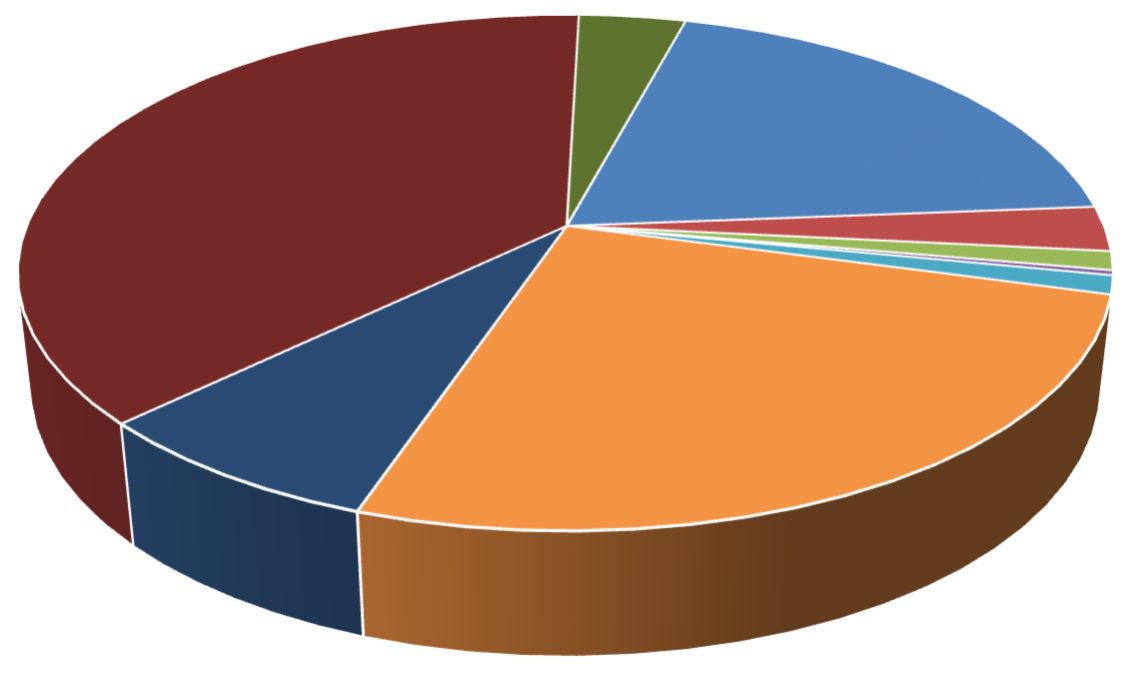
The City of Wooster's organizational structure is comprised of departments that carry out a range of activities essential to City operations. The City's financial activities are accounted for through various funds. The table below outlines each department and the corresponding funds they utilize.
Ordinance No. 2025-23: Exhibit - A
CERTIFICATE OF THE TOTAL AMOUNT FROM ALL SOURCES AVAILABLE FOR EXPENDITURES AND BALANCES
Office of Auditor, Wayne County, Ohio - Wooster, Ohio 44691
FUND TYPE/CLASSIFICATIONS
GOVERNMENTAL FUND TYPE
General Fund
Special Revenue Funds
Debt Service Funds
Capital Projects Funds
PROPRIETARY FUND TYPE
Enterprise Funds
Internal Service Funds
FIDUCIARY FUND TYPE
Trust and Custodial Funds
TOTAL ALL FUNDS
FUND CLASSIFICATION/NAME-SCC
GOVERNMENTAL FUND TYPES
General Fund - 100
SPECIAL REVENUE FUNDS
Street Construction Maintenance & Repair Fund - 101
State Highway Fund - 102
Permissive Tax Fund - 103
Enforcement and Education Fund - 104
Mandatory Drug Fines Fund - 105
Community Development Block Grant Fund - 107
Economic Development Fund - 108
Law Enforcement Trust Fund - 110
Police Pension Fund - 111
Fire Pension Fund - 112
Federal Equitable Sharing Fund - 113
CDBG Chip Home RLF Fund - 115
Law Enforcement Training Fund - 120
Recreation Supplement Fund - 122
Park Reforestation Fund - 123
OneOhio Opioid Settlement Fund - 126
Silver Rd Incentive District TIF Fund - 129
Oak Hill Incentive District TIF Fund - 130
Transportation Grant Fund - 131
Guarantee Deposit Fund - 702
TOTAL SPECIAL REVENUE FUNDS
Ordinance No. 2025-23: Exhibit - A
CERTIFICATE OF THE TOTAL AMOUNT FROM ALL SOURCES AVAILABLE FOR EXPENDITURES AND BALANCES
Office of Auditor, Wayne County, Ohio - Wooster, Ohio 44691
FUND TYPE/CLASSIFICATIONS
DEBT SERVICE FUNDS
Debt Service Fund - 401
TOTAL DEBT SERVICE
Capital Project Funds
Capital Projects Fund - 301
TOTAL CAPITAL PROJECTS
TOTAL GOVERNMENTAL FUNDS
PROPRIETARY FUND TYPE
Enterprise Funds
Water Fund - 501
Water Pollution Control Fund - 502
Wooster Community Hospital Fund - 503
Wooster Community Hospital Plant Fund - 504
Wooster Community Hospital Beaverson EMS Fund - 505
Wooster Community Hospital Endowment Fund - 506
Storm Drainage Fund - 507
Water Capital Fund - 511
Sewer Capital Fund - 512
Refuse Collection Fund - 514
TOTAL ENTERPRISE FUNDS
INTERNAL SERVICE FUNDS
Garage Fund - 601
Employee Benefits Fund - 602
Investment Fund - 620
TOTAL INTERNAL SERVICE FUNDS
TOTAL PROPRIETARY FUNDS
FIDUCIARY FUND TYPE
CUSTODIAL FUNDS
Clearing Fund - 705
Wooster Growth Corporation Fund - 719
Wooster-Ashland Regional Council of Govts - 725
TOTAL CUSTODIAL FUNDS
TRUST FUNDS (PPT)
No Trust Funds
TOTAL TRUST FUNDS
TOTAL FIDUCIARY FUNDS
TOTAL ALL FUNDS
The City of Wooster provides an extensive range of municipal services. The following is a list of City funds with average annual revenues of $1 million or greater with major revenue sources and major services provided.
Fund Title
General
Street Construction, Maintenance & Repair
Capital Improvements
Water
Water Pollution Control
Wooster Community Hospital Operating
Wooster Community Hospital Plant
Storm Drainage
Employee Benefits
Description Major Revenue Sources Major Services Provided
The City's general operating fund used to account for all financial resources except those required to be accounted for in another fund.
Used to account for gasoline taxes and vehicle registration fees use for maintenance of City streets.
Used to account for capital projects and equipment financed by general fund revenues.
Used to account for the operations and capital purchases of the City's water treatment plant
Used to account for the operations and capital purchases of the City's water pollution control plant.
Used to account for the operations of the Wooster Community Hospital and related healthcare activities.
Used to account for the construction of Hospital facilities and the acquisition of capital equipment.
Used to account for managing storm drainage runoff within the City.
Used to account for the medical and prescription drug benefits for City employees on a self-insured basis.
* Income Tax
* Property Tax
* Emergency Medical Services
* State Revenues
* Gasoline Tax
* Vehicle Registration Fees
* Transfers from General Fund
* Grants
* Debt Proceeds
* Sales of Water
* Investment Income
* Grants
* Debt Proceeds
* Treatment of Sewage
* Investment Income
* Grants
* Debt Proceeds
*Patient Revenue
* Transfers from Hospital Operating Fund
* Investment Income
* Charges for Services
* Department Charges
* Employee Contributions
* Public Safety
* General Government
* Road Maintenance
* Parks & Recreation
* Street Repair
* Snow & Ice Removal
* Street Cleaning
* Traffic Signals
* Road Construction
* Road Resurfacing
* Vehicle Purchases
* Equipment Purchases
* Purification of Water
* Maintenance of Water
Lines
* Utility Billing
* Treatment of wastewater
* Maintenance of Sewer Lines
* Utility Billing
* Inpatient Services
* Outpatient Services
* Emergency Room
* Rehabilitation Services
* Facility Construction
* Medical Equipment
* Construction and Maintenance of Storm Sewers
* Medical Benefits
* Prescription Drugs
Organization Description
100 GENERAL FUND
100.31.716 MAINTENANCE, LANDS AND BUILDINGS
100.33.716 BUILDING STANDARDS, LANDS AND BUILDINGS
100.34.717 FUND, ENGINEERING, ENGINEERING
100.60.705 LAW, LAW
100.70.703 FINANCE, FINANCIAL SERVICES
100.71.703 ACCOUNTING, FINANCIAL SERVICES
100.72.703 ACCOUNTS RECEIVABLE, FINANCIAL SERVICES
100.73.703 TREASURY MANAGEMENT, FINANCIAL SERVICES
100.80.702 DIRECTOR OF ADMINISTRATION, ADMINISTRATION
100.81.704 PERSONNEL, PERSONNEL
100.82.706 INFORMATION TECHNOLOGY DIVISION, INFORMATION TECHNOLOGY
100.84.707 COMMUNICATIONS & MARKETING/COMMUNICATIONS/MARKETING
100.90.701 MAYOR, MAYOR
100.90.709 MAYOR, SPECIAL EVENTS
100.91.708 COUNCIL, COUNCIL
100.22.401 ZONING, ZONING
100.31.606 MAINTENANCE, STREET CLEANING
100.32.403 PUBLIC PROPERTIES AND PARKS, SHADE TREE
100.33.409 BUILDING STANDARDS, BUILDING STANDARDS
100.70.411 FINANCE, HOME - CHIP
100.80.400 DIRECTOR OF ADMINISTRATION, ENVIRONMENT AND DEVELOPMENT
Administrative services
Administrative services
Administrative services
Administrative services
Administrative services
Administrative services
Administrative services
Administrative services
Administrative services
Administrative services
Administrative services
Administrative services
Administrative services
Administrative services
Administrative services
Environment and Development
Environment and Development
Environment and Development
Environment and Development
Environment and Development
Environment and Development
100.70.200 FINANCE, HEALTH AND SOCIAL SERVICES Health and Social Services
100.32.301 PUBLIC PROPERTIES AND PARKS, PARKS
100.52.304 RECREATION, COMMUNITY CENTER
100.52.305 RECREATION, SWIMMING POOLS
100.52.306 RECREATION, NATATORIUM
100.52.311 RECREATION, RECREATION
100.52.312 RECREATION, FIELDHOUSE/ICE RINK
100.11.101 POLICE, POLICE
100.12.109 FIRE, FIRE
100.31.102 MAINTENANCE, TRAFFIC CONTROL
100.70.725 FINANCE, DEBT SERVICE
100.80.108 DIRECTOR OF ADMINISTRATION, STREET LIGHTING
100.11.643 POLICE, PARKING
services
services
100.31.108 MAINTENANCE, STREET LIGHTING Transportation services
100.31.602 MAINTENANCE, STREET CONSTRUCTION Transportation services
100.31.607 MAINTENANCE, SNOW REMOVAL AND SALTING Transportation services
100.52.611 RECREATION, TAXI PROGRAM
Transportation services
CITY OF WOOSTER, OHIO
GENERAL FUND
SCHEDULE OF REVENUES, EXPENDITURES AND CHANGES IN FUND BALANCES
PREVIOUS THREE YEARS ACTUAL, CURRENT YEAR FORECAST AND BUDGETED, NEXT YEAR BUDGETED, FOUR FUTURE YEARS FORECAST
GENERAL FUND [100] – This fund is used to account for all financial resources of the City except those required to be accounted for in another fund. The General Fund generates a majority of its revenue from taxes.
General Fund
General Fund
The following is a break-down of expenditures by appropriation level within each activity
GENERAL FUND – This fund is used to account for all financial resources except those required to be accounted for in another fund.
Fund
- 8
CITY OF WOOSTER, OHIO
STREET CONSTRUCTION, MAINTENANCE AND REPAIR FUND SCHEDULE OF REVENUES, EXPENDITURES AND CHANGES IN FUND BALANCE
PREVIOUS THREE YEARS ACTUAL, CURRENT YEAR FORECAST AND BUDGETED, NEXT YEAR BUDGETED, FOUR FUTURE YEARS FORECAST
STREET CONSTRUCTION MAINTENANCE AND REPAIR [101] – This fund is required by the Ohio Revised Code to account for the portion of state gasoline tax and motor vehicle registration fees, which are to be used for construction and maintenance of streets within the City.
Street Construction, Maintenance and Repair Fund
:
CITY OF WOOSTER, OHIO
STATE HIGHWAY FUND SCHEDULE OF REVENUES, EXPENDITURES AND CHANGES
PREVIOUS THREE YEARS ACTUAL, CURRENT YEAR FORECAST AND BUDGETED, NEXT YEAR BUDGETED, FOUR FUTURE YEARS FORECAST
STATE HIGHWAY [102] – This fund is required by the Ohio Revised Code to account for the portion of state gasoline tax and motor vehicle registration fees which are to be used for construction and maintenance of state highways within the City.
Expenditures :
State Highway Fund
CITY OF WOOSTER, OHIO
PERMISSIVE TAX FUND SCHEDULE OF REVENUES, EXPENDITURES AND
PREVIOUS THREE YEARS ACTUAL, CURRENT YEAR FORECAST AND BUDGETED, NEXT YEAR BUDGETED, FOUR FUTURE YEARS FORECAST
PERMISSIVE TAX [103] – This fund is required by the Ohio Revised Code to account for the portion of motor vehicle registration fees allocated to assist in maintaining those city streets designated as contributing to the effective and efficient flow of traffic through and within the county.
Tax Fund
Permissive Tax Fund
CITY OF WOOSTER, OHIO
ENFORCEMENT AND EDUCATION FUND
SCHEDULE OF REVENUES, EXPENDITURES AND CHANGES IN FUND BALANCE
PREVIOUS THREE YEARS ACTUAL, CURRENT YEAR FORECAST AND BUDGETED, NEXT YEAR BUDGETED, FOUR FUTURE YEARS FORECAST
ENFORCEMENT AND EDUCATION [104] – This fund is used to account for monies from the Municipal Court designated to enforce OVI Laws (ORC 4511.19) and related educational programs.
Enforcement and Education Fund
CITY OF WOOSTER, OHIO
MANDATORY DRUG FINES FUND
SCHEDULE OF REVENUES, EXPENDITURES AND CHANGES IN FUND BALANCE
PREVIOUS THREE YEARS ACTUAL, CURRENT YEAR FORECAST AND BUDGETED, NEXT YEAR BUDGETED, FOUR FUTURE YEARS FORECAST
MANDATORY DRUG FINES [105] - This fund is used to account for monies from the Municipal Court designated to subsidize each agency’s law enforcement efforts that pertain to drug offenses.
Expenditures :
CITY OF WOOSTER, OHIO
COMMUNITY DEVELOPMENT BLOCK GRANT FUND
SCHEDULE OF REVENUES, EXPENDITURES AND CHANGES IN FUND BALANCE
PREVIOUS THREE YEARS ACTUAL, CURRENT YEAR FORECAST AND BUDGETED, NEXT YEAR BUDGETED, FOUR FUTURE YEARS FORECAST
COMMUNITY DEVELOPMENT BLOCK GRANT [107] – This fund is used to account for monies received from the Federal government under the Community Development Block Grant program for providing decent housing and a suitable living environment, and expanded economic opportunities principally for persons of low and moderate income and the allowable administrative costs associated with those projects.
Community Development Block Grant Fund
Revenues :
Community Development Block Grant Fund
CITY OF WOOSTER, OHIO
ECONOMIC DEVELOPMENT FUND
SCHEDULE OF REVENUES, EXPENDITURES AND CHANGES IN FUND BALANCE
PREVIOUS THREE YEARS ACTUAL, CURRENT YEAR FORECAST AND BUDGETED, NEXT YEAR BUDGETED, FOUR FUTURE YEARS FORECAST
ECONOMIC DEVELOPMENT [108] – This fund is used to account for the portion of the transient occupancy tax (bed tax) and the Wooster Opportunities Loan Fund that is used for promoting economic development within the City.
Economic Development Fund
CITY OF WOOSTER, OHIO
LAW ENFORCEMENT TRUST FUND
PREVIOUS THREE YEARS ACTUAL, CURRENT YEAR FORECAST AND BUDGETED, NEXT YEAR BUDGETED, FOUR FUTURE YEARS FORECAST
LAW ENFORCEMENT TRUST [110] – This fund is used to account for receipts and expenditures of funds from the sale of contraband. These funds can only be expended to pay the costs of protracted or complex investigations or prosecutions, to provide reasonable technical training or expertise, to provide matching funds to obtain federal grants to aid law enforcement, or for such other law enforcement purposes that Council determines appropriate.
Enforcement Trust Fund
CITY OF WOOSTER, OHIO
POLICE PENSION FUND
SCHEDULE OF
PREVIOUS THREE YEARS ACTUAL, CURRENT YEAR FORECAST AND BUDGETED, NEXT YEAR BUDGETED, FOUR FUTURE YEARS FORECAST
POLICE PENSION [111] – This fund is used to accumulate property taxes levied for the partial payment of the current and accrued liability for police disability and pension. Amounts collected for the police disability and pension are periodically remitted to the Ohio Police and Fire Pension Fund.
:
CITY OF WOOSTER, OHIO
FIRE PENSION FUND
SCHEDULE OF
PREVIOUS THREE YEARS ACTUAL, CURRENT YEAR FORECAST AND BUDGETED, NEXT YEAR BUDGETED, FOUR FUTURE YEARS FORECAST
FIRE PENSION [112] – This fund is used to accumulate property taxes levied for the partial payment of the current and accrued liability for firefighter's disability and pension. Amounts collected for the firefighter's disability and pension are periodically remitted to the Ohio Police and Fire Pension Fund.
:
CITY OF WOOSTER, OHIO
FEDERAL EQUITABLE SHARING FUND
SCHEDULE OF REVENUES, EXPENDITURES AND CHANGES IN FUND BALANCE
PREVIOUS THREE YEARS ACTUAL, CURRENT YEAR FORECAST AND BUDGETED, NEXT YEAR BUDGETED, FOUR FUTURE YEARS FORECAST
FEDERAL EQUITABLE SHARING [113] – This fund is used to account for the City’s portion of federally forfeited property resulting from the Wooster Police Department’s participation with a federal agency, which resulted in the forfeiture of property.
Equitable Sharing Fund
:
Expenditures :
Federal Equitable Sharing Fund
CITY OF WOOSTER, OHIO
CDBG CHIP HOME REVOLVING LOAN FUND
SCHEDULE OF REVENUES, EXPENDITURES AND CHANGES IN FUND BALANCE
PREVIOUS THREE YEARS ACTUAL, CURRENT YEAR FORECAST AND BUDGETED, NEXT YEAR BUDGETED, FOUR FUTURE YEARS FORECAST
CDBG Chip Home Revolving Loan Fund [115] – This fund is used to account for the City’s portion of program income resulting from repayment of grant funds from CHIP and HOME programs.
CITY OF WOOSTER, OHIO
LAW ENFORCEMENT TRAINING FUND
SCHEDULE OF REVENUES, EXPENDITURES AND CHANGES IN FUND BALANCE
PREVIOUS THREE YEARS ACTUAL, CURRENT YEAR FORECAST AND BUDGETED, NEXT YEAR BUDGETED, FOUR FUTURE YEARS FORECAST
LAW ENFORCEMENT TRAINING FUND [120] – This fund is used to account for reimbursement from the State of Ohio for State mandated training for police officers.
:
over(under)
Law Enforcement Training Fund
CITY OF WOOSTER, OHIO
RECREATION SUPPLEMENT FUND
SCHEDULE OF REVENUES, EXPENDITURES AND CHANGES IN FUND BALANCE
PREVIOUS THREE YEARS ACTUAL, CURRENT YEAR FORECAST AND BUDGETED, NEXT YEAR BUDGETED, FOUR FUTURE YEARS FORECAST
RECREATION SUPPLEMENT [122] – This fund is used to account for financial donations from individuals and organizations that wish to specify that their gifts and donations support recreational opportunities for underprivileged youth in the community
Recreation Supplement Fund
Supplement Fund
CITY OF WOOSTER, OHIO
PARK REFORESTATION FUND
SCHEDULE OF REVENUES, EXPENDITURES AND CHANGES IN FUND BALANCE
PREVIOUS THREE YEARS ACTUAL, CURRENT YEAR FORECAST AND BUDGETED, NEXT YEAR BUDGETED, FOUR FUTURE YEARS FORECAST
PARK REFORESTATION [123] – This fund is used to collect donations intended for the reforestation of City parks.
CITY OF WOOSTER, OHIO
ONEOHIO OPIOID SETTLEMENT FUND
SCHEDULE OF REVENUES, EXPENDITURES AND CHANGES IN FUND BALANCE
PREVIOUS THREE YEARS ACTUAL, CURRENT YEAR FORECAST AND BUDGETED, NEXT YEAR BUDGETED, FOUR FUTURE YEARS FORECAST
OneOhio Opioid Settlement [126] – This fund is used to account for revenues derived from the 2021 settlement with the three largest distributors of opioids for the prevention, treatment, and support recovery from opioid addiction.
CITY OF WOOSTER, OHIO
SILVER ROAD INCENTIVE DISTRICT TIF FUND
SCHEDULE OF REVENUES, EXPENDITURES AND CHANGES IN FUND BALANCE
PREVIOUS THREE YEARS ACTUAL, CURRENT YEAR FORECAST AND BUDGETED, NEXT YEAR BUDGETED, FOUR FUTURE YEARS FORECAST
Silver Road Incentive District TIF Fund [129] – This fund is used to account for revenues and expenditures derived from the Silver Road Tax Increment Financing Incentive Districts as authorized pursuant to Ordinance No. 2024-30.
Expenditures :
CITY OF WOOSTER, OHIO
OAK HILL INCENTIVE DISTRICT TIF FUND
SCHEDULE OF REVENUES, EXPENDITURES AND CHANGES IN FUND BALANCE
PREVIOUS THREE YEARS ACTUAL, CURRENT YEAR FORECAST AND BUDGETED, NEXT YEAR BUDGETED, FOUR FUTURE YEARS FORECAST
Oak Hill Incentive District TIF Fund [130] – This fund is used to account for revenues and expenditures derived from the Oak Hill Tax Increment Financing Incentive Districts as authorized pursuant to Ordinance No. 2022-25.
CITY OF WOOSTER, OHIO
TRANSPORTATION GRANT FUND
SCHEDULE OF REVENUES, EXPENDITURES AND CHANGES IN FUND BALANCE
PREVIOUS THREE YEARS ACTUAL, CURRENT YEAR FORECAST AND BUDGETED, NEXT YEAR BUDGETED, FOUR FUTURE YEARS FORECAST
Transportation Grant Fund [131] – This fund is used to account for revenues and expenditures from grants, user fees, and contributions from the City of Wooster to support public transportation.
Transportation Grant Fund
Transportation Grant Fund
CITY OF WOOSTER, OHIO
GUARANTEED DEPOSITS FUND
SCHEDULE OF REVENUES, EXPENDITURES AND
PREVIOUS THREE YEARS ACTUAL, CURRENT YEAR FORECAST AND BUDGETED, NEXT YEAR BUDGETED, FOUR FUTURE YEARS FORECAST
GUARANTEED DEPOSITS [702]– This fund is used to hold funds received to insure compliance with City ordinances.
CITY OF WOOSTER, OHIO
DEBT SERVICE FUND
SCHEDULE OF REVENUES, EXPENDITURES AND CHANGES
PREVIOUS THREE YEARS ACTUAL, CURRENT YEAR FORECAST AND BUDGETED, NEXT YEAR BUDGETED, FOUR FUTURE YEARS FORECAST
DEBT SERVICE FUND [401] – This fund is used to accumulate special assessment revenues collected by the County Treasurer and remitted to the City by the County Auditor for payment of special assessment principal and interest. These debt issues were sold to finance construction of various projects that were deemed to benefit only those residents in the immediate area of the projects and are paid for by those residents through assessments against their property.
Debt Service Fund
CITY OF WOOSTER, OHIO
CAPITAL PROJECTS FUND
SCHEDULE OF REVENUES, EXPENDITURES AND CHANGES
PREVIOUS THREE YEARS ACTUAL, CURRENT YEAR FORECAST AND BUDGETED, NEXT YEAR BUDGETED, FOUR FUTURE YEARS FORECAST
CAPITAL PROJECTS [301] – This fund is used to account for various governmental fund type capital projects.
Capital Projects Fund
Projects Fund
CITY OF WOOSTER, OHIO
WATER FUND
SCHEDULE OF REVENUES, EXPENDITURES AND CHANGES IN FUND BALANCE
PREVIOUS THREE YEARS ACTUAL, CURRENT YEAR FORECAST AND BUDGETED, NEXT YEAR BUDGETED, FOUR FUTURE YEARS FORECAST
WATER [501] - This fund is used to account for the provision of water treatment and distribution to the residents and commercial users of the City and a limited number of county residents.
Revenues :
Expenditures :
at end of year
Water Fund
CITY OF WOOSTER, OHIO
WATER POLLUTION CONTROL FUND
SCHEDULE OF REVENUES, EXPENDITURES AND CHANGES IN FUND BALANCE
PREVIOUS THREE YEARS ACTUAL, CURRENT YEAR FORECAST AND BUDGETED, NEXT YEAR BUDGETED, FOUR FUTURE YEARS FORECAST
WATER POLLUTION CONTROL [502] – This fund is used to account for sanitary sewer services provided to the residential and commercial users of the City and some residents of the county.
Water Pollution Control Fund
CITY OF WOOSTER, OHIO
STORM DRAINAGE FUND SCHEDULE OF REVENUES, EXPENDITURES AND CHANGES IN FUND BALANCE
PREVIOUS THREE YEARS ACTUAL, CURRENT YEAR FORECAST AND BUDGETED, NEXT YEAR BUDGETED, FOUR FUTURE YEARS FORECAST
STORM DRAINAGE [507] – This fund is used to account for and manage the storm drainage runoff service provided to the residential and commercial users of the City.
Drainage Fund
CITY OF WOOSTER, OHIO
WATER CAPITAL FUND
SCHEDULE OF REVENUES, EXPENDITURES AND CHANGES
PREVIOUS THREE YEARS ACTUAL, CURRENT YEAR FORECAST AND BUDGETED, NEXT YEAR BUDGETED, FOUR FUTURE YEARS FORECAST
WATER CAPITAL [511] - This fund is used to account for a capital charge in the City's rate structure for water services to be used for repairs, replacements, and upgrades to the water system's capital and infrastructure.
Water Capital Fund
Expenditures :
CITY OF WOOSTER, OHIO
SEWER CAPITAL FUND
SCHEDULE OF REVENUES, EXPENDITURES
PREVIOUS THREE YEARS ACTUAL, CURRENT YEAR FORECAST AND BUDGETED, NEXT YEAR BUDGETED, FOUR FUTURE YEARS FORECAST
SEWER CAPITAL [512] - This fund is used to account for a capital charge in the City's rate structure for sewer services to be used for repairs, replacements, and upgrades to the sewer system's capital and infrastructure.
Expenditures :
CITY OF WOOSTER, OHIO
REFUSE COLLECTION FUND
SCHEDULE OF REVENUES, EXPENDITURES AND CHANGES IN FUND BALANCE
PREVIOUS THREE YEARS ACTUAL, CURRENT YEAR FORECAST AND BUDGETED, NEXT YEAR BUDGETED, FOUR FUTURE YEARS FORECAST
REFUSE COLLECTION [514] – This fund is used to account for trash collection services provided to the residential and some commercial users of the City by a third party vendor.
Collection Fund
Revenues :
Collection Fund
CITY OF WOOSTER, OHIO
MUNICIPAL GARAGE FUND
SCHEDULE OF REVENUES, EXPENDITURES AND CHANGES IN FUND BALANCE
PREVIOUS THREE YEARS ACTUAL, CURRENT YEAR FORECAST AND BUDGETED, NEXT YEAR BUDGETED, FOUR FUTURE YEARS FORECAST
MUNICIPAL GARAGE [601] – This fund is used to account for the operations of the City garage which provides maintenance and repair services on City Vehicles and Equipment.
Garage Fund
Garage Fund
CITY OF WOOSTER, OHIO
EMPLOYEE BENEFITS FUND
SCHEDULE OF REVENUES, EXPENDITURES AND CHANGES IN FUND BALANCE
PREVIOUS THREE YEARS ACTUAL, CURRENT YEAR FORECAST AND BUDGETED, NEXT YEAR BUDGETED, FOUR FUTURE YEARS FORECAST
EMPLOYEE BENEFITS [602] – This fund is established to account for expenses related to health, vision, dental, life and disability insurances as well as employee flexible spending accounts and related employer and employee contributions.
Benefits Fund
Benefits Fund
CITY OF WOOSTER, OHIO
INVESTMENT FUND
SCHEDULE OF REVENUES, EXPENDITURES AND CHANGES IN FUND BALANCE
PREVIOUS THREE YEARS ACTUAL, CURRENT YEAR FORECAST AND BUDGETED, NEXT YEAR BUDGETED, FOUR FUTURE YEARS FORECAST
INVESTMENT [620] – This fund is established by statute to accumulate interest earnings from pooled investments and to pay expenses incurred in the handling of investments and banking matters until such time as the net proceeds can be distributed to other funds.
Expenditures :
fund cash position at end of year
City of Wooster, Ohio
Capital Budget Summary
FUND LEVEL SUMMARY
COST CENTER LEVEL SUMMARY
City of Wooster, Ohio
City of Wooster, Ohio
City of Wooster, Ohio
City of Wooster, Ohio
City of Wooster, Ohio
City of Wooster, Ohio
Infrastructure and Equipment Cuts: 2026
Division Project Description
Police Cruiser Replacement (2)
Capital Improvements PPM Utility Terrain Vehicle (UTV)
PPM Pavement Marking Eraser
PPM Salt Stacker
PPM Compact Utility Loader w/Auger, Bucket & Tree Forks Attachments
PPM Asphalt Paver
Engineering 2026 Wooster Concrete Pavement Replacement: McClure St.
Engineering 2026 Wooster Concrete Pavement Replacement: Springwood Dr.
Engineering 2026 Traffic Signal Replacements: S. Market S., Madison Ave. & Spruce St.
Engineering 2026 Traffic Signal Replacements: W. Old Lincolnway, W. Larwill & W. Liberty
Engineering 2026 Wooster Streets Resurfacing: Williams Way
Engineering 2026 Wooster Streets Resurfacing: Peabody Pl.
Engineering 2026 Wooster Streets Resurfacing: Church Hill Ct.
Engineering 2026 Wooster Streets Resurfacing: Spring Brook Way
Engineering 2026 Wooster Streets Resurfacing: Pintail Ln. (West)
$ Capital Improvements
$ Capital Improvements
$ Capital Improvements
$ Capital Improvements
Improvements
Capital Improvements
$ Capital Improvements
$ Capital Improvements
$ Capital Improvements
$ Capital Improvements
$ Capital Improvements
Capital Improvements
$ Capital Improvements
$ Capital Improvements
Engineering Downtown Streetscape Phase 6 (S. Market Street) 1,750,000 $ Capital Improvements
Engineering Cleveland-Beall Roundabout
$ Capital Improvements
Total Infrastructure and Equipment Cuts: 2026 4,350,000 $
City of Wooster, Ohio
2
1
1
1
City of Wooster, Ohio
1
City of Wooster, Ohio
Future Equipment Budget Requested
For the years 2027-2031
Possible $1.5 to $2 million in Federal Surface Transportation Funds
2,750,000 $
Estimated amount of Capital Improvements for construction, assuming Federal Appropriation
W. Vine St W/L Replacement (Grant to Spruce)
Engineering Pittsburg Ave W/L Replacement (Palmer to Bauer)
Engineering Washington St W/L
(Nold to Bowman)
E. Highland W/L (Portage to curve)
Engineering N. Grant Street W/L Replacement (Park to Quinby)
Engineering Robinson Road or Perkins Road W/L Looping
Engineering Thorne W/L Replacement
Engineering Well S-3 Rehabilitation
Engineering Back Orrville Road Water Line Looping
Hemlock W/L Replacement and Extension to W. Wayne
Engineering N. Grant Street Alley 16" W/L Valve Replacements
Engineering E. Highland Ave and Fairview W/L Replacement
This section will be available on or after November 26, 2025, once the Wooster Community Hospital Board has approved the presented budget.
City of Wooster, Ohio Outstanding
Account: A record of public funds showing receipts, disbursements, and the balance.
Accounting Basis: The rules that determine recognition of income, expense, assets, liabilities and equity (cash basis and accrual basis are the most widely known). The City of Wooster employs the accrual basis of accounting.
Accrual Accounting: A generally accepted accounting method where revenue is recognized when earned and expenses when incurred. These revenues and expenses are recorded at the end of an accounting period even if cash has not been received or paid.
Amortization: Spreading out the cost of an intangible asset or debt over the useful life of the asset.
Annual Comprehensive Financial Report (ACFR): The official annual financial report of the City. It includes financial statements prepared in conformity with GAAP. It also includes supporting schedules necessary to demonstrate compliance with financerelated legal and contractual provisions, required supplementary information, extensive introductory material and illustrative information about the city.
Appropriation: An expenditure authorization granted by the City Council to incur obligations for specific purposes. Appropriations are usually limited by amount, purpose and time.
Approved Budget: The budget as formally adopted by City Council with legal appropriations for the upcoming fiscal year.
Balanced budget: A budget in which expenditures are funded by revenues and/or reserves.
Budget: A policy setting document that outlines a financial plan for a time period that matches all planned revenues with expenditures for various municipal services. The City of Wooster budgets for one calendar year period at a time.
Budget Transfer: An administrative measure to move budget resources from one budget account or project account to another.
Capital Asset: A long-term tangible piece of property, owned and used for public purpose. Buildings, land, equipment and infrastructure are examples of capital assets.
Capital Outlay: Expenditures that result in the acquisition of or addition to capital assets.
Capital Projects: Projects for the purchase or construction of capital assets.
Community Development Block Grant (CDBG): A federal funding source that allows local officials and residents flexibility in designing their own programs within a widerange of eligible activities. The CDBG program encourages more broadly conceived community development projects, and expanded housing opportunities for people living in low and moderate-income households.
Charges for Service: Fees charged for various government operations that are based on a cost recovery model, specifically in enterprise funds. Examples include refuse collection, water and sanitary sewer use as well as storm sewer fees.
Capital Improvement Plan: The budget document presents proposed capital expenditures for the current period. Also included is the Capital Improvement Plan, which outlines five-year projections for equipment and 10-year infrastructure plans, which documents proposed expenditures by fund for future capital needs.
Contractual Service: Service provided by an outside entity that is mutually agreed upon between the City and the service provider, documented in a legal agreement.
Debt Service: The annual payment of principal and interest on the city’s indebtedness.
Deficit: The excess of expenditures or expenses over revenues during a single budget year. The excess of an entity's or fund's liabilities over its assets (see Fund Balance).
Depreciation: The portion of a capital asset’s value which is charged as an expense during a particular period for reporting purposes in proprietary funds. The capital outlay, rather than the periodic depreciation expense, is recorded under the modified accrual basis of budgeting and accounting.
Encumbrance: An obligation against appropriated funds in the form of a purchase order, contract, salary commitment or other reservation of available funds.
Enterprise Fund: A separate fund used to account for operations financed and operated similar to private business enterprises. Enterprise fund expenses, including the cost of depreciation and the cost of providing services, are to be financed or recovered primarily through user charges. The City’s enterprise funds are the Water Fund, Water Pollution Control Fund, Storm Drainage Fund and the Refuse Fund. Financial activity of the Wooster Community Hospital is also reported as an enterprise fund.
Expenditure: Payment made to secure a good or service.
Fiduciary Funds: Funds used to account for resources held for the benefit of parties outside the city.
Financial Policy: The City’s policy in respect to fund balance, budgeting and investing, as related to the provision of City services, programs and capital investment.
Fines and Forfeitures: Revenue received by the City from court fines, forfeitures, and parking fines.
Fiscal Year (FY): A 12-month period the annual operating budget applies to. At the end of the period, the City determines its financial position and results of its operations. The City’s fiscal year is a calendar year, January 1 – December 31.
Fringe Benefits: A non-salary component of the Personal Services appropriation level, which is included in total compensation of City employees. Some benefits are legally required, such as Medicare. Other benefits, such as health insurance, are not legally mandated.
Full-Time Equivalent (FTE): The percentage of a full-time position, typically based upon 2,080 worked per year. Outside of the Fire Division, full-time position scheduled for 2,080 annual hours is equal to one (1) FTE. A position that has been budgeted to work less than full-time will work the number of hours which equate to that budgeted FTE amount; for example, a half FTE (0.5) budgeted position can work 40 hours a week for six months, or 20 hours a week for one year.
Fund: An independent fiscal and accounting entity with a self-balancing set of accounts recording its assets, liabilities, fund balances, and revenues and expenditures/expenses.
Fund Balances: In the context of the City’s budget discussions, fund balance refers to the undesignated General Fund Balance. This is the accumulated total of all prior years’ actual General Fund revenues in excess of expenditures not appropriated by City Council and has not been designated for other uses.
General Fund: The operating fund which finances the necessary day-to-day actions within the city through taxes, fees, and other revenue sources. This fund includes all revenues and expenditures not accounted for in specific purpose funds.
Generally Accepted Accounting Principles (GAAP): The common set of accounting principles, standards, and procedures that are used to complete financial statements.
General Obligation Bonds: Bonds pledging the full faith and credit of the City.
Goal: A long-range desirable development attained by time phased objectives and designed to carry out a strategy.
Governmental Funds: Funds used to account for tax-supported activities. The City uses four different types of governmental funds: the general fund, special revenue funds, debt service funds and capital project funds. Government funds are reported using the current financial resources and the modified accrual basis of accounting.
Grant: A non-repayable fund disbursed by one party (grant makers), generally a government department, corporation, foundation or trust, to a recipient, for a specific project or purpose. There is typically an application process to qualify and be approved for a grant.
Insurance: A contract to pay a premium in return for which the insurer will pay compensation in certain eventualities such as fire, theft, motor accident. The premiums are calculated so that, on average, they are sufficient to pay compensation for the policyholders who will make a claim together with a margin to cover administration cost and profit. In effect, insurance spreads the risk so that the loss by policyholder is compensated at the expense of all those who insure against it.
Internal Service Funds: Funds accounting for the financing of goods and services supplied to other funds of the City and other governmental units on a costreimbursement basis. The City has two Internal Service Funds: the Garage Fund and the Employee Benefits Fund.
Maintenance: The act of keeping capital assets in a state of good repair. It includes preventative maintenance, normal periodic repairs, replacement of parts or structural components, and other activities needed to maintain the asset to provide normal services and achieve its optimal life.
Modified Accrual Basis: The basis of accounting under which revenues are recognized in the period they become available and measurable, and expenditures are recognized in the period the associated liability is incurred.
Net assets: Total assets minus total liabilities of an individual or entity.
One-time: a nonrecurring revenue or expenditure within the current fiscal year.
Operating Budget: An Operating Budget is the annual financial plan of operating expenditures encompassing all the fund types within the City. It is the approved means by which most of the financing, acquisition, spending and service delivery activities of a government are planned and controlled.
Operations and Maintenance (O&M): An appropriation level within the budget that includes expenditures for supplies, contracted services, and equipment maintenance.
Operating Revenues and Expenditures: Operating revenues and expenditures result from providing regularly scheduled services.
Ordinance: A formal legislative enactment by the City Council, which has the full force and effect of law within the boundaries of the City.
Personnel Services: Compensation for direct labor of persons in the employment of the city and/or salaries and wages paid to employees for full-time, part-time, and temporary work, including overtime, shift differential, and similar compensation. The personnel services account group also includes fringe benefits paid for employees. Personnel Services is an appropriation level recognized by the City.
Proposed Budget: The budget formally submitted by the Mayor to City Council for its consideration and approval.
Proprietary Fund: A fund that accounts for operations similar to those in the private sector. This includes the enterprise funds and internal service funds. The focus is on determination of net income, financial position and changes in financial position.
Real Property Taxes: Revenue derived from the tax assessed on residential, commercial or industrial property.
Revenue: The yield from various sources of income such as taxes the City collects and receives into the treasury for public use.
Service: The on-going sequence of specific tasks and activities representing a continuous and distinct benefit provided to internal and external customers.
Special Revenue Fund: An account established to collect money that must be used for a specific purpose, the existence of which enhance transparency and accountability. The City uses multiple Special Revenue funds including: Street Construction Maintenance and Repair, State Highway, Permissive Tax, Enforcement and Education, Mandatory Drug Fines, Community Development Block Grant (CDBG), Economic Development, Transportation Grant Fund, Law Enforcement Trust, Police Pension, Fire Pension, Federal Equitable Sharing, CDBG CHIP Home Revolving Loan, Economic/Downtown Loan, Shade Tree, Law Enforcement Professional Training, Lillian Long Estate, Recreation Supplement and Christmas Run Park Restoration.
Strategic Planning: The continuous and systematic process whereby guiding members of the City make decisions about its future, and develop procedures and operations to achieve future objectives.
Surplus: The excess of an entity's or fund’s assets over its liabilities (see also fund balance). The excess of revenues and fund balance over expenditures or expenses.
Tax Base: All forms of income which are taxable under the City’s jurisdiction.
Vision: An objective statement that describes an entity’s most desirable future. An organization’s vision employs the skills, knowledge, innovation and foresight of management and the workforce to communicate effectively the desired future state.
Working Capital: Current assets minus current liabilities. Working capital measures how much in liquid assets an entity has available to build its business or activity.