Most Impactful Cybersecurity Leaders Enabling Resilience & Growth, 2026
arc Crudgington’s career reflects the evolution of technology itself—from foundational infrastructure to the complex, AI-driven digital ecosystems shaping today’s world. With over twenty-five years of experience across cybersecurity, cloud, and enterprise technology leadership, he has built a reputation for aligning security with business strategy, ensuring that organizations do not just operate, but operate with confidence.
arc Crudgington’s career reflects the evolution of technology itself—from foundational infrastructure to the complex, AI-driven digital ecosystems shaping today’s world. With over twenty-five years of experience across cybersecurity, cloud, and enterprise technology leadership, he has built a reputation for aligning security with business strategy, ensuring that organizations do not just operate, but operate with confidence.
As a leader who has held roles including CISO, CIO, and CTO, and now serving as VP of IT Infrastructure and Cybersecurity alongside his role as Founder and CEO of Armida Corporation, Marc has consistently approached cybersecurity not as a technical constraint, but as a strategic enabler of resilience and growth. His journey offers a deeper look into how modern organizations must rethink security, leadership, and innovation in an increasingly interconnected and rapidly evolving digital landscape.
oversight with cybersecurity strategy. Positions such as Chief Information Security Officer, Vice President of IT Infrastructure and Cybersecurity, and other executive leadership roles expanded his scope from managing systems to safeguarding organizations, customers, and critical information assets. These roles allowed him to witness firsthand how digital transformation, cloud adoption, and distributed infrastructure were reshaping industries across the globe.
As a leader who has held roles including CISO, CIO, and CTO, and now serving as VP of IT Infrastructure and Cybersecurity alongside his role as Founder and CEO of Armida Corporation, Marc has consistently approached cybersecurity not as a technical constraint, but as a strategic enabler of resilience and growth. His journey offers a deeper look into how modern organizations must rethink security, leadership, and innovation in an increasingly interconnected and rapidly evolving digital landscape.
A Journey Shaped by Technology, Security, and Strategic Vision
A Journey Shaped by Technology, Security, and Strategic Vision
Marc Crudgington’s professional journey began with a realization that technology was far more than a collection of systems and software. From the outset, he understood that technology serves as the backbone of modern organizations, enabling them to operate efficiently, innovate continuously, and compete in an increasingly digital world.
His early career experiences spanned both startup environments and larger corporate organizations, providing him with a deep understanding of the foundational infrastructure that supports enterprise operations. These formative years exposed him to the complexities of system architecture, networking, and operational scalability. More importantly, they revealed the critical role technology plays in ensuring organizational continuity and performance.
Working across diverse environments, including startups, consulting firms, and large multinational enterprises, reinforced a consistent lesson. Technology and cybersecurity cannot function in isolation. They must operate as strategic enablers of business success. Organizations that treat cybersecurity as an afterthought or a purely technical function often struggle to build resilience, while those that integrate security into their strategic framework gain a competitive advantage.
Marc Crudgington’s professional journey began with a realization that technology was far more than a collection of systems and software. From the outset, he understood that technology serves as the backbone of modern organizations, enabling them to operate efficiently, innovate continuously, and compete in an increasingly digital world.
His early career experiences spanned both startup environments and larger corporate organizations, providing him with a deep understanding of the foundational infrastructure that supports enterprise operations. These formative years exposed him to the complexities of system architecture, networking, and operational scalability. More importantly, they revealed the critical role technology plays in ensuring organizational continuity and performance.
As his career progressed, he transitioned into leadership roles that combined infrastructure
As his career progressed, he transitioned into leadership roles that combined infrastructure
oversight with cybersecurity strategy. Positions such as Chief Information Security Officer, Vice President of IT Infrastructure and Cybersecurity, and other executive leadership roles expanded his scope from managing systems to safeguarding organizations, customers, and critical information assets. These roles allowed him to witness firsthand how digital transformation, cloud adoption, and distributed infrastructure were reshaping industries across the globe.
Education and continuous learning have played a pivotal role in his journey. His MBA from the University of California, Irvine’s Paul Merage School of Business provided a strong foundation in aligning technology decisions with business outcomes. Currently pursuing a Master of Science in Technology Commercialization at The University of Texas at Austin’s McCombs School of Business, he continues to deepen his understanding of how emerging technologies transition from innovation to market impact.
Beyond his professional roles, Marc has contributed to the broader cybersecurity community through thought leadership and authorship. His books, including The Cyber War Is Here, examine the evolving nature of global digital conflict and its implications for modern enterprises. These contributions reflect his commitment not only to advancing cybersecurity practices but also to shaping the conversation around digital resilience.
Beyond his professional roles, Marc has contributed to the broader cybersecurity community through thought leadership and authorship. His books, including The Cyber War Is Here, examine the evolving nature of global digital conflict and its implications for modern enterprises. These contributions reflect his commitment not only to advancing cybersecurity practices but also to shaping the conversation around digital resilience.
Today, his work focuses on building world-class infrastructure, developing cybersecurity strategies,
Today, his work focuses on building world-class infrastructure, developing cybersecurity strategies,
Working across diverse environments, including startups, consulting firms, and large multinational enterprises, reinforced a consistent lesson. Technology and cybersecurity cannot function in isolation. They must operate as strategic enablers of business success. Organizations that treat cybersecurity as an afterthought or a purely technical function often struggle to build resilience, while those that integrate security into their strategic framework gain a competitive advantage.
Education and continuous learning have played a pivotal role in his journey. His MBA from the University of California, Irvine’s Paul Merage School of Business provided a strong foundation in aligning technology decisions with business outcomes. Currently pursuing a Master of Science in Technology Commercialization at The University of Texas at Austin’s McCombs School of Business, he continues to deepen his understanding of how emerging technologies transition from innovation to market impact.
and helping organizations navigate the next era of transformation driven by artificial intelligence, data, and autonomous systems.
and helping organizations navigate the next era of transformation driven by artificial intelligence, data, and autonomous systems.
The Expanding Threat Landscape in a Hyperconnected World
The Expanding Threat Landscape in a Hyperconnected
World
Modern organizations operate in an environment defined by hyperconnectivity, cloud expansion, and rapid technological advancement. These factors, while enabling innovation and efficiency, also introduce significant cybersecurity challenges.
C O N T E N T S
Modern organizations operate in an environment defined by hyperconnectivity, cloud expansion, and rapid technological advancement. These factors, while enabling innovation and efficiency, also introduce significant cybersecurity challenges.
One of the most pressing challenges is the expansion of the digital attack surface. Organizations now rely on complex ecosystems that include cloud platforms, software-as-a-service applications, edge computing environments, and globally distributed networks. This interconnected infrastructure creates multiple entry points for potential threats, making it increasingly difficult to manage identity, access, and data protection effectively.
approaches and adopt proactive, architecture-driven security models that address the complexities of modern digital ecosystems.
approaches and adopt proactive, architecture-driven security models that address the complexities of modern digital ecosystems.
Leadership as the Foundation of Cybersecurity Culture
Leadership as the Foundation of Cybersecurity Culture
In Marc’s perspective, leadership is the most critical factor in building a strong cybersecurity culture within organizations. Technology alone cannot address the complexities of modern security challenges. Culture determines whether security practices are consistently applied and whether employees understand their role in protecting organizational assets.
One of the most pressing challenges is the expansion of the digital attack surface. Organizations now rely on complex ecosystems that include cloud platforms, software-as-a-service applications, edge computing environments, and globally distributed networks. This interconnected infrastructure creates multiple entry points for potential threats, making it increasingly difficult to manage identity, access, and data protection effectively.
In Marc’s perspective, leadership is the most critical factor in building a strong cybersecurity culture within organizations. Technology alone cannot address the complexities of modern security challenges. Culture determines whether security practices are consistently applied and whether employees understand their role in protecting organizational assets.
Dr. Shaheela Banu Abdul Majeed
Mahmoud Shafik Youssef
At the same time, cyber adversaries have evolved in both sophistication and scale. Threat actors are no longer isolated individuals but often well-organized, well-funded groups, sometimes supported by nation-states. These adversaries leverage automation and artificial intelligence to conduct reconnaissance, identify vulnerabilities, and execute attacks at unprecedented speed.
At the same time, cyber adversaries have evolved in both sophistication and scale. Threat actors are no longer isolated individuals but often well-organized, well-funded groups, sometimes supported by nation-states. These adversaries leverage automation and artificial intelligence to conduct reconnaissance, identify vulnerabilities, and execute attacks at unprecedented speed.
Effective cybersecurity leadership begins with aligning security initiatives with business objectives. When leaders communicate that cybersecurity supports innovation, customer trust, and organizational growth, it becomes integrated into the company’s mission rather than perceived as a constraint.
Marcelo Lorenzetti
Shaping a Secure Future
The rise of generative and agentic artificial intelligence systems introduces another layer of complexity. While these technologies offer immense potential for innovation and productivity, they also present new risks. Data exposure, manipulation of AI models, and the emergence of autonomous decision-making systems create challenges that traditional security frameworks are not fully equipped to address.
The rise of generative and agentic artificial intelligence systems introduces another layer of complexity. While these technologies offer immense potential for innovation and productivity, they also present new risks. Data exposure, manipulation of AI models, and the emergence of autonomous decision-making systems create challenges that traditional security frameworks are not fully equipped to address.
Effective cybersecurity leadership begins with aligning security initiatives with business objectives. When leaders communicate that cybersecurity supports innovation, customer trust, and organizational growth, it becomes integrated into the company’s mission rather than perceived as a constraint.
Building a resilient cybersecurity culture also requires fostering collaboration across different functions. Technology teams, business leaders, and risk management professionals must work together to address security challenges. Cybersecurity cannot operate as a siloed function. It must be embedded across the organization as a shared responsibility.
Building a resilient cybersecurity culture also requires fostering collaboration across different functions. Technology teams, business leaders, and risk management professionals must work together to address security challenges. Cybersecurity cannot operate as a siloed function. It must be embedded across the organization as a shared responsibility.
The Invisible Guardians of the Digital World
The Minds Protecting the Digital World
The future of cybersecurity depends on integrating security deeply into infrastructure design, governance frameworks, and enterprise risk management strategies. Organizations must move beyond reactive
18 22 26 30 34 38 42
Talent development is another critical aspect of leadership. The global shortage of cybersecurity professionals remains a significant challenge. While artificial intelligence can help address certain gaps, organizations must invest in training, mentorship, and continuous learning to build a skilled workforce capable of adapting to evolving threats.
Talent development is another critical aspect of leadership. The global shortage of cybersecurity professionals remains a significant challenge. While artificial intelligence can help address certain gaps, organizations must invest in training, mentorship, and continuous learning to build a skilled workforce capable of adapting to evolving threats.
Technologies Shaping the Future of Cybersecurity
The future of cybersecurity depends on integrating security deeply into infrastructure design, governance frameworks, and enterprise risk management strategies. Organizations must move beyond reactive
Technologies Shaping the Future of Cybersecurity
The Strategic Mindset Behind Modern Cybersecurity
The future of cybersecurity and IT governance will be shaped by several emerging technologies, each introducing new opportunities and challenges. Artificial intelligence is at the forefront of this
The future of cybersecurity and IT governance will be shaped by several emerging technologies, each introducing new opportunities and challenges. Artificial intelligence is at the forefront of this
Editor’s Note
The New Vanguard
n 2026, cybersecurity leadership is no longer confined to protecting systems it is fundamentally shaping how organizations grow, adapt, and lead in a digitally interconnected world. As we present this special edition on Most Impactful Cybersecurity Leaders Enabling Resilience & Growth, we recognize individuals who are not just responding to threats, but redefining the very fabric of digital trust and business continuity.
Today’s cybersecurity leaders operate in an environment where uncertainty is constant and disruption is inevitable. Yet, what distinguishes the most impactful among them is their ability to turn vulnerability into strength. They do not merely defend; they anticipate, transform, and enable. In boardrooms across industries, cybersecurity has moved from a technical afterthought to a strategic priority and these leaders are at the center of that shift.
Resilience, in its truest sense, is no longer about recovery alone. It is about readiness, adaptability, and sustained performance under pressure. The leaders featured in this edition exemplify this mindset. They are building systems that not only withstand cyber threats but evolve through them. By embedding security into the core of digital transformation, they ensure that innovation does not come at the cost of risk, but rather thrives because of strong safeguards.
Equally significant is their role in driving growth. In the past, cybersecurity was often perceived as a barrier something that slowed processes and added complexity. Today, it is a catalyst. Forward-thinking leaders are leveraging cybersecurity as a competitive advantage, enabling organizations to expand confidently into new markets, adopt emerging technologies, and build
stronger relationships with customers and stakeholders. Trust has become a currency, and cybersecurity is its foundation.
“ Generative AI and agentic AI systems will transform enterprise workflows by enabling autonomous decision-making ” “ Generative AI and agentic AI systems will transform enterprise workflows by enabling autonomous decision-making ”
What stands out in 2026 is the multidimensional nature of cybersecurity leadership. It is no longer defined solely by technical expertise, but by vision, communication, and influence. These leaders are bridging the gap between technology and business, translating complex risks into actionable strategies. They are fostering cultures of awareness, where every employee becomes a stakeholder in security. They are collaborators, working across industries and borders to address threats that are inherently global.
At CIO Business World, we believe that recognizing such leadership is not just about celebration it is about inspiration. The stories in this edition reflect courage in decision-making, clarity in crisis, and commitment to long-term impact. They remind us that cybersecurity is ultimately about people: protecting identities, preserving trust, and ensuring continuity in an increasingly digital society.
As we look ahead, the role of cybersecurity leaders will only become more critical. With the rise of artificial intelligence, quantum computing, and hyper-connected ecosystems, the stakes are higher than ever. The leaders who will define the future are those who can balance innovation with responsibility, speed with security, and growth with governance.
This edition is a tribute to those leaders visionaries who are not only safeguarding the present but actively shaping a resilient and secure future.
-Editor in Chief
transformation. AI-powered security systems enable faster detection of anomalies and automated responses to threats. At the same time, adversaries are increasingly using AI to enhance their attack capabilities, creating a dynamic environment where both defenders and attackers leverage advanced technologies.
Generative and agentic AI systems are transforming enterprise workflows by enabling autonomous decision-making processes. These systems require robust governance frameworks to ensure transparency, accountability, and security. Organizations must establish controls that address the unique risks associated with AI-driven operations.
Edge computing is another significant development, particularly in industries that require real-time data processing, such as logistics, manufacturing, and healthcare. As computing power moves closer to devices and sensors, securing edge infrastructure becomes a critical priority.
Looking further ahead, quantum computing has the potential to disrupt existing cryptographic systems. Although large-scale quantum capabilities are still in development, organizations must begin preparing for
post-quantum cryptographic standards to protect sensitive data against future threats.
These technological advancements require a fundamental shift in how organizations approach cybersecurity governance. Security must be integrated into the design phase of technology systems rather than being added as an afterthought.
Integrating Cybersecurity into Business Strategy
Many organizations struggle to integrate cybersecurity into their overall business strategy because they view it primarily as a technical function. Marc emphasizes that cybersecurity must be positioned as a strategic capability that supports organizational resilience and growth.
This integration begins at the executive level. Leaders must recognize that cybersecurity investments are not merely operational costs but essential components of digital trust. Aligning cybersecurity programs with business objectives and risk management frameworks ensures that security initiatives contribute directly to organizational success.
Effective communication is also critical. Security leaders must translate technical risks into business terms that resonate with executive leadership. Concepts such as risk exposure, operational continuity, and regulatory compliance help bridge the gap between technical and business perspectives
Adopting modern security architectures further supports this integration. Technologies such as Zero Trust, Secure Access Service Edge, software-defined wide-area networks, biometrics, and just-in-time access controls enable organizations to build resilient environments that support digital transformation.
Ultimately, successful cybersecurity strategies rely on collaboration across all levels of the organization,
embedding security into everyday operations rather than treating it as a separate function.
Building the Next Generation of Cybersecurity Leaders
For young professionals aspiring to build careers in cybersecurity and technology leadership, Marc emphasizes the importance of developing a strong foundation in technical and analytical skills.
Understanding networking, cloud computing, and system architecture is essential for identifying vulnerabilities and designing secure systems. Analytical and critical thinking skills enable professionals to evaluate evolving threats and adapt new technologies.
However, technical expertise alone is not sufficient. Communication and leadership skills are equally important. Cybersecurity professionals must be able explain complex technical concepts in ways that stakeholders and executives can understand.
A commitment to lifelong learning is critical in a rapidly evolving field. Emerging technologies such as artificial intelligence, edge computing, and advanced analytics require continuous education and adaptation. Developing expertise in these areas will be essential for future success.
The Importance of Global Collaboration
Cybersecurity is inherently a global challenge. Threats do not respect geographic boundaries, and adversaries often operate across international networks.
Collaboration among governments, industry leaders, and cybersecurity professionals is essential for sharing threat intelligence and strengthening defenses. Public-private partnerships play a significant role in this effort by enabling coordinated responses to emerging threats.
Global standards and regulatory frameworks also contribute to establishing consistent security practices
arc Crudgington’s career reflects the evolution of technology itself—from foundational infrastructure to the complex, AI-driven digital ecosystems shaping today’s world. With over twenty-five years of experience across cybersecurity, cloud, and enterprise technology leadership, he has built a reputation for aligning security with business strategy, ensuring that organizations do not just operate, but operate with confidence.
arc Crudgington’s career reflects the evolution of technology itself—from foundational infrastructure to the complex, AI-driven digital ecosystems shaping today’s world. With over twenty-five years of experience across cybersecurity, cloud, and enterprise technology leadership, he has built a reputation for aligning security with business strategy, ensuring that organizations do not just operate, but operate with confidence.
As a leader who has held roles including CISO, CIO, and CTO, and now serving as VP of IT Infrastructure and Cybersecurity alongside his role as Founder and CEO of Armida Corporation, Marc has consistently approached cybersecurity not as a technical constraint, but as a strategic enabler of resilience and growth. His journey offers a deeper look into how modern organizations must rethink security, leadership, and innovation in an increasingly interconnected and rapidly evolving digital landscape.
oversight with cybersecurity strategy. Positions such as Chief Information Security Officer, Vice President of IT Infrastructure and Cybersecurity, and other executive leadership roles expanded his scope from managing systems to safeguarding organizations, customers, and critical information assets. These roles allowed him to witness firsthand how digital transformation, cloud adoption, and distributed infrastructure were reshaping industries across the globe.
As a leader who has held roles including CISO, CIO, and CTO, and now serving as VP of IT Infrastructure and Cybersecurity alongside his role as Founder and CEO of Armida Corporation, Marc has consistently approached cybersecurity not as a technical constraint, but as a strategic enabler of resilience and growth. His journey offers a deeper look into how modern organizations must rethink security, leadership, and innovation in an increasingly interconnected and rapidly evolving digital landscape.
A Journey Shaped by Technology, Security, and Strategic Vision
A Journey Shaped by Technology, Security, and Strategic Vision
Marc Crudgington’s professional journey began with a realization that technology was far more than a collection of systems and software. From the outset, he understood that technology serves as the backbone of modern organizations, enabling them to operate efficiently, innovate continuously, and compete in an increasingly digital world.
His early career experiences spanned both startup environments and larger corporate organizations, providing him with a deep understanding of the foundational infrastructure that supports enterprise operations. These formative years exposed him to the complexities of system architecture, networking, and operational scalability. More importantly, they revealed the critical role technology plays in ensuring organizational continuity and performance.
Working across diverse environments, including startups, consulting firms, and large multinational enterprises, reinforced a consistent lesson. Technology and cybersecurity cannot function in isolation. They must operate as strategic enablers of business success. Organizations that treat cybersecurity as an afterthought or a purely technical function often struggle to build resilience, while those that integrate security into their strategic framework gain a competitive advantage.
Marc Crudgington’s professional journey began with a realization that technology was far more than a collection of systems and software. From the outset, he understood that technology serves as the backbone of modern organizations, enabling them to operate efficiently, innovate continuously, and compete in an increasingly digital world.
His early career experiences spanned both startup environments and larger corporate organizations, providing him with a deep understanding of the foundational infrastructure that supports enterprise operations. These formative years exposed him to the complexities of system architecture, networking, and operational scalability. More importantly, they revealed the critical role technology plays in ensuring organizational continuity and performance.
As his career progressed, he transitioned into leadership roles that combined infrastructure
As his career progressed, he transitioned into leadership roles that combined infrastructure
oversight with cybersecurity strategy. Positions such as Chief Information Security Officer, Vice President of IT Infrastructure and Cybersecurity, and other executive leadership roles expanded his scope from managing systems to safeguarding organizations, customers, and critical information assets. These roles allowed him to witness firsthand how digital transformation, cloud adoption, and distributed infrastructure were reshaping industries across the globe.
Working across diverse environments, including startups, consulting firms, and large multinational enterprises, reinforced a consistent lesson. Technology and cybersecurity cannot function in isolation. They must operate as strategic enablers of business success. Organizations that treat cybersecurity as an afterthought or a purely technical function often struggle to build resilience, while those that integrate security into their strategic framework gain a competitive advantage.
Education and continuous learning have played a pivotal role in his journey. His MBA from the University of California, Irvine’s Paul Merage School of Business provided a strong foundation in aligning technology decisions with business outcomes. Currently pursuing a Master of Science in Technology Commercialization at The University of Texas at Austin’s McCombs School of Business, he continues to deepen his understanding of how emerging technologies transition from innovation to market impact.
Beyond his professional roles, Marc has contributed to the broader cybersecurity community through thought leadership and authorship. His books, including The Cyber War Is Here, examine the evolving nature of global digital conflict and its implications for modern enterprises. These contributions reflect his commitment not only to advancing cybersecurity practices but also to shaping the conversation around digital resilience.
Beyond his professional roles, Marc has contributed to the broader cybersecurity community through thought leadership and authorship. His books, including The Cyber War Is Here, examine the evolving nature of global digital conflict and its implications for modern enterprises. These contributions reflect his commitment not only to advancing cybersecurity practices but also to shaping the conversation around digital resilience.
Today, his work focuses on building world-class infrastructure, developing cybersecurity strategies,
Today, his work focuses on building world-class infrastructure, developing cybersecurity strategies,
Education and continuous learning have played a pivotal role in his journey. His MBA from the University of California, Irvine’s Paul Merage School of Business provided a strong foundation in aligning technology decisions with business outcomes. Currently pursuing a Master of Science in Technology Commercialization at The University of Texas at Austin’s McCombs School of Business, he continues to deepen his understanding of how emerging technologies transition from innovation to market impact.
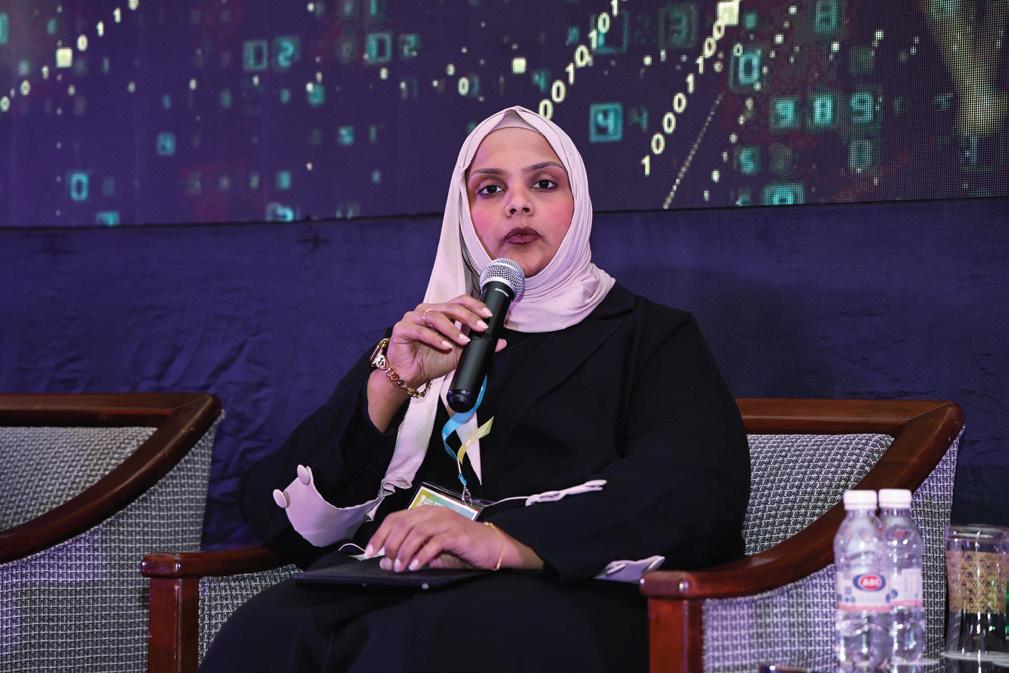
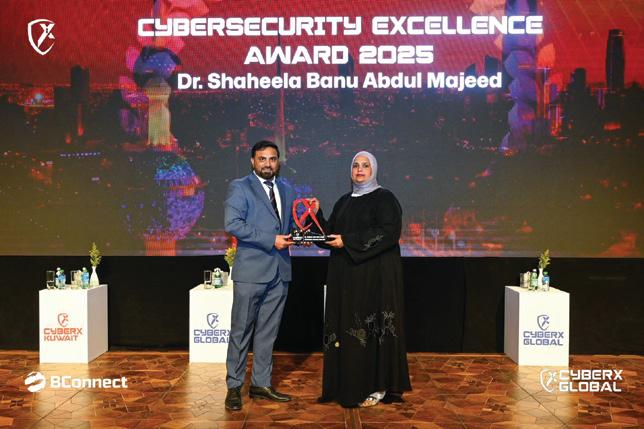
“ ”n the ever-evolving world of cybersecurity, where threats move silently and resilience defines leadership, Dr. Shaheela Banu Abdul Majeed has built her journey on a simple yet powerful belief: knowledge should never stand alone.
Today serving as an Information Security & Compliance Officer and Auditor in the Oil and Gas Industry in Kuwait, Dr. Shaheela’s path was not merely about mastering governance, risk, and compliance it was about transforming challenges into opportunities for others. At a time when women in cybersecurity often walked the road alone, she co-found IBBY Cyber Women Warriors and the Cyber Heals IBBY Mentorship Program, initiatives dedicated to ensuring that women entering the field never have to fight the same battles in isolation. Through mentorship,
awareness, and advocacy, she continues to build a community where support, knowledge, and opportunity flow freely.
Beyond the world of cyber resilience, Dr. Shaheela believes strength comes from balance spending time with family, practicing mindfulness, reading, and mentoring aspiring professionals. These moments keep her grounded and remind her why she leads: to create a future where women in technology know they belong, and where guidance is always within reach.
For Dr. Shaheela, cybersecurity is not just about protecting systems it is about empowering people, building resilience, and ensuring that whenever someone seeks guidance, there is always a voice ready to say: ask, and I am here.
and helping organizations navigate the next era of transformation driven by artificial intelligence, data, and autonomous systems.
and helping organizations navigate the next era of transformation driven by artificial intelligence, data, and autonomous systems.
The Expanding Threat Landscape in a Hyperconnected World
The Expanding Threat Landscape in a Hyperconnected World
Modern organizations operate in an environment defined by hyperconnectivity, cloud expansion, and rapid technological advancement. These factors, while enabling innovation and efficiency, also introduce significant cybersecurity challenges.
Modern organizations operate in an environment defined by hyperconnectivity, cloud expansion, and rapid technological advancement. These factors, while enabling innovation and efficiency, also introduce significant cybersecurity challenges.
One of the most pressing challenges is the expansion of the digital attack surface. Organizations now rely on complex ecosystems that include cloud platforms, software-as-a-service applications, edge computing environments, and globally distributed networks. This interconnected infrastructure creates multiple entry points for potential threats, making it increasingly difficult to manage identity, access, and data protection effectively.
approaches and adopt proactive, architecture-driven security models that address the complexities of modern digital ecosystems.
approaches and adopt proactive, architecture-driven security models that address the complexities of modern digital ecosystems.
Leadership as the Foundation of Cybersecurity Culture
Leadership as the Foundation of Cybersecurity Culture
In Marc’s perspective, leadership is the most critical factor in building a strong cybersecurity culture within organizations. Technology alone cannot address the complexities of modern security challenges. Culture determines whether security practices are consistently applied and whether employees understand their role in protecting organizational assets.
One of the most pressing challenges is the expansion of the digital attack surface. Organizations now rely on complex ecosystems that include cloud platforms, software-as-a-service applications, edge computing environments, and globally distributed networks. This interconnected infrastructure creates multiple entry points for potential threats, making it increasingly difficult to manage identity, access, and data protection effectively.
Journey of Impact, Leadership, and Resilience in Cybersecurity
Several defining moments have shaped Dr. Shaheela’s professional journey, but the most transformative was realization that cybersecurity is not merely a technical discipline it is a mission-driven field where meaningful and measurable impact can be created. Early in her career, she often found herself among the very few women in security and compliance roles. Rather than feeling out of place, she viewed it as an opportunity to lead, contribute, and pave the way for other women aspiring to enter the field.
At the same time, cyber adversaries have evolved in both sophistication and scale. Threat actors are no longer isolated individuals but often well-organized, well-funded groups, sometimes supported by nation-states. These adversaries leverage automation and artificial intelligence to conduct reconnaissance, identify vulnerabilities, and execute attacks at unprecedented speed.
In Marc’s perspective, leadership is the most critical factor in building a strong cybersecurity culture within organizations. Technology alone cannot address the complexities of modern security challenges. Culture determines whether security practices are consistently applied and whether employees understand their role in protecting organizational assets.
Effective cybersecurity leadership begins with aligning security initiatives with business objectives. When leaders communicate that cybersecurity supports innovation, customer trust, and organizational growth, it becomes integrated into the company’s mission rather than perceived as a constraint.
At the same time, cyber adversaries have evolved in both sophistication and scale. Threat actors are no longer isolated individuals but often well-organized, well-funded groups, sometimes supported by nation-states. These adversaries leverage automation and artificial intelligence to conduct reconnaissance, identify vulnerabilities, and execute attacks at unprecedented speed.
Effective cybersecurity leadership begins with aligning security initiatives with business objectives. When leaders communicate that cybersecurity supports innovation, customer trust, and organizational growth, it becomes integrated into the company’s mission rather than perceived as a constraint.
investigations, and protecting critical organizational assets.
Building a resilient cybersecurity culture also requires fostering collaboration across different functions. Technology teams, business leaders, and risk management professionals must work together to address security challenges. Cybersecurity cannot operate as a siloed function. It must be embedded across the organization as a shared responsibility.
Building a resilient cybersecurity culture also requires fostering collaboration across different functions. Technology teams, business leaders, and risk management professionals must work together to address security challenges. Cybersecurity cannot operate as a siloed function. It must be embedded across the organization as a shared responsibility.
Through these experiences, Dr. Shaheela strengthened her belief that women bring exceptional value to cybersecurity. Their ability to combine analytical precision with empathy, discipline, and resilience contributes significantly to strengthening security frameworks and building a more inclusive and forward-looking cybersecurity landscape.
The rise of generative and agentic artificial intelligence systems introduces another layer of complexity. While these technologies offer immense potential for innovation and productivity, they also present new risks. Data exposure, manipulation of AI models, and the emergence of autonomous decision-making systems create challenges that traditional security frameworks are not fully equipped to address.
significant milestone in her journey came when she honored with the Cyber Woman of the Year 2024 in Kuwait and recognized at SheLeads Women in Cybersecurity 2025 – Kuwait. These accolades acknowledged her years of dedication, continuous learning, and her strong commitment to promoting cybersecurity awareness within organizations and the broader community. Yet, beyond the awards, it was the moments of responsibility that shaped her the most handling high-risk security incidents, conducting
The rise of generative and agentic artificial intelligence systems introduces another layer of complexity. While these technologies offer immense potential for innovation and productivity, they also present new risks. Data exposure, manipulation of AI models, and the emergence of autonomous decision-making systems create challenges that traditional security frameworks are not fully equipped to address.
Turning Challenges into Strength and Creating Pathways for Women in Cybersecurity
One of the most defining challenges in Dr. Shaheela’s career came from stepping into roles where the level of responsibility was high, expectations were intense, and decisions often had to be made swiftly and confidently. In the world of cybersecurity, incidents rarely wait they require immediate action, clarity of thought, and emotional resilience.
The future of cybersecurity depends on integrating security deeply into infrastructure design, governance frameworks, and enterprise risk management strategies. Organizations must move beyond reactive
Talent development is another critical aspect of leadership. The global shortage of cybersecurity professionals remains a significant challenge. While artificial intelligence can help address certain gaps, organizations must invest in training, mentorship, and continuous learning to build a skilled workforce capable of adapting to evolving threats.
Talent development is another critical aspect of leadership. The global shortage of cybersecurity professionals remains a significant challenge. While artificial intelligence can help address certain gaps, organizations must invest in training, mentorship, and continuous learning to build a skilled workforce capable of adapting to evolving threats.
Technologies Shaping the Future of Cybersecurity
The future of cybersecurity depends on integrating security deeply into infrastructure design, governance frameworks, and enterprise risk management strategies. Organizations must move beyond reactive
Technologies Shaping the Future of Cybersecurity
The future of cybersecurity and IT governance will be shaped by several emerging technologies, each introducing new opportunities and challenges. Artificial intelligence is at the forefront of this
Working in a field traditionally dominated by men also meant that she had to consistently demonstrate her
The future of cybersecurity and IT governance will be shaped by several emerging technologies, each introducing new opportunities and challenges. Artificial intelligence is at the forefront of this
“ Generative AI and agentic AI systems will transform enterprise workflows by enabling autonomous decision-making ”
“ ”
transformation. AI-powered security systems enable faster detection of anomalies and automated responses to threats. At the same time, adversaries are increasingly using AI to enhance their attack capabilities, creating a dynamic environment where both defenders and attackers leverage advanced technologies.
post-quantum cryptographic standards to protect sensitive data against future threats.
post-quantum cryptographic standards to protect sensitive data against future threats.
These technological advancements require a fundamental shift in how organizations approach cybersecurity governance. Security must be integrated into the design phase of technology systems rather than being added as an afterthought.
These technological advancements require a fundamental shift in how organizations approach cybersecurity governance. Security must be integrated into the design phase of technology systems rather than being added as an afterthought.
Integrating Cybersecurity into Business Strategy
Integrating Cybersecurity into Business Strategy
Many organizations struggle to integrate cybersecurity into their overall business strategy because they view it primarily as a technical function. Marc emphasizes that cybersecurity must be positioned as a strategic capability that supports organizational resilience and growth.
transformation. AI-powered security systems enable faster detection of anomalies and automated responses to threats. At the same time, adversaries are increasingly using AI to enhance their attack capabilities, creating a dynamic environment where both defenders and attackers leverage advanced technologies.
Generative and agentic AI systems are transforming enterprise workflows by enabling autonomous decision-making processes. These systems require robust governance frameworks to ensure transparency, accountability, and security. Organizations must establish controls that address the unique risks associated with AI-driven operations.
Generative and agentic AI systems are transforming enterprise workflows by enabling autonomous decision-making processes. These systems require robust governance frameworks to ensure transparency, accountability, and security. Organizations must establish controls that address the unique risks associated with AI-driven operations.
Edge computing is another significant development, particularly in industries that require real-time data processing, such as logistics, manufacturing, and healthcare. As computing power moves closer to devices and sensors, securing edge infrastructure becomes a critical priority.
Edge computing is another significant development, particularly in industries that require real-time data processing, such as logistics, manufacturing, and healthcare. As computing power moves closer to devices and sensors, securing edge infrastructure becomes a critical priority.
Looking further ahead, quantum computing has the potential to disrupt existing cryptographic systems. Although large-scale quantum capabilities are still in development, organizations must begin preparing for
Many organizations struggle to integrate cybersecurity into their overall business strategy because they view it primarily as a technical function. Marc emphasizes that cybersecurity must be positioned as a strategic capability that supports organizational resilience and growth.
This integration begins at the executive level. Leaders must recognize that cybersecurity investments are not merely operational costs but essential components of digital trust. Aligning cybersecurity programs with business objectives and risk management frameworks ensures that security initiatives contribute directly to organizational success.
This integration begins at the executive level. Leaders must recognize that cybersecurity investments are not merely operational costs but essential components of digital trust. Aligning cybersecurity programs with business objectives and risk management frameworks ensures that security initiatives contribute directly to organizational success.
Effective communication is also critical. Security leaders must translate technical risks into business terms that resonate with executive leadership. Concepts such as risk exposure, operational continuity, and regulatory compliance help bridge the gap between technical and business perspectives
. Adopting modern security architectures further supports this integration. Technologies such as Zero Trust, Secure Access Service Edge, software-defined wide-area networks, biometrics, and just-in-time access controls enable organizations to build resilient environments that support digital transformation.
Looking further ahead, quantum computing has the potential to disrupt existing cryptographic systems. Although large-scale quantum capabilities are still in development, organizations must begin preparing for
Effective communication is also critical. Security leaders must translate technical risks into business terms that resonate with executive leadership. Concepts such as risk exposure, operational continuity, and regulatory compliance help bridge the gap between technical and business perspectives . Adopting modern security architectures further supports this integration. Technologies such as Zero Trust, Secure Access Service Edge, software-defined wide-area networks, biometrics, and just-in-time access controls enable organizations to build resilient environments that support digital transformation.
Ultimately, successful cybersecurity strategies rely on collaboration across all levels of the organization,
Ultimately, successful cybersecurity strategies rely on collaboration across all levels of the organization,
embedding security into everyday operations rather than treating it as a separate function.
embedding security into everyday operations rather than treating it as a separate function.
Building the Next Generation of Cybersecurity Leaders
Building the Next Generation of Cybersecurity Leaders
For young professionals aspiring to build careers in cybersecurity and technology leadership, Marc emphasizes the importance of developing a strong foundation in technical and analytical skills.
For young professionals aspiring to build careers in cybersecurity and technology leadership, Marc emphasizes the importance of developing a strong foundation in technical and analytical skills.
Understanding networking, cloud computing, and system architecture is essential for identifying vulnerabilities and designing secure systems. Analytical and critical thinking skills enable professionals to evaluate evolving threats and adapt to new technologies.
Understanding networking, cloud computing, and system architecture is essential for identifying vulnerabilities and designing secure systems. Analytical and critical thinking skills enable professionals to evaluate evolving threats and adapt to new technologies.
However, technical expertise alone is not sufficient. Communication and leadership skills are equally important. Cybersecurity professionals must be able to explain complex technical concepts in ways that stakeholders and executives can understand.
However, technical expertise alone is not sufficient. Communication and leadership skills are equally important. Cybersecurity professionals must be able to explain complex technical concepts in ways that stakeholders and executives can understand.
across industries and regions. By working together, organizations and nations can build more resilient digital ecosystems capable of withstanding complex cyber threats.
Leading Through the Algorithmic Age: Law, Technology, and Strategy in the GCC
Travel and exposure to diverse cultures offer valuable perspectives on how technology influences different societies, enriching both personal and professional understanding.
Leading Through the Algorithmic Age: Law, Technology, and Strategy in the GCC
Motivation and Purpose in Cybersecurity Leadership
Marc’s motivation to continue driving innovation in cybersecurity stems from a desire to build a secure digital future. Technology is transforming every aspect of society, from commerce to healthcare to critical infrastructure. Ensuring that these systems operate securely is a responsibility shared by technology leaders worldwide.
hy the GCC's Biggest Competitive Advantage Isn't Technology? It's Governance. I have spent my career navigating the intersection of law, business, technology. But I will be honest: the pace of change are witnessing right now is unlike anything I have experienced before. Artificial intelligence, cryptocurrency, data sovereignty, legal technology, these are not distant trends on a conference slide deck. They are reshaping every contract we review, every risk framework we build, and every boardroom conversation join. As Group General Counsel of Foodics, a leading fintech and SaaS platform operating across the GCC and the Middle East, I find myself at the center of these converging forces every single day.
A Message for the Future of Technology Leadership
As the world enters a transformative era driven by artificial intelligence, autonomous systems, and advanced computing technologies, the role of cybersecurity and technology leaders becomes increasingly significant.
regulation alone will not solve this. Companies need to embed transparency and explainability into their product DNAnot as an afterthought, but as a design principle.
Mentorship is another key motivator. Supporting the next generation of technology leaders helps ensure that the industry continues to evolve and adapt to new challenges. Collaboration and knowledge sharing remain essential components of progress in cybersecurity.
hy the GCC's Biggest Competitive Advantage Isn't Technology? It's Governance. I have spent my career navigating the intersection of law, business, and technology. But I will be honest: the pace of change we are witnessing right now is unlike anything I have experienced before. Artificial intelligence, cryptocurrency, data sovereignty, legal technology, these are not distant trends on a conference slide deck. They are reshaping every contract we review, every risk framework we build, and every boardroom conversation we join. As Group General Counsel of Foodics, a leading fintech and SaaS platform operating across the GCC and the Middle East, I find myself at the center of these converging forces every single day.
Artificial Intelligence: We Need Honest Governance, Just Hype
regulation alone will not solve this. Companies need to embed transparency and explainability into their product DNAnot as an afterthought, but as a design principle.
Marc encourages aspiring professionals to think beyond individual technologies and focus on understanding how systems interact. Effective leaders must integrate knowledge across infrastructure, data, security, and business strategy.
The organizations that treat AI governance as a strategic advantage, rather than a compliance checkbox, will earn lasting trust. In financial services, trust is the only currency that truly compounds.
The organizations that treat AI governance as a strategic advantage, rather than a compliance checkbox, will earn lasting trust. In financial services, trust is the only currency that truly compounds.
Cryptocurrency: The Speculation Phase Is Over
The rapid advancement of technologies such as artificial intelligence and advanced analytics presents both challenges and opportunities. Helping organizations harness these technologies securely allows them to solve complex problems and create new value.
me be direct. AI is no longer experimental, it is operational. At most of the tech companies and across fintech landscape, machine learning drives pricing, fraud detection, credit scoring, and customer personalization. But deploying AI is the easy part. Governing it is where leadership is truly tested.
Maintaining Balance in a High-Demand Field
Cryptocurrency: The Speculation Phase Is Over
I remember the frenzy the breathless predictions that crypto would replace traditional finance overnight.
Artificial Intelligence: We Need Honest Governance, Not Just Hype
Curiosity, adaptability, and continuous learning are essential qualities for navigating the rapidly evolving technology landscape. Equally important is recognizing that technology leadership ultimately centers on people.
I remember the frenzy the breathless predictions that crypto would replace traditional finance overnight.
That did not happen. What happened is that digital assets forced the global financial system to confront fundamental questions about payments infrastructure, sovereignty, and regulatory design.
Let me be direct. AI is no longer experimental, it is operational. At most of the tech companies and across the fintech landscape, machine learning drives pricing, fraud detection, credit scoring, and customer personalization. But deploying AI is the easy part. Governing it is where leadership is truly tested.
Balancing professional responsibilities with personal well-being is essential in a demanding field like cybersecurity. Marc emphasizes the importance of spending time with family and disconnecting from technology to maintain perspective.
have watched too many organizations rush to integrate without asking the harder questions. Can we explain this model reaches its decisions? Who is accountable when an algorithm fails? In the GCC, regulators are rightly stepping in with data protection and emerging AI governance frameworks. But
I have watched too many organizations rush to integrate AI without asking the harder questions. Can we explain how this model reaches its decisions? Who is accountable when an algorithm fails? In the GCC, regulators are rightly stepping in with data protection laws and emerging AI governance frameworks. But
Activities such as live music, exercise, outdoor pursuits, and engaging with new ideas contribute to maintaining balance and creativity. Writing and thought leadership provide opportunities to reflect on broader industry trends and share insights with a wider audience.
The systems designed today will influence organizations, governments, and communities around the world. Technology leaders carry the responsibility of ensuring that innovation is developed and deployed responsibly, securely, and with long-term societal impact in mind.
That did not happen. What happened is that digital assets forced the global financial system to confront fundamental questions about payments infrastructure, sovereignty, and regulatory design.
In the GCC, this reckoning has been productive. Saudi Arabia, the UAE, and Bahrain are building regulatory frameworks for licensed exchanges, regulated custodianship, and structured token offerings. For Foodics, which operates at the crossroads of payments and SaaS, these developments are deeply practical touching our payment rails, anti-money laundering obligations, and consumer protection responsibilities.
For those willing to embrace this responsibility, the future of cybersecurity and technology leadership offers unprecedented opportunities to shape how innovation and human progress evolve together in the digital age.
In the GCC, this reckoning has been productive. Saudi Arabia, the UAE, and Bahrain are building regulatory frameworks for licensed exchanges, regulated custodianship, and structured token offerings. For Foodics, which operates at the crossroads of payments and SaaS, these developments are deeply practical touching our payment rails, anti-money laundering obligations, and consumer protection responsibilities.
The crypto conversation here is no longer driven by speculation but by institutional architects who understand that sustainable innovation requires regulatory clarity.
The crypto conversation here is no longer driven by speculation but by institutional architects who understand that sustainable innovation requires regulatory clarity.
n the ever-evolving world of cybersecurity, where threats move silently and resilience defines leadership, Dr. Shaheela Banu Abdul Majeed has built her journey on a simple yet powerful belief: knowledge should never stand alone.
Today serving as an Information Security & Compliance Officer and Auditor in the Oil and Gas Industry in Kuwait, Dr. Shaheela’s path was not merely about mastering governance, risk, and compliance it was about transforming challenges into opportunities for others. At a time when women in cybersecurity often walked the road alone, she co-found IBBY Cyber Women Warriors and the Cyber Heals IBBY Mentorship Program, initiatives dedicated to ensuring that women entering the field never have to fight the same battles in isolation. Through mentorship,
awareness, and advocacy, she continues to build a community where support, knowledge, and opportunity flow freely.
Beyond the world of cyber resilience, Dr. Shaheela believes strength comes from balance spending time with family, practicing mindfulness, reading, and mentoring aspiring professionals. These moments keep her grounded and remind her why she leads: to create a future where women in technology know they belong, and where guidance is always within reach.
For Dr. Shaheela, cybersecurity is not just about protecting systems it is about empowering people, building resilience, and ensuring that whenever someone seeks guidance, there is always a voice ready to say: ask, and I am here.
and helping organizations navigate the next era of transformation driven by artificial intelligence, data, and autonomous systems.
and helping organizations navigate the next era of transformation driven by artificial intelligence, data, and autonomous systems.
The Expanding Threat Landscape in a Hyperconnected World
The Expanding Threat Landscape in a Hyperconnected
World
Modern organizations operate in an environment defined by hyperconnectivity, cloud expansion, and rapid technological advancement. These factors, while enabling innovation and efficiency, also introduce significant cybersecurity challenges.
Modern organizations operate in an environment defined by hyperconnectivity, cloud expansion, and rapid technological advancement. These factors, while enabling innovation and efficiency, also introduce significant cybersecurity challenges.
One of the most pressing challenges is the expansion of the digital attack surface. Organizations now rely on complex ecosystems that include cloud platforms, software-as-a-service applications, edge computing environments, and globally distributed networks. This interconnected infrastructure creates multiple entry points for potential threats, making it increasingly difficult to manage identity, access, and data protection effectively.
approaches and adopt proactive, architecture-driven security models that address the complexities of modern digital ecosystems.
approaches and adopt proactive, architecture-driven security models that address the complexities of modern digital ecosystems.
Leadership as the Foundation of Cybersecurity Culture
Leadership as the Foundation of Cybersecurity Culture
In Marc’s perspective, leadership is the most critical factor in building a strong cybersecurity culture within organizations. Technology alone cannot address the complexities of modern security challenges. Culture determines whether security practices are consistently applied and whether employees understand their role in protecting organizational assets.
One of the most pressing challenges is the expansion of the digital attack surface. Organizations now rely on complex ecosystems that include cloud platforms, software-as-a-service applications, edge computing environments, and globally distributed networks. This interconnected infrastructure creates multiple entry points for potential threats, making it increasingly difficult to manage identity, access, and data protection effectively.
Dr. Shaheela Banu Abdul Majeed Your Mentor in Cybersecurity
In Marc’s perspective, leadership is the most critical factor in building a strong cybersecurity culture within organizations. Technology alone cannot address the complexities of modern security challenges. Culture determines whether security practices are consistently applied and whether employees understand their role in protecting organizational assets.
Effective cybersecurity leadership begins with aligning security initiatives with business objectives. When leaders communicate that cybersecurity supports innovation, customer trust, and organizational growth, it becomes integrated into the company’s mission rather than perceived as a constraint.
Effective cybersecurity leadership begins with aligning security initiatives with business objectives. When leaders communicate that cybersecurity supports innovation, customer trust, and organizational growth, it becomes integrated into the company’s mission rather than perceived as a constraint.
A Journey of Impact, Leadership, and Resilience in Cybersecurity
At the same time, cyber adversaries have evolved in both sophistication and scale. Threat actors are no longer isolated individuals but often well-organized, well-funded groups, sometimes supported by nation-states. These adversaries leverage automation and artificial intelligence to conduct reconnaissance, identify vulnerabilities, and execute attacks at unprecedented speed.
Several defining moments have shaped Dr. Shaheela’s professional journey, but the most transformative was her realization that cybersecurity is not merely a technical discipline it is a mission-driven field where meaningful and measurable impact can be created. Early in her career, she often found herself among the very few women in security and compliance roles. Rather than feeling out of place, she viewed it as an opportunity to lead, contribute, and pave the way for other women aspiring to enter the field.
At the same time, cyber adversaries have evolved in both sophistication and scale. Threat actors are no longer isolated individuals but often well-organized, well-funded groups, sometimes supported by nation-states. These adversaries leverage automation and artificial intelligence to conduct reconnaissance, identify vulnerabilities, and execute attacks at unprecedented speed.
The rise of generative and agentic artificial intelligence systems introduces another layer of complexity. While these technologies offer immense potential for innovation and productivity, they also present new risks. Data exposure, manipulation of AI models, and the emergence of autonomous decision-making systems create challenges that traditional security frameworks are not fully equipped to address.
investigations, and protecting critical organizational assets.
Building a resilient cybersecurity culture also requires fostering collaboration across different functions. Technology teams, business leaders, and risk management professionals must work together to address security challenges. Cybersecurity cannot operate as a siloed function. It must be embedded across the organization as a shared responsibility.
The rise of generative and agentic artificial intelligence systems introduces another layer of complexity. While these technologies offer immense potential for innovation and productivity, they also present new risks. Data exposure, manipulation of AI models, and the emergence of autonomous decision-making systems create challenges that traditional security frameworks are not fully equipped to address.
The future of cybersecurity depends on integrating security deeply into infrastructure design, governance frameworks, and enterprise risk management strategies. Organizations must move beyond reactive
A significant milestone in her journey came when she was honored with the Cyber Woman of the Year 2024 in Kuwait and recognized at SheLeads Women in Cybersecurity 2025 – Kuwait. These accolades acknowledged her years of dedication, continuous learning, and her strong commitment to promoting cybersecurity awareness within organizations and the broader community. Yet, beyond the awards, it was the moments of responsibility that shaped her the most handling high-risk security incidents, conducting
Building a resilient cybersecurity culture also requires fostering collaboration across different functions. Technology teams, business leaders, and risk management professionals must work together to address security challenges. Cybersecurity cannot operate as a siloed function. It must be embedded across the organization as a shared responsibility.
Talent development is another critical aspect of leadership. The global shortage of cybersecurity professionals remains a significant challenge. While artificial intelligence can help address certain gaps, organizations must invest in training, mentorship, and continuous learning to build a skilled workforce capable of adapting to evolving threats.
Through these experiences, Dr. Shaheela strengthened her belief that women bring exceptional value to cybersecurity. Their ability to combine analytical precision with empathy, discipline, and resilience contributes significantly to strengthening security frameworks and building a more inclusive and forward-looking cybersecurity landscape.
Turning Challenges into Strength and Creating Pathways for Women in Cybersecurity
Talent development is another critical aspect of leadership. The global shortage of cybersecurity professionals remains a significant challenge. While artificial intelligence can help address certain gaps, organizations must invest in training, mentorship, and continuous learning to build a skilled workforce capable of adapting to evolving threats.
Technologies Shaping the Future of Cybersecurity
The future of cybersecurity depends on integrating security deeply into infrastructure design, governance frameworks, and enterprise risk management strategies. Organizations must move beyond reactive
One of the most defining challenges in Dr. Shaheela’s career came from stepping into roles where the level of responsibility was high, expectations were intense, and decisions often had to be made swiftly and confidently. In the world of cybersecurity, incidents rarely wait they require immediate action, clarity of thought, and emotional resilience.
Technologies Shaping the Future of Cybersecurity
The future of cybersecurity and IT governance will be shaped by several emerging technologies, each introducing new opportunities and challenges. Artificial intelligence is at the forefront of this
Working in a field traditionally dominated by men also meant that she had to consistently demonstrate her
The future of cybersecurity and IT governance will be shaped by several emerging technologies, each introducing new opportunities and challenges. Artificial intelligence is at the forefront of this
Marcelo Lorenzetti
Marcelo Lorenzetti
Designing AI That Earns Trust
Designing AI That Earns Trust
n the rapidly evolving intersection of law and artificial intelligence, Marcelo Lorenzetti has built his work around a simple but powerful principle: trust must be engineered into technology from the beginning.
n the rapidly evolving intersection of law and artificial intelligence, Marcelo Lorenzetti has built his work around a simple but powerful principle: trust must be engineered into technology from the beginning.
Throughout his career, Marcelo has encouraged teams to ask deeper questions, challenge assumptions, and design systems that can withstand real-world scrutiny. That mindset has guided his work in cybersecurity, artificial intelligence, and governance—fields where innovation carries significant responsibility.
Throughout his career, Marcelo has encouraged teams to ask deeper questions, challenge assumptions, and design systems that can withstand real-world scrutiny. That mindset has guided his work in cybersecurity, artificial intelligence, and governance—fields where innovation carries significant responsibility.
capabilities. Rather than allowing this pressure to discourage her, Dr. Shaheela used it as motivation to sharpen her focus, deepen her expertise, and build a professional reputation grounded in competence, discipline, and integrity.
Today, Marcelo serves as the Founder and Executive AI Strategist of SavvyLex, where he focuses on designing AI systems that legal professionals and regulated industries can adopt with confidence. In environments where decisions affect client outcomes, institutional credibility, and professional ethics, he believes technology must be built not only for capability—but for reliability, accountability, and transparency.
Today, Marcelo serves as the Founder and Executive AI Strategist of SavvyLex, where he focuses on designing AI systems that legal professionals and regulated industries can adopt with confidence. In environments where decisions affect client outcomes, institutional credibility, and professional ethics, he believes technology must be built not only for capability—but for reliability, accountability, and transparency.
His work centers on a critical idea: AI adoption is not simply a software decision. It is a governance decision.
institutional governance, cybersecurity, and artificial intelligence.
institutional governance, cybersecurity, and artificial intelligence.
His academic foundation in political science provided an early understanding of how complex systems operate—how institutions manage risk, how accountability structures are formed, and how trust is built within organizations. As his career evolved, that perspective naturally expanded into cybersecurity and AI, where the stakes of system design are equally significant.
His academic foundation in political science provided an early understanding of how complex systems operate—how institutions manage risk, how accountability structures are formed, and how trust is built within organizations. As his career evolved, that perspective naturally expanded into cybersecurity and AI, where the stakes of system design are equally significant.
incident reports and compliance audits to investigations and continuous monitoring can be intense. To navigate these responsibilities effectively, she has cultivated a structured approach that prioritizes balance and clarity.
As artificial intelligence began moving from research labs into real-world deployment, Marcelo observed a widening gap between technical capability and organizational readiness. Many organizations were eager to adopt AI, but few had the frameworks necessary to manage its risks or ensure its reliability.
These experiences strengthened her ability to remain composed under pressure, trust her training, and continually upgrade her skills to stay ahead of evolving cyber threats. The journey also inspired her to give back to the community by co-founding IBBY Cyber Women Warriors and launching the Cyber Heals IBBY Mentorship Program. Through these initiatives, she aims to ensure that women entering the cybersecurity field have access to the support, mentorship, and opportunities that she once had to pursue on her own.
His work centers on a critical idea: AI adoption is not simply a software decision. It is a governance decision.
Protecting Systems While Preserving Personal Balance
Bridging Technology, Governance, and Law
Bridging Technology, Governance, and Law
Marcelo’s professional journey reflects a rare convergence of disciplines: political science,
As artificial intelligence began moving from research labs into real-world deployment, Marcelo observed a widening gap between technical capability and organizational readiness. Many organizations were eager to adopt AI, but few had the frameworks necessary to manage its risks or ensure its reliability.
This challenge was particularly visible in legal and highly regulated sectors, where standards of precision, confidentiality, traceability, and defensibility are non-negotiable.
This challenge was particularly visible in legal and highly regulated sectors, where standards of precision, confidentiality, traceability, and defensibility are non-negotiable.
Dr. Shaheela relies on thoughtful planning, clear professional boundaries, and mindful pauses throughout her routine. She believes that excellence is not achieved through constant activity, but through focused and purposeful work. To recharge and maintain perspective, she dedicates time to meaningful activities such as connecting with family, practicing mindfulness, reading, and mentoring aspiring professionals in the cybersecurity field.
A defining realization in Marcelo’s work was that AI reliability does not originate from the model alone. It emerges from the surrounding architecture—governance frameworks, validation layers, disciplined data practices, human oversight, and transparent operational controls.
Balancing the demands of cybersecurity with personal well-being has been a conscious and disciplined effort for Dr. Shaheela. The nature of her work ranging from
A defining realization in Marcelo’s work was that AI reliability does not originate from the model alone. It emerges from the surrounding architecture—governance frameworks, validation layers, disciplined data practices, human oversight, and transparent operational controls.
At the core of her philosophy is a simple but powerful belief: to protect others, one must first protect one’s own well-being. This mindset allows her to contribute at the highest professional level while maintaining emotional balance and personal health.
Marcelo’s professional journey reflects a rare convergence of disciplines: political science,
Throughout her journey, four key lessons have shaped her outlook and leadership approach. First, she believes
consistency is more powerful than intensity, as steady effort builds long-term mastery. Second, she values mentorship as a vital force, both in learning from experienced professionals and in guiding others. Third, views adaptability as a critical strength, recognizing cybersecurity evolves rapidly and requires constant curiosity and growth. Finally, she believes that integrity defines one’s legacy, particularly in a field built on trust, accountability, and credibility.
that consistency is more powerful than intensity, as steady effort builds long-term mastery. Second, she values mentorship as a vital force, both in learning from experienced professionals and in guiding others. Third, she views adaptability as a critical strength, recognizing that cybersecurity evolves rapidly and requires constant curiosity and growth. Finally, she believes that integrity defines one’s legacy, particularly in a field built on trust, accountability, and credibility.
These guiding principles influence not only her professional decisions but also her leadership style and way she collaborates with colleagues, auditors, management teams, and the broader cybersecurity community.
offers to others. Navigating the complex cybersecurity landscape can be daunting without experienced voices to guide the way. Dr. Shaheela credits the leaders who recognized her potential, encouraged her to pursue certifications, and supported her professional growth.
post-quantum cryptographic standards to protect sensitive data against future threats.
Equally impactful have been the shared experiences with other women in the field. These connections serve as a reminder that women navigating cybersecurity often face unique challenges from balancing multiple responsibilities to breaking stereotypes and establishing their identities in highly technical environments.
These guiding principles influence not only her professional decisions but also her leadership style and the way she collaborates with colleagues, auditors, management teams, and the broader cybersecurity community.
Empowering Others While Strengthening the Future Cybersecurity
Empowering Others While Strengthening the Future of Cybersecurity
transformation. AI-powered security systems enable faster detection of anomalies and automated responses to threats. At the same time, adversaries are increasingly using AI to enhance their attack capabilities, creating a dynamic environment where both defenders and attackers leverage advanced technologies.
Dr. Shaheela, the meaning of success has evolved significantly over the course of her career. In the early stages, success was defined by acquiring knowledge, earning professional certifications, and gaining recognition in the cybersecurity field. Today, however, carries a far deeper purpose one rooted in impact, influence, and contribution.
For Dr. Shaheela, the meaning of success has evolved significantly over the course of her career. In the early stages, success was defined by acquiring knowledge, earning professional certifications, and gaining recognition in the cybersecurity field. Today, however, it carries a far deeper purpose one rooted in impact, influence, and contribution.
These technological advancements require a fundamental shift in how organizations approach cybersecurity governance. Security must be integrated into the design phase of technology systems rather than being added as an afterthought.
Equally impactful have been the shared experiences with other women in the field. These connections serve as a reminder that women navigating cybersecurity often face unique challenges from balancing multiple responsibilities to breaking stereotypes and establishing their identities in highly technical environments.
These technological advancements require a fundamental shift in how organizations approach cybersecurity governance. Security must be integrated into the design phase of technology systems rather than being added as an afterthought.
Driven by this understanding, Dr. Shaheela invests deeply in women-focused initiatives such as IBBY Cyber Women Warriors and the Cyber Heals IBBY Mentorship Program. Through these platforms, she helps create supportive spaces for learning, confidence-building, and career advancement. For her, empowering women in cybersecurity is not simply a passion it is a responsibility she proudly carries forward.
Integrating Cybersecurity into Business Strategy
transformation. AI-powered security systems enable faster detection of anomalies and automated responses to threats. At the same time, adversaries are increasingly using AI to enhance their attack capabilities, creating a dynamic environment where both defenders and attackers leverage advanced technologies.
Success, for Dr. Shaheela, now means strengthening cybersecurity maturity within organizations, helping teams operate in secure environments, mentoring aspiring professionals, and contributing to a safer and more resilient digital ecosystem. She views her role as of a catalyst for change someone who works not only to reduce cyber risks and protect critical assets but to empower others, particularly women, to pursue thrive in cybersecurity careers.
Generative and agentic AI systems are transforming enterprise workflows by enabling autonomous decision-making processes. These systems require robust governance frameworks to ensure transparency, accountability, and security. Organizations must establish controls that address the unique risks associated with AI-driven operations.
Success, for Dr. Shaheela, now means strengthening cybersecurity maturity within organizations, helping teams operate in secure environments, mentoring aspiring professionals, and contributing to a safer and more resilient digital ecosystem. She views her role as that of a catalyst for change someone who works not only to reduce cyber risks and protect critical assets but also to empower others, particularly women, to pursue and thrive in cybersecurity careers.
vision of success centers on enabling teams to work securely, reducing organizational cyber risks, empowering women in cybersecurity, and leaving behind a legacy defined by resilience, trust, and integrity. It is no longer about personal milestones alone, but about uplifting others and strengthening the entire cybersecurity community.
Driven by this understanding, Dr. Shaheela invests deeply in women-focused initiatives such as IBBY Cyber Women Warriors and the Cyber Heals IBBY Mentorship Program. Through these platforms, she helps create supportive spaces for learning, confidence-building, and career advancement. For her, empowering women in cybersecurity is not simply a passion it is a responsibility she proudly carries forward.
Integrating Cybersecurity into Business Strategy
Many organizations struggle to integrate cybersecurity into their overall business strategy because they view it primarily as a technical function. Marc emphasizes that cybersecurity must be positioned as a strategic capability that supports organizational resilience and growth.
Many organizations struggle to integrate cybersecurity into their overall business strategy because they view it primarily as a technical function. Marc emphasizes that cybersecurity must be positioned as a strategic capability that supports organizational resilience and growth.
Shaping a Future Where Cybersecurity Becomes Culture, Leadership, and Opportunity for All
Shaping a Future Where Cybersecurity Becomes Culture, Leadership, and Opportunity for All
Generative and agentic AI systems are transforming enterprise workflows by enabling autonomous decision-making processes. These systems require robust governance frameworks to ensure transparency, accountability, and security. Organizations must establish controls that address the unique risks associated with AI-driven operations.
Looking ahead, Dr. Shaheela envisions expanding her leadership influence both within her organization and across the broader regional cybersecurity landscape. She remains committed to advancing strong frameworks in governance, risk, and compliance while strengthening cybersecurity awareness programs and initiatives that build long-term cyber resilience.
Edge computing is another significant development, particularly in industries that require real-time data processing, such as logistics, manufacturing, and healthcare. As computing power moves closer to devices and sensors, securing edge infrastructure becomes a critical priority.
Her vision of success centers on enabling teams to work securely, reducing organizational cyber risks, empowering women in cybersecurity, and leaving behind a legacy defined by resilience, trust, and integrity. It is no longer about personal milestones alone, but about uplifting others and strengthening the entire cybersecurity community.
Edge computing is another significant development, particularly in industries that require real-time data processing, such as logistics, manufacturing, and healthcare. As computing power moves closer to devices and sensors, securing edge infrastructure becomes a critical priority.
This integration begins at the executive level. Leaders must recognize that cybersecurity investments are not merely operational costs but essential components of digital trust. Aligning cybersecurity programs with business objectives and risk management frameworks ensures that security initiatives contribute directly to organizational success.
Looking ahead, Dr. Shaheela envisions expanding her leadership influence both within her organization and across the broader regional cybersecurity landscape. She remains committed to advancing strong frameworks in governance, risk, and compliance while strengthening cybersecurity awareness programs and initiatives that build long-term cyber resilience.
This integration begins at the executive level. Leaders must recognize that cybersecurity investments are not merely operational costs but essential components of digital trust. Aligning cybersecurity programs with business objectives and risk management frameworks ensures that security initiatives contribute directly to organizational success.
Effective communication is also critical. Security leaders must translate technical risks into business terms that resonate with executive leadership. Concepts such as risk exposure, operational continuity, and regulatory compliance help bridge the gap between technical and business perspectives
In the years to come, she also sees herself growing as a mentor, speaker, and thought leader sharing practical insights, guiding the next generation of cybersecurity professionals, and actively advocating for greater representation of women in leadership roles within the industry.
Looking further ahead, quantum computing has the potential to disrupt existing cryptographic systems. Although large-scale quantum capabilities are still in development, organizations must begin preparing for
Looking further ahead, quantum computing has the potential to disrupt existing cryptographic systems. Although large-scale quantum capabilities are still in development, organizations must begin preparing for
Mentorship has been a cornerstone of her journey both guidance she received and the support she now
Mentorship has been a cornerstone of her journey both the guidance she received and the support she now
In the years to come, she also sees herself growing as a mentor, speaker, and thought leader sharing practical insights, guiding the next generation of cybersecurity professionals, and actively advocating for greater representation of women in leadership roles within the industry.
Effective communication is also critical. Security leaders must translate technical risks into business terms that resonate with executive leadership. Concepts such as risk exposure, operational continuity, and regulatory compliance help bridge the gap between technical and business perspectives
Adopting modern security architectures further supports this integration. Technologies such as Zero Trust, Secure Access Service Edge, software-defined wide-area networks, biometrics, and just-in-time access controls enable organizations to build resilient environments that support digital transformation.
Ultimately, Dr. Shaheela aspires to contribute to a future where cybersecurity is not viewed merely as a department or technical function, but as an organizational culture deeply embedded across every layer of an institution and embraced by every individual as a shared responsibility.
Adopting modern security architectures further supports this integration. Technologies such as Zero Trust, Secure Access Service Edge, software-defined wide-area networks, biometrics, and just-in-time access controls enable organizations to build resilient environments that support digital transformation.
Ultimately, successful cybersecurity strategies rely on collaboration across all levels of the organization,
Ultimately, Dr. Shaheela aspires to contribute to a future where cybersecurity is not viewed merely as a department or technical function, but as an organizational culture deeply embedded across every layer of an institution and embraced by every individual as a shared responsibility.
Ultimately, successful cybersecurity strategies rely on collaboration across all levels of the organization,
embedding security into everyday operations rather than treating it as a separate function.
embedding security into everyday operations rather than treating it as a separate function.
Building the Next Generation of Cybersecurity Leaders
Building the Next Generation of Cybersecurity Leaders
For young professionals aspiring to build careers in cybersecurity and technology leadership, Marc emphasizes the importance of developing a strong foundation in technical and analytical skills.
For young professionals aspiring to build careers in cybersecurity and technology leadership, Marc emphasizes the importance of developing a strong foundation in technical and analytical skills.
Understanding networking, cloud computing, and system architecture is essential for identifying vulnerabilities and designing secure systems. Analytical and critical thinking skills enable professionals to evaluate evolving threats and adapt to new technologies.
Understanding networking, cloud computing, and system architecture is essential for identifying vulnerabilities and designing secure systems. Analytical and critical thinking skills enable professionals to evaluate evolving threats and adapt to new technologies.
However, technical expertise alone is not sufficient. Communication and leadership skills are equally important. Cybersecurity professionals must be able to explain complex technical concepts in ways that stakeholders and executives can understand.
However, technical expertise alone is not sufficient. Communication and leadership skills are equally important. Cybersecurity professionals must be able to explain complex technical concepts in ways that stakeholders and executives can understand.
rapidly evolving field. Emerging technologies such as artificial intelligence, edge computing, and advanced
adaptation. Developing expertise in these areas will
Collaboration among governments, industry leaders,
significant role in this effort by enabling coordinated
contribute to establishing consistent security practices
Shaping a Secure Future
across industries and regions. By working together, organizations and nations can build more resilient digital ecosystems capable of withstanding complex cyber threats.
across industries and regions. By working together, organizations and nations can build more resilient digital ecosystems capable of withstanding complex cyber threats.
Travel and exposure to diverse cultures offer valuable perspectives on how technology influences different societies, enriching both personal and professional understanding.
Travel and exposure to diverse cultures offer valuable perspectives on how technology influences different societies, enriching both personal and professional understanding.
Leading Through the Algorithmic Age: Law, Technology, and Strategy in the GCC
Motivation and Purpose in Cybersecurity Leadership
Motivation and Purpose in Cybersecurity Leadership
Marc’s motivation to continue driving innovation in cybersecurity stems from a desire to build a secure digital future. Technology is transforming every aspect of society, from commerce to healthcare to critical infrastructure. Ensuring that these systems operate securely is a responsibility shared by technology leaders worldwide.
n an era where data is the new currency and digital infrastructure powers everything from banking to healthcare, cybersecurity leaders stand as the silent judges of resilience and trust. They are not merely defenders of systems; they are decision-makers who constantly evaluate risks, anticipate threats, and define the boundaries of digital safety. Their role has evolved far beyond technical expertise today, they influence boardroom strategies, national policies, and global security frameworks.
Marc’s motivation to continue driving innovation in cybersecurity stems from a desire to build a secure digital future. Technology is transforming every aspect of society, from commerce to healthcare to critical infrastructure. Ensuring that these systems operate securely is a responsibility shared by technology leaders worldwide.
A Message for the Future of Technology Leadership
A Message for the Future of Technology Leadership
As the world enters a transformative era driven by artificial intelligence, autonomous systems, and advanced computing technologies, the role of cybersecurity and technology leaders becomes increasingly significant.
As the world enters a transformative era driven by artificial intelligence, autonomous systems, and advanced computing technologies, the role of cybersecurity and technology leaders becomes increasingly significant.
regulation alone will not solve this. Companies need to embed transparency and explainability into their product DNAnot as an afterthought, but as a design principle.
Mentorship is another key motivator. Supporting the next generation of technology leaders helps ensure that the industry continues to evolve and adapt to new challenges. Collaboration and knowledge sharing remain essential components of progress in cybersecurity.
hy the GCC's Biggest Competitive Advantage Isn't Technology? It's Governance. I have spent my career navigating the intersection of law, business, and technology. But I will be honest: the pace of change we are witnessing right now is unlike anything I have experienced before. Artificial intelligence, cryptocurrency, data sovereignty, legal technology, these are not distant trends on a conference slide deck. They are reshaping every contract we review, every risk framework we build, and every boardroom conversation we join. As Group General Counsel of Foodics, a leading fintech and SaaS platform operating across the GCC and the Middle East, I find myself at the center of these converging forces every single day.
Mentorship is another key motivator. Supporting the next generation of technology leaders helps ensure that the industry continues to evolve and adapt to new challenges. Collaboration and knowledge sharing remain essential components of progress in cybersecurity.
Cybersecurity leadership demands a sharp ability to judge complex situations. Every breach attempt, vulnerability, or anomaly requires quick yet calculated decisions. These leaders operate in a high-stakes environment where one misjudgment can cost millions, disrupt economies, or compromise sensitive information. As digital transformation accelerates worldwide, their importance continues to grow exponentially.
Judging Risks in a Borderless Digital World
Artificial Intelligence: We Need Honest Governance, Not Just Hype
The rapid advancement of technologies such as artificial intelligence and advanced analytics presents both challenges and opportunities. Helping organizations harness these technologies securely allows them to solve complex problems and create new value.
Unlike traditional security roles, cybersecurity leaders deal with invisible threats that cross borders instantly. They must assess risks in real time, often with incomplete information. This requires a blend of technical intelligence, strategic thinking, and ethical judgment.
Let me be direct. AI is no longer experimental, it is operational. At most of the tech companies and across the fintech landscape, machine learning drives pricing, fraud detection, credit scoring, and customer personalization. But deploying AI is the easy part. Governing it is where leadership is truly tested.
Maintaining Balance in a High-Demand Field
Maintaining Balance in a High-Demand Field
Balancing professional responsibilities with personal well-being is essential in a demanding field like cybersecurity. Marc emphasizes the importance of spending time with family and disconnecting from technology to maintain perspective.
I have watched too many organizations rush to integrate AI without asking the harder questions. Can we explain how this model reaches its decisions? Who is accountable when an algorithm fails? In the GCC, regulators are rightly stepping in with data protection laws and emerging AI governance frameworks. But
Modern leaders rely on advanced analytics, threat intelligence platforms, and behavioral insights to make informed decisions. However, technology alone is not enough. The human element intuition, experience, and foresight plays a crucial role. Cybersecurity leaders must judge not only external threats but also internal vulnerabilities, including employee behavior and organizational weaknesses.
The organizations that treat AI governance as a strategic advantage, rather than a compliance checkbox, will earn lasting trust. In financial services, trust is the only currency that truly compounds.
Marc encourages aspiring professionals to think beyond individual technologies and focus on understanding how systems interact. Effective leaders must integrate knowledge across infrastructure, data, security, and business strategy.
Marc encourages aspiring professionals to think beyond individual technologies and focus on understanding how systems interact. Effective leaders must integrate knowledge across infrastructure, data, security, and business strategy.
Cryptocurrency: The Speculation Phase Is Over
The rapid advancement of technologies such as artificial intelligence and advanced analytics presents both challenges and opportunities. Helping organizations harness these technologies securely allows them to solve complex problems and create new value.
I remember the frenzy the breathless predictions that crypto would replace traditional finance overnight.
Curiosity, adaptability, and continuous learning are essential qualities for navigating the rapidly evolving technology landscape. Equally important is recognizing that technology leadership ultimately centers on people.
Curiosity, adaptability, and continuous learning are essential qualities for navigating the rapidly evolving technology landscape. Equally important is recognizing that technology leadership ultimately centers on people.
That did not happen. What happened is that digital assets forced the global financial system to confront fundamental questions about payments infrastructure, sovereignty, and regulatory design.
The systems designed today will influence organizations, governments, and communities around the world. Technology leaders carry the responsibility of ensuring that innovation is developed and deployed responsibly, securely, and with long-term societal impact in mind.
Balancing professional responsibilities with personal well-being is essential in a demanding field like cybersecurity. Marc emphasizes the importance of spending time with family and disconnecting from technology to maintain perspective.
Activities such as live music, exercise, outdoor pursuits, and engaging with new ideas contribute to maintaining balance and creativity. Writing and thought leadership provide opportunities to reflect on broader industry trends and share insights with a wider audience.
Their decisions shape how organizations respond to crises, allocate budgets, and prioritize security initiatives. In many ways, they act as the judges of digital integrity, ensuring that systems remain trustworthy in an increasingly uncertain environment.
The systems designed today will influence organizations, governments, and communities around the world. Technology leaders carry the responsibility of ensuring that innovation is developed and deployed responsibly, securely, and with long-term societal impact in mind.
In the GCC, this reckoning has been productive. Saudi Arabia, the UAE, and Bahrain are building regulatory frameworks for licensed exchanges, regulated custodianship, and structured token offerings. For Foodics, which operates at the crossroads of payments and SaaS, these developments are deeply practical touching our payment rails, anti-money laundering obligations, and consumer protection responsibilities.
For those willing to embrace this responsibility, the future of cybersecurity and technology leadership offers unprecedented opportunities to shape how innovation and human progress evolve together in the digital age.
Activities such as live music, exercise, outdoor pursuits, and engaging with new ideas contribute to maintaining balance and creativity. Writing and thought leadership provide opportunities to reflect on broader industry trends and share insights with a wider audience.
For those willing to embrace this responsibility, the future of cybersecurity and technology leadership offers unprecedented opportunities to shape how innovation and human progress evolve together in the digital age.
The crypto conversation here is no longer driven by speculation but by institutional architects who understand that sustainable innovation requires regulatory clarity.
Data Centers: Sovereignty Is the New Competitive Battleground
Data Centers: Sovereignty Is the New Competitive Battleground
If oil defined the strategic calculus of the last century, data defines this one. But the analogy goes deeper than people realize. Just as oil required pipelines, refineries, and geopolitical alliances, data demands infrastructure—physical, legal, and political—that is far more complex than a server rack.
Culture: The Advantage No Algorithm Can Replicate
If oil defined the strategic calculus of the last century, data defines this one. But the analogy goes deeper than people realize. Just as oil required pipelines, refineries, and geopolitical alliances, data demands infrastructure—physical, legal, and political—that is far more complex than a server rack.
Across the GCC, governments are investing aggressively in hyperscale data centers and digital sovereignty programs aligned with Vision 2030. For cross-border SaaS providers like Foodics, data residency is not just a configuration setting it is a legal and tech strategy requiring deep collaboration between legal, engineering, and infrastructure teams. When geopolitical tensions shift trade alliances, they also shift where data can live and who can access it. Governance cannot be siloed in a legal department. It must be woven into the fabric of how we build technology.
Culture: The Advantage No Algorithm Can Replicate
After years of leading legal functions across multiple jurisdictions, I hold one conviction that no amount of technology can shake: culture is the ultimate differentiator. You can deploy the most sophisticated AI and build the most resilient infrastructure, but if your organization treats compliance as friction rather than foundation, none of it will hold.
Across the GCC, governments are investing aggressively in hyperscale data centers and digital sovereignty programs aligned with Vision 2030. For cross-border SaaS providers like Foodics, data residency is not just a configuration setting it is a legal and tech strategy requiring deep collaboration between legal, engineering, and infrastructure teams. When geopolitical tensions shift trade alliances, they also shift where data can live and who can access it. Governance cannot be siloed in a legal department. It must be woven into the fabric of how we build technology.
Legal Tech: Elevating the Profession, Not Replacing It
After years of leading legal functions across multiple jurisdictions, I hold one conviction that no amount technology can shake: culture is the ultimate differentiator. You can deploy the most sophisticated and build the most resilient infrastructure, but if your organization treats compliance as friction rather than foundation, none of it will hold.
Operating across the GCC means navigating multicultural teams, diverse regulatory regimes, and rapid scaling pressures. The companies that succeed cultivate clarity of purpose, accountability at every level, and genuine adaptability. Board alignment, shareholder transparency, and proactive regulatory engagement are not administrative burdens—they are the pillars that sustain growth.
Operating across the GCC means navigating multicultural teams, diverse regulatory regimes, and rapid scaling pressures. The companies that succeed cultivate clarity of purpose, accountability at every level, and genuine adaptability. Board alignment, shareholder transparency, and proactive regulatory engagement are not administrative burdens—they are the pillars that sustain growth.
The GCC: Shaping the Future, Not Just Responding to It
Legal Tech: Elevating the Profession, Not Replacing It
We sometimes encounter the fear that technology will replace lawyers. I believe the opposite. Legal teams that embrace contract lifecycle management, automated compliance monitoring, and AI-assisted due diligence become more valuable, not less freed from repetitive tasks to focus on judgment, strategy, and the human dimension of risk.
We sometimes encounter the fear that technology will replace lawyers. I believe the opposite. Legal teams that embrace contract lifecycle management, automated compliance monitoring, and AI-assisted due diligence become more valuable, not less freed from repetitive tasks to focus on judgment, strategy, and the human dimension of risk.
At Foodics, we are building systems, not just drafting documents. Risk registers, compliance playbooks, and data protection frameworks are structured, measurable tools that allow us to scale governance alongside product innovation. The modern General Counsel cannot be the “department of no.” We must be strategic enablers who help the business move fast without moving recklessly.
The GCC: Shaping the Future, Not Just Responding to It
What excites me most about this region is its posture. The GCC is not merely reacting to global technological shifts—it is actively shaping them. Strategic neutrality, sovereign investment power, young demographics, and ambitious digital agendas provide a foundation few other regions can match.
What excites me most about this region is its posture. The GCC is not merely reacting to global technological shifts—it is actively shaping them. Strategic neutrality, sovereign investment power, young demographics, ambitious digital agendas provide a foundation few other regions can match.
At Foodics, we are building systems, not just drafting documents. Risk registers, compliance playbooks, and data protection frameworks are structured, measurable tools that allow us to scale governance alongside product innovation. The modern General Counsel cannot be the “department of no.” We must be strategic enablers who help the business move fast without moving recklessly.
The defining challenge of this era is what I call governance velocity, the gap between how fast innovation moves and how fast institutions can keep pace. AI must be explainable. Crypto must be regulated. Data must be protected. Legal systems must be modernized. And culture must anchor everything we build. The future belongs to organizations that refuse to choose between innovation and integrity. Technology without governance creates fragility. Governance without innovation creates stagnation. Sustainable leadership demands both. We are not simply participants in this transformation. We are its stewards.
The defining challenge of this era is what I call governance velocity, the gap between how fast innovation moves and how fast institutions can keep pace. AI must be explainable. Crypto must be regulated. Data must be protected. Legal systems must be modernized. And culture must anchor everything we build. The future belongs to organizations that refuse choose between innovation and integrity. Technology without governance creates fragility. Governance without innovation creates stagnation. Sustainable leadership demands both. We are not simply participants in this transformation. We are its stewards.
Mahmoud Shafik Youssef is the Group General Counsel Company Secretary at Foodics, one of the Middle East’s leading restaurant technology and fintech platforms. With over 15 years of international legal experience, Mahmoud specializes in technology, fintech, M&A, corporate governance, and data protection across multiple jurisdictions in the Middle East and Europe.
Mahmoud Shafik Youssef is the Group General Counsel and Company Secretary at Foodics, one of the Middle East’s leading restaurant technology and fintech platforms. With over 15 years of international legal experience, Mahmoud specializes in technology, fintech, M&A, corporate governance, and data protection across multiple jurisdictions in the Middle East and Europe.
Foodics, Mahmoud leads the legal, governance, and compliance functions across the group’s regional operations, supporting strategic initiatives including cross-border acquisitions, regulatory frameworks for fintech and payments, corporate restructuring, and IPO
readiness. He plays a key role in advising on AI governance, digital transformation, and data protection compliance, including regulatory regimes such as the Saudi Personal Data Protection Law (PDPL) and emerging global AI regulatory frameworks.
readiness. He plays a key role in advising on AI governance, digital transformation, and data protection compliance, including regulatory regimes such as the Saudi Personal Data Protection Law (PDPL) and emerging global AI regulatory frameworks.
Mahmoud is an active contributor to the regional legal and technology ecosystem. He is a recognized speaker at international legal and technology forums, including the Global Legal Summit, Legal 500 GC Summit, and other industry conferences, where he shares insights on AI governance, legal innovation, and the evolving regulatory landscape in the GCC.
At Foodics, Mahmoud leads the legal, governance, and compliance functions across the group’s regional operations, supporting strategic initiatives including cross-border acquisitions, regulatory frameworks for fintech and payments, corporate restructuring, and IPO
Mahmoud is an active contributor to the regional legal and technology ecosystem. He is a recognized speaker at international legal and technology forums, including the Global Legal Summit, Legal 500 GC Summit, and other industry conferences, where he shares insights on AI governance, legal innovation, and the evolving regulatory landscape in the GCC.
Marcelo Lorenzetti
Marcelo Lorenzetti
The Invisible Guardians of the Digital World
Designing AI That Earns Trust
Designing AI That Earns Trust
n the rapidly evolving intersection of law and artificial intelligence, Marcelo Lorenzetti has built his work around a simple but powerful principle: trust must be engineered into technology from the beginning.
n the rapidly evolving intersection of law and artificial intelligence, Marcelo Lorenzetti has built his work around a simple but powerful principle: trust must be engineered into technology from the beginning.
n an increasingly digital-first world, cybersecurity leaders have emerged as the silent protectors of global systems. Their influence extends far beyond firewalls and encryption protocols they safeguard economies, ensure business continuity, and protect individual privacy. As cyber threats grow more advanced and frequent, cybersecurity leadership has evolved into a strategic pillar that supports trust, innovation, and long-term resilience across industries.
A Rapidly Expanding Ecosystem
Throughout his career, Marcelo has encouraged teams to ask deeper questions, challenge assumptions, and design systems that can withstand real-world scrutiny. That mindset has guided his work in cybersecurity, artificial intelligence, and governance—fields where innovation carries significant responsibility.
Throughout his career, Marcelo has encouraged teams to ask deeper questions, challenge assumptions, and design systems that can withstand real-world scrutiny. That mindset has guided his work in cybersecurity, artificial intelligence, and governance—fields where innovation carries significant responsibility.
Today, Marcelo serves as the Founder and Executive AI Strategist of SavvyLex, where he focuses on designing AI systems that legal professionals and regulated industries can adopt with confidence. In environments where decisions affect client outcomes, institutional credibility, and professional ethics, he believes technology must be built not only for capability—but for reliability, accountability, and transparency.
institutional governance, cybersecurity, and artificial intelligence.
institutional governance, cybersecurity, and artificial intelligence.
His academic foundation in political science provided an early understanding of how complex systems operate—how institutions manage risk, how accountability structures are formed, and how trust is built within organizations. As his career evolved, that perspective naturally expanded into cybersecurity and AI, where the stakes of system design are equally significant.
The cybersecurity industry has transformed into a vast and dynamic global ecosystem, driven by rapid digital adoption and the explosion of data. Organizations today are not just investing in protection but in building intelligent, adaptive security infrastructures. From cloud security and endpoint protection to identity management and threat intelligence, the sector is expanding in both scope and sophistication. The growing financial impact of cybercrime estimated to cost hundreds of billions annually further reinforces the importance of cybersecurity as a core business function rather than a supporting service.
A Universal Challenge
Today, Marcelo serves as the Founder and Executive AI Strategist of SavvyLex, where he focuses on designing AI systems that legal professionals and regulated industries can adopt with confidence. In environments where decisions affect client outcomes, institutional credibility, and professional ethics, he believes technology must be built not only for capability—but for reliability, accountability, and transparency.
His work centers on a critical idea: AI adoption is not simply a software decision. It is a governance decision.
His academic foundation in political science provided an early understanding of how complex systems operate—how institutions manage risk, how accountability structures are formed, and how trust is built within organizations. As his career evolved, that perspective naturally expanded into cybersecurity and AI, where the stakes of system design are equally significant.
As artificial intelligence began moving from research labs into real-world deployment, Marcelo observed a widening gap between organizational readiness eager to adopt AI, but few had the frameworks necessary to manage its risks or ensure its reliability.
As artificial intelligence began moving from research labs into real-world deployment, Marcelo observed a widening gap between organizational readiness eager to adopt AI, but few had the frameworks necessary to manage its risks or ensure its reliability.
Beyond Technology
This challenge was particularly visible in legal and highly regulated sectors, where standards of precision, confidentiality, traceability, and defensibility are non-negotiable.
His work centers on a critical idea: AI adoption is not simply a software decision. It is a governance decision.
Bridging Technology, Governance, and Law
Bridging Technology, Governance, and Law
Marcelo’s professional journey reflects a rare convergence of disciplines: political science,
Marcelo’s professional journey reflects a rare convergence of disciplines: political science,
Cybersecurity is no longer confined to specific industries; it has become a universal concern affecting every sector. Financial institutions face constant threats of fraud and data breaches, while healthcare organizations must protect sensitive patient information despite often relying on outdated systems. Governments are prime targets for espionage, and manufacturing sectors increasingly face disruptions through cyberattacks on operational technologies. The scale of cyber incidents, especially in rapidly digitizing economies like India, highlights the urgent need for robust, sector-specific strategies supported by strong leadership.
This challenge was particularly visible in legal and highly regulated sectors, where standards of precision, confidentiality, traceability, and defensibility are non-negotiable.
A defining realization in Marcelo’s work was that AI reliability does not originate from the model alone. It emerges from the surrounding architecture—governance frameworks, validation layers, disciplined data practices, human oversight, and transparent operational controls.
A defining realization in Marcelo’s work was that AI reliability does not originate from the model alone. It emerges from the surrounding architecture—governance frameworks, validation layers, disciplined data practices, human oversight, and transparent operational controls.
Cybersecurity leadership today goes far beyond managing IT systems it involves aligning security with business strategy, managing risks, and ensuring compliance with evolving regulations. Leaders such as Chief Information Security Officers (CISOs) are responsible for anticipating threats, responding to crises, and building resilient infrastructures. They must also address the ongoing talent shortage in the cybersecurity workforce by fostering skill development and nurturing future talent. Effective leaders combine technical expertise with strategic thinking and communication skills, ensuring that cybersecurity becomes an integral part of organizational culture.
that consistency is more powerful than intensity, as steady effort builds long-term mastery. Second, she values mentorship as a vital force, both in learning from experienced professionals and in guiding others. Third, she views adaptability as a critical strength, recognizing that cybersecurity evolves rapidly and requires constant curiosity and growth. Finally, she believes that integrity defines one’s legacy, particularly in a field built on trust, accountability, and credibility.
That insight ultimately led to the creation of SavvyLex.
That insight ultimately led to the creation of SavvyLex.
AI Built for the Legal Profession
AI Built for the Legal Profession
SavvyLex was founded to address a growing reality within the legal industry: legal professionals need artificial intelligence, but they need AI designed specifically for law.
These guiding principles influence not only her professional decisions but also her leadership style and the way she collaborates with colleagues, auditors, management teams, and the broader cybersecurity community.
SavvyLex was founded to address a growing reality within the legal industry: legal professionals need artificial intelligence, but they need AI designed specifically for law.
Disciplined Innovation and Leadership
Disciplined Innovation and Leadership
post-quantum cryptographic standards to protect sensitive data against future threats.
offers to others. Navigating the complex cybersecurity landscape can be daunting without experienced voices to guide the way. Dr. Shaheela credits the leaders who recognized her potential, encouraged her to pursue certifications, and supported her professional growth.
Marcelo’s leadership philosophy reflects the same discipline that defines his approach to AI.
post-quantum cryptographic standards to protect sensitive data against future threats.
Marcelo’s leadership philosophy reflects the same discipline that defines his approach to AI.
These technological advancements require a fundamental shift in how organizations approach cybersecurity governance. Security must be integrated into the design phase of technology systems rather than being added as an afterthought.
Equally impactful have been the shared experiences with other women in the field. These connections serve as a reminder that women navigating cybersecurity often face unique challenges from balancing multiple responsibilities to breaking stereotypes and establishing their identities in highly technical environments.
These technological advancements require a fundamental shift in how organizations approach cybersecurity governance. Security must be integrated into the design phase of technology systems rather than being added as an afterthought.
Empowering Others While Strengthening the Future of Cybersecurity
While many AI tools offer impressive productivity gains, most were not built with the requirements of legal practice in mind. Legal work demands a level of rigor that extends beyond speed or convenience. Systems must support citation discipline, reasoning transparency, auditability, and alignment with professional standards.
While many AI tools offer impressive productivity gains, most were not built with the requirements of legal practice in mind. Legal work demands a level of rigor that extends beyond speed or convenience. Systems must citation discipline, reasoning transparency, auditability, and alignment with professional standards.
SavvyLex was created to bridge this gap.
SavvyLex was created to bridge this gap.
transformation. AI-powered security systems enable faster detection of anomalies and automated responses to threats. At the same time, adversaries are increasingly using AI to enhance their attack capabilities, creating a dynamic environment where both defenders and attackers leverage advanced technologies.
For Dr. Shaheela, the meaning of success has evolved significantly over the course of her career. In the early stages, success was defined by acquiring knowledge, earning professional certifications, and gaining recognition in the cybersecurity field. Today, however, it carries a far deeper purpose one rooted in impact, influence, and contribution.
The company is building an AI ecosystem tailored to legal professionals, law firms, and academic institutions, focusing on practical workflows such as research support, document drafting, analysis, legal learning, and knowledge organization.
The company is building an AI ecosystem tailored to legal professionals, law firms, and academic institutions, focusing on practical workflows such as research support, document drafting, analysis, legal learning, and knowledge organization.
At its core, SavvyLex emphasizes:
At its core, SavvyLex emphasizes:
• Responsible AI deployment
• Responsible AI deployment
• Governance-aware system design
• Governance-aware system design
• Legal workflow integration
• Legal workflow integration
Generative and agentic AI systems are transforming enterprise workflows by enabling autonomous decision-making processes. These systems require robust governance frameworks to ensure transparency, accountability, and security. Organizations must establish controls that address the unique risks associated with AI-driven operations.
Success, for Dr. Shaheela, now means strengthening cybersecurity maturity within organizations, helping teams operate in secure environments, mentoring aspiring professionals, and contributing to a safer and more resilient digital ecosystem. She views her role as that of a catalyst for change someone who works not only to reduce cyber risks and protect critical assets but also to empower others, particularly women, to pursue and thrive in cybersecurity careers.
Integrating Cybersecurity into Business Strategy
He believes that high-performing teams are built through clarity of mission, rigorous thinking, and strong collaboration across disciplines. Effective AI development, particularly in regulated environments, requires the integration of engineering, legal expertise, design, risk management, and human behavior.
Many organizations struggle to integrate cybersecurity into their overall business strategy because they view it primarily as a technical function. Marc emphasizes that cybersecurity must be positioned as a strategic capability that supports organizational resilience and growth.
At SavvyLex, innovation is guided by a simple principle: technology must earn the trust of the professionals who depend on it.
Driven by this understanding, Dr. Shaheela invests deeply in women-focused initiatives such as IBBY Cyber Women Warriors and the Cyber Heals IBBY Mentorship Program. Through these platforms, she helps create supportive spaces for learning, confidence-building, and career advancement. For her, empowering women in cybersecurity is not simply a passion it is a responsibility she proudly carries forward.
At SavvyLex, innovation is guided by a simple principle: technology must earn the trust of the professionals who depend on it.
Many organizations struggle to integrate cybersecurity into their overall business strategy because they view it primarily as a technical function. Marc emphasizes that cybersecurity must be positioned as a strategic capability that supports organizational resilience and growth.
Generative and agentic AI systems are transforming enterprise workflows by enabling autonomous decision-making processes. These systems require robust governance frameworks to ensure transparency, accountability, and security. Organizations must establish controls that address the unique risks associated with AI-driven operations.
• AI literacy for legal professionals
• AI literacy for legal professionals
Rather than replacing professional judgment, the platform is designed to augment legal expertise while preserving accountability and trust.
Edge computing is another significant development, particularly in industries that require real-time data processing, such as logistics, manufacturing, and healthcare. As computing power moves closer to devices and sensors, securing edge infrastructure becomes a critical priority.
Her vision of success centers on enabling teams to work securely, reducing organizational cyber risks, empowering women in cybersecurity, and leaving behind a legacy defined by resilience, trust, and integrity. It is no longer about personal milestones alone, but about uplifting others and strengthening the entire cybersecurity community.
Rather than replacing professional judgment, the platform is designed to augment legal expertise while preserving accountability and trust.
Marcelo believes the future of legal AI will not be defined by the loudest or most generic tools. It will belong to solutions that respect the profession’s standards and strengthen them.
Edge computing is another significant development, particularly in industries that require real-time data processing, such as logistics, manufacturing, and healthcare. As computing power moves closer to devices and sensors, securing edge infrastructure becomes a critical priority.
Marcelo believes the future of legal AI will not be defined by the loudest or most generic tools. It will belong to solutions that respect the profession’s standards and strengthen them.
SavvyLex is being built around that belief.
SavvyLex is being built around that belief.
Looking further ahead, quantum computing has the potential to disrupt existing cryptographic systems. Although large-scale quantum capabilities are still in development, organizations must begin preparing for
Mentorship has been a cornerstone of her journey both the guidance she received and the support she now
Marcelo encourages teams to think critically, communicate clearly, and design solutions that reflect real-world constraints. Curiosity, precision, and accountability are central values within the organization.
For him, innovation is valuable—but disciplined innovation is what creates lasting impact.
This integration begins at the executive level. Leaders must recognize that cybersecurity investments are not merely operational costs but essential components of digital trust. Aligning cybersecurity programs with business objectives and risk management frameworks ensures that security initiatives contribute directly to organizational success.
Looking further ahead, quantum computing has the potential to disrupt existing cryptographic systems. Although large-scale quantum capabilities are still in development, organizations must begin preparing for
Shaping a Future Where Cybersecurity Becomes Culture, Leadership, and Opportunity for All
Marcelo encourages teams to think critically, communicate clearly, and design solutions that reflect real-world constraints. Curiosity, precision, and accountability are central values within the organization.
This integration begins at the executive level. Leaders must recognize that cybersecurity investments are not merely operational costs but essential components of digital trust. Aligning cybersecurity programs with business objectives and risk management frameworks ensures that security initiatives contribute directly to organizational success.
Governance and the Future of Responsible
Looking ahead, Dr. Shaheela envisions expanding her leadership influence both within her organization and across the broader regional cybersecurity landscape. She remains committed to advancing strong frameworks in governance, risk, and compliance while strengthening cybersecurity awareness programs and initiatives that build long-term cyber resilience.
For him, innovation is valuable—but disciplined innovation is what creates lasting impact.
AI
Looking ahead, Marcelo’s long-term focus is on helping shape the broader ecosystem surrounding responsible AI adoption.
Governance and the Future of Responsible AI
Effective communication is also critical. Security leaders must translate technical risks into business terms that resonate with executive leadership. Concepts such as risk exposure, operational continuity, and regulatory compliance help bridge the gap between technical and business perspectives
Looking ahead, Marcelo’s long-term focus is on helping shape the broader ecosystem surrounding responsible AI adoption.
In the years to come, she also sees herself growing as a mentor, speaker, and thought leader sharing practical insights, guiding the next generation of cybersecurity professionals, and actively advocating for greater representation of women in leadership roles within the industry.
Effective communication is also critical. Security leaders must translate technical risks into business terms that resonate with executive leadership. Concepts such as risk exposure, operational continuity, and regulatory compliance help bridge the gap between technical and business perspectives
He believes the next phase of AI development will depend not only on advances in model capability but on the creation of governance frameworks, operational standards, and professional practices that allow these systems to be used safely and responsibly.
Adopting modern security architectures further supports this integration. Technologies such as Zero Trust, Secure Access Service Edge, software-defined wide-area networks, biometrics, and just-in-time access controls enable organizations to build resilient environments that support digital transformation.
Ultimately, successful cybersecurity strategies rely on collaboration across all levels of the organization, transformation. AI-powered security systems enable faster detection of anomalies and automated responses to threats. At the same time, adversaries are increasingly using AI to enhance their attack capabilities, creating a dynamic environment where both defenders and attackers leverage advanced technologies.
He believes the next phase of AI development will depend not only on advances in model capability but on the creation of governance frameworks, operational standards, and professional practices that allow these systems to be used safely and responsibly.
SavvyLex’s long-term strategy reflects that vision. The platform continues expanding its capabilities across research, drafting, legal learning, workflow
Adopting modern security architectures further supports this integration. Technologies such as Zero Trust, Secure Access Service Edge, software-defined wide-area networks, biometrics, and just-in-time access controls enable organizations to build resilient environments that support digital transformation.
Ultimately, Dr. Shaheela aspires to contribute to a future where cybersecurity is not viewed merely as a department or technical function, but as an organizational culture deeply embedded across every layer of an institution and embraced by every individual as a shared responsibility.
SavvyLex’s long-term strategy reflects that vision. The platform continues expanding its capabilities across research, drafting, legal learning, workflow
Ultimately, successful cybersecurity strategies rely on collaboration across all levels of the organization,
support, and knowledge management—while also promoting AI literacy among legal professionals.
support, and knowledge management—while also promoting AI literacy among legal professionals.
embedding security into everyday operations rather than treating it as a separate function.
embedding security into everyday operations rather than treating it as a separate function.
Marcelo Lorenzetti and SavvyLex are working to build exactly that.
Marcelo Lorenzetti and SavvyLex are working to build exactly that.
Building the Next Generation of Cybersecurity Leaders
Marcelo frequently emphasizes that the market does not only need tools; it needs understanding. Legal professionals must be equipped to evaluate AI systems, integrate them responsibly, and maintain the professional standards that define the practice of law.
For young professionals aspiring to build careers in cybersecurity and technology leadership, Marc emphasizes the importance of developing a strong foundation in technical and analytical skills.
Marcelo frequently emphasizes that the market does not only need tools; it needs understanding. Legal professionals must be equipped to evaluate AI systems, integrate them responsibly, and maintain the professional standards that define the practice of law.
Building the Next Generation of Cybersecurity Leaders
For young professionals aspiring to build careers in cybersecurity and technology leadership, Marc emphasizes the importance of developing a strong foundation in technical and analytical skills.
The companies that succeed in legal AI will not simply build faster systems. They will build trusted infrastructure.
The companies that succeed in legal AI will not simply build faster systems. They will build trusted infrastructure.
Building
Because in the end, the most powerful technology is not the one that moves the fastest.
Because in the end, the most powerful technology is not the one that moves the fastest.
It is the one that earns trust—and keeps it.
A commitment to lifelong learning is critical in a rapidly evolving field. Emerging technologies such as artificial intelligence, edge computing, and advanced analytics require continuous education and adaptation. Developing expertise in these areas will be essential for future success.
The Importance of Global Collaboration
The Importance of Global Collaboration
Understanding networking, cloud computing, and system architecture is essential for identifying vulnerabilities and designing secure systems. Analytical and critical thinking skills enable professionals to evaluate evolving threats and adapt to new technologies.
AI
Worthy of the Profession
Building AI Worthy of the Profession
SavvyLex operates according to four guiding principles:
SavvyLex operates according to four guiding principles:
Understanding networking, cloud computing, and system architecture is essential for identifying vulnerabilities and designing secure systems. Analytical and critical thinking skills enable professionals to evaluate evolving threats and adapt to new technologies.
Integrity
Integrity
Trust is treated as an operational requirement, not a marketing claim.
Rigor
However, technical expertise alone is not sufficient. Communication and leadership skills are equally important. Cybersecurity professionals must be able to explain complex technical concepts in ways that stakeholders and executives can understand.
Systems must be validated carefully and built with the discipline legal work requires.
Systems must be validated carefully and built with the discipline legal work requires.
Responsibility
Responsibility
Technology that influences professional decisions must meet the highest standards of reliability.
Technology that influences professional decisions must meet the highest standards of reliability.
Purpose
Purpose
Every innovation must create meaningful value for the professionals who rely on it.
Every innovation must create meaningful value for the professionals who rely on it.
These principles shape how SavvyLex designs products, evaluates partnerships, and defines success.
These principles shape how SavvyLex designs products, evaluates partnerships, and defines success.
The legal profession does not need more AI hype. It needs systems that are precise, accountable, and built with respect for the standards of law.
The legal profession does not need more AI hype. It needs systems that are precise, accountable, and built with respect for the standards of law.
Shaping a Secure Future
Shaping a Secure Future
n an era where data is the new currency and digital infrastructure powers everything from banking to healthcare, cybersecurity leaders stand as the silent judges of resilience and trust. They are not merely defenders of systems; they are decision-makers who constantly evaluate risks, anticipate threats, and define the boundaries of digital safety. Their role has evolved far beyond technical expertise today, they influence boardroom strategies, national policies, and global security frameworks.
n an era where data is the new currency and digital infrastructure powers everything from banking to healthcare, cybersecurity leaders stand as the silent judges of resilience and trust. They are not merely defenders of systems; they are decision-makers who constantly evaluate risks, anticipate threats, and define the boundaries of digital safety. Their role has evolved far beyond technical expertise today, they influence boardroom strategies, national policies, and global security frameworks.
Cybersecurity leadership demands a sharp ability to judge complex situations. Every breach attempt, vulnerability, or anomaly requires quick yet calculated decisions. These leaders operate in a high-stakes environment where one misjudgment can cost millions, disrupt economies, or compromise sensitive information. As digital transformation accelerates worldwide, their importance continues to grow exponentially.
Cybersecurity leadership demands a sharp ability to judge complex situations. Every breach attempt, vulnerability, or anomaly requires quick yet calculated decisions. These leaders operate in a high-stakes environment where one misjudgment can cost millions, disrupt economies, or compromise sensitive information. As digital transformation accelerates worldwide, their importance continues to grow exponentially.
Judging Risks in a Borderless Digital World
Judging Risks in a Borderless Digital World
Unlike traditional security roles, cybersecurity leaders deal with invisible threats that cross borders instantly. They must assess risks in real time, often with incomplete information. This requires a blend of technical intelligence, strategic thinking, and ethical judgment.
Unlike traditional security roles, cybersecurity leaders deal with invisible threats that cross borders instantly. They must assess risks in real time, often with incomplete information. This requires a blend of technical intelligence, strategic thinking, and ethical judgment.
Modern leaders rely on advanced analytics, threat intelligence platforms, and behavioral insights to make informed decisions. However, technology alone is not enough. The human element intuition, experience, and foresight plays a crucial role. Cybersecurity leaders must judge not only external threats but also internal vulnerabilities, including employee behavior and organizational weaknesses.
Modern leaders rely on advanced analytics, threat intelligence platforms, and behavioral insights to make informed decisions. However, technology alone is not enough. The human element intuition, experience, and foresight plays a crucial role. Cybersecurity leaders must judge not only external threats but also internal vulnerabilities, including employee behavior and organizational weaknesses.
Their decisions shape how organizations respond to crises, allocate budgets, and prioritize security initiatives. In many ways, they act as the judges of digital integrity, ensuring that systems remain trustworthy in an increasingly uncertain environment.
Their decisions shape how organizations respond to crises, allocate budgets, and prioritize security initiatives. In many ways, they act as the judges of digital integrity, ensuring that systems remain trustworthy in an increasingly uncertain environment.
Protecting the The Minds Digital World
n an era where data is currency and connectivity defines progress, cybersecurity has quietly become one of the most critical pillars of modern society.
Yet, unlike tech entrepreneurs or corporate CEOs, the leaders safeguarding our digital ecosystems rarely make headlines. The truth is while innovation gets applause, protection works in silence. Cybersecurity leaders operate behind the scenes, defending governments, corporations, and individuals from invisible yet relentless threats.
The Invisible Frontline of the Digital Age
Every click, transaction, and digital interaction carries risk. Cybercriminals are evolving rapidly, leveraging artificial intelligence, automation, and sophisticated social engineering tactics. In response, cybersecurity leaders are not just reacting they are anticipating.
Figures like Satya Nadella have emphasized security as a core business priority, embedding it into cloud platforms like Microsoft Azure. Similarly, Sundar Pichai has reinforced security across products at Google, ensuring billions of users are protected by default.
But beyond these well-known names lies a network of cybersecurity specialists, CISOs (Chief Information Security Officers), ethical hackers, and policy architects who shape the digital defense landscape.
The Rise of Cybersecurity as Leadership
Cybersecurity is no longer a technical function it is a leadership mandate. Organizations now recognize that a single breach can cost millions, damage reputation, and erode trust permanently. These leaders are not just technologists—they are strategists, risk managers, and communicators who bridge the gap between boardrooms and security operations.
After years of leading legal functions across multiple jurisdictions, I hold one conviction that no amount differentiator. You can deploy the most sophisticated and build the most resilient infrastructure, but if your organization treats compliance as friction rather than
multicultural teams, diverse regulatory regimes, and rapid scaling pressures. The companies that succeed cultivate clarity of purpose, accountability at every shareholder transparency, and proactive regulatory engagement are not administrative burdens—they
The GCC: Shaping the Future, Not Just Responding
What excites me most about this region is its posture. The GCC is not merely reacting to global technological shifts—it is actively shaping them. Strategic neutrality, sovereign investment power, young demographics, ambitious digital agendas provide a foundation few
innovation moves and how fast institutions can keep pace. AI must be explainable. Crypto must be regulated.
modernized. And culture must anchor everything we build. The future belongs to organizations that refuse choose between innovation and integrity. Technology
without innovation creates stagnation. Sustainable leadership demands both. We are not simply participants
The Expanding Cybersecurity Industry
The cybersecurity industry has grown into one of the most critical sectors globally. With the rise of cloud computing, artificial intelligence, and the Internet of Things (IoT), the attack surface has expanded dramatically. Organizations across industries finance, healthcare, retail, and government are investing heavily in cybersecurity to protect their assets and maintain customer trust.
The industry is no longer reactive; it is proactive and predictive. Companies are shifting from traditional defense mechanisms to advanced threat detection, zero-trust architectures, and automated response systems. This transformation has created a massive demand for skilled professionals and visionary leaders who can navigate this complex landscape.
Globally, cybersecurity spending continues to rise year after year, reflecting its importance in sustaining economic growth and digital innovation. From startups to multinational corporations, every organization recognizes that cybersecurity is not optional it is foundational.
A Bright and Promising Career Path
Cybersecurity is one of the brightest and most rewarding career fields today. It offers a unique combination of intellectual challenge, financial stability, and global relevance. As cyber threats become more sophisticated, the demand for skilled professionals far exceeds supply, creating abundant opportunities for individuals at all levels.
Careers in cybersecurity are diverse, ranging from ethical hacking and security analysis to risk management and leadership roles. What makes this field particularly attractive is its dynamic nature professionals are constantly learning, adapting, and solving new problems.
For aspiring leaders, cybersecurity provides a platform to make a meaningful impact. It is not just about protecting systems; it is about safeguarding businesses, governments, and individuals. The ability to influence decisions, lead teams, and shape security strategies makes this career path both powerful and fulfilling.
Moreover, cybersecurity professionals are among the highest-paid in the tech industry, reflecting the critical nature of their work. With the right skills and mindset,
individuals can build long-term, resilient careers in this ever-evolving domain.
Beyond Technology
True cybersecurity leadership goes beyond technical knowledge. It requires vision, communication, and the ability to align security goals with business objectives. Leaders must bridge the gap between technical teams and executive management, ensuring that security is integrated into every aspect of the organization.
They must also foster a culture of security awareness, where every employee understands their role in protecting digital assets. This involves training, education, and continuous engagement. Cybersecurity leaders are educators as much as they are defenders.
Another critical aspect of leadership is collaboration. Cyber threats are global, and no organization can tackle them alone. Leaders must work with industry peers, government agencies, and international bodies to share intelligence and develop collective defense strategies.
The Future of Cybersecurity
The future of cybersecurity is both challenging and exciting. Emerging technologies such as artificial intelligence, quantum computing, and blockchain are reshaping the threat landscape. While these innovations offer new opportunities, they also introduce new vulnerabilities.
Cybersecurity leaders will need to adapt quickly, embracing advanced technologies to stay ahead of attackers. AI-driven security systems, automated threat detection, and predictive analytics will become standard tools in the fight against cybercrime.
At the same time, the human element will remain crucial. Ethical considerations, privacy concerns, and regulatory compliance will require careful judgment and responsible leadership. Cybersecurity will increasingly intersect with law, policy, and ethics, making it a multidisciplinary field.
The rise of remote work and digital ecosystems will further amplify the need for robust security frameworks. Organizations will rely on cybersecurity leaders to ensure continuity, resilience, and trust in a rapidly changing world.
The Invisible Guardians of the Digital World
The Invisible Guardians of the Digital World
n an increasingly digital-first world, cybersecurity leaders have emerged as the silent protectors of global systems. Their influence extends far beyond firewalls and encryption protocols they safeguard economies, ensure business continuity, and protect individual privacy. As cyber threats grow more advanced and frequent, cybersecurity leadership has evolved into a strategic pillar that supports trust, innovation, and long-term resilience across industries.
n an increasingly digital-first world, cybersecurity leaders have emerged as the silent protectors of global systems. Their influence extends far beyond firewalls and encryption protocols they safeguard economies, ensure business continuity, and protect individual privacy. As cyber threats grow more advanced and frequent, cybersecurity leadership has evolved into a strategic pillar that supports trust, innovation, and long-term resilience across industries.
A Rapidly Expanding Ecosystem
A Rapidly Expanding Ecosystem
The cybersecurity industry has transformed into a vast and dynamic global ecosystem, driven by rapid digital adoption and the explosion of data. Organizations today are not just investing in protection but in building intelligent, adaptive security infrastructures. From cloud security and endpoint protection to identity management and threat intelligence, the sector is expanding in both scope and sophistication. The growing financial impact of cybercrime estimated to cost hundreds of billions annually further reinforces the importance of cybersecurity as a core business function rather than a supporting service.
The cybersecurity industry has transformed into a vast and dynamic global ecosystem, driven by rapid digital adoption and the explosion of data. Organizations today are not just investing in protection but in building intelligent, adaptive security infrastructures. From cloud security and endpoint protection to identity management and threat intelligence, the sector is expanding in both scope and sophistication. The growing financial impact of cybercrime estimated to cost hundreds of billions annually further reinforces the importance of cybersecurity as a core business function rather than a supporting service.
A Universal Challenge
A Universal Challenge
Cybersecurity is no longer confined to specific industries; it has become a universal concern affecting every sector. Financial institutions face constant threats of fraud and data breaches, while healthcare organizations must protect sensitive patient information despite often relying on outdated systems. Governments are prime targets for espionage, and manufacturing sectors increasingly face disruptions through cyberattacks on operational technologies. The scale of cyber incidents, especially in rapidly digitizing economies like India, highlights the urgent need for robust, sector-specific strategies supported by strong leadership.
Cybersecurity is no longer confined to specific industries; it has become a universal concern affecting every sector. Financial institutions face constant threats of fraud and data breaches, while healthcare organizations must protect sensitive patient information despite often relying on outdated systems. Governments are prime targets for espionage, and manufacturing sectors increasingly face disruptions through cyberattacks on operational technologies. The scale of cyber incidents, especially in rapidly digitizing economies like India, highlights the urgent need for robust, sector-specific strategies supported by strong leadership.
Beyond Technology
Beyond Technology
Cybersecurity leadership today goes far beyond managing IT systems it involves aligning security with business strategy, managing risks, and ensuring compliance with evolving regulations. Leaders such as Chief Information Security Officers (CISOs) are responsible for anticipating threats, responding to crises, and building resilient infrastructures. They must also address the ongoing talent shortage in the cybersecurity workforce by fostering skill development and nurturing future talent. Effective leaders combine technical expertise with strategic thinking and communication skills, ensuring that cybersecurity becomes an integral part of organizational culture.
Cybersecurity leadership today goes far beyond managing IT systems it involves aligning security with business strategy, managing risks, and ensuring compliance with evolving regulations. Leaders such as Chief Information Security Officers (CISOs) are responsible for anticipating threats, responding to crises, and building resilient infrastructures. They must also address the ongoing talent shortage in the cybersecurity workforce by fostering skill development and nurturing future talent. Effective leaders combine technical expertise with strategic thinking and communication skills, ensuring that cybersecurity becomes an integral part of organizational culture.
ybersecurity today is no longer confined to firewalls and antivirus systems it is a strategic function shaping the resilience and growth trajectory of organizations. Leaders in this domain are redefining their roles, transitioning from technical guardians to business enablers. Influential voices like Satya Nadella and Sundar Pichai emphasize that trust is the foundation of digital transformation. Cybersecurity leaders operate with a forward-thinking mindset, anticipating risks rather than reacting to them. They align security strategies with business objectives, ensuring that innovation and protection go hand in hand.
The modern cybersecurity mindset blends technical expertise with leadership acumen. It requires understanding regulatory landscapes, managing stakeholder expectations, and fostering a culture of security awareness. These leaders recognize that cybersecurity is not just an IT issue but an enterprise-wide responsibility.
The Evolving Threat Landscape
• Governance-aware system design
• Governance-aware system design
The digital ecosystem is expanding rapidly, bringing with it an increasingly sophisticated threat landscape. Cyberattacks have evolved from simple malware infections to complex, multi-vector campaigns involving ransomware, phishing, and advanced persistent threats (APTs). According to organizations like World Economic Forum, cybercrime is projected to cost the global economy trillions of dollars annually, highlighting the scale of the challenge.
• Legal workflow integration
• Legal workflow integration
• AI literacy for legal professionals
A New Frontier
• AI literacy for legal professionals
A New Frontier
Rather than replacing professional judgment, the platform is designed to augment legal expertise while preserving accountability and trust.
Industries such as healthcare, finance, and critical infrastructure are particularly vulnerable. The rise of remote work, cloud adoption, and Internet of Things (IoT) devices has further expanded the attack surface. Cybersecurity leaders must continuously adapt to these changes, staying ahead of adversaries who leverage automation and artificial intelligence to launch more effective attacks.
Rather than replacing professional judgment, the platform is designed to augment legal expertise while preserving accountability and trust.
hybrid infrastructures creates visibility and management issues.
Another critical challenge is balancing security with user experience. Overly restrictive measures can hinder productivity, while lax controls can expose vulnerabilities. Cybersecurity leaders must strike the right balance, implementing solutions that are both effective and user-friendly.
Regulatory compliance also adds to the complexity. Frameworks such as General Data Protection Regulation and evolving data protection laws worldwide require organizations to maintain strict security standards. Non-compliance can result in significant financial penalties and reputational damage.
Strategic Solutions Driving Resilience
Key Challenges Facing Cybersecurity Leaders
Artificial intelligence is reshaping the cybersecurity landscape in profound ways. While organizations leverage AI to enhance threat detection and automate responses, cybercriminals are also using it to create more sophisticated and targeted attacks. AI-driven phishing campaigns and automated attack systems are becoming increasingly common, forcing cybersecurity leaders to stay ahead of the curve. This dual-use nature of AI makes it both a powerful defense tool and a significant risk factor, demanding continuous innovation and vigilance from leadership.
Marcelo believes the future of legal AI will not be defined by the loudest or most generic tools. It will belong to solutions that respect the profession’s standards and strengthen them.
SavvyLex is being built around that belief.
Artificial intelligence is reshaping the cybersecurity landscape in profound ways. While organizations leverage AI to enhance threat detection and automate responses, cybercriminals are also using it to create more sophisticated and targeted attacks. AI-driven phishing campaigns and automated attack systems are becoming increasingly common, forcing cybersecurity leaders to stay ahead of the curve. This dual-use nature of AI makes it both a powerful defense tool and a significant risk factor, demanding continuous innovation and vigilance from leadership.
Marcelo believes the future of legal AI will not be defined by the loudest or most generic tools. It will belong to solutions that respect the profession’s standards and strengthen them.
One of the most pressing challenges is the shortage of skilled cybersecurity professionals. Despite growing demand, the talent gap remains significant, making it difficult for organizations to build robust security teams. Additionally, the complexity of modern IT environments spanning on-premises systems, cloud platforms, and
SavvyLex is being built around that belief.
Looking ahead, Marcelo’s long-term focus is on helping shape the broader ecosystem surrounding responsible AI adoption.
Looking ahead, Marcelo’s long-term focus is on helping shape the broader ecosystem surrounding responsible AI adoption.
Ransomware and the Rise of Cybercrime Ecosystems
Ransomware and the Rise of Cybercrime Ecosystems
To address these challenges, cybersecurity leaders are adopting a multi-layered approach to security. The concept of zero trust architecture has gained prominence, emphasizing the principle of “never trust, always verify.” This approach ensures that every user and device is authenticated before accessing resources, reducing the risk of unauthorized access.
He believes the next phase of AI development will depend not only on advances in model capability but on the creation of governance frameworks, operational standards, and professional practices that allow these systems to be used safely and responsibly.
He believes the next phase of AI development will depend not only on advances in model capability but on the creation of governance frameworks, operational standards, and professional practices that allow these systems to be used safely and responsibly.
Ransomware continues to dominate the threat landscape, evolving into a highly organized and profitable cybercrime model. The emergence of cybercrime-as-a-service has enabled even less-skilled attackers to launch complex operations using readily available tools. This shift has transformed cybercrime into a structured industry, complete with service providers, customer support, and revenue-sharing models. As ransomware incidents grow in frequency and impact, cybersecurity leaders must adopt proactive strategies that focus on prevention, detection, and rapid response.
Ransomware continues to dominate the threat landscape, evolving into a highly organized and profitable cybercrime model. The emergence of cybercrime-as-a-service has enabled even less-skilled attackers to launch complex operations using readily available tools. This shift has transformed cybercrime into a structured industry, complete with service providers, customer support, and revenue-sharing models. As ransomware incidents grow in frequency and impact, cybersecurity leaders must adopt proactive strategies that focus on prevention, detection, and rapid response.
SavvyLex’s long-term strategy reflects that vision. The platform continues expanding its capabilities across research, drafting, legal learning, workflow
Artificial intelligence and machine learning are also playing a transformative role. Companies like IBM and Palo Alto Networks are leveraging AI-driven solutions to detect anomalies, predict threats, and automate responses. These technologies enable faster and more accurate threat detection, enhancing overall security posture.
SavvyLex’s long-term strategy reflects that vision. The platform continues expanding its capabilities across research, drafting, legal learning, workflow
support, and knowledge management—while also promoting AI literacy among legal professionals.
support, and knowledge management—while also promoting AI literacy among legal professionals.
Expanding Risk Boundaries
Marcelo frequently emphasizes that the market does not only need tools; it needs understanding. Legal professionals must be equipped to evaluate AI systems, integrate them responsibly, and maintain the professional standards that define the practice of law.
Marcelo frequently emphasizes that the market does not only need tools; it needs understanding. Legal professionals must be equipped to evaluate AI systems, integrate them responsibly, and maintain the professional standards that define the practice of law.
The companies that succeed in legal AI will not simply build faster systems. They will build trusted infrastructure.
Modern businesses rely on interconnected supply chains, which significantly expand their risk exposure. A single vulnerability in a third-party vendor can cascade across an entire ecosystem, causing widespread disruption. Cybersecurity leaders must therefore look beyond their internal systems and ensure that partners and suppliers adhere to strict security standards. Building transparency, enforcing compliance, and fostering collaboration across the supply chain are essential steps toward minimizing these risks.
The companies that succeed in legal AI will not simply build faster systems. They will build trusted infrastructure.
THE Strategic Mindset Behind Modern Cybersecurity
Marcelo Lorenzetti and SavvyLex are working to build exactly that.
Marcelo Lorenzetti and SavvyLex are working to build exactly that.
Because in the end, the most powerful technology is not the one that moves the fastest.
Because in the end, the most powerful technology is not the one that moves the fastest.
It is the one that earns trust—and keeps it.
It is the one that earns trust—and keeps it.
Phishing attacks, weak passwords, and lack of awareness continue to expose organizations to risks. Cybersecurity leaders must focus on building a culture of security awareness, where employees understand their role in protecting digital assets. By combining technology with education and user-centric policies, organizations can significantly reduce their vulnerability to human-related threats.
Redefining Cybersecurity Leadership
A Critical Leadership Challenge
Building AI Worthy of the Profession
Building AI Worthy of the Profession
SavvyLex operates according to four guiding principles:
SavvyLex operates according to four guiding principles:
Integrity Trust is treated as an operational requirement, not a marketing claim.
Rigor
Rigor
Systems must be validated carefully and built with the discipline legal work requires.
One of the most pressing challenges in cybersecurity today is the shortage of skilled professionals. Despite growing demand, many organizations struggle to find and retain qualified talent. This gap not only increases vulnerability but also places additional pressure on existing teams. Cybersecurity leaders must address this issue by investing in training programs, promoting continuous learning, and leveraging automation to enhance efficiency. Developing a strong talent pipeline is no longer optional it is essential for sustaining long-term security.
Integrity Trust is treated as an operational requirement, not a marketing claim.
Systems must be validated carefully and built with the discipline legal work requires.
Navigating a Fragmented Landscape
Responsibility
Responsibility
Technology that influences professional decisions must meet the highest standards of reliability.
Technology that influences professional decisions must meet the highest standards of reliability.
Purpose
Purpose
Every innovation must create meaningful value for the professionals who rely on it.
Every innovation must create meaningful value for the professionals who rely on it.
These principles shape how SavvyLex designs products, evaluates partnerships, and defines success.
As cyber threats intensify, governments around the world are introducing stricter regulations to protect data and critical infrastructure. However, the lack of uniformity across regions creates a complex compliance environment for organizations operating globally. Cybersecurity leaders must navigate this fragmented regulatory landscape while ensuring adherence to multiple standards. This requires a deep understanding of legal frameworks and the ability to integrate compliance seamlessly into business operations.
These principles shape how SavvyLex designs products, evaluates partnerships, and defines success.
Strengthening the Weakest Link
The legal profession does not need more AI hype. It needs systems that are precise, accountable, and built with respect for the standards of law.
The future of cybersecurity leadership will be shaped by adaptability and innovation. As threats become more complex, leaders will need to embrace advanced technologies such as AI-driven defense systems and Zero Trust architectures. Collaboration between governments, organizations, and global institutions will play a critical role in strengthening cybersecurity frameworks. The focus will gradually shift from reactive defense to proactive resilience, ensuring that organizations are prepared to withstand and recover from cyber incidents.
Leadership at the Core of Digital Trust
Cybersecurity leaders are no longer just defenders of systems they are enablers of trust in a digital world. Their ability to anticipate threats, manage risks, and drive innovation determines the strength and resilience of modern organizations. As the cybersecurity landscape continues to evolve, leadership will remain the defining factor in building secure, sustainable, and future-ready digital ecosystems.
The legal profession does not need more AI hype. It needs systems that are precise, accountable, and built with respect for the standards of law.
Despite technological advancements, human error remains one of the leading causes of cybersecurity breaches.
Protecting the The Minds Digital World
Protecting the The Minds Digital World
n an era where data is currency and connectivity defines progress, cybersecurity has quietly become one of the most critical pillars of modern society. Yet, unlike tech entrepreneurs or corporate CEOs, the leaders safeguarding our digital ecosystems rarely make headlines. The truth is while innovation gets applause, protection works in silence. Cybersecurity leaders operate behind the scenes, defending governments, corporations, and individuals from invisible yet relentless threats.
n an era where data is currency and connectivity defines progress, cybersecurity has quietly become one of the most critical pillars of modern society. Yet, unlike tech entrepreneurs or corporate CEOs, the leaders safeguarding our digital ecosystems rarely make headlines. The truth is while innovation gets applause, protection works in silence. Cybersecurity leaders operate behind the scenes, defending governments, corporations, and individuals from invisible yet relentless threats.
The Invisible Frontline of the Digital Age
The Invisible Frontline of the Digital Age
Every click, transaction, and digital interaction carries risk. Cybercriminals are evolving rapidly, leveraging artificial intelligence, automation, and sophisticated social engineering tactics. In response, cybersecurity leaders are not just reacting they are anticipating.
Every click, transaction, and digital interaction carries risk. Cybercriminals are evolving rapidly, leveraging artificial intelligence, automation, and sophisticated social engineering tactics. In response, cybersecurity leaders are not just reacting they are anticipating.
Figures like Satya Nadella have emphasized security as a core business priority, embedding it into cloud platforms like Microsoft Azure. Similarly, Sundar Pichai has reinforced security across products at Google, ensuring billions of users are protected by default.
Figures like Satya Nadella have emphasized security as a core business priority, embedding it into cloud platforms like Microsoft Azure. Similarly, Sundar Pichai has reinforced security across products at Google, ensuring billions of users are protected by default.
But beyond these well-known names lies a network of cybersecurity specialists, CISOs (Chief Information Security Officers), ethical hackers, and policy architects who shape the digital defense landscape.
But beyond these well-known names lies a network of cybersecurity specialists, CISOs (Chief Information Security Officers), ethical hackers, and policy architects who shape the digital defense landscape.
The Rise of Cybersecurity as Leadership
The Rise of Cybersecurity as Leadership
Cybersecurity is no longer a technical function it is a leadership mandate. Organizations now recognize that a single breach can cost millions, damage reputation, and erode trust permanently. These leaders are not just technologists—they are strategists, risk managers, and communicators who bridge the gap between boardrooms and security operations.
Cybersecurity is no longer a technical function it is a leadership mandate. Organizations now recognize that a single breach can cost millions, damage reputation, and erode trust permanently. These leaders are not just technologists—they are strategists, risk managers, and communicators who bridge the gap between boardrooms and security operations.
Cybersecurity in a Borderless World
Unlike traditional threats, cyber risks do not respect borders. A hacker in one country can disrupt systems across continents within seconds. This has made global collaboration essential.
Organizations such as Interpol and World Economic Forum actively bring together cybersecurity leaders to address global challenges. Initiatives like cyber threat intelligence sharing and coordinated defense strategies are becoming the norm.
Cybersecurity leaders today must think globally while acting locally understanding regional regulations, cultural nuances, and technological disparities.
The Weakest Link and Greatest Strength
While technology is central to cybersecurity, human behavior remains both a vulnerability and an opportunity. Phishing attacks, insider threats, and poor password practices continue to cause breaches.
This is where leadership plays a crucial role. Cybersecurity leaders are investing heavily in awareness, training, and behavioral change. They are transforming employees from potential risks into active defenders.
Leaders like Eva Chen of Trend Micro emphasize a “people-first” approach where security is not enforced but embraced.
Emerging Technologies and the Future Battlefield
The cybersecurity landscape is being reshaped by emerging technologies such as artificial intelligence, quantum computing, and the Internet of Things (IoT). While these innovations bring efficiency, they also expand the attack surface.
Cybersecurity leaders are now preparing for threats that don’t yet fully exist. For instance, quantum computing could potentially break traditional encryption methods, prompting research into quantum-resistant cryptography.
Companies like Palo Alto Networks and CrowdStrike are at the forefront of integrating AI into threat detection, enabling real-time responses to complex attacks.
The Business of Trust
At its core, cybersecurity is about trust. Customers trust organizations with their data, governments trust systems to maintain order, and individuals trust technology to simplify their lives. A breach is not just a technical failure it is a breach of trust.
Cybersecurity leaders understand this deeply. They are redefining business strategies, ensuring that security is embedded from the ground up rather than added as an afterthought. This shift is driving the concept of “security by design,” where protection is integrated into every stage of product development.
Why No One Talks About Them
Despite their critical role, cybersecurity leaders often remain underrecognized. The reason is simple: success in cybersecurity is invisible. When systems run smoothly and data remains secure, there is no headline. Failures, however, are highly visible.
This paradox means that cybersecurity leaders operate in a space where their best work goes unnoticed. Yet, their impact is immense preventing financial losses, safeguarding privacy, and maintaining societal stability.
The Road Ahead
As digital transformation accelerates, the role of cybersecurity leaders will only grow in importance. They will need to navigate increasing complexity, evolving threats, and rising expectations from stakeholders.
The future will demand leaders who are not just technically proficient but also visionary capable of anticipating risks, influencing culture, and driving global collaboration. Because in a world driven by data, the real power lies not just in creating technology but in protecting it.
And while no one may tell you about them, cybersecurity leaders are the silent guardians of the digital age ensuring that progress continues without compromise.
ybersecurity today is no longer confined to firewalls and antivirus systems it is a strategic function shaping the resilience and growth trajectory of organizations. Leaders in this domain are redefining their roles, transitioning from technical guardians to business enablers. Influential voices like Satya Nadella and Sundar Pichai emphasize that trust is the foundation of digital transformation. Cybersecurity leaders operate with a forward-thinking mindset, anticipating risks rather than reacting to them. They align security strategies with business objectives, ensuring that innovation and protection go hand in hand.
ybersecurity today is no longer confined to firewalls and antivirus systems it is a strategic function shaping the resilience and growth trajectory of organizations. Leaders in this domain are redefining their roles, transitioning from technical guardians to business enablers. Influential voices like Satya Nadella and Sundar Pichai emphasize that trust is the foundation of digital transformation. Cybersecurity leaders operate with a forward-thinking mindset, anticipating risks rather than reacting to them. They align security strategies with business objectives, ensuring that innovation and protection go hand in hand.
The modern cybersecurity mindset blends technical expertise with leadership acumen. It requires understanding regulatory landscapes, managing stakeholder expectations, and fostering a culture of security awareness. These leaders recognize that cybersecurity is not just an IT issue but an enterprise-wide responsibility.
The modern cybersecurity mindset blends technical expertise with leadership acumen. It requires understanding regulatory landscapes, managing stakeholder expectations, and fostering a culture of security awareness. These leaders recognize that cybersecurity is not just an IT issue but an enterprise-wide responsibility.
The Evolving Threat Landscape
The Evolving Threat Landscape
The digital ecosystem is expanding rapidly, bringing with it an increasingly sophisticated threat landscape. Cyberattacks have evolved from simple malware infections to complex, multi-vector campaigns involving ransomware, phishing, and advanced persistent threats (APTs). According to organizations like World Economic Forum, cybercrime is projected to cost the global economy trillions of dollars annually, highlighting the scale of the challenge.
The digital ecosystem is expanding rapidly, bringing with it an increasingly sophisticated threat landscape. Cyberattacks have evolved from simple malware infections to complex, multi-vector campaigns involving ransomware, phishing, and advanced persistent threats (APTs). According to organizations like World Economic Forum, cybercrime is projected to cost the global economy trillions of dollars annually, highlighting the scale of the challenge.
Industries such as healthcare, finance, and critical infrastructure are particularly vulnerable. The rise of remote work, cloud adoption, and Internet of Things (IoT) devices has further expanded the attack surface. Cybersecurity leaders must continuously adapt to these changes, staying ahead of adversaries who leverage automation and artificial intelligence to launch more effective attacks.
Industries such as healthcare, finance, and critical infrastructure are particularly vulnerable. The rise of remote work, cloud adoption, and Internet of Things (IoT) devices has further expanded the attack surface. Cybersecurity leaders must continuously adapt to these changes, staying ahead of adversaries who leverage automation and artificial intelligence to launch more effective attacks.
Key Challenges Facing Cybersecurity Leaders
Key Challenges Facing Cybersecurity Leaders
One of the most pressing challenges is the shortage of skilled cybersecurity professionals. Despite growing demand, the talent gap remains significant, making it difficult for organizations to build robust security teams. Additionally, the complexity of modern IT environments spanning on-premises systems, cloud platforms, and
One of the most pressing challenges is the shortage of skilled cybersecurity professionals. Despite growing demand, the talent gap remains significant, making it difficult for organizations to build robust security teams. Additionally, the complexity of modern IT environments spanning on-premises systems, cloud platforms, and
hybrid infrastructures creates visibility and management issues.
hybrid infrastructures creates visibility and management issues.
Another critical challenge is balancing security with user experience. Overly restrictive measures can hinder productivity, while lax controls can expose vulnerabilities. Cybersecurity leaders must strike the right balance, implementing solutions that are both effective and user-friendly.
Another critical challenge is balancing security with user experience. Overly restrictive measures can hinder productivity, while lax controls can expose vulnerabilities. Cybersecurity leaders must strike the right balance, implementing solutions that are both effective and user-friendly.
Regulatory compliance also adds to the complexity. Frameworks such as General Data Protection Regulation and evolving data protection laws worldwide require organizations to maintain strict security standards. Non-compliance can result in significant financial penalties and reputational damage.
Regulatory compliance also adds to the complexity. Frameworks such as General Data Protection Regulation and evolving data protection laws worldwide require organizations to maintain strict security standards. Non-compliance can result in significant financial penalties and reputational damage.
Strategic Solutions Driving Resilience
Strategic Solutions Driving Resilience
To address these challenges, cybersecurity leaders are adopting a multi-layered approach to security. The concept of zero trust architecture has gained prominence, emphasizing the principle of “never trust, always verify.” This approach ensures that every user and device is authenticated before accessing resources, reducing the risk of unauthorized access.
To address these challenges, cybersecurity leaders are adopting a multi-layered approach to security. The concept of zero trust architecture has gained prominence, emphasizing the principle of “never trust, always verify.” This approach ensures that every user and device is authenticated before accessing resources, reducing the risk of unauthorized access.
Artificial intelligence and machine learning are also playing a transformative role. Companies like IBM and Palo Alto Networks are leveraging AI-driven solutions to detect anomalies, predict threats, and automate responses. These technologies enable faster and more accurate threat detection, enhancing overall security posture.
Artificial intelligence and machine learning are also playing a transformative role.
Companies like IBM and Palo Alto Networks are leveraging AI-driven solutions to detect anomalies, predict threats, and automate responses. These technologies enable faster and more accurate threat detection, enhancing overall security posture.
Expanding Risk Boundaries
Expanding Risk Boundaries
Modern businesses rely on interconnected supply chains, which significantly expand their risk exposure. A single vulnerability in a third-party vendor can cascade across an entire ecosystem, causing widespread disruption. Cybersecurity leaders must therefore look beyond their internal systems and ensure that partners and suppliers adhere to strict security standards. Building transparency, enforcing compliance, and fostering collaboration across the supply chain are essential steps toward minimizing these risks.
Modern businesses rely on interconnected supply chains, which significantly expand their risk exposure. A single vulnerability in a third-party vendor can cascade across an entire ecosystem, causing widespread disruption. Cybersecurity leaders must therefore look beyond their internal systems and ensure that partners and suppliers adhere to strict security standards. Building transparency, enforcing compliance, and fostering collaboration across the supply chain are essential steps toward minimizing these risks.
THE Strategic Mindset Behind Modern Cybersecurity THE Strategic Mindset Behind Modern Cybersecurity
Phishing attacks, weak passwords, and lack of awareness continue to expose organizations to risks. Cybersecurity leaders must focus on building a culture of security awareness, where employees understand their role in protecting digital assets. By combining technology with education and user-centric policies, organizations can significantly reduce their vulnerability to human-related threats.
Phishing attacks, weak passwords, and lack of awareness continue to expose organizations to risks. Cybersecurity leaders must focus on building a culture of security awareness, where employees understand their role in protecting digital assets. By combining technology with education and user-centric policies, organizations can significantly reduce their vulnerability to human-related threats.
Redefining Cybersecurity Leadership
Redefining Cybersecurity Leadership
The future of cybersecurity leadership will be shaped by adaptability and innovation. As threats become more complex, leaders will need to embrace advanced
The future of cybersecurity leadership will be shaped by adaptability and innovation. As threats become more complex, leaders will need to embrace advanced
A Critical Leadership Challenge
A Critical Leadership Challenge
Another key solution is the integration of cybersecurity into the software development lifecycle, often referred to as DevSecOps. By embedding security practices from the outset, organizations can identify and address vulnerabilities early, reducing the risk of exploitation.
The Role of Leadership in Building Cyber Resilience
Leadership plays a crucial role in building a resilient cybersecurity framework. Effective leaders prioritize communication, ensuring that security policies are understood and followed across the organization. They invest in training programs to enhance employee awareness, recognizing that human error is often the weakest link in security.
Cybersecurity leaders also collaborate with external stakeholders, including government agencies and industry partners, to share threat intelligence and best practices. This collaborative approach strengthens the overall security ecosystem, making it more difficult for cybercriminals to succeed.
Moreover, these leaders advocate for cybersecurity at the board level, securing the necessary resources and support to implement comprehensive security strategies. Their ability to translate technical risks into business impacts is essential for gaining executive buy-in.
Emerging Technologies Shaping the Future
The future of cybersecurity is being shaped by emerging technologies that promise to enhance both defense and resilience. Quantum computing, for instance, has the potential to revolutionize encryption, although it also poses new risks. Organizations like Google are actively exploring quantum technologies, which could redefine the cybersecurity landscape.
Blockchain technology is another area of interest, offering decentralized and tamper-resistant systems for secure transactions and data management. Additionally, advancements in biometric authentication and behavioral
analytics are improving identity verification processes, making it harder for attackers to impersonate legitimate users.
The rise of extended detection and response (XDR) platforms is also noteworthy. These platforms provide a unified view of security across endpoints, networks, and cloud environments, enabling more effective threat detection and response.
The Importance of Cybersecurity in Today’s World
In today’s interconnected world, cybersecurity is a critical enabler of economic growth and societal stability. As businesses increasingly rely on digital technologies, the need for robust security measures becomes paramount. Cybersecurity not only protects sensitive data but also ensures the continuity of operations and the trust of customers.
The impact of cybersecurity extends beyond individual organizations. It plays a vital role in safeguarding national security, protecting critical infrastructure, and maintaining the integrity of financial systems. Without effective cybersecurity, the risks to global stability and economic progress would be significant.
Leading with Vision and Vigilance
Cybersecurity leaders are at the forefront of a rapidly evolving digital landscape, tasked with safeguarding organizations while enabling innovation and growth. Their ability to anticipate threats, implement strategic solutions, and foster a culture of security is essential for building resilience.
As technology continues to advance, the role of cybersecurity leaders will become even more critical. By embracing emerging technologies, addressing challenges proactively, and maintaining a strong strategic focus, they can ensure that organizations not only survive but thrive in the face of cyber threats.
Cybersecurity in a Borderless World
Cybersecurity in a Borderless World
Unlike traditional threats, cyber risks do not respect borders. A hacker in one country can disrupt systems across continents within seconds. This has made global collaboration essential.
Unlike traditional threats, cyber risks do not respect borders. A hacker in one country can disrupt systems across continents within seconds. This has made global collaboration essential.
Organizations such as Interpol and World Economic Forum actively bring together cybersecurity leaders to address global challenges. Initiatives like cyber threat intelligence sharing and coordinated defense strategies are becoming the norm.
Organizations such as Interpol and World Economic Forum actively bring together cybersecurity leaders to address global challenges. Initiatives like cyber threat intelligence sharing and coordinated defense strategies are becoming the norm.
Cybersecurity leaders today must think globally while acting locally understanding regional regulations, cultural nuances, and technological disparities.
Cybersecurity leaders today must think globally while acting locally understanding regional regulations, cultural nuances, and technological disparities.
The Weakest Link and Greatest Strength
The Weakest Link and Greatest Strength
While technology is central to cybersecurity, human behavior remains both a vulnerability and an opportunity. Phishing attacks, insider threats, and poor password practices continue to cause breaches.
While technology is central to cybersecurity, human behavior remains both a vulnerability and an opportunity. Phishing attacks, insider threats, and poor password practices continue to cause breaches.
This is where leadership plays a crucial role. Cybersecurity leaders are investing heavily in awareness, training, and behavioral change. They are transforming employees from potential risks into active defenders.
This is where leadership plays a crucial role. Cybersecurity leaders are investing heavily in awareness, training, and behavioral change. They are transforming employees from potential risks into active defenders.
Leaders like Eva Chen of Trend Micro emphasize a “people-first” approach where security is not enforced but embraced.
Leaders like Eva Chen of Trend Micro emphasize a “people-first” approach where security is not enforced but embraced.
Emerging Technologies and the Future Battlefield
Emerging Technologies and the Future Battlefield
The cybersecurity landscape is being reshaped by emerging technologies such as artificial intelligence, quantum computing, and the Internet of Things (IoT). While these innovations bring efficiency, they also expand the attack surface.
The cybersecurity landscape is being reshaped by emerging technologies such as artificial intelligence, quantum computing, and the Internet of Things (IoT). While these innovations bring efficiency, they also expand the attack surface.
Cybersecurity leaders are now preparing for threats that don’t yet fully exist. For instance, quantum computing could potentially break traditional encryption methods, prompting research into quantum-resistant cryptography.
Cybersecurity leaders are now preparing for threats that don’t yet fully exist. For instance, quantum computing could potentially break traditional encryption methods, prompting research into quantum-resistant cryptography.
Companies like Palo Alto Networks and CrowdStrike are at the forefront of integrating AI into threat detection, enabling real-time responses to complex attacks.
Companies like Palo Alto Networks and CrowdStrike are at the forefront of integrating AI into threat detection, enabling real-time responses to complex attacks.
The Business of Trust
The Business of Trust
At its core, cybersecurity is about trust. Customers trust organizations with their data, governments trust systems to maintain order, and individuals trust technology to simplify their lives. A breach is not just a technical failure it is a breach of trust.
Cybersecurity leaders understand this deeply. They are redefining business strategies, ensuring that security is embedded from the ground up rather than added as an afterthought. This shift is driving the concept of “security by design,” where protection is integrated into every stage of product development.
Why No One Talks About Them
Why No One Talks About Them
Despite their critical role, cybersecurity leaders often remain underrecognized. The reason is simple: success in cybersecurity is invisible. When systems run smoothly and data remains secure, there is no headline. Failures, however, are highly visible.
Despite their critical role, cybersecurity leaders often remain underrecognized. The reason is simple: success in cybersecurity is invisible. When systems run smoothly and data remains secure, there is no headline. Failures, however, are highly visible.
This paradox means that cybersecurity leaders operate in a space where their best work goes unnoticed. Yet, their impact is immense preventing financial losses, safeguarding privacy, and maintaining societal stability.
This paradox means that cybersecurity leaders operate in a space where their best work goes unnoticed. Yet, their impact is immense preventing financial losses, safeguarding privacy, and maintaining societal stability.
The Road Ahead
The Road Ahead
As digital transformation accelerates, the role of cybersecurity leaders will only grow in importance. They will need to navigate increasing complexity, evolving threats, and rising expectations from stakeholders.
As digital transformation accelerates, the role of cybersecurity leaders will only grow in importance. They will need to navigate increasing complexity, evolving threats, and rising expectations from stakeholders.
The future will demand leaders who are not just technically proficient but also visionary capable of anticipating risks, influencing culture, and driving global collaboration. Because in a world driven by data, the real power lies not just in creating technology but in protecting it.
The future will demand leaders who are not just technically proficient but also visionary capable of anticipating risks, influencing culture, and driving global collaboration. Because in a world driven by data, the real power lies not just in creating technology but in protecting it.
And while no one may tell you about them, cybersecurity leaders are the silent guardians of the digital age ensuring that progress continues without compromise.
And while no one may tell you about them, cybersecurity leaders are the silent guardians of the digital age ensuring that progress continues without compromise.