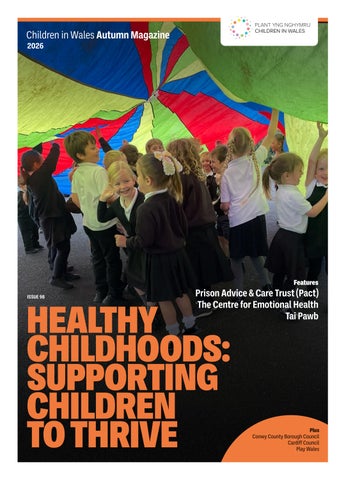
Children in Wales Autumn Magazine 2026
Features ISSUE 98
Prison Advice & Care Trust (Pact) The Centre for Emotional Health Tai Pawb
HEALTHY CHILDHOODS: SUPPORTING CHILDREN TO THRIVE
Plus Conwy County Borough Council Cardiff Council Play Wales
Editor: Louise O’Neill louise.oneill@childreninwales.org.uk Cardiff University Social Science Research Park (SPARK), Cardiff, CF24 4HQ 029 2034 2434 info@childreninwales.org.uk Bluesky: @childreninwales.org.uk Facebook: @childreninwales Instagram: @Children_in_wales LinkedIn: Children in Wales
The views expressed in this publication are not necessarily those of Children in Wales and we reserve the right to edit for publication Registered Charity No: 1020313 Company Reg No: 2805996
AUTUMN 2026 | 03
Contents 05
Welcome from Chief Executive, Hugh Russell
06
Policy team update
08
Children in Wales’ Building Voices Programme
09
Young Wales update
10
Training team update
12
Professional Development and Training
14
Events 2026
15
Call for contributions to our Winter magazine
16
Wales risks raising one of the unhealthiest generations in decades (Royal College of Paediatrics and Child Health)
18
Children’s mental health in Wales: a call for action (Children in Wales)
20
Ready to Learn, Ready to Grow: Understanding child development and school readiness across Gwent (Aneurin Bevan University Health Board & Newport City Council)
22
Providing whole family approaches to improving health and wellbeing (Barnardo’s Cymru)
24
Healthy childhoods start with play (Cardiff Council)
26
Creating healthier childhoods through early intervention and trauma-informed support (Llamau)
28
Moving, learning, thriving: Giving children the best start in life (Ysgol Penrhyn Dewi)
30
A healthy home for every child (Tai Pawb)
32
From voices to action: Building healthier childhoods through children’s rights (Neath Port Talbot Children’s Rights Unit)
04 | CHILDREN IN WALES
34
What makes a healthy childhood? (Heol Chwarae Rol – Role Play Lane)
36
Conwy Youth, Engagement and Belonging – Summer 2026 (Conwy County Borough Council)
38
Creating healthier childhoods through Food and Fun (WLGA)
40
Children of prisoners in Wales: It’s time to make the invisible visible (Prison Advice and Care Trust, Children’s Legal Centre Wales & Newcastle University)
42
Building healthy childhoods through community connection (Oaktree Project, Conwy County Borough Council)
44
Co-producing healthier childhoods: what the evidence tells us (Betsi Cadwaladr University Health Board)
46
The foundational nature of emotional health (The Centre for Emotional Health)
48
More than just a cwtsh: Putting babies at the heart of practice (Blaenau Gwent County Borough Council)
50
Healthy childhoods: Seeing the child beyond the behaviour (Family Pathway CIC)
52
Supporting wellbeing and positive futures for young people in Conwy (Conwy County Borough Council)
54
Giving babies and children the best start in life through movement (Early Years Wales)
56
Working together to create healthier childhoods (Carmarthenshire County Council)
58
Embedding children’s rights in Child & Adolescent Mental Health Services – yes we can do that! (Swansea Bay University Health Board)
60
Play belongs in healthcare (Play Wales)
62
Improving the quality of the air we breathe in Wales (Healthy Air Cymru / Asthma + Lung UK Cymru)
AUTUMN 2026 | 05
Welcome from Chief Executive, Hugh Russell Croeso cynnes, a warm welcome to Children in Wales’ Autumn Magazine. Our focus this quarter is on Healthy Childhoods – an issue of the greatest possible gravity in Wales, currently. I write this a few weeks after the Royal College of Paediatrics and Child Health released a deeply concerning report, their State of Child Health 2026: Wales, summarised in this issue by Dr Lizzy Nickerson. I won’t detract from Dr Nickerson’s article by further summarising it here, but it really does make for grim reading and we share the College’s calls on the new Welsh Government to make headway on a clear and ambitious Children’s Health Plan. The report describes ‘deepening inequalities across Wales’ and warns that across a number of key indicators, from tooth decay to obesity, we are not seeing the progress that we should be and children who grow up in Wales are suffering from disproportionately negative health outcomes. All these health inequalities and concerning statistics represent a ticking time bomb for the NHS in future, as children age and require ever greater care from the state, these are problems that need to be addressed in the here and now. Children have the right to the best possible health (Article 24 of the UNCRC) and it is clear that Wales has work to do. The breadth of work undertaken by Children in Wales’ membership to help children to realise their intrinsic rights in this area is laid out across over 20 brilliant articles in this edition. We are extremely proud to represent members working in such diverse areas as those represented here – local government; housing; play; education; climate change and many more. All are united by a common interest in achieving the best health outcomes for children. Children in Wales is directly involved in some of this work: there is an excellent write-up by my colleague Rachel Beddoe in this edition, covering the calls to action of the Children’s Mental Health Network
we convene, for instance. We are also very pleased to contribute to the work of the Healthy Air Cymru network, led by Asthma + Lung UK, who have overseen much progress to address air pollution in Wales and whose work is covered in a really interesting piece by Network Chair, Joseph Carter. Elsewhere, movement and physical activity is a motif through much of the issue: the work of Early Years Wales laid out here, for example, focusses on encouraging young children to get physically active via various programmes, including their ‘Little Movers, Little Speakers’ work, which promotes movement and activity in concert with exposure to the Welsh language. Excellent provision for slightly older children (3-6) is exemplified by Ysgol Penrhyn Dewi whose staff have undertaken training to establish how they can embed physical activity within their curriculum. There are also some thought-provoking pieces touching on support for specific groups of children, most in need of additional care and attention, such as the work highlighted by the Prison Advice and Care Trust and their academic partners. Their piece sets out the highly disproportionately negative experiences of children affected by familial imprisonment and calls for action to address the matter. This is a particularly acute issue in Wales, which has the highest imprisonment rate in Western Europe – well beyond that of England. As ever, I don’t have the word count to mention all of the superb writing contained within this edition, but I hope that readers will find plenty to inspire both their practice and perhaps our policy approach to children’s health, here in Wales. Diolch o galon to all of our contributors and readers. Hugh
06 | CHILDREN IN WALES
Policy team update
Champions for Children - delivering our priorities Now that the Senedd has established their scrutiny committees complete with new chairs and members, the policy team has been busy engaging with new and returning politicians to promote our priorities developed with our partners and members prior to the Election last May. Over the summer, the team responded to committee consultations, highlighting priorities including child poverty, children’s mental health, the first 1,000 days, parenting support, UNCRC incorporation and Additional Learning Needs (ALN) reform. You can read our responses to these consultations on the relevant Committee webpages. You can read our priorities here.
Progress towards UNCRC incorporation A key focus of our policy work continues to be the full incorporation of the United Nations Convention on the Rights of the Child (UNCRC) into Welsh law. We recently published a briefing reviewing the Welsh Government’s progress during its first 100 days in office and welcomed its commitment to take forward proposals for incorporating key UN human rights conventions, including the UNCRC. This long-standing campaign remains a priority for Children in Wales. We were pleased to contribute to the Human Rights Congress in Cardiff, alongside Deputy First Minister Sioned Williams MS, sharing learning from Wales and hearing about the positive impact of Scotland’s UNCRC legislation. You can read our First 100 Days briefing here. You can read the UNCRC Monitoring Group manifesto here.
AUTUMN 2026 | 07
Tackling child poverty - listening to our members Working alongside End Child Poverty Network Cymru, we are keen to hear from practitioners, educators, policymakers and others supporting children and families in or at risk of poverty across Wales. Our newly launched surveys aim to capture the challenges facing families living in or at risk of poverty and will help shape our next Child and Family Poverty Report, due in Spring 2027. Complete the survey here.
Children’s mental health - a call for action Through our Children’s Mental Health Network, we continue to advocate for a preventative, rights-based approach to supporting children’s mental health in Wales. While the Welsh Government’s Mental Health and Wellbeing Strategy provides an important framework, we believe action should focus on creating the conditions that help children thrive through supportive relationships, inclusive schools and timely support. The Network’s calls for action focus on prevention, early intervention and children’s participation. Read more about our Children’s Mental Health Network and calls for action in a separate article on page 18 in this magazine.
Celebrating Difference - Bridging the Divide Children in Wales continues to support the growth of Celebrating Difference – Bridging the Divide, a parent-led training programme that helps professionals better understand the experiences of children with ALN and neurodivergence. Developed by parents from Voices4Bettws, the training draws on lived experience to help create more inclusive support. Through a train-thetrainer model, parents are empowered to become community lived-experience practitioners, sharing their knowledge to improve services and outcomes for children and families across Wales. As one parent involved in the project explains: “We are very passionate and want to share our experience.” You can find out more about this training here and to listen to podcast that parents have recorded.
Looking ahead Meaningful change happens when the views and experiences of children, young people, parents and practitioners inform policy. We look forward to continuing to work with members, partners and decision-makers to ensure children’s rights, wellbeing and opportunities remain a priority across Wales.
BUILDING VOICES PROGRAMME
Children in Wales is pleased to introduce Building Voices. A consultancy service designed to help organisations embed meaningful youth participation and co-production into their work. With over 30 years of expertise in children’s rights, we offer tailored support including strategy development, staff training and youth voice facilitation. Our flexible packages are designed to ensure children and young people’s voices genuinely shape services and policies.
BUILDING VOICES
To explore how Building Voices could support your organisation, please contact Kate.thomas@childreninwales.org.uk for more information. SEE MORE
You can also check out our digital brochure and video showcase below to see how we’re already making a difference with the FAW.
AUTUMN 2026 | 09
Young Wales Update Young people leading change across Wales It’s been a busy and exciting year for Young Wales, with young people from across the country helping to shape projects, events and opportunities that amplify children and young people’s voices. A particular highlight has been the planning of the Young Wales Summit 2026, which is taking place on 21 November 2026 at SPARK, Cardiff. Earlier this year, our dedicated volunteers aged 18 to 25 came together for a residential at Glan-llyn to codesign the event, ensuring that young people are at the heart of every aspect of the programme. From developing workshop ideas to identifying key themes and priorities, volunteers have played a leading role in creating a Summit that reflects what matters most to young people in Wales. Young Wales also continues to create opportunities for children and young people to influence decisionmaking on a national level. Every five years, the UK reports to the United Nations Committee on the Rights of the Child on its progress in upholding children’s rights. Through the Young Wales Big Conversation 2026, children and young people across Wales are being invited to share their views on what the Welsh Government should focus on to improve the lives of children and young people. Their feedback will help highlight key priorities and ensure young people’s voices are heard as part of this important process.
Looking further ahead, we’re delighted to have secured Taith funding for an international learning visit to Malta in March 2027. Young Wales staff and volunteers will explore youth participation approaches alongside international partners, exchange ideas and bring valuable learning back to Wales to strengthen opportunities for young people here at home. None of this would be possible without the enthusiasm, creativity and commitment of our members and volunteers. Whether helping to design national events, contributing to consultations or representing young people’s views, they continue to ensure that children’s voices remain at the heart of decision-making across Wales. To find out more or get involved, email young.wales@childreninwales.org.uk
10 | CHILDREN IN WALES
Training team update Supporting a healthy childhood in Wales A healthy childhood is about more than physical wellbeing. Children need to feel safe, valued and heard, with opportunities to play, develop their identity, form positive relationships and participate in decisions that affect their lives. At Children in Wales, we believe that every child should receive the support they need to enjoy healthy, balanced development from infancy into adulthood.
and young people to express their views and have those views taken seriously •
Development and relationships: •
Direct work with children and young people - a course exploring practical activities that strengthen the skills practitioners need to build trusting relationships, and engage children and young people in order to understand individual needs and provide effective support
•
The role of play in healthy development - exploring how play supports learning, communication, creativity, confidence and emotional wellbeing
A rights-based approach Our work is grounded in children’s rights and in recognising children as individuals whose needs change as they grow and develop. In Wales, the Social Services and Well-being (Wales) Act 2014 provides the key legal framework for care and support. Although much of the Act uses age-neutral language, the provisions that distinguish between children and adults acknowledge children’s unique status as developing individuals, and the importance of supporting that healthy development in the widest sense.
Safety and wellbeing: •
Safeguarding: We provide a range of training that comply with the National safeguarding training, learning and development standards. These address the learning needs of people in Group A, B, C and F reinforcing safe practice and awareness of the role specific responsibilities involved in keeping children safe. We have a proven track record of creating bespoke responses to staff training needs that meet the requirements of the standards, whilst taking account of context
•
Understanding and responding to anxiety in children and young people - helping practitioners recognise signs of anxiety and respond in ways that are sensitive, appropriate and supportive
Supporting the children’s workforce Every member of our training team has experience of working directly with children and young people in a range of roles. They bring this practical expertise to courses designed to help practitioners, across the wider children’s workforce, translate rights-based principles into everyday practice and promote children’s healthy development.
Training in practice Our courses cover key areas of practice that support children’s rights, wellbeing, participation and development.
Voice and participation: •
Introduction to the Lundy Model of participation - helping practitioners create meaningful opportunities for children
Supporting children and young people to participate in decisions - developing practical approaches that place children’s voices at the centre of services and support
If you want to find out more about the training we offer, including courses funded by the Welsh Government that are free to attend, please visit: Training and Events | Children in Wales
AUTUMN 2026 | 11
12 | CHILDREN IN WALES
Professional Development and Training NOVEMBER DBS Changes Autumn 2026: What’s New, Who’s Affected and What to Do 11 November 2026 from 12.30 – 13.30 Online event Free Join us for this free webinar exploring the key DBS changes introduced from 1 September 2026 and what they mean for organisations working with children, young people and adults at risk.
Anxiety in Young People: Recognition, Support and Resilience 12 November 2026 from 09:30 – 16:00
Group F Safeguarding for Senior Leaders 25 November 2026 from 09:30 – 16:00 Online Event Members: £126, Non-members: £140
Introduction to the Lundy Model and Youth Participation 25 November 2026 from 09:30 – 15:30 In-person Event Free
Specialist safeguarding for leaders, focusing on statutory duties, governance and strategies to embed a strong safeguarding culture. This interactive course is designed for CEOs, Directors and Board Chairs - those ultimately responsible for safeguarding within their organisations.
Supporting Care Experienced Children: From Commitment to Action - Creating Opportunities That Make a Real Difference 9 December 2026 from 09:30 – 15:30 Online event Free This training session is designed to help organisations gain a clear and practical understanding of what corporate parenting means, particularly in relation to the principles and promises of the Corporate Parenting Charter in Wales. This session is suitable for anyone with an interest or role in supporting care-experienced children and young people.
Online event Members: £126, Non-members: £140 This one-day course is designed to deepen your understanding of anxiety, its causes, and its impact on mental and physical health. You’ll gain practical tools to support young people more effectively in both personal and professional settings.
Get the lowdown on the Lundy Method Project and see how it can shake up your approach in an inperson session. This one-day training explores how to meaningfully involve children and young people in decision-making, using the Lundy Model of Participation. Learn how to create Space, Voice, Audience and Influence so young people shape the services that affect them.
Children’s Rights and Participation for Young People Aged 11-25 10 December 2026 from 09:30 – 15:30 Online Event Free An interactive course exploring young people’s rights and participation in Wales. Learn key legislation, practical techniques, and how to involve young people in decision-making - including setting up youth forums. Build skills, address barriers, and create an action plan to embed participation in your work.
AUTUMN 2026 | 13
2026 - 2027 Children’s Rights and Participation for Children Under 11 Years 16 November 2026 from 09:30 – 15:30 Online event Free An engaging course exploring children’s rights and participation in Wales. Learn key legislation, practical tools, and child-centred approaches to involve children in decisions affecting their lives. Build confidence, tackle participation barriers, and create your own action plan for working effectively with children.
Supporting Care Experienced Children: From Commitment to Action - Creating Opportunities That Make a Real Difference 24 November 2026 from 09:30 – 15:30 Online Event Free This training session is designed to help organisations gain a clear and practical understanding of what corporate parenting means, particularly in relation to the principles and promises of the Corporate Parenting Charter in Wales. This session is suitable for anyone with an interest or role in supporting care-experienced children and young people.
DECEMBER Group C Safeguarding for the Designated Safeguarding Lead and Senior Practitioners 1 & 2 December 2026 from 09:30 – 16:00 Online Event Members: £252, Non-members: £280 Designed for Designated Safeguarding Leads and senior practitioners, this course strengthens your expertise in managing safeguarding responsibilities, making informed decisions, and leading effective safeguarding practice.
JANUARY 2027
Children’s Rights and the Early Years 1 December 2026 from 09:30 – 15:30 Online Event Free This Welsh Government funded training course is aimed at practitioners working with babies and young children under seven years or with their families in a range of settings including childcare, family support, play work, outdoor and arts activities. Attendees will have an opportunity to explore the United Nations Convention on the Rights of the Child (UNCRC) and learn how it applies to babies and young children. FEBRUARY 2027
Group B Safeguarding Children, Young People and Adults at Risk 19 January 2027 from 09:30 – 16:00
Managing for the First Time: Foundations of Effective Management 4 & 5 February 2027 from 09:30 – 16:00
Online event Members: £126, Non-members: £140 Build confidence and up-to-date knowledge to safeguard those in your care. Cover key legislation, recognise signs of abuse, understand roles and responsibilities, and respond effectively to concerns while practising safe working and information sharing.
Online event Members: £252, Non-members: £280 Learn the ropes of being a manager for the first time - from delegation to communication. Join us for an engaging and practical online session designed to help you thrive in your transition to management. Led by expert facilitator Deryl Dix, this session will equip you with the essential tools and insights to succeed as a first-line manager.
14 | CHILDREN IN WALES
Events 2026 Free live webinar
DBS Changes Autumn 2026: What’s New, Who’s Affected and What to Do Date Wednesday, 11 November 2026 Time 12.30pm – 1.30pm Location Online Join us for this free webinar exploring the key DBS changes introduced from 1 September 2026 and what they mean for organisations working with children, young people and adults at risk.
BOOK NOW
Free live event
Young Wales Summit 2026 Date Saturday, 21 November 2026 Time 10am - 4pm Location Spark, Maindy Road, Cardiff CF24 4HQ Our annual celebration of Youth Voice in Wales. Members are encouraged to bring along the young people you work with to this exciting and inspiring event. The Young Wales Summit is free to attend and designed to be inclusive and welcoming to everyone. Spaces are limited and fill up quickly, so please register your interest early.
BOOK NOW
For more information on any of the events below, please contact: emma.butler@childreninwales.org.uk
Save the date
Children in Wales Annual Conference 2027 Date Spring 2027 Location Techniquest, Cardiff Bay Keep an eye on your Member News and Children in Wales’ socials to find out more about this event and early bird, cheaper tickets for members will be released in December 2026.
Free live webinar
Findings from the 2026 Annual Child & Family Poverty Survey Date March 2027 Time TBC Location Online Please join us for this free webinar where you will hear key findings from the Children in Wales Annual Child and Family Poverty Survey Report.
AUTUMN 2026 | 15
Call for contributions to our Winter 2026 magazine THEME
REFUGE, RIGHTS AND BELONGING
Article 22 of the UNCRC specifically states that children who are seeking refugee status, or who are considered refugees, should receive appropriate protection and humanitarian assistance. Our Winter magazine will shine a light on the experiences of asylum-seeking and refugee children and young people in Wales, exploring how they can access their rights, education, health and wellbeing support, safe accommodation, participation opportunities and a sense of belonging in Wales as a Nation of Sanctuary. It will also explore the wider role that communities, services and organisations can play in creating welcoming and supportive environments. Potential areas for content could include: •
Children’s rights and the Nation of Sanctuary – what does Wales’ commitment mean in practice for children and young people seeking sanctuary?
•
Listening to children and young people – their experiences, perspectives, hopes and aspirations
•
Community and inclusion – examples of positive practice and how communities across Wales are supporting children and families seeking sanctuary
•
The role of services and professionals – how organisations can ensure their work is inclusive, rights-based and responsive to the needs of refugee and asylumseeking children and young people
•
Education and belonging – the experiences of asylum-seeking and refugee children in schools, colleges and other learning settings
•
Health and wellbeing – barriers to accessing appropriate support and the importance of trauma-informed and child-centred approaches
•
•
Housing and support – the particular challenges faced by children and young people seeking asylum, including unaccompanied asylum-seeking children
Young people’s participation – ensuring children and young people seeking sanctuary have opportunities to influence the decisions and policies that affect them
•
A look ahead – what more needs to happen to make Wales a genuinely welcoming and inclusive Nation of Sanctuary for every child?
This edition will provide a balance of policy, research, lived experience and examples of positive practice, while keeping children and young people’s rights and voices at its centre. Submission guidelines: •
Articles should be between 500 and 750 words
•
Submit your article in both English and Welsh
•
Write your article in MS Word and include a title and the author’s name and organisation
•
Include high quality JPEG images if you wish, or your organisation’s logo
•
Deadline for submissions Thursday, 7 January 2027
Please email a brief summary of your proposed article to membership@childreninwales.org.uk Once received, your space will be confirmed. Please note: the magazine is shared publicly on our social media accounts, giving your contribution the opportunity to reach a wider audience beyond our membership.
16 | CHILDREN IN WALES
Dr Lizzy Nickerson, Royal College of Paediatrics and Child Health
Wales risks raising one of the unhealthiest generations in decades As a paediatrician, my goal has always been to support families and ensure every baby, child and young person has the opportunity to enjoy a safe, happy and healthy life. Yet increasingly, I find myself caring for children whose health and wellbeing are being undermined by challenges far beyond their control. Across Wales, many of my colleagues are witnessing the same concerning trends. More children are living with obesity, mental health conditions, poor oral health and long-term health problems, often requiring increasingly complex support. These challenges do not exist in isolation. They affect children’s ability to learn, build relationships and participate fully in everyday life, ultimately shaping their future opportunities and life chances. Last month, the Royal College of Paediatrics and Child Health (RCPCH) published our Wales State of Child Health briefing, and this came with a stark, albeit not unexpected, warning: we’re at risk of raising one of the unhealthiest generations in Wales. •
Over a quarter (27.3%) of four to five year-olds are overweight or living with obesity. This is the highest prevalence recorded in Wales to date and the highest rate among all four UK nations
•
More than a quarter (27%) of five to six year-olds in Wales had obvious tooth decay in 2024/25. Children living in the most deprived areas were nearly twice as likely to have tooth decay (37.6%) as those living in the least deprived areas (19.8%)
•
An estimated 135,000 children and young people in Wales are living with a diagnosable mental health condition. Around one in six eight to 10 year-olds, one in five 11 to 16 yearolds, and one in four 17 to 24 year-olds
•
Vaccination coverage has fallen below recommended levels and remains a significant concern, with very few routine childhood vaccines in Wales now meeting the 95% uptake target resulting in a significant risk from infectious diseases
•
Infant mortality in Wales has remained largely unchanged at 3.5 deaths per 1,000 live births in 2024, the same rate as in 2018
Behind each one of these statistics is a child. A child unable to play and socialise due to poor health. A teenager struggling to attend school while waiting for mental health support. A family finding it difficult to access the services they need. These are not isolated experiences. They are the reality for too many children and young people. What is particularly troubling is that the RCPCH analysis continues to highlight the stark inequalities that define a child’s life. Where a child lives, the income of their family and the opportunities available within their community continue to have a significant influence on their health. As a nation, we cannot accept a situation where a child’s prospects are determined by their postcode or the circumstances into which they are born.
AUTUMN 2026 | 17
The concerns raised by RCPCH and my colleagues are shared by members of the public. Recent polling found that fewer than a third (27%) of people believe the Welsh Government is doing enough to support child health, and an even smaller proportion (18%) feel current NHS spending on children’s health is adequate. That is why I believe Wales urgently needs a comprehensive Children’s Health Plan. Such a plan should place children and young people at the centre of decision-making, bringing in every Government department to wrap around the child and provide a clear framework for improving a child’s life. It must be evidence-based, informed by robust data and shaped by the experiences of babies, children, young people, families and healthcare professionals. The decisions we make today will shape not only their futures but the future of Wales. If we want the next generation to thrive, we must act now. Children’s health can no longer be an afterthought. To learn more about the above work, please email Sarah Williamson at: enquiries-wales@rcpch.ac.uk
18 | CHILDREN IN WALES
Rachel Beddoe, Research and Policy Information Officer, Children in Wales
Children’s mental health in Wales: a call for action. Prevention, rights and joinedup support for a healthier childhood: calls from the Children’s Mental Health Network Children’s mental health is fundamental to learning, development, relationships and resilience. Yet many children in Wales face pressures that can undermine wellbeing, including poverty, family stress, loneliness, bullying, discrimination, social media harms and anxiety about the future. A healthy childhood depends not only on services, but on the conditions created across homes, schools and communities so children feel safe, connected, valued and heard. The Welsh Government’s Mental Health and Wellbeing Strategy 2025–2035 sets out an ambition for prevention, early intervention, equality and integrated support. For children, this ambition must become practical, timely and rights-based action. The United Nations Convention on the Rights of the Child (UNCRC) recognises children’s rights to health, development, protection, play and participation, including the right to be heard in decisions that affect them. These rights are particularly important in mental health. Services designed for children should
be shaped with children, drawing on their experiences to inform policy, service design and accountability. A rights-based approach must also prioritise prevention. Good mental health is built through everyday experiences: secure relationships, play, physical activity, time outdoors, supportive schools, friendships, belonging and confidence to ask for help. This means mental health cannot be protected by services alone. Children need accessible information, action to challenge stigma, and schools that can recognise distress, respond with compassion and connect them to support. Schools are central to prevention. They are where children learn, build relationships and spend much of their day, and where changes in behaviour or emotional wellbeing may be noticed early. Wales’s Whole-School Approach to Emotional and Mental Wellbeing recognises that wellbeing is shaped by the whole education environment, supported by health services and the wider community.
AUTUMN 2026 | 19
Beyond schools, children need a system that is simple to access and joined up around them. This means stronger links across childcare, education, health, communities and families; digital and in-person support that works together; routine check-ins while waiting for help; rapid escalation when mental health deteriorates; and stronger transitions from child and adolescent mental health services into adult services. Improving children’s mental health in Wales is broader than expanding clinical services. It is about creating the conditions in which children can thrive. Tackling the circumstances that undermine wellbeing, supporting parents and carers, equipping trusted adults to recognise distress, creating safe and inclusive environments, and reducing stigma around mental health. Mental health is not simply the absence of illness. For a child, it can mean feeling safe enough to learn, having someone to turn to, having time to play, being accepted for who they are and knowing their voice counts. These are the building blocks of a healthy childhood and part of what every child in Wales should be able to expect. The Welsh Government’s strategy provides an important policy framework, but policy only becomes meaningful when it changes children’s everyday experiences. You can read more about our Children’s Mental Health Network and it’s call to action here. If you would like to learn more about this work, please email: Rachel.beddoe@childreninwales.org.uk
20 | CHILDREN IN WALES
Eryl Powell, Aneurin Bevan University Health Board & Mandy Shide, Newport City Council
Ready to Learn, Ready to Grow: Understanding child development and school readiness across Gwent Giving every baby and child the best start in life is an Area of Focus and key priority for the Gwent Public Services Board. In 2025-26, partners across Gwent came together to explore an important question: how can we better support child development and school readiness for children and families experiencing poverty? This question formed the basis of the Ready to Learn, Ready to Grow project, funded through the Welsh Government Child Poverty Innovation and Supporting Communities Grant. The project was delivered in partnership with all five Gwent local authorities, Aneurin Bevan University Health Board, Home-Start Cymru, the Health Determinants Research Collaboration Torfaen and partners from across the region. The independent evaluation was led by Professor David Egan and colleagues at the University of South Wales. Research shows that children’s social, emotional, communication and independence skills play a vital role in their development and wellbeing, while poverty can significantly impact child development and later educational outcomes. With around one in three children in Wales living in poverty (Welsh Government, Child Poverty Strategy for Wales: Progress Report 2025), understanding how best to support children and families during the early years remains a key priority. The project combined two strands of work. Firstly, a targeted intervention delivered by Home-Start Cymru supported 52 families across Gwent. Families received practical support focused on play, communication, routines, social interaction and child development, alongside broader family support and a free pack of resources to encourage
learning at home. The evaluation findings were encouraging. Many children were identified as needing support across developmental areas including communication, language, social interaction, emotional development and independence skills. Following participation, many demonstrated measurable improvements in these areas. Positive changes were also seen in parental confidence, engagement in children’s development and the establishment of routines at home, helping families feel better prepared for the transition to school. Alongside this, engagement activity gathered the views of 287 parents and carers and 160 practitioners from across Gwent on child development, school readiness and the support families need. Findings showed that parents and practitioners shared a common view that school readiness encompasses a broad range of developmental skills. However, differences emerged. Practitioners placed particular emphasis on speech and language development and toileting skills, whilst parents were more likely to highlight confidence, happiness, friendships and early learning. These findings highlighted the importance of developing a more consistent understanding of child development and school readiness across services and communities. Another key theme was the impact of poverty on child development. Both practitioners and families identified barriers linked to affordability, access to opportunities, services and resources. At the same time, the evaluation highlighted the importance of strong relationships, community connections and early years support services in helping children and families thrive. The evaluation identified seven recommendations for future action, including:
AUTUMN 2026 | 21
•
Developing a shared understanding of child development and school readiness across Gwent
•
Creating accessible guidance and resources for families and practitioners
•
Strengthening support for speech, language and communication development
•
Enhancing support for families
•
Improving collaboration across health, education, local authorities and the third sector
•
Sharing effective practice
•
Continuing to learn from children, families and practitioners through ongoing evaluation and engagement
Perhaps most importantly, the project reinforced the value of listening to children, families and practitioners. These conversations provided valuable insight into child development, what children need to thrive, and where services can work together more effectively to support families. The learning from Ready to Learn, Ready to Grow is already helping to shape ongoing work across Gwent. Building on the findings, partners have secured funding from the 1001 Critical Days Foundation to deliver the To & Fro intervention, further strengthening support for children and families during the critical early years. The findings are also being embedded within wider Best Start in Life priorities across Gwent and influencing local approaches, including Newport’s anti-poverty agenda and collaborative school readiness work in Blaenau Gwent. The evaluation has been positively received by Welsh Government and is helping partners identify, share and build on effective practice across the region. The full evaluation report, executive summary and child-friendly version of the findings can be accessed here: The Gwent Best Start in Life Joint Strategic Needs Assessment - Aneurin Bevan University Health Board (scroll down to ‘Our Other Work’).
“Ready to Learn, Ready to Grow has demonstrated what can be achieved when organisations come together around a shared ambition to improve outcomes for children and families. The project has strengthened our understanding of child development and school readiness across Gwent, whilst providing valuable insights that will help shape future services, policies and partnerships. Most importantly, it has created opportunities for partners to learn from one another and develop a more joined-up approach to supporting children during the early years.” Eryl Powell, Chair, Ready to Learn Ready to Grow Steering Group
“Children’s opportunities should not be determined by their family’s financial circumstances. Ready to Learn, Ready to Grow has given us valuable insight into the challenges some families face and the support that can make the greatest difference. By listening to parents and carers, we have strengthened our understanding of the barriers that can affect child development and school readiness, helping us identify opportunities to reduce inequalities and improve outcomes for children across Gwent.” Mandy Shide, Newport City Council
“Being part of this partnership has been a real privilege for Home-Start Cymru. Starting school is a big milestone for every child, but for families living in poverty, it can bring extra worries, from the cost of uniforms to not knowing what to expect or how best to help their child feel ready. Working alongside our partners, our trained volunteers have provided consistent, one-to-one support to parents in their own homes, helping them understand the transition to school and grow in confidence. That trusted relationship has enabled families to embed positive routines and behaviours, such as reading together, establishing bedtimes and preparing for the school day, that will benefit their children long after their first term. We’ve seen first-hand how much difference it makes when families feel supported and included, and we’re proud of what we’ve achieved together.” Iestyn Evans, Home-Start Cymru.
22 | CHILDREN IN WALES
Mark Carter & Hayley Smith, Barnardo’s Cymru
Providing whole family approaches to improving health and wellbeing At Barnardo’s Cymru, we have learned that when a child or young person is struggling, the causes and consequences rarely sit with them alone. Children develop within a network of relationships involving family, school, friendships and community. Bio-psycho-social models emphasise the interaction between biological, psychological and social factors in healthy development. When this balance is disrupted, the relationships around a child become crucial to recovery, resilience and problemsolving. Yet those closest to the child may also be experiencing parental stress, illness, bereavement, poverty, disability or family conflict. A parent’s own experiences can shape their response, while siblings and partners may also feel the impact. Services focused solely on one individual or a presenting problem, risk missing both wider family needs and one of their greatest strengths: each other.
This understanding is central to Cardiff Family Wellbeing Service, delivered by Barnardo’s Cymru in partnership with Cardiff Council. The service provides clinically led, whole-family support for families with children and young people aged 0–25. Practitioners explore the challenges affecting the family system and develop tailored packages combining family support with psychotherapeutic interventions. The stepped-care offer includes counselling for adults, young people and couples; play, art and drama therapies; family sessions; creative groups; practical guidance; and supported connections to other services. Practitioners work from the family’s perspective, recognising that families are experts in their own lives. A shared formulation identifies what matters most, how the family defines change and the right combination of support. Interventions can run alongside one another, with plans adapting as trust develops and needs change.
AUTUMN 2026 | 23
Whole-family practice also promotes equity. Families can engage through different therapeutic approaches, with support tailored around culture, language, disability, neurodivergence and accessibility rather than expecting everyone to fit a single pathway.
The partnership connects therapeutic expertise with Cardiff’s early-help system, including education, health, statutory agencies and community organisations, enabling families to access other services when these are better placed to meet their needs.
This flexibility matters. One young person experiencing selective mutism and escalating anxiety found a creative therapy group overwhelming. Rather than viewing this as disengagement, the service adapted. They received individual art therapy while their parents engaged in couples counselling. The young person expressed difficult feelings, spoke comfortably during a GP appointment and approached secondary school with greater confidence. Their parents developed a reflective approach.
This model aligns with Wales’ NYTH/NEST ambition for support that is nurturing, empowering, safe and trusted. It transforms prevention into practical action: earlier help can strengthen relationships and coping skills, reducing the likelihood that difficulties escalate into crises which then usually require a higher-cost statutory intervention. Partnership commissioning creates more than coordinated services; it can provide a coherent experience around the family, bringing organisations together around shared goals. When families are supported as a whole, change is more likely to endure. By strengthening and working with families, we create safer, healthier and happier futures for babies, children, young people and families.
Another family received adult counselling, a therapeutic play workshop and Nurturing Connections sessions for a mother and her nine year-old daughter. The work helped the mother consider how her childhood experiences influenced her parenting while rebuilding connection and confidence. Her daughter no longer needed the play therapy initially anticipated and the mother described the support as ‘life-changing.’ Among those providing outcome feedback, 98.5% reported improved emotional or mental wellbeing, 99.5% improved family relationships and 98.8% improved family resilience. Every responding family affected by disability reported improved family resilience. Almost 98% said the service benefited them, and 95.4% felt listened to. These outcomes demonstrate what becomes possible when commissioning enables skilled practitioners to work across boundaries.
About Barnardo’s Cymru At Barnardo’s, our purpose is clear - changing childhoods and changing lives, so that children, young people, and families are safe, happy, healthy, and more hopeful. For over 150 years, we’ve been here for the children and young people who need us most – bringing love, care and hope into their lives and giving them a place where they feel they belong. Last year, Barnardo’s Cymru provided essential support to more than 11,000 children, young people, parents and carers through 35+ services and partnerships in Wales. If you would like more information on the above work, please email: cardifffamilywellbeing@barnardos.org.uk www.barnados.org.uk www.barnados.org.uk/wales
24 | CHILDREN IN WALES
Katie Martin, Cardiff Council
Healthy childhoods start with play For many children, playtime is one of the most important parts of the school day. It is where friendships are formed, confidence grows and children have the freedom to explore, imagine and connect with others. Yet play is often overlooked when we think about children’s health and wellbeing. In Cardiff, the Playground Leaders programme is helping to change that. Developed through Cardiff Council’s Curriculum Team in partnership with Cardiff Play Services, the programme trains Year 5 and Year 6 pupils to become Playground Leaders, empowering them to organise and facilitate play opportunities for younger children during breaktimes and lunchtimes. Working on a rota system, Playground Leaders support younger pupils to join in, be active and have fun. At its heart is a simple belief: play matters. Through interactive training sessions, pupils develop leadership skills including empathy, inclusion, responsibility and communication. They learn how to organise games, encourage participation and ensure everyone feels welcome. Rather than adults directing activities, children take ownership of play and support one another. The need for programmes such as Playground Leaders has become increasingly apparent since the COVID-19 pandemic. For many children, opportunities for social play, physical activity and learning alongside peers were disrupted. As a result, some traditional playground games and social skills were not passed naturally from one generation of children to the next. The programme helps rebuild these experiences by
creating opportunities for children to move, play, connect and learn from each other once again. Many adults remember playing games such as hopscotch, skipping games, stuck in the mud, tag and hide and seek. However, as children’s lives increasingly include screens and digital entertainment, opportunities to learn and share playground games have reduced. Through the Playground Leaders programme, pupils are introduced to both traditional games and newer activities developed with Cardiff Play Services. The programme is not simply about bringing back games from the past. Playground Leaders are encouraged to be creative, adapting rules, developing new ideas and creating entirely new versions of games themselves. This develops creativity, communication, problem-solving and leadership skills, while ensuring activities remain relevant and engaging for today’s children. Some of the most popular playground games are now child-created adaptations developed through the ideas and imagination of the Playground Leaders themselves. Play is fundamental to healthy childhoods. Through active play, children develop physical fitness, coordination and movement skills. Through social play, they learn cooperation, communication, empathy and conflict resolution. Play also supports emotional wellbeing, helping children build friendships, resilience and a sense of belonging.
AUTUMN 2026 | 25
The programme benefits not only younger pupils, but also the Playground Leaders themselves. Through leading activities and supporting others, older pupils develop confidence, leadership skills, friendships and a sense of belonging, while continuing to enjoy the benefits of play. Schools across Cardiff are increasingly recognising the positive impact that peer-led play can have on wellbeing, inclusion and physical activity. Interest in the programme continues to grow as schools see the value of giving children meaningful leadership opportunities through something as simple and powerful as play. One particularly exciting development has been the partnership with Woodlands High School. Working closely with staff, a bespoke Playground Leaders programme has been developed to ensure activities are meaningful and accessible for learners within the specialist setting. The project has demonstrated that opportunities for play, social interaction, leadership and belonging are important for all children and young people.
“One of the most impressive aspects of the programme has been seeing children take ownership of play. They haven’t just learnt games, they’ve adapted them, improved them and created entirely new versions of their own.” Looking ahead, the partnership between Cardiff Council’s Curriculum Team and Cardiff Play Services will continue to expand, including the introduction of Welsh-language playground games to encourage children to develop and use their Welsh through active play and peer interaction. “If you would like to know more about the above work, please contact Katie Martin, Health & Wellbeing Curriculum Lead, Cardiff Council on katie.martin@cardiff.gov.uk
26 | CHILDREN IN WALES
Sam Lewis, Llamau
Creating healthier childhoods through early intervention and trauma-informed support Every child deserves the opportunity to grow up safe, healthy and able to reach their full potential. Yet for many children across Wales, experiences of domestic abuse, family trauma and housing instability can have a profound impact on their physical health, emotional wellbeing, development and future opportunities. At Llamau, we believe creating healthier childhoods starts with early intervention, listening to children and families, and providing the right support before challenges escalate into crisis. Through our trauma-informed, person-centred approach, we work alongside women, children and young people to improve safety, strengthen wellbeing and help families build healthier futures. Domestic abuse remains one of the leading causes of homelessness for women and children. Its impact extends far beyond immediate physical safety, affecting mental health, family relationships, educational engagement and long-term health outcomes. Last year, Llamau supported more than 4,500 women, children and families through our
domestic abuse and gender-specific services, helping them break cycles of abuse, trauma and instability. Children are at the heart of this work. We know that early experiences shape lifelong health and wellbeing, and that exposure to abuse can affect emotional development, confidence, relationships and resilience. Our dedicated Children and Young People’s Domestic Abuse Services provide age-appropriate one-to-one and group support, helping children understand their experiences, express emotions and develop healthy coping strategies. Providing safety and stability is often the first step towards recovery. Through our refuge and accommodation-based services, children escaping domestic abuse are given the opportunity to live free from fear, sometimes for the first time in their lives. Safe and secure accommodation reduces exposure to ongoing trauma and creates the foundation for improved emotional wellbeing, stronger family relationships and better engagement with education and community life.
AUTUMN 2026 | 27
Prevention is equally important. We work with young people to explore healthy relationships, consent, coercive control, online safety and respectful communication. By equipping young people with knowledge, confidence and resilience, we help them make positive choices and develop healthier relationships. Addressing harmful attitudes early can prevent future abuse and support better health and wellbeing outcomes throughout life. Partnership working also plays a vital role in improving outcomes for children. As part of our recently renewed Cardiff Domestic Abuse Services contract, we have embedded specialist domestic abuse practitioners in community hubs alongside health visitors. This allows concerns to be identified earlier and support to reach families during some of the most important stages of a child’s development. Early intervention is critical to reducing the longterm impact of trauma on children’s health and wellbeing. By providing practical and emotional support before challenges escalate, families can access help sooner and build trusted relationships with services. Working closely with health visitors and other professionals helps ensure children receive the support they need to achieve the best possible start in life. Healthy childhoods cannot be separated from the wellbeing of parents and carers. Supporting mothers to recover from the effects of domestic abuse, rebuild confidence and access safe housing creates healthier home environments where children can thrive. Through specialist support, group programmes and recovery-focused interventions, families are given the tools to strengthen relationships, improve wellbeing and move forward positively together. Our wider youth homelessness prevention programmes also contribute to healthier outcomes. Through family mediation, wellbeing support, specialist LGBTQ+ accommodation and early intervention services, we work with young people facing family breakdown, trauma or other challenges that can increase the risk of homelessness, poor mental health and social
exclusion. By intervening early, we help young people remain connected to education, supportive relationships and essential services. While safety is always the immediate priority, the long-term goal is improved health and wellbeing for children and families. Across our domestic abuse and gender-specific services, 98% of people supported reported feeling safer and 97% reported an improved quality of life. Behind these figures are children experiencing greater stability, healthier relationships and environments where they can grow and flourish. As Llamau marks its 40th anniversary in 2026, we remain committed to developing innovative ways to prevent homelessness, reduce the impact of trauma and improve outcomes for children and young people across Wales. As Chief Executive, Sam Austin, explains:
“For 40 years, Llamau has worked alongside children, young people and families facing some of life’s most difficult challenges. We know that prevention and early intervention are essential to creating healthier futures. By delivering innovative, trauma-informed services and working closely with partners, we can ensure children receive support at the earliest opportunity, helping them thrive and reducing the risk of homelessness for future generations.” Creating healthier childhoods means recognising that safety, housing, emotional wellbeing and family relationships are inseparable. When children are protected from trauma, supported to build resilience and given access to the right help at the right time, they are better able to enjoy healthy childhoods and realise their full potential. Through collaboration, early intervention and a commitment to prevention, we can help ensure every child in Wales has the opportunity to grow up safe, healthy and hopeful for the future. To learn more about the work of Llamau, please visit: www.llamau.org.uk
28 | CHILDREN IN WALES
Sarah Williams, Ysgol Penrhyn Dewi
Moving, learning, thriving: Giving children the best start in life The sight of children running beneath a colourful parachute, carefully balancing across outdoor obstacles, or enthusiastically squeezing and shaping Disco Dough may look like simple play. At Ysgol Penrhyn Dewi’s Aidan Campus, however, these moments represent something much more significant. They are examples of a movement-rich approach to learning that places children’s physical, emotional and cognitive development at the heart of everyday school life. For our youngest learners, aged three to six, movement is not viewed as a break from learning. Movement is learning.
we believe it is more important than ever to ensure children have regular opportunities to move, play and develop physical literacy from the earliest years.
Since Ysgol Penrhyn Dewi was established, Aidan Campus has provided a spacious, vibrant environment where children enjoy free-flow access between indoor and outdoor learning spaces throughout the day. This freedom allows children to follow their curiosity, explore their interests and engage with learning in ways that feel natural and meaningful. Whether indoors or outside, movement forms an integral part of the learning experience.
A particularly influential moment came in February 2025 when Foundation Phase staff attended professional learning with Shonette Bason-Wood, founder of Spread the Happiness. Many staff were already familiar with and inspired by Shonette’s work, but the training day provided fresh insight into the role movement plays in supporting children’s development and wellbeing. Staff returned energised and inspired, sharing their learning with colleagues and further refining provision across the campus. Today, as subscribers to Spread the Happiness, our team continues to benefit from high-quality resources, professional development opportunities and current research that help shape our practice.
Our commitment to movement-based pedagogy is grounded in a growing body of research that highlights the importance of physical activity for children’s brain development, wellbeing and future success. In a world where sedentary lifestyles and screen use are becoming increasingly common,
Developing staff expertise has been central to this journey. Many members of our Foundation Phase team have completed SKIP (Successful Kinesthetic Instruction for Preschoolers) training through the University of Wales Trinity Saint David. This professional learning has deepened our understanding of the powerful connection between movement and learning, enabling staff to embed physical development purposefully across all areas of the curriculum.
The impact of this journey can be seen every day.
AUTUMN 2026 | 29
Understanding both the challenges of modern digital childhoods and the importance of meeting children’s physical activity needs, we have prioritised movement throughout the school day. Activities such as Running, Disco Dough, Squiggle While You Wiggle and Parachute Rhymes have become embedded within our daily routines. Rather than being standalone activities, they are carefully integrated into registration, phonics sessions and wider learning experiences. These opportunities help children develop core strength, balance, coordination and fine motor skills while also supporting concentration, communication, resilience and emotional regulation. They provide joyful, energising experiences that prepare children to learn and thrive. Movement at Aidan Campus extends far beyond planned sessions. Our environments are intentionally designed to encourage children to move naturally throughout the day as they climb, balance, transport resources, build, dig, investigate and engage in imaginative play. Children might be found sweeping leaves from the garden, carrying loose parts to create a construction area or developing balance and confidence through self-designed obstacle courses. These seemingly simple experiences are rich with learning. As children move, they are strengthening muscles, developing coordination and learning to manage risk. At the same time, they are building independence, problem-solving skills, creativity and resilience. Physical development is not something that happens separately; it is woven into the fabric of everyday learning. Of course, healthy childhoods are about more than physical health alone. Movement also plays a crucial role in supporting mental wellbeing. Active play helps children manage emotions, build positive relationships and develop a sense of belonging. It creates opportunities for success, collaboration and self-confidence at an age when these foundations are so important. We also recognise that giving children the best start in life requires a strong partnership between school and home. Through community engagement projects, half-termly Stay and Play
sessions and family learning opportunities, we aim to help parents and carers better understand the importance of movement in early childhood. Our Stay and Play sessions invite families into our learning environment to experience movementrich learning first-hand and explore practical ways to support their children’s development at home. Last summer, we were delighted to welcome Dr Amanda John, who delivered a Mini Movers workshop for parents and children. The session provided valuable insight into physical development while equipping families with simple, enjoyable activities they could continue beyond the school gates. At Ysgol Penrhyn Dewi, we believe that every child deserves the opportunity to move, learn and thrive. Through inspiring environments, highly skilled staff and strong partnerships with families, we are creating a culture where movement, wellbeing and learning go hand in hand. By nurturing confident bodies, healthy minds and a lifelong enjoyment of active living, we hope to give our youngest learners not only the best possible start in school, but the strongest possible foundation for life.
“The best start in life begins with the freedom to move, play, explore and thrive.” If you would like to learn more about the work that’s undertaken at the school, please email Sarah Williams, Head of Foundation Phase: GoodridgeS1@Hwbcymru.net
30 | CHILDREN IN WALES
Amy Bainton, Tai Pawb
A healthy home for every child Home is everything. It is where we should be warm, safe, comfortable and secure. It is where we start and end the day, where our bodies and minds can rest. But we know that in Wales, too many children do not live in a home that sets them up to thrive. 31% of children in Wales live in poverty, and over 2000 children are currently living in temporary accommodation – this can mean living in overcrowded or unsuitable accommodation, including a family sharing one room in a hotel or B&B. 31% of children are thought to be living in a home that is overcrowded based on an analysis of the last census1. Clearly, without a safe and suitable home, so many other parts of a child’s life are affected – health, education, mental health and the emotional and wellbeing consequences that can be hugely impactful. Children deserve a home life that makes them feel hopeful about their lives – both now and in the future. When something as fundamental as home does not create those circumstances, it can echo throughout a child’s life. Working together as the Back the Bill coalition, Tai Pawb, Shelter Cymru and CIH Cymru believe that legislating for a Right to Adequate Housing (RTAH) in Welsh law creates the opportunity to tackle these issues that have been stubborn for so long in Wales. The new Welsh Government have made a commitment to legislating for the Right to Adequate Housing in Wales. This is a landmark opportunity for everyone in Wales. It creates a rights-based approach to tackling the issue that is at the root of so many others; ensuring that every baby, child and young person has a safe and suitable home.
RTAH is a human right that goes beyond having a roof over one’s head. It means everyone should have access to safe, secure, affordable, accessible and habitable housing, free from discrimination. Adequate housing also includes legal security of tenure, access to services, and the ability to live with dignity and participate fully in society. If we commit to progressively realising the RTAH in Wales, an independent cost-benefit analysis2 found that it could generate various benefits for Welsh services and society. Based on findings from Alma Economics, ending homelessness and making housing adaptations can generate around £1 billion in cost savings for NHS Wales over a 30-year period due to reduced use of several support services, as well as benefits due to a reduction in accidents in the home. This is one example of how the right could have a huge impact on the thousands of children currently facing the adverse health consequences of damp and mouldy housing, or the mental health impact of trauma that comes from not having roots in a safe home. Children with disabilities have a right to a home that can be adapted to meet their needs, but we have a chronic shortage of adaptable and adapted homes, creating unnecessary struggle for children and their families. Alma Economics also estimated that housing improvements driven by incorporation of the RTAH would have benefits for children’s education and wellbeing. If a RTAH is incorporated, then it could mean that more of a family’s income is available for nutrition, all of which helps improves a child’s ability to fully participate in and benefit from education.
AUTUMN 2026 | 31
In the children’s sector, we know the power of a rights-based approach after many years of campaigning for full incorporation of the UNCRC. We see how children are empowered to advocate for their rights, to exercise their right to be listened to and engaged with about the decisions that affect them. There is much to take from the experience of partially incorporating the UNCRC as we move towards legislating for a right to adequate housing. Every child deserves a childhood that is happy and hopeful, and home is the foundation of that. We need to be brave enough to take the steps to guarantee this is as a right, and now is the moment for us to be courageous. It should not be a matter of luck and circumstance that some children grow up in a home that is safe and suitable while others do not. Home is not earned, it is a fundamental human right that we are all entitled to. The Right to Adequate Housing should be a moment in which Welsh Government asks how we can ensure that every child in Wales is given the home that they deserve. To learn more about the policy work undertaken by Tai Pawb, please email Amy Bainton, Head of Policy and Public Affairs at: amy@taipawb.org
1 https://www.bevanfoundation.org/views/links-child-poverty-housing/ 2 https://www.taipawb.org/wp-content/uploads/2026/05/Alma-Economics-Back-the-Bill-Final-Phase-2-report.pdf
32 | CHILDREN IN WALES
Clare Pritchard, Neath Port Talbot Children’s Rights Unit
From voices to action: Building healthier childhoods through children’s rights Creating healthier childhoods begins with listening
improve when they are listened to, respected and involved in shaping the support available to them.
Across the Upper Afan Valley, the KnowURights project has been working with children and young people to explore their rights under the United Nations Convention on the Rights of the Child (UNCRC) and to ensure their voices help shape the decisions that affect their lives. Through rights-based workshops delivered in schools and community settings, young people have explored topics including emotional wellbeing, belonging, mental health and participation, developing a stronger understanding of both their rights and their role within their communities.
In June, young people participating in a voting workshop identified mental health support as one of their key priorities. Rather than ending with consultation, the project focused on ensuring that young people’s views led to meaningful action. This is a core principle of the KnowURights approach. Participation should not be a one-off exercise. Children and young people should see how their views influence decisions, services and investment in their communities.
Article 12 of the UNCRC states that children have the right to express their views freely in all matters affecting them and for those views to be taken seriously. Article 24 recognises every child’s right to the highest attainable standard of health, including mental health and wellbeing. For us, these rights are closely connected. Children’s health outcomes
Over the past year young people participated in workshops across the Upper Afan Valley focusing on emotional wellbeing, resilience, belonging and mental health awareness. These sessions create safe and welcoming opportunities for children and young people to discuss worries, explore emotions and build confidence in seeking support when needed. Through creative activities, discussions and peer engagement, young people are learning that talking about “big feelings” is both normal and important.
AUTUMN 2026 | 33
Through community-based activities, including Table Talk sessions delivered by the Neath Port Talbot Children’s Rights Unit, young people have been able to meet services in informal and engaging environments, such as the new Children and Young People’s Wellbeing Coordinator for the Afan NHS Cluster and Port Talbot. These sessions help break down barriers, build trust and encourage conversations about wellbeing, without the pressure often associated with formal support settings.
Children and young will work alongside adults at every stage.
The project has also demonstrated the importance of creating opportunities for children and young people to identify what already supports their wellbeing. Activities exploring belonging have encouraged children to map places where they feel safe, welcome and connected within their communities. Many identified the importance of trusted adults, friendships, youth clubs and community hubs. Young people consistently told us that having spaces where they feel listened to and valued plays an important role in supporting their mental health and wellbeing.
The KnowURights project has shown that children’s participation is not an additional activity; it is a vital tool for creating healthier childhoods. When young people feel heard, they develop confidence, self-worth and a stronger sense of belonging. When communities listen and act, more effective services emerge. When rights are put into practice, health and wellbeing improve.
Importantly, local communities are increasingly looking to co-design services with young people rather than simply designing services for them. Meetings organised by local community hub leaders have brought together mental health service providers and community organisations to consider how young people’s priorities can shape future wellbeing provision.
The aim is clear: future projects and investment should reflect the priorities identified by young people themselves and include them at every stage of a project - from the first conversation through to design, delivery and evaluation. By working alongside young people, rather than making decisions on their behalf, communities can create more effective, accessible and meaningful support that truly responds to local need.
For more information on the KnowUrights project, please contact: clairep@childrensrightsunit.org.uk
34 | CHILDREN IN WALES
Joanne Baldock, Heol Chwarae Rol - Role Play Lane
What makes a healthy childhood? A healthy childhood is made up of many things. Children need opportunities to play, move, eat well, create and explore. They need opportunities to communicate, build friendships, develop confidence and feel that they belong. Their emotional wellbeing matters alongside their physical health, and the wellbeing of the adults caring for them matters too. At Heol Chwarae Rol - Role Play Lane, these are the kinds of opportunities we provide every day through a range of sessions and activities for children and families. Role play gives children opportunities for imaginative and child-led play, communication, problemsolving and social interaction. Alongside this, our music and movement sessions encourage physical activity, coordination and expression; baby and toddler sensory sessions allow our youngest children to explore through their senses; while cookery, craft, drama and singing provide opportunities to create, learn new skills and build confidence.
One child, Harry, initially found joining in with our music and movement sessions difficult. By coming back to the same familiar and welcoming environment, we watched his confidence grow. Gradually, he joined in more, interacted and became increasingly comfortable within the group. What may appear to be small steps can be enormous achievements for an individual child. That continuity is important to us. Families may first come through our doors with a baby or toddler and, as their child grows, access different activities and experiences. Our provision continues into later childhood and beyond, including Life Skills sessions for young people with additional learning needs (ALN), providing opportunities to develop practical skills, independence, friendships and confidence. Sometimes wellbeing also grows in unexpected places.
We provide healthy snacks during many of our funded sessions. While children sit and eat together, parents These experiences don’t happen in isolation. A child and carers naturally chat. Conversations turn to taking part in cookery may be learning about food, sleep, toileting, food preferences and eating habits, but they are also following instructions, developing development and the everyday challenges of family independence, trying something new and experiencing life. Experiences are shared, reassurance is found and the pride of making something themselves. During friendships form between adults as well as children. music and movement, children aren’t only being Two members of our management team have physically active; they are listening, communicating, completed nutrition training, helping to inform our expressing themselves and interacting with others. approach to healthy snacks and food activities. We also see what happens when children have the opportunity to return.
Four members of staff are also undertaking Playwork qualifications, three at Level 2 and one at Level 3, further developing our team’s understanding of the importance of play.
AUTUMN 2026 | 35
We believe these opportunities should also be accessible. Our March 2025 community survey found that 67.6% of respondents had been affected by the cost-of-living crisis, with a further 16.7% answering “maybe,” while 89.5% said funded sessions enabled them to attend. Alongside affordable general provision, funded sessions and dedicated ALN opportunities help us reduce some of the barriers families face. This summer, Meithrin Natur: Nature Nurture, our early years wellbeing project, added another dimension. Through partnerships and activities for children aged 0–5 and their families, we explored how nature, outdoor play, creativity and sensory experiences can contribute to wellbeing. Our accompanying community survey received 167 responses, helping families have a voice in what they value and the opportunities they would like to see developed. For us, there isn’t one ingredient that creates a healthy childhood. Play, movement, nutrition, creativity, exploration, communication, friendships, confidence, inclusion, nature and connection all have a part to play.
Providing these opportunities throughout different stages of childhood can have a lasting impact too. Children grow in confidence, families form friendships and young people develop skills and independence. Most importantly, they have opportunities to participate in and feel part of their community. At Role Play Lane, we see those different pieces coming together every day, supporting and enhancing children’s experiences and creating opportunities not just for the session they are attending today, but for continued growth, connection and belonging as they grow. If you would like to learn more about the work of Role Play Lane, please contact: visitsatroleplaylane@gmail.com
36 | CHILDREN IN WALES
Chris Gledhill & Celida Caldecott, Conwy County Borough Council
Conwy Youth, Engagement and Belonging - Summer 2026 Conwy Youth, Engagement and Belonging have had a very busy summer term, with a particular focus on promoting and improving the health and wellbeing of children and young people in the county of Conwy. Through our innovative ‘Games and Grub’ programme we were able to help provide children and young people across Conwy with a nutritious breakfast and lunch, while encouraging them to participate in physical activity through sport and recreation. The programme also provided opportunities for vulnerable children and young people to access support and advice, while developing and improving their knowledge and skills through the preparation of healthy snacks and meals. Games and Grub in Llanrwst took place for a second consecutive year and was once again well attended, with more than 100 young people participating over the three-week programme. The project provided a safe and welcoming
environment where young people could enjoy a variety of activities, socialise with existing friends, make new connections and receive nutritious meals. For many local families, the programme offered valuable support during the school holidays by providing young people with two of their three daily meals. This helped to ease financial pressures, while ensuring that children and young people had regular access to healthy food throughout the day. The positive levels of attendance and engagement highlighted the importance of the programme in supporting both young people and families within the local community. We hope to build on this success and deliver the programme again next year. We also trialled Games and Grub in North Conwy for the first time, delivering sessions across nine days during the summer holidays. The programme was well received, with an average attendance of more than 10 young people at most sessions.
AUTUMN 2026 | 37
Feedback from participants was extremely positive, with many expressing an interest in attending a similar provision in the future. Alongside Games and Grub, we delivered a varied programme of activities throughout the summer, including bubble sports, a beach clean and a beach BBQ. Young people identified the beach clean and BBQ as their favourite activity. They particularly valued the opportunity to give back to their community by helping to keep the shoreline clean, while also developing a greater sense of pride in their local environment. The session encouraged teamwork, environmental responsibility, and community engagement, while providing an enjoyable and rewarding experience for all involved. Alongside Games and Grub, our Community Focused Schools Team has had another fantastic summer supporting children, young people and families across Conwy. We were delighted to help deliver the Food and Fun programme in 13 schools, providing enjoyable activities, nutritious meals and exciting opportunities throughout the summer holidays. Attendance was incredibly high, with hundreds of children and young people taking part and making lasting memories. The team also continued to support families across the county, ensuring they had access to advice, guidance and opportunities when they needed them most. It has been great to see how activities for young people that encourage them to participate and learn new skills, whilst also feeding them, can go such a long way towards alleviating food insecurity for families.
If you would like more information about any of these initiatives, please email: Chris.Gledhill@conwy.gov.uk
38 | CHILDREN IN WALES
Alexandra Gdula, Welsh Local Government Association (WLGA)
Creating healthier childhoods through Food and Fun Every child deserves the opportunity to grow up healthy, happy and supported. Yet for many families, school holidays can bring additional challenges, including food insecurity, reduced opportunities for physical activity, social isolation and increased pressures on family wellbeing. Across Wales, the Welsh Government-funded school-based holiday enrichment Programme - Food and Fun - is helping to address these challenges and ensure children can enjoy healthier childhoods, regardless of their circumstances. Now in its 11th year and delivered through a multiagency approach, it provides children with healthy meals, physical activity, enrichment opportunities and positive social experiences during the summer holidays. It reflects a preventative approach to supporting children’s health and wellbeing, recognising that healthy childhoods are shaped not only by access to healthcare but also by opportunities to learn, play, connect and thrive.
Promoting healthy lifestyles Healthy eating, physical activity and enrichment sit at the heart of Food and Fun. The breakfasts and lunches provided meet school food standards and children are engaged in practical and enjoyable food education activities. These support and develop positive relationships with food creating healthy habits that can last a lifetime. A diverse range of other activities are provided over a minimum of 12 days which help children stay active while developing confidence, resilience, teamwork and social skills. For many children, it offers access to activities that may otherwise be unavailable during the holidays. Programme evaluations identify increased physical activity, enjoyment of structured sport and the formation of links with local activity providers as key programme outcomes Importantly, the benefits extend into the new academic year. The 2025 evaluation found that, across a sample of 567 learners from 13 schools new to the programme, September attendance increased by 2.69% following participation. Wider
AUTUMN 2026 | 39
feedback from children, parents and school staff highlights positive effects on wellbeing, behaviour, relationships and engagement with school routines, helping children return to school feeling more connected, confident and ready to learn.
services, relationships between schools, families and communities are strengthened, helping build trust, social connections and longer-term support networks.
Supporting mental health and wellbeing
Investing in healthier futures
Healthy childhoods depend on more than physical health alone. Children need safe environments where they feel valued, connected and supported. Food and Fun creates welcoming spaces where children can strengthen friendships, build relationships with trusted adults and participate in activities that promote confidence, creativity and emotional wellbeing.
Creating healthier childhoods requires collaboration, prevention and a commitment to ensuring every child has the opportunity to thrive. Food and Fun demonstrates the power of partnership working to support children’s physical health, emotional wellbeing and educational engagement while addressing wider inequalities that can affect life chances.
Stakeholder feedback consistently highlights the programme’s positive impact on happiness, confidence and social connectedness. Evaluations have identified improvements in emotional wellbeing, reductions in isolation and boredom, and increased opportunities for children to socialise and develop friendships during the summer holidays.
As Wales continues to prioritise the wellbeing of children and young people, programmes such as Food and Fun show that investing in healthy childhoods is also an investment in educational outcomes, stronger communities and brighter futures. Evidence from programme evaluations highlights positive impacts on wellbeing, confidence, school engagement, physical activity and September attendance, while children, parents and schools continue to report benefits that extend far beyond the summer holidays.
The familiar school environment plays an important role by maintaining routines and connections with peers and staff during the holidays and helping ease the transition back into education in September. Staff feedback indicates that children return to school more motivated and engaged, while parents frequently value the structure and continuity the programme provides.
Tackling health inequalities Poverty remains one of the most significant factors influencing children’s health outcomes. Families experiencing financial hardship often face difficult choices regarding food, childcare and access to enrichment activities during school holidays. These pressures are reduced by the programme, enabling children to access experiences that support their physical, emotional and social development. Parents consistently identify Food and Fun as a valuable source of financial relief during the holiday period. Through shared family meals, celebration events and opportunities to connect with local
Importantly, the programme adopts an inclusive approach that avoids stigma.
Food and Fun has become one of Wales’ most established and valued holiday enrichment programmes. It provides children with opportunities to stay healthy, connected and supported during the summer holidays. As demand continues to grow, the programme remains a powerful example of how collaborative, preventative action can create healthier childhoods and stronger futures for children and families across Wales. If you would like to learn more about this work, please get in touch with: alexandra.gdula@wlga.gov.uk
40 | CHILDREN IN WALES
Aimee Hutchinson, Prison Advice and Care Trust (Pact), Dr Rhian Croke, Children’s Legal Centre Wales and Dr Steph Scott, Newcastle University
Children of prisoners in Wales: It’s time to make the invisible visible An estimated 5,000 children in Wales have a parent in prison, coping with a wide range of additional challenges as a result. Yet many remain invisible to the services and professionals who could help them. At Pact we have long argued that children affected by parental imprisonment deserve greater recognition, understanding and support. New evidence from the Ministry of Justice’s analysis of children affected by household imprisonment in Wales reinforces the urgency of that challenge.
New evidence: an urgent challenge The research, which used linked data to examine children living in households affected by imprisonment, shows that children affected by imprisonment are significantly more likely to experience disadvantage and vulnerability across multiple aspects of their lives. The data reveals that more than half (52%) of children affected by household imprisonment experienced two or more forms of deprivation, compared with
just 20% of their peers. Family and household vulnerabilities, including domestic abuse, substance misuse, parental mental ill health and learning disabilities, were also found to be more than five times as common among affected families. Educational challenges were also more common. More than two-thirds (68%) of children affected by household imprisonment had identified Additional Learning Needs (ALN), compared with 43% of children in the comparison group. These figures demonstrate the extent to which imprisonment intersects with wider support needs that schools encounter every day. These factors are not only indicators of social disadvantage; they are also recognised determinants of poor health outcomes. Children exposed to multiple adverse experiences are at greater risk of anxiety, depression, behavioural difficulties and poorer long-term physical health.
AUTUMN 2026 | 41
Photo credit to Andy Aitchison
The imprisonment of a parent can itself be experienced as a traumatic event, disrupting stable relationships and creating uncertainty at a time when children most need security and support. Yet despite these challenges, there remains no statutory identification of children when a parent enters prison.
A hidden population As highlighted by the Welsh Governmentfunded ASPIRE project, support often depends on families disclosing their circumstances, something many are understandably reluctant to do because of fears of judgement or discrimination. As a result, opportunities for early intervention are often missed: these children make up a “hidden population.” Identification is not about defining children by the actions of a parent. It is about recognising that they may need additional support during a period of significant upheaval. Many children affected by parental imprisonment demonstrate remarkable resilience and, with the right help, can thrive. As Fae, one of Pact’s Young Ambassadors in Wales who has a parent in prison, explains:
“I often think about how different things might have been if proper support was available for children like me. It could have reduced the loneliness I felt and helped people recognise the anxiety and depression I was experiencing from a young age.”
Wales’ unique position Through its commitment to the United Nations Convention on the Rights of the Child (UNCRC) and its wider legislative framework promoting children’s wellbeing and rights, Wales has consistently stated that every child matters. The question now is whether children affected by parental imprisonment are fully included within that commitment.
At Pact and Children’s Legal Centre Wales, we believe practical solutions are within reach. These include developing systems to identify children affected by parental imprisonment and training school professionals to respond appropriately. The Operation Encompass model which currently notifies schools in Wales of a domestic abuse incident in the home, could also be implemented to notify schools when a parent is sent to prison, enabling timely, familiar support whilst safeguarding privacy. If Wales is serious about reducing health inequalities and improving outcomes for vulnerable children, children affected by parental imprisonment must be recognised as a priority group. The evidence is growing. The need is clear. It is time to make Wales a nation where children affected by parental imprisonment are no longer hidden, but seen, heard and supported.
Take part in new research Pact is supporting a new five-year research programme led by Newcastle University, which aims to develop whole-system support for children experiencing family justice involvement. The first stage brings together cross-sector expertise – voluntary sector, public health, social care, criminal justice, education, youth work and research – to map current support. Welsh voices are crucial to this project. To find out more, please contact Project Lead Steph Scott on steph.scott@ncl.ac.uk
42 | CHILDREN IN WALES
Faye Willet, Oaktree Project, Conwy County Borough Council
Building healthy childhoods through community connection When we think about healthy childhoods, we often think about access to healthcare, healthy eating or physical activity. While these are all important, healthy childhoods are also built through positive relationships, strong communities and a sense of belonging. Over the summer of 2026, the Oaktree Project worked alongside Cartrefi Conwy to deliver a series of community events within social housing communities across Conwy. These events brought together children, young people, families and older residents through a range of free activities designed to encourage participation, connection and community pride. At first glance, these may appear to be simple community fun days. However, they provided much more than entertainment. For many families, particularly those experiencing poverty, social isolation or other challenges, the events offered an opportunity to meet neighbours,
build relationships and access support in a welcoming and informal environment. Research consistently highlights the importance of connected communities in supporting the wellbeing of children and young people. Feeling part of a community helps young people develop confidence, resilience and a positive sense of identity. It can also reduce feelings of isolation and create opportunities for children and young people to develop supportive relationships with trusted adults outside of their immediate family. One of the most powerful aspects of the summer events was the opportunity for intergenerational engagement. Children and young people participated alongside parents, grandparents and older residents, creating natural opportunities for conversations and shared experiences. In an age where different generations can often feel disconnected from each other, these events helped to break down barriers and build understanding within local communities.
AUTUMN 2026 | 43
The partnership also provided an opportunity to introduce a youth work approach in places where young people naturally spend time. Rather than waiting until difficulties arise, youth workers were able to engage with children and young people early, building relationships and creating positive experiences of support services. This preventative approach is a key element of the Oaktree Project’s work and reflects the belief that early intervention can help prevent problems from escalating later in life. The events also demonstrated the value of partnership working. By bringing together housing, youth work and community development approaches, we were able to create inclusive spaces where residents felt welcome and able to participate. Cartrefi Conwy’s commitment to engaging with tenants and supporting community wellbeing complemented the Oaktree Project’s focus on positive youth development and early intervention. For many children, healthy childhoods are shaped not only by the support they receive at home or in school, but by the wider environment around them. Safe communities, trusted relationships and opportunities to participate all contribute to positive health and wellbeing outcomes. Community events may seem small in isolation, but they can play an important role in fostering the social connections that help children and families thrive.
As services across Wales continue to explore ways of improving health and wellbeing outcomes for children and young people, there is value in recognising the contribution that communitybased approaches can make. Creating opportunities for people to come together, strengthening neighbourhood relationships and ensuring young people feel valued within their communities are all important foundations for healthy childhoods. This summer’s partnership between the Oaktree Project and Cartrefi Conwy showed that sometimes the most effective way to support children and young people is simply to create spaces where communities can come together, connect and belong. Through these shared experiences, we help build stronger communities and healthier futures for children and young people across Conwy. If you would like to explore this work in more details, please contact: faye.willet3@conwy.gov.uk
44 | CHILDREN IN WALES
Siwan Sutton & Brian Laing, Betsi Cadwaladr University Health Board
Co-producing healthier childhoods: what the evidence tells us Children’s health is shaped long before they see a health professional: by their early experience within their homes, schools and play spaces, and by their broader communities. Yet services for children and families are still too often designed without meaningful community input. In North Wales, the Well North Wales programme has been working to change this by placing communities at the heart of improving health outcomes. To support this, our Public Health Directorate carried out an evidence review asking two questions: i) what are effective community engagement and co-production methods, and ii) what impact can they have on population health and wellbeing? It brought together 28 studies (2014–2025). Not all studies focussed on children, but their lessons apply strongly to work with babies, children, young people and families.
What works to improve outcomes for healthier childhoods? •
Trusted people in familiar places. Peer-led, relational approaches, such as group walks, community cafés and drop-in hubs, reach people who have had poor experiences of formal services. For families, this might mean parent peers, community connectors or youth workers
•
Making the local visible. In Northern Ireland, a child healthy weight action plan co-produced by combining environmental mapping with community workshops. Residents identified local barriers, such as a lack of green space or access to healthy food, and designed community-owned solutions
•
Sharing power from the start. The Act Early programme in Bradford and Tower Hamlets, which focuses on children’s health and inequalities, used Appreciative Inquiry to build a co-production strategy grounded in equality, reciprocity and agency
•
Language and culture matter. Accessible, non-clinical language and culturally resonant approaches build trust. In Wales, that includes the Welsh language and the distinct identities of our communities
•
Support makes participation real. Training, mentoring and clear roles help community members contribute with confidence. Without them, co-production risks becoming tokenistic
AUTUMN 2026 | 45
Why it matters The evidence links community engagement and co-production with better mental wellbeing, improved access to services and stronger community cohesion. The benefits tend to be greatest for people facing the most disadvantage. UK Household Longitudinal Study data, for example, show wellbeing gains from social participation are largest among people with lower starting wellbeing or from disadvantaged backgrounds. The review also carries a warning. Without deliberate design, co-production can exacerbate inequalities by engaging only those already heard. For children’s health, that means actively seeking out the families and young people whose voices are least often present in decision-making.
From evidence to action in North Wales The review proposes four connected pillars for embedding co-production across the region: i) Structural investment and system integration ii) Capacity building and workforce development iii) Embedding equity and inclusion iv) Creating a lasting legacy through evaluation, learning and accountability A practical framework sets out actions, who is best placed to lead them, and how progress could be measured. The community co-design project in Kinmel Bay, part of the Well North Wales Discovery Phase and supported by the Bevan Commission, demonstrated the value of embedding community voice at a hyperlocal level. The review found co-production brings physical and mental wellbeing benefits for those who take part, and wider socio-economic benefits for their communities. Built on trust and long-term thinking, it can also make services more adaptable, sustainable and cost-effective, but the Kinmel Bay experience shows this takes time and lasting commitment.
Since the review, Well North Wales has moved from evidence to action. A Regional Wellbeing, Prevention and Anchor Framework has been codeveloped with partners across the region, shaped by a March 2026 system engagement event involving over 100 cross-sector leaders, and endorsed by the North Wales Regional Partnership Board in May 2026. It commits partners to working with communities as equal partners, and children are at its heart: a ‘Giving every child the best start’ priority focuses on the first 1000 days, inclusive play spaces and joined-up support for families. The message for everyone seeking to improve children’s health in Wales is clear. Co-production is not a one-off consultation; it is a long-term commitment to creating the conditions for shared power, inclusive participative design and continuous learning. It is often said that it takes a village to raise a child, and the evidence shows healthy childhoods are built with communities, not simply delivered to them. The full review, Effective Community Engagement and Co-production Methods, and their Impact on Population Health and Wellbeing, is available from the BCUHB Public Health Directorate: BCU.PHIREPan@wales.nhs.uk
46 | CHILDREN IN WALES
Dr Robin Lerner, The Centre for Emotional Health
The foundational nature of emotional health Emotional health
The ripple effects
People draw on their emotional health – self and social awareness, self-belief, relationship skills and more – every day. Every decision to leave the house for a walk, drive a car, join a gym, or ask for help uses emotional health. Those skills are harder to hold on to in the face of challenges like bad weather, a recent near miss, the cost-of-living crisis or a hurtful comment.
The Centre for Emotional Health is a national charity with a range of programmes, run by trained staff across Wales, including many Flying Starts, that support parents and carers to build their emotional health. Staff create nurturing spaces to reflect on experiences, develop self-awareness and empathy, and build confidence. Although programmes are aimed at parents and carers, people taking part in past programmes have described the effect on the non-parenting parts of their adult lives.
Children develop their own emotional health through their relationships with the adults around them. They watch how adults manage emotions, solve problems, talk, show empathy and repair relationships when things go wrong. Many people can point to the influence their own parents and carers had on their childhood, some of it difficult and some of it positive. Some remember adults who showed kindness, understanding, encouraged play and who were firm but fair. Others remember adults who were punitive, unfair or unkind. From parenting to the gym, to the workplace, to the community, a foundation of emotional health shapes how people act. This foundation is a necessary part of building capable people, supportive families and caring communities.
People became regulars at the gym, after gaining the confidence to ask when not sure how to use a machine. One couple started a husband-andwife videogame streaming business, building a community around a shared interest. One mother was proud of learning to drive so that she could visit friends and keep an important source of support. The ripple effects of improving emotional health, including being able to accept help from others and build networks of responsive support, are what make change last. Parenting behaviours often reflect experiences and patterns spanning years or generations. It is not an appropriate expectation that people can easily or quickly change something so embedded. When a parent makes progress, it is a generational achievement.
AUTUMN 2026 | 47
Practitioners from across Wales come together for a shared learning event about The Nurturing Programme (Cardiff, 2026)
A foundation for children
Looking ahead
Emotional health and parenting can both be strengthened. Using data from people taking part in our programmes across Wales and the rest of the UK, it is possible to measure how strengthening those skills improves outcomes for adults and children. Parents who gain confidence with empathy, offering warmth to others and playing confidently with a child also see their own mental wellbeing improve. In Cardiff, more than 70% of parents who start with low mental wellbeing finish with average or high mental wellbeing.
Wales has big goals for its children including expanded early years care, a focus on keeping people well and stronger local communities. All of those depends on people having the emotional health to make positive decisions and building relationships. Wales can build on the work of Flying Starts and others, and recognise the importance of improving emotional health as a foundation of these big changes.
Children’s social skills improve when parents and carers are more in control of their own feelings, can set boundaries without feeling guilty, and offer kind and calm discipline. More than half of parents whose children start with low social skills report a big improvement, and that improvement continues after their programme ends. Parents in Cardiff also report growing closeness with their children and less conflict at home. In other words, being able to offer empathy and emotional support to others is a key factor in a person’s own mental wellbeing. Having secure and confident adults around (even when they are more confident with discipline) helps children to build their own social skills.
More information Listen to a Cardiff Dad’s experience of The Nurturing Programme here. For more information about programmes from The Centre for Emotional Health visit: www.centreforemotionalhealth.org.uk or email hello@emotionalhealth.org.uk The Centre for Emotional Health (formerly Family Links) is a national charity and professional training provider, working with local authorities, voluntary sector organisations, prisons, schools, and workplaces. Evidence-based programmes for parents and carers from The Centre for Emotional Health focus on self-awareness, empathy and self-regulation, and support people to build and maintain positive relationships.
48 | CHILDREN IN WALES
Laura James, Blaenau Gwent County Borough Council
More than just a cwtsh: Putting babies at the heart of practice ‘I now recognise that the simplest moments of care often have the greatest impact on a baby’s development’ Baby room practitioner
programme for childcare practitioners working with children aged 0-2 years across local authority day nurseries.
While routines such as feeding, changing and comforting are an important part of caring for babies, practitioners who work with babies know that these moments are about far more than meeting basic needs. They are opportunities to build secure relationships, respond to babies’ communication and support their learning, development and wellbeing. Every interaction, every response to a cry, every shared smile and every opportunity to explore contributes to a baby’s developing brain and sense of security. The first 1,000 days of life are a period of extraordinary growth, laying foundations that can influence learning, health and wellbeing throughout childhood and beyond.
“When we listened to practitioners, a clear message emerged: they wanted to better understand babies’ perspectives and the impact they have on their earliest experiences.” Quality assurance officer
Recognising the importance of this early period, Blaenau Gwent Childcare and Play team developed ‘More Than Just a Cwtsh,’ a professional learning
The programme was developed in response to conversations with practitioners during quality support visits with the local authority advisory team - they expressed a need for professional learning to support a deeper understanding of baby development, attachment, what children’s rights look like from a baby’s perspective and how they could provide experiences that genuinely meet babies’ needs. Pre-training evaluations showed that while practitioners felt confident in many aspects of baby room practice, they were particularly keen to develop a deeper understanding of attachment, and the impact the first 1,000 days have on a baby’s
AUTUMN 2026 | 49
development. Practitioners also reflected on some of the common challenges they faced in their daily work, including building attachments with new babies attending the setting, supporting transitions throughout the day and planning meaningful experiences that respond to babies’ natural curiosity. They also talked about ensuring that outdoor environments are accessed often and in suitable, engaging and purposeful ways. The Childcare Advisory Team prepared a fourmonth programme of interactive sessions, in which practitioners explored themes including the role of an enabling adult in a baby’s care; the benefits of having an effective environment; what meaningful and curious play looks like; and how to support respectful practice through child centred approaches. Central to each discussion was a simple but powerful message: Babies are competent, capable individuals with rights, voices and preferences that deserve recognition. The professional learning encouraged practitioners to reflect not only on what they do, but why they do it. From rethinking routines and environments to considering how babies experience the world, participants were challenged to see everyday practice through a different lens. This reflects the aspirations of both the Babies’ Pledge for Wales and the Welsh Government’s Early Childhood Play, Learning and Care (ECPLC) framework, which emphasise children’s rights, responsive relationships and high-quality care centred on the needs and experiences of the child.
‘I found the session on the first 1000 days so valuable, it has really emphasised to me the importance baby room practitioners play in children’s overall development’ Baby room practitioner The response from settings has been overwhelmingly positive. Practitioners described feeling more confident, more reflective and more aware of the impact that responsive relationships have on babies’ development and wellbeing.
A key theme emerging from participant feedback was the intention to ‘slow down’ and become more present in everyday practice. Practitioners described a renewed appreciation for taking time to ‘be with’ babies, recognising that meaningful learning and development are rooted in responsive, nurturing relationships. Perhaps the most significant learning was the realisation that high-quality baby room practice is not defined by what we provide for babies, but by how we connect, respond and share experiences with them. This shift in thinking has already led to changes in practice, with settings adapting environments, rethinking routines and creating more opportunities for meaningful, relationship-based interactions. With increased recognition of the significance of the first 1,000 days, ‘More Than Just a Cwtsh’ highlights the vital role practitioners play in supporting babies’ development, wellbeing and sense of security and reminds us that supporting our youngest babies is specialised, skilled and deeply important work. Because babies need more than care. They need connection, curiosity, respect and relationships. They need more than just a cwtsh. If you would like to hear more about the work above, please contact: Laura.James@blaenau-gwent.gov.uk
50 | CHILDREN IN WALES
Elsa Torres, Family Pathway CIC
Healthy childhoods: seeing the child beyond the behaviour A healthy childhood should include joy, friendship, play and the freedom to learn without feeling that who you are is a problem. Yet for some children, the school day becomes something to survive. Their distress is visible, but the needs beneath it can remain unseen. Consider Sam, a fictionalised primary school child reflecting experiences from family advocacy. He has ideas, absorbing interests and a strong sense of fairness. He also finds reading and writing difficult, needs personal space and struggles when expectations change without warning. Adults may see a child who refuses to write, becomes upset when someone touches his belongings or leaves abruptly. Descriptions such as “defiant” or “disruptive” can dominate conversations. The child disappears behind incident records, with attention shifting towards managing him rather than understanding his experience. For Sam, his peer group matters. He desperately wants to belong: to play, laugh, have fun and learn alongside his classmates. These relationships are central to his wellbeing. Research with adolescents
links school belonging with support from teachers, peers and parents (Allen et al, 2018). His teachers say they do not always understand what triggers his distress. He is taken out of lessons for “nurture,” but he experiences this as isolation and exclusion from the children he wants to be with. Peers also call him “dumb,” making his wish to belong more painful. Yet his behaviour can become the target of intervention, while experiences contributing to his distress receive less attention. Adults need to address hurtful peer interactions, barriers to learning and feelings of exclusion while supporting him. Participation and friendships must be part of the response. Engaging with behaviour requires curiosity. If Sam pushes work away, is the task accessible? Does he know how to begin? Is he worried about exposing difficulties in front of classmates? If he leaves, what happened beforehand? These questions need investigation together, rather than assumed explanations.
AUTUMN 2026 | 51
Sam cannot always find words to describe what is happening to him. Asking immediately after an incident may not help. He may need time, a trusted adult, drawing or another way to communicate. His voice matters. Lundy’s participation model highlights space, voice, audience and influence: children need support to express views, listeners and influence over decisions (Lundy, 2007). Listening to his parents is central. They may notice worry before school, exhaustion afterwards or patterns across situations. Teachers bring knowledge of learning, friendships and classroom life. These perspectives need to inform a shared understanding, exploring differences without dismissing concerns. Uncertainty about Sam’s distress should prompt further enquiry and engagement with services to clarify his needs. Educational psychology, occupational therapy or speech and language expertise may contribute, depending on the questions arising. Seeking advice should accompany practical support, rather than becoming a reason to wait. Sam and his parents must remain central to this process. Their accounts should shape the questions professionals ask, the support they recommend and how its impact is reviewed. The purpose is learning, participation and safety. Partnership becomes meaningful when it changes his experience. This might mean agreeing who welcomes him, how changes are explained, where he can seek help and how adults respond when he becomes overwhelmed. Responsibilities should be clear, with an agreed review date. Meeting his learning needs matters just as much. Inaccessible work may deepen his fear of failure. Sam needs teaching that addresses literacy difficulties and share ideas. Support should protect access to learning, friendships and classroom life, with Sam helping judge its impact.
The environment also matters. Crowding, noise, unexpected touch or unclear instructions may make participation harder. Predictable routines, protected space and manageable instructions could help. Adults need to check their impact with Sam, including whether “nurture” helps him feel connected or leaves him feeling excluded. Understanding distress does not remove the need for safety. Adults can protect everyone, help Sam recover and later explore what happened without humiliating him. Teachers need support too: consistent approaches, shared planning and appropriate expertise. School leaders need to make this possible. Across Wales, healthy childhoods should be considered through everyday experiences. Can Sam learn, play and connect? Does he trust adults to listen? His confidence, friendships and sense of safety matter alongside any reduction in incidents. A quieter child is not necessarily a happier child. A healthy childhood means Sam knows he belongs, even when he struggles. It means school, parents and services share responsibility for understanding and meeting his needs. Above all, it means he is seen as a child whose wellbeing matters, whose voice counts and whose future deserves ambition. For more information, please contact Elsa Torres, Specialist Education Consultant in ALN and advocate for learner and parent voice: elsa@ familypathway.co.uk or www.familypathway.co.uk
References Allen, K, Kern, ML, Vella-Brodrick, D, Hattie, J and Waters, L (2018). What schools need to know about fostering school belonging: a meta-analysis. Educational Psychology Review, 30(1), 1–34. https://doi.org/10.1007/s10648-016-9389-8 Lundy, L (2007). ‘Voice’ is not enough: conceptualising Article 12 of the United Nations Convention on the Rights of the Child. British Educational Research Journal, 33(6), 927–942. https://doi.org/10.1080/01411920701657033
52 | CHILDREN IN WALES
Tracey Owen, Conwy County Borough Council
Supporting wellbeing and positive futures for young people in Conwy TRAC, which stands for Transitions, Raising Attainment and Choices, has become a vital part of the wellbeing support available within Conwy’s seven secondary schools. Working alongside schools, families and partner agencies, TRAC provides targeted support to some of the county’s most vulnerable learners. The programme focuses on prevention, early intervention and creating opportunities, helping young people overcome challenges before they become entrenched and more difficult to address. The wellbeing of young people aged 11-16 has never been more important. Across Conwy’s secondary schools, increasing numbers of young people are facing challenges that affect not only their education but also their emotional health, confidence and future opportunities. Difficulties relating to anxiety, poor mental health, bereavement, family circumstances, caring responsibilities, poverty and low school attendance can create significant barriers to learning and achievement. Ensuring that these young people receive the right support
at the right time is essential if they are to remain engaged in education and reach their full potential. At its heart, TRAC is about relationships. Many young people who struggle in school are carrying burdens that are not immediately visible. Some are managing feelings of anxiety or low self-esteem, while others may be coping with family difficulties, loss, trauma or uncertainty about their future. These experiences can have a significant impact on attendance, behaviour, attainment and overall wellbeing. TRAC workers provide a trusted and consistent adult presence in young people’s lives. By taking time to listen, understand and build meaningful relationships, they create a safe space where young people feel heard, valued and supported. For many learners, having someone who is independent from school staff, and able to offer impartial support, can make all the difference. The impact of this approach is reflected in the voices of the young people themselves.
AUTUMN 2026 | 53
One learner explained:
“It has helped me with my mental health because before I didn’t want to come to school and I was always scared about the thought of it.” Another young person said:
“Having Sam as my TRAC worker has encouraged me to come to school when I was in a low place. If Sam wasn’t my TRAC worker and helping and supporting me through the school years, I wouldn’t have come back to school at all.” Perhaps one of the most powerful examples came from a young person who simply stated:
“I don’t walk out of lessons anymore.” These comments demonstrate the profound effect that effective wellbeing support can have. They tell the story of young people who are feeling safer, more resilient and more able to manage the challenges they face. This early intervention approach is crucial. By helping young people develop coping strategies, build resilience and improve emotional awareness, TRAC supports better long-term outcomes. Young people learn how to manage challenges more effectively, develop healthier relationships and gain the confidence needed to participate fully in school life. The programme also supports future aspirations and positive progression. Wellbeing and achievement are closely linked, and when young people feel supported and connected, they are more likely to engage in learning and consider their future goals.
Feeling safe, seen and valued is fundamental to wellbeing. Every young person deserves someone in their corner who believes in them, particularly during times when they may be struggling to believe in themselves. For many young people in Conwy, TRAC workers provide that encouragement, stability and hope. As schools continue to respond to increasingly complex wellbeing needs, programmes such as TRAC play a critical role in ensuring that vulnerable learners remain engaged, supported and optimistic about their futures. More than a project, TRAC is a lifeline for many young people. It helps them stay connected to education, improve their emotional wellbeing and develop the skills and confidence needed to thrive both in school and beyond. By investing in young people’s wellbeing today, Conwy is helping to build healthier, more resilient and more successful communities for the future. If you would like to discuss the above initiative in more detail, please email: tracey.owen1@conwy.gov.uk
54 | CHILDREN IN WALES
Leo Holmes, Early Years Wales
Giving babies and children the best start in life through movement Babies are movers! From about 7-8 weeks after conception babies are moving in the womb. Many of these movements are involuntary and driven by responses to the development of the nervous system. Movement is a baby’s first language and the relationship between movement and the brain is established long before birth. This relationship is incredibly important throughout the early years. Children develop sensory integration through movement; more movement means more exploration - more data for the brain to engage with if you like, and more learning. As a charity, Early Years Wales understands the relationship between movement, sensory development, cognition and establishing the foundations that allow children to build on for future learning and development. We have created a range of services to share this knowledge and support early years practice. We have invested in these because the right opportunities at the right developmental stage helps to ensure all children grow with the cognitive, social, emotional and physical foundations to thrive.
Active Baby, Active Toddler and Active Child One of the ways we do this is through our asynchronous training offer: Active Baby, Active Toddler and Active Child. These courses are all about specific, tailored movements for children from birth right up until they turn five, and they give practitioners and parents the tools and confidence to nurture movement at every stage. Active Baby focuses on the very earliest movement experiences. It covers physical activity guidelines; the importance of floor play and tummy time and the fascinating ways babies begin to discover their own bodies and how they move. Active Baby also explores primitive reflexes, the importance of crossing the midline, understanding the senses, and the value of low stimulation movement and rest as part of a balanced day. Active Toddler follows on from 18 months to three years and provides practitioners with opportunities to provide the toddlers in their care with whole body
AUTUMN 2026 | 55
experiences, and an environment that promotes open-ended spontaneous movement play geared to the movement needs of the individual child. Practitioners will cover bone growth, ideal posture, visual development, the development of and the integration of the sensory system, alongside a fully functioning nervous system and the importance of the inhibition of the primary reflexes. Active Child looks at neurophysiological development, physical development and the curriculum, examining why pedagogical opportunities for physical literacy matter so much in curriculum planning. It covers motor development and progression, and takes a close look at movement patterns, movement fascinations, schemas and spontaneous movement play both indoors and outside, including how to observe and assess these effectively. The training also considers the importance of adult aspirations for children’s movement, and the importance of building practitioner confidence in providing for spontaneous movement and play within the curriculum. It explores what a playful movement environment looks like, alongside the idea of five-a-day movement experiences and the value of slow, sustained and downregulating movement experiences. Finally, it brings movement to life through active singing, storytelling and creative play with materials. Together, these courses give everyone caring for young children, whether at home or in a childcare setting, a genuine understanding of why movement matters and how to support the movement pathway at every step.
Little Movers, Little Speakers Movement and language go hand in hand, and our Little Movers, Little Speakers training celebrates that connection. This programme teaches young children and their parents how they can move about confidently in their local environments, while also building confidence in using Welsh. It’s a wonderful example of how physical activity can open the door to language, culture and community, all at once.
Our Movement Champion campaign Beyond training, we run our Movement Champion campaign, which spreads the word about the importance of movement in young children’s lives among Early Years Wales members. The campaign shares insights and knowledge about how movement can be guaranteed in the everyday lives of young children, both within childcare settings and at home. We know that parents and carers play just as important a role as practitioners, so the campaign provides guidance and support to help families make sure movement opportunities are woven into home life too. This includes easily shareable, easy-tounderstand resources such as posters, helping to spread simple, practical messages about movement far and wide. If you would like to learn more about the above work or the work of Early Years Wales in general, please contact: leoh@earlyyears.wales
56 | CHILDREN IN WALES
Tina Taylor, Carmarthenshire County Council
Working together to create healthier childhoods The foundations of lifelong health and wellbeing are established during pregnancy and the earliest years of life. The support children and families receive during this time can have a lasting impact on physical health, emotional wellbeing and future opportunities. By identifying needs early and providing timely support, services can help families build resilience, reduce inequalities and give children the best possible start in life. The Early Years Integration Team is a partnership between Hywel Dda University Health Board and Carmarthenshire County Council, providing integrated support to families from pregnancy until a child’s fifth birthday. Bringing together Midwives, Health Visitors and Support Workers within a single service, the team offers coordinated, familycentred support designed to improve outcomes for children and strengthen family wellbeing. Based in the Amman and Gwendraeth Valleys, the team supports approximately 650 pregnant women and 2,200 children aged 0 to 5 years at any one time.
Working within local communities helps ensure families can access support when they need it, close to where they live. At the heart of the model is the understanding that children’s wellbeing is closely linked to the wellbeing of their parents and carers. Strong relationships, positive mental health and supportive home environments all contribute to healthy child development. For this reason, the team adopts a whole-family approach, recognising that supporting parents helps children thrive. Support often begins during pregnancy, when Midwives build trusted relationships with expectant parents and identify any additional needs. Families can then access tailored support from the Preparation for Parenthood Support Worker, helping them prepare for parenthood, build confidence and access practical guidance during pregnancy and into the early months of parenthood.
AUTUMN 2026 | 57
Health Visitors and Family Support Workers continue this support as children grow, helping families build confidence, develop parenting skills and strengthen resilience. By working collaboratively and sharing knowledge, professionals can respond quickly to emerging concerns and coordinate support around the family’s needs. This joined-up approach reduces duplication and provides a more seamless experience for families. Prevention and early intervention are central to the team’s work. Through a combination of universal and targeted services, families can access information, advice, practical assistance and developmental support from pregnancy onwards. This proactive approach promotes healthy development, improves wellbeing and helps prevent challenges from escalating. The team also plays an important role in strengthening community connections. A wide range of free, easily accessible family groups and activities provide opportunities for parents and carers to meet others, reduce isolation and develop supportive networks. These connections help build confidence, encourage peer support and contribute to improved wellbeing for both children and adults. Reducing health inequalities remains a key priority. Poverty, social isolation and poor mental health can significantly affect family wellbeing and children’s outcomes. Through accessible, relationship-based support, the team helps ensure families facing additional challenges receive the help they need, when they need it most. The impact of the service is reflected in its reach. Approximately 33% of mothers receive additional one-to-one support during pregnancy or within the first 10 days following birth. Across the wider 0 to 5 population, 26% of families access enhanced individual support, while 60% participate in Early Years Integration Team groups and activities.
By bringing health and local authority services together, the Early Years Integration Team is helping to create healthier childhoods across Carmarthenshire, supporting families, strengthening communities and helping more children thrive from the very beginning of a child’s life. Perhaps the most powerful measure of the team’s impact comes from the families themselves:
“Suzanne was very helpful regarding everything we needed support with, if she didn’t have the answers she would find them out and get in touch straight away, she explained everything top to bottom, given me opportunities to get to know my baby as well. She was very supportive regarding my difficult situation with everything. Being a first time mum and being worried she definitely was the best person to support me “ “Staff are excellent and as a first time mam, really made me feel like I was doing a good job when I felt like I wasn’t! Also the support was at home, and they understood when I forgot about an appointment due to a hospital one. Excellent service that everyone should have access too. Diolch yn fawr” “The support I’ve received has been amazing and it was never an issue to call to my home as soon as I messaged. I felt very valued” “This group has been great for improving my mental wellbeing by giving me a place to socialise and make friends, and its free which makes a huge difference” “I’ve been struggling with weaning and it was making me very stressed and anxious but after the support I received, I feel much more relaxed about the processes” If you would like to learn more about the work of this amazing team, please email: TTaylor@carmarthenshire.gov.uk
58 | CHILDREN IN WALES
Sarah Griffith, Swansea Bay University Health Board
Embedding children’s rights in Child & Adolescent Mental Health Services - yes we can do that! Where we started In 2022, relatively new in post as an Art Psychotherapist in Swansea Bay Child & Adolescent Mental Health Services (CAMHS), Sarah Griffith took up the opportunity to become a Children’s Rights Champion. The NHS has several Champion roles available to staff interested in developing change, raising awareness or sharing resources within their clinical area. Swansea Bay had already developed an accessible Children’s Rights Charter, with bilingual posters created and designed in collaboration with children and young people displayed in clinics. However, Sarah wanted to explore how a children’s rights approach could be brought to life in everyday CAMHS practice. It was then that she was introduced to Jannine Smith, Director of the Neath Port Talbot (NPT) Children’s Rights Unit, who provided support in developing the new role.
The CAMHS children’s rights journey In December 2023, an all-CAMHS away day was organised and a workshop was run on children’s rights. The interactive session upskilled staff on the UNCRC and asked how its principles could be embedded into everyday work. The workshop generated lively discussion and considerable interest across the CAMHS team. Sarah recognised the importance of building a team of Champions and invited representatives from each CAMHS team to join a Children’s Rights group. Following the workshop, and using information collated by Jannine, the group developed a three-
year children’s rights workplan. Based on the five principles of The Right Way – Embedding, Nondiscrimination, Empowerment, Participation and Accountability – the plan includes actions for both individual teams and the wider CAMHS service. Some are simple ‘quick wins’, such as ensuring children’s rights information is displayed in every clinic and multidisciplinary team meeting room. Others are longer-term ambitions, including finding effective and sustainable ways to involve children and young people in service development and recruitment. The group meets three or four times a year to review and update the workplan. Members share information and developments with their teams, gather evidence against targets and bring forward suggestions for future action.
What does success look like? By 2026, the group has grown to eight CAMHS clinicians. Working with Jannine has provided access to a knowledgeable ‘critical friend’ who is supportive while also asking challenging and useful questions. The workplan remains a living document – ambitious but realistic alongside the team’s clinical responsibilities. The senior management team supports the group’s involvement, with a representative attending monthly senior management meetings to provide updates and bring a children’s rights perspective to policy and service development discussions. Within weekly clinical meetings, a nominated clinician brings a children’s rights perspective to discussions, with these perspectives minuted and actioned.
AUTUMN 2026 | 59
Children’s rights information has also been incorporated into the assessment proforma. This means that from their first interactions with CAMHS, children and families are introduced to their rights and the service’s duty to uphold their rights and welfare in healthcare. Ultimately, the purpose of this work is not simply to improve processes, but to improve the experience of children and young people using CAMHS. By making children’s rights part of everyday conversations, assessments and decision-making, the team wants children and young people to feel better informed, listened to and respected in their care – understanding that they have a voice, their views matter and they have a right to be involved in decisions about their healthcare. The partnership with NPT Children’s Rights Unit and BAYouth has been particularly valuable. Young people have helped CAMHS identify where their experience could be improved, including changes to clinical areas and waiting rooms and improvements to written information, making it more accessible and welcoming. This represents an important shift: rather than deciding what professionals think children and young people need, CAMHS is creating opportunities for them to say what would make a difference.
As healthcare clinicians, the team understands the importance of nurturing, guidance and protection, particularly when families cannot meet children’s needs. For Sarah and her colleagues, success means going beyond putting a Children’s Rights Charter on the wall. It means ensuring that children and young people know their rights and that those rights are upheld in everyday CAMHS practice. Jannine Smith, Director of Neath Port Talbot Children’s Rights Unit, said:
“We are very proud of the progress CAMHS is making. Their work demonstrates that through strengthening children and young people’s participation in service development, and empowering professionals to uphold their rights, they are helping to create more responsive and equitable services and addressing some of the inequalities that can impact on children and young people’s health and wellbeing.” For more information, please contact: Sarah.Griffith3@wales.nhs.uk
The service’s work is now being recognised as good practice and will be included as a case study in the Children’s Commissioner for Wales’ The Right Way training resources. For CAMHS, embedding children’s rights means that a young person’s voice should not be an additional consideration at the end of a process – it should help shape that process from the beginning. The team is beginning to see this reflected in how it communicates with children and families, gathers their views and considers those views when developing services.
Reference: The Right Way – A Children’s Rights Approach, Children’s Commissioner for Wales.
60 | CHILDREN IN WALES
Marianne Mannello, Play Wales
Play belongs in healthcare Playing matters wherever children are. It does not become less important when a child enters a hospital, hospice, clinic or treatment room. The need to play continues through illness, treatment and recovery – becoming very important when life feels uncertain, frightening or out of a child’s control. Playing offers familiarity, connection and moments of joy. It helps children make sense of what is happening and remain children, not simply patients. This work begins with children’s rights. Articles 24 and 31 of the United Nations Convention on the Rights of the Child are closely linked. Whilst Article 24 protects access to good healthcare, opportunities for play, rest and recreation are enshrined in Article 31. Having opportunities to play supports children’s physical and mental health and wellbeing, while good health enables them to participate fully in play and leisure. General Comment no. 17, the UN Committee on the Rights of the Child’s guidance on Article 31, emphasises that the right to play applies everywhere, including hospitals, hospices, outpatient clinics and community healthcare settings. It notes that children in these settings should have daily opportunities and appropriate spaces for play and recreation, supported by trained staff where necessary.
Why play matters during healthcare Opportunities to play as part of a healthcare journey are not optional extras or pleasant distractions. They are part of compassionate, effective paediatric care. The evidence is compelling. Play can: •
Reduce anxiety, fear and stress
•
Lessen children’s experience of pain
•
Support preparation for procedures
•
Help children understand illness and treatment
•
Restore confidence, choice and a sense of control
•
Strengthen family relationships
•
Help children engage with treatment and recovery
This is why the skilled health play workforce matters. Health play specialists use therapeutic play to safeguard children’s emotional wellbeing before, during and after treatment. Health playworkers, assistants, play leaders and hospital youth workers all bring distinct expertise. They help children and teenagers navigate healthcare in ways that respect age, development, communication and individual needs.
AUTUMN 2026 | 61
Good provision also requires the right conditions embedded in children’s care plans:
When we protect play, we protect childhood, and help make healthcare more responsive and better for children and their families.
•
Time to play
•
Dedicated and flexible spaces
•
Suitable resources
•
Outdoor access where possible
Play Wales has published practical and policy resources that we have used to raise awareness with decision-makers, professional networks and organisations across the paediatric system:
•
Age-appropriate opportunities for teenagers
•
Our Play in Healthcare information sheet explains the specialised roles within the workforce and the interventions that support children and families throughout a healthcare journey
•
Our Focus on play – Play in healthcare briefing, endorsed by Starlight Children’s Foundation, brings together the rights, evidence and economic case for play, examines the position in Wales and makes recommendations for policy
Play Well in Wales Over recent years, Play Wales has brought together health play managers across Wales, creating a network to share practice, identify challenges and build a stronger collective voice. We have held workshops for healthcare staff and senior policy stakeholders, engaged with NHS Wales and Welsh Government colleagues, and surveyed staff supporting children in hospitals, hospices, outpatient services and community clinics. This engagement has reinforced a clear message: excellent practice exists, but provision is under-resourced and inconsistent. Our next exciting step is Play Well in Wales, a two-year partnership with Starlight Children’s Foundation, the national charity for play in healthcare. Building on the Play well toolkit launched by NHS England and Starlight in 2025, the project will work to embed standards, guidance and quality approaches within paediatric care. Alongside implementation, it will provide family support and professional training, building confidence and skills around play-based practice. A national Task Group will bring together expertise from health play, children’s health, policy, improvement and children’s rights. Its purpose is to understand what works in the Welsh context, learn from children, families and practitioners, and build the case for better outcomes for children. It is vital that we treat the right to play as part of quality healthcare. There is real energy around this agenda in Wales: skilled practitioners, supportive partners and growing policy interest. Every child should have time, space, permission and support to play throughout their healthcare journey.
To learn more about the above work, please get in touch with: Marianne@play.wales
62 | CHILDREN IN WALES
Joseph Carter, Chair of Healthy Air Cymru (alongside Children in Wales) and Head of Asthma + Lung UK Cymru
Improving the quality of the air we breathe in Wales From their very first breath, children are particularly susceptible to air pollution for a number of reasons. Their lungs are growing and developing, and their defences are not fully developed; they breathe faster than adults meaning they inhale more air in proportion to body weight. Furthermore, being closer to the ground and spending more time outside means they are more at risk and, of course, they are less able to control their exposure 1. From the minute a child leaves the hospital they are exposed to the toxic air around them. From the traffic, the idling vehicles, the industry, the farming and the domestic burning, their little lungs will be impacted by the pollution. In Wales, air pollution is estimated to cause 1,000-1,400 premature deaths annually 2; we have the worst respiratory death rates in Western Europe 3. In 2024, the Royal College of Paediatrics and Child Health Position Statement set out the harmful effects of exposure to air pollution 1. The effects
commence before birth, continue in early years, through childhood and adolescence. Developing organs are affected; the risk of chronic disease later in life is increased. Air pollution affects the whole system in both the short and long-term. Exposure to pollutants can affect foetal growth and development and lead to preterm birth and low birth weight. Inequality is a major factor here. The parents who are least likely to own a car are the same people whose children will be most exposed to the pollution of other people’s vehicles. The air pollution is often higher in areas with higher levels of social housing, rather than the leafy suburbs. The damage done to children’s lungs can be undone though. A recent study from Queen Mary University London, of more than 3,400 children, found lung growth in London improved following the introduction of ULEZ in 2019 4. This shows that dirty air is something we do not need to accept.
AUTUMN 2026 | 63
We are Healthy Air Cymru, a coalition of health, environmental and children’s rights organisations in Wales who are working to improve the quality of the air we all breathe.
When asked whether people would like to see air pollution monitoring outside schools, 65% agreed (net), 8.3% disagreed (net) 25.8% neither agreed nor disagreed.
In line with the UN Committee on Children’s Rights we are urging the Welsh Government and local authorities to take more action to help protect vulnerable young lungs. The UN stated that “States should immediately take the following action improve air quality by reducing both outdoor and household air pollution, to prevent child mortality, especially among children under five years of age.”
When asked, whether vehicle idling at schools should be banned, 73.1% agreed (net), 8.3% disagreed (net) 18.6% neither agreed nor disagreed.
We would like to see a thorough and effective air pollution monitoring network, including the rollout of PM2.5 and NO2 monitors at all schools and NHS sites. We recommend introducing Clean Air Zones, where necessary, with careful consideration for economically disadvantaged groups and disabled people, with local authorities given the powers to close or divert roads when pollution near schools that exceeds safe limits. And people in Wales want to see action on toxic air. The latest annual polling by Opinion Matters of 1,000 people in Wales, undertaken for Asthma + Lung UK Cymru, shows that over 72% of people are concerned about air quality around schools. Over 65% would like to see monitoring introduced outside schools, and 73% agree that vehicle idling at school gates should be banned 5.
We would also like to see the new Welsh Government accelerate the implementation of the Environment (Air Quality and Soundscapes) (Wales) Act 2024 and do more to protect the lungs of children. As with the ULEZ in London, there is huge pressure from motoring groups to water down action to tackle air pollution, but as we have seen in London, cutting traffic works and children and communities are healthier as a result. Ministers need to set legally binding air quality targets for nitrogen dioxide (NO2) - a major health risk linked to vehicle emissions - as well as particulate pollution (PM2.5). We’d also like the government to use public health alerts to keep people across Wales informed about local pollution levels, and how to reduce risks to their health. As we have seen in London, when action is taken to protect our children’s lungs from toxic traffic fumes, it works so let’s not let Wales fall behind. If you would like to learn more about the above, please get in touch with: jcarter@asthmaandlung.org.uk
References 1 The Royal College of Pediatrics and Child Health (RCPCH). 2024. 2 Air Pollution in the UK-Position Statement. Accessed here. (Aug 2026) 3 Natural Resources Wales / SoNaRR 2025: Air 4 European Commission, Eurostat 2025. Causes of death February 2026. Accessed here. 5 Information about the report can be found here The research was conducted by Opinion Matters on behalf of Asthma + Lung UK Cymru, among a sample of 1,000 adults in Wales aged 16+. The data was collected between 19.12.25 - 06.01.26. Opinion Matters abides by and employs members of the Market Research Society which is based on the ESOMAR principles. Opinion Matters is also a member of the British Polling Council.
childreninwales.org.uk