01
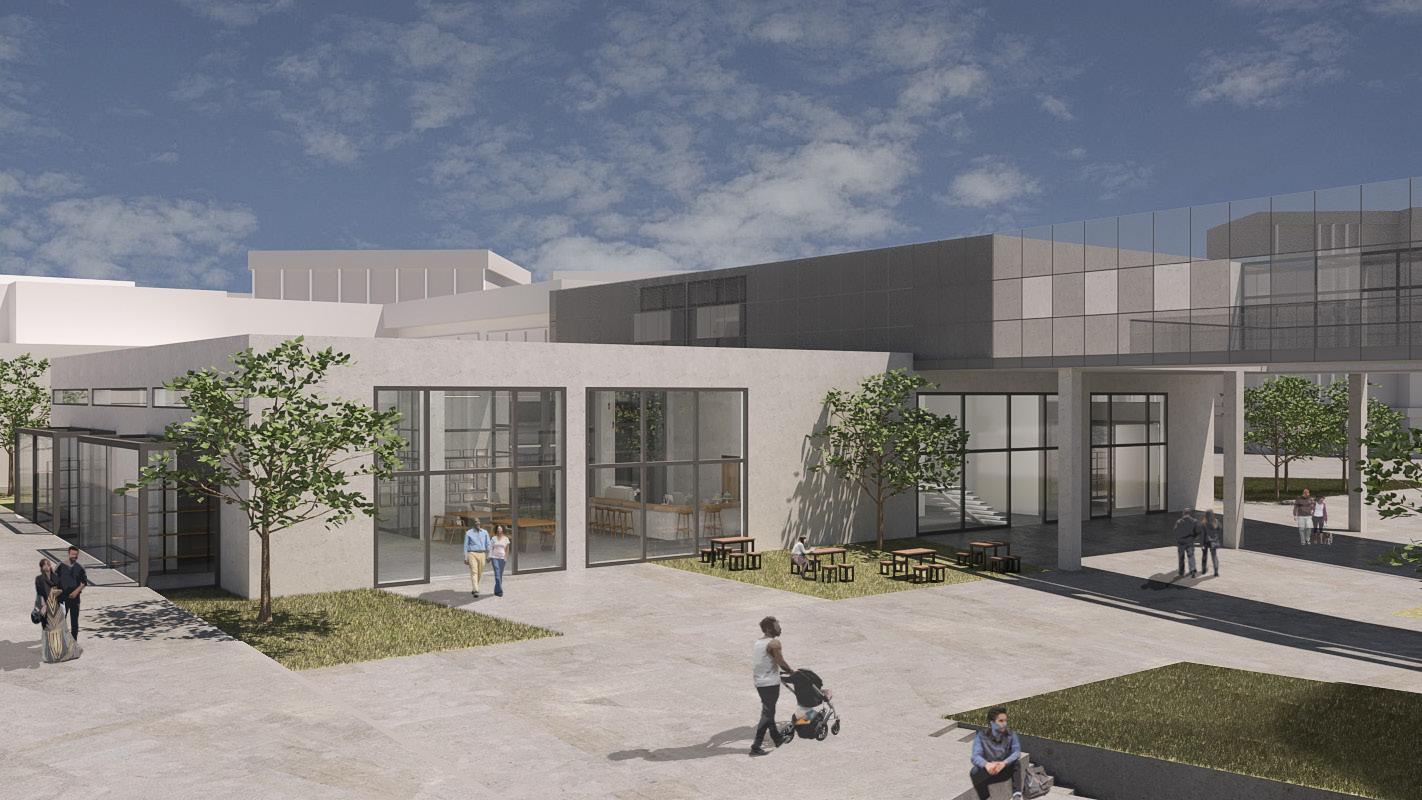
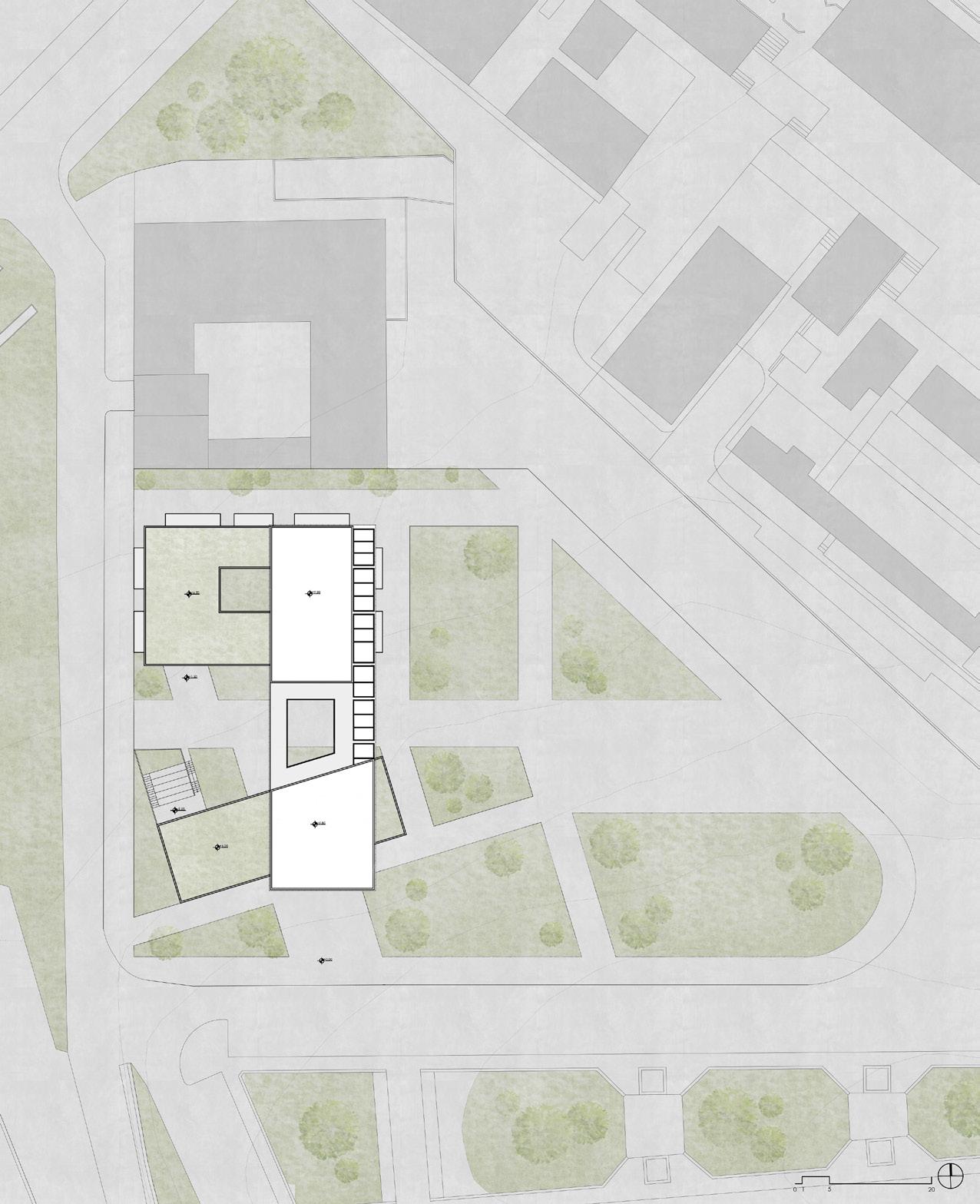
The synthesis is centered in the marketplace (pazari) area of Xanthi, specifically where the fire department building stands today, near the Polytechnic University in the city’s core.
(pazari/ παζάρι / {n} /pazári/)
The proposal aims to rejuvenate and enhance the area through the establishment of a Cultural Centre, envisioned as an attraction for diverse age groups and a catalyst for economic, touristic and cultural development.
The concept begins with the creation of a building that will serve as a landmark, integrating leisure, cultural and commercial spaces.
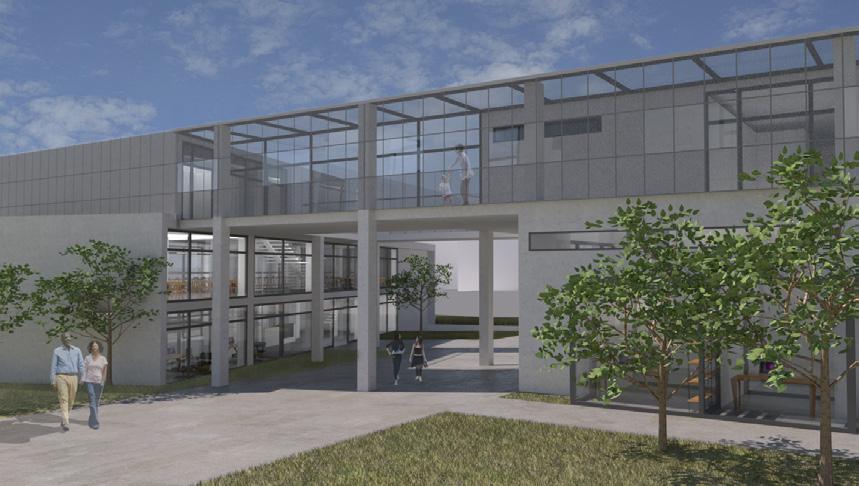
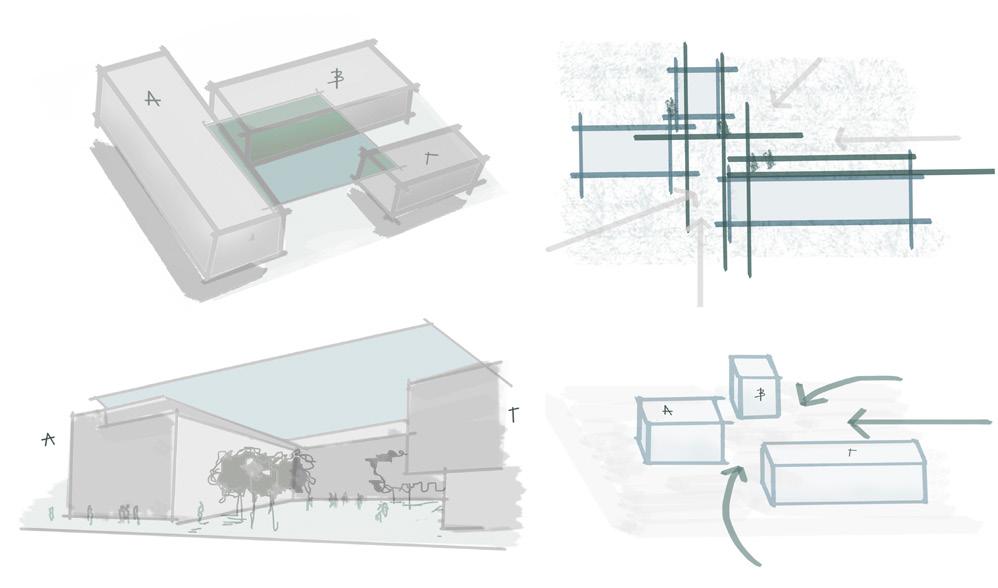
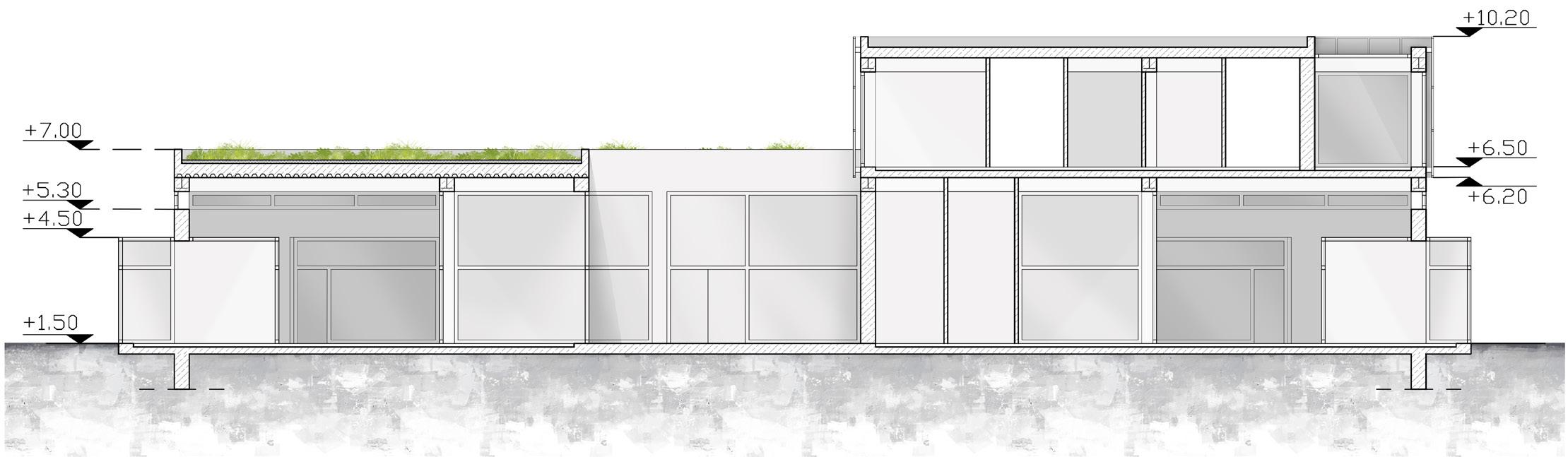
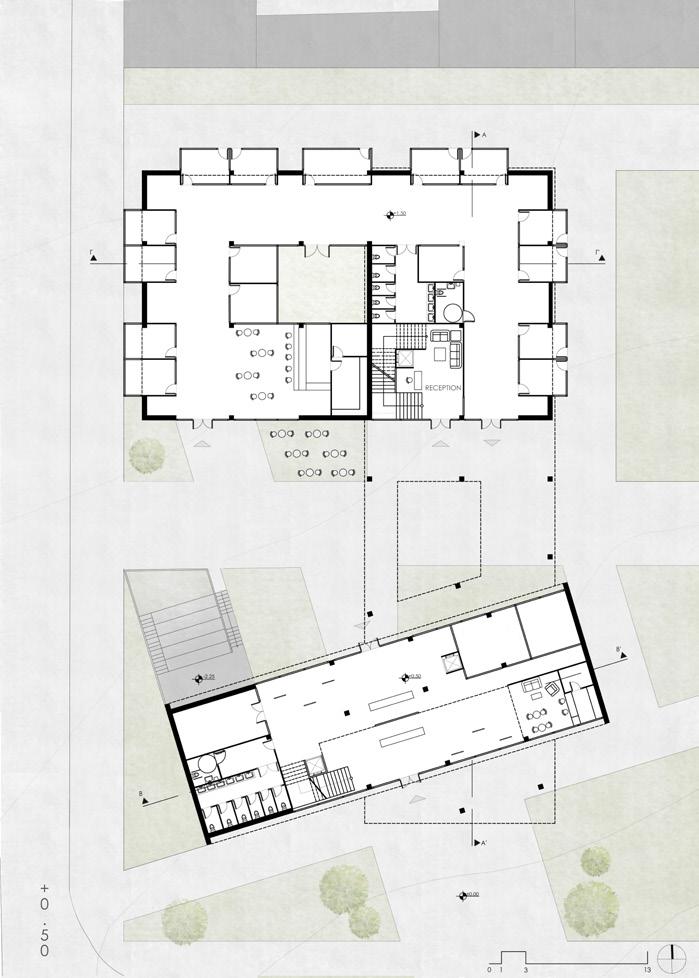
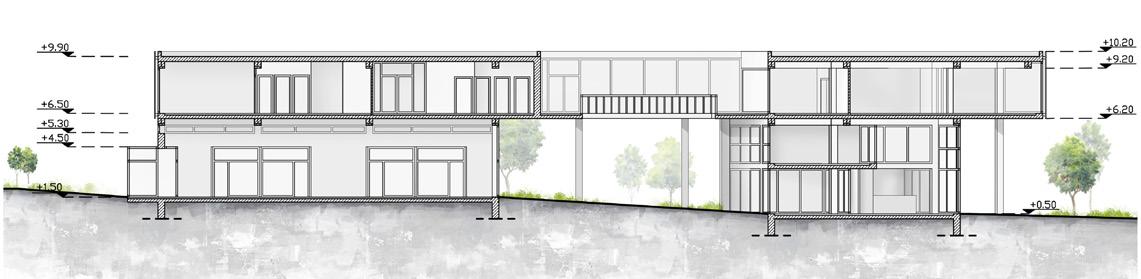
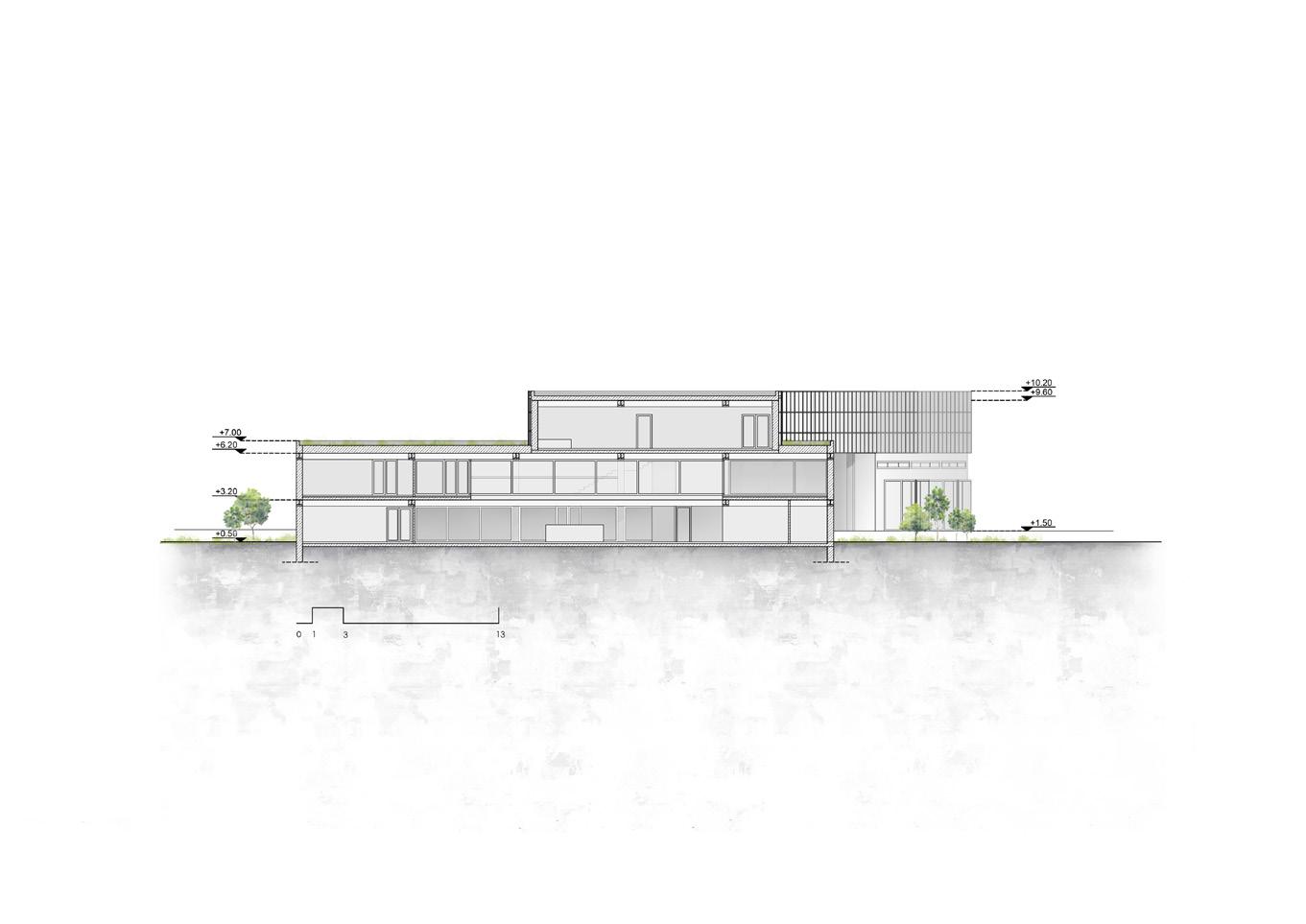
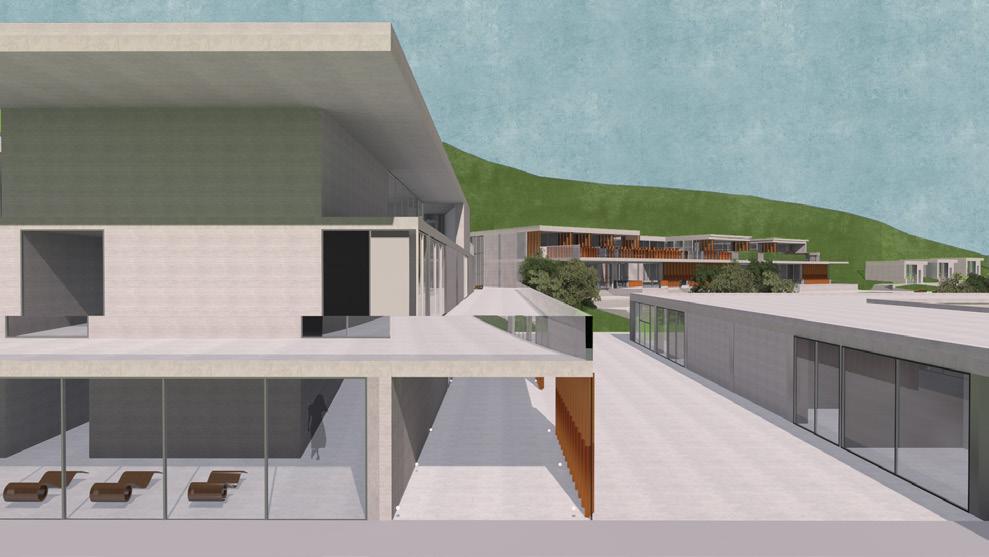
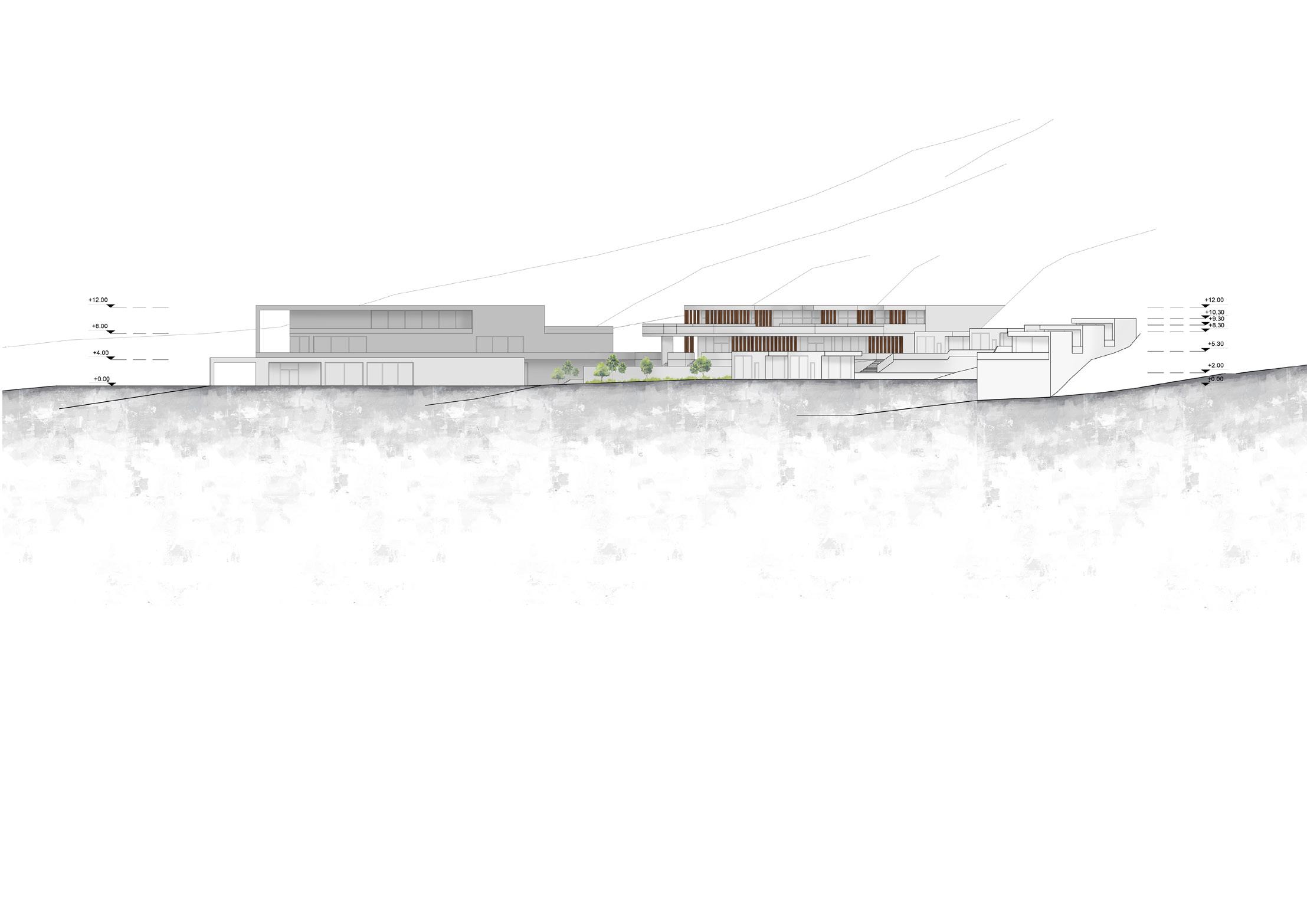
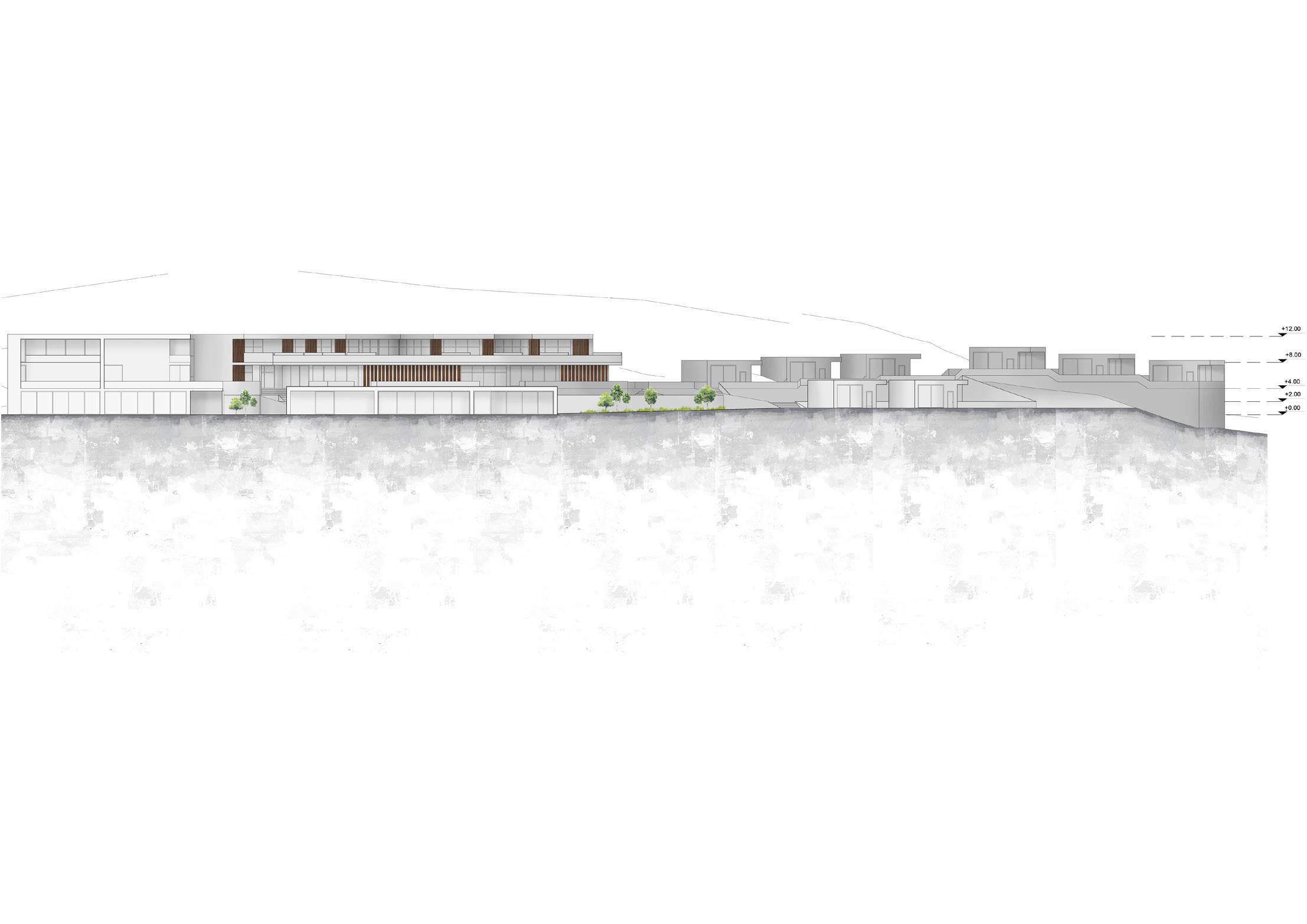
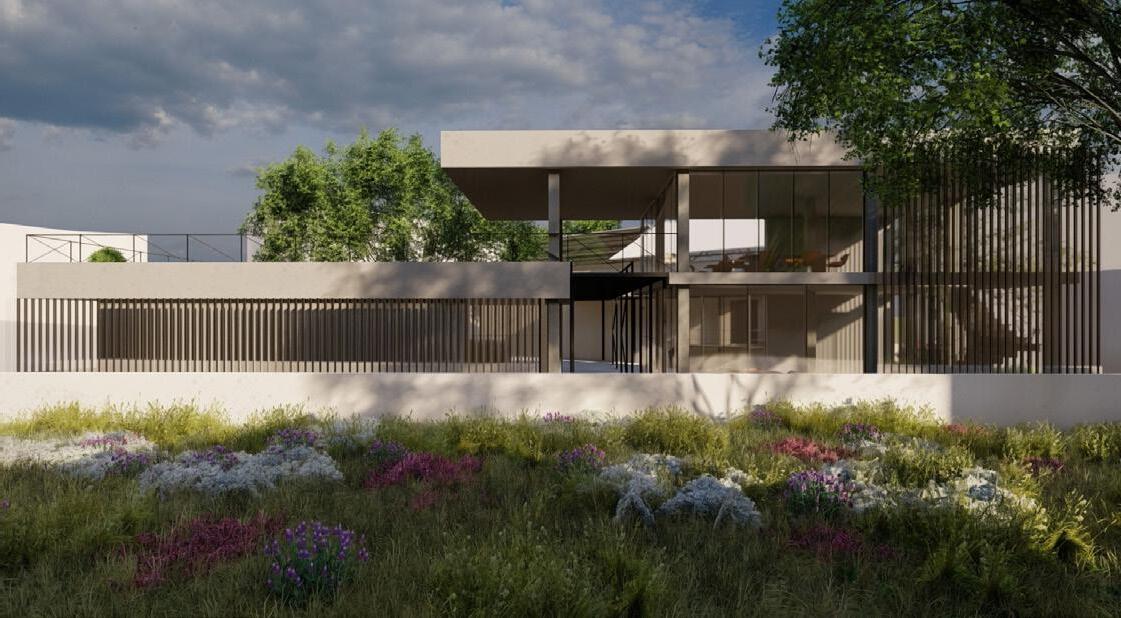
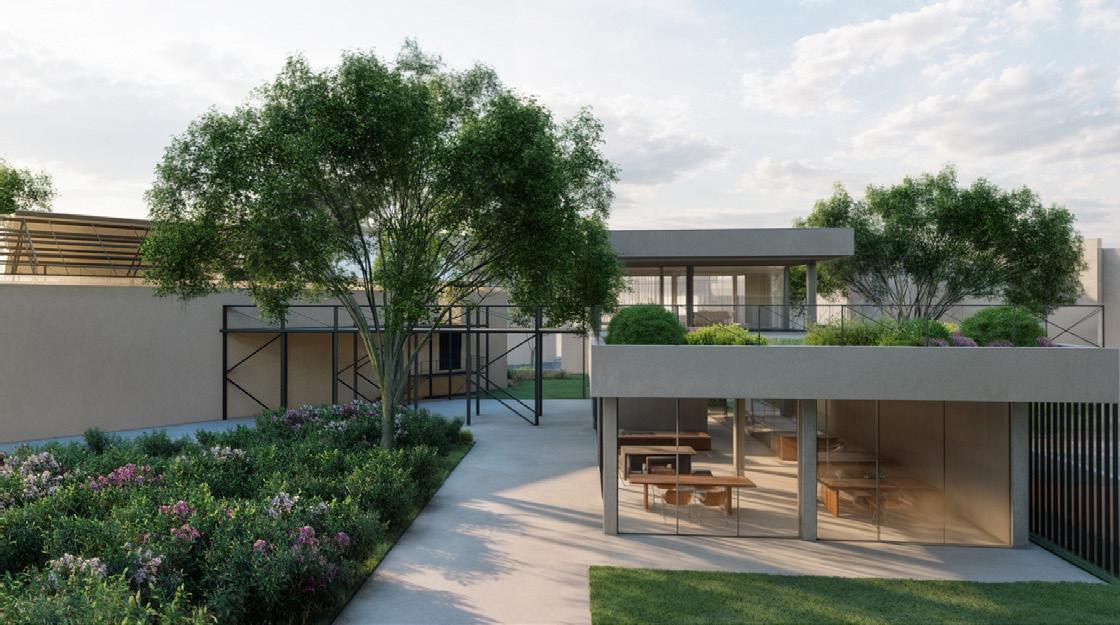
The design comprises three volumes: two are positioned on the ground level, aligned with the site’s topography, while the third volume functions as a bridge, seamlessly connecting the ground-floor structures.
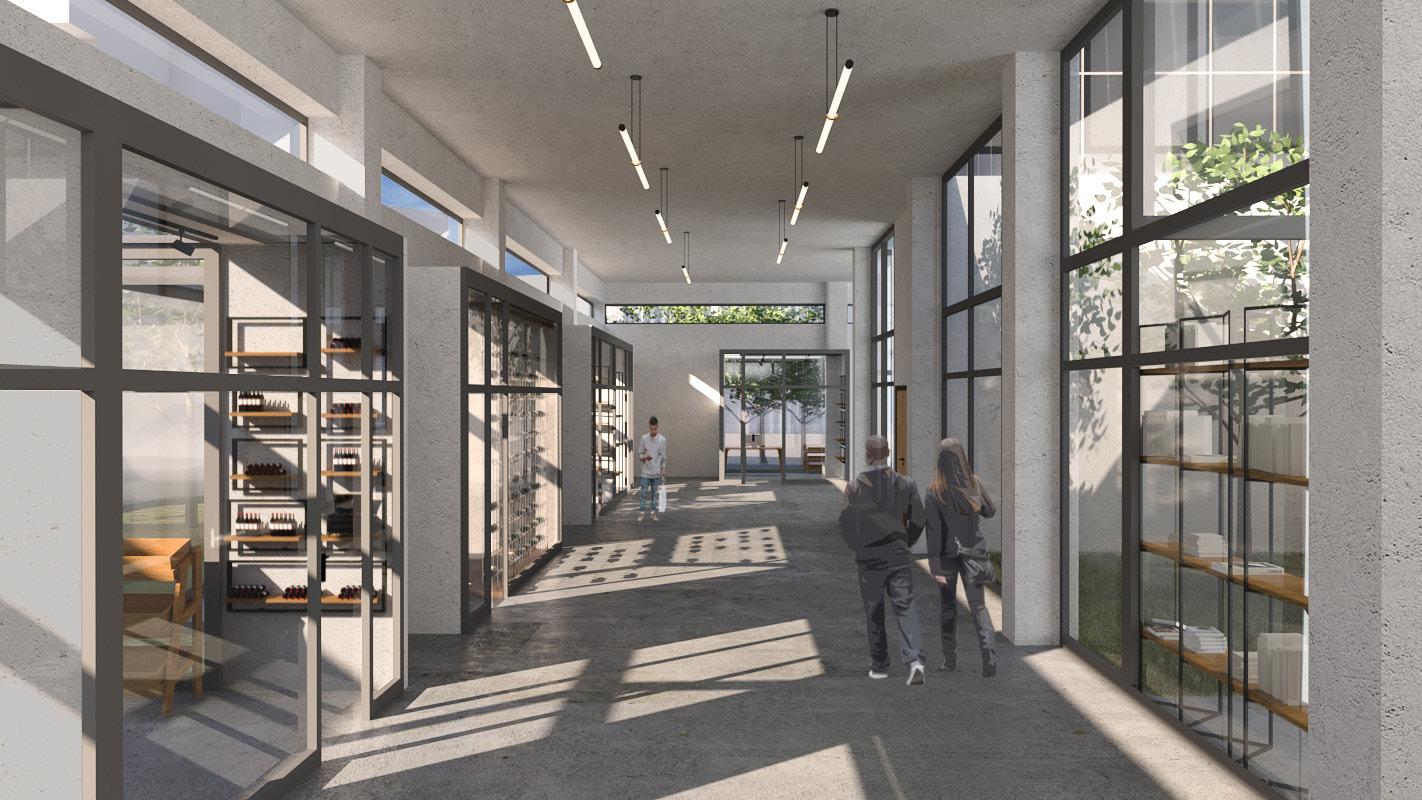
The design and arrangement of the volumes emphasize fluidity in all directions. Transparency of movement within and through the buildings was central to the concept, creating a clear & accessible flow across the site.
A covered walkway, extends from west to east, linking the plaza to a large green area across from the university campus.
The core of the synthesis is a public square, situated between the two ground-level volumes. An open-air cinema is incorporated adjacent to the square, following the site’s natural elevations. This integration aims to create an inviting, versatile space for public gatherings and cultural events, enhancing the area’s vibrancy and fostering community interaction
Xanthi City Pavillion
Initial Concept
On the ground floor, south of the primary study area, lies the complex’s reception.
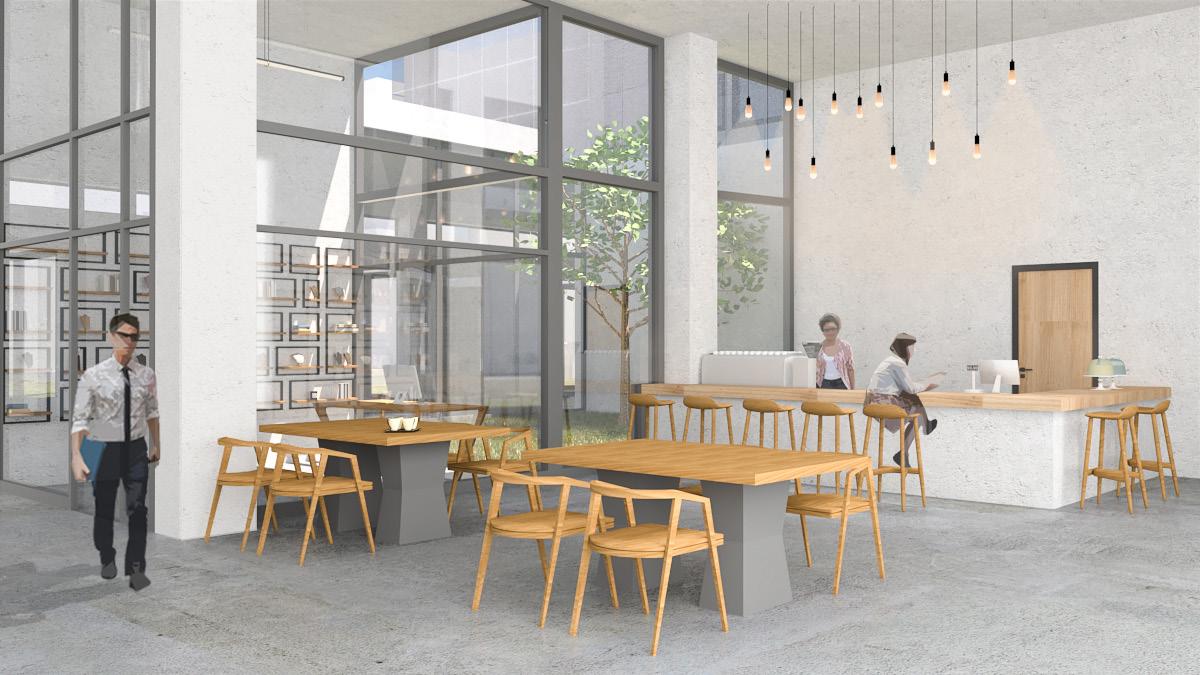
This area includes a Citizens Service Centre, information points, internet access zones, secretarial and management offices, a city exhibition, showrooms & a small bar with seating areas.
The next level features a catering hall with its associated service areas.
In the northern section of the site, within the second ground-floor volume, are additional showrooms and pavilions displaying local products, art publications, and a mix of traditional and contemporary crafts. This volume also houses adaptable workshops and studios for rotating uses. Additionally, a café with an outdoor seating area extends into the site’s central square, complemented by assembly areas, support spaces, a preparation room, and a separate entrance for the guest house and bath facilities.
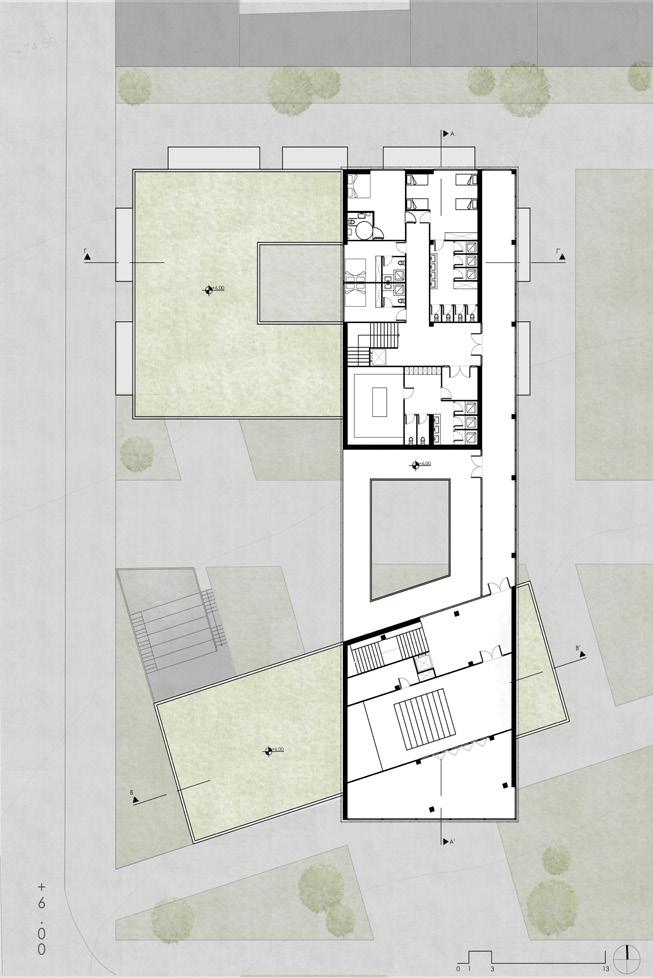
The third volume is dedicated to more private functions.
Guest rooms and baths are located in the northern section and are accessible via an internal staircase that connects directly to the showrooms. In the southern section, a multi-purpose hall, is seamlessly connected to the complex’s reception. An outdoor bridge & a walkway link these two sections, providing a functional yet elegant transition.
The concrete structure is enveloped in a light metal framework—a claustra—with both transparent and semi-transparent glass cladding for visual interest and light control.
The building is constructed with a composite system featuring metal beams and HP-steel bearing columns encased in concrete, offering structural stability with a refined architectural expression.
Restoration, Redesign & Reuse of historical buildings and sites
Principles of Intervention and Programmatic Objectives
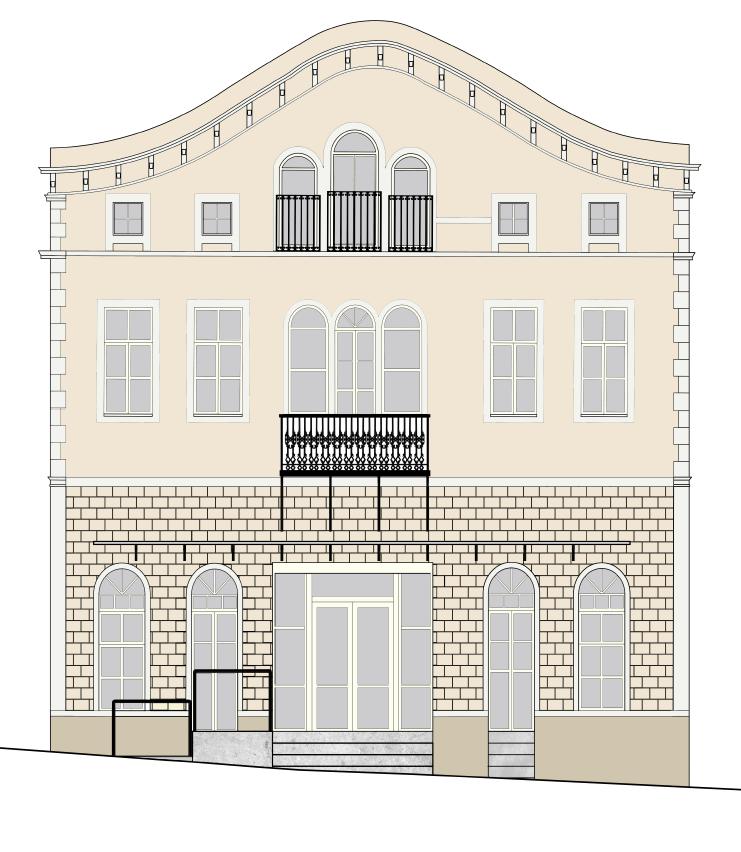
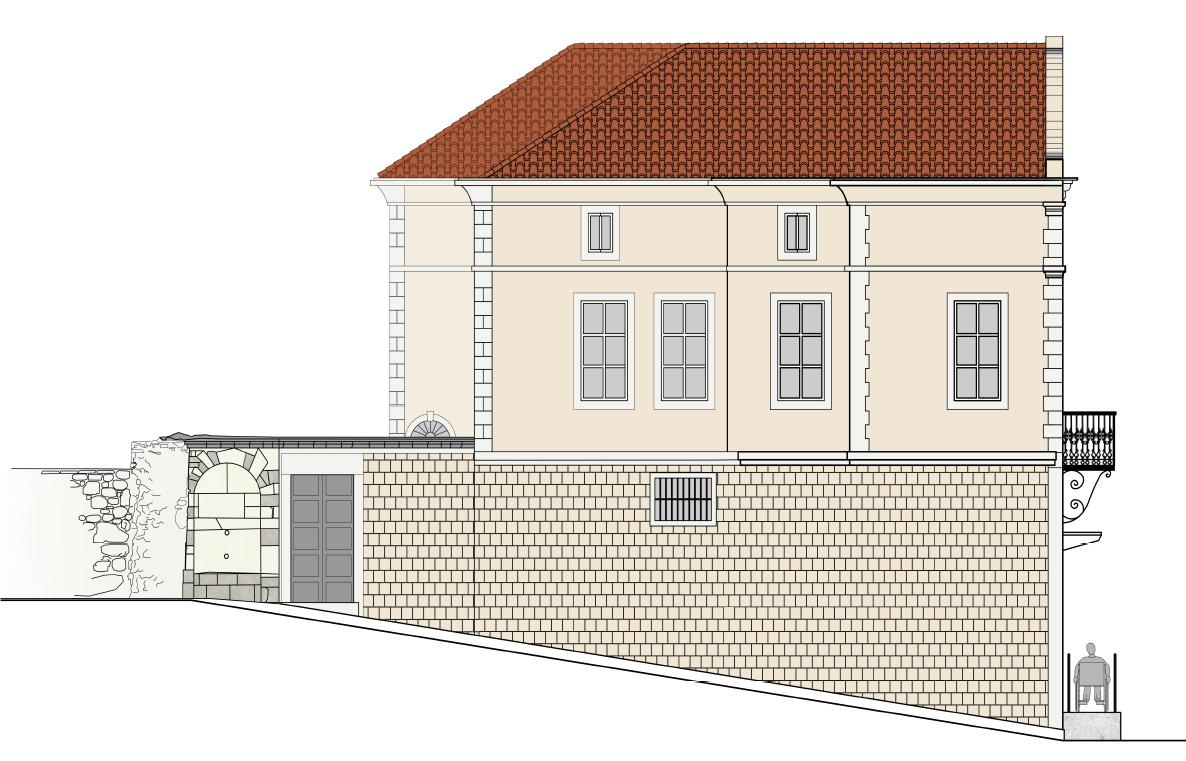
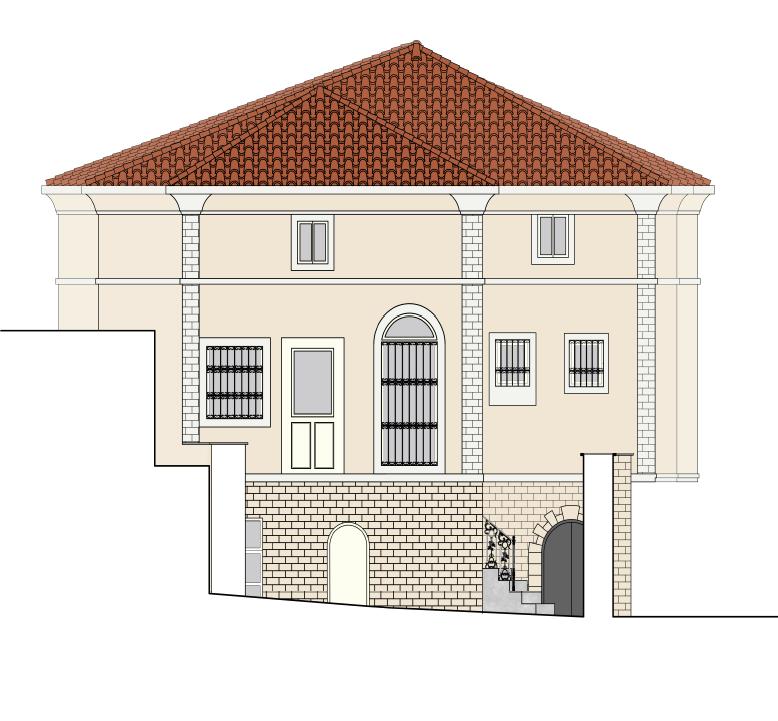
In restoring, adapting, and reactivating the historic building under study, the design approach prioritizes both the preservation of its historical and aesthetic value and its adaptation for contemporary use. The interventions were guided by a rigorous evaluation of the building’s architectural integrity and its intended new functions, with particular attention to the following key principles:
• Selective Reversal of Alterations: Removing or correcting modifications that detract from the building’s authenticity.
• Historical Conservation: Retaining significant features, including later valuable additions, to preserve its identity.
• Targeted Restoration: Partially restoring original typology, form, and materials to honor the building’s initial design.
• Balanced Interventions: Employing bold changes where permissible, while exercising restraint in areas requiring sensitivity.
• Modern Adaptation: Reconfiguring spaces to meet contemporary urban and visitor needs.
• Contrasts in Design: Highlighting the dynamic interplay between historical preservation and modern requirements.
This approach to intervention respects the building’s historical fabric while thoughtfully integrating new functions, resulting in a sensitive yet dynamic reactivation that honors its heritage while ensuring relevance for the future.
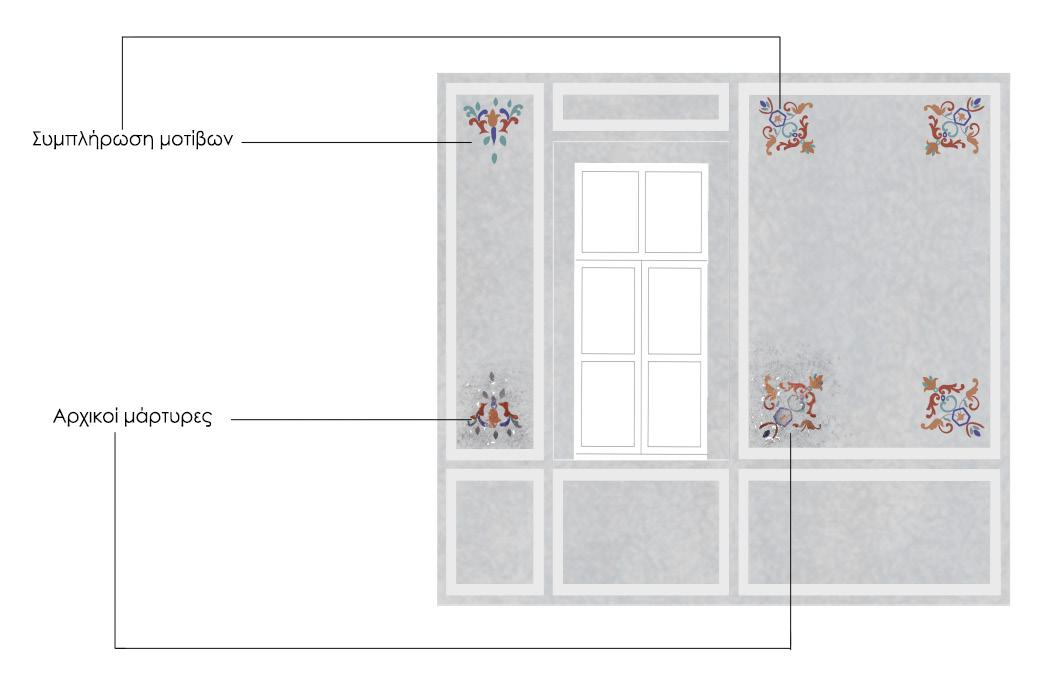
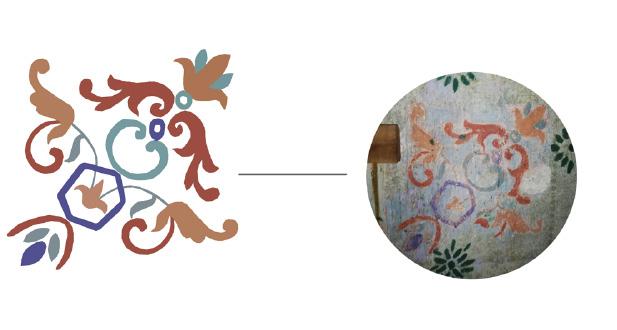
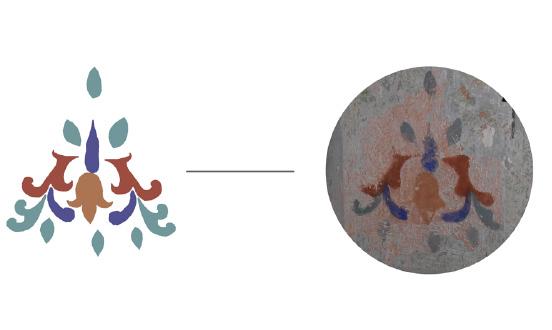
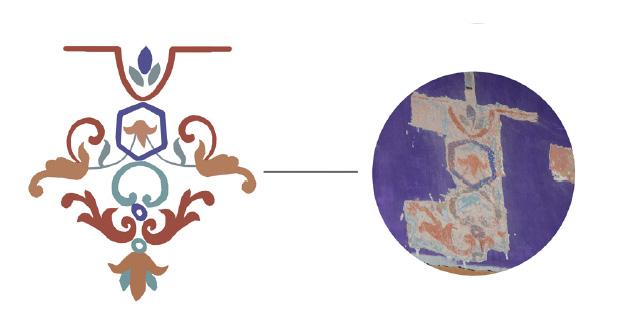
Pattern Completion
Original Witnesses
Building Program Concepts
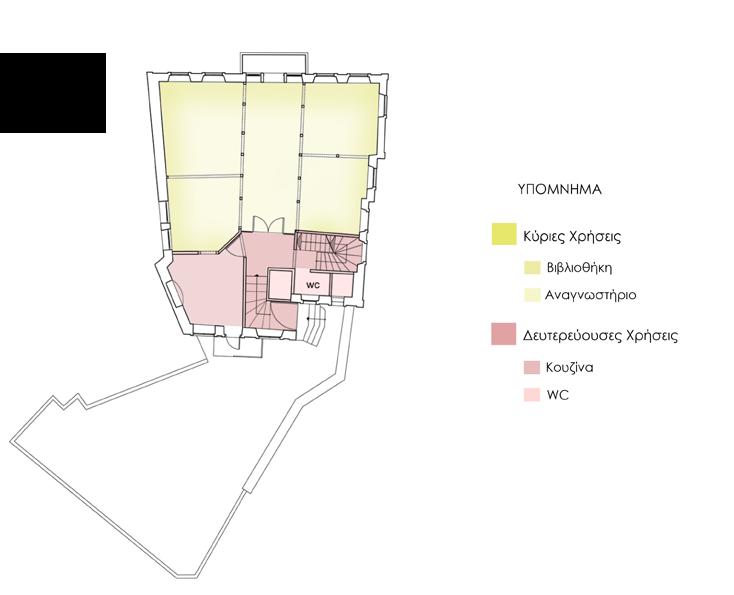
• Ground Floor: Dedicated to a printing and laser area, materials storage, cafeteria, general storage, and restroom facilities.
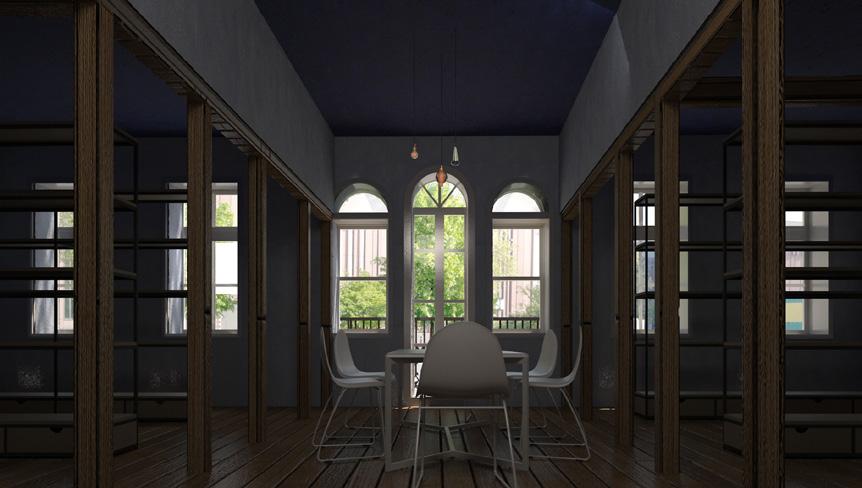
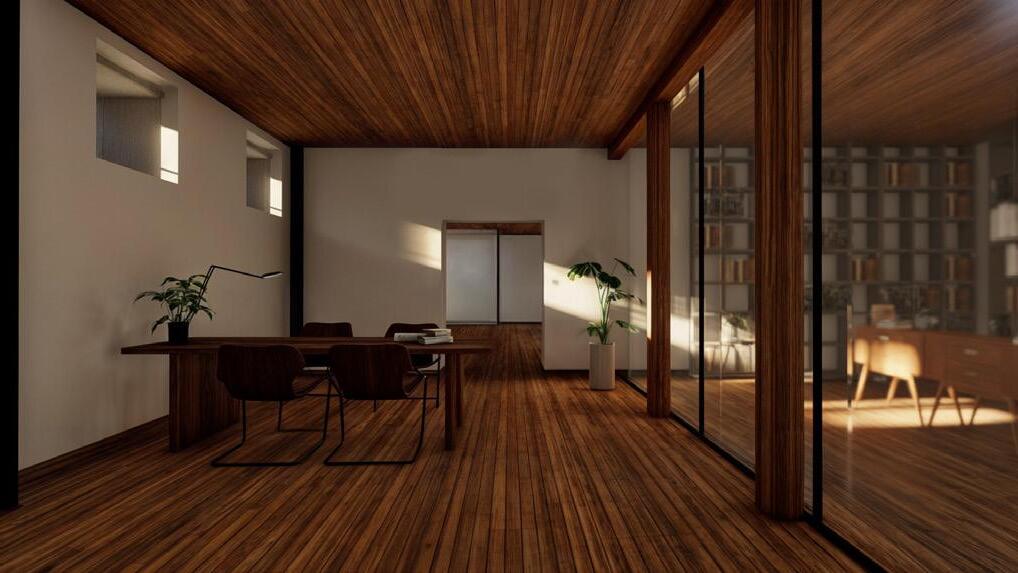
• First Floor: Designed as a library with an extensive selection of books for reading and borrowing, complemented by a study area, a self-contained kitchen, and restrooms.
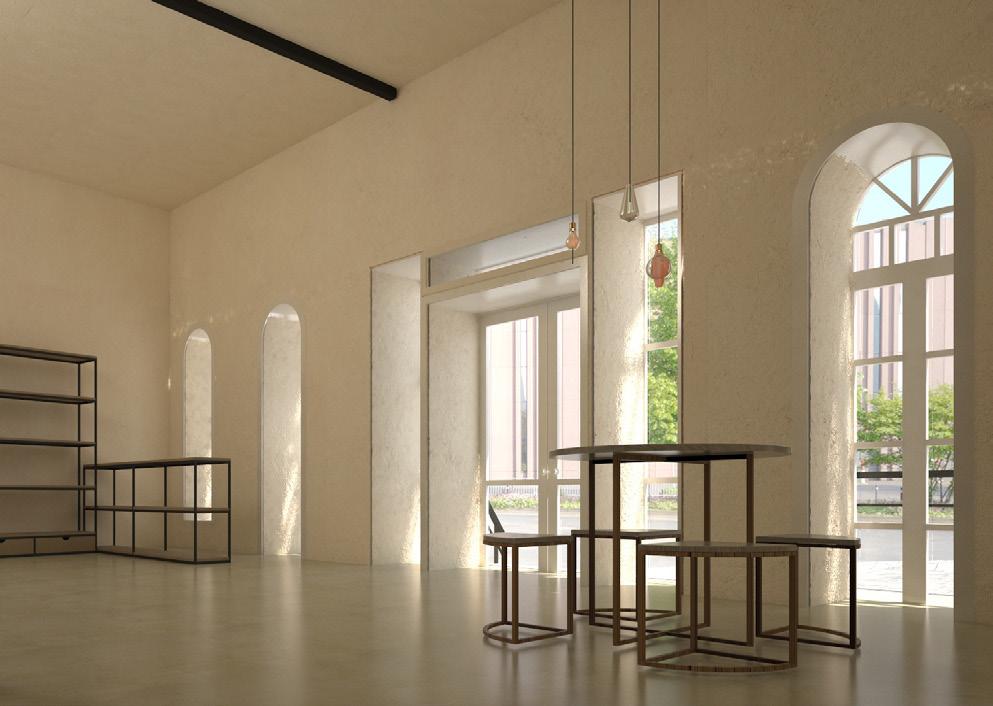
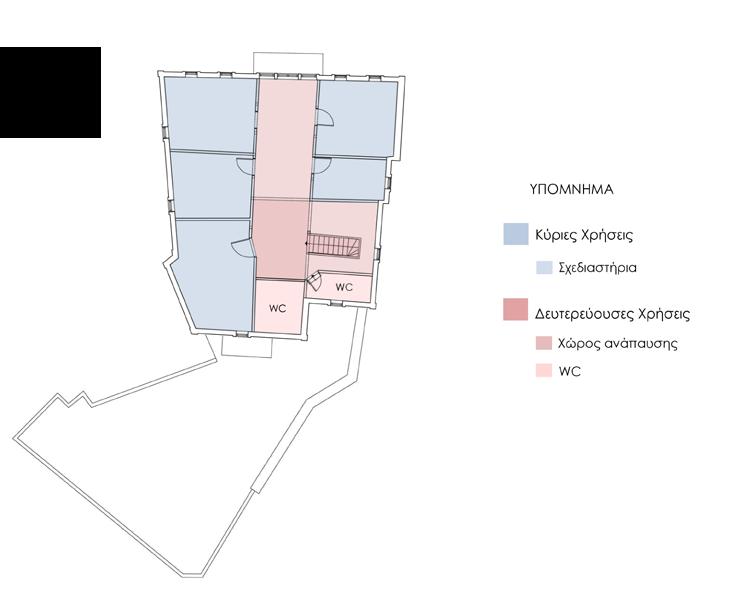
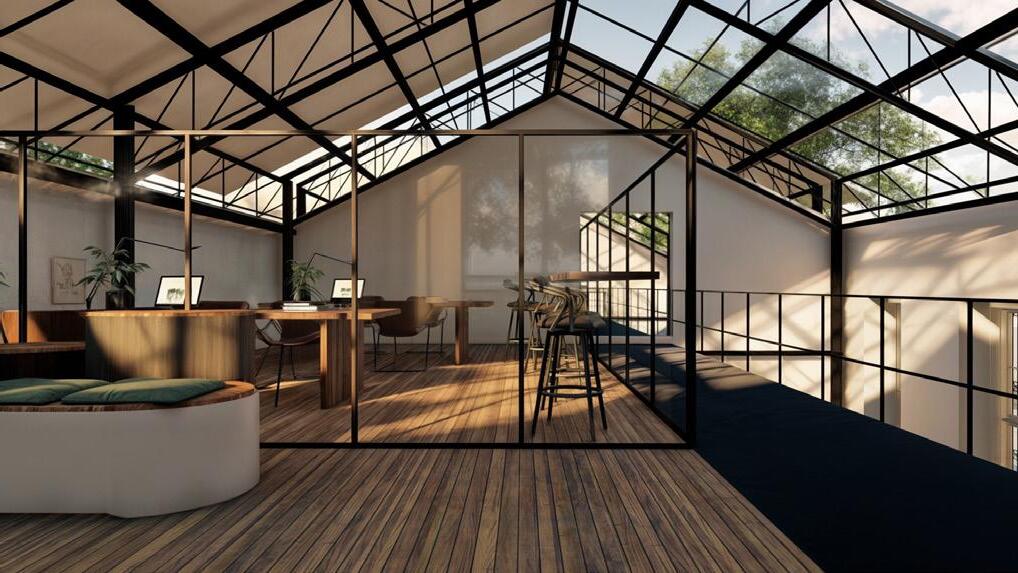
• Attic: Envisioned as a series of design studios for individual, group, and thesis work, along with a rest area to accommodate the significant hours students spend in studio work.
The proposed restoration and adaptive reuse address community needs for accessible gathering spaces and essential storage.
The first-floor library will offer a rich resource of materials and a tranquil study environment, while the attic studios create specialized workspaces that respond to current overcrowding issues in the Architecture Department, where temporary design studios have been set up in general classrooms.
These programmatic choices directly address the building’s spatial deficiencies and service needs, revitalizing it as a functional, resource-rich center that supports the academic community.
New Uses Diagrams
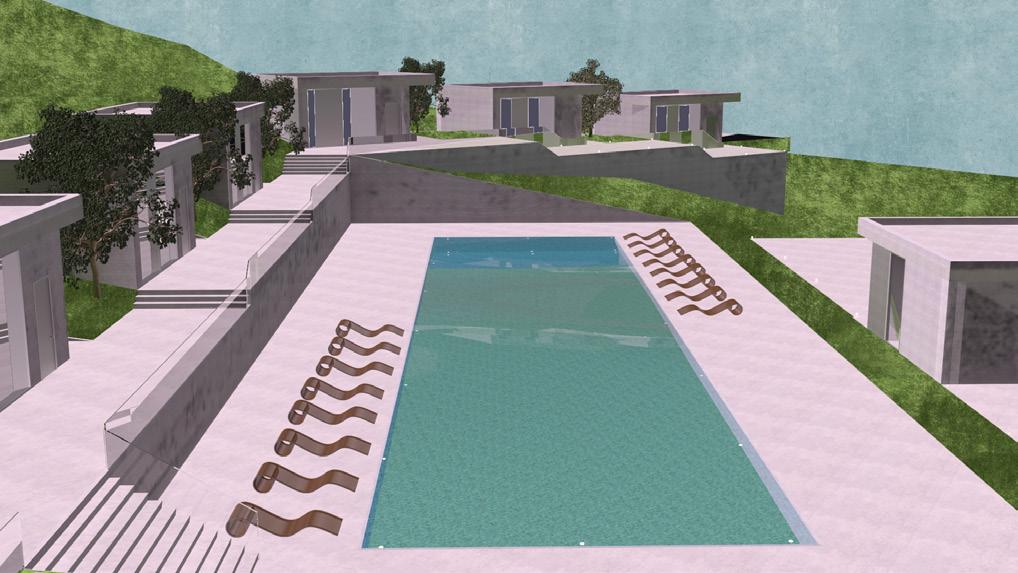
Spa facilities & hospitality areas in Therma, Samothrace.
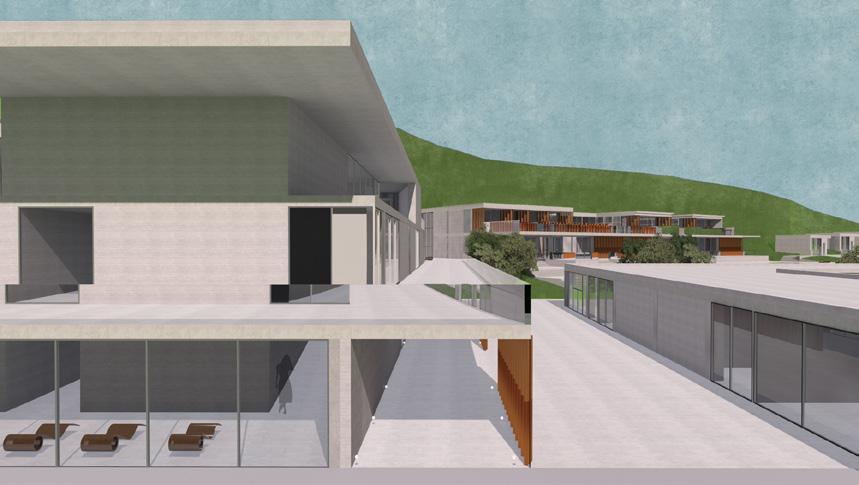
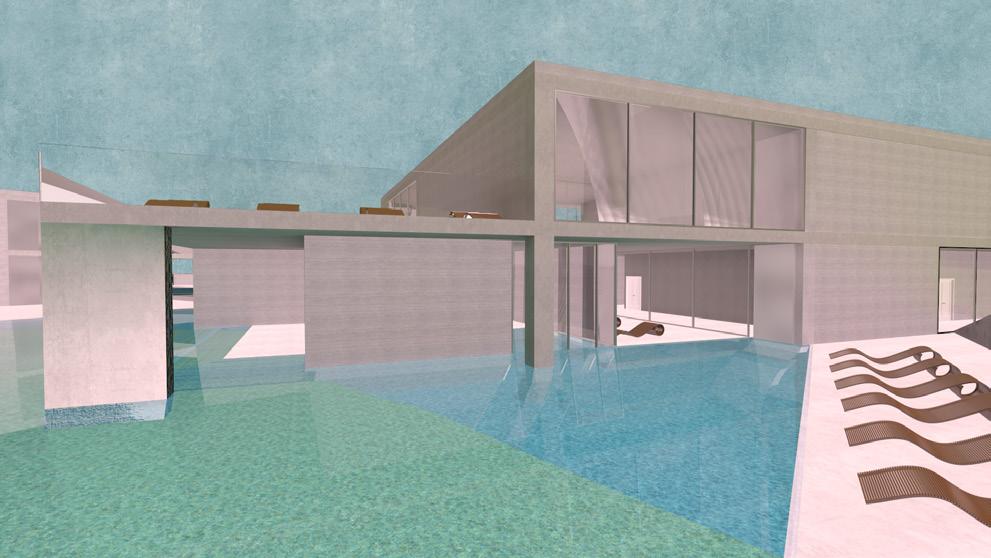
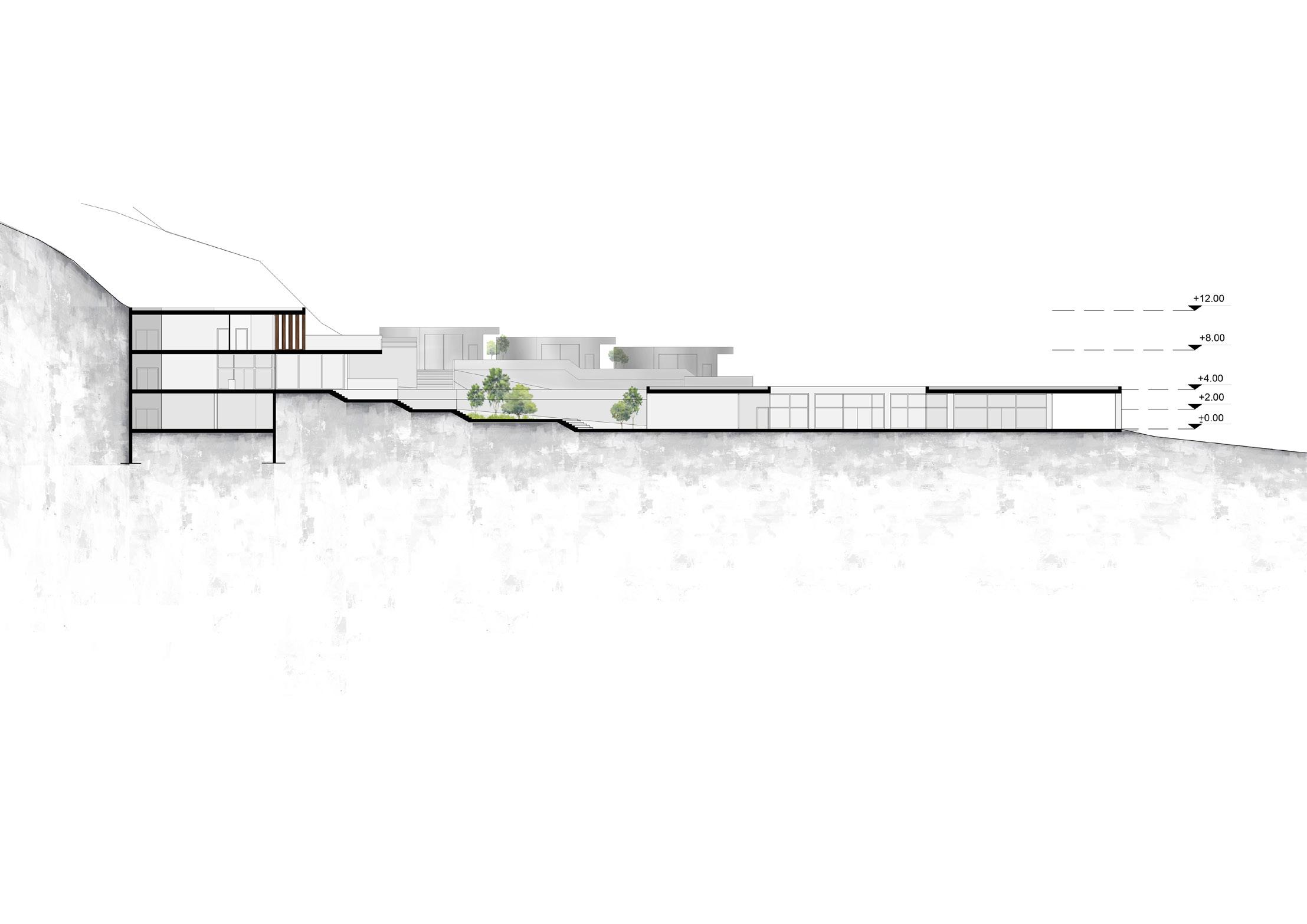
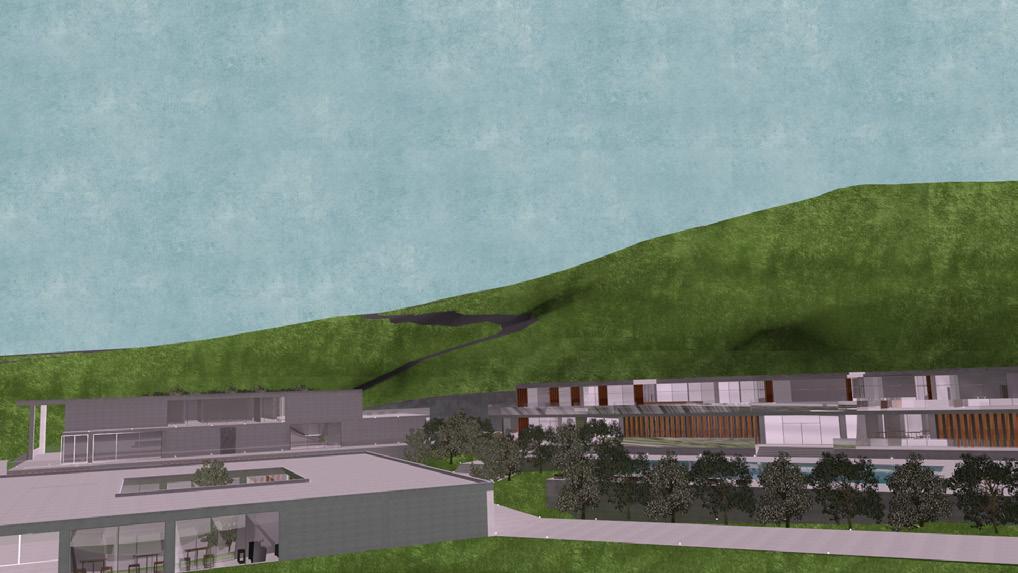
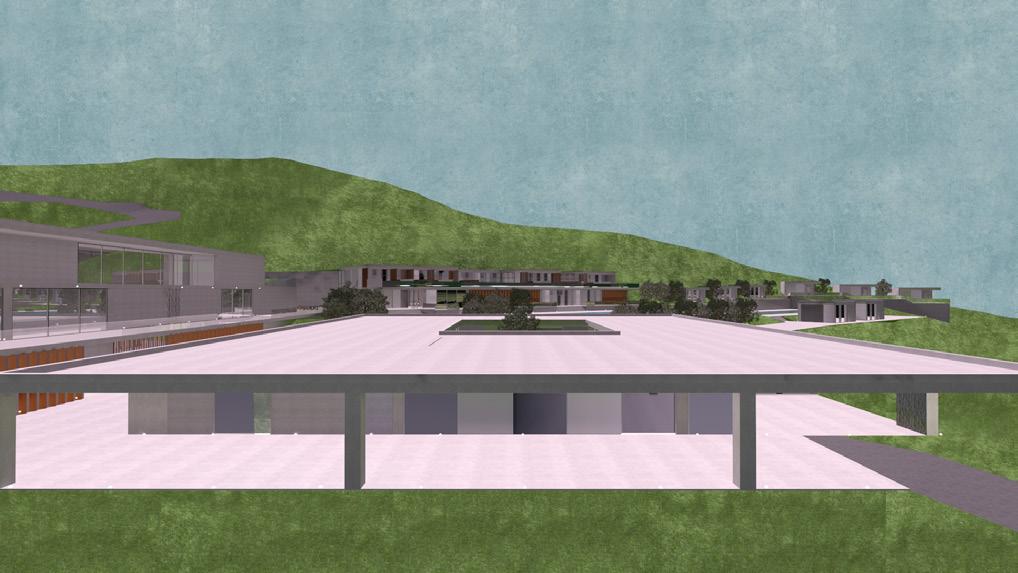
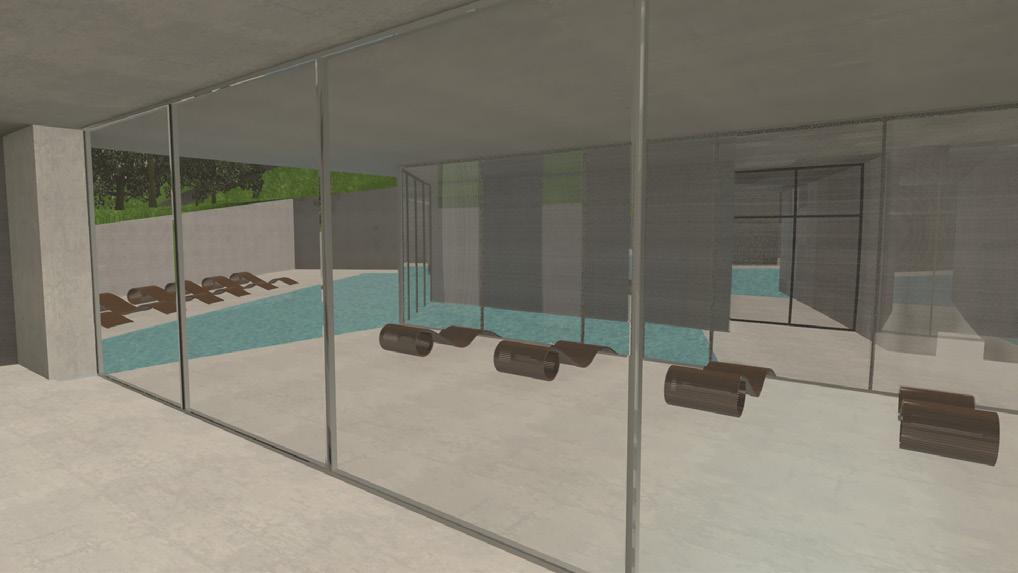
The composite concept was carefully developed within the natural landscape of Therma, Samothrace, with an emphasis on respecting and enhancing the site’s unique character.
Extensive research and analysis of the area informed key design objectives, including the use of simple, minimalistic forms, tranquil lines, a modular cellular structure & a progression across multiple levels.
These guiding principles inspired the creation of spa facilities, a wellness center, and hospitality spaces that blend harmoniously with the natural terrain and atmosphere of Therma.
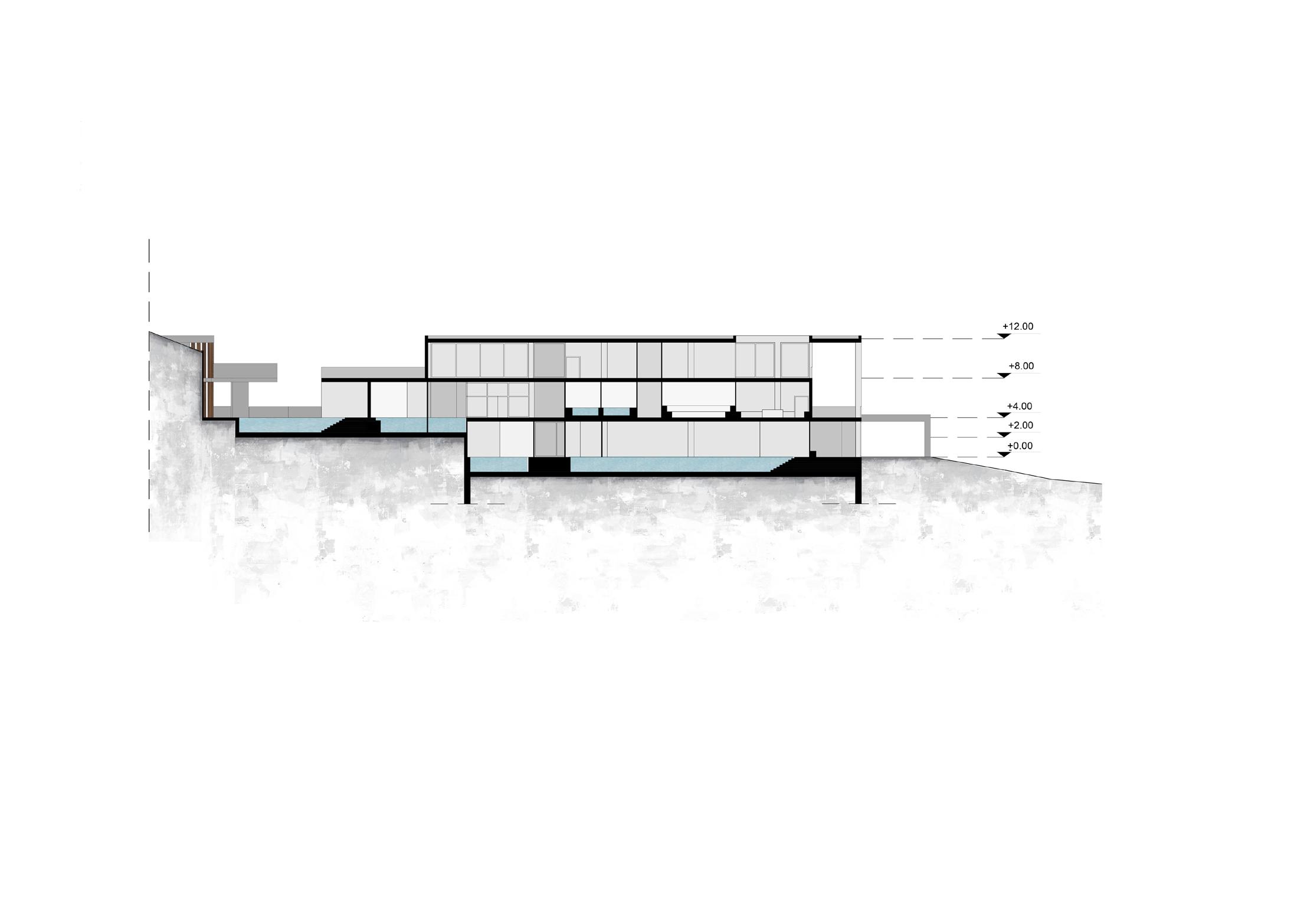
The facilities are organized into three distinct architectural volumes, each dedicated to a specific programmatic function. This arrangement allows each volume to operate autonomously, ensuring efficient functionality, while the unified design language creates a cohesive whole that is visually and spatially integrated.
The result is an architectural composition that balances independence and unity, seamlessly connecting the building’s uses to both the surrounding environment and to one another.
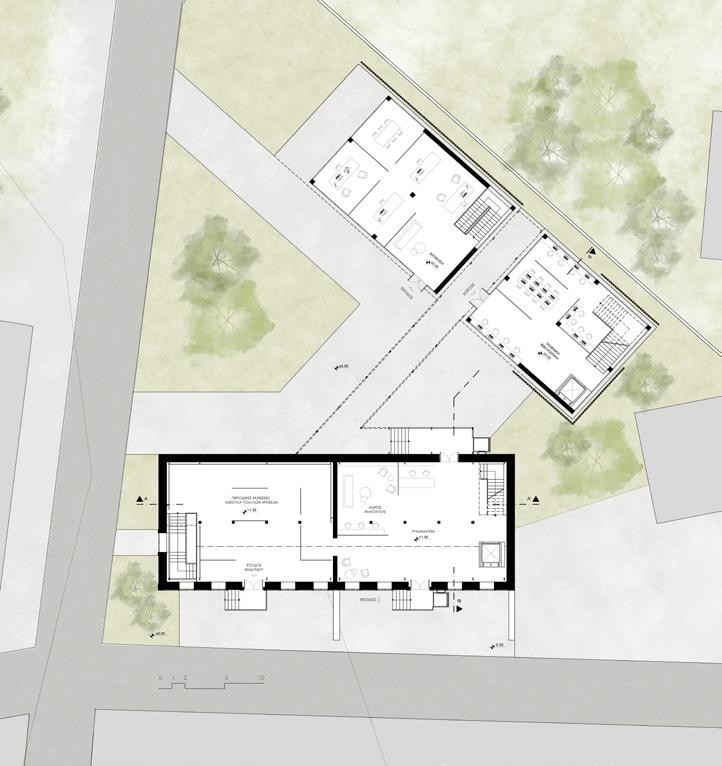
Restoration of the Tobacco Warehouse on Nestos Street, Xanthi.
This thesis, focuses on the restoration and reuse of a tobacco warehouse in the city of Xanthi.
It is divided into four sections:
• the first provides a historical overview of the tobacco industry in Xanthi and an analysis of the city’s urban fabric;
• the second documents the warehouse through photogrammetry and architectural drawings to assess its structural integrity and features;
• the third analyzes its current condition, including materials, construction methods, and preservation status, while proposing restoration plans;
• the final section presents a proposal to repurpose the building as a digital library and reading room to support the local university community, promoting education and heritage preservation.
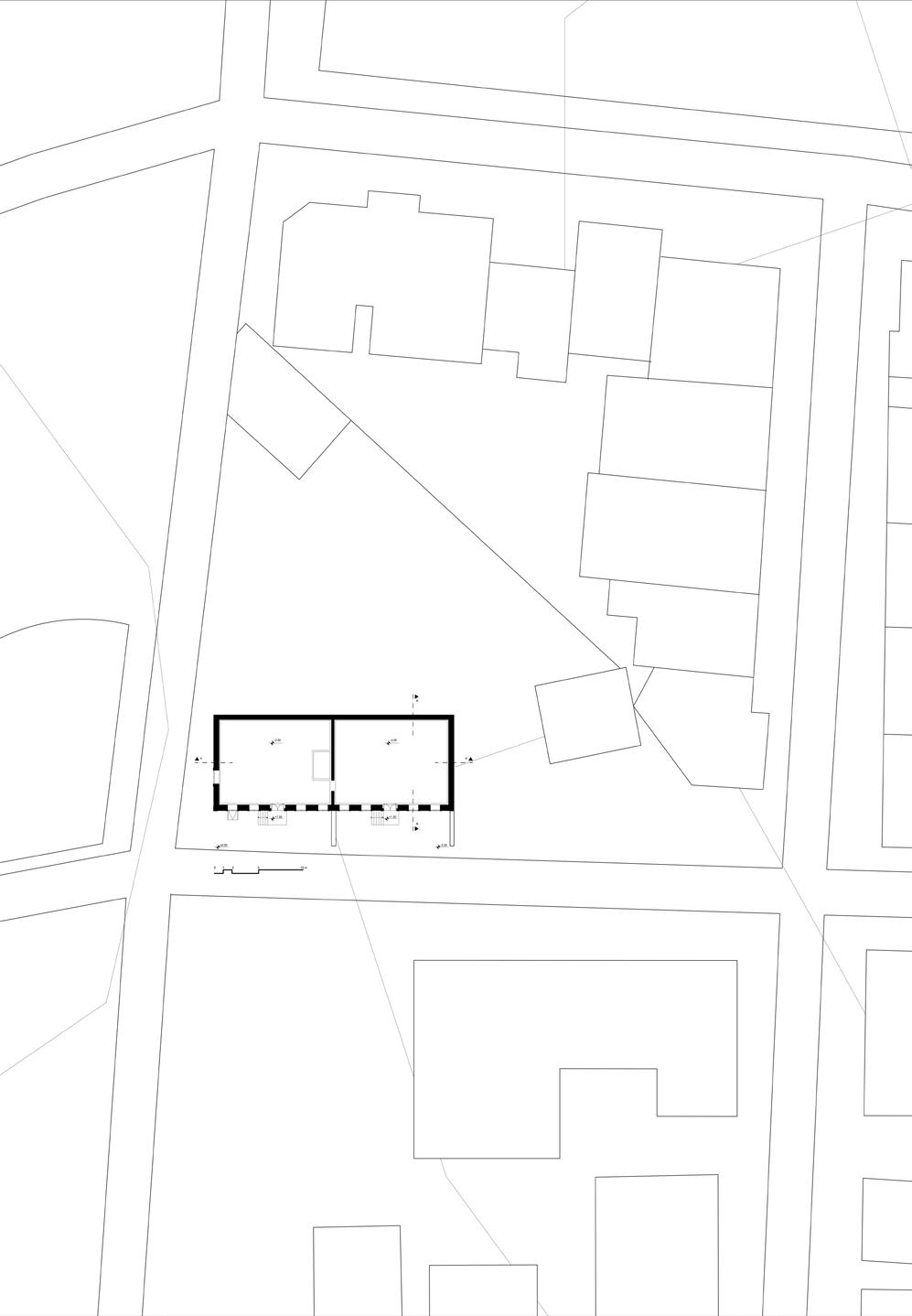
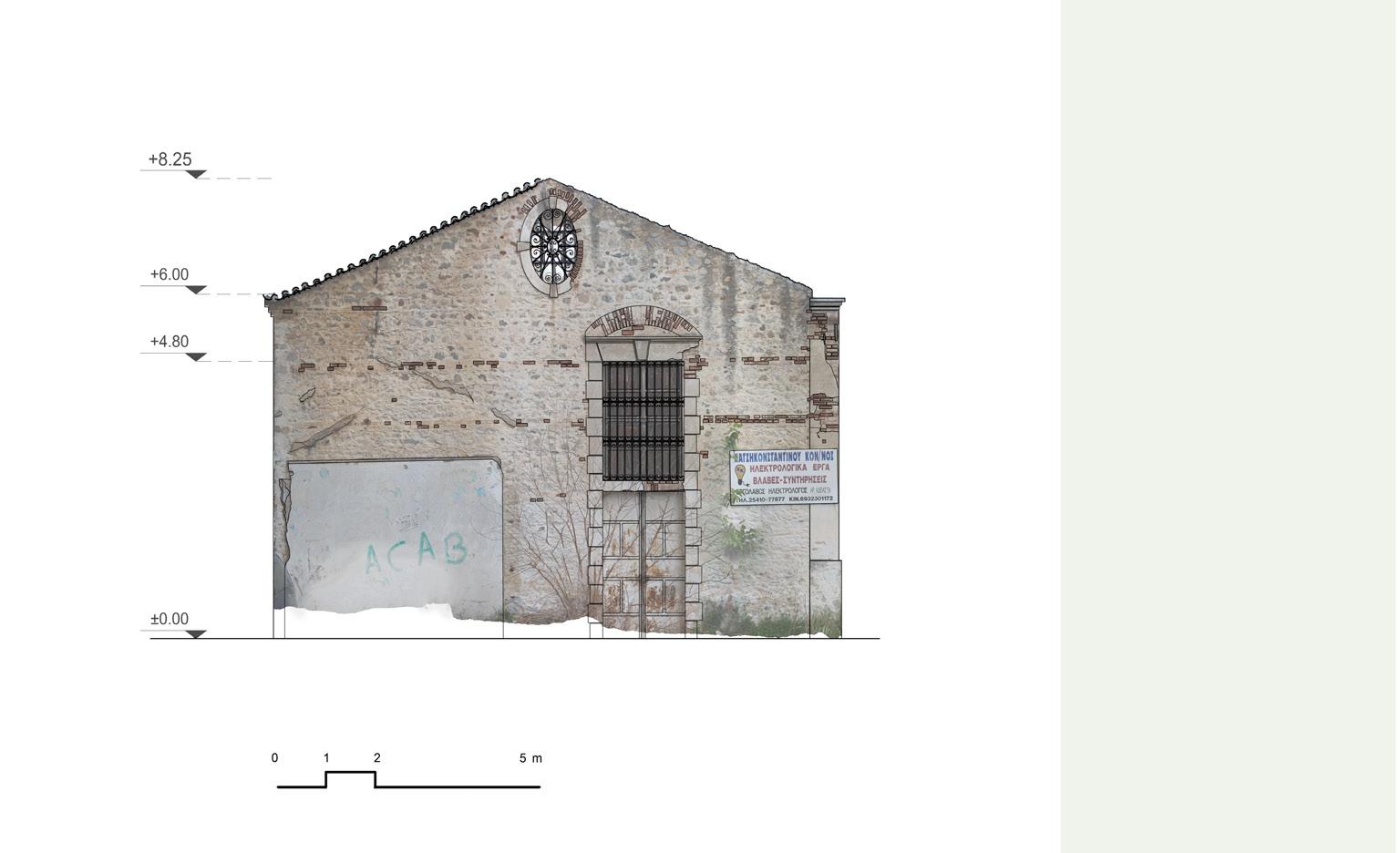
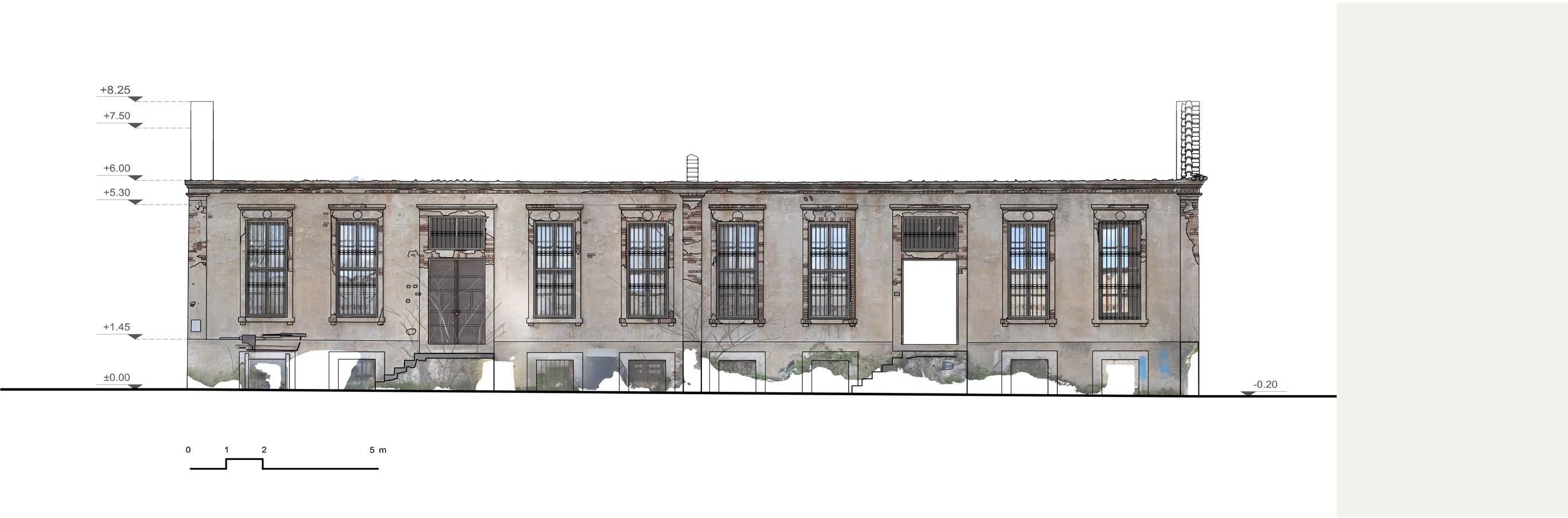
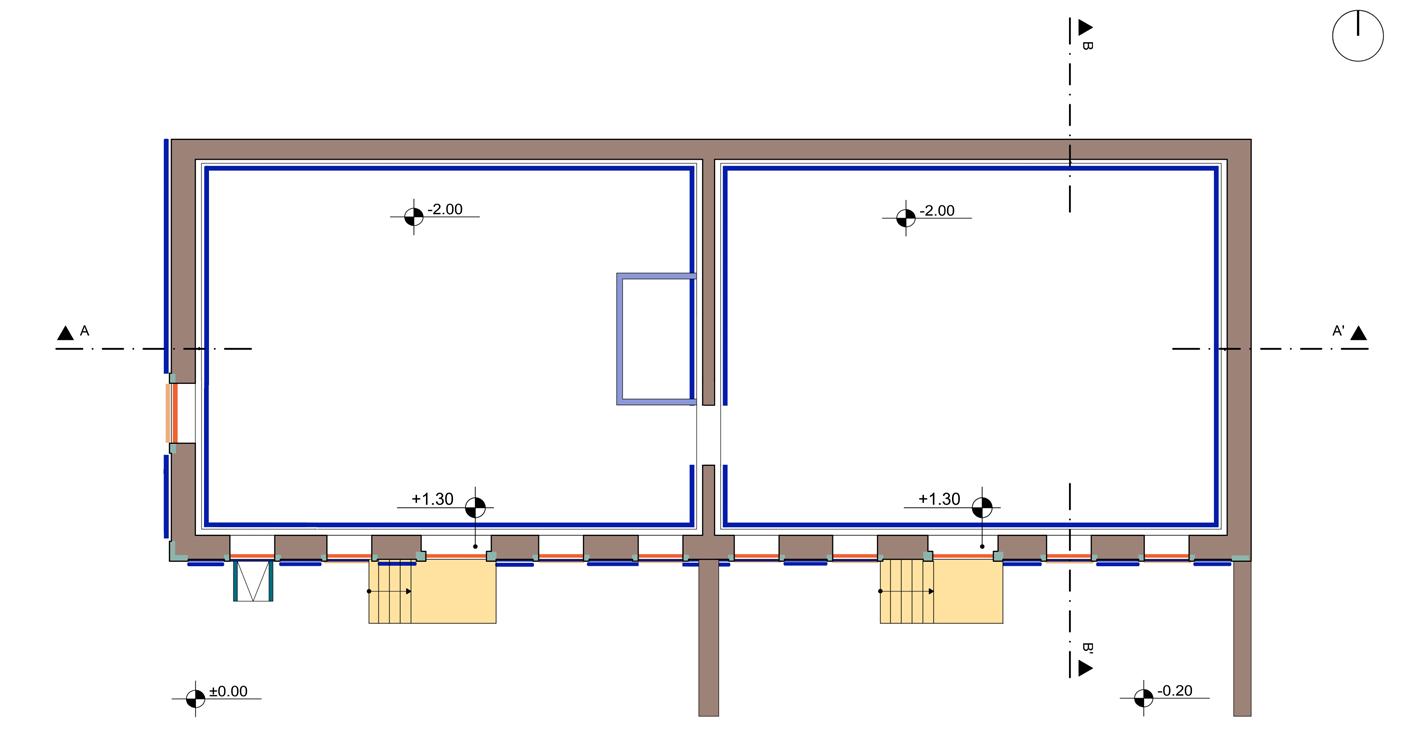
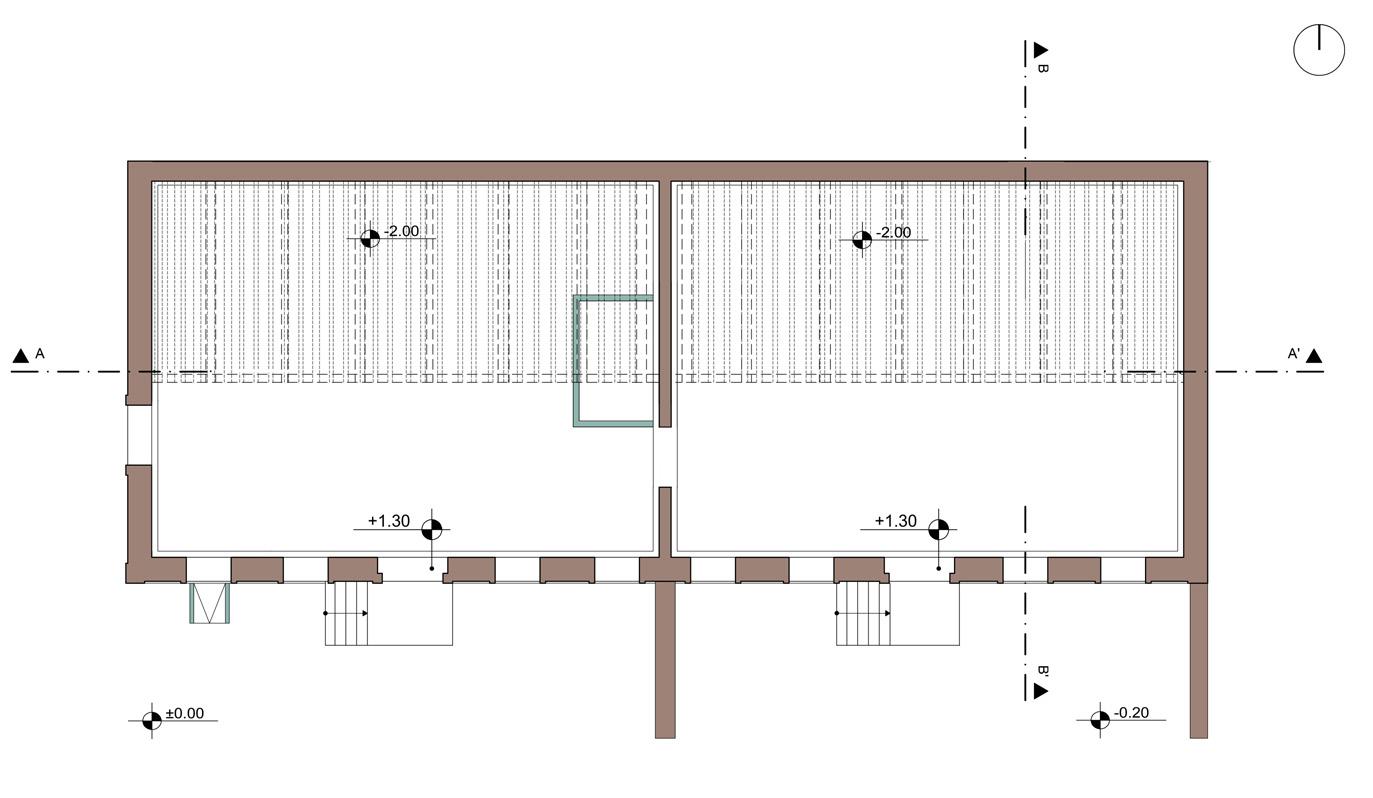
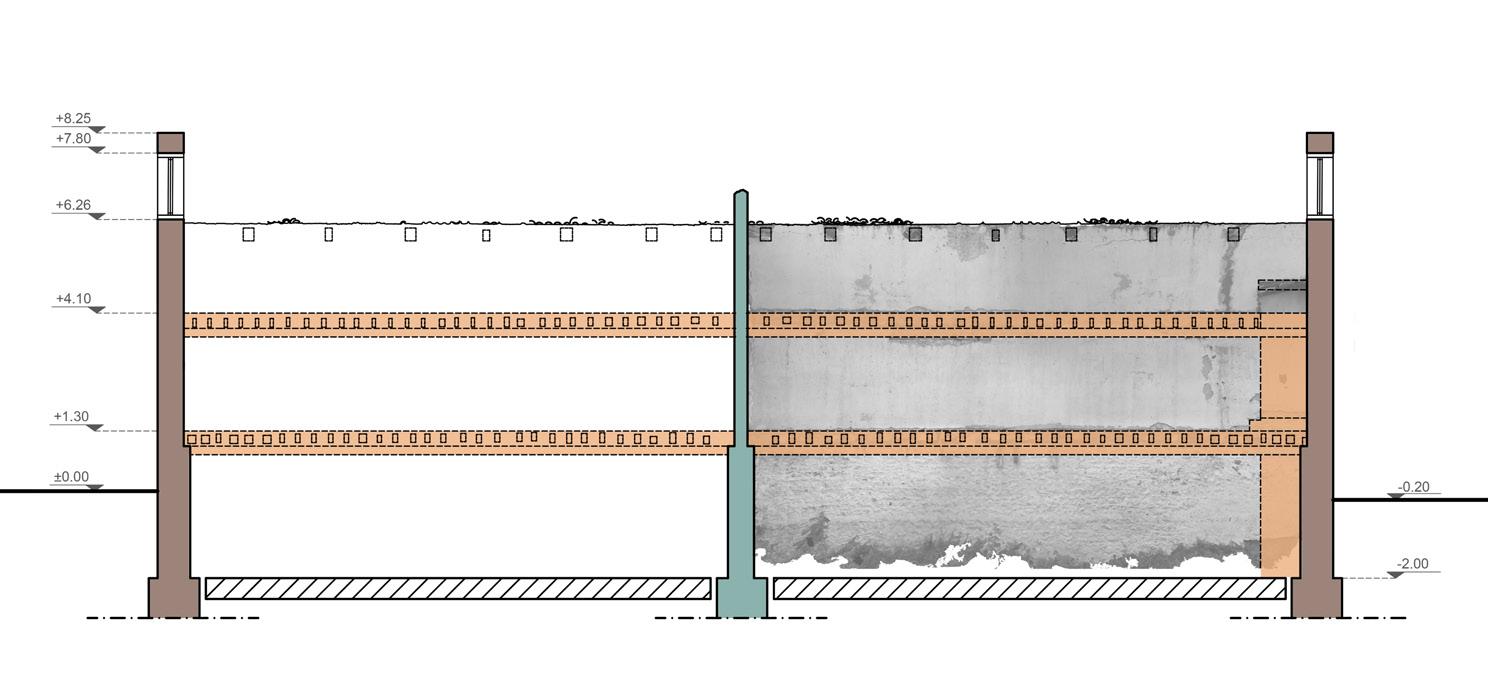
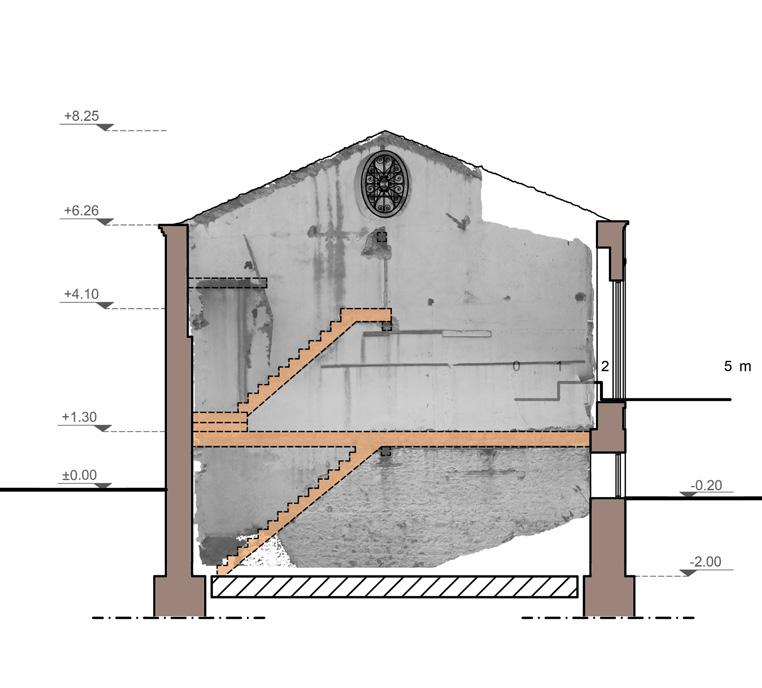
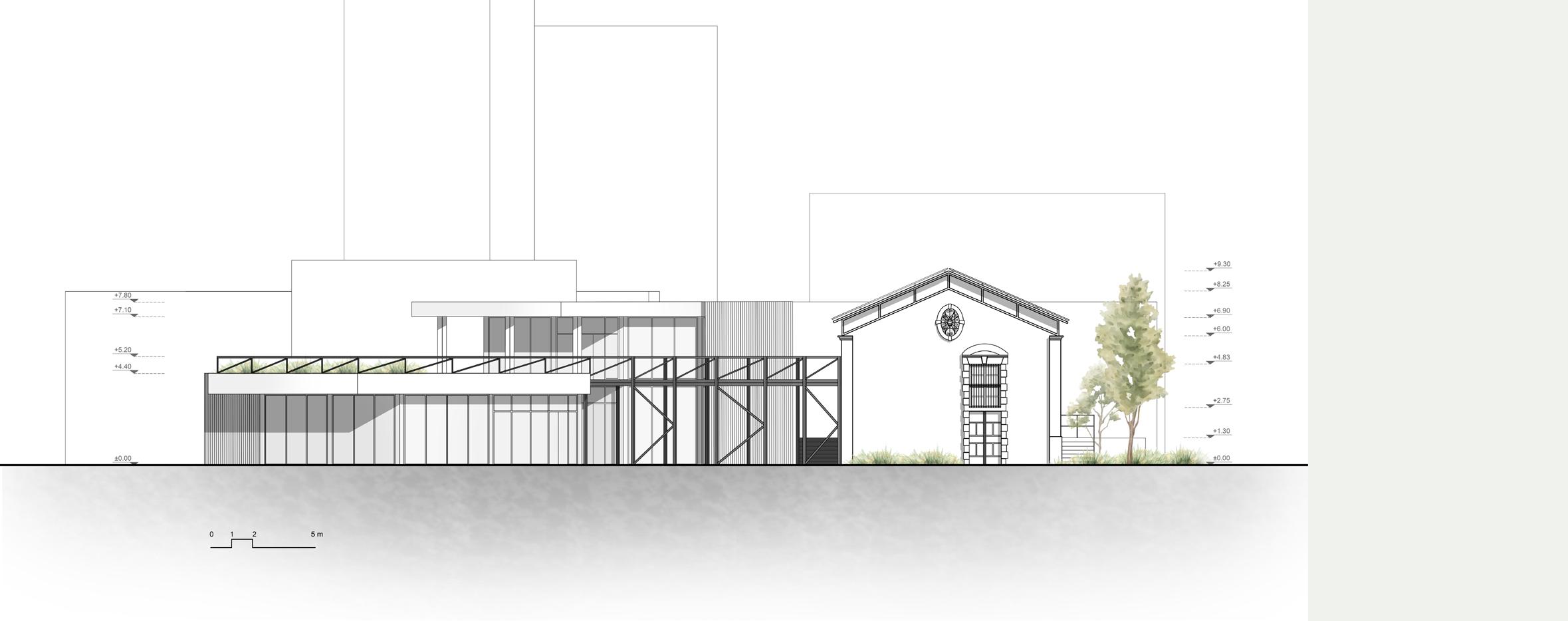
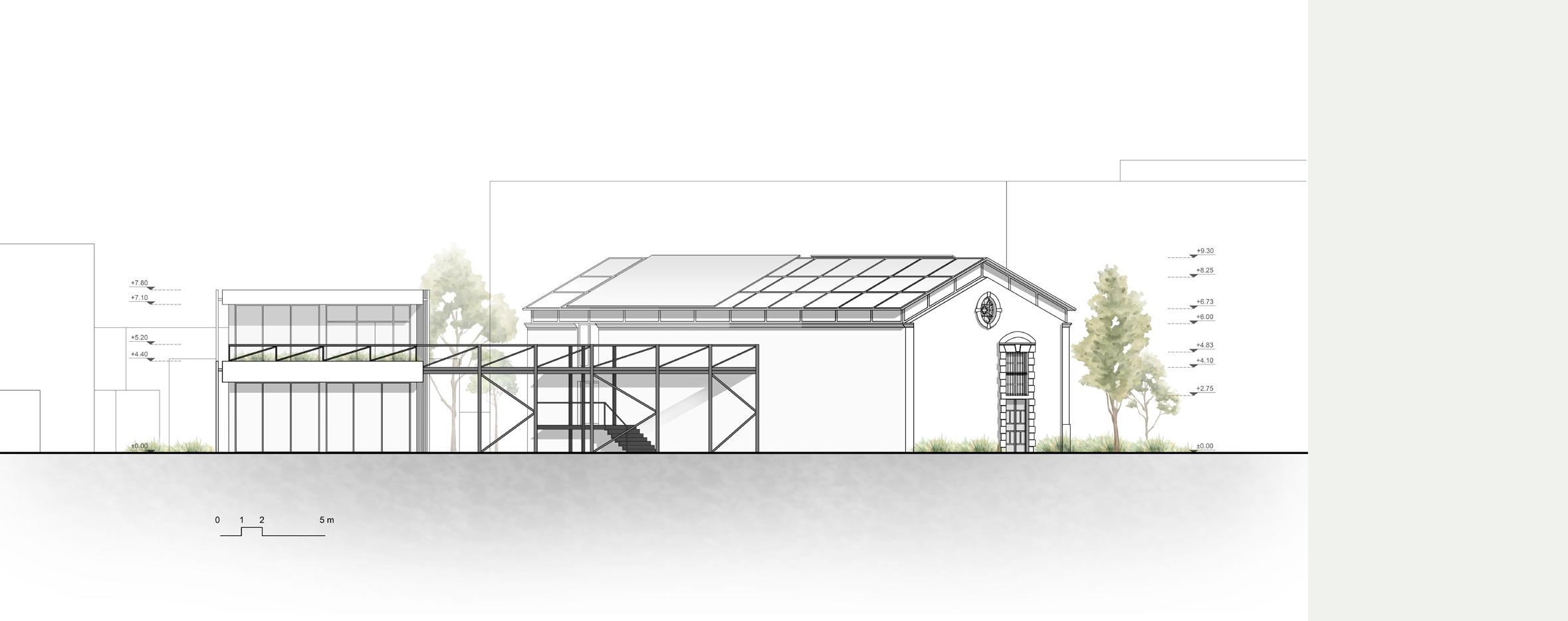
The tobacco warehouse, is located in the center of Xanthi, is a small, rectangular building (10.50m x 27m) and was used primarily for tobacco storage.
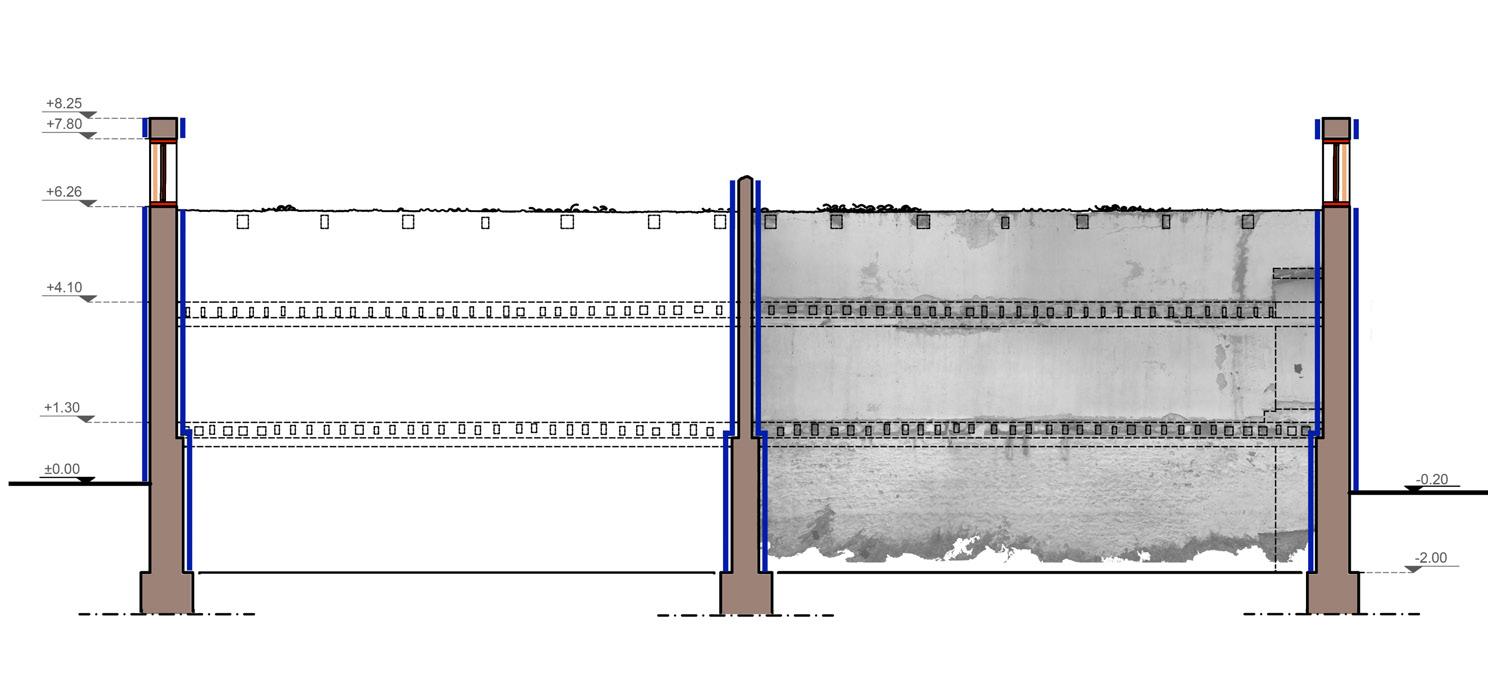
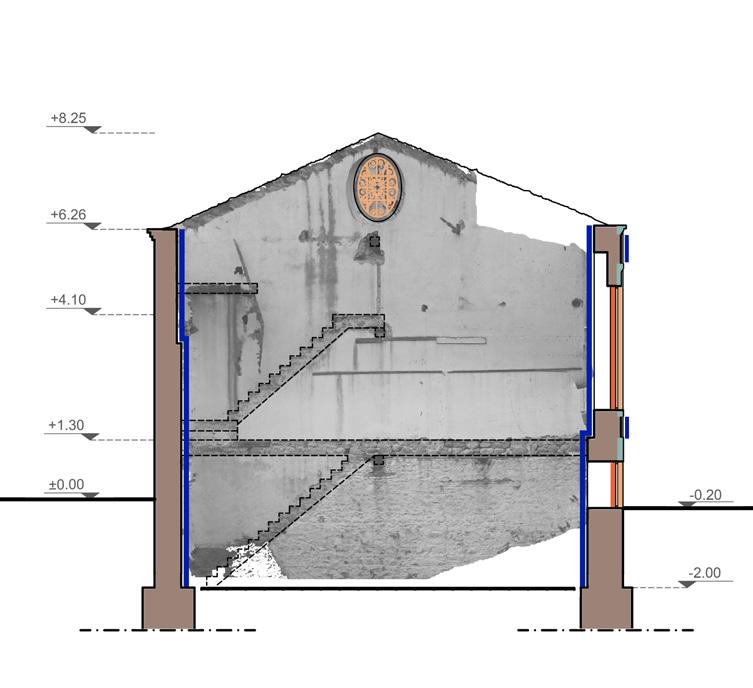
Despite being a single structure, it functioned as two separate spaces, indicated by dual entrances and an internal partition wall. The building had a main level at +1.30m, a semi-basement at -2.00m, and a now collapsed mezzanine.
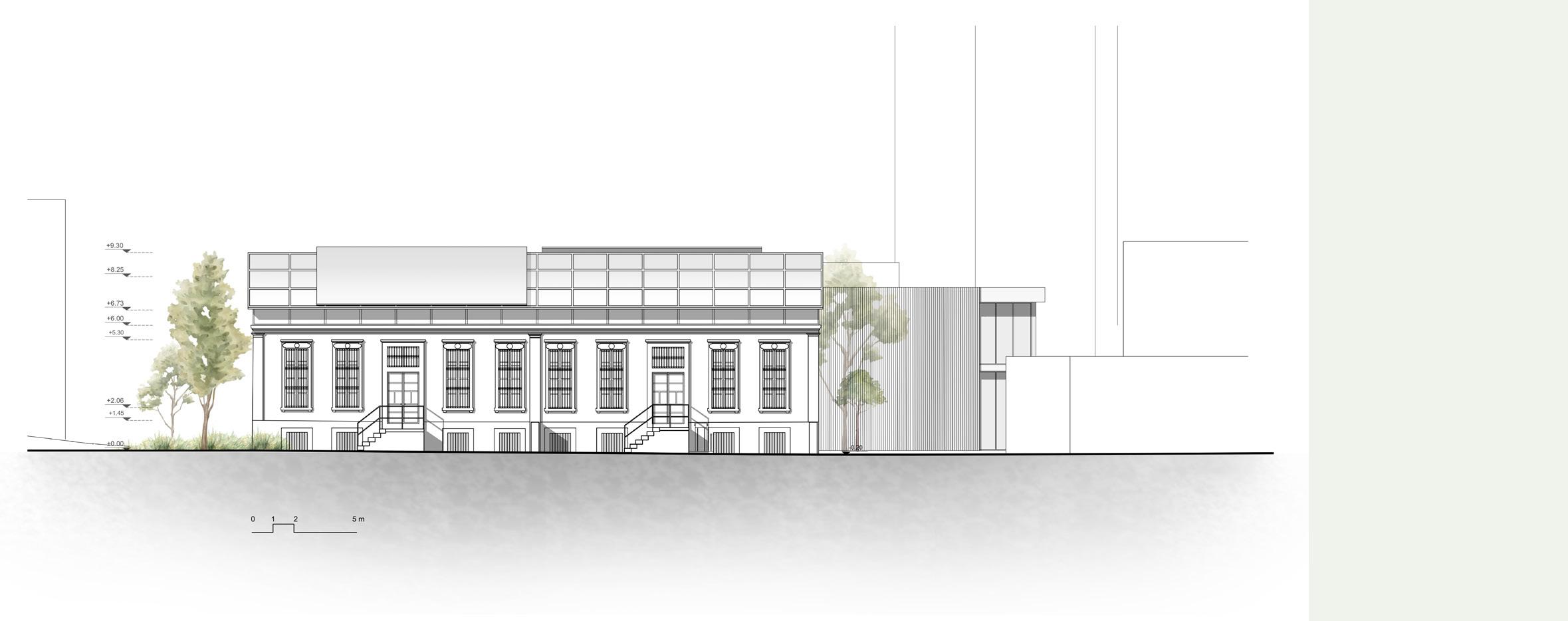
Its simple, symmetrical façades feature wooden windows with iron bars, stone staircases, and skylights. The original dual-pitched wooden roof is no longer intact, leaving only the perimeter walls and partition.
In 2011, it was designated a heritage monument.
Analysis and documentation of the existing condition
In this section, the current condition of the building is analyzed and documented.
Beginning with an inventory of materials and construction methods, it is identified that the building is constructed with lime-bound rubble masonry. Within the interior, a later addition includes three walls of perforated brick masonry. On the southern facade, two short concrete walls have been added.
The western and southern facades, as well as the interior walls, are coated with lime plaster, featuring drawn ornamentation over a brick substrate. The window frames are wooden, with external iron grilles for additional security. Two stone staircases lead to the entrances on the southern facade.
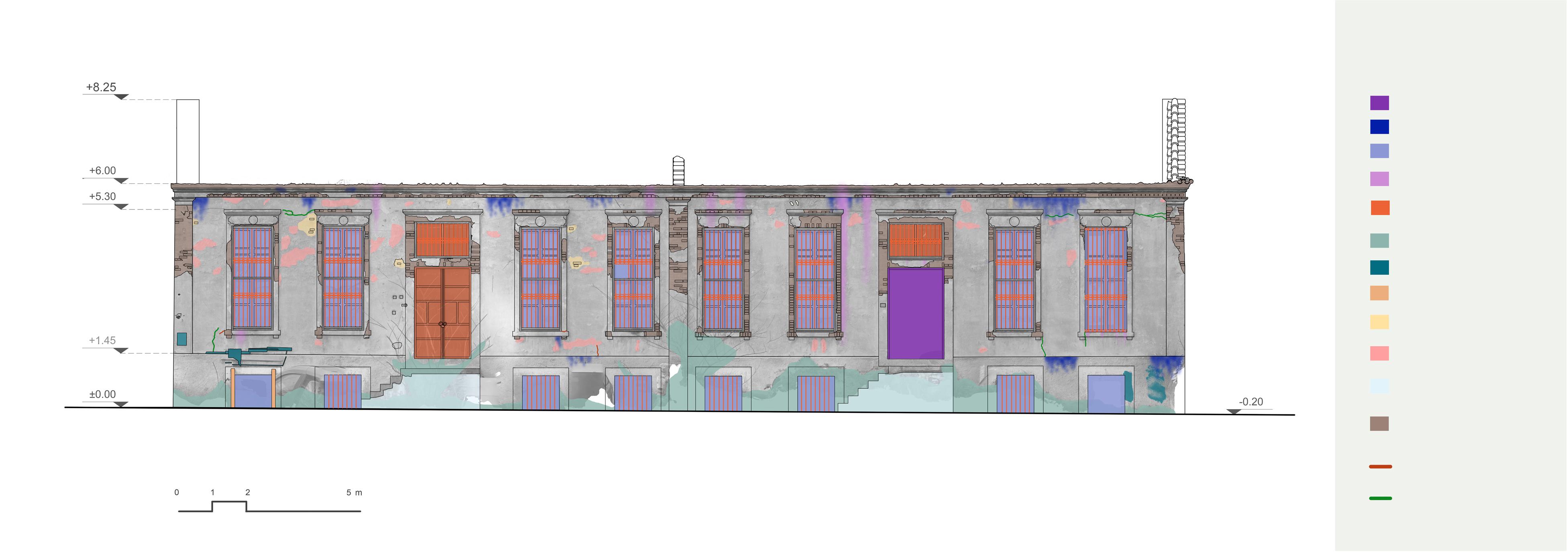
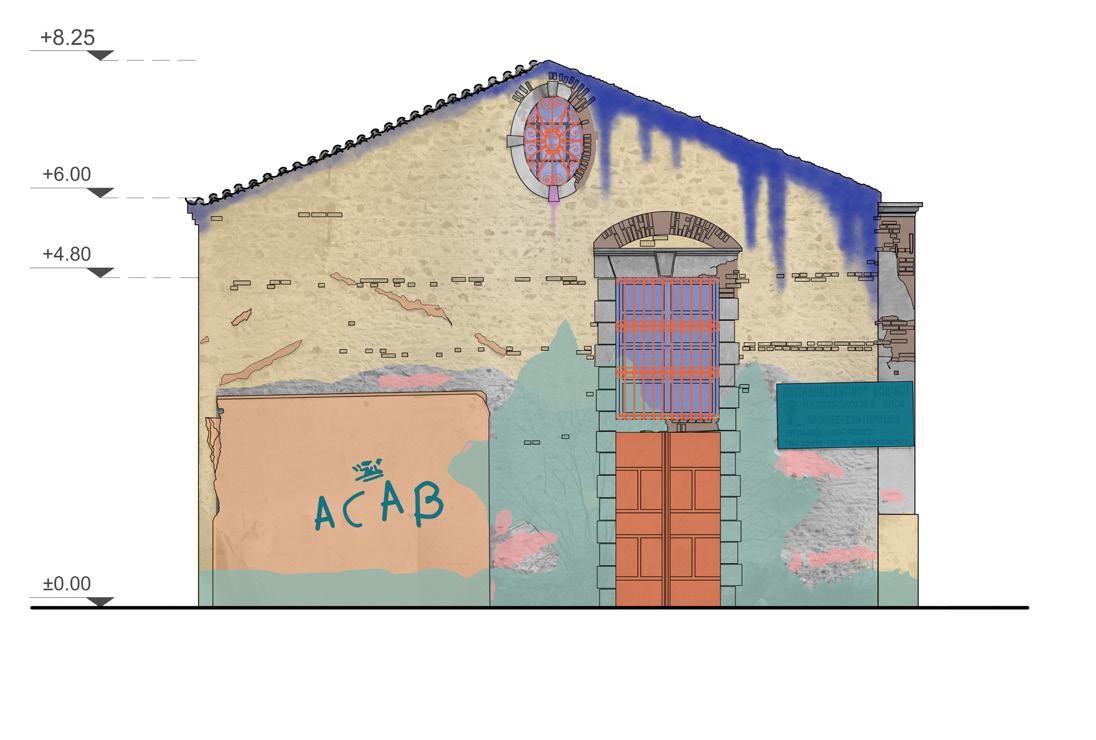
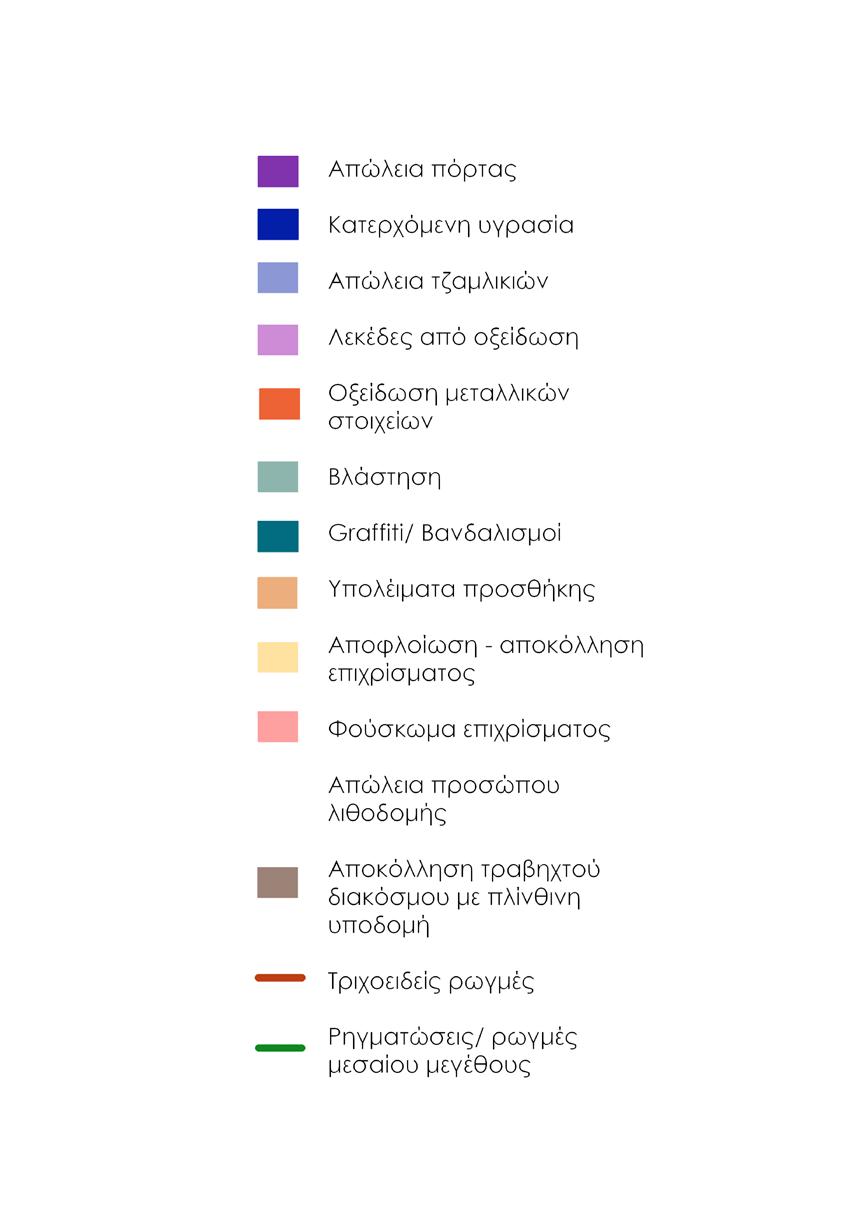
Façade Damage Mapping
Loss of original door
Moisture ingress and water infiltration
Loss or damage of glazing
Staining due to metal oxidation
Oxidation of metallic elements
Vegetation growth
Vandalism / Graffiti
Residues from additions
Peeling/ detachment of plaster
Bulging of plaster
Loss of stone masonry surface
Detachment of ornamental elements with brick support
Capillary cracks
Medium-sized fissures/cracks
Μaterial and Construction Technique Recording Drawings
Lime-mortared rubble masonry
Brick masonry with perforated bricks
External metal bars
Stone staircases
Concrete
Lime mortar plaster
Drawn decoration with brick foundation
Wooden frames
State of Preservation Status
Well-Preserved
Fair Condition
Αbsence of flooring and staircase construction
Αbsence of floor slab
Restoration and Adaptive Reuse Proposal
Research revealed that the local community undervalues the cultural significance of the tobacco warehouses, resulting in inadequate preservation efforts. This realization inspired the thesis, aimed at revitalizing a historic warehouse to enrich the area’s cultural fabric and educational legacy.
The proposal for a Digital Library and Reading Room emerged from the need for infrastructure to support Xanthi’s university students. Libraries, often designed to blend organically with their surroundings, have evolved alongside electronic media, disproving the notion that books and libraries would become obsolete. Instead, libraries have adapted, embracing digital functions while maintaining their role as cultural landmarks.
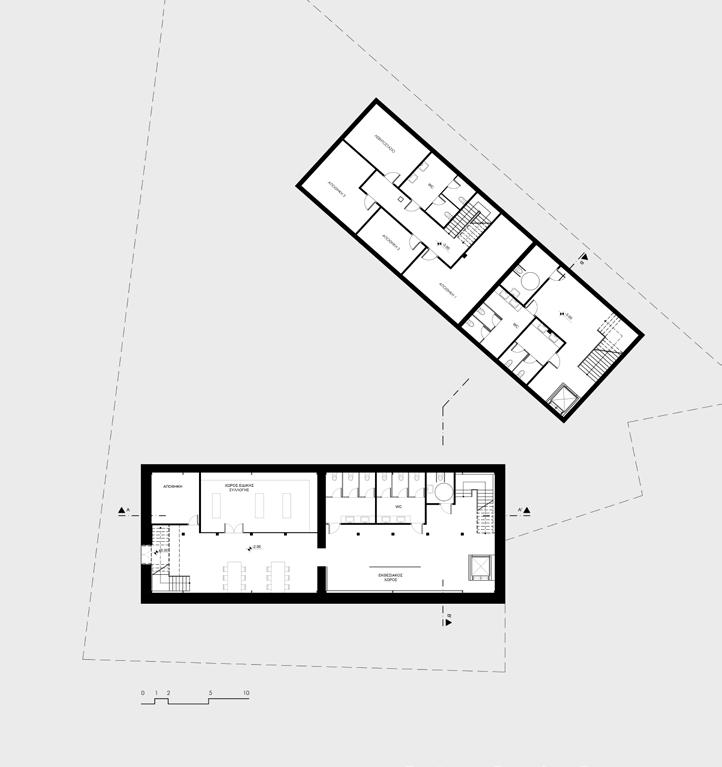
Main Entrance & Interior Layout:
• Main entrance located on the southern facade, at +1.30m.
• Reception and waiting area on the left, stairwell on the right.
• Access to the western part of the building through the partition wall opening.
• Western section houses an exhibition space and multipurpose hall showcasing the history of tobacco in Xanthi and hosting temporary exhibitions.
• Basement level at -2.00m houses special collections, reading room, and storage space.
• Partition wall opening repeated at the basement level for access to the eastern section.
• Eastern section contains a small exhibition area, restrooms, and stairwell back up to the reception.
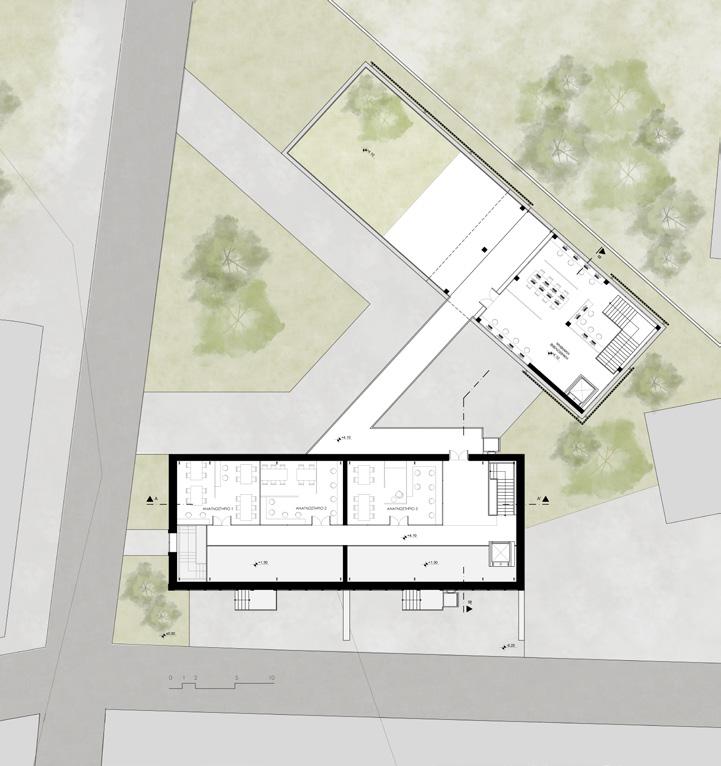
Upper Floor (at +4.10 m):
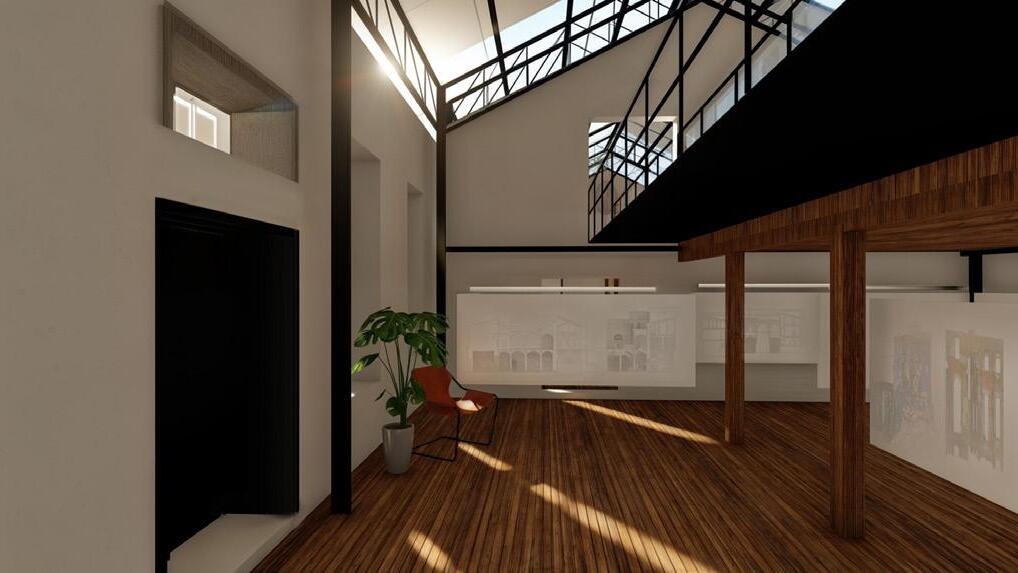
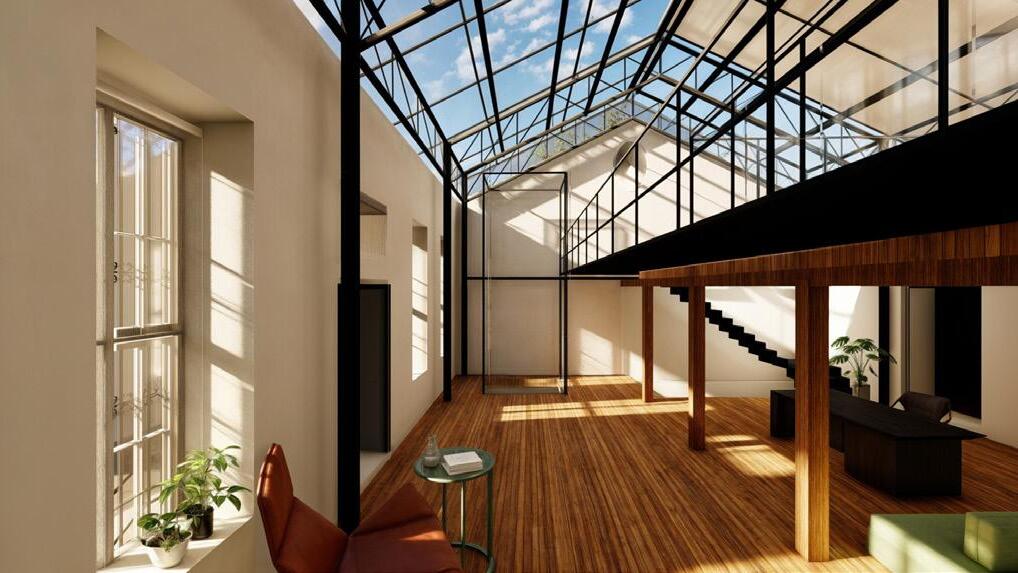
• Stairwell leads to the expanded +4.10 m level.
• Floor previously extended halfway but now expanded using a metal structure and U-beams surrounding wooden floor beams.
• Three reading rooms added to accommodate students.
Uses
New Building Addition:
• Two new openings in the northern facade at +1.30 m and +4.10 m to connect the building with the surrounding area and new building via a metal bridge.
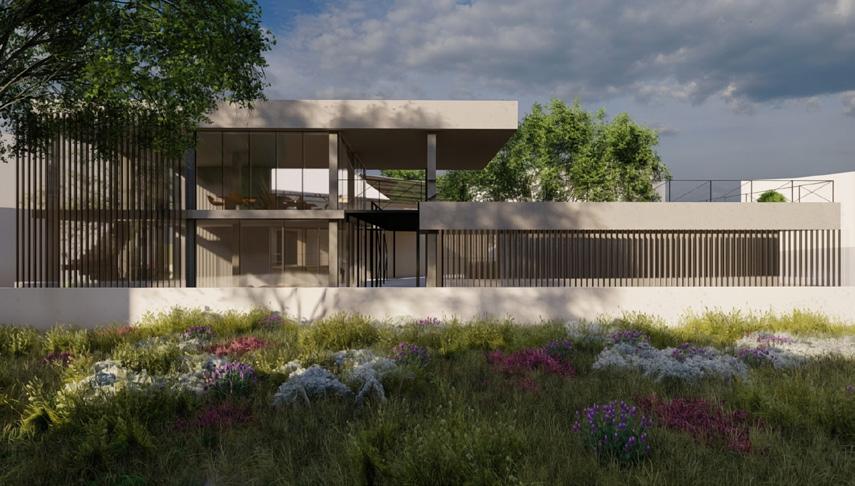
• New building consists of two volumes: a ground floor and a two-story structure, designed in harmony with the tobacco warehouse.
• Ground floor volume houses administration offices and a meeting room.
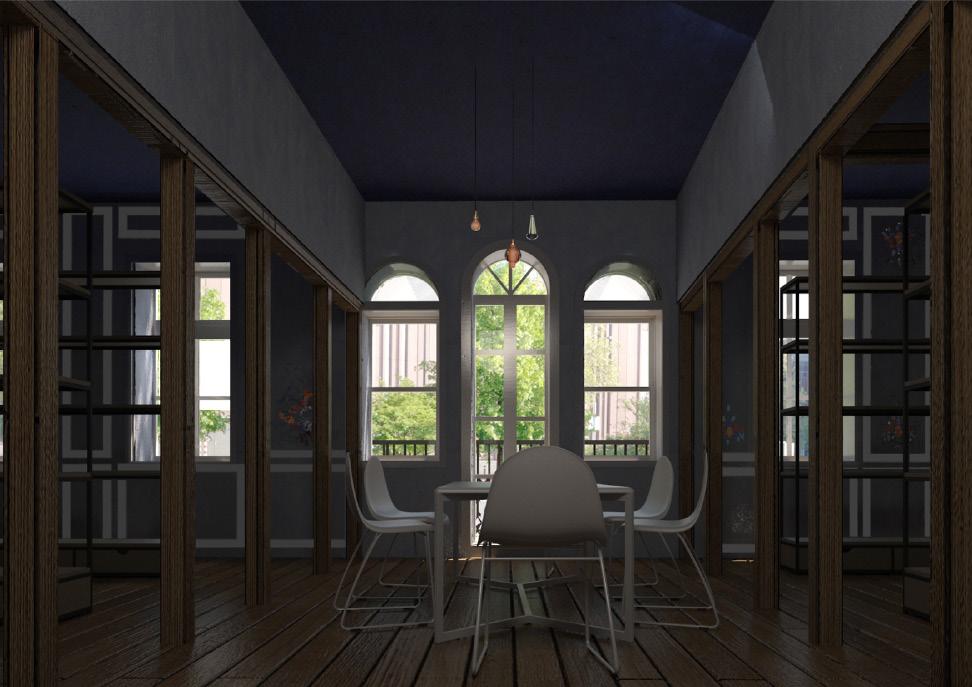
• Two-story volume houses the digital library-reading room on both floors.
• Metal bridge bisects the two new buildings and connects them.
• Facades of new buildings are simple, using vertical blinds for controlled shading.
Basement & Auxiliary Functions:
• Shared basement between the two new volumes.
• Auxiliary functions in the basement include storage spaces, restrooms for administration and visitors, and a boiler room.
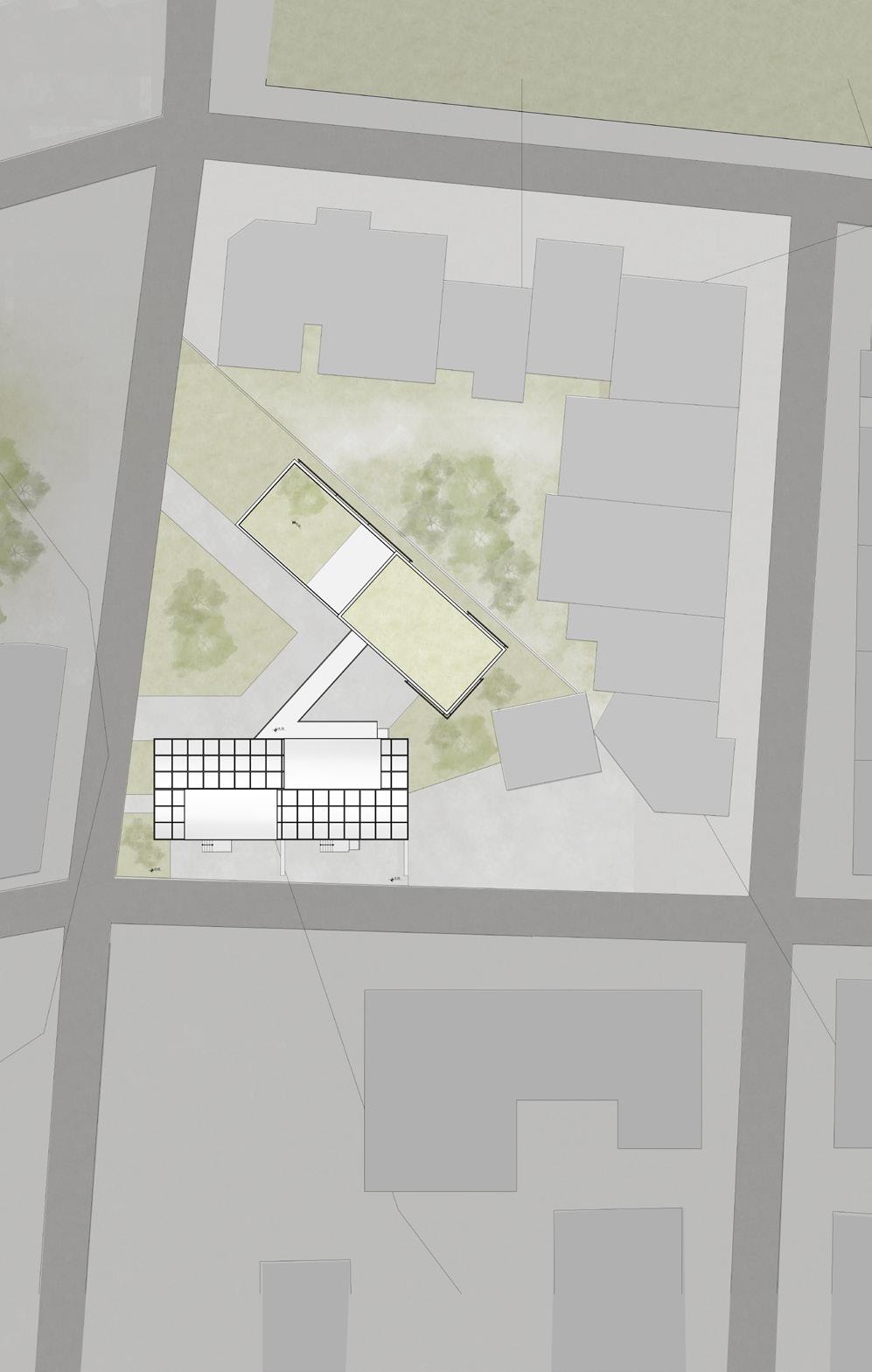
Roof Replacement:
• Old roof with wooden trusses and Byzantine tiles replaced with a glass roof.
• Roof raised by 80 cm to ensure sufficient height for the upper floor.
• Glass roof covered with two movable shading panels supported by metal frames, placed on the interior side, preserving the existing load-bearing structure.