CarolineCMMorett
PORTFOLIO
YEAR 2, SEMESTER 1
Auburn University
College of Architecture, Design, and Construction

YEAR 2, SEMESTER 1
Auburn University
College of Architecture, Design, and Construction
The site is located on the waterfront of Lake Martin in central Alabama. The region experiences hot temperatures year-round, along with regular precipitation. The project’s program includes the design of a natatorium, complemented by classrooms, locker rooms, a reception area, and additional spaces for seating, storage, and mechanical functions. An essential requirement for the design is full ADA accessibility.
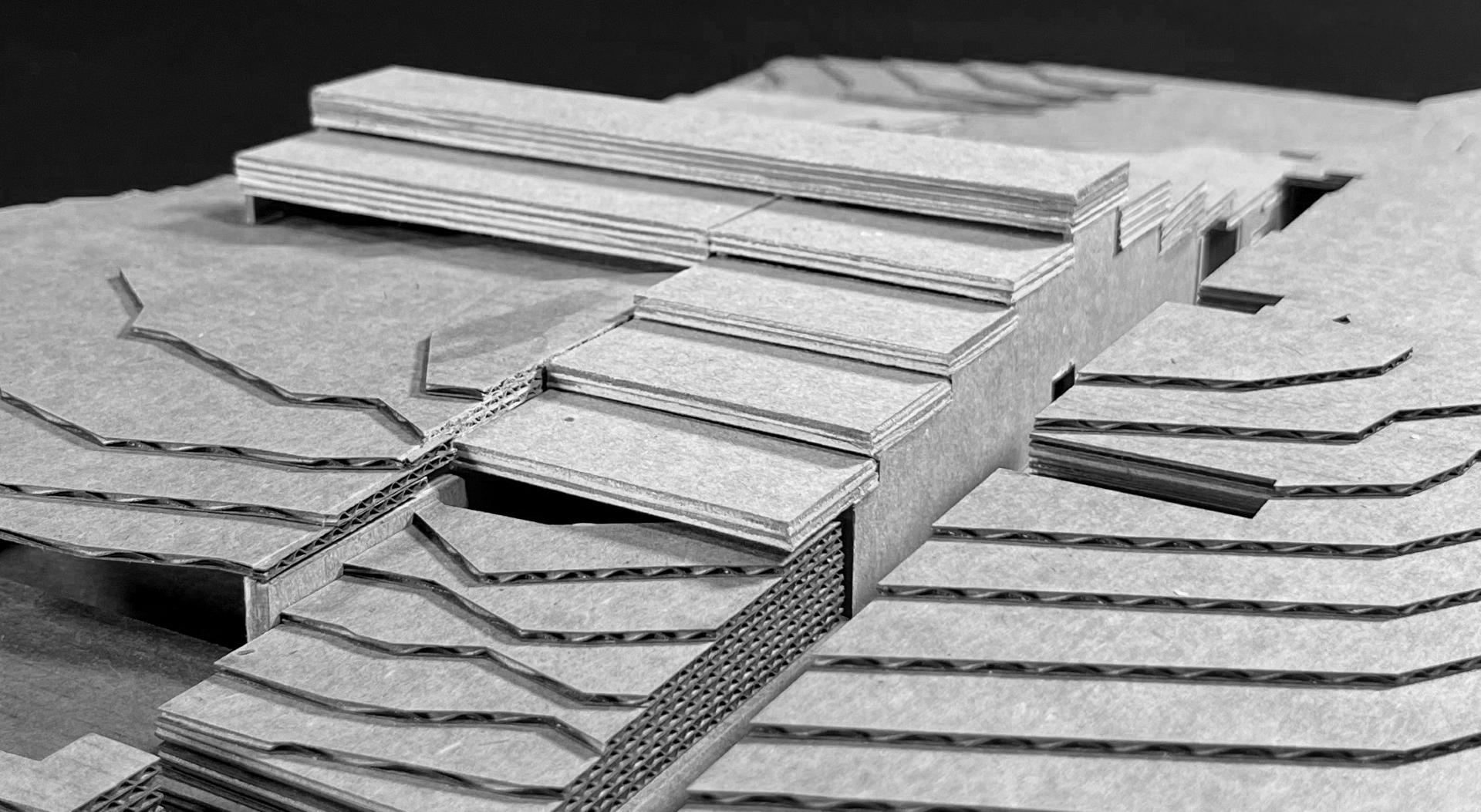
The design process began with precedent research into the House in Monsaraz by Aires Mateus. Mateus’ approach integrates geometric shapes into the natural environment, creating a clear distinction between interior and exterior spaces. This project explores the relationship between natural topography and an implemented grid, investigating how these elements interact and shape the overall experience.
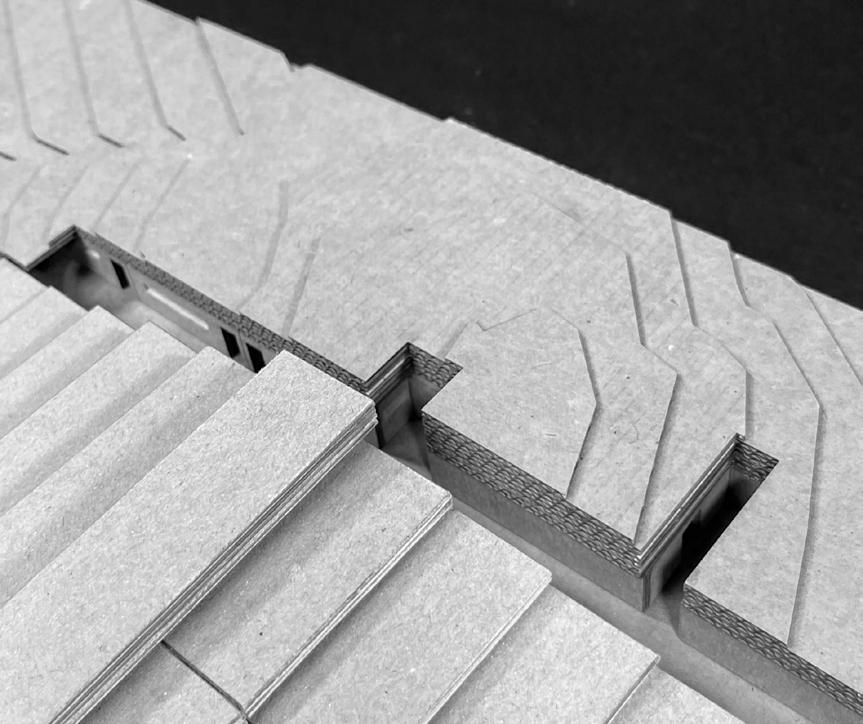
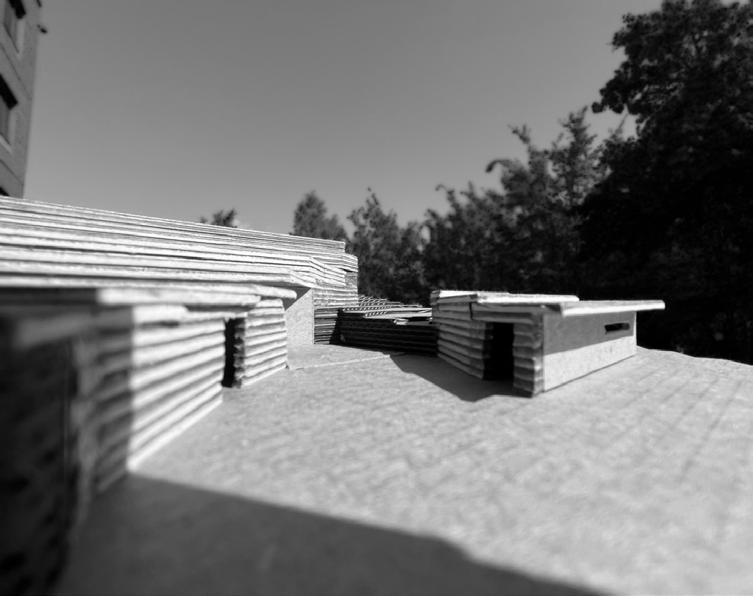
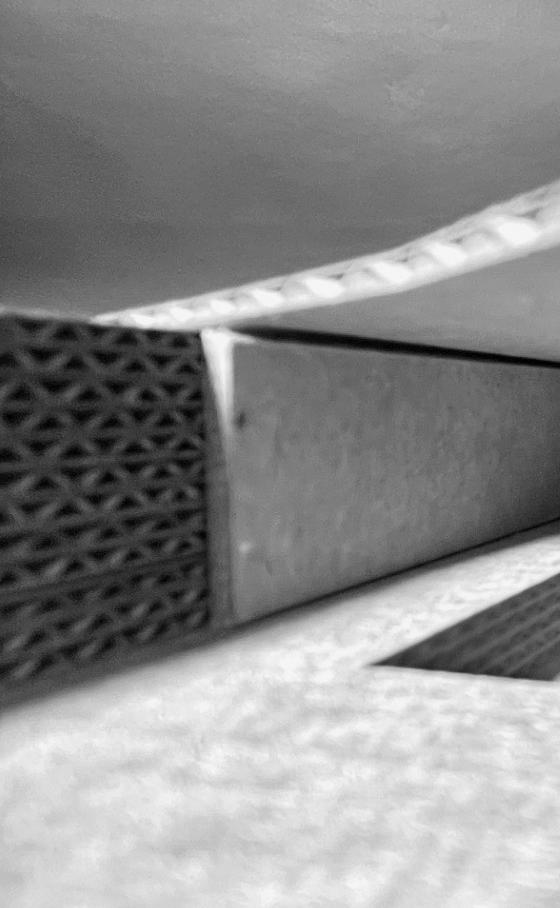
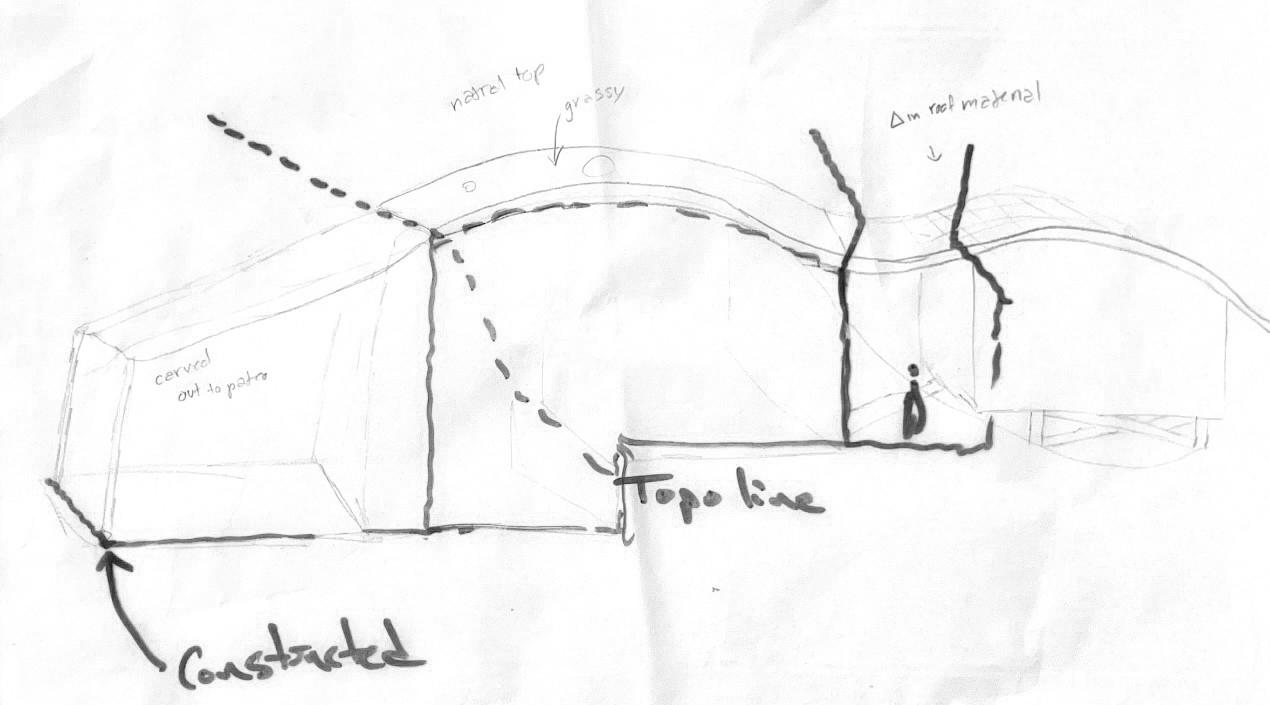
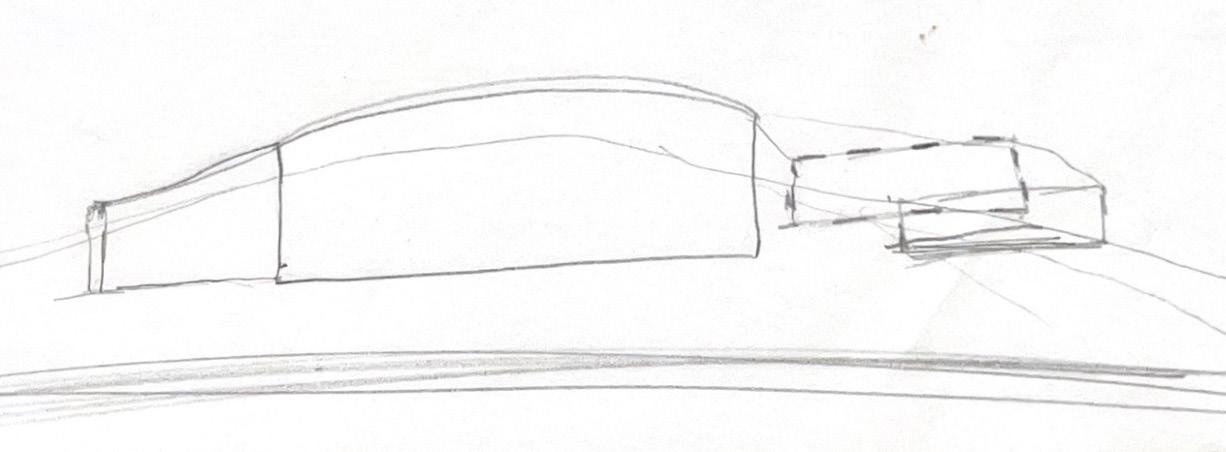
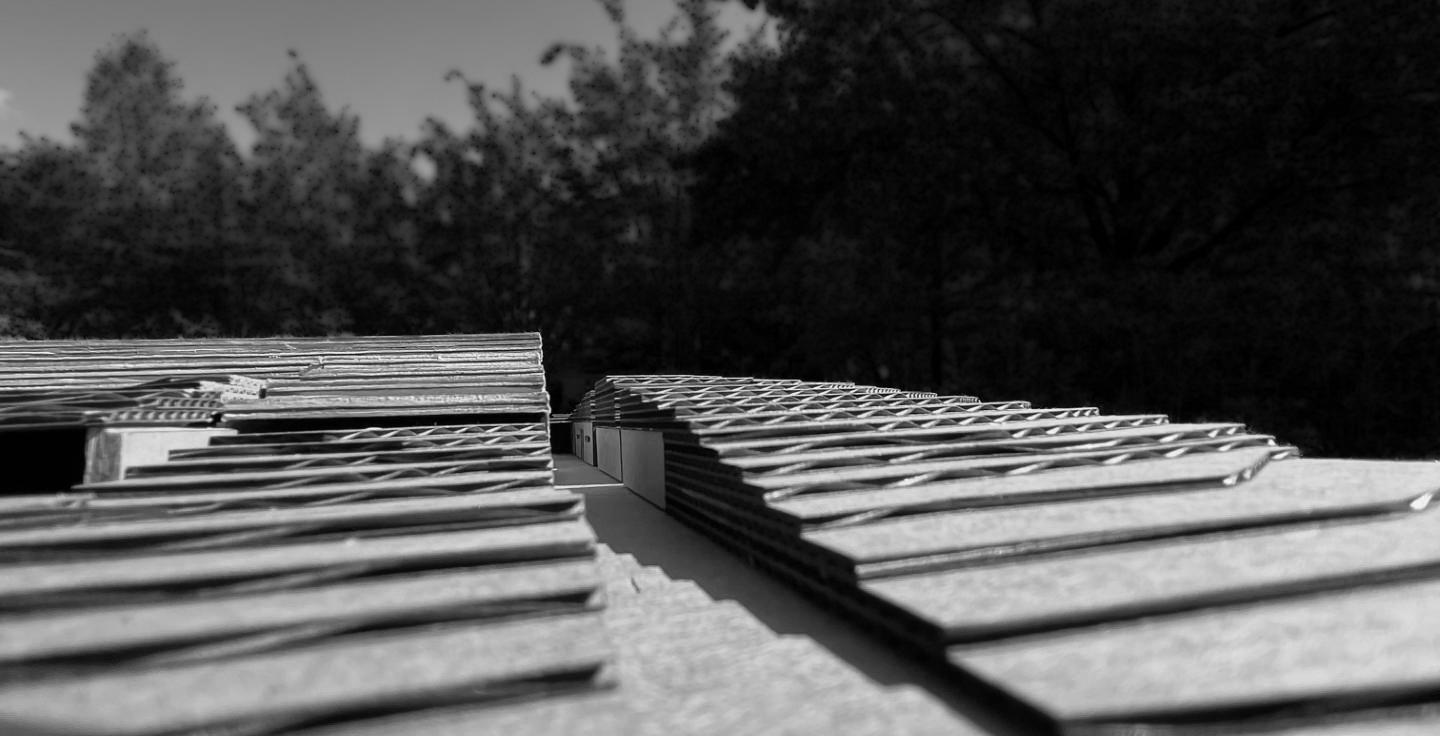
The varied geometric shapes prompted subtraction and embedding of the building into the original landscape, creating a unique experience through the site while shaping the interplay of void and solid. The roofline blends with the surrounding terrain, featuring a stepped green roof that serves as an artificial continuation of the landscape. On the north side, steps are divided by glass, allowing soft northern light to permeate the space. Additionally, the green roof plays a key role in regulating the building’s interior temperature, which is a critical aspect given the site’s hot climate.
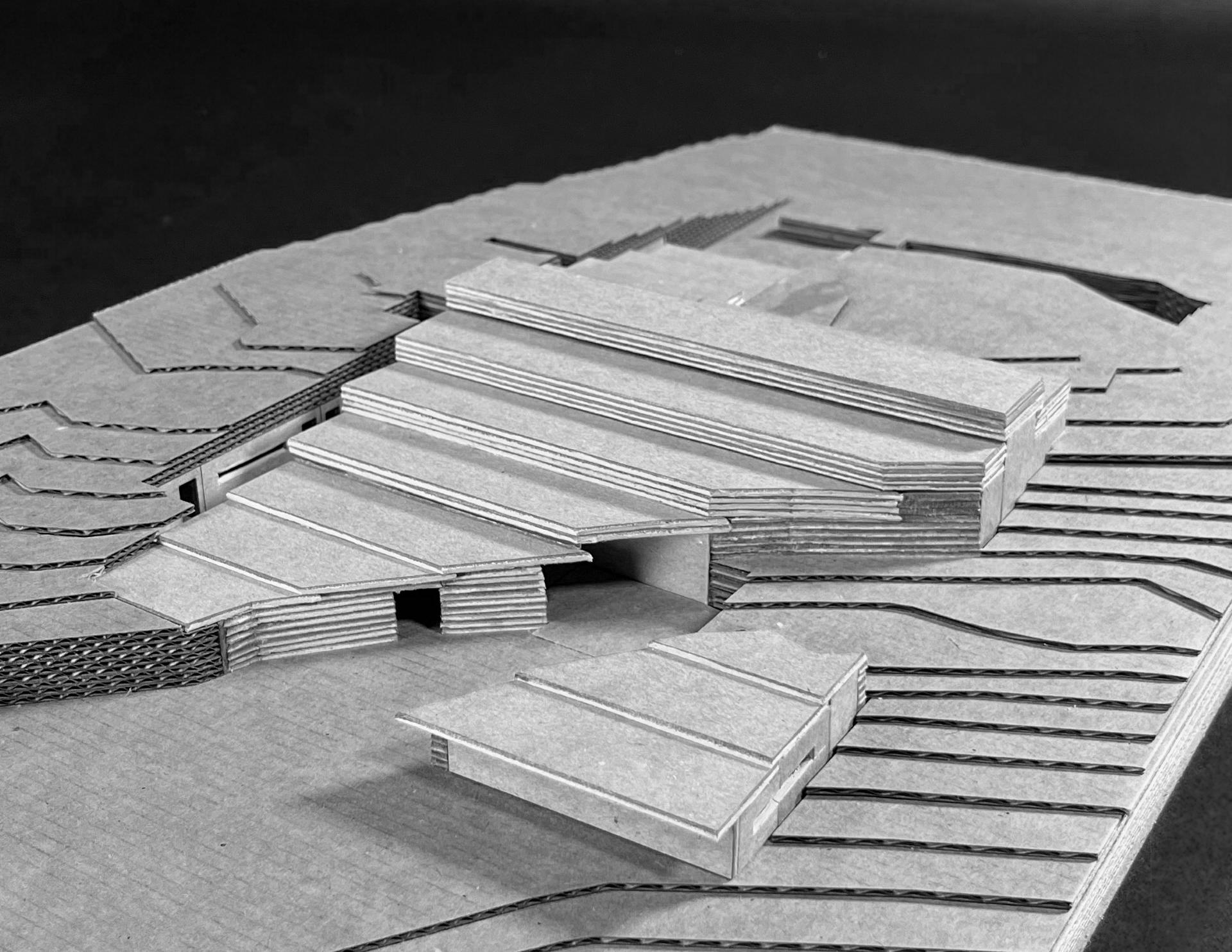
The integration of the building into the landscape, along with the thickness of walls, creates a sense of unity between the structure and the land. This embedded design fosters a unique, immersive experience, where the spectator feels as though the building is naturally part of its surroundings. The layout of the space, guided by both regular and irregular design systems, maintains curiosity, leading visitors to wonder what they’re encountering next; a sharp corner, or an organic wall. The grid system, combined with the site’s original topography, influenced the shapes of the different buildings, creating a dynamic and playful design. The absence of traditional, straight-edged corners adds to the interest, ensuring the experience remains visually engaging and full of discovery.
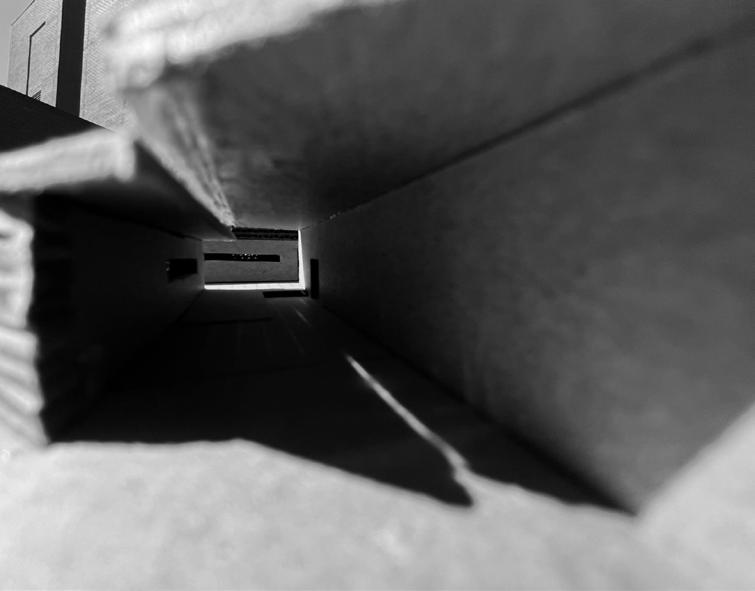
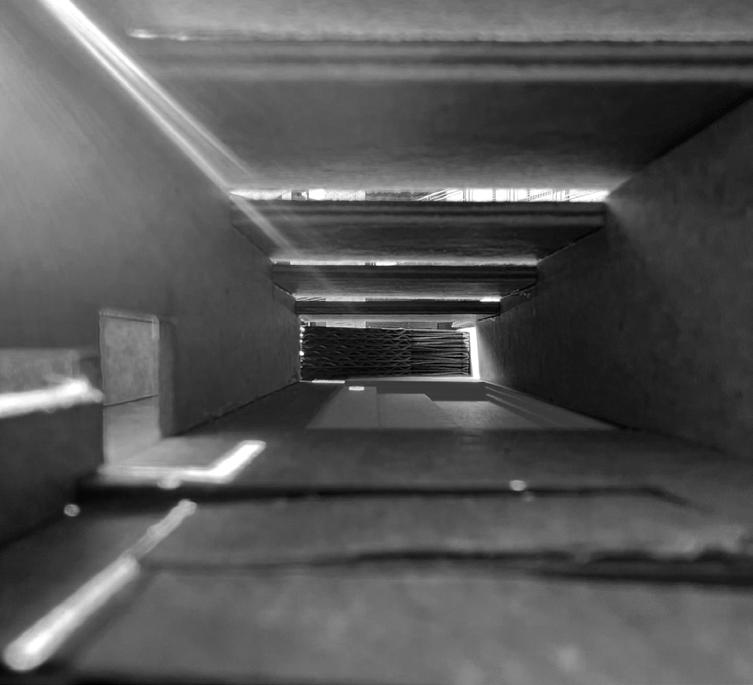
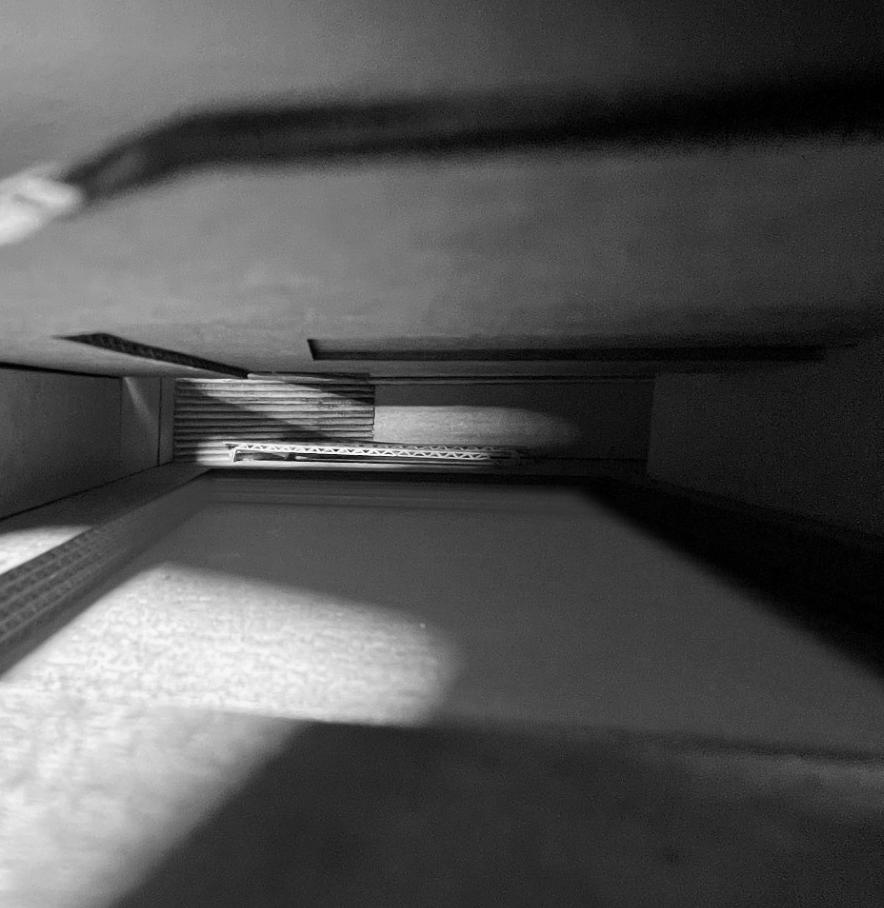
Lighting also plays an important role in the design of the building, particularly given the challenging climate. The intense southern sun, as well as direct east or west exposure, can be difficult to manage. In contrast, northern light is ideal as it provides illumination without the harsh glare. This allows the space to remain bright and inviting while minimizing discomfort for swimmers, who are shielded from direct sunlight.
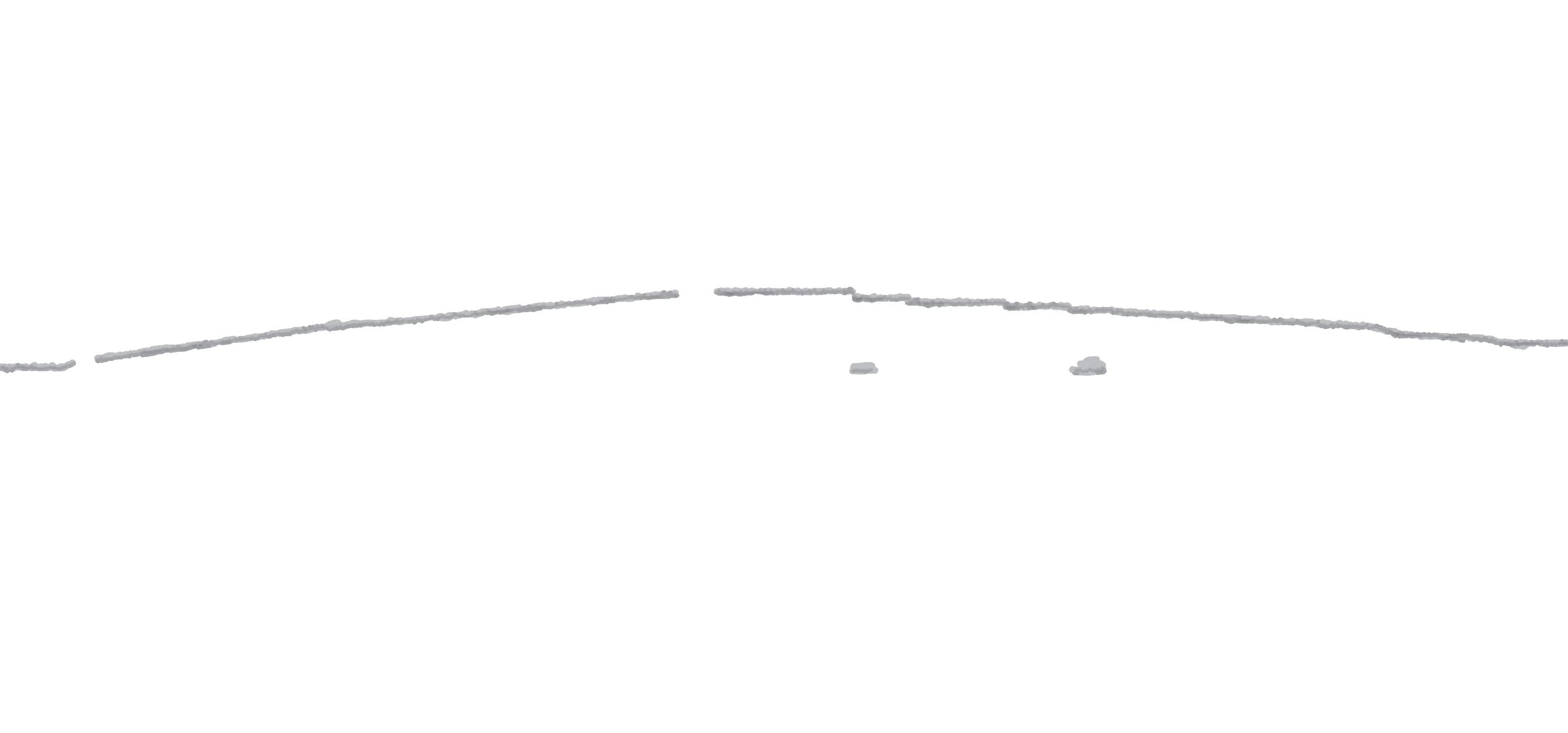


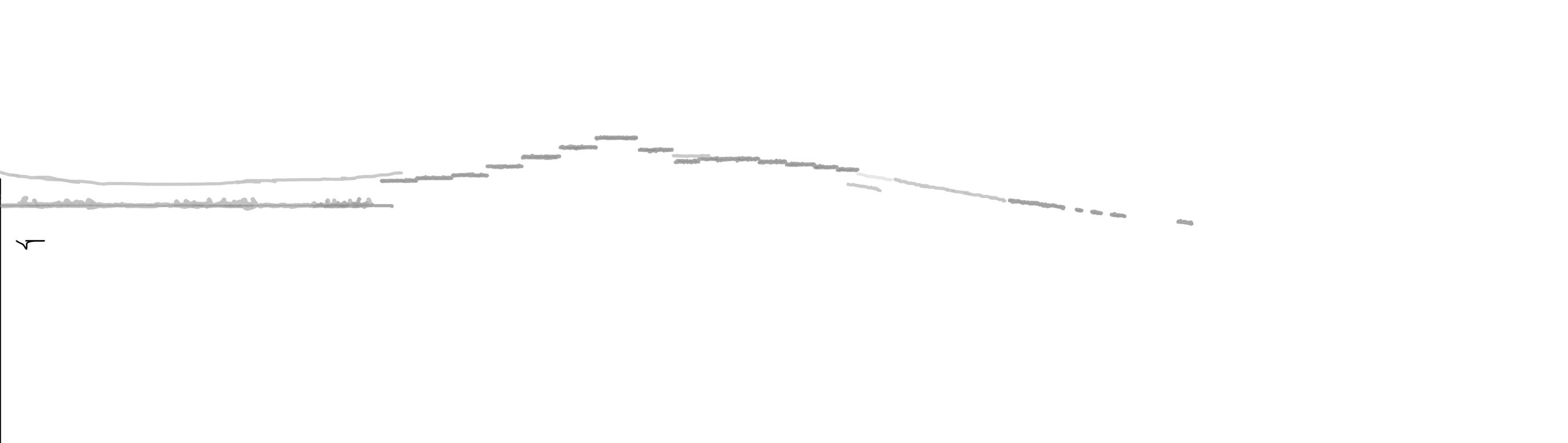


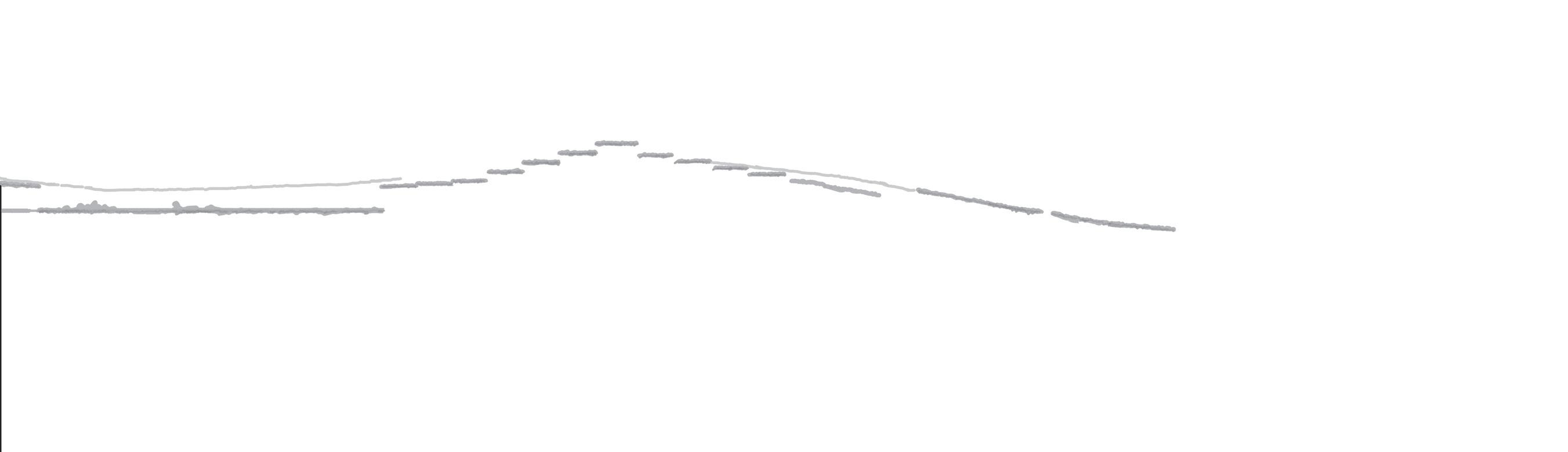


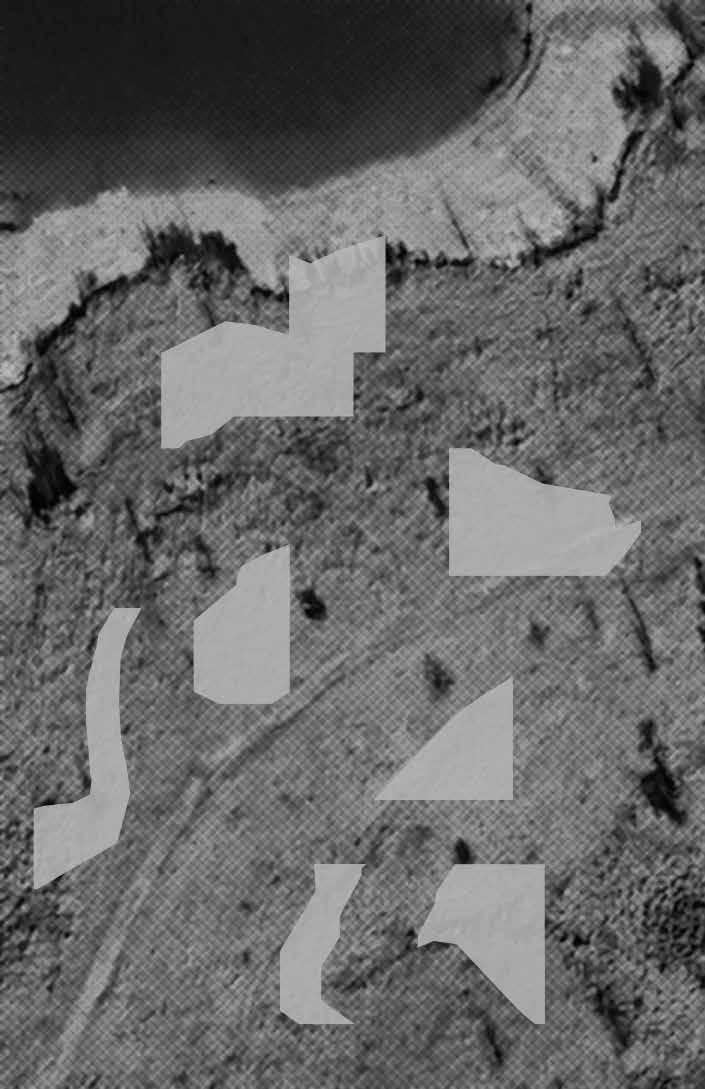
The project involved multiple aspects of design exploration. One key element was to create a house inspired by Mies van der Rohe’s Brick Country House, incorporating our own interpretation of the plans. To increase the challenge, we had to deal with various terrains, with random assignments of high vegetation, low vegetation, a valley, a berm, flat land, and a path. An additional component of the project was to design a new addition, relates to the Brick Country House, including a public gathering area, a gallery with an aperture, a gallery as an aperture, and restrooms. One of the views was specifically focused on the Brick Country House variation, taking architectural influence and purpose from its design.
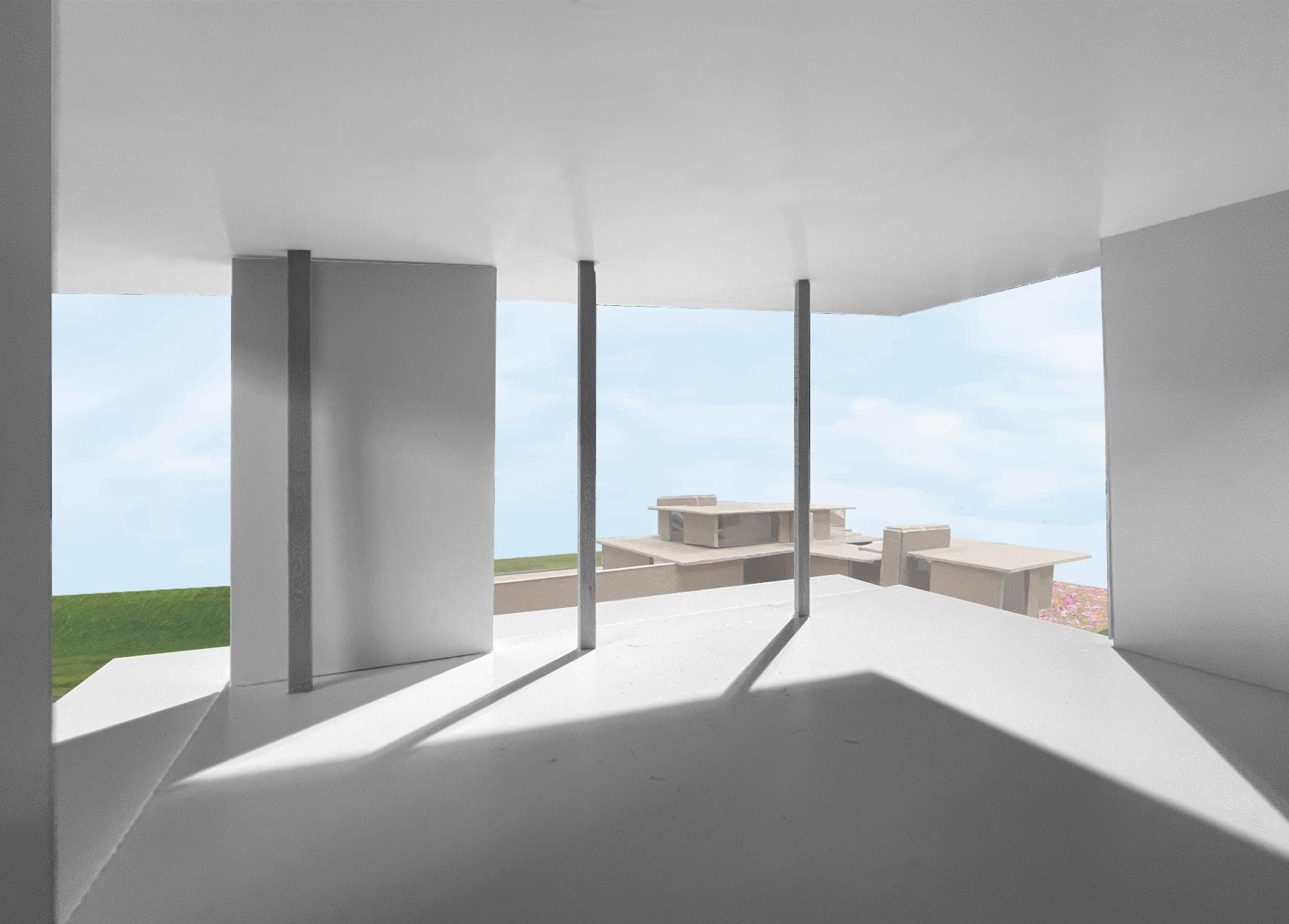
Throughout the project, the views continually shift, whether it’s of the valley, of the high vegetation, or the brick country house itself. The experience is ever-changing. The circulation through the new addition starts with a more secluded and private atmosphere, gradually introducing more light as you move through the spaces that connect the two galleries. Placing the restrooms centrally, adds comfort and makes for a more enjoyable journey, allowing visitors to explore freely rather than wait or follow a strict path before touring. At the end of the new addition, the view opens up dramatically, offering the option to step outside. This space provides a direct view of the Brick Country House. By incorporating stereotomic and tectonic elements, the design shapes the visitor’s perception, initially blocking the view from behind to focus attention on the main attraction- the Brick Country House. As the view is opened, visitors are able to develop a deeper understanding of the house and its surrounding context.
These plans illustrate the placement of the new build, emphasizing its relationship with the Brick Country House. Rather than creating a hierarchal distinction, the new structure is positioned above, on top of, and embedded into the berm, enhancing the view of the house and highlighting their differences while acknowledging their similarities.

The design strategy involved using the proportions of space from the Brick Country House, reinterpreting them in a new layout for the addition.
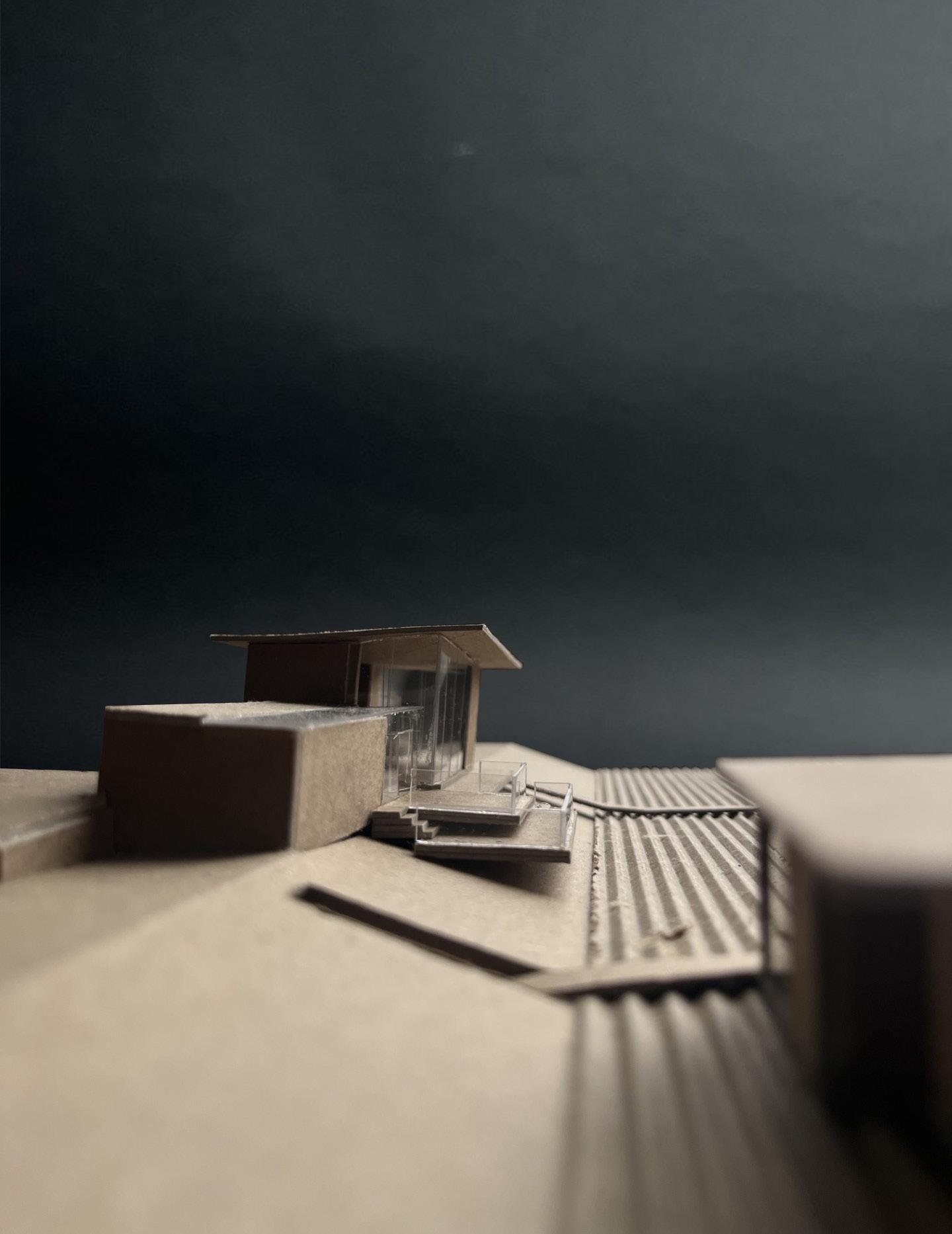
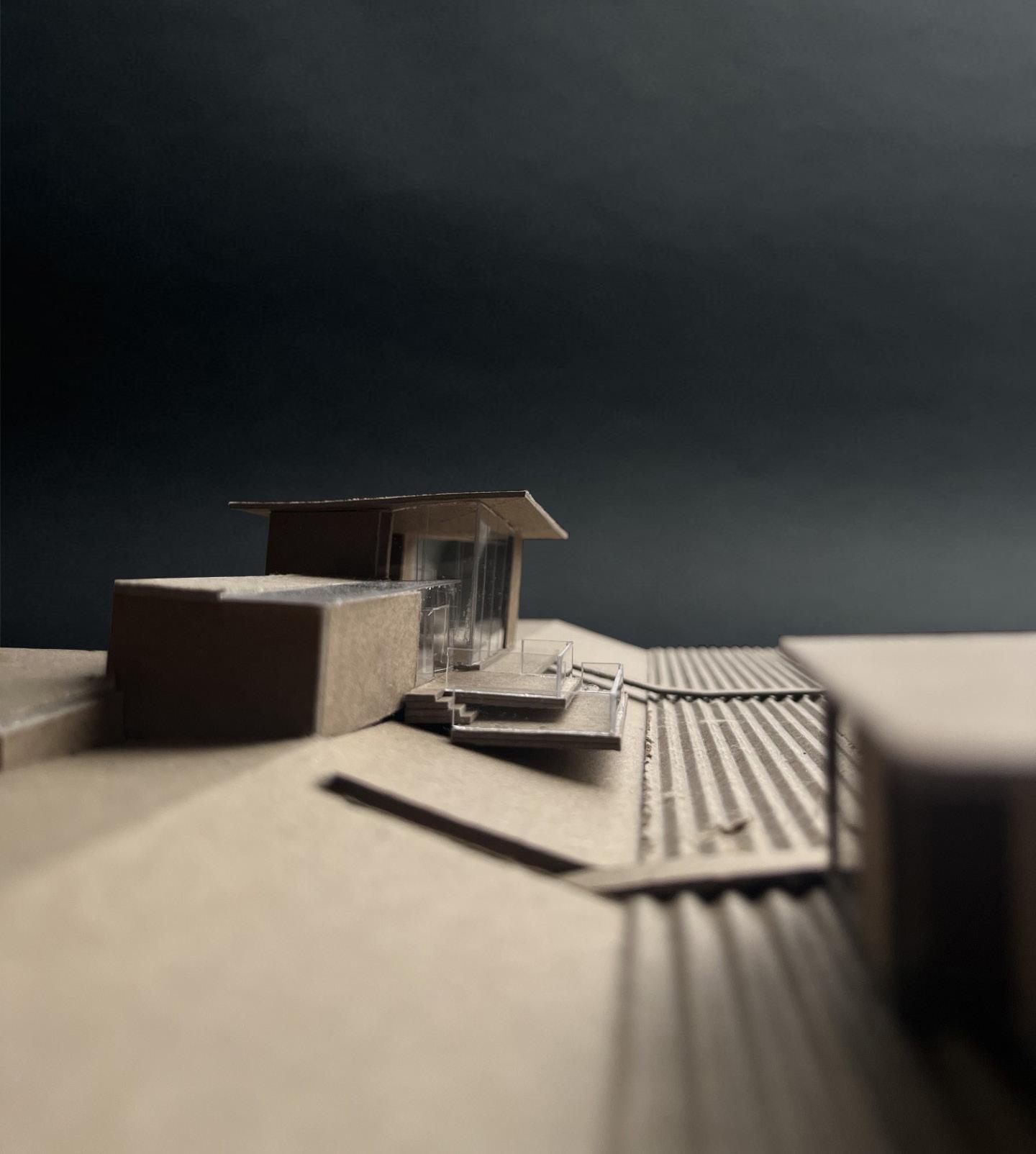
The southwest angle of Brick Country House extension is elevated on a two-foot plinth, raising viewers to improve their ability to see over the low vegetation. This lift enhances the visual connection to the surrounding landscape while maintaining a clear view of the house and its context.
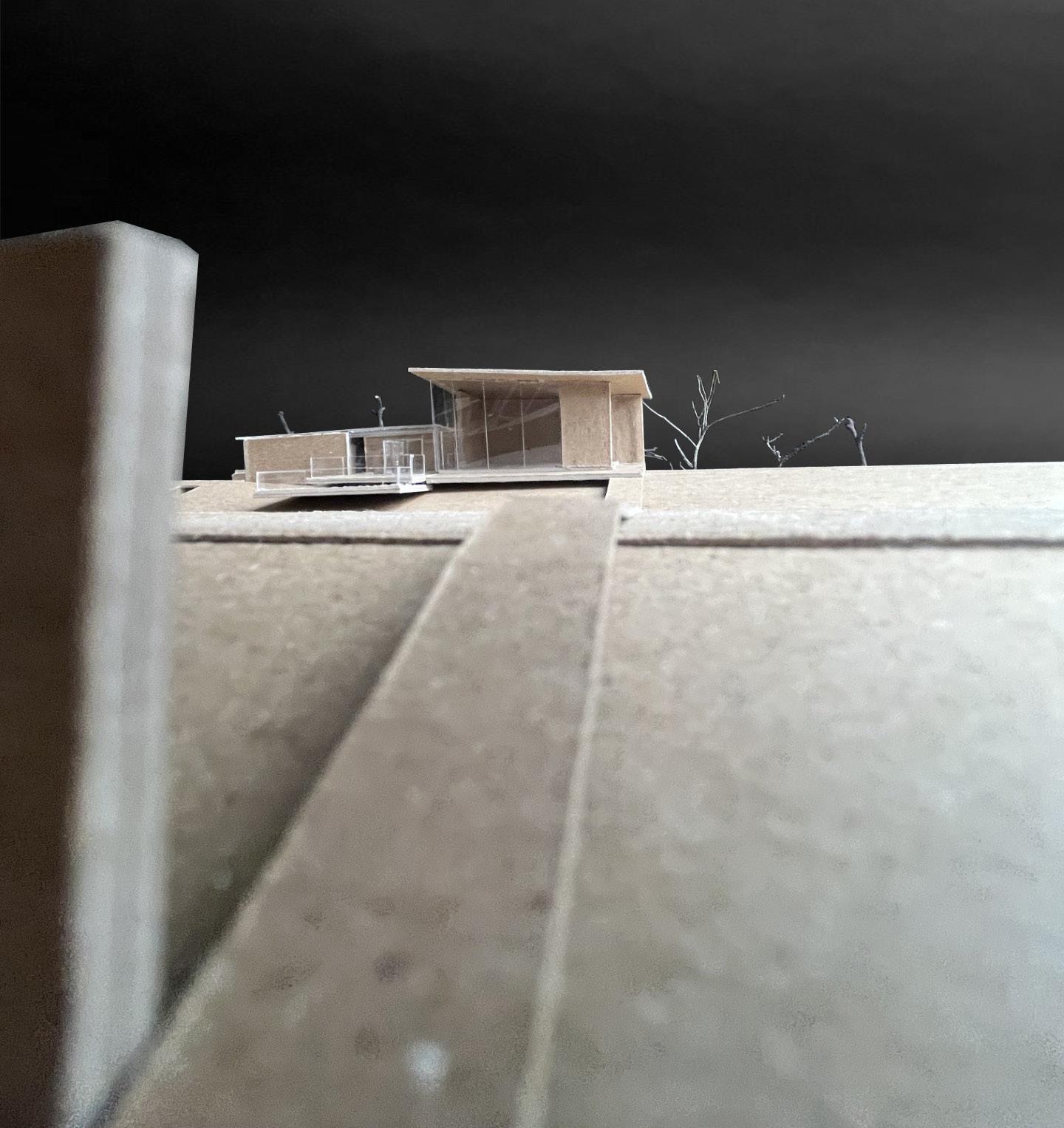
The first view of the new build is revealed only after passing through the extensive wall within the valley.
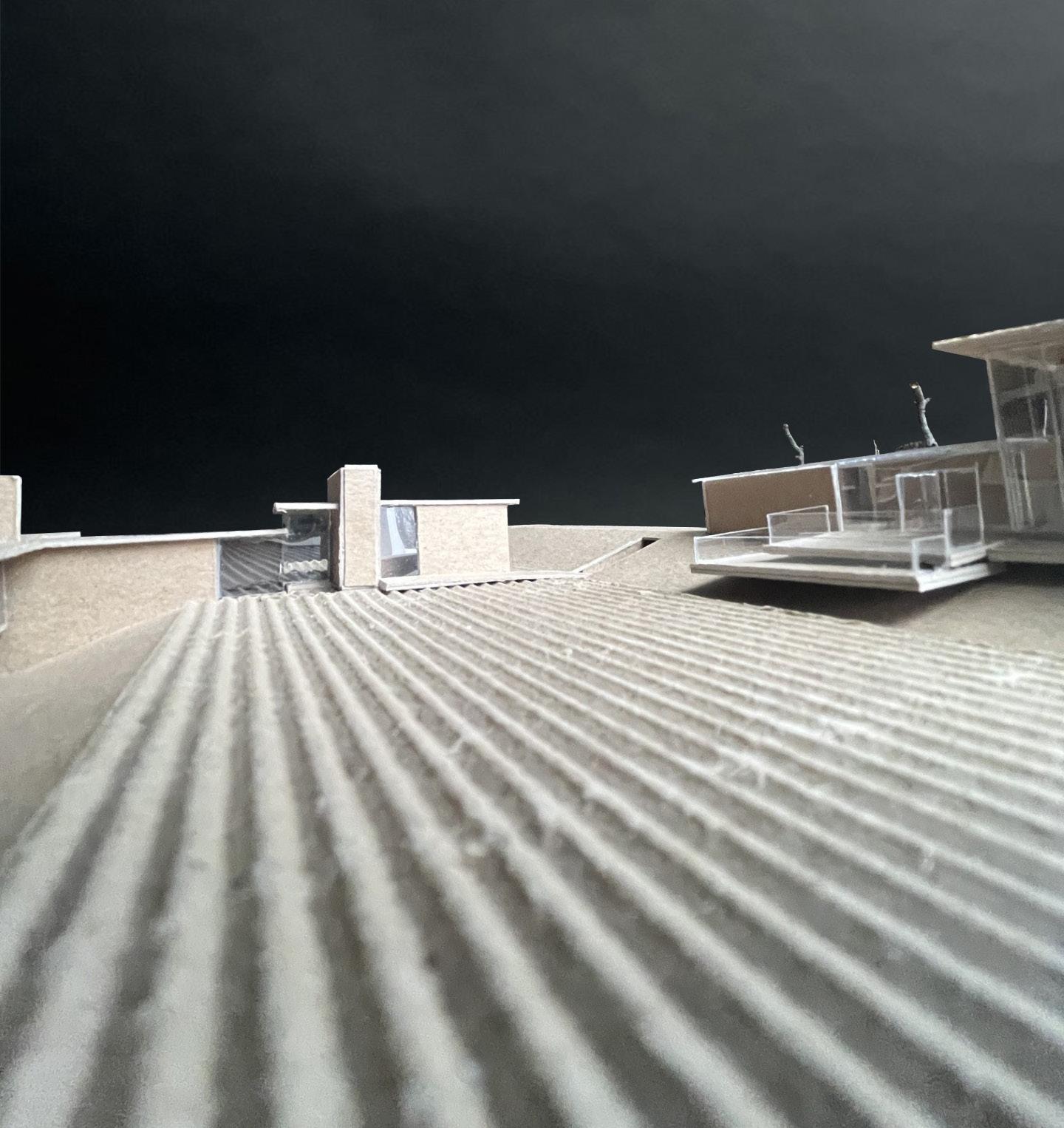
The low vegetation flower field surrounds the public exterior patios, creating a secluded, private space between the new build and the Brick Country House. This design creates a sense of connectedness, blending the two structures while offering a tranquil, intimate environment.
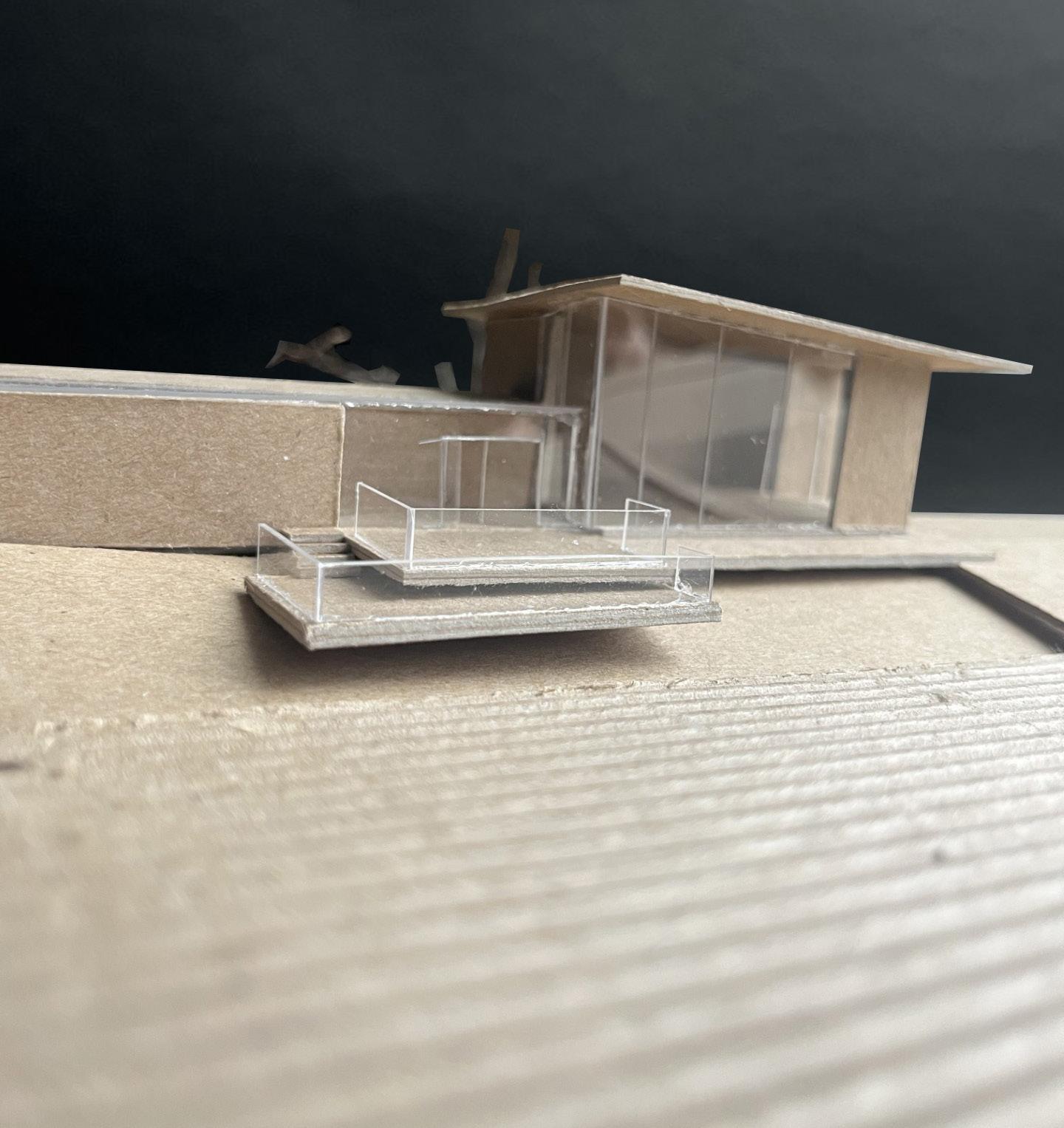
The overhanging public gathering patio creates an immersive experience, seamlessly blending with the low vegetation and offering a direct connection to the Brick Country House.
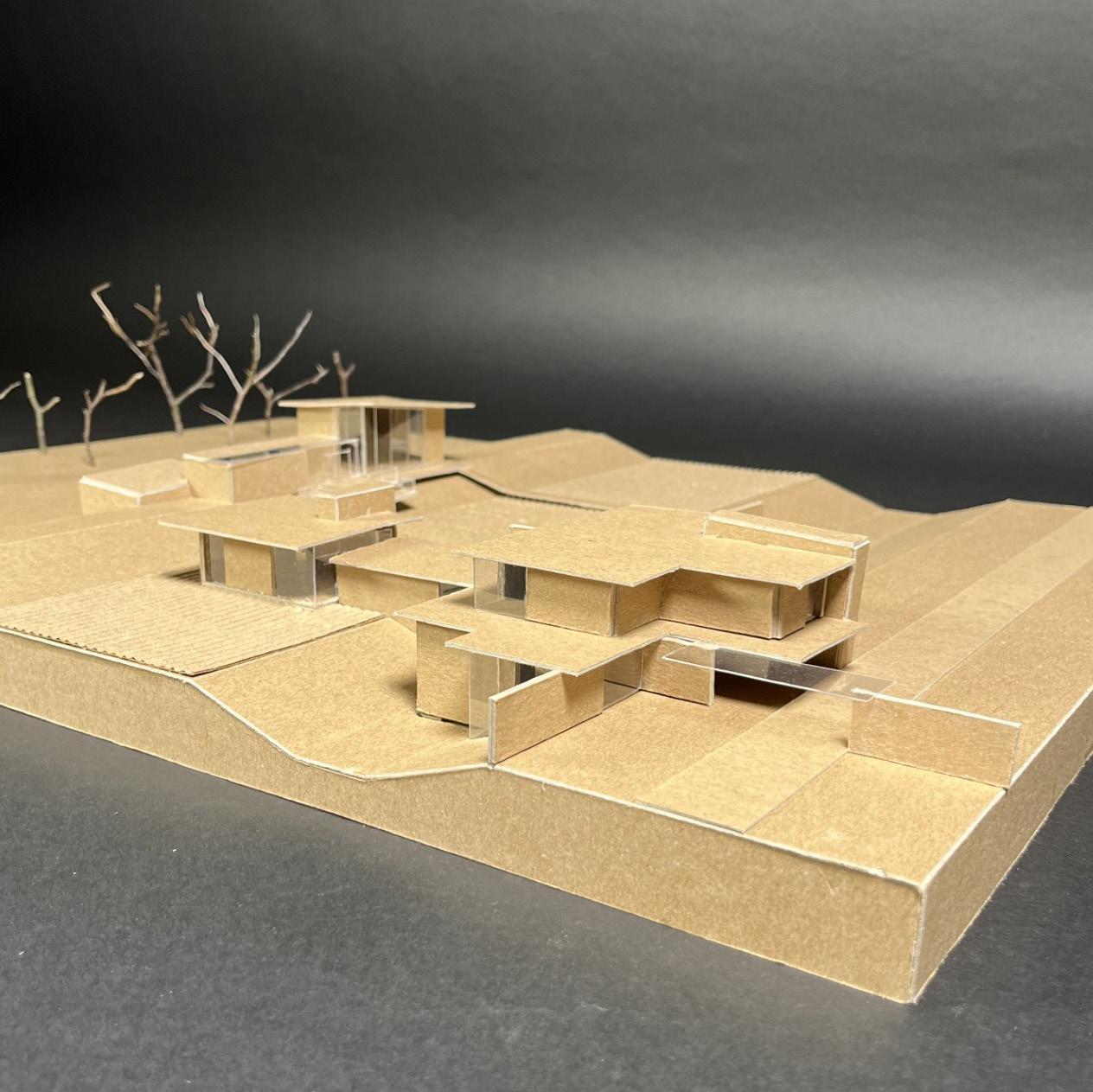
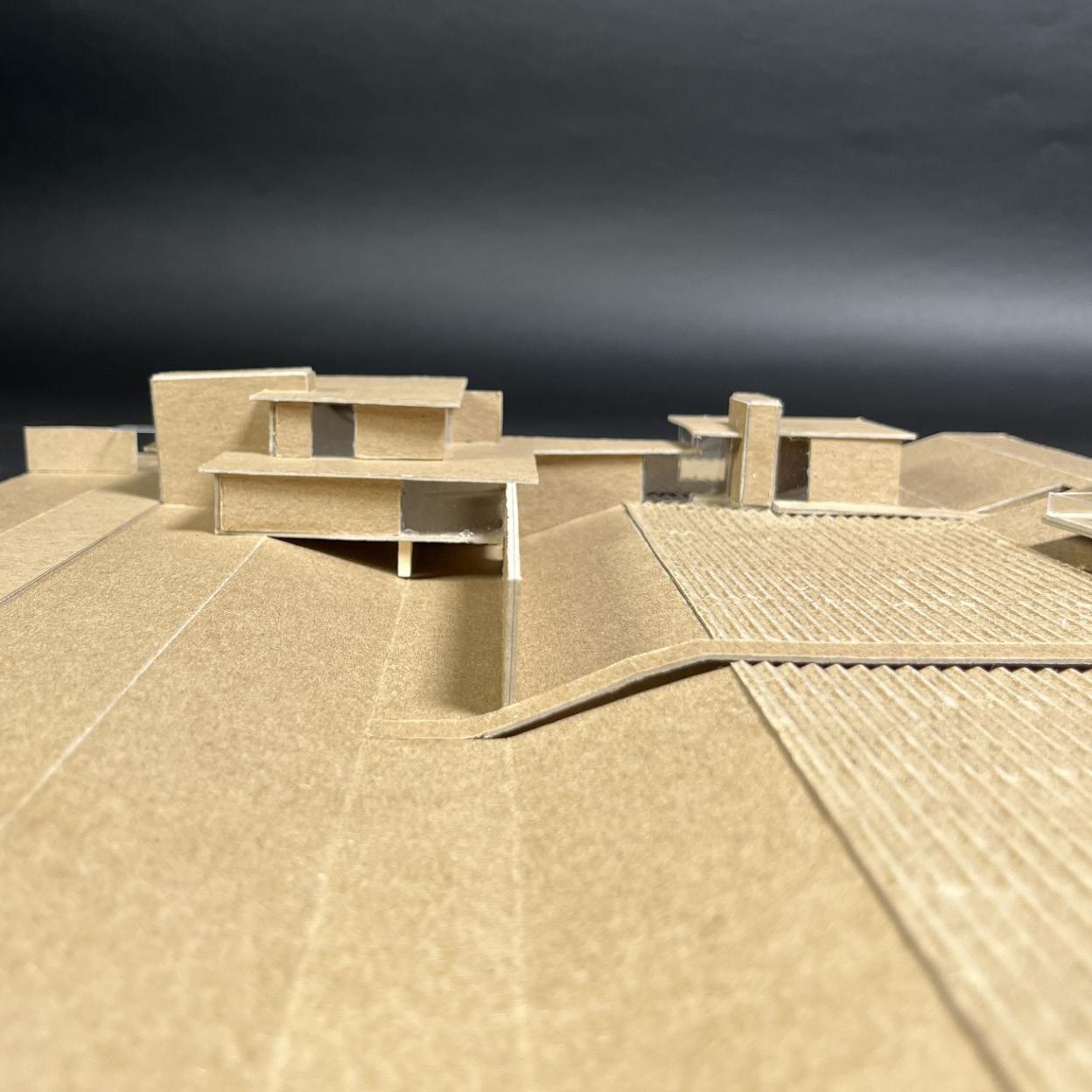
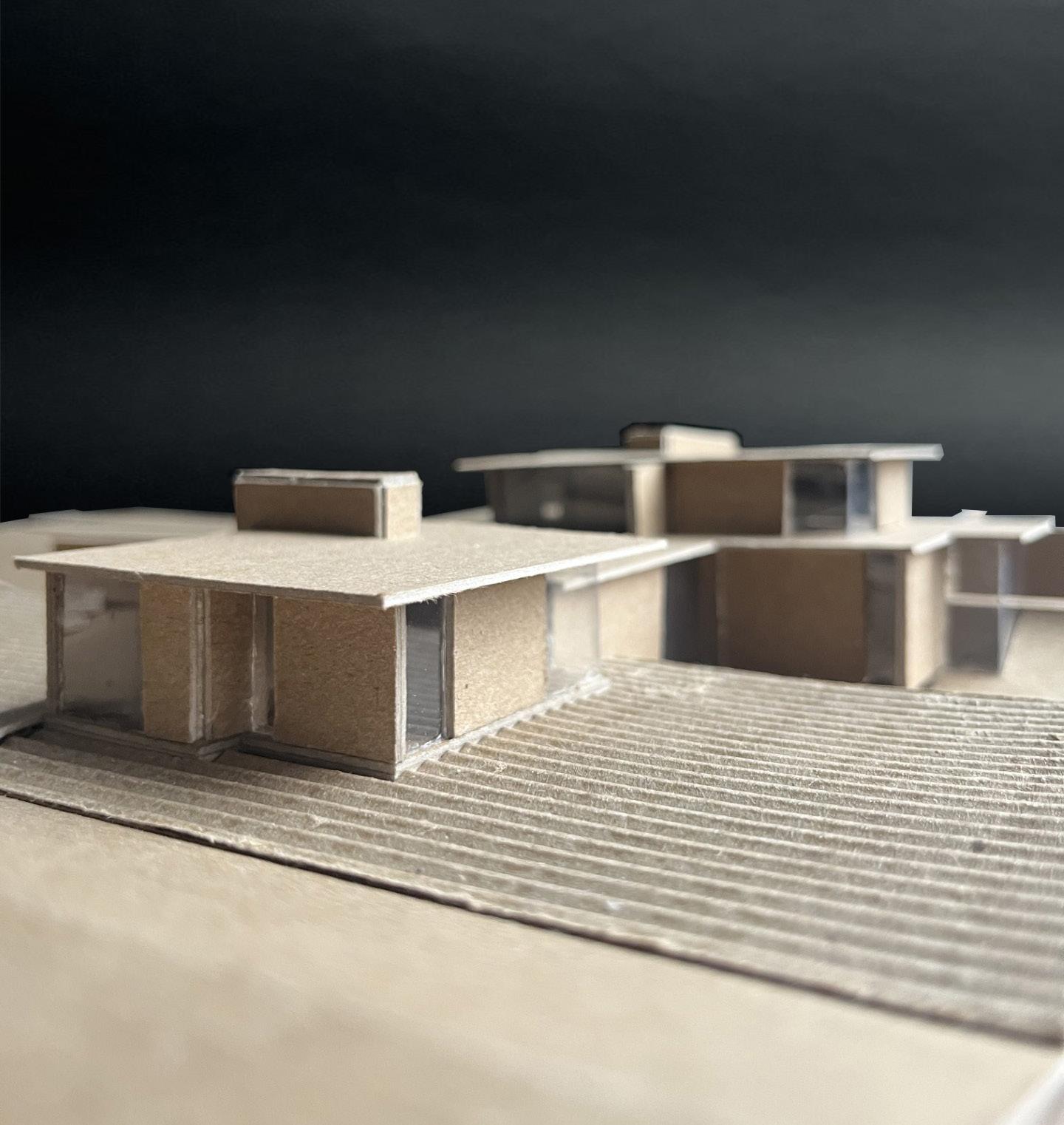
The northwest and south angles of the Brick Country House highlight its double-height spaces and the open overhang of the middle floor. These design elements borrow language for the new build, creating a visual connection and helping to establish a sense of sequence between the two structures.
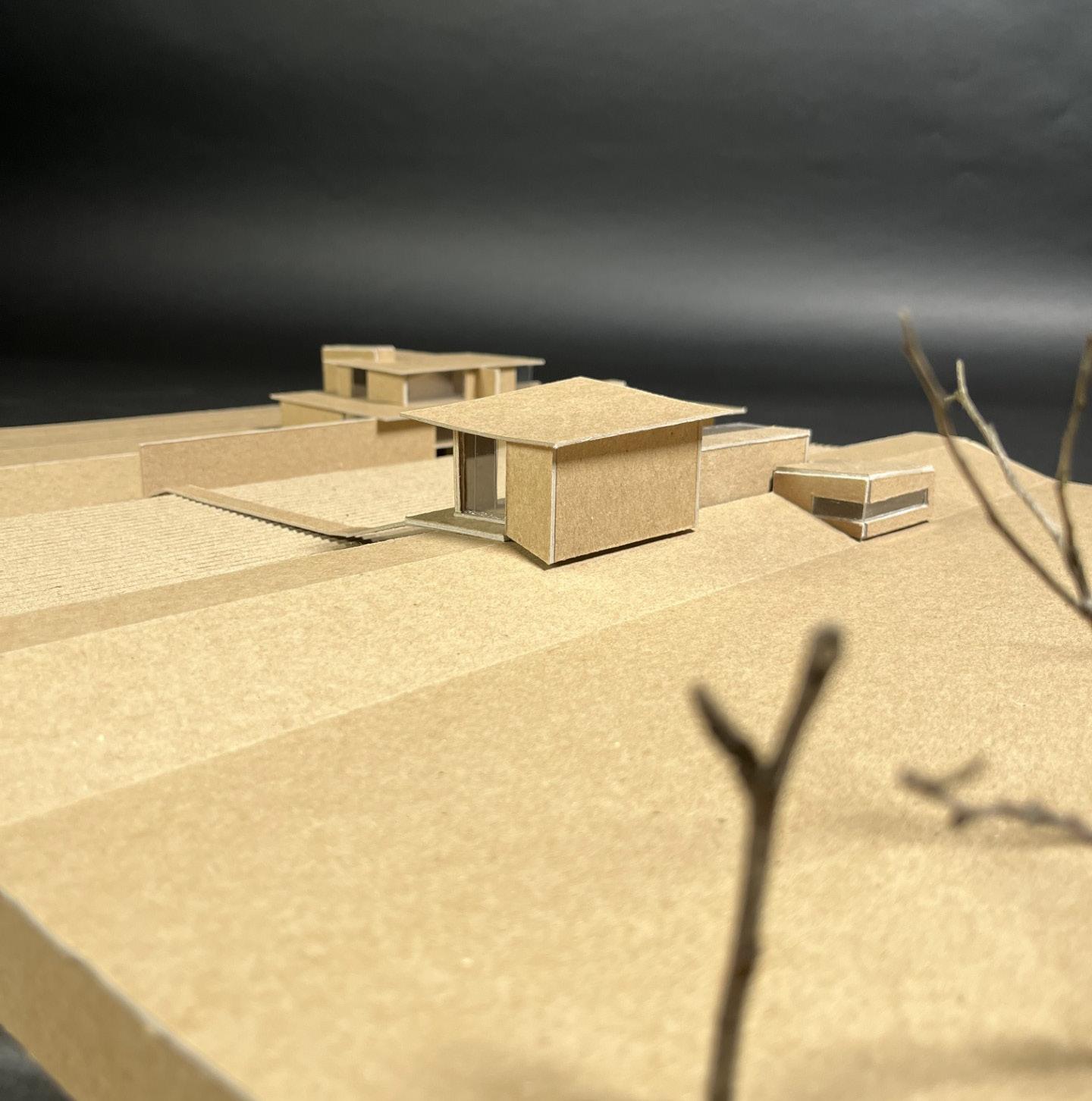
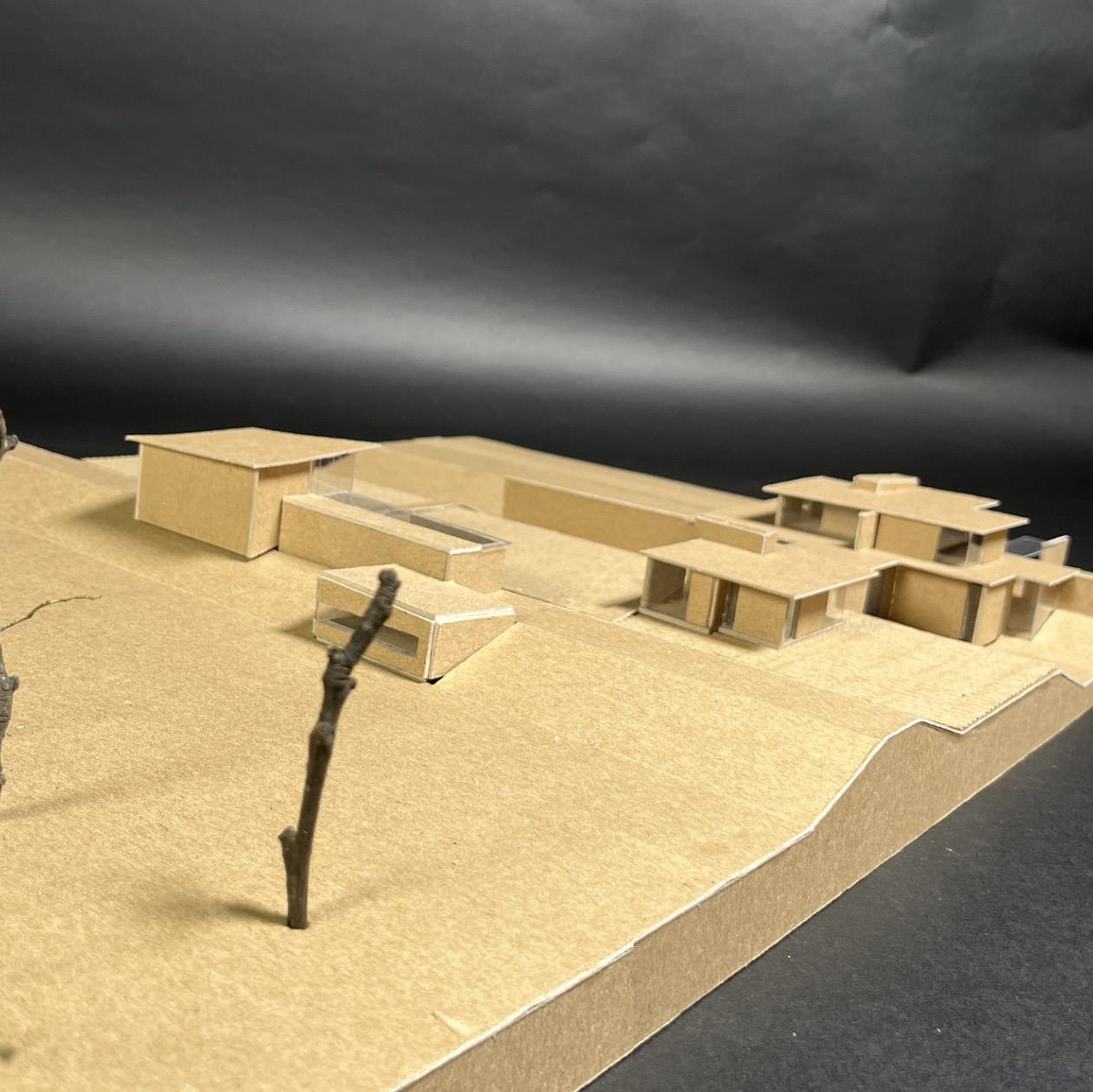
The southeast and northeast angle demonstrates how the new building interacts with the high vegetation.
The circulation diagram illustrates the suggested flow of movement, using arrows indicating the suggested direction. The view is “opened” in either direction, creating a dynamic experience regardless of which path is taken first.

East-West Section.