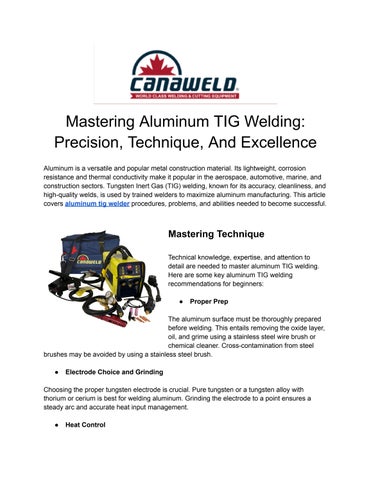
Mastering Aluminum TIG Welding: Precision, Technique, And Excellence Aluminum is a versatile and popular metal construction material. Its lightweight, corrosion resistance and thermal conductivity make it popular in the aerospace, automotive, marine, and construction sectors. Tungsten Inert Gas (TIG) welding, known for its accuracy, cleanliness, and high-quality welds, is used by trained welders to maximize aluminum manufacturing. This article covers aluminum tig welder procedures, problems, and abilities needed to become successful.
Mastering Technique Technical knowledge, expertise, and attention to detail are needed to master aluminum TIG welding. Here are some key aluminum TIG welding recommendations for beginners: ●
Proper Prep
The aluminum surface must be thoroughly prepared before welding. This entails removing the oxide layer, oil, and grime using a stainless steel wire brush or chemical cleaner. Cross-contamination from steel brushes may be avoided by using a stainless steel brush. ●
Electrode Choice and Grinding
Choosing the proper tungsten electrode is crucial. Pure tungsten or a tungsten alloy with thorium or cerium is best for welding aluminum. Grinding the electrode to a point ensures a steady arc and accurate heat input management. ●
Heat Control