Your subscription along with the support of businesses that adver tise in Business24 -- makes an investment in journalism that is essential to keep the business community in Ghana wellinformed.
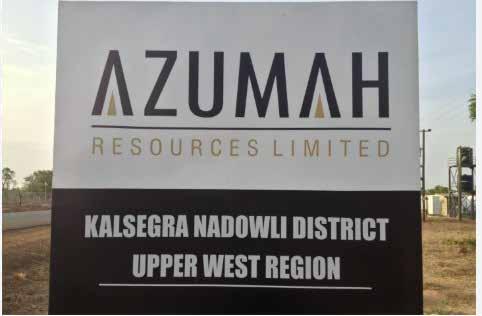
Azumah Resources stays committed to Ghana gold mine amid dispute
Azumah Resources
We value your support and loyalty.
Contact : editor@business24 com gh
Newsroom: 030 296 5315
Adver tising / Sales: +233 24 212 2742
Ghana Limited has reaffirmed its commitment to developing the Black Volta Gold Mine in the Upper West Region, expressing confidence in Ghana’s legal and regulatory framework amid an ongoing dispute with Engineers & Planners Company Limited (E&P). In a press release issued on Tuesday, the company thanked the Government of Ghana for upholding the rule of law and investor confidence, stating its determination to pursue the mine’s development in partnership with Ghanaian stakeholders and international investors. “Azumah Resources is committed to ensuring this project benefits
Ghanaians, led by Ghanaians, with partners who are willing and able to build with us,” said John Mason, Spokesperson for Azumah Resources. “We have a duty to protect Ghana’s resources for the benefit of all. This is about doing right by Ghana and Ghanaians.”
Mr. Mason criticized E&P’s recent claims in the media, describing them as “unsupported by law or fact”. He disclosed that while E&P had initially proposed funding of over $250 million, only $4 million had actually been provided. “We are fortunate to have secured the financial support of international investors who have already de-
veloped more than $10 billion worth of mines globally. They will support the construction of this mine,” he stated.
Azumah said it would continue to seek investment from reputable, law-abiding Ghanaian companies and investors while maintaining its focus on “lawful development, transparency, and building Ghana’s future”. Rob Cicchini, Project Director at Azumah, underscored the importance of proven capability in project execution. “The future of this project should be in the hands of those who can deliver not those who cannot,” he said.
Access Bank pledges one million sanitary pads to support government’s fight against period poverty
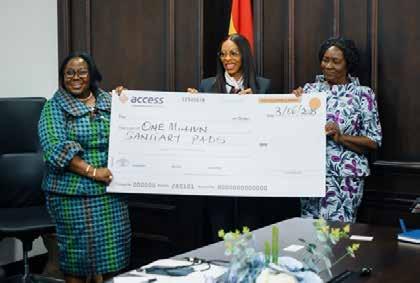
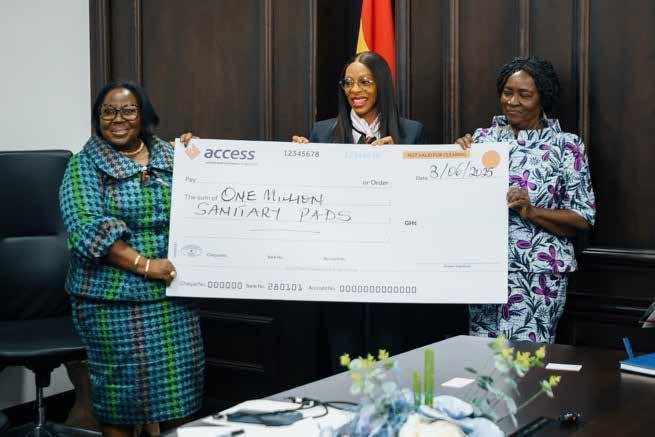
In a bold move to support the Government of Ghana’s sanitary pad distribution programme aimed at ending period poverty, Access Bank PLC has announced a commitment to donate one million sanitary pads to schoolgirls across the country.
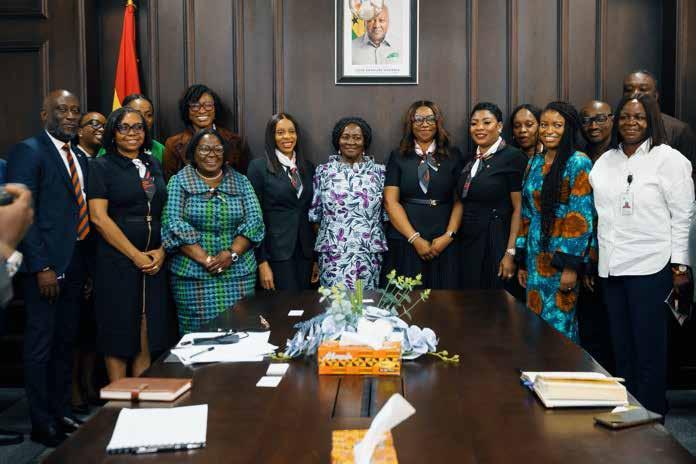
The pledge was made during a courtesy call by the Group Deputy Managing Director of Access Bank PLC, Chizoma Okoli, to the
Vice President of the Republic, Her Excellency Professor Naana Jane Opoku-Agyemang, on Thursday, July 3, 2025.
The visit, organized under the Access Women’s Network (AWN), forms part of the bank’s growing partnerships to advance female empowerment, education, and health.
“Access Bank stands firmly with the government’s vision to ensure that no girl is left behind because of
period poverty. We are pleased to announce our pledge to distribute one million sanitary pads across Ghana to help keep girls in school, protect their dignity, and support their dreams,” Chizoma Okoli said.
The announcement builds on Access Bank’s decade-long investment in gender-focused initiatives under its flagship ‘W’ Initiative. In 2024, the bank reached over
100,000 schoolgirls in 19 districts across five regions in Ghana, providing menstrual hygiene education and free sanitary pads.
The Vice President, Professor Naana Jane Opoku-Agyemang, welcomed the pledge and lauded Access Bank’s proactive role in advancing gender equity. “This pledge is a testament to what is possible when the private sector joins
forces with government to tackle real issues affecting our young girls. I commend Access Bank for setting an inspiring example,” she stated.
Executive Director for Retail and Digital Banking at Access Bank (Ghana) PLC, Pearl Nkrumah, reiterated the bank’s broader commitment to social impact. “We believe sustainable development starts with
empowering women and girls. Beyond banking, Access Bank is committed to solving real-world challenges that hold our communities back,” she said.
In addition to the sanitary pad pledge, the Group Deputy MD also shared updates on other social impact interventions, including the bank’s ‘Fist Against Fistula’ campaign and the award-winning “A Sandal More for a
Better Tomorrow” project, which recycles used tyres into footwear for schoolchildren.
As Access Bank celebrates 10 years of the ‘W’ Initiative, this new pledge affirms its leadership in social responsibility and commitment to transforming lives, one pad, one girl, and one community at a time.
Operating from more
than 700 branches and service outlets in 23 countries in Africa and the rest of the world including the UAE, UK, Hong Kong, and France along with three representative offices in China, India, and Lebanon, Access Bank is committed to setting standards to deliver superior value to customers and provide innovative solutions for the markets and communities it serves.
Deputy Managing Director, Chizoma Okoli (middle) flanked by Vice President Naana Jane Opoku-Agyemang (right) and Yvette Atekpe (Board Member, Access Bank Ghana)
Eni declares commerciality for Eban-Akoma discoveries
Eni Ghana has submitted a Declaration of Commerciality for its Eban-Akoma oil discoveries, marking a significant step towards development. As operator of the joint venture, Eni will work with the Ghana National Petroleum Corporation and other stake-
holders to develop a plan for the fields.
This move underscores the potential for
increased investment and production in Ghana's oil sector. Let's dive deeper into the implications.
Global leaders underscore child protection as foundation of
The 7th edition of the Strengthening Families Conference (SFC) 2025 unfolded in Freetown as
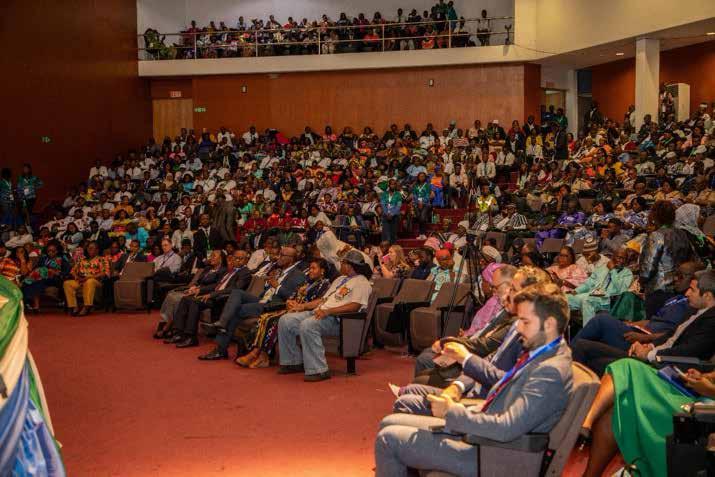
The Church of Jesus Christ of Latter-day Saints and collaborators joined government leaders, faith communities, and civil society to champion women’s empowerment and child protection across Sierra Leone. The two-day conference officially opened on Thursday, June 26 at the Bintumani International Conference Centre under the theme ‘Building Stronger Communities through Women Empowerment and Child Protection’.
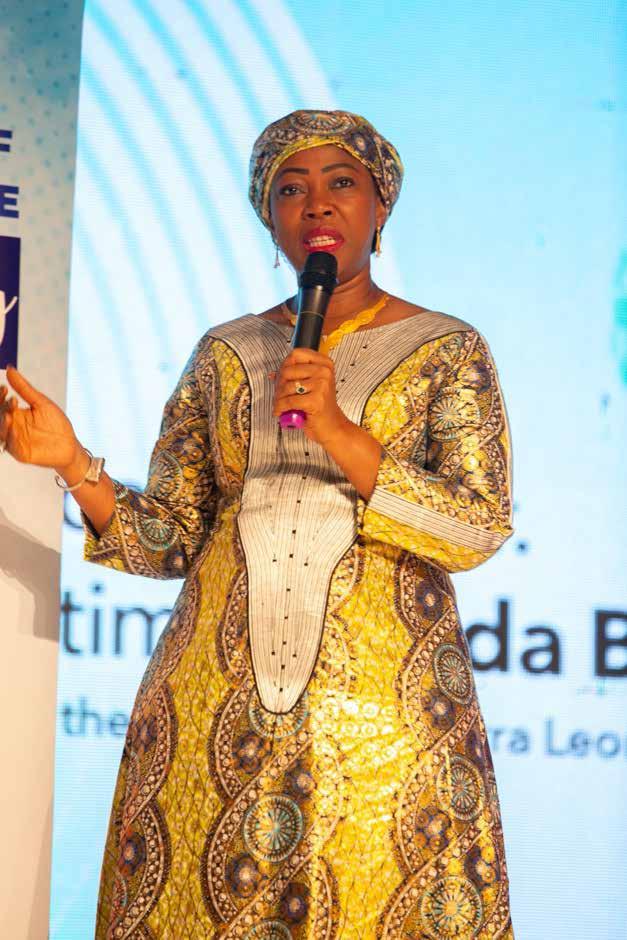
Delivering the keynote address on the first day, Her Excellency the First Lady of the Republic of Sierra Leone, Madam Fatima
what build up our society,” the First Lady added.
Representing The Church of Jesus Christ of Latter-day Saints, Elder Isaac K. Morrison, General Authority Seventy and Second Counselor in the Africa West Area Presidency, echoed this conviction, highlighting the role of women in the home and across various facets of society. “Women create harmonious and resilient communities. We need more women of virtue, purity, and empowerment, and this begins with the family,” he said.
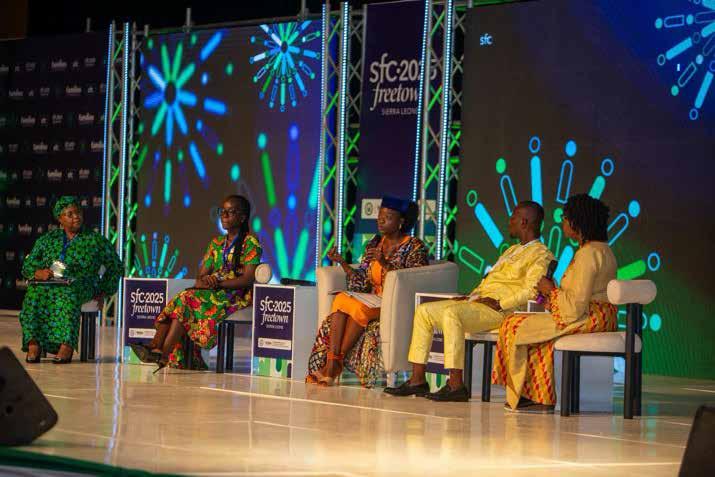
yya Muslim Mission, in a show of regional solidarity. The first day also featured an exhibition showcasing solutions in family welfare, women’s advancement, and child protection, along with a panel discussion led by Madam Isatu Jabbie Kabbah and Aminata Turay exploring policy and grassroots strategies.
Child protection at the heart of resilient communities
The second day of the conference turned the spotlight to child protection as the cornerstone of strong families.
Maada Bio, stated that the conference presented a unique platform to drive lasting change and consequently challenged stakeholders to turn dialogue into action. “Let me use this as a call to us all to not let this be just a conference. Let us use this platform to design policies that will make women change-makers in our society,” she urged. She emphasized that promoting women’s empowerment should not be reduced to tokenism, as genuinely empowering women has tangible and far-reaching effects. “Women are agents of transformation. They build up the families, and our families are
Other dignitaries reinforced the shared mission. Archbishop Edward Tamba Charles, President of the Inter-Religious Council, described empowerment as a spiritual responsibility, and consequently, must be spearheaded by religious institutions. “Religious institutions must champion gender equality and child welfare,” he noted.
Traditional leader Sheku Amadu Tejan Fasuluku-Sonsiama III similarly said, “It is in our homes, towns, and villages that true transformation must begin. When women are given a seat at the table, nations prosper.”
Goodwill messages came from Ambassador Bob Sheriff of Liberia and Amir Musa Mewa of the Ahmadi-
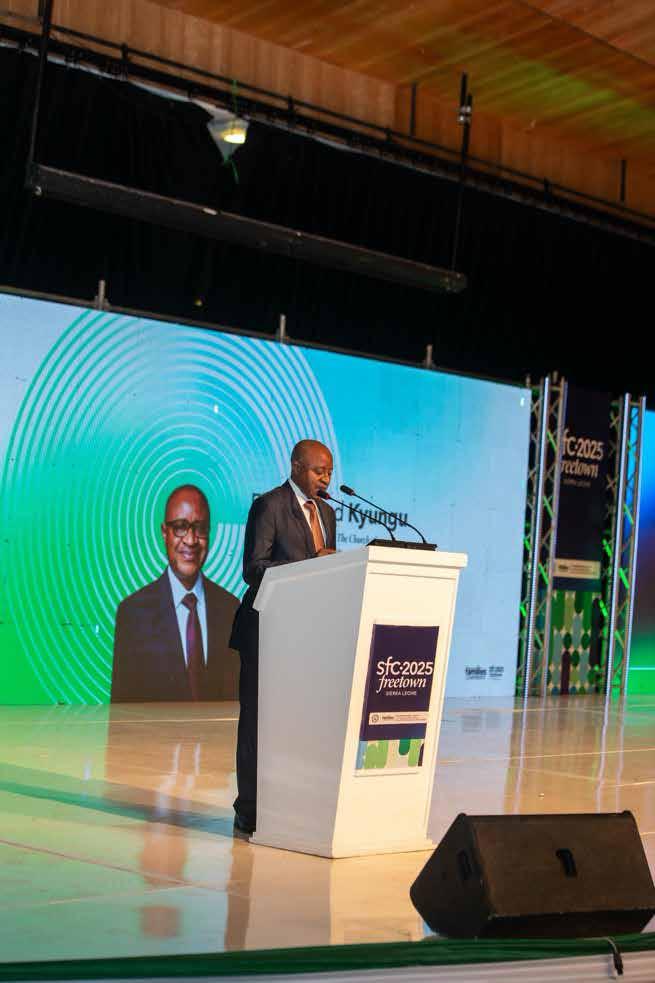
Delivering the keynote, Elder Alfred Kyungu, President of the Africa West Area of The Church of Jesus Christ of Latter-day Saints, underscored the benefits of dedicated care for the young. “Children are shaped by their experiences; hence, families must create a conducive environment that contributes not just to their physical well-being but to their emotional and spiritual health,” he added. He further stressed the power of love over fear in raising children.
Sheik Ibrahim Barrie, a respected religious and political leader, reiterated the role of women’s empowerment in Islamic teachings. “Empowering women is not just a moral obligation; it is a necessity for the progress of our communities,” he noted. Young
gender activist Grace Ada Brown moved the audience with her personal testimony, adding that the strength of a nation depends on the strength of families.
“When families are strong, communities thrive,” she said. Speakers such as Tonya Waite of Protect Child Health Coalition–USA, Jennifer Hogge Ellsworth of Engage Now Africa, and Sharon and Greg Slater of Family Watch International offered practical strategies for safeguarding children’s well-being. Panelists Daniel F. H. Kettor, Blessing Kutubu, and Christiana Ogbemoye Oliko shared insights on regional collaboration and community-based support systems. “Protecting children starts
with building trust between families and the institutions designed to help them,” Mr. Kettor said.
Safe house for gender-based violence victims
In a landmark announcement, Elder Kyungu, revealed plans to build a 54-bed safe house in partnership with the office of the First Lady. “This facility will not only provide shelter but also counseling sessions to help survivors regain their footing in society.” The closing ceremony concluded with awards recognizing the First Lady’s leadership, including honors from The Church of Jesus Christ of Latter-day Saints, the Social Welfare Department, and the Government of Liberia.
ICU renovation and donation underscore commitment to health
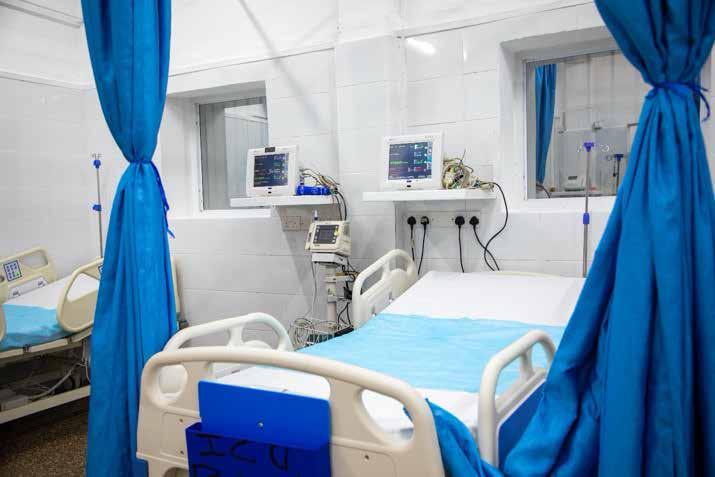
Ahead of the conference, The Church of Jesus Christ of Latter-day Saints commissioned a comprehensive renovation of the Intensive Care Units at Connaught Hospital, the nation’s main healthcare facility. Elder Isaac Morrison described the project as faith in action. “This project represents our deep commitment to alleviating burdens and bringing hope to communities around the world.”
Acting Minister of Health, Professor Dr. Charles Senessie, highlighted the alignment between this initiative and national goals. “The collaboration between the Church and the government is vital for improving
the upgrades for changing life. “This is not just an upgrade; it is a lifeline,” Dr. Ibrahim Kapuwa, Hospital Care Manager said. The donation included ICU beds, defibrillators, vital sign monitors, and other critical equipment, reinforcing the message that healthy families are the foundation of strong nations. As the 7th Strengthening Families Conference concluded, one message resonated clearly: Empowering women, protecting children, and investing in health are inseparable pillars of a thriving, resilient Sierra Leone. Outlook and future conference
The conference is scheduled to next go to Monrovia, Liberia in June, 2026. All stakeholders are looking forward to Liberia hosting a suc-
Keeping it agile in Ghana – how top tech is transforming modern work
By Allen Olayiwola
By Allen OLAYIWOLA
The workplace of today looks nothing like it did five years ago. Agile work models are no longer a buzzword; they are a necessity, especially in a fast-evolving economy like Ghana's. As remote work, flexible schedules, and tech-enabled collaboration become the norm, the question is no longer if businesses should adapt, but how quicklythey can. To deliver on the promise of agility, Ghanaian businesses must go beyond policy. They need to embrace the right technologies that power collaboration, automation, and inno-
reshaping the agile work landscape in Ghana and how local businesses can take full advantage.
1. Collaboration technology – Driving connection across regions Collaboration platforms like Microsoft Teams, Zoom, and Slack have become the digital meeting rooms of today. With Ghana's increasing remote and hybrid work culture, these tools are more vital than ever. Microsoft Teams, for example, is continuously upgrading its features. In 2025, new updates include real-time captioning, multi-language support, and
AI-driven noise suppression – all designed to make virtual meetings feel just as natural as face-to-face ones. Whether your team is spread across Accra, Tamale, or even working from home in Cape Coast, these tools allow seamless interaction, document sharing, and productivity tracking. For Ghanaian firms with regional staff or diaspora consultants, it's a game changer.
2. Workflow automation – Streamlining efficiency for growth Agile working is about speed and precision. Workflow automation allows businesses to preempt delays, reduce human error, and optimise time. Picture this: customer service queries are automatically triaged and routed to the right agent; invoices are processed without human intervention; reminders are scheduled and sent without anyone lifting a finger. This is already happening in Ghana's banking, telecom, and e-commerce sectors. Although the initial investment in automation may seem steep, it saves money long-term by reducing the need for extra staff and enabling your
team to focus on strategic work that adds real value. More Ghanaian SMEs are exploring automation tools to handle inventory, CRM, payroll, and logistics.
3. Artificial Intelligence (AI): Empowering smart workplaces AI isn’t about robots taking over. In the Ghanaian workplace, it’s more about making employees more effective and freeing them from repetitive tasks. Take Intelligent Virtual Agents (IVAs), which can handle basic enquiries such as "What are your working hours?" or "How can I reset my password?" These bots never get tired, never forget a script, and offer round-the-clock support. That frees up your human staff to focus on complex customer interactions or business growth initiatives. From fintech to online learning platforms in Ghana, AI is helping create more responsive, scalable customer service experiences.
4. Workforce optimisation – Enabling productivity anywhere Ghanaian professionals, especially younger talent, are demanding flexibility. Agile work is about trusting your team to deliver results, not clock hours. Work-
force optimisation tools help managers measure productivity, allocate resources efficiently, and spot performance gaps – all without micromanaging. With real-time dashboards, timesheet automation, and performance tracking, these platforms are helping businesses operate smarter. More importantly, they help reduce burnout, boost employee engagement, and improve retention – critical in Ghana's competitive labour market.
5. Ditching legacy tech – It’s time to let go Holding on to outdated systems is one of the biggest roadblocks to agility. Yet, many organisations in Ghana still rely on
legacy tech – whether it's paper records, old software, or obsolete hardware.
The cost? Increased security risks, reduced speed, and an inability to integrate with modern platforms. In fact, clinging to legacy tech makes it harder to attract younger employees, who expect digital-first environments. Now is the time to upgrade your infrastructure, migrate to cloud services, and equip your team with tools that support modern workflows. The global phase-out of legacy systems is accelerating, and Ghanaian businesses must not be left behind.
Conclusion – The future of work is agile – and powered by tech For Ghanaian business-
es, agility is not just about flexibility – it’s about resilience, responsiveness, and relevance. Whether you're a startup in Osu or a mid-sized company in Kumasi, adopting the right technologies ensures you stay competitive in a digital-first economy. By investing in collaboration tools, embracing automation and AI, optimising workflows, and letting go of legacy systems, businesses in Ghana can create environments where talent thrives and customers stay loyal.
Work smart. Work agile. Work with the future in mind.
>>>the writer is a seasoned cloud architect and systems administrator with expertise in leading technical
teams to create innovative platforms. As CTO of eSolutions Consulting, he has spearheaded major projects like the Office 365 rollout for Ghana’s government and infrastructure deployment for the Ghana Revenue Authority.
Recognized for his strategic use of emerging technologies, Allen has led his team to multiple Microsoft Partner of the Year awards, solidifying his role as a key leader in tech-driven business transformation. If you'd like to explore how these strategies can help your organization thrive, reach out to discuss tailored solutions for your business growth journey. He can be reached via allen @ esolutionsghana.com and or 0540123034
For The Future (FTF) Ghana launches impart store
...to support deprived kids
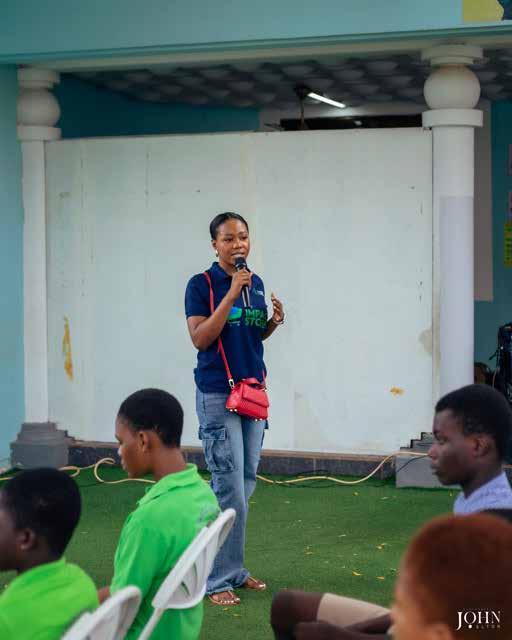
The Founder and President of The Future (FTF), Kezia Asiedua Sanie, has announced the launch of the FTF Impact Store a social enterprise initiative designed to support underprivileged children through the sale of everyday essentials.
Speaking to the media at the launch of the FTF Book Fair and Impact Store, Ms. Sane explained,
“The idea behind the Impact Store is simple when you shop with us, 100% of the proceeds go directly into supporting life-changing programs for underprivi-
leged children. It’s not just shopping; it’s making an impact. Your purchase helps put children in school, provides them with books, uniforms, and other essentials they need to thrive. That’s what the FTF Impact Store is all about and it’s here to stay.”
She further noted that while the store was officially launched today(July 5,2025) FTF plans to organize more fairs regularly potentially every quarter.
“We also hope to collaborate with major supermarkets in the future. The goal is to have FTF shelves in stores, so anyone can walk in,
pick up an item, and know they’re supporting a good cause.”
On the importance of reading, Ms. Sane emphasized the value of literacy for children’s development, stating:
“Reading is key. It fuels curiosity and opens up a world of knowledge. If we want children to have a bright future, we must first empower them through books.”
For The Future (FTF) is a youth-led nonprofit that has impacted over 8,000 children across Ghana and Nigeria through education, mentorship, and sustainable development initiatives. Since its founding in 2016, FTF has worked to provide access to opportunities, holistic education, and essential resources for underprivileged children, ensuring they receive the support they need to succeed.
Turn Data Skills into Social ImpactTelecel Ghana CEO urges younger generation
By Hon. Patrick Yaw Boamah
Chief Executive Officer of Telecel Ghana, Ing. Patricia Obo-Nai has called on the nation’s expanding community of young data scientists to transform their technical knowledge into tangible solutions to tackle some of Ghana’s most pressing challenges. Delivering the keynote of the Ghana Data Science Summit at Ashesi University, she encouraged the gathering of learners, practitioners and stakeholders in data science to leverage its power for pur-
pose-driven innovation and development solutions.
“There’s a saying that data is the new oil or the new gold. But if we’re honest, that description doesn’t even go far enough. Unlike oil and gold, data is not finite. Its power lies not in its volume, but in how we use it for greater good.”
Speaking to the theme of this year’s summit, From Skills to Impact: Empowering Ghana’s Data Science Evolution, Ing. Obo-Nai traced the global trajectory of data science from simple
statistics to a powerful engine for prediction, automation, and social change. She acknowledged that beneath the momentum of the data science revolution, there are significant gaps including the scarcity of hands-on experience opportunities, financial barriers to accessing advanced computing resources, limited industry adoption and a lingering bias against non-traditional learning pathways.
“Access to the internet alone to learn data sci-
ence is not enough. Without opportunities to apply your skills, build portfolios, and gain real-world exposure, technical knowledge risks becoming an unused asset.”
Ing. Obo-Nai also shared insights into how Telecel Ghana relies on data science in its operations to serve customers, including revenue forecasting, detecting fraud and creating personalised and tailored bundles such as the Made4Me offers.
“For us, data science is a strategic asset that drives our deci-
Telecel Ghana CEO, Ing. Patricia Obo-Nai delivering the keynote address at the Ghana Data Science Summit 2025 at the Ashesi University.
sion-making and customer engagement. We leverage machine learning to deepen customer understanding and retention.”
She said the telco’s Data for Good initiative, run with the Ghana Statistical Service and Flowminder, plays a critical role in national crisis response during health crises as it provides anonymised data to shape public health decisions and resource allocation. Held over three days, the Ghana Data Science Summit, also known as IndabaXGhana, is an annual event focused on data science, machine learning, and Artificial Intelligence.
Launched in 2019 by the Data Science Network in partnership with Deep Learning Indaba, the summit aims to democratise data science knowledge across academia, industry, government, and the broader Ghanaian community. It brings together hundreds of students and seasoned professionals in data science to learn, share solutions and collaborate.
In charting a path forward, Ing. Obo-Nai outlined recommendations to move Ghana’s data science landscape from a nascent talent pool to a robust engine for innovation and economic growth.
She said the study of data science can be
more impactful to businesses through practical, project-based applications via internships and partnerships between academia and industry. She also advocated mentorship, broader job market opportunities beyond STEM and finance, and better recognition for graduates and self-taught professionals with data science credentials from non-traditional pathways.
On a national level, Ing. Obo-Nai emphasised the need for open access data platforms, standard data-sharing agreements and the establishment of advanced research centres to keep Ghana at the fore-
front of AI and analytics. At the heart of these suggestions was a challenge to the new generation of data scientists to go beyond technical mastery and focus on real-world outcomes and applications. “It’s not enough to code. You must ask the right questions, understand your data deeply, and communicate your findings so that they drive decisions that change lives. Your skills can help a farmer predict rainfall, detect health risks before they spread, or build the next fintech solution. The future won’t be handed to us. We must build it and help shape a data-driven Ghana we can all be proud of.”
Beyond Jubilee: Lessons from Ghana's oil and gas journey and promise of Eban-Akoma discovery
By: Ananpansah Bartholomew Abraham
For many resource-rich nations, the ultimate aspiration is to transcend the cyclical trap of the “resource curse,” a paradox often attributed to the “Dutch disease." This phenomenon arises when revenues generated from the extractive sector, particularly hydrocarbons(petroleum), distort the domestic economy by increasing demand for imports over domestic goods (“spending
effect”) and shifting labor and capital away from other key sectors such as agriculture and manufacturing ( “resource pull effect”). The resulting imbalance often leads to weakened economic linkages, volatile commodity markets, and long-term macroeconomic instability. Mehlum et al. (2006) observed that resource-rich nations such as Nigeria, Angola, Zambia, Sierra Leone, Saudi Arabia, and Venezuela have experienced
slower or stagnant growth compared to resource-poor yet industrially successful countries such as South Korea, Taiwan, Hong Kong, and Singapore.
As a general principle, natural resource endowments,particularly petroleum, can serve as catalysts for national development if exploited efficiently and managed prudently. Petroleum refers to naturally occurring deposits of hydrocarbons, including crude oil, natural gas, and natural gas liquids formed over millions of years through geological processes. Ghana, having only commenced commercial hydrocarbon production fifteen years ago, is still in the formative stages of determining its long-term trajectory(success or failure) in this sector.
Historical Overview of Ghana’s Oil and Gas Sector:
Ghana's emergence as an oil-producing nation was officially
marked in December 2010 with the commencement of commercial production from the Jubilee Field, located offshore in the Tano-Cape Three Points Basin. This milestone followed the 2007 discovery and drilling of the Mahogany-1 well by a consortium comprising Kosmos Energy, Anadarko Petroleum Corporation, Tullow Ghana Limited, Sabre Oil and Gas Holdings Limited, the EO Group, in conjunction with the Ghana National Petroleum Corporation (GNPC).
The Jubilee Field, located approximately 75 miles offshore, is considered one of the largest offshore discoveries in West Africa, with estimated recoverable reserves of between 600 million and 1.8 billion barrels of high-quality light crude (37.6 API), and approximately 800 billion cubic feet of natural gas (Kapela, 2009). In addition to Jubilee, Ghana has since brought two other fields TEN and Sankofa Gye Nyame (SGN)—into production, from a total of approximately 25 offshore discoveries.
Petroleum resources in Ghana are located within four sedimentary basins: the Western Basin (Tano to Cape Three Points Basin), the Central Basin (including the Saltpond Basin), the Eastern Basin(Accra-Keta Basin), and the onshore or inland Voltaian Basin.
Following the 2007 discovery and with full awareness of the risks posed by the Dutch disease, Ghana adopted a comprehensive institutional and legislative framework to govern upstream and midstream operations. These frameworks were modelled on international best practices, particularly those of Norway, Timor-Leste, and Trinidad and Tobago. While commendable progress has been made, structural and implementation challenges persist and must be addressed especially in light of the recent commercial discovery at Eban-Akoma.
Recent Seismic Surveys and the Eban-Akoma Discovery:
On July 3, 2025, Ghana’s Minister for Energy and Green Transition announced the successful appraisal and commercial viability of hydrocarbon deposits at the
Eban-1X (oil) and Akoma-1X (gas and condensate) wells. These wells are located in the Cape Three Points Block 4 (CTP-B4), and their confirmation marks a significant advancement in Ghana’s upstream sector.
The joint venture responsible for this exploration and appraisal comprises Eni Ghana Exploration & Production Ltd, Vitol Upstream Tano Ltd, Woodfields Upstream Ghana Ltd, and GNPC’s subsidiary, Explorco, operating in collaboration with the GNPC itself.
Constitutional and Legal Framework: Resource Ownership and Citizen Empowerment.
Under Article 257(6) of Ghana’s 1992 Constitution, all natural resources, including petroleum, are vested in the President on behalf of and in trust for the people of Ghana. Section 3 of the Petroleum (Exploration and Production) Act, 2016 (Act 919) reiterates this point, reinforcing the notion that these resources are public assets and owned by the people of Ghana
However, the enforceability of this constitutional trust was tested in Adjaye & Others v. Attorney-General & Annor (Suit No. C144/94) where the court held that the trust created was not en-
forceable in the law court. The Court, in arriving at this decision, relied on Tito v. Waddell (No. 2) [1977] to hold that the trust created under Article 257(6) was not judicially enforceable since it was not in the nature of a fiduciary relationship(trust in the lower sense). Rather, it represents a higher political trust that is executed through governance mechanisms(trust in the higher sense). To check executive authority, Article 268(1) of the Constitution mandates parliamentary ratification of any contract involving the grant of rights for resource exploitation. A two-thirds majority in Parliament may exempt certain contracts under Article 268(2). In Republic v. High Court, Ex Parte Exton Cubic (2019), the Court underscored the necessity of parliamentary oversight as a proxy for the people’s approval, reinforcing democratic accountability in resource governance.
Institutional and Legislative Frameworks for Upstream and Midstream Petroleum Operations:
Although a detailed evaluation of the adequacy of Ghana’s petroleum legislation is necessary, it is broadly acknowledged that the current legal framework is robust. The
key issue lies in addressing the structural and implementation deficiencies.
The core legal instruments governing Ghana’s oil and gas sector, especially the upstream and midstream petroleum operations, include:
1992 Constitution of Ghana.
GNPC Act, 1983 (PNDCL 64)
Petroleum Commission Act, 2011 (Act 821). Petroleum Revenue Management Act, 2011 (Act 815), as amended by Act 893 (2015)
Petroleum Exploration and Production Act, 2016 (Act 919). Petroleum Income Tax Act (PNDCL 188). Model Petroleum Agreement (MPA)
A. Petroleum Commission: regulating the Upstream Sector.
The establishment of the Petroleum Commission under Act 821 and in accordance with article 269 of the 1992 constitution marked a significant shift in regulatory governance. The Commission assumes responsibility for oversight of upstream activities, thereby eliminating the conflict of interest previously associated with GNPC's dual role as regulator and operator.
In addition to regulating upstream operations, the Commission promotes local content, enforces health, safety,
and environmental standards, and ensures that petroleum activities contribute meaningfully to national welfare.
B. Petroleum Exploration and Production Act (Act 919):
Act 919 provides a comprehensive legal regime for managing petroleum exploration, development, and production. It defines the contractual relationship between the State, GNPC, and investors, prioritizing transparency, sustainability, and national interest.
Sections 5 and 11 prohibit petroleum operations without a formal agreement, except by GNPC. The Act mandates transparency and accountability (Section 4), empowers the Minister to demarcate Ghana's sedimentary basins into blocks, allocate those blocks (Section 6), and restricts share transfers exceeding 5% without ministerial approval.
The State, through GNPC, has the right to acquire up to 15% carried interest during exploration and development (Section 10.14), with an option to increase its stake to 25% following a declaration of commercial discovery, safeguarding public interest in strategic resources.
C. Petroleum Revenue Management Act (Act 815, as amended):
This Act was enacted to ensure the transparent and sustainable management of petroleum revenues. Its objectives include prudent fiscal management, intergenerational equity, and public accountability in accordance with Article 36 of the 1992 constitution.
Key provisions include:
1. Petroleum Holding Fund (PHF): Established at the Bank of Ghana to receive and disburse all petroleum-related revenues.
2. Public Interest and Accountability Committee (PIAC): A citizen-led statutory body that ensures citizen engagement, oversight, and regular reporting on the use of petroleum revenues thereby, deepening transparency and accountability.
3. Investment Advisory Committee (IAC): Develop a benchmark portfolio and advise the Minister on investment strategies for the Ghana Petroleum Funds, ensuring fiscal responsibility and reducing the risk of mismanagement.
4. Ghana Petroleum Funds (GPF): Comprising the Ghana Stabilization Fund (GSF) and Ghana Heritage Fund
(GHF), these are strategic instruments for savings and stabilization ( investment ) .GHF for instance secures the development of future generations through savings when the petroleum reserves are completely depleted.The GSF on the other hand, is to cushion and sustain public expenditure in times of un-anticipated petroleum revenue shortfall.They (GHF and GSF) are to be consolidated into the Ghana Petroleum Wealth Fund one year after the depletion of reserves.
5. Annual Budget Funding Amount (ABFA): Allocated to priority development areas under a medium-term framework, with a minimum of 70% earmarked for public investment and 25% for the Ghana Infrastructure Investment Fund (GIIF).
6. Exceptional Transfers: Permitted for specific purposes, including tax refunds and community compensation.
Challenges and Implementation Gaps:
Despite the legislative strengths, several systemic challenges persist:
1. Over-reliance on ABFA for recurrent ( consumption-based ) expenditures under-
mining transformative potential of oil revenue.
2. Weak linkages between petroleum and non-petroleum sectors.
3. Inconsistencies in ABFA-funded priority areas due to political transitions.
4. Weak enforcement of accountability provisions leading to misuse and misapplication of earmarked funds.
5. Inefficiencies in project execution and evaluation.
6. Underfunding of the GHF, undermining intergenerational equity.
The Promise of the Eban-Akoma Discovery: Lessons and Policy Recommendations
As Ghana transitions towards commercial development of the Eban-Akoma fields, it is imperative to draw lessons from previous experiences and implement targeted reforms:
1. Establish a Sovereign Petroleum Investment Authority, modelled after Norway’s Government Pension Fund Global, to manage petroleum revenues independently and professionally.
2. Implement a long-term development framework for ABFA utilization under the National Development
Planning Commission.
3. Amend the PRMA to curtail ABFA usage for recurrent expenditure and prioritize infrastructure and essential services delivery in health, education, roads, and highways. 4. Enforce stricter legal sanctions for financial mismanagement, breach of investment rules, delays, and reporting failures.
5. Strengthen PIAC’s mandate with investigative powers and enhance community monitoring capacity for projects executed with petroleum revenue to foster grassroots accountability.
7. Promote local content and participation, as stipulated in L.I. 2204, to enhance state control and inclusive benefits.
Conclusion:
The aspiration of every resource-rich country is to avoid the resource curse and transform its resource wealth into sustainable national development. Ghana’s early efforts through legislative innovation and institutional establishment have laid a solid foundation. However, the recent Eban-Akoma discovery presents a timely op-
6. Unify political consensus on petroleum governance to depoliticize strategic decisions, as was the case under the Norwegian model.
portunity to reinforce these gains through reforms that promote efficiency, accountability, and long-term national welfare. Strengthening enforcement, ensuring fiscal discipline, and committing to intergenerational equity will be critical in transforming Ghana’s petroleum wealth into a blessing, not a curse.
Sources:
1. Public Interest and Accountability Committee (PIAC) 2024 Semi-Annual Report
2. Petroleum Revenue Management Act, 2011 (Act 815) as amended by Act 893 (2015)
3. Petroleum Exploration and Production
Act, 2016 (Act 919)
4. Springfield Group –Offshore Discovery
5. PIAC – Oil Production Decline
6. Kwesi Dartey-Baah et al. “Emerging Dutch Disease in Emerging Oil Economies: Ghana’s Perspective”
7. “Model of State Management of Petroleum Sector – Case Study of Norway,” Interdisciplinary and Political Science Journal, Vol. 20, No. 1/2017
About the author
Ananpansah Bartholomew Abraham(AB) Freelance Journalist | MSc Oil and Gas Resource Management Contact: 0241129910 / 0200704844
Asare Ohene Bediako, emphasized the transformative potential of having GIRSAL bring some of the stakeholders in the agriculture sector to witness at first hand the level of real transformation happening in the sector.
“GIRSAL decided to bring the banker’s to our site to take them through some processes along the agriculture value chain. We have shown them the processes involved in rice milling and agricultural practices in general. This was done to bridge the gap between the banks and agriculture
sector players”, he said. According to him, he believes ‘INSPIRE by WeComm’ will help change the narrative some people, including some of the participants, have about the agriculture sector before coming for the cohort.
“I believe this will changer a lot of myths and perceptions some of them had about the agric sector in Ghana before coming to our factory,” Asare-Bediako stressed.
The agriculture sector which employs a significant portion of Ghana's population and contrib-
uting meaningfully to the country’s GDP is facing major challenges including access to good roads. But there seem to be light at the end of the tunnel.
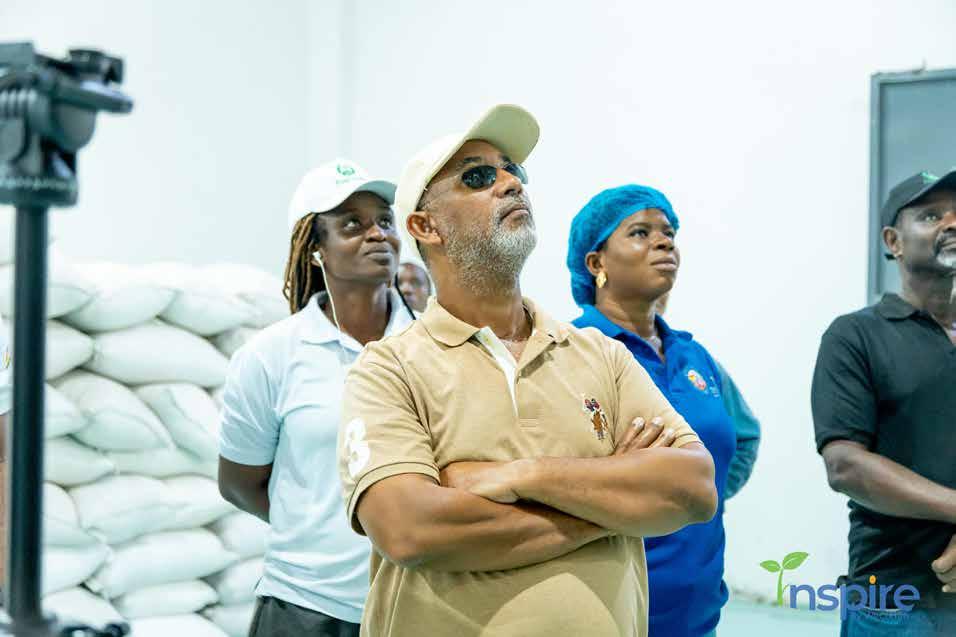
Chief Executive of Millennium Development Authority, Alex Mould who joined the participants to tour the milling facility of Evivi Foods, pledged government’s commitment to addressing the problems facing the sector to enable companies like Newage Agriculture Solutions Limited to keep growing, and doing the extraordinary things he had come to witness at
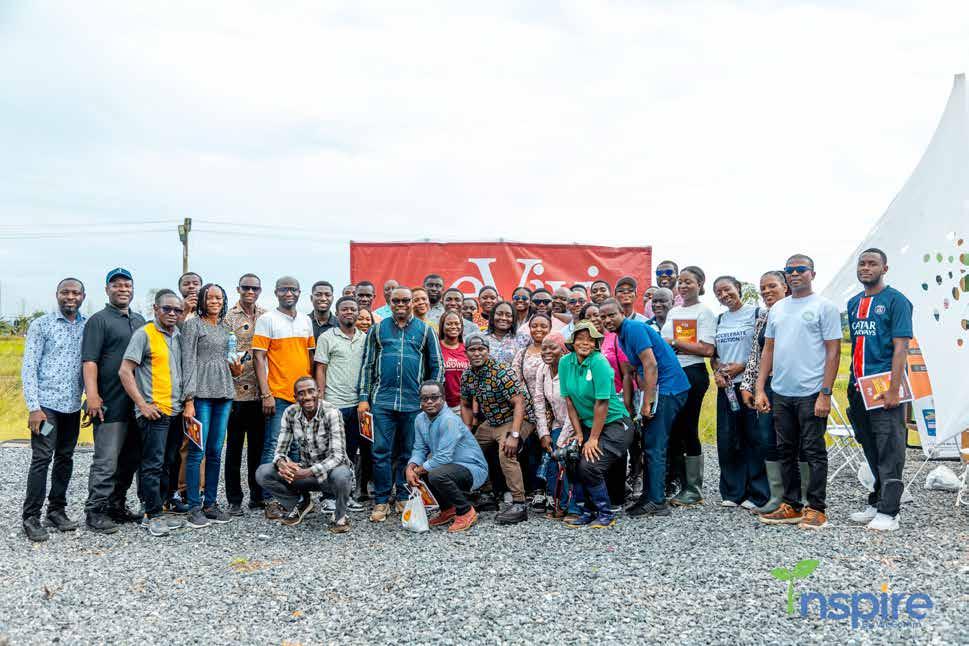
the site. The ‘INSPIRE by WeComm’ project, sponsored by Newage Agric Solutions Limited and Evivi Foods, is a flagship experiential learning initiative developed to provide agriculture enthusiasts, young people, and corporate participants with an immersive glimpse into Ghana’s dynamic agricultural sector. The program, according to organisers will be divided into ‘Cohorts’, and will take place at Evivi Foods in Akuse and many other exciting locations.
First cohort of the ‘INSPIRE by WeComm’ hosted at Evivi
WeComm Agri-Media & Consultancy has held the first edition (cohort) of its flagship programme; ‘INSPIRE by WeComm’, drawing participation from several professionals including bankers.
The patrons – who were Participants of GIRSAL’s Agriculture and Agribusiness Lending
Course for Staff of Financial Institutionswere hosted at the factory of Evivi Foods, producers of Evivi Rice and chicken, in Akuse where they were taken through the realities of Ghana’s agriculture, and what it takes for one to succeed in the sector by specialists from NewAge Agric Solutions limited, the
project’s technical partners.
As per the goal of the ‘INSPIRE by WeComm project’, They were taken through the processes involved in producing Evivi Foods’ Evivi rice and Happy chicken – two products that have dominated the Ghanaian food market since their introduc-
tions. The participants were left awestruck by the impressive food processing factory put up by the company.
Speaking on potential partnerships between Newage Agric Solutions Limited, and other development partners at a session, Business Development Manager of Newage Agric Solutions,