

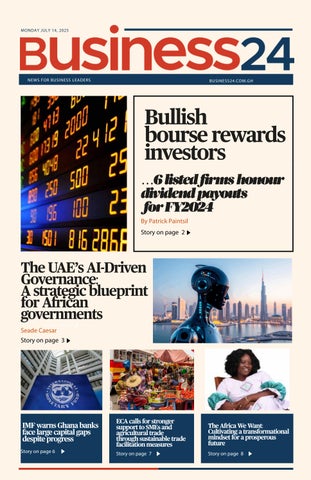
By Patrick Paintsil




L imi t e d
Copyright @ 2019 Business24
Limited All Rights Reser ved
Your subscription along with the support of businesses that adver tise in Business24 -- makes an investment in journalism that is essential to keep the business community in Ghana wellinformed.
We value your support and loyalty.
Contact : editor@business24 com gh
Newsroom: 030 296 5315
Adver tising / Sales: +233 24 212 2742

By Patrick Paintsil

Stock market investors are reaping from the strong performance of listed companies on the domestic capital market with only six listed firms paying dividends to shareholders for the 2024 traded year.
A Business24 analysis of full-year 2024 financials of some listed firms those so far released to the exchange has shown an impressive trend with companies paying dividend in the year under review.
Six listed companies namely Standard Chartered Bank, TotalEner-
gies, GOIL, MTN, Access Bank and CalBank have paid 2024 dividends to their investors and shareholders as at the first-half of the year. Shareholders of Standard Chartered Bank Plc. and TotalEnergies Plc. were the big earners, gaining GH¢1.67per share and GH¢1.26per share respectively. MTN, GOIL, Access Bank, and Calbank also paid GH¢0.124, GH¢0.398, GH¢0.088, and GH¢0.182 per share to investors in the period under
review. Cumulatively, the six companies have paid GH¢4.378 in dividend earnings to investors.
Listed companies paying dividends reflects strong financial health, confidence in earnings stability a direct reward for shareholders. With more payouts expected in the second half of the year, an encouraging trend could attract new investors to the bourse, leading to greater demand for the stock and potentially increasing the value of the market.
Artificial Intelligence (AI) is rapidly redefining the architecture of modern governance, transforming how governments plan, deliver services, and engage with citizens. Nowhere is this transformation more evident than in the United Arab Emirates (UAE), which has strategically positioned AI at the core of its national vision and development agenda. By embedding AI into public sector systems from transportation and healthcare to education and judicial services the UAE is setting a precedent for the world in forward-looking governance. For African nations, many
of which face chronic challenges in institutional capacity, service delivery, and policy implementation, the UAE’s model presents an opportunity to leapfrog traditional development stages. Rather than reinventing the wheel, African governments can adapt the UAE’s AI-driven governance blueprint to meet their unique social, economic, and political contexts. This article explores how the UAE’s approach offers not only a technological advantage but a governance philosophy that Africa can adopt to accelerate transformation.
The UAE’s Visionary AI
Governance Framework
The AI Strategy 2031
In 2017, the UAE launched its National Artificial Intelligence Strategy 2031. The UAE’s Artificial Intelligence Strategy 2031 is a forward-looking national roadmap aimed at positioning the country as a global leader in AI by the next decade. It focuses on enhancing government efficiency, boosting economic performance, and improving the quality of life for citizens through intelligent systems. The strategy targets priority sectors such as education, energy, trans-
portation, space, and healthcare, integrating AI to drive innovation and productivity. It also emphasizes capacity-building, data infrastructure, and ethical AI governance. By aligning AI development with national objectives, the strategy serves as a cornerstone for the UAE’s transition to a knowledge-based, sustainable economy. Institutionalization through the Ministry
The creation of the world’s first Ministry of Artificial Intelligence underscores the UAE’s commitment to institutionalizing AI at the highest level of government. The ministry is tasked with drafting policies, setting ethical standards, and coordinating AI deployment across federal agencies.
erations
The UAE has seamlessly integrated AI into daily government operations, transforming how public services are delivered and decisions are made. From AI-powered chatbots in customer service to predictive analytics in urban planning and resource allocation,
the government leverages machine learning to increase responsiveness and efficiency. In Dubai, AI is used to manage traffic flow, monitor energy consumption, and enhance public safety. Judicial systems employ AI for case analysis, while customs authorities use it to detect fraud and expedite processing. These applications illustrate how AI improves transparency, reduces human error, and enables real-time governance that is proactive and citizen-centric.
Strategic Outcomes of the UAE Model Enhanced Efficiency:
The UAE has streamlined government operations through AI-powered automation, significantly reducing human error, paperwork, and service delays. Processes like visa issuance, customs clearance, and municipal services are now executed in minutes. This efficiency boosts citizen satisfaction, reduces public sector costs, and increases the agility of state institutions to respond to dynamic needs.
Data-Driven Policymaking: AI allows the UAE government to collect, process, and analyze massive datasets in real time. This empowers decision-makers to antici-
pate problems, model future scenarios, and implement evidence-based policies. Whether managing urban growth or health outbreaks, policies are increasingly predictive, adaptive, and responsive, improving both effectiveness and public trust in government.
Economic Diversification: By fostering an AI-driven ecosystem, the UAE is moving beyond oil dependence. Investments in AI startups, innovation hubs, and research institutions have stimulated growth in sectors like fintech, logistics, education tech, and healthcare. This shift generates new employment opportunities, attracts foreign investment, and positions the UAE as a global digital economy leader.
The UAE’s commitment to AI has elevated its status on global innovation indices and enhanced its appeal to international investors. Cities like Dubai and Abu Dhabi are emerging as tech hubs, attracting talent and multinational tech firms. This digital sophistication reinforces the UAE’s brand as a forward-looking and competitive global actor.
Attention Africa hosts the youngest population globally and is rich in resources, yet faces challenges in
governance, infrastructure, and service delivery. Many governments still rely on outdated administrative systems, undermining agility and responsiveness.
AI as a Development Catalyst
AI can revolutionize how African governments: Predict and respond to public needs: AI enables governments to analyze real-time data from health systems, social services, and mobility trends to forecast citizens’ needs more accurately. Predictive algorithms can identify potential crises such as disease outbreaks or food shortages before they escalate, allowing policymakers to implement pre-emptive solutions and allocate resources more efficiently.
Monitor infrastructure projects: Through machine learning, drones, and computer vision, AI can track the progress, quality, and compliance of infrastructure projects. This promotes transparency and accountability, reduces the risk of corruption, and ensures that public infrastructure roads, schools, hospitals are delivered on time and within budget, directly improving development outcomes across communities.
Manage agriculture and health systems: AI-powered platforms can
transform agriculture by predicting weather patterns, detecting crop diseases, and optimizing irrigation. In health, AI assists in diagnosing conditions, managing medical inventories, and forecasting epidemics. These applications enhance food security, reduce healthcare costs, and improve service delivery, especially in rural and underserved areas of Africa.
Improve public financial management and anti-corruption efforts: AI tools can detect anomalies in public spending, track financial transactions, and identify patterns linked to fraud or embezzlement. By automating audits and financial monitoring, AI strengthens public financial management, enhances transparency, and reduces corruption critical for building trust in government and ensuring optimal use of public funds.
Leapfrogging with Digital Innovation African nations can bypass legacy systems by directly adopting cutting-edge AI technologies. This leapfrogging enables rapid modernization without the costs of outdated infrastructure. Embracing AI-driven governance allows for faster, more inclusive development, enhancing public services, economic plan-
ning, and citizen engagement through smart, data-informed, and scalable digital solutions.
The Blueprint: Translating UAE’s Model into African Context
Establish Clear National AI Strategies
African governments must develop comprehensive AI strategies that align with their national development plans. These strategies should define goals, priority sectors, regulatory frameworks, and funding mechanisms. By clearly articulating a vision for AI integration in governance, countries can coordinate stakeholders, attract investment, and ensure sustainable, purpose-driven digital transformation across all sectors.
Create Dedicated AI Institutions
Institutional leadership is key to driving AI innovation. Countries should establish dedicated AI agencies or ministries with the mandate to lead policy, research, and implementation. These institutions would coordinate national AI programs, enforce ethical standards, and bridge the gap between govern-
ment, academia, and industry to ensure accountability and long-term success.
Invest in Digital Infrastructure and Skills
AI thrives on data, connectivity, and skilled talent. Governments must prioritize investments in broadband infrastructure, cloud storage, and national data centers. Equally important is building human capital through AI education, technical training, and digital literacy programs. A robust infrastructure and talent pool are foundational for any meaningful AI deployment. Embrace Public-Private Partnerships Partnerships between governments, local startups, tech giants, and academic institutions are essential to scale AI solutions. African nations can tap into global expertise and financing while fostering local innovation ecosystems. These collaborations can accelerate AI adoption in sectors like agriculture, health, and finance, while reducing the cost of implementation.
Embed AI in Government Operations Governments must move from pilot projects
to full-scale integration of AI into public administration. This includes automating services, using AI for real-time data analytics, and optimizing resource allocation. Embedding AI in daily operations enhances efficiency, reduces corruption, and allows governments to proactively respond to citizen needs and emerging challenges.
Overcoming Challenges and Ethical Concerns
While AI offers immense benefits, its adoption in governance raises significant challenges that African governments must proactively address. Key concerns include data privacy, algorithmic bias, cybersecurity threats, and the risk of widening the digital divide. Without proper safeguards, AI can reinforce existing inequalities or erode public trust. Therefore, it is essential to establish robust legal and ethical frameworks, ensure inclusive access to digital tools, and promote transparency in algorithmic decision-making. Capacity-building for regulators, civil society engagement, and partnerships with academia can help ensure that AI is used responsibly,
equitably, and in alignment with democratic and developmental goals.
Conclusion: A Call to Action
The UAE’s AI-driven governance is not just a technological experiment it is a strategic vision backed by political will, institutional alignment, and long-term planning. Africa’s future lies in its ability to adopt such bold innovations. By drawing on the UAE’s model, African governments can create responsive, transparent, and efficient governance systems that meet the demands of a 21st-century society. If AI is the future of governance, then the future must begin now in Africa.

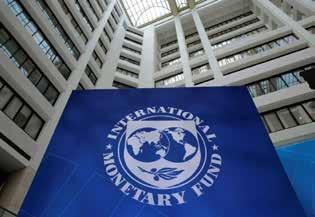
A few banks are facing larger capital gaps mainly on slow progress in implementing recapitalisation plans and increased non-performing loans (NPLs), the International Monetary Fund has warned in its 4th Review Under the Extended Credit Facility (ECF) programme.
“The BoG [Bank of Ghana] has continued its multi-pronged efforts to address
increasing NPLs, although the NPL-to-total loan ratio decreased from 26.7 to 21.8% between end-March and end December 2024 due to a faster expansion in nominal credit.
It however pointed out that the banking sector capital adequacy is improving amid strong liquidity and profitability, as most of the banks with post-domestic debt exchange (DDE) capital
deficits are on course to restore a capital adequacy ratio (CAR) of 13% without reliefs by end-2025 including with the support of the Ghana Financial Stability Fund (GFSF)
Meanwhile, a stress test carried out by the Bank of Ghana on banks operating in Ghana indicated that some banks were vulnerable to severe impairments in credit.
However, credit risks were well-contained.
According to the Central Bank, risks emanating from adverse exchange and interest rates movements, as well as liquidity pressures, were also well-contained due to a tight limit on net open position, sound management of maturity mismatches, and sufficient liquidity.
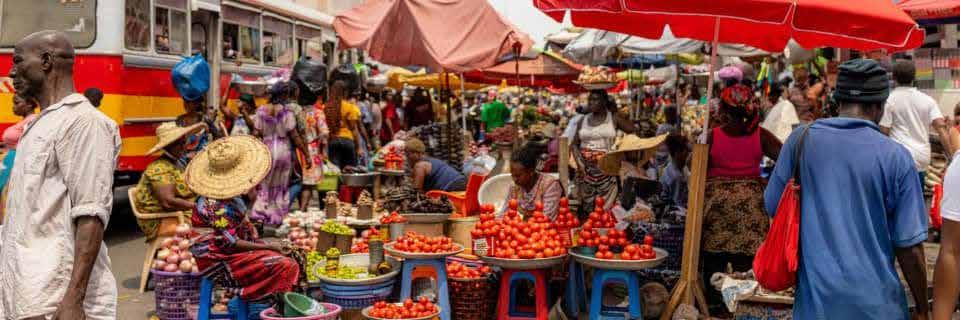
The United Nations Economic Commission for Africa (ECA) has urged governments to scale up support for small and medium-sized enterprises (SMEs) and the agricultural sector through targeted and sustainable trade facilitation measures. This call was made by Mr. Melaku Desta, Acting Director of ECA’s Regional Integration and Trade Division, during the global launch of the 2025 United Nations Global Survey on Digital and Sustainable Trade Facilitation held on 8 July 2025.
“Enhanced efforts in implementing specific trade facilitation measures, particularly trade facilitation measures for SMEs and agricultural trade facilitation, are crucial considering that SMEs and agriculture are the backbone of most African economies,” said Mr. Desta. “This is particularly important in the context of the imperative for successful implementation of the African Continental Free Trade Area (AfCFTA).”
According to the sixth edition of the UN Global Survey, Africa recorded a notable 6.8 percent-
age point increase in the implementation of overall trade facilitation measures, from 55.6 per cent in 2023 to 62.4 per cent in 2025. The highest implementation rates are observed in the Southern and Eastern Africa regions, reflecting ongoing regional efforts to streamline and digitize trade-related processes.
Globally, the Survey found that while overall implementation rose to 70 per cent, progress on sustainable trade facilitation measures including those aimed at women traders, SMEs, and the agri-
cultural sector remains limited.
Armida Salsiah Alisjahbana, United Nations Under-Secretary-General and Executive Secretary of the Economic and Social Commission for Asia and the Pacific (ESCAP) which coordinated the Global Survey, observed: “The global trading environment has recently faced unprecedented challenges. Extensive tariff measures have introduced uncertainty and increased trade costs, while broader disruptions have exposed vulnerabilities in global supply chains. These trends underscore the
urgent need to enhance the efficiency, transparency and resilience of international trade systems.”
The Survey confirms strong performance by developed economies (86%), followed by South-East and East Asia (81%), while countries in the Pacific region recorded the lowest implementation rate (45%). Improvements were particularly significant in areas such as cross-border paperless
trade, legal frameworks for e-transactions, and digital authentication signalling growing global momentum toward digitized trade.
Meanwhile, regional frameworks such as the AfCFTA, including its newly adopted protocol on digital trade and its annexes, are believed to become instrumental in advancing inclusive and sustainable trade in Africa once they are ratified.
This year’s Survey also
introduces new measures on cross-border e-commerce and green trade facilitation, reflecting the growing need to align trade with environmental goals amid escalating climate challenges.
The UN Global Survey is jointly conducted by five UN Regional Commissions the Economic Commission for Africa (ECA), the Economic and Social Commission for Asia and the Pacific (ESCAP), the Economic Commission
for Europe (ECE), the Economic Commission for Latin America and the Caribbean (ECLAC), and the Economic and Social Commission for Western Asia (ESCWA)—alongside UN Trade and Development (UNCTAD). It aims to help countries identify implementation gaps and set priorities for policy action. Covering 180 countries, the Survey provides a comprehensive and comparative analysis of 62 trade facilitation measures worldwide.
By Baptista S. Gebu (Mrs.)
solved it is a promise to be fulfilled. The Africa We Want is grounded in research and aligned with a vision for a prosperous, self-believing continent. Where do we start from? From the
fertile lands of Ethiopia, Africa is richly endowed with natural resources. Yet, paradoxically, it remains home to some of the world’s most persistent development challenges. This disconnect between potential
and reality is not merely a matter of economics or geopolitics it is deeply rooted in mindset, I think.
To realize “The Africa We Want” and project the African Union’s Agenda 2063, Africans must embrace a transformational mindone that recognizes that the grass is not greener elsewhere, but right here, under our feet in Africa. This shift requires confronting the systemic issues of bad governance, resource mismanagement, and political repression, while nurturing a culture of innovation, accountability, and self-belief.
Is there a case for a transformational mindset? A mindset is more than a belief system I see it more as a lens through which individuals and societies interpret their reality and shape their future. For too long, Africa’s narrative has been externally defined: a continent of poverty, conflict, and dependence. This narrative has seeped into the psyche of many Africans, fostering a culture of resignation and external validation. The time for change is here and now.
But this narrative is neither complete nor im-
mutable. As I build capacity in training, I always mention, mindset change is both possible and necessary for transformation. Countries like Rwanda have demonstrated how a deliberate shift in national consciousness toward discipline, innovation, and collective responsibility can yield remarkable progress in governance, infrastructure, and social cohesion.
Is Africa’s wealth a blessing mismanaged? According to the African Development Bank Group, Africa holds over 30% of the world’s mineral reserves, 12% of its oil, and 8% of its natural gas. It is home to 60% of the world’s arable land and a youthful population projected to reach 2.5 billion by 2050. Yet, these blessings have often become sources of conflict, corruption, and exploitation. Why?
How about the resource wastage and the “Paradox of Plenty”. The “resource curse” is a well-documented phenomenon where countries rich in natural resources experience slower economic growth and weaker democratic institutions. In Africa, this curse manifests in several ways: From illicit financial flows, where billions of dollars are lost annually through tax evasion, under-invoicing, and illegal mining. To environmental degradation, where unregulated extraction has led to
deforestation, water pollution, and loss of biodiversity. And to neglect of human capital, where resource wealth has often diverted attention from investing in education, healthcare, and innovation.
To reverse this trend, Africa must move from being a raw material exporter to a value-adding continent. This requires not just policy reform, but a mindset that prioritizes long-term national interest over short-term personal gain.
The governance gap is a barrier to progress. Bad governance remains one of the most significant impediments to Africa’s development. It manifests in corruption, weak institutions, lack of transparency, and disregard for the rule of law.
Discussing symptoms of governance failure, according to research by Bscholarly, the root causes of bad governance in Africa include a lack of accountability, corruption, and exclusionary politics. These failures have led to flawed elections and constitutional manipulations that entrench power rather than serve the people. Sub-national conflicts, often fueled by inequitable resource distribution and ethnic marginalization. Erosion of public trust, where citizens disengage from civic process-
es due to disillusionment. Hear me Africa. The result is a vicious cycle where poor governance undermines development, and underdevelopment reinforces poor governance.
Political Brutalities and the Silencing of Dissent
Across the continent, political repression remains a dark stain on democratic aspirations. From arbitrary arrests of journalists to violent crackdowns on protests, many African governments have prioritized regime survival over citizen empowerment.
This culture of fear stifles innovation, discourages youth participation, and alienates the diaspora. It also contradicts the vision of Agenda 2063, which calls for a peaceful, inclusive, and rights-based Africa. To break this cycle, African societies must demand and defend democratic norms, not just during elections, but every day. Civil society, media, and youth movements have a critical role to play in holding leaders accountable and shaping a new political culture.
The power of belief in reclaiming the African dream is very important. Perhaps the most insidious legacy of colonialism and decades of
underdevelopment is the internalized belief that Africa is inherently inferior. This belief fuels brain drain, consumerism, and a preference for foreign validation. Let’s refuse to subscribe to this colonial mindset, Africa is superior and not inferior. Has melanin and a dominant gene. Africa is home to countless innovations and creativity. Civilization began in Africa. The oldest university is found in Africa. Africans have long been inventors, and this story of invention we must begin to highlight and document accordingly for future generations to know and celebrate. This lack of documentation of the African inventions is leaving many others to claim things that are originally not theirs.
But the tide is turning. From tech hubs in Nairobi to fashion houses in Accra and Lagos, from renewable energy startups in Cape Town to fintech disruptors in Accra, a new generation of Africans is rewriting the narrative. Congratulations on subscribing to this narrative instead.
The idea that “the grass is greener on the other side” has led many to seek opportunities abroad. But
what if the grass is greener where we water it? Just here in Africa.
Africa’s youth must be taught not just to dream, but to dream here in Africa. This requires: education reform that emphasizes critical thinking, entrepreneurship, and African history. Man know himself! Who are we as Africans? Let’s research this holistically across all platforms. Media representation must celebrate African excellence and challenge stereotypes. Africans must be telling the African stories the right way with an African perspective. Diaspora engagement must channel skills, capital, and networks back into the continent. This is your root – Diasporas, remember a landless person may have no root. This phrase highlights the importance of land ownership and connection to one's heritage and territory, particularly for diaspora communities who may have been displaced or disconnected from their ancestral lands. Welcome back to Africa, and let’s build the Africa we all want.
Pathways to the Africa We Want
Achieving the Africa we want is not a utopian fantasy it is a stra-
tegic imperative. These key pathways can get us there:
An institutional reform that will help us strengthen judicial independence and anti-corruption bodies, decentralize governance to empower local communities as well as digitize public services to enhance transparency and efficiency will get us on the success path.
Economic diversification where investment in agro-processing, manufacturing, and digital economies are prioritize, to the promotion of intra-African trade through the African Continental Free Trade Area (AfCFTA) to supporting small and medium enterprises (SMEs) with access to finance and markets will leap frog the continent.
Youth and women's empowerment should ensure equitable access to education and leadership opportunities, creating platforms for youth innovation and civic engagement, as well as enforcing gender equality laws and challenging patriarchal norms.
Our environmental stewardship must transition Africa to green energy and climate-resilient agriculture, protecting biodiversity and indigenous knowledge systems and positioning
Africa as a leader in global climate negotiations. Africa, you have this power – utilize it!
Our Mindset Transformation must launch continent-wide campaigns on self-belief and patriotism, integrate mindset change into school curricula and leadership training, and celebrate African languages, cultures, and philosophies as sources of strength. This mindset transformation must consider the total Ghana-ization and African-ization of our mind, body, soul, and spirit.
Conclusion: The Place to Be
Africa is not a problem to be solved it is a promise to be fulfilled. The mineral wealth, youthful population, cultural richness, and strategic location of the continent make it the most exciting frontier of the 21st century. But to unlock this promise, Africans must believe that the grass is greener here in Africa. This belief must be backed by action by reforming institutions, investing in people, and rejecting the politics of fear and division. Refuse and reject this politics of fear, division, and mismanagement because Africa is the place to be.
The Africa we want is not just a policy document it is a mindset, a movement, and a mission. And it begins with each African choosing to see the continent not as a place to escape from, but as the place to be. Join the Grass Is Greener Here Campaign a campaign that flips the narrative of escape, showcasing Africa as the land of abundant opportunity, innovation, and heritage. Remember, the change begins with us. Be an ambassador in your way as we cause a paradigm shift.
Dr. Osagyefo Kwame Nkrumah encourages us to face neither east nor west but face forward. Be African because we are born in Africa, but not because Africa is born in us. It is clear that we must find an African solution to our problems, and this can only be found in African unity. Divided, we are weak; united, Africa could become one of the greatest forces for good in the world. Yes, join me, say- we are strong, big, the greatest forces, and the chosen continent. Let’s start with a mindset transformation to win this fight.
Baptista is a trailblazing expert at the intersection of future work, African development, and social empowerment. With a multifaceted career spanning authorship, research, international development, conference speaking, and more, she shines a light on critical issues in this Africa We Want Publication. Connect with her @Sarahtistagh across all platforms #FoWC, #forealhrservices #TheAfricaWeWant
By Professor Douglas BOATENG

It begins as a pit in the earth but ends as an open grave of poisoned rivers, contaminated farmlands, a public health crisis, and compromised national sovereignty. Ghana’s illegal gold mining crisis, known locally as Galamsey, has long since morphed beyond a criminal economy. What started as artisanal panning has grown into a conservatively estimated billion-dollar shadow industry.Savings and budgeting toolsHerbal medicine conference
Armed with excavators, mercury, drones, and foreign financing, Galamsey now
extends beyond environmental degradation. It is hollowing out rural economies, undermining institutions, and jeopardising the future of Ghana’s next generation. Despite years of high-profile task forces, Operation Vanguard, Halt, NAIMOS and thousands of arrests since 2016, the devastation persists. The machines return. The rivers darken. And the people continue to suffer. The uncomfortable truth? The government cannot win this war alone. This is not just a law enforcement challenge. It is a societal failure, a governance vacuum, and a humanitarian emergency
whose cost will be paid most painfully by the unborn.
Polluted waters, contaminated lands – the consequences for tomorrow
In Ghana’s Eastern and Western regions, rivers such as the Birim, Pra, Ankobrah, and Offin have become channels for sludge, mercury, and cyanide. The Ghana Water Company warns that the country may soon be forced to import clean water. Craters replace cocoa farms. Cattle herders search for safe watering spots. Fishing communities net silt. Boreholes yield chemically contaminated water. When water is undrinkable and soil is infertile, no food grows, no meat survives, and no nation stands. Ghana, once a regional symbol of food and water security, is edging dangerously close to ecological insolvency.Savings and budgeting toolsHerbal medicine conference
Foreign hands, local assistance and silence
The most painful irony
is this: the worst perpetrators could never commit such acts in their own countries. Foreign-backed syndicates, often better resourced than local law enforcement, violate Ghana’s environmental integrity in ways unthinkable under the laws of their own countries. But they do not operate in isolation. The sad and unfortunate reality is that a network of local, complex, and self-serving collaborators enables them:
Citizens who stay silent out of fear or financial gain
Chiefs who lease sacred land
Security officers who turn a blind eye
Politicians who benefit from the proceeds The inconvenient truth –These foreign actors will depart with full pockets. Ghana will remain behind with poisoned wells, collapsing ecosystems, and a generation born into illness. This is not merely illegal mining. It is the commodification of Ghana’s soul, exported piece by piece for someone else’s wealth.Herbal medicine conference
The unseen cost – a
major long-term health crisis in the making
Across mining regions, clinics report increasing cases of mercury poisoning, respiratory illnesses, miscarriages, and neurological damage, especially among children and pregnant women. These toxins won’t appear at polling stations, but they will show up in special-needs classrooms, overstretched hospitals, and across generations of poverty. Galamsey isn’t just damaging the terrain; it is quietly altering the nation’s biology. This isn’t merely a rural problem; it’s a national breakdown. Ghanaians may not see the full cost now, but in twenty years, hospitals, schools, and the economy will feel the burden of our neglect.
Illegality cannot be solved by the government alone
Intent is not the problem. From President Kufuor’s early concerns to President Mahama’s directives and President Akufo-Addo’s vow to stake his presidency, and again under President Mahama, governments have tried and continue to give it their best shot. Operations have been launched. Equipment
seized. Statements made. Yet within weeks, the same sites reopen.Savings and budgeting tools
Galamsey survives not because of a lack of law, but because it thrives in the spaces between policy and practice, protected by patronage, desperation, and silence. No bulldozer can uproot complicity. No law alone can erase systemic apathy. The real fight lies in civic morality and collective courage. This crisis will not be resolved from Accra. It must be fought in the villages, churches, schools, and chief palaces.
The key to stamping out this criminality is a citizen-government partnership
The government can’t stop Galamsey alone; it’s now embedded in Ghana’s social economy, driven by poverty, greed, materialism, and silenced, with fragmented accountability protecting it. If just 300,000 Ghanaians (~1% of the population) mobilised as whistleblowers and community defenders, it could disrupt the criminal ecosystem. Alerts, tips, reclamation, and exposure; these are acts of citizenship.
When citizens lead, change happensHerbal medicine conferenceSavings and budgeting tools
In 2023, a teacher in the Ashanti Region filmed Galamsey activity near a school. The footage went viral. Within days, the operation was shut down. In the Western Region, a grandmother rejected a GHS 5,000 bribe and reported a night-time syndicate. Their equipment was seized. In Upper Denkyira, youth barricaded access routes and turned a destroyed pit into a plantain farm. These victories were not engineered by the government. They were acts of ordinary people rising above fear and fatigue.
Traditional authority –between reverence and relevance
Chieftaincy remains one of Ghana’s most revered institutions. However, it is at risk of becoming irrelevant. No stool should lease ancestral land to destroy it. No palace should shield perpetrators. No elder should claim ignorance. A chief who profits from Galamsey is not preserving culture. He is auctioning it. It is time for the chieftaincy to reclaim its moral capital not through ritual alone, but through custodianship of water, land, and posterity.
The economic mirage
Some defend Galamsey by citing unemployment. But the trade-offs are devastating:Savings and budgeting tools
Jobs that poison workers
Income that destroys forests
Gold that fuels corruption
This is not development. It is short-term cannibalism and criminality promoted by the self-serving short-termist and the ignorant as a solution to unemployment and poverty. And when the gold is gone? They will leave with full pockets. Ghana will stay with poisoned wells, broken forests, and children born into sickness.
The global investment dimension
For Ghana, one of Africa’s largest gold producers and a key player in cocoa and critical minerals, the implications extend beyond the environment. Investors are paying close attention. As ESG metrics increasingly influence global capital flows, Ghana risks reputational damage that could discourage responsible investors.
Multinationals involved in extractives or agriculture face social licence risks if
they are seen to operate near or profit from illegal activities. Export partners, particularly in Europe, are tightening supply chain traceability laws, such as the EU’s Corporate Sustainability Due Diligence Directive (CSDDD). Galamsey also jeopardises the AfCFTA ambitions by eroding trust in cross-border regulatory frameworks. The real risk? Ghana could become a warning example of resource-rich nations losing control over their natural assets.
The price of inaction is calculable and catastrophic
If current trends persist:
Ghana may spend over US$2 billion annually on water purification by 2035
Cocoa exports could decline by 30percent, destabilising rural economies
Mercury and cyanide exposure could spark a multibillion-dollar public health disaster Climate resilience will vanish as forest cover erodes and river systems collapse And when the gold is gone? What will remain are poisoned rivers, infertile land, hollowed economies, and futures traded for
foreign profit at the expense of Ghanaians.
From spectators to stakeholders – citizenship reimagined
Governance is not the government’s job alone. It is a shared moral contract.
Teachers must teach sustainability, not silence
Religious leaders must preach stewardship, not indifference
Journalists must expose, not excuse Chiefs must lead, not lease
Citizens must hold leaders and themselves accountable
A nation does not only die when its rivers dry and lands get polluted, but when its people no longer care.
A new governance model – bottom-up, not top-down
Galamsey presents a warning and a model for African governance. It proves the limits of centralised solutions and the power of local legitimacy. Imagine:
Each District Assembly hosting youth-led reclamation squads
Public environmental dashboards tracking degradation and enforcement
Restoration funds co-fi-
nanced by the state and community, monitored transparently
This is not idealism. It is strategic realism in a context where state capacity must be matched by civic muscle.
Conclusion – reclaiming a nation from within
This is not just a call to action. It is a call to conscience. Enough talk. Enough platitudes. Enough silence. Let the teacher speak. Let the chief act. Let the mother protest. Let the youth organise. Let the journalist expose. Let the citizenry punish. Because the boardroom is too far. The village is too near. The river is too sacred. The land must be protected. And the time is too short. Let history not record that we watched our rivers die and lands polluted while foreign criminal syndicates and local self-centred lawbreakers thrived. Let it say that we rose not with weapons, but with will. That we reclaimed not just the land, but our dignity. That we fought not just for gold, but for Ghana. And let it be said that when the unborn child cried from the future, we answered.
>>>the writer is a glob-
ally celebrated thought leader, Chartered Director, industrial engineer, supply chain management expert, and social entrepreneur known for his transformative contributions to industrialisation, procurement, and strategic sourcing in developing nations.
As Africa’s first Professor Extraordinaire for Supply Chain Governance and Industrialization, he has advised governments, businesses, and policymakers, driving sustainability and growth. During his tenure as Chairman of the Minerals Income Investment Fund (MIIF) and Labadi Beach Hotel, he led these institutions to global recognition for innovation and operational excellence. He is also the past chairman of the Public Procurement Authority.
A prolific author of over 90 publications, he is the creator of NyansaKasa (Words of Wisdom), a thought-provoking platform with over one million daily readers. Through his visionary leadership, Professor Boateng continues to inspire ethical governance, innovation, and youth empowerment, driving Africa toward a sustainable and inclusive future.
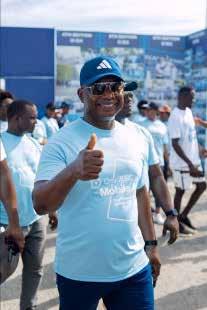
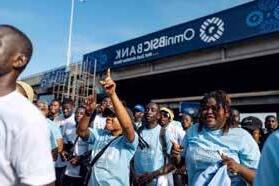
OmniBSIC Bank successfully hosted the 8th edition of its signature quarterly Health Walk on Saturday, transforming the University of Ghana Stadium into a vibrant hub of wellness activity, business networking, and community engagement. The event attracted thousands of participants including bank staff, customers, vendors, and community stakeholders for an 11.3-kilometre wellness walk combined with Ghana's largest quarterly vendor exhibition.
Record vendor participation drives economic impact
The 8th edition fea-

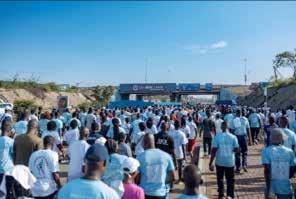
tured more than vendor booths, a marked growth from previous quarters. The complementary business exhibition showcased diverse products and services ranging from automobiles and electronics to household essentials and professional services, creating substantial economic opportunities for participating businesses.
"What began as a wellness initiative has evolved into one of Ghana's premier quarterly business engagement platforms," Akyaa Afreh Arhin Addo-Kufuor, Group Head of Legal and Recovery, Company Secretary, and Chairperson of the Health
Walk Committee, said.
"We provide free booth space to vendors –both customers and non-customers – creating a comprehensive marketplace where you'll find everything from cars to household goods. The walk concludes the wellness component, but that's when our business fair truly begins," Mrs. Addo-Kufour stated adding: "This represents just the beginning of our impact." Strategic partnership with Ghana Health Service
The Ghana Health Service reinforced its support for the initiative through participation
by Mabel Kisiwa Asafo, Acting Director of the Health Promo-
tion Division, who emphasised the walk's alignment with national public health objectives.
"Events like OmniBSIC's Health Walk represent strategic interventions for disease prevention and health promotion," Mrs. Asafo stated. She noted that the combination of physical activity, mental wellness benefits, and community networking creates multiple pathways to improved public health outcomes. Corporate sponsors report strong business results
Major sponsors leveraged the platform for product activation and business development. Nana Yaw Essiaw, Key Account Executive at Kasapreko Company Limited, reported significant engagement with their flagship Awake brand while highlighting the networking opportunities the event provides. "We are seeing strong patronage and meaningful business connections. The event has facilitated collaborations between businesses while serving
the community's wellness needs,” Mr. Essiaw stated.
Massive turnout on competitive weekend Despite being held on the final Saturday of June – traditionally one of Accra's busiest social and commercial days – the event maintained strong attendance, demonstrating its established position in the community calendar. "The response validates that we have created something people prioritise," Mrs. Addo Kufour observed. "Participants are requesting more frequent events, with some suggesting weekly walks. We are evaluating expansion options for
the next quarter,” she disclosed.
About OmniBSIC's Health Walk initiative Launched as an internal wellness programme, OmniBSIC's quarterly Health Walk has evolved into one of Ghana's most recognisable corporate community engagement platforms. The initiative integrates physical wellness, economic opportunity, public health education, and business networking into a comprehensive quarterly event.
The programme reflects OmniBSIC Bank's commitment to corporate social responsibility while creating measurable value for participants, vendors, and the broader community
through its unique combination of wellness programming and business facilitation. OmniBSIC Bank plans to announce expanded programming for future quarters, with leadership indicating significant enhancements are under consideration for the next edition.
About OmniBSIC Bank OmniBSIC Bank is a universal bank, tracing its roots to a successful merger and subsequent recapitalization between the erstwhile OmniBank and Sahel Sahara Bank, resulting in a bigger and better brand. OmniBSIC has reinforced its corporate governance structures and invested in infrastructure to become
ISO and PCI-DSS Certified, in line with Bank of Ghana's Regulatory standards.
The Bank has been restructured and is dedicated to maintaining the highest level of service quality, integrity, transparency and accountability in all operations, thereby creating reliable systems and standards for clients to carry out their banking activities with confidence while maintaining a decent return on investment for shareholders. Our employees are carefully selected, trained and supported to appreciate and deliver complete banking solutions while ensuring customer satisfaction.


onboard experience.
Emirates has been recognised by YouGov before, as the most recommended brand in the UAE in
the Recommend 2024 rankings with a score of 92.6. In YouGov’s 2024 US airlines report, Emirates recorded the “most satisfied customers
amongst US flyers” and was one of the top 10 airlines considered by US Millennials and Gen Zs. As an international online research data and analytics
firm, YouGov pioneers accessible and neutral market research and consumer interest surveys, utilising its flagship tracking tool, YouGov BrandIndex.


rankings as YouGov's most recommended Global Brand for 2025, a testament to the airline’s longstanding ‘Fly Better’ promise. Emirates is the only airline to be featured on the global top 10 list.
The YouGov Most Recommended Brands rankings measure the percentage of a brand’s customers who would recommend it to a friend or colleague. This year, Emirates achieved an outstanding score of 88.4%, with a significant lead on the next
EDITOR: BENSON AFFUL
Recommend scores are based on over a million customer surveys in 28 markets, tracking brand performance daily between June 1, 2024 and May 31, 2025. Positive Recommend scores for each top 10 global brand are aggregated and weighted by the size of the brand’s current customer base per market.
Sir Tim Clark, President Emirates Airline, said, “This recognition underscores the deep connection and loyalty we’ve built with passengers all over the world,
who trust us not only tonation, but to do so with care, reliability, and excellence. We will continue to evolve our already exceptional experience and set new benchmarks in travel to ensure Emirates is always a brand that our customers are proud to recommend.” Emirates has always kept customers at the heart of its operations, providing memorable journeys at every touchpoint, every time. Continually investing in the finest products and exceptional signature services, the airline provides a world-class travel
rience in-air and on-ground.
In the first half of 2025, Emirates expanded its global network with route launches to three new destinations, with Hangzhou to follow; inaugurated nine reimagined travel retail stores in Asia, Africa and Europe; introduced its newest aircraft type, the A350, to 10 destinations; and achieved its designation as the world’s first Autism Certified Airline™, making significant headway on its journey to make travel accessible to all. And Emirates shows no signs of slowing down.
By December 2025, the airline will serve over 70 cities with aircraft fitted out with the latest interiors on Boeing 777s, A380s and A350s, representing almost 50% of its network, and offer over 2 million Premium Economy seats, enabling more travellers to enjoy Emirates’ latest generation premium